Margaret Gatty
Victorian writer and naturalist whose Parables from Nature drew spiritual lessons from close observation of plants, insects, and the sea, and who founded and edited Aunt Judy's Magazine for children.
Biography
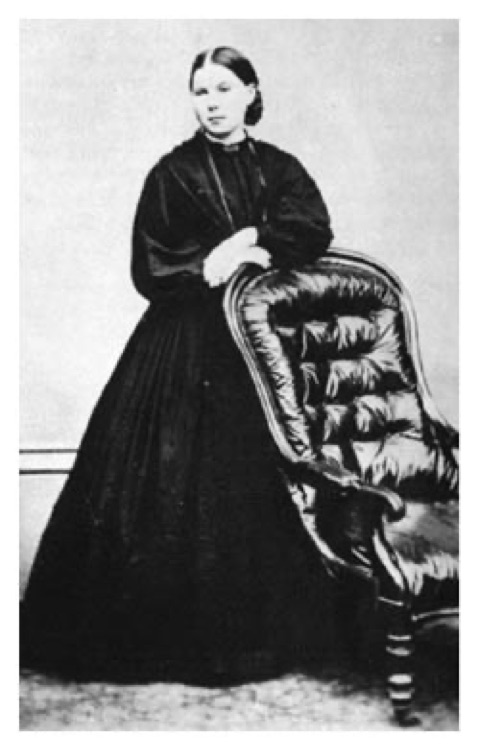
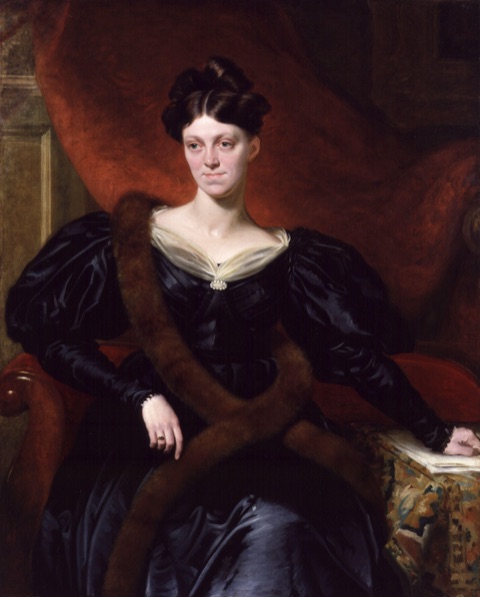
Margaret Gatty (1809 to 1873) was an English writer and naturalist whose Parables from Nature, published in five series between 1855 and 1871, taught a generation of Victorian children to read the natural world as a book of spiritual lessons. She also wrote a popular guide to British seaweeds and founded Aunt Judy's Magazine, a monthly for young readers that ran until 1885.
She was born Margaret Scott on June 3, 1809, at Burnham rectory in Essex, the youngest daughter of the Rev. Alexander John Scott, who had served as Lord Nelson's chaplain aboard the Victory and was with him when he died at Trafalgar. Her mother died when she was two, and she was brought up and educated at home by her father, a great lover and collector of books. From the age of ten she studied in the print room of the British Museum, where she learned to draw and to etch on copper, and she became a skilled calligrapher and illuminator on vellum.
On July 8, 1839, she married the Rev. Alfred Gatty, vicar of Ecclesfield in Yorkshire, and she spent the rest of her life at Ecclesfield vicarage. Her first book, written with her husband, was a memoir of her father (1842). Her first original work, The Fairy Godmothers and Other Tales, did not appear until 1851, when she was forty-two. The first series of Parables from Nature followed in 1855, illustrated by the author, and further series appeared over the next sixteen years. Aunt Judy's Tales (1859) took its title from the family nickname of her daughter Juliana, who as Juliana Horatia Ewing became a children's author in her own right.
For some fourteen years she also studied seaweeds and zoophytes along the British coast, and she came to know William Henry Harvey, the author of Phycologia Britannica, who supervised her British Sea-Weeds (1863). The book set out to combine scientific accuracy with the least possible technical language, and Harvey named a genus of red algae, Gattya, in her honor.
In May 1866 she founded Aunt Judy's Magazine, a monthly for young readers, and edited it until her death. Its subscribers raised money to endow cots at the Hospital for Sick Children in Great Ormond Street, and her daughter Horatia carried the magazine on until 1885. Her last books, A Book of Emblems and The Book of Sun-Dials, came out in 1872. Her health had been failing for a decade, and as paralysis advanced she wrote with her left hand and then dictated. She died at Ecclesfield vicarage on October 4, 1873, and the Parable Window in Ecclesfield church was put up in her memory the following year.
Life & Career
Why Gatty Matters
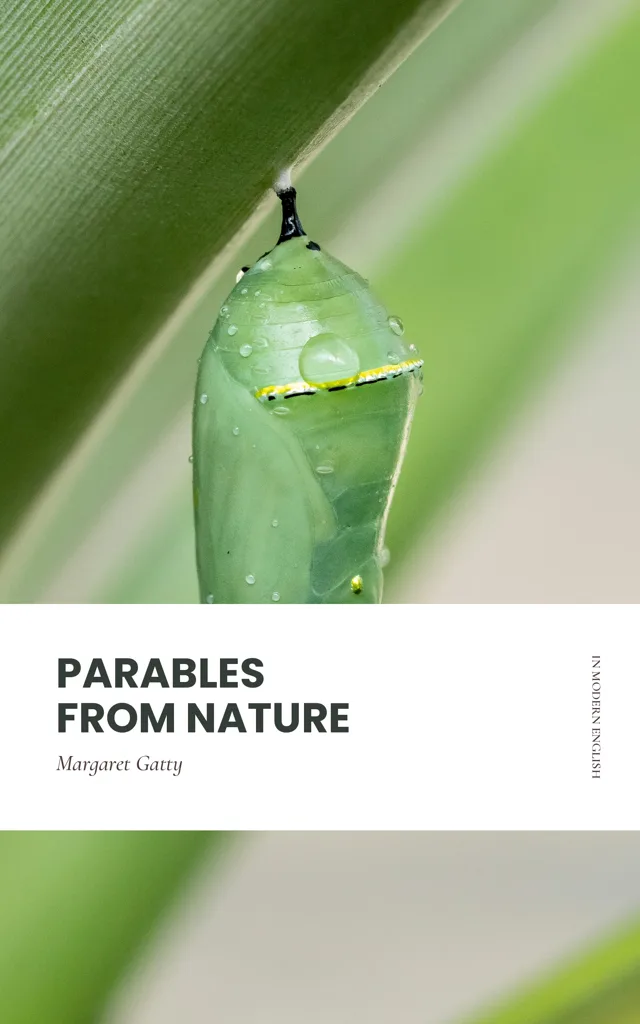
Gatty was not a theologian, and she wrote no work of doctrine. Her importance lies in what she did with a form: she took the parable, the short story that carries a lesson inside a picture, and filled it with the natural history that Victorian England was learning to observe closely. In Parables from Nature a caterpillar is told that it will become a butterfly and has to decide whether to believe what it cannot see; bees in a hive debate whether a queen is necessary; a seaweed and a zoophyte argue over whether the zoophyte is a plant. Each story is built on an accurate piece of observation, and each turns, without strain, into a question about faith, obedience, humility, or the limits of knowledge.
That method placed her within the long English tradition of natural theology, the argument that the created world shows the mind and purpose of its Maker, but she made it available to children and to readers with no scientific training. She wrote in the years around the publication of Darwin's Origin of Species, and her stories assume that looking carefully at nature and trusting Scripture are the same habit of mind rather than rivals. A parable such as Knowledge Not the Limit of Belief states the point directly: the creature that cannot perceive a thing is not entitled to conclude that the thing does not exist.
The Parables were reprinted throughout the nineteenth century, translated into several European languages, and issued in editions with illustrations by artists including John Tenniel and William Holman Hunt. They were read aloud in nurseries and used in schools. Aunt Judy's Magazine, which she founded in 1866, published much of the early work of her daughter Juliana Horatia Ewing, and it treated its young readers as capable of serious reading and serious charity. Through both the books and the magazine, Gatty helped establish the expectation that writing for children could be truthful about the natural world, free of false sentiment, and religious without preaching.