Lactantius
A North African teacher of Latin rhetoric who wrote the Divine Institutes, the first attempt to set out the whole of Christian belief as a connected system in polished classical Latin. Renaissance humanists called him the "Christian Cicero" for the elegance of his prose.
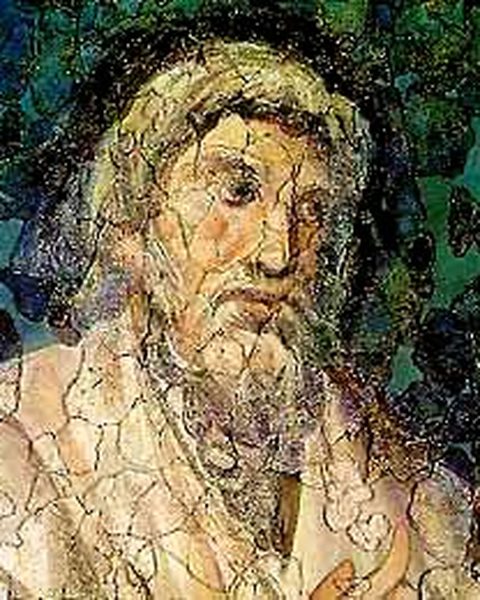
around 250 to 325 AD
Biography
Lactantius (around 250 to around 325 AD) was a North African teacher of Latin rhetoric who converted to Christianity and became the first Latin writer to present the whole of Christian belief as a connected argument, in his seven-book Divine Institutes. His full name was Lucius Caecilius Firmianus Lactantius. Almost everything known about his life comes from a short notice by Jerome in On Illustrious Men (chapter 80).
He was trained in rhetoric in Roman Africa, where he studied under Arnobius of Sicca at Sicca Veneria. His reputation as a teacher reached the emperor Diocletian, who summoned him east to Nicomedia in Bithynia, the imperial capital, to hold the public chair of Latin rhetoric. In a Greek-speaking city a Latin teacher drew few pupils, and Jerome notes that Lactantius had little success and turned instead to writing.
He was living in Nicomedia in 303 AD when Diocletian issued the edicts that began the Great Persecution, the harshest Roman campaign against Christians. By this time Lactantius had become a Christian, and he left his teaching post. Jerome reports that in old age he lived in such poverty that he often lacked the necessities of life.
During and after the persecution he wrote the works for which he is remembered. The Divine Institutes, composed roughly between 303 and 311 AD and dedicated to the emperor Constantine, argues the truth of Christianity against pagan philosophy and religion for an educated readership; he later condensed it into a shorter Epitome. On the Workmanship of God (De opificio Dei) treats the design of the human body as evidence of providence, and On the Anger of God (De ira Dei) argues that a God who cares about human conduct must be capable of anger. On the Deaths of the Persecutors (De mortibus persecutorum) narrates the violent ends of the emperors who had attacked the church.
Late in life Constantine appointed the aging Lactantius tutor to his son Crispus, and he moved west to the imperial residence at Trier in Gaul, around 315 AD. The Latin poem On the Phoenix (De ave phoenice) is traditionally printed under his name, though its authorship is disputed. His theology drew later criticism: the seventh book of the Divine Institutes expects a literal thousand-year earthly kingdom, and Jerome and others faulted him for doctrinal imprecision, judging him a finer stylist than theologian.
Why Lactantius Matters
Lactantius mattered less as a doctrinal authority than as the writer who first made Christianity presentable to the educated Latin world. Earlier Latin apologists like Tertullian and Minucius Felix had defended the faith piecemeal; the Divine Institutes attempted something larger, a systematic case built book by book through the categories of Roman philosophy and rhetoric rather than through scripture alone. He wrote for the literate pagan reader who would have dismissed cruder Christian writing, and he addressed the work to Constantine at the moment the empire's relationship to the church was changing.
His Latin was good enough to keep him in print long after most early apologists were forgotten. Renaissance humanists prized his classical style and named him the "Christian Cicero." The Divine Institutes was among the very first books printed in Italy, issued at the monastery of Subiaco in 1465, which put his prose in front of the earliest generation of European readers to own printed books.
On the Deaths of the Persecutors is valued for a different reason. It is a primary source for the Great Persecution and its collapse, written by a man who was in Nicomedia when it began. It preserves the texts of the imperial edicts that ended the persecution, including Galerius's edict of toleration of 311 AD and the settlement reached by Constantine and Licinius, making it essential evidence for historians of the period.
His standing as a theologian is more qualified. Because he came to Christianity from a rhetorical rather than a churchly formation, his handling of doctrine was uneven; his millenarian expectation and his loose language about the Son and the powers of good and evil drew reservations from Jerome and later readers. He is read today chiefly as an apologist, a stylist, and a witness to the years when the Roman state stopped killing Christians and began to favor them.
Complete Works in English
Free to readEvery surviving work, translated in full and free to read, from our Patrologia Latina project.