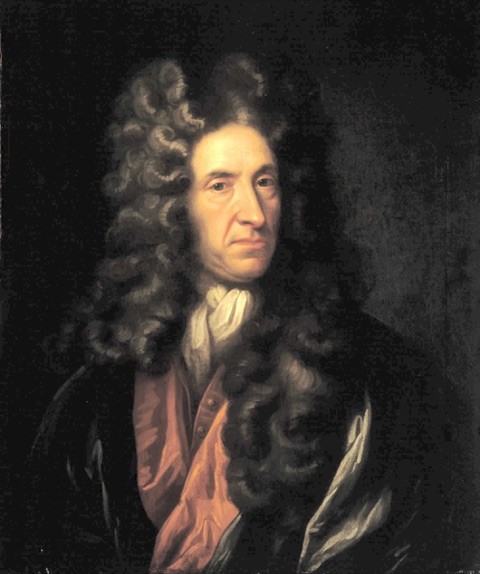
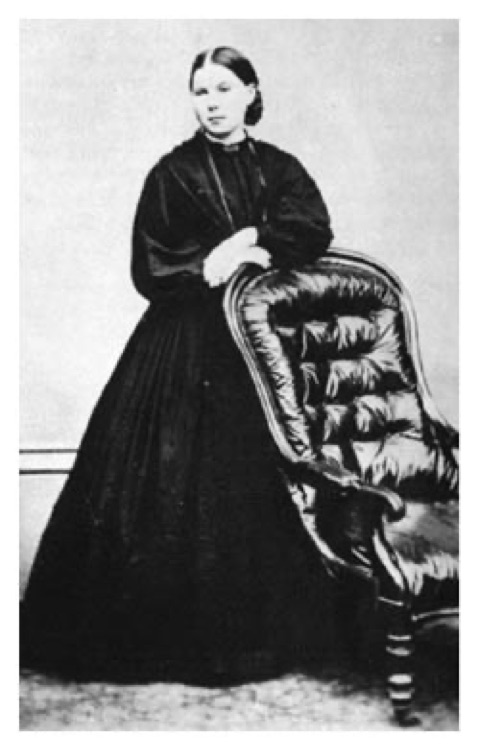
Johann David Wyss
The Swiss pastor whose story for his four sons, edited and published by his son Johann Rudolf Wyss in 1812 as Der Schweizerische Robinson, became The Swiss Family Robinson.
Biography
Johann David Wyss (1743 to 1818 AD) was a Swiss Reformed pastor whose household story of a shipwrecked family became The Swiss Family Robinson, one of the most widely read adventure books ever written for young people. He was born in Bern in 1743 and spent nearly his whole life in and around the city. Trained for the ministry of the Reformed Church of Bern, he served for a time as chaplain to Swiss troops before returning to Bern, where he held pastoral office for the rest of his career.
Wyss was not a professional author. The story that made his name began as a family project: a tale of a Swiss pastor, his wife, and their four sons, cast away on an uninhabited island, that he told and wrote down for the instruction and enjoyment of his own four boys. In the tradition of Daniel Defoe's Robinson Crusoe, the castaways survive by work, ingenuity, and trust in God, but Wyss made the castaway a whole family and turned each episode into a lesson. The father explains the plants, animals, and minerals the boys encounter, teaches them to build, plant, hunt, and keep house, and leads them in prayer and thanksgiving. The book is at once an adventure, a primer in natural history and practical skill, and a picture of a Christian household governed by a father's steady authority.
Wyss never published the manuscript himself. His son Johann Rudolf Wyss (1782 to 1830 AD), a professor of philosophy at Bern, edited his father's text and brought it out in 1812 and 1813 as Der Schweizerische Robinson. Johann Rudolf was a writer in his own right, best remembered as the author of "Rufst du, mein Vaterland," the patriotic song that long served as Switzerland's national anthem.
The book's later history belongs as much to its translators as to its author. Isabelle de Montolieu's French version of 1814 expanded the story considerably and later added a continuation of her own, and many English versions that followed drew on her French as much as on the German original. Translators and editors through the nineteenth century added, cut, and rearranged episodes so freely that no two English editions are quite alike, but the core of the book remained the family Wyss had imagined for his sons. He died in Bern in 1818, a few years after the book had begun its career across Europe.
Life & Career
Why Wyss Matters
Wyss's lasting contribution is the family Robinsonade. Defoe had written of a solitary man learning to survive and to repent on his island; Wyss put a whole household on the shore and made the island a schoolroom. Every chapter turns on the father teaching his sons something true about the world — how a plant can be used, how an animal lives, how a tool is made — so that the adventure carries a steady course of instruction in natural history, husbandry, and practical craft. This pattern of the wise parent and the learning children shaped much of the instructive fiction for young readers that followed in the nineteenth century.
The book is also a portrait of domestic piety as a Reformed pastor understood it. The family begins its new life by giving thanks for deliverance, keeps the Sabbath on the island, and reads every discovery as a sign of God's providence and goodness. The father's authority is firm but affectionate, the mother is the capable center of the household, and the sons are trained in obedience, courage, and diligence. Wyss presents the ordered Christian family not as a constraint on adventure but as the thing that makes survival and flourishing possible.
The story's reach far outran its author's intentions. Through Montolieu's French expansion and the many English versions that followed, The Swiss Family Robinson became a staple of family reading across Europe and America, and it has never gone out of print. Its combination of adventure, instruction, and faith made it one of the defining children's books of the age that also produced Pestalozzi's educational reforms in Wyss's own Switzerland.