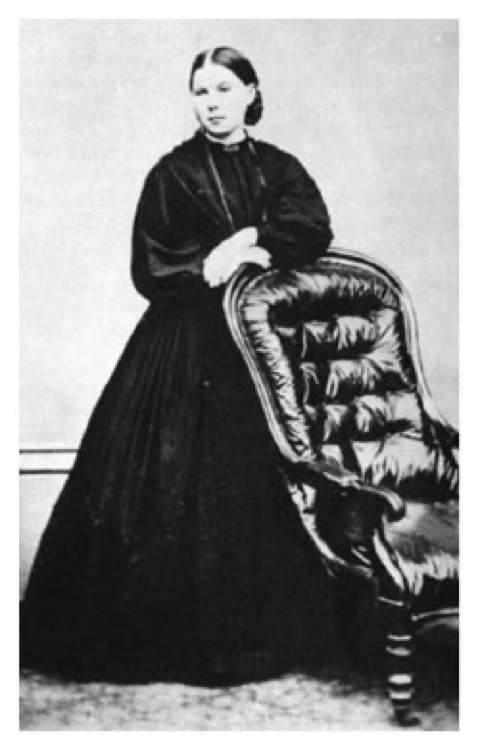
Charlotte M. Yonge
The Heir of Redclyffe, the 1853 novel that made her reputation, and a long series of historical stories for children, of which The Little Duke is the most reprinted.
Biography
Charlotte Mary Yonge was born on 11 August 1823 at Otterbourne, Hampshire, the daughter of a retired army officer, and lived in that village for the whole of her life. Her father taught her Greek, Latin, and mathematics at home, and John Keble, vicar of the neighboring parish of Hursley and author of The Christian Year, prepared her for confirmation and read her manuscripts before she published them. She began teaching in the Otterbourne Sunday school as a girl and continued for seventy-one years.
In January 1851 she took charge of The Monthly Packet, a magazine written for young members of the Church of England, and edited it for nearly fifty years. Most of her fiction appeared there first, including The Little Duke, which ran in parts before its book publication in 1854. Her novel The Heir of Redclyffe, published in 1853, sold in edition after edition and was read widely at Oxford and among the Pre-Raphaelite circle; she directed its profits toward fitting out the missionary schooner Southern Cross for Bishop George Selwyn's work in New Zealand, and later gave the proceeds of The Daisy Chain to a missionary college in Auckland.
Yonge wrote more than 160 books. Alongside the domestic novels that made her name, she produced historical fiction for children such as The Little Duke and The Lances of Lynwood, the collection of true stories A Book of Golden Deeds, Landmarks of History, and biographies and textbooks intended for the schoolroom. She stepped down from the editorship of The Monthly Packet in 1899 and died at Otterbourne on 24 March 1901.