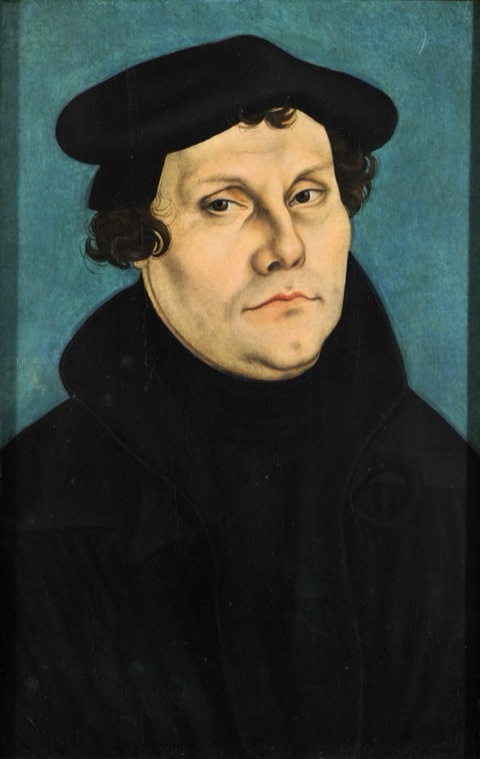
Heinrich Kramer
Heinrich Kramer was a German Dominican inquisitor who wrote the Malleus Maleficarum, the printed handbook that laid out how to identify, interrogate, and prosecute accused witches. Circulated across Europe in edition after edition, it became the most widely used witch-hunting manual of the early modern period.
around 1430 to 1505
Biography
Heinrich Kramer (around 1430 to 1505) was a German Dominican friar and papal inquisitor who wrote the Malleus Maleficarum, a treatise on detecting and prosecuting witches that spread across Europe in printed editions for more than two centuries. He was born in Schlettstadt, now Sélestat, in Alsace, and entered the Dominican Order as a young man. In Latin, the language of his writings, he signed himself Henricus Institoris, a rendering of the German name Kramer, meaning a shopkeeper or trader.
By the 1470s Kramer held a commission as inquisitor for the German lands of the Holy Roman Empire. In December 1484 Pope Innocent VIII issued the bull Summis desiderantes affectibus, obtained at Kramer's urging, which affirmed inquisitorial authority to act against witchcraft in the Rhineland and neighboring regions. The following year Kramer conducted witchcraft prosecutions at Innsbruck, in the Tyrol, where his handling of the accused drew objections. The local bishop, Georg Golser, distrusted his conduct and forced him to leave the diocese.
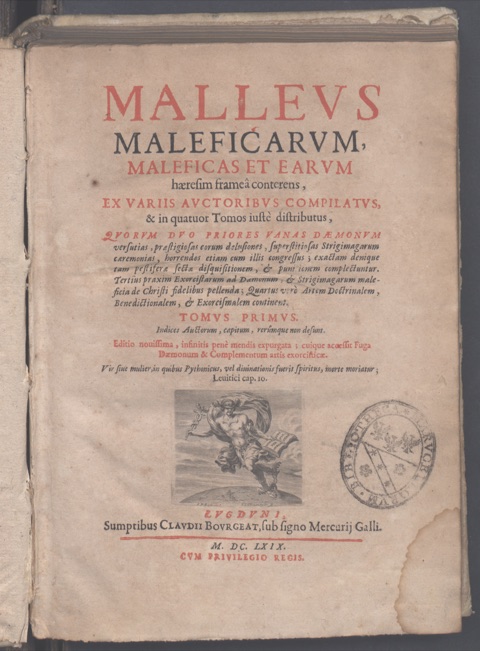
After Innsbruck, Kramer set down his methods in the Malleus Maleficarum, first printed at Speyer in 1486. The book is arranged in three parts: the first argues that witchcraft is real and that denying it is itself error; the second describes the acts attributed to witches and the counter-measures against them; the third lays out procedures for trial, including the questioning of the accused and the use of torture to obtain confession. The treatise pressed the claim that women were especially susceptible to the practices it described. Kramer bound into the volume the text of the 1484 papal bull and an approbation from the theology faculty of the University of Cologne, though the extent of that endorsement has been questioned. The title page also names a second Dominican, Jacob Sprenger, as co-author; many scholars regard Kramer as the principal or sole author and doubt Sprenger's involvement.
The Malleus reached its audience through the recently established printing press, appearing in at least thirteen editions before 1520 and many more over the following century, in territories that were by then both Catholic and Protestant. In his later years Kramer was sent east: around 1500 Pope Alexander VI appointed him inquisitor and nuncio to Bohemia and Moravia, where he preached and wrote against the Waldensians and the Hussites. He died in 1505 at Kroměříž, in Moravia.
Life & Career
Why Kramer Matters
Kramer matters for the history of the European witch trials, which reached their height in the sixteenth and seventeenth centuries, after his death. The Malleus Maleficarum gathered scattered ideas about maleficium, demonic pact, and heresy into a single ordered argument and paired that argument with practical instructions for investigation and prosecution. It was less an original demonology than a compilation given the force of a manual, and its combination of theory and procedure is what made it usable by magistrates and clergy who never met its author.
The book's reach owed much to timing. It appeared within a few decades of Gutenberg's press, and printing carried it far beyond the regions where Kramer himself operated. Editions issued from Speyer, Nuremberg, Cologne, Lyon, and Venice put a standardized account of witchcraft into the hands of readers across Latin Christendom. The inclusion of the papal bull and a university approbation lent the text an appearance of official sanction that helped it circulate, even though church authorities had already shown resistance to Kramer's own actions at Innsbruck.
Historians today study the Malleus as a central document for understanding how learned demonology, canon law, and criminal procedure combined in the early modern prosecution of witchcraft. Its emphasis on women shaped later debate about the gendered pattern of accusations, and its detailed rules of interrogation are read as evidence of how confessions were produced. The work remains one of the most examined primary sources in the scholarship on witch-hunting, cited both for what it prescribed and for the limits of its actual authority in the courts of its day.