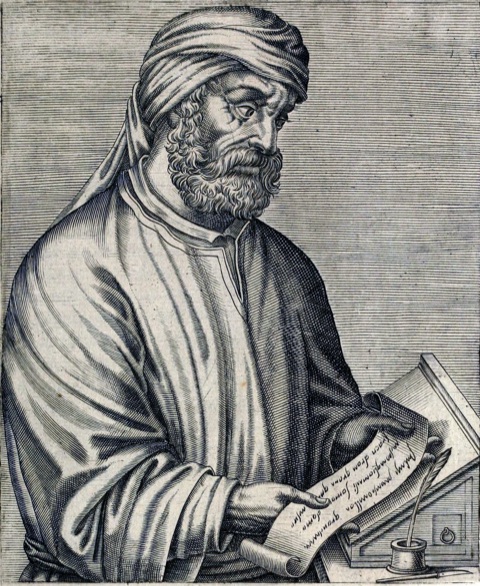
Philastrius of Brescia
Bishop of Brescia in northern Italy in the later fourth century, remembered chiefly for the Book of Diverse Heresies, a catalog of 156 heresies that is the earliest large-scale heresy list written in Latin. Before he settled at Brescia he lived as a traveling ascetic who disputed against heretics and pagans across the empire, and he took part in the anti-Arian struggles of his day, including at the Council of Aquileia in 381 AD.
Biography
Almost everything known about the life of Philastrius (died around 397 AD) comes from a single source: the eulogy that his successor, Gaudentius of Brescia, preached on his memorial day, some fourteen years after his death. Gaudentius describes a man who had given up a settled life to travel widely as an ascetic, moving from place to place to argue against heretics, Jews, and pagans before he was made bishop of the northern Italian city of Brescia. The date of his birth is not recorded, and the sermon supplies the frame for most of what later writers repeat about him.
According to Gaudentius, Philastrius was active in the contest with Arianism at Milan during the years when the city's bishop was the Arian Auxentius, who held the see before Ambrose. This places part of his career in the middle decades of the fourth century, when the Nicene and Arian parties in northern Italy were still in open conflict and Milan was a center of that dispute. The account presents him as one of the figures who resisted the Arian position in the city before Ambrose's election changed the balance there.
One event in his career can be fixed with certainty. Philastrius was present at the Council of Aquileia in 381 AD, and his signature appears in the surviving acts of that council, which was convened under Ambrose and directed against two Arian-leaning bishops of the region. This is the one securely dated point in his life and confirms that he was an established bishop by that year.
Augustine records a personal meeting with him. In Letter 222, written to Quodvultdeus, Augustine mentions that he had seen Philastrius at Milan in the company of Ambrose. The remark is brief, but it connects Philastrius to the circle around Ambrose at Milan and shows that the two men were known to each other in that setting. Augustine's later use of Philastrius's book, discussed below, gives the meeting an added significance.
Philastrius died around 397 AD, and Gaudentius succeeded him as bishop of Brescia. The memorial sermon that preserves his biography was preached by that successor, so the earliest and fullest account of his life comes from the man who took his place. This gives the surviving picture of Philastrius a particular shape: it is the tribute of a successor to a predecessor, and details that the sermon does not mention are largely lost.
His one surviving work is the Book of Diverse Heresies (Liber de Haeresibus), written around 380 to 390 AD. It catalogs 156 heresies in all: 28 Jewish sects that Philastrius places before the coming of Christ, followed by 128 heresies of the Christian era. It is the first Latin heresy catalog on this scale. Philastrius drew on earlier Greek heresiological material, and the lost Syntagma of Hippolytus is the source usually named for the older notices behind his list. His work appears to have been composed independently of the Panarion of Epiphanius of Salamis, the great Greek heresy catalog of the same period, though the exact relation between the two is debated among scholars. One feature of the book drew comment already in antiquity: its definition of heresy is very broad. Philastrius counts as heresies such positions as doubting that the stars are fixed in place by God each evening, or rejecting the Septuagint translation of the Scriptures, so that his total runs well beyond the lists of other writers. Augustine himself noted this breadth when he compared Philastrius's work with that of Epiphanius in Letter 222.
Why Philastrius Matters
Philastrius produced the first large heresiology in Latin, and this is the main reason his work is studied. Before the Book of Diverse Heresies, catalogs of heresies on this scale belonged to the Greek tradition, running from the second-century writers through to the Panarion of Epiphanius. Philastrius brought that genre into Latin and gave the Western church a reference list of its own, drawing on older Greek material while arranging and expanding it in his own way.
The book is also a window into what a bishop in fourth-century Italy counted as the boundaries of the faith. Because Philastrius includes positions that later writers would not have treated as heresies at all, his list records where one Nicene bishop of his time drew the line between acceptable and unacceptable belief, down to questions about the natural world and the text of Scripture. The breadth that struck Augustine makes the work more revealing on this point, not less, since it shows the full range of what could be brought under the heading of heresy in that setting.
For the history of the sects themselves, the catalog preserves notices of groups that are otherwise poorly attested, so that for some minor movements Philastrius is among the few surviving witnesses. His chapter treating the rejection of the Septuagint as a heresy is a further point of interest: it is direct evidence for the authority that the Greek translation of the Old Testament still carried in the Latin West at the end of the fourth century, at the very time when Jerome was beginning to argue for translating from the Hebrew instead.
The work had a concrete afterlife in the writing of Augustine, who used Philastrius as one of the sources for his own catalog, On Heresies (De Haeresibus). Augustine weighed Philastrius against Epiphanius, noted the difference in how the two men counted heresies, and drew on both. Through that use, the Book of Diverse Heresies fed into the standard Latin heresiology of the following generation and passed part of its material on to later readers.
Complete Works in English
Free to readEvery surviving work, translated in full and free to read, from our Patrologia Latina project.