Eusebius of Vercelli
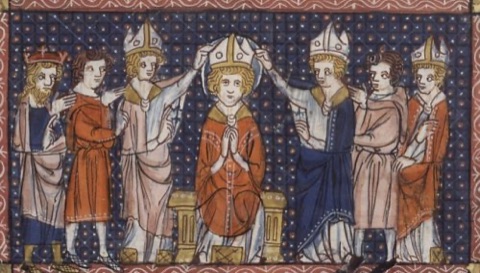
First bishop of Vercelli in northern Italy and, with Hilary of Poitiers, one of the leading Western defenders of the Nicene faith under Constantius II. At the Council of Milan in 355 AD he refused to condemn Athanasius until the assembled bishops would first subscribe the Nicene creed, and he was sent into a long exile in the East as a result. He was the first bishop in the West to have his clergy live a common monastic life under their bishop, a practice Ambrose singles out for praise. His surviving works are his letters, including a long account of his treatment in exile written to his church, and a Trinitarian confession transmitted under his name.
Biography
Eusebius of Vercelli (around 283 to 371 AD) was born in Sardinia. He went to Rome as a young man and served there as a lector, and he seems to have lived in Rome for some years within a clerical community before his own career as a bishop began. Around 345 AD he was chosen as the first bishop of Vercelli, a town in the region of Piedmont in northern Italy, and he held that see for the rest of his life.
As bishop he gathered his clergy into a shared life, requiring the priests of his church to live together with him under a common rule rather than dispersed among their own households. Ambrose of Milan, writing later, credits Eusebius with being the first bishop of the West to join the monastic manner of life to the duties of the clergy, and points to Vercelli as the model. The arrangement placed the discipline of the monastery at the center of a working diocese and became one of the early patterns for communities of clergy living under rule.
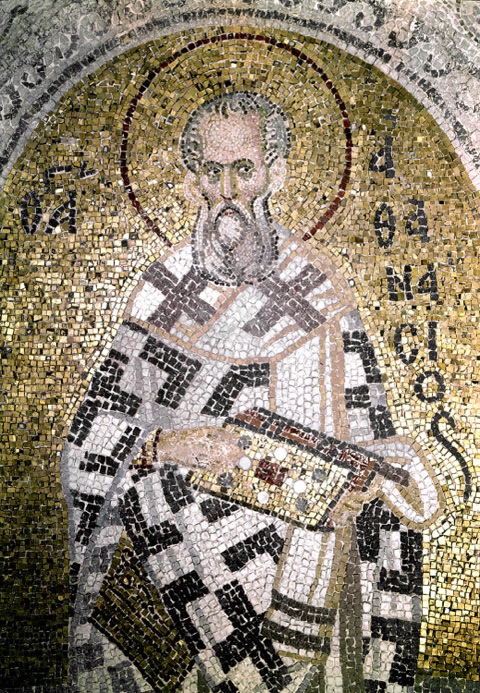
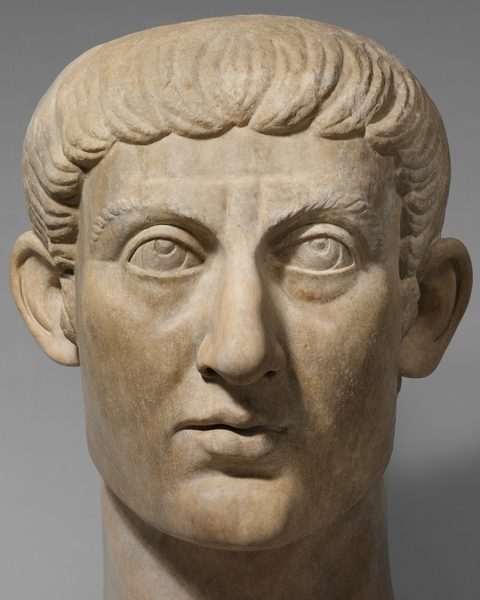
Eusebius was drawn into the Arian controversy at the Council of Milan in 355 AD, which Constantius II had summoned to secure a condemnation of Athanasius of Alexandria. Rather than sign, Eusebius demanded that the assembled bishops first subscribe the Nicene creed, so that the question of faith would be settled before any charge against Athanasius was put to a vote. The demand blocked the proceedings the emperor wanted, and Eusebius, together with the like-minded bishops, was sentenced to exile.
His exile took him through a succession of places in the East. He was sent first to Scythopolis in Palestine, where he was held under the Arian bishop Patrophilus. A letter written from this period, addressed to his presbyters and people in Italy, describes his confinement in detail and names Patrophilus as his "jailer," recounting how he was cut off from support and pressed to conform. From Scythopolis he was moved to Cappadocia and then to the Thebaid in Upper Egypt. The exile lasted until 362 AD, when the emperor Julian allowed the banished bishops to return to their sees.
On his release Eusebius did not go straight home. He traveled to Alexandria and took part in the Council of Alexandria in 362 AD, held under Athanasius, which addressed how to receive back clergy who had gone along with the Arian settlements imposed under Constantius. He then went on through the East and into the West, working for the restoration of the Nicene party. In this later period he joined Hilary of Poitiers in the effort against Auxentius, the Arian bishop of Milan, pressing for his removal. Eusebius died in 371 AD.
The writings that survive under his name are chiefly letters: a short letter to Constantius, and the longer letter to the clergy and people of Vercelli written from exile that gives the account of his treatment at Scythopolis. A Trinitarian confession of faith is also transmitted under his name, and a longer work On the Trinity (De Trinitate) is attributed to him by some scholars, though the attribution is disputed. He is not known to have written a Gospel text of his own, but tradition holds that the Codex Vercellensis, the Old Latin Gospel manuscript preserved at Vercelli, was written by his own hand; the attribution is a matter of local tradition rather than settled fact.
Life & Career
Why Eusebius Matters
Eusebius stands with Hilary of Poitiers as the face of Western resistance to the Arianizing policy of Constantius II. His refusal at Milan in 355 AD to condemn Athanasius before the council would subscribe the Nicene creed made the point that the case against Athanasius was really a case against the Nicene faith, and his exile turned that stand into a public example. Where Hilary carried the theological argument, Eusebius supplied the pattern of a bishop who would accept banishment rather than lend his signature to an imperial settlement, and the two names were paired in later memory as the Western bishops who held the line during Constantius's reign.
His common life for the clergy of Vercelli had a long afterlife. By requiring his priests to live together under a shared discipline, Eusebius joined the monastic ideal to the ordinary work of a diocese, and Ambrose's praise fixed Vercelli in memory as the first Western instance of the arrangement. The model fed into the later tradition of clergy living in community under rule, the line that would eventually produce the canons regular, and it gave the West an early argument that the pastoral clergy and the monastic life need not be kept apart.
The Council of Alexandria in 362 AD, in which Eusebius took part on his way back from exile, dealt with the problem of reconciling those who had accepted the Arian formulas under pressure. The settlement worked out there, distinguishing the leaders of the Arian party from the many who had merely conformed and providing terms on which the latter could be received back, shaped how the church reunited after the death of Constantius. Eusebius's presence tied the Western resistance to this work of reconstruction in the East.
He also belongs to the history of the Latin Bible. The Codex Vercellensis kept at Vercelli is one of the oldest surviving Old Latin Gospel manuscripts, a witness to the Latin text of the Gospels before Jerome's Vulgate, and the tradition that Eusebius wrote it by hand attaches his name to the early transmission of the Scriptures in Latin. Whether or not the manuscript is his work, its survival at his see keeps his church at the center of the story of the Old Latin Gospels.
Complete Works in English
Free to readEvery surviving work, translated in full and free to read, from our Patrologia Latina project.