Constantine the Great
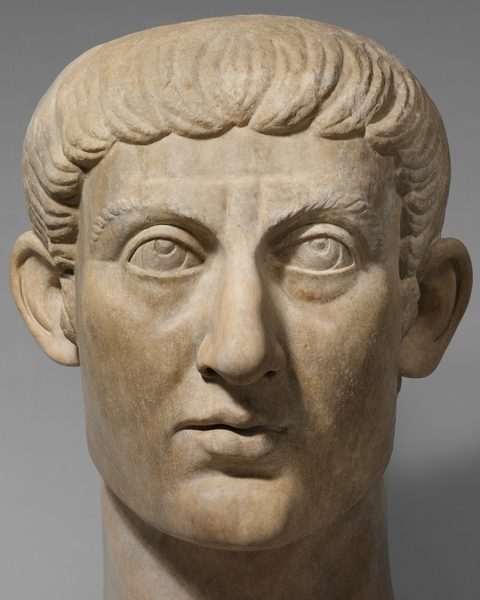
Roman emperor from 306 to 337 AD and the first emperor to profess Christianity. He won the battle of the Milvian Bridge in 312 AD, extended toleration to Christians through the policy associated with Milan in 313 AD, convened the Council of Nicaea in 325 AD, and founded Constantinople.
272–337 AD
Biography
Constantine the Great (around 272 to 337 AD) was the Roman emperor who ruled from 306 to 337 AD and became the first emperor to profess Christianity. Born Flavius Valerius Constantinus at Naissus in Moesia (modern Niš, Serbia), he was the son of the officer Constantius, later the emperor Constantius I, and of Helena. He grew up inside the tetrarchic system that Diocletian had built to share imperial power among four rulers, and served at the eastern court before joining his father's campaign in Britain.
When Constantius died at Eboracum (York) in 306 AD, the army there proclaimed Constantine emperor. The next years were a contest among rival claimants across the empire. In 312 AD he marched on Rome and defeated Maxentius at the battle of the Milvian Bridge; Eusebius and Lactantius both report that Constantine attributed the victory to a Christian sign shown to him before the fight. In 313 AD he met Licinius, and the two agreed on the policy of toleration associated with Milan, which restored confiscated property to Christians and granted freedom of worship. Constantine and Licinius later turned on each other, and after his victory in 324 AD Constantine became sole ruler of the whole empire.
Constantine involved the imperial office directly in the affairs of the church. In 313 AD, faced with the Donatist controversy in North Africa, he wrote to Miltiades, bishop of Rome, asking him to hear the dispute over Caecilian of Carthage, whose ordination the Donatists rejected. In 325 AD he convened the Council of Nicaea, the first ecumenical council, to settle the controversy raised by Arius over the relationship of the Son to the Father; the council produced the creed that affirmed the Son as of one substance with the Father. Constantine summoned the bishops, opened the proceedings, and pressed for a settlement.
In 330 AD Constantine dedicated a new capital on the site of Byzantium, which took the name Constantinople. He funded churches across the empire, including foundations at Rome, Jerusalem, and Bethlehem, and left the government of the empire divided among his sons. Constantine was baptized shortly before his death by Eusebius of Nicomedia and died in 337 AD near Nicomedia. Much of what is known of his reign comes from Eusebius of Caesarea's Life of Constantine and from Lactantius's On the Deaths of the Persecutors.
Life & Career
Why Constantine Matters
Constantine reversed the standing of Christianity within the Roman state. Under Diocletian the church had faced the most severe official persecution in its history; within a generation Constantine had made the emperor its patron. The policy of toleration of 313 AD ended the confiscations and executions, returned church property, and gave Christian worship legal protection. This change of imperial posture, more than any doctrinal argument, altered the conditions under which the church operated for the rest of antiquity.
His convening of the Council of Nicaea in 325 AD set a lasting pattern. By calling the bishops together at imperial expense and lending the council his authority, Constantine established the ecumenical council as the instrument for settling questions of doctrine and discipline across the whole church. The Nicene Creed drafted there, with its confession of the Son as of one substance with the Father, became the reference point for the Trinitarian debates that ran through the fourth century and remains a fixture of Christian confession.
Constantine's intervention in the Donatist affair, beginning with his 313 AD letter to Miltiades, shows the same instinct applied to a local schism. By referring the case to the bishop of Rome and later to a council of bishops, and then enforcing their rulings, he drew the machinery of the state into the church's internal disputes. The Donatist question was not resolved by these measures and continued to occupy North African Christianity into the age of Augustine, but the precedent of imperial enforcement of church decisions endured.
His foundation of Constantinople in 330 AD gave the eastern empire a Christian capital that outlasted the Western empire by a thousand years, and his reign supplied the model of the Christian emperor that later Byzantine and medieval rulers claimed as their inheritance. The sincerity and timing of his own conversion have been debated since antiquity, but the institutional consequences of his rule shaped the church and the empire together.
Complete Works in English
Free to readEvery surviving work, translated in full and free to read, from our Patrologia Latina project.