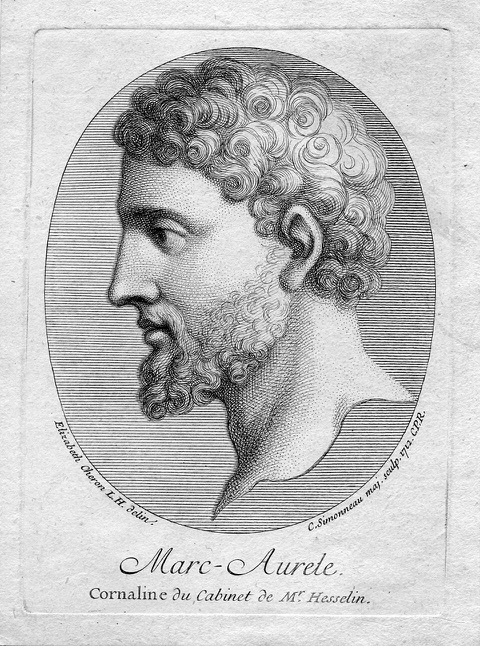
Cicero
Roman statesman, orator, and philosopher whose speeches, letters, and treatises such as On Duties made Latin a language of philosophy.
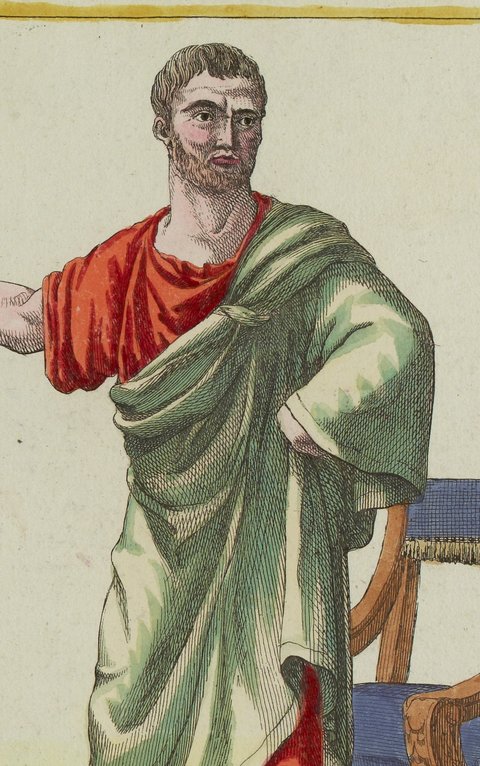
106 - 43 BC
Biography
Marcus Tullius Cicero was born on January 3, 106 BC, at Arpinum, a hill town southeast of Rome, into a prosperous equestrian family. No ancestor of his had sat in the Senate, and he would reach the top of Roman politics as a "new man" through his skill as a speaker. He studied law and rhetoric in Rome, and in 79 to 77 BC traveled to Athens and Rhodes to study philosophy and oratory, hearing Antiochus of Ascalon and the Stoic Posidonius.
His career was built in the courts. In 70 BC he prosecuted Verres, the corrupt former governor of Sicily, so effectively that Verres fled into exile. Cicero rose through each office at the earliest legal age and was elected consul for 63 BC, when he exposed the conspiracy of Catiline in a series of speeches before the Senate and the people. The execution of five conspirators without trial, carried out on his authority, was later turned against him, and in 58 BC he was driven into exile. He was recalled in 57 BC.
The following years were dominated by Pompey, Caesar, and Crassus. Cicero governed the province of Cilicia in 51 and 50 BC, joined Pompey's side when civil war broke out, and was pardoned by Caesar after Pompey's defeat. Shut out of public affairs and grieving the death of his daughter Tullia in 45 BC, he turned to philosophy and in about two years wrote most of his philosophical works, including the Tusculan Disputations, On the Nature of the Gods, On Old Age, On Friendship, and On Duties.
After Caesar's assassination in March 44 BC, Cicero returned to the center of politics and led the Senate's opposition to Mark Antony in the speeches known as the Philippics. When Antony, Octavian, and Lepidus formed the Second Triumvirate, Cicero's name was placed on the proscription list. He was killed by Antony's soldiers near his villa at Formiae on December 7, 43 BC.
Life & Career
Why Cicero Matters
Cicero's lasting achievement was to carry Greek philosophy into Latin. He coined or fixed much of the Latin vocabulary for ethics and metaphysics, and his dialogues and treatises preserved the arguments of Stoics, Academics, Peripatetics, and Epicureans in a form Roman readers could use. For centuries, most of the Latin West learned what Greek philosophers had taught by reading Cicero.
His influence on Christian thought was direct. Augustine wrote in the Confessions that reading Cicero's Hortensius, now lost, first turned him toward the love of wisdom, and Ambrose of Milan modeled his treatise on the duties of the clergy on Cicero's On Duties. That book remained a standard text of moral education through the Middle Ages and the Renaissance, was among the first classical works printed, at Mainz in 1465, and shaped later writing on natural law, public office, and the obligations of citizens.