Modernized edition · Full text · Free PDF/EPUB
An Humble Attempt to Promote Extraordinary Prayer in Modern English
Summary
- Written
- 1747 AD, in answer to a Memorial from ministers in Scotland dated August 26, 1746
- Type
- Treatise on united prayer, revival and prophecy
- Length
- 45,000 words · 3 hours
- Collection
- Puritan
What is An Humble Attempt to Promote Extraordinary Prayer about?
An Humble Attempt to Promote Extraordinary Prayer is Jonathan Edwards's 1747 treatise on Zechariah 8:20 to 22. It urges Christians in America to join a concert of prayer begun in Scotland in 1744, keeping weekly and quarterly seasons to pray for an outpouring of the Holy Spirit, and it answers the objections raised against the plan.
Read the full summary (8 points, quotes, key themes)Show less
How the argument unfolds
- 01
The text opened. Zechariah foresees many cities agreeing to seek the Lord together, a union in prayer that introduces the latter-day glory of the church.
- 02
The concert and the Memorial. Edwards recounts the Scottish agreement of 1744 and reprints the Memorial asking believers abroad to continue it for seven years.
- 03
The glory to come. The universal spread of true religion is still unfulfilled, and it will be the chief harvest of Christ's redemption.
- 04
Creation and Scripture. The whole creation travails toward that day, and Scripture fills its pages with commands, promises and answered prayers that point to it.
- 05
Providence and unity. Present calamities, deliverances and awakenings call for this prayer, and union in it is beautiful and profitable.
- 06
Superstition, whimsy and Pharisaism. Voluntary agreement on times binds no conscience, and set hours make a scattered union visible.
- 07
Prophecy. The slaying of the witnesses is already past, and Lowman's date for the fall of Antichrist is open to serious objection.
- 08
Novelty and conclusion. Earlier calls to united prayer were answered, and Edwards urges every reader to join and persevere.
Notable images & quotes
- The clock. All the motions of the world serve one end, as “in a clock every turn of every wheel and gear works toward the striking of the hammer at the appointed hour”.
- The waters from the sanctuary. True religion advances by degrees, like Ezekiel's stream: “After a thousand cubits it reaches the ankles; after another thousand, the knees; after another thousand, the waist.”
- The two friends. Edwards recalls two friends in The Spectator who, while apart, withdrew at the same hour each day to pray for each other.
- The river of two cities. The Euphrates that watered Eden pictures the spiritual supply of the true church; the same river running through Babylon pictures the carnal wealth of the false church, which the sixth vial dries up.
Key themes
- Prayer that gives God no rest. Edwards knows no stronger call to persistence than Isaiah 62: “Ye that make mention of the Lord, keep not silence, and give him no rest, till he establish and till he make Jerusalem a praise in the earth.”
- The Spirit as the great want. Every spiritual blessing is summed up in the Holy Spirit, and the present age lacks him: “Today is a time of drought for these spiritual waters”.
- Visible union. Believers who cannot meet in one place can still agree in time, and so show the oneness of Christ's body: “Unity is one of the loveliest things in human society.”
- Perseverance. The seven years may drag while providence stays dark, but God tests faith before he answers, and believers must pray without losing heart.
Why read it today
Read it to see how the leading theologian of the Great Awakening thought revival comes: not by methods or famous preachers, but through a praying church and a God bound by his promises.
It is also a practical proposal with a modest price. As Edwards says, “These servants of Christ do not ask us for silver or gold”, only an hour kept faithfully and a heart joined with believers across the ocean.
Source edition: The complete treatise in modern English, from the text in the 1834 edition of Edwards's Works, Volume 2
Reader questions (9)Hide the questions
Questions about An Humble Attempt to Promote Extraordinary Prayer
Is there a modern English version of An Humble Attempt to Promote Extraordinary Prayer?
Yes. This is An Humble Attempt to Promote Extraordinary Prayer by Jonathan Edwards in modern English. The language is modernized and the author's order and argument are kept. The full modernized text is free to read on this page.
Can I read An Humble Attempt to Promote Extraordinary Prayer online for free?
Yes. The complete text of this modern English edition is on this page, with no sign-up or paywall.
Is there a free PDF of An Humble Attempt to Promote Extraordinary Prayer?
Yes. The PDF and EPUB of this edition are free with an Updated Works account. Sign in with Google or an email link; no card is needed.
What is An Humble Attempt to Promote Extraordinary Prayer by Jonathan Edwards about?
It argues from Zechariah 8 that God's people should unite by explicit agreement in extraordinary prayer for the outpouring of the Holy Spirit, and it presses American Christians to join the concert of prayer proposed by ministers in Scotland. It gives motives for joining and answers the objections.
What exactly did the concert of prayer ask people to do?
To spend part of each Saturday evening and Sabbath morning, and part or all of the first Tuesday of February, May, August and November, praying for the coming of Christ's kingdom. Anyone prevented was to take the next convenient day.
Why does Edwards insist on set times?
Duties with no appointed season are easily forgotten, and distant believers can make their union visible only by agreeing in time. He denies that prayers gain force merely by being simultaneous.
Who wrote the Scottish Memorial?
Ministers of the Church of Scotland who withheld their names. Edwards calls them quiet, peaceable men grieved by that church's divisions, and takes their modesty as a mark of an upright design.
Why does Edwards dispute Lowman on the date of Antichrist's fall?
Lowman placed it after the year 2000, which would discourage urgent prayer. Edwards praises his Exposition but argues that the date is sealed, and that Lowman misreads the heads of the beast and the meaning of one hour.
Did Edwards think the recent awakenings were genuine?
He grants that some were mixed with fanaticism and delusion, yet the Spirit's striving with such multitudes encourages him to expect something far more glorious.
An Humble Attempt to Promote Extraordinary Prayer in Modern English · Full text
Part 1
The Text Opened and the Proposal Explained
“Thus saith the Lord of hosts, It shall yet come to pass, that there shall come people, and the inhabitants of many cities: and the inhabitants of one city shall go to another, saying, Let us go speedily to pray before the Lord, and to seek the Lord of hosts: I will go also. Yea, many people and strong nations shall come to seek the Lord of hosts in Jerusalem, and to pray before the Lord” (Zech 8:20-22).
Section 1: Explanatory Introduction
In this chapter we have a prophecy of a future glorious advancement of the church of God. Clearly, it intends something far greater than anything ever fulfilled to the Jewish nation under the Old Testament. Plain prophecies appear here that were never fulfilled before the coming of the Messiah. In particular, the last two verses of the chapter speak of many peoples and strong nations worshiping and seeking the true God. They foretell so great an addition of Gentile nations to the church of God that by far the largest part of its visible worshipers will come from this new ingathering, outnumbering the others ten to one, a definite number used for an indefinite multitude.
Nothing happened between the time of the prophet Zechariah and the coming of Christ that answered this prophecy. It can be fulfilled only in the calling of the Gentiles in and after the days of the apostles, or in the future glorious enlargement of God’s church in the latter ages of the world. That future glory is foretold constantly by the Old Testament prophets, and especially by Zechariah in the latter part of his prophecy. Most probably, the Spirit of God refers chiefly to that last and greatest enlargement and most glorious advancement of God’s church on earth. In its blessings the Jewish nation especially will have a very prominent and distinguished share.
What is said here agrees closely with other prophecies that unmistakably point to the church’s latter-day glory. Thus we read in Isaiah 60:2-4, “The Lord shall arise upon thee, and his glory shall be seen upon thee: and the Gentiles shall come to thy light, and kings to the brightness of thy rising. Lift up thine eyes round about, and see; all they gather themselves together, they come to thee.” That entire chapter, beyond all dispute, refers to the most glorious state of the church of God on earth.
The same is true of Isaiah 66:8: “Shall the earth be made to bring forth in one day? Shall a nation be born at once?” Verse 10 adds, “Rejoice ye with Jerusalem, and be glad with her, all ye that love her” (Isa 66:10). And verse 12 promises, “I will extend peace to her like a river, and the glory of the Gentiles like a flowing stream” (Isa 66:12).
Similarly, in Micah 4:1 and the following verses, we read: “But in the last day it shall come to pass, that the mountain of the house of the Lord shall be established in the top of the mountains, and it shall be exalted above the hills, and people shall flow unto it; and many nations shall come, and say, Come, and let us go up to the mountain of the Lord, and to the house of the God of Jacob. … And he shall judge among many people, and rebuke strong nations afar off; and they shall beat their swords into plowshares, and their spears into pruning-hooks; nation shall not lift up sword against nation, neither shall they learn war any more.” (See also the beginning of Isaiah 2.)
Nothing has yet come to pass that answers these prophecies in any real measure. Because the prophecy in our text and the following verse agrees with them, we have good reason to believe it refers to the same times. Indeed, the description given throughout Zechariah 8 agrees remarkably with how the prophets elsewhere portray those days. We may see this by comparing verse 3 with Isaiah 60:14; verse 4 with Isaiah 65:20, 22 and Isaiah 33:24; verses 6 through 8 with Ezekiel 37:2, 11-12, 21; verse 7 with Isaiah 43:5-6, Isaiah 49:12, and Isaiah 59:19; verses 12 and 13 with Hosea 2:21-22 and Ezekiel 34:22-29; verses 8, 12, and 13 with Ezekiel 36:28-30; verse 13 with Zephaniah 3:20 and Isaiah 19:24; and verse 19 with Isaiah 61:3 and Jeremiah 31:12-14.
So even though the prophet in parts of this chapter may look to future blessings on the Jewish nation, recently returned from Babylonian captivity and resettled in Canaan, the Spirit of God surely points to far greater things. The Jews would indeed experience a great increase in numbers and wealth and the return of more captives from Chaldea and other lands, yet those mercies were only faint resemblances of what lay ahead.
We often see this pattern in Old Testament prophecy. When the prophets speak of divine favors and blessings on the Jews during or after their return from Babylonian captivity, the Spirit of God uses that occasion to speak of the incomparably greater blessings that will attend and follow the church’s deliverance from spiritual or mystical Babylon, of which the earlier deliverance was a type. The Spirit then speaks almost entirely of these later and vastly greater things, as if forgetting the former.
In this chapter the prophet speaks of God bringing his people again from the east and the west to Jerusalem (Zech 8:7-8), and of multitudes from all nations taking hold of the skirts of the Jews. So far as this literally means the nation descended from Jacob, it cannot chiefly refer to any return of the Jews from Babylon and other countries in those ancient times before Christ, because no such events accompanied any such return. Therefore, it must refer to the great calling and gathering of the Jews into the fold of Christ, and their reception into the blessings of his kingdom after the fall of Antichrist, or the destruction of mystical Babylon.
Section 2: Observations on the Text
Our text shows us how this future glorious advancement of the church of God will be introduced. Great multitudes in different towns and countries will form a joint resolution and enter into an explicit, visible agreement. Through united and extraordinary prayer, they will seek God, asking him to come, reveal himself, and grant the tokens and fruits of his gracious presence. In particular, we may observe six things.
1. Consider the duty through which this foretold glorious event will be brought on: the duty of prayer. Some suppose that prayer is used here as a figure of speech for the whole of divine worship, since prayer is a principal part of worship in gospel days now that sacrifices are abolished. If so, this would simply prophesy a great revival of religion, the renewal of true worship among God’s visible people, the addition of others to the church, and the turning of multitudes from idolatry to the worship of the true God.
Yet it seems reasonable to suppose that something more specific is intended regarding the duty of prayer. Prayer is expressly and repeatedly mentioned here. Furthermore, this passage parallels many other prophecies that speak of an extraordinary spirit of prayer preceding and introducing that glorious day of spiritual revival and church prosperity so often foretold. Add to this how closely our text agrees with what the same prophet says later about the pouring out of a spirit of grace and supplication, with which this great revival of religion will begin (Zech 12:10).
2. Consider the good that will be sought by prayer: God himself. It is said again and again, “They shall go to pray before the Lord, and to seek the Lord of hosts” (Zech 8:21). This is the good they ask for and seek in prayer: the Lord of hosts himself. Sometimes in Scripture, “to seek God” may mean simply seeking God’s favor or mercy. Taken that way here, “praying before the Lord” and “seeking the Lord of hosts” would be synonymous expressions. We must grant that Scripture commonly expresses the same idea twice in varied phrases for greater emphasis.
Yet the phrase “seeking the Lord” is very commonly used to mean something more. It implies that God himself is the great good desired and sought after. The blessings pursued are God’s gracious presence, the blessed displays of who he is, and union and fellowship with him. In short, they are God’s revealing and imparting of himself by his Holy Spirit.
Thus the psalmist desired God, thirsted after him, and sought him: “O God, thou art my God; early will I seek thee. My flesh longeth for thee, in a dry and thirsty land, where no water is; to see thy power and thy glory, so as I have seen thee in the sanctuary. My soul followeth hard after thee” (Ps 63:1-2, 8). Again he says, “Whom have I in heaven but thee? And there is none upon earth that I desire besides thee” (Ps 73:25). The psalmist earnestly pursued God; his soul thirsted for him, and he stretched out his hands to him (Ps 143:6).
For this reason Scripture makes seeking God the distinguishing mark of the saints. “This is the generation of them that seek him” (Ps 24:6). “Your heart shall live that seek God” (Ps 69:32). If we understand our text in this sense, then seeking the Lord of hosts means seeking that God, who has withdrawn or as it were hidden himself for a long time, would return to his church. It means asking him to grant the tokens and fruits of his gracious presence and those blessed outpourings of his Spirit on his people and on mankind that he has often promised and his church has long awaited.
It is reasonable to understand “seeking the Lord of hosts” in this sense here, rather than as merely a synonym for praying to God. Not only is the phrase repeatedly added to “praying before the Lord” in our text, but taken in this sense it also matches other parallel prophetic descriptions. When God’s people earnestly pray for the promised restoration of the church after the Babylonian captivity and the great apostasy that caused it, Scripture calls this seeking God and searching for him. And when God grants that promised revival and restoration, it is called his being found by them.
Thus we read in Jeremiah 29:10-14: “For thus saith the Lord, that after seventy years be accomplished at Babylon, I will visit you, and perform my good word towards you, in causing you to return to this place. For I know the thoughts that I think towards you, saith the Lord, thoughts of peace, and not of evil, to give you an expected end. Then shall ye go and call upon me, and I will hearken unto you; and ye shall seek me and find me, when ye shall search for me with all your heart; and I will be found of you, saith the Lord, and I will turn away your captivity.”
From time to time the prophets portray God, during a low and afflicted state of his church, as having withdrawn and hidden himself. “Verily thou art a God that hidest thyself, O God of Israel, the Savior” (Isa 45:15). “I hid me, and was wroth” (Isa 57:17). While the church remains in that state, before God delivers and restores her, they portray his people as seeking him, looking for him, searching and waiting for him, and calling after him: “I will go and return unto my place, till they acknowledge their offense, and seek my face” (Hos 5:15).
Then, when God answers their prayers, blesses their efforts, and delivers, restores, and advances his church according to his promise, he is said to answer, to come, to say “Here I am,” and to reveal himself. And his people are said to find him and see him plainly. “Then shalt thou cry, and he shall say, Here I am” (Isa 58:9). “I said not unto the seed of Jacob, Seek ye me in vain” (Isa 45:19).
Again, in Isaiah 25:8-9: “The Lord will wipe away the tears from off all faces, and the rebuke of his people shall he take away from off the earth. And it shall be said in that day, Lo, this is our God, we have waited for him, and he will save us: This is the Lord, we have waited for him; we will be glad, and rejoice in his salvation.” Together with the next chapter: “We have waited for thee; the desire of our soul is to thy name, and to the remembrance of thee. With my soul have I desired thee in the night; yea, with my spirit within me will I seek thee early. For when thy judgments are in the earth, the inhabitants of the world will learn righteousness” (Isa 26:8-9).
So too in Isaiah 52:6-8: “Therefore my people shall know my name; therefore they shall know in that day, that I am he that doth speak: behold, it is I. How beautiful upon the mountains are the feet of him that bringeth good tidings, that publisheth peace, that bringeth good tidings of good, that publisheth salvation, that saith unto Zion, Thy God reigneth! Thy watchmen shall lift up the voice, together shall they sing; for they shall see eye to eye, when the Lord shall bring again Zion.”
3. We may observe who will unite in seeking the Lord of hosts: the inhabitants of many cities and many countries, indeed many peoples and strong nations. Great multitudes across different parts of the world will join together in this work. From the picture given in this prophecy, it seems reasonable to expect that it will be fulfilled along these lines.
First, God will grant a large measure of a spirit of prayer to his people in many places. This will incline them to enter into an explicit agreement to pray together in an extraordinary way, asking God to appear for the help of his church and in mercy to mankind, to pour out his Spirit, to revive his work, and to advance his spiritual kingdom in the world as he has promised.
This inclination to prayer and unity in it will gradually spread farther and grow stronger. Along with it will gradually come a revival of religion and a greater devotion to the worship and service of God among his professing people. As others observe this, it will awaken them, make them deeply aware of their souls’ needs, and stir in them an earnest concern for their spiritual and eternal good. It will move them to cry earnestly to God for spiritual mercies and incline them to join in that extraordinary seeking and serving of God.
In this way true religion will spread until the awakening reaches those in the highest stations, whole nations are awakened, and many of the leading nations of the world are brought into the church of God. After the inhabitants of many cities of Israel, or of God’s professing people, have formed and carried out a joint resolution to pray before the Lord and seek the Lord of hosts, others will be drawn to worship and serve him alongside them.
At length many peoples and strong nations will join them. Over time there will be so vast an addition to the church that it will become ten times larger than before, until at last all nations are converted to God. Thus “ten men shall take hold, out of all languages of the nations, of the skirt of him that is a Jew,” in the apostle’s sense (Rom 2:28-29), “saying, We will go with you; for we have heard, that God is with you” (Zech 8:23). And thus Psalm 65:2 will be fulfilled: “O thou that hearest prayer, unto thee shall all flesh come.”
4. We may observe the manner of their union in this duty. It is a visible union, formed by explicit agreement, a joint resolution declared by one to another. Some propose it first, and others readily and openly follow. The inhabitants of one city reach out to the inhabitants of another, saying, “Let us go,” and so on. Those who receive the invitation comply with it. The proposal catches on with many and spreads widely. One follows another’s example, and one after another answers, “I will go also.”
Some suppose that the words “I will go also” are spoken by the one making the proposal, as if to say, “I am not proposing something I am unwilling to do myself; I want you to go, and I am ready to go with you.” Yet that adds nothing beyond what was already expressed in the proposal itself, since “Let us go” means just as much.
It seems far more natural to take these words as the consent of those receiving the invitation, the reply of one and another who fall in with it. That fits the clear design of the text, which is to depict the agreement of great numbers in this undertaking. It also matches the next verse’s picture of one following another, as many take hold of the skirt of a Jew.
Understanding the words this way does require an ellipsis, something implied though not stated, as if it read, “Those of other cities shall say, I will go also.” Yet that is not hard to assume, because such ellipses are very common in Scripture. We find an exact parallel in Jeremiah 3:22: “Return, ye backsliding children, and I will heal your backsliding. Behold, we come unto thee; for thou art the Lord our God.” That is, the backsliding children will say, “Behold, we come unto thee.”
We see the same in Song of Solomon 4:16 and Song of Solomon 5:1: “Let my beloved come into his garden, and eat his pleasant fruits. I am come into my garden, my sister, my spouse.” That is, her beloved will say, “I am come into my garden.” Similar transitions appear throughout that song. So also in Psalm 50:6-7: “The heavens shall declare his righteousness; for God is judge himself. Hear, O my people, and I will speak.” That is, the Judge will say, “Hear, O my people.” See also Psalm 82:1-2. The Psalms and the prophets abound with such figures of speech.
5. We may observe the manner of prayer they agree upon, or how they commit to perform this duty. “Let us go speedily to pray,” or, as the margin renders it, “Let us go continually.” Literally translated, the words read, “Let us go in going.” Such a doubling of words is very common in Hebrew whenever a speaker wishes to express something with great force. Usually it denotes the superlative degree of a thing, just as “the holy of holies” means the most holy.
Commonly it denotes not only the highest degree of a thing, but also its utmost certainty. When God said to Abraham, “In multiplying, I will multiply thy seed” (Gen 22:17), it meant both that God would certainly multiply his seed and that he would multiply it exceedingly. Likewise, when God told Adam, “In the day that thou eatest thereof, in dying thou shalt die,” as the original reads, it meant both that he would surely die and that he would die most terribly, utterly perishing and being destroyed to the fullest degree.
In short, because doubling words in Hebrew expresses intensity, it conveys nearly every shade of emphasis that other languages express through strong phrasing. It marks not only the highest degree and full certainty of a thing, but also the finality and terror of a threat, the greatness and firmness of a promise, the strictness of a command, and the earnestness of a request. When God tells Adam, “Dying thou shalt die,” it equals strong English expressions such as “You shall surely die,” or “You shall die indeed,” or “You shall die with a vengeance.”
So when our text says, “Let us go in going, and pray before the Lord,” the strength of the phrase shows the earnestness and deep commitment of those making the proposal. As for the duty itself, it indicates that they should be prompt, fervent, and constant in it. In one word, they should carry it out thoroughly.
6. From the whole thrust of this prophecy and its context, we learn that this union in prayer is foretold as a fitting and happy thing, well-pleasing to God and crowned with glorious success.
From all of this we may draw a clear conclusion. It is deeply fitting and pleasing to God for many people in different parts of the world to enter by explicit agreement into a visible union of extraordinary, prompt, fervent, and constant prayer. They should pray for those great outpourings of the Holy Spirit that will bring on the advancement of Christ’s church and kingdom that God has so often promised for the latter ages of the world. From this I infer the duty of God’s people regarding the Memorial recently sent to America from Scotland by a group of ministers there, proposing a practical way to establish such a union in extraordinary prayer for this great mercy.
Because the special purpose of this treatise is to persuade friends of Christ’s kingdom to join in the proposal and request of that Memorial, I will proceed in four steps. First, I will give a brief historical account of the movement to which it relates, drawn from letters, papers, and pamphlets sent from Scotland. Second, I will include the Memorial itself. Third, I will present arguments and motives to persuade the friends of true religion to join in what is proposed. Last, I will answer some objections that might be raised against it.
Section 3: Historical Account of the Concert for Prayer
In October 1744, a number of ministers in Scotland reflected on the state of God’s church and of mankind. They concluded that God’s providence in such a day loudly called everyone concerned for the welfare of Zion to united, extraordinary prayer to the God of all grace. They felt called to acknowledge him rightly as the fountain of all the spiritual blessings of his church, and to plead earnestly with him to appear in his glory, favor Zion, and show compassion to the human race. They wanted to pray for an abundant outpouring of his Holy Spirit on all the churches and across the whole inhabited earth. They sought a revival of true religion throughout Christendom, deliverance for all nations from their deep spiritual miseries, the unspeakable benefits of our glorious Redeemer’s kingdom, and the filling of the whole earth with his glory.
As they consulted one another, they saw themselves personally obligated to take up this duty and, so far as lay in their power, to persuade others to join them. They therefore sought to devise and agree upon a method that would most effectively encourage and sustain such extraordinary prayer among God’s people.
After seeking God’s guidance in prayer, they settled on a method for their own practice and proposed it to others for the next two years. They agreed to set apart some time every Saturday evening and Sabbath morning for this purpose, as each person’s other duties allowed. More solemnly, they proposed setting apart the first Tuesday of each quarter, beginning with the coming first Tuesday of November, either for the whole day or part of it, as people felt inclined or their circumstances permitted. That time could be spent in private praying societies, in public meetings, or alone in private, whichever proved most practical or convenient for those willing to participate.
They did not intend for anyone to make vows or be placed under strict obligations to observe every one of these days without fail, regardless of circumstances or interfering duties and necessary business. Nor should anyone view these days as holy time in themselves, or regard their appointment as established by divine authority.
Still, they wanted a reasonable safeguard against carelessness and inconsistency, and a wise check against the laziness and indifference that tempt people to excuse themselves on trivial pretexts. They therefore proposed that participants resolve within themselves that if urgent business or some other cause kept them from joining others on the agreed day, they would not neglect their part in the duty altogether, but would take the first convenient day afterward for that purpose.
Saturday evening and the Lord’s Day morning were indeed most convenient for the weekly seasons. Those times fall right beside the public administration of gospel ordinances across the Christian world, which are the chief means through which God normally grants his Spirit and carries on his work of grace. At those hours Christians generally are most free from worldly affairs, most inclined to pious meditation and devotion, and most naturally led to seek the outpouring of the Holy Spirit and the fruitfulness of the means of grace.
As for the quarterly days, placing them on one of the first days of each quarter helped people remember them. Tuesday was preferred over Monday because in some places people might hold public prayers and a sermon on the appointed day, which would be less convenient on Monday than on a day farther from the Sabbath.
They considered a main benefit of such an agreed plan to be its usefulness in maintaining the great Christian duty of praying for the coming of Christ’s kingdom. Because of sloth, worldliness, or preoccupation with our own private concerns, we are far too little inclined to this duty. Duties that we are supposed to perform at some time or other, without any appointed season, are easily forgotten or repeatedly postponed, adjourned indefinitely without a date.
Fixing on specific times that we resolve to devote to this duty, unless prevented by extraordinary hindrances, guards against forgetfulness and settled neglect. The regular return of those times naturally refreshes the memory. It reminds us of Christ’s command and the obligation resting on all his followers to abound in this duty. It draws us back again to weigh the importance, necessity, and priceless value of the mercy we seek, and by frequent renewal keeps a living sense of these things alive in us at all times.
Thus the original promoters of this agreement believed it would lead to more abundant prayer for outpourings of the Holy Spirit throughout the entire year, both in private and in shared worship, especially in congregations, families, and praying societies. They also judged that such an agreed union would invigorate and encourage God’s people in this duty. Knowing that great multitudes of fellow Christians in distant places were at that very time engaged by mutual agreement in the same sacred work, as a sign that their hearts were united in it, would naturally enliven both individuals and praying societies.
At first they thought it best not to propose this exact schedule for longer than two years. Before trying it, they reasoned, no one could judge the usefulness of a particular plan and its practical details as well as after some experience. After longer reflection and trial, it might seem wise to adjust some details, or others who had not yet been consulted might suggest a better method. Although brief, the initial two-year period seemed long enough to test the plan by experience and allow like-minded Christians in distant places to share their thoughts on the subject.
Those who first conceived and entered into this agreement thought it best to make it known not through the press, but through personal conversation with those near at hand and private correspondence with those farther away. At first they considered circulating a formal written proposal for amendments, improvements, and then agreement. On fuller reflection, however, they realized that a formal paper might invite objections, which they wanted to avoid as much as possible while the effort was still in its infancy. They saw how easily they could share the substance of the proposal through private letters, inviting their correspondents to respond with their own thoughts.
They therefore chose this quieter method at the start and pursued it with great success. Large numbers in Scotland and England joined the proposal, along with some in North America. In Scotland, many complied in the four chief cities of Edinburgh, Glasgow, Aberdeen, and Dundee, as well as in numerous country towns and congregations across the land. One of the ministers chiefly involved mentioned in a letter that the praying societies in Edinburgh had sent an explicit written declaration of their agreement. The number of praying societies in Edinburgh is very substantial. Mr. Robe of Kilsyth, in a letter to Mr. Prince of Boston dated November 3, 1743, reported that more than thirty societies of young people had recently been formed there, some with over thirty members. In Glasgow, as an eminent minister of that city wrote in a letter, about forty-five praying societies unanimously joined this union.
The initial two-year period ended last November. Shortly before it expired, a group of ministers in Scotland agreed to print a Memorial and send it abroad to their brethren in various regions, proposing and requesting that they join in continuing this plan of united prayer and work to promote it. Nearly five hundred copies of this Memorial have recently arrived in New England for distribution in almost every county of this province of Massachusetts Bay, as well as in parts of Connecticut, New Hampshire, Rhode Island, New York, New Jersey, Pennsylvania, Maryland, Virginia, Carolina, and Georgia. Most of these copies, I understand, were sent to one of the Congregational ministers in Boston along with a letter signed by twelve ministers in Scotland concerning the matter; many went to another of those Boston ministers, and some to a minister in Connecticut. Because the Memorial is brief, I will reproduce it here in full.
Section 4: The Memorial from Scotland
A Memorial from Several Ministers in Scotland, to Their Brethren in Different Places, for Continuing a Concert for Prayer, First Entered Into in the Year 1744.
1. The chief aim of this concert was to promote more abundant devotion to a duty that is perpetually binding: prayer that our Lord’s kingdom may come, joined with praise. To serve that purpose, it included practical arrangements regarding stated times for these exercises, so far as they do not interfere with other duties. Specifically, it proposed part of Saturday evening and Sabbath morning every week, and more solemnly one of the first days of each quarter of the year, such as the first Tuesday or the first convenient day afterward (meaning the first Tuesdays of February, May, August, and November, or the first convenient days after them).
Regarding these stated times, the concert was originally set for only two years. The intention was that before those two years expired, participants would mutually share their thoughts and inclinations about extending the period, with or without changes to those arrangements. The original promoters also intended that others at a distance should propose whatever practical amendments or improvements they judged proper. Now that the first proposed period is nearly over, it is earnestly requested that such persons share their thoughts accordingly.
2. To encourage those already engaged to continue, and others to join this concert, it seems important to point out that declarations of agreement, whose sharing and spreading are so clearly useful, are to be understood with such freedom as to stay as far as possible from entangling anyone’s conscience. They are not meant to bind anyone to set apart any fixed days from ordinary work, nor even to keep any part of those exact days when it is not convenient. They are not absolute promises in any sense, but friendly, harmonious resolutions, with full freedom to adjust details as proves helpful. Because of all this freedom, and because the practical schedule covers only a few years, it is believed that the concert cannot fairly be charged with the objections raised against recurring religious holidays of human appointment.
3. It is also humbly submitted to the consideration of ministers, and others gifted for public instruction, whether it might not be greatly useful, by God’s blessing, if short and forceful scriptural appeals and directions for this duty were written and published from time to time without long intervals between them. These might be written either by individual authors or by several joining together, which latter approach might sometimes have special advantages. Such writings would help keep alive in people’s minds a right sense of their obligation to a duty so important in itself, yet one in which many are in danger of losing heart and growing slack without repeated encouragement. It is also submitted whether it would not be greatly useful for ministers to preach frequently on the importance and necessity of praying for the coming of our Lord’s kingdom, especially near the quarterly days, or on those days themselves where public worship is held.
4. Those who have felt it their duty to publish this Memorial, having special opportunities to spread it, earnestly ask that its call for agreement and assistance never be seen as limited to any single denomination or party, or to those holding specific views about past instances of remarkable religious awakening. Rather, let it reach all who give attention to this paper and have at heart the cause of living Christianity and the power of godliness. However much they differ on other matters, it is addressed to all who are convinced of the importance of fervent prayer to advance that common cause and of scriptural appeals to promote such prayer.
5. The first printed account of this concert was not a proposal for something yet to begin, but a report of a work already underway, brought about in great harmony through private letters. Its further continuation and, we hope, its wider spread now appear promising through the same means, since urgent requests to renew the concert have already come from a very distant place abroad where interest in it has lately increased. Yet alongside what private letters may accomplish, we humbly hope that a Memorial circulated in this way may, by God’s blessing, further advance our good goals, since it can be usefully referred to in letters and can reach places where letters will not.
6. In a valuable letter from the distant region just mentioned, where regard for the concert has recently increased, it is proposed that the concert be continued for seven years, or at least for a much longer period than the first agreement specified. Those behind this Memorial, who would rather receive and spread proposals on this point than be the first to originate any, see no drawback on their own part in agreeing to seven years, with the freedom described above that reserves liberty to make whatever practical adjustments prove helpful later.
On the contrary, it seems important that the labor of spreading a concert which has already reached such distant places, and will hopefully reach farther still, should not have to be repeated soon, or at least not much sooner. Doing so might risk seeing it dropped altogether, and people would likely show less zeal in spreading it if the proposed duration were too brief. Meanwhile, declarations of agreement for fewer years may still greatly advance the good ends in view, though it seems very wise for the term to exceed what was first agreed upon, since experience has shown that two years, far from being too long, was much too short.
7. If anyone who formerly joined this concert should now discontinue it, would that not look too much like the fainting in prayer against which Scripture so expressly warns us? And would it not be especially unfitting right now for anyone within the British dominions, when the combined calls of such public chastisements and deliverances summon them to deeper concern than ever for public reformation, and therefore for the source of all thorough reformation: the regenerating and sanctifying power of the Almighty Spirit of God?
August 26, 1746.
I should add that the Boston minister mentioned earlier, to whom most copies of this Memorial were sent, has, I suppose, received later and fuller news about the proposal than I have. He writes in a letter: “The motions seem to come from above, and to be wonderfully spreading in Scotland, England, Wales, Ireland, and in North America.”
Part 2
Motives for Complying with the Proposal
I now move to the second part of this treatise: offering reasons that may move the people of God to comply with the proposal and request made to them in the Memorial.
Section 1: The Latter-Day Glory Not Yet Accomplished
Scripture makes it plain that a great advancement of true religion and of Christ’s kingdom in this world still lies ahead. It will come through an abundant outpouring of the Spirit of God, far greater and wider than anything the world has yet seen. Many promises about a glorious season of the church’s enlargement and prosperity in the latter days have never yet been fulfilled. True religion has never spread or prevailed on the universal scale that the prophecies describe.
In a rich variety of strong expressions, Scripture foretells a time when all nations across the entire inhabited earth will embrace the true religion and enter the church of God. God repeatedly promised the patriarchs that in their seed “all the nations,” or, as it is sometimes phrased, “all the families of the earth shall be blessed” (Gen 12:3; Gen 18:18; Gen 22:18; Gen 26:4; Gen 28:14). In keeping with this, Psalm 72:11 says of the Messiah that “all nations shall serve him,” and verse 17 adds, “Men shall be blessed in him, and all nations shall call him blessed” (Ps 72:17).
Likewise, Isaiah 2:2 declares that “all nations shall flow unto the mountain of the house of the Lord.” Jeremiah 3:17 promises that “all nations shall be gathered unto the name of the Lord to Jerusalem, and shall walk no more after the imagination of their evil heart.” We read further that “all flesh shall come and worship before the Lord” (Isa 66:23), that “all flesh should see the glory of God together” (Isa 40:5), and that “all flesh should come to him that hears prayer” (Ps 65:2). Christ himself compares the kingdom of heaven in this world “to leaven, which a woman took and hid in three measures of meal, till the whole was leavened” (Matt 13:33).
It is natural and fitting that the whole world should finally be given to Christ. Reigning is his right, as the proper heir of the one who is originally King of all nations and Possessor of heaven and earth. Scripture teaches that God the Father has appointed his Son, as the God-man in his kingdom of grace or mediatorial kingdom, to be the heir of the world. In this kingdom he is to have “the heathen for his inheritance, and the utmost ends of the earth for his possession” (Heb 1:2; Heb 2:8; Ps 2:6-8).
In the same way, Abraham is called the heir of the world, not in himself, but in his seed, who is Christ (Rom 4:13). How was this to be fulfilled to Abraham, except through God fulfilling the great promise that “in his seed all the nations of the earth should be blessed”? That is the very promise the apostle is discussing. It shows that God has appointed Christ to be heir of the world in his kingdom of grace, possessing and reigning over all nations through the spread of his gospel and the power of his Spirit imparting its blessings.
God has confirmed Christ’s appointment to this universal dominion by a most solemn oath: “I have sworn by myself, the word is gone out of my mouth in righteousness, and shall not return, That unto me every knee shall bow, and every tongue shall swear” (Isa 45:23; compare Phil 2:10-11). Although the solemn oath of God the Father is broad enough to reach all the way to what will happen on the day of judgment, the surrounding verses make its most direct meaning clear. It points chiefly to what will be fulfilled through the spread of the gospel of salvation and the power of the Spirit of grace, bringing “all the ends of the earth to look to him that they may be saved,” and to come to him for “righteousness and strength, that in him they might be justified, and might glory.”
God has allowed many earthly rulers to extend their conquests across vast stretches of the earth and hold enormous empires, with one monarchy conquering and succeeding another, each larger than the last. Surely, then, we should expect a far greater glory of this kind to be reserved for Christ, God’s own Son and rightful heir, who purchased his dominion through so great and costly a work. It is only reasonable that his dominion should be by far the largest, and his conquests vastly the greatest and most extensive.
Scripture pictures this very truth in Nebuchadnezzar’s vision and the prophet’s interpretation in Daniel 2. There four great earthly monarchies, succeeding one another, appear as a huge statue of gold, silver, bronze, iron, and clay. At last a stone cut out of the mountain without hands strikes the statue on its feet and breaks the iron, clay, bronze, silver, and gold into pieces. They all become like chaff on the summer threshing floors, carried away by the wind without leaving a trace. The stone then grows great, becomes a huge mountain, and fills the whole earth. This represents the kingdom that the Lord God of heaven will set up last of all, a kingdom that will shatter and consume every other kingdom. Surely this vision leads us to expect this final kingdom to be far more extensive than any that came before it.
A similar vision appears in Daniel 7. Here the four monarchies are depicted as four great beasts rising one after another, each conquering and subduing the previous one. The fourth and last beast is described as dreadful, terrifying, and exceedingly strong, with great iron teeth, devouring, breaking in pieces, and trampling the remainder with its feet. Indeed, verse 23 says that the kingdom represented by this beast will devour the whole earth (Dan 7:23).
Last of all, one like the Son of man appears, coming to the Ancient of days, brought near before him, and receiving from him dominion, glory, and a kingdom, so that all peoples, nations, and languages should serve him. This vast and universal reach of his rule stands out as a key feature distinguishing his holy kingdom from all earlier empires. Even though one earlier empire was said to devour the whole earth, both the far stronger wording here and the entire thrust of the prophecy compel us to understand this universality in a much broader, more absolute sense.
The terms used to interpret this vision could scarcely be stronger in expressing absolute, worldwide rule over humanity: “And the kingdom and dominion, and the greatness of the kingdom under the whole heaven, shall be given to the people of the most high God” (Dan 7:27). In full agreement with this, the gospel is portrayed as “preached unto them that dwell on the earth, and to every nation, and tongue, and kindred, and people” (Rev 14:6).
Scripture expresses the universal triumph of true religion in the latter days by saying it will reach to the “utmost ends of the earth” (Ps 2:8), and “to all the ends of the earth, and of the world” (Ps 22:27; Ps 67:7; Ps 98:3; Isa 45:22). It reaches “all the ends of the earth, with those that are far off upon the sea” (Ps 65:5), “from the rising of the sun to the going down of the same” (Ps 113:3; Mal 1:11), and “the outgoing of the morning and of the evening” (Ps 65:8). Every strongest expression the Jews possessed to describe the entire habitable world is used to describe the extent of God’s church in the latter days. Often several of these expressions are stacked together with great force.
It would be unreasonable to dismiss these phrases as mere bold Eastern figures of speech describing the spread of the Christian church in and after the days of Constantine. To say that would imply that even if God had wanted to foretell something truly reaching every nation on earth, he could not have found plain words to say it. I doubt whether a stronger expression could possibly be devised to signify the absolute, worldwide spread of the knowledge of true religion than Isaiah 11:9: “The earth shall be full of the knowledge of the Lord, as the waters cover the sea.”
Just as there is no spot in the vast ocean without water, so there will be no part of the human world without the knowledge of the Lord. Just as no part of the wide seabed lies uncovered by water, so no part of the inhabited world will remain uncovered by the light of the gospel and unpossessed by true religion. In prophecy, waters often represent nations and multitudes of people. In the same way, the waters of the great ocean sometimes represent humanity as a whole. In Ezekiel’s vision of the waters of the sanctuary (Ezek 47), the water flows east from the sanctuary toward the ocean, starting as a small stream and growing steadily into a mighty river. When it reaches the sea, even the water of the vast ocean is healed (Ezek 47:8), picturing the conversion of the world to true religion in the latter days.
Clearly the time will come when not a single nation remains on earth that has not embraced the true religion, because God has expressly declared that no such nation will be left standing. “The nation and kingdom that will not serve thee shall perish; yea, those nations shall be utterly wasted” (Isa 60:12). God has also declared that pagan idolatry and all worship of false gods will be completely wiped out everywhere under heaven and across the face of the earth. “The gods that have not made the heavens and the earth, even they shall perish from the earth, and from under these heavens” (Jer 10:11). “They are vanity, and the work of errors, in the time of their visitation they shall perish” (Jer 10:15).
This must happen while this earth and these heavens still remain, that is, before the end of the world. Isaiah 54:1-2 agrees with this: “Sing, O barren, thou that didst not bear; for more are the children of the desolate than the children of the married wife, saith the Lord. Enlarge the place of thy tent, and let them stretch forth the curtains of thy habitation: spare not, lengthen thy cords, strengthen thy stakes.” Verse 5 adds, “For thy Maker is thy husband; the Lord of hosts is his name; and thy Redeemer the Holy One of Israel; The God of the whole earth shall he be called” (Isa 54:5).
New Testament prophecies show just as clearly that a time is coming when the gospel will triumph everywhere and Christ’s kingdom will extend over the entire inhabited earth in the fullest sense. Christ himself declares, “I, if I be lifted up from the earth, will draw all men unto me” (John 12:32). When the Son of God becomes man, it is fitting that he should rule over all mankind. Since he dwelt on earth and shed his blood on earth, it is fitting that he should possess the whole earth. Here he became a servant, submitted to men, stood trial before them, and was judged, condemned, and executed by them. He endured shame and death in the most public way before Jews and Gentiles alike, lifted up on a cross upon a hill near populous Jerusalem at a most public time before hundreds of thousands of onlookers from every region. It is fitting, therefore, that he should be rewarded with universal dominion over humanity, and here he declares that he will be.
In Romans 11, the apostle teaches us to view the great outpouring of the Spirit and ingathering of souls in apostolic days, first among the Jews and then among the Gentiles, as merely the firstfruits of the intended harvest for both groups, a pledge that all will be gathered in at the proper time. “For if the first-fruit be holy, the lump is also holy; and if the root be holy, so are the branches” (Rom 11:16).
In that passage Paul speaks of the fullness of both Jews and Gentiles yet to be brought in, distinct from the ingathering from both groups during the early centuries of Christianity. In verse 12 he speaks of the fullness of the Jews (Rom 11:12), and in verse 25 of the fullness of the Gentiles (Rom 11:25). In verses 30 through 32, he teaches us to view the unbelief and darkness that first covered all Gentile nations before Christ came, and later fell on the Jews, as wisely permitted by God so that the glory of his mercy might in due time shine upon the entire world of Jews and Gentiles alike: “God hath concluded them all in unbelief, that he might have mercy upon all” (Rom 11:30-32). All this plainly shows that a time is coming when the whole human race will be brought into Christ’s church: the fullness of both, the entire lump, the whole nation of the Jews, and the whole world of Gentiles.
In the last great battle between Christ’s church and her enemies, just before the church’s glorious era of peace and rest begins, “the kings of the earth, and the whole world” are gathered together (Rev 16:14). Then the seventh angel pours out his vial into the air, where Satan’s kingdom as god of this world has its seat, and that kingdom is utterly overthrown (Rev 16:17 and following).
In another description of that great battle in Revelation 19, Christ rides forth wearing many crowns on his head, with a name written on his robe and thigh: King of kings and Lord of lords. This surely signifies that he is marching to a conquest that will establish a kingdom in which he reigns as King of kings far more widely than any Babylonian, Persian, Greek, or Roman monarch ever did. In the verses that follow, an angel stands in the sun, overlooking the entire world, calling out to “all the fowls that fly in the midst of heaven, to come and eat the flesh of kings,” and so on (Rev 19:17-18).
As the result of Christ’s great victory at that time, “an angel comes down from heaven, having the key of the bottomless pit, and a great chain in his hand, and lays hold on the devil, and binds him, and casts him into the bottomless pit, and shuts him up, and sets a seal upon him, that he should deceive the nations no more” (Rev 20:1-3). When Satan was driven out of the highest earthly empire, Rome, in Constantine’s day, Revelation 12 pictured him as cast down from heaven to the earth. Now something far greater happens: he is cast off the earth altogether and locked away in hell alone, leaving him no foothold anywhere in this world among high or low.
Could anyone reasonably claim that all these prophecies mean no more than that one-third of the world should enter Christ’s church? Yet no one can claim that Christianity, even at its widest reach, has ever gone beyond that. The lands of the Roman Empire that professed Christianity after Constantine’s reign make up only a small portion of today’s inhabited world. In geographical extent, I suppose they bear no larger proportion to the whole world than Canaan did to the Roman Empire. Even in the church’s most flourishing period, while human arts and knowledge have reached unprecedented heights, our Redeemer has so far possessed only a small corner of the earth in his kingdom of grace. Vast parts of the world have only recently been discovered, and much remains undiscovered even today. All this proves beyond doubt that the main fulfillment of the prophecies of Christ’s glorious kingdom on earth still lies ahead.
Just as nothing yet has matched the foretold extent of religion’s flourishing and Christ’s kingdom, nothing has matched its foretold duration. The prophecies declare that Jerusalem will be made the joy of the whole earth and the joy of many generations (Ps 48:2; Isa 60:15). God’s people will “long enjoy the work of their hands” (Isa 65:22), and they will “reign with Christ a thousand years” (Rev 20), which at the very least signifies a very long era.
It would be endless to cite every passage showing that the church’s era of great peace and prosperity will endure for a long time. Nearly every prophecy of her latter-day glory implies it. Many imply that once this day of advancement and peace begins, it will never end until the world itself ends, or at least her troubles and adversity will never return for any substantial period.
Then “the days of her mourning shall be ended,” and her afflictions shall “be as the waters of Noah, unto God, that as he has sworn that the waters of Noah should no more pass over the earth, so he will swear that he will no more be wroth with his people, or rebuke them.” Scripture implies that God’s people will “no more walk after the imagination of their evil hearts,” that God will “hide himself no more from the house of Israel, because he has poured out his Spirit upon them,” and that “their sun should no more go down, nor the moon withdraw itself.”
The light will not be “clear and dark,” meaning there will no longer be an alternation of light and darkness as before, but one unbroken day, not day and night alternating, as the Hebrew reads in Zechariah 14:7. Rather, “it shall come to pass, that at evening time,” the very hour when night and darkness used to fall, “it shall be light.” The nations will “beat their swords into plowshares, and their spears into pruning-hooks,” and “nation should not lift up sword against nation, nor learn war any more.” Instead, there will be “abundance of peace so long as the moon endureth.”
Yet Christ’s church has never enjoyed peace and prosperity for any long span of time. On the contrary, her seasons of rest and spiritual flourishing have always been very brief. Until now the church could well cry, as in Isaiah 63:17-18, “Return, for thy servants’ sake, the tribes of thine inheritance; the people of thy holiness have possessed it but a little while.”
The quiet the church enjoyed after Constantine took the throne lasted only briefly. The empire’s freedom from war lasted no more than twenty years, no longer or deeper than under several pagan emperors. Soon after, civil wars tore the empire apart, and invading barbarian nations ravaged it nearly everywhere. The Christian world quickly sank into turmoil and bitter strife through heresies and religious divisions. Christ’s church has never yet enjoyed long freedom from persecution, especially whenever truth prevailed and true religion flourished. Clearly, until now God’s people have been kept low, Zion has lived in affliction, and her enemies have held the upper hand.
Another clear proof that the foretold day of the church’s greatest advancement has not yet arrived is Scripture’s plain teaching about its timing. It is expressly revealed that this day will follow the last of the four great empires, Rome, in its final stage when divided into ten kingdoms, and after the destruction of Antichrist, symbolized by the little horn whose reign coincides with the ten kings. This stands out plainly in Daniel 2, Daniel 7, and the book of Revelation.
It is equally plain from Romans 11 that this day will come after the national conversion of the Jews, which will be like life from the dead to the Gentiles. Then the fullness of both Jews and Gentiles will come in; the whole nation of the Jews and all other nations will obtain mercy; and the general harvest of the whole earth will be gathered in, of which all earlier converts from Jews and Gentiles were only the firstfruits.
Thus it is fitting that the final kingdom on earth should be the kingdom of God’s own Son and heir, whose right it is to rule and reign. Whatever upheavals and confusions shake the world for a long time, the cause of truth and righteousness must finally prevail, and God’s holy people must at last inherit and reign on the earth. The world must continue in tumults and great revolutions from age to age, as if in labor pains, until truth and holiness are brought forth.
It is fitting that all things should be shaken until what is true, right, and pleasing to God arrives, a kingdom that cannot be shaken, and that the wisdom of the Ruler of the world should shine forth by bringing history to so glorious an outcome. The world was made for the Son of God. His kingdom is the goal of every shift and change in human affairs; everything else merely prepares the way for it. It is right, then, that the final kingdom on earth should be his. God has wisely and mercifully arranged it this way for many reasons, including this one: through all earlier upheavals, the church from generation to generation can draw courage, sustain her hope, and fuel her faith and prayers with the promise that her cause will finally be vindicated and triumph in the world.
Section 2: The Latter-Day Glory Unspeakably Great
The promised future advancement of Christ’s kingdom is an unspeakably happy and glorious event. Scripture describes it as a time when God and his Son Jesus Christ will be most supremely glorified on earth. God, who until then had dwelt between the cherubim and concealed himself in the holy of holies, in the hidden place of his tabernacle, behind the veil in thick darkness, will shine forth openly. All flesh will see his glory, and God’s people as a whole will enjoy a privilege as great as the high priest alone had once a year, or as Moses had on the mountain.
It will be a time when “the temple of God in heaven should be opened, and there should be seen the ark of his testament” (Rev 11:19). Both God will be greatly glorified and his saints will be made unspeakably happy in beholding his glory. God’s people will not merely glimpse the light of his glory once like Moses, or once a year like the high priest, but will dwell and walk in it continually. It will be their constant daily light in place of the sun (Isa 2:5; Ps 89:15; Isa 60:19). That light will so outshine sun and moon that “the moon shall be confounded, and the sun ashamed, when the Lord of hosts should reign in mount Zion, and in Jerusalem, before his ancients gloriously” (Isa 24:23).
Scripture also portrays it as a time of vast growth in knowledge and understanding, especially in spiritual things. God will “destroy the face of the covering cast over all people, and the veil spread over all nations” (Isa 25:7). Then “the light of the moon shall be as the light of the sun, and the light of the sun seven-fold” (Isa 30:26). “And the eyes of them that see shall not be dim, and the heart of the rash shall understand knowledge” (Isa 32:3-4). “And they shall no more teach every man his neighbor, and every man his brother, saying, Know the Lord, because they shall all know him from the least to the greatest” (Jer 31:34).
It is declared to be a time of widespread holiness: “Thy people shall be all righteous” (Isa 60:21). It will be a time of deep, prominent holiness, when little children in spiritual maturity will be like those a hundred years old (Isa 65:20), and “he that is feeble among God’s people shall be as David” (Zech 12:8). Holiness will be inscribed, as it were, on everything: on all ordinary work and callings, and on the everyday vessels of life, all dedicated to God and put to holy use. “Her merchandise and hire shall be holiness to the Lord” (Isa 23:18). “In that day shall there be upon the bells of the horses, holiness unto the Lord; and the pots in the Lord’s house shall be like the bowls before the altar; yea, every pot in Jerusalem and in Judah shall be holiness unto the Lord of hosts” (Zech 14:20-21).
A time is coming when true religion and genuine Christianity will stand uppermost in the world in every respect. God will cause his church to “arise and shake herself from the dust, and put on her beautiful garments, and sit down on a throne; and the poor shall be raised from the dust, and the beggar from the dunghill, and shall be set among princes, and made to inherit the throne of God’s glory.” Living godliness will take possession of thrones and palaces, and those in the highest positions will be outstanding in holiness. “And kings shall be thy nursing fathers, and their queens thy nursing mothers” (Isa 49:23). “Thou shalt suck the breasts of kings” (Isa 60:16). “The daughter of Tyre shall be there with a gift, the rich among the people shall entreat thy favor” (Ps 45:12).
It will be a time of wonderful unity and the widest peace, love, and sweet harmony. The nations will “beat their swords into plowshares,” and God will “cause wars to cease to the ends of the earth, and break the bow, and cut the spear in sunder, and burn the chariot in the fire; and the mountains shall bring forth peace to God’s people, and the little hills by righteousness.” Then “the wolf shall dwell with the lamb,” and God’s people “shall dwell in a peaceable habitation, and in sure dwellings, and quiet resting places” (Isa 32:17-18; Isa 33:20-21).
A time is coming when every heresy and false doctrine will be exposed and banished, and God’s church will no longer be torn apart by clashing opinions. “The Lord shall be king over all the earth: in that day there shall be one Lord, and his name one” (Zech 14:9). All superstitious forms of worship will be abolished, and everyone will agree in worshiping God in his own appointed way according to the purity of his ordinances: “I will give them one heart and one way, that they may fear me for ever, for the good of them and their children after them” (Jer 32:39).
The whole earth will then be united as one holy city, one heavenly family. People of all nations will live together in sweet fellowship as brothers and children of the same Father. The prophecies frequently call God’s people in that day children of God and brothers to one another, all “appointing over them one head,” gathered into one “house of God, to worship the King, the Lord of hosts.”
A time approaches when this vast society will shine in radiant beauty, genuine, lovely Christianity, and excellent order, as “a city compact together, the perfection of beauty, an eternal excellency.” Reflecting the glory of Jehovah risen upon it, it will captivate and win all kings and nations, appearing “as a bride adorned for her husband.”
It will also be a time of great earthly prosperity. People will enjoy great health: “The inhabitant shall not say, I am sick” (Isa 33:24). They will enjoy long life: “As the days of a tree, are the days of my people” (Isa 65:22). The earth will yield abundant harvests (Ps 67; Isa 30:23-24; Amos 9:13; and many other passages). The world will be delivered from the host of bitter calamities that once plagued it (Ezek 47:20). God’s universal blessing will rest on mankind in body, soul, and every endeavor, with every token of his presence and favor. “God shall rejoice over them, as the bridegroom rejoiceth over his bride, and the mountains shall as it were drop down new wine, and the hills shall flow with milk” (Joel 3:18).
We are taught to expect great and universal joy across the entire earth, when “from the utmost ends of the earth shall be heard songs, even glory to the righteous,” and God’s people “shall with joy draw water out of the wells of salvation.” God will “prepare in his holy mountain a feast of fat things, a feast of wines on the lees, of fat things full of marrow, of wines on the lees well refined,” the very feast depicted in Revelation 19 as the marriage supper of the Lamb.
Scripture portrays it not only as a time of universal joy on earth, but of extraordinary joy in heaven among the angels and saints, the holy apostles and prophets (Rev 18:20; Rev 19:1-9). Even more, it is a time of extraordinary rejoicing for Christ himself, the glorious Head in whom all things in heaven and on earth will then be gathered into one: “The Lord thy God in the midst of thee is mighty; he will save; he will rejoice over thee with joy; he will rest in his love; he will joy over thee with singing” (Zeph 3:17).
Even the fields, trees, and mountains will rejoice, as it were, and burst into song: “Ye shall go out with joy, and be led forth with peace; the mountains and the hills shall break forth before you into singing, and all the trees of the field shall clap their hands” (Isa 55:12). And again: “Sing, O heavens, for the Lord hath done it; shout, ye lower parts of the earth; break forth into singing, ye mountains; O forest, and every tree therein: for the Lord hath redeemed Jacob, and glorified himself in Israel” (Isa 44:23).
If such will be the state of things in this promised, glorious day of the church’s prosperity, surely it is worth praying for. If we saw things rightly, nothing in all the world would move us to pray more earnestly than the dawning of this happy day and the fulfillment of this glorious event. Concern for God’s glory, zeal for the kingdom and honor of our Redeemer, love for his people, and pity for perishing sinners all call us to pray for it. So too do love for our fellow human beings, compassion for mankind under its bitter miseries, desire for their earthly and spiritual welfare, love for our country, neighbors, and friends, and even love for our own souls.
Section 3: How Much Christ Prayed, Labored, and Suffered for That Day
The sum of all the blessings Christ sought through everything he did and suffered in the work of redemption was the Holy Spirit. Our redemption is structured in this way: the Father provides and gives the Redeemer, receives the price of redemption, and grants the purchased benefit; the Son is the Redeemer who pays the price and is himself the price offered; and the Holy Spirit is the grand blessing obtained by that price and bestowed on the redeemed.
In his indwelling presence, his operations, and his fruits, the Holy Spirit is the sum of all grace, holiness, comfort, and joy, or in a single phrase, all the spiritual good Christ purchased for people in this world. He is also the sum of all perfection, glory, and eternal joy that Christ purchased for them in the world to come. The Holy Spirit is the core subject of the promises in both the eternal covenant of redemption and the covenant of grace.
He is the grand theme of the Old Testament promises woven throughout the prophecies of Messiah’s kingdom, and the chief theme of the New Testament promises. In particular, he is the centerpiece of the covenant of grace that Jesus Christ delivered to his disciples as his last will and testament in John 14-16, the great legacy he bequeathed to them in his final discourse before his death. That is why the Holy Spirit is so often called the Spirit of promise, and emphatically “the promise” or “the promise of the Father” (Luke 24:49; Acts 1:4; Acts 2:33, 39; Gal 3:14; Eph 1:13; Eph 3:6).
Because the Holy Spirit was the great blessing Christ purchased by his labors and sufferings on earth, he is what Christ received from the Father when he ascended into heaven and entered the holy of holies with his own blood, in order to impart him to those he redeemed. “It is expedient for you, that I go away; for if I go not away, the Comforter will not come; but if I depart, I will send him unto you” (John 16:7). “Being by the right hand of God exalted, and having received of the Father the promise of the Holy Ghost, he hath shed forth this which ye now see and hear” (Acts 2:33).
This is the sum of the gifts Christ received for men, even for the rebellious, at his ascension, and of the blessings he obtains for men through his intercession: “I will pray the Father, and he shall give you another Comforter, that he may abide with you for ever; even the Spirit of truth” (John 14:16-17). Christ’s overflowing fullness consists precisely in his being full of the Spirit, and thus full of grace and truth, so that from his fullness we might receive grace upon grace. He is anointed with the Holy Spirit, and this is the oil that flows down from the head to the members. “God gives the Spirit not by measure unto him, that every member might receive according to the measure of the gift of Christ.”
This, then, was the great blessing Jesus prayed for in that marvelous prayer he offered for his disciples and his entire future church on the night before he died (John 17). The blessing he asked from the Father on their behalf was the very one he had emphasized in his discourse just before it. No doubt this was also the blessing he prayed for when, as our High Priest, he offered up strong crying and tears along with his blood (Heb 5:6-7). Just as he shed his blood for this, so he shed tears and poured out prayers for it.
Now, of all history, the era we are speaking of is the chief season for bestowing this blessing. It is the main season when all that Christ did and suffered in redemption bears its richest harvest. Before this era, God’s Spirit is given only sparingly, and few are saved. Then it will be far otherwise: wickedness will be as rare as virtue and godliness were before. Without question, by far the greatest number of people who ever receive the benefits of Christ’s redemption, from the beginning of the world to its end, will receive them during that era.
Indeed, the population of the earth will surely multiply immensely during that time, and the number of the redeemed far more. Suppose that glorious day lasts literally no longer than a thousand years, and that at its start humanity is only as numerous as it is today. If, during that time of great health, peace, and universal blessing from heaven, the population doubled only once every hundred years, by the end of the thousand years there would be more than a thousand times as many people on earth as now. If it doubled once every fifty years, as the population of New England has probably done in about half that time, then at the end of the thousand years there would be more than a million people on earth for every one alive today.
We have good reason to think that throughout most of that era, at least, the number of saints will grow in proportion to the total population. Consider also that even if humanity begins that era at its present size, the number of true saints will already be vastly larger than now. Instead of a few genuine, wholehearted Christians scattered in a handful of nations, every nation on the face of the earth will be converted to Christianity, and every land will be full of true believers.
Thus the multiplication of true saints over those thousand years will start from a huge advantage over the growth of humanity as a whole: where the latter starts from single units, the former will surely start from hundreds, if not thousands. How vastly greater, then, will be the number of true converts sharing in Christ’s redemption during that period than in all other ages combined! Considering all this, we are speaking quite moderately if we estimate that a hundred thousand times more souls will be redeemed to God by Christ’s blood during that season of church prosperity than in all the centuries from the creation of the world until then.
Scripture depicts this era as the proper, appointed season of Christ’s salvation, preeminently the chosen season, the accepted time, and the day of salvation (Isa 49:8-23; Isa 61:2, read with their surrounding chapters). It is “the year of Christ’s redeemed” (Isa 63:4). In Daniel 2, Daniel 7, and many other passages, it is described as the proper time for the Redeemer’s dominion and the reign of his redeeming love. It is the proper season of his harvest, when he gathers his fruit from this fallen world; the appointed day of his triumph over Satan, the great destroyer; and the appointed day of his marriage to his chosen bride (Rev 19:7). It is the era given to the Sun of righteousness to rule, just as daytime is appointed by God for the natural sun to rule. That is why the arrival of this era is called “Christ’s coming in his kingdom,” when “he will rend the heavens and come down, and the Sun of righteousness shall arise” (Mal 4:2; Isa 60:1).
The comparatively small saving good granted in the world before that time as the fruit of Christ’s redemption is given by way of anticipation, like reflected sunlight before the sun itself rises to rule the day, or like firstfruits gathered before the main harvest. Then above all will be fulfilled the great promises God the Father made to the Son for pouring out his soul to death (Isa 53:10-12). Then “shall he see his seed, and the pleasure of the Lord shall prosper in his hand.” Then “shall he see of the travail of his soul, and be satisfied, and shall justify many by his knowledge.” Then “will God divide him a portion with the great, and he shall divide the spoil with the strong.”
Then Christ will preeminently receive his chosen bride, whom “he loved and died for, that he might sanctify and cleanse her, with the washing of water, by the word, and present her to himself, a glorious church.” He will enter into “the joy that was set before him, for which he endured the cross, and despised the shame,” chiefly in the events and outcomes of that day, the day so often called the “rejoicing of the bridegroom.” Foreknowing and contemplating that day sustained him and made his soul exult even when his heart was troubled at the prospect of his approaching sufferings (John 12:23-24, 27, 31-32).
Jesus Christ, our great Redeemer and Head of the church, desired this day deeply and set his heart upon it from all eternity. He labored and suffered greatly for it, offering up strong crying, tears, and his precious blood to obtain it. Surely, then, his disciples and members ought to seek it earnestly and pray much for it.
Section 4: The Whole Creation Travails in Pain
The whole creation is, as it were, earnestly waiting for that day, constantly groaning and laboring in birth pains to bring forth its happiness and glory. Except for the day of judgment itself, no day is more truly the day of the revelation of the sons of God and their glorious liberty. Therefore, Paul’s vivid picture of creation’s eager longing and travail in Romans 8:19-22 applies directly to the glorious event of that day: “The earnest expectation of the creature waiteth for the manifestation of the sons of God. For the creature was made subject to vanity, not willingly, but by reason of him who hath subjected the same in hope. Because the creature itself also shall be delivered from the bondage of corruption into the glorious liberty of the children of God. For we know that the whole creation groaneth and travaileth in pain together until now.”
For many ages now, the visible world has been enslaved to sin, forced to serve it through the abuse heaped upon created things by man, who holds dominion over them. Thus the sun is made a servant to every kind of wickedness, as human beings misuse its light and life-giving warmth to serve their lusts and sinful schemes. The same is true of the rain, the crops of the earth, the animals, and every other part of the visible creation: all of them are pressed into serving human corruption and obeying humanity’s sinful will.
In a certain sense, God himself subjects them to this, because he continues to uphold them by his power so they remain responsive according to the very same laws of nature by which they serve human command when put to good uses. Only because God acts directly upon things through those steady patterns we call the laws of nature do they obey human will at all, or allow us to use them. God maintains this influence so they remain responsive to man’s will, even when that will is wicked.
This is a sure sign that the present order of things will not last. It is disorder and confusion, and God would never allow it except that he intends before long to put an end to it. Because this state will last only a little while, God chooses to subject creation to human wickedness rather than disrupt the regular course of nature’s laws. Still, it is a kind of violence done to creation, because created things are abused and twisted to far lower ends than those for which their Creator made and fitted them.
Creation is therefore subjected against its will, only for a short time, and, as it were, in hope of change. This is a bondage from which creation was partly freed when Christ came and the gospel was proclaimed to the world. It will be freed far more fully at the dawn of the glorious day we are discussing, and completely at the day of judgment. This fits Paul’s context, where he is speaking of the church’s present suffering state. The reason the church suffers in this world is that the world lies under the sin and corruption of mankind. In Scripture, “vanity” and “corruption” very commonly mean sin or wickedness, as could be shown from many passages if my planned brevity allowed.
Although creation is subjected to vanity, it does not sit passively under that bondage. It is constantly acting, straining, and reaching forward toward the glorious liberty God has appointed for that day. Every change brought about in the world from age to age is directed by infinite wisdom, in one way or another, to prepare the way for that glorious outcome when truth and righteousness will finally prevail and he whose right it is will take the kingdom.
Every creature, in all its motions and operations, moves steadily toward this end. Just as in a clock every turn of every wheel and gear works toward the striking of the hammer at the appointed hour, so all the revolutions and restless motions of the sun and heavenly bodies, day after day, year after year, and age after age, move continually toward that day. They are like all the turnings of a chariot’s wheels on a journey, every one of them driving toward the journey’s appointed end. The mighty struggles and clashes of nations, those vast successive upheavals in the kingdoms and empires of the world from age to age, are like the birth pangs of creation laboring to bring forth this glorious event. And Scripture portrays the final struggles and upheavals immediately preceding it as the greatest of all, just as a woman’s final labor pains are the sharpest.
Because creation eagerly awaits this glorious revelation and liberty of the children of God and labors in pain for it, Scripture uses a matching figure of speech to show how the whole inanimate creation will rejoice when it arrives: “that the heavens shall sing, the earth be glad, the mountains break forth into singing, the hills be joyful together, the trees clap their hands, the lower parts of the earth shout, the sea roar and the fullness thereof, and the floods clap their hands” (Isa 44:23; Isa 49:13; Ps 69:34-35; Ps 96:11-12; Ps 98:7-8).
Moreover, the entire intelligent elect creation, all God’s holy creatures in heaven and on earth, are truly and literally waiting for and eagerly expecting that event. Scripture repeatedly presents it as the spirit and character of all true saints to set their hearts on the promised glory of that day, to love it, long for it, wait for it, and pray for it. They are described as those who “prefer Jerusalem to their chief joy” (Ps 137:6), who “take pleasure in the stones of Zion, and favor the dust thereof” (Ps 102:13-14), and who “wait for the consolation of Israel” (Luke 2:25, 38).
The church’s voice and the deepest longing of every true saint ring out in Psalm 14:7: “O that the salvation of Israel were come out of Zion! When the Lord bringeth back the captivity of his people, Jacob shall rejoice, and Israel shall be glad.” So also in Song of Solomon 2:17: “Until the day break, and the shadows flee away, turn, my beloved, and be thou like a roe, or a young hart upon the mountains of Bether.” And in Song of Solomon 8:14: “Make haste, my beloved, and be thou like to a roe, or to a young hart upon the mountains of spices.”
This was the very spirit old Jacob expressed as he lay dying, exercising faith in the great promise made to him, Isaac, and Abraham that “in their seed all the families of the earth should be blessed”: “I have waited for thy salvation, O Lord” (Gen 49:18). The same spirit marks his true children, the family of Jacob: “I will wait upon the Lord, that hideth himself from the house of Jacob, and I will look for him” (Isa 8:17). And the apostle calls true Christians “they that love Christ’s appearing” (2 Tim 4:8).
The glorious inhabitants of heaven, too, the saints and angels there who rejoice over even one sinner who repents, wait eagerly in sure and joyful trust upon God’s promises of the world’s conversion and the marriage of the Lamb. That is why Revelation 19 pictures all of them rejoicing with one accord and praising God with such mighty exultation and triumph when that day arrives.
Section 5: Precepts, Encouragements, and Examples
The Word of God is full of commands, encouragements, and examples designed to stir up and persuade God’s people to pray much for this mercy. The Spirit of God is the chief of all blessings, because he is the sum of all spiritual blessings, which we need infinitely more than any others and in which our true, eternal happiness consists. Whatever is the sum of the blessings Christ purchased is also the sum of the blessings Christians are to pray for, and that, as we saw earlier, is the Holy Spirit.
Therefore, when the disciples asked Christ to teach them to pray (Luke 11) and he gave them specific instructions for this duty, he added, “If ye then, being evil, know how to give good gifts unto your children, how much more shall your heavenly Father give the Holy Spirit to them that ask him?” (Luke 11:13). From these words of Christ we also learn that there is no blessing we have greater encouragement to pray for than the Spirit of God.
These words imply that our heavenly Father is uniquely ready to give his Holy Spirit to those who ask him. The more excellent the blessing we need, the more ready God is to grant it in answer to prayer. In bestowing it, the infinite goodness of God’s nature is most deeply pleased, the grand purpose of our redemption is most fully realized, and Jesus Christ the Redeemer reaps greater fruit from his work and labors. Moreover, prayers expressing desires for the highest blessings reflect the noblest desires, and are therefore the ones God approves of most and delights most to grant.
Scripture does not merely direct and encourage us in general to pray for the Holy Spirit above everything else. It is also God’s expressly revealed will that his church should pray abundantly for the glorious outpouring of the Spirit in the latter days and for all it will accomplish. Speaking of that blessed event in Ezekiel 36 under the picture of “cleansing the house of Israel from all their iniquities, planting and building their waste and ruined places, and making them to become like the garden of Eden, and filling them with men like a flock, like the holy flock, the flock of Jerusalem in her solemn feasts,” God declares, “Thus saith the Lord, I will yet for this be inquired of by the house of Israel, to do it for them” (Ezek 36:37).
In this passage the prophet clearly refers to the same glorious restoration and advancement of the church described in the next chapter and throughout the rest of the book. And God’s declaration plainly implies his will that extraordinary prayer among his people for this mercy should precede its bestowal.
I know of no passage in the Bible that uses so striking an expression for urgent persistence in prayer as Isaiah 62:6-7, where God’s people are summoned to plead earnestly for this very mercy: “Ye that make mention of the Lord, keep not silence, and give him no rest, till he establish and till he make Jerusalem a praise in the earth.” How bold the phrase is! How loud a call to the church of God to cry out to him fervently and ceaselessly for this great blessing! How astonishing are the words describing how mere worms of the dust should address the high and lofty One who inhabits eternity! What encouragement is here to approach the mercy seat with the greatest freedom, humble boldness, earnestness, constancy, and full assurance of faith, seeking from God this greatest favor that Christian prayer can ever ask!
A certain eminent minister of the Church of Scotland made a sharp observation in a recently published discourse on social prayer. Speaking of pleading for the success of the gospel as required by the Lord’s Prayer, he wrote: “Even though it is so concise, half of it, that is, three petitions out of six, and those the first prescribed, all relate to this great cause; so that to offer any one of these petitions apart, or all of them together, is in effect to pray that the dispensation of the gospel may be blessed with divine power.”
That glorious day is, above all others, the proper and appointed time for bringing about what each of those three petitions asks. Everywhere the prophecies point to it as the time God has specially appointed for glorifying his great name in this world. Then he will cause “his glory to be revealed, that all flesh may see it together,” and cause it “openly to be manifested in the sight of the heathen.” He will fill the whole earth with the light of his glory until “the moon shall be confounded and the sun ashamed” before that brighter splendor. It is the appointed time for magnifying the name of Jesus Christ, causing “every knee to bow and every tongue to confess to him.”
This is the proper time for God’s kingdom to come, or for Christ to come in his kingdom. It is the very time foretold in Daniel 2, when the Lord God of heaven will set up a kingdom in the closing days of the last monarchy, after it is divided into ten kingdoms. It is also the very time foretold in Daniel 7, when there will be “given to one like the Son of man, dominion, glory, and a kingdom, that all people, nations and languages should serve him; and the kingdom and dominion, and the greatness of the kingdom, under the whole heaven, shall be given to the people of the saints of the most high God,” after the destruction of the little horn that continues for a time, times, and the dividing of time.
And this is the time when “God’s will shall be done on earth, as it is done in heaven.” Then heaven will, as it were, bow down and come to earth, as “God’s people shall be all righteous, and holiness to the Lord shall be written on the bells of the horses.” Thus the first three petitions of the Lord’s Prayer are in effect nothing less than pleas to bring on this glorious day.
Just as the Lord’s Prayer opens by asking for this in its first three petitions, so it closes with it in the words, “For thine is the kingdom, and the power, and the glory, for ever. Amen.” Those words imply a plea that God would take to himself his great power, reign, and display his power and glory across the world. In this way Christ teaches his disciples to seek this above everything else, to make it the first and the last concern of their prayers, and to subordinate every other request to the advancement of God’s kingdom and glory in the world.
Beyond the Lord’s Prayer, if we search the entire Bible and examine every recorded example of prayer, we will find more prayers for the deliverance, restoration, and prosperity of the church, and for the advance of God’s glory and kingdom of grace in the world, than for any other blessing. If we weigh the prayers recorded in the book of Psalms, we will see good reason to conclude that a very large share, if not the majority, are prayers spoken in the name of Christ or of the church for this very mercy. Undoubtedly the greatest portion of the Psalms consists of prayers for this blessing, prophecies of it, and prophetic praises for it.
The prophets likewise, when foretelling the restoration and advancement of the church, constantly speak of it as accomplished in answer to the prayers of God’s people (Isa 25:9; Isa 26:9, 12-13, 16 to the end; Isa 33:2; Ps 102:13-22; Jer 3:21; Isa 65:24; Isa 41:17; Hos 5:15 with Hos 6:1-3; Hos 14:2 to the end; Zech 10:6; Zech 12:10; Zech 13:9; Isa 55:6 with Isa 55:12-13; Jer 33:3). Prophecies of the church’s future glory are often introduced by a prophetic prayer of the church pleading for her deliverance and advancement, as in Isaiah 51:9 and the following verses, Isaiah 63:11 to the end, and throughout Isaiah 64.
For Christ to be mystically born through the advance of true religion and a great harvest of true converts, who are described as having Christ formed in them, Scripture pictures it as necessary that the church first be “in travail, crying in pain to be delivered” (Rev 12:1-2, 5). We have solid ground to understand this as her pouring out deep longings, wrestling and agonizing with God in prayer for this event, because Scripture uses the same imagery elsewhere in that exact sense.
Thus Paul writes, “My little children, of whom I travail in birth again, until Christ be formed in you” (Gal 4:19). And Isaiah prays, “Lord, in trouble have they visited thee; they poured out a prayer when thy chastening was upon them. Like as a woman with child, that draweth near the time of her delivery, is in pain, and crieth out in her pangs, so have we been in thy sight, O Lord” (Isa 26:16-17). Surely it is fitting that the church of God should be in travail for the very day for which the whole creation travails in pain.
Scripture not only makes it abundantly clear that God’s people ought to pray much for this great mercy, but also fills its pages with motives to encourage them and inspire them with confidence of success. Perhaps no single theme receives more promises in the Bible to bolster the faith, hope, and prayers of the saints than this. That alone gives God’s people the clearest proof that they should pray much for it, because whatever God makes the abundant subject of his promises, his people should make the abundant subject of their prayers.
It also gives them the strongest assurance that their prayers will succeed. With what confidence may we come before God to pray for a blessing supported by so many exceedingly precious and glorious promises! The very first promise God spoke to fallen humanity, “It shall bruise thy head” (Gen 3:15), will reach its chief fulfillment in that day. And the entire Bible closes with a promise of that day’s glory and a prayer for its fulfillment: “He that testifieth these things, saith, Surely I come quickly; Amen. Even so, come, Lord Jesus” (Rev 22:20).
Scripture gives us strong reason to believe that once a deep spirit of prayer for this mercy appears in God’s church, its fulfillment will soon follow. God clearly refers to this mercy in the promise of Isaiah 41:17-19: “When the poor and needy seek water and there is none, and their tongue faileth for thirst, I, the Lord, will hear them; I, the God of Israel, will not forsake them; I will open rivers in high places, and fountains in the midst of the valleys; I will make the wilderness a pool of water, and the dry land springs of water; I will plant in the wilderness the cedar, the shittah-tree, and the myrtle, and the oil-tree; I will set in the desert the fir-tree, the pine, and the box-tree together.”
The apostle John explains that spiritual waters and rivers represent the Holy Spirit (John 7:37-39). Today is a time of drought for these spiritual waters; there are, as it were, none. If God’s people in this dry season were only made truly aware of this calamity and of their own emptiness and need, and were brought to thirst and cry earnestly for supplies, God would surely fulfill this blessed promise before long.
We have a similar promise in Psalm 102:16-17: “When the Lord shall build up Zion, he shall appear in his glory; he will regard the prayer of the destitute, and not despise their prayer.” Equally striking are the words of the next verse: “This shall be written for the generation to come; and the people which shall be created, shall praise the Lord” (Ps 102:18). This suggests that the promise was placed on record to encourage some future generation of God’s people to cry earnestly for this mercy, a generation to whom he will fulfill it, giving both them and the multitudes converted through their prayers reason to praise his name.
Who knows whether that generation might be our own? One mark of that future generation is certainly true of ours: it is destitute. God’s church lies in very low, sorrowful, and needy circumstances. If the second mark were also realized in us, namely that we felt our great calamity and cried earnestly to God for help, I am convinced the third would follow as well: our prayers would turn into joyful praise for God’s gracious answers. Scripture specifically calls it a sign and proof that the time to favor Zion has arrived when God’s servants show, through earnest prayer for her restoration, that they cherish her very stones and dust: “Thou shalt arise, and have mercy upon Zion; for the time to favor her, yea, the set time, is come; for thy servants take pleasure in her stones, and favor the dust thereof” (Ps 102:13-14).
In all his government of the world, God pays close regard to the prayers of his saints. We see this vividly at the beginning of Revelation 8. Seven angels stand before God’s throne and receive seven trumpets, whose sounding will usher in mighty events across the world through many successive ages. Yet once those angels receive their trumpets, they must stand still in complete silence; not one may sound until the prayers of the saints have been attended to. The angel of the covenant, acting as a glorious high priest, comes and stands at the altar with much incense to offer with the prayers of all the saints upon the golden altar before the throne. The smoke of the incense, along with the saints’ prayers, rises with acceptance before God from the angel’s hand. Only then do the angels prepare to sound.
In the events of every trumpet, God remembers those prayers. That becomes clear at the end through the great and glorious work he accomplishes for his church under the final trumpet, which ushers in the latter-day glory and turns those prayers into joyful praise: “And the seventh angel sounded; and there were great voices in heaven, saying, The kingdoms of this world are become the kingdoms of our Lord and of his Christ; and he shall reign for ever and ever. And the four-and-twenty elders, which sat before God on their seats, fell upon their faces, and worshiped God, saying, We give thee thanks, O Lord God Almighty, which art and wast and art to come, because thou hast taken to thee thy great power, and hast reigned” (Rev 11:15-17).
God delights to honor his people by advancing all the purposes of his kingdom through the prayers of his saints. This gives us strong reason to conclude that whenever God pours out an extraordinary spirit of prayer for the promised advancement of his kingdom on earth, the fulfillment of that event is near. After all, that advancement is God’s great goal in every preceding providence, and it is the central aim of the spirit of prayer in his saints.
In astonishing grace, God even represents himself as standing, as it were, at the command of his people regarding mercies of this kind, ready to grant them whenever they pray earnestly: “Thus saith the Lord, the Holy One of Israel, and his Maker, Ask me of things to come concerning my sons, and concerning the work of my hands, command ye me” (Isa 45:11). In this passage God is speaking of his church’s restoration, not merely her outward deliverance from Babylonian captivity under Cyrus, but also her spiritual restoration and advancement, when God commands the heavens to “drop down from above, and the skies to pour down righteousness,” causing the earth to “open and bring forth salvation, and righteousness to spring up together” (Isa 45:8).
God invites his people to ask him, to inquire of him through earnest prayer to do this for them, presenting himself as responsive to urgent prayers for such a blessing. The very words hint at why God is so eager to hear them: these are prayers for his own church, his chosen and beloved people, “his sons and daughters, and the work of his hands.” He cannot refuse anything asked for their comfort and prosperity.
God even speaks of himself as standing ready to be gracious to his church and appear for her restoration, simply waiting for the moment he hears his people’s cries so he may bestow the mercy in answer to their prayers. “Therefore will the Lord wait, that he may be gracious to thee: and therefore will he be exalted, that he may have mercy upon you; for the Lord is a God of judgment: blessed are all they that wait for him. For the people shall dwell in Zion at Jerusalem. Thou shalt weep no more; he will be very gracious unto thee, at the voice of thy cry; when he shall hear it, he will answer thee” (Isa 30:18-19).
These words imply that once God sees his people deeply engaged in praying for this mercy, it will no longer be delayed. Christ longs to “hear the voice of his spouse, who is in the clefts of the rock, in the secret places of the stairs” (Song 2:14), living in a low and obscure condition, driven into hidden corners. He waits only for her cry to end her affliction and cause “the day to break, and the shadows to flee away.” Once he hears her voice in earnest prayer, he will leap swiftly across the mountains of separation between them, like a gazelle or a young stag (Song 2:14 and following).
When his church is brought low, oppressed by enemies, and cries out to him, he will swoop swiftly to her rescue, as birds fly to defend their young at their cry (Isa 31:5). Indeed, when that glorious day arrives, “before they call, he will answer them, and while they are yet speaking, he will hear,” and in answer to their prayers he will make “the wolf and the lamb feed together” (Isa 65:24-25).
Notice how immediately the bride’s prayer is answered when she pleads for the outpouring of the Holy Spirit and Christ’s spiritual presence in his church: “Awake, O north wind, and come, thou south, blow upon my garden, that the spices thereof may flow out; let my beloved come into his garden, and eat his pleasant fruits” (Song 4:16). In the very next words comes the instant reply: “I am come into my garden, my sister, my spouse; I have gathered my myrrh with my spice; I have eaten my honey-comb with my honey; I have drunk my wine with my milk. Eat, O friends; drink, yea, drink abundantly, O beloved” (Song 5:1).
Biblical examples of answered prayer offer equally powerful encouragement to pray for this mercy. Most of the great deliverances and restorations of God’s church recorded in Scripture came in answer to prayer. Take, for example, the deliverance of God’s people from bondage in Egypt (Exod 2:23; Exod 3:7), an event Scripture repeatedly uses as a picture of the church’s great restoration in the latter days (Isa 64:1-4; Isa 11:11, 15-16; Isa 43:2-3, 16-19; Isa 51:10-11, 15; Isa 63:11-13; Zech 10:10-11; Hos 2:14-15).
It was in answer to prayer that the sun stood still over Gibeon and the moon in the valley of Aijalon, giving God’s people a great victory over their enemies. In that astonishing miracle, God seems to have pointed toward an even more glorious event for the Christian church in her latter-day triumph over her foes, the very promise of Isaiah 60:20: “Thy sun shall no more go down, neither shall thy moon withdraw itself.”
It was also in answer to prayer that God rescued his church from the mighty Assyrian armies in Hezekiah’s day, a deliverance that foreshadows the great works God will do for the Christian church in the latter days. Likewise, both biblical prophecies and historical books make it abundantly clear that the church’s restoration from Babylonian captivity came in answer to extraordinary prayer (Jer 29:10-14; Jer 50:4-5; Dan 9; Ezra 8:21 and following; Neh 1:4 to the end; Neh 4:4-5; Neh 9). That restoration of the Jewish church after Babylon’s fall plainly foreshadows the glorious restoration of the Christian church after the downfall of Antichrist’s kingdom, which Revelation repeatedly presents as the fulfillment of ancient Babylon. Through prayer, Samson was made strong out of weakness to pull down Dagon’s temple. In the same way, God’s people in the latter days will be made strong out of weakness and become the instruments of pulling down Satan’s kingdom through prayer.
Even upon Christ himself, the Spirit of God was poured out in answer to prayer: “Now when all the people were baptized, it came to pass, that Jesus also being baptized, and praying, the heaven was opened, and the Holy Ghost descended in a bodily shape, like a dove, upon him; and a voice came from heaven, which said, Thou art my beloved Son, in thee I am well pleased” (Luke 3:21-22). The Spirit descends on the church in the very same way he descended on the church’s Head.
The greatest outpouring of the Spirit in history so far, the one that launched the early Christian church in Jerusalem on the day of Pentecost, came in answer to extraordinary prayer. When the disciples gathered with their Lord shortly before his ascension, “he commanded them that they should not depart from Jerusalem, but wait for the promise of the Father, which, saith he, ye have heard of me,” that is, the promise of the Holy Spirit (Acts 1:4). Their hearts were set on the restoration of Israel’s kingdom: “Lord,” they asked, “wilt thou at this time restore again the kingdom to Israel?” (Acts 1:6). Following Christ’s direction after his ascension, they returned to Jerusalem and persevered in united, fervent prayer and supplication. They appear to have devoted themselves to it day after day without ceasing until the Spirit came down upon them in power, launching a work that never stopped until all the leading nations were converted to Christianity.
Similarly, the great deliverance and advancement of the Christian church in the days of Constantine the Great followed the extraordinary cries of God’s suffering church, as pictured at the opening of the fifth seal in Revelation 6. There the persecuted church cries with a loud voice, “How long, Lord, holy and true, dost thou not judge, and avenge our blood on them that dwell on the earth?” Opening the very next seal ushers in that mighty revolution of Constantine’s day, described in terms rivaling the great upheavals at the end of the world.
Because God’s Word gives so many compelling reasons to believe that if a spirit of earnest prayer for this great outpouring of the Spirit spread across the Christian church, the blessing would soon be granted, those who engage in such prayer may rightly expect to receive the first share of the blessing. God comes to those who seek him and wait for him (Isa 25:9; Isa 26:8). When Christ came in the flesh, he was first revealed to those who were waiting for the consolation of Israel and looking for redemption in Jerusalem (Luke 2:25, 38). In the great outpouring of the Spirit in apostolic days, which produced such glorious results among Jews and Gentiles, the Spirit fell first on those who were united in earnest prayer for him. Indeed, a special blessing is promised to all who love and pray for the welfare of God’s church: “Pray for the peace of Jerusalem. They shall prosper that love thee” (Ps 122:6).
Section 6: Motives from Divine Providence
The ways of divine providence in our own day also present us with powerful motives to pray much for this mercy. Much in providence highlights our urgent need for it and stirs us to long for it. The terrible outward calamities gripping the world should move every believer to pray. Especially is this true of the bloody war now embroiling and devastating the nations of Christendom, in which our own nation has so heavy a share. Everyone who believes God’s Word and loves humanity may well long and pray for the day when the wolf will dwell with the lamb and nations will beat their swords into plowshares.
Even more sharply, the spiritual calamities and miseries of the present hour reveal our desperate need for that blessed outpouring of God’s Spirit. For so long now, the Spirit has been largely withheld from most of the Christian world, with dismal results: a steep decline in living godliness, and an alarming surge of unbelief, heresy, and every form of vice and wickedness. A deeply moving account of this appeared recently in a pamphlet printed in London and reprinted in Scotland titled Britain’s Remembrancer. From its account, luxury and almost every species of wickedness have nearly reached the absolute extreme in that nation. If vice continues to spread and grow for one more generation as it has in the past generation, it seems the nation can scarcely survive, but must collapse under the weight of its own corruption and wickedness.
Conditions in other parts of the British dominions outside England are equally distressing. The Church of Scotland has lost much of her former glory, drifting far from her ancient purity and noble order, and has lately been bleeding from deep, repeated wounds caused by divisions and bitter quarrels. Frequent complaints arrive from those who grieve over that land’s corruptions, reporting that sins and wickedness of every sort have lately multiplied across all ranks of society.
And how tragic is the moral and spiritual condition of these American colonies, and of New England in particular! How far out of favor has that vital religion fallen which was professed, deeply experienced, and practiced in the earliest and apparently best days of New England! What fierce, violent quarrels have recently broken out among ministers and congregations over religious matters! How widely has the gospel ministry fallen into contempt, its work hampered by unusual obstacles and even threatened with collapse among us!
How many of our churches and congregations are tearing themselves apart! Church discipline has grown weak, and sacred ordinances are treated with less and less regard. What wild, unruly notions, gross satanic delusions, and bizarre practices have spread, and still spread in many places, under the pretense of superior purity, spirituality, liberty, and zeal against formality, tyranny, and worldliness! How strong, deep-rooted, and widespread are the prejudices against living religion, the power of godliness, and nearly everything connected with it! How visibly are people’s hearts everywhere unusually closed against every effort to awaken sinners and revive true religion! Meanwhile, vice and immorality of every sort are increasing and spreading to an alarming degree. Surely any thoughtful look at such a scene should move those who cherish the dust of Zion to cry out earnestly to God for a general outpouring of his Spirit, the only true cure for these evils.
Moreover, fresh attacks by antichristian powers against the Protestant cause give God’s people renewed reason for urgent prayer. We have seen their recent attempt to restore a popish government in Great Britain, the chief stronghold of the Protestant cause, as well as the renewed persecution of Protestants in France. Such events call God’s people to extraordinary earnestness in praying for the promised downfall of Antichrist and the liberty and glory of the church that will follow.
Just as current conditions expose our deep need for this mercy and stir our longing for it, they also prove that God alone can grant it and demonstrate our complete, absolute dependence on him. Human ability stands strikingly exposed as utterly powerless to produce the glorious change Scripture foretells or to rescue humanity from such miseries. Paul’s words in 1 Corinthians 1, “The world by wisdom knows not God, and God makes foolish the wisdom of this world,” have never been confirmed more vividly than today.
Great discoveries have been made in the arts and sciences, and human learning has never climbed higher than in our present age. Yet never has the cause of true religion and virtue sunk lower among nations professing Christianity. Never has an age produced so many learned, intricate treatises defending the truth and divine origin of Christianity, yet never have there been so many unbelievers among people raised under the light of the gospel.
Ours is hailed as an age of great enlightenment, freedom of thought, and fresh discovery of religious truth. People congratulate themselves on exposing the narrow weakness and bigotry of our ancestors and the supposed folly of eminent theologians of earlier generations, whose doctrines are accused of undermining virtue, sapping morality, and erasing the line between right and wrong. Yet vice and wickedness have never surged like a flood as they do now. This is an age in which the supposedly narrow and petty principles of our forefathers, blamed for distorting religion and fostering unworthy views of God, have been largely discarded and discredited in favor of ideas about religion and Christianity considered freer, nobler, and more generous. Yet never has there been an age in which religion in general was so despised and trampled underfoot, and Jesus Christ and Almighty God so openly blasphemed and treated with brazen contempt.
Human weakness and utter inability to accomplish anything spiritually great and lasting also stand out clearly in what accompanied and followed the extraordinary religious awakenings recently seen across much of Great Britain and America. Human frailty has appeared in painful relief through people’s unruly passions and the countless ways they have been swayed like a reed shaken by the wind amid the shifting public and private events of such times. How prone we are to errors and extremes! How quickly we are blinded, misled, and confused! How easily Satan makes fools of people when they trust their own wisdom and strength and are left to themselves! During that remarkable season, many were quick to marvel at and trust in men, as if everything depended on particular human instruments, or at least credited too much to their skill and zeal because God chose to use them briefly for extraordinary work. Yet what great things can the skill and zeal of those instruments accomplish now, when God’s Spirit is withdrawn?
While our present state rightly stirs deep longing for the promised general revival and exposes our total dependence on God, recent events in providence also give us strong encouragement to pray for this mercy. The extreme spread of unbelief, heresy, vice, and corruption is deeply lamentable. Yet considering God’s promises to his church and his usual pattern of working, we may rightly draw hope from it that the present dark condition will not last long and that a happy change is near.
We know God will never abandon the cause of truth and holiness or allow the gates of hell to prevail against his church. From the beginning of the world, the church’s outlook has usually looked darkest right before some remarkable deliverance and advance. “Many a time, may Israel say, Had not the Lord been on our side, then our enemies would have swallowed us up quick. The waters had overwhelmed us” (Ps 124:1-4). The church’s extremity has often been God’s opportunity to magnify his power, mercy, and faithfulness toward her. Living godliness has long been declining while error and wickedness have gained ground. The disease looks as though it has reached a crisis, so that things cannot remain as they are for long, and a decisive turn of one kind or another must be expected.
Not only God’s dealings with his church in past ages and the promises and prophecies of his Word, but also several present and recent turns of providence give us reason to hope that this change will display God’s free grace and sovereign mercy rather than his avenging justice and wrath. There are appointed days of vengeance set aside for special displays of God’s justice and indignation. God also has his days of mercy, accepted times and chosen seasons when he delights to show mercy and nothing can stop him. These are seasons set apart to exalt the Redeemer and his merits and to display the triumphs of grace rising above human unworthiness at its very worst. Looking at God’s recent dealings with our nation and this land, there is much to persuade us that this is just such a day.
Think of the remarkable instances we have recently witnessed. God preserved and rescued the British nation when the recent rebellion brought it to the brink of ruin. He protected New England and the other British American colonies in an astonishing way from the massive French fleet sent against us last year. The year before that, he granted us nearly miraculous success against our enemies at Cape Breton, and then in this present year (1747) he thwarted their renewed preparations and fresh assault on these colonies by delivering the main strength of their fleet into English hands while they were still on their way here.
He has also shielded us again and again from land armies marching down from Canada since the start of the present war with France. Alongside these are numerous extraordinary protections of individual forts and frontier settlements, displaying so unmistakable an intervention of heaven’s hand that some of our enemies, and even the savages, took notice. Add to all this the recent unexpected return of most of our many captives held in Canada by those who kept them prisoner there. In all these events, God appears to have stepped far outside his ordinary course in exercising mercy, patience, and long-suffering toward us.
God’s patience of old toward the ten tribes, toward Judah and Jerusalem, and later toward the Jews in the days of Christ and the apostles was astonishing. Yet all things considered, it does not seem equal to his patience and mercy toward us. Despite all our provocations, God has not only held back from destroying us, but has done mighty works for us in which his hand has stood out plainly and his arm has been laid bare.
Above all stand those two events in America: giving us victory at Cape Breton and shattering the French armada last year. Viewed in all their details, these providences so clearly reveal extraordinary divine intervention that they come closer, perhaps, to paralleling God’s great wonders of old in the days of Moses, Joshua, and Hezekiah than almost any events in recent centuries.
And directly to my present point, God was pleased to work both of those great deliverances in answer to extraordinary prayer. Never within my memory or observation has such a remarkable spirit of prayer appeared across the land on any public occasion as during the expedition against Cape Breton. It also deserves lasting remembrance that God sent the great storm upon our enemies’ fleet last year, finally scattering and utterly baffling them so they abandoned their plans against us completely, on the very night following our day of public fasting and prayer for our protection and their defeat.
Thus, even though this is an age of deep apostasy and provocation, it is clearly also a day of God’s mighty works, wonders of power and mercy. This may well bring to mind two passages of Scripture: “It is time for thee, Lord, to work, for they have made void thy law” (Ps 119:126), and “That thy name is near, thy wondrous works declare” (Ps 75:1).
God seems loath to destroy us or treat us as our great, aggravated sins deserve, showing instead that mercy delights him. Corrupt as our time is, experience proves it is a time when God may be found and stands ready to show mercy in answer to prayer. The God who has done such great things and answered prayer so wonderfully and swiftly for earthly mercies will far more readily give the Holy Spirit if we ask him. He preserves us marvelously and waits to be gracious, as if choosing to make us monuments of his grace rather than his vengeance, waiting only for us to open our mouths wide so he may fill them.
The remarkable religious awakenings of recent years across many parts of the Christian world also give us strong encouragement to pray for the promised, universal outpouring of God’s Spirit. “About the year 1732 or 1733, God was pleased to pour out his Spirit on the people of Salzburg in Germany, who were living under popish darkness, in a most uncommon manner; so that above twenty thousand of them, merely by reading the Bible, which they managed to obtain in their own language, were determined to throw off popery and embrace the Reformed religion; yes, and to become so very zealous for the truth and gospel of Jesus Christ as to be willing to suffer the loss of all things in the world, and actually to forsake their houses, lands, goods, and relatives, that they might enjoy the pure preaching of the gospel; with great earnestness, and tears in their eyes, pleading with Protestant ministers to preach to them in different places where they came when banished from their own country.”
In 1734 and 1735, a very great and widespread awakening broke out in Hampshire County in the province of Massachusetts Bay in New England, as well as in many parts of Connecticut. Since then, a far wider awakening has touched many thousands across England, Wales, Scotland, and nearly every British province in North America. Something remarkable of the same kind has also occurred in parts of the United Netherlands. About two years ago, a powerful awakening and transformation took place among many Indians in New Jersey and Pennsylvania, even among those who had never embraced Christianity before, and within the past two years a great awakening has appeared in Virginia and Maryland.
Despite the wide range of opinions about the outcome of some of these awakenings, I know of no one who denies that great awakenings have occurred recently in these places. No one denies that multitudes have been brought to unusual concern for their salvation, made uncommonly afraid of sin for a time, moved to reform their former wicked lives, and led to exert great effort for their salvation.
Even if I agreed with those who think these awakenings and strivings of God’s Spirit were generally poorly used and thus ended for most people in fanaticism and delusion, I would still draw great encouragement from them. The fact that God’s Spirit has recently been striving so powerfully with such multitudes in so many parts of the world, and even today continues to awaken people in one place or another, encourages me to believe that God is about to do something far more glorious. Before he is finished, he will bring things to fuller ripeness and will not finally allow this work of his to be thwarted and cut short by Satan’s cunning schemes. May we not hope that these extraordinary stirrings are the forerunners of something supremely glorious drawing near, just as the wind, earthquake, and fire at Mount Sinai were forerunners of that voice in which God manifested himself more powerfully (1 Kgs 19:11-12)?
Section 7: The Beauty and Benefit of United Prayer
How fitting, how beautiful, and how beneficial it would be for multitudes of Christians across different parts of the world to unite by explicit agreement in the prayer proposed to us! Unity is one of the loveliest things in human society. Indeed, it is one of the most beautiful and joyful realities on earth, the very thing that makes earth most like heaven. God has made from one blood all nations of mankind to dwell over the face of the earth, teaching us this moral lesson: it is fitting for all humanity to live united as one family. This matches both the social nature God gave human beings and the circumstances in which he placed us, which in countless ways require us to depend on one another.
Civil unity, a harmonious agreement among people in managing earthly affairs, is lovely. How much lovelier is spiritual unity, sweet agreement in the supreme purpose for which humanity was created: true religion, whose very life and soul is love! Scripture celebrates unity as the special beauty of Christ’s church: “My dove, my undefiled, is but one, she is the only one of her mother, she is the choice one of her that bare her; the daughters saw her and blessed her, yea, the queens and the concubines, and they praised her” (Song 6:9). “Jerusalem is builded as a city that is compact together” (Ps 122:3).
Paul urges the same in Ephesians 4:3-6: “Endeavoring to keep the unity of the Spirit in the bond of peace. There is one body, and one Spirit, even as ye are called in one hope of your calling; one Lord, one faith, one baptism, one God and Father of all, who is above all, and through all, and in you all.” And verse 16 adds: “The whole body fitly framed together and compacted, by that which every joint supplieth, according to the effectual working in the measure of every part, maketh increase of the body, unto the edifying itself in love” (Eph 4:16).
Because it is the glory of Christ’s church that across all her scattered members she is truly one, one holy society, one city, one family, and one body, it is deeply desirable that this unity should become visible. It is deeply desirable that her distant members act as one in matters touching the shared good of the whole body, and in those sacred duties where they draw near to their common Lord and Head to seek the common welfare.
It is fitting for all members of a household, closely knit and sharing so many common interests, to unite in praying to God for what they need. It is fitting for a nation at special seasons to unite visibly in prayer for public mercies affecting the entire nation. Even more, then, it befits the church of Christ, which is one holy nation, a people uniquely his own, and one heavenly family, bound together far more closely and sharing infinitely higher common interests than any earthly society, to unite visibly and agree explicitly in praying to God for the common good. Above all, this holds true when praying for that unspeakably great and glorious advancement God has so richly promised for the latter days.
Nothing clashes more sharply with the Christian character than a narrow, selfish spirit. It therefore befits Christians to pray abundantly for that public mercy in which the welfare and joy of the entire body of Christ, of which they are members, and the highest good of all mankind consist. Unity and explicit agreement in prayer are especially fitting when Christians pray for the one blessing that above all others concerns them together, bringing relief, prosperity, and glory to the whole body as well as to every individual member.
Such a union in prayer for the general outpouring of God’s Spirit would not only be beautiful, it would also be deeply profitable. It would powerfully foster unity and Christian love among distant members of Christ’s church. It would cultivate public-mindedness, love for the church of God, and concern for Zion’s welfare, while also serving as a lovely expression of that very spirit. Sharing in religious duties, especially in prayer, praying with and for one another and jointly for the common good, fosters mutual affection and endearment more than almost anything else.
If ministers and congregations solemnly resolve by explicit agreement to devote regular, extraordinary seasons to praying for the revival of religion across the world, it will naturally awaken deeper concern and stronger longing for that blessing. It will focus their attention on it, make them eager for news of its progress, and move them to work actively for what they spend so much time praying for alongside so many others. It will also make them quicker to rejoice and praise God whenever they see or hear any sign of it.
In particular, it will naturally stir ministers, whose life’s calling should be seeking the welfare of Christ’s church and the advance of his kingdom, to greater diligence and earnestness in their work. It will also bring rich spiritual benefit to every individual participant. Engaging in extraordinary prayer for the revival and flourishing of religion throughout the world naturally leads each believer to examine himself, asking how religion is flourishing in his own heart and how far his own life and example help or hinder what he prays for.
Above all, God’s Word gives strong, specific encouragement to explicit union and agreement in prayer. When Daniel had a great request to bring to God, asking him by his Holy Spirit to reveal miraculously a hidden secret that none of Babylon’s wise men, astrologers, magicians, or soothsayers could uncover, he went to his companions Hananiah, Mishael, and Azariah. Together they agreed to seek mercies from the God of heaven concerning that secret, and their united prayer was swiftly answered. God honored them above all the wise men of Babylon, not only to their own great joy, but to the wonder and astonishment of Nebuchadnezzar. That mighty, proud monarch fell on his face, paid homage to Daniel, confessed that his God was truly a God of gods, and elevated Daniel and his praying companions in the province of Babylon.
Esther faced an even weightier crisis when she needed to plead for the survival of God’s church and the entire Jewish nation scattered across the Persian Empire on the brink of annihilation. She sent word to all the Jews in the city of Shushan to fast and pray alongside her and her attendants. Their united prayers prevailed, and the outcome was extraordinary. Instead of the planned slaughter of the Jews, their enemies were destroyed everywhere, while the Jews were protected, honored, and elevated, their grief and terror turned into gladness, feasting, triumph, and joyful mutual celebration.
Such examples give great encouragement to explicit agreement in prayer, yet our blessed Redeemer’s own astonishing words give far greater encouragement still: “I say unto you, that if any two of you shall agree on earth, touching any thing that they shall ask, it shall be done for them of my Father which is in heaven” (Matt 18:19). Christ delights to place this high encouragement on the unity of his followers in seeking and serving God.
The holy union and fellowship of his people is what he deeply desires and rejoices in. It is what he came into the world to establish, what he prayed for especially with his dying breath (John 17), and what he died to achieve. Indeed, it formed a central goal of our entire redemption, as Paul declares in Ephesians 1: “In whom we have redemption through his blood, the forgiveness of sins, according to the riches of his grace, wherein he hath abounded towards us in all wisdom and prudence; having made known to us the mystery of his will, according to his good pleasure, which he hath purposed in himself: that in the dispensation of the fullness of times, he might gather together in one all things in Christ, both which are in heaven, and which are on earth, even in him.”
Part 3
Objections Answered
I come now, as planned, to the third part of this treatise: answering and clearing away some objections that people may be inclined to raise against what has been proposed to us.
Section 1: Answering the Charge of Superstition
Some may object that setting apart specific weekly and quarterly seasons to be religiously observed year after year for this purpose amounts to creating recurring holy days of human invention and appointment. They may say this is the very practice that a large share of the most eminent Protestant Christians and theologians have always opposed. In their view, men have no right to add to God’s own ordinances, introduce human inventions into God’s stated worship, lay unwarranted burdens on people’s consciences, or do anything that naturally leads toward superstition.
I reply that this objection cannot fairly be brought against the proposal made in the Memorial just quoted. In fact, the plan itself and the manner in which it is presented are so carefully guarded that there is not even the slightest ground for such a charge. Even the weakest Christian who reads it attentively has no reason to think it implies any of the things eminent Protestant Christians and theologians have rightly opposed, such as entangling consciences or adding to divine institutions.
Here is no claim to establish anything by authority, and no hint that the proposers assert any power or expect anyone to comply out of deference to them. Quite the opposite: they explicitly submit their ideas to others for amendments and improvements, declaring that they would rather receive and spread the proposals of others than be the first to originate any.
No days unappointed by God’s own Word are proposed for special observance on the notion that those times are somehow holier, more honorable, or worthy of special reverence, whether through human authority, great events of providence, or connection to holy persons or things. They are suggested solely for practical convenience, as aids to memory, hours freer from ordinary work, and times close to public worship.
No one attempts to bind others in this matter, or asks them to bind themselves, or expects them to feel obligated by authority or vow. Participants are not even asked to make an absolute inward commitment to set aside stated days from secular business, or to keep any part of those days without freedom to adjust details as proves helpful, along with full liberty to revise their judgment later after further trial and reflection. All that is proposed is that those whose judgment and inclination lead them to favor the plan should, while they remain of that mind, strengthen, assist, and encourage like-minded brethren by visibly consenting and joining with them. Is there anything here resembling lawmaking in matters of conscience and religion, adding human institutions to God’s, imposing on others, superstitiously exalting one day above another, or creating any ground to entangle a single conscience?
For human authorities to enact laws fixing circumstances of worship that God’s law leaves open, such as exact time, place, and order, can indeed be dangerous in many ways. Yet it surely cannot be unlawful or improper for Christians to reach voluntary agreement on such circumstances, since shared worship is impossible without it. No scriptural command tells a congregation the exact plot of ground or the exact hour of day to gather for worship, yet they must agree on both, or no public worship can take place anywhere or at any hour.
Likewise, Scripture does not prescribe the exact sequence of the parts of public worship: what must come first, what next, whether prayer or singing comes first, and what closes the service. Yet a worshiping congregation must agree on some order, or they cannot conduct united worship in any orderly way at all. If a congregation agrees to begin public worship with prayer, next to sing, then to hear the preaching of the Word, and to close with prayer, and voluntarily follows that order year after year, no one calls it superstition even though Scripture never prescribed that sequence.
Even if many congregations across a whole nation, or across several nations, follow the same order of public worship by common consent, no one will presume to find fault with it. To force everyone into that pattern by authority would indeed be usurpation and tyranny, and to treat that exact order as sacred, as though no other could please God, would indeed be superstition.
Again, if a group of Christians agree that, besides regular Sabbath public worship, they will meet when their circumstances allow on Sunday evening for their mutual edification, or if several societies agree to meet in different places at that same hour, there is no superstition in this even though Scripture contains no command for it. If people from different congregations voluntarily agree to take turns meeting in God’s house to worship him and hear a public lecture once a month or once every six weeks, that is entirely lawful though uncommanded by Scripture. Doing so as something sacred, indispensable, and binding on consciences would be superstition, yet doing so freely is not. If Christians in several neighboring congregations, instead of a lecture, agree on some special occasion to hold a rotating fast, with each congregation taking its turn in an agreed time and order, is that superstitious? Or suppose that instead of fasting on different days, one congregation in one week and another in the next, they all agree to fast on the same day. Suppose they do this either once or frequently, as they judge their own circumstances, the dispensations of divine providence, or the importance of the mercy they seek require. Is there any more superstition in this?
Section 2: Answering the Charge of Whimsy and Pharisaism
Some may object that there seems to be something whimsical in insisting that God’s people in different places pray for this mercy at the same time. They assume this treats prayers as carrying more force for that reason. It sounds to them as if God were less likely to hear prayers offered by many at different times than if he heard them all at the very same moment.
If anyone raises this objection, it comes from a misunderstanding. Nothing in the Memorial, and none of the arguments I have seen for it, suggests that prayers from many places carry extra force merely because they are offered simultaneously. The proposal does assume that agreeing on set times for united prayer is very wise and useful. That can be true without implying what the objection assumes, for the following reasons.
1. Agreeing on set times is a proper means for promoting and maintaining union among Christians in distant places for extraordinary prayer. As we have already seen, Christians ought to offer extraordinary prayer for this mercy, and God’s people ought to agree and unite in it. We have no reason to suppose prayers will prevail more merely because different believers pray at the exact same moment. Yet we have far more reason to hope our prayers will prevail when God’s people pray earnestly for this mercy and when many unite in doing so.
If setting specific times for united, extraordinary prayer helps bring many together in such prayer, then setting those times gives us stronger hope that prevailing prayer will rise for this mercy. Anyone who thinks about it will see that agreeing on set times is a fitting and practical way to sustain this duty.
Suppose there were only a loose agreement that Christians ought to pray far more for the revival of religion than before, without naming any specific times. How quickly would such a vague resolution be forgotten! Extraordinary prayerfulness tied to no definite times would soon be wholly neglected. Distant branches of Christ’s church could certainly have no confidence in one another that this would not happen.
Consider what would have happened if these ministers in Scotland had sent out only a general suggestion. Suppose they had simply urged God’s people to pray much more for the advancement of Christ’s kingdom than had been common before. Even if they heard that their suggestion was widely approved, and that ministers and people here and there called it a very good thing, could they rely on that alone? Could they trust that believers across the Christian world would truly act together to sustain extraordinary prayer?
How much more promising it is when they hear not only that the duty is approved in general, but that specific times have actually been fixed! Believers enter into a joint resolution to set apart those seasons for this duty from time to time, unless prevented by extraordinary circumstances, and to keep up the practice for a set number of years.
2. For God’s people in distant places to agree on set times for united prayer is a fitting way to make their union visible. As shown earlier, union among God’s people in prayer is truly beautiful. It is beautiful in the eyes of Christ, and it is rightly lovely in the eyes of Christians. If so, Christians must surely desire for that union to be visible. If it is a lovely and comforting sight to behold distant parts of the church united in extraordinary prayer for the outpouring of the Spirit, then believers must want that union to be visible so they can actually see it.
Yet the union of a multitude in worship becomes visible only through agreement in some external, visible circumstances. Worship itself becomes visible worship through something external belonging to it, and in no other way. Therefore, the union of many people in worship becomes visible only through agreement in external, visible acts and circumstances.
Such union becomes visible especially through two outward circumstances: time and place. When Christians live close together and their numbers allow it, they display their visible union in worship by uniting in both time and place. When a far larger body of Christians live too far apart to worship in the same place, yet still desire a visible union in some extraordinary worship, they customarily show it by agreeing in the first circumstance, namely, time.
We see this whenever public fasts and days of thanksgiving are appointed. The same day is chosen for that extraordinary worship as a visible sign of union. Common sense leads Christians in every nation to do this. God’s own wisdom teaches the same principle in ordinary weekly worship. He appoints his people to manifest their union and communion as one holy society by worshiping on the same day, for the greater glory of their common Lord and the greater edification and comfort of the whole body.
If anyone still faults the Memorial for proposing agreed times across distant places, I have several questions. Do they object to the very idea of a visible agreement among God’s people worldwide in extraordinary prayer for Christ’s kingdom? Would not such visible union bring great public honor to God’s name? Would it not strengthen and encourage Christians in this duty? Would it not comfort them by displaying a union dear to Christ and his people, while promoting Christian unity among professing believers everywhere? Moreover, does not God’s Word give us reason to expect that before the foretold great revival arrives, God’s people across the world will visibly unite in extraordinary prayer for this mercy?
If these points are granted, I ask further: can anyone devise a method to maintain an express agreement and visible union across distant lands other than this method, or one equivalent to it? Any express agreement about extraordinary prayer must first be proposed by some and joined by others, just as my text portrays. And if extraordinary prayer is visibly maintained by many in different places, there must be agreement on its circumstances, and news of it must travel from place to place.
How could that happen if no times are fixed, and believers in one region never know when or how often others are praying? The unavoidable result is that no one could ever tell how far or in what way others were joining them, or whether they were doing so at all. Not a single circumstance of extraordinary prayer would be visible. In fact, nothing about it would be visible at all. Anyone who thinks this through will see the real issue. Whoever sets out to oppose the Memorial’s method, and every equivalent method, is effectively opposing ever having an agreed, visibly united extraordinary prayer in God’s church for a general outpouring of the Spirit.
3. Even though many people praying at the same time does not directly give their prayers extra force with God, that circumstance may very reasonably move human minds. Will anyone deny that joining a Christian congregation helps a believer’s heart in worship? Seeing an assembly of dear brothers and sisters engaged with us at the same time in the same duty naturally encourages, animates, and strengthens the mind.
Now suppose someone in that assembly of saints is blind, yet has solid grounds to know that a multitude of God’s people are present and united with him in the same service. Will anyone deny that knowing and being assured of this can genuinely encourage, stir up, and aid him in worship?
The encouragement we gain from others uniting with us does not come merely through our outward senses. It comes from the mind’s knowledge of that union, and the assurance that others are engaging their hearts with us at that very moment in the same service. That assurance can exist just as truly when our fellow worshipers are far away as when they sit beside us. Even in a local congregation, we do not literally see the inward union of others’ hearts. We see only their outward behavior, which encourages us as evidence of an unseen spiritual agreement. A believer can have just as convincing evidence regarding absent worshipers as if they were physically present. Therefore, knowing that distant believers are praying with him at the very same hour can just as reasonably animate and encourage him as if they were right beside him.
There is no wisdom in finding fault with human nature as God has made it. Things happening right now are not inherently more important than similar things in the past or future. Yet in most cases, knowing that an event is happening at the present moment moves human nature far more deeply.
Suppose a man received reliable news that his dear child far away was at this very moment in extreme suffering. Or suppose he learned that a beloved absent friend was thinking of him right now with warm affection, or performing some great act of friendship for him. Or imagine a godly parent learning that his child was at this very instant committing some terrible sin, or else exercising remarkable grace in an extraordinary act of virtue and piety. Would not these events strike human nature far more powerfully when viewed as happening right now than if they belonged to the distant past or future?
Hundreds of other examples show the exact same thing: the present reality of events gives them special power to move our minds. Indeed, this holds true for everything that takes hold of our affections and toward which we are not indifferent. Suppose a child of God is moved by the devotion of fellow saints and their agreement with him in a religious duty. I see no reason why his mind should not be stirred more deeply when that union is viewed as taking place right now, just as in every other area of life. In fact, we have solid ground to conclude there is no reason against it.
Nor should we dismiss this as a weakness unique to human nature. Being more deeply moved by present realities than by distant ones appears common to all finite minds, and thus to all created intelligent beings. The angels in heaven, for instance, feel special joy over a sinner’s conversion when it has just occurred, beyond what they feel over one long past. Therefore, anyone who calls it silly and whimsical to value present timing in religious duties, so as to be more deeply moved by it, must call the host of angels in heaven a company of silly and whimsical beings.
I remember a passage in The Spectator, whose author no one would call a whimsical writer. Discussing how dear friends express affection and maintain fellowship while separated, he praised the following example. Two deeply devoted friends were about to part for a long and necessary absence. To enjoy daily mutual tokens of friendship while apart, they agreed to withdraw every day at the exact same hour from all company and business to pray for one another. They prized this pact so highly and kept it so strictly that when the hour arrived, scarcely anything could stop them. Rather than miss that appointment, they would abruptly break off conversation and leave whatever company they were with.
If this is such a lovely way for two friends to maintain fellowship, is it not equally lovely for brothers and sisters in Christ Jesus across the world? How fitting it is for the scattered members of God’s holy family to agree on set times to spend with one accord in extraordinary prayer to their heavenly Father! They gather in spirit to pray for the advancement of the kingdom and glory of their common, dear Lord and Savior, for one another’s prosperity and happiness, and for the highest good of all their fellow creatures throughout the world.
Some may object that it looks too much like Pharisaism when believers adopt extraordinary religious practices not expressly commanded by Scripture, and then deliberately publicize them so as to stand out openly from others. Yet not every open commitment to extraordinary religious exercises without an express command is Pharisaism, nor has the Christian church ever thought so. Consider a local congregation agreeing to keep a day of fasting and prayer on some special occasion, or an entire Christian province observing public days of fasting and thanksgiving.
Normally the civil magistrate takes the lead in calling such days, yet that does not alter the principle. If openly agreeing on extraordinary religious exercises were Pharisaism in a society, having its leaders initiate the practice would not make it any less Pharisaism. And even if the civil magistrate did not belong to the Christian community and took no part in its affairs, it would still be wholly proper for Christians on fitting occasions to unite openly and visibly in extraordinary religious exercises, keeping days of fasting and thanksgiving by mutual agreement.
Furthermore, no one can fairly charge that the Memorial seeks singularity or open distinction from others like the Pharisees of old. The entire purpose of the Memorial is not to promote singularity and distinction, but as far as possible to prevent them. It does not try to confine this practice to a select few set apart from the rest. On the contrary, it aims to spread the practice as widely among professing Christians as possible.
Some believers had already followed this extraordinary practice for two years before the Memorial was published, and in doing so they had been set apart from others more than they wished. That is why they sent out this Memorial: to spread the practice more widely so they would be less distinct from their fellow believers. What they plainly seek is the broadest possible participation by Christians of every denomination.
As the Memorial itself puts it, they entreat that its call for agreement and help may by no means be taken as restricted to any particular denomination or party, or to those holding certain views about past seasons of remarkable religious awakening. Rather, they extend it to all who will give attention to the proposal and who have at heart the cause of vital Christianity and the power of godliness. They welcome all who, however much they differ on other points, are convinced of the importance of fervent prayer for that common cause and of the scriptural motives that urge it.
Section 3: Answering the Objection That the Agreement Is Premature
Another objection very likely to arise against extraordinary prayer for the speedy coming of Christ’s kingdom is that we have no reason to expect it yet. Many think the church must first pass through a season of extreme calamity and a triumph of her antichristian enemies, namely, the event pictured as the slaying of the witnesses. On that assumption, we have reason to expect the very opposite of speedy deliverance.
This view seems to have gained wide acceptance. Many believe that before the promises of the church’s latter-day glory are fulfilled, a terrible season of extreme suffering and dreadful persecution must arrive. In that hour, Satan and Antichrist are supposed to win their greatest victory over Christ’s church and bring her lower than her enemies ever have before. This belief stems chiefly from one way of interpreting the prophecy of the slaying of the witnesses, and it poses a major obstacle to the proposal in the Memorial.
Suppose believers assume that the faster Christ’s glorious kingdom is hastened, the sooner this horrific season must come, when most of God’s people will suffer terribly and Christ’s church will be nearly wiped off the earth. How can that fail to chill their hope, courage, and energy in praying and reaching out for the speedy arrival of those glorious promised times? As long as this opinion lasts, it will inevitably cast that shadow over everyone who longs for Zion’s good.
It will dampen joyful expectation in prayer. In large measure, it will choke off all earnest, vibrant, and hopeful prayer among God’s people for this mercy until it actually arrives. Those who pray under this assumption naturally tell themselves, even while praying for that glorious day, that they will never live to see even its dawn on earth. Instead, they expect to see only the grim season preceding it, when the great majority of believers then alive will perish under their persecutors’ extreme cruelties. The more they expect God to answer their prayers by hastening the promised day, the more they must expect to endure horrors that human nature recoils from, and to witness what a renewed heart dreads most: the triumph of God’s enemies and the near extinction of true religion worldwide.
On this theory, those discouragements must weigh down God’s people in prayer until that dark hour arrives. Once it arrives, those who had been prophesying and praying in sackcloth will mostly be slain, and immediately afterward the glorious day will begin. Thus this view discourages all earnest prayer for the glorious coming of Christ’s kingdom until it has already arrived, which means hindering such prayer from ever happening at all.
Because this opinion does so much harm, it is a thousand pities to hold onto it if it has no solid ground. In answer to this objection, therefore, I wish with all humility and modesty to examine the basis for expecting such a terrible future triumph of Antichrist over the church. Specifically, I will try to show that the slaying of the witnesses foretold in Revelation 11:7-10 is not an event still awaiting fulfillment. To that end, I offer the following five considerations.
1. The time when the witnesses lie dead in the streets of the great city surely represents the church’s lowest ebb, when Antichrist prevails most completely against her and she comes nearest to total extinction. It is the hour when Christ’s church retains the least visible presence on earth. The fewest traces of true religion remain from which a revival could spring, all means of grace are most thoroughly swept away, and the church’s condition stands farthest from any hope of flourishing again.
Before this point, the witnesses prophesy in sackcloth; now they are dead. Earlier they were kept low, yet they still had life, power to strike their enemies with plagues, and enough true religion left to torment their foes continually. Now their enemies rejoice and feast in a public triumph, convinced they have won total victory. They have rooted out the witnesses completely and feel rid of everyone and everything that could ever trouble them again.
Wherever this time falls in history, it is surely not only when the fewest professing believers in true religion survive on earth, but also when truth lies farthest out of sight, farthest out of reach, and most deeply forgotten. Fewest beams of light or traces of truth remain, along with the fewest sources of information and means of discovering the truth. It is therefore an age of barbarous ignorance, stripped bare of history, records, and memory of true religion or anything that could bring truth back to light, and stripped bare of learning, study, and inquiry.
Now look at the present state of the world. Is it believable that a future age will sink lower in all these respects than every dark century before the Reformation? Could such a time come before Antichrist’s fall, unless we push his fall vastly farther away than anyone has ever imagined? Bringing about such a collapse in so short a span is next to impossible; it could not happen without a miracle.
To achieve it, papal nations would have to do far more than conquer and wipe out Protestantism across the entire earth. They would also have to perform far more impossible feats to blanket the globe in such settled darkness and bury all light and truth in such deep oblivion, beyond every means or hope of recovery. Not only would the Protestant world have to undergo a total upheaval, but papal nations themselves would have to be strangely transformed and crushed by some outside power. Even severe persecution without total extermination would not suffice. Another universal flood might reduce humanity to such a state, if only a handful of ignorant, barbarous people survived in an ark. It would take a catastrophe not far short of that to bring it about.
2. At the Reformation, in the days of Luther, Calvin, and their contemporaries, the threatened destruction of Antichrist was begun. That dreadful enemy who had long oppressed and worn out the saints did not suffer a minor blow. Antichrist fell at least halfway to the ground from his former height of power and grandeur. Then God’s vials of wrath began to pour out on the throne of the beast, shaking its foundations and shrinking its realm until the pope lost nearly half his former dominions. Even where he still holds sway, his authority and influence are no longer what they once were.
At last, in answer to his people’s long cries, God awoke as one out of sleep and began delivering his church from her desperate bondage under this great foe, bringing her out of exile in spiritual Babylon and Egypt. It does not fit God’s way of dealing with his people that he would then abandon them, hide himself even more deeply than before, and hand them back even more helplessly to their enemy. Is it credible that every advantage the church has won over Antichrist should be wholly surrendered and lost, leaving his tyranny stronger than ever and the church crushed deeper than before, farther from all help or recovery?
That is not how God deals with his people or their foes. His work of salvation is perfect; once he begins such a work, he carries it through. When he causes the day of deliverance to dawn after a long, dismal night, he will not snuff out that light and plunge his people back into midnight darkness. Once he kindles the blessed fire, he will not quench the smoking flax until he brings forth justice to victory. Once the church, after long and bitter labor, brings forth her male child and gains real deliverance, her enemies will never destroy that child, even as an infant. Instead, it will ascend to heaven and be set on high beyond their reach.
Look at how God carried out his repeated threats against ancient Babylon, which Revelation frequently uses as a major type of the antichristian church. Its downfall unfolded gradually in stages separated by long intervals. It began with Cyrus’s conquest. About eighteen years later, Darius struck a heavier blow that brought the city far closer to ruin. Yet roughly 223 years more passed before Babylon’s destruction was complete and every prophecy fulfilled, leaving it a perpetual desolation with no human inhabitant, a haunt of owls, jackals, and other doleful creatures. Even so, once God began destroying Babylon, he pressed on until he finished, never letting her recover her former empire.
The restoration of the Jewish church after the Babylonian exile unfolded in the same gradual way. Several waves of exiles returned under several distinct decrees from the Persian emperors to rebuild Jerusalem and reestablish the Jewish church and state. That work went forward in turbulent times, marked by sharp interruptions, setbacks, fierce opposition, and seasons when enemies gained ground. Yet once God began the work, he brought it to completion. He never let the enemies of the Jews reduce Jerusalem to its former desolation again until the promised restoration was complete.
God’s deliverance of his church from Antiochus Epiphanes, another recognized type of Antichrist, followed the same pattern. Relief began on a small scale through the Maccabees. Later the promised deliverance was completed through the recovery of Jerusalem, the restoration of the temple, the miserable end of Antiochus, and the fuller liberation of the entire land. Once God stepped in to help his church in that crisis, though it had looked dead and beyond hope, he never allowed Antiochus to prevail to that degree again. That mighty king hurled his utmost power against them repeatedly, pitting his vast empire against a handful of defenders. Yet God never forsook the work of his own hands; having begun to deliver his people, he saw it through to the end.
The same holds true of Haman, that proud, bitter enemy of the Jews who plotted to wipe out the whole nation and was probably another type of Antichrist. Once he began to fall before Esther and Mordecai, his fall never paused until his ruin and the church’s deliverance were complete. Haman’s own wife took the very fact that he “had begun to fall” as proof that his total destruction was now certain (Esth 6:13).
3. Suppose antichristian tyranny and darkness really did prevail hereafter against the Protestant church, true religion, and everything belonging to it, reducing the world to the dismal state just described. That still would not properly fit the prophecy of slaying the two witnesses. Surely one reason they are called two witnesses is that the number of witnesses for the truth, while sufficient, was very small. That was strikingly true in the dark ages of papal dominance. Since the Reformation, however, the number standing for true religion has not been so tiny. Christ’s visible church has been vastly larger than before. At times Protestants have been thought nearly as numerous as papists, and surely the number of true saints has been far greater than before.
4. Prophecy itself seems to indicate that after the Reformation, Antichrist will never again prevail against Christ’s church as he once did. Anyone who carefully reads what the learned Mr. Lowman has written on the first five vials in Revelation 16, in his recent exposition of Revelation, will surely see how clearly the fifth vial poured on the throne of the beast (as the original text reads) foretells the Reformation (Rev 16:10). Then God’s wrath fell directly on the beast’s throne, meaning in biblical terms his authority and dominion, severely weakening and shrinking it in both reach and strength.
Right after picturing this judgment, the prophecy adds, “and his kingdom was full of darkness, and they gnawed their tongues for pain” (Rev 16:10). Considering what similar expressions mean throughout Scripture, we are naturally and almost inevitably led to one interpretation. The shrewd statecraft by which they formerly prevailed will now fail them. Their authority will weaken, their dominion will shrink, and all their subtlety will fail to prop up the beast’s throne, restore his former reach, or recover what was lost.
Every crafty plot they devise to that end will meet with maddening, tormenting failure. Those managing the beast’s kingdom will grope as in the dark, stumble, and fall into confusion in all their schemes, plots, and enterprises. Once their statecraft succeeded remarkably and served as a light guiding them to their goals. Now their kingdom is full of darkness, and their cleverness fails in every attempt to subdue God’s church.
Scripture highlights the deep cunning of the powers sustaining this kingdom. Daniel says, “And behold, in this horn were eyes like the eyes of a man” (Dan 7:8). Of Antiochus Epiphanes, that great type of Antichrist, Scripture says, “A king of fierce countenance, and understanding dark sentences, shall stand up” (Dan 8:23), and “And through his policy also, shall he cause craft to prosper in his hand” (Dan 8:25). Such cunning and statecraft are the light of that kingdom, just as true wisdom is the light of spiritual Jerusalem. When that light fails, the kingdom of spiritual Egypt is truly filled with darkness.
From now on, God will guard his people from these mystical Egyptians as he guarded Israel from Pharaoh’s pursuing host, setting a cloud and darkness in their path so they could not draw near. He will shield his church from the men of spiritual Sodom as he protected Lot’s house and its angelic guests, striking the Sodomites with blindness until they wore themselves out groping for the door. He will defend them as he defended the city sheltering Elisha, the Lord’s prophet and witness, striking the surrounding Syrian army with blindness when they came with horses and chariots to seize him.
Scripture teaches that this is God’s regular way of defending his people from crafty, powerful foes: “To set up on high those that be low, that those which mourn may be exalted to safety: he disappointeth the devices of the crafty, so that their hands cannot perform their enterprise: he taketh the wise in their own craftiness, and the counsel of the froward is carried headlong: they meet with darkness in the day-time, and grope in the noon-day as in the night; but he saveth the poor from the sword, from their mouth, and from the hand of the mighty” (Job 5:11 and following; see also Ps 35:4, 6).
When God shields his Protestant church like this, confounding every subtle plot, deep-laid scheme, and furious assault of their antichristian enemies while the church holds its ground despite everything they do, it drives those enemies to gnash their teeth and bite their tongues in sheer rage and frustration. This fulfills the psalmist’s words: “His righteousness endureth for ever, his horn shall be exalted with honor: the wicked shall see it and be grieved, and gnash with his teeth and melt away: the desire of the wicked shall perish” (Ps 112:9-10).
Up to this day, this prophecy has been strikingly fulfilled. Ever since the Reformation, Antichrist’s kingdom has been remarkably plunged into darkness in this very way. Countless have been the crafty plots and grand campaigns of the Church of Rome to recover its lost realms and once more subdue the Protestant nations, the “northern heresy,” as they call it.
They have worn themselves out in these efforts for over two hundred years, yet so far they have been repeatedly frustrated and strangely baffled. Just when their plans seemed ripe and they began celebrating as if victory were theirs, their joy and triumph have suddenly turned into frustration and torment. How many shrewd, powerful plots have targeted the Protestant cause in our own nation, and how wonderfully has God overturned them time after time! Because God has fulfilled his word so faithfully thus far in protecting his Protestant church from Antichrist, we have strong ground to trust him to protect it to the end.
5. The view that the slaying of the witnesses still lies ahead makes the prophecies of Revelation contradict one another. On that view, the battle in Revelation 11:7, where the beast makes war on the witnesses, overcomes them, and kills them, must be the final and greatest conflict between Antichrist and Christ’s church, immediately preceding the total overthrow of the antichristian kingdom. Proponents must hold this because they think the church rises immediately after her sufferings in that war and ascends as it were to heaven, which they interpret as her direct elevation into latter-day rest, prosperity, and glory.
Consequently, that conflict would have to be the very same battle between Antichrist and the church described in Revelation 16:13 to the end, and more fully in Revelation 19:11 to the end. The battle in those chapters is indisputably the final, greatest clash between the church and her antichristian foes, immediately followed by Antichrist’s utter ruin and the church’s entrance into latter-day glory. By the same logic, the earthquake at the witnesses’ resurrection (Rev 11:13) would have to match the great earthquake of Revelation 16:18, and the fall of a tenth of the city would have to match the total destruction of Antichrist’s kingdom in Revelation 16:17 to the end.
Yet these events cannot possibly be the same. The battle in Revelation 11:7 cannot be the final great battle of Revelation 16 and Revelation 19, because the descriptions of the two conflicts and their outcomes directly clash. In Revelation 11, God’s church battles her foes in sorrow, sackcloth, and blood. In the later chapters, the scene looks completely different. There the church marches out against Antichrist not in sackcloth and blood, but in white raiment. Christ himself rides ahead as their captain in majesty and splendor, upon a “white horse, and on his head many crowns, and on his vesture and on his thigh a name written, King of kings and Lord of lords” (Rev 19:11-16). The saints following so glorious a leader ride on “white horses, clothed in fine linen, white and clean.” They wear garments of strength, joy, glory, and triumph, the very attire of the saints pictured triumphing with Christ with palms in their hands (Rev 7:9).
The outcome of the second battle is also the exact reverse of the first. In Revelation 11:7, the beast makes war on the witnesses, overcomes them, and kills them. That same defeat is foretold in Daniel 7:21, “I beheld, and the same horn made war with the saints, and prevailed against them,” and in Revelation 13:7, “And it was given unto him to make war with the saints, and to overcome them.” In the church’s final great battle against Antichrist, however, the church will overcome them and kill them: “These shall make war with the Lamb, and the Lamb shall overcome them; for he is Lord of lords, and King of kings; and they that are with him, are called, and chosen, and faithful” (Rev 17:14; compare Rev 19:16 and following; Rev 16:16-17).
In the beast’s war with the witnesses, the beast kills them and leaves their bodies unburied, as if for food for wild beasts and birds of heaven. In the final battle, by contrast, Christ and his church slay their enemies and give their corpses as food for the birds of heaven (Rev 19:17 and following). Nothing in the descriptions of that last great battle hints that the church’s foes gain any upper hand before they are crushed; everything shows the opposite. The accounts in Revelation 16 and Revelation 19 leave no room for the enemy to conquer God’s people, slaughter them, and leave their unburied corpses in the streets to be abused, trampled, and mocked.
In Revelation 16, a mighty host gathers against the church at Armageddon, and the very next thing we hear is the seventh vial of God’s wrath pouring out and a voice proclaiming, “It is done.” Likewise, in Revelation 19, the beast, the kings of the earth, and their armies assemble to wage war against him who sits on the horse and against his army. The very next thing we hear is that the beast and the false prophet are captured and hurled alive into the lake of fire, while the rest of their vast army are slain and all the birds gorge on their flesh.
The beast’s conflict with the witnesses ends in the enemies’ triumph over God’s people, treating them as utterly defeated and their cause ruined past recovery: “they that dwell on the earth shall see the dead bodies of the saints lying in the streets of the great city, and shall rejoice over them and make merry, and send gifts one to another.” The final great battle ends in the exact reverse: the church’s triumph over enemies who are utterly and forever destroyed.
Someone might still argue that the witnesses ascending to heaven before their enemies’ eyes could represent the church’s final triumph, even if the battle of Revelation 11:7 is separate from the final battle of Revelation 16 and Revelation 19. Yet the prophecies neither support nor leave room for such a claim.
That final battle between the church and Antichrist, in which Christ and his people win complete victory, is plainly one of the grandest, most decisive events foretold in Revelation. Apart from the consummation of all things in the last two chapters, nothing else in the book is depicted in so solemn and majestic a way. Moreover, the account shows that this event and its preparations must span a long time. Demonic spirits go out to the kings of the earth and of the whole world to stir them up and gather them to this “battle of that great day of God Almighty,” spreading diverse delusions far and wide, which must surely take many years (Rev 16:13-14). Extensive preparation also takes place in God’s church to meet them (Rev 19:11-17).
Can anyone reasonably read Revelation 11 as containing all that? There Antichrist defeats and kills God’s people, who lie dead for three and a half days (or years) while their foes celebrate. Right in the middle of that celebration, the witnesses rise from the dead and ascend to heaven while their enemies stare in shock and amazement. Could anyone imagine that before ascending, they fight a long new war in which their enemies, after years of buildup, return with far greater strength and fury than before, leading the mightiest army ever assembled against the church in history’s greatest battle?
Furthermore, the witnesses’ ascension in Revelation 11 cannot match the church’s final triumph over Antichrist in Revelation 16 and Revelation 19, because the details do not align at all. When the witnesses “arose, and stood on their feet, and ascended into heaven,” “the same hour there was a great earthquake.” Yet that hardly matches Revelation 16:18: “And there were voices, and thunders, and lightnings, and there was a great earthquake, such as was not since men were upon the earth, so mighty an earthquake and so great.”
At the earlier earthquake in Revelation 11:13, “the tenth part of the city fell.” How far that falls short of the devastation in Revelation 16:19-20: “And the great city was divided into three parts, and the cities of the nations fell; and great Babylon came into remembrance before God, to give unto her the cup of the wine of the fierceness of his wrath, and every island fled away, and the mountains were not found.”
Similarly, of the earthquake in Revelation 11 we read, “And in the earthquake were slain of men seven thousand.” How far is that from the carnage pictured in Revelation 19:17 and following! That later slaughter is a universal destruction of the kings, captains, mighty men, horses, and armies of the entire world. Every bird flying in midheaven, as far as the sun shines, gorges on the dead carcasses, the “flesh of all men, both free and bond, both small and great” (compare Rev 16:14). Who could possibly suppose that so immense a slaughter would be described in Revelation 11 as merely slaying seven thousand men?
Indeed, simply reading through Revelation 11 shows that the fall of a tenth of the city and the rising and ascension of the witnesses are completely distinct from Antichrist’s final ruin and the church’s entrance into latter-day glory. The judgments on God’s enemies here belong to a different woe, and the blessings on the church belong to a different trumpet. Right after the witnesses rise and ascend, a tenth of the city falls, seven thousand men die, and the rest grow terrified and give glory to God, the text states: “The second woe is past; and behold the third woe cometh quickly. And the seventh angel sounded; and there were great voices in heaven, saying, The kingdoms of the world are become the kingdoms of our Lord and of his Christ, and he shall reign for ever and ever” (Rev 11:14-15).
The verses that follow record heaven’s praises on that occasion. Then, in the chapter’s final verse, we get a brief glimpse of that same mighty earthquake, the great hail, and the thunders, lightnings, and voices detailed at the end of Revelation 16. Thus the earthquake in the last verse of Revelation 11 is the great earthquake attending the church’s final conflict, not the earlier earthquake of Revelation 11:13.
The three woes are God’s judgments upon Antichrist and his subjects. The third woe clearly represents the terrible final judgments that complete God’s wrath in Antichrist’s utter destruction. The calamities attending the witnesses’ resurrection and ascension, such as the fall of a tenth of the city and the death of seven thousand men, do not belong to that third woe and therefore do not signify Antichrist’s final ruin.
The words of Revelation 11:14 rule out any such idea. Immediately after narrating those calamities, the verse declares, “The second woe is past; and behold, the third woe cometh quickly.” That draws the sharpest line between the judgments just described and those belonging to the third woe, which remain to be told. Saying the second woe is “past” simply means it has been finished in the vision and account. It is as if John were saying, “I have now described the judgments on Antichrist belonging to the second woe. Next I will describe the providential judgments of the third and final woe, which will accomplish Antichrist’s utter downfall and end in the kingdoms of this world becoming the kingdoms of our Lord and of his Christ.”
What happened at the Reformation fits closely with what is pictured of the witnesses in Revelation 11:11-12, where “the spirit of life from God” enters them, they stand on their feet, and they ascend to heaven before their enemies’ eyes. Just before the Reformation, God’s church and true religion stood at their lowest point, nearest to total extinction. After long, brutal struggles, Antichrist had crushed the Waldensians, the Albigensians, and the Bohemians. The war against the Albigensians in particular seems to be the beast’s war with the witnesses in Revelation 11:7. Those witnesses were the largest and most substantial body of believers, and they tormented the Church of Rome more than any others.
The war against them was by far the greatest Antichrist ever waged against professing believers before the Reformation, and it was truly the war of the beast. The pope himself proclaimed the war and raised the troops through emissaries and priests preaching the cross. He gathered vast crowds of pilgrims across Christendom and launched crusade after crusade led by papal legates. He even paid his soldiers with pardons, indulgences, promises of paradise, and similar worthless wares.
After Antichrist had gradually worn down and defeated those witnesses through long, bloody struggles and countless setbacks and disappointments, God’s church suddenly revived in the days of Luther and the other Reformers. It happened when least expected, stunning their antichristian foes. The Reformed emerged strong enough to stand on their own feet and resist all the power and fury of Rome. Immediately afterward, God’s people were set on high, with civil magistrates in many nations siding with them and powerful princes pledged to protect them. All this unfolded in plain view of their enemies, to their intense grief and vexation. Though those foes have exerted their utmost strength again and again, they have never prevailed against them as in earlier wars.
Scripture often pictures God’s church living safely beyond her enemies’ reach as dwelling on high or being set on high (Ps 59:1; Ps 69:29; Ps 91:14; Ps 107:41; Prov 29:25; Isa 33:16). When Israel escaped Egypt and its cruel taskmasters who longed to re-enslave them, God said he carried them “on eagle’s wings,” soaring heavenward out of Egyptian reach. They were shielded by the pillar of cloud, just as the witnesses are caught up to heaven in a cloud. Compare Isaiah 4:5: “And the Lord will create upon every dwelling-place of mount Zion, and upon her assemblies, a cloud and smoke by day, and the shining of a flaming fire by night; for upon all the glory shall be a defense.”
I will not claim to solve the mystery of the three and a half days during which the witnesses lie dead, or to pin down an exact span of time for that symbol. Possibly no fixed measure of time is meant, yet the figure still carries real meaning. As Mr. Lowman observes in the preface to his paraphrase on Revelation, “Prophetic numbers do not always express a determinate duration, or space of time, any more than they always express a certain number. Prophecy, I acknowledge, uses numbers sometimes, as other expressions, in a figurative meaning, as symbols and hieroglyphics. Thus the number seven sometimes does not denote the precise number seven; but figuratively denotes perfection, or a full and complete number: and the number ten sometimes does not mean precisely ten in number, but many in general, or a considerable number.”
Just as the “two witnesses” do not signify two literal individuals, but a small yet sufficient number (since fewer than two witnesses would not suffice), so three and a half days may not measure an exact span for the church’s low ebb before the Reformation. In general, it may simply signify that this hour of the wicked triumphing and the church’s extremity would be brief. Three and a half days may also be chosen because that is roughly the longest a dead body can lie before decaying, showing that the church would reach the very brink of utter ruin yet be preserved and restored to life. Adding the half day highlights Providence’s exact, watchful care in setting the bounds of his church’s distress.
There is also likely a deliberate contrast with the three and a half times (or years) of the witnesses prophesying in sackcloth. That contrast vividly underscores the disproportion between the church’s long warfare and her enemies’ brief triumph. The church’s affliction and conflict may drag on for ages, and she may even be overcome in the end. Yet her foes’ victory will be short by comparison, like a day beside a year. She may be slain, as it were, and lie dead on the very edge of hopeless ruin, yet God will not let her see corruption. At the very instant her enemies expect her to decay, she rises and is set on high beyond their reach, to their utter astonishment.
The main objection to all this is that Scripture says the witnesses will prophesy for 1,260 days in sackcloth, and when they have finished their testimony, the beast will wage war on them and kill them. After their resurrection they are plainly out of sackcloth, exalted in heaven. Because their time in sackcloth spans 1,260 days, the full duration of Antichrist’s reign, people conclude their death and resurrection must occur at the very end of that period, when Antichrist’s reign concludes.
To this I answer that we can rightly infer only one thing from the prophecy: the 1,260 days are the proper appointed period of the church’s sorrow and bondage in sackcloth, matching the appointed reign of Antichrist. That does not keep God, in his deep compassion for his church, from shortening those days in some respects and granting her an early share of the great deliverance appointed for the end. That is exactly what he did at the Reformation. Through it, the church gained a substantial deliverance from Antichrist’s darkness and power ahead of her full appointed hour, before the 1,260 days had expired.
Thus, by the tender mercies of her Father and Redeemer, Christ’s church anticipates in some measure her release from sorrow and sackcloth. Many branches of the church were brought out from under antichristian rule into strength and liberty. In other respects, the church may still be said to remain in sackcloth and in the wilderness until those days end, since many parts of it still endure harsh persecution. Moreover, the phrase we translate “When they shall have finished their testimony” is rendered by Mr. Lowman (following Mr. Daubuz) as “While they shall perform their testimony,” noting that the original Greek can denote the ongoing course of their testimony as well as its completion.
Scripture gives other clear instances of God shortening his church’s captivity and bondage, either at the start or at the end, closely matching what I suggest here. The predicted bondage of Abraham’s descendants in Egypt was 400 years (Gen 15:13), yet God in mercy delayed its beginning and greatly shortened their actual enslavement. Likewise, the foretold desolation of Israel during the Babylonian captivity was seventy years (Jer 25:11-12). Although those seventy years are counted from Zedekiah’s captivity (2 Chr 36:20-21), only fifty-two years passed before Cyrus’s decree of return, while the full seventy years ran to the fuller restoration under Darius’s decree (Ezra 6).
Similarly, the Jewish church’s oppression under Antiochus Epiphanes, when sanctuary and host alike were trampled underfoot, was set at 2,300 days (Dan 8:13-14), roughly matching the span from Antiochus’s capture of Jerusalem and desecration of the temple to his death. Yet God shortened those days by granting remarkable relief through the Maccabees before that span ended. In fact, the temple and sanctuary were recovered, and the altar rebuilt and rededicated, well before that period ran out.
On the whole, then, I see no reason from the prophecy of the two witnesses in Revelation 11 to expect any such sweeping destruction of Christ’s church before Antichrist’s downfall as some have feared. On the contrary, we have solid reason to conclude the opposite. Scripture does give abundant proof that a mighty conflict still lies ahead between the church and her foes. It will be the fiercest struggle Satan and his followers have ever waged against true religion, and the widest upheaval since the foundation of the world. Many individual Christians may suffer hard things in that battle. Overall, however, Satan and Antichrist will not prevail or gain the upper hand; instead, they will be completely conquered and utterly overthrown. I therefore hope this prophecy of the slaying of the witnesses will no longer stand as a decisive objection or discouragement against joining the proposal in the Memorial.
Section 4: Answering the Objection That Antichrist’s Fall Is Distant
A very learned and able expositor of Revelation, Mr. Lowman, places the fall of Antichrist, and thus the coming of Christ’s kingdom, at a great distance. He argues that the 1,260 years of Antichrist’s reign did not begin until 756 and will not end until after the year 2000, backing this view with a wide range of arguments.
Suppose we treat this objection as valid and let it govern our actions here, alongside the duty already proved. Then we would have to assume two things. First, God wants his people to pray earnestly for this event, crying out urgently right before it arrives. Yet second, God intended his church to know the exact appointed date before that season of urgent prayer even began, and has now unveiled that date through Mr. Lowman.
Is it reasonable to suppose God deals with his church like that? Would he first reveal the exact date he has unalterably fixed to show mercy to Zion, and then command his church to seek him in extraordinary prayer, crying, “How long, Lord?” Would he bid them plead for him to come quickly, hide himself no longer, have mercy on Zion, awake as one out of sleep, reveal himself openly, and bare his holy arm for his people’s salvation? Would he require that “they who make mention of the Lord should not keep silence, nor give him any rest, till he establish and make Jerusalem a praise in the earth” (Isa 62:6-7)? Would he teach the church to cry to Christ, “Make haste, my beloved, and be thou like a roe or a young hart on the mountain of spices” (Song 8:14)?
Knowing that Antichrist’s reign can last no longer than 1,260 years certainly comforts and aids God’s afflicted church. Believers may also gauge its approach in general terms when it draws near, just as the Jews could gauge Christ’s first coming from Daniel’s seventy weeks without knowing the exact day they would end. Yet we cannot reasonably expect God to disclose in advance the exact date of Christ’s coming in his kingdom. When the disciples asked about it, their Lord told them plainly that “it was not for them to know the times and seasons, which the Father hath put in his own power” (Acts 1:6-7). There is no reason to think such knowledge belongs any more to us than to them, or to disciples today any more than to Christ’s apostles then.
God makes it his church’s duty to pray persistently for this blessing and to plead for it to come speedily. Beyond praying, believers must strive for it by proper means, laboring to see true religion revive everywhere and Satan’s kingdom fall. They must always watch in constant readiness, like servants awaiting their master or virgins awaiting the bridegroom, not knowing the hour he will come. Revealing the exact date beforehand does not fit any of these duties.
God’s revealed will is that his people seek him through extraordinary prayer for this great mercy before he grants it. Suppose someone thinks we now know the exact date, and because it lies far ahead, now is not the time to begin extraordinary prayer. On that assumption, I ask: when shall we begin? How long before that fixed, known date should we start crying earnestly for this mercy to come, and for Christ to make haste like a roe, and so on? Holding back because we think the time is far off does not match the spirit of God’s people in my text: “Come, let us go speedily, and pray before the Lord, and seek the Lord of hosts” (Zech 8:21).
I gladly grant that Mr. Lowman’s Exposition of the Revelation is in many ways excellently written and sheds real light on parts of the book, especially the first five vials. Even so, his view of the time, times, and half a time of Antichrist’s reign carries less weight because Scripture explicitly says that date would stay sealed and hidden until the time of the end.
In the final chapter of his prophecy, Daniel recounts how the angel foretold a season of severe trouble for God’s church, then told him, “But thou, O Daniel, shut up the words, and seal the book, even to the time of the end” (Dan 12:4). Daniel next saw a vision of one urgently asking the angel of the Lord how long until that extraordinary time of trouble would finish: “How long shall it be to the end of these wonders?” (Dan 12:5-6). The reply was that “it should be for a time, times, and an half,” after which the extraordinary affliction and scattering of the holy people would end (Dan 12:7).
Yet in the next verse Daniel confesses that “he heard, but he understood not,” and asked, “O, my Lord, what shall be the end of these things?” (Dan 12:8). That general symbolic answer did not tell him when “a time, times, and an half” would finish, so he pressed for the exact time of the end. The angel replied, “Go thy way, Daniel, the words are closed and sealed up, till the time of the end” (Dan 12:9). Nothing could be stated more clearly. The angel gently checks Daniel’s excessive curiosity, much as Christ checked his disciples’ curiosity on the very same point: “It is not for you to know the times and seasons, that the Father hath put in his own power” (Acts 1:7).
There can be no doubt that this period of great trouble Daniel asks about is the very period named in Daniel 7:25 and Revelation 12:14 as Antichrist’s reign and the church’s wilderness exile, not merely the persecution under Antiochus Epiphanes. Yet when Daniel tries to learn specifically when it will end, the man clothed in linen tells him to go his way and rest content in ignorance, because the words are closed and sealed until the time of the end. Plainly, the date he asked about will remain a closely guarded secret until the end actually arrives, and every attempt to uncover it early will fail. Whenever a particular theologian appears convinced he has solved and unsealed it, we have good reason to think he is mistaken.
Mr. Lowman’s own words in his preface are well worth recalling here: “It will,” he says, “ever be a point of wisdom, not to be over-busy or over-confident in anything, especially in fixing periods of time, or determining seasons; which it may be are not to be determined, it may be are not fit to be known. It is a maxim of greater wisdom than is usually thought, ‘Seek not to know what should not be revealed.’ Such are many future events. The precise time of our Savior’s coming to judgment was not revealed, because not fit to be revealed. The uncertainty of his appearance was of greater service to preserve a care of religion, than the revelation of it would have been; for the uncertainty itself gives many useful exhortations: ‘Watch, for ye know not what hour the Son of man cometh.’
“Suppose then some of the events described in this prophecy should be of doubtful application, suppose the precise time of the downfall of the beast, the slaying and resurrection of the witnesses, and the beginning of the thousand years’ happy state of the church, should not be so determined, but it would admit of different calculations; may it not be wise, and therefore fit, it should be so? The certainty of those events in a proper time, though that time should not be precisely determined, will answer the greater ends of useful instruction. And if the revelation should go no further than this, it would yet be a revelation of great benefit and advantage; as the certainty of the day of judgment in its proper time surely is, though of that day and hour knoweth no man.”
Though we cannot know the exact date of Antichrist’s fall, I humbly believe we have no reason to push the chief event of those prophecies as far off as Mr. Lowman does. Instead, we have solid ground to think it much nearer. I do not pretend to equal Mr. Lowman’s judgment on these questions. Because he differs here from most other respected expositors of Revelation, I hope it will not seem vain or presumptuous for me to differ from this single writer and agree with the majority.
Moreover, his opinion directly obstructs the great, urgent endeavor that is the whole goal of this discourse. I therefore hope it will not look like I am trying to pass myself off as an expert in prophetic mysteries when I offer several objections to Mr. Lowman’s scheme. It is surely a great pity to accept as settled proof that Antichrist’s fall lies centuries away, when that belief so directly dampens earnest striving for its swift arrival, unless rock-solid evidence demands it. I will therefore share several reasons why this learned expositor’s view is not so indisputable as to stop us from praying and hoping for a much earlier fulfillment.
Mr. Lowman’s dating of Antichrist’s reign is the centerpiece of his Exposition of the Revelation. He thinks many elements across the book’s prophetic framework converge to prove it. Yet several key points in his scheme appear to me genuinely open to serious objection.
In Revelation 17:10-11, we see seven successive heads of the beast. Five had fallen, one was yet to come and last for a short space (counted in some sense as a seventh), and Antichrist would follow as the eighth. Yet because that short-lived head did not properly belong to the beast, Antichrist was properly the seventh.
Unlike other expositors, Mr. Lowman denies that this short-lived head refers to Constantine and the Christian emperors. Instead, he assigns the Christian emperors to the beast’s sixth head. He argues that the seventh head represents Roman rule under the Gothic kings and the exarchate of Ravenna, from the end of the Western imperial line under Augustulus until Pepin, king of France, gave the pope temporal dominion over St. Peter’s patrimony in 756. Likewise, he holds that the mortal sword wound to one of the beast’s heads (Rev 13:3, 14) was not the fall of the pagan empire and the rise of Christian emperors, but the collapse of Western imperial rule under the Gothic sword in Augustulus’s time.
To me, it seems highly unlikely that God’s Spirit would count Constantine and the Christian emperors as genuine members and rulers of a head of that monstrous, wild, and cruel beast. (As Mr. Lowman himself observes, the original Greek word signifies a wild, savage beast.) Scripture compares it to a leopard, a bear, and a devouring lion, with a mouth speaking great things and blasphemies, wielding the power and authority of the dragon, the devil. In Revelation 17, this beast appears covered with blasphemous names and dyed scarlet, picturing his bloody cruelty in persecuting Christ’s church.
Constantine stood for the exact opposite. He was a member of the Christian church, raised by God to the highest station within it, and honored above every earlier ruler as the church’s great protector and her deliverer from the persecuting rage of that scarlet beast. Mr. Lowman himself calls him a Christian prince and protector of the Christian religion.
God takes great care not to lump his own people in with the Gentiles, Satan’s visible subjects: “The people shall not be reckoned among the nations” (Num 23:9). When they dwell among them, he sets a mark upon them to distinguish them (Rev 7:3 and following). Whenever God counts his own people, he omits those notorious for idolatry. In Revelation 7, the idolatrous tribes of Ephraim and Dan are left out of the sealed tribes. In Christ’s genealogy in Matthew 1, the kings most infamous for idolatry are skipped over.
How much more careful would God be not to count his own people, especially Christian emperors who were his foremost instruments in toppling idolatry, among idolaters! Surely he would not count them as members and heads of the empire most infamous in Scripture for abominable idolatry and brutal hostility toward true worshipers. Above all, he would never assign them to one of the seven heads that explicitly bore “names of blasphemy” (Rev 13:1), which Mr. Lowman himself takes to signify idolatry.
It was therefore completely worthy of God, and only to be expected, that when listing the beast’s successive heads and reaching Constantine and his Christian successors, he would set a clear mark of distinction upon them. He signaled that they did not belong to the beast or its heads and must be skipped in the count, leaving Antichrist as the eighth head of the Roman Empire yet the seventh head of the beast. To me, this is by far the soundest, most natural reading of Revelation 17:10-11. It makes every sense that God would insert such a note in describing this terrible beast rather than ever counting Constantine among its heads.
Furthermore, if Constantine is counted as a proper head of the seven-headed, ten-horned beast in Revelation 17, he must also be a proper member of the great red dragon with seven heads and ten horns that fought the woman in Revelation 12. The dragon’s seven heads and ten horns are plainly identical to the beast’s. That would make Constantine a visible member of the devil, since Revelation 12:9 expressly names the dragon “that old serpent, called the Devil, and Satan.”
Assigning Constantine to one of the dragon’s heads also makes the prophecies contradict themselves. In Revelation 12, the dragon makes war on the woman clothed with the sun, whom everyone agrees represents the church. Everyone likewise agrees that Constantine belonged to the woman, stood as a member of the church, fought on her side against the dragon, and served as the main instrument of that great victory over the dragon (Rev 12:9-12). What an absurdity to imagine he was simultaneously a member and head of the very dragon that attacked the woman, and that he himself fought, defeated, and gloriously triumphed over!
No wonder God took care to distinguish Constantine from the beast’s true heads; it would have been astonishing if he had not. God marked that distinction not only in Scripture, but also in providence, removing this Christian emperor from Rome, the city handed over as the seat of the beast and its heads, so that he placed his imperial capital elsewhere.
Constantine was God’s instrument in dealing a mortal wound to the pagan Roman Empire, striking its reigning pagan head, the emperors Maxentius and Licinius. Even more deeply, that glorious transformation flowed from the power of God’s Word and the triumph of the gospel, which converted Constantine himself and used him to topple paganism across East and West. That upheaval is portrayed as the collapse of the old pagan world and is even compared to the dissolving of heaven and earth on judgment day (Rev 6:12 and following).
With good reason, then, the pagan empire under its reigning head was pictured as wounded to death (Rev 13:3). It is far more likely that the sword wound in the beast’s head (Rev 13:14) came from the sword proceeding out of Christ’s mouth (Rev 1:16; Rev 19:15) than from pagan Goths attacking a Christian emperor. Most likely that mortal blow was struck at the very moment Michael warred against the dragon, defeated him, and hurled him to earth (Rev 12:9). Most likely the very sword that gave him this deadly wound, after which he strangely revived as if from the dead, is the same sword that will finally destroy him forever (Rev 19:15, 19-21).
Wounding the beast’s head through the fall of the pagan empire and the emperor’s conversion to Christ was truly a glorious act of providence, fully deserving such attention in prophecy. One naturally expects that a mortal wound to the head of a savage, persecuting beast would bring relief to Christ’s church. The mortal wound Mr. Lowman proposes, however, was the exact opposite: a triumph of the church’s enemies over her, and a wound dealt by their hands.
Again, Scripture says of the head following the sixth head and preceding Antichrist, the one not properly counted among the beast’s heads, that “when it comes, it shall continue a short space” (Rev 17:10). That must mean at least that it is among the shortest-lived of the successive heads. Yet the rule based at Ravenna, under the Goths and then the Greek emperors’ deputies (which Mr. Lowman takes to be this head), lasted nearly three hundred years, as Mr. Lowman himself admits. That would make it one of the longest-lasting heads in the entire sequence.
Besides, suppose Rome’s government from Augustulus’s abdication until the pope’s temporal dominion really were the head between the imperial and papal heads. Then prophecy would surely have listed two heads between emperor and pope, not one: first, the Gothic kings, who reigned nearly a hundred years, and second, the exarchs of Ravenna, who governed about 185 years. The Gothic kingdom was far more truly a distinct government from the empire than the exarchate of Ravenna was, since under the exarchate Rome still answered to the emperor just as it had under Constantine.
In Revelation 17:12, Scripture states that the “ten horns are ten kings, which are to receive power as kings one hour with the beast,” or, as Mr. Lowman says it should read, the same hour or point of time with the beast. This will not let us place Antichrist’s first reception of royal power as late as Mr. Lowman does. The empire’s breakup into many kingdoms, symbolized by ten, occurred around 456, after Genseric sacked Rome. Mr. Lowman, however, puts the start of Antichrist’s reign in 756, three hundred years later.
I grant that a phrase like “one hour” or “the same hour” allows some leeway, yet surely not three hundred years! That stretch is far longer than the time from John’s vision to Constantine, longer than all the first six seals combined, longer than the span from Christ’s ascension to Constantine, and nearly as long as every pagan emperor’s reign from Augustus Caesar to Constantine put together.
Everywhere else in Revelation, “an hour” denotes a very brief span of time (Rev 18:10, 17, 19; Rev 3:3, 10; Rev 8:1; Rev 9:15; Rev 14:7). Everywhere else in the entire Bible, “the same hour” means nearly the exact same moment (Dan 3:6; Dan 4:33; Dan 5:5; Matt 8:13; Matt 10:19; Luke 7:21; Luke 12:12; Luke 20:19; Luke 24:33; John 4:53; Acts 16:18, 33; Acts 22:13; Rev 11:13). In the very next chapter, describing Antichrist’s fall, “one hour” appears repeatedly and unmistakably means a very short space of time (Rev 18:10, 17, 19). There is no reason to give the phrase a wholly different meaning when applied here to Antichrist’s rise.
Mr. Lowman also insists heavily that the 1,260-day dominion is not mainly the pope’s spiritual or ecclesiastical sway over Christendom, but his political rule over the specific city of Rome. To determine when those 1,260 days or years began and will end, he says we must ask when the pope first received temporal rule over Rome and its surrounding region, St. Peter’s patrimony.
I see no sound basis for this; in fact, it would be astonishing if it were true. In prophecies given to strengthen his universal church, God speaks repeatedly of an antichristian power that persecutes the saints, shatters the holy people’s strength, and sorely afflicts Christ’s church. Again and again he declares that this dominion lasts only so long and no longer. To comfort his whole church, Christ even swears solemnly that this persecuting power’s span is strictly bounded (Dan 12:7). How strange it would be if all those solemn prophecies focused not on the antichristian power afflicting the universal church, but merely on political rule over one Italian province called St. Peter’s patrimony!
Surely the dominion whose length these prophecies limit is the very dominion they describe. And what dominion is that? It is not rule over one Italian province, but the dominion succeeding the four great world empires (Dan 7); the dominion wielding the dragon’s power, throne, and great authority (Rev 13:2); and the dominion granted authority over every tribe, tongue, and nation (Rev 13:7). It is the dominion by which the great whore sits on many waters (Rev 17:1), explained by the angel as “peoples, and multitudes, and nations, and tongues” (Rev 17:15); and it is the dominion reigning over the ten kings of the divided Roman Empire (Rev 13:1; Rev 17:3, 12-13). The ten-horned beast is the Roman Empire, not the city of Rome and its outskirts; the horns are the empire’s kings, not a single city’s.
The very verses naming Antichrist’s three and a half years point far beyond temporal rule over St. Peter’s patrimony. In Daniel 7:25, the little horn’s time, times, and half a time is expressly the span in which he changes times and laws and wears out the saints of the Most High. In Daniel 12:7, it is the time of scattering the holy people’s power. In Revelation 11:2, the forty-two months are Antichrist’s trampling of the temple court and holy city, the visible Christian church across Christendom. In Revelation 11:3, the 1,260 days are the witnesses’ time in sackcloth, and in Revelation 12:6, 14, the woman’s exile in the wilderness. All of this stemmed from Antichrist’s vast power over the Christian world, not his small Italian estate.
Prophecy does take note of the city of Rome, built on seven hills. Because Rome was the fountain of imperial authority, the capital that named the entire empire, and the ruler’s normal seat, the angel rightly pointed to it to show which empire Antichrist would dominate and where he would normally reside (Rev 17:9, 18). That is all the angel’s words mean. They do not mean Rome’s walls and streets were so essential to the beast that whenever papal rule left Rome, the beast ceased to exist.
If that were so, the beast would have suffered a second mortal head wound and vanished during most of a century when the popes resided in Avignon, France, living entirely outside Rome, St. Peter’s patrimony, and Italy, with several of them not even Roman or Italian. Even when the angel says of the great whore, “The woman which thou sawest, is the great city which reigns over the kings of the earth” (Rev 17:18), “the city” refers to the Roman Empire rather than what sits inside Rome’s walls. That is clear from Revelation 11:8: “And their dead bodies shall lie in the street of the great city, which is spiritually called Sodom and Egypt.” Neither Mr. Lowman nor, I think, any other Protestant interpreter reads “that great city” there as strictly the physical city of Rome rather than the Roman monarchy.
It is true, as Mr. Lowman says, that the pope’s ecclesiastical monarchy and sway across Christendom gained major strength when Pepin made him temporal prince of the exarchate of Ravenna. Yet I ask: was not the pope’s real power and influence, his ability to unsettle Christendom, “change times and laws” as Daniel says, and enforce his will across European kingdoms, far greater before Pepin than it is today or has been for generations? Yet Mr. Lowman insists that today is still properly Antichrist’s reign, continuing for roughly 270 years more, even though papal power is now so small, has been shrinking since the Reformation, and keeps shrinking still.
Another pillar of Mr. Lowman’s late dating of the 1,260 years is his ordering of the prophecy’s successive periods. His neat scheme of seven tightly bounded periods marching in direct chronological succession, each closing in peace, safety, and joy for God’s church, strikes me as more clever than solid. Many reasons could prove it does not match reality or the true design of the prophecy’s divine Author. Without analyzing his whole framework, I will point out just two flaws directly relevant here.
First, to make his scheme work, Mr. Lowman assigns the fifth and sixth trumpets (the first two woes) and all of Revelation 9 exclusively to the Saracens. It is hard to believe prophecy would spend an entire chapter on the Saracens and not breathe a word about the Turks. The Turks immediately followed the Saracens in the same religion and principles, yet proved far more formidable and brought vastly worse calamities on Christendom. They built and long held one of the mightiest, most extraordinary empires in history, proving the fiercest scourge to Christendom and one of the heaviest plagues on humanity that divine providence has ever sent. Even though Othman, or Ottoman, who founded the Ottoman Empire, came much later, the Turks under earlier rulers immediately succeeded the Saracens in seizing Christian lands and ravaging Christian nations, remaining a terrible, nearly constant scourge to the church ever since.
Second, and even harder to believe, Mr. Lowman claims the trumpet period ends in peace, safety, and happiness for the church, prompting the shout, “There are great voices in heaven, saying, The kingdoms of this world are become the kingdoms of our Lord and of his Christ” (Rev 11:15). Yet he claims this very moment ushers in Antichrist’s enthronement! Just as heaven celebrates Christ’s reign, he says the beast takes his throne and starts the 1,260 days of his dominion. Yet Scripture everywhere portrays that very era as the church’s deepest darkness and distress: when the “little horn should wear out the saints of the Most High” (Dan 7:25), the “time appointed for his scattering the power of his holy people” (Dan 12:7), the “time of the woman’s being in the wilderness” (Rev 12:6, 14), the “time of treading under foot the court of the temple” (Rev 11:2), and the “time of the witnesses prophesying in sackcloth” (Rev 11:3).
Nevertheless, I do not deny that the era when Pepin confirmed the pope’s temporal lands in Italy marked a major surge in Antichrist’s power and a notable turning point. If I may humbly state what seems to me the truth about Antichrist’s rise and fall, it is this: just as Antichrist’s power and the apostate church’s corruption rose not all at once, but by notable steps and degrees, so it will fall in the same manner. Various stages and seasons of judgment on spiritual Babylon and revival for the true church are foretold together in one prophetic sweep. Even so, one particular event may still stand out above the rest in prophecy’s intent, some decisive season when the Church of Rome and papal corruption suffer a shattering blow and true religion surges forward.
This was unmistakably how the prophecies of ancient Babylon’s ruin and Israel’s deliverance unfolded. Revelation repeatedly uses that history as a prime type of Rome’s oppression of Christ’s church, frequently naming Rome Babylon and the church Jerusalem. The Jews’ Babylonian captivity did not arrive in one stroke, but in several distinct stages, and their restoration unfolded in stages too. Scripture repeatedly fixed the captivity at seventy years, after which God would destroy Babylon (Jer 25:11-12 and following). Yet that seventy-year span clearly had multiple starting points and endings. From Jehoiakim’s captivity to Cyrus’s decree of return was seventy years. From Zedekiah’s captivity to Darius’s decree (Ezra 6) was seventy years. And from the final deportation (Jer 52:30) to the temple’s completion and dedication was also seventy years.
The prophecies of Babylon’s fall were likewise fulfilled step by step. They pointed chiefly to Cyrus’s conquest at the end of the first seventy years. Yet other parts of those same prophecies waited until Darius’s fourth year, when Babylon suffered another crushing blow that largely completed its ruin, right at the close of the second seventy years when Darius’s decree perfected the Jews’ restoration. Even then, still further details predicting Babylon’s utter, permanent desolation as a haunt of serpents and wild beasts waited more than two hundred years longer, until the days of Seleucus, king of Syria.
The prophecies against Tyre in Ezekiel 26, Ezekiel 27, and Ezekiel 28 followed the exact same pattern. Revelation draws heavily on those chapters in foretelling Antichrist’s ruin, plainly treating Tyre as a type of it. Those prophecies unfolded in stages: much was fulfilled when Nebuchadnezzar ruined the old city, while other portions of the very same prophecy waited roughly 240 years to be fulfilled by Alexander. Yet both desolations were prophesied together as one.
It seems very likely to me that the prophecies against mystical Babylon will unfold the same way. Scripture makes it clear that before God finishes with her, this antichristian hierarchy and apostate church will be utterly wiped out, left as desolate as ancient Babylon, until neither pope nor Church of Rome remains on earth (see Rev 18:21-23; Rev 19:20-21; Dan 7:26-27).
At the same time, it also seems clear that after the chief overthrow emphasized in prophecy, some remnants of the Roman church will linger for a time. The detailed account in Revelation 18 implies that many of Rome’s people and clergy will remain to mourn her fall (Rev 18:11, 15, 17-18), along with some rulers, “kings of the earth, that have committed fornication, and lived deliciously with her” (Rev 18:9-10). On its face, it is highly improbable that every papist in every corner of the world would perish or disappear in one stroke. As long as any substantial number remain, as prophecy implies, they will surely keep up a hierarchy and someone bearing the pope’s title, even though the Church of Rome lies shattered and the papal cause has sunk very low. Thus a papal remnant will survive to be totally rooted out at a later date, sometime after the main overthrow featured in prophecy.
This second destruction of Antichrist, or the final clearing away of his remnants, alongside the total eradication of all remaining Islam, paganism, and heresy worldwide, will deal the finishing blow to Satan’s visible kingdom on earth and usher in the millennium, the world’s spiritual rest. For all I know, that final stage may arrive around the time Mr. Lowman mentions, matching the old Jewish view followed by many Christian theologians that the world would stand six thousand years before entering its seventh millennium of Sabbath rest.
The downfall of the papal cause is only a small fraction of what must happen to establish the millennium described in Revelation 20. Then Satan’s visible kingdom is wiped out everywhere, and every heresy, delusion, and false religion across the earth comes to a complete end. From then on, Satan deceives the nations no more and holds no ground anywhere outside hell. That is the world’s Sabbath rest, when all dwell in holy peace, the wolf lives with the lamb, nothing hurts or destroys, peace abounds, the earth overflows with the knowledge of the Lord as waters cover the sea, and God’s people rest in quiet dwellings.
There is not the slightest reason to think all this will happen in one sudden stroke. We should not imagine that from today’s sad condition, a single battle will all at once finish the Church of Rome and root out every trace of unbelief, heresy, superstition, and division across Christendom. Nor will one stroke convert all the Jews, fully enlighten and convert every Muslim and pagan nation worldwide, and establish every people in pure Christian faith and order.
That would contradict many Scriptures picturing this work advancing step by step: like leaven spreading steadily through a whole batch of dough, like a tiny mustard seed growing slowly into a great tree (Matt 13:31-33), and like “seed which a man casts upon the ground, that springs and grows up, night and day; and first brings forth the blade, then the ear, then the full corn in the ear.” Above all, it would contradict Ezekiel 47, where the advance of true religion is pictured by waters steadily deepening as they flow from the sanctuary. First a trickle issues from beneath the temple threshold. After a thousand cubits it reaches the ankles; after another thousand, the knees; after another thousand, the waist. Then it swells into an impassable river and pours into the sea, healing even the waters of the vast ocean.
Even if God’s Spirit were poured out today and the work destined to finish this glorious renewal began right now, it would take an astonishing, unparalleled display of divine power to achieve so much by the year 2000. Would it not be immense if, in one half-century, true religion in all its power and purity overcame every obstacle among Protestants and gained the upper hand across the Protestant world? What if, in a second half-century, it conquered all the strength of Antichrist’s kingdom and gained the upper hand across what is now the papal world? What if, in a third half-century, it subdued most of the Muslim world and gathered in the Jewish nation from every dispersion?
And would it not be wonderful if, in the whole century after that, the entire pagan world were enlightened and converted across Africa, Asia, America, and Terra Australis, firmly settled in Christian faith and order with no trace of old delusions left? Picture all that joined with the total removal of every remnant of Rome, Islam, heresy, schism, and religious fanaticism, the end of all open vice and every visible foe of true religion, and the quieting of all upheavals and calamities stirred by such sweeping changes, until the whole earth enters a holy Sabbath rest!
I sketch these stages of moving the world from its present state to the millennium only to show how vast the work is, not to guess that history will unfold in this exact sequence. Whatever order its parts take, finishing so massive a work in such a span is no less astonishing. Anyone who thinks such progress would not be amazingly swift has never weighed how gigantic the task is or how countless the obstacles are. When Christianity spread after Christ’s ascension and gained ascendancy in the Roman Empire in about three hundred years, that was marvelous, yet it was nothing beside this.
There are, as I understand it, solid reasons to hope that the work of God’s Holy Spirit, which will eventually overthrow Antichrist’s kingdom and destroy Satan’s visible kingdom on earth, will begin in a little time. The prophecy of the sixth vial (Rev 16:12-16), viewed alongside the other vials and the events that have already fulfilled them, gives real ground for that hope.
This entire chapter, along with the chapters before and after it, makes it clear that all seven vials are vials of God’s wrath against Antichrist. One is not poured on the Jews, another on the Turks, another on pagans, and another on Rome. Rather, all seven represent God’s successive plagues upon the beast and his kingdom, called “great Babylon” here and almost everywhere in Revelation.
When Scripture says, “The sixth angel poured out his vial on the river Euphrates, and the water thereof was dried up, that the way of the kings of the east might be prepared” (Rev 16:12), the Euphrates must signify something belonging to mystical Babylon, just as the literal river belonged to ancient Babylon. Clearly this alludes to how Cyrus opened his path to destroy ancient Babylon. He diverted the Euphrates, which flowed right through the city’s center. That cleared a path for the kings of the east, the princes of Media and Persia, to march beneath the city walls at both ends and seize Babylon, as they did on the night Daniel read the handwriting on the wall against Belshazzar (Dan 5:30).
Old Testament prophecies of Babylon’s fall repeatedly highlight this tactic of draining the Euphrates to open the way for her conquerors. Isaiah writes, “That saith to the deep, Be dry, and I will dry up thy rivers; that saith of Cyrus, He is my servant, and shall perform all my pleasure” (Isa 44:27-28). Jeremiah declares, “One post shall run to meet another, to show the king of Babylon that his city is taken at one end, and that the passages are stopped, and the reeds they have burnt with fire, and the men of war are affrighted” (Jer 51:31-32), and again, “I will dry up her sea, and make her springs dry” (Jer 51:36).
The Medes and Persians who conquered Babylon lived east of the city and are pictured marching from the east to bring her down: “Calling a ravenous bird from the east; the man that executeth my counsel, from a far country” (Isa 46:11). The princes allied with this eastern conqueror are called kings: “The Lord hath raised up the spirit of the kings of the Medes; for his device is against Babylon to destroy it” (Jer 51:11), and “Prepare against her the nations, with the kings of the Medes, the captains thereof, and the rulers thereof” (Jer 51:28).
Draining the Euphrates to clear the way for those eastern kings and captains to enter beneath Babylon’s towering walls was the very last step before her fall. Likewise, the sixth vial is the next-to-last vial of God’s wrath on mystical Babylon. Its effect, draining the channel, is the final step before her actual ruin under the seventh vial, clearing the way for those waging spiritual warfare against her to bring her down swiftly.
We may therefore conclude beyond dispute that the Euphrates in the sixth vial stands for something belonging to mystical Babylon, the antichristian church and kingdom, that serves her as the Euphrates served ancient Babylon, and whose removal opens the way for her enemies to destroy her. To discover what the river signifies here, we must first look at how the literal Euphrates served ancient Babylon.
The Euphrates benefited Babylon remarkably in two ways. First, it served the city as a supply. Channeled through the city center by a canal, it ran right through the king’s palace, with the old palace on one bank and the new palace on the other, joined by a bridge above and a vaulted passage below, keeping city and palace abundantly supplied with water. Second, the river served Babylon as an impediment and obstacle blocking attackers. A vast, deep moat filled from the river encircled the outer walls to hold off besiegers, while at both ends of the city the river itself served as a wall. When Cyrus drained the river, the moat emptied and the riverbed under the walls stood dry, opening his path into the city.
Naturally, then, drying up the Euphrates in New Babylon’s downfall signifies two things: drying up her revenues and supplies, and removing the chief obstacles that have hindered those whom Revelation shows warring against her (Rev 19:11 to the end; Rev 12:7), the barriers that have blocked the advance of the Protestant religion.
First comes drying up the streams of wealth, the material supplies, revenues, and vast incomes of the Roman church and papal realms. In Scripture, waters very often signify provision and supplies, both temporal and spiritual (see Prov 9:17; Isa 33:16; Isa 43:20; Isa 55:1; Isa 58:11; Jer 2:13, 18; Jer 17:8, 13; and countless other places). A people’s material supplies are often called waters, as in Isaiah 5:13: “Therefore my people is gone into captivity, and their honorable men are famished, and their multitude dried up with thirst,” meaning cut off from the supports and supplies of life.
Drying up a city’s or kingdom’s waters is likewise used in prophecy to mean stripping away its wealth, as Scripture itself explains in Hosea 13:15: “His spring shall become dry, and his fountain shall be dried up; he shall spoil the treasure of all pleasant vessels.” Isaiah uses the same figure in Isaiah 15:6-7: “The waters of Nimrim shall be desolate; for the hay is withered; the grass faileth; there is no green thing. Therefore the abundance they have gotten, and that which they have laid up, shall they carry away to the brook of the willows.” The “brook of the willows” likely points to the willow-lined streams of Assyria or Chaldea (compare Ps 137:2). Stripping Moab of its treasures to enrich Assyria is thus pictured as diverting Nimrim’s waters from Moab into the rivers of Assyria, just as the prophecy explains.
Even in prophecies of ancient Babylon’s own downfall, stripping her of treasure is part of what drying up her waters signifies. Look at Jeremiah 50:37-38: “A sword is upon her treasures, and they shall be robbed; a drought is upon her waters, and they shall be dried up.” Compare that with Jeremiah 51:13, “O thou that dwellest upon many waters, abundant in treasures,” and Jeremiah 51:36, “I will dry up her sea, and make her springs dry.”
The wealth, revenues, and vast incomes of the Church of Rome are the waters that have nourished and sustained that Babylon. These are the waters the papal clergy and hierarchy thirst for and drink down with insatiable appetite. They have poured into that spiritual city like a mighty river, with clergy owning a huge share of papal lands. That is why Revelation portrays this Babylon as enormously rich, especially in chapters 17 and 18. Above all, these waters flow into the palace of New Babylon’s king, the pope, just as the Euphrates ran through the palace of ancient Babylon’s king. Papal revenues have poured into his palace like a great river, fed by countless springs and streams from distant lands.
Revelation sets two opposite cities side by side, New Babylon and the New Jerusalem, with a river running through the center of each. The New Jerusalem, symbolizing Christ’s church in her finest state, has “a river running through the midst of it” (Rev 22:1-2). Comparing this with many other passages makes it unmistakable that this river represents divine supplies, the rich spiritual provision of that holy city.
Mr. Lowman notes in his Exposition that it symbolizes constant provision for the comfortable, happy life of every citizen of God’s city. In his notes on that verse he adds, “Water, as necessary to the support of life, and as it contributes in great cities, especially in hot eastern countries, to the ornament of the place, and delight of the inhabitants, is a very proper representation of the enjoyment of all things, both for the support and pleasure of life.” Just as the river refreshing the New Jerusalem represents spiritual supplies satisfying spiritual thirst, so the river running through New Babylon, that wicked carnal society, matches her opposite character and represents worldly, carnal supplies feeding her carnal cravings.
Revelation also calls the New Jerusalem the Paradise of God, with the tree of life growing there (Rev 2:7; Rev 22:2). Picturing a river running through its center echoes ancient Eden, watered by a river that nourished its plants (Gen 2:10). That river was the very same Euphrates that later ran through Babylon! In those two places it pictured the opposite supplies of two opposite cities. In Eden, it foreshadowed the spiritual wealth of Christ’s true church in her glory (Rev 22:1-2). In Babylon, it pictured the outward, carnal wealth of the false antichristian church in her worldly pomp and vainglory (Rev 16:12).
When mystical Babylon’s waters dry up in this sense, the way opens for the foes of antichristian corruption seeking her fall. The wealth of the Church of Rome and its backing powers forms a huge part of its defense. Once its streams of revenue and riches dry up or shrink drastically, its walls will be broken down, so to speak, leaving it weak, defenseless, and exposed to swift ruin.
Recall how Joab captured the section of Rabbah called the city of waters, the source of the city’s water (likely from the brook Jabbok) and also called the royal city because the king’s palace and pleasant gardens stood there. Once Joab held the water supply, taking the rest of the city was easy; his message to David implied the city could now be captured at will (2 Sam 12:27-28). Something similar may happen when the sixth vial dries up mystical Babylon’s river. Some leading papal power that has served as a chief pillar or supplier of the papal cause may be destroyed, converted, or drastically reduced, though events themselves must show how it unfolds.
Prophecies of Egypt’s downfall likewise show that cutting off a nation’s rivers and material supplies strips away its defense: “The Egyptians will I give over into the hand of a cruel lord … and the waters shall fail from the sea, and the river shall be wasted and dried up … and the brooks of defense shall be emptied and dried up, and the reeds and flags shall wither; every thing sown by the brooks shall wither: the fishers also shall mourn” (Isa 19:4 and following).
Those whose path into ancient Babylon opened when the Euphrates ran dry were the army warring against her, Cyrus and his host. We have every reason to conclude that those whose way to destroy mystical Babylon opens when the mystical Euphrates dries up are the king and army whom Revelation shows warring against Antichrist. We see them in Revelation 12:7 and Revelation 19:11 to the end: Michael, king of angels, with his angels; he “whose name is called the Word of God,” who “has on his vesture and on his thigh a name written, King of kings, and Lord of lords,” and the heavenly armies following him, “clothed in fine linen, white and clean.”
Cyrus, chief of the eastern kings who overthrew Babylon, freed God’s captives, and rebuilt Jerusalem, clearly stands in that role as a type of Christ. God calls him his shepherd, “to perform his pleasure, to say to Jerusalem, Thou shalt be built, and to the temple, Thy foundation shall be laid” (Isa 44:28). God even calls him his Messiah: “Thus saith the Lord to his anointed (in the original, to his Messiah), to Cyrus” (Isa 45:1). He is one whom God raised up in righteousness to build his city and release his captives freely without price or reward (Isa 45:13), and one whom “God had loved” (Isa 48:14), just as the Messiah is God’s elect in whom his soul delights.
Just as Revelation’s Babylon stands for the antichristian society foreshadowed by ancient Babylon, so the kings of the east who destroy her signify those foreshadowed by Cyrus and the eastern leaders who overthrew ancient Babylon. These are Christ himself, who was born, lived, died, and rose in the east, together with the spiritual princes following him, the principalities and powers in heavenly places, and the ministers and saints who are kings and priests destined to reign on earth. Above all, they include those Christian ministers and magistrates who will serve as public blessings to God’s church and chief instruments in overthrowing Antichrist.
Just as the Euphrates supplied Babylon, it also blocked her enemies’ approach through the vast moat ringing her walls, which emptied when the river dried up. A second effect of the sixth vial, then, is removing the main obstacles that have hindered the spread of true religion and the church’s triumph over her enemies. Those barriers include corrupt doctrines and practices in Protestant countries, doubts and perplexities surrounding Christian truths, and the many divisions and quarrels among Protestants. Clearing these away will wonderfully open the road for Christ and his armies to march forward and prevail in a glorious spread of true religion.
Thus this vial, preparing the way for Christ and his people, seems to point to that remarkable clearing of the Lord’s highway by leveling mountains, raising valleys, drying rivers, and removing stumbling blocks, which prophecy so often links with the approach of latter-day glory. Isaiah declares, “The Lord shall go forth as a mighty man; he shall stir up jealousy as a man of war; he shall prevail against his enemies. I will make waste mountains and hills, and dry up all their herbs; and I will make the rivers islands, and I will dry up the pools; and I will bring the blind by a way that they know not, and I will lead them in paths that they have not known; I will make darkness light before them, and crooked things straight: these things will I do unto them, and not forsake them” (Isa 42:13 and following).
Elsewhere Isaiah proclaims, “Prepare ye the way of the Lord; make straight in the desert a highway for our God: every valley shall be exalted, and every mountain and hill shall be made low, and the crooked shall be made straight, and rough places plain; and the glory of the Lord shall be revealed, and all flesh shall see it together” (Isa 40:3-5). Again he writes, “And the Lord shall utterly destroy the tongue of the Egyptian sea, and with his mighty wind shall he shake his hand over the river, and shall smite it in the seven streams thereof, and make men go over dry-shod: and there shall be an highway for the remnant of his people which shall be left from Assyria, like as it was to Israel, in the day that he came out of the land of Egypt” (Isa 11:15-16).
Notice also these similar promises: “Cast ye up, cast ye up, prepare the way, take up the stumbling-block out of the way of my people” (Isa 57:14), and “Go through, go through the gates; prepare ye the way of the people; cast up, cast up the highway; gather out the stones; lift up a standard for the people” (Isa 62:10). Zechariah speaks in the same vein: “I will bring them again also out of the land of Egypt and gather them out of Assyria; and I will bring them into the land of Gilead and Lebanon; and place shall not be found for them. And he shall pass through the sea with affliction, and shall smite the waves of the sea; and all the deeps of the river shall dry up; and the pride of Assyria shall be brought down, and the scepter of Egypt shall depart away: and I will strengthen them in the Lord, and they shall walk up and down in his name, saith the Lord” (Zech 10:10-12).
Notice one striking parallel. Cyrus’s conquest of Babylon, freeing of God’s captives, and rebuilding of Jerusalem clearly foreshadow Christ’s overthrow of mystical Babylon, rescue of his people from her tyranny, and glorious rebuilding of spiritual Jerusalem in the latter days. In the same way, God’s preparing Cyrus’s path by drying up the Euphrates uses the exact same language as preparing Christ’s way. To Cyrus God says, “I will go before thee, and make crooked places straight” (Isa 45:2), and “I will direct,” or, as the margin reads, “make straight, all his ways” (Isa 45:13). Compare “Prepare ye the way of the Lord; make straight in the desert a highway for our God. The crooked things shall be made straight” (Isa 40:3-4), and “I will make darkness light before them, and crooked things straight” (Isa 42:16).
Someone may object to reading the Euphrates in Revelation 16:12 this way, noting that the same river clearly means something else earlier in Revelation. In Revelation 9:14, a voice says “to the sixth angel which had the trumpet, Loose the four angels which are bound in the great river Euphrates.” Why should the Euphrates signify one thing under the sixth vial and another under the sixth trumpet?
I answer that the different settings and symbolism of those two visions naturally require a different sense. Revelation follows the Old Testament pattern here. Throughout Old Testament history and prophecy, the Euphrates is viewed in two distinct relations: first, in relation to Babylon as its defense and supply, and second, in relation to Israel, God’s visible people, as their eastern border (Gen 15:18; Exod 23:31; Deut 1:7; Deut 11:24; Josh 1:4; 2 Sam 8:3; 1 Chr 18:3; 1 Kgs 4:21; Ezra 4:20).
Following that twofold Old Testament usage, we must interpret the Euphrates in Revelation according to the subject of each vision. In chapter 16, where the vision depicts God’s plagues on Babylon to clear the way for her downfall, mentioning the Euphrates naturally and necessarily points to what belongs to mystical Babylon, just as the river belonged to ancient Babylon. We cannot take it that way in chapter 9, however, because that prophecy is not about Babylon at all. John had not yet seen any vision of Babylon. Not a word is said about Babylon until the second half of Revelation, after John sees the second book and Christ tells him, “Thou must prophesy again before peoples, and nations, and kings” (Rev 10:11).
In the first half of Revelation, the scene is centered on the land of Israel, featuring two groups: those of the tribes of Israel bearing God’s seal on their foreheads, and wicked, apostate Israelites who lack his mark (compare Rev 7:3-8 and Rev 9:4). Chapter 9 depicts God’s judgments falling on unsealed Israelites. Therefore, when Revelation 9:14 describes a plague unleashed from the Euphrates, it views the river in relation to Israel as its eastern border, foretelling a terrible scourge sweeping into Christendom from its eastern frontier, just as happened when the Turks were loosed upon Christendom.
If the sixth vial truly foretells these things, we have strong hope that the glorious work of God’s Spirit, destined to topple Antichrist and bring in latter-day glory, is not far off. Mr. Lowman has proved beyond reasonable doubt that the fifth vial fell at the Reformation. His own Exposition shows that, on average, only about 184 years separated the start of one vial from the next. Roughly 230 years have passed since the fifth vial began, and its chief effects ended long ago. If the sixth vial has not already begun, we may rightly expect it soon.
Consider whether many events of the past twenty years already look like probable beginnings of this prophecy, specifically in drying up the wealth, incomes, and supplies of the antichristian church and its territories. Years ago, when displeased with the pope, the kings of Spain and Portugal banned anyone from going to Rome for investitures and similar business, cutting off two massive streams of papal income from a huge, rich share of the papal world. Lately it has become common for papal princes in wartime to help themselves to church wealth and tax the clergy like the laity, or force huge payments from them under the name of a “free gift.”
Add to that the recent plundering and impoverishing of the pope’s own Italian lands by Austrian, Neapolitan, and Spanish armies marching back and forth and quartering themselves at will. The pope’s loud protests have accomplished nothing except threats whenever he objects to future passage. All this gives hope that the time nears when Europe’s princes, “the ten horns, shall hate the whore, and make her desolate and naked, and eat her flesh” (Rev 17:16). That will clear the way for her burning with fire, just as the sixth vial, stripping Antichrist naked of his wealth and picking the flesh off his bones, paves the way for the seventh vial to consume him in God’s fierce wrath.
Other recent events have also dried up the wealthy springs and streams of antichristian realms. Look at the near ruin of the trade of France and Spain, the two foremost papal kingdoms, mainstays of the papal cause, and recent chief suppliers of Antichrist’s kingdom. Consider the nearly miraculous capture of Cape Breton in 1745, cutting off a major fountain of France’s wealth. Consider the even more astonishing defeat of France’s effort to retake it, when God’s unmistakable hand shattered the great armada of the Duke d’Anville last year. And look at how God baffled their second attempt this very year, handing their warships, troops, and supplies bound for America over to the English admirals Anson and Warren.
Think too of the strange, unexplained fire last year that wiped out the grand buildings and vast warehouses of the French East India Company at Port Lorient, leaving scarcely anything saved from the flames. Think of last year’s dreadful earthquake that shattered the rich city of Lima, center of the South Sea trade and capital of Peru, the richest country on earth, supplying more silver and gold than any other land, Spain’s chief source of wealth and a major hub of French commerce. At the same instant, God’s direct hand smashed every ship in the harbor, many no doubt packed with immense treasure.
I might also cite the earlier capture of Porto Bello by a tiny force, despite its massive fortifications, where Spanish galleons chiefly loaded Peru’s wealth for Spain, along with the capture of countless richly laden French and Spanish merchant ships trading to the South Seas, the East and West Indies, and the Levant.
Especially remarkable is what happened after the French seemed to score a major prize by taking the English trading post at Madras. Heaven immediately pursued the victors with a tempest that wrecked their spoil-laden ships, and then delivered into English hands their East India fleet carrying the supplies and vast treasure sent to secure that conquest. At the very same moment, God handed over to us their strong expedition dispatched to recover Cape Breton, and since then he has delivered a huge part of their rich West Indies fleet to Sir Peter Warren.
One more result of Cape Breton’s fall may look trivial at first, yet I think it matters here. It deprives antichristian lands of a huge share of their fish, a staple food in papal countries, where superstition forbids eating meat for nearly a third of the year. They drew far more fish from Cape Breton than from any other place still in papal hands, while France’s clash with the Dutch cuts off most of what they bought elsewhere.
When Isaiah foretells stripping Egypt of its wealth and supplies under the figure of drying up its rivers, he specifically mentions the loss of its fish: “And the Egyptians will I give over into the hand of a cruel lord … And the waters shall fail from the sea, and the river shall be wasted and dried up; and they shall turn the rivers far away, and the brooks of defense shall be emptied and dried up … The fishers also shall mourn, and all they that cast angle into the brooks shall lament, and they that spread nets upon the waters shall languish” (Isa 19:4 and following). What is explicit for drying up Egypt’s waters and supplies is likely implied for drying up the waters of the city spiritually called Egypt. Fish is not only a supply Antichrist’s church draws literally from the waters, but the very food their papal superstition demands.
Weighing all these facts, I think we have reason to suppose the sixth vial has not only begun, but has made real progress and is running rapidly. Once it finishes, Antichrist’s ruin will surely follow very quickly, with the last two vials coming far closer together than the earlier ones. Once the Euphrates dried up and Cyrus’s way stood open, he wasted no time; he marched straight in and destroyed Babylon. Nor does God linger to rescue his church and show mercy to Zion once the path is cleared. When barriers fall, Christ stands aloof no longer, but bounds swiftly like a roe or young hart to his people’s aid.
When the call sounds, “Cast ye up, cast ye up, prepare the way” (Isa 57:14), the high and lofty One inhabiting eternity draws right near to revive the contrite spirit and rescue his people with whom he had been angry (Isa 57:15 to the end). When the cry echoes, “Prepare ye the way of the Lord, make straight in the desert a highway for our God; every valley shall be exalted,” God tells his church her warfare is ended, the hour to comfort her has arrived, and the Lord’s glory will now be revealed for all flesh to see (Isa 40:1-5).
In harmony with this, Christ declares under the sixth vial, “Behold, I come” (Rev 16:15). The sixth vial is the forerunner of the seventh, clearing its road. Its angel is Christ’s herald, and where the herald appears, the King is at hand. John the Baptist, Christ’s herald who leveled mountains and filled valleys, announced, “The kingdom of heaven is at hand.” Once he had prepared Christ’s way, “the Lord suddenly came into his temple, even the messenger of the covenant” (Mal 3:1).
Of course, we cannot know how long the sixth vial will keep running before Christ’s way is fully prepared. Yet if its effects have begun or are near, then the start of that great revival of religion by God’s Spirit, which will finish in Antichrist’s ruin, is also near. Clearly that revival begins under the sixth vial. Both armies, Christ’s and Antichrist’s, gather under this vial for the decisive battle that destroys Antichrist (compare Rev 16:12-14 with Rev 19:11 to the end).
What alarms Antichrist and drives him to muster that vast host for a desperate stand? Plainly, it is Christ revealing himself after long hiding his face, stepping out to plead his own and his people’s cause, riding forth gloriously against his enemies while his people follow in pure linen, walking in righteousness and pure religion. Because this alarm and mustering unfold under the sixth vial, a mighty revival and surge of true religion under the sixth vial must threaten Satan’s earthly kingdom with swift ruin, provoking the old serpent into the fiercest struggle he has ever fought against Christ and the church since the world began.
All seven vials pour dreadful judgments on Antichrist, yet the last three, the fifth, sixth, and seventh, share a special mark: they strike most directly at overthrowing his kingdom, and each brings a great revival of religion. The fifth vial brought a revival and Reformation that severely shook and shrank the beast’s throne and went far toward ruining it. The sixth vial should bring an even greater revival, because its defining purpose is to be the preparatory vial, clearing the way more than any other for Christ to shatter Antichrist’s kingdom and set up his own worldwide reign.
Think too about what preparing Christ’s way, pictured as leveling mountains and drying rivers, actually entails. It means unraveling perplexities and clearing away difficulties around Christian doctrine. It means distinguishing true religion from counterfeit appearances. It means exposing and refuting errors and corrupt principles, and reforming the wicked lives of professing Christians, which have been the biggest stumbling blocks to the spread of true religion. All of this is the direct work of God’s Spirit advancing divine light and genuine piety, and nothing else can accomplish it.
We also have strong evidence that this glorious work of the Spirit begins alongside the sixth vial’s other effect: turning the world’s wealth, treasures, and profits of commerce and shipping into the true Protestant church of Christ. Scripture places that transfer at the very opening of this glorious work: “Who are these that fly as a cloud, and as doves to their windows? Surely the isles shall wait for me, and the ships of Tarshish first, to bring thy sons from far, their silver and gold with them, unto the name of the Lord thy God, and to the Holy One of Israel, because he hath glorified thee” (Isa 60:8-9).
We may therefore hope that before this transfer of wealth, now likely underway, finishes its course, God’s Spirit will move Protestant hearts. They will gladly devote to God’s service the silver and gold taken from their papal foes, along with the profits of their East and West Indies trade, until their merchandise and hire shall be holiness to the Lord.
Fittingly, just as we expect an extraordinary outpouring of the Spirit under this sixth vial, an extraordinary awakening has already accompanied its likely start, continuing in one place or another for many years. In some places it has been mixed with much religious fanaticism, as unripe beginnings often are, marred by raw immaturity. Yet we may hope a far purer, broader, and more glorious revival is not far off, more squarely launching the work that will overthrow Antichrist and Satan across the globe. Still, God will be inquired of for this by the house of Israel, to do it for them.
Even if, despite everything I have argued, someone remains convinced that Antichrist’s fall lies centuries away, and gives no weight to my reasons for thinking the great revival is near, complying with the Scottish Memorial still will not be in vain. Extraordinary prayer for the Holy Spirit and revival will still bring spiritual blessings that richly repay every effort.
Even if God withholds that greatest outpouring of his Spirit longer than we wish, we will enjoy the clear conscience of obeying Christ’s will and repeated commands by praying far more earnestly for this mercy than Christians generally have, with every reason to expect blessed tokens of his favor. Even if mystical Babylon’s fall and the Spirit’s work accomplishing it lay several hundred years ahead, that would never mean there can be no precious revivals before then, revivals richly worth our most diligent, earnest, and steadfast prayer.
Section 5: Answering the Charge of Novelty
I want to answer one final objection before moving to my conclusion. Some may object that what the Memorial proposes is a new thing, something never practiced in God’s church before.
Even if some outward details are new, that is no valid objection. The duty of prayer is not new. Expressly agreeing with other believers on something to ask in prayer is not new. Agreeing on time and place for united prayer according to Christian judgment is not new. For many believers in distant places to agree to offer extraordinary prayers at the same time as a visible token of union is not new either; it has long been practiced in calling days of fasting and prayer for special mercies.
Suppose God’s people begin praying for Christ’s kingdom in a new manner, resolving not to remain as negligent as professing Christians have commonly been, but to pray far more often and fervently. That is a kind of novelty that ought to happen, because it simply reforms old neglect. For believers worldwide to unite visibly and by express agreement in extraordinary prayer is no more than their duty, and no more than Scripture foretells they will do before the church’s promised glory arrives. If it is a duty, then adopting a workable method is a duty too, and as I showed earlier, it cannot work without this method or one equivalent to it.
Nor is this particular method of setting apart recurring fixed seasons for distant believers to pray together nearly as new as some suppose. Consider a tract sent out from London across Great Britain and Ireland in 1712, near the close of Queen Anne’s reign, and very widely observed. It was titled: “A Serious Call from the City to the Country, to Join with Them in Setting Apart Some Time, Namely, from Seven to Eight, Every Tuesday Morning, for the Solemn Seeking of God, Each One in His Private Room, Now in This So Critical a Juncture. Jonah 1:6: ‘Call upon God, if so be that God will think upon us, that we perish not.’” Here is an extract from it:
“You have formerly been called upon to the like duty, and have complied with it; and that not without success. It is now thought highly seasonable to renew the call. It is hoped that you will not be more backward, when it is so apparent that there is even greater need. It is scarcely imaginable how a professing people should stand in greater need of prayer, than we do at this day. You were formerly addressed from that very pertinent text, Zechariah 8:21: ‘The inhabitants of one city shall go to another, saying, Let us go speedily to pray before the Lord,’ (or, as the marginal reading, more expressive of the original reading, is,) ‘continually, from day to day, to entreat the face of the Lord.’
“According to this excellent pattern, we of this city, the metropolis of our land, think ourselves obliged to call upon our brethren in Great Britain and Ireland, at a time when our hearts cannot but meditate terror, and our flesh tremble for fear of God, and are afraid of his righteous judgments: those past being for the most part forgotten; and the signs of the times foreboding evil to come, being by the generality little, if at all, regarded.
“We cannot therefore but renew our earnest request, that all who make it a matter of conscience to pray for the peace of Jerusalem, who wish well to Zion, who would have us and our posterity a nation of British Protestants, and not of popish bigots and French slaves, would give us (as far as real and not pretended necessity will give leave) a meeting at the throne of grace, at the hour mentioned; there to wrestle with God, for turning away his anger from us, for our deliverance from the hands of his and our enemies, for turning the counsels of all Ahithophels, at home and abroad, into foolishness; for mercy to the queen and kingdom; for a happy peace, or successful war so long as the matter shall continue undetermined; for securing the Protestant succession in the illustrious house of Hanover (by good and evil wishes to which, the friends and enemies of our religion and civil rights are so essentially distinguished), and especially for the influences of divine grace upon the rising generation, particularly the seed of the righteous, that the offspring of our Christian heroes may never be the plague of our church and country. And we desire that this solemn prayer be begun the first Tuesday after seeing this, and continued at least the summer of this present year, 1712.
“And we think every modest, reasonable, and just request, such as this, should not on any account be denied us; since we are not laying a burden on others, to which we will not most willingly put our own shoulders; nay, indeed, count it much more a blessing than a burden. We hope this will not be esteemed by serious Protestants, of any denomination, a needless step; much less do we fear being censured by any such, as fanciful and melancholy, on account of such a proposal. We with them believe a providence, know and acknowledge that our God is a God hearing prayer. Scripture records, and our age is not barren of instances, of God’s working marvelous deliverances for his people in answer to humble, believing, and importunate prayer; especially when prayer and reformation go together; which is what we desire.
“Let this counsel be acceptable to us, in this day of the church’s calamity, and our common fears. Let us seek the Lord while he may be found, and call upon him while he is near. Let us humble ourselves under the mighty hand of God. Let us go and pray unto our God, and he will hearken unto us. We shall seek him and find him, when we search for him with all our hearts. Pray for the peace of Jerusalem: they shall prosper that love her. And may Zion’s friends and enemies both cry out with wonder, when they see the work of God: Behold they pray! What hath God wrought! Verily there is a God that judgeth in the earth.
“Postscript. It is desired and hoped, that if any are hindered from attending this work at the above-mentioned hour, they will nevertheless set apart an hour weekly for it.”
God swiftly and wonderfully answered those who united in that extraordinary prayer. He suddenly scattered the dark clouds threatening the nation and the Protestant cause with ruin. After Queen Anne’s death, he brought about a remarkable, happy turn in national affairs, placing King George the First on the throne right when enemies of the nation’s faith and liberties had ripened their plots for swift action.
Notice also the very first line of that extract: even then, the proposal was nothing new, for God’s people in Great Britain had been called to the same duty before and had complied, not without success. Similar agreements have also been proposed more than once in Scotland prior to this one, with a proposal published in 1732 and another in 1735. Clearly, the charge of novelty rests on a mistake.
Section 6: Concluding Considerations
Now, weighing all that has been said, I urge every serious Christian reading this discourse to consider calmly whether he can excuse himself from joining the proposal of those Scottish ministers who wrote the recent Memorial. God has stirred up a branch of his church in a distant land to cry out to him in an extraordinary way, pleading that he would arise and show favor to Zion as he has promised. They now appeal to us to join them, making the very invitation pictured in my text, in the same manner and circumstances. Believers in one country are coming to believers in distant lands, saying, “Let us go speedily and constantly to pray before the Lord, and to seek the Lord of hosts.” Should we not eagerly reply, “I will go also”?
These servants of Christ do not ask us for silver or gold, or any of our material possessions. They do not ask us to bear financial cost or expose ourselves to serious trouble, hardship, or loss in our worldly affairs. They ask only that we join them in praying for the greatest mercy on earth, a mercy that concerns us just as deeply as it concerns them.
It is for the glory of their Lord and ours, for our shared spiritual welfare, and for the happiness of our fellow creatures in every nation. It is a mercy desperately needed in our day, and needed especially in this land. God’s Word commands us to pray for it above every other mercy, giving us stronger encouragement to seek it earnestly and unitedly than anything else, while God’s providence toward humanity today loudly summons his people to pray for it.
We cannot reasonably doubt that these ministers have acted as true disciples of the great Messiah and faithful servants of his kingdom, doing God’s will according to his Word by setting this movement forward and inviting us to join. Let each of us consider seriously whether refusing their request, or brushing it aside with slight attention, would not truly be sinning against God by ignoring a genuine call from him.
The ministers making this proposal are no separatists or schismatics. They do not stir up public disorder, wildness, or unruly excesses in religion. Rather, they are quiet, peaceable ministers and members of the Church of Scotland who have grieved over that church’s recent divisions. Someone may object that he cannot judge their character and must rely on others’ word because they withheld their names. I answer that no sober person has any ground to suspect them of being anything other than men of honest intent. Rest assured, their proposal bears every mark of an upright design, and withholding their names actually confirms it.
From the tone of the Memorial itself, they plainly concealed their names out of what might even be called an excess of modesty. They wished to avoid any appearance of parading themselves as heads of a grand enterprise or originators of something extraordinary. That is why they carefully note they are only passing along a practice already underway, without naming who first started it. The entire proposal comes to us with Christian humility and sincerity, wisely guarded against anything resembling superstition or anything that could ensnare a tender conscience.
Far from aiming to advance one party or denomination against others, the Memorial breathes the exact opposite spirit. It makes a loving request that no one imagine any partisan design in it, welcoming believers of every denomination and every opinion on recent religious awakenings to unite for the common cause of Christ’s kingdom. No one can be in the path of duty by dismissing so worthy a proposal, backed by upright motives, simply because its authors modestly kept their names quiet.
Nor can any serious believer who thinks poorly of recent religious awakenings find a shred of valid reason to refuse on that score. The more disorders, wild excesses, and satanic delusions have prevailed lately, the more urgently we must cry to God for his Holy Spirit to promote true religion against the great deceiver and all his works. And the more God answers such prayer, the more thoroughly everything opposed to sober, pure religion will be rooted out and discredited.
Surely everyone who loves the dust of Zion should rejoice to hear that God is stirring up a considerable body of ministers and believers to unite in extraordinary prayer for revival and the spread of his kingdom. If we grieve over the church’s present afflictions and long for the blessed change God has promised, rejoicing at so hopeful a sign in so dark a day is only natural.
Think of our friends recently held captive in Canada, longing desperately for freedom. Would they not have rejoiced at any sign pointing to their release? Especially would not the godly among them have been overjoyed to learn that God had stirred up an extraordinary spirit of prayer among God’s people for their deliverance? Why should it be any less natural for us to rejoice at a similar hopeful token of Zion’s deliverance, if we truly make her cause our own and prize Jerusalem above our highest joy?
If God is indeed calling us to embrace this proposal, let me plead with all who sincerely love real Christianity, despite past disputes or differing opinions, to unite now with one heart and voice and go speedily to pray before the Lord. No one needs to wait for anyone else. Getting neighbors to join us so we can keep the quarterly seasons together in prayer societies is certainly desirable. Yet if we cannot, why neglect the duty altogether? Why not keep those seasons privately, uniting in heart and practice as closely as we can with distant believers praying at that very hour?
If pleasing God calls us to comply with the Memorial by praying for Christ’s kingdom in this way, then surely it is also our duty to do everything in our power to encourage others to join in this prayer and spread this union as widely as possible. Private Christians have many opportunities to do this, and ministers have even more. By office they are overseers and spiritual guides of whole congregations, and they normally enjoy far wider acquaintance and influence than private believers do.
I also hope that everyone convinced of his duty to join and advance this design will remember that we must go not only speedily to pray before the Lord, but constantly. We must join together in practice the two things our Savior joins in his command: praying and not losing heart. If several years go by without any striking providential sign that God is answering, growing discouraged, dull, and slack in seeking so immense a mercy would be utterly unworthy of believers.
Scripture shows clearly that God often tests his people’s faith and patience when they cry out for a major blessing, holding back the answer for a season and even letting outward appearances grow darker at first. Yet he never fails in the end to grant success to those who persist steadily in prayer and “will not let him go except he blesses.”
The proposal sets this united extraordinary prayer to run for seven years, starting in November 1746. Some who join eagerly at first may feel the years dragging on before the seven are up. They may begin to find it a tedious routine to keep praying this way while everything stays dark, with no dawn of hoped-for light and no visible token in providence that the blessing nears. Yet think how poor it would be if our faith and patience were so short-winded that we could not wait on God for seven years, spending so modest an effort to seek a mercy infinitely vast!
For my own part, I sincerely hope and pray that when those seven years finish, there will not be an end of extraordinary united prayer among God’s people for the outpouring of the blessed Spirit. Rather, I hope it will continue, in this way or another, through a new agreement entered into with greater earnestness and deeper eagerness, and that united extraordinary prayer will be spread and extended far wider than seven years alone could reach. At the same time, I hope praying believers will see encouraging tokens for good even before the seven years close, proving God has not said to the offspring of Jacob, “Seek ye me in vain,” and inspiring them to press on in united prayers for the advancement of Christ’s kingdom with rising fervor.
Whatever we may hope on that score, we must rest content not to know the times and seasons the Father has kept in his own power, willing for God to answer prayer and fulfill his glorious promises in his own time.
Let us hold fast to such counsels and promises of God’s Word as these: “Wait on the Lord, be of good courage, and he shall strengthen thine heart; wait, I say, on the Lord” (Ps 27:14). “For the vision is yet for an appointed time; but in the end it shall speak, and not lie: though it tarry, wait for it; because it will surely come, it will not tarry” (Hab 2:3). “I will look unto the Lord, I will wait for the God of my salvation: my God will hear me” (Mic 7:7). “God will wipe away tears from off all faces, and the rebuke of his people shall he take away from off all the earth; for the Lord hath spoken it. And it shall be said in that day, Lo, this is our God! we have waited for him, and he will save us: this is Jehovah! we have waited for him, we will be glad and rejoice in his salvation” (Isa 25:8-9). Amen.
Finis
Keep this book
Free PDF/EPUB
It stays free to read here. Choose how you would like to take it with you.
One free account opens 550+ books and saves your place on every device. Google sign-in or an email link. No card.
Theme
Typeface
Size
Save your place
A free account remembers where you stopped, on your phone or at your desk, and adds the PDF/EPUB to your library.
Create a free accountAlready have one? Log in
Readers like you keep these books free
Every edition takes real work to modernize and record. One gift funds the next classic, with no subscription.
Supporters receive
All 153 audiobooks, now and future
The whole ebook library as one download
Support the work Copied words
Take the whole book with you
Your passage is on your clipboard. If you want the full text to quote, print or read offline, the PDF/EPUB is free with an account.
Get the free PDF/EPUBGoogle sign-in or an email link. No card.
You are reading An Humble Attempt to Promote Extraordinary Prayer, free
Readers like you keep these books free
Every edition takes real work to modernize and record. One gift funds the next classic. No subscription.
- All 153 audiobooks, now and future
- The whole ebook library as one download
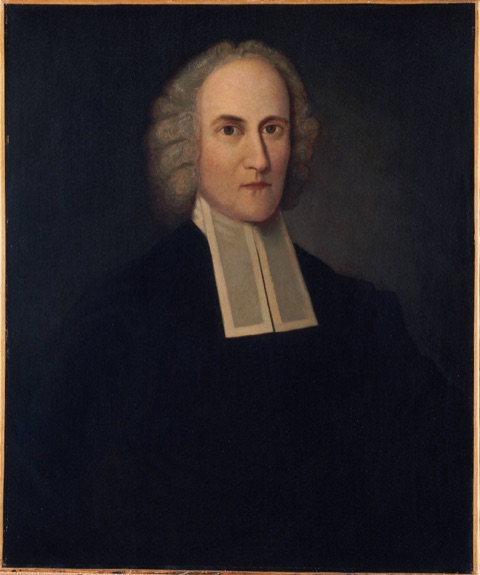
About the author
Jonathan Edwards
Jonathan Edwards (1703 to 1758 AD) was born on October 5, 1703, in East Windsor, Connecticut. He entered Yale College at thirteen and graduated in 1720. In 1727 he became assistant to his grandfather Solomon Stoddard at Northampton, Massachusetts, and succeeded him as pastor in 1729. A revival broke out under his preaching in 1734 and 1735, and during the Great Awakening he preached Sinners in the Hands of an Angry God at Enfield in 1741. He wrote this treatise in 1747, the year after Religious Affections. Dismissed from Northampton in 1750, he served the mission at Stockbridge, where he wrote Freedom of the Will. He became president of the College of New Jersey in 1758 and died that March after a smallpox inoculation.