Modernized edition · Full text · Free PDF/EPUB
The Duties of Parents in Modern English
Summary
- Published
- 1888 AD, as a chapter of Ryle's collection The Upper Room
- Text
- Proverbs 22:6, on training up a child in the way he should go
- Length
- 12,000 words · 50 minutes
- Collection
- Christian Living
What is The Duties of Parents about?
The Duties of Parents is J.C. Ryle's address on raising children for heaven, printed in The Upper Room in 1888. Taking Proverbs 22:6 as his text, Ryle gives seventeen counsels: resist self-will, train with love and patience, put the soul and the Bible first, form habits of prayer, faith, obedience, truth and diligence, and correct without overindulgence.
Read the full summary (9 points, quotes, key themes)Show less
How the argument unfolds
- 01
Introduction. Everyone knows the text, few obey it, and parents judge other families sharply and their own children too gently.
- 02
The way they should go. Children are born with a bias toward evil, so parents must decide for them rather than follow their wishes.
- 03
Love, responsibility and the soul. Training must be tender and patient, since early education shapes the whole life and the soul outweighs every worldly concern.
- 04
Bible, prayer and worship. Children should be steeped in the whole of Scripture, taught to pray from their earliest years, and brought to church to sit with their families.
- 05
Faith, obedience, truth and diligence. Four habits follow: trusting a parent's word, obeying at once, speaking the truth without evasion, and using time well instead of idling.
- 06
Overindulgence. The longest counsel defends correction from Proverbs and draws its warnings from the households of Eli and David.
- 07
God's training and the parent's example. God withholds, leads by dark ways and disciplines his children for their good; parents must copy him and live what they teach.
- 08
Sin, promise and prayer. Parents should expect corruption even in small children, take courage from the promise of the text, and pray without ceasing for a blessing.
- 09
Closing appeal. God is sovereign but works through means, and nothing outside the home can stand in for training at home.
Notable images & quotes
- The pelican. Children should see that even punishment is meant for their good, and that “like the pelican, you would give your heart’s blood to nourish their souls.”
- The bird in Job. A parent who never hears his children pray is like the bird that leaves her eggs in the dust and forgets that a foot may crush them.
- Penelope's web. The parent who teaches without example is like Penelope, who wove all day and unwove all night.
- The bow and the arrows. “Children have ever been the bow from which the sharpest arrows have pierced the human heart.” Adam, Jacob and David knew that grief.
Key themes
- Means under a sovereign God. Only God gives a new heart, yet he never commands a duty without giving grace to perform it, so the parent's task is to obey and leave the result to him.
- Firmness grounded in love. Affection without discipline spoils a child, and discipline without affection drives him away. Ryle treats refusal and correction as forms of love.
- The home as the school of character. No schoolmaster or Sunday school marks a child as deeply as the fireside, where “Who sins before a child, sins double.”
- Childhood habits and the adult soul. Early habits last: an old man remembers his first prayers, and a child who learns to obey his parents learns to submit to God.
Why read it today
Read it for its directness. Ryle writes short, plain counsels, each pressed with Scripture and homely examples, and each ending with a charge a parent can act on that day.
It holds together warmth and authority, the sovereignty of God and the duty of the parent, and will not let parents rest on schools, sponsors or church forms in place of training at home. He turns every lesson back on the reader as well, since children copy what they see.
Reader questions (9)Hide the questions
Questions about The Duties of Parents
Is there a modern English version of The Duties of Parents?
Yes. This is The Duties of Parents by J.C. Ryle in modern English. The language is modernized and the author's order and argument are kept. The full modernized text is free to read on this page.
Can I read The Duties of Parents online for free?
Yes. The complete text of this modern English edition is on this page, with no sign-up or paywall.
Is there a free PDF of The Duties of Parents?
Yes. The PDF and EPUB of this edition are free with an Updated Works account. Sign in with Google or an email link; no card is needed.
What is The Duties of Parents by J.C. Ryle about?
It is a minister's practical counsel to parents on training children for heaven. Ryle explains what Proverbs 22:6 requires, works through seventeen principles of Christian upbringing, and closes with a solemn charge to fathers and mothers.
Does Ryle think parents can convert their children?
No. Those born again are born of God, not of human will. Yet he calls it a miserable delusion to think parents should therefore sit still and wait for grace.
What does Ryle say about punishing children?
Punish seldom but in earnest, and avoid constant threats and frequent light punishments. He protests against the modern notion that no child should ever be whipped, while granting that some parents use it too much and too violently.
Why should children attend church if they cannot understand it?
Ryle notes that Israel's children went to the feasts and heard the law read, that Samuel served before he knew the Lord, and that the apostles understood much only afterward. Regular attendance bears fruit later.
What does Ryle mean by a habit of faith?
Children trusting their parents' judgment without needing every command explained. Ryle calls the opposite principle unsound, and offers Isaac as the model of a son content with his father's answer.
What if a child raised this way still goes astray?
Ryle grants that godly parents do not always have godly children, naming Rehoboam and Manasseh. He urges perseverance, as Elijah stretched himself three times over the widow's son, and expects many children to bless their parents' training on the day of judgment.
The Duties of Parents in Modern English · Full text
The Duties of Parents
“Train up a child in the way he should go; and when he is old, he will not depart from it” (Prov 22:6).
I suppose that most professing Christians are acquainted with the text at the head of this page. Its sound is probably familiar to your ears, like an old tune. You have likely heard it, read it, talked about it, or quoted it many times. Is that not true?
Yet after all, how little is the substance of this text regarded! The doctrine it contains seems scarcely known, and the duty it puts before us seems fearfully seldom practiced. Reader, do I not speak the truth?
It cannot be said that this subject is a new one. The world is old, and we have the experience of nearly six thousand years to help us. We live in days when there is mighty zeal for education in every quarter. We hear of new schools rising on all sides, and we are told of new systems and new books for the young of every sort and description. Still, for all this, the vast majority of children are plainly not trained in the way they should go, for when they grow up to adulthood, they do not walk with God.
How shall we account for this state of things? The plain truth is that the Lord’s commandment in our text is disregarded, and therefore the Lord’s promise in our text is not fulfilled.
Reader, these things may well give rise to great searchings of heart. Allow me, then, to offer a word of exhortation as a minister about the right training of children. Believe me, this subject should come home to every conscience and make each of us ask, “Am I doing all I can in this matter?”
It is a subject that concerns almost everyone. There is hardly a household it does not touch. Parents, nurses, teachers, godfathers, godmothers, uncles, aunts, brothers, and sisters all have a stake in it. Few people can be found, I think, who could not influence some parent in the management of his family, or affect the training of some child by suggestion or advice. All of us, I suspect, can do something here, either directly or indirectly, and I want to stir up everyone to keep this in mind.
It is also a subject on which everyone concerned is in great danger of falling short of his duty. This is preeminently an area where people see their neighbors’ faults more clearly than their own. They will often bring up their children on the very path they have denounced to their friends as unsafe. They see specks in other people’s families while overlooking planks in their own. They are sharp-sighted as eagles in detecting mistakes elsewhere, yet blind as bats to fatal errors going on daily at home. They are wise about their brother’s house, yet foolish about their own flesh and blood.
Here, if anywhere, we need to suspect our own judgment. As a minister, I cannot help remarking that there is hardly any subject about which people are as stubborn as they are about their children. I have sometimes been completely astonished at how slow sensible Christian parents are to admit that their own children are at fault or deserve blame. There are quite a few people to whom I would far rather speak about their own sins than tell them their children had done anything wrong. You will do well to keep this in mind, too.
Come now, and let me place before you a few practical hints about right training. May God the Father, God the Son, and God the Holy Spirit bless them and make them timely words to you all. Do not reject them because they are blunt and simple, and do not despise them because they contain nothing new. Be very sure that if you want to train children for heaven, these are counsels that ought not to be lightly set aside.
1. Train Them in the Way They Should Go
First, then, if you want to train your children rightly, train them in the way they should go, and not in the way they want to go.
Remember that children are born with a decided bias toward evil. Therefore, if you let them choose for themselves, they are certain to choose wrong.
A mother cannot tell what her tender infant may grow up to be. He may be tall or short, weak or strong, wise or foolish. All of that is uncertain. Yet one thing a mother can say with certainty: he will have a corrupt and sinful heart. It is natural to us to do wrong. “Foolishness,” says Solomon, “is bound in the heart of a child” (Prov 22:15). “A child left to himself bringeth his mother to shame” (Prov 29:15). Our hearts are like the earth on which we walk. Leave it alone, and it is sure to bear weeds.
If, then, you want to deal wisely with your child, you must not leave him to the guidance of his own will. Think for him, judge for him, and act for him, just as you would for someone weak and blind. For pity’s sake, do not hand him over to his own wayward tastes and inclinations.
His likings and wishes must not be the rule. He does not yet know what is good for his mind and soul any more than he knows what is good for his body. You do not let him decide what he will eat, what he will drink, or how he will be clothed. Be consistent, and deal with his mind in the same way. Train him in the way that is scriptural and right, not in the way he fancies.
If you cannot make up your mind to this first principle of Christian training, it is useless for you to read any further. Self-will is almost the first thing that appears in a child’s mind, and resisting it must be your first step.
2. Train with Tenderness, Affection, and Patience
Train up your child with all tenderness, affection, and patience. I do not mean that you should spoil him, but I do mean that you should let him see that you love him.
Love should be the silver thread running through all your conduct. Kindness, gentleness, long-suffering, forbearance, patience, sympathy, a willingness to enter into childish troubles, and a readiness to share in childish joys are the cords by which a child is most easily led. These are the clues you must follow if you want to find the way to his heart.
Even among grown-up people, few are not easier to draw than to drive. Something in all our minds rises up in arms against compulsion. We arch our backs and stiffen our necks at the very idea of forced obedience. We are like young horses in the hands of a trainer: handle them kindly and treat them affectionately, and before long you can guide them with a thread; use them roughly and violently, and it will be many a month before you gain mastery over them at all.
Children’s minds are cast in much the same mold as our own. A stern and severe manner chills them and pushes them away. It shuts up their hearts, and you will wear yourself out trying to find the door.
Let them see, however, that you hold genuine affection toward them. Let them see that you truly desire to make them happy and do them good. Let them see that when you punish them, it is intended for their good, and that, like the pelican, you would give your heart’s blood to nourish their souls. Let them see this, I say, and they will soon be all your own. They must be wooed with kindness if their attention is ever to be won.
Surely reason itself can teach us this lesson. Children are weak and tender creatures, and as such they need patient and considerate treatment. We must handle them delicately, like fragile instruments, so that rough handling does not do more harm than good. They are like young plants that need gentle watering, often, yet only a little at a time.
We must not expect everything at once. We must remember what children are and teach them as they are able to bear it. Their minds are like a lump of metal, not forged and made useful all at once, but shaped by a succession of small blows. Their understandings are like narrow-necked vessels. We must pour in the wine of knowledge gradually, or much of it will spill and be lost. “Line upon line, and precept upon precept, here a little and there a little,” must be our rule. The whetstone does its work slowly, yet frequent rubbing brings the scythe to a fine edge. Truly, there is great need for patience in training a child, and without it nothing can be done.
Nothing can make up for the absence of tenderness and love. A minister may speak the truth as it is in Jesus clearly, forcibly, and unanswerably, yet if he does not speak it in love, few souls will be won. In the same way, you must set before your children their duty, commanding, threatening, punishing, and reasoning. Yet if affection is lacking in your treatment, your labor will be all in vain.
Love is one great secret of successful training. Anger and harshness may frighten a child, but they will not persuade him that you are right. If he sees you often losing your temper, you will soon lose his respect. A father who speaks to his son as Saul did to Jonathan (1 Sam 20:30) cannot expect to keep his influence over that son’s mind.
Try hard to keep a hold on your child’s affections. It is a dangerous thing to make your children afraid of you. Almost anything is better than reserve and constraint between you and your child, and those always come in with fear. Fear puts an end to openness of manner. Fear leads to concealment. Fear sows the seed of much hypocrisy and leads to many a lie. There is a mine of truth in the apostle’s words to the Colossians: “Fathers, provoke not your children to anger, lest they be discouraged” (Col 3:21). Do not overlook the advice it contains.
3. Remember How Much Depends on You
Train your children with an abiding conviction in your mind that much depends on you.
Grace is the strongest of all principles. Look at the revolution grace brings about when it enters the heart of an old sinner. It overturns the strongholds of Satan, casts down mountains, fills up valleys, makes crooked things straight, and creates the whole person anew. Truly, nothing is impossible to grace.
Nature, too, is very strong. Look at how it struggles against the things of the kingdom of God. It fights against every effort to grow more holy, and it keeps up an unceasing warfare within us until the last hour of life. Nature is strong indeed.
Yet after nature and grace, there is undoubtedly nothing more powerful than education. Under God, early habits, if I may put it that way, are everything with us. We are made what we are by training. Our character takes the shape of the mold into which our first years are cast. As Cecil observes, “He has seen but little of life who does not discern everywhere the effect of education on men’s opinions and habits of thinking. The children bring out of the nursery that which displays itself throughout their lives.”
We depend in vast measure on those who bring us up. We receive from them a color, a taste, and a bias that cling to us more or less throughout our lives. We pick up the language of our nurses and mothers and learn to speak it almost without noticing, and unquestionably we pick up something of their manners, ways, and cast of mind at the same time. Only time will show, I suspect, how much we all owe to early impressions, and how many things in us can be traced back to seeds sown in our very infancy by those around us. A very learned Englishman, Mr. Locke, went so far as to say, “That of all the men we meet with, nine parts out of ten are what they are, good or bad, useful or not, according to their education.”
All this is one of God’s merciful arrangements. He gives your children minds that receive impressions like moist clay. At the starting point of life, he gives them a disposition to believe what you tell them, to take for granted what you advise them, and to trust your word rather than a stranger’s. In short, he gives you a golden opportunity to do them good. Make sure that opportunity is not neglected and thrown away. Once let slip, it is gone forever.
Beware of the miserable delusion into which some have fallen: that parents can do nothing for their children, and that you must leave them alone, wait for grace, and sit still. Such people have wishes for their children after Balaam’s fashion. They would like them to die the death of the righteous, yet they do nothing to help them live his life. They desire much and have nothing. The devil rejoices to see such reasoning, just as he always rejoices over anything that excuses laziness or encourages the neglect of God’s means.
I know that you cannot convert your child. I know well that those who are born again are born not of human will, but of God. Yet I also know that God expressly says, “Train up a child in the way he should go,” and that he never laid a command on anyone that he would not give grace to perform. I know, too, that our duty is not to stand still and dispute, but to go forward and obey. It is right in the going forward that God meets us. The path of obedience is the way in which he gives the blessing. We only need to do as the servants were commanded at the wedding feast in Cana: fill the water jars with water, and safely leave it to the Lord to turn that water into wine.
4. Keep Your Child’s Soul First
Train with this thought continually before your eyes: your child’s soul is the first thing to be considered.
Precious, no doubt, are these little ones in your eyes. Yet if you love them, think often of their souls. No concern should weigh with you as much as their eternal welfare. No part of them should be as dear to you as the part that will never die. The world, with all its glory, will pass away. The hills will melt, the heavens will be rolled up like a scroll, and the sun will cease to shine. Yet the spirit dwelling in those little creatures whom you love so well will outlive them all, and whether it lives in happiness or misery will, speaking from a human perspective, depend on you.
This thought should stay uppermost in your mind in everything you do for your children. In every step you take for them, and in every plan, project, and arrangement concerning them, never leave out that mighty question: “How will this affect their souls?”
Soul love is the very soul of all love. To pet, pamper, and indulge your child as though this world were all he had to look to, and this life the only season for happiness, is not true love but cruelty. It is treating him like a beast of the earth that has only one world to look to and nothing after death. It hides from him that great truth he ought to learn from his very infancy: that the chief end of his life is the salvation of his soul.
A true Christian must not be a slave to fashion if he wants to train his child for heaven. He must not be content to do things merely because they are the custom of the world. He must not instruct his children in certain ways merely because it is usual, allow them to read questionable books merely because everyone else reads them, or let them form habits of doubtful tendency merely because they are the habits of the day. He must train with an eye to his children’s souls.
He must not be ashamed to hear his training called unusual and strange. What if it is? The time is short, and the fashion of this world is passing away. The parent who has trained his children for heaven rather than for earth, and for God rather than for man, is the parent who will be called wise at last.
5. Train Them to Know the Bible
Train your child to know the Bible. You cannot make your children love the Bible, I admit. None but the Holy Spirit can give us a heart to delight in the Word. Yet you can make your children familiar with the Bible, and you may be sure they cannot become acquainted with that blessed book too soon or too well.
A thorough knowledge of the Bible is the foundation of all clear views of religion. Someone who is well grounded in it will not generally waver or be carried about by every wind of new doctrine. Any system of training that does not put a knowledge of Scripture first is unsafe and unsound.
You need to be especially watchful on this point right now, for the devil is abroad and error abounds. Some among us give the church the honor due to Jesus Christ. Some turn the sacraments into saviors and passports to eternal life. In the same way, some honor a catechism more than the Bible, or fill their children’s minds with miserable little storybooks instead of the Scripture of truth. If you love your children, let the simple Bible be everything in the training of their souls, and let all other books step down and take second place.
Do not care so much that they are mighty in the catechism as that they are mighty in the Scriptures. Believe me, this is the training God will honor. The psalmist says of him, “Thou hast magnified Thy Word above all Thy name” (Ps 138:2). I believe he gives a special blessing to all who try to magnify it among people.
See that your children read the Bible reverently. Train them to regard it not as a human word, but as what it truly is: the Word of God, written by the Holy Spirit himself, all true, all profitable, and able to make us wise for salvation through faith in Christ Jesus.
See that they read it regularly. Train them to treat it as their soul’s daily food, something essential to their soul’s daily health. I know well that you cannot make this anything more than an outward routine, yet there is no telling how much sin even a routine can indirectly restrain.
See that they read all of it. You need not shrink from bringing any doctrine before them, and you need not imagine that the leading doctrines of Christianity are beyond children’s grasp. Children understand far more of the Bible than we tend to suppose.
Tell them about sin: its guilt, its consequences, its power, and its vileness. You will find they can comprehend something of this.
Tell them about the Lord Jesus Christ and his work for our salvation: the atonement, the cross, the blood, the sacrifice, and the intercession. You will find that none of this is wholly beyond them.
Tell them about the work of the Holy Spirit in the human heart: how he changes, renews, sanctifies, and purifies. You will soon see that they can follow you in some measure here as well. In short, I suspect we have no idea how much a little child can take in of the length and breadth of the glorious gospel. They see far more of these things than we suppose.
As for the age when a child’s religious instruction should begin, no general rule can be laid down. The mind seems to open much more quickly in some children than in others. We seldom begin too early, and there are wonderful examples on record of what a child can grasp even at three years old.
Fill their minds with Scripture. Let the Word dwell in them richly. Give them the Bible, the whole Bible, even while they are young.
6. Train Them to a Habit of Prayer
Train them to a habit of prayer. Prayer is the very life-breath of true religion. It is one of the first evidences that someone is born again. “Behold,” said the Lord about Saul on the day he sent Ananias to him, “Behold, he prayeth” (Acts 9:11). He had begun to pray, and that was proof enough.
Prayer was the distinguishing mark of the Lord’s people on the day separation first began between them and the world. “Then began men to call upon the name of the Lord” (Gen 4:26).
Prayer is the defining mark of all real Christians today. They truly pray, for they tell God their needs, their feelings, their desires, and their fears, and they mean what they say. The nominal Christian may repeat prayers, and good prayers too, yet he goes no further.
Prayer is the turning point in a person’s soul. Our ministry is unprofitable and our labor is in vain until you are brought to your knees. Until then, we have no hope for you.
Prayer is one great secret of spiritual prosperity. Where there is much private communion with God, your soul will grow like grass after rain. Where there is little, everything will come to a standstill, and you will barely keep your soul alive. Show me a growing Christian, a progressing Christian, a strong Christian, a flourishing Christian, and I am sure he is someone who speaks often with his Lord. He asks much, and he receives much. He tells Jesus everything, and so he always knows how to act.
Prayer is the mightiest instrument God has placed in our hands. It is the best weapon to use in every difficulty and the surest remedy in every trouble. It is the key that unlocks the treasury of promises, and the hand that draws out grace and help in time of need. It is the silver trumpet God commands us to sound in all our necessity, and it is the cry he has promised always to hear, just as a loving mother hears the voice of her child.
Prayer is the simplest means anyone can use in coming to God. It is within reach of all: the sick, the aged, the infirm, the paralyzed, the blind, the poor, and the unlearned can all pray. It does you no good to plead lack of memory, lack of learning, lack of books, or lack of scholarship in this matter. As long as you have a tongue to tell your soul’s condition, you may and ought to pray. Those words, “Ye have not, because ye ask not” (Jas 4:2), will be a fearful condemnation to many on the day of judgment.
Parents, if you love your children, do everything in your power to train them to a habit of prayer. Show them how to begin. Tell them what to say. Encourage them to persevere. Remind them if they grow careless and slack about it. At the very least, let it not be your fault if they never call on the name of the Lord.
Remember that this is the first step in religion a child is able to take. Long before he can read, you can teach him to kneel by his mother’s side and repeat the simple words of prayer and praise she puts in his mouth. Because the first steps in any undertaking are always the most important, the manner in which your children pray deserves your closest attention. Few people seem to realize how much depends on this.
You must guard against their falling into a hasty, careless, and irreverent way of saying their prayers. You must avoid handing over the oversight of this duty to servants and nurses, or trusting too much that your children will do it when left to themselves. I cannot praise the mother who never looks after this most important part of her child’s daily life herself.
Surely if there is any habit your own hand and eye should help form, it is the habit of prayer. Believe me, if you never hear your children pray yourself, you are greatly to blame. You are no wiser than the bird described in Job, “which leaveth her eggs in the earth, and warmeth them in the dust, and forgetteth that the foot may crush them, or that the wild beast may break them. She is hardened against her young ones, as though they were not hers: her labor is in vain without fear” (Job 39:14-16).
Of all habits, prayer is the one we remember longest. Many a gray-headed man could tell you how his mother used to have him pray in his childhood. Other things may have faded from his mind. The church where he was taken to worship, the minister he heard preach, and the companions who played with him may all have passed from memory and left no trace behind. Yet you will often find it is quite different with his first prayers. He will often still be able to tell you where he knelt, what he was taught to say, and even how his mother looked the whole time. It comes back before his mind’s eye as fresh as if it had happened yesterday.
Reader, if you love your children, I charge you not to let the seedtime of a prayerful habit slip away unused. If you train your children in anything at all, train them at least to a habit of prayer.
7. Train Them in Public Means of Grace
Train them to habits of diligence and regularity in the public means of grace.
Tell them about the duty and privilege of going to the house of God and joining in the prayers of the congregation. Tell them that wherever the Lord’s people are gathered together, the Lord Jesus is present in a special way, and that those who stay away must expect, like the apostle Thomas, to miss a blessing. Tell them how important it is to hear the Word preached, because it is God’s appointed means for converting, sanctifying, and building up human souls. Tell them how the apostle Paul urges us not “to forsake the assembling of ourselves together, as the manner of some is” (Heb 10:25), but to exhort one another and stir one another up to it, all the more as we see the day approaching.
I call it a sad sight in a church when no one comes up to the Lord’s table except the elderly, while the young men and young women all turn away. Yet I call it an even sadder sight when no children are seen in church except those who attend Sunday school and are required to be there. Let none of that guilt lie at your door. There are many boys and girls in every parish besides those in Sunday school, and you who are their parents and friends should see to it that they come to church with you.
Do not let them grow up with a habit of making empty excuses for staying away. Make them clearly understand that as long as they live under your roof, it is the rule of your house for everyone in good health to honor the Lord’s house on the Lord’s day, and that you regard a Sabbath-breaker as a murderer of his own soul.
Arrange, too, if at all possible, for your children to go to church with you and sit near you while they are there. Going to church is one thing; behaving well at church is quite another. Believe me, there is no safeguard for good behavior like having them under your own eye.
Young people’s minds are easily distracted and their attention quickly lost, so every possible means should be used to counteract that. I do not like to see them coming to church by themselves, because they often fall into bad company along the way and learn more evil on the Lord’s day than in all the rest of the week. Nor do I like to see what I call a “young people’s corner” in a church. They often pick up habits of inattention and irreverence there that take years to unlearn, if they are ever unlearned at all. What I love to see is an entire family sitting together, old and young side by side: men, women, and children serving God together by households.
Some people say it is useless to urge children to attend the means of grace because they cannot understand them. I would not have you listen to such reasoning. I find no such teaching in the Old Testament. When Moses goes before Pharaoh (Exod 10:9), I notice he says, “We will go with our young and with our old, with our sons and with our daughters: for we must hold a feast unto the Lord.” When Joshua read the law (Josh 8:35), I notice, “There was not a word which Joshua read not before all the congregation of Israel, with the women and the little ones, and the strangers that were conversant among them.” “Thrice in the year,” says Exodus 34:23, “shall all your men-children appear before the Lord God, the God of Israel.”
When I turn to the New Testament, I find children mentioned there as sharing in public acts of worship just as in the Old. When Paul was leaving the disciples at Tyre for the last time, we read (Acts 21:5), “They all brought us on our way, with wives and children, till we were out of the city: and we kneeled down on the shore, and prayed.”
Samuel, in his childhood, appears to have ministered to the Lord for some time before he truly knew him. “Samuel did not yet know the Lord, neither was the word of the Lord yet revealed unto him” (1 Sam 3:7). Even the apostles themselves did not understand everything our Lord said at the time he spoke it: “These things understood not His disciples at the first: but when Jesus was glorified, then remembered they that these things were written of Him” (John 12:16).
Parents, comfort your minds with these examples. Do not be discouraged because your children do not yet see the full value of the means of grace. Simply train them to a habit of regular attendance. Set it before their minds as a high, holy, and solemn duty, and believe me, the day will very likely come when they will bless you for what you did.
8. Train Them to a Habit of Faith
Train them to a habit of faith. By this I mean that you should train them to believe what you say. Try to make them feel confidence in your judgment and respect your opinions as wiser than their own. Accustom them to think that when you say something is bad for them, it really is bad, and when you say something is good for them, it really is good. In short, lead them to see that your knowledge is greater than theirs and that they may rely implicitly on your word. Teach them to feel that what they do not understand now, they will probably understand later, and to be satisfied that there is a good reason and necessity behind everything you require of them.
Who indeed can describe the blessedness of a true spirit of faith? Or rather, who can measure the misery unbelief has brought on the world? Unbelief led Eve to eat the forbidden fruit, because she doubted the truth of God’s word: “Ye shall surely die.” Unbelief made the ancient world reject Noah’s warning and perish in sin. Unbelief kept Israel in the wilderness; it was the barrier that shut them out of the promised land. Unbelief led the Jews to crucify the Lord of glory, because they did not believe the voice of Moses and the prophets, though read to them every day.
Unbelief remains the reigning sin of the human heart to this very hour. We see unbelief in God’s promises, unbelief in God’s warnings, unbelief in our own sinfulness, unbelief in our own danger, and unbelief in everything that cuts across the pride and worldliness of our evil hearts. Reader, you train your children to little purpose if you do not train them to a habit of implicit faith: faith in their parents’ word, and confidence that what their parents say is right.
I have heard some say that you should require nothing of children that they cannot understand, and that you should explain and give a reason for everything you ask them to do. I solemnly warn you against such a notion. I tell you plainly that I think it is an unsound and rotten principle. No doubt it is absurd to make a mystery of everything you do, and there are many things worth explaining to children so they can see they are reasonable and wise. Yet to raise them with the idea that they must take nothing on trust, and that with their weak and imperfect understandings they must have every “why” and “wherefore” explained at every step, is a terrible mistake likely to have the worst effect on their minds.
Reason with your child at certain times if you think it right, yet if you truly love him, never let him forget that he is still a child. He thinks as a child and understands as a child, and therefore he must not expect to know the reason for everything right away.
Set before him the example of Isaac on the day Abraham took him to offer him on Mount Moriah (Gen 22). Isaac asked his father that single question, “Where is the lamb for a burnt-offering?” He received no answer but this: “God will provide Himself a lamb.” How, where, from what source, in what manner, or by what means, Isaac was never told. Yet that answer was enough. He believed that all would be well because his father said so, and he was content.
Tell your children, too, that we must all start as learners. There is an alphabet to master in every field of knowledge, and the finest horse in the world once had to be broken. Tell them a day will come when they will see the wisdom of all your training. In the meantime, if you say something is right, that must be enough for them. They must believe you and be content.
Parents, if any point in training is important, it is this one. I charge you by the affection you have for your children: use every means to train them to a habit of faith.
9. Train Them to a Habit of Obedience
Train them to a habit of obedience. This is an aim worth any amount of labor to achieve. No habit, I suspect, has as much influence over our lives as this one. Parents, resolve to make your children obey you, even if it costs you much trouble and costs them many tears. Allow no questioning, arguing, disputing, delaying, or talking back. When you give them a command, let them see plainly that you expect it to be done.
Obedience is the only reality. It is faith made visible, faith in action, and faith embodied. It is the test of true discipleship among the Lord’s people: “Ye are My friends if ye do whatsoever I command you” (John 15:14). In the same way, the mark of well-trained children should be that they do whatever their parents command them. Where, indeed, is the honor the fifth commandment requires if fathers and mothers are not obeyed cheerfully, willingly, and at once?
Early obedience has all of Scripture on its side. It is spoken in Abraham’s praise not merely that he will train his family, but that “he will command his children, and his household after him” (Gen 18:19). It is said of the Lord Jesus Christ himself that when he was young, he was subject to Mary and Joseph (Luke 2:51). Notice how implicitly Joseph obeyed his father Jacob’s order (Gen 37:13). See how Isaiah speaks of it as an evil thing when “the child shall behave himself proudly against the ancient” (Isa 3:5).
Mark how the apostle Paul names disobedience to parents as one of the evil signs of the last days (2 Tim 3:2). Mark also how he singles out the grace of requiring obedience as one that must adorn a Christian minister: “a bishop must be one that ruleth well his own house, having his children in subjection with all gravity.” Again, “Let the deacons rule their children and their own houses well” (1 Tim 3:4, 12). And again, an elder must be one “having faithful children, children not accused of riot, or unruly” (Titus 1:6).
Parents, do you want to see your children happy? Then take care to train them to obey when spoken to and to do as they are told. Believe me, we were not made for complete independence, and we are not fit for it. Even Christ’s free people wear a yoke, for they “serve the Lord Christ” (Col 3:24). Children cannot learn too soon that we are not all meant to rule in this world, and that we are never in our right place until we know how to obey those placed over us. Teach them to obey while they are young, or else they will chafe against God all their lives long and wear themselves out with the vain notion of living independent of his control.
Reader, this counsel is all too sorely needed. You see many parents today who let their children choose and think for themselves long before they are able, and who even make excuses for their disobedience as if it deserved no blame. To my eyes, a parent who is always yielding and a child who always gets his own way are a most painful sight. It is painful because I see God’s appointed order turned upside down. It is painful because I feel sure the end result in that child’s character will be self-will, pride, and conceit. You should not be surprised when people refuse to obey their Father who is in heaven if you allow them, as children, to disobey their father on earth.
Parents, if you love your children, keep obedience as a motto and watchword continually before their eyes.
10. Train Them Always to Speak the Truth
Train them to a habit of always speaking the truth. Truth-speaking is far less common in the world than we might assume at first glance. The whole truth and nothing but the truth is a golden rule many people would do well to keep in mind. Lying and evasion are old sins. The devil was their father. He deceived Eve with a bold lie, and ever since the fall, this is a sin against which all of Eve’s children must be on guard.
Just think how much falsehood and deceit exist in the world! How much exaggeration! How many additions are tacked onto a simple story! How many facts are left out whenever telling them does not suit the speaker’s interest! How few people around us are so trustworthy that we can put unhesitating confidence in their word! Truly, the ancient Persians were wise in their generation: a leading principle in educating their children was teaching them to speak the truth. What a sobering proof of human sinfulness it is that we even need to mention such a point!
Reader, notice how often God is called the God of truth in the Old Testament. Truth stands out as a defining feature in the character of the One with whom we have to do. He never swerves from the straight line, and he abhors lying and hypocrisy. Keep this continually before your children’s minds. Press on them at all times that anything less than the truth is a lie, and that evasion, excuse-making, and exaggeration are all halfway houses toward falsehood and must be avoided. Encourage them in every circumstance to be straightforward and to speak the truth, whatever it may cost them.
I press this on your attention not merely for the sake of your children’s reputation in the world, though I could say much about that. I urge it rather for your own comfort and help in all your dealings with them. You will find it an immense help to be able always to trust their word. It will go a long way toward preventing that habit of concealment that so sadly takes hold among some children. Openness and straightforwardness depend heavily on how a parent handles this matter in a child’s earliest years.
11. Train Them to Redeem the Time
Train them to a habit of always redeeming the time. Idleness is the devil’s best friend. It is the surest way to give him an opening to harm us. An idle mind is like an open door. Even if Satan does not walk in himself, he is certain to toss something through it to stir up evil thoughts in our souls.
No created being was ever meant to be idle. Service and work are the appointed portion of every creature God has made. The angels in heaven work; they are the Lord’s ministering servants, always doing his will. Adam in Paradise had work, appointed to tend and keep the garden of Eden. The redeemed saints in glory will have work: “They rest not day and night,” singing praise and glory to him who bought them. Weak, sinful humanity must also have something to do, or the soul will quickly fall into an unhealthy state. Our hands must be occupied and our minds engaged, or our imaginations will soon ferment and breed mischief.
What is true of us is true of our children as well. Alas, indeed, for the person who has nothing to do! The Jews regarded idleness as a positive sin. It was a law among them that every man had to raise his son to some useful trade, and they were right. They knew the human heart better than some of us seem to do.
Idleness made Sodom what she was: “This was the iniquity of thy sister Sodom, pride, fullness of bread, and abundance of idleness was in her” (Ezek 16:49). Idleness also had much to do with David’s terrible sin with Uriah’s wife. I see in 2 Samuel 11 that Joab went out to war against Ammon, “but David tarried still at Jerusalem.” Was that not idleness? It was right then that he saw Bathsheba, and the very next step we read of is his dreadful and miserable fall.
Truly, I believe idleness has led to more sin than almost any other habit you could name. I suspect it is the mother of many works of the flesh: the mother of adultery, fornication, drunkenness, and many other deeds of darkness I have no time to list. Let your own conscience answer whether I speak the truth. You were idle, and at once the devil knocked at the door and walked in.
Indeed, I am not surprised, because everything in the world around us teaches the same lesson. Still water turns stagnant and impure, while running, moving streams stay clear. If you own steam machinery, you must run it or it soon falls out of order. If you own a horse, you must exercise him; he is never as healthy as when he has regular work. If you want good bodily health yourself, you must take exercise, for if you always sit still, your body is sure to complain before long.
It is the exact same way with the soul. An active, moving mind is a hard target for the devil to hit. Try to stay full of useful employment, and your enemy will find little room to sow weeds.
Reader, I ask you to set these truths before your children’s minds. Teach them the value of time and train them in the habit of using it well. It pains me to see children idling over whatever they have in hand. I love to see them active, industrious, and giving their whole heart to whatever they do: giving their whole heart to their lessons when it is time to learn, and giving their whole heart even to their amusements when they go out to play.
If you love them well, let idleness be counted a sin in your home.
12. Guard Against Overindulgence
Train them with a constant fear of overindulgence. Of all points, this is the one on which you most need to be on your guard. It is natural to feel tender and affectionate toward your own flesh and blood, and it is the very excess of that tenderness and affection you must fear. Take care that it does not make you blind to your children’s faults and deaf to all advice about them. Take care that it does not make you overlook bad behavior just to avoid the pain of administering punishment and correction.
I know well that punishment and correction are disagreeable things. Nothing is more unpleasant than causing pain to those we love and bringing forth their tears. Yet as long as human hearts are what they are, it is vain to suppose, as a general rule, that children can ever be raised without correction.
“Spoiling” is a very expressive word, and sadly full of meaning. The shortest way to spoil children is to let them have their own way and to allow them to do wrong without punishing them for it. Believe me, you must not do that, no matter how much pain it costs you, unless you want to ruin your children’s souls.
You cannot say that Scripture fails to speak plainly on this subject. “He that spareth his rod, hateth his son; but he that loveth him, chasteneth him betimes” (Prov 13:24). “Chasten thy son while there is hope, and let not thy soul spare for his crying” (Prov 19:18). “Foolishness is bound in the heart of a child: but the rod of correction shall drive it from him” (Prov 22:15). “Withhold not correction from the child, for if thou beatest him with the rod he shall not die. Thou shalt beat him with the rod, and deliver his soul from hell” (Prov 23:13-14). “The rod and reproof give wisdom: but a child left to himself bringeth his mother to shame.” “Correct thy son, and he shall give thee rest, yea, he shall give delight to thy soul” (Prov 29:15, 17).
How strong and forceful these verses are! Yet how sad it is that in many Christian families they seem almost unknown! Their children need reproof, yet it is hardly ever given. They need correction, yet it is hardly ever applied. Still, the book of Proverbs is not obsolete or unfit for Christians. It is given by inspiration of God and is profitable. It is given for our instruction just as truly as the letters to the Romans and Ephesians. Surely the believer who brings up his children without heeding its counsel is trying to be wiser than what is written, and greatly errs.
Fathers and mothers, I tell you plainly that if you never punish your children when they are at fault, you are doing them a grievous wrong. I warn you: this is the rock on which God’s saints in every age have all too often suffered shipwreck. I long to persuade you to be wise in time and steer clear of it.
See this in Eli’s case. His sons Hophni and Phinehas “made themselves vile, and he restrained them not.” He gave them nothing more than a tame, lukewarm reproof when he ought to have rebuked them sharply. In one word, he honored his sons above God. What was the end of it all? He lived to hear of the death of both sons in battle, and his own gray hairs were brought down with sorrow to the grave (1 Sam 2:22-29; 1 Sam 3:13).
Look, too, at the case of David. Who can read without pain the story of his children and their sins? Amnon’s incest, Absalom’s murder and proud rebellion, and Adonijah’s scheming ambition were grievous wounds indeed for the man after God’s own heart to receive from his own household. Yet was there no fault on David’s side? I fear there can be no doubt there was. I find a clue to it all in the account of Adonijah in 1 Kings 1:6: “His father had not displeased him at any time in saying, Why hast thou done so?” There lay the root of all the mischief. David was an overindulgent father, a father who let his children have their own way, and he reaped exactly what he had sown.
Parents, I urge you, for your children’s sake, beware of overindulgence. I call on you to remember that your first duty is to seek their true well-being, not their fancies and likings: to train them, not humor them; to profit them, not merely please them.
You must not give in to every wish and whim of your child’s mind, however deeply you love him. You must not let him imagine that his will is everything, and that he only has to want something to get it. Please do not make idols of your children, or else God may take them away and break your idol just to convince you of your folly.
Learn to say “No” to your children. Show them that you are able to refuse whatever you judge is not good for them. Show them that you are prepared to punish disobedience, and that when you warn of punishment, you are ready not only to threaten, but to follow through.
Do not threaten too much. Some parents and nurses have a habit of saying “Naughty child” to a boy or girl on every minor occasion, often without good cause. That is a very foolish habit, for words of blame should never be used without real reason. People who are only threatened, and faults that are only threatened, live long. Punish seldom, yet when you do, punish truly and in earnest. Frequent, light punishment is a wretched system indeed.
As for the best way to punish a child, no single rule can be laid down. Children’s temperaments are so widely different that what would be a severe punishment for one child would be no punishment at all for another. I only want to enter my decided protest against the modern notion that no child should ever be whipped. No doubt some parents use physical correction far too much and far too violently, yet many others, I fear, use it far too little.
Beware of letting small faults pass unnoticed with the excuse, “It is only a little one.” There are no little things in training children; all of them matter. Small weeds need pulling up just as much as big ones. Leave them alone, and they will soon grow large.
Reader, if any point deserves your close attention, believe me, it is this one. I know it will cost you trouble. Yet if you will not take trouble with your children while they are young, they will give you trouble when they are old. Choose which you prefer.
13. Remember How God Trains His Children
Train them while remembering continually how God trains his children.
The Bible tells us that God has an elect people, a family in this world. All poor sinners who have been convinced of sin and have fled to Jesus for peace belong to that family. All of us who truly believe in Christ for salvation are its members.
Now God the Father is continually training the members of this family for their everlasting home with him in heaven. He acts like a vinedresser pruning his vines so that they may bear more fruit. He knows the character of each one of us: our besetting sins, our weaknesses, our particular infirmities, and our special needs. He knows our works and where we live, who our companions are, and what our trials, temptations, and privileges are. He knows all these things and is always ordering everything for our good. In his providence, he allots to each of us the very things we need to bear the most fruit: as much sunshine as we can handle and as much rain, as much bitter as we can bear and as much sweet. Reader, if you want to train your children wisely, observe closely how God the Father trains his. He does all things well, so the plan he uses must be right.
Look, first, at how many things God withholds from his children. Few of them could be found, I suspect, who have not held desires he never saw fit to fulfill. Often there has been some one thing they longed to reach, yet a barrier always stood in the way. It has been just as if God were placing it out of reach and saying, “This is not good for you; this must not be.” Moses longed intensely to cross the Jordan and see the good promised land, yet as you remember, his desire was never granted.
Look, too, at how often God leads his people along paths that look dark and mysterious to our eyes. We cannot see the meaning of all his dealings with us, nor can we see the logic of the road our feet are treading. Sometimes so many trials have assaulted us and so many difficulties have hemmed us in that we could not see the necessity of it all. It has been just as if our Father were taking us by the hand into a dark place and saying, “Ask no questions, but follow me.” There was a direct road from Egypt to Canaan, yet Israel was not led along it, but around through the wilderness. That seemed hard at the time. “The soul of the people,” we are told, “was much discouraged because of the way” (Exod 13:17; Num 21:4).
Look, also, at how often God disciplines his people with trial and affliction. He sends them crosses and disappointments. He lays them low with sickness. He strips them of property and friends. He moves them from one position to another. He visits them with things deeply hard for flesh and blood to bear, until some of us have nearly lost heart under the burdens laid on us. We have felt pressed beyond our strength and nearly ready to murmur at the hand disciplining us. The apostle Paul had a thorn in the flesh appointed for him, no doubt some bitter bodily trial, though we do not know exactly what it was. This much we do know: he pleaded with the Lord three times that it might be removed, yet it was not taken away (2 Cor 12:8-9).
Now, reader, despite all these things, have you ever heard of a single child of God who thought his Father had not treated him wisely? No, I am sure you never have. In the long run, God’s children always tell you it was a blessed thing they did not get their own way, and that God did far better for them than they could ever have done for themselves. Yes, and they will tell you too that God’s dealings brought them more true happiness than they would ever have won on their own, and that his way, however dark at times, proved to be the way of pleasantness and the path of peace.
I ask you to take to heart the lesson God’s dealings with his people are meant to teach you. Do not be afraid to withhold from your child anything you believe will harm him, whatever his own wishes may be. That is God’s plan.
Do not hesitate to lay commands on him whose wisdom he cannot yet see, or to guide him in ways that do not seem reasonable to his mind right now. That is God’s plan.
Do not shrink from disciplining and correcting him whenever his soul’s health requires it, however painful it may feel to you. Remember that medicines for the mind must not be rejected simply because they are bitter. That is God’s plan.
Above all, do not fear that such a plan of training will make your child unhappy. I warn you against that delusion. Depend on it: there is no surer road to unhappiness than always getting our own way. Having our wills checked and denied is a blessing for us, because it teaches us to value enjoyments when they come. Perpetual indulgence is the sure path to selfishness, and selfish people and spoiled children, believe me, are seldom happy.
Reader, do not try to be wiser than God. Train your children as he trains his.
14. Remember the Influence of Your Example
Train them while remembering continually the influence of your own example.
Instruction, advice, and commands will profit little unless they are backed up by the pattern of your own life. Your children will never believe you are in earnest and truly want them to obey you as long as your actions contradict your counsel. Archbishop Tillotson made a wise remark when he said, “To give children good instruction, and a bad example, is but beckoning to them with the head to show them the way to heaven, while we take them by the hand and lead them in the way to hell.”
We scarcely realize the force and power of example. None of us can live to himself in this world. We are always influencing those around us in one way or another, either for good or for evil, either for God or for sin. People see our ways, note our conduct, and observe our behavior, and whatever they see us practice, they may fairly assume we think is right. Never, I believe, does example speak as powerfully as it does between parents and children.
Fathers and mothers, do not forget that children learn more through the eye than through the ear. No school will leave as deep a mark on character as home. The finest schoolmasters will never imprint as much on their minds as what they pick up by your fireside. Imitation is a far stronger force in children than memory. What they see has a much stronger effect on their minds than what they are told.
Watch carefully, then, what you do in front of a child. It is a true proverb: “Who sins before a child, sins double.” Strive rather to be a living letter of Christ that your family can read, and read plainly. Set an example of reverence for the Word of God, reverence in prayer, reverence for the means of grace, and reverence for the Lord’s day. Set an example in your words, temper, diligence, self-control, faith, love, kindness, and humility.
Do not expect your children to practice what they never see you do. You are their model picture, and they will copy what you are. They may not understand all your reasoning and lecturing, your wise commands and good advice, yet they can understand your life.
Children are very quick observers. They are quick to see through certain kinds of hypocrisy, quick to detect what you truly think and feel, and quick to adopt all your ways and opinions. You will often find that as the father is, so is the son.
Remember the word the conqueror Caesar always used with his soldiers in battle. He did not say “Go forward,” but “Come.” It must be the same with you in training your children. They will seldom learn habits they see you despise, or walk in paths you do not walk yourself. Someone who preaches to his children what he does not practice is working at a task that never moves forward. It is like the fabled web of Penelope of old, who wove all day and unwove all night. In the same way, the parent who tries to train without setting a good example builds with one hand and tears down with the other.
15. Remember the Power of Sin
Train them while remembering continually the power of sin. I mention this briefly to guard you against unscriptural expectations.
You must not expect to find your children’s minds a blank sheet of pure white paper, or to escape trouble simply because you use the right means. I warn you plainly that you will find no such thing.
It is painful to see how much corruption and evil reside in a young child’s heart, and how quickly they begin to bear fruit. Violent tempers, self-will, pride, envy, sullenness, unruly impulses, idleness, selfishness, deceit, cunning, falsehood, hypocrisy, a terrible quickness to learn what is bad, a painful slowness to learn what is good, and a readiness to pretend anything to get their own way: all of these, or some of them, you must be prepared to see even in your own flesh and blood. They creep out in small ways at a very early age, and it is almost startling to watch how naturally they spring up. Children need no schooling to learn how to sin.
Yet you must not be discouraged and cast down by what you see. Do not think it strange or unusual that little hearts can be so full of sin. That is the only inheritance our father Adam left us. It is the fallen nature with which we enter the world, an inheritance belonging to us all. Instead, let this reality make you all the more diligent in using every means likely, by God’s blessing, to counteract the mischief. Let it make you more and more careful, as far as it lies in your power, to keep your children out of the way of temptation.
Never listen to those who tell you your children are good, well brought up, and completely trustworthy. Consider instead that their hearts are always as flammable as tinder. Even at their very best, they only need a spark to set their corruptions ablaze. Parents are seldom too cautious. Remember the natural depravity of your children, and take care.
16. Remember the Promises of Scripture
Train them while remembering continually the promises of Scripture. I mention this briefly as well to guard you against discouragement.
You have a plain promise on your side: “Train up your child in the way he should go, and when he is old he shall not depart from it” (Prov 22:6). Think what it means to have a promise like this. Promises were the only lamp of hope cheering the hearts of the patriarchs before the Bible was written. Enoch, Noah, Abraham, Isaac, Jacob, and Joseph all lived on a handful of promises, and their souls prospered. Promises are the tonics that in every age have sustained and strengthened the believer. Whoever has a plain text of Scripture on his side need never despair. Fathers and mothers, when your hearts are failing and ready to falter, look at the words of this text and take comfort.
Think about who it is who makes this promise. It is not the word of a human being, who may lie or change his mind. It is the word of the King of kings, who never changes. Has he said something, and will he not do it? Has he spoken, and will he not make it good? Nor is anything too hard for him to perform. The things impossible with people are possible with God. Reader, if we fail to receive the benefit of the promise before us, the fault is not in him, but in ourselves.
Think, too, about what the promise contains before you refuse to take comfort from it. It speaks of a particular time when good training especially bears fruit: “when a child is old.” Surely there is comfort in this. You may not live to see the outcome of careful training with your own eyes, yet you cannot know what blessed fruits may spring from it long after you are dead and gone. It is not God’s way to give everything at once.
“Afterward” is the time when he often chooses to work, both in nature and in grace. “Afterward” is the season when affliction yields the peaceable fruit of righteousness (Heb 12:11). “Afterward” was the time when the son who refused to work in his father’s vineyard repented and went (Matt 21:29). And “afterward” is the season parents must look forward to when they do not see immediate results. You must sow in hope and plant in hope.
“Cast thy bread upon the waters,” says the Spirit, “for thou shalt find it after many days” (Eccl 11:1). Many children, I have no doubt, will rise up on the day of judgment and bless their parents for godly training, even though they showed no sign of profiting from it during their parents’ lifetimes. Go forward, then, in faith, and be sure that your labor will not be altogether wasted. Three times Elijah stretched himself over the widow’s child before the boy revived. Follow his example, and persevere.
17. Pray Continually for God’s Blessing
Train them, lastly, with continual prayer for a blessing on all you do.
Without the Lord’s blessing, your best endeavors will do no good. He holds every human heart in his hands, and unless he touches your children’s hearts by his Spirit, you will wear yourself out for nothing. Water, therefore, the seed you sow in their minds with unceasing prayer. The Lord is far more willing to hear than we are to pray, and far more ready to give blessings than we are to ask for them, yet he loves to be entreated for them. I set this duty of prayer before you as the capstone and seal of everything you do. I suspect that the child of many prayers is seldom cast away.
Look on your children as Jacob looked on his, when he told Esau they were “the children which God hath graciously given thy servant” (Gen 33:5). Look on them as Joseph looked on his, when he told his father, “They are the sons whom God hath given me” (Gen 48:9). Count them with the psalmist to be “an heritage and reward from the Lord” (Ps 127:3). Then ask the Lord, with holy boldness, to be gracious and merciful to his own gifts.
Notice how Abraham intercedes for Ishmael because he loved him: “Oh that Ishmael might live before thee” (Gen 17:18). See how Manoah speaks to the angel about Samson: “How shall we order the child, and how shall we do unto him?” (Judg 13:12). Observe how tenderly Job cared for his children’s souls: “He offered burnt-offerings according to the number of them all, for he said, It may be my sons have sinned, and cursed God in their hearts. Thus did Job continually” (Job 1:5). Parents, if you love your children, go and do likewise. You cannot name their names before the mercy seat too often.
And now, reader, in conclusion, let me press on you once more the necessity and importance of using every single means in your power if you want to train children for heaven.
I know well that God is a sovereign God and does all things according to the counsel of his own will. I know that Rehoboam was the son of Solomon, and Manasseh the son of Hezekiah, and that godly parents do not always have godly offspring. Yet I also know that God works through means, and I am sure that if you take lightly the means I have described, your children are not likely to turn out well.
Fathers and mothers, you may have your children baptized and enrolled in the ranks of Christ’s church. You may find godly sponsors to answer for them and support you with their prayers. You may send them to the finest schools, give them Bibles and Prayer Books, and fill them with head knowledge. Yet if all this time there is no regular training at home, I tell you plainly that I fear it will go hard in the end with your children’s souls. Home is where habits are formed. Home is where the foundations of character are laid. Home gives the bent to our tastes, likings, and opinions. See to it, then, I plead with you, that there is careful training at home. Happy indeed is the parent who can say, as Bolton did on his deathbed to his children, “I do believe not one of you will dare to meet me before the tribunal of Christ in an unregenerate state.”
Fathers and mothers, I charge you solemnly before God and the Lord Jesus Christ: take every possible care to train your children in the way they should go. I charge you not merely for the sake of your children’s souls, but also for the sake of your own future comfort and peace. Truly, it is in your own best interest to do so, for your own happiness depends in great measure on it.
Children have ever been the bow from which the sharpest arrows have pierced the human heart. Children have mixed the bitterest cups people have ever had to drink. Children have caused the saddest tears people have ever had to shed. Adam could tell you so; Jacob could tell you so; David could tell you so. There are no sorrows on earth like those children have brought on their parents. Oh, take care that your own neglect does not store up misery for you in your old age. Take care that you do not weep under the mistreatment of an ungrateful child in the days when your eyes grow dim and your natural strength fails.
Do you ever want your children to be the restorers of your life and the nourishers of your old age? Do you want them to be blessings and not curses, joys and not sorrows, Judahs and not Reubens, Ruths and not Orpahs? Do you wish not to be ashamed of their deeds like Noah, or made weary of your life by them like Rebekah? If that is your wish, remember my advice early, and train them while they are young in the right way.
As for me, I will conclude by lifting up my prayer to God for everyone who reads this paper, that you may all be taught by God to feel the value of your own souls. This is one reason why baptism is too often a mere formality and Christian training is despised and disregarded. Too often parents do not feel for themselves, and so they do not feel for their children. They do not grasp the tremendous difference between a state of nature and a state of grace, and therefore they are content to leave their children alone.
May the Lord teach you all that sin is that abominable thing which God hates. Then I know you will mourn over your children’s sins and strive to snatch them as brands from the fire.
May the Lord teach you all how precious Christ is, and what a mighty and complete work he has done for our salvation. Then I feel confident you will use every means to bring your children to Jesus so that they may live through him.
May the Lord teach you all your need for the Holy Spirit to renew, sanctify, and give life to your souls. Then I feel sure you will urge your children to pray for him without ceasing, and never rest until he has come down into their hearts with power and made them new creatures.
May the Lord grant this, and then I have good hope that you will indeed train your children well: train them well for this life, and train them well for the life to come; train them well for earth, and train them well for heaven; train them for God, for Christ, and for eternity.
Finis
Keep this book
Free PDF/EPUB
It stays free to read here. Choose how you would like to take it with you.
One free account opens 550+ books and saves your place on every device. Google sign-in or an email link. No card.
Theme
Typeface
Size
Save your place
A free account remembers where you stopped, on your phone or at your desk, and adds the PDF/EPUB to your library.
Create a free accountAlready have one? Log in
Readers like you keep these books free
Every edition takes real work to modernize and record. One gift funds the next classic, with no subscription.
Supporters receive
All 153 audiobooks, now and future
The whole ebook library as one download
Support the work Copied words
Take the whole book with you
Your passage is on your clipboard. If you want the full text to quote, print or read offline, the PDF/EPUB is free with an account.
Get the free PDF/EPUBGoogle sign-in or an email link. No card.


You are reading The Duties of Parents, free
Readers like you keep these books free
Every edition takes real work to modernize and record. One gift funds the next classic. No subscription.
- All 153 audiobooks, now and future
- The whole ebook library as one download
About the author
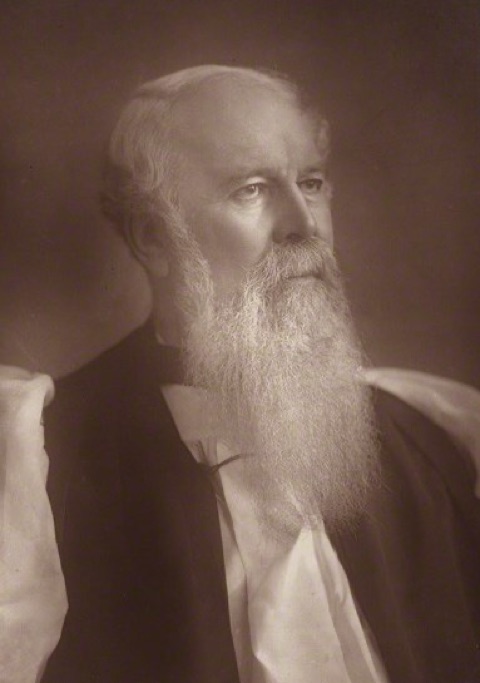
J.C. Ryle
J.C. Ryle (1816 to 1900 AD) was born on May 10, 1816, in Macclesfield, Cheshire, the son of a wealthy banker, and was educated at Eton and Christ Church, Oxford. When his father's bank failed in 1841, Ryle turned to the church. He was ordained in 1842 and spent the next thirty-eight years in rural parishes in Suffolk, becoming the most prolific evangelical writer in the Church of England, known for penny tracts, Expository Thoughts on the Gospels (1856 to 1873) and Holiness (1877). In 1880 he was appointed the first Bishop of Liverpool, where he built churches and schools for twenty years. He died in Liverpool on June 10, 1900.