Volume 3 of 3 · Full text in modern English · Free PDF/EPUB
The Saints’ Everlasting Rest: Volume 3 in Modern English
This volume
- Vol. 1 · The Nature and Certainty of Rest
- Vol. 2 · The Practical Uses of Rest
- Vol. 3 · Keeping the Heart in Heaven
What is in The Saints' Everlasting Rest, Volume 3?
The Saints’ Everlasting Rest is Richard Baxter's treatise on the rest that remains for the people of God (Hebrews 4:9), first published in 1650. This third volume holds Part 4, which Baxter titles a directory for getting and keeping the heart in heaven and dedicates to the people of Shrewsbury. It opens with two applications, against seeking rest on earth and against unwillingness to die. Twelve motives, seven hindrances and ten general helps follow. The core is the directory for heavenly contemplation: its nature, time and place, consideration as its instrument, the order of the affections, soliloquy and prayer, helps from the senses, and the watch over the heart. A summary for weak readers, a worked example and the conclusion close Part 4. This edition also contains Hugh Broughton on the New Jerusalem, George Herbert's poem Home, Baxter's addition to Part 3 and his note To the Reader.
- 01
Against resting on earth. Two applications reprove seeking rest in this world and unwillingness to die.
Jump to it ↓ - 02
Motives, hindrances and helps. Twelve motives to a heavenly mind, seven hindrances to it and ten general helps toward it.
Jump to it ↓ - 03
The directory for contemplation. What heavenly contemplation is, its time and place, consideration as its instrument, the order of the affections, soliloquy and prayer, helps from the senses, and the watch over the heart.
Jump to it ↓ - 04
A worked example. A summary for weak readers and a full meditation on Hebrews 4:9 in Baxter's own voice, followed by the conclusion.
Jump to it ↓ - 05
Pieces at the end. Hugh Broughton on the New Jerusalem, George Herbert's poem Home, Baxter's addition to Part 3, and his note To the Reader.
Jump to it ↓
Read the full summary of Volume 3Show less
The Saints’ Everlasting Rest: Volume 3 holds Part 4 of Richard Baxter’s 1650 treatise, his practical directory for getting and keeping the heart in heaven. After challenging earthly attachment and the fear of death, Baxter lays out motives, obstacles, and a step-by-step discipline of daily heavenly meditation, complete with a worked example, conclusion, and appended pieces by Broughton, Herbert, and Baxter.
Dedicated to the people of Shrewsbury, his native corner of Shropshire, Part 4 was the destination Richard Baxter had in view from the first page of The Saints’ Everlasting Rest. Having survived four years as a chaplain in the English Civil War and chronic illness that kept death constantly close, Baxter wrote for believers who profess faith in heaven yet find their daily desires fastened to earthly security and their hearts reluctant to die.
Instead of offering vague appeals to think spiritual thoughts, Baxter crafts a concrete discipline of “heavenly contemplation” (a deliberate daily practice of turning biblical promises over in the mind until they warm love, desire, hope, courage, and joy). He distinguishes this heart-engaging meditation from detached academic study, teaches readers how to use sensory analogies and inward self-talk (“soliloquy”), and closes with a full model meditation alongside appended pieces by Hugh Broughton, George Herbert, and Baxter himself.
How Baxter trains the heart for heavenly contemplation
- 01
Exposing earthly rest and the fear of dying. After his dedication to Shrewsbury and brief introduction, Chapters 1 and 2 confront two stubborn habits: treating earthly comforts (or even church prosperity) as a final home, and shrinking from mortality. Baxter diagnoses that reluctance bluntly: “The truth is that while there is much faith and Christianity on our lips, there is still much unbelief and paganism in our hearts, and that is the chief reason we are so unwilling to die.”
- 02
Twelve motives for lifting the heart above. Chapter 3 offers twelve persuasive reasons to cultivate a heavenly mind, answering the suspicion that contemplation makes believers useless on earth. Baxter argues the reverse: regular focus on eternal rest steadies courage, lightens suffering, and brings distant promises close enough to move the will. As he puts it, “Faith has wings, and meditation is its chariot; its role is to make absent realities present.”
- 03
Clearing obstacles and building daily supports. Before teaching the method itself, Chapters 4 and 5 map seven hazards that sabotage devotion (unrepented sin, earthly obsession, idle company, bitter religious quarrels, pride, laziness, and mistaking sermon preparation for spiritual life), promising, “If I show you briefly where the rocks and whirlpools lie, I hope you will steer clear.” Ten general helps follow, from pursuing assurance and praise to reading created things as signposts toward heaven.
- 04
Defining contemplation and setting time and place. Chapters 6 and 7 reach the core directory. Baxter separates heavenly contemplation from dry study: study exercises the intellect, whereas contemplation digests truth until the whole soul feels its weight, for “A person can eat too much, but he can never digest too well.” He recommends a fixed daily hour in quiet privacy, favoring sunset to twilight for himself, while assuring servants and busy laborers they can practice meditation during daily work.
- 05
Consideration, ordered affections, and sensory helps. Chapters 8 through 11 guide the reader through the actual exercise, announcing that “Everything so far has simply tuned the instrument, your heart; now we come to the music itself.” First comes focused consideration, weighing the truth and sweetness of heaven, followed by deliberately stirring love, desire, hope, courage, and joy through inward soliloquy, prayer, and vivid comparisons drawn from sight, taste, friendship, and rest.
- 06
Guarding a wandering heart and following a worked example. Chapters 12 through 14 and the Conclusion anticipate distraction, offer a concise summary for beginners, and provide a full model meditation on Hebrews 4:9 in Baxter’s own voice so unskilled readers can watch the method in action. Closing with ten harms of living without delight in God, Baxter urges steady persistence over perfection: “If you cannot practice it systematically and completely, do it as well as you can; only be sure you do it earnestly and often.”
- 07
Appended readings and Baxter’s clarification on saving grace. The volume concludes with four shorter additions: scholar Hugh Broughton on the New Jerusalem and everlasting Sabbath, George Herbert’s moving poem Home, an Addition to Part 3 Chapter 11 replying to a critic Baxter calls Mr. K., and a 1657 note To the Reader. In those closing replies, Baxter clarifies that saving grace differs from common grace in kind and ruling loyalty to Christ, not merely in surface degree.
Notable images & quotes
- The burning glass. “Your faith is that burning glass for your sacrifice, and meditation turns it to face the sun.” Just as a magnifying lens gathers scattered daylight until kindling catches fire, sustained meditation concentrates belief until the heart warms.
- The bird flying above the net. “A net or bait set on the ground rarely catches a bird flying in the air.” Baxter argues that keeping the mind occupied with higher hopes is the surest defense against ground-level temptations.
- Lanterns outside the Father’s house. “Those twinkling stars, that shining moon, and the radiant sun are all no more than lanterns hung outside your Father’s house to light you while you walk in the dark streets of earth.” Visible beauty becomes a stepping-stone to imagine what awaits inside.
- The rising lark. “She sings most joyfully and never stops her bright song while hovering high in the air, as if gazing straight into the glory of the sun, yet falls silent the instant she drops to the earth.” Baxter closes with this picture of why spiritual joy fades whenever contemplation ceases.
Key themes
- Meditation as spiritual digestion. Hearing sermons or reading Scripture quickly leaves truth sitting untouched on the surface of the mind. Baxter treats daily contemplation as the slow digestion that turns biblical knowledge into real affection, resilient hope, and altered everyday conduct.
- Joining reason to the affections. Baxter rejects both cold intellectualism and untethered emotionalism. Joy must rest on solid scriptural promises weighed by the understanding, yet truth has not finished its work until reasoned reflection kindles love, desire, courage, and delight in the heart.
- Becoming acquainted with God before death. People dread dying most when heaven feels like a foreign country where they have no familiar friends. Daily heavenly contemplation builds real acquaintance with God long before the deathbed, turning fear of the unknown into homesick expectation.
- The occupational hazard of religious busyness. Speaking candidly from his own ministry, Baxter warns preachers, teachers, and active Christians against confusing religious preparation with personal communion. One can spend all week gathering spiritual food for others without ever sitting down to eat it oneself.
Why read it today
Most books urge readers to think more about heaven and stop there; Baxter actually shows you how. He turns every hard question on himself first, recalling the civil wars, his own long sicknesses, and his temptation to settle into earthly comfort, before laying out a clear, humane method and walking through a complete worked meditation in Chapter 14 so you can see every step in practice.
At roughly 136,000 words, Volume 3 works best as a slow devotional handbook rather than a cover-to-cover sprint. Read Chapters 6 through 12 alongside a notebook to learn the method itself, pair them with Chapter 13’s brief abstract and Chapter 14’s full example, and return to Chapters 1 through 5 whenever distraction or the fear of mortality creeps back in.
Source edition: The Practical Works of the Rev. Richard Baxter, ed. William Orme (1830), vol. 23
Reader questions (9)Hide the questions
Questions about The Saints’ Everlasting Rest: Volume 3
Is there a modern English version of The Saints’ Everlasting Rest: Volume 3?
Yes. This is The Saints’ Everlasting Rest: Volume 3 by Richard Baxter in modern English. The language is modernized and the author's order and argument are kept. The full modernized text is free to read on this page.
Can I read The Saints’ Everlasting Rest: Volume 3 online for free?
Yes. The complete text of this modern English edition is on this page, with no sign-up or paywall.
Is there a free PDF of The Saints’ Everlasting Rest: Volume 3?
Yes. The PDF and EPUB of this edition are free with an Updated Works account. Sign in with Google or an email link; no card is needed.
What is The Saints’ Everlasting Rest: Volume 3 by Richard Baxter about?
Volume 3 contains Part 4 of Baxter’s 1650 treatise, his full manual for getting and keeping the heart in heaven. After reproving believers for seeking ultimate rest on earth and shrinking from death, he teaches a structured daily practice of meditating on heaven so that Christian faith warms the affections and sustains joy in ordinary life.
How does Volume 3 relate to Volumes 1 and 2, and can I start here?
The treatise spans four parts across three volumes: Volume 1 explains what heaven is and why it is true (Parts 1–2), Volume 2 applies it to warning, assurance, suffering, and helping others (Part 3), and Volume 3 gives the daily contemplative method (Part 4). Because Baxter wrote Part 4 as his crowning practical guide, readers looking specifically for his method of meditation can begin directly here.
How is Baxter’s heavenly contemplation different from ordinary Bible study?
Baxter draws a clear distinction between study and contemplation. Study aims primarily to inform the intellect, trace arguments, or prepare to teach others. Heavenly contemplation takes truths the mind already knows and presses them patiently onto the heart through reflection, self-talk, and prayer until love, hope, and joy genuinely respond.
When and where does Baxter advise practicing contemplation?
He recommends setting aside a regular daily time, ideally in solitude, so the habit does not get crowded out by errands. For himself, Baxter favored the quiet evening hours from sunset to twilight, modeling Isaac meditating in the field, while reassuring busy workers and servants who lack free hours that they can lift their hearts in meditation alongside manual labor.
Why does Baxter say Christians remain unwilling to die?
He traces the fear of death mainly to lingering unbelief about the concrete reality of heaven and love grown too cool to long for God’s presence. Even so, Baxter writes pastorally rather than harshly, noting that a believer may lawfully pray for recovery, deeper assurance, or continued usefulness so long as heaven remains prized above earth.
What are the appended pieces at the end of Volume 3, including the Addition to Part 3, Chapter 11?
Following the main conclusion, this edition includes Hugh Broughton’s reflection on the New Jerusalem, George Herbert’s poem Home, Baxter’s Addition to Part 3, Chapter 11, and a 1657 note To the Reader. In those last two pieces, Baxter answers a critic named Mr. K., clarifying that saving grace differs from common grace by Christ’s ruling place in judgment and will, a real difference in kind rather than mere degree.
The Saints’ Everlasting Rest: Volume 3 in Modern English · Full text
Part 4: A Directory for Getting and Keeping the Heart in Heaven
Dedication to the Inhabitants of Shrewsbury
To my dearly beloved friends in the Lord, the inhabitants of the town of Shrewsbury, including magistrates, ministers, and people, as well as those of the neighboring districts:
Richard Baxter dedicates this part of this treatise as a testimony of his love for his native soil and for his many godly, faithful friends living there.
I heartily pray to the Lord and Head of the church to keep you in unity, peace, humility, watchfulness, and steadfastness in the truth. I pray that he will move you to give your utmost efforts to establishing able, faithful teachers and building up the house of God. That house has been neglected for so long, and now so many hands are working to divide and tear it down. I pray that the Lord will rescue you in this hour of temptation, so that you may be proven faithful in this trial and not be found light when God weighs you. Finally, I pray that he will make you familiar with the daily, earnest practice of this most precious, spiritual, soul-lifting work of heavenly meditation. When the Lord comes, may he find you so doing.
Introduction
In the previous part, I chiefly urged those duties that must be practiced to attain this everlasting rest. In this part, I will chiefly address the duties necessary to lift the heart to God and to live a heavenly, comforted life on earth.
One careless zealot criticized Mr. Culverwell for teaching what is in fact an all-too-obvious truth: many of God’s children do not enjoy the sweet life and blessed condition in this world that God their Father has provided for them. He offers it to them in his promises, lays it on them as their duty in his commands, and brings it right to their hands through all his means of grace and mercies.
God has thrown heaven open to us in his Word. He has told every humble, sincere Christian that they will soon live with him in glory beyond imagination. Yet where is the person whose heart is moved by this promise? Where is the one whose heart leaps for joy at hearing the news, or who is willing, in hope of heaven, to leave this world? Even godly people often hold strange, distasteful thoughts about heaven, as if God were only deceiving us and no such glory existed. They are almost as reluctant to die as people without hope.
Reflecting on this strange clash between our profession and our affections made me suspect some secret, lurking unbelief in all our hearts. For that reason, I wrote the arguments in Part 2 to establish the divine authority of Scripture. Yet I also see another cause: the carelessness, forgetfulness, and laziness of the soul, and our failure to put the faith we already have into action. Here, therefore, I have sought to remove that second cause by setting out a daily practice for exercising the graces that bring heavenly delights into the heart.
Oh, what a royal, joyful, blessed life godly people lose through sheer laziness! Roman Catholics have wronged the merits of Christ by attributing too much to our own works. Yet it is almost unbelievable how much those at the opposite extreme have harmed the safety and comfort of people’s souls. They tell believers that their own efforts serve only for obedience and gratitude, and are not even conditions of salvation or means of greater sanctification and comfort.
Some tell believers to look at nothing in themselves for acceptance with God or for comfort, making that acceptance and comfort belong equally to a Christian and a Turk. Others tell them to look at nothing in themselves except as evidence of their spiritual state. As a result, some expect only sudden, mystical impressions of comfort, while others spend their entire lives searching for signs of their own sincerity.
If these poor souls had truly understood how God persuades the will and stirs the affections, everything would look different. God works through the reasoning and careful reflection of our minds on the nature and worth of the truths set before us. Suppose they had spent their time exercising holy affections and dwelling on the promised happiness, rather than hunting only for inward signs. In God’s ordinary way of working, I am confident they would have been far richer in both assurance and joy.
How can the heir of a kingdom enjoy the comfort of his title except by thinking ahead about it? True, God must give us our comforts by his Spirit. Yet how does he do it? He stirs our souls to believe and ponder the promised glory. He does not comfort us without our knowing how or why, nor does he give foretastes of heaven to people who never think about it.
Reader, I have laid out for you here the most delightful task to the spirit, and the most wearisome to the flesh, that anyone on earth has ever undertaken. I wrote it first only for myself, yet I cannot bring myself to hide the means that I have found so deeply comforting.
If you refuse to be persuaded to such an exacting practice, and choose instead to continue in your routine of ordinary, formal duties, you may leave it alone. Then you will remain empty of delights, apart from whatever this world and your outward routines can offer you. Only do not, for shame, complain about lacking comfort when you willfully reject it. And do not be such a hypocrite as to pray for comfort while refusing to labor for it.
If you say that all your comfort is in Christ, I must tell you that it is a Christ remembered and loved, not a Christ forgotten or merely talked about, who will give solid comfort. Although this part was originally meant to contain only the directory for heavenly contemplation, I have placed two other practical applications before it. The heart must first be pried loose from resting on earth before it is ready to dwell above. The very first part of saving religion is taking God alone as our end and our rest.
Chapter 1
Application 6: Reproving Our Expectations of Rest on Earth
Section 1: Our Sin and Folly in Seeking Rest on Earth
Does this rest still remain? How great, then, is our sin and folly in seeking and expecting it here! Where can we find the Christian who does not deserve this rebuke? Surely we may all cry “Guilty!” to this charge.
We hardly know how to enjoy comfortable houses, goods, lands, and incomes without seeking rest in them. I fear we rarely have thoughts of God and glory as sweet and heart-satisfying as our thoughts of earthly delights. How much rest pleasure-seekers look for in fine buildings, pleasant walks, fine clothing, ease, recreation, sleep, tasty food and drink, cheerful company, health, strength, and long life!
Worse still, we can barely enjoy the necessary means God has appointed for our spiritual good without seeking rest in them. Do we lack ministers, godly fellowship, or similar helps? “Oh,” we think, “if only things were thus and so with us, we would be content.” Do we enjoy them? (Of course, we should delight in these things, yet only as means to help us to God, not as a happiness to content us without him.) Oh, how we settle down on them and congratulate ourselves in them, like the rich fool in his wealth! Do not our hearts hug our books, preachers, sermons, friends, and spiritual gifts, quieting themselves in them even more than in God?
In words, of course, we deny this, and God usually holds first place on our tongues and in our professions. Yet our hearts tell a very different story, as these three proofs make all too clear.
First, when we lack these things, do we not crave them more fiercely than we crave the Lord himself? Do we not cry out more deeply, “Oh, my friend, my possessions, my health!” than “Oh, my God!”? Do we not miss preaching and spiritual helps more passionately than we miss our God? Do we not exert ourselves far more to obtain and keep these blessings than to recover our communion with God?
Second, do we not delight more in possessing these things than in enjoying God himself? Are not the very mercies and duties in which we stand farthest from direct fellowship with God often the most pleasant to us? We can read, study, discuss, preach, and listen day after day without growing very weary, because in all these we deal with instruments and created things. Yet in secret prayer and direct communion with God, where no creature stands between us, how dull, lifeless, and weary we become!
Third, when we lose created blessings or spiritual means, does it not trouble us more than losing God? If we lose a friend, our health, or some earthly comfort, the whole town hears of it. Yet we can lose the presence of our God and scarcely grieve over our misery.
In this way it becomes plain how deeply we make created things our rest. Is it not enough that they serve as sweet delights and refreshing helps on our road to heaven? Must we also turn them into heaven itself? Christian reader, if I knew how, I would gladly make you feel the weight of this sin as deeply as any sin in the world, for the Lord’s greatest quarrel with us lies right here. Therefore I earnestly urge you to press the following considerations upon your own conscience.
Section 2: Resting in Creatures Is Gross Idolatry
1. It is gross idolatry to make any creature or spiritual means our rest. To settle the soul upon it and say, “Now I am satisfied,” on the mere enjoyment of a created thing is nothing less than making it our god. Certainly, being the soul’s rest is God’s own prerogative. Just as it is obvious idolatry to place our rest in wealth and honor, it is simply a more spiritual, refined idolatry to take up our rest in excellent means of grace, in the church’s prosperity, or in its reformation.
When we try to draw from outside God what can be found only in God, we turn away from him to the creature and deny him in our hearts. Think about what happens when we draw more comfort and delight from thoughts of prosperity and from mercies enjoyed here at a distance from him than from anticipating our everlasting blessedness in him. Worse, the thought of the day when we must go to God becomes our greatest dread, and we would do anything to avoid it. Meanwhile, enjoying created things in his absence is the very thing our souls crave. We would rather talk about him than go to enjoy him. We would rather travel many miles to hear a powerful sermon about Christ and heaven than actually enter heaven and possess it. Oh, what vile idolatry this is!
When we debate Epicureans, Academics, and all pagans, how earnestly we argue that God is the chief good and that enjoying him is our highest happiness! What clear proofs we bring forward to establish it! Yet do we believe our own arguments, or are we Christians in our beliefs and pagans in our affections? Do we allow our senses to choose our happiness while reason and faith stand silently by?
O Christians, how deeply grieved our dear Lord must be when we give him reason to complain of us, as he once did of our fellow idolaters, that we have been lost sheep and have forgotten our resting place (Jeremiah 50:6)! We give him cause to say, “My people can find rest in anything rather than in me! They can find delight in one another, yet none in me. They can rejoice in my creatures and ordinances, yet not in me. Even in their very work and religious duties they seek rest, and not in me. They would rather be anywhere than with me. Are these their gods? Have these delivered and redeemed them? Will these be better to them than I have been, or than I would be? If you yourselves had a wife, a husband, or a child who would rather be anywhere than in your company, and was never so happy as when farthest from you, would you not take it deeply to heart?”
So must our God as well. For what else are we doing when we place these things in one side of the scale and God in the other, and foolishly choose them ahead of him? As Elkanah said to Hannah, “Am not I better to thee than ten sons?” (1 Samuel 1:8). In the same way, whenever we long after created things, we may hear God asking us, “Am I not better to you than all created things?”
Section 3: Resting in Earthly Gifts Contradicts God’s Purpose
2. Consider how you contradict God’s purpose in giving you these things. (I mean the design of his command, not his sovereign decree.) He gave them to help bring you to himself, and do you settle for them in his place? He gave them as pleasant refreshments along your journey, and would you now make the inn your home and travel no farther?
By doing so, you not only oppose God’s design, but you also lose the true benefit these gifts could bring you. Even worse, you turn them into your own great harm and hindrance. Surely we may say of all our comforts, all our ordinances, and the richest enjoyments of the church on earth what Scripture says to Israel about the ark: “The ark of the covenant went before them, to search out for them a resting place” (Numbers 10:33).
All of God’s mercies here do the very same thing. They are not that rest, just as John declared that he was not the Christ. Instead, they are voices crying in this wilderness, urging us to prepare, because the kingdom of God, our true rest, is at hand. To rest here, therefore, is to turn every mercy directly against its own purpose and against our own good, destroying ourselves with the very things meant to help us.
Section 4: Resting in Creatures Provokes God’s Jealousy
3. Consider whether this is not the surest way to provoke God against our mercies. He may withhold the blessings we desire, or take away the ones we already enjoy, or at the very least embitter them and turn them into a curse for us. Nowhere is God more jealous than right here.
If you had a servant whom your own wife loved more than she loved you, would you not be grieved with such a wife and put that servant out of your house? You do not let your child handle a knife until he has enough sense to use it without hurting himself. In the same way, if the Lord sees you beginning to settle down in this world and saying, “Here I will rest,” do not be surprised if he soon unsettles you in his jealousy. If he loves you, do not be surprised if he takes away the very thing with which he sees you about to destroy yourself.
I have long observed this pattern in many people. Some attempt great works and just finish them, or aim at great things in the world and just obtain them. Others live through long trouble and upheaval and just overcome it. The moment they begin to look on their situation with satisfaction and rest in it, they are usually close to death or ruin.
As Augustine warns (Letter 144), this world is more dangerous when it flatters than when it afflicts us. We must be far more on guard when it entices us to love it than when it forces us to despise it. Often, even among those who value spiritual, invisible, and eternal realities above earthly things, a fondness for earthly sweetness creeps in and attaches its pleasures to our very duties. The greater future realities are to love, the more powerfully present things press upon our weakness. May those who know how to see and groan over these temptations also be given grace to overcome and escape them.
You know the story of the fool in the Gospel. Once a person starts speaking this language, “Soul, take your ease and rest,” the next news is usually stark. “Fool, this night (or this month, or this year) your soul will be required of you, and then whose will these things be?” Oh, what house is there where this fool does not live!
Dear Christian friends, especially you to whom I am most closely bound, let us examine together whether this is not our own condition. Think of myself first. I have lived an unsettled life, spending four years in the weary, miserable conditions of war. For many years I groaned over the church’s lack of reformation and the heavy fears resting upon us, longing and praying for these present days. Yet have I not thought of them with too much contentment? Have I not been ready to say, “Soul, take your rest”? Have I not comforted myself more by imagining these earthly enjoyments than by looking forward to heaven and enjoying God? What wonder, then, if God should cut me off just as I am sitting down in this supposed rest?
And has your own condition not been much the same? Many of you have been soldiers, driven from house and home, enduring a life of hardship and bloodshed, deprived of preaching and spiritual helps, and longing to see the church settled in peace. Did you not count up all the comforts you expected when you returned home, gladdening your hearts with those thoughts far more than with thoughts of going to heaven? What wonder, then, if God now crosses you somewhat and turns part of your joy into sorrow?
Many a faithful servant of God has been removed from this earth because people overvalued and overloved him. I pray to God that you will take warning for the future, so that you do not rob yourselves of all your mercies.
I am convinced that our discontent, our grumbling over unpleasant circumstances, and our greedy desires for more do not provoke God or destroy the sinner as much as taking too sweet a delight and resting our spirits in a pleasant state. If God has crossed any of you in your wife, children, possessions, friends, or other blessings, either by taking them away or by removing their comfort and usefulness, examine whether this, above every other sin, is not the reason. Wherever your desires stop and you say, “Now I am satisfied,” you make that condition your god and provoke the jealousy of God against it. Whether you are a friend of God or his enemy, you can never expect God to overlook such idolatry or let you enjoy your idols in peace.
Section 5: Being Left to Rest Here Would Be a Curse
4. Consider that if God should allow you to take up your rest here, it would be one of the surest plagues and heaviest curses that could ever fall upon you. It would be better for you never to have a single day of ease or contentment in this world, for then your weariness might drive you to seek the true rest (Psalm 17:14; Luke 16:25).
If God allowed you to sit down and rest here, where would your rest be when this world fails you? You would be a restless wretch throughout all eternity. Having their portion in this life and their good things on earth is the lot of the most miserable, perishing sinners. Does it fit Christians, then, to expect so much here?
Our rest is our heaven, and wherever we take our rest, there we make our heaven. Would you want a heaven like this? Just as Saul’s messengers found only Michal’s dummy of straw when they expected David, so you will find only a rest of straw, wind, and emptiness when you need rest the most. It will be like a handful of water to a drowning man, helping to destroy him rather than save him. That brings us directly to the next point.
Section 6: Seeking Rest Where It Cannot Be Found
5. Consider that you are seeking rest where it cannot be found. You will lose all your labor, and if you keep on in this course, you will lose your soul’s eternal rest as well. I believe I can easily prove this through the following five clear demonstrations.
(1) Our rest lies only in fully attaining our ultimate goal. That goal cannot be reached in this life, so rest cannot be expected here either. Can God be enjoyed in the best-reformed church, or in the purest and most powerful ordinances on earth, as he is in heaven? I know you will all admit he cannot. The frequent complaints of believers themselves testify how little of God not only the blind crowds of the world, but even the saints sometimes enjoy under the finest spiritual helps. And every truly spiritual Christian knows what poor comforters the best ordinances and blessings are without God!
Will a falling stone stop in midair before reaching the ground? No, because the earth’s center is its destination. Should a traveler make his permanent home along the road? No, because his home lies at the end of his journey. When you possess everything creatures and means can offer, do you have what you were truly seeking? Do you have what you believe, pray, and suffer for? I think you would not dare say yes. Why, then, do we even dream of resting here? We are like little children who have wandered from home while God is bringing us back. Yet we want to turn into every house, stop and play with everything along the way, and sit down on every green bank, so that it takes endless trouble to get us home.
(2) Just as we have not yet reached our goal, we are also right in the middle of labors and dangers. Can there be any resting here? What demanding, taxing work lies on our hands! Look at our fellow believers, at the godly, at the ungodly, at the church, at our own souls, and at God. What a vast amount of work awaits us toward each of them! Can we rest in the middle of all our labors?
As Augustine observes (on Psalms 26 and 31), when the time of battle has passed and the peace that surpasses all understanding arrives, God’s tent in battle will become his house. While we are weighed down by this mortal body, our minds fall short no matter how deeply we ponder that peace. Yet when that peace and homeland come, we will no longer march out to fight, but remain to praise. For Scripture says of that house, “Blessed are those who dwell in your house, Lord; they will praise you forever and ever.”
In the tent we still groan; in the house we will praise. Groaning belongs to travelers, while praise belongs to those already at home. You enter your own house to live in it, but you enter God’s house so that he may live in you. For he is the better House: when he dwells in you, he makes you blessed; if he does not dwell in you, you remain miserable. Augustine adds elsewhere (City of God, Book 14, chapter 25) that a person might force himself to want only what he can get. Terence advised, “Since what you wish cannot be done, wish what can be done.” Yet no one is blessed merely because he endures misery patiently.
Certainly, we may take occasional refreshment and relief amid our troubles, if you want to call that rest. Yet that is not the settled rest we are talking about. We may rest on earth only as the ark rested in the middle of the Jordan (Joshua 3:13), a brief and tiny pause indeed. Or we may rest as the angels of heaven were invited to turn aside and rest on earth (Genesis 18:4). They would have been very reluctant to make their permanent home there!
Should Israel have settled down in the wilderness among serpents, enemies, exhaustion, and famine? Should Noah have made the ark his permanent home and been reluctant to step out once the waters receded? Should a sailor choose to live on the open sea and settle his rest among rocks, sandbars, and raging storms? He may venture through all of them for a valuable cargo, yet he certainly does not take the sea for his rest. Should a soldier lie down to rest in the middle of a battle, surrounded by enemies and deadly weapons? Surely he wishes the battle over as soon as possible. Though he risks war to win peace, I hope he is not so foolish as to mistake the war for peace itself.
And are Christians not just such travelers, sailors, and soldiers? Do you not have fears within and troubles without? Are we not constantly surrounded by danger? We cannot eat, drink, sleep, work, pray, listen, or converse without moving among snares and perils. Shall we sit down and rest here? O Christian, stick to your work, watch out for your danger, and persevere to the end! Win the field and leave the battleground before you think of settled rest.
I read, it is true, that Peter on the mountaintop, after catching a glimpse of glory, said, “It is good for us to be here.” Yet surely when he was out on the sea amid the waves, he did not say, “It is good to be here.” No, then he spoke very differently: “Save, Master, we perish.” And Scripture itself explains why he wanted to settle on the mountaintop: he did not know what he was saying. Even with Christ in his transfiguration, he was still on earth. And I dare say the same to you whenever you talk of resting on earth: you do not know what you are saying.
I read that Christ, while hanging on the cross, comforted the converted thief with these words: “This day shalt thou be with me in paradise.” If he had merely told him that he would find rest right there on the cross, would the thief not have taken it as mockery? Surely it is poor resting amid sickness and pain, persecution and distress. No one would think it a contented home for lambs to live among wolves.
The wicked have at least a flimsy excuse for this sin. They are among their friends, surrounded by their earthly portion, enjoying all the happiness they are ever likely to know. Yet is it that way for the godly? At best, this world is a harsh stepmother to them; in truth, it is an open enemy.
Even if nothing else convinced us, the remaining sin that so easily entangles us should quickly settle for any believer that this is not his rest. What, a Christian resting in a state of sinning? Impossible! Or do believers hope for complete freedom from sin here? That too is impossible. Therefore I say to everyone who thinks of resting on earth, in the words of Micah, “Arise ye, depart; this is not your rest, because it is polluted” (Micah 2:10).
(3) The very nature of all earthly things should convince you that they cannot be a Christian’s true rest. They are too poor to make us rich, too low to lift us to happiness, too empty to fill our souls, too inferior to make us blessed, and far too brief to be our eternal satisfaction. They cannot even sustain themselves without support from heaven; how, then, can they sustain our souls? Surely if prosperity and everything else we can desire here are too low to serve as our gods, they are too low to serve as our rest.
(4) Whatever is the soul’s true rest must be able to give it lasting satisfaction. Everything here below, however, delights us only through constant novelty. As Seneca noted (On the Happy Life, chapter 7), the highest good is immortal and knows no end; it brings neither weariness nor regret. Earthly pleasure, by contrast, dies at the very moment it delights us most. Having little room, it quickly fills up, turns tedious, and fades after its first rush. Nothing whose nature is constant change can ever be secure. Nor can anything have lasting substance when it rushes past and perishes in the very act of being used, looking toward its end from the moment it begins.
The satisfaction any creature gives grows old and fades after a brief enjoyment. We pine after earthly things, as Amnon pined for his sister, and once our desire is satisfied, we grow tired of them and loathe them. Even if God rained down angels’ food, after a while our souls would loathe that dry manna. The finest delicacies and the costliest clothing would stop pleasing us if we were restricted to them alone. The grandest mansion and the softest bed would become a prison if we were confined to them.
No single recreation pleases for long; we need a fresh supply or our enjoyment fades. Even our delight in companionship and friendship, especially when merely worldly, is strongest while it is new. The same holds true of God’s ordinances themselves: to the extent that we delight in them for their own sake rather than for God, our delight grows dull whenever novelty wears off.
Suppose we listen continuously to the same minister, or hear him repeat the same phrases in preaching and praying, or preach the same sermon again. How dull our devotion grows, no matter how solid the truth is or how deeply it thrilled us at first! When we read the finest, most enjoyable books, the third or fourth reading is usually less engaging than the first or second. Even in our general Christian walk, our earliest godly friends, our first preachers, our first books, and our first spiritual duties too often hold our warmest affections.
All created things are to us like flowers to a bee. Each flower holds only a tiny amount of nectar, so the bee must move constantly from one fresh flower to another, taking a brief taste from each and flying on to the next. Some people, after trying a variety of callings and tasting every pleasure in their own country, travel abroad for fresh novelty. Yet when they return home, they usually withdraw to some quiet corner, sit down, and cry with Solomon, “Vanity and vexation!” and with David, “I have seen an end of all perfection.” Can this possibly be a place of rest for the soul?
(5) Those who know the creature least love it most. The better it is known, the less it satisfies. Only those are captivated by it who see no farther than its outward beauty and miss its emptiness. It is like an attractive painting: if you stand too close to it, it looks less beautiful. We are prone to over-admire prominent people, positions of honor, and the apparent happiness of others, yet only while we half-know them. Wait until we know them thoroughly, and have uncovered the bad alongside the good and the flaws alongside the strengths, and our admiration soon ends.
Section 7: Means Without God, and the Testimony of Experience
6. Having creatures and spiritual means without God, who is their true end, is so far from making us happy that it actually deepens our misery. It is like eating food that gives no strength, starving in the midst of plenty, or being like Pharaoh’s lean cows that swallowed everything and stayed as thin as ever.
How much better off would you be if you had the best minister on earth, the finest fellowship, the purest church, and the richest estate along with them, yet nothing of God? If God said, “Take my creatures, my word, my servants, and my ordinances, but not myself,” would you call that happiness? What if you had the word of God, yet not the Word who is God? What if you had the bread of the Lord, yet not the Lord who is the true bread (as Augustine puts it)? What if you could cry out with the Jews, “The temple of the Lord,” yet did not have the Lord of the temple? That would be a wretched happiness.
Was Capernaum happier, or far more miserable, for seeing the mighty works it saw and hearing the words of Christ it heard? Surely what only increases our sin and misery can never be our rest.
7. If all these arguments are not enough, simply consult experience, both other people’s and your own. Countless thousands and millions have tried this experiment, yet has even one of them ever found sufficient rest for his soul on this earth?
As Augustine argues (City of God, Book 14, chapters 24 and 25), our misery is proved by the fact that no one lives as he wishes. A person who lived as he wished might think himself blessed, though he still would not be so if he lived wickedly. Closer reflection shows that only the blessed live as they wish, and only the righteous are blessed. Yet even the righteous person does not live as he wishes until he reaches the place where he can never die, be deceived, or be harmed, and knows with certainty that it will always remain so.
Nature longs for this, and cannot be fully blessed until it attains it. Who on earth can live as he wishes when life itself is not in his power? He wants to live, yet he is forced to die. How can he live as he wishes when he cannot live as long as he wishes? If he wishes to die, how does he live as he wishes when he does not even want to live? And if he welcomes death only to live a better life afterward, he still does not yet live as he wishes, until through death he reaches what he longs for.
I do not deny that people have found pleasures and brief, imperfect contentment here, yet true rest and satisfaction they have never found. Shall we expect to find what no human being before us has ever found? Ahab’s whole kingdom meant nothing to him unless he also had Naboth’s vineyard. And once he got it, do you think it satisfied him? If we conquered the entire world, we would likely do what Alexander the Great is said to have done: sit down and weep because there was no other world left to conquer.
If I sent you out like Noah’s dove to fly across the earth looking for a resting place, you would come back admitting you could find none. Go ask honor: “Is rest found here?” You might as well try to rest on top of storm-lashed mountains, in Mount Etna’s flames, or on the pinnacle of the temple. Ask wealth: “Is rest found here?” Only the kind of rest you find in a bed of thorns. And even if it were a bed of down, you must still get up in the morning and leave it to the next guest who takes your place.
Inquire of worldly pleasure and ease: can they bring you any news of true rest? Only the kind a fish or bird finds inside the net, or while swallowing the deceitful bait; when the pleasure tastes sweetest, death is closest. It gives the same kind of contentment that the intoxicating vapors of wine give a drunkard. Wine makes his heart merry, helps him forget his poverty and troubles, and convinces him he is the happiest man alive, until violent sickness empties him or sleep clears away the fumes that deluded his imagination and clouded his mind. Then he wakes up more miserable than he was before.
Such is all the rest and happiness worldly pleasures can offer. Just as the imagination may delight in a pleasant dream while sleep holds the senses captive, so our fleshly, sensory appetite may enjoy itself while false security holds our rational soul captive. Yet when morning comes, the illusion vanishes, and where are the pleasure and happiness then?
Suppose instead you turn to learning and to the purest, richest, most powerful spiritual ordinances. Suppose you travel across sea and land to find the purest church and the holiest saints, asking whether your soul may rest there. You might indeed receive from them an olive branch of hope, insofar as they serve as means to your rest and point toward eternity. Yet for any satisfaction in themselves, you would remain as restless as before.
Oh, how rightly these things might answer many of us with the indignation Jacob showed Rachel: “Am I instead of God?” Or as the king of Israel answered the messengers of the king of Assyria when told to heal Naaman: “Am I God, to kill and make alive, that this man sends to me to recover a man of his leprosy?” In the same way, the highest excellence on earth might ask, “Are we God, or in the place of God, that this person comes to us for rest for his soul?”
Survey every calling and station of life in this world, and see if any of them has found this rest. Go to the farmer and ask him. Watch his endless cycle of toil, his constant worry, labor, and exhaustion, and you will quickly see there is no rest there. Go to the tradesman, and you will find the same. If I sent you to lower stations still, you would think the search wasted.
Go to the conscientious, hardworking minister, and there you will be convinced even more easily. Though his draining, life-consuming, endless labors are exceedingly sweet to him, it is not because those labors are his rest, but because they aim at and serve his people’s eternal rest and his own. If you climb all the way to public office and inquire at the royal throne, you will discover there is no condition more restless, and your heart will even pity poor princes and kings.
Without a doubt, neither royal court nor countryside, neither towns nor cities, neither shops nor fields, neither treasuries, libraries, solitude, company, studies, nor pulpits can provide anything like this rest. If you could question the dead of every generation, or ask the living across every nation, they would all answer, “Here is no rest.” All humanity can say, “All our days are sorrow, and our labor is grief, and our hearts take not rest” (Ecclesiastes 2:23).
Go to Geneva, go to New England, find whichever church you consider most blessed, and we may still say of it what lamenting Jeremiah said of the church of the Jews: “She dwelleth among the heathen, she findeth no rest, all her persecutors overtake her” (Lamentations 1:3). The holiest prophet and the most blessed apostle would speak as one of the greatest apostles did: “Our flesh had no rest, without were fightings, within were fears” (2 Corinthians 7:5). If neither Christ nor his apostles, to whom the earth and its fullness belonged, had rest here, why should we expect it? As Grotius remarked (Letters to the French, Letter 178), earlier ages saw individuals driven into exile, yet our age has seen whole nations uprooted from their homeland, wars everywhere, and wars within wars through the cruelty and greed of soldiers. Amid so many evils surrounding or threatening us, nothing is safe except death; whoever is snatched from such a whirlwind of troubles can only be counted as having escaped.
If other people’s experiences do not persuade you, examine your own. Can you recall any state of life that fully satisfied you? Even if you could, will it prove lasting? Speaking for myself, I have passed through several places and conditions of life, and though I never suffered the kind of poverty that might provoke discontent, I never once found a settled resting place for my soul. I believe we may all say of our rest what Paul said of our hope: “If it were in this life only, we were of all men most miserable” (1 Corinthians 15:19).
If you will not trust your past experience, test it in your present or future troubles. When your conscience is wounded, God is offended, your body is weakened, and your friends are afflicted, see whether earthly things can yield you rest. If Scripture, reason, and the experience of ourselves and the entire world can convince us of anything, we can see clearly that there is no resting here.
And yet how guilty the majority of professing Christians are of this very sin! How many stops and stalls we make before we will take the Lord as our rest! How God must practically drive us and burn us out of every condition, so that we will not sit down and rest there!
If he gives us prosperity, wealth, or honor, our hearts dance before them like Israel before the golden calf, crying, “These are your gods,” and concluding it is good to be here. If he embitters all of them with crosses, how hard we struggle to have the cross removed and the bitterness taken away! We remain restless until our situation is sweetened again, so that we can sit back down and rest right where we were!
If the Lord, seeing our stubbornness, presses forward with the cure and takes the created blessing away completely, how we react! We work, fret, weep, and pray for God to restore it, hoping to make it our rest once more. Even while deprived of our former idol, rather than turning to God, we delight ourselves in the hope of getting our old life back. As long as there is the slightest chance of recovering it, we make those very hopes our rest. Poor people toil all their lives hoping only for a more comfortable living in old age. Though the odds are a hundred to one they will die before reaching it, or immediately afterward, they still work patiently and rest themselves on those expectations.
If God strips away both our present enjoyments and every hope of ever recovering them, how we scramble from one creature to another to find something else to fill the empty place and settle on instead! Suppose we can find no replacement and know for certain we will live in poverty, sickness, and disgrace for the rest of our days on earth. Even then, we would rather settle into that misery and make a rest of a wretched existence than leave everything and come to God.
You would think that crowds of poor people who beg for their bread, or who can barely survive by their hardest labor, would easily be driven from resting here and would gladly look to heaven for rest. You would think the same of the sick who do not have a single day of ease or any remaining hope of recovery. Yet oh, the wicked aversion of our souls toward God! We would rather count our very misery as happiness, even what we groan under daily as unbearable, than take up our happiness in God. If any corner of hell were tolerable, the soul would rather make its rest there than come to God.
Even when God is drawing us to himself and has convinced us of the worth of his ways and service, here lies the final deception of all. We would rather settle down on the paths that lead to him, on the ordinances that speak of him, and on the gifts that flow from him, than come all the way over to God himself.
Christian, do not be surprised that I speak so much about resting in spiritual blessings. Be careful that it does not turn out to be your own case. I assume you are already convinced enough of the emptiness of wealth, honor, and sensual pleasure to renounce them fairly easily, and it is good if you are. Yet you look on your more spiritual mercies along your walk of faith with far less suspicion. You assume they are so close to God that you cannot delight in them too much, especially since most of the world despises them or delights in them too little.
Yet does the increase of those mercies not dull your longings for heaven? If everything in the church went exactly as you wish, would you not sit down and say, “I am satisfied; soul, take your rest,” and consider it a punishment to be taken to heaven? Truly, if your delight in these mercies does not exceed your delight in God, or if you would gladly leave the happiest condition on earth to be with God, then you are a rare person, a genuine Christian indeed.
I know that the means of grace must be loved and prized, and that we ordinarily enjoy God through using them. Anyone who delights in any worldly thing more than in them is not a true Christian. Yet it is a tragic mistake when we settle for religious duty instead of God. It is a tragic mistake when we would rather sit in a sermon than be in heaven, belong to a church on earth than to that perfect church above, and rejoice in ordinances only as part of our earthly comfort.
Many believers were far more willing to go to heaven in the earlier days of persecution, when they had no hope of seeing the church reformed or delivered. Now that people hope to have almost everything as they wish, the picture has changed. They begin to look at heaven as strangely and sadly as if being taken there would be a loss. Is this the right use of reformation? Is this the way to have it continued or completed? Should our deliverances pull our hearts away from God?
Oh, how much better it would be, in every trouble, to draw our strongest grounds of comfort from the place where our truest rest remains! When others comfort the poor with hopes of wealth, or the sick with hopes of health and long life, let us comfort ourselves with the hope of heaven. Rejoice in created things only insofar as they come from God, lead to him, or bring you some token of his love. Let your soul take comfort in ordinances only insofar as God accompanies them with spiritual life or consolation, or gives himself to your soul through them. Even when you have everything you desire, still remember that this is not heaven; these are only the firstfruits.
Is it not enough that God gives us every comfort of travelers and lets us rejoice in all his mercies, without our pitching our tent as though we were already home? “Whilst we are at home in the body, we are absent from the Lord” (2 Corinthians 5:6-9), and while we are absent from him, we are absent from our rest. If God were as willing to be absent from us as we are from him, and as reluctant to be our rest as we are to rest in him, we would be left in an eternal, restless separation.
In short, just as you feel the sinfulness of your earthly discontents, feel the sinfulness of your misplaced earthly contentments as well, and pray even more earnestly for God to pardon them. Above all the plagues and judgments of God on this side of hell, watch and pray against this: settling anywhere short of heaven, or letting your soul rest on anything below God. Otherwise, when the branch you stand on snaps and the things you leaned on deceive you, you will discover that all your labor is lost, your sweetest comforts were only preparations for sorrow, and your highest hopes will put you to shame. Try if you can to persuade Satan to stop tempting, the world to stop both troubling and seducing, and sin to stop dwelling and working in you. If you can bring the glory of God down from above, move the court of heaven down to earth, and guarantee that it will last forever, then settle down here below and say, “Soul, take your rest here.” Until then, never entertain such a thought.
Chapter 2
Application 7: Reproving Our Unwillingness to Die
Section 1: Our Sinful Reluctance to Die
Is there a rest remaining for the people of God? Why, then, are we so unwilling to die and leave this world to possess it? If I may judge other people’s hearts by my own, we are deeply guilty on this point. We linger like Lot in Sodom until God, in mercy to us, pulls us away against our wills. As Cyprian observes, “We resist and struggle, and like stubborn servants we are dragged into our Master’s presence with sadness and unwillingness. We leave this life as if forced by necessity rather than in willing obedience, and yet we expect to be honored with heavenly rewards by the one to whom we go against our wills! Why do we pray for the kingdom of heaven to come, if this earthly captivity delights us?”
How rare it is to meet a Christian, even one of the strongest gifts and longest profession, who can die with genuine willingness, especially when worldly trouble does not force that willingness! Sometimes we put a good face on it and pretend to be willing when we see there is no escape. We realize that reluctance only disgraces us and cannot lengthen our lives.
Yet suppose God had passed a law for our lives on earth like the law passed for the continuance of parliament, declaring that we would not be dissolved until we pleased, and that no one should die until truly willing. I fear heaven would stand empty for most of us. If our worldly prosperity did not fade, our lives on earth would be very long, if not eternal.
We claim we want to be better prepared and to do God some greater service, and for that purpose we beg for one more year, and another, and another. As Bishop Hall writes, “We are all naturally desirous to live, and though we prize life above all earthly things, yet we are ashamed to profess that we desire it for its own sake, but pretend some other reason, one for this and another for that. After all this hypocrisy, nature above all things would live, and makes life the main end of living, but grace has higher thoughts.” Still our promised preparation and service remain as far off as ever, and we stay just as unwilling to die as when we begged for our first reprieve.
If God were not more eager for our company than we are for his, how long we would stay far away from him! Just as we would never have been sanctified if God had waited until we were willing, so if he left it wholly to us, it would be a long time indeed before we were glorified. I admit that death by itself is not desirable. Yet the soul’s rest is with God, and death is the ordinary passage to it. Because we tend to treat this sin lightly and excuse it as ordinary human nature, let me set before you its aggravations, and then offer several further considerations that may help both you and me overcome it.
Section 2: Unwillingness to Die Exposes Unbelief
1. First, consider how much gross unbelief lurks at the root of this sin. It springs either from pagan unbelief about the reality of eternal blessedness and the truth of the Scripture that promises it, or at least from doubting our own share in it. Most often, it involves some measure of both. Christians are usually more aware of the second problem and complain most against it, yet I suspect the first is the deeper master sin and carries the greatest force here.
Oh, if we truly believed that the promise of this glory is God’s own word, and that God genuinely means what he says and is fully determined to keep it! If we truly believed that such blessedness is really prepared for believers as Scripture describes, surely we would be as impatient with living as we are now afraid of dying. Every day would seem like a year until our final day arrived. As Cyprian writes, “Let him fear to die who, not being born again of water and the Spirit, is condemned to the flames of hell. Let him fear to die who is not judged to belong to Christ in his cross and passion. Let him fear to die who must pass from this death to the second death. Let him fear to die whom eternal fire must torment with everlasting pain when he departs from here. Let him fear to die who by longer delay gains only the putting off of his groans and torments.”
With such faith, we would find it as hard to keep from harming ourselves, or neglecting the means of health and life, as we now find it to avoid anxious self-preservation and seeking life by unlawful means. An eloquent philosopher’s discourse on the soul’s immortality and the life to come once moved a hearer to throw himself headlong from a cliff, impatient of any further delay. What, then, would serious Christian faith do if God’s law against self-murder did not restrain us?
Is it possible that we truly believe death will carry us from misery to such glory, and yet shrink from dying? Even if doubts about our share in Christ made us afraid, a real belief in the certainty and excellence of this rest would make us restless until our title to it was settled. Suppose a man who is desperately sick today knew he would wake up healthy tomorrow morning. Or suppose a man living in wretched poverty today had assurance that tomorrow he would rise as a prince. Would either of them be afraid to go to bed? Would they not rather think it the longest day of their lives until that welcome night and morning came? The truth is that while there is much faith and Christianity on our lips, there is still much unbelief and paganism in our hearts, and that is the chief reason we are so unwilling to die.
Section 3: Unwillingness to Die Exposes Cold Love
2. Just as our unwillingness to die exposes the weakness of our faith, it also exposes the coldness of our love. As Augustine observes, if the blessed life is not loved, it is not possessed. If it is loved and possessed, it must be loved above everything else, because whatever else is loved must be loved for its sake. Further, no one is truly blessed who does not love the blessed life as it deserves. Anyone who loves it that deeply must desire it to be eternal. Therefore, it will be truly blessed only when it is eternal.
Love desires the closest union, the fullest enjoyment, and the deepest communion. Where those desires are missing, love is only an empty pretense. Anyone who has ever felt real love working in his heart has also felt these desires accompanying it. If we love a friend, we love his company. His presence comforts us, and his absence troubles us. When he leaves, we long for his return. When he arrives, we welcome him with gladness. When he dies, we mourn, and usually we mourn too much. Being separated from a faithful friend feels like having a limb torn from our body. Would our desires for God not be like this if we truly loved him? Should they not be far stronger, since he is infinitely lovelier than every friend?
May the Lord teach us to examine our hearts closely and guard against self-deception here. Whatever we claim or imagine, if we love father, mother, husband, wife, child, friend, wealth, or life more than Christ, we are not yet his sincere disciples. When the day of testing comes, the question will not be who preached the most, heard the most, or talked the most, but who loved the most. When we give our account, Christ will not accept sermons, prayers, or fastings in place of love. He will not even accept giving away all our possessions or surrendering our bodies to be burned instead of love (1 Corinthians 13:1-4, 8, 13; 1 Corinthians 16:22; Ephesians 6:24).
Can we claim to love him and yet not care how long we stay apart from him? As Augustine puts it, a person is alone who is without a friend. When I am deprived of my closest friend, I feel like a man in a wilderness, lonely and heartbroken. Can my absence from God be no trouble to me at all, and yet I still call him my dearest friend? Herodotus tells of a country where men have many wives. When a husband dies, all his wives are examined to learn which one he loved best, so that she may be slain and buried with him. The women used to compete for this as a high privilege, and they took it to heart as a great dishonor to be passed over. Will the love of Christ not make a Christian at least as willing to die?
If I delight in a garden, a pleasant walk, or a gallery, I spend much time there. If I love my books, I stay with them and pore over them without tiring. The food I love, I eat often. The clothes I love, I wear often. The recreations I love, I enjoy often. The work I love, I gladly keep at. Can I really love God above all these things and still have no desire to be with him?
Is it not a far likelier sign of hatred than of love when thoughts of appearing before God are our most painful thoughts, and when we feel ruined because we must die and go to him? I could hardly regard someone as a genuine friend if he were as content to stay away from me as we ordinarily are to stay away from God. Was Jacob filled with such joy to see Joseph’s face in Egypt, and shall we dread the sight of Christ in glory while still claiming to love him?
I dare not say we have no love at all when we are reluctant to die. Yet I dare say that if our love were greater, we would die more willingly. Suppose we loved God even as strongly as a worldly person loves wealth, an ambitious person loves honor, or a sensual person loves pleasure. Suppose we loved him even as a drunkard loves his swinish indulgence or an immoral person his brutish lust. Even then, we would not be so reluctant to leave this world and go to God.
Oh, if this holy flame of love were thoroughly kindled in our hearts! Instead of pressing fears, sorrowful complaints, and frantic prayers against death, we would join in David’s wilderness lament: “As the hart panteth after the water-brooks, so panteth my soul after thee, O God: my soul thirsteth for God, for the living God; when shall I come and appear before God?” (Psalm 42:1-2). The truth is that our knowledge of God is dim and our faith in him is feeble. Because of that, our love for him is small and our desires for him are dull.
Section 4: It Shows We Are Not Weary of Sin
3. Our unwillingness to be freed by death also shows that we are scarcely weary of sinning. If we regarded sin as the greatest evil, we would not be content to keep its company so long. If we saw sin as our cruelest enemy and a sinful life as the most miserable life, surely we would welcome a change.
Oh, how far our hearts lag behind our doctrinal profession on this point as well! We preach, write, and speak against sin, calling it everything vile, and yet when we are called to leave it, we hate to depart. We brand it with the ugliest names we can imagine, and all of them fall short of its vileness. Yet when death approaches and puts us to the test, we choose to stay with these abominations rather than enter the presence and enjoyment of God. Nemon once struck his soldier for cursing Alexander’s enemy, saying, “I hired you to fight against him, and not to rail against him.” In the same way, God may rightly strike us when he hears our tongues reviling the very sin we resist so lazily and part with so reluctantly.
Christians, since we know our hearts deserve a blow for this, let us unite to rebuke and strike our own hearts before God judges and strikes them. O foolish, sinful heart! Have you been for so long a cesspool of sin, a cage of every unclean lust, and a fountain endlessly pouring out the bitter, deadly waters of transgression, and are you still not weary? Wretched soul! Have you been wounded so long in all your faculties, languishing so miserably in all your duties, and bearing such a harvest of every iniquity, and are you still not weary?
Have you not sinned long enough? Have you not provoked your Lord long enough and abused his love long enough? When the physician Schegius went blind, he bore it patiently. “What of it?” he said. “In my life I have seen many things I would rather not have seen, and at some things I have even wished I were deaf.” As Cyprian asks, “Why do we beg and plead over and over in our prayers for God’s kingdom to hasten, if we have stronger desires to serve the devil here than to go and reign with Christ?” Do you really want to grieve the Spirit more, sin further against your Savior’s blood, deepen your own wounds, and remain under your grievous imperfections?
Has sin proved such a profitable trade, such a needed companion, and such a delightful occupation that you dread the day of parting? Has your Lord deserved this from your hands, that you would rather linger in the suburbs of hell than live with him in light? Would you rather stay and drudge in sin beside his professed enemy and yours than come away and dwell with God? Might God not justly grant your wish, seal you a lease on your chosen distance, nail your ear to these doors of misery, and shut you out from his glory forever?
Foolish sinner, who has wronged you, God or sin? Who has wounded you and caused your groans? Who has made your life so woeful and filled your days with sorrow? Was it Christ, or was it your own corruption? Yet you still hate the thought of parting from it! Shall God be willing to dwell with humanity, and the Spirit consent to live inside your peevish heart, where sin crowds his room and a cursed lodger lives alongside him, constantly quarreling and plotting against him? And shall we still be reluctant to come to God, where there is nothing but perfect blessedness and glory? Is this not judging ourselves unworthy of eternal life? If those who pushed the gospel away judged themselves unworthy (Acts 13:46), do not we who flee from life and glory do the same?
Section 5: It Shows Insensitivity to Earthly Emptiness
4. Our reluctance to hear or think of departing also shows how insensitive we are to the emptiness of created things and the vexation of living here. Whatever we say against the world, and however bitter our complaints may sound, we either do not believe or do not feel what we say; otherwise our affections would match our words. We call the world our enemy, cry out against the oppression of our taskmasters, and groan under heavy bondage. Yet either we do not mean what we say, or we imagine that possessing worldly things holds some rare happiness worth enduring all this pain for.
Is anyone reluctant to leave a prison, move away from cruel enemies, or escape the hands of murderous robbers? As the dying Platerus happily prayed, “Put an end to my pains, Lord, for all earthly things seem vile to me. Oh, that even at this moment the hour of my death were at hand! From my heart I desire to depart and be with Christ.”
Justin Martyr testified to the same power of Christian hope: “Even because we despise death, you may judge well of us. When I delighted in the teaching of Plato, I heard the Christians slandered and saw that they did not fear death or anything else terrible to other men. I reasoned with myself that it was impossible for such people to be slaves to vice and pleasure. What person who is given to pleasure, or is intemperate, or gluts himself on human flesh, can delight in death, which deprives him of his pleasures? Would he not rather try to keep living here and deceive the magistrates who would put him to death, much less surrender himself to die?”
Do we really regard the world as our prison and our cruel, plundering, murderous foe, and yet still hate to leave it? Do we see this mortal flesh as a weight upon our spirits, a veil drawn between us and God, and a constant indwelling traitor to our souls, and yet hesitate to lay it down?
True, the angel had to strike Peter before he rose and left his prison (Acts 12:7-9). Yet that came from not realizing his deliverance was real, not from any unwillingness to leave. I have read of Joseph’s long imprisonment, Daniel being thrown into the lions’ den, Jeremiah sinking in the dungeon, Jonah lying in the whale’s belly, and David crying to God from the depths. I do not remember that any of them hated to be delivered. I have indeed read of saints who suffered cheerfully and rejoiced while afflicted, destitute, and tormented, and even of some who refused deliverance (Hebrews 11). Yet that was not out of love for suffering or reluctance to change their state, but because of the sinful terms of release and their hope of a better resurrection. Though Paul and Silas could sing in the stocks and bear cruel beatings with comfort (Acts 16:25), I do not believe they were reluctant to walk out or resented it when God set them free.
As Ambrose urges, compare this life, if you please, with the life to come. Choose, if you can, an endless bodily life of toil, miserable hardship amid constant changes, weariness of desires, and disgust with pleasures. Even if God were willing to make such a life last forever, would you choose it? If life itself might be left behind simply as an escape from trouble and a rest from hardship, how much more should we long for that eternal rest! It is followed by the everlasting joy of the coming resurrection, where there is no chain of crimes and no enticement to sin (John 16:20, 22).
Ah, foolish, wretched soul! Every prisoner groans for freedom, every slave longs for his jubilee, every sick person longs for health, and every hungry person longs for food. Will you alone hate deliverance? Does the sailor not long to sight land? Does the farmer not long for harvest, and the laborer for his wages? Does the traveler not long to reach home, the runner to win the prize, and the soldier to win the field? Yet you shrink from seeing your labors finished, receiving the goal of your faith and sufferings, and obtaining the very thing you live for!
Were all your sufferings merely imaginary? Were your sharp pangs, griefs, and groans only dreams? Even if they were, we should not be afraid of waking up, for frightening dreams are not pleasant. Or is it not rather the world’s delights that were all dreams and shadows? Is not all its glory like the glow of a firefly, a wandering light that gives little guidance and just as little comforting warmth in our uncertain, sorrowful darkness?
Or has the world, in these later days, laid aside its ancient hostility? Has it recently grown kinder? Has it lost its thorny, tearing nature? Who accomplished this great change, and who arranged this reconciliation? Surely not the great Reconciler. He told us that in the world we will have trouble, and only in him will we have peace. We may reconcile ourselves to the world at our own peril, but it will never reconcile itself to us. O foolish, unworthy soul, who would rather dwell in this land of darkness and wander in this barren wilderness than rest with Jesus Christ! You would rather stay among wolves and suffer the daily stings of scorpions than praise the Lord with the hosts of heaven. If you truly knew what heaven is and what earth is, it would not be so.
Section 6: It Charges Us with High Treason Against God
5. This unwillingness to die actually charges us with high treason against the Lord. Is it not choosing earth before him, taking present things as our happiness, and thus making them our very god? If we truly made God our God, that is, our chief end, our rest, our portion, and our treasure, how could we fail to desire to enjoy him? We have all the more reason to fear this sin because valuing anything above God, or making created things our highest goal, is utterly incompatible with saving grace. Many other foul and serious sins may possibly coexist with sincere faith, but I am certain this one cannot. However, I have already spoken about this earlier.
Section 7: It Reveals Gross Hypocrisy
6. Once all these defects are exposed, consider how much hypocrisy our reluctance also reveals! Herodotus reports that the Trausi observe a striking custom at births and deaths. When a child is born, the relatives sit around him weeping over all the evils he must endure upon entering life, recounting every human calamity. When someone dies, however, they bury him with celebration and joy, recounting the many evils he has escaped and the full happiness he now enjoys. It seems they believed in the soul’s immortality and future happiness.
We Christians, meanwhile, claim to believe beyond doubt in the surpassing, eternal weight of glory. We call God our highest good and say we love him above all. Yet for all that, we flee from him as if we were fleeing hell itself. Would you expect anyone to believe you when you call the Lord your only hope, speak of Christ as all in all, and talk of the joy in his presence, yet would rather endure the hardest life than die and enter his presence? What self-contradiction it is to speak so harshly of the world and the flesh, to groan and complain about sin and suffering, and yet dread no day more than the one that will bring our final freedom!
What shameless, gross pretense it is to spend so many hours and days listening to sermons, reading books, and conversing with others, all to learn the way to a place we do not want to reach! We spend our entire lives claiming to walk toward heaven, running, striving, and fighting for heaven, and yet we shrink from arriving there!
What blatant, unmistakable hypocrisy it is to kneel in public and in private, spending hour after hour praying for what we do not want! As Cyprian observes, “How absurd and perverse it is that while we pray for God’s will to be done, yet when he calls us out of this world, we will not readily obey the command of his will!” Suppose someone overheard you in your daily prayers crying out, “Lord, deliver me from this body of death, from this sin, this sickness, this poverty, and these cares and fears! How long, Lord, must I suffer these?” If he also heard you praying against death, could he believe your tongue agreed with your heart? That is, unless you have so far lost your reason as to expect all this here, or unless the Roman Catholic doctrine were true that we can keep God’s law completely, or unless our recent perfectionists were truly enlightened in thinking they can live without sin. If you know all these to be undoubtedly false, how can you deny your gross hypocrisy?
Section 8: It Disgraces God’s Promises Before the World
7. Consider how deeply we wrong the Lord and his promises, and how we disgrace his ways in the eyes of the world! It is as if we meant to make unbelievers question whether God keeps his word, or whether any such glory as Scripture describes even exists. They watch people who have claimed to live by faith, boasted of their hope in another world, urged others to give up everything for that hope, and spoken dismissively of all earthly things compared with the unspeakable glories above. Yet when the world sees these very people clinging so desperately to present things and shrinking from the glory they boasted about, how it staggers the weak and confirms the world in unbelief and sensuality! They naturally conclude, “Surely if these professing Christians really expected such glory and valued the world as lightly as they pretend, they would not be so reluctant to make the change.”
As Cyprian wrote, “How often it has been revealed to me that I should preach daily and testify publicly! Our brothers and sisters who are delivered from this world by God’s call are not to be lamented, since we know they are not lost, but sent ahead. Departing, they lead the way as travelers and sailors do, so that they should be longed for rather than bewailed. We should not put on black mourning clothes for them here when they have put on white garments there. Nor should we give the heathen just reason to rebuke us for mourning as dead and lost those whom we declare to be with God, and condemning by the witness of our hearts the very faith we profess with our lips. We betray our faith and hope, and make what we teach look counterfeit, staged, and insincere to them. It will do us no good to praise virtue with our words while destroying truth with our deeds.”
Oh, how can we ever repair the harm we do to God and to poor souls by this scandal! On the other hand, what an honor to God, what a strengthening to believers, and what a conviction to unbelievers it would be if Christians lived up to their profession here and cheerfully welcomed the news of rest!
Section 9: It Exposes Wasted Time and Ignored Warnings
8. This unwillingness plainly exposes us as careless loiterers who have wasted much time to little purpose and ignored a multitude of warnings. Very true were the dying words of the noble Andreas Dudithius to Ruterus as he departed: “Farewell, live happily, and while living learn how to die well, for that is the most difficult and at the same time the noblest of all arts.” And as Seneca asks, “Are you not ashamed to keep only the leftovers of life for yourself, and to set aside for a sound mind only the time that can be used for nothing else? How late it is to start living just when you must stop!”
Have we not had our entire lifetime to prepare to die? So many years to get ready for a single hour, and are we still unready and unwilling? What have we been doing? Why have we lived, if the main business of our lives remains so undone? Did we have any greater matters to attend to? Have we not foolishly wronged our own souls in this?
Could we have asked for more frequent warnings? How often has death entered our neighbors’ homes! How often has it knocked at our own doors! First we heard that one neighbor had died, then another, and another, until our towns had replaced most of their inhabitants. Was all this not warning enough that we too are mortal and our own turn would soon come? More than that, we have seen death raging through towns and battlefields, hundreds dying in a day from plague and thousands slain by the sword. Did we not know it would reach us at last?
How many illnesses have troubled our own bodies! Frequent spells of weakness, draining frailty, wasting fevers, pain here and trouble there have forced us to feel the sentence of death within ourselves. What were all these but messengers sent from God to tell us we must soon die, as if we had heard a clear, living voice commanding us, “Delay no longer, but make yourself ready”? And are we still unready and unwilling after all this? O careless, dead-hearted sinners, unworthy neglecters of God’s warnings, faithless betrayers of your own souls!
All these serious aggravations weigh upon this sin of unwillingness to die. I have laid them out to make it hateful to my own soul, which is all too guilty of it, as well as to yours. As a further help in overcoming it, I will add the following considerations.
Section 10: Not to Die Means Never to Be Happy
1. Consider that “not to die” would mean “never to be happy.” To escape death is to miss blessedness, unless God were to carry us straight to heaven like Enoch and Elijah, which he has never done before or since. As Cyprian writes, “When we die, we cross over through death to immortality, and it is impossible to reach eternal life if we do not leave this world. This is not an ending, but a passing on, and a reaching of eternity by completing our earthly journey. Who would not hasten to a better state? Who would not wish to be changed and conformed to the image of Christ, and to arrive quickly at the dignity of heavenly grace?”
If our hope in Christ were for this life only, we would be the most miserable of all people. The pleasure-seeker enjoys more bodily indulgence than the Christian. The drunkard, the sensualist, and the carefree revelers swagger through life with bold mirth while many a poor saint mourns in a corner. Even the animals of the field eat, drink, frisk, and play without a care while many a Christian lives with sorrow. If you do not want to die and go to heaven, what do you have above a pleasure-seeker or an animal?
What good does it do us to fight with wild beasts, speaking as men, if we had no hope of a life to come? Why do we pray, fast, and mourn? Why do we endure the world’s contempt and bear the scorn and hatred of all, if not for our hope beyond death? Why are we Christians instead of pagans and unbelievers, if we do not desire a life to come?
Christian, why would you throw away your faith, waste all your labor in duty, and lose all your sufferings? Would you forfeit your hope, forfeit the entire purpose of your life, forfeit all the blood of Christ, and settle for the portion of a worldling or a brute beast? If you answer no to that, how can you remain unwilling to die?
When good old Milius lay dying and was asked whether he was willing to die, he answered with a saying of Cyprian that he often repeated: “Let him be unwilling to die who is unwilling to go to Christ.” As Cyprian further writes, “The kingdom of God has begun to draw near. As the world passes away, the reward of life, the joy of eternal salvation, endless gladness, and the possession of paradise once lost are already arriving. Heavenly things are replacing earthly ones, great things replacing small ones, and eternal things replacing perishable ones. What room is left here for anxiety and worry? Who in the midst of this is fearful and gloomy, except one who lacks hope and faith? It belongs to him to fear death who does not wish to go to Christ. It belongs to him not to wish to go to Christ who does not believe he is beginning to reign with Christ; for the righteous shall live by faith.”
Section 11: God Is Willing to Glorify Us Through Death
2. Consider this: is God willing to glorify us through death, and are we unwilling to die so that we may be glorified? Would God freely give us heaven, and are we reluctant to receive it? A prince once offered to lift a lame beggar into his coach, and when the beggar refused, the prince told him, “You well deserve to stay stuck in the mud.” In the same way, God may say to those who refuse his rest, “You well deserve to live in trouble.”
If a prince offered to make you his heir, I would think you could hardly hesitate to accept. Refusing such kindness can only reveal ingratitude and unworthiness. God solemnly declared against those who made excuses when invited to Christ, “Verily, none of these that were bidden shall taste of my supper.” Just as rightly might he resolve against us when we invent excuses to keep from coming to glory.
When Ignatius was condemned to be torn by wild beasts, he feared that his friends’ prayers and efforts would rob him of the privilege and blessing of martyrdom. He repeatedly begged them to leave him alone and not hinder his happiness. He told them he feared their love might harm him, and that their fleshly friendship would keep him from death. It was easy for them to do as they wished, he said, while it was hard for him to attain to God.
Section 12: Christ Willingly Came to Earth for Us
3. The Lord Jesus was willing to come from heaven to earth for us. Shall we be unwilling to move from earth to heaven for ourselves and for him? As Augustine puts it, “When you say, ‘I want to live happily,’ you seek a good thing, but not here. If Christ had that here, you may have it too in this region of your death. Look closely at what he found here.” Surely if we had once possessed heaven and God sent us back to earth, as he sent his Son for our sake, we would indeed have been reluctant to move.
Christ freely submitted to a very different kind of change than ours. He clothed himself in human flesh, took the form of a servant, and left the embrace of the Father’s love to bear the wrath we deserved. Shall he descend into our hell, from the height of glory to the depth of misery, to bring us up to his eternal rest, and shall we still be unwilling? As Augustine continues, “He came from a lofty realm, and what did he find here except what abounded here? Toil, sorrows, and death. Look at what you have here and what abounds here: he shared it with you. What overflowed in the storehouse of your misery, he drank here; he drank vinegar and he drank gall. That is what he found in your house. Yet he has invited you to a great table, the table of the sun, the table of angels, where he himself is the bread.”
Certainly Christ had far more reason to be unwilling. He might have said, “What is it to me if these sinners suffer? If they value their flesh above their spirits and their lusts above my Father’s love, and if they insist on selling their souls for nothing, who ought to suffer the loss and bear the blame and curse? Should I, the very one they have wronged? Must they willfully break my law while I endure their deserved pain? Is it not enough that I bear their offense against me, without also bearing my Father’s wrath and satisfying the justice they violated? Must I come down from heaven to earth, clothe myself in human flesh, be spat upon and scorned by men, and fast, weep, sweat, suffer, bleed, and die a cursed death? And all of this for wretched worms who would rather risk everything they have, and gamble away their souls and God’s favor, than pass up one forbidden morsel! Do they throw themselves away so lightly, while I must buy them back so dearly?”
So we see that Christ had plenty to plead against coming for us, yet he pleaded none of it. He had reason enough to be unwilling, yet he voluntarily stooped low. We, by contrast, have no reason against going to him, unless we argue against our own hopes and plead for our own miseries to continue. Christ came down to bring us up. Would we have him lose his blood and labor and return without us? Has he bought our rest at such a dear price? Is our inheritance purchased with the blood of God, and after all this are we still reluctant to enter it? Ah, friends, it was Christ, not we, who had reason to be reluctant. May the Lord forgive and heal this foolish ingratitude.
Section 13: Reluctance to Die Serves Satan’s Goal
4. Consider whether we are not joining forces with our cruelest, deadliest enemies and agreeing with their most malicious plan whenever we are reluctant to die and go to heaven. As Cardinal Cusanus writes, “The possibility of dying is never removed except through death; therefore Christ removed the possibility of dying by dying, so that through the resurrection our nature might reach immortality.”
What is the peak of our enemies’ malice, the goal of all temptations, and the devil’s daily business? Is it not to keep our souls away from God? Shall we be content with that and unite our desires with Satan’s? Even though it does not include eternal torment, staying away from heaven and God is still half of hell, and we wish it upon ourselves! If you took advice from all your enemies and racked your brains day and night to plot your own harm, what greater mischief could you devise, short of hell itself, than remaining here on earth away from God?
Oh, what sport it gives Satan when his desires and yours line up so neatly! When he sees he cannot drag you to hell, he can still keep you out of heaven for as long as possible, and even get you to beg earnestly for the delay yourself. Oh, do not gratify the devil at the cost of your own joy!
Section 14: Fear of Death Torments Our Daily Lives
5. Do not our daily fears of death turn our lives into a continual torment? As Erasmus says, the fear of death is a worse evil than death itself. Paul died daily through constant readiness and the unavoidable sufferings of this life. We, however, die daily through the needless torments and useless miseries we manufacture for ourselves.
Our lives could be filled with joy through daily contemplation of the world to come and sweet, delightful thoughts of heavenly bliss. Instead, how we fill them with terror through all these groundless anxieties and fears! In this way we devour our own comforts and prey upon our truest pleasures. When we might lie down, rise up, and walk outdoors with hearts full of the joys of God, we constantly flood them with troubling fears. Anyone who fears dying must live in constant fear, because he always has reason to expect it. And how can someone live comfortably when he lives in perpetual dread of losing every comfort?
Section 15: These Fears Are Self-Inflicted Sufferings
6. Moreover, all of these are self-inflicted sufferings. It is as if being the ones who deserve our calamities were not enough; we must also act as our own executioners. It is as if God had not laid enough upon us, so we must pile more upon ourselves! Is death not bitter enough to human nature on its own, without our doubling, tripling, and multiplying its bitterness? We complain loudly about the weight of our troubles, yet we add to the load every day. Surely the condition of frail mortals is hard enough without making it far worse.
The sufferings God lays upon us all lead to blessed outcomes. The path moves from suffering to patience, from patience to experience, from experience to hope, and at last to glory (Romans 5:3-4; Romans 8:17). By contrast, the sufferings we manufacture for ourselves usually produce results matching their source. They run in an endless circle, from sin to suffering, from suffering back to sin, and then to suffering again, endlessly. Worse still, they grow heavier as they go, each sin greater than the last and each suffering greater as well. That is their natural course, and if mercy interrupts it, no thanks belong to us. Unless we imagine God created us to be our own tormentors, we have little reason to feed our fears of death. As Publius says, “Alas, how miserable it is to grow old in fear!”
Section 16: Fear of Death Is Completely Useless
7. Consider further that these fears are completely useless and unprofitable (Matthew 5:36; Matthew 6:27). Just as all our worry cannot turn a single hair white or black, or add a single cubit to our height, so our fear cannot prevent our sufferings or postpone the hour of our death by a single hour. Willing or unwilling, we must go. Many people’s fears have hastened their end, but no one’s fear has ever prevented it.
True, a watchful fear and concern about the danger after death has benefited many and helps guard against that ruin. Yet for a member of Christ and an heir of heaven to dread entering his own inheritance is a sinful, useless fear. As Cyprian writes, “If mortality accomplishes nothing else, at least it brings this good to Christians and God’s servants: by learning not to fear death, we become willing even to desire martyrdom. Such trials are our training exercises, not our funerals. They bestow on the soul the glory of courage, and by teaching contempt for death, they prepare us for glory.”
Section 17: Fear of Death Is Useful Only to Satan
8. Though this fear is useless for any good, it is extremely useful to Satan. Our dread of dying ensnares our souls and strengthens many temptations. Indeed, when we are called to die for Christ and tested in a day of trial, it can drive us to deny the known truth and forsake the Lord God himself. You treat it now as a minor sin, an ordinary human weakness. Yet if you look at its dangerous consequences, I think you will view it very differently.
What made Peter deny his Lord? What makes apostates in times of persecution abandon the truth, and causes the green shoots of unrooted faith to wither under the heat of trial? Fear of prison and poverty can do much, but fear of death does far more. When you see the gallows or hear the sentence, if this fear of dying rules your heart, you will quickly begin saying with Peter, “I know not the man.” When you see the bundles of wood stacked and the fire ready, you will say as that apostate told the martyr, “Oh, the fire is hot, and nature is frail,” forgetting that the fire of hell is hotter.
Friends, lightly as you treat it, you do not realize how much power these fears have to pull your souls away from Jesus Christ. Have we not recently seen frequent proof of this? How many thousands have fled from battle and turned their backs on a just cause, knowing God’s honor was involved, their country’s welfare was the prize, and the hopes of future generations lay at stake, all from an unworthy fear of dying! Have we not known men living with a wounded conscience in some known sin who dared not face the enemy because they dared not face death? They trembled, pulled back, and cried, “Alas, I dare not die! If I were in this or that man’s condition, I would dare to die.” Anyone who does not dare to die can scarcely fight bravely.
That is why we have seen in our recent wars that no one is braver than two kinds of men:
(1) Those who have conquered the fear of death by the power of faith.
(2) Those who have smothered it through reckless godlessness and thrown it off through numb, thoughtless complacency.
The more we fear death, the more cowardice we usually show in God’s cause. In any case, it is a clear temptation and snare. Besides leading us into countless unbelieving schemes, complaints against God’s wise governance, and hard thoughts about most of his providences, this sin also wastes much precious time, mostly near the end of our lives. Just when time ought to be most precious to us and spent on better things, we foolishly and sinfully waste it on the fruitless churn of these distracting fears. You can see, then, what a dangerous snare these fears are, and what a fertile parent of many evils.
Section 18: We Have Already Had an Ample Span of Time
9. Consider what an ample span of time most of us have already had: some thirty years, some forty, some fifty or sixty. For every person who lives even to the shortest of these ages, how many go to the grave younger! Christ himself, as is commonly thought, lived only thirty-three years on earth, though Helvetius and some other modern chronologers think he died in his thirty-fifth year.
If those thirty years lay ahead of you instead of behind you, you would think them a long time. During some threatening illness long ago, did you not say to yourself, “Oh, if only I could have seven more years, or ten more years!” Now you have enjoyed perhaps even more than you begged for then, and yet you are still unwilling to go. That leaves only one alternative: you do not want to die at all, but desire immortality on earth, which is a sin incompatible with true grace. If your grief is simply that you are mortal, you might as well have lamented it your whole life, since you were never ignorant of it.
Why should someone who expects to die at all not be as willing at thirty or forty, if God sees fit, as at seventy or eighty? Usually, when the longest life reaches its final day, people are just as reluctant to leave as ever. As Seneca asks, “Why do we complain about nature? She has dealt kindly with us. Life is long, if you know how to use it. We do not have a short time to live, but we waste a great deal of it. Life is long enough, and has been given in generous measure for the greatest achievements, if it is all well invested. But when it slips away through luxury and carelessness, and is spent on nothing good, only when final necessity forces us do we realize that the life we did not notice passing is already gone. We have not received a short life; we have made it short. Nor are we poor in time, but wasteful of it.”
Clement of Alexandria gives us the Christian contrast: “While in the body, the chosen believer cares for the worldly affairs of the place where he stays as a traveler uses inns and lodgings along his road. Yet without distress he leaves behind his dwelling, possessions, and use of them with a ready and cheerful mind, following the one who leads him out of this life and never turning back. He is thankful for his lodging here, yet he blesses God for his departure and embraces the heavenly home.” Anyone who wastes so many years has more reason to mourn his own neglect than to complain about the shortness of his life, and would do better to lament his life’s wickedness than its brevity.
Length of time does not conquer sin. Corruption never withers or decays with age. Unless we receive an increase of grace along with more years, we naturally grow worse as we grow older. Let us, then, be content with our allotted portion. Just as we know we must not complain about our assigned measure of wealth, health, honor, and other earthly things, let us not be discontented with our appointed measure of time.
O my soul, depart in peace! Have you not enjoyed a generous share here? Since you would not ask for unlimited wealth or honor, do not demand unlimited time either. Is it right for God to apportion your share, or for you to do it? If you realized how little you deserve even one hour of the patience you have received, you would see how large a portion you have had. Would you call your past years back again? Can you eat your bread and still keep it? Is it not divine wisdom that sets the boundaries? God will not let one person do all the work, endure all the suffering, or receive all the honor. He chooses to glorify himself through a variety of instruments, through many people and many generations, not through a single person or age. Now that you have played your part and finished your appointed course, step down contentedly so others may take their turns after you.
As with every other outward gift, you can have too much time and earthly life as easily as too little. Only of God and eternal life can you never have too much or enjoy them too long. Large receipts bring large accounts; the longer the lease, the heavier the fee and rent. Much time brings much duty. Is it not easier to answer for the blessings and duties of thirty years than of a hundred? Pray, therefore, for grace to use your time better, and be content with the share you have been given.
Section 19: We Have Received a Generous Share of Mercies
10. Consider that you have received a generous share of the comforts of life, not merely bare time alone. God could have made your life pure misery until you were as tired of holding on to it as you are now afraid of losing it. If he had denied you the true benefits and purposes of living, life would have brought little comfort. Those in hell have existence just as we do, and for far longer than they wish. God could have let you waste your days in ignorance, or spend your life until the final hour before bringing you home to himself and granting you the saving knowledge of Christ. Then your life would have been short even if your years were many.
Instead, he opened your eyes in the morning of your days and taught you early the true business of living. I know that even the best of us are careless loiterers who do not use our time according to its worth. As Seneca writes, “Only the wise person rises above the limits of human mortality; all ages serve him as they serve God. Has time passed? He lays hold of it by memory. Is it present? He uses it. Is it yet to come? He anticipates it. Bringing all times together into one makes his life long. By contrast, those have the shortest and most anxious lives who forget the past, neglect the present, and fear the future; when they reach the end, the wretched people realize too late that they have been busy doing nothing for so long.”
Still, someone who has a hundred years and wastes them all does not truly live as long as someone who has twenty years and invests them well. It is too soon to go to hell at a hundred years old, and not too soon to go to heaven at twenty. As Seneca also observes, “A journey is incomplete if you stop halfway or short of your destination, but life is not incomplete if it is honorable. Wherever you end, if you end well, it is whole.” And again, “No one is so ignorant as not to know that he must someday die; yet when death draws near, he dodges, trembles, and weeps. Would you not think that person the most foolish of all who wept because he had not lived a thousand years ago? Yet just as foolish is the one who weeps because he will not be living a thousand years from now. These two are equal: you will not be, just as you once were not.”
Means are judged by their goal, and the best means is the one that reaches the goal most quickly and surely. The person who has enjoyed the true purposes of life has had the best life, not the one who has simply lasted the longest. You who know the life of grace, even if you live only twenty or thirty years, would you trade them for a thousand years of wickedness? God could have left you to live like the ungodly world, and then you would have had real cause to fear dying.
We have lived in a place and time of light: in Europe, not in Asia, Africa, or America; in England, not in Spain or Italy; in an age when knowledge abounds, not in our forefathers’ days of darkness. We have lived surrounded by Bibles, sermons, books, and Christians. One acre of fertile soil is better than many acres of barren wasteland, and ruling a kingdom for one year is better than leasing a cottage for twenty. In the same way, twenty or thirty years lived in such a place and time as ours are better than Methuselah’s lifespan under the conditions of most of the rest of the world. Should we not, then, be content with our portion?
What of us who are ministers of the gospel? Suppose we have seen abundant fruit from our labors, and God has blessed our work in seven years more than some others in twenty or thirty. Suppose he has made us the happy though unworthy instruments of converting and saving more souls in one sermon than some better men see in a lifetime. What reason, then, have we to complain about our short time in God’s work? Would fruitless, unsuccessful preaching have been any comfort? What good does it do to labor to little effect just so we can labor longer? If our desire to keep living is truly for the service of the church, as our deceitful hearts keep claiming, then we already have our desire when God honors us to accomplish more service in less time. God gives each servant his share; once we have had ours, let us rest content.
Persuade your reluctant soul, then, to do its duty, and reason down these fearful thoughts. Unworthy wretch! Has your Father granted you such a generous share, caused your lot to fall so well, set your dwelling in pleasant places, and filled your entire life with mercies, and do you still think your portion is too small? As Seneca notes, the merchant who arrives safely with a rich cargo of gold, spices, and precious goods thanks God more heartily for his voyage than one who sails just as far for some meager commodity.
Has what your life lacked in length not been made up in breadth, weight, and sweetness? Add it all together, look around you, and tell me how many of your neighbors have more, or how many in your entire town or region have received a better share than you. Why could you not have been one of the thousands whose bodies you have seen scattered like refuse across the earth? Why could you not have been useless in the church and an unprofitable burden to the place where you live?
Think of the multitude of hours of consolation your life has shared: delightful Sabbaths, pleasant studies, precious companions, wonderful deliverances, rich opportunities, fruitful labors, joyful news, sweet experiences, and astonishing providences! Many hundreds of people who each lived a hundred years have not together enjoyed as much, and yet you are still unsatisfied with your lot! Has your life been so sweet that you cannot bear to leave it? Is that the thanks you return to him who sweetened your life in order to draw you to his own sweetness?
If this life had been your entire portion, I could not blame you for being discontented. Yet let me tell you this too: among all those souls who have no other portion and receive all their good things in this life, few or none have ever enjoyed as full a share as you. Have you not had a generous allowance for someone who is about to receive heaven as well?
O foolish soul! If only you were as eager for eternity as you are for a fading, perishing life, and as hungry for the blessed presence of God as you are to stay here with earth and sin! Then you would rather look out the window and cry through the lattice, “Why is his chariot so long a coming; why tarry the wheels of his chariots?” (Judges 5:28). How long, Lord! How long!
Section 20: Longer Life Without Comfort Could Be a Judgment
11. Consider what would happen if God granted your wish and let you live many more years, yet stripped away the comforts of life and withheld the mercies you have enjoyed until now. Would such a life be a blessing worth begging for? As Calvin sums up the matter on the book of Jonah, we may not desire death out of mere impatience under poverty, sickness, or other suffering. We may desire it out of weariness with sinning, yet we must still wait patiently for God’s timing and remain willing to die when he calls.
Might God not give you life in judgment, just as he gave quails to the grumbling Israelites, or as he often gives riches and honor to people who clamor too eagerly for them? Might he not justly say to you, “Since you would rather linger on earth than come away and enjoy my presence, and since you are so greedy for life, take it, and take a curse along with it! Never let fruit grow on it again. Never let the sun of comfort shine upon it, or the dew of my blessing water it. Let your table become a snare. Let your friends become your sorrow. Let your riches rot, and let the rust of your silver eat your flesh (James 5:2-3). Go hear sermons as long as you wish, but let no sermon ever do you good again; let everything you hear testify against you and deepen the sting of your wounded spirit. If you love preaching more than heaven, go preach until you are exhausted, yet never profit another soul again!”
Friends, if God disciplined our excessive craving for life in that way, would it not be just? And what good would our lives do us then? Do you not see some people spending their days groaning on a sickbed, some begging beside the road, and others looking for bread from door to door? Most of the world toils simply for food and clothing, living merely to stay alive and missing the true ends and benefits of life. What good would such a life do you, no matter how long it lasted, when your soul served only like salt to keep your body from rotting? God could give you life until you were sick of living and as eager to be rid of it as Judas or Ahithophel, making you like those miserable souls who can barely keep from laying violent hands on themselves. Do not plead so insistently, then, for a longer life that might prove a judgment instead of a blessing.
Section 21: Christ and Countless Saints Have Gone Before Us
12. Consider how many of God’s precious saints, from every age and every place, have gone before you. You are not stepping onto an untrodden path, nor are you the first appointed to break the ice. Except for Enoch and Elijah alone, which of the saints has escaped death? Are you better than they? Millions more saints have already died than now remain on earth. How many of your own closest friends, intimate acquaintances, and companions in service are already there! Why, then, are you so reluctant to follow?
More than that, has not Jesus Christ himself walked this very path? As Athanasius writes, “Before the coming of our Savior, death was terrible even to holy people, and everyone mourned the dying as if they were perishing. But once Christ raised his own body, death was no longer to be feared. All who believe in Christ trample upon it as nothing, and would rather die a thousand times than deny faith in Christ. For they know that by dying they do not perish, but live, and through the resurrection are made immortal.”
Has Christ not sanctified the grave for us and perfumed the dust with his own body, and are you reluctant to follow even him? Oh, let us rather say with Thomas, “Let us also go, and die with him,” or better yet, let us suffer with him so that we may also be glorified together with him. Clement of Alexandria reports that when Peter saw his wife led out to death, he rejoiced that she had been called and was going home; strongly encouraging and comforting her, he called her by name and said, “Oh, be sure to remember the Lord!”
Many similar considerations could be added: that Christ has removed death’s sting, how lightly the saints have regarded it, how cheerfully even pagans have met it, and more. Because everything said earlier also serves the same purpose, I pass them by. If what has already been said will not persuade us, Scripture and reason have little force.
I have dwelt longer on this subject because I find it so necessary both for myself and for others. Among so many Christians who can do and suffer great things for Christ, very few can die willingly. Among many who have largely subdued other sins, very few have conquered this one. That is why I have drawn these arrows from the quiver of Scripture and aimed them against it.
Section 22: Objection Regarding Lack of Full Assurance
I will now answer a few objections, and so conclude this application.
Objection 1: Oh, if only I were certain of heaven, I would never hesitate to die.
Answer:
1. Even so, examine yourself to see whether some of the causes already mentioned are not just as much to blame as this.
2. Did you not say the exact same thing long ago? Have you not been singing this same tune for many years? If you are still uncertain, whose fault is it? You have had nothing more important to do with your life and no greater matter to attend to than this. Would it not be better to get down to self-examination right now until you put the question beyond doubt? Must God wait while you trifle, and must his patience be stretched out to indulge your carelessness? If you have played the loiterer, stop now. Go search your soul, and pursue the search closely until you reach a clear answer. Begin tonight; do not put it off until tomorrow morning. Certainty does not come from the mere passage of time, but from the Spirit’s blessing on wise and faithful examination. You could drift along like this for twenty more years and still be just as uncertain as you are today.
3. Perfect certainty is not to be expected in this life. We will remain imperfect in assurance just as we are in everything else. Those who think the apostle is speaking in absolute terms rather than comparative terms when he mentions full assurance have no reason not to expect perfection in everything else as well. When you have done everything possible, you will still know this only in part. If your belief in the Scripture that says, “Believe and be saved,” is imperfect, and if your knowledge of whether your own deceitful heart truly believes is imperfect, or if even one of those two is imperfect, then the conclusion must be imperfect as well.
If you plan to wait until you have flawless certainty, you may wait forever. If you have reached some measure of assurance, or at least laid solid grounds for it, the quickest and surest course is to desire to enter rest soon. Only then, and never before, will both the grounds of assurance and assurance itself become completely perfect.
4. Both your assurance and the comfort that comes with it are gifts of the Spirit, who gives freely. God’s usual time to pour out his largest mercy is when his people face their deepest need. A timely mercy is the sweetest mercy. I could give you many recent examples of believers who longed for assurance and comfort throughout an entire illness, or even most of their lives, and then received them abundantly as they drew near death. Do not fear death, then, because your assurance is imperfect; that is the very hour when God most commonly gives it most fully and sweetly.
Section 23: Usefulness to the Church and Lawful Desires for Life
Objection 2: Oh, but the church’s needs are great. God has made me useful in my place, so my departure will be a loss to many; otherwise, I think I could die willingly.
Answer: This may truly be the case for some, yet remember that the heart is deceitful. God is often put forward as our reason when we really mean ourselves. Even if this truly weighs on you, ask yourself: will you claim to be wiser than God? Does he not know how to care for his church? Can he not do his work without you, or raise up plenty of other instruments besides you? Do not think too highly of yourself just because God has made you useful.
Must the church collapse when you are gone? Are you the foundation on which it stands? Could God take away a Moses, an Aaron, a David, or an Elijah and still fill their places, yet fail to find a replacement for yours? That takes far too much away from God and claims far too much for yourself. You are neither as merciful as God nor able to love the church as deeply as he does. Because his stake in the church infinitely exceeds yours, so do his tender care and generosity. I have addressed this earlier as well.
When Frederick the Third, Elector Palatine of the Rhine, lay dying at Heidelberg, he told his friends, “I have lived long enough on earth for you; I must now go live for myself in heaven forever.” Likewise, Grynaeus wrote in the closing words of his Commentary on the Hebrews that when ministers have lived long in hard labor and suffering for God and the church, they should be willing to live in heaven for God and themselves.
Regarding our desire to serve, I may say what Cyprian wrote to believers who were reluctant to die because they hoped to die as martyrs. “One says, ‘I had fully set my heart on it and devoted myself to martyrdom.’ Yet martyrdom is not in your power, but is God’s gift. Nor can you say you have lost what you do not even know you were worthy to receive. God, the Searcher of the heart, who saw your settled resolve, will reward you for that resolve. Just as an evil thought is seen in the wicked, so a settled purpose to confess Christ and a soul given over to good will be crowned by God the Judge. It is one thing to lack a heart for martyrdom, and another to lack martyrdom when you have the heart for it. God will judge you as he finds you, for it is not our blood that God desires, but our faith and fidelity.”
Yet do not misunderstand me in all I have said. I do not deny that it is lawful and necessary for a Christian, on both of the grounds just mentioned, to ask God to delay death, both for further opportunity to gain assurance and to remain useful to the church (Philippians 2:26-27). Time and life are a precious mercy, not mainly because of what we enjoy here, but because an eternity of joy or torment hangs upon this brief span. It will go with each person forever in heaven or hell according to the preparation made on earth, and those who want treasure in heaven must store it up there now (Matthew 6:19-20).
I do not blame anyone in his right mind for hesitating to die until he has some comforting assurance that all will go well with him in the next world, and as I have shown, everyone’s assurance is imperfect. Therefore I do not doubt that:
1. We may pray for recovery from illness.
2. We may rejoice in recovery and give thanks for it as a great mercy.
3. We may pray earnestly for both our godly and ungodly friends when they are sick.
4. We must value our time highly and use it well as a mercy for which we must give account.
5. Ordinarily, every godly person is useful enough to the church that he may rightly desire to live longer for the church’s service, as Paul did, even to a full lifespan, as long as he is able to serve the church and it needs him.
No one should rush carelessly into an unchangeable state while both his assurance of glory and his readiness for it are still imperfect, and saints ordinarily grow riper with age. Even then, this desire must not spring from love of the earth. We must view being kept from heaven as our present loss, even when it may serve the church’s good and our own future gain, and thus may rightly be desired. See to it that you still value and love heaven above earth, even when you have reason to pray for more time, just as a bride who longs to marry a prince may ask for a brief delay to get ready.
Two cautions, however, remain. First, none of this excuses those who keep putting death off and are never willing, whose real resentment is toward death itself rather than its timing. Second, even when such desires are lawful, they must be carefully limited and moderated, which is the purpose of all the considerations above. We must not be stubborn or demanding in our wishes, but cheerfully submit to God’s decision.
The truest frame of spirit is Paul’s: being torn between two desires, longing to depart and be with Christ, yet willing to remain as long as God appoints so we may give the church our utmost service (Philippians 1:23). Alas, we are rarely caught in that tension! Our desires pull all in one direction, and that for the flesh rather than the church. Our inner conflict comes only from dreading death, not from being pulled between an earnest desire to die and an earnest desire to live. Anyone who wants life only to prepare for heaven loves heaven more than earthly life, because the goal is always loved more than the means.
Section 24: Objection That Death Is a Punishment and Natural Evil
Objection 3: But is death not God’s punishment for sin? Does Scripture not call it the “king of fears,” and does nature not shrink from it above all other evils? Even Augustine observes that no one wishes not to exist, just as no one fails to wish to be happy, for how could anyone be happy if he did not exist? By a natural instinct, existence itself is so pleasant that even miserable people do not want to perish; feeling their misery, they wish to lose their misery rather than their existence. Indeed, Augustine notes that even the most miserable people, if offered an immortality in which their misery itself would never end, and told that refusing it meant ceasing to exist altogether, would leap for joy and choose endless existence over nonexistence. Yet this must be understood only of bearable misery.
Answer: I will not get drawn into the debate over whether death is strictly a punishment or not. I grant that, considered in itself, death may be called an evil, since it is naturally the breaking apart of the creature. Yet because Christ has sanctified it for us, and because it is the moment and doorway to so great a good as the immediate possession of God in Christ, it may be welcomed with glad submission, if not with eagerness. Christ gives us grounds enough to comfort us against this natural evil, and therefore equips us with the principle of grace to lift us above the reach of mere nature.
As for all those low and petty objections, such as leaving house, possessions, and friends, or leaving our children unprovided for, I pass them over as carrying too little weight to sway people of grace.
Section 25: A Closing Warning to the Ungodly
Finally, understand this clearly as well: I have spoken all of this to the faithful soul. I am not trying to talk the ungodly out of fearing death. On the contrary, it is astonishing that they do not fear it far more and spend their days in constant terror, as I said earlier. Truly, we know that a stone has no feeling and a hardened heart is dead and numb. Otherwise, we would marvel at how poor souls can live in ease and quiet while facing the prospect of being driven out of these bodies into everlasting flames. We would wonder how they can rest when they are not even sure, if they should die tonight, whether they will lodge in heaven or hell tomorrow. That is all the more astonishing when many are called and few are chosen, and even the righteous are scarcely saved.
One would think such people would eat their bread with trembling, and that thoughts of their danger would keep them awake at night. One would expect them to begin examining themselves immediately, seeking help from others, and crying out to God that, if possible, they might quickly escape this peril and have their hearts freed from horror. For a man to tremble at the thought of death who expects by it to be stripped of all his happiness and does not know where he is going next is no wonder. But for the saints to dread their passage through death into rest is an unreasonable, harmful fear.
Chapter 3
Motives to a Heavenly Life
Section 1: Reproving Our Neglect of Heaven
By the guidance of the Lord’s word and the help of his Spirit, we have shown you the nature of the saints’ rest. We have also set before you several duties connected with it. Now we come to the close of all, to press upon you the great duty I chiefly intended when I began this subject. I have saved it for last because hearers usually have slippery memories. They tend to retain what is spoken last, even when they forget all that went before.
Dear friends, it is a pity if either you or I forget anything that concerns us as closely as this eternal rest. Yet if you must forget something, let it be anything else rather than this. Better to forget all that I have said up to now, though I hope better of you, than to forget this one practical duty that follows.
Is there a rest, and such a rest, remaining for us? Why, then, are our thoughts no more upon it? Why are our hearts not continually there? Why do we not dwell there in constant contemplation?
My friends, ask your hearts in all earnestness: what causes this neglect? Are we being reasonable in this, or are we not? Has the eternal God provided such glory for us and promised to take us up to dwell with himself, and is this not worth thinking about? Should not our strongest desires reach after it, and our daily delights rest in it? Do we believe this, and yet still forget and neglect it?
What is the matter? Will God not give us permission to approach this light? Will he not allow our souls to taste and see it? Then what do all his earnest invitations mean? Why does he so condemn our earthly-mindedness and command us to set our affections above?
Ah, what perverse hearts we have! If God were against it, we would be far likelier to pursue it. When he wants us to keep our station, we aspire to be like God and stand ready to invade divine prerogatives. Yet when he commands our hearts to heaven, they will not stir an inch.
We act just like our predecessors, the sinful Israelites. When God told them to march for Canaan, they mutinied and refused to move. Either they feared the giants, or the walled cities, or the lack of supplies. Something always hindered them. Yet when God told them not to go, they insisted on marching at once and would fight, even to their own overthrow. If forethoughts of glory were forbidden fruit, perhaps we would be drawn to them more quickly. We would itch like the men of Beth-shemesh to peer into this ark.
Of this I am sure: wherever God forbids us to place our thoughts and delights, it is easy enough to draw them there. Though he says, “Love not the world, nor the things of the world” (1 John 2:15), we dote on it anyway. We have love enough when the world asks for it, and thoughts enough to chase our profits. How gladly and tirelessly we dwell on vanity, occupying our minds day after day with created things! Yet have we no thoughts for this rest of ours?
How freely and often we think of our pleasures, our friends, our labors, our flesh, and our lusts! We fill our minds with ordinary studies, daily news, and even our miseries, wrongs, sufferings, and fears. Yet where is the Christian whose heart is fixed on his rest?
Why, friends, what is the matter? Why are we not absorbed with views of glory? Why are our souls not more accustomed to these delightful meditations? Are we so full of joy already that we need no more? Is there nothing in heaven to feed our joyous thoughts? Or rather, are our hearts not carnal and dull? Earth sinks back to earth. If we had more of the Spirit, it would be very different with us.
The Jews cast the book of Esther to the ground before reading it because the name of God is not in it. Augustine laid aside Cicero’s writings because they did not contain the name of Jesus. In the same way, let us humble and cast down these sensual hearts that hold so little of Christ and glory. We should acknowledge our religious duties only as far as Christ is in them, and we should acknowledge our hearts on the same terms. We should delight in created things only as they point to Christ and eternity, and approve of our own hearts no further than that.
Suppose there were little of Christ and heaven in our speech, and the world were the sole subject of our talk. Everyone would count us ungodly. Why, then, may we not call our hearts ungodly when they take so little delight in Christ and heaven? A holy tongue will neither excuse nor save a profane heart.
Why did Christ pronounce his disciples’ eyes and ears so blessed? Only because they served as doors to let Christ into their hearts through his works and words. Oh, blessed are the eyes that see and the ears that hear in such a way that the heart is lifted to this blessed, heavenly posture! Friends, whatever part of your heart is empty of Christ and heaven, let it be filled with shame and sorrow, never with ease.
Section 2: An Earnest Appeal to Practice Heavenly-Mindedness
Now let me turn reproof into exhortation, so that you may turn conviction into reformation. I have all the more hope because I am speaking to people of conscience who dare not willfully disobey God. Your ties to God are many and close, so it should take fewer words to win your hearts to him. Indeed, I speak to none other than those whose portion is in heaven, whose hopes are there, and who have forsaken all to enjoy this glory. Should I feel discouraged about persuading such people to be heavenly-minded?
Fellow Christians, if you will not hear and obey, who will? We may well feel discouraged when exhorting a poor, blind, ungodly world. We might rightly say with Moses, “Behold the children of Israel have not hearkened unto me, how then shall Pharaoh hear me?” (Exodus 6:12).
Whoever you are who reads these lines, I charge you by your allegiance to the God of heaven, and by every hope you have for a share in this glory: take your heart to task right now. Reprove it for its willful distance from God. Turn your thoughts away from chasing vanity. Bend your soul to study eternity, and occupy it with the life to come. Make such contemplation a settled habit. Do not let those thoughts be rare and passing; settle on them and dwell there. Bathe your soul in heaven’s delights. Steep your affections in these rivers of pleasure, or rather in this sea of consolation.
If your reluctant soul begins to lag and your loose thoughts wander abroad, call them back. Hold them to their work and urge them forward. Refuse to tolerate their laziness, and do not excuse a single neglect. Try this work in obedience to God, and keep at it until you grow familiar with it. Guard your thoughts closely until they learn to obey and you gain real mastery over them.
Then you will find yourself in the suburbs of heaven and, as it were, in a new world. You will discover true sweetness in the work and way of God, and see that the Christian life is a life of joy. You will meet those abundant consolations you have prayed, panted, and groaned for. So few Christians attain them here simply because they do not know the way to them, or fail to walk in it conscientiously.
Now you see the work before you. This, above all, is what I long to persuade your souls to practice. Beloved friends and Christian neighbors who hear me today, let me appeal to your consciences in the name of Christ. By the authority I have received from Christ, I command you to take up this weighty duty faithfully. Fix your eyes more steadfastly on your rest, and delight daily in forethoughts of it.
I have urged many other duties upon you, and I bless God that many of you have obeyed. I hope never to see you recognize the Lord’s command and yet refuse to be persuaded or obey. If I ever did, it would be high time to weep over your misery. You might almost as well say, “We will not obey,” as sit still and fail to obey.
Christians, I plead with you. Since you recognize me as your teacher and called me here, listen to this teaching. If I am ever to prevail with you in anything, let me prevail with you in this: set your hearts where you expect your rest and treasure. Remember what happened when you called me to be your teacher. You promised me under your own signatures that you would “faithfully and conscientiously endeavor to receive every truth and obey every command which I should make clear to you from the word of God.”
I now hold you to that promise. I have never delivered a clearer truth to you, nor pressed a plainer duty upon you, than this. If I knew you would not obey, what business would I have preaching here? Not that I want you to receive this mainly from me, but from Christ, whose message I bring. Surely if a child showed you Scripture and spoke the word of God to you, you would not dare disobey it.
Do not be surprised that I plead with you so earnestly. Truly, if we were as reasonable in spiritual matters as we are in ordinary life, it would be a wonder that people needed so much persuasion for so sweet and plain a duty. Yet I know the work is high. The heart is earthly and always draws back, and the temptations and hindrances will be many and strong. Before we finish laying open the full nature of this duty, I fear you will admit that all these persuasions were barely enough. May the Lord grant they do not prove too little, failing of success and leaving you just as they found you.
Do not say, “We are unable to set our own hearts on heaven. This must be God’s work alone, so all your exhortation is useless.” I tell you that though God is the chief disposer of your hearts, next under him you have the greatest command over them yourselves. You hold real power to direct your own thoughts and determine your own wills in their choices. Without Christ you can do nothing. Yet under him you can do much, and must do much, or else the work will go undone and you will be ruined by your neglect. Do your own part, and you have no reason to doubt that Christ will do his.
When your thoughts roam abroad, does your own conscience not tell you that you could do more to restrain them? When your heart lies flat, neglects eternity, and seldom thinks of the joys ahead, does it not tell you that most of this neglect is willful? If you must prepare a formal speech, you can force your thoughts onto your chosen subject. If a minister must prepare a sermon, he can force his mind onto the most saving truths, even without special grace. Might not a true Christian, then, think far more about the life to come if he exercised the authority God gave him over his own thoughts? Especially in a work like this, where he can confidently expect the help of Christ, who never abandons his people in the work he assigns them.
An unconverted minister can spend his whole lifetime studying Christ and heaven simply because it is the trade he lives by and he cannot subsist without it. Surely a spiritual Christian should study the joys of heaven just as steadily. After all, it is the very life he lives for and the home he will inhabit forever. A cook is willing to labor and sweat over your meal because it is the trade that supports him, even if he never tastes it himself. Surely you, for whom the feast is prepared, should gladly take the daily pains to taste its sweetness and feed upon it. If it were your bodily food, you would think that no hardship at all. A healthy appetite counts it no great labor to eat and drink of the best until it is satisfied, nor does it need much urging.
Christians, if your souls were healthy and sound, you would find incomparably greater sweetness in knowing, pondering, believing, loving, and rejoicing in your future blessedness with God. That joy would surpass anything the healthiest appetite finds in food or the sharpest senses find in their pleasures. This work would cost you so little effort, and I would scarcely need to press you to it. It is no hardship to think of a friend or anything else you dearly love. It would be just as effortless to think of glory if your love and delight truly lived there.
If you merely catch sight of a jewel or a treasure, you need no long speeches to awaken your desire. The sight alone is motive enough. If you see a fire when you are cold, a shelter on a stormy day, or a safe harbor from a raging sea, no one has to tell you what to do with it. The sight immediately directs your thoughts. You think, you look, and you long until you reach it. Why should it not be the same here?
Friends, one would think that merely showing you this crown and glory of the saints would be motive enough to make you desire it. Showing you that harbor where you are safe from every danger should quickly teach you what use to make of it and bend your daily thoughts toward it. Yet we still carry this flesh and remnants of the carnal mind that is hostile to God and this noble work. Because of that, all motives are barely enough.
My own sad experience, and that of others, tells me how hard it is to draw even the best believers into steady faithfulness in this duty. Therefore I will lay down several compelling considerations here. Ponder them thoroughly and weigh them with an impartial judgment. I do not doubt they will move your hearts and bring you to resolve on this excellent duty. I beg you, friends, do not let them fall to the ground. Take them up, test them, and if you find they concern you, prize them and obey them accordingly.
Section 3: A Heart in Heaven Proves Sincerity
1. Consider that a heart set on heaven is one of the most unquestionable evidences of your sincerity and a clear proof of a true work of saving grace in your soul. (As Macarius observed in his Homilies, true Christians differ greatly from all other people because their minds continually dwell on heavenly thoughts and behold celestial excellences through sharing in the Holy Spirit. Born of God from above and counted worthy to be his children in truth and power, after long labor and sweat they arrive at perfection, stability, and rest.)
You are often searching for marks of sincerity, and I do not blame you. Mistaking our state is dangerous when salvation hangs upon it. You keep asking, “How shall I know that I am truly sanctified?” Here is a mark that will not deceive you, if you can honestly say you possess it: a heart set on heaven.
Would you like an infallible sign, not from me or any human mouth, but from the mouth of Jesus Christ himself? Even the opponents of self-examination marks cannot object to this one: “Where your treasure is, there will your heart be also” (Matthew 6:21). (As Calvin remarked on this verse, those who set their hearts on happiness in this world renounce heaven.) Once you know for certain where your heart is, you easily know that your treasure is there. God is the saints’ treasure and happiness, and heaven is the place where they will fully enjoy him. A heart set on heaven is simply a heart set on God, longing for that full enjoyment. Surely a heart set on God through Christ is the truest proof of saving grace.
Outward actions are easiest to see, but the motions of the heart are the surest evidence. Your learning may prove nothing about your grace. Your knowledge, duties, and gifts may fail you, and arguments from your tongue and hands may be refuted. Even then, this proof from the bent of your heart will show you to be sincere.
Consider a poor Christian who can barely speak proper English about religion. He has a weak understanding, a failing memory, and a stammering tongue. Yet his heart is set on God, and he has chosen God for his portion. His thoughts dwell on eternity, his desires live there, and his home is there. He cries out, “Oh, that I were there!” He treats any day as a time of imprisonment if he has not taken one refreshing look at eternity. I would rather die in that man’s condition, and have my soul in his soul’s place, than stand in the place of the most gifted person, who may be admired everywhere for his abilities and performance of duty, yet whose heart is not captivated by God.
The person Christ will single out on the last day and condemn for lacking a wedding garment is the one who lacks this disposition of heart. The question then will not be, “How much did you know, or profess, or talk?” It will be, “How much did you love, and where was your heart?”
Christians, as you desire a sure testimony of God’s love and clear proof of your title to glory, labor to lift your hearts above. God will acknowledge that you truly love him, and will treat you as faithful friends indeed, when he sees your hearts set on him. Once your heart is truly in heaven, without any doubt your whole self will follow. If sin and Satan cannot keep your affections out of heaven, they will never be able to keep your person away.
Section 4: A Heart in Heaven Is the Highest Nobility of Spirit
2. Consider that a heart in heaven is the highest excellence of your spirit here and the noblest part of your Christian character. Humans differ from beasts, and among humans the noble differ from the base. In the same way, there is a common excellence that distinguishes every Christian from the world, and a special nobility of spirit that sets the finest believers apart from the rest. That nobility lies above all in a higher, more heavenly bent of spirit.
Among all earthly creatures, only human beings are made with their faces directed heavenward, while other creatures look down toward the earth. Just as the noblest of creatures look upward, so the noblest of Christians are those aimed most directly for heaven. (See Bishop Hall, Soliloquy 32, “Acquaintance with Heaven.”) Saul was called a choice and handsome man, taller by a head than all the company (1 Samuel 9:2; 1 Samuel 10:23-24). So the choicest and noblest Christian is the one whose head and heart reach highest.
People of noble birth and spirit concern themselves with great affairs, not the petty details of poverty. Noble minds talk of councils, affairs of state, the governance of the commonwealth, and public matters, rather than trivial daily errands. (As Charron wrote in Of Wisdom, Book 2, Chapter 2, the noblest ways of serving God do not rely on heavy outward ceremonies and superstitious formalities. Instead, they draw the soul inward and lift it by pure contemplation to marvel at and adore the infinite majesty, goodness, and incomprehensible perfection of the First Cause of all things. That approaches the worship of angels in spirit and truth.)
Oh, to hear a heavenly saint who has traveled to heaven by faith, been lifted up to God in contemplation, and just come down from gazing on Christ! What disclosures he makes of those upper regions! What captivating words drop from his lips! How lofty and sacred is his conversation! It is enough to astonish an ignorant world into saying, “Much study hath made them mad” (Acts 26:24). It is also enough to convince a discerning listener that he has seen the Lord, making him say, “No one could speak words like these unless he had been with God.”
This is the truly noble Christian. When Bucholcer preached his last sermon, two men had to carry him into the church because of his weakness. Yet he spoke so marvelously of the blessedness of departed souls that his hearers drew one conclusion: Bucholcer always excelled other preachers, but on that day he excelled himself. In the same way, I conclude of the heavenly Christian: he always excels the rest of humanity, but when he is nearest heaven he excels himself.
The most famous mountains are the highest, and the finest trees are the tallest. (As Virgil wrote, the ash is fairest in the woods, the pine in gardens, the poplar by the rivers, and the fir on the lofty mountains.) The most magnificent pyramids and buildings are those whose summits reach closest to the sky. So the choicest Christian is the one whose heart dwells most often and most gladly in heaven. If someone has lived near a king, or traveled to see the sultan of Persia or the great Turk, he boasts of it and considers himself a cut above his quiet neighbors at home. What, then, should we think of the believer who journeys daily all the way to heaven and sees the King of kings? He enjoys frequent access to the divine presence and feasts his soul on the tree of life. For my part, I prize such a person above the ablest, richest, and most learned people in the world.
Section 5: A Heavenly Mind Is a Joyful Mind
3. Consider that a heavenly mind is a joyful mind. This is the nearest and surest path to a life of comfort, and without it you are bound to live without comfort. (As Bishop Hall prayed in Soliloquy 13: “Lord, if I had the skill and grace to be ever communing with my own heart and with you, I would never lack either work or company. I would never have cause to complain of loneliness or tedious hours, for there is no time when some vital business is not to be done between you and my soul.” Likewise Aquinas, in Summa contra Gentiles, Book 1, Chapter 5, cites Aristotle to make a similar point. Even our small, imperfect knowledge of divine and heavenly realities is loved more, brings greater joy, and imparts greater perfection to the soul than all our knowledge of lower things.)
Can a person stand by a fire and not be warm, or walk in the sunshine and have no light? Can your heart be in heaven and have no comfort? Norway, Iceland, and all the northern lands are cold and frozen because they lie farther from the sun’s power. In Egypt, Arabia, and the southern regions it is quite the opposite, because they live closer to its strong rays. What makes so many Christians frozen and comfortless except living so far from heaven? And what makes a few others so warm in consolation except living higher than the rest and drawing so frequently near to God?
When the spring sun approaches our part of the earth, how everything welcomes its return! The ground turns green and throws off its mourning garments. The trees bud, the plants revive, and how sweetly the little birds sing! The whole face of creation smiles on us, and every creature below rejoices. Beloved friends, if we would only try this life with God and keep our hearts above, what a springtime of joy would bloom within us! All our graces would turn fresh and green. How changed the face of our souls would be, and how everything within us would rejoice! We would forget our winter sorrows and draw our souls out of gloomy isolation. Like the birds in spring, how early we would rise to sing the praise of our great Creator!
O Christian, climb above! Believe it, that climate is warmer than this one below. Those who have been there have found it so, and those who have come down from there have told us so. Indeed, I do not doubt that you have tasted it yourself at times. I appeal directly to your own experience, or to any soul who knows true Christian joy: when are your comforts fullest? Is it not right after an exercise like this, when you have lifted up your heart and communed with God, conversed with the citizens of that higher world, surveyed the dwellings of saints and angels, and filled your soul with forethoughts of glory? If you know this practice by experience, I dare say you know what spiritual joy is.
David testifies that the light of God’s face gladdens his heart more than the abundance of grain, wine, and oil (Psalm 4:6-7). He also declares, “Thou shalt fill me full of joy with thy countenance” (Acts 2:28, quoting Psalm 16:11). If God’s face fills us with joy, then surely those who draw nearest and behold it most will be fullest of joy.
Friends, if you have never practiced this art or lived this life of heavenly contemplation, I am never surprised that you walk in gloom. No wonder you spend your days complaining, live in sorrow, and do not know what the joy of the saints means. Can you draw comfort from God while never thinking of him? Can heaven make you glad when you never remember it? Does anything in the world delight you when you give it no thought?
Must not everything first enter your mind and reflection before it can delight your heart and affections? Even if you owned all the treasures on earth and held title to the highest honors and kingdoms, it would never make you glad if you never thought about it. (As Jeremiah Burroughs wrote on Hosea 2:19, if God delights in pouring himself out to the saints, reason shows that the saints must delight in pouring themselves out into God. The joy they find in communing with Christ is beyond words. The more fully you give yourself for Christ, the more comfort you will have in your life.)
Whom should we blame, then, for being so empty of consolation, except our own negligent, unskilled hearts? God has prepared a crown of glory for us and promised to place it on our heads soon, yet we will not even think of it. He holds it out to us in the gospel and invites us to look and rejoice. Yet we will not so much as glance at it, and then we complain that we lack comfort. What a perverse course this is, working against both God and our own joy!
I grant that in earthly matters, simply presenting a pleasant object is enough to produce a corresponding delight, whereas in spiritual things we are far weaker. God must give the joy itself as well as provide the grounds for joy. Still, remember that God deals with us as rational human beings and awakens our comforts in a rational way. He enables and stirs us to ponder these delightful realities and gather our comfort from them, just as a bee gathers honey from flowers. Therefore the believer who is most skillful and diligent in this gathering art is usually fullest of spiritual sweetness.
Where is the person who can tell me from experience that he enjoys solid, steady joy in any other way? Who receives it directly in his emotions without using his understanding and reflection? (See 1 Peter 1:8. As Cardinal Nicholas of Cusa observed in his Exercitations, Book 4, when a contemplative soul inflamed with longing for happiness sets its whole life on heavenly things, its heart expands with the warmth of love. Conscience witnesses to God’s presence, and the mind sees him spiritually. Resting in the arms of the Beloved, it is almost drawn away from the sense and memory of all visible things and even forgets itself.)
It is in believing that we are filled with joy and peace (Romans 15:13), and only while we keep believing. It is in hope that the saints rejoice, specifically in the hope of the glory of God (Romans 5:2), and only while they keep hoping.
Here let me warn you of a dangerous snare, a notion that will rob you of all your comfort. Some people imagine that drawing comfort through believing and hoping is suspect. If they work it out from Scripture’s promises through their own thought and study, they call it comfort of their own hammering out, rather than the genuine joy of the Holy Spirit.
That is a desperate mistake built on a principle that would overturn almost every Christian duty. It sets the working of God’s Spirit and the working of our own spirits in opposition, when our spirits are meant to work in subordination to God’s. They are joint causes cooperating toward one and the same effect. God’s Spirit produces our comfort by setting our own minds to work on the promises and lifting our thoughts to the home of our joy. You delight a greedy person by showing him gold, or a pleasure-seeker by showing him sensual delights. In the same way, God delights his people by taking them, as it were, by the hand, leading them into heaven, and showing them himself and their rest with him.
God does not ordinarily pour joys into us while we are idle or absorbed in other things. It is true that he sometimes gives joy suddenly, yet even then he usually works in the same order, bringing it into our hearts through our judgment and thoughts. When he occasionally drops a sudden, extraordinary flash of comfort into our hearts, that should never discourage regular meditation. Rather, it should spur us on, just as tasting a fine tonic or choice delicacy makes us crave the rest of the feast.
God does not feed the saints the way birds feed their nestlings, carrying food to them and dropping it into their mouths while they lie still in the nest and only gape to receive it. Instead, he gives spiritual joy just as he gives the fruits of the earth, the harvest of grain and wine. We plow, sow, weed, water, fertilize, and tend the soil, and then patiently look for his blessing.
Of course, I do not deny that someone might try to manufacture comfort through meditation in his own strength. If he refuses to subordinate everything to God or recognize his need for the Spirit’s help, the work will turn out just like the worker. The comfort he gathers will match both: mere emptiness, like a farmer’s labor without sun, rain, and God’s blessing.
You can easily see, then, that close meditation on the source and grounds of our joy is God’s appointed way to gain solid joy. For my own part, if I found joy of some other kind, I would strongly suspect its genuineness. Suppose I felt a surge of comfort in my heart without knowing how it got there, on what rational ground it rested, or what truths sustained it. I would be quick to ask, “How do I know this is from God?” Even if, like the cup in Benjamin’s sack, it actually came from love, the uncertainty would leave me anxious and bewildered.
Our love for God should not resemble that of infatuated lovers who love passionately without knowing why. In the same way, a Christian’s joy should be grounded, rational joy, not rejoicing without knowing why. Although God may grant an extraordinary joy in some unusual case, I do not believe it is his ordinary way.
Look closely at most gloomy, comfortless, despairing Christians, and you will find the cause: an ungrounded expectation of these sudden, unusual thrills of joy. As a result, their spirits are constantly tossed about and wildly unsteady. At times, when they feel such a burst of joy, or think they do, they are cheerful and elated. Yet because those feelings are usually short-lived, they soon plunge as low as hell, and that gloom becomes their more lasting mood. They are pitched up and down like a ship at sea, always lurching between extremes. (As Ovid wrote, at one moment you would think them about to touch the highest stars, and at the next to touch the black depths of hell.) Yet God is completely constant, Christ is the same, heaven is the same, and the promise is the same. If we used the right means to draw our comfort from these realities, our joy would surely be far more settled and steady, even if not always at the same pitch.
Whoever you are who reads these lines, I urge you in the name of the Lord: prize a life of steady joy and that good conscience which is a continual feast. Set yourself seriously to this work. Learn the art of heavenly-mindedness, and you will reap a hundredfold return, with benefits far outweighing your labor. Yet here is the tragedy of human nature: though everyone naturally hates sorrow and longs for the happiest, most joyful life, few love the path to joy or will take the pains required to gain it. People grab whatever pleasure lies closest at hand and settle for earthly amusements rather than climb to heaven to seek true joy. And yet when all is said and done, they must find it there or go without it forever.
Section 6: A Heart in Heaven Preserves Against Temptation
4. Consider that a heart in heaven is an outstanding safeguard against temptation. It is a powerful means to put your corruptions to death and keep your conscience free from the wounds of sin. God can keep us from sinning even when we are careless, and ward off temptations we pull down on ourselves, and he sometimes does. Still, that is neither his ordinary course nor our safest way of escape.
When the mind is either idle or badly occupied, the devil could not ask for a better opening. When he finds our thoughts running on lust, revenge, ambition, or deceit, what an opportunity he has to press for action and push the sinner to carry out what he is already imagining! Indeed, if he merely finds the mind empty, there is room for whatever he wants to bring in. Yet when he finds the heart in heaven, what hope does he have that any of his suggestions will take hold? Let him dangle any forbidden path or hold out the bait of any pleasure, and the soul will return Nehemiah’s reply: “I am doing a great work, and cannot come” (Nehemiah 6:3).
A heavenly mind guards us against temptation in four ways: by keeping the heart occupied, by clarifying the understanding and strengthening the will, by filling the affections beforehand with the highest delights, and by keeping us in the path of God’s blessing.
(1) First, it guards us by keeping the heart occupied. When we are idle, we tempt the devil to tempt us. Open doors with nobody inside invite a thief, and as the saying goes, “Careless people make thieves.” In the same way, an idle heart invites Satan in. Yet when the heart is absorbed with God, it has no time to listen to temptation. It has no leisure to be lustful, wanton, ambitious, or worldly. If a poor man has a request to bring you, he will not interrupt while you are engaged in conversation with some great dignitary. That is a poor moment to expect success.
Even being busy in your lawful everyday calling makes you less inclined to entertain temptation. How much more when you are occupied above with God! Would you walk away from your plow and harvest in the field, or stop putting out a fire in your house, to go chase butterflies with children? Could a judge be talked into stepping down from the bench during a capital trial to go play in the street with boys? No more will a Christian, while busy with God and surveying his eternal rest, lend an ear to Satan’s alluring charms.
“There is no time for trifles” is the mark of a truly prudent person. The children of that kingdom should never have time for trifles, least of all when engaged in the kingdom’s own affairs. This active occupation is one of the saints’ chief safeguards against temptation. As Gregory says, “The love of God is never idle; it accomplishes great things when it truly exists, and when it refuses to work, it is not love.” Because it is always at work, it is always standing guard.
(2) Second, a heavenly mind is freest from sin because it possesses the clearest understanding of the spiritual truths that matter most. A person who communes often above has a truer, more vivid grasp of God and his own soul than any amount of reading or scholarship can produce. He may know little about various theological controversies and secondary questions. Yet the truths that anchor his soul and protect him from temptation he knows far better than the greatest scholars. He sees so deeply into the evil of sin, the emptiness of created things, and the brutishness of sensual pleasures that temptations hold little sway over him. Earthly vanities are Satan’s bait. They may easily hook an undiscerning world, but with clear-sighted believers they lose their power.
“In vain,” says Solomon, “the net is spread in the sight of any bird” (Proverbs 1:17). Usually Satan lays his traps in vain for a soul that sees them plainly. When you stand on high ground, you can see farther. We post our lookouts on the highest point nearby so they can spot every movement of the enemy. An enemy lays ambushes in vain when we stand above him on a high mountain and watch everything he does.
When the heavenly mind is up above with God, it spots every danger lurking below and sees through the devil’s whole strategy of deception. Even if it did not notice a particular snare, it is still far more likely to escape than those who live below. A net or bait set on the ground rarely catches a bird flying in the air. As long as she stays aloft she is out of reach, and the higher she flies, the safer she is. So it is with us. Satan’s temptations are laid on the earth; earth is his hunting ground, and earth is his usual bait. How can those traps catch a Christian who has risen above the earth and walks with God? Alas, we do not stay high for long. Down we drop to the earth again, and then we are caught.
If spending time with wise and learned people makes someone wise and learned, no wonder someone who communes with God becomes wise. (As the Italian proverb says, “He who has not seen Venice does not believe it, and he who has never lived there does not understand it.” This is most true of the heavenly life.) If travelers who journey across the earth expect to return home with greater wisdom and experience, how much more the one who travels to heaven!
Just as the air and climate we live in shape our bodily constitution, a believer who spends much time in that lofty, purer region develops a purer soul and sharper sight. No wonder his understanding is filled with light when he lives with the Sun, the Fountain, the Father of lights. Just as certain foods and herbs help sharpen eyesight, the soul fed on angels’ food has far clearer vision than those who dwell and feed on earth. Clearly, then, such a person stands in far less danger from temptation. Satan finds it much harder to deceive him, just as a wise adult is harder to fool than a child.
Alas for worldly people who live entirely below and know no way of life but an earthly one! No wonder their minds are darkened and they are easily pulled into every kind of wickedness. No wonder Satan takes them captive to do his will (2 Timothy 2:26), leading them around like a dog guiding a blind man on a leash. The foggy air and mists of earth cloud their vision. The smoke of worldly care and business blinds them, and the dungeon they inhabit is a land of darkness. How can worms and moles see when they live forever underground? With so much dust in their eyes, no wonder people mistake financial gain for godliness, sin for grace, the world for God, their own will for the law of Christ, and in the end, hell for heaven.
If God’s people will simply observe their own hearts, their experience will confirm everything I have said. Christians, do you not plainly notice that when your hearts are seriously fixed on heaven, you immediately become wiser than before? Is your judgment not more solid, your thinking more sober, and your view of life far truer? For my own part, if I am ever wise at all, it is when I have spent time above and seriously studied the life to come. After such contemplation, my understanding seems to differ as much from what it was before as I previously differed from a fool. When routine business and long dealings with earthly vanities have dulled and muddled my mind, a few sober thoughts of my Father’s house and the rich provision of his family in heaven bring me, like the prodigal son, to myself again.
Surely when a Christian pulls back from earthly thoughts and begins to commune with God in heaven, he is like Nebuchadnezzar lifted from the beasts of the field back to his throne, with his reason restored. Oh, when a believer has caught even a glimpse of eternity and looks back down on the world, how foolish he calls himself! He condemns himself for his sin, his neglect of Christ, his fleshly pleasures, and his earthly anxieties. He says to his laughter, “You are mad!” and to his empty mirth, “What good do you do?” He feels ready to tear at himself in disgust over his folly. He sees clearly that no one in Bedlam is as truly mad as willful sinners, lazy betrayers of their own souls, and careless slighters of Christ and glory.
This is why a dying person is usually wiser than other people. He sees eternity right at the door, and knowing he will be there shortly, he has deeper, more heart-piercing thoughts of it than he ever had in health and prosperity. That is why the most deluded sinners, long cheated by the world and bewitched by sin, usually come to their senses then, at least enough to form a sounder judgment than before. Many of the saints’ bitterest enemies would give the whole world to be saints themselves at that hour, longing to die in the state of the very people they hated. Like wicked Balaam, once their eyes are opened to see the endless blessedness of God’s people, they cry out, “Oh! that I might die the death of the righteous, and that my last end might be like his” (Numbers 23:10).
Once witches are captured and put in prison or brought to the gallows, they have no power left to bewitch anyone. In the same way, we commonly see the most ungodly people change both their judgment and their speech when they realize they must die and enter another world. They seem like different people, restored to their right minds as if sin and Satan had lost their spell. Yet let those same people recover and lose their vivid sense of the life to come, and how quickly they lose their clarity along with it! In short, those fooled by the world and the flesh are far wiser when death arrives, and those who were wise before become truly wise indeed.
If you want an honest verdict on sin, grace, Christ, or heaven, go to a dying man and ask which you should choose. Ask whether it is better to be drunk or sober, lustful, proud, and vengeful, or pure and humble. Ask whether you should pray, instruct your family, and keep the Lord’s Day holy. Though a few remain desperately hardened to the end, for the most part I would rather trust a person’s judgment at that hour than at any other time. For myself, if my judgment is ever solid, it is when I hold the most serious thoughts of the life to come. Even the sober mention of death will sometimes steady the most distracted mind.
Friends, unless people are utter devils, do you not think it is far harder to entice someone into sin on his deathbed than before? If the devil or his agents offered him a cup of sweet wine, rowdy company, a stage play, or a morris dance at that moment, would he be drawn to the suggestion? If they talked to him of wealth or status, or held out a deck of cards, dice, or a prostitute, would the temptation feel as strong as before? Would he not reply, “Alas! What is all this to me, when I must appear before God at any moment, give an account of my whole life, and pass immediately into another world?”
Christian, simply sensing the nearness of eternity produces remarkable clarity even in the ungodly, making them too wise to fall for the tricks that fooled them in health. Imagine what it would do for you! How you would scorn the baits of sin if you lived continually in the sight of God and in vivid thoughts of your eternal home! Surely a believer who actively exercises his faith can ordinarily have truer, more gripping convictions about the life to come while in full health than an unbeliever has on his deathbed.
(3) Third, a heavenly mind is powerfully fortified against temptation because its affections are already filled with the supreme delights of another world. Whether Satan usually captures the will through bodily appetite without persuading reason, doing no more than suspending reason, I will not stop to argue now. Yet beyond doubt, when the soul has no real love for what is good, even the clearest intellectual grasp of truth will not keep Satan from enticing it. Cold theories, however true, that never sink into the affections make weak defenses against temptation. The one who loves most, not merely the one who knows most, will resist sinful impulses most easily.
A Christian possesses a kind of spiritual taste by which he knows these realities, over and above his logical reasoning. The will relishes goodness as sweetly as the mind recognizes truth, and here lies much of a Christian’s strength. Suppose you argued with a simple person and tried to prove that sugar is not sweet or wormwood is not bitter. Clever sophistry might tie his reason in knots, yet you could never talk him out of his own taste. By contrast, someone who has lost his sense of taste is easily fooled despite all his reasoning.
So it is here. When you have just enjoyed a fresh, delightful taste of heaven, you will not be easily talked out of it. You cannot persuade even a small child to give up his apple while the sweet taste is still in his mouth. Oh, that you would be persuaded to try this path, feeding often on the hidden manna and tasting heaven’s delights! True, heaven lies far beyond our physical senses, yet faith can reach all the way there. How this would stiffen your resolve, make you laugh at the world’s absurdities, and scorn being cheated with such childish toys!
Reader, tell me in all seriousness: what if the devil had attacked Peter up on the mountain while he saw Christ transfigured and Moses and Elijah speaking with him? Would Peter have been drawn so easily into denying his Lord? What, with all that glory before his eyes? No! The devil chose a far better opening when he caught Peter in the high priest’s courtyard, surrounded by danger and hostile company, with the mountain vision faded from his mind. Then Satan prevailed.
In the same way, if Satan attacks a believing soul while it is up on the mountain with Christ, what will that soul answer? “Get behind me, Satan! Would you lure me away from this with trivial pleasures and steal my heart from my rest? Would you have me sell these joys for nothing? Is there any honor or pleasure to compare with this, or can anything be called profit that costs me this?” Some such answer the soul would give. Alas, Satan waits until we come back down, when the taste of heaven has left our mouths and the glory we saw is nearly forgotten. Then he easily deceives our hearts.
Suppose the devil had confronted Paul while he was in the third heaven, witnessing things too wonderful for words. Could he have won Paul’s heart over to worldly pleasures, profits, or honors then? If the thorn in the flesh Paul received afterward was a temptation rather than an affliction, it certainly did not conquer him. It only drove him back to heaven for preserving grace. The Israelites down in the valley were easily seduced into idolatry, sitting down to eat and drink and rising up to revel. Yet Moses on the mountain with God did no such thing. Had they been where he was and seen what he saw, perhaps they would not have sinned so easily. If someone offers a man bitter aloes right after honey, or something foul after fine delicacies, will he not spot it at once and spit it out? Oh, if we kept the palate of our souls continually delighted with the sweets above, with what disdain we would spit out the baits of sin!
(4) Fourth, while the heart is set on heaven, a believer stands under God’s special protection. If Satan assaults him there, God is all the more committed to his defense and will surely stand by him and say, “My grace is sufficient for thee” (2 Corinthians 12:9). When a person walks in the path of God’s blessing, he stands in far less danger from sin’s enticements.
In view of all this, let me plead with you, Christian reader. If you are haunted by temptation (as you surely are if you are human), and if you see your danger and long to escape it, make constant use of this powerful remedy. Stay close to God with a heavenly mind. Learn this holy art of diversion. When temptation strikes, go straight to heaven and turn your thoughts to higher things. You will find this a surer defense than any other form of resistance.
Do with Satan’s temptations what sensible people do with scolding women: leave them alone and go about your business as if you never heard a word. That silences them far sooner than trading argument for argument. Satan may be able to out-talk and outwit you in debate, so leave him alone. Do not pore over his temptations. Attend to your business above with Christ and keep your mind fixed on its heavenly work. You will conquer temptation far more quickly that way than by arguing it out with the tempter.
I do not mean it is never wise to answer him with Scripture and reason, for sometimes that is necessary. Yet in ordinary temptations you will find it much better to stay at your heavenly work and ignore his lures. Say what Grynaeus, borrowing from Chrysostom, said when he sent back Pistorius’s letters without even breaking the seal: “It is unseemly for an honest matron to be scolding with a prostitute.” In the same way, it is unbecoming for a child of God, in obvious cases of sin, to stand wrangling with the devil, jumping at his beck and call to debate him whenever he chooses to tempt us.
Christian, remember Solomon’s words and you have the sum of my point: “The way of life is above to the wise, to avoid the path of hell beneath” (Proverbs 15:24). Remember Noah’s example too: “Noah was a just man, and perfect in his generation,” and no wonder, for Noah “walked with God” (Genesis 6:9). So I say to you, as God said to Abraham, “Walk before God, and thou wilt be upright” (Genesis 17:1).
Section 7: Keeping Your Heart on Heaven Energizes Grace and Duty
5. Consider that diligently keeping your heart on heaven preserves the vigor of all your graces and puts life into every duty. (As the proverb says, life is not merely existing, but being vigorous.) The heavenly Christian is the truly vibrant Christian. It is our distance from heaven that makes us so sluggish. The goal is what energizes all the means, and the more clearly and often we behold that goal, the stronger all our movement will be.
Look how tirelessly people labor and how fearlessly they risk everything once they fix their eyes on a lucrative prize! The soldier risks his life, and the sailor crosses stormy seas. How cheerfully they scour land and ocean! No hardship holds them back when they picture an uncertain, perishing treasure. Oh, what energy it would pour into a Christian’s endeavors if he often looked ahead to his everlasting treasure! We run so slowly and strive so lazily because we pay so little attention to the prize.
When a Christian has been tasting the hidden manna and drinking from the streams of God’s paradise, what vitality this heavenly food and drink pour into him! How fervent his spirit becomes in prayer when he remembers he is praying for nothing less than heaven! Suppose Enoch, Elijah, or any of the saints now in heaven, who have shared in the vision of the living God, were sent back to earth to live on the same terms we do. Would they not strive hard and pray earnestly rather than lose that blessed rest? No wonder, because they would know what they were praying for. True, we cannot know heaven here as completely as they do. Yet if we climbed as high as we can and studied what may be known even now, it would transform both our spirits and our duties.
Watch the believer who spends much time in heaven, and you will see he is not like other Christians. Something of what he has seen above shines through all his service and daily life. Better still, observe that same believer right after he returns from contemplating glory. You will easily see that he excels himself, as if he were a different person from before. If he is a preacher, how heavenly are his sermons! What clear descriptions, what lofty expressions, what rich passages he speaks of that rest! If he is a private Christian, what heavenly conversation, what heavenly prayers, what a heavenly demeanor he carries! Can you not tell in a preacher’s sermons, or in another believer’s private devotions, when they have been spending time above?
When Moses had been with God on the mountain, he drew so much glory from God that his face shone and the people could not look directly at him. Beloved friends, if you will only take up this practice, the same will happen to you. People will see the face of your life shine and say, “Surely he has been with God.” Just as the body takes on the character of the air it breathes and the food it eats, so your spirit changes according to the objects it occupies itself with. If your thoughts feed on Christ and heaven, you will become heavenly; if they feed on earth, you will become earthly.
Admittedly, a heavenly nature must exist before this heavenly activity, yet the activity makes that nature still more heavenly. There must be life before we can eat, yet eating sustains and strengthens life. Therefore, reader, let me tell you plainly. Perhaps you lie around complaining of deadness and dullness, saying you cannot love Christ, cannot rejoice in his love, and feel no life in prayer or any other duty. If you have never tried this reviving practice, or are careless and inconsistent in it, then you are the cause of your own complaints. You deaden and dull your own heart. You deny yourself the very life you talk about.
Is not your “life hid with Christ in God” (Colossians 3:3)? Where must you go for it except to Christ? And where is that except to heaven, where he is? You will not come to Christ so that you may have Christ (John 5:40). If you want light and warmth, why do you not stay more in the sunshine? If you want more of the grace that flows from Christ, why are you not more often with Christ to receive it? Your strength is in heaven, your life is in heaven, and there you must fetch it daily if you mean to have it.
For lack of this daily resort to heaven, your soul is like an unlit candle, and your duties are like a sacrifice with no fire. Fetch one coal daily from this altar, and see whether your offering does not burn. Light your candle at this flame and feed it daily with oil from above, and see whether it does not shine gloriously. Stay close to this reviving fire, and see whether your affections do not grow warm.
You grieve over your lack of love for God, and well you should, for it is a heinous crime and a killing sin. Then lift your eye of faith to heaven, behold his beauty, and contemplate his excellences. See whether his loveliness does not kindle your affections and his perfect goodness captivate your heart. Just as the physical eye inflames sensual desire by gazing too long on alluring objects, so the eye of faith in meditation inflames our love for our Lord by gazing often on that highest beauty.
Whoever you are, if you are a stranger to this practice, however great your talents and outward profession may be, let me tell you the truth. You are wasting your life in trifles or idleness. You appear to be alive, yet you are dead. I may say of you what Seneca said of idle Vacia: “You know how to hide away in idleness, but you do not know how to live.” Whenever Seneca passed that sluggard’s house, he used to remark, “Here lies Vacia.” So it may be said of you, “There lies so-and-so,” not “There lives so-and-so,” for you spend your days more like the dead than the living.
One of Draco’s laws for the Athenians decreed that anyone convicted of idleness should be put to death. You execute that sentence on your own soul when your idleness destroys its vitality. (Of this heavenly mind I say what that rabbi said of good works: “Doctrine without practice is not doctrine, for it falls on hearts like rain on stones.” And as Chrysostom said, “Nothing is colder than a teacher who philosophizes in words alone; that is the role not of a teacher, but of an actor.”)
There are many other ways to exercise your natural abilities, but this is the way to exercise your graces. Every grace comes from God as its fountain, leads to God as its ultimate goal, and acts upon God as its chief object, so that God is their all in all. They come from heaven, their nature is heavenly, and they direct and move you toward heaven. Just as exercise preserves appetite, strength, and vitality in the body, so it does in the soul. “Use limbs, and have limbs,” says the well-known proverb. Put grace and spiritual life to work in these heavenly exercises, and you will quickly see them grow.
Exercising mere speaking skills will do little to strengthen your graces, yet exercising these heavenly, soul-exalting gifts will help both your gifts and your graces grow beyond measure. Just as the moon is fullest and brightest when it faces the sun most directly, so your soul will be fullest in both gifts and graces when you look most closely on the face of God. This will supply your tongue with rich substance and make you overflow in preaching, praying, and spiritual conversation.
Moreover, the fire you fetch from heaven for your sacrifices is no false or strange fire. Your spiritual vigor will not only be far greater, it will also be far more sincere. A person can feel intense fervor in his emotions and religious duties, and yet all of it can prove common and unsound when stirred up by common motives. Your zeal takes on the character of what fuels it. Zeal kindled by meditating on heaven is far more likely to be heavenly zeal, and spiritual vitality drawn from gazing on the face of God must be the purest, most sincere life.
Some people draw their fervor only from books, some from the sting of sharp affliction, some from the eloquence of a moving preacher, and some from the encouragement of an attentive congregation. Yet the believer who knows this road to heaven and draws daily from the pure fountain has his soul revived with the water of life. He enjoys that renewal which is the saints’ distinctive privilege.
By this faith you may offer Abel’s sacrifice, more excellent than that of ordinary people, and obtain God’s witness that you are righteous, as he testifies that your gifts are sincere (Hebrews 11:4). Others, like Baal’s priests, may beat themselves and slash their flesh because their sacrifice will not catch fire. Yet if you catch the spirit of Elijah and soar aloft in the chariot of contemplation until you draw near the life-giving Spirit, your soul and sacrifice will burst into glorious flame. They will burn brightly even if the flesh and the world pour the water of all their hostility over them.
Do not ask now, “How can we climb so high, or how can mortals ascend to heaven?” Faith has wings, and meditation is its chariot; its role is to make absent realities present. Have you not seen how a small piece of glass, held squarely to the sun, gathers its beams and heat so intensely that it sets fire to what lies behind it? Without the glass, that surface would have felt barely any warmth. Your faith is that burning glass for your sacrifice, and meditation turns it to face the sun. Only do not pull it away too soon; hold it there awhile, and your soul will feel the happy effect.
The slanderous Jews spread a foolish tale about Christ: that he got into the holy of holies, stole the true name of God, and cut a hole in his thigh to sew it inside so he would not lose it. By its power, they said, he raised the dead, gave sight to the blind, cast out demons, and performed all his miracles. Surely, if we could enter the holy of holies and bring out the name and image of God, sealing it inside our hearts, it would enable us to work wonders. Every duty we performed would be a wonder. Those who heard us would be ready to say, “Never did a man speak as this man speaks.” The Spirit would possess us like those tongues of fire. He would make each of us speak the wonderful works of God, not in a confusion of tongues, but in the original, pure language of Canaan. In every duty, whether prayer, exhortation, or brotherly reproof, we would be like Paul at Athens, whose spirit was deeply stirred within him (Acts 17:16). We would be ready to say, as Jeremiah did, “His word was in my heart, as a burning fire shut up in my bones; and I was weary with forbearing, and I could not stay” (Jeremiah 20:9).
Christian reader, think of what passes through your mind when you meet a spiritually vibrant believer. You hear his heart-melting prayers and soul-stirring words, and you say to yourself, “Oh, how happy a man this is! Oh, that my soul were in this blessed condition!” Here I give you counsel from God himself. Try the path I have just described. Set your soul conscientiously to this work, and you will enter that same condition. Wash yourself often in this Jordan, and your leprous, dead soul will revive. You will know that there is a God in Israel. You will live a vigorous, joyful life, unless you willfully cast aside this duty and neglect your own mercies. If you are not a lazy, halfhearted hypocrite, and if you truly prize this strong, active spiritual vigor, prove it now by starting this heavenly exercise. Never say again that you have not heard the way to bring life into your soul and your duties. If you still neglect it, blame only yourself.
Alas, most professing Christians come to a minister just as Naaman came to Elisha. They ask us, “How can I know I am a child of God? How can I overcome a hard heart and gain such strength and vitality of grace?” They expect some easy shortcut to do the work. They think we should cure them simply by answering their question and pointing out a quick way to feel well. Then they hear of daily commerce with heaven and steady meditation on the joys above. That feels like a bigger task than they bargained for. They turn their backs like Naaman turning away from Elisha, or the rich young man turning away from Christ. Few even of the most conscientious will take up the duty. “Will not preaching, praying, and Christian fellowship be enough,” they ask, “without this continual dwelling in heaven?”
They act just like country folk visiting a physician. Once they have laid out their symptoms and told their sad story, they expect him to cure them in a day or two with some cheap, simple herbal remedy. Instead, they hear of a lengthy course of treatment, costly medicines, and bitter potions. Rather than obey hard counsel, they risk their lives with some ignorant quack who promises an easier, cheaper cure. They will even gamble with death itself before submitting to difficult remedies. Too many of whom we hope well, I fear, will take that same course here. If we could give them life with a single word, as God did, they would gladly listen. If we could heal their souls the way charlatans claim to heal bodies, with gentle stroking and a few soothing words, they would readily obey.
I urge you, reader, beware of this folly. Set yourself to the work. The comfort of spiritual health will far outweigh all the effort of the duty. Only the flesh grumbles and argues back, and you know the flesh was never a friend to your soul. If God had assigned you some painful, heavy task, would you not have done it for the life of your soul? How much more when he simply invites you heavenward to himself!
Section 8: Views of Glory Sustain Us in Affliction
6. Consider: frequent, believing views of glory are the most precious tonic in all afflictions. First, they sustain our spirits and make our sufferings far easier to bear. Second, they keep us from grumbling and help us endure with patience and joy. Third, they strengthen our resolve so we will not forsake Christ out of fear of trouble. Even a work animal carries us more cheerfully along the road when it is heading home to rest. A man endures the lancing of his sores or the cutting out of a stone far more quietly when he thinks of the relief ahead. What, then, will a believer not endure when he thinks of the rest to which his suffering leads? No matter how rough the road may be, can it ever feel too wearisome if it leads straight to heaven?
Oh, sweet sickness, sweet insults, sweet imprisonments, and sweet death, when they come with these foretastes of our future rest! As Chytraeus observed, too much ease and the lack of real injury leave our weak, soft, self-indulgent minds shaken by what are commonly called insults. At last death arrives as a medicinal cleansing of all evils, making all equal and bringing a timely end to victor and vanquished alike. Read Tertullian, Cyprian, and other early fathers from the days when dying for Christ was common. See whether they used any other argument to encourage believers as often as this certain crown of glory. As Minucius Felix declares in his Octavius, “We do not weave a fading crown. We receive from God one blooming with eternal flowers. Quietly secure in the generosity of our God, we are strengthened by the hope of future happiness and faith in his present majesty. Thus we both rise in blessedness and already live in the contemplation of the world to come.”
These foretastes keep suffering from reaching the soul, so it touches nothing more than our outward flesh. They work like protective antidotes that guard the heart so contagion cannot reach the vital spirits. Surely our sufferings do not trouble the mind according to the degree of bodily pain. They trouble it according to how well or poorly the soul is fortified with this preserving antidote. Believe it, reader: you will have a miserable sickness, you will suffer heavily, and you will die in deep sadness without foretastes of rest at hand. For my own part, if you trust the experience of one who has often tested this, I speak from firsthand knowledge. Had it not been for that little (alas, far too little) taste I had of rest, my sufferings would have been crushing and death far more terrible.
I can say with David, “I had fainted, unless I had believed to see the goodness of the Lord in the land of the living” (Psalm 27:13). Again with David, “I looked on my right hand, and beheld, but there was no man that would know me; refuge failed me; no man cared for my soul. I cried unto thee, O Lord, and said, Thou art my refuge and my portion in the land of the living” (Psalm 142:4-5). I can say of the promise of this rest what David said of God’s law: “Unless this had been my delight, I had perished in mine affliction” (Psalm 119:92).
Listen again to David’s words: “One thing,” he says, “I have desired of the Lord, that will I seek after, that I may dwell in the house of the Lord all the days of my life, to behold the beauty of the Lord, and to inquire in his temple. For in time of trouble he shall hide me in his pavilion; in the secret of his tabernacle he shall hide me; he shall set me upon a rock. And then shall mine head be lifted up above mine enemies round about me; therefore shall I offer in that his tabernacle sacrifices of joy, and sing, yea, sing praises unto the Lord” (Psalm 27:4-6).
When trouble draws near, you will be ready to pray with David, “Be not far from me, for trouble is near” (Psalm 22:11). Make it your chief care, then, not to stay far from God and heaven when trouble approaches. You will find him a very present help in trouble (Psalm 46:1). Even if the fig tree does not blossom and no fruit grows on the vines, though the olive crop fails and the fields yield no food, and though the flock is cut off from the fold and no herd stands in the stalls, you can still rejoice in the Lord and delight in the God of your salvation (Habakkuk 3:17-18).
All sufferings mean nothing to us to the degree that we foresee this salvation. No bolts, no bars, and no distance of place can shut out these sustaining joys. They may confine our bodies, yet they cannot confine our faith and thoughts. Christ and faith are both spiritual, so prisons and banishments cannot hinder their fellowship.
Cyprian urged believers facing trial in Epistle 56 to fix their eyes on that coming day. When that final summons arrives and brightness shines upon us, those honored by the Lord will be blessed and joyful. Those deserters and rebels who did the devil’s will, by contrast, will remain guilty and wretched. “Let these truths, brothers, stay fixed in your hearts,” he wrote. “Let this be the preparation of your armor and your meditation day and night. Keep before your eyes, and revolve continually in your thoughts, the punishment of the wicked and the reward of the righteous. If persecution overtakes us while we meditate on these things, the soldier of Christ does not tremble at the battle, but stands ready for the crown.”
Even when persecution and fear have locked the doors, Christ can walk right in, stand in the midst, and say to his disciples, “Peace be unto you.” Paul and Silas can be in heaven even while locked in the inner prison, their backs scourged and their feet clamped in the stocks. No wonder there was more joy in their stocks than on Herod’s throne. There was far more of Christ and heaven there. Martyrs find more rest in the flames than their persecutors find in all their pomp and tyranny. They see ahead of them the flames they escape and the rest to which that fiery chariot carries them. It is not the place that gives rest, but the presence and sight of Christ in it. If the Son of God walks with us there, we can walk safely amid the very flames that consume those who throw us in (Daniel 3).
Therefore, Christian, keep your soul above with Christ. Spend as little time as possible out of his company, and every outward condition will become the same to you. The best condition for you is the one in which you enjoy the most of him. The moral arguments of a pagan philosopher may lighten the burden slightly. Nothing, however, can make us truly rejoice in tribulation unless we draw our joy from heaven.
How did Abraham leave his country and follow God without knowing where he was going? Because “he looked for a city which hath foundations, whose builder and maker is God” (Hebrews 11:8-10). What led Moses to choose affliction with God’s people over the fleeting pleasures of sin, and to count the reproach of Christ greater wealth than Egypt’s treasures? He kept his eye on the reward (Hebrews 11:24-26). What moved him to leave Egypt without fearing the king’s wrath? He endured as seeing him who is invisible (Hebrews 11:27). How did believers quench the fury of fire and grow strong out of weakness? Why did they refuse release under torture? They fixed their eyes on a better resurrection. (As Chytraeus said, “Anyone who seriously considers that he must die can easily look lightly on all earthly things.”)
More than that, our Lord himself clearly drew encouragement for his sufferings from the foresight of his glory. To this end Christ died, rose, and lived again, that he might be Lord both of the dead and of the living (Romans 14:9). “Even Jesus, the author and finisher of our faith, for the joy that was set before him, endured the cross, despising the shame, and is set down at the right hand of the throne of God” (Hebrews 12:2). Who can wonder that pain, sorrow, poverty, and sickness seem crushing to the person who cannot see the end? Who can wonder that death is the king of terrors to someone who cannot see the life beyond it? Anyone who fails to look at the end of his sufferings alongside the suffering itself inevitably loses all consolation. If he cannot see the peaceful fruit of righteousness that suffering yields afterward, it cannot feel joyful to him, only grievous (Hebrews 12:11).
Here lies the noble advantage of faith: it views the means and the end together. This also explains why we often pity ourselves more than God pities us, even though we do not love ourselves nearly as much as he does. It explains why we beg for the cup to pass from us when he intends to make us drink it down. We pity ourselves with an ignorant pity. We want to be spared the cross, which is the very road that saves us. God sees our glory as soon as he sees our suffering, and he sees our suffering precisely as it leads to our glory. He beholds our cross and our crown in one glance. Therefore he pities us less and refuses to give us our way.
Friends, believe this: here is the root of our mistakes, our impatience, our blaming of God, and our gloom in sickness and death. We stare at the trouble itself without fixing our thoughts on what lies beyond it. We see only blood, ruin, and danger. God sees all of those together with every benefit they bring to souls, bodies, church, state, and future generations, all in a single view. We see the ark captured by the Philistines, but not their idol falling flat before it or the Philistines sending it home with gifts. Those who saw Christ only on the cross or in the tomb shook their heads and thought him lost. God saw him dying, buried, rising, and glorified in one single view. Faith imitates God in this, as far as it has the lens of a promise to aid its sight.
A man who sees Joseph only in the pit or in prison laments his fate far more than one who sees his future honor beyond it. If old Jacob could have seen that far ahead, it would have spared him a world of grief. Watch only the burying of grain underground, or its threshing, winnowing, and grinding, and you will think both grain and labor are lost. Foresee it sprouting, multiplying, and becoming bread for human life, and you think very differently. That is our mistake. We watch God burying us underground, yet we do not foresee the spring when we will all revive. We feel him threshing, winnowing, and grinding us, yet we do not see the day when we will be served at our Master’s table. If we clearly saw heaven as the end of all God’s dealings with us, surely none of his dealings would seem so hard to bear.
Think about this, I urge you, reader. Learn this path to heaven and make your soul thoroughly at home there. Then you will never lack the finest restorative to revive your spirits in every affliction. You will know right where to find it whenever you need it. You will have arguments ready at hand to answer everything the devil or the flesh throws at you to rob your comfort.
Oh, if God would once raise us to this kind of life! We would discover that although heaven and sin stand worlds apart, heaven and a prison or the farthest exile are not far apart at all. Neither are heaven and a whale’s belly in the sea, or heaven and a den of lions, or a wasting illness, or approaching death. Just as Abraham saw Christ’s day from afar and rejoiced, so we, even in our most desolate state, can see the day when Christ gives us rest and rejoice in it. As Cyprian wrote to Demetrianus, those who trust in future blessings feel no grief at the onslaught of present troubles. “We are neither dismayed, broken, nor cast down by adversity,” he declared. “We do not rebel or complain in any loss of goods or sickness of body. Living more in the spirit than in the flesh, we conquer bodily weakness by strength of soul.”
I plead with you, Christian, for the honor of the gospel and the comfort of your own soul. Do not wait to learn this heavenly art until your greatest crisis arrives and you need it most. I know you expect days of suffering. At the very least, you expect to fall sick and die. Then you will desperately need comfort. Where do you expect to draw your comforts from? Tap every other cask, and nothing will pour out. Heaven alone holds an abundant supply. The place is far off, and the well is deep. If you have nothing to draw with when that hour arrives, and have never made your soul familiar with that place, you will find yourself at a terrible loss. Even for the best of people, dying with joy is neither easy nor common.
If you hope to close your days in peace and shut your dying eyes in comfort, die daily. Live above right now. Spend much time with Christ, and both your own soul and the believers around you will bless the day you took this counsel. When God calls you to a sickbed and a grave, you will hear him say to you, “Come, my people, enter into thy chambers, and shut thy doors about thee; hide thyself as it were for a little moment, until the indignation be overpast” (Isaiah 26:20). It is the believer who, like Stephen, sees heaven opened and Christ at the right hand of God who calmly endures the storm of stones (Acts 7:56).
You do not yet know what trials you may be called to face. The clouds are gathering again, and the times threaten us with frightening darkness. Few ages are so peaceful for the church that we do not still have to be saved as through fire (1 Corinthians 3:15) and walk to heaven along the old road. People who would fall if a storm shook them often meet the very storm that tests them. What will you do if that becomes your lot? Are you ready to suffer imprisonment or exile, or to lose your possessions and your life? How could you bear all this willingly and cheerfully without already tasting some greater good you expect to gain by losing these? Does a merchant throw his cargo overboard before he sees that otherwise he will lose his life? Will you let go of all you own before tasting the sweetness of that rest which you would otherwise lose by clinging to earthly things?
Even more, theoretical knowledge of heaven, gained only by reading or hearing about it, will never move you to part with everything to win it. A man who only hears about delicious food, or reads about sweet music, feels little longing for them. Once he tastes the food with his own palate and hears the music with his own ears, he will spend far more to obtain them. Likewise, if you know the glory of the saints’ inheritance only by hearsay, that will never carry you through suffering and death. Take instead this course of testing and tasting, exercising your soul above every day. Then nothing will block your path. You will press on until you arrive, even through fire and water.
What state is more dreadful than that of an apostate? God has told us that if anyone shrinks back, his soul takes no pleasure in him (Hebrews 10:38). Why do they turn out to be backsliders in heart and end up filled with the bitterness of their own ways (Proverbs 14:14)? Because they never took delight in God or filled themselves with the joys of his ways and his heavenly paths, which overflow with abundance (Psalm 65:11). As Seneca observes in On Clemency (Book 1, Chapter 1), “No one can wear a mask for long. Pretense quickly falls back into its true nature. Whatever rests on truth and grows from solid reality becomes greater and better with time.”
Even if such people are never tested and never openly deny Christ, they are still apostates in God’s eyes. They are apostates in disposition and would act like apostates under pressure. I assure you, reader, I cannot see how you will endure to the end unless you keep your eye on the reward and regularly drink deeply of this heavenly tonic. The less diligent you are in this practice, the more doubtful your perseverance will be. The joy of the Lord is your strength, and that joy must come from the place where your joy lives. If you walk without your strength, how long do you think you are likely to hold out?
Section 9: A Heavenly Believer Enriches Others
7. Consider: the believer whose citizenship and way of life are in heaven is the one who truly enriches everyone around him. With him you can share sweet counsel and walk together toward the heavenly house of God. When a man lives in a foreign land, far from home, how glad he is to meet a fellow countryman! How delightful it is for them to talk about their homeland, their old friends, and news from home. With a heavenly-minded Christian you can enjoy that very fellowship. He has been there in the Spirit and can tell you of the glory and rest above. How sweet it was for Joseph in a foreign land to talk with his brothers and ask after his father and his brother Benjamin! Is it not just as sweet for a Christian to speak with fellow believers who have been above, and ask after his Father and Christ his Lord?
A worldly man talks of nothing but the world. A politician talks of nothing but affairs of state. A mere scholar talks of human learning, and an ordinary professing Christian talks only about outward duties and other believers. The heavenly-minded believer speaks of heaven, of the wondrous glory his faith has seen, and of our soon and blessed reunion there. I admit that talking with sharp, clear-minded people about tough theological controversies can be both enjoyable and useful. So can discussing fine points of language and science. Yet none of it compares to the heavenly conversation of a true believer.
Oh, how refreshing and nourishing his words are! How they pierce and melt the heart! How they transform his listeners into different people, so they feel as if they are in heaven the whole time! His teaching drops like rain and his speech distills like gentle dew. It falls like light rain on tender plants and showers on the grass, while his tongue proclaims the name of the Lord and ascribes greatness to his God (Deuteronomy 32:1-3). His warm, heartfelt talk of heaven is like that jar of precious ointment opened to pour on Christ’s head, filling the whole house with its fragrance. Everyone nearby is refreshed by it.
His words are like the precious oil on Aaron’s head, running down onto his beard and the collar of his robes. They are like the dew of Hermon, and like the dew descending from the heavenly Mount Zion, where the Lord has commanded the blessing, life forevermore (Psalm 133:3). This is a man like Job: “When the candle of God did shine upon his head, and when by his light he walked through darkness; when the secret of God was upon his tabernacle, and when the Almighty was yet with him: then the ear that heard him did bless him, and the eye that saw him gave witness to him” (Job 29:3-5; Job 29:11).
Happy are the people who have a heavenly-minded minister! Happy are the children and servants who have a heavenly-minded father or master! Happy is the person who has heavenly-minded friends, if only he has the heart to value his blessing! Here is a companion who watches over your ways, strengthens you when you are weak, and cheers you when you droop. He comforts you with the very comforts he has so often received from God himself (2 Corinthians 1:4). He keeps fanning the spark of your spiritual life and continually draws your soul toward God. He speaks to you like the Samaritan woman: “Come and see one who has told me everything I ever did, one who has captivated my heart with his beauty, one who has loved our souls to the death.” Is not this the Christ? Is not knowing God and him eternal life? Is it not the glory of the saints to behold his glory?
Visit this man’s house and sit at his table, and he will feast your soul on the delicacies of heaven. Franciscus Junius tells such a story in his Life. While he was trapped in atheism, a public tumult drove him into a countryman’s house. There the countryman’s zealous conversation kindled the first spark of zeal in him. In return, the countryman gained an increase of knowledge from Junius, who until then had knowledge without zeal. At a heavenly Christian’s table you enjoy something far richer than Plato’s philosophical banquet. You taste that feast of rich food, “of wines on the lees, of fat things full of marrow, of wine on the lees well refined” (Isaiah 25:6). Your soul is satisfied as with marrow and rich food, and you praise the Lord with joyful lips (Psalm 63:5).
Travel along the road with this man, and he will guide and invigorate you on your journey to heaven. Buy, sell, or do business with him, and he will counsel you to invest in the priceless treasure above. Wrong him, and he can forgive you, remembering that Christ has not only pardoned his own great offenses, but will also grant him that priceless inheritance. Grow angry, and he answers with meekness, keeping in mind the meekness of his heavenly Master. If a disagreement arises between you, he reconciles quickly, remembering that in heaven you will be friends forever.
This is a Christian of the genuine stamp. This is the servant who resembles his Lord. These are the innocent who save the island, and everyone around them is better off wherever they live. Oh, friends, I fear the people I have described are very rare, even among religious folk. Yet were it not for our own shameful carelessness, we could all be like this. What families, what towns, what nations, and what churches we would have if they were filled with such believers! That, however, is easier to wish for than to expect, until we reach that land whose inhabitants are all incomparably better than even this.
Alas, how empty the talk and how unprofitable the company of every other kind of Christian seem by comparison! Anyone could tell from Moses’s sublime song and lofty words (Deuteronomy 32; Deuteronomy 33) that he had been often with God and had seen part of his glory. Who could have written such spiritual psalms and poured out such praises as David did? Only a man after God’s own heart, one who stayed close to the heart of God and surely kept God close to his own heart too. Who could have preached such spiritual doctrine and plunged so deeply into the precious mysteries of salvation as Paul did? Only one called by a light from heaven, caught up in the Spirit into the third heaven, and shown unutterable things.
Imagine someone coming down from heaven among us after living in that blessed state. How eager people would be to see and hear him! Folks from all over the countryside, near and far, would drop their work and crowd around him. Anyone would count himself fortunate just to catch a glimpse of him. How people would long to hear his report of the other world, what he had seen, and what the blessed enjoy there! Would they not consider him the best of companions and his conversation the most valuable of all? Well, friends, every true believing saint will be there in person. He is frequently there already in spirit, and he has seen it in the mirror of the gospel. Why, then, do you value their company so little? Why do you not ask them more about it, and why do you not relish their conversation far more? For my own part, I would rather share fellowship with one heavenly-minded Christian than with the most learned debaters or the mightiest princes on earth.
Section 10: A Heavenly Life Honors God Most Highly
8. Consider: no one honors God as highly as the believer whose life is anchored in heaven, and without this we deeply dishonor him. Is it not a disgrace to a father when his children eat husks, dress in rags, and keep company only with rogues and beggars? Is it not just as great a disgrace to our heavenly Father when we call ourselves his children yet feed on earthly dirt? We clothe our souls in the shabby dress of this naked world. We make dust and clay our closest, most frequent companions, though we ought always to stand in our Father’s presence and wait upon him. Surely it does not fit the bride of Christ to live among kitchen hands and slaves. She has daily admittance into his royal presence chamber, and he holds out the golden scepter to welcome her in.
Truly, we live far below the standard of the gospel. We do not live as becomes the children of a king, the great King of all the universe. We do not live up to the height of our hopes or the abundance of the promises. We fall short of the riches of our Father’s house and the grand preparations made for his saints. It is a mercy that we have a Father of tender compassion who still owns his children even in dirt and rags. It is a mercy that the foundation of God stands sure and the Lord knows those who are his. Otherwise he could scarcely recognize us as his own, so far below the dignity of saints do we live. If he did not first claim us as his own, neither we ourselves nor anyone else could tell that we belong to him.
Oh, how deeply God counts himself honored when a Christian lives above and delights his soul in things unseen! The Lord can say, “Look, this person truly believes me. I see he trusts me and takes me at my word. He rejoices in my promises before he even holds them in his hand. He can be glad and thankful for what his physical eyes have never seen. His joy is not rooted in the flesh. I know he loves me, because he keeps his mind on me. His heart is with me, he delights in my presence, and he shall surely enjoy it in my kingdom forever.”
“Because thou hast seen,” Christ told Thomas, “thou hast believed; but blessed are they that have not seen, and yet have believed” (John 20:29). How honored God felt by Caleb and Joshua when they entered the promised land! They brought back a taste of its fruit to their brothers, praised the land, and encouraged the people. And what a promise and reward they received in return (Numbers 14:24; Numbers 14:30)! For those who honor him, he will honor (1 Samuel 2:30).
Section 11: Neglecting Heaven Disobeys God and Wastes His Promises
9. Consider what happens if you do not make it a matter of conscience to keep your heart diligently in heaven. First, you disobey the plain commands of God. Second, you lose the sweetest parts of Scripture. Third, you frustrate the most gracious revelations of God.
God has not left this as an optional matter for you to take or leave as you please. He has made it your duty as well as the channel of your comfort. That way a double bond ties you not to throw away your own mercies. “If ye then be risen with Christ, seek those things which are above; set your affections on things above, not on things on earth” (Colossians 3:1-2). The very same God who forbids you to murder, steal, commit adultery, incest, or idolatry also forbids you to neglect this great duty. Will you dare to disobey him willfully? Why do you not treat this command as a matter of conscience just as seriously as the others?
Second, you lose the most comforting passages of the Word. Think of all those glorious descriptions of heaven and all those unveilings of our future blessedness. Think of God’s disclosures of his loving purposes toward us and his repeated, precious promises of our rest. What are they all except wasted on you? Are these not the brightest stars in the sky of Scripture, the most golden lines in the book of God? Out of the whole Bible, you should not part with a single one of those promises or prophecies, not for the entire world. Just as heaven is the crown of all our mercies, so the promises of heaven in the gospel are the very soul of the gospel. That Word was sweeter to David than honey and the honeycomb, and to Jeremiah it was the joy and rejoicing of his heart (Jeremiah 15:16). Yet you forfeit its sweetest part.
Third, you frustrate Christ’s own preparations for your joy and make him speak to you in vain. A single comforting word from God’s mouth is worth so much that all the comforts of the world are nothing beside it. Will you really ignore and overlook so many of them? Reader, I urge you to ponder this. Why did God reveal so much of his plan and tell us beforehand about the joys we will possess? Only so that we might know it now for our joy.
If he had not meant to brighten our present life and fill us with delight in our foreknown blessedness, he could have kept his purpose to himself. He never had to let us know until we actually arrived, or reveal until death unveiled it what he planned for us in the world to come. Even after we entered our rest, he could still have hidden its eternity from us. Then the fear of someday losing it would have robbed our joy of much of its sweetness.
Instead, it pleased our Father to open his heart to us, reveal his deepest intent, and show us the eternal reach of his love. He did all this so our joy might be full and we might live as heirs of such a kingdom. Shall we now ignore it all, as if he had never revealed any such thing? Shall we stay buried in earthly cares and sorrows, as if we knew nothing about it, rejoicing no more in these revelations than if the Lord had never written them? If your prince sealed a royal charter granting you a noble estate, how often would you pull it out! You would gaze at it and delight to study it every day until you entered into the honor itself. God has sealed to you a royal charter of heaven. Will you let it gather dust beside you as if you had forgotten it? Oh, that our hearts were lifted as high as our hopes, and our hopes as high as these unfailing promises!
Section 12: God’s Heart Is Set on Us
10. Consider: it is only fair and fitting that our hearts should be set on God when God’s heart is set so deeply on us. The Lord of glory stoops so low as to set his heart on sinful dust. Surely, then, we should be easily persuaded to set our hearts on Christ and glory, lifting our daily affections up to the one who graciously bends down to us! Oh, if God took no more delight in us than we take in him, what would become of us? What a pitiful state we would be in!
Christian, can you not see that the heart of God is set upon you? He keeps thinking of you with tender love even when you forget both yourself and him. Do you not see him following you with daily mercies, moving upon your soul, providing for your body, and preserving both? He carries you continually in the arms of his love and promises that all things will work together for your good. He tailors all his dealings to your greatest benefit and gives his angels charge over you. Can you really find it in your heart to push him aside, get absorbed in earthly pleasures, and forget the Lord who never forgets you?
Shame on such cold ingratitude! Is this not the very sin against which Isaiah solemnly calls both heaven and earth as witnesses? “The ox knoweth his owner, and the ass his master’s crib, but Israel doth not know; my people doth not consider” (Isaiah 1:2-3). If an ox or a donkey wanders off during the day, it still comes home at night. Yet we will not ascend to God in serious thought even once a day.
Listen to how God speaks of his own thoughts toward us. When Zion says, “The Lord hath forsaken, my Lord hath forgotten me,” hear his reply: “Can a woman forget her sucking child, that she should not have compassion on the son of her womb? Yea, they may forget, yet will I not forget: behold! I have graven thee upon the palms of my hands, thy walls are continually before me” (Isaiah 49:14-16). Yet when he speaks of our thoughts toward him, the picture is heartbreakingly different: “Can a maid forget her ornaments, or a bride her attire; yet my people have forgotten me days without number” (Jeremiah 2:32). It is as if he were saying, “You never forget the clothes on your back. You never forget your finery and trinkets. You do not get up a single morning without remembering to dress yourself. Are those things worth more than your God, or more important than your eternal life, that you can forget him day after day?”
Oh, brothers and sisters, never give God reason to rebuke us with words like these: “Ye are they that have forsaken the Lord, and that forget my holy mountain” (Isaiah 65:11). Instead, marvel at his constant care for you and let it draw your mind back to him. Cry out with Job, “What is man, that thou shouldst magnify him; and that thou shouldst set thy heart upon him; and that thou shouldst visit him every morning, and try him every moment?” (Job 7:17-18). Lift your soul up to God, visit him every morning, and keep your heart turned toward him every moment.
Section 13: Our Close Bond and Inheritance in Heaven
11. Consider: beyond all the excellence of heaven we have already discussed, should not our own stake in heaven and our close bond to it keep our hearts continually fixed there? Why, that is where our Father holds his court! Do we not call him “Our Father which art in heaven”? Ah, what ungrateful, unworthy children we are when we get so absorbed in our games down here that we forget such a Father!
There too is Christ, our Head, our Husband, and our Life. Should we not look toward him and send our thoughts to him as often as we can, until we see him face to face? If he were physically present by transubstantiation in the sacraments or other ordinances, in all his heavenly glory, there might be some excuse for keeping our thoughts aimed downward. Since heaven must receive him until the restoration of all things, let heaven receive our hearts along with him.
There also is our mother, for Jerusalem above is the mother of us all (Galatians 4:26). There live multitudes of our older brothers and sisters. There are our friends and beloved companions from long ago, whose company in this life brought us such delight and whose departure we mourned so deeply. Does that have no pull on your thoughts? If they were within reach here on earth, you would travel to visit them. Why will you not visit them far more often in spirit, rejoicing ahead of time at the thought of meeting them again? As old Bullinger said, “Socrates rejoiced that he was about to die because he believed he would see Homer, Hesiod, and other great men. How much more do I rejoice, who am certain to see Christ my Savior, the eternal Son of God, in the human flesh he took on, and besides him so many holy and noble saints!”
When Luther longed to die a martyr and was denied that honor, he comforted himself by writing these words to believers in prison: “Yet this is my comfort: your chains are mine, and your prisons and fires are mine. They are mine as I confess and preach the doctrine for which you suffer, and as I suffer with you and rejoice with you in your trials.” In the same way, a believer should look up to heaven and contemplate the blessed state of the saints. Say to yourself, “Though I am not yet so blessed as to be with you, this is my daily comfort: you are my brothers and sisters and fellow members in Christ. Therefore your joys are my joys, and through this close union your glory is my glory. I believe in the same Christ and hold fast the same faith and obedience by which you were honored. I rejoice in spirit with you and celebrate your happiness in my daily meditations.”
Moreover, our house and home are above, “for we know if this earthly house of our tabernacle were dissolved, we have a building of God, a house not made with hands, eternal in the heavens.” Why, then, do we not look toward it more often, groaning earnestly and longing to be clothed with our heavenly dwelling (2 Corinthians 5:1-2)? Even if our home were far humbler, we would still remember it simply because it is home. People commonly say, “Home is home, however poor it may be.” Should a home like heaven be remembered so little?
If you were exiled to a foreign country, how often would your thoughts turn homeward! How often would you think of your old companions! Wherever you went and whatever company you kept, your heart and longings would still stay back home. You would even dream at night that you were home again, seeing your father, mother, or friends, and talking with your spouse, children, or neighbors. Why is it not the same with us regarding heaven? Is not the place where we will live forever far more truly our home than this world, from which we expect to be separated at any hour and never see again?
Here we are strangers, and heaven is our country (Hebrews 11:14-15). We are heirs, and heaven is our inheritance, an inheritance imperishable, undefiled, and unfading, kept in heaven for us (1 Peter 1:4). Here we live in constant distress and need, while there lies our true wealth, that better and more enduring possession (Hebrews 10:34). Here we are forced to depend on others, while there lies our own lasting treasure (Matthew 6:21). Even the very hope of our souls is stored there. All our hope of relief from our troubles, and all our hope of true happiness amid present misery, is laid up for us in heaven, of which we have heard in the true word of the gospel (Colossians 1:5).
Beloved Christians, how can we have so great a stake there and think of it so rarely? How can we have so close a bond and feel so little affection? Are we not ashamed of this? Does it suit us to enjoy the company of strangers so much that we forget our Father and our Lord? Does it suit us to be so pleased with those who hate and wound us that we forget our dearest friends? Should we be so infatuated with borrowed trinkets that we forget our own calling and treasure? Does it fit us to get so wrapped up in a foreign land that we do not glance toward home even once a day, or to fall so in love with tears and poverty that we forget our eternal joy and rest?
Christians, I ask you to weigh whether this becomes us, or looks like the behavior of a wise or grateful person. Here you look just like everyone else, like a young heir under age who differs little from a servant. There you will be honored and put in full possession of everything promised to you. God routinely pleads his ownership of us as his reason for doing us good, simply because we are his own people chosen out of all the world. Why, then, do we not plead our own covenant share in him and draw arguments from it to lift up our hearts? After all, he is our own God, and heaven is our own possession. In everything else, people tend to over-love, over-value, and obsess over what belongs to them. Oh, that we would care about our own inheritance and value it even half as much as it deserves!
Section 14: Nothing Else Is Worth Our Hearts
12. Finally, consider: there is nothing else worth setting our hearts on. If God does not have your heart, who or what should have it? If you do not set your mind on your rest, what will you set your mind on? Seneca asks in On the Shortness of Life (Chapter 19), “Do you think it makes no difference whether you busy yourself with grain supplies and the like, or turn to these sacred and lofty matters? Think of learning the nature, will, condition, and form of the divine, what destiny awaits your soul, and where nature places us when released from our bodies. Consider what sustains the heaviest parts of this world at the center, suspends the lighter elements above, carries fire to the highest region, and sets the stars in motion along their courses, along with all the rest full of mighty wonders.” How much more may a Christian say this of his expected glory!
Just as the disciples asked about Jesus, “Has anyone brought him something to eat that we do not know about?” (John 4:32-33), so I ask you. Have you discovered some other God or some other heaven that the rest of us do not know about? Have you found something that will serve you in place of rest? Have you found eternal happiness here on earth? Where is it, and what is it made of? Who discovered it, or who last enjoyed it? Where did he live, and what was his name? Or are you the very first person ever to uncover this treasure and find heaven on earth?
Ah, foolish soul, do not trust your own discoveries! Do not boast of your gains until experience justifies your boasting. Better yet, learn from the experience of your ancestors. They now lie in the dust, stripped of everything, even though they were once just as vigorous and merry as you. I strongly advise you not to run experiments at the ruinous price paid by everyone who hunts for happiness here below. Otherwise, once the real substance is gone, you will discover too late that you only clutched a shadow.
Do not be like those alchemists who insist on hunting for the philosopher’s stone even though everyone before them failed. They buy their own lesson at the cost of their estates and years, when they could have learned it cheaply from those who went before. In the same way, do not wear yourself out chasing what does not exist on earth. Otherwise you will buy your experience with the loss of your soul, when you could have learned it on far easier terms from the warnings of God’s Word and the ruin of thousands of souls before you.
It is pitiful to see that people refuse to believe God about this until they have lost their labor, their heaven, and everything else. Worse still, many Christians who have taken heaven as their resting place waste countless thoughts needlessly on earth. They do not care how heavily they weigh down their spirits, which ought to stay light and free for higher things. What Luther said to Melanchthon when Melanchthon overloaded himself with ministry labors, I may say with far greater reason to you who crush yourself under worldly cares: “It would not matter if you were weighed down ten times more! I have so little pity for you. After being warned so often not to heap so many burdens on yourself, you pay no attention and brush aside every good warning. Soon, when it is too late, you will curse this foolish eagerness that makes you insist on carrying everything yourself, as if you were made of iron or stone.”
Alas, that a Christian should prefer to lodge his heart among thorns and briars rather than in the embrace of his crucified, glorified Lord! Even if Satan took you up to the mountain of temptation and showed you all the kingdoms and glory of the world, he could show you nothing worthy of your thoughts, much less worthy to be preferred above your eternal rest.
Certainly, as far as duty and genuine necessity require, we must be willing to attend to earthly matters. Yet who among us actually stays within those limits? Even if we hem in our earthly cares and thoughts as carefully as we can, the smallest of them still proves bitter and burdensome. Even the smallest wasp has a sting, and the tiniest snake carries venom. As old Hiltenius said of Rome, “It is the nature of Roman power to be made of iron; even if its fingers shrink to the thinness of a needle, they are iron still.” I can say the same of our earthly cares. It is their nature to be hard and troublesome, and so they remain even at their very smallest.
Truly, if we had no higher hopes than what lies on earth, I would consider mankind a most pitiful creature. All his work and wages, all his toil and pleasure, would be no better than passing dreams and emptiness, scarcely worth thinking about or mentioning. Especially should it look that way to you, a Christian. Your eyes have been opened by the Word and the Spirit to see both the emptiness of all earthly things and the priceless worth of things above. Do not let yourself be held back by these paltry trifles.
Whenever Satan offers them to you in temptation, send them straight back where they came from. Follow the example of Pellicanus, who returned the silver bowl a bishop sent him as a gift with this reply: “All citizens and residents of Zurich are bound twice each year by a solemn oath not to accept any gift from any foreign prince.” Give the same answer yourself: “We, the citizens and inhabitants of heaven, are bound by solemn and repeated covenants never to let our hearts be seduced or entangled by foreign honors or pleasures. We love only those of our own country.” If your thoughts ranged across the whole world like a busy bee, flying from flower to flower and creature to creature, they would bring home no real honey or sweetness except what they gathered from each thing’s connection to eternity.
Objection: You may say, perhaps, that theology covers far more than the life to come and the way to it. There are many difficult controversies that demand a great deal of our thought, so our minds cannot be occupied solely with heaven.
Answer: As for the smaller controversies that have troubled our times and caused such grievous divisions among us, I share the very same outlook recorded of Graserus. Dr. John Stegman wrote wisely on this point: whoever comes to us is either learned or unlearned. If learned, he can examine the weakness of arguments and, praying for the Spirit’s illumination, discern which side to join. If unlearned, let him follow the simplicity of Scripture, and he will not easily be deceived; let him walk the middle path between extremes, and he will not go astray. For my part, I think it would be well if the learned followed the same advice he gives the unlearned. I am sure it would be far better for the church and for themselves, unless he wants the unlearned to be the wiser, more honest, and happier people.
Here is what the historian wrote of Graserus: “While visiting the sick and preparing himself to die well, he discovered the true nature of those theological controversies. They puff up knowledge without quieting troubled consciences, are argued today with fierce rivalry, and stir up uproar in nations, yet are completely useless. Worse still, they entangle the consciences of simple believers, just as human inventions used to do under popery. So he set his whole heart to shun and loathe them. In his public preaching he presented only those truths that kindle true saving faith in Jesus Christ, cultivate genuine godliness according to God’s Word, and provide real comfort in both life and death.”
I could hardly express my own mind more plainly than that historian’s portrait of Graserus.
Rupertus Meldenius spoke in the same vein in his Exhortation for the Peace of the Church: “No doubt you accuse a man of sacrilegious blasphemy if he dares call your controversies foolish, unlearned questions, profane and empty word-battles, or simply trifles. For my part, I care little what you think of me. I state it openly: all disputes are foolish, vain, useless, and unlearned, mere nonsense, if they contribute nothing to godliness and the building up of the church. The same holds for any dispute not fully revealed, explained, and settled in God’s Word, and thus judged by the Holy Spirit to be less necessary for salvation. Yet are not certain of today’s controversies of that very kind? The church will one day judge that I speak the truth, and Christ himself will judge. You exaggerate the smallest squabbles beyond all reason, as if the hinge of eternal salvation depended solely on them. Everyone not yet bewitched by your preconceived opinions and infected by your contagion thinks very differently.”
While I enjoyed a reasonable measure of health and looked on death as far away, no one delighted more in studying controversies than I did. Then I saw that dying people have no appetite for them, and how tasteless and cheerless such discussions felt at a deathbed. I stood near death myself again and again, and I found no comfort in controversies except where they confirmed or illuminated the truth of eternal glory. Ever since, I have cared less for them. Every truth of God is precious, and it is a sin and a shame when professing Christians cannot defend the truth. Still, all our study of controversy must stay tied to this everlasting rest and kept within proper bounds. For most Christians, it should take up less than a twentieth of our time and thoughts.
Who that has tried both studies does not cry out, as Summerhard used to cry over medieval scholastic disputes, “Who will ever deliver me, wretched man that I am, from this quarrelsome theology?” Consider also what is recorded of Bucholcer: “Although God had gifted him with outstanding abilities, he refused to enter the arena against the fierce theologians of his age. ‘I have stopped disputing,’ he said, ‘and begun quiet reckoning, for the one means scattering, while the other means gathering.’ He saw that the men stirring up controversies had never been warmed by a single spark of the love of God. He saw that the endless brawls of theologians brought no benefit to the churches, only great harm.”
What the historian adds next is well worth noting: “Therefore his entire aim was to teach the hearers entrusted to his care how to live well and die happily. After his death, his friends found recorded in his papers the names of many people who thanked him in their final hours for one specific reason. Under his guidance they had come to know Jesus their Savior, in whose knowledge they found it sweet to live, yet far sweeter to die. And I wonder whether this very thing will not prove far more glorious for Bucholcer before God than if he had bequeathed thousands of polemical tracts to posterity.”
If studying controversies is neither the pleasantest nor the most profitable work, debating them in public is even less so. Even if you handle them with the greatest meekness and candor, you will still run into unreasonable men just as Bucholcer did. His biographer described them as men “who seized on a few minor phrases as ammunition for slander, and felt no shame in defaming an excellent man and accusing him of heresy. Meanwhile he pleaded with them in vain to take in good faith what had been offered with good intent.” Ben Sirach says in Ecclesiasticus, chapter 26, that a scolding woman may be sought out to drive away enemies. Yet the sad experience of every age proves that a quarrelsome theologian is the enemy’s wide-open gateway, not a scarecrow to keep them out. It is therefore clear to me that nothing is worth our constant focus except heaven and the way to heaven.
The only remaining question concerns the affairs of church and state. Are these not worth watching closely, to see how events will turn out and how God will settle our divisions?
Answer: Insofar as we view them as works of God’s providence, they are well worth our careful attention. That is true whenever they affect the establishment of the gospel, the reign of Christ, and the salvation of our own souls and our children’s souls. Yet that is simply their connection to eternity. Apart from that, I view all the uproars and upheavals of the world as nothing more than the frantic scurrying of a mound of ants, or the swarming of a nest of wasps or bees. A single kick of a foot destroys all their work. Or look at them as a brief play or tragedy lasting only a few hours. (For an excellent reflection on the world’s vanity and wickedness viewed from a lofty vantage point, read Cyprian’s first letter to Donatus.)
First people quarrel, then they fight and shed one another’s blood. They rush themselves more swiftly and violently into graves they could not have avoided for long anyway. Then they leave the stage, and the play is over. The next generation steps in to repeat their madness, makes the same commotion in the world for a little while, and then steps down to lie in the dust as well. They act like Roman gladiators who slaughtered one another by the hundreds to entertain spectators. Or they resemble the young men of Joab and Abner, who staged a contest by thrusting their swords into one another’s hearts and falling down dead together to end the sport. Is a spectacle like that worth a wise person’s constant absorption?
Even our own bodies, for which we make all this fuss in the world, are frail, pitiful things. Look at them not dressed up in borrowed finery, but rotting in a ditch or a grave, and you will admit they are pitiful things indeed. Surely, then, the same holds for all our worldly dealings: our buying and selling, eating and drinking, building and marrying, wealth and honors, peace and war. Insofar as they have no connection to the life to come and serve only to feed and please this frail flesh, they must themselves be trivial things, unworthy of a Christian’s constant thoughts. For the means, taken by themselves, are always inferior to their end. Now, does your own conscience not agree with me that nothing except heaven and the way to it is truly worth your heart’s devotion?
Section 15: A Final Appeal to Commit Your Will
I have now set before you these twelve arguments to consider, hoping, if possible, to persuade you to cultivate a heavenly mind. Look back over them now. Read them deliberately, read them a second time, and then tell me honestly: are they reasonable, or are they not? Reader, pause right here while you answer my question. Are these considerations weighty, or not? Are these arguments convincing, or not? Have I proved that keeping your heart on things above is both your duty and an absolute necessity, or have I not? Say yes or no!
If you say no, I am certain you contradict your own conscience and speak against the light within you. Your own reason tells you that you are not speaking the truth. If you say yes and admit you are convinced of this duty, then let this stand as witness that I have your own confession. Your very own tongue will condemn you, and that confession will be brought as evidence against you, if you now walk away, brush this aside, and willfully neglect a duty you have openly acknowledged. These twelve considerations, which I laid before you in the hope of persuading you, will serve as a jury to convict you.
I have not yet fully laid out the exact nature and practical method of the duty I have been urging upon you. That is the next step. Everything I have said up to this point has been aimed simply at making you willing to do it. I know that the whole work of a person’s salvation stumbles most at his own will. Once we get past that stumbling block, I see nothing that can stand in our way. Be genuinely willing, and the work is more than half done. I now have a few plain directions to give you to help you carry out this great work. Yet, alas, it is pointless even to mention them unless you are willing to put them into practice. What do you say, reader? Are you willing, or are you not? Will you obey if I show you the path of your duty? Either way, I will set these directions down and offer them to you, and may the Lord persuade your heart to take up the work.
Chapter 4
Hindrances to a Heavenly Life
Section 1: Living in Known, Unsubdued Sin
The first task I must set before you is to avoid certain dangerous hindrances. Otherwise, they will keep you from this work, just as they have kept many thousands before you. If I show you briefly where the rocks and whirlpools lie, I hope you will steer clear. If I plant a warning marker at every quicksand, I trust I need say no more to turn you away from it. Therefore, as you value the comforts of a heavenly life, I charge you before God to guard most carefully against these obstacles.
1. The first hindrance is living in a known sin you have not put to death. Mark this well. What havoc this will wreak in your soul! Think of the joys it has destroyed! Think of the blessed communion with God it has broken! Think of the ruin it has brought among believers’ graces, and the soul-strengthening duties it has blocked! Above all, it is a sworn enemy to this great duty of a heavenly life.
Christian reader, I urge you in the fear of God to pause here and search your heart. Have you done violence to your conscience? Do you willfully neglect known duties, whether public, private, or secret? Are you a slave to your appetite in eating or drinking, or to any other ruling bodily desire? Are you a proud seeker of your own reputation, someone whose mind falls into turmoil without people’s approval?
Are you a willfully irritable and hot-tempered person? Do you act as if you were made of tinder or gunpowder, ready to flare up at every word or sideways glance? Do you explode over every imagined slight or missed courtesy? Are you a deliberate deceiver in your dealings with others, or someone determined to climb in this world? I am not even speaking of the grosser sins that everyone notices.
If this describes you, I dare say heaven and your soul are complete strangers. Your heart is seldom with God, and there is little hope it will improve while you continue in these transgressions. These beams in your eyes will not allow you to look to heaven. They will hang like a dark cloud between you and God. The moment you try to meditate on eternity and draw comfort from the life to come, your sin will stare you in the face. It will say, “These things do not belong to you.” How can you draw comfort from heaven when you take so much pleasure in the lusts of your flesh? This will dampen your joys. It will turn thoughts of that coming day and kingdom into a source of dread rather than delight.
Every willful sin you live in will act on your comforts like water on a fire. Just when you try to kindle them, it will quench them. When your heart begins to draw near to God, this sin will rush into your mind. It will cover you with shame and fill you with doubt. Worse still, and most directly to our point, it utterly unfits and disables you for this work. When you try to lift your heart to heaven, it is pulled the other way. It is entangled in the lusts of the flesh. It can no more soar in divine meditation than a bird can fly with clipped wings, or while caught in sticky lime-twigs, or trapped in a snare. Sin cuts the very sinews of the soul. Therefore, I say of this heavenly life what Mr. Bolton says of prayer: either it will make you give up sinning, or sin will make you give it up, and quickly too. The two cannot live together.
If you who read this are guilty here, I urge you to think seriously about this folly. What a life you are losing, and what a life you are choosing! What daily delights you sell for the swinish pleasure of a foul lust! What a Christ and what a glory you turn your back on when you run into the embrace of your hellish pleasures!
I have read of a debauched young nobleman addicted to sexual impurity. At last he met a beautiful woman and indulged his fleshly desires with her. In the morning, however, he found she was the corpse of someone with whom he had sinned before. The devil had animated the dead body all night and left it lifeless again at dawn. Truly, all your sinful pleasures are just like that. The devil gives them life in the darkness of the night. Yet when God awakens you, at the latest in death, the illusion vanishes. Nothing remains but a rotting carcass to shock you and stand as a spectacle of horror before your eyes.
You think you are holding some choice delight, but like Moses’s rod it will turn into a serpent in your hand. Then you will long to be rid of it, if only you knew how. You will flee from its face as eagerly as you now embrace it. Shall a thing like this keep you from the lofty delights of the saints?
If heaven and hell can meet together, and if God can become a lover of sin, then you may live in your sin and still taste glory. Then you may keep your life anchored in heaven while cherishing your corruption. If, therefore, you find yourself guilty, do not doubt for a moment that this is what alienates you from heaven. Take care that it does not shut you out of heaven itself, just as it shuts out your heart. Never say you were not warned.
Even if you have escaped so far and know of no reigning sin in your soul, still let this warning guard you ahead of time. Let it awaken a healthy dread of this danger in your spirit. Hunnius writes of himself that hearing mention of the unpardonable sin against the Holy Spirit stirred up deep fear in him. It made him cry out, “What if this should be my case?” That fear roused him to prayer and self-examination. Think the same way yourself. Though you are not guilty now, what a tragedy it would be if this ever became your case! Therefore, watch.
Above all, resolve to stay away from the occasions of sin. Keep as far out of the path of temptation as you can. Even the strongest Christian is unsafe around the occasions of sin. What need we have to pray daily, “Lead us not into temptation, but deliver us from evil”? Shall we pray against temptations and then throw ourselves into them? If David, Solomon, Peter, and others do not teach you, look at the crowds who have turned back in recent times. They have fallen into the most dreadful sins under religious pretexts. Christ saw fit to tell his disciples, “Remember Lot’s wife; and what I say to one I say to all, Watch.” So I say to you: remember these people, and watch.
Section 2: An Earthly Mind
2. A second hindrance to avoid carefully is an earthly mind. You can easily see that this cannot coexist with a heavenly mind. God and Mammon, earth and heaven, cannot both hold the delight of your heart. An earthly mind makes you like Anselm’s bird with a stone tied to its foot. Every time it tried to fly, the stone dragged it back to the ground.
If you have convinced yourself that contentment or happiness can be found on earth, take warning. Perhaps you are beginning to taste a sweetness in financial gain and aspire after a fuller, higher station. Perhaps you have hatched prosperous schemes in your head and are pushing forward your plans to rise. Believe me: you are marching with your back to Christ and hurrying away from this heavenly life.
Does the world not receive from you what God receives from the heavenly believer? The heavenly believer rejoices in his God and exults in hope of the glory to come. You congratulate yourself on your prosperity and rejoice in hope of getting ahead here. He comforts his soul by contemplating Christ, the angels, and the saints with whom he will live forever. You comfort yourself with your wealth. You look over your bills and bonds. You survey your money, your goods, your livestock, your buildings, or your wide estates. You amuse your mind by dwelling on your prospects. You think of the favor of influential people you depend on, and the comfort of a wealthy, commanding position. You picture a larger inheritance for your children, the rise of your family name, and the deference of those beneath you.
Are these not your morning and evening thoughts, when a gracious soul is above with Christ? Do you not please yourself by rolling these thoughts over in your mind every day, when a gracious soul should have far higher delights? Christ pronounced that man a fool who said, “Soul, take thy rest, thou hast enough laid up for many years.” What a fool of fools you are! Knowing his sentence, you still refuse the warning and speak the exact same words in your heart!
Examine those words seriously. Tell me what difference exists between that fool’s speech and your own desires. I have no doubt you have too much sense to voice your thoughts in his exact words. Still, remember that you are dealing with the Searcher of hearts. You may keep up your routine of duties and pray as often as you used to. You may stay on good terms with faithful ministers and godly people, and appear as eager in religion as ever. What good is all of that? Do not mock your own soul, for God will not be mocked. What good may still remain in you, I do not know. Of this I am certain: your course is dangerous, and if you pursue it, it will end in grief. I can almost see you cursing your own folly, tearing your hair, and gnashing your teeth. You will hear God lay bare your case: “Thou fool, this night shall they require thy soul from thee; and then whose are all these things?”
Certainly, whatever measure of delight and rest you place on earth is subtracted from your delight in God. An earthly mind may fit comfortably with an outward profession of faith and ordinary religious duties. It cannot coexist with this heavenly duty. I would not even need to tell you this if you would deal honestly with yourself and stop betraying your own soul. You know well how rare and cold, how hurried and unfamiliar, your thoughts of future joy have grown ever since you began pursuing the world so eagerly. I almost sense your conscience stirring right now, telling you plainly that this is your condition. Listen to it! Listen to it now, before you have to hear it in another way when you will dread it most.
What cursed madness possesses many who appear religious! They throw themselves into a crowd of enterprises. They think they can never have enough business until they are weighed down with labor and clogged with cares. Their souls become as unfit for fellowship with God as a person trying to walk with a mountain on his back. Such a person transforms his soul almost into the heavy nature of his dying body. He makes it as unable to soar upward as his body is to leap above the sun.
When all is done and they have forfeited the heaven they might have enjoyed on earth, they gather a few flimsy arguments to prove their course lawful. Then they imagine they have settled everything. Yet these fools would never treat their bodies that way. They would not give up eating, drinking, sleeping, or recreation simply because someone could prove doing so was lawful, though in truth they cannot even prove their worldliness lawful. They do not miss the pleasures of a heavenly life. They are content as long as they can quiet their consciences while clinging to lower, baser pleasures.
As for you, Christian, who have already tasted these heavenly pleasures, hear my counsel. As you value enjoying them and ever hope to taste them again, beware of this whirlpool of an earthly mind. Once you set your heart on becoming rich, “thou fallest into temptation, and a snare, and into divers foolish and hurtful lusts.” Those are the apostle Paul’s own words (1 Timothy 6:9). Do not set your mind, like Saul, on lost donkeys when the kingdom of glory stands before you (1 Samuel 9:20).
Wear earthly things like outer coats, hanging loosely around you so you can lay them aside whenever necessary. Keep God and glory next to your heart, like the very blood and breath by which you live. Always remember the Spirit’s warning: “The friendship of the world is enmity with God: whosoever, therefore, will be a friend of the world is the enemy of God” (James 4:4). Remember also: “Love not the world, nor the things of the world: if any love the world, the love of the Father is not in him” (1 John 2:15). This is plain speaking, and blessed is the person who faithfully receives it.
Section 3: Ungodly and Unprofitable Company
3. A third hindrance I must warn you against is the company of ungodly and sensual people. I do not mean to discourage you from necessary daily dealings with them, or from showing them any act of love. Above all, I do not discourage you from seeking the good of their souls while you have opportunity or hope. Nor do I want you to write them off as dogs and swine simply to escape the duty of rebuking them. Do not judge them to be such at all while there is any hope of better, or before you are certain they truly are.
Still less can I approve of those who see that most of the world is wicked and immediately label people dogs or swine. They do this before ever admonishing them faithfully and lovingly, or perhaps before even knowing or speaking with them. On that basis, they refuse to share the Lord’s Supper with them and split off into separate congregations. I do not urge you toward any such ungodly separation. I have never found a single word in Scripture where Christ or his apostles refused admission to anyone who asked to join the church, even when that person offered only a profession of repentance and faith. Neither have I found there that anyone except convicted heretics and scandalous offenders, and those mostly after proper admonition, were to be avoided or barred from our fellowship.
Some argue that applicants must prove their right to church privileges rather than our having to disprove it. Even if we grant that point, their sober profession of repentance and faith in Christ is sufficient evidence for us. It establishes their right to church membership and admission through baptism, assuming they were not baptized earlier. Once baptized, if they are of age, they are members of the universal visible church into which they were baptized. Affirming their baptismal profession is sufficient evidence of their right to the Lord’s Supper until they stain that evidence by heresy or scandal. If they present that evidence in the church to which they belong, even while weak in faith, who dares refuse to receive them?
After much doubt, debate, and study of the Scriptures, I speak this as confidently as almost any truth of equal weight. Scripture is completely clear on this point to anyone who brings his mind to the pattern of Scripture. The confusion comes only when someone brings a pattern in his own head and forces everything he reads into it. The door of the visible church is incomparably wider than the door of heaven. Christ is tender, generous, and eager to impart his grace, and the gospel is a free offer and invitation to all. Surely Christ will keep no one away.
If people come wholeheartedly in spirit to Christ, they will be welcomed. If they come only as far as an outward profession, he will not deny them entry there just because they mean to go no further. He lets them come as near as they will, and their refusal to go further is their own fault. Neither his readiness to admit them nor the wide door of his visible church makes people hypocrites. Their own wickedness does. Christ will not leave them outside among unbelievers for fear of producing hypocrites. Instead, when the net is dragged to shore, the fish will be sorted. When harvest time arrives, “then the angels shall gather out of his kingdom all things that offend, and them that work iniquity” (Matthew 13:41).
Many are called saints, or sanctified people, who will never reach heaven. They are saints only by separation from paganism into the fellowship of the visible church. They are not saints in the strictest sense, separated from the ungodly into the fellowship of the mystical body of Christ (Hebrews 10:29; Deuteronomy 7:6; Deuteronomy 14:2; Deuteronomy 14:21; Deuteronomy 26:19; Deuteronomy 28:9; Exodus 19:6; 1 Corinthians 7:13-14; Romans 11:16; Hebrews 3:1, compared with Hebrews 3:12; 1 Corinthians 3:17; 1 Corinthians 14:33; 1 Corinthians 1:2, compared with 1 Corinthians 11:20-21; Galatians 3:26, compared with Galatians 3:3-4, (Galatians 4:11), and Galatians 5:2-4; John 15:2).
I have digressed this far as a safeguard so you will not think I am discouraging lawful interaction. What I do warn you against is unnecessary fellowship with ungodly people. I also warn against too much closeness with unprofitable companions, even when they are not visibly ungodly. There are many people whom we must not shun or expel from the church, nor cut off from ordinary social contact as a judicial penalty. Yet out of wise self-preservation, we must keep them out of our inner circle. It is not only the profane, the swearer, the drunkard, and the open enemies of godliness who will harm us, though we must avoid them most of all. Spending too much time with cold-hearted formalists, merely polite and moral people, or those whose conversation is empty, tasteless, and barren can also pull our thoughts away from heaven and do us great harm.
Simple idleness and forgetting God will keep a soul out of heaven just as surely as a profane, reckless, sensual life. In the same way, the pointless company of idle, forgetful, careless people will keep our hearts away from heaven just as surely as the company of more openly dissolute people. Our dullness and reluctance are so deep that we need the steadiest and strongest helps. A clod of dirt or a stone lying on the ground is just as likely to rise and fly through the air as our hearts are naturally inclined to move toward heaven. You do not need to hold down earth and rocks to stop them from flying into the sky. It is enough simply not to lift them. Likewise, unless our spirits receive strong help, they can easily be kept from rising upward even without the slightest obstacle. Think carefully about this when you choose your companions.
When are you safe to be less cautious about your company? Only when your spirit is so powerfully set on heaven that you need no help lifting it up, when like rising flames you mount upward and carry everything in your path along with you. Until then, as you love the delights of a heavenly life, watch closely whom you keep company with.
It is told of a nobleman who lay close to death that the minister praying with him read through the Litany. He read, “for all women laboring with child, for all sick persons and young children; from lightning and tempest, from plague, pestilence, and famine; from battle, murder, and sudden death.” “Alas!” the dying man cried, “what is all this to me, who must die at any moment?” You may say the exact same thing about the talk of people who can speak of nothing except their trades and trifles. What is all this to me, who must soon enter eternal rest and ought right now to be refreshing my soul with its foretastes?
How will it help your walk with God to hear what day the fair is held, or how the market is moving? What does it profit you to hear what the weather is or might be, when the moon changes, or what news is making the rounds? That is simply the chatter of earthly people. Even more, how will it lift your heart toward God to hear that one man is an able minister, or another a serious Christian, or that this was a fine sermon and that an excellent book? How will it lift you to listen to heated arguments or tedious talk about baptism, ceremonies, the power of the keys, the order of God’s decrees, or other disputes of great difficulty and small importance? Yet for the most part, that is the best conversation you will get from a formal, theoretical, cold-hearted professing Christian. If you had just been warming your heart in contemplation of the blessed joys above, would talk like this not numb your affections and quickly freeze your heart again?
I appeal to the experience of anyone who has tried it and pays attention to the state of his own spirit. People cannot easily talk about one thing and set their minds on another, especially when the two are completely opposite in nature. You young men, who face this temptation most sharply, think seriously about what I am saying. Can you keep your hearts in heaven while sitting on a tavern bench among your roaring, singing, swaggering companions? Can you do it while working in your shops surrounded only by people whose daily speech is curses, filth, foolish talk, or coarse joking? Let me go even further. If you choose such company when you could have better, and find your chief pleasure there, you are far from a heavenly life. In fact, you have no title to heaven at all, and in that state you will never enter it. If your treasure were in heaven, your heart would not rest on things so far removed from it (Matthew 6:21).
In short, our company will form part of our happiness in heaven. Right now it plays a major part in either advancing us toward heaven or holding us back. Creatures usually take on the temperature of the element they live in. Fish are cold and damp like the water, and worms are cold and dry like the earth. In the same way, we usually become like the people with whom we spend the most time. Anyone who has never found it hard to keep a heavenly mind in earthly company has certainly never tried.
Section 4: Frequent Disputes over Lesser Truths
4. A fourth hindrance to a heavenly life is too much arguing over lesser truths, especially when a person’s religion consists only of his opinions. That is a sure mark of an unsanctified soul. If painful examples can instruct you, or if God’s judgments upon us carry any weight, I need say very little on this point. The proof is written plainly on the faces of thousands. It shows in the complexion of our diseased nation: this face of hypocrisy is our face of death, what physicians call the Hippocratic face. Anyone with the slightest eye for such signs can see that this condition is fatal. This hollow, shadow-like appearance offers a grim prognosis for our land.
Many of you have been my companions in armies and garrisons, in cities and countryside. You know you have shared this observation with me: the people least acquainted with a heavenly life are usually the fiercest arguers over the secondary details of religion. A person whose entire religion lives in his opinions will speak most often and passionately about his opinions. A person whose religion consists in knowing and loving God in Christ will speak most gladly of the day when he will enjoy God and Christ forever.
In wasting fevers, the body weakens as its natural inner warmth fades and an unnatural heat inflames its outer parts. In the exact same way, when a Christian’s zeal drains away from the core of religion and rushes to ceremonies, externals, or minor points, the soul inevitably wastes away. Even if you were certain your opinions were right, notice what happens when most of your zeal goes there and most of your conversation is spent there. The life of grace decays within, and your heart turns away from heaven.
I do not mean to make you undervalue the smallest truth of God. Nor do I admit that the heated arguers of our day have discovered more truth than their brothers. Yet even if we granted that they had hit upon the truth, let every truth hold its proper proportion in our thoughts and words. If it did, I am confident that not even a hundredth part of our time and conversation would be spent on today’s favorite controversies. A hundred truths of far greater weight claim priority over these. Many of those truths are a hundred times more urgent for our souls, and they deserve a matching share of our thoughts.
Nor is it any excuse for setting aside those great foundational truths to say that they are common and already familiar. The main work of applying them still lies ahead. The soul must be refreshed every day with the truth of Scripture and the goodness of what it offers and promises, just as the body needs its daily food. Otherwise, familiar truths lying idle in your head will no more nourish, comfort, or save you than bread sitting untouched in your cupboard will feed you. Rare and precious is the Christian who knows how to put well-known truths to living use!
Therefore, let me counsel those of you who long for this joyful life. Do not pour out too much of your thought, time, zeal, or talk on quarrels that matter little to your soul. Hypocrites chew on husks and shells. They swallow scalding fare that burns their lips far sooner than it warms and strengthens their hearts. Let them do so, while you feed instead on the joys above. I wish you were all discerning believers, able to defend every truth of God. For that purpose, I could wish you read and studied controversy even more carefully. Your understanding and steadiness in these testing days bring me no small comfort and encouragement. Even so, I want the greatest truths studied most. Never let lesser matters elbow out your thoughts of eternity. The points least disputed are usually the weightiest and the most constantly needed by our souls.
As for you, my neighbors and friends in Christ, I thank God that I have so little need to press this warning hard upon you. I have not had to spend my pulpit time and speech on these quarrels, as I have been forced, to my grief, to do elsewhere. I rejoice in the wisdom and goodness of our Lord, who has spared me much of that labor in three ways:
(1) Partly by shaping your spirits toward sincerity.
(2) Partly by the sorrowful yet instructive example of those few who left us. Their past and present spiritual condition stands like a pillar of salt as a lasting warning to you. God has made them as helpful as they threatened to be harmful.
(3) Partly by the confessions and laments over this sin that you have heard from the lips of the dying. They urged you never to trade your fruitful fellowship for the company of deceivers.
I sincerely rejoice in these providences and bless the Lord, who establishes his saints this way. Study these commands of the Spirit carefully: “Him that is weak in the faith, receive, but not to doubtful disputations” (Romans 14:1). “But foolish and unlearned questions avoid, knowing that they do gender strifes; and the servant of the Lord must not strive” (2 Timothy 2:23-24). “But avoid foolish questions, and genealogies, and contentions, and strivings about the law, for they are unprofitable and vain” (Titus 3:9). “If any man teach otherwise, and consent not to wholesome words, even the words of our Lord Jesus Christ, and to the doctrine which is according to godliness; he is proud, knowing nothing, but doting about questions, and strifes of words, whereof cometh envy, strife, railing, evil surmisings, perverse disputings of men of corrupt minds, and destitute of the truth, supposing that gain is godliness. From such withdraw thyself” (1 Timothy 6:3-5).
Section 5: A Proud and Lofty Spirit
5. As you value the comforts of a heavenly life, beware of a proud and lofty spirit. There is deep hostility between this sin and God. You will never bring your heart near him, nor draw him near your heart, as long as pride rules there. Pride cast angels out of heaven who were already in it; it will certainly keep your heart alienated from heaven. It drove our first parents out of paradise, placed a barrier between the Lord and us, and brought his curse on every creature below. Surely, then, it will keep our hearts far from paradise and widen that bitter gulf between us and our God.
Believe me, readers, a proud heart and a heavenly heart are complete opposites. Fellowship with God keeps a person low, and that lowliness opens the way to deeper fellowship. When a person spends much time with God and absorbs himself in studying God’s glorious attributes, he abhors himself in dust and ashes. That very self-abasement best prepares him to approach God again. That is why, after a day of deep humbling or in a season of trouble, when the soul is brought lowest, it usually enjoys the freest access to God and savors the life above most richly. He will bring them into the wilderness and speak tenderly to them there (Hosea 2:14).
God’s delight is a humble soul, the one who is contrite and trembles at his word. In turn, the humble soul’s delight is in God. Where there is mutual delight, there will always be the freest access, the warmest welcome, and the most frequent fellowship. Heaven could not hold God and the proud angels together, yet God makes the humble soul his home. If our dwelling is with him and in him, and his dwelling is with us and in us, there must be the closest and sweetest intimacy between us. The proud soul, however, cannot claim this privilege. Far from dwelling in it, God will not even grant it close access, but regards it from afar (Psalm 138:6). He resists the proud, and the proud resist him, but to the humble he gives this grace and every other (1 Peter 5:5).
A proud mind is high in self-conceit, self-importance, and worldly ambition. A heavenly mind is truly high in God’s eyes, rising in a higher and holy ambition. These two kinds of loftiness oppose each other far more fiercely than a high mind and a low one. Most wars and bloodshed occur between rival princes, not between a prince and a plowman. In the same way, a low and humble spirit is not nearly so opposed to a high and heavenly spirit as a high and proud one is.
A mustard seed can grow into a tree. A tiny acorn can become a great oak. The windmill blade that is lowest right now may in a moment rise highest of all. A lowly subject can be raised high, and one already high can rise still higher, so long as he remains under his king, who is the source of honor. Yet if he breaks out of that submission, becomes a rival, and claims honor for himself, he will discover that this is the road to ruin. A person bloated with wind or fluid in dropsy is just as far from a healthy, well-built body as someone wasting away in consumption.
Now test yourself. Are you a person of great worth in your own eyes, and overly sensitive about what others think of you? Do you prize popular applause? Does your heart feel tickled with pleasure when you hear people praise you, and deeply cast down when you hear they slight you? Do you love those best who honor you highly, while nursing a grudge against those who seem to undervalue you or think modestly of you, even though they are godly and honest people? Must your whims always be indulged? Must your judgment serve as the standard for everyone else’s, and your word stand as law to all around you? Are you quick to quarrel with anyone who lets slip a remark that lowers your prestige? Does your temper flare whenever your word or will is crossed? Do you look on humility as shameful weakness, refusing to stoop, submit, or humble yourself in honest confession when you have sinned against God or wronged your neighbor?
Do you honor godly people who are wealthy, feeling important when they notice and accept you? Meanwhile, do you act coolly toward the godly poor, feeling almost ashamed to be seen as their companion? Are you unable to serve God in a lowly station as gladly as in an exalted one? Do you imagine yourself the best fit for offices and honors, loving God’s service best when it comes with promotion? Do your eyes and your talk linger on your own merits, with your boasting held back more by tact than by humility?
Do you relish chances to showcase your talents and love having your name broadcast to the world? Do you long to leave behind some monument of your greatness so future generations will admire you after you are gone? Do you use clever, roundabout ways to praise yourself while pretending to put yourself down and deny your own worth? Do you crave having everyone’s eyes fixed on you, longing to hear onlookers whisper, “That is the one”? Is this the real goal of your studies and learning, your labors and duties, your pursuit of degrees, titles, and positions, so that you may be regarded as somebody important in the world?
Are you a stranger to the deceitfulness and wickedness of your own heart? Do you know you are sinful only from books and hearsay, rather than from felt personal experience? Are you quicker to defend yourself and argue your innocence than to blame yourself or admit a fault? Can you barely tolerate a pointed rebuke, swallowing plain honesty with resentment and distaste? In conversation, are you far readier to teach than to learn, to lecture others than to listen to their counsel?
Are you bold and cocksure in your own opinions? Do you rarely suspect the limits of your own understanding while dismissing the judgment of everyone who disagrees with you? Is your spirit more eager to command and rule than to obey and be guided by others? Are you quick to criticize the teaching of your pastors, the actions of your leaders, and the character of your fellow believers? Do you assume that if you were a judge, you would be fairer? Do you think that if you were a minister, you would preach more fruitfully and shepherd more faithfully, or that if you managed other people’s affairs, you would handle them more honestly and wisely?
If these symptoms are unmistakably present in your heart, you are beyond doubt a proud person. I will not even bring up chasing fashions, showy dress and strutting manners, haughty gestures, arrogant speech, or living beyond your means. Limited finances or plain common sense may be enough to curb those foolish displays. You might even look shabby to others and live below your station. Still, if you are guilty of the inward traits above, understand that you are abominably proud. Pride has captured your heart, which is the central fortress. Too much of hell lives inside you for you to have any fellowship in heaven. Your soul resembles the devil too closely for you to enjoy intimacy with God.
A proud person lives completely in the flesh, whereas anyone who would be heavenly must live deeply in the Spirit. Is it at all likely that the person I have just described has either the will or the skill to step outside himself, outside the flesh, and outside the world so as to enjoy fellowship above? A proud person makes himself his own god, admiring himself and setting himself up as an idol. How then can his affections be set on God? Just as the humble, godly believer is an ardent worshiper of God, the ambitious person is a fanatical idolater. What is his ambition but a fiercer, more passionate devotion to his idol than ordinary, quieter idolaters ever reach? Can such a person possibly have his heart in heaven? Cleverness and memory may supply his tongue with humble and heavenly phrases, yet his spirit holds no more of heaven than it holds of humility.
I plead with you, readers, guard your souls fiercely on this point. Nothing in the world will alienate you from God faster. I dwell on it at length because it is the most common and deadly moral sin, and the chief promoter of the great sin of unbelief. You would scarcely believe, and those trapped in it scarcely suspect, how much humble outward bearing, loud denouncing of pride, and tearful self-accusation can sit side by side with this devilish sin of pride.
Christian, if you want to live continually in your Lord’s presence, lie low in the dust, and he will lift you up from there. Descend first with him into the grave, and from there you may ascend with him to glory. Learn from him to be gentle and lowly, and then you will taste this rest for your soul (Matthew 11:28-29). Otherwise, your soul will be like the churning sea that cannot rest, constantly tossing up mire and dirt (Isaiah 57:20). Instead of sweet delights in God, your pride will fill you with endless restlessness.
It is the humble soul that does not forget God, and God will not forget the humble (Psalm 9:12; Psalm 10:12). The one who humbles himself like a little child will be greatest in God’s kingdom hereafter (Matthew 18:4). In the same way, he will be greatest in foretastes of that kingdom right now. Whoever exalts himself will be humbled, and whoever humbles himself will be exalted in both ways (Matthew 23:12). Therefore God dwells with the humble and contrite to revive their spirits with his presence (Isaiah 57:15). I close this point with the counsel of James and Peter: humble yourselves in the sight of the Lord, and he will lift you up in spirit now (James 4:10) and perfectly exalt you in due time (1 Peter 5:6). When others are cast down, you will say, “There is a lifting up, and he shall save the humble person” (Proverbs 15:33; Proverbs 18:12; Job 22:29).
Section 6: Willful Laziness and Spiritual Sloth
6. Another obstacle to this heavenly life is willful laziness and spiritual sloth. For well-instructed believers, I truly think nothing hinders them more than this. If this work involved only bodily motion, moving the lips, or bending the knee, it would be easy indeed. People would step up to heaven as casually as they walk a few miles to visit a friend. Even if this work meant spending most of our days counting beads and reciting fixed prayers, practicing self-imposed humility and harsh treatment of the body according to human commands and teachings (Colossians 2:21-23), or performing the outward shell of God’s commanded duties, it would still be comparatively easy. Further, if heavenly-mindedness consisted only in exercising our mental talents and gifts, even as a daily trade, it would still be easy.
Far harder than all of this is separating our thoughts and affections from the world and compelling them to such a lofty task. We must summon all our graces in order and direct each to its proper object. Then we must hold them steady until we see real fruit and the work begins to prosper in our hands. This, this is the hard labor.
Reader, heaven is above you, and the road runs uphill. Do you, a weak and short-winded sinner, imagine you can climb this steep ascent every day without real labor and resolve? Can you lift an earthly heart to heaven and bring a reluctant mind to God while lying back at ease? If stretching out at the foot of the hill, gazing at the summit, and wishing we were there did the job, we would have crowds traveling to heaven every day. Instead, the kingdom of heaven suffers violence, and the violent take it by force (Matthew 11:12). Earnest force is needed to win these firstfruits just as much as to reach full possession.
Do you not feel this yourself without my telling you? Will your heart rise upward unless you drive it? Is it not like a sluggish, stubborn horse that moves no further than it feels the spur? Do you find it easy to linger in the delights above? True, the work itself is deeply sweet, and no condition on earth is more desirable. Yet our hearts hang back precisely for that reason, especially at first before we grow accustomed to it. Many hundreds of professing Christians easily bring their hearts to routine duties like reading, listening to sermons, praying, and discussing religion. Yet in their whole lives they have never once brought their hearts to heavenly contemplation and kept them there for half an hour straight!
Consider honestly before the Lord whether this is your own case. You know heaven holds all your hope. You know you must soon leave this world and that nothing below can give you rest. You also know that an estranged heart and rare, careless glances toward heaven will draw little comfort from it. Yet despite all this, do you still let your opportunities slip away? Do you lie down in the dust, or settle for bare outward duties, when you ought to walk above and live with God? Do you praise the sweetness of a heavenly life and admire the mature Christians who practice it, while never once attempting it yourself? Like the sluggard who stretched out on his bed and sighed, “Oh, if only this were work!” you talk, linger, live at ease, and sigh, “Oh, if only I could lift my heart to heaven!” That is lying in bed wishing when you ought to be up and acting.
How many hundreds read books and listen to sermons hoping to discover some effortless path! They hope for some shortcut to comfort that no one will ever find in this world. When they hear no such shortcut from preachers of truth, they eagerly grab it from teachers of error. They immediately praise the excellence of that false teaching because it suits their lazy temper. They conclude no other doctrine can truly comfort the soul, simply because true doctrine will not comfort them while they sit passively listening and watching.
They think their venison is best, even though it comes wrapped in a lie, because it was the easiest to catch and closest at hand. They imagine it will win the richest blessing, and perhaps it might if God were as easy to fool as blind Isaac. While pretending to oppose only the impossible demands of the law, they also reject the gentler terms of the gospel. They throw off Christ’s light burden, which everyone must carry to find rest for the soul. In my judgment, they may as aptly be called enemies of the gospel as enemies of the law, from which they get their common name of Antinomians.
May the Lord of light and Spirit of comfort show these people a surer path to lasting comfort before it is too late. Many of them hold strong delusions and seem to possess an endless supply of groundless comfort. I cannot judge it to be anything better, because it does not arrive in Scripture’s appointed way. Some of them claim that whenever they meditate and labor for comfort themselves, they receive none, or at best a merely human and inferior kind. The only comforts they recognize and prize, they say, are poured directly into them without any effort on their part. That is how I expect comfort to arrive in heaven. Until then, I am glad if comfort comes through labor, as the Spirit helps me draw it from the promises of Scripture and walk daily from those promises into the very presence of God.
Among the ancient Argives, a fixed law required anyone caught being idle to appear before the magistrate and explain how he got his food and livelihood. When I see people lazy in using God’s appointed means of comfort, I cannot help questioning where their comforts come from. I wish they would examine the matter thoroughly themselves, for God will call them to account for it. Idleness and failure to apply the truth through diligent duty are the usual reasons people seek comfort in error. When Israel’s own sin and neglect left them without a comforting answer from God, they ran to seek comfort from pagan idols. In the same way, people who deal falsely with the truth lose the Spirit’s comfort by refusing sincere obedience, and then go looking for comfort from a lying spirit.
There are also crowds of professing Christians who come asking for marks and signs of grace: “How can I know if my heart is sincere?” They assume that simply hearing a mark named is enough to settle the question, yet they never spend a single hour testing themselves by the marks they hear. It is the same here. They ask for directions to a heavenly life. If hearing and knowing those directions were enough, they would gladly be heavenly Christians. Yet the moment we assign them their task, show them the work, and tell them these delights cannot be had on easier terms, they walk away, just as the rich young man left Christ in sorrow. As for how our comforts rest solely in Christ while this labor of ours remains necessary, I explained that at the start of this book. I refer you back there whenever anyone raises that objection.
Here is my counsel to every lazy sinner. Since you are convinced that this work is necessary for a joyful life, throw yourself into it with resolve. If your heart hangs back and feels unwilling, command it forward with reason. If your reason starts arguing against the work, silence it with the command of God. Stir it up by remembering your urgent need and all the motives set before you earlier. Keep those compelling reasons fresh in your mind to energize you while you work.
Do not let an incomparable treasure lie untouched before you while you sit still with your hand tucked in your coat. Do not let your life be one long misery when it could be a continual, joyful feast, all because you refuse to make the effort. Once you have tasted its sweetness and trained your heart a little in the work, you will find all the trouble you took with your reluctant flesh richly repaid by the joys of your spirit. Only do not sit moping in gloom while comforts bloom right before your eyes. Do not act like someone in the middle of a flower garden or lush meadow who will not stand up to gather them and enjoy their fragrance.
Nor will a few stiff, lazy, passing thoughts bring you this consolation from above, any more than a few lazy, routine words will prevail with God in place of earnest prayer. I know Christ is the fountain, and I know this gift, like every other, comes from God. Even so, if you ask my advice on how to obtain these waters of consolation, I must tell you that you have a part to do as well. The gospel has its terms and duties, though not impossible ones like the law. Christ has his yoke and burden, though it is light. You must come to him weary and take it up, or you will never find rest for your soul. The well is deep, and you must draw the water up before you can drink and be refreshed.
What would you tell someone standing beside a pump or draw-well who asked, “How do I get the water out?” You would tell him he has to haul it up or work the pump. A stroke or two will not do. He must pump steadily until the water flows, and then keep on until he has enough. Or imagine someone trying to lift a heavy weight or haul a stone to a mountaintop who asks how to get it up. What could you say except that he must lay hands on it and put his strength into it?
What else can I tell you in guiding you into this art of a heavenly life? You must deal firmly with your heart. Drive it upward, spur it on, and stay right behind it until the work is done. Treat it as you would a lazy, unreliable servant who stops working the instant your eye leaves him, or a horse or ox at the plow that will not move a step further than it is driven. If your heart lies down halfway through the task, force it back up until the work is finished. Never let its lazy tricks win.
I know that insofar as you are spiritual, you do not need all this striving and force. Yet you are spiritual only in part, and in part still fleshly. As long as that remains true, there can be no talk of taking it easy. Your renewed nature delights in this work, finding no greater joy on earth. Still, your fleshly, unrenewed part will pull back, resist, and demand your steady effort. Among the Parthians, custom forbade giving children any breakfast until they worked up a sweat. You will find that God’s usual way is the same. He rarely gives his children a taste of his delights until they begin to sweat in seeking them. Put both options side by side, weigh whether a heavenly life or fleshly ease is better, and make a wise choice.
Still, let me add one encouraging word. You do not need to expend more mental energy than you already do; you only need to direct it better. I am not asking you to keep your mind much busier than it already is, only to busy it with better and sweeter subjects. As Erasmus records, Socrates once answered a lazy man who wished to visit Mount Olympus yet complained it was too far away. “Walk just as far each day as you already pace up and down around your own house,” Socrates told him, “and in so many days you will reach Olympus.” I say the same to you. Spend as many serious thoughts each day on the splendid glory of the life to come as you now spend on your necessary worldly business. Spend even as many as you waste every day on trifles and distractions, and your heart will arrive at heaven in a very short time.
To conclude this point, I have rarely met Christians troubled with doubts about their spiritual state simply because they did not know the right marks to test themselves by. The trouble is usually a lack of skill and diligence in applying them. Likewise, I have rarely known a Christian to lack the joys of a heavenly life for lack of being told how to gain them. The lack is a willing heart to begin the work and diligently use the means prescribed.
It is the sluggard’s field that grows over with weeds (Proverbs 24:30-34). The craving of the sluggard kills his joys because his hands refuse to work (Proverbs 21:25). While he lies wishing, his soul lies starving. He says, “There is a lion in the road,” meaning there is hardship ahead, and he turns on his bed of ease like a door turning on its hinges. He buries his hand in his bosom and finds it too much trouble to lift it to his mouth (Proverbs 26:13-15), even to feed himself with the bread of life. What is this but scorning the prepared feast and treating dearly bought pleasures lightly? In doing so, we slight the precious blood that bought them and throw away our own consolation. The Spirit has warned us “that he also that is slothful in his work, is brother to him that is a great waster” (Proverbs 18:9). Apply this to your spiritual work, and weigh its meaning well.
Section 7: Resting in Mere Preparations
7. Finally, it is a dangerous and subtle hindrance to settle for mere preparations for a heavenly life while remaining complete strangers to the life itself. We fall into this trap when we content ourselves with studying heavenly things, holding notions and thoughts of them in our heads, or talking about them with others, as if that alone made us heavenly people. Nobody is in greater danger of this snare than those heavily engaged in public ministry, especially preachers of the gospel. How easily they can deceive themselves here! All week they do nothing but read about heaven, study heaven, preach about heaven, and pray and talk about heaven.
“What?” they ask. “Is this not the heavenly life?” May God open our hearts to see the peril of this snare! All of this is merely preparation. It is not the heavenly life itself, though it is a necessary aid to it. I urge every one of my brothers in the ministry to examine themselves and watch closely against this temptation. This is only gathering building materials, not raising the house. It is gathering manna for others without eating and digesting it ourselves.
A person sitting at home can study geography and draw exact maps of distant countries without ever seeing them or traveling toward them. In the same way, you may describe the joys of heaven to others without ever drawing near to heaven in your own heart. Someone can praise the taste of food he has never sampled, and a learned blind person can lecture on light and color. Just so, you may study and preach deeply heavenly truths that have never sweetened your own spirit. You may hold out heavenly light that has never brightened your own soul, and carry fire to warm your people’s hearts that has never once warmed your own.
You could study nothing but heaven all your life and preach nothing but heaven to your congregation, and yet your own heart could remain a stranger to it. What glorious heavenly passages Balaam spoke in his prophecies! Yet in all likelihood little of heaven lived in his spirit. Indeed, we ministers face a subtler temptation than anyone else to pull us away from this heavenly life. If our daily work lay far from heaven and filled our minds with worldly affairs, we would not be so easily satisfied and fooled. Because our work deals with nothing but heavenly subjects, we are far more easily tempted to stop right there.
Studying and preaching about heaven looks much closer to a heavenly life than thinking and talking about the world does. That very resemblance is what deceives us. This is to die the most wretched of deaths. It is to starve ourselves because bread sits on our table, which is worse than starving when none can be found. It is to die of thirst while drawing water for others, imagining it is enough to handle it every day without ever drinking it to refresh our own souls.
All else I will say on this subject shall be in the words of my godly and discerning friend, Mr. George Abbot (who died, as I have since learned, at about the very hour I was preaching these words). I will transcribe them here from his Vindication of the Sabbath, in case you do not have the book at hand:
“And here let me, in a holy jealousy, add an exhortation to some of the ministers of this land (for, blessed be God, not all need it). Let them carefully take heed not to build the tabernacle on the Lord’s Day. I mean that they should not rest in the mere outward performance of their holy callings, busying themselves with the fleshly side of sacred things. They should not put off studying their sermons, or learning them by heart, until that day (unless it is to work them onto the heart rather than merely commit them to memory). Otherwise, though they take care to build the tabernacle of God’s church, they meanwhile neglect the temple of their own hearts. They fail to serve God in the spirit rather than in the letter or outward performance alone.
“It would be far better if they gathered and prepared their manna, boiled it, and broke it the day before. Then, when the Sabbath arrives, they would have nothing left to do but chew and digest it into their own spirits. Out of the experience of their own hearts rather than merely their heads, they could serve it out spiritually to their hearers. That would be a blessed means of seeing greater fruit from their labors. Commonly, what is delivered merely as head-knowledge is received merely as head-knowledge. What is delivered spiritually and powerfully in the demonstration of the Spirit is received spiritually and savingly, for spirit begets spirit, as fire begets fire.
“It is an easy thing to take great pains in the outward part or performance of holy things. Yet this often proves a snare, causing the neglect of the spirit of the inner person. Many are great laborers in the work of the Lord who are starvelings in the spirit of the Lord. They satisfy themselves with a popish peace of conscience in the mere doing of the deed instead of joy in the Holy Spirit. They bring food to their guests, yet through haste or laziness eat none themselves. Or, like tailors, they make clothes for other people to wear. They never try on their own sermon points to see how they fit or suit their own spirits, imagining it is their duty to teach and other people’s duty to do.”
So writes that author.
Chapter 5
General Helps to a Heavenly Life
Section 1: Resolving to Practice These Helps
Having shown you the roadblocks in your path and the hindrances that fight against you, I will now lay down some positive helps. Then I will conclude with a guide to the main duty itself (see William Perkins, Cases of Conscience, book 1, chapter 9).
First, however, I expect you to resolve against the hindrances already named. You must take them seriously and faithfully avoid them, or all your labor will be in vain. Otherwise, you are trying to reconcile light with darkness, Christ with Belial, and heaven with hell inside your own spirit. You could sooner pull heaven down to earth than pull that off.
I must also ask for your promise to put these helps into faithful practice. Simply reading them will not bring heaven into your heart. The Spirit will do that only as you practice them steadily. If you will not apply yourself in earnest to this work, it would have been better had I never written these pages and had you never read this book. As much as you value the sweet foretastes of heaven, make it a matter of conscience to practice the following duties.
Section 2: Know Heaven as Your Only Treasure
1. Know heaven to be your only treasure, and labor to understand what a treasure it truly is. Settle it once and for all that you have no other happiness. Then become deeply convinced of the greatness of the happiness waiting there. Unless you firmly believe heaven is your highest good, you will never set your heart on it. This conviction must sink down into your affections, because a mere mental notion has very little power.
We have more than enough reason to be convinced of this, as you have already seen. Read back through the description and nature of this rest at the beginning of this book. Review the arguments against resting in this world in Chapter 1, and conclude that heaven is your only true happiness. As long as your judgment undervalues heaven, your affections will inevitably grow cold toward it.
If your judgment mistakes weak-eyed Leah for beautiful Rachel, your affections will make the same mistake. Once Eve persuades herself that the forbidden fruit holds more worth than the love and enjoyment of God, it is no surprise that the fruit captures more of her heart than God does. Once your judgment prefers the pleasures of the flesh to the joys of God’s presence, it is impossible for your heart to remain in heaven.
Ignorance of the emptiness of earthly things leads people to overvalue them. Likewise, ignorance of the lofty joys above explains why people think so little of heaven. If you see a purse of gold and assume it holds only pebbles or tokens, it will not stir your desire. Excellence hidden in itself does not awaken longing. Excellence known does.
Suppose an uneducated person sees a book containing the deepest secrets of the arts and sciences. He values it no more than any ordinary volume, because he has no idea what lies inside. Yet someone who understands its contents prizes it highly. His mind locks onto it, and he pores over it day and night. He will gladly skip food, drink, and sleep just to read it.
The Jews went on asking about Elijah even when Christ told them Elijah had already come. They did not recognize him, and they did to him whatever they pleased (Matthew 17:11-12). In the same way, people search everywhere for happiness and delight while it stands offered to them in the promise of rest. They do not recognize it, so they trample it underfoot.
The Jews killed the Messiah even while waiting for the Messiah, simply because they did not know him (John 1:10; Acts 13:27). Had they known him, they would never have crucified the Lord of glory (1 Corinthians 2:8). So too, the world cries out for rest and chases happiness frantically while neglecting and destroying its only true rest. People do this because they do not truly know what heaven is. If they thoroughly knew it, they could never treat that everlasting treasure so lightly.
Section 3: Gain Assurance That Heaven Is Yours
2. Labor not only to know that heaven is the only happiness, but also that it is your happiness. Knowing a thing’s excellence and fitness for you may stir up a love of desire. Yet to awaken a love of joyful delight, you must know that you have a personal share and claim in it. We can admit that heaven is the best state even while despairing of ever enjoying it. We may even desire and seek it if attaining it looks probable and hopeful. Still, we can never rejoice in it with real delight until we have some settled persuasion of our title to it.
What comfort does it give a naked person to stare at the fine clothes of others? What comfort is it to a starving man with nothing to eat to gaze at a banquet he cannot taste? What pleasure does a homeless man find in looking at grand houses owned by others? Would not all of that sharpen his anguish and make him feel his own misery more keenly? In the same way, knowing the glories of heaven without knowing whether you will ever enjoy them may spark desire and move you to seek it. Yet it will produce little joy or contentment.
Who sets his heart on someone else’s possessions? If your house, goods, livestock, and children were not your own, you would care less for them and delight less in them. Therefore, Christians, do not rest until you can call this rest your own. Do not settle down without assurance. Get alone and examine yourself honestly. Bring your heart to the courtroom of self-examination and compel it to answer every question put to it.
Place the terms of the Gospel and the marks of a true believer on one side. Set your response to those terms and the state of your own soul on the other. Then judge how closely they match. You have the very same Word open before you today by which you will be judged on the great day. Scripture tells you beforehand the exact questions that will be asked then. Put those questions to yourself now. You can read today the very standards by which you will be tried. Test yourself by those standards now.
You can know ahead of time on what terms people will be acquitted or condemned. Examine yourself now to see whether you possess what acquits a soul, or whether you stand in the same condition as those who face condemnation. Pronounce an honest verdict accordingly. Make sure, however, that you judge by a true standard. Do not misread Scripture’s portrait of a believer, so that you neither acquit nor condemn yourself by mistake. Groundless hopes lead to ruin and are the chief cause of most people’s damnation. Groundless doubts breed misery and are the chief cause of the saints’ distress.
Lay the foundations of your self-examination carefully and wisely. Move forward deliberately and methodically, and pursue it to a clear conclusion with steady resolve. Do not let your heart slip away before reaching a verdict. Make it stay to hear its sentence. If once, twice, or three times does not settle it, and even several days of inquiry do not bring clarity, keep pressing on with untiring diligence. Do not quit until the work is done, and you can say clearly one way or the other whether you belong to Christ and hold a title to this rest.
Whatever you do, refuse to settle into willful uncertainty. If you cannot carry through this examination well on your own, seek the help of someone skilled in soul-care. Go to your pastor, if he is a person of spiritual experience, or to some wise, seasoned Christian friend. Open your case honestly and ask them to speak plainly with you. Continue in this way until you gain assurance. Some lingering doubts may still remain, yet you can gain enough settled assurance to master them so they no longer wreck your peace.
If believers truly knew heaven to be their own inheritance, we would scarcely need to urge their thoughts toward it or press them to delight in it. Oh, what if people truly realized that God is their own Father, and Christ is their own Redeemer and Head? What if they knew those heavenly mansions are their own eternal home where they will live in joy forever? How could they help being carried away by the anticipation of it?
Imagine a Christian looking up at the sun, moon, and stars, and counting them all as his own in Christ. Hear him say, “These are the gifts my Bridegroom bestows. These are the blessings my Lord has secured for me, along with treasures incomparably greater than these.” What holy rapture his spirit would feel!
All the more, then, do people sin against both their own comfort and the grace of the Gospel when they stubbornly nurse their doubts. They argue on behalf of unbelief, cherish suspicious thoughts of God, and entertain slanderous, hurtful thoughts of their Redeemer. They treat the covenant as if it were a covenant of works rather than grace. They picture Christ as an enemy instead of a Savior, as though he were eager to catch them at a disadvantage and willing to let them die in unbelief. Yet he has called them so often, invited them so tenderly, and endured the very hell they deserved to bear.
Ah, what foolish creatures we are, harboring suspicions about our Lord’s love when we ought to be rejoicing and bathing our souls in that love! How can we question a love so overwhelmingly proven? He stooped so low, suffered so deeply, and took on our nature and saving office for this very purpose. How can we still doubt whether he is willing to belong to those who are willing to belong to him?
That would mean a sinner could choose Christ before Christ chose him. It would mean we could desire Christ more than Christ desires us, or be more eager to be happy than Christ is to make us happy! Shame on such insulting, near-blasphemous thoughts! If you have ever harbored them in your chest or spoken them with your tongue, spit out that venom, cast away that bitterness, and take care never to entertain them again.
God has inscribed the names of his people in heaven, just as you write your name in your own books, mark your belongings, or brand your own sheep. Shall we try to blot those names out and scrawl our names on the gates of hell instead? Blessed be our God, whose foundation stands firm (2 Timothy 2:19), and who guards us by his mighty power through faith for salvation (1 Peter 1:5).
This, then, is my second piece of counsel: stay with the work of self-examination until you gain assurance that this rest is truly yours. That assurance will draw your heart upward and feed your spirit with fresh delights. Without it, thinking of heaven will only torment you more, as you suppose there is such glorious rest for others, yet none for you.
Section 4: Consider How Near Heaven Is
3. Another help for sweetening your soul with foretastes of rest is to grasp how near it is. Think seriously about its swift approach. As Zeno observed, life is best ordered when a person keeps the pale face of death in view.
We always feel the force of what seems close at hand far more than what appears far away. When we hear of war or famine in a distant land, or prophesied for some remote era, it troubles us very little. Likewise, news of abundance far away, or of a golden age arriving who knows when, fails to stir our joy. Yet the moment judgments or mercies draw near, they move us deeply. If we were certain we would live to see that golden age, it would captivate us at once.
When the plague breaks out in a town twenty miles away, we barely fear it. We may not even worry much when it reaches another street. Once it arrives next door, however, or strikes someone in our own household, we begin to think of it with intense feeling. The same holds true for mercies as well as judgments. While they seem distant, we talk of them like wonders in a story. When they draw close, we rejoice in them as living realities.
This explains why people think of heaven so numbly: they picture it too far away. They imagine it lies twenty, thirty, or forty years down the road, and that illusion dulls their hearts. Wicked people grow fearless and numb toward judgment because the sentence is not executed swiftly (Ecclesiastes 8:11). In the same way, godly people rob themselves of comfort by imagining their joy is farther off than it really is.
Here lies the great danger of pushing the day of death out of sight. People promise themselves more years on earth than God has ever promised them. They calculate their lifespan from their youth, health, sturdy build, and vigor, and that habit makes heaven look miles away. Had the rich fool in the Gospel not counted on living many more years, he would surely have thought more about preparing for eternity and less about his barns and present wealth (Luke 12:17-20). If we did not assume we would stay away from heaven for many years, our thoughts of it would be far sharper and more penetrating.
Expecting a long life harms both the wicked and the godly alike. How much wiser it is to carry the sentence of death within ourselves and view eternity as right at hand (2 Corinthians 1:8-10)! Truly, reader, you are standing right at the door. Hundreds of illnesses stand ready to swing it open and let you in.
Have not the thirty or forty years of your life already behind you vanished quickly? Do they not look like a tiny span when you glance back, and will not all your remaining years slip by just as fast? Do not days and nights rush past in rapid succession? Can you not feel this frail building of flesh beginning to shake and your house of clay starting to totter? Watch your hourglass and see how fast the sand runs out. Glance at your timepiece and see how rapidly the minutes fly.
What a brief moment separates us from our rest! What a single step lies between here and eternity! Even as I think and write about it, eternity speeds toward me, and I am entering it before I realize it. Even as you read these lines, time races on, and your life will soon be finished like a story that has been told. Can you not easily picture your dying hour and view yourself as ready to depart? In just a few days, your friends will lay you in the grave, and soon others will do the same for them.
If you truly believed you would die tomorrow, how earnestly you would think about heaven tonight! A condemned prisoner knew all along that he would die someday, yet he stayed as carefree as anyone. The moment he hears his death sentence, however, and learns he has less than a week to live, his heart sinks within him. A genuine grasp of eternity’s nearness makes our thoughts vivid and piercing. It awakens fear and sorrow in the unprepared, and it kindles desire and joy in those assured of heaven’s glory.
As Richard Vines wrote in his funeral sermon for the Earl of Essex: “There is a great Arbiter of all things who can thunder the proud emperor under his bed, and write the great king at three or four words into trembling; who can send a fly to fetch the triple crown before his tribunal, and make a hair or the kernel of a raisin as mortal as Goliath’s spear; who can unspeak the whole world into nothing, and blow down a great bubble with an easy breath; who by drawing one nail can throw down the stateliest building, and undress your souls by unpinning one pin.”
When the apparition of Samuel told Saul, “By tomorrow this time thou shalt be with me” (1 Samuel 28:19), those words struck straight to his heart. They dropped him to the ground like a dead man. If Christ were to say to a believing soul, “By this time tomorrow you will be with me,” those words would work powerfully indeed. They would lift his spirit into heaven ahead of time.
Philip Melanchthon used to remark on his precarious life under constant persecution from his enemies. “By God’s mercy I have now been here forty years,” he said, “and yet I could never say or be certain that I would stay here for one more week.” Every one of us can say the very same about our stay on earth. However long you have remained outside heaven so far, you cannot guarantee you will remain outside it one week longer. Live as though you are continually stepping across its threshold, and you will find it a powerful help in fixing your mind seriously on heaven.
Section 5: Speak Often and Seriously of Heaven
4. Another help toward a heavenly life is to speak often and earnestly about heaven, especially with believers who speak from the heart and carry a heavenly spirit themselves. Hilary of Poitiers put it well: “I am conscious that I owe this to God as the chief duty of my life, that my every word and thought should speak of him” (as cited by Thomas Aquinas, Summa contra Gentiles, book 1, chapter 2).
It is a pity, said Robert Bolton, that Christians should ever meet together and part without some talk of their meeting in heaven, or the way to it. It truly is a tragedy that believers waste so much precious time in empty chatter, foolish bickering, and fruitless arguments. Not a single sober word about heaven passes between them. It seems to me we should gather on purpose to warm one another’s hearts by talking about our eternal rest.
Think of hearing a pastor or a fellow believer set forth that blessed, glorious state with power and vitality from the Gospel’s promises. Should it not make us say, like the two disciples on the Emmaus road, “Did not our hearts burn within us while he was opening to us the Scripture?” (Luke 24:32), while he was throwing open to us the very windows of heaven? If a wicked ruler like Felix trembled when he heard coming judgment forcefully proclaimed (Acts 24:25), why should not a believer’s soul leap with fresh life when he hears his eternal rest unveiled?
Get together, then, fellow Christians, and talk about the affairs of your heavenly country and kingdom. Comfort one another with these words (1 Thessalonians 4:18). When worldly people gather, they talk about the world. When the self-indulgent meet, they talk about their appetites, and wicked people delight in talking about wickedness. Should not Christians, then, delight in talking about Christ, and should not the heirs of heaven love to talk about their inheritance? Such conversation can revive our hearts just as Jacob’s spirit revived when he heard the message calling him to Goshen and saw the wagons sent to carry him to Joseph.
Oh, that we possessed the skill and courage to turn ordinary conversation toward these higher, richer realities! When people drift into unprofitable talk, may we know how to slip in a word for heaven. Let us say, as Peter said about his food, “Not so, for I eat not that which is common and unclean” (Acts 10:14), because this has nothing to do with my eternal rest.
What immense good we could both give and receive by taking this approach! If we did not need a strong warning against empty talk, Christ would never have spoken of giving an account for every careless word on judgment day (Matthew 12:36). Say with David, then, whenever you are in conversation, “Let my tongue cleave to the roof of my mouth if I prefer not Jerusalem above my chiefest mirth” (Psalm 137:5-6). Do this, and you will experience the truth of Scripture: “A wholesome tongue is a tree of life” (Proverbs 15:4).
Section 6: Lift Your Heart Heavenward in Every Duty
5. Another help to a heavenly life is to make it your deliberate aim in every spiritual duty to lift your affections closer to heaven. What we receive from God usually matches our desires and intentions. What a person sincerely seeks, he finds. God instituted the means of grace to serve as stepping-stones to our rest and as stairs by which, under Christ, we may climb daily toward heaven in our affections. Make that your goal in using them, just as it was God’s goal in appointing them, and they will surely bear fruit.
Even when friends are separated by great distance, they can still enjoy rich fellowship through letters. How often have a few lines from a dear friend filled someone with joy, even without seeing him face to face! What gladness rises in us merely from reading expressions of a friend’s love or news of his well-being and success! Many people who never saw a battle have shouted in triumph, lit bonfires, and rung bells simply upon hearing and reading of the victory.
Cannot we, then, enjoy real fellowship with God in his appointed means of grace, even though we are still far from our heavenly home? Should not our spirits rejoice while reading the very lines that contain our inheritance and title deed to heaven? With what gladness we ought to read God’s expressions of love and hear news of our celestial country! With what joyful shouts we can celebrate our inheritance, even before we have the happiness of seeing it with our own eyes!
Merchants separated by oceans and continents still carry on vast, profitable commerce solely through letters, trading sums equal to their entire estates. Cannot a Christian, by using spiritual duties wisely, carry on this far happier trade for everlasting rest? Never approach worship or devotion with lower goals. Cast aside empty formality, stale routine, and the desire for human applause.
When you kneel in private or public prayer, do so hoping to bring your heart closer to God before you rise from your knees. When you open your Bible or another spiritual book, come with a clear hope. Expect to meet some divine truth, blessed by the Spirit, that will lift your affections nearer heaven and give you a fuller taste of it.
When you step out your front door on your way to public worship, speak plainly to your own heart. Say, “I hope to meet something from God that lifts my heart before I return home. I hope the Spirit will meet me there and sweeten my soul with heavenly joys. I hope Christ will appear to me along the way and shine around me with light from heaven. May he let me hear his teaching and reviving voice, and cause the scales to fall from my eyes so I see more of his glory than ever before.”
Add this expectation too: “Before I return to my house, I hope my Lord takes my heart in hand, brings it within sight of rest, and sets it in his Father’s presence. Then I will return like the shepherds from the heavenly vision, glorifying and praising God for all I have heard and seen (Luke 2:20). I will say with those who witnessed his miracles, ‘We have seen strange things today’ (Luke 5:26).” Remember also to pray for your preacher, asking God to put a divine message in his mouth that leaves a heavenly flavor on your spirit.
If these were our aims and this were our habit whenever we approached spiritual duties, we would not remain such strangers to heaven. When the native peoples of America first saw the English using written letters, they thought there must be some spirit inside the paper. It astonished them that people could talk across a distance through a sheet of writing. If Christians used the means of grace this way, they would enter into such holy fellowship with God and see so much of his kingdom’s mysteries that onlookers would marvel. They would wonder what is inside those pages, that sermon, or that prayer that fills a believer’s heart with such joy and lifts him so far above himself. God will certainly never fail us in our duties if we do not fail ourselves, and experience itself will make those duties sweeter every day.
Section 7: Use Every Creature and Providence as a Pointer to Heaven
6. Another help is to make use of every object you see and every turn of divine Providence. Use everything that happens in your daily work and calling to remind your soul of its coming rest. Just as every created thing and every event of Providence serves as a means toward our rest, each one also points to that rest as its final goal.
Every creature bears the name of God and of our final rest inscribed upon it. A thoughtful believer can read that inscription as plainly as he reads a signpost at a crossroads pointing to the next town or city. This spiritual use of creation and Providence is God’s great purpose in giving them to us. Anyone who misses this purpose robs God of his highest praise and withholds the best part of his gratitude.
The connection between our present mercies and our great eternal mercies is the very essence and life of every earthly blessing. People who miss that connection and fail to draw out its sweetness through reflection lose the finest part of their blessings. They chew only on husks and chaff. God’s sweetest gifts right now would not be half as sweet if they did not hint at far greater sweetness to come.
Just as we have both a bodily and a spiritual nature, our mercies have both a bodily and a spiritual use, designed to nourish both parts of us. Someone who takes only the physical portion comforts his body, yet leaves his soul unfed. Receiving sixpence simply as sixpence is one thing. Receiving it as the down payment on a thousand pounds is quite another. Though the coin is identical, its meaning makes a vast difference. Whenever you accept earthly mercies while forgetting your heavenly crown, you pocket the small deposit and overlook the main fortune.
Oh, that Christians were skilled in this sacred art! You know how to open your Bible and read of God and glory there. Learn also to open the book of creation and the unfolding events of Providence, and read of God and glory in them too. With skillful, steady practice, we could gain a richer taste of Christ and heaven in every bite of bread we eat and every cup we drink than many people find even at the Lord’s Table.
If you prosper in the world and your labor succeeds, let it remind you more vividly of your unending prosperity above. If you grow weary from hard work, let that fatigue make your thoughts of eternal rest all the sweeter. If circumstances run against you and life feels harsh, let it sharpen your longing for the day when all sorrow and suffering end.
When Socrates was invited out of Athens into the lovely surrounding countryside, he reportedly refused. He said he was eager to learn, and that people, not trees, were his teachers. Johann Jakob Grynaeus remarked in his preface on Hebrews that Socrates deserves praise for seeking the public good. Yet we must also recognize that reflecting on the natural world guides us to know God the Creator and his will. Athanasius makes the same point: our eyes were given to behold creation and recognize its Maker through its wondrous harmony, and our ears to hear God’s Word and laws. When the soul stops contemplating what is good, it wanders restlessly toward the opposite (Against the Pagans, book 1).
The contemplative Bernard put it memorably: “Trust one who has tried it: you will find something more in the woods than in corners. Trees and stones will teach you what you cannot hear from human masters.” Augustine likewise remarked that the beauties of creation are like voices praising God. It is far better to listen closely to their harmony than to the discord of ungodly people. Created things testify that God is the supreme, wise, and humanity-loving Good who made all things and sustains them for human use and his own glory.
Is your body refreshed by food or sleep? Remember the unimaginable refreshment waiting with Christ. Do you hear good news that gladdens your heart? Think how glad the news will be when you hear the trumpet of God and the acquitting verdict of Christ our Judge. Are you enjoying the fellowship of believers? Remember the everlasting, loving community you will share with perfected saints in rest. Is God pouring out his presence into your spirit now? Recall the hour of your highest joy, when your happiness will be complete because your communion with him is complete.
Do you hear the raging uproar of the wicked, the disorder of the crowds, and the turmoil of the world roaring like storm clouds or crashing waters? Think of the blessed harmony of heaven and the sweet melody of God’s choir. Do you hear or feel the tempest of war, or see storm clouds of bloodshed gathering on the horizon? Remember the day you will be safely home with Christ. There nothing exists except calm and loving unity, and we will rest in perfect peace beneath the wings of the Prince of Peace forever.
You can see, then, how every circumstance and every created thing offers help toward a heavenly life, if only we have hearts ready to notice and use them. People say the Turks will build bridges out of their own fallen soldiers to cross trenches and ditches in battle. In a far nobler way, Christians can turn the very ruins and disasters of the times, and every corpse or sorrow they witness, into a bridge carrying their thoughts across to eternal rest.
In various lands, people train carrier pigeons to carry letters between friends over vast distances. In the same way, a wise and diligent Christian can send his thoughts into heaven and receive replies from above through creatures with slower wings than doves, aided by the Spirit, the Dove of God. This is the true flight of Daedalus: we may pluck a feather from every bird, fashion wings for ourselves, and soar straight to Christ.
Section 8: Practice the Angelic Work of Praise
7. Another remarkable help is to spend much time in the angelic work of praise. Just as the most heavenly spirits choose the most heavenly work, the more heavenly our work is, the more heavenly it shapes our spirits to be. Although the heart is the fountain of all our actions, and our deeds usually mirror the state of our heart, our actions also reflect back powerfully upon the heart that produced them. The same is true of our words. Since praising God is the most heavenly work of all, nothing is more likely to raise us into a heavenly disposition of heart.
Praise is the work of the saints and angels right now, and it will be our everlasting work. The more we give ourselves to it today, the more we resemble what we will be forever. When someone asked Aristotle what he thought of music, he replied that Jupiter neither sang nor played the harp. He concluded that an art offering no delight to God held little value for humanity. Christians can argue far better from the same principle. Singing praise is a supremely profitable duty because it delights God himself so much that he has made it his people’s eternal occupation. Forever they will sing the song of Moses and the song of the Lamb. Desire, faith, and hope last for a shorter season than love and joy. Likewise, preaching, prayer, sacraments, and every aid to faith and hope will one day cease, while our thanksgiving, praise, and triumphant expressions of love and joy will endure forever.
The most vivid picture of heaven I know on earth is a congregation in song. Picture God’s people, deeply moved by his greatness and generosity, joining together in heart and voice from souls overflowing with love and joy to sing his praises cheerfully and melodiously. Those who reject the lawful singing of Scripture psalms in our day expose their unheavenly, inexperienced hearts as much as their confused minds. Had they ever tasted the heavenly joy many of their fellow believers have known in singing psalms, I believe they would change their minds.
They often question whether such joys are genuine or merely fleshly and deceptive. Yet look at the unmistakable taste of God and heaven inside those joys. Consider the example of Scripture’s saints whose hearts were lifted by this very practice, along with Scripture’s clear command to use this means. One would think these proofs should settle the question quickly. One might say of these joys what people say of the Spirit’s witness: they authenticate themselves as coming from God and carry the unmistakable stamp of their heavenly origin.
Some insist on allowing only spontaneous psalms dictated immediately by the Spirit. I am well aware that even in Tertullian’s day this was practiced in churches after love feasts, imitating the apostolic church while extraordinary gifts had not yet ceased. As Tertullian writes in Apology, chapter 39: “After washing hands and lighting the lamps, each person is invited into the center to sing to God either from the Holy Scriptures or from his own composition, showing how soberly he has drunk.” (See also Epiphanius near the end of book 3 of Against Heresies, Pliny the Younger, book 10, letter 2, Eusebius, Church History, book 2, chapter 16, and book 5, chapter 28, Basil in Rufinus, Church History, book 2, chapter 9, and Athanasius, Apology.)
Whenever someone convinces me that the gift of spontaneous singing is so universal in the church that every cheerful believer can exercise it (James 5:13), and convinces me that Scripture psalms have been abolished or forbidden, then I will take their opinion more seriously. Wide as my acquaintance has been with people holding that view, I have never yet heard any of them sing an improvised psalm better than David’s, or even tolerable to a discerning listener. Usually it brings embarrassment on both the singer and his opinion. Sweet personal experience will prove a powerful argument and teach sincere Christians to hold tightly to this soul-lifting practice.
We scarcely realize how deeply we cheat ourselves by shutting God’s praise out of our prayers, or squeezing it into a tiny corner while pouring out long confessions and requests. Reader, I urge you to remember this: give praise a much larger place in your devotions. Keep ready at hand material to fuel your praise, just as you keep material for confession and petition.
To do that, study the excellences and goodness of the Lord as often as you study your own needs and unworthiness. Study the mercies you have received and the mercies God has promised, noting both their inner worth and every detail that magnifies them, as often as you study the sins you have committed. Let God’s praise fill your mouth often, for praise is fitting on the lips of the upright (Psalm 33:1).
Seven times a day David praised him (Psalm 119:164). Indeed, his praise was continually of him (Psalm 71:6). Whoever offers praise honors God (Psalm 50:23) and brings the deepest joy and gladness to his own soul (Psalm 98:4). Offer, therefore, the sacrifice of praise continually (Hebrews 13:15). In the midst of the congregation, let us sing his praise (Hebrews 2:12). Praise our God, for he is good. Sing praises to his name, for it is pleasant (Psalm 135:3; Psalm 147:1). Indeed, let us rejoice and triumph in his praise (Psalm 106:47).
Do you not think David had an extraordinarily heavenly spirit, given how constantly he gave himself to this heavenly work? Does it not lift your own heart simply to read slowly through that divine song of Moses (Deuteronomy 32)? Think too of David’s overflowing, repeated songs of praise, where almost nothing comes from his lips except praise. How much more would it lift and refresh us to become skilled and practiced in that work ourselves!
I freely admit that when someone’s body is frail, his heart faint, and his energy low, cheerful praise comes harder. The body is the soul’s instrument. When its strings lie loose or out of tune, the music naturally sounds dull. Even then, spiritual cheerfulness can still live inside, and the heart can praise even if the voice cannot. Yet when the body is strong, the spirits vibrant, the heart glad, and the voice clear, what a wonderful advantage such people have for this heavenly work! With what energy and eagerness they can sing forth God’s praises!
Oh, the madness of healthy young people who pour out all that strength of body and mind on empty pleasures and sinful desires! That very vigor is so suited for the noblest work a human being can perform. And oh, the sinful folly of many believers who soak their spirits in endless gloom and waste their days in sighing and complaining! They wear down their bodies with lingering ailments, leaving both body and mind unfit for this sweet, heavenly duty. Instead of joining God’s people in joyful song to his name, they sit questioning their own worthiness, brooding over their troubles, or raising nitpicking doubts about whether singing is lawful. In doing so, they rob God of his praise and rob themselves of their joy.
Yet the greatest spoiler of our joy in singing is stopping at mere sensory pleasure in the tune and melody while letting the heart sit idle. The heart must carry the chief part of the work, using the melody to revive and lift itself toward God.
Section 9: Keep Your Soul Filled with Believing Thoughts of God’s Love
8. If you want your heart in heaven, keep your soul continually filled with true, believing thoughts of God’s overflowing, infinite love. Love is what draws out love. As Bishop Joseph Hall wrote, “All our love is moved by some good which we apprehend in the person loved; when the ground and motive of our love fails, the affection must necessarily cease” (Select Thoughts, section 55).
No one will ever set his heart on someone who hates him, no matter how impressive that person is, nor even deeply on someone who loves him very little. Conversely, few people are so hardened that they will not love those who genuinely love them, however humble they may be. Without question, holding harsh, suspicious thoughts of God is the death of a heavenly life. Some imagine God as one who hates his creatures (rather than only obstinate rebels), who would sooner damn us than save us, who looks for an excuse to harm us, or who holds no real goodwill toward us. To think of him that way is to recast the blessed God into the image of Satan.
Who could ever set his heart and love on a God like that? First, in our dark unbelief and ignorance, we paint the ugliest portrait of God in our imagination. Then we complain that we cannot love him or delight in him! That is the exact trap holding thousands of Christians. God has placed enough compassion in a righteous person to show mercy even to his own animal and to love his enemy. Yet people imagine God as crueler than that toward souls eager to obey him.
Even Pythagoras could not bear to kill and eat animals, yet people think the God of love takes pleasure in damning those who long to be what he wants them to be. Arnobius made the same point: even we half-savage humans sometimes feel pity and remorse over taking the lives of beasts. Does anyone suppose, then, that righteous, kind, and gentle gods delight in the slaughter of cattle? How much less does God delight in the damnation of human beings! (Arnobius, Against the Pagans, book 7, who shared Pythagoras’s scruple against eating meat; Minucius Felix also notes that early Christians ate no blood.)
Alas, that we should slander and blaspheme God this way, blasting our own joy and crushing our spirits! Love is the very essence of God. Scripture tells us that “God is love,” and that fury does not dwell in him. He takes no pleasure in the death of the one who dies, but rather desires that he repent and live (1 John 4:16; Isaiah 27:4; Ezekiel 18:32; Ezekiel 33:11). How much more does he declare his love for his chosen people and his settled purpose to save them completely!
Oh, if we could always think of God at least as warmly as we think of a close friend! Think of him as one who loves us sincerely, even more than we love ourselves. His heart is wholly set on doing us good, and he has therefore prepared an everlasting home for us with himself. It would not be so hard to keep our hearts with him then!
Wherever we love most deeply, our thoughts travel most sweetly and freely. Nothing kindles our love faster than believing in his love for us. Cultivate a truer grasp of God’s loving nature, treasure up every proof and memory of his love to you, and watch how powerfully it advances your heavenly-mindedness. I fear most Christians think more highly of a warm human friend’s love than of God’s love. No wonder they love their friends more than God, trust them more confidently, and would rather live with them than with God. They treat human friends as kinder, more trustworthy, and more compassionate than God himself!
Section 10: Follow the Spirit’s Leading and Care Wisely for Your Body
9. Next, I advise you to watch carefully for the drawings of the Holy Spirit, and guard against quenching his promptings or resisting his work. Even a pagan like Seneca recognized something close to this: “God is near you, he is with you, he is within you. Yes, I say, a spirit sits within us, watching our evil and our good, and this guardian treats us just as we treat him. No one is good without God. Can anyone rise above fortune unless aided by him?” (Epistles, 41).
If your soul is ever to rise above this earth and learn to live in heaven, the Spirit of God must be to you what the chariot of fire was to Elijah. Indeed, he must be the very living power by which you move and ascend. Do not grieve your guide, do not quench your life (Ephesians 4:30; 1 Thessalonians 5:19), and do not knock off your own chariot wheels! If you do, do not be surprised when your soul stalls completely or crashes back to the earth.
You have little idea how much the vitality of every grace and the happiness of your soul depend on prompt, wholehearted obedience to the Spirit. Suppose the Spirit urges you to private prayer and you refuse. Suppose he warns you away from known sin and you press ahead anyway, or shows you the right path and the wrong one and you ignore him. No wonder heaven and your soul feel like strangers.
I am not speaking here of supposed leadings of the Spirit above or against Scripture, but of his applying the commands and warnings of the Word to our hearts. He does not, I think, persuade the will directly on his own apart from our faculties, but awakens and uses our reason and conscience as instruments to persuade the will and move the heart. If you will not follow the Spirit when he draws you to Christ and to plain duty, how can he lead you upward to heaven and bring your heart into God’s presence?
Oh, what supernatural help and bold access to the Almighty belong to the soul accustomed to steady obedience to the Spirit! And how sluggish, dull, awkward, and ashamed in approaching God is the person who has long made a habit of breaking away from the Spirit’s guidance! Such people become as stiff and unable to move spiritually as a corpse is unable to move physically.
I plead with you, Christian reader, learn this lesson well and put it to the test. Let not only the actions of your body, but the very thoughts of your heart, stand ready at the Spirit’s call. Do you not sometimes feel a strong prompting to pull away from the world and draw near to God? Never disobey that impulse. Seize the moment and hoist your sails while this blessed wind is blowing. When the wind blows hardest, you travel fastest, whether forward or backward. The more we resist the Spirit, the deeper he wounds our peace. The more we obey him, the swifter our progress becomes. The traveler walking into a headwind struggles heavily, while the one with the wind at his back moves with ease.
10. Finally, as a further help toward this heavenly work, care properly for your physical health and maintain a vigorous, cheerful spirit, yet never pamper and indulge your flesh. Learn to treat your body with wisdom. Your body is a valuable servant when you give it what it truly needs, and no more. It becomes a ravenous tyrant if you hand it control or feed every unreasonable craving. Yet it turns into a dull knife, a lame horse, or a starved ox if you harshly deny it the basic support it requires.
Considering how often people fall into one extreme or the other, and how few manage their bodies wisely, we should not be surprised that so many struggle in their heavenly walk. Most people live as slaves to their physical appetites. They can barely refuse the flesh anything it asks, as long as it comes cheaply without much shame, loss, or pain. A body pampered like that is as unfit to serve you as an unbroken colt is to ride.
When such people try to lift their minds to heaven, the flesh drags them off to the tavern or their amusements. It pulls them toward profits, reputation, shallow company, or reckless habits, sights, talk, and thoughts. It shoves a prostitute, a deck of cards, or a clever bargain into their minds right in the place of God. Watch out for this especially, you who are young, healthy, and full of energy. As you love your soul, remember the verse that converted Augustine: “Make not provision for the flesh, to fulfill its desires” (Romans 13:14). Remember also Paul’s solemn warnings (Romans 8:4-8; Romans 8:12-14).
A few others sabotage their heavenly joy by harshly depriving their bodies of basic necessities, rendering themselves too weak to serve God well. Far more, however, ruin and disable their bodies through overeating and excess. Clement of Alexandria observed that things go badly with people when they stuff their bellies as if packing grain into a barn rather than eating for healthy digestion. They grow so fussy about pampering their ravenous appetite that they prize the cook above the farmer. This is gluttony, a veritable madness in the throat (Pedagogue, book 2, chapter 1).
Athanasius adds a similar insight. When the human soul stays free from undue entanglement with bodily cravings and dwells cleanly within itself as God created it, it rises above all passing, mortal things into the open air of true freedom. Beholding the Word, it sees the Father himself (Against the Pagans, book 1).
You like your knife sharp and every tool in good working order. When your horse runs strong and fresh, how cheerfully you travel! Your soul needs a sound, cheerful body just as much. If those who abuse their bodies and neglect their health harmed only their flesh, the loss would be small. Clement of Alexandria warned that people given to excess in rich food only feed their own diseases and follow that great glutton, the devil. He did not hesitate to call him “the belly-devil,” the worst and most destructive of all devils. It is far better, Clement adds, to live happily than to house a devil inside you (Pedagogue, book 2, chapter 11).
Whoever ruins his body harms his soul as well, just as damaging a house harms the person living inside. When the body lies sick and our energy fades, how slowly and heavily we drag ourselves through heavenly meditation and joy! Even so, when God himself withholds health from us, we can bear that loss far better, because he often brings spiritual good out of what he denies.
Chapter 6
The Great Duty of Heavenly Contemplation
Section 1: The Main Goal of This Entire Book
I hope everything written so far has been useful and will not be brushed aside. Yet I must tell you plainly that the main goal I had in mind from the very start still lies ahead. I have followed the old principle that a writer’s primary aim comes last in execution, even though it stood first in intention. Everything I have said up to now has merely prepared the way for this.
The doctrinal section was written to instruct you for this duty. The earlier practical applications were introductions to this. The motives I set before you were meant to make you willing for this. The hindrances I uncovered were roadblocks cleared out of the way for this. And the general helps I just gave are the necessary companions to this work. Reader, if you neglect what follows, you defeat the central purpose of my whole design and make me lose, as far as you are concerned, the chief fruit of my labor.
Once more, then, I urge you by everything you hold dear. If you take revealed duty seriously and dare not willfully resist the Spirit, hear me out. If you prize the high joys of a believer and the soul-captivating work of heavenly contemplation, listen closely. If all my earlier reasons have seemed sound and you care for the peace and welfare of your own soul, study these coming directions carefully and put them into practice promptly and faithfully. Practice is the goal of all sound doctrine, and all genuine faith ends in obedience.
Resolve, therefore, before reading another line, and make a solemn promise before the Lord. Promise that if the counsel ahead proves healthy for your soul, you will follow it conscientiously and set yourself to the work in earnest. Promise that no spiritual laziness will pull you away and no smaller business will crowd it out. Prove yourself a doer of the word and not an idle hearer only.
Is that your promise? Will you stand by it? Make up your mind now, and I will gladly offer you my counsel. Put it to the test, and see if I do not spread a rich banquet before you. See if I do not launch you into the most profitable trade imaginable and place in your hands the most delightful employment you have ever known. If not, throw it away and tell me I deceived you. Only give it a thorough trial before you judge.
I say it again: follow this course faithfully and watch what happens. You will grow in every grace, rise above the level of ordinary Christians, become more useful in your calling, and grow more precious to every discerning believer. Your soul will enjoy richer fellowship with God, your life will overflow with deeper peace and delight, and comfort will stand readier at your side in your dying hour when you need it most. If not, throw these directions back in my face and denounce me as a deceiver forever!
(As Jean Gerson wisely reminds us, however, this path and knowledge is not learned merely from books, but comes from above. The Father of lights imparts it to whom he wills, to some more brightly and to others more dimly; Alphabet of Divine Love, part 3, chapter 11.) The only exception would be if God should leave you without felt comfort for a short season to display his own character and your integrity. He might single you out like Job as a shining example of constancy and patience, and even that would only prepare you for fuller joy.
God will certainly never abandon his own appointed ordinance when you practice it conscientiously. He will be found by those who seek him diligently this way. God has, so to speak, scheduled an appointment to meet you along this road. Do not fail to show up, and you will discover by experience that he will never fail to meet you.
I will now describe and explain the duty I have pressed on you so earnestly. By this time you are probably asking, “What is this work you praise so highly?” It is the set and solemn acting of all the powers of the soul upon this most perfect object, eternal rest, through meditation.
Section 2: The General Nature and Necessity of Meditation
I will unpack this definition a little more fully so the duty stands clear before you.
The general name I give this duty is meditation. I do not use the term in a narrow technical sense that splits it off from thought, reflection, and contemplation. Rather, I use it in the broader, everyday sense of dwelling thoughtfully on spiritual realities, which encompasses both reflection and contemplation.
I have never met anyone who denied that meditation is a duty commanded by God, not only in Scripture but in human nature itself. Yet to my sorrow, as far as my experience reaches, I must deny that even godly people practice it steadily and conscientiously. Everyone confesses it as a duty in words, while most deny it through constant neglect.
By some strange, deadly complacency, people with very tender consciences about nearly every other duty slip right past this one as if they did not know it was a duty at all. They feel instantly troubled if they miss a sermon, a fast, or a time of private or public prayer. Yet they are never bothered by having neglected meditation for their entire lives right up to today. All the while, meditation is the very duty that makes all other duties fruitful. It is the means by which the soul digests truth and draws out its strength for nourishment and refreshment.
A person spends only half an hour chewing and swallowing a meal that takes at least seven or eight hours to digest. Likewise, we can take more truth into our minds and memories in a single hour than we can properly digest in many hours. A person can eat too much, but he can never digest too well. That is why God commanded Joshua never to let the book of the law depart from his mouth. He was to meditate on it day and night so that he would carefully obey everything written in it (Joshua 1:8).
Just as digestion turns raw food into nutrients, blood, energy, and tissue, well-managed meditation turns truths we have heard and remembered into warm affection, firm resolve, and holy, upright living. You can easily see, then, how little lasting benefit people gain from sermons or life’s providences when they remain unfamiliar with meditation.
Why is so much preaching wasted among us? Why do professing Christians dash from sermon to sermon, never tiring of hearing or reading, while their souls stay thin and starved? I know no truer or bigger reason than their ignorance and careless neglect of meditation.
Suppose someone has a severe digestive disorder in which food passes right through him undigested, or he vomits it back up as fast as he eats it. What physical strength or vitality will that person have? He may actually eat more than a healthy person. The brief stay of food in his stomach may give him a moment of relief and keep him dragging out a weak, miserable, unproductive existence.
Many sermon-hearers suffer from that exact spiritual disease. They probably hear more sermons than they really need. The clear teaching and vivid delivery of God’s truth may warm and refresh them briefly during the service, and perhaps for an hour or two afterward. Yet their faith barely limps along in a weak, joyless, fruitless life. Imagine instead if they heard for one hour and meditated for seven, digesting each sermon steadily before swallowing the next. They would gain a completely different kind of benefit from preaching than even most eager Christians ever know.
I realize many worldly people seize on this point to argue against frequent preaching and listening to sermons. They do so purely out of distaste for God’s Word, and they know even less about how to meditate than how to listen with understanding. They hide behind the excuse of meditation simply because, being an inward mental duty, nobody can easily spot their neglect of it. Such people suffer from both loss of appetite and inability to digest (what physicians call anorexia and apepsia). They have neither hunger nor digestion. The constant sermon-chasers suffer from ravenous hunger without digestion (bulimia). They have plenty of appetite, yet no digestion at all.
Section 3: Meditation as Active Spiritual Exercise
Because meditation is a broad term, and I am not speaking of every kind of meditation here, I will explain what sets this heavenly meditation apart from all others. That difference comes from two things: its act and its object.
1. It is defined by its act, which I call the set and solemn acting of all the powers of the soul.
(1) I call it the acting of those powers, because I am directing you to active practice rather than mere spiritual status or inner readiness, though both are necessarily assumed beforehand. A soul must first be fitted for this work by the supernatural, renewing grace of the Holy Spirit before it can carry out this heavenly exercise. Clement of Alexandria makes a helpful point here. God wills us to be saved through our own active cooperation under God, for it is the nature of the soul to stir and urge itself forward (Stromata, book 6).
This is the work of the spiritually living, not the spiritually dead. Because it is the most spiritual and exalted work of all, an unrenewed, purely earthly heart cannot perform it well. You must also already stand in a living relationship to heaven before you can hold familiar fellowship there. I assume you are children of God when I urge you to love him. I assume you are members of God’s household, indeed the bride of his Son, when I urge you to press into his presence and dwell with him. I assume you hold a title to eternal rest when I urge you to rejoice in meditating on that rest.
All these realities are presupposed. They are not the specific duty being prescribed here. The duty itself is bringing your renewed dispositions into live action and joyfully surveying your high privileges in Christ. Abilities and habits exist to enable action. Saying, “I am able to do this,” or “I am inclined to do it,” neither pleases God nor helps us unless we actually do it.
God does not make your soul spiritually alive merely so you have the ability to know, believe, and love him while never doing so. He gives you the capacity to know, believe, and love so that you will genuinely know, believe, and love him in action. What use is power that never gets put to work?
Therefore, I am not urging you here simply to be an able Christian, but to be an active Christian, putting to use whatever measure of ability you have. Piles of money, food, or clothing sitting untouched in storage do you no real good, except perhaps to flatter your imagination or boost your standing in other people’s eyes. Likewise, all the spiritual gifts, abilities, and graces lying idle inside your soul bring you little or no benefit or comfort. At most, they feed your self-image and earn you a reputation as a capable believer among onlookers.
Section 4: The Work of the Rational Soul
(2) I call this meditation “the acting of the powers of the soul.” By this I mean the rational soul, distinguishing it from the lower thoughts of the sensory nature. Even our lower senses have a kind of reflection through perception, imagination, and instinct. That is why the fleshly person sets his mind on the things of the flesh (Romans 8). As Matthias Martinius notes, life is the power by which a being acts from within itself, and chiefly denotes the very act of living (Catholic Faith, book 3).
If I were setting you to work with your ears, eyes, tongue, or hands, I have no doubt you would take it up much more readily. This, however, is the work of the soul, where mere bodily effort accomplishes very little. The soul has its own labor and its own rest, its own work and its own laziness, its own focused effort and its own slackening, just as the body does. Hardworking students usually feel the fatigue of their minds and brains just as sharply as manual laborers feel the ache of their limbs. It is this inward labor of the soul that I am urging upon you.
Section 5: Engaging All the Powers of the Soul
(3) I call it the acting of all the powers of the soul, to set it apart from the ordinary study of scholars, which usually exercises only the brain. I do not mean mere thinking, nor simply using cleverness or memory. This is a far higher and richer enterprise.
When truth is grasped only as true, our hold on it remains tasteless and loose. When it is grasped as good as well as true, our hold becomes firm and deeply delightful. Just as a person rarely lives by the truth he knows unless it moves him deeply, his soul never tastes the sweetness of truth unless mental reflection passes over into the affections.
The understanding is not the entire soul, so it cannot do the whole job by itself. God formed different organs in the human body to carry out distinct tasks for physical nourishment and life. The stomach breaks down food and prepares it for the liver. The liver and spleen turn it into blood and prepare it for the heart and brain, and these generate vital strength and energy. In the same way, God designed the soul’s faculties to perform their distinct roles for spiritual life. The understanding must receive truths and prepare them for the will, and the will must embrace them and pass them down to the affections.
The deepest digestion takes place at the bottom of the stomach. The affections are, as it were, the bottom of the soul, and the truest spiritual digestion happens there. As long as truth merely floats as an abstract idea in the brain, the soul has not half received it or laid firm hold on it.
Christ and heaven possess manifold excellences, so God designed the soul to apprehend things in multiple ways, making us capable of enjoying every dimension of Christ’s richness. Earthly things serve varied uses, and God gave us varied senses to enjoy them all. Think how impoverished we would be without each sense. What good would fragrant flowers and perfumes do us without the sense of smell? What benefit would speech or music bring if God had not given us hearing? What pleasure would we ever find in food, drink, or sweet flavors if we lacked the sense of taste?
In the very same way, what good could all the glory of heaven do us without love and joy? What delight could we find even in the goodness and perfection of God himself if we lacked those affections that make us capable of delighting in that goodness? And what strength or sweetness can you possibly draw from meditating on eternity while leaving unused those very affections that serve as the senses of the soul?
Here is where so many Christians go astray. They assume meditation means nothing more than coolly thinking over truths and turning them around in the mind and memory. Any schoolboy can do that, and so can people who actually hate the truths they think about!
Therefore, this is the great work before us, the exact task I want to set you on: move these truths from your head down into your heart. Take every sermon you have heard about heaven and every idea you have formed of this rest. Let them be transformed into the very lifeblood of warm affection, so you feel them reviving you, warming you at the core, and helping you think of heaven as heaven deserves to be thought of.
As Bernard said, “There are two approaches to contemplation: one in the intellect, the other in the affections; one in light, the other in heat; one in gaining knowledge, the other in devotion” (Sermons on the Song of Songs, sermon 46). Suppose you studied nothing but heaven for your entire life, and kept your mind disciplined enough to turn toward it at every moment. If you never went beyond the intellect, that still would not be the meditation I mean, nor would it do your soul much lasting good.
Just as your entire soul must possess God hereafter, your entire soul must begin possessing him here in a lower measure. At the beginning of this book, I showed how the soul will enjoy the Lord in glory: namely, by knowing him, loving him, and rejoicing in him. You must begin enjoying him in that exact same way today. To the degree that your understanding and affections are sincerely engaged with God, to that very degree you already enjoy him. That is the happy work of heavenly meditation.
Clearly, then, far more is called for here than merely remembering heaven or thinking about it from time to time. Running, ringing bells, and strenuous physical movement do not merely stir a single hand or foot. They stretch and exercise the entire body. In the same way, heavenly meditation engages the entire soul. Sinners’ affections fell away from God to the world and idols just as surely as their minds did. Therefore, our affections must be restored to God and captivated by him alongside our minds. Since the whole soul was once filled with sin, the whole soul must now be filled with God.
Paul speaks of knowledge, spiritual gifts, and faith strong enough to move mountains. He warns that if you have all of them without love, “thou art but as sounding brass, or as a tinkling cymbal” (1 Corinthians 13:1-2). I say the same about exercising them in meditation. If you exercise knowledge, gifts, and even miracle-working faith while leaving love and joy untouched, you accomplish nothing. You play the child rather than the mature believer, and the sinner’s part rather than the saint’s, for unbelievers can do all that too.
What if your meditation merely fills a notebook with insights and memorable sayings about God, instead of filling your heart with longing for him and delight in him? Then for all I know your notebook is as much a Christian as you are! Look closely at David’s description of the blessed person: “His delight is in the law of the Lord, and therein doth he meditate day and night” (Psalm 1:2), where the Hebrew word for “law” means doctrine.
Section 6: Set and Solemn Meditation
(4) I call this meditation “set and solemn” to distinguish it from brief, passing thoughts. In prayer, there is solemn prayer, when we devote ourselves wholly to the task. There is also sudden, brief prayer, often called spontaneous darts of prayer, when someone sends up a short plea to God in the middle of other work. Meditation works the same way. Solemn meditation is when we give ourselves solely to this work, while brief, passing meditation is when good thoughts of God cross our minds in the midst of daily business.
Solemn prayer can also be divided into two kinds. First, there is set prayer, which a Christian treats as a regular, standing discipline practiced consistently. Second, there is occasional prayer, prompted by some unusual event at an extraordinary season. Meditation shares this exact distinction.
Although I certainly want to encourage both brief meditation woven into your daily calling and occasional meditation sparked by special events, neither is the main duty I am urging here. Rather, I want you to make heavenly meditation a regular, standing discipline, just like hearing sermons, praying, and reading Scripture. Set yourself solemnly to it, make it your sole business for that appointed time, and mix other matters into it no more than you would during prayer or other acts of worship.
Now you see what kind of meditation we are discussing in terms of its act: namely, the set and solemn acting of all the powers of the soul.
Section 7: Rest as the Supreme Object of Meditation
2. The second distinguishing feature of this meditation comes from its object, which is “rest,” the supremely blessed state of enjoying God forever in heaven.
Meditation has an immense field to roam. It has as many subjects to reflect on as there are topics, lines, and words in Scripture. It can range across every known creature in all of creation, and across every recognizable work of Providence governing people and events throughout the world. Yet the meditation I am guiding you into now focuses exclusively on the final goal of all those things, and on them only insofar as they point toward that goal.
It is not a casual stroll from mountains to valleys, from sea to land, from kingdom to kingdom, or from planet to planet. Instead, it is a walk from mountains and valleys to holy Mount Zion, and from sea and land to the land of the living. It moves from the kingdoms of this world to the kingdom of the saints, from earth to heaven, and from time to eternity. It is walking above the sun, moon, and stars. It is walking in the garden and paradise of God.
Heaven may seem terribly far away, yet spirits move swiftly, whether in the body or out of it. Their flight is instant. They are not heavy and sluggish like these lumps of earth, nor slow-moving like these clods of flesh. I do not want you to abandon your other meditations. Still, just as heaven holds first place in perfection, it ought to hold first place in our meditations too. Whatever will make us happiest when we possess it will make us most joyful when we meditate on it. That is especially true because heartfelt meditation of the kind I describe here is already a real degree of possession.
You need not worry here about the world’s fear that dwelling so much on these lofty matters will unhinge your mind and drive you mad. The only risk is going mad with the purest and most solid delight and joy. If I set you to meditate just as intensely on sin and wrath, studying nothing but judgment and condemnation, you might rightly fear such an outcome. Yet it is heaven, not hell, that I urge you to walk in; it is joy, not sorrow, that I invite you to exercise. I do not ask you to fix your eyes on anything ugly or terrifying, but solely on the ravishing glory of the saints, the indescribable excellences of the God of glory, and the radiance streaming from the face of his Son. Are these such gloomy, maddening thoughts? Will it drive a person out of his mind to think of his only true happiness? Will it unhinge the afflicted to think of mercy, the captive to see deliverance, or the poor to contemplate approaching wealth and honor?
Nor am I pushing your thoughts into thorny, obscure controversies about heaven or urging you to pry into matters beyond your reach. If you stretched your intellect and imagination on the rack over such questions, you might indeed become confused or distressed. In this heavenly work, however, it is your affections far more than your cleverness and speculation that must be put to work. The truths your soul must draw out and feed upon are the ones commonly known and confessed. The resurrection of the body and the life everlasting are basic articles of your creed, not subtle academic disputes.
Surely it is far more likely to drive a person mad to brood on living in a world of sorrow, poverty, and sickness amid the rage of wicked people than to meditate on living with Christ in bliss. Unless we are already out of our minds, it ought to unsettle us far more to hear the roaring tempests and see the waves, rocks, shoals, and whirlpools than to think of arriving safely at rest. Yet “wisdom is justified of all her children” (Matthew 11:19; Luke 7:35). Knowledge has no enemy except ignorance. No one has ever spoken against this heavenly course except those who neither knew it nor practiced it. I fear the neglect of those who approve of it far more than the opposition or arguments of anyone against it. Truth loses more through careless friends than through its sharpest enemies.
Chapter 7
The Best Time and Place for Contemplation and Preparing the Heart
Section 1: Set a Fixed and Regular Time
I have now explained the nature of this duty. By this point, I assume you have some grasp of what I am urging upon you. As I open it more specifically, you will see it even more clearly.
Now I will guide you in the work itself. First, I will show you how to begin it. Second, I will show you how to conduct yourself in it. Third, I will show you how to bring it to a close.
Here I assume that you are conscientiously avoiding the hindrances I mentioned earlier and conscientiously using the helps I gave you. Otherwise, it is useless to assign you a higher lesson before you have learned the first one. Assuming you have done so, I now offer further counsel on three matters: first, the time and season; second, the place; and third, the condition of your spirit.
First, concerning the time, I advise you to make it as fixed and regular as possible. Set aside a definite portion of your time for this work. Do not stumble over the objection of those who question fixed times as superstitious. If you choose your time to serve the work well, and place no extra religious merit in the hour itself, you need not fear superstition.
A craftsman in his workshop has a set place for every tool and supply. Otherwise, when he needs one, he cannot find it. In the same way, a Christian should have a fixed time for every regular duty. Otherwise, when the time comes to practice it, he will almost certainly be crowded out of it.
A fixed time acts as a hedge around duty. It guards the duty against countless temptations to skip it. God himself has fixed no day except the Lord’s day. He left the other times for us to set according to each person’s circumstances and responsibilities, so that his law would not become a burden or a snare. Yet he has given us general rules. With reason and Christian wisdom, those rules help us choose the best times.
Some people ask where Scripture commands us to pray so often, or at specific hours, in private or in our families. That question is ridiculous. They might as well ask where Scripture commands the church building to stand in a certain spot, the pulpit in another, or my seat in another. They might as well ask where it commands a person to read the Bible wearing eyeglasses.
Most people I have known who cast off the discipline of duty and argued against a fixed time eventually grew careless about the duty itself. They showed more dislike for the work than for the schedule.
Suppose God gives me a certain amount of money or property. Scripture does not tell me exactly how much to give to a particular poor person, how much to spend on my family, how much on clothing, or how much on daily expenses. Is it not lawful, even necessary, for me to divide it myself and allot each need its proper share?
In the same way, God gives me a day or a week of time and assigns me various tasks within it. He does not spell out how many minutes belong to each task. Surely I must divide the time myself, cut my coat according to my cloth, and portion it out wisely and carefully. Otherwise, something will be left undone. God has not told you what hour to get up in the morning or what hours to eat and drink. Still, your own reason and experience teach you to keep a regular schedule as a rule.
Do not let the fear of falling into routine or formality stop you either. That argument has already reduced the Lord’s Supper from once a week to once a quarter or once a year. Lately it has reduced family worship for too many people from twice a day to once a week or once a month. If human pride did not make people love teaching and crave popular, showy performances, that same argument would shrink preaching just as much. Will it treat secret duties any better, especially this work of holy meditation?
Therefore, if you can arrange it, give this duty a fixed time. Be as steady in it as you are in hearing the word and praying.
Yet understand this counsel carefully. I know it will not be every person’s duty. Some people do not control their own time and cannot set their own hours. This is true of most servants and many children of poor or worldly parents. Many others are so poor that their family’s basic needs deny them this freedom. I do not believe it is their duty to walk away from their labor at fixed hours for meditation, or even for prayer and other worship.
No such duty binds us at every moment. Affirmative commands, especially positive ones, do not bind us at all times and in every circumstance. When two duties collide and both cannot be done, performing the lesser one would be a sin. Between two duties we must choose the greater, though between two sins we must choose neither.
People in such circumstances do best to stay watchful, redeem whatever time they can, and seize open moments as they come. Above all, they should weave meditation and prayer into the very work of their calling. There is no real conflict between working with your hands and meditating or praying in the spirit. Both can easily go together. Still, as Paul says in another matter, if you can be free, make use of your freedom instead (1 Corinthians 7:21).
As for those who have more margin from worldly necessities and control their own schedules, I still advise them to keep a fixed time for this duty. Indeed, it would be wise stewardship, not foolishness, to do the same with all our other duties. We could review the ordinary tasks of the day, match each task with a suitable hour and share of time, and fix that plan in our memory and resolve. We could even write it on a schedule, keep it in our private room, and never break it without an unexpected or extraordinary reason. If every daily task had its appointed hour, we would become far more skilled at both redeeming our time and fulfilling our duties.
Section 2: Practice Contemplation Frequently
Second, concerning your time for this duty, I advise that it be not only fixed, but frequent. I cannot dictate exactly how often, because people’s circumstances differ. In general, however, Scripture calls for frequency when it speaks of meditating continually, day and night (Psalm 1:2; Psalm 119:48; Psalm 119:97; Psalm 119:99).
Our outward circumstances greatly affect the outward details of our duties. One person may be called to hear the word or pray more often than another, and the same holds true for meditation. Yet for those who can reasonably set aside other business, I advise practicing it at least once a day. Scripture does not tell us how many times a day to eat or drink. Even so, wisdom and experience guide us to eat two or three times a day, according to our body’s constitution and needs.
Some people think they should not tie themselves to any regular order or number of duties. They claim they should meditate or pray only when they feel the Spirit prompting them. They stand on uncertain and unchristian ground.
I am sure that Scripture prompts us to be frequent, and our own need seconds the voice of Scripture. If my own neglect or resistance to the Spirit keeps me from feeling stirred and enlivened, I dare not disobey Scripture on that account or neglect my soul’s need. I should suspect any spirit that would turn my soul away from steady duty. Justin Martyr once said he would not believe Christ himself if he had preached any other God besides the Creator of all. In the same sense, I would not believe any spirit that drew me away from duty and obedience to God (see Nicephorus, Ecclesiastical History, book 4, chapter 6).
If the Spirit in Scripture commands me to meditate or pray, I dare not hold back just because I do not feel an inward prompting to second that command. Even if I feel no impulse before I begin, I may still find help while I wait on God in obedience. I am afraid of blaming my own corruption on the Spirit, or complaining about a lack of the Spirit’s help when I ought to blame the reluctance of my own heart.
I dare not use one sin as an excuse for another, nor offer the inward rebellion of my nature as a reason for outward disobedience in my life. To heal my nature’s reluctance, I expect the Spirit of Christ to work through obedience to duty, which I continually find to be his ordinary time of working, rather than through disobedience and neglect.
People who perform duty only when their mood moves them are like the ignorant crowd, or even like swine, who think appetite should be the sole rule for eating. A wise person judges both quantity and quality by reason and experience, so that when appetite is disordered, he neither overeats nor starves. Our mood is no safe rule for our times of duty. The word of God in general, along with our spiritual reason, experience, need, and opportunity in particular, will guide us reliably.
Three reasons especially should persuade you to meditate frequently on heaven.
1. Infrequent fellowship with God breeds strangeness between your soul and him. Frequent companionship builds familiarity. Familiarity increases love and delight, and makes us bold and confident when we approach him.
The main goal of this duty is to know God and enjoy fellowship with him. If you come to it rarely, you will remain a stranger and miss the entire purpose of the work.
Oh, when a person feels his need of God and must seek his help in an hour of crisis, when nothing else can do him any good, you can hardly imagine what an encouragement it is to go to a God we already know. “Oh,” says the heavenly Christian, “I know both where I am going and to whom I am going. I have walked this road many times before. This is the same God with whom I spoke every day. This is the same path that has been my daily walk. God knows me well, and I have some real knowledge of him.”
On the other hand, what terror and discouragement grip the soul when it is forced to flee to God in distress! It thinks, “Alas, I do not know where to go. I have never walked this road before. I have no acquaintance at the court of heaven. My soul does not know the God I must speak to, and I fear he will not know my soul!”
Above all, when we come to die and must immediately appear before this God, expecting to enter his eternal rest, the difference will stand out plainly. What joy it will be then to think, “I am going to the place where I spent time every day! I am going to the place from which I tasted such frequent delights, to the God I met so often in my meditation!
“My heart has been in heaven before now and tasted the sweetness that so often revived it. Just as Jonathan was refreshed by his honey, if my eyes were so brightened and my mind so revived when I tasted only a little of that sweetness, what will it be when I feed on it freely (1 Samuel 14:29)?”
By contrast, what a terror it must be to think, “I must die and go I know not where, leaving a place I know well for a place where I have no familiarity or acquaintance.” Oh, my friends, it is an unspeakable horror for a dying person to have strange, unfamiliar thoughts of God and heaven. I am convinced that no other cause so commonly makes death unwelcome and unsettling even to godly people. Therefore, I urge you to be frequent in this duty, so that neglect never breeds estrangement from God.
2. Infrequent practice will also leave you unskilled in the work, making you a stranger to the duty as well as to God. How awkwardly and clumsily people handle any task they rarely perform! Frequent practice, however, trains your heart for the work. You will know the path you walk every day far better, and it will grow easier and more delightful. The hill that left you panting and breathless the first time you climbed it, you can run up easily once you are used to it.
The heart is naturally reluctant to begin with, and disuse only hardens its resistance. Like an untamed colt unused to the hand, it will barely come when you need it.
3. Finally, long gaps will rob you of the warmth and life you worked so hard to gain in duty. If you eat only one meal every two or three days, you lose strength as fast as you gain it. If you draw near to Christ in holy meditation and warm your heart at the fire of love, but then walk away and seldom return, you will quickly sink back into your old coldness.
If you walk or work until you are warm, and then sit idle the rest of the day, will you not lose your warmth again? Because this work is so spiritual and runs so sharply against our natural bent, we constantly drift back toward our natural coldness. Take heated water away from the fire for long, and it returns to coldness because coldness is its natural state.
Therefore, engage in this soul-lifting duty as often as you can. Otherwise, after rowing hard against stream, tide, and wind, your boat will drift farther downstream during the pause than all your labor carried it up. Otherwise, after rolling your stony heart partway up the hill, it will roll back down even faster the moment you slacken your effort.
True, weaving in other duties does much to keep your heart lifted up, especially secret prayer. Still, meditation is the life of most other duties, and the sight of heaven is the life of meditation.
Section 3: Choose the Most Fitting Time
Third, concerning the time for this duty, choose the most suitable season. (On the best time for prayer, see Cyprian, On the Lord’s Prayer, sections 25–27.) Everything is beautiful and excellent in its proper season. Poor timing can cost you the fruit of your labor, stir up distractions and hardships in the work, and even turn a duty into sin. Good timing, by contrast, makes a duty easier, clears away obstacles, emboldens us to begin, and ripens its fruit.
The seasons for this duty fall into two kinds: extraordinary and ordinary.
1. No human being can fix one ordinary daily hour for everyone, or else God would have fixed it in his word. People’s work, freedom, and physical makeup vary so much that an hour well suited to one person may be completely unsuitable for another.
If you are a servant or a hard laborer who does not control your own hours, take whatever time your work best allows. Meditate as you sit working in the shop, as you walk along the road, or as you lie awake in the night. Each person knows his own schedule best and knows when worldly business hinders him least.
As for those whose obligations do not bind them so tightly, so that they can set aside earthly affairs and choose their own hour, I advise this: watch the condition of your body and mind closely. Notice when your spirit feels most alert and ready for contemplation, and settle on that hour as your fixed time.
Some people are freest for spiritual duties while fasting, while others are least fit then. Some are ready for humbling duties at one hour and for joyful praise at another. Each person is the best judge for himself.
Allow me, however, to share what I have always found best for myself: the evening, from sunset to twilight, and sometimes the night when it is warm and clear. Whether this comes from my physical constitution I do not know. Yet I suspect the same hour suits most people for several natural reasons that I will not stop to list here.
I would not even have mentioned my own experience if I had not been encouraged to find it matching the experience of a better and wiser man than myself: Isaac. Genesis tells us that he went out to meditate in the field in the evening (Genesis 24:63). I can recommend his example to you far more boldly than my own. As I recall, Dr. Hall gives a similar account of his own experience in his excellent treatise on meditation.
Section 4: Make the Lord’s Day a Step to Glory
2. The Lord’s day is an especially fitting season for this exercise. When could we more appropriately contemplate our eternal rest than on the day of rest that foreshadows it? Nor do I think that this foreshadowing role has ended, since the eternal reality it points to has not yet fully arrived. In any case, because the day is set apart for worship and spiritual duties, we should never leave out a duty so deeply spiritual as this.
I truly believe this is the highest work of a Christian Sabbath and matches the core purpose of its divine appointment. What better time is there to commune with our Lord than the day he has set apart for that very fellowship, and therefore named the Lord’s day? What better day is there to ascend to heaven in thought than the day our Lord rose from the grave, triumphed completely over death and hell, and took possession of heaven for us?
The best condition for a true believer is to be in the Spirit on the Lord’s day. That was John’s condition on that day (Revelation 1:10). And what can bring us to this spiritual rapture except beholding our ravishing glory by faith?
Outward worship may please the ear or entertain the imagination, but only the sight of God can captivate the soul. There is a vast difference between merely receiving the word with joy (Matthew 13:20) and being in the Spirit on the Lord’s day (Revelation 1:10).
I plead with two kinds of Christians in particular to take this to heart.
(1) Those who spend the Lord’s day exclusively in public worship. Some do this by neglecting private meditation, while others crowd the day so full of public exercises that they leave no room for private devotion. Few people err in the second way, yet some do, and it harms their souls. If they exercise only their gifts in outward performances, they will grow only in gifts and common abilities.
(2) Those who have hours on the Lord’s day for idleness and empty talk, and find the day longer than they know how to fill. If only they knew this duty of contemplation, they would need no other recreation or pastime. They would find the longest day short enough and feel sorry when night cut their pleasure short.
Whether the Lord’s day is established by positive divine command, and therefore binding on us as Christians, is outside my present aim to argue. Those who doubt it may read what has already been published on the subject, especially George Abbot’s reply to Broad, and above all Daniel Cawdrey and Herbert Palmer’s The Sabbath Revived.
I confess it greatly confirms my own conviction that the Lord’s day was divinely set apart when I see how unmistakably the church has kept it ever since the apostles’ time. I do not take my faith from antiquity, of course. Still, as a matter of historical fact, this proves that the apostles observed it, and thus clarifies Scripture’s teaching on its origin. Ignatius frequently urges it. If anyone questions his writings, Justin Martyr is a witness beyond dispute. At the end of his second Apology, he reports that Christians regularly gathered on that day and describes how they spent it in reading Scripture, exhortation, prayer, and the sacrament. (See also Tertullian, Cyprian, Eusebius, Augustine, the Apostolic Constitutions, Basil, Cyril, Ambrose, Jerome, the Council of Constantinople, and Chrysostom.)
It should also encourage doubters that most thoughtful opponents of its divine mandate still admit the usefulness, even the necessity, of a fixed day, and agree that this day is more fitting than any other. I wish I could persuade those who already believe in its moral obligation to spend a larger share of it in this genuine spirituality.
Too often we treat the Sabbath the way we treat almost everything else: we think it is enough to believe our duty, as we assent to the articles of our creed, and let someone else put it into practice. We will argue for duty and leave the doing of it to others. I have known drunkards on an alehouse bench to defend godly people while remaining ungodly themselves. In the same way, too many argue for keeping the Lord’s day while knowing nothing of this spiritual side of keeping it.
Christians, let heaven have a real share in your Sabbaths, for there you will soon keep your everlasting Sabbath. Just as you climb from step to step until you reach the top of the stairs, use your Sabbaths as steps to glory until you have climbed them all and arrived safely home.
Especially you who are poor or work as servants, and cannot carve out the time you want during the week, make the very most of this day. Today your heavy labor does not press on you so hard. Today you are unyoked from ordinary business. As your body rests from its toil, make sure your spirit seeks rest with God.
I also warn everyone gripped by a faultfinding spirit: if you see a poor Christian walking quietly alone in the fields on the Lord’s day, do not jump like a Pharisee to the conclusion that he is a Sabbath-breaker before you know the truth. He may have chosen that quiet field as the best place to withdraw from the world to God. You see where his body walks, but you cannot see where his spirit is walking. Eli judged Hannah to be drunk until he heard her speak for herself, and when he learned the truth, he was ashamed of his rash judgment. The silent, spiritual worshiper is always easiest for critics to misjudge, because he does not display his worship for the world to see.
That covers the best seasons for the ordinary practice of this heavenly work.
Section 5: Seize Times When God Revives Your Spirit
Now we turn to extraordinary seasons for this duty. Three special times are especially fitting.
1. First, when God extraordinarily revives and strengthens your spirit. When God kindles your soul with fire from above, he does it so that your spirit may rise freely toward heaven. As Jean Gerson observes, this art of meditation is not learned chiefly out of books; rather, the Spirit of God gives it as he pleases, more abundantly to some and more sparingly to others.
A vital part of Christian wisdom is watching the state of your own spirit, catching the breezes of grace, and noticing how the Spirit of Christ moves upon your heart. Without Christ we can do nothing (John 15:5). Therefore, let us get to work when he is working, and make sure we are neither absent nor asleep when he comes.
A windmill’s sails cannot turn without wind, so the miller sets them going whenever the wind blows. Watch this wind and tide carefully if you want a swift voyage to heaven. A little effort will set your heart soaring at such a moment, whereas at another time you may strain and labor with little result.
Most Christians occasionally experience an unusual reviving and energy of spirit. Receive that moment as sent from heaven to lift you up to heaven. When the Spirit is lifting your heart off the earth, make sure you lift along with him.
Remember when the angel came to Peter in prison, bound in chains, struck him on the side, and woke him up, saying, “Arise up quickly, gird thyself, bind on thy sandals, and cast thy garments about thee, and follow me.” Peter rose and followed until he was free (Acts 12:7-8). In the same way, when the Spirit finds your heart bound in prison and chains, strikes it, and says, “Arise quickly, and follow me,” rise at once and follow. You will find your chains dropping off, every door swinging open, and yourself at heaven’s gate before you realize it.
Section 6: Lift Your Eyes in Times of Trouble
2. Second, when you are plunged into perplexing distress of mind through suffering, fear, anxiety, or temptation, this duty is deeply in season. When should we take our restoratives if not when we are fainting? When is it better to walk toward heaven than when we can find no quiet corner on earth to live in comfort? When should our thoughts dwell above if not when they meet nothing but sorrow below?
Where should Noah’s dove fly except back to the ark, when floodwaters cover the earth and she finds no resting place for the sole of her foot (Genesis 8:8-9)? What should we think of except our Father’s house, when we lack even the husks of this world to eat?
Surely God sends your afflictions for this exact purpose. Happy are you who are poor if you put your poverty to this use, and happy are you who are sick if you use your sickness this way. It is the right season to set out for the promised land when our burdens and tasks grow heavier in Egypt and when we endure the sorrows of a harsh wilderness.
Believe me, reader: if you knew what a restorative the serious sight of glory brings to your griefs and anxieties, you would dread these harmless troubles far less and reach for this life-giving remedy far more often. I do not want you to act like charlatans who swallow poison first just to show off the power of their antidote; do not manufacture afflictions to test this cure. Yet if God hands you the bitterest cup, drop in just a little taste of heaven, and I promise it will sweeten it for your spirit. No matter how dangerous your situation appears, take a dose of this antidote of rest, and you will no longer fear the pain or peril.
To confirm this, consider both David’s example and Paul’s judgment, and weigh them carefully. “In the multitude of my thoughts within me,” says David, “thy comforts delight my soul” (Psalm 94:19).
It is as if David said, “Crowds of saddening thoughts press in on me: thoughts of my sins and thoughts of my enemies, thoughts of my dangers and thoughts of my pains. Yet right in the middle of that crowd, one serious thought of the comforts of your love, and especially of the joyful life in glory, scatters the throng, breaks up my cares, and clears the dark clouds my troubles raised, until it revives and delights my soul.”
Paul too, after tallying his full accounts, gives you the bottom line: “For I reckon that the sufferings of this present time are not worthy to be compared with the glory that shall be revealed in us” (Romans 8:18). Study those words closely, for every word is full of life.
If these true sayings of God were deeply rooted in your heart, and if you drew out the comfort of this single text in sober meditation, I am confident it would sweeten the bitterest cross. It would make you almost forget your pain, just as Christ says: “A woman forgets her travail, for joy that a man is born into the world” (John 16:21). Indeed, it would make you rejoice even in your tribulation.
I will add just one more passage: “For which cause we faint not; but though our outward man perish, yet the inward is renewed day by day. For our light affliction, which is but for a moment, worketh for us a far more exceeding eternal weight of glory; while we look not at the things which are seen, but the things which are not seen: for the things which are seen are temporal, but the things which are not seen are eternal” (2 Corinthians 4:16-18).
Section 7: Look Homeward When Death Draws Near
3. Another fitting season for this heavenly duty is when God’s messengers summon us to die. When gray hairs, weakening bodies, or similar forerunners of death tell us that our departure cannot be far off, it is time to lift our eyes. When should we sweeten our souls more frequently with believing thoughts of the life to come than when this life is nearly over and our flesh is stirring up fears and terrors?
No one needs sustaining joy more than dying people, and that joy must be drawn from our eternal joy. People who still hold earthly pleasures in their hands may think they are doing well even without tasting anything higher. When someone is dying, however, and parting with every earthly pleasure, he must draw his joy from heaven or have none at all.
Health is gone, and friends stand weeping around our bed. Houses, lands, possessions, and wealth cannot offer the slightest relief. We are saying goodbye to earth forever, except for a patch of ground where our body will decay. As we expect our final day at any moment, it is time to look to heaven and draw comfort and strength from above.
Heavenly joys are always sweetest when they are pure and unmixed with earthly delights. For that reason, the joys of dying Christians are often the sweetest they have ever known. People have long observed that saints are usually most heavenly when they are closest to death.
What a prophetic blessing Jacob spoke over his sons as he lay dying, and Isaac before him! With what a heavenly song and divine blessing Moses closed his life (Deuteronomy 32; Deuteronomy 33)! Even our Savior, as he grew in wisdom and knowledge, grew also in his blessed expressions of them, and his last words were the sweetest of all.
What a heavenly prayer and what heavenly counsel he left his disciples when he was about to depart! Seeing that he must leave the world and return to the Father, how gently he weaned them from worldly expectations! He reminded them of the many rooms in his Father’s house, promised to come again and bring them there, unfolded the union they would share with him and with one another, and promised that they would be with him to behold his glory. There is more treasure in those four chapters (John 14-17) than in all the other books in the world combined.
When blessed Paul was ready to be poured out as a sacrifice, what heavenly encouragement he wrote to the Philippians, what counsel to Timothy, and what a farewell charge to the elders of the Ephesian church (Acts 20)! How close to heaven was John during his exile on Patmos, shortly before he was carried home!
What heavenly words Luther spoke during his final illness! How devoted was Calvin to his sacred studies even while dying! When friends tried to dissuade him from working, he answered, “What! Would you have God find me idle? I have not lived idly, and shall I die idly?” The same may be said of our own famous Rainolds.
When the godly Bucholcer drew near his end, he wrote his book On the Consolation of the Sick. At the same stage of life, Tossanus wrote his Pocket Companion, Dr. Preston preached on The Attributes of God, and Mr. Bolton wrote on The Joys of Heaven. One could go on forever listing remarkable examples of this kind.
It is the steady pattern of the saints to be most heavenly when they are nearest heaven. Just as people say of the aged and frail that they have one foot in the grave already, we may say of the godly near their rest that they have one foot in heaven already. When should a traveler look homeward with joy if not when his home comes into sight?
True, bodily pain and failing strength may dampen the outward energy of our joy. Yet whatever measure of joy we do feel will be purer and more spiritual, because less of it is sparked by the flesh.
Oh, how I wish that those of us who waste away day by day could learn this daily heavenly fellowship and speak as the apostle did in the passage quoted earlier (2 Corinthians 4:16-18)! Oh, that every sharp pain in our bodies would make us feel more keenly the coming ease, and that every weary day and hour would make us long for our eternal rest!
When one side of a balance scale sinks, the other side rises. In the same way, may the sinking of our bodies become the lifting of our souls! Our souls were too often at their worst when our bodies were at their best; may they now be at their best when our bodies are at their worst!
Why should we not reason with ourselves like this? “Every one of these pains I feel is simply cutting the stitches to strip off my old garments, so that God may clothe me in the glory of his saints. Would I rather stay in these rotten rags than endure the brief discomfort of changing clothes? Should an infant want to stay inside the womb because the passage out is narrow and painful, or because he does not yet know the world he is entering or its ways and inhabitants?
“Am I not nearer to my longed-for rest than ever before? If remembering these griefs will increase my joy when I look back on them from heaven, why should remembering that joy not lessen my griefs as I look up to it from earth? Why should feeling these present pains spoil my foretaste of glory, when remembering them later will only sweeten it?
“All these pains and woes are merely the farewell of sin and sorrow. Just as nature struggles hardest right before death, and just as the evil spirit threw the boy to the ground and convulsed him on its way out (Mark 9:26), this tearing and distress I feel now happens only because sin and misery are leaving me. The fruits of grace are sweetest at the end, and the fruits of sin are bitterest at the end. This is the last bitterness I will ever taste. Once the whirlwind and earthquake pass, the still, small voice will follow. Sin was mixed into the earthquake and whirlwind, but God alone will be in that voice.”
So then, Christian, just as every pang of sickness should remind the wicked of their eternal torment and force them to peer into the depths of hell, every ache and weakness should remind you of your approaching joy and lift your eyes to heaven. Like a ball, the harder you are struck down toward earth, the higher you should bounce toward heaven.
If this is your condition as you read these lines (and if it is not today, it soon will be), take this to heart. If you lie in wasting, painful sickness and sense your dying hour approaching, where should your heart be now except with Christ? You should almost see him standing beside you, and speak to him as your Father, your Husband, your Physician, and your Friend.
You should almost see the angels waiting around your bed to perform their final service for your soul, just as your friends wait to perform theirs for your body. The angels who did not scorn to carry the soul of a sore-covered beggar to heaven will gladly escort you there too.
Look upon your sickness the way Jacob looked upon Joseph’s wagons. Let your spirit revive within you and say, “It is enough that Joseph, that Christ, is still alive; for because he lives, I shall live also” (John 14:19).
Because you are sick, you need the finest nourishment and the best restoratives, and here are far better ones than this world can offer. Here is the food of angels and glorified saints. Here are all the joys heaven yields: the vision of God, the sight of Christ, and everything the blessed possess there.
This table is spread for you to eat from during your illness. Christ’s own hand offers you these delicacies. He has written out the recipe for you in the promises of the Gospel, and he has prepared every ingredient in heaven. Simply stretch out the hand of faith, feed upon them, rejoice, and live.
The Lord says to you what he said to Elijah: “Arise and eat, because the journey is too great for thee” (1 Kings 19:7). The road may not be long, yet the path is rough. Take his advice: rise and eat, so that in the strength of that food you may walk all the way to the mountain of God.
Do not die in a ditch of terror or spiritual numbness. Rather, obey what the Lord told Moses: “Go up into the mount, and see the land that the Lord hath promised, and die in the mount” (Deuteronomy 32:49-50). Just as aged Simeon saw the infant Christ in the temple, behold him in his glory inside the temple of the New Jerusalem. Take him into the arms of your faith and say, “Lord, now lettest thou thy servant depart in peace, for mine eye (of faith) hath seen thy salvation.” Since you have never been so close to heaven as you are now, let your spirit be closer to it now than ever before.
You have now seen the best seasons for this duty. (See also Joseph Symonds, The Case and Cure of a Deserted Soul.) I might also list several unsuitable times, but I will add just one warning: an untimely push toward even the most spiritual duty comes more from the tempter than from the Spirit of God.
When Satan sees a Christian unable or unfit for a duty, or sees that performing it just then will give him an advantage over skipping it, he will drive us toward duty as fiercely as if he were the Spirit of holiness himself. He does this so that when we fail or perform poorly, he has something to throw in our face and torment us with. That is one of his favorite disguises when he transforms himself into an angel of light.
Perhaps while you are on your knees in prayer, or while you are listening to a sermon, many good thoughts suddenly rush into your mind at the wrong moment. Resist those good thoughts as coming from the devil. Though they are good in content, they are evil in timing and purpose; even thoughts that are good in themselves can become sinful for you out of place.
Or perhaps when you ought to be focused on your necessary daily work, you feel urged to drop everything for meditation or prayer. Such impulses usually come from a spirit of delusion. The Spirit of Christ never acts out of season. God is not a God of confusion, but of order.
Section 8: Choose a Quiet Place and Suitable Posture
That is what I thought necessary to say about the time for this duty. Next, let me say a word about the best place. God can be found everywhere by a faithful soul. As Clement of Alexandria writes, every place is truly holy where we receive the knowledge and thoughts of God (Stromata, book 7). Even so, some places serve this duty far better than others.
Theophylact makes this point when commenting on Luke 6: “The Lord teaches us to imitate his works and do as he himself did. Look: when he was about to pray, he went up into a mountain. We too ought to pray free from worldly business, not in the middle of a crowd, and continue through the night rather than stop as soon as we begin.”
Yet Jean Gerson adds an essential caution (On the Mountain of Contemplation, chapter 23). The deepest secrecy and silence must live inside the soul, not merely outside it. The soul must shut out all worldly cares, all empty and harmful thoughts, and everything that keeps it from its goal.
A person is often physically alone, separated from human company, yet endures the heaviest and most troublesome crowd inside himself through wandering fantasies, thoughts, and gloom. Those fantasies stir up inward uproars, debates, and chatter. They drag his mind from one scene to another, pulling him now into the kitchen and now into the marketplace, bringing back impure pleasures of the flesh, showing him dances, beauties, songs, and every kind of vanity that lures him toward sin.
Jerome humbly confessed that even when he lived in the desert with no companions except wild beasts and scorpions, his thoughts often carried him back into dances and the company of fashionable ladies in Rome. In the same way, wandering fancies make even a solitary soul angry, picking fights with someone who is miles away as if he stood right there. They set it counting money, crossing oceans, flying over lands, climbing to high honors, and chasing countless similar daydreams. Such a soul is neither hidden nor alone. By contrast, a devout soul in contemplation is never less alone than when alone, for it enjoys the finest company of all: God and the saints, through holy desires and thoughts.
With that inward truth in mind, take two practical directions about place.
1. Because this is a private and spiritual duty, retire to a private place. Our spirits need every possible help and must be freed from every hindrance in this work. Circumstances like these may look small to some people, yet they contribute heavily to our help or our hindrance.
Christ himself did not think it trivial to give directions about privacy in devotion (Matthew 6:4; Matthew 6:6; Matthew 6:18). If we must shut our door in private prayer so that our Father hears us in secret, the same privacy is needed for meditation. How often did Christ himself withdraw to a mountain, a wilderness, or another solitary place!
I am not giving this rule for brief, spontaneous meditation during the day, but for your daily, fixed, and deliberate work. For that, withdraw from all company, even the company of godly people, so that for a while you may enjoy the company of Christ alone. A student who uses only his intellect and memory cannot study well in a crowd. Much less can you meditate in a crowd when you must engage every faculty of your soul on a subject so far above nature. When your eyes are filled with people and their movements, and your ears are filled with their talk, it is very hard to keep your thoughts and affections free for heaven.
I am not urging you to retreat to Pythagoras’s cave, a hermit’s desert, or a monk’s cell. Yet I do urge you to practice regular solitude, so that you can speak with Christ and with yourself as well as with other people. We have fled so far from superstitious solitude that we have thrown away the healthy solitude of contemplative devotion.
Close friends speak most intimately in private, opening their secrets and pouring out their hearts freely. Public conversation is only ordinary conversation. Follow Christ’s own habit, therefore, and withdraw sometimes to a solitary place (Mark 1:35) so that you are completely free for this great work (Matthew 14:23; Mark 6:47; Luke 9:18; Luke 9:36; John 6:15-16).
We seldom read of God appearing, either directly or through angels, to his prophets or saints in the middle of a throng, yet he appeared to them again and again when they were alone. Chrysostom remarks (as Jakob Grynaeus cites him) that solitude is the proper place for true wisdom. Cyprian likewise notes that the Lord taught us to pray in secret, in hidden and quiet places, even in our inner rooms. That habit best matches faith. It reminds us that God is present everywhere, hears and sees everyone, and fills even the most hidden places with the fullness of his majesty (On the Lord’s Prayer, section 2).
2. Besides seeking a quiet place, notice what specific setting and posture suit your spirit best: whether indoors or outdoors, whether sitting still or walking. Here again, I think Isaac’s example points to the place and posture that suit most people, as they suit me: walking out to meditate in the field at evening.
Christ’s own practice in the passages cited above points in the same direction. He frequented a quiet garden so regularly that even Judas knew right where to find him when he came to betray him (John 18:1-2). Even when Jesus brought his disciples into the garden with him, he drew away from them for deeper private devotion (Luke 22:41).
Although those verses explicitly name only his praying and not his meditation, meditation is clearly implied (Matthew 26:38-39). First his soul grew deeply sorrowful through bitter meditation on his coming death and suffering, and then he poured his heart out in prayer (Mark 14:34).
Notice the pattern. Christ had his regular place, and with it his regular duty; so must we. Christ had a solitary spot where he withdrew even from his disciples; so must we. Christ’s meditations went deeper than passing thoughts; they pierced and moved his heart and soul, and so must ours.
There is only one vast difference, and it lies in the object. Christ meditated on the suffering our sins deserved, until his Father’s wrath poured through his thoughts across his entire soul. The meditation we are talking about focuses on the glory he purchased for us, so that the Father’s love and the Spirit’s joy may enter through our thoughts, revive our affections, and overflow our souls. Just as Christ’s meditation was the floodgate that let hell pour into his soul, our meditation should be the floodgate that lets heaven pour into ours.
Section 9: Clear Your Heart from the World
So much for the time and place of this duty. Next, I must counsel you about preparing your heart. The success of this work depends heavily on your heart’s readiness.
When humanity’s heart held nothing that grieved the Spirit, it was the joyful home of its Maker. God never left his dwelling there until human beings drove him out with shameful sins. No distance grew between us and God until the heart became sinful, turning into a dungeon too foul for God to delight in.
If this soul were restored to its original innocence, God would quickly return to his former home. Indeed, to the degree that the Spirit renews and repairs it, cleanses it of its lusts, and beautifies it with his image, the Lord still claims it as his own. Christ reveals himself to it, and the Spirit makes it his temple and dwelling. For the most part, a soul actually enjoys God in proportion to its readiness for fellowship with him. Therefore, guard your heart with all diligence, for from it flow the springs of life (Proverbs 4:23).
When you begin this work, prepare your heart in two specific ways.
1. First, clear your heart of the world as completely as you can. Set aside thoughts of your business, your troubles, your earthly pleasures, and everything else that might crowd your soul. Empty your heart as thoroughly as possible so that it has room to be filled with God.
As I have said, this work would stretch every faculty of your soul even if those faculties were a thousand times larger and stronger than they are. You must therefore lay aside every competing thought and affection while you are engaged here. You might manage some outward duty with half a heart while the other half wanders, but you certainly cannot do this work that way.
Once you truly give yourself to this business, you will feel like a greedy man standing beside a mountain of gold, told he may carry away all he can hold, lamenting that he cannot carry more. When you climb the mountain of contemplation, you will find as much of God and glory as your narrow heart can possibly hold. Almost nothing will block your full enjoyment except the smallness of your own capacity.
“Oh,” you will think, “if only my mind were larger, so I could grasp more! If only my affections were wider, so they could hold more! My own unreadiness is the main reason this very spot is not already heaven to me. God is in this place, and I did not know it. This mountain is full of the angels of God, yet my eyes are shut and cannot see them. Oh, the words of love Christ has to speak! Oh, the wonders of love he has to show! Yet alas, I cannot bear them yet. Heaven stands right here within my reach, but my narrow heart is unready for heaven!”
You will grieve that the dullness of your heart restricts your joy, just as a sick man grieves that he has no appetite while staring at a feast. Since your enjoyment of God in contemplation depends so much on the space and readiness of your heart, make sure every room you have is cleared out. If ever you seek him with your whole soul, do it here. Do not shove Christ out into the stable and manger as though you were saving your finest rooms for better guests.
Speak to all your worldly business and thoughts the way Christ spoke to his disciples: “Sit you here, while I go and pray yonder” (Matthew 26:36). Or do as Abraham did when he went to offer Isaac. He left his servants and donkey at the foot of the mountain, saying, “Stay you here, and I and the lad will go yonder and worship, and come again to you.” Say the same to your worldly cares: “Wait down here while I go up to meet Christ, and afterward I will return to you.”
When Moses went up Mount Sinai to receive the law, God warned the people with threats of death not to approach the mountain. In the same way, put your own heart under strict guard and forcefully drive away intruding thoughts if they try to climb the mountain of contemplation with you. Just as the priests thrust King Uzziah out of the temple when leprosy broke out on his forehead as he presumed to burn incense, thrust out every worldly thought that bears the mark of God’s prohibition from the temple of your heart.
When you are invited into a prince’s presence, you drive back your dogs and leave your servants outside. Do the same with worldly thoughts. You yourself are welcome before the King, but such followers are not.
Section 10: Approach the Work with Deep Seriousness
2. Second, enter this work with the deepest seriousness you can muster. Going through the motions here is a deadly sin. There is no room for trifling with holy things, for God will be treated as holy by all who draw near to him.
These high, spiritual, soul-lifting duties are the most dangerous of all if we handle them carelessly. The higher they lift the soul when used faithfully, the more deeply they harm it when used unfaithfully. Just as the finest foods become the worst once they spoil, so do the highest duties.
To help you approach this work seriously, fix two truths firmly in your mind.
(1) Labor to grasp the real presence of God and the incomprehensible greatness of the Majesty you are approaching. Rebekah veiled her face when she met Isaac. Esther dared not approach the king until he extended his golden scepter. If mere dust and worm-food receive such honor, think of the reverence you owe your Maker!
Remember that you are addressing the one who spoke the worlds into existence by the word of his mouth. He holds the earth in the palm of his hand. He keeps the sun, moon, and heavens on their courses. He walls in the raging sea with grains of sand (Jeremiah 5:22) and says, “Hitherto go, and no further.”
You are about to commune with the one before whom the earth will quake and demons tremble, before whose judgment seat you and the whole world must soon stand to receive our final sentence. Think to yourself: “On that day I will have a vivid sense of his majesty. My drowsy spirit will be wide awake then, and all my dull irreverence will vanish. Why should I not wake up now to his greatness and let holy awe of his name fill my soul?”
(2) Labor to grasp the greatness of the work you are undertaking. Feel deeply both its weight and its height, both its importance and its excellence. If you were pleading for your life before a judge, you would be dead serious, yet even that is a trifle compared to this. If you stood where David stood facing Goliath, with an entire kingdom’s deliverance hanging on the fight, even that, considered in itself, would be nothing next to this.
Imagine going into a wrestling match like Jacob’s, or climbing the mountain to witness what the three disciples saw at the Transfiguration. With what solemnity and reverence would you draw near and look! When the sun undergoes a major eclipse, everyone rushes outside in quiet wonder to watch. If an angel from heaven agreed to meet you at the exact hour and place of your meditation, with what awe and alertness would you go to meet him!
Consider then the spirit in which you should meet the Lord himself, and the solemn reverence with which you should commune with him each day. When Manoah had seen only an angel, he cried out, “We shall surely die, because we have seen God” (Judges 13:22).
Consider also the blessed outcome of this work. If it succeeds, it brings you into the very presence of God and gives you a beginning of eternal glory here on earth. It raises you to live far above the level of ordinary people and admits you into the room right next to the angels. It equips you to both live and die in joy and blessing. When the prize is this great, your preparation should match it.
No one on earth lives a life of joy and blessing like those who know this heavenly fellowship. Compared to it, all other human pleasures are mere child’s play or a fool’s laughter. They are like a sick person dreaming of health, or a hungry animal grazing in fresh pasture. The person who trades with heaven is the only true gainer, and the person who neglects it is the only true loser. How seriously, then, should this work be done!
Chapter 8
Consideration as the Instrument of Contemplation
Section 1: Come to the Feast and Learn the Method
Having shown you how to prepare for this work, I now come to guide you through the work itself and show you how to carry it out. Everything so far has simply tuned the instrument, your heart; now we come to the music itself. Everything so far has sharpened your appetite; now it is time to step up to the feast, sit down, take what is offered, and delight your soul with the richest food.
Whoever you are among the children of the kingdom, I bring you this message from the Lord: “Behold, the dinner is prepared; the oxen and fatlings are killed: come, for all things are now ready” (Matthew 22:4; Luke 14:17). Heaven lies before you. Christ stands before you. The exceeding, eternal weight of glory waits before you. Come, then, and feed upon it.
Do not take this invitation lightly (Matthew 22:5), and do not wave away your own mercy with excuses (Luke 14:18). Whoever you are, rich or poor, whether in poorhouses or hospitals, out on the highways or along the hedges, my charge is to urge you in every way possible to come in. “And blessed is he that eateth bread in the kingdom of God” (Luke 14:15). The manna lies fresh around your tents. Step outside into the wilderness, gather it up, carry it home, and feed on it.
My remaining task is simply to show you how to use your mind to warm your affections, and how to kindle your heart with the help of your head. To do that clearly, I will follow a six-part plan:
1. First, I will show you what instrument you must work with.
2. Second, I will explain why and how this method succeeds and achieves its goal.
3. Third, I will show what faculties of the soul should be engaged, what specific affections should be stirred, what truths must be brought to bear on them, and in what order you should proceed.
4. Fourth, I will trace the steps by which you climb to the height of the work.
5. Fifth, I will point out the advantages you should seize and the helps you should use to make your work easier.
6. Sixth, I will show the exact points where you must watch your heart closely throughout the whole exercise.
I will keep each part brief, so that you do not lose my meaning in a crowd of words or get distracted from the work itself by a long, tedious explanation.
Section 2: Consideration Is the Great Instrument
The great instrument for carrying out this work is careful reasoning: arguing the case with yourself, active reflection, deliberate thought, or, as we may simply call it, consideration.
I am assuming that you already know the truths you are going to consider. For that reason, I will skip the scholarly kind of meditation that aims only at theory or acquiring new facts. The truths I urge you to consider are truths you already know. People who are completely ignorant of the doctrine of everlasting life are not yet able to perform this duty.
Just as the human soul receives and stores the ideas and impressions of things, it also has the power to pick out any of those stored ideas, bring them forward, and work on them again and again. A sheep brings up its food to chew the cud in much the same way. Without this power, nothing would move us except while our senses were directly taking it in, and we would live lower than the animals.
This is the power you must put to work here. Choosing which ideas and subjects to dwell on also requires the active consent of the will, which must stay engaged throughout the entire exercise. (As Aquinas and others explain, the will initiates our actions by setting them in motion, while the understanding initiates them by defining what the action is. However that distinction stands, both must work together here.)
This must be a willing, deliberate consideration, not a forced one. Some people are forced to think whether they want to or not, unable to turn their minds away. In that way God will force the wicked to consider their sins when he sets them all in order before their eyes (Psalm 50:21-22). In that way the lost will be forced to consider heaven, the excellence of the Christ they once despised, and the eternal joys they foolishly threw away.
Forced consideration is not what I mean. I mean the reflection you choose willingly and on purpose. Even though the will is indispensable here, consideration remains the core instrument of the work.
Section 3: Consideration Opens the Door Between Head and Heart
Next, let us see what power consideration has to move the affections and press truth deeply into the heart. It works with remarkable force in six ways.
1. First, consideration opens the door between the head and the heart. Once the understanding receives truths, it stores them in memory. Consideration is the messenger that carries them from memory down into the affections.
Very few people have minds or memories so weak that they do not already know truths capable of transforming them and reshaping their spirits. The problem is that those truths sit locked up in the brain, never carried down to the heart. Moving them down is the great work of consideration.
Oh, what extraordinary Christians those learned, sharp-minded people would be if only the blockage between their head and their heart were cleared, so that their affections matched their understanding! If they spent as much time and effort studying the goodness and evil of things as they spend examining the truth and falsehood of statements, they would quickly gain this grace.
Usually the best scholar is the one with the sharpest, clearest, most retentive mind. Yet as Seneca observed, very little book-learning is needed for a sound mind. Just as we run to excess in everything else, we run to excess in philosophy and learning too. We study not for life, but for the classroom.
The best scholar has the quickest passage from the ear to the brain, but the best Christian has the quickest passage from the brain to the heart. While the Holy Spirit opens that passage as the primary cause, consideration is the work on our part that opens it. Thoughtless, unreflecting people remain spiritually numb and insensible.
Section 4: Consideration Brings Eternal Realities into View
2. Second, weighty matters that touch us personally are the ones most likely to move our hearts deeply. Meditation pulls those powerful realities forward and sets them before our affections in all their worth and weight.
The most beautiful sight cannot delight someone who does not look at it. The happiest news cannot thrill someone who never hears it. Consideration takes realities that feel distant and absent, and brings them right before the eyes and ears of the soul.
Think about it: are not Christ and eternal glory deeply moving realities? Would they not work wonders on your soul if they were clearly displayed to you? Would they not lift you out of yourself if your grasp of them matched even a fraction of their real worth? Consideration is the means that sets them before you. It is the Christian’s spyglass, through which we can look from earth all the way to heaven.
Section 5: Consideration Presses Truth Home with Arguments
3. Third, consideration does not merely bring forward the weightiest realities; it presents them in the most moving way and presses them home with compelling arguments. Human beings are rational creatures, made to be moved by clear and solid reasoning. Consideration means reasoning the case out with your own heart, and an endless supply of clear, weighty reasons stands ready to move it.
When a believer sets out to reason his heart into heavenly joy, look how many arguments volunteer to help! Arguments come from God himself, from the Redeemer, and from every divine attribute. They come from our past misery and our present grace, from God’s promises, his seals, and the Spirit’s guarantee. They come from the evils we suffer now and the good we already share, from hell below and heaven above. Everything lines up to fuel our joy.
Meditation is the hand that brings all these reasons onto the field. When you weigh something on a balance scale, you add a little more weight, and a little more, until the beam finally tips. In the same way, when your affections hang in dull indifference, steady meditation adds reason after reason until the scales turn.
Or think of buying something you truly need: you bid a little higher, and a little higher, until you meet the seller’s price. Likewise, when meditation persuades you to rejoice, it brings out one reason, then another, until it silences every doubt and sorrow and leaves your cause for joy shining plainly before you.
Another person’s arguments can move us strongly, even when we are not completely sure his heart matches his words or whether he means to help or mislead us. How much more should our own reasons move us, when we know our own honest intention! Better still, how much more should God’s reasons move us! We know his arguments contain no deception either in his intent or in themselves, for he has never deceived anyone and can never be deceived.
Meditation is simply reading over and repeating God’s own reasons to our hearts, arguing with ourselves in his own terms and proofs. Is that not bound to prevail? Remember how the prodigal son argued with himself until he persuaded himself to return to his father’s house! We have just as many strong reasons to plead with our affections to lift them toward our Father’s everlasting home, and consideration is what sets every one of them to work.
Section 6: Consideration Restores Reason to the Throne
4. Fourth, meditation restores reason to its rightful authority and rank. It frees reason from slavery to the senses and seats it back on the throne of the soul.
When reason stays silent, it usually stays enslaved; whenever reason falls asleep, the senses take over and bully the soul. Consideration wakes reason from its sleep until, like Samson, it rouses itself and snaps the cords of sensuality that bound it. Then, like a giant refreshed with wine, it sweeps away the delusions of the flesh.
What strength can a lion show while he is asleep? How is a king any stronger than an ordinary man once he is knocked off his throne and stripped of authority? When people let the flesh act as judge, or when the joys of heaven go no deeper than idle imagination, it is no wonder those joys move them no more than ordinary trifles.
Sweet flavors mean nothing to the eye, and beautiful sights mean nothing to the ear; they move those senses no more than what is bitter or ugly. Everything works in its proper sphere, and every faculty has its proper object. Spiritual reason awakened by meditation, not fancy or bodily sense, must taste and judge these higher joys.
Consideration lifts up the realities of faith and exposes the cheapness of earthly objects by comparison. The most unreflecting people are always the most sensual people. It is all too easy and common to sin against mere knowledge, but people far more rarely sin against sober, vigorous, sustained consideration.
As Girolamo Zanchi explains (On the Power of Demons, chapter 11), the will can be moved and bent in two ways: by an inward principle or by an outward one. The inward principle consists of the will’s natural inclination toward its object and God himself, the author of that inclination; therefore no one can move the will from within except God and the person whose will it is.
The outward mover is twofold. First is the will’s proper object: the good grasped by the intellect and effectively presented to the will. Second are the passions, lusts, and other emotions dwelling in the sensory appetite. These passions frequently seduce and sway the will, making many evil things appear good so that the will leans toward them. Through this door demons can stir up, agitate, and sway the emotions, and through them bend the will.
Nothing is more common than for a drunkard to reach for a forbidden cup, or an immoral person to pursue illicit pleasure, even while conscience warns against it. Conscience tells him plainly that it is a sin, and that here and now it is better to refuse, since moral honor far outweighs the pleasure. When sensory desire grows violent, merely knowing that something is wrong or agreeing in theory against sin will not hold a person back. What restrains us is a judgment active enough, serious enough, and steady enough to overpower the violence of passion. That is the work of deep consideration.
I conclude, therefore, that the saving or losing of human souls hangs largely on how well or poorly we handle this work of consideration. This is the great task to which God calls people for their salvation, and he blesses it richly. Indeed, we may rightly say this: every person who truly practices consideration on sound grounds, seriously and steadily, is a godly person, and every wicked person is an unreflecting one.
Section 7: Consideration Puts Reason into Action
5. Fifth, meditation also puts reason into full strength. Reason is strongest when it is actively at work, and meditation brings reason into action.
Before, reason was like standing water that cannot move anything because it does not move itself. Now it becomes a rushing stream that sweeps everything before it. Before, it was like still, silent air. Now it becomes a mighty wind that topples the resistance of the flesh and the devil. Before, it was like smooth stones lying quiet in a brook. Now, put to work by meditation, it becomes the stone hurled from David’s sling, striking the Goliath of our unbelief squarely in the forehead.
Wicked people remain wicked not because they lack the faculty of reason, but because they refuse to put it into active use. In the same way, godly people remain gloomy and sad not because they lack grounds for joy, nor because they lack the minds to recognize those grounds, but because they let their reason and faith sleep instead of rousing them to action through meditation.
You know how deeply even our dreams can move us! What fears, sorrows, and joys a mere dream can stir up! How much more powerfully, then, will serious, waking meditation move us!
Section 8: Consideration Sustains Thought Until the Heart Warms
6. Sixth, meditation can keep this reflective work going steadily. A gentler effort sustained over time accomplishes what a stronger burst cannot achieve on the first try.
No matter how effective a healing plaster may be, it still needs time to work. It cannot be peeled off the moment it is applied. Meditation holds the plaster firmly to the sore. It keeps reason and faith at their task and blows on the spark until the fire burns brightly.
Running a few quick steps will not warm you up, but walking steadily for an hour will. In the same way, a sudden passing thought of heaven will not warm your affections with spiritual fire, yet meditation keeps your thoughts moving and lengthens your walk until your heart grows warm.
So now you see what power meditation and consideration hold for accomplishing this great lifting of the soul, for which I have told you it is the essential instrument.
Chapter 9
Which Affections Must Be Exercised, Upon What Objects, and in What Order
Section 1: The Powers of the Soul and the Order of the Affections
Third, let us draw the heart even nearer to the work. Here I must show you four things together: which powers of the soul must be exercised, which affections must be stirred up, how their objects must be viewed to move them, and in what order we must proceed. Although these are distinct in themselves, I join them here because in practice they all work together in the same act.
The things of God on which we meditate have various qualities, and they come before the human soul under different aspects and relations. In response to those aspects, the soul itself operates through distinct faculties, powers, and capacities. Just as God has given us five senses to take in five distinct kinds of excellence in physical things, he has diversified the soul into faculties, powers, or ways of acting that answer to the varied qualities of himself and of lower objects.
If created things hold other physical excellences beyond what our five senses can discern, they remain unknown to us. In the same way, whatever further excellences exist in God and in our happiness beyond what our soul’s present faculties can grasp must remain wholly unknown to us until our souls have, as it were, senses suited to them. They are as completely beyond our reach now as sound, light, and sweetness are beyond a tree or a stone, which cannot even know that such things exist in the world.
Now the things of God come before our minds primarily under the twofold distinction of what is true and what is good. Correspondingly, the primary distinction within the soul is between the faculties of understanding and will. The understanding has truth for its object, and the will has goodness for its object.
Sometimes truth is known by clear demonstration, and then it is the object of what we call knowledge. Knowledge itself admits of several distinctions according to different methods of proof, though I am reluctant to puzzle you with them here. Sometimes truth is received on the testimony of others, and that reception we call belief. When anything tries to obscure the truth or rises up in competition with it, we weigh the competing evidence and thereby uncover and vindicate the truth; this act we call judgment. Sometimes, through the strength, clarity, or frequency of the understanding’s grasp, a truth leaves a deeper impression and stays with us longer; this impression and retention we call memory.
Just as truth is presented to the understanding in various ways and received by it, so the goodness of an object is set before the will in different lights, and the will puts forth its several acts in response. When something appears good only in itself, and not good or suitable for us, it does not move the will at all. The judgment merely pronounces, “It is good,” and that verdict stirs up admiration at its excellence. If a thing appears evil to us, we refuse and reject it. But if it appears both good in itself and good or suitable for us, then it awakens the affection of love.
If the good we love appears absent from us, it excites the passion of desire. If the good we love and desire appears possible and attainable, it excites the passion of hope, which is a blend of desire and expectation. When we view it as requiring our effort to attain, and as available only in a prescribed way, it rouses the passion of courage or boldness and issues in firm resolution.
Finally, when this good is grasped as present, it awakens delight or joy. If the thing itself is present, our joy is greatest. Yet even when only the thought of it is present, whether through the lingering memory of a past good or the anticipation of a coming good, that too stirs up our joy. And this joy is the crown and perfection of all the other affections when it rests on the full enjoyment of the good itself.
To be sure, as Guillaume Gibieuf observes, to treat these faculties clearly and soundly we should still reason as if intellect and will were one and not separate entities divided from the soul’s essence. As Eusebius Nieremberg adds, good and evil, whether present before us or absent, either seize us or summon and turn us back, depending on whether they are present, future, past, or possible. Everywhere the will, seeking rest, reaches toward what is good, while evil troubles it on every side, and from this our affections branch out as we pursue good or guard against evil. Love rushes straight and simply toward the good; when it sees that good as present, it turns into joy; when it counts it as future, it rises into hope; and when it views it as past or possible, it stretches out in desire.
Section 2: Drawing Heavenly Truths from Memory
By this time, I suppose you see both which objects must move our affections and which powers of the soul lay hold of those objects. I do not doubt that you also see which affections you must awaken and in what order to proceed. Yet to help you further, I will guide you more fully through each particular step.
1. First, you must turn your thoughts to your memory, which is the storehouse and treasury of the understanding. From it you must bring out the heavenly truths you intend to make the subject of your meditation. For this purpose, you may review any promise of eternal life in the Gospel, any description of the glory of the saints, or even the basic articles of the resurrection of the body and the life everlasting.
A single sentence about those eternal joys can supply you with matter for many years of meditation. Still, it is wise to keep a rich store of truth in your memory so that, when the time comes to use it, you can bring out of your treasury things new and old. A good person has a good treasury in his heart, from which he brings forth good things (Luke 6:45). Out of that abundance of the heart, he should speak to himself as well as to others.
Indeed, it would not be amiss to take these truths in order and follow some method in our subject matter, meditating first on one truth concerning eternity and then on another. And if anyone feels short of material because of a weak memory, he may use written notes or helpful books on this subject to aid him.
Section 3: Weighing Heaven’s Value in Judgment
2. Once you have drawn the matter of your meditation from your memory, your next task is to bring it before your judgment. Lay out the case there as fully as you can. Display the ornaments of the crown and the dignities belonging to the kingdom, as they are partly unfolded in the opening of this work.
Let your judgment inspect them deliberately and take as thorough a survey as it can. Then put the question directly and demand a verdict: Is there true happiness in all this, or not? Is there not enough here to make me blessed? Can anyone lack anything who fully possesses God? Is there anything higher for a creature to attain?
Press your judgment in this way to pass an honest verdict. Compel it to sign its name to the perfection of your heavenly happiness, and leave that verdict entered on the record as under its own hand.
If your senses begin to mutter here and put in a plea for fleshly pleasures or worldly profits, let judgment hear what each side has to say. Place the arguments of the world and the flesh in one scale, and the arguments for the preeminence of glory in the other, and judge impartially which deserves the preference. Test whether any comparison can even be made. Ask which is more excellent, which is worthier of our humanity, which is more satisfying, and which is purer. Ask which frees us most from misery, lifts us highest, and lasts the longest.
Let deliberate judgment settle the matter, and do not allow the flesh to carry the day by noise and force. Once that verdict is passed and recorded in your heart, it will stand ready to be produced on every occasion, to silence the flesh in its next attempt, and to expose the world the next time it competes for your loyalty.
Exercise your judgment in this way as you contemplate your rest. Magnify and exalt the Lord in your heart until a holy wonder takes possession of your soul.
Section 4: Exercising Living Faith in the Promise and Our Title
3. The next great work, which you may place either before or after the work of judgment as you prefer, is to exercise your belief in the truth of your rest. You must do this in two respects: first, as to the truth of the promise itself, and second, as to the truth of your own share and title in it.
Just as unbelief causes all our graces to languish, so faith would do much to revive and energize them if only faith itself were revived and put to work. I consider our belief in the truth of Scripture as necessary to exercise and strengthen as almost any point of faith. I have already spoken of this in the second part of this book, and I refer you there for confirming arguments.
Few people complain of not believing Scripture, yet I consider this the most common form of unbelief and the very root of bitterness that spoils our graces. Perhaps you do not hold a positive belief to the contrary, nor flatly think that Scripture is not the word of God; that would make you an outright unbeliever. Even so, you may have very little belief that Scripture is God’s word, both as a settled principle and in active exercise.
Not believing Scripture to be true is one thing; positively believing it to be false is another. Faith can sit idle and suspend its action toward the truth without actively opposing the truth. It can stand still without stepping off the road. It can fall asleep and do you little service without directly fighting against you. Besides, a great deal of unbelief can live alongside a small measure of faith.
If we truly believed that such a glory exists, and that within a few days our eyes will see it, oh, what passions would stir within us! Suppose we were thoroughly persuaded that every word in Scripture about the inconceivable joys of the kingdom and the inexpressible blessedness of the life to come is the very word of the living God, certain to be fulfilled to the smallest detail. What astonishing impressions of that life it would produce!
What overwhelming dread would grip our hearts if we found ourselves strangers to the terms of that life and wholly uncertain of our share in it! On the other hand, what love and longing it would kindle within us! How powerfully it would awaken every affection! How it would sweep us up in joy at even the slightest assurance of our title!
If I were as deeply persuaded that I will shortly see the great realities of eternity promised in the Word as I am that this is a chair I sit in and this is paper I write on, would it not put another spirit within me? Would it not make me forget and look down on the world, even forget to eat or sleep, and say with Christ, “I have meat to eat that ye know not of” (John 4:32)?
Oh, friends, you little realize what a thorough belief would accomplish! Not everyone who has true faith feels such strong affections, yet actively exercising and strengthening our faith would carry us to these heights.
As Minucius Felix asks, do you suppose anything perishes to God simply because it disappears from our dull eyes? Every body, whether it dries to dust, dissolves into moisture, turns to ashes, or thins into vapor, is hidden from our sight, yet it is kept safe for God, the guardian of all elements. Do not fear any loss in burial. See how all nature rehearses our future resurrection for our comfort: the sun sets and rises again; the stars fade and return; flowers wither and revive; aging shrubs put forth new leaves; seeds spring to green life only after decaying. In the same way, our bodies in the grave, like trees in winter, hide their vitality beneath a seeming dryness. Why hurry for them to revive while winter is still raw? We must wait for the springtime of the body as well.
Make this, then, a chief part of your work in meditation. Bring forward the strong proofs for the truth of Scripture, and plead them against your unbelieving nature. Answer and silence all the objections of unbelief. Read over the promises, study every confirming providence, and call to mind your own recorded experiences.
Remember the Scriptures already fulfilled for the church and the saints in former ages, and strikingly fulfilled for both in our own day, along with those fulfilled personally in your own life. Gather the clearest and most convincing arguments, keep them close at hand, and put them to frequent use.
Do not think it enough that you were once convinced, even though you have now forgotten the arguments that persuaded you. Nor is it enough to keep those arguments stored in your books or tucked away in your head. That is not the active exercise of faith. Bring them before your understanding in regular meditation, and press them home until they compel belief.
Clear, repeated conviction leaves deep impressions on the heart that an old, neglected, half-forgotten persuasion never will. Oh, if only you would not settle for having faith merely as a dormant habit because you once believed, but would set this first wheel turning every day! Then surely all the lower wheels of your affections would turn far more easily. Never expect love and joy to move when the leading grace of faith stands still.
Just as you should actively exercise your assent to the promise, so also exercise your acceptance, your steadfast clinging, your trusting reliance, and your assurance. These are the four steps by which we apply the promise to ourselves. I have already spoken among the helps about gaining assurance, but my aim here is that you exercise it daily.
Set before your faith the freeness and universality of the promise. Consider how God offers it and urges it on all, excepting no one in the world from his conditional covenant and excluding no one from heaven who will accept his offer.
Study also the gracious disposition of Christ and his readiness to welcome all who come. Study all the proofs of his love displayed in his sufferings, in his preaching of the Gospel, in his humble stooping to sinners, in his gracious terms, in his astonishing patience, and in his urgent invitations. Do not all of these reveal his willingness to save? Has he ever shown himself unwilling? Remember too his faithfulness to keep every engagement he has made.
Study also the proofs of his love within yourself, and look over the works of his grace in your soul. If you do not find the measure you desire, do not deny the measure you do find; look for sincerity more than quantity.
Remember what discoveries about your spiritual state you have made before in self-examination, and how often God has convinced you of the sincerity of your heart. Recall all the past testimonies of the Spirit, every sweet sense of God’s favor, and all the prayers he has heard and answered. Recall his remarkable protections and deliverances, the steady progress of his Spirit’s work in your soul, and the arrangements of providence working for your good. Remember how he granted you the means of grace, led you to them, guided ministers to speak directly to your condition, and restrained you from the sins your nature leaned toward most.
Any one of these things, viewed by itself, may not be a certain proof of his special saving love, which I expect you to test by surer marks. Yet lay them all together, and ask yourself whether all of them do not testify to the Lord’s goodwill toward your salvation and give you strong grounds to plead against your unbelief. Ask whether you may not conclude, as Samson’s mother did when her husband thought they would surely die, “If the Lord were pleased to kill us, he would not have received an offering at our hands; neither would he have showed us all these things, nor would, as at this time, have told us such things as these” (Judges 13:22-23).
Section 5: Kindling Love for God and Christ
Once your meditation has worked through the truth of your happiness, the next part of the task is to meditate on its goodness. When judgment has reached its verdict and faith has taken hold of the truth, your meditation can move forward to awaken the affections.
1. The first affection to exercise is love, and its object, as I have told you, is goodness. Here, Christian, here is the soul-reviving part of your work! Go to your memory, your judgment, and your faith, and bring out from them the excellences of your rest. Take out a copy of the Spirit’s record in Scripture, and another copy of the verdict entered in your own soul, both declaring the transcendent glory of the saints.
Lay these before your affection of love. Open the cabinet that holds the pearl. Show love the promise and everything it secures.
You do not need a magnifying glass to make heaven look great. Open just one window so love can peer inside. Give it even a passing glimpse of God’s glory, as Moses saw only his back, and you will find yourself immediately in another world. Only speak out, and love can hear; only uncover these things, and love can see. It is the brutish love of the world that is blind; divine love is extraordinarily sharp-sighted.
Let your faith, as it were, take your heart by the hand and show it the magnificent buildings of your eternal home and the glorious beauty of your Father’s house. Show it the mansions Christ is preparing, and spread before it the honors of the kingdom. Let faith lead your heart into the presence of God, draw as near as you possibly can, and say to it:
“Behold the Ancient of Days, the Lord Jehovah, whose name is I AM. This is he who made the worlds by his word. This is the Cause of all causes, the Spring of all action, the Fountain of life, and the First Mover of every creature’s motion. He upholds the earth, rules the nations, directs every event, and subdues his enemies. He governs the depths of the great seas and sets bounds to the rage of their swelling waves. He commands the winds, moves the heavenly spheres, makes the sun run its race, and teaches the planets their courses.
“This is he who loved you from everlasting, formed you in the womb, and gave you this soul. He brought you into the world, showed you the light, and placed you among the highest of his earthly creatures. He endowed you with understanding and adorned you with his gifts. He sustains you with life, health, and comforts. He has granted you your station, honored you with blessings, and set you apart from the most miserable and degraded of people.
“Here, oh, here is an object worthy of your love! Here you may pour out your whole soul in love, certain that you can never love too much. This is the Lord who has blessed you with his benefits, spread your table in the sight of your enemies, and made your cup overflow (Psalm 23). This is he whom angels and saints praise, and whom the whole host of heaven will magnify forever.”
Even the ancient philosophers acknowledged such divine excellences. Plato declares that the divine knows, sees, and hears all things, that nothing perceived by sense or mind escapes it, that it can do all that mortals or immortals can do, and that it is good, indeed the very best. Whatever is mortal, whatever lives and breathes, whatever exists anywhere in heaven, earth, and sea, is made and possessed by it. He affirms too that God alone holds supreme knowledge of all things and cannot be deprived of knowing them, and that God is the cause of all, nor could it be otherwise. Jean Fernel and Aristotle bear witness to the same truth.
Expand like this on the praises of God, and unfold his excellences to your own heart until you feel life begin to stir and the fire in your chest begin to kindle. Just as gazing on the fading beauty of the flesh kindles the fire of earthly love, gazing on the glory and goodness of the Lord will kindle spiritual love in your soul.
Crushing spices releases their fragrance, and rubbing a scented spice ball brings out its sweetness. Keep your soul active upon this delightful object. Turn these thoughts over again and again in your heart, and rub all your affections with them just as you rub your cold hands until they grow warm. Even if your heart feels like rock and flint, repeated striking may bring forth the spark.
If you still do not feel your love stirring, lead your heart further and show it even more. Show it the Son of the living God, whose name is Wonderful, Counselor, the Mighty God, the Everlasting Father, the Prince of Peace (Isaiah 9:6). Show it the King of saints on his throne of glory, who is the First and the Last, who is and was and is to come, who lives and was dead, and behold, he lives forevermore.
Show it the one who made your peace by the blood of his cross and prepared a home of peace for you with himself. His office is to be the great peacemaker; his kingdom is a kingdom of peace; his Gospel is the good news of peace; his voice to you now is a voice of peace. Draw near and look at him. Do you not hear his voice (Luke 24:36-39)?
The same Lord who invited Thomas to come near, see the print of the nails, and put his finger into his wounds now calls to you: come near, look at the Lord your Savior, and do not be unbelieving, but believe (John 20:27). Peace be to you; do not be afraid, it is I (John 20:19-21).
He who calls out, “Behold me, behold me,” to a rebellious people who do not call on his name (Isaiah 65:1) now calls to you, a believer, to behold him. He who called to passersby to behold his sorrow in the day of his humiliation (Lamentations 1:12) now calls to you to behold his glory in the day of his exaltation.
Look closely at him. Do you not recognize him? Why, this is he who lifted you up from the pit of hell! This is he who reversed the sentence of your condemnation, bore the curse you should have borne, restored the blessing you had forfeited and lost, and purchased the honor you will inherit forever.
Still do you not know him? Look: his hands were pierced, his head was pierced, his side was pierced, and his heart was pierced with the sting of your sins, so that by these marks you might always recognize him.
Do you not remember when he found you lying in your blood, took pity on you, bandaged your wounds, brought you home, and said to you, “Live” (Ezekiel 16:6-9; Luke 10:30-35)? Have you forgotten how he wounded himself to heal your wounds and shed his own blood to stop your bleeding? Is the way into his heart not still standing wide open?
If you do not recognize him by his face, his voice, or his hands, or by his tears and bloody sweat, look closer and know him by his heart. That broken-and-healed heart is his; that dead-and-revived heart is his; that pitying, melting heart is his. Surely it can belong to no one else. Love and compassion are its unmistakable signatures.
This is he, yes, this is he who would rather die than let you die, who chose your life above his own, who pleads his blood before his Father, and who continually intercedes for you. If he had not suffered, oh, what would you have suffered! What would you have been if he had not redeemed you! Where would you have gone if he had not called you back? There was only a single step between you and hell when he stepped in and took the blow. He killed the bear and rescued the prey; he delivered your soul from the roaring lion.
Is there not fuel enough here for love to feed on? Does not this magnet seize your heart and almost draw it right out of your chest? Can you read the story of his love any further without pausing? Does not your throbbing heart stop here to catch its breath? Do you not, like Joseph, look for a quiet place to weep? Do not tears of love dampen these very lines?
Go on, then, for the field of his love is vast. It will yield you fresh delights forever, and it will be your eternal joy to behold him and love him. You will never run short of material for your meditation now.
Have you forgotten the times when you were weeping and he wiped the tears from your eyes? When you were bleeding and he wiped the blood from your soul? When sharp cares and fears pierced you, and he refreshed you and drew out the thorns? Have you forgotten when your own folly wounded your soul and deadly guilt seized your heart, and he drew the fatal poison out of your soul even though he drew it into his own?
As Jean Gerson wrote, if the love of God in us were only as strong as the love of the world is in others, it would make us wholly despise this world and forget it, just as worldly love makes people forget God. It would be so strong, ardent, and deeply rooted in a person’s heart that he would not be able voluntarily and freely to think of anything else. He would not fear contempt, nor care for disgrace, insults, or persecutions; he would not even fear death itself, because of this love of God. Everything in the world that he sees and hears would bring God to his mind, while those earthly things themselves would seem like a dream or a fable, counted as nothing compared with God and his glory. In short, in the world’s eyes he would be taken for a fool or a drunkard because he cares so little for earthly things. This is the love of God we should aim to reach through this contemplative life.
I remember what is written of good Melanchthon: after his little child was taken from him, it pierced his heart to recall how he had once sat weeping with the infant on his knee, and how lovingly she wiped the tears from her father’s eyes. How much more should it pierce your heart to remember how lovingly Christ has wiped away yours!
Oh, how often has he found you sitting and weeping like Hagar, giving up your estate, your friends, your life, and even your soul for lost, and he has opened a well of comfort for you and opened your eyes to see it (Genesis 21:15-19)! How often has he found you like Elijah, sitting lonely and discouraged under the tree and wishing to die rather than live! Yet he spread a table of heavenly relief before you and sent you on your way refreshed and strengthened for his work (1 Kings 19:9).
How often has he found you distressed like Elisha’s servant, crying out, “Alas! what shall we do, for an host doth compass the city?” (2 Kings 6:15-17), and he has opened your eyes to see that more are with you than against you, against the enemies of both soul and body!
How often has he found you in a fit of peevish anger like Jonah, weary of your life! Yet he did not answer passion with passion, though he truly had reason to be angry. Instead, he reasoned gently with you out of your folly and asked, “Dost thou well to be angry,” or to grumble against me?
How often has he set you to watch and pray, to repent and believe, and returned to find you fast asleep (Mark 14:37; Luke 22:45-46)! Yet he did not treat you harshly or angrily magnify your fault. Instead, he covered it with the mantle of love and spared you from crushing sorrow with a gentle word of mercy: “The spirit is willing, but the flesh is weak!” (Matthew 26:41).
He could have treated you as Epaminondas treated the soldier he found asleep on guard, running him through with his sword and saying, “Dead I found you, and dead I leave you.” Instead, Christ chose to wake you gently, so that his tenderness might warn you and keep you watchful.
How often has his cause or name been slandered while you, like Peter, denied him, at least by your silence, even as he stood in plain sight! Yet all the repayment he took was a heart-melting look, silently reminding you of your fault by his gaze (Luke 22:61).
How often have the law and your conscience dragged you before him, as the Pharisees brought the woman caught in adultery, charging you with the worst of crimes! When you expected to hear the sentence of death, he shamed your accusers into silence, acted as though he did not hear your indictment, and said to you, “Neither do I accuse thee; go thy way, and sin no more.”
Are you not yet swept away and overcome with love? Can your heart stay cold when you think of these things? Can it contain itself when you remember such boundless compassion?
Do you not recall the times he met you in your duties, smiled on you, and spoke tenderly to you? When you sat down under his shadow with great delight, and his fruit was sweet to your taste? When he brought you into his banqueting house, and his banner over you was love? When his left hand was under your head, and his right hand embraced you? Do you not yet cry out, “Stay me, comfort me, for I am sick of love” (Song of Solomon 2:3-5)?
Deal with your heart like this, reader. Hold the goodness of Christ up before your affections in this way. Plead the case with your frozen soul until you can say, as David did in another context, “My heart was hot within me; while I was musing the fire burned” (Psalm 39:3).
If these considerations still do not rouse your love, you have plenty more of the same kind close at hand. You have all of Christ’s personal excellences to study. You have all his specific mercies to you, both common and special. You have all his close, tender relationships with you, and the happiness of living with him forever. Every one of these offers itself to your meditation, with all its branches and details.
Only press them closely to your heart, keep at the work, and do not let it cool. Deal with your heart as Christ dealt with Peter when he asked three times, “Lovest thou me?” until Peter was grieved and answered, “Lord, thou knowest that I love thee” (John 21:15-17). Ask your heart in the same way: “Do you love your Lord?” Ask it a second time, and press it a third time: “Do you love your Lord?” Keep pressing until you grieve it and shame it out of its numbness, and it can honestly reply, “You know that I love him.”
In this way I have shown you how to awaken the affection of love.
Section 6: Stirring Up Desire for Absent Glory
2. The next grace or affection to awaken is desire. Its object is goodness viewed as absent, or not yet attained. Because desire follows so closely on love and is stirred by many of the same reflections, I believe you need less direction here and will touch on it more briefly. If your love is warm, I guarantee your desire will not be cold.
Once you have gazed on the goodness of the Lord and reflected on the pleasures at his right hand, carry your meditation forward and speak to yourself like this:
“Where have I been? What have I seen? Oh, the incomprehensible, astonishing glory! Oh, the rare, transcendent beauty! Oh, blessed souls who enjoy it now, seeing a thousand times more clearly what I have only glimpsed dimly from a distance, barely visible through the intervening clouds!
“What a contrast there is between my condition and theirs! I am sighing, while they are singing. I am sinning, while they are pleasing God. I carry an ulcerated, diseased soul, like the scarred bodies of Job or Lazarus, a pitiful sight to all who look on me; they are perfected and without blemish. I am tangled here in love for the world, while they are wholly absorbed in the love of God. I live among the means of grace and share the fellowship of fellow believers, yet I have none of their direct vision of God and none of the fellowship they enjoy. They have none of my worries and fears. They do not weep in secret, nor waste away in sorrow; every tear is wiped away from their eyes.
“As Augustine says, we can far more easily tell what is missing from eternal life than what is in it: there is no death, no mourning, no weariness, no weakness, no hunger, no thirst, no scorching heat, no decay, no lack, no trouble, and no sorrow. That tells us what is not there. Do you want to know what is there? Eye has not seen, nor ear heard, nor has it entered the human heart, what God has prepared for those who love him. Since it has not entered the human heart, let the human heart rise up there! Let us keep our hearts there and lift them up so they do not rot on earth, because what the angels do there delights us.
“Oh, happy, a thousand times happy souls! Alas, that I must live in dirty flesh while my brothers, sisters, and companions dwell with God! Alas, that I am wrapped in earth and weighed down like a mountain to this lower world, while they have risen above the sun and laid aside their heavy, sluggish bodies! Alas, that I must kneel and pray and wait, and wait and pray, as if my heart were stuck in my knees! Meanwhile, they do nothing but love and praise, rejoice and enjoy, as if their hearts had entered the very breast of Christ and were joined closely to his own heart!
“How far out of sight, reach, and hearing of their high joys do I live here, while they feel them, feed on them, and live by them! What distant, strange thoughts I have of God! What strange conceptions, what strange affections! I am forced to inscribe my best acts of worship, like the blind Athenians, ‘To the Unknown God.’ They, by contrast, know him as intimately as people who live constantly in his house, and they are as at home in their holy praises as if they were altogether one with him!
“How little of that God, that Christ, that Spirit, that life, that love, and that joy do I possess! And how quickly it fades and leaves me in sadder darkness! Now and then a spark falls on my heart, and while I gaze at it, it instantly goes out, or rather my cold, resisting heart quenches it. But they see light in his light and live continually at the fountain of joy.
“Here we irritate one another with quarrels and disturb our peace with discontent, while they are one in heart and voice, sounding out their hallelujahs to God every day in full, delightful harmony and agreement. Oh, what a feast my faith has seen, and what a famine still grips my spirit! I have caught a glimpse into the court of God, yet alas, I stand outside like a beggar at the door while the souls of my companions are welcomed inside.
“Oh, blessed souls, I must not and dare not envy your happiness! Rather, I rejoice in my brethren’s prosperity and am glad to think of the day when I will be welcomed into your company. Yet I cannot help looking at you as a child looks at his brother sitting in his mother’s lap while he stands beside them, wishing I were happy enough to share your place, not to push you out, but to rest there with you.
“Why must I stay here, groaning, weeping, and waiting? My Lord is gone; he has left this earth and entered his glory. My brothers and sisters are gone; my friends are there; my home, my hope, my everything is there. Must I stay behind to wander here?
“What precious saints have already left this earth! Thinking of them, I am ready to say what Amerbach said when he heard of the death of Zwinger: ‘It is irksome to me to live after such a man, whose learning was so great, and yet compared with his godliness, very small.’
“If all the saints were still here, and if Christ were here, it would be no grief to stay; if the Bridegroom were present, who would mourn? But while my soul is so far from my God, do not wonder what troubles me when I complain. Even an ignorant Micah wept over his stolen idol; shall not my soul lament far more for God (Judges 18:24)?
“If I had no hope of enjoying him, I would go hide in the desert, lie down and howl in some lonely wilderness, and spend my days in empty wishes. But since this is the promised land of my rest, the very state to which I myself will be raised, and my soul is drawing near and almost there, I will love and long, I will look and desire. I will breathe out blessed Calvin’s motto: ‘How long, Lord, how long!’ How long, Lord, holy and true, will you let this soul pant and groan, and not open the door to let him in who waits and longs to be with you?”
In this way, Christian reader, let your thoughts soar upward. Sharpen your soul’s desires through these meditations until your soul longs, as David longed for the water of Bethlehem, and cries out, “Oh, that someone would give me a drink from the wells of salvation!” (2 Samuel 23:15), and until you can say with him, “I have longed for thy salvation, O Lord” (Psalm 119:174).
When Christ’s mother and brothers could not reach him because of the crowd, they sent him a message: “Thy mother and brethren stand without, desiring to see thee.” Send up that same message to heaven. Tell him you stand outside here, longing to see him. He will own you even in those close family ties, for he has declared that those who hear his word and do it are his mother and his brothers (Luke 8:20-21).
In this way I have guided you in exercising your desire for your rest.
Section 7: Raising Hope in God’s Promise
3. The next affection to exercise is hope. Hope is of extraordinary value to the soul. It powerfully sustains us in suffering, emboldens us to face the greatest difficulties, steadies us in the fiercest trials, and puts vigor into all our duties.
Hope is the very mainspring that sets every wheel in motion. Who would preach without the hope of winning poor sinners to conversion and steadfast faith? Who would pray without the hope of prevailing with God? Who would believe, obey, strive, suffer, or do anything for heaven without the hope of obtaining it?
Would the sailor put to sea or the merchant risk his goods without hope of safety and profit? Would the farmer plow, sow, and labor without hope of a harvest? Would the soldier fight without hope of victory? Surely no one ventures upon known impossibilities.
As Luther precisely distinguishes them, faith looks to the word that promises the thing, while hope looks to the thing promised in the word. As Jakob Grynaeus explains, faith and hope meet upon the very same hoped-for object, yet faith lays hold of it by understanding, assenting, and presenting it to the mind, whereas hope fulfills its office by patiently waiting for its completion.
This is why people who pray merely from habit or bare conscience, treating prayer only as a duty and expecting nothing great from God through it, are usually formal and lifeless in it. By contrast, think of the Christian who has witnessed the wonderful power of prayer and expects real benefit and spiritual growth from it just as surely as he expects profit from his labor and strength from his food. How faithfully he keeps at it, and how cheerfully he goes through it!
Oh, how willingly we ministers study, how cheerfully we preach, and what life fills our teaching and appeals whenever we have hope that our labor will succeed! Think of what happens when we see people listen closely to the word, take the message to heart, and ask what they must do, willing to be ruled by God and eager for their souls to be saved. You would not believe how it helps us in both thought and expression!
Who could help praying heartily for, and preaching heartily to, such a congregation? Just as the nursing of a child draws forth the mother’s milk, so the longing and obedience of a congregation draw forth the word. A dull people make dull preachers, and an eager, responsive people make a vibrant preacher.
Such is the mighty force of hope in every duty. As the hope of succeeding grows, diligence in seeking grows with it, besides how greatly hope feeds our joy. Even the false hope of the wicked gives them considerable support and a kind of comfort matching their hope, even though both their hope and their joy will die with them. How much more will the true hope of the saints refresh and sustain them!
I have said all this to show you the excellence and necessity of this grace and to stir you to exercise it continually. If your hope dies, your duties die, your efforts die, your joys die, and your soul dies. And if your hope lies asleep instead of being exercised, it is next to dead, both in appearance and in its tendency toward death.
Therefore, Christian reader, when you are tuning your affections upward toward heaven, do not forget to lift your hope. Remember to tighten this peg as well.
The object of hope has four marks: first, it must be good; second, future; third, difficult; and fourth, still possible. Concerning the goodness of your rest, I have already said something you can bring in here as useful, and the same applies to its difficulty and future fulfillment. Let faith show you the truth of the promise and let judgment show you the goodness of what is promised. What else do you need to raise your hope? Show your soul from Scripture, from God’s past mercies, and from God’s own nature what possibility, indeed what probability, and indeed what certainty you have of receiving the crown.
Think and reason with your own heart like this:
Why should I not hope with confidence and comfort, when my soul is in the hands of so compassionate a Savior and the kingdom is at the disposal of so generous a God? Has he ever shown any reluctance toward my good, or the least inclination toward my ruin? Has he not sworn the very opposite in his word, declaring that he takes no pleasure in the death of the one who dies, but rather that he should repent and live (Ezekiel 18:32; Ezekiel 33:11)?
Have not all his dealings with me borne the same witness? Did he not warn me of my danger when I felt no fear of it? Why would he do that, if he did not want me to escape it? Did he not remind me of my happiness when I gave no thought to it? Why would he do that, except that he wanted me to enjoy it?
How often has he drawn me to himself and to his Christ when I pulled backward and tried to break away! What tireless persistence he has shown in courting my soul! How he has followed me from place to place, his Spirit continually pleading with my heart through gracious promptings and persuasions for my good! Would he have done all this if he had wanted me to perish?
If my soul were in the hands of my mortal enemies, there would indeed be little hope of my salvation. Even if it were wholly in my own hands, my flesh and folly would betray it to ruin. But do I have the same reason to distrust God that I have to distrust my enemies or myself? Surely not!
Do I not have a sure promise to build and rest on, with the very truthfulness of God pledged to fulfill it? Would I not hope if an honest person promised me something within his power? Shall I not hope much more when I hold the covenant and the oath of God?
True, the glory is out of sight; we have not yet seen the mansions of the saints. Who has climbed up to explore it and come back down to tell us what he saw? Yet the word is right beside me! Do I not have Moses and the prophets, Christ and his apostles? Is not the promise of God surer than our eyesight?
We are saved by hope, not by sight, and hope that is seen is not hope, for if we already see it, why do we still hope for it? “But if we hope for what we see not, then do we with patience wait for it” (Romans 8:24-25). I have been put to shame for trusting in human strength, but hope in the promise of God never puts us to shame (Romans 5:5).
Therefore I will say in my deepest sufferings, together with the church, “The Lord is my portion, therefore will I hope in him. The Lord is good to them that wait for him, to the soul that seeketh him: it is good that I both hope, and quietly wait for the salvation of the Lord. It is good for a man that he bear the yoke in his youth. I will sit alone and keep silence, because I have borne it upon me. I will put my mouth in the dust, if so be there may be hope. For the Lord will not cast off for ever; but though he cause grief, yet will he have compassion according to the multitude of his mercies” (Lamentations 3:24-32).
Though I weaken and die, I will still have hope, for he has said, “The righteous hath hope in his death” (Proverbs 14:32). Though I must lie down in dust and darkness, even there “my flesh shall rest in hope” (Psalm 16:9). When my flesh has nothing left to rejoice in, I will still hold “the rejoicing of hope firm to the end” (Hebrews 3:6), for he has said, “The hope of the righteous shall be gladness” (Proverbs 10:28).
Indeed, if I still lived under the covenant of works and had to satisfy its justice myself, there would be no hope. But Christ has removed those impossibilities and brought in a better hope, by which we now draw near to God (Hebrews 7:19). Or if I were dealing with a weak creature, there would be little hope; how could a creature raise this body from the dust and lift me above the sun?
Yet what is that to Almighty Power, who made heaven and earth out of nothing? Cannot the same power that raised Christ raise me as well? Cannot the power that glorified the Head also glorify the members? Surely, by the blood of Christ’s covenant, God will set his prisoners free from the waterless pit; therefore I will turn to this stronghold as a prisoner of hope (Zechariah 9:11-12).
Now you see how meditation can awaken your hope.
Section 8: Awakening Courage and Resolution
4. The next affection to exercise is courage, or boldness, which leads to resolution and finishes in action. Once you have lifted up your love, desire, and hope, press on and reason further with yourself like this:
Will God truly dwell with humanity, and is such glory actually within reach of hope? Oh, why do I not seize it then? Where is the cheerful vigor of my spirit? Why do I not brace my mind for action and act with courage for such a prize?
Why do I not run swiftly the race set before me, face my enemies on every side, and bravely break through every obstacle? Why do I not press into this kingdom with earnest force and let my fervent soul lay hold of it? Do I still sit idle with heaven right before me (1 Timothy 6:12, 19; 1 Peter 1:13; Hebrews 12:1; 1 Corinthians 9:24; Matthew 11:12)?
If my horse or ox merely sees its feed, or if my greedy senses glimpse the pleasures they crave, I have a hard time holding them back. Should not my soul be at least as eager for such a blessed rest? Why, then, do I not throw myself into the work without fear? What should stop me, or what should discourage me?
Is God with me or against me in this work? Will Christ stand by me, or will he not? If this were a path of sin leading to death, I could expect God to oppose me, stand in my way with the drawn sword of his anger, or overtake me to my grief in the end.
But is he against obedience to his own commands? Does perfect goodness oppose anything except evil? Does he command me to seek and then refuse to help me? Does he set me to work, urge me into it, and then turn against me in it? That is impossible! And if he is for me, who can be against me (Romans 8:31)?
In the service of sin, almost everything around us is ready to help us, while only God and his servants stand against us, yet how miserably that work turns out in our hands! On my road to heaven, almost everything stands against me, yet God is for me, and how wonderfully the work succeeds!
Do I begin this work in my own strength, or in the strength of Christ my Lord? Can I not do all things through him who strengthens me? Was he ever defeated or overcome by an enemy? He has been attacked, yes, but was he ever conquered? Can anyone snatch the sheep without first overpowering the Shepherd?
Why, then, does my flesh parade the hardships before me and press me with the size and difficulty of the task? Christ himself answers all those objections, and what difficulty can halt his power? Is anything too hard for the omnipotent God?
Cannot Peter walk boldly on the sea once Christ gives the word of command? If he begins to sink, is it from Christ’s weakness or from the smallness of his own faith? Water is indeed unstable ground to walk on, yet if Christ stands beside us, approves our step, and holds out his hand to catch us, who would draw back in fear? Are not sea and dry land alike to him?
Shall I be scared away from my God and my everlasting rest the way timid birds are frightened from their food by a scarecrow or a loud noise, when I already know there is no real danger in it? Look how men every day in these wars charge against armies, forts, and cannons, throwing themselves into the very instruments of death! Do I not have just as noble a prize before me, and just as much encouragement to be bold as they do?
What am I risking? My life at the very most, and in these prosperous times, not one in many even risks that. And what am I facing? Are they not disarmed enemies? What a terrible hazard indeed, to face the harsh opinions of the world or the sneers and slanders of a wicked tongue!
Surely these serpents’ teeth have been pulled. These vipers are easily shaken off into the fire. These adders have no venom, and these thorns have lost their sharp points. Just as everything on earth is a feeble comforter, so every earthly foe is a feeble, toothless enemy, a bogeyman to frighten fools and children rather than a mighty, terrifying adversary.
Do I not deserve to be cast into hell if the sneers and threats of blinded people, or the fear of weak, decaying dust, can drive me there? Do I not deserve to be shut out of heaven if I let sinners’ tongues frighten me away from it? Surely my own voice would condemn me, my own hand would sign the verdict, and plain reason would pronounce my condemnation just.
What if it were father or mother, husband or wife, or the closest friend I have in the world, if anyone can even be called a friend who tries to drag me to ruin? Should I not press past everyone who tries to keep me from Christ? Will their friendship outweigh the hostility of God, or bring any comfort to a condemned soul? Shall I stay soft and yielding toward human wishes and harden myself only against the Lord?
Let people and angels plead with me on their knees: I will disregard their tears, refuse to pause my course to look at them, and shut my ears to their cries. Let them flatter or let them frown; let them draw both tongues and swords against me. I am resolved to break through in the strength of Christ and count them all as mere dust. If they try to bribe me with high position or all the kingdoms of the world, I will value them no more than the refuse of the earth.
Oh, blessed rest! Oh, priceless, glorious state! Who would trade you for dreams and shadows? Who would be lured or frightened away from you? Who would not strive, fight, watch, and run with fierce determination to his very last breath, just to hold the hope of reaching you at last? Surely no one, except those who do not know you and do not believe your glory.
So you see the kind of meditations that awaken your courage and strengthen your resolve.
Section 9: Rejoicing in Foretastes of Glory
5. The last affection to exercise is joy. Joy is the goal of all the rest; love, desire, hope, and courage all aim at raising our joy. Joy is so naturally desired by every person, and so essential to human happiness, that I hope I need not say much to persuade you to seek what makes your life delightful. Assuming you are already convinced that fleshly pleasures are brutish and fleeting, and that your solid, lasting joy must come from heaven, I will turn directly from persuasion to guidance.
Well then, if you have carried out the earlier steps faithfully, you have by now come within sight of your rest. You believe its truth, you are convinced of its excellence, you have fallen in love with it, you long for it, you hope for it, and you are courageously resolved to venture everything to obtain it. Yet is there room for joy in this right now?
We delight in the good we possess; present good is the proper object of joy. You may say, “Alas, I still do not have it!” Pause and think a little further. Although the actual possession of heaven yields the richest joy, even the presence of its imperfect image in your mind can bring a great deal of true delight.
Is it nothing to hold a deed of gift signed by God himself? Are his unfailing promises no ground for joy? Is it nothing to live in daily expectation of entering the kingdom? Is not my assurance that I will be glorified one of these days enough to fill me with inexpressible joy? Does the heir to a kingdom feel no delight in thinking of what he will soon inherit, even though for the present he looks no different from a servant (Galatians 4:1)? Am I not commanded to rejoice in the hope of the glory of God (Romans 5:2; Romans 12:12)?
Take your heart by the hand once more, reader, and lead it to the summit of the highest mountain, if possible to some Mount Atlas towering above the clouds. Show it the kingdom of Christ and all its glory. Say to it, “All this your Lord will bestow on you, who have believed in him and worshiped him.” It is the Father’s good pleasure to give you this kingdom.
Do you see that astonishing glory above you? Why, all of it is your own inheritance! This crown is yours; these pleasures are yours; this company and this radiant place are yours. Everything is yours, because you belong to Christ and Christ belongs to you. When you were wedded to him, you received all of this with him.
Lead your heart in this way into the promised land. Show it the pleasant hills and fruitful valleys, and show it the clusters of grapes you have already gathered, convincing it that this is indeed a blessed land flowing with better than milk and honey. Enter the gates of the holy city and walk down the streets of the New Jerusalem. Walk around Zion, go all the way around her, count her towers, take careful note of her ramparts, and consider her palaces, so you can describe them to your soul (Psalm 48:12-13).
Does she not shine with the glory of God, her radiance like a rare, precious stone? Look at the twelve foundations of her walls, inscribed with the names of the twelve apostles of the Lamb. Her walls are built of jasper, and the city itself is pure gold, as clear as glass. Her foundations are adorned with precious stones, and her twelve gates are twelve pearls. Each individual gate is made of a single pearl, and the street of the city is pure gold, like transparent glass.
There is no temple in her, for the Lord God Almighty and the Lamb are her temple. She needs neither sun nor moon to shine on her, for the glory of God illuminates her, and the Lamb is her lamp. The nations of the saved will walk by her light. These words are faithful and true, and the Lord God of the holy prophets has sent his angels and his own Son to show his servants what must soon take place (Revelation 21:11-27; Revelation 22:6).
What do you say to all this now? This is your rest, oh my soul, and this will be your everlasting home! “Let all the sons of Sion then rejoice, and the daughters of Jerusalem be glad: for great is the Lord, and greatly is he praised in the city of our God: beautiful for situation, the joy of the whole earth is mount Sion: God is known in her palaces for a refuge” (Psalm 48:11, 1-3).
Keep going still further. As Augustine says, the soul that loves ascends often and walks familiarly through the streets of the heavenly Jerusalem, visiting the patriarchs and prophets, greeting the apostles, and marveling at the armies of martyrs and confessors.
Do the same yourself. Lead your heart from street to street, bringing it into the palace of the great King, and walk it from chamber to chamber. Say to your heart:
“Here I will lodge, here I will live, here I will praise, and here I will love and be loved. Soon I will belong to this heavenly choir, and then I will be far more skilled in its music. Among this blessed company I will take my place, and my voice will join to swell the melody. My tears will then be wiped away, and my groans will be tuned to a different song.
“My clay cottage will be traded for this palace, and my prison rags for these shining robes. This sordid, foul, decaying body of flesh will be laid aside, and a radiant, sun-like spiritual body will be put on, for the former things have passed away. ‘Glorious things are spoken of thee, O city of God’ (Psalm 87:3). There trouble and weeping end, and the sound of sorrow is heard no more.
“Oh, when I gaze on this glorious place, what a dunghill and dungeon this earth seems to me! Oh, what a difference between a person weak, pained, groaning, dying, and decaying in the grave, and one of these triumphant, blessed, shining saints! Here I will drink from the river of pleasure, ‘the streams whereof make glad the city of our God.’
“‘For the Lord will create a new Jerusalem and a new earth, and the former shall not be remembered, nor come into mind. We shall be glad and rejoice for ever in that which he creates: for he will create Jerusalem a rejoicing, and her people a joy: and he will rejoice in Jerusalem, and joy in his people, and the voice of weeping shall be no more heard in her, nor the voice of crying. There shall be no more thence an infant of days, nor an old man that hath not filled his days’ (Isaiah 65:17-20).
“Was Israel on earth, under the bondage of the law, required to serve the Lord with joyfulness and gladness of heart because of the abundance of everything they enjoyed? Surely, then, I will serve him with joyfulness and gladness when I enter a far higher service and abundance in glory (Deuteronomy 28:47).
“Did the saints joyfully accept the plundering of their property (Hebrews 10:34)? Shall I not far more joyfully welcome the receiving of my inheritance and such a complete restoration of all my losses? Was it such a memorable, celebrated day when the Jews rested from their enemies, because their sorrow was turned to joy and their mourning into a holiday (Esther 9:22)? What a day, then, will that be for my soul, whose rest and transformation will be infinitely greater!
“When the wise men saw only the star of Christ, they rejoiced with exceeding great joy (Matthew 2:10). Soon I will see the Star of Jacob himself, the bright and morning Star (Numbers 24:17; Revelation 22:16). If the women returned from the tomb with great joy merely on hearing that he had risen from the dead (Matthew 28:8), what joy will fill me when I see him risen and reigning in glory, and find myself raised to blessed communion with him!
“Then we will truly receive beauty instead of ashes, the oil of joy instead of mourning, and the garment of praise instead of a heavy spirit (Isaiah 61:3), when he has made Zion an eternal excellence, a joy for many generations (Isaiah 60:15).
“Why, then, do I not rise up from the dust, lay aside my sad complaints, and stop my mournful song? Why do I not trample empty pleasures underfoot and feast on the anticipated joys of glory? Why is my life not a continual joy, with the fragrance of heaven resting always on my spirit?”
And so, reader, I have guided you in exercising your joy.
Section 10: Exercising Contrasting Affections and Using Spiritual Prudence
Here too, whenever you have reason, your meditations on heaven give you an extraordinary advantage for stirring up the contrasting and more mixed affections:
(1) Hatred and detestation of sin, which would rob your soul of these immortal joys.
(2) Godly, childlike fear that you might abuse or forfeit such mercy.
(3) Necessary grief over your foolish abuse and neglect of it.
(4) Godly shame covering your face for that folly.
(5) Sincere repentance for everything you have done against your own joy.
(6) Holy indignation against yourself for going astray.
(7) Watchful zeal and jealousy over your heart so that you are not drawn back into the same sin.
(8) Compassion toward those who walk blindly in the opposite path in clear danger of losing all of this.
Yet I will keep to the primary affections already treated and not linger on these to avoid becoming too long, leaving them to your own spiritual judgment.
I also want you to understand that I lay down no rigid rule requiring you to exercise all the affections just described in this exact order every time or in every single session. Sometimes you may find one affection duller than the rest and more in need of being stirred; at other times you may sense another already moving strongly and judge it wiser to fan that flame. Or if your time is brief, you may work on one affection today and another tomorrow, as you see fit. All of this I leave to your own spiritual wisdom. With that, I have completed the third part of this directory: which powers of the soul must be engaged, which affections must be stirred, by what considerations of their objects, and in what order.
Chapter 10
How the Soul Proceeds in Heavenly Contemplation
Fourth, the next part of this directory shows you how and by what acts of the soul you should rise to the height of this work.
Section 1: Pleading with Your Own Soul
The first and main instrument of this work is the focused thought and consideration I have already explained, which must accompany us from start to finish. Mere thought, however, will not pierce and move the heart unless we press it home. We must therefore advance to a second step called soliloquy, which is simply pleading the case with our own souls.
In preaching to others, simply stating and explaining truths and duties rarely achieves as much as warm, direct application. The same holds true when we meditate and set truths before ourselves. Urgent, heartfelt pleading with a sinner can move him deeply over a familiar truth that never stirred him before, even though he already knew it. How often do hearts melt under powerful application when bare explanation left them untouched? Wherever you find a tenderhearted, responsive congregation, you will usually find it under a moving ministry that applies truth closely to the heart.
You must do the very same thing in meditation to awaken your own heart. Enter into a serious debate with it. Plead with it in the most moving and compelling language you can find, and press it with the weightiest, most powerful arguments.
This soliloquy, or conference with oneself, has been the practice of God’s people in every age (Genesis 49:6; Judges 5:21; Psalm 16:2; Jeremiah 4:19). Notice how David pleads with his soul against discouragement and argues it into holy confidence and comfort: “Why art thou cast down, O my soul; and why art thou so disquieted within me? Trust in God, for I shall yet give him thanks, who is the health of my countenance, and my God” (Psalm 42:5; Psalm 42:11; Psalm 43:5).
So too he begins another psalm: “Bless the Lord, O my soul, and all that is within me, bless his holy name. Bless the Lord, O my soul, and forget not all his benefits” (Psalm 103:1-2). He ends that psalm the same way, begins and ends another the same way (Psalm 104), and speaks likewise elsewhere (Psalm 146:1). Again he addresses himself directly: “Return unto thy rest, O my soul, for the Lord hath dealt bountifully with thee” (Psalm 116:7). You will see the same pattern in the meditations of devout believers in later ages, such as Augustine and Bernard. This is no new path I am urging you to walk, but the one the saints have always used in meditation.
Section 2: The Parts and Method of Soliloquy
This soliloquy has its distinct parts and a fitting order in which it should be conducted. Its parts vary with the different affections of the soul, its various needs, the many arguments available, and the different ways of reasoning. To treat all of this in full would require more time and space than I intend or can spare.
Let me put it briefly. Just as every good father and head of a household is a good preacher to his own family, so every faithful Christian is a good preacher to his own soul. Soliloquy is simply preaching to yourself. Therefore, a Christian speaking to himself should follow the same method a minister uses in preaching to others.
Do you know the best method for a public preacher? Do you understand the proper parts and order of a sermon, and the most effective way to apply it? Then I need not spell it out further, because you already know the parts and method of soliloquy. Watch the most moving, heart-melting minister you know. Study both his substance and his manner, set him before you as a pattern to imitate, and deal with your own heart just as he deals with the hearts of his congregation.
People naturally tend to imitate those whom they admire and respect. Notice how closely some ministers come to resemble other preachers whom they hear regularly and deeply value. You can do the very same thing when preaching to your own heart. When listening to a sermon, do you not sometimes think of stirring, fitting points and wish the preacher would mention them and press them on the hearers? Remember those points when you exhort yourself, and press them on your own heart as closely as you can.
Because the following method is the most familiar one in preaching, it will serve you best in meditating. First, explain to yourself the subject of your meditation, both its terms and its substance, working through any difficulties until the truth is clear. Second, confirm your faith in it by clear, convincing reasons from Scripture. Third, apply it according to its nature and your need. Take, for example, our present theme: that a rest remains for the people of God.
1. Consider the useful conclusions that follow from this truth to clarify and strengthen your judgment. This is commonly called a use of information. Here you may reinforce those conclusions with additional supporting arguments and refute the opposite errors.
2. Next, consider the duties that follow from this doctrine. This is commonly called a use of instruction, along with rebuking the opposite sins.
3. Then question and examine yourself. Ask how highly you have valued this glory of the saints, how deeply you have loved it, and how diligently you have exerted yourself to obtain it. This is called a use of examination. Here you may also employ revealing marks drawn from the nature, qualities, effects, and accompaniments of genuine grace.
4. Wherever this self-examination uncovers neglect or other sins against this rest, proceed to rebuke and judge yourself. Confront your heart for both what it has failed to do and what it has done wrong, and do so sharply until it feels the sting. Peter preached rebuke to his hearers until they were pierced to the heart and cried out. A father or teacher reproves a child until the child begins to weep and feel the weight of the fault. Deal with your own heart in the same way. This is called a use of reproof. Here you must bring forward every aggravating circumstance of your sin so your heart feels its full weight and bitterness. If your heart tries to dodge or deny the sin, convict it by laying out the clear evidence.
5. Wherever you discover that you have been faithful in this duty, turn that finding into encouragement for yourself and thanksgiving to God. Weigh all the details that magnify the Spirit’s mercy in enabling you to walk faithfully.
6. Finally, looking toward your future duty, consider how to put this comforting doctrine to work through strong, effective persuasion with your heart. This involves two parts: (1) dissuading your heart from the sins just mentioned, and (2) exhorting it to positive duties, both inward and outward.
First, warn your heart against its inward neglect and contempt for heaven, and then against the failures and offenses in your outward conduct against this blessed rest. Drive these warnings home to the quick. Lead your heart to the very brink of the bottomless pit and force it to look in. Confront yourself with the warnings of God’s word. Tell your heart what torments it is bringing on itself and what joys it is madly throwing away. Press it to promise you it will act that way no longer, not with a cold, halfhearted promise, but earnestly, with the most solemn vows and commitments.
Second, drive your soul forward to the positive duties required of you in relation to this rest. These include both inward duties of the heart and outward duties of life.
[1] For inward duties, first urge yourself to be diligent in making sure of this rest. Second, urge yourself to rejoice in expecting it. This is called a use of consolation. You strengthen it by laying open the excellence of heaven, its certainty in itself, and your own share in it, proving all three and answering every discouraging objection raised against them. Third, stir up love, hope, and all the other affections in the way I have already explained in detail.
[2] Press your heart also to every outward duty required on your way to rest, whether in worship or in daily social life, public or private, ordinary or extraordinary. This is commonly called a use of exhortation. Bring in every stirring consideration, whether arguments that drive by fear or those that draw by desire. These are commonly called motives.
Above all, be sure to press those motives home. Ask your heart what it can say against them: do they carry real weight, or do they not? Then ask what it can say against the duty itself: is it necessary, is it comforting, or is it not? Once you have silenced your heart and brought it to a standstill, push it further and press it to a firm promise, such as committing to this very duty of meditation. Force yourself beyond lazy intentions. Resolve on the duty before you rise, and enter into a solemn covenant to be faithful.
Do not let your heart go until, without any hesitation or hidden reservations, it plainly promises to set to work. Write that promise down, and show it to your heart the next time it lags behind. Then study the helps and means, the hindrances and directions, that belong to your duty. In brief, this is the practice of soliloquy, or preaching heaven to your own heart.
Section 3: Answering the Objection About Skill and Learning
Objection: Perhaps you will say, “Not everyone can understand this method. This belongs to ministers and educated scholars. Not everyone can play the preacher.”
Answer: I answer you with two points.
1. This work does not require the same abilities as public preaching. Here your own thoughts are enough, whereas public preaching also calls for fitting ornaments of speech. Here an honest, understanding heart is sufficient, whereas the pulpit requires clear delivery and a fluent tongue. Here, if you miss one step in the method, you can supply what you left out in another part of your application. In public preaching, however, your failures harm many and bring reproach and disgrace on the work of God. Moreover, you know what fits your own heart and which arguments move your own affections best, whereas you do not know the temperaments of others nearly as well.
2. Every Christian is bound to be skilled in the Scriptures, not only ministers. Kings and rulers are bound to it (Deuteronomy 17:18-20; Joshua 1:8), and so are all the people (Deuteronomy 6:6-8). Suppose you actually did what God commands there: wrote his words on your heart, stored them in your soul, bound them on your hand and between your eyes, and meditated on them day and night. If you lived that way, would you not soon understand at least this much (Psalm 1:3; Deuteronomy 11:18; Deuteronomy 6:6-8)?
Does God not command you to teach his words diligently to your children, and to talk of them when you sit in your house, when you walk along the way, when you lie down, and when you rise up? If you must be skilled enough to teach your children, how much more must you be able to teach yourself? If you can speak of these truths to others, why not to your own heart?
Truly, our lack of skill and inability to teach our families and ourselves in an orderly, heartfelt way comes mostly from our own negligence. It is a sin for which we have no excuse. You who master the skills of your trades and sciences could learn this too, if only you were willing and diligent. With that, I conclude this treatment of soliloquy.
Section 4: Rising from Soliloquy to Prayer
Another step by which we rise in contemplation is moving from speaking to ourselves to speaking to God. Prayer is no stranger to this duty. Brief, spontaneous requests may be woven into it or added to it as an essential part of the exercise itself. How often does David blend these in his psalms, pleading one moment with his own soul and the next with God, within the same psalm and even in adjoining verses?
The apostle tells us to speak to ourselves in psalms and hymns, and surely we may speak to God in them as well. Doing so keeps the soul mindful of God’s presence and greatly awakens and lifts it. Because God is the highest object of our thoughts, beholding him, speaking to him, and pleading with him elevate the soul and stir the affections more powerfully than any other part of meditation can.
People who are careless in their behavior and speech among children or simple folk become sober and serious before princes or respected elders. In the same way, while we are only pleading with ourselves we may remain careless and unmoved, yet the moment we turn our words to God, reverent awe strikes us. The holiness and majesty of the one we address make both the substance and the words pierce far deeper.
When Isaac went out into the field, the older translation says he went to pray, while the newer translation says he went to meditate. As Pareus notes on that passage, the Hebrew verb means both “to pray” and “to meditate.” God’s people, both ancient and modern, who have left us their written meditations, blended soliloquy and prayer in just this way. At one moment they spoke to their own hearts, and at the next they turned directly to God. Although this may seem an optional detail, I regard it as deeply fitting and necessary, and as the highest step we can reach in this work.
Objection: Why not simply keep to prayer alone and spare ourselves all this painstaking work you prescribe?
Answer: I give four reasons.
1. Meditation and prayer are distinct duties, so both must be performed.
2. We need the one just as much as the other, and we harm ourselves whenever we neglect either.
3. Their blend, like harmony in music, moves the heart more deeply. Each helps the other along and breathes life into it.
4. It is the wrong order to start at the top. Meditation and speaking to ourselves should come before prayer, or speaking to God. Neglecting this preparation leaves prayer as little more than an empty label for most people. They speak as casually and dully to the God of awesome majesty as they would to an everyday companion. They show far less reverence and feeling than they would before an angel who appeared to them, or even before a judge or prince while pleading for their lives. Not surprisingly, their results and answers often match the coldness of their prayers. Speaking to the God of heaven in prayer is a far weightier duty than most people realize.
Section 5: Why We Omit Addressing Saints and Angels
Ancient writers had a habit of using apostrophe and personification to address departed saints and angels as if speaking to them directly. As they used it, I consider that rhetorical device lawful. Yet what they spoke in figures of speech, later centuries interpreted literally, building doctrines of praying to saints and angels on those expressions. I will therefore omit a practice that is so unnecessary and so likely to mislead less discerning readers.
That completes the fourth part of this directory, showing by what steps and acts of the soul we must rise to the height of this work. I would clarify all of this with concrete examples right here, but I plan to place those at the end.
Chapter 11
Advantages and Helps for Raising the Soul by Meditation
Section 1: Calling the Senses to Aid Faith
Fifth, the next part of this directory shows what advantages you should seize and what helps you should use to make your meditations on heaven more stirring, so that you truly taste its sweetness. That is the main goal I am pressing toward throughout this entire book: that you would not get stuck in cold, abstract thinking, but would feel the living reality of heaven on your heart. You will find this the hardest part of the work. It is far easier merely to think about heaven for a whole day than to be fervent and affectionate in those thoughts for fifteen minutes. Let us therefore look further at what can make your thoughts of heaven piercing, moving, and uplifting.
First, you must understand that the pure, unaided work of faith operates at many disadvantages compared with the work of our bodily senses. Faith is imperfect because we are only partly renewed, while sense draws its full force from the strength of our earthly nature. Faith pushes against a whole world of resistance, while sense does not. Faith is supernatural, and therefore prone to fade and weaken in both habit and exercise unless it is continually renewed and stirred up. Sense, however, is natural, and lasts as long as our earthly nature lasts.
Above all, the object of faith is far away, so we must travel all the way to heaven for our joys, while the object of sense is right at hand. It is no small challenge to rejoice in what we have never seen, and never knew anyone who saw, resting solely on a written promise in the Bible, especially when every earthly comfort fails us. By contrast, rejoicing in what we already see, touch, hold, and possess is not hard at all.
What, then, should we do in this situation? Surely it is a mark of spiritual wisdom, and a remarkable aid to faith, to enlist our senses as helpers. If we can turn these habitual enemies into friends, making the very faculties that usually pull us away from God into instruments that lift us up to God, we will accomplish something truly great.
This is not only possible and lawful, but necessary. God would not have given us our senses, or the objects they perceive, if they could not serve his praise and help raise our minds to higher realities. Consider how the Holy Spirit stoops to human language in Scripture, bringing heavenly truths down within reach of our senses. He portrays the excellences of spiritual things in words borrowed from the physical world. He describes the glory of the New Jerusalem in imagery that appeals even to flesh and blood: streets and buildings of pure gold, gates of pearl, a throne standing at its center, and more (Revelation 21; Revelation 22).
Scripture tells us we shall eat and drink with Christ at his table in his kingdom. It tells us he will drink the fruit of the vine anew with us, and that we shall shine like the sun in our Father’s kingdom. These and most other descriptions of our glory are framed as if addressed directly to bodily sense. Although all such expressions are figurative and non-literal, the Holy Spirit would never have used them so often if they were not the best expressions for us and necessary to our weakness. Whoever would speak to human understanding must speak in human language and say what human minds can grasp. As the Spirit speaks, so we must hear. If our weakness requires him to stoop in his language, it must likewise keep us humble in how we conceive these things.
The concepts and terms we use for spirits and purely spiritual realities are usually mere abstract labels without a firsthand grasp of the things themselves. They are bare words on our lips without any clear mental picture of what they signify. Or else our thoughts about them are purely negative, defining what things are not rather than what they are. When we speak of spirits, we mean they are not physical bodies, yet what they actually are we can no more explain than we can explain Aristotle’s “prime matter.” This is one reason Christ united our human nature with his deity and keeps it forever. He did so that we might know him better now that he is so near to us. In him we form more positive conceptions of God and enjoy familiar fellowship with the one who once lay utterly beyond our reach.
What, then, is my aim in saying all this? Am I suggesting we think heaven is literally made of gold and pearl, or that we paint physical images of Christ as Roman Catholics do, or that we suppose saints and angels actually eat and drink? Not at all. We must never take the Spirit’s figurative expressions literally, nor form carnal ideas of spiritual realities as if they were truly material.
Rather, my point is this: to conceive or speak of heavenly realities in exact, literal terms lies completely beyond our present reach and capacity. We must therefore conceive of them as best we can. The Spirit would never have pictured them to us in these images if we had better concepts by which to grasp them. Let us use these expressions of the Spirit to awaken our minds and hearts, not to hinder them. Let us treat these humble images as a mirror in which we glimpse the realities themselves, however dimly, until we arrive at immediate, perfect sight, always remembering that these figures, though helpful, are borrowed and non-literal.
The same holds true for biblical descriptions of God that picture him with human imperfections, such as anger, repenting, or willing what does not happen. Even though these terms are figurative and drawn from human experience, they reflect something real in God that we can see no better right now than in this mirror. We cannot conceive of him more accurately in this life, or else the Holy Spirit would have given us better language.
Section 2: Using Vivid Scriptural Imagination
1. Go forward, then, when you sit down to meditate on the joys above, and think of them boldly in the very images Scripture gives. Bring your thoughts down within the reach of your senses. Greatness without familiarity awes us more than it delights us, whereas love and joy grow through close acquaintance. When we try to think of God and glory in purely abstract terms without these lenses, we lose our bearings and have nothing for our minds to take hold of.
We push God and heaven so far away that our thoughts feel foreign, and we look on them as things beyond our reach and sphere, ready to say, “What is above us is nothing to us.” What happens if we conceive nothing more of God and glory than that we cannot conceive them, and grasp nothing more than that they surpass our grasp? That produces no more love than admitting they are too high for us to love. It brings no more joy than admitting they are beyond our rejoicing. Therefore, do not put Christ any farther from you than he has put himself, or the divine nature will once again seem inaccessible. Think of Christ as glorified in our own human nature. Think of our fellow saints as human beings perfected there. Think of the heavenly city and state just as the Spirit has described them, keeping only the cautions and boundaries I have already set.
Imagine that you were looking right now at this city of God, walking beside John as he surveyed its glory, seeing the thrones, the majesty, the heavenly hosts, and the radiant splendor he saw. Draw suppositions as vivid as you can from your senses to assist your affections. It is completely lawful to imagine ourselves seeing right now what God has revealed in prophecy and what we shall soon behold in even more indescribable brightness.
Suppose, then, that you had been that apostle’s traveling companion into the heavenly kingdom, seeing all the saints in their white robes with palm branches in their hands. Suppose you had heard those songs of Moses and of the Lamb, or heard them even now praising and glorifying the living God. If you had truly witnessed those scenes, what rapture would have filled you! The more seriously you hold that scene before your mind, the higher your meditation will lift your heart.
I would not have you draw them in pictures, as Roman Catholics do, or use visual images to represent them. God forbids that course, and it would only mislead and drag your heart downward. Instead, form the most vivid picture of them in your mind that you possibly can. Meditate on them as if you were gazing on them all the while, and as if you were actually hearing the hallelujahs as you think.
Keep at it until you can say: “It feels as if I catch a glimpse of the glory. It feels as if I hear the shouts of joy and praise. It feels as if I stand beside Abraham and David, Peter and Paul, and a host of other triumphing souls. It feels as if I see the Son of God appearing in the clouds, with the whole world standing at his judgment bar to receive its sentence. It feels as if I hear him say, ‘Come, ye blessed of my Father,’ and watch them go rejoicing into the joy of their Lord.” My very dreams of these things have moved me deeply. Should not these grounded, scriptural suppositions move me far more?
What if I had seen, with Paul, those unutterable things? Would I not have been exalted, perhaps even beyond measure, just as he was? What if I had stood in Stephen’s place and seen heaven opened and Christ sitting at the right hand of God? Surely that one sight was worth enduring his storm of stones. Oh, that I might see what he saw, even if I had to suffer what he suffered! What if I had seen a vision like Micaiah’s, the Lord sitting on his throne with all the host of heaven standing at his right hand and his left? These servants of God really saw such sights, and before long I shall see far more than any of them ever saw until they were freed from this mortal body, as I too must be.
Thus you see how forming familiar conceptions of our blessedness in the Spirit’s accommodating language, together with vivid suppositions drawn from our bodily senses, will powerfully stir our affections in this heavenly work.
Section 3: Arguing from Corrupt Worldly Pleasures
2. There is yet another way to press our senses into service: compare the objects of sense with the objects of faith. Force your senses to supply a stepping-stone from which you can reason to the surpassing worth of glory, arguing from earthly delights as from the lesser to the greater. To help you further, I will furnish you with several of these comparative arguments.
(1) Argue strongly with your heart from the corrupt delights of sensual people.
As Macarius observes in his fifth homily: “The people of the world, who have the spirit of the world, are deeply eager to see an earthly king, at least in all his ornaments and glory. How much more, then, should those into whom the drops of the life-giving Spirit of the Godhead have been instilled, and whose hearts he has wounded with a divine love for Christ the heavenly King, desire to see him! They are captivated by that beauty and unspeakable glory, by that incorruptible splendor and incomprehensible riches of the true and eternal King, Christ. With desire and longings after him they are wholly taken up, being wholly turned to him, and long to attain that inexpressible blessedness which by the Spirit they behold.
“For its sake they esteem all the beauty, ornaments, glory, riches, and honor of kings and princes as nothing. For they are wounded with the beauty of God, and the heavenly life of immortality has dropped into their souls. Therefore they wish for the love of the heavenly King; and having him alone before their eyes in all their desires, they rid themselves through him of all worldly love and depart from all earthly attachments, so that they may still keep that desire alone in their hearts.”
Reason with yourself, then, when you want to feel the joys above. If a sinner finds such pleasure in doing wrong, will it not be far more delightful to live with God? Does a drunkard find such pleasure in his cups and drinking companions that even the dread of damnation cannot make him give them up? Does the brutish profligate take such delight in his prostitute that he will throw away his reputation, his estate, and his salvation rather than part with her? Surely, then, there are lofty delights with God. If the road to hell can offer such pleasure, what must the pleasures of the saints in heaven be?
If the greedy person finds so much delight in wealth, and the ambitious person in power and titles of honor, what must the saints enjoy in everlasting treasure? What pleasure must heavenly honors bring, where we shall be set above principalities and powers and made the glorious bride of Christ? Look at the pleasure self-indulgent people take in their sensual pursuits. How eagerly they follow their hunting, hawking, and other pastimes from morning until night! How happily they sit over their cards and dice for hours, days, and nights on end! Think, then, of the delight that must fill us as we behold the face of the living God and sing praises to him and to the Lamb. That will be our endless joy when we reach our rest.
Section 4: Comparing Lawful Bodily Delights
(2) Compare the joys above with the lawful delights of our moderate bodily senses. Think to yourself: “How sweet food tastes when I am hungry, especially, as Isaac said, the savory food my soul loves, the very dish that suits my taste and appetite! What pleasure the palate finds in choice fruits, savory dishes, and delicate treats! Oh, what delight, then, must my soul find in feeding on Christ, the living bread, and eating with him at his table in his kingdom! Was a bowl of stew so sweet to hungry Esau that he paid as steep a price as his birthright for it? How highly, then, should I prize this food that never perishes!”
How welcome is a cool drink in extreme thirst! Its pleasure to someone burning with fever or parched with drought can scarcely be put into words; a drink of water revived the failing strength of Samson. How delightful, then, will it be for my soul to drink from that fountain of living water, where whoever drinks will never thirst again!
Wine is so pleasant and refreshing to the spirits that Scripture says it makes glad the human heart. How pleasant, then, will be the wine of the great marriage feast, the wine into which our water was turned, that finest wine kept until that day!
How delightful are pleasant fragrances to our sense of smell, perfect music to our ears, and beautiful sights to our eyes! Think of finely crafted paintings, magnificent and well-designed buildings, handsome, well-appointed rooms, walkways, and scenic views, gardens filled with colorful, fragrant flowers, or lush meadows that serve as nature’s own gardens. Every time you see or recall such things, think of the precious ointment poured on the head of our glorious Savior and over the heads of all his saints. What fragrance it carries, filling the entire expanse of heaven with its perfume!
How sweet will be the music of the heavenly host! How breathtaking those real beauties above, the building not made with hands, the house where God himself dwells, the walkways and vistas of the city of God, and all the splendors of the heavenly paradise! Think seriously about what these must be. The same may be said of the sense of touch, which the philosopher calls the keenest of all the senses.
Section 5: Comparing the Delights of Natural Knowledge
(3) Compare the joys above with the pleasures found in natural knowledge. These rise far above bodily pleasures, yet the delights of heaven rise farther still above them. Ask yourself: “Could an Archimedes be so absorbed in his mathematical discoveries that even the threat of death could not pull him away, choosing to die in the middle of his earthly studies? Should I not be far more absorbed in the delights of glory, and gladly die with those contemplations fresh on my soul, especially since my death will perfect my joys, whereas Archimedes’s joys died with him?”
What pleasure there is in exploring the secrets of nature, uncovering the mysteries of the arts and sciences, and gaining a clear grasp of logic, physics, metaphysics, music, astronomy, geometry, and the like! Whenever we make even a small new discovery in one of these fields, or see a little deeper than we saw before, what remarkable pleasure fills us! Think, then, what high delights await us in knowing God and Christ, his Son.
If the face of human learning is so lovely that bodily pleasures look crude and animalistic beside it, how lovely must the face of God be! When we come across a choice, insightful book, how captivated we become! We could read and study it day and night, setting aside food, drink, and sleep just to stay with it. What delights, then, await at God’s right hand, where in a moment we shall know everything worth knowing?
Section 6: Comparing Morality and Natural Affections
(4) Compare the joy above with the delights of moral virtue and natural affection. Many thoughtful pagans took deep delight in the principles and practice of moral duty. They counted only the person who did right out of love for virtue, not merely from fear of punishment, as truly honorable. They valued moral virtue so highly that they believed humanity’s highest happiness lay in it. Think, then, what excellence must belong to that rare perfection to which we shall be raised in heaven, and to the uncreated perfection of God whom we shall behold!
What sweetness also lies in natural love, whether toward children, parents, spouses, or friends! The joy that two devoted, faithful friends find in loving and enjoying one another is deeply sweet. Ancient philosophers ranked it even above family or marital bonds, and I believe David felt the same when he ended his lament for Jonathan: “I am distressed for thee, my brother Jonathan. Very pleasant hast thou been unto me; thy love to me was wonderful, passing the love of women” (2 Samuel 1:26). Indeed, the soul of Jonathan was knit to David. Even Christ himself appears to have shared this kind of affection, for he had one disciple whom he especially loved, who used to lean against his chest.
Think, then: if close, warm friendship brings such joy here, what delight shall we know in the friendship of the Most High, in our mutual love with Jesus Christ, and in the deepest affection and comfort among the saints? Surely this will be a closer, more intimate friendship than ever existed between any two friends on earth, and these will be lovelier, more desirable friends than the sun has ever shone upon.
Both our love for our Father and Savior, and especially his love for us, will surpass anything we have ever known here. Just as spirits are vastly more powerful than flesh, so that a single angel can destroy an entire army, their affections are far stronger and more intense as well. We shall love a thousand times more strongly and sweetly than we can now. And because all of God’s attributes and works are beyond comprehension, so is his love. He will love us many thousands of times more than we, even at our most perfected, will ever be able to love him. What joy, then, will overflow in this mutual love!
Section 7: Comparing the Glorious Works of Creation
(5) Compare the excellences of heaven with the glorious works of creation that our eyes already see. What abundant wisdom, power, and goodness shine through them to any thoughtful observer! How brightly the majesty of the great Creator gleams across the whole fabric of this world! Truly, his works are great and wondrous, studied by all who delight in them (Psalm 92:4-5; Psalm 111:2; Psalm 145:6-12; Psalm 136:4-6; Job 36:24-26). That is why natural science is so fascinating, because the works of God are so extraordinary.
Look at the intricate workmanship in a human body, and even in the body of every animal, which makes the study of anatomy so absorbing. Look at the beauty in every plant, in the brilliance of flowers, in the nature, variety, and uses of herbs, and in fruits, roots, minerals, and countless other wonders. Look even more closely at the greater works. Consider the whole globe of the earth with its creatures and inhabitants, and the vast oceans with their tides and dimensions. Consider the changing seasons, the shifting face of the earth, and the steady cycle of spring and fall, summer and winter. What astonishing excellence fills them all! Ask yourself in meditation: if these created things, which merely serve sinful humanity, are already so full of mysterious worth, what must that place be where God himself dwells, prepared for the righteous made perfect with Christ?
When you walk out in the evening, look up at the glistening stars and see how thickly they stud the sky. In the daytime, look toward the glorious sun, survey the vast overarching heavens, and say to yourself: “What glory shines in the smallest of those stars! What a vast, radiant sphere is that moon, and every planet! Oh, what unimaginable glory blazes in the sun! Yet all of this is nothing beside the glory of heaven. That sun must be set aside there as useless, for it would disappear in the brightness of God. I shall live above all that splendor. All of it is mere darkness compared with the radiance of my Father’s house. I myself shall shine as brightly as that sun. All that sky is merely the outer wall of the palace courtyard.” As the poet says:
If in heaven’s outward courts such beauty be,
What is the glory which the saints do see!
Think of the rest of creation in the same way. This whole earth is merely my Father’s footstool. This thunder is nothing compared with his mighty voice. These winds are nothing compared with the breath of his mouth. All the wisdom and power displayed in them, and infinitely more greatness, goodness, and loving delight, I shall enjoy in the full possession of God. Surely, if the rain that falls and the sun that shines on both the righteous and the wicked are so marvelous, then the Sun that shines exclusively on saints and angels must be astonishing and ravishing in glory.
As Macarius writes in his fifth homily: “This month of April, in which Christ rose again, this resurrection month, is the first month in the year. It rejoices all the creatures; it clothes the naked trees; it opens the earth; it gladdens every living thing. This is the first month of Christians, the time of the resurrection, when their bodies shall be glorified by that light which now lies hidden within them. That light is the Spirit, who then will be to them clothing, food and drink, joy, peace, ornament, and eternal life.”
Section 8: Comparing the Wonderful Works of Providence
(6) Compare what you will enjoy above with the remarkable works of providence God performs in the church and in the world. What glorious deeds the Lord has done, yet we shall see deeds more glorious still! Would it not have been an astonishing sight to watch the sea stand like a wall on the right and on the left, dry ground appear down the middle, Israel cross safely, and Pharaoh and his army get swallowed up? What if we saw such a sight today?
Suppose we had witnessed the ten plagues of Egypt, water gushing from solid rock, or manna and quail raining from the sky. Suppose we had seen the earth open to swallow the wicked, or enemy armies cut down by hailstones, by an angel, or by one another’s swords. Would not all these have been wondrous, awe-inspiring sights? Yet we shall witness far greater things than these. And just as our sights will be more wonderful, they will also be sweeter, with no blood or wrath mixed in. We will not cry out then, as David did, “Who can stand before this holy Lord God?”
Would it not have been breathtaking to see the sun stand still in the sky, or Ahaz’s sundial move backward ten degrees? Yet we shall see a day when no sun needs to shine at all, for we will gaze forever on a Sun of incomparable brightness. Would it not be a splendid life to live continually among wonders and miracles, all working for us and none against us? Imagine calling for drought or rain by our prayers like Elijah, calling fire from heaven on our enemies, raising the dead like Elisha, or healing the sick and speaking in foreign tongues like the apostles. Even so, all of these are nothing beside the wonders of goodness and love we shall see and possess with God.
We shall possess that priceless pearl and that very power through which every miracle was worked. Better yet, we ourselves will be the subjects of mercies more astonishing than any of these. Jonah was raised after three days’ burial inside a whale in the deep sea. We, however, shall be raised from many years of decay and dust. That dust will be exalted to sun-like glory and kept in that glory forever. What do you say, Christian? Is not this the greatest miracle and wonder of all?
Even ordinary providences are remarkable when we pause to notice them. Think of the course of the sun, the tides of the sea, and the stability of the earth. Think of the warmth that sustains it, the rain that waters it like a garden, the restraining hand that keeps a wicked, turbulent world in order, and countless other mercies. Then lift your thoughts to the Zion of God, the vision of divine majesty, and the radiant harmony of the heavenly host. What an awe-inspiring sight that must be!
Think of the rare, mighty works we have witnessed right here in Britain. What unmistakable displays of an almighty arm! What magnifying of weakness and casting down of strength! What wonders accomplished by the most unlikely means, and what deliverance from the brink of the grave! What turning of tears and fears into safety and joy, and what answers to earnest prayer, as if God could deny us nothing we asked! All these were wonderful, heart-lifting works. Yet what are they beside our complete deliverance, our final conquest, our eternal triumph, and that great day of great things?
Section 9: Comparing Personal Mercies Recorded in Your Life
(7) Compare the mercies awaiting you above with the personal providences you have experienced yourself, the notable mercies you have kept on record throughout your life. If you are truly a Christian, I know you hold, if not in a written journal, certainly in your heart, a treasury of precious favors. Simply remembering and recounting them is sweet, and experiencing them at the time was sweeter still. Yet all of them are nothing compared with the mercies above.
Review the rich mercies of your youth and upbringing, of your mature years, of your seasons of prosperity and of hardship. Consider the mercies tied to every place you have lived and every relationship you have known. Are they not rich and beyond counting? Can you not look back over the various places where you have lived and recall the distinct mercies of each one, the mercies of this place and that place, all of them deeply gracious and endearing?
How sweet it was when God settled your last lingering doubts, and when he conquered and silenced your fears and unbelief! How sweet when he kept you from troubles into which your own poor judgment would have plunged you! How sweet when he eased your pain, healed your illness, and lifted you from the very edge of death!
You prayed and wept like Hezekiah, saying: “My days are cut off; I shall go to the gates of the grave; I am deprived of the residue of my years. I said, I shall not see the Lord, even the Lord in the land of the living; I shall behold man no more with the inhabitants of the world. Mine age is departed and removed from me as a shepherd’s tent; I have cut off, like a weaver, my life. He will cut me off with pining sickness; from day to day wilt thou make an end of me.” Yet he, in love to your soul, delivered it from the pit of corruption and cast your sins behind his back. He set you among the living to praise him as you do today, so that fathers might make known his truth to their children. The Lord was ready to save you, that you might sing songs of praise to him in his house all the days of your life (Isaiah 38:10-20).
Were not all these deeply precious mercies? Yet in God’s eyes they are small gifts for you. He designed far greater things for you, of which even these are scarcely a taste. It was a choice mercy that God answered your prayers so clearly and let you prevail with him so often.
Stop and reflect on this: “Are all these earthly mercies so sweet and precious that my life would have been constant misery without them? Has his providence lifted me so high on earth, and has his gentle kindness made me great? How sweet, then, will the glory of his presence be! How high will his eternal love lift me, and how great will I become in fellowship with his greatness! If my pilgrimage and warfare hold such mercies, what shall I find in my home and in my triumph? If God gives me so much while I remain a sinner, what will he lavish on me when I am a perfected saint? If I have received so much in this foreign land, at such a distance from him, what shall I receive in heaven, in his immediate presence, standing forever around his throne?”
Section 10: Comparing the Comforts Received in Worship and Fellowship
(8) Compare the comforts you will enjoy above with those you have received here through God’s appointed means of grace.
First, think of the written Word. Has it not been an open fountain for you, pouring out comfort day and night? In trouble you found refreshment there; when your faith wavered, it was steadied there. What timely passages the Spirit has brought before you! What fitting promises have come to mind, so that you could say with David, “If thy word had not been my delight, I had perished in my trouble.”
Think, then: if the Word is so full of consolation, what overflowing springs shall we find in God himself! If his letters bring such comfort, what will the words flowing from his blessed lips be, and the radiance streaming from his glorious face? If Luther would not trade a single page of the Bible for the whole world, what would he take in exchange for the joys it reveals? If the promise is so sweet, what is its fulfillment? If our Lord’s will and charter for the kingdom comfort us so deeply, what will it be to take possession of the kingdom itself?
Think further of the delights you have found in the preached Word. Remember sitting under a heavenly, heart-searching preacher: how your heart burned within you, how he melted you and stirred your deepest affections! It felt as if you were almost in heaven. You could happily have sat and listened from morning until night, even lived and died right there.
How often have you gone to church troubled in spirit and returned home in quietness and joy? How often have you gone filled with doubt, pronouncing condemnation on your own soul, and God sent you home with your doubts resolved, satisfied, and assured of his love in Christ? How often have you gone with darkness and confusion in your understanding, and God opened precious truths to you and opened your mind to see them, until his light brought deep comfort to your soul? What restoring remedies you have found in your heaviest sorrows! What strength to brace you for the next battle!
Well then, if Moses’s face shone so gloriously, what glory shines in the face of God? If even the feet of messengers bringing good news of peace are beautiful, how beautiful is the face of the Prince of Peace! If the word on a fellow servant’s lips is so sweet, what is the living Word himself? If this treasure is so precious in clay jars, what is that treasure laid up in heaven?
Ask yourself: “If I had heard a prophet like Isaiah, a tender, persuasive prophet like Jeremiah, or miracle workers like Elijah and Elisha, what a thrilling hearing that would have been! If I had heard Peter, John, or Paul, I would have rejoiced in it all my life. And what would I give to have heard a single sermon from the lips of Christ himself! Surely I would have felt its comfort in my very soul. Yet all of that is nothing beside what we shall have above.”
Blessed are the eyes that see what is seen there, and the ears that hear what is heard there! There I shall hear Elijah, Isaiah, Daniel, Peter, and John, not preaching to stubborn crowds amid chains, persecution, and scorn, but triumphing in the praises of the one who exalted them. Augustine used to voice three wishes: first, to have seen Christ in the flesh; second, to have heard Paul preach; and third, to have seen Rome in its glory. Those are small matters now beside what Augustine actually beholds! There we see not Christ in the form of a servant, but Christ in his kingdom, in majesty and glory. We see not Paul preaching in weakness and contempt, but Paul rejoicing and triumphing with millions more. We see not persecuting Rome in fading splendor, but the Jerusalem above in perfect, unending glory.
Think also what joy it is to have open access and acceptance in prayer. Whenever anything troubles me, I may go straight to God, lay open my need, and pour out my heart to him as to my most faithful friend, knowing both his power and his willingness to help me. Yet how surpassing and unspeakable the joy will be when I receive every blessing without even needing to ask! Every lack and sorrow will be gone, and God himself will be the portion and inheritance of my soul.
Think of the comfort we have so often received at the Lord’s Supper. What a privilege to sit at his table, to have his covenant sealed to me by the outward sign and his special love sealed to my heart by his Spirit! Yet the entire life and comfort of that meal lies in declaring and assuring me of the comforts still to come. Its whole purpose is dimly to signify and seal those higher mercies. When I actually drink the fruit of the vine anew with him, that will be a feast indeed.
What a contrast lies between Christ’s last supper on earth and the marriage supper of the Lamb on that great day! On earth, he sits in an upper room with twelve poor, chosen men, eating no elaborate delicacies but a Passover lamb with bitter herbs, while a Judas sits at his table ready to betray him. In heaven, his dining hall will be the glorious skies, his attendants all the hosts of angels and saints. No Judas and no unprepared guest enters there; instead, humble believers sit beside him, and the feast itself will be their mutual love and rejoicing.
Think further about the fellowship of believers on earth, which is a deeply precious mercy. What a pleasure it is to live among wise, heavenly-minded Christians! David said they were all his delight (Psalm 16). What a joyful society, then, I shall enter above! There the communion of saints will be something truly extraordinary, with every mind completely clear and every heart raised to its full capacity for love.
If I had only seen Job covered in sores on the ash heap, what a moving sight it would have been to watch such a model of patience. What will it be, then, to see him in glory, praising the power that upheld and delivered him? If I had heard Paul and Silas singing in the stocks, what a stirring sound that would have been. What will it be to hear them singing praises in heaven? If I had heard David sing praises with his lute and harp, what sweet music! The melody that drove the evil spirit from Saul would surely have scattered the dullness and gloom of my heart. It would have worked on me like the music played for Elisha, so that the Spirit of Christ in joy came upon me. Soon I shall hear that sweet singer in the heavenly choir lifting high the King of saints. Will that not be an infinitely sweeter melody?
Suppose I had spoken with Paul right after he came down from the third heaven, and he had been free to tell me what he saw. What would I give for an hour of that conversation! How far would I travel to hear that account! Yet very soon I myself shall see those very things, and far more than Paul was then able to see, and I shall see nothing that I do not also possess. Suppose I had spent one hour talking with Lazarus after he rose from the dead, listening to him describe what he saw in the other world, had God permitted and enabled him to speak. What a thrilling conversation that would have been! I could read thousands of books without learning as much as he could have told me in that single hour. Had God allowed him to tell what he saw, the crowds would have pressed even harder to hear him than they did to see him. Yet even that would be nothing beside seeing and fully enjoying everything Lazarus saw.
Once more, think what a soul-lifting work it is to praise God, especially in harmony with his loving saints. Suppose I had stood with those shepherds, seen the angels, and heard the vast heavenly host praising God and saying, “Glory to God in the highest, and on earth peace, goodwill toward men” (Luke 2:13-14). What a glorious sight and sound that would have been! Yet I shall see and hear things far more glorious than that. If I had stood beside Christ as he prayed and thanked his Father (John 17), I would have counted my ears blessed simply to hear his voice. How much more blessed when I hear him pronounce me blessed!
If there was such tremendous joy when the ark was brought home (2 Samuel 6:15), and such joy when the physical temple was rebuilt (Nehemiah 12:43), what joy will ring through the New Jerusalem! If only I could see the church here in unity and health, what unspeakable joy it would bring my soul! If I could see every congregation supplied with faithful teachers, the people welcoming and obeying the Gospel, and everyone longing for renewal in life and conduct, what a blessed land England would be! If I could see our ignorance turned to knowledge, error turned to sound understanding, shallow professing Christians turned into solid believers, and brothers living in harmony and in the life of the Spirit, what a favored island this would be!
Yet what is even all of that beside the reformation in heaven and the blessed state we shall live in there? That is a change and glory of an altogether higher order. Remember how David and his people rejoiced to see such willing offerings brought for the Lord’s service, and the magnificent psalm of praise David composed on the spot (1 Chronicles 29:9-10). When Solomon was anointed king in Jerusalem, the people rejoiced so loudly that the earth seemed to split with their sound (1 Kings 1:40). What a shout of joy will rise, then, when the King appears to his church! When the earth’s foundations were sunk and its cornerstone laid, the morning stars sang together and all the sons of God shouted for joy (Job 38:6-7). When our glorious new world is both founded and finished, when the cornerstone appears as the capstone too, and the holy city is adorned as the bride of the Lamb, oh, what a joyful shout will resound then!
Section 11: Comparing the Foretastes of Saints and Martyrs
(9) Compare the joy you will have in heaven with the joy God’s saints have already tasted along the way. Whenever you see a heavenly-minded believer rejoicing, pause and ask what is moving him. Fools rejoice in trifles and laugh at nothing, but God’s people are wiser than that; they know what makes them glad. Whenever God has revealed even the smallest glimpse of himself to any of his saints, the joy in their hearts has matched the revelation.
Paul was so lifted up by what he saw that he stood in danger of being exalted beyond measure and needed a thorn in the flesh to keep him humble. When Peter saw Christ merely in his transfiguration, just a brief glimpse of his glory, talking with Moses and Elijah, what rapture and astonishment seized him! “Master,” he says, “it is good for us to be here; let us here build three tabernacles, one for thee, and one for Moses, and one for Elias.” It was as if he meant, “Do not let us go back down to that hostile crowd or to that grimy, worthless world. Do not let us return to our lowly, suffering life. Now that we are here, is it not better to stay? Is not the company far finer and the pleasure far sweeter?” Yet Scripture adds, “He knew not what he said” (Matthew 17:4).
When Moses had spoken with God on the mountain, his face shone so brightly that the people could not bear to look at it, and he had to cover it with a veil. No wonder God’s face must remain veiled from us until we enter that state where we are able to look upon him. Then the veil will be removed, and we all, beholding him with unveiled faces, will be transformed into the same image from glory to glory (2 Corinthians 3:16-18).
What is the glimpse of God’s back that Moses saw from the cleft of the rock compared with the open face we shall behold hereafter? What was John’s revelation on Patmos compared with the revelation awaiting us in heaven? How far short does Paul’s vision fall of the saints’ continual vision above with God? How tiny a sliver of the glory we shall see was the flash that overwhelmed Peter on the mountain? Those were extraordinary foretastes, yet small beside the full vision of God.
When David looked ahead to Christ’s resurrection and his own, and to the pleasures forever at God’s right hand, he broke out in praise: “Therefore my heart was glad, and my glory rejoiceth; my flesh also shall rest in hope” (Psalm 16:9). Think, then: if a distant glimpse could stir such ravishing joy, what will actual possession do?
How often have we read and heard of dying saints who, when they barely had strength or breath left to speak, were as full of joy as their hearts could hold? Even while their bodies lay under the worst extremity of sickness, at the very edge of death’s pangs, they carried so much of heaven in their spirits that their joy drowned out their suffering. If a single spark of this fire shines so brightly right in the middle of a sea of trouble, what must that Sun of glory itself be?
Think of the joy Christ’s martyrs have felt in the middle of scorching flames! They had living nerves and feelings just like us, and were flesh and blood just as we are. It had to be something truly surpassing that could fill their souls with such joy while their bodies burned. Thomas Bilney could hold his finger in a candle flame to test it. Thomas Cranmer could thrust his unworthy right hand into the fire first to burn it off. James Bainham could call the Roman Catholics to witness a miracle, telling them he felt no more pain than in a feather bed and that the fire felt to him like a bed of roses. Robert Ferrar could declare, “If I stir, do not believe my doctrine.”
Pause in your meditation, reader, and consider this. That foretasted glory must be something wondrous indeed to make flames feel easy and make death, the king of terrors, so welcome. What, then, must the glory itself be? The mere thought of it pulled Paul into such a dilemma that he longed to depart and be with Christ as far better. It even makes believers feel they are never truly well until they die!
What a blessed rest this is! Did Laurence Saunders joyfully embrace the stake and cry, “Welcome, cross!” and shall I not more joyfully embrace my blessedness and cry, “Welcome, crown!”? Did blessed John Bradford kiss the firewood for his burning, and shall I not kiss the Son himself? Did that humble woman martyr rejoice to put her foot into the very same hole in the stocks where Mr. Philpot’s foot had been before her, and shall I not rejoice that my soul will live in the very place of glory where Christ and his apostles have gone before me? Shall fire and stake, prisons and exile, scorn and brutal torture be more welcome to others than Christ and glory are to me? God forbid!
Think of the thanks Lucius the martyr offered his persecutors for sending him away from wicked earthly masters straight to Christ. Think how eagerly Basil hoped, when his persecutors threatened to execute him the next day, that they would not change their minds and rob him of his expectation (Eusebius, Church History). What thanks, then, should I give my Lord for freeing me from this wretched prison and bringing me into his glory, and how reluctant I should be to miss it!
When Luther expected to die of a stroke, he took comfort and faced it more willingly because the good Duke of Saxony, and before him the apostle John, had died of that illness. How much more willingly should I walk the path Christ himself has walked, to reach the glory where Christ has gone! If Luther could say in that hour, “Strike, Lord, strike gently! I am ready, for by your word I am absolved from my sins,” how much more cheerfully should I cry, “Come, Lord, lift me into this glory, and lay my weary soul to rest!”
Section 12: Comparing Christ’s Humiliation and the Church on Earth
(10) Compare the glory of the heavenly kingdom with the glory of the imperfect church on earth and with the glory of Christ during his humiliation. You can easily draw the conclusion: if Christ under his Father’s wrath, standing in the place of sinners, displayed such astonishing excellence, what must Christ be at the Father’s right hand? And if the church, burdened with sins and surrounded by enemies, still shines with such beauty, what beauty she will wear at the marriage of the Lamb!
How wonderful the Son of God appeared even in the form of a servant! At his birth, the heavens announced him with miracles. A new star appeared in the sky and drew men from distant lands to worship him in a manger. Angels and the heavenly host proclaimed his birth and honored it with praise to God. As a boy, he sat among the teachers of the law, reasoning with them and confounding them.
When he entered his public ministry, his entire life was a wonder. Water turned into wine. Thousands ate their fill from five loaves and two fish. Crowds followed him to witness his miracles: lepers were cleansed, the sick healed, the lame restored, the blind given sight, and the dead raised. Had we seen all that, would we not have marveled? The most hopeless diseases vanished at a touch or a spoken word; blind eyes opened with a dab of clay and saliva; demons fled by legions at his command; winds and waves obeyed his voice. Are not all these wonderful? Think, then, how wonderful his heavenly glory must be!
If crowds cut palm branches, spread their cloaks on the road, and shouted “Hosanna” for one riding into Jerusalem on a donkey, what will happen when he comes with his angels in glory? Those who heard him preach the Gospel of the kingdom had their hearts stirred within them until they went back saying, “Never man spake like this man.” Surely, then, those who behold his majesty in his kingdom will say, “There never was glory like this glory.”
When his enemies came to arrest him, a single word from his mouth threw them all to the ground. When he died, the earth shook and the temple veil tore in two. The sun hid its face and refused its light to a sinful world. Dead saints rose from their graves, and bystanders were forced to confess, “Verily this was the Son of God.” Oh, what a day it will be when he shakes not only the earth but the heavens too, removing everything that can be shaken! Then this sun will be taken from the sky and eclipsed forever by the brightness of his glory. Then all the dead must rise and stand before him, every one acknowledging him as the Son of God and every tongue confessing him as Lord and King.
When he rose from the dead, death and the grave lost their grip. Angels rolled away the stone, stunned the guards until they lay like dead men, and sent the news to his downcast disciples. Bolted doors could not keep him out. The sea lay firm beneath his feet as he walked on it. He ascended into heaven before his disciples’ eyes and sent angels to turn them from staring after him. Oh, what power, dominion, and glory he possesses now, and we shall possess with him forever!
Think further still. Even after he left them, were not his ordinary servants enabled to perform such miracles? Could a handful of poor fishermen, tentmakers, and common tradesmen heal the lame, the blind, and the sick, walk out of locked prisons, strike down the defiant, raise the dead, and astound their enemies? What a world heaven must be, where every believer will do greater things than these and be honored far above miracle-working! It was much to have demons subject to us, yet far more to have our names written in the book of life.
Consider the power accompanying the mere preaching of the Gospel. It pierces the heart and exposes its secrets. It humbles the proud and makes the hardened sinner tremble. It moves people to burn their books of magic, sell their lands, and lay the proceeds at the preachers’ feet. It bends the spirits of princes and brings earthly kings to lay down their crowns in homage to Jesus Christ. It subdues kingdoms, converts thousands, and turns the world upside down. Even the mention of judgment and the life to come made a judge tremble on his bench while a prisoner at the bar preached this truth. What, then, is the glory of the kingdom itself? What absolute dominion belongs to Christ and his saints! If they hold such power and honor in the day of their lowliness, during the season appointed for suffering and disgrace, what will they hold in their full exaltation?
Section 13: Comparing the Graces of Sanctification Here
(11) Compare the mercies awaiting you above with the mercies Christ has already given your soul here. Compare the glorious change you will receive at last with the gracious change the Spirit has already worked in your heart. Compare the comforts of your glorification with the comforts of your sanctification.
The smallest genuine, sincere grace in you is worth more than all the riches of the Indies. A single heartfelt desire or groan after Christ is worth more than all the kingdoms of the world. A renewed nature is the very image of God. Scripture calls it “Christ dwelling in us” and “the Spirit of God abiding in us.” It is a ray from God’s own face, the seed of God remaining in us, and the only true beauty of the rational soul. It ennobles a person above every earthly title, fitting him to understand his Maker’s pleasure, to do his will, and to receive his glory.
Ask yourself, then: if this tiny mustard seed is so precious, what is the tree of life standing in the middle of the paradise of God? If a small spark of life that barely struggles against corruption and sends up a few desires and groans is worth so much, how glorious must the fountain and fullness of this life be? Already we are said to resemble God, to bear his image, and to be holy as he is holy, even while weighed down by a body of sin. How much more like God we shall be when we are completely holy, without blemish, with not a trace of sin left inside us!
If longing for heaven is so precious, what is the heaven we long for? If loving him is so sweet, what is the Beloved himself? If joy in believing and looking ahead is so deep, what will joy in full possession be? Think of the delight a Christian feels in the vibrant exercise of these affections. What good it does his heart when he can genuinely say he loves his Lord! What sweetness lives in the very act of loving!
Even the painful emotions of godly sorrow and fear carry a hidden sweetness when rightly exercised. How glad a humble Christian feels when his heart begins to soften and the thought of his sinful ingratitude melts it! Even that sorrow brings him real joy. What will it be, then, when we do nothing forever but know God, love, rejoice, and praise him, all in the highest perfection?
What comfort comes to my doubting soul when I gain even a small assurance that my graces are genuine, when upon self-examination I can trace the Spirit’s sanctifying work in me! How much deeper will my comfort be when I find that the Spirit has brought me safely home and placed me in the arms of Jesus Christ!
Look back at the change the Spirit made in my soul when he first turned me from darkness to light and from the power of Satan to God. I was pulled out of that horrible natural condition in which both I and all my actions were repulsive to God. The sentence of death hung over me, and the Almighty treated me as his sworn enemy. Suddenly I was counted among his saints, called his friend, his servant, and his child, and the death sentence against me was canceled. What a change that was!
I was rescued from the state I was born into, where I had lived contentedly for so many years, bound fast by habit and sinful commitments, with thousands of sins standing on my account. Had I died there, I would have been damned forever. Yet I was acquitted of all those massive crimes, freed from all those deadly plagues, and given the title of an heir of heaven. What an astonishing change!
Consider, then, how much greater that final glorious change will be, beyond words and beyond imagination. How often, reflecting on the change of my new birth, have I cried out, “O blessed day, and blessed be the Lord that I ever saw it!” How much more, then, shall I cry out in heaven, “O blessed eternity, and blessed be the Lord who brought me to it!” Was the mercy of my conversion so great that the angels of God rejoiced to see it? Surely the mercy of my final salvation will be so great that those same angels will celebrate my eternal joy. This grace in me now is only a spark buried in the ashes, hidden from the world’s eyes by flesh and sometimes hidden even from my own eyes by remaining sin. My everlasting glory, however, will never be clouded over, nor will my light sit under a basket, but high on a hill, on Zion, the mount of God.
Section 14: Comparing Present Foretastes of Heavenly Joy
(12) Finally, compare the joys you will know above with the foretastes the Spirit has already given you here. Judge the lion by its paw, and judge the ocean of joy by the single drop you have tasted. Even your strongest, most refreshing comforts on earth are like the water that man in hell begged for to cool his tongue, just a drop on the tip of a finger. Yet from that little taste, you can gauge the quality of the whole.
Has not God sometimes revealed himself in an extraordinary way to your soul and let a drop of glory fall on it? Have you not been ready to cry out, “Oh, that it might always be like this with my soul, and that I might feel continually what I feel at moments like this!” Have you never cried out with the martyr after long, sorrowful waiting, “He has come! He has come!”?
Have you never, during a stirring sermon on heaven or in your quiet contemplations of that blessed state, felt your drooping spirits revive and your downcast heart lift its head? Have you never watched the light of heaven break upon your soul like the morning star or the dawn of day? Have you never felt your heart in these exercises become like the child Elisha raised, growing warm within you and coming back to life?
Ask yourself, then: what is the down payment compared with the full inheritance? All this light that amazes and gladdens me now is merely a candle lit from heaven to guide me home through a dark world. If the light of a single star at night, or the faint glimmer at daybreak, is so wonderful, what then is the light of the sun at noon? Some godly believers we read of have been so overwhelmed with joy here that, like weak eyes unable to endure too bright a light, they cried out, “Hold, Lord, stay your hand; I can bear no more!” Oh, what then will my joys in heaven be when the object of my joy is the most glorious God himself and my soul is strengthened to see and enjoy him! Even though that light is ten thousand times brighter than the sun, my eyes will be able to gaze upon it forever.
Or if you are someone who has not yet felt those extraordinary foretastes (for not every believer has felt them), then use the earthly delights you have already experienced so that you may better grasp what you will experience hereafter.
Thus I have finished the fifth part of this directory, showing you the grounds on which to lift your meditations and how to revive your affections by comparing the unseen delights of heaven with the smaller pleasures you have seen and felt in the flesh.
Chapter 12
Managing and Watching Over the Heart Throughout the Work
Section 1: Four Dangers and the Heart’s Reluctance to Begin
Finally, the sixth and last part of this directory is meant to guide you in managing your heart throughout this work and to show you where you must be especially watchful. I have already shown what you must do with your heart in preparing for the work and in beginning it. Now I will show you how to guard it during the time of performance. Our main task here is to expose the danger, for seeing the danger will point you to the best remedy.
Let me warn you beforehand that whenever you begin this heavenly work, you will find your own heart to be your greatest hindrance. It will prove false to you in one or all of four ways. First, it will hold back, so that you can scarcely bring it to the work at all. Second, it will betray you through idleness during the work, pretending to do it while doing nothing. Third, it will interrupt the work with frequent wanderings, turning aside to every passing object. Fourth, it will spoil the work by cutting it short, slipping away before you have gained any good from it. Therefore, I warn you now: as you value the priceless comfort of this work, faithfully resist these four dangerous evils, or everything I have said so far will be in vain.
1. First, you will find your heart as reluctant for this work, I believe, as for any work in the world. What excuses it will invent! What evasions it will find, and what delays and objections it will raise, no matter how thoroughly it is convinced! Either it will question whether this is a duty at all, or else, if it is a duty for others, whether it is required of you. It will seize on anything that sounds like reason to argue against it. It will tell you that this is work for ministers who have nothing else to study, or for monks and people who have more leisure than you do.
If you are a minister, it will tell you, “This is the people’s duty. It is enough for you to meditate so that you can instruct them, and let them meditate on what they have heard.” It speaks as though your only duty were to cook their meal, serve it up, and perhaps taste a little of its sweetness by licking your fingers while preparing it for others, while only they must eat it, digest it, and live on it. The aroma may refresh you a little, it is true, but only digesting the food can sustain your strength and life.
If none of that works, your heart will remind you of other business. Certain guests are waiting for you, or some task must be done. Perhaps it will push you into some other spiritual duty so that one duty crowds out another, for it would rather turn to any other duty than to this one. It may tell you that other duties are more important and that this must give way because you do not have time for both. Public work is of greater importance, it says; studying and preaching for the saving of souls must take precedence over private contemplation. It talks as if looking after others left you no time to care for the saving of your own soul, or as if your love for others were so great that it led you to neglect your own comfort and salvation! As if there were any better way to prepare ourselves to be useful to others than to experience our own doctrine ourselves!
Certainly heaven, where the Father of lights dwells, is the best fire at which to light our candle and the best book for a preacher to study. If preachers could be persuaded to study heaven more, the church would be supplied with brighter heavenly lights. When their studies are divine and their spirits are divine, their preaching will be divine as well, and they may rightly be called divines indeed.
If your heart has nothing to say against the work, it will fritter away the time in delays, promising to do it today and then tomorrow, yet still keeping off from the task. Finally, if you refuse to be put off by excuses or delays, your heart will give you a flat refusal and pit its sheer unwillingness against your reason. You will find it coming to the work like a bear dragged to the stake, pulling back with all its strength. I say all of this about the heart insofar as it is fleshly, which remains true to far too great a degree even in the best believers. I know well that insofar as the heart is spiritual, it will judge this work to be the sweetest in the world.
Well then, what should be done in this case? Will you do it if I tell you? Consider what you would do with a servant who was this reluctant to do his work, or with a draft animal that pulled back when you wanted it to move forward. Would you not first persuade it, then rebuke it, then spur it, and force it on? Would you not refuse to take no for an answer and keep after it until you got it steadily down to its work? Would you not say, “What should I do with a servant who will not work, or with an ox or horse that will not travel or labor? Should I keep them just to look at?”
Will you deal as faithfully with your own heart? If you are not a lazy, self-deceiving hypocrite, say, “I will! By the help of God, I will.” Confront your heart decisively. Persuade it to the work, and take no refusal. Rebuke it for its reluctance. Use firm force with it, and bring it to the service whether it is willing or not. Are you the master of your flesh, or are you its servant? Have you no command over your own thoughts? Cannot your will choose the subject of your meditations, especially when your judgment directs your will to do so?
I am sure God once gave you mastery over your flesh and real power to govern your own thoughts. Have you lost your authority? Have you become a slave to your depraved nature? Take up again the authority God has given you. Command your heart. If it rebels, use firm force with it. If you are too weak, call in the Spirit of Christ to help you. He is never reluctant to aid so good a work, nor will he deny his help to so just a cause. God will be ready to help you if you are not unwilling to help yourself.
Say to him, “Lord, you gave my reason command over my thoughts and affections. The authority I hold over them comes from you, and now look: they refuse to obey your authority. You command me to set them to the work of heavenly meditation, yet they rebel and stubbornly refuse the duty. Will you not help me enforce the authority you have given me? Send down your Spirit and power, that I may uphold your commands and effectively compel them to obey your will.” If you act in this way, you will see your heart submit. Its resistance will be brought under control, and its reluctance will turn into yielding obedience.
Section 2: Guarding Against Loitering Formality
2. Once you have brought your heart to the work, watch carefully that it does not deceive you with a loitering formality. Do not let it say, “I will go,” and then fail to go. Do not let it fritter away the time when it should be genuinely engaged in meditating. Your heart is just as likely to betray you here as in any other part of the duty. When you have perhaps only an hour for meditation, the whole hour may slip by before your heart becomes serious. Doing a duty as though we were not doing it ruins as many souls as flatly omitting it. Dragging through the hour in mere lazy thoughts about heaven only wastes the hour and deceives yourself.
What, then, must be done in this case? Deal with your heart here just as you would with a loitering servant. Keep your eye constantly upon it. Look not so much at the time it spends in the duty as at the amount and quality of the work actually done. You can tell from his work whether a servant has been diligent. Ask yourself, “What affections have been stirred into action yet? How much nearer to heaven have I come?” Truly, many a person’s heart must be followed as closely in meditation as a horse in a mill or an ox at the plow, which will move no longer than you are calling out or applying the whip. Stop driving for a single moment, and the heart stands still. Even the best hearts share much of this tendency.
I do not want you to adopt the view of those who think that while they feel so reluctant, it is better to leave the duty alone. They suppose that if simple love will not draw them to the work, and all this force must be used to compel the heart, then the service is worse than skipping it altogether. Such people fail to understand five things.
(1) This argument would abolish all spiritual obedience, because the hearts of even the best believers are only partly sanctified and will always resist insofar as they remain fleshly.
(2) They do not truly understand the corruption of their own nature.
(3) They do not recognize that their sinful reluctance cannot cancel or suspend the commands of God.
(4) One sin can never excuse another.
(5) Above all, they little know God’s way of stirring up their affections. The very love that ought to compel them must itself first be compelled, in the same sense in which love is said to compel us.
Love, I know, is a most precious grace and should have the leading role in all our duties. Yet God has appointed means to produce this love. Should I refuse to use those means until I can use them out of love? That would be to neglect the means until I already possess the end. Must I refrain from seeking love until I already have it? There are also means for increasing love once it has begun, and means for reviving it when it lies dull. Must I refuse to use those means until my love is already increased and revived? This thoughtful, reasoning duty we are practicing is the premier means both to stir up your love and to increase it. Therefore, do not stay away from the duty until you feel love constraining you. That would be like staying away from the fire until you feel warm. Instead, apply yourself to the work until you are constrained to love, and then love will constrain you to further duty.
My anxious concern that you not go astray through these foolish opinions has led me to take extra time in exposing their error. While you are at the work, then, let nothing keep you from pressing your heart with constant watchfulness and firm compulsion, since you know from experience how dull and reluctant it is. Never take the spur from its side, and whenever it slows its pace, be sure to give it a sharp reminder.
Section 3: Resisting Wandering and Distracted Thoughts
3. Just as your heart will loiter, it will also wander off. Like a careless servant, it will turn aside to chat with everyone who passes by. When nothing should occupy your mind except the work at hand, your heart will start thinking about your occupation, your troubles, every bird, tree, or place you see, or any irrelevant trifle rather than heaven. In this respect, too, your heart resembles a farmer’s ox or horse: if he does not drive it, it will not move; if he does not guide it, it will not stay in the furrow. Going off course is no better than standing still. Experience will teach you that you will have a real struggle keeping your heart at this work for a single hour without many wanderings and idle thoughts.
The remedy here is the same as before: exercise watchfulness and firmness over your imagination, and the moment your thoughts step out of bounds, call them back with a rebuke. Say to your heart, “What! Did I come here to think about my worldly business? Did I come to think of places, people, news, or empty trifles, or indeed of anything other than heaven, no matter how good it may be? Can you not watch for one hour? Do you hope to leave this world and dwell in heaven with Christ forever, yet cannot leave the world out of your thoughts for one hour or dwell with Christ in one hour of focused meditation?” Ask your heart, as Absalom asked Hushai, “Is this your love for your friend? Do you love Christ, and the place of your eternal, blessed home, no more than this?”
When Pharaoh’s cupbearer dreamed that he pressed ripe grapes into Pharaoh’s cup and placed the cup into the king’s hand, it was a happy dream, signifying his swift return to the king’s presence. By contrast, the baker’s dream, in which birds ate the baked goods prepared for Pharaoh out of the basket on his head, carried a dark omen, signifying his hanging and the birds eating his flesh (Genesis 40:10-19). In the same way, when you press the ripened grapes of heavenly meditation into the cup of affection and place it into the hands of Christ with joyful praise, here is the meaning, if you trust my skill in interpreting. You will soon be released from this earthly prison where you lie, brought before Christ in the court of heaven, and there serve him that cup of praise, far fuller and far sweeter, forever and ever.
But if the ravenous birds of wandering thoughts devour the meditations meant for heaven, I will not say outright that it signifies your death. Yet this much I will say: insofar as those thoughts intrude, they will be the death of that act of worship. If you habitually welcome them, they devour the life and joy of your meditations. And if you continue in that kind of worship to the end, it signifies the death of your soul as well as of your service. Drive away these birds of prey from your sacrifice, then, and strictly keep your heart fixed on the work before you.
Section 4: Refusing to Cut the Work Short
4. Finally, be sure to watch your heart so that it does not cut the work short before the appointed time, or run away out of weariness before it is dismissed. You will find it exceedingly prone to do this, like an ox trying to slip its yoke or a horse trying to throw off its load and bolt away. You can easily observe this in other duties. When you set yourself to pray in secret, is your heart not constantly urging you to cut it short? Do you not often feel an impulse to be finished? Are you not almost ready to get up the moment you drop to your knees? It will be the very same in your contemplations of heaven. As quickly as you lift your heart up, it drops back down. It grows weary of the work, reminds you of other tasks waiting to be done, and cuts short your heavenly walk before you have even grown warm.
What is to be done in this case as well? The very same authority and resolve that brought your heart to the work and watched over it during the work must hold it there until the work is finished. Charge your heart in the name of God to stay. Do not do so great a work halfway.
Say to it, “Foolish heart, if you beg for a little while and walk off before receiving alms, do you not lose all your effort? If you stop short of the end of your journey, is not every step of your travel wasted? You came here to take a walk to heaven in hope of catching sight of the glory you are to inherit. Will you stop when you are almost at the crest of the hill and turn back before taking in the view? You came here hoping to speak with God. Will you leave before you have seen him? You came to bathe in the streams of consolation and stripped off your earthly thoughts for that very purpose. Will you dip one foot in and then walk away?
“You came to spy out the promised land. Do not go back without the cluster of grapes you can show to your brothers and sisters when you return home to confirm and encourage them, nor until you can tell them from experience that it is a land flowing with wine and oil, with milk and honey. Let them see that you have tasted the wine by the gladness of your heart, and that you have been anointed with the oil by the cheerfulness of your face (Psalm 104:15). Let them see that you have tasted the milk of that land by your nourishment and your mild, gentle spirit, and tasted its honey by the sweetness of your words and conduct.”
These glimpses of heaven would heal you of your sinfulness and your sadness, but you must keep the healing plaster in place long enough for it to take effect. This heavenly fire would melt your frozen heart, refine away its dross, remove what is earthly, and leave the rest more spiritual and pure. Yet you must not walk away immediately before it has time either to burn or to warm you. Stay with the work, therefore, until something is accomplished: until your graces are exercised, your affections are lifted, and your soul is refreshed with the delights above. If you cannot reach those goals the first time, apply yourself more closely the next time, and do not let go until you feel the blessing. “Blessed is that servant whom his Lord when he comes shall find so doing” (Matthew 24:46).
Chapter 13
An Abstract and Summary for the Weak
Section 1: A Brief Summary of the Method
Thus, by the gracious help of the Spirit, I have guided you in this work of heavenly contemplation, laid out the best path I know for carrying it out effectively, and led you into the way where you may walk with God. I want to bring this within the reach of the humblest believers and help the memories of those who easily lose track of earlier details and struggle to piece together the several parts of this method for practice. Therefore, I will now condense the whole into a brief summary and set it before you in a smaller compass. Still, reader, I ask you to remember that I am guiding you in the practice of a duty. Therefore, if you will not practice it, do not read it.
The summary is this: just as you make it a matter of conscience to pray daily, make it a matter of conscience to exercise your graces in meditation, and above all in meditating on the joys of heaven. For this purpose, set aside an hour or half an hour every day to lay aside all worldly thoughts. With all possible seriousness and reverence, as though you were going to speak with God himself or gaze upon Christ and that blessed place, withdraw to some private spot and devote yourself wholly to the work that follows. If you can, follow Isaac’s time and place, who went out into the field in the evening to meditate. Yet if you are a servant or a poor worker who cannot command such leisure, choose the best time and place you can, even while working alone at your daily tasks.
When you begin, look up toward heaven and let your eye lead you as near as it can. Remember that your everlasting rest is there. Study its excellence and study its reality until your unbelief is silenced and your faith prevails. If your mind is not yet drawn to wonder, use the sensory aids and comparisons just outlined. Compare your heavenly joys with the finest joys on earth, and rise in this way from sight to faith.
If simple reflection does not yet prevail, though it carries great power as shown earlier, begin pleading the case directly with your heart. Preach a sermon to yourself on this text of heaven. Convince, inform, refute, instruct, rebuke, examine, warn, encourage, and comfort your own soul from this heavenly truth. Draw out the particular aspects of your rest that correspond to each affection, especially the grace or affection you intend to exercise.
If you wish to exercise love, show your heart the loveliness of heaven and how perfectly it fits your need. If desire, reflect on your absence from this beloved home. If hope, reflect on the possibility and probability of obtaining it. If courage, consider the unmatched help and encouragement you receive from God, the weakness of your enemy, and the necessity of prevailing. If joy, reflect on heaven’s surpassing, ravishing glory, your share in it, its certainty, and the nearness of the day when you will possess it.
Press these truths home to your heart, and sharpen them with all possible earnestness upon each affection. If your heart pulls back, force it to the work. If it loiters, spur it on. If it wanders aside, command it back in again. If it tries to slip away and abandon the task, use your authority and keep it steadily at the work until you reach your goal. Do not leave, if possible, until your love catches fire, your joy is lifted, or your desire and other graces are vigorously stirred.
Call on God for help as well. Blend brief, heartfelt cries to God with your reflections and inward appeals, pleading seriously with your heart and reverently with God. Continue until you have pleaded yourself from a cold clod into a living flame, from a forgetful sinner into a mindful lover, from a lover of the world into one who thirsts for God, from a fearful coward into a resolute Christian, and from barren sadness into a joyful life. In short, what cannot be accomplished in one day, take up again the next, until you have pleaded your heart from earth to heaven, from living among things below to walking with God, and until you can lay your heart to rest, as in the bosom of Christ, through meditating on your full and everlasting rest. That is the summary of all the preceding directions.
Chapter 14
An Example of This Heavenly Contemplation for the Unskilled
“There remaineth a rest for the people of God” (Hebrews 4:9).
Section 1: Meditating on the Sweetness, Reality, and Glory of Rest
Rest! How sweet a word this is to my ears! It seems as if the very sound turns into substance, enters my ear, fills my mind, and sinks down into my very heart. I feel it stir and work through all my faculties and powers, yet doing a different work in each part. To my weary senses and drooping spirits, it is a soothing, powerful remedy. To my dulled powers, it is spirit and life. To my dim eyes, it is both eye-salve and a telescope. To my taste, it is sweetness; to my ears, melody; to my hands and feet, strength and nimbleness. I feel it nourish me as it settles in, restoring my vital warmth and moisture, and resting like a reviving cordial at my heart, sending vibrant life pulsing through every vein of my soul.
Rest! Not like a stone resting on the ground, nor like these clods of flesh resting in the grave, for animals rest that way just as we do. Nor is it the indulgence of fleshly lusts, or the kind of ease the worldly heart desires. No, no! We have a far different rest than those. We shall indeed rest from all our labors, which were only the road and means to rest, yet even that is the smallest part of it. O blessed rest, where we shall never rest day or night from crying, “Holy, holy, holy, Lord God of sabbaths”! There we shall rest from sin, but not from worship; from suffering and sorrow, but not from solace!
O blessed day, when I shall rest with God! (As Bernard writes in On the Heavenly Reward, our reward is to see God, to live with God, to live from God, to be with God, and to be in God, who will be all in all; to possess God, who is the highest good, where there is supreme happiness, supreme delight, true freedom, perfect love, and eternal security.) Then I shall rest in the arms and bosom of my Lord. Then I shall rest in knowing, loving, rejoicing, and praising. My perfected soul and body together will perfectly enjoy the most perfect God in these perfected activities. And God himself, who is love, will perfectly love me. Yes, he will rest in his love for me as I rest in my love for him, and rejoice over me with joy and singing (Zephaniah 3:17), just as I shall rejoice in him!
How near is that most blessed, joyful day! It comes quickly; the one who is coming will come and will not delay. Though my Lord seems to delay his return, yet a little while and he will be here. What are a few hundred years once they have passed? How surely his sign will appear, and how suddenly he will seize upon the careless world! Like lightning flashing from east to west in a single instant, he who departed from here will return in the same way. I almost hear the voices of his heralds! I almost see him coming in the clouds, attended by his angels in majesty and glory.
O poor, complacent sinners, what will you do now? Where will you hide, or what can cover you? The mountains are gone. The former earth and heavens have passed away. The devouring fire has consumed everything except yourselves, who must remain its fuel forever. Oh, how you wish you could vanish as fast as the earth and melt away like the heavens! Yet those wishes are empty now. The Lamb himself would have been your friend. He would have loved you, ruled you, and now saved you, but you refused him then, and now it is too late. Do not cry, “Lord, Lord!” Too late, too late! Why do you look around? Can anyone save you? Where are you running? Can anyone hide you? O wretched soul, you have brought this upon yourself!
Now, blessed saints who have believed and obeyed, this is the goal of your faith and patience! This is what you prayed and waited for! Do you regret your sufferings and sorrows now, or your self-denial and holy walk? Are your tears of repentance bitter now, or sweet? Look how the Judge smiles upon you! Love shines in his eyes. The titles of Redeemer, Husband, and Head are written across his gracious, radiant face. Listen! Is he not calling you? He bids you stand here at his right hand. Do not be afraid, for that is where he places his sheep.
O joyful sentence spoken by that blessed mouth: “Come, ye blessed of my Father, inherit the kingdom prepared for you from the foundations of the world” (Matthew 25:34). See how your Savior takes you by the hand! You must go with him. The door stands open; the kingdom is his, and therefore it is yours. There is your place before his throne. The Father receives you as the bride of his Son and welcomes you to the crown of glory. No matter how unworthy you are, crowned you must be. This was the plan of free redeeming grace and the purpose of eternal love. O blessed grace! O blessed love! Oh, what a state my soul will be in then! How love and joy will surge within me! Yet I cannot express it; I cannot even imagine it.
This is the joy purchased by sorrow. This is the crown won by the cross. My Lord wept so that my tears might now be wiped away. He bled so that I might now rejoice. He was forsaken so that I would never now be forsaken. He died then so that I might live now. This weeping, wounded Lord I shall behold! This bleeding Savior I shall see, and live in the one who died for me. O free mercy, that can lift up so vile a wretch! Free to me, though costly to Christ! Free grace, that chose me when thousands were left behind, when my companions in sin must burn in hell while I rejoice here in rest!
Here I shall live with all these saints. O joyful reunion with my old companions, with whom I prayed, wept, and suffered, and with whom I spoke of this very day and place! I see the grave could not hold you. Sea and earth had to give up their dead, for the same love redeemed and saved you too. This is nothing like our clay cottages, our prisons, or our earthly dwellings. This voice of joy is nothing like our old complaints, groans, sighs, and restless moans. This melodious praise is nothing like the scorn and insults, or the oaths and curses, we heard on earth. This body is not like the body we had, nor this soul like the soul we had, nor this life like the life we lived before.
We have changed our place, our condition, our clothing, our thoughts, our appearance, and our language. We have changed most of our company, and the rest of our company has itself been changed. Before, a saint was weak and despised, so burdened with pride, irritability, and other sins that we could often barely recognize his graces. Now, how glorious a saint is! Where now is that body of sin that wearied both themselves and everyone around them? Where now are our differing opinions, our insulting labels, our divided spirits, our inflamed passions, our cold glances, and our uncharitable judgments? Now we are all of one mind, one name, one heart, one house, and one glory. O sweet reconciliation! O happy union, making us first one with Christ and then one with each other! No longer will our divisions be thrown in our faces, nor the Gospel disgraced by our folly or scandal.
O my soul, you will never again grieve over the sufferings of the saints, never again mourn the ruins of the church, never again weep over suffering friends or kneel sobbing beside their deathbeds and graves. You will never again endure your old temptations from Satan, the world, or your flesh. Your body will no longer be a heavy burden to you. Every pain and sickness is cured. You will never again be troubled by weakness or weariness. Your head no longer aches, and your heart no longer aches. (As Augustine asks in The City of God, Book 22, Chapter 24, what kind of body will that be which is completely subject to the spirit and so fully sustained by it that it needs no nourishment? It will not be a natural body, but a spiritual one, possessing the substance of flesh yet free from all fleshly corruption.) Your hunger, thirst, cold, and sleep, along with your toil and wearying study, are all gone.
What a mighty change this is: from the dunghill to the throne; from persecuting sinners to praising saints; from a body as vile as carrion in a ditch to a body as bright as the sun in the sky; from groaning under God’s displeasure to enjoying him completely in love; from all my doubts and fears about my spiritual state to this full possession that ends every doubt; from all my anxious thoughts of death to this blessed, joyful life! What a blessed change this is!
Farewell forever to sin and suffering! Farewell, my hard and stony heart! Farewell, my proud and unbelieving heart! Farewell, my godless, idolatrous, worldly heart! Farewell, my sensual, fleshly heart! And welcome now, most holy, heavenly nature, which is wholly occupied in beholding the face of God, filled with God alone, and delighting in nothing else! Who can question the love he tastes so sweetly, or doubt what he feels with such joy? Farewell, repentance, confession, and pleading prayer; farewell to almost all of hope and faith; and welcome love, joy, and praise!
Now I shall reap my harvest without plowing or sowing, drink my wine without the labor of the vineyard, and receive my joy without a preacher or a written promise, drawing it all directly from the face of God himself. That is the sight worth seeing; that is the book worth reading. Whatever impurities mix into the streams below, there is nothing but pure joy at the fountain. Here I shall be encircled by eternity and go out no more. Here I shall live and live forever, praising my Lord and forever, forever, forever praising him.
My face will never wrinkle, nor my hair turn gray. This mortal body will have put on immortality, this perishable nature imperishability, and death will be swallowed up in victory. O death, where is your sting now? O grave, where is your victory? My lease will never expire again. I will never trouble myself with thoughts of death or lose my joy out of fear of losing it. When millions of ages have passed, my glory is only beginning; when millions more have passed, it is no nearer its end. Every day there is bright noon, every month is May or harvest, every year is a jubilee, every age is full vigor, and all of it is one single eternity. O blessed eternity, the glory of my glory, the perfection of my perfection!
Ah, drowsy, earthy, senseless heart, how coldly you think of this reviving day! Do you fall asleep while thinking of eternal rest? Do you cling to the earth when heaven lies right before you? Would you rather sit down in dirt and dung than walk in the court of God’s palace? Are you thinking now of your worldly business? Are you looking back toward the Sodom of your lusts, or dreaming of your earthly pleasures and merry company? Wretched heart, is it better to be there than above with God? Is that company better? Are those pleasures greater? Come away! Make no excuses and no delays. God commands you, and I command you: come away! Gather your strength, climb the mountain, and look around you with earnestness and faith.
Do not look back upon the road through the wilderness, unless your eyes are dazzled by the glory or you want to compare the kingdom with that howling desert so you can feel the vast difference more vividly. Fix your gaze on the sun itself, and do not look down to earth as long as you can endure the light, except to see the brightness of the one more clearly against the darkness of the other.
(Even the philosophers understood that there is a heaven, as Jean Fernel notes in On the Hidden Causes of Things, Chapter 9, and Aristotle in On the Heavens, Book 2, Chapter 9. Beyond the heavens there is neither place, nor void, nor time. In every place a body can exist, a void is where there is no body though one could exist, and time is the measure of motion, which does not exist without a natural body. Therefore the beings there are not bound by place, never age with time, and undergo no change, but endure unalterable and free from suffering in the best and most self-sufficient life through all eternity.)
Up there, far above, is your Father’s glory. There you must dwell when you leave this earth. There you must go, O my soul, when you depart from this body, and when your Lord’s power has raised your body again and reunited you to it, there you must live with God forever. (As Minucius Felix writes in Octavius, do not be surprised that you cannot see God now: winds and breezes drive, shake, and stir everything, yet remain invisible to our eyes. We cannot even stare at the sun, the very source of sight, without our gaze being blunted and our vision blinded by its rays. How then could you endure the Maker of the sun himself, that fountain of light, when you turn away from his lightning flashes and hide from his thunderbolts? Why expect to see God with eyes of flesh when you cannot even see your own soul, by which you live and speak?)
There stands the glorious New Jerusalem, with its gates of pearl, its foundations of pearl, and its streets and pavements of transparent gold. Do you see the sun that lights this entire world? It will be taken down as useless there, or else the glory of heaven will eclipse it and put it out. You yourself will shine as brightly as that sun. God will be the sun, Christ will be the light, and in his light you will see light.
What do you think, O my soul, of this most blessed state? What! Do you stagger at God’s promise through unbelief? Even if you say nothing, or claim to believe, you speak so coldly and mechanically that I strongly suspect you. I know unbelief is your natural vice. If you truly believed, you would be far more moved by it. Do you not hold this promise under the hand, seal, and oath of God? Can God lie? Can the one who is truth itself prove false?
Foolish wretch, what need has God to flatter or deceive you? Why would he promise you more than he intends to perform? Are you not his creature, a tiny speck of dust, a crawling worm, ten thousand times lower beneath him than a fly or a worm is beneath you? Would you flatter a flea or a worm? What need do you have of them? If they displease you, you crush them without ever accusing yourself of cruelty. Yet they are your fellow creatures, made of the same material as you, and you hold no authority over them except what you have received. How much less need does God have of you? Why should it harm him if you perish in your folly? Cannot he govern you without flattery or falsehood? Cannot he easily make you obey his will, and just as easily make you suffer for your disobedience?
Wretched, unbelieving heart, accuse a fool, a tyrant, or some false and flattering person of winning subjects with false promises and securing obedience by trickery, but never dare to charge the wise, almighty, faithful God with that! Of all people, you have the least excuse to doubt either that this Scripture is his infallible word or that he will fulfill it for you. Has argument not convinced you? Should not your own experience completely silence you? How often has this Scripture been proved true for your good! How many of its promises have been fulfilled in your life! Has it not made you alive and converted you? Have you not felt something more than human in it? Would God fulfill a promise made by another, or so powerfully confirm a forged word?
If you had witnessed the miracles Christ and his apostles performed, you surely would never have doubted the truth of their teaching. Yet they handed it down with testimony so undeniable that it may be called divine as well as human. Even more, have you not seen its prophecies fulfilled? Have you not lived in an age in which such wonders have been done that you have no excuse left for unbelief? Have you not seen the course of nature altered and works performed beyond nature’s power, all in fulfillment of Scripture?
Have you already forgotten the time when nature failed me, when strength, blood, spirits, flesh, friends, and every human help failed utterly, and when medical skill and reason had sentenced me to death? Yet God revoked that sentence, and in answer to praying, believing saints, turned you to the very promise he then fulfilled for you! Can you still question the truth of this Scripture? Have you seen so much to confirm your faith in the great events of the past seven years, and can you still doubt? You have seen signs and wonders, and are you still so unbelieving?
O wretched heart, God has given you a promise of rest; will you fall short of it and shut yourself out through unbelief? Your eyes may fail you, your ears may deceive you, and all your senses may prove illusions sooner than a promise of God can ever fail you. You may be surer of what is written in his word than if you saw it with your eyes or felt it with your hands. Are you sure you are alive? Are you sure this is earth beneath your feet? Are you sure your eyes see the sun? Just as surely does all this glory belong to the saints! Just as surely shall I rise higher than those stars, live forever in the holy city, and joyfully sing the praise of my Redeemer, unless I am shut out by this evil heart of unbelief that turns me away from the living God.
And is this rest so sweet and so certain? Oh, then, what is the careless world thinking? Do they know what they are neglecting? Have they ever heard of it, or are they still asleep, or even dead? Do they know for certain that the crown lies right before them while they sit idle or chase after trifles? Surely they are completely out of their minds to obsess over supplies for the journey and to strive, worry, and labor for trifles while rushing so fast toward another world with their eternal happiness at stake. If a single spark of sense or reason remained in them, they would never trade their rest for toil, sell their glory for worldly vanities, or gamble away heaven for the pleasure of a single sin. Ah, poor souls, if only you would stop once and weigh what you are risking, you would scorn these tempting baits! Blessed forever be the love that rescued me from this mad, bewitching darkness!
Draw nearer still, then, O my soul, and bring forth your strongest, burning love. Here is an object worthy of its fire; here is something truly worth loving. See what beauty stands before you! Is it not exceedingly lovely? Is not all the beauty of the universe gathered here? Is not every other beauty mere deformity beside it? Do you need to be persuaded how to love? (As the thirteenth book of the Confessions, commonly attributed to Augustine, says, “My love is my weight; by it I am carried wherever I am carried. There a good will has placed us, so that we desire nothing else than to remain there forever.”)
Here is a feast for your eyes, a feast for all the powers of your soul. Do you need to be begged to feed upon it? Can you love a bit of shining earth? Can you love a walking piece of clay? And can you fail to love that God, that Christ, and that glory, which is so truly and immeasurably lovely? You can love your friend because he loves you. Yet is the love of your friend like the love of Christ? Their weeping or bleeding for you does not ease you, nor does it stop the course of your tears or blood. But the tears and blood that fell from your Lord have a sovereign healing power. They are waters of life and balm for your faintings and your sores.
O my soul, if love deserves and ought to call forth love, what incomprehensible love stands before you here! Pour out the whole store of your affections here, and even all of it is too little. Oh, that it were more! Oh, that it were many thousand times more! Let him be served first who served you first. Let him have the firstborn and full strength of your love, who parted with his strength and life in love for you. If you have any love left over once he has his share, then let it be given to those standing by.
See what a sea of love lies before you here. Cast yourself in, and swim with the arms of your love in this ocean of his love. Do not be afraid that you will be drowned or consumed in it. Though it looks like a scalding cauldron of lead, you will find it to be only soothing oil (like the vessel into which tradition says St. John was cast, only to come out anointed). Though it looks like a furnace of fire, and the hottest ever kindled upon earth, it is the fire of love and not of wrath. It is a fire most effective to put out other fires, never meant to consume you, but to glorify you. Venture into it, then, in your believing meditations, and walk in these flames with the Son of God. Once you are inside, you will be sorry to come out again.
As Nieremberg reflects on the nature of love, we find it wholly fitted and matched to God. It clings to nothing else more aptly, more fittingly, or more fruitfully, and to all other things only ruinously, shamefully, and unevenly. How wretched is a lover who does not love God! Love is a going out of oneself, a pilgrimage away from self in a willing death, a chosen surrender without compulsion. Whoever loves is absent from himself, thinking nothing of himself and providing nothing for himself; even when he thinks of himself, it is neither in himself nor with himself. That is the secret of wise affection: to die with profit, and to perish with the gain of life. If you know how to love, if you love God, that is the art of loving. What remains of the lover is the beloved.
O my soul, what more do you need here to stir your love? Do you love for excellence? Why, you see nothing below but baseness, except as earthly things relate to your enjoyments above. Yonder is Goshen, the region of light; this world is a land of thick darkness. Those twinkling stars, that shining moon, and the radiant sun are all no more than lanterns hung outside your Father’s house to light you while you walk in the dark streets of earth. Yet how little do you know (ah, how little indeed!) of the glory and blessed gladness within!
Do you love for suitability? Why, what person could be more suitable to you than Christ? His deity, his humanity, his fullness, his generosity, his willingness, and his constancy all proclaim him your most fitting friend. What condition is more suited to your misery than mercy, or to your sinfulness and degradation than honor and perfection? What place is more suited to you than heaven? You have had trial enough of this world. Do you find that it agrees with your nature or your desires? Are these common abominations, these heavy sufferings, and these unsatisfying vanities suited to you? Or do you love for your deepest treasure and nearest kinship? Why, where do you have a richer inheritance than in heaven, or where do you have a nearer relation than there?
Do you love for acquaintance and close familiarity? Though your eyes have never seen your Lord, he is never any farther from you. If your son were blind, he would still love you, his father, though he had never seen your face. You have heard the voice of Christ speak to your very heart. You have received his kindnesses, and you have lived in his bosom. Are you not yet acquainted with him? He is the one who brought you safely into the world at your appointed time. He is the one who nursed you in your helpless infancy and cared for you when you could not help yourself. He taught you to walk, to speak, to read, and to understand. He taught you to know both yourself and him, and he opened that first window through which you looked into heaven.
Have you forgotten when your heart was careless, and he awakened it? When it was hard and stubborn, he softened it and made it yield. When it rested in false peace, he troubled it; when it was whole in self-reliance, he broke it; and once it was broken, he healed it again. Have you forgotten the time, indeed the many, very many times, when he found you alone in secret, all in tears? He heard your sorrowful sighs and groans, and left everything to come and comfort you. He came to you, took you up as it were in his arms, and asked you, “Poor soul, what ails you? Do you weep when I have wept so much? Take courage; your wounds are saving, not deadly. I am the one who made them, and I mean you no harm. Though I let out your bad blood, I will not let out your life.”
As Cardinal Cusanus observed, the will, or love, is brought to life by the love of love itself, from which it gains the power to will, freely love, and choose. Rightly understood, the love of God is not like loving some object separate from love itself, where love and the beloved do not coincide. God is love, and whoever loves God loves love itself.
Oh, I feel as if I still remember his voice and feel those embracing arms that lifted me up! How gently he handled me! How carefully he dressed my wounds and bound them up! I can almost hear him still saying to me, “Poor sinner, though you have treated me unkindly and cast me off, I will not treat you that way. Though you have thought lightly of me and all my mercies, both I and all that I have are yours. What would you like that I can give you, and what do you lack that I cannot supply? If anything I possess will delight you, you shall have it. If anything in heaven or on earth will make you happy, it is all your own.”
“Do you want pardon?” he asks. “You shall have it. I freely forgive you the entire debt. Do you want grace and peace? You shall have them both. Do you want me myself? Look, I am yours: your friend, your Lord, your brother, your husband, and your head. Do you want the Father? I will bring you to him, and you shall have him in and through me.”
These were my Lord’s reviving words. These were the melting, healing, uplifting, life-giving expressions of his love. Even after all this, when I still doubted his love, I remember his overcoming and convincing arguments. “Why, sinner,” he seemed to say, “have I done so much to prove my love, and do you still doubt? Have I made your believing it the very condition of enjoying it, and do you still doubt? Have I offered you myself and my love for so long, and do you still question my willingness to be yours? What more could I have done than I have done? At what higher price could I tell you that I love you?”
“Read once more the story of my bitter passion,” he urged. “Will you still refuse to believe that it came from love? Did I ever give you reason to be so suspicious of me, or to think so harshly of me as you do? Have I revealed myself in the Gospel as a lion to your enemies and a lamb to you, and do you still overlook my lamb-like nature? Have I opened my arms and heart to you there, and will you still insist they are shut?”
“Why, if I had been willing to let you perish,” he continued, “I could have done so at a far cheaper cost. What need would I have had to do and suffer so much? Why would I have pursued you with such long patience and pleading? Why do you tell me of your needs? Do I not have enough for both me and you? And why do you so foolishly bring up your unworthiness and your sin? I would not have died if humanity had not sinned. If you were not a sinner, you would not be for me. If you were worthy on your own, what need would you have of my worthiness?”
“Did I ever invite the worthy and the righteous? Did I ever save or justify such people, or is there even one such person on earth? Do you have nothing? Are you lost and miserable, helpless and forlorn? Do you believe that I am an all-sufficient Savior, and do you want me? Then take me! Look, I am yours. If you are willing, I am willing, and neither sin nor devils shall break the union.”
These, oh these were the blessed words that his Spirit spoke to me through his Gospel. He kept speaking until he brought me to cast myself at his feet, yes, into his very arms, and cry out, “My Savior and my Lord, you have broken my heart! You have revived my heart! You have overcome me, and you have won my heart! Take it; it is yours. If such a heart can please you, take it. If it cannot, make it the kind of heart you want it to be.”
In this way, O my soul, you may remember the sweet closeness you have shared with Christ. Therefore, if familiarity awakens affection, pour out your heart to him! He is the one who has stood beside your sickbed, cooled your fevers, eased your pains, refreshed your weariness, and driven away your fears. He has always been ready whenever you earnestly sought him. He has met you both in public and in private. You have found him in the congregation, in your house, in your private room, in the field, along the road as you walked, in your sleepless nights, and in your deepest dangers.
Oh, if generosity and compassion can draw forth love, how immeasurably bound I am to love him! All the mercies that have filled my life declare this to me. Every place where I have ever lived, every community and person I have dealt with, every condition of life I have passed through, all my callings and relationships, and every change that has come upon me all testify that the fountain is overflowing goodness. Lord, what a debt of love I owe you, and how continually that debt grows! How should I love you in return for so much love!
Yet wait: shall I dare think of repaying you, or of matching all your love with mine? Will my tiny coin repay you for your mines of gold? Will my rare wishes repay your constant generosity? Can my love, which is nothing, or not even my own, match yours, which is infinite and wholly yours? Shall I dare compete in love with you, or set my borrowed, flickering spark against the very source and sun of love? Can I love as high, as deep, as broad, and as long as love itself? Can I love as much as the one who made me, who made me able to love, and who gave me all the little love I have?
The heart, the hearth where the fire is kindled, the bellows, the flame, the fuel, and everything else were his. I cannot match you in the works of your power, nor can I create, preserve, or govern the world. Why, then, should I ever think of matching you in love?
As Gregory of Nazianzus wrote in his Oration on the Love of the Poor, we cannot outrun our own shadow, which always goes ahead by the same measure as we advance. Neither can the height of the body rise above its own head. In the same way, we cannot outdo God in giving. We offer nothing that is not already his or that surpasses his splendor and generosity. Consider where you received your very being, your breath, and your wisdom. Greatest of all, consider that you know God and hope for the kingdom of heaven, a dignity equal to the angels, and the pure, perfect contemplation of glory that you now see only in mirrors and riddles. You have been made a child of God, a joint heir with Christ, and (if I may speak boldly) even God himself.
No, Lord, I yield. I am unable; I am overcome. O blessed conquest! Go on victoriously, continue to prevail, and triumph in your love. Your captive of love shall proclaim your victory when you lead me in triumph from earth to heaven, from death to life, and from the judgment seat to the throne. I myself, along with all who witness it, shall acknowledge that you have prevailed, and all shall say, “Behold, how he loved him!” Yet let me love you in humble submission to your love, as your redeemed captive, though never your equal.
Shall I refuse to love at all simply because I cannot reach your measure? At the very least, let me earnestly desire to love you. Oh, that I were able! Oh, that I could say with real feeling, “I love you,” just as vividly as I feel that I love my friend and myself! Lord, I wish I could do it, but alas, I cannot! Gladly would I do it, yet alas, I cannot! Would I not love you if only I were able? Though I cannot say with your apostle, “Thou knowest that I love thee,” I can still say, “Lord, you know that I long to love you.”
Yet I do not say this to excuse my fault. It is a crime that admits of no excuse, and it is entirely my own. It lives as close to me as my very heart. If my heart is my own, this sin is my own, yes, even more my own than my heart is. Lord, what can this sinner do? The fault is my own, and yet I cannot cure it. I am angry with my heart because it does not love you, and yet I feel it love you no more than before. I frown upon it, and it does not care. I threaten it, and it does not feel. I scold it, and it does not mend. I reason with it and try to persuade it, yet I do not see it stir. I prop it up like a corpse on its legs, yet it neither walks nor stands. I rub and chafe it through the use of your ordinances, and still I feel no warmth within me.
As Guillaume Gibieuf writes, as long as we live this present life, our heart is neither completely full of God nor wholly subject to him. Therefore countless things outside God still claim our love, even while we love and thirst for him. In our heavenly homeland, however, our subjection to God is complete, so that nothing more can be added to it, and every active movement of the blessed is drawn directly toward God. Just as God knows and loves nothing except himself or in himself, so the saint, fully conformed to God, knows and loves nothing except God or in God. God is to each saint, as he is to himself, sufficiency, fullness, and all in all, filling every capacity of the rational mind. This could never be true if you say the saints see anything apart from God, for if they love anything outside him, that very thing will share lodging in their hearts alongside him. And if that were so, how could God be your sufficiency, your fullness, and your all in all?
O miserable man that I am! Unworthy soul, is your eye not fixed right now upon the only truly lovely object? Are you not indebted to the ravishing glory of the saints? And still you do not love? Still you do not feel the fire break forth? Why, are you not a soul, a living spirit? Is your love not the choicest part of your life? Are you not a rational soul, and should you not love according to reason’s guidance? Does reason not tell you that everything is dirt and dung compared to Christ, and that earth is a dungeon compared to celestial glory? Are you not a spirit yourself, and should you not love spiritually, loving God, who is Spirit and the Father of spirits?
Does not every creature love its own kind? Why, my soul, are you like flesh, or gold, or stately buildings? Are you like food and drink, or clothes? Will you love no higher than your horse or swine? Have you nothing better to love than they do?
What is this earthly beauty you have admired so much? Can you not simply close your eyes, or in one thought turn it all into darkness and deformity? When night falls, it means nothing to you. Even while you gaze upon it, it withers away. A single boil or scab, or the wrinkles of wasting sickness or old age, make it as repulsive as it once was delightful. Suppose you saw that beautiful body lying on a funeral bier or rotting in the grave, the skull dug up and the bones scattered. Where is your lovely object now? Could you warmly embrace it once the soul is gone, or take pleasure in it when nothing remains that resembles yourself? Ah, why then do you love a skinful of dirt, and yet love the heavenly glory so little?
What do you think? Will you love when you arrive there, when you see, and when you enjoy? When the Lord raises your body from the grave, makes you shine like the sun in glory, and brings you to dwell forever in his blessed presence, will you love then, or will you not? Is that place not a gathering of lovers? Is that life not a state of love? Is it not the great wedding day of the Lamb, when he will embrace and welcome his bride with love? Is the occupation there not the very work of love, where souls with Christ take their full delight?
Oh, then, my soul, begin it here! Be lovesick now, so that you may be whole in love there (Song of Solomon 5:8; Romans 8:35). Keep yourself now in the love of God (Jude 1:21), and let neither life nor death nor anything else separate you from it. Then you will be kept in the fullness of love forever, and nothing will embitter or lessen your joy. For the Lord has prepared a city of love, a place for sharing his love with his chosen, and those who love his name shall dwell there (Psalm 107:36).
Awake, then, O my drowsy soul! Who but an owl or a mole would love this world’s cheerless darkness when called out to live in the light? To sleep under the light of grace is unreasonable; to sleep at the approach of the light of glory is far worse. The night of your ignorance and misery is past, and the day of glorious light is at hand. This present hour is the daybreak between the two. Even though you do not yet see the sun itself appear, surely the dawn of promise should revive you. Come out, then, O my dull, frozen spirit! Leave these earthly cells to gloomy sadness, and hear your Lord who commands you to rejoice, and again to rejoice!
You have lain here long enough in your prison of flesh, where Satan has been your jailer and the things of this world have clamped the feet of your affections in the stocks. Here cares have been your iron chains, fears your whip, and the bread and water of affliction your food. Here sorrows have been your lodging, and your sins and enemies have made your bed. A fleshly, hard, unbelieving heart has formed the iron gates and bars shutting you in, scarcely allowing you to peek through the lattice for a single glimpse of the immortal light. Now the Angel of the covenant calls you, strikes you awake, and commands you to rise and follow him. Up, O my soul, and gladly obey, and all your bolts and bars will fly open! If you obey, everything else will obey. Follow the Lamb wherever he leads you.
Are you afraid because you do not know where he is taking you? Could any place be worse than where you are now? Should you fear to follow such a guide? Can the sun lead you into darkness, or can he mislead you who is the light of everyone who comes into the world? Will he lead you to death, who died to save you from it? Can he do you any harm, who suffered so much for your sake? Follow him, and he will show you the paradise of God. He will give you a sight of the New Jerusalem, and he will let you taste the tree of life.
Sit no longer, then, by the fire of ordinary earthly comforts, where the chill of fleshly fears and sorrows drove you. Your winter is past. Will you still shut yourself up in earthly thoughts and confine yourself to drooping and dullness? Even the humble flies leave their hiding places when winter ends and the sun draws near. The ants stir, the fish rise, the birds sing, the earth turns green, and all creation announces with joyful notes that spring has arrived. Come out, then, O my drooping soul, and lay aside your winter mourning robes! Show through your believing joy and praise that the day is breaking and spring has come. Just as you now see your comforts sprouting green, you will soon see them white and ripe for harvest. Then you, who are called today to see and taste, will be called to reap, gather, and take possession.
Should I postpone and delay my joy until then? Should the joys of spring not come before the joys of harvest? Is legal title worth nothing before full possession? Is the heir in no better position than the slave? My Lord has taught me to rejoice in hope of his glory, and to see it even through prison bars. Even when I am persecuted for righteousness’ sake, when I am insulted and all kinds of evil are falsely spoken against me for his sake, he has commanded me to rejoice and be exceedingly glad because of my great reward in heaven (Romans 5:2; Matthew 5:10-12).
How rightly is an unbelieving heart ruled by sorrow and made prey to cares and fears, when it invents them itself and pushes away its offered peace and joy! I know it is the desire of my generous Lord that no one in his family should lack comfort, live such a poor and miserable life, or walk around with such a starved, downcast face. I know he wants my joys to outweigh my sorrows. As much as he delights in the humble and contrite, he delights even more in the soul as it delights in him. I know he takes no pleasure in my self-inflicted sadness, nor would he ever call me to weep and mourn except as the only pathway to these delights.
Would I spread a table before my guest, bring out my finest provisions, and invite him to sit down and eat freely if I did not sincerely want him to enjoy it? Has my Lord spread a table for me in this wilderness, stocked it with the promises of everlasting glory, set angels’ food before me, and pierced for me the side of his beloved Son so that I might drink a better wine than the blood of the grape? Does he invite me so often and so urgently to sit down, stretch out my faith, and feast without holding back? Even more, has he equipped me for this very purpose with reason, faith, and a capacity for joy? And can it still be possible that he is reluctant for me to rejoice?
Never think such a thing, O my unbelieving soul! Never dare blame him for your cheerless heaviness, when he has offered you a foretaste of the highest delight heaven can provide and God can bestow. Does he not command you to delight yourself in the Lord, promising then to give you the desires of your heart (Psalm 37:4)? Has he not charged you to rejoice always (1 Thessalonians 5:16), and even to sing aloud and shout for joy (Psalm 32:11; Psalm 47:1)? Why, then, should I hang back discouraged? My God is willing, if only I were willing. He delights in my delights. He would gladly make it my constant habit of heart and daily calling to stay near him in believing meditation, to live in the sweetest thoughts of his goodness, and to delight my soul continually in him. O blessed work! What an occupation fit for the children of God!
Yet ah, my Lord, your feast means nothing to me without an appetite! You must give me the appetite as well as the food. You have set the delicacies of heaven before me, but alas, I am blind and cannot see them. I am sick and cannot taste them. I am so numb that I cannot even stretch out a hand to take them. What is the glory of sun and moon to a clod of dirt? You know that I need your inward, renewing grace just as much as your outward grace, and that your work upon my own disordered soul is no small part of my salvation. Therefore I humbly beg this grace: just as you have opened heaven to me in your blessed word, open my eyes to see it and my heart to love it. Otherwise heaven itself will be no heaven to me.
Awake, therefore, O Spirit of life, and breathe upon your graces within me! Blow upon the garden of my heart, so that its spices may flow out. Let my Beloved come into his garden and eat his pleasant fruits (Song of Solomon 4:16). Take me by the hand and lift me up from earth yourself, so that I may take one walk in the garden of glory and see by faith what you have stored up for those who love you and wait for you.
Away, then, you soul-tormenting cares and fears! Away, you relentless, heart-vexing sorrows! At least leave me alone for a little while. Stand aside, and do not trouble my upward-reaching soul. Stay down here while I ascend and look upon my rest. The road is unfamiliar to me, yet not to Christ. Heaven was the eternal home of his glorious deity, and there he has also carried his glorified human flesh. It was his work to purchase it; it is his work now to prepare it, to prepare me for it, and to bring me safely into it. The eternal God of truth has given me his promise, his seal, and his oath to assure me that by believing in Christ I shall not perish, but have everlasting life (John 3:16).
Soon my soul will be carried there, and my body will very shortly follow. It is not so distant that he who is everywhere cannot bring me there, nor is it so hard and unlikely that omnipotence cannot accomplish it. As Minucius Felix wrote, we seem many to ourselves, yet to God we are very few; we divide peoples and nations, yet to God this entire world is a single house. Kings know the affairs of their realm only through the reports of their ministers, but God needs no informants. We live not only under his eyes, but in his very bosom. And though my unbelief may shrink my delights and greatly dampen my joy along the road, it cannot diminish my Redeemer’s love or cancel his promise.
Can my tongue really declare that I will shortly and surely live with God, and yet my heart not leap within me? Can I say it in faith and not in joy? Ah, faith, how keenly I feel your weakness right now! Ah, unbelief, even if I had never heard of you or known you before, how sharply I now feel your cruel tyranny! Yet though you darken my light, dull my spiritual life, and choke my joy, you will never conquer and destroy me. My joy and I will live on after you are dead. Even though you grudge me every comfort, I will receive some here in spite of you. Were it not for you, what abundance I might already enjoy! The light of heaven would shine directly into my heart, and I would feel as much at home there as I do on earth.
Come away, then, my soul! Close your ears to the ignorant talk of unbelief. You are able to answer all its arguments, and even if you cannot answer them, trample them under your feet. Come away! Do not stand staring into that grave, turning over dry bones, or trying to read your lesson in the dust. Those lines will soon be wiped away. Lift up your head, look to heaven, and read your instructions in the fixed stars. Better yet, look higher than mortal eyes can see, into that foundation that stands sure (2 Timothy 2:19), and see your name written in golden letters before the foundation of the world in the book of life of the slain Lamb (Revelation 13:8).
As Clement of Alexandria wrote, just as appointed dwellings are distributed in order to blessed spirits, so holy souls will be placed in holy habitations. Carried wholly out of this present realm, they will enter a better condition in better places. They will no longer grasp the contemplation of God as through a mirror, but will be welcomed to the everlasting feast of clear, pure, sincere, and eternal contemplation of God. With this feast, souls overflowing with love can never have their fill, and enjoying immeasurable joy forever and ever, they remain honored, as I may say, with the identity of the universal excellence.
What if an angel from heaven told you that a mansion is prepared for you, that it will certainly be your own, and that you will possess it forever? Would such a message not make you glad? Why, then, do you take so lightly the infallible word of promises delivered by the Spirit and by the Son himself? Suppose you saw a fiery chariot arrive to carry you up to heaven like Elijah; would that not fill you with joy? Yet my Lord has informed and assured me that the soul of even a beggar like Lazarus never leaves its decaying flesh without a convoy of angels standing ready to escort it to the comforts of Abraham’s bosom.
Shall a drunkard be so merry among his cups, a glutton over his fine food, a proud person in his finery and status, and a lustful libertine in the arms of his partner, while I fail to rejoice though I must soon be in heaven? How thrilled pleasure-loving youth are over their games and holidays! Why, in heaven I will enjoy an everlasting holiday of pleasure. Can food and drink delight me when I am hungry and thirsty? Can I take pleasure in walks, gardens, and comfortable homes? Can beautiful sights delight my eyes, fragrances my smell, and music my ears, and shall the forethought of heavenly bliss not delight me? Even my animal is glad of fresh pasture, freedom, and rest. Shall I not be glad as well?
What delight I have found in my private studies, especially when they have prospered and increased my knowledge! At times I feel I could bid the world farewell, shut myself up among my books, and never look outside again, if such a course were lawful. Like Heinsius in his library at Leiden, I could close the doors upon myself, sit as it were in the lap of eternity among those noble minds in sweet contentment, and pity the rich and powerful who know nothing of such happiness. How exalted, then, must be the delight enjoyed in the true lap of eternity! If Justus Lipsius felt, merely from reading Seneca, that he stood atop Mount Olympus above mortality and human affairs, what will my condition be when I behold Christ himself?
If Julius Scaliger valued twelve lines of Lucan above the entire German empire, what should I think my heavenly inheritance is worth? Scholars profess that mathematics alone is so delightful it would be sweet to live and die in those studies. How delightful, then, will my life be when I know fully and clearly what the most learned on earth know only dimly and uncertainly! In a single hour I will see every difficulty vanish. All my doubts in physics, metaphysics, politics, medicine, and every other field will be resolved. How happy are the students of that heavenly university!
Indeed, all the depths of theology will be uncovered before me. Every hard knot will be untied, the book unsealed, and my eyes opened. For in knowing God, I will know everything fit or good for a creature to know. There Comenius’s great endeavor is perfected, and all the sciences are unified into one. Seneca thought that whoever lived without books was buried alive. Had he known what it is to enjoy God in glory, he would have said instead that to live without him is to be buried alive in hell.
Apollonius traveled into Ethiopia and Persia to consult the learned there. Plato and Pythagoras left their homeland to visit the wise priests of Egypt. As Jerome tells us, many traveled a thousand miles just to see and speak with the eloquent Livy. The Queen of Sheba came from Ethiopia to hear Solomon’s wisdom and witness his glory. Oh, how gladly, then, should I leave this country! How cheerfully should I cross from earth to heaven to behold the glory of the eternal Majesty, and to reach a height of wisdom compared to which the greatest scholars on earth are mere ignorant, dull-minded fools!
Bernard was deeply enraptured by the simple beauties of his monastery, where he lived in poverty apart from ordinary worldly pleasures. Its green banks, shady bowers, herbs, trees, varied sights, sweet scents, and songs of birds, together with quiet hours for devout meditation, moved him to cry out in wonder, “Lord, what an abundance of delights you provide, even for the poor!” How much more should I be enraptured by the portrait of heaven’s court! There, instead of herbs, trees, birds, and bowers, I will enjoy God and my Redeemer, angels, saints, and inexpressible pleasures. With far deeper wonder I ought to cry out, “Lord, what delights you have prepared for us miserable, unworthy wretches who wait for you!”
The crystal sphere of heaven crafted by the Persian emperor was admired as a marvelous masterpiece, and so was the silver celestial globe that Emperor Ferdinand sent to the Ottoman sultan, because of their ingenious mechanical displays and motions. What, then, will the heaven of heavens be! It is not shaped by human art or decorated like those childish toys, but is the matchless palace of the great King, built by himself as the dwelling of his glory and the perpetual home and welcome of his beloved saints. Can a poor, deluded Muslim rejoice in expecting an imagined sensual paradise, and shall I not rejoice in expecting a certain glory? As Du Bartas sings:
The imperial palace, where the eternal treasures
Of nectar flow, where everlasting pleasures
Are heaped up, where an immortal May
In blissful beauties flourishes for aye;
Where life still lives, where God his high court holds,
Encompassed round with seraphim and souls
Bought with his precious blood, whose glorious flight
Once mounted earth above the heavens bright.
When the honors of an ambitious man or the wealth of a greedy man increase, his heart rises with his fortune like a boat lifted by rising water. If such people acquire just a little more land or money than their neighbors, how easily you can read it in their faces and bearing! How high they hold their heads, how grandly they talk, and how stately and lofty they carry themselves! Should the heavenly elevation of my spirit not likewise reveal my title to the promised land? Am I an adopted child of God and a joint heir with Christ to that blessed inheritance, watching daily for the moment I enter into possession, and should this not shine in my joyful countenance?
What if God had made me commander of the whole earth? What if mountains moved at my word? What if I could heal every disease with a sentence or a touch? What if all the evil spirits obeyed my command? Would I not rejoice in privileges and honors like those? Yet my Savior himself commands us not to rejoice that evil spirits are subject to us, but to rejoice in this: that our names are written in heaven.
Even here on earth I cannot enjoy my parents or my dear and trusted friends without real delight. Especially when I poured out my affections too freely to a close friend, how sweet was the very act of loving! Oh, what will it be, then, to live in the unbroken, everlasting love of God! How good and pleasant it is when brothers and sisters live together in unity! What a joy to see a household living in love, with husband, wife, parents, children, and servants doing everything for one another in love!
What a sight to see a whole town living together in love! There would be no envy, quarrels, resentments, strife, mockery, lawsuits, factions, or divisions. Instead, everyone would love his neighbor as himself, thinking he can never do enough for others and striving only to outdo one another in love. Oh, how happy and delightful a sight that is! As Seneca cried, “O sweetest bonds, which bind so happily that those who are bound love their binders and long to be bound even more closely, until they become one!”
Oh, then, what a blessed community will be the family of heaven and the peaceful citizens of the New Jerusalem! There will be no division, no clash of natures, no conflicting judgments, no coldness, no alienation, and no false friendship. Never an angry thought or look, never a cutting or unkind word; instead, all are one in Christ, who is one with the Father, and all live in the love of Love himself. As Boethius writes:
O happy race of humankind,
If only love might rule your mind,
The love that rules the sky!
Cato remarked that the soul of a lover lives in the person he loves. Thus, as Erasmus repeats, we say that the soul is not so much where it lives and gives life as where it loves. (Gibieuf explains this by noting that what loves is both act and soul, whereas what merely animates is subordinate to it as potentiality is to act, since potentiality depends more upon act than act depends upon its subject and potentiality.)
How closely, then, will my soul be joined to God! How sweet will that union be when I love him so wholeheartedly, powerfully, and ceaselessly! Like a bee drinking deeply and satisfying itself with the sweetness of a flower, so will my soul feed. Even better, like an infant nursing at its mother’s breast, held safe in her arms and resting in her lap, my loving soul will feed forever upon the sweetness of the God of love. Ah, wretched, fleshly, unbelieving heart, to think of such a day, such an occupation, and such a life with such low, dull, feeble joy! Yet my joy in full possession will be far more vibrant.
How delightful I find it even to look upon and study these lower works of God, and to read the anatomical meditations of Du Bartas upon this grand, dissected creation! What a magnificent structure is this great house we inhabit! Its floor is carpeted with varied herbs, flowers, and trees, and watered with springs, rivers, and seas. Its roof stretches out so wide and is so richly adorned, showing astonishing craftsmanship in every detail. Even a hundred more ages of study, if the world lasted that long, would never exhaust the wonders of divine skill hidden within the narrow compass of our own bodies. What anatomist is not struck with awe in his investigations? What marvels, then, do the sun, moon, stars, planets, seas, winds, fire, air, earth, and all the rest display to us!
And has God built such a house for our frail, sinful, decaying flesh and for an imprisoned soul? Does he lavish millions of wonderful treasures even upon his enemies? Oh, then, what a dwelling must that be which he has prepared for pure, refined, spiritual, glorified saints, and which he will bestow only upon his dearly loved children, whom he has chosen so that his mercy may be glorified and marveled at in them! As far as our perfected, glorified bodies will surpass this frail and corruptible flesh, so far will the glory of the New Jerusalem surpass all the present glory of creation. The transformation of our home will match the transformation of ourselves.
Rise, then, O my soul, by these stepping-stones of contemplation! Let your thoughts of that glory surpass in sweetness, if possible, every thought of earthly excellence. Do not be afraid to leave this body and this world when you are making so happy a trade. Instead, echo Zwinger’s dying words: “I am glad, and even leap for joy, that at last the hour has come when that mighty Jehovah, whose majesty I admired in my study of nature, whose goodness I adored, whom I desired in faith, and for whom I sighed, will now show himself to me face to face.” And let the sincere motto of my heart be the inscription Camerarius asked in his will to be carved upon his monument: “Life is to me a death; death is to me a new life.”
Moreover, how wonderful and excellent are the works of God’s providence even in this life! Imagine the great God committing himself and putting all his attributes to work for the safety and honor of a few humble, despised praying people! Oh, what a joyful day it will be when so much love, mercy, wisdom, power, and truth are openly displayed and glorified in the glorification of the saints!
How sweet it is to my soul to look back over the workings of providence in my own life, and to read through the record and catalog of those special mercies that have adorned and sweetened my days! How often have my prayers been answered, my tears noticed, my groaning, troubled soul relieved, and my Lord’s voice heard bidding me take heart! He has healed me when by every human remedy I was incurable. He has helped me when I was utterly helpless. Right in the middle of my pleading, he has eased and revived me. He has lifted me up from my knees and out of the dust where I lay in sorrow and despair. He has listened even to cries born out of distrust. What a support these past experiences are to my faithful yet unbelieving heart! These clear proofs of my Father’s love breathe new life into my afflicted, drooping spirit.
Oh, then, what a blessed day that will be when I have all mercy, the perfection of mercy, nothing but mercy, and fully enjoy the Lord of mercy himself! Then I will stand safely on the shore and look back across the raging seas I have crossed! In safe and full possession of glory, I will look back on all my pains and troubles, my fears and tears, and all the mercies I received along the way, and then gaze upon the glory enjoyed there, which was the goal of it all. Oh, what a blessed view that will be! What a glorious vista I will behold from the heavenly Mount Zion! Could there possibly be any lack of joy there, or could my heart fail to rise when I am lifted so high? If even a single drop of living faith were mixed into these reflections right now, oh, what a fire it would kindle in my chest, and what a heaven-captivated heart I would carry within me! Gladly would I believe; “Lord, help my unbelief.”
Consider still further, O my soul, how sweet God’s very ordinances have been to you! Remember the deep joy you have tasted in prayer and under heavenly sermons, and the gladness of thanksgiving days after remarkable deliverances for the church or for yourself. Think of the delight I find in the warm fellowship of the saints: being among humble, faithful neighbors and friends, joining with them in frequent worship of God, watching their growth, steadiness, and sound understanding, and seeing those who are being saved added daily to the church! Oh, then, what delight I will feel when I see the perfected church in heaven, and join with these friends and all the saints in a manner of worship beyond anything we can imagine here!
How sweet it is to join in the high praises of God in sacred assemblies! How glad I have been to go up to the house of God, especially after long confinement through sickness, when like Hezekiah I was released and welcomed back among God’s people to declare the praises of my great Deliverer! How sweet is my calling to preach the Gospel, invite sinners to the wedding feast of the Lamb, and open to them the treasures of free grace! Especially when God blesses my efforts with abundant fruit and lets me see the harvest of my labors, that joy alone has meant more to my heart than being made master of all the riches on earth.
Oh, how can my heart begin to imagine the joy of entering the heavenly temple and joining that celestial choir that does nothing but praise the Lord forever! Think of the moment when we say to Christ, “Here am I, and the children thou hast given me,” and when Christ presents us all to his Father, with every member gathered and the whole body complete!
God’s written word was sweeter to Job than his necessary food (Job 23:12), and it became the very joy and delight of Jeremiah’s heart (Jeremiah 15:16). To David it was sweeter than honey and the honeycomb, moving him to cry out, “O how I love thy law; it is my meditation continually,” and “if thy law had not been my delight, I had perished in my troubles” (Psalm 119:97; Psalm 119:92; Psalm 119:70; Psalm 119:77). Oh, then, how blessed will that day be when we fully enjoy the Lord of this word! We will need these written commands and promises no longer. Instead of love letters, we will enjoy our Beloved himself; instead of promises, we will hold happiness in our hands; and we will read no book except the face of the glorious God!
How far would I travel just to see one of those blessed angels who appeared to Abraham, Lot, or John, or to speak with Enoch, Elijah, or any saint who has lived with God, especially if he would settle all my doubts and describe the heavenly dwellings to me! How much more desirable must it be to live with all those blessed saints and angels, and to see and enjoy glory right alongside them! It is written of Erastus that he was so eager to learn that it would be sweet to him even to die, if only he might be freed from the perplexing questions he could not settle for himself. (As the jurist Julianus said, even those who have one foot in the grave ought to be willing to keep learning.) How sweet, then, should it be for me to die, so that I may not only have all my doubts resolved, but also learn truths I never once imagined and enjoy glories I never before knew!
What a happy life the twelve apostles had with Christ, constantly in his company, looking at his face, and listening as he opened the mysteries of the kingdom to them! Yet it will be an even higher kind of happiness to dwell with him in glory. It was a rare privilege for Thomas to place his fingers into Christ’s wounds to confirm his faith, and for John to be called the disciple whom Jesus loved, leaning back against his chest at supper. Yet I will enjoy an even richer privilege when I see him in his glory rather than in his wounds, taste a fuller sense of his love than John did then, and receive the warmest welcome heaven can offer. If those who heard Christ speak on earth were astonished at his wisdom and answers, and marveled at the gracious words pouring from his lips, how deeply moved will I be when I behold him in his majesty!
Rouse yourself, O my soul, and reflect! Can the foresight of this glory lead others to embrace the stake, kiss the firewood, welcome the cross, and refuse release, and can it not make you cheerful under far lighter trials? Can it sweeten the flames for martyrs, and not sweeten your ordinary life, your sickness, or a natural death? If a mere glimpse of it made Moses’s face shine, thrilled Peter on the mountain, lifted Paul in rapture, and caught John up in the Spirit, why should it not revive me at least a little with delight? As George Herbert writes in The Glance:
If your first glance so powerful be,
A mirth but opened and sealed up again,
What wonders shall we feel when we shall see
Your full-eyed love!
When you shall look us out of pain,
And one aspect of yours send in delight
More than a thousand suns disburse in light
In heaven above.
Surely it would revive me if my thoughts were more full of faith. Is it not the very same heaven where they and I will live? Are their God, their Christ, and their crown not mine as well? Indeed, how many a frail woman or poor, overlooked Christian have I known, modest in natural abilities yet rich in faith, who could rejoice and triumph in the hope of this inheritance! And shall I gaze upon it with so dim an eye, so dull a heart, and so downcast a face? I too have tasted a few small foretastes, though sadly small and rare because of my unbelief, and how far sweeter they have been than anything on earth! Surely, then, full enjoyment will be sweet beyond words. Remember this cluster of grapes you have tasted, and judge from it the richness of the promised land. One grape in the wilderness cannot compare to the full vintage.
Consider also, O my soul, what beauty shines even in the imperfect graces of the Spirit here (Colossians 3:10), a beauty so great that they are called the image of God! Can any created excellence bear a more honorable title? Yet alas, how small a fraction these are of what we will enjoy in our perfected state! Oh, what a precious mercy I would count it if God simply took away my bodily infirmities and restored me to a reasonable measure of health and strength, so that I could carry out his work cheerfully! How infinitely more precious a mercy will it be to have every trace of sin completely removed, my soul perfected, and my body raised to a splendor I can neither ask for nor imagine today!
Truly, just as health of body brings comfort, health of soul carries an inexpressible sweetness with it. Even if there were no rewards beyond it, every gracious act is its own reward and comfort. Never once have I felt the slightest stirring of love for God without feeling a heavenly sweetness accompany it; the very act of loving was sweet beyond words. What a happy life I would live even here if I could love as deeply, as often, and as long as I wish! If I could be all love, and always loving, O my soul, what would you not give for such a life!
Oh, if only I had the clear, true grasp of God and the true understanding of his word that I long for! If only I could trust him completely in every hardship, feel the vitality I desire in every duty, and make God my constant longing and delight! Then I would never envy the world its honors or pleasures, nor trade my happiness with a Caesar or an Alexander. O my soul, what a blessed state you will soon enter, when you possess far more of all these than you can even desire now, and exercise all your perfected graces toward God face to face in open sight, no longer in the dark and at a distance as you do today!
And if there is such worth in a single gracious soul, how much more in a gracious community, and most of all in the entire body of Christ on earth! If any true beauty exists on earth, where would we expect to find it if not in the bride of Christ? She is the one he adorns with his jewels and feasts at his table, keeping an open house and an open heart for her always. He shares his secrets with her and holds constant communion with her. He is her faithful guardian, shutting her safely inside his ark in every flood. He says to her, “You are all beautiful, my beloved!”
And if his bride is so lovely even while dark and weathered, if the afflicted, sinning, weeping, mourning, persecuted church on earth is so precious, oh, what will the church be when it is fully gathered and glorified! What will it be when it ascends from the valley of tears to Mount Zion, never to sin, weep, groan, or suffer again! As Du Bartas writes:
With cloudy cares the one’s muffled up somewhiles,
The other’s face is full of pleasing smiles:
For never grief, nor fear of any fit
Of the least care, shall dare come near to it;
It’s the grand jubilee, the feast of feasts,
Sabbath of sabbaths, endless rest of rests:
Which with the prophets and apostles zealous,
The constant martyrs, and our Christian fellows,
God’s faithful servants, and his chosen sheep,
In heaven we hope within short time to keep.
The brightness of the sun does not outshine the stars or the smallest candle as completely as the heavenly temple will outshine the glories of the first temple. The splendor of the old Jerusalem will look like darkness and deformity beside the glory of the New. We read that when the foundations of the second temple were laid, many of the older men who had seen the first house wept because the second fell so far short of it (Ezra 3:12). What reason, then, will we have to shout for joy when we behold how glorious the heavenly temple is and remember the lowliness of the church on earth!
Yet alas, how much at a loss I am right in the middle of my meditation! I thought my heart had been following along all this time, but now I see it has not. Should I let my mind run ahead alone, or let my tongue keep talking without my affections? What life is there in hollow thoughts and empty words? Neither God nor I find any pleasure in them.
Instead, let me turn back, search out, and scold this lazy, loitering heart that wanders off from so pleasant a task! Where have you been, unworthy heart, while I was opening the everlasting treasures before you? Were you asleep, or distracted by something else? Do you think all this is just a dream or fable, as uncertain as the forecasts of a boastful astrologer? Or have you lost your spiritual life and capacity for joy? Are you not ashamed to complain so loudly of a joyless life and grumble against God for filling you with sorrow, when he offers you the delights of angels in vain and you trample these supreme pleasures underfoot?
You willfully waste away in grief and stand ready to accuse your Father of unkindness, claiming he made you merely a vessel of displeasure, a sink of sadness, a skinful of groans, a snowball of tears, a channel for the waters of affliction, fuel for fears, and a carcass for cares to feed upon. All the while, you might have been living a life of joy! If you had only followed closely just now, applied yourself in faith to what I was saying, and drunk in even half the comfort held out in those words, you would have revived and leaped for joy, forgetting your sorrows, illnesses, and bodily pains. Yet because you count yourself unworthy of comfort, it is only fitting that comfort should be withheld from you.
Lord, why does this work drag on so heavily? Could I ever have guessed my heart would be so reluctant to rejoice? If the task were to mourn, fear, and despair, that would be no surprise. I have been trying to lift this heavy stone, and it will not budge. I have been pouring reviving cordials into the mouth of a corpse. I trust, Lord, that by the time this heart reaches heaven your Spirit will have revived and mended it, or else even the joys of heaven would scarcely make me glad.
Yet besides my darkness, deadness, and unbelief, I realize something else holds back the full joy I desire. This is neither the time nor the place where such fullness is given. This season is our winter, not our harvest; this place is called the valley of tears. There must be a wide difference between the road and the destination, the labor and the wages, the small foretastes and the full enjoyment.
Still, Lord, though you have reserved our full joys for heaven, you have not suspended our desires! Longings are completely fitting and timely in this present life. Therefore, help me to desire until I possess, and let me long deeply when I cannot rejoice as I wish. There is love in longing just as truly as in delight; and if I am not empty of love, I know I will not long remain empty of delight.
Rouse yourself once more, then, O my soul, and test and exercise your spiritual appetite! Though you are ignorant and slow to believe, you are still reasonable, and therefore you must long for happiness and rest. Surely you cannot be so unreasonable as to dream of finding it here on earth. You know to your sorrow that you have not yet reached your rest, and your own pain convinces you of your present unhappiness. Do you know you are restless and yet choose to stay that way? Will you be happy neither in reality nor even in desire? Are you neither well nor willing to be made well?
When my body aches and wastes away under exhausting sickness, how sincerely and constantly I cry out, “Oh, when will I be relieved of this pain? When will my failing strength return?” There is no pretense or empty formality in those groans and longings. How much more, then, should I long for my final, complete recovery! In heaven there is no sickness, no pain, no weeping, and no complaints. Oh, when will I arrive at that safe and quiet harbor, free from all these storms, waves, and dangers, where I will never again endure a weary, restless night or day!
Then my life will no longer be the tangled mixture of hope and fear, joy and sorrow, that it is now. Flesh and Spirit will no longer battle within me, nor will my soul remain a battlefield and arena of conflict where faith and unbelief, trust and distrust, humility and pride wage a relentless, exhausting war. Then I will no longer live a dying life out of fear of dying, nor have my days embittered by the dread of losing life. Oh, when will I be past these soul-tormenting fears, cares, griefs, and unruly passions! When will I step out of this frail, decaying, crumbling body, this flesh that contradicts, traps, and deceives my soul! When will I leave this hollow, troubling world, whose pleasures are mere deluding dreams and shadows, and whose miseries are real, countless, and unceasing! As George Herbert writes in Dotage:
False glorious pleasures; casks of happiness;
Foolish night-fires; women’s and children’s wishes;
Chases in arras; gilded emptiness;
Embroidered lies; nothing between two dishes:
These are the pleasures here.
True earnest sorrows; rooted miseries;
Anguish in grain; vexations ripe and blown;
Sure-footed griefs; solid calamities;
Plain demonstrations, evident and clear,
Fetching their proof even from the very bone:
These are the sorrows here.
But, O the folly of distracted men,
Who griefs in earnest, joys in jest pursue!
Preferring like brute beasts a loathsome den
Before a court; even that above so clear;
Where are no sorrows, but delights more true
Than miseries are here.
How long must I watch the church of Christ trampled beneath the feet of persecutors, or else tossed like a ship in the hands of foolish pilots, even though the supreme Master overrules all for the best! Alas, that I must stand by and watch the church and cause of Christ treated like a football in the middle of a crowd of boys, kicked back and forth in contention! Each one runs and sweats with foolish violence, working for the downfall of everyone in his way, all to get the ball into his own hands so he can run the work himself and drive it wherever he pleases. And when all is said and done, the best treatment the cause can expect from them is to be kicked about in the dirt until they drive it toward the goal of their private interests or deluded fancies.
None of this disorder exists in the heavenly Jerusalem. There I will find government without flaw and obedience without the slightest reluctance or rebellion, a harmonious agreement of perfected spirits obeying and praising their everlasting King. Oh, how much better it is to be a doorkeeper and the least in that kingdom than to be the conqueror or ruler of this chaotic world! When Antonius heard an old woman call him blessed for his wealth and rank, he replied, “My dear old mother, if you knew how many evils fill this little strip of cloth,” pointing to his royal crown, “you would not even pick it up if you saw it lying on a dunghill.”
There our Lord will govern everything directly by himself. He will not put the reins into the hands of ignorant leaders, nor rule through foolish and sinful deputies, as even the best of mortals now are. (As Seneca wrote in On Mercy, the happiest form of commonwealth is one that lacks nothing for the highest freedom except the license to destroy itself.) Do you grieve so deeply over these earthly disorders, O my soul, and yet are you still unwilling to leave them behind?
How long have you longed to belong to a more completely reformed church, and to join with holier, humbler, more sincere souls in the purest and most heavenly worship! Why do you not see that on earth your desires always run ahead of you? Are you not like a child who tries to walk to the sun when he sees it rising or setting close to the horizon? As he walks toward it, it seems to pull away; and after he has worn himself out, it is just as far away as ever, because what he seeks belongs to another world.
Your search for a society so holy, so pure, and so peaceful that it could give you a settled contentment here has been just like that. Even those who have sailed all the way to America in search of satisfaction have confessed they remain unsatisfied still. (See also Bishop Hall’s The Soul’s Farewell to Earth.) When wars and the calamities following them have ended, I have said, “Return now, my soul, unto thy rest” (Psalm 116:7), yet what a restless season immediately followed! When God has granted me peace, friends, and the freedom of the Gospel, doing everything my own heart wished, I have been ready to say, “Soul, take your ease and rest.” Yet how quickly has providence called me a fool and taught me to call my condition by another name! When did I ever begin to congratulate my flesh on its happiness without God quickly changing my tune? He made almost the same breath that began in laughter end in groaning! Many times, in the folly of my prosperity, I have thought, “Now I will have one sweet drink of comfort and contentment.” Yet God dropped bitter gall into the cup while it was at my lips. We are always weary of our present condition and long for a change. When the change arrives, it fails to match our expectations, and our discontent and restlessness remain unchanged.
In times of peace, we imagined that war would free us from our troubles. When we saw the iron glowing red-hot, we grabbed it thoughtlessly, mistaking it for gold. It burned us to the bone and stuck so fast to our fingers that we hardly know yet whether we are rid of it. In that misery we longed for peace. We had been strangers to it so long that we forgot its true name and began to call it rest, or even heaven. Yet as soon as we grow familiar with it again, we will come to our senses and see our mistake. Oh, why am I not more weary of this weariness? Why do I forget my resting place (Jeremiah 50:6)?
Rise up, then, O my soul, along with your highest and most fervent desires! Do not wait until this flesh can desire along with you, for its appetite reaches toward a lower and baser object. Your appetite is not sensory, but rational and distinct from that of the flesh. Do not expect your bodily senses to grasp your blessed object or tell you what and when to desire. Believing reason, looking into the mirror of Scripture, can see enough to kindle the flame. Even though your senses cannot grasp what should draw your desires upward, they can easily grasp what should drive them there. They can tell you that this present life is full of distress and sorrow, even if they cannot tell you what awaits in the world to come.
You need no Scripture to inform you, and no faith to perceive, that your head aches, your stomach is sick, your gut is cramped with pain, and your heart is grieved. Some of these, or troubles like them, are your daily lot. The friends around you grieve to see your suffering and hear your sorrowful groans and complaints. Yet you are still reluctant to leave this woeful life! Is this a condition to be preferred over heavenly glory? Is it better to remain miserable away from Christ than to be happy with him? Or can you possibly be so unbelieving as to doubt whether that life is better than this?
As Ignatius wrote in his Letter to the Romans: “The things of this world do not delight me at all, nor any earthly kingdom. It is better for me to die in Jesus Christ than to reign over the ends of the earth. For I long after the Lord, the Son of the true God and the Father of Jesus Christ. Him I seek, and him who died and rose for us. Spare me, brothers, and do not hinder me from life, for Jesus is the life of the faithful. Do not wish me to die, for life without Christ is death. Being resolved to be God’s, I may not please the world. Allow me to behold the pure light. When I arrive there, I shall be a man of God. Leave me alone, that I may be an imitator of the sufferings of my God. Whoever desires to have him within himself, let him understand what I desire and suffer with me, knowing what is within me.”
O my soul, does the dullness of your desire for rest not accuse you of the most shameful ingratitude and folly? Must your Lord secure rest for you at so dear a price, and do you value it no more than this? Must he purchase your rest through a life of labor and sorrow, and through the agonies of a bitter, cursed death? And when all is done, would you still rather stay here without it? Must he go ahead to prepare so blessed a home for such a wretch, and are you now reluctant to go and possess it? Must his blood, his care, and his pains be wasted? O unthankful, unworthy soul! Shall the Lord of glory be willing to have your company, while you are unwilling to have his? Are those fit to dwell with God who would rather stay away from him?
Must he crown you and glorify you against your will? Must he deal even more harshly with your pampered flesh, leaving not a single corner in your crumbling cottage to shelter you, until he burns you out of everything before you will leave? Must every sense become a doorway for sorrow? Must every friend turn into a whip, and Job’s messengers serve as your daily news-bearers, bringing fresh dispatches of your multiplied calamities, before heaven seems more desirable than this earth? Must every joint become a seat of pain, and every limb deny you a place to rest? Must your groans be wrung from your very heart and bones before you are willing to leave this flesh? Must heavy burdens be strapped to your back, your unbearable fits of pain become relentless, and your recurring chills turn into continuous burning fevers? Indeed, must earth become a very hell to you before you will be willing to be with God? O shameless soul, if you are not ashamed of this! What is hatred, if this is love?
Look around you, O my soul. Consider the loveliest creature or the most desirable condition on earth, and tell me where you would rather be if not with God! Poverty is a burden, and riches are a snare. Sickness brings little pleasure, and health usually brings just as little safety; one is full of sorrow, and the other is full of sin. The frowning world bruises your heel, while the smiling world stings you to the heart. When it looks ugly, it stirs disgust; when it looks beautiful, it becomes your ruin. When your condition is bitter, you long to spit it out. When it is delightful, it is only sugared misery and deceit, for the sweetest poison often brings the surest death. The more the world is loved and enjoyed, the more it harms and endangers its lover. If it must not be loved, why should it be desired?
Cyprian described this snare vividly in his first letter To Donatus: “Those who possess a vast weight of silver and gold, with massive heaps of money piled up or buried in hoards, are tortured even amid their wealth by anxious dread. They fear that a robber may plunder them, an assassin strike them, or the envious hostility of some richer neighbor harass them with slanderous lawsuits. Neither food nor sleep comes to them in peace. Such a man sighs at the banquet, even while drinking from jeweled cups. When a soft bed buries his feast-dulled body in its deep embrace, he lies awake on his feather mattress. The wretched man does not realize that his torments are merely gilded, that he is bound in chains of gold, and that he is possessed by his riches rather than possessing them. O detestable blindness of mind! O deep darkness of mad greed! When he could unload himself and lighten his burdens, he keeps brooding over his growing fortunes and stubbornly clinging to his punishing heaps.”
If people applaud you, their praise proves to be the most contagious breath. How quickly the sails of pride catch such winds! Praise often adds to your sin, yet never adds a single cubit to the measure of your true worth. On the other hand, if you are slandered, mocked, or treated unkindly, surely that should not win your love. You have never sat beside the fire of prosperity and applause without enduring the smoke that brought tears to your eyes. You have never picked the rose without its thorns. Its sweetness died away and its beauty faded before the scars you received in gathering it had healed. Is it not just as well to go without the honey as to have it with so many smarting stings?
The highest delight you have found in anything below has been in your fruitful labors and your godly friends. Yet have even these been so sweet that you should be reluctant to leave them? If they seem better to you than life with God, it is time for God to take them away. Your studies have been sweet, yet have they not also been bitter? My mind has been pleased while my body was racked with pain, and the weariness of the flesh quickly dulled the pleasures of the spirit. When my hard studies failed to uncover the truth, they proved a tedious road to a painful end, buying only frustration and trouble with exhausting labor.
And when I have uncovered the truth by God’s help, I have found an abandoned, naked orphan that cost me dearly to take in, clothe, and protect. This truth is of noble birth, indeed a divine offspring. It is lovely in my eyes and deserving, I confess, of a far better welcome. Yet from people who do not know its origin, it has drawn down upon me envy and furious opposition. It has stirred the blinded citizens of Sodom, with whom I lived peacefully before, to crowd around me and beat against my doors. They demand that I hand over my heavenly guests to their pleasure and cast them back out after I had so gladly welcomed them.
I remember what Bucholzer used to say when Melanchthon was torn apart by slander: “Some are accursed in name, and some in reality; I would rather be accursed in name with Philip than in reality with his accuser.” Even the very tribes of Israel have gathered against me, imagining that the altar I built for the cause of truth, unity, and peace had been raised to introduce error and idolatry (Joshua 22). As Seneca said in On the Happy Life (Chapter 3): “When I state my own judgment, I do not bind myself to any single leader; I too have the right to judge. Therefore I will follow one, and ask another to separate his claims. Perhaps, called upon last of all, I will reject nothing of what earlier thinkers decided, yet still add, ‘I hold this further view.’” And so the increase of knowledge has only brought an increase of sorrow (Ecclesiastes 1:18).
My heart is indeed captivated by the beauty of plain truth. I am ready to cry out, “I have found it!” or, like Thomas Aquinas, “The argument is settled against them!” Yet once I have found it, I hardly know what to do with it. If I lock it inside my own chest and keep it secret, it becomes a consuming fire shut up in my heart and bones (Jeremiah 20:9). I feel like the lepers outside Samaria, or like those who were told not to speak of the works of Christ: I am weary of holding it in, and I cannot keep silent. Yet if I share it with the world, I can expect only a cold welcome and an ungrateful return.
As Gregory wrote on the Seven Penitential Psalms: “We can find no rest or security now while we still groan burdened within ourselves, awaiting our adoption. When this mortal body puts on immortality, there will be no assault of devilish deceit, no doctrine of heretical perversity, and no impiety of an unbelieving people. Everything will be so calmed and ordered that in the tents of the righteous only the voice of joy and salvation will be heard.”
People have already planted their feet in religious knowledge as if they had reached the Pillars of Hercules, with no farther to go and nothing more to learn. They dare not grow any wiser than they already are, nor accept any more truth than they have already received. They are afraid of accusing their ancestors and teachers of ignorance or imperfection, and afraid of appearing changeable, inconsistent, or willing to hold their religious views open to correction. Cyprian wrote wisely in his Letter 74, To Pompeius (that famous refutation of Roman usurpation and unwritten traditions): “He is teachable who is gentle and patient in learning. For a bishop ought not only to teach, but also to learn; he teaches better who daily grows and advances by learning better things.” I wish God would humble ministers to learn this excellent lesson.
The most precious truth, when misunderstood, looks like error and fanciful novelty. Not everyone who reads what I write will take the trouble of the painstaking studies I went through to find the truth. Instead, readers expect the truth to leap straight into their eyes at a single glance. If simply writing out the truth with its clearest evidence were all it took for others to grasp it, the youngest student in the school would quickly equal the most advanced. Therefore, even if I saw further than others, sharing it with a lazy, prejudiced world would only turn friends into enemies, or make them watch me with a suspicious, distrustful eye. Yet truth itself is so dear a friend, and he who sent it is far dearer still, that no matter what I suffer, I dare not stifle or hide it.
Oh, what are these bittersweet studies and discoveries compared with the everlasting vision of the face of the God of truth! The light I have here is only knowing in part. Yet it costs me so dearly that in moments of temptation I am almost ready to prefer a quiet, silent night over such a rough and stormy day.
As Augustine remarked in his Sermons on the Words of the Apostle (Sermon 20, Chapter 3): “Am I angry because I do not know the justice of God? If I am only human, I am not angry. I will rise above humanity if I can, and perhaps I will reach it. Yet even if I reach it, I will not tell it to a mere mortal; let him rise above himself and reach it with me.” And as Lactantius noted in Divine Institutes (Book 1, Chapter 1): “There is no sweeter food for the mind than the knowledge of truth.”
In heaven, however, I will have light and rest together, enjoying the stillness of the night without its darkness. Here I can never have the lightning without the thunder, which makes it seem more frightening than delightful. Should you be reluctant, then, O my soul, to leave this behind for eternal, perfect light? Should you hesitate to trade your candle for the glorious sun, and to exchange your studies, preaching, and praying for the harmonious praises and full enjoyment of the blessed God?
Nor will your loss be any greater in changing your company than in changing your work. Your friends here have indeed been your delight, yet have they not also been your frustration and your grief? (As Symmachus wrote to Theodosius in Book 10, Letter 16: “It is pleasant to govern citizens, but hard to please them; even among relatives, steady constancy is always difficult.”) They are gracious, yet are they not also sinful? They are kind and loving, yet are they not also irritable, stubborn, and easily offended? They are humble, and yet, sadly, how proud! They can scarcely bear to hear plainly of their shameful faults. They cannot endure being undervalued or slighted. They itch for the approval and applause of others, and they love those best who esteem them most highly. A missed courtesy, an imagined slight or disrespect, a contradiction of their words or moods, a difference of opinion, or even the turning of a straw will quickly reveal your friend’s pride and unreliability.
Their graces are sweet to you and their gifts are helpful, yet are their corruptions not bitter and their flaws hurtful? At a distance they may seem thoroughly holy and innocent, yet once they come closer and you have truly tested them, alas, what weak, fragile, and stubborn creatures the best of people are! As Seneca observed in On Anger (Book 3, Chapter 10): “It is an old saying that a weary person is quick to seek anger, as are the hungry, the thirsty, and anyone afflicted by trouble. Just as sores ache at a light touch and then even at the fear of a touch, so a wounded mind is offended by the slightest thing. A greeting, a letter, a remark, or a question can trigger a quarrel, for tender spots are never touched without complaint.” How true I have proved this whenever I have dealt plainly and faithfully with the most seemingly humble people!
Once you know them closely, the knowledge you admired appears clouded with ignorance. The virtues that shone like a glowworm in the dark can hardly be found when you look for them in daylight. When temptations grow fierce, how quickly they give way! What deep wounds they have inflicted on the faith by their shameful falls! Men once famous for holiness have become just as infamous for scandalous, wicked sins. Think of your dearest, closest friends: those who prayed and talked with you, helped you toward heaven, and shamed your coldness, earthliness, and dullness by their fervor, eagerness, and heavenly lives. You singled them out as the choicest from a whole world of professing Christians and made them the daily companions and delights of your life. Yet have not some of them fallen into drunkenness, some into sexual immorality, some into pride, treachery, and rebellion, and some into the most destructive heresies and divisions?
Seneca captured this well in On Anger (Book 3, Chapter 8): “The proud will offend you with contempt, the rich with insult, the insolent with injury, the envious with malice, the quarrelsome with contention, and the boastful and false with vanity. You will not bear to be feared by the suspicious, defeated by the stubborn, or disdained by the fastidious. Choose simple, approachable, moderate companions who will not provoke your anger, but bear with it. Even more helpful will be those who are modest, humane, and gentle, though not to the point of flattery.”
When your very heart has suffered such wounds from your friends, why are you still so reluctant to leave them for your God? Your weak friends offer little help or comfort, while your strong ones are all the more able to hurt you. Even the best, unless handled carefully, can prove the worst. The sharper and finer the knife, the sooner and deeper it will cut your fingers if you are not careful.
Even the sheer number of your friends becomes a burden and a trouble. Everyone assumes he has a claim on you, indeed the claim of a friend, which is no small thing. How unable you are to satisfy all their expectations, when it is hard enough to meet the expectations of one! If you divide yourself among so many, each gets very little of you. Meanwhile you yourself and God, who ought to have the most, are left with nothing. Almost everyone who does not get more of your time than you can spare for all is quick to criticize you as unfriendly and neglectful of the duty and respect you owe them.
As Seneca advised in On Benefits (Book 1, Chapter 10): “Guard against ingratitude as the greatest crime; do not allow it in yourself, yet forgive it in others as the lightest fault when committed. For this is the sum of the injury: have you lost a kindness? The best part of it remains safe with you: you gave it.” Even if you somehow pleased them all, the gain would not be great, nor could you be sure that they would please you in return.
Awake, then, O my drowsy soul, and look above this world of sorrow. You have borne the yoke of affliction from your youth and felt the stinging rod so long; can you still not understand its meaning? Is not every stroke meant to drive you homeward? Does the voice of the rod not echo the question spoken to Elijah: “What doest thou here?” Up and away! Have you forgotten that sure prediction of your Lord: “In the world ye shall have trouble, but in me ye shall have peace”? You have proved the first part true by long experience. Of the second you have had only a small foretaste, for perfect peace still lies ahead and cannot be clearly understood until it is enjoyed.
Ah, my dear Lord, I feel your meaning! It is written in my flesh and engraved in my bones. My heart is what you are aiming for. Your rod drives it, your silken cord of love draws it, and all to bring it to yourself. Is that all, Lord? Is that the worst? Can a heart like mine be worth your having? Make it worthy, Lord, and then it is yours; take it to yourself, and then take me. I can only reach it toward you, not all the way to you. I am too low, and my heart is too dull. This lump of clay has life enough to stir, but not to rise; it has legs, but it lacks wings. Like a weak child reaching toward a tender mother, it looks up to you, stretches out its hands, and longs for you to pick it up. Though I cannot freely say, “My heart is with you, and my soul longs for you,” I can at least say, “I long for such a longing heart.”
The twins are still struggling within me. The spirit is willing, but the flesh is weak; the spirit longs, while the flesh holds back. The flesh shrinks from lying in the earth to decay, while the soul longs to be with you. My spirit cries, “Let your kingdom come,” or else, “Let me come into your kingdom.” Yet the flesh is afraid that you might hear my prayer and take me at my word. What constant contradictions you find in my requests, because there is such contradiction inside me! My prayers plead against my prayers, and one part of me begs you to deny the other. No wonder you give me such a dying life, when I do not even know whether to ask for life or death. With the very same breath I beg for a reprieve and for a release, and the same groan voices both my desires and my fears. My soul wants to go; my flesh wants to stay. My soul longs to get out, while my flesh begs you to hold the door shut.
Oh, blessed be the grace that turns even my corruptions to good account, making them oppose and destroy one another! For I fear my fears, grieve over my sorrows, and groan beneath my fleshly groans. I loathe my reluctance, and I long for deeper longings. While my soul is tormented by these fears and cares, and by the slow, wearying process of pursuing my desires, it adds so much weight to my troubles that my weariness grows heavier, making me groan all the more to be at rest.
Indeed, Lord, my soul itself is torn in two. I hardly know what to choose, yet you know what to give. To depart and be with you is far better, yet to remain in the flesh still seems necessary. You know I am not weary of your work, though I cannot help being weary of sorrow and sin. I am willing to stay as long as you have work for me here, finishing the task you have placed in my hands, until these unfamiliar thoughts of you grow closer and you raise me into deeper fellowship with yourself. Yet I plead with you, keep me no longer once this work is done. Do not let me stay until sin gains the upper hand, my soul grows earthly from living on this earth, and my desires and delights in you grow dead. Instead, while I must remain here, keep renewing me and lifting me higher. Keep making me better, and take me at my best.
I dare not grow so impatient with living that I press you to cut short my time or urge you to snatch me away unready. I know how much my eternal state depends on the faithful stewardship of this life. Yet neither do I want to linger once my work is finished, remaining here in sin while my brothers and sisters are triumphing in glory.
I am drowning in tears while they swim in joy. I am weeping while they are singing. I lie beneath your feet while they rest in your embrace. Your footsteps bruise and crush this worm, while those stars shine in the sky of glory. Your frowns strike me down, while they are made alive by your smiles. They live forever, while I am dying daily. Their joys are heightened by knowing they will never end, while my griefs are enlarged by expecting still more. While they enjoy one unbroken stream of pleasure, I face wave after wave of fresh calamities. One billow crashes right on the heels of another, and just as I struggle up from beneath one, another sweeps over me and knocks me down.
Yet I am your child, just as they are, and Christ is my head as well as theirs. Why, then, is there so great a distance between us? How differently you treat us, though you are Father to us all! They sit at your table, while I must stand outside the door. Yet I acknowledge the justice of your ways. Although we are all children, I am the prodigal, more fit to feed on husks in this distant country while they remain forever with you and share your glory. Although we are all members of one body, we are not the same members. They are the tongue, better suited to praise you, and the hands, better suited to serve you. I am the feet, more fit to walk the earth and step through the dirt, unfit to stand as close to the head as they do.
Besides, they once stood in my condition, and I will soon stand in theirs. They began in the lowest class before rising to the highest. They suffered before they reigned. Those who now stand before your throne came out of great tribulation. Should I not be content to reach the crown the same way they did, and to drink from their cup before sitting with them in the kingdom? The blessed souls of David, Paul, Augustine, Calvin, and all the spirits of the righteous made perfect were once on earth just as I am now. They were once just as far from seeing your face and glory, just as deep in sorrow, and just as weak, sick, and full of pain as I am. Their souls were imprisoned in decaying flesh even longer than mine. I am only walking the path they all walked before me. Their house of clay crumbled to dust, and so must mine. The world they now inhabit was just as unfamiliar to them before they arrived as it is to me.
(As Seneca observed in his Letter 24 to Lucilius: “It happens to us older children just as you often see it happen to little children: they are afraid even of people they love, know well, and play with, if they see them wearing a disguise. We must strip off the mask, not only from people but also from things, so that we may see them face to face. Do not tell me about swords and fire and a band of tormentors raging around you. Strip away the mask of pomp that covers it and frightens fools, and all that remains is death, which my servant lately despised.”)
Am I better than all those precious souls? I am content, therefore, O my Lord, to wait your time and go your way, so long as you will exalt me in your season and gather me into your barn when you see that I am ripe. In the meantime, I may desire, though I must not complain. I may look over the hedge, though I may not break through it. I may believe and hope, though I must not rush ahead sinfully. I am willing to wait, but never willing to lose you.
Whenever you see me growing too comfortable with your absence, satisfying and amusing myself down here, O stir up my dull desires and fan the dying spark of love into flame! Do not leave me until I can cry out sincerely, “As the deer pants after the brooks, and the dry land thirsts for the water streams, so my soul thirsts after you, O God: when shall I come and appear before the living God?” (Psalm 42:1-2). Do not leave me until my daily life is with you in heaven, and from there I eagerly look for my Savior (Philippians 3:19-21). Do not leave me until my affections are set on things above, where Christ is reigning and my life is hidden (Colossians 3:1-4). Do not leave me until I can walk by faith and not by sight, preferring rather to be absent from the body and present with the Lord (2 Corinthians 5:1-8).
What claim does this empty world have on me? What is in it so lovely that it should lure my desires and delight away from you, or make me reluctant to depart? When I look around with a clear, undeceived eye, this world seems like a howling wilderness, and most of its inhabitants like untamed, hideous monsters. I can blink all its beauty into blackness and think all its laughter into sadness. I can drown all its pleasures in a few repentant tears, and the breath of a sigh will scatter them away. As George Herbert wrote in The Temple:
Not that we may not here
Taste of the cheer;
But as birds drink, and then lift up the head,
So must we sip, and think
Of better drink
We may attain to after we are dead.
When I view earthly pleasures without the lenses of the flesh, I call them nothing because they are emptiness, or worse than nothing because they are vexation. Oh, do not let this flesh seduce my soul into preferring this weary life over the joys around your throne! Even though death itself is unwelcome to human nature, let your grace make your glory appear so desirable to me that the king of terrors becomes the messenger of my joy. Do not let my soul be evicted by force and driven out of its home against its will. (As Gomarus said in his funeral oration for Junius: “Nothing is more foolish or more unworthy than to come to heavenly rewards not by willing obedience, but dragged unwillingly by the chain of necessity.”) Instead, draw my soul out to yourself by the secret power of your love, just as the spring sunshine draws creatures from their winter dens.
Meet my soul halfway and draw it to yourself, as a magnet draws iron and as the greater flame pulls in the smaller. Scatter the clouds that hide your love from me, or remove the scales that keep my eyes from seeing you. Only the beams streaming from your face, and a foresight or taste of your great salvation, can make a soul say sincerely, “Now let your servant depart in peace.” (As Cyprian wrote in his first letter To Donatus: “Receive what is felt before it is learned, what is not gathered through long delays of slow study, but drunk in through the shortcut of ripening grace.”) Reading and hearing alone will not do it. Food is not sweet to my ear or my eye; it takes a real taste and inward feeling to win my soul away. Reasoning may help bend my will, yet unless you place the reality into my hands and make it effective by the power of your Spirit, I will never argue my soul into willingness to depart.
In winter, when it is cold and muddy outside, I hate to leave my warm room and fire. In summer, when everything is warm and green, I hate to stay cooped up indoors. Show me just a glimpse of the summer fruits and pleasures of your paradise, and I will gladly leave this earthly cell. I find some pleasure in my books, my friends, and your ordinances of worship. Until you give me a taste of something sweeter, my soul will be reluctant to part with them. A traveler clutches his cloak tighter when the winds howl and storms beat against him, yet when the sun shines hot, he throws it off as a burden. In the same way, when you frown or seem distant, my soul clings tighter to this garment of flesh; yet your smiles would make me cast it off like a prison.
Still, your ordinary disclosures of yourself will not be enough here. Because the task is greater, your help must be greater too. Oh, turn these fears into strong desires, and turn this reluctance to die into deep longing for you! As Franciscus Junius said on his deathbed: “This mortality, just as it is a plague to Jews, Gentiles, and the enemies of Christ, is a saving departure to the servants of God.” As long as I must remain absent from you, let my soul groan as earnestly over your absence as my aching body groans over its lack of health. Do not let those groans be fake or forced. Let them rise from a longing, loving heart that genuinely judges it best to depart and be with Christ. If I have any more time left on earth, let me live as free from the world in you as I once lived without you in the world.
Oh, do not let me spend another day of my pilgrimage as a stranger to you! While I have a thought to think, let me never forget you. While I have a tongue to move, let me speak of you with delight. While I have a breath to breathe, let it be breathed out after you and for you. While I have a knee to bend, let it bow daily at your footstool. When sickness confines me to my bed, make my bed for me, count my pains, and gather all my tears into your bottle.
Just as my flesh refused to join my spirit when I groaned over my sins, desiring what my spirit hated, so now, when my flesh groans under its pains, do not let my spirit join it. Let the flesh groan alone, while I long for the day my flesh dreads. Let my friends wait for my departure with far less sorrow than the joy with which my soul waits for its own release. Then let me die the death of the righteous, and let my last end be like his: a passage into glory that will never end.
Send out your escort of angels for my departing soul, and let them bring it among the perfected spirits of the righteous. Let me follow my dear friends who have already died in Christ. While my friends weep beside my grave, let my spirit rest peacefully with you. While my body lies decaying in the dark, let my soul share in the inheritance of the saints in light. O you who number the very hairs of my head, number all the days my body lies in the dust! You who record all my parts in your book, keep watch over all my scattered bones!
Hasten, O my Savior, the day of your return! Send out your angels, and let that awesome, joyful trumpet sound! Do not delay, or the living will give up their hopes. Do not delay, or earth will become like hell, and your church will crumble to dust through division, dissolving into isolated individuals. Do not delay, or your enemies will overpower your flock, and pride, hypocrisy, sensuality, and unbelief will triumph over your little remnant, dividing your whole inheritance among themselves, so that when you come you will not find faith on the earth. Do not delay, or the grave will boast of victory. Having learned rebellion from its tenants, it will claim ownership by long possession and refuse to surrender what belongs to you.
O hasten that great resurrection day, when your command will ring out and none will disobey! Then the sea and the earth will surrender their captives, all who sleep in the grave will awake, and the dead in Christ will rise first. Then the seed you sowed in decay will spring up imperishable, and graves that received only corruption and held only dust will return to you glorious stars and suns! Because of this, I dare to lay my body down in the dust, entrusting it not to a grave, but to you. My flesh will rest in hope until you raise it to possess the everlasting rest. Return, O Lord! How long? O let your kingdom come! Your desolate bride says, “Come,” for your Spirit within her says, “Come,” teaching her to pray for you with groanings too deep for words. The whole creation says, “Come,” waiting to be set free from its bondage to decay into the glorious freedom of the children of God. You yourself have said, “Surely I come.” Amen. Even so, come, Lord Jesus.
The Conclusion
Reader, I have now given you my best counsel for gaining and keeping a heavenly way of life. The style is imperfect and shows too much of my own weakness, yet for the core substance, I dare say I received it from God. From him I pass it on to you, and I lay his charge upon you to welcome it and put it into practice. If you cannot practice it systematically and completely, do it as well as you can; only be sure you do it earnestly and often.
If you will trust someone who has made at least a small trial of this work, you will find that it makes you a different person. It will lift your soul, clear your understanding, refine your conduct, and leave a sweet fragrance on your heart. Your own experience will compel you to confess that a single hour spent this way revives you more deeply than many hours spent in merely outward duties. One day in these meditations brings truer contentment than all the glory and wealth of the earth. (As Augustine wrote in On the Spirit and the Letter, Chapters 34–35: “Perfect righteousness has no example among humanity, yet it is not impossible. It would occur if a will were applied great enough for so great a goal. The will would be that great if nothing pertaining to righteousness were hidden from us, and if those truths so delighted the mind that their delight overcame whatever other pleasure or pain stands in the way.”)
Grow familiar with this work, and you will grow, in some distant measure, familiar with God. Your joys will be spiritual, prevailing, and lasting, matching the nature of their blessed object. You will have comfort in life and comfort in death. Even when you lack wealth, health, and the pleasures of this world, you will still have comfort. You will have real, vigorous comfort without the presence or help of any friend, without a minister, and without a book, even when every outward means is denied or taken from you. Your graces will be strong, active, and victorious, and the daily joy drawn from heaven will be your strength.
You will be like someone standing on the peak of an exceedingly high mountain, looking down on the world as if it lay far beneath him. How tiny the fields, woods, and countries look to him! Cities and towns appear like mere specks. With that same sense of their smallness, you will look down on everything here below. The mightiest princes will seem like grasshoppers beneath you, and the busy, quarreling, greedy world like a mound of ants. Human threats will hold no terror for you, and worldly honors will hold no strong lure. Temptations will grow harmless, having lost their strength; afflictions will feel lighter, having lost their sting; and every mercy will be better recognized and savored.
Cyprian pictured this vantage point in his first letter To Donatus: “Imagine yourself lifted up for a little while to the high peak of a steep mountain, gazing out from there over everything happening below. Free from the storms of the raging world, cast your eyes all around. You would then pity the world, remember yourself, feel far more grateful to God, and rejoice deeply that you had escaped it. Look out from that height and see highways blocked by robbers, seas infested with pirates, and wars raging everywhere in the horrific bloodshed of armies. See the world drenched in mutual slaughter, where murder, a crime when committed by a single man, is called valor and virtue when carried out by the state. They escape punishment for their wickedness not through innocence, but through the sheer scale and might of their cruelty.”
Reader, under God, the choice is now in your own hands whether you will live this blessed life or not, and whether all the labor I have poured out for you will bear fruit or be wasted. If it is lost through your laziness, which God forbid, know that you yourself will be the greatest loser. If you do not value this heavenly, angelic life, how can you claim to value heaven? And if you do not value heaven, it is no surprise if you are shut out. The power of godliness lies in the active work of the soul; be careful that you do not settle for an empty, deceptive outward form.
O friend, what else do you have to care about besides God and heaven? Are you not almost out of this world already? Do you not expect every day that one disease or another will release your soul? Does the funeral bier not stand ready to carry you to the grave, while the worms wait to feed on your face and heart? What if your pulse beats a few strokes more? What if you have a few more breaths to draw before breathing your last? What if you have a few more nights to sleep before sleeping in the dust? Alas, what will all of that amount to once it is gone, and is it not almost gone already? Truly, you will soon see your hourglass run out and say to yourself, “My life is done. My time is gone. It cannot be called back. Nothing remains before me now except heaven or hell.” Oh, where should your heart be right now except in heaven!
If you only knew what a dreadful thing it is to hold strange and doubtful thoughts of heaven while lying on your deathbed, it would surely wake you up. Yet what thoughts besides strange ones can a person have who never thought seriously about heaven until then? Every person’s first thoughts about anything are unfamiliar. Familiarity and friendship do not happen in an instant; they grow out of habit and frequent fellowship. Unfamiliarity naturally breeds dread, just as familiarity breeds delight. What else makes a fish or a wild animal flee from a human being, while tame animals enjoy human company? In the same way, you will flee from God, if you can find a way, even though he should be your only happiness, unless you overcome this strangeness during your lifetime. Is it not tragic when a child is so much a stranger to his own father that he dreads nothing more than entering his presence, feels safest farthest from him, and flees from his face like a wild creature fleeing from a man?
Alas, how little many godly people differ from the world, whether in their joys or in their willingness to die! And it is all because they live like strangers to the place and fountain of their joy. Apart from a few spoken prayers or outward routines, debating religious doctrines and controversies, or avoiding certain open sins, how little do most religious people differ from everyone else, even though God has prepared so vast a difference hereafter! If a word about heaven slips into their conversation now and then, how casual, routine, and heartless it sounds! Even when their prayers or sermons contain heavenly language, those words are usually drawn from cleverness, memory, or books rather than from the lived experience and feeling of their hearts.
Oh, what a life people might live if they were only willing and diligent! God wants our joys to far outnumber our sorrows. Indeed, he wants us to have no sorrow except what leads to joy, and no more than our sins have made necessary for our good. How deeply Christians wrong both God and themselves when they either turn their thoughts of God into a source of gloom or leave these offered joys sitting neglected and forgotten!
Some people argue that it is not worth so much time and effort to meditate on the greatness of heavenly joys. “As long as we make sure they are ours,” they say, “we already know they are great.” Yet these people not only disobey God’s command to keep their lives centered in heaven and set their affections on things above; they also willfully make their own lives miserable by refusing the delights God has placed right before them. Even if losing their own comfort were the only result, it would be a smaller matter, and I would not press the point so hard. Look, however, at the host of other harms that follow the absence of these heavenly delights.
1. It will dampen, if not destroy, our very love for God. The deeper we grasp his generosity, his surpassing love for us, and his purpose to make us eternally happy, the higher our love for him will rise. Love for God and delight in him are always inseparably joined. People who picture God as someone eager for their blood and damnation can never love him from the heart. (As Augustine noted in On the Spirit and the Letter, Chapters 34–35: “Who does not know that it is not within human power what truths we encounter? Nor does it follow that once something is known to be desirable, it will actually be desired, unless it delights us as much as it ought to be loved. Yet that very delight is the health of the soul.”)
2. It will make our thoughts of God rare and unpleasant, because our thoughts always follow our love and delight. If we delighted in God more than in anything below, our thoughts would run after him as freely as they now run away from him.
3. It will also make our speech about God just as rare and unpleasant. Who wants to talk about something he takes no pleasure in? Why do people constantly talk about worldly business or wickedness, except that those things please them more than God does?
4. It will strip away all delight in the service of God, since people who take no joy in God or in heaven have no joy in the goal of their service. No wonder such Christians complain that they are always reluctant toward spiritual duties and find no joy in prayer, the sacraments, or Scripture itself! Once you delight in God, you will easily delight in duty, especially the duties that bring you into closest fellowship with him. Until then, do not be surprised if everything feels wearisome, except where some outward polish gives you a worldly pleasure. Is this not why so many Christians plod so heavily through private devotions, like an ox in the furrow that moves only while prodded and feels relieved the moment it is unyoked?
Augustine stated this principle clearly in To Boniface (Book 2): “Good begins to be desired when it begins to grow sweet. When good is done from fear of punishment rather than love of righteousness, it is not yet done well. Nor is that truly done in the heart which looks done in outward action, when a person would rather skip it if he could without penalty. Therefore the blessing of sweetness is the grace of God, by which we delight in what he commands and desire it, that is, love it.”
5. Lacking delight in God and heaven puts people in great danger of distorting their judgment about God’s ways and the means of grace. Although people say that “judgment perishes when matters pass into feeling,” that is only true when feeling leads judgment, not when feeling follows it. Affection holds onto its object far more tightly than mere judgment does. The soul will not care much for a truth unless it senses a fitting goodness in it, and it is easily persuaded to call something false when it does not joyfully perceive it as good. No doubt this explains much of the ungodly world’s prejudice against God’s ways, as well as many formalists’ dislike of spontaneous prayer and a careful observance of the Lord’s Day. If they had true delight in God and heavenly things, it would straighten out their judgment better than all the arguments in the world. Lose this delight once, and you will begin quarreling with God’s ordinances and ways, taking more offense at the preacher’s flaws than benefit from the truth he preaches.
6. It is also the lack of heavenly delight in God that drives people to welcome the pleasures of the flesh. This is the root of most sensual indulgence and pampering of the flesh. The soul will not rest without some kind of delight. If it had nothing to enjoy, either in hand or in prospect, it would live in a kind of hell on earth, tormenting itself with endless sorrow and despair. When a dog loses his master, he will follow someone else. People must have their sweet drinks, fine food, flashy clothes, cards, dice, or sensual lusts to make up for their lack of delight in God. How well those substitutes serve in place of God, our reckless young people will be better able to tell me when we meet at the judgment. If people knew this heavenly life, we would need no laws against Sabbath-breaking and wild carousing, nor would anyone need to hunt for cheer in an alehouse or a tavern. They would have a far sweeter pastime and refreshment right at hand.
Augustine put this sharply in his Unfinished Work against Julian (Book 1, Chapter 109): “He sets us free from this bondage who not only gives commands through the law, but also pours out love through the Spirit, by whose delight the delight of sin is overcome; otherwise sin remains unconquered and holds its servant captive.” And in his Enchiridion (Chapter 118): “The righteous live by faith, and they live righteously to the degree that they refuse to yield to evil desire, because the delight in righteousness overcomes it.”
7. Furthermore, this lack of heavenly delight leaves people crushed under the weight of every affliction. They have nothing to comfort and relieve them in suffering except the empty, powerless pleasures of the flesh. Once those vanish, where is their delight?
8. It will also make people fearful and unwilling to die. Who wants to go to a God or a place in which he takes no delight? Who will gladly leave his pleasures here unless he knows he is going to better ones? Oh, if God’s people would only learn this heavenly life and find their delight in God while they live, they would not tremble and fall into despair at the news of approaching death.
9. In addition, this lack of heavenly delight leaves people wide open to every temptation. A very small bait will entice someone away from something he takes no pleasure in.
10. Finally, it is a dangerous stepping-stone toward complete apostasy. Hardly anyone will stay long on a path he does not enjoy, or keep using the means when he takes no pleasure in the end. Like a stubborn animal driven down a road it hates, he will bolt through every opening in the hedge. If you are religious only in your actions, coming over to God in outward behavior but not in delight, you will soon walk away when the trial grows fierce. How many young people have we known who, through a good upbringing, the persuasion of friends, or fear of hell, were kept for a while among prayers, sermons, and good company like a bird in a cage? All along, if they had dared, they would rather have been in an alehouse or chasing amusements. At last, once the restraint was lifted, they broke loose and abandoned the path they never enjoyed.
You can see, then, that whether you cultivate these heavenly delights is no trivial matter, nor is losing your present comfort the only harm that follows neglecting them.
And now, Christian friends, I have mapped out for you a heavenly, precious work. If you would only do it, it would truly renew and transform you. To delight in God is the work of angels, while the opposite is the work of devils. If God persuades you now to make this duty a matter of conscience and helps you in it by the blessed influence of his Spirit, you would not trade lives with the greatest ruler on earth. Yet judging your hearts by the reluctance of my own, I am afraid it will be hard to persuade you to take up this work, and that much of my labor will be wasted. Forgive my anxious fear; it springs from far too many sad experiences.
What do you say? Will you commit to this heavenly course or not? Will you let go of all your sinful, fleshly pleasures and seek these higher delights every day? I urge you, reader, close this book right here, think it over, and resolve to take up this duty before you go any further. Let your family see it, let your neighbors see it, let your conscience see it, and yes, let God see it: that you are someone whose daily walk is in heaven. God has now offered to be your daily delight. To neglect that offer is to refuse it. What, refuse delight, and such a delight as this! If I had proposed only a path of gloom, fear, and sorrow, you would have had better reason to hesitate. Be careful what you do: refuse this, and you refuse everything. You must have heavenly delights, or none that last.
God is willing for you to walk with him every day and draw consolation from the everlasting fountain. If you are unwilling, then bear your own loss. One of these days, when you lie dying, go hunt for comfort wherever you can find it, and scrape together whatever contentment you can. See then whether your fleshly pleasures will stand by you or slip through your fingers. Then your conscience, whether you want it to or not, will force you to remember that you were once urged toward far finer pleasures, ones that would have stayed with you through death and lasted forever.
Who would walk around in rags when he could wear the finest clothes? Who would live on plain beans when he could dine on the best? Who would keep company with the worst people when he could be a companion to the best and be welcomed into the presence and favor of the greatest? Why, then, do we delight so much in this clothing of flesh, feed so eagerly on the empty pleasures of earth, and keep such close company with sin and sinners? Heaven stands open before our daily view, and God offers us daily access into his presence! Oh, how the unseen God is neglected, and unseen glory forgotten and treated lightly! And all because they are unseen, and because we lack that faith which is “the substance of things hoped for, and the evidence of things that are not seen” (Hebrews 11:1).
Yet as for you, sincere believers, whose hearts God has weaned from everything here below, I hope you will treasure this heavenly life and take a daily walk in the New Jerusalem. I know God is your love and your desire. I know you eagerly want to know your Savior more closely. I know it grieves you that your hearts are not nearer to him, and that they do not love him and delight in him more freely and passionately. If you truly want all of this healed and set right, and want your desires fulfilled, Oh, try this life of meditating on your everlasting rest! Here is the Mount Ararat where the wave-tossed ark of your soul must come to rest.
Oh, let the world see by your heavenly lives that true faith is far more than opinions, debates, and a checklist of outward duties! Let people see in you the kind of life they ought to aim for. If a Christian ever lives true to himself, matching his principles and profession, it is when he is most earnest and vibrant in this duty. Just as Moses climbed Mount Nebo before he died to survey the land of Canaan, so the Christian climbs this mount of contemplation to survey his rest by faith.
He looks upon those glorious, delightful mansions and says, “Glorious things are” deservedly “spoken of thee, O thou city of God.” He hears, as it were, the music of the heavenly choir, watches the noble work of those glorified spirits, and says, “Blessed are the people that are in such a case; yea, blessed are they that have the Lord for their God.” Next he looks at the glorified citizens of that country and says, “Happy art thou, O the Israel of God, a people saved by the Lord, the shield of thy strength, the sword of thine excellency.” When he looks upon the Lord himself, who is their glory, he is ready to fall down with all the rest to worship him who lives forever and say, “Holy, holy, holy, Lord God Almighty, which was, and is, and is to come: thou art worthy, O Lord, to receive glory, and honor, and power.”
When he looks on the glorified Savior of the saints, he is ready to say Amen to that new song: “Blessing, honor, glory, and power, be to him that sitteth on the throne and to the Lamb for ever and ever; for he hath redeemed us out of every nation by his blood, and made us kings and priests to God.” When he looks back on the wilderness of this world, he blesses the believing, patient, despised saints, and he pities the ignorant, stubborn, miserable world. For himself, he says with Peter, “It is good to be here,” or with David, “It is good for me to draw near to God,” for all who are far from him will perish.
Just as Daniel in his captivity opened his window three times a day toward Jerusalem when he prayed to God, though it lay far out of sight, so the believing soul in this captivity to the flesh may look toward the Jerusalem above. Just as Paul was with the Colossians, so the believer may be with the glorified spirits, absent in the flesh, yet present in spirit, rejoicing to behold their heavenly order (Colossians 2:5).
In his last sermon before he died, godly Bucholzer dwelled so sweetly on those comforting words, “Whosoever believeth in him shall not perish, but have everlasting life” (John 3:16), that he lifted and thrilled the hearts of his grieving listeners. So too may the meditating believer lift his own heart through the Spirit’s help. And think of the sweet lark. She sings most joyfully and never stops her bright song while hovering high in the air, as if gazing straight into the glory of the sun, yet falls silent the instant she drops to the earth. In the same way, the soul’s inner state is most delightful and heavenly while it stays fixed on God in contemplation. Alas, we stay aloft far too briefly, drop back down to earth, and lay aside our music.
But you, O merciful Father of spirits, magnet of love, and ocean of delights, draw these impure, earthly hearts up to yourself and hold them there until they are refined and made spiritual! Bless and support these weak efforts of your servant, and persuade everyone who reads these pages to practice this delightful, heavenly work. Oh, do not allow the soul of your most unworthy servant to remain a stranger to the joys he describes to your people, or to walk only rarely on the path he has mapped out for others! Keep me, while I remain on this earth, in daily, earnest longings for you and in a believing, loving walk with you. When you come, oh, let me be found doing so, not hiding my talent, not serving my flesh, and not asleep with my lamp unready, but waiting and longing for my Lord’s return.
Grant that those who read these heavenly directions may reap not merely the fruit of my studies or the product of my imagination, but the living breath of my active hope and love. If my heart were laid open to their view, may they read these same truths deeply engraved there by a beam from the face of the Son of God, and never find vanity, lust, or pride inside where the words of life appear outside. Then these lines will never stand as a witness against me; instead, flowing from the heart of the writer, may they work powerfully by your grace upon the heart of the reader, becoming the fragrance of life to both. Amen.
Glory be to God in the highest;
On earth peace;
Goodwill toward men.
Hugh Broughton on the New Jerusalem and the Everlasting Sabbath
From the conclusion of Hugh Broughton’s Consent of Scripture, concerning the New Jerusalem and the everlasting Sabbath meant in my text, as begun here and perfected in heaven.
The company of faithful souls called to the blessed marriage of the Lamb is a Jerusalem from heaven (Revelation 3; Revelation 21; Hebrews 12). Although such glorious things are spoken concerning this city of God, its perfection cannot be seen in this vale of tears. Yet here God wipes all tears from our eyes, and each blessing is begun here. The name of this city greatly helps Jew and Gentile to see the state of peace, for this city is called Jerusalem, and Christ has destroyed the one in Canaan. That name should clearly have taught the Hebrews not to expect and pray daily to return to Canaan. It should also have taught pseudo-Catholics not to fight for special holiness there.
We live in this city by faith, not by eyesight, and by hope we behold its perfection. Salvation is its wall, splendid as jasper and clear as crystal. Its foundations are twelve in number, made of twelve precious stones such as Aaron wore on his breast, all the work of the Lamb’s twelve apostles. Its gates are twelve, each of pearl, bearing the names of the twelve tribes of Israel. All who enter in must share their faith. Twelve angels serve as guides from east, west, north, and south, even the stars of the churches. The city is square, made of citizens settled for every turn.
Here God sits upon a stone like jasper and ruby, comforting and just. The Lamb is the temple, so that no one should expect a third temple to be built. Twenty-four thrones are set for all the Christians born of Israel’s twelve tribes or taught by the apostles. For their dignity they are called elders, and because they are countless, they are numbered simply as twenty-four, in regard to those twelve tribes and twelve apostles. Here the majesty is honorable, as at the delivery of the law, and from his throne thunder, voices, and lightnings proceed. Here the oil of grace is never lacking, but burns with seven lamps, the Spirits of the Messiah. These are the Spirits of insight and wisdom, of counsel and courage, of knowledge and understanding, and of the fear due to the Eternal.
Here the valiant, patient, discerning, and swift, with sharp sight, are winged like those seraphim that waited on Christ when ten calamities and utter destruction were foretold for the lower Jerusalem. The citizens of this city are not like Israel after the flesh, who would not see in spite of all the wonders that our Lord did. Instead, these who are redeemed with his precious blood are full of eyes illuminated by lamps, the glory of Jehovah. They behold Christ through all the prophets as the performer of our faith, sealed by God, the sealer of all visions, and the opener of the seals, or histories, of the church (John 6; Daniel 9:24; Revelation 6). Here is the true light in which the saved walk (Isaiah 60). To this city kingdoms bring their glory, and here the blessed nations carry their jewels (Revelation 21).
This is an uncorrupted kingdom that will not be given to a foreign and unclean people. Those who are citizens here must be written in the book of the Lamb, chosen from eternity, and sanctified by God (Ephesians 1:4; Ephesians 2:19). Through this city gushes a stream better than the four in Eden, a stream of living waters by belief in Christ, like those waters flowing from Lebanon (Song of Solomon 4:15). Here is that tree of life in the midst of the paradise of God, with leaves to heal the nations that will be cured while it is called today. It bears twelve fruits to give food continually to those who also feed upon the hidden manna. After death they receive the crown of justice and life, the morning star, white clothing, and the white stone on which a name is written equal to all the law (Deuteronomy 27:2).
The first dwelling of the first Adam in the first paradise was glorious, yet this is better. Just as Moses began with the terrestrial, so the holy word ends in the celestial, so that the Scripture of truth may be compared to wheels full of eyes. The full harmony and melody of the prophets and apostles, and how their harps are tuned on Mount Zion (Revelation 14), will fully appear in the full sight of peace. That will be when our bodies are conformed to Christ’s glorious body in the world to come (Philippians 3:21), and our eyes see the Lord in that Zion. For that coming: “O thou whom my soul loveth, be like to the roes upon the mountains” (Song of Solomon 1:7; Song of Solomon 2:17). Amen. Even so, come, Lord Jesus. Then we will worship you in perfect holiness, you to whom the angels always give holy worship, saying, “Praise, and glory, and wisdom, and thanks, and honor, and power, and might, be unto our God forevermore.” Amen.
A Poem by George Herbert: Home
From George Herbert’s The Temple.
Come, Lord, my head doth burn, my heart is sick,
While thou dost ever, ever stay.
Thy long deferrings wound me to the quick;
My spirit gaspeth night and day.
O show thyself to me,
Or take me up to thee.
How canst thou stay, considering the pace
The blood did make which thou didst waste;
When I behold it trickling down thy face,
I never saw thing make such haste.
O show thyself to me,
Or take me up to thee.
When man was lost, thy pity looked about,
To see what help in th’ earth or sky;
But there was none, at least no help without,
The help did in thy bosom lie.
O show thyself to me,
Or take me up to thee.
There lay thy Son; and must he leave that nest,
That hive of sweetness, to remove
Thralldom from those, who would not at a feast
Leave one poor apple for thy love?
O show thyself to me,
Or take me up to thee.
He did, he came. O my Redeemer dear,
After all this canst thou be strange?
So many years baptized, and not appear?
As if thy love could fail or change.
O show thyself to me,
Or take me up to thee.
Yet if thou stayest still, why must I stay?
My God, what is this world to me?
This world of woe. Hence, all ye clouds, away;
Away: I must get up and see.
O show thyself to me,
Or take me up to thee.
What is this weary world? This meat and drink,
That chains us by the teeth so fast?
What is this womankind, which I can wink
Into a blackness and distaste?
O show thyself to me,
Or take me up to thee.
With one small sigh thou gav’st me th’ other day,
I blasted all the joys about me;
And scowling on them as they pined away,
Now come again, said I, and flout me.
O show thyself to me,
Or take me up to thee.
Nothing but drought and dearth, but bush and brake,
Which way soe’er I look, I see;
Some may dream merrily, but when they awake,
They dress themselves, and come to thee.
O show thyself to me,
Or take me up to thee.
We talk of harvests; there are no such things,
But when we leave our corn and hay:
There is no fruitful year, but that which brings
The last and loved, though dreadful day.
O show thyself to me,
Or take me up to thee.
O loose this frame; this knot of man untie,
That my free soul may use her wing,
Which is now pinioned with mortality,
As an entangled, hampered thing.
O show thyself to me,
Or take me up to thee.
What have I left that I should stay and groan?
The most of me to heaven is fled:
My thoughts and joys are all packed up and gone,
And for their old acquaintance plead.
O show thyself to me,
Or take me up to thee.
Come, dearest Lord, pass not this holy season;
My flesh and bones and joints do pray;
And even my verse, when by the rhyme and reason
The word is Stay, says ever, Come.
O show thyself to me,
Or take me up to thee.
An Addition to Part 3, Chapter 11
Mr. K. has seen fit to second Mr. Crandon with a headlong attack on my humble labors. In his first volume against Mr. G., he assaulted my Aphorisms. In the second, he falls upon my Method for Peace of Conscience and my book on Rest. Against Chapter 12 (misprinted as Chapter 11) of Part 3, he inserts a lengthy digression. I will not characterize its intellect or morals, its judgment or honesty here. I have reserved that for a second, plain admonition addressed directly to him. Because I wrote these books for ordinary readers, however, I want nothing left in them that might cause anyone to stumble. For the sake of readers who neither wish to err nor to be puzzled by quarrelsome wrangling over mere words, I offer the following brief notice.
Nothing could be further from my desire than to teach people to build peace of conscience on subtle philosophical controversies. Still less would I have them rely on any errors or private opinions of mine. I desire nothing more than to lead them to the plain, infallible word of God and leave them resting there. I have stated my judgment on sincere, saving grace, by which we may safely test our spiritual condition, as plainly as I could in three places: that chapter, my Directions for Peace, and Sections 39 through 53 of my Reply to Mr. Blake. I must ask the reader to learn my views there, not from Mr. K.’s interpretations. His readings seldom have the good fortune to agree with the truth, and he admits himself that he does not understand me. Whether that is my fault or his, I will not decide. To what I have already written, I now add only these few words.
The everlasting enjoyment of God in glory by perfected humanity is the happiness everyone should desire and seek. God sets this goal before us in his word and prescribes the necessary means to reach it. Those means are Jesus Christ, faith in him, and obedience to him, and to God in and through him. Our disordered sensual appetite and depraved will pull us toward lower, sensual delights. God has resolved that these will never be our happiness. We will never be happy in enjoying him unless we take him as our supreme good and forsake lower goods whenever they draw the heart from him. We must also surrender ourselves to his Son Jesus Christ and to his Spirit to be restored to him. All people naturally desire to be happy, yet not all desire God as their happiness. Even the regenerate do not yet desire him perfectly. Nor do they completely forsake the lower good they supposed to be their happiness before they were renewed.
The understanding is commonly recognized as having three kinds of acts:
1. A simple apprehension of the bare existence of a thing, or of a single concept.
2. Judgment, or the grasping of a complex proposition.
3. Reasoning.
The first act alone does not move the will, because it reaches no conclusion about whether the thing is good or evil. The second act, judgment, deals with either the end or the means. It is also either absolute or comparative.
Several things are commonly called a person’s end, though I will not ask here how properly each label is used:
1. Happiness in general.
2. The person himself as the subject, commonly called the beneficiary for whom the end is sought.
3. The natural and moral perfection of his person.
4. The act of full enjoyment, or perfect delight in the blessed object upon full vision, commonly called our formal happiness.
5. The object itself, namely the blessed God, commonly called our objective happiness and the end sought or enjoyed. Whether those terms fit well, we shall know better hereafter.
Nature ties us to the first two of these. It does not tie us to the true object, nor to the perfection of the soul in spiritual fitness for him.
The first, absolute judgment produces a simple delight or displeasure in the will. That is the will’s first movement. Where comparative judgment is needed, it produces intention and choice, or else refusal, and settles the wavering will. Sometimes only one good is presented, whether a single objective end or a single indispensable means. Or an object may appear wholly good in every respect. In such cases, there is no work for deliberation, comparative judgment, or choice. Instead, the absolute judgment passes straight into practical judgment and carries the will into intention and pursuit. Were the human soul not blinded and depraved, we would never deliberate about our end. We would not need to choose God as our end. We would simply intend him directly, as one who has no rival.
Indeed, our judgment commits great sin whenever it raises a comparison and deliberates whether God or the creature is our happiness, or whether God or our fleshly self should be our end. Yet our depraved judgment, corrupt will, and disordered senses work alongside the tempter to set created things in rivalry with God. That forces comparative judgment and deliberation even about our end itself. Therefore, a kind of choice of God above the creature, a consent or resolve to prefer him, becomes necessary before or alongside a right intention and pursuit of that end. Beyond this, we must also choose the newly prescribed means. Satan and our flesh are always ready to suggest false means to compete with the means God has appointed.
With this established, I add one further point. The same will that delights in something judged simply good may still reject and refuse it, declining to seek or receive it. That happens when the thing is judged to be a lesser good incompatible with a greater one, or to carry more evil than good. The understanding can view a thing at once as good in itself or in some respect, and yet as evil in other respects or comparatively inferior. In the same way, the will can keep loving it so far as it seems good, while still rejecting it as incompatible with a greater good or a hindrance to it. If, however, the person fails to see or believe that the two conflict, or sees it only dimly, the will may practically will them both.
Let us apply this. The understanding of unregenerate people may know that God is good, that he is good to them, and that in many weighty respects he is desirable. They may know that worldly things will soon leave them, and that without God’s favor then, they will perish. They may know that his favor brings perfection of body, which they can desire. It also brings perfection of mind, which they desire in general and may submit to in the path of holiness as more bearable than hell. Beyond this, they may hold some imperfect, ineffectual sense of beauty and desirability in holiness itself, accompanied by a corresponding movement of the will.
Yet every unrenewed person holds stronger impressions of the goodness of created things. These arise partly from unmastered bodily senses and partly from perverted reason. He therefore views God as evil to him insofar as God hinders his enjoyment of the world or punishes him for sinfully clinging to it. Two conclusions follow:
1. His highest practical valuation belongs to the creature, though not without some esteem for God.
2. His prevailing will goes toward the creature, though not without some inclination toward God.
Ordinarily, such people are fully convinced that they cannot enjoy created things forever, and cannot be happy anywhere except in God. They might wish for an everlasting abundance of earthly things. Yet since only fools aim at an end they know to be impossible, they piece together an imaginary happiness: the world for a time, and heaven for eternity. One half consists in enjoying the delights of the flesh while they live here. The other consists in deliverance from hell and blessedness in heaven hereafter. They hope the two do not conflict, imagining they can have heaven once they can enjoy the world no longer.
They see many saints possessing an abundance of earthly blessings, and persecution is not as common now as it once was. From this they assume they can enjoy the same. On that expectation, they enjoy as their end what the godly merely use as a means, giving the world first place in their hearts. What if they become convinced that a prevailing fleshly mind conflicts with a share in the happiness of the life to come? Then they either persuade themselves that they are not fleshly-minded when they are, or find some other way to prop up their hope of having both. Still, their fleshly mind rules. They therefore gamble their salvation on hopes supported by nothing but their own delusions.
On the other side, the regenerate remain imperfect here in all their graces. They are only imperfectly weaned from the fleshly ends they pursued before conversion, and only imperfectly drawn to God as their end. The same is true in discerning and choosing the best means, even Christ himself and obedience to him. Thus even the best believers remain fleshly-minded to some degree, though not in a prevailing degree, for then they would die. The flesh and the world still hold some place in the saints, though not the strongest place. Likewise, God and the Redeemer may hold some place, though not the highest, in the practical judgment and will of the unsanctified.
You may say that the same person has two distinct, incompatible ends, one as regenerate and the other as still fleshly. Or you may reserve the name of an end strictly for the good that holds the greatest sway in him. I will not argue over a word. If we call only that our end which is predominantly intended in the main course of our lives, then God alone is our end. If, however, we also call that a person’s end which he intends in his spiritual disorders and strayings, then the creature may be called our end insofar as we remain fleshly. We do not sinfully cling to the creature merely as a poorly chosen means to our right end. Rather, we cling to it more as a rival to our right end, loving and willing our own flesh-pleasing for its own sake.
True, the sensual appetite may desire pleasure for itself, since lifting us higher and intending an ultimate end is not its role. Yet our rational faculty must subordinate both created things and our natural delight in them to God. I do not think godly people cling too closely to created things merely by brute, irrational impulse.
I therefore stated my thoughts on this point as follows. An act takes its name and specific character from its object. Accordingly, saving grace cannot consist merely in absolute judgment. In its acts, it must also include comparative judgment and the choice or comparative willing that follows it. Forty intricate philosophical controversies surround how the human will relates to ends and means, standing in the way of anyone seeking the most technical analysis. Yet every Christian may safely stand on these grounds. Where Christ’s sway is predominant, or greatest in the soul, there is saving grace. Where it is not, there is none, even though Christ may still hold some lesser place there.
Christ must hold a double preeminence, or grace a double predominance, in order to be saving:
1. The object must be preferred above everything that competes with it.
2. The act itself must prevail in degree against its opposite, so that the heart and life take their character from it.
We may trace this across the faculties of the soul:
1. Absolute judgment makes no comparison, so here only the second point applies. Assent to God’s word upon his authority must prevail over our dissent. That will show itself in serious obedience to it, and the like.
2. In comparative judgment, both points must be present. God must be valued and esteemed above all creatures. Our esteem must also prevail over our slighting and undervaluing of him.
3. The main point of testing lies in the will, and both kinds of predominance must appear there. God must be willed as better than all creatures. Our willing of him must also prevail in degree over our refusal or unwillingness. Even in the best believers on earth, remnants of aversion to God remain. Insofar as they are still fleshly, that aversion may be called a hatred of him. Yet they are not rightly called haters of God, but lovers of him, because people are named from what predominates in them.
The same applies to all the affections, insofar as they belong to the rational part of the soul. As for the lower sensory passions, no such certain judgment can be made from them. I explained this earlier in this work and in my Method for Peace of Conscience.
In the choice of means, all of this is just as clear, if not clearer. Christ must be preferred before all rivals, and everything else rejected for his sake. Our willingness must prevail in degree over our unwillingness, and our faith over our unbelief. Our submission must prevail over our rebellion, and our obedience over our disobedience in the main course of our lives. Christ must hold the main bent of our hearts and efforts, even though in a particular act the flesh may prevail. This is what I have asserted. If you consent to this, I am satisfied.
As for how our acts are classified into species, I never expect the academic schools to agree, however confidently Mr. K. speaks as if they all stood with him. Call the difference one of degree or one of species, as you please. As long as we agree on the substance, I am content. I choose to call it a moral specific difference. In that sense, I maintain that the faith of the best unsanctified person is not of the same moral species as the faith of the sanctified. The same holds for love and other graces. Compared with saving faith, all other faith is called faith only by analogy, as I showed in the section cited earlier against Mr. Blake.
Still, for all Mr. K.’s confidence, I do not share his opinion on the natural classification of acts. I still think acts are naturally, rather than morally, distinguished by their objects considered physically. They are morally distinguished by those objects in relation to the laws that command, forbid, threaten, and promise, and thus by the laws themselves. Dr. Twiss insists these are not true species of acts, though they are commonly called so.
I now ask nothing more of the reader than to consent to two things:
1. The express words of Scripture I cited in Chapter 11, Section 15, which I urge the reader to review.
2. The points on which Mr. K. and I actually agree.
I hope you will find this a reasonable proposal. It is unlikely that the Cretan pen of so bold, self-conceited, and haughtily scornful a man would grant me much more than he had to. Let us examine his concessions in both substance and wording.
First, as to substance, he confesses on page 137: “I am of Mr. Baxter’s mind, that no sober theologian will tell us that if we love God ever so little without dissembling, yet he will accept it, though we love our lusts before him.” Again and again he concedes that all sincere love to God prefers him before everything else. Where, then, is our disagreement? He thinks that no one believes in or loves God at all except those who love him above all else. I affirmed that as to the moral species of saving faith and love, the unsanctified do not believe in or love God at all. Yet as to another species they do, and truly do so. How often does Scripture say of the unsanctified that they believe in Christ, at least for a time? Still, I will wait until I address Mr. K. directly to prove that unrenewed people may have a kind of faith in and love to Christ, though not a saving kind.
Meanwhile, our doctor, following the bent of his own conscience, nominates me to succeed Pelagius in his chair. Why? Because I said that a fleshly person, aided by the highest help of common grace as I explained it, may have weak inclinations toward spiritual, higher good while still having stronger inclinations toward lower good. I would ask him to check his own soberness. By that standard, he turns all theologians and churches of Christ since the apostles’ days, so far as my modest reading or reports tell me, into Pelagians. I have never heard of anyone who thought so poorly of the highest measure of common grace as this man does. If it does not lead toward God in the slightest, how can it be called grace?
If this doctor dares to assure his hearers that everyone will be saved who has the slightest faith, love, or inclination toward God, I dare not imitate him. Unless they love him above all else, I dare not tell them they are true disciples. Nor do I think human nature itself is turned away from God to the utmost degree. Nor are all wicked people equally sinful, or already as bad as they will be in hell. Our theologians who explain how far hypocrites may go do not talk in the vein of this doctor.
Well, how far do we disagree even in our wording? I said the difference is not natural, but a moral specific difference, and so does he. On page 109, he writes: “But against whom, I pray, do you dispute then? etc. I dare be bold to say there is not one that affirms a natural or physical difference, as you call it, between acts of common and saving grace in this your sense.” Is it not a pity that this doctor, who agrees with me so closely in substance and terms, put himself to the trouble of such a tedious digression? Apparently I expressed myself poorly because I did not use his term appretiative. Though I omitted it for what I consider good reasons, yet to please him I will use it whenever I remember it and have no better word. On that note, we had best part while we are still friends.
To the Reader
Reader,
I am so reluctant to leave you misunderstanding my meaning on this point that I will make one further attempt to explain it. I hear some readers say that this fine-spun distinguishing only puzzles people. Others still do not hesitate to spread the false report that I make common grace and special grace differ only in degree, not in species, despite my explicit statements to the contrary. I earnestly ask the first group either to tear out the page of this book that treats this subject, so it will not trouble them, or else to be patient while we speak a few words to others who understand what merely puzzles them.
To the second group, I ask that you remember four things once more:
1. I still affirm that common grace and special grace differ by a moral specific difference, not merely by a difference of degree.
2. This moral specific difference consists materially in a physical difference of degree.
3. Because we are dealing with a moral subject, our terms must be used and understood accordingly. Therefore, when speaking of an unsanctified person, it is most proper to say that he is not a believer, has no faith, and has no love for God, and so forth. That is because we are understood to be speaking strictly of true, Christian, saving faith and love.
4. Yet when it is clear that we mean another kind of faith and love, we may properly say that an unsanctified person possesses them. When examining the difference, we must show as precisely as possible where it lies, so that we neither deceive the hypocrite nor unsettle the regenerate.
I have already proved in my Fifth Disputation of Right of Sacraments that the faith, love, and holiness of the ungodly are called so only equivocally or by analogy when compared with the faith and love of the saints. To make my meaning as plain as I can, I now add the following distinctions and propositions.
We must distinguish between:
1. Those gracious acts that concern our end, and those that concern the means to it.
2. God considered generally as God, and God considered distinctly in his particular properties and attributes. Likewise, Christ considered in his person, and Christ considered fully in all the parts of his office, whether essential or integral.
3. The goodness of God considered in himself, and his goodness considered as suited to us.
4. The simple act of the intellect, and its comparative act.
5. The simple, weak wish of the will, and the deliberate choice that follows the comparative act of the intellect.
6. The speculative act of the intellect, and its practical act.
7. The acts of the will that correspond to those two acts of the intellect.
8. An end that is ultimate without being principal and prevailing, and an end that is both ultimate and supreme.
Proposition 1. An unsanctified person may love him who is the true God, and believe in that person who is Jesus Christ the Redeemer. This is beyond dispute among us.
Proposition 2. An ungodly person may love God as the cause of his prosperity in the world.
Proposition 3. He may know that his everlasting happiness lies at God’s disposal. He may also believe God is merciful and ready to do good, even to himself. Consequently, he may have some love for God as thus gracious and merciful.
Proposition 4. By simple apprehension, he may know that God is good in himself, indeed goodness itself, and preach this to others. Consequently, he may have a consent or willingness in his will that God should be what he is, namely infinite goodness.
Proposition 5. He may have a simple apprehension that God ought to be glorified and honored by his creatures, and thus may have a simple wish that God be glorified.
Proposition 6. He may have a general, dim apprehension that everlasting happiness consists in beholding God’s glory and enjoying his love, favor, and heavenly kingdom. Thus he may have some love for God as so perceived.
Proposition 7. He may compare God and the creature and reach a speculative or superficial knowledge that God is better than the creature, and better for him. He may even write and preach this to others. Consequently, he may have a corresponding, superficial, ineffectual wish or love for God under that comparison.
Proposition 8. One and the same person may have two contrary ultimate ends in his particular actions, namely pleasing God and pleasing his flesh. This is proved by two arguments:
Argument 1. If the same heart can be partly sanctified and partly unsanctified, that is, in some degree, then it can have two contrary ends. In other words, if the same person has both flesh and spirit, he can have two contrary ultimate ends. The premise is certain. Therefore, insofar as a person is fleshly and unsanctified, flesh-pleasing and the fleshly self are his end.
Argument 2. Suppose the same person could not have two contrary ultimate ends. Then the godly could never sin except by choosing the wrong means or by letting their degree of love for God drop. That conclusion is false and contradicts experience. Therefore, a person can have two contrary ultimate ends. Peter did not merely choose a faulty means to God’s glory when he denied his Master. When a godly person is drawn to eat or drink too much, he does not do it merely as a mistaken means to glorify God, but ultimately to please his flesh. In committing adultery, David either desired flesh-pleasing for its own sake or for some other end. If for its own sake, then it was his ultimate end in that act. If for something else as his end, then for what? No one will say his end was God’s glory, and there is nothing else it could be.
Proposition 9. Wherever these two contrary ends exist together, they continually strive against each other. One pulls one way and the other pulls the opposite way. Sometimes one prevails in particular acts, and sometimes the other.
Proposition 10. Yet every person has only one prevailing ultimate end, which is properly called the person’s governing end. It is the supreme ultimate end of the habitual, predominant inclination and disposition of his soul, and of the tenor and bent of his course of life. Whatever goes against his habitual bent is said to be the act not of the person himself, but of something within him. That is, it does not spring from the predominant disposition that defines him as godly or ungodly. Rather, it comes from a subdued disposition that has happened to gain a temporary advantage.
Proposition 11. Godly people have God for their end in the predominant habit of their souls and the bent of their lives. Likewise, all wicked people in the world have the creature and the fleshly self for their end in the predominant habit of their hearts and the bent of their lives. Thus each person’s true end is simply the ruling end that holds the greatest sway in him. Yet the fleshly self remains a subdued, resisting end in the godly and prevails in some particular actions, as is all too certain. In the same way, God and salvation may exist as a stifled, abused, subordinated end in the ungodly who have only common grace, and may even prevail against the flesh in some particular outward actions.
This is clear from the preceding propositions. By common grace, a person may have the simple, superficial apprehension of God described above. He may know God to be good in himself, indeed the best, and both good and best for himself. Yet at the very same time he may hold a deeper, predominant, habitual apprehension that the creature is best for him. In that case, he can certainly have a subdued love for God as best in himself and best for him, matching that superficial knowledge. That subdued love can coexist with a predominant, habitual love for the creature and his fleshly self.
I want every theologian to beware of telling the unsanctified that anyone who has the least degree of love for God for his own sake, and not merely as a means to fleshly ends, will certainly be saved. Anyone who persuades them of that would surely deceive many thousands of miserable souls. Whoever believes there is a God believes that he is the supreme good, and best for him if he could behold God’s glory and fully enjoy his love forever. Many a wicked person preaches all of this and thinks as he speaks.
Yet it is all only a superficial, notional belief, overpowered by stronger perceptions of a rival good. Consequently, they love with only a superficial love matching a mere opinion, conquered by a far stronger love for the opposite. Strictly speaking, therefore, suppose you characterize not a single isolated act or passing impulse, but the bent of a person’s affections and what he truly is in the predominant habit of his soul. On that basis, it is best to say that the godly person does not love the world or the things of the world, and the wicked person does not love God or the things of God as such.
Proposition 12. Sincerely intending the end works together to form a sincere choice of the means. For this reason the scholastic theologians say that charity, or love to God, gives form to all other graces. It is not their form simply as this or that act or habit, but as gracious means. Means exist essentially for the sake of their end and are animated by it. In the same way, the intermediate acts of grace, precisely as means, are essentially animated by love for the end and share in it. In this sense, the scholastic doctrine that love gives form to all other graces is not only true, but of great weight, shedding light on many other points.
Consider what follows for those who have only common grace. They possess merely an abused, subdued will or love toward God as their end, conquered by its opposite. Accordingly, they have only an inadequate faith in Christ as the way to God the Father, and an inadequate use of all other means. Such faith and use will never bring them to reach an end so superficially and ineffectually apprehended and intended. I urge the learned reader to study carefully the first disputation of Rada in defense of Scotus on this question.
Proposition 13. The acts of love or faith may be viewed in two ways:
1. Physically.
(1) In general, simply as acts of faith and love.
(2) Specifically, as faith and love directed toward this particular object, the Father and the Son. Viewed in this physical sense, people with common grace may have true faith and love, meaning acts that are physically real.
2. Morally.
(1) Either as a duty answering a command, “Believe and love God.” In this sense, their acts contain an analogous, defective morality, and to that extent may be called sincere or real. Yet they are not that true love or faith in moral kind which the command requires, for it commands us to love God above all else, and so forth.
(2) Or as conditions of the promises and evidences of spiritual life in the soul. In this sense, wicked people with common grace never share in them. They do not possess the things themselves. Their faith and love are not the same thing to which the gospel attaches its promises, and therefore they are neither true nor sincere.
Proposition 14. By common grace, people may love God under the concept of the supreme good and most desirable end. Yet they do not love him with the kind of love that belongs to the supreme good. Therefore, that love is not morally sincere or saving.
Proposition 15. There is no concept a true Christian holds of God, and no word he can speak of him, that an unregenerate person may not also grasp and speak. He may know every proposition concerning God and Christ as Redeemer that a godly person can know. Consequently, he may have some love for God or faith in Christ under that same concept, though not with the clear, effectual apprehension and living, powerful love that the sanctified possess.
Objection: He cannot love God as his end.
Answer: I have proved above that he can, though only with a superficial, ineffectual, subdued love.
Objection: He cannot love him as the supreme good.
Answer: I have proved that he can love God under that concept, though not with the love that belongs to the supreme good.
Objection: He cannot believe in Christ or desire him as a Savior to free him from every sin.
Answer: Not with a prevailing faith or desire. He still has more love for that sin than aversion to it, and therefore more aversion to Christ as such than love for him. Yet just as he may wish in general to be free from all sin, so in particular he may have ineffectual wishes in several respects to be free from his most beloved sin.
Objection: Still, he cannot wish to be free from sin as sin, or as contrary to God.
Answer: Yes, he can. By common grace, a person may know that sin as sin is evil, and may therefore have ineffectual wishes to be freed from it as such. At the same time, however, he has stronger perceptions of the pleasure, profit, or reputation it brings him, and those prevail. In truth, the fleshly self-interest people love in sin is not its opposition to God or the formal nature of sin itself. Certainly not all ungodly people love sin simply because it is sin and against God. At the least, that malice is not so total in them as to rule out a subdued contrary judgment and a dislike of sin as offensive to God. I have known many a common drunkard who, upon hearing or speaking of sin as sin and as against God, cried out against himself and wept as if he hated it. Yet he went right back to it for the pleasure of the flesh.
Objection: Where, then, is our natural enmity against God and holiness?
Answer:
1. It is doubtful whether human beings naturally hold an enmity toward God and holiness considered simply in themselves, or only considered as opposing our fleshly self-interest.
2. Even if the former were proved, common grace still lessens that enmity and gives people more than corrupted nature produces on its own.
Objection: Yet the experience of godly people tells them that after conversion they have an altogether different kind of light and love than before.
Answer:
1. Not all converts can judge this matter from experience, because not all of them experienced common grace in its highest degree, or even in any notable measure, before conversion.
2. It is difficult for anyone to run that test, because in the course of our change we do not know the exact moment when common grace ended and special grace began.
3. A physical difference of degree can be just as vast as anything your experience tells you of. Have you experienced common light and love before conversion, and another afterward that differs from it more than the greatest blaze differs from a spark? Does it differ more than midday sunshine differs from twilight when you cannot recognize a face? Or more than the clear sight of the healed blind man differed from the blur in which he saw people walking like trees? Or more than the agony of the strappado differs from the smallest prick of a pin?
Objection: Still, common gifts are not worked up into special grace. One species is not turned into another.
Answer: True. Imperfection is not turned materially into perfection. The dawn of day is not materially converted into the brighter light of noon. Rather, a greater light comes afterward and is added to the lesser. The blind man’s glimpse of people looking like trees did not itself become his later clear sight. An additional light produced it.
Objection: Yet special grace is called the divine nature, the image of God, the new creation, and the like, and therefore must differ from common grace by more than that.
Answer: I readily grant the premise, but I deny the conclusion. The difference is every bit as wonderfully great as those terms express, even though it is a moral specific difference.
Reader, I will trouble you no further, except to ask earnestly that if you are of another mind, you differ from me without breaking Christian love, just as I do from you. Remember that I force my explanations on no one. If I have done you any wrong, it is only by sharing my thoughts with you, which you are completely free to accept or reject as you see cause. Once more I earnestly ask you: lay this aside, or even tear it out of the book, rather than letting it become a stumbling block in your way or keeping you from profiting by what you read. The Lord increase our light, life, and love.
January 15, 1657.
Finis
Keep this book
Free PDF/EPUB · paperback
It stays free to read here. Choose how you would like to take it with you.
One free account opens 500+ books and saves your place on every device. Google sign-in or an email link. No card.
Printed to order. Shipping is calculated at checkout.
Theme
Typeface
Size
Save your place
A free account remembers where you stopped, on your phone or at your desk, and adds the PDF/EPUB to your library.
Create a free accountAlready have one? Log in
Readers like you keep these books free
Every edition takes real work to modernize and record. One gift funds the next classic, with no subscription.
Supporters receive
All 153 audiobooks, now and future
The whole ebook library as one download
Support the work Copied words
Take the whole book with you
Your passage is on your clipboard. If you want the full text to quote, print or read offline, the PDF/EPUB is free with an account.
Get the free PDF/EPUBGoogle sign-in or an email link. No card.


You are reading Saints' Everlasting Rest, Vol. 3, free
Readers like you keep these books free
Every edition takes real work to modernize and record. One gift funds the next classic. No subscription.
- All 153 audiobooks, now and future
- The whole ebook library as one download
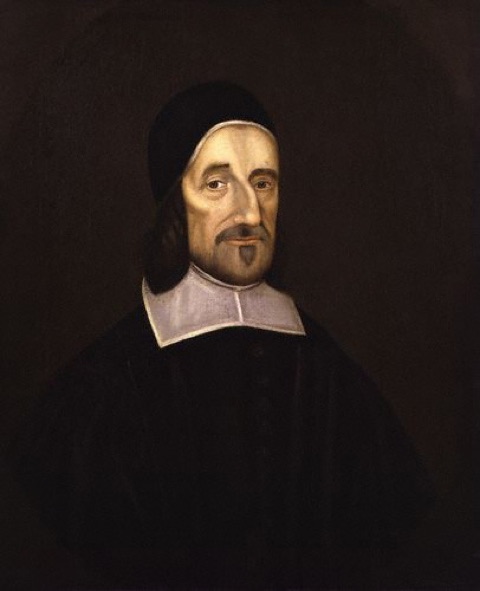
About the author
Richard Baxter
Richard Baxter (1615 to 1691 AD) was born in Rowton, Shropshire, and was largely self-educated. Ordained in 1638, he became minister at Kidderminster in 1641, where nineteen years of preaching, catechizing household by household and pastoral discipline changed the town. He served as a chaplain in the Parliamentary army, and in this part of the book he recalls four years spent in the wars and dedicates it to Shrewsbury as his native soil. The Saints’ Everlasting Rest appeared in 1650 and The Reformed Pastor in 1656. After the Restoration he declined the bishopric of Hereford, was ejected by the Act of Uniformity in 1662, and lived afterward in London. In 1685 he was tried before Judge Jeffreys and imprisoned. He died in London in 1691.