Volume 2 of 3 · Full text in modern English · Free PDF/EPUB
The Saints’ Everlasting Rest: Volume 2 in Modern English
This volume
- Vol. 1 · The Nature and Certainty of Rest
- Vol. 2 · The Practical Uses of Rest
- Vol. 3 · Keeping the Heart in Heaven
What is in The Saints' Everlasting Rest, Volume 2?
The Saints’ Everlasting Rest is Richard Baxter's treatise on heaven, first published in 1650 in four parts. This second of three volumes holds Part 3, the practical uses of the doctrine, which Baxter dedicated to the magistrates and people of Coventry. Having shown the excellence of the rest in Part 1 and its truth in Part 2, he now presses it on the will and affections. He describes the loss of heaven, its aggravations, the earthly comforts the ungodly also lose and the torments of the lost; reproves the general neglect of heaven and urges seriousness in seeking it; teaches self-examination, with its hindrances, the causes of doubting, motives, directions and marks of grace; explains why the saints are afflicted here; and closes with the duty of helping others to this rest, with special counsel for ministers, parents and masters of families.
- 01
The loss of heaven. The first use sets out what the ungodly forfeit, how the loss is sharpened, the earthly comforts they lose with it, and the torments of the lost.
Jump to it ↓ - 02
The neglect of heaven. Baxter reproves the worldly, the profane, formal professors and the godly for seeking heaven so little, then exhorts every reader to seriousness.
Jump to it ↓ - 03
Examining our title. How to examine whether the rest is ours, the causes of doubting among Christians, directions for self-examination, and the marks of grace and sincerity.
Jump to it ↓ - 04
The afflictions of the saints. Why the saints suffer here, and answers to the complaints of the flesh under affliction.
Jump to it ↓ - 05
Helping others to rest. Every Christian's duty to bring others to heaven, with special counsel for ministers, parents and masters of families.
Jump to it ↓
Read the full summary of Volume 2Show less
The Saints’ Everlasting Rest: Volume 2 contains Part 3 of Richard Baxter’s 1650 treatise on heaven, turning the doctrine into five direct practical applications. Writing as a pastor to the conscience, Baxter weighs what the ungodly lose, rebukes spiritual apathy, offers an extended guide to self-examination and assurance, interprets Christian suffering, and charges believers, ministers, and parents to help others reach rest.
Richard Baxter drafted The Saints’ Everlasting Rest while gravely ill after serving as an army chaplain during the English Civil War, dedicating Part 3 to the magistrates and townspeople of Coventry. Having established the nature and certainty of heaven in Parts 1 and 2 (Volume 1 of this three-volume set), Volume 2 turns directly to the will and affections, confronting why people who profess belief in eternity still live as though this world were everything.
At the heart of the volume sits Baxter’s extended pastoral inquiry into “assurance” (the settled confidence that one truly belongs to Christ) and how to distinguish saving faith from hollow profession without driving sensitive consciences into despair. He writes with uncommon realism about “melancholy” (what we now call depression), noting that distressed believers often need a doctor alongside a minister, before closing with practical duties for ordinary Christians, pastors, and parents.
How Baxter presses heaven on the conscience
- 01
Weighing what is lost when heaven is forfeited. Chapters 1 through 3 begin by appealing to reason, because “Whatever the human soul welcomes must first enter through the understanding.” Baxter details what those who reject heaven surrender: perfected character, the company of the saints, and God himself, alongside every borrowed earthly pleasure. Cleared minds and waking memories, he warns, will sharpen regret once all distractions vanish.
- 02
Direct sufferings and the weight of eternity. In Chapter 4, Baxter turns from the punishment of loss to the direct torments of the lost, refusing needless speculation while stressing that eternity makes separation unbearable. Answering objections drawn from divine mercy, he exposes how Satan lulls careless sinners into false calm: “Thus, just as the Spirit of Christ is the Comforter of the saints, Satan is the comforter of the wicked.”
- 03
Rebuking indifference and calling for earnestness. Chapters 5 and 6 confront the world’s startling apathy toward eternal rest, reproving the worldly, the openly profane, formal churchgoers, and halfhearted Christians in turn. Baxter contrasts genuine spiritual urgency with empty display, like stage fencers who put on a show without fighting for their lives, insisting that “Seriousness is the very heart of sincerity.”
- 04
Why true Christians doubt and how assurance works. In Chapters 7 and 8, Baxter enters his celebrated pastoral clinic on assurance. Explaining that “Because the comfort of a Christian’s life depends so much on assurance of God’s special love, I will explain other hindrances that keep true Christians from comforting certainty,” he shows that assurance rests on Scripture’s promise joined with honest self-knowledge, then catalogs ten causes of doubting, including weak grace, secret sin, and bodily melancholy.
- 05
Practical rules for self-examination and testing sincerity. Chapters 9 through 11 move from diagnosis to method. Knowing that “Long experience, along with Scripture, has taught me that the greatest hurdle is making people willing to set themselves in dead earnest to searching their own hearts,” Baxter supplies seven motives, fifteen directions, and two core marks of grace. Chapter 11 then probes sincerity in twelve propositions, locating saving faith where Christ holds the prevailing sway over every rival good.
- 06
Making sense of suffering on the road to rest. Chapter 12 addresses believers weighed down by illness, grief, or hostility, asking plainly, “What wonder is it, when you see that their rest still remains?” Drawing six reasons directly from the nature of future rest, Baxter explains how present hardship weans the heart from earthly idols, tests loyalty, and makes the coming rest sweeter, while answering five objections raised by human weakness.
- 07
Helping neighbors, congregations, and households toward heaven. Chapters 13 and 14 widen the circle to the care of other souls. Baxter urges ordinary Christians to speak candidly to neighbors about eternity, exhorts ministers to preach earnestly, catechize from house to house, and guard church peace (“Do not tear down the old church to gather a new one from its ruins, as long as it holds the essentials and there is hope of reforming it”), and equips parents with practical guidance and a twenty-article doctrinal summary.
Notable images & quotes
- The toad and the sun. “There will be a wider gulf between these wretches and a glorified Christian than between a toad under a doorsill and the sun in the heavens.” Baxter uses stark contrast to jolt readers out of treating eternal loss as an abstract footnote.
- The burned-out candle. “God himself held the candle for me so that I might do his work, and I loitered until it burned down to nothing.” Imagining a lost soul looking back on wasted years, Baxter reminds readers that earthly opportunity is a brief, lent light.
- Looking through tinted glass. “If you try to convince the man with tinted glass otherwise, he will refuse to believe you and wonder how you dare argue against his own eyesight.” Baxter employs distorted lenses to explain why severe melancholy makes sincere believers misread their own spiritual state.
- A twig to bend and an oak. “You have a twig to bend, and we have an oak.” Addressing parents, Baxter emphasizes that early instruction at home shapes character far more readily than preaching can reshape hardened adults.
Key themes
- Urgency wedded to compassion. Baxter concedes that terror alone never wins anyone’s love for God, yet he refuses to silence Scripture’s warnings. He speaks sharply about loss and judgment for the same reason a doctor warns a patient about a fatal illness: to persuade them to seek healing while time remains.
- Seriousness as the test of sincerity. Throughout the middle chapters, Baxter probes the gap between genuine devotion and religious theater. Saving sincerity does not require sinless perfection, but it does mean taking Christ above every competing treasure and seeking eternal rest with the same earnestness people bring to bodily survival.
- Assurance without mysticism or despair. Baxter steers carefully between smug presumption and endless morbid introspection. Assurance is neither an automatic ingredient of first faith nor a miraculous voice from heaven; it grows steadily as conscience honestly examines its prevailing love for Christ in the light of Scripture’s promises.
- Every Christian enlisted in the care of souls. Ministry in Baxter’s vision never stops at the pulpit. Neighbors owe one another honest spiritual concern, parents hold the first classroom for church and national renewal, and pastors must preserve unity around Christian essentials rather than tearing churches apart over minor disputes.
Why read it today
Reading Volume 2 in full lets you sit beside one of English Christianity’s sharpest pastoral physicians. Baxter spent years wrestling with doubt, chronic illness, and civil war trauma himself, so his chapters on assurance (Chapters 7 to 11) never sound cold or clinical; he anticipates every excuse of the complacent and every dark spiral of the melancholy believer with vivid analogies and plainspoken sympathy.
At 162,000 words, this volume rewards a slow, topical pace rather than a single straight sprint. If you are coming for Baxter’s counsel on assurance and doubt, start directly with Chapters 7 through 11; if you want his vision for church renewal, family life, and caring for neighbors, turn first to Chapters 13 and 14, then work back through the opening chapters one section at a time.
Reader questions (10)Hide the questions
Questions about The Saints’ Everlasting Rest: Volume 2
Is there a modern English version of The Saints’ Everlasting Rest: Volume 2?
Yes. This is The Saints’ Everlasting Rest: Volume 2 by Richard Baxter in modern English. The language is modernized and the author's order and argument are kept. The full modernized text is free to read on this page.
Can I read The Saints’ Everlasting Rest: Volume 2 online for free?
Yes. The complete text of this modern English edition is on this page, with no sign-up or paywall.
Is there a free PDF of The Saints’ Everlasting Rest: Volume 2?
Yes. The PDF and EPUB of this edition are free with an Updated Works account. Sign in with Google or an email link; no card is needed.
What is The Saints’ Everlasting Rest: Volume 2 by Richard Baxter about?
Volume 2 holds Part 3 of Baxter’s 1650 treatise on heaven, focusing entirely on practical application. It warns the careless of what it means to forfeit heaven, rebukes spiritual laziness, teaches believers how to examine their hearts for genuine assurance, explains why Christians still suffer in this life, and directs Christians, pastors, and parents in helping others reach eternal rest.
How does Volume 2 fit into the three-volume set?
The Saints’ Everlasting Rest was written in four parts, presented here across three volumes. Volume 1 covers Parts 1 and 2 (the nature, excellence, and truth of heaven). Volume 2 holds Part 3 (practical uses for conscience, assurance, suffering, and helping others). Volume 3 holds Part 4 (Baxter’s daily method for heavenly contemplation).
How long is Volume 2, and can it be read on its own?
At about 162,000 words (roughly an eleven-hour read), Volume 2 is the longest volume in the set. While Baxter occasionally refers back to his earlier explanation of heaven in Volume 1, each of the five applications here stands clearly on its own, allowing readers to focus directly on assurance (Chapters 7–11), suffering (Chapter 12), or family and pastoral counsel (Chapters 13–14).
Can a Christian be sure of salvation according to Baxter?
Yes, with a genuine, dependable certainty, though never flawless in this life. Baxter explains that assurance comes by combining Scripture’s promise to true believers with an honest judgment of conscience that one truly trusts and prizes Christ above all else. Because it involves self-reflection alongside Scripture, he views it as distinct from bare initial faith.
Why does Baxter say sincere Christians struggle with doubt?
In Chapter 8, Baxter names ten common causes: grace too young or weak to recognize easily, staring at inward signs more than at Christ, confusing settled assurance with constant emotional joy, hidden sin, spiritual laziness, and bodily melancholy. Notably, he warns that melancholy distorts spiritual judgment and often calls for a physician’s care as much as a pastor’s.
Where does Baxter disagree with John Calvin in this volume?
While writing that he honors no theologian since the apostles more than Calvin, Baxter respectfully dissents on one specific point: he faults Calvin and several other Reformed writers for defining personal certainty of salvation as part of the very essence of saving faith, fearing that view needlessly crushes trembling, sincere believers.
What practical counsel does Baxter give parents and ministers at the end?
Baxter tells ministers to preach as people who deeply believe eternity is real, visit households personally, and preserve unity on core Christian truths rather than multiplying divisive creeds. Parents are urged to teach by example, keep children in school until they can read English well, give them Bibles and sound books, use Sundays for instruction, and teach a catechism alongside his twenty-article doctrinal summary.
The Saints’ Everlasting Rest: Volume 2 in Modern English · Full text
Part 3: Practical Uses of the Doctrine of Rest
Dedication to the Inhabitants of Coventry
To my dearly beloved friends, the inhabitants of the city of Coventry, both magistrates and people, Richard Baxter dedicates this part of this treatise in thankful acknowledgment of their great affection toward him and ready acceptance of his labors among them. When joined with obedience, this is the highest reward a faithful minister can hope for.
I humbly plead with the Lord on your behalf that he will save you from that spirit of pride, hypocrisy, dissension, and giddiness which in recent years has gone forth and is now destroying and making havoc of the churches of Christ. I pray that he will teach you to esteem highly those faithful teachers whom the Lord has set over you (1 Thessalonians 5:12-13; Hebrews 13:7, 17), to recognize them as such, and to obey them. And may he keep you unstained by the guilt of those sins which in these days have been the shame of our religion and have made us a scandal and scorn to the world.
Chapter 1
The Misery of Losing Heaven
Section 1: Moving from Understanding to the Heart
Whatever the human soul welcomes must first enter through the understanding. Before anything gains further admittance, the understanding must be satisfied first of its truth and second of its goodness. If this gatekeeper is careless, it will let in anything that merely wears the face or name of truth and goodness. If it is faithful, capable, and diligent in its duty, however, it examines everything strictly and probes to the very core. What proves deceitful it casts out so that it goes no further. What proves genuine and sound it admits to the very heart, where the will and affections gladly welcome it and, as it were by digestion, make it part of their own substance.
Accordingly, I have so far presented to your understanding first the excellence of the saints’ rest in Part 1 of this book, and then its truth in Part 2. I hope your understanding has now tasted this food and tested what has been set before you. Truth does not fear the light. This perfect beauty abhors darkness, and nothing but ignorance of its worth can diminish it. Therefore search thoroughly and hold nothing back. Read, read again, and then judge.
What do you think? Is it good, or is it not? Indeed, is it not the supreme good? Is there anything in goodness to compare with it? And is it true, or is it not? As Bullinger warns in his Compendium of Christian Doctrine, let every faithful Christian beware of the utterly godless talk of certain despised and depraved people. They claim that death destroys everything, that there is no future life in another world, that human beings perish at death like beasts, and that if the body is well provided for, the soul is amply provided for as well. He judges that such talk ought to be punished with the heaviest penalties by the Christian magistrate. Indeed, is there anything in the world more certain than that a rest remains for the people of God?
If your understanding is convinced of both its goodness and its truth, then on behalf of God and his truth, and on behalf of your own souls and their life, I now call you to welcome it further. Take this blessed subject of rest and commend it, just as you have found it, to your will and affections. Let your heart now cheerfully embrace it and put it to good use as I set it before you in its several practical applications.
Although the ordinary rules of arrangement might direct me otherwise, I judge it most helpful to group together first all the uses that especially concern the ungodly. In this way they will know where to find their lesson without having to piece it together from uses of another kind. Then, at the end, I will set out by themselves the uses that belong more properly to the godly.
Section 2: Application 1 on the Unthinkable Misery of Losing This Rest
First, if this rest is for none but the people of God, what sorrowful news this is to the ungodly world! There is so much glory, yet none for them. There are such great joys for the saints of God, while they must waste away in perpetual sorrow. There is such rest for those who have obeyed the gospel, while they must remain restless in the flames of hell.
If you who read these words are a stranger to Christ in your soul, and a stranger to the holy nature and life of his people, listen closely. If you are not among those described earlier, and if you live and die in your present condition, then let me tell you plainly: I am a messenger of the saddest news your ears have ever heard. You will never share in the joys of heaven, nor have the slightest taste of the saints’ everlasting rest. I may say to you, as Ehud said to Eglon, “I have a message for you from God” (Judges 3:20-21). Yet it is a deadly message against the very life and hopes of your soul. As surely as the word of God is true, you will never see the face of God with comfort.
Some people think we should win sinners to Christ only by arguments from his love and never by any mention of hell. Even ancient writers observed that dull human minds often learn their duty more readily through fear than through kindness (Theophylact on John 5:22). As Origen notes in Against Celsus, the dread of eternal punishment drives many to guard against sin and commit themselves wholeheartedly to Christian discipline. I confess that terror must not be our chief argument, for terror alone will not win the heart to love. Yet three truths remain firm.
1. Fear, watchfulness, and obedience are necessary as well as love.
2. God would not have given us mixed affections if he did not intend us to use them.
3. The teaching and example of Christ require us to stir up both love and fear in people (Matthew 23:1-39; Matthew 25:1-46).
Even Dr. Sibbes could say, “Fear is the curb of the soul.” Clement of Alexandria writes that “fear and endurance are the helpers of faith,” adding that those who blame fear reproach the law, and if they reproach the law, they plainly reproach him who made the law (Stromata, Book 2). He also answers those who call fear a mere disturbance and a departure from reason. In another work Clement adds, “Since we all need a Savior, he uses not only gentle and mild remedies, but also sharp doubts; fear stops the eating corrosion at the roots of sin” (Paedagogus, Book 1, Chapter 9). Fear, therefore, is wholesome even though it is bitter.
This sentence, then, I am commanded to pronounce upon you from God’s word. Take it as you will, and escape it if you can. I know that humble, heartfelt submission to Christ would secure your escape. If your heart and life were thoroughly changed, your relationship to Christ and eternity would change as well. He would then acknowledge you as one of his people, clear you of every charge brought against you, and give you a share in the inheritance of his chosen.
If that were the happy outcome of my message, I would be far from grumbling like Jonah because God’s threatenings were not carried out against you. On the contrary, I would bless the day God ever made me so happy a messenger. I would thank him heartily upon my knees for blessing his word in my mouth with such longed-for success.
Yet if you end your days in your present state, it makes no difference whether you firmly resolve never to change or spend your life making empty promises to do better later. If you live and die in an unregenerate state, one thing is certain. As surely as the heavens are above your head and the earth beneath your feet, and as surely as you live and breathe this air, you will be shut out of this rest of the saints. You will receive your portion in everlasting fire.
I fully expect that in the pride and scorn of your heart you will snap back at me, bare your teeth, and say, “Who made you the doorkeeper of heaven? When were you there? When did God show you the book of life, or tell you who will be saved and who will be shut out?”
I will not answer you according to your folly. Instead, I will expose your folly to you as truly and plainly as I can, so that if any hope remains, you may come to your senses, return to God, and live.
1. I do not name you or any other individual. I do not pronounce on particular people and say, “This person will be shut out of heaven, and that person will be taken in.” I pronounce this only about the unregenerate in general, and about you conditionally, if you are one of them.
2. I do not presume to determine who will repent and who will not, much less that you will never repent and come to Christ. Those things are unknown to me. I would far rather show you the hopes still before you, if only you will not sit still and lose them or throw them away through willful carelessness. I would far rather persuade you to listen in time, while hope, opportunity, and offers of grace remain, and before the door is shut against you, so that your soul may return and live, than tell you there is no hope of your repenting and returning.
Still, suppose you lie idle, hoping you will return yet never doing it. Suppose you talk of repenting and believing while remaining the very same person. Suppose you live and die with the world, holding your reputation or pleasure closer to your heart than Jesus Christ. In a word, if the description of God’s people given earlier does not match the state of your soul, is it really a difficult question whether you will ever be saved? It is no harder a question than whether God is true or whether Scripture is his word.
Cannot I tell with certainty that you will perish forever unless I have seen the book of life? The Bible itself is also the book of life, and it plainly describes both those who will be saved and those who will be condemned. Although it does not list their names, it tells you all the marks and conditions by which they may be known.
Do I need to ascend into heaven to know that “without holiness none shall see God” (Hebrews 12:14)? Or that it is “the pure in heart” who “shall see God” (Matthew 5:8)? Or that “except a man be born again, he cannot enter into the kingdom of God” (John 3:3)? Do I need to go up to heaven to learn that “he that believeth not” (that is, who does not submit to Christ as his King and Savior) “is condemned already” (John 3:18)? Or that “he shall not see life, but the wrath of God abideth on him” (John 3:36)? Or that “except you repent” (which includes a real change of life) “you shall all perish” (Luke 13:3, 5), along with a hundred other plain statements of Scripture?
Cannot these truths be known without prying into God’s secret decrees? You ignorant or willfully self-deluded fool! Has your Bible lain beside you in your house all this time, and have you never read words like these? Or have you read them and heard them read so often, yet failed to remember them? Indeed, have you not noticed that the great aim of Scripture is to show people who will be saved and who will not, and to let them see the condition of both states? Yet you still ask me how I know who will be saved!
Why would I need to go up to heaven to ask Christ what he came down to earth to tell us? He sent his Spirit through his prophets and apostles to declare it to us, and he has left it on public record for all the world. I do not know the secrets of your heart, so I cannot tell you by name whether this is your condition. Yet if you are willing and diligent, you yourself may know whether you are an heir of heaven or not. That is my chief desire: that if you are still in a miserable state, you may recognize it and escape it.
Can you possibly escape if you neglect Christ and so great a salvation (Hebrews 2:3)? Is it not already settled that if you love father, mother, wife, children, house, lands, or your own life more than Christ, you cannot be his disciple (Matthew 10:37; Luke 14:26), and therefore can never be saved by him? Is this the word of man or the word of God? Is it not then a settled, unmistakable conclusion that in your present state you have not the least claim to heaven?
Let me tell you from the word of God: unless you are born again and made a new creature, it is as impossible for you to be saved as it is for the devils themselves to be saved. In fact, God has stated more plainly and more often in Scripture that sinners like you will never be saved than he has stated that the devils will never be saved.
Does this news not send a chill to your heart? Surely, were it not that life and hope still lie before you, and that you still have time and means for your soul to be recovered, it would crush your heart with terror. The very sight of your wretched, exposed condition would strike you dead with shock and horror.
Old Eli fell from his seat and died simply on hearing that the ark of God was taken, though it was only an outward sign of God’s presence. How much more should your heart be stunned by the news that you have lost the Lord God himself and all claim to his eternal presence and delight! Rachel wept for her children and refused to be comforted because they were no more. How much more should you sit down and weep for the happiness and future life of your soul, because for you it is no more!
When King Belshazzar saw just part of a hand sent from God writing opposite him on the wall, his face turned pale, his thoughts alarmed him, his limbs gave way, and his knees knocked together (Daniel 5:6). What trembling, then, should seize you when the hand of God himself is against you? Not merely in a sentence or two, but in the whole drift and message of Scripture! Not threatening you with the loss of an earthly kingdom, as he threatened Belshazzar, but with the loss of your share in the everlasting kingdom!
Because I long, if possible, for you to take this deeply to heart, I will linger here a little longer and show you three things. First, I will show you the greatness of your loss. Second, I will show you the aggravations that heighten your misery in this loss. Third, I will show you the positive torments you will also endure, together with their aggravations.
Section 3: The Loss of Personal Perfection
First, in losing heaven, the ungodly lose all that glorious personal perfection which the people of God enjoy there. They lose that radiant splendor of the body, surpassing the brightness of the sun at noon. Perhaps even the bodies of the wicked will be raised more spiritual and incorruptible than they were on earth. Yet that will be far from a blessing to them; it will only make them capable of sharper torments. Their minds will then be more able to grasp the greatness of their loss, and their senses more able to feel their sufferings.
Then they would be glad if every limb were a dead limb so that it could not feel the punishment inflicted on it. They would be glad if the whole body were a rotting carcass or could lie down again in dust and darkness. The devil himself possesses an angelic and noble nature, yet that only brings honor to his skillful Creator; it brings no honor or comfort at all to himself. The wicked are stripped of all glory, beauty, and comforting perfection.
As Augustine observes in The City of God, just as a sentient nature is better even in pain than a stone that cannot feel pain at all, so a rational nature is nobler even in misery than a nature lacking reason and sense and therefore incapable of misery. Because this rational nature was created in such excellence that, though changeable itself, it attains blessedness by clinging to the unchangeable good, the supreme God, and nothing except God can satisfy its need, failing to cling to him is truly a corruption. Gregory adds in his Dialogues that a soul placed in hell has lost well-being yet has not lost being itself, and is therefore forever forced to suffer death without dying, decay without ceasing, and an end without an end, so that its death is immortal, its decay unfailing, and its end endless. Likewise Augustine remarks in On Faith, to Peter that though hell brings a sharp sting of awareness, it brings no correction of the will; the damned condemn their iniquity in such a way that they can never love or desire righteousness. And in On Free Choice Augustine writes that the most just punishment of sin is for each person to lose what he refused to use well when he could easily have done so. Whoever knowingly refused to do right loses the knowledge of what is right, and whoever refused to do right when he could loses the power to do it when he wills.
Even more, they lack the moral perfection that the blessed share: those holy dispositions and qualities of mind, that blessed likeness to the holiness of God, that cheerful readiness to do his will, and that perfect uprightness in every action. Instead of these, they keep their old, festering, deformed souls. They keep the same perverseness of will, disorder of faculties, hatred of good, love of evil, and violence of passion that they carried on earth.
True, their understanding will be greatly cleared. Temptation and the deceptive attractions of earth will cease, and bitter experience in hell will expose the falsehood of their former notions and delusions. Yet this clarity does not come from any sanctifying of their nature. Their experience and too-late understanding may restrain many evil impulses of their will that once ruled them on earth, yet their evil disposition is not changed in the least.
In the same way, the conduct of the damned in hell will be free from many sins they committed on earth. They will get drunk no more, commit sexual immorality no more, and indulge in gluttony no more. They will no longer oppress the innocent, crush the poor, devour the homes and estates of their neighbors, take revenge on their enemies, or persecute and destroy the members of Christ. All these and many other outward sins will then be laid aside.
Yet this does not spring from any renewal of their nature. They keep the same sinful bent, and they would gladly commit those very sins again if they could. They simply lack the opportunity; they are now bound hand and foot. Being denied those pleasures is itself part of their torment. They deserve no credit for sinning less than before, for their hearts remain just as wicked even when their actions are restrained.
Indeed, it is a serious question whether even the remnants of good left in their nature on earth, such as common honesty and natural moral virtues, are not stripped from them in hell. That would fulfill the words, “From him that hath not shall be taken away even that which he hath” (Matthew 13:12; Luke 8:18). That is the general judgment of theologians, though because it is debatable and much can be said on the other side, I will pass it by.
This much, however, is certain: they will have none of the glorious perfections of the saints, either in soul or in body. There will be a wider gulf between these wretches and a glorified Christian than between a toad under a doorsill and the sun in the heavens. The rich man’s purple robes and fine banquets never lifted him as far above Lazarus covered with sores at his gate as the vast gulf now reverses and separates them forever.
Section 4: The Loss of God
Second, the greatest loss of the damned will be their loss of God. They will have no comforting relationship with him and none of the saints’ fellowship with him. They did not want to keep God in their minds, but said to him, “Depart from us, we desire not the knowledge of thy ways” (Job 21:14). Therefore God will abhor keeping them in his household or welcoming them into his fellowship and glory. As Chrysostom says in his homilies on Matthew, even if someone speaks of ten thousand hells, he says nothing comparable to falling from that blessed glory and hearing Christ say, “I do not know you.” Gregory adds that while many shrink in horror from hell, the loss of that glory is far more bitter than hell itself. And Augustine writes in The City of God that there is no greater or worse death than where death does not die: because the soul was created immortal and cannot exist without some kind of life, its supreme death is alienation from the life of God in eternal punishment. He will never admit them to the inheritance of his saints nor allow them to stand among them in his presence. Instead, he will say to them, “Depart from me, ye workers of iniquity, I know you not” (Matthew 7:22-23).
Right now, these people dare to misrepresent the Lord, if not blaspheme him, by claiming him as their Father. How boldly and confidently they approach him daily with their lips, yet truly insult him in their empty prayers with the name “Our Father!” As if God would father the devil’s children! As if those who scorn Christ, indulge the flesh, befriend the world, hate godliness, trade in sin, and delight in iniquity were the offspring of heaven!
In the height of their presumption, they now claim Christ and heaven as boldly as if they were genuine believing saints. The swearer, the drunkard, the adulterer, and the worldling can say scornfully to the people of God, “What! Is not God our Father as well as yours? Does he not love us as much as you? Will he save no one but a handful of strict religious zealots?”
Oh, when that day arrives, when the case must be decided and Christ separates his followers from his foes and his faithful friends from his self-deceived flatterers, where will their presumptuous claim to Christ be then? Then they will discover that God is not their Father, but their settled foe, because they refused to be his people and chose instead their own carelessness and wickedness.
Even if they preached or worked miracles in his name, he will not acknowledge them (Matthew 7:22-23). Even if they were his brothers or sisters by blood, he will not own them, but will reject them as his enemies. Even those who ate and drank in his presence on earth will be cast out of his heavenly presence forever. Those who cast out demons in his name will at his command be cast out to those very demons to endure the torments prepared for them (Matthew 25:41).
Because they would not consent for God to dwell in them by his Spirit, these evildoers will never dwell with him. The tents of wickedness will have no fellowship with him (Psalm 94:20), nor will the wicked live in the city of God. Outside are the dogs, sorcerers, the sexually immoral, murderers, idolaters, and everyone who loves and practices falsehood (Revelation 22:15). For the Lord knows the way of the righteous, but the way of the wicked leads to destruction (Psalm 1:6).
God is first enjoyed in part on earth before he is enjoyed in full in heaven. Only those who walked with him here will live and rejoice with him there. How little the world now understands what a soul loses when it loses God! What would the world be without the sun but a dark dungeon? What would the body be without the soul but a loathsome corpse? Yet all these are nothing beside the loss of God.
Even the small foretaste of enjoying God that the saints know in this life is dearer to them than the entire world. When worldly people feed on their forbidden pleasures, they may cry out with the sons of the prophets, “There is death in the pot!” (2 Kings 4:40). When the saints merely taste the favor of God, however, they cry out with David, “In his favor is life!” (Psalm 30:5). Although life is naturally dearest to everyone, those who have tasted and seen say with David, “His loving-kindness is better than life!” (Psalm 63:3). Just as enjoying God is the heaven of the saints, so losing God is the hell of the ungodly. And just as enjoying God is enjoying everything, so losing God is losing everything.
Section 5: The Loss of Heavenly Affections and Praises
Third, along with losing God, the ungodly lose all those spiritual, delightful affections and activities by which the blessed feed upon God. They lose that transporting knowledge, those ravishing views of his glorious face, and the unimaginable joy of loving God. They lose the vivid sense of his infinite love for us, the constant gladness that fills his saints, and the rivers of comfort with which he satisfies them. Is it a small thing to lose all this? The work of a king ruling an empire does not surpass the labor of the lowest kitchen drudge as far as this heavenly calling surpasses a king’s. As Irenaeus writes in Against Heresies, to all who keep love toward God, he grants fellowship with himself; yet upon all who depart from him by their own choice, he brings the very separation they have chosen. Separation from God is death, separation from light is darkness, and separation from God is the loss of all the good things that belong to him.
These wretched people took no delight in praising God on earth; their amusements and pleasures were of quite another kind. Now, while the saints sing his praises and devote themselves to magnifying the Lord of saints, the ungodly are shut out from that happiness and given an occupation suited to their nature and what they deserve.
On earth their hearts were full of hell. Instead of God and his love, reverent fear, and graces, their hearts harbored pride, self-love, lust, and unbelief. Therefore hell must now house the hearts that once housed so much of hell. Their homes on earth resembled hell. Instead of worshiping God and calling on his name, their walls echoed with mockery of his worship and swearing by his name. Therefore hell must be their home forever. There they will never be bothered by the worship and duty they hated, but will join the rest of the damned in blaspheming the God who avenges their former ungodliness and blasphemies.
Can anyone reasonably expect that those who amused themselves on earth by mocking the godly and their families for frequent worship and praise will at last be welcomed into the family of heaven to join those saints in perfect praise? Without a genuine change of heart before they leave this life, it is utterly impossible.
It will be too late then to cry, “Give us of your oil, for our lamps are out; let us enter with you now into the wedding feast; let us join you now in your joyful heavenly song.” You should have joined in it on earth if you hoped to join in it in heaven. Just as your eyes must be fixed on far different sights, so your hearts must be filled with far different thoughts, and your voices turned to another tune.
As the doors of heaven are shut against you, that joyful service will be denied to you as well. There is no singing the songs of Zion in the land of your captivity. Those who go down to the pit do not praise him. Who can rejoice in the place of sorrow? Who can be glad in the land of confusion? God fits people’s occupations to their nature.
The whole bent of your spirit ran another way. Your heart was never set on God during your life. You never marveled at his attributes and works, nor were you ever truly warmed by his love. You never longed to enjoy him, and you took no pleasure in speaking or hearing of him. A sermon or prayer an hour long wore you out. You would rather have stayed on earth forever if you had known how. You would still prefer a post of earthly advancement, lands and estates, a feast, sports, drinking, or immorality over having a share in the glorious praises of God.
Is it fitting, then, that you should belong to the heavenly choir? A pig is better suited to a lecture on philosophy, a donkey to building a city or ruling a kingdom, or a dead corpse to feasting at your table than you are for the work of heavenly praise.
Section 6: The Loss of the Fellowship of Angels and Saints
Fourth, the ungodly will also be deprived of the blessed fellowship of angels and glorified saints. Instead of being companions of those joyful spirits and being numbered with those triumphant kings, they must become members of the company of hell, with companions of a far different nature and character.
While they lived on earth, they despised the saints. They imprisoned them, banished them, and cast them out of their circles, or at the very least refused to be their companions in labor and suffering. Therefore they will not now be their companions in glory. Mocking them, abusing them, hating them, and rejoicing over their troubles was never the road to sharing their blessedness.
If you wanted to shine with them like stars in the sky of their Father, you should have joined them in their holiness, faith, painstaking labor, and patience. You should first have been grafted with them into Christ, the common root, and then united into the fellowship of his members. You should have walked with them in singleness of heart, kept watch with them with oil in your lamps, and joined them in mutual encouragement, faithful warnings, conscientious reform of life, prayer, and praise.
You should have traveled with them out of the Egypt of your natural state, through the Red Sea and wilderness of humility and affliction. You should have gladly taken up the cross of Christ along with the name and profession of a Christian, rejoicing with them in persecution and tribulation. Had you faithfully done all this, you might now be triumphing with them in glory and sharing their Master’s joy.
Yet you could not and would not endure it. Your soul loathed it, your flesh resisted it, and that flesh had to be pampered, even though you were told plainly and repeatedly what would come of it. Now you eat the fruit of your own folly and suffer only what you were foretold you must suffer. You are shut out from the very company from which you first shut yourself out, separated only from those with whom you refused to be joined.
You could not bear them in your house, your town, or scarcely in the nation. Like Ahab with Elijah, you treated them as troublers of the land (1 Kings 18:17), and just as the apostles were accused, you saw them as people who turned the world upside down (Acts 17:6). Whenever anything went wrong, you blamed it all on them. When they died or were driven away, you were glad to see them go and thought the country well rid of them.
They troubled you by faithfully confronting your sin. Their holy way of life pricked your conscience whenever you saw how far they surpassed you, condemning your looseness by their discipline, your profanity by their conscientious lives, and your carelessness by their tireless diligence. You could scarcely hear them pray or sing praises in their homes without feeling irritated, and you resented their freedom to worship God.
Is it any wonder, then, that you are separated from them hereafter? The day is near when they will trouble you no more. Between them and you a great chasm will be fixed. Those who would cross from there to you, even if anyone wished to cool your tongue with a drop of water, cannot do so. Nor can anyone cross from you to them, for if they could, not one would remain behind (Luke 16:26). Even in this life, the saints were still imperfect in their passions and weaknesses, clothed in the same frail flesh as everyone else, mocked, destitute, afflicted, and mistreated. Yet the Holy Spirit still declared that the world was not worthy of them (Hebrews 11:36-38). How much less worthy are the wicked of their fellowship in glory!
Chapter 2
Aggravations of the Loss of Heaven
Section 1: Cleared Understandings Will Reveal the Worth of What Was Lost
I know many wicked people will immediately think that if this is all, they do not much care and can bear it well enough. What do they care about losing heavenly perfection? What do they care about losing God, his favor, or his presence? They lived cheerfully enough without him on earth, so why should it grieve them to be without him hereafter? What do they care about losing that love, joy, and praise of God? They never tasted any sweetness in things of that sort. What do they care about losing the fellowship of angels and saints? They did fine without their company in this world, so why not manage without it in the world to come?
To help such people understand the truth about their future condition, I will add two points, grounded in both reason and Scripture.
1. I will show why the loss just described will be unbearable and deeply tormenting then, even though it seems like nothing now.
2. I will show what other losses will accompany it, which, though smaller in themselves, will be felt more keenly right now by sensual people.
First, then, that the loss of heaven will become overwhelmingly tormenting can be seen from the following considerations.
First, the understandings of the ungodly will then be cleared so that they know the true worth of what they have lost. Right now they do not grieve over losing God because they never knew his excellence, nor over losing that holy service and fellowship because they never realized what those blessings were worth. As Isidore writes in On the Supreme Good, the fire of hell will shine upon the wretched so that they may see what to grieve over, for torment and not for comfort, so that they see nothing to rejoice in. A person who loses a priceless jewel while thinking it only a common pebble feels no grief at the loss; yet the moment he learns what he lost, he begins to mourn it.
Although the understandings of the damned will not be sanctified, as I said before, they will be cleared of countless errors that now grip them and lead them to ruin. Today they think their reputation among people, their estates, their pleasures, their health, and their earthly life are far more worth their study and effort than the unseen realities of another world. Eventually those things that held their hearts will leave them in misery and slip through their fingers in their greatest need. Once they learn by bitter experience what before they only read and heard about, they will be of a very different mind.
They would not believe that water drowns until they were in the sea, nor that fire burns until they were cast into it. Once they feel it, they will believe easily enough. Every error of mind that made them take God lightly, hate his worship, and despise his people will then be overturned and swept away by experience. Their knowledge will increase so that their sorrow may increase (Ecclesiastes 1:18). Just as Adam by his fall came to know good and evil, so all the damned will receive this terrible increase of knowledge.
For the glorified saints, knowing the greatness of the good they enjoy and the evil they escaped is essential to enjoying their glory rationally and truly. In the same way, knowing the greatness of the good they have lost and the evil they brought upon themselves is essential to the torment of these wretched sinners. The joys of heaven are experienced far more through the mind and affections than through the bodily senses. Likewise, the wicked will suffer the greatest part of their torment through understanding their misery and through the matching anguish of their hearts.
It was the soul that bore the chief share of the guilt. (Whether it did so actively, by leading into sin, or negatively, by failing to keep reason in authority over the senses, I will not debate here.) Therefore the soul will also bear the chief share of the punishment. No doubt those poor souls would feel comparatively fortunate if their minds were taken away altogether and they knew no more than mindless creatures or brute beasts, or if they knew no more in hell than they did on earth. Then their loss and misery would trouble them far less.
Although all knowledge is good in its own nature, some knowledge is neither morally good nor beneficial to the one who has it. Therefore, when Scripture says of the wicked that they “shall not see life” (John 3:36) and shall not “see God” (Hebrews 12:14), it means they will not possess life or see God as the saints do, to enjoy him in that sight. They will not see him with comfort or as their own. Yet they will see him to their terror, as their enemy.
I believe they will also have some ongoing awareness or sight of God, heaven, and the blessed saints there as a necessary element of their unspeakable ruin. The rich man saw Abraham and Lazarus, though far off (Luke 16:23). Just as God regards the proud from afar (Psalm 138:6), so they will behold God from afar. Oh, how fortunate they would count themselves if they did not even know such a place as heaven existed, or if they could only close their eyes and stop seeing it!
Charron, in his treatise Of Wisdom (Book 1, Chapter 16), tells of a condemned man whose eyes were blindfolded to receive execution. When the blindfold was removed so he could receive his pardon, he was found dead on the scaffold. If imagination alone can kill, how fiercely will the clear perception of real, helpless misery torment the soul!
Now, when knowledge could still prevent their ruin, they refuse to know; they will not read and study so that they might understand. Therefore, when knowledge serves only to feed their consuming fire, they will be forced to know whether they want to or not. Toads and snakes do not understand their own vile, venomous nature or the nobler nature of humanity, so they neither grieve over their own condition nor envy ours. That is just how the wicked live now.
When death suddenly opens their eyes, however, everything will change in an instant. Right now they are in a dead sleep, dreaming that they are the happiest people on earth and that the godly are a crowd of rigid fools. They assume that either heaven will be theirs as surely as anyone else’s, or they can get along without it just as they have here. Yet when death strikes them, commands them to wake, and shakes them out of their pleasant dreams, how stunned and dismayed they will stand! How instantly their judgment will reverse! Those who refused to see will then see and be put to shame.
Section 2: Enlarged Understandings Will Deepen the Sense of Loss
A second reason the loss of heaven will torment the wicked far more then is that, along with being cleared, their understanding will be enlarged and given greater capacity to grasp the worth of the glory they lost. Both the accuracy and the force of their perceptions will increase.
Think how deeply souls now enduring that misery perceive the wrath of God, the madness of sin, and the ruin of sinners, compared with people on earth who merely hear about it. Think how vividly a condemned criminal walking to execution grasps the value of life, compared with how lightly he thought of it in days of health and ease. How much more will the actual deprivation of eternal blessedness force the damned to feel the full magnitude of their loss! Just as a wide vessel holds far more water than a tiny shell, so their enlarged minds will hold far more fuel for torment than their shallow capacity can hold today.
Section 3: Conscience Will Force Personal Application of the Loss
Third, just as the damned will have clearer and deeper perceptions of the happiness they lost, they will also apply that truth far more accurately and directly to themselves, which will intensify their torment immensely. It will no longer be hard for them to say, “This is my loss, and this is my everlasting, incurable misery.”
The lack of this personal application is the main reason sinners are so little troubled by their condition today. They can barely be brought to believe that such a state of misery exists, and even less to believe it could ever be their own. That is why so many sermons are wasted on them and why all warnings and threats prove fruitless.
As Gregory notes in his Morals on Job, it is the common vice of humanity to commit sin willingly, hide it by denying it, and excuse it by defending it when exposed. Prosper observes that the proud person wants to be thought resolute, the spendthrift generous, the greedy diligent, the reckless brave, the cruel thrifty, the lazy peaceful, and the timid cautious. Gregory adds that this is humanity’s greatest failing: after sinning, people flee to the shelter of excuses instead of humbling themselves in penitent confession, a fault counted among the gravest sins because it keeps the guilty from coming to repentance. As Augustine asks, “Have you begun to stop defending your sin? Then you have already begun righteousness.”
Let a minister of Christ lay out their misery as plainly and faithfully as possible, and they still refuse to believe they are in such danger. Let him tell them of the glory they must lose and the sufferings they must face, and they assume he means someone else. Perhaps some notorious drunkard or flagrant criminal might come to such a dismal end, they think, but they scarcely imagine themselves anywhere near it.
Every preacher learns by painful experience how hard it is to convince a wicked person that he is wicked. It is just as hard to make someone rushing headlong toward hell realize he is on that road, or to help anyone recognize himself as standing under wrath and condemnation. Even when a preacher marks him out with unmistakable signs he cannot deny, he still refuses to apply them to himself or say, “This describes me.”
We can show people chapter and verse where Scripture declares that without the new birth and holiness no one will see God (John 3:3; Hebrews 12:14). They know no such change has ever taken place in them. Indeed, by their total unfamiliarity with the new birth and their outright hostility to holiness, they could easily see they have never shared in either. Yet they expect to see God and be saved just as confidently as the most devoted saints on earth.
As Seneca observed in his Letters to Lucilius, fevers and gout are felt and recognized once they grow severe, even if we doubted them earlier, yet with diseases of the soul the opposite happens. The worse a person is, the less he feels it, and no wonder. Someone who only dozes and dreams sometimes realizes in his sleep that he is asleep, whereas deep sleep banishes dreams and drowns the mind so completely that it leaves no use of reason. Why does no one confess his faults? Because he is still caught in them. Recounting a dream belongs only to someone who is awake, and confessing one’s faults is already a sign of recovery.
It is an extraordinarily difficult task to convince a proud person that he is proud, a greedy person that he is greedy, or an ignorant, mistaken, heretical person that he truly fits that description. Yet to bring any of them to confess the sin, apply the warning to themselves, and believe they are children of wrath is impossible by human strength alone.
How rarely do you hear people, even after the clearest exposure of their condemned state, cry out, “I am that person!” or admit that if they die as they are, they are ruined forever? Yet Christ has told us in his word that most of the world stands in that condition, and indeed most of those who hear the gospel preached: “For many are called, but few are chosen” (Matthew 22:14).
No wonder, then, that the worst sinners are not troubled now by losing heaven and facing eternal ruin. Even when we convince them with unanswerable arguments, we cannot bring them to own the truth. Even if we preached to them all their lives, we could not make them believe their danger is so real. They will not believe unless someone rises from the dead to describe that place of torment. They would need that messenger to tell them that their cheerful, carefree companions, who expected to be saved just as confidently as they do, are now in hell in those flames.
Even more, suppose such a messenger from the dead actually appeared, spoke to them, and warned them not to come to that place of torment. Suppose he named which of their beloved, respected, or distinguished friends are now there begging for a drop of water. Even then, they would not be persuaded. Christ himself declared it: “If they will not hear Moses and the prophets, neither will they be persuaded though one should rise from the dead” (Luke 16:31). Nothing can persuade them of their misery before they feel it, unless the Spirit of the Almighty persuades them.
Oh, but wait until they suddenly find themselves in the land of darkness! Wait until they realize through the carrying out of the sentence that they truly were condemned, feel themselves in scorching flames, and see themselves shut out from God’s presence forever! Then it will no longer be hard to convince them of their misery. Applying God’s anger personally to themselves will then be the easiest thing in the world. They will have no choice but to recognize it and apply it, whether they want to or not.
If you visit someone who has lost a leg, an arm, a child, property, a home, or his health, is it hard to persuade him to recognize that the loss is his own? Hardly. It will be far easier for the wicked in hell to apply their misery in losing heaven, because their loss is incomparably greater. Oh, this personal application, which we could not get them to make to prevent their ruin even if we died trying, will then become part of their torment itself! How they will wish they could say, “This is not my case!” Instead, their grieving voices will roar out these forced confessions: “Oh, my misery! Oh, my folly! Oh, my unthinkable, irrecoverable loss!”
Section 4: Awakened Affections Will Torment the Condemned
Fourth, just as the understandings and consciences of sinners will be sharpened against them, their affections will also be far more intense and expansive than they are now. Just as their judgment will no longer be blinded and their conscience no longer stifled and bribed as it is today, so their affections will no longer be numbed and dead.
Right now a hard heart makes heaven and hell look like trifles. When we set everlasting glory and everlasting misery before sinners, they act half asleep and barely notice what we say. Our words bounce off them like stones thrown at a stone wall, flying back in the thrower’s face while leaving no mark where they strike. We speak of terrifying, astonishing realities, yet we speak to dead people who cannot feel them. We can lay open their wounds and they never flinch. We speak to rocks rather than human hearts; the earth itself would tremble sooner than they do. As Seneca writes in On Anger, the greatest punishment for a wrong committed is having committed it, and no one suffers more grievously than the person dragged to the torment of remorse.
Oh, but when these spiritually dead wretches are awakened, what intense feeling, what surging emotions, what pangs of horror, and what depths of sorrow will erupt! How fiercely they will turn upon themselves! How furiously they will rage against their former madness! The weeping of the most devoted wife over the loss of her husband, or of the tenderest mother over the loss of her children, will be nothing beside their grief over losing heaven.
Oh, the self-accusing, self-tormenting fury of those forsaken souls! How they will tear at their own hearts and act as God’s executioners upon themselves! I am convinced that just as no one but themselves committed their sins and they alone were the deserving cause of their sufferings, so they themselves will be the chief executioners of those sufferings. God wills it so to vindicate his justice and deepen their distress. Even Satan himself, since he was not as great a cause of their sinning as they were, will not be as great an instrument of their torment as they themselves will be.
Let them not imagine that if they must torment themselves, they will manage easily enough, having enough cleverness to spare themselves and enough willpower to quiet these violent passions. Poor souls! They have no idea what those passions will be or how utterly beyond their willpower it will be to suppress them.
Why do grieving, wasting, self-tormenting people on earth lack that cleverness and power? Why do you not try reasoning that way with despairing souls who lie, like Spira, in a kind of hell on earth, unable to eat, drink, or take comfort, tormented by relentless terrors? Why do you not say to such a person, “Sir, why are you so foolish as to be your own executioner? Why turn your life into constant misery when it could be as cheerful as anyone else’s? Cannot you simply turn your thoughts to other things and stop thinking about heaven or hell?”
How useless all such reasoning is to him! How little relief it gives! You might as well tell him to move a mountain as tell him to banish the hellish thoughts devouring his spirit. He could as easily dam up rushing rivers or hold back the surging waves of the ocean as halt the flood of his violent passions or restrain the sorrows gnawing at his soul.
How much less, then, can condemned souls who look directly at the glory they have lost restrain their heart-rending, self-tormenting anguish! Some people offer a cure for a toothache: “Just do not think about it, and it will not hurt.” In the same way, these sinners imagine they can ease their pains in hell. Yet the loss and the pain will force you to think of it whether you wish to or not.
You sat like blocks of wood or stone under God’s warnings, yet you will be acutely sensitive under his judgment. How fortunate you would consider yourself then if you could be turned into a rock or anything else without feeling or awareness! How glad you would be if you could feel as lightly as you used to listen, and sleep through the execution of the sentence as calmly as you slept through the sermons that warned you of it! Yet your numbness is gone forever; it will not return.
Section 5: Active Memories Will Continually Fuel Their Anguish
Fifth, it will greatly heighten the torment of the damned that their memories will be just as vast and vigorous as their understandings and affections, keeping those violent passions constantly in motion. No matter how immense their loss or how fierce their grief, if they could only lose the use of memory, those passions would die out, and a forgotten loss would trouble them little.
Yet just as they cannot lay down their life and existence, even though they would then count annihilation a rare mercy, neither can they lay aside any faculty of that existence. Understanding, conscience, affections, and memory must all stay alive to torment them, the very powers meant to serve their happiness. By these faculties they ought to have fed upon God’s love and continually drawn out the joys of his presence. Instead, by these same faculties they must now feed upon God’s wrath and continually draw out the anguish of his absence.
Therefore, when I say their hardness of heart, blindness, dullness, and forgetfulness will be removed, never imagine they become any holier or happier than before. Far from it: they are morally more vile, and by this awakening made far more miserable.
How many hundreds of times did God call out to them here through his messengers: “Sinners, consider where you are going! Pause for a moment and think where your path will end, and what offered glory you are throwing away so carelessly. Will this not end in bitterness?”
Yet they could never be brought to consider it. Still, “in the latter days,” says the Lord, “they shall perfectly consider it” (Jeremiah 23:20). They will be trapped in the work of their own hands (Psalm 9:16). When God has arrested them, passed judgment upon them, and poured out vengeance in full, they will have no choice but to consider it whether they want to or not.
Today they have no spare time to think and no room in their memories for the things of eternity. Ah, then they will have time enough! They will be in a place with nothing else to do but think about it, with no other business to distract their memories. It will be carved upon the tablets of their hearts.
God wanted the truth of their eternal state written on their doorposts, their houses, their hands, and their hearts (Deuteronomy 6:9). He wanted them to keep it in mind and speak of it when they got up and lay down, when they sat at home and walked along the road, so that it might go well with them in the end. Because they rejected this counsel of the Lord, it will be written constantly before their eyes in the place of their captivity, so that whichever way they look, they will still behold it.
Among many others, I will briefly set down some of the specific thoughts that will feed the anguish of these condemned souls.
Section 6: Remembering the Greatness of the Glory Lost
First, it will torment them to think of the greatness of the glory they have lost. If it had been something they could live without, it would have been a small matter. If it had been a loss that anything else could replace, such as health, wealth, friends, or even earthly life, it would have been nothing in comparison. Yet to lose that surpassing, eternal weight of glory!
Section 7: Remembering the Possibility Once Held of Obtaining Heaven
Second, it will also torment them to remember the real possibility they once had of obtaining it. Although, all things considered, no other outcome could happen than what actually befell them, the thing itself was genuinely possible, and their will was left to act without compulsion. Jerome therefore did not reason sharply enough against the Pelagians when he wrote, “I ask, what sort of argument is this, that something can be which has never been?” As Cajetan observes in his commentary on Thomas Aquinas, an event that occurs is avoidable in itself yet unavoidable insofar as it is foreseen. Though this is true, it does not untie the knot, because the event is in fact already foreseen from eternity. Nor does it quiet the mind, which finds rest here in ignorance alone.
Then they will remember and say to themselves, “There was a time when I had as fair a chance at the kingdom as anyone else. I was placed upon the stage of the world, and if I had played my part wisely and faithfully, I might now possess the inheritance. I might be among those blessed saints over there, I who am now tormented with these damned fiends! The Lord set life and death before me; having chosen death, I deserve to suffer it. The prize was once held out before me. If I had run well, I could have won it. If I had striven, I could have gained the victory. If I had fought bravely, I would have been crowned.”
Section 8: Remembering the Great Probability of Having Been Saved
Third, it will torment them even more to remember not only the possibility, but the strong probability they once had of winning the crown and escaping this misery. As Bernard exclaims in his first sermon on the Epiphany, “Oh, reconciliation so easy yet so vital! As easy as it is now, so difficult will it be afterward. Just as there is no one now who cannot be reconciled, in a little while there will be no one who can; for just as God’s kindness has appeared beyond all hope and beyond all measure, so we may expect a matching strictness in his judgment.”
It will pierce them to think, “Why, I once had the strong winds of the Spirit ready to carry me forward! I was fully resolved to become a new person, to cling to Christ, and to forsake the world. I was almost determined to give myself wholly to God. At one point I was actually turning away from my base, seductive lusts, resolved never to take them up again. I had even broken off from my old companions and determined to join the company of the godly. Yet I turned back, lost my grip, broke my promises, and let my resolve cool.”
They will go on tormenting themselves: “God had almost persuaded me to become a true Christian, yet I fought down those convictions. What stirrings moved my heart when a faithful minister pressed the truth home! Oh, how close I once came to heaven! I almost had it, and yet I lost it. If only I had pressed on to seek the Lord, brought those beginnings to maturity, and fanned the spark of desire and resolve kindled within me, I would now be blessed among the saints.”
This is how it will cut them to remember what bright hopes they once held, and how just a little more would have brought them over to Christ and set their feet in the way of peace.
Section 9: Remembering the Fair Opportunity Wasted
Fourth, it will torment them intensely to remember the generous opportunity they once had and have now lost. As Gregory of Nazianzus remarks, “Sin is the fruit of foolish well-being.” They will look back on a whole lifetime spent in emptiness while their salvation hung in the balance.
They will think, “How many weeks, months, and years did I waste, which, if I had used them well, might have made me happy now! What a wretch I was! Could I find no time to work at the very task for which all my time was given? Amid all my labors, had I no time to labor for eternity? Had I time to eat, drink, sleep, and work, yet none to seek the saving of my soul? Had I time for sports, amusement, and empty talk, yet none for prayer or meditation on the life to come? Could I find time to look after my earthly estate, yet none to test my claim to heaven and make sure of my spiritual, everlasting state?”
Then the lament grows sharper still: “Oh, precious time, where have you fled? Once I had time enough, and now I will have no more! I had so much time that I did not know what to do with it. I had to invent pastimes, talk it away, and trifle it away, and now it is gone beyond recall! Oh, the golden hours I enjoyed! If I had spent just one year out of all those years, or even one month, in thorough self-examination, sincere conversion, and earnest seeking of God with my whole heart, I would have been glad I was ever born.”
And then despair closes in: “Now it is over. My days are cut short, my hourglass has run out, and my sun has set never to rise again. God himself held the candle for me so that I might do his work, and I loitered until it burned down to nothing. Now I long for more, yet cannot have it. Oh, that I had just one of those years to live over again! Oh, that I could call back one single day, one single hour of that time! Oh, that God would send me back into the world and try me once more with another lifetime! How swiftly I would repent! How earnestly I would pray and stay on my knees day and night! How diligently I would listen! How gladly I would examine my spiritual condition! How carefully I would walk! How strictly I would live! Yet now it is too late. Alas, too late! I wasted my time on empty things while I had it, and now I must suffer justly for abusing it.”
As Irenaeus writes in Against Heresies, those who flee the eternal light of God, which contains all good things within itself, bring upon themselves the doom of dwelling in eternal darkness; stripped of all good, they themselves become the cause of that dwelling. How true also are Cyprian’s words in his letter To Demetrianus: “Here no one is kept from salvation by sins repented of or by old age. As long as a person is in this world, no true repentance is too late. The door to God’s mercy stands open, and for those who seek and understand the truth, access is easy. Ask pardon for your sins even at the hour of death, as you pass out of this temporal life. Call upon the one true God in confession and believing acknowledgment of him. Pardon will then be granted by God’s goodness upon your confession, and by his saving mercy you will pass immediately from death to immortality.”
Cyprian adds, “Christ bestows this grace and gives this gift of mercy by conquering death in the triumph of his cross. He does it by redeeming the believer at the price of his blood, reconciling humanity to God the Father, and bringing mortals to life through heavenly rebirth.” Can there be a fuller testimony against purgatory, the supposed necessity of meritorious works, and similar Roman Catholic doctrines, especially since Cyprian wrote this to a bloody, persecuting pagan?
Thus the memory of the time they wasted on earth will be a relentless torment to these condemned souls.
Section 10: Remembering Repeated Pleas from Ministers and Friends
Fifth, it will add even more to their ruin to remember how often they were urged to turn back, both publicly through the preaching ministry and privately by all their godly, faithful friends. Every plea and appeal from the minister will now strike like a fiery arrow into the sinner’s spirit. How vividly every sermon will rush back into his mind, even the ones he forgot the moment he heard them!
He even seems to hear the minister’s voice still and to see his tears. “Oh, how eagerly he wanted me to escape these torments! How earnestly he pleaded with me! With what love and tender compassion he urged me! How his heart yearned for me! Yet I only made a joke of it and hardened my heart against it all. How often he convinced me that all was not well with me! Yet I stifled all those convictions. How plainly he laid open my sores, exposed my very heart, and showed me its unsoundness and deceitfulness! Yet I was unwilling to know the worst about myself, and therefore shut my eyes, and would not see. Oh, how glad he would have been, after all his study, prayers, and labors, just to see me welcome the truth with all my heart and turn to Christ! He would have counted himself well repaid for all his toil and suffering in his work if he could have seen me converted and made truly happy by it. Yet I resisted and made light of it all! Should anyone have cared more about my happiness than I did? Did I not have more reason to desire it than he did? Did it not concern me far more closely? He was not the one who would suffer for my stubbornness. I was. He would have laid his hands under my feet to do me good. He would have fallen on his knees before me to beg for my obedience to his message, if that could have moved my hardened heart.
“Oh, how deservedly I now suffer these flames, after being so clearly forewarned of them and so earnestly pleaded with to escape them! Even my friends, my parents, and my godly neighbors warned and urged me. They told me what my willfulness and neglect would come to in the end, yet I never believed them or paid them any heed. Even the magistrates were forced to hold me back from sinning by law and punishment. Should not the foresight of this misery have been enough to restrain me?”
In this way, the memory of every spiritual advantage they ever enjoyed will serve as fuel to feed the flames in their consciences. As Nicholas Lockier warned, if sinners make their minister’s life sorrowful, Christ will make their death sorrowful, no matter how great they think themselves. He added, “Stay long in the birth, and kill the midwife, and you will be delivered in hell. Ease us, and ease Christ, for Christ strives in us.” And when I hear people who enjoy every gospel advantage still expect their ignorance to excuse them, I think of Emperor Charles V’s envoy answering the ambassador of Siena. After Siena rebelled, the ambassador could find no excuse and tried to laugh it off: “Should not we of Siena be excused, since everyone knows we are all fools?” The envoy replied, “Even that will excuse you only on the terms fit for fools: to be kept bound and in chains.”
Oh, if only sinners would think of this while they sit under the plain teaching and pressing appeals of a faithful ministry! How dearly they must pay for it all if it does not win them over! How they will wish a thousand times, in the anguish of their souls, that they had either obeyed their minister’s message or never heard him at all! The tender, melting appeals they used to hear will turn into scorching words upon their hearts in that grim review. Their welfare cost the minister dearly: his daily study, his earnest prayers, his compassionate grief over their misery, his care, his sufferings, his expenses, and his exhausting, health-draining labors.
Yet oh, how much more dearly it will cost these rebellious sinners! His wasted tears will cost them blood. His wasted sighs will cost them eternal groans. His wasted appeals will bring on their eternal lamentations. As Prosper observed, the world did not know him, so that in this sense the Redeemer of the world gave his blood for the world, yet the world refused to be redeemed because the darkness did not receive the light. For Christ himself has declared that if any town or people will not receive or welcome the gospel, the very dust shaken off the messenger’s feet, who spent his journey and labor to bring them that good news, will testify against them, and much more his greater pains. “It shall be easier for Sodom and Gomorrah in the day of judgment than for that city” (Matthew 10:14-15).
Think of that Sodom: the shame of the world for unnatural wickedness, the disgrace of mankind, ready to commit outrage even with angels from heaven and unashamed to press their villainy in the open street. They raged against Lot’s warnings. Even under the miraculous judgment of God, they groped for the door after being struck blind. That Sodom was consumed with fire from heaven, turned into that dead sea of waters, and now suffers the punishment of eternal fire (Jude 1:7). Yet even Sodom will fare better on the day of judgment than those who neglect so great a salvation (Hebrews 2:3).
It will somewhat lessen the heat of Sodom’s torment that its people never had such full and plain offers of grace, such steady preaching, such pressing appeals, or such clear convictions as those who sit under the sound of the gospel. I urge you who read these words: pause here for a while and weigh seriously what I am saying. I declare to you from the Lord that it is far easier to think of this now than it will be then. What a bitter deepening of your misery it would be if the food meant for your soul became your poison, and if the very message sent to save you from torment ended up feeding your everlasting ruin!
Section 11: Remembering God’s Patient Entreaties
Sixth, it will add greatly to the torment of the damned to remember that God himself stooped to plead with them. Every appeal of the minister was really an appeal from God. As Irenaeus taught, subjection to God is eternal rest, and since all good things are with God, those who by their own choice flee him defraud themselves of every good and justly fall into his judgment. Those who flee eternal rest will justly be kept in punishment, and those who fled the light will justly dwell in darkness. How long he waited! How freely he offered! How lovingly he invited! How urgently he pursued them! How the Spirit kept striving with their hearts, as if reluctant to take no for an answer! How Christ stood knocking at the door of their hearts, sermon after sermon and Sabbath after Sabbath, crying out, “Open, sinner, open your heart to the Savior, and I will come in and dine with you, and you with me” (Revelation 3:20).
Listen to how he pleaded: “Why, sinner, are your lusts and fleshly pleasures better than I am? Are your worldly goods better than my everlasting kingdom? Why, then, do you resist me? Why do you keep putting me off? What do you mean by refusing to open to me? How long will it be before you are capable of innocence (Hosea 8:5)? How long shall your vain thoughts lodge within you (Jeremiah 4:14)?
“Woe to you, unworthy sinner! Will you not be made clean? Will you not be pardoned, sanctified, and made happy? When will it ever be (Jeremiah 13:27)? Oh, that you would listen to my word and obey my gospel (Psalm 81:13-14)! Then your peace would be like a river, and your righteousness like the waves of the sea (Isaiah 48:17-18). Though your sins were as red as crimson or scarlet, I would make them as white as snow or wool (Isaiah 1:18). Oh, that you were wise enough to understand this, and would consider your end in time (Deuteronomy 32:29). Act before the evil days come upon you and the years draw near when you will say of all your empty delights, ‘I have no pleasure in them’ (Ecclesiastes 12:1)!”
Why, sinner, should your Maker plead with you in vain? Shall the God of the whole world beg you to be happy, and beg you to have pity on your own soul, while you ignore him? As Augustine observed, Satan can whisper evil, yet he cannot force an unwilling heart; God never stops calling us to good, and the choice to consent or refuse lies with us. Why did God make your ears, if not to hear his voice? Why did he make your mind, if not to consider his truth? Why did he make your heart, if not to welcome the Son in obedient love? “Thus saith the Lord of hosts, Consider thy ways” (Haggai 1:5).
Oh, how all these tender pleadings of Christ will overwhelm the damned with fury against themselves, until they are ready to tear out their own hearts! How fresh those memories will stay in their minds, piercing their souls with renewed pain! What stabbing self-reproach will rise inside them when they remember how often Christ would have gathered them to himself, just as a hen gathers her chicks under her wings, and they would not (Matthew 23:37)!
Then they will cry out against themselves: “Oh, how justly all this has fallen on me! Did I have to wear out the patience of Christ? Did I have to make the God of heaven follow me in vain from my home to the church, from there to my bedroom, and from tavern to tavern, until I wearied him with crying after me, ‘Repent, return’? Did the Lord of the whole world have to wait on me like that, and all for nothing? Oh, how justly that patience has now turned into fury, crashing down on my soul with irresistible force! When the Lord cried out to me in his word, ‘How long will it be before you are made clean and holy?’ my heart, or at least my life, answered, ‘Never! I will never be so strict.’ And now when I cry out, ‘How long before I am freed from this torment and saved with the saints?’ how justly I hear the answer: ‘Never! Never!’”
As Augustine reminded us, the law knows how to command and grace knows how to help. The law would not command if there were no will, nor would grace help if the will were enough, so just as we recognize the will when good is commanded, we must also recognize grace when we pray for it. Sinner, I plead with you for your own sake: think of this now, to spare yourself, while the voice of mercy still sounds in your ears! Patience is still waiting on you today. Do you imagine it will wait forever? The offers of Christ and life are still held out to you in the gospel, and God’s hand is still stretched out toward you. Will it always remain so? The Spirit has not yet finished striving with your heart, but do you know how soon he may turn away, hand you over to a hardened mind, and leave you to perish in your stubbornness? You still have life, time, strength, and spiritual means, yet do you think this life will never end?
“Oh! seek the Lord while he may be found, and call upon him while he is near” (Isaiah 55:6-7). Whoever has an ear to hear, let him hear what Christ is speaking to his soul right now (Revelation 2:1-3:22). Today, while it is still called today, do not harden your hearts, or else he may swear in his wrath that you shall never enter his rest (Hebrews 3:8; Hebrews 3:11; Hebrews 3:15). Forever blessed is the person who has a listening heart and ear while Christ still speaks with a calling voice.
Section 12: Remembering the Easy Terms They Refused
Seventh, it will be a most piercing thought for those damned sinners to remember on what easy terms they could have escaped their misery, and on what easy conditions the crown was offered to them. If their task had been to move mountains, conquer kingdoms, or keep the law to the smallest detail, then the sheer impossibility would take some of the sting out of their self-accusing consciences. If the terms for heaven had been to satisfy divine justice for all their sins, endure every penalty the law laid on them, or carry the burden Christ had to bear, that would have been nothing less than suffering hell to escape hell.
Their conditions were of a completely different kind. The yoke Jesus Christ would have laid on them was easy, and the burden was light (Matthew 11:28-30). His commandments are not burdensome (1 John 5:3). All that was asked was to repent of past sins and heartily accept him as Savior and Lord. It was to study his will and seek his face, renouncing every other happiness besides what he secures for us and taking the Lord alone as our highest Good. It was only to renounce the rule of the world and the flesh and submit to his gentle, gracious rule. We were simply called to leave behind paths of our own making, walk in his holy and delightful way, bind ourselves to him by covenant, and stay faithful in that covenant.
Those were the terms on which they could have enjoyed the kingdom. Was there anything unreasonable in any of that? Did they have a single fair objection against it? Was it a harsh bargain to receive heaven on such terms, when the only price asked was to accept it in the way our wise Lord saw fit to give it? As for their lack of ability to do this, it lies chiefly in their lack of will. As Clement of Alexandria argued, faith rests on voluntary choice, and neither faith nor unbelief could deserve praise or blame if we were pulled by natural necessity like lifeless things dragged by ropes; since Scripture shows that God gave us genuine choice, we should rest cheerfully in faith because we have chosen life. And as Augustine and John Cameron rightly explain, people do not lack the natural faculties to believe and obey if they were willing; their inability is a sinful unwillingness in the will itself, while God’s grace prepares the willing heart. If sinners were only willing, they would find God ready to help them. If they are willing, Christ is far more willing.
Oh, when that tormented soul looks back on the easy terms he refused, and compares the effort they required with the pain and loss he now endures, we cannot imagine how it will tear his very heart! “Ah,” he thinks, “how justly I suffer all this, since I would not pay so small a cost to avoid it! Where was my mind when I brushed aside that gracious offer? I called the Lord a hard master. I treated his pleasant service as slavery, and the service of the devil and my flesh as the only joy and freedom! Was I not a thousand times worse than mad when I mocked God’s holy way as needless strictness and complained of it as an unbearable load? I thought Christ’s laws were too narrow, and everything I did for the life to come seemed too much!
“Oh, what would all the trouble of obedience have been compared with the agony I suffer now? What would all the sufferings for Christ and doing good have been compared with these sufferings I must endure forever? What if I had spent all my days in the strictest life any saint ever lived? What if I had lived continually on my knees? What if I had lost my standing with people, been hated by everyone for Christ’s sake, and endured the mockery and scorn of fools? What if I had been imprisoned, banished, or put to death? Oh, what would all that be beside the misery I must bear now! All those sufferings would be over by now, whereas these are only just beginning and will never end.
“Would not the heaven I lost have repaid every loss? Would not every sorrow have been forgotten there? What if Christ had told me to do some monumental thing, like living in constant tears and grief or dying a hundred deaths, which he never asked? Should I not have done it? How much more when he simply said, ‘Only believe and be saved; seek my face, and your soul shall live; love me above all else, walk in my sweet and holy way, take up your cross and follow me, and I will save you from the wrath of God and give you everlasting life’? Oh, gracious offer! Oh, easy terms! Oh, cursed fool that I was, who refused to be persuaded to accept them!”
Section 13: Remembering How Cheaply They Sold Their Souls
Eighth, it will be another agonizing thought for the damned to remember what they sold their eternal welfare for, and what they got in exchange for heaven. When they weigh the pleasures of sin against the glorious reward they threw away for them, the sheer disproportion will stun them! To think of a few merry hours, a few pleasant drinks or tasty bites, a little ease, or a cheap physical thrill! Think of the applauding breath of mortal people, or a pile of earthly gold, and set all of that beside everlasting glory. What a staggering contrast will appear! To realize, “This is all I got for my soul, my God, and my hope of blessedness.” As Alexander Fabricius remarked, the greedy person would rather burn forever in hell than see an ill-gotten estate diminished or restore what he holds unjustly. No words can describe how those thoughts will rip at his heart.
Then he will cry out against his own folly: “Oh, deservedly wretched fool! Did I put my soul up for sale at so cheap a price? Did I part with my God for a handful of dirt and trash, and sell my Savior, like Judas, for a little silver? Oh, for what a trifle I threw away my happiness! I traded my hope of heaven for a mere dream of pleasure, and now that I am awake, it has all vanished! Where are my honors and attendants now? Who applauds me or trumpets my praises? Where are the doffed hats and bowed knees that used to pay me homage?
“My sweet morsels have turned to gall, and my cups to wormwood. They pleased me no longer than while they were going down. Once they passed my tongue, the pleasure died. Is this really all I received for that priceless treasure? Oh, what a mad trade I made! Even if I had gained the whole world and lost my soul, would that have been a worthwhile bargain? Yet alas, how tiny a scrap of the world it was for which I gave up my share in glory!”
Wealth is rightly called mud, trampled underfoot and scattered by God in judgment, and as Fabricius noted, the greedy are like children chasing butterflies while neglecting what truly matters. Worse still, as Tertullian warned, whoever renounces the devil in repentance and then returns to sin makes himself the devil’s triumph and prefers the devil to the Lord, as though he had tried both and judged the devil better. Oh, if only sinners would think of this ahead of time, while they are swimming in fleshly delights and striving to be rich and admired in the world, while they are recklessly plunging into known sin and trampling over the warnings of their own conscience!
Section 14: Remembering That Their Ruin Was Their Own Doing
Ninth, it will deepen their torment still further to recognize that all this was their own doing, and that they willfully brought on their own destruction. If they had been forced to sin against their will, that would ease much of the rage in their consciences. So too if they were punished for someone else’s sins, or if another person had been the chief author of their ruin. Instead, they must face the truth that it was the choice of their own wills. God had placed them in such freedom that no one in the world could force them to sin against their consent. As Macarius and Augustine both affirm, even though no one can do good without divine grace, human beings still possess genuine choice. That truth will grip their hearts like a vise.
“What,” thinks this wretched soul, “did I not have enough enemies in the world without becoming my own worst enemy? God never gave the devil or the world enough power over me to force me into the smallest sin. If I had not consented, all their temptations would have been useless. They could only entice me. I was the one who gave in, and I was the one who did the evil. Did I really have to lay violent hands on my own soul and drench my hands in my own blood? Who should pity me, when I would not pity myself and brought all this down on my own head?
“When Christ’s enemies tore down his word, his laws, his ministry, and his worship, the news thrilled me. When they put misleading or ungodly ministers in place of faithful gospel preachers, I was glad to have it that way. When a faithful minister showed me the evil of my ways and the danger my soul was in, I treated him as my enemy. His preaching stirred up my hatred against him. Every sermon cut me to the heart, and I was ready to grit my teeth in anger at him.
“I never wanted the things that were for my own good. I never had a greater enemy than myself. God never did me a kindness or offered me help for my soul without my resisting him and refusing it. He heaped mercy on me and sent one deliverance after another to win my heart to himself, yet I was never sincerely willing to serve him. He disciplined me gently and let me groan under the bitter fruit of my disobedience. Even though I made grand promises in my distress, I was never genuinely willing to obey him.
“No good magistrate ever attempted a reform without my opposing it. No good minister ever labored to save his flock without my trying to block him as much as I could. No good Christian ever worked to save his soul without my doing all in my power to discourage and hinder him. As if perishing alone were not enough, I had to drag everyone else down to the same ruin! Oh, what reason my wife, my children, my servants, and my neighbors have to curse the day they ever laid eyes on me! I acted as madly as if I had been created for no other purpose than to fight God and destroy my own soul and the souls of others!”
This is how the memory will gnaw at their hearts: they were the authors of their own undoing. They persisted willfully and stubbornly in rebellion, serving as sheer volunteers in the devil’s army. They insisted on taking the risk. They insisted on pushing ahead. They refused to listen to anyone who spoke against it. God called to them to listen and stop, yet they would not. People called, and conscience called, warning them as Pilate’s wife warned him (Matthew 27:19), “Have nothing to do with that hateful sin, for I have suffered many things because of it.” Still they would not listen. Their own will was their law, their rule, and their ruin.
Section 15: Remembering the Cost and Labor Spent on Damnation
Tenth and last, the wound in their consciences will cut even deeper when they remember that their ruin was not merely their own doing, but that they went to such enormous cost and trouble to secure their own damnation. As Augustine observed, love of the world begins in willful choice, advances through pleasure, and is locked in by the chain of habit. As Athanasius also affirmed, the soul was created free to choose or oppose good, while evil comes neither from God nor from any substance of its own, but is fashioned by people themselves when they turn away from good. What huge projects they took on to destroy themselves! They worked to resist God, defeat the Spirit, override the force of mercies, judgments, and Scripture itself, and silence conscience. All of that they took upon themselves and carried through. How many sins they juggled at once! What obstacles they pushed past, even overpowering reason itself!
What dangers they rushed straight into! They walked in constant peril of God’s wrath and knew he could lay them in the dust in an instant. They knew they lived on the brink of eternal ruin, yet they charged right into it. And what did they give up for Satan’s service and the pleasures of sin? They gave up their God, their conscience, their best friends, their eternal hopes of salvation, and everything else. People who could not bring themselves to give up one lust, or a shred of honor or comfort for Christ, still managed to throw away their souls, all for sin!
Oh, the sheer labor it costs poor wretches to be damned! They could have had sobriety at a far cheaper rate, with plenty of health and comfort thrown in. Instead, they choose gluttony and drunkenness, along with poverty, shame, sickness, belching, and vomiting, plus the cries and laments of wife, children, and their own conscience. They could have had contentment with ease and quiet joy. Instead, they choose greed and ambition, though it costs them constant scheming, anxiety, fear, exhaustion of body and mind, endless inner restlessness, and usually a shameful downfall in the end.
Their anger only torments themselves. Revenge and envy eat away their spirits and keep them stretched on a rack of unrest. Sexual immorality ruins their bodies, estates, and reputations. Yet even when warned of losing eternal happiness, they will still do and suffer all of this rather than let their souls be saved.
How fast Gehazi runs to catch his leprosy! What expense and toil Nimrod pours out to purchase worldwide confusion! How lovesick Amnon wastes away for a self-destroying lust! How carefully and hard Absalom works to get himself hanged! Ahithophel’s reputation and his life must go down together. Even when struck blind by a judgment of God, how exhaustingly the Sodomites grope and wear themselves out trying to find the door (Genesis 19:11)! When Phocion was condemned to die and his fellow prisoners drank all the poison before him, he asked a friend to pay a steep price for more, noting that in Athens one could not even die for free. In the same way, because God in mercy has made it hard to perish without sinful effort, sinners gladly pay the price rather than escape.
What expense and effort idolatrous papists pour into their elaborate, human-invented rituals! How tirelessly and ruthlessly the enemies of the gospel work to put out the very light that should guide them to heaven, pressing that war to the bitter end! How the nations rage, and the peoples plot a vain thing! The kings of the earth take their stand, and the rulers counsel together against the Lord and against his Christ, determined to tear his laws apart and throw off his rule. The one who sits in heaven laughs them to scorn and holds them in derision. He speaks to them in his wrath, terrifies them in his fury, and resolves that in spite of them all, “He will set his King upon his holy hill of Zion” (Psalm 2:1-6). Yet they still wear themselves out fighting the Lord as long as they can move.
Oh, how looking back on all this will feed the flames of hell! With what fury these damned souls will curse themselves: “Was damnation really worth all my expense and toil? Was it not enough to perish by laziness, sitting still while Satan played his game, without working so hard for my own ruin? Could I not have been damned for free, instead of buying it at so high a price? I imagined I could be saved without so much effort, yet could I not even be destroyed without so much effort? How well all my planning, toil, and violence have been repaid! Did I really have to work out my own damnation so laboriously, when God commanded me to work out my salvation (Philippians 2:12)?
“Oh, if I had done as much for heaven as I did for hell, I would surely have gained it! I complained about the tedious path of godliness and the hard road of duty and self-denial, yet I took far more trouble for Satan and for death. If I had loved Christ as passionately as I loved my pleasures, profits, and honors, thought of him as often, and sought him as eagerly, oh, how happy I would be now! Yet I suffer the flames of hell justly, since I chose to buy them so dearly rather than accept heaven free of charge, already purchased and placed right in my hands.”
Let me add one word of caution here. Though I am no Arminian, I detest the opposite extreme of preaching that teaches sinners to shift the main blame for their sin and damnation off themselves and onto God. Some tell wicked people that Christ paid no price for the non-elect, as if the damned could soothe their consciences in hell by claiming they never sinned against a Savior who died for them. Ordinary Christians have no need to place controversial theories about God physically predetermining the will to sin into their creed. On this point, we may safely rest with Thomas Barlow’s humble conviction that God is wholly good and sinless, and that sin is our own deformed offspring, never his; and with Augustine, we embrace both God’s foreknowledge and human free choice, confessing that in the elect the will is prepared by the Lord.
I have now shown you some of the thoughts that will deepen the misery of the damned forever. Oh, that God would persuade you who read these words to take up these thoughts now, calmly and in time, so that you may avoid that unimaginable disaster and never be forced, against your will, to take them up in hell as your own tormentor!
Perhaps some hardened scoffer will laugh at all this and ask, “How do you know what thoughts the damned in hell will have?”
I answer in three ways:
1. Just read the sixteenth chapter of Luke (Luke 16:19-31), and you will find some of their actual thoughts recorded there.
2. I know that neither their understanding, their conscience, nor their passions will be stripped away from them. Just as the joys of heaven are experienced chiefly by the rational soul in its rational powers, so the pains of hell must be suffered in the same way. Because they will still be human beings, they will still think and feel as human beings.
3. Scripture itself has plainly told us as much: their own thoughts will accuse them (Romans 2:15), and their own hearts will condemn them (1 John 3:19-21). Indeed, we already see this beginning in despairing people here on earth.
Chapter 3
The Ungodly Will Lose All Earthly Comforts as Well as Heaven
Section 1: Losing Both Spiritual and Temporal Blessings
Having shown you the reflections that will sharpen the misery of the damned, I will next show you the additional losses that will make it worse. Some theologians have debated whether there is any trace of mercy in hell, yet I agree with Jacobus Laurentius on James 2:13: why pry needlessly or pronounce boldly on such questions? It is enough to know that the pains and torments of hell for the wicked will be both eternal and beyond comprehension.
Godliness holds the promise of both this life and the life to come (1 Timothy 4:8). God has promised that if we seek first his kingdom and righteousness, all these other things will be added to us (Matthew 6:33). In the same way, the ungodly are threatened with the loss of both spiritual and earthly blessings. Because they did not seek Christ’s kingdom and righteousness first, they will lose both heaven and the earthly things they chased instead. Even the little they have will be taken away from them (Matthew 25:29).
If they could only keep their present enjoyments, they would not care much about losing heaven; let those who care for heaven take it, they think. Yet by snatching at the shadow and dropping the substance, they discover at last that they have lost both. When they rejected Christ, they rejected everything. Had they lost and forsaken all things for Christ, they would have found everything again in him, for he would have been all in all to them. Now that they have forsaken Christ for other things, they will lose both Christ and the very things for which they forsook him.
Let me lay out some of these additional losses in detail.
Section 2: Losing Presumptuous Confidence in God’s Favor
First, they will lose their present presumptuous notion that they have a saving share in God, enjoy his favor, and possess a claim on the merits and sufferings of Christ. Right now, this false confidence props up their spirits, shields them from the terrors that would otherwise grip them, and hardens them against fearing the wrath to come. Just as true faith gives the soul solid, well-grounded support and comfort, enabling us to face eternity with steady courage, so a false, groundless faith produces a false, groundless comfort. It dulls the alarm that thoughts of judgment and damnation ought to raise.
Yet alas, this is only a surface salve, a treacherous comfort. What will calm their distress once it is gone? When they can no longer keep up that false belief, their minds will no longer stay quiet, and their joy will vanish. If a man stands on the edge of utter disaster yet convinces himself he is completely safe, that illusion may keep him as cheerful as if all were truly well. Then the disaster strikes, and both his illusion and his comfort disappear together. An ungrounded conviction that you are happy is a poor cure for real misery. When disaster arrives, it cures the false belief, yet the false belief can neither prevent nor cure the disaster.
If believing you are happy, or will be happy, were all it took to make you so, happiness would be far more common than it is likely to be. It is astonishing that anyone not completely blind to both the gospel and common sense could embrace the Antinomian view of faith. Its teachers claim that faith is simply believing that God loves us and that our sins are already pardoned through Christ. They say this is the main message ministers ought to preach, accuse faithful ministers of not preaching Christ because they do not preach this, and insist that every person must believe this without ever questioning whether his faith is genuine.
Wait a moment. If everyone must believe his sins are already pardoned, then most of the world is being told to believe a lie! And if no one is ever allowed to test whether his faith is real, then most people will live and die deluded by a baseless presumption. Scripture commands us first to believe for the forgiveness of sins before we believe that our sins are forgiven. When we truly believe in Christ, welcoming him heartily as both our Savior and our King, then we receive the pardon of our sins. To speak plainly, presuming our sins are forgiven upon taking Christ merely as a Savior to justify us, without receiving him as Lord to rule us, is not believing God at all. It is trusting a lying promise from the devil, the father of lies, who tells sinners they will be saved by mere wishful expectation when God says the exact opposite. Are they likely to be well justified by their own accuser? Worse still, by taking his word over God’s, they make the devil their god. As Tertullian noted, different promises reveal different gods.
The truth is, we ministers have far more trouble preaching down this Antinomian presumption than its champions have preaching it up. We struggle far harder to talk our people out of such false confidence than they ever do to talk them into it. I see no need to urge people to presume they are saved; the vast majority are already fiercely confident of it! Take a congregation of five thousand people, and how few will you find who do not believe their sins are pardoned and that God loves them? Often the vilest sinners, who have the least reason to believe it, are the surest of all. While those teachers spend all their energy encouraging this presumption, almost the hardest task faithful ministers face is convincing people that their confidence has no foundation, and breaking the false peace Satan maintains in their souls.
I know of no more common cause of human destruction than this kind of false belief. Who will go looking for something he is sure he already owns? This is hell’s master strategy for marching people cheerfully to their own ruin. I know well that no one can trust Christ, or believe in him, too soon or too much. Yet people can certainly judge themselves pardoned, adopted, and in God’s favor too soon and too much, because a false judgment is always too soon and too much. Just as true, well-grounded faith is the chief grace in a reborn soul and the greatest instrument in Christ’s kingdom, so false, groundless faith is the chief vice in an unconverted soul and the greatest tool in Satan’s kingdom.
Why do crowds sit idle when they could have pardon for the asking? Simply because they honestly imagine they are pardoned already. Why do people live so comfortably under the devil’s power and stroll so casually down the certain road to hell? Simply because they believe their road leads somewhere else and that the devil has nothing to do with them. They curse him and spit at the mention of his name.
If you could ask the thousands now in hell, “What madness drove you to walk here voluntarily, following Satan to this place of torment when you could have followed Christ to the land of rest?” most of them would answer you like this: “We believed we were on the road to salvation and that our path led straight to heaven. We counted ourselves certain of being saved until we found ourselves damned, and we never feared hell until we suddenly dropped into it.
“We would have given up our sinful habits and companions, except we thought we could keep them and have heaven too. We would have sought Christ more earnestly, except we thought we already belonged to him. We would have pursued the new birth and true godliness more seriously, except we genuinely thought we were Christians already. Oh, if we had known then what we know now, what different lives we would have lived, and what different people we would have been! Instead, we flattered ourselves straight into these unbearable torments. God’s word warned us beforehand, yet we refused to believe it until we felt it, and now there is no remedy.”
Reader, stop here and think quietly to yourself: how tragic it is that people so stubbornly cheat themselves out of their everlasting rest! May the Lord grant that this never turns out to be your story! I would be deeply reluctant to weaken the true faith of the humblest Christian, or to make anyone think his faith is false when it is genuine. God forbid that I should ever undermine that precious grace stamped by the Spirit, or distress a soul whom Christ wants comforted!
Yet faithfulness compels me to tell you plainly that the breezy confidence of being in a good state and forgiven, which the careless, unholy, unhumbled crowd around us so commonly boasts of, will prove in the end to be a soul-destroying delusion. Many a time it has made me tremble to hear a drunken, ungodly, unfaithful minister pray in the pulpit. In his formal prayers, he confidently thanks God for calling, justification, sanctification, and the assured hope of glory, as if he were the most certain saint alive. Meanwhile, his very sermon may be aimed at mocking true believers and jeering at holiness! I could almost hear the Pharisee saying, “I thank thee that I am not as other men” (Luke 18:11), or Korah crying, “Are not all the people holy, every one?” (Numbers 16:3; Numbers 16:5).
How routinely people thank God for blessings they have never received and never will! How many have thanked God for the pardon of sin who are now tormented for it, and thanked him for sanctification and the hope of glory who are now shut out of the inheritance of the sanctified! I assure you, there is none of that false believing in hell. No one there persuades himself of pardon or happiness, boasts of his decency, or defends his own goodness. That was merely Satan’s trick to lead them blindfolded so they would follow him more boldly. Once he gets them there, he rips off the blindfold and lets them see where they are.
Section 3: Losing All Groundless Hopes of Salvation
Second, another addition to the misery of the damned is that along with losing heaven, they will also lose all their hopes. In this life, even when threatened with God’s wrath, their hope of escaping it kept their spirits up. Whenever the warnings of Scripture wounded their consciences, they licked their wounds whole again with groundless hopes. In eternity, however, they must part with their hopes and heaven together. As Ambrose warned, not knowing the future should keep us watchful and sober, so that the righteous do not grow careless and the sinner does not grow falsely secure.
Right now, we can scarcely talk to the worst drunkard, profane swearer, greedy worldling, or mocker of godliness who does not still hope to be saved. If you went through an entire congregation, town, or county asking people one by one whether they hope to be saved, how few would hesitate or answer no! Oh, what a happy world this would be if salvation were as common as this kind of hope! Think of those whose hellish character is written across the face of their daily conduct so plainly that anyone passing by can read it. Their tongues argue the devil’s cause and speak the language of hell, and their only delight is in the works of the flesh. Yet even they cling firmly to the hope of heaven! They do this even though the God of heaven has told them over and over in his word that no one living like that will ever enter there.
Even though most of the world will perish eternally, and the Judge of all the earth has told us that many are called while few are chosen, almost everyone still hopes to be saved and cannot stand anyone who questions that hope. Let a minister preach against their false hopes, or let a loyal friend come to them and say, “I am afraid your current hope of heaven will deceive you. I see that you do not care for your soul, your heart is not set on Christ and heaven, you do not even pray to God or worship him in your family, and Scripture gives you not the slightest ground to expect salvation in this condition.”
How bitterly they resent such a warning! They tell their friend to mind his own business and leave them alone, since he will not have to answer for them. They hope to reach heaven just as soon as those overly strict people who pray and talk about heaven so much.
In fact, their false hopes are so stubborn that they will try to argue their case with Christ himself at the judgment. They will plead that they ate and drank in his presence, preached in his name, and cast out demons, which are far stronger claims than our mere baptism, outward profession, and Christian label. They will flatly deny that they ever neglected Christ when he was hungry, naked, or in prison, though even neglecting him is far less wicked than stripping, imprisoning, banishing, or killing Christ in his people. They will keep arguing until Christ silences them with the sentence of condemnation. Even though the heart of their hopes will break at death and their personal judgment, it seems they will still try to clutch at some shred of hope at the final judgment.
Oh, the tragic state of such people when they must finally say goodbye to every hope, and all their hopes perish with them! Reader, if you refuse to believe this, it is only because you refuse to believe Scripture. The Holy Spirit has stated it as plainly as words can speak: “When a wicked man dieth, his expectation shall perish, and the hope of unjust men perisheth” (Proverbs 11:7). “The hope of the righteous shall be gladness, but the expectation of the wicked shall perish” (Proverbs 10:28). “For what is the hope of the hypocrite, though he hath gained, when God taketh away his soul? Will God hear his cry when trouble cometh upon him?” (Isaiah 28:15; Isaiah 28:18; Job 27:8-9).
Listen further: “Can the rush grow up without mire? Can the flag grow without water? Whilst it is yet in its greenness, not cut down, it withereth before any other herb; so are the paths of all that forget God; and the hypocrite’s hope shall perish, whose hope shall be cut off, and whose trust shall be a spider’s web; he shall lean upon his house, but it shall not stand; he shall hold it fast, but it shall not endure” (Job 8:11-15). “But the eyes of the wicked shall fail, and they shall not escape, and their hope shall be as the giving up of the ghost” (Job 11:20).
One of the commonest ways people deceive themselves into such false hope is by claiming that because they repent every day as they sin every day, they receive fresh pardon every day. For ordinary, unavoidable daily failings, the kind Paul laments (Romans 7:14-25), that may hold true. Yet when people repeatedly swear, commit sexual immorality, get drunk, cheat, take revenge, lie, and slander, and then soothe themselves by saying they repent afterward, spending their lives cycling between gross sin and cheap apology, that repentance is worthless. As Clement of Alexandria wisely observed, continual repenting for gross sins that keep running in a steady pattern differs little from unbelief; begging pardon over and over while knowingly repeating gross sin only looks like repentance and is not repentance at all.
Job’s picture of breathing out the last breath is a fitting and terrifying portrait of how a wicked person gives up his hopes. Notice three parallels:
1. Just as the soul does not tear away from the body without intense terror and agony, so the hope of the wicked departs in agony. Oh, the dreadful spasms of horror that seize the sinner’s soul at death and judgment when he parts with every hope he ever cherished!
2. Just as the soul leaves the body suddenly, in a single moment, after living happily inside it for so many years, so the hope of the wicked vanishes in an instant.
3. Just as the departing soul never returns to live in the body in this world again, so the wicked person’s hope bids his soul an eternal farewell. A miracle of resurrection will one day reunite soul and body, yet no miracle will ever resurrect the hopes of the damned.
It seems to me the saddest sight this world affords is to watch an ungodly person die, thinking of his soul and his hopes leaving together, and imagining the terrible shock with which he immediately appears in the next world. If we could speak to that hopeless soul then and ask, “Are you still as confident of salvation as you used to be? Do you still expect to be saved as readily as the godliest believer?” oh, what a devastating answer he would give!
Such people are just like Korah, Dathan, and their followers. While boasting confidently in their rebellion against the Lord and shouting, “Are not all the people holy?” they are suddenly swallowed up, and their hopes with them. They are like Ahab, who hated and imprisoned the prophet Micaiah for warning him of danger; while riding out confident of returning in peace, he was struck by that fatal arrow that let out his hopes along with his life. They are like a thief on the gallows who firmly imagines a royal pardon is on the way, hoping and hoping until the ladder is kicked from under him.
Or think of the unbelieving world before the flood. They refused to believe Noah’s warning and probably mocked him for spending so many years building his ark while no danger was in sight, until the flood suddenly swept them all away. If someone had asked them while they were scrambling up trees and mountain peaks, “Where is your confidence of safety now? Where is your merry laughter at godly Noah’s diligent, protective work, and your scornful disbelief of God’s warnings?” what could they have said as the rising waters chased them from ridge to ridge until the flood swallowed both them and their hopes? Or if someone had asked Ahab, once wounded and carried from the battle to die, “What do you think of Micaiah’s prophecy now? Will you let him out of prison? Do you still hope to return in peace?” Every unconverted sinner’s hopes will suffer a sudden collapse just like that.
While they lived on earth, they disappointed the hopes of both God and people. God sent his messengers to warn them plainly of their danger, as if saying, “Perhaps they will listen, turn back, and escape.” Yet they stiffened their necks and hardened their hearts. Their minister studied, taught, and pleaded with them in hope. When one sermon failed to move them, he worked to speak more plainly and piercingly in the next, hoping they would finally listen and return, until his hopes were dashed, his labor spent in vain, and he was forced to turn exhortation into lamentation. He could only sit down in grief over their willful ruin and echo the prophet’s sad cry, “Who hath believed our report; and to whom is the arm of the Lord revealed?” (Isaiah 53:1). As Lockier remarked, when our ministry hardens hearts into stones that are thrown right back at us, it breaks and kills us; to destroy both oneself and the minister who labored to save you is a heavy guilt indeed.
Godly parents also taught their children in hope, watched over them, and prayed for them, hoping their hearts would turn to Christ at last. Is it not fitting, then, that God should dash all the hopes of those who dashed the hopes of everyone who longed for their good?
Oh, that careless sinners would wake up and think of this while there is still time! If you who read these lines are one of them, I advise you here as a true friend, from the word of the Lord: if you do not want all your hopes to betray you when you need them most, test them right now at the touchstone of Scripture. If they turn out to be counterfeit, let them go, no matter how much grief it costs you.
Do not rest until you can give a solid reason for your hope (1 Peter 3:15). Make sure it is a hope produced by grace, not mere human optimism, and grounded on Scripture’s promises and genuine spiritual evidence. Make sure it purifies your heart and enlivens your zeal for godliness instead of cooling it. Make sure that the more you hope, the less you sin, practicing that true repentance Clement described, which learns the evil of sin and turns away from it rather than merely feeling brief regret. Make sure your hope makes you more earnest in pursuing holiness, not looser and more careless, and causes you to hold earthly things lightly because you look forward to higher treasures. Make sure you are willing to have your hope examined, afraid of self-deception, and stirred with such longing to enjoy what you hope for that the waiting makes your heart ache (Proverbs 13:12).
If you are certain your hope is of this kind, God forbid that I should say a single word against it or discourage you from holding it to the very end! Rather, I urge you to press forward in the strength of the Lord. Whatever people, devils, or your own doubting heart may say against it, hold fast to your hope, and be certain it will never put you to shame. As Bishop Hall wrote, the person who wins a quiet heart after fierce inner struggles, through serious repentance and reconciliation with God, and walks closely and conscientiously with him, is truly blessed and worthy of genuine joy.
On the other hand, suppose your hope has none of this spiritual character. Suppose you can offer no better reason for hoping than the worst sinner on earth could give: that God is merciful, that you must just hope for the best, or something similar. Suppose you cannot point to a single solid proof of a saving work of grace in your soul, and you hope to be saved simply because you wish it were true and find despair too frightening. If that is your condition, do not delay another hour! Cast away those false hopes immediately, so you can finally be in a position to gain better ones in their place.
Perhaps this sounds like strange teaching, and you ask, “What, are you trying to drive me straight into despair?”
Sinner, I would hate to see your soul destroyed by willful self-deception. The truth is, there is a kind of hope, the one I just described, that is a wonderful grace and duty. There is also a kind of hope that is a notorious, deadly sin. By the same token, there is a despair that is a grievous sin, and there is a despair that is absolutely essential to your salvation.
Let me be completely clear about what I would never want you to despair of. Never despair of the sufficiency of Christ’s blood to save you if you believe and heartily obey him. Never despair of God’s willingness to pardon and save you if you come to him in that way. Never despair absolutely of your own salvation, because as long as you have life and time, there is still hope for your conversion and salvation. I would never push you to despair of finding Christ if you earnestly seek him, or of God accepting sincere effort. Never despair of victory over Satan and any sin you genuinely fight, or of anything else God has promised to all people in general or to anyone in your situation. Do not even doubt any of those truths, much less despair of them!
Here, however, is the despair I urge upon you, as you love your own soul: despair of ever being saved unless you are born again (John 3:5). Despair of ever seeing God without holiness (Hebrews 12:14). Despair of escaping eternal ruin unless you thoroughly repent (Luke 13:3; Luke 13:5). Despair of ever having a share in Christ, salvation through him, or a place among his true disciples unless you love him above father, mother, and your own life (Luke 14:25-27). Despair of ever having treasure in heaven unless your heart itself is there (Matthew 6:20-21). Despair of escaping eternal death if you live according to the flesh and do not put the deeds of the body to death by the Spirit (Romans 8:13). Despair of ever truly loving God or serving him while you love and serve the world (1 John 2:15; Luke 16:13).
Despair of all these things, and of everything else God has declared will never happen. Once you have honestly searched your own heart and discovered yourself in any of those conditions, despair of ever being saved while staying as you are. Do not shrink back from that sobering verdict, friend; admit it plainly: “If I die before I get out of this state, I am lost forever.” You might as well deal honestly with yourself. God will not flatter you. He will deal plainly with you whether you deal plainly with yourself or not.
The plain truth is that this kind of despair is one of the very first steps toward heaven. Think about a traveler who has wandered completely off the road. What is the very first thing needed to get him back on track? He must despair of ever reaching his destination on the road he is currently taking. If his home lies to the east and he is heading west, as long as he hopes he is on the right path, he will keep walking, and every hopeful step carries him farther astray. Only when someone convinces him he is headed completely the wrong way, making him despair of reaching home unless he turns around, will he finally reverse course. Once he turns back, he may hope freely!
Sinner, your soul is in that exact position. You were born off the road to heaven, and you have traveled down that wrong road for many years. Yet you stroll along peacefully and hope to be saved because you are not as bad as many others. I tell you plainly: you must throw away those false hopes. You must see that you have been completely off the road to heaven all along, a child of wrath and a servant of Satan, unpardoned and unsanctified. Had you died in that state, you would certainly have been damned. Until you are brought to see this, you will never turn around and be saved. Who ever turns off his road while he still believes it is the right one?
Let me tell you once more: if God means good to your soul and intends to save you, this is one of the first works he will do in you. Remember my words: until you feel God convincing you that the way you have been living will never save you, tearing down your old hopes, no saving work has yet begun in you, no matter how cheerfully you think of yourself. Even more, if anything keeps your soul out of heaven, which God forbid, nothing in the world is more likely to do it than your false hope of being saved while remaining off the road to salvation.
Why else does God hammer against such hopes in his word? Why does every faithful, skillful minister throw his whole strength against the false faith and false hope of sinners, as if he were fighting neither small nor great, but this king of iniquities? Alas, they know these are the two main pillars of Satan’s kingdom. Pull down those two pillars, and the whole house collapses! They also see the hollowness and deceit of such hopes. Those hopes directly contradict the truth of God. What a tragic condition a soul is in when its only hope is that God’s word will turn out to be a lie, even though God’s truth is the sole foundation of any real hope!
Believe me, it gives a minister no pleasure to speak to people on such an unwelcome subject. A compassionate physician takes no joy in telling his patient, “I despair of your life unless you let blood,” or, “There is no hope of saving you unless this gangrenous limb is amputated.” When the danger is real and the remedy is an absolute necessity, however unwelcome it sounds, there is no other way.
I urge you, think about this calmly, without prejudice or anger, and tell me: where does God hold out any hope of your salvation before you become a new creation (Galatians 6:15)? On the contrary, I have shown you where he flatly tears down every such hope (Galatians 5:18-24; 2 Corinthians 5:17). Would it help you if a minister handed you hope where God gives you none? Would you even want him to? What would you think of such a minister once those false hopes desert you? What thanks would you give him when you wake up in hell? Would you not lie there cursing him as a deceiver forever? Because I know this is true, I would far rather have you upset with me here than curse me there.
For my own part, if I had only one sermon left to preach in my entire life, I believe it would be this. I would seek to tear down every ungrounded hope of heaven, not to leave you stranded in despair, but so you might build your hope on a solid foundation that will never betray you. God has told us our exact message: “Say to the righteous, It shall be well with him; and to the wicked, It shall be ill with him” (Isaiah 3:10-11). If I tell you it will go well with you when God has said it will go badly with you, what good have I done you? Whose word do you think will stand, God’s or mine?
Oh, how little worldly ministers realize what they are doing when they prop up the hopes of ungodly people! They fight against God as hard as they can, even while standing in the pulpit to speak in his name. God aims all his artillery against these false hopes because they must fall or the sinner will perish, yet these teachers rush to rebuild what God is tearing down. I can think of nothing worse they could do to destroy souls. They are false teachers in application, even if they are orthodox in doctrine. This happens partly from a flattering, people-pleasing spirit, partly because they are guilty themselves and cannot tear down others’ false hopes without destroying their own, and partly because, lacking grace themselves, they lack the spiritual experience needed to tell true hope from false.
The same holds true for worldly friends. The moment they see a troubled sinner begin to wonder whether all is right with his soul and worry that he may be on the wrong road, what pains they take to prop up his old hopes! “What?” they say. “If you are not saved, God help a great many people! You have lived an honest life. Never doubt, friend, God is merciful!”
Alas, foolish people! You think you are doing an act of friendship and helping him greatly. You are doing him as much good as someone who hands ice-cold water to a man burning with fever: it may feel soothing for a moment, only to make the illness worse afterward. What thanks will he give you in eternity if you settle him back into his old false hopes? Have you never read, “He that saith to the wicked, ‘Thou art righteous,’ him shall the people curse; nations shall abhor him” (Proverbs 24:24)?
If you were truly loyal friends, you would speak to him like this instead: “Friend, if you sense your hope of heaven may not be sound, please do not smother those doubts! Go open them to your minister or to some wise Christian friend. Test your hopes thoroughly while you still have time, and cling to nothing now that will not stand up at the judgment. It is far better for false hopes to shatter while they can still be rebuilt on solid ground than when discovering the truth brings only torment and no cure.” That would be genuine, faithful friendship! The old proverb says, “If it were not for hope, the heart would break.” Yet Scripture tells us that the heart Christ saves must first be broken. How can a heart be bound up until it is broken? Any hope that keeps a sinner’s heart from breaking also keeps it from being healed and saved.
So then, consider these unwise people, penny-wise and pound-foolish as we say. They are clever enough to dodge the sting of a brief, conditional, necessary, curable despair, yet too blind to escape an eternal, absolute, tormenting, incurable despair. If they refuse to change their state quickly, the hopes they refused to give up will soon abandon them. Those who swore they would cling to their hopes no matter what all the preachers in the world might say will be forced to let them go whether they want to or not. Let them try hoping for heaven then, if they can!
You can see, therefore, how deeply it will worsen the misery of the damned that along with losing heaven, they will lose every shred of that hope which now holds them up.
Section 4: Losing False Peace of Conscience
Third, another added loss is that they will lose all the false peace of conscience that makes their present life so comfortable. This loss follows inevitably from the first two. Once presumption and false hope are gone, peace cannot stay behind.
Looking at how calmly the crowd of ungodly people live right now, who would ever guess that they must very soon lie crying out in everlasting flames? They lie down, get up, and sleep just as peacefully as anyone else. They eat and drink just as calmly, go about their work just as cheerfully, and chat just as pleasantly as if nothing were wrong, or as if they were just as safe from danger as an obedient believer. They are like someone afflicted with epilepsy: watching him work as vigorously and talk as heartily as anyone else, you would hardly imagine how suddenly he will collapse, gasping, foaming at the mouth, and beating his chest in agony.
It is the same with these people. They are as free from the fear of hell as anyone, as free from troubling grief, never bothered by anxiety over their souls or by any serious thought about what will become of them in the next world. In fact, they usually feel fewer doubts and less inner distress than those who will actually be saved! Oh, lucky people, if it could stay like that forever, and if this peace were going to last!
Alas, there is the tragedy: it will not last. Right now they feel completely at home in their element, like a fish swimming in water. Yet how little that unsuspecting creature realizes, while swallowing the bait so boldly and happily, how suddenly it will be jerked out of the water to lie dead on the bank! Just as little do careless sinners realize what a sudden reversal lies right ahead of them. The sheep or ox walks quietly to the slaughterhouse because it has no idea where it is going; if it knew it were walking to its death, you could never drive it so easily. How contented the pig lies while the butcher’s knife shaves its throat, never suspecting it is being prepared for death! That is the exact picture of careless, worldly people. They fear disaster least when they are closest to it, simply because they do not watch for it or see it with their eyes.
As Christ warned, “As in the days of Noah, they were eating and drinking, marrying and giving in marriage, till the day that Noah entered into the ark, and knew not till the flood came, and took them all away” (Matthew 24:37-39). That is how Christ’s coming will be, and that is how each sinner’s personal judgment will arrive. For as the apostle says, “When they say, ‘Peace and safety,’ then sudden destruction cometh upon them, as travail upon a woman with child, and they shall not escape” (1 Thessalonians 5:3). Oh, what a cruel peace, to end in such a war!
Reader, if this describes you, if you have no other peace of conscience than this groundless, self-made calm, I sincerely wish for your own sake that you would throw it off. Understand me clearly: I never want humble, gracious believers to torment their consciences needlessly, unsettle their spirits with self-invented worries, unfit themselves for duty, interrupt their sweet communion with God, weaken their health, or sink into depression to the discredit of the faith. At the same time, I cannot bear to see a miserable soul, living in daily and hourly danger of dropping into hell, acting as carefree and calm as if all were well.
Such calm is both unnatural and deadly. It is more unnatural than watching a condemned man walk laughing to the gallows. It is deadlier than sparing a gangrenous limb that must be cut off, or throwing a party while enemy troops are breaking through the front door.
People’s first peace is almost always a false peace. It is a second peace, brought into the soul after the first has been driven out, that actually holds firm. Even that second peace is not always sound. Whenever a person’s change is only halfway, his second or third peace may be just as counterfeit as his first. Many people give up the careless peace of open sin only to settle into the peace of mere politeness and decent morality. When they discover that is not enough and fall into distress again, they patch over the wound with outward religious duties or halfhearted Christianity, and rest in peace there. That is only chasing Satan out of one room into another. Until he is evicted from the house altogether, your peace is false.
Listen to what Christ says: “When a strong man armed keepeth his palace, his goods are in peace; but when a stronger than he shall come upon him, and overcome him, he taketh from him all his armor wherein he trusted, and divideth his spoils” (Luke 11:21-22). By nature, every person’s soul is Satan’s stronghold. Everything stays quiet inside such a person until Christ arrives. When Christ besieges that heart, he shatters its false peace. He sounds terrifying alarms of judgment and hell, batters its walls with the artillery of his warnings and terrors, and throws the whole soul into an uproar of fear and grief until it surrenders to his sheer mercy, welcomes him as its Governor, and sees Satan thrown out. Only then does Christ establish a firm and lasting peace.
If you are still resting in that first peace, then, and your heart has never been either stormed by conviction or surrendered freely to Jesus Christ, never imagine your peace will last. Can a soul have real peace while it remains at odds with Christ, resists him, and thinks his rule too strict and his terms too hard? Can anyone have peace when God himself declares war against him? I might answer you as Jehu answered Joram when Joram asked, “Is it peace?” Jehu replied, “What peace, while the whoredoms of thy mother Jezebel remain?” (2 Kings 9:22). You want to hear nothing from a minister’s mouth but soothing words of peace. Yet what peace can there be until you cast off your wickedness and your false first peace, and make real peace with God through Christ?
Will you take God’s own word on this? Read what he says twice over: “There is no peace, saith my God, to the wicked” (Isaiah 48:22; Isaiah 57:21). Has God spoken it, and will it not stand? Sinner, you may harden and brace your heart right now against fear, sorrow, and distress, yet as surely as God is true, those terrors will smash through your proud defenses, seize your spirit, and drive you into utter dismay. It will happen either here in time or hereafter in eternity.
My counsel to you, therefore, is to examine the foundation of your peace right now. Ask yourself: “My mind feels calm and at ease today, yet is this peace well-grounded, and will it endure? Is the danger of eternal judgment truly past? Am I sure my sins are forgiven and my soul will be saved? If not, what reason do I have for peace? For all I know, I could be in hell before tomorrow!”
Truly, a man standing on the tip of a church steeple, or sleeping at the top of a ship’s mainmast, or standing in the thick of a bloody battle has far better reason to feel calm and carefree than you do. You live continually under the wrath of God. You are already sentenced to eternal death, and you may expect the execution to fall at any hour until you seek and receive a pardon through Christ. I can show you a hundred warnings in Scripture that still stand in full force against you. Can you show me even one promise guaranteeing your safety for a single hour? What assurance do you have, when you step out your front door, that you will ever walk back in again?
If I did not know the desperate hardness of the human heart, I would marvel how anyone unsure of his peace with God could eat, drink, sleep, or live calmly for a single day! How is it that you are not afraid when you lie down at night that you might wake up in hell? Why are you not afraid when you get up in the morning that you might be in hell before nightfall? How can you sit comfortably in your house without fearing the approach of death or some sudden judgment seizing you, and without hearing God’s warnings and sentence constantly ringing in your ears?
Well, if you were the dearest friend I had in all the world and stood in your present state, I could wish you no greater blessing than for God to break into your careless heart. I would pray for him to shake you out of your false peace and plunge you into deep distress. Whenever your heart feels comfortable, may you remember your danger. Whenever you take pleasure in your property, business, or work, may you remember the coming woe. Right in the middle of pleasant conversation and merry company, may you cry out, “Oh, how close that great and dreadful change is!”
I would pray that in everything you do, God would make you read your death sentence as if it were written right before your eyes. Wherever you turn, may he confront you face-to-face with the reality of his wrath, just as the angel with a drawn sword confronted Balaam. May he press you until you throw away your groundless peace, fall down at the feet of the Christ you have resisted, and cry, “Lord, what would you have me do?” Then you would receive from him a truer, firmer peace. That peace will never finally be broken, for it is the very beginning of your everlasting peace, unlike the shallow worldly calm that perishes when you perish.
Section 5: Losing All Carnal Mirth
Fourth, another added loss that deepens their loss of heaven is that they will lose all their worldly, fleshly mirth. As Robert Rollock observed, “The sorrow of the godly is with hope and joy, but the sorrow of the wicked is without hope. Do not jest with hell: it is a horrible thing to fall into the hands of a consuming fire.” I know well that innocent cheerfulness is lawful, yet as Seneca told the pleasure-seeker: “You embrace pleasure; I restrain it. You indulge in pleasure; I merely use it. You treat it as the highest good; I do not even count it a good. You do everything for pleasure’s sake; I do nothing for it.”
In hell, the sinner’s vein of merriment will run completely dry. They will echo Solomon’s verdict, saying of their laughter, “Thou art mad,” and of their mirth, “What didst thou?” (Ecclesiastes 2:2). Their clever jokes and witty remarks will be over, and all their funny stories told. Their mirth was only “as the crackling of thorns under a pot” (Ecclesiastes 7:6). It flared up with a loud blaze and unseemly noise for a moment, then died out instantly, never to return.
On earth, they refused to allow any sobering thoughts into their minds. Talking about death and judgment annoyed them because it spoiled their fun. They could not bear thinking about their sin or danger because it dampened their spirits. They knew nothing of weeping over sin or humbling themselves under the mighty hand of God. They could laugh away sorrow, sing away their worries, and chase off every serious thought. They imagined that if they lived as soberly as the godly, meditating, praying, and mourning over sin, life would be pure misery and enough to drive them crazy.
Alas, poor souls! What kind of misery will that life be where you have nothing left but sorrow: intense, heart-piercing, endlessly multiplied sorrow, with neither the joys of the saints nor your own old pleasures? Do you imagine there is one cheerful heart in hell, one smiling face, or one joking tongue? You insist right now that a little fun is worth a great deal of sorrow. Yet surely a little godly sorrow that ends in eternal joy would have been worth far more than heaps of your foolish mirth that end in endless grief!
Do mature, sensible adults run laughing and playing in the streets like small children? Do wise people giggle at disaster like fools or madmen? Do people in their right minds break out into frantic dancing, like victims of St. Vitus’s dance, until they drop dead from exhaustion? Wise people find no more delight in your hollow mirth than in those spectacles, because the end of such mirth is sorrow.
Section 6: Losing All Sensual Comforts and Delights
Fifth, another added loss is that they will lose all their sensual comforts and delights. The very things they prized as their highest good, their heaven, and their god must be stripped away from them, along with heaven and God himself. Then, against their own will, they will finally fulfill the command they refused to obey on earth, of “making no provision for the flesh, to fulfill the lusts thereof” (Romans 13:14).
Oh, what a fall the proud, ambitious person will suffer from the height of his honors! As Dr. John Stoughton remarked, the dead skull of a king keeps not even the imprint of a crown, though a guilty soul keeps the stains of sin. So too a bold bishop took hold of a great emperor’s purple robe and told him, “Sir, you will not carry this away with you.” As Gregory the Great warned, the devouring flame will burn those now defiled by fleshly delight, the gaping pit of hell will swallow those now lifted up by empty pride, and those who did the tempter’s will shall go to torment with him. And as Bernard asked, what can comfort those who already have their comfort? Christ’s infancy does not comfort babblers, his tears do not comfort loud laughers, his swaddling clothes do not comfort those parading in fine robes, and his manger and stable do not comfort those who love the chief seats. Just as the ambitious man’s dust and bones cannot be told apart from the dust and bones of the poorest beggar, so his soul will receive no more honor or favor than theirs.
How many of the great, the noble, and the learned are shut out of Christ’s presence right now! If you ask, “How can you possibly know that?” I answer, because their Judge told me so. Has he not declared through his apostle that “not many wise men after the flesh, not many mighty, not many noble, are called” (1 Corinthians 1:26)? And if they are not called, then they are neither predestined, justified, nor glorified (Romans 8:30). Surely that rich man in hell (Luke 16:19-31) receives no humble bows anymore, hears no titles of honor, and has no poor beggars waiting at his gates for scraps.
The ungodly will be locked out of their finely built houses and grand mansions, their handsome rooms draped with expensive tapestries, their soft beds, and their plush couches. They will not find their stately walkways or their exquisite gardens filled with lovely, fragrant fruits and flowers, nor their lush pastures, pleasant meadows, rich harvests, flocks, and herds. Their tables will no longer be spread with feasts, nor will servants rush to wait on their every wish. There will be no variety of fine food, no multi-course meals, no tempting dishes prepared to satisfy every craving. There the rich man no longer dines sumptuously every day, nor does he wear his purple and fine linen.
Think of the strutting, showy, fashionably dressed gallant who cannot bear to have a single pin out of place, posing like a portrait put up for sale, and feeling more indebted to his tailor or seamstress for his appearance than to God. He will be dressed in a very different outfit then! There will be no powdering or curling of hair, no admiring himself in the mirror, and no fishing for the praise of onlookers. As Fulgentius taught, turning away from the highest good to the lowest is the sinner’s own voluntary evil, not God’s, and eternal destruction in torment is its just repayment. And as Seneca asked, how can someone already conquered by soft pleasure withstand toil, danger, poverty, pain, or the sight of death, when he obeys whatever pleasure commands?
Our pleasure-loving young people will have to leave their cards and dice behind, along with their hunting hawks, hounds, bowling greens, and all their favorite sports. They will spend eternity in a far grimmer occupation than pastimes like those. Where will your May games and morris dancers be then? Where will your stage plays and shows be? What amusement will you get from remembering all the games, sports, and dances you indulged in on the Lord’s Day, when you should have been delighting in God and his worship?
Oh, what a shock our loud, swaggering revelers will get! What bitter drinks they will swallow instead of their wine and ale! If there were any raising of toasts in hell, the rich man would never have begged so desperately for a single drop of water. The heat of their lust will be quenched as well. They will no longer pass the time chasing mistresses, trading lewd talk, singing suggestive songs, flirting wantonly, or indulging in lustful embraces and crude immorality.
They are likely enough to have one another’s company in hell, yet they will find no more comfort in it than Zimri and Cozbi found in dying together, or than wicked partners find in being hanged together on the same gallows. Oh, what a dreadful reunion those lustful sinners will have there! How it will stab them to the heart to look into each other’s faces and remember the beastly pleasure for which they now pay so dearly! The same will happen to drinking buddies and all who were partners together in sin without finding pardon during their lives. What horrible greetings they will exchange, cursing the day they ever saw each other’s faces, dredging up and rehashing all their lewdness to sharpen one another’s torment!
Oh, if only sinners would remember this right in the middle of their fun and revelry, and say to one another, “We must soon answer for this before a jealous God. Will the memory of it be comforting then, or terrifying? Will these pleasures go with us into the next world? How will we look each other in the face if we meet together in hell because of these things? Will not the very memory of them become our torment? Will we call these friendly acts then, or wish we had spent this time praying together and warning one another? Oh, why should we sell such lasting, incomprehensible joy for one fleeting taste of pretended pleasure? Come, since we have sinned together, let us pray together before we move from this spot that God would pardon us. Let us make a promise to one another that we will live this way no more, but will gather with the godly to worship God and help one another toward heaven, as often as we have met for our sinful merriment in helping to deceive and destroy each other.”
This would be the way to prevent that sorrow, and a course that would comfort you when you look back on it hereafter. Who would spend so many days and years, so many thoughts and cares, and go to such cost and labor, all to please this flesh for a moment when it must soon turn to loathsome decay, while neglecting our precious souls and that eternal state on which everything depends forever and ever? Why go to such trouble for pleasure that dies the moment we enjoy it and vanishes almost as soon as it arrives? When we need comfort most, far from following us as our happiness, it will serve as perpetual fuel for the flames that torment us.
Oh, if only people understood what they are asking for when they long to have everything suited to the desires of the flesh! They want buildings, walks, lands, clothes, diet, and everything arranged to be as pleasing and delightful as possible. Yet this is only to ask that their temptations be multiplied and their snare strengthened. Their joys will grow more carnal, and how fierce an enemy carnal joy is to spiritual joy, experienced believers can tell you at once. If we truly regarded the flesh as our enemy as we profess to do, we could never so eagerly scheme to indulge it and congratulate all its comforts as we do. (As Seneca asks in On the Happy Life, “Why talk to me of pleasure? I am looking for the good of a human being, not of a belly, which cattle and wild beasts have larger than ours.” And as Bodin observes, virtue has no deadlier enemy than unbroken worldly prosperity, which is as hard to combine with integrity as things opposite by nature.)
Chapter 4
The Greatness of the Torments of the Lost
Section 1: God as the Principal Author of Their Suffering
Having shown you how great the loss is for those shut out of rest, and how additional losses intensify it, I must now show you the greatness of the direct sufferings that accompany that loss. Since my main theme is rest rather than torment, I will not try to explain the exact nature of those sufferings. Instead, I will briefly set forth their greatness. Otherwise, the careless sinner might hear only of the punishment of loss already described and think he can endure it by sheer willpower. He would then flatter himself with the hope of a tolerable hell. Anyone who trusts the truth of Scripture knows beyond doubt that, besides the loss of happiness, real and keenly felt torments await the lost. The following arguments make clear just how overwhelming those torments will be.
1. Consider first their principal Author, who is God himself. Just as it was no less than God whom sinners offended, so it is no less than God who will punish them for their offenses. He has prepared those torments for his enemies. His continual anger will keep devouring them. The breath of his indignation will kindle the flames, and his wrath will press down as an unbearable weight upon their souls.
I am aware that Gibieuf and many medieval theologians say God is not the cause of evil, even of punishment, strictly as evil. Irenaeus also speaks in Against Heresies as though torment were a natural consequence of their own willfulness rather than properly caused by God. And indeed, if it is true that the evil of sense, like the evil of loss, is formally a privation of good, then it does not have God as its direct efficient cause. As Irenaeus writes, those who through apostasy have lost the good things foretold, being stripped of all good, dwell in every kind of punishment, not indeed with God directly punishing them from himself, but with punishment following them because they are stripped of all good. He compares them to people in boundless light who have blinded themselves, or been blinded by others, and are forever deprived of the joy of light, not because the light inflicts the penalty of blindness upon them, but because blindness itself brings calamity upon them.
Oh, if they had only a creature to deal with, they might endure it! The penalty would then match the weakness of the one who inflicted it. A child can strike only a light blow, while a giant’s blows match his strength. Woe to the one who falls under the blow of the Almighty! They will feel to their sorrow that it is a fearful thing to fall into the hands of the living God. It would be nothing by comparison if the whole world turned against them, or if the strength of every creature were combined into one force to inflict their punishment.
Right now they would rather risk displeasing God than displease a landlord, an employer, a friend, a neighbor, or their own flesh. Then they will wish a thousand times in vain that they had lost the favor of the whole world and been hated by every person on earth, if only they had not lost the favor of God. For just as there is no life like his favor, so there is no death like his displeasure.
Oh, what a consuming fire is his wrath! When it is kindled even slightly in this life, how quickly we wither before it, like grass cut down under a scorching sun! How fast our strength decays into weakness, and our beauty turns to deformity! Churches are uprooted, nations are overthrown, kingdoms are emptied, and armies are destroyed. Who can stand before his wrath? Even the heavens and the earth will melt at his presence. When he speaks the word on his great day of reckoning, they will burn up before him like a scroll tossed into fire. Flames do not race through dry stubble or devour a blazing house more easily than the wrath of God will feed upon those miserable souls. Oh, how will they endure the devouring fire when they could not endure a prison, a gallows, or a stake for Christ, or even a few sneers from ignorant tongues?
Section 2: Ordained to Glorify God’s Justice
2. The place or state of torment is purposely ordained to glorify the attribute of God’s justice. All the works of God are great and wonderful, especially those specifically designed to display one of his attributes in full splendor. When he determines to glorify his power, he creates the worlds by his wisdom. The beautiful order of every single creature declares his wisdom. His providence shines in sustaining all things, maintaining order, and achieving his noble purposes amid the confused, perverse, and turbulent schemes of a wicked, foolish, self-destroying world. God permits evils in order to draw good out of them, as Gibieuf proves. And as Boethius observes (cited by Gibieuf), even though evil abounds on earth, if you look to the providence ordering all from above, you will discover no evil anywhere.
When even a spark of his wrath breaks out upon the earth, the whole world except eight people is drowned. Sodom, Gomorrah, Admah, and Zeboim are burned to ashes by fire from heaven. The sea closes its mouth over some, and the earth opens to swallow others. Pestilence sweeps them away by the thousands. The present sorrowful condition of the Jewish people bears clear witness to this before the world.
Yet the grandest display of God’s two great attributes of mercy and justice is reserved for the life to come. When God deliberately glorifies his mercy there, he will do so in a manner and measure now beyond belief and beyond the comprehension of the saints who will enjoy it. The blood of his Son and the immediate enjoyment of God himself in glory will not be considered too high an honor for them. In the same way, when the time comes for him to deliberately display his justice, it will unmistakably appear to be the justice of God. The everlasting flames of hell will not be thought too hot for the rebellious. After they have burned there for millions of ages, he will never relent from the judgment that has fallen upon them. Woe to the soul set up as a target for the arrows of the Almighty’s wrath, and as a bush that must burn in the flames of his jealousy and never be consumed!
Section 3: The Effect of Divine Vengeance
3. The torments of the lost must be extreme because they are the effect of divine vengeance. As Cyprian writes in To Demetrianus, an ever-burning hell will burn the condemned with a devouring punishment of living flames, with no way for their torments ever to find rest or end. Souls will be preserved with their bodies in endless tortures for pain, where their worm does not die and their fire is not quenched. Wrath is terrible, yet vengeance is relentless. Imagine the great God saying, “Now I will be vindicated for all the wrongs I endured from rebellious creatures. I will release my wrath, and nothing will hold it back any longer. Now you will pay for every abuse of my patience! Remember how I waited on your convenience in vain, how I stooped to persuade you, and how I virtually knelt to plead with you. Did you think I would let myself be despised forever by such rebels as you?” Oh, who will be able to lift his head when God confronts them in the heat of vengeance?
Then he will take vengeance for every mercy they abused, and for all his created blessings squandered in luxury and excess. He will call them to account for every wasted hour, for neglecting his word, for slandering his messengers, and for hating his people. He will punish them for profaning his ordinances, neglecting his worship, breaking his Sabbaths, grieving his Spirit, taking his name in vain, and heartlessly ignoring his servants in distress. Oh, what an endless ledger of charges will be brought forward! What an indictment will crush the sinner’s soul, and how fiercely vengeance will pursue every single count to the full!
God will stand over them with the rod in his hand. It will not be the rod of fatherly discipline, but that iron rod with which he shatters the rebellious (Psalm 2:9). He will bring it down for every refusal of Christ and his grace. Oh, that people would foresee this and refuse to place themselves under the hammer of avenging fury, when they could receive the treasure of happiness so freely and please God far better by escaping their own ruin!
Section 4: God’s Delight in Executing Justice
4. Consider also that this justice and vengeance will be the delight of the Almighty. Although he would rather see people bow to Christ and receive his mercy, once they persist in rebellion, he will take pleasure in executing their sentence. As Irenaeus states in Against Heresies, it is one and the same God the Father who prepares the good things stored with himself for those who desire fellowship with him and persevere in subjection to him. He is also the one who prepares eternal fire for the prince of apostasy, the devil, and the angels who apostatized with him, into which, as the Lord says, those separated on the left are sent. He does not desire the death of the one who dies, but rather that he repent and live. Yet when a person refuses to repent and live, God desires and delights in executing justice conditionally. So long as people will repent, he desires their life rather than their death (Ezekiel 33:11). Still, if they refuse to repent, he declares in the very same passage his settled resolve that they shall die (Ezekiel 33:8; Ezekiel 33:13).
He tells us that fury is not in him, yet he adds in the very next breath, “Who would set the briars and thorns together in battle? I would go through them; I would burn them together” (Isaiah 27:4). What a tragic state a wretched creature falls into when he turns the heart of his own Creator against himself! “And he that made him will not save him, and he that formed him will not have mercy upon him” (Isaiah 27:11). How crushing is that warning: “As the Lord rejoiced over you to do you good, so the Lord will rejoice over you to destroy you, and to bring you to nought” (Deuteronomy 28:63). Woe to the soul whom God rejoices to punish!
Indeed, he addresses the simple ones who love simplicity, the scorners who delight in scorning, and the fools who hate knowledge. He tells them that because he called and they refused, and because he stretched out his hand and no one paid attention, judgment will follow. They set at nothing all his counsel and wanted none of his reproof. Therefore he will also laugh at their calamity and mock when their terror comes. When their terror comes like desolation and their destruction like a whirlwind, and when distress and anguish overtake them, they will call upon him, but he will not answer. They will seek him earnestly, yet they will not find him, because they hated knowledge and did not choose the fear of the Lord (Proverbs 1:22-29).
If you who are reading these pages belong to that group, I plead with you to read that passage seriously, from the twentieth verse to the end of the first chapter of Proverbs (Proverbs 1:20-33). Believe those sentences to be the true words of Christ spoken by his Spirit through Solomon. Is it not horrifying to think of a wretched soul lying perpetually roaring in the flames of hell while the God of mercy himself laughs at them? They cry out for mercy, even for a single drop of water, and God mocks them instead of relieving them. No one in heaven or on earth can help them except God, yet he rejoices over their calamity.
Look closely: these are the very words of God himself in Scripture. And it is entirely just that those who laughed at the sermon, mocked the preacher, and ridiculed the people who obeyed the gospel should be laughed at and ridiculed by God. Poor, ignorant fools (for that is what this passage calls them), they will have mocking enough then until their hearts ache with it (Psalm 37:13). I can guarantee they will never make a joke about godliness again, or amuse themselves with slanderous tales. Then they themselves will be the miserable objects of derision, even from the very God who would have crowned them with glory. I know that when Scripture speaks of God laughing and mocking, it is not meant literally, but in human terms. Yet this is enough for us to know: it describes an act of God in tormenting the sinner that we cannot more accurately conceive or express under any other image or name.
Section 5: Satan and Themselves as Executioners
5. Consider who will serve as God’s executioners of their torment: first, Satan, and second, themselves.
(1) Satan, who succeeded so well in drawing them away from Christ in this life, will become the instrument of their punishment for yielding to his temptations. It was a pitiful sight to see the demon-possessed man bound in chains and living among the tombs, and that other poor sufferer whom the spirit threw into fire and water. Alas, that was nothing compared to the torment Satan inflicts on them in hell. That is the wage he pays for all their service, for rejecting God’s commands, forsaking Christ, and neglecting their souls at his urging. Oh, if only they had served Christ as faithfully as they served Satan and had forsaken everything for love of him, he would have given them a far better reward!
(2) It is also entirely just that they should serve as their own tormentors there, so they may see that their whole ruin is from themselves. Since they willfully earned their condemnation, it is fitting that they become active agents in their own suffering. Whom can they blame then except themselves? Nor will they be any more able to stop tormenting themselves than people sunk in deep melancholy, whom no argument can pull away from their grief.
Section 6: Universal Suffering of Soul and Body
6. Consider also that their torment will be universal. It will not fall upon one part while the rest stay free. Just as every faculty joined in the sin, so every part must share in the torment.
The soul, having led the way in sinning, will lead the way in suffering. Because the soul is far more spiritual and noble in nature than the body, its torments will far surpass our present bodily pains. As Bernard observes, the punishment of the condemned in hell is twofold, for sorrow burns the mind and flame burns the body. Tertullian likewise argues in On the Resurrection of the Flesh that the body must suffer too, not because the soul cannot feel without the flesh, but because it must feel with the flesh. On its own the soul can only think, will, desire, and plan, while it waits for the work of the flesh to carry out its deeds, and even its thoughts are carried on in, with, and through the flesh. Since the soul does not run the course of this life alone, the flesh that shared in the deed must also share in the sentence. Just as the soul’s joys far exceed all sensual pleasures and bodily comforts, so the soul’s pains far exceed bodily agony. The martyrs triumphed right in the middle of the flames because their souls overflowed with joy even while their bodies burned. In the same way, even if these lost creatures could somehow enjoy every bodily pleasure, the agony of their souls would drain the sweetness out of them all.
Moreover, it is not merely a soul, but a sinful soul that must suffer. The guilt remaining upon it makes it ready fuel for the wrath of God. Fire cannot burn unless its fuel is combustible, yet when it catches dry wood or straw, how fiercely it blazes! In the same way, the guilt of past sins will act like tinder and gunpowder in the lost soul, making the flames of hell seize upon them with fury.
Just as the soul must suffer, so must the body bear its share. That body that always had to be pampered, no matter what happened to its eternal safety, will now pay for all its unlawful pleasures. That body so carefully tended, so tenderly pampered, and so elaborately dressed will suffer in full. That body that could not stand heat or cold, a foul smell, or a repulsive sight will face unbearable agony. How completely its proud looks will be brought low! How little those flames will care for its charm and beauty! Death did not spare it, and worms did not spare it. Worms feed as freely upon the faces of proud, sensual women and the hearts of the most ambitious lords and princes as if they had been beggars or beasts. Just so, their tormentors will show no pity for their tenderness and no respect for their rank when they are raised from their graves to face eternal doom.
Those eyes that once delighted in exquisite sights and feasted on handsome, attractive objects will see nothing but what stuns and terrifies them. Above them they will see an angry, sin-avenging God, along with the very saints they once scorned, now enjoying the glory they themselves have lost. Around them they will see only devils and lost souls. How bitterly they will look back and cry, “Have all our merry gatherings, our feasts, our plays, our frivolous amusements, our games, and our revels come to this?”
Then those ears that once delighted in music will hear the shrieks and cries of their lost companions. Children will cry out against parents who encouraged them by bad example in evil instead of teaching them the fear of the Lord. Husbands will cry out against wives, and wives against husbands. Masters and servants will curse each other. Ministers and congregations, rulers and citizens will blame one another for their misery. They discouraged one another in duty and winked at sin. They stayed silent or merely went through the motions when they should have spoken plainly about their danger and warned one another of this ruin. Thus soul and body will be companions in calamity. As Tertullian further argues in On the Resurrection of the Flesh, even the Lord reproves evil thoughts as acts of the flesh when he asks why they think evil in their hearts and warns against looking on a woman with lust. Never is the soul without the flesh while it lives in the flesh; the face itself mirrors all the heart’s intentions. Those who cannot deny the flesh’s partnership in sinful thoughts cannot deny its partnership in deeds, and therefore the sinful flesh will rightly be held to punishment.
Section 7: No Comfort Left to Ease Their Pain
7. Their torments will be far greater because no comfort will be left to soften them. In this life, whenever a minister warned them of hell or conscience began to disturb their peace, they had plenty of comforts close at hand. Their worldly friends were always ready to soothe them and promise that everything would turn out well. Now they do not have a single word of comfort for others or for themselves.
Before, they had their business, their company, and their laughter to chase away their fears. They could distract themselves from their sorrows, play them away, or sleep them away, or at least let time wear them down. Now every one of those remedies has vanished. They once had a hard, presumptuous, unbelieving heart that acted like a wall to shield them from inner distress. Now bitter experience has torn that wall down and left them exposed to the fury of the flames.
Even Satan himself used to serve as their comforter. He contradicted everything the minister warned them about, just as he did with our first mother: “Hath God said, ‘Ye shall not eat’? Ye shall not surely die.” He speaks the same way today: “Does God tell you that you will lie in hell? No such thing! God is far more merciful than that. He only talks that way to scare you away from sin. Who would give up present pleasures out of fear of something he has never seen? And even if there is a hell, why should you fear it? Are you not Christians, and will you not be saved by Christ? Was not his blood shed for you? Ministers can say whatever they like. They enjoy frightening people so they can dominate their consciences, so they try to convince everyone that they will be lost unless they conform to their strict notions.”
Thus, just as the Spirit of Christ is the Comforter of the saints, Satan is the comforter of the wicked. He knows that if he unsettled them now, they would stop serving him. If fears or doubts began to stir inside them, they would wake up to their danger and escape. No burglar is more careful not to wake the household while robbing a home than Satan is careful not to awaken a sinner. Just as a pickpocket looks you straight in the eye and keeps you distracted with conversation while emptying your pockets, Satan works tirelessly to keep people free from doubts, suspicions, or sobering thoughts.
Once the sinner is dead, however, and Satan has secured his prey and his scheme has succeeded, he finishes with flattery and false comfort. While seeing their sin and misery might have helped save them, he spared no effort to hide it from their eyes. Once it is too late and no hope remains, he will make them see and feel it to the fullest. Where can the abandoned sinner turn for comfort then? The very ones who lured him into the trap and promised him safety now abandon him and are abandoned themselves. His former comforts are gone, and the righteous God whose warnings he brushed aside will now carry out his word against him down to the smallest detail.
Section 8: The Aggravation of Eternity
8. Yet the supreme aggravation of this misery will be its eternity. As Gregory describes it in his Morals, in a dreadful way the wretched have a death without death, an end without end, and a failing without failing, for death always lives, the end always begins, and failing does not know how to fail. Death destroys without extinguishing, pain tortures without driving away fear, and flame burns without dispelling darkness. When a thousand million ages have passed, their torments will be just as fresh and just as newly begun as on the first day. If there were any hope of an ending, looking forward to it would bring some relief. Knowing that it must go on forever is an unbearable thought, and the reality itself will be far worse.
They never grew tired of sinning, nor ever would have if they had lived forever on earth, and now God will never grow tired of afflicting them. They never sincerely repented of their sin, and God will never relent from their suffering. (Yet I do not agree with the learned Parker, who follows Scotus and Mirandula in arguing that eternal suffering is deserved only because of endless sinning in hell.) They broke the laws of the eternal God, and therefore they must suffer eternal punishment. They knew it was an everlasting kingdom they refused when it was offered to them, so why should it seem strange that they are everlastingly shut out of it? Their immortal souls committed the offense, and therefore their immortal souls must bear the penalty.
Oh, how fortunate they would count themselves then if they could have stayed silent in their graves, remained mere dust, or suffered nothing worse than the gnawing of worms! Oh, if only they could lie back down in the grave! What a mercy death would seem then! How they will cry out and beg for it: “O death, where have you gone now? Come now and cut short this miserable life! Oh, that these pains would break my heart and end my existence! Oh, that I might die at last! Oh, that I had never been born!” As Cyprian warns in To Demetrianus, once we have departed from this life, there is no longer any place for repentance or any effect of satisfaction; here life is either lost or held, and here provision is made for eternal salvation through the worship of God and the fruit of faith. Where is the Roman Catholic purgatory in that? And as Irenaeus writes in Against Heresies, the good things from God are eternal and without end, and therefore the loss of them is also eternal and without end.
Such groans will be wrung from their hearts by the very thought of eternity. They used to think a sermon was long and prayer was long. How long, then, will these endless torments seem to them? What a contrast lies between the length of their pleasures and the length of their pains! The one lasted only a moment, while the other endures through all eternity.
Oh, that sinners would take this truth to heart! Remember how little time remains. You are standing right now at the very doorway of eternity, and death is waiting to swing the door open and push you through. Sleep through just a few more nights and bustle about on earth for a few more days, and your nights and days will end. All your plans, worries, and annoyances will be swallowed up by eternity, and you will enter a state that can never change. Just as the joys of heaven exceed all we can imagine, so do the pains of hell. Everlasting torment is inconceivable torment.
Section 9: Answering the Unbeliever’s Objection
Objection: I know well that if a sensual unbeliever reads all this, he will toss it aside with contempt and say, “I will never believe that God will torment his creatures like that. Delight in their torture, and for all eternity, and all for the faults of a brief life? It is unbelievable! How could that square with his infinite mercy? I would not torture my worst enemy in the world that way, and my mercy is nothing compared to God’s. These are just empty threats meant to frighten people. I refuse to believe them.”
Answer: You refuse to believe? I am not surprised that you are reluctant to believe such terrifying news for your soul. If you truly believed it and grasped its real weight, it would leave you trembling and crying out in terror day and night. Nor am I surprised that the devil who rules you is reluctant to let you believe it if he can possibly stop you. For if you did believe it, you would spare no cost or effort to escape it. Some, like the Jewish teachers cited by Buxtorf from Rabbi Bechai in the Talmud, imagine that among Israelites three classes will rise on judgment day: the most righteous sealed immediately for eternal life, the most wicked cast into hellfire, and middling sinners whose good and bad deeds are equal. These middling sinners, they suppose, are tormented for only twelve months until their bodies are consumed and the wind scatters their ashes under the feet of the righteous. Roman Catholic doctrine approaches this heresy. Yet as Augustine writes in his Enchiridion, there is no true life except where one lives happily, nor true incorruption except where well-being is marred by no pain; where misery never ends, death itself, so to speak, does not die, and where perpetual pain afflicts without killing, corruption itself never ceases. No one is delivered except by unmerited mercy, and no one is condemned except by deserved judgment. And as Polanus notes on Ezekiel, so many examples of God’s wrath set daily before our eyes seal the certainty of coming divine vengeance upon the ungodly who refuse to repent.
Come, then: if you keep reading, you will either believe it before you leave this page, or else expose yourself as an unbeliever or a pagan. Tell me honestly: do you believe Scripture to be the word of God? If you do not, you are no more a Christian than your horse or a Turk. What other basis do we have besides Scripture for believing that Jesus Christ ever came into the world or died for us? If you do not believe these things, I cannot settle them here, so I refer you to Part 2 of this book, where I have proved Scripture to be the word of God.
On the other hand, if you claim to believe that Scripture is God’s word and yet refuse to believe that Scripture is true, you are far worse than either an infidel or a pagan. Even the worst pagan would scarcely dare accuse his idol gods of lying. Do you dare call the God of heaven a liar, accusing him of uttering warnings that will never come to pass, and doing so in such unmistakable, absolute terms?
If you dare not take that position, and you admit that Scripture is both God’s word and true, then I will convince you immediately of the reality of eternal torment. Will you believe it if a prophet tells you? Read it then in the greatest prophets: Moses, David, and Isaiah (Deuteronomy 32:22; Psalm 11:6; Psalm 9:17; Isaiah 30:33). Will you believe one who was more than a prophet? Hear what John the Baptist says (Matthew 3:10; Luke 3:17). Will you believe if an apostle tells you? Hear Jude calling it the “vengeance of eternal fire” and “the blackness of darkness forever” (Jude 1:7; Jude 1:13).
What if you hear it from an apostle who was caught up in revelations to the third heaven and saw things beyond words? Will you believe then? Take it from Paul: “The Lord Jesus shall be revealed from heaven, with his mighty angels, in flaming fire, taking vengeance on them that know not God, and that obey not the gospel of our Lord Jesus Christ, who shall be punished with everlasting destruction from the presence of the Lord, and from the glory of his power” (2 Thessalonians 1:7-9). Again he writes, “that they all might be damned, who believed not the truth, but had pleasure in unrighteousness” (2 Thessalonians 2:12; see also Romans 2:5-7).
Or will you believe the beloved apostle John, who was carried up in visions and saw these realities revealed? Look at Revelation: they are “cast into the lake of fire” and “tormented day and night forever” (Revelation 20:10; Revelation 20:15; see also Revelation 21:8; 2 Peter 2:17). Or will you believe it from the very mouth of Christ himself, the Judge? Read his own words: “As therefore the tares are gathered and burnt in the fire, so shall it be in the end of this world: the Son of man shall send forth his angels, and they shall gather out of his kingdom all things that offend, and them which do iniquity, and shall cast them into a furnace of fire, where there shall be weeping and gnashing of teeth” (Matthew 13:40-42; Matthew 13:49-50; compare Matthew 7:19).
Look also at his solemn warnings in Matthew and Mark, where he repeats three times over, “Where their worm never dieth, and their fire is not quenched” (Matthew 18:8-9; Mark 9:43-44; Mark 9:46; Mark 9:48). Listen finally to the sentence of the last day: “Then shall he say to them on the left hand, ‘Depart from me, ye cursed, into everlasting fire prepared for the devil and his angels’” (Matthew 25:41). He concludes, “And these shall go away into everlasting punishment, and the righteous into life eternal” (Matthew 25:46).
What do you say to all this now? Will you still refuse to believe? If you will not believe Christ, I do not know whom you will believe, and further persuasion is pointless. Only let me tell you this: the day is near when you will believe effortlessly, without any preaching or argument. When you see the great and terrible day, hear the condemning sentence pronounced, and are yourself thrust down to hell (Luke 10:15), then you will believe and never doubt again. Do not claim you were never told. Even the enemy who tries so hard to talk you out of believing believes it himself and trembles (James 2:19).
As for your claim that God is more merciful, surely he knows his own mercy better than you do. As Irenaeus writes in Against Heresies, people filled with a diabolical spirit bring countless accusations against our Maker, even though he gave us the spirit of life and a law suited to all. Because they refuse to accept that God’s judgment is just, they invent another father who neither cares for us nor provides for our affairs, or who even consents to all sins. And as Minucius Felix says in Octavius, they deserved this fate by their own wickedness, and nothing befell them that was not foretold if they persisted in stubbornness, showing that they deserted God first before they were deserted. His mercy will never contradict his truth. Can God not be infinite in mercy unless he saves the willful and rebellious? Is a human judge unmerciful for condemning criminals? Mercy and justice have their distinct objects. Thousands of humble, believing, obedient souls will know to their eternal comfort that God is merciful, even while those who refuse his grace fall under justice.
God will compel your own conscience in hell to confess that the God who condemned you was nevertheless merciful to you. Was it not mercy to create you as a rational being, to bear patiently with your years of provocation, and to wait on you sermon after sermon, longing and pleading for your repentance and return? Was it not mercy to offer you the Son of God freely, with all his blood and merits, if only you would accept him to govern and save you? Even when you neglected and refused Christ once, twice, even a hundred times, God kept pursuing you with invitations day after day. Will you willfully refuse mercy right up to your final hour, and then protest that God is too merciful to condemn you? Your own conscience will strike you for your madness and testify that God was merciful in all of this, even though you perished through your own stubbornness. Indeed, the vivid awareness of how great his mercy was will form a huge part of your torment.
This is why it makes me tremble when I read Spanheim’s posthumous work against Amyraut and certain other theologians (who do not like to be named in controversy). They fill pages with attempts to minimize God’s mercy toward the wicked. Because God does not grant them effectual grace to believe, they argue that Christ’s dying for them in Davenport and Cameron’s middle sense is no mercy at all, but a mockery. From that they conclude that Christ did not die for them in any sense. It grieves me that learned theologians, in the heat of controversy, speak so rashly against God when this is virtually their entire case.
I urge them to pause and consider this truth. Conscience is the great tormentor of the lost in hell, and rejecting Christ and abusing gospel mercy is the chief charge God and conscience will press against them. If the lost could believe these men’s doctrine, would it not make hell far easier, or even no hell at all? Suppose a lost soul could say, “Christ never died for me at all. Even if he did, it was no mercy because God withheld faith from me. Solely God’s irresistible decree brought me here.” Where then would the gnawing worm of conscience be? Let them weigh Augustine’s wise words in On the Gift of Perseverance. Shall we deny what is clear and plain because we cannot comprehend what is hidden and secret? Shall we deny what we clearly see to be true simply because we cannot explain why it is so? Christ himself identifies it as the perfection of our heavenly Father to show common goodness to both the righteous and the wicked (Matthew 5:45; Matthew 5:48).
Next, when you claim that the punishment exceeds the offense, you say so only because you are not a qualified judge. You know what pain feels like, yet you do not know a thousandth part of the evil of sin. Will not the righteous Judge of all the earth do what is right?
Even more, you receive nothing beyond what you chose yourself. Did God not set life and death before you? He told you plainly that if you accepted Christ’s rule and renounced your lusts, you would have eternal life. He told you just as plainly that if you refused Christ and let the world or the flesh rule over you, you would face eternal torment. He placed the choice in your hands, told you to take whichever you wanted, and pleaded with you to choose wisely. How can you complain of harshness now when you are reaping the consequence of your own deliberate choice? Accusing God of cruelty will do you no good. Far from winning your escape or easing your torment, it will only make your burden heavier.
Finally, you say you would not torment your own enemy that way. I answer that there is no reason you should. Is offending a crawling worm of the earth the same as offending the eternal, glorious God? You have no absolute ownership over your enemy, and you yourself likely share some of the blame. Between God and us, the exact opposite is true.
Yet look at your own conduct. You think nothing of killing a flea if it bites you, or even a hundred of them when they have not touched you, and you never accuse yourself of cruelty. You work your ox hard all its life and slaughter it in the end, even though it never wronged or disobeyed you, and even though you hold only a borrowed authority over a fellow creature rather than the sovereign rights of an absolute Creator. How casually you take the lives of birds, animals, and fish! Often many lives must be ended just to put a single meal on your table. How many deaths have been suffered to serve your appetite from childhood to old age, without any guilt on the creatures’ part! Does it still seem cruel to you that the sovereign Creator, who stands ten thousand times higher above you than you stand above a flea or a toad, should execute justice upon one who despises his authority? I have already given you further reasons for this earlier.
Section 10: Ten Questions for the Defiant Sinner
Objection: Still, I can almost hear the stubborn sinner making a reckless resolve: “If I must be damned, there is no helping it. Rather than live as strictly as Scripture demands, I will take my chances. I will fare no worse than my neighbors and most of the world, and we will simply endure it as best we can.”
Answer: Alas, poor creature! I wish you knew what you are so boldly gambling with. I dare say you would sleep very uneasily tonight if you did. Will you leave yourself no room for hope? Are you really such a bitter, relentless enemy to Christ and to your own soul? Do you seriously imagine that you can endure the wrath of God and shrug off eternal torment so easily? Before you settle on such a desperate course, I beg you to give me your attention for a few brief questions. Weigh them with basic human reason. If you still think you can bear those pains afterward, I will leave you alone and say no more.
1. Who are you to bear the wrath of God? Are you a god, or are you a mortal? What strength do you have to withstand so much? Is your strength anything more than wax or stubble facing fire, chaff facing the wind, or dust before a fierce whirlwind? Was he not as strong a man as you who cried out to God, “Wilt thou break a leaf driven to and fro, and wilt thou pursue the dry stubble?” (Job 13:25), and he who confessed, “I am a worm and no man” (Psalm 22:6)? Even if your strength were iron and your bones were bronze, you could not stand. Even if your foundation were solid as the earth and your power vast as the heavens, you would still perish at the breath of his indignation. How much more when you are only a frail worm, creeping, breathing clay, kept for a few brief days from decay and worms solely by the sustaining favor of the very God you now resist?
2. If you are strong enough to wrestle with the indignation of the Almighty, why do you tremble at the mere signs of his power and wrath? Do violent thunderclaps never frighten you? What about flashes of lightning, or the unseen force that splits mighty oaks and tears down the strongest buildings (Psalm 77:18; Exodus 9:28)? Suppose you had been inside the church at Widecombe in Devonshire when lightning struck, scorching the congregation and scattering brains and hair across the pillars. Would you not have been terrified?
Suppose you were placed in a city where the plague raged, claiming thousands every week. Would it not shock you to see healthy people thrown into mass graves by heaps within a few days? What if you had stood nearby when Pharaoh and his people were struck by terrifying plagues and finally drowned in the sea? What if you had watched the earth swallow Dathan, Abiram, and their followers while the crowds fled at their shrieks, terrified the ground would swallow them too? What if you had seen Elijah call down fire from heaven to consume the captains and their companies? Would none of those sights have broken your nerve? How, then, will you bear the plagues of hell?
3. Tell me also: if you are so strong and your spirit is so bold, why do the small sufferings of this life undo you? If you have merely a toothache, a bout of gout, or a kidney stone, what groans you utter and what moans you make! The whole house rings with your constant complaints, while your friends gather around, grieving over your pain and pitying your miserable condition. If you lost an arm or a leg, you would make a far greater outcry. If you lost a dear friend, or lost your estate and fell into poverty, begging, and disgrace, how heavily any one of those blows would crush you!
Yet all of those sorrows piled together will one day look like happiness compared to what is suffered in hell. Let me see you brush off the most agonizing illness. Make light of convulsions, seizures, arthritis, or kidney pain when they grip you. Then we will see how strong your spirit really is. Alas, how many boasters just like you have I seen forced to bend and eat their own words! When God lets out even a drop of his wrath, the very Pharaoh who once scoffed, “Who is the Lord, that I should give up everything for him?” quickly changes his tune and cries, “I have sinned.”
4. If your bold spirit makes so light of hell, why does the approach of death frighten you so deeply? Have sober thoughts of death never raised a quiet dread in your mind? Have you never suffered a fever, a wasting disease, or some illness that felt like a death sentence? If you have not yet, you will before long. When the doctor tells you plainly that there is no hope, how cold that news strikes your heart! Why else is death called the king of terrors, making even the boldest champions lose their courage? Yet the grave itself would look like a palace or a paradise compared to that place of torment you so recklessly brush aside.
5. If none of this moves you, go test your endurance with a small sample of physical pain. Before Thomas Bilney went to the stake, he first tested his finger in a candle flame. Do the same yourself. Hold your finger in the fire for a little while, and discover whether you can endure the fire of hell. Augustine tells of a chaste Christian woman who was tempted to immorality by a wicked ruffian. She asked him, for her sake, to hold his finger in the fire for one hour. “That is an unreasonable request,” he answered. “How much more unreasonable is it,” she replied, “that I should burn in hell forever to satisfy your lust?”
I say the same to you. If it is unbearable to endure ordinary fire for a year, a day, or even a single hour, what will it be to endure torment ten thousand times worse forever? What if you had to die Lawrence’s death, roasted on an iron grate? What if you were flayed or pierced to death like other martyrs, or forced to live on toads for a whole year? If you could not bear things like these, how will you bear eternal flames?
6. Tell me once more: if hell is such a minor matter, why can you not bear even to think about it or hear it mentioned? When you are alone, you scarcely dare think of hell for fear of disturbing your peace of mind. When you are with friends, you cannot stand any serious talk about it, because it spoils the fun, ruins the laughter, and makes you tremble just as Felix did when Paul spoke of the judgment to come. You cannot sit through a minister’s sermon on hell without gritting your teeth, scorning him, and attacking his message as fit only to drive people to despair or madness. Can you really endure the torments themselves when you cannot even stand hearing about them? Ah, my friend, hearing your sentence from the mouth of Christ and feeling its execution will be a very different thing from hearing a warning from a minister.
7. Consider also why the rich man in hell could not shrug it off as lightly as you do (Luke 16:19-31). Was he not just as capable of bearing it as you are? Why does he cry out in agony that he is tormented in the flames? Why does he stoop so low as to beg a single drop of water from a beggar he had just despised at his gate, asking a favor from a man who had relied on dogs to lick his sores?
Think too about your own companions, who once talked just as boldly as you do. Why does their courage cool so fast and their arrogant tone change so completely when they lie dying? They once shared your exact outlook and words, making light of every warning in Scripture. Yet when they realize they are stepping into another world, how pale they turn, how weakly they speak, and how miserably they groan and lament! Then they send for the very minister they used to mock, beg for prayer, and wish they could die in the condition of the godly people they refused to imitate in life. Apart from an occasional desperate wretch given over to a hardness worse than hell itself, they all break down. Why can they not make light of it the way you do now?
8. Even further, if you are so fearless of eternal misery, why is the slightest foretaste of it so unbearable? Have you never felt the sting of a tormented conscience? If not, you certainly will. Have you never met and spoken with someone living in despair, or suffering deep inner wounds on the edge of despair? How distressing it is to talk with them! How heavy a burden life becomes for them! Nothing they own brings them relief. The sight of family, home, or possessions that refreshes others only troubles them. They taste no sweetness in food or drink. They are weary of living and yet terrified of dying. What is wrong with them? If the full misery of the lost can be endured, why can they not easily endure these tiny sparks?
9. Tell me honestly again: what if you simply saw the devil appear before you in some terrifying form? Would that not shatter your nerve? What if you met him on your way home, or he showed himself at night in your bedroom? Would your heart not sink and your hair stand on end? I could name people who were every bit as confident as you, yet were so stunned by such a sight that they nearly lost their minds. Or what if some lost soul whom you once knew appeared to you in bodily form? Would that not overwhelm you with terror?
Look at the dread people live under when their homes or lives have been troubled by evil spirits, even when they have only heard strange noises or seen frightening appearances without suffering any bodily harm. Alas, what is all of that compared to the torments of hell? You cannot bear even a shadow appearing before you. How then will you endure living with them forever, where your only company is devils and the lost? There you will not merely see them, but suffer torment alongside them and at their hands. Incredible as this seems to you now, unless a genuine conversion prevents it, you have no idea how very few months remain before you enter that state.
10. Tenth and lastly, let me ask you one final question. If the wrath of God is something to take as lightly as you do, why did the Son of God himself treat it as so dreadful? When he, who was completely innocent, took on himself the payment of our debt, stood in our place, and bore the punishment we deserved, it made him sweat forth water and blood. It made the Lord of life cry out, “My soul is heavy, even to the death.” It made him cry out upon the cross, “My God, my God, why hast thou forsaken me?” Surely if anyone could have borne those sufferings lightly, it would have been Jesus Christ. He possessed a measure of strength to endure it far beyond anything you have.
And let me tell you something not everyone understands. You will have to suffer for sins of a far more heinous kind and degree than were ever laid upon Jesus Christ. Christ suffered only for the breaches of the covenant of works, not for violating the covenant of grace properly speaking, that is, not for the final refusal to meet the conditions of the gospel. No person’s final, prevailing unbelief, impenitence, or rejection of Christ was laid upon him.
It amazes me that learned, sober theologians deny this. They speak as though the new covenant threatened hell to anyone other than final, unrepentant unbelievers and rebels against Christ, or as though Christ had died for such final rebellion. Even a Jesuit would shrink from such a notion of universal redemption. As the great Cameron plainly puts it, no one is saved except through a covenant kept and fulfilled. Therefore, the covenant by which people are saved cannot be the same covenant that saves no one because no one keeps it. And as Parker writes, Christ descended in his humiliation to the point where the first Adam fell, in order to rescue us from it, though I neither dare nor wish to go as far on that point as Parker does elsewhere.
However much the weight of all human sin intensified Christ’s burden, the penalty attached to those sins under the law was not like the penalty attached to yours under the gospel. Just as the first covenant did not offer so great a reward, neither did it threaten so heavy a penalty as the new covenant does. Christ never underwent the penalty threatened by the new covenant.
The punishment you must face is what the apostle speaks of: “Of how much sorer punishment” (Hebrews 10:29), and that fearful expectation of judgment and fierce fire that devours the adversaries (Hebrews 10:27). Woe to poor sinners for their senseless complacency! Do they imagine they will find tolerable what weighed so crushingly upon Christ? The Son of God was plunged into bitter agony, bloody sweat, and anguished cries under the curse of the law alone. Yet the frail, foolish creature thinks nothing of bearing the curse of the gospel as well. May the gracious Lord bring such people back to their right minds through repentance, so they do not learn wisdom at too terrible a price.
Section 11: An Urgent Appeal to the Reader
I have now shown you something of the misery awaiting those who miss the rest prepared for the saints. Now, reader, I ask for your decision: what use will you make of all this? Will every word be wasted on you, or will you sit alone and weigh it in dead earnest? You have brushed aside many warnings from God already. Will you brush this one aside too? Be careful what you do and how you decide. God will not stand warning and threatening forever. The hand of vengeance is already raised, the blow is coming, and woe to whoever stands beneath it when it falls!
You have no idea how close you stand to your eternal state, or how near the edge of the pit you are dancing in your highest merriment. If your eyes were opened right now, as they soon will be, you would see everything I have described right before you, perhaps without moving a single step from where you stand.
Do you toss this book aside and complain, “It talks of nothing but hell and damnation”? That is the very complaint you make against the minister. Yet would you honestly prefer that we keep quiet about these things? Should we make ourselves guilty of the blood of your soul by hiding what God has commanded us, on pain of death, to proclaim? Would you rather perish in comfort and silence, and drag us down to perish with you, than let us wake you or ruffle your feelings by telling you the truth? Even if you are willing to commit such inhuman cruelty against yourself, God forbid that we should be guilty of such senseless folly! Few preachers are so naive that they do not realize this kind of preaching is the fastest way to make their hearers hate them. The desire for applause and human approval is so deeply rooted in human nature that very few people enjoy delivering an unwelcome message. Our temptations toward flattery and people-pleasing are far too strong for that.
I urge you, stop and ask one question: are these things true, or are they not? If they were false, I would gladly stand beside you against any minister who dared preach them and terrify poor people without cause. I would consider such preachers deserving of death or exile. Yet if every single one of these warnings is the word of God, and if they are as true as the fact that you are alive and reading this page, what a tragedy it is if you refuse to hear or consider them!
What is really troubling you? If you know you belong to the people of God, this teaching brings you comfort, not terror. If you are still worldly and unconverted, you ought to be just as afraid to hear about heaven as about hell, unless the empty label of heaven or salvation is enough to satisfy you. Truly, no promise about heaven in all of Scripture can offer you any comfort except on the condition of your conversion. What comfort is it to hear that a rest remains for the people of God if you are not one of them? Indeed, what could be more terrifying than reading of Christ and salvation for others while knowing you will be shut out?
Unless you want a minister to preach a lie, it makes no difference to your comfort whether he preaches heaven or hell to you. When he preaches heaven and mercy, he can only urge you to seek them and not neglect or reject them. He cannot promise them to you except on the condition that you obey the gospel. And when he preaches hell, his sole aim is to persuade you to escape it. Is that not a message you need to hear? If you were already past all hope of escape, there would be no point in telling you of hell. We might as well let you enjoy a few carefree hours while you could. Yet as long as you are alive, there is still hope for your rescue, so every possible means must be used to wake you from your stupor.
Oh, if only some Jonah had this message in hand to cry in your ears, “Yet a few days, and the rebellious shall be destroyed,” until you fell to your knees in sackcloth and ashes! Oh, if only some John the Baptist would shout abroad, “Now is the ax laid to the root of the tree; every tree that bringeth not forth good fruit is hewn down and cast into the fire.” Oh, if only some son of thunder, able to speak like Paul until his hearers trembled, were preaching this truth to you right now!
Alas, as harshly as you may think I speak, it is not a thousandth part of what must actually be felt. What human heart can imagine, or what tongue can describe, the agonies of souls lying under the wrath of God? How heartbreaking that blind sinners willfully plunge themselves into such unspeakable misery! One day you will cry out to Jesus Christ, “Oh, mercy! Oh, pity, pity on a poor soul!” Today, in the name of the Lord Jesus, I cry out to you: oh, have mercy, have pity on your own soul! Will God pity you when you cannot be persuaded to pity yourself?
If your horse sees a pit in front of him, you can hardly force him into it. Balaam’s donkey refused to be driven onto a drawn sword. Will you then throw yourself stubbornly into hell when the danger has been plainly foretold? “Oh, who can stand before the Lord, and who can abide the fierceness of his anger?” (Nahum 1:6). Surely you should need no more words, but immediately cast away your soul-destroying sins and surrender yourself completely to Christ. Resolve on it immediately, friend, and let it be done, so that I may see your face in rest among the saints. May the Lord persuade your heart to enter this covenant without any further delay. Yet if you remain hardened until death and there is no remedy, still never say on that coming day that you were not faithfully warned, or that you lacked a friend who longed to prevent your ruin.
Chapter 5
Application 2: Reproving the General Neglect of This Rest
Section 1: The Astonishing General Neglect of Everlasting Rest
I come now to the second practical application that I shall draw from this doctrine of rest. If there is so certain and glorious a rest awaiting the saints, why is there not more earnest seeking after it in the world? You would think that anyone who heard even once of such unspeakable glory, and truly believed what he heard, would be carried away by the intensity of his desire. He would almost forget to eat or drink. He would think and care about nothing else. He would speak and ask about nothing else except how to gain assurance and possession of this treasure. As John Wycliffe warned, idleness in God’s service is a whirlpool that subtly devours the idler.
Yet people hear of this rest daily and claim to believe it beyond doubt as a foundational article of their faith. Still, they give it almost no thought, care, or labor. They forget and disregard it as completely as if they had never heard of such a thing, or did not believe a single word they hear. Suppose a traveler comes to America and sees the native inhabitants value a piece of glass or an old knife more than a piece of gold. He might naturally think, “Surely these people have never heard what gold is worth, or they would never trade it for trinkets.” In the same way, anyone who looked only at the lives of most people, without hearing their contrary professions, would reach one of two conclusions. Either they have never heard of heaven, or they have never heard of its excellence and glory.
Alas, they hear of it until they grow weary of hearing. It is offered to them so freely and frequently that they tire of the good news. Like the Israelites, they cry out, “Our soul is dried away, because there is nothing but this manna before our eyes” (Numbers 11:6). Native people who live right beside gold mines care little for the gold and grow tired of the daily toil of digging it. Meanwhile, other nations circle the globe, risk their lives, and sail through storms and waves to obtain it.
So it is with us. We live where the gospel flourishes, where heaven is pressed upon us at our very doors, and where the manna falls around our tents. Yet we care little for it. We almost wish these gold mines were farther away so we would not be called to the labor of mining them. At the same time, others who lack the gospel would gladly receive it on far harder terms. Surely, though the resurrection of the body and life everlasting stand as the last article in our creed, they are not the least. They were not placed last so that they might come last in our desires and efforts.
Section 2: Reproving the Worldly-Minded
I shall now apply this reproof more specifically to four distinct groups of people.
1. First, I address the worldly-minded person, who is so absorbed in pursuing earthly things that he has neither the heart nor the time to seek this rest.
May I not say to such people, as Paul said to the Galatians in another case, “Foolish sinners! Who has bewitched you?” (Galatians 3:1)? Theologians have good reason to call the world a witch. In witchcraft, people’s lives, senses, goods, or cattle are ruined by a strange, secret, unseen power of the devil for which no natural reason can be given. Just so, worldly people destroy their own souls in direct opposition to their own knowledge. Witches will make a person dance naked or perform the most disgraceful, senseless acts. In the same way, the world bewitches people into mere beasts and drives them several degrees beyond madness.
Bernard described this folly well. Some go so far astray and fall into such forgetfulness and spiritual madness that, as though dead at heart, they spend all their labor on the flesh. They tend their earthly tent as if they thought it would never fall. Yet fall it must, and very soon. Do they not seem completely ignorant of themselves when they live for flesh and blood alone, as if they were nothing more than flesh? They treat their souls as worthless, as if they did not even know they had souls.
Macarius also urged us to remember our own nobility. We are called to a royal dignity, a chosen nation, and a holy priesthood, for the mystery of Christianity is foreign to this world. Earthly royal glory and riches are corruptible, fleeting, and perishing. That heavenly kingdom and its riches are divine, celestial, and glorious, never perishing and never dissolved. For the saints reign with the heavenly King in the heavenly church. He is the firstborn from the dead, and they also are the firstborn.
Would not anyone in his right mind, possessing even a little spiritual reason, marvel at the frantic riding and running we see around us? What scrambling and grabbing there is for things of no lasting value, while eternal rest lies neglected! Look at all the scheming and worrying, the fighting and bloodshed just to climb one step higher in the world than one’s neighbors, while neglecting the royal dignity of the saints! Look at the insatiable chase after fleshly pleasures, while the praises of God, the very joy of angels, are treated as a tiresome burden!
Look at the tireless diligence spent building up family fortunes, expanding estates, and scraping together a little silver or gold. Sometimes it is merely for a meager living from hand to mouth. Meanwhile, judgment draws steadily nearer. Yet how it will go with them on that day, or how they will spend eternity, has never cost them a single hour of sober thought. As Juan Eusebio Nieremberg observed, our cares and desires do not merely weigh down our joy, they bury it. Yet we try to soothe and guard them by piling on new cares and wishes. We do nothing but keep the whole old burden intact while heaping fresh weights upon ourselves.
Look at all the rising early, staying up late, and toiling and worrying year after year to keep themselves and their children in good standing until they die. What comes after death never crosses their minds. They act as if providing for their bodies were strictly their job, and providing for their souls were strictly God’s job. Yet God has actually promised more clearly to provide for our bodies without anxious care than to save our souls without our diligence. To be sure, we must serve his providence faithfully for both. Still, these people cry out to us, “Cannot a person be saved without so much fuss?” May we not answer them with far better reason? “Cannot a person have a little air on earth, a little reputation or wealth, without so much fuss?” Or at least, “Cannot a person get enough to carry him to his grave without so much fuss?”
How early they wake their servants for work! “Get up! Come on to work! We have this to do and that to do!” Yet how rarely do they call out, “Get up! You have your souls to care for! You have everlasting life to prepare for! Get up for prayer and for reading Scripture!” Alas, how rare that language is! What frantic scurrying up and down the world goes on here! They are like a colony of ants on a mound, taking endless pains to gather a pile of treasure that death, like the next passerby, will kick and scatter. They act as if it were some wonderful privilege to die surrounded by wealth and honors. They behave as if it would comfort a person at death, or in the next world, to remember that he was a lord, a knight, a gentleman, or a rich man on earth!
For my part, whatever such people may claim or protest to the contrary, I cannot help strongly suspecting that at heart they are outright pagans. They do not truly believe there is an eternal glory or misery, nor do they believe what Scripture says about the way to obtain it. Or at best, they believe it only halfway. So they determine to secure earth first, in case there turns out to be no heaven to be had. They hold tightly to what is already in their hands. They fear that if they let it go in hope of something better in another world, they might play the fool and lose everything. I fear that even when the Christian faith is on their lips, this half-belief is the faith closest to their hearts. Otherwise, the cravings of their senses have overpowered and suspended their reason, prevailing over their wills against the settled judgment of their own minds.
What is so wonderful about this earth that it has so many suitors and admirers? What has this world ever done for its lovers and friends that they pursue it so eagerly and labor for it so hard? Meanwhile, Christ and heaven stand by, ignored by nearly everyone. What will the world do for them in the time to come? Our ordinary entrance into it is through pain and crying. Our journey through it is filled with continual care, labor, and grief. Our exit from it is the sharpest and saddest passage of all. What, then, makes people chase after it and set their hearts on it so fiercely?
O sinful, unreasonable, bewitched people! Will amusement and pleasure stand by you in the end? Will gold and worldly glory prove loyal friends in your hour of greatest need? Will they answer your cries in the day of calamity? Suppose someone said to you at the hour of your death, as Elijah said to the priests of Baal, “Cry aloud,” and so on (1 Kings 18:27). “O riches! O honor! Help us now!” Would they answer you or relieve you? (Yet Christ’s saying that it is as hard for a rich man to be saved as for a camel to go through the eye of a needle is not to be taken literally. As Christopher Cartwright notes, it was a Jewish proverb for something extremely difficult.) Will wealth and honor travel with you into the next world, bribe the Judge, and clear your name? Can they buy you a place among the blessed? If they could, why did that rich man lack even a single drop of water for his tongue?
Are the brief sweet morsels of present pleasure and honor worth more than eternal rest? Can they ever make up for the loss of that enduring treasure? Is there the slightest hope of any such thing? What, then, is the explanation? Are we so deeply indebted to the world merely for a grave for our dead bodies? That is indeed the last and longest favor we shall ever receive from it. Yet we will receive that whether we serve the world or not. Even that humble, dusty dwelling it cannot give us forever. It will hold our dust only until the great resurrection day.
How, then, does the world deserve so well at human hands that people should part with Christ and their salvation to become its followers? Ah, vile, deceitful world! How often have we heard your most devoted servants complain at last? “Oh, the world has deceived me and ruined me! It flattered me in my prosperity, and now it casts me off at death in my greatest need! Ah, if I had served Christ as faithfully as I served the world, he would never have cast me off like this. He would never have left me so comfortless and hopeless in the depths of misery!” That is how the world’s closest friends and favorites complain at last of its deceit, or rather of their own self-deluding folly. Yet each new generation of sinners refuses to take warning. That is the first group of those who neglect heaven who fall under this reproof.
Section 3: Reproving the Profane Who Neglect Even Outward Duties
2. The second group to be reproved here is the profane, ungodly, presumptuous multitude. They will not take enough trouble for their salvation even to practice the ordinary outward duties of religion. Even when they are convinced that God commands these duties, and see them plainly before their eyes in Scripture, they still refuse to practice them consistently. As Theophylact lamented, we are spiritually paralyzed and unmoved toward every good work. Having become like brute beasts, we have no reason left to carry us into the healing pool of repentance. Whoever puts off repentance to a later day never hastens to repent now, and whoever procrastinates never finds healing. Therefore we must hurry to enter before death overtakes us.
If the gospel is preached right in the town where they live, they may listen for half the day and stay home for the other half. Or if the head of the household comes to the congregation, part of his family must stay behind. If they lack plain and powerful preaching of the gospel, how few in an entire town will spend money or effort to secure a faithful minister? How few will walk a mile or two to hear the word elsewhere? Yet they gladly travel many miles to market for food and supplies for their bodies!
The Queen of the South will rise up at the judgment with this generation and condemn them. She came from the ends of the earth to hear the wisdom of Solomon, and behold, one greater than Solomon preaches to them through his messengers. The king of Nineveh will also rise up at the judgment with them and condemn them. He repented at the preaching of Jonah, yet when Jesus Christ sends his ambassadors to these people, they will scarcely bother to go hear them (Matthew 12:41-42).
They know that Scripture is the very law of God, by which they must live now and by which they must be acquitted or condemned at the judgment. They know that the mark of every blessed person is to delight in this law and meditate on it day and night (Psalm 1:2). Yet they will not take the trouble to read a single chapter once a day, nor to teach their families this message of salvation. Carrying a Bible to church and letting it sit untouched all week is the most use they ever make of it.
They are commanded to pray without ceasing (1 Thessalonians 5:17) and to pray always without losing heart (Luke 18:1-3). They are told to continue steadfastly in prayer, staying watchful in it with thanksgiving (Colossians 4:2). Yet they cannot be brought to pray regularly with their families or in private. Daniel would rather be thrown to the lions than stop praying openly in his house three times a day where his enemies could hear him. These people, however, would rather risk becoming eternal prey to that roaring lion who seeks to devour them than take the trouble to seek their safety through prayer.
Some people imagine that God looks only at their hearts. Misunderstanding the doctrine of justification by faith alone and not by works, they go right on in wickedness. They assume that because they claim to believe, everything is safe. Tertullian gave a sharp answer to such people. Some say that God is satisfied if he is revered in heart and mind, even if it is not carried out in action. So they think they can sin without losing their fear of God or their faith. That is like violating marriage while claiming to keep chastity, or mixing poison for a parent while claiming filial devotion. Therefore, just as they think they can sin and still believe, so they shall be thrust into hell and still keep their pardon.
In the homes of such people, you may hear two oaths for every prayer. If they do anything like praying, it is usually just rattling off a few formal words memorized on the tip of the tongue. They act as if they came on purpose to make a mockery of prayer, of God, and of their own souls.
Yet when they are in trouble or need something for their bodies, they never lack words to make their case known. To a physician when they are sick, to a grasping landlord when they are pressed, or to a wealthy friend when they are in need, they know how to speak. They lay out their distress in moving complaints and find ready words to urge their requests. Even every beggar at their door knows how to plead for relief, make it a daily practice, press on persistently, and refuse to take no for an answer. Need fills their mouths with words and teaches them the most natural, persuasive eloquence. Those beggars will rise up at the judgment against these careless sinners and condemn them.
Surely, if they truly felt the misery and needs of their own souls, they would be just as eager to beg relief from God. They would be just as frequent, fervent, persistent, and steady until they were delivered from their distress. Alas, suppose someone only reads in a book that he is miserable and what his soul needs, without ever feeling his misery or feeling his particular needs. It is no wonder he has to fetch his prayers solely from a book, or at best from his own cleverness or memory. (I have no doubt about the lawfulness of set forms and written prayers. On this point I share the devout, balanced judgment Bishop Hall expressed in his essay “Extremes of Devotion.”)
Solomon’s prayer to God was that whenever any individual or all the people knew their own affliction and grief, and stretched out their hands toward God, God would hear and forgive (2 Chronicles 6:29-30). If these people truly knew and felt the wound and grief of their own souls, we would not need to push them so hard to pray. Nor would we have to instruct them at every turn in how to pray and what to say.
As things stand, their reluctance to ask invites God to be reluctant to give. Their weariness in asking invites him to grow weary of helping them. Because they are brief and infrequent in prayer, they invite him to be brief and sparing in his favors. Because they offer only ordinary, surface-level petitions, they invite him to grant only ordinary, outward mercies. Indeed, their cold, heartless prayers invite God to give them a flat refusal. Even among human beings, we assume that anyone who asks casually and rarely does not care much for what he asks. Do not these people declare themselves unworthy of heaven when they judge it not worth steady, earnest prayer? If it is not worth asking for, it is worth nothing.
Yet suppose you walked from house to house through town and parish. Ask at every door whether they gather their family morning and evening to seek the Lord earnestly and reverently in prayer. How few would you find who practice this duty steadily and conscientiously? Suppose a mark were placed on every door where the family does not call upon the name of God, marking that household for his wrath to be poured out. Our towns would look like cities devastated by the plague, with the people dead inside and the mark of judgment painted on the door outside. I fear that for every single house that escaped, ten would be marked for death. Then their doors might have to pray, “Lord, have mercy upon us!” because the people inside refused to pray themselves. And if you could look into men’s private rooms, how few in a whole town would you find who spend even fifteen minutes morning and evening in earnest prayer for their souls! Oh, how little these people value this eternal rest!
In this way they lazily neglect every effort for their own welfare, except whatever public religious duties custom or reputation obliges them to attend in church. Urge them to read good books, and they will not take the trouble. Urge them to learn the foundations of the faith from a catechism, and they think it tedious drudgery, better suited to schoolboys or small children than to them. Urge them to keep the Lord’s Day holy in spiritual exercises: hearing the word, reviewing it with their families, praying, meditating, and setting aside worldly thoughts and talk. What a dreary life they think that is! How long you may preach to them before they will yield to it, as if they believed heaven were not worth all this effort!
Christ has been pleading with England for more than eighty years through the word of his gospel for his worship and his Sabbaths, and still the people are not persuaded. Even more, for these past six years he has been pleading through warnings, fire, and the sword, and still he prevails with very few. These bloody arguments have spread far and wide, brought home to people from parish to parish almost as far as the gospel itself has gone. In many counties, scarcely a parish has escaped bloodshed or the bodies of the slain. Yet multitudes in England are no more persuaded than on the first day they were warned. They have not listened to the voice of the rod crying up and down their streets: “Still, O England, will you not keep my Sabbaths holy? Will you not call upon my name, regard my word, and turn from your worldliness and wickedness?”
How many of those twelve deplorable abuses, which the treatise attributed to Cyprian calls the pillars of Satan’s kingdom, are rampant in England today? Look at the list: a person with knowledge without works, an old man without devotion, a young man without obedience, and a rich man without charity. Add a woman without chastity, a gentleman without virtue, a quarrelsome Christian, and a proud beggar. Complete it with a negligent bishop, a congregation without discipline, a nation without law, and an unjust king (Jeremiah 9:12-14).
God has given them both a lash and a reproof, both a wound and a warning. He has, as it were, stood in their blood with the sword in his hand, pleading with the living among the heaps of the slain, saying, “What do you say? Will you finally worship me, fear me, and take me as your Lord?” Yet they will not. Alas, to this very day, England will not!
Let me write this down and leave it on record, so that God may be vindicated and England put to shame. Then future generations may know, if God spares us, how little we deserved it, or if he still destroys us, how willfully we brought it on ourselves. Suppose passersby ask, “Why has God done this to a flourishing and prosperous land?” You may give them this true though sorrowful answer: “They would not listen; they would not pay attention.” He struck them down, wounded them, and cut them down like timber. Then he pleaded with the survivors to reflect and return, yet they would never do it. They grew weary of his ways. They profaned his Sabbaths. They drove his word and worship out of their homes. They would not take the trouble to learn and obey his will. Even worse, they hated his ministers, his servants, and his holy paths, and kept doing so to their last breath.
When he had slain five thousand or eight thousand in a single battle, the rest reformed no more than if they had never heard of it. Such a spirit of numbness has fallen on them that if God kept going until only one single man remained alive, and asked that last survivor, “Will you finally seek me with all your heart?” he would still brush it aside. Lord, have mercy upon us! What has happened to people’s minds and senses? Have they abandoned reason as well as faith? Are they physically dead as well as spiritually dead? Can they neither hear nor feel, even if they cannot believe?
That grim judgment has fallen upon them (Isaiah 42:24-25): “Who gave Jacob for a spoil, and Israel” (England) “to the robbers? Did not the Lord, he against whom we have sinned? For they would not walk in his ways, neither were they obedient to his laws. Therefore, he hath poured upon them the fury of his anger, and the strength of battle, and it hath set them on fire round about, yet they knew it not; it burnt them, yet they laid it not to heart.”
Let us leave even more on record against England. Far from reforming and joyfully embracing the worship of God after all this, multitudes have instead hated it from the bottom of their hearts. Their constant aim is to stamp out sincere worshipers and the true worship of God, and those who follow them carry on the same fight. As Sadeel defined it, we call stubborn and obstinate not those who slip into sin through the weakness of the flesh. Rather, we mean those who delight in their sins and wallow in them. Neither shame, nor fear, nor rebuke, nor even God’s own warnings and judgments can turn them back from sinning.
Lord, how have you deserved such hatred at these people’s hands? What harm have praying, reading Scripture, earnest preaching, keeping the Sabbath holy, and fearing to offend God ever done to England? Have they suffered because of these things, or because of their hostility toward them? What evil do these wretches see in the everlasting kingdom, that they not only refuse to labor for it, but detest and resist the holy path leading to it? It is fortunate for them that they live in gospel times, when God’s patience waits on sinners. They do not live in those severe days when fire from heaven consumed the captains and their companies whom the king sent to arrest a single prophet (2 Kings 1:9-12), or when lions tore apart forty-two children for calling a prophet of God “bald-head” (2 Kings 2:23-24). Or rather, it might have been better for them to live in those days, so that heavier temporal judgments might have left them with lighter eternal plagues.
Let me leave one thing more on record to the shame of many. All this neglect does not come merely from laziness, because they refuse the effort of serving God. It springs from bitter hostility toward his word and ways. They will gladly take far more trouble in any evil path, or in any worship, as they call it, of human invention. As Ambrose noted, God is to be judged not by human claims, but by his own words. Matthew Sutcliffe taught the same truth: God plainly requires that only what he himself has commanded be used in his worship. All self-made religion, pretended devotion, and humanly invented worship deeply displease him.
Yet these people are as zealous for their own inventions as if eternal life depended on them. Wherever God forbids something, they rush forward as if they can never do enough. Wherever God commands something, they hang back and fight against it as fiercely as if it were a command from the devil himself. May the Lord grant that this hardened, willful, malicious people do not fall under that terrible sentence: “But those mine enemies, which would not that I should reign over them, bring them hither, and slay them before me” (Luke 19:27).
Section 4: Reproving Formal and Lazy Professing Christians
3. The third group falling under this reproof consists of self-deceiving, formal, lazy professing Christians. They can be brought to perform any outward duty and take up the easier part of Christianity. Yet they can never be persuaded to do the inward work and the harder part.
As Macarius put it so vividly: “It is one thing to speak of bread and of the table, and another thing to take and eat the sweetness of the bread, so that all the limbs may be strengthened by it. It is one thing to debate in words about the most pleasant drink, and another to go and take it from the fountain and be satisfied with its delightful taste. It is one thing to speak of war and of brave champions and warriors, and another for a man to go into the midst of the battle, engage hand-to-hand with the enemy, charge through and through, give and take blows, and come away with the victory. So it is also in spiritual matters. It is one thing to explain sayings with a certain knowledge and understanding, and another to possess in substance and reality, in certainty of faith, in the mind, and in the inner man the treasure, the grace, the taste, and the efficacy of the Holy Spirit.”
These people will preach, listen to sermons, read, and talk about heaven. They will pray regularly by habit in their families, side with good people and good causes, and want to be well thought of among the godly. Yet you can never bring them to the deeper, more spiritual, and harder duties. You cannot get them to be steady and fervent in secret prayer, conscientious in self-examination, or constant in the vital discipline of meditation. You cannot bring them to be heavenly-minded or to keep constant watch over their hearts, words, and ways. They will not deny their bodily senses their indulgences, nor put the flesh to death and refuse to feed its desires.
You cannot lead them to love and heartily forgive an enemy, or to put their brothers and sisters genuinely ahead of themselves. They will not think humbly of their own gifts and worth, nor take it graciously when others think the same. They will not love those who think poorly of them as well as those who praise them, nor bear insults and belittling words patiently. They will not lay all they have at the feet of Christ, prefer his service and favor above everything else, or prepare to die and gladly leave all things behind to come to Christ. Outward hypocrites will never be persuaded to any of these.
Above all others, there are two notable kinds of these hypocrites: first, the shallow, opinion-driven hypocrite; and second, the worldly hypocrite.
(1) The shallow, opinion-driven hypocrite welcomes the message of the gospel with joy (Matthew 13:20), but only on the surface of his soul. He never gives the seed any depth of soil. He changes his opinions, enlists on the side of religion as the right cause, and rallies to it like a partisan in a faction. Yet it has never melted and reshaped his heart, nor enthroned Christ there in full power and authority. Because his religion consists mainly of opinions, he usually bounces from one opinion to another. He is blown about by every wind of doctrine, through human trickery and craftiness in deceitful scheming, tossed back and forth like a child (Ephesians 4:14).
Since his religion is mere opinion, his reading, conversation, and main energy are all consumed by opinions. He is usually an ignorant, proud, bold, irreverent debater and chatterer about controversies, rather than a humble receiver of known truth with love and submission. As Alberico Gentili observed, with rash self-confidence we reach for the stars and plunge over the cliff. Look at his brash, forward tongue and his groundless conceit in his own views. Notice his contempt for the judgment and character of others, and how rarely he speaks of the great things of Christ with seriousness and humility. From all of this, you can easily see that his religion lives in his head and not in his heart.
When the wind of temptation hits him, he gives way easily and is blown about like a feather. His heart is empty, never anchored and stabilized by Christ and his grace. Suppose the temptation of the times attacks people’s minds and the disorder strikes the head. Even though the little religion he has resides in his head, it is a hundred to one that he turns heretic or catches the dizziness of smaller errors, depending on the pull of the deception. If the wind blows more favorably toward an immoral lifestyle, it is a hundred to one that he begins catering to the flesh. Then he can be a heavy drinker and still consider himself religious, or a gambler, a sensualist, and a neglecter of duties, and still consider himself religious.
If his views lean toward religious ceremonies, he pours his strongest zeal into ceremonies, as if all religion consisted in them. As William Twisse observed, whoever truly wants to do God’s will shall know his will, but self-chosen worship is not God’s will. The fruit of fearing God is not inventing rites to offer him, but drawing from God’s own word the worship we give him (Isaiah 50:10). Likewise, Minucius Felix replied to pagan critics: we neither worship nor wish for crosses; you who consecrate wooden gods perhaps adorn wooden crosses as parts of your gods, for what else are your standards, banners, and military ensigns but gilded and decorated crosses?
On the other hand, if his views turn against ceremonies, his fiercest zeal goes into opposing them. He studies, talks, and argues against them, condemning those who use them. He may even swing to the opposite extreme, placing the essence of his religion in Anabaptism, church alliances, or forms of church government. (Ulrich Zwingli gave wise counsel here. You can easily persuade an old man to leave his chair if you first put a staff in his hand to lean on. Otherwise he will never listen to you, taking you for an enemy trying to dash his skull on the stones. In the same way, human minds must first be led to the sure knowledge of God. Once they take hold of that, they will readily let go of what is false.)
Because his soul is not taken up with the essentials of Christianity, he has only mint and cumin, the minor matters of the law, on which to spend his zeal. In private conversation, you will never hear from him any humble, heartfelt grief over his soul’s shortcomings. You will hear no aching confession of his unkindness to Christ, and no earnest longings and thirstings after him. Instead, you hear only that he holds such a view, belongs to such a party or circle, or is a member of such a church. That is where he draws his greatest comfort. As for the inward, spiritual labors of a true Christian, he cannot be brought to them.
(2) Much the same can be said of the worldly hypocrite, who chokes the message of the gospel with the thorns of worldly cares and desires. (As Minucius Felix wrote, the one who cultivates innocence prays to the Lord, and the one who practices justice honors God. The one who keeps free of fraud pleases him, and the one who rescues another from danger offers the truest sacrifice. Among Christians, the more righteous person is the more religious.) This man’s mind is convinced that he must be religious or he cannot be saved. Therefore he reads, listens to sermons, prays, and abandons his old companions and habits.
Yet because his belief in the gospel is wavering and shallow, he resolves to keep a firm grip on earthly things in case the promise of rest should fail him. At the same time, he tries to stay religious so he can still have heaven when he can hold onto the world no longer. He thinks it clever to keep two strings on his bow in case one snaps. His intellect may say, “God is the supreme good,” yet his heart and affections have never agreed. They view God as a strange, unappealing sort of happiness, tolerable enough compared to the flames of hell, but never desired above earthly comfort. In short, the world holds more of his heart than God does. Therefore the world is his god, and his covetousness is idolatry. He could easily see and feel this if he judged impartially and dealt honestly with himself.
Although this person does not chase after novel opinions in religion like the first type, he still sets his sails to the wind of worldly advantage. He adopts whatever views best serve his own interests. When a deadly fever seizes a person’s vital strength, he becomes weak, faint, and spiritless in everything he does. Just so, this person’s spirit is gripped by the plague of a malignant worldliness. How faint he is in secret prayer! How shallow in self-examination and meditation! How feeble in watching his heart and in humbling efforts to put sin to death! How utterly lifeless in loving God, walking with him, rejoicing in him, or longing for him!
Both of these types, along with many other kinds of lazy hypocrites, will trudge along with you through the easy outward shell of religion. Yet they will never take up the hard labor of inward, spiritual duties. As Wycliffe noted, lukewarmness is a small love for good when the love of God is put second. It is the root of spiritual sloth, leading people to settle into an improper love of created things. Because it mixes outward good deeds with hypocrisy, it provokes spiritual nausea, and the whole world is infected with it.
Section 5: Reproving the Sloth of the Godly Themselves
4. Even the godly themselves deserve this reproof for seeking their everlasting rest far too lazily. Alas, what a gap there is between our light and our heat, between our profession and our pursuit! Who moves with the urgency fitting a race for heaven? How still we stand! How lazily we work! How much time we waste in idle talk, joking, and triviality! How deceitfully we do the work of God! We listen as if we did not listen, and pray as if we did not pray. We talk of spiritual things, examine ourselves, meditate, and reprove sin as if we were not doing them at all. We use the means of grace as if we did not use them, and enjoy Christ as if we did not enjoy him. We act as though we had learned to treat the things of heaven the way the apostle teaches us to treat this passing world (1 Corinthians 7:29-31)!
If someone stood beside us and heard us pray in private or in public, who would ever guess we were praying for nothing less than everlasting glory? Should heaven be sought with no more earnestness than this? It seems to me that none of us is truly in earnest about our souls. We merely toy with the work of God and play around with Christ. Like children, we play with our food when we should eat it, and admire our clothes when we should put them on and wear them. We linger around the ordinances day after day, yet we never rouse ourselves to seek the Lord. I see many people who are very steady in hearing sermons and praying, giving us some hope that their hearts are sincere. Yet they do not listen and pray as if their lives depended on it.
Oh, what a frozen numbness has dulled us! The judgment of Pharaoh has fallen among us; we have turned into stones and rocks that can neither feel nor move. The plague of Lot’s wife is upon us, as if we had been turned into lifeless, immovable pillars. We are dying, and we know it, yet we do not stir. We stand at the very threshold of eternal joy or eternal misery, yet we do not notice. Death knocks, and we do not hear it. Christ calls and knocks, and we do not hear him. God cries out to us, “Today if you will hear my voice, harden not your hearts. Work while it is day, for the night cometh when none shall work.” Now bend to your work! Now labor for your lives! Now spend all your strength and time! Do it now, now or never! Yet we stir no more than if we were half asleep.
How fast death and judgment hurry toward us! They are almost upon us, yet how slowly we move! How quickly the sword devours from one end of the land to the other! How fast plague and famine advance! And all of it happens because we refuse to move quickly. God’s spur is in our side; we bleed and groan, yet we will not pick up our pace. His rod is across our backs, cutting to the quick; the sound of our blows echoes across the Christian world, yet we move no faster than before. Lord, what a senseless, dull, earthly, hellish thing is a hard heart! We will not press forward briskly and cheerfully toward heaven without all this discipline, nor even under it.
Where is the person who is truly serious about his Christianity? Everywhere I look, people seem to treat their eternal state as a side issue. They attend to it only in passing, never making it the real work and business of their lives. To speak plainly, I believe nothing ruins people more than going through empty religious formalities and trifling with God. Oh, if I were not sick with the same disease myself, with what tears I would mix this ink! With what groans I would pour out these sad complaints, and with what deep sorrow of heart I would mourn over this universal deadness!
Do the civil magistrates among us seriously carry out their share of the work? As William Fulbeck wrote, “It is a frivolous dream to think that a judge or lawyer has one conscience as a judge, and another as a Christian; for he has but one soul. And how can that seem just according to law, which appears to a man’s conscience to be unjust?” Ulrich Zwingli noted how rare a virtue it is among rulers not to threaten those who do right or oppose those who live by the gospel. Some rulers routinely elevate the worst people to power simply to treat speakers of truth with cruelty.
Franciscus Junius rightly called that people blessed where both church and civil leadership work together with one mind to strengthen holy fellowship and civil society. Each supports the other rather than treating the two spheres as irreconcilable enemies. Too often, however, Lucan’s sad saying rings true: “Let him leave the court who wishes to be godly; virtue and supreme power do not go together.” Even Cyprian lamented courts where law is broken in the very seat of law and innocence is unsafe even where it should be defended. Advocates collude and deceive, and judges sell verdicts, so that the judge becomes guilty while the innocent perish.
Are our magistrates truly zealous for God? Do they build up his house and guard his honor tenderly? Do they back up the preached word, encourage the godly, relieve the oppressed, and show compassion to the distressed? Do they confront sin and open sinners head-on as the true disturbers of our peace and the sole cause of all our miseries? Do they study how to do the utmost they can for God? Do they put their power, abilities, wealth, honor, and influence to the best possible use for the kingdom of Christ, as stewards who must soon give an account? Or do they instead build their own houses, chase their own advancement, and fight over their own honors? Do they do no more for Christ than they must, or than happens to fall in their path, or than others press into their hands, or than fits safely with pleasing friends and protecting their worldly advantage? Which of these two paths are they taking?
And how rare are ministers who are truly serious in their work! Even the very best of us fail terribly here above everything else. Do we cry out against people’s disobedience to the gospel (Isaiah 58:1) in the clear power of the Spirit? Do we treat sin like a raging fire in our towns and homes, forcibly snatching people out of the flames (Jude 1:23)? Do we persuade our people as those who truly know the fear of the Lord (2 Corinthians 5:11)? Do we press Christ, the new birth, faith, and holiness upon them as people who genuinely believe that without these they will never have life? Do our hearts ache with compassion over the ignorant, careless, and stubborn crowd (Matthew 9:36), remembering Justin Martyr’s saying that the negligent must not be neglected? Do we act as people who truly believe our own message, that our dear congregations will be eternally lost if they are not rescued in time?
When we look into their faces, do our hearts melt for them out of dread that we may never see their faces in eternal rest? Do we, like Paul, tell them with tears about their fleshly, earthly mindset (Philippians 3:18-19)? Do we teach them publicly and from house to house, night and day with tears (Acts 20:20-21)? Bernard felt the weight of this charge deeply: far heavier is the debt binding those who must answer for many souls. If he had collected Christ’s blood dripping from the cross in a fragile glass vessel that had to be carried constantly, what trembling care he would feel! Yet ministers are entrusted to guard souls for whom Christ, who is Wisdom itself, shed his blood. They must watch over both their own consciences and their neighbors’, though both lie deep as night.
Do we plead with our people as if their very lives and salvation were at stake? When we speak of the joys and miseries of the next world, can they see that we feel what we say and truly mean every word? Or do we instead polish phrases and clever expressions to prove ourselves impressive speakers before critical listeners? Do we speak so formally and coldly about eternity that our hearers can scarcely believe we believe it ourselves? Do we put our voices into an artificial cadence and our language into a forced oratorical style? We act as if a minister’s whole job were merely to deliver a smooth one-hour performance and then forget about his people until the next sermon.
Seldom do we shape our sermons, in either content or delivery, to their great goal: our people’s salvation. Instead, we sacrifice our study to our own reputation, or to keeping our listeners comfortable, or to some other cheap, lesser aim. Fleshly caution reins in our fervor. It turns our sermons into handsome paintings on which much effort and expense have been lavished to please the eye, yet which have no life, no warmth, and no movement. Surely, just as such a life is a hypocritical life, so such a sermon is truly a hypocritical sermon.
I cannot express my mind to my fellow ministers better than in Seneca’s words. I do not want what is spoken on such great matters to be thin and dry, for theology does not renounce intelligence. Yet we must not spend too much labor on mere words. Let this be the sum of our aim: let us speak what we feel and feel what we speak, so that our speech matches our life. That person has fulfilled his promise who is the same both when you see him and when you hear him. We shall see what kind of person he is and how great; let him be consistent throughout. Let our words not merely delight, but do good. A sick person does not look for an eloquent doctor, but one who heals.
If the doctor who can heal also speaks gracefully, the patient appreciates it. Still, he has no more reason to boast of finding an eloquent doctor than of finding a skilled pilot who happens to be handsome. Why are you tickling my ears and entertaining me? Something far more urgent is at stake: I must be cauterized, cut, and placed under strict treatment. That is why you were called in, to treat an old, grave, widespread disease. You have as much on your hands as a physician in a plague. Are you busy polishing words?
Oh, the formal, frozen, lifeless sermons we hear preached daily on the weightiest, most piercing truths in the world! How gently we handle the very sins that will handle our people’s souls so cruelly! How softly we treat their careless hearts, never speaking to them as people who must be awakened or damned! We speak of heaven and hell in such a drowsy tone and casual, offhand manner, as if we were merely acting a part in a play. As a result, we routinely preach our congregations to sleep with the very truths that, faithfully delivered, might almost overwhelm some hearers with alarm.
I am not praising or excusing genuine indiscretion, crude language, tedious repetitions, or ridiculous theatrics, by which many disgrace the word of God and bring his ordinances into contempt. Nor do I think anyone is fit to serve as an ambassador from God on so weighty a mission if he cannot speak clear sense and reason. In short, however, our lack of seriousness about heavenly things lulls people’s souls into dead formality and trains them in the routine, careless listening that destroys them. May the Lord forgive the great sin of the ministry in this matter, and above all, my own!
And are the people any more serious than magistrates and ministers? How could we expect them to be? Reader, look at yourself and settle the question. Ask your conscience, and let it tell you the truth. Have you set your eternal rest before your eyes as the great work you have to accomplish in this world? Have you studied, cared, watched, labored, and exerted yourself with all your might so that no one might take your crown? As Cyprian reminded the church, we must shake off and break the chains of sleep and pray earnestly and watchfully (Colossians 4:2; Luke 6:12). Have you hurried so that you would not arrive too late and die before the work was done?
Has your heart truly been set upon it, and do your desires and thoughts run in that direction? Have you pressed on through crowds of opposition toward the goal, for the prize of the upward call of God in Christ Jesus, still reaching forward to what lies ahead (Matthew 6:21; Philippians 3:13-14; Ecclesiastes 9:10)? When you have put your hand to the work of God, have you done it with all your might? Can your conscience testify to your secret cries, groans, and tears? Can your family testify that you have taught them the fear of the Lord, warning them earnestly and tirelessly to remember God and their souls and to prepare for everlasting life? Have you done even as much for them as that damned glutton wanted Lazarus to do for his brothers on earth, warning them so they would not come to that place of torment?
Can your ministers testify that they have heard you cry out, “What must we do to be saved?” Have you followed them with grief over your corruptions and earnest inquiries after the Lord? Can your neighbors testify that you are continually learning from those able to instruct you? Can they say that you plainly and boldly reprove the ungodly, and take pains for the salvation of your brothers’ and sisters’ souls? Let all these witnesses judge today between God and you whether you are truly in earnest about the business of eternal rest.
If you still cannot see your neglect, look at yourself, inside and out, and look at the work you have done. You can tell from his work whether a servant has been loitering, even when you did not watch him. You can judge yourself the same way. Are your love for Christ, your faith, your zeal, and your other graces strong or weak? What are your joys? What is your assurance? Is everything healthy, strong, and in order within you? Are you ready to die if today were your final day? Do the souls among whom you have lived bless you? Judge by these tests, and it will soon become clear whether you have been a laborer or a loiterer.
O blessed rest, how unworthily you are neglected! O glorious kingdom, how poorly you are valued! Little do the careless children of men know what a treasure they treat so lightly! If they once truly knew it, they would surely be of another mind.
Chapter 6
An Exhortation to Seriousness in Seeking Rest
Section 1: A Call to Shake Off Sloth
I hope, reader, that by now you realize what a desperate thing it is to trifle with your eternal rest, and how deeply you have been guilty of it yourself. I also hope that you will not dare let this conviction die. Instead, I trust you have resolved to become a different person from this day forward. What do you say? Is this your resolution?
Suppose you were suffering from a fatal disease, and your physician told you, “If you will follow just one instruction, I have no doubt I can cure you.” Would you not follow it? Well, if you will follow just this one thing for your soul, I have no doubt of your salvation. Shake off your sloth and put forth all your strength. Work tirelessly in God’s service, and be a thoroughgoing Christian. If you do, I know of nothing that can keep you from happiness.
No matter how far you have wandered from God, if you return now and seek him with all your heart, you will certainly find him. No matter how unkindly you have treated Jesus Christ, your salvation is still within reach. Feel yourself sick and spiritually dead, seek him wholeheartedly, and apply yourself in earnest to obeying his laws. Then your salvation will be as sure as if you already held it in your hands.
Yet Christ’s satisfaction may be complete, the promise may be free, and the mercy of God may be vast. Even so, you will gain nothing from them if you only look at them and talk about them when you ought to embrace them eagerly. If you loiter when you should labor, you will lose the crown. As Macarius urges, “Oh, how then should every one of us believe and strive, and lay out our utmost effort in all godly conduct, and hold on in much hope, suffering, and patience, that at least we may be worthy or fit to obtain that heavenly power and glory of the Holy Spirit in the inward soul, so that when these bodies are dissolved, we may have that which may cover and give us life!” (Homily 5).
Get to work, then, quickly and seriously, and thank God that you still have time to do it. The past cannot be called back, so redeem the time now by doubling your diligence. To show you that I do not urge you without reason, I will add a host of considerations to move you. Do not weigh them merely by their number, but by their force. Their purpose is to drive you out of delay and loitering in seeking rest. I address them to everyone, both godly and ungodly.
Whoever you are, I plead with you to rouse your spirit and read these points thoughtfully. Give me your attention for a little while, as to a message from God. As Moses said to the people, “Set thy heart to all the words that I testify to thee this day; for it is not a vain thing, but it is for thy life” (Deuteronomy 32:46-47). Weigh what I write here with sound human judgment. If I do not speak reason, throw it back in my face. If I do, take it to heart and obey it. May the Lord open your heart and fasten his counsel effectively upon you.
Section 2: Match Your Earnestness to the Greatness of Your Goal
1. Consider that our affections and actions ought to match the greatness of the goals they aim at. As Augustine warns, in whatever state a person’s final day finds him, in that same state the world’s final day will overtake him. Just as each one dies on that day, so he will be judged on the great day. Just as you leave this life, so you will be restored in the life to come (Letter 80; on Psalm 36). Where does that leave purgatory?
Now the goals of a Christian’s desires and efforts are beyond human comprehension. No mind on earth can fully grasp their sheer excellence, their immense importance, or their absolute necessity. These goals are the glory of God and the salvation of our own souls and the souls of others. They include our escape from the torments of hell and our possession of the glory of heaven. Can anyone care too deeply about matters of such weight? Can anyone desire them too earnestly, love them too intensely, or labor for them too diligently?
If our prayers fail and our labor comes to nothing, we are undone forever. Knowing that, it surely concerns us to seek and work in earnest. Everything turns on one question: will we live forever in heaven or in hell? As Zanchius puts it, anyone who weighs the cause we are fighting for will see this is no time to sleep. We must fight diligently, wholeheartedly, and bravely, since everything is at stake: the glory of God our Father and our eternal salvation. That question will be settled by our obeying or disobeying the gospel, and by the earnestness or laziness of our present efforts. It is high time we roused ourselves and gave up our trifling and empty formalities with God.
Section 3: Match Your Diligence to the Greatness of Your Work
2. Consider that our diligence should match not only the greatness of our goal, but also the greatness of the work before us. As Seneca observed even of philosophy, it is not something to pursue only in spare moments. Everything else must yield so we can attend to it, for no amount of time is long enough for it, even if life stretches from childhood to the farthest bounds of human age. It makes little difference whether you abandon it altogether or merely interrupt it. We must resist distracting busyness, pushing it aside rather than merely trying to untangle it (Letter 72).
The works of a Christian in this life are many and demanding. The soul must be renewed, and many deep corruptions must be put to death. Habits, temptations, and worldly interests must be conquered. The flesh must be mastered, and self must be denied. Life, friends, reputation, and all else must be held loosely. Conscience must be quieted on solid grounds, and assurance of pardon and salvation must be gained. God must indeed give us all these things freely, without our merit. Yet he will not give them so freely as to bypass our earnest seeking and labor.
Besides all this, we must gain rich knowledge to guide ourselves, defend the truth, and direct others. We also need practical skill to carry out our duties well. Many ordinances must be used and many duties performed, both daily and special. Every season of life, every year, and every day brings a fresh round of responsibility. Every place we enter, every person we deal with, and every shift in our circumstances renews our labor and brings its own duty. Spouses, children, servants, neighbors, friends, and enemies all call for duty from us. All of this carries immense weight, because for most of it, failure would mean our ruin.
Judge for yourselves, then. Should people with so much vital business on their hands not rouse themselves? Could it ever be wise for them to delay or loiter?
Section 4: Remember the Shortness of Time and the Many Obstacles
3. Consider that our diligence ought to be spurred on by the shortness and uncertainty of our allotted time, as well as the many heavy obstacles along the way. A few more days, and we will be here no more. Time rushes on, and hundreds of diseases stand ready to strike us. We who are now preaching, listening, talking, and walking will very soon be carried on men’s shoulders. We will be laid in the dust and left to the worms in darkness and decay.
We are almost there already. It is only a matter of days, months, or years, and what are those once they are gone? We do not know whether we will have another sermon, another Sabbath, or another hour. How earnestly, then, should we strive for our everlasting rest when we have so little time for so great a task!
On top of that, every step along the road has its difficulties. The gate is narrow, and the way is hard. Even the righteous are barely saved. Scandals and discouragements will constantly be thrown in our path. Can all of these be overcome by halfhearted efforts?
Section 5: Match the Relentless Diligence of Your Enemies
4. Moreover, our diligence ought to match the diligence of our enemies who seek our destruction. As Zanchius asks, “If our enemy never ceases assaulting, certainly we must never cease defending. What senselessness and madness then possesses people who carelessly pass the time in feasting and drunkenness, as if they had made a truce with the devil! Brothers, is it active fighting or sleeping that fits us?”
If we sit idle while they plot and toil, you can easily guess how we will fare. The same is true if we stay lazy in our defense while they attack with energy. How tireless Satan is in every kind of temptation! That is why Scripture warns us, “Be sober and vigilant, because your adversary the devil as a roaring lion walketh about, seeking whom he may devour; whom resist steadfast in the faith” (1 Peter 5:8-9).
Satan’s servants are just as tireless. False teachers, mockers of godliness, and malicious persecutors never grow weary. Worst of all, our own inward corruption is the busiest and most persistent enemy we have. Whatever we undertake, it constantly resists us. It corrupts our duties, twists our thoughts, dulls our desires for good, and stirs them up toward evil. Will a weak resistance ever be enough? Should we not be more active for our own preservation than our enemies are for our ruin?
Section 6: Live Up to the Privileges and Means You Have Received
5. Our affections and efforts should bear some proportion to the talents we have received and the spiritual advantages we have enjoyed. As Wycliffe argued, Scripture and sound reason teach us to cast off idleness and serve God continually. Just as a bird is born to fly, a human being is born to labor. If even the blessed angels would be condemned were they not to serve God continually and duly, what privilege could possibly excuse us miserable creatures if we withhold our service from him, when even an earthly lord, like God, punishes sharply for withholding his service (Trialogus, Book 3, Chapter 16)?
We naturally expect a rider on horseback to travel faster than someone on foot. We expect a rider on a swift horse to outpace someone on a slow one. More work is expected from a healthy person than from a sick one, and from a grown adult than from a child. To whom much is committed, from them much more will be expected (Luke 12:48).
Now the gifts we have received are many and great, and the spiritual helps we have enjoyed are rich and precious. What people on earth have ever had plainer instruction, stronger persuasion, or steadier warnings, in season and out of season? We have had sermons until we grew tired of them, and Sabbaths until we profaned them. We have had excellent books in such abundance that we scarcely knew which to read. Out of sheer excess we grew sick of them and set them all aside.
What people have had God so near to them as we have? Who else has seen Christ so clearly set forth as crucified before their eyes? What people have had heaven and hell laid open before them as we have? Hardly a day passes without some spur to urge us onward. What speed, then, should such a people make toward heaven! How swiftly should they fly who have such wings! How fast should they sail who have both wind and tide behind them!
Believe it, brothers and sisters, God expects more from England than from most nations in the world. He expects more from you who enjoy these helps than from the dark, untaught congregations of the land. A small measure of grace does not fit such a people. Ordinary diligence in God’s work will not excuse them.
Section 7: Respond to the Cost and Abundance of God’s Mercies
6. The vigor of our affections and actions ought to answer the great cost God has spent on us and the deep, binding mercies we have received from him. Surely we owe more service to a master who provides our livelihood than to a stranger to whom we owe nothing. Oh, the cost God has poured out for our sakes! He has lavished the riches of sea and land, of heaven and earth, upon us.
Our whole lives have been packed with mercies. We cannot look back on a single hour or a single turn of our lives without seeing mercy. We feed on mercy, we wear mercy on our backs, and we walk on mercy. There is mercy within us, both common and special, and mercy around us, both for this life and for the life to come. Think of the rare deliverances we have experienced, both as a nation and as individuals! How often, how timely, and how fully have our prayers been answered and our fears lifted! What long lists of specific mercies every Christian could write out and recount! Trying to count them would be as endless as numbering the stars or the grains of sand on the shore.
If there is any difference between hell, where we deserved to be, and earth, where we now stand, or heaven, which is offered to us, then we have certainly received mercy. Even more, if the blood of the Son of God is mercy, then mercy binds us deeply to God. That is what it cost him to bring us back to himself. Should a people under such profound obligations be lazy in their response? Shall God think nothing too much or too good for us, while we think everything we do for him is too much?
You who are observant and thoughtful, who know how deeply indebted you are to God, I appeal to you. Is a sluggish performance of a few heartless duties any worthy return for such astonishing kindness? Speaking for myself, when I compare my slow, unprofitable life with the constant, wonderful mercies I have received, it shames me. It silences me and leaves me without excuse.
Section 8: Honor Every Relationship You Hold Toward God
7. Consider again that every relationship in which we stand toward God, both common and special, calls us to our utmost diligence. Should not the clay vessel be completely at the service of the potter, and the creature at the service of its great Creator? Are we his children, and do we not owe him our deepest affection and dutiful obedience? Are we the bride of Christ, and do we not owe him our loyalty and our love?
“If he be our Father, where is his honor; and if he be our Master, where is his fear?” (Malachi 1:6). “We call him Lord and Master, and we do well” (John 13:13). Yet if our diligence does not match the relationships we claim, we condemn ourselves by calling ourselves his children or his servants. Think of the hard labor and daily toil earthly servants endure to please their masters. That toil will judge and condemn those who refuse to work as hard for their great Master! Surely no one has a better or more honorable Master than we do, and no one can look forward to such fruit from their labors (1 Corinthians 15:58).
Section 9: Spare Yourself the Sharp Rod of Affliction
8. Consider what haste those people should make who have such rods at their backs as we do. Think how earnestly they should work who are constantly driven onward by sharp afflictions. Whenever we wander off the path or loiter along it, how surely we prepare pain for ourselves! Every creature stands ready to become God’s rod to bring us back or spur us forward. Our sweetest blessings will turn into sorrows. Rather than lack a rod, the Lord will make us a whip to ourselves. Diseased bodies will make us groan, troubled minds will rob us of peace, and conscience will sting like a scorpion inside our chest.
Is it not easier to bear the labor than the spur? Would we really rather go on being afflicted than get up and move forward? Sadly, how much we resemble tired horses! They lie down and groan, or stand stubbornly still and let you beat them as long as you like, rather than travel willingly on their journey. In this way we make our own lives miserable and force God, because he loves us, to discipline us. It is true that even the most faithful believers meet with afflictions too. Yet for the most part, the bitterness of their cup is eased in proportion to their peace of conscience and their faithfulness to Christ.
Section 10: Remember the Great Company Waiting on Your Work
9. How closely should people apply themselves to their work when such vast preparations wait upon them as wait on us! All the world serves us so that we may serve God. The sun, moon, and stars attend us with their light and influence. The earth with all its provisions is at our disposal. Thousands of plants, flowers, fruits, birds, and beasts all wait on us. The sea with its creatures, the air, wind, frost, snow, heat, fire, clouds, and rain all serve us while we carry out our work. Even the angels are ministering spirits sent to serve the elect. Is it not an intolerable offense for us to trifle while all of creation is employed to help us?
Even more than that, the patience and goodness of God wait upon us. The Lord Jesus waits as he offers us his blood. The Holy Spirit waits as he strives with our reluctant hearts. Beyond them, God’s servants, the ministers of his gospel, study and wait, preach and wait, and pray and wait upon careless sinners. Shall angels and people, and even the Lord himself, stand by and look on? Will they hold the candle for you, as it were, while you do nothing?
O Christians, I urge you to remember this whenever you kneel in prayer, reprove a wrongdoer, plead with the stubborn, or take up any duty. Simply remember what company attends you in that work, and then judge how you ought to perform it.
Section 11: Match Your Practice to Your Christian Profession
10. Should not our affections and efforts match the basic truths we openly claim to believe as Christians? Surely, if we are truly Christians and mean what we say when we profess faith in Christ, we will show it in our hearts and actions, not just in our words.
Consider the foundational doctrines of our faith. God is the supreme Good, and all our happiness lies in his love, so he ought to be treasured and sought above everything else. He is our Lord, and therefore above all to be served. We must love him with all our heart, soul, and strength. Our sole business in this world, the one errand God sent us on, is to glorify him and obtain salvation.
Do people’s duties and daily conduct back up this profession? Are these beliefs visible in the earnestness of their lives, or do their deeds deny what their lips confess? Judging by how people act, you would think they did not believe a single word of the gospel. What a sorrowful day it will be when people’s own tongues and professions rise up in court against them and condemn them!
Section 12: Press On Where You Can Never Do Too Much
11. How eager and hardworking we should be in a work where we know we can never do enough! If there were any danger of overdoing it, people might reasonably hold back their efforts. Yet we know that even if we could do everything commanded, we would still be unprofitable servants (Luke 17:10). How much more is that true when we are bound to fall short in everything!
It is true that a person can conceivably pray too long, or preach, listen, or reprove too much, though I have known very few who ever did. Even then, no one can ever obey or serve God too much. One duty becomes excessive only when it crowds out another, at which point it stops being a duty. As Seneca says, excessive pleasure causes harm, but in virtue there is no danger of excess, because true measure is built into virtue itself (On the Happy Life, Chapter 13).
All superstition and man-made worship may indeed be called being overly righteous. Yet as long as you keep your service aligned with the rule of Scripture so that it remains genuine obedience, you never need to fear being too righteous. To claim otherwise would be to accuse the Lord and Lawgiver of the church of commanding too much.
If the world were not blinded by malice, it could never think so foolishly. How blind it is to call faithful diligence in serving Christ oddity and foolishness, or dismiss those who devote themselves wholly to eternal life as uptight puritans! The day is coming soon when those mockers will readily admit that God can never be loved or served too much. They will see that no one can work too hard to save his soul. For the things of this world, you can easily do too much. In God’s ways, you never can.
Section 13: Follow the Built-In Impulse of Every Christian Grace
12. It is the very nature of every spiritual grace to spur the soul to diligence and speed. If you loved God, you would hurry, not delay or trifle. You would think nothing too much that you could possibly do. You would be eager to serve and please him more and more. Love is quick and urgent, active and attentive. If you loved Christ, you would keep his commandments and never complain that they are too strict (John 14:15; John 14:23).
In the same way, if you had faith, it would revive and embolden you. If you had the hope of glory, it would work like the mainspring in a watch, setting every wheel of your soul in motion. If you had the fear of God, it would shake you out of laziness. If you had zeal, it would set you on fire and consume you. God has placed all his graces in the soul to oil the wheels and bring life to the dead. They remind people of their duty, incline them toward it, and carry them home to himself. Therefore, to the exact degree that you are sanctified, you will be serious and hardworking in the work of God.
Section 14: Do Not Lose All Your Past Effort by Stopping Short
13. Consider that those who trifle on the road to heaven lose all their labor, whereas serious effort wins the goal. As the proverb says, “As good never a whit as never the better.” If two people run a race, the one who runs too slowly might as well never have run at all. He loses both the prize and his effort. Many who, like Agrippa, are only almost Christians (Acts 26:28) will discover in the end that they are only almost saved.
God has set the price at which the pearl must be bought. If you offer a penny less than that price, you might as well offer nothing. Think of someone trying to lift a heavy weight. If he puts out almost enough strength, yet not quite enough, he might as well not have tried, because all his effort is wasted.
Oh, how many professing Christians will discover this to their grief! They have had some inclination toward God’s ways and kept up a dull routine of religious duties. They plodded along in a formal, lifeless profession, yet never pressed on to genuine, serious Christianity. How many duties they have wasted simply because they never carried them out thoroughly and wholeheartedly! Perhaps their place in hell may be somewhat lighter, and in that sense their effort is not entirely without effect. Yet as far as gaining salvation is concerned, it is completely lost. “Many shall seek to enter, and shall not be able” (Luke 13:24), who might have been able if they had truly striven. Put forth a little more diligence and strength, then, so that everything you have done so far does not go to waste.
Section 15: Redeem the Precious Time You Have Already Lost
14. Furthermore, we have already lost a great deal of precious time, and that gives us every reason to work all the harder now. As Seneca challenges us, call your years to account. Reckon how much time creditors, companions, patrons, clients, household cares, and pointless errands have stolen from you without your noticing. Add self-inflicted ailments, idle hours, foolish joys, vain sorrows, greedy desires, and flattering talk. You will find you have far fewer years than you count, and how little of your own life remains (On the Shortness of Life, Chapter 3).
If a traveler sleeps or wastes most of the day, he must travel all the faster in the evening, or he will fail to reach his destination. For some of us, childhood and youth are already gone. For others, middle age has passed as well, and the time left before us is short and uncertain. How much time have we slept away, talked away, and played away! How much have we spent on worldly thoughts and tasks, or in sheer idleness! Most of our time is probably gone already, yet how little of our work is finished! Is it not high time to rouse ourselves in the evening of our days?
The time we have lost can never be called back. Should we not redeem it by making the most of the little that remains? You may indeed receive an equal reward with those who bore the burden and heat of the day, even if you entered only at the last hour. Yet you must be sure to work soundly during that hour. Surely it is enough that we have wasted so much of our lives already. Let us not be so foolish as to waste the rest (1 Peter 4:2-4).
Section 16: Remember How Richly Eternity Will Repay Your Labor
15. Consider that the more you invest now, the greater your return will be. You may seem to be losing your effort at present, yet the hour is coming when you will find it again with great gain. The seed buried and dead in the ground will yield a rich harvest. Whatever you do and whatever you suffer, this everlasting rest will pay for it all.
No one in heaven ever regrets past labors or sufferings. Nobody there says, “I wish I had spared myself the trouble, prayed less, been less careful and strict, and lived like the rest of my neighbors!” Such a thought never crosses anyone’s mind in heaven. On the contrary, it will be the joy of the redeemed to look back on their labors and trials and marvel at how God’s mighty power brought them safely through. Has anyone ever complained that heaven cost too much, or that salvation demanded more work than it was worth?
We can say of all our labors what Paul said of his sufferings: “For I reckon that the sufferings (and labors) of this present time are not worthy to be compared with the glory that shall be revealed in us” (Romans 8:18). We labor only for a moment, and then we rest forever. Who would refuse to put forth full strength for a single hour if that hour’s work made him a prince for life? What are the duties and sufferings of a brief, frail life, which is nearly over almost as soon as it begins, compared with endless joy in God’s presence? Every tear will be wiped away, and every hardship of our duties forgotten. Yet the Lord will not forget them, “for he is not unjust to forget our work and labor of love” (Hebrews 6:10).
Section 17: Follow the Path God’s Own Wisdom and Authority Command
16. Consider that earnest, wholehearted striving for salvation is the very way God’s wisdom has chosen as best, and his sovereign authority has appointed as necessary. Who knows the road to heaven better than the God of heaven? When people tell us we are too strict and scrupulous, whom are they really accusing, God or us? If we do no more than what we are commanded, and in fact fall short of that (Luke 17:10), they might as well say that God has made laws that are too strict. If there were any fault, it would rest with the one who gives the command, not with us who are bound to obey.
Do these people really dare think they are wiser than God? Do they know better than he does what people must do to be saved? These are the very people who ask us whether we think we are wiser than the rest of the world, yet they pretend to be wiser than God himself! What else are they doing when God tells us to take the most diligent course, and they say it is more trouble than necessary?
Look closely at the language of God’s laws, and see if you can reconcile it with the language of the world. “The kingdom of heaven suffereth violence, and the violent take it by force” (Matthew 11:12). Or, as Luke puts it, “Every one presseth into it” (Luke 16:16). “Strive to enter in at the strait gate; for many shall seek to enter in, and shall not be able” (Luke 13:24; Matthew 7:13-14). Again: “Whatsoever thy hand findeth to do, do it with all thy might, for there is no work, nor device, nor knowledge, nor wisdom, in the grave whither thou goest” (Ecclesiastes 9:10). “Know ye not that they which run in a race run all, but one receiveth the prize? So run that you may obtain” (1 Corinthians 9:24).
Listen further. “If a man strive for masteries, yet he is not crowned except he strive lawfully” (2 Timothy 2:5), that is, powerfully and decisively; as Sarcerius notes on this passage, not all are called overseers, but those who have conducted themselves earnestly and strenuously. “Work out your salvation with fear and trembling” (Philippians 2:12). “Give diligence to make your calling and election sure” (2 Peter 1:10). “If the righteous scarcely be saved, where shall the ungodly and sinners appear?” (1 Peter 4:18). Many other passages speak the same way (Philippians 1:27; Philippians 3:14; 1 Timothy 6:12; 1 Timothy 6:18-19; Deuteronomy 6:5).
This is the steady, unmistakable language of Christ. Whom shall I follow, God or men, and especially the worst and most wicked of men? Shall I imagine that every ignorant, worldly fool who can only mock a believer as a “puritan” knows more than Christ? Can he teach Christ how to govern his church, or show God how to improve the Scriptures? Let them bring every plausible objection they can invent against the holy, earnest striving of the saints. This single fact answers them all: God is of another mind, and he has commanded me to do far more than I am doing.
Even if I could see no reason for it, his will alone is reason enough for me. God is certainly worthy to rule us, even if we were far better than we are. Who should make laws for us, if not the one who made us? Who should mark out the road to heaven, if not the one who must bring us there? Who should set the terms on which we are saved, if not the one who bestows the gift of salvation? Let the world, the flesh, or the devil speak against a holy, hardworking life. My answer is simply, “God has commanded it.”
Section 18: Choose the Course Everyone Will Eventually Approve
17. Moreover, this is a course that everyone in the world either already approves of or soon will. Not a single person who ever lived, lives now, or ever will live will fail to vindicate the diligence of the saints one day and applaud their wisdom. Who would not want to walk the path that every human being will eventually praise? It is true that this way is spoken against and hated everywhere right now, yet notice two things.
(1) Most of those who speak against it actually approve of it in their own judgment. They oppose it against their better judgment only because a godly life clashes with the pleasures of the flesh. They do not have a single word of solid reason against it. Insults and mockery are their strongest arguments.
(2) Everyone who opposes it now, whether out of conviction or out of passion, will soon change their mind. If they ever reach heaven, their mind must be changed before they enter. If they go to hell, their judgment will be overturned whether they like it or not. Suppose you could speak with every soul suffering those torments and ask whether it is possible to be too diligent and serious in seeking salvation. You can easily imagine what answer they would give.
Take the fiercest mocker or persecutor of godliness, even someone willing to risk his life to stamp it out. If that person does not soon eat his own words and wish a thousand times that he had been the holiest, most diligent Christian on earth, then let me bear the disgrace of a false prophet forever. As Lockier puts it so well, “Duty at last is sweet. It comes off with heaven, though hell dogs it for a time” (on Colossians 1:24). Remember this, you who always follow the majority opinion. Why not adopt now the opinion that everyone will hold before long? Why cling to a view you know you will soon have to abandon? Oh, that you were at least as wise in this matter as those who are already in hell!
Section 19: Learn from the Dying Regrets of the Most Faithful Saints
18. Consider that even the most serious, hardworking Christians deeply grieve over their negligence when they come to die. Think of those who have devoted themselves wholly to God’s work and made it the chief business of their lives. They sat loose to the world, put the flesh to death, and amazed everyone around them by their heavenly lives. Yet even they, when conscience wakes up and God withdraws the felt sense of his love, are deeply wounded and troubled by their shortcomings.
What inner distress is sometimes felt by people widely admired for their godliness and integrity! The world hated and ridiculed them for being too strict, and thought them almost out of their minds for their extraordinary diligence. Yet even they commonly wish on their deathbeds that they had been a thousand times more holy, more heavenly, and more hardworking for their souls! What condition, then, will the careless world be in when conscience finally wakes up as they lie dying? They will look back on a lazy, negligent life and ahead to a severe, terrifying judgment. How precious a holy life will look to them then!
For my own part, I can say with Erasmus, “They accuse me of doing too much, but my own conscience accuses me of doing too little and being too slow.” It is far easier to bear the scorns of the world than the lashes of conscience. The world speaks from a distance outside me. Though I hear its words, I can choose whether to let them hurt me. My conscience speaks inside me, straight to my heart, so that every rebuke pierces me to the quick.
When conscience reproves us justly, it is God’s messenger, whereas ungodly mockers are merely the voice of the devil. I would rather be ridiculed by the devil for seeking salvation than rebuked by God for neglecting it. I would rather have the world call me a puritan in the devil’s name than have my conscience call me a loiterer in God’s name. Just as God and conscience are far more valuable friends than Satan and the world, so they are far more dreadful, irresistible enemies.
Section 20: Fear Stopping Short Like Those Who Went Far Yet Perished
19. Consider how far many people go, and how much effort they put out for heaven, yet still miss it for lack of going further. Not everyone who competes wins the crown (2 Timothy 2:5). Many will seek to enter in and will not be able (Luke 13:24). Even the very children of the kingdom will be shut out (Matthew 13:41). People who heard the word and received it with joy (Matthew 13:20), and who listened to the preacher gladly and did many things he taught, will still perish (Mark 6:20). Surely it is time for us to look closely at ourselves and guard against loitering.
Some people seek God daily, delight to know his ways, ask him for righteous ordinances, take pleasure in drawing near to him, and even fast and humble their souls (Isaiah 58:2-3). Yet they are still shut out with hypocrites and unbelievers. Others have been enlightened and have tasted the heavenly gift, the good word of God, and the powers of the age to come. Though they shared in the Holy Spirit, they may still fall away beyond recovery and crucify the Son of God all over again (Hebrews 6:4-6). Still others have received the knowledge of the truth and been set apart by the blood of the covenant, yet sin willfully. They trample the Son of God underfoot and insult the Spirit of grace until nothing remains for them but a fearful expectation of judgment and a raging fire that will consume God’s adversaries (Hebrews 10:26-29). Should this not jolt us out of our laziness and false security?
How far many a person has followed Christ, only to abandon him when it came to selling all, taking up the cross, burning at the stake, or giving up all worldly interests and hopes! How much effort many have spent toward heaven without ever reaching it! How many prayers, sermons, fasts, charitable gifts, good desires, confessions, and tears of sorrow over sin have all been lost and fallen short of the kingdom! Surely this ought to shake us out of our sluggishness and make us strive to outrun the most impressive formalist.
Section 21: Recognize That God Will Not Offer Heaven on Easier Terms
20. Consider that God has firmly resolved that heaven will not be had on easier terms. He has not merely commanded earnest effort as a duty. He has tied our salvation to it. Rest must always follow labor. The same God who ordained in his church on earth that “the one who will not work shall not eat” has also decreed concerning the everlasting inheritance that “the one who will not strive shall not enter.”
People must store up treasure in heaven now if they expect to find it there (Matthew 6:20). They must seek first the kingdom of God and his righteousness (Matthew 6:33). They must labor not for the food that perishes, but for the food that endures to eternal life (John 6:27). Some imagine that holiness is a good thing, yet not so strictly necessary that a person cannot be saved without it. God has declared the exact opposite: without holiness, no one will see his face (Hebrews 12:14).
Seriousness is the very heart of sincerity. If you are not serious, you are not a Christian. It is not merely an advanced stage of Christianity. It belongs to the very life and essence of it. Stage fencers may possess great skill with their weapons and play their parts with impressive energy, yet they never genuinely intend to kill one another. In that way they differ completely from real soldiers fighting in dead earnest for their lives. Hypocrites differ from serious Christians in the very same way.
If people could be saved without serious diligence, they would never bother with it. All the beauty of God’s ways would never attract them. Since God has firmly settled that if you take your ease here you will have none hereafter, is it not plain wisdom to exert ourselves to the utmost?
Section 22: Ten Further Reasons to Be in Earnest
And so, reader, I can confidently say I have given you more than enough reason to abandon your sloth and negligence. That is true unless you are determined to shut your eyes and destroy yourself willfully against all reason. Yet in case all this has not yet won you over, I will add a little more, if possible, to persuade you to be deeply serious in seeking heaven.
1. Consider that God is in dead earnest with you. Why, then, should you not be in earnest with him? In his commands, he means exactly what he says and will truly require your obedience. In his warnings, he is serious and will carry out every one against the rebellious. In his promises, he is serious and will fulfill them to the obedient down to the smallest detail. In his judgments, he is serious, as his enemies will discover to their terror.
Was God not in earnest when he drowned the ancient world, consumed Sodom and Gomorrah, and scattered the Jewish nation? Has he not been in dead earnest with us recently in England, Ireland, and Germany? Very soon he will lay hold of his enemies, person by person, and make them know he is in earnest, especially on the great day of reckoning. Is this any time, then, for us to trifle with God?
2. Jesus Christ was serious in purchasing our redemption. He was serious in teaching, even neglecting food and drink to do it (John 4:32). He was serious in prayer, continuing all night in it (Luke 6:12). He was serious in doing good, so much so that his own family came to seize him, thinking he was out of his mind (Mark 3:20-21). He was serious in suffering: he fasted forty days, was tempted, betrayed, spit upon, beaten, crowned with thorns, sweated great drops like blood, was crucified, pierced, and died. There was no joking in any of this. Should we not, then, be serious in seeking our own salvation?
3. The Holy Spirit is serious in pleading with us for our happiness. His promptings are frequent, pressing, and urgent. He strives with our hearts (Genesis 6:3) and is grieved when we resist him (Ephesians 4:30). Should we not be just as serious in obeying his promptings and yielding to his appeal?
4. God is serious in hearing our prayers, rescuing us from danger, lifting our troubles, and pouring out his mercies. For my own part, my sorrows are so real and pressing that if God were not serious in hearing and helping me, I would perish at once. I would not live a single day without his tender, watchful providence for all the world. Should I then neglect him?
When we are afflicted, he is afflicted with us (Isaiah 63:9). He notices every groan and sigh, puts every tear in his bottle, and grieves over his people’s misery even when he must discipline them. “How shall I give thee up, O Ephraim?” says the Lord. “How shall I make thee as Admah, and as Zeboim? My heart is turned within me, my repentings are kindled together” (Hosea 11:8). Often he even hears the rebellious when they cry out to him in their misery: “When they cry to him in their trouble, he delivereth them out of their distress” (Psalm 78:37-38; Psalm 107:10-13; Psalm 107:19; Psalm 107:28). The very next time you are in trouble, you will beg God to take your prayers seriously and grant your requests. Shall we be so casual in God’s work when we expect him to care so deeply about us? Shall we receive real mercies in full measure and give him back only shallow, frothy service?
5. Consider that Christ’s ministers are serious in instructing and urging you. Why should you not be just as serious in obeying their teaching? They are serious in study, serious in prayer, and serious in persuading your souls to obey Christ. They plead with God and they plead with you. They hope, they wait, and they long for the conversion and salvation of your souls more than for any earthly good. “You are their boast, their crown, and their joy” (1 Thessalonians 2:19-20). Your steadfastness in Christ means life itself to them (1 Thessalonians 3:8). They are willing to “be offered up in the service of your faith” (Philippians 2:17).
Even if they wear themselves to death in study and preaching, or suffer martyrdom for proclaiming the gospel, they count their lives well spent if their preaching only succeeds in saving your souls. Shall other people work so hard and care so deeply for our salvation while you remain careless and indifferent about your own? Is not a solemn charge laid on ministers (2 Timothy 4:1), and a serious example set before them (Acts 20:30-31)? Surely no one can be obligated to work harder for someone else’s welfare than for his own.
6. Look how serious and diligent every created thing is in serving you! How swiftly the sun circles the earth, and how faithfully it returns at its appointed hour! The moon and the other heavenly bodies do the same. Springs keep flowing for your use, rivers keep running, and springtime and harvest keep their appointed seasons. How hard your ox labors for you day after day, and how faithfully and swiftly your horse carries you on a journey! Shall all of creation work so hard while only you remain negligent? Shall everything else serve you so earnestly while you offer God such halfhearted service?
7. Consider how serious and diligent the servants of the world and the devil are. They work at their business relentlessly and eagerly, as if they could never do enough. They hurry along and march furiously, as if afraid of arriving in hell too late! They brush aside ministers, sermons, wise counsel, and everything else in their way. Shall they do more for the devil than you will do for God? Shall they work harder for damnation than you will for salvation? Do you not have a better Master, sweeter work, greater encouragement, and a better reward? As Fabricius observes, the slothful may well blush for shame, who do not labor as diligently to obtain the joy of heaven as many of the wicked labor to earn the punishment of hell.
8. There was a time when you yourself were serious in serving Satan and the flesh, if you are not still. Do you not remember how eagerly you chased your amusements? Remember how intensely you were bound to sinful habits, bad company, and forbidden pleasures, or how fiercely you pursued wealth and status in the world. Will you not now be even more earnest and determined for God? “What profit hadst thou then in those things whereof thou art now ashamed? For the end of those things is death; but now being made free from sin, and become the servants of God, ye have your fruit unto holiness, and the end everlasting life” (Romans 6:21-22).
9. Even to this very day you are in dead earnest about the affairs of this life. When you are sick, what heartfelt groans and complaints you utter! The whole town soon hears about it if your pain is severe. If you are poor, how hard you work to earn a living so that your spouse and children will not starve! If someone collapses in a faint in your home, on the street, or in church, how urgently you rush to help and revive them! Is not the business of our salvation far more important? Are you not spiritually needy, and should you not therefore labor? Are you not fighting for your life, and is this any time to sleep? Are you not running a race for the crown of glory? Should you sit still or take your ease?
10. There is no joking in heaven or in hell. The saints experience real happiness, and the damned experience real misery. The saints are deeply serious and joyful in their praise, and the damned are deeply serious and anguished in their sorrow and cries. There are no slack, sleepy praises in heaven, and no slack, sleepy laments in hell. Everyone there is in dead earnest. Should we not be serious right now?
Reader, I can promise you that your thoughts about these things will soon become very serious. When you face death and judgment, what deep, heart-piercing thoughts you will have of eternity! I can almost picture you already, stunned to think how you could ever have taken these things so lightly. I can almost hear you crying out against your own folly and madness!
Section 23: Ten Awakening Questions to Settle Your Resolution
And now, reader, having laid these undeniable arguments before you, I demand your decision in the name of God. What do you say? Will you obey or not? I am confident your conscience is convinced of your duty. Do you dare continue in your ordinary, careless routine against plain reason, against God’s commands, and against the light of your own conscience? Do you dare live as loosely, sin as boldly, and pray as seldom and as coldly as before?
Do you dare keep spending the Sabbath in a worldly way, rushing sloppily through God’s service, and thinking as carelessly about your eternal state as you did before? Or will you rather resolve to brace your mind for action and devote yourself wholly to the work of your salvation? Will you pursue it with all your strength and might, breaking through all the world’s opposition and brushing off its mockery and persecution? Resolve “to cast off the weight that hangeth on thee, and the sin that doth so easily beset thee; and to run with patience and speed the race that is set before thee” (1 Peter 1:13; Hebrews 12:1-2). I hope these are your firm resolutions. If you are in your right mind, I am sure they are.
Yet I know the strange stubbornness and hardness of the human heart. I want to drive this nail all the way home and fasten these truths in your mind so that, if possible, you may wake up to your duty and your soul may live. I will therefore go one step further with you. Once more I plead with you to focus your attention and use your sober, honest reason as I put these ten questions to you. I charge you in God’s name not to silence your conscience or resist conviction, but to answer them honestly and act accordingly.
Question 1: Suppose you could grow rich through religion, or gain estates and power by being diligent in godliness. Suppose it could win you honor and promotion in the world, cure your sickness, or keep you living forever in earthly prosperity. What kind of life would you lead then, and what effort would you pour into serving God? Yet is not the rest of the saints a far greater happiness than all of those combined?
Question 2: Suppose the law of the land punished every broken Sabbath, every neglected family or private duty, and every cold, heartless prayer with death. Suppose it were a felony or treason to be ungodly, careless in worship, and loose in your conduct. What kind of person would you become then, and what kind of life would you live! Yet is not eternal death far more terrible than physical death?
Question 3: Suppose God normally punished every sin with an immediate stroke of judgment. Imagine that every time someone cursed, got drunk, told a lie, or slandered a neighbor, he was struck dead, blind, or lame on the spot. Suppose God answered every cold prayer or neglected duty with a visible plague. What kind of person would you be then? Suppose you dropped dead instantly like Ananias and Sapphira with the sin still in your hands, or God’s plague struck you down like the Israelites while the choice food was still in their mouths (Psalm 78:30-31). Even if a visible mark merely appeared on the forehead of anyone who skipped a duty or committed a sin, what kind of life would you live! Yet is not eternal wrath far more dreadful than all of this? Let reason have its say.
Question 4: Suppose one of your old friends and companions in sin came back from the dead to warn you. Imagine him telling you that he is suffering the torments of hell for the very sins you commit, for neglecting the duties you neglect, and for living the careless, worldly, ungodly life you live right now, and urging you to change course. Suppose you met him in your bedroom as you were getting ready for bed, and he said to you, “Oh, beware of this worldly, unholy life! Set yourself to seek the Lord with all your might. Do not neglect your soul. Prepare for eternity, so that you do not come to this place of torment where I am!” How deeply would that strike you, and what kind of person would you be afterward?
It is recorded in the life of Bruno that a scholar famous for his learning and piety died and was brought into the church for burial. During the funeral rites, when the service reached the words “Answer me,” the corpse sat up on the bier and cried out in a terrifying voice, “I am accused at the just judgment of God.” At that sound the people fled the church in terror. The next day they returned to finish the funeral, and at the same words the corpse rose again and cried in a dreadful voice, “I am judged at the righteous judgment of God.” Again the people fled in amazement.
On the third day almost the whole city gathered. At the same words the corpse rose once more and cried in an even more mournful voice, “I am condemned at the just judgment of God.” Realizing that a man thought so upright was damned by his own confession moved Bruno and his companions to enter the strict Carthusian order. If the voice of a dead man could frighten them into superstition, should not the warnings of God move you into true devotion?
Question 5: Suppose you knew for certain that today was the last day you had to live in this world. How would you spend it? As Seneca remarks, we live as though we were going to live forever, never pausing to notice our frailty or how much time has already slipped away. We squander our days as if from an endless supply, when the very day we give away may be our last. We hold everything like mortals, yet crave everything like immortals (On the Shortness of Life, Chapter 4).
If you were certain tonight when you went to bed that you would never wake up again, would your thoughts of the next life not be far more serious? If you knew as you knelt to pray that you would never pray again, would you not pray with far greater urgency and persistence? If you knew while preaching, listening to a sermon, or warning a sinful friend that this was your final opportunity, would you not give it far closer attention than usual? Yet for all you know, this may indeed be your last opportunity, and you can be sure your last day is close at hand.
Question 6: Suppose you had already witnessed the final destruction of the world and watched all its splendor and glory burn to ashes. Imagine seeing everything in flames around you: grand buildings, cities, kingdoms, land, water, earth, and sky all roaring with fire. Imagine seeing everything people worked for and sold their souls for gone. Your friends are gone, your old home is gone, history is finished, and the whole world has come down. What would a sight like that move you to do?
Yet you will certainly see that sight. I put my question to you in the apostle’s own words: “Seeing all these things shall be dissolved, what manner of persons ought you to be in all holy conversation and godliness, looking for, and hasting unto, the coming of the day of God, wherein the heavens being on fire, shall be dissolved, and the elements shall melt with fervent heat!” (2 Peter 3:11-12). It is as if Peter were saying, “We can scarcely imagine or put into words how holy and godly we ought to be when we think of the sudden, certain, and terrifying dissolution of everything on earth.”
Question 7: What if you had seen the proceedings of the great judgment day? Imagine seeing the judgment seat and the books opened, with the majority standing trembling on the Judge’s left hand. Christ himself charges them with their rebellions and neglect, reminds them of every time they brushed aside his grace, and finally sentences them to eternal ruin. Now imagine seeing the godly standing on his right hand, while Jesus Christ acknowledges their faithful obedience and welcomes them into the joy of their Lord. What kind of person would you be after witnessing that scene? You will see that scene one day as surely as you are alive. Why, then, should knowing about it in advance not awaken you to your duty right now?
Question 8: What if you had once seen hell laid open, watched all the damned in their unending torment, and heard them crying out against their laziness during their day of opportunity? Imagine hearing them beg for just one more life to live, wishing God would test them just one more time. One wails over his neglected duties, and another over his loitering and trifling when he should have been working for his life. What kind of person would you be after seeing that?
And what if you had seen heaven opened, as Stephen did, with all the saints triumphing in glory and enjoying the reward of all their labors and sufferings? What kind of life would you lead after such a sight! Before long, you will see this with your own eyes.
Question 9: What if you had lain in hell for just one year, or one day, or even one hour, feeling every torment that right now you only hear about? Suppose God then returned you to this world to try you with another lifetime, saying, “I will see whether you will do any better now.” What kind of person would you be? If you had a thousand years to live, would you not gladly live as strictly as the most devoted saint? Would you not spend all those years in prayer and obedience just to escape the torment you had tasted?
How seriously you would speak of hell, pray against it, listen to the word, read, watch, and obey! How urgently you would warn careless people to wake up and watch out so they might escape their ruin! Will you refuse to take God’s word for the truth of this until you actually feel it? Is it not wiser to do as much now to prevent it as you would do to escape it once it is too late? Is it not far better to spend this life laboring for heaven while you have the chance than to lie in torment wishing in vain for more time?
Question 10: What if you had possessed the glory of heaven for just one year, joining the saints and angels in beholding God and singing his praise, and were then sent back to live on earth again? What kind of life would you lead? What pains would you take rather than lose such matchless glory! Would you think any cost too steep or any diligence too great?
If someone who is now in heaven came back to live on earth again, what kind of person would he be! What a stir he would make, and how earnestly he would press forward in the business of salvation! The whole countryside would ring with reports of his extraordinarily holy, careful life. Such people would surpass the holiest believers on earth by as wide a margin as those believers surpass the careless world. Rather than forfeit that blessed state, they would cry out to God day and night, cast everything else aside, and die a daily death. Should we not do as much to gain it?
Section 24: A Sorrowful Lament and Prayer for Hardened Sinners
I have now said enough, if not to rouse the lazy sinner to work out his salvation in earnest, at least to silence him and leave him without excuse at the judgment of God. Suppose after reading all this you can still go on neglecting God and your soul, dragging out the rest of your life in the same dull, careless pattern as before. Suppose you have so dulled and deadened your conscience that it calmly lets you forget everything here. If you waste your remaining days on worldly business while your salvation hangs in danger and the Judge stands at the door, then I have nothing left to say to you. I might as well speak to a fence post or a rock.
All I can do is what we do for friends who have died. Even though our words and actions can no longer help them, we weep and mourn for them to express our love. That is what I will do for these pitiful souls. My heart grows heavy and trembles when I picture how they will stand, sad and trembling, before the Lord! How utterly stunned and speechless they will be when Christ reasons with them about their negligence and sloth!
Imagine him asking, as the Lord asks in Jeremiah (Jeremiah 2:5; Jeremiah 2:9; Jeremiah 2:11; Jeremiah 2:15), “What iniquity have your fathers (or you) found in me, that ye are gone far from me, and have walked after vanity?” and so on. Did I ever wrong you, harm you, or discourage you from following me? Was my way so harsh that you could not bear it, or my service so degrading that you could not stoop to it? Did I stoop to fulfill the law for you, and could you not stoop to fulfill the gentle terms of my gospel? Was the world or Satan a better friend to you than I was, or did they do more for you than I have done? See now whether they will save you, whether they can repay you for the loss of heaven, or whether they will prove as good to you as I would have been. Oh, what will the wretched sinner possibly answer to any of this!
Yet though people refuse to hear, we still have hope when we speak to God. Lord, strike these rocks until waters gush out! Though these ears are deaf, speak to them and say, “Be opened!” Though these sinners are dead, let that mighty voice speak which once cried, “Lazarus, arise!” We know they will be awakened at the final resurrection, yet then it will only be to their sorrow.
O Lord, you who wept and groaned in spirit over a dead Lazarus, have pity on these sad, unfeeling souls. Show them mercy until they can weep, groan for themselves, and pity themselves. Just as you commanded your servants to speak, now speak yourself. People who will not hear my voice speaking to their ears will hear your voice speaking to their hearts. Long have you knocked at these hearts in vain. Now break open the doors, come in, and forgive all their long resistance.
Section 25: Ten Searching Questions Especially for the Godly
Still, I want to add a few more words specifically for the godly, to show why they, above all people, ought to work hard for heaven. Even if everyone else in the world sits idle and careless, believers have every reason to hate laziness and negligence and pour all their strength into God’s work. To that end, I ask them as well to give an honest, sober answer to these ten questions.
Question 1: What kind of people ought those to be whom God has chosen as vessels of mercy and given the finest and richest of his blessings, while passing over the rest of the world with only common, temporary, lesser mercies? You have been given the blood of Christ and the Spirit to sanctify, comfort, and keep you. You have received the forgiveness of sins, adoption as God’s children, and the protection of angels. You enjoy the mediation of the Son of God, the special love of the Father, and the promise and seal of everlasting rest! Tell me in all seriousness, what kind of lives ought such people to live?
Question 2: What kind of people ought those to be who have already felt the sting of negligence as sharply as the godly have? Think of the pangs of the new birth, your repeated wounds and troubles of conscience, your doubts and fears, and your sharp afflictions in body and circumstances. Those who have groaned and cried out so often under the pain and consequences of their own laziness know they are likely to feel it again unless they change. Surely they ought to be slothful no longer.
Question 3: What kind of people ought those to be in holy diligence who have been convinced for so long of the evil of laziness? You have confessed it on your knees hundreds of times, both in public and in private, and told God in prayer how inexcusably you have sinned in this way. Should you keep confessing your sin and then going right back to commit it, as if your prayers were telling God what you intend to do rather than repenting of what you have done?
Question 4: What kind of people ought those to be in earnest godliness who have bound themselves to God by as many solemn vows as we have? Time and again we have covenanted to serve him more diligently and faithfully at every Lord’s Supper, on many days of fasting and thanksgiving, and in most of our deep troubles and dangerous illnesses. We are always quick to lament our neglect and make fresh promises. If God will just test us and trust us one more time, we vow to be diligent and hardworking, use our time well, reprove wrongdoers, watch over our hearts, and stick closely to our duties. We promise to do more for him in a single day than we used to do in a month. May the Lord forgive our treacherous covenant-breaking and keep our own vows from condemning us.
Question 5: What kind of people ought we to be who live so close to God, as his children in his own household, constantly under his eye, the objects of his deepest jealousy as well as his love? Nadab and Abihu can tell you that the fires of his jealousy burn hottest around his altar (Leviticus 10:1-2). Uzzah and the fifty thousand and seventy people of Beth-shemesh, though long dead, still warn you that justice, as well as mercy, is most active around the ark (1 Samuel 6:19). Ananias and his wife prove that religious profession is no shield for sin (Acts 5:4-10). Judgment begins at the household of God (1 Peter 4:17), and the destroying angel begins at the sanctuary (Ezekiel 9:5-6).
Question 6: What kind of people ought we to be in our duties when we have received so much encouragement through past success? We have tasted a sweetness in diligent obedience that far outweighs all the effort it costs. We have seen again and again, by their completely different outcomes, the wide gap between lazy and earnest devotion. We have found all our halfhearted duties barren, and all our earnest striving and wrestling with God fruitful. We have never pleaded persistently with God in vain. We have experienced so many remarkable national and personal deliverances in answer to urgent prayer, and received almost all our solid comforts along the path of steady, wholehearted obedience. How, above all people, ought we to apply ourselves to our work!
Question 7: What kind of people ought those to be who still live in deep uncertainty about whether they are truly sanctified, justified, and children of God? Most of the godly people I meet remain uncertain about what will become of their souls for eternity. You have seen the glory of the kingdom, yet you have not yet made sure of your own share in it. You sense a real danger of perishing and losing everything, you need the warning of Scripture (Hebrews 4:1), and you wrestle with doubts every single day. How urgently people in that condition ought to rouse themselves while there is still time!
Question 8: What kind of people ought we to be in pursuing holiness when so much of our great work still remains undone? As Fulgentius teaches, true progress in a good will means guarding what we have received from God with watchful care. We must constantly seek his protective help through frequent prayer and earnest good works. In that way the one who prays receives aid, and the one who labors does not lose his reward (On the Truth of Predestination, Chapter 17). As Seneca reminds us, no one is safe from evil until he has shaken it off completely (Letter 75).
Look at our condition. So many sins are still strong within us, our graces are weak, and our sanctification is incomplete. Remaining corruption keeps working for our ruin and taking advantage of every duty we neglect. We are like a boatman rowing upstream. Even if he rows with all his might for a whole month, the moment he slackens his grip to rest, the current sweeps his boat downstream faster than he ever rowed it up. That is exactly what happens to our souls whenever we try to take it easy by easing off our diligence. Our time is short, our enemies are mighty, and our hindrances are many. God still seems distant to many of us. Our thoughts of him are dull, cold, and unbelieving, our fellowship with Christ is shallow, and our longing to be with him is just as weak. Should people in our condition stand still?
Question 9: What kind of people ought we to be in our diligence when our lives and faithfulness matter so deeply to the saving or destroying of many other souls? Whenever we slip, many are ready to stumble; whenever we stumble, many are ready to fall. Pray earnestly for them, and warn them daily, faithfully, and plainly. Appeal to them with tender compassion and love, and walk before them in a holy, blameless life. If we do, it is twenty to one that we will become instruments in saving many of them from eternal ruin and bringing them to share the inheritance with us.
On the other hand, if we silently neglect them or sinfully cause them to stumble, we may become the occasion of their unending torment. What a heartbreaking thought that is to any honest, merciful heart! Think of the souls for whom Christ died, and resolve never to destroy them, never to rob them of eternal happiness, and never to rob God of the praises they would sing to him in heaven. With so much at stake, what kind of people ought we to be in our duties and our example!
Question 10: Finally, what kind of people ought we to be when the glory of the great God rests so heavily on our lives? People judge a father by his children and a master by his servants. We bear God’s image, so people measure him by how we represent him. Nowhere in the world is God more vividly displayed than in his saints. Shall we portray him as a patron of wickedness or laziness? Nothing else in all creation can honor or dishonor God as much as we can, and the smallest share of his honor is worth more than all our lives.
I have been sounding the apostle’s note all this while (2 Peter 3:11), and now let me strike it one last time. Seeing, then, that all these things are true, I charge you who are a Christian, in my Master’s name, to weigh and settle this question: “What manner of persons ought we to be in all holy conduct and godliness?” And let your life answer that question, not just your tongue.
Section 26: Why I Have Pressed This Exhortation So Fully
I have lingered longer on this application than I first intended. I have done so partly because of the widespread neglect of heaven of which all sorts of people are guilty, and partly because our salvation depends upon our present striving and seeking. I have also pressed it because the doctrine of free grace, when misunderstood, has lately been so abused to excuse sloth and false security. Moreover, many prominent teachers of late claim that working or laboring for life and salvation is mercenary, legalistic, and dangerous. As I have said before, if those who hold that view actually put it into practice, it would certainly ruin them. Those who do not seek will not find, those who do not strive to enter will be shut out, and those who do not labor will not be crowned.
Finally, I have pressed this because of the habit of this distracted age. Instead of striving for the kingdom and contending for the faith, people quarrel with one another over uncertain controversies and fight over secondary matters. Yet the kingdom of God consists in those matters no more than in food and drink, legal disputes, or genealogies (Romans 14:17; Titus 3:9; 1 Timothy 1:4; 1 Timothy 6:5; Philippians 2:14). Brothers and sisters, shall we fall out with one another along the road home and spend so much of our time on minor issues that thousands have been saved without, and no one was ever saved by, while Christ and our eternal rest are nearly forgotten? May the Lord pardon and heal the folly of his people.
Chapter 7
Application 3: Examining Our Title to This Rest
Section 1: The Danger of Living Uncertain About Salvation
I now move on to the third practical use of this doctrine. Because it matters so deeply to your soul, I urge you to read it with special care and weigh it seriously.
Is such a glorious rest truly so close at hand, and will no one enjoy it except the people of God? What, then, do most people in the world mean by living so contentedly without any assurance of their share in this rest? Why do they neglect to test their title to it? The Lord has clearly revealed the blessedness of that kingdom, which only a little flock of obedient believers will possess. He has also clearly described the torments that everyone else in the world must suffer forever.
You would think that anyone who believes this to be true would never rest inside until they knew which of those two states was theirs. You would expect them to seek full assurance that they are heirs of the kingdom. Most people I meet claim they believe God’s word is true. How, then, can they sit still in such complete uncertainty? You would think they would run from one minister to another, asking, “How can I know whether I will live in heaven or in hell?” You would think they would feel half in hell already until they were sure of escaping it and possessing this rest.
Lord, what an astonishing, bizarre madness this is! People expect sickness to summon them and death to call them away any day. They know they must enter at once into unchanging joy or unchanging pain. Yet they live as uncertain of their eternal sentence as if they had never heard of either place. Even worse, they live as calmly and cheerfully in this uncertainty as if everything were settled, nothing were wrong with them, and no danger existed.
Are these people alive or dead? Are they awake or asleep? What are they thinking about? Where are their hearts? If they have an important lawsuit, how eager they are to know whether the verdict will go for or against them! If they were on trial for their lives in an earthly court, how anxiously they would want to know whether they would be acquitted or condemned, especially if their diligence could ensure their survival! If they fall dangerously ill, they ask the doctor, “What do you think, sir? Will I recover or not?” Yet in the matter of their eternal salvation, they are content to stay uncertain.
Ask most people for the reason behind their hope of being saved. They will say, “Because God is merciful, and Christ died for sinners,” or give other general answers that anyone in the world could give just as easily. Press them to prove their personal share in Christ and in God’s special saving mercy, and they can say nothing to the point. At best, they repeat something from what they have read or imagined, nothing from their own hearts and experience.
People are eager to learn everything except God and themselves. They will travel over land and sea to learn the geography of countries and the customs of the world. They will attend schools and universities, pore over stacks of books, and study year after year to understand creation and master the sciences. They will serve a seven-year apprenticeship to learn a trade that supports their earthly life. Yet they never read the book of conscience or study the state of their own souls so that they may make sure of living forever.
If God asked them about their souls, as he asked Cain about his brother Abel, they could only give Cain’s answer. Suppose God or a friend asked a man, “What condition is your soul in? Are you born again, sanctified, and pardoned, or not? Are you in a state of life or a state of death?” He would be ready to reply, “I do not know. Am I my soul’s keeper? I hope for the best. I trust God with my soul and do not bother myself with such thoughts. I will fare as well as other people do, so I will take my chances. Thank God, I have never doubted my salvation.”
To that I answer: you have far more reason to doubt precisely because you have never doubted. You have even greater reason because you have been so careless in your confidence. What do such words expose except a willful neglect of your own salvation? You sound like a ship’s captain who abandons the helm to busy himself with other things and says, “I will risk the ship among the rocks, shoals, whirlpools, waves, and winds. I will never trouble myself to check whether it will reach harbor safely. I will trust God with it. It will fare as well as other ships do.”
(As Macarius wrote in his fifth homily, Christians do not differ from other people merely in outward shape and appearance. They are not like the world in mind and thought, or caught in the same disturbance, instability, credulity, confusion, agitation, and fears, as some suppose. Those who think so differ from the world only in opinion, outward show, and a few external good deeds. Their hearts and minds remain tangled in earthly snares. As a result, they have not attained the divine rest and heavenly peace of the Spirit in their hearts, since they have not sought it from God nor shown themselves fit for it.)
Yes, your soul will fare as well as the souls of other careless and idle people, but not as well as the souls of those who are diligent and watchful. What a horrible insult to God it is to pretend you are trusting him with your soul merely to cover up your own willful neglect! If you truly trusted God, you would submit to his guidance. You would trust him in the way he has appointed and on the terms on which he has promised help. He commands you to make every effort to confirm your calling and election, and to trust him in that path (2 Peter 1:10). He has marked out a clear path in Scripture by which you may reach certainty, and he charges you to search and test yourself until you know for sure.
Wouldn’t a traveler be foolish to keep walking without knowing whether he is on the right road or the wrong one? Imagine him saying, “I hope I am right. I will not doubt it. I will keep going and trust God.” Are you not guilty of the same folly on your journey to eternity? You forget that a little serious inquiry into your path could save you a great deal of wasted labor. Otherwise you will have to undo it all later, or else miss salvation and ruin yourself forever.
If you saw someone in utter despair, or someone certain to be damned forever after death, would you not look on him with pity? Yet you who live in willful uncertainty, not knowing whether you will be saved or not, stand right next to that person’s condition. For all you know to the contrary, your final state may turn out just as terrible as his. I do not know what you think of your own condition. For my part, I know what a desperate, blind, dead thing a worldly heart is. Otherwise I would marvel at how you manage to forget your misery and keep continual terror from your heart, especially in the following eight situations.
1. I marvel at how you can think or speak of the mighty, terrifying God without overwhelming dread and astonishment. You do not even know whether he is your Father or your enemy. For all you know, every one of his attributes may be turned against you. His own saints must rejoice before him with trembling and serve him in fear (Psalm 2:11). Even those who are sure to receive an unshakable kingdom must still serve God “with reverence and godly fear,” because “he is a consuming fire” (Hebrews 12:28-29). How terrifying, then, should the thought of him be to those who do not know whether that fire will consume them forever!
2. How can you think of Jesus Christ without trembling? You do not know whether his blood has cleansed your soul or not. You do not know whether he will condemn you or acquit you in the judgment. You do not know whether he is appointed for your rising or for your falling (Luke 2:34), or whether he is the cornerstone and foundation of your happiness or a stumbling stone that will crush you and grind you to powder (Matthew 21:44). It seems to me you should constantly echo Job’s cry: “Destruction from God is a terror to me, and by reason of his highness I cannot endure” (Job 31:23).
3. How can you open the Bible and read a chapter, or hear a chapter read, without being terrified? Every page should feel to you like the handwriting on Belshazzar’s wall, except where it urges you to examine yourself and repent (Daniel 5:5-6). When you read the promises, you do not know whether they will ever be fulfilled for you, because you are uncertain whether you meet their condition. When you read the warnings, for all you know you are reading your own death sentence. I am not surprised if you resent plain preaching and say of it, of the minister, and of Scripture itself what Ahab said of the prophet: “I hate him, for he doth not prophesy good concerning me, but evil” (1 Kings 22:8).
4. I marvel at how you can approach God in prayer or any religious duty without terror. When you call him your Father, you do not know whether you are speaking the truth or a lie. When you need him in sickness or some other crisis, you do not know whether you are turning to a friend or an enemy. When you take the Lord’s Supper, you do not know whether you are receiving a blessing or your own ruin. Who would willingly live such a life as this?
5. What comfort can you take in anything you own? Friends, honors, houses, and lands should do you little good until you know that you have God’s love with them and will enter rest with him when you leave them behind. Offer a prisoner awaiting his sentence music, fine clothes, estates, or promotion. What does he care for any of them until he knows whether his life will be spared? Once he is safe, he will enjoy the comforts of life, and not before. He knows that if he must die tomorrow, it will be small comfort to die rich or famous.
It should be the same with you until you know your eternal state. Should you not, as in Ezekiel, “eat thy bread with quaking, and drink thy drink with trembling and carefulness” (Ezekiel 12:18)? Should you not say, “Alas, though I have these things to refresh my body now, I do not know what I will have hereafter”? Even when you lie down to sleep, the uncertainty of your salvation should keep you awake or haunt your dreams and disturb your rest. You ought to cry out, as Job did in a smaller affliction than yours: “When I say, My bed shall comfort me, my couch shall ease my complaint; then thou scarest me with dreams, and terrifiest me through visions” (Job 7:13-14).
6. Does it not grieve you to see God’s people so comforted and joyful while you have no such peace yourself? Does it not pain you to think of the glory they will inherit when you have no assurance that you will ever share it?
7. How do you manage to think about your dying hour? You know it is near. There is no escaping it, and no medicine has ever been discovered that can prevent it. You know death is the “king of terrors” (Job 18:14) and the direct doorway into your unchanging eternity. Even godly people, who possess real assurance of their future happiness, still find it hard to submit to death willingly and discover that dying in peace is no easy task. How, then, can you think of death without alarm when you have no assurance of the rest to come?
If you were to die today, and “who knows what a day may bring forth” (Proverbs 27:1), you do not know whether you would go straight to heaven or to hell. How can you stay cheerful until you are out of such a dangerous condition? The dread described in Deuteronomy should be a mirror of your heart (Deuteronomy 28:65-67).
8. How do you keep horror from your heart when you remember the great judgment day and the everlasting flames? Do you not tremble like Felix when you hear of it (Acts 24:25), or like the elders of Bethlehem when Samuel arrived and they asked, “Comest thou peaceably?” (1 Samuel 16:4)? That is how you should feel whenever a minister steps into the pulpit. Whenever you think of that day, your heart should ponder terror (Isaiah 33:18), and you should be a terror to yourself and to all your friends (Jeremiah 20:4).
The guards trembled and became like dead men merely at the sight of an angel (Matthew 28:3-4). How can you bear the thought of living in hell with devils until you have solid assurance that you will escape it? On the other hand, if you rarely think about these things, the mystery is just as great: how do you manage to push such thoughts out of your mind and live so quietly in such a miserable state? Either your bed is very soft, or your heart is very hard, if you can sleep soundly in this uncertain condition.
I have shown you the danger. Now let me show you the remedy.
If this widespread uncertainty about salvation were forced on people and had no cure, it would have to be endured like other unavoidable hardships. It would then be unfair to rebuke people for it or urge them out of it. Alas, the common cause is willfulness and neglect. People refuse to use the remedy even though it is plain, close at hand, prescribed by God himself, and supplied with every necessary help.
The great means of overcoming this uncertainty is self-examination. It is the serious, diligent testing of our hearts and spiritual condition by the standard of Scripture. Scripture tells us plainly who will be saved and who will not. Suppose people first searched God’s word to see who will enter rest and what traits mark them out. Suppose they then searched their own hearts carefully until they saw whether they matched those traits. How could they fail to reach real certainty? (As Macarius says in his fifth homily, the new creation in every Christian differs from worldly people by the renewal of the mind, the calm of their thoughts, the love of God, and heavenly affection.)
Yet, sadly, people either do not understand the nature and use of this duty, or they will not take the trouble to practice it. Walk through a congregation of a thousand people. How few will you find who have ever spent a single hour of their lives closely examining their title to heaven! Ask your own conscience, reader: when was the time, and where was the place, that you ever solemnly called your heart to account as in the sight of God? When did you test it by Scripture’s probing questions? Did you ask whether it is born again and renewed, whether it is holy, and whether it is set most on God or on created things, on heaven or on earth? When did you follow that inquiry through until you uncovered your true condition and passed an honest verdict on yourself?
Because this work is of such enormous importance, and because souls everywhere languish under its neglect, I will take a brief detour to cover five points. First, I will show you that it is possible, through self-examination, to reach certainty. Second, I will point out the hindrances that keep people from examining themselves and attaining assurance. Third, I will present motives to persuade you to do this work. Fourth, I will give directions on how to carry it out. Fifth, I will set before you marks from Scripture by which you can test yourself and reach an infallible certainty about whether you belong to the people of God for whom this rest remains. To prepare the way for these five points, let me first explain briefly what self-examination is and what kind of certainty we can expect to attain.
Section 2: What Self-Examination Is
Self-examination is an inquiry into the course of our lives, and still more into the inward acts of our souls. We test their sincerity by the word of God, and on that basis we judge both our actual inward condition and our covenant standing before him.
This examination therefore involves four distinct steps.
1. We must test the real existence of our inward acts, what may be called their physical truth. That is, we ask whether such an act as believing, desiring, or loving God actually exists within us at all. This is known through conscience and the soul’s inner awareness. Through that awareness, the soul feels and perceives its own acts and knows whether they are genuine or merely pretended.
2. We must test the moral truth or spiritual sincerity of those acts, asking whether they match God’s rule and fit the nature of their object. This is a work of careful reasoning, comparing our inward acts against the standard of Scripture. It assumes we already know that the acts exist within us. It also assumes we know what Scripture teaches on the point in question and believe Scripture is true.
(On this point, some theologians overseas have made a serious mistake. They confidently tell Roman Catholics that everyone with true faith immediately knows and feels not only that he has faith, but that it is true and saving. Even the judicious Testardus takes a rigid line here. His learned colleague Chamier claims in De Fidei Objecto that this work of the Holy Spirit is felt by everyone in whom it takes place and leaves no one ignorant of itself. Yet our English theologians are the soundest in the world on this question, probably because they have dealt more extensively with doubting, tender consciences. Practical ministry uncovers truths that mere debate misses.)
(Chamier asserts even more poorly that no one believes in Christ who does not believe his sins are forgiven and that he is justified. Worse still, he claims true faith includes a clear certainty of our predestination and cannot be true faith without it. When Roman Catholics spot one or two claims like that, it hardens them against all our teaching and makes them read everything else with stubborn prejudice. We ourselves suspect all their teachings more deeply because of the errors we plainly see in them.)
(Nor does the great Calvin speak better in Institutes 3.2.16. There he says no one is a believer except the one who relies on the security of his salvation to triumph boldly over the devil and death. He adds that no one is truly a believer unless, firmly convinced that God is a gracious and kindly Father to him, he expects everything from his goodness, and, relying on the promises of God’s goodwill toward him, holds an undoubted expectation of salvation. Calvin, Luther, and many others often speak this way. Although Calvin softens these statements in section 17 by admitting that faith is sometimes assaulted by temptations and restlessness, he still unsoundly makes this certainty part of the very essence of faith.)
This moral, spiritual truth of our acts is quite different from their mere physical existence, just as a man’s physical existence differs from his moral integrity. One man loves his wife as though she were a prostitute, merely to satisfy his lust; another loves his wife with true married affection. The first is real love in the sense of an existing feeling, yet only the second is morally true love. The same applies to every act of the soul. There is a believing, loving, trusting, fearing, and rejoicing that really exists as a mental experience and is not faked. Yet it proves morally false and spiritually unsound, and therefore not a work of saving grace at all.
3. Next, self-examination requires us to judge our actual inward condition, that is, the settled habit and bent of our hearts, from the quality of their acts. We must determine whether those acts prove a settled habit of holiness or only a passing inclination, or whether they were merely prompted or forced by circumstances and prove neither habit nor inclination. The same test applies to our sinful acts.
Acts that prove a settled habit must have three traits:
(1) They must be free and willing, not forced, and not things we would rather avoid if we could.
(2) They must be frequent, whenever opportunity arises.
(3) They must be thorough and earnest. Note also how we should test the soul’s bent. Testing it by acts aimed directly at the ultimate end, such as desire and love toward God, Christ, and heaven, is always more necessary and more reliable than testing its attitude toward outward means alone.
4. The final step of examination is to judge our covenant standing before God on the basis of what we have found about our acts and habits. Just as sincere acts show we possess holy habits, both together show our standing with God. Neither our habits nor our covenant standing are felt directly; both must be inferred from our inward acts, which can be perceived.
For example, the process moves through four steps:
(1) I ask whether I believe in Christ or love God.
(2) If I find that I do, I next ask whether I do so sincerely, in agreement with God’s rule and the true nature of God and Christ.
(3) If I find that I do, I conclude that I am born again and sanctified.
(4) From both of these, I conclude that I am pardoned, reconciled, justified, adopted as God’s child, and given a title to the eternal inheritance.
All of this proceeds by straightforward reasoning, like this:
(1) Whoever believes in spiritual sincerity, or loves God in spiritual sincerity, is born again. I do so believe and love. Therefore, I am born again.
(2) Whoever believes sincerely, or is born again (since the conclusion follows from either), is also pardoned, justified, and adopted. I do so believe, or I am born again. Therefore, I am justified, pardoned, and adopted.
Section 3: What Assurance Is and How It Is Produced
Now you see what self-examination is. Next let us see what this certainty or assurance is. It is simply the knowledge of those very conclusions, that we are sanctified, justified, and will be glorified, drawn rightly from the premises established in self-examination.
Notice from this how directly assurance follows the conclusion of self-examination, and how necessary and helpful examination is for gaining assurance. Notice also that we are not speaking here of objective certainty, the certainty of the fact considered in itself, but of subjective certainty, the certainty of that fact in our own knowledge.
Notice further that before we can be certain of the conclusion that we are justified and will be glorified, we must be certain of both premises. For the major premise, “Whoever believes sincerely will be justified and saved,” we need two things:
(1) Certainty of knowledge, knowing that this statement is indeed written in Scripture.
(2) Certainty of assent or faith, believing that Scripture is the word of God and therefore true.
Likewise, for the minor premise, “I do sincerely believe and love God,” we need two things:
(1) Certainty that our faith truly exists in us as a real act.
(2) Certainty of its moral truth, that it conforms to the standard of Scripture.
From these premises follows assurance: the certainty that the conclusion, “Therefore I am justified and saved,” necessarily follows from what has been established.
Here you must carefully distinguish between different degrees of assurance. Not all assurance reaches the highest degree. Its strength varies according to how firmly we grasp each of the points of certainty required for it. Anyone who can genuinely draw that conclusion from valid premises has real assurance, even if he arrives at it with considerable weakness, wavering, and doubt. Weakness at any point in the premises will weaken our certainty in the conclusion to the same degree.
When some people speak of certainty of salvation, they mean only a certainty that excludes every trace of doubt, refusing to call anything short of that highest level certainty. Perhaps some Roman Catholic writers mean this when they deny that certainty is possible. Others claim that Paul’s phrase “full assurance” refers to the highest possible degree and that some Christians attain it in this life.
Yet Paul calls it full assurance in comparison with lower degrees, not because it is flawless. If our assurance were perfect, then our knowledge, faith, and inner perception in every premise would also have to be perfect. If one grace were perfect in this life, why wouldn’t all graces be perfect? That road leads straight to the errors of the Novatians, Catharists, and Perfectionists.
In some believers, certainty may grow strong enough to suppress all felt doubting and conscious stirrings of unbelief through its sweet and powerful effects. Even then, it does not completely expel or erase all remaining unbelief and imperfection; some degree of them still lingers. Imagine heating cold water by pouring in hot water. You can pour in hot water until you feel no coldness left, yet the water may still be far from boiling. In the same way, faith may quiet the felt stirrings of unbelief, and certainty may overcome the distress of doubt, while still falling far short of perfection.
This answers the question of what kind of certainty can be reached in this life, and what certainty we urge people to pursue and expect.
In addition, you must be careful to distinguish between assurance itself and the joy, strength, and other sweet effects that accompany or immediately follow it. A believer can possess genuine assurance and yet feel little or no emotional comfort.
Lately, many unskilled yet self-conceited debaters, better at swinging a club than handling an argument, tell us that the Spirit alone must assure us of salvation, not our marks and evidences of grace. They claim that we must draw no comfort from anything in ourselves. They also insist that we must immediately believe we are justified rather than proving it from signs of sanctification.
(Believing that my sins are pardoned, or that Christ died in a special sense for me, or that I am a believer, or that I will be saved is not properly an act of faith at all, much less justifying faith. I have shown this in the appendix to my Aphorisms of Justification, and the judicious Anthony Wotton proves it well in De Reconciliatione Peccatoris.)
Let us answer these claims in order. First, think about asking whether our assurance comes from the Spirit, from our evidences, or from our faith. That question is just as foolish as asking whether our food, our stomach, our teeth, or our hands nourish us, or whether we see by our eyesight or by sunlight. They are distinct causes, all necessary to produce the same result.
From what has been said, you can see that the Spirit, knowledge, faith, Scripture, inward holiness, reason, and the inner awareness of conscience each have their own necessary part in producing assurance. Let me lay out each role clearly.
1. To the Holy Spirit belong eight specific works:
(1) He inspired and authored the Scriptures that contain the promise of our pardon and salvation.
(2) He gives us the settled capacity and disposition to believe.
(3) He helps us actively believe that the word is true and receive Christ with all the blessings offered in the promise.
(4) He works those graces in us and stirs up the gracious acts that serve as the evidences or marks of our claim to pardon and life. (I use the word evidence throughout in its ordinary sense of signs, not in the technical sense used by scholastic writers.) He enables us to perform the acts God has made the condition of pardon and glory.
(5) He helps us perceive and recognize those acts within ourselves.
(6) He helps us compare them with the rule of Scripture, discern their true qualities, and judge their sincerity and acceptance with God.
(7) He helps our reason draw the right conclusion about our condition from our acts, sharpening and energizing our grasp of these truths so that our assurance becomes strong and vigorous.
(8) He stirs up our joy and fills us with comfort upon that assurance whenever he pleases. Not one of these eight steps could we perform properly on our own.
2. Scripture plays two roles in this work:
(1) It supplies the major premise, that whoever believes sincerely will be saved.
(2) It serves as the standard by which our acts must be tested to judge their moral truth.
3. Knowledge plays its part by recognizing that this promise is written in Scripture.
4. Faith plays its part by believing the truth of Scripture and by forming the substance of one of our chief evidences.
5. Our holiness and true faith, serving as marks and evidences, supply the middle term of the reasoning from which we draw our conclusion.
6. Our conscience and inner awareness inform us of both the existence and the true character of our inward acts, which serve as these marks.
7. Our reason is necessary to construct the argument, compare our acts with Scripture’s standard, judge their sincerity, and draw the conclusion from the premises.
Clearly, then, assurance is not the product of any single cause working alone. (For this reason, Cardinal Cajetan’s famous saying is not worth as much as some of our theologians suppose. He claims that by the certainty of faith anyone knows for sure, without fear of error, that he possesses the infused gift of faith. That cannot stand unless Cajetan uses certainty of faith in a very broad, loose sense.) Assurance does not come purely from faith alone, nor from signs alone, nor from the Spirit apart from these means.
From all this you can see three things clearly:
(1) What the seal of the Spirit is: namely, the works and fruits of the Spirit within us.
(2) What the testimony of the Spirit is (for if it does not consist in the works of the Spirit listed above, I do not yet know what it is).
(3) What the testimony of conscience is.
(Thomas Gataker opens this matter solidly in Shadows without Substance, as is his custom. Beware, however, of the teaching of many theologians who treat the testimony of the Holy Spirit as an infusion of new mental impressions rather than a restorative illumination of the understanding. Even so great a scholar as Chamier speaks unsafely here. He claims that this testimony of the Spirit is the word of God and is so called in Scripture, where the revelations given to the prophets by an inward, secret movement of the Spirit are constantly called the word of God. On his view, the Spirit’s witness in believers differs from that prophetic operation only in manner: extraordinary in the prophets, ordinary in believers. You may see the nature of the Spirit’s testimony explained most clearly in the excellent discourses of two learned men on another question, Robert Baron’s Apologia and Moses Amyraut’s Theses Salmurienses.)
If I am not mistaken, the testimony of the Spirit and the testimony of conscience are two concurrent witnesses, or causes, working together to produce one single effect. They jointly supply the premises for the same conclusion and then awaken our joy upon it. Thus they truly witness together. It is not that one lays down the whole conclusion by itself, “that we are the children of God,” and then the other separately announces the exact same conclusion on its own. Rather, they act as joint causes producing one and the same conclusion. I offer this view humbly, submitting it to better judgments and further inquiry.
From this you can also see that the common distinction between certainty of adherence and certainty of evidence must be taken with a grain or two of salt. (I do not reject the scholastic distinction between certainty of faith and certainty of evidence, but it has a very different meaning from how this popular phrase is used.) There is no certainty without evidence, any more than there is a conclusion without a premise. Even a small degree of certainty rests on at least a glimpse of evidence.
Admittedly, two things come before any inspection of evidence: first, assenting to the truth of a gospel promise, and second, accepting Christ as offered with all his benefits. Those two acts are themselves our best evidence, since they are the very faith that is the condition of our justification. (Therefore I do not say that our first comfort, much less our justification, is produced by looking at evidences; rather, our assurance is.) Yet before anyone can conclude with even the smallest degree of assurance that he is a child of God and justified, he must have some awareness of that mark or evidence. How could anyone conclude unconditionally that he will receive what is offered in a conditional promise before knowing he has met the condition? As for those who claim there is no condition in the new covenant, I do not think their view is worth a single word of refutation.
Now consider their remaining claim: that we are bound to believe immediately that we are justified and in God’s special favor. (Their common error, that justifying faith is nothing other than being persuaded to some degree of God’s love to us, is the root of this mistake and many others. To justify us and to assure us that we are justified are quite different things, brought about in different ways and usually at different times. Even the very learned Keckermann speaks poorly in his System of Theology. He claims that the instant God absolves the elect, he sends the Holy Spirit into their hearts as a herald of that sentence to assure them of his grace and give them peace of conscience. Many overseas theologians speak the same way.)
No one with a basic grasp of Scripture and faith in its truth could seriously entertain that claim. If every person were bound to believe he is already justified, most people would be bound to believe a lie, since they will never be justified. In fact, everyone would have to believe a lie at first, because no one is justified before believing. Believing you are already justified is not the faith that justifies you. On the other hand, if only some people are bound to believe this, how could anyone know who those people are?
The truth is that our personal justification is not strictly an object of faith alone. Nothing is to be believed by divine faith unless it is written in God’s word, and it is nowhere written that you or I am justified. Only one of the premises is written in Scripture. From it we draw the conclusion that we are justified, provided our own hearts supply the other premise. Actual personal justification, therefore, is not known by faith alone, but as a conclusion drawn from faith and conscience together.
If God has nowhere promised justification to anyone unconditionally, then no one can believe such an unconditional promise. God has nowhere promised justification without condition; therefore, no one can believe he has it without meeting the condition. Nor has God declared to anyone who is not yet a believer that he loves him with anything more than a common love. Nothing more than that common love can be believed by an unbeliever, because God’s eternal electing love is revealed to no one before he believes.
Section 4: Proof That Infallible Certainty May Be Attained
Having shown you what self-examination is and what assurance is, I come now to the second thing I promised. I will prove that an infallible certainty of salvation can be attained and ought to be pursued, even though perfect certainty cannot be reached in this life. I will also show that self-examination is the means to attain it.
I will be relatively brief here, because many writers answering Roman Catholic theologians on this point have already said enough. (Yet I believe some theologians on both sides have made the gap between us and Roman Catholics seem wider than it really is. Martin Eisengrein, for instance, writes at the opening of his Apology on the Certainty of Salvation that on this single point, however small most consider it, the whole of papacy and Lutheranism depends. On our side, Martin Luther writes on Genesis 41 that even if there were no other flaw in papal teaching, we would have just cause to separate from an unbelieving church.)
Still, I will say something on this point for two reasons. First, ordinary uninformed people commonly assume that no reliable certainty of salvation can ever be reached. Second, many writers have taught and published that only an immediate testimony of the Spirit can assure us, claiming that proving our justification from our sanctification and looking for marks and signs in ourselves is dangerous and deceptive. Thus Roman Catholics, Antinomians, and the uninformed public all join forces against this doctrine of assurance and self-examination. I defend it against them with two main arguments.
1. Scripture tells us plainly that we may know our justification and future salvation, and that believers before us have known them (2 Corinthians 5:1; Romans 8:16; John 21:15; 1 John 5:19; 1 John 4:14; 1 John 3:14-24; 1 John 2:3-5; Romans 8:14; Romans 8:19; Ephesians 3:12). For the sake of brevity, I refer you directly to those passages.
2. If we can be certain of both premises, then we can also be certain of the undeniable conclusion that follows from them. Here we can be certain of both premises. First, the gospel plainly declares that whoever believes in Christ will not perish but will have everlasting life; of that we can be completely sure. Second, that we ourselves are such believers can be known through conscience and inner awareness.
I know the entire debate turns on this question: can we really know the moral truth and sincerity of our faith and other graces in this way? I prove that we can by seven arguments.
(1) This follows from the natural purpose of conscience and inner awareness, which is to inform us not only of the existence of our soul’s acts, but also of their qualities. All voluntary movements of the soul are perceptible to us. Although the human heart is so deceitful that no one can know another person’s heart with certainty, and it takes real effort to know our own clearly, it can still be known through diligent observation and examination. Our conscience and inner awareness may be damaged by sin, yet they are not erased or completely extinguished.
(2) God’s commands to believe, repent, and obey would be pointless, especially as conditions of the covenant, if we could never know whether we were obeying them.
(3) Scripture would never draw so sharp a line between the godly and the wicked, between the children of God and the children of the devil, if no one could tell which side he stood on. It would not describe the happiness of the one and the misery of the other at such length, or weave this contrast through every vein of its teaching, if a person could not know which state he is in.
(4) Even less would the Holy Spirit command us to make every effort to confirm our calling and election if it could not be done (2 Peter 1:10). Notice that Peter is not speaking here of objective certainty, but of subjective certainty in our own minds. He does not mention future salvation or anything yet to come, but our calling and election, which for believers were already objectively certain because both are already past.
(5) Why else would Scripture urge us so earnestly to examine, test, and prove ourselves to see whether we are in the faith and whether Christ is in us, or whether we fail the test (1 Corinthians 11:28; 2 Corinthians 13:5)? Why command us to search for something that can never be found?
(6) How could we obey commands that require us to rejoice always (1 Thessalonians 5:16), to call God our Father (Luke 11:2), to live in his praises (Psalm 149:1-5), to long for Christ’s return (Revelation 22:17; Revelation 22:20; 1 Thessalonians 1:10), and to comfort one another with the mention of his coming (1 Thessalonians 4:18)? Every one of these duties flows from assurance. Who can perform any of them from the heart without some measure of certainty that he is a child of God?
(7) Certain duties are commanded either exclusively or primarily to the saints. How could believers carry them out if they could not know that they are saints (Psalm 149:5; Psalm 132:9; Psalm 30:4; Psalm 31:23)?
I have thus proved that real certainty can be attained. It is an infallible certainty, though not a perfect one. It rules out self-deception, even though it does not eliminate every degree of doubt. If Cardinal Bellarmine meant this kind of infallible yet imperfect certainty by his phrase “conjectural certainty” (as I suspect he does not), then I would not argue much with him. I readily grant that it is not strictly a certainty of faith alone, but a mixed certainty combining faith and conscience.
Section 5: Satan’s Hindrances to Self-Examination
The third thing I promised is to show you the hindrances that keep people from self-examination and assurance. I will show first what keeps people from examining themselves at all, and second what keeps them from reaching certainty even when they do examine themselves, so that once you see these obstacles you can avoid them.
The first great hindrance comes from Satan. We cannot doubt that Satan will do everything in his power to keep us from so vital a duty. With every resource and agent he can muster, he will work harder to pull you away from this duty than from almost any other. He hates for godly people to gain the joy, assurance, and strength against sin that faithful self-examination brings.
As for the ungodly, Satan knows that if they ever get down to honest self-examination, they will expose his lies, see their own danger, and very likely escape his grip. If people faithfully practiced this duty, he would probably lose most of the subjects of his kingdom. How could he march so many millions willingly to hell if they realized where they were going? And how could they fail to realize it if they tested themselves thoroughly, when they have such bright light and so clear a standard in Scripture to reveal the truth?
If an ox knew it was being led to the slaughter, it would not walk along so quietly; it would fight for its life before reaching the butcher, just as it struggles at the moment of death. If Balaam had seen as much of the danger as his donkey did, he would have been just as reluctant to go forward instead of driving on so furiously. If the Syrian soldiers had known where they were going as well as Elisha did, they would have stopped before walking straight into their enemies’ hands (2 Kings 6:19-20).
In the same way, if sinners only realized where they were rushing, they would stop before plunging into damnation. Consider every profane swearer, drunkard, sexually immoral person, lover of the world, or unregenerate soul. If he knew for sure that his present road will never lead to heaven, and that dying on it means certain ruin, Satan could never keep him marching on so stubbornly. Every single day would feel like a year until he got out of danger. Whether eating, drinking, working, or doing anything else, the thought of his peril would stay fixed in his mind. This warning would ring constantly in his ears: “Unless you repent and are converted, you will surely perish.”
The devil knows very well that if he cannot keep people from examining their condition and seeing their misery, he will scarcely be able to keep them from repentance and salvation. So he treats them as Jael treated Sisera: she speaks kindly to him, gives him milk, tucks him in to sleep, covers his face, and then creeps up quietly to drive the tent peg through his temples (Judges 4:19). He treats them as the Philistines treated Samson: first they gouge out his eyes, and then they make him grind at their mill (Judges 16:21).
Who besides the blind falls into an uncovered pit? If the snare is not hidden, the bird escapes it. Satan knows how to fish for souls far too well to dangle an uncovered hook and line or scare them off with noise or his own ugly face. Therefore he works relentlessly to keep people away from searching preaching, or to keep ministers from helping them search their hearts. He tries to dull the sharp edge of God’s word so it cannot pierce and divide, or to distract their thoughts, or to fill their minds with prejudice.
Satan watches all the studies and preparations of the minister. He knows when the preacher has prepared a probing sermon fitted to a listener’s exact condition and need. On that day above all others, Satan will keep that person away from church if he possibly can. If the person does come, Satan will lull him to sleep, or steal away the word through worldly cares and idle chatter, or block its effect and prevent his obedience by some other device.
That is the first hindrance.
Section 6: Hindrances from Wicked Company
The second major obstacle comes from wicked people, who are a massive hindrance to poor sinners whenever they ought to examine and uncover their true condition. They hinder in five ways.
1. Their example hinders greatly. When an uninformed sinner sees all his friends and neighbors living just as he does, settled comfortably in the same condition, it creates an enormous temptation to stay complacent. That temptation grows even stronger when he sees rich and educated people doing the same.
(As Seneca wrote in On the Happy Life, chapter 1: “Yet here the most well-worn and crowded road deceives us most. Nothing, therefore, must be guarded against more carefully than following the flock ahead of us like sheep, going not where we ought to go, but where everyone else is going. Nothing tangles us in greater evils than shaping ourselves by common report. We assume those things are best which are accepted by wide consensus and backed by many examples, living not by reason but by imitation. That is what produces this huge pileup of people falling over one another. As happens in a great stampede when a crowd crushes itself, no one falls without dragging another down with him, and those in front bring ruin on those behind. No one goes astray for himself alone; each becomes the cause and author of another’s error.”)
2. Their merry company and pleasant banter push thoughts of his spiritual state right out of his mind and intoxicate his understanding with sensual amusement. Even if the Spirit had begun to stir a healthy concern about himself or a resolve to examine his heart, this jovial crowd quickly puts out every spark.
3. Their endless chatter about nothing but worldly business dampens every serious resolution for self-examination until it is forgotten altogether.
4. Their mockery and scorn against godly people block multitudes of souls. It fills them with such prejudice and distaste for the path to heaven that they dig in their heels and stay stubbornly on the road they are already walking. (See Richard Younge’s books, which treat this subject thoroughly.)
5. Their constant coaxing, enticements, threats, and arguments hinder greatly. God hardly ever opens a poor sinner’s eyes to see that all is wrong with him and his way is ruinous before a crowd of Satan’s apostles rushes in. They flatter him, whitewash his sin, deceive him, and settle him peacefully back under his old master.
“What!” they exclaim. “Are you doubting your salvation, when you have lived such a decent life, harmed nobody, and been liked by everyone? God is merciful. If people like you are not saved, God help a great many others! What do you think became of all your ancestors? What will happen to all your friends and neighbors who live just as you do? Will they all be damned? Do you think nobody gets saved except a handful of strict zealots? Come now, if you listen to these books or preachers, they will drive you to despair soon, or drive you out of your mind. Preachers have to say something; they want everyone to be just like them. Aren’t we all sinners, and didn’t Christ die to save sinners? Stop troubling your head with these thoughts. Just believe, and you will be fine.”
(As Seneca observed in On the Happy Life, chapter 2: “I did everything I could to separate myself from the crowd and distinguish myself by some noble quality. What else did I do but expose myself to arrows and give malice something to sink its teeth into?” You see that even among pagans, goodness always had the most enemies.)
With restless cries like these, they chase down any soul trying to escape Satan until they drag him back. Oh, how many thousands have such soothing spells kept asleep in deception and false security until death and hell finally woke them up and taught them the truth!
The Lord calls out to the sinner: “The gate is narrow, the road is hard, and few find it. Examine and test yourself to see whether you are in the faith. Make every effort to be sure in time” (Luke 13:24; 2 Corinthians 13:5; 2 Peter 1:10). The world shouts the exact opposite: “Never doubt; never bother yourself with such thoughts!”
I plead with any sinner caught in this tight spot to remember one plain truth: it is Christ, not your father, mother, neighbors, or friends, who will judge you at the last day. If Christ condemns you, none of them can save you. Common sense should tell you that you must draw your hopes and comforts of salvation from the word of God, not from the chatter of uninformed people. When Ahab consulted crowds of flattering prophets, it cost him his life. Such people can flatter you into the trap, but they have no idea how to get you out.
Oh, take the counsel of the Holy Spirit: “Let no man deceive you with vain words: for because of these things cometh the wrath of God upon the children of disobedience: be not ye therefore partakers with them” (Ephesians 5:6-7). Listen also to this plea: “Save yourselves from this untoward generation” (Acts 2:40).
Section 7: Hindrances in Our Own Hearts and Causes of Self-Deception
The third and greatest set of hindrances lies in people’s own hearts.
1. Some people are so uninformed that they do not even know what self-examination is or what a minister means by urging them to test themselves. Others see no need for it, imagining that everyone is obligated to believe God is his Father and his sins are pardoned, whether it is true or false, and that raising any question about it is a great sin. (As Mr. Saltmarsh claims in his book, every person is bound to believe, and no one is to question whether he believes or not, adding that this faith is simply being more or less persuaded of Christ’s love. By that teaching, everyone is required to believe Christ loves him and never question his belief. If it meant only Christ’s common love, he might believe it that way, but God’s special saving love for him is nowhere written in Scripture.)
Others think assurance cannot be attained at all, or imagine there is no major difference between one person and another because we are all called Christians and need not trouble ourselves further. At the very least, they do not know where the true difference lies, how to go about searching their hearts, or how to trace their hidden movements and judge honestly. Their notions of the new birth they must look for are as crude as Nicodemus’s were (John 3:5). When told to test whether the Spirit lives in them, they are like those disciples who did not even know there was a Holy Spirit to be received (Acts 19:2).
2. Some are such unbelievers at heart that they refuse to believe God will ever make such a stark separation between people in the life to come. Therefore they will not examine whether they differ from the world here. Judgment and resurrection may be in their creed, yet they are not in their real faith.
3. Some are so numb and dead-hearted that they cannot feel how closely this matters to them. Say whatever we will to them, they never take it to heart. They give us a polite hearing, and that is the end of it.
4. Some are so full of self-love and pride that they refuse even to suspect they might be in danger. They resemble a proud merchant who bristles in anger when friends urge him to audit his account books because they fear he is heading for bankruptcy. They are like doting parents who have such an inflated opinion of their children that they will not listen to or believe a word of criticism about them. Blind self-love like that keeps people from suspecting or examining their true condition.
5. Some feel so guilty that they do not dare examine themselves. They are so terrified of finding their condition unsound that they refuse to look inside, yet they dare risk their souls on a far more terrifying trial to come.
6. Some love their sin so deeply, and dislike God’s ways so strongly, that they dare not test their lives. They fear being driven off the path they love onto the path they hate.
7. Some have already made up their minds never to change their present way of life, so they shrug off self-examination as pointless. Rather than become so strict and take up a new life after living so long and going so far on their old path, they will gamble their eternity, come what may. When a traveler is dead set on staying on his road and refuses to turn back whether it is right or wrong, what is the point of asking whether he is going the right way?
8. Most people are so absorbed in worldly business, and so busy catering to the desires of the flesh, that they cannot bring themselves to examine their title to heaven. They have another kind of happiness in their sights, and chasing it will not allow them to make sure of heaven.
9. Most people are so weighed down by spiritual laziness and sloth that they will not put forth the effort for even a single hour of searching their own hearts. Thorough self-examination takes real labor and diligence, and they would rather risk everything than sit down and do it.
10. Yet the most common and dangerous hindrance of all is that false faith and hope commonly called presumption, which props up the hearts of most people in the world and keeps them from ever suspecting their danger.
You can see, then, how many obstacles must be overcome before anyone even begins to examine his heart closely. I have only listed them briefly.
Even when a person breaks through all these hindrances and takes up the duty, assurance does not arrive immediately. A few do look into the marks and means of assurance, take pains to learn the difference between a true Christian and a counterfeit one, and look often into their own hearts. Yet many even among them are deceived and go wrong, mainly for the following reasons.
1. There is such confusion and darkness inside the human soul, especially in an unregenerate person, that he can scarcely tell what he is doing or what is inside him. Just as you can hardly find anything in a house where nothing stays in its place and everything is dumped in a heap, so it is in a heart full of disorder. When darkness is added to that disorder, the heart becomes like a dim cave or dungeon with only a tiny crack of light, where a person has to grope rather than see. No wonder people make mistakes when searching such a heart and misjudge their condition.
2. This happens even more easily because most people make themselves strangers at home, rarely paying attention to the mood and movements of their own hearts. All their study is directed outward, and there is no place they know less well than what lies inside their own chest.
3. Many also come to the work with their minds already made up. They have decided on the verdict before the trial even begins. They use self-examination only to prop up their flattering opinion of themselves, not to uncover the truth of their condition. They act like a bribed judge who questions both sides as if he meant to rule fairly, when he has already decided in advance which way the case will go. Or they resemble stubborn debaters who argue solely to defend their existing opinions rather than to test whether those opinions are right or wrong. That is exactly how many people examine their hearts.
4. People are also biased in their own favor. They quickly shrink their great sins down to small ones and treat their small sins as nothing at all. They mistake natural gifts for the work of grace, and gifts of common grace for the special saving grace of the saints. They are quick to declare, “All these have I kept from my youth,” and “I am rich and increased,” and so on (Matthew 19:20; Revelation 3:17). The very first ordinary virtue they spot in themselves dazzles their eyes so much that they decide at once that all is well and look no further.
5. Most people also examine themselves only halfheartedly. (As Richard Vines observed in his sermons on Numbers 14:24, “I do not doubt that a Protestant, on a doctrinal faith or belief of his tenets and principles, might, among Papists, die for them, and yet come far short of salvation. How far would the name of Abraham have carried a Jew, in the letter?”) If the work cannot be finished quickly and easily, they lose heart and quit. Very few commit to it and follow it through as befits a matter of such enormous weight. Anyone who means to be sure must give all diligence.
6. People also test themselves by false marks and standards, not knowing what true Christianity consists of. Some look beyond the standard of Scripture, and others stop short of it.
7. Moreover, there is such a close resemblance between the lowest degree of special saving grace and the highest degree of common grace that it is no wonder unskilled souls are mistaken. It is a major question whether the chief difference between special grace and common grace is one of degree rather than of kind. If it is, as some think, then distinguishing them becomes even harder. Either way, discerning what principle moves our affections, toward what goals they aim, and with what sincerity is no easy task, since so many wrong motives and goals can produce similar acts. Every true grace in the saints has its counterfeit in the hypocrite.
8. People also test themselves by unsafe marks. Some demand a high degree of grace instead of looking for genuine sincerity in a lower degree, as many doubting Christians do. Others inspect only their outward actions, or their inward feelings alone, without examining their aims, motives, and other qualities. The reliable evidences are faith, love, and similar graces that belong to the very essence of Christianity and lie closest to the heart.
9. Finally, people frequently go wrong in this work by setting about it in their own strength. Just as some expect the Spirit to do the work without them, others attempt it themselves without seeking or expecting the help of the Spirit. Both will certainly fail to reach assurance. How far the Spirit’s help is necessary, and the specific works he must perform for us, I have already shown.
Chapter 8
Further Causes of Doubting Among Christians
Section 1: Weakness and Smallness of Grace
Because the comfort of a Christian’s life depends so much on assurance of God’s special love, I will explain other hindrances that keep true Christians from comforting certainty. The right way to obtain assurance has also been hotly debated of late, making this even more necessary. These hindrances stand alongside the errors in self-examination already mentioned. Still, remember and feel deeply that the most common hindrance I have ever found is neglecting this great duty, performing it carelessly, or failing to pursue the search seriously and steadily.
I will now add ten more impediments that I find very common, and I urge Christians to consider them carefully and guard against them.
The first common and major cause of doubting and uncertainty is the weakness and small measure of our grace. A little grace is next to none, because small things are hard to see. Someone who wants to spot a tiny needle, a hair, a speck of dust, or a mote must have bright light and sharp eyes. Houses, towns, and mountains, on the other hand, are easy to see. Most Christians settle for a small measure of grace instead of pressing on to spiritual strength and maturity. They believe so weakly and love God so little that they can scarcely tell whether they believe and love at all. They are like a person who has fainted, whose pulse and breathing are so weak and faint that bystanders can hardly tell whether they move at all, or whether the person is alive or dead.
The main remedy for such people is to keep pressing forward in their duty until their graces grow stronger. Apply yourself to the work. Wait on God in the use of the means he has appointed, and he will surely bless you with growth and strength. Oh, if only Christians would spend most of the time in gaining grace that they now spend anxiously doubting whether they have any at all! If only they would pour those earnest feelings into praying and seeking Christ for more grace, instead of wasting them in fruitless complaints about their supposed lack of grace!
I urge you, Christian, take this advice as from God. When you believe strongly and love fervently, you will no more doubt whether you believe and love than a man burning hot can doubt whether he is warm, or a strong and vigorous man can doubt whether he is alive. Strong affections make themselves felt. Who loves a friend, a wife, a child, or anything deeply without knowing it? A large measure of grace is seldom doubted. Even if doubts arise, you can quickly find it when you search and test your heart.
Section 2: Looking More at Signs Than at Christ
A second cause of living without comfort is that Christians look more at their present grounds for comfort or discomfort than at their future happiness and the way to reach it. As Joseph Symonds observes in The Deserted Soul, you sit poring and searching for pillars of hope within yourself, taking great pains to answer your own fears. Yet the direct way to make the matter clear is simply to go to Christ. Do not stand so much on the question of whether you have truly believed in the past, he advises, but put the whole matter beyond doubt by a present act of faith. The door is open; enter and live. You can far more easily build a new house of comfort by receiving Christ now than repair your old dwelling and settle every lawsuit brought against your title.
Many believers look more closely for signs that tell them what they are than for commands that tell them what they ought to do. They are eager to know whether they are justified and loved by God, yet they do not consider what course to take to become justified if they are not. They act as though their present state must necessarily be their eternal state, and as if there were no remedy should they now be unpardoned.
I plead with you, doubting soul, consider this! What if everything were as bad as you fear, and none of your sins were yet forgiven? Is the remedy not right at hand? Can all of this not be settled in a moment? Do you not know that you may have Christ and pardon whenever you are willing? Do not call this a loose or strange doctrine. Christ is willing if you are willing. He offers himself and all his benefits to you. He presses them upon you and urges you to accept them. In fact, he will condemn and destroy you if you refuse to accept them.
Why, then, do you stand whining and complaining that you are not pardoned and adopted, when you should simply receive what is offered to you? Would a man not be mad to lie weeping and wringing his hands because he is not pardoned, while his prince stands right beside him offering a pardon? Suppose the prince is pleading, warning, persuading, and correcting him just to get him to take it! What would you say to such a man? Would you not scold him for his folly and say, “If you want pardon and life, why do you not take them?” Why, then, do you not say the same to yourself?
Do you not know that pardon and adoption are offered to you on the single condition of believing? And this believing is nothing other than accepting Christ as your Lord and Savior, just as he is offered to you with his benefits in the gospel. This acceptance is primarily, if not solely, an act of your will. Therefore, if you are willing to have Christ on his own terms, namely to save and rule you, then you are a believer. Your willingness is your faith. And if you have faith, you have the surest of all evidences. Justifying faith is not your persuasion that God specially loves you or has already justified you; it is your accepting Christ so that he may make you righteous and lovely.
Perhaps you will say, “I cannot believe. Believing is not as easy as you make it sound.”
Answer: For those who are unwilling, it is indeed not easy; God alone can make them willing. Yet for the one who is willing to have Christ as King and Savior, I will not merely say that believing is easy. It is already done, because this very willingness is believing.
Let me put this question, then, to every doubting, complaining soul. What are you complaining and mourning about? Why do you walk around so sadly? Is it because you do not have Christ and his benefits? Well, are you willing to have them on the terms just stated, or are you not? If you are willing, you already have him. Your accepting is your believing: “To as many as receive him” (that is, accept him) “to them he gives power to become the sons of God, even to them that believe on his name” (John 1:12).
On the other hand, if you are not willing, why do you complain? Surely the tongue should follow the bent of the heart and will. Those who do not want Christ ought to be speaking against him, or at least against his laws and ways, rather than complaining that they do not enjoy him. Do you groan and moan over lacking something you do not even want? If you truly do not want Christ as your King and Savior, then I have nothing left to say except to persuade you to become willing.
Is it not madness, then, to lie complaining that we do not have Christ when we may have him if we will? If you do not have him, take him and stop complaining. You can never be as eager and willing as he is. If he is willing and you are willing, who can break off the match? I will not say, as Mr. Saltmarsh so horribly claims in The Flowings of Christ’s Blood, that we ought no more to question our faith, which is our foundational grace, than to question Christ, the foundation of our faith. Yet I do say that it is a wiser and more direct course to accept the Christ who is offered, which is believing, than to spend so much time doubting whether we have Christ and faith or not.
Section 3: Confusing Assurance with Joy
A third cause of trouble for many Christians is mistaking assurance for the joy that sometimes accompanies it, or at least confusing the two together. Paul Baynes, whom I consider one of the holiest and choicest men England ever produced, described his own spiritual state in his letters this way: “I thank God in Christ, sustenance I have, but spiritual sweetness I taste none.” Because many believers confuse assurance with joy, whenever they lack the joy of assurance, they are just as cast down as if they lacked assurance itself.
Dr. Richard Sibbes says well that just as we cannot have grace except by the work of the Spirit, so there must be a further act of the Spirit to make us know we have that grace. And even when we know we have grace, there must still be a further act of the Spirit to give us comfort in that knowledge. The Spirit more ordinarily grants some knowledge or assurance of our regenerate and justified state, while that deeply felt joy is rarer and more extraordinary. We have reason enough to ward off doubts and distress of spirit simply by seeing our solid evidences, even when we feel no further surge of joy.
Complaining souls do not understand this. They cannot deny their willingness to have Christ, nor many other graces that are infallible signs of justification and adoption. Yet because they do not feel their spirits filled with comfort, they throw everything away as if they had nothing. They act like a child who refuses to consider himself a son unless he sees smiles on his father’s face or hears tender words from his mouth. It is as though his father stopped being a father the moment he stopped smiling and speaking affectionately.
Section 4: Misunderstanding How God Conveys Comfort
Fourth, the trouble of these poor souls grows even worse because they do not know God’s ordinary way of conveying the comforts they expect. As Dr. Sibbes reminds us in his preface to The Soul’s Conflict, “In watchfulness and diligence we sooner meet with comfort than in idle complaining; our care, therefore, should be to get sound evidence of a good state, and then to keep those evidences clear.”
When these Christians hear that comforts are free gifts of the Spirit, they immediately imagine themselves to be purely passive in receiving them. They act as if they have nothing to do but sit and wait for God to pour them in. They do not realize that although these comforts are spiritual, they are also rational. They arise from the mind’s clear grasp of the excellence of God, who is our happiness, and of our saving share in him, as we turn this blessed truth over and over in frequent meditation.
The Spirit elevates our reason rather than destroying it. He corrects our reason and then uses it as his ordinary instrument to carry truth to our affections and stir them up accordingly, rather than setting reason aside and moving us without it. Therefore, our joys are stirred through thoughtful reflection. The Spirit first reveals our grounds for joy and then helps us rejoice on those revealed grounds, so that a person who rejoices with good reason ordinarily knows why he rejoices.
Yet these mistaken Christians lie waiting for the Spirit to drop comforts directly into their hearts while they sit still and make no effort to stir up their own affections. Worse still, they argue against the very comforts they claim to wait for. Such people must be taught that the substance of their comfort lies in God’s promises, and they must draw it from there as often as they expect it. If they apply themselves daily and diligently to meditate on the truth of those promises, on the real excellence contained in them, and on their own title to them, they may expect the Spirit’s help. In that path he raises holy comfort in the soul. It is like a poor man complaining that he has no money while a chest full of it stands right beside him, open for him to take what he needs. Is it not far better to reach in and take it out than to lie complaining of poverty?
Suppose believers lie still, lamenting their lack of joy while the full and free promises lie untouched beside them. They never take them up, study them, look into them, or apply them to their hearts through serious meditation. If they act like that, they may complain about lacking comfort for a very long time before receiving it in God’s ordinary way. God works on human beings as human beings, as reasonable creatures. The joy of the promises and the joy of the Holy Spirit are one and the same joy.
Those false guides who, out of ignorance, mislead poor souls on this point do them terrible harm. They persuade Christians to expect their comforts from the Spirit in such a way that they play no active part themselves and never stir up their own hearts by thoughtful, reasoned meditation. They even tell believers that comforts gained that way are merely hammered out by human effort rather than genuine comforts of the Spirit. How utterly contrary this is to the teaching of Christ!
Section 5: Expecting a Greater Degree of Assurance Than God Usually Gives
Fifth, another cause of spiritual distress is expecting a higher degree of assurance than God ordinarily gives his people in this life. As Joseph Symonds writes in The Deserted Soul, God keeps the rich store of steady and abiding comforts until the great day. When the whole family gathers together, he will pour out the fullness of his hidden treasures upon them. We are now only in the morning of the day; the feast is still to come. A modest breakfast must stay our hunger until the King of saints sits down at table with all his friends.
Most Christians imagine that as long as they have any doubts at all, they have no assurance. They fail to recognize that there are many degrees of genuine certainty short of perfect, undoubting certainty. They must remember that while they are on earth, they know only in part. Their knowledge of Scripture, which is their rule for self-examination, remains imperfect. Their knowledge of their own dim, deceitful hearts remains imperfect as well. Some distance from God and from themselves will still linger. Some darkness will still cast a shadow over their souls. Some unbelief will continue to push back against their faith. And some of their own sins that grieve the Spirit will also grieve them and interrupt their peace and joy.
Even so, as long as their faith prevails and their assurance keeps their doubts underfoot, subduing them even without completely expelling them, they may walk in comfort and preserve their peace. If, however, they determine to lie down in sorrow until their assurance is spotless and complete, then all their days on earth will be days of sorrow.
Section 6: Building Early Comfort on Unsound Grounds
Sixth, many a soul lingers long in distress because it first built its comfort on unsound or shaky grounds. For instance, some people think they are God’s people simply because they belong to a certain party or hold a strict opinion, and whenever they change their opinion, their comfort changes with it. Some who could find no comfort while among the orthodox suddenly overflow with comfort the moment they join some fringe sect. This happens partly through Satan’s delusion and partly because they imagine their shift in opinion has finally set them right with God, so they rejoice. Likewise, many hypocrites whose religion consists solely in their opinions find all their comfort in those opinions alone.
Yet building on faulty grounds can also happen to a truly gracious soul who actually possesses better grounds without seeing them. Later, as these believers grow in understanding and discover that their earlier grounds of comfort were flawed, they throw away all their comfort altogether. Instead, they should only throw away the rotten props and search for stronger ones to support it. Treating their comfort and their eternal safety as if both rested on the exact same foundation, they conclude against their safety simply because they discovered a mistake in their former comfort.
Many widely praised books and teachers today deepen this delusion among struggling souls. They make believers think that because their earlier comforts were too legalistic and their confidence was poorly grounded, they were therefore under the covenant of works only, with a spiritual condition just as unsound as their comforts. These teachers do not notice that while they forbid us to use marks to know our own condition, they freely use marks to judge the condition of others, and false, inadequate marks at that! Arguing from a person’s mistaken reason for thinking his state is good to the conclusion that his state itself is bad is completely unsound logic.
It does not follow that a man is unregenerate just because he judged himself regenerate on the wrong grounds. He may have had far better grounds without realizing it, or without knowing how to distinguish the good ones from the bad. Safety and comfort do not always stand on the same footing. Bad grounds prove that the assurance built on them was faulty, not that the person’s spiritual state was necessarily faulty. Teachers who claim otherwise only toss poor souls up and down like waves of the sea, making them believe their standing before God changes every time their thoughts about it change.
Alas, few Christians in the infancy of their faith know what solid grounds of comfort are, or whether they possess any themselves. Yet just as an infant has real life long before he knows he is alive, and holds mistaken notions about himself and nearly everything else for years without losing his life or reason, so it is here.
Still, this should motivate both ministers and believers to lay solid foundations for comfort right from the start, as far as possible. Otherwise, when Christians later uncover a flaw in their comfort and assurance, they will usually mistake it for a flaw in their actual salvation. I observe the exact same pattern in most people who drift into error or heresy. They first embraced the truth on false or shaky reasons. Then, when those reasons are shaken or overturned, they assume the doctrine itself has been overturned and abandon both together. They act as though nobody else had stronger arguments simply because they did not, or could defend the truth any better than they could. In the very same way, when believers see that their earlier arguments for their spiritual state were flawed, they assume their state itself must be just as flawed.
Section 7: Weakness of Natural Reason
Seventh, many souls remain long in doubt because of the deep imperfection of their reason and the extreme weakness of their natural abilities. Grace ordinarily directs our abilities to their highest use and turns our minds toward better objects rather than increasing our natural intellectual strength. Many honest hearts have such weak heads that they do not know how to carry out the work of self-examination. They are unable to reason through the case clearly. They will grant every premise and still deny the plain conclusion. Or, if they are brought to admit the conclusion, they waver and stagger in their admission, holding it so loosely that the very next temptation knocks it out of their hands. Unless God supplies the weakness of their reason in some other way, I do not see how such people can enjoy clear and settled peace.
Section 8: Secretly Maintaining a Known Sin
Eighth, another major and all-too-common cause of doubting and distress is secretly holding on to some known sin. When a person persists in an unlawful practice, and God has repeatedly pricked him for it and rubbed his conscience raw, yet he keeps right on doing it, it is no wonder he lacks both assurance and comfort. Readers would do well to consult Bishop Joseph Hall’s Soliloquy 61, “The Sting of Guiltiness.” As Joseph Symonds also warns in The Deserted Soul, some people dally with sin, play with snares and baits, allow secret liberty for sin in their hearts, and overlook its many stirrings. They never set about putting sin to death in earnest. Even when convinced, they refuse to rise with all their might against the Lord’s enemies. Instead, they do his work negligently, which is an accursed thing, and for this God casts them into painful distress.
One would think that a soul living under fear of God’s wrath, so sensitive that it trembles and mourns, would be equally sensitive about sinning and would hardly dare go near the appearance of evil. Yet sad experience proves it is often the exact opposite. I have known far too many people who complain and still sin, accuse themselves and still keep sinning, and even despair while going right on in sin. No argument or remedy could stop them from willfully committing again and again the very sin they themselves believed would destroy them.
Some are even swept away by sins that seem completely opposite to their downcast temperament. I have known people who constantly filled everyone’s ears with laments over their wretched state and despairing self-accusations, as if they were the humblest souls alive. Yet the moment someone else accused them, they grew fiercely passionate in defending their innocence. They became intolerably irritable and touchy about their reputation whenever blamed for anything, just like the proudest people on earth, constantly denying or excusing every shameful fault laid at their door.
Some have debated whether a godly person could ever grow careless in sinning and more willing to offend because God’s gracious covenant will infallibly rescue him from that sin. As Anthony Burgess asks in his Doctrine of Justification, what sin, apart from the sin against the Holy Spirit, is impossible even for a regenerate person?
This cherishing of sin hinders assurance in four distinct ways:
1. It lowers the strength of our graces, making them far harder to recognize.
2. It hides even the grace it does not destroy. Sin takes such loud control that grace is inactive, unseen, and scarcely able to make its voice heard above the noise of corruption.
3. It blinds or dims the eye of the soul so that it cannot see its own condition, and numbs and dulls it so that it cannot feel its true state.
4. Most of all, it provokes God to withdraw himself, his comforts, and the help of his Spirit. Without that help, we may search as long as we please and never reach assurance.
God has put a wall of separation between sin and peace. Although the two may coexist in small degrees, to the extent that sin rules in your soul, your peace will be broken. As long as you pamper and protect your pride and self-importance, your ambitious schemes and love of the world, your secret lust, your pampered fleshly desires, or any similar unchristian habit, you hope for assurance and comfort in vain. God will never use his precious gifts to encourage you in a course of sin. That sin will crawl and gnaw like a worm at your conscience; it will be a corroding disease eating away at all your comforts.
You may steal a spark of false comfort from worldly success or pleasure, from mistaken opinions, or from Satan’s delusions. From God, however, you will receive no more comfort than you take conscientious care to avoid sin. An Antinomian may tell you that your comforts do not depend on your obedience, nor your discomforts on your disobedience. On that basis, he may speak just as much peace to you while you are sinning as when you are walking conscientiously. As Dr. Sibbes observes in his preface to The Soul’s Conflict, some would have people feel immediately comfortable after committing gross sins, believing without humbling themselves at all. Once we are in Christ, we should not casually question our standing in him; yet a guilty conscience will grow loud and full of objections, and God will not speak peace until it is humbled. God will teach his children what it costs to be too bold with sin.
Whatever anyone claims, experience will show you that God does not operate otherwise. If anyone sets up idols in his heart and puts the stumbling block of his iniquity before his face, and then comes to a minister or to God seeking assurance and comfort, God will answer that person himself. Instead of comforting him, God will set his face against him: “He will answer him according to the multitude of his idols” (Ezekiel 14:3-9).
Section 9: Spiritual Laziness and Inactivity
Ninth, another major and widespread cause of lacking assurance and comfort is growing lazy in the spiritual side of duty and failing to keep our graces in steady, vigorous action. As Dr. Sibbes truly says, “It is the lazy Christian who commonly lacks assurance.” The path of diligent duty is the path of fullest comfort. Christ holds all our comforts in his hand. If we step off the road where Christ is to be met, we step off the road where comfort is to be found.
This spiritual laziness robs us of our comforts in three ways:
1. It stops up the fountain and causes Christ to withhold this blessing from us. Parents do not usually smile on children while they are neglecting their duties and disobeying. To the degree that the Spirit is grieved, he suspends his consolations. Assurance and peace are Christ’s great encouragements to faithfulness and obedience. Therefore, even though our obedience never merits them, they normally rise and fall with our diligence in duty. Those who have embraced Antinomian absurdities to cover their laziness and sinful habits may spout their nonsense against this as much as they please, but every diligent Christian knows it by experience.
Just as prayer requires faith and fervency to succeed alongside the shed blood and intercession of Christ (James 5:15-16), so does every other part of our obedience. On that triumphant day Christ will say to us, “Well done, good and faithful servant,” and “enter thou into the joy of thy Lord.” Even now, he encourages his servants in their most heartfelt spiritual duties by saying, “Well done, good and faithful servant; take this foretaste of your everlasting joy.” If you grow infrequent, mechanical, and cold in your duties, especially in private prayer to God, and yet notice no drop in your joy, I cannot help fearing that your joy is either fleshly or demonic.
2. Grace is never visible and unmistakable to the soul except while it is in action. Therefore, a lack of action inevitably produces a lack of assurance. Habits are not felt directly; we perceive them through the readiness and ease of their actions. Even of the soul’s own existence, nothing is felt or noticed except its acts. Fire lying dormant inside a flint is neither seen nor felt until you strike the stone and force it into sparks; then it is plain to see. Vigorous action commands the clearest notice, whereas the dead and motionless are forgotten and overlooked. Those who have lain long in their graves pass out of people’s minds as well as their sight, while those who walk the streets and exercise authority among them are noticed by everyone.
So it is with our graces. You can only know that you possess a habit of love or faith by reasoning from its effects, whereas you can know its living acts directly by feeling them. If you see a man lying still in the road, how do you find out whether he is drunk, has fainted, or is dead? You shake him, speak to him to see if he can walk, feel his pulse, or watch his breathing, because wherever there is life, there is some kind of motion.
I earnestly urge you, Christian, to notice and practice this vital rule. Right now you do not know whether you have repentance, faith, love, or joy. Well, put them into action more, and you will soon know. Bring forward a proper object for godly sorrow, faith, love, or joy, and press your heart straight up against it. Work hard to stir your heart into a fitting response, and then see whether you have those graces or not. As Dr. Sibbes notes, “There is sometimes grief for sin in us when we think there is none.” It only needs stirring up by some awakening word. He says the same of love, and the same holds true for every other grace. You may hunt for a hare or a partridge for hours and never spot them while they crouch low and stay still. Yet the moment the hare takes to its legs and the bird takes to its wings, you see them at once.
As long as a Christian keeps his graces in active exercise, he is usually assured of them. How can you doubt whether you love God while you are actively loving him, or doubt whether you believe in the very act of believing? If you want to know whether this sacred fire is kindled in your heart, then fan it! Blow it into a flame, and you will know. Believe until you feel that you believe, and love until you feel that you love.
3. The soul’s active engagement with such glorious objects naturally brings comfort with it. As Dr. Sibbes observes in The Soul’s Conflict, people feel by experience, in doing what belongs to them, the very comfort they previously longed for and went without. The very act of loving God in Christ pours inexpressible sweetness into the soul. Even a soul richly supplied with grace, when not in action, is like a finely strung and tuned lute. Lying untouched, it makes no more music than an ordinary block of wood. Yet in the hands of a skillful player, its melody is deeply delightful.
“Some degree of comfort,” says that comforting teacher Dr. Sibbes in his preface to The Soul’s Conflict, “follows every good action, as heat accompanies fire, and as beams and warmth flow from the sun.” This is so true that even pagans have felt a matching peace and comfort after fulfilling a good conscience. As Seneca writes in On the Happy Life, petty and fragile pleasures prove harmful in their very vices. In their place enters a deep, unshaken, steady joy, along with inner peace, harmony, and greatness joined with gentleness, for all fierceness springs from weakness. This is truly a reward before the reward. As Jeremiah Burroughs writes on Hosea, perhaps you think the only comfort you can have comes from receiving some benefit or mercy from God. You are greatly mistaken. The comfort of pouring out your heart to God is far greater than any comfort you receive simply in getting something from God.
Therefore, a cold man should not stand still saying, “I am so cold that I have no desire to work.” He should go to work until the chill leaves him and warmth returns. In the same way, the believer who lacks assurance of true grace and the comfort of assurance must not stand idle saying, “I feel so doubtful and gloomy that I have no heart for duty.” Instead, apply yourself to your duty and exercise your graces until your doubts and gloom melt away.
Section 10: The Prevailing Power of Melancholy
Finally, a tenth common breeder of doubts and misery is the prevailing power of melancholy in the body. Through it, the brain is constantly clouded and troubled, the imagination is disordered, and reason is distorted by the malfunction of its physical instruments. The soul walks perpetually dressed in mourning clothes. As Galen observes, it is no wonder that melancholic people are gripped by fear, because they continually carry the cause of fear inside themselves. Their mind is wrapped in dark gloom, and because the soul is deeply affected by the body’s condition and temperament, fear dominates them.
It is no more surprising for a conscientious person overcome by melancholy to doubt, fear, and despair than for a sick person to groan or a beaten child to cry. This is actually the condition of most people I have known who linger for a long time in doubting and spiritual distress. In some, melancholy starts first from hardships, bodily illness, or some other physical cause, and afterward brings trouble of conscience along as its companion. In others, as Hippocrates observed that prolonged fear and faintheartedness produce melancholy, mental anguish comes first, and by lingering for a long time it finally drives the body into a settled habit of melancholy. From then on, spiritual trouble feeds melancholy, and melancholy in turn feeds spiritual trouble, spinning in a vicious circle.
This is a deeply sad and pitiable state. Because the bodily disorder is chronic and stubborn, and medicine seldom succeeds once it has taken deep hold, a minister’s efforts without a physician’s help are usually in vain. You may silence their objections, yet you cannot comfort them. You may get them to admit they have some grace, yet you cannot bring them to draw the comforting conclusion. Even if you convince them that the Spirit has genuinely worked in their souls and briefly ease their gloom, it does not last. The moment they go home and view their souls again through that troubled melancholic humor, every convincing argument is forgotten, and they are as far from comfort as ever. Any encouraging thoughts about their state that you manage to give them rarely last more than a day or two.
Just as someone looking through black, blue, or red glass thinks everything he sees is that same color, so a melancholic person sees everything in a gloomy and terrifying light. If you try to convince the man with tinted glass otherwise, he will refuse to believe you and wonder how you dare argue against his own eyesight. Likewise, the melancholic person’s reason views everything through the dark bodily humor that clouds and distorts his brain. And just as our eyes can see everything around them except flaws inside themselves, it is almost impossible to convince many of these sufferers that they are melancholic. People suffering from nightmares cry out that someone is pressing heavily upon them, when the disorder actually lies in their own blood and bodily humors. In the same way, these poor sufferers cry out about sin and the wrath of God when the primary cause is a physical disorder. The main part of their cure must address the body, because the main part of their illness resides there.
And so I have laid before you the chief causes explaining why so many Christians enjoy so little assurance and comfort.
Chapter 9
An Exhortation and Motives to Self-Examination
Section 1: Overcoming Reluctance to Examine Ourselves
Having uncovered these hindrances to self-examination, I would move straight on to direct you in carrying it out. Yet I am still anxious about whether I have truly won over your will and whether you are genuinely resolved to begin the work. Long experience, along with Scripture, has taught me that the greatest hurdle is making people willing to set themselves in dead earnest to searching their own hearts.
Many people love to hear and read about marks and signs by which they may test themselves, yet few can be persuaded to spend even an hour using them once they have them. They assume their doubts should vanish the moment they hear a minister list a few signs. If that were enough, assurance would be far more common. Once they learn that the work rests mainly in their own hands, and realize what effort it will cost them to search their hearts faithfully, they give up and go no further.
This is true not only of the ungodly, who commonly perish through this neglect. Multitudes of godly people act like lazy beggars who would rather make a habit of begging and mourning their misery than apply themselves to diligent labor for their own relief. In the same way, many spend days and years in gloomy complaints and doubts who will not bring themselves to spend a few hours in self-examination. I urge all such people, whatever their spiritual condition may be, to weigh the following arguments carefully, which I offer in hopes of persuading you to take up this duty.
Section 2: How Easy It Is to Be Deceived
First, it is exceedingly easy to be deceived about your title to heaven, and exceedingly hard not to be deceived. Let me make this plain to you in five ways:
1. Multitudes who never suspected any falsehood in their hearts have turned out to be unsound on the day of testing. People who never feared any danger have perished forever, including many who felt completely confident in their integrity and safety (Matthew 7:22; Matthew 7:26-27; Proverbs 14:12; Luke 13:25-26; Luke 18:11; Luke 18:21; Revelation 3:17; as well as Ananias and Sapphira, and the rich man in Luke 16:19-31). How many poor souls are in hell right now who never dreamed they would end up there! They used to brush off the counsel of those who told them to test themselves and make sure, insisting they had no doubt at all about their salvation.
2. Even many who excelled in worldly wisdom have been fooled in this supreme matter. People clever enough to outwit their neighbors were nevertheless deceived by Satan and their own hearts (consider Ahithophel, Gehazi, Ananias and Sapphira, the Pharisees, the Jesuits, and Romans 1:22). Men of the sharpest intellects and deepest learning, who understood the secrets of nature, the paths of the planets, and the motions of the heavens, have still been utterly mistaken about their own hearts.
3. Even those who lived under the bright light of the gospel have been, and daily are, deceived (such as Judas and the Jews who heard Christ himself). They heard the difference between the righteous and the wicked laid out plainly. They heard mark after mark given for self-examination, and sermon after sermon pressing them to examine themselves and showing them how to do it, yet still they missed the mark.
4. Even people who had an entire lifetime to make sure have been deceived. They were told over and over that life was given to them for no other purpose than to prepare for everlasting rest and make sure of it, yet they wasted that whole lifetime in careless complacency.
5. Even men who preached against the carelessness of others, pressed them to examine themselves, and warned them of the danger of self-deception have proved mistaken about themselves (Matthew 7:22; Romans 2:21; 1 Corinthians 9:27). As Rupertus Meldenius observes in addressing ministers of the word (Paraenesis Votiva), people are generally aware of almost every other sin to which they are prone, yet those intoxicated by hypocrisy rarely uncover it without the most thorough self-examination.
Is it not high time, then, for us to ransack our hearts and search them to the very core?
Section 3: How Common Self-Deception Is
Second, being mistaken in this vital matter is not only easy; it is also very common, so common that it describes the majority of the world (Galatians 6:3-4; Galatians 6:7; Matthew 7:21). In the ancient world before the flood, we read of no one fearing judgment, yet how few escaped being deceived! It was the same in Sodom, the same among the Jews, and I wish it were not the same in England. Almost everyone among us genuinely expects to be saved. You will hardly meet one person in a thousand who does not. Yet Christ tells us that few find the narrow gate and narrow way that leads to life (Matthew 7:14).
Just count up the various groups of people whom Scripture declares are mistaken in thinking they have a title to heaven, and see what a vast crowd they form:
1. All who are ignorant of the foundations of true religion (Ephesians 4:18; Hosea 4:6; Isaiah 27:11).
2. All heretics who hold false doctrines against the foundation of the faith or against the necessary means of salvation (2 Corinthians 4:3; Revelation 2:6; Revelation 2:20; Titus 3:10).
3. All who live in the practice of gross sin (1 Corinthians 6:9; 1 Corinthians 15:50; Ephesians 5:4-6).
4. All who cherish and cling to even the smallest sin (Psalm 66:18).
5. All who harden themselves against repeated reproof (Proverbs 29:1).
6. All who set their minds on the flesh more than on the Spirit (Romans 8:6-7; Romans 8:13), or love the world more than God (Philippians 3:18-19; 1 John 2:15-16; James 4:4-5).
7. All who simply follow the crowd and do as most people do (Luke 13:24-26; 1 John 5:19).
8. All who mock the godly and discourage others from God’s ways with their sneers and insults (Proverbs 1:22; Proverbs 3:34; Proverbs 19:29).
9. All who are unholy, and who were never regenerated and born again (Hebrews 12:14; John 3:3).
10. All whose hearts are not truly set on heaven (Matthew 6:21).
11. All who have a form of godliness without its power (2 Timothy 3:5; James 1:22; Mark 13:5-6).
12. All who love parents, wife, children, house, lands, or their own life more than Christ (Luke 14:26; Matthew 10:37; John 12:25).
Every single person in these categories who thinks he has a claim to heaven is as surely mistaken as Scripture is true. If such multitudes are deceived, should we not search all the more diligently so that we are not deceived right alongside them?
Section 4: How Dangerous Self-Deception Is
Third, nothing is more dangerous than being mistaken about your spiritual state. The consequences are tragic and desperate. If godly believers mistakenly judge their state to be worse than it is, the results are painful enough. Yet if ungodly people are mistaken in thinking themselves safe, the danger and ruin that follow are beyond words.
1. Self-deception strongly reinforces them in Satan’s service and locks them into their road to death. They will never seek rescue as long as they think their present condition will do. As the prophet declares, “A deceived heart will turn them aside, that they cannot deliver their own soul, nor say, ‘Is there not a lie in my right hand?’” (Isaiah 44:20).
2. It strips away the power of the very means meant to help them; worse, it turns the best remedies into instruments of their hardening and ruin. If a sick man mistakes his illness and thinks it is the exact opposite of what it is, will he not take opposite medicines that make it worse? Just so, when a true Christian should apply God’s promises, his mistake leads him to apply the warnings instead. And when an ungodly person should apply the warnings and terrors of the Lord, his mistake leads him to apply the promises. Nothing strengthens sin or destroys a soul more effectively than Scripture misapplied. Worldly pleasures and the flattering words of sinners can harden people terribly in a dangerous path, yet misapplied Scripture does so far more deeply and fatally.
3. It keeps a person from having any pity on his own soul. Even though he is a heartbreaking sight to every discerning person who sees him, he cannot pity himself because he has no idea how miserable he truly is. I have watched a physician grieve over a patient after recognizing sure signs of death in a small symptom, while the patient feared nothing because he did not understand how fatal his illness was. In the exact same way, many a minister or godly Christian grieves over a worldly sinner who is so far from grieving over himself that he scorns their pity. He tells them to feel sorry for themselves since they will not have to answer for him, and treats them as his enemies simply because they tell him the truth about his danger (Acts 7:54; Acts 22:21).
Someone watching an animal led to the slaughter pities the poor creature, while it cannot pity itself because it has no idea death is moments away. It is just the same with these poor sinners, all because they mistake their spiritual state. What a heartbreaking sight it is to see a man laughing while his wise friends stand weeping over his ruin! Paul speaks of pleasure-lovers and worldly people of his day with tears (Philippians 3:17-18), yet we never read of them shedding a tear for themselves. Christ stands weeping over Jerusalem when its people suspected no coming disaster (Luke 19:41-44), and they never thanked him for his pity or his tears.
4. This is a matter of the highest possible consequence, which makes any mistake unbearably dangerous. If we make a bad business deal, we might recover our loss in the next one. Scipio used to say, “It is a shameful and absurd thing in military affairs to say, ‘I had not thought of that,’ or, ‘I was not aware.’” When so much is at stake, every danger must be foreseen so that you are prepared. Surely in this supreme matter, where our eternal salvation or damnation hangs in the balance, any mistake that could have been prevented by effort or cost is intolerable and inexcusable! People hire the best lawyers and physicians because a lawyer’s mistake can cost them their estate and a doctor’s mistake can cost them their life. Mistakes about our souls are infinitely weightier.
5. If you carry your mistake all the way to death, there will be no second chance afterward to correct it and recover. Make this mistake now, and you are ruined forever. People assume that seeing someone die calmly or comfortably means seeing him die happily. Yet if his comfort rests on a false view of his condition, it is the saddest and most tragic sight in the world. To live deceived in such a matter is tragic; to die deceived is beyond all remedy.
Since the danger is so great, what wise person would not search his heart night and day until he is sure of his safety?
Section 5: How Small the Labor Is Compared with the Sorrow of Neglect
Fourth, consider how small the labor of this duty is compared with the sorrow that follows neglecting it. A few hours or days of focused effort, carefully pursued with sound guidance, can go a long way toward settling the question. Searching our hearts involves no real hardship or danger that should frighten anyone away. What harm can it possibly do you to test your state and know the truth?
It will not take very long, and even if it did, your time was given to you for this very purpose. One hour spent this way will give you more comfort than many hours spent on anything else. If you cannot find time to make sure of heaven, how can you find time to eat, drink, or live? You willingly stick to your daily work at the plow, the cart, and the shop, toiling and sweating day after day and year after year in exhausting labor. Can you not bear to spend a little time finding out what your eternal destiny will be?
Think of the ocean of sorrow and later regret this small effort could prevent! How many extra miles of travel and frustration a traveler saves simply by stopping to ask the way! What a wretched state you are in while you live in such uncertainty! You can draw no genuine peace from anything you see, hear, or own. You cannot be sure you are even an hour away from hell. And if you land there, you will do nothing forever but lament the folly of this neglect. No excuse will bend divine justice or quiet your conscience then. If you plead, “I never gave much thought to this day and this place,” God and your conscience will reply, “Why did you not think of it? Were you not warned? Did you not have time? You must perish precisely because you refused to think about it.” When a soldier in Plutarch excused himself by saying, “I erred against my will,” his commander struck him and replied, “Then you shall also be punished against your will.”
Section 6: How Neglect Pleases Satan and Destroys Your Own Soul
Fifth, you can scarcely do Satan a greater favor or yourself a greater injury. The devil’s chief aim in all his temptations is to deceive you and keep you blind to your danger until you feel the everlasting flames on your soul. Will you really team up with him to deceive yourself? If he could not deceive you, he could not destroy you. When you do that work for him, you handle the largest part of his job and become your own chief destroyer and devil. Has Satan treated you so well, and have you treated yourself so poorly, that you should help him carry out your own damnation?
Deceiving someone else is a serious sin, one you would likely be offended to be accused of; yet you think nothing of deceiving yourself. Solomon says, “As a madman who casteth firebrands, arrows, and death, so is the man that deceiveth his neighbor, and saith, ‘Am not I in sport?’” (Proverbs 26:18-19). Surely, then, anyone who treats deceiving his own soul as a joke or a trivial matter is truly a madman hurling firebrands and death at himself. “If any man think himself to be something when he is nothing, he deceiveth himself,” says Paul (Galatians 6:3). Without question, among all the multitudes who perish, the single most common cause of their ruin is refusing to examine their state while there is still time. What a tragedy that so many thousands are marching cheerfully toward destruction without realizing it, all for lack of this diligent search!
Section 7: How Near the Day of God’s Searching Trial Is
Sixth, the time is coming soon when God himself will search you, and that will be a very different kind of trial from this one. Even if he only searches you in this life through the fiery trial of affliction, it will make you wish over and over that you had spared God that work and spared yourself the pain. You will wish you had tested and judged yourself first, so that you might have escaped God’s chastening judgment (1 Corinthians 11:30-31). As Thomas Cartwright observes in his Harmony of the Gospels, what good does it do a defendant to prove his innocence to his companions and bystanders when the judge holds him guilty of the crime? Therefore, let us always stand before Christ’s judgment seat, test ourselves there, and take pains to search ourselves thoroughly so that we do not fool ourselves the way we fool others.
He will examine you then the way officers examine offenders, with a word and a blow, just as they intended to examine Paul by scourging (Acts 22:24). It was a terrifying voice to Adam when God called to him, “Adam, where art thou? Hast thou eaten,” and so on? And to Cain when God asked him, “Where is thy brother?” Asking themselves those questions beforehand would have been far easier. People imagine God pays no more attention to their hearts and ways than they do themselves. “They consider not in their hearts,” says the Lord, “that I remember all their wickedness; now their own doings have beset them about; they are before my face” (Hosea 7:2).
Oh, what a blessed preparation it would be for that final, great trial if people thoroughly examined themselves and settled the matter beforehand! When a person thinks soberly and faithfully about that day, and pictures standing before the judgment seat, what a joyful readiness it brings if he can truthfully say, “I know the verdict will be in my favor. I have examined myself by the very same law of Christ that will judge me now, and I have found that I am cleared of all guilt and already stand justified in law.” Oh, friends, if you only knew the peace of being prepared like that, you would throw yourself into self-examination before you go to sleep tonight!
Section 8: The Sweet Effects of Self-Examination
Seventh, and finally, I urge you to consider the sweet fruits of self-examination. If you are sincere and godly, it will lead you straight toward assurance of God’s love. If you are not, then even though it will unsettle you at first, it still points you toward true happiness and leads you to the assurance of that happiness.
1. The knowledge itself is naturally desirable. Everyone longs to know what lies ahead, especially concerning themselves. If a book existed that could tell every person his exact destiny and everything that would happen to him until his final breath, how eagerly people would buy it and read it! Think of how Nebuchadnezzar’s thoughts ran on what would come to pass afterward, and how he bowed down to Daniel and offered him gifts because he foretold the future (Daniel 2:29; Daniel 2:46-47).
When Christ told his disciples that one of them would betray him, how urgently they wanted to know who it was, even though the answer was painful (Matthew 26:21-22)! How eagerly they asked when Christ’s predictions would happen and what signs would herald his coming (Matthew 24:3)! With what joy the Samaritan woman ran into town saying, “Come and see a man that hath told me all that ever I did,” even though he had exposed her sins (John 4:29)! When King Ahaziah lay sick, how desperate he was to know whether he would live or die (2 Kings 1:2)! Daniel is called a man greatly loved, and for that reason God revealed to him things that would take place long afterward (Daniel 9:23; Daniel 10:11; Daniel 10:19).
If hearing prophecies and knowing future earthly events is so deeply desired, how much more should we long to know what awaits our souls, and what place and condition we will inhabit forever? You can know this, if only you will faithfully examine yourself.
2. Even greater are the comforts that flow from the certainty of salvation to which this self-examination leads. If God grants you this blessing of assurance, you will count yourself the happiest person on earth, and you will experience firsthand that it is no dry theory or empty blessing. Consider fourteen of its sweet effects:
(1) What sweet thoughts you will have of God! All his greatness, holy jealousy, and justice, which terrify others, will become a source of courage and joy to you. A king’s son delights in his father’s splendor and power, even while they hold subjects in awe and strike terror into rebels. So when thunder roars, lightning flashes, the earth shakes, and awesome signs of almighty power appear, you can say, “All of this is my Father’s power at work.”
(2) How sweet every thought of Christ, his shed blood, and the benefits he has won will become to you once you have assurance! Then the name of Savior will sound deeply sweet. Thoughts of his gentle, loving nature and the gracious work he has carried out for our salvation will fill your heart with delight. Then it will refresh your soul to look at his wounds with the eye of faith, to reach your hand, as it were, into his side, and to call him with Thomas, “My Lord and my God.”
(3) Every passage of Scripture will also bring you comfort. How sweet the promises will be once you know for certain that they belong to you! The gospel will be glad tidings indeed. Even the warnings will give you comfort as you remember that you have escaped them. Then you will cry out with David, “O how I love thy law! It is sweeter than honey, more precious than gold,” and so on, and say with Luther that you would not trade a single page of the Bible for the entire world. While you lived in sin, this book was to you like Micaiah was to Ahab: it never spoke good about you, only evil, so no wonder you disliked it. Now that it is the title deed to your everlasting rest, how welcome it will be, and how beautiful the very feet of those who bring it (Romans 10:15)!
(4) What boldness and comfort you will enjoy in prayer when you can say “Our Father” in full assurance! You will know you are welcome and accepted through Christ, that you have his promise to be heard whenever you ask, and that God is far more eager to grant your requests than you are to bring them. With what peaceful confidence you may then approach the throne of grace, especially when the matter is heavy and your need is urgent (Hebrews 10:19; Hebrews 10:22)! Such assurance in prayer is a priceless privilege. A despairing soul feeling the crush of sin and wrath, especially on a deathbed, would give anything to share this privilege and know for sure that pardon and life are his for the asking.
(5) Assurance will give the Lord’s Supper a rich savor to your soul, turning it into a truly refreshing feast.
(6) It will multiply the sweetness of every mercy you receive, because you know every blessing flows from God’s love and serves as the first installment and guarantee of eternal mercies. You will find more true comfort in a scrap of bread than the world finds in overflowing abundance.
(7) How peacefully you will endure every affliction when you know God means you no harm in it, but has promised that all things will work together for your good! You will know for certain that he disciplines you because he loves you, chastens you because you are a child he receives, and afflicts you in sheer faithfulness (Romans 8:28; Hebrews 12:6-7; Psalm 119:75). What a pillar of support this will be to your heart, and how it will take the bitterness out of every hard cup! Even the Son of God drew comfort from this assurance when, in a sense, he was forsaken for our sins, crying out, “My God, my God, why hast thou forsaken me?” And even the prodigal son, in the middle of his guilt and misery, found a spark of hope in remembering that he still had a father.
(8) Assurance will sweeten your thoughts of death and make your heart glad as you look forward to entering into joy (Numbers 23:10). By contrast, someone uncertain of where he is going must face death in terror. As Richard Vines remarks in his sermon on Caleb’s faithful spirit (Numbers 14:24), “It is a terrible thing for the stoutest heart alive to look such a danger in the face as, for all he knows, may at one blow kill him and damn him, or in a moment send him both to his grave and to hell.”
(9) It will also sweeten your thoughts of the final judgment, when you are certain that day will be the day of your acquittal and coronation.
(10) Even thoughts of the flames of hell will give you comfort, when you can conclude with certainty that you have been rescued from them.
(11) Thoughts of heaven will become incomparably more delightful when you know for sure that it is your everlasting home.
(12) It will make you energetic and strong in the Lord’s work. With what courage you will run when you know the prize is yours, and fight when you know you will win! Knowing your labor is not in vain will keep you always abounding in the work of the Lord (1 Corinthians 15:58).
(13) It will make you far more helpful to others. You will cheer and encourage them out of your own experience. You will be able to refresh the weary, strengthen the weak, and speak a timely word of comfort to a troubled soul. Without assurance, instead of comforting others, you constantly need propping up yourself, so others lose out through your uncertainty just as much as you do.
(14) Finally, assurance breathes fresh life into all your affections and graces:
[1] It helps you repent and melt over your sins when you see how deeply God loved you even while you wronged him.
[2] It sets your soul ablaze with love for God once you know how close your relationship with him is and how tenderly his heart is set on you (Psalm 116:1; Psalm 18:1-2).
[3] It sharpens your longing for him once you are sure you belong to him (1 Thessalonians 4:17-18; Psalm 118:28; Isaiah 25:1).
[4] It becomes the richest fountain of continual rejoicing (Habakkuk 3:17-19).
[5] It strengthens your trust and confidence in God during the worst crises (Psalm 89:26; Psalm 46:1-3).
[6] It fills your heart with gratitude.
[7] It lifts you into the high, joyful work of praise.
[8] It serves as the strongest aid to a heavenly-minded life.
[9] It powerfully fuels your perseverance in all these graces. Anyone certain of the crown will press on to the finish, while others grow weary and quit out of discouragement.
All these sweet fruits of assurance will turn your life into a kind of heaven on earth. Since examining our spiritual state is the road to this assurance, and the means without which God does not ordinarily grant it, should we not throw ourselves wholeheartedly into this searching work?
Section 9: A Final Appeal to Begin Without Delay
I would not have spent so much time and energy pressing these arguments on you if I did not know how reluctant human nature is to take up this duty. I am sure these motives carry solid rational weight. Yet experience with human unreasonableness in spiritual matters makes me afraid that you might finish reading this chapter, put the book down as if you had done your part, and never actually practice the duty.
Reader, you see how momentous this matter is. It concerns whether you will spend eternity in heaven or in hell. If you have lived until now in dark uncertainty, that is tragic enough. If you willfully remain in it, your folly is beyond words. And is it not willful when a thorough self-examination could resolve your doubt, yet you refuse to make the effort?
What do you say now? Are you firmly resolved to begin the work? Will all the labor I have poured into persuading you be wasted, or not? If you refuse to act, I almost wish you had never read these pages, so that they would not add to your guilt and leave you speechless on judgment day. I place this urgent request before you for your soul’s sake. No, I lay this charge upon you in the name of the Lord: put it off no longer!
Take the very next opportunity you have, call your heart to account in earnest, and ask yourself, “Is it really so easy, so common, and so dangerous to be mistaken? Are there so many wrong roads? Is the human heart so deceitful? Why, then, am I not searching every corner and working at this until I know where I stand? Must I soon face trial at Christ’s judgment bar, and yet I do not immediately begin examining myself? What a disaster it would be if I failed on that day! Can I find out now with a little diligent inquiry, and am I really balking at the effort?” Then immediately set yourself to the task.
Objection: Perhaps you will say, “I do not know how to do it.”
Answer: Giving you clear directions is the very next thing I am coming to. Alas, though, those directions will do you no good unless you are resolved to put them into practice. Before you read another line, then, will you promise here before the Lord that you will do your utmost to carry out this duty promptly according to the biblical directions I am about to give?
I am not asking anything unreasonable or impossible of you. I am only asking you to set aside a few hours right away to find out what will become of you forever. If a neighbor or ordinary friend asked you for an hour of your time to talk, help with a chore, or lend a hand, surely you would not refuse. How much less should you refuse yourself in a matter of eternal consequence? Please receive this plea from me as though I were on my knees begging you in Christ’s name. And I will go back to my knees before Christ to beg him to persuade your heart to do it. In the hope that you will put them into practice, I will now give you practical directions.
Before I do, I cannot resist translating one passage from Seneca (On Anger, Book 3, Chapter 36) to show some Christians, to their shame, what even pagans practiced: “The soul must be called to account every day. It was the custom of Sextius that when the day was over and he retired for the night, he would ask his soul, ‘What fault of yours have you healed today? What vice have you resisted? In what respect are you better?’ Anger will subside and grow more moderate when it knows it must appear before the judge every single day. What habit could be more excellent than thus sifting and reviewing the entire day? What quiet, deep, and sweet sleep must follow this reckoning with ourselves, when the soul has been either commended or warned, and acts as a private observer and judge of its own conduct!
“I exercise this authority myself and daily summon myself before my own bar. When the lamp is taken from sight and my wife falls silent, according to my custom I review the entire day with myself. I weigh all my words and deeds again. I hide nothing from myself; I pass over nothing. For why should I fear any of my mistakes when I can say to myself, ‘See that you do not do that again; this time I forgive you. In that discussion you spoke too aggressively; do not get drawn into arguments with the ignorant after this, for those who have not learned will not learn. You corrected that person more sharply than you should have, so you did not improve him but offended him. From now on, consider not only whether what you say is true, but whether the person you are speaking to can bear the truth.’”
If a pagan could hold a daily reckoning with his own soul, surely a Christian can stick with the work of self-examination at least once until he knows his true condition! And once that is settled, he will discover that a well-managed daily reckoning is of incalculable value for conquering sin and growing in grace.
Chapter 10
Directions for Examination and Marks for Trial
Section 1: Preparatory Rules for Self-Examination
I will not pause here to lay out every step needed to prepare for this duty, because you can easily gather them from what I have already said about its hindrances. The opposites of those hindrances are the most essential helps. Still, before you begin, I advise you to observe these six preparatory rules:
1. Do not come with rigid conclusions about yourself already settled beforehand. Refuse to pass a confident verdict before you have actually tested your heart. Many godly, downcast souls come to self-examination prejudging the outcome, already convinced their state is hopeless before they even try it. Most wicked people, on the opposite side, come just as convinced that their condition is good, or at least passable. No wonder both groups misjudge their state when they hand down the verdict before holding the trial!
2. Make sure you know Scripture well enough to understand the terms of the covenant of grace and the conditions of justification and glorification. That way you will know what sound marks to test yourself by, and what truly makes up genuine grace and the essence of Christianity.
3. It will also be helpful to write down several of the chief marks along with the Scripture passages that teach them, and bring that paper with you when you sit down to examine yourself.
4. Keep a steady watch over the disposition and movements of your heart. Nearly all the difficulty of self-examination lies in seeing your own heart clearly and accurately. Pay close attention to the stirrings of both grace and corruption, and notice the circumstances surrounding them: how often they occur, how strong they are, how intense or weak the outward temptations were, how large or small the obstacles were, and what delight, revulsion, fear, or reluctance accompanied each act. Through steady observations like these, you will gain a far more reliable knowledge of yourself.
5. Make sure you approach this work with a serious, wide-awake, alert mind, fully aware of how much depends on it.
6. Finally, resolve to judge yourself impartially, neither better nor worse than you truly are, going strictly by what the evidence proves.
Section 2: Directions for Performing Self-Examination
Once you have prepared yourself in this way, get straight to work and follow these fifteen directions. I will keep them brief so that, sitting close together, you can review and follow them easily:
1. Empty your mind of all other cares and thoughts so that they do not distract or divide your attention. This work demands your whole mind by itself without mixing other business into it.
2. Fall down before God and plead in earnest prayer for the help of his Spirit, asking him to show you the plain truth of your condition and guide you with light throughout the entire task.
3. Choose the most suitable time and place. I will not go into full detail about these here, since I will treat them more thoroughly when I give directions for heavenly contemplation. In brief, keep these guidelines in mind:
(1) Choose the most private place you can find so that you will be free from interruptions.
(2) As for the time, observe six things:
[1] Pick a time when you are most alone and unhurried. You cannot balance accounts, especially accounts as weighty as these, in the middle of a crowd or a rush of daily business.
[2] Make it a deliberate, scheduled time when nothing else will pull you away.
[3] If at all possible, make it right now, especially if you have never done this work before. Matters of such eternal weight permit no delay.
[4] Take special advantage of seasons when God gives you an extra call to examine yourself, such as during public disasters, in times of sickness, or before taking the Lord’s Supper.
[5] Whenever God is testing you with some affliction and, as Job says, searching out your sin, join in with him and search it out yourself (Job 10:6).
[6] Finally, pick a time when you are mentally and spiritually fit for the task, neither smug and numb on the one hand nor buried under deep gloom or melancholy on the other. Otherwise, you will be an unfit judge of your own state.
4. Having chosen the best time and place, bring out from memory or from your written notes the marks, gospel terms, and biblical descriptions of true believers. Check them against Scripture and settle your mind completely on their unshakable truth.
5. Next, put the question directly to yourself, taking care to frame it rightly. Do not ask whether there is any good in you at all, for that will mislead you in one direction. Nor should you ask whether you have reached some high measure or degree of grace, for that will mislead you in the other direction. Ask instead whether saving grace truly exists in you in sincerity, or not.
6. If your heart shrinks back and resists the work, do not let it slip away. Press it forward. Command your own heart. Let reason step in and use its authority. Review the motives given in the last chapter and drive them home. Better yet, lay God’s own command upon your heart and charge it to obey on pain of his displeasure. Put conscience to work as well, letting it do its job until your sluggish heart is spurred into action. If you let your heart break loose once or twice, it will soon grow so stubborn that you will not be able to master it.
7. Do not let your heart waste the time when it should be working hard. Press the question home seriously: “Is this true of me, or not?” Force an answer. Do not let your heart sit silent, nor wander off into idle distractions and unrelated thoughts. If the question is hard to settle because your heart feels dark, do not quit there; dig deeper and examine the case more carefully. If at all possible, do not let your heart go until it has settled the question and told you plainly, one way or the other, where you stand. Ask it strictly how its affections stand, just as Joseph closely questioned his brothers (Genesis 43:7). Do as David did: “My spirit made diligent search” (Psalm 77:6). If your heart tries to bolt before the matter is settled, wrestle with it until you prevail, saying, “I will not let you go until you have answered.” Whoever learns to prevail with his own heart will also prevail with God.
8. If you find the work beyond your strength, so that after all your effort you are still no closer to a clear answer, seek help. Go to someone who is godly, experienced, wise, and faithful; lay out your case honestly, and ask for his best advice and help. No one else can know your heart as well as you do, of course. Still, if you speak honestly and share what you observe in yourself, a wise counselor can help you greatly. He can tell you whether those things are sound evidence or not, point you to the Scriptures that prove them, guide you in using them rightly, and help you draw the proper conclusion from them. Indeed, when you cannot get any further on your own, the judgment of an able, godly counselor should carry real weight with you as supporting evidence, much like a physician’s judgment about the condition of your body. Even though it cannot give you absolute certainty by itself, it can greatly steady and guide you.
Just be careful never to use a counselor as an excuse to avoid your own duty of self-examination; turn to outside counsel only when your own honest efforts fall short. Nor should you rush to pour out your soul to just anyone, or to someone worldly, flattering, and unskilled. Go to someone who has the wisdom to keep your confidences, the tenderness to care for you, the skill to guide you, and the faithfulness to deal honestly and plainly with you.
9. Once you have uncovered the truth of your condition through all these efforts and means, pass sentence on yourself accordingly. Mere examination does you little good if it never reaches a verdict. Conclude according to what you find: either you are a true believer, or you are not. Do not pass this verdict rashly, or with self-flattery, or out of melancholic panic and fear; pass it carefully, thoughtfully, and truthfully according to your conscience. Do not jump to say, as some do, “I am a good Christian,” or, as others do, “I am a reprobate, a hypocrite, and bound for hell,” when you have no basis for saying so except your own mood, wishes, or fears. That is especially true when Scripture and reason clearly prove the opposite and you have no answer to their arguments. Do not allow your judgment to be biased or bribed into refusing a fair verdict.
10. Work hard to let your heart feel the weight of the condition you have discovered, in keeping with the verdict passed upon it. Never think it is enough merely to know; labor to feel what God has shown you. If you find yourself clearly without grace, press that reality home to your heart! Think what a miserable condition it is to be an enemy of God, unpardoned, unsanctified, and, should you die this way, eternally condemned. Surely a thought like that ought to make a heart of stone tremble!
On the other hand, if you find yourself genuinely renewed and sanctified, draw that truth warm and close to your heart! Meditate on the blessed state the Lord has brought you into: to be his child and his friend, pardoned, justified, and certain of salvation! What do you have left to fear except sinning against him? Let war, plague, sickness, or death come; you know for sure they can only push you straight into heaven. Keep pursuing these meditations until they leave a deep impression on your heart.
11. Be sure to record the verdict you reach. Write it down, or at least fix it firmly in your memory: “On such a date, after thorough self-examination, I found my state to be thus and thus.” That record will serve you well in the future. If you found yourself ungodly, what a sobering check on your presumption and false security it will be to go back and read the verdict of your lostness in your own handwriting! If you found yourself truly godly, what a shield it will be during the next attack of doubt and fear to read that written record in your own hand! You will be able to remind yourself, “If on that day I found genuine grace in my heart, is it not likely still true today, and are these fresh doubts not simply assaults from the enemy of my peace?”
12. Even so, I do not want you to lean so heavily on a single past discovery that you never examine yourself again. Above all, if you have fallen into some serious sin against Christ and slid backward, make sure you renew the search right away.
13. Nor should this formal examination ever replace your daily inspection of your ways, your growth in grace, and your fellowship with Christ. It is a terrible sign, and a desperate, ugly sin, for someone who thinks he has found himself in a state of grace to drop his guard, grow careless about his heart and conduct, and scarcely watch over them anymore.
14. Never give up in discouragement if you cannot uncover your true state after trying once, twice, or even ten times. Keep pursuing it until you do. If an hour’s effort is not enough, take another hour. If a day, a month, or a year proves too short, stay with it still. If one minister cannot guide you clearly enough, go to another. The outcome will repay every ounce of your effort. There is no room to sit down in discouragement over a task that must be done.
15. Finally, above all else, if you discover that you are still unregenerate, take care never to judge your future destiny by your present state. Do not say, “Because I am ungodly now, I will die ungodly,” or, “Because I am a hypocrite, I will always remain one.” No! You have a clear course of action before you: resolve right now to cling to Christ and break off your hypocrisy and sin. If you discover you have been off the right road all this time, do not sit down in despair; hurry all the faster to step onto it! Even if you have been a hypocrite or an ungodly person your whole life, Christ still holds out the promise to you and offers himself to be your Lord and Savior. You can never be half as willing to accept him as he is to accept you. Nothing except your own unwillingness can keep your soul from Christ, no matter how badly you have mistreated him and pretended before him until now.
Objection: “Yet if I have gone so far and been a professing Christian for so long, and now find myself a hypocrite after all, what hope is there that I can ever become sincere?”
Answer: Do you genuinely want to be sincere? Your sincerity lies chiefly in your will. As long as you remain unwilling, I admit your condition is tragic. If you are willing to receive Christ just as he is offered to you, and thus become a Christian in truth, then you are already sincere. Christ has never restricted his Spirit or his promises to some cutoff date, nor has he ever said, “You may find grace only if your sin has stayed within such a limit or duration.” Instead, if you are wholeheartedly willing at any moment, I know of no one who can block your salvation. Still, that takes nothing away from the sin and danger of delaying.
So I have given you these directions for self-examination. If practiced conscientiously, they will be remarkably effective in revealing your true condition. Simply reading them, however, will never do the job. I fear that out of the many who will approve of this advice, only a few will actually put it into practice. Still, those who are willing will find genuine help here, and the rest will be left completely without excuse on the day of judgment.
Section 3: The First Mark of an Heir of Rest
I will not pause here to warn you against the false rules and misleading marks of self-examination you must avoid, since I already explained them more fully when I preached on that subject. Instead, I will briefly attach two decisive marks by which you can test your title to this rest, referring you to the description of God’s people in Part 1 of this book for a fuller portrait. Just be sure to search thoroughly and deal honestly with yourself, or else you will waste your labor and deceive yourself.
Mark 1: Every soul that has a title to this rest places its highest happiness in it, and makes it the chief and ultimate goal of life. This first mark is so self-evident that I scarcely need to prove it. Everlasting rest consists in the full and glorious enjoyment of God. Anyone who does not make God his highest good and ultimate goal is, at heart, a pagan and a base idolater, and has never truly taken the Lord as his God.
Let me ask you directly, then: do you genuinely count it your highest happiness, in both judgment and affection, to enjoy the Lord in glory, or do you not? Can you say with David, “The Lord is my portion” (Psalm 16:5), and cry out, “Whom have I in heaven but thee, and whom in earth that I desire in comparison of thee?” (Psalm 73:25)? If you are an heir of rest, this is true of you (Psalm 119:57; Psalm 142:5; Lamentations 3:24). Even though the flesh will keep pleading for its own pleasures, and the world will keep creeping into your affections, you will not be ruled by them. You cannot completely free yourself from loving the world in this life; still, in your ordinary, settled, prevailing judgment and affection you prize God above everything in the world. This shows itself in three ways:
1. You make God the ultimate goal of your desires and efforts. As Guillaume Gibieuf well puts it, turning away from God in sin is turning from him both as our source and as our ultimate end, so conversion is turning back to God both as our source and as our ultimate end. The main reason you listen to preaching, pray, and even want to stay alive and breathe on earth is to seek the Lord and make sure of your eternal rest. You seek first the kingdom of God and his righteousness. Even though you do not pursue it as eagerly and zealously as you ought, it holds the top place in your desires and efforts, and nothing else is loved or chosen ahead of it (Matthew 6:33). Your very heart is anchored there (Matthew 6:21; Colossians 3:1-3).
2. You consider no labor or suffering too steep a price to obtain it. As Cyprian writes (Letter 7 to Rogatianus), “We renounced the world when we were baptized, in covenant and promise. Now we truly renounce the world in practice and fulfillment of that covenant when, tested and proved by God, we forsake all we have, follow the Lord, and stand firm living in faith and the fear of him.” Even though your flesh may occasionally flinch or pull back, you remain settled and willing to go through anything for it (Matthew 7:13; 2 Timothy 2:5; 2 Timothy 2:12; Romans 8:17; Luke 9:24; Luke 14:26-27).
Putting God ahead of everything and forsaking all in heart and resolve for him is essential to Christianity; no one can be saved without it. That is why it was always solemnly promised at baptism in the early church, as seen in Cyprian, the Apostolic Constitutions, and Tertullian (On the Soldier’s Crown and On the Spectacles). Tertullian testifies that when approaching the water, and even earlier in church under the pastor’s hand, believers solemnly declared that they renounced the devil, his pomp, and his angels. As John Wycliffe likewise writes (Trialogus, Book 2, Chapter 16), every spiritual sluggishness or improper pleasure of a rational creature springs from lacking a sufficiently intense love for God. If love were intense enough, it would shake off that dullness and serve God fully. Because every sin arises from lukewarm love, carelessness toward God’s law and every actual sin follow directly from it. What greater ingratitude could exist than fixing our final love on some lowly creature while refusing to love God, whom we all owe our supreme love?
3. If you are an heir of rest, your esteem for it is so high and your longing for it so deep that you would not trade your title and hope of it for any earthly good whatsoever. True, when a believer is wrestling with doubts about whether heaven is his, he might prefer to stay in earthly comfort rather than leave his body terrified of hell. Yet once he is sure that heaven is his own, he longs to depart and be with Christ, knowing it is by far the best state of all.
If God placed an eternity of earthly pleasure and comfort in one hand and the saints’ everlasting rest in the other and told him to pick, he would refuse the world and choose this rest (Psalm 16:9-10; Romans 8:23; 2 Corinthians 5:2-3; Philippians 3:20). In these ways, if you are truly a Christian, you take God as your highest good and this rest as the most desirable state of all. By these tests you can discern it.
If, however, you are still in the flesh and unsanctified, the exact opposite is true of you on every count. In your heart you prefer earthly comfort and fleshly pleasure over God. Even though your tongue may say God is the supreme good, your heart does not prize him that way. Consider three clear signs of this:
1. The world is the main goal of your desires and efforts. Your heart is fastened on it. Your heaviest care and labor go toward protecting your property, reputation, or fleshly pleasures, while the world to come gets very little of your thought or effort. You have never seen enough beauty in the unseen glory of the next world to pull your heart after it or move you to work wholeheartedly for it. Whatever small effort you give to spiritual things comes only in second place, never first.
As Dr. John Stoughton sums it up (The Righteous Man’s Plea, Sermon 5), true conversion means embracing Christ, and God in Christ, as he is offered in the gospel, and surrendering to his rule and governance. It means prizing him so highly that you count everything else as garbage and dross in comparison, ready to leave father, mother, and all to follow him, and taking up his cross to bear any affliction rather than part with Christ. Those who have thus welcomed him in their hearts, yielding to the rule of God’s law and setting themselves in everything to walk with him and please him, have genuine evidence that God has brought them into covenant.
For the unregenerate person, however, God gets only the world’s leftovers: whatever spare minutes and stray effort can be spared from earthly business, or a few cold, careless thoughts trailing behind constant, eager, joyful preoccupation with earthly things. You would not lift a finger for heaven if you knew how to hold on to this world forever. You only do a little religion out of fear of being thrown into hell once you can keep the world no longer.
2. Because of this, you think God’s way is too strict and refuse to be persuaded to the steady labor of conscientious living by the rule of the gospel. When a real test comes and you must give up either Christ or your worldly comfort, and the wind that used to be at your back turns straight into your face, you will risk losing heaven rather than earth. Like desperate rebels who say they would rather trust God’s mercy with their souls than a human judge’s mercy with their bodies, you willfully withhold your obedience from God.
3. Certainly, if God simply gave you permission to live in health and wealth forever here on earth, you would regard that as a far better state than heavenly rest. Whoever else wanted to pursue heaven could have it; you would count this earthly life your highest happiness. That is your exact condition if you are still unregenerate and have no title to the saints’ everlasting rest.
Section 4: The Second Mark of an Heir of Rest
The second mark I give you to test whether you are an heir of rest is this: just as you take God as your highest good, so you wholeheartedly accept Christ as your only Savior and Lord to bring you into this rest. As Fulgentius writes (On the Incarnation and Grace, Chapter 25), to become children of God, people receive God’s only Son through faith, and by his gift they receive from the Lord the power both to believe in him and to belong among God’s children. And Augustine asks (Tractate 86 on John), “What were we before we had chosen Christ? We did not love him; for how can anyone love him who has not chosen him?”
The first mark summed up the first and greatest commandment of the law of nature: “Thou shalt love the Lord with all thy heart,” or above everything else. This second mark sums up the command and condition of the gospel: “Believe in the Lord Jesus, and thou shalt be saved.” Fulfilling these two together is the entire sum and essence of godliness and Christianity. Look closely, then, at the two parts of this mark, which together form a plain definition of saving faith:
1. Do you recognize that by nature you are a lost, condemned sinner for breaking the first covenant? Do you believe that Jesus Christ is the Mediator who made full satisfaction to God’s law? And hearing in the gospel that he is freely offered to all without exception, do you wholeheartedly consent that he alone shall be your Savior? Do you rely on your own duties and good works no further than as conditions he requires and appointed means subordinate to him, never viewing them as able in the slightest degree to satisfy the demands of the law or serve as a legal righteousness or any part of it? Instead, are you content to rest your whole salvation on the redemption Christ accomplished?
2. Are you also willing to take him as your only Lord and King, to govern and guide you by his laws and his Spirit? As Jeremiah Burroughs observes on Hosea, Christ will be fully honored in his kingly power in the latter days; until now he has been much honored in his prophetic and priestly offices, yet not nearly as much in his kingly office. Are you willing to obey him even when he commands the hardest duties and the ones that cut sharpest against your fleshly desires? Does it grieve you when you break this resolve, and delight you when you walk closest in obedience to him? Even though the world and the flesh sometimes lure and outwit you, is it still your settled desire and firm resolution to obey him, so that you would not trade your Lord and Master for the entire world?
This is true of every genuine Christian. If you are a hypocrite, however, it is very different. You may call Christ your Lord and Savior, yet you never truly felt so lost without him as to be driven to seek him, trust him, and rest your salvation on him alone. Or at least you never wholeheartedly consented for him to rule you as your Lord. As David Pareus writes (on Genesis 6:18), a covenant creates a mutual obligation, even though the initiative comes from God. Franciscus Junius adds (Oration on the Promise and Covenant) that God established a complete covenant only when a mutual pledge took place between both parties. Yet you never surrendered your soul and life to be governed by Christ, nor accepted his word as the rule over your thoughts and actions.
Most likely, you are quite happy to be rescued from hell by Christ when you die, while in the meantime he may command you no further than suits your reputation, pleasure, or worldly wealth and plans. If he gave you leave, you would far rather live by the world and the flesh than by his word and Spirit. Even though you may feel an occasional impulse or good intention to the contrary, what I have just described is the settled preference and choice of your heart. Thus you are no true believer in Christ: though you profess him with your words, you deny him by your deeds, being disobedient and disqualified for any good work (Titus 1:16). This is the exact condition of those who will be shut out of the saints’ rest.
Above all, I want you to notice closely that throughout this mark, what I am asking you to look for is the consent of your heart and will, because that is the essential act of justifying faith. As Dr. William Twisse writes (Against Corvinus), “To be willing to believe is to believe, not because believing is merely an outward commanded act, but because it resides in the will, as Augustine explains in On the Spirit and the Letter. Even to be willing to repent is to repent, because repentance rests on the turning of the will itself from evil to good.” And Augustine himself asks, “Consider whether anyone can believe while unwilling, or fail to believe while willing. That would be absurd, for what is believing except consenting that what is spoken is true? And consent necessarily belongs to one who wills; surely, then, faith resides in the will. Faith is within our will’s choice, because whenever a person wills, he believes, and when he believes, he believes willingly.”
Notice, therefore, that I am not asking whether you already feel assured of your salvation, nor whether you can believe that your sins are already forgiven and that God specially favors you in Christ. Those are not parts of justifying faith itself; they are wonderful fruits and consequences that comfort those who receive them, yet you might never enjoy them in this life and still be a true heir of rest. Do not say, then, “I cannot believe my sin is forgiven or that I stand in God’s favor, so I must not be a true believer.” That is a completely mistaken conclusion! The real question is whether you can wholeheartedly accept Christ so that you may be forgiven, reconciled to God, and saved. Do you consent that he who bought you shall be your Lord and lead you to heaven in his own way? That is justifying, saving faith, and that is the mark by which you must test yourself.
Still, remember carefully that all this consent must be wholehearted and genuine, never pretended or held back with secret reservations. As Jeremiah Burroughs writes on Hosea, “By this you may know whether your conversion is right or not: just as what is Christ’s comes to be yours, so what is yours comes in turn to be Christ’s: ‘My beloved is mine, and I am his’” (Song of Solomon 2:16).
Remember also that this sincere willingness itself comes from God’s grace. As Fulgentius writes (On the Truth of Predestination, Chapters 15–16), “In order for grace to be chosen, grace itself chooses first; nor is it received or loved unless it produces that response in the human heart. No one can desire or ask for this grace, or even recognize it, unless he first receives it from him who grants it without any preceding good works.” Even the Jesuits admit (as Dionysius Petavius writes in On Law and Grace, Book 2, Chapter 3) that it is by Christ’s grace not only to be spiritually healthy, but even to want to be healed, and to pray that we may be willing to believe and be cleansed. Yet they fail to see that spiritual health itself consists largely in that very willingness!
True consent is not like the dishonest son who said, “I go, sir,” and never went (Matthew 21:30). It is not saying “Christ shall be my Lord” while letting sin routinely rule you, or resenting his commands whenever they cut across your worldly or fleshly interests. If anything else governs more of your life than Christ does, or if you would rather live by some other law than his whenever the choice is yours, then you are not his disciple.
So I have laid before you these two marks, which I am certain every sincere Christian possesses and no one else does. I will add no more, since the entire substance of Christianity is contained in these two. Oh, may the Lord now persuade you to carry out this work of self-examination faithfully! Then you will not tremble with terror of soul when the Judge of all the earth examines you. Instead, you will have your evidence and assurance ready at hand, fully able to prove your title to rest. Then the thought and approach of death and judgment will revive your spirit and fill you with joy, rather than overwhelm you with dread and dismay!
Chapter 11
A Closer Inquiry into the Marks of Grace and the Nature of Sincerity
Section 1: Why Clear Guidance in Self-Examination Matters
It is a matter of indescribable importance for every person to make sure work in the great business of salvation. Because it is so easy, so common, and so dangerous to be mistaken, I think it wise to add further counsel to help people test their spiritual condition. No Christian who cares for his soul, or who truly believes and feels the weight of eternity, can fail to ask anxiously how he may know what will become of him forever and ever. Any such person will welcome clear, reliable direction for discovering the truth.
I myself lived under seven years of doubting and spiritual perplexity. That struggle came largely from my own ignorance of how to carry out this work rightly. During those years I searched eagerly for signs of sincerity. I bought every book I could find that set forth evidences and marks of true grace and aimed to distinguish a true Christian from a hypocrite or an unsound believer. I liked no sermon so well as the one that listed the most marks. Later, when I entered the ministry myself, I preached in that same way as much as most ministers did.
I have heard as many complaints from doubting, distressed souls as almost anyone. Just as many have opened their hearts to me on this subject. Many of them proved to be the most humble, self-denying Christians, deeply committed to putting sin to death. Yet many others who were deepest in doubts and distress turned out, when I examined their lives, to be deepest in pride, peevishness, unsubdued desires, and unfaithful conduct. Those very sins fed their troubles.
From this long experience with myself and others, together with serious study and prayer to God for direction, I consider it my duty to explain more fully what I have discovered. People need to understand these truths in so weighty a task. One error here can throw the hearts and lives of godly people completely out of order. At the same time, it can do much to harden the wicked in their presumption and self-deception. I will therefore set out what I take to be the truth in a series of propositions.
Section 2: Assurance Without Extraordinary Revelation
Proposition 1. A sincere Christian may reach an infallible knowledge of his own sincerity in grace. That means knowing he has fulfilled the conditions of the covenant of life, and consequently knowing his justification, adoption, and title to glory. He may reach this knowledge without any extraordinary revelation.
I have already proved this proposition earlier, so I need say no more to establish it now. I state it here as a precaution to prevent misunderstandings. I do not want anyone to conclude from what follows that I deny the possibility of attaining assurance in this life.
Section 3: Assurance Is Not Properly a Certainty of Faith
Proposition 2. This infallible knowledge is not properly a certainty of faith, as too many theologians claim. (On this truth, see William Ames’s Coronis, where he teaches the same as the divines at the Synod of Dort.)
I have also proved this earlier when explaining the nature of assurance, and in the appendix to my Aphorisms of Justification. Anthony Wotton in his treatise on reconciliation, along with many learned theologians of late, has confirmed it fully. Proper certainty of faith occurs when a person is sure of something simply by believing. It therefore rests entirely on a divine testimony. Yet there is no divine testimony revealing that this or that particular person’s sins are pardoned or that he is justified.
The testimony of the Spirit works in two ways. Partly he gives us the conditions of the promise, which serve as our evidence. Partly he helps us see them, draw the right conclusion from them, and take comfort in them. In this way he bears witness with our consciences by causing our consciences to bear spiritual and effectual witness. Yet this testimony is not the object of faith. Assuming that other forms of revelation have ceased, only God’s testimony in Scripture gives us a certainty of faith that is properly divine on this point.
The British divines at the Synod of Dort explained this well. The articles of the universal faith move our assent as immediate first principles, while our own faith enters as the minor premise. Consequently, the conclusion that produces this persuasion cannot have greater firmness than belongs to the weaker premise. That minor premise rests on experiential judgments weighed by a person’s private conscience. Those judgments are sometimes questioned as to whether they are genuine signs. They are also often hidden behind a cloud of temptations so that they do not shine brightly for present comfort. No wonder, then, that our certainty is affected.
Natural disclosures may be called a divine testimony in a broader sense in other matters, yet this subject lies above nature. God’s word says only that whoever repents and believes will be pardoned, justified, and saved. Nowhere does it say that you or I specifically will be saved.
Objection: You may ask, as long as we can know that we believe, does it not come to the same thing?
Answer: No, because God’s word does not tell me that I believe. I must know that by reflection and inward awareness, not by believing. A person who believes that he believes is trusting himself, not God, for God nowhere tells him so. Beyond doubt, then, assurance arises from a conclusion drawn from two premises. One premise stands in the word of God and must be believed. The other lies in our own hearts and must be felt or known. The conclusion is therefore mixed and deduced by reason. It is not properly an object of divine faith, or of any faith at all.
Only one objection seems to me to carry any appearance of strength to a reasonable mind. Some suppose it cannot be answered. They argue like this: whatever we ask of God through Christ according to his will, we must believe we will receive. We ask God for justification and glory according to his will through Christ. Therefore we must believe we will receive them.
Answer: This does not place our justification and salvation on a certainty of faith, for three reasons.
1. The major premise expresses only a conditional promise of justification and salvation, not an absolute one. A conditional promise brings nothing into effect until the condition is fulfilled. It yields no certainty except on that fulfillment. The condition stated here is that we ask, and that we ask according to God’s will. That implies several further conditions. We must ask in faith and repentance and for right ends, not “to consume it on our lusts,” as James says (James 4:3). We must be certain that we are sincere in all of this before we can draw certainty from this conditional promise.
2. Scripture nowhere states the minor premise, namely, that we actually ask in this way according to God’s will in true faith and repentance. We must therefore know it by some means other than believing.
3. Still, we may rightly be said to believe that we will receive these blessings with reference to the major premise. That premise is the promise in Scripture itself, which truly is an object of our belief.
Section 4: Why Perfect Certainty Cannot Be Expected Here
Proposition 3. Although infallible assurance, as described above, may be attained in this life, perfect certainty in degree cannot. Nor may anyone lawfully expect it. (Our British divines at the Synod of Dort wrote excellently and moderately on this point, as they did on every other. As logicians say, the conclusion always follows the weaker premise. See Smiglecius’s Logic, Disputation 13, Questions 8, 12, and 13, where he vigorously proves that weakness in either premise always carries over into the conclusion in every subject matter.)
I have proved this earlier as well. If we could be perfect in our degree of assurance, why not in every other grace too, and so have no sin at all? Even more, many graces besides reason itself work together to produce assurance. Unless all of them are first perfect, assurance cannot possibly be perfect.
Consider an example. First, suppose someone does not perfectly believe the truth of Scripture and of the promise that “Whosoever believeth shall be saved” (Mark 16:16). Second, suppose he does not perfectly know the sincerity of his own faith. No living person does either of those things perfectly. Such a person cannot possibly be perfectly certain that he is justified and will be saved. Who can be perfectly certain of a conclusion when he is only imperfectly certain of its premises?
Yet I have met men who consider themselves very learned and spiritual and who confidently argue for perfection in assurance. Suppose someone says that Bellarmine meant no less than this imperfect certainty when he allowed a conjectural certainty. If he can prove he speaks accurately, I will think better of Bellarmine and worse of his opponents on this point. Either way, I will think none the worse of a plain, necessary truth of God.
I am quite sure that when our great Protestant theologians claim we are sure of salvation by a certainty of faith, they hand Roman Catholics dangerous ground. It allows them to confound our theologians, mock us, and triumph over them. When their own students and followers see this happen, it hardens them terribly against us. I am equally sure that no one in this life is perfect in degree in any grace, much less in so high a matter as assurance.
Among all the people who have opened their consciences to me, I have never met a humble, heavenly-minded, upright Christian who claimed to be perfectly certain. In fact, very few dared to call their persuasion a certainty rather than a strong hope. On the other hand, I have heard some loose-living, fanciful debaters argue for such perfect certainty. Their pride, careless living, and unsubdued passions and corruptions made it plain to every bystander that they were farthest from true certainty of all.
Section 5: Why True Infallible Marks Are Very Few
Proposition 4. Although it may be useful in some cases to name several marks, the true, infallible marks of sincerity are very few. Those from which a person may gather assurance lie in a much narrower compass than most people have supposed.
I have no wish to pick quarrels with the most godly theologians who set out many marks of sincerity in their sermons and books. Yet out of foolish tenderness for any person’s reputation, I will not be so cruel to struggling Christians as to hide the truth from them on so weighty a point. Indeed, I speak against no one more than against my own former practice. Ordinary Christians may not notice how these long lists of marks lie open to exceptions, yet discerning readers can easily see it. I will therefore tell you plainly how far multiplying marks is commendable and useful, and how far it is blameworthy and dangerous.
1. Sometimes we are only uncovering the nature of a sin, rather than proving with certainty that the sinner is unholy. In that case it is both easy and useful to give many signs, such as its effects, to show what that sin is. People can then see how far they are guilty of it. Yet knowing for sure whether that sin proves the sinner is in a state of condemnation is another matter. In most cases it is neither easy nor settled by a long list of marks.
2. Sometimes we are explaining the nature of a duty or grace, rather than pinpointing the exact element where the soul’s sincerity in that grace or duty lies. There too it is both easy and useful to give many marks of it. Yet no one can gather assurance of his sincerity from those marks alone.
3. Sometimes we are describing a high degree of wickedness, far worse than the best condition of an unregenerate person. It is both easy and useful to give plain marks of such a state. Determining just how much sin can coexist with true grace is another matter altogether.
4. Sometimes we are describing the condition of the strongest Christians. It is easy and useful to identify them and list many marks of their strength. Giving many marks of their genuineness, however, and identifying the smallest degree of true grace is not easy.
I have now shown where marks may rightly be multiplied. Yet to lay down many marks of sincerity and tell people, “By these you may know for certain whether you will be saved or not,” is something I dare not do.
Section 6: The Threefold Truth to Examine
Proposition 5. There is a threefold truth to look for in self-examination. First is the truth of the act or settled habit itself. Second is its moral truth as a genuine grace or duty. Third is its moral truth as a saving or justifying grace or duty, that is, as the condition of justification and salvation. The great work of self-examination rests solely on the third of these, which is what we are now seeking. The first two are presupposed as more easily seen and less open to dispute (see Thomas Aquinas, On Truth, chapters 1 and 2, on the definition of truth).
I will not burden plain readers, for whose sake I write, with scholastic inquiries into the nature of truth. I will look into only what is strictly necessary for managing self-examination rightly. How can a person rationally judge his own condition when he does not know what to look for? How can he clearly recognize his sincerity when he does not know what sincerity is?
Even so, I do not doubt that a strong, sound Christian whose faith, love, and other graces are active may sense their sincerity to his real comfort by inward feeling. He may do so even if he lacks the learning to define sincerity clearly or describe it accurately. In the same way, an uneducated person with a healthy body can feel what health is, even though he cannot define it or explain precisely what it consists of. Still, just as he has a general notion of health, that unlearned yet sincere Christian has a general grasp of sincerity.
At the same time, this is a more dangerous ground to stand on. Our inward feelings are much more unreliable in spiritual matters than in bodily health. The assurance of a soul who relies on bare feeling, without understanding what he feels, will be defective, imperfect, and highly unstable. It is like that uneducated person in matters of physical health. If he relies solely on feeling without knowing what health really is, a painful toothache or some harmless ailment will cast him down as if he were about to die, when a knowledgeable person could tell him there is no danger. Conversely, he will brush off a wasting fever or another fatal disease until it is past cure, simply because he feels little pain.
It is therefore essential to explain the nature of sincerity, or truth, as clearly and distinctly as our present purpose requires. Earlier I noted that there is a metaphysical truth of actual existence and a moral truth. Now I add that three distinct things must be examined: first, the truth of the act itself; second, the truth of the virtuousness of the act; and third, the truth of the justifying or saving character of the act. The first belongs to natural reality, while the second and third are matters of moral evaluation.
For example, if you are testing the sincerity of your love for God, you must know three things. First, that you really do love him without pretending. Second, that this love is genuinely a duty or good thing required by God. Third, that this love is the kind that certainly proves you are in a state of salvation.
The first point, whether you believe in and love Christ at all, must naturally be known first. It is known through inward awareness joined with observing the effects of real love. Many marks may help here, though inward awareness must do almost all the work. No one else can tell me whether I believe and love if I cannot tell myself. For a steady, knowledgeable Christian, discerning this first point is usually not difficult. Yet once he knows it, he is still far from true assurance unless he goes on to the rest. A man may be a real human being rather than a statue, shadow, or corpse, and still be a thief or a liar, no true man in a moral sense. I set this down for three practical uses.
First, be careful how you receive and apply marks of grace when you hear or read them. Ask whether those marks uncover only the real existence of the act or habit, rather than its virtuousness or its saving power.
Second, be careful in self-examination not to stop at this first step. Do not act as though finding that you believe, love, and repent means you have found everything, when you have not yet discovered whether you do so savingly.
Third, beware of the teaching of many who claim that everyone who has faith knows he has it, and that it is impossible to believe without knowing that we believe. That may usually, though not always, hold true for this first kind of truth, the bare existence of the act. Yet is it not astonishing that they fail to see this is only a presupposed starting point, not the main question we must examine regarding sincerity? People may know well enough that they believe, and still not know whether their faith is saving.
It is our continental theologians who most commonly err on this point (see André Rivet, Disputation on the Certainty of Salvation, section 33). Our English theologians are generally sounder here than any in the world. I think that is because they are more practical, have treated more wounded and tender consciences, and engage in less empty speculation and debate.
Even the learned Paul Testard makes this mistake in On Nature and Grace, thesis 180. I will quote his words so you can see in him the path others take:
“If any man feels that he believes (for felt it is, and that most certainly by him who believes) and is persuaded of the truthfulness of God and Christ, that man cannot help but certainly conclude within himself that his sins are pardoned and eternal life will be given him. Whoever, therefore, professes himself uncertain of the pardon of his sins and of his salvation boasts in vain that he is a believer. Certainly he who is not certain of the pardon of his sins and of his salvation, which is the conclusion of the syllogism of faith, is either ignorant of what is contained in the major premise, or else does not take it for certain, though it is the word of God and Christ. Otherwise, it must be that he does not feel that he believes. And how then can he be called a believer?” Thus Testard errs, along with too many others.
The second truth to examine is whether the act is genuinely good, that is, a virtue or grace. Not every act is a virtue, nor is every act that looks like one. I will not pause here to analyze in intricate detail what makes an action good, since more will be said in the following propositions. Let this much suffice for now.
To call an action properly and completely good, it must agree entirely with God’s commanding will in its substance, goal, measure, and every circumstance. Yet in an improper and imperfect sense, an action may still be called good or virtuous even when some evil is mixed with it, provided the good is dominant. That happens when the substance of the act is good though its circumstances are flawed, and that is how we ordinarily call actions good. If, however, the evil dominates so that the good lies only in the goal or circumstances while the substance of the act is forbidden, we may not call it a good action, a grace, or a duty. I am not speaking here of perfect, complete goodness, then, but of this second, imperfect kind: an act commanded and good in itself in which the good outweighs the evil. Even so, it may still not be saving.
There is a common grace that is real, true, and good, and therefore genuinely grace, yet not saving, just as there is a special grace that is saving. Likewise, there are common duties commanded by God, such as giving to the poor, fasting, and prayer. Though these are necessary, salvation does not certainly accompany or follow them. A person who finds some moral virtue truly present in himself, and genuinely a virtue, cannot conclude from that alone that he will be saved. Nor can someone who performs a duty that is truly good in itself. Many in Scripture did what was right in the eyes of the Lord, yet not with a whole heart. Even Ahab’s humbling of himself had some moral goodness, received some acceptance from God, and brought him some benefit, yet it was neither saving nor justifying.
On the other hand, some actions are so corrupted by their goal and manner that they do not deserve the name of good or duty at all. To regret a sinful attempt is, considered by itself, a duty and good. Yet if a person regrets it only because it failed, or because he missed the profit, pleasure, or honor he hoped to gain, he turns it into a greater sin. If he repents only because his pleasure is gone, or because his sin has brought him to poverty or disgrace, that is merely a natural reaction and does not deserve the name of virtue.
So too, loving God is good in itself and the highest duty. Yet what if a person loves God only because he imagines God prospered him in his sin and helped him succeed in revenge, unjust bloodshed, robbery, or sinful advancement? What if he thanks God and loves him for pleasure in lust, drunkenness, gluttony, or the like? Most people who idolize fleshly pleasure do exactly this. When they have ease, honor, and everything at their command so they can offer a full sacrifice to their flesh and say, “Soul, take thine ease” (Luke 12:19), they thank God for it and may really love him under that distorted idea. (As André Rivet observes in his Disputation on the Perseverance of the Saints, temporary believers are called saints, and in a limited sense are such, yet without root or solidity.)
To love God in that way is to make him a panderer or servant to our flesh, loving him for serving and indulging it. Far from being a virtue, this is one of the greatest of all sins. Even if another person loves God a little under a better understanding, yet loves his sinful desires more, that is no saving love, as I will show more fully soon. You can see, then, that a person must look for more than mere honesty, virtue, or moral goodness in his actions. Otherwise every virtuous action would be saving.
The third truth to examine is the sincerity of grace considered as saving. This goes much deeper than the first two and is the main business of self-examination. Here lies the real work, and here lies the difficulty. This is the point where we ask how far marks may be multiplied, how far they are useful, and what this sincerity consists of. The first two truths will not mark someone as a sincere Christian, nor prove him justified and in a state of salvation, without this third one.
I will explain what this saving sincerity consists of in the propositions that follow. For now I have shown you what you must look for. I hope no wise Christian will think me overly subtle or exacting here. This work concerns us deeply and is not fit to be done in the dark. Our case will be thoroughly sifted at the final judgment, and our cards must then be laid face up on the table. It is therefore reckless folly to trick and cheat ourselves now.
Before I move on, notice that corresponding to this threefold truth or sincerity, there is a threefold self-delusion or hypocrisy. Here I use hypocrisy to mean appearing to be what we are not, either to ourselves or to others, even if we have no deliberate intent to deceive.
1. Claiming to repent, believe, or love Christ when we do not do so at all. This is the grossest kind of hypocrisy, because it lacks even the natural truth of the act.
2. Appearing to believe, repent, or love God virtuously, as described above, while really doing so only in service to our sinful desires and wicked goals. This is another sort of gross hypocrisy. Even doing these things solely for worldly comfort is still gross hypocrisy, such as repenting because sin brought sickness and poverty, or loving God merely because he maintains our outward prosperity.
Someone may raise a serious question here: which of these is the greater sin, to repent and love God in service to our sin, or not to do so at all?
Answer: It is scarcely worth spending thought on, since both are so desperately wicked. I will not burden the reader with an intricate solution, except to say this. Denying God’s existence is a blasphemous denial of his natural excellence and of his attributes, which are the very pattern and foundation of what we call morality in the creature. Yet denying his moral attributes while also attributing sin and positive wickedness to the blessed, holy God seems to me the greater sin. It is just as being a devil is worse for the devil himself than not existing at all.
3. The third kind of hypocrisy, and the most common, occurs when people lack the sincerity of grace as saving, even though they have both the reality of the act or habit and its reality as a moral virtue. They have some repentance, faith, hope, and love that is unfeigned and aimed at good ends, yet it is not saving. This is the unsoundness by which most people in the church who perish actually perish. It is the very point where every Christian should inspect his heart most closely (as Trigland affirms in his work on grace, both repentance and faith are thoroughly necessary conditions for obtaining salvation). Few who are guilty of it recognize it, I believe, though all of them could recognize it if they were willing and diligent.
Section 7: How the Covenant Determines Saving Grace
Proposition 6. Only the commands of Christ can assure us that one action is virtuous or a duty rather than another. In the same way, only the terms of the covenant of grace, which grant justification and salvation upon a given act, make that act or grace justifying and saving and assure us that it is so.
By precepts, or commands, I mean any divine declaration concerning our duty, what we ought to do or avoid. It is the same sacred instrument that Scripture calls God’s testament, his covenant, and his new law. Each name highlights a different aspect, as I have explained elsewhere and cannot pause to prove now. This law of God has two parts: the precept and the sanction.
1. The precept may be considered by itself, saying, “Do this or do that.” In that role it establishes duty, defines the virtuousness of actions, and regulates them. Accordingly, the second kind of sincerity, whether an action is good or bad, must be tested by God’s commands simply as commands. What God requires is a virtue. What he forbids is a vice. What he neither requires nor forbids is morally neutral, not a matter of moral obligation. The Roman Catholic doctrine of divine counsels beyond God’s commands is groundless.
2. These commands must also be considered in union with the sanction, not merely by themselves saying “Do this.” Joined with the sanction, they say, “Do this and be saved, or else perish,” as in “Believe and be saved; otherwise not.” In this combined sense they form the conditions of the covenant. That makes them the sole rule for knowing what is saving grace and what is not, and it is in this respect alone that they justify or condemn people. As bare commands and prohibitions, they may approve or condemn an action. They do not justify or condemn the person himself except as commands joined to the sanction, that is, to the promise or the threat.
From this it is plain that no human guesswork can determine what is a saving grace or duty and what is not. We cannot figure it out from a bare command separated from the promise, nor from anything in the mere nature and function of the act itself. The nature of an act only gives it fitness for its office. The outcomes, justification and salvation (for I will not call them natural effects), follow upon those acts solely as conditions on which the free promise directly bestows those blessings.
Those, therefore, who claim that faith justifies formally because of its grasping nature, which they call its instrumentality, are really resting justification on the bare nature and existence of the act itself. They little realize what they are saying. Nor do they see how much their teaching detracts from Christ and exalts themselves, as I have shown elsewhere. I conclude, then, that Scripture alone can tell you what is justifying or saving grace, by promising and attaching salvation to it.
Section 8: The Covenant Condition as the Only Direct Mark
Proposition 7. Whatever condition the covenant of grace requires of us for attaining justification and salvation, and upon which it bestows them, that alone is a justifying and saving act. Lesser duties serve as marks for self-examination, and count as justifying and saving, only insofar as they can be traced back to that condition.
This is what I asserted in the previous chapter, and it is the reason I laid down only two marks there. In the first part of this book, when describing God’s people, I gave a broad portrait that naturally included some traits shared with others, not solely distinguishing properties. Now that I am giving you the exact points of difference, however, I dare not list so many items. Performing the proper condition of the new covenant, to which justification and salvation are promised, is the only direct and infallible mark of justification or salvation. It alone is justifying and saving grace, properly speaking.
Now you must understand that the covenant of life has two parts in the condition it requires us to fulfill if we are to receive its benefits.
The first is the natural part, concerning the Godhead itself, who is the first and the last, the supreme author, and the ultimate end of all things. He is our Creator, Preserver, Governor, happiness, and rest. This part consists in taking the Lord alone for our God, against all idols, visible or invisible. The goal itself stands before and above all the means to it. Likewise, the Father, or the Godhead as such, stands above Christ in his office as Mediator, as Christ says: “The Father is greater than I” (John 14:28). This is therefore the first and greater part of the covenant’s condition. Consequently, idolatry and atheism are the first and greatest condemning sins.
The second part of the condition is taking Jesus Christ alone as our Mediator and Redeemer, and therefore as our only Savior and supreme Lord by right of redemption. This second part consists in choosing the right and only way and means to God as our ultimate goal. Christ as Mediator is not the ultimate end, but the way to the Father.
Both parts of this condition stand out clearly in Scripture in their distinction and their necessity. The first belonged to the covenant made with Adam. It has never been repealed and never will be, even though the rest of that covenant has been set aside. Afterward it was continually stated in full to the church before Christ came in the flesh. In every renewal of the people’s covenant, this remained the heart of it: they took the Lord alone to be their God.
The second part was not in the covenant with Adam, nor was it placed in full, open plainness in the covenant of grace from the beginning. Rather, it was implied and revealed more dimly, with the light and clarity of revelation growing steadily until Christ came. Even at its clearest back then, believers had only the promise of a Savior to be born of a virgin from the tribe of Judah at an appointed time. They never knew specifically that this Jesus was the Christ. Before his coming, therefore, they were called to believe in a Savior yet to be revealed. After his coming, miracles, and resurrection, however, he told them plainly, “If ye believe not that I am he, you shall die in your sins” (John 8:24). For everyone to whom he was revealed, it became essential to believe that this Jesus is the Messiah and to look for no other.
To us Christians under the New Testament, this second part of the covenant concerning the Mediator is expressed most fully and urged most frequently. That does not mean the first part, concerning God as Creator and ultimate goal, has grown less necessary than before. Nor does it deserve less study from Christians or less preaching from ministers of the gospel. On the contrary, it is continually assumed as already fully revealed and widely received in the church. Indeed, it is confirmed and established by the addition of the gospel and the preaching of Christ. Whenever we appoint the means, we necessarily presuppose the goal. The means confirm rather than deny the excellence and necessity of the goal.
For this reason, when Paul preached to the Athenians and other Gentiles (Acts 17:22-31), he first preached the true God to turn them from their idols, and then preached Christ. For the same reason Scripture says, “He that comes to God” (as his ultimate goal, happiness, Creator, and Preserver) “must first believe that God is, and that he is” (in the Redeemer) “a rewarder of them that diligently seek him” (Hebrews 11:6). Likewise, the apostles preached “repentance toward God, and faith toward our Lord Jesus Christ” (Acts 20:21).
The first is turning from idols to the true God. In the logical order of nature, therefore, repentance stands before faith in the Mediator and is even more fundamental, just as the goal stands above the road leading to it. It does not, however, stand before faith in God himself. The second, faith in Christ, is the only highway to God. Thus Paul was sent through his preaching to turn people from darkness to light, both from the darkness of atheism and idolatry and from the darkness of unbelief. First he was to turn them from the power of Satan and the worship of demons to God. Next, through faith in Christ, they were to receive forgiveness of sins and a place among those who are sanctified (Acts 26:18).
Christ himself followed the same order and preached these two parts of the covenant condition distinctly. “This is life eternal,” he said, “to know thee the only true God, and” (then) “Jesus Christ whom thou hast sent” (John 17:3). In Scripture’s commands, words of knowledge carry love and devotion with them. Again he said, “The Father is greater than I” (John 14:28), and “I am the way, the truth, and the life; no man cometh to the Father but by me” (John 14:6). And again: “Ye believe in God” (there is the first part), “believe also in me” (John 14:1) (there is the second part). My aim for brevity forbids me to pile up more proofs in so plain a case.
Opposed to this second part of the condition is unbelief, or refusing to believe in Christ. Next to atheism and idolatry, which oppose the first part, unbelief is the chief condemning sin. On these two parts of the covenant condition God has rested our entire salvation so far as our part is concerned, always assuming that God and the Mediator have done and will do all of theirs.
I call the first part the natural part of the condition. It existed from the beginning, is written into the nature of every rational creature, and stands above every other law in natural morality by its supreme excellence. I call the second the supernatural part of the condition. No one can discover it by the light of nature alone; it is supernaturally revealed to the world through the gospel.
The first part is the foundation and great command of the Ten Commandments: “Thou shalt have none other God but me” (Exodus 20:3), or in other words, “You shall love God above all.” The second is the great command of the gospel: “Believe in the Lord Jesus” (Acts 16:31), or in other words, “Love Christ above all.” As I said earlier, words of knowledge in Scripture imply affection, and especially the will. Every act of the soul reaches completion in the will. While it stays in the intellect, it remains incomplete, imperfect, and preparatory. The understanding is simply the doorway to the will, and the will is an extended understanding.
That is why Christ sometimes says, “He that believeth not is condemned” (John 3:18). At other times he says, “He that loveth anything more than me is not worthy of me, and cannot be my disciple” (Matthew 10:37; Luke 14:26-27). He joins both together in John’s Gospel: “Therefore hath the Father loved you, because you have loved me, and have believed,” and so on (John 16:27). Wherever Scripture commands intellectual belief or assent, it implies the consent and love of the will.
I have now shown you what the conditions of the covenant are. I have done so carefully so that you may know what counts as a saving grace or act and what does not. You can easily see why it is far safer to test yourself by these than by any lesser act or duty. All other duties are saving only as they belong to or reduce to these, so you can test yourself by them only as they connect back to these. Now you see why I gave only two marks in the previous chapter, and why I insist that the true marks for safely testing your title to heaven are so few.
Even so, you will see that we must narrow them still further when we examine the nature of sincerity itself. To prepare for that, observe that the wording of these two marks, or two parts of the covenant condition, contains two kinds of elements. Part is common, something an unregenerate person can do; part is special, belonging exclusively to the saints. Although every element must be present together in those who will be saved, the specific form or defining difference separates the saving act of a true believer from the act of an unsound person. That difference lies in only one part of it, indeed, I think, in a single point.
Think of how a human being is defined as a rational living creature. Being a creature does not prove someone is human, nor does being a living creature, since many other creatures and living beings exist besides us. Being a rational living creature, however, proves someone is human, because rationality supplies our specific form and defining difference. Lower creatures have physical bodies just as we do, and others have animal life, which we call a soul. Human beings must have both of those too, yet lower creatures lack reason, a soul endowed with the power of reasoning.
It works the exact same way with these marks of grace, or conditions of the covenant. To love is common to every human being. To love God and Christ is common to both a Christian and a hypocrite or wicked person. To love Christ savingly, however, that is, supremely or above all else, as I will shortly show, is the defining difference of saving love. Likewise, to accept is common to everyone, and to accept God and Christ is common to both true and false Christians. Yet to accept God and his Christ sincerely and savingly belongs exclusively to a genuine believer.
Thus even in these two marks, the sincerity of both comes down to one single point. Assuming the bare reality of the act and its general moral goodness, both of which are common as I have shown, the sincerity of these acts as saving is the one thing to look for. In that sense, I know of only one infallible mark of sincerity, because sincerity rests on this single point. Before I unfold it more fully, let me briefly lay down two further propositions.
Section 9: No Promise Made to Mere Acts Alone
Proposition 8. In the covenant, God has not promised justification or salvation to any bare act or acts taken apart from the degree and suitability to their objects in which their saving sincerity consists.
Scripture does indeed say that “he that believeth shall be saved” (Mark 16:16), yet it always assumes sincere believing. Not just any kind of believing is meant here. Many who believed, and did so without gross pretense, will perish because they did not believe sincerely. That is why Christ would not entrust himself to those who nevertheless believed in him. He knew their hearts and saw that they did not believe faithfully and sincerely (John 2:23-24). I will confirm this more fully shortly.
Section 10: No Bare Act Is Exclusive to True Christians
Proposition 9. There is no single act, taken simply in its bare nature and kind apart from its measure and suitability to its object, that a true Christian can perform which an unsound Christian cannot perform as well.
I have strong reason to add this proposition, so that you will guard against testing and judging yourself by any bare act considered by itself. If anyone doubts this, we can prove it easily by taking the highest acts and checking them one by one. Believing is as distinctive of the saved as any act can be. Yet as far as mental assent goes, James tells us that even the demons believe (James 2:19).
And what about relying on Christ with confidence and expecting pardon and salvation from him? Beyond question, many thousands of wicked people have no other way to quiet their consciences while they go on sinning than by feeling confident that Christ will pardon and save them. They genuinely, without pretense, quiet and rest their souls in that persuasion. They genuinely expect salvation from him after they have sinned as long as they can. That is the very essence of presumption, and they are so real in this kind of faith that all our preaching cannot shake them loose from it. If the question is whether a wicked person can pray, meditate, or abstain from this or that particular sin, I suppose no one will deny it. Still, all of this will be explained more fully soon.
Section 11: The Supremacy of God and Christ in the Soul
Proposition 10. The supremacy of God and the Mediator in the soul is the exact point in which the sincerity of our graces as saving materially consists (notice that I say only materially). That supremacy means the priority and prevailing sway of his claim over us above the sway of the flesh or any lesser good. This, therefore, is the one mark by which all who would not be deceived must judge their spiritual state.
Proposition 11. Since the gospel establishes the saving object, the sincerity of the act as saving consists formally in being suited to its proper object in those respects essential to it as such an object. Thus believing in, accepting, and loving God as God, and Christ as Christ, is the formal sincerity of these acts. This means believing in, accepting, and loving God as our sole supreme authority and ruler, and God and Christ as our sole Redeemer. We receive him as our Lord, our sovereign Savior, our Husband, and our Head.
(When I say as such, I do not mean holding a bare idea or opinion that God is the chief good, for that alone will not make him our chief end. Rather, I mean first a sound, effectual belief that he is such, and second a prevailing will and love that give him the dominant sway in our hearts. Keep these two propositions in mind in order to understand the next one.)
I join these two propositions together because they are best explained side by side. First, let me clarify what I mean by several key terms in them.
1. When I speak of the sway of God and the Mediator in the soul, I do not mean his mere rightful claim upon us, as a legal right to something not yet possessed. In that sense God and the Mediator, the God-man, have a claim upon all people. He is unquestionably the rightful Lord of all, whether they obey him or not. Instead, I mean Christ’s actual hold on us and possession of us. That consists in our voluntary welcome of him into every faculty of the soul according to its capacities and roles.
As we say of friends, “That person has so much influence with his friend that he can prevail with him over anyone else.” In the same way, when God’s sway in us is greater than the sway of the flesh, he holds priority and supremacy in our minds, wills, and affections. That is the sincerity of all our graces as saving, and thus the proof of our soul’s sincerity. I will unfold this still further shortly.
2. Here I include the sway of Father, Son, and Holy Spirit, both as united and as distinct. Considered in the one essence and unity of the Godhead, their claim is united. Father, Son, and Holy Spirit are our Creator, Ruler, ultimate End, and chief Good. In the distinction of persons, however, it was the Son in a proper sense who redeemed us. By doing so he purchased a distinct claim on us and dominion over us as Redeemer, and he exercises that sway in a distinct way. Likewise, the sway of the Holy Spirit as our Sanctifier is specially advanced as we yield to his promptings and work.
3. By the supremacy of God and the prevailing sway of Christ, I do not mean that he always prevails to produce actual obedience against every suggestion and enticement of the flesh. (The Bremen divines at the Synod of Dort noted this clearly. However eagerly the regenerate fight against sin, they still struggle with much great weakness of the flesh. Though they wrestle against it with a divinely awakened spirit, they still frequently let themselves be overcome by fleshly desires.)
A person may happen to oblige a lesser friend, or even a stranger, ahead of a closer friend once or more. That does not prove the stranger holds greater influence with him. What I mean is that God truly holds more of the believer’s esteem, will, and deliberate principled love (even if not always intense emotional feeling), along with more desire, authority, and rule in his heart and life.
4. When I speak of the sway of the flesh, I chiefly mean and include that lesser good in which the flesh delights. Three distinct elements are involved here.
(1) The part of us that wants to be pleased in opposition to Christ, which, following Scripture, I call the flesh.
(2) What this flesh desires as its happiness, namely, its own pleasure, delight, and full satisfaction.
(3) The objects from which it expects that delight and satisfaction, namely, every lesser good that it judges most helpful to that end because it best suits itself.
By the flesh, then, I mean our sensory appetite, which since the fall has grown unruly. Its fierce desires grew stronger while the reason meant to govern it grew weaker, seducing the rational part along with it. I also include any case where misinformed, ill-disposed reason itself takes the lead in sin, ahead of or apart from sensory desire. In short, I mean whatever inclines us inordinately toward any lesser good.
This lesser good consists of the desires of the flesh, the desires of the eyes, and the pride of life, as John divides them (1 John 2:16). Or, as they are commonly grouped, it consists of pleasure, profit, and honor. All of these center and end in the sin we broadly call flesh-pleasing, because pleasure is what is sought in them all. It is the pursuit of an inferior, fleshly happiness preferred above superior, spiritual, everlasting happiness.
Most commonly people seek this pleasure in honor, wealth, eating, drinking, fine houses, social company, sports and recreations, fine clothes, sensuality or lustful impurity, and indulging angry passions or malicious desires. Sometimes, however, it rises higher. Then the sinner looks for happiness and satisfaction in broad knowledge, deep learning, and inquisitive speculations about created things, and even about God himself.
Look closely, though, and you will see that these intellectual pursuits are very close in nature to sensory delights. What delights such people is not the excellence or goodness of God himself. It is the novelty of the ideas and the stimulation of their own imagination, fancy, and intellect. The mind naturally craves activity and feels as though it adds to its own perfection. That satisfaction comes not from God, the object of their knowledge, but from the bare expansion of knowledge itself.
Worse still, they often make their beloved study of God and divine things serve some base, inferior goal. They delight in studying and knowing God, heaven, and Scripture. Yet they do not delight in God as God or the chief good, nor in heaven as heaven, nor out of any true saving love for God. Some, like certain preachers, turn it into a profitable trade by teaching others. Others pursue it because knowing such things and talking about them brings prestige, while ignorance brings embarrassment. At best, as I said, they want to know God and divine truths out of delight in novelty and the natural stimulation and elevation of their minds.
It is one thing to delight in knowing, and quite another to delight in the thing known. An ungodly person may delight in studying and mastering many truths about God, yet he never chiefly delights in God himself. A studious person may want to know what hell is, where it is, and many facts about it, without desiring or delighting in hell itself. A godly person wants to know the nature and danger of sin and Satan’s strategies in temptation, yet he does not desire sin and temptation. In the same way, a wicked person may want to know the nature of grace, Christ, and glory, while having no desire for grace, Christ, or glory themselves. It is one thing to rest your desire and delight in bare knowledge, or the prestige and self-advancement it brings. It is another to rest it in the reality you seek to know, using knowledge simply as a means to enjoy it.
The virtue or vice of our will and affections takes its character largely from its object, as in loving God versus loving sinful pleasure. There the soul reaches its proper and ultimate goal. By contrast, the acts of the intellect can deal with the highest objects without any virtue at all. The intellect’s object is truth, not goodness, and truth can be found in the worst object as well as the best. Such a person feels the exact same kind of pleasure in learning about God as in learning about anything else, because he seeks the same kind of factual truth in both.
Indeed, truth as truth is not the ultimate goal where the soul’s motion comes to rest. It is an intermediate step leading to the good, which is the soul’s final goal. Accordingly, bare acts of the understanding are only preparatory to the act of the will. They are incomplete, initial movements of the soul aimed at a further end beyond their own immediate object. That is why philosophers place no moral habits in the understanding, but all of them in the will. Until an act reaches the will, even if it may loosely be called morally good or evil, virtuous or vicious, it is so only in an imperfect sense. Those habits are therefore called merely intellectual.
The sum of all this is that an ungodly person chiefly pursues the pleasure and advantage of the flesh even in his enjoyable study of holy things. He studies sacred and secular subjects in the very same spirit. Some may think it too narrow to call this flesh-pleasing or preferring the sway of the flesh, since the rational soul, not merely the sensory appetite, turns from God to lesser things. I do not dispute that. I know that humanity fell away from God to itself, and that in regeneration we are turned back from ourselves to God.
Yet that point must be understood very carefully. God does not forbid us to seek our own true welfare; he commands it. We may and must seek our own happiness, for the chief good is desired precisely as good for us. Settling this point fully and resolving the many hard questions around it does not belong here, so I will not even list them.
The easiest and safest way to clear up our present question is to focus chiefly on the competing objects and goals. God, the supreme Good, presents and offers himself to us to be enjoyed. Lesser good rises up in competition with him and tries to insinuate itself into our hearts as though it were more attractive and desirable than God. If God’s sway prevails, it is a sure sign of grace. If lesser good prevails and holds greater actual sway and possession than God, it is a sure sign of a tragic state. It proves that the person is not yet in a state of salvation.
You now see what I mean by the sway of the flesh, or lesser good, inside us. In all this I also include the sway of the world and the devil. The world supplies at least the greatest part of this lesser good that competes with God. Satan is simply the envious agent who sets this bait before us and puts a deceptive sheen on it. He weakens all of God’s arguments meant to restrain us, slanders God himself to our souls, and presses us toward a sinful choice and course of life.
He shows us the forbidden fruit as pleasant and as a shortcut to greater advancement and happiness, while drawing us into unbelief to hide the danger. He carries us up in imagination and shows us the kingdoms of the world and their splendor to steal our hearts from the glorious kingdom of God. Thus the sway of the flesh, the world, and Satan in us amounts to one and the same thing in effect. They are simply cooperating forces pulling the soul away from God toward a false, deceptive, miserable end.
Notice again that in my proposition I speak of the prevailing sway of God or Christ above lesser good. I set lesser good as the rival to God, who is the greatest Good. I put it that way because the will cannot lean toward anything under the guise of evil or what is morally neutral, only under the appearance of good. No one can choose evil simply as evil; he would first have to stop being rational and stop being human. If evil showed itself purely as evil, it would hold no danger.
The entire power of temptation lies in making evil look good to the senses, the imagination, reason, or all three together. That is the hidden danger of comfortable circumstances regarding reputation, pleasures, wealth, friends, home, health, or any lesser blessing. The more attractive and good they appear when separated from God, the more dangerous they become. They are all the more likely to compete with him and win over our biased, blinded souls. Remember this, if you love your own soul, whenever you wish everything around you were more pleasant and charming. Here lies the unseen peril of prosperity. On the flip side lies the precious benefit of adversity, which people would welcome warmly as the safest condition if they were not foolish and unbelieving.
Observe also that I name lesser good, not truth, as what competes with God. Two truths are equally true, even if not equally obvious. Consequently, while Satan tries to persuade the soul that lesser good is better for us than God, he does not pit truth against truth as rivals. He does try to make us doubt that God’s word is true or certain. Yet in the understanding itself, there is no rivalry between two things once both are known to be true. The mind can know and believe many truths at the same time about completely different things: that there is a heaven and a hell, a God, a Christ, a world, and a devil. The will, however, cannot embrace and choose every competing good at once, because God has made enjoying them incompatible. Still less can it choose two things as the supreme good when there can be only one, or treat God and the creature as equally good in the highest degree.
Here, then, you see the meaning of my proposition even more clearly. When I speak of the prevailing sway of Christ, I mean it directly and principally in the human will, not in the understanding. I do not doubt that true grace resides in the understanding as well as in the will. Yet, as I will show further soon, grace in the intellect alone cannot be clearly and certainly discerned except as the power of intellectual conviction shows itself in the movements and decisions of the will. (The sincerity of grace in the intellect is seen most clearly in its high esteem of God above every creature, both as better in himself and as better for us.)
People must therefore not judge their spiritual condition directly by graces or marks located solely in the understanding. Even if they could perceive their sincerity immediately in the intellect, it would not be through competing degrees of truth, as if one thing were truer and another less true, the way the will weighs competing degrees of goodness.
To be sure, a kind of competition does occur in the intellect too. First, there is competition between God and the creature as to who should be believed. Second, there is competition between two contradictory statements as to which is true and which is false, such as “God is the chief good” versus “God is not the chief good,” or “God is the chief good” versus “Pleasure is the chief good.” Even when the truth is believed there, however, that gives no certain proof of sincerity unless it is believed so powerfully that it prevails with the will. That cannot be seen in the bare act of believing, only in the act of willing.
So it is the prevailing sway of Christ in the will that we are talking about here, and consequently in the affections and in daily life. Indeed, as I hinted earlier, all human acts remain raw and unfinished while they stay in the mere understanding. What happens there is only the first stage of digestion, like food in the stomach. In the will they are more thoroughly refined, like digested nourishment turned into blood in the liver, spleen, and veins.
In the affections they are raised and refined still further, like vital spirits formed in the heart. Many, of course, mistake empty wind for vital spirits, just as they mistake ordinary emotion for spiritual affection. Finally, in our daily conduct, the nourishment is fully absorbed into the strength and substance of the body. I do not think, then, that the sincerity of grace can be discerned by any bare act of the intellect, as the judicious Dr. Stoughton also maintains in The Righteous Man’s Plea to Happiness. Still, do not misunderstand this as denying that saving grace lives in the understanding.
Now, as the apostle says, “The flesh warreth against the Spirit, and the Spirit against the flesh, and these are contrary one to the other” (Galatians 5:17). A Christian’s life is an ongoing battle between these two rival claims. God insists on being taken as our portion and happiness, our ultimate end, or else we will never enjoy him to make us happy. The flesh whispers to us the sweetness and delight of worldly gratifications and urges us to gorge ourselves on them. God insists on ruling, and ruling supremely, or he will never save us. The flesh eagerly wants to be indulged and get its way, whether God is obeyed and pleased or not.
There is no hope of reconciling these rival claims. God has already established his laws setting forth the terms of our salvation or condemnation. Those laws curb the desires of the flesh and cross its pleasures, and the flesh cannot love what opposes it. It hates God’s laws because they never speak good of it, only evil, thwarting its gratifications so sharply. It was fitting that God arranged things this way. If he had allowed no rivals to set up their claim against his, how would the loyalty of his subjects be tested? How would his providence and grace be displayed? Even for Adam, while he was still without sin, this kind of test was judged necessary. When he chose to please his eye and taste and reach higher than his place, God justly crossed his pleasure and brought him low. God will not alter his holy, righteous laws to indulge the flesh, nor bend himself to its will. The flesh will not bend itself to God. There, then, stands the Christian battle.
Christ, who purchased us, expects the first and chief place in our affections, or else he will effectively be no Savior to us. The flesh persistently begs our affections to give its pleasures the chief room and welcome. Christ, who bought dominion over us at so high a price, will either rule us as our sovereign or condemn us for our rebellion (Luke 19:27). The flesh wants to run free and keeps luring us into treason. Easy as Christ’s yoke is, and light as his burden may be, it suits the flesh’s agenda no better than the heavier, stricter law did. The law of liberty is not a law of fleshly license.
In this conflict, God’s word and its ministers plead as advocates for Christ. So does reason itself, insofar as it is set straight and rightly guided. Yet reason is naturally weakened and blind, and the word alone cannot enlighten and repair it. Christ therefore sends his Spirit into the souls of his people to make the word effective in opening their eyes. That is the soul’s great help for upholding and advancing Christ’s claim.
Still, a single flash of illumination is not enough. The will does not automatically choose whatever the understanding judges best, even here and now with everything properly weighed. A drunkard’s mind may tell him that, all things considered, it is far better to pass up a cup of wine than to drink it, and that virtue and duty outweigh mere pleasure. Experience proves this beyond doubt, even if every philosopher in the world denied it. Since I am not writing a debate right now, I will not pause to argue with contrary theories. Yet the sheer force of sensual craving can still drive that man to grab the cup and pour it down.
To that extent it is an animal, irrational act. It would not seem strange to call sinful acts brutish and prove them so if we realized that all true reason stands against them. Reason is on God’s side, and whatever opposes him is not true reason. We may reason our way into sin through mental arguments, yet every argument that draws us there is fallacious.
In fact, sin does not even require reason or the understanding to judge it best first. Sensory impressions exert great power over our imagination, and imagination exerts great power over our passions and our power of choice, especially in triggering bodily action. If reason merely falls silent or steps aside, sin will be committed. That is how a person experiences intense lustful, vengeful, or greedy desires in a dream. Reason is often asleep while the senses are wide awake, and then the senses easily have their way. Just as the godliest person cannot stop a sinful thought or desire while dreaming as he can while awake, neither can he stop it while awake if his reason is asleep. Even if reason never sides with sin, if it simply stays neutral, sin will be committed.
That is not all. Even when reason judges in favor of duty and against sin and stands by that judgment, I believe that sinful sensory craving and imagination can still win over the will. Otherwise you must say this craving itself acts as the will, since a human being has only one will. Either way, it can command the body into action against, as well as without, reason’s verdict, as in the drunkard’s case just mentioned.
To understand how this happens, keep in mind what it takes to move the will effectively, especially when fierce contrary urges and temptations are pulling against it. It is not enough for the mind simply to say, “This is a duty,” or “This is a sin,” or “It is better to leave it alone.” It must reach that verdict as a matter of immense weight and urgency. The understanding must press home the importance as well as the truth of what it declares about good and evil, and do so with a strong, forceful act. Otherwise, even though it judges rightly, it will not prevail.
Many people have their minds informed about the same duty. Right in the moment they agree that it is good and necessary, and likewise agree about the evil of sin. Yet even though they all reach the same conclusion, they do not all move the will equally; one prevails more and another less. Why? Because one passes that judgment earnestly, vigorously, and urgently, while the other passes it lightly, drowsily, and carelessly.
Suppose you are busy writing or reading, and one friend comes to call you away to urgent business. He uses weighty reasons, yet he speaks so coldly and sleepily that you may not budge. Then another friend comes on a smaller errand, speaks loudly and earnestly, and refuses to take no for an answer. Even with weaker reasons, he may win you over sooner. Do we not feel this ourselves with preaching? Except among the very wisest listeners, a preacher’s words usually move our wills and affections more through his earnest, heartfelt delivery than through the sheer logic of his argument. At least his delivery greatly strengthens it. Meanwhile, the strongest arguments in the mouth of a sleepy preacher, delivered awkwardly or at the wrong moment, fall completely flat. Why should we think our own inner reasoning moves our wills any differently from the way other people’s reasoning does?
Since all this is true, moving the will requires strong, vigorous, clear, pressing, urgent reasoning, not merely accurate reasoning and sound conclusions. What the soul needs, therefore, is not just enough light to spot the truth. It needs enough light to see the truth clearly and fully, and to feel its weight as well as its truth. Above all, it needs what will keep arousing the mind to do its job and stirring it up to act with force. For this very purpose Christ gives his Spirit to his people to strive against the flesh.
The soul inhabits the entire body, yet we clearly perceive by experience that it does not act the same way in every part. It understands in and through the brain, by means of what are called the animal spirits. It wills, desires, loves, fears, and rejoices in and through the heart, where the vital spirits no doubt serve as the soul’s instrument. Now, stirring the spirits in the heart through a prior motion of the spirits in the brain requires real force in that first motion. The stronger the motion in the mind, the stronger the response in the heart is likely to be. This orderly use of physical instruments is no insult to the soul. Rather, it is a beautiful display of God’s admirable, orderly workmanship.
Besides a bare act of understanding, then, winning over the will effectively requires what we call consideration. That means dwelling on the subject through a serious, steady, sustained exercise of the mind, which is therefore able to achieve its effect. I have explained the value of consideration, its power over the will and affections, and the reasons for it in the fourth part of this book.
This explains why thoughtless people, no matter how brilliant their minds, are always wicked people. By contrast, people who practice sober, frequent reflection are usually the godliest and stand firmest against temptation. Indeed, there is no more effective weapon against any temptation, whether to neglect a duty or commit a sin, than putting reason vigorously to work through sustained reflection. The most thoughtful people are the most resolute and steadfast. Beyond a bare, cold verdict of the mind, even if you call it a practical judgment, sustained consideration must give your conclusions force, steadiness, and urgency. Only then will they overpower every sensory lure pulling the opposite way. Without that, the soul will go on following the flesh.
Now Christ sends his Spirit to awaken this sustained reflection and empower us to carry it out far more powerfully and successfully than we ever could on our own. In this way the Spirit acts as Christ’s advocate within and toward our souls. Through our own minds and reflections, he advances Christ’s sway, maintains it in the saints, and causes it to triumph over the sway of the flesh.
Wherever the Spirit merely strives and does not prevail in the main course of the soul, there is not yet any saving grace in that person. No matter what pleadings, struggles, reasonings, or resolutions take place inside a person on Christ’s side, if the sway of the flesh remains greater and stronger in his soul than Christ’s sway, he is still in a state of wrath. He may be on a hopeful path toward safety, not far from the kingdom of God (Mark 12:34), and almost persuaded to be a Christian (Acts 26:28). Yet if he dies in that condition, he will undoubtedly be condemned. He may be a Christian by outward profession, yet in a saving sense no one is a Christian in whose soul anything holds a higher and stronger sway than God the Father and the Mediator.
Section 12: Sincerity Lies in Prevailing Degree
Proposition 12. Therefore, the sincerity of saving grace lies materially not in the bare nature of the act, but in its degree. And it lies not in its degree considered absolutely by itself, but comparatively, insofar as it prevails against its opposite. (Because I have seen since writing this that many have misunderstood this proposition, I urge the reader to read the addition at the end of the book for a fuller explanation, along with the previous two propositions.)
I cannot expect the reader to accept this truth immediately until I have made it plain. Yet it is of such vast importance that many people’s salvation is bound up with it, as I will show shortly. For a long time I wrestled with this question: does the sincerity of grace, and thus the difference between a hypocrite and a true Christian, lie materially in the nature of the act or only in its degree? Physically speaking, is it a difference of degree or of kind?
I never dared conclude that it lay only in physical degree, for two reasons. First, the objections seemed so strong, though I will answer them shortly. Second, the theologians I valued most highly held the opposite view. Although I am ashamed of my own ignorance, I do not regret accepting some things on trust from learned teachers while I was still studying them. Nor do I regret holding them by human trust when I could not yet grasp them by divine faith. Still, in that case I must hold them only as opinions, not absolutely as articles of my creed. But I am now convinced of my former mistake. I will therefore endeavor to correct others, since this is a matter of such great importance.
Remember what I have already shown you. God has not made any act, considered in its mere nature without this prevailing degree, to be the condition of salvation. A wicked person may perform an act that is, in its mere nature, the same as an act performed by a true Christian. Yet let us examine this proposition more closely.
Theologians commonly apply the title of saving grace to four distinct things.
The first is God’s purpose to save us, the special love and favor he bears toward us, and his will to do us special good. This is most principally, properly, and preeminently called saving grace. It is the fountain from which all other grace flows. By this grace we are elected, redeemed, justified, and saved. Our present question is not about this grace that dwells within God himself. There is surely no difference of kind within God. Theologians agree that in him there is no diversity or multiplicity at all, only perfect unity, while still honoring the unsearchable mystery of the Trinity. I am confident, therefore, that no sound theologian will claim that God’s common love or grace to the unsanctified differs by a natural distinction of kind from his special love and grace to his chosen ones, considered as they exist in God.
The second thing commonly called saving grace is the act of God by which the Spirit infuses or works special, habitual saving gifts in the soul. I do not mean the resulting effect, which I will mention next. I mean the act of the Holy Spirit that produces that effect. This is called working grace, just as the effect in us is called grace worked in us. Consider two points about this.
1. This is not what we are asking about in the present question. We are not asking about this when we ask, “Does the genuineness of grace lie only in the comparative or prevailing degree?”
2. Even if it were, there would be no room for doubt here, for two reasons.
(1) No one can prove a natural difference of kind in the acts of God. Nor, I think, would anyone claim it.
(2) More importantly, in the judgment of great theologians, God has no act distinct from his essence and his eternal, internal acts. Thus this comes down to the same thing as the first. God does not need, as human beings do, to exert some separate effort beyond his sheer will to produce an effect. If a person wants a stone moved, his will alone cannot budge it. The strength of his arm must do the work. God, however, merely wills a thing and it is done. Dr. Twisse says this once or twice, while Bradwardine and the Thomists insist on it decisively.
God’s will is his very essence. He never began or ceased to will anything, even though he wills the beginning and ending of created things. From eternity he willed both the creation of the world and its dissolution at once. Yet he willed from eternity that it should be created and dissolved in time. Only the effect begins and ends, not the cause. This is standard metaphysical theology. If an ordinary reader finds it beyond his reach, I am quite content for him to move in a lower sphere. Still, we must not invent a natural difference of kind among the acts of God.
The third thing we commonly call saving grace is the special effect of the Spirit’s work upon the soul. This is usually called habitual grace, the Spirit dwelling in us, the seed of God abiding in us, our real holiness, or our new nature.
1. Our question is not directly and immediately about this. We are not asking directly whether common and special grace differ by more than the prevailing degree already mentioned. This is not what a Christian looks for directly in self-examination. As Suárez and others conclude, habits cannot be felt directly in themselves, only through their acts. We cannot know that we are disposed to love God except by feeling the stirrings of love toward him. We must therefore look directly for the act, and from it discern the habit.
2. Yet if anyone insists on putting the question strictly in terms of habitual grace, even though it is not my main focus, I answer this way. No one doubts that common grace contains good dispositions, just as special grace contains settled habits. Who does not know that a disposition and a habit differ only in degree? Through common grace, a fleshly person has a weak inclination toward good and a strong inclination toward evil. To speak more precisely, the will cannot choose evil as evil, only as a seeming good. So he has a weak inclination toward spiritual, heavenly, superior good, and a strong inclination toward fleshly, earthly, inferior good. Consequently, the stronger inclination overpowers the weaker. The regenerate, however, have stronger inclinations toward superior, spiritual good than toward inferior, fleshly good. Thus the stronger prevails in most temptations. What natural difference is there here, except in degree?
The fourth thing we call saving grace is the exercise or acts that flow from these habits or effective inclinations. This is the grace the soul must examine directly in self-examination. This, then, is what our question concerns: in what does the genuineness or sincerity of these acts consist?
Of course, other realities outside of us may also be called saving grace. These include redemption, the gift (commonly called the imputation) of Christ’s righteousness, forgiveness, justification, and similar blessings. Everyone can see that our question is not about these, so I will not pause to discuss them further.
Turning to these acts of grace, who can point out any natural difference of kind between them when they are special and saving and when they are common and not saving? Are not common knowledge and special knowledge both knowledge? Are not common belief and special belief both belief? Assuming both are real, is not belief the same thing in one person and in another, even though only one is saving? Physically, our understandings and wills share the same substance. One act and another act are attributes of the same kind, and we assume the object is the same. Common love for God and special saving love for God are both acts of the will directed toward an object that is physically the same.
Before I go any further, I must remind you to distinguish between a physical or natural difference of kind and a moral one. Remember that our question is solely about a physical difference, which I deny. It is not about a moral difference, which I do not doubt at all. Understand that a simple difference of degree in nature ordinarily creates a difference of kind in morality. The moral good or evil of all our actions largely depends on degree. It depends on keeping them in the proper mean between two extreme degrees.
Consider a little anger and a great deal of anger, or a little love for created things and a great deal of it. By nature they differ only in degree, yet morally they differ in kind. One may be an admirable virtue, while the other is a hateful vice. The same holds between speaking too much and too little, or eating and drinking too much and too little. The middle ground between these is a virtue, while both extremes are vices. Naturally, however, they differ only in degree. Virtue, as virtue, does not consist in the mere nature of an act. Formally, it consists in the conformity of our actions and dispositions to the rule or law that defines what is right. That law prescribes the middle degree. It forbids and condemns both extremes wherever such extremes are possible and we are capable of them.
There is, therefore, a very real moral difference, one rightly called a difference of kind, between acts that naturally differ only in degree. A moral difference of kind usually rests upon a natural difference of degree. If you confuse these two distinctions, you will lose your way on this point and misunderstand me unfairly.
Notice further what I am saying. The sincerity of grace, as saving, lies in the degree, not formally, but materially, so to speak. As I told you earlier, its form consists in being the condition on which salvation is promised. The form we are investigating is a relationship. The relationship of our actions to the command is the form of their virtue, when they match what is commanded. In the same way, their relationship to the promise is their form as saving and justifying.
Yet the promise does not grant salvation to an act considered in its mere existence and natural genuineness. It grants salvation to the act as suited to its object in its essential respects. That suitability of the act to the nature of its object consists only in a certain degree of the act, since the lowest degree cannot be so suited. Therefore, I say that sincerity lies materially, as it were, only in the degree of those acts, and not in their mere natural existence.
Finally, pay special attention to this point. I do not say that sincerity lies in the degree of any act considered absolutely in itself. God has not promised to save us once our love reaches some fixed absolute height. Rather, sincerity lies in the degree considered comparatively. It compares God with other things when other objects or masters compete with him. It consists, therefore, in the prevailing strength of the act or habit over all rivals.
Section 13: Testing Each Particular Grace by Prevailing Degree
Having explained my meaning, I can best clarify and confirm all of this in three ways. First, I will trace it through each particular grace and test this rule on them one by one. Second, I will examine some of the most common marks of grace taught by others, from which Christians typically draw comfort. Third, I will ask what Scripture says on the matter. After these three steps, I will answer the objections raised against this view. Finally, I will show its usefulness and necessity, along with the danger of the opposite view.
1. The graces of the Spirit in the human soul reside either in the understanding or in the will and affections. I have no doubt that graces in the understanding, such as knowledge, wisdom, and assent to God’s word (called faith), are just as truly grace as those in the will and affections. They belong just as properly to the saints. Various writers err at opposite extremes here. Some claim there is no special grace in the understanding, only in the will. Others claim all special grace is in the understanding. They argue that the will possesses nothing except freedom to choose or refuse, always follows the final judgment of the practical understanding, and therefore needs nothing more than an informed understanding. Still others maintain that both understanding and will are subjects of special sanctifying grace, and that grace must be sought and can be discerned in both.
Between these extremes, I believe the truth is this. Both understanding and will, that is, the whole soul that understands and wills, are truly sanctified whenever either is truly sanctified. The various acts of this sanctified soul are called actual graces. Yet although grace dwells in both faculties, as they are called, it can be discerned with certainty only in the will, not in the understanding. All acts, considered merely as they exist in the understanding, are only imperfectly virtuous. They are preparatory and introductory to the will, where they are digested and brought to completion, as I said before.
Dr. Stoughton expresses it this way: “As for my own part, I could never understand what theologians have attempted, to put a characteristic difference in the nature of knowledge so that a person could say such knowledge is, and such knowledge is not, a saving knowledge. Rather, as I usually express it, ‘The sun is the greater light, but the moon has greater influence on watery bodies.’ So knowledge, whatever it may be, if it is good and saving, has an influence on the soul. There may be a great deal of knowledge that is not vital and practical, which does not carry the heart and affections along with it; and those who have it do not have saving knowledge. But those who have the least degree of knowledge, provided it is such as has an influence to draw the heart and affections along with it, to love God and obey God, have solid and saving knowledge.” So writes Dr. Stoughton in The Righteous Man’s Plea to Happiness.
For my part, I know of no mark drawn from the mere nature of knowledge, belief, or any purely intellectual act that distinguishes it from what may exist in an unholy person. Those who think otherwise usually say that saving knowledge and belief are deep, living, and active. I do not doubt that this is true. Yet I do not know how we can directly discern saving sincerity by its depth. Nor do I know how to discern its vitality and activity except through its workings and effects on the will and affections. Whether knowledge is deep and living enough to be saving cannot be perceived directly in itself. It can be discerned only in its vital, prevailing effects on the will.
Therefore, I will set aside all purely intellectual acts from this inquiry. A Christian cannot directly test himself by them. Even those who say otherwise place their sincerity in their depth and vitality, that is, in the degree of knowledge and belief. Without question, a wicked person can know and believe every single truth that a Christian believes. I have heard some learned writers assert that no wicked person can believe Scripture to be the word of God. That notion hardly needs refutation. The demons certainly believe it.
If anyone argues that saving knowledge is experiential while other knowledge is not, I give three answers.
(1) We have no direct experience of matters of pure faith. We do not experience that Christ is the second person of the Trinity, or that he became incarnate, was crucified, buried, and rose again.
(2) Wicked people do have experience of common practical truths. They know by experience that the world is deceitful, that human beings are prone to sin, and that Satan must be resisted.
(3) As for those special internal experiences that make a Christian’s knowledge experiential, the mark of sincerity lies in the experienced reality itself rather than in the knowledge of it. A Christian knows by personal experience what the new birth is, what it is to love God, and what it is to delight in him. The true mark, however, does not properly lie in his knowledge of these things. It lies in the love, delight, and renewal that he actually possesses and thus knows.
It follows, then, that we must examine the acts of the will and see where their saving sincerity lies. Apart from the acts of the understanding, everything that can be called saving comes down to those two phrases of St. Paul: “to will” and “to do.” All other acts of the soul are simply willing and refusing. They are exercised toward an object as it is variously viewed and understood, whether absent or present, easy or difficult, and the like. Or they are exercised with such vigor that they stir the heart and are called affections or passions.
Let us begin, then, with the proper act of willing. Apart from grace, no one ever wills God in Christ on his own. Yet God has staked our salvation more directly on this act of willing than on any other quality or action within us. Still, simply to will God, to will Christ, or to will heaven is not a saving act. When God and the creature stand in competition, to will God above all, to will Christ above all, and to choose heaven before earth is to will savingly. That means willing God as God, the supreme Good and source of all good. It means willing Christ as Christ, our only Savior and supreme Ruler. And it means willing heaven as the state of our highest happiness in the glorifying enjoyment of God.
Do not suppose that all the sincerity of these acts lies merely in the understanding recognizing God as the supreme Good and source of good, and Christ as the only Redeemer. A person may will that God and that Christ whom his understanding recognizes, and yet not will him as he is recognized. The understanding may outrun the will, and the will may fail to follow the understanding. Such willing is not saving. Someone may know and believe ever so firmly that God is the supreme Good, yet not chiefly will him. That is not saving, for the demons can believe that much.
Indeed, a serious question arises here. Do not many people will God not merely as one whom their understanding views as the supreme Good, but even as apprehended to be the supreme Good, while still loving something else more than him? They know that other thing not to be the supreme Good. Against their own knowledge, they are pulled toward it by the force of sensuality, and so they perish for all their willing. Certainly, if God does not ordinarily hold the prevailing share of the will, that person’s spiritual state is not sound.
When I say such people will God as apprehended to be the supreme Good, I mean they will him under that concept. Yet they do not will him with an act of will that matches the concept. I apply the word “as” to the understanding’s concept, not to the will’s action, as though the will loved him as the supreme Good ought to be loved and willed. That matching love is precisely what is missing, and for lack of it they perish. I offer this point to thoughtful readers, for it well deserves reflection. It hinges on the familiar question of whether the will always follows the final dictate of the practical intellect, which I will address elsewhere.
You can easily see that what I have said of willing applies equally to desire and love, which are simply forms of willing. Love is an intense, settled willing of a good simply as good. Desire is willing it as a good not yet possessed. Therefore, the saving sincerity of both lies in the exact same point. Many who perish desire God, Christ, and heaven, and even love God, Christ, and heaven. Yet they desire and love some inferior good even more. The person who desires and loves God sincerely and savingly desires and loves him above all other things. That is where his sincerity lies.
I do not need to give separate examples of hope, fear, hatred, or any of the other irascible passions. They are good because they push against the difficulty standing in the way of attaining the good that a person wills and loves. Their primary virtue therefore rests in the willing or loving contained in them or underlying them. A wicked person may fear God, yet the fear of people or earthly troubles proves stronger in the moment of testing. He may feel an aversion in his mind toward sin, or some low degree of hatred for it, knowing it is evil and harms him. Yet his love for sin is greater and overpowers his hatred.
Someone may doubt whether a wicked person can have even the slightest hatred of sin, even as sin or as displeasing to God. We can be sure of it in two ways from experience, and by reason as well.
(1) Daily experience shows us drunkards who reflect on how grievously they sin against God and harm themselves. Their hearts rise in revulsion against their own sin, especially when temptation is out of sight. They weep and could almost tear their own flesh. Yet they surrender to the very next temptation and live week after week committing the same sin.
(2) Experience of our own hearts before conversion (for those not sanctified in infancy) confirms the same thing. Many have felt a weak degree of dislike and hatred toward the very sin that held them captive. I also know several swearers and drunkards who hate those same sins in their children so fiercely that they are ready to lash out violently if their children commit them.
(3) Reason confirms it too. Whatever a person can know to be evil, his will can feel some hatred or aversion toward, even if not enough. A wicked person can know that sin is evil; therefore, he can feel some hatred toward it. Surely the will can follow the understanding a little way, even if it does not go far enough. Those who hold that the will is always determined by the understanding certainly ought not to deny this.
I can say the same of repentance, so far as it lies in the will. Repentance is the will’s turning from the inferior good it once chose to God, the supreme Good, whom it now chooses. Its sincerity lies in the prevailing degree. If the change does not draw the will more toward God than toward created things, it is not saving. Turning a little toward God while still preferring the creature more is not enough. Choosing God in second place rather than first will not suffice.
Now consider the repentance that consists in sorrow for sin. If it does not reach a degree that prevails over our delight in sin and love for it, it is not saving. Many wicked people repent and sin every day. I have known men who were drunk almost daily, sometimes continuing seven or eight days in a single bout of drunkenness before ever sobering up. Yet they would weep over it and pray daily against it. Being men of considerable knowledge and sharp abilities, they would confess it and condemn themselves in deeply moving language. Still, no remedy could keep them from it, and they lived that way for ten or twenty years. Who would dare call that true repentance, when the apostle concludes, “If ye live after the flesh, ye shall die” (Romans 8:6; Romans 8:13)?
Yet I must remind you of an important truth about all graces expressed through passions such as sorrow, fear, joy, hope, and love. They cannot be tested as reliably by the emotional intensity in them as by the will contained in or underlying them. We must judge them not as acts of the sensory appetite, but of the rational appetite. I will not pause here to debate whether grace resides in the sensory appetite, the rational appetite, or both. Burgersdicius and others argue that moral virtue resides only in the sensory appetite, with something analogous in the will, while theological virtues reside in the will. Without doubt, however, if he proves moral virtue is in the sensory appetite, he proves a proportionate measure of theological virtue is there as well. There is no true virtue that is not both theological and moral.
If any doubt remains about whether an unregenerate person can perform the same act as a true Christian, it centers especially on the two great, chief graces of faith and love. Regarding faith, I have already said enough. According to most Reformed theologians, faith exists partly in the understanding and partly in the will. As it exists in the understanding, it is called assent or belief. I have already shown that a wicked person may possess this in some degree. Grace in the understanding cannot be discerned directly, only as it produces discernible acts in the will.
There is not a single truth a true Christian can know that a wicked person cannot also know. He simply lacks that living degree of knowledge that governs the heart and life. (As Trigland notes, even someone without true, saving faith in Christ may still hold a clear conscience in professing and teaching the truth. He can know that the doctrine he professes and teaches is true.) Nor is there a single truth a true Christian can believe that a wicked person cannot also believe. If anyone denies this, let him name one. Do not our theologians admit as much against Roman Catholics, who define faith as mere assent? Do they not explain James’s statement that “the devils believe” as referring to such assent?
If this were not true, testing our own sincerity and gaining assurance of salvation would be a simple matter. We could simply name a doctrinal statement, such as “Scripture is the word of God.” We could ask whether we know or believe it to be true, and settle the question at once. It is the heart or will that is deceitful above all things. Mere acts of the understanding, such as whether we know or assent to a proposition, are much easier to perceive. Even so, I recognize that the understanding shares in that deceitfulness and can remain somewhat opaque to itself.
Some will object, however, that no wicked person can believe the pardon of his own sins, or assent to the statement, “My sins are pardoned.” (I know he cannot believe it with a truly divine faith, because God never spoke it. Indeed, God has not told any of us in his word that our sins are actually pardoned.)
Answer: So many have harped on this point before now that I am ashamed for Roman Catholics to read it in our writings. It gives them an excuse to harden themselves in their errors and mock Reformed doctrine. I agree that no wicked person, while remaining wicked, can believe for the pardon of sin, or possess the faith to which pardon is promised. Yet wicked people can certainly believe their sins are pardoned, and believe it seriously. If error did not force me to prove it, I would be ashamed to waste words doing so.
(1) In my judgment, a wicked person can quite easily believe a falsehood, especially one he eagerly wants to be true, even though he cannot believe just any falsehood. That his sins are pardoned is a falsehood for every wicked person. Even by the Antinomian’s admission, it is false for every non-elect wicked person. And it is a falsehood he eagerly wants to be true. Who is so twisted in imagination as to doubt that a wicked person wants his sins pardoned? Therefore, he can believe it.
(2) One of the main pillars of the devil’s kingdom, and the master deceiving, damning sin, can hardly be incompatible with a wicked person’s condition. Yet the ungrounded belief that one’s sins are pardoned (commonly called presumption and false faith) is precisely that sin. Therefore, a wicked person can certainly hold it.
(3) Consider the chief task of a skillful, faithful ministry. Its main work is to dislodge wicked people from this ungrounded belief. Experience shows that every effort barely succeeds, yet God himself breaks it down in everyone before bringing them through the ministry to true conversion. Surely, then, it is more than possible for a wicked person to hold such a belief. Scripture and a world of sorrowful experience prove this premise. What else are the writings of Hooker, Bolton, Whately, and others aimed at? The conclusion follows clearly.
(4) Indeed, I have proved elsewhere that the actual pardon of our sins is not properly something to be believed, or a material object of faith. I need not dwell on that here.
2. Turn now to the acts of faith that reside directly in and through the will. Considered in the mere nature of the act, apart from the prevailing degree, I know of none that a wicked person cannot perform. Take the most proper and immediate act: willing. Willing includes choosing Christ and consenting that he be ours together with his benefits. I have already shown that this can exist in an unregenerate state. Some may claim a wicked person cannot be willing to receive pardon for all his sins, justification, and rescue from hell. I do not think it worth writing six lines to refute them; plain common sense refutes it well enough.
I freely grant that such a person cannot desire, choose, or will holiness and glory with Christ more heartily, strongly, and prevailingly than his pleasures or inferior goods. His unsoundness lies precisely in that deficiency of degree. (As William Ames writes, not only Calvin but the Remonstrants themselves grant a certain knowledge and assent even to demons. Ill-founded confidence, an opinion of election, and fading fruits without a good and honest heart never prove temporary believers to be truly faithful. They prove it no more than resemblance proves an ape to belong to the human race.) Yet it is beyond doubt to me that an unregenerate person may will, choose, accept, or desire holiness and glory in second place, right behind his fleshly delights or inferior good. To obtain them, he may even will or accept Christ himself as the one who gives them. I will prove this shortly when we discuss love.
Consider also that act of faith which most theologians call the distinctively justifying act: trust, resting on Christ, leaning on him, clinging to him, laying hold of him, and the like. Almost all of these are metaphorical terms. They cover not just one act, but many, and all of them are found very frequently in the ungodly. We know this beyond doubt in two ways.
(1) We know it from our own experience while we were in their condition.
(2) We know it from constant experience with the vilest sinners. They genuinely rest on Christ; that is, they truly trust to be pardoned and saved by him and expect it from him. Worse still, this very confidence is their strongest encouragement to keep sinning. We must bring all our artillery to bear against this fortress of presumption.
Alas, to the grief of my soul, my frequent, almost daily experience forces me to know this, whatever scholars write from their private speculations to the contrary. I labor with all my skill to convince common drunkards, swearers, and worldly people of their misery, and for the life of me I cannot do it. This false faith is the main reason. They tell me, “I know I am a sinner, and so are you and everyone else. Yet if anyone sins, ‘we have an Advocate with the Father, Jesus Christ the righteous.’ I put my whole trust in him and cast my salvation on him, for ‘He that believeth in him, shall not perish, but have everlasting life.’”
If I explain the nature of true faith and the necessity of obedience, they answer that they know their own hearts better than I do. They are sure they truly rest on Christ and trust him with their souls. As for obedience, they say they will mend their ways as best they can and as God gives them grace. Meanwhile, they will not boast like the Pharisee, but cry, “Lord, be merciful to me a sinner.” They insist I will never drive them from believing and trusting in Christ for mercy just because they are not as good as others. Christ tells them, they say, that people are not justified by works, but by faith, and that whoever believes shall be saved.
This is the exact state of many of the most notorious sinners, and I am completely convinced they say what they genuinely think. Yet I cannot pry them loose from this ungrounded confidence in Christ. Where, then, is any difference in the mere nature of their trust compared with that of true believers? If you reply that it bears no fruit and is therefore unsound, that is true. Yet that is an external difference in the effects, not a difference in the mere nature of the act itself.
The learned Rivet says the very same thing about the difference between a temporary and a true believer: “The difference, therefore, between them and true believers is this: although both embrace the word from the heart, not both do so with a heart that prefers the word above all other things. For temporary believers believe lightly and superficially, and so they love their own life more than Christ. As a result, they grow complacent and do not guard themselves against the snares of the devil. They then become sluggish and careless in prayer, thanksgiving, and all duties toward their neighbor. By contrast, justifying faith, even when weak, is watchful, does not leave the believer careless in mind, and stirs up an earnest and intent devotion to prayer.” I have addressed this more fully elsewhere.
The greatest doubt, however, is whether in loving God and Christ as Mediator there is not more than a difference of degree between the regenerate and the unregenerate. I will show you that there is not. It is undeniable that an unholy person can love God and the Mediator. It is just as undeniable that he cannot love God above all until he is regenerate. I take the second point for granted. If anyone denies the first, it is proved in this way.
Whatever the understanding perceives to be good, both in itself and for the person, the will can love to some degree. An unregenerate person’s understanding can perceive God to be good, both in himself and toward him personally. Therefore, he can love God to some degree. That wicked people can believe God is good is no more doubtful than that they can believe there is a God. Whoever believes there is a God must necessarily believe he is good. That a wicked person can also believe God is good to him personally is clear for four reasons.
1. People know they receive all their earthly, bodily mercies from God, which are the sweetest things in the world to them. For these blessings and their continuation, they can perceive God to be good to them, and so love him.
2. Scripture and constant experience show that wicked people routinely appreciate the goodness of prosperity. Even more, they mistakenly infer from it that God specially favors and loves them as his own people for salvation.
3. Almost nothing is more common among them than to conclude confidently that their sins are pardoned. Drawing on thoughts of God’s mercy and goodness, and on mistaken seeming evidences in themselves, they persuade themselves that God will not condemn them, but will save them as surely as anyone else. They conclude as well that because Christ died in their place and made satisfaction for all their sins, they will through him be pardoned, justified, and saved. Many a wicked person believes just as confidently that God loves him through Christ as if it were truly so. He thanks God daily in prayer for calling, adoption, justification, and an assured hope of glory, as if all these genuinely belonged to him. Imagining some extraordinary love and mercy of God toward himself above others, he often gives thanks like the Pharisee: “Lord, I thank thee that I am not as this publican.”
Without doubt, all these impressions of love can stir up some answering love to God. Just as the well-grounded faith and hope of the godly produce a solid, saving love, so the ungrounded faith and hope of the wicked produce a shallow, common love matching its source. Christ himself has a common love for the better sort of ungodly people beyond the worst. He looked on the young man and loved him, and told the scribe, “Thou art not far from the kingdom of God” (Mark 10:21; Mark 12:34). In the same way, such people can have a common love for Christ beyond the ordinary run of the ungodly. I am convinced there is no person among us so wicked, provided he genuinely believes Christ is the Son of God and Savior, who does not have some measure of love for Christ, more or less.
4. God has been pleased to give the Christian religion advantages above all other religions among us that can easily win some love for Christ even from ungodly people. It is the religion of our country. It brings good standing to be called a Christian. It is the religion of our ancestors, our parents, and our dearest friends. Rulers favor it, and everyone speaks well of it. Christ is held in honor among us; everyone acknowledges him as God and Redeemer of the world. On the same grounds, or even stronger ones, by which a Muslim loves and honors Muhammad, and a Jew honors Moses, a wicked nominal Christian can in some fashion love and honor Christ. He may even risk his life against anyone who speaks against him, as Dr. Jackson and Mr. Pink have amply demonstrated.
Section 14: Common Marks of Sincerity Tested by Prevailing Degree
Some may object that such people do not love God or Jesus Christ himself, only his benefits. I answer that they love God and the Redeemer for his benefits. Here alone lies the fatal flaw that ruins them: they love his inferior, earthly blessings more than they love him, and for this they perish.
Having examined these several graces and found that their saving sincerity consists in the prevailing degree, I will now briefly test this principle against several other common marks of sincerity taught by theologians. I do not say a word here to quarrel with other writers’ judgments. I will discuss only marks I once used myself. My sole aim is to prevent the self-deception and destruction of souls.
1. One commonly taught mark of sincerity is loving the children of God because they are God’s children. I mention this one especially because many a soul has been deceived by it. Multitudes who have since turned into haters and persecutors of the godly once loved them without pretense. Indeed, multitudes now slaughtering them by the thousands, whenever they differ in opinion or stand in the way of worldly self-interest, once loved them and still love other godly people. I have already proved that a wicked person can have some love for Christ. Undoubtedly, then, he can have some love for a Christian for Christ’s sake.
Question: Can he love a godly person specifically for his godliness?
Answer: Yes, without a doubt; the very people I just mentioned did so. If a wicked person can have some degree of love for godliness, he can have some degree of love for the godly on account of it. That he can have some degree of love for godliness is clear from three proofs.
(1) Experience of others, and of the godly before their conversion, confirms it, for they know this was their own case.
(2) An ungodly person’s understanding can recognize that grace and godliness are good. Therefore his will can to some degree choose and desire them.
(3) The same principle that drew moral pagans so strongly to love people for their virtue and devotion applies here as well. It can just as easily draw someone raised among Christians to love a Christian for his virtues and devotion to Christ.
Objection: Does not Scripture say that we know we have passed from death to life because we love the brothers?
Answer: Yes, yet you can easily see it means sincere love. Scripture also says, “Whoever believeth shall be saved.” Yet Christ shows (Matthew 13) that many believe who later fall away and perish for lack of deep roots. The sincerity of this love also lies in the degree. Whenever a promise is attached to it, or it is given as a mark of true Christians, you must understand it to mean that degree which is sincere and saving.
The difference is plain. An unsound Christian has some love for Christ, grace, and godliness, yet loves his profits, pleasures, or worldly reputation more. In the same way, he has some love for the godly as godly, convinced that the righteous person is more excellent than his neighbor, yet not as much love as he has for earthly things. The sound Christian, by contrast, loves Christ and grace above all worldly things. He loves Christ in a Christian, and loves the Christian for Christ’s sake above all earthly advantages.
Thus a fleshly professing Christian thinks it enough to wish believers well, without risking his worldly comfort for them if called to do so. As Scripture warns, “If a brother or sister be naked and destitute of daily food, and one of you say to them, ‘Depart in peace, be you warmed and filled’; but give them not those things which are needful to the body,” and so on (James 2:15-16). “Hereby perceive we the love of God, because he laid down his life for us; and we ought to lay down our lives for the brethren. But whoso hath this world’s good, and seeth his brother have need, and shutteth up his bowels of compassion from him, how dwelleth the love of God in him? Let us not love in word and tongue, but in deed and in truth” (1 John 3:16-18). The sincere believer, however, not only loves them, but relieves them. He values them so highly that, if called to it, he would part with his profits or pleasures for their sake.
Look at Queen Mary’s days, when the martyrs were condemned to the fire. Many prominent men genuinely loved them, wished them well, and grieved with pity for them, knowing they were in the right. Yet they loved their honor, wealth, and safety so much more that they sat on the bench and even passed sentence for their burning, afraid to risk their worldly comfort. Was that sincere, saving love for the brothers? Who dares think so, especially of those who persisted in doing it? Yet what did their love lack, except a stronger degree that could have overpowered their love for worldly things?
Therefore, at the last judgment, Christ will not ask about a mere act of love. He will ask whether love so prevailed over our worldly self-interest that it moved us to feed, clothe, and visit his people, and Christ in them, parting with earthly goods for them when called to do so. This does not mean every believer is required to give away everything he owns to meet their needs. God has instructed us in what order to manage and distribute our resources, beginning with ourselves and our families, so God may direct our property to other proper uses.
Yet take notice, you false-hearted worldly people. Whoever does not love ordinary believers, and Christ in them, enough to be willing to spend his entire worldly estate for their relief if God did not require him to use it elsewhere has no saving love for the godly. If you do not want to cheat yourselves about your love for the brothers, as multitudes in our age have done, do not test yourselves by the mere act. Test yourselves by the deeply rooted, prevailing degree of your love.
2. Another common mark of sincerity is being the same in secret before God alone as in public before others, making a matter of conscience of secret duties as well as open ones. Yet many a godly person may be further restrained from sin and spurred toward good by public, and perhaps fleshly, motives. He may appear better in public than in secret, for everyone has some hypocrisy left in them. On the other side, many an unregenerate person faithfully attends to secret duties as well as open ones, and even watches over the thoughts of his heart. Still, both his secret and open duties remain subject to his worldly self-interest. He will carry them no further than his self-interest allows. This mark proves only sincerity as opposed to blatant hypocrisy or pretense, not the saving sincerity of grace.
3. Another common mark of sincerity is loving the closest, most searching preaching of the word, the kind that presses hearers toward the highest holiness. Suppose someone loves such preaching because it presses him toward the highest holiness, and loves it enough to be searched and spurred onward by it. Suppose he comes to this light so he may uncover his evil, put it to death, and advance Christ’s rule in his soul. Then it is indeed a sign that he has the prevailing degree in which saving sincerity consists.
Yet many a wicked person loves a searching preacher for very different reasons, even one who holds people to the highest standard. Partly, he enjoys seeing other people searched, their hypocrisy exposed, and the standard raised against them. Partly, he himself may hold and delight in the strictest set of opinions, even though his heart is untrue to his principles. Indeed, many imagine they can safely indulge their fleshly desires a little more in heart and life precisely because they hold the strictest views. For that reason, they enjoy listening to the strictest preachers. Their conscience is so blind and dull in self-application that they easily overlook the contradiction between their beliefs and their heart and practice. How glad such a man is when he hears a rousing sermon! “This hits so-and-so right on the mark,” he thinks. “This fits the profane crowd and the looser sort of professing Christians.” In these ways, even an ungodly person can love a searching preacher.
4. Another common mark of sincerity is having no known sin that one is unwilling to give up. This is a true and sound mark indeed. It signifies not merely dislike or hatred of sin, but a degree that prevails in the will, as I have already described, where Christ’s claim in the will prevails over all the claims of the flesh. In effect, this is the very same mark I have been presenting. The only caveat is that this willingness to part with all sin must not be a cold, fleeting wish accompanied by a stronger, prevailing love for sin and desire to enjoy it. Who would dare call that a mark of saving sincerity?
I could say the same about hatred of sin, love for good, and many similar marks: their sincerity lies in the prevailing degree. The same holds for the spirit of prayer, which is another common mark. So far as the spirit of prayer belongs uniquely to the saints, it consists in genuine desire for the things prayed for, along with the other graces exercised in prayer. After all, a hypocrite can pour out words as fine and abundant as the best believer. Those desires must be the prevailing desires I have described.
If I had time to review every other mark of grace I can recall, the life and truth of them all would come down to this single point. Saving sincerity consists in the supremacy of Christ’s rule in the soul over all inferior goods. It lies in the prevailing degree, not in the mere nature of any act.
Section 15: How Scripture Tests Sincerity by Prevailing Degree
Third, let us briefly examine how Scripture itself tests sincerity, and see whether it does not fully confirm everything I have said.
Christ declares, “He that loveth father or mother more than me, is not worthy of me; and he that loveth son or daughter more than me,” and so on (Matthew 10:37). Likewise, “If any man come to me, and hate not” (that is, love not less) “his father, and mother, and wife, and children, and brethren, and sisters, and his own life, he cannot be my disciple: and whosoever doth not bear his cross, and come after me, cannot be my disciple” (Luke 14:26-27). Again he says, “Whosoever he be of you that forsaketh not all that he hath, he cannot be my disciple” (Luke 14:33). Here you see sincerity plainly placed not in mere love for Christ, but in the prevailing degree of love when Christ is compared with other things.
Christ demonstrates the same regarding obedience (Matthew 25; Luke 19:20-26). For this reason he says, “Strive to enter in at the strait gate; for many shall seek to enter, and not be able” (Luke 13:24). Seeking falls short of striving in degree. Paul writes, “They which run in a race, run all, but one receiveth the prize: so run that ye may obtain” (1 Corinthians 9:24; see also 1 Corinthians 9:26-27; Hebrews 12:1). Christ commands, “Seek first the kingdom of God and his righteousness” (Matthew 6:33). This shows plainly that the saving sincerity of our seeking lies in this comparative degree, putting God’s kingdom ahead of earthly things.
So too he says, “Labor not for the meat that perisheth” (that is, not by comparison), “but for the meat that endureth to everlasting life, which the Son will give you” (John 6:27). Many other passages teach the same lesson (Hebrews 11:6; Hebrews 11:14; Hebrews 11:16; Hebrews 11:25-26; Hebrews 11:35; Hebrews 13:14; Colossians 3:1; Romans 2:7; Luke 17:33; Luke 12:30-31; Amos 5:4; Amos 5:8; Amos 5:14; Isaiah 58:2-3; Isaiah 1:17; Proverbs 8:17; Psalm 119:2). A hundred passages could be cited where Christ sets himself directly against the world as his rival and promises life on condition that we prefer him above it. That is the whole point of every command to suffer, bear the cross, deny ourselves, and forsake all. The merchant who buys this pearl must sell all he has to buy it, even though he pays nothing for it.
The entire opening of Romans 8 (Romans 8:1-14) shows clearly that our work and warfare consist in an ongoing combat between the flesh and the Spirit. It is a battle between their opposing aims, motives, goals, and desires, and whichever prevails reveals what we truly are. Where the flesh finally prevails, the outcome is certain death. Where the Spirit prevails, the outcome is certain life. What could show more plainly that the saving sincerity of grace lies in the comparative, prevailing degree?
Paul writes similarly, “The flesh lusteth against the Spirit, and the Spirit against the flesh, and these are contrary one to the other. But they that are Christ’s have crucified the flesh with the affections and lusts thereof” (Galatians 5:17; Galatians 5:24). For this reason we are commanded to make no provision for the flesh to satisfy its desires (Romans 13:14; see also 1 John 2:16; Ephesians 2:3; Galatians 5:16-19; John 1:13; John 3:6).
Christ also shows clearly (Matthew 13:5; Matthew 13:23) what separates those who fall away from those who persevere. One gives deep roots to the gospel, and the other does not. The seed takes root in both, or else it could not sprout a blade and immature growth. Yet the rocky ground does not give it deep roots, while the good soil does. Does this not state as plainly as words can that sincerity lies in degree, not in some physical difference of habits or acts?
The same truth appears in every Scripture text that promises salvation to those who overcome, or on condition of overcoming. The promise is not to all who fight, but to all who conquer (Revelation 2:7; Revelation 2:11; Revelation 2:17; Revelation 2:26; Revelation 3:5; Revelation 3:12; Revelation 3:21; Revelation 21:7): “He that overcometh shall inherit all things, and I will be his God, and he shall be my son.” So John writes, “He that is born of God, overcometh the world” (1 John 5:4-5), and “they overcame the wicked one” (1 John 2:13; 1 John 4:4; see also Luke 11:22). Meanwhile, the condition of wicked people is described as being overcome by sin and the world (2 Peter 2:19-20).
Fighting is naturally the same action on both sides. Yet the brave, strong, and steadfast win the victory, while the feeble, fainthearted, cowardly, and impatient turn their backs and are defeated. As Christ says, “The kingdom of heaven suffereth violence, and the violent take it by force.” Violence is not a distinct kind of action, only a different degree of action. Nor can anyone say all these passages refer merely to outward actions. Without doubt, inward intensity is meant far more than outward exertion. It is the inward acts of the soul, more than bodily movements, that lay hold of the kingdom and make us conquerors.
Scripture consistently describes the saints by such prevailing acts of degree. David cries, “Whom have I in heaven but thee? and there is none in earth that I desire in comparison of thee” (Psalm 73:25). “Thy loving-kindness is better than life” (Psalm 63:3). “The Lord is my portion,” and so on. A wicked person may value God and his loving-kindness, yet not as his portion, nor as better than life. Conversely, the wicked are called “lovers of pleasure more than God” (2 Timothy 3:4). The godly may enjoy pleasure, yet not more than God. The Pharisees loved the praise of people more than the honor that comes from God (John 12:43). A godly person may appreciate human approval, yet not more than God’s honor. (See also Job 3:21; Job 23:12; Psalm 4:7; Psalm 19:10; Psalm 52:3; Psalm 119:72.) Countless other texts could be cited to prove this point, but these are enough.
Section 16: Three Objections Answered
Next, I must answer the objections that may be brought against this view. I admit that these objections once carried real weight with me.
Objection 1: Do not all theologians say that we must judge ourselves not by the measure of grace, but by its genuineness, not by quantity, but by quality? Does not Christ say that he does not despise the day of small things, and that he will not quench the smoking flax? Does he not say that if we have faith like a grain of mustard seed, we can do wonders?
Answer: All of this is true of sincere grace, but not of insincere grace. I have already shown you that unless grace reaches a prevailing degree, it is not savingly sincere. Suppose you love God a little and the world a great deal more. Will anyone dare call that sincere, saving love when Scripture says, “He that loveth the world, the love of the Father is not in him”? That means there is no sincere, saving love in him. No doubt the rich young man had some love for Christ, even though he walked away because he loved the world more. Otherwise, first, Christ would not have loved him, and second, the man would not have left him in sorrow. Yet if you love Christ even the tiniest amount more than the world or any inferior good, though it be like a grain of mustard seed, it will be saving and Christ will accept it.
Even Cicero can tell you that true friendship, or sincere love for a friend, does not consist in just any genuine act or degree of affection. Suppose someone loves you a little, yet loves a thousand other people far more. Or suppose he loves his wealth so much better than you that he cannot bring himself to suffer any loss for your sake. That man is not your friend. He genuinely loves you, yet he has no true, sincere friendship or friendly love for you. Friendship requires a degree of love strong enough to act and suffer for a friend. Suppose a wife genuinely loves her husband, yet loves twenty other men better and gives herself to them. She has genuine love, yet no true marital love for her husband. Marital love demands a higher degree.
In short, place Christ on one side of the scales in your heart’s esteem, and place all your worldly self-interest and every inferior good on the other. See which you love more. Every single grain of love Christ holds from you beyond the world and all lesser things, he will accept as sincere. In this sense, you must not judge yourselves by the measure of your grace, but by its genuineness. Do not demand some still higher degree once you possess the prevailing degree that makes it true and saving.
You will not find any sober theologian who will tell you that if you love God ever so slightly without pretense, he will accept it while you love your lusts more than him. Nor will any sensible person tell you that if you genuinely feel some affection for the godly, God will accept it while you love your worldly self-interest far better. What kind of love is it if, when they are hungry, thirsty, naked, or in need, you cannot bring yourself to help them? What kind of love is it if, when they are imprisoned for a good cause, you are afraid to be seen visiting them?
Objection 2: Perhaps you will say, “If this is true, then there is no difference of kind between saving grace and common grace.”
Answer: As I told you earlier, you must distinguish between a physical difference of kind and a moral one. Confusing natural categories with moral categories in theology has created and prolonged countless controversies and endless confusion. In a word, there is a genuine moral difference of kind. It rests only upon a physical difference of degree in both habits and acts, as I have already explained more fully.
Objection 3: You may ask, “If the difference lies in degrees, how can anyone ever know the genuineness of his grace or gain assurance? Who can locate the exact dividing line? Who can say, ‘Exactly this degree of love or faith is sincere and saving, and one degree less is not’?”
Answer: Because this objection carries the greatest weight, I will answer it in five propositions.
1. Where the prevailing degree cannot be discerned, no true assurance can ordinarily be obtained. Where it is very hard to discern the degree, it will be just as hard to gain assurance.
2. Therefore, those who have only the smallest degree of saving grace do not usually enjoy assurance of salvation. Assurance is the privilege of stronger Christians, not of weak ones, nor of everyone who will be saved. In nature, a tiny amount is hard to distinguish from none at all.
3. The reason for God’s wise arrangement here seems very clear. Suppose God let people see clearly the smallest measure of love, faith, fear, or obedience that is saving, and the greatest amount of sin compatible with sincerity. Suppose he said, “You may sin just this far, or withhold your love from me just this much, and still be sincere and saved.” That would be a powerful temptation for people to sin right up to the limit and neglect their graces.
I know some argue that assurance never breeds complacency. Yet the great mass of remaining corruption living alongside a tiny measure of grace will turn assurance into an excuse for complacency and boldness in sin. A strong Christian can handle assurance and put it to good use, but the weakest cannot. Therefore, God does not ordinarily grant assurance to the weakest Christians.
Do not misunderstand me here, however. By weak Christians, I do not mean those who are weak in natural gifts, intellect, or eloquence. Nor by strong Christians do I mean those who excel in such abilities. Weak Christians are those who have barely enough love for God and desire for Christ to remain sincere. They keep as much love for the world and the flesh, and take as much liberty to sin, as can possibly coexist with salvation. Strong Christians are those who love God deeply and have put to death and mastered their corruptions.
4. Where grace is strong and abundant in this way, it is easily recognized. For such believers, assurance is the ordinary experience, except during seasons of severe temptation, backsliding, or spiritual desertion.
5. Yet the main part of my answer is this: sincerity does not consist in an absolute degree of grace considered by itself, nor is that what we must search for in self-examination. It consists in a comparative degree. We compare God with created things to see which we desire, love, and fear more. For this reason, testing by degree is far easier.
You know that a gold coin is not accepted as valid currency unless it has full weight as well as pure metal. If you put your gold in one pan of a balance scale and nothing in the other, you cannot tell whether it meets the standard weight. Put the counterweights in the other pan, however, and you can tell at once. If it is clearly full weight, you recognize it without difficulty or doubt. Even if it is only a single grain overweight, you can still discern it. Of course, the difference may be so slight that the scales barely tip, making it harder to tell which side is heavier. On the other hand, if it falls far short, you can just as easily see the shortage.
It is the same here. If God had said absolutely, “You must love me up to this exact fixed level, or you cannot be saved,” it would be hard to know when we had reached the mark. Instead, as I said, put Christ and heaven in one pan of the scale, and all earthly things in the other. Then you can readily discover sincerity in the degree. Every single grain of weight that Christ holds above created things is sincere and saving.
Section 17: The Necessity of This Truth and a Call to Grow in Grace
Finally, having shared my judgment on this vital point, I want to show you briefly why it is so necessary, and how dangerous it is to get it wrong.
1. I am certain that misunderstanding this truth has led to the self-deception of multitudes. Even openly ungodly people, and far more so those who are not far from the kingdom of God, fall into this trap. They hear that we must judge ourselves not by the quantity or measure of grace, but by its quality, and that the smallest seed or spark is as saving as the greatest degree. Immediately they feel confident that their spiritual state is sound. Alas, how many I have known deceived in just this way! They heard that God accepts the least genuine desire for the deed. Knowing they had desires that were not faked, they never doubted that God accepted them. Meanwhile, their desire for pleasure, profit, and honor was far stronger. It overpowered their weak desires for God and goodness, leaving them in the daily practice of blatant sin. They did not realize that the sincerity of their desire lay in the prevailing degree.
God does indeed accept the will for the deed. Even the best believers are forced to cry out with Paul, “To will is present with me, but to do I find not.” That is especially true in the higher reaches of spiritual duty and in escaping various weaknesses and passions. Even then, however, it is only the prevailing bent and act of the will that God accepts in this way.
In the same way, I know multitudes who have been deceived by their small degree of love for the godly. They heard that the smallest measure was a sure sign of grace, and they knew they loved believers without pretense. Yet those same people later became their relentless persecutors and shed their blood. I could say the same of other marks as well. Does it not matter deeply, then, for people to be better grounded on this point?
2. Without doubt, this same mistake has led many sincere Christians to build their comfort on shaky grounds. Such comforts inevitably prove unreliable and leave them in a sorrowful condition (though not a damnable one) when they actually need to lean on them. Satan knows how to shatter poorly grounded comforts. He usually waits to do it in a person’s deepest agonies, letting them stand until then so that their collapse will bring greater terror. If he can often leave a struggling Christian bewildered who possesses the soundest evidences, what will he do with those who have only unsound evidences, or at least do not recognize their real ones?
3. Furthermore, ignorance of this truth has caused some ministers to misrepresent the holy God, mislead needy souls, and misapply the promises. They acquit those whom God condemns by misunderstanding that saying, “The least degree is as saving as the greatest.” That saying is true only of the smallest prevailing degree. It is never true of even the greatest degree that is overpowered by its opposite.
4. To my own knowledge, this error has been no small hindrance keeping many from fruitfulness and growth in grace. They have settled into a complacent satisfaction with their low degree of grace. Had they known that their very sincerity consists in the prevailing degree, they would have pursued it far more earnestly. As for those who claim that assurance always motivates people to strive for growth, I answered that earlier. (I sincerely acknowledge with the Synod of Dort that for Christians whom God judges fit to enjoy assurance, it is no doorway to complacency or license, but a great spur to their graces. Yet I think it would prove quite otherwise for those unfit to enjoy and use it, namely, the lower and worse sort of sincere Christians.) If no strong opposing corruption remained in us, I admit it would work as they say.
5. Finally, ignorance of this truth has been a major reason why the godly remain in low levels of assurance and comfort, because it turns them away from the true path to attaining them. Suppose they had realized both that the saving sincerity of their graces lies in the prevailing degree, and that the higher the degree they reach, the clearer and more unmistakable their evidence becomes (and thus the easier and surer their assurance). That insight would have taught them to invest their thoughts and hours in striving to grow in grace. Instead, they spent them hunting for the lowest possible degree compatible with sincerity, searching inside themselves for something almost invisible.
To conclude, this doctrine is deeply comforting to the humble soul who groans, mourns, and longs for Christ. He knows that though he is not what he should be and longs to be, he truly wants to be what he should be and would rather have Christ than all the world. God holds the prevailing degree of this person’s will, desire, and love.
This doctrine is just as necessary as a warning to everyone. As you value your souls, be careful never to test and judge your spiritual state by the mere nature of any disposition or action, apart from the prevailing degree.
Therefore, in the fear of God, I urge all Christians, if you ever want assurance and comforts that will not deceive you, make it the chief business of your lives to grow in grace. Strengthen and advance Christ’s rule in your souls, and weaken and pull down the rule of the flesh. Beware of those poisonous doctrines of presumption that try to deceive you under the mere name and plausible-sounding title of free grace. They present Christ only as Justifier to be the object of justifying faith, and not Christ as your Head, Husband, and King.
They tell you that you have fulfilled the law and satisfied it completely in Christ, so you need nothing more than to feel your pardon or express gratitude. They tell you that if you simply believe you are pardoned and will be saved, it will surely be so, as if that were the faith that justifies and saves you. Deceivers may persuade you that Christ has done everything and left you nothing to do for your justification or salvation. Yet you can easily see from what I have said that to put the flesh to death, to overcome Satan and the world, and for that purpose to stand continually armed on our watch and fight it out courageously and patiently, matters far more both to our assurance and to our salvation than many realize. Indeed, it is so essential a part of our very baptismal vow and Christian covenant that whoever does not carry it out is still nothing more than a nominal Christian, whatever his abilities and profession may be. Therefore the very Christ in whom they trusted, and of whose free grace they boasted, will declare to such professing believers, “I never knew you: depart from me, ye that work iniquity” (Matthew 7:23). “The foundation of God standeth sure, having this seal, The Lord knoweth them that are his. And, Let every one that nameth the name of Christ depart from iniquity” (2 Timothy 2:19), or else he will never find himself among the sealed. “Know ye not, that to whom ye yield yourselves servants to obey, his servants ye are to whom ye obey; whether of sin unto death, or of obedience unto righteousness?” (Romans 6:16). Not everyone who seeks, runs, or fights, much less everyone who presumptuously believes and trusts, but the one who overcomes shall receive the hidden manna, the white stone, the new name, the white garments, and authority over the nations. He will eat from the tree of life in the midst of God’s paradise and will not be hurt by the second death. Christ will confess him before his Father and the angels. Indeed, he will make him a pillar in the temple of God, never to go out again. He will write on him the name of his God, the name of the city of his God, the New Jerusalem coming down out of heaven from his God, and his own new name. He will even grant him to sit with him on his throne, just as he himself overcame and sat down with his Father on his throne. “He that hath an ear, let him hear what the Spirit saith unto the churches” (Revelation 2:7; Revelation 2:11; Revelation 2:17; Revelation 2:26; Revelation 3:5; Revelation 3:12; Revelation 3:21-22).
Chapter 12
Application 4: The Reason for the Saints’ Afflictions Here
Section 1: Why God’s People Suffer in This Life
Another necessary application of this doctrine is to show us why the people of God suffer so much in this life (on this subject, see Dr. Stoughton’s Love-Sick Spouse). What wonder is it, when you see that their rest still remains? They have not yet reached their resting place.
We would all gladly enjoy unbroken prosperity, because it is easy and pleasing to the flesh. Yet we fail to consider how unreasonable such desires are. We are like children who cry for whatever their appetite craves. Tell them it is unwholesome or harmful, and they are no quieter for it. Try to heal a sore they have, and they will not let you hurt them, even though you tell them they cannot be healed any other way. Their senses are too strong for their reason, so reason does little to persuade them.
It is the very same with us when God afflicts us. He gives us reasons why we must bear our trials, so that our minds are often convinced and satisfied. Yet we cry and complain all the same, and we are no more at rest than before. It is not reason we demand, but ease. What does the flesh care for Scripture and argument while it still suffers and aches? To the flesh, these are mere wind and words that do nothing to remove or lessen its pain. Spiritual remedies may cure the soul’s maladies, but they will never satisfy the flesh.
Still, Christians ought to have another palate besides that of the flesh by which to test and savor God’s providences. God has purposely given them his Spirit to subdue and overrule the flesh. I will therefore set before them several reasons for God’s dealings in their present sufferings, so that both his justice and his mercy may clearly appear.
I will draw these reasons only from how afflictions relate to our rest. Since that rest is a Christian’s true happiness and ultimate end, it will guide us in judging every condition and every means along the way. If we meant to treat this subject in full, many other valuable considerations could be added. Above all, we should direct Christians to remember the sin that brought afflictions on us, the blood and mercy that sanctify them, the fatherly love that orders them, and the far greater sufferings that are naturally our due.
As David Pareus observes on Genesis 2 and 3, God does not alter the law given to Adam. Instead, he softens its rigor and tempers justice with mercy. He forgives the sins of those who repent and turns eternal penalties into temporal ones for the sake of the Son, the Mediator, whom he had just promised. That was the first fruit our trembling first parents received in those deepest straits through faith in the gospel: they were not struck down with curse and death as they deserved. Though they were not left altogether without discipline, God laid a bearable penalty upon them. Rather than vindictive punishment, it became purely fatherly chastisement.
Because God inflicted on Adam only the evils he had threatened, even chastising penalties flow from the threatening of the first law or covenant. Many Scriptures speak of afflictions of every kind as penalties for sin (Leviticus 26:18; Daniel 9:11; John 5:14). Death itself, the separation of soul from body, is in its own nature the penalty of sin, yet to believers it becomes a passage into blessedness. Introduced by the sin of Satan and humanity, death remains God’s most just scourge for punishing sin and executing his justice. It therefore carries a sense of divine wrath for all whose sins are not forgiven through Christ. This is the sound understanding of the nature and causes of chastisement. Pareus reconciles it with full pardon more solidly than any other writer I have read.
Here, however, I will chiefly show you how afflictions help the saints forward on the way to their rest.
Section 2: Labor and Trouble Are the Ordinary Way to Rest
1. Consider, first, that labor and trouble are the ordinary way to rest, both in nature and in grace. Can there really be rest without prior exertion and weariness? Do you not travel and toil first, and rest afterward? The day for labor comes first, and the night for rest follows.
Why should we ask for the course of grace to be overturned, any more than the course of nature, when the one is as orderly and regular as the other? God once dried up the sea to open a path for his people, and once made the sun stand still in the sky. Must he do so always, or as often as we please? It is his settled decree “that through many tribulations we must enter into the kingdom of heaven” (Acts 14:22), and “that if we suffer with him, we shall also be glorified with him” (Romans 8:17; 2 Timothy 2:12).
Who are we, that God’s statutes should be reversed for our comfort? As Clement of Alexandria writes in his Miscellanies, “On this consideration the true Christian endures labors, torments, and afflictions, not like the valiant sort of philosophers, in hope that his present suffering will cease or that he will again partake of delights here. Instead, knowledge has produced in him a most firm persuasion of hope that he will receive the things that are to come. Therefore he not only despises the sufferings, but all the delights also that are here below.” As Bildad asked Job, “Shall the earth be forsaken for thee, or the rock be removed out of his place?” (Job 18:4). In the same way, must God overturn his established order for you?
Section 3: Afflictions Keep Us from Settling Short of Heaven
2. Consider also that afflictions are deeply useful in keeping us from mistaking our resting place and settling short of it (Psalm 30:6-7). As Dr. Stoughton puts it in The Love-Sick Spouse, “They say those stones are happy of which they make temples: but what pebble-stone would not bless itself to see how those precious stones are knocked and hewed with the hammer? But all this is before we come to the temple, where there is no noise of hammer,” so that there, as Gregory notes in his Moralia, we may be joined together by the bond of love alone.
A Christian’s movement toward heaven is voluntary, not forced. The most profitable means for him, therefore, are those that help his understanding and will in pursuing it. The most dangerous mistake our souls can make is to take the creature for God and earth for heaven. Yet, alas, how common this mistake is, and how deeply even the best believers are guilty of it!
Though we are ashamed to say so aloud, how often do our hearts whisper, “It is best being here”? How content we grow with an earthly portion! I fear God would displease most of us more by afflicting us here while promising rest hereafter than by giving us our heart’s desire on earth with no promise of heaven at all. We act as if the creature without God were better than God without the creature.
Alas, like foolish children busy at our games and worldly pursuits, how quickly we forget both our Father and our home! That is why it is so hard for a rich man to enter heaven: it is hard for him to value heaven above earth and not imagine he is well off already. Go to a person who has the world at his command and tell him, “This is not your happiness; you have higher things to seek.” How little attention will he pay you! Yet when affliction strikes, it speaks convincingly and gains a hearing where preachers fail.
What warm, fond, eager thoughts we have of the world until afflictions cool and restrain them! How few and cold our thoughts of heaven would be, and how little we would care to go there, if God gave us rest on earth! Our thoughts stay with God the way Noah’s dove stayed in the ark, held close to him somewhat against their natural bent. The moment they can break loose, they fly back and forth over the whole world to see if any rest can be found outside God. Soon we discover that our search is vain. The world is flooded with shifting vanity and bitter vexation, with no rest for the sole of our foot or for our soul. No wonder, then, that we fly back to the ark again.
Many a poor Christian whom God will not allow to drown in worldliness or settle short of rest begins bending his thoughts toward gaining wealth. At times he is enticed by some flesh-pleasing sin. At times he grows puffed up with applause. At times, in health and prosperity, he loses his taste for Christ and the joys above. Then God breaks in upon his wealth and scatters it, or strikes his children, his conscience, or the health of his body, and tears down the mountain he thought stood so strong. When that believer lies in Manasseh’s fetters or is pinned to his bed by wasting sickness, what an opening the Spirit has to plead with his soul! When the world is worth nothing, heaven is worth something.
I leave every Christian to judge by his own experience. Do we not love the world too much in prosperity, far more than in adversity? Are we not more reluctant to depart and be with God when we have everything the flesh desires here? How often we sit down on earth as if unwilling to take another step, until affliction calls to us as the angel called to Elijah: “Up, thou hast a great way to go.”
How often I have been ready to think myself at home, until sickness plainly told me I was mistaken! And how prone I still am to fall back into the same disease, which keeps its hold until the same remedy cures it! If our dear Lord did not place these thorns in our bed, we would sleep away our lives and lose our glory. That is why the Lord sometimes denies us an earthly inheritance with our neighbors. He has set us apart to stand before him and minister to him, and he himself will be our inheritance as he promised, just as it was said of the tribe of Levi (Deuteronomy 10:8-9).
Section 4: Afflictions Keep Us from Straying Out of the Way
3. Consider also that afflictions are God’s most effective means to keep us from straying off the path to our rest. If he had not planted a hedge of thorns on our right hand and another on our left, we would scarcely stay on the road to heaven. Leave just one gap open without those thorns, and how quickly we spot it and turn aside! When we cannot wander without feeling the thorns prick us, we may at last be willing to keep to the path. As Antoine de la Roche Chandieu writes on Psalm 32, those who misuse their health are truly sick even in vigorous health. On the contrary, the sick are truly well when they turn to God with all their heart and draw from their very diseases a medicine against sin.
When we grow carnal, self-indulgent, worldly, and proud, what a powerful remedy sickness or other affliction is to bring us back! Every Christian, not just Luther, may call affliction one of his best teachers. Many a believer, like David, can say from experience, “Before I was afflicted, I went astray; but now have I kept thy precepts” (Psalm 119:67), and kept them sincerely. What physicians say of bodily ruin, we may say of spiritual ruin: “Peace kills more than war.”
Read Nehemiah 9. Their story is ours. In prosperity we grow complacent and sinful. Then God afflicts us, and we cry for mercy and resolve to reform. Yet after a little relief we turn to evil again, until God picks up the rod once more to bring us back to his law (Nehemiah 9:22; Nehemiah 9:29). In this way prosperity, sinning, suffering, repenting, deliverance, and sinning again run in a continual circle, just as peace breeds quarrels, quarrels breed war, and war by its bitterness breeds peace again.
Many thousands of restored sinners can cry out, “Oh, healthful sickness! Oh, comforting sorrows! Oh, profitable losses! Oh, enriching poverty! Oh, blessed day that I was ever afflicted!” As Dr. Stoughton remarks in The Love-Sick Spouse, the Spartan did not mind his friend’s limp, saying, “It will remind you of virtue at every step.” Perhaps in the same way Jacob remembered the angel. When adversity lays us flat on our backs, we cannot help looking up to heaven. Most Christians can unravel Mr. George Herbert’s riddle by experience:
A poor man’s rod, when thou dost ride,
Is both a weapon and a guide.
We find this confirmed in Scripture (Psalm 119:71; Psalm 119:75). It is not only the quiet waters and green pastures, but God’s rod and staff as well, that comfort us (Psalm 23). I know the Word and Spirit do the main work, yet a season of suffering is so favorable a time that the very same Word takes hold then which before went almost unnoticed. Affliction unbolts the door of the heart, so that a minister or godly friend can be heard and the Word gains freer entry into the affections. Even the threat of judgment will drive an Ahab or a Nineveh into sackcloth and ashes and make them cry mightily to God. How much more, then, will the actual feeling of those judgments accomplish!
Section 5: Afflictions Make Us Quicken Our Pace Toward Rest
4. Consider also that afflictions are God’s most effective means to make us quicken our pace on the road to rest. As Seneca writes in On Providence, virtue withers without an adversary; its true greatness, strength, and power appear only when patience shows what it can endure. Good people must therefore not shrink from hard trials or complain against their lot, but take whatever happens in good part and turn it to good. What matters is not what you bear, but how you bear it.
Afflictions are God’s rod and his spur. What sluggard will not wake up and move when he feels them? It would be far better if love alone won us over, and we were drawn to heaven rather than driven. Yet since our hearts are so stubborn that mercy alone will not move them, it is better to be urged forward by the sharpest scourge than to loiter away our time until the door is shut (Matthew 25:3; Matthew 25:5; Matthew 25:10).
Oh, what a difference there is between our prayers in health and in sickness, between our repentance in prosperity and in adversity! The person who once had not a tear to shed or a groan to utter can now sob, sigh, and weep his fill. The one who used to lie like a wooden block in prayer, scarcely noticing what he said to God, now begs with deep earnestness when affliction presses him down. How he mingles his prayers with his tears! How he resolves and promises reformation, crying out what a changed person he will be if God will only hear and deliver him!
Alas, if we did not sometimes feel the spur, what a slow crawl most of us would keep toward heaven! If we did not sometimes sting under affliction, how dead and dull even the best believers’ hearts would grow! Innocent Adam was more likely to forget God in paradise than Joseph in prison or Job on a dunghill. Solomon was ready to fall amid pleasure and prosperity, while wicked Manasseh in his irons was brought back to God. As Dr. Stoughton says, “We are like children’s tops, that will go only a little longer than they are whipped.”
Since our corrupt natures require this, why should we resist God doing us good by so sharp a means? Surely the best treatment for us is whatever brings us most surely and swiftly to heaven. I leave you, Christian, to judge from your own experience: do you not walk more watchfully, vigorously, and swiftly toward rest during your sufferings than in your easy, prosperous seasons? Go to the vilest sinner on his deathbed and ask him, “Will you now drink, chase immorality, and mock the godly as you used to do?” You will find him of quite another mind. How much more, then, will affliction move a gracious soul!
Section 6: Afflictions Chiefly Trouble the Flesh, Not the Soul
5. Consider further that it is mainly this flesh that is troubled and grieved by affliction, and what reason do we have to be so protective of it? By “flesh,” I mean not only the corrupt inclination of the will, but also our unruly, misleading sensory appetite. That appetite is our most desperate enemy, continually pulling us away from the supreme Good toward some lesser particular good. As Guillaume Gibieuf proves in On Liberty, this pursuit of a lesser particular good is the cause, nature, and end of all sin, serving as the efficient, final, and subjective cause of evil.
In most of our sufferings, the soul itself stays free unless we willfully afflict it ourselves. Suppose poverty pinches you: it is only your flesh that feels the pinch. If you suffer sores or sickness, they assault only the flesh. If you die, it is only the flesh that rots in the grave. True, bodily suffering often reaches our hearts and souls as well, but only because we brood over our troubles and indulge in excessive pity for the flesh. We ourselves unlock the door and let pain into the heart when it could otherwise go no further than the body. God strikes the flesh, so we proceed to grieve our own spirits, multiplying our sorrow as if we did not have enough already.
Oh, if only I had let my body suffer alone through all the wasting, painful illnesses God laid upon it! I foolishly added my own self-tormenting fears, anxieties, sorrows, and discontents. If I had instead quieted and comforted my soul in the Lord, my Rock and my Rest, I would have escaped by far the greater part of those afflictions.
Why is this flesh so precious in our eyes? Why are we so tender toward these dusty carcasses? Is the flesh so noble a thing? Is it not our prison? And what if it is broken down? Is it not our enemy, indeed the greatest enemy we have ever had? Why then are we so terrified that it might be overthrown? Has it not hampered and weighed down our souls for so long, tied them to earth, enticed them into forbidden lusts and pleasures, and stolen our hearts away from God? Was it not the flesh that craved the first forbidden fruit and insisted on tasting it, whatever the cost?
It keeps the same temper today. It insists on being pleased, even if God is displeased and we ourselves are ruined. It turns every mercy of God into an occasion for sin and draws poison from the finest gifts. Look at food, and it tempts to gluttony; look at drink, to drunkenness; look at fine clothing or anything of value, to pride; look at beauty, to lust; look at money or possessions, to greed. It drags down even our spiritual love for the godly until it turns carnal, and it tries to make our spiritual zeal, joy, and every other grace just as carnal as itself.
What do we owe this flesh, that we hate for anything to trouble it? Of course we must not harm it ourselves, for God forbids that. Nor may we deny it what is proper for a servant, so that it stays useful while we must employ it. Yet if God disciplines it for rebelling against him and the Spirit, and it begins to cry and complain under his rod, should we make the suffering worse and take its side against God?
Certainly the flesh is very close to us, so we cannot help feeling some sympathy for its pain and sharing in what it suffers. Still, is it so close as to be our noblest part? Must we be sorry simply because it is sore? Cannot it waste and pine away without our peace and comfort wasting away with it? If the flesh is undone, are we undone? If it perishes and is destroyed, do we perish? Shame on this carnality and unbelief, which flatly contradict the first principles of Christianity! Surely God deals all the more sharply with this flesh because we overvalue and idolize it.
We spend the greatest share of our care and labor providing for the flesh and satisfying its desires, and we want God to share our mind and do the same. Yet just as he commanded us to “make no provision for the flesh, to fulfill the desires or lusts thereof” (Romans 13:14), he follows that same rule himself in dealing with us. He will not hesitate to displease the flesh whenever doing so honors him or profits our souls.
The flesh knows this well. It sees that the Word and works of God stand squarely against its desires and delights, so it sets itself against the Word and works of God. As Seneca asks in On the Happy Life, what mortal with any trace of humanity left would want to be tickled with pleasure day and night and deliberately devote himself to serving the body? The flesh speaks of God’s Word as Ahab spoke of Micaiah: “I hate it, for it doth not speak good concerning me, but evil” (1 Kings 22:8).
There is such hostility between the flesh and God “that they that are in the flesh cannot please him, and the carnal mind is enmity against him; for it is not subject to his law, nor indeed can be.” Pleasing the flesh and pleasing God are completely incompatible. Therefore God has declared “that to mind the things of the flesh, or to be carnally minded, is death; and if we live after the flesh, we shall die: but if by the Spirit we mortify the deeds of the body, we shall live” (Romans 8:4-8; Romans 8:13).
There is no likelihood, then, that God’s dealings will ever please the flesh, any more than its works please God. Why then, O my soul, do you side with this flesh, repeat what it says, and complain as it complains? Keeping it down and bringing it into subjection ought to be part of your own work (1 Corinthians 9:26-27). If God does that work for you, should you resent it? Has not pampering the flesh caused nearly all your spiritual sorrows? Why, then, may not displeasing it advance your joys?
Should Paul and Silas have refused to sing because their feet were locked in stocks and their backs still stung from the previous day’s beating (Acts 16)? Their spirits were neither imprisoned nor scourged! Ah, unworthy soul, is this how you thank God for guarding your true good and prizing you so far above the body? Have you turned into flesh yourself from living a few years in a body, so that most of your joys and sorrows have become fleshly (Romans 8:12)? Are you so deeply indebted to the flesh that you must live for it and prize its comfort? Has it been such a faithful friend to you and your peace, or is it not your enemy as well as God’s?
Why do you gaze so mournfully on those withered limbs and that wasting body? Do not mistake yourself so badly as to imagine its joys and yours are identical, or that its prosperity and yours must stand or fall together (Hebrews 12:13). While it rots and decays in the grave, you will be a companion of the perfected spirits of the righteous. While those bones lie scattered in the churchyard, you will be praising God in rest. And in the meantime, do you not have hidden food of consolation that the flesh knows nothing of, and a joy with which this stranger cannot meddle?
Do not imagine that when you leave this body you will have no home. Are you afraid of wandering homeless without a resting place? Is it better to rest in flesh than in God? Do you not know that when this earthly tent is dissolved, “thou hast a building with God, not made with hands, eternal in the heavens” (2 Corinthians 5:1-2)? It would better fit you, then, to groan earnestly, longing to be clothed with that heavenly dwelling (2 Corinthians 5:3-4).
Is your flesh any better than Noah’s? Though God rescued him from the flood, he did not rescue him from ordinary death. Is it any better than the flesh of Abraham, Job, David, or all the saints who ever lived? Yet every one of them suffered and died. Do you suppose the souls now with Christ weep over their rotting, dusty corpses, or grieve that their old house has crumbled and their once handsome bodies have returned to dust?
Oh, what power unfamiliarity has over us! Feeling like strangers makes us afraid of our dearest friends and draws us back from the place of our only true happiness. It was the same with your closest earthly friends. While you did not know them, you held back from their company. Once you came to know them well, you hated to be parted from their fellowship. So it is now. Being unacquainted with God and the world to come makes you reluctant to leave this body. Yet after a single day or hour there (if we may speak that way of an eternity without day or hour), you would be most unwilling to return to this flesh again.
No doubt, when God sent Lazarus’s soul back into his body for the glory of his Son, he caused him completely to forget the glory he had tasted. He made him leave behind the memory of that happiness along with the happiness itself. Otherwise, remembering the bliss he had been called back from might have made life a burden to him. It might have tempted him to break down the prison doors of his flesh just to return to that happy state.
Therefore, impatient soul, stop murmuring at God’s dealings with your body, and leave him to his own work and way. He knows what he is doing, and you do not. He sees the end, while you see only the beginning. If he disciplined your body from lack of love, he would not have treated all his saints the same way. Do you think he did not love David, Paul, or Christ himself? On the contrary, does he not chasten precisely because he loves, and scourge every child whom he receives (Hebrews 12:4-8; Hebrews 12:10-11)?
Do not trust the flesh’s reports about God or its commentaries on his providences. It has neither the will nor the skill to interpret them rightly. It lacks the will, because it is their enemy: they oppose it, and it opposes them. It lacks the skill, because it is darkness itself; it savors only the things of the flesh and cannot understand the things of the Spirit, because they are spiritually discerned (Matthew 6:23; Romans 8:6-8; 1 Corinthians 2:2; 1 Corinthians 2:10-14).
Never expect the flesh, then, to explain the true meaning of the rod. It will call love hatred, claim God is destroying you when he is saving you, and complain that he treats you harshly when he is showing you the greatest mercy of all. Are not the rough steps part of the road to rest, just as much as the smooth ones? Indeed, are not your sufferings the most necessary passages of his providence? Though for the present they seem not joyful but painful, in the end they yield the peaceful fruit of righteousness to all who have been trained by them (Hebrews 12:11).
Have you not proved this true in past experience, even when the flesh tried to convince you otherwise? Stop believing a witness that has misled you so often. There is no trusting the word of a wicked and ignorant enemy. Ill will never speaks fairly, and when malice, corruption, and ignorance join forces, what action can hope for an honest interpretation?
This flesh will call love anger, anger hatred, and fatherly discipline condemnation. It will tell you that no one’s case is as bad as yours, and that if God truly loved you he would never treat you this way (Psalm 116:11). It will whisper that the promises are empty words and that all your prayers and integrity have been in vain (Psalm 73:13-15). Finding you sitting in the ashes, it will say to you as Job’s wife did, “Dost thou yet retain thine integrity?” (Job 2:8-10). In this way it will push you to sin against God and betray the generation of his children.
The flesh is an interested party, and a suffering party at that, so it is unfit to sit as judge. If your child were allowed to decide when and how often you should correct him, and whether your discipline proved your fatherly love, you can easily guess his verdict. If we would only believe God, we would judge his dealings by his Word, by their benefit to our souls, and by their bearing on our eternal rest. Once we shut our ears to the noisy protests of the flesh, we will form a far truer judgment of our afflictions.
Section 7: God Gives the Sweetest Foretastes of Rest in Deep Affliction
6. Lastly, consider that God rarely gives his people so sweet a foretaste of their future rest as he does in their deep afflictions. As Seneca observes in On Providence, you may see good people who please God toiling, sweating, and climbing a steep path while the wicked run riot and swim in pleasures. Remember how we delight in self-restraint in our own children while overlooking boldness in household servants. Our children are kept under stricter discipline, while the others’ boldness is fed. Understand the same about God: he does not pamper a good person in soft luxury, but tests him, strengthens him, and prepares him for himself.
God saves his richest restoratives for the hours when we are faintest and in greatest danger. Giving them to people who feel well and sense no need of them is throwing them away, for they cannot perceive their power or their worth. A few drops of divine consolation poured into a flood of worldly pleasures and satisfactions are lost and unnoticed, like precious essences poured into a pitcher or river of ordinary water. The joys of heaven hold an unspeakable sweetness, yet a person overflowing with earthly delights can scarcely taste them. They far more easily cheer the most downcast soul than one who feels no need of comfort because he is already stuffed with other comforts.
Even the best saints seldom taste the delights of God and pure, unmixed spiritual joy in times of prosperity the way they do in their deepest troubles and distress. God is not so wasteful of his choicest favors as to hand them out at the wrong season. Even to his own people he gives them at the fittest moment, when he knows they are needed and will be treasured, when he is sure to be thanked for them, and when his people will truly rejoice in them.
Especially when we suffer directly for his cause, he rarely fails to sweeten the bitter cup. That is why martyrs have possessed the highest joys, and why believers in earlier ages were even eager for martyrdom. I doubt Paul and Silas ever sang more joyfully than when their backs were raw from scourging and they sat locked in the inner prison with their feet in the stocks (Acts 16:24-25).
When did Christ speak such rich comfort to his disciples, leaving them his peace and assuring them of dwelling places with himself? It was when he was about to leave them and sorrow filled their hearts at his departure (John 14-17). When did he appear among them saying, “Peace be unto you,” except when they were locked indoors for fear of their persecutors (John 20)? When did the room shake where they gathered, the Holy Spirit descend upon them, and their voices rise in praising God? It was after they had been arrested, hauled before the council, and threatened for the name of Christ (Acts 4:24; Acts 4:31). When did Stephen see heaven opened, except as he laid down his life for the testimony of Jesus (Acts 7:55)?
As Cyprian writes in his Epistles, Christ watches his soldier wherever he fights. To the one who dies in persecution for the honor of his name, he gives the reward he promised. Nor is the glory of martyrdom any less for dying out of sight rather than before a crowd, since the true cause of martyrdom is dying for Christ.
Even if we are never called to martyrdom, God knows we still need his support in our ordinary sufferings. Many a Christian has waited for Christ like Simeon in the temple, walking in duty and holiness all his days, yet never finds him in his arms until he is dying. Even though Christ’s love was fixed in his heart all along, he wondered why he tasted so little of his comforts. Then, in his hour of need, he receives them in abundance.
In prosperity, too, whatever comfort we enjoy is so mixed, because its sources are mixed, that we can scarcely tell which part is carnal and which is spiritual. When all worldly comforts and hopes are stripped away, however, whatever joy remains is far more likely to be genuinely spiritual. The Spirit never works more tangibly and sweetly than when he works alone.
Since seasons of affliction are generally the times of our purest, most spiritual, most heavenly joy, why should a Christian count them so dark? Is not our best condition the one in which we have the most of God? Why else do we long to reach heaven? If we expect a heaven of fleshly pleasures, we will find ourselves mistaken. Conclude, then, that affliction is nowhere near as bad a state for a saint on the way to rest as the flesh pretends. Are we wiser than God? Does he not know what is good for us far better than we do? Does he not care for our welfare as much as we care for our own? Oh, woe to us if he did not care far more, and if he did not love us far better than we love either him or ourselves!
Section 8: Five Objections of the Flesh Answered
Now let us listen briefly to what the flesh can object.
Objection 1: “Oh,” says one, “I could bear any other affliction except this. If God had touched me anywhere else, I could have endured it patiently. Instead, he has struck my dearest friend, my child, my wife, or my very health.”
Answer: It appears God has struck the exact vein where your most inflamed, diseased blood lay. It is his steady practice to pull down our idols and remove whatever is dearer to us than he is. There his jealousy is kindled, and there your soul is in the greatest danger. If God had taken away only what you were willing to surrender and spared what you refused to let go, your idol would never have been exposed. If he had afflicted you only where you could bear it easily and not where it hurt most, your idol would never have been removed. That would have been neither a real test nor a cure; it would only have confirmed you in self-deception and idolatry.
Listen to a pagan philosopher and be put to shame. Seneca writes in his Epistles, “If you will believe me when I open the very secrets of my heart to you, in all things that seem adverse and hard, I am thus composed: I do not merely obey God, I assent to him. I follow him from my very heart, and not because I must do it. I receive nothing that befalls me sadly or with a sour countenance.” Likewise, Peter Martyr on Romans 8 recounts remarkable examples of many pagans’ fortitude in voluntary suffering, enough to put fainthearted Christians to shame.
Objection 2: “Oh, but,” says another, “if God would deliver me from this trouble in time, I could bear it gladly. Instead, I have an incurable illness, or I am likely to live and die in poverty, disgrace, or some lasting distress.”
Answer: (1) Is it nothing that God has promised it shall work for your good (Romans 8:28), that with the trial he will provide a way of escape, that he will be with you in it, and that he will deliver you in the wisest way and at the right season? As Clement of Alexandria remarks in his Miscellanies, “He who prays for the good things of the world that he does not have does not seek what is truly good, but only what seems to be good,” because whatever God appoints is best for us.
(2) Is it not enough that you are certain to be delivered at death, and with so complete and glorious a deliverance? Oh, what wretched unbelief this complaint exposes in our hearts! We would be more grateful to be pushed back out onto the stormy, turbulent sea of this world than to be safely and swiftly landed at our rest. We would be happier with a few more years of lesser mercies at a distance from God than with entering into our eternal inheritance with Christ. Do we call God our chief Good and heaven our happiness, yet count it no mercy or deliverance to be taken from here and placed in full possession of him?
Objection 3: “Oh, but,” says another, “if my affliction did not disable me from my duties, I could bear it. Instead, it makes me useless and completely unprofitable.”
Answer: (1) As for the duties that serve your own spiritual good, affliction does not disable you; it is the strongest awakening help you could hope for. You used to complain of coldness, dullness, worldliness, and spiritual complacency. If affliction does not help you against all of these by warning, reviving, and rousing your spirit, I do not know what will. Surely you will repent thoroughly, pray fervently, and think seriously of God and heaven either now or never.
(2) As for your duties to others and your service to the church, they are no longer your duty once God disables you from them. He has every right to call you out of the vineyard in that sense even before he calls you out by death. If he laid you in the grave and put others in your place to carry on the work, would that wrong you, or would it be right for you to resent it? Then why should you not be just as content if he calls you aside before death, lets you stand by, and appoints others to do the work in your place? Must God accomplish all his work through you? Does he not have many others just as dear to him and just as fit for the task?
Alas, what deceit hides in our hearts! When we have time, health, and opportunity to work, we loiter and render our Master very little service. Yet the moment he lays affliction on us, we complain that he has disabled us from his work, while perhaps we still neglect the part of the work we actually can do. In health and prosperity we forget the public good, care little for others’ miseries and needs, and think almost entirely of ourselves. Then when God afflicts us and stirs us up to attend to our own souls, we complain that he keeps us from serving others. It is as if overnight we had grown so charitable that we cared far more for others’ souls than for our own! Is not the flesh, beneath all this disguise, secretly pleading its own case? What pride of heart it is to imagine that no one else can do the work as well as we can, or that God cannot watch over his church and care for his people without us!
Objection 4: “Oh, but,” says another, “it is godly people who are afflicting me. They disown me and will barely look at me. They criticize me, gossip behind my back, slander me, and treat me with disdain. If ungodly people did this, I could bear it easily, for I expect no better from them. Yet these were the very people who were my delight, from whom I looked for daily comfort and refreshment. When they become my grief and like thorns in my sides, who can bear it?”
Answer: (1) Whoever the human instrument may be, the affliction comes from God, and the provoking cause comes from you. Would it not be wiser, then, to look more closely at God and at yourself? As Seneca says in On Anger, “You say, ‘It is hard to endure an injury.’ You deceive yourself; who is unable to bear an injury when he is able to bear anger? You only succeed in bearing both the anger and the injury together. Why do you put up with the raving of a sick man and the wild words of someone delirious? Surely because they do not know what they are doing. What difference does it make what defect renders a person foolish?”
(2) Do you not know that even the best believers remain partly sinful, and that their hearts by nature are as deceitful and desperately wicked as anyone else’s? Because this corruption is only partly cured, wherever the flesh remains active in them, the works of the flesh will appear: strife, hatred, discord, jealousy, wrath, divisions, factions, envy, and the like (Galatians 5:19-21). To that extent, the best of them is like a brier, and the most upright sharper than a thorn hedge. Learn a better lesson, then, from the prophet: “Trust not too much in a friend, nor put confidence in a guide; keep the doors of thy mouth from her that lieth in thy bosom,” and instead, “look rather for the Lord, and wait for the God of thy salvation” (Micah 7:4-7).
Most likely you have given to fellow saints the love and trust that belonged only to God, or that you withheld from him. No wonder, then, if he disciplines you through them. When we treat our friends as friends, God makes them our helpers and comforts. Once we turn them into gods through excessive love, delight, and trust, he allows them to become Satans to us, our accusers and tormentors. It is safer for me to have any creature act as a Satan toward me than to become my god, safer to be tormented by them than to idolize them. And as Cyprian reminds us in his Epistles, even if all your friends desert you, remember that no one is alone who has Christ as his companion in flight. Whoever guards the temple of God is never without God wherever he goes.
Perhaps, too, admiring the beauty of grace in believers made you forget the vileness of fallen nature, so God wants you to keep both in view. Many people who are careful not to give too much honor to dead saints still give too much to living saints without a single qualm. You must learn to suffer at the hands of a saint as well as from the wicked, and to bear mistreatment from the godly as well as the ungodly. Until you learn that, never expect a peaceful or comfortable life, and never suppose you have truly learned the art of suffering.
Do not think I am slandering the saints by speaking this way. I grant it is a sad shame that saints should suffer from saints. It runs directly against their renewed nature and against their Master’s laws, who left them his peace (John 14:27), made love the defining mark of his disciples (John 13:34-35; John 15:12; John 15:17), and set it as the first, greatest, and new commandment (Matthew 22:37; Matthew 22:39; 1 John 3:11; 1 John 3:14; 1 John 3:17-18; 1 John 3:23; 1 John 4:7; 1 John 4:11-12; 1 John 4:20-21). I know there is a vast difference between believers and the world on this score. Still, as I said, they are only partly sanctified. That is why Paul and Barnabas could fall out so sharply as to part ways (Acts 15:38-39), and upright Asa could throw the prophet into prison, call it persecution or whatever you like (2 Chronicles 16:7-10). Joseph’s brothers, who threw him into a pit and sold him as a slave to strangers, were not all ungodly, I hope. Job’s wife and friends proved miserable comforters. David’s enemy was his close friend, with whom he had shared sweet counsel and walked to the house of God (Psalm 41:8-9; Psalm 55:12-14).
Remember also that your own fallen nature is just as bad as theirs, and you are just as likely to become a grief to others. Can ulcerous, leprous sinners, as even the best of us are, live side by side without irritating and troubling one another with the stench of their sores?
As Seneca writes in On Anger, he is unfair who faults individuals for a universal human failing. An Ethiopian’s complexion is not remarkable among his own people; we do not treat as unusual or shameful in one person what belongs to a whole nation. How much more justly, then, should we show forbearance toward faults spread across the entire human race! We are all rash, shortsighted, unstable, complaining, and ambitious. Why disguise a universal sore with soft words? We are all bad. Whatever we criticize in another, each of us can find in his own heart. We live as bad people among the bad, and only one thing can keep us at peace: a mutual agreement to bear gently with one another.
Revenge wastes much time and exposes us to many injuries while we nurse a single hurt. We all stay angry far longer than we were harmed. How much better to walk away rather than match fault with fault! Would anyone seem in his right mind if he kicked back at a mule or bit back at a dog?
If you are a true Christian, you are a daily trouble to yourself, plagued more by your own corruptions than by anyone else’s. Why then are you so outraged when troubled by the weaknesses of others, when you cannot stop doing far worse against yourself? For my part, despite all our graces, I marvel at the wisdom and goodness of God that preserves whatever order and unity we do enjoy. I marvel that he keeps us from continually acting as one another’s executioners and laying violent hands on ourselves and each other. In our recent national divisions, I dare not claim that no truly gracious person ever worked to destroy others who were gracious too.
Friends, you do not yet know half the deadly wickedness of depraved human nature. If the best believers did not owe far more to God’s sustaining grace outside them than to the grace already formed within them, you would quickly see “that men of low degree are vanity, and men of high degree are a lie; to be put in the balance, they are lighter than vanity itself” (Psalm 62:7-9). “For what is man, that he should be clean; and he that is born of a woman, that he should be righteous? Behold, he putteth no trust in his saints, and the heavens are not clean in his sight: how much more abominable and filthy is man, that drinketh up iniquity like water!” (Job 15:14-16).
Objection 5: “Oh, but if I felt the consolation you say God reserves for suffering times, I could endure my trials more contentedly. Yet I feel nothing of the kind.”
Answer: (1) The more you suffer for righteousness’ sake, the more of that blessing you may expect. The more you suffer for your own wrongdoing, the longer you must expect to wait before that sweetness comes. As Tertullian says in his Apology, no Christian is found among evildoers unless he is charged simply with being a Christian; if he is guilty of other crimes, he is no longer acting as a Christian. When we have provoked God to discipline us through our own folly, should we expect him to flood us with comfort immediately? That would be, as Mr. Paul Baynes says, “to make affliction to be no affliction.” What good would the bitterness do us if it were drowned right away in sweetness? In such chastisements, it is mercy enough if you have sustaining grace and your trials are sanctified to purge out your sin and bring you back to God.
(2) Are you not neglecting or resisting the very comforts you ask for? God has filled his commands, his promises, and his other providences with rich grounds for comfort. If you overlook all of these, make nothing of them, brood solely over your troubles, and fix your eyes on one cross rather than a thousand mercies, who is keeping you comfortless except yourself? If you decide you will refuse all comfort as long as anything hurts your flesh, you may have to wait until death before you find comfort.
(3) Have your afflictions done their proper, gracious work in you and prepared you for comfort? As Mr. Vines says on Numbers 14:24, “We lengthen our miseries by shortening our duties, and the Lord keeps aloof from us because we lie aloof from him.” Have your trials humbled you and led you to honest confession and turning away from your favorite sins? Have they driven you closely back to neglected duties? Have they weaned your heart from its former idols and brought you sincerely to take God as your portion and your rest? If this has not been done, how can you expect comfort? Should God bind up the wound while it is still festering underneath? It is not mere suffering that prepares you for comfort, but the work and fruit of suffering in your heart.
I will say no more on this subject of afflictions, because so many have already written well on it, among whom I especially encourage you to read Paul Baynes’s Letters, George Hughes’s The Dry Rod Blooming and Fruit-Bearing, and Richard Younge’s Counter-Poison.
Chapter 13
Application 5: Doing All We Can to Help Others Obtain This Rest
Section 1: The Duty and Plan of This Exhortation
Has God set before us such a glorious prize as the everlasting rest of the saints? Has he made humanity capable of such an inconceivable happiness? Why, then, do all the children of this kingdom not exert themselves far more to help others enjoy it?
Alas, how little the poor souls around us owe to most of us! We see the glory of the kingdom, and they do not. We see the misery and torment of those who miss it, and they do not. We see them wandering far off the path, and we know that if they keep going, they can never arrive there. Yet they do not see this themselves. Even so, we will not approach them seriously, show them their danger and error, and help bring them into the way of life. (On this duty, read Al. Lapthorn’s book, Spiritual Alms.)
Alas, how few Christians live as people made to do good, devoting all their strength to the saving of souls! If heaven is not empty, and if the souls of our brothers and sisters do not perish forever, it is no thanks to us.
This is a duty that so many neglect, and few are convinced that God expects it from their hands. Yet it matters deeply for the glory of God and the happiness of humanity. For that reason, I will speak about it more fully and show you four things:
1. What this duty consists of, and how to carry it out.
2. What causes it to be so neglected.
3. Several considerations to persuade you to perform it, and to persuade others to receive it.
4. A more specific application to certain people whom it closely concerns.
Let us take each of these in order.
Section 2: What This Duty Is Not
First, I want you to understand clearly what this work is that I am urging upon you. Know, then, on the negative side, what it is not.
1. It is not to invade the office of the ministry, as though every Christian should turn into a public preacher. I would not have you step beyond the bounds of your calling. We see by daily experience what kind of fruit comes from the teachings of people who run uncalled and push themselves into the role of public teachers. In the pride of their hearts, they think themselves best suited for the work, when they still need to be taught the very first principles of religion. How little does God bless the labors of these self-conceited intruders!
Johannes Bogerman answers this objection well, echoing Augustine. If someone argues that such people are weak and should therefore be tolerated, the reply is clear. Christ must not be neglected for the sake of the weak, since the weak are to be loved for the sake of Christ. Instead, we must labor so that they grow and become stronger in the Lord. They must be guarded against being led astray, and warned so that no one indulges the pride of the flesh under the excuse of weakness. Finally, it also serves the good of the church when the weak think well of their teachers and pastors (Bogerman, preface to Annotations on Grotius’s Pietas).
2. Neither am I urging you to promote factions and parties zealously, or to spread uncertain opinions that have little to do with salvation. Alas, what an advantage the devil has gained in the church lately through this deception! The time that should be spent drawing souls from sin to Christ is spent drawing them to private opinions and rival parties.
When people fall in love with their own notions and proudly think themselves the wisest, how diligently they work to gain followers! Bernard gives a fitting caution here. Blessed is the person who perceives the faint whispers of God in silence, for how good it is to wait upon the Lord. Yet guard against one thing: do not grow full of your own opinions or strive to be wiser than you ought to be. Otherwise, while chasing the light, you may stumble into darkness, mocked by the noonday demon (Bernard, Sermon 90). Such people act as if making someone a convert to their opinions were as blessed a work as converting him to Christ. And when they fall in among the shallower, more ignorant, unsound sort of professing Christians, whose religion lives only in their heads and on their tongues, they rarely fail to get the success they want.
These people will soon learn that bringing a person to the knowledge and love of Christ is a very different kind of work from persuading him to be baptized again, or to join this church or that faction.
Some may object: “Why, then, do some of the most faithful, prudent, and skilled members of the church turn to that side?” Tertullian gives the answer well: who can ask that question without answering himself? Those whom heresies can turn aside are not to be reckoned prudent, faithful, or skilled. Is it any wonder that a once-approved person should later fall back? Saul, who stood above others, was afterward ruined by envy. David, a good man after God’s own heart, later fell into adultery and murder. Solomon, endowed with every grace and wisdom from God, was enticed by women into idolatry. Only the Son of God was kept wholly without sin.
What if a bishop, a deacon, a widow, a virgin, a teacher, or a martyr falls away from the rule of faith? Should we therefore judge heresies to be truth? Do we test our faith by people, or test people by their faith? No one is truly wise except the faithful, no one is greater than others except a Christian, and no one is a Christian except the one who perseveres to the end. As a human being, you know only the outside and judge only what you see, as far as your eyes reach. God’s eyes see from on high: the Lord knows those who are his (2 Timothy 2:19; Tertullian, On the Prescription of Heretics, ch. 3).
Unhappy indeed are the souls caught in the snare of factious men! Having spent their lives studying and arguing over the side issues of religion instead of studying and loving the Lord Jesus, they reap at last an empty harvest that matches their empty profession.
3. Nor am I urging you to talk about people’s faults behind their backs while staying silent to their faces, as the world commonly does. Telling other people about someone’s faults does little to reform him if he never hears it himself. Whispering about others’ sins does not come from love or from any honest principle, and it usually produces no good result.
If the person never hears of it, it cannot improve him. If he does hear of it, he will take it as the attack of an enemy meant to disgrace him, not as the faithful counsel of a friend meant to restore him. He will see it as spoken to make him hated, not to make him virtuous. Such talk does not stir people to godliness; it stirs up strife. Scripture says, “a whisperer separateth the chiefest friends” (Proverbs 16:28).
Yet how few make a matter of conscience of this terrible sin, or confess and grieve over it when reproved! This is especially true when people speak about their enemies, or those who have wronged them, or those they imagine have wronged them. It is just as true when they speak of someone who outshines their reputation (Genesis 31:1; Psalm 41:7), stands in the way of their profit or esteem, differs from them in judgment, or is already commonly criticized by others. Who feels any twinge of conscience about backbiting people like these?
You will always observe that the more eager people are to backbite, the more reluctant they are to give faithful admonition. Nobody says less to a person’s face for his reformation than those who say the most behind his back for his defamation. When ill will or envy sits in the heart, it drives them to pour out disgraceful words whenever they meet others like themselves who will listen and welcome them. As Chrysostom puts it in a vivid comparison, it is like a corrupt fluid in the stomach that makes a person vomit up everything he takes in, while the sickness itself remains and keeps the disease going (1 Samuel 22:9; Daniel 6:3; Romans 1:29-30; John 7:51).
Wolfgang Musculus makes a helpful note here on Matthew 18: the word reprove requires explaining and laying open the fault. Christ does not say, “Go and revile him,” but “Reprove him.” And on Matthew 7, Musculus adds that most of us are very quick to snarl at the faults in another person’s house, or at least secretly condemn them in our hearts, while very few will carefully instruct and order their own families (Proverbs 25:23).
So far am I from encouraging this backward habit, that I advise you to oppose it wherever you encounter it. Never listen to someone speaking against his neighbor behind his back without a special reason or duty, without rebuking him at once. Ask him whether he has spoken those things in love to the person’s face. If he has not, ask him how he dares to overturn God’s prescribed order. God commands us to rebuke our neighbor plainly, telling him his fault first in private and then before witnesses, to see whether he can be won over (Leviticus 19:17; Matthew 18:15-17). Ask him how he dares to treat another person in a way he would never want to be treated himself.
Section 3: What This Duty Requires in Private Exhortation
The duty I am pressing upon you is of a very different kind, and it consists of the following parts.
1. Let your heart be deeply moved by the misery of your neighbors’ souls. Be compassionate toward them, and long for their recovery to salvation. If you earnestly desired their conversion, and your heart were fully set on doing them good, that compassion would put you to work, and God would ordinarily bless it.
Remember, as Musculus observes on Matthew 7, it takes more knowledge and diligence to bring an erring person back to the truth than to bring an open sinner to righteousness. You can more easily convince a sinner, because he cannot deny his sin. Convincing someone caught in error is far harder, because he will not admit his mistake or allow himself to be taught, as we see in our own day. Many obstacles stand in the way, compounded by a bitterness of spirit that blocks all instruction for as long as it lasts. After all, who will let himself be taught by someone he does not trust, and whom he hates and despises in his heart?
2. Seize every opportunity you possibly can to speak with people privately about their spiritual condition, and to instruct and help them toward salvation. So that you will know how to handle this work, let me explain more specifically what you should do.
Suppose you are dealing with an ignorant, worldly person who is a complete stranger to the truths of the gospel and to the work of regeneration in his own soul. Your first task is to acquaint him with these foundational doctrines. Labor to help him understand where true human happiness lies, and how fully humanity once possessed it. Explain what law and covenant God first made with mankind, how we broke it, what penalty we incurred, and what misery we brought upon ourselves as a result.
Teach him how urgently we needed a Redeemer, and how Christ in mercy stepped in and bore the penalty. Show him what covenant God has now made with us, and on what terms alone salvation can now be obtained. Explain what course Christ takes to draw people to himself, and what riches and privileges believers have in him.
If he understands these truths yet remains unmoved, or if you discover that the barrier lies in his will and affections, in the hardness of his heart, and in the grip that the flesh and the world have on him, press further. Show him the excellence of the glory he is neglecting, and how unbearable the loss of it will be. Set before him the severity and eternity of the torments of the damned, how certainly they must endure them, and how just that judgment is for their willful refusal of grace. Show him how terrible a sin it is to reject such free and abundant mercy and to trample underfoot the blood of the covenant.
Show him the certainty, nearness, and terrors of death and judgment. Expose the emptiness of all earthly things that absorb him now, and how little they will help him in his hour of greatest need. Show him that by nature he himself is a child of wrath and an enemy of God, and far more so by his actual sins. Lay open the vile and heinous nature of sin, his absolute need of a Savior, the freeness of the promise, the fullness of Christ, the sufficiency of his atoning work, and his readiness to welcome all who are willing to be his. Remind him also of the authority and lordship Christ has purchased over us. Make clear the absolute necessity of regeneration, faith, and holiness of life, explaining what they truly are and why it is impossible to be saved by Christ without them.
Suppose he understands all of this, yet you find his soul trapped in presumption and false hope. He convinces himself that he is a true believer, pardoned, reconciled, and sure to be saved by Christ, all on false grounds or simply because he wishes it were so. This is a very common case.
When you meet it, urge him earnestly to examine his condition. Show him the necessity of testing himself, the danger of being deceived, and how common and easy it is to mistake our state because of the deceitfulness of the heart. Show him the sheer madness of leaving eternity to a blind gamble, or of resting in careless or willful uncertainty. Help him examine himself. Bring forward clear, undeniable evidences from Scripture, and ask him whether those marks are in him or not. Ask whether he has ever experienced such workings or dispositions in his own heart, and press him for a reasoned answer. Do not leave him until you have convinced him of his misery, and then wisely and at the right moment show him the remedy.
If he points to common gifts, outward duties, or good works, find out why he brings them up. If he is adding them to Christ to construct a righteousness of his own, show him how empty and destructive they are. If he offers them as evidence of his share in Christ, explain how far mere common grace can go, what the true life of Christianity consists of, and how much further he must go if he is to be Christ’s disciple.
At the same time, so that he does not grow discouraged by hearing of such a high standard, show him the path by which he must reach it. Be sure to draw him to use all the appointed means of grace. Encourage him to hear and read the Word, to call upon God, and to spend time with godly people. Persuade him to abandon his practiced sins, to stay out of the path of temptation, especially to leave ungodly company, and to wait patiently on God in the use of these means. Show him the solid hope he may have of receiving a blessing in doing so, since this is the way in which God is found.
If you notice that he holds prejudiced notions against godly people and the way of holiness, expose their falsehood and answer his objections with wisdom and meekness.
Finally, if he tends to put off the duties he is already convinced of, or endangers his soul through laziness and spiritual dullness, then press the matter more forcefully. Drive home the most piercing truths to his heart, and labor to fasten them like thorns in his conscience, so that he finds no ease or rest until his spiritual state is changed.
Section 4: Direction 1: Act Sincerely and with Right Intentions
In every task, the manner of doing it carries immense weight, and doing it rightly greatly promotes its success. As Musculus notes on Matthew 7, just as the goal of physicians is the health of bodies, so the goal of Christians is the health of souls. I will therefore add several directions that you must be careful to follow in this work of exhortation, because not every piece of advice succeeds, nor will just any way of giving it accomplish the goal. Observe, then, these ten rules.
1. Undertake the work sincerely and with right motives. Let your goal be the glory of God in the other person’s salvation. Do not do it to build a name or reputation for yourself, to make people dependent on you, or to gather followers.
Do not act like many worldly parents and masters, who rebuke their children and servants only for sins that annoy them or hurt their profit or cross their mood, such as disobedience, wastefulness, or bad manners. They work hard to correct those faults, yet never seek in God’s appointed way to save their souls. Make sure your chief aim is to rescue them from misery and guide them into the way of eternal rest.
We have plenty of faultfinders, but their manner reveals all too plainly how few are sincere. Pride tells people to rebuke others so they can display a high opinion of themselves; they obey, and they do it proudly, critically, and with contempt. Anger tells them to rebuke, and they do it in anger. The true servants of Christ are those who speak out of compassion and tender love for souls. They do it in obedience to Christ, the most tender and compassionate lover of souls. In their own place and measure, they imitate him who came to seek and to save the lost.
Section 5: Direction 2: Act Without Delay
2. Do it without delay. Just as you would not want sinners to postpone their return to God, do not postpone seeking their return. You have been meaning for a long time to speak with a certain ignorant neighbor, or to confront a certain open sinner, and yet you have still never done it.
Alas, all this while he is running up his account and sinking deeper into debt! Wrath is piling up. Sin is taking deeper root. Habit is binding him tighter. His ties to sin are growing stronger and more numerous. His conscience is becoming seared, and his heart is growing harder.
While you delay, the devil rules and rejoices. Christ is shut out. The Spirit is resisted. God is dishonored daily, his law is broken, and he is deprived of a servant and of the service he ought to receive. The soul remains in a wretched state. Time rushes on. The day of grace hurries past. Death and judgment stand at the very door.
What if that person dies and misses heaven while you are still merely intending to teach and help him? What if he drops into hell while you are still planning to warn him? If in bodily distress you may not tell your neighbor, “Go, and come again tomorrow,” when you have what he needs right beside you (Proverbs 3:27-28), how much less may you delay helping his soul!
Once death snatches him away, he is beyond the reach of your love. A physician who carelessly delays until his patient is dead or past recovery is no better than a murderer. Delaying a duty is already a serious degree of disobedience, even if you carry it out later; it reveals an unwilling heart that has little appetite for the work.
Oh, how many poor sinners perish, or grow so rooted in sin as to be nearly incurable, while we are merely planning to seek their recovery! Opportunities do not last forever. When you hear that the sinner has died, moved away, or grown hardened, will your conscience not say to you, “How do you know you might not have prevented the damnation of a soul?” Set aside your excuses and all lesser business, and obey God’s command: “Exhort one another daily, while it is called today, lest any one be hardened through the deceitfulness of sin” (Hebrews 3:13).
Section 6: Direction 3: Speak from Compassion and Love
3. Let your exhortation flow from compassion and love, and let your manner show clearly to the person you are addressing that love is its source. Mocking, scorning, or insulting someone for his faults is never a likely way to reform him. Railing at him and degrading him with humiliating words is not the right way to win him to God. People will view anyone who treats them that way as an enemy, and the words of an enemy carry little persuasion.
Musculus states this well on Matthew 7. That we must deal gently with sinners appears from the very nature of true righteousness, which contains compassion and not disdain. We have no clearer or stronger example of this than Christ himself, who dealt so gently with sinners that the Pharisees called him “a companion of sinners.” The human spirit is noble and is much more easily led than dragged. From this it is easy to see how gently we must treat others if we truly seek their salvation from the heart.
Musculus adds that whoever wants to instruct a person in error must above all win his heart through great mildness and kindness. Once his heart is softened, he will begin to lend an ear to instruction. Without that, all your effort to open his understanding by debate is wasted. Not only will he refuse to listen, but whatever he does hear he will twist in the wrong direction according to the corruption of his own heart. If argument alone could cure those in error and bring them to see the truth, so much has already been written long ago on most subjects that no one would remain ignorant of the truth today. Most people stay in error because, in the bitterness of their hearts, they either fail to weigh what is spoken and written, or take it the wrong way.
Lay aside anger, then, and take up compassion. Go to poor sinners with tears in your eyes, so that they can see you truly believe them to be in misery and genuinely pity their condition. Plead with them earnestly and humbly. Let them feel that your deepest heart aches for them, and that your genuine desire is to do them good.
Let them see that you have no other aim than securing their everlasting happiness. Let them feel that your sense of their danger and your love for their souls compelled you to speak, because you know the terror of the Lord and dread seeing them in eternal torment. Say to them, “Friend, you know I am seeking no advantage for myself. The easy way to please you and keep your friendship would be to soothe you in your present course, speak well of you, or leave you alone. But love will not allow me to watch you perish and stay silent. I ask nothing from you except what is necessary for your own happiness. You are the one who will receive the gain and the comfort if you come to Christ.”
If Christians would go like this to every ignorant, wicked neighbor they have, oh, what blessed fruit we would quickly see! I am ashamed to hear some lazy, hypocritical wretches insult their poor, ignorant neighbors, withdraw from their company and fellowship, and proudly judge them unfit for their society, without ever once having tried this compassionate exhortation with them.
Oh, you little realize how effective this approach would prove, and how few of even the worst drunkards or swearers would remain so stubborn as to reject or despise the appeals of genuine love! I know it is God who must change human hearts. Yet I also know that God works through means. When he intends to win people, he ordinarily shapes the means to fit the end, stirring believers to plead persuasively, and then adding his grace to make the effort succeed.
Those who have tried it can tell you from experience that no approach wins people like compassion and love. Usually, the more of these they see in your exhortation, the deeper it reaches into their hearts. I therefore urge all who are faithful to practice this way of dealing with others.
Alas, we see that even the most godly people among us, or at least those who wish to appear most godly, cannot tolerate a rebuke that does not come in meekness and love. If there is the slightest trace of angry bitterness or humiliation in it, they are ready to spit it back in your face. Indeed, unless you sweeten your rebuke with gentle words until it sounds more like flattery than plain dealing, or more like praise than correction, they can barely digest it. Their hearts rise up against you instead of responding with grateful humility and repentance. Unless it tastes more like food than medicine, it will scarcely go down, or they will soon throw it back up.
Why should we flatter one another? This is no time to flatter professing Christians when their sins have broken out more shamefully than ever before. For my part, most of the professing believers I have known are just like this. Out of a crowd of those who seem most godly, I scarcely meet one of whom this is not true; such terrible pride still lingers even in the best.
Can you really expect poor, ignorant, worldly sinners to receive calmly what professing Christians cannot endure? Do you expect them to drink down bitter rebukes as a pleasant cup when you can hardly get professing believers to swallow them as a forced dose of medicine? Can you expect the very same treatment to save them that you find provoking and unsettling to yourselves?
Oh, if only it were not so obvious that the Pharisee still lives in the breasts of thousands who seem most religious, especially on this very point of receiving plain and sharp reproof! They bind heavy burdens, and grievous to be borne, and lay them on men’s shoulders, but they themselves will not move them with one of their fingers (Matthew 23:4). How far they are from treating others as they themselves want to be treated!
Section 7: Direction 4: Deal Plainly and Faithfully
4. Another direction I give you is this: do the work with all possible plainness and faithfulness. As Musculus reminds us on Matthew 7, love has its sharpness and firmness too, as we see in Christ himself. What he said to Peter was severe: “Get thee behind me, Satan; for thou savorest not the things of God, but of men” (Matthew 16:23). Yet Christ used that severity only when, and with those for whom, he knew firmness was helpful and necessary.
Do not gloss over people’s sins or hide any part of their misery and danger from them. Do not make their sins look smaller than they are, or talk about them in excusing language. Do not encourage them in a false hope or counterfeit faith, any more than you would discourage the genuine hopes of the righteous.
If you see someone’s condition is dangerous, tell him plainly: “Neighbor, I am afraid God has not yet renewed your soul, and that you are still a stranger to the great work of regeneration and sanctification. I fear you have not yet been rescued from the power of Satan to God, or brought out of the state of wrath in which you were born and have lived. I fear you have not chosen Christ above everything else, set your heart upon him, or sincerely received him as your sovereign Lord.
“If you had, surely you would not dare disobey him so easily. You could not neglect him and his worship in your family and in public as you do. You could not chase the world so eagerly, talking of almost nothing but earthly affairs while Christ is rarely mentioned or sought. If you were in Christ, you would be a new creation. Old things would have passed away, and everything would have become new. You would have new thoughts, new speech, new companions, new endeavors, and a new way of life. Without these, you can certainly never be saved.
“You may think otherwise and hope for the best as long as you please, but your hopes will deceive you and perish with you. Alas, who will be saved is not decided by your will or mine, but by God’s will. God has told us that without holiness no one will see him (Hebrews 12:14), that unless we are born again we cannot enter his kingdom (John 3:3), and that all who refuse to have Christ reign over them will be brought out and destroyed before him (Luke 19:27). Oh, then, look to your spiritual condition while there is still time!”
This is how directly and faithfully you must deal with people if you ever intend to do them real good. Hovering at a distance in vague generalities will never accomplish the work. Curing souls is not like curing bodies, where patients are sometimes kept from knowing their danger so it will not frighten them and hinder recovery. Here, people must take an active part in their own cure. If they do not recognize their misery, they will never grieve over it or see how desperately they need a Savior.
If they do not know the worst, they will not strive to escape it. Instead, they will sit still or loiter until they drop into ruin, frittering away their time in delays until it is too late. Speak to people, therefore, as Christ spoke to the Pharisees, until they clearly understand that you mean them. Deal plainly, or you only deceive and destroy them.
Section 8: Direction 5: Speak Seriously, Zealously, and Effectively
5. Just as you must speak plainly, you must also speak seriously, zealously, and effectively. The extraordinary dullness and deadness of human hearts make it certain that no weaker approach will ordinarily work. You have to shout loudly to wake someone in a faint or a stupor.
If you talk to ordinary people about the evil of their sin, their need of Christ, the danger to their souls, and the necessity of being born again, they will listen wearily and reluctantly. Then they will brush it all aside with a sigh or a few pious wishes, saying, “God forgive us, we are all sinners,” and that will be the end of it.
How zealously ought we to deal with openly wicked people, when Paul so openly rebuked even Peter himself for hypocrisy, and left both his sin and the rebuke on sacred record (Galatians 2:11-14)! I know what Jerome argued about this passage against Augustine, as everyone familiar with their writings knows. Yet Augustine had the stronger case. Not only do the plain words of Scripture prove it, but so do the earlier expositions of Ambrose on Galatians 2, Cyprian in his Epistle 71 to Quintus, and Tertullian in On the Prescription of Heretics (ch. 23) and Against Marcion (Book 4, ch. 3). Even Francisco Suárez is forced to admit this, along with most modern interpreters, as he himself acknowledges in De Legibus (Book 9, ch. 20). Yet out of partiality to Peter, Suárez goes to great lengths to excuse him from every fault. I dare say Peter himself would never have tried to excuse himself if he were speaking to his own case.
If you ever mean to do sinners real good, you must sharpen your exhortation, drive it home, and press it upon their hearts until you have roused them and made them look around at their danger. Make them realize that you are not talking about trivial matters, children’s games, worldly vanities, or concerns lasting only a few days or years. Nor are you talking about uncertainties that may never happen.
You are talking about the saving or damning of their souls and bodies, and whether they will be blessed with Christ or tormented with devils forever and ever without change. You are talking about how to stand before God in judgment, what answer they will give, and how they are likely to fare. And they will see that judgment and eternal state very soon. They are almost there already. Only a few more nights and days, and they will stand at that final day. They have only a few more breaths left to draw before they breathe their last. Then, as surely as heaven is over their heads and earth under their feet, they will enter that mighty change.
Oh, labor to make people feel that joking about salvation or damnation is sheer madness! Heaven and hell are not matters to toy with or brush past with a few careless thoughts. Say to them: “It is absolutely certain that one of these days you will be in everlasting, unchangeable joy or torment. Does that not wake you up? Are there so few who find the way of life, and so many who walk the road to death? Is it so hard to escape and so easy to perish, especially while we fear nothing and imagine all is well? Yet you still sit idle and trifle! What do you mean by it? What are you thinking?
“The world is passing away. Its pleasures are fading. Its honors are leaving you. Its profits will prove worthless to you. Heaven or hell lies just ahead of you. God is just and jealous. His warnings are true. The great day of his judgment will be terrifying. Your time is running out, and your life is uncertain. You have fallen far behind and loitered long. Your condition is dangerous. Your soul is far gone in sin. You are a stranger to God, hardened in sinful habits, with no assurance of pardon to show. If you die tomorrow, how unprepared you will be, and with what terror your soul will leave your body! And after all this, do you still loiter?
“Think carefully about it. All this while, God stands waiting for your leisure. His patience bears with you, his justice holds back, and his mercy pleads with you. Christ stands offering you his blood and his merits; you may have him freely, and life with him. The Spirit is persuading you. Conscience is accusing and urging you. Ministers are praying for you and calling to you. Meanwhile, Satan stands waiting for justice to cut off your life so he can claim you. This is your time: now or never!
“Would you rather lose heaven than give up your profits or pleasures? Would you rather burn in hell than repent on earth? Would you rather howl and groan there than pray day and night for mercy here? Would you rather have devils as your tormentors than Christ as your ruler? Will you give up your share in God and glory rather than give up your cursed sins? Do you think a holy life is too high a price for heaven, or too costly a way to escape endless misery? Oh, friends, what do you think of these things? God made you human and gave you reason. Will you abandon your reason in the one place where you need it most?”
This is how directly and seriously you must deal with people. Alas, a few dull words spoken half in jest and half in earnest, as if half asleep, will never awaken an ignorant, dead-hearted sinner. When a dull hearer meets a dull speaker, and a dead heart meets a lifeless exhortation, it is very unlikely to produce a living effect.
If someone collapses in a faint, you do not stand around casually; you take hold of him immediately, lift him up, rub his hands, and shout to him. If a house catches fire, you do not walk over to your neighbor in a cool, polished tone and deliver a lecture on the nature and danger of fire. You run out and shout, “Fire! Fire!” Weighty matters must be handled with real urgency.
Rebuking someone for his sins as softly as Eli rebuked his sons, or correcting him as mildly as Jehoshaphat corrected Ahab, “Let not the king say so,” usually does as much harm as good (1 Samuel 2:23-24; 1 Kings 22:8). I am convinced that the very manner in which some people reprove and exhort has hardened many a sinner on the road to destruction. Talking to people about sin, heaven, or hell in dull, easygoing, casual language makes them think you are not really in earnest and do not mean what you say. They assume either that you barely believe these things yourself, or that you regard them as light and unimportant.
Oh, friends, treat sin as sin, and speak of heaven and hell as they truly are, not as though you were joking! I confess I have failed greatly in this myself; may the Lord not hold it against me. Reluctance to displease people makes us ruin them.
Section 9: Direction 6: Use Prudence and Discretion
6. Yet, so that you do not swing into extremes, I advise you to carry out this duty with prudence and discretion. Be as serious as you can, but always with wisdom. You must show wisdom especially in three areas.
(1) Be wise in choosing the best time for your exhortation. Do not confront people when they are angry or drunk, or in public where they will feel disgraced. Watch for the moments when sinners are most ready to listen to instruction. Medicine must not be given at just any time, but at the right season. A fitting opportunity strengthens every undertaking.
Paul gives us an excellent example in Galatians 2:2. He shared the gospel with the church, yet presented it privately to those of reputation, so that he would not run in vain. Some might think this a sinful compromise with their corruption, yielding too much to their pride and timidity by teaching them only in private because they would be ashamed to own the truth publicly. Yet Paul knew how great an obstacle reputation can be to welcoming the truth. He knew that a remedy must be fitted not only to the disease, but also to the strength of the patient. In acting this way, a physician is not guilty of pampering the disease, but deserves praise for taking the right path to cure it. Beginners and learners must not be handled the same way as seasoned, open believers.
Moreover, the means of grace work far more easily when you seize the right moment. When the ground is soft, the plow enters readily. Approach someone when he is under affliction, in a house of mourning, or freshly stirred by a moving sermon. Drive the truth home then, and you may do him lasting good. Christian faithfulness requires us not only to do good when it crosses our path, but to watch for opportunities to do good.
Franciscus Junius writes in the story of his own life that when his father saw him infected with atheism, he did not scold him or argue fiercely against him. Instead, he restrained his son’s rashness with holy, grave, reverent speech, and left an open Bible in his room. As Junius adds, that wisest of men knew that godliness is not forced upon the mind, but gently instilled into it; not hammered in, but poured in; not commanded by compulsion, but taught; not coerced, but won by persuasion.
(2) Be wise also in fitting your exhortation to the character and temperament of the person. Not every food suits every stomach; one person will throw back in your face what another will gladly digest.
[1] If you are dealing with an educated, intelligent, rational person, rely more on sound, convincing arguments and less on emotional appeals.
[2] If the person is both ignorant and spiritually dull, you will need both clear arguments and earnest appeals.
[3] If someone is already convinced in his mind but not yet converted in his heart, use mainly the truths that awaken the affections.
[4] If people are stubborn and self-satisfied, you must rebuke them sharply.
[5] If they are timid and tender-hearted, prone to discouragement or inner turmoil, they must be handled gently.
Not everyone can bear the rough handling that some can endure. Love, plainness, and seriousness win a hearing with everyone, whereas words of terror are more than some can bear. As physicians say of strong medicines like hellebore and colocynth, they are not meant for a child, an elderly person, or someone who is weak, but only for the strong. In the same way, terrifying language does not suit every temperament and condition.
Franciscus Junius writes wisely on this in his Irenicum. Suppose someone is poorly informed about the meaning of Scripture, yet strives toward God with a sincere heart. We should rejoice even over this: that he acts with good intent, though he does not yet achieve what is good. What is good must be cherished, and the error gently removed. Likewise, if someone comes forward guided only by the light of nature and seeking God with an honest spirit, he must not be rashly driven away. Instead, he should be earnestly welcomed and led by every kindness and godly care into the true knowledge of godliness. We should feel real spiritual joy over such a person, not merely expressing it outwardly in words, but pouring it out sincerely from a truthful heart.
(3) Be wise also in choosing the most fitting language. Many a minister delivers the finest, most essential truth in such crude, harsh, and awkward words that hearers loathe the very food they ought to live on, and laugh at a sermon that should have made them tremble. This happens especially when the listeners have refined ears and worldly hearts, and possess more natural wit and ability than the speaker. The same is true in private exhortation as in public preaching. If you dress the loveliest, most beautiful truth in the shabby rags of unfitting speech, you will make people scorn it as ugly and misshapen, even though it comes from God and belongs to the highest realm.
Section 10: Direction 7: Ground Your Words in the Authority of God
7. Back all your rebukes and exhortations with the authority of God. Convince the sinner that you are not speaking on your own authority or out of your own head. Show him the very words of Scripture for everything you say.
As Justus Lipsius remarks, just as people despise a gold coin that lacks the ruler’s stamp, so they despise the words of an exhorter that lack the authority of God. Richard Vines expressed a related truth in his sermon of January 28, 1645. Whatever goes out into the world regarding the settlement of the church should be backed by its solid reasons and grounds. The very reasons that moved leaders to place the stamp of authority upon it will go far toward winning acceptance from others. People willingly submit to authority, yet as rational beings they are governed even more by sound reason.
Turn sinners to the exact chapter and verse where the sin is condemned and the duty is commanded. Press them with the truth and authority of God. Ask them whether they believe this is his Word, and whether his Word is true. To the degree that God appears in your words, they will take hold. The voice of a human being is easily brushed aside, but the voice of God fills the soul with awe and dread. People can and will reject your words, yet they dare not reject the words of the Almighty. Make sure, then, they clearly see that you are speaking nothing except what God has spoken first.
Section 11: Direction 8: Be Frequent and Persistent
8. You must also be frequent and persistent in this duty of exhortation. Speaking once or twice will rarely succeed. If God himself requires us to seek him continually, as though persistence could prevail with him when nothing else will, and therefore commands us always to pray and not lose heart (Luke 18:1), then the same persistence will surely prove most effective with human beings.
That is why we are commanded to “exhort one another daily,” and to do so “with all longsuffering” (Hebrews 3:13; 2 Timothy 4:2). As Lipsius says, “The fire is not always struck from the flint with one blow, nor are people’s affections kindled by the first exhortation.” Even if they were, they would soon grow cold again unless you followed them up. As Calvin writes on Acts 8:22, if it were possible, we should pull people even out of hell itself.
Wear down sinners with your loving and earnest appeals. Follow up with them, and give them no peace in their sin. This is true love. This is the way to save souls, and a course that will bring you deep comfort when you look back upon it.
Section 12: Direction 9: Press Your Exhortation to a Resolution
9. Strive to bring every exhortation to a clear resolution. Do not stop merely because you have said your piece; look for the fruit, and aim at the goal in everything you say. As Musculus remarks on Matthew 7, those who speak to a brother once or twice and then think they have fully done their duty are not truly seeking his spiritual growth.
I have long observed this in both ministers and private Christians: some speak the most convincing and powerful words, yet their hearts do not long to see those words succeed with their hearers. All their concern ends the moment their speech is finished, and they excuse themselves by saying that having done their duty, they leave the outcome to God. Such people rarely prosper in their labors. On the other hand, look at those whose whole heart is set on the work. They long to see it take hold for the hearer’s conversion, and they make a habit of following up to see how it is taking effect. God ordinarily blesses their labors, even when their abilities are weaker.
Labor, therefore, to press every conversation to the desired outcome. When you rebuke a sin, do not stop until, if possible, you have persuaded the sinner to promise to forsake it and avoid the occasions that lead to it. When you urge a duty, press the person to promise to begin it at once. When you seek to draw people to Christ, do not leave off until they confess that their present unregenerate condition is miserable and unsafe to remain in. Press on until they agree to the absolute necessity of Christ and of a changed heart, and promise to apply themselves diligently to the means of grace. Oh, if only all Christians could be persuaded to take this course with every neighbor who is still in the flesh, enslaved to sin, and a stranger to Christ!
Section 13: Direction 10: Confirm Your Words by Your Example
10. Finally, make sure your example exhorts as loudly as your words. As the classical poets observed long ago, no decrees have such power to sway human minds as the life of the one who governs. Let the leader be the first to obey his own commands, and then the people become far more observant of what is right. Let the straight-limbed mock the lame, and the fair-skinned the Ethiopian. Who could endure the Gracchi complaining of sedition, Verres condemning a thief, or Milo denouncing a murderer? Only the person who is himself blameless may rightly rebuke what deserves reproach.
Let people see you faithful in all the duties you urge upon them. Let them see in your life that clear difference from sinners, and that superiority over the world, which you commend in your words. Let them see by your steady pursuit of heaven that you truly believe what you want them to believe.
If you tell others about the wonderful joys of heaven while you yourself do nothing but slave for the world, chasing wealth just as eagerly as anyone else or quarreling with your neighbors over money and advantage, who will believe you? Who will be persuaded by you to seek everlasting riches? Will they not rather suspect that you are telling them to look after the next world and neglect this one so you can grab more of this world for yourself?
Never let people see you proud while you urge them to be humble, or carrying a calloused conscience in one area while demanding a tender conscience from them in another. A blameless life is a continual, powerful rebuke to the wicked. The steady practice of a holy and heavenly life constantly unsettles a worldly person’s conscience and continually invites him to change his course.
I have now laid open the first and great part of this duty, which consists of private, friendly exhortation to help poor souls toward this rest who are still off the path and have no share in it yet. I have also shown you how to carry it out so that it may succeed. Now I will speak briefly about the second part.
Section 14: Helping Others Profit from Public Ordinances: Procuring Faithful Ministers
Besides private admonition, you must do everything in your power to help people profit from the public ordinances of the church. To that end, you must do three things.
1. Work diligently to secure faithful ministers wherever they are lacking. This is God’s ordinary means of converting and saving souls. How shall they hear without a preacher (Romans 10:14)? Not only for your own sake, then, but for the poor, miserable souls around you, do all you can to bring this about. If the gospel is hidden, it is hidden to those who are lost (2 Corinthians 4:3). Where vision fails, the people perish (Proverbs 29:18).
Use all your influence and diligence toward this goal. Travel, visit, search, and enlist friends until you succeed. If funds are lacking to support a minister, open your purse as wide as you can rather than let the means of people’s salvation be lacking. Who knows how many souls may bless you forever for being converted and saved through the ministry you helped secure? This is a higher and nobler work of charity than giving everything you own to relieve people’s bodies. Both must be cared for, yet the soul comes first.
What an immense amount of good wealthy and influential people could do here if they were faithful stewards of their influence and estates, living as people who truly believe God holds the chief ownership and will soon call them to account for their stewardship!
Yet what unfortunate reformers the church has repeatedly encountered, who instead of removing corruptions from the church, cut away the financial support needed to carry on its work! As Thomas Scott wrote in The Projector, by trickery or by force they so muzzle the poor laboring ox that they make an ass of him. Our less-informed ancestors gave those endowments for the service of the church, and their better-informed descendants now take them away without the slightest rightful claim. I have no doubt that the pious intention of our forefathers will do more to excuse their ignorance than the knowledge of their descendants will excuse their sacrilege.
As Cicero wrote in On the Laws, sacrilege carries a penalty, not only for the one who steals what is sacred, but also for the one who takes what was entrusted to a sacred purpose. And as Quintus Curtius observed (History of Alexander, Book 7), those who commit sacrilege fight against the gods.
Alas, why has our age not learned a sharper lesson from history? Think of the grim example of King Henry VIII’s Reformation, and the almost miraculous ruin of the estates of those who seized church revenues. Think of the hundreds of congregations still living in woeful darkness for lack of ministerial support! Has not England already been like the eagle’s nest set on fire by a live coal stuck to the meat stolen from the altar? As Augustine writes on the Gospel of John, whoever steals anything from the church is comparable to Judas the traitor. Indeed, the arguments used lately to excuse this heinous sin are much like those Dionysius used in similar cases, as recorded by Valerius Maximus (Book 1, ch. 2) and Justin (Book 22).
If they take away most of it and hand back a little, we are expected to thank them for their generosity. Even if a corrupt officer forfeits his right, the church does not forfeit hers.
There is much talk today about restoring the church to the pattern of the early church. If we do that, I dare say every congregation must have several ministers. Anyone who understands what pastoral work actually involves will no more be surprised at that than at a regiment of soldiers needing many officers. Yet how can that ever happen when people will barely provide support for one?
To make up the number of ministers the church truly needs now that church maintenance has been stripped away, I wish wealthy men who can support themselves would study and enter the ministry and do the work without pay. Let them be told plainly to their faces that this is a calling the greatest lord in the land is not too good for. Consider what Jerome wrote to Damasus: “It is fitting that those clergy be supported by the church’s stipends who have no income from parents or friends to sustain them. Those, however, who can live on their parents’ goods and wealth truly incur and commit sacrilege if they take what belongs to the poor.”
Besides, wealthy men serving freely would uphold the honor of the office and remove much prejudice from the people. Instead, our gentlemen generally prize their pleasure, wealth, and status so highly, and hold Christ, his gospel, and his church in such low regard, that they consider it a disgrace to become ministers, or to train and devote themselves or their children to serve Christ freely. Where is the gentleman in England who has done this? They rail at ministers for greed because men who have no other livelihood will not serve at the altar without living from the altar. Yet when will these wealthy critics, who have far more, give themselves freely to this work? Will they not rather swell their great estates by robbing God?
Those who strip the church of support are far more likely to reduce the church to early-church poverty than to restore it to the early-church pattern. If I were not well known to be completely beyond their suspicions myself, I might hesitate to say this much, for fear of being accused of pleading my own interest. A dying man, especially, should stand above such charges. The Lord knows that I do not say this out of any desire to make ministers rich, but out of an earnest longing for the welfare of the church. Nor do I mean only the clergy when I say “the church.”
It is the people who are robbed and suffer the loss, far more than the ministers. Ministers must and will have a livelihood, or else families will direct their children into other professions. When no endowment remains, the people must either support ministers themselves or go without them. What minister can properly oversee and watch over more than a thousand souls? I do not think one man can truly care for even that many. Yet many congregations have four thousand, ten thousand, twenty thousand, and some fifty thousand or even seventy thousand souls! How many officers does the state pay in an army of thirty thousand? I would almost say the work of shepherding the church is greater and needs just as many.
I wish every Scripture passage and early-church example were carefully examined on this point. What a blessed reformation it would be if able, godly men were placed in proper pastoral offices without slashing either their numbers or their support! Even if a full supply could not be found immediately, reformers should never have destroyed the hopes of future generations.
To leave this digression, however, I trust that those whom God has called to his work will still labor faithfully despite meager support. And those among the people who can do nothing more can still pray to the Lord of the harvest to send out laborers into his harvest. He who has put that prayer into our mouths will, I trust, put the answer into our hands.
Section 15: Seeking Qualified Ministers and Supporting Their Training
2. It is not enough merely to seek teachers; above all, you must seek those who are truly qualified for the work. An untrained quack who kills more patients than he cures does not differ as sharply from a skilled physician as an incompetent minister differs from an able one.
Alas, this is the great shortage among us! Ministers who are truly fitted for the work are rare wonders; one, two, three, or four in an entire county is a great deal. As Tertullian says of the early church, “Our gatherings are presided over by proven elders, who have obtained that honor not by purchase, but by approved character” (Apology, ch. 29). Notice that he does not speak of two separate orders of elders, but of one, whose office lay chiefly in ruling and guiding, though all also had authority to teach.
How few ministers have dug deeply into the truths of theology, thoroughly studied the most essential controversies, or gained the ability to explain and defend the truth! Instead, they merely stock their memories with the opinions and catchphrases of the most admired teachers on standard topics, and imagine themselves theologians. Whenever someone steps off their familiar track, they can call him erroneous or heretical, yet they have no idea how to refute him. Almost as few are truly skilled at applying known truths effectively to the human conscience.
Alas, where does this tragedy in the church come from? No careful selection is made of the sharpest minds and the young men most mature in learning and godliness. Some of them are so wealthy that the ministry seems too lowly for them; others are so poor that they cannot afford to attend the universities. As a result, whoever happens to be best positioned to make a career of the ministry, or whose parents happen to favor it, enters the pulpit no matter how unfit the son may be. Meanwhile, the very few gifted minds who would be best qualified are turned aside.
What a small expense it would be, and yet what a noble work, for every knight or gentleman of means in England to act here! Each could pick out one, two, or more poor boys in the country schools who have the sharpest minds and most godly character, yet lack the money to continue their education. They could support those boys for a few years at the universities until they are ready for the ministry.
It would mean only keeping fewer unnecessary servants, or fewer horses or hunting dogs. If they had the heart for it, the cost could easily be spared from their amusements, fine clothing, or lavish meals. Even if it came from more useful expenses, or from slightly reducing their children’s large inheritances, I dare say they would never regret it on the day of reckoning. One extravagant banquet or one expensive suit of clothes would maintain a poor student at the university for a year or two. That young man might grow to possess far more true worth than many a glittering, pleasure-loving lord, and do God more service in his church than they ever did with all their estates and power.
For God’s sake, and for the sake of poor souls, gentlemen, put this into practice at once! You will hardly invest your estates in any way that will bring you greater comfort when you give your account to God. If you will not part with a little for God, you will end up parting with more to men, and soon with everything you have, yet with far less comfort. Be sure also that you choose the most qualified youths, not merely the best connected.
How far short our charity falls of the early Christians, even though our wealth is far greater! As Tertullian told the pagans, “Our charity spends more from street to street than your religion spends from temple to temple” (Apology Against the Gentiles, ch. 42). (On this same point, see Richard Capel’s Epistle Dedicatory before William Pemble’s treatise on the Sacrament.)
Section 16: Helping Others Profit from Preaching and Orderly Christian Fellowship
3. Once you do enjoy the blessing of the gospel, you must still use all your diligence to help poor souls receive its fruit. To that end, draw them regularly to hear and pay close attention to the preaching of the Word. Remind them often of what they have heard. Encourage them, if possible, to review and discuss the sermon in their own families. If that cannot be done, invite them to join others who review it together, so that the message does not die the moment it is heard.
Simply bringing people into the company and friendship of godly believers, apart from all the direct help they receive, is remarkably effective in winning their souls. Association breeds familiarity, and familiarity breeds love. Familiarity with and love for godly people lead in turn to familiarity with and love for God and godliness. It also removes prejudice by disproving the world’s slanders against the ways and people of God.
Tertullian defended such Christian gatherings long ago: “This coming together of Christians would indeed be unlawful if it were for unlawful ends, and should then be condemned. Yet if anyone complains of it as a faction, to whose harm have we ever met? We are the same together as we are apart, the same as a whole body as we are individually, hurting no one and grieving no one. When honest and good people come together, when godly and pure people assemble, it should not be called a faction, but a council. On the contrary, the name of faction belongs to those who conspire together in hatred of good and honest people and cry out for the blood of the innocent. They even offer this foolish excuse for their hatred: they imagine Christians are the cause of every public disaster and every loss the people suffer” (Apology Against the Gentiles, ch. 39–40).
Make it a habit, therefore, to meet together often beyond the public assembly of the congregation. Do not meet to air unsound opinions, nor out of distaste for public worship, nor in opposition to it, nor during the hours of public worship. Do not meet to create a groundless schism or separate from the church of which you are members. Do not tear down the old church to gather a new one from its ruins, as long as it holds the essentials and there is hope of reforming it.
Neither would I have you eager to display your own supposed gifts and talents in teaching where there is no need for it. Do not attempt to interpret difficult passages of Scripture or settle complex theological controversies beyond your ability, even if pride tells you that you are as capable as anyone else.
Instead, let this be the purpose of your meetings. Go over together the Word you have heard in public, and pour out your united prayers for the church and for yourselves. Join cheerfully in singing the praises of God. Share your scruples, doubts, and fears so you may receive counsel, and stir one another up in love, heavenly-mindedness, and holy living. Do all of this not as a separate church, but as a part of the church that is more diligent than the rest in redeeming the time and helping one another’s souls toward heaven.
I know some careless people think this practice unnecessary, and some formalists call it schismatic, though they have nothing of real weight to say against it. If I dared digress so far, I could easily prove against both groups that it is completely biblical and useful. I also know that many people lately have abused private meetings to stir up schism, belittle God’s ordinances, and pour out the windy notions of their empty heads.
Between these two extremes, I advise you to walk wisely. On the one hand, do not “forsake the assembling of yourselves together, as the manner of some is, but exhort one another” (Hebrews 10:25). On the other hand, do not be “carried about with divers and strange doctrine.” Keep all your private meetings subordinate to the public assembly, and hold them with the approval and consent of your spiritual guides, rather than acting independently on your own, wherever those guides are men of knowledge and godliness. Remember those who have the rule over you, who speak the Word of God to you; follow their faith as people whose hearts are established by grace, considering the whole goal of a Christian’s way of life: Jesus Christ, the same yesterday, today, and forever (Hebrews 13:7-9; Hebrews 13:17).
“And I beseech you, brethren, mark them which cause divisions and offenses, contrary to the doctrine which you have learned, and avoid them; for they that are such serve not our Lord Jesus Christ, but their own belly, and by good words and fair speeches deceive the hearts of the simple” (Romans 16:17-18). I wish you would ponder every one of these words. They are the precious counsel of the Spirit of God, and they are as necessary now as they were then.
Section 17: Holding Ordinances and the Ministry in High Esteem
4. One thing more I advise you concerning this work. If you want souls to be converted and saved through God’s ordinances, labor continually to hold both the ordinances and the ministry in high esteem. No one will be deeply moved by what he despises.
The chief causes of this contempt are a perverted judgment and a graceless heart. Suppose a soul has no taste for the spiritual nature of God’s ordinances, sees no God in them, and has not been thoroughly changed by them. It is no more surprising for such a soul to loathe the ordinances than for a sick man to loathe his food. Nor is it surprising for a twisted mind to make a joke of God himself, much less to make light of his ordinances.
What a rare blessing is a clear, sound, sanctified judgment! Where this is lacking, the most hellish vice can look like a virtue, and the most sacred ordinance of divine appointment can seem like the waters of the Jordan to Naaman. If any enemies of God’s ordinances attack you, I refer you to Henry Lawrence’s recent book in defense of ordinances.
Profane scorners of ministry and worship have kept many souls out of heaven in the past. Yet the recent generation of proud, ignorant sectarians among us has far outdone even those vile persecutors. How many souls may curse these wretches in hell forever for leading them to despise the very means meant to save them!
To anyone who thinks I speak too harshly, I answer with Matthew Sutcliffe’s words in his preface on monks against Bellarmine: “It is plainly a difficult task to speak modestly of the most shameless sort of men, or to speak with restraint and without sharpness of the most base and wicked. Yet I have restrained myself as much as I could, considering not what they have deserved from us, but what befits our own people.”
Let the foremost of those who are guilty read Cyprian’s words and tremble. “What greater crime can there be than to have risen up against Christ in his officers and discipline? What worse offense than to have scattered the church of Christ, which he purchased with his blood and built, and to have fought with the fury of hostile discord against the united people of God? Even if such men should repent and return to the church, they cannot recover and bring back those whom they seduced. Nor can they restore those who were overtaken by death and perished outside the church without absolution or return to communion.”
Cyprian adds, “At the day of judgment, their souls will be required at the hands of those who authored their ruin and led them to destruction. It is enough, therefore, that those who return are pardoned. Treachery must not be promoted in the house of faith. For what privilege do we reserve for good and innocent men who do not separate from the church, if we honor those who separated from us and stood against the church?” (Cyprian, Letter 72 to Stephen). So spoke this blessed martyr about separatists.
From many years of personal dealing with these men, I can state from experience that the bulk of their zeal is aimed against the faithful ministers of Christ. Among them, the ablest preacher is the one who can rail at ministers in the most devilish language. In every gathering, both godly and profane, their favorite topic is vilifying the ministry and making ministers hateful to everyone through slander and mockery.
Is this the way to win souls? Formerly, people believed that if a man was won to love the ministry and ordinances, he was on a hopeful path to being won to God. Now these men work diligently to make everyone scorn them. They act as if contempt were all a person needed to be saved, and as if only the one who mocks ministers and church discipline could be happy. Yet Tertullian had a fitting reply: “Let those who are the chaff of light belief fly away as much as they will, wherever the wind of temptation drives them. The heap of grain on the Lord’s threshing floor will be laid up all the cleaner” (Tertullian, On the Prescription of Heretics, ch. 3).
If anyone doubts the truth of what I say, he must be a stranger in England. To satisfy himself, let him read all the pamphlets of Martin Mar-priest and tell me whether the devil ever spoke like that with a human tongue before.
As for you, my dear friends, I acknowledge to God’s praise that you are as far from despising ordinances or the ministry as any people I know in the land. I will confirm you in this not in my own words, but in the words of him whom I know you dare not disregard. “Wherefore comfort yourselves together, and edify one another, even as ye also do; and we beseech you, brethren, to know them which labor among you, and are over you in the Lord, and admonish you, and to esteem them very highly in love for their works’ sake, and be at peace among yourselves” (1 Thessalonians 5:11-13). “Obey them that have the rule over you, and submit yourselves; for they watch for your souls, as those that must give an account, that they may do it with joy, and not with grief: for that is unprofitable for you” (Hebrews 13:17).
Thus you see part of your duty for the salvation of others.
Section 18: Hindrances to Exhorting Others and Objections Answered
Now, Christian reader, since God has laid this duty on every person according to his ability, to exhort, reprove, and labor with all possible diligence for the salvation of everyone around him, judge whether this work is conscientiously performed. Where can we find almost anyone among us who throws himself into it with all his might, and sets his heart on the souls of his brothers and sisters so that they may be saved?
Let us pause here to examine what causes such gross neglect of this duty. Once these hindrances are uncovered, they can be overcome more easily.
1. One hindrance is men’s own gracelessness and guilt. They have never been captivated themselves by heavenly delights. How, then, can they earnestly draw others to seek them? They have never felt the wickedness of their own natures, their lost condition, their need of Christ, or the transforming, renewing work of the Spirit. How can they reveal these realities to others?
Ah, I wish this were not the case with many a learned preacher in England, and the reason they preach so coldly and vaguely! Men are also guilty themselves of the very sins they ought to reprove. That guilt shuts their mouths and makes them ashamed to speak.
2. Another hindrance is a secret unbelief prevailing in men’s hearts. Even the best Christians carry so much of it that they perform this duty only halfway.
Alas, my friends, we do not truly believe in men’s misery. We do not truly believe that God’s warnings are real. If we genuinely believed that all the unregenerate and unholy will be eternally tormented, as God has declared, how could we keep our mouths shut when we are among the unconverted? How could we help bursting into tears when we look them in the face, as the prophet Elisha did when he looked at Hazael? Especially when they are our own relatives or close, dear friends!
In this way, secret unbelief of Scripture drains the vigor out of every grace and every duty. O Christians, suppose you truly believed that your poor, worldly, ungodly neighbor, wife, husband, or child will certainly lie forever in the flames of hell unless thoroughly rescued and changed, and changed quickly before death snatches them away. Would that not make you throw off every discouragement? Would you not plead with them day and night until they were persuaded, giving them no peace in their unconverted state? How could you keep silent or put them off until another day if you really believed this?
If you were sure that one of your dear departed friends was now in hell, and that persuading him to repent could bring him out again, would you not plead with him day and night if he were within earshot? Why, then, will you not do as much to prevent his going there while he can still hear you? The only reason is that you do not believe God’s word that declares the danger.
Why did Noah build an ark so long in advance and urge the world to save themselves? Because he believed God that the flood would come. Therefore the Holy Spirit says, “By faith Noah prepared the ark” (Hebrews 11:7). And why did the world ignore his pleading and refuse to seek safety as Noah did? Because they did not believe any such flood would happen. They saw everything calm and pleasant, so they thought the warnings were empty wind.
The rich man in hell cries out, “Send to my brethren to warn them, that they come not to this place of torment” (Luke 16:27-28). He felt the torment, and being convinced of its reality, he wanted them to avoid it. His brothers on earth did not see or feel what he felt, so they did not believe, and they would not have been persuaded “though one had risen from the dead” (Luke 16:31).
I am afraid most of us believe the warnings of Scripture the way we believe the forecasts of an almanac. It tells you there will be rain on one day and wind on another, and you think it might happen or it might not. That is how you treat Scripture’s warnings about the damnation of the wicked. Were it not for this cursed unbelief, both our own souls and our neighbors’ souls would gain far more from us than they do.
3. This faithful dealing with people for their salvation is also greatly hindered by our lack of love and compassion for their souls. As Franciscus Junius asks, “By the immortal God, what prevents us from calling out for good to those wretched people who suffer from sickness and error of soul, and faithfully holding them back from doing evil? If they are blind, so were we. If they wander in blindness, so did we. If they are a hindrance to us, yet they themselves carry a hindrance as we once did, which makes them all the more worthy of our pity and help” (Franciscus Junius, Irenicum). And as Wolfgang Musculus observes, “Because men lack love and do not correct their brother out of love, they soon abandon him. If they truly had love, they would not give up so quickly, nor, what is worse, invent excuses for giving up so that their desertion might seem justified” (Wolfgang Musculus, Commentary on Matthew 7).
We are hard-hearted and cruel toward the miserable. Like the priest and the Levite with the wounded man, we look at them and pass by. What tender heart could bear to look at a poor, blind, forlorn sinner, wounded by sin and held captive by Satan, and never once open his mouth for that person’s rescue?
What if he stays silent and does not ask for your help? His very misery cries aloud. Misery is the most powerful plea to a compassionate heart. If God had not heard the cry of our miseries before he heard the cry of our prayers, and been moved by his own pity before he was moved by our pleading, we might have remained slaves of Satan forever.
Is not a poor Lazarus’s strongest argument simply to uncover his sores and show them to passersby? All his words will not move them as much as that pitiful sight. Alas, what pitiful sights we see every day! The ignorant, the profane, the neglecters of Christ and their own souls surround us. Their sores are open and visible to everyone who knows them, and yet we do not pity them!
You pray to God for them in your routine prayers, asking him to open the eyes and turn the hearts of your ignorant, worldly friends and neighbors. Why, then, do you not work for their conversion if you desire it? And if you do not desire it, why do you ask for it? Does your neglect not convict you of hypocrisy in your prayers, and of mocking the high God with deceitful words?
Your neighbors live right beside you. Your family and friends are in the same house with you. You eat, drink, work, walk, and talk with them, yet you say little or nothing to them about their souls. Why do you not plead with them to consider and turn, just as you plead with God to convert and turn them? Have you begged them to examine their ways and reform as often and earnestly as you have presumed to beg God to make them do so?
Suppose you saw your neighbor fall into a pit, and you immediately dropped to your knees to pray that God would help him out, yet refused to reach out your hand or tell him how to climb out. Would not everyone judge you cruel and hypocritical?
What the Holy Spirit says about bodily misery applies even more strongly to the misery of souls: “If any man seeth his brother in need, and shutteth up his compassion from him, how dwelleth the love of God in him?” (1 John 3:17). What love does he have for his brother’s soul? Surely if you saw your friend in hell, you would plead hard with him to come out if pleading could help. Why, then, will you not plead with him now to keep him out?
The charity of our unenlightened ancestors may rise up in judgment and condemn us. They would give away almost their entire estates for masses or pardons to free their friends’ souls from an imaginary purgatory. Yet we will not even offer urgent warnings and appeals to save our friends from the certain flames of hell, even though our appeals can genuinely do them good, while those masses can do none.
4. Another hindrance is a base, man-pleasing disposition within us. We are so reluctant to displease people, and so eager to stay in their good graces and favor, that we shamelessly neglect our known duty.
He is a foolish physician and a thoroughly unfaithful friend who lets a sick man die for fear of upsetting him. And we are cruel wretches to our friends when we would rather let them walk quietly into hell than make them angry or risk our standing with them.
If they merely fainted, we would rub them and pinch them without hesitating to cause them pain. If they lost their minds, we would restrain them and refuse to humor anything that could harm them. Yet when they are out of their minds regarding salvation, rushing headlong in madness toward damnation, we will not stop them for fear of displeasing them.
How can those people be Christians who love the praise and favor of men more than the favor of God (John 12:43)? If they still try to please men, they are no longer servants of Christ (Galatians 1:10). To win people, we must indeed become all things to all men. Yet to please them to their ruin and let them perish just to protect our reputation with them is a course so base and barbarously cruel that anyone bearing the name of a Christian should abhor it (1 Corinthians 9:21-24; Proverbs 11:30).
5. Another common hindrance is a sinful bashfulness. When we should be working to make people ashamed of their sins, we are ashamed of our own duty. Will these sinners not condemn us when they do not blush to swear, get drunk, or neglect the worship of God, while we blush to confront them and persuade them to turn away? As Thomas Scott remarked in The Projector, “There is no shame now among men, except to be poor and honest.”
Elisha stared at Hazael until Hazael was ashamed, yet we are ashamed even to look at an offender or speak to him (2 Kings 8:11; Jeremiah 6:15; Jeremiah 8:12; Luke 9:26). Sinners boast of their sins and flaunt them brazenly in the open streets. Should we not be just as bold in calling them away from sin?
I do not approve of brashness in anyone. As Curtius said, I consider a man lost once he has lost his modesty. Nor do I want subordinates to forget their proper respect when admonishing their superiors; they should do it with all humility, deference, and courtesy. Yet still less would I have them forget their duty to God and their friends, no matter how high their superiors’ rank. It is a thing that must be done.
Bashfulness is out of place in cases of urgent necessity. Besides, this is no work to be ashamed of. Obeying God by persuading people to turn from sin to Christ and helping save their souls is nothing for a person to blush over. Yet alas, what a multitude of souls have been neglected because this sin prevails! Almost all of us are deeply guilty on this point.
Reader, is this not your own case? Has your conscience not reminded you of your duty many times and urged you to speak to poor sinners before they perish? Yet you were ashamed to open your mouth, leaving them to sink or swim. Believe me, before long you will be ashamed of that shame. Read these words of Christ and tremble: “He that is ashamed of me and of my words before this adulterous generation, of him will the Son of man be ashamed before his Father and the angels” (Luke 9:26; Mark 8:38).
6. Another hindrance is impatience, laziness, and pampering the flesh. This is a thankless work, and it mostly turns former friends into enemies. People cannot bear the insults and ungrateful responses of sinners. Sometimes those sinners are the very patrons on whom their whole livelihood depends, so displeasing them could bring earthly ruin.
Moreover, this work seldom succeeds on the first try unless it is pursued with wisdom and tireless persistence. You must spend a long time teaching an ignorant person before he grasps even the basic truths. You must spend a long time persuading a stubborn sinner before he reaches a firm resolve to turn back to God. As Augustine wrote to Jerome, “It is better for a swollen wound on the head to hurt while it is being treated than to be spared and left unhealed. He saw this sharply who said that enemies who rebuke us are often more useful than friends who are afraid to rebuke us. In their quarreling, enemies sometimes tell us truths we need to correct. Friends, however, show less boldness for righteousness than they ought, because they fear roughening the sweetness of friendship” (Augustine, Letter to Jerome).
This is a tiresome road for the flesh, and few are willing to endure it. They forget what patience God showed toward us when we were in our sins. They forget how long he followed us with the persistent pleadings of his Spirit, holding out Christ and life and urging us to accept them. Woe to us if God had been as impatient with us as we are with others! If Christ does not grow weary or stop inviting them, we have little reason to grow weary of delivering his message (see 2 Timothy 2:24-25).
7. Another hindrance is self-seeking and self-centeredness. People are all for themselves and look out only for their own interests, while few care for the interests of Christ and their brothers and sisters (Philippians 2:20). As Juan Eusebio Nieremberg wrote, “True living is not living for oneself alone. Living well is not a private or solitary good; the spirit of a good life overflows to others” (Juan Eusebio Nieremberg, On the Art of the Will, Book 1).
From this selfishness comes that voice of Cain: “Am I my brother’s keeper?” Everyone must answer for himself, people say. From the same root, a multitude of ignorant professing Christians think only about where they can enjoy the purest ordinances, and they will cross sea and land to find them. They ask only which form of church discipline feels sweetest to themselves, which makes them prone to groundless separation.
Yet where they have the best opportunity to win the souls of others, or where and how they might do the most good, they scarcely give a thought. It is as if we had learned from the monks and were restoring their principles and practices even while claiming to oppose them.
If these people had ever tried what some of their fellow believers have done, they would know that even the purest ordinances and churches cannot yield the solid comfort that comes from converting a few sinners through tireless, compassionate appeals. Imagine two men in freezing winter weather who come upon a group of people about to freeze to death. One wraps himself up and takes shelter for fear of perishing with them. The other, out of pity, goes to work rubbing their limbs to restore warmth to them. As he labors hard to help them, he warms himself far better than his unhelpful companion does.
8. With many people, pride is also a major obstacle. If the task were to speak to an important person, they would gladly do it, provided it would not offend him. Yet what about going among the poor masses and taking pains with uneducated beggars or lowly people? Where is almost anyone willing to sit with them day after day in a smoky, squalid cottage to teach them and urge them toward Christ?
Many would rejoice greatly if they were the instruments of converting a gentleman, and they would have good reason to rejoice. Yet they overlook the common crowd, as if God showed partiality to the rich, or as if all souls were not equally precious to him.
Alas, how little such people remember how far Christ stooped for us! The God of glory came down in human flesh to worms of the dust, walking from city to city preaching among them. He did not consider even the simplest woman too lowly to converse with. Few who are rich, noble, and wise are called; it is the poor who receive the glad tidings of the gospel (John 4; 1 Corinthians 1:26).
9. Finally, with some people, simple ignorance of the duty keeps them from doing it. Either they do not know it is a duty at all, or at least they do not realize it is their duty. Perhaps they have never given it much thought, nor have their teachers pressed it on them as earnestly as they have pressed hearing sermons, praying, and other duties. If this is your situation as you read these words, and mere ignorance or thoughtlessness has held you back, then I hope that now, knowing your duty, you will set to work at once.
Objection 1: “Oh,” someone says, “my abilities and gifts are so weak that I cannot deliver an effective appeal, especially to people with strong natural minds and understanding.”
Answer: (1) Put those who are more able onto the work.
(2) Still, do not think you are excused yourself. Use faithfully whatever ability you have. Do not try to teach those from whom you should be learning, but instruct those who are more ignorant than you, and encourage those who are neglecting truths they already know. If you cannot speak eloquently yourself, you can still tell them what God speaks in his word.
It is not polished eloquence that wins souls, but the authority of God shining through that speech, and the power of his word in the mouth of the instructor. A weak woman can state what God says in the plain passages of Scripture just as well as a learned scholar. If you cannot preach to them, you can still turn to the passage in your Bible, or at least remind them of it and say, “Thus it is written.”
A person of modest abilities can remind the wisest person of his duty when he forgets it. David received timely counsel from Abigail, a woman. When a man’s eyes are blinded by passion, the deceits of the world, or the lusts of the flesh, even a weak instructor can prove very helpful. In that state, he needs to hear what he already knows just as much as what he does not know.
Objection 2: “The person who needs my advice and exhortation is my superior. Is it proper for me to teach or reprove my betters? Should a wife teach her husband, when Scripture tells her to learn from him? Should a child teach his parents, whose duty it is to teach him?”
Answer: (1) It is certainly fitting that husbands be able to teach their wives, and parents their children. God expects them to be able to do so, and therefore commands subordinates to learn from them. Yet suppose through their own neglect they make themselves unable, or through their own wickedness they bring their souls into deep misery. They now desperately need counsel and reproof themselves, and they have become objects of pity to all who know their state. In that case, they, not you, have broken God’s order by reducing themselves to helplessness and ruin.
Matters of ordinary rank and etiquette must give way in cases of urgent necessity. Even if the person were your minister, you would have to instruct him in such a crisis. It is the duty of parents to provide for their children, not children for their parents; yet if parents fall into poverty, must their children not relieve them? It is the husband’s role to manage the affairs of the family and estate; yet if he is sick or out of his mind, must his wife not step in? The rich ought to relieve the poor; yet if the rich fall into beggary, they must receive relief themselves. It is the physician’s work to care for others’ health; yet if he falls sick, someone else must look after him. In the same way, the humblest servant must admonish his master, the child his parent, the wife her husband, and the congregation their ministers in cases of necessity.
(2) Yet let me give you two cautions here.
[1] Do not invent a supposed necessity where there is none, out of a mere itch to teach. There is scarcely any clearer sign of a proud heart than being more eager to teach than to learn, especially toward those who are better qualified to teach us.
[2] Even when your superiors’ need genuinely calls for your counsel, offer it with all possible humility, modesty, and meekness. Let them see your reverence and submission to their position in the humble way you address them. Let them tell that you are not acting out of a lecturing spirit or proud self-conceit. An elder must be urged respectfully, not harshly rebuked (1 Timothy 5:1). If a wife confronts her husband’s sin in bossy, abusive language, or if a servant reproves his master or a child his father in an insolent, disrespectful tone, what good could come of such a rebuke? Suppose instead they meekly and humbly lay before him his sin and danger, and beg him to bear with them in what God commands and his misery requires. If they even show by their tears how deeply they feel his plight, what father, master, or husband could take offense at that?
Objection 3: “Some may say this will turn us all into preachers and make everyone step outside the bounds of his calling. Every boy and woman will become a preacher.”
Answer: (1) This is not taking on a pastoral charge over souls, nor turning exhortation into an official office or vocation as ministers do.
(2) Within the bounds of our callings, every true Christian is a teacher and bears responsibility for his neighbor’s soul. Leave it to Cain to ask, “Am I my brother’s keeper?”
I would ask any of those people who dislike being instructed by private Christians to tell me this. Suppose a man collapses in a faint in the street, even if he is your father or superior. Would you not rush to lift him up and use every means you could to revive him? Or would you let him lie there and die, saying, “That is the physician’s job, not mine; I will not trespass on the physician’s calling”?
In two cases, every person is a physician: first, in a case of emergency when no physician can be found; second, when the injury is so simple that anyone can treat it as well as a physician. In those exact same two cases, every Christian must be a teacher.
Objection 4: Some raise another objection to put off this duty. They say the person is so ignorant, dull, careless, or entrenched in sin, and has been urged so often in vain, that there is no hope.
Indeed, Nicholas Lockyer voiced this very grief: “This is the killing pain of all our pains, that all we do is rejected. Ministers would not grow gray-headed so soon, nor die so fast for all their labor, if it were only successful. This cuts to the heart and makes us bleed in secret, that though we do much, it comes to nothing. I am placed in a hospital where there are scores of diseased creatures that would move anyone’s heart to pity just to look at them. Yet when I come to dress their wounds, they all curse me in their hearts. One hides his wounds from me. Another insists and swears he is as healthy as I am, in as good a condition as his minister. All the while, he looks as pale as death and as black around the mouth and eyes as if he were in hell already” (Nicholas Lockyer, Commentary on Colossians 1:29).
Answer: How do you know when there is no hope? Can God not still cure him? And must that cure not come through means? Have not many who were just as far gone been healed? Should a merciful physician not keep using remedies as long as there is life?
Is it not inhuman cruelty for you to hand your friend over to the devil and damnation as hopeless, simply because you are reluctant to do your duty or give in to groundless discouragement? What if someone had given up on you like that when you were still ignorant?
Objection 5: “Wait, we must not throw pearls before swine, nor give what is holy to dogs.”
Answer: That is simply a gracious permission from Christ for your own protection. When you are in real danger of being torn to pieces, Christ allows you to hold back. Yet what does that have to do with you when you face no such danger? As long as people will listen, you have encouragement to speak and have no right to write them off as contemptuous swine.
Objection 6: “Oh, but this is a friend on whom my whole livelihood depends. If I tell him of his sin and misery, I may lose his affection and be ruined.”
Answer: Surely no one with the slightest claim to being a Christian would openly admit such an objection without shame. Yet I fear it often rules in the heart.
Is his affection worth more than his eternal safety? Is your own earthly benefit from him worth more than the salvation of his soul? Will you turn a blind eye to his damnation simply because he is your friend? Is that the best repayment you can offer for his friendship? Would you rather see him burn forever in hell than lose his favor or the support you receive from him?
Objection 7: “Still, I hope that even though he is not regenerate and holy, he is in no such danger.”
Answer: Well then, if you do not believe God’s word (John 3; Hebrews 12:14), I have nothing more to say to you. I told you earlier that this unbelief is the root of the entire problem.
Section 19: Motives to Labor Diligently for Others’ Salvation
To conclude this application, I want to persuade every soul who fears God to use the utmost diligence in helping everyone around him toward this blessed rest that we hope for ourselves. Let me urge you to weigh the following motives.
1. Consider that nature itself teaches us to share what is good, and grace especially moves the soul to do so. Neglecting this work is therefore a sin against both nature and grace. Anyone who never sought God for himself would quickly be judged graceless by all. Is he not just as surely graceless who refuses to labor for the salvation of others, when we are commanded to love our neighbor as ourselves?
Would you not call a man or woman unnatural who let their own children or neighbors starve in the streets while they had food right at hand? Is he not far more unnatural who lets his children or neighbors perish eternally and will not even open his mouth to save them? Surely this is the most barbarous cruelty.
Pity for the miserable is so natural that we regard a merciless, cruel person as a monster to be loathed by everyone. Many sinful people are loved far too easily in the world, yet a cruel person is detested by all. To help you see just how cruel this neglect of souls really is, consider two things: how great the work is, and how small the effort is that you refuse to make to accomplish it.
First, the work is nothing less than saving your brother from eternal flames, so that he does not lie crying out in endless, hopeless torments. It is bringing him into the everlasting rest, where he may live in unimaginable happiness with God.
Second, what are you asked to do to help him reach it? Simply to teach him, persuade him, and lay open before him his sin and his duty, his misery and the remedy, until he becomes willing to yield to the offers and commands of Christ. Is this too much to ask for so glorious an end?
If God had told you to give away your whole estate to win them, or to lay down your life to save them, you would surely have refused, since you will not even spend a little breath to save them! Is the soul of a husband, wife, child, or neighbor not worth a few words? It is worth that, or it is worth nothing. If they lay dying in the street and a few words could save their lives, would not everyone call you a cruel wretch if you let them die rather than speak? Even the greedy hypocrite whom James rebukes would at least spare a few words for the poor and say, “Go and be warmed, and be clothed.” What a barbarous, merciless wretch you are, then, if you will not spare a few words of serious, sober warning to save your neighbor’s or friend’s soul!
Cruelty and lack of mercy toward people’s bodies is a grievous sin, yet cruelty toward their souls is infinitely worse. The soul is far more precious than the body, and eternity is infinitely weightier than this brief life.
Alas, you do not see or feel what their souls endure in hell for lack of your faithful warning. You have little idea what many souls may be suffering right now, people who were once your neighbors and acquaintances and died in their sins, to whom you never gave a single hour of earnest counsel to prevent their ruin. If you truly knew their torment, you would do anything now to pull them out of hell. Alas, it is too late. You should have done it while they were still with you. Now it is too late.
As Nicocles once said in mockery of physicians, “They are the luckiest of men, because all their good deeds and cures are seen above ground to their praise, while all their mistakes and neglects are buried out of sight.” In the same way, I may tell you that many of your neglects toward the souls around you may already be buried with those souls in hell, out of your sight and hearing. That is why it does not trouble you much now. Yet alas, they feel it, even if you do not.
May not many a Roman Catholic rise up in judgment and condemn us? They will give away their lands and estates to have masses said for the souls of deceased friends when it is already too late, hoping to deliver them from an imaginary purgatory. Yet we will not press our friends with earnest appeals while we still can, to save them from real and threatened condemnation, even though this far less costly effort may truly succeed, whereas their costly way can do no good at all.
Jeremiah cried out, “My bowels, my bowels, I cannot hold my peace,” over a merely earthly destruction of his people. Does our compassion not ache within us? Can we really hold our peace in the face of people’s eternal destruction?
2. Consider how highly Christ valued souls, and what he has done to save them. He judged them worth his blood and sufferings. Shall we not judge them worth the breath of our mouths? Will you not join with Christ in so good a work, or do a little where he has done so much?
3. Consider what fitting objects of pity they are. It is no small misery to be an enemy of God, unpardoned, unsanctified, cut off from the church’s special privileges, and without hope of salvation if they live and die in that state. Worse still, they are dead in these sins and miseries, with no heart to feel their danger or pity themselves. If others do not pity them, no one will. The very nature of their disease makes them pitiless toward their own souls, turning them into their own most cruel destroyers.
4. Consider that this was once your own condition. You yourself were once a slave of Satan, walking blindly and confidently down the road to condemnation. What if you had been left alone on that path? Where would you have gone, and what would have become of you?
God urged the Israelites to show kindness to foreigners because they themselves had once been foreigners in Egypt. That same reason should move you to show compassion to those who are strangers to Christ and to the hopes and comforts of the saints, because you were once just as much a stranger to them yourself. As Tertullian reminded the world, “We too once laughed at these things. Christians are made, not born” (Tertullian, Apology, ch. 18).
5. Consider the relationship in which you stand to them. This is your neighbor, your brother, whom you are bound to care for tenderly and love as yourself. Whoever does not love his brother, whom he sees every day, most certainly does not love God, whom he has never seen. Does a man love his brother when he stands by, watches him walk into hell, and never lifts a finger to stop him (1 John 3:10; 1 John 4:20-21)?
Therefore, Nicholas of Lyra’s gloss on Matthew 25 must be rejected. He wrote, “Note also that no mention is made here of spiritual works of mercy, because these belong for the most part to prelates, whose office it is to instruct and guide others to salvation.” Far better is Augustine’s plea to Jerome: “I implore you by the gentleness of Christ: if I have injured you, forgive me, and do not return evil for evil by injuring me in turn. For you will injure me if you keep silent about any error of mine that you happen to find in my writings or my words” (Augustine, Letter to Jerome).
6. Consider what a heavy burden of guilt this neglect lays on your soul.
(1) You are guilty of the murder and damnation of all those souls you neglect. Someone who stands by and sees a man in a pit and refuses to pull him out when he can is guilty of drowning him. Someone who stands by while thieves rob a man or murderers kill him, and refuses to help when he can, is an accessory to the crime. In the same way, anyone who silently lets people ruin their souls, or lets Satan and the world deceive them without offering help, will surely be judged guilty of their damnation.
Is this not a terrifying thought? Oh, my friends, how many souls has every one of us been guilty of damning! How many of our neighbors and acquaintances have died without showing any signs of holiness, and we never once plainly told them of their danger or how to be saved!
If your carelessness had burned down a man’s house, ruined his livelihood, or cost him his life, how deeply that would haunt you as long as you lived! Even killing a man by accident would deeply trouble you. We have known people guilty of murder who could never sleep peacefully afterward or enjoy a single restful day, so fiercely did their consciences torment them. What sort of heart must you have, then, if you have been guilty of murdering so many precious souls!
Remember this whenever you look your worldly friend or neighbor in the face, and ask yourself, “Can I bear, through my silence and neglect, to be guilty of his everlasting burning in hell?” Surely such a thought would loosen even the tongue of the mute.
(2) Just as you are guilty of their perishing, you are also guilty of every sin they commit in the meantime. If they were converted, they would break off their sinful life, and if you did your duty, you do not know whether God might use you to convert them. Just as a person responsible for making someone drunk shares guilt for all the sins that drunkenness causes him to commit, so anyone responsible for a person remaining unconverted shares guilt for the sins of his unconverted life.
How many curses, oaths, mockeries of God’s ways, and other heinous sins lie at the door of many of you who scarcely realize it! You who live godly lives, take great care for your own souls, and seem afraid to sin would be deeply offended if someone told you that you were guilty of weekly or daily immorality, drunkenness, swearing, and lying. Yet it is all too true, beyond denial, because you neglect to help those who commit them. As the saying goes, he who does not forbid a sin when he can, commands it.
(3) You are also guilty not only of the sin itself, but of all the dishonor it brings upon God. And how great is that dishonor! How jealous a Christian ought to be for God’s glory, the smallest part of which is worth more than all our lives!
(4) You are also guilty of all the judgments that these people’s sins bring upon the town or nation where they live. I know you are no atheists. You believe it is God who sends sickness, famine, and war, and that sin alone provokes him to such anger. What doubt can there be, then, that you help bring down these judgments when you refuse to oppose the sins that cause them?
God has waited long in patience to see whether anyone would deal plainly with the sinners of our times and free his own soul from guilt. When he sees almost no one doing so, and everyone sharing the guilt, it is no wonder he lays judgment upon all. We have all seen the drunkards and heard the swearers in our streets, yet we refused to speak to them. We have all lived among an ignorant, worldly, unholy people, yet we have not spoken to them with earnestness, plainness, and love. No wonder, then, that God speaks in wrath to both them and us.
Eli did not commit his sons’ sins himself, yet he spoke against them so weakly that he had to share the punishment. Guns and cannons speak against sin in England because its people refused to speak. God pleads with us by fire and sword because we would not plead with sinners with our tongues. God locks up the clouds because we have shut our mouths. The earth has grown as hard as iron toward us because we have hardened our hearts against our miserable neighbors. The cries of the poor for bread are loud because our cries against sin have been so quiet. Sickness races from house to house, sweeping away unprepared residents, because we did not sweep out the sin that breeds it.
When you survey the woeful devastation across England, how quick you are to blame those who caused it! Have you considered how deeply you yourself are guilty? As Christ said in another setting, “If these should hold their peace, the stones would speak” (Luke 19:40). Because we kept silent about the ignorance, ungodliness, and wickedness of our own communities, these plagues and judgments now speak in our place.
7. Consider what it will be to see your poor friends eternally in those flames and realize that your neglect was a major cause of it! Think of realizing that there was a time when you could have done much to prevent it. If you perish there with them, it will add no small weight to your own torment. Even if you reach heaven, it would surely be a heartbreaking thought, if sorrow could ever enter that place, to hear a crowd of lost souls crying out forever. “Oh,” they would say, “if only you had told me plainly of my sin and danger! If only you had dealt firmly with me and pressed it home to my heart, I might have escaped all this torment and been in rest right now!” What a sorrowful cry that would be!
8. Consider what a joy it will likely be in heaven to meet those whom you helped bring there! Imagine seeing their faces and joining them forever in the praises of God, people whom you were the instrument of bringing to the knowledge and obedience of Christ! We do not fully know what heaven’s joy will feel like, yet judging from our hearts right now, that will surely be no small joy.
9. Consider how many souls we ourselves have led down the road to destruction, or at least hardened and settled on it! Should we not now be all the more diligent to lead people to life?
Not one of us has lived without companions in sin, especially in the days of our ignorance and unconverted life. We enticed or encouraged them into Sabbath-breaking, drinking, carousing, dancing, stage plays, or reckless vanities, if not into mocking and opposing the godly. We cannot turn them back from sin as easily as we drew them into it.
Many of our former companions in sin are already dead, with no evidence of a changed heart. We have no idea how many are in hell, or will end up there, whom we helped lead there, and who may curse us in their torments forever. Does it not befit us, then, to work at least as hard to save people as we once worked to destroy them, and to show mercy to some as we once showed cruelty to others?
10. Consider how tirelessly all the enemies of these poor souls work to drag them to hell! If no one works diligently to help them toward heaven, what is likely to become of them?
The devil tempts them day and night. Their own inward lusts are constantly pulling them astray. The flesh keeps pleading for its pleasures and profits. Their old companions stand ready to entice them into sin, discredit God’s ways and people, contradict the teaching of Christ that could save them, and deepen their prejudice and distaste for holiness.
Seducing teachers are remarkably diligent in sowing weeds and drawing unstable people away from the doctrine and way of life. Even after we have done all we can and hoped we had won people, what a multitude lately have still been caught in that snare! Shall a false teacher work so tirelessly to win ungrounded souls over to his fancies, while a sound Christian fails to work far more tirelessly to win people to Christ and eternal life?
11. Consider how deeply this neglect wounds the soul once conscience wakes up. When a person comes to die, conscience will ask him, “What good have you done in your lifetime? Saving souls is the greatest good work of all. What have you done toward it? How many people have you dealt with faithfully?”
I have often noticed that the consciences of dying believers wound them sharply for this omission. To share my own experience, whenever I have come near death, my conscience has accused me more for this than for any other sin. It would bring to mind every ignorant, profane neighbor to whom I had never made his danger clear. It would tell me, “You should have gone to them privately and told them plainly of their desperate danger, without shyness or sugarcoating, even if you had to give up meals or sleep when you had no other time.”
Conscience would remind me of specific occasions when I was in the company of the ignorant, or riding along the road with a willful sinner, and had a golden opportunity to speak to them, yet stayed silent, or spoke only halfway and to little effect. May the Lord grant that I obey conscience more faithfully while I still live and have time, so that it may have less to accuse me of at death!
12. Consider further that you now have a very favorable opportunity for this work. Seize it while you have it. There are times when speaking out is not safe and may cost you your freedom or your life. That is not our situation right now.
Besides, your neighbors will be here with you only a very short while. They will soon die, and so will you. Speak to them, therefore, while you can. Press upon them and give them no rest until you prevail. Do it quickly, for it must be now or never.
Whenever a certain Roman emperor heard that a neighbor had died, he would ask, “What did I do for him before he died?” It grieved him that anyone living near him should die without his having first done that person some good. Surely you should think of this whenever you hear that one of your neighbors has died. Better yet, ask the question while they are still alive: “There is such-and-such a neighbor, and alas, how many like them, who are ignorant and ungodly. What have I done or said that had any real likelihood of rescuing them?” Soon they will be dead, and then it will be too late.
13. Consider that this is a work of the highest love, and yet one that every single one of you can perform. If the duty were to give money, the poor would have none to give. If it were to fight for them, the weak could not do it. If it were to endure persecution, the fearful would say they could not bear it. Yet everyone has a tongue to speak to a sinner. The poorest believer can show this love just as well as the richest.
14. Consider also the joyful results of this work when it is faithfully carried out. To name a few:
(1) You may become an instrument in the blessed work of saving souls, the very work for which Christ came down and died, and over which God’s angels rejoice. As the Holy Spirit says, “If any of you do err from the truth, and one convert him, let him know that he which converteth the sinner from the error of his way shall save a soul from death, and shall hide a multitude of sins” (James 5:19-20). How could God honor you more highly than by making you his instrument in so great a work?
(2) Such souls will bless you both now and in eternity. They may be angry with you at first. Yet if your words prevail and take root, they will bless the day they ever met you, and bless God for sending you to speak to them.
(3) If you succeed, God will receive great glory from it. As Jeremiah Burroughs observed, “As it is a grievous thing to think of a place where God has been truly worshiped, that afterward the devil should be served there, so it is a comforting thing to think of other places where the devil has been served, that God is now truly worshiped there” (Jeremiah Burroughs, Commentary on Hosea 1). God will have one more person to prize and embrace his Son, in whom Christ’s blood has achieved its purpose. He will have one more to love him, worship and revere him daily, and serve him in his church.
(4) The church will also gain by it. There will be one fewer person provoking God’s wrath, and one more contending with God against sin and judgment, standing against the evils of the age, and winning others by teaching and example. If you could convert just one persecuting Saul, he might become a Paul and render far greater service to the church than you ever did yourself. In any case, healing sinners is the surest way to prevent or remove national judgments.
(5) This is also the path to the church’s purity and health, and to properly establishing and practicing Christ’s discipline. If Christians would only do what they ought with their neighbors in private, what tremendous support that would give to the public labors of the ministry! What hope we might have that people would be added to the church daily! Even if some remain stubborn, private appeal is still the first step that must be taken to win them back. Who dares separate from them or excommunicate them before they have first been thoroughly warned and instructed in private, according to Christ’s rule (Matthew 18:15-16)?
(6) This work brings immense benefit to yourselves.
[1] It will increase your graces, both because God will bless the effort and because persuading others exercises those very graces. The Lord who will not let you lose the reward of a cup of cold water given in his name will certainly not let you lose these far greater works of love. Moreover, those who practice this duty most conscientiously find by experience that they never advance more swiftly and joyfully toward heaven than when they do the most to help others travel there with them.
Spiritual wealth is not like worldly treasure, where the more you give away, the less you keep. Here, the more you give, the more you have. Holding up Christ in all his fullness to others warms your own heart and stirs up your love. Exposing the evil and danger of sin to others deepens your own hatred of it and strengthens your resolve against it.
[2] It appears that this work will increase your eternal glory as well as your present grace. God rewards such faithfulness, “for those that convert many to righteousness shall shine as the stars forever and ever” (Daniel 12:3; Daniel 11:33). We will also see them in heaven and share eternal blessedness with those whom God used us to convert on earth.
[3] In any event, it will give us deep peace of conscience, whether we succeed or not. We will know that we were faithful, that we did our best to save them, that we are innocent of the blood of all people, and that their ruin will not be charged to our account.
[4] When this work succeeds, it fills an honest heart with extraordinary joy. Anyone who cares for God’s honor or feels the least affection for his brother’s soul must rejoice deeply at his conversion, whoever the instrument was, and even more when God makes us ourselves the means of so blessed a work.
If God uses us to bring someone any earthly good, that brings real comfort, yet bringing eternal good brings far greater joy. Origen reasoned in this way: “Suppose someone restores health to the bodies of many through medical care, or brings them to greater strength. He does not seem to have done so without divine prompting. How much more is this true of one who heals the souls of many and leads them to better things! He teaches them to depend on God, who rules over all. He trains them to order all their actions by his will, and guides them to avoid even the smallest things that offend him in deed, word, or thought” (Origen, Against Celsus, Book 1).
A natural joy follows every good deed in proportion to its goodness. The person who does the most good usually lives the happiest and most fulfilling life. If people knew the true pleasure of doing good, they would not chase pleasure so eagerly in doing evil.
For my own part, it is an unspeakable comfort to me that God has made me an instrument in helping so many recover from bodily illnesses and in saving their natural lives.
I know many learned physicians speak very sharply against ministers practicing medicine. Yet under the right conditions, no wise person objects to it. First, it must not seriously hinder the minister’s main calling. Second, it must be a case of urgent necessity where the patient would otherwise die as far as human reason can tell. That includes cases where no skilled physician is within reach, where none can or will come, where the crisis is sudden, or where the patient is too poor to pay a physician. Third, the minister, aware of his limits, must resolve never to go beyond his knowledge and prefer to do too little rather than too much. Fourth, he must accept no payment for what he does.
Who can blame someone who keeps all these conditions? Only someone who would rather make us guilty of murder by refusing to help a neighbor who collapses beside us simply because we are not physicians! I myself have observed all these conditions. Many physicians have been well versed in theology to their great honor, such as Cureus, Vadianus, Erastus, Peucerus, Camerarius, Scaliger, Gesner, Shegkius, Zingerus, and others. Why, then, may a minister not also understand medicine? And Dr. Primrose (in On Popular Errors, Book 1, ch. 4) could have recalled more ministers besides Marsilio Ficino who practiced medicine, such as Fragus, Ingolsteterus, Lemnius, and others.
Yet all this is nothing compared to the comfort I have in the success of my labors in the conversion and strengthening of souls. It is so great a joy to me that it drowns the weariness of my daily duties and the trouble of my continual weakness and bodily pains, making all of them, together with every opposition and hardship in my work, seem light and as nothing. Of all the personal mercies I have ever received, next to God’s love in Christ and to my own soul, I must most joyfully bless him for the abundant fruit of my labors in others. Oh, what fruit I might have seen if I had been even more faithful and had pressed the work in private and public as I ought! I know we need to watch our deceitful hearts very closely here, so that our rejoicing does not spring from pride and self-credit. By nature every one of us wants to stand in God’s place and claim the praise for every good work. Yet to imitate our Father in goodness and mercy, and to rejoice in whatever measure we attain to it, belongs to every child of God. I tell you from my own experience, therefore, to persuade you: if you only knew what a joyful thing it is to be an instrument in converting and saving souls, you would set about it at once and pursue it night and day through the greatest discouragements and resistance.
Fifth, I might also speak of the honor of this work, but I will pass over that so that I do not stir your pride rather than your zeal. Thus I have shown you what should move and persuade you to this duty. Let me now close with a word of earnest appeal, first to all the godly in general, and second to certain people in particular, urging them to take up this most excellent work conscientiously.
Chapter 14
Special Counsel for Ministers and Parents
Section 1: A General Appeal to Every Christian
Rise up, then, everyone who has a tongue and serves Christ, and do something of your Master’s work. Why has he given you a tongue except to speak in his service? How can you serve him more nobly than in saving souls? At the last day, he will pronounce you blessed and award you the kingdom prepared for you because you fed him, clothed him, and visited him in his people. Surely he will pronounce you blessed for so great a work as bringing souls into his kingdom and helping arrange the marriage between them and him. The one who says, “The poor you have always with you,” has left the ungodly always with you too. He has done so that you may always have an object on which to exercise your love.
Oh, if you have the hearts of Christians, or even of human beings, let them ache for your poor, ignorant, ungodly neighbors. Alas, there is only a step between them and death and hell. Hundreds of diseases stand ready to seize them. If they die unregenerate, they are lost forever. Do you have hearts of rock that cannot pity people in such a state? If you do not believe the word of God and the danger of sinners, why are you Christians yourselves? If you do believe it, why do you not stir yourselves to help others? Do you not care who is damned as long as you are saved? If so, you have just as much reason to pity yourselves, for that attitude is utterly incompatible with grace.
Should you not rather say, like the lepers of Samaria, “Is it not a day of good news, and do we sit still and keep silent?” (2 Kings 7:9). Has God had so much mercy on you, and will you have no mercy on your poor neighbors? You do not need to go far to find objects for your pity. Look into your streets or into the house next door, and you will likely find some. Do you not have a single ignorant, unregenerate neighbor whose heart is set on earthly things and who neglects eternity? Oh, what a blessed place you must live in if there is no one like that! If there are not some in your own family, that is a mercy indeed. Yet are you still silent?
Do you live right beside them, meet them in the streets, work with them, travel with them, or sit and talk with them, yet say nothing about their souls or the life to come? If their houses were on fire, you would run to help them. Will you not help them when their souls stand on the very edge of the fire of hell? If you knew a remedy for their bodily diseases, you would tell them, or else you would consider yourself guilty of their death. Cardano tells of a man who had a formula that would quickly and reliably dissolve bladder stones. Cardano concludes without a doubt that the man is in hell, because he never revealed it to anyone before he died. What shall we say, then, of those who know the remedy for healing souls, yet neither reveal it nor persuade people to use it?
Is it not hypocrisy to pray daily for their conversion and salvation and never once try to bring it about? Is it not hypocrisy to pray “that God’s name may be hallowed” and never try to lead people to hallow it or keep them from profaning it? Can you pray “Let your kingdom come” and never labor for the coming or growth of that kingdom? Does it grieve your heart nothing to see Satan’s kingdom flourish so widely and watch him lead such a multitude of souls captive? You claim to be soldiers in Christ’s army. Will you do nothing against his advancing enemies?
You also pray daily “that his will may be done.” Should you not then persuade people every day to do it and warn them against sinning against it? You pray “that God would forgive them their sins, and that he would not lead them into temptation, but deliver them from evil.” Yet will you not help them against temptation or help deliver them from the greatest evil? Will you not help them repent and believe so that they may be forgiven? Alas, how deeply your prayers and your practice contradict each other!
Look around you, therefore, Christians, with eyes of compassion on the ignorant, ungodly sinners near you. Do not be like the priest or the Levite who saw the wounded man and passed by. God did not pass by you when you were in that very state. Have your neighbors’ souls not fallen into the hands of Satan? Does their misery not cry out to you, “Help! Help!”? As you have any compassion for people in the deepest misery, help! As you have the hearts of human beings and not of tigers, help!
Alas, how eager hypocrites are in their religious observances, and how reluctant to show mercy! They are busy with prayers and duties of worship, yet do almost nothing in plain rebuke, exhortation, and other duties of compassion. Still, God has told them “that he will have mercy, and not sacrifice,” meaning mercy before sacrifice. How quick these hypocrites are to criticize ministers for neglecting their duties! Indeed, they expect more work from one minister than ten can perform, while feeling no prick of conscience over neglecting their own duty.
Even worse, how eager they are to separate themselves from those around them! How judgmental they are toward those who admit such people to the Lord’s Supper or worship with them! Yet nothing can persuade them to deal with those people in Christ’s way for their recovery. They act as if others were meant to do the work while they merely sat by and judged. Because they know it is a difficult task that will often turn people against them, no persuasion will move them to attempt it. They are like people who see a neighbor sick with the plague, drowning in the water, or captured by the enemy. They dare not risk stepping in to rescue him themselves, yet no one is faster to push others forward. Thus these people are the greatest demanders of duty and the poorest performers of it.
Section 2: Those with Greater Learning and Ability
While this duty rests on all Christians in general, it rests more especially on some, according to how God has called or equipped them for it. I will therefore direct my appeal more specifically to them. They include those with greater opportunity and advantages for this work, those with better abilities to perform it, and those with both. These fall into several classes.
1. All of you to whom God has given greater learning and knowledge, and stronger gifts for speaking than your neighbors, God expects this duty especially from your hands. The strong are made to help the weak, and those who see must guide the blind. God looks for this faithful use of your abilities and gifts. If you neglect it, it would have been better for you never to have received them. They will only deepen your condemnation and prove as useless for your own salvation as they were for others.
Section 3: Close Friends, Relatives, and Acquaintances
2. All of you who have special closeness with ungodly people and hold real influence with them, God looks for this duty from your hands. As Wolfgang Musculus asks in his commentary on Matthew 7, “Do you have companions and close friends? You will not be able to rightly correct the faults of others if you choose to overlook theirs.” Christ himself ate and drank with tax collectors and sinners, yet he did so only to be their physician, not their companion in sin. Who knows whether God gave you influence with them for this very purpose, that you might be the means of their recovery? Those who will not listen to a stranger will listen to a brother, sister, husband, wife, or close friend. Besides, the bond of friendship itself obliges you to show more than ordinary kindness and compassion.
Section 4: Physicians Attending the Sick and Dying
3. Physicians who are frequently around the dying should make a special point of conscience of this duty. They hold a threefold advantage. First, they are right at hand. Second, they are with people in sickness and danger, when the ear is more open and the heart less stubborn than in times of health. A person who mocked godliness before will think differently then. He will listen to counsel then if he will ever listen at all. Third, patients view their physician as someone who holds their life in his hands, or who can at least do much to save them. For that reason, they listen to his advice with greater respect.
Oh, therefore, you who belong to this honorable profession, do not think this work lies outside your calling, as if it belonged to ministers alone. That could only be true if you thought it outside your calling to be compassionate or to be Christians. Help prepare your patients for heaven. Whether you see them heading for life or for death, teach them both how to live and how to die. Give them medicine for their souls just as you do for their bodies. Blessed be God that so many of the leading physicians of our age have, by their remarkable piety, cleared their profession from the common charge of atheism and profaneness.
Section 5: People of Wealth and Authority
4. Another group with outstanding advantages for this duty consists of those who possess wealth and authority. They hold high station and command in the world, especially when many people depend on them for a living. As Seneca writes in On Mercy, power strong only to harm is a deadly force. True, stable greatness belongs to the ruler whom everyone knows to be as much for them as above them, whose daily care watches over the safety of each and all. When such a ruler appears, people do not scatter as if a dangerous beast had leaped from its lair. Instead, they rush eagerly toward him as toward a bright star. Oh, what a world of good gentlemen, knights, and lords could do, having so many tenants and standing as leaders of the countryside, if only they had hearts to put their influence and advantages to good use!
What a dreadful thing it is that usually no one hinders Christ’s kingdom and work more than those most deeply indebted to him! They owe him the most, first by their office, and second by their great talents of wealth, power, and honor. Even Jehu claimed to seek reformation. He destroyed the worship and priests of Baal, boasted, “Come and see my zeal for the Lord,” and rose up against Ahab for his persecutions and idolatry. Yet once the government fell into his hands, he walked right in the footsteps of the man he destroyed. By doing so, he condemned himself to ruin, simply because once he adopted the same worldly interest, he thought he had to follow the same policy.
Oh, how Christ will come upon such hypocrites in his fury! He will shatter them like a potter’s vessel, break them with his rod of iron, and make them know that he will reign on his holy hill, Zion. Will kings still not be wise, nor the judges of the earth receive instruction? Will they not kiss the Son so that he will not be angry and they perish? Will they break his bonds, conspire against his rule, and view him and his ministers with jealousy, as if Christ’s government and theirs could not stand together? How long will they put their own interests before and against Christ’s? How long will they bend all their efforts to keep his cause down, calling his rule tyranny and their submission slavery?
Do they not know how much Christ’s cause has been torn down under the mere pretended necessity of setting up their own? Will their religious hypocrisy shield them from his burning wrath? On that day he will say, “These mine enemies that would not I should reign over them, bring them hither, and slay them before me.” If they are not past teaching, I urge them to read a moderate theologian, Franciscus Junius, in On the Communion of the Saints. In particular, let them read the fifth chapter of his Ecclesiastes on the power of the magistrate in church affairs. Oh, let all Christians pray daily, “Lead us not into temptation.” I will not trust even my own brother once he is lifted high and placed in the path of temptation.
Little do you who hold wealth and power consider the duty that rests upon you here. Have you not received all your honor and riches from God? Is it not obvious, then, that you must employ them to the greatest advantage of his service? Do you not know who has said that “to whom men commit much, from them they will expect the more”?
You have greater opportunities to do good than almost anyone else in the world. Your tenants dare not contradict you for fear that you might evict them or their children from their homes. They fear you more than they fear God himself. Your frown carries more weight with them than the warnings of Scripture, and they will obey you sooner than God. If you speak to them for God and their souls, they may listen when even a minister whom they do not fear is despised. If they only see that you favor the way of godliness, they will readily put on a show of it at least to please you. That is doubly true if they live within sight of your observation.
Therefore, as you value the honor of God, your own comfort, and the salvation of souls, use your influence to the utmost for God. Visit the homes of your tenants and neighbors. Check whether they worship God in their families, and seize every opportunity to urge them to their duties. Do not look down on them because they are poor or uneducated. Remember that God shows no partiality. Your flesh is made of no finer substance than theirs. The worms will not spare your face or heart any more than theirs, nor will your bones or dust carry the badge of your rank. You must all stand as equals in the judgment. Help the soul of a poor man, therefore, just as readily as if he were a gentleman. Let everyone see that you surpass others in piety, heavenliness, compassion, and diligence in God’s work as much as you do in wealth and honor in the world.
I admit that you will likely stand out as rare if you take this course. Remember, however, that you will also stand out in glory, for few of the great, the mighty, and the noble are called.
Section 6: Ministers of the Gospel and Their Chief Aim
5. Another group with special opportunity for helping others to heaven consists of the ministers of the gospel. They have, or ought to have, greater ability than others. Moreover, this is the very work of their calling. Everyone expects it from them and will submit more readily to their teaching than to anyone else’s. I do not intend these instructions as much for teachers as for others, so I will say only a little to them. Indeed, if all or most ministers among us were as faithful and diligent as some are, I would say nothing at all. Because things are otherwise, let me offer a few words of counsel to my brothers in this office.
(1) Make sure that the recovery and saving of souls is the chief goal of your studies and preaching (Acts 20; Acts 26:18). Oh, do not set low and unworthy goals before yourselves. This is the purpose of your calling; let it also be the purpose of all your efforts. God forbid that you should spend a week’s study trying to please people or advance your own reputation. Dare you step into the pulpit on such an errand and speak for yourself when you are sent, and claim to speak, for Christ? As Joachim Cureus held, it is great wisdom and piety to speak to the young and to the common people what is necessary rather than what is subtle or clever. Clement of Alexandria adds in his Miscellanies that philosophers are children until Christ makes them men. Dare you spend that time, intellect, and ability for yourself? Dare you waste the Lord’s Day hunting for applause when God has set that day apart for himself? Oh, what blatant sacrilege that is!
Present the work of God as skillfully and fittingly as you can, yet always make the winning of souls your goal. Keep all your studies and labors in service to that end. Do not paint the window so heavily that you shut out the light. Always judge that to be the best method which most effectively reaches the goal. Do not imagine that God is best served by a neat, starched, frilly oration. As Seneca writes in Letters 75, “Who speaks with studied affectation except one who wants to sound artificial? Just as my talk would be if we were sitting or walking together, unlabored and natural, so I want my letters to be, with nothing forced or contrived. If it were possible, I would rather show what I feel than speak it.” Rather, the able, skillful minister is the one best skilled in instructing, convincing, persuading, and thus winning souls. The best sermon is the one that excels in these.
Once you become otherwise minded and seek not God but yourself, God will make you the lowest and most contemptible of men. You will become as contemptible as you make yourself sinful and wretched. Has this not brought down the ministry of England once already? What Christ says of your life is also true of your reputation: “Those who try to save it will lose it.” Oh, let the vigor of your persuasion show that you feel the weight of the errand on which you are sent. Preach with the seriousness and fervor of people who believe their own doctrine and know their hearers must either be won over or be damned. Whatever you would do to save them from everlasting burning, do it now while you hold the opportunity and means in your hand.
Let people discern that you are in dead earnest and mean what you say. Show them that you are not stage actors, but preachers of the doctrine of salvation. Remember what Cicero says: “However combustible the material may be, if you do not put fire to it, it will not burn.” Remember also what Erasmus says: “A hot iron will pierce when a cold one will not.” If the wise people of the world call you mad, answer with Paul, “If we are beside ourselves, it is to God.” (Wolfgang Amling often used this saying when reproached for his zeal.) Remember too that Christ was so busy doing good that his own friends went to seize him, thinking he was beside himself (Mark 3).
Section 7: Private Pastoral Care from House to House
(2) The second and chief piece of advice I would give you is this: do not think that all your work is in your study and in the pulpit. I admit that part is great, yet alas, it is only a small share of your task. You are shepherds. You must know every sheep, understand its sickness, notice its wanderings, help heal it, and bring it home.
As Polydore Vergil writes, nothing should concern a bishop more than the safety of the flock entrusted to him. He stands to a city as a helmsman to a ship, a driver to a chariot, or a general to an army. As Cyprian observes, just as his fall ruins those who follow him, so his steadfast faith provides his brothers a saving example to imitate. Woe, then, to bishops who forget this office! A bishop’s duty is to govern the church, preach, feed the people with God’s word, baptize and confirm, and ordain God’s ministers. He must also repeatedly visit, travel through, and inspect his district. In this way he learns the spiritual state of his brothers and clears out errors creeping into people’s minds before true religion is harmed. Moreover, as Jerome testifies in more than one place, especially in his letter to Evagrius, bishops were formerly called elders.
Large congregations suffer from a shortage of ministers, a great overlooked evil in England crying out for reform. If that shortage did not make personal oversight impossible in many places, I would charge England’s ministers with blatant unfaithfulness for neglecting so much of the rest of their work, which demands their diligence just as much as public preaching. Oh, learn from Paul (Acts 20:19-20; Acts 20:31) to teach publicly and from house to house, night and day with tears. Do not allow a single soul under your care to go without personal instruction and oversight.
Go from house to house daily and ask how your people are growing in knowledge and holiness. Ask on what foundation they build their hope of salvation. Check whether they live uprightly, fulfill the duties of their various relationships, and use the means to grow in spiritual strength. See whether they worship God daily in their families, get them started, and teach them how to do it. Talk with them about the doctrines and practice of religion. Ask how they receive and benefit from public teaching, and answer all their worldly objections. Stay close and accessible to them so that you maintain your influence with them and use every bit of it for God.
Watch that no deceivers creep in among them, or if they do, work diligently to counter their schemes. Guard your people from the infection of heresies and divisions. If any are infected, work faithfully to restore them, not with temper and domineering harshness, but with patience and gracious humility. Follow the example of Wolfgang Musculus with the Anabaptists. He visited them in prison where the magistrate had put them, instructing and helping them there. When he came, they insulted him, calling him a false prophet and an antichristian deceiver who thirsted for their blood. Even so, he refused to abandon them. At last his meekness and love won them over, bringing many back to the truth and to unity with the church.
Keep a watchful eye on each individual sheep in your flock. Do not imitate lazy separatists who gather a handful of the best people together and take only those as their charge. They leave the rest to sink or swim, abandoning them to the devil and their lusts. Apart from a sermon from the pulpit, they scarcely ever work for their salvation or even look to see what becomes of them. Oh, let it never be so with you! “If any be weak in the faith, receive him, but not to doubtful disputations” (Romans 14:1).
If any are too careless in their duties and have too little appetite for the things of the Spirit, pity them rather than neglect them. If any live scandalously and disorderly, work for their recovery with all diligence and patience. Set before them the seriousness and danger of their sin. If they prove stubborn after all that, then avoid them and put them out. Never act so cruelly, however, as to unchurch people by the hundreds and thousands and cut them off like pagans before any such efforts have been made. If they are ignorant, that may be your fault as well as theirs. Either way, they are fitter to be taught than cast out, unless they flatly refuse to be taught. Christ will give you no thanks for keeping out or expelling the unlearned from his school when they are willing to learn.
I confess it is easier to shut out the ignorant than to pour out our labor night and day in teaching them. Yet woe to such lazy, unfaithful servants (Matthew 24:45-46). Who then is a faithful and wise servant, whom his Lord has set over his household to give them their food at the proper time, suited to each one’s age and capacity? Blessed is that servant whom his Lord, when he comes, finds doing so.
Oh, do not fall asleep while the wolf is awake! As Clement of Alexandria notes in his Miscellanies, both the butcher and the shepherd watch the sheep, though not for the same purpose. Keep a sharp eye on the dangers and wanderings of your people. If jealousies, resentments, or quarrels spring up among them, put them out before they erupt into uncontrollable flames. As soon as you notice anyone turning worldly, proud, divisive, self-conceited, disobedient, or cold and lazy in duty, do not delay. Go out at once to win him back. Remember how many suffer loss when a single soul is lost.
Section 8: Plain, Skillful, and Courageous Preaching
(3) Do not gloss over sin or deal superficially with anyone. Some ministers will not tell their people plainly of their sins because they are prominent people. Others hold back because their hearers are godly, as if only the poor and the openly wicked deserved plain dealing. Do not act that way. Rebuke them sharply, though appropriately and with wisdom, so that they may be sound in the faith. When the Elector Palatine chose Pitiscus as his household chaplain, he charged him to do his duty without fear and admonish him freely of his faults, as the Scriptures require. Such encouragement from prominent people would embolden ministers and spare leaders themselves the misery of sinning unreproved. Gentlemen ought to give no more thanks to Doegs and accusers of ministers than Wigand’s prince gave to the flattering lawyer who accused Wigand of speaking too plainly to princes. If they did, such accusers would quickly learn to hold their tongues, once forced like so many Hamans to clothe Mordecai and set him in honor.
Even when plainness is costly, remember how others have fared. Poor Stephen Szegedi suffered many years of wretched captivity in irons under the Turks over a single word in a sermon that offended a woman without the slightest cause. As Hugh Latimer said, “We cannot say to great sinners, ‘Woe to you,’ without being summoned to appear before them in court.” Still, our excellent, wise, and pious Dr. John Stoughton declared in The Preacher’s Dignity, “This I know and dare affirm, that the highest secret in divine rhetoric is to feel what a person speaks, and then to speak what he felt.” Read also John Knox’s final address before his death to his fellow ministers and elders.
In any case, God gives us more than enough encouragement to speak plainly. He has commanded us to speak and not be afraid. He has promised to stand by us, and he himself will be our security. He may allow us to be called accursed in men’s speech, as Abraham Buchholzer said, though never in reality. He will preserve us, as he kept Jan Hus’s heart from the power of the fire even when they beat it after finding it among the ashes. Enemies may burn our bones, as they did to Bucer and Fagius. They may spread lies about us after we are dead, as they did about Luther, Calvin, and Oecolampadius. Yet the soul feels none of that, for it is rejoicing with its Lord. Meanwhile, let us become as well trained in the art of suffering, as Xenophon put it, as they are in the art of reviling.
I would rather hear Balak say, “God hath kept thee from honor.” I would rather hear Ahab say, “Feed him with the bread and water of affliction,” or Amaziah say, “Art thou made of the king’s council? Forbear, why shouldst thou be smitten?” I would far rather hear those words than hear my conscience say, “You have betrayed souls to damnation by your cowardice and silence.” I would rather hear them than hear God say, “Their blood will I require at thy hands,” or hear Christ the Judge say, “Cast the unprofitable servant into utter darkness, where shall be weeping and gnashing of teeth.” Better all of that than to hear those sinners cry out against me in eternal fire and charge me in implacable rage with their ruin (Numbers 24:11; 1 Kings 22:27; 2 Chronicles 25:16; Ezekiel 3:18; Ezekiel 3:20; Ezekiel 33:8; Matthew 25:30).
Just as you must be plain and serious, labor also to be skillful and wise, so that your manner matches the excellence of your message. How often have I heard a stammering tongue, ridiculous expressions, empty repetitions, tedious roundabout talk, and awkward delivery spoil the most precious spiritual doctrine! Such preaching makes hearers either loathe the truth or laugh at it. How common these two extremes are among the ministers of England!
On one side, a preacher spoils the food of life through affectation, trendy mincing, and pedantic showiness. Either he serves up thin, trifling content with a mountain of froth and flashy garnish, leaving more shell and peel than meat, or his sermon is like a child’s doll: once you strip away the clothing, nothing is left. Or else he buries noble truths under a pile of empty rhetoric and mars their natural beauty with heavy cosmetics. Soon no more seriousness shows in his sermons than in a schoolboy’s practice speech. Our people are then trained to attend sermons the way they attend stage plays, because ministers act like stage players.
As Zeno of Citium observed, we should listen not so much to those who speak elegantly as to those who teach what is useful. Guillaume Gibieuf, drawing on Thomas Aquinas, explains this well. A teacher is to a learner what a physician is to a patient. The physician does not directly create health, but supplies helps that bring the body into a sound balance and assist nature. In the same way, a teacher does not pour in knowledge, but supplies the helps and motives by which natural understanding is awakened to gain knowledge.
Just as the best physician does not overwhelm nature with a pile of medicines, but gently aids recovery with a few, so it is with the best teacher. He is not the one who heaps up countless arguments to force the mind rather than draw it by the sweetness of light. Instead, he leads people as by the hand through simple, fitting means within their reach to the truth itself. Knowledge consists in seeing the truth, not in the mere machinery of argument. That is why arguments are called reasons, as means for discovering truth. I consider this an excellent and useful observation for all teachers and debaters.
On the other side, many ministers spoil the food of life by slovenly preparation and the filth of the dish in which they serve it. They make people loathe and recoil from it, despising and rejecting the very nourishment meant to sustain them. Such novices are admitted into the sacred office to the hardening of the wicked, the grief of the godly, and the disgrace and harm of the Lord’s work. People who cannot even speak clear sense or reason are made ambassadors of the Most High God.
I know our style must not be the same for every congregation. Our language must fit not only our subject matter, but also our hearers, or else the finest sermon becomes the worst. We must not assign the hardest books to the beginning class. That is why Luther used to say, “Those who teach in a childlike, popular, everyday, and utterly simple way are the best preachers for the common people.” Yet it is still a poor sermon that consists of nothing but words and noise. Every rational soul has both judgment and affection, and every sound, spiritual sermon must address both. A sermon with judgment but no affection is dead and ineffective. A sermon with affection but no judgment is wild and reckless.
Remember the proverb, “Not everyone who owns a harp is a musician,” or able to do more than jangle it and make a racket. Remember that other proverb too (2 Timothy 2:15): “Many can goad the oxen, but few can plow.” As Jerome writes to Oceanus, let the future pastor of the church be chosen as someone so outstanding that by comparison the rest are rightly called a flock. Rhetoricians define an orator as a good man skilled in speaking. In the same way, many preachers can talk loudly and earnestly. Yet few can guide their flock rightly, solidly unpack the mysteries of the gospel, and show the true middle path between opposing errors.
I know both tasks must be done. Holding the plow without driving the oxen accomplishes nothing. Driving without holding makes chaotic ruin and is worse than nothing. Remember, however, that any plowboy can drive, while guiding is far harder and belongs to the master workman. The raw force of the wind can push a ship forward, yet rational skill is needed to steer and govern it. Without that skill, it will soon strike rocks and sandbars, break up or sink, and would have been better off lying still at anchor in the harbor. Horses without reason can set a coach or cart rolling. Unless someone with reason guides them, however, it would be better for them to stand still.
Oh, let me therefore urge you, my brothers, in the name of the Lord, especially those who are younger and weaker: tremble at the greatness of this holy calling. Do not rush into a pulpit as casually as into the marketplace. Study and pray, pray and study, until you become workmen who need not be ashamed, rightly handling the word of truth. Then your people will not be ashamed or weary of hearing you. Beyond clearly unfolding the doctrine of the gospel, strive also to reach your people’s hearts. Aim to be as effective in divine persuasion as Cicero was in human speech. As it is said of him while pleading for Ligarius, he “struck the weapons from the hand of the enraged ruler and won pardon for the wretched suppliant.”
Look also at what is told of the excellent Abraham Buchholzer. He never stepped into the pulpit without stirring almost whatever affections he wished in people’s hearts. He lifted the downcast, comforted the afflicted, and strengthened the tempted so powerfully that even when he preached for two full hours, no one grew tired of listening, not even among the common people. As Melchior Adam records in his life of Buchholzer, someone who entered the church terrified by a sense of God’s wrath went home overflowing with the joy of faith. Someone battered by hardship and waves of temptation felt not only relief from pain, but a steady resolve to endure every trial with courage. Someone stained by every kind of vice was reformed by his heart-moving persuasion, unless he was completely hardened. Everything about Buchholzer was alive: his voice, his eyes, his hands, his every gesture, so richly did the power of the Divine Spirit work through him.
Keep such models before your eyes, and labor tirelessly to resemble them. As Clement of Alexandria writes in his Miscellanies, “In time and by labor, the truth will shine forth to you, if you find a good helper or guide.” To that end, take Demosthenes’ advice: “Spend more oil than wine.” This work demands your deepest, most searching thought. Hurried, careless, easy studies produce blind offspring. Even when you become the most renowned scholars in the church of God, alas, how little you know compared with all you still do not know! As Tertullian observes in On the Resurrection of the Flesh, common notions commend themselves by their simplicity and familiarity. Divine truth, however, lies in the marrow rather than on the surface and often contradicts what seems obvious.
Do not be satisfied with knowing what others judge, as if that were knowing the truth from its own evidence. Do not stop studying once you know what the orthodox hold and what the most respected theologians think. While you are still novices and learners yourselves, you may wisely take much on trust from more seasoned minds. As Metrocles said, learning must be bought with time, which is why Thales called time the wisest of all things. Do not trust the judgment of a young theologian too soon, any more than that of a young lawyer or physician, though I know there are plenty of old ignoramuses too. Yet do not stop there. Recognize that such faith is more borrowed than your own. Relying on others in difficult, non-fundamental matters is often commendable and even necessary for your people, who are learners. In you, who are masters and teachers, it is a disgrace.
Section 9: Supporting Your Doctrine with a Holy Life
(4) Make sure that your conduct teaches just as much as your doctrine. Do not contradict and refute your own preaching by the way you live. Be as eager to walk in a holy and heavenly life as you are to urge others toward it.
Remember Polycarp’s charge to elders in his Letter to the Philippians. Let elders be straightforward, merciful to all, turning back those who stray into error, and visiting all the sick. They must not neglect widows, orphans, or the poor, but always provide what is good before God and people. Let them abstain from all anger, unjust judgment, and every kind of greed. They must not side hastily against anyone or twist judgment, but stay zealous for what is good. Let them keep away from scandals, false brothers, and those who bear the Lord’s name in hypocrisy and lead empty-headed people into error. (It appears that in the days of Polycarp, the apostle John’s disciple, elders held the office of judging in the church, and it was the people’s duty to obey them, as the lines just before these express.)
Wise voices across the ages agree on this point. Aristotle, as cited by Grynaeus, says that the gain of philosophy is to do what is just and holy willingly. Grynaeus adds that paganism and atheism must have no place in Christian studies; first of all we must serve God’s glory, and next the public good. Socrates said that the noblest kind of study is to live well. Luther used to warn preachers to make sure three dogs never followed them into the pulpit: pride, greed, and envy. Minucius Felix writes in Octavius, “We display wisdom not in our dress, but in our minds. We do not merely speak great things; we live them. We rejoice that we have attained what philosophers sought with all their effort and could not find.”
Jerome puts it sharply in On the Priestly Vestments. Reason and works must cling together and support each other, for reason needs works and works need reason. In this way we carry out in action what we grasp with the mind. So great should be the knowledge and learning of God’s minister that his very steps, movements, and entire bearing have a voice. Let him conceive truth in his mind and echo it in his whole manner and conduct, so that everything he does and says instructs the people. As Luther also noted, cited by Dr. Stoughton, religion is never in danger except among the most reverend.
Let your speech be as edifying and spiritual as you teach your people theirs must be. Do not take your people to court or quarrel with them if you can possibly avoid it. If they wrong you, forgive them. Return kind words for harsh language, and blessing for cursing. Give up your personal rights rather than give up your hopes and opportunities to win a single soul. Suffer anything rather than let the gospel and people’s souls suffer. Become all lawful things to all people, if by any means you may win some. Let people see that you do not treat the ministry merely as a trade to earn a living, but that your whole heart is fixed on the welfare of their souls.
Whatever meekness, humility, graciousness, or self-denial you teach them from the gospel, oh, teach it to them also by your sincere, leading example! That is what it truly means to be guides, pilots, and overseers of the church. Do not be like the orators Diogenes criticized, who studied how to speak well rather than how to live well. Do not be like the inn sign hanging outside in the rain while it points others to shelter and refreshment. Do not be like a fencer who can attack but cannot defend, as Cicero said of Caelius, calling him a good right-hand man but a poor left-hand man. Make sure you are as able to defend yourself when tempted by Satan, or accused by people of being proud, greedy, or negligent, as you are to tell others what they ought to be.
Oh, how many heavenly doctrines ring in some congregations’ ears that never lived in the preacher’s heart! Too true is Hilary’s remark: “The ears of the common people are holier than the hearts of the priests.” Alas, that pride, jealous rivalry, hypocrisy, or greed should ever enter a pulpit! They are hateful in the shops and streets, more hateful in the church, and most hateful of all in the pulpit. What a repulsive sight it is to see pride and ambition stand up to preach humility! How vile to watch hypocrisy preach sincerity, and an earthly-minded person preach a heavenly life!
Do I need to remind you who teach others that we have only a little while left to preach? We have only a few more breaths to breathe before we must step down and give an account of our work. Do I need to remind you that we must die and be judged just like our people? Justice is sharpest around the sanctuary. Judgment begins at the house of God. Vengeance is most relentless around the altar, and God’s jealousy burns hottest around the ark. Have you not learned these lessons from Eli, Korah, Nadab and Abihu, Uzzah, and the people of Beth-shemesh, even if I had said nothing? Can you forget that some from our own ranks will say at the judgment, “Lord, we have taught in thy name” (Matthew 7), and yet must depart with the sentence, “I know you not”?
Do you learn nothing from the afflictions that now press upon you? You see what has happened to the ministry of England. Some have been seized by the hand of justice, others by the hand of violence and injustice. All are lashed and mocked by the reckless tongues of ignorant, insolent sectarians. Neither Episcopal, Presbyterian, nor strictly Independent ministers are spared now, for it is the calling itself that they attack. They rob the church of its rightful support and think no more of it than Dionysius did of stealing the golden beard from Asclepius. He claimed it was improper because the son had a beard while his father Apollo did not.
They act just as casually as that same Dionysius did when he stripped Olympian Jupiter of the golden cloak Hiero had given him. He said a gold cloak was too heavy for summer and too cold for winter, whereas wool would suit both. They resemble him when he stole the gold bowls from the outstretched hands of the statues, claiming he merely took what they offered him. They echo him when he plundered the temple of Proserpina and afterward enjoyed a fair wind for his ships. “You see,” he remarked, “what a prosperous voyage the immortal gods grant to temple robbers.” From this he concluded either that there were no gods or that sacrilege did not bother them.
Sirs, does God lay all this on the church and ministry for nothing? Does the whole world not know that an ignorant, lazy ministry once occupied many churches in this land? How many like that still remain! Even those of us who are better, alas, how far we fall short of what we should be in both knowledge and practice! Yet how unwilling many are to learn what they do not know, just as unwilling as their people are to learn from them, if not much more so. Oh, see your faults in the mirror of your afflictions. If the words of God will not reach you, let the tongues of enemies and sectarians expose your sins. Of them I may say to you what Erasmus said of Luther: “Because of the multitude of diseases in this last age, God has given it a sharp physician.” And as Emperor Charles said of the same Luther: “If the priests had been worthy men, they would have needed no Luther.”
Yet let no papist seize on this, as if our ministry were unlearned and corrupt compared with theirs. For the general run of clergy, the exact opposite is well known. Even though the Jesuits have been remarkably industrious and learned of late, I could still remind them of stories from Erasmus. Some priests tried to prove heretics must be killed from Paul’s Latin text haereticum hominem devita (“avoid a heretical person”), misreading devita as de vita (“remove from life”). I could also mention Henri Estienne’s priest of Artois. He argued that his parishioners had to pave the church rather than himself from Jeremiah’s Latin words paveant illi, non paveam ego (“let them be dismayed, not I”), taking pave to mean paving stones.
Dr. George Hakewill records similar stories along the same lines. One priest tried to prove there were ten worlds from Christ’s Latin words Nonne decem facti sunt mundi? (“Were not ten made clean?”), mistaking mundi for “worlds.” Another refuted him from the very next words, Sed ubi sunt novem? (“But where are the nine?”).
If these seem like biased witnesses, I could quote what Bellarmine says of the ninth century: “No age was more unlearned or more wretched than this, in which anyone who devoted himself to mathematics or philosophy was commonly considered a great figure.” Claude d’Espence adds, “To know Greek was thought suspicious, and to know Hebrew nearly heretical.” I could also recount what sort of clergy was found in Germany and England at the Reformation. Barbarous ignorance, beastly immorality, and murders of illegitimate children were uncovered among them. To them I may say what Origen replied to Celsus in Against Celsus, Book 3. Compare any church leader with a civic magistrate or ruler, and you will clearly see that even among the more flawed leaders of God’s church who live carelessly, they still outstrip the others in progress in virtue.
I could tell them of people who turned away from their church simply by taking a trip to Rome and witnessing the wickedness of its highest clergy. I could recall what Petrarch, Mantuan, and countless others have written about it. The most horrific murders have become virtues in their eyes, and they think they serve God by killing his servants. Otherwise I would remind them of all the burnings in England, the unparalleled bloody massacres in France, and the Spanish Inquisition, which their clergy still direct and promote.
Someone may object, “You only speak from hearsay; we have seen no such thing.” I answer like Pausanias when blamed for criticizing a physician he had never tried: “If I had tried him, I would not be alive now.” If we had fallen into their hands, it would have been too late to complain, “because the footprints frighten me, all pointing inward and none coming back out.” Besides, we have lately tasted some of the fruit of their schemes in England. From that single paw we can judge the lion well enough. Bad as we are, our adversaries have little ground to reproach us.
Still, brothers, let us judge ourselves impartially, for God will soon judge us impartially. What has caused so many novices to rush into the ministry, puffed up with pride, falling into the snare of the devil (1 Timothy 3:6), and bringing the work of God into contempt through their ignorance? Has not the ungodliness and ambition of more learned men brought learning itself into contempt and caused all of this? Alas, who could be so blinded by charitable judgment as not to see the truth of this among us? How many of the sharpest intellects have the most graceless hearts! They enjoy Cicero, Demosthenes, or Aristotle far more than David, Paul, or Christ, and secretly loathe the holy ways they routinely preach.
They entered the ministry with no higher aim than income and advancement. Once the hope of promotion is removed, they think it pure folly to choose such a tiring and thankless task. Thus the ball of blame is tossed back and forth between the well-meaning ignorant and the ungodly learned. Between these two, how miserable the church becomes! One side cries out against unlearned schismatics. The other cries out against proud, ungodly persecutors, saying, “These are your learned men, who study for nothing except a paid church post or a bishopric! They are as much strangers to the mysteries of the new birth and a holy life as anyone else!” Oh, how I wish those charges were not too true of many!
One would think God has humbled ministers enough of late to warn them away from ambition and worldly distractions. Yet it is hard to hear God speak through the tongue of an enemy, or to recognize his hand when the human instrument goes wrong.
Rupertus Meldenius issued a piercing warning in A Prayerful Exhortation for the Peace of the Church. “I know well that you will deny it again and again,” he wrote, “yet it is deeply to be feared that you are deceiving yourselves. Nothing is more common than for people who have deceived themselves to mislead others. We are all blind in our own affairs. Turning the mind back on itself is far harder than looking outward. In theology, indeed, the rarest and hardest thing of all is to know oneself. Theologians who do not yet know themselves are both deceived and deceiving.”
He continues: “Above all, guard yourselves most carefully against hypocrisy. ‘A serious charge!’ you say. ‘Do we seem like hypocrites to you? What an outrage!’ Yet every day we condemn in others faults we are not free from ourselves. Why be surprised if this happens to theologians, especially those who indulge their passions too much? They spot hypocrisy in others while missing it in themselves. Of all vices, hypocrisy is the subtlest. With astonishing craft it deceives not only everyone else, but its own possessor. The slicker this serpent glides into human minds, the harder and more watchfully we must flee or drive it out.”
Jerome adds in his letter to Oceanus, “Whoever destroys his words by his deeds loses his authority to teach. Yet a blameless life without preaching harms by its silence as much as it helps by its example.” Dr. Jacob Bording likewise used to say that those called to teach others must stand out among their people not only in doctrine, but also in purity of life and integrity of character. Cyprian exposes such hypocrisy in his first letter to Donatus: “The corrupt man rebukes others and imagines he has escaped his own conscience. They are accusers in public and criminals in secret, both judges and guilty parties against themselves. They condemn outwardly what they practice inwardly, gladly committing the very sins they prosecute, showing an audacity completely allied with vice.”
If English examples have lost their impact because they sit too close to your eyes to be seen clearly, remember the end of Funicius. He was a learned chronologer who might have lived longer as a theologian, yet died as a prince’s counselor. Remember the couplet spoken at his death:
Learn from my fate to keep the charge you bear,
And flee like plague all meddling everywhere.
Remember also the similar fate of Justus Jonas the very next year, a jurist and son of the great theologian of that name, whose dying verses echoed the first:
What good to know and ponder countless cases through,
Yet do what you should flee, and flee what you should do?
Do not study, therefore, the way of rising, but the way of righteousness. Honesty will endure when worldly honors deceive you. Once your heart is infected with the yeast of this swelling ambition, it will quickly rise to your brain and corrupt your judgment. Then you will adopt whatever opinion your flesh finds convenient rather than what your reason knew to be true. You will get your religion from the statute book rather than the Bible. So went the jest about Agricola, who turned from a Protestant into an antinomian, and when convinced of that error swung to the opposite extreme and became a papist. The same was said of Pflug and Sidonius, authors of the Interim: “They defended chrism and papal anointing oil among other things, so that they themselves might come away better greased,” because they gained bishoprics by it.
Oh, what a tragic sight it is to see so many brilliant minds and men of deep learning rendered useless and harmful to the church of God! Their pride and ungodliness make them just as destructive as others are through pride and ignorance. If a clear understanding were united with a holy heart and a heavenly life, and if they were as skilled in spiritual learning as in human learning, what a glory and blessing they would be to the churches!
Section 10: Striving for Unity and Peace
(5) Finally, make sure that you study and strive for unity and peace. As Athanasius observes in On the Incarnation of the Word, Christ did not die like John with his head cut off, nor like Isaiah sawn in two. Even in death he kept his body whole and undivided, giving no excuse to those who would divide the church. If you ever hope to advance Christ’s kingdom and your people’s salvation, do it in a spirit of peace and love. Public wars and private quarrels usually claim to aim at reforming the church, defending the truth, and securing the good of souls. In the outcome, however, they usually prove the surest way to overthrow all three.
It is as natural for both wars and private quarrels to breed errors, divisions, and contempt for civil authority, the ministry, and church ordinances as it is for a rotting carcass to breed worms and vermin. Believe this from someone who has had too many years’ experience of both in armies and garrisons. In an atmosphere of war and strife, maintaining a sound understanding, a tender conscience, a vital, gracious, heavenly spirit, and an upright life even in your own people is as hard as keeping a candle lit in the fiercest storms or underwater. Ignatius paints a true portrait of most soldiers in his Letter to the Romans: “By land and sea, night and day, I fight with wild beasts, bound to ten leopards, that is, a band of soldiers, who grow worse even when treated kindly. Yet by their wrongs I am schooled all the more as a disciple.” I wish we could bear such temperaments as patiently and put them to as good use.
I may say the same about stubborn, fierce debates over baptism, minor details of church discipline, or other questions far removed from the foundation of faith. Such disputes lose the truth far more often than they find it.
A synod is as sensible and lawful a means as any for settling such questions. (On how far synods are necessary while local church ministers remain independent, compare Cyprian’s Letter 72 with Firmilian’s Letter 75 to Cyprian.) Yet even Gregory of Nazianzus said “that so far he had never seen a useful outcome from any synod, or one in which bad conditions were not aggravated rather than cured.”
How many disputes have you ever heard end like the one in Minucius Felix’s Octavius? “After this we parted gladly and cheerfully: Caecilius because he had come to believe, Octavius because he had won, and I because the one had believed and the other had won.” Instead, in the eyes of the common crowd, the winner seems to be whoever gets the last word, or at least whoever has the most winning manner, the most moving tone, the most earnest and confident expressions, and the most plausible arguments, rather than the one who offers the plainest proofs. People respond most readily to whoever speaks for the opinion they already like and lean toward, even if he talks nonsense. Likewise, the person who knows them most closely has the best chance to win them over. That is especially true when he holds the strongest place in their affections.
Because of this, a public debate before ordinary people, even godly ones, is just as likely to corrupt them as to cure them. Usually the worst deceivers will argue their case with a bold front and a fluent tongue. They show as much contempt and insult toward their opponents, and as much confidence that truth is on their side, as if it truly were.
David Pareus’s teacher instructed him that “it is more certain than certainty itself that in every tiniest crumb of bread, the whole body of Christ is truly and substantially present.” He added that “likewise in, with, beside, and under the tiniest drop of wine is present the whole blood of the Lord” (Pareus, Preface to his Commentary on Genesis). What confidence there was here in a bad cause!
You may rely on the most respected and honored teachers and let their reputation tip the scales. Yet in many matters you will still be no closer to the truth. How many learned, capable men have been misled by the name and authority of Luther on the doctrine of consubstantiation? Zacharias Ursinus was carried away by it for a time. Then he read Luther’s own arguments and turned from it, because they were such fallacious reasonings. Yet Luther himself charged his followers “that none should call themselves after his name, because he did not die for them, nor was his doctrine his own.”
The only way, then, to make your labors prosper is to quench every flame of contention as far as you can. If you want the waters of truth and godliness to run clear, do not stir them up and muddy them. Let them settle in peace and flow down into holy practice. Woe to those ministers who stir up unnecessary divisions and factions among the people just to make a name for themselves and win the applause of many followers!
As you work for the peace and unity of your congregations, keep out every seed of division. Guard especially against the doctrine of separation and popular church government. That teaching is the clear seedbed of faction and endless quarrels. Once your people are taught that they have the right to govern themselves, and even to govern those whom Scripture calls their guides and rulers, you will have chaotic work on your hands! When everyone is a ruler, who are the ruled?
Suppose the crowd, no matter how unqualified, must hear and judge every case, including both their teachers and everyone else. They will have time for no other calling. That alone will keep them busy enough, just as sitting, listening, speaking, and voting occupy members of Parliament. Is it not strange that so learned a man as Peter Ramus should champion the crowd’s authority in church government, an error refuted by the French synods (as recorded in the lives of Bullinger, Sadeel, and Beza)? Yet that God had to use so sharp a cure for those contentions in France as that bloody French massacre ought to make England tremble, for fear the same disease here should require a similar cure.
Suppose an army tried this popular government in its military affairs for even a single year. Suppose it planned and conducted all its campaigns by a vote of the whole rank and file. I would have dared to value their judgment on this subject much more afterward. Woe to the patient who must rely on a mistaken physician until the doctor gains skill by experimenting on his patient’s diseases! And woe to the people who fall into the hands of leaders who learn to govern only through public calamities and the sufferings of the people! I confess that kind of knowledge is the most thorough. Still, it is a pity that so many others must pay so dearly for it.
You, then, who guide this chariot of Christ, take care not to lose the reins, or everything will be overturned. Alas, poor England, how your very vitals are torn apart, because your inhabitants, yes, and your guides too, all rush into extremes! They stagger like a drunken man reeling from side to side, unable to keep the middle path. Worse still, they hate a man of peace who refuses to run out into their extremes.
One party wants to tear up the hedge of government. They act as if the vineyard could never bear fruit unless it lay open to be trampled by every beast of the forest. They are like a pond that resents its banks and dam, thinking it unfair to be restrained from its liberty. So it joins with the winds to stir up a storm and angrily breaks down its own banks. And then where is that peaceful gathering of waters?
It seems to me that the enemies of government are in the exact situation our school was in when I was a boy, after we locked out our schoolmaster. We resented our yoke and longed for liberty. Since it was not given to us, we resolved to seize it. Once we forced our master out and barred the doors tight, we grew bold and talked back to him as we pleased. Then no one was master, and everyone was our master.
We spent our time playing and quarreling. At last we negotiated with our master about letting him back in. Yet our liberty felt so sweet that we hated to give it up. We had also sunk so deep in guilt that we dared not trust him, so we resolved never to let him in again. In the end, however, our playdays, which we called holidays, came to an end. We were forced to answer for our boldness, take a sound whipping for it, and submit to the yoke once more.
Lord, if this is England’s condition, let us rather be whipped again and again than cast out of your school and out from under your government. We can feel now how badly mistaken those people are who think the way to church unity is to dig up the banks and turn everything loose. They want everyone in religion to do whatever he pleases.
On the other side, to escape this Scylla, some men plunge straight into the Charybdis of harshness and dead formality. They want everyone to walk in chains, and they themselves must forge the chains. Ministers must be trained to preach with the kind of hobbles people use to train horses to pace. No one may be allowed into a pulpit if he does not think and speak exactly as they dictate. Or, if they cannot strip him of his liberty, they will do everything they can to ruin his reputation.
Even if he cannot keep the reputation of being orthodox, it would be some mercy if they left him the reputation of being a Christian. Instead, they invent a private Christianity tailored to themselves. Then they immediately strip him of the name of Christian and brand him a heretic by decree. They act as if they held the power of the keys to such a degree that they could bolt the doors of heaven against him and blot his name out of the book of life.
It sometimes leaves me utterly stunned that such mountains of pride can still remain in the hearts of many godly, respected ministers! How can they be so blind to the weakness of their own minds? Even in difficult, debatable questions, they insist on serving as the standard by which everyone else is judged. Every person’s judgment must be trimmed to match theirs. Whatever view falls either shorter or longer must be thrown aside with the scorn reserved for heresy or error. (On this point, see Junius’s Irenicum on Psalms 122 and 133, a most precious work, and Bishop Hall’s seventeenth soliloquy, “Allowable Variety.”)
Astonishing! How can men who have ever studied theology fail to see its depths, its difficulties, and their own limitations? Even more astonishing, how can any disciple of Christ become such an enemy to knowledge? They resolve never to know more than what is commonly known, and never to allow anyone else to know more either. Once a man has read what the most respected theologians hold, he dares not search any further. He fears being labeled a novelty-seeker or a heretic, or bringing down their curse for adding to or taking away from prevailing opinions.
In that way, theology has become an easier study than it used to be. We have already reached the farthest limit of knowledge. Once we know which opinion is in favor, it seems pointless to dig any deeper. Nothing remains for us except to prepare popular sermons with ease. It is not even safe to make those views truly our own by testing their foundations, for fear our inquiry might compel us to disagree.
Scholars can easily be tempted to think it safer to go along blindly with the common belief. That costs no effort. Why wear themselves out in hard study when they already know the only reward men will give them is the stigma of heresy? That is the lot of everyone who steps off the beaten path. Who, then, will search for any further truth beyond what is already known and respected? Only someone so captivated by the beauty of truth that he will throw his entire reputation overboard rather than shipwreck his treasured cargo.
Yet what amazes me most of all is that any Christian, and especially so many godly ministers, would claim God’s own high prerogative. They want to be the rule and standard of truth! (I say this only of the guilty, and not of the many devout, peaceable ministers in England. The country treats them so badly that it shows itself unworthy of them.) I know they will say that Scripture is the rule. Yet they insist on being the absolute, final judges of Scripture’s meaning. In the hardest controversies, no one may depart from their view without being branded with heresy or error. What is this but making themselves the judges and reducing Scripture to their servant?
Final, complete, decisive interpretation of laws belongs to no one except the lawmakers themselves. Who can know another person’s meaning beyond his words except himself? John Cameron, Wolfgang Musculus, and many others rightly deny any judicial, decisive power to ministers in matters of doctrine. Instead, as Cameron calls it, a minister’s proper authority is a teaching power, like that of a schoolmaster in his school. That excludes the power of bodily punishment, which belongs to the magistrate both in the commonwealth and in the church, even as a church, whatever some say to the contrary.
This teaching authority is far more than merely stating truths. It includes directing order and instruction, and learners should trust their teacher’s word in doubtful matters until they can discern the proper evidence for themselves. Yet it is never so great as to bind anyone to error or sin when that authority goes astray. Any interpretation of a law is automatically void if it clearly contradicts the plain text. Otherwise man, not God, would hold supreme authority.
My amazement grows even deeper because these theologians have not forgotten how consistently our own Protestant writers against the papists disclaim any living, final, decisive judge of controversies and make Scripture the only judge. Oh, what harm the church of Christ has suffered by expanding her creed! Those who take their religion purely on the credit of theologians should remember an old truth. Taking religion from human authority was once the very mark that distinguished pagans from Christians. As Justin Martyr praises that saying of Socrates, “No man is to be preferred before the truth.”
While the creed contained only twelve articles, believers were plain, peaceable, and honest. A Christian today is not the same thing as back then. Our heads swell so huge, like children with rickets, that the whole body suffers for it. Every new article added to the creed became a new rack to stretch believers’ brains. In the end, it tore apart the church’s very vitals.
Things have never gone so well with the church since it became, as Erasmus said of the time of the Nicene Council, a matter of such cleverness and subtlety to be a Christian. Not that we should fail to use all our minds here, or avoid debating difficult controversies. Yet when the verdicts on those debates must be written into our creed, and a person is forced to believe everything the church defines, that becomes harsh treatment. I think I could read Aquinas, Scotus, or Bellarmine with profit as free philosophy and theology. But when I must make all of them part of my creed and sign off on everything they say, or else cease to be a true Christian, that is hard dealing.
I know we have no Spanish Inquisition now to burn us away from the truth. Yet as Grynaeus used to say, “Erasmus did more harm to the Roman pope by jesting than Luther did by raging.” In the same way, some men’s slanders can do more damage than other men’s persecutions. What makes these men’s arrogance even worse is that they are fiercest on the very points they have studied least or know least about.
Furthermore, their cruel slanders are usually so relentless that once they latch on, they scarcely ever let go. They have learned the old maxim: “Be sure to accuse boldly, for the scar will remain even after the wound heals.” Some will not even spare the good name of the dead. While their souls enjoy the blessedness of saints with God, their names must carry the stain of heresy among men.
Emperor Charles showed far more nobility of spirit when his Spanish soldiers wanted to dig up Luther’s bones. “Let him rest,” he said, “until the resurrection and the final judgment of all. If he was a heretic, he will have as strict a judge as you could wish.”
These are the two extremes under which poor England groans. Is there no remedy? Apart from the God of peace, there is no remedy. Peace has fled from people’s principles and convictions, so it has become a stranger to their affections and conduct. No wonder, then, that peace is a stranger across the land, in both church and state. We would do well to learn from the moderate Lutheran Niels Hemmingsen. He wrote that he condemned no one for differing from him, as long as the person did not undermine the foundation of the creeds. He added that he recognized and lamented our shared human weakness, and prayed that God himself would put his hand to building the church.
If either of the extremes I just described is the road to peace, we may have it. Otherwise, where is the person who truly seeks it? I remember Luther’s warning, and I fear it is coming true right now. “Three things will destroy the Christian religion,” he said. “First, forgetting the benefits we received from the gospel. Second, a complacent security that now reigns everywhere. Third, worldly wisdom, which insists on forcing everything into order and seeking the church’s peace by ungodly means.”
My heart’s zeal for peace has led me to digress further here than I intended. Yet the sum and aim of all I have said is this. Let every conscientious minister strive equally for peace and truth. Both live together in the golden mean, not far apart as most hotheads imagine. Let ministers realize they are unlikely to see any more fruit from their labors than they show earnestness for peace. Every wound drains both blood and strength. Both truth and godliness leak away through every breach opened among the people or among ministers themselves.
The pastures of Christian profession grow green, the field of true godliness ripens for harvest, and the rose of devotion and heavenliness blooms with fragrance in one season alone. It is not the blustering, stormy winter of strife, but the calm, delightful summer of peace. Oh, how many rich, promising fruits of godliness I have seen blown down before they were ripe by the violent winds of war and contention! They have ended up trampled underfoot by lawlessness and sensuality, like food for pigs, when they might otherwise have been their Master’s delight.
I would therefore advise all ministers who care for my counsel to spend less time studying violent writers. Such authors do not care what they say against their opponents so long as they can disgrace them. Read more of our solid, peace-making theologians instead. If I have any discernment at all, these are generally the most learned and sound, as well as the most moderate. I mean men like Davenant, Matthias Martinius, Ludovicus Crocius, Cameron, Louis Cappel, and Amyraut (yes, and Testard too, despite everyone’s hot words). Add to them Pelargus, Pareus’s Eirenicon, Conrad Bergius, and our own Dr. Preston, Ball, Parker, Bradshaw, Gataker, Mede, Wotton, and others like them. That does not even mention all the peace treatises written by German theologians, Hotton’s work on toleration, and many others who have written specifically for peacemaking.
Oh, what a thing self-love is! If people lack peace in their own consciences or health in their own bodies, they feel it instantly. They think themselves ruined until peace returns. Yet a lack of peace in church and state troubles them not at all. For their own schemes and fancies, they can actually delight in divisions.
In a word, I have never yet seen the work of the gospel thrive in wartime, nor the work of saving souls succeed amid quarrels. If one person has gained in such times, multitudes have lost. The same God is the God of both truth and peace. The same Christ is the Prince of Peace and the Author of salvation. The same Word is the gospel of peace and salvation. Both spring from the same causes, both are carried forward by the same Spirit, and the very same people are the children of peace and salvation. So inseparably do they walk hand in hand! Oh, let us be ministers and helpers of our people’s peace, just as earnestly as we long to be helpers of their salvation.
And how can ministers ever maintain peace among their people if they will not maintain peace among themselves? Oh, what a shock it is to the faith of weak believers when they see their teachers and leaders so bitterly at odds! It tempts them to throw away all religion. They can scarcely find two or three of the most learned, godly ministers of one mind. Instead, they see them disgracing and slandering one another like the bitterest enemies. All this happens because the articles of our faith have grown so boundless, bulky, and almost endless. No one really knows anymore when he may call himself an orthodox Christian.
When our creed has swollen to the size of an entire national confession, you would think anyone who subscribes to it would count as orthodox. Ludovicus Crocius and Robert Parker, two deeply learned men, note that the earliest creed contained nothing more than “I believe in God the Father, the Son, and the Holy Spirit.” The respected Bishop Ussher likewise shows how brief the early Roman, Jerusalem, and Alexandrian creeds were. Some were even shorter than the Apostles’ Creed we use today.
Even those who held the shortest creed considered it dangerous to alter it. Yet the men I am criticizing would think the longest of them too short even if it were ten times longer. Today, a man may subscribe to the whole Harmony of Confessions. Still, if he does not stay completely in step with the times in interpreting every article, and swim with the current on every other disputed question, he is no closer to being counted orthodox.
Suppose instead we were united by confessing only the true fundamentals and the points closest to them, resting our Christian fellowship and unity there. Suppose we granted one another freedom to differ on smaller or more difficult matters, or to express ourselves in different terms. Then we could live together in peace and love despite those differences. We would live as people who know the mystery of theology and the limits of their own minds. We would remember that here we know only in part, and will certainly err and differ in part. What a world of harm that course would prevent! (I plead with my fellow ministers who are inclined to be overly fierce about their opinions to read above all Davenant, Morton, and Hall On Peace, along with Conrad Bergius.)
I often think of the example of Luther and Melanchthon. The things they differed over were neither few nor what people today would call minor. To that we may add Luther’s commanding, harsh temper, as Karlstadt could testify. Yet how sweetly, peaceably, and lovingly they lived together without any serious breach or falling-out! As Melchior Adam writes of them, “Even though the times were prone to division and people’s fickleness craved disputes, yet because each knew the other’s faults, no rivalry ever arose between them that led to an alienation of heart.” Their harmony did not come from either man being free of faults or errors. It came from knowing each other’s faults and bearing with them all the more patiently.
Certainly, if every disagreement in religious judgment were treated as intolerable or allowed to break Christian affection, no two people on earth could live together or put up with each other. Everyone would have to decide to live alone. No two people on earth agree on everything, except those who take their entire faith on blind trust and consciously believe nothing at all. God has not made all our minds identical any more than our faces. Nor has he made all our knowledge the same size any more than our bodies.
People who are not willing to believe just anything in religion should fear multiplying the articles of their faith. Otherwise they may soon turn themselves into heretics by disagreeing with their own earlier views. They should also hesitate to pass overly harsh rules against those who differ on debatable points. Before long they might change their own minds and forge a rod for their own backs. On hard and disputed issues, how do they know they will not see things differently within twelve months? The only exception is if they have vowed never to change out of dread of being accused of novelty or inconsistency. In that case, they had better vow never to study again and never to grow any wiser.
I wish we knew at exactly what age a person is supposed to adopt this rule against ever changing his mind! I am afraid they will end up teaching it to their children, and that too many theologians learn it far too young. If anyone besides Christ and his apostles must be the standard and foundation of our faith, I wish we could know for sure who those people are. So far I have heard of no one except the pope, or his general council, explicitly claiming infallibility. And I think few have ever proved themselves more fallible.
For my own part, I deeply admire God’s gifts in our first Reformers: Luther, Melanchthon, Calvin, and the rest. Since the days of the apostles, I know no man whom I value and honor more than Calvin. Taking everything together, there is no one whose judgment I esteem more highly or come closer to. That holds true even if I should fare like Amyraut and be accused of defending him only to cover my own errors.
Still, what if I thought we had to agree with Calvin in every single point and never know more on any matter than he did? Then I would heartily wish he had lived fifty years longer to expand and multiply his knowledge before he died. At least later generations might then have had permission to keep growing wiser until they reached his level.
Some people know very well how to answer when pressed with the examples and views of our first Reformers on ceremonies, the Book of Common Prayer, and similar matters. Yet in matters of doctrine, they forget their own answers. They act as if the Reformers were infallible in doctrine though not in worship, or as if theology were not far fuller of mysteries and difficulties than outward worship.
I am not saying any of this to protect myself where I differ from others. Far from it. If God would release me from my ministry without any harm to his people, I would leap as joyfully as Bishop Ridley did when stripped of his bishop’s robes. I would say with Paedaretus the Laconian, when he was not chosen among the three hundred, “I thank you, O God, that you have given this city so many men better than I am.”
But I must stop and apologize once more for running on so long. It is true, as Zeno said, that “truth does not need many words,” yet “we must also consider what our readers need.” I will close not with a laconic maxim, but with a Christian one, hoping my brothers will at least listen to their Master: “Have salt in yourselves, and have peace one with another” (Mark 9:50).
With that verse I leave Calvin’s comment, which sums up everything I have said. “You must strive not only to be salted within yourselves, but also to salt others. Yet because salt bites with its sharpness, Christ immediately warns that the seasoning must be so tempered that peace remains unharmed.” And I echo Rupertus Meldenius, as Conrad Bergius repeats him: “In a word, if we preserved unity in essentials, liberty in nonessentials, and love in both, our affairs would certainly be in the best possible condition. May it be so. Amen.”
Section 11: The Duty of Parents and Masters of Families
6. The last group I would persuade to take up this great work of helping others to the heavenly rest consists of parents and masters of families. All of you whom God has entrusted with children or servants, oh, consider what a duty rests upon you to advance their salvation! To make this appeal take deeper hold on your hearts, I will lay before you several considerations for you to weigh seriously.
1. Look at the plain, urgent commands of God that require this great duty from your hands. “And these words which I command thee this day shall be in thy heart; and thou shalt teach them diligently to thy children, speaking of them when thou sittest in thy house, and when thou walkest by the way, and when thou liest down, and when thou risest up” (Deuteronomy 6:6-8). The same charge is repeated later in Deuteronomy (Deuteronomy 11).
Look how deeply pleased God was with Abraham for this very faithfulness. “Shall I hide from Abraham that thing which I do? For I know him, that he will command his children and his household after him, that they shall keep the way of the Lord” (Genesis 18:19). Remember Joshua’s firm resolve “that he and his household will serve the Lord” (Joshua 24:15). Scripture commands, “Train up a child in the way he should go, and when he is old he will not depart from it” (Proverbs 22:6). It also says, “Bring up your children in the nurture and admonition of the Lord” (Ephesians 6:4). You will find many similar commands, especially in the book of Proverbs. Since you see that the Lord of heaven and earth has laid this task upon you, how dare you neglect it and shrug it off?
2. This is a duty you owe your children as a matter of simple justice. From you they inherited the corruption and misery of their fallen nature. Therefore you owe them every help within your power for their recovery. If you had injured even a stranger, even unintentionally, you would consider it your duty to help cure him.
3. Consider how close your children are to you. You will see that by this very bond of nature they have a claim on your utmost help. Your children are, in a sense, part of yourselves. If they thrive after you are gone, you almost feel as if you were still living and thriving in them. No matter how hard you work, you never consider your labor wasted, or your houses and lands bought too dearly, so long as your children can enjoy them after your death. Should you not be just as eager to secure their everlasting rest?
4. Otherwise, you will stand as witnesses against yourselves. Your great care, hard work, and expense for their bodies will condemn you for neglecting their precious souls. You wear yourselves out working and worrying for their physical well-being. You even neglect your own souls and sometimes risk them on unlawful courses, all to provide for your children. Do you not have just as much reason to provide for their souls? Do you not believe that your children must be eternally happy or eternally miserable once this life ends? And should that not be your very first concern?
5. Even unreasoning animals stand ready to condemn you. Which of them is not tender toward its young? How patiently the hen sits to hatch her chicks! How busily she scratches for them, and how carefully she shelters and defends them! Even the vilest, most venomous serpent cares for its brood. Will you be more unnatural and hard-hearted than all of these? Will you allow your children to stay ungodly and profane, racing down the certain road to damnation, and leave them alone to destroy themselves without restraint?
6. Consider that God has placed your children under your charge, and your servants as well. Everyone admits that people are the minister’s charge. What a terrifying thing it is for a minister to neglect them! God has declared that if he fails to warn the wicked of their sin and danger, their blood will be required at his hands. Is your responsibility any less solemn or weighty than a minister’s? Do you not carry a greater charge over your own household than any minister does?
Yes, without a doubt! It is your duty to teach, admonish, correct, and watch over them. Otherwise God will require the blood of their souls at your hands. This is the greatest trust you have ever been given. Woe to you if you prove unfaithful and betray that trust! Woe to you if you let them remain ignorant for lack of your teaching, or wicked for lack of your warning and correction! Oh, what a sorrowful account many parents will have to give!
7. Look closely at the hearts and lives of your children, and see what a huge task lies before you.
(1) You do not have just one sin to help them fight, but thousands. Their name is Legion, for they are many. It is not a single weed that needs pulling, for the whole field is overrun with them.
(2) Think how hard it is to overcome even one of those sins! They are inherited diseases bred into their very nature. As the old proverb says, you may drive out nature with a pitchfork, yet it will always come running back. Sin sits as close to them as their own hearts, and how fiercely every creature clings to what is natural! How hard it is to teach a rabbit not to be timid, or a lion or tiger not to be fierce!
Besides, the truths you must teach your children lie far above their natural reach. They cut directly against the desires and interests of their flesh. How hard it is to teach someone to be willing to be poor, despised, and ruined in this world for Christ! How hard to teach them to deny themselves and cross their own desires, to forgive an enemy, and to love those who hate them! How hard to teach them to stay alert against temptation and to avoid every occasion and appearance of evil!
How hard it is to teach them to trust in a crucified Savior and to rejoice in suffering! How hard to teach them to stake everything on a simple word of promise! They must be willing to let go of all they hold in hand, if called to do so, for an unseen hope they have never beheld nor spoken with anyone who has beheld. How hard to teach them to make God their supreme delight and love, and to keep their hearts in heaven while they live on earth! None of this is easy. Anyone who thinks otherwise should try it and see. Yet all of this must be learned, or your children are ruined forever.
If you do not help them learn a trade, they cannot make a living in this world. Yet if they lack these spiritual graces, they will never live in heaven. If a sailor lacks skill, he may drown. If a soldier lacks skill, he may be killed. But those who cannot live out the graces I have just named will perish forever, “for without holiness none shall see God” (Hebrews 12:14).
Oh, may the Lord awaken all of you who are parents to see what a tremendous work and charge rests upon you! You who neglect this vital duty and talk to your families about nothing but this world, I tell you plainly: the blood of souls lies on you. Make as light of it as you please. If you do not repent and change, the Lord will soon call you to account for your guilt in your children’s eternal ruin. Then you who could find it in your hearts to neglect your own children’s souls will be judged more cruel than the Irish or the Turks, who slaughter the children of others.
8. Consider also what a world of sorrow you store up for yourselves by neglecting your children. Think of Eli’s tragic example (1 Samuel 3:13). Though he did warn his sons, he waited until it was too late and let them have their own way far too long. He never confronted them until they had grown shameless in sin and all Israel was talking about them (Borrhaus). Even then, his rebuke fell far short of the firmness his authority required (Willet).
(1) You can expect nothing else than that neglected children will become thorns in your very eyes. When they do, you will have only yourselves to blame, because they are thorns of your own planting.
(2) Even if you later repent of your negligence and are saved yourselves, is it nothing to you to think of your children’s damnation? You know God has declared that unless they are born again, they shall not enter the kingdom of God. Surely that thought should break the hearts of all who have unconverted children! Surely you should weep over them every time you look into their faces, remembering that they are on the road to eternal fire. Some people would mourn their children’s fate if a mere fortune-teller predicted some misfortune for them. Yet you pay no attention when the living God himself tells you that “the wicked shall be turned into hell, and all they that forget God” (Psalm 9:17)!
(3) All this would not be quite so heartbreaking if you had no part in it and could do nothing to prevent it. But to realize that so much of it is your own fault! To think that your negligence helped bring your child to those everlasting torments! They are the very torments the lost rich man (Luke 16) begged to have his brothers warned to escape. If this strikes you lightly, you carry the heart of a hellish fiend inside you, not the heart of a human being.
(4) Worse still will it go for you if you die in this sin, because then you will share their misery as well. Oh, what a dreadful meeting that will be between ungodly parents and their children! What a sound for your tormented souls to hear your own children cry out against you: “Everything we suffer now is your fault! You should have taught us better, and you did not! You should have held us back from sin and corrected us, and you did not!” What an unbearable weight those outcries will add to your misery!
9. On the other hand, just stop and think what a world of comfort you may enjoy if you are faithful in this duty.
(1) Even if you do not succeed, you have delivered your own soul. Sad as it is, it is not nearly so sad, because you can still keep a clear, peaceful conscience.
(2) If you do succeed, however, your joy will be beyond words.
[1] Godly children will genuinely love you as their parents. A little money or worldly advantage, by contrast, often drives ungodly children to throw off even natural affection.
[2] Godly children will be deeply obedient to you. Out of reverence for God’s command, they dare not disobey or provoke you. The only exception is if you command something sinful, and then they must obey God rather than men.
[3] If you ever fall into poverty or need, godly children will be the most faithful in caring for you. They know they are bound to you by a double tie of nature and of grace.
[4] They will also be helpers to your soul and to your spiritual joy. They will gladden your heart by speaking of heaven and sharing godly conversation and deeds. Wicked children, on the other hand, grieve you with cursing, swearing, drunkenness, or defiance.
[5] When you face trouble, sickness, and death, your godly children will be right beside you to counsel and strengthen you. They will wrestle with God in prayer on your behalf. Oh, what a comfort for a parent to have a child who possesses the spirit of prayer and favor with God! How much good they can bring you by their earnest persistence with God! And how heartbreaking it is to lie sick with children who can do no more than ask how you feel and stare helplessly at your suffering!
[6] Your entire household may be blessed for the sake of a single child or servant who fears God, and perhaps even the whole town where he lives. Joseph’s story and Jacob’s prove this, along with many others. One wicked child, however, can bring judgment down on your whole house.
[7] If God uses you as the instrument of your children’s conversion, you will share in all the good they accomplish throughout their lives. Every blessing they bring to fellow believers or to the church of God, and all the honor they bring to God, will add to your joy because you were his instrument in it.
[8] What a steady comfort it will be all your days to know that you will live with them forever in God’s presence!
[9] Yet the greatest joy of all will come when you actually enter into that inheritance and say, “Here am I, and the children you have given me.” Are not all these comforts more than enough to win you to this duty?
10. Consider further that the very welfare of church and state depends largely on raising children well. Without this foundation, every other effort is bound to be far less effective. I tell you in all seriousness that I truly believe every sin and misery in our land can point to parental neglect as its chief nurse and spreader.
Oh, what happy churches we could have if parents simply did their duty to their children! Then we would not have to exclude so many from fellowship for ignorance or scandal, nor would our churches be filled with untaught, unruly members. We could spare ourselves most of our quarrels over discipline, reformation, toleration, and separation. Any reasonable form of church government works better with a well-taught people than the very best government can work with the ungodly.
Good laws and regulations alone will never reform us if the people themselves are not good and if reformation does not begin at home. When children leave their parents’ hands wicked, some carry that wickedness straight into the universities, and so we end up with an ungodly ministry. In every calling, people bring the fruit of their upbringing with them. When gentlemen teach their children nothing except hunting, hawking, gambling, and mocking the godly, what can we expect? What kind of magistrates, parliaments, government, and nation will we have when everything must be led by people like that?
Pierre Charron rightly rebuked unlearned gentlemen, just as Roger Ascham rebuked the English, and far more can be said against irreligious ones. As Charron observes, parents are the first builders and source of a nation. Supplying a state with honest people and good citizens requires the faithful upbringing of youth, who are the seed of the commonwealth. Less harm comes to a nation from children’s ingratitude toward parents than from parents’ carelessness in instructing their children.
For that good reason, Sparta and other well-ordered states punished parents when their children turned out badly. Charron adds that parents carry a double duty: both because these are their own children and because they are the tender plants and hope of the nation. As Richard Vines noted in a sermon (Numbers 14:24), the strength and staying power of any reformation do not rest solely on the magistrate. They depend on the people taking the truth into their own hearts and lives. Otherwise the people are like a hen in a coop, always looking for a way to break out.
Some perverse, thoughtless people blame all of this on ministers. They complain that people of every class are so ignorant and profane, as if one man could do the work of many hundreds. I urge you who are masters and parents: do your own duty, clear ministers of these unfair accusations, and free the church from disgrace and confusion. Do ministers not have enough work of their own? Oh, if only you knew the weight that lies on them! If you dump on them the duty of every parent and head of a household in the parish besides, you can imagine how well the work will get done.
Think how many kinds of craftsmen it takes to build a house. If all the rest dumped their work onto one man and did nothing themselves, you can easily judge how much would get built. Suppose a school has three or four teachers for three or four hundred students. Imagine that all the lower teachers, who should prepare the pupils for higher grades, do nothing at all. Instead, they send every student up to the headmaster just as ignorant as the day they arrived. Would his life not become a misery, and the whole school’s work be ruined and frustrated?
That is the exact situation here. The first step toward reforming and blessing both church and nation lies in the godly training of your children. Most of that work belongs to you. If you leave it undone and send them to ministers raw, ignorant, and hardened in their sins, alas, what can a minister do? On the other hand, imagine if they arrived already trained in the basics of Christianity, shaped in godly habits, and taught the fear of God from childhood. Oh, what an encouragement that would be to ministers, and how mightily the work would advance in our hands!
I tell you solemnly: the root cause of all our miseries and our lack of reformation in church and state is the lack of a holy upbringing for children. People blame this failure and that one, yet nothing plays so large a part as this. What kind of school can you expect when every pupil arrives raw in the highest grade? What kind of house can a mason build when people hand him wet clay instead of bricks? What kind of nation can you expect if all the constables and local judges do nothing and leave everything to the king and Parliament?
In the same way, what kind of church can we expect when every parent and master in the parish dumps his entire duty onto the ministers? Alas, how long must we catechize and preach to people before we can get them to grasp even the basic truths of the faith! This, this is what deforms our churches and makes reformation so hard today. It is useless to argue about rules and discipline when the people who must live under them have never been prepared.
Perhaps you will say, “The apostles did not have their hearers prepared for them ahead of time. Is not the Word the primary means of conversion?”
Answer:
(1) The apostles preached at first only to unbelievers and pagans. Are you no better than pagans? Will you do no more for your children than they did?
(2) All the fruit of the apostles’ labor was to gather a church here and there out of a world of unbelievers. Today, however, the kingdoms of the world have become the kingdoms of the Lord and of his Christ.
(3) Even then, the apostles were extraordinarily gifted for their mission and backed up their preaching with miracles to convince their hearers.
(4) I truly believe that if parents did their duty as they ought, public preaching would not be the ordinary means of new birth inside the church, but only outside the church among unbelievers. I do not mean that I accept Dr. Burgess’s and Mr. Bedford’s doctrine of baptismal regeneration. Rather, God would pour out his grace on the children of his people, answer prayers for them, and bless these efforts toward their godly upbringing. Then we would see his promises fulfilled to our offspring. Even ungrateful Anabaptists, who refuse to acknowledge that believers’ children stand any closer to God or owe him any more gratitude than pagans, even for the privilege of visible church membership, would be convinced of their error by sweet experience and learn to understand better how our children are holy.
11. I also plead with you who are parents to consider the remarkable advantages you possess over everyone else for the salvation of your children.
(1) They are in your hands while they are young, tender, and pliable, whereas they come to ministers when they are older, stiffer, set in their ways, and think themselves too good to be catechized and too old to be taught. You have a twig to bend, and we have an oak. You have young shoots of sin to pluck up, and we have deep-rooted vices. The consciences of children are not yet seared by a habit of sinning and long resistance to grace, as older people’s are. You have soft, tender ground to plow, while we have hard, stony roads packed down by many years of evil practice.
When children are young, their minds are like a blank sheet of white paper, giving you the opportunity to write whatever you wish. When they have grown up in sin, however, they are like that same paper scribbled over with falsehoods. Every error must be blotted out before truth can be written in its place. How hard that is! We ministers face a double task: first to unteach them, and then to teach them better. You have only one. We must unteach them everything the world, the flesh, wicked company, and the devil have diligently taught them over many years.
We have hardened hearts to hammer on like a blacksmith’s anvil that cannot feel our blows. We can tell them of death and judgment, heaven and hell, and they listen as if they were asleep or dead. You have soft clay to mold, while we have hardened, baked bricks. You reach them before they are filled with prejudice and false notions against the truth. We have to teach them after they have lived for years among people who mock godliness and teach them to view God’s ways as foolish strictness.
Habit has not yet trapped and bound our little ones to contrary ways. Of hardened sinners, however, the Lord himself has said that “if the Ethiopian can change his skin, and the leopard his spots, then may those that are accustomed to do evil learn to do well” (Jeremiah 13:23). Does not the experience of the whole world show you the power of early training? What else makes the children of Jews grow up as Jews, the children of Turks as Muslims, the children of Christians as professing Christians, and the children of every religious group follow their parents and local custom? What an immense advantage you have to use all of this for your children’s eternal happiness! You can fortify them as strongly against sin beforehand as Satan would otherwise fortify them for it. Then Satan will face some of the very disadvantages that Christ now faces when he comes to them.
(2) Consider also that you hold your children’s affections more than anyone else. No one in the world has the place in their hearts that you have. People readily receive advice from a trusted friend that they would reject from an enemy or a stranger. Your children cannot help knowing that you are their friends and that you counsel them in love, and they cannot help loving you in return. Their affection for others is shifting and optional, but toward you it is fixed and firm. Nature itself has almost compelled them to love you. Make the fullest use of this bond in their hearts for their eternal good.
(3) You also hold the greatest authority over them. You may command them, and they dare not disobey you. If they do, it is usually your own fault, because you know how to make them obey you in worldly business. You may even discipline them to enforce obedience. Your authority is also the most unquestioned authority in the world. The authority of kings and Parliament has been disputed, but yours is beyond dispute. Therefore, if you fail to use it to compel them to the works of God, you are without excuse.
(4) Besides, they depend entirely on you for their food, shelter, and livelihood. They know you can either give or withhold what you own, and thus reward or discipline them as you see fit. They have no such dependence on ministers or neighbors.
(5) Moreover, as parents you know the temperament and tendencies of your children. You know which vices they are most drawn to, and what instruction or correction they need most. Ministers, who live at a greater distance from them, cannot know these things as you do.
(6) Above all, you are always with them. You have constant opportunity both to see their faults and to apply the remedy. You can talk with them continually about the word of God, reminding them of their spiritual condition and duty. You can press home every word of counsel while they are in the house with you, in the shop, or in the field at work. What an extraordinary advantage this is, if God only gives you a heart to use it!
Remember this especially, you mothers. You are with your children while they are little far more than their fathers are. Be continually teaching them as soon as they are able to learn. You may not be able to render the same public service to God as men do, yet you can raise children who will, and then you will share in the comfort and honor. Bathsheba shared in the honor of Solomon’s wisdom, because she taught him (Proverbs 31:1). Timothy’s mother and grandmother shared in the honor of his godliness. Plutarch tells of a Spartan woman whose neighbors were displaying their fine clothes and jewels. She brought out her virtuous, well-taught children and said, “These are my ornaments and jewels.”
How much more will godly children adorn you than all your finery! How much labor and care you spend on your children’s bodies beyond what fathers do, and what pain you endure to bring them into the world! Will you not take just as much care to save their souls? By nature you have more tender affections than men. Does it not move you to think that your children might perish forever? I plead with you, for the sake of the children you have borne: teach them, warn them, watch over them, and give them no rest until you have brought them to Christ.
I have now given you reasons enough to make you diligent in teaching your children, if reason will persuade you, as surely it ought to persuade reasonable creatures.
Section 12: Objection 1: Well-Taught Children Do Not Turn Out Better
Next, let us hear what negligent people usually object against this duty.
Objection 1: “We do not see that children who are taught the Scriptures and raised so strictly turn out any better than others. Those who have none of this fuss made over them turn out to be just as honest people and good neighbors.”
Answer: 1. Who are you, mere mortal, to argue against God? Has God commanded you to teach his word diligently to your children, speaking of it when you sit at home and when you walk along the road, when you lie down and when you get up (Deuteronomy 6:6-8), and dare you reply that it is just as well to leave it alone? This is to defy God openly, to spit in his face, as it were, and to call him a liar. Would you take it kindly from your servants if, when you gave them an order, they answered that they did not see why it would not be just as well to leave it undone?
Wretched worm! Dare you lift your head like this against the Lord who made you and must judge you? Is it not he who commands you? If you do not believe that Scripture is the word of God, then you do not believe in Jesus Christ, because you have nothing else to tell you that there is a Christ. And if you do believe it is his word, how dare you say, “It is just as well to disobey it”? This is devilish pride indeed, when foolish, sinful dust thinks itself wiser than the living God and presumes to correct and overturn his word.
2. Besides, alas, you do not know what honesty is when you claim that the ignorant are as honest as others. You think the most honest people are those who please you best, but I know the most honest people are those who please God best. Christ says that an honest heart is one that keeps the word of God (Luke 8:15), while you claim that those who reject it are just as honest. God made people to please himself, not to please you, and his laws show who pleases him best. The commandments have two tables. The first is, “Thou shalt love the Lord with all thy heart,” and the second is, “Thou shalt love thy neighbor as thyself.” First seek the kingdom of God and his righteousness (Matthew 6:33).
3. And what if some who are well raised turn out wicked? That is not true of most of them. Will you say that Noah’s family was no better than the drowned world because there was one Ham in it? Or David’s family, because there was one Absalom? Or Christ’s disciples, because there was one Judas?
4. Even if it were true, would people need less teaching or more? You have more common sense in worldly affairs. You do not say, “I see many who work hard and stay poor, so it is just as well never to work at all.” You do not say, “Many who go to school learn nothing, so they might as well never go.” You do not say, “Many great merchants go bankrupt, so it is just as well never to trade.” You do not say, “Many hearty eaters stay thin, and many sick people gain no strength from food, so it is just as well never to eat again.” Nor do you say, “Many plow and sow and reap nothing, so it is just as well never to plow again.”
What a fool anyone would be to reason like that! And is he not a thousand times worse who reasons that way about human souls? Peter reasons in the exact opposite direction: “If the righteous be scarcely saved, where shall the ungodly and the sinner appear?” (1 Peter 4:18). So does Christ: “Strive to enter in at the strait gate, for many shall seek to enter, and not be able” (Luke 13:24). Other people’s failures should spur our diligence, not make us throw everything away.
What would you think of someone who looked over into his neighbor’s garden, spotted a weed or nettle here and there among flourishing plants, and said, “Look! These people who spend so much labor digging and weeding still have weeds in their garden, just like me when I do nothing. Why go to all that trouble?” That is exactly how the foolish world talks. They say, “See, those who pray, read the Bible, and attend sermons have their faults and wicked people among them just like us.” Yes, but weeds do not cover the whole garden as they do yours. There is only a weed here and there, and as soon as they spot it, they pull it up and throw it away.
Even if such people were as wicked as you imagine, how could you have the nerve to blame Scripture or the ordinances of God? Do they find anything in the Bible to encourage them to sin? You might far better say, “It is the fault of the judge and the law that hangs them that there are so many thieves.” Did you ever read one word in Scripture favoring sin? Did you ever hear a minister or godly person urge people toward sin rather than away from it? I am not speaking of sectarian extremists, who usually become enemies of Scripture.
Lord, what shameless audacity is written on the faces of ungodly people! When a minister has spent his strength studying and urging his people away from sin, or when parents have done everything they can to reform their children, people still say, “It is because of all this religion that they are so bad.” What! Does rebuking and correcting sin drive them straight into it? I challenge anyone alive to name a single ruler in history who was as severe against sin as Jesus Christ, or any law ever made as strict against sin as the laws of God. Yet Christ and Scripture must still be blamed for human evil! Even when he threatens condemnation against unrepentant sinners, it is still blamed on him.
See how these wicked people contradict themselves! Why do they hate Scripture in the first place, except that it is so strict and forbids their sinful pleasures and fleshly liberties? Yet if anyone falls into sin, they blame the very Scripture that forbids it. I know that in these recent years of lawlessness and apostasy, many who talk much about religion prove guilty of terrible crimes. Yet in doing so, they turn just that far away from Christ and Scripture. Imperfect as godly people are, I still challenge you to show me any community under heaven like those who study and delight in Scripture, or any school like the students of Christ. Because parents cannot make their children as good as they ought to be through all their diligence, should they leave them to be as wicked as they please? Because they cannot make them perfect saints, should they leave them to become devils in the flesh? Untaught children will certainly be little better.
Section 13: Objection 2: Teaching Children Belongs to Ministers
Objection 2: “It is the work of ministers to teach both us and our children, and therefore we may be excused.”
Answer: 1. It is your duty first, and then the ministers’. Their responsibility does not excuse you unless you can prove the work belongs to them alone. Civil magistrates must govern both you and your children; does that mean you need not govern them? It belongs to the schoolteacher to correct them; does it not belong to you as well? Many hands are needed for this great work, just as building a house requires many workers, each doing his own part. Your grain must pass through many hands before it becomes bread: the reaper, the thresher, the miller, and the baker. None of them may abandon his part and say it belongs to someone else. So it is in instructing your children. First you must do your work, and then the minister does his. You must do it privately, night and day; the minister must do it publicly, and privately as often as he can.
2. Moreover, as things now stand with the ministers of England, they are hindered from doing everything that belongs to their office, so you cannot shift your work onto them. I will point to only two reasons.
(1) It belongs to the ministers’ office to govern the church and teach with authority, and great and small are commanded to obey them (Hebrews 13:7; Hebrews 13:17). Today, however, this authority is unrecognized, and listeners view themselves as free agents who may obey or ignore it at their own pleasure. A parent’s teaching, backed by recognized authority, will carry far more weight than the teaching of someone assumed to have none. People think we have authority only to speak to them whenever they feel like listening, and nothing more. Even few godly people understand the authority their teachers hold over them from Christ. They know how to value a minister’s gifts, but not how they are obligated to learn from him and obey him because of his office.
I do not mean that people should obey a minister in evil, or that he should be the final judge of every controversy, or exercise authority in trivial matters. Rather, think of a schoolteacher who commands his students when to come to school, which book to read, and which class to join. They ought to obey him and learn from him, not pit their wits against his. They should take his word and trust him as their teacher until they understand as well as he does and are ready to leave his school. In the same way, people are bound to obey and learn from their spiritual teachers, accepting their guidance as learners in matters beyond their present understanding until they can see the truths on their own proper evidence.
Now this ministerial authority is unrecognized, leaving ministers less able to do their work. This happens for three reasons. First, it comes from the pride of human nature, especially in new learners, which makes people resent the reins of guidance and command. Second, it comes from the papal error of blind, implicit faith, in reaction to which we have swung just as far to the opposite extreme. Third, it comes from the timidity of ministers who are reluctant to show their commission and assert their authority for fear of being thought proud. That is as foolish as a schoolteacher letting his students do whatever they please, or a pilot letting sailors steer the ship wherever they want, simply for fear of seeming proud by exercising authority.
(2) A far heavier obstacle still weighs down ministers, though few notice it: the small number of ministers and the huge size of congregations. In the apostles’ time, every church had multiple ministers, and so it must be again, or we will never come near that early apostolic pattern. Then they could preach both publicly and from house to house. Today, when there are only one or two ministers for many thousands of souls, we cannot even know everyone, much less teach them one by one. Carrying out our public ministry is already all we can manage. You have no excuse to shift your work onto ministers. Instead, you should help them all the more through diligence in your own families, because they are already so overburdened.
Section 14: Objection 3: Poverty Leaves No Time for Instruction
Objection 3: “We are poor people and must work for our living, and so must our children. We do not have time to teach them the Scriptures; we have other things for them to do.”
Answer: Are poor people not subject to God just as much as the rich? Are they not Christians? Must they not give an account of their lives? Do your children not have souls to save or lose, just as the children of the rich do? Can you not find time to talk with them while they work? Do you not have time to instruct them on the Lord’s Day? Poor as you are, you can find time for idle talk; can you find no time to speak of the way to eternal life? You can find time on the Lord’s Day for your children to play, or wander and chat in the streets, yet no time to think about the life to come.
(As Pierre Charron records, Crates cried out in anger, “To what end do men take so much care in heaping up goods, and so little care of those to whom they shall leave them? What should he do with riches who is not wise and does not know how to use them? It is as if a man should take care of his shoe and not of his foot, or put a rich saddle on a worn-out horse.” Plato likewise said he knew of nothing in which a man should be more careful and diligent than in raising a good son.)
It seems to me you should rather say to your children, “I have no lands or estates to leave you, nothing but hard labor and poverty in this world. You have no prospect of great things here. Make sure, therefore, that you make the Lord your portion and gain a saving share in Christ, so that you may be happy hereafter. Even if you could gain riches, they would soon leave you, but the riches of grace and glory will last forever.” You should speak like Peter: “Silver and gold I have none, but such as I have I give you.” Beggars cannot win the kingdoms of this world, but they can win the kingdom of heaven.
What a terrible reckoning many poor people will face when Christ calls them to account and judges them! May he not say to them, “I closed the path to worldly honors against you so that you would not chase after them for yourselves or your children. Yet I threw heaven wide open so that nothing might discourage you. I limited wealth and honor to a few, but I offered my blood and salvation to everyone, so that none might say they were not invited. I offered heaven to the poor as well as to the rich. I excluded not even the lowliest beggar who did not willfully shut himself out. Why then did you not come yourselves, bring your children, and teach them the way to the eternal inheritance? Do you say you were poor? I did not put heaven up for sale for money. I called those who had nothing to take it freely, asking only that they receive me as their Savior and Lord and surrender themselves sincerely to me in obedience and love.”
What will you answer Christ when he convicts you like this? Is it not bad enough that your children are poor and miserable here, without making them infinitely worse off forever? Even if your children were beggars, if they were beggars like Lazarus, angels would carry them into the presence of God. Believe me, just as God will save no one because he is a gentleman, neither will he save anyone because he is a beggar.
In his providence, God has ordered things so that riches are extraordinary occasions of people’s damnation. Will you then think poverty a good excuse? The hardest part of our whole Christian work is to be weaned from the world and in love with heaven. If you will not be weaned from a world that gives you nothing but toil and sorrow, you have no excuse at all. The poor say they have no time, and the rich will not take time or are ashamed to seem so zealous. The young think it is too soon, and the old think it is too late. So most people, instead of being saved, invent some excuse against their own salvation. When Christ sends his invitation, they reply, “I pray thee have me excused.” How unworthy they are of such a blessed feast, and how fully they deserve to be cast into the everlasting fire!
Section 15: Objection 4: Parents Brought Up in Ignorance
Objection 4: “We were brought up in ignorance ourselves, and therefore we are unable to teach our children.”
Answer: Indeed, this is the very wound of our land. Yet is it not a tragedy that people should inherit their destruction by family tradition? Do you want this ruinous cycle to continue? Your parents did not teach you, so you cannot teach your children, and therefore they will not be able to teach theirs. At that rate, the knowledge of God would be banished from the earth and never recovered. If your parents failed to teach you, why did you not learn when you came of age? The truth is, you had no heart for it. Those who lack knowledge cannot value or love it. Still, even though you have sinned greatly, it is not too late if you will follow my faithful counsel in these four steps.
1. Let your hearts feel deeply your own sin and misery for all the years you have spent in ignorance and neglect. Pause and reflect when you are alone. Did not God make you and sustain you for his service? Should he not have had the youth and strength of your spirits? Have you lived all this time right at the door of eternity? What if you had died in ignorance? Where would you be now? How much time you have wasted to so little purpose! Your life is nearly over, and your main work is completely undone. You are ready to die before you have learned how to live. Should not God have had a better share of your life, and should your soul not have been better cared for? In the middle of these thoughts, cast yourself down in sorrow at the feet of Christ. Mourn your folly, and plead for pardon and restoring grace.
2. Next, think just as seriously about how you have wronged your children. If a spendthrift who has sold off all his lands grieves over it for his children’s sake as well as his own, how much more should you grieve!
3. Then set to work at once and learn yourselves. If you can read, read. If you cannot, find someone who can read to you, and spend time among those who will instruct and help you. Do not be ashamed to be seen among learners, even to be catechized; be ashamed instead that you did not learn sooner. God forbid you should be so foolish as to say, “I am too old to learn now.” Unless you are too old to serve God and be saved, how can you be too old to learn how to be saved? Why not say instead, “I am too old to serve the devil and the world. I have tried them too long to trust them any longer.” What if your parents had never taught you a trade to earn a living, or never taught you how to speak? Would you not have set out to learn once you came of age? Remember that you have your own soul to care for as well as your children’s, so begin first with yourself.
4. Meanwhile, while you are learning, teach your children what you already know. For what you cannot teach them yourself, encourage them to learn from others who can. Urge them into the company of godly people who will gladly instruct them. If French or Welsh people lived in town among us and could not understand our language, would they not converse with those who speak it? Would they not send their children daily to learn it by being around those who speak it? Do the same so that you may learn the language of heaven. Seek out those who speak it, and encourage your children to do the same. Have you no godly neighbors who would help you in this? Do not keep your distance from them. Go to them, ask for their help, and be grateful that they welcome you into their company.
God forbid you should be like those whom Christ rebuked, who would neither enter the kingdom of God themselves nor allow those who wanted to enter (Luke 11:52). God forbid you should be such cruel, barbarous wretches as to hinder your children from godliness and teach them to be wicked! Yet, alas, how many such people swarm everywhere among us! If God touches the heart of their children or servants, moving them to hear and read the word, call on him, and keep company with godly people, who will mock, revile, and discourage them faster than an ungodly parent? “What!” they say, “Now you want to be one of the holy brethren! You think you are wiser than your parents!”
These wicked wretches treat their own children just as Pharaoh treated the Israelites (Exodus 5:3; Exodus 5:8-9). When Moses said, “Let us go sacrifice to the Lord, lest he fall upon us with pestilence or sword,” Pharaoh answered, “They are idle, therefore they say, Let us go sacrifice: lay more work upon them.” That is just what these parents say to their children. You know Pharaoh stood as the representative of the devil. Yet let me tell you, these ungodly parents are far worse than Pharaoh. The Israelites numbered many thousands and wanted to travel a three days’ journey out of the land, whereas these parents stop their children from serving God right at home. Pharaoh was not their father, only their king, whereas these people act as enemies to the children of their own flesh.
Even more, I know of no one on earth who plays the devil’s part more truly than these people. If anything walking in human flesh may be called a devil, I think it is a parent who hinders his own children from salvation. I solemnly declare that I do not speak one bit worse of them than I truly think and believe in my soul. Take it however you will, I will go further: I truly think that in this respect they are far worse than the devil himself. God is a righteous judge and will not make even the devil out to be worse than he is. Please be patient while you weigh this, and then judge for yourselves.
They are the parents of their children, and the devil is not. Do you think it is as great a crime for him to seek their destruction as it is for them? Is it as monstrous for a wolf to kill lambs as for their own mother ewes to kill them? Is it as horrifying for an enemy soldier in war, or a bear or a mad dog, to kill a child as for the child’s own mother to dash its brains against a wall? You know it is not. Do not imagine, then, that it is as hateful in Satan to entice your children to sin and hell, and to discourage them from holiness and heaven, as it is in you. By nature you are bound to love them far more than Satan is.
What sort of people are those who teach their children, instead of holiness, to curse, swear, abuse others, and slander; to be proud and vengeful; to break the Lord’s Day and despise his ways; to speak lewdly and filthily; to mock holiness and boast in sin! When God asks those children, “Where did you learn this language and conduct?” and they answer, “I learned it from my father or mother,” I would not trade places with those parents for all the world!
Alas, is eternal ruin a lesson that needs to be taught? Can children not learn it all too easily on their own without instruction? Do you need to teach a serpent to sting, or a lion to be fierce? Do you need to plant weeds in your garden? Will they not grow by themselves? Building a house takes skill and training, but almost nothing is needed to burn down a town. Healing the wounded or sick requires skill, but making someone sick or killing him takes very little. You can far more easily teach your children to swear than to pray, and to mock godliness than to become truly godly. If such parents were sworn enemies of their children and plotted for seven years how to do them the greatest possible harm, they could never find a surer way than drawing them into sin and pulling them away from God.
Section 16: Practical Directions for Teaching Children
I will conclude, then, with this earnest appeal to all Christian parents who read these lines: have compassion on the souls of your poor children, and be faithful to the great trust God has placed in your hands. Friends, if you cannot do everything you wish to do for them, at least do what you can. Church and state, city and countryside alike groan under the neglect of this weighty duty. Your children do not know God or his laws; they take his name in vain and treat his worship lightly. You neither instruct them nor correct them, and therefore God corrects both them and you. You are so indulgent toward them that God is less tender toward both them and you.
Do not be surprised if God makes you suffer painfully for your children’s sins. By neglecting your duty to reform them, you share the guilt of every sin they commit, just as someone who gets another person drunk shares the guilt of every sin committed in that drunkenness. Will you resolve today to take up this duty and neglect it no longer? Remember Eli. Your children are like Moses in the basket on the water, ready to perish if no one helps them. As you wish never to be charged before God as the murderers of their souls, and never to hear them cry out against you in everlasting fire, see that you teach them how to escape it and raise them in holiness and the fear of God.
You have heard that the God of heaven plainly commands you to do this. I charge every one of you, therefore, on your allegiance to him, as you will very soon answer for disobedience at your own peril, neither to refuse nor to neglect this most necessary work. (Jean Bodin, in The Republic, writes very confidently that parents have, by the law of God and nature, the power of life and death over their children, that the lack of it greatly harms commonwealths, and that only the ambition of princes took it from the Romans and others. Yet, as wise men think, he is mistaken.) If you are unwilling now that you know this to be so clear and great a duty, you are outright rebels and no true subjects of Christ. If you are willing to do it, yet do not know how, I will add a few brief directions to help you.
1. Teach them by your own example as well as by your words. Be yourselves what you want them to be. Example is the most effective teacher for children, who are naturally inclined to imitate others, especially their parents. Lead the way in prayer, Bible reading, and other duties. Do not be like cowardly commanders who push their soldiers forward without advancing themselves. Can you expect your children to be wiser or better than you are? Never let them hear from your mouth, or see in your life, the words and practices you rebuke in them. No one will be saved because his children are godly if he remains ungodly himself. Who should lead the way in holiness if not the father and head of the family? It is a sad day when a father or master is praised as a good man merely because he does not stop his family from serving God, while letting them go to heaven without him.
I will only name the rest of your direct duties toward your family. You must help (1) to inform their understandings, (2) to store their memories, (3) to set their wills right, (4) to awaken their affections, (5) to keep their consciences tender, and (6) to restrain their tongues, train them in gracious speech, and reform and watch over their outward conduct.
To accomplish these goals, follow these seven steps:
1. Be sure to keep them in school at least until they can read English. It is a thousand pities for a reasonable creature to stare at a Bible as if it were a stone or a block of wood.
2. Provide them with Bibles and good books, and see that they read them.
3. Examine them often on what they are learning.
4. Devote the Lord’s Day especially to this work, and make sure they do not waste it in sports or idleness.
5. Explain the meaning of what they read and learn (Joshua 4:6; Joshua 4:21-22; Psalm 78:4-6; Psalm 34:11).
6. Acquaint them with godly people, and keep them in good company where they will learn what is good, while keeping them away from company that would teach them evil.
7. Be sure to have them learn a catechism that covers the main truths of the Christian faith.
Section 17: A Summary of the Main Christian Doctrines
These main truths of the Christian faith, which you must teach them first, are as follows:
1. There is only one God, a Spirit who is invisible, infinite, eternal, almighty, good, merciful, true, just, and holy.
2. This one God exists in three persons: Father, Son, and Holy Spirit.
3. He is the Maker, Sustainer, and Lord of all things.
4. Human happiness consists in enjoying this God, not in fleshly pleasures, profits, or honors.
5. God created the first human being upright and happy, and gave him a law to keep on this condition: if he kept it perfectly, he would live happily forever, but if he broke it, he would die.
6. That first man broke this law, forfeited his well-being, and came under the guilt of death for himself and all his descendants.
7. Here Christ, the Son of God, stepped in and prevented the full execution of the sentence. He undertook to die in our place and redeem us. As a result, all things were delivered into his hands as Redeemer, and in that office he is Lord of all.
8. On this basis, Christ established a better covenant or law with humanity, proclaiming pardon of sin to everyone who will simply repent, believe, and obey sincerely.
9. He revealed this covenant and mercy to the world gradually: first in veiled promises, prophecies, and sacrifices; then in many ceremonial foreshadowings; and later in plainer predictions through the prophets.
10. In the fullness of time, Christ came and took our human nature into union with his divine nature, conceived by the Holy Spirit and born of the Virgin Mary.
11. While on earth, he lived a life of sorrows, was crowned with thorns, and bore the suffering our sins deserved. At last, being crucified to death and buried, he satisfied the justice of God.
12. He also preached personally to the Jews and proved the truth of his teaching and mediatorship by constant miracles before thousands of witnesses. He revealed his new law and covenant more fully. Whoever will believe in him and accept him as Savior and Lord will be pardoned, saved, and given a far greater glory than humanity lost. Those who refuse will remain under the curse and guilt, and be condemned to the everlasting fire of hell.
13. He rose again from the dead, conquering death, took fuller possession of his dominion over all things, ascended into heaven, and reigns there in glory.
14. Before his ascension, he charged his apostles to preach this gospel to all nations and all people. They were to offer Christ, mercy, and life to everyone without exception, and to urge and persuade them to receive him. He also gave them authority to send others on the same mission, to baptize, and to gather churches. They were to strengthen and order those churches, establishing a lasting succession of ministers and ordinances until the end of the world.
15. He also gave them power to perform frequent, undeniable miracles to confirm their teaching and convince the world. He authorized them to add their writings to the rest of Scripture, completing and sealing it up. Thus they delivered it to the world as his infallible word and laws, which no one may dare to alter and which everyone must obey.
16. Although his free grace is offered to the world, the human heart is by nature so desperately wicked that no one will sincerely believe in and welcome Christ unless changed and born again by almighty power. Therefore Christ sends his Spirit with his word. The Spirit secretly and effectively works holiness in the hearts of the elect, drawing them to God and the Redeemer.
17. The means by which Christ produces and preserves this grace are the word read and preached, along with frequent, fervent prayer, meditation, the sacraments, and spiritual conversation. This grace is also greatly advanced by special providences that guard us from temptation, shape events for our good, draw us through mercies, and drive us through afflictions. Therefore it must be the great daily care of every Christian to use all these ordinances faithfully and make good use of every providence.
18. Christ’s new law and covenant are an easy yoke, and none of his commands are burdensome. Yet our hearts are so corrupt, our temptations so strong, and our enemies so relentless that anyone who would be saved must strive and keep watch. He must exert the utmost care and effort, deny the flesh, forsake everything that would pull him away from Christ, persevere to the end, and overcome. This cannot be done without continual supplies of grace, of which Christ is the only fountain. We must therefore live in constant dependence on him by faith, knowing that our life is hidden with God in him.
19. By his word and Spirit, Christ will thus gather for himself a church of all the elect out of the world. This church is his body and bride, and he is their head and husband. He will care for them as tenderly as the apple of his eye, protect them from danger, and keep his presence and ordinances among them. The members of this church must live together in deepest, undivided love and peace. They must delight in God, his worship, and the anticipation and mention of their everlasting happiness. They must bear with and forgive one another, relieving each other’s needs as if what they own belonged to their brother or sister. Everyone ought to strive to belong to this fellowship, though the visible churches will remain a mixture of good and bad.
20. When the full number of the elect have been called home, Christ will come down from heaven again, raise all the dead, and bring them before him for judgment. All who have loved God above all else, believed in Christ, willingly submitted to his reign, and made faithful use of his mercies in the day of grace, he will justify. He will sentence them to inherit the everlasting kingdom of glory. Those who have not done so, he will condemn to everlasting fire. Both sentences will then be carried out accordingly.
This is the creed, or brief summary, of the doctrine you must teach your children. Although our standard creed, called the Apostles’ Creed, contains all the absolute essentials, some points in it are stated so briefly and obscurely that an explanation is necessary.
As Gregory of Nazianzus observed, nothing would be more unfair than the Christian faith if it were meant only for scholars trained in academic arts. Archbishop Ussher likewise noted what would happen if someone set aside all the disputed theology of our age and gathered into one summary the doctrines agreed on by all churches that worship Christ the God-man as Savior. Believers would find in it all the saving truth needed for eternal life, provided obedience and holiness are joined to knowledge. In the beginning, the creed contained only the confession of faith in the Father, Son, and Holy Spirit taken from Christ’s commission (Matthew 28:19), and was expanded gradually over time. This history is handled with great learning and judgment by Sandford and Parker in On the Descent of Christ, and also by honest Bishop Hall in The Peacemaker.
(As Irenaeus wrote, the church scattered throughout the world received this faith from the apostles and guards it carefully, dwelling as in one house with one soul. Emperor Justinian likewise affirmed that the single definition of faith is to confess and rightly glorify the Father, Christ the Son of God, and the Holy Spirit. This confession was handed down from Christ and the apostles and preserved by the 318 fathers at Nicaea. As Parker explained, dishonest people looking for loopholes forced once-brief legal contracts to swell into endless clauses and provisos. In the same way, heretics with prying doubts and perverse disputes made it necessary to spell out more publicly the baptismal creed that had once stood folded, as it were, in its own brief majesty.)
Section 18: Teaching Practical Obedience and Watching Against Sin
Next, for practical living, teach your children the meaning of the commandments, especially the great commands of the gospel. Show them what is commanded and what is forbidden in both the first and second tables, toward God and toward people, regarding both the inner heart and outward conduct. In doing this, teach them seven things:
1. The authority behind the command: Almighty God, speaking through Christ the Redeemer. They must not now view the command as coming directly from God merely as Creator, but as coming from God through Christ the Mediator, who is now Lord of all and the sole lawgiver, since the Father now judges no one, but has committed all judgment to the Son (John 5:21-24).
2. The terms on which duty is required, and the goals it serves.
3. The nature of each duty, and how to carry it out rightly.
4. The right order of duties: first to love God above all else, and then to love their neighbor, seeking first the kingdom of God and his righteousness.
5. The excellencies and delights of serving God.
6. The absolute necessity of obedience.
7. Above all, labor to bring all of this home to their hearts, rather than teaching them merely to repeat words.
As for sin, show them its evil and danger, and watch over them against it. Pay special attention to four areas:
1. The sins to which young people are most commonly prone.
2. The sins toward which their own temperament and nature lead them most strongly.
3. The sins to which the present times and place tempt them most fiercely.
4. Above all, make sure to kill their killing sins: the sins everyone is prone to and that are deadliest of all, such as pride, worldliness, ignorance, irreverence, and sensual self-indulgence.
As for the manner of your teaching, do all of this in six ways:
1. Early, before sin takes root.
2. Frequently.
3. At fitting moments.
4. Seriously and diligently.
5. Affectionately and tenderly.
6. With authority, compelling where commanding is not enough, and adding correction where instruction fails.
With this, I have finished the exhortation to do our utmost for the salvation of others. May the Lord give people compassionate hearts to put it into practice. Then I do not doubt that he will bless it with success for the growth of his church.
Finis
Keep this book
Free PDF/EPUB · paperback
It stays free to read here. Choose how you would like to take it with you.
One free account opens 500+ books and saves your place on every device. Google sign-in or an email link. No card.
Printed to order. Shipping is calculated at checkout.
Theme
Typeface
Size
Save your place
A free account remembers where you stopped, on your phone or at your desk, and adds the PDF/EPUB to your library.
Create a free accountAlready have one? Log in
Readers like you keep these books free
Every edition takes real work to modernize and record. One gift funds the next classic, with no subscription.
Supporters receive
All 153 audiobooks, now and future
The whole ebook library as one download
Support the work Copied words
Take the whole book with you
Your passage is on your clipboard. If you want the full text to quote, print or read offline, the PDF/EPUB is free with an account.
Get the free PDF/EPUBGoogle sign-in or an email link. No card.


You are reading Saints' Everlasting Rest, Vol. 2, free
Readers like you keep these books free
Every edition takes real work to modernize and record. One gift funds the next classic. No subscription.
- All 153 audiobooks, now and future
- The whole ebook library as one download
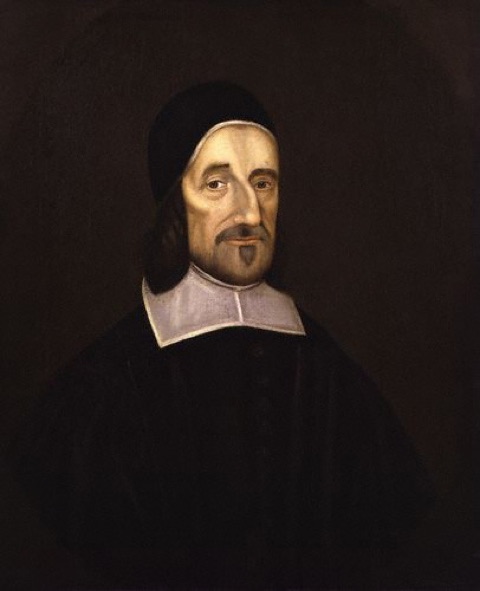
About the author
Richard Baxter
Richard Baxter (1615 to 1691 AD) was born in Rowton, Shropshire, and was largely self-educated. He was ordained in 1638 and became minister at Kidderminster in 1641, where preaching and catechizing household by household brought most of the town's families into active church attendance. During the Civil War he served as a chaplain in the Parliamentary army, and in this book he speaks of his years in armies and garrisons and of long bodily illness. He published The Saints’ Everlasting Rest in 1650 and The Reformed Pastor in 1656. Ejected from Kidderminster in 1662, he spent the rest of his life in London, and in 1685 he was tried before Judge Jeffreys and imprisoned. He wrote over 160 books and died in London in 1691.