Modernized edition · Full text · Free PDF/EPUB
The Saints’ Everlasting Rest: Volume 1 in Modern English
Want the file? The PDF/EPUB is free with an account.
Summary
- Author
- Richard Baxter (1615 to 1691 AD), minister of Kidderminster
- Published
- 1650 AD; the dedication is dated January 15, 1649, and the preface to Part 2 April 2, 1652
- This volume
- Volume 1 of 3: Baxter's dedications and Premonition, Part 1 and Part 2 of the four parts
- Type
- Puritan treatise on heaven, with a defense of the authority of Scripture
- Length
- 154,000 words · 10 hours
What is The Saints’ Everlasting Rest: Volume 1 about?
The Saints’ Everlasting Rest is Richard Baxter's 1650 treatise on Hebrews 4:9. This first volume holds Parts 1 and 2: what the rest of heaven is, the events that lead into it, its excellencies and who will enjoy it, and then the proofs of its certainty, chiefly four arguments that Scripture is the word of God.
Read the full summary (8 points, key themes)Show less
How the argument unfolds
- 01
Dedications and Premonition. Ten directions to Kidderminster as a dying man's legacy, and thanks to the Rous household.
- 02
The Rest Defined. The perfect, endless enjoyment of God by the perfected saints, begun at death and completed after the resurrection.
- 03
Presupposed and Contained. Twelve things belong to the road, and five to the rest itself, ending in the enjoyment of God by body and soul.
- 04
The Four Preparations. Christ's coming, the resurrection, the judgment and the coronation of the saints.
- 05
The Excellencies. Nine rules of reason, then the rest as purchased, free, exclusive, shared, direct, timely, suitable, perfect and eternal.
- 06
The People of God. Conversion from the outward call to covenant with Christ, with questions for self-examination.
- 07
Preface and Proofs. Answers to unbelievers, Roman Catholics and critical ministers, then four arguments that Scripture is God's word.
- 08
Closing Chapters. The rest is for God's people alone, remains future, and is enjoyed by departed souls before the resurrection.
Key themes
- Meditation as the strength of religion. Steadiness, vigor in duty and patience in affliction all depend on believing meditation on the rest.
- Christ in the way of duty. Christ's righteousness alone answers the law, yet the gospel has conditions: “Just as duty cannot save without Christ, Christ will not save without duty.”
- Faith and reason. Against the charge of Socinianism Baxter answers: “Faith itself is an act of reason; otherwise it is a brutish act, not a human one.”
- Eternity as the crown. Endlessness is the crown of the rest: “It would be a hell in heaven to think of ever losing heaven”.
Reader questions (10)Hide the questions
Questions about The Saints’ Everlasting Rest: Volume 1
Is there a modern English version of The Saints’ Everlasting Rest: Volume 1?
Yes. This is The Saints’ Everlasting Rest: Volume 1 by Richard Baxter in modern English. The language is modernized and the author's order and argument are kept. The full modernized text is free to read on this page.
Can I read The Saints’ Everlasting Rest: Volume 1 online for free?
Yes. The complete text of this modern English edition is on this page, with no sign-up or paywall.
Is there a free PDF of The Saints’ Everlasting Rest: Volume 1?
Yes. The PDF and EPUB of this edition are free with an Updated Works account. Sign in with Google or an email link; no card is needed.
What is The Saints’ Everlasting Rest by Richard Baxter about?
It treats heaven as the rest that remains for the people of God. Baxter explains what that rest is, what goes before it, what makes it excellent and who will share it, and then proves its certainty.
How does this volume relate to the rest of the set?
It is the first of three volumes and holds Parts 1 and 2; Parts 3 and 4 follow. Baxter says the second part grew beyond his plan because no one will love what he is not sure is true.
Why did Baxter write the book?
He lost a great deal of blood in his quarters far from home and expected to die. For about five months he had only his Bible, and a planned sermon or two grew into the treatise.
Why does Part 2 spend so long on the authority of Scripture?
Baxter believed a weak, borrowed belief in Scripture lies behind cold duty and fear of death, and that Satan reserves this assault for the last combat.
Does Baxter think the saints will know one another in heaven?
Yes, not by face, rank or family, but by the image of Christ. He cites Luther's answer that Adam knew Eve without being told.
Does Baxter teach that the soul sleeps until the resurrection?
No. He gives twenty arguments that departed believers are blessed at once, resting chiefly on 2 Corinthians 5:8, Philippians 1:23 and the promise to the thief, though their glory is incomplete until the body rises.
Does Baxter record answers to prayer from his own life?
Yes. A hard swelling in his throat, untouched by three months of remedies, vanished during the sermon in which he first spoke of such mercies: “As soon as I finished preaching, I felt that it was gone.”
The Saints’ Everlasting Rest: Volume 1 in Modern English · Full text
Dedication of the Whole
To My Dearly Beloved Friends, the Inhabitants of the Borough and Foreign of Kidderminster, Both Magistrates and People
My dear friends,
If either I or my labors have anything of public use or worth, it is wholly, though not only, yours. Providence has convinced me that this is God’s will. I saw it clearly in my first coming to you, in my earlier years living among you, and in the season of my forced absence. When the miseries of the recent unhappy war separated us, I dared not settle in any other congregation. Instead, I lived in an uncomfortable military post so that I would not block my return to you, for whom I considered myself reserved.
Offers of far greater worldly comforts, with five times the income I receive among you, never once tempted me to consider leaving. Your free invitation for me to return and your obedience to my teaching have weighed deeply with me. So have the strong affection I still bear toward you above all other people, and the general, hearty love I receive from you. All these persuade me that I was sent into this world especially to serve your souls. Even when I am dead, the Lord would still have me help your salvation. For that reason he has compelled me, quite against my own resolve, to write this treatise and leave it in your hands.
It was far from my thoughts ever to appear in print like this and burden the world with any writings of mine. I often resisted the requests of my respected fellow ministers, and even of some superiors who might otherwise have commanded far more from me. Yet see how God overrules and crosses our plans.
While I was in my quarters far from home, I fell into extreme weakness from the sudden loss of about a gallon of blood, following many years of prior frailty. I had no acquaintances around me and no books except my Bible. Living in constant expectation of death, I turned my thoughts to my everlasting rest. Because extreme weakness had impaired my memory, I took up my pen and began to draft my own funeral sermon, or some aids for meditating on heaven, to sweeten both the rest of my life and my death.
God was pleased to keep me in that condition away from home for about five months. Unable to do anything else, I kept working on this piece, and it gradually grew into what you now see. No wonder, then, if I am too abrupt at the beginning, since at first I intended only the length of a sermon or two. Much less should you wonder if the whole book is very imperfect. I wrote it, as it were, with one foot in the grave, hovering between life and death. I lacked the physical strength to stir up either thought or feeling, and I had no book except my Bible while the main part was finished. Even if I had been well supplied with books, I had no heart for human literary ornaments.
Yet how sweet this providence is now as I look back on it! It happily forced me into that work of meditation which I had already found so profitable to my soul. God showed me greater mercy in depriving me of other helps than I realized at the time. He led my thoughts to feed on this heavenly subject, which has benefited me more than all the studies of my life.
And now, dear friends, such as it is, I offer it to you. Upon the bended knees of my soul, I offer up my thanks to the merciful God who has brought both me and this book up as from the grave for your service. He reversed the sentence of immediate death passed upon me by the ablest physicians. He interrupted my public ministry for a season so that he might compel me to do you a more lasting service, one I would otherwise never have attempted.
I heartily bless and magnify that God who rescued me from the many dangers of four years of war. After so many weary nights and days, and so many sorrowful sights and reports, he has brought me and many of you safely home. He has spared us until now to serve him in peace. Even though people may be ungrateful and my body is broken beyond hope of recovery, he has made up for it all in the comfort I find in you.
To the God of mercy I here offer my most heartfelt thanks, fulfilling the vows of grateful acknowledgment I often made in my distress. He did not reject the prayers I lifted up in my anguish. Instead, by a wonder he delivered me in the very midst of my duties. For fourteen years he has sustained me in a languishing state, scarcely allowing me a waking hour free from pain. More than twenty separate times he has delivered me when I was near death.
Although God has made me spend my days in groans and tears, and in constant expectation of my final change, he has not wholly disabled me from his service. Through this affliction he has more effectively subdued my pride and made this world contemptible to me. He has forced my dull heart to more urgent prayers and granted me rarer glimpses of his mercy than I could ever have expected in a prosperous condition.
Forever blessed be the Lord! He has not only honored me to be a minister of his gospel, but has also placed me over a people so willing to obey. He has given me a fruitfulness in my labors that he has denied to many abler and more faithful ministers.
As Cyprian wrote to his people (Epistle 7 to Rogatianus), “While all the brothers ought to rejoice in this, the pastor’s share in the common joy is greatest, for the glory of the church is the glory of its overseer. As much as we grieve over those whom the hostile storm has struck down, so much do we rejoice over you, whom the devil could not overcome. Yet we urge you by our common faith, and by the sincere and simple love of our heart toward you, to hold fast your glory with strong and persevering courage, just as you defeated the adversary in this first encounter.”
Cyprian continued, “We are still in this world. We are still drawn up in the battle line, fighting daily for our lives. We must take care that after these beginnings we advance to further growth, so that what you have already begun with such happy first steps may be brought to completion in you. It is a small thing to have been able to gain something; it is greater to be able to keep what you have gained. So too faith itself and the saving new birth give life not merely by being received, but by being kept. Nor does the first attainment immediately preserve a person for God, but rather perseverance to the end” (John 5:14).
Blessed be the Lord, who has kept you in the zealous practice of godliness when so many grow careless or despise God’s ordinances. He has kept you steady in his truth and saved you from the spirit of giddiness, shallowness, and apostasy so common in this age. He has preserved you from those scandals by which others have so grievously wounded their Christian profession. He has enabled you to see the harm of separation and division. Indeed, he has made you stand out for unity and peace when almost the whole nation is ablaze with contention, and so many whom we thought godly are busy tearing down the church and fighting in zealous ignorance against the Lord.
Beloved, few of you are rich or great in the world. Yet for these riches of mercy toward you, I must say that you are my glory, my crown, and my joy. I have often promised to publish the praises of our Lord for all these rare favors to me and to you. Therefore, I set up this stone of remembrance here and write upon it: “Glory to God in the highest; hitherto hath the Lord helped us; my flesh and my heart failed, but God is the strength of my heart, and my portion forever.”
Yet have all these deliverances brought us to our rest? No, we are still as far from it as we are from heaven. You are still under oppression and troubles, and I am still under a wasting sickness. Feeling that I am likely to be with you only a little while longer, and that my pained body is hastening to the dust, I leave you here my best advice for your immortal souls. I bequeath this counsel to you as the legacy of a dying man, so that you may read it and practice it after I am taken from you.
I urge you to receive it as coming from one who you know sincerely loves you. I count no honor or happiness in this world as anything compared with the welfare and salvation of your souls. Receive it from me as if I offered it to you on my knees, pleading with you for your souls’ sake not to reject it, and pleading with the Lord to bless it to you. More than that, as one who has received authority from Christ to command you, I charge you in his name to practice these ten directions faithfully and constantly. Do so as you will answer for it when we meet at the judgment. Do so as you would not have me stand there as a witness against you, nor have all my labors charged to your condemnation, nor hear the Lord Jesus, your Judge, sentence you as rebellious.
1. Strive to be people of knowledge and sound understanding. A sound judgment is a most precious mercy and contributes greatly to soundness of heart and life. As Augustine observed, “A person lives badly who does not believe rightly about God” (City of God, book 5, chapter 10). A weak judgment is easily corrupted, and once it is corrupted, the will and conduct quickly follow. Your understanding is the entryway to your whole soul. If you are weak there, your soul is like a garrison with open or poorly guarded gates. Once the enemy is let in there, the whole city will soon be his.
Ignorance contains the seed of virtually every error. Therefore, keep the Bible much in your hands and in your hearts, and remember what I taught you from Scripture (Deuteronomy 6:6-7). Read extensively in the writings of our older, solid theologians, such as Perkins, Bolton, Dod, Sibbes, and especially Dr. Preston. You can read an able theologian when you cannot hear one. Above all, be sure to learn the foundational principles of religion well. Begin with the Assembly’s Shorter Catechism, and then read the Larger. Next, read Mr. Ball’s Catechism with its Exposition, and then Dr. Ames’s Marrow of Divinity, now translated into English, or Ussher’s. If you see people jumping into controversies before they understand these basics, never wonder when they drown in error.
I know your poverty and daily labor will not give you leave to read as much as others can. Even so, a willing mind will find some time, even if it borrows from sleep. Above all, it will devote the Lord’s Day wholly to these things. Do not remain ignorant of God in the midst of such bright gospel light, as if the matters of your salvation were less worthy of your study than your trade in this world!
2. Do everything in your power to obtain a faithful minister when I am taken from you. Be sure to recognize him as your teacher, overseer, and ruler (1 Thessalonians 5:12-13; Acts 20:28; Hebrews 13:7; Hebrews 13:17). Learn from him, obey him, and submit to his teaching, unless he teaches unusual and eccentric points; in that case, seek the advice of other ministers to test them. Do not expect him to humor you, cater to your whims, and say and do whatever you please. It is not God’s way for the people to rule themselves and their rulers.
If a man is unable to teach and guide you, do not choose him in the first place. If he is able, be guided by him even in matters that seem doubtful to you, unless it is clear that he would turn you away from the truth. If you know more than he does, become preachers yourselves. If you do not, then do not quarrel when you ought to be learning.
Above all, submit to his private oversight as well as his public teaching. What is done in the pulpit is only the smallest part of a minister’s work. Paul also taught them from house to house, night and day, with tears (Acts 20:20; Acts 20:31). The great work of the ministry is to go daily from one home to another, see how you live, examine how you are growing spiritually, and direct you in family duties and in preparing for death. (I have since engaged in this work with encouraging success; see my Reformed Pastor.) Had weakness not confined me and public labors not prevented me, I would count myself grievously guilty for neglecting it.
In the early church, every congregation with as many souls as this parish had several ministers. The ablest speakers did most of the public preaching, while the rest carried out more of the less public pastoral work, which some mistake for mere ruling elders. Clement of Alexandria writes, “In all bodies there are two ranks: those who improve them by leadership and governing, and those who serve, such as parents and children, magistrates and subjects, and so on. And so in the church, the part that improves it belongs to the presbyters, and the part that serves belongs to the deacons” (Stromata, book 7, opening). Here there is no mention of any other office. Yet now sacrilege and greed will scarcely leave support for even one minister in a church. That is what has thrown us into confusion over the nature of church government.
3. Let all your knowledge turn into affection and practice. Keep open the passage between your head and your heart so that every truth cuts to the quick. Spare no effort in working out your salvation. Beware of loitering when your soul is at stake, and do not indulge yourself in any slothful habit. Laziness is the damnation of most who perish among us.
God forbid that you should share the mad opinion of the world, which dislikes serving God so earnestly and making so much effort to be saved. All such people will shortly be of another mind. Live now as you will wish you had lived at death and at the judgment. Let no scorn discourage you, and let no differences of opinion trip you up. God, Scripture, heaven, and the way there remain the same. It will do you no good to belong to the right religion if you are not zealous in practicing its duties. Read often the fifth and sixth chapters of the third part of this book.
4. Make it a matter of conscience to perform the great duties required in your families. Teach your children and servants the knowledge and fear of God. Do it early and late, in season and out of season. Pray with them daily and fervently; remember Daniel’s example (Daniel 6) and the apostolic command to pray without ceasing (1 Thessalonians 5:17). Read the Scriptures and good books to them. Restrain them from sin, and do not keep a servant who refuses to learn and be governed.
Neighbors, I charge you, as you will soon answer for the contrary before the Lord your Judge, that not a single family among you neglect these great duties. If you cannot do all you should, at least do what you can. Above all, see that the Lord’s Day is wholly spent in these spiritual exercises. To spend it in idleness or sports is to consecrate it to your flesh rather than to God. That is far worse than spending it in your daily trades.
5. Beware of extremes in the disputed points of religion. When you avoid one error, take care not to run into another, especially in the heat of debate or strong emotion. I believe I have already shown you the true middle ground in the doctrines of justification and redemption. I had also intended to write a dedicated treatise with three columns, setting out both extremes and the truth in the middle across the whole body of theology, but God has called me away from it.
Be especially on guard against the errors of these times. Antinomianism springs from gross ignorance and leads to gross wickedness. Socinians are scarcely Christians. Arminianism is far beyond your depth and therefore not suited for your study on most points. On redemption and universal grace, the middle way taken by Cameron, Ludwig Crocius, Martinius, Amyraut, and Davenant, along with all the theologians of Britain and Bremen at the Synod of Dort, is in my judgment nearest to the truth. As for predestination and the nature of God’s inward working on the will in giving grace, those are the most hotly debated points where the heart of the controversy seems to lie. Yet I think I have never yet read or spoken with anyone who truly understood them himself, and those who are most confident usually understand them least.
As for separation, its harm lies not in a mere error of judgment, but in the unchristian, church-dissolving division and alienation that follow. That runs directly against the humility and love that are the visible mark of Christians. It also contradicts the oneness that Scripture consistently ascribes to the visible church. How sad that pride and ignorance have such power among believers that people cannot hold different judgments on lesser points without splitting into different churches!
God will make us value peace and unity a little more before we taste the perfect, everlasting peace and unity of heaven, and even before we see the blessing of unity in the church on earth. Wounding is a dividing; healing is a reuniting. A building consists of many stones or pieces joined in order. A church is a gathering of individuals, an association of believers. What is it to demolish, then, except to separate and pull apart? And what is it to dissolve churches, except to break their fellowship, scatter them into isolated individuals, and cut them to shreds?
Undoubtedly, in Cyprian’s time, every local, fully organized church was guided and ruled by a company of presbyters who all had authority to teach. The chief among them was chosen as permanent moderator and president and was called the bishop. Under them were the deacons. Both the presbyters and their president were ordained by others holding the same office and were chosen or accepted by the people. Thus there was then no bishop set over many churches, only a president among several ministers in one church. Nor did they ever claim authority over the officers of another church. Neither was there any such thing as a presbyter who was merely a teacher and not a church governor. Nor, I think, was there a presbyter who had no authority to teach, nor a church ruled by the vote of the people.
Consider what blessed Cyprian wrote to the Bishop of Rome (Epistle 72), an unmistakable testimony against his usurped authority. “While keeping the bond of peace and harmony among colleagues intact” (and there lies the chief use of synods), “some retain certain customs of their own that were once adopted among them. In this matter, we neither force anyone nor lay down a law. Every overseer has the free exercise of his own will in the administration of his church, and will give an account of his actions to the Lord.”
Even in the ordination of church guides with the consent of a synod, the people still have a vital role. They cannot call ministers on their own without the selection and ordination of other church guides, who are best fitted to judge their abilities. Yet the people are also to judge of their lives, and ordinarily no officer is to be placed over them without their consent, unless Cyprian and a whole synod were mistaken. “The people themselves have the chief power either of choosing worthy ministers or of refusing the unworthy” (Epistle 68). Read the rest of that letter.
I add this testimony to show that I am far from running into extremes against Independency. If Independents read Goulartius’s notes, they will see that they owe more to Geneva Presbyterians than they realize. Even Pamelius himself admits as much as I say. Still, let the people remember that they do not choose ministers whom they are to rule, but church guides and rulers whom God has repeatedly charged them to obey. They do so just as cities choose magistrates to govern them, not to be governed by them.
Cyprian spoke even more plainly at the opening of the Council of Carthage before eighty-seven bishops. “It remains for each of us to state what we think on this matter, judging no one and removing no one from the right of communion if he holds a different opinion. None of us sets himself up as a bishop of bishops, or by tyrannical terror forces his colleagues to obey. Every bishop, according to the freedom of his liberty and power, has his own independent judgment. He can no more be judged by another than he himself can judge another. Rather, let us all await the judgment of our Lord Jesus Christ. He alone has the power both to place us in the governance of his church and to judge our actions.” Can anything stronger be said against the pope, against any bishop claiming authority over many churches, or against any who claim final decisive authority over doctrinal controversies?
As for the differences in church government among moderate Presbyterians, Independents, Episcopalians, and Erastians, I have no doubt they would soon be united if people’s tempers were not further apart than their principles. Yet among all four groups there are some who push their principles so high that they run beyond the reach of peace or truth. Will God never move the hearts of our rulers to gather a few of the most godly, learned, moderate, and peaceable representatives of all four views (not too many)? Let them agree on a path of unity and reconciliation, and not stop until they reach this goal.
Let them come as close together as possible in their principles. Where they cannot, let them still unite as far as possible in practice despite differing principles. Where even that cannot be done, let them agree on the most loving, peaceable way of carrying out their different practices. Then, as Rupertus Meldenius says, we may have unity in necessary things, liberty in unnecessary things, and love in all things. May the Lord move those in power to this peacemaking enterprise without delay.
As for Anabaptism and Antinomianism, I have written against them in two other books (and I will write more against the latter if God wills, which I have since done in my Confession and Apology). My guilty friends are offended with me for what I have done. Yet I dare not keep silent, because I am an officer and ambassador of Christ, not of men. God spoke powerfully against those errors through those extraordinary monstrous births in New England. Yet wonders are ignored when the heart is hardened and God intends to make his justice known.
The fearful delusions to which God has previously given them over, and the terrible confusion they have brought wherever they have sprung up, speak plainly enough against both of these sects. Look at the weeping eyes, the bleeding sides, and the torn limbs of these churches. Look at the disgraced gospel, the thwarted reformation, the hideous doctrines, and the unheard-of wickedness that have followed them. Look at the despised ordinances and the mocked, slandered, and driven-out ministers. Look at the weak who are stumbled, the professing believers who have apostatized, the wicked who are hardened, and the open enemies of the gospel who now gloat over us. All of these expose those sects to England more plainly than words can, and cry out loudly in the ears of God and humanity. Time will reveal the outcome, though from Revelation (Revelation 2:14-16; Revelation 2:20-22) we may reasonably surmise it.
6. Above all, see that you pursue peace and unity, both in the church and among yourselves. Remember what I taught you on pursuing peace and holiness (Hebrews 12:14). Whoever is not a child of peace is not a child of God. All other sins destroy the church indirectly, but division and separation tear it down directly. Building the church is simply the orderly joining together of its materials. What then is pulling them apart except demolition? Many doctrinal differences must be borne with in a church. And why, except for the sake of unity and peace? Therefore, disunion and separation are completely intolerable.
Do not trust those to be the church’s friends who try to cure and reform her by cutting her throat. Those who claim that no truth may ever be held back for the sake of peace usually possess as little of the one as of the other. Study these passages carefully (Galatians 2:2; Romans 14:1; Acts 21:24; Acts 21:26; 1 Timothy 1:4; 1 Timothy 6:4; Titus 3:8-9). Even if I said nothing, I hope painful experience speaks this lesson straight to your hearts.
Do your hearts not bleed as you look at the state of England? Think how few towns or cities with any earnestness in religion have not been cut to shreds and crumbled to dust by separations and divisions! Think what a wound we have inflicted on the very name of Christ! Think how we have hardened the ignorant, confirmed the doubters, and made ourselves the scorn of our enemies and the grief of our friends! Think how many of our dearest, most respected friends have fallen into notorious pride or ungodliness, and some even worse than open unbelievers! They stand as pillars of salt; make sure you remember them.
You are still distinguished for your unity, steadfastness, and godliness. Hold fast what you have so that no one takes your crown from you. Temptations have now come close to your doors. Yet many of you have come safely through greater ones, and so I hope you will escape through these as well. Still, in case your temptation grows stronger, let me warn you. Even if men arise from among your own selves, speaking twisted things to draw disciples after them (Acts 20:30), do not follow them. Even if an angel from heaven tries to draw you into division, see that you do not follow him.
If there are flawed practices in the church, keep yourselves blameless with moderation and peace. Do your best to reform them. If you cannot live blamelessly there, move your home rather than tear the church apart. It must be no small error that forces a separation. Consider Justin, a holy and learned martyr (in his Dialogue with Trypho). He was converted within thirty-one years of the apostle John’s death and wrote his first Apology within fifty-one years of it, so he likely lived in John’s time. Justin declared that if a Jew kept the ceremonial law without urging it on Gentiles as necessary, yet acknowledged Christ, he believed that man could be saved. He would embrace him and have fellowship with him as a brother. Paul likewise wants us to welcome the one who is weak in faith, not unchurch entire parishes of people whom we do not know and who have never been given a fair hearing.
You know that I never conformed to mystical, symbolic ceremonies myself, but only to the ordering of circumstantial matters that are necessary in general. Even so, I always loved a godly, peaceable conformist better than a turbulent nonconformist. I still differ from many on several points of considerable importance, as my Aphorisms of Justification show (and as I have explained in my Confession).
Concerning that work, I may say with the famous John Cameron (Letter in Reply to the Leiden Theologians): “Although I did not promise that it would please everyone, I was never afraid that any godly person would be offended by it as if it helped the cause of our adversaries. No one has been able to extract anything from it that harms the cause I was defending. Rather, it is framed so that everywhere it not only aims at the adversary’s position, but strikes and cuts it down. If anyone judges my approach less apt or neat, I am certainly neither indignant nor grieved. I know well how fair and reasonable it is that people have free judgment in matters of this kind.”
Cameron went on: “I ask only this, which I easily trust I will obtain from good people. Do not let me be overwhelmed here by prejudice, nor judged worthy of condemnation unless I have been admonished, overcome by the force of truth, and yet refused to yield. I wish I might clear myself before you in this way! If any doubt still lingers with any of you, you will do me a most welcome and useful favor by dealing openly with me. Give me the opportunity either to acknowledge an error or to defend and clarify the truth. Bring forward reasons and testimonies of Holy Scripture, to which I may yield if they weigh against me, or answer if they do not.”
Or as Augustine wrote (On the Trinity, book 3, preface): “Just as I do not want my reader to be devoted to me, so I do not want my critic to be devoted to himself. Let the one not love me more than the universal faith, and let the other not love himself more than the universal truth. To the reader I say: do not submit to my writings as though they were canonical Scripture. In Scripture, believe without hesitation even what you did not believe before once you find it there. In my writings, however, hold nothing firmly that you were uncertain of unless you have understood it for certain.”
Augustine added: “To the critic I say: do not correct my writings out of your own opinion or contentiousness, but from divine Scripture or unshakable reason. If you grasp anything true in them, by its own nature it is not mine. Yet by understanding and loving it, let it be both yours and mine. If you prove anything false in them, by my error it was mine. Yet now, by guarding against it, let it be neither yours nor mine.” This is all I ask of the readers of my writings, in Augustine’s words (Letter to Jerome): “I wish everyone would observe toward me the same rule I have observed toward you. Whatever they think deserves disapproval in my writings, let them neither lock it up in a deceitful heart nor criticize it to others while keeping silent to me.”
Yet if I were to push my own views so zealously on others as to disturb the peace of the church and separate from my brothers who think differently, I would fear becoming a firebrand in hell for being a firebrand in the church. By all the influence I have in your judgment and affections, I charge you here: if God should ever give me over to any factious, church-rending course, against which I pray daily, forsake me and do not follow me a single step.
As for peace with one another, pursue it with all your might. “If it be possible, as much as in you lieth, live peaceably with all men” (Romans 12:18). Mark this well: whenever you feel any sparks of discontent in your chest, treat them as kindled by the devil from hell, and take care not to fan them. If the flames begin to break out in harsh criticism, insults, and bitter speech against others, rush to put them out as urgently as if fire had caught the thatch of your house. Why should your houses be dearer to you than the church, which is the house of God, or than your souls, which are the temples of the Holy Spirit?
If any resentments arise, do not stay aloof from one another. Go together and talk it through lovingly, or pray together that God would reconcile you. Or bring the matter to your minister or others, and do not let the sun go down on your anger. Has God spoken more sharply against any sin than an unpeaceable spirit? If you do not forgive others their trespasses, neither will your heavenly Father forgive you. That led Ludwig Crocius to say that a forgiving spirit is the measure and essential mark of even the smallest degree of true faith (Syntagma, book 4, chapter 16).
If you do not love one another, you are no disciples of Christ. More than that, if you do not love your enemies, bless those who curse you, and pray for those who hurt and persecute you, you are no children of God. “The wisdom from above is first pure, then peaceable, gentle, easy to be entreated,” and so on (James 3:17). Remember that piercing example of Christ, who washed his disciples’ feet to teach us that we must stoop just as low for one another. Surely God is not joking with you in all these plain Scriptures. I charge you in the name of Christ: if you cannot have peace any other way, endure wrongs and insults. Go and beg for peace from those who ought to beg it from you. Even beg for it on your knees from the poorest beggar rather than lose it. Remember the apostle’s warning against those who cause divisions (Romans 16:17-18).
7. Above all, be sure to bring down the pride of your hearts. Do not forget all the sermons I preached to you against this sin. No sin is more natural, more common, or more deadly. A proud person is his own idol, and contention comes only from pride. There is no living in peace with a proud person, for every slight throws them into a fever of resentment.
Watch your heart closely. Do you grow wise in your own eyes, love to be admired and put first, and love those best who think highest of you? Do you nurse secret resentment against anyone who overlooks you or holds a low opinion of you, unable to bear being slighted or spoken ill of? Never count yourself a Christian while that is your condition. Being a true Christian without humility is as impossible as being a human being without a soul. Poor England, how low you have been brought by the pride of ignorant zealots! Dear friends, I can tell you without the gift of prophecy how apostasy begins. If anyone among you falls from the truth, watch who is the proudest, who cannot bear to be contradicted, and who runs down others. Those will likely be the ones. If you are ever shattered and ruined, pride will be the cause.
8. Be sure to keep mastery over your flesh and your senses. Few people ever fall away from God without flesh-pleasing being the cause. Many suppose that by “flesh” Scripture means our indwelling sin, when in truth it is our unruly sensory appetite that Scripture charges us to subdue. Nothing in the world damns so many people as pleasing the flesh, because people generally choose it as their happiness instead of God.
Remember who has said, “If ye live after the flesh, ye shall die,” and, “Make no provision for the flesh, to satisfy its desires” (Romans 8:5-7; Romans 13:14). Think of this when you are tempted to drunkenness, gluttony, lust, and worldliness, or when you long to make your homes and circumstances more luxurious. You little realize what a sin it is even to indulge your flesh beyond what helps you serve God.
As Seneca wrote (Epistle 12), “I admit that love for our body is implanted in us, and I admit that we have the guardianship of it. I do not deny that it should be cared for, yet I deny that it should be served. Whoever serves the body will serve many masters, fearing too much for it and referring everything to it. We ought to conduct ourselves not as if we must live for the body, but as if we cannot live without the body. Excessive love for it unsettles us with fears, burdens us with anxieties, and exposes us to insults. Honor becomes cheap to the person whose body is too dear to him. Let the most diligent care be taken of it, yet in such a way that whenever reason, honor, or faithfulness demands it, we are ready to cast it into the fire.” Many a Christian would be happy indeed if they had learned this lesson that a pagan teaches them.
9. Make it a matter of conscience to carry out the great duty of rebuking and encouraging those around you. Do not make your souls guilty of the profanity, ignorance, and ungodliness of others by staying silent. Correct them lovingly and humbly, yet be sure you do it, and do it seriously. This is the first step in church discipline. Do not expect your minister to bar anyone from the Lord’s Supper whom you have not first warned privately once and again. Do not punish before due process has been followed.
10. Finally, be sure to maintain a constant delight in God, along with seriousness and spirituality in all his worship. Do not think it enough to take pleasure in religious duties if you do not delight in God himself. Judge your duties not by their bulk and number, but by their sweetness. You will never be steady Christians until you reach this point. Never forget all those sermons I preached to you on delighting in the Lord (Psalm 37:4).
Do not give way to a routine dullness in duty, but do every duty with all your might. Above all, do not be careless in secret prayer and meditation. Do not spend the chief part of your zeal on outward forms, opinions, and the smaller matters of religion. Let most of your daily work be upon your own hearts. Stay watchful and distrustful of them, understand their deadly wickedness and deceitfulness, and do not trust them too far.
Practice the great duty of daily watchfulness, and pray earnestly that you will not be led into temptation. Fear the very beginnings and appearances of sin, and guard against letting your conscience lose its tenderness. Repair every breach between God and your conscience right away. Learn to live the life of faith. Keep fresh the sense of Christ’s love, of your continual need for his blood, his Spirit, and his intercession, and of how deeply you are indebted and bound to him.
Live in constant readiness and expectation of death. Make sure you grow familiar with the heavenly way of life that this book is written to guide you in. I commend this book to your use, hoping you will take the trouble to read it as I have taken the trouble to write it for your sake. While I live on this earth, I will plead with the Lord for you, that he would win your souls to this blessed work. May death find you so engaged when it comes, so that I may see your faces with joy before the judgment seat of Christ, and we may enter together into the everlasting rest. Amen.
Your most affectionate, though unworthy teacher,
Richard Baxter
Kidderminster, January 15, 1649
To the Right Worshipful Sir Thomas Rous, Baronet, and Lady Jane Rous, His Wife
Right Worshipful,
The first part of this treatise was written under your roof, and so I present it to you not as a gift, but as what is already your own. I offer it not for your patronage, but for your instruction and guidance. I never saw in you that evil spirit that makes people treat their teachers as servants, listening only to criticize their doctrine or be flattered by them rather than to learn.
Neither do I intend this letter to advertise your virtues, for you know before whose judgment you stand or fall. It is a small thing to be judged by human judgment. If you are declared righteous at the judgment seat of Christ and called by him the blessed of his Father, it matters little by what name or title you are called here. All saints hold a low view of themselves and therefore do not thirst to be highly praised by others. Anyone who knows what pride has done in the world and is doing still, and how closely that wicked sin clings to all our natures, will scarcely count someone a friend who brings fuel to the fire. Nor will he treat as friendly the breath that fans the coal.
Yet our Lord received a woman’s jar of ointment so kindly that he attached her story to his gospel, so that wherever it was read her good deed would be remembered. By that example he has given me warrant to join the mention of your kindnesses to this treatise. Many times over, your generosity has far exceeded in cost what Judas thought too good for his Lord.
Common gratitude and honesty compel me to acknowledge thankfully what you did for me. When you heard I had suddenly fallen into extreme weakness, you sent messengers into several counties to search for me in my quarters. When they missed me, you sent again to bring me to your home. There for many months I found a hospital, a physician, a nurse, true friends, and, more than all of these, daily, persistent prayers for my recovery. Since I left your house, your kindnesses have continued to follow me in abundance.
You did all this for a stranger whom you had never seen before except to be burdened by him. You did it for one who had neither clever charm to draw out your favors nor boldness enough to repay them with flattery. Indeed, I had such a blockage between my heart and my tongue that I could scarcely express gracefully even the smallest part of my gratitude, much less repay you.
The best return I can make for your love is to commend this heavenly duty to your practice. In this I must urge you to be even more diligent and tireless. While you have more time for it than the poor do, you also face far stronger temptations to draw you away. It is extremely hard for those who enjoy abundance of everything here to place their happiness truly in another life and set their hearts on heaven as their true rest. Yet every person who will be saved must do so. Study these passages carefully (Luke 12:16-22; Luke 16:19; Luke 16:25; Matthew 19:23). How little comfort can anything in this world give to a departing soul!
My constant prayer to God for you will be that everything below may remain below him in your hearts. May you thoroughly master and put to death the desires of the flesh. And may you live above in the Spirit, with the Father of spirits, until you arrive among the perfected spirits of the righteous.
Your much obliged servant,
Richard Baxter
A Premonition
Concerning the changes and additions in this second edition, I thought it fitting to give you this brief account. I would gladly have repaired various other defects throughout the book, especially near the beginning of the first and second parts, where the effects of my physical weakness were most apparent. However, the publisher persuaded me that doing so would offend those who had already bought the first edition, so I held back. Still, seeing no reason why anyone should deny me permission to correct or improve my own work, at least this once, I have made the following necessary revisions and additions.
1. I have corrected several passages, especially near the start of the first and second parts, that I saw were most open to objection or misunderstanding. I would have done even more if my friends had been willing to tell me what they disliked. I have also clarified some passages that gave offense by touching on the recent public controversies. I would gladly have blotted them out to avoid displeasure if my conscience had permitted it. Yet anyone who discards every book that disagrees with his own opinion will read and profit from very few books in this world.
2. I have added one chapter, the ninth, in the second part, which was promised in the opening outline but had been forgotten. I have also added the eleventh chapter in the third part, containing a closer inquiry into the nature of sincerity and the use of spiritual marks. I judged this necessary because it matters so deeply both to people’s comfort and to their spiritual safety. I hope no one will think it needless subtlety. In addition, I have added a preface to the second part both to defend and to explain more fully the doctrine it contains. Here too I expect to be cleared of the charge of needless subtlety by all who know how much the peace and welfare of our souls depend on a right grasp of the truth of the Scriptures.
Finally, I have added many marginal quotations, especially from the ancient writers. Some may consider them useless, and others may think them mere empty show. Yet I judged them helpful for two reasons: first, for the richness of their content (which I leave you to judge by reading them, as they seemed sweet to me); and second, to clear myself from the charge of holding eccentric, solitary views.
If anyone says I should have avoided these problems through greater care in the first place, I offer three answers.
1. What is past cannot be undone; it is well if it can be repented of and improved.
2. I wrote so much of this book in such extreme bodily weakness that it is a wonder my mind was not completely incapacitated.
3. I was far from home, where I had no book except my Bible, and so I could not include the supporting testimony of other authors.
If you say there was no need for such haste, and that I could have waited until I was stronger and better equipped with books, I give four answers.
1. I had little reason to expect that I would survive until now, or even two months longer.
2. Anyone who knows the pull of friends knows how little we are masters of our own work, for friends often press eagerly for what others dislike. While that is a poor excuse for doing evil, it can sometimes partly excuse doing good before the ideal time.
3. I do not regret my haste, though I do regret my imperfections. God has been pleased to give this book such unexpected acceptance that I have ample reason to hope the good it has already done in this single year outweighs any harm caused by its flaws.
4. I am so aware of my own limitations that I know they will show up in everything I write. I do not doubt that this book still contains things needing correction, and it would even if I revised it a hundred times. If the great Augustine so often and so earnestly confessed this about himself, who am I to hope for better? So much for this second edition.
Concerning the book itself, let me inform you that the first and last parts were all I intended when I began. I wrote them strictly for my own use, so if you notice strains of personal self-application in them, please excuse them. As for the second part, it flowed from my pen beyond my original plan. It was prompted partly by temptations I had often faced on that point, and partly by my conviction that it was deeply necessary for the main purpose of the book.
Who will set his heart on the goodness of something without being certain of its truth, or give up present pleasures until he is sure he can have better ones? Because I had no other authors at hand then, I gave only a brief summary of the reasons that most convinced me. Therefore, I encourage you to read Grotius and the Lord Du Plessis, On the Verity of the Christian Religion (especially chapters 25, 26, and the final chapter), both of which are translated into English. (I have also since written a supplement to this part, called The Unreasonableness of Infidelity.)
The third part was the last one I added. Its first four chapters are for the use of complacent and sensual sinners, should any of them happen to read this book. Its last three chapters are for the godly, to guide and comfort them in afflictions, and especially to move them to the great duty of helping save the souls of their neighbors. Its seven middle chapters are for both the godly and the ungodly, since they concern matters of unspeakable importance to everyone. Thus not every part of this book is aimed at the same readers.
I hear that some blame me for being too wordy and say all of this could have been put in a smaller space. Let me tell them that in writing at this length I went against my own bent far more than theirs. My natural style is so brief that people accuse it of being obscure. I had a hard time bringing myself to write the way they criticize, obeying my judgment against my own inclination. First, I thought my views of this glory should not be brief nor my words too compressed. Second, I kept in mind that I am speaking to plain, unlearned people who cannot grasp our meaning when it is packed into too tight a space, and who tend to miss the full weight of compact phrases. Because they must think slowly, we must speak at length. Otherwise our words fall short of the mark and die before taking effect, so wide is the gap between their ears and their minds.
Besides, I know I am speaking to human affections, which lie even deeper and further out of reach. How guilty I am of wordiness, let others judge. Certainly I do not approve of needless repetition, a dull style, or piling up useless material and words. Nor can I help thinking those Tostatuses shamelessly proud who imagine the world should read nobody’s books but theirs. Yet if the length of my book simply keeps the reader’s thoughts longer on so sweet and necessary a subject, I will scarcely regret my criticized length.
I admit I have never cared for artificial polish or excessive fuss over wording, nor do I admire the mindset of those who do. If I can speak to the point, plainly, piercingly, and with reasonable accuracy, that is enough for me. I agree with the wise Dr. Stoughton, quoting Seneca: “He is the best preacher who feels what he speaks, and then speaks what he feels.”
I also admit that I would have made the first and fourth parts much longer, except that when I returned home to my library, I found in Mr. Burroughs’s Moses’s Choice and other books the same points already in print that I had planned to write. Had I been at home when I started this book, or had I read as much on similar subjects as I have since, I think I would have omitted all or most of what I wrote. Even so, I do not regret writing it, for the God who compelled me to do it knows how to use it.
If this explanation does not satisfy my critic, I offer him three options to choose from.
1. Leave the book alone, and then it will do you no harm.
2. If you insist on reading it, blame the author and do not spare him, so long as you welcome the truth and obey what you are convinced is your duty.
3. Set to work yourself and write a better book, so that God’s church may have even more help in such an urgent matter.
Enough of that. If the fruitfulness of my labor were not dearer to me than protecting my reputation, I would think three lines long enough for a defense.
My main purpose in this preface is to show every reader the chief aim of this book, and to plead with you, for your soul’s sake, to use it accordingly. Truly comforting the soul in life and at death is a matter of great importance and worth far more labor than I have spent here. Yet the goals I aimed at carry even greater weight. I have heard many devout people say, “Let us study how to get to heaven, and let others study how great its joys are.” Yet I have found by reason, experience, and Scripture that far more than our comfort is at stake. Our stability, our vitality in every duty, our endurance in affliction, our honoring of God, and the vigor of our love, gratitude, and every grace all depend on believing, serious meditation on our everlasting rest. Indeed, the very life of our religion and Christianity itself depends on it.
The end directs us to the means and guides us in using them. It is the first thing we intend, and every action of our lives must aim toward it. (As Gibieuf says, nothing is properly desired at all except the ultimate end.) Make a mistake here and you are lost forever, unless you correct it in time. Knowing what your true goal and happiness really are, and wholeheartedly embracing them as such, is the very first foundation stone of true religion. Most souls who perish in the Christian world perish because they are not sincere on this point.
People have learned from books that God is the supreme good and that only enjoying him in heaven can make us happy, yet their hearts do not genuinely take him to be so. Most people treat the present satisfactions of the flesh, found in pleasures, profits, and honors, as their real happiness. These things have their very hearts, while God gets only the tongue and the knee. These are eagerly chased after, while God is flattered with empty compliments. Heaven is praised halfheartedly while the world is pursued with passion. Christ is called Master while the flesh holds all the power.
Only because they cannot help knowing that the world will soon leave them in the grave, and that this pampered flesh must lie rotting in the dust, they allow God the leftovers of the world. They give Christ whatever the flesh can spare. They will be religious and godly just far enough to avoid being cast into hell, treating heaven as a backup plan for when they can hold on to their worldly happiness no longer. This is the self-deceiving religion of thousands.
Reader, I pray God will press this home to your heart, awakening you to a godly watchfulness so that your heart does not deceive you on this single point. How many people who profess zeal for religion, with extensive knowledge, gifted speech, and blameless conduct in other areas, still pursue the world and the flesh so eagerly! They cleverly dodge every danger and argue themselves out of every duty that proves costly or clashes with their worldly comfort. By this they make it unmistakable that they never truly chose God as their portion and happiness.
When people fail to lay this foundation in sincerity, they may build all their lives to little purpose, and great will be the crash when that sand gives way beneath them. When they receive this foundational truth merely as an idea in the head and never press it deep into the heart, their entire lives afterward are spent in hypocrisy. Every religious duty only deepens their delusion, unless God calls them back to examine their souls and lay the foundation they neglected.
For this reason Scripture declares that to be carnally minded is death, that if you live according to the flesh you will die, and that the carnal mind is hostile to God. It also says that if anyone loves the world, the love of the Father is not in him (Romans 8:5-8; Romans 8:13; 1 John 2:15). That is why it is so hard for the rich to enter heaven, and why you can scarcely find a single saint in Scripture charged with covetousness. It is just as possible for devils to be saved as for someone who finally places his chief rest and happiness in anything below God.
And what causes all this ruin? Simply that people do not seriously and frequently reflect, first, on the certain truth, and second, on the sweet, unimaginable glories waiting for them if they renounce the world’s empty pleasures and cling wholeheartedly to God in Jesus Christ. Moreover, if people do not grasp the excellence of this rest, they cannot value Christ or his blood that purchased it, and therefore they cannot truly be Christians.
Nor is knowing what heaven is once enough. Unless we keep a continual or frequent taste of it in our souls, we will live in constant danger of being overcome. When temptations take you up onto the mountain, show you the kingdoms of the world and their glory, and say, “All this will I give thee,” what danger you are in if you do not have a greater and surer glory before your eyes! If only the shameful falls of professing believers in our day did not prove this to our grief and the disgrace of our Christian profession!
Not a day passes without the devil throwing you a bait: sports or amusement, filthy lusts, indulging your appetite in food and drink, reputation, climbing in the world, fear of people, or something like them. If you have recently been meditating on your rest with God, it will make you trample them all underfoot. If that rest is forgotten or undervalued, everything is lost.
Furthermore, what life and energy this meditation will keep alive in all our duties! How earnestly that person will pray who believingly and seriously grasps what he is praying for! How deeply it will fill the soul with love when believers gaze daily on the face of love itself and warm their hearts in heavenly contemplation! Even if it served only to make our religion delightful to us, that delight would have far greater value than mere pleasure, as I have shown at the end of this book. How cheerfully people would press on through labor and suffering once they tasted the delight in God that a heavenly life brings! When vitality and joy, seriousness and sweetness go together, they make believers fruitful, victorious, and persevering Christians. In short, you can neither live safely, fruitfully, devoutly, conscientiously, or with true peace, nor die that way, without believing, serious meditation on your everlasting rest.
And now, reader, whoever you are, young or old, rich or poor, I plead with you and charge you in the name of your Lord. He will soon call you to account and judge you to your everlasting, unchangeable state. Do not merely read these pages and dismiss them with passive approval. Instead, set to work at once. Take God in Christ as your only rest, and set your heart on him above everything else.
Do not play games with God. Do not merely talk about heaven, but set your mind on it and seek it with all your might. What greater business do you have to do? Delay no longer when your salvation hangs in the balance. Turn away from the world before it turns you away. Forsake your fleshly pleasures before they forsake you and you discover that God has forsaken you as well.
Shut your eyes to these withering beauties, and close your mouth against these pleasant poisons. Remember what they will all be worth to you when your friends are weeping over your bed and getting your burial shroud ready. Even more, remember what they will mean when God says, “Give account of thy stewardship, thou shalt be no longer steward,” and, “Thou fool, this night shall they require thy soul; whose then shall these things be?” Lord, how can people think so carelessly about a day they cannot help knowing is near, and which will bring so vast a change to them! Surely, as the noble Du Plessis says in his preface to The Verity of the Christian Religion, if the whole world was made for humanity, then humanity was made for something greater than the world.
Listen, all you lovers of the world and pleasers of the flesh! The God of heaven commands you, on your allegiance to him, to exchange your pleasures. He offers you delights worthy of human beings, indeed the very joys of angels, and commands you to renounce the pleasures of sin and delights fit only for beasts. Will you refuse his offer? Take it now, before he never offers it to you again. He commands you, as you ever hope to see his face in glory with joy, to turn your thoughts seriously now to him and to that glory. Do you dare refuse or neglect to obey?
If you will not part with your amusements and empty pursuits for something infinitely better, know for certain right now that you will soon part with them for nothing, and worse, for hellfire. You will leave them before long in groans and horror if you will not leave them now for God and glory. Spit out these poisonous, fleshly pleasures, friend; come near and taste heavenly delights! What do you say? Will you make up your mind? Will you enter into covenant with God this very day and do it?
Am I speaking to a wooden post that cannot feel, or to a beast incapable of heaven? Will you shrug off my words as if they did not concern you? The great God put this doctrine into your Bible, put this message into my mouth, and commanded me to speak it to you in his name. One day he will speak to you so rousingly himself that your ears will tingle and that stony heart of yours will tremble, despite all your complacency and spiritual numbness.
If you have sinned away your fear and feeling until you treat a sermon as empty routine, be assured that God will soon bring your fear and feeling back. It had better be precious liquor indeed that the drunkard will pay so dearly for then, and wonderful satisfaction that the lustful must suffer so bitterly for, and grand honors and riches for which you throw away your hope of heaven. If you had never heard or read of these things, you would have more excuse. Yet if, knowing all this, you still insist on running into the fire, into the fire you will go. When you feel the pain, you will wake up to your folly. When heaven is lost, remember that you could have had it, and on very reasonable, gracious terms, if only you had been willing. Nothing but your own willfulness could have shut you out. I have warned you; let God do his will.
And as for you who fear God, who have made him your portion, your goal, and your rest, and who are heirs of this kingdom, let me urge you to look homeward more often and keep your inheritance in view. Should we not think often about the place where we must live forever? Do you not see that God tosses you up and down in this world and crosses your desires to weary you of it? He looses the winds to stir up storms that make you long for the harbor and drive you to his breast. He causes even your dearest friends to afflict you, and turns even those with whom you once took sweet counsel and walked to the house of God as companions into scorpions to you, so that you will find no resting place here for the sole of your foot.
Learn God’s gracious purpose, and look upward! While others chase after novel opinions, run from sect to sect, and set Christ’s church on fire with quarrels and empty wrangling, withdraw from these vanities to your God. Humbly commune with him, think believingly about your everlasting communion with him, and in this way kindle your soul with the rays of his love.
For my own part, I am often forced, as teachers are more than the people, to study controversies. Even though they are necessary and deal with precious truths, and even when my studies go well, I still feel unmistakably that they unsettle my spirit. They drain my zeal, my love, and my delight in God simply by interrupting and distracting my meditations. As a result, I long to be done with them so that I may draw closer to God.
Disputes often breed envy and bitterness. Those lead to hating our fellow believers, and that leads to open violence and bloodshed even against the saints, to persecuting ministers, and to opposing Christ’s clear cause for the sake of our own. Heavenly meditation, on the other hand, calms the spirit. By winning our souls to the love of God, it not only moves us to love our brothers and sisters, but to love them in God, which is the only true love. In this way all people will know that you are Christ’s true disciples by your love for one another. Whoever loves abides in God and God in him, whereas those who hate their brothers and sisters are murderers, and we know that no murderer has eternal life abiding in him (John 13:34-35; John 15:12; 1 John 3:15; 1 John 2:9-11).
May the living God, who is the portion and rest of his saints, make our fleshly minds so spiritual and our earthly hearts so heavenly that loving him and delighting in him may be the work of our lives. May neither I who write this book nor you who read it ever be turned aside from this path of life. While a promise remains of entering his rest, let none of us fall short of it through our own unbelief or neglect (Hebrews 4:1).
May 17, 1651
Part 1: The Nature of the Saints’ Everlasting Rest
Chapter 1
There Remains a Rest for the People of God
“There remaineth, therefore, a rest for the people of God” (Hebrews 4:9).
Section 1: The Greatness and Welcome News of Rest
In Adam’s covenant-breaking fall, we lost more than our saving share in God and our actual enjoyment of him. We also lost all spiritual knowledge of him and every true desire for such happiness. Humanity now has a heart all too suited to its fallen condition: a low state and a low spirit. As some interpret the words of Christ (Luke 18:8), the Son of God comes with recovering grace, revealing and offering spiritual, eternal glory. Yet he finds no faith in us to believe it. (As Athanasius observes in Against the Heathen, people turned away from contemplating and loving the one true God. They fell into bodily lusts, grew attached to them, and mistook earthly pleasure for their true good.)
Think of the poor man who refused to believe anyone owned a hundred pounds, simply because it lay so far beyond what he possessed. In the same way, people today can hardly believe there is such happiness as humanity once had, much less the greater happiness Christ has now secured. When God resolved to give the Israelites his Sabbaths of rest in a land of rest, he had more trouble getting them to believe it than overcoming their enemies and winning it for them. Even when they received it as a small hint and down payment of an incomparably more glorious rest through Christ, they stopped there. They would believe no more than what they held in hand, sitting down and saying like the glutton at the feast, “Surely there is no other heaven than this.” Or if they expected anything further from the Messiah, it was only an increase of their earthly comfort.
The apostle devotes most of this epistle to curing that spiritual sickness. He proves clearly and thoroughly that the purpose of all ceremonies and shadows is to point them to Jesus Christ, the Substance. The rest of Sabbaths and of Canaan was meant to teach them to look for a further rest, which is their true happiness. My text is his conclusion after several arguments to that end.
This conclusion is deeply valuable to every believer. It contains the foundation of all our comfort, the goal of all our duty and suffering, and the life and sum of all gospel promises and Christian privileges. You can easily see why I have chosen it as the subject of this work. What could be more welcome to people weighed down by personal afflictions, exhausting duty, and wave after wave of suffering than rest? What could be better news to those living through public calamities, burdensome callings, plunderings, losses, and grim reports, which is now the common lot, than this news of rest? Hearers, I pray God that your attention, focus of spirit, welcome, and practical use of this truth may be even half worthy of its certainty, necessity, and excellence. If so, you will have reason to bless God as long as you live that you ever heard it, just as I do that I ever studied it.
Section 2: Explaining the Text and God’s Twofold People
As you can see, the text is the apostle’s statement in a complete proposition, introduced by a concluding word. The subject is rest, and what is declared about it is that it still remains for the people of God. We need to speak briefly on two points: first, to explain the terms, and second, to explain the substance of what they teach.
“Therefore” means that this truth follows clearly from the preceding argument.
“There remains” can be understood in two ways.
1. In the order of reasoning, as a consequence follows what went before or a conclusion follows its premises, it remains that there is another rest.
2. More importantly, this holds in the order of reality. The full purchase remains after the down payment, the fulfillment after the promise, the reality after the shadow, and the final goal after all the means. In that same way, there remains a rest.
“For the people of God.” God has a twofold people within the visible church.
1. One group is his only by an outward calling (Hebrews 10:29-30; Micah 2:8; 2 Peter 2:20; John 2:23; Hebrews 6:4-6), an external acceptance of Christ, and an outward covenant. They are set apart by the blood of the covenant so far as to be distinguished from open enemies of Christ and all outside the church. They are therefore not counted common and unclean in the same sense as unbelieving Jews and pagans. Instead, they are called holy and saints in a broader sense, just as the nation of Israel and Gentile converts were called holy before Christ’s coming.
These are called branches in Christ that bear no fruit and will be cut off (John 15:2; John 15:6). They belong to the church and to him by outward profession and external covenant, and nothing more. In his kingdom there are things that cause offense and people who practice lawlessness, whom the angels at the last day will gather out and throw into the lake of fire (Matthew 13:41). There are both good and bad fish in his net, and weeds growing alongside wheat in his field. The son of perdition was one of those given to Christ by the Father, though not in the same way as the rest (John 17:12). These are not the people of God of whom my text speaks.
2. God also has a distinct, chosen people who are his by an effectual calling, a heartfelt acceptance of Christ, and an inward, sincere covenant. They are sanctified by the blood of the covenant and the Spirit of grace, set apart not only from open unbelievers but also from all unregenerate professing Christians. They are branches in Christ that bear fruit, and for these remains the rest in my text.
To summarize these distinctions plainly:
1. To be God’s people merely by forced subjection, that is, under his sovereign dominion, is common to all creatures, even open enemies and devils. This yields no comfort.
2. To be his by a verbal covenant, outward profession, and external call is common to everyone in the visible church, even traitors and secret enemies. This brings many privileges, such as the outward sacraments, the means of grace, and common mercies, but no title to this rest.
3. To be his by election, union with Christ, and a saving relationship, as just described, is the distinct mark of those who will inherit this rest.
Section 3: Whether This Rest Is Appointed for Specific Persons
Question: Is this rest appointed for a specific number of individuals by name, or only for a class of people with certain qualifications, namely persevering believers, without determining by name who they are?
Answer: I intend to avoid controversies in this work, so I will answer in a word.
1. This rest is promised only to persevering believers as a group, not to particular individuals by name.
2. Yet it is purposed, along with all its conditions and means, for a definite number of people called the elect, known by name. This follows clearly from five plain propositions:
(1) Few will deny that God foreknows from eternity who these people are and will be, in exact number, personally, and by name. (As Augustine explains in To Simplicianus, God transcends all time, so all things are present to his knowledge rather than future. Likewise, Duns Scotus warns us not to imagine an act of the divine will as something in the past.)
(2) To purpose salvation only for people with these qualifications, while knowing that only these specific individuals will have them, is in effect to purpose it only for these individuals.
(3) This is all the clearer when we consider how little knowledge and purpose differ in God.
(4) In any case, we must not make God’s knowledge active while making his purpose idle. Still less may we make them contradict each other, as they would if God from eternity purposed salvation equally for all while knowing from eternity that only certain individuals would receive it.
(5) To purpose salvation for all persevering believers, without absolutely purposing faith and perseverance for any particular individuals, is to purpose salvation absolutely for no one at all. I know much more would be needed to make every aspect of this completely plain, but I do not intend to pursue that dispute here.
Section 4: The Certainty of This Rest by Purpose and Promise
Question: Does this rest belong to the people of God with certainty, or only as a possibility?
Answer: If it were only a possibility, it could not properly be called theirs.
1. While they are elect but not yet called, this rest is certain for them in the reality of the thing itself, by God’s eternal purpose. They are appointed to eternal life first and therefore believe (Acts 13:48), rather than first believing and therefore being chosen.
2. Once they are called according to his purpose, this rest is also certain for them by legal title and by promise. It is as sure as if their names were written in the promise itself. The promise is made to believers, and they may know themselves, though imperfectly, to be believers. Even though the promise stands on the condition of overcoming, abiding in Christ, and enduring to the end, that condition itself is absolutely promised. Therefore, their rest remains completely certain by promise.
Indeed, if glory belonged to us only on a condition that depended chiefly on our own wills, that would be cold comfort to anyone who knows what the human will is. We know how surely we would squander this gift like prodigals, just as we squandered our first inheritance in Adam. (As Moïse Amyraut asks in his Defense of Calvin’s Doctrine, suppose salvation hangs by a thin thread on slippery ground, where the slightest nudge plunges it into ruin. Could anyone say God earnestly intended to secure so great a blessing?)
As I have always understood Scripture, Christ is resolved on behalf of the elect and has undertaken to work and finish their faith and bring their salvation to completion. He does not merely give us a supposed sufficient grace that fails to be effectual, leaving our wills to make it work, as some imagine. So even though the promise of justification and salvation remains conditional, God has revealed his purpose to enable us to fulfill those conditions. In this way, he shows us the certainty of our salvation in both his promise and his purpose.
It is true that God’s eternal purpose by itself confers no legal right to the blessing, despite what some have recently claimed. Conferring legal right or title is the proper work of God’s law or covenant. Yet the actual outcome and enjoyment of salvation are made certain by God’s unchangeable decree. His eternal will is the first and unfailing cause ensuring that in due time it is accomplished.
Chapter 2
This Rest Defined
Section 1: The Outline of This Discourse and the Definition of Rest
Let us now examine six things:
1. What this rest is.
2. Who these people are, and why they are called the people of God.
3. The truth of this doctrine from other Scripture proofs.
4. Why this rest must still remain for the future.
5. Why it belongs only to this people of God.
6. What practical use we should make of it.
First, let us consider what this rest is. The word “rest” in our text includes all the relief and safety a weary soul finds in Christ during this life, when burdened by sin and suffering and pursued by law, wrath, and conscience. That is the rest of grace. I have no doubt that the Holy Spirit, by this Sabbath rest, intends the entire state of reconciliation, peace, and happiness purchased by Christ. Yet fullness and perfection in glory are its chief part, compared to which our beginning here is very small. Therefore, I will focus this book on eternal glory as the main meaning of the text. I do not exclude the beginnings we enjoy here, even though I do not intend to treat them at length.
Definition: Rest is the goal and perfection of motion. The saint’s rest, which we are examining here, is the most happy state of a Christian who has reached the end of his course. In other words, it is the perfect, endless enjoyment of God by the perfected saints, according to the measure of their capacity. Their souls enter into this rest at death, and both soul and body enter it most fully after the resurrection and final judgment.
Section 2: The Established State of a Christian
First, I call it the state of a Christian. Although Aristotle thinks perfection consists in action, I use the word “state” to capture both the active and passive enjoyment in which a Christian’s blessedness lies, together with the settled permanence of both. (As Guillaume Gibieuf remarks, strictly speaking a settled state rather than a mere act belongs to the blessed, though this must be understood carefully.)
Then our title will be perfect and completely cleared. We ourselves, and therefore our capacity, will be perfected. Our possession and the security of its permanence will be perfect. Our receiving from God will be perfect, and our activity in and toward him will be perfect. Consequently, our enjoyment of him, and thus our happiness, will be perfect. This is the state we briefly mention now, which we will describe and open more fully later, and which we hope through Jesus Christ very soon to enter and forever to possess.
Section 3: The Most Happy State
Second, I call it the most happy state. This distinguishes it from every false appearance of happiness found in enjoying created things. It also sets it apart from all the beginnings, foretastes, pledges, firstfruits, and imperfect degrees we experience while still on the road in this life.
This is the highest good about which the world has argued so much, yet has either mistaken or neglected. Without it, the greatest abundance of every other good still leaves a person miserable. With the enjoyment of it, all misery becomes impossible. Because the beginnings we have in our present state of grace are a real part of this glory, they too may be called a state of happiness. Yet considered on their own, apart from the glory to come, they do not deserve that title except by comparison, when a Christian is compared with those who are outside of Christ.
Section 4: The State of a True Christian
Third, I call it the state of a Christian. By this I mean only the sincere, regenerate, sanctified Christian. Such a soul has discovered an excellence in God through Christ that cannot be found in the world, and therefore embraces him and sets its heart firmly upon him. I do not mean everyone who happens to be born where Christianity is the national religion, picks it up like any other fashion, and becomes a Christian scarcely knowing how or why. Nor do I mean those who profess Christ in words while denying him by their works. I will describe this true Christian more plainly later.
Many lay claim to this state with great confidence. Because they know it belongs only to Christians, they all call themselves Christians. Yet multitudes will discover at last, to their eternal sorrow, that this is only the inheritance of the saints. Only those Christians will possess it who do not belong to the world and whom the world therefore hates. They have forsaken everything for Christ, taken up the cross, and followed him with patient endurance until they inherit the promised glory (Colossians 1:12; Acts 26:18; Acts 20:32; John 15:19; Matthew 10:38; Luke 14:27; Hebrews 10:36; Hebrews 6:15).
Section 5: Obtaining the Ultimate End
Fourth, I add that this happiness consists in obtaining the end. By “end” I mean the ultimate and principal goal, not some subordinate or secondary purpose. Nor do I mean merely an ending in time, for in that sense every person reaches an end. I mean the goal of intention, which sets the soul in motion and serves as the driving motive in all its actions.
Throughout this whole book I will show fully that our highest happiness lies in enjoying this goal, so I pass over the proof here. Eternal woe belongs to the person who makes something his life’s goal right up to death which, even if he achieved it, could never make him happy. Oh, how much our eternal state depends on judging and valuing our true goal rightly!
Section 6: Whether Seeking Glory Is Mercenary or Legalistic
Many people seriously doubt whether obtaining this glory may rightly be our goal. Some even conclude that it is mercenary, and that making salvation the goal of duty turns a person into a legalist acting under a covenant of works, whose rule is, “Do this and live.” Others grant that salvation may be our goal, yet deny that it may be our ultimate goal, insisting that only the glory of God should be that. I will answer each of these objections briefly and clearly.
1. Seeking glory is properly called mercenary only when we expect it as wages earned for work done (that is, by way of strict merit). In that sense we must never make it our goal. Otherwise, it is only the kind of eagerness for reward that Christ himself commands. Consider what this goal actually is: it is the enjoyment of God in Christ. If seeking Christ is mercenary, I desire to be that kind of mercenary.
2. Neither is it the mark of a legalist. A host of recent errors in theology have sprung from thinking that “Do this and live” is only the language of the covenant of works. (Indeed, Irenaeus notes that it was Simon Magus who taught that people are saved not according to righteous works, but merely by his grace.) In one sense that slogan belongs to the covenant of works, yet in another sense it does not. The law of works alone says, “Do this,” meaning fulfill the entire law perfectly, “and live,” meaning as the merited reward for doing so.
Yet the law of grace says “Do this and live” as well. Believe in Christ, seek him, obey him sincerely as your Lord and King, forsake all, endure all things, and overcome. In doing so, as the conditions the gospel sets forth for salvation, you shall live. (As Conrad Bergius explains, Paul speaks against Jewish works-righteousness, excluding all merit and teaching justification by faith alone. James, on the other hand, speaks against careless presumption, warning that bare profession is not enough and commanding every duty that strengthens fellowship with God. As David Pareus notes, God does not leave his promises uncertain by attaching conditions to them, because in his elect he unfailingly works that very obedience by his grace.)
If you try to revive the abolished ceremonies of the Mosaic law, you are a legalist. If you put gospel duties in Christ’s place, either wholly or in part, you still err grievously. Christ has his place and work, and duty has its place and work too. Keep duty in its proper place and expect from it only its own part, and you will walk rightly.
I will go even further. However distasteful the phrase may sound, you may to that extent trust your duty and works for their own appointed part. Many go wrong by expecting nothing at all from them, such as praying while expecting nothing more from Christ in the path of duty than outside it. If duty plays no part, why might we not trust Christ just as well in a life of disobedience as in a life of obedience? In a word, you must both use and trust duty in subordination to Christ, while never using or trusting it as an equal partner alongside Christ.
This takes nothing away from Christ. He has done and will do all his own work perfectly, and he enables his people to do theirs. Yet he is not properly said to perform our duty in our place. He does not believe or repent for us, though he works faith and repentance in us by enabling and stirring us to act. (Christ believed for us legally, so far as the law required faith, but not as faith is the condition and command of the new covenant.) No one should expect more from duty than God has assigned to it, yet we may and must expect as much as he has assigned.
Section 7: Scripture Proofs That Salvation Is the End of Duty
Second, if I were to quote every Scripture that plainly proves this point, I would have to copy out a large portion of the Bible. I will cite none from the Old Testament, since I do not know whether its authority will be accepted on this question. Instead, I appeal to those who think otherwise, if their consciences fear twisting Scripture away from its plain meaning. Consider the following New Testament passages. What reasonable interpretation can be given to them that does not prove life and salvation may be, and must be, the goal of our duty?
“Ye will not come to me, that ye might have life” (John 5:39-40). “The kingdom of heaven suffereth violence, and the violent take it by force” (Matthew 11:12). “Strive to enter in at the strait gate” (Matthew 7:13; Luke 13:24). “Work out your salvation with fear and trembling” (Philippians 2:12). “To them who, by patient continuance in well-doing, seek for glory, and honor, and immortality, eternal life. Glory, honor, and peace, to every man that worketh good,” and so on (Romans 2:7; Romans 2:10).
“So run that you may obtain” (1 Corinthians 9:24). “A man is not crowned, except he strive lawfully” (2 Timothy 2:5). “If we suffer with him, we shall reign with him” (2 Timothy 2:12). “Fight the good fight of faith, lay hold on eternal life” (1 Timothy 6:12). “That they do good works, lay up a good foundation against the time to come, that they may lay hold on eternal life” (1 Timothy 6:18-19). “If by any means I might attain to the resurrection of the dead; I press toward the mark for the prize of the high calling,” and so on (Philippians 3:11; Philippians 3:14).
“Blessed are they that do his commandments, that they may have right to the tree of life, and enter in by the gates into the city” (Revelation 22:14). “Come, ye blessed of my Father, inherit,” and so on; “For I was hungry, and ye,” and so on (Matthew 25:34-35). “Blessed are the pure in heart,” and so on. “They that hunger and thirst,” and so on. “Be glad and rejoice, for great is your reward in heaven” (Matthew 5:6; Matthew 5:8; Matthew 5:12). “Blessed are they that hear the word of God, and keep it” (Luke 11:28).
Even escaping hell is a proper goal of duty for a believer. “Let us fear, lest, a promise being left us of entering into his rest, any of you should seem to come short of it” (Hebrews 4:1). “Fear him that is able to destroy both soul and body in hell; yea, whatsoever others say, I say unto you, Fear him” (Luke 12:5; Matthew 10:28). “I keep under my body, and bring it into subjection, lest, when I have preached to others, I myself should be a castaway” (1 Corinthians 9:27). Multitudes of other passages and biblical arguments could be brought forward, but these are enough for anyone who believes Scripture.
I speak at length on this point because I find that many moderate thinkers, who believe they have found the middle ground between the antinomian and the legalist, still go badly astray here. For example, take Mr. F. in The Marrow of Modern Divinity, a book praised by many eminent theologians in its introductory letters. He teaches that we must act from life, not for life, and out of thankfulness to the one who saved us, not to obtain salvation. That doctrine carries such dangerous consequences that I urge everyone who cares about their salvation to beware of it (1 Corinthians 15:58; 2 Corinthians 4:17; 2 Corinthians 5:10-11; 2 Peter 1:10-11). I am prepared to prove that this doctrine, if actually put into practice, will certainly bring damnation to the one who practices it. Still, I hope that many antinomians do not live out their own teaching.
Section 8: God’s Glory and Our Salvation Joined Together
Third, as for those who think this rest may be our goal, yet not our ultimate goal because God’s glory alone must hold that place, I will not argue with them. Let them simply remember that what God has joined together, we must not separate.
In my judgment, glorifying himself and saving his people are not two separate decrees in God, but one decree: to glorify his mercy in their salvation. Even though we must say that one is the end of the other, I believe we should aim at them together. We should pursue the glory of God not in isolation from our salvation, but in our salvation.
Therefore, I see no biblical warrant for asking ourselves the question some people raise: whether we could be content to be damned if God were glorified by it. Christ has never put such a question to us, nor told us to put it to ourselves. Christ would far rather have us examine our genuine willingness to be saved than our supposed willingness to be damned.
I am sure of this: Christ himself is offered to faith mainly in terms that address the sinner’s welfare rather than his own abstract glory. He invites us to receive him as Savior, Mediator, Redeemer, Reconciler, and Intercessor. All the commands of Scripture, backed by so many promises and warnings that God intends as motives for us, imply the very same thing. If some still wish to distinguish God’s glory and our salvation as two separate goals and rank God’s glory higher, I will not quarrel with them so long as they do not tear them apart. Yet I would rather treat that lofty ideal, which Gibieuf and many others emphasize, as a high mark for us all to aim toward than as a test by which every weak Christian must judge himself.
Section 9: The End of the Whole Course, Obtained at Last
In my definition, I call a Christian’s happiness the end of his course, using Paul’s expression (2 Timothy 4:7) for the entire scope of his life. Just as salvation may and must be our goal, it must be the goal not only of our faith (though principally of faith), but of all our actions. Whatever we do, whether eating, drinking, or anything else, must be done for the glory of God, and in the same way it must all be directed toward our salvation.
Some will grant that we may believe for salvation, yet deny that we may act or obey for it, even though the Scriptures just cited prove both. For clearing up many controversies, I wish people better understood what Scripture usually means by “faith.” Without doubt, the gospel does not use the word in the narrow sense of the philosophers, but in a broader sense, meaning our acceptance of Christ as both our King and our Savior. Believing in his name and receiving him are one and the same thing (John 1:12).
We must receive him as King just as truly as we receive him as Savior. Therefore, believing does not merely produce heart-subjection as a later fruit, but includes it as an essential part. Some claim that faith first receives Christ only as Savior and justifies us before receiving him as King. Yet any faith that divides Christ is maimed, unsound, and not biblical faith.
I do not doubt that in the first stirrings of conversion, the soul looks more consciously to salvation from Christ than to government by him. Yet whatever preliminary steps occur, the soul never truly receives Christ for justification until it receives him as Lord and King. Nor does it know him with the knowledge that is eternal life until it knows him that way.
Consequently, there is not so wide a gap between faith and gospel obedience, or works, as some suppose. In this matter of how works concur in justification, I fully agree with Bishop Davenant’s judgment in On Actual Righteousness. I will not speak as harshly in favor of works or in defining faith as Mr. Mead’s sermon does, though I believe he meant it in an orthodox sense. For this view, see Diodati’s notes on James 2 and many other writers I have cited in my Confession. In the New Testament, obedience to the gospel is frequently put for faith, and disobedience is put for unbelief. I have addressed this more fully elsewhere.
Finally, I place our happiness in this end obtained. Neither the bare promise of it, nor Christ’s purchase of it alone, nor our own seeking of it immediately makes us perfectly happy. It is laying hold of it and actually obtaining it that sets the crown on the saint’s head. Happiness is complete when we can say of our work, as Christ said of the price he paid, “It is finished.” Then we can echo Paul: “I have fought a good fight, I have finished my course: henceforth is laid up for me a crown of salvation” (2 Timothy 4:7-8). Oh, if only we all firmly and heartily believed that we will never be truly happy until then! Then we would not dote so foolishly on the mere shadow of happiness here.
Chapter 3
What This Rest Presupposes
Section 1: A Person in Motion Seeking Rest
To understand the nature of this rest even more clearly, you must recognize two things:
1. Certain things are necessarily presupposed before this rest.
2. Certain things are actually contained within it.
Let us begin with the twelve things presupposed before this rest.
First, it presupposes a person in motion, seeking rest. This is a human being here on the way. Angels and glorified spirits already possess this rest, while devils and the damned are past all hope of it.
Section 2: A Sufficient End Toward Which the Soul Moves
Second, it presupposes an end toward which the person moves for rest. That end must be sufficient to give true rest; otherwise, when obtained, it will only deceive him. This can be none other than God, the highest good. Anyone who takes anything else for his happiness steps off the right road on the very first stride. The chief damning sin is making anything besides God our goal and rest. The first truly saving act is choosing God alone as our goal and happiness.
Section 3: Distance from God and Contrary Motion
Third, it presupposes a distance from this end; otherwise, there could be no motion toward it. This tragic distance is the miserable condition of all humanity since the fall. It was our God whom we chiefly lost, and we were shut out from his gracious presence. (As Athanasius notes in Against the Heathen, the sole cause of this evil is turning away from the good, like a coachman who lets his horses bolt headlong over the banks or wherever they please.)
Some claim that we lost only a temporary, earthly happiness in the fall. Yet I am certain it was God from whom we fell and God whom we lost, which is why we are said to be without him in the world. There would have been no death apart from sin, and enjoying God without death is neither an earthly nor a temporary enjoyment.
More than that, in all people who have reached the age of understanding, there is not only a distance from God, but also a contrary motion. Sin has not destroyed our existence or stopped our activity, but it has ruined our well-being and twisted the direction of our movement. When Christ comes with regenerating, saving grace, he finds no one sitting still. He finds everyone rushing headlong toward eternal ruin and hurrying toward hell. By conviction he first brings them to a standstill, and by conversion he turns first their hearts, and then their lives, sincerely back to himself. Even those who are sanctified and justified from the womb are still first children of Adam, and thus children of wrath, at least in the order of nature if not in time.
Section 4: Knowledge and Serious Intention of the Ultimate End
Fourth, it presupposes knowledge of the true ultimate end and its excellence, together with a serious intention to reach it. That is how a rational creature moves. An unknown goal is no goal at all; the very idea is a contradiction. We cannot make something our goal if we do not know it, nor make it our chief goal unless we know and judge it to be the highest good. (As Augustine and Gibieuf explain, sin is turning away from the universal, highest good to seek happiness vainly in some lesser, particular good. As Seneca says in On the Happy Life, no one calls those happy who have no understanding of happiness.)
An unknown good cannot stir desire or effort. Therefore, wherever a person does not truly know that God is this goal and holds all good within himself, there is no obtaining rest in any ordinary, revealed way. God may act in ways he has kept secret, of course. (In all this, I am speaking of people of mature age who are converted through the word, not of those sanctified in infancy.)
Section 5: True Awareness of Our Distance from God
Fifth, it presupposes not only a distance from this rest, but also a true awareness of that distance. If a traveler has lost his way and does not know it, he makes no effort to turn back. If a man has lost his gold and does not realize it, he does not look for it. Therefore, those who never knew they were without God have never yet enjoyed him. Those who never knew they were naturally and actually on the road to hell have never yet known the road to heaven. (Again, I mean those converted at years of discretion, not those who received holiness quietly in infancy, as I do not doubt many thousands do.)
Even more, there will not merely be an awareness of this distance and lost condition, but feelings to match it. Can a man discover himself standing on the very brink of hell and not tremble? Can he realize he has lost his God and his soul and not cry out, “I am undone”? Or can such a numb, unfeeling soul ever be recovered while remaining unmoved?
This is the tragic condition of many thousands, and the reason so few obtain this rest. They refuse to be convinced or made deeply aware that in terms of legal title they are far from it, and in terms of daily practice they are moving away from it. They have lost their God, their souls, and their rest, yet they do not know it and will not believe anyone who tells them. Who ever traveled toward a destination he thought he had already reached, or searched for something he did not know he had lost? “The whole need not the physician, but they that are sick” (Matthew 9:12).
Section 6: God as the Superior Moving Cause
Sixth, it presupposes a superior moving cause and its active influence. Without this, we would stand completely still and never take a single step toward our rest. We would be as motionless as the smaller wheels in a watch when you remove the mainspring. This first mover is God.
I will not trouble this book or the reader by disputing what hand God has in evil actions, or whether he supplies a similar influence to produce them. Consider the endless quarrels over that issue alongside the depth of the mystery and the weakness of the human mind. Anyone who weighs them wisely will marvel at the stubbornness and bold ignorance of theologians who still refuse to lay aside such bitter strife. What has that long controversy between Jesuits and Dominicans accomplished, or the divisions among our own theologians? Oh, when will theologians learn how very little they know of these inscrutable matters, especially the inward acts of God, which are his very essence!
In good actions, however, the matter is completely clear. If God does not move us, we cannot move. Therefore, a vital part of Christian wisdom is to keep ourselves in humble dependence on God, staying in the path where he walks and in the ways where his Spirit most regularly works. Beware of growing estranged from God, of slacking in your daily expectation of fresh help, or of losing your sense of constant need for the Spirit’s influence and aid. The moment you begin to trust your stored-up habit of grace and rely on your own understanding or willpower for duty and holy living, you have entered a dangerous state of decline. In every duty, remember Christ’s words: “Without me ye can do nothing” (John 15:5). Remember Paul’s words too: “Not that we are sufficient of ourselves to do anything as of ourselves, but our sufficiency is of God” (2 Corinthians 3:5).
Section 7: An Internal Principle of Spiritual Life
Seventh, it presupposes an internal principle of life in the person. God does not move a human being like a stone. He first gives him spiritual life, not to enable him to move independently of God, but to fit him to move himself in dependence on God, the first Mover.
What the exact nature of this spiritual life is remains an exceedingly difficult question. Here I am speaking not of the operating grace that causes it, but of the grace produced as its effect. As for the cause, I do not hesitate to affirm, so far as such deep matters are known to us, that it is the very essence of God that works grace in the soul, namely his effective will. As Dr. Twisse and Thomas Bradwardine affirm, God needs to do nothing more to produce a creature or any quality in it than simply to will it, and God’s will is his essence. This holds assuming God’s immediate operation; if he uses angels or other secondary causes, it applies with certainty to God’s own act, if not to the secondary cause. As Clement of Alexandria writes, just as God’s will is his work and is called the world, so his will is human salvation and is called the church.
As for the spiritual life itself produced in us, many hard questions arise. Is it Christ himself in person or essence, as some erroneously think, or the Holy Spirit personally? Or, as some distinguish with a meaning I cannot fathom, is it the person of the Holy Spirit, yet not personally? Is it a quality, or a spiritual substance like the soul itself? Is it merely an act, a disposition, or a habit, as is commonly held? If a habit, is it infused directly, or acquired through repeated acts to which the soul is morally persuaded? Or is it something distinct from a habit, namely an immediate capacity for understanding, believing, willing, and acting in spiritual matters, which some consider most likely? (Tertullian, in On the Soul, argues that both our old nature and our newness belong to a moral rather than a substantial difference.)
Countless puzzles like these arise, and they will remain puzzles as long as the nature of spirits and spiritual operations stays dark to us. That will last as long as the dust of mortality and corruption remains in our eyes. This is my comfort: death will soon blow that dust away, and then all these questions and many more will be resolved. In the meantime, I am content to remain uncertain. I know very little about the whole subject of spirits and their inner workings beyond what Scripture clearly reveals, and I believe we would do well to stay closer to Scripture’s own language.
Section 8: Actual Motion Toward Rest
Eighth, rest presupposes actual motion before it. Rest is the end of motion; where there is no motion, there is no rest. Christianity is not a sedentary calling, nor does it consist merely in avoiding things. Christ condemns people for failing to feed, clothe, and care for those in need. Failing to do good is no minor evil. Sitting still will lose you heaven just as surely as running away from it. I know that when we have done everything, we are still unprofitable servants, and no one can be a Christian who relies on the supposed merit of his works in any strict sense. Yet the servant who buries his talent will still receive the wages of a slothful servant.
Section 9: Motion Rightly Ordered in God’s Appointed Way
Ninth, it presupposes not merely motion, but motion rightly ordered and directed toward the goal. Not every kind of effort, labor, or seeking brings us to rest. (As Athanasius observes, because the human soul is active by nature, even when it flees what is good it does not stop moving; instead, it bends its free powers toward empty things and bodily desires.)
Not every road leads to this destination. The one whose goodness appointed the goal has, in his wisdom and by his sovereign authority, also appointed the way. Our own invented methods may look wiser, more attractive, fairer, or more pleasant to us. Yet the best key is the one that opens the lock, and none will open it except the key God has appointed.
Oh, what exhausting labor sinners and worldly people pour out, yet never for this rest! Oh, what toil and expense many ignorant, superstitious souls endure for this rest, and all in vain! How many have a zeal for God, yet not according to knowledge! Being ignorant of God’s righteousness and seeking to establish their own righteousness, they have not submitted to the righteousness of God, nor known “that Christ is the end of the law for righteousness to every one that believeth” (Romans 10:2-4).
Christ is the door, the only way to this rest. Some will not allow anything else to be called the way, for fear of taking glory away from Christ. The truth is clear: Christ is the only way to the Father, yet faith is the way to Christ. Gospel obedience, or faith and works, is the way for those who are in Christ to walk in. As I said earlier, many paths are required in subordination to Christ, though none alongside him as an equal. In short, only God’s appointed way will lead to this goal and rest.
Objection: If several conditions are required in those who are to be justified, then we are not justified purely by grace.
Answer: We must distinguish between kinds of conditions. If conditions were required that matched the demands of God’s strict justice, then I would grant the objection. Yet if the conditions required bear no proportion to God’s justice as payment, it does not follow that justification ceases to be purely of grace. Grace does not exclude all conditions; it excludes only conditions that carry the nature of merit. As John Cameron and John Crocius explain, when justification is denied to works, it is a meritorious power of justifying that is denied. Rivius, Dr. Fowns, André Rivet, and Protestant theologians generally oppose Roman Catholic teaching on this exact point: the merit of works. They treat “works do not justify” and “works do not merit” as equivalent, meaning works in Paul’s sense that would make the reward a debt rather than a gift of grace (Romans 4:3-4). Yet they do not deny sincere obedience to Christ as a gospel condition.
Section 10: Strong and Constant Motion
Tenth, this rest presupposes not only rightly ordered motion, but strong and constant motion capable of reaching the goal. If you do not put strength into drawing the bow, the arrow will never hit the target. This lazy world, which thinks every spiritual demand is too much, will learn that truth to its cost one day. Those who think less effort should have been enough only reproach Christ for giving us so much to do. Meanwhile, those who have been the most holy, watchful, and painstaking in seeking faith and assurance feel, when they come to die, that all their effort was far too little. Every day we see the best Christians on their deathbeds regretting their negligence. I never yet knew anyone at death to regret his holiness and diligence.
It grieves the soul to watch crowds of deluded sinners spend all their cleverness, worry, and energy on worthless things, yet expect to gain eternal salvation with a casual wish. If the road to heaven is not far harder than the world imagines, then Christ and his apostles either did not know the way or deceived us. They have told us “that the kingdom of heaven suffereth violence; that the gate is strait, and the way narrow; and we must strive, if we will enter; for many shall seek to enter, and not be able” (Matthew 11:12; Matthew 7:13; Luke 13:24-25). That implies the halfheartedness of their seeking and that they put no real strength into the work. Scripture adds “that the righteous themselves are scarcely saved” (1 Peter 4:18).
If anyone ever obtains salvation along the world’s common, careless, easy path, I will gladly admit they have discovered a shortcut God never revealed in Scripture. Once they have reached eternal life and rest by that route, let them boast of it. Until then, let them allow us to seek solid ground for eternity. Let us believe that God knows the way better than they do, and that his word is a true and unfailing map of it.
I have also seen this teaching dismissed with contempt by others who say, “What, are you setting us to work for heaven? Does our duty accomplish anything? Has not Christ done everything? Is this not making him a half Savior and preaching the law?”
Answer: It is preaching the law of Christ; his subjects are not lawless. (As Tertullian asks Marcion in Against Marcion, did Christ abolish the Creator’s moral commands, or did he preserve them and confirm that eternal life is pursued in keeping them?) It is preaching duty to Christ, and no one requires duty more strictly or hates sin more deeply than Christ. Christ has done and will do all his own work, and is therefore a complete Savior, yet he still leaves a work for us to do. He has paid the entire price and left us none of it to pay. Still, he never intended his purchase to place us immediately into an unconditional legal title to glory, much less into immediate possession of it.
Whatever secret designation we may have in his and his Father’s eternal counsel is not the point here. He purchased the crown to bestow it only on condition of believing, denying everything for him, suffering with him, persevering, and overcoming. (As John Crocius states, both the act of justifying and its entire method and order depend wholly on the will of God.) He purchased justification to bestow it only on condition of repenting and believing. (As Cyprian observes on the Lord’s Prayer, Christ expressly bound us by a clear condition when he taught us to pray for forgiveness as we forgive our debtors.)
I will not claim that the first grace of regeneration has any such condition, yet subsequent mercies do, even though Christ himself enables us to fulfill the condition. It is not merely a Savior offered, but a Savior received, who saves us. It is not Christ’s blood shed alone, but his blood applied, that fully delivers us. Nor is it applied to justify or save a drowsy, careless soul, nor does Christ carry us to heaven in an armchair of ease.
Where Christ intends to pardon, he will move you to pray, “Forgive us our trespasses.” Where he intends to give righteousness, he will first give hunger and thirst for it. It is not because of any imperfection in Christ that the righteous are scarcely saved, nor that the wicked perish, as they will be fully convinced one day. In the same way that the fervent prayer of a believer prevails for outward mercies, it prevails for salvation too, for Christ has purchased both. Just as Scripture says baptism saves us, so do other gospel duties in their place.
The righteousness that the law of works demands, and by which it is satisfied, is wholly in Christ, with not a single grain in ourselves. We must never dare to patch together a legal righteousness out of Christ’s obedience and our own, as though our deeds could form the smallest part of satisfaction for sin or strict merit. Yet we ourselves must personally fulfill the conditions of the new covenant and possess a personal, gospel righteousness, or we will never be saved by Christ’s righteousness. Therefore, do not say, “It is not duty, but Christ.” Say rather, “It is Christ in the way of duty.” Just as duty cannot save without Christ, Christ will not save without duty. Enough has already been said on that point.
As this motion must be strong, it must also be constant, or it will fall short of rest. Beginning in the Spirit and ending in the flesh will never bring anyone to the goal of the saints (Galatians 3:3). The certainty of the saints’ perseverance does not make warnings to remain steadfast unnecessary. People who appeared as holy as the best of us have fallen away. The one who knew it was impossible to deceive the elect in fundamental truths still saw fit to warn us that only the one who endures to the end will be saved (Matthew 24:13; Mark 13:13; Mark 13:22; Acts 13:43; Acts 14:22; Romans 11:22; Colossians 1:23; Hebrews 8:9; James 1:25).
Read the promises in Revelation 2 and Revelation 3: “To him that overcometh.” Christ’s own disciples must be commanded to continue in his love by keeping his commandments, to abide in him, and to have his word abide in them and him in them. Some may find it surprising that Christ commands us that “he abide in us” (John 15:4-10; John 8:31; 1 John 2:24; 1 John 2:28).
Section 11: A Strong Desire for This Rest
Eleventh, obtaining this rest presupposes a strong desire for it. The soul’s movement toward heaven is not violent or forced (no one can coerce the will), but free. Just as every physical thing tends toward its natural center, a rational creature is carried forward in all its movement by desire for its goal. This goal is the first thing intended and the chief thing desired, though the last thing obtained.
Mark this and believe it, whoever you are. No soul ever made Christ and glory its chief goal, or obtained rest with God, whose desire was not set upon him above everything else in the world. Christ brings the heart to heaven first, and afterward the person. His own lips spoke it: “Where your treasure is, there will your heart be also” (Matthew 6:21). That is a sobering verdict on thousands of professing Christians. Whoever would truly rather enjoy God in Christ than anything in this world shall have him. Whoever would rather have anything else shall not have him, unless God changes his heart.
It is true that the remnants of our old nature will greatly weaken and interrupt these desires, yet they will never overcome them. Our emotional impulses are often strongest toward lower, tangible things. Even so, the serious, deliberate choice of the will, which is our rational desire, is most firmly set on God.
Section 12: Labor, Weariness, and Grief Along the Way
Twelfth and lastly, this rest presupposes labor and weariness in our journey. This does not come from any evil in the work or the way itself, for Christ’s yoke is easy, his burden is light, and his commands are not burdensome (Proverbs 4:6; Matthew 11:30; 1 John 5:3). Instead, our weariness springs from four causes:
1. The opposition we face along the way.
2. The contrary impulses still remaining in our nature, which make us cry out, “O wretched men!” (Romans 7:24).
3. The weakness of our graces, and therefore of our motion. Hard work, when paired with matching strength, is a pleasure; yet to the weak, how exhausting it is! With what gasping and fatigue a frail person climbs the hill that a healthy person runs up with ease. Even the best of us are still frail. An easy, dull profession of religion that never encounters these struggles and hardships is a grim sign of an unsound heart. Christ has indeed freed us from the impossible demands of the covenant of works and from the heavy yoke of ceremonial laws, but he has not freed us from the struggles and toil of gospel duties.
4. Our ongoing distance from the goal also brings a measure of grief. Desire and hope imply the absence of what we desire and hope for, and therefore always carry some sorrow over that absence. All of that grief will vanish once we enter into full possession.
All twelve of these things are involved in a Christian’s journey and are therefore presupposed before his rest. Only the one who possesses these prerequisite marks will receive the crown. Here, then, Christians should invest their utmost care and diligence. Attend to your part, and God will certainly attend to his. Watch over your own heart and duties, in which God stands ready with helping grace, and he will make sure you do not lose the reward. (As Dr. Twisse often writes, it is beyond all doubt that salvation is given by way of reward.)
Oh, how most Christians wrong both God and themselves by worrying more about God’s part of the work than their own! They act as if God’s faithfulness were more to be doubted than their own unfaithful, treacherous hearts. This rest is glorious, and God is faithful. Christ’s death is sufficient, and the promise is universal, free, and true. You never need to fear missing heaven through any lack or fault in any of these. Yet despite all of them, the falseness of your own heart, if you neglect to guard it, can still undo you.
If you doubt this, believe the Holy Spirit: “Having a promise left us of entering into his rest, let us fear lest any of you should seem to come short of it” (Hebrews 4:1). The promise is true, yet it is conditional. Never fear that God will break his promise. Fear instead that you might fail to truly fulfill the condition, for nothing else can deprive you of the blessing.
Chapter 4
What This Rest Contains
All that we have seen so far is only the outer court, or at least not the Most Holy Place. Now that we have climbed the steps, may we look behind the veil? May we show what this rest contains, as well as what it presupposes?
Alas, how little I know of the subject I am about to speak of! Should I speak before I know? Yet if I wait until I know it clearly, I will never return to speak of it at all. The glimpse Paul saw contained things that could not be spoken, or must not be spoken, or both (2 Corinthians 12:4). Even if Paul had possessed a tongue able to utter them, it would have done no good unless his hearers had ears able to hear them. If Paul had spoken the things of heaven in the language of heaven, and no one understood that language, what good would it have done?
Therefore, I will speak while I can of that little, that very little, which I do know of it, rather than remain completely silent. May the Lord reveal it to me, so that I may reveal it to you. May the Lord open some light and show both you and me his inheritance.
May he not show it merely as he showed it to Balaam. God’s vision opened Balaam’s eyes to see the beauty of Jacob’s tents and Israel’s dwelling places, yet he had no share in them, and his own destruction would come from there (Numbers 24:5; Numbers 24:15). Nor may he show it as he did to Moses, who received only a distant view instead of possession, seeing a land he never entered (Deuteronomy 34:1-4). Rather, may he reveal it as the pearl was revealed to the merchant in the Gospel, who did not rest until he had sold all he had and bought it (Matthew 13:44-46). May he show it as heaven was opened to blessed Stephen, who was about to enter it and behold the glory that would become his own possession (Acts 7:55-56).
Section 1: Cessation of All Means and Labor
1. This rest contains, first, a cessation from motion and action. I do not mean a cessation of all activity, but only of the kind that serves as a means and implies that the goal has not yet been reached. When we reach the harbor, we are done sailing. When the laborer receives his wages, his work is finished. When we arrive at our journey’s end, we are done with the road. All motion ends at its center, and all means cease once we possess the goal.
Therefore, prophecies will cease, tongues will fail, and knowledge will pass away, insofar as it served as a means and was imperfect (1 Corinthians 13:8). In the same way, faith itself may be said to cease. Not all faith will end, for how else could we know past events we never saw except by believing? How else could we know beforehand of the final judgment and the resurrection of the body except by believing? How else could we know of everlasting life and the eternal continuance of the joys we possess except by believing? Yet all the faith that served as a means toward our supreme goal will cease.
There will be no more prayer, because there will be no more need, only the full enjoyment of everything we prayed for. Whether the separated soul prays for the body’s resurrection and the final judgment, or whether soul and body pray for the endless continuance of their joys, I do not yet know. Apart from that, we will have no need to pray for what we already possess, and we will possess everything desirable.
Nor will we need to fast, weep, and keep watch any longer, since we will be beyond the reach of sin and temptation. There will be no more use for instruction and exhortation. Preaching is finished, human ministry ceases, and sacraments are no longer needed. The laborers are called home because the harvest is gathered, the weeds are burned, and the work is done. The unregenerate are past hope, and the saints are past fear forever. Still less will there be any need to labor for lesser goals as we do here. Every lesser goal will flow into the ocean of our ultimate end, and every smaller good will be completely swallowed up in the greatest good.
(I must note here that I omitted two excellent parts of our glory from this list and placed them only among its accompanying blessings, which should not have been done. First, we will be members of the heavenly Jerusalem and glorify God in that blessed society. Second, we will see the face of our glorified Redeemer, and his person will be everlastingly glorified in us. If I were writing this again, I would treat both of these at length as principal parts of our glory and happiness.)
Section 2: Perfect Freedom from Every Evil
2. This rest contains a perfect freedom from all the evils that accompanied us along our journey and that inevitably follow our absence from the highest good. Beyond that, we are freed from the eternal flames and restless miseries that those who neglect Christ and his grace must endure without remedy. That was an inheritance due to us, both by birth and by what we actually deserved, just as much as to them.
Just as God will not know the wicked so as to claim them as his own, so heaven will not know iniquity so as to admit it. Nothing enters there that defiles or is unclean; all such things remain outside (Revelation 21:27). Without doubt, there is no such thing as grief or sorrow known there. There is no pale face, no weakened body, no feeble joints, no helpless infancy, and no frail old age. There are no corrupted bodily disorders, no painful sickness, no gripping fears, no consuming cares, and nothing else that deserves the name of evil.
Indeed, a gale of groans and sighs and a stream of tears escorted us all the way to the very gates, and there bade us farewell forever. We wept and lamented while the world rejoiced, but our sorrow is turned into joy, and no one will ever take our joy from us (John 16:20-22). God would not be the highest and perfect good if the full enjoyment of him did not free us from every evil. Yet we will have occasion to speak of this more fully in what follows.
Section 3: Personal Perfection of Soul and Body
3. This rest contains the highest degree of the saints’ personal perfection, both in soul and in body. (As Seneca observed, a happy life agrees with its own nature and can exist only when the mind is sound and permanently possesses its soundness.) This perfection qualifies the saints to enjoy that glory and to drink deeply of its sweetness. Even if the glory were ever so great, it would mean little to them if they were not made capable of receiving it by a matching personal perfection. A right condition in the receiver is necessary for genuine enjoyment and deep delight.
This is one reason the saints’ joys in heaven are so great. Here on earth, “Eye hath not seen, nor ear heard, nor heart conceived, what God hath laid up for them that wait for him.” This eye of flesh cannot see it, this ear cannot hear it, and this heart cannot understand it. There, however, the eye, the ear, and the heart are made capable; otherwise, how could they enjoy it? The sharper the sight, the more delightful a beautiful object becomes. The healthier the appetite, the sweeter the food. The more musical the ear, the pleasanter the melody. In the same way, the more perfected the soul, the more joyous those joys will be, and the more glorious that glory will appear to us.
Nor is it only our sinful imperfection that will be removed there, or even only the weaknesses that are the fruit of sin. Even the limitations that belonged to us in our unfallen natural state will be surpassed. Adam’s tending the garden was neither sin nor the fruit of sin (Genesis 2:15). Nor was it sin or the fruit of sin to be less glorious than the stars or the sun in the firmament of our Father. Yet that shining splendor is the very dignity to which the righteous will be raised (Daniel 12:3). Far more has been won by Christ than was ever lost by Adam.
It is the misery of wicked people here that everything outside them is mercy, even excellent mercies, yet within them a heart full of sin shuts the door against it all and makes them only more miserable. When all is well within, then all is well indeed. The nearest good is the best good, and the nearest evil and enemy is the worst. Therefore, as a special part of his saints’ happiness, God will perfect the saints themselves as well as their condition.
Section 4: Our Nearest Enjoyment of God
4. This rest contains, as its principal part, our nearest enjoyment of God, the highest good. Here, reader, do not be surprised if I am at a loss, and if my understanding grasps very little of what my words try to express. Consider the beloved disciple, who dared to speak and inquire into Christ’s secrets, who was filled with his revelations, who saw the New Jerusalem in her glory, and who had seen Christ, Moses, and Elijah in part of theirs. If even to him it did not yet appear what we will be, except in general that when Christ appears we will be like him (1 John 3:2), no wonder I know so little.
When I know so little of God, I cannot know much of what it is to enjoy him. When I know so little even of my own soul, either its essence or its qualities, while it dwells here in this earthly tent, how little must I know of the infinite Majesty, or of this soul’s state when raised to that enjoyment! If I know so little about spirits and spiritual things, how little must I know about the Father of spirits! Indeed, I have never seen a single creature that does not contain something unsearchable, nor a worm so small that it does not raise questions able to puzzle the greatest philosopher I have ever met. No wonder, then, that my eyes fail when I try to look at God, my tongue fails when I speak of him, and my heart fails when I try to conceive of him. (As Boethius writes, “O you who govern the world with perpetual reason, Creator of earth and heaven, who command time to flow toward eternity, and remaining unmoved cause all things to move! You are alike the beginning, ruler, guide, path, and goal; you are tranquil rest to the godly, and to behold you is their end.” And as Diego de Estella notes, blessedness is understood both objectively and formally: objectively, it is what makes those who enjoy it blessed, namely the divine goodness, which is the highest good; formally, blessedness is the enjoyment itself.)
As long as the Athenian inscription fits my worship all too well, “To the unknown God,” and as long as I cannot contain the smallest stream, how little can I contain of this immense ocean! We will never be able to know him clearly until we are able to enjoy him fully, and indeed not until we actually enjoy him. What strange notions a man born blind has of the sun and its light, or a man born deaf has of sounds and music! In the same way, we still lack the sense by which God must be clearly known.
I stand and look down at a mound of ants, and with one glance I see them all, very busy to little purpose. They do not know me, my being, my nature, or my thoughts, even though I am their fellow creature. How little, then, must we know of the great Creator, though with one glance he continually beholds us all! Yet we do have a knowledge of him, imperfect though it is and destined to pass away. The saints catch a glimpse, though only as in a mirror, which gives us some faint, general, dim understanding of what we will behold in glory.
If I were to tell a worldly person merely what the holiness and spiritual joys of the saints on earth are like, he could not grasp it, for grace cannot be clearly known without grace. How much less could he conceive it if I told him of this glory! Yet to the saints I may speak with somewhat greater courage, for grace already gives them a dim knowledge and a slight foretaste of that glory.
Every good thing is gathered in God, and every good in the creature is only a drop from this ocean. (As Athanasius writes in Against the Heathen, God lacks nothing, is self-sufficient and full of himself, holds all things together, and gives being to all. By nature he is incorporeal, beyond sight or touch. He is almighty, contained by nothing, yet containing and ruling over all things.) In the same way, all the glory of the blessed is gathered in their enjoyment of God. If there are any secondary joys in heaven, they are only drops flowing from this ocean. If humans and angels tried to sum up the blessedness of that state in one phrase, what could they say beyond this: “It is the nearest enjoyment of God”? Say, “They have God,” and you have said, “They have everything worth having.”
Oh, what full joys are offered to a believer in that single sentence of Christ! I would not for all the world have that one verse left out of the Bible: “Father, I will, that those whom thou hast given me, be with me where I am, that they may behold my glory which thou hast given me” (John 17:24). Every word is full of life and joy. If the Queen of Sheba had reason to say of Solomon’s glory, “Happy are thy men, happy are these thy servants that stand continually before thee, and that hear thy wisdom” (1 Kings 10:8), then surely those who stand continually before God, and see his glory and the glory of the Lamb, are something far more than happy.
To them Christ will “give to eat of the tree of life, which is in the midst of the paradise of God,” and “to eat of the hidden manna” (Revelation 2:7; Revelation 2:17). Indeed, “He will make them pillars in the temple of God, and they shall go no more out: and he will write upon them the name of his God, and the name of the city of his God, New Jerusalem, which cometh down out of heaven from God, and his own new name” (Revelation 3:12). Even more, if more could be imagined, “He will grant them to sit with him in his throne” (Revelation 3:21).
“These are they who come out of great tribulation, and have washed their robes, and made them white in the blood of the Lamb; therefore are they before the throne of God, and serve him day and night in his temple: and he that sitteth on the throne shall dwell among them: and the Lamb which is in the midst of the throne shall feed them, and lead them unto living fountains of water; and God shall wipe away all tears from their eyes” (Revelation 7:14-15; Revelation 7:17). (Some interpret most of these passages in Revelation as referring to the church’s glory on earth, in which case the argument holds even more strongly from the lesser to the greater. As Gerson prays, “You are the restorer of all who said, ‘Come to me, all you who labor.’ The soul that is in you, rooted in its center and refreshed, is at rest, while the soul that is not in you is wearied by many empty illusions. You are utterly sufficient: whoever has you has everything, and whoever does not is a beggar and poor, because nothing apart from you refreshes or satisfies.”)
May we not now boast with the bride, “This is my beloved, O daughters of Jerusalem!” This is the glory of the saints! O blind, deceived world, can you show us any glory like this? “This is the city of our God, where the tabernacle of God is with men, and he will dwell with them, and they shall be his people, and God himself shall be with them, and be their God.” “The glory of God shall enlighten it, and the Lamb is the light thereof” (Revelation 21:3; Revelation 21:23). “And there shall be no more curse, but the throne of God and the Lamb shall be in it, and his servants shall serve him, and they shall see his face, and his name shall be in their foreheads. These sayings are faithful and true, and these are the things that must shortly be done” (Revelation 22:3-4; Revelation 22:6).
Now we may say, as Mephibosheth did, “Let the world take everything else, if only we may see the face of our Lord in peace.” If the Lord lifts the light of his face upon us here, it puts more gladness in our hearts than all the world’s abundance can bring (Psalm 4:6-7). How much more when in his light we have light without darkness, and he fills us with joy in his presence (Psalm 36:9; Acts 2:28)!
“Rejoice, therefore, in the Lord, O ye righteous; and shout for joy, all ye that are upright of heart” (Psalm 33:1). Say with his servant David, “The Lord is the portion of mine inheritance; the lines are fallen to me in pleasant places: yea, I have a goodly heritage: I have set the Lord always before me: because he is at my right hand I shall not be moved: therefore my heart is glad, and my glory rejoiceth; my flesh also shall rest in hope: for he will not leave me in the grave, nor suffer me forever to see corruption. He will show me the path of life, and bring me into his presence, where is fullness of joy; and at his right hand, where are pleasures forevermore” (Psalm 16:5-6; Psalm 16:8-11).
“Whom, therefore, have I in heaven but him, or in earth that I desire besides him? My flesh and my heart have failed, and will fail me; but God is the strength of my heart, and will be my portion forever; he shall guide me with his counsel, and afterwards receive me to glory; and as they that are far from him shall perish, so it is good, the chief good, for us to be near to God” (Psalm 73:24-28).
This elevation is exceedingly high. (I believe that what Gibieuf, following others, writes concerning our deification, along with the passages of Augustine he cites, must be read with great caution.) What irreverent, damnable presumption it would have been ever to think or speak of such a thing, if God had not spoken it before us! I would never have dared to think of the saint’s honor even in this life, as Scripture sets it forth, had it not been the express truth of God. What disgraceful insolence it would be to speak of “being sons of God” (John 1:12), “speaking to him,” “having fellowship and communion with him” (1 John 1:3), and “dwelling in him and he in us” (1 John 4:15-16), if this were not God’s own language!
How much less would we ever have dared to think of “being brighter than the sun in glory,” of “being co-heirs with Christ, of judging the world, of sitting on Christ’s throne, of being one with him,” if we did not have all of this from the mouth and under the hand of God himself! Yet has he said it, and will it not come to pass? Has he spoken it, and will he not do it? Yes, as sure as the Lord God is true, this is what will be done for the one whom Christ delights to honor.
“The eternal God is their refuge, and underneath are the everlasting arms: and the beloved of the Lord shall dwell in safety by him, and the Lord shall cover them all the day long, and he shall dwell between their shoulders” (Deuteronomy 33:27; Deuteronomy 33:12). “Surely, goodness and mercy shall follow them all the days of their lives, and then they shall dwell in the house of the Lord forever” (Psalm 23:6).
O Christians, believe and consider this! Are the sun, moon, stars, and all creatures called upon to praise the Lord (Psalm 148)? What then should his people do? Surely they are nearer to him and enjoy more of him than brute creatures ever will. All his works praise him, but above all, let his saints bless him (Psalm 145:10). Let them speak of the glory of his kingdom and talk of his power, to make known to the children of humanity his mighty acts and the glorious majesty of his kingdom (Psalm 145:11-12).
“Let his praise be in the congregation of his saints; let Israel rejoice in him that made him: let the children of Zion be joyful in their King. Let the saints be joyful in glory: let them sing aloud upon their beds. Let the high praises of God be in their mouth; for the Lord taketh pleasure in his people, and will beautify the meek with salvation” (Psalm 149:1-2; Psalm 149:4-6). “This is the light that is sown for the righteous, and gladness for the upright in heart” (Psalm 97:11). Indeed, “this honor have all his saints” (Psalm 149:9).
If the state of the devils before their fall was not much lower than this, and perhaps only lower than that of some fellow angels, their sin was surely most accursed and detestable. Could they aspire any higher? Was there still room for discontent? What, then, could ever have satisfied them?
By contrast, the distance at which we sinners and mortals now stand from our God gives us some excuse for discontent with our present state. The poor soul cries out from the depths, and cries aloud, as if his Father were out of earshot. Sometimes he chides the intervening clouds. Sometimes he is angry at the vast gulf set between them. Sometimes he wishes the veil of mortality were pulled aside, and thinks death has forgotten its errand. He constantly quarrels with the sin that separates him from God, longing for it to be separated from his soul so that it may separate him from God no more.
Take heart, poor Christian! The time is near when God and you will be close, as close as you could ever wish. You will dwell in his household. Is that enough? Better to be a doorkeeper in his house than to enjoy the portion of the wicked. You will stand forever before him, around his throne, in the room with him, in his very presence chamber.
Do you wish to be closer still? You will be his child, and he your Father. You will be an heir of his kingdom. Even more, you will be the bride of his Son. What more could you desire? You will be a member of the body of his Son, and he will be your head. You will be one with him who is one with the Father. Read what he has asked of his Father for you: “That they all may be one, as thou, Father, art in me, and I in thee, that they also may be one in us; and the glory which thou gavest me, I have given them, that they may be one, even as we are one; I in them, and thou in me, that they may be made perfect in one, that the world may know that thou hast sent me, and hast loved them, as thou hast loved me” (John 17:21-23).
What more could you possibly ask? Unless, as some do, you misuse Christ’s language of oneness to imagine a union that deifies us. That would be a sin one step beyond the grasping arrogance of Adam, and I think even beyond that of the devils. We may expect a real joining together, loosely called union, and a true union of affections. We may expect a moral union, still loosely called union, and a true relational union, like that between the members of a political body and its head, or even like that between husband and wife, who are called one flesh. Flowing from that relational union comes a real communion and a real sharing of divine favors.
If there is anything beyond this, it is admittedly inconceivable, and therefore inexpressible, and so not to be spoken of. If anyone can conceive of a strictly “real” union and identity (I use the word “real” here not as the opposite of imaginary, but as the opposite of relational; see Mr. Wallis’s reply to Lord Brooke for a full discussion of this) that is neither a unity of essence nor a unity of person with Christ, I will not oppose it. Yet to imagine a unity of essence or person with Christ would be sheer blasphemy. Nor must you imagine a union on natural grounds, as some do who follow the dark, mistaken principles of Plato and Plotinus. If your thoughts are not guided and bounded by Scripture here, you are lost.
Question: But how shall we enjoy God?
Answer: That brings us to the fifth and final thing contained in this rest.
Section 5: The Active Enjoyment of the Glorified Body
5. This rest contains a sweet and constant activity of all the powers of soul and body in this enjoyment of God. It is not the rest of a stone, which stops moving altogether once it reaches its center. Even the senses, as I judge, are not merely passive in receiving their objects, but partly passive and partly active.
Whether our external senses, in the form we now have them, will continue and be employed in heaven is a difficult question. For some of them, it is generally agreed that they will cease, because their existence implies their use, and their use implies our present state of imperfection. Since there will be no need for eating and drinking, there will be no need for taste. For other senses, the question is harder, since Job says, “I shall see him with these eyes.”
Do not all senses imply our imperfection? Even if Job was speaking of more than deliverance from his present distress, as he likely was, these eyes will certainly be made so spiritual that it is questionable whether the name “sense,” in our present meaning, will still fit them. This body will be so transformed that it will no longer be flesh and blood, for “that cannot inherit the kingdom of God” (1 Corinthians 15:50), but “a spiritual body” (1 Corinthians 15:44). (I believe the apostle speaks here of flesh and blood in their literal sense, not as a figure for sin. Some object that the flesh is only the soul’s instrument and should no more suffer than a cup that held poison or a sword used to kill a man. Tertullian answers them fully in On the Resurrection of the Flesh. He shows both that instruments can share in outcomes according to their capacity, and that the flesh is more than a mere tool to the soul; it is its servant and partner.)
As Paul writes, “That which we sow, we sow not that body that shall be; but God giveth it a body as it hath pleased him, and to every seed his own body” (1 Corinthians 15:37-38). Raw ore is thrown into the furnace as a stone, yet it comes out so pure a metal that it deserves a new name, and the difference between the crude ore and the refined gold is immense. Far greater will be the transformation of our bodies and senses, so great that we cannot conceive of it now.
If grace makes a Christian differ so greatly from what he once was that an ancient believer could tell his former companion, “I am not the man I was,” how much more will glory transform us! Then we will say with far greater truth, “This is not the body I had, and these are not the senses I had.” Yet because we have no other words for them, let us call them senses, eyes and ears, seeing and hearing. Only picture the difference this way: as far as a spiritual body, shining above the sun in glory, surpasses these frail, foul, diseased lumps of flesh and dust we now carry around, so far will our seeing and hearing in heaven surpass what we now possess. The change in the senses must match the change in the body.
Without doubt, just as God elevates our senses and enlarges our capacity, so he will elevate the happiness of those senses and fill all that enlarged capacity with himself. (As Tertullian writes in On the Resurrection of the Flesh, though it is the soul that acts and moves all things, the flesh obeys. God cannot be thought unjust, as he would be if he barred the partner of good works from reward. Nor can he be thought negligent, as he would be if he exempted the partner of evil works from punishment, since even human justice calls the instruments of every deed to account alongside their authors.) Certainly the body would not be raised and preserved forever if it were not to share in the glory. Because it shared in our obedience and sufferings, it will also share in our blessedness. Because Christ purchased the whole person, the whole person will partake of the everlasting benefits of that purchase.
The same transformation must be allowed for the tongue. Even though what we now call tongue, voice, and language may no longer exist in their earthly form, they may still continue after that inconceivable change. One thing is certain: it will be the everlasting work of those blessed saints to stand before the throne of God and of the Lamb, and to praise him forever and ever. Just as their eyes and hearts will be filled with his knowledge, his glory, and his love, so their mouths will be filled with his praises.
Press on, then, O saints, in that divine duty while you are still on earth! Learn, oh learn, that work so fitting for the saints, for praise is beautiful on the lips of his people. Pray, yet keep praising. Hear and read, yet keep praising (Psalm 33:1-2; Psalm 147). Praise him in the assembly of his people, for it will be your eternal employment. Praise him while his enemies mock and abuse you. You will still be praising him when they mourn their ruin and gaze on you in astonishment.
What a blessed employment it will be to ring out forever, “Thou art worthy, O Lord, to receive honor, glory, and power!” (Revelation 4:11). And again, “Worthy is the Lamb who was slain, to receive power, and riches, and wisdom, and strength, and honor, and glory, and blessing; for he hath redeemed us to God by his blood out of every kindred, and tongue, and people, and nation; and hath made us unto our God, kings and priests” (Revelation 5:9-10; Revelation 5:12). “Allelujah, salvation, and honor, and glory, and power, unto the Lord our God: praise our God, all ye his servants, and ye that fear him, small and great. Allelujah: for the Lord God omnipotent reigneth” (Revelation 19:1; Revelation 19:5-6).
O Christians, this is the blessed rest, a rest without resting! For “they rest not day nor night, saying, Holy, holy, holy, Lord God Almighty, which was, and is, and is to come” (Revelation 4:8). Sing forth his praises now, you saints; it is a work our Master Christ has taught us. Forever you will sing before him the song of Moses and the song of the Lamb: “Great and marvelous are thy works, Lord God Almighty; just and true are thy ways, thou King of saints” (Revelation 15:3).
Section 6: The Soul’s Enjoyment Through Knowledge
If the body will be employed like this, oh, how absorbed the soul will be! Because its powers and capacities are greatest, its activity will be strongest and its enjoyment sweetest. Just as the bodily senses have their own fitness and action by which they receive and enjoy their objects, so the soul in its own activity enjoys its proper object. It enjoys God by knowing, thinking, remembering, loving, and rejoicing with delight. This is the soul’s enjoyment.
(As Athanasius notes, it is only by the soul and its implanted understanding that God can be beheld and understood. When we speak of seeing God, we must be careful not to expect a literal, direct sight of his essence beyond what a creature can bear. As the great theologian John Cameron observes, God is invisible even to angels, whose creaturely finitude bars direct vision of his essence. Rather, enjoying and seeing God means receiving the fruit of his power, wisdom, and goodness according to our creaturely capacity. It means experiencing who he is and how he shows himself to us. Yet I still hold these matters to be mysteries.)
By these eyes the soul sees, and by these arms it embraces. If it could be said of the disciples who walked with Christ on earth, how much more of those who behold him in glory: “Blessed are the eyes that see the things that ye see, and the ears that hear the things that ye hear; for many princes and great ones have desired, and hoped, to see the things that ye see, and have not seen them,” and so on (Matthew 13:16-17).
Knowledge in itself is deeply desirable, even the knowledge of some evils, though not the evil itself. As far as the rational soul surpasses the animal senses, so far do a philosopher’s delights in uncovering nature’s secrets and mastering the sciences surpass the pleasures of the glutton, the drunkard, the impure, and every sensualist alive. (As Augustine observes, everyone would rather grieve in a sound mind than rejoice in madness.) That is how excellent all truth is. What, then, must be the delight of those who know the God of truth?
What would I not give if all the uncertain, disputed principles of logic, natural philosophy, metaphysics, and medicine were settled in themselves and clear to me, and if my dull, dim notions of them were vivid and sharp! Oh, what then should I not do or give up to enjoy a clear and true grasp of the most true God! How noble a faculty of the soul the understanding is! (Scaliger says that the will is nothing other than the intellect extended to possess and do what it knows.) It can measure the earth. It can measure the sun, moon, stars, and heavens. It can predict an eclipse to the very minute many years in advance. Yet here is the crown of all its excellence: it can know God, who is infinite and who made all these things. It knows him a little here, and far, far more hereafter.
Oh, the wisdom and goodness of our blessed Lord! He created the understanding with a natural bent and appetite for truth as its object, and for the supreme Truth as its supreme object. So that we would never turn aside to rest in any creature, he reserved this as his own divine prerogative, never shared with any creature: to be the supreme Truth itself.
I do not think, as some like Lord Brooke do, that the understanding and truth draw so close as to merge into a literal union or identity. (As Matthias Martinius writes, the highest good in eternal life is the sweetest contemplation of God in his fatherly favor: it is sweet to understand it, sweeter to taste him in love, sweeter still to rest content in that taste, and sweetest of all to know that we shall enjoy his favor forever. Georg Calixtus likewise explains that the blessedness of the saints lies in their finite intellect fully contemplating God, their will resting in him with tranquil love, and their bodies receiving glorious endowments.) Still, their meeting is certainly no cold brush or reluctant embrace, like the contact of coarse, unlike earthly things. Every true, studious, contemplative thinker knows this to be true, having felt sweeter embraces between his intellect and truth than the keenest physical sense ever felt in possessing its object.
The true, studious, contemplative Christian knows this far better, having at times felt sweeter embraces between his soul and Jesus Christ than any lower truth could ever offer. I realize some Christians receive little of this, especially those who are careless in their watchfulness and daily walk. The same is true of those who are ignorant or sluggish in the daily exercise of faith. They wait idly for God to drop joys into their laps, while never laboring to draw them in by believing. Yet for the rest, I appeal to most of them.
Christian, have you not sometimes, after gazing long toward heaven, caught a glimpse of Christ and felt as if you were with Paul in the third heaven, whether in the body or out of it, seeing things beyond words? Have you not been almost beside yourself with Peter, ready to cry out, “Master, it is good to be here”? Oh, that I might always see what I see now! Have you never looked so long upon the Son of God that your eyes were dazzled by his astonishing glory? Did its brilliance not make everything below look dark and dim when you glanced back down? Surely you have known this especially on your day of suffering for Christ, when he usually reveals himself most clearly to his people. Have you never seen one walking with you in the midst of the fiery furnace, like the Son of God?
If you do know him, treasure him as your very life and press on to know him (Hosea 6:2-3), and you will know incomparably more than this. Or if I only reopen your grief by reminding you of what you once felt and have now lost, I urge you to remember from where you have fallen, repent, do the first works, be watchful, and strengthen what remains (Revelation 2:5; Revelation 3:2). I dare promise you, because God has promised, that you will see and know what your eye could never see and your mind could never conceive here.
Believe me, Christians, or rather believe God: you who have known the most of God in Christ on earth have known next to nothing compared with what you will know. Compared with that knowledge, ours scarcely deserves the name. The gap between our knowledge now and our knowledge then will be as vast as the gap between our mortal bodies now and our spiritual, glorified bodies then. Just as these bodies must pass away so that a better body may take their place, so our present knowledge must pass away so that a more perfect knowledge may succeed it.
Our weak, childish thoughts of God, which are the highest we can reach here, must give way to mature knowledge. The apostle tells us all of this: “Knowledge shall vanish away; for we know in part,” and so on. “But when that which is perfect is come, then that which is in part shall be done away. When I was a child, I spake as a child, I thought as a child, I understood as a child, but when I became a man I put away childish things; for now we see through a glass darkly, but then face to face: now I know in part, but then I shall know even as also I am known” (1 Corinthians 13:8-12).
Do not wonder, then, Christian, at the meaning of John’s words (John 17:3), or how knowing God and his Son Jesus Christ can be eternal life. Understand that to enjoy God and his Christ is eternal life, and the soul’s enjoyment consists in knowing him. (Scotus’s gloss on this verse is true: that they may know you by loving and enjoying you. As Cardinal Cusanus adds, eternal life is to know, and living is a most delightful movement never separated from love. Because delight is the work of love, eternal life is a knowledge that is love, and the soul’s desire is satisfied in grasping God, who is love and the highest good.) Some people have a taste only for earth and take counsel only with the flesh. They have no way to test or judge except by their physical senses. Because they have never experienced this knowledge of God or tasted how gracious he is, they think it a poor happiness to know God. Give them health, wealth, and worldly pleasures, and you may keep the rest.
Alas, poor souls! Those who have tried both do not begrudge you your pleasures or envy your happiness. Instead, they pity your ruinous folly and long for you to draw near, taste and test as they have done, and judge for yourself. Stay of your former mind then, if you can!
For our part, we say with that knowing apostle, even if the claim sounds bold: “We know that we are of God, and the whole world lieth in wickedness; and we know that the Son of God is come, and hath given us an understanding, that we may know him that is true; and we are in him that is true, in his Son Jesus Christ: this is the true God, and eternal life” (1 John 5:19-20).
That single verse sums up most of what I have said. The Son of God has come to be our Head and Fountain of life. He has given us an understanding so that the soul may be personally qualified and made capable of knowing God, the one who is true, the supreme Truth. We are brought so near in this enjoyment that we are in him who is true, not strictly through a union of essence or person, but by being in his Son Jesus Christ. This one we have spoken of is the only true God, and therefore the fittest object for our understanding, which seeks truth. Knowing him and being in him, in Christ, is eternal life.
Section 7: The Soul’s Enjoyment Through Memory
Without doubt, memory will not sit idle or useless in this blessed work, if only by looking back to help the soul prize its present bliss. Our knowledge will be enlarged, not diminished; therefore, the knowledge of past events will not be erased. What is the knowledge of past things except remembrance? Surely from that height the saint can look both behind and ahead. Comparing past with present must raise in the blessed soul an inconceivable gratitude and appreciation for its state.
Picture standing on that mountain where we can see both the wilderness and Canaan at once! Picture standing in heaven, looking back on earth, and weighing them together on the scales of direct experience and judgment! How that must transport the soul and make it cry out: “Is this the purchase that cost so dear as the blood of God? No wonder! O blessed price, and thrice-blessed love, that devised it and stooped so low! Is this the outcome of believing? Is this the end of the Spirit’s work? Have the winds of grace blown me into such a harbor? Was it to this place that Christ drew my soul? O blessed road, and thrice-blessed destination!”
“Is this the glory the Scriptures spoke of and ministers preached about so often? Now I see that the Gospel really is good news, tidings of peace and good things, tidings of great joy to all nations (Luke 1:19; Luke 2:10; Acts 13:32)! Have all my mourning, my fasting, my sad humblings, my heavy steps, my groanings, and my complaints come to this? Have all my afflictions, sickness, wasting away, bitter medicine, and fears of death come to this? Have all Satan’s temptations and the world’s scorns and jeers come to this?”
If any trace of indignation remains in heaven, how fiercely it will break out here! “O vile nature, that resisted such a blessing so hard and so long! Unworthy soul! Is this the place you came toward so reluctantly? Was duty so wearisome? Was the world too good to give up? Did you hesitate to leave everything, deny everything, and suffer anything for this? Were you reluctant to die when death led here?”
“O false heart, that nearly betrayed me to eternal flames and cost me this glory! O base flesh, that insisted on being pampered even at the price of this happiness! Did you make me doubt the truth of this glory? Did you point out improbabilities and pull me into distrusting the Lord? Did you question the truth of the Scripture that promised all of this?”
“My soul, are you not ashamed now that you ever doubted the love that brought you here? Ashamed that you were suspicious of your Lord’s faithfulness, and suspected his love when you should have suspected only yourself? Ashamed that you did not live continually swept away by your Savior’s love, and that you ever quenched a prompting of his Spirit? Are you not ashamed of all your harsh thoughts of such a God, of misreading and resenting those providences, and of complaining against the very ways that led to such an end?”
“Now you are thoroughly convinced that the paths you called hard and the cup you called bitter were necessary. You see that your Lord had sweeter purposes and meant far better for you than you would believe. You see that your Redeemer was saving you just as truly when he crossed your desires as when he granted them, and just as truly when he broke your heart as when he bound it up. No thanks to you, unworthy self, only shame, for this crown I have received; to Jehovah and the Lamb be glory forever!”
Thus, just as the memory of the wicked will eternally feed their torment as they look back on pleasures indulged, sins committed, grace refused, Christ neglected, and time wasted, so the memory of the saints will forever feed their joy. Just as it is said to the wicked, “Remember that thou in thy lifetime receivedst thy good things,” so it will be said to the Christian, “Remember that thou in thy lifetime receivedst thine evils; but now thou art comforted, and they are tormented” (Luke 16:25). Here on earth, remembering former good often deepens our grief: “I remembered God, and was troubled; I called to remembrance my songs in the night” (Psalm 77:3; Psalm 77:6). There in heaven, remembering our former sorrows will pour fresh life into our joys.
Section 8: The Soul’s Enjoyment Through Love
Oh, but the fullest, closest, sweetest enjoyment belongs to the affections: love and joy! Love is near indeed, for love belongs to the essence of the soul, and love is the essence of God: “for God is love.” How intimate, then, is this blessed embrace! The Spirit’s own words are these: “God is love, and he that dwelleth in love dwelleth in God, and God in him” (1 John 4:8; 1 John 4:16).
The exercise of love anywhere carries great delight with it, especially when its object appears worthy and the affection runs strong. Oh, what will it be when perfected affections act with their fullest, unbroken, eternal strength upon the most perfect object, the ever-blessed God! Now the poor soul complains, “Oh, that I could love Christ more! Yet I cannot; alas, I cannot!” Yes, but then you will not be able to help loving him. I had almost said, hold back if you can!
Now you know little of his loveliness, and therefore you love little. Then your eye will move your heart, and the unbroken sight of that perfect beauty will keep you in continual raptures of love. Now your salvation is not yet finished, nor have all the purchased mercies been delivered. When the capstone is finally set in place, you will shout, “Grace, grace!” Now your sanctification is incomplete, and your pardon and justification are not yet as complete as they will be then. (I know it is commonly said that justification has no degrees, yet the word is used for several distinct acts, of which Christ’s final absolution and acquittal of us at the last judgment is the most complete justification, as Mr. Burgess affirms in his last lectures on justification. As Fulgentius also writes, a rational creature can have no other blessedness or true wisdom than recognizing by whom it was made rational and showing greater love to its good Creator than to itself.) Now you scarcely know what you already possess, and therefore you love less. When you realize how much has been forgiven and how much has been given, you will love far more.
Did David, after an incomplete earthly deliverance, sing out his love, “I love the Lord, because he hath heard my voice and supplications” (Psalm 116:1)? What do you think he will do eternally, and how will he love the Lord who has lifted him into that glory? Did he cry out, “O how I love thy law!” (Psalm 119:97), and “My delight is in the saints on earth, and the excellent” (Psalm 16:3)? How will he say then, “Oh, how I love the Lord and the King of saints, in whom is all my delight!”
Christians, does it not stir your love even now to remember every past proof of his love and to look back over a lifetime of mercies? Does not kindness melt you, and does not the sunshine of divine goodness warm your frozen hearts? What will it do, then, when you live inside love itself and possess everything in him who is All? Oh, the lofty delights of love, of this love! What contentment the heart finds in it, and what satisfaction it carries with it! Truly, love is both the work and the wages.
Section 9: Mutual Love Returned by God
Even if this were all, what a high favor it would be that God permits us to love him, and graciously allows himself to be embraced by arms that once embraced lust and sin before him! Yet this is not all. (As Gibieuf observes, because God is self-sufficient, whatever he loves outside himself he loves in himself, and the ground of his love lies in his own goodness rather than in anything outside him.) He returns love for love, and a thousand times more. As perfected as we will be, we can never match his measure of love. Christian, you will be brimming with love then, yet love as fiercely as you can, and you will be ten thousand times more beloved. (As Fulgentius writes, there our love will be no less than our praise, nor our praise less than our love; then we will praise and possess, possess and love, be satisfied with delight, and be delighted with satisfaction.)
Do you imagine you could ever out-love him? What, love more than Love itself! Were the arms of the Son of God stretched open on the cross, and a way opened into his heart by the spear, and will his arms and heart not be open to you in glory? Did he begin to love before you ever loved him, and will he not continue now? Did he love you as an enemy, a sinner, one who even loathed yourself, and claim you as his own when you disowned yourself? Will he not then love you beyond measure when you are a child, a perfected saint, returning some love for his love? You used to wrongly question his love; doubt it now if you can!
Just as the pains of hell will convince the rebellious sinner of God’s wrath, which he would never believe before, so the joys of heaven will thoroughly convince you of the love you were so slow to believe. He who wept in love over old Jerusalem near her ruin, with what love will he rejoice over the New Jerusalem in her glory! I can almost see him groaning and weeping over dead Lazarus until he compelled the Jews standing by to say, “Behold how he loved him!” (John 11:33; John 11:35-36). Will he not much more, by rejoicing over us, compel everyone (even the damned, if they could see it) to say, “Behold how he loves them!”
Is his bride lovely even while dark (Song of Solomon 1:5)? Is she his love, his dove, his undefiled (Song of Solomon 5:2; Song of Solomon 6:9)? Does she captivate his heart with a single glance of her eyes, and is her love better than wine (Song of Solomon 4:9-10)? O believing soul, pause and tell me what kind of harvest these firstfruits promise, and what fullness of love these are only the down payment of!
Here, oh here is the heaven of heaven! This is the saint’s enjoyment of God. It consists in these sweet, mutual, unbroken exchanges and embraces of love. To love and to be loved: “These are the everlasting arms that are underneath” (Deuteronomy 33:27). “His left hand is under their heads, and with his right hand doth he embrace them” (Song of Solomon 2:6).
Reader, stop right here and reflect for a moment on what a state this is. Does it seem a small thing in your eyes to be loved by God, to be the child, the bride, the love, and the delight of the King of glory? Christian, believe this and dwell on it. You will be held forever in the arms of that love which reached from eternity past and stretches into eternity future. That love brought the Son of God’s love from heaven to earth, from earth to the cross, from the cross to the grave, and from the grave to glory. That love grew weary, hungered, faced temptation, and endured scorn, scourging, blows, spitting, crucifixion, and piercing. That love fasted, prayed, taught, healed, wept, sweated, bled, and died. That very love will embrace the saints forever.
When perfected created love meets most perfect uncreated love, what a blessed meeting that will be! It will not be like Joseph and his brothers, who fell on each other’s necks weeping. It will break forth in pure joy, free from the mixture of joy and sorrow their tears revealed. It will be loving and rejoicing, not loving and sorrowing. Yet it will make Pharaoh’s court, Satan’s court, ring with the news that Joseph’s brothers have arrived, and that the saints have come safely home to the bosom of Christ, beyond hell’s reach forever.
Nor is this a love like David’s and Jonathan’s, ending in sorrow and breathing its last in sad laments over a forced parting. No, Christ is the powerful, attractive, unfailing magnet who draws to himself all that shares his nature. “All that the Father hath given him, shall come unto him,” for he draws the lover as well as the love, “and they that come unto him, he will in no wise cast out” (John 6:37-39).
Know this, believer, to your everlasting comfort: once these arms have embraced you, neither sin nor hell can ever tear you away. (As Augustine observes, the first perseverance was the ability not to forsake the good, whereas the final blessedness of perseverance will be the inability to forsake it.) The sanctuary to which you have fled is untouchable, the rock is unassailable, and you are safely locked in for all eternity. You are no longer dealing with a fickle creature, but with the unchanging God, in whom there is no variation or shadow of turning. If your happiness rested in your own hands, as Adam’s did, there would still be cause for fear. Instead, it lies in the keeping of a faithful Creator. Christ did not buy you at so dear a price only to leave you in your own hands again.
His love for you will never be like yours on earth was for him: sporadic and cold, up and down, alternating like a feverish body between burning heat and shivering chills, one good day and one bad. No, Christian! He who would not be turned back by your hostility, by your loathsome, hateful nature, or by all your reluctance, unkind neglect, and stubborn resistance, he who would neither end nor lessen his love for all of that, could he ever stop loving you once he has made you truly lovely?
He keeps you so steadfast in your love for him that you can challenge “tribulation, distress, persecution, famine, nakedness, peril, or sword” to separate your love from Christ if they can (Romans 8:35). How much more steadfast will he be himself! Indeed, the one who kindled these mutual, embracing affections will also sustain such mutual constancy in both that you may be confidently convinced, as Paul was before you, “that neither death, nor life, nor angels, nor principalities, nor powers, nor things present, nor things to come, nor height, nor depth, nor any other creature, shall be able to separate us from the love of God, which is in Christ Jesus our Lord” (Romans 8:38-39).
Are we not left standing in the apostle’s wonder? What shall we say to these things? Infinite love must always be a mystery to a finite mind. No wonder angels long to look into this mystery (1 Peter 1:12). No wonder it is the study of the saints on earth to grasp the breadth, length, height, and depth of this love, even though it surpasses knowledge (Ephesians 3:18). This is the saint’s rest in enjoying God through love.
Section 10: The Soul’s Enjoyment Through Full Joy
Finally, the affection of joy has no small share in this enjoyment. It is the destination toward which all the rest lead and in which they culminate: the inconceivable delight the blessed feel in seeing, knowing, loving, and being loved by God. Even earthly sensory pleasures cannot be understood by words the way they are known by experience; how much less this joy! This is the “white stone, which none knoweth but he that receiveth” (Revelation 2:17). If there is any “joy which the stranger meddleth not with” (Proverbs 14:10), then surely this joy, above all others, is it.
All Christ’s ways of mercy move toward and end in the saints’ joy. He wept, sorrowed, and suffered so that they might rejoice. He sends the Spirit to be their Comforter. He multiplies promises and reveals their future happiness so that their “joy may be full” (John 15:11; John 16:24; John 17:13). He overflows to them with mercies of every kind. He makes them lie down in green pastures and leads them beside still waters. More than that, he opens to them the fountain of living water so that their joy may be full, so that they may never thirst again, and so that it may spring up within them to everlasting life.
Yes, he even causes them to suffer in order to make them rejoice. He disciplines them so that he may give them rest (Psalm 94:12-13). Just as he did himself, he has them “drink of the brook in the way, that they may lift up the head” (Psalm 110:7). So that they will not neglect their own comfort after all this, he makes joy their duty and presses it upon them, commanding them to “rejoice in him always, and again to rejoice” (1 Thessalonians 5:16; Psalm 32:11; Psalm 33:1). He never brings them into any condition so low that he does not leave them more cause for joy than for sorrow.
Does the Lord take such care for our comfort even here, where the Bridegroom is away from us and we must mourn (Matthew 9:15)? Oh, what will that joy be when the soul is perfectly prepared for joy, joy is prepared by Christ for the soul, and our whole work and calling is to rejoice eternally!
It even seems that the saints’ joy will exceed the torment of the damned. Their torment is a creaturely torment, “prepared for the devil and his angels” (Matthew 25:41). Our joy, however, is the joy of our Lord; we will enter our Lord’s own joy. “The same glory which the Father giveth him, doth the Son give to them” (John 17:22), “and to sit with him in his throne, even as he is set down in his Father’s throne” (Revelation 3:21).
What do you say to all this, you sad and drooping soul? You spend your days in sorrow and your breath in sighing, turning your whole voice into groans. You know no clothing but sackcloth and no food but the bread and water of affliction. You mingle your bread with tears and drink the tears you weep. What do you say to this great change, from all sorrow to more than all joy? Poor soul, you who pray for joy, wait for joy, grieve over your lack of joy, and long for joy: then you will have full joy, as much as you can hold, and far more than you ever imagined or your heart desired.
In the meantime, walk carefully, keep constant watch, and let God measure out the timing and degree of your joy. Perhaps he holds it back until you need it more. Better to go without comfort than to lose your safety. Even if you should die full of fears and sorrows, one brief moment will sweep them all away, and they will end in inconceivable joy. Just as the hypocrite’s joy lasts only a moment, so the fears of the upright last only a moment. The hypocrites’ hopes are only golden dreams that perish the instant death wakes them, and their hopes die with them. In the same way, the saints’ doubts and fears are only frightening dreams that vanish when they die, and they wake up in joyful glory.
For “God’s anger endureth but a moment, but in his favor is life: weeping may endure for a night,” for darkness and sadness go together, “but joy cometh in the morning” (Psalm 30:5). O blessed morning, thrice-blessed morning! Poor, humble, drooping soul, how it would flood you with joy right now if a voice from heaven told you of God’s love, announced the pardon of your sins, and assured you of your share in these joys!
Oh, what then will your joy be when actual possession proves your title, and you find yourself in heaven almost before you realize it? What will it be when the angels bring you to Christ, and Christ himself takes you, as it were, by the hand, leads you into your purchased possession, bids you welcome to your rest, presents you spotless before his Father, and gives you your place around his throne? Poor sinner, what do you say to a day like that? Will you not almost draw back and cry, “What, me, Lord? Me, the unworthy neglecter of your grace! Me, the unworthy despiser of your blood and slighter of your love! Must I receive this glory? ‘Make me a hired servant, I am no more worthy to be called a son’”? Yet love will have it so, and therefore you must enter into his joy.
Section 11: Mutual Joy Shared with Angels, Christ, and the Father
Nor is it your joy alone. It is a mutual joy, just as it is a mutual love. If there is such joy in heaven over your conversion, will there be none over your glorification? Will not the angels welcome you home and celebrate your safe arrival?
Better still, it is the joy of Jesus Christ himself. Now he receives the full goal of his mission, his labor, his suffering, and his death, when we enter our joy, when he is “glorified in his saints, and admired in all them that believe” (2 Thessalonians 1:10). We are his offspring and the fruit of his soul’s anguish, and when he sees us, he will be satisfied (Isaiah 53:10-11). This is Christ’s harvest, when he reaps the fruit of all his labors. Seeing that none of it was in vain, he will never regret his sufferings; instead, he will rejoice over his purchased inheritance, and his people will rejoice in him.
Indeed, the Father himself rejoices in our joy. Just as we grieve his Spirit and weary him with our sins, so he delights in our good. (Aquinas and the scholastics explain how God can be free from human passions and yet possess delight, joy, and love, though this remains beyond our comprehension. As Aristotle says, our minds stand before the highest realities like a bat’s eyes before the sun.) See how quickly he spots a returning prodigal even while he is still far off! See how he runs to meet him, falls on his neck with compassion, and kisses him. He dresses him in the best robe, puts a ring on his hand and sandals on his feet, and does not hesitate to kill the fattened calf so that they may eat and celebrate! That is a joyful meeting indeed, yet it is nothing compared with the embraces and joy of that final, great meeting.
Even more than that: just as God shares in our love and joy, so he makes this rest his own rest, as well as ours. Did he appoint a Sabbath because he rested from six days of creation and saw that all he had made was good, indeed very good? What an eternal Sabbath rest this will be, when the works of redemption, sanctification, preservation, and glorification are all finished, and his work is more perfect than ever, very good indeed!
Thus the Lord is said to rejoice and take pleasure in his people (Psalm 147:11; Psalm 149:4). O Christians, write these words in letters of gold: “The Lord thy God in the midst of thee, is mighty: he will save: he will rejoice over thee with joy: he will rest in his love: he will joy over thee with singing” (Zephaniah 3:17). Well may we, then, rejoice in our God with joy, rest in our love, and delight in him with singing (see Isaiah 65:18-19).
Now look back over all of this. I ask you, as the angel asked John, “What have you seen?” If you do not yet perceive it, draw nearer, come up higher, come and see. Are you afraid you have been dreaming all this time? No, these are the true sayings of God. Do you fear, like the disciples, that you have seen only a ghost instead of Christ (Luke 24:37-39), a shadow instead of real rest? Come near and touch it. A shadow does not contain such solid blessings, nor does it stand on the foundation of such bedrock truth and sure words of promise as you have seen here.
Go your way now and tell the disciples. Tell the humble, drooping souls you meet that in this mirror you have seen heaven. Tell them that the Lord is truly risen and has appeared to you here, and that he has gone ahead of us into rest (Mark 16:7). Tell them he is preparing a place for them now and will come again to take them to himself, so that where he is, there they may be also (John 14:3). Yes, go and tell the unbelieving world, and tell your own unbelieving heart, whenever they ask what hope you boast of and what your rest will be. Say, “This is my beloved and my friend, and this is my hope and my rest.” Call them out and say, “Behold what love the Father hath bestowed upon us, that we should be the sons of God” (1 John 3:1), and that we should enter into our Lord’s own rest.
Section 12: A Humble Confession of Human Weakness
Alas, my fearful heart scarcely dares go on. I almost hear the voice of the Almighty asking me, as he asked Elihu, “Who is this that darkeneth counsel by words without knowledge?” (Job 38:2).
Yet pardon your servant’s sin, O Lord. I have not pried into unrevealed things, nor have I searched into your counsels with bold, idle curiosity. Yet I have indeed dishonored your holiness, wronged your excellence, and disgraced your saints’ glory by my own utterly inadequate portrayal. I will lament from my heart that my thoughts fall so short, my grasp is so dull, my conceptions are so small, my affections are so sluggish, and my words are so low and unworthy of such glory. Yet I have only heard by the hearing of the ear. Oh, let your servant see you and possess these joys, and then I will have worthier thoughts, give you fuller glory, abhor my present self, and renounce all these imperfections.
“I have uttered that I understood not; things too wonderful for me, which I knew not” (Job 42:3). Yet “I believed, and therefore have I spoken” (2 Corinthians 4:13). Remember with whom you are dealing: what can you expect from dust but frailty, or from corruption but defilement? Our stained hands leave marks of uncleanness wherever they touch, and most noticeably on what is purest. I know that you will be sanctified in those who draw near to you, and before all the people you will be glorified (Leviticus 10:3; Numbers 20:12; Deuteronomy 32:51). And if your jealousy excluded your servants Moses and Aaron from that land of rest because they did not sanctify you in the midst of Israel, what then may I expect?
Yet though the weakness and irreverence come from my own corruption, the fire is still from your altar and the work is by your command. I did not look into your ark or stretch out my hand toward it without you. Wash away these stains as well, therefore, in the blood of the Lamb, and do not let your jealousy consume us. Otherwise, you would frighten the people away from you and cause them in discouragement to cry out, “How shall the ark of the Lord come to me?” (2 Samuel 6:9) and “Who is able to stand before this holy Lord God?” (1 Samuel 6:20) and “Who among us shall dwell with the devouring fire?” (Isaiah 33:14). Imperfect service, or none at all, is all we can offer you here. Oh, accept your Son’s plea on our behalf: “The spirit indeed is willing, but the flesh is weak” (Matthew 26:41).
Chapter 5
The Four Great Preparations for Our Rest
Having opened a window for you toward the temple, I have shown you a brief passing glimpse of the saints’ rest as I have seen it in the mirror of the gospel. Now I must guide you to view its accompanying features and blessed qualities. Yet alas, even this small glimpse makes me cry out with the prophet Isaiah, “Woe is me, for I am undone, because I am a man of unclean lips, and dwell in the midst of a people of unclean lips; for mine eyes have seen the King, the Lord of Hosts!” (Isaiah 6:5-7). Still, if he will send and touch my lips with a coal from the altar of his Son and say, “Thine iniquity is taken away, and thy sin purged,” then I will speak boldly. And if he asks, “Whom shall I send?” I will gladly answer, “Here am I; send me” (Isaiah 6:8).
Why does my trembling heart draw back? Surely the Lord is no longer as terrifying and inaccessible, nor is the path to paradise as tightly blocked, as when the law and its curse reigned. Beloved Christians, since we find that “the new and living way is consecrated for us, through the veil, the flesh of Christ, by which we may with boldness enter into the holiest, by the blood of Jesus,” I will draw near with fuller assurance (Hebrews 10:20-22). Finding the flaming sword removed, I will look again into the paradise of our God.
I know that this is no forbidden fruit. Instead, it is good for food, pleasant to spiritual eyes, and a tree to be desired to make us truly wise and happy (Genesis 3:6). Through the Spirit’s help, therefore, I will take and eat of it myself, and give to you as far as I am able so that you may eat as well. For you, Christians, this food is prepared, this wine is poured out, and this fountain is opened. The message my Master sends you is this hearty welcome in his own words: “Eat, O friends; drink, yea, drink abundantly, O beloved” (Song of Solomon 5:1). Surely it shows neither good manners nor wisdom for you or me to hold back or hesitate at such an invitation.
First, let us consider the remarkable events that precede this rest, the great preparations and notable introduction that lead into it. The porch of this temple is exceedingly glorious, and its gate is called Beautiful. Four great realities present themselves here for our clear attention, like the four corners of this porch:
1. The most glorious coming and appearing of the Son of God.
2. His powerful and wonderful raising of our bodies from the dust, reuniting them once more with the soul.
3. His public and solemn proceedings at the final judgment, where the saints will be justified and acquitted before all the world.
4. His solemn celebration of their coronation and his enthronement of them in their glory.
Simply follow this fourfold stream to its headwaters, and it will bring you straight to the Garden of Eden.
Section 1: The Glorious Coming of Christ
The coming of Christ may rightly be counted as part of his people’s glory and numbered among the ingredients that make up this precious remedy of rest. That is the very purpose for which it is intended, and for that end it is clearly necessary. For his people’s sake he consecrated himself to his office. For their sake he came into the world, suffered, died, rose, and ascended, and for their sake he will return.
Whether his own exaltation or theirs was his primary aim is a question that seems useful (and here I mean the exaltation of Christ as man, next to the glory of the Godhead). Yet Scripture leaves it so unresolved, as far as I have found, that I dare not pry into it (Romans 14:9; 2 Thessalonians 1:10; Titus 2:14). I fear pressing too far into divine secrets and stepping too close to unapproachable light. I find Scripture naming both purposes distinctly and together, though never comparing them against each other. One thing is crystal clear: Christ will come again to receive his people to himself, “that where he is, they may be also” (John 14:3).
The Bridegroom’s departure was not a divorce. He did not leave us intending never to return. He has left pledges enough to assure us. We hold his word as a guarantee, his many promises, his sacraments that proclaim his death until he comes, and his Spirit to direct, sanctify, and comfort us until his return. We receive frequent tokens of love from him, proving he has forgotten neither his purpose nor us.
We also watch the forerunners of his coming, which he himself foretold, unfold every day. We see the fig tree putting forth its branches, and we know that summer is near (Matthew 24:32). We see the fields already white for harvest. Even though the reckless world says, “Our Lord delays his coming,” let the saints lift up their heads, for their redemption draws near (Matthew 24:48).
Alas, fellow Christians, what would we do if our Lord did not return? What a plight we would be left in! Would he leave us among wolves, in the lions’ den, and among a brood of vipers, and simply forget us here (Matthew 10:16; Psalm 57:4; Matthew 3:7)? Did he buy us at such a price only to cast us off, leaving us sinning, suffering, groaning, and dying daily while never coming back to us? It cannot be. Never fear it; it cannot be. That is how unkindly we treat Christ whenever we grow cozy in the world and care little about coming to him, but that is not how Christ treats us.
He who came to suffer will surely come to triumph. He who came to purchase will surely come to possess. Otherwise, where would all our hopes be? What would become of our faith, our prayers, our tears, and our waiting? What would all the patience of the saints be worth to them? Would we not be left of all people most miserable? Christians, has Christ made us forsake the whole world and be forsaken by it? Has he led us to hate everything in comparison with him and be hated by all for his sake, so that we might have him in place of everything? Do you imagine that after all this he will forget us and forsake us himself? Far be such a thought from our hearts! So deep was this expectation that the ancient Christians regularly worshiped in their churches facing east. By this they signified their continual watchfulness for Christ’s return, since they thought he would appear in the east (Matthew 24:27).
Why, then, did he not stay with his people while he was here on earth? Think of all that had to be accomplished. Did not the Comforter have to be sent (John 16:7)? Was not his earthly work already finished (John 17:4)? Did he not have to receive his promised reward and enter into his glory (Hebrews 12:2; Luke 24:26)? Did he not have to take possession of heaven on our behalf and go to prepare a place for us (John 14:3)? Did he not have to intercede with the Father, plead his sufferings, be filled with the Spirit to pour him out, and receive authority to subdue his enemies (Hebrews 7:25-26; Galatians 3:14; Ephesians 4:8-9)?
Our stay here is brief anyway. If he had remained on earth, what would it have been to enjoy him for a few days and then die? Moreover, he has a far greater company in heaven to dwell among, even the spirits of the righteous from many generations, now made perfect. Besides, he intends for us to live by faith here, and not by sight.
Oh, fellow Christians, what a day that will be when we who have been held prisoner by sin, by sinners, and by the grave are brought out by the Lord himself! What a day when Christ comes from heaven to contend with his enemies and set his captives free! It will not be like his first coming, in lowliness, poverty, and contempt. He will not come to be spit on, beaten, scorned, and crucified again. He will not come, O careless world, to be brushed aside and neglected by you any longer.
Yet even that first coming, though necessarily marked by weakness and reproach for our sakes, did not lack its own glory. The angels of heaven served as its messengers, bringing “tidings of joy to all people” (Luke 2:10). The heavenly host accompanied the celebration of his birth and praised God with that solemn anthem: “Glory to God in the highest, and on earth peace, goodwill toward men” (Luke 2:14). With what shouts, then, will angels and saints proclaim on that final day, “Glory to God, and peace and goodwill toward men!”
The stars of heaven guided travelers from distant parts of the earth to come and worship a child in a manger. How much more will the splendor of his next appearing compel the entire world to acknowledge his sovereignty! The King of Israel, riding on a donkey, entered Jerusalem to shouts of hosanna: “Blessed be the King that comes in the name of the Lord: peace in heaven, and glory in the highest” (Luke 19:38). With what proclamations of blessing, peace, and glory will he advance toward the New Jerusalem!
If people cried out while he was in the form of a servant, “What manner of man is this, that both wind and sea obey him?” (Matthew 8:27; Mark 4:41), what will they say when they see him coming in his glory with the heavens and the earth obeying him? “Then shall appear the sign of the Son of Man in heaven, and then shall all the tribes of the earth mourn, and they shall see the Son of Man coming in the clouds of heaven, with power and great glory” (Matthew 24:30).
O Christians, it was comforting to you simply to hear from him, believe in him, and hope for him. What will it be to see him? The mere promise of his coming and our deliverance brought you comfort. What will it be to see him arrive in person, attended by all his glorious angels, to deliver us?
Even ancient writers testified to this final fiery dissolution. Minucius Felix noted that the Stoics and Epicureans alike taught that the whole world will be consumed by fire. Plato too, though calling the world enduring, admitted it remains destructible and mortal to God its Maker alone, so that it is no wonder if this vast structure should be destroyed by the one who built it. Seneca likewise wrote in his consolation to Marcia that when the time comes for the world to renew itself, all matter will blaze in one fire and everything now shining in order will burn. Blessed immortal souls will share in that renewal, and Seneca called Marcia’s departed son happy for already knowing these things.
“The mighty God, the Lord hath spoken, and called the earth from the rising of the sun to the going down thereof. Out of Zion, the perfection of beauty, God hath shined. Our God shall come, and shall not keep silence; a fire shall devour before him, and it shall be very tempestuous round about him. He shall call to the heavens from above, and to the earth, that he might judge his people. Gather my saints together to me, those that have made a covenant with me by sacrifice; and the heavens shall declare his righteousness; for God is Judge himself,” Selah (Psalm 50:1-6).
The prophets mention this coming of Christ again and again as the great support for his people’s spirits until that hour arrives. Likewise, whenever the apostles want to spur believers on to duty, comfort them, or encourage patient waiting, they usually point to Christ’s coming. Why, then, do we not draw more often on this heartening truth whenever we need strength and comfort? Thinking and speaking of that day with dread fits an unrepentant sinner well, but it poorly fits a believing saint. Such fear may come from the lips of a believer, yet it is not the voice of faith.
Christians, what else do we believe in, hope for, and wait for, except to see that day? This is Paul’s encouragement to gentle restraint and to “rejoicing in the Lord always: The Lord is at hand” (Philippians 4:4-5). It is “to all them that love his appearing, that the Lord, the righteous Judge, shall give the crown of righteousness at that day” (2 Timothy 4:8). Do you long so deeply for him to visit your soul with comfort and life, feeling like a forsaken orphan whenever he seems absent? Then should you not long far more for that coming which will make your life, joy, and glory complete? Do you rejoice so much over a brief, faint taste of him in your heart? Oh, how you will rejoice then!
How filled with joy was that blessed martyr, Mr. Glover, when Christ revealed himself to his soul after long doubting and sorrowful waiting! He cried out, “He is come! He is come!” When a dear friend returns home after a long and distant absence, how eagerly everyone runs out to meet him with joy! “My father is come!” cries the child. “My husband is come!” cries the wife. When we see our Lord returning in his majesty, shall we not cry out, “He is come! He is come!”
The wicked will look upon him with unimaginable horror (for as Scotus argued against Thomas Aquinas, the sight of Christ in glory will bring no blessedness to the damned) and cry out, “Oh, there is the one whose blood we neglected, whose grace we resisted, whose counsels we refused, and whose rule we cast off!” Shall not the saints, then, with unimaginable gladness cry out, “Oh, there is the one whose blood redeemed us, whose Spirit cleansed us, and whose law governed us! There comes the one in whom we trusted, and now we see he has not disappointed our trust! There is the one for whom we waited so long, and now we see we did not wait in vain! O cursed sinfulness, that tried to turn us back to the world and present things, urging us to give up our hopes and ask, ‘Why should we wait for the Lord any longer?’ Now we see that ‘blessed are all they that wait for him.’”
Believe it, fellow Christians, this day is not far off. “For yet a little while, and he that comes will come, and will not tarry.” Even though the unbelieving world, and the unbelief in your own heart, may say like those godless scoffers, “Where is the promise of his coming? Do not all things continue as they were from the beginning of the creation?” still let us know that “the Lord is not slack of his promise, as some men count slackness: one day with him is as a thousand years, and a thousand years as one day” (2 Peter 3:3-4; 2 Peter 3:8-9).
I have often thought of this as a small picture of that day whenever I have seen a victorious army advancing toward the towns and strongholds of the enemy. Oh, with what glad hearts all the poor prisoners inside hear the news and watch their approach! How they rush to their prison windows and look out at their friends with joy! How delighted they are at the roaring thunder of the cannon that terrifies the enemy! How they clap one another on the back and shout, “Deliverance, deliverance!” Meanwhile, their enemies, who were so recently insulting, mocking, and cruel, begin to speak politely to them and beg their favor. Yet it is all in vain, for their fate rests not with the prisoners, but with the commanding general. Their polite treatment may ease their lot slightly, yet they are still dealt with as enemies.
Oh, when the conquering Lion of the tribe of Judah appears with all the hosts of heaven, he will surprise the careless world like a thief in the night. He will come like lightning that flashes in the east and shines all the way to the west (Matthew 24:27). What a dramatic change that sight will work both in the world and in the saints! Now, poor deluded world, where are your laughter and revelry? Now, where are your wealth and splendor? Where is that irreverent, careless heart that brushed off Christ and his Spirit and resisted every offer of grace? Where is that tongue that mocked the saints, ridiculed the holy ways of God, and made sport of his people’s flaws and its own slanders? What, was it not you? Deny it if you can. Your own heart condemns you, and “God is greater than your heart” and will condemn you far more (1 John 3:20-21).
At the very moment you are saying, “Peace and safety,” then “destruction cometh upon you, as travail upon a woman with child; and you shall not escape” (1 Thessalonians 5:3). Perhaps if you had known the exact day and hour when the Son of Man would come, you would have made sure to be found praying or doing something pious. Instead, you should have watched and stayed ready, because you do not know the hour.
But as for that faithful and wise servant whom his Lord finds doing his work when he comes: “Blessed is that servant: verily I say unto you” (for Christ himself has said it), “he shall make him ruler over all his goods” (Matthew 24:42-47). “And when the chief Shepherd shall appear, he shall receive a crown of glory that fadeth not away” (1 Peter 5:4). How clearly, then, it ought to mark every Christian “to wait for the Son of God from heaven, whom he raised from the dead, even Jesus, which delivered us from the wrath to come” (1 Thessalonians 1:10), and with faithful diligence to prepare to meet our Lord with joy!
Since his coming is specifically “to be glorified in his saints, and admired in all them that believe” (2 Thessalonians 1:10), what thought should gladden our hearts more than the thought of that day? For a little while, indeed, we have not seen him, “but yet a little while, and we shall see him.” For he has promised, “I will not leave you comfortless, but will come unto you” (John 14:18). Comfortless indeed we would be if he did not come. While we look up to heaven daily longing for him, let us remember what the angel told the disciples: “This same Jesus, which is taken up from you into heaven, shall so come, in like manner, as ye have seen him go into heaven” (Acts 1:10-11).
While he remains out of sight, it feels like a sword piercing our souls when scoffers ask us day after day, “Where is your God?” (Psalm 42:10). On that day, however, we will be able to answer our enemies: “Look, O proud sinners, there is our Lord!” Now, Christians, should we not pray that petition with all our hearts: “Your kingdom come”? For “the Spirit and the bride say, ‘Come.’ And let every Christian that heareth and readeth, say, ‘Come.’” Our Lord himself declares, “Surely I come quickly, amen; even so, come, Lord Jesus” (Revelation 22:17; Revelation 22:20).
Section 2: The Resurrection of Our Bodies
The second stream that leads to paradise is that great work of Jesus Christ in raising our bodies from the dust and reuniting them once more with the soul.
Even many ancient pagans believed in a resurrection or renewal, such as Zoroaster, Theopompus, and Plato, while the Stoics held that the world would be dissolved by fire or water and restored to a better state, like the first golden age. Seneca wrote that both flood and conflagration occur when God decides to end the old and begin better things, renewing every living creature and bringing forth a humanity free from crime. He also wrote that the best things await us if we escape from these dregs into peace of mind and complete liberty. Tertullian also pointed to nature’s examples of divine power: light dies into night and is buried in darkness, yet rises whole again with the sun; stars are rekindled, the moon’s phases are restored, and the seasons continually revolve. Everything in nature takes away only to restore and ends in order to be made anew. Thus God inscribed a witness to the resurrection in his works before his written word, sending nature ahead as our teacher so that, seeing him restore all things, we would not doubt his power to raise the flesh. As Thomas Bradwardine challenged the philosopher: what do you fully know? You do not perfectly understand even the tiniest speck of dust in a sunbeam, a single grain of earth, or a single drop of water, since every tiny particle contains infinite geometrical figures and arithmetical truths beyond your grasp.
What a marvelous work of infinite power and love this resurrection is! “Marvelous indeed,” says unbelief, “if it were true.” The atheist and the Sadducee object: “Can all these scattered bones and dust ever become a human being again? Suppose a man drowns at sea and is eaten by fish, those fish are eaten by other men, and those men by worms. What becomes of the first man’s body? Shall it rise again?”
You fool (for that is what Paul calls you), do you dare argue against the power of the Almighty? Will you try to stump him with this clever fallacy? Do you throw difficulties in the face of infinite strength? You blind mole, you feeble worm, you tiny lump of creeping, breathing clay, you speck of dust, you nothing! Do you know whose power you are questioning? If you were to see him, you would die on the spot. If he came to argue his case with you, could you bear it? If you heard his voice, could you endure it?
Come along, then. Let me take you by the hand, follow me for a moment, and let me with reverence, like Elihu, plead on God’s behalf and for the power by which I hope to rise. Do you see this great, massive globe of the earth? What holds it up, and on what foundation does it rest? Do you see this vast ocean of waters? What sets its boundaries, and why does it not overflow and drown the earth? What drives the steady ebb and flow of its tides? Will you say the moon or other planets? Then where did they get that effective power? Must you not arrive at a Cause of all causes who can do all things? And does not reason compel you to see that Cause as a perfect Intelligence and a free, willing Agent, rather than the blind worker and empty concept you call “nature”?
Look upward. Do you see that glorious body of light, the sun? Think how many times larger it is than the whole earth, and yet how many thousands of miles it races in a single minute without ever growing weary or failing for a moment! Tell me, is not the power that does all this able to accomplish your resurrection? Do you not witness works just as great as a resurrection every single day before your eyes, except that familiarity keeps you from marveling at them? Simply read Job 37-41, and beware of ever disputing against God again.
Do you not know that with him all things are possible? Can he make a camel pass through the eye of a needle? Can he make a blind sinner like you see, make a proud heart like yours bow, turn an earthly mind like yours heavenly, and subdue all your fleshly, foolish wisdom? Is not that every bit as great a work as raising you from the dust? Were you any less likely to exist when you were nothing at all than you will be when you are dust? Is it not just as easy to raise the dead as to create heaven and earth and everything in them out of nothing?
If you remain unpersuadable, all I have left to say to you is what the prophet said to the captain of Samaria: “Thou shalt see that day with thine eyes,” though with little comfort to yourself (2 Kings 7:20). What brings relief to the saints will bring vengeance upon you. A rest is prepared, yet you cannot “enter in because of unbelief” (Hebrews 3:19).
As for you, O believing soul, never imagine you can fit the plans and ways of your Maker into the narrow space of your shallow brain, any more than you can hold the vast ocean in your fist. He never meant to give you such capacity when he created you and assigned your measure, any more than he meant to equip a worm, a wooden post, or a stone to understand you fully. Therefore, when he speaks, do not argue, but believe, like Abraham. He did not consider his own body as good as dead when he was nearly a hundred years old, nor the deadness of Sarah’s womb. He did not waver at the promise of God through unbelief, but grew strong in faith, giving glory to God, fully convinced that what God had promised he was also able to perform. And so he “against hope, believed in hope” (Romans 4:18-21).
Do not stare, then, at dead bones, dust, and difficulties; look instead at the promise. Martha already knew her brother would rise again at the resurrection, yet when Christ says he will rise sooner, it must be believed. Come, then, fellow Christians, let us contentedly commit these lifeless bodies to the dust. That prison will not hold them for long. Let us lie down in peace and take our rest, for it will not be an everlasting night or an endless sleep.
Some recently came close to the Jewish opinion reported by Buxtorf, that only Israelites will be recalled from death to life while Christians and all other nations will not rise; these claim instead that only Christians will rise. On the contrary, Tertullian declared that the flesh will certainly rise in every case. When Scripture speaks of both body and soul being destroyed in hell, he argued, the fire of hell is proclaimed as eternal for eternal punishment, not as the extinction of their substance. Otherwise, it would be utterly absurd for God to raise the flesh merely to cast it into hell to cease existing, which it would already have suffered without being raised.
What if we step out of the troubles and tumults of this world, enter those chambers of dust with the doors shut behind us, and hide ourselves, as it were, for a brief moment until the indignation has passed? Behold, the Lord is coming out of his place to punish the inhabitants of the earth for their iniquity, and then the earth will disclose us, and the dust will hide us no longer (Isaiah 26:20-21). As surely as we wake in the morning after sleeping through the night, so surely will we wake on that day.
What if, in the meantime, we become loathsome heaps, put out of sight as unfit to remain among the living? What if our corpses become as vile as those of the beasts that perish? What if our bones are dug up and scattered around the edge of the grave while worms consume our flesh? Still we know that our Redeemer lives and will stand at the last upon the earth, and we will see him with these very eyes.
Besides, it is only this flesh that undergoes all this. What is this handsome piece of flesh that you are so reluctant to see brought so low? Was it not a mere hundred years ago either nothing at all, or something invisible? Even now, if it is not an apparent nothing that merely seems solid to our limited senses, it is at best a condensation of invisible elements that became coarser, and thus lower, simply to become visible. Where is all that healthy mass of flesh and blood you had before sickness wasted you away? It has not been annihilated, only broken down into its basic elements. Show it to me if you can! Into how small a handful of dust or ashes will that entire body shrink if buried or burned? And into how much smaller a trace can a chemist reduce even that little bit, leaving all the rest invisible?
What if God punctures the bladder, lets out the air that puffs you up into such an impressive form, and dissolves you back into your basic elements? Does not the seed you sow die before it springs up? What reason do we have to be so protective of this body? Oh, what care, toil, grief, and sorrow it has cost us! How many weary, painful, tedious hours! O my soul, do not resent God for relieving you of all this. Do not be afraid that he will free you from your chains, and do not be so unwilling to let him tear down your prison and set you free.
What if some frightening earthquake strikes first? It only comes to shake the prison’s foundations so the doors may fly open; the terror falls on your jailer, while for you it means deliverance (Acts 16:25-27). Therefore, at whatever hour of the night your Lord comes, let him find you singing praises to him, even with your feet locked in these stocks, and not dreading the hour of your release.
If being unclothed is what you fear, remember that it is only so you may be dressed in far better clothing. If being turned out of doors is what you fear, remember that when this earthly tent is taken down, you have “a building of God, a house not made with hands, eternal in the heavens” (2 Corinthians 5:1-4). How gladly soldiers burn their makeshift huts once the siege is over, delighted that their campaign is done so they can go home and live in real houses!
Lay down cheerfully, then, this bag of loathsome filth, this lump of decay. You will without question receive it back in incorruption. Lay down freely this earthly, natural body; believe it, you will receive it back as a heavenly, spiritual body. Though you lay it down in the dirt in deep dishonor, you will receive it back into glory with honor. Though you are parted from it in weakness, it will be raised again and reunited with you in mighty power (1 Corinthians 15:42-45).
When the trumpet of God sounds the call, “Come away; arise, you dead!” who will remain behind? Who can resist our Lord’s mighty command when he calls to earth and sea, “O earth, give up your dead! O sea, give up your dead!” Then our Samson will snap the bonds of death for us. While the ungodly are dragged out like toads from their holes whether they want to come or not, the godly, like prisoners of hope, will wake from sleep and come with joy to meet their Lord.
The first to be called will be the saints who sleep, and then the saints still alive will be transformed. Paul has told us by the word of the Lord “that they which are alive, and remain till the coming of the Lord, shall not prevent them which are asleep. For the Lord himself shall descend from heaven with a shout, with the voice of the archangel, and with the trump of God; and the dead in Christ shall rise first. Then they which are alive, and remain, shall be caught up together with them in the clouds, to meet the Lord in the air; and so shall we ever be with the Lord. Wherefore, O Christians, comfort one another with these words” (1 Thessalonians 4:15-18).
This is one of the great mysteries of the gospel: “We shall all be changed in a moment, in the twinkling of an eye, at the last trump; for the trumpet shall sound, and the dead shall be raised incorruptible, and we shall be changed. For this corruptible must put on incorruption; and this mortal, immortality. Then is death swallowed up in victory. O death, where is thy sting? O grave, where is thy victory? Thanks be to God, which giveth us the victory through our Lord Jesus Christ” (1 Corinthians 15:51-57).
Triumph now, O Christian, in these promises, for you will shortly triumph in their fulfillment. This is the day the Lord will make; “we shall be glad and rejoice therein” (Psalm 118:24). The grave that could not hold our Lord cannot hold us. He rose for us, and by that same power he will raise us too. “For if we believe that Jesus died, and rose again; even so them also which sleep in Jesus, will God bring with him” (1 Thessalonians 4:14). Can the head live while the body and its members stay dead? Oh, write these sweet words on your heart, Christian: “Because I live, ye shall live also” (John 14:19).
As surely as Christ lives, you will live. As surely as he is risen, we will rise. Otherwise the dead simply perish. Otherwise what becomes of our hope, and what good is all our obedience or suffering? Otherwise the pleasure-seeking epicure would be among the wisest of people, and how would we be any better off than our animals (1 Corinthians 15:13-14; 1 Corinthians 15:17-19; 1 Corinthians 15:30-32)? Surely our greater knowledge would only multiply our sorrows, and our dominion over the beasts brings no great happiness. A servant often enjoys an easier life than his master because he carries few of his master’s worries. And our dead bodies are neither more handsome nor sweeter-smelling than theirs.
Yet we stand on a sure foundation of hope. Beyond this present life, we have “a life that is hid with Christ in God; and when Christ, who is our life, shall appear, then shall we also appear with him in glory” (Colossians 3:3-4). Oh, let us not be like the shortsighted world that cannot see into the distance! Let us never look at the grave without seeing the resurrection beyond it. Faith is sharp-sighted and can see all the way to that day, yes, all the way into eternity. Therefore let our hearts be glad and our glory rejoice, and our flesh also will rest in hope, for he will not leave us in the grave nor allow us to remain in decay. Yes, “Therefore, let us be steadfast, unmovable, always abounding in the work of the Lord, forasmuch as we know our labor is not in vain in the Lord” (1 Corinthians 15:58).
As Athanasius fully proved throughout On the Incarnation, there would have been no resurrection had Christ not died, and he died for all so far as to raise them. As Athanasius wrote, “The Word knew that the death of man could be dissolved in no other way unless he himself died for all, and that it was impossible for the Word himself to die as the immortal Son of God. Therefore, he took to himself a body that could die, so that the Word who is over all, sharing in it, might become fit to die for all. Through the indwelling Word, that body would remain incorruptible, and corruption would be banished from all by the glorious power of a resurrection. Offering to death the body he had assumed as a spotless sacrifice, he expelled death from all by offering a like nature. Offering to God the living temple and instrument of his body, he fulfilled for all what was due in death, and so the incorruptible Son of God meritoriously clothed all humanity with incorruption.”
God did not create death; Christ overcame it after sin brought it in. Death comes from ourselves, while life comes from the Author and Lord of life. The devil held the power of death until he was conquered through death (Hebrews 2:14-15). Now the one who lives, who was dead and is alive forevermore, holds the keys of death and hell (Revelation 1:18).
That even the damned continue to live must be credited to him; that they live in misery is entirely their own fault. Not that living in misery, as they must there, is more desirable for them than not living at all. Rather, just as God’s glory is his chief, if not sole, purpose in all his works, so it was the Mediator’s chief purpose in restoring the world. Therefore they will live, whether they wish to or not, for God’s glory, though they will not live for their own comfort, because they refused to.
Whatever explains the resurrection of the wicked, this is more than enough for the comfort of the saints: resurrection to glory is solely the fruit of Christ’s death, and the saints will certainly share in that fruit. (As Tertullian wrote, the confidence of Christians is the resurrection of the dead; believing this makes us what we are, and truth compels us to believe it. God reveals the truth, while the crowd mocks, supposing that nothing survives after death.) The promise stands firm: “All that are in their graves shall hear his voice, and come forth” (John 5:28). “And this is the Father’s will which hath sent Christ, that of all which he hath given him he should lose nothing, but should raise it up at the last day” (John 6:39), “and that every one that believeth on the Son may have everlasting life, and he will raise him up at the last day” (John 6:40).
If a prophet’s prayers could raise the Shunammite woman’s dead child, and if a dead soldier came back to life merely by touching a prophet’s bones, how certainly will the will of Christ and the power of his death raise us! The voice that said to Jairus’s daughter, “Arise,” and to Lazarus, “Arise, and come forth,” can do the very same for us. If his death immediately raised the dead bodies of many saints in Jerusalem, and if he gave his apostles power to raise the dead, why should we ever doubt our resurrection?
So you see, Christian, that because Christ has sanctified the grave by his burial, conquered death, and broken the ice for us, a dead body and a grave are no longer such a dreadful sight to the eye of faith. (As Diego de Estella wrote, death and life clashed in a wondrous duel, and the King who died reigns alive. In this contest death and life entered the arena together, yet at last life conquered and came forth gloriously from the tomb, triumphing over death itself. Let us therefore mock death and say with the apostle, “O death, where is your victory?”) Just as our Lord was closest to his resurrection and glory when he lay in the grave, so are we. He who promised to make our bed in sickness will make the dust feel like a bed of roses. Death will neither break the bond between him and us nor turn his affection away from us. Instead, in the morning of eternity he will send his angels, yes, come himself, roll away the stone, unseal our grave, reach out his hand, and deliver us alive to our Father.
Why, then, does the approach of death cast you down, O my soul, and why are you so troubled within me (Psalm 42:5)? The grave is not hell; even if it were, your Lord is present there, and his merit and mercy would bring you out. Your sickness does not lead to death, even though I die, but is for the glory of God, that the Son of God may be glorified through it (John 11:4). Do not say, then, that he lifted me up only to cast me down, or raised me high so my fall would be deeper (Psalm 102:10). Rather, he brings me low so he may lift me up, and lays me down so I may rise higher. A hundred experiences have sealed this truth to you: your deepest humblings are meant only as stepping-stones to your highest honor and the Redeemer’s glory.
Section 3: The Public and Solemn Judgment
The third part of this prologue to the saints’ rest is the public and solemn proceeding at their judgment, where they will first be acquitted and justified themselves, and then judge the world alongside Christ. I may rightly call it public, because the entire world must appear there. Young and old, of every rank and nation that has ever lived from creation to that day, must come and receive their final sentence. The court will sit, the books will be opened, and the book of life will be brought out: “and the dead shall be judged out of those things which were written in the books, according to their works, and whosoever is not found written in the book of life, is cast into the lake of fire” (Romans 2:16; Romans 14:10; Revelation 20:12-15).
Oh, what a terrible and joyful day! Terrible to those who have let their lamps go out, failed to watch, and forgotten their Lord’s coming (Matthew 24:42-51; Matthew 25:5-7); joyful to the saints whose waiting and hope were fixed on seeing this day. Then the world will witness both the goodness and the severity of the Lord: severity toward those who perish, and goodness toward his chosen (Romans 11:22).
Then everyone must give an account of his stewardship, and every gift of time, health, intelligence, mercy, affliction, spiritual opportunity, and warning must be accounted for. Then the sins of youth, forgotten sins, and secret sins will all be laid bare before angels and humanity. Then the wicked will watch all their friends, wealth, old pleasures, self-confidence, and false hopes of heaven desert them. (As Cyprian asked, what glory will faith have then, and what punishment will unbelief receive when the day of judgment arrives? What joy for believers, and what sorrow for the unfaithful, that they refused to believe here before and can no longer turn back to believe!) Then they will see the Lord Jesus Christ, whom they neglected, whose word they disobeyed, whose ministers they mistreated, and whose servants they hated, now seated as their Judge.
Then their own consciences will cry out against them and call all their misdeeds back to mind: “Remember that sin at such-and-such a time? Remember when Christ pleaded hard for your conversion? Remember when the minister pressed it home to your heart, when the word cut you to the quick, and you resolved and promised to turn back, yet threw it all away?” When a hundred sermons, Sabbaths, and mercies each step forward and say, “I am a witness against the prisoner; Lord, I was abused, and I was neglected,” where will the wretched sinner look? Who can imagine the dreadful thoughts tearing at his heart?
Now the world cannot help him. His old companions cannot help him. The saints neither can nor will. Only the Lord Jesus can, and oh, there lies the soul-killing misery: he will not! In fact, without violating the truth of his word, he cannot, even though by his absolute power he otherwise might. The time once was, sinner, when Christ was willing and you were not; now you would give anything, and he will not.
Back then he pursued you in vain with entreaties: “O poor sinner, what are you doing? Will you sell your soul and your Savior for a lust? Look to me and be saved! Turn back; why will you die?” Yet your ear and heart stayed shut against every plea. Now you will cry, “Lord, Lord, open to us!” and he will answer, “Depart, I know you not, ye workers of iniquity” (Matthew 7:22-23). Now you cry, “Mercy, mercy, Lord!” Ah, it was mercy you treated so lightly for so long, and now your day of mercy is over.
What is left then but to cry out to the mountains, “Fall on us,” and to the hills, “Cover us from the presence of him who sits on the throne!” Yet it is all in vain, for you have the Lord of the mountains and hills as your enemy, and they will obey his voice, not yours. Sinner, do not take this lightly. As surely as you are alive, unless a thorough change of heart and coming to Christ prevent it (which may God grant!), you will soon see that day to your unimaginable horror.
O wretch, will your cups taste like wine or bitter gall then? Will they be sweet or bitter? Will it comfort you to recall your merry days and how pleasantly your time slipped by? Will it do you any good to remember how rich and respected you were? Or will remembering your folly wound your very soul and drive you, in heartache and fury against yourself, to cry out, “O wretch, where was my mind? How could I take so lightly the very sin that now makes me tremble? How could I hear so casually about the redeeming blood of the Son of God? How could I quench so many promptings of his Spirit and stifle so many awakening thoughts planted in my soul?”
What swallowed up all the years of life you were given to prepare securely for this day? What took up all your heart, love, and delight that should have been devoted to the Lord Jesus? Did you have room in your heart for the world, your friends, your flesh, and your lusts, yet none for Christ? O wretch, whom else did you have to love besides him? What else did you have to do except seek him, cling to him, and enjoy him? Were you not warned of this dreadful day a thousand times, until the familiarity of the message made you tired of hearing it? How could you brush off such warnings and rage against the minister, complaining that he preached damnation? Would it not have been better to listen and escape it than to endure it now? Oh, now you would give anything for one more offer of Christ, one more sermon, one more day of grace, but it is too late. Alas, too late!
Poor, careless sinner, I did not intend to say so much to you here, for my purpose in this book is to refresh the saints. Yet if these lines happen to fall into your hands and you take the trouble to read them, I charge you right now before God and the Lord Jesus Christ, who will judge the living and the dead at his appearing and his kingdom (2 Timothy 4:1). Hurry away to be alone and sit down soberly to think about these things. (As Minucius Felix observed, many people, conscious of what they deserve, wish rather than believe that they will be nothing after death, preferring to be utterly extinguished rather than restored for punishment. Their error grows through unrestrained license in this life and God’s supreme patience, whose judgment is all the more just the longer it is delayed.)
Ask your own heart: “Is this true, or is it not? Is there really such a day, and must I face it? Oh, what am I doing then? Why am I trifling away my life? Is it not high time that I had secured Christ and lasting comfort long ago? Should I sit still for another day when I have already wasted so many? Would I not rather be found among the holy, faithful, watchful Christians than be a worldly person, a jovial companion, or a person of high standing? Why, then, should I not choose that path right now? If it will be best then, is it not best now?”
Oh, think seriously about these things! A few sober hours spent in earnest forethought are a small price for escaping ruin. It is worth this, or it is worth nothing. Friend, I declare to you from the word of the Lord that of all your sweet sins, nothing will be left on that day except the sting in your conscience. That sting will never come out through all eternity unless the blood of Christ, trusted and treasured above the entire world, draws it out now in this day of grace.
Your sin is like a beautiful prostitute. While she is young and fresh, she has plenty of followers, but once she grows old and withered, everyone wants to wash their hands of her. She becomes nothing but their shame, and no one wants to be seen knowing her. It will be just the same with you. Right now you will gamble on sin no matter what it costs you. Even the pagan philosopher Seneca urged us to live as if always in full view, knowing that nothing is hidden from God, who is present in our very thoughts. Yet on that day, when people’s rebellious ways are charged against their souls to death, how you will wish you could wash your hands of it! Oh, how you will wish you could say, “Lord, it was not me!”
Then they will ask, “Lord, when did we see you hungry, naked, or in prison?” How eagerly they will try to brush the charge aside! Then sin will look like sin indeed, and grace will look like grace indeed. Then the foolish virgins will say, “Give us some of your oil, for our lamps have gone out! Give us some of that faith and holiness we used to mock!” And what will the answer be? “Go and buy for yourselves; we have barely enough, and wish we had much more.”
Then they will grasp at anything that even resembles grace. If they can point to any outward closeness to Christ or ordinary spiritual gifts, how eager they will be! “Lord, we ate and drank in your presence, prophesied in your name, cast out demons, and performed many mighty works! We were baptized, listened to sermons, and professed Christianity!” Alas, none of that will be enough. He will declare to them, “I never knew you; depart from me, ye workers of iniquity.” O dead-hearted sinner, does all this mean nothing to you? As surely as Christ is true, this is true. Hear it in his own words: “When the Son of Man shall come in his glory: and before him shall be gathered all nations; and he shall separate them one from another, as a shepherd divideth his sheep from the goats: and he shall set the sheep on the right hand, and the goats on the left” (Matthew 25:31-33). And so it continues, as you may read in the passage itself.
Yet why are you trembling, O humble, gracious soul? Can I not warn the enemies of Christ and those who neglect him of their coming sentence without making you quake? Am I grieving the heart that God does not want grieved (Ezekiel 13:22)? Does not your Lord know his own sheep, “who have heard his voice and followed him” (John 10:27)? He refused to lose the family of a single Noah in a worldwide flood when he found him alone faithful on the entire earth (Genesis 7:1-3). He refused to overlook a single Lot in Sodom, declaring he could do nothing until Lot left the city (Genesis 19:22). Will he forget you on that day?
“Thy Lord knoweth how to deliver the godly out of temptation, and to reserve the unjust to the day of judgment to be punished” (2 Peter 2:9). He knows how to make the very same day the greatest day of terror for his foes and the greatest day of joy for his people. He always intended it to be the great day of distinction and separation, when both love and wrath will be displayed to the fullest (Matthew 13:40-43).
Oh, then, “Let the heavens rejoice, the sea, the earth, the floods, the hills; for the Lord cometh to judge the earth: with righteousness shall he judge the world, and the people with equity” (Psalm 96:11-13; Psalm 98:7-9). Above all, “Let Zion hear, and be glad, and her children rejoice” (Psalm 97:8), for “when God ariseth to judgment, it is to save the meek of the earth” (Psalm 76:9). They have judged and condemned themselves many a day in heartbreaking confession, and therefore they will not be condemned by the Lord (1 Corinthians 11:31). “For there is no condemnation to them that are in Christ Jesus, who walk not after the flesh, but after the Spirit” (Romans 8:1).
“Who shall lay anything to the charge of God’s elect?” (Romans 8:33). Will the law? Why, “Whatsoever the law saith, it saith to them that are under the law” (Romans 3:19), “but we are not under the law, but under grace” (Romans 6:14), “for the law of the Spirit of life, which is in Christ Jesus, hath made us free from the law of sin and death” (Romans 8:2). Will conscience accuse us? Long ago we were “justified by faith, and so have peace with God” (Romans 5:1), “and have our hearts sprinkled from an evil conscience” (Hebrews 10:22), “and the Spirit bearing witness with our spirits, that we are the children of God” (Romans 8:16).
“It is God that justifieth; who shall condemn?” (Romans 8:33-34). If our Judge does not condemn us, who can? The one who asked the woman caught in adultery, “Hath no man condemned thee? neither do I condemn thee” (John 8:11), will say to us far more faithfully than Peter said to him, “Though everyone else denies you or condemns you, I will not” (Mark 14:31). “You have confessed me before others, and I will confess you before my Father and the angels of heaven” (Matthew 10:32). He whose first coming was not “to condemn the world, but that the world through him might be saved” (John 3:17), I am certain, does not intend his second coming to condemn his people, but to bring their salvation to completion.
He has already given us eternal life in charter and title, yes, and partly in actual possession. Will he condemn us after that? When he gave us the knowledge of his Father and himself, he gave us eternal life (John 17:3). He has solemnly assured us “that he that heareth his word, and believeth on him that sent him, hath everlasting life, and shall not come into condemnation, but is passed from death to life” (John 5:24).
True, if our Judge were our enemy, as he is to the world, we would have good reason to fear. If the devil were our judge, or if ungodly people were our judges, we would be condemned as hypocrites, heretics, schismatics, proud, greedy, or whatever else they could invent. Instead, our Judge is Christ, who died, yes, rather, who is risen again and intercedes for us (Romans 8:34-35). For “all power is given him in heaven and in earth” (Matthew 28:18), “and all things delivered into his hands” (John 13:3), “and the Father hath given him authority to execute judgment also, because he is the Son of man” (John 5:27). Although God judges the world, the Father does not judge anyone directly without his appointed representative, Christ, but has entrusted all judgment to the Son so that all may honor the Son just as they honor the Father (John 5:22-23). (As Scotus observes, according to his human nature, Christ’s judicial authority is not the original, self-derived supreme power, but the highest delegated authority.)
Oh, what unspeakable joy this gives a believer, that our dear Lord, who loves our souls and whom our souls love, will be our Judge! Does a person dread being judged by a dearest friend, a brother, or a father, or a wife by her own husband? Christian, did he come down, suffer, weep, bleed, and die for you, only to condemn you now? Was he judged, condemned, and executed in your place, only to condemn you himself now? Did he make a bath of his own blood to wash away your sins and a robe of his own righteousness to cover your nakedness, only to expose them to your shame now?
Is he the guarantor of your salvation, and will he turn against you? Has it cost him so dearly to save you, and will he now destroy you himself? Has he already done most of the work in redeeming, regenerating, sanctifying, justifying, preserving, and perfecting you, only to undo it all now? Has he begun and will he fail to finish? Has he interceded for you before the Father for so long, only to cast you away himself? If all these things sound likely, then fear and refuse to rejoice! Oh, what an irrational sin unbelief is, daring to charge our Lord with such cruelty and absurdity!
Well then, fellow Christians, no matter how terrifying that day may be, our Lord can surely mean no harm to us in any of it. Let it make demons tremble and the wicked tremble, while it makes us leap for joy! Let Satan accuse us; we have our answer ready, for our Guarantor has paid the debt in full. If he has not kept the law, then charge us as lawbreakers. If he has not suffered, then let us suffer. Since he has done both, we go free.
Better still, our Lord will answer for us himself: “These are mine, and they will be treasured as my jewels. For their transgressions I was stricken and cut off from the land of the living; for them I was bruised and put to grief. My soul was made an offering for their sin, and I bore their iniquities. They are my offspring and the fruit of my soul’s anguish. I have healed them by my wounds; I have justified them by my knowledge” (Isaiah 53:5; Isaiah 53:8; Isaiah 53:10-11). “They are my sheep; who can snatch them out of my hand?” (John 10:28). Even when the humble soul is ready to speak against itself, saying, “Lord, when did we see you hungry and feed you?” and the like, Christ will never speak against it.
This is the day of the believer’s complete justification. Earlier they were made righteous, counted righteous, and justified by faith in the eyes of the law, and for some this was also confirmed to their consciences. Now, however, they will be both publicly vindicated as righteous and actually pronounced righteous by the living voice of the Judge himself, which is justification in its fullest perfection. As Anthony Burgess observed, complete and final absolution from all sin, like the fullness of our other gospel privileges, is reserved for the day of judgment (Ephesians 1:7; Ephesians 4:30; Romans 8:23; 1 John 3:2; Matthew 19:28).
Their justification by faith gives them legal title to that public vindication and absolving sentence which they will actually hear from Christ’s own mouth on that day. By that final sentence, their sin, which was already pardoned in law, is now completely pardoned and blotted out forever (Acts 3:19). Well may it be called the “times of refreshing,” since it crowns and perfects every refreshment the saints ever knew before.
The believer who was once harassed by a nagging conscience, an accusing world, and a condemning law is now solemnly declared righteous by the Lord, the Judge. (As Clement of Alexandria wrote, sins committed before faith are forgiven, not as though they had never happened, but so that it is as if they had never been committed.) Though he cannot plead not guilty as to the facts, because he is pardoned he will be acquitted by Christ’s royal proclamation. Even more than that, the one who stood accused as deserving hell is declared a member of Christ, a child of God, and an heir to eternal glory.
The inner verdict of pardon spoken by the Spirit and conscience within us used to be exceedingly sweet, yet this final verdict settles the question completely and forever, leaving no room for doubt ever again. We will rejoice far more that our names are written in the book of life than if mortals or demons were made subject to us. And seeing the opposite fate of others must surely deepen our sense of mercy and blessedness. We will see most of the world shaking with terror while we triumph with joy. We will hear them sentenced to everlasting flames and watch them driven into hell while we are proclaimed heirs of the kingdom. We will see neighbors who lived in the same towns, attended the same churches, sat in the same pews, and dwelt in the same houses. Though the world held them in higher honor than us, we will see them set wholly apart from us and eternally separated by the Searcher of hearts.
The apostle expresses both the grandeur and the dread of that day with deep feeling: “It is righteous with God, to recompense tribulation to them that trouble you; and to you who are troubled, rest with us; when the Lord Jesus shall be revealed from heaven with his mighty angels, in flaming fire, taking vengeance on them that know not God, and obey not the Gospel of our Lord Jesus Christ; who shall be punished with everlasting destruction from the presence of the Lord, and from the glory of his power,” and so on (2 Thessalonians 1:6-10).
Is there not already enough here to make that day welcome and the thought of it a delight? Yet there is even more. So far will we be from dreading that judgment that we ourselves will become judges. Christ will appoint his people, as it were, to sit alongside him on the bench, where they will concur with and applaud his righteous sentence.
Do not fear now, then, the insults, mockery, and harsh verdicts of those who must one day be judged by us. Did you ever imagine, O wretched worldlings, that the poor, despised believers you mocked every day would sit as your judges? Did you believe this when you dragged them as criminals before your own judgment seats? No more than Pilate believed while judging Christ that he was condemning his own Judge. No more than the Jews believed while whipping, imprisoning, and killing the apostles that they would see them seated on twelve thrones judging the twelve tribes of Israel.
“Do you not know,” Paul asks, “that the saints shall judge the world: nay, know you not that we shall judge angels?” (1 Corinthians 6:2-3). Truly, if Christ’s own word had not declared it, such an honor would seem unbelievable and such language arrogant. Yet even Enoch, the seventh from Adam, prophesied of this, saying, “Behold, the Lord cometh with ten thousand of his saints, to execute judgment upon all, and to convince all that are ungodly among them, of all their ungodly deeds, which they have ungodly committed; and of all their hard speeches, which ungodly sinners have spoken against him” (Jude 1:14-15). Thus will the saints be honored, and the “righteous have dominion in the morning” (Psalm 49:14).
Oh, if only the careless world were “but wise to consider this, and that they would remember their latter end!” (Deuteronomy 32:29). If only they thought now as they will think when they watch the “heavens pass away with a noise, and the elements melt with fervent heat; the earth also, and the works that are therein, to be burnt up” (2 Peter 3:10)! Then everything will blaze around their ears and all earthly splendor will be consumed, “for the heavens, and the earth, which are now, are reserved unto fire against the day of judgment, and perdition of ungodly men” (2 Peter 3:7).
Alas, when all is said and done, “the wicked will do wickedly; and none of the wicked shall understand; but the wise shall understand” (Daniel 12:10). Rejoice, therefore, O saints, and keep watch! Hold fast what you have until your Lord comes (Revelation 2:25). Take to heart the practical lesson the apostle draws from this truth: “Seeing, then, that all these things shall be dissolved, what manner of persons ought ye to be, in all holy conversation and godliness: looking for and hasting to the coming of the day of God, wherein the heavens being on fire, shall be dissolved, and the elements melt with fervent heat” (2 Peter 3:11-12). Go your way, stay close to God, and wait until your change comes and this end arrives, “for you shall rest, and stand in the lot at the end of the days” (Daniel 12:13).
Section 4: The Saints’ Coronation and Enthronement
The fourth prelude, and the highest step in the saints’ advancement, is their solemn coronation, enthronement, and welcome into the kingdom. Just as Christ their Head is anointed both King and Priest, so under him his people are made both kings and priests to God (Revelation 1:5-6), for prophecy ceases, “to reign and offer praises forever” (Revelation 5:10). “The crown of righteousness, which was laid up for them, shall by the Lord the righteous Judge be given them at that day” (2 Timothy 4:8). “They have been faithful to the death, and therefore shall receive the crown of life” (Revelation 2:10).
According to how faithfully they have invested their talents here, their rule and dignity will be enlarged (Matthew 25:21; Matthew 25:23). They are not honored with empty titles, but with real dominion. Christ “will take them and set them down with himself on his own throne” (Revelation 3:21), “and will give them power over the nations, even as he received of his Father, and will give them the morning star” (Revelation 2:26-28).
The Lord himself will put them in possession of their inheritance with these welcoming words of praise: “Well done, good and faithful servant, thou hast been faithful over a few things, I will make thee ruler over many things: enter thou into the joy of thy Lord” (Matthew 25:21; Matthew 25:23). And with this solemn, blessed proclamation he will enthrone them: “Come, ye blessed of my Father, inherit the kingdom prepared for you from the foundation of the world.” Every single word brims with life and joy!
“Come”: here he holds out the golden scepter to welcome our approach into this glory. Come as close now as you wish; do not fear the judgment that fell on the people of Beth-shemesh, for all hostility is completely gone. This is not the kind of “come” we used to hear, “Come, take up your cross and follow me.” Sweet as that call was, this one is sweeter still.
“Ye blessed”: blessed indeed, when those lips pronounce us so! Even though the world counted us accursed, and we ourselves were often ready to think the same, surely those whom he blesses are truly blessed, and only those whom he curses are cursed. His blessing will never be revoked; he has blessed us, and we shall be blessed.
“Of my Father”: blessed in the Father’s love as well as the Son’s, for they are one. The Father has demonstrated his love in choosing them, giving them to Christ, sending Christ, accepting his ransom, and all the rest, just as the Son has demonstrated his own love.
“Inherit”: no longer slaves, nor mere servants, nor minor children who differ from servants only in title and not yet in actual possession (Galatians 4:1; Galatians 4:5-7). Now we are full heirs of the kingdom (James 2:5), joint heirs with Christ.
“The kingdom”: nothing less than the kingdom! To be King of kings and Lord of lords is indeed our Lord’s own unique title, yet to be kings and reign with him is ours. Enjoying this kingdom is like enjoying the light of the sun: each person possesses the whole of it, and no one else has any less.
“Prepared for you”: God is the Alpha as well as the Omega of our blessedness. Eternal love laid the foundation. He prepared the kingdom for us, and then prepared us for the kingdom. This is the preparation of his eternal plan and decree, to carry out which Christ went on to make further preparation by his work.
“For you”: not merely for believers in general (who without individual persons would be nobody), nor merely for you on condition that you believe, but for you personally and specifically, since every condition was also graciously prepared for you.
“From the foundation of the world”: not merely from the promise given after Adam’s fall, as some suppose, but, as this phrase usually means (though not always), from eternity. These were the eternal thoughts of God’s love toward us, and this is what he purposed for us (Matthew 25:20-21; Matthew 25:34-35; Revelation 2-3).
Yet here a serious difficulty rises in our path. In what sense are our faithful use of our talents, our doing good, our overcoming, and our sheltering, visiting, feeding, and caring for Christ in his little ones cited as a reason for our coronation and glory? Is not heaven the purchased possession and the pure fruit of Christ’s blood?
Consider what Scripture says. Everyone must be judged according to his works and receive according to what he has done in the body, whether good or evil. God “will render to every man according to his deeds” (Romans 2:6-7). He gives eternal life to all who patiently continue in doing good, and grants the right to the tree of life and entrance into the city to those who keep his commandments (Revelation 22:14). If that final absolving sentence completes our justification so that “the doers of the law be justified” (Romans 2:13), then what becomes of free grace? What becomes of justification by faith alone, and of Christ’s righteousness alone making us accepted? Does that not mean the Roman Catholics are right when they say we are righteous by our own personal righteousness and that good works contribute to our justification?
Answer: I did not intend to enter so far into controversy here. Yet the difficulty is very real, and the matter is very weighty, touching close to the foundation. For that reason I have written certain brief theses in another book expanding on what I said earlier, which may help clarify these and many related questions; to that book I refer you. As Josué de la Place solidly explained, the covenant of grace has the force of law at judgment day, so the one point to be proved is that we possessed its condition, namely faith. Works, especially works of love, are therefore brought forward as the effects and demonstrative proofs, from effect to cause, of that faith. Still, so that the plain, steady language of Scripture may not be twisted or brushed aside, I offer only these four brief reminders as a caution until you read the fuller answer:
1. Do not let human names pull you one way or the other or make you biased in your search for truth. Disapprove of people because of their unsound doctrine, but never call a doctrine unsound merely because they hold it, nor call it sound merely because of a writer’s reputation.
2. Remember that an unhumbled soul is far more prone to give too much credit to duty and personal righteousness than to Christ. Yet a humble, self-denying Christian is just as likely to err in the opposite direction. Out of fear of robbing Christ of his honor, such a believer may give less weight to obedience than Christ himself has given, shifting all responsibility away from himself onto Christ. He looks so exclusively at Christ outside himself, thinking he should look at nothing inside himself, that he forgets Christ living within him.
As Luther said of Melanchthon’s self-denying humility, “He so persistently attributes everything to God that he seems to me plainly to err at least in this: that he imagines Christ to be further from his own heart than he truly is. Certainly Philip makes himself too much of a nothing in this.” As Irenaeus also wrote, humanity has received the knowledge of good and evil; to obey God, believe in him, and keep his command is our life, just as disobeying God is evil and brings death.
3. Giving Christ more of the work than Scripture does, or rather attributing it to him contrary to Scripture’s own manner and meaning, does not honor him but dishonors him, and depresses rather than exalts his free grace. When we deny the inward sanctifying work of his Spirit while extolling his free justification, though both are equal fruits of his merits, we make him an imperfect Savior. (As Anthony Burgess warns, be careful not to love the gospel only because it brings glad tidings while refusing its commands and warnings; there can be a carnal abuser of the gospel as well as a Roman Catholic legalist. As Peter Martyr likewise writes on Romans 2, we say that God judges according to works, because according as they are good or evil we shall attain eternal life or eternal condemnation; yet it does not follow that works are the causes of our salvation.)
4. Yet claiming for ourselves any share of Christ’s prerogative is the most desperate error of all, and scarcely any doctrine more directly overthrows the gospel than justification by our own merits or by works of the law.
And so, by the line and plumb line of Scripture, we have sounded this fourfold stream and watched the Christian safely reach paradise, carried honorably to his rest in this four-wheeled fiery chariot. Now let us look a little more closely at those mansions, weigh his privileges, and see whether there is any glory like this glory. Read and judge, not by outward appearance, but judge righteous judgment (John 7:24).
Chapter 6
The Excellence of This Rest Shown by Reason
Our next task is to examine the excellent properties and wonderful attributes of this rest, which will adorn the crown of the saints like so many jewels. Before we examine them one by one, let us test this happiness by the rules of the philosophers and see whether they do not approve it as the most transcendently good. Not that philosophical rules are a sufficient standard on their own. Rather, both the worldly person and the saint should see that whenever anything competes with this glory for first place, reason itself decides against it. In judging degrees of good, the philosopher will tell you that you may know what is best by the following rules.
Section 1: The End Surpasses All Means
First, whatever is desired and sought for its own sake is better than what is desired for the sake of something else. In other words, the end itself is better than all the means leading to it. This rule proves heaven’s preeminence. Everything else is only a means to that end. If anything here on earth is excellent, it is so only because it is a step toward heaven, and the more directly it leads there, the more excellent it is.
As we have already proved, the salvation of our souls is the end of our faith, our hope, our diligence, all our mercies, and all our ordinances. We do not desire or use these things for their own sake, but for this rest (1 Peter 1:9; 1 Thessalonians 5:8; 2 Timothy 2:10). Praying is not the goal of praying, nor is preaching the goal of preaching, nor is believing the goal of believing. All these are merely the path to him who is the way to this rest. Indeed, Christ himself is both the way and the rest, both the means and the end. He is uniquely desirable as the way, yet even more desirable as the end (John 14:6). If anything you have ever seen or enjoyed appears lovely and desirable, its ultimate end must be far more so.
Section 2: The Last Good Is the Best
Second, in the order of good things, the last is always the best, because all good moves toward perfection. The end is always enjoyed last, even though it was intended first. Now, this rest is the saints’ final state. Their beginning was like a mustard seed, yet their perfection will be lofty and flourishing. Like David, they were taken from the sheepfold to reign as kings forever. Their first day was a day of small things, but their last day will be everlasting perfection. They sowed in tears, yet they will reap in joy (Psalm 126:5). If their earthly prosperity was desirable, how much more their final blessedness!
The physician Rondeletius once saw a priest in Rome who would collapse in an apparent ecstasy whenever he heard Christ’s words, “It is finished.” Yet Rondeletius noticed that as the priest fell, he always took care to lay his head on a soft spot. Suspecting fraud, he threatened him with a cudgel and quickly cured him. Still, it seems to me that the forethought of that consummation and final state we are describing ought to bring a thoughtful Christian into an unfeigned ecstasy. It should make him forget the things of the flesh so completely that no earthly care or fear could pull him out of it. Surely all is well that ends well, and what is good at the last is truly good. Heaven, therefore, must be good indeed.
Section 3: The Greatest Loss Proves the Greatest Good
Third, another rule of reason is this: whatever brings the worst and greatest evil by its absence or loss must itself be the best and greatest good. And is there any greater loss than losing this rest? If you could ask the restless souls shut out of heaven, they would explain it with far deeper feeling than I ever could. Just as no one knows the sweetness of this rest like those who enjoy it, no one knows its loss like those deprived of it.
Wicked people feel nothing of that loss right now. They do not know what they are losing, and the pleasures of flesh and sense distract them and make them forget it. Yet the day is coming when they will know it to their torment, just as the saints know it to their joy. They will see people come from east and west and sit down with Abraham, Isaac, and Jacob in the kingdom of God, while they themselves are shut out (Luke 13:29). When they finally realize what they lost, what they traded it for, and why they lost it, there will surely be weeping and gnashing of teeth.
A person who loses wealth may gain more. Someone who loses honor may rebuild it, and even if not, he is not ruined. Someone who loses his life for Christ may actually save it. Yet what becomes of the person who loses God? Who or what can ever repair that loss (Mark 8:35)? We can bear the loss of anything on earth. If we do not have it, we can either live without it, or die and live eternally without it. Can we do that without God in Christ (Matthew 6:33)?
God gives us outward things as extras, as bonuses thrown into the bargain. When he takes them away, he removes our superfluities rather than our necessities. He merely trims our nails without touching the quick. Can we spare our share in glory like that? You know whose questions these are: “What shall it profit a man to win all the world, and lose his own soul?” Would that prove a profitable bargain? And again, “What shall a man give for the ransom of his soul?” (Matthew 16:26). Christians, compare all your earthly losses with that loss, and all your sufferings with that suffering. I hope you will put your hand over your mouth and stop complaining forever.
Section 4: No Human Power Can Give or Take It
Fourth, another rule is this: what cannot be given by human beings, nor taken away by them, is always better than what can. By this standard, I trust heaven wins the prize. Who holds the key to everlasting treasures? Who assigns the honors of the saints? Who speaks the words, “Come, ye blessed,” and “Go, ye cursed”? Is that the voice of God, or of mere human beings? If “every good and perfect gift cometh from above, from the Father of lights” (James 1:17), where then does the gift of eternal light with the Father come from?
Whoever may hold the privilege of keeping the keys of visible churches here below, surely no mere mortal except the man of sin would claim the keys of that heavenly kingdom, pretending to shut people out, let them in, or dispense the church’s eternal treasure. We may owe gratitude to human beings as God’s instruments for our faith, yet nothing more. For “who is Paul, or who is Apollos, but ministers by whom we believed, even as the Lord gave to every man?” (1 Corinthians 3:4-5). Every step toward that glory, every gracious gift and act, and every deliverance and mercy to the church comes so unmistakably from God that his very name is written across its forehead. His excellent attributes are stamped upon it so plainly that even someone running past can read it as God’s work. No one has to guess whether it is from heaven or from men. How much more clearly is glory itself the gift of the God of glory!
Can a human being give God, or can earth and dust give heaven? Surely not. And it is just as far beyond human power to rob us of it. Tyrants and persecutors may take away our goods, yet not our chief good. They may take our earthly liberties, yet not that state of freedom. They may take our heads, yet not our crown. As Seneca observed, the highest good cannot diminish; mortal things rise and fall, wear away and grow, empty and fill, while divine things have one unchanging nature.
Persecutors, you can lock us in prisons and cast us out of your church and kingdom, yet try to shut us out of heaven if you can. Test your power on smaller things first. Can you deny us the light of the sun and command it to stop shining? Can you halt the influence of the stars or withhold the dew of heaven? Can you order the clouds to close up, stop flowing rivers, or seal the depths of the sea?
How much less can you deprive us of our God or hide the light of his face! You cannot block the working of his Spirit or forbid the dew of his grace from falling. You cannot stop the streams of his love, shut up his overflowing springs, or seal the bottomless depth of his generosity. You can kill our bodies if he permits you, yet try to reach our souls. Indeed, it is not even in the saints’ own power to give this glory to themselves or take it away. By this rule, no state compares with the saints’ rest. No one can give us this rest, and no one can take our joy from us (John 16:22).
Section 5: The Best Good Makes Its Owner Best
Fifth, another rule is this: whatever makes its owner better or best is always better or best itself. By this rule as well, no state compares with heaven. Wealth, honor, and pleasure make no one better, let alone best (as Seneca argued at length against the Epicureans). Grace on earth makes us better, yet not best; perfection is reserved as the privilege of glory. True good is what does us good, and what does us good is what makes us good. Otherwise something may be good in itself without being good for us.
Outward goods sit too far outside us to constitute our happiness. Bread on the table does not nourish us; bread in the stomach does. Blood on our clothes or skin is not our life; blood in the liver, heart, and veins is. As Musculus asked, how could they fail to enjoy supreme happiness and true peace when nothing in them resists God’s will, nothing disturbs or separates them from God’s mind, and nothing is desired outside his will?
Far from making their owners good, worldly things often become serious obstacles and snares even to the best people. Wealth and honor rarely foster humility; instead, they frequently feed pride. Joining graciousness with worldly greatness is so difficult that it borders on impossible, and seeing both together is so rare that they seem almost incompatible. Keeping a heart absorbed with Christ and heaven while enjoying health and earthly abundance is neither easy nor common. Though soul and body form one person, they rarely prosper together.
Therefore, our chief good is what does us good at the heart. Our true glory is what makes us all glorious within. That blessed day is best because it will make us holy and blessed people. It will not only beautify our home, but cleanse our hearts. It will not only give us new dwellings and new relationships, but also new souls and new bodies. The true, knowing, living Christian grieves more often and more bitterly over the lacks and sorrows inside him than those outside him. If you overhear his prayers or see him in tears and ask what troubles him, he will cry out, “Oh, my dark understanding! Oh, my hard, unbelieving heart!” far sooner than, “Oh, my disgrace!” or “Oh, my poverty!” His longed-for place and state must answer his deepest needs and cries. And surely only this rest can do that.
Section 6: Difficulty in Obtaining Proves Excellence
Sixth, another rule is that the difficulty of obtaining something demonstrates its excellence. Think of what this rest cost Christ to purchase. Think of what it costs the Spirit to bring human hearts to it. Think of what it costs ministers to persuade people toward it. Think of what it costs Christians, after all that, to obtain it, and what it costs many a half-Christian who still goes without it in the end. When you weigh all this, you will admit there is great difficulty here, and therefore great excellence.
Trifles can be bought cheaply, and people can get damnation far more easily. All it takes is lying still and sleeping away our days in careless laziness. As Bion used to say, the road to the underworld is easy, since people travel it with their eyes shut. What he meant of the closed eyes of the dying, we may apply to blindness of mind and spiritual sloth, for the descent into ruin is easy indeed. All it takes is chasing our pleasures, focusing on the world, and pushing all thoughts of sin, grace, Christ, heaven, and hell out of our minds. We need only follow the crowd and avoid troubling ourselves with higher things. We can gamble our souls on reckless assumptions and false hopes, letting the boat drift wherever it will. Stream, wind, and tide will carry us swiftly into the gulf of ruin.
You can burn a hundred houses more easily than build one, and kill a thousand people more easily than bring one to life. Going downhill is effortless; climbing uphill is hard. Catching a disease takes nothing more than pampering laziness, indulging every appetite, and taking whatever pleases us most. Curing that disease costs bitter pills, unpleasant medicine, painful cramps, strict moderation, and disciplined living, and even then every effort may fall short. The one who made the way, and knows it better than we do, told us it is narrow and tight and requires striving. Those who have walked it more faithfully and carefully than we have tell us it passes through many tribulations and is traveled only with great struggle. Conclude, then, that something costing all this must be worth far beyond measure.
Section 7: True Excellence Supplies Abundance, Not Bare Necessity
Seventh, another rule is this: the best good not only meets bare necessity, but provides true abundance. By necessity I mean what we cannot live without. By abundance I mean a fuller, richer supply, a comforting plenty rather than useless excess. As Gerson wrote to God, whatever exists apart from you neither refreshes nor suffices; even if it satisfies for a moment, it never satisfies forever, leaving us always looking for more. Yet whoever has you is filled, reaches his goal, and has nothing left to seek, for you surpass everything that can be seen, heard, smelled, tasted, touched, or felt.
It fits the Christian’s earthly condition and training to be kept on short rations here, living from hand to mouth not only in bodily comforts but in spiritual comforts too. We must not be filled completely on earth, so that our emptiness creates hunger, our hunger moves us to seek and plead, our pleading expresses our dependence and leads to receiving, our receiving prompts thanksgiving, and all of it advances the glory of the Giver.
Yet when we are brought to the spring itself and united closely to the overflowing fountain, we will never thirst again because we will never be empty again. Surely if those blessed souls did not overflow with blessedness, they would never overflow with praise. Such blessing, honor, glory, and praise to God would never follow ordinary mercies. All those hallelujahs are certainly not the language of needy people. Right now we are poor; we speak in pleas, and our beggar’s tone betrays our low condition (Proverbs 18:23). Almost all our language consists of complaining and begging; our breath is sighing, and our life is hard labor. Yet where all of this turns into eternal praising and rejoicing, the situation must be completely transformed, with every need supplied and forgotten. Hearts brimming with joy and mouths brimming with thanks prove a condition overflowing with blessedness.
Section 8: Confirmed by the Judgment of the Wisest
Eighth, reason concludes that whatever is judged best by the best and wisest people must indeed be best. True, the judgment of imperfect human beings can never be an infallible measure of truth or goodness. Yet God reveals this good to everyone on whom he intends to bestow it, never hiding from his people the goal they should aim for and reach.
If the holiest people are the best and wisest, their lives reveal their judgment. Their tireless labor and suffering for this rest show that they count it the perfection of their happiness. If people of the widest experience are the wisest because they have tested both ways of life, then surely vanity and frustration belong below, while solid happiness and rest belong above. And if dying people are wiser than others, because the world is slipping from their grasp and approaching eternity is stripping away their illusions, then surely happiness lies hereafter, not here. While flourishing in prosperity, deluded worldly people may congratulate themselves in their fool’s paradise and joke lightly about the simplicity of the saints. Yet hardly one in many, even among the worst of them, fails to cry out at the end with Balaam, “Oh, that I might die the death of the righteous, and my last end might be like his!”
Never pay attention, then, to what they think or say today. As surely as they will die, one of these days they will think and speak the exact opposite. We do not take a drunk man’s words seriously, because the liquor is talking, not the man; once he sleeps it off, he will wake in a different mind. Why then should we care what wicked people say now while they are drunk on false security and fleshly pleasures? We know in advance, for certain, that once they have slept the sleep of death at the very latest, they will wake in another mind. Simply pity the twisted judgment of these poor people who are out of their senses, knowing that when experience comes too late and brings them back to their right minds, their verdict will be altogether different.
They challenge us, “What, are you wiser than your ancestors, than everyone else in town, than such great and learned men?” In all seriousness, do you not think we have far better reason to ask them in return, “What, are you wiser than Enoch and Noah? Wiser than Abraham, Isaac, Jacob, and Samuel? Wiser than David and Solomon? Wiser than Moses and the prophets? Wiser than Peter, Paul, all the apostles, and all the children of God across every age and nation who ever went to heaven? Yes, wiser than Jesus Christ himself?”
Human beings can be mistaken, so we appeal to the unerring judgment of wisdom itself, the wise, all-knowing God. Let him judge whether “a day in his courts is not better than a thousand elsewhere,” and whether it is not better “to be doorkeepers there than to dwell in the tents of wickedness” (Psalm 84:10). Yes, let him judge whether even the “reproaches of Christ,” including the very scorn we receive from you for Christ and the gospel, are not “greater riches than all the treasures of the world” (Hebrews 11:25-26). If wisdom itself passes sentence, you can see which way the case goes, and “wisdom is justified of her children” (Matthew 11:19).
Section 9: The Good That Contains All Other Good
Finally, another rule of reason is this: the good that contains every other good within itself must necessarily be the best. Where do you think, in all reason, every stream of goodness finally empties? Is it not in God, from whom every stream secretly flowed in the first place? Where else do all lines of goodness converge? Are not all sparks contained in this fire, and all drops in this ocean?
There was a time when nothing existed besides God, and then all good existed in him alone. Even the pagan philosopher Seneca urged us to seek the highest good: something that cannot worsen day by day, cannot be blocked, and cannot be surpassed. What is it? An upright, good, and noble soul, which he called God dwelling in a human body. Such a soul belongs as easily to a slave as to a Roman knight, and a person may rise to heaven from any corner. Yet it is never shaped from gold or silver, for no image like God can be formed from such material. Who would have guessed those were a heathen’s words?
Even now, the creature’s being and existence are secondary, derived, contingent, and borrowed compared with his “who is, and was, and is to come,” whose name alone is “I am.” What can your eyes see or your heart imagine as desirable that cannot be found in him? Sin, indeed, is absent there, yet would you dare call sin good? Worldly pleasures are absent too, because they serve only present bodily needs and gratify only animal senses.
Brothers and sisters, are you afraid of losing or giving up anything you currently enjoy? What, do you fear you will go lacking when you arrive in heaven? Will you miss the drops when you have the ocean? Will you miss candlelight when you have the sun? Will you miss the shallow creature when you have the perfect Creator? “Cast thy bread upon the waters, and after many days thou shalt find it” (Ecclesiastes 11:1). Pour out your tears, your prayers, and your labors boldly and tirelessly. As surely as God is true, you are investing them at heavenly interest and will receive a hundredfold (Matthew 19:29).
Do not hold back your estate, your honor, or your labor. If heaven fails to repay it all, God has deceived us, and who would dare imagine that? Let go of friends, houses, lands, and life if he calls you to it. Leap into the sea like Peter if he commands you. Lose your life, and you will save it forever, while those who clung to theirs will lose them forever (Mark 8:35). Risk everything on God’s word and promise. A day of rest is coming that will fully repay it all. Every penny and farthing you spend for him is stored with infinite gain in the solid gold and jewels of your crown.
When Alexander had given away his wealth and people asked where his treasure was, he pointed to the poor and answered, “In my chests.” On another hopeful campaign he gave away his gold, and when asked what he kept for himself, he replied, “The hope of greater and better things.” How much more boldly may we spend everything, point to heaven, and say it is safe in our everlasting treasure, holding that hope of greater and better things in place of all else! Even more, lose yourself for God and renounce yourself, and on that day you will find yourself again in him. Give yourself to him, and he will receive you on the same terms Socrates gave his poor student Aeschines. Having nothing else to offer, Aeschines gave himself to his teacher. Socrates answered, “I accept you, on the condition that I return you to yourself better than I received you.”
So then, this rest is the good that contains all other good within itself. In this way you see, by the rules of reason, the transcendent excellence of the saints’ glory in general. Next we will consider its particular excellencies.
Chapter 7
The Excellencies of Our Rest
Now let us draw a little closer and see more directly from the pure fountain of Scripture what further excellencies this rest affords. May the Lord hide us in the clefts of the rock and cover us with the hands of his tender grace as we approach to look upon it. May he grant us to take off from our feet the shoes of irreverence and fleshly thoughts while we stand on this holy ground.
Section 1: Purchased by the Blood of Christ
First, it is a unique honor and ornament in the very title of the saints’ rest to be called the purchased possession. It is the fruit of the blood of the Son of God, yes, its chief fruit, the very goal and perfection of all the power and results of that blood. Love is surely the most precious ingredient in everything we enjoy. And of all the flowers that ever grew in the garden of love, can any sweeter or more beautiful bloom be woven into the garland than this blood? There is no greater love than this: the lover laying down his own life.
Think of having our Redeemer forever before our eyes, with the deepest awareness and freshest memory of that dying, bleeding love always resting on our souls! Oh, how it will fill us with endless rapture to reflect on how we arrived there! In the streams of this blood we swam safely through the violence of the world, the traps of Satan, and the temptations of the flesh. Through it we passed beyond the curse of the law, the wrath of an offended God, the accusations of a guilty conscience, and the tormenting doubts and fears of an unbelieving heart. We have come through them all and landed safely on the very breast of God.
Right now we are dulled by stubborn, numb hearts. We can hear the entire story of this bleeding love, read all the sorrows and agonies of love, and listen to all his mournful cries, yet stay cold and unmoved. He calls out to us, “Behold and see: is it nothing to you, O, all ye that pass by? Is there any sorrow like unto my sorrow?” (Lamentations 1:12). Yet we barely hear or notice that sorrowful voice. We scarcely turn aside to look at the wounds of the one who turned aside, lifted us up, and healed our wounds at so high a price.
As Athanasius asked, if Christ came to bear the curse against us, how could he become a curse except by undergoing the death in which the curse lay? And if his death redeemed all people, broke down the dividing wall, and called the Gentiles, how could he invite us to himself except on the cross, the only place where people die with their arms stretched wide open? Joseph de Voisin likewise noted that the soul’s highest happiness could be granted only through the supreme atoning sacrifice of the Messiah.
Bernard of Clairvaux marveled that our Head accepted the painful cure needed by his diseased body. He urged every grief to flee while we gaze on God born of a virgin and recovering the lost, declaring that the name of Jesus is honey in the mouth, music in the ear, and jubilee in the heart. He confessed that he loved to hear of Christ reigning in heaven, loved even more to hear of him born on earth, and loved most of all to remember him enduring the cross, the nails, and the spear. As Hottonus also testified, despite all apparent Protestant disputes over grace, Calvinists and Lutherans fully agree on this foundation. Not a single drop of salvation is to be sought outside God’s grace in Christ the Mediator alone. We receive eternal glory in him, through him, and for his sake alone, since God crowns his own gifts in us, not our merits.
Oh, in heaven our perfected souls will feel as well as hear, and with deep, vivid perception will blaze back in love for love! Right now we place the picture of Christ wounded and dying before our eyes, yet we cannot bring it any closer to our hearts than if we disbelieved everything we read. Then, however, every blockage between eye and understanding will be removed, and the passage between head and heart will stand wide open. Surely our eyes will move our hearts forever. While we look with one eye on our slain and risen Lord, and with the other on our once-lost, now-rescued souls and transcendent glory, those sights will pierce and warm our souls eternally. The very eyes through which folly and lust so often crept into our hearts will become open windows letting in our dearest Lord’s love forever.
Today we might travel to Jerusalem as some do. We might look at the Mount of Olives where he prayed and wept, walk the sorrowful road where he carried his cross, and enter the church of the holy sepulcher. Yet these barred doors of sin and flesh would still shut out the true feeling of his love. Even if we stooped down with Peter to see the place where he lay and looked at his burial cloths, our hearts would remain shut. Yet oh, what joy awaits us! We will leave these hearts of stone and rock behind. The sin that entangles us so closely here, and the dull ingratitude that has trailed us for so long, will never follow us into glory. Instead, we will gaze on the wounds of love with eyes and hearts of love forever.
To help our imagination, suppose a saint who had already tasted the joys of heaven were brought there straight from an equally long stay in hell. After experiencing such a change, suppose he stood with Mary and the others beside Christ’s cross, saw the blood, and heard his Redeemer’s groans. What do you think? Would love stir inside his chest? Would his dying Lord’s voice melt his heart? Oh, how I wish I truly felt what I am writing! With what overwhelming wonder, then, will redeemed saints gaze forever on their blessed Redeemer!
I will not meddle with the vain, presumptuous debate of those who insist on knowing whether Christ’s glorified body still bears wounds or scars. This much is certain: the memory of his sacrifice will be as fresh, the impression of his love as deep, and its power as strong as if his wounds were still before our eyes, his cries still ringing in our ears, and his blood still flowing fresh. Right now his heart is open to us while ours is closed to him. When his heart is open and ours is open too, oh, what a blessed union that will be!
Think of the passionate meeting between our newly risen Lord and the first sinful, lowly woman to whom he appeared! How love struggled for words, and how the pent-up fire in her chest burst out (John 20:16; Matthew 28:9)! “Mary!” says Christ. “Master!” says Mary. Instantly she clasps his feet, her heart as close to his heart as her hands were to his feet. What a meeting of love, then, will take place between the newly glorified saint and the glorious Redeemer!
Here words fail me; my thoughts fall far too short. Only this I know: the unique praise of our inheritance will be that it was bought with the price of that blood, and the unique joy of the saints will be to see the Buyer and the price alongside the possession. Nor will looking upon the wounds of love reopen wounds of grief. The one whose first words after his resurrection to a great sinner were, “Woman, why weepest thou?” (John 20:15) knows how to awaken love and joy through every remembrance without stirring a single cloud of sorrow or storm of tears.
The Lord who made the sacramental remembrance of his death a feast for his church will surely make the actual enjoyment of its blessed purchase the richest feast of all. If it brought joy to hear from his lips, “This is my body which is given for you,” and “This is my blood which was shed for you,” what joy will it bring to hear, “This glory is the fruit of my body and my blood!” What a joyous banquet it will be when we drink the fruit of the vine new with him in his Father’s kingdom as the fruit of his own blood!
David refused to drink the water he longed for because it represented the blood of the men who risked their lives to fetch it; he judged it fitter to pour out as an offering to God than to satisfy his own thirst (2 Samuel 23:16-17). As Cyprian rejoiced, Christ grants us this grace at the price of his blood, opens the way of life, leads us back to paradise, makes us children of God, and secures us in immortality so that we rejoice and give thanks forever in God’s presence. We will value heaven’s living waters all the more highly, and drink them all the more sweetly, because they are the blood of Christ, not merely risked but actually poured out for us. They will be sweeter and dearer to us precisely because they were so bitter and costly to him.
When a buyer is wise, we judge the worth of something by what it cost. If anything we owned had been purchased with the life of our dearest friend, how tightly we would treasure it! Even if a dying friend leaves us a small token of affection, how carefully we guard it, remembering him every time we see it as though his own name were engraved on it! Will not the death and blood of our Lord, then, sweeten our possessed glory forever?
Surely people who remember what our peace, freedom, and abundance of the gospel cost ought to prize them far more highly. Think of the precious blood and the lives of God’s faithful witnesses spent to secure them, along with every other sacrifice! Often, while I am preaching, listening, or reading, I seem to see right before my eyes those whose blood sealed the truth, and I look with deeper respect on those still living who suffered to defend it. Oh, then, when we are rejoicing in glory, how will we think of the blood that revived our souls, and how will we gaze on him whose sufferings poured that joy into our hearts!
How carefully we preserve trophies won at great danger from an enemy! Goliath’s sword had to be kept as a trophy behind the ephod, and in a time of need David said, “There is none like that” (1 Samuel 21:9). Surely when we divide the spoil and share in the prize our Lord won so dearly, we too will say, “There is none like that.”
How precious was Jonathan’s love to David! He proved it by stripping off his own robe and giving it to David, along with his tunic, sword, bow, and belt, and by rescuing him from his father’s wrath. How much more precious will Christ’s love be to us forever! He stripped himself, as it were, of his majesty and glory and put on our lowly garment of flesh. He did this so he might clothe us in the robes of his own righteousness and glory, saving us not from cruel injustice, but from his Father’s deserved wrath. Come then, Christians: just as you write the purchase price inside your books and on your goods, write the price across your righteousness and your glory: “The precious blood of Christ.”
Yet understand this point accurately. This highest glory was not purchased in the strictest, narrowest sense as the immediate direct effect of Christ’s death alone. We must be careful never to think of God as a tyrant who delights in cruelty, trading mercies for lashes or granting a crown only on condition that he gets to torment someone. As Gibieuf explained, Christ’s death is supremely dear to us not because death in itself is lovable, but because God ordained it as both a sacrifice to himself and the instrument of our redemption.
God was never so pleased with the suffering of the innocent, much less of his own Son, as to sell mercy simply in exchange for pain. Fury does not dwell in him (Isaiah 27:4). He does not willingly afflict the children of men (Lamentations 3:33), nor does he take pleasure in the death of anyone who dies (Ezekiel 18:23; Ezekiel 18:32). Rather, Christ’s sufferings were meant first and directly to satisfy justice that demanded blood. He bore what the sinner owed and absorbed the blow that should have fallen on us, restoring us to the life and happiness we lost.
Beyond that, this surpassing glory flows from the overflow of his merit, as a secondary fruit of his death. As Dr. Reynolds noted, after Christ satisfied his Father’s justice for our debt, the superabundance of his merit purchased grace, glory, and every good thing for us. The work of redemption pleased the Father so completely that he gave Christ authority to lift his chosen people higher than the state they fell from. He granted Christ power to give them the very glory given to himself, all according to his counsel and the good pleasure of his own will.
Section 2: A Completely Free Gift
The second pearl in the saints’ crown is that this rest is completely free. At first glance, this might seem like Pharaoh’s lean cows swallowing the fat ones, or like the angel confronting Balaam with a drawn sword of flat contradiction. Yet the apparent conflict is really a rich harmony whose contrasting notes create the melody. These two qualities, purchased and free, are the two golden chains twisted gracefully together to form the wreath atop the pillars in God’s temple (1 Kings 7:17). It was costly to Christ, yet free to us. When Christ came to buy it, silver and gold were worthless, prayers and tears could not suffice, and nothing less than his blood would do. Yet when we come to buy, the price has dropped to nothing at all. Our buying is simply receiving; we take it freely, without money and without price.
In one true sense, our crown may be called our due, because God bestows it as a righteous Judge (2 Timothy 4:7-8). Yet it is not due as wages earned by our merit, but as a gift pledged by testament and promise. That is how early Christian writers spoke. Polycarp wrote that Paul, Ignatius, and their companions ran in faith and righteousness and went to the place due to them from the Lord with whom they suffered. Ignatius often spoke of being worthy or deserving of God and of martyrdom, yet clearly in an evangelical sense, not a legal one. Tertullian likewise wrote that whatever God has appointed and promised is due to both soul and body, meaning solely a debt created by his gracious promise.
Nor do the conditions of the gospel make this rest any less free, or contradict the covenant terms we discussed earlier. If gospel conditions matched the law’s terms and demanded payment of our debt from our own hands, its freeness would indeed be questionable. Even if God had said, “Sinners, if you satisfy my justice for just one of your sins, I will forgive all the rest,” that condition would have been far too heavy for us, and the covenant’s grace would not have been free enough for our utter helplessness.
When the only condition is our heartfelt acceptance, however, we certainly earn no title as buyers. Gratefully accepting a free release is not paying a debt. If life is offered to a condemned prisoner on condition that he does not refuse the offer, surely the pardon remains free. Even if the condition is that he must ask, wait for his pardon, and embrace his rescuer as Lord, that still makes no payment to the law’s justice. And it is freer still when God himself gives the very condition he requires to all his chosen people! Consider every link in the chain. The Father freely gives the Son. The Son freely pays the debt. God freely accepts that payment when he could have demanded it from the offender himself. Both Father and Son freely offer us this purchased life on fair terms, and freely send the Spirit to enable us to meet those terms. What part of all this is not free? Is not every stone in this temple a free stone?
Oh, what endless wonder will overwhelm the saints when they reflect on this freeness! What did the Lord see in me that he should count me fit for such a state? That I, once a poor, diseased, despised wretch, should be clothed in the radiance of this glory! That I, a feeble, creeping worm, should be raised to this high honor! That I, who was so recently groaning, weeping, and dying, should now be as full of joy as my heart can hold! Yes, raised from the grave where I lay decaying in dust and darkness, seemingly forgotten, and placed right here before his throne! Raised like Mordecai from captivity to sit next to the King, like Daniel from the lions’ den to rule over princes and provinces, and like Saul from searching for lost donkeys to receive a kingdom! Oh, who can fathom immeasurable love?
Of course, if proud, self-deceived, self-admiring sinners who think no one deserves promotion more than themselves were exalted like this, they might grow discontented with their station like the fallen angels instead of marveling at free love. Yet imagine the self-denying, self-accusing, humble soul who felt unworthy of the ground he walked on and the air he breathed, unworthy to eat, drink, or live, suddenly lifted up into this glory! Think of the believer who barely dared to gather with or speak to imperfect saints on earth because he felt so unworthy. He scarcely dared to hear or read Scripture, scarcely dared to pray and call God Father, and scarcely dared to receive the sacraments of his covenant, all from a sense of unworthiness. Picture that soul caught up in an instant into heaven and folded into the arms of Christ! Just imagine the overwhelming, breathless wonder of that soul!
The man who did not dare to lift his eyes to heaven, standing far off, beating his chest, and crying, “Lord, be merciful to me a sinner,” is now lifted up to heaven himself! The believer who used to sign his name in John Bradford’s words, “The unthankful, the hard-hearted, the unworthy sinner,” and marveled that patience could endure him so long and justice let him live, will marvel beyond words at this transformation. He will discover firsthand that the unworthiness he feared would strip him of every mercy could not block his salvation.
Ah, Christian, in heaven there is no talk of our worthiness or unworthiness. If worthiness were the ticket of admission, we could sit down with the apostle John and weep, “because none in heaven or earth is found worthy; but the Lion of the tribe of Judah is worthy and hath prevailed.” By that title alone we hold our inheritance. There we will bring the very offering David refused: praise for what cost us nothing. Here on earth our commission reads, “Freely ye have received, freely give.” Christ, however, paid dearly to win it, yet gives it freely. As Prosper declared, no one ascends to the fellowship of the heavenly Jerusalem except those who confess with all their heart that they rise not by their own work, but by God’s gift.
Our Master heals us of our leprosy freely. Yet Gehazi, who had no hand in the cure, will always chase after us demanding payment and falsely claiming it is his master’s will. The pope and his agents demand payment for pardons and indulgences, yet Christ takes nothing for his. The fees of their church courts run high, and buying off penance drains people’s purses under threat of excommunication and being handed over to the devil.
No one is barred from Christ’s church for lack of money, nor is poverty any eyesore to him. An empty heart may keep people out, yet an empty purse never can. His kingdom of grace has always fit far better with despised poverty than with wealth and prestige, and riches create a far greater barrier to entering than poverty ever does. For “that which is highly esteemed among men is despised with God.” And again, it is “the poor of the world, rich in faith, whom God hath chosen to be heirs of that kingdom which he hath prepared for them that love him” (James 2:5).
I know very well that the true “laborer is worthy of his hire,” that “they that serve at the altar should live upon the altar,” and that “it is not fit to muzzle the ox that treadeth out the corn” (1 Corinthians 9:4-13). I know it stems from hellish malice, stingy meanness, or sheer ignorance of the weight of pastoral work when ministers receive inadequate support and people begrudge them a basic livelihood. It is clearly a scheme of the prince of darkness to distract ministers’ minds so they must worry about putting bread in their own and their children’s mouths when they should be preparing the bread of life for their people’s souls.
Even so, let me urge faithful, right-aiming ministers of Christ to weigh what is helpful alongside what is permissible. Saving one soul is worth more than a thousand pounds a year. Any income, however legally due, becomes a cursed gain if it puts a stumbling block in front of our people’s souls. Let us make the free gospel as light and inexpensive to hearers as possible. I would rather never collect a tithe as long as I live than use it to destroy the souls for whom Christ died (1 Corinthians 9:18-19). Though God ordained that “they which preach the gospel should live of the gospel,” I would rather endure anything than hinder the gospel (Romans 14:13; Romans 14:15; Romans 14:20-21). It would be better for me to die than for anyone to strip away this ground of my boasting (Romans 15:1-2; 1 Corinthians 9:12-15).
Elders who lead well deserve double honor, especially those who labor in preaching and teaching. Yet if the need of souls and the advance of the gospel require it, I would rather preach in hunger and rags than fight rigidly for what I am owed. Even if I do so, I have nothing to boast about, for necessity is laid upon me. Woe to me if I do not preach the gospel, even if I never receive a penny from anyone (1 Timothy 5:17; 1 Corinthians 4:10-12; 1 Corinthians 9:16).
How unfitting it is for messengers of Christ’s free grace and kingdom to lose their people’s hearts and souls rather than give up a single coin of their due! How tragic to embitter people against God’s message rather than yield part of a legal right! Why drag them to court over gospel wages and make good news sound like bad news to their unconverted hearts? That is not the way of Christ and his apostles, nor does it match the self-denying, yielding, suffering way they taught.
Away with every action that undermines the main goal of our calling, which is winning souls! Woe to any gain that blocks people from being gained for Christ! I know our flesh will immediately plead financial necessity, and distrust never runs short of excuses. Yet we who have plenty of answers for our people’s lack of faith ought to apply a few of those answers to ourselves and teach ourselves before we teach them. How many ministers have you ever known whom God allowed to starve in his vineyard?
This remains our overwhelming comfort: we may have to pay for our Bibles, books, and sermons, and perhaps we paid dearly for the freedom to own and use them. Yet just as we paid nothing for God’s eternal love, nothing for the Son of his love, nothing for his Spirit, nothing for our grace and faith, and nothing for our pardon, so we will pay nothing for our eternal rest. As Augustine confessed, before grace justifies the ungodly, he is nothing but ungodly and deserves only punishment. God found in us only sin, for everything good is his gift. We did not first rise up to him; rather, he came to awaken us. We may pay for the bread and wine at the table, yet we never pay for Christ’s body and blood, or for the great blessings of the covenant it seals to us. We have enough to pay for earthly elements, yet nothing at all to buy those heavenly realities.
And even that is not all. If heaven were merely given for nothing and without merit, the wonder would already be immense. Yet it is given directly against our merit, and against our long pursuit of our own ruin! Oh, the broken heart that knows what sin truly deserves understands and feels every word I say! What an astonishing moment it will be to consider the immeasurable gap between what we deserved and what we received, between the condition we should have been in and the condition we now enjoy! Think of looking down on hell and seeing the vast divide free grace placed between us and them, comparing the inheritance we were born to with the inheritance we were adopted into!
Oh, what surges of love will rise within us when we think, “There was my natural claim, my deserved portion. Those should have been my terrible cries, my mournful groans, my relentless pains, my endless torment. I should have lain in those unquenchable flames, and that undying worm should have fed on me. That is the place my sin was taking me, yet this is the place Christ brought me to. That death was the wages of my sin, yet this eternal life is the gift of God through Jesus Christ my Lord. Did I not neglect grace, shrug off offers of life, and despise my Redeemer’s blood for a long time, just like those suffering souls? Did I not waste my years and forget my God and soul, just like them? Was I not born in sin and wrath just as they were?
“Oh, who made me different? Was my heart naturally any more open to Christ than theirs, or one bit more responsive to the Spirit’s urging? Would I ever have begun to love if God had not first loved me? Would I ever have been willing if he had not made me willing, or ever differed if he had not made me differ? Would I not be in those very flames right now if I had been left to my own way and my own will? Did I not resist means just as powerful and waste opportunities just as bright as they did? Would I not have lingered in Sodom until the fire caught me if God in mercy had not pulled me out?” As Augustine and Fulgentius insisted, true grace does not merely promise glory or display wisdom. It makes us believe, hope, love, will, and do good. God works many good things in us that we do not do, and we do no good that God does not cause us to do.
Oh, how free was all this love, and how free is this enjoyed glory! Surely this will be our everlasting wonder: that so rich a crown should rest on the head of so vile a sinner. How amazing that such high honor and such long barrenness and ingratitude could belong to the same person, and that such ugly rebellions could end in such priceless joys! No thanks to us, nor to our duties and efforts, much less to our neglect and laziness! We know to whom the praise belongs and must be offered forever. Infinite wisdom cast the entire plan of salvation in the mold of purchase and freeness for this exact purpose. He designed it so that human love and joy might be perfected and the honor of grace lifted to its highest peak. Thus no thought of personal merit can cloud our joy or block God’s praise, and the gates of heaven turn on those two hinges. Write “Deserved” across the door of hell, then, and across the door of heaven and life write, “The free gift.”
Antinomians entertain a foolish notion when they claim that justification and salvation cease to be free if given on any condition. As long as the condition is simple acceptance, freeness excludes all merit of satisfaction on our part. The same holds true of sincere evangelical obedience as a condition of continuing in justification and reaching final salvation. Those who will not receive this from me may learn it from the learned Placeus of Saumur, whose two theses summarize what critics most dislike in my own writings.
First, we are justified by faith, not as a piece of righteousness, nor as a meritorious work buying justification, nor as a disposition introducing inherent righteousness. Rather, faith is the covenant condition God requires in place of the law’s impossible condition. It is simply accepting the gift of righteousness offered in Christ Jesus through the gospel, through which that righteousness becomes ours by God’s gracious covenant. Notice that he says “in Christ,” because Christ himself is received first and his righteousness in and with him, not the gift without the person. Second, justification answers two accusations in God’s court. Against the charge of being sinners who broke the covenant of works, we are justified by faith alone embracing Christ’s grace and righteousness, just as Paul teaches. Against the charge of being unbelievers who failed to meet the covenant of grace, we are justified by works insofar as works prove our faith genuine, just as James teaches. That is plain truth, echoed by Diodati, while De Dieu, Codurcus, and Mead go even further in favor of works, though I believe their intent was orthodox.
Section 3: The Saints’ Own Exclusive Possession
Third, another comforting quality of this rest is that it is the saints’ own exclusive possession. It belongs to no one else among all the children of humanity. Not that the gift would have been any less great or free if God had chosen for the whole world to enjoy it. Yet since God has resolved otherwise, and only a few will enjoy it, finding our names among that number must make us prize our blessing all the more deeply.
If all Egypt had enjoyed daylight, Israel would have had no less light. Still, enjoying light alone while their neighbors sat in thick darkness made them far more aware of their privilege. Distinguishing, separating mercy moves the heart more powerfully than any other mercy. If rain fell only on our fields, if the sun shone only on our homes, or if heaven’s blessing separated our flocks from everyone else’s as it did between Jacob and Laban, we would recognize mercy far more vividly than we do when everyone shares it alike. Familiarity dulls our perception, and if miracles happened every day, people would ignore them.
If Pharaoh had crossed as safely as Israel, the Red Sea would have been far less remembered. If Egypt’s firstborn had not been struck down, Israel’s firstborn would not have been set apart as the Lord’s special treasure. If the rest of the world had not drowned and the rest of Sodom and Gomorrah had not burned, Noah’s rescue would have caused no amazement and Lot’s escape would not be talked of so much. The lower the weighted side of a scale drops, the higher the other side rises; the fall of one sail on a windmill lifts the opposite sail upward.
It would take nothing away from the saints’ mercies on earth if everyone in the world were as holy as they are; in fact, sharing their happiness is their deepest desire. Yet it might dull their gratitude, and distinguishing grace would never be seen. When one person is enlightened while another stays in darkness, and one is transformed while another remains enslaved to his lusts, believers cry out with the disciples, “Lord, how is it that thou wilt reveal thyself to us, and not unto the world?” (John 14:22). When the prophet is sent to only one widow out of all in Samaria, and heals only one Naaman out of all the lepers, the mercy stands out unmistakably (Luke 4:24-27).
Oh, what a day of intense emotion on both sides that will be, when two are in one bed and two in the field, one taken and the other left! Picture a Christian who knows how undeserving and ill-deserving he is, watching his former partner in sin perish, watching a neighbor, relative, father, mother, wife, or child suffer forever in hell while he is welcomed among the blessed. Think of seeing other people’s sins punished eternally while all of his are pardoned. As Cyprian wrote, we will look forever on those who gazed on us for a time, and the brief pleasure of cruel eyes watching us in persecution will be repaid by our everlasting sight of them in their sufferings. Think of seeing people who used to sit beside us in the same pew, eat at the same table, and join us in the same religious duties now tormented in those flames while we triumph in God’s praises! Lot had to leave his sons-in-law in Sodom’s fire and his own beloved wife behind as a monument of divine judgment, escaping with his two daughters alone. Here is choosing, distinguishing mercy!
Scripture therefore seems to teach that just as the damned in hell will see the saints’ happiness to the sharpening of their torment, so the blessed in heaven will see the misery of the wicked to the deepening of their joy. Once, the inhabitants of the earth gazed on the dead bodies of Christ’s two witnesses in the streets, rejoicing and celebrating over them (Revelation 11:10), just as the wicked today gloat over the troubles of God’s people.
In that day, the saints will look down on them in the burning lake. Deeply aware of their own happiness and approving God’s righteous justice, they will rejoice and sing, “Thou art righteous, O Lord, which art, and wast, and shalt be, because thou hast thus judged; for they have shed the blood of saints and prophets, and thou hast given them blood to drink, for they are worthy. Hallelujah, salvation, and glory, and honor, and power to our God; for true and righteous are his judgments” (Revelation 16:5-6). And the command spoken over Babylon will hold true over all the condemned: “Rejoice over her, thou heaven, and ye holy apostles and prophets; for God hath avenged you on her” (Revelation 18:20; Revelation 19:7-8).
By then the unrepentant world will understand why the saints stood apart while on earth, and will be able to answer their own old questions. “Why do you have to be holier than your neighbors?” Because they longed to be happier than their neighbors. “Why can you not go along with everyone else and live like the world around you?” Because they had no wish to share everyone else’s fate or be condemned with the world around them.
Sincere distinctiveness in holiness will then be seen clearly as neither hypocrisy nor folly. If standing apart in that glory is so desirable, surely standing apart in godly living cannot be contemptible. Just as each person knows his own private ache and sorrow here, each saint will feel his own personal joy there. If believers can already call Christ their own and God their own God now, how much more when they possess him completely! Just as he takes his people as his inheritance, he himself will be his people’s inheritance forever (2 Chronicles 6:29; Psalm 16:5; Psalm 33:12; Psalm 67:6; Psalm 78:71).
Section 4: The Fellowship of Blessed Saints and Angels
A fourth comforting feature of this rest is that it is the fellowship of God’s blessed saints and angels. The Christian will not be so set apart as to be lonely. Though heaven belongs exclusively to the saints, it belongs in common to all the saints. What is it but a gathering of blessed spirits in God, a unified body of perfected saints with Christ as its head, the communion of saints brought to completion?
This does not mean our heavenly joys become indirect, flowing from creatures to us as they do on earth. All lines can radiate directly from the center rather than from one another, yet standing together gives them a beauty no single line could display alone. Musical strings do not borrow their tone and sweetness from each other, yet sounding together creates a harmony impossible for one string by itself. Surely, when people who prayed, fasted, wept, kept watch, and waited together now rejoice, delight, and praise together, it must heighten their gladness. As Gibieuf carefully noted, God who suffices for himself suffices for his saints; they love nothing apart from God, loving other creatures only in him with divine goodness as the spring, so that their minds rest entirely in God.
Whatever changes perfection will bring to our nature, I am sure that by the present disposition of the most sanctified human hearts, such fellowship would deepen our joy. Moreover, God himself describes the features of our happiness specifically so that our joy may be full, and he mentions our gathering and united praise so often that he clearly hints this will enrich our gladness.
Of one thing I am certain, fellow Christians: just as we stood together in labor, duty, danger, and distress, we will stand together in the great reward and deliverance. Just as we were mocked and despised together, we will be crowned and honored together. We who walked through the day of sadness will share that day of gladness together. Those who stood beside us in persecution and prison will stand beside us in that palace of comfort.
Willful unbelievers sometimes say, “If our ancestors and friends are all in hell, we will take our chances there too.” How much better ground does the Christian have to say, “Since my faithful friends have gone ahead of me to heaven, I am all the more eager to go there too!” Crito once urgently begged Socrates to save his life for the sake of his young children and dependent friends. Socrates replied that God, who gave him his children, would care for them. Upon departing, he added, he would find friends just as good or better, nor would he miss his earthly friends for long since they would soon travel to the same place.
Oh, what a blessed day that will be, dear friends! We who used to inquire together, hear about heaven together, and talk about heaven together will finally live in heaven together! We who used to confide our complaints to each other and share our doubts and fears about whether we would ever arrive there will rejoice together and triumph over all those doubts and fears! We who once gathered in private to build one another up will now be united in the fullest public joy! Those very disciples who used to meet behind locked doors for fear of the Jews now gather in their heavenly home without a trace of fear. Just as their fear once locked the door against their enemies, God’s justice will lock it forever then.
Oh, when I look into the faces of God’s precious people and think in faith about that day, what a refreshing thought it is! Do you not think we will remember the fierce gauntlets we ran on earth, our partnership in duty and suffering, and how often our groans blended into one sound, our mingled tears into one stream, and our united desires into one prayer? Then all our praises will blend into one melody, all our churches into one church, and all of us into one body, for we will be one in Christ just as he and the Father are one.
Admittedly, we must guard our thoughts carefully here. We must never look in the saints for what belongs to Christ alone, never hand them his unique honor, and never look for too large a share of our comfort in enjoying them. We are far too prone to that kind of idolatry. Still, the God who commands us to love them so deeply now will surely allow us to love them in proper submission to himself then, once he has made them far lovelier. And if we are free to love them, we will surely rejoice in them, for love and enjoyment cannot exist without corresponding joy.
If merely looking forward to sitting down with Abraham, Isaac, Jacob, and all the prophets in God’s kingdom brings lawful joy, how much more will actually seeing and sharing it! I cannot help feeling deep comfort when I think of the day I will join Moses in his song, David in his psalms of praise, and all the redeemed in the song of the Lamb forever. Then we will see Enoch walking with God, Noah enjoying the reward of his faithful stand, Joseph the reward of his integrity, Job the reward of his patience, Hezekiah the reward of his uprightness, and all the saints the goal of their faith.
Will it add nothing to the fullness of our joy to live forever with Peter, Paul, Augustine, Chrysostom, and Jerome? With Wycliffe, Luther, Zwingli, Calvin, Beza, Bullinger, Zanchi, Pareus, Piscator, and Cameron? With Hooper, Bradford, Latimer, Glover, Saunders, and Philpot? With Reynolds, Whitaker, Cartwright, Brightman, Bayne, Bradshaw, Bolton, Ball, Hildersham, Pemble, Twisse, Ames, Preston, and Sibbes? “Oh, happy day,” cried holy Grynaeus, “when I shall leave this noisy, polluted crowd and join that council of souls!” Junius tells in his autobiography of a man who admired him so deeply that he dug up a piece of turf where Junius had stood and carried it home; how much more, then, should we love the dwelling place of the saints in light! By that same story you can also see how the worship of saints, relics, shrines, and images crept into the church through honest but misguided zeal.
I know that Christ is all in all, and that God’s presence alone makes heaven truly heaven. Even so, it greatly sweetens my thoughts of that place to remember the multitude of my dearest, most precious friends in Christ already there. With them I took sweet counsel and walked up to the house of God. They walked beside me in the fear of God and integrity of heart. The name of Christ was written clearly across their daily lives, and their warm, heartfelt talk of his excellencies made my heart burn within me. I think of this friend who died at one time, and that friend at another. Oh, how many of them I could name! All of them have entered their rest, and we will surely go to them, though they will not return to us.
Some people ask whether we will recognize one another in heaven. Surely none of the knowledge we currently possess will cease except what reflects our imperfection, and what imperfection could recognizing one another possibly imply?
Indeed, our present knowledge will be increased beyond belief (2 Corinthians 5:16). It will be done away, but only as the light of candles and stars is done away by the rising of the sun. That is more properly the removal of our ignorance than of our knowledge. Truly, we will not know one another after the flesh, nor by height, voice, color, complexion, face, or outward appearance. Even if we had once known Christ that way, we would know him so no longer. Neither will we know one another by intellectual gifts and learning, or by titles of honor and worldly rank. We will not know each other by ties of marriage and blood, by favors or earthly relationships, by youth or age, or, I think, by sex. Instead, we will beyond doubt know and be known by the image of Christ, by our spiritual bond, and by our former faithfulness in using our talents.
Nor will we know only our old acquaintances. We will know and joyfully enjoy all the saints of every age, whose faces in the flesh we never saw. When Luther lay in his final illness and was asked whether we will know one another in heaven, he answered (Melchior Adam, Life of Luther), “How was it with Adam? He had never seen Eve, yet he did not ask who she was or where she came from, but said, ‘She is flesh of my flesh, and bone of my bone.’ How did he know that? Because he was full of the Holy Spirit and endowed with the true knowledge of God, he spoke that way. In the same manner we will be renewed by Christ in the next life, and we will know our parents, wives, children, and others far more perfectly than Adam knew Eve.”
Yes, angels as well as saints will be our blessed acquaintances and sweet companions. Each of us now has our own angels who behold our Father’s face. Those who now gladly serve as ministering spirits for our good will gladly be our companions in joy when our good is made complete. Those who rejoiced in heaven over our conversion will gladly rejoice with us in our glorification.
Christian, this will be a far more honorable assembly than you have ever seen, and a happier fellowship than you have ever known. Then we will truly say with David, “I am a companion of all them that fear thee” (Psalm 119:63). For we will have come to “Mount Zion, and the city of the living God, the heavenly Jerusalem, and to an innumerable company of angels; to the general assembly and church of the firstborn, which are written in heaven, and to God the Judge of all, and to the spirits of just men made perfect, and to Jesus the Mediator of the new covenant, and to the blood of sprinkling” (Acts 12:15; Matthew 18:10; Luke 15:10; Luke 16:22; Hebrews 1:7-14; Hebrews 12:22-24).
We have already come there in title, in down payment, and in firstfruits, but then we will enter into full possession. Oh, beloved, if it is a joy to live with the saints in their imperfection, when sin still embitters their company as much as holiness sweetens it, what will it be to live with them in perfection, where saints are wholly and purely saints? If it is a delight to hear them pray or preach, what will it be to hear them praise? If we thought ourselves in the suburbs of heaven when we heard them display the beauty of our Lord and speak of the glories of his kingdom, what a day it will be when we join them in praising our Lord in and for that kingdom!
Now we have corruption, and they have corruption too. We are more likely to stir up each other’s faults than each other’s graces. Because we do not know how to make good use of a fellow saint, we miss the blessing of their company even while we have it. Then it will not be so. Now we spend many hours that could be fruitful in dull, silent staring at one another, or in empty, ordinary talk. Then it will not be so. Now even the best saints know only in part, and therefore can teach and help us only in part. Then we will join with them to make up one complete, mature body. I conclude, then, that this is one remarkable excellence of heaven’s rest: we are “fellow citizens with the saints, and of the household of God” (Ephesians 2:19).
Section 5: Its Joys Come Directly from God
Fifth, another great excellence of our rest is that its joys will come directly from God. This does not contradict the previous point, as I have already made clear. Some questions I will not attempt to settle here. Will Christ, who is both God and man, be the channel of everything from the divine nature to us? Does his handing the kingdom over to the Father mean the end of his mediatorial office? Or will he remain the Mediator of our enjoyment just as he was the Mediator of our redemption?
This much is certain: we will see God face to face. We will stand continually in his presence and draw our life and comfort directly from him. Whether God will make use of any creatures to serve us then, or which creatures and for what purpose, is more than I yet know. It seems that creation itself will have a day of deliverance into the glorious freedom of the children of God (Romans 8:21). Yet whether that happens before or at the great and final deliverance, whether creation endures to eternity, or what work it will continue to do, are questions still too hard for me. When God speaks more plainly about them and my mind is made clearer, I may understand them. What is certain is that at least our highest and greatest joys, if not all of them, will be direct.
Right now, we receive nothing directly from God. Everything comes to us secondhand, thirdhand, fourthhand, fifthhand, or through who knows how many channels. It comes through the earth, through people, through sun and moon, through the influence of the heavens, through the ministry of angels, and through the Spirit and Christ. Without doubt, the farther a stream runs from its fountain, the more impure it grows. It picks up some defilement from every unclean channel it passes through. Even though God’s grace catches no stain of sin in the hands of angels, it still carries the limitation of creatures. When it comes through human beings, it carries the mark of both sin and creaturely weakness.
(As Guillaume Gibieuf noted in On the Liberty of God, while a rational creature stays in the order of nature, it can know and love God only through created things, both in itself and in others. In the order of grace, however, it knows God as he is in himself. It is united to him directly rather than through creatures. From that direct union comes its unshakable stability and blessed eternity, fully realized in glory, whereas creatures left in their natural order remain changeable and able to fall.)
How living and piercing the Word of God is in itself! Yet how often it fails to penetrate because it is wielded by a feeble arm. What weight and value lie in every passage of the blessed gospel! One would think it had power enough to break into the dullest soul and capture all its thoughts and affections. Yet how often it runs off like water from a stone! How easily our hearts sleep right through a sermon! Much of this happens because these words of life die in the delivery, and the truth we have conceived comes out almost stillborn.
Our people’s spirits stay frozen while we, who are entrusted with the Word meant to melt them, let it freeze between our lips. We speak of truths that concern immortal souls, and we set life and death before our hearers. Yet we speak with such self-seeking affectation and in such a lazy, formal, routine tone, like the slow, stately pace of a Spanish rider, that people can hardly believe we are in earnest or that our hearts mean what our tongues say. I have heard of tongues that can lick a glowing coal until it turns cold. I fear those tongues are in most of our mouths, and that the breath given to fan this fire until it blazes in our people’s souls is used instead to blow it out.
Such preaching has trained most people to listen to sermons the way they recite their creed and the Lord’s Prayer, simply as a few good words spoken out of habit. How many cold, mediocre sermons still contain the most precious truths! The things of God we handle are divine, yet our manner of handling them is far too human. Almost nothing we touch escapes the smudge of our fingerprints. If God spoke this Word himself, it would be a piercing, melting Word indeed. How full of comfort the gospel promises are! Yet we often announce them so halfheartedly that broken, bleeding saints are robbed of much of their joy.
Christ is truly a priceless pearl, yet he is often held out in leprous hands. In this way we bring disgrace upon the riches of the gospel when our calling is to make it honorable in people’s eyes. We dim the brilliance of that jewel by our dull, flat speech and our foul, worldly lives, even while we claim to reveal its splendor. Listeners then judge the gospel by our poor words rather than by its own true worth.
The truth is that even the best of men grasp only a small part of what God expresses in his Word, and they cannot fully put into words even what they do grasp. Human language is not as rich as the heart’s deepest thoughts. Even what we might be able to declare, we usually fail to express because of our own unbelief, dullness, laziness, and other faults. And even what we do declare is usually shut out and wasted by the darkness of our listeners’ minds and the sad numbness of their hearts. Just as all the works of God are perfect in their season because he is perfect, so all human works are imperfect like human beings themselves. Everything God does through human hands bears too much of the flavor of the instrument.
Even if an angel from heaven preached the gospel, he could not deliver it in a way equal to its glory. How much less can we, who have never seen what the angels have seen, and who carry this treasure in clay jars? The comforts that reach us through sermons, sacraments, reading, fellowship, conversation, and created things are only half-comforts. The life that comes through them is only half a life compared with what the Almighty will speak with his own mouth and hold out to us with his own hand.
Even now, the Christian knows by experience that his most direct joys are his sweetest joys, the ones that have the least of human effort and come most directly from the Spirit. That is one reason, as I see it, why Christians who spend much time in private prayer, meditation, and contemplation have more spiritual life and joy than those who spend more time hearing, reading, and talking with others. They live closer to the spring and receive everything more directly from God himself.
I believe this is also why we feel more reluctant toward those private duties. We can bring our hearts more easily to listen to sermons, read, and converse than to engage in private prayer, self-examination, and meditation. In the public duties there is more of human involvement, whereas in private duties we approach the Lord alone, and our fallen nature draws back from the most spiritual and fruitful exercises.
This does not mean we should cast off the public means and neglect any ordinance of God. To live above ordinances while faithfully using them is the true way of a Christian. To live above ordinances by living without them is to step outside the bounds of the gospel and outside the government of Christ. Let such people beware, or else while trying to rise higher than Christians, they will prove in the end to be lower than ordinary people. We have not yet arrived at the time and state in which we receive everything directly from God’s hand. Just as God made all creatures and appointed all ordinances for us, so he continues our need for them here. We must be content with love tokens from him until we come to receive our all in him. We must be thankful if Joseph keeps us alive by sending provisions during our famine, until we come to see his face. There is real joy in these distant gifts, yet the fullness lies in his own presence.
Oh, Christians, you will then know the difference between the creature and the Creator, and between the satisfaction each one gives! We will then have light without a candle and endless day without the sun, “for the city hath no need of the sun, neither of the moon, to shine in it; for the glory of God doth lighten it, and the Lamb is the light thereof” (Revelation 21:23). Indeed, “there shall be no night there, and they need no candle, nor light of the sun; for the Lord God giveth them light, and they shall reign forever and ever” (Revelation 22:5). We will then have rest without sleep, stay warm without clothing, and need no fig leaves to hide our shame. God himself will be our rest, Christ will be our clothing, and sin and shame will vanish together.
We will then have health without medicine and strength without food, for the Lord God will be our strength, and the light of his face will be health to our souls and marrow to our bones. Then, and never until then, we will have enlightened minds without Scripture and be governed without a written law. The Lord will perfect his law in our hearts, and we will all be perfectly taught by God. His own will shall be our law, and his own face shall be our light forever. Then we will have a joy not drawn from promises and not carried home to us by faith or hope, for seeing and possessing will leave most of those behind. We will then have communion without sacraments, when Christ drinks the fruit of the vine anew with us, refreshing us with the comforting wine of immediate enjoyment in his Father’s kingdom.
To have needs and no supply is the condition of those in hell. To have needs supplied through created means is our condition on earth. To have needs supplied directly from God is the condition of the saints in heaven. To have no needs at all is the prerogative of God himself. The more we see and receive of God in and through means and creatures here, the closer our state comes to glory.
In short, we receive our mercies now the way Benjamin received Joseph’s cup (Genesis 44:12). We find them at a distance from God, hardly knowing where they came from or understanding the goodwill behind them. We are often tempted to fear they come in wrath and will only bring our ruin. When we dine at Joseph’s own house, however, we will receive our portion from his own hand. He will open the full depths of his love to us and bring us to live beside him in Goshen. When we live in our Father’s house and presence, and “God shall be all and in all,” then we will truly be at home in rest.
Section 6: It Is a Timely Rest
Sixth, another excellence of our rest is that it will be a seasonable, timely rest. The God who looks for the fruit of his vineyard in season, and makes his people like trees planted by streams of water bearing fruit in their season, will also give them the crown in season. He who wants words of encouragement spoken to the weary in season will surely bring the day of joy at the most fitting time. And those who recognized the season of grace, repented, and believed in season will also reap in season if they do not grow weary (Mark 12:1; Luke 20:10; Psalm 1:3; Isaiah 50:4; Galatians 6:9).
God never misses the season for common mercies, even to his enemies. He “will give both the former and the latter rain in their season, and the appointed weeks of the harvest in its season” (Jeremiah 5:24). By an unbreakable covenant, he has established day and night in their seasons (Jeremiah 33:20). Surely, then, the harvest of the saints and their day of gladness will not miss its season.
Without doubt, God would not delay a single day beyond his promise. He brought Israel out of Egypt on the very day the four hundred and thirty years ended (Exodus 12:40-41). Neither will he miss by a single day or hour the fittest moment for his people’s glory. Just as Christ came in the fullness of time, right when Daniel and the other prophets had foretold, so his second coming will arrive in the fullness and fitness of time. He who taught the stork, the crane, and the swallow to know their appointed seasons will surely keep his own appointed time (Jeremiah 8:7).
When we have passed through a long night of dark sorrow in this world, will not the breaking of day and the rising of the Sun of Righteousness be timely? When we have endured a bitter winter in this cold climate, will not the reviving spring be timely? Think of Paul’s voyage (Acts 27:7; Acts 27:9). Suppose we have sailed slowly for many days, much time is spent, and sailing has grown dangerous. Neither sun nor stars appear, a fierce storm beats upon us, and nearly all hope of being saved is gone. Do you think the harbor of rest will not be timely then?
When we have traveled a long, weary road through constant danger, is not home timely? When we have fought a long and perilous war, lived among furious enemies, stood perpetually on watch, and taken many wounds from them, will not peace with victory be timely? When we have been held captive in years of imprisonment, mocked by scornful enemies, pinched by severe deprivation, and barely given basic necessities, will not full deliverance into abundance, from this prison to a throne, be timely?
Surely anyone who looks at the state of the world would think that rest should seem timely to everyone. Some of us languish in constant weakness and groan under terrible pain, crying out in the morning, “Oh, if only it were evening!” and in the evening, “Oh, if only it were morning!” We are weary of going out, weary of sitting, weary of standing, weary of lying down, weary of eating, speaking, and walking, weary of our very friends, and weary of ourselves. Oh, how often this has been my own condition! Is not rest timely yet?
Others groan under the pressures of the times: weary of heavy taxes, weary of the forced quartering of soldiers, weary of plundering, weary of fears and dangers, weary of poverty and want. Is not rest timely yet? Where can you go, or what company can you enter, where the voice of complaining does not show that people live in constant weariness?
This is true above all of the saints, who feel most deeply a weariness the world cannot even sense. What godly gathering can you enter without hearing in their sighs that something weighs on them? Some are weary of a dim mind, unsure of the path they walk and unsettled in almost all their thoughts. Some are weary of a hard heart, some of a proud heart, some of a quick-tempered heart, and some of all these and much more. Some are weary of daily doubts and fears about their spiritual condition, some of lacking spiritual joy, and some of feeling God’s displeasure. Is not rest timely now?
When a poor Christian has longed, prayed, and waited for deliverance year after year, is it not timely then? When he is almost ready to give up and says, “I am afraid I will not reach the end, and that my faith and patience will barely hold out,” is not this the right season for rest? Think of the summons that called Joseph from prison to Pharaoh’s court. Think of Benjamin’s return, the news that Joseph was still alive, and the sight of the wagons sent to carry Jacob to Egypt. If those revived Jacob’s spirit right on time, then surely the summons releasing us from the flesh and escorting us to Christ will be a timely and welcome message!
Think of the king’s voice early in the morning calling Daniel out of the lions’ den to raise him to greater honor than before (Daniel 6:19-23). If that voice came at the right moment, surely the morning voice of Christ our King will be most timely to us! He will call us from our terrors among lions to possess his rest among his saints. Will not Canaan be timely after so many years of wandering through a dangerous and painful wilderness?
To the world, of course, this rest is never in season. Worldly people are already at home here and have what they want most. They are not weary of their present life. The saints’ sorrow is their joy, and the saints’ weariness is their rest. Their weary day is still coming, when no rest can ever be hoped for. Yet how welcome it is for the thirsty soul to drink from the fountain, for the hungry to be filled with the bread of life, and for the naked to be clothed from above! For the children to come to their Father’s house, and for separated members to be united with their Head, surely this is seldom untimely!
When an unbelieving world begins to mock, question the truth of Scripture’s promises, and ask us, “Where is your God now? Where is your long-awaited glory? Where is the promise of your Lord’s coming?” how timely the appearing of our Lord will be! It will convince unbelievers, silence scoffers, and comfort dejected, waiting believers.
We often grumble now that we do not have a larger share of comforts. We complain that our deliverances do not arrive faster or more dramatically, that the world prospers more than we do, and that our prayers are not answered immediately. We forget that our portion is reserved for a fitter season. These are not always winter fruits, but when summer comes we will gather our harvest. We complain that we do not find Canaan in the wilderness, cities of rest inside Noah’s ark, or the songs of Zion in a foreign land. We want a harbor in the middle of the open sea, a home halfway through the journey, and a crown in the middle of the battle. We want rest in the heat of the day, an inheritance before we come of age, and heaven before we leave the earth. Yet would not all of that be completely out of season?
I admit that with respect to the service of the church, the removal of saints may sometimes seem untimely to us. That is why God uses it as a judgment. That is why the church has always prayed earnestly before parting with them and taken their loss deeply to heart. It is why there is such great mourning at their departure and such heavy hearts following them to their graves. Yet this grief is not primarily for those who have departed, but for ourselves and our children, as Christ told the weeping women.
For the same reason, saints facing death have often pleaded for their lives with this argument: “What profit is there in my blood when I go down to the pit?” (Psalm 30:9). “Wilt thou show wonders to the dead? Shall the dead arise and praise thee? Shall thy lovingkindness be declared in the grave; or thy faithfulness in destruction? Shall thy wonders be known in the dark, and thy righteousness in the land of forgetfulness?” (Psalm 88:10-12). “For in death there is no remembrance of thee; in the grave who shall give thee thanks?” (Psalm 6:5). This same concern pulled Paul in two directions, because he knew it was better for the church if he remained here.
I confess that one of my saddest thoughts is counting up the useful servants whom God has recently called out of his vineyard. The idlers are many, the harvest is great, many congregations lie desolate, and the people are like sheep without a shepherd. Yet the laborers are called away from their work, especially when a door of liberty and opportunity stands open. We cannot help lamenting so heavy a judgment and feeling that, for the church’s sake, their removal seems untimely.
I know I am speaking your own thoughts, and you are already running ahead of me in applying this. I fear you feel what I am saying too keenly, so I am reluctant to press upon your wound. I can see you standing like the Ephesian elders, and I would rather calm the intensity of your grief. We are quicker to apply truth to our sufferings than to our sins, and quicker to say, “This loss is mine,” than, “This fault is mine.”
(I originally wrote these words to my friends and congregation when they saw no likelihood that I would survive much longer, shortly after the deaths of several very useful ministers. For fourteen years I had suffered from a severe chronic abdominal ailment with countless symptoms. At last I fell into a long, stubborn weakness and wasting away, followed by a nosebleed of up to eight pounds of blood and severe atrophy, and was given up as hopeless by the most skilled physicians. Yet by the immense goodness of God I still survive in weakness, and have since been repeatedly snatched in remarkable ways from the jaws of death.)
Yet consider, my dear friends: does God need such a worm as I am? Cannot he supply your needs in a thousand ways? You remember times when your situation was even worse, and still he provided. Does he have work to do, and will he fail to find workers? Even if you cannot see right now where they will come from, they are no farther away on that account. Where was the world before creation? Where was the promised offspring when Isaac lay on the altar? Where was the promised land when Israel’s burden grew heavier, or when all the older generation except two died in the wilderness? Where was David’s kingdom when he was hunted in the desert, or the glory of Christ’s kingdom when he lay in the grave, or when he first sent out twelve apostles?
How suddenly the number of gospel laborers multiplied right after the Reformation under Luther! How quickly the places were filled of those whom the rage of papal persecutors sacrificed in the flames! Have you not recently seen so many obstacles overcome and so many unlikely works accomplished that one would think unbelief should be silenced forever?
Even if none of this quiets you, for grief and discontent are unruly emotions, remember at least this: suppose the very worst you fear should happen, it will still go well with all the saints. Your own turn will come soon, and we will be gathered home with Christ together, where you will no longer need your ministers or friends. As for the poor world left behind, whose unconverted state causes you grief, ask yourself: shall human beings claim to be more merciful than God? Does he not have a greater stake than we do in both the church and the world, and deeper compassion to pity their distress?
There is a season for judgment as well as for mercy. If he chooses to let most people perish for their sins and suffer eternal tormenting flames, must we question his goodness or show resentment at the severity of his judgment? I admit we cannot help grieving over desolate congregations, and it would be wholly unfitting to make light of God’s anger. Yet like Aaron when his sons were slain (Leviticus 10:3), we must hold our peace and be silent because it is the Lord’s doing (Psalm 39:9). We should say with David, “If I (and his people) shall find favor in the eyes of the Lord, he will bring me again, and show me them, and his habitations; but if he thus say, ‘I have no delight in thee’; behold, here am I, let him do with me as seemeth good unto him” (2 Samuel 15:25-26).
I conclude, then, that whatever a saint’s departure means for those left behind, for the saints themselves it is usually timely. I say usually, because I know a true saint may experience a death that is in some respect untimely, even though it carries him into this rest. He may die under God’s judgment, as good Josiah did (2 Chronicles 35:24). He may die for his sin. Because of abusing the Lord’s Supper, many were weak and sick, and many fell asleep, even among those whom God judged and disciplined so they would not be condemned with the world.
He may die by the hand of public justice, or die amid public scandal. He may die with a weak measure of grace and therefore receive a smaller measure of glory (Luke 19:17-19). Having made smaller use of his talents, he may rule over fewer cities. Even the best wheat can be cut down before it is ripe. That is why it is promised as a blessing to the righteous that they will be brought like a sheaf of grain into the barn in season (Job 5:26).
Indeed, it is even possible that a believer may die by his own hand. Some theologians (such as Richard Capel in Of Temptations) think such a doctrine should not be taught, for fear it might encourage the tempted to commit that sin. Yet God has provided enough safeguards against sin without our inventing new ones of our own, and he has no need of our falsehood to defend his glory. He has planted the instinct of self-preservation so deeply in human nature that I have never known anyone whose mind was not deranged or shattered to be strongly drawn to that sin. Even most people afflicted with deep melancholy fear death more than others do.
Moreover, there is sobering deterrent enough of this kind. Committing such a terrible known sin when one has the free use of reason is a dark sign. It makes a person’s salvation far more questionable and leaves a tragic scandal to the church. Beyond that, the sin itself should make every godly person abhor it, even if no such danger or scandal accompanied it. Yet to shut out from salvation all those poor sufferers who commit this act in fevers, frenzies, madness, or deep melancholy is a tactic Scripture does not teach. It is also needlessly cruel to the friends of the deceased.
The common argument people raise against them rests on the claim that every specific known sin requires a specific act of repentance. That claim is not universally true, and if it were granted, it would shut out from salvation every person alive. No human being except Christ has ever died without some particular sin, whether of commission or omission, great or small, which he had no more time to repent of than the sufferer in question. Still, in a certain sense, such a death may rightly be called untimely.
In the ordinary course of God’s dealings, however, you can easily see that he purposely makes his people’s final hour in this life the most bitter to the flesh and the sweetest to the spirit. Those who feared death through most of their lives become more willing to die at the last than ever before, all to make their rest more timely. Bread and water are always good. Yet during the siege of Samaria, receiving abundant food overnight instead of doves’ dung was timely indeed. So was receiving water by a miracle in an instant during the thirst of Ishmael or Samson. In the same way, this rest is always good for the saints, and usually it is also the most timely rest.
Section 7: It Is a Suitable Rest
Seventh, another excellence of this rest is that, just as it is timely, it is also a suitable rest. It is suited to the natures, the desires, and the needs of the saints.
1. It is suited to their natures. Unless suitability joins with excellence, even the best things may be harmful to us. What makes something good in itself is not always what makes it good for us. When we choose friends, we often pass over someone more accomplished in order to choose someone more compatible. Not every good thing agrees with every nature. Living in the free, open air under the warming rays of the sun is wonderful for human beings because it fits our nature. A fish, however, has a different nature and chooses a different element. What is so good for us would quickly destroy it.
The choicest delicacies we eat ourselves would be both unappealing and inadequate food for our animals. The iron an ostrich easily digests would make hard eating for a human being. Even among people, opposite appetites delight in opposite things. You know the proverb: “One man’s meat is another man’s poison.”
In heaven, suitability and excellence come together. The saints’ renewed nature fits their spirits for this rest. In fact, their holiness is nothing else than a spark taken from that heavenly element and kindled in their hearts by the Spirit of Christ. Mindful of its divine origin, that flame continually lifts the soul upward and reaches toward the place from which it came. It presses toward its true center and keeps us restless until we rest there.
Gold and earthly glory, temporary crowns and kingdoms, could never provide rest for saints. Because they were not redeemed with so cheap a price, neither are they given so low a nature (1 Peter 1:18; 1 Peter 1:23). Such things might satisfy lower spirits and fit those whose nature matches them, but they can never satisfy a saintly nature. Just as God seeks spiritual worship from his people, suited to his own spiritual being, so he provides them a spiritual rest, suited to their spiritual nature.
Because spirits are not made of flesh, they do not delight in fleshly pleasures, which are too coarse and low for them. When worldly people think about heaven, their ideas of it are worldly too, matching their own nature. If it were possible for them to enter heaven, it would be a burden to them rather than a rest, because it runs completely against their bent. A heaven of drinking companions, wine and carousing, gluttony and every sensual pleasure would suit them far better, since it agrees with their nature.
By contrast, a heaven of knowing God and his Christ, of joyful delight in mutual love, of everlasting rejoicing in the enjoyment of our God, and of endless singing of his high praises is truly a heaven for a saint. It is a spiritual rest suited to a spiritual nature. Then, dear friends, we will finally live in our true element. Now we are like a fish in a tiny bowl of water that holds barely enough to keep it alive. What is that compared with the boundless ocean? Now we have a little air let in to keep us breathing. What is that compared with the sweet, fresh breezes on Mount Zion? Now we have a single sunbeam to pierce our darkness and one warm ray to keep us from freezing. Then we will live in full sunlight and be revived by its warmth forever. Oh, blessed be the hand that fetched a coal from that very altar where we must offer our sacrifice forever, and kindled a fire in our dead hearts!
To be locked up in a room of gold and pearls would only be wealthy starvation. To have our tables loaded with silver dishes and ornaments without food is only to go hungry in luxury. To be lifted up by human applause is only an airy, empty happiness. To be raised to rule the whole earth would only be to wear a crown of thorns. To be filled with all the knowledge of arts and sciences would only sharpen our awareness of our own misery.
Yet to possess a nature shaped in the very image of God, holy as he is holy, and to have God himself as our happiness, how perfectly those two agree! Whether that passage (2 Peter 1:4) refers, as is commonly understood, to our renewed inner nature figuratively called divine, or to Christ’s own divine nature outside us, of which we become partakers in union with him, I do not decide here. Certainly, however, if our nature were not in some sense divine, enjoying the true divine nature could never be a suitable rest for us.
2. This rest is also suited to the desires of the saints. As their nature is, so are their desires. As their desires are, so will their rest be. Right now, of course, we have a mixed nature, and opposing principles produce opposing desires. Insofar as believers still have flesh, they have fleshly desires. Insofar as they still have sin, they have sinful desires. While those impulses stir, they might feel all too ready to crave pleasure, wealth, honor, and even sin itself. Yet these are not their governing desires, nor what they will stand by in deliberate choice. Therefore it is not truly they who desire them, but sin and the flesh.
Those are not the desires to which heaven’s rest is suited, because those desires will not travel with the saints into their rest. Providing pleasures to satisfy them would be like setting food before the dead. “For they that are in Christ, have crucified the flesh, with the affections and lusts thereof” (Galatians 5:24). Rather, this rest is suited to the desires of our renewed nature, the desires a Christian consistently owns as his own.
While our desires remain corrupt and misguided, it is a far greater mercy for God to deny them, indeed to destroy them, than to satisfy them. Our spiritual desires, however, are of his own planting, and he will surely water them and make them grow. Would he go to such lengths to awaken them in us, only to let them all fade and fail? To send his Word and Spirit, his mercies and judgments, to lift a sinner’s desires away from creatures to God, and then let those awakened desires perish unfulfilled, would only multiply the creature’s misery. Sanctification would then be a calculated setup to torment and tantalize us, rather than a path leading to our happy rest. No, he awakened our hunger and thirst for righteousness so that he might bless us with full satisfaction.
Christian, this is a rest after your own heart. It holds everything your heart can wish for. Whatever you long for, pray for, and labor for, you will find it all there. You would rather have God in Christ than the entire world. Well, there you will have him. What would you not give for full assurance of his love? There you will have assurance beyond all doubt. In fact, your desires cannot even stretch high enough now to match what you will receive there.
Was it not a remarkable favor when God promised Solomon whatever he would ask? Every Christian holds just such a promise. Desire all you can and ask what you will as a Christian, and it will be given to you, not merely half the kingdom, but the enjoyment of both the kingdom and the King. This life is a life of longing and prayer. That life is a life of satisfaction and enjoyment.
Oh, if only we were wise enough to restrain the right desires! We should curb those we know will never be satisfied, those we do not know whether God will satisfy, and especially those we know ought never to be satisfied. Meanwhile, we should keep alive in our hearts and lives the desires we know for certain will receive full satisfaction. And oh, if only sinners would realize that God will not give them a happiness suited to their sensual desires! True wisdom is to seek desires suited to real happiness. They must steer their ship toward the right harbor, since they cannot bring the harbor to their ship.
3. This rest is also perfectly suited to the saints’ needs, as well as to their natures and desires. It supplies everything they truly lacked. It does not hand them the heavy, created comforts they are forced to lean on now, which, like Saul’s armor on David, are more burden than help. Instead, they will have the benefit without the burden. The pure essence will be drawn out as their reviving drink, free from every trace of dross or earthly mixture.
What they needed most was Christ and perfected holiness, and with these they will principally be supplied there. Their other needs are far better removed than supplied in our present bodily way. It is better to have no need for food, drink, clothing, and created things than to keep both the need and the creature. The remedy will match the exact nature of their wound. The rain brought down by Elijah’s prayer after three years of drought was no more welcome than this rest will be to a thirsty soul.
It will be with us just as it was with the sick man who had lain by the pool for thirty-eight years, when Christ healed him completely in a moment. It will be like the woman who suffered from a flow of blood for twelve years and spent all she had on doctors, only to be healed by a single touch of Christ (Luke 8:43; Mark 5:25). In the same way, after we have waited upon ordinances, duties, and created helps all our lives, spent everything, and suffered much, Christ will make everything whole in a single moment. We will see more of this under the next heading.
Section 8: It Is a Perfect Rest from Sin
Eighth, another excellence of our rest is that it will be absolutely perfect and complete, both in its unmixed purity and in its full reach. We will then have joy without sorrow and rest without weariness. Just as no corruption will mix with our graces, so no suffering will mix with our comfort. None of the waves that toss us up and down right now ever enter that harbor.
Now we are lifted to the gates of heaven one hour and dropped nearly as low as hell the next. We marvel at the shifting turns of Providence toward us, rarely staying in the same state for two days in a row. Today we feel well and conclude the bitterness of death is past. Tomorrow we fall sick and expect to die soon from our illnesses. Today we are respected, tomorrow disgraced. Today we have friends, tomorrow none. Today we are glad, tomorrow sad. In fact, we drink wine and vinegar from the same cup, and our sweetest food carries a taste of bitter gall. Even if revelations lift us to the third heaven (2 Corinthians 12:7), a messenger of Satan must immediately strike us, and a thorn in the flesh will bring us back down.
In heaven, none of this instability or mixture exists. If perfect love drives out fear, then perfect joy must drive out sorrow (1 John 4:18), and perfect happiness must banish every remnant of misery. Every faculty and power in us will be completely perfected, and every evil will be completely removed. Although the positive side is the sweetest and brings the rest with it, just as the rising sun drives out darkness, we must not overlook the negative side: our freedom from so many great miseries. Let us look over these point by point and see what we will rest from there. In general, we will rest from all evil. Specifically, we will rest first from the evil of sin, and second from the evil of suffering.
First, heaven excludes nothing more directly than sin, whether original sin in our nature or actual sin in our conduct. Nothing impure will ever enter there, nor anyone who practices abomination or tells lies (Revelation 21:27). Once saints are there, they are saints indeed. He who chose to wash them with his own lifeblood rather than let them enter unclean will now see to their purity completely. He who undertook to present them to his Father “not having spot or wrinkle or any such thing, but perfectly holy, and without blemish” (Ephesians 5:27) will certainly carry out what he promised.
Why would Christ have needed to die at all if heaven could hold imperfect souls? “For to this end came he into the world, that he might put away the works of the devil” (1 John 3:8). His blood and his Spirit have not done all this only to leave us stained in the end. “For what communion hath light with darkness; and what fellowship hath Christ with Belial?” (2 Corinthians 6:14-15). The God who prepared the torments of hell for sin will never admit it into the blessedness of heaven.
Therefore, Christian, never fear this: once you are in heaven, you will sin no more. Is that not glad news to you who have prayed, watched, and fought against sin for so long? I know that if the choice were offered to you, you would rather be freed from sin than be made heir of the entire world. Wait until then, and you will have your wish. That hard heart and those foul thoughts lay down and rose up with you. They followed you into every duty and clung so tightly that you could no more leave them behind than leave yourself behind. Now they will be left behind forever. They may follow you all the way to death, but they cannot take one step farther.
Your mind will never again be troubled by darkness, for ignorance and error cannot survive in that light. Now you walk like someone in the twilight, constantly afraid of straying off the path. You see so many religions in the world that you fear yours cannot be the only right one among them all. You find Scripture so deeply difficult, and see everyone arguing for his own side with such plausible reasons for opposite opinions, that it tangles you in a maze of perplexities. You see so many godly people on one side and so many on the other, each zealous for his own way, that you stand bewildered, unsure which road to take. Doubts and fears always accompany darkness, leaving us ready to stumble over everything in our path.
Then, however, all that darkness will be scattered, our blind minds will be fully opened, and we will never doubt our path again. We will know which side was right and which was wrong, which was truth and which was error. Oh, what would we not give to understand clearly all the deep mysteries in the doctrines of God’s decrees, redemption, justification, the nature of grace, the covenants, and the divine attributes? What would we not give to see every obscure passage of Scripture made plain and every seeming contradiction reconciled? When glory lifts the veil from our eyes, all of this will be clear in an instant. We will see straight through every dispute over doctrine or church order that perplexes us now. The humblest Christian there becomes at once a more accomplished theologian than anyone on earth.
Right now, because of our ignorance, we are so changeable in non-fundamental matters that we shift like the moon. This is thrown at us as a supposedly just reproach: that we hold our religion with reservations and settle firmly on almost nothing, thinking one way today and another next week, next month, or next year. Alas, we cannot avoid it. That reproach falls on all humankind as long as we need to grow day by day. Would people have us believe before we understand, or say, “We believe,” when we truly do not? Should we claim to be settled before we have thoroughly studied, or say, “We are certain,” when we know in our conscience we are not? Once our ignorance is completely healed, however, we will become settled, resolute people. Our reproach will be removed, we will never have to revise our judgment again, and we will be clear and certain in everything, ceasing to be skeptics forever.
(As William Fulbeck wrote in Directions to Study the Law, waiting to study any art or science until all its authors agree is sheer folly. It is like planning a trip from London to York and vowing not to start until every clock in London strikes at once. Writers in every field disagree not because truth is uncertain, but because of their own imperfection. Even historians reporting plain facts contradict each other: Livy against Polybius, Plutarch against Livy, Sigonius against Plutarch, and Xiphilinus against Dio, whom he abridges. Cicero remarked that ignorance of the law, not knowledge of it, breeds lawsuits, and that the wisest, most serious person admits he is ignorant of many things. Solon was not ashamed to call himself a learner in old age, and the jurist Julianus declared that even with one foot in the grave he would keep the other in school.)
(Likewise Augustine confessed in On the Gift of Perseverance that claiming to write without error even in old age would be more arrogant than truthful. Answering Cicero’s praise of a man who never uttered a word he wished to take back, Augustine wrote in his Letter to Marcellinus that such praise fits an utter fool better than a wise person. The more senseless fools are, the less they regret their words, whereas regretting a bad, foolish, or unfitting statement marks a sensible mind. Only the men of God moved by the Holy Spirit could claim such perfection. Augustine added that if he ever spoke without anything to retract, he would resemble a fool more than a wise man.)
(As Minucius Felix also observed in Octavius, carelessly trusting people get deceived by those they thought good. Then, by a similar mistake, they suspect everyone as wicked, even the best. Arguments exist on both sides of every question. Truth often stays hidden on one side while fluent cleverness mimics proof on the other. We must therefore weigh each point carefully, admiring eloquence without being fooled, so that we choose, test, and embrace what is right.)
Right now our ignorance leads us into error, grieving more knowledgeable brothers and sisters, disturbing the church’s peace, disrupting her precious harmony, stumbling others, and weakening ourselves. How many humble, faithful believers are led astray into error without realizing it! God knows they hate to go wrong, so they read, pray, and discuss, yet still fall into error and grow even more confirmed in it. In lesser and harder questions, how could it be otherwise? Anyone who knows people and understands the condition of professing Christians in England knows that most of them are not great scholars, have not widely read or studied controversies, and do not have the sharpest natural intellects. Nor have English ministers preached much on controversies. They have been glad enough to bring their hearers to Christ and give them the knowledge needed for salvation, recognizing that as their main task.
Can we expect people who lack formal learning and strong intellectual training, unstudied and untaught, to grasp at first glance deep truths they are scarcely able to master at all? Even the greatest theologians of clearest judgment admit such difficulty that they are sometimes ready to call those points beyond their reach. (Minucius Felix warned that in debate, even plain truth often shifts in appearance according to a speaker’s force and eloquence. Easily swayed listeners are distracted by persuasive words, agree without discernment, and fail to separate falsehood from truth, forgetting that truth can seem improbable while a lie can seem plausible.)
Unless we expect ordinary believers to lay aside divine faith for mere human trust and judge arguments through other people’s eyes instead of their own, we must be realistic. We cannot expect most Christians, or even most ministers, to stay free from error on difficult points beyond their mental reach. (Yet as Augustine observed in On the Gift of Perseverance and The City of God, every heresy has forced the church to examine and defend Scripture more carefully than it otherwise would. When truths of the universal faith are challenged by restless opponents, they are studied more closely, understood more clearly, and preached more earnestly. Thus an adversary’s question becomes an occasion for learning.)
Of course, the Holy Spirit could have chosen to teach us miraculously without the use of reason, the way the apostles received the gift of tongues. Or he could directly infuse specific acts of knowledge just as he gives the immediate capacity to know. If that were his way, whoever had the most of the Spirit would not only know best, but also know most. Experience gives us more than enough proof that this is not how he works.
Oh, what a happy approaching day it will be when error vanishes forever, and our minds are filled with God himself, whose light leaves no darkness in us! His face will be the Scripture in which we read the truth. He himself will stand in the place of teachers and councils to perfect our minds and make us fully acquainted with himself, who is perfect truth. There will be no more error, no more stumbling blocks to others, no more turmoil in our own spirits, and no more misguided zeal for falsehood, because our minds will be free from sin. Many a godly person here has, through misguided zeal, misled and turned his brothers aside, and later, upon seeing his mistake, could not find a way to undo the harm. There we will all unite in one truth, because we are one in him who is the Truth.
Just as we will rest from every sin of our minds, so we will rest from every sin of our wills, affections, and daily conduct. (As Augustine wrote in On Rebuke and Grace, the first freedom of the will was the ability not to sin, but the final freedom will be far greater: the inability to sin. The first immortality was the ability not to die, but the final immortality will be far greater: the inability to die.) We will no longer carry this rebellious principle within us that constantly pulls us away from God and drags us into backsliding. Without doubt, we will no longer be weighed down by the power of our corruptions or troubled by their presence.
No pride, anger, laziness, or spiritual numbness will enter with us. There will be no distance from God or the things of God, no coldness in our affections, no flaw in our love, no inconsistent living, no grieving of the Spirit, no scandalous act, and no unholy conduct. We will rest from all of these forever. Then our minds will receive their light from the face of God, like the full moon shining in the open light of the sun with no earth coming between them. Then our wills will match the divine will like face answering face in a mirror, and his will itself will be our law and rule, from which we will never swerve again.
Right now our corruptions frighten us like the Anakim. Like the remaining Canaanites in Israel, they stay as thorns in our eyes and goads in our sides (Joshua 23:13). Like the slave woman and her son in Abraham’s house (Genesis 21:9), they mock us and turn our lives into a burden. Then, however, the slave woman and her son will be cast out and will not share the inheritance with us in our rest. As Moses told Israel, “Ye shall not do after all the things that we do here this day, every one whatsoever is right in his own eyes, for ye are not as yet come to the rest and to the inheritance which the Lord your God giveth you” (Deuteronomy 12:8-9). I conclude, therefore, with the verse right after my text: “For he that is entered into his rest, he also hath ceased from his own works, as God did from his” (Hebrews 4:10). Thus heaven is a perfect rest from sin.
Section 9: Rest from Suffering and from Perplexing Doubts and Fears
Second, it is a perfect rest from suffering. When the cause is gone, the effect ceases. Our sufferings were only the results of our sinning, and in heaven both will end together. I will point out ten particular kinds of suffering from which we will rest there.
1. We will rest from all our perplexing doubts and fears. It will never again be said that doubts are like the thistle, a bad weed that still grows in good soil (John Preston, Of Effectual Faith). They will be pulled up by the roots and trouble the gracious soul no more. There will be no more need for endless sermons, books, marks, and tests to reassure a poor doubting believer. The full enjoyment of love itself has settled his doubts forever.
We will never again hear that familiar language: “What can I do to know my spiritual state? How can I be sure God is my Father, that my heart is upright, that my conversion is real, and that my faith is genuine? Oh, I am afraid my sins are unforgiven! I fear it is all hypocrisy! I fear God will cast me out of his presence! I fear he does not hear my prayers! How could he ever accept so vile a wretch, so hard-hearted and ungrateful a sinner, someone who values Christ as poorly as I do?”
All of that language is turned there into a completely different song, into the praise of him who forgave, converted, accepted, and even glorified so unworthy a wretch. Doubting and fearing will become as impossible as doubting the food inside your stomach or fearing it is night while staring at the shining sun. Even if Thomas could have doubted with his finger in Christ’s wounds, I am certain he cannot doubt in heaven. Even if we could doubt what we see, hear, taste, or touch here, I am certain we cannot doubt what we possess there. Surely this brings deep comfort to sad, drooping souls whose whole life has been one long distress of doubting and whose speech has been constant lament. If God speaking peace eases them now, what will it be when he puts them in full possession of that peace and they rest from all their doubts and fears forever?
Section 10: Rest from the Sense of God’s Displeasure
2. We will rest from every sense of God’s displeasure, which was our greatest torment, whether felt indirectly or directly. “For he will cause his fury toward us to rest, and his jealousy to cease, and he will be angry with us no more” (Ezekiel 16:42). Surely hell will not be mixed with heaven. Hell is the place set apart to glorify justice and display wrath, whereas heaven exists solely for mercy and love.
Job no longer speaks his old lament: “Thou writest bitter things against me, and takest me for thine enemy, and settest me up as a mark to shoot at,” and so on (Job 3:1-26; Job 7:20; Job 13:26; Job 16:12-14). Oh, how opposite everything is for him now!
David no longer complains that the arrows of the Almighty stick in him, that his wounds fester and decay, that his sore runs without ceasing, and that his moisture is like the drought of summer. He no longer laments that there is no soundness in his flesh because of God’s displeasure, nor any rest in his bones because of his sin, or that he is worn out with crying, his throat is parched, and his eyes fail while waiting for God (Psalm 38:2-5; Psalm 69:3). He no longer cries out that he remembers God and is troubled, that as he complains his spirit is overwhelmed, that his soul refuses to be comforted (Psalm 77:2-3), or that God’s wrath lies heavy upon him, and he afflicts him with all his waves (Psalm 88:7).
How completely different David’s songs are now! Now he says, “I spake in my haste, and this was my infirmity” (Psalm 77:10; Psalm 116:11). Here on earth the Christian often cries out, “Oh, if this were only human anger, I could bear it, but who can bear the wrath of the Almighty? Let the whole world be my enemy, as long as I am sure he is my friend! If a stranger turned against me, it would mean nothing, but that my dearest Friend, my own Father, should be so provoked against me wounds my very soul! If it were only a creature, I would brush it aside, but if God is angry, who can endure? If he is against me, who can be for me? If he casts me down, who can lift me up?”
Oh, what a blessed day when all these mournful complaints turn into awestruck gratitude, and every sense of God’s displeasure is swallowed up in that ocean of infinite love! Direct experience will convince us then that fury does not dwell in God. Although he hid his face for a brief moment, with everlasting compassion he will welcome and embrace us. Then he will say to Zion, “Arise and shine, for thy light is come, and the glory of the Lord is risen upon thee” (Isaiah 60:1).
Section 11: Rest from Satan’s Temptations
3. We will rest from all the temptations of Satan, by which he continually disturbs our peace. What a grief it is to a Christian, even when he refuses to give in, to be constantly urged to deny his Lord! How painful it is to have such thoughts hurled into his heart, and never to begin anything good without Satan trying to talk him out of it, distract him during it, or discourage him afterward!
What a torment as well as a temptation it is to have such horrible suggestions forced upon the soul and such blasphemous images flashed before the imagination! Sometimes come cruel thoughts of God, sometimes belittling thoughts of Christ, sometimes unbelieving thoughts about Scripture, and sometimes bitter thoughts against Providence. Sometimes we are tempted to turn back to earthly things, sometimes to toy with the baits of sin, sometimes to venture into fleshly pleasures, and sometimes even toward outright atheism. This is all the more frightening because we know the treachery of our own hearts, which are like dry tinder or gunpowder ready to catch fire the instant one of those sparks lands on them.
(As Jerome Zanchi wrote in On the Warfare of Demons, we are not fighting an ass’s shadow, but real soldiers. They are all the more formidable because we cannot see them, and they can attack us from every side while we are off guard and virtually blind. They are boldest in daring, strongest in power, craftiest in trickery, and tireless in diligence and speed. Fully armed with every weapon and engine of war, and thoroughly trained in battle, they lack nothing needed for real warfare (1 Timothy 3:7; 2 Timothy 2:26; Ephesians 6:11). Yet Satan and all demons are Christ’s captives. Victory over the devil is therefore certain for God’s elect, not by their own strength, but through Christ and his grace.)
Oh, how constantly distressed the poor Christian lives! He feels these impulses and grieves even more that his own heart serves as soil for such seed and as the all-too-fertile mother of such offspring. Most of all, he fears they might finally prevail and win his consent.
Here, however, is our comfort. Just as we do not stand now by our own strength and will not be held guilty for temptations we resist, so when the day of our deliverance arrives, we will rest completely from them. Satan will then be bound. His time of tempting will be over. The time of torment for him and his conquered captives, those deluded souls, will have come, and victorious saints will exchange temptation for triumph.
Now we walk among his traps and live in danger of being outsmarted by his schemes and wiles. Then we will stand completely above his snares and far out of earshot of his enticing charms. He has power to tempt us here in the wilderness, but he never enters the holy city. He may set us on the pinnacle of the temple in the earthly Jerusalem, but he cannot approach the New Jerusalem. He may carry us to a very high mountain, but he cannot climb Mount Zion and the city of the living God. Even if he could, all the kingdoms of the world and their splendor would be a pathetic, despised bait to a soul already possessing the kingdom of our Lord and its glory.
No, there is no more work left for Satan there. He had some hope of deceiving poor creatures on earth who lived by what they could not see, only hearing and reading about a kingdom they had never beheld. They lived by faith alone, wrapped in mortal flesh and pulled aside by earthly senses. Once they see the glory they read about, taste the joys they heard about, possess the kingdom they believed and hoped for, and lay aside their fleshly senses, it is time for Satan to quit. Offering another temptation is completely useless.
What! Pull them away from that glory? Pull them out of the arms of Jesus Christ? Pull them away from the sweet praises of God and the blessed company of saints and angels? Pull them from the warm embrace of the Father’s love, and drag them into a place of torment among the damned right before their eyes? What charms or arguments could ever do that? Enticing them away from an unseen joy and an unseen God had some chance of success, but now that they have both seen and enjoyed him, Satan has no hope at all. It would take an unimaginably strong temptation to pull a blessed saint out of that rest.
We will no longer need to pray, “Lead us not into temptation” (Matthew 6:13), or “to watch and pray that we enter not into temptation” (Matthew 26:41). Nor will we serve the Lord as Paul did, with “many tears and temptations” (Acts 20:19). Instead, those who stood faithfully with Christ in his trials will be granted a kingdom by him, just as his Father granted one to him (Revelation 3:10), so that they may eat and drink at his table in his kingdom (Luke 22:28-30). “Blessed, therefore, are they that endure temptation; for when they are tried, they shall receive the crown of life which the Lord hath promised to them that love him” (James 1:12), and then they will be saved from the hour of temptation. Then the malignant planet Saturn will lie beneath us and lose all the influence it now exerts from above in its hostility against us. Satan himself must suffer, who tried so hard to drag us into suffering. As Bucholzer wittily puts it, “There Saturn will be seen not above us, but beneath us, paying the penalty for his cruelty and malice against us.”
Section 12: Rest from Temptations of the World, the Flesh, and Satan
4. We will also rest from all the temptations we now endure from the world and the flesh, as well as from Satan. Their number cannot be counted, and their weight would be utterly unbearable if we were not indebted to supporting grace. Oh, the hourly dangers we poor sinners walk through here below! Every sense is a snare, every part of our body is a snare, every creature is a snare, every mercy is a snare, and every duty is a snare to us. We can scarcely open our eyes without running into danger.
If we look at those above us, we are in danger of envy. If we see grand buildings, pleasant homes, honor, and wealth, we are in danger of being drawn away by covetous desires. If we see the rags and poverty of others, we are in danger of self-congratulating thoughts and hard-heartedness. If we see beauty, it becomes bait for lust; if deformity, an occasion for disgust and disdain. We can scarcely hear a word spoken that does not carry material for temptation. How quickly slanderous reports, empty jokes, and impure speech creep through our ears into our hearts!
How strong and persistent a temptation is our appetite, and what constant, vigilant guard it demands! (As Clement of Alexandria counsels, we are commanded to eat to live rather than live to eat, choosing plain food for health and strength and guarding against delicacies that entice us when we are not hungry.) Do we have attractiveness and beauty? What fuel for pride! Are we deformed? What an occasion for grumbling!
Do we possess strong reasoning powers and gifts of learning? Oh, how hard it is not to be puffed up (2 Corinthians 11:3; 2 Corinthians 1:12)! How hard not to seek ourselves, hunt for applause, despise our brothers and sisters, and dislike the simplicity that is in Christ, both in the content and style of Scripture, in doctrine, in discipline, in worship, and in the saints! How easy to put on a showy, plausible, fleshly service of God, and to exalt reason above faith!
Are we unlearned, with shallow minds and slender abilities? How easily, then, we despise what we lack and undervalue what we do not understand! We fall into confident error because of our ignorance. And if conceit and pride step in, we become zealous enemies of the truth and leading troublers of the church’s peace, all under pretenses of truth and holiness!
Are we people of prominence in places of authority? How strong is our temptation to look down on our brothers and sisters, abuse our trust, seek our own advantage, and stand on our honor and privileges! How easily we forget ourselves, our poor fellow believers, and the public good! How hard it is to devote our power to the glory of the one who gave it to us! How prone we are to make our own wills our law, and to shape everyone else’s liberties, both religious and civil, by the cursed rules and pattern of our own self-interest and policy!
Are we subordinates under authority? How prone we are to resent the prominence of others, take the liberty of hauling all their actions before the bar of our incompetent judgment, criticize and slander them, and grumble at their decisions! Are we rich, and yet not overly lifted up? Are we poor, and yet not discontented, making our earthly necessities an excuse to rob God of all his service?
If we are sick, oh, how impatient we become! If we are healthy, how few and dull are our thoughts of eternity! If death is near, we are overwhelmed by the dread of it; if we think it is far off, how careless is our preparation! Do we set ourselves to Christian duty? Why, there are snares there too. Either we are dull and lazy, or we rely on our duties and turn away from Christ, or we go through them by mere habit and empty theory.
In a word, not a single word falls from the mouth of a minister or a Christian without becoming a snare. Not a place we enter, not a word our own tongue speaks, not a mercy we possess, not a bite we put into our mouths escapes becoming a snare. Not that God made them so, but through our own corruption they become snares to us. What a sad condition we poor Christians are in, and especially those who do not recognize these snares! It is almost impossible for them to escape.
It was not for nothing that our Lord cried out, “What I say to one, I say to all, Watch” (Mark 13:37). We are like the lepers at Samaria: if we go into the city, there is nothing but famine; if we sit still, we perish (Deuteronomy 12:30; Deuteronomy 7:25; Hosea 9:8; Psalm 69:22; Proverbs 20:25; Proverbs 22:25; Proverbs 29:6; Proverbs 29:25; 1 Timothy 6:9; Job 18:8; Job 18:10).
Yet forever blessed be almighty love, which rescues us out of all these dangers and turns our tight corners into opportunities for the glory of his saving grace. “Blessed be the Lord, who hath not given our souls for a prey; our soul is escaped as a bird out of the snare of the fowler; the snare is broken, and we are escaped” (Psalm 124:6-7). Indeed, our houses, clothes, sleep, food, medicine, fathers, mothers, wives, children, friends, goods, and lands are all so many temptations, and we ourselves are the greatest snares to ourselves.
In heaven, however, the danger and trouble are over. Nothing exists there except what will advance our joy. Now every old companion and every reckless acquaintance lifts a finger to beckon us into sin, and we scarcely know how to tell them no. “What,” they say, “will you not take a cup? Will you not do as your neighbors do? Must you be so strict? Do you think no one will be saved except Puritans? What need is there for all this rigor, all this reading, praying, and preaching? Will you make yourself the laughingstock of everyone? Come, do as we do, take your drink, and drown away your sorrow.”
Oh, how many poor Christians have been hounded and tormented by these temptations! Sometimes even a father, mother, or closest friend will join in and give a poor believer no rest. And alas, how many, to their eternal ruin, have listened to their enticements! Yet this is our comfort, dear friends: our rest will free us from all of these. Just as Satan has no entrance there, neither is there anything there to serve his malice. Instead, all things there will join with us in praising our great Deliverer.
Section 13: Rest from Persecution and Abuse
5. Just as we will rest from temptations, we will also rest from all the abuses and persecutions we suffer at the hands of wicked people. They will scorn, mock, imprison, banish, and butcher us no more. The prayers of the souls under the altar will then be answered, and “God will avenge their blood on those who dwell on the earth” (Revelation 6:9-10; 2 Timothy 3:12). This is the time for crowning with thorns, beating, and spitting upon; that is the time for crowning with glory (Romans 8:17).
Now the decree stands firm that whoever will live a godly life in Christ Jesus will suffer persecution; then those who suffered with him will be glorified with him. Now we must be hated by all people for Christ’s name and for the gospel (Matthew 10:22; Matthew 24:9); then Christ will be marveled at in his saints who were hated so bitterly (2 Thessalonians 1:9-10). Now, because we are not of the world, since Christ has chosen us out of the world, the world hates us (John 15:18-20; John 17:14). Then, because we are not of the world, but rescued out of its ruin, the world will marvel at us.
Now, just as they hated Christ, they also hate us (John 7:7); then, just as they must honor Christ, they will also honor us (John 5:23; John 17:22). Here we are treated as the scorn and refuse of all things, set up as a public spectacle to angels and people, even as signs and wonders among professing Christians (1 Corinthians 4:9; 1 Corinthians 4:13; Lamentations 3:45; Hebrews 10:33; Isaiah 8:18). They throw us out of their synagogues, reject our name as evil, and exclude us from their company (Luke 6:22). Yet then we will be gazed at just as much for our glory, while they will be shut out of the church of the saints and separated from us, whether they like it or not.
They now think it strange that we do not run with them “to all excess of riot, speaking evil of us” (1 Peter 4:4). Then they will think it far stranger that they did not run with us in the despised ways of God. They will speak evil of themselves and call themselves fools for their carelessness far more fiercely than they ever mocked us for our heavenly-mindedness. A poor Christian can scarcely walk down the street today without everyone pointing a finger in scorn; then they would gladly take the crumbs of his happiness. The rich man would scarcely have believed anyone who told him he would one day beg for a drop of water from the tip of Lazarus’s finger. What a great reversal!
Today we can scarcely pray in our families or sing praises to God without our voices irritating them. How it will torment them then to see us praising and rejoicing while they are wailing and lamenting! How full their prisons have often been, and how bitter their rage! How they have scattered the bodies of the saints across the earth and delighted in their blood! How glad they would have been if they could have brought them to ruin and blotted out their name from under heaven (Psalm 83:4)!
How they prepared their gallows, like Haman! If God had not overruled them, the slaughter would have matched their designs. “But he that sitteth in heaven did laugh them to scorn, the Lord had them in derision” (Psalm 2:4). Oh, how full of blood were their hearts, and how full of cruelty were their hands! Future generations who never knew them will scarcely believe the fury of their predecessors’ rage.
Blessed be the Guardian of the saints, who did not allow that wrath to prevail, a wrath that would have outdone the Gunpowder Plot, Turkish slavery, the Spanish Inquisition, and the French massacres. Time and again, the Lord of hosts has brought them down. His power and justice have broken their fury, raised everlasting trophies to his name, and set up many monuments of remembrance that, God forbid, should ever be forgotten.
“So let all thine incurable enemies perish, O Lord” (Judges 5:31). “When the Lord maketh inquisition for blood, he will remember the precious blood which they have shed; and the earth shall not cover it any more” (Psalm 9:12). They will pursue, like Pharaoh, only to their own destruction, and where they fall, we will pass over safely and escape them forever. For our Lord has told them “that where he goes, they cannot come” (John 7:34; John 7:36; John 8:21-22).
When their flood of persecution has dried up (Revelation 12:16), when the church is called out of the wilderness, when the New Jerusalem comes down from heaven, and when mercy and justice are fully glorified, we will feel their fury no more. There will be no cruel mockings and scourgings, no chains or imprisonments, no stoning or sawing in two, no tempting or slaying with the sword (Hebrews 11:36-38). No wandering in sheepskins or goatskins in deserts and mountains, dens or caves of the earth. No more being destitute, afflicted, and tormented.
We leave all of this behind the moment we enter the city of our rest. The mocking names of Lollards, Huguenots, and the like are never heard there. The Spanish Inquisition is condemned there. The Statute of the Six Articles is repealed there, and the law for burning heretics is more justly executed. The term of the Interim has expired there. There are no sentences to mutilation, lifelong imprisonment, or banishment.
Christ is not dressed there in a gorgeous robe and blindfolded, nor do they strike him and say, “Guess who struck you” (Matthew 27:29-30). Truth is not dressed in the robes of error and beaten for the very thing it most directly opposes. No schismatic is struck while a saint is found bleeding, nor do our friends strike us while mistaking us for their enemies. None of this blind, mad work exists there.
Dear brothers and sisters, you cannot attempt any work for God today without meeting resistance. You find you must either lose the world’s approval and your outward comforts, or else lose the love of God and your eternal salvation. Consider this: in heaven you will have no discouraging company. Everyone there will advance your work and gladly join heart and voice with you in everlasting joy and praise.
Until then, possess your souls in patience (Luke 21:19). Bind all reproaches as a crown upon your heads (Job 31:35-36). Esteem them greater riches than the world’s treasures (Hebrews 11:25-26). Count it pure joy when you fall into trials (James 1:2). You have seen that our God is able to deliver us (Daniel 3:17), yet even that is nothing compared to our final deliverance. He will repay with affliction those who trouble you, and give rest with Christ to you who are troubled (2 Thessalonians 1:6-7).
Only make sure of this, brothers and sisters: let none of you suffer as an evildoer, a meddler in other people’s affairs, a resister of the commands of lawful authority, or an ingrate toward those who have been instruments of your good (1 Peter 3:17; 1 Peter 4:15). Let none suffer as a slanderer of those in authority (Jude 1:8; 2 Peter 2:10), an opposer of Christ’s discipline and ordinances, a scornful reviler of Christian brothers and sisters, or a critic of a hardworking, wise, and conscientious ministry. “But if any of you suffer for the name of Christ, happy are ye, for the Spirit of God and of glory resteth upon you” (1 Peter 4:14).
If any of you begin to shrink back because of opposition and feel ashamed of either your work or your Master, let such a person know to his face that he is a cowardly, base-spirited wretch. He wickedly undervalues the saints’ rest and foolishly overvalues the things below. He must learn to forsake all these things, or he can never be Christ’s disciple (Luke 14:26-27; Luke 14:33). Christ will disown him and be ashamed of him before his Father and the angels of heaven.
As for those who have held fast to their integrity, walked through honor and dishonor, and endured the violence of unreasonable people (2 Thessalonians 3:2), “let them hear the word of the Lord: your brethren that hated you, that cast you out for my name’s sake, said, ‘Let the Lord be glorified’” (they had fine words and pious pretenses), “but he shall appear to your joy, and they shall be ashamed” (Isaiah 66:5). “Your Redeemer is strong; the Lord of hosts is his name. He shall thoroughly plead your cause, that he may give rest to his people, and disquietness to their enemies” (Jeremiah 50:34).
Section 14: Rest from Christian Divisions and Quarrels
6. We will also rest from all our sad divisions and unchristian quarrels with one another. Someone once saw two dead bodies lying together as though embracing each other, though the two men had killed each other in a duel. He exclaimed, “How lovingly they embrace each other in death, who perished through their mutual, implacable hatred!” In the same way, how lovingly thousands live together in heaven who lived in divisions and quarrels on earth!
Another observer saw how quietly and peacefully the bones and dust of mortal enemies lay side by side, and said, “You did not live together so peaceably.” So we may say of multitudes in heaven, now all of one mind, one heart, and one calling: “You did not live on earth in such sweet fellowship.” There is no contention there, because none of this pride, ignorance, or remaining corruption exists there. Paul and Barnabas are now fully reconciled. There, no one is puffed up with his own understanding or infatuated with the offspring of his own brain; instead, all marvel at the divine perfection and love God and one another.
As old Grynaeus wrote to his friend, “If I see you no more on earth, yet we shall meet there, where Luther and Zwingli are now well agreed.” There is a complete reconciliation between Sacramentarians and Ubiquitarians, Calvinists and Lutherans, Remonstrants and Contra-Remonstrants. Labels like Nonconformists and Anti-Disciplinarians, Conformists and Nonconformists, are unknown there. There is no church order constructed by state policy, nor any disorderly popular rule; there is no government except Christ’s.
There are no bitter attacks and no massive volumes of reproach. The mocking language of the “Martin” pamphlets (those bitter tracts against the ministry and church order attributed to Overton) is a stranger there, and the sound of its echo is never heard. No one keeps a record of a brother’s weaknesses or digs into the wounds Christ died to heal. How many zealously preached sermons and painstakingly written books will then be disowned by their own authors! How many backbiting, slanderous speeches and secret dividing plots will then be charged to Christ’s account, against whom and whose saints they were committed!
Their zealous authors will not dare to claim them. Like the Ephesians, they would gladly burn their books (Acts 19:19) and lose all their labor rather than stand behind it. There is no plotting to strengthen our party, and no deep scheming against our brothers and sisters. Is it not a shame and a pity that our conduct now is so opposite? Surely, if sorrow or shame could enter heaven, we would feel both sorry and ashamed to look one another in the face and remember all our behavior on earth, just as Joseph’s brothers felt when they saw him and remembered their former unkind treatment.
Is it not enough that the whole world is against us, without our turning against one another as well? Did I ever think I would hear Christians reproach and scorn other Christians like this, or see people who profess the fear of God have so few scruples about criticizing, vilifying, slandering, and disgracing one another? Alas, once a person’s judgment is twisted and error takes hold of his mind, where will he go and what will he do? Rather, what will he not do?
Oh, what a powerful tool for Satan a misguided conscience is! It will drive a person to kill his dearest friend, his father or mother, even the holiest saints, while thinking he is doing God a service. To make the deed easier, it will first destroy the reputation of their holiness and convince him that a saint is a devil, so that he can vilify or destroy him without remorse. Oh, what hellish evils are ignorance and pride, that can reduce human souls to such a state!
Paul knew what he was saying when he commanded that a new convert must not be made a teacher, so that he would not become puffed up with pride and fall into the same condemnation as the devil (1 Timothy 3:6). He saw that young Christians with only a smattering of religious knowledge lie in the greatest danger of this pride and condemnation.
Who but Paul could have foreseen that even among the teachers and elders of a church as choice as Ephesus, men who came to see and hear him and who prayed and wept with him, some would later become notorious leaders of factions, “that of their own selves men should arise, speaking perverse things, to draw away disciples after them” (Acts 20:30)? Who, then, can expect better from any congregation today, no matter how knowledgeable and holy it may be? Today they may be orthodox, united, and bound together in love; yet within a few weeks they may be divided and locked in bitter hostility, obsessing over questions that do nothing to build anyone up.
Who that had seen how lovingly the godly people of England once lived together would ever have believed they could grow so bitter toward one another? Who would have believed we would attack one another over the very same duties, or that professing Christians would oppose and mock almost all who worship God, doing out of conscience what others once did out of profanity? Did I not once think that mocking the worshipers of Christ was, above all else, the sure mark of a wicked wretch? Now I see we must distinguish between one kind of mocker and another, or else I fear we would exclude almost everyone.
I had read in pagan writers that Christians were as cruel as bears and tigers toward one another. Ammianus Marcellinus gives this as the reason for Emperor Julian’s policy of proclaiming liberty for every faction to profess and preach its own views: Julian knew that cruel Christians would then tear into one another most fiercely. By granting that freedom of conscience while barring Christian children from schools of learning, he hoped to wipe Christianity off the face of the earth.
I had hoped this charge came purely from the malice of a pagan historian. Little did I expect to see it proved so true! Lord, what devils we must be when unsanctified, if such a nature still remains even in the sanctified! God has allowed such a spirit to expose itself in the godly during these days that, if he did not graciously and powerfully restrain them, they would shed one another’s blood. It is no credit to us if that does not happen. Yet I hope his purpose is only to humble and shame us by exposing our hearts, and then to prevent it from breaking out.
Objection: Is it really possible for such people to be truly godly? If so, what sin could ever mark a person as ungodly?
Answer: Otherwise I would have to believe either that true saints can fall away from grace, or that there are scarcely any godly people left in the world. Oh, what a shameful wound this has inflicted, not only on the stricter profession of holiness, but on the very name of Christian! If there were any way to hide it, I would not dare to mention it here.
O Christian, if you who read this are guilty, I charge you before the living God to consider soberly how far this falls short of your pattern! Imagine you had seen the Lord Jesus tying a towel around himself, kneeling on the ground, washing his disciples’ dirty feet, and wiping them. Imagine hearing him say, “This I have done to give you an example, that if your Lord and Master has washed your feet, you also ought to wash one another’s.” Would that not make you ashamed and tremble? Shall the Master wipe the feet while the fellow servant stands ready to cut the throat? Does your proud heart scorn to stoop to your Master’s work?
Examine yourself. Neither the label of a professing Christian nor fierce zeal for your opinions will prove you are a Christian or shield you from the heat of the consuming fire. If you do not love your enemy, and far more your Christian friend, you cannot be Christ’s disciple. The unmistakable mark by which his disciples are known to all people is “that they love one another.” Is not his final great legacy, “My peace I leave with you, my peace I give unto you” (Matthew 5:44; John 13:35; John 14:27)? Notice the earnest wording of the command: “If it be possible, as much as in you lieth, live peaceably with all men” (Romans 12:18). “Follow peace with all men, and holiness” (Hebrews 12:14).
Oh, the deceitfulness of the human heart! The very people who recently, in their self-examination, could see nothing of Christ clearer in themselves than their love for fellow believers, and felt confident of that grace even when they could scarcely see any other, now treat those same believers like strangers and burn with bitterness against them! The very people who would once have traveled many miles through mockery to hear an able, faithful minister, without thinking the effort wasted, have now become his bitterest enemies, the fiercest obstacles to his work, and willing to travel just as far to tear him down!
It almost makes me cry out, “O sweet, O happy days of persecution, which drove us together into a close embrace of love!” Now, dried out by the heat of liberty and prosperity, we have crumbled into dust through our quarrels. Yet far more seriously, it makes me both say and think, “O sweet, O happy day of the saints’ rest in glory!” For just as there is one God, one Christ, and one Spirit, we will then have one mind, one heart, one church, and one calling forever!
Then there will be no more circumcision and uncircumcision, Jew and Gentile, Anabaptist, Pedobaptist, Brownist, Separatist, Independent, Presbyterian, or Episcopal, because Christ will be all in all. We will not balk at our fellowship there or argue over any ordinances of divine worship. One will not be for singing and another against it. Even those who clashed in discord will unite in blessed harmony and form one melodious choir.
I could wish they shared the spirit of the martyr who rejoiced that she could put her foot in the very same hole of the stocks where Master Philpot’s had been before her. At any rate, I am certain they will joyfully dwell in the same heaven and gladly share in the same rest. Those whom one house could not hold, nor one church, nor even one kingdom, will be held together by one heaven and one God. One house and one kingdom could not hold Joseph and his brothers, yet they had to come together again whether they wished it or not. And how changed things were then! Everyone else had to leave the room immediately while they wept over and kissed one another.
Oh, how can you find it in your heart, if you carry the heart or face of a Christian, to be bitter or harmful toward your brothers and sisters when you think even once of that time and place where you hope to live and rejoice with them in the closest, sweetest fellowship forever? I grant that their weaknesses are not to be loved, nor is their sin to be tolerated just because it is theirs. Yet make sure it really is sin you oppose in them, and oppose it in a spirit of gentleness and compassion, so the world can see your love for the person even while you confront the offense.
Alas, that Turks and pagans can agree together in wickedness better than Christians can agree in the truth! That bears and lions, wolves and tigers, can get along together, while Christians cannot! That a legion of demons can dwell together in one body, while not a tenth as many Christians can agree in one church (Mark 5:9; Luke 8:30)! Well, the fault may be mine, or it may be theirs, or more likely both mine and theirs. Still, this fills me with joy: my old friends who now look so coldly at me will joyfully triumph with me in our shared rest.
Section 15: Rest from Sharing in Others’ Sufferings
7. We will then rest from all the grievous hours and heavy thoughts we now endure by sharing in the calamities of our brothers and sisters. Alas, even if we had nothing of our own to trouble us, what heart could put aside sorrow while living within earshot of the church’s sufferings? Even if Job had felt no pain in his own body, the news of his children’s ruin would have pierced the most patient soul. Unless we are turned to steel or stone and have lost both Christian and human feeling, the miseries of our fellow believers are enough by themselves to fill our hearts with wave after wave of sorrow and turn our lives into one long lament.
The church on earth is a veritable hospital. Everywhere we turn, we hear groaning; in every corner we look, we see objects of pity and grief. Some groan under a darkened mind, some under a numb heart, some languish in unfruitful weakness, some bleed over their own failings and willfulness, and some lie in such spiritual stupor that they are past even complaining. Some cry out in pinching poverty, some groan under bodily pain and infirmity, and some weep over a whole catalog of disasters.
This is especially true in days of widespread calamity, when nothing meets our eyes except ruin: families ruined, congregations ruined, magnificent buildings ruined, cities ruined, countryside ruined, court ruined, kingdoms ruined. Who can keep from weeping when all of these bleed? Just as our friends’ distresses are now our distresses, so then our friends’ deliverance will be part of our own deliverance.
How much more joyful it is even now to join with them in days of thanksgiving and gladness than in days of mourning in sackcloth and ashes! How much more joyful, then, to join with them in everlasting praise and triumph, rather than hearing them now lament their misery, their lack of light, their lack of life, joy, assurance, grace, Christ, and everything good! How much more comforting to see them made perfect than to see them now wounded, weak, sick, and afflicted!
Now we stand beside their sickbeds as helpless comforters, overwhelmed and silenced by the weight of their grief. We feel acutely our own inability to relieve them, scarcely finding a word of comfort to refresh them. Even when we do have words, alas, they are only words, which offer poor relief when their sufferings are so real. How gladly we would ease or help them, yet we cannot; all we can do is grieve alongside them, which often only deepens their sorrow. Our day of rest will free both us and them from all of this.
Today we may walk into many a poor Christian’s cottage and see the children in rags, the purse empty, the cupboard empty, the stomach empty, and poverty filling every corner. How much better will that day be when we see them filled with Christ, clothed in glory, and made equal with the richest and greatest princes!
Oh, the heartbreaking sights our eyes have witnessed in the space of four years! In one battle a dear friend is killed; scarcely a month, scarcely a week passes without the sight or report of bloodshed. Surely there is none of this in heaven. Our eyes will never again be filled, nor our hearts pierced, with such dreadful sights. Never again will we see the earth covered with the bodies of the slain. Our mourning clothes will be exchanged for white robes and garments of gladness. Oh, how hard it is for our hearts to hold up when we think of one dear Christian friend after another slain or departed! Yet how glad those same hearts will be when we see them all alive and glorified!
Far greater still is the grief to our spirits when we see the spiritual miseries of our brothers and sisters. To see someone with whom we once took sweet counsel, who zealously joined us in worshiping God, now fallen away into sensuality, turned into a drunkard, a worldling, or a persecutor of the saints! These testing times have given us far too much cause for such grief.
To see our dearest, closest friends turned aside from the truth of Christ, either at or near the very foundation, and fiercely confident in the grossest errors! To see many of our own flesh and blood persist in neglecting Christ and their souls, while nothing can wake them from their careless complacency! To look an ungodly father or mother, brother or sister, in the face; to look at an unbelieving wife, husband, child, or friend, and realize how surely they will spend eternity in hell if they die in their present unconverted state! Oh, what relentless grief all these sad sights and thoughts pour into our hearts day after day! Will it not be a blessed day when we rest from all of them?
What Christian today does not share Paul’s burden and echo his words? “Besides those things that are without, that which cometh upon me daily, the care of all the churches; who is weak, and I am not weak? Who is offended, and I burn not?” (2 Corinthians 11:28-29). What heart is not wounded to think of Germany’s long desolations? Oh, the learned universities and flourishing churches there that now lie in ruins!
Look at England’s four years of bloodshed, a flourishing land nearly brought to ruin. Listen to the common cry across most cities, towns, and rural districts throughout the country, and judge whether there is not cause for sorrow. Look especially at the tragic aftermath, with people’s spirits grown even more disordered: is this not reason for staggering grief? Look to Scotland, look to Ireland, look almost anywhere, and tell me what you see. Blessed be that approaching day when our eyes will behold no more such sights, and our ears will hear no more such news!
How many hundreds of pamphlets are printed containing almost nothing but public disasters, until spreading news of our brothers’ sufferings has become a profitable trade! Even worse than all we saw and suffered were the fears for the future that gripped our hearts. Have not many people literally died from dread of calamities which, had they lived, they would never have seen or suffered?
It is said of Melanchthon that the miseries of the church made him almost overlook the death of his own beloved children. To imagine the gospel departing, the glory leaving Israel, our sun setting at midday, and poor souls left willingly in darkness and ruin, taking great pains and risks to blow out the very light that should guide them to salvation! What bitter thoughts those are! To picture Christ removing his household, taking away both worship and worshipers, and abandoning the land to the rage of the merciless: those were heavy thoughts indeed. Who could pick up the harp then, or sing the pleasant songs of Zion (Nehemiah 1:4; Nehemiah 2:3; Psalm 137)?
Yet blessed be the Lord, who has overturned our fears and will hasten that joyful day when Zion will be lifted above the mountains! Then her gates will stand open day and night, the glory of the Gentiles will be brought into her, and the nation and kingdom that will not serve her will perish. Then the sons of those who afflicted her will come bending low to her, and all who despised her “shall bow themselves at the soles of her feet; and they shall call her the city of the Lord, the Zion of the Holy One of Israel” (Isaiah 60:11-14).
Then all her people will be righteous, the very work of God’s hands, the branch of his planting, inheriting the land forever so that he may be glorified (Isaiah 60:21-22). Then that glad voice will ring out: “Rejoice with Jerusalem, and be glad with her, all ye that love her; rejoice for joy with her, all ye that love her; that ye may suck, and be satisfied with the breasts of her consolation; that ye may milk out, and be delighted with the abundance of her glory” (Isaiah 66:10-11). In this way we will rest from sharing in the sufferings of our brothers and sisters.
Section 16: Rest from Personal Afflictions
8. We will also rest from all our own personal sufferings, whether natural and ordinary, or extraordinary, coming from the afflicting hand of God. This may seem a small matter to those who live in unbroken ease and overflow with prosperity. Yet to the daily afflicted soul, the forethought of heaven ought to be deeply sweet, and I expect I will meet few saints who will not say this is their own experience.
Oh, the dying life we live right now, as full of sufferings as it is of days and hours! We are like carcasses that every calamity preys upon; as many and varied as they are, each one takes a bite at us and devours a piece of our comfort. When we bait bulls and bears, we only act out our own condition, for our lives are worn down by relentless assaults and spent in one fresh encounter after another.
Every creature has held hostility toward us ever since we made the Lord of all our enemy. Even though we are reconciled by the blood of the covenant and the price for our full deliverance has been paid, our Redeemer sees fit to leave this measure of suffering upon us. He uses it to make us realize how much we owe to him, to remind us of what we would otherwise forget, to serve his wise and gracious purposes, and to promote our full and final healing. He has sent us out as lambs among wolves, where little rest can be expected.
Just as all our senses are doorways for sin, they have also become doorways for sorrow. Grief slips in through our eyes, through our ears, and almost everywhere else. It seizes our heads, our hearts, our flesh, and our spirits; what part of us escapes it? Fears devour us and darken our joys, just as frost nips tender buds. Worries consume us and feed on our spirits, just as a scorching sun withers delicate flowers. Even if some saint or Stoic has fortified his inner self against these, he remains exposed on the outside. Even if he is too wise to manufacture his own sorrows, he will still feel his full share; he brings them on as the deserving cause, even if not the direct cause.
What fragile things these bodies of dust are! What brittle glass vessels we carry around, hurried through thousands of dangers, and how hard to mend once cracked! Oh, the multitudes of tiny veins, delicate membranes, nerves, fibers, muscles, and arteries, every one prone to obstructions, erosions, strains, contractions, palsies, ruptures, or some other disorder to cause pain! Each part is suited to feel pain and to spread that pain throughout the whole body. What vital organ suffers its pain or breakdown alone?
Whatever this rest may mean to the strong and healthy, to someone like me it ought to be deeply welcome, for in ten or twelve years I have scarcely had a single whole day free from pain. Oh, the weary nights and days! Oh, the incapacitating, languishing weakness! Oh, the restless, churning ailments! Oh, the tedious, nauseating medicines, along with the daily dread of worse to come! Will it not be sweet to rest from all of these?
There will be no crying out then, “Oh, my head! Oh, my stomach! Oh, my sides! Oh, my bowels!” No, no: sin, flesh, dust, and pain will all be left behind together. Oh, what would we not give right now for a little relief, and how much more for a complete cure! How highly, then, should we value that perfect freedom!
If we have a few mixed comforts here, they are barely enough to sweeten our crosses. If we enjoy a few brief, smiling intervals of relief, they barely give us time to catch our breath and ready our rigging for the next storm. When one wave passes, another follows close behind; when the night ends and day arrives, night will soon return. Some people’s fevers are continuous, and others are intermittent. Some return every second day and some every third day, yet to one degree or another, everyone has their bouts.
Oh, the blessed tranquility of that land, where nothing exists except sweet, unbroken peace! There is no succession of joys there, because there is no interruption. Our lives will be one continuous joy, just as our time will be transformed into one eternity. O healthy place, where no one is sick! O fortunate land, where all are kings! O most holy place, where all are priests! What a free state, where no one is a servant except to the supreme King!
For it will come to pass on that day that the Lord will give us rest from our sorrow, from our fear, and from the hard bondage in which we were made to serve (Isaiah 14:3). The poor laborer will no longer be exhausted by endless toil. There will be no more plow, flail, scythe, or sickle; no more bowing of servant to master or tenant to landlord; no hunger, thirst, cold, or nakedness; no biting frosts or scorching heat.
Even our animals, which suffered alongside us, will be freed from their bondage, and how much more ourselves! Our faces will never again be pale or sad, our groans and sighs will be done away with, and God will wipe away every tear from our eyes (Romans 8:19-22; Revelation 7:15-17; Revelation 21:3-4). There will be no more parting of friends and no voice of weeping heard in our homes.
There will be no more rifts or imbalances in our friendships, and no trouble mixed into our relationships. No more heavy care of masters for servants, parents for children, magistrates for citizens, or ministers for their congregations. No more heartbreak over wasted study, wasted preaching, wasted pleadings, rejected offers of Christ’s blood, and the lost souls of our dear people. There will be no more marrying or giving in marriage, for we will be like the angels of God.
Oh, what room can there be for any evil where everything is completely filled with God! Then “the ransomed of the Lord shall return and come to Zion with songs, and everlasting joy upon their heads; they shall obtain joy and gladness, and sorrow and sighing shall flee away” (Isaiah 35:10).
Hold out a little longer, then, O my soul! Bear with the weaknesses of your earthly tent. Endure the share of sorrow that your Father’s love appoints for you, and submit to his correction as well, because you have sinned against him. It will only be like this for a little while. The sound of your Redeemer’s footsteps is already at the door, and your own deliverance is nearer than many others’. You who have often cried out in the words of the godly poet George Herbert:
Sorrow was all my soul; I scarce believed,
Till grief did tell me roundly, that I lived,
you will then feel that God and joy are all your soul. The full enjoyment of him, together with your freedom from all these sorrows, will make you know far more sweetly and deeply, and declare to his eternal praise, that you are truly alive.
And thus we will rest from all afflictions.
Section 17: Rest from the Toil and Burden of Duty
9. We will also rest from all the toil and pain of duty. Today the conscientious magistrate cries out, “Oh, the burden that rests on me!” Conscientious parents, who know the priceless value of their children’s souls and the constant effort required to raise them in godliness, cry out, “Oh, the burden!”
Above all, the conscientious minister cries out when he reads his charge (2 Timothy 4:1) and looks at his pattern (Mark 3:20-21; Acts 20:18; Acts 20:31). He has tasted what it takes to study, pray, and preach in a way worthy of the weight and excellence of the calling. He goes from house to house and neighbor to neighbor, pleading with them night and day with tears, only to be hated and persecuted for doing it. No wonder he cries out, “Oh, the burden!”
No wonder he feels tempted to flee with Jonah, or to say with Jeremiah, “I will not make mention of him, nor speak any more in his name; for his word is a reproach to us, and a derision daily; but that he hath made his word as a fire shut up in our bones and heart, that we are weary of forbearing, and cannot stay” (Jeremiah 20:8-9).
How long we may study and labor before a single soul is brought clearly over to Christ! And even when that happens, how quickly the snares of sensuality or error tangle them up! How many embrace deceptive teaching before they have time to be grounded in the truth! When heresies inevitably arise, how few stand the test and prove genuine!
The first strange, sudden flash of new light dazzles them so completely that they imagine they are in the third heaven, when they have barely stepped out of the suburbs of hell. They immediately grow as cocksure as if they knew everything, when they do not even have half enough light to show them their own ignorance. Yet after ten or twenty years of study, they usually come around to the very judgment of those they once despised. Seldom does a minister live to see the maturity of his people; instead, one sows and plants, another waters, and a third reaps and gathers the harvest.
Even all this labor would be pure delight if only we had strength equal to the task. Consider what it demands. We must instruct the aged, ignorant sinner, convince the stubborn and worldly-wise, and persuade the willful, hardened rebel. We must pierce a stony heart to the quick and make a rock weep and tremble. We must present Christ according to our deep need and his supreme excellence, and comfort a soul whom God has cast down. We must make dark and difficult truths plain, answer every opponent with convincing arguments, and bring credit to the gospel through an exemplary way of life while crowds watch for us to stumble. Oh, who is sufficient for these things?
Every relationship, station, and age brings its own round of duties. Every conscientious Christian cries out, “Oh, the burden!” or “Oh, my weakness that makes it so burdensome!” Yet the rest that remains for us will lift this burden completely. Then doctrines that are false today will finally become true. The law will have no more demands on us, and it will no longer be fitting for a Christian to beg for pardon since all his sins are completely forgiven already. We will have no more need to fast, mourn, weep, or repent, and a sorrowful face will no longer belong on a Christian. Then all of these will become plain truths.
Section 18: Rest from the Sorrow of Absence from God
10. Lastly, we will rest from all those sorrowful feelings that inevitably accompany our absence from God. The pain now mixed into our desires and hopes, our longings and waitings, will come to an end. We will no longer open our jewel box and find our treasure missing, or look into our hearts and miss our Christ. We will no longer search for him from one ordinance to another, asking everyone we meet where our God is. Our hearts will no longer be poured out on our knees, nor our souls breathed out in urgent pleas; instead, everything will end in the fullest and most blessed enjoyment.
Because I have already touched on this point along with the earlier ones, I will say no more about them now. You have seen, then, what we will rest from.
Section 19: It Is an Eternal Rest
The ninth and last jewel in our crown, and the crowning attribute of this rest, is that it is an eternal rest. This is the crown of our crown; without it, all the rest would be comparatively little or nothing. The very thought of ever having to leave it would embitter all our joys, and would pierce us all the more deeply because of the unmatched excellencies we would have to give up. It would be a hell in heaven to think of ever losing heaven, just as it would be a kind of heaven to the damned if they had any hope of ever escaping.
Mortality is the disgrace of every earthly delight. The realization that we must soon lay this present life down makes it of little worth, apart from its connection to God and eternity. How can we truly delight in anything when we remember how brief that delight will be, and that the sweetness of our cups and morsels dies the instant it passes our tongue?
If human beings were like animals, unaware of suffering or death until they felt it, we might live differently. Animals never suspect, while the knife is being sharpened, that it is being readied to cut their throat. If we were like them, we might be merry until death stopped us, and enjoy our pleasures until they left us. Alas, we know both good and evil; and evil foreseen is already partly endured. Thus our knowledge increases our sorrow (Ecclesiastes 1:18). How can it fail to spoil our pleasure when we watch it dying right in our hands?
How can I be as lighthearted as the carefree world when my eye is fixed on eternity? I can almost see my dying hour ahead, my friends waiting for my last breath and closing my eyes while tears keep them from closing their own. I can almost hear them say, “He is dead.” I seem to see my coffin being made, my grave being dug, and my friends leaving me there in the dust. Where, then, is everything we took pleasure in?
Yet in the very same moment, I seem to see that grave opening and my dead, revived body rising! I seem to hear that blessed voice say, “Arise and live, and die no more.” Surely, were it not for eternity, I would consider man a pitiful trifle, and all this life and honor utterly worthless. With David I would call him a fleeting shadow, and with the prophet, nothing, less than nothing, and lighter than emptiness itself.
In my eyes, the greatest glory on earth is utterly tarnished if you can truthfully call it mortal. I can value nothing that has an end, except as it leads toward what has no end, or flows from the love that has neither beginning nor end. I am speaking of my sober, considered judgment. If some ignorant or forgetful soul has no such sobering thoughts to disturb his pleasure, I admit he may feel merrier for the moment. Yet where is his cheer when he lies dying? Alas, it is a poor happiness that depends solely on ignoring or forgetting approaching misery!
Oh, blessed eternity, where our lives are troubled by no such thoughts and our joys are interrupted by no such fears! There we will be “pillars in God’s temple” (Revelation 3:12), and never leave again. Oh, what am I even saying when I speak of eternity? Can my shallow mind grasp at all what the grandest words contain? To be eternally blessed, and blessed like this! Surely this, if anything, is the likeness of God: eternity is a share of infinity.
Then, O death, where is your sting? O grave, where is your victory? Days, nights, years, time, end, and death are words that hold no meaning there. They are never even mentioned, except perhaps to magnify eternity, just as the mention of hell magnifies heaven. There will be no further use for our calendars or timelines; all the years of our Lord and all the years of our lives are swallowed up and lost in this eternity.
While we were servants, we held our place only by lease, and that only for the brief span of a fleeting life; but the son abides in the house forever (John 8:35). Our first, earthly paradise in Eden had a way out, yet none we could ever find back in. This eternal paradise has a way in (a milky way for us, though a bloody way for Christ), yet no way out again. “For they that would pass from hence to you,” says Abraham, “cannot” (Luke 16:26).
What a striking phrase! Would anyone leave such a place even if they could? Could they bear to be separated from God again for a single hour? No; yet even supposing they wanted to, they still could not.
Oh, then, my soul, let go of your dreams of passing pleasures, and loosen your grip on earth and flesh! Do not be afraid to enter that state where you will leave all fears behind forever. Sit down soberly once a day and meditate on this eternity. Among all the numbers of arithmetic, study the value of this infinite cipher, which counts for nothing in ordinary reckoning, yet contains all our millions of years as less than a single unit.
Set aside those tangled, contradicting chronological tables and fix your eye on eternity; the lines you could not trace from afar you will see gathered here into a single center. Study less those tedious volumes of history, which are only quiet accounts of dreams and pictures of the deeds of shadows. Instead of all of them, study often and study deeply this one word: “eternity.” When you have thoroughly learned that single word, you will never look at books again.
What! Live, and never die? Rejoice, and rejoice forever? Oh, what sweet words these are: “never” and “ever”! O happy souls in hell, if you could escape even after millions of ages, and if the Origenist doctrine were true! O miserable saints in heaven, if you were to be cast out even after the span of a million worlds! Yet this single word, “everlasting,” holds the full perfection of both their torment and our glory.
Oh, that the wicked sinner would seriously study this word “everlasting”! Surely it would jolt him awake from his deadest sleep! Oh, that the gracious soul would believingly study this word “everlasting”! Surely it would revive him in his deepest agony!
And must I, Lord, live like this forever? Then I will also love forever. Must my joys be immortal, and shall my thanks not be immortal as well? Surely if I will never lose my glory, I will also never cease your praises. If you were only to renew my lease on these firstfruits, would I not gladly renew my tribute and service? Much more, since you will both perfect and perpetuate me and my glory, just as I will be yours and not my own, so my glory will be your glory. Just as everything had its source in you, so everything will return to you again. And just as your glory was your ultimate aim in glorifying me, so it will also be my aim when you have crowned me with glory that has no end. “Now unto the King eternal, immortal, invisible, the only wise God, be honor and glory for ever and ever. Amen” (1 Timothy 1:17).
Thus I have tried to show you a glimpse of the approaching glory, though how far my words fall short of its excellence! Reader, if you are a humble, sincere believer waiting with longing and diligent effort for this rest, you will soon see and feel the truth of all this. Then you will have so high a grasp of that blessed state that you will pity the ignorance and distance of mortals here below, and you will know that everything said here is spoken in the dark and falls short of the truth a thousandfold. In the meantime, let this much kindle your desires and spur your endeavors. Rise and be active; run, strive, fight, and press on, for a certain, glorious prize lies before you. God will not mock you; do not mock yourself or betray your soul by delaying or trifling, and all will be yours. What manner of people do you think Christians would be in their lives and duties if they kept this glory constantly fresh in their thoughts? What frame of mind would they live in if their thoughts of heaven were vivid and believing? Would their hearts be so heavy and their faces so sad? Would they need to draw their comforts from things below? Would they be so reluctant to suffer and so afraid to die, or would they not count every day a year until they entered into it? May the Lord heal our earthly hearts, so that we do not fail to enter his rest because of unbelief.
Chapter 8
The People of God Described
Section 1: God’s Work for His People
Having finished my first task of describing and explaining the saints’ rest, I must now turn to the second. I will show you who these “people of God” are, and why they are called by that name, since this blessed rest belongs to them. I will also fit my manner of speaking to the nature of the subject.
While I stood on the mountain, I felt that it was good to be there, and so I lingered longer. If there were not such an extreme gap between my small thoughts and that glorious theme, I would have stayed much longer still. Had my mind been able to hold all that was there to see, I would have gladly built a dwelling on that height. Can a view of that happy land ever grow tiresome? Can a study of eternity ever be too long, except when it delays our actual possession and stirs our longing into impatience?
Now, however, I have come down from heaven to earth, and from God to man. I must speak of a worm not six feet tall, whose life is only a handbreadth and whose years race by like a swift messenger. My discourse, then, will also be only a handbreadth, and I will move through it briefly.
After reading of such high and indescribable glory, a stranger might wonder what rare creature could be the heir of this mighty preparation. He might expect some blazing sun to break forth next. Yet look closely. Here is only a shell full of dust, brought to life by an unseen rational soul, and restored by an equally unseen power of grace. This is the creature who will possess such glory!
You might assume he must be some deserving prize, or someone who brings a rich payment in his hand. Look again. Here is one who owns nothing, can earn nothing, and confesses his poverty, though he cannot even confess it by his own power. Worse still, he deserves the very opposite misery, and if left to himself, he would keep earning it. Yet love lays hold of him and brings him to Christ, who is everything. Christ has done all, earned all, and suffered all that we deserved. By receiving Christ with deep affection and resting on him, this sinner receives all this glory in and through him.
Let us look more closely at who these “people of God” are. They are a small part of lost humanity whom God predestined from eternity to this rest for the glory of his mercy. He gave them to his Son to be redeemed in a special way, fully recovered from their ruined state, and raised to this higher glory. All of this Christ accomplishes in due time, both by himself for them and by his Spirit within them. To unpack every part of this first half of their description fully would take more time and space than I have here. Let me state it briefly in six points.
1. I am dealing only with humanity, not with angels. Nor will I pry into whether any other world of people was created and destroyed before this one existed, or whether another will arise when this one ends. All such matters lie far beyond us and are no concern of ours. I also do not limit this to the descendants of Adam alone, since Adam himself is one of them.
2. Just as no loftier creature than man inherits this glory, so it is man who was once lost and had scarcely left himself recognizable as man. The heirs of this kingdom were snatched from the very gallows of execution. Love’s strong hand rescued them from the grip of the prince of darkness, who had trapped them in his snares and led them captive to do his will. Those who must now be raised as high as heaven once stood within a single step of hell.
Although I mention their lost condition before their predestination, I do not mean to claim any order of priority, either in reality or in the mind of God. I dare not touch that debate. I strongly suspect that it is sheer arrogance for us to argue over sequence in the mind of God. We know no more of what we are talking about than this paper knows what I am writing on it.
We already confess that all these acts in God are truly one, and that there is no succession of time with him. It is therefore dangerous to dispute priority or order in nature, at least regarding the single decree of the means. Cardinal Cajetan admitted this modestly after all his deep study. Considering that the human intellect is like the eye of an owl, he found peace only in confessing our blindness rather than claiming certainty where the mind cannot rest. If so great a scholar was forced to that conclusion, lesser minds like ours may well settle into the same humble restraint.
3. Both Scripture and experience make it painfully clear that these people are only a small part of this lost race. “It is the little flock to whom it is the Father’s good pleasure to give the kingdom.” If the sanctified are few, then the saved must also be few. They are fewer than the careless world imagines. Yet they are not as few as some downcast souls fear. Such believers worry that God will cast them off even though they would not reject him for all the world. They suspect God is unwilling to be their God, even while they know they are willing to be his people.
4. The purpose of God’s eternal decree is to glorify his mercy and grace to the highest degree in their salvation. Therefore, it must be a great salvation indeed. Every single step of mercy leading toward it was great. How much greater, then, must this goal of all those mercies be, standing right next to God’s ultimate end, his own glory! God cannot make a small or petty work the grand business of an eternal purpose.
5. God has given all things to his Son, but not in the same way that he has given his chosen people to him (John 17:2). The apostle states the distinction clearly: God has made him “head over all things to his church” (Ephesians 1:22). Although Christ is in some sense a ransom for all, he is not a ransom for all in the special way he is for his people. According to the terms of his covenant, he has secured salvation for everyone if they will believe. For his chosen ones, however, he has secured even the very condition of believing.
6. Nor is redeeming them by his death the whole of his work; he also carries out their full recovery. He may send his Spirit to persuade others, yet he intends his Spirit to prevail decisively only with his chosen. As surely as he finished his part on the cross for them, so surely will he finish his part in heaven for them, and his part by his Spirit within them. Of all whom the Father has given him in this way, he will lose nothing.
Section 2: The Outward Call and the New Birth
Yet this is only one half of their description, covering God’s work for them and upon them. Let us also see what they are in the response of their own souls toward God and their Redeemer.
These people of God are a part of those who receive the outward call of the gospel. By the Spirit of Christ, they are thoroughly, though still imperfectly, regenerated. As a result, they are convinced and deeply aware of the evil of sin, their own misery, the emptiness of created things, and the necessity, sufficiency, and excellence of Jesus Christ. Therefore they abhor that evil, mourn that misery, and turn their hearts away from that emptiness. They accept Christ as their Savior and Lord to bring them to God, their highest good, and to present them completely righteous before him. Accordingly, they enter into a wholehearted covenant with him, surrender themselves to him, and persevere in that covenant to the end of their lives.
I will briefly explain the parts of this half of the description as well.
1. First, I say they are part of “the externally called,” because Scripture shows us no path to the inward call except through the outward one. “For how shall they believe on him of whom they have not heard? And how shall they hear without a preacher?” Every way of making the substance of the gospel known counts as this preaching, though not all are equally clear or effective. This includes formal sermons, writing, printing, reading, conversation, or any other means rationally able to inform and convince the mind.
The knowledge of Christ is not built into nature. The book of creation is by no means a sufficient teacher to reveal Christ, nor even a proper means on its own. Creation may point to mercy, yet it gives not the faintest hint of the way of mercy. It says nothing of God incarnate or of two natures in one person. It says nothing of Jesus the son of Mary, or of Christ acting as our guarantor, suffering for us, rising, ascending, mediating, and returning. It stays completely silent about the two covenants, their distinct conditions, the reward for keeping them, and the penalty for breaking them.
To claim that the Spirit calls or teaches people where the word is absent, and where nature itself does not speak, is in my judgment a groundless fiction. Seeing any object requires two things: the inner light of the eye, and the outer light of the sun or some other external source. Scripture, along with sure revelations from heaven when and where God gave them, is the sun of outward light. Our understanding is the eye, or inward light. That eye has gone blind, and even in the best believers this inward sight remains imperfect.
The outward light of Scripture, however, is now complete. Therefore, the Spirit’s work today is not to add to Scripture, enlarge its revelation, or replace it where it is lacking, much less where we already have it. His work is to lift the darkness from our understanding so we can clearly see what Scripture clearly says. Before Scripture was completed, the Spirit enlightened the prophets and biblical writers in both ways. Today, however, I know of no teaching by the Spirit apart from his illuminating and sanctifying work. He teaches us no new lesson, nor the old lesson without the book. Instead, he enables us to read with understanding what Scripture, nature, created things, and providence already teach.
When Christ opened the eyes of the man born blind, he gave him the power to see whatever objects the sun or other outward light revealed. Yet he did not grant him instant sight of every object in the world without light. The man still had to travel to Rome or India if he wished to see those places. In the same way, the Spirit’s illumination gives us the ability to see, though never apart from the outward revelation of the word. We must still travel by long, diligent study from truth to truth before we know them (Hebrews 5:11-14). Claiming anything beyond this belongs to religious fanatics who claim private revelations. If the Spirit revealed Christ without Scripture or human testimony, surely some among the millions of blind pagans would have believed before now. The Christian faith would already have spread among them.
2. Both Scripture and experience prove all too clearly that the people of God are only a part of those who receive this outward call. “Many are called, but few chosen.” Yet every person who is inwardly and effectually called is chosen: “for whom he called, them he justified; and whom he justified, them he glorified” (Romans 8:30). Merely hearing the gospel invitation gives no title to Christianity and proves none of its privileges. On the contrary, where the word does not lead to thorough conversion, it sinks the hearer deeper and brings a double condemnation.
3. The first mark that sets God’s people apart is regeneration by the Spirit of Christ. Here I take regeneration as the same work as effectual calling, conversion, and sanctification. By conversion and sanctification in this sense, I mean the first implanting of spiritual life in the soul. I do not mean the later growth in grace or the ongoing holiness of our daily conduct, which is how Scripture most often uses the term.
This spiritual regeneration is the first and great qualification of the people of God. Although inner dispositions exist for the sake of their actions and can only be recognized through those actions, we should still examine this new birth chiefly through its causes and effects. To be one of God’s people without regeneration is as impossible as being a human child without natural birth. Since we are born enemies of God, we must be born again as his children, or remain his enemies forever.
Oh, how I wish the unregenerate world knew or believed this! To their ears, the new birth sounds like a riddle, and the great change God works in the soul seems strange. Because they have never felt any such supernatural work in themselves, they assume it does not exist, dismissing it as the daydream of idle minds. They turn the words regeneration, sanctification, holiness, and conversion into objects of everyday mockery and scorn, even though they are the very words of the Spirit of God. Christ himself declared with his own mouth “that except a man be born again, he cannot enter into the kingdom of God” (John 3:3). The greatest outward moral reform possible without this new life planted in the soul may benefit society and curb open vice, yet it can only deepen a sinner’s delusion and never achieve his salvation.
I call this regeneration thorough to distinguish it from the faint impressions and surface changes that other people may experience. Yet I also call it imperfect to distinguish our present life from our future state in glory, and to remind the Christian that he must look for sincerity in his soul, not perfection.
Section 3: Conviction and Deep Feeling of Sin, Misery, Vanity, and Christ
Up to this point, the soul has been passive. Now let us observe the actions by which this new life reveals itself, as this divine spark breaks into flame and the soul, touched by the magnet of the Spirit, turns at once toward God.
1. The first active work I call conviction, which includes both knowledge and assent. It includes knowing what Scripture declares against sin and sinners, and knowing that the Scripture speaking those words is the very word of God. Whoever lacks either of these is not yet truly convinced. Conviction also includes a sincere agreement with the truth of Scripture, an awareness of ourselves and our own guilt, and an honest acknowledgment of the conclusion that follows. Put the two premises together, sin in us and the threats of Scripture, and the verdict is inescapable: we are miserable and undone.
Whole volumes have been written debating which grace comes first in the soul, with faith and repentance usually treated as the only contenders. Considered as the implanted principle, power, or disposition of new life, all graces are infused at once. In reality they are all one life, called different graces because of their different objects and the different faculties of the soul in which they operate. The spiritual life and rightness of those faculties and affections are distinct graces in the same way that the German, French, and British seas are spoken of as distinct seas.
When we look at actual deeds of the soul, however, it is obvious that neither repentance nor faith, taken in the narrow sense, comes first. Knowledge comes first. The rational soul cannot perform any act toward an object before knowing it. Those who try to dodge this by claiming that knowledge is no grace, or only a common act, make too weak an excuse. When the Spirit brings a dead soul to life, its very first act is to know. Why should it not exercise a sincere act of knowing just as much as believing? Why is sincerity of knowledge not just as necessary as sincerity of faith? This is even clearer when we remember that the gospel sometimes uses the word faith broadly to include several acts, one of which is knowledge. In that broad sense, faith is indeed the first grace. True conviction also subdues and silences, in some measure, all the fleshly arguments that once resisted the truth, exposing the hidden flaws in all our former excuses.
2. Alongside conviction, there must also be deep feeling, or spiritual sensitivity. God works on the heart as well as the head. Both were corrupted and thrown out of order, and the principle of new life brings both to life. All true spiritual knowledge flows down into the affections.
A religion that is merely inherited floats loosely in the brain, and devotion stirred up only by human effort is hot in the mouth and cold in the stomach. Any religious impression that rises no higher than upbringing, example, habit, reading, or listening never genuinely penetrates the affections. An understanding that has received only bare concepts cannot pass them on to the heart as living realities. Doctrine alone, resting on an unrenewed soul, produces only a shallow grasp and halfhearted agreement in the mind, and therefore stirs very little feeling in the heart.
Hypocrites may know as many truths as the finest Christian, yet they know none of them with the clear grasp of personal experience. In the same way, they may feel slight emotion over many truths, yet none of them take deep root. Reading and hearing about the value of food and drink may awaken some respect for them, but never what a starving and thirsty person feels. He knows their worth by feeling his need. Looking over the map of the gospel to view the treasures of Christ and his kingdom may stir a passing interest. Yet thirsting for and drinking the living waters, traveling to that kingdom, living in it, and being its heir produce a completely different depth of feeling.
Christ himself gave us this distinguishing mark, and I would rather take one mark from him than from anyone else. Good soil gives the good seed deep roots, while other soil receives it only on the surface and cannot give it depth of earth. The towering realities of sin, grace, Christ, and eternity carry enough weight, you would think, to shatter a rock. Yet they do not shake the heart of the nominal Christian or pierce his soul to the core. He may hold them all neatly arranged in his mind and even preach them constantly to others, while they scarcely touch him. While he presses them urgently upon his listeners and laments how dull and unfeeling they are, you would scarcely guess how numb his own soul is, or how wide a gap lies between his tongue and his heart. Study and skill supply him with fiery, moving phrases, yet they cannot supply him with matching affections.
True, some tender and emotional temperaments can summon tears at will, while a genuinely gracious believer may have none. Even so, that dry-eyed Christian has a far more solid grasp and deeper concern than the other has in the middle of all his tears. The weeping hypocrite will be lured back to his sin by a trifle, while the groaning Christian could not be bribed to commit it for crowns and kingdoms.
The specific realities that the soul is convinced of and deeply feels are the four named in our description.
(1) First is the evil of sin. The sinner is brought to know and feel that the very sin which once was his delight, his amusement, and the prop of his reputation and fortune is actually more loathsome than toads or serpents. It is a greater evil than plague, famine, or any earthly disaster, because it breaks the righteous law of the Most High God, dishonors him, and destroys the sinner.
Now the sinner no longer listens to rebukes against sin as routine pulpit talk, as if the minister needed filler for his sermon. When you point out his sin and probe his wounds, he feels you speaking straight to his heart. Even so, he is willing for you to show him the worst and drive the truth home, however sharply it stings.
He used to wonder why godly people made such a fuss over sin. What harm was there in taking a little forbidden pleasure? He saw nothing so terrible in it that Christ had to die for it, or that most of the world should suffer eternal torment in hell. He thought that seemed unfairly severe. How could such a heavy punishment ever be deserved for a bit of fleshly freedom or worldly enjoyment, or for neglecting Christ, his word, and his worship? Much less could it fit a lustful thought, a careless word, a dull prayer, or cold affections! Now everything has changed. God has opened his eyes to see the unspeakable vileness of sin, and that sight settles every doubt about why God deals with it as he does.
(2) Second, in this great work the soul is convinced and deeply feels its own misery because of sin. Before, such people read the warnings of God’s law the way others read accounts of foreign wars, or look at blood and wounds woven into a tapestry, feeling neither pain nor alarm. Now they realize this is their own story. They see that they are reading their own sentence, as if their names were written right into the curse, or as if the law pointed at them like Nathan and said, “Thou art the man.”
God’s wrath once seemed to him like a storm viewed from inside a dry house, or the agony of a sick patient watched by a healthy bystander. It felt no closer than the torments of hell gazed at by a child looking at a wall painting of the rich man and Lazarus. Now he discovers the disease is his own. He feels the pain deep in his gut and the sting of the wounds in his own soul. In short, he sees himself as a condemned criminal, already dead and sentenced in the eyes of the law. Nothing stands between him and complete, hopeless ruin except the execution of the sentence. As Richard Vines observed, “Humiliation, though it does not properly cleanse your hands, yet plucks off the gloves and makes them bare for washing.”
Whether you call this a work of the law or of the gospel, in different ways it belongs to both. The law states our condemnation openly, while the gospel assumes and implies it. Of one thing I am certain: the Spirit produces this conviction in some measure in every regenerate person. Some dismiss it as needless bondage, yet I cannot imagine how anyone comes to Christ for pardon without first seeing himself guilty and condemned, or comes for life without first knowing he is dead. “The whole need not a physician, but they that are sick.”
Even so, I freely admit that when someone discovers the cure at the same moment he discovers his disease, much of the terror is softened, making the separate stages harder to trace. In fact, the movements of the soul happen so swiftly, and often blend together so closely, that a believer may not notice or remember their exact order at all. A joyful grasp of mercy may quickly eclipse the memory of earlier distress.
(3) Third, the Spirit convinces the soul of the emptiness and inadequacy of all created things. By nature, every human being is an outright idolater. Our hearts turned away from God in the first fall, and ever since then, created things have been our god. This is the master sin of fallen nature. Once we choose the wrong ultimate goal, we are bound to go wrong in all the means we pursue.
For every unregenerate person, created things take the place of both his God and his Christ. He gives them divine honors and seats them in the highest place of his soul. Whenever he feels his misery, he runs to them as his savior and source of supply. Of course, God and Christ usually keep the titles and are still politely called Lord and Savior. Yet the person’s real hope rests on created things, and he expects them to do the work that only God can do. How well they will perform that work, the sinner will find out to his sorrow later.
Pleasure, profit, and honor form the natural man’s trinity, and his sinful self is these three in one. In truth, the flesh itself is the chief idol, and those other three are worshiped only as they serve us. Our first sin was wanting to be like gods, and that remains the deepest sin running in our blood, passed down in our nature from generation to generation.
When God should guide us, we insist on guiding ourselves. When he should rule as sovereign, we rule ourselves. We find fault with the laws he gives us and want to rewrite them; if we had made them, we would have drafted them very differently. When he should care for us, as he must or we perish, we insist on taking care of ourselves. When we should depend on him for daily provision, we would rather hold our own supply and keep our inheritance in our own hands. When we should place ourselves at his disposal, we demand to be at our own.
When we should submit to his providence, we constantly quarrel with it, as though we knew better than he what is good and fitting for us, or how to manage the world more wisely. If we controlled the outcome of wars, the affairs of churches and nations, or the details of our own outward lot, things would look very different from how they are now. We imagine we could arrange, govern, and choose far better than God has done. That is the real language of a worldly heart, even when it never says it aloud.
When we should study God, we study ourselves. When we should focus on God, we focus on ourselves. When we should love God, we love our sinful selves. When we should trust God, we trust ourselves. When we should honor God, we honor ourselves. When we should give glory to God and admire him, we claim the credit and admire ourselves. Instead of pointing people to God, we want every eye fixed on us, everyone depending on us, and all thanks flowing to us. We would gladly be the only ones on earth praised and admired by all.
By nature, then, we are our own idols. Yet down crashes this Dagon the moment God renews the soul! The central business of that great work is to bring the heart back to God himself. God convinces the sinner of two truths. First, no created thing can ever be his god to make him happy. Second, no created thing can ever be his Christ to rescue him from misery and restore him to God, who alone is his happiness.
God teaches this lesson not only through preaching, but also through providence. Because words often seem like mere wind and rarely break the grip of raging appetites, God makes his rod speak, and keeps it speaking until the sinner listens and learns this vital truth. That is the main reason affliction so often works alongside conversion. Painful realities pierce to the heart and force a hearing when the strongest, clearest words are brushed aside.
Suppose a sinner has made his reputation his god, and God casts him into deep disgrace. Or suppose he has idolized his wealth. God places him where money cannot help him, or makes his riches sprout wings and fly away. Rust ruins or thieves steal his worshiped god in a single night or hour. What a powerful aid that becomes to conviction!
Suppose a man has made pleasure his god, whether ease, sports, laughter, company, gluttony, drunkenness, fine clothes, or grand houses. Think of whatever a wandering eye, an itching ear, a fierce appetite, or a lustful heart craves. Then God strips these things away, or attaches their sting and curse to them, turning every one into gall and wormwood. What a help that is to conviction!
Sometimes God lays a man low with a wasting illness, pierces his heart with anguish, and rouses his own conscience against him. It is as if God takes the sinner by the hand and leads him up to reputation, riches, pleasure, companions, amusements, or whatever he held dearest. Then God says, “Now test whether these can help you. Can they heal your wounded conscience? Can they prop up your tottering cottage now? Can they keep your departing soul inside your body, or shield you from my everlasting wrath? Will they turn into eternal joys, or buy your soul back from eternal flames? Cry out to them loudly, and see now whether they can take the place of God and his Christ for you.”
Oh, how powerfully this works on the sinner! Now his very senses admit the truth, even his flesh is forced to see the emptiness of created things, and the very deceiver within him is undeceived. Now he despises his former idols and calls them worthless comforters, wooden, earthly, filthy gods, only a few days old and already perishing. He speaks of them with the same scorn that Baruch heaped on pagan idols, or that our martyrs poured on the papists’ god of bread, which was in the oven yesterday and is on the dunghill tomorrow.
He scolds himself for his past folly and pities everyone who knows no higher happiness. “Oh, poor Croesus, Caesar, Alexander!” he thinks. “How small and how brief your happiness was! Ah, poor wretches! Hollow honors, sorrowful pleasures, joyless mirth, ignorant learning, polluted filth, counterfeit righteousness! What wretched material to make a god out of! What pathetic things to trust with saving a soul!”
Woe to everyone who has no better inheritance, no surer savior, and no deeper comfort than these can offer in their final, greatest hour of need! In their proper place, created things are sweet and lovely. Put them in God’s place, however, and they become hateful and disgusting. People who are rightly admired within the boundaries of their own calling would immediately look monstrous and unbearable to everyone if they climbed onto the throne and tried to usurp sovereign power.
(4) Fourth, the soul is convinced and deeply feels the absolute necessity, full sufficiency, and perfect excellence of Jesus Christ. Many ask whether all the earlier steps are merely common works of grace that only prepare the way for this one. They are indeed preparatory, yet they are not merely common. Every earlier work of grace prepares the way for a greater one, and the first motions of grace prepare for those that follow. In the same way, faith itself prepares us for continual life in Christ, for justification, and for glory.
There are indeed common convictions, just as there is a common kind of believing. Yet the conviction I have described here is a truly sanctifying and saving work, that is, a saving act of a soul being sanctified and stirred by the Spirit’s special grace. The fact that it comes before justification does not contradict this, because faith itself precedes justification. Nor does its coming before faith argue against it. As I showed earlier, conviction is part of faith taken in the broad sense. Taken in the narrow sense, faith is not the very first gracious act of the soul, and still less is that single act of trusting reliance commonly labeled the justifying act. In truth, it is not one isolated act, but a cluster of acts, that serves as the condition of justification.
[1] First, the soul is convinced of the absolute necessity of Christ. This conviction does not come by dry debate alone, the way a scholar might be convinced of some trivial conclusion in an argument. It comes through feeling our desperate misery. A starving man knows the necessity of food. A condemned prisoner hearing his death sentence knows the absolute necessity of a pardon. A debtor locked in prison knows the necessity of a guarantor to pay his debt.
Now the sinner finds himself in a far more urgent plight than he ever imagined. He feels an unbearable burden crushing him and sees that no one but Christ can lift it. He realizes he stands under the wrath of God, declared a rebel and outlaw by the law, and that Christ alone can make his peace. He is like a man chased by a lion who will be torn apart unless he finds immediate refuge. He feels the curse resting on himself and on everything he owns for his sake, and knows Christ alone can make him blessed.
He is driven into an inescapable corner. Either he must have Christ to justify him, or he will be eternally condemned. He must have Christ to save him, or he will burn in hell forever. He must have Christ to bring him back to God, or he will be shut out of God’s presence for eternity. No wonder if he now cries out with the martyr John Lambert, “None but Christ, none but Christ!”
It is bread, not gold, that satisfies the hungry; nothing short of a pardon comforts the condemned. “All things are now but dross and dung” (Philippians 3:7-9). Everything we once counted as gain now looks like loss compared with Christ. The sinner sees his utter ruin and the total helplessness of himself and every created thing to rescue him. At the same time, he sees that there is no saving mercy outside of Christ.
Both the certainty of God’s warnings and the terms of both covenants strip away every other hope. No one in heaven or on earth is found able to open the sealed scroll except the Lamb. Without his blood there is no forgiveness, and without forgiveness there is no salvation (Revelation 5:3-6; Hebrews 9:22; Hebrews 13:12). If the sinner could manage without Christ, or if anything else could meet his need and save his soul, Christ might be ignored. Now, however, he is convinced there is no other name under heaven, and his need for Christ is absolute (Acts 4:12).
[2] Second, just as the soul is convinced of Christ’s necessity, it is also convinced of his full sufficiency. The sinner sees that although created things cannot save him, and he cannot save himself, Christ can. The fig leaves of our own flawed righteousness are far too short to cover our nakedness, yet the righteousness of Christ is broad enough. Our obedience falls miserably short of the law’s justice, yet Christ’s righteousness reaches to the smallest detail.
When Christ intercedes, he is never refused. Such is the dignity of his person and the worth of his merits that the Father grants everything he asks. Christ tells us himself that the Father always hears him (John 11:42). His sufferings completely satisfied the law, and all authority in heaven and on earth has been given to him. He is therefore able to supply our every need and to save completely all who come to him (Hebrews 7:25).
Question: How can I know that Christ’s death is sufficient for me if it was not for all? And how is it sufficient for all if he did not suffer for all?
Answer: Because I do not wish to interrupt my present purpose with theological controversy, I will address this question separately in another treatise, if God gives me strength.
[3] Third, the soul is convinced of the perfect excellence of Jesus Christ, both as he is in himself and as he stands in relation to us. It sees his beauty both as the only way to the Father and as the ultimate goal itself, since he is one with the Father. Before, the sinner knew Christ’s excellence the way a blind man knows sunlight. Now he knows it as one who actually beholds his glory. This is how the Spirit convinces the soul.
Section 4: The Will Turning from Sin, Misery, and Idols
3. Following this deeply felt conviction, the will also reveals its change, turning in response to each of the four realities just named.
(1) First, the will turns away with hatred from the sin that the understanding now condemns as evil. This does not mean our bodily desires are transformed so that sensory appetite dislikes what naturally attracts it. Rather, when those desires try to override right reason and pull us into sin against God, when Scripture should be the rule, reason the master, and appetite the servant, the renewed will hates that disorder and evil.
(2) Second, just as the sinner recognizes the misery that sin has brought upon him, so he mourns over it. A soul that has come alive cannot look at its rebellion against God, or at its own self-inflicted ruin, without genuine sorrow and contrition. Anyone who truly sees that he has slain Christ and ruined himself will surely be pierced to the heart in some measure. Even if he cannot shed tears, he can groan from the depths of his soul, for his heart now feels what his mind sees.
(3) Third, he now renounces created things as empty and drives them out of his heart with disdain. He does not despise their proper worth or refuse their lawful use, but he rejects their idolatrous abuse and their unlawful claim to the throne.
There is a twofold sin. One is directly against God himself as well as his laws, when God is pushed out of the heart and something else takes his place. In the understanding and speech, this direct sin against God is called blasphemy; when it governs the judgment, will, affections, and conduct together, it is called idolatry or atheism. The great Athanasius approves of this distinction in his treatise on the sin against the Holy Spirit, writing, “He who sins transgresses the law; he who blasphemes commits impiety against the Godhead itself.” That idolatrous sin is what I am addressing here. The second kind of sin occurs when a person takes the Lord as his God yet strays in certain points from his commands, which I addressed earlier.
Some draw a needless distinction when they say the soul must turn first from sin and second from created things to God. In reality, the sin that rivals God is choosing something beneath him in his place. No created thing is evil in itself; our misuse of it is the sin. Turning from created things, therefore, simply means turning away from that sinful misuse.
Still, we can view created things in two ways. First, they are empty and powerless to deliver what the idolater expects from them, which is how I treat them here. Second, they are the objects of sinful misuse and occasions for temptation, which falls under the earlier heading of turning from sin; in that limited sense, the distinction may be allowed. Yet these are only two angles on the same truth. What we truly turn away from is always our sinful abuse of created things, seen in our empty admiration, inflated esteem, excessive attachment, and false expectations.
A twofold mistake is very common when people describe conversion. On one side are those who mention only turning from sin to God, without ever mentioning receiving Christ by faith. On the other side are those who mention only believing, and assume they have said everything. Worse yet, they accuse anyone of legalism who treats anything beyond a bare belief in God’s love in Christ as part of conversion. They even urge troubled believers to doubt all their past assurance and dismiss their experience as merely legal and unsound. Why? Simply because those believers included a changed heart and a turning from sin and idols as part of conversion, and drew comfort from reviewing those changes as evidence of genuine grace.
Certainly, if people stopped there without Christ, or substituted that inward change for Christ in whole or in part, the rebuke would be deserved and the danger enormous. Yet ask yourself: can Christ be the way when a created thing is still the destination? Is Christ not the only way to the Father, and must a person not choose the right goal before taking the right road? Can we come to Christ to reconcile us to God while our hearts still prefer created things over God? Does God ever evict the idol and genuinely turn the heart away from created things when he does not intend to bring that soul to Christ? Is such a turning ever produced in an unrenewed heart?
You may object that “without faith it is impossible to please God” (Hebrews 11:6). True, yet what faith is the apostle speaking of there? “He that cometh to God must believe that God is, and that he is a rewarder of them that diligently seek him.” Belief in God himself must come before belief in the Mediator. In logical order, taking the Lord as our God must precede taking Christ as our Savior, even though our actual peace with God follows receiving Christ. That is why Paul, when addressing the idolaters in Athens, taught them the true God first and the Mediator afterward.
You may ask, “Cannot an unregenerate person believe that there is a God?” Yes, and in the same superficial way he can believe that there is a Christ. Yet he can no more wholeheartedly accept the Lord as his God than he can wholeheartedly accept Christ as his Savior. In the soul of every unregenerate person, created things occupy both thrones, serving as both God and Christ. Can anyone truly believe in Christ while still trusting his own righteousness or anything else as his savior? Or does God ever thoroughly expose a person’s sin and ruin, and cleanly detach his heart from idols and self-righteousness, only to leave that soul unrenewed?
The truth is that wherever the Spirit’s work is genuine, it is whole and complete, and every one of these parts is truly present. Turning from created things to God without going through Christ is no true turning. Likewise, claiming to believe in Christ while created things still own our hearts is no true believing. Therefore, in self-examination, whoever wants to find a thorough, sincere work of grace in himself must look for a complete work that includes both. Reviewing that whole work, his soul may rightly draw comfort.
Nor should we treat it lightly, or brush it aside with a wave of the hand, that Scripture so regularly places repentance before faith and makes them joint conditions of the gospel. That repentance includes the very acts of the will turning away from sin and idols that I have just described. True, if we use the word faith in its broadest sense, meaning full obedience to every command proper to the gospel, then faith includes repentance inside it. If we use faith in the stricter sense, however, some acts of faith undoubtedly precede repentance while others follow it.
After all, it matters little which of these movements we judge to come first, whether turning away from sin and renouncing idols or rightly receiving Christ. They all belong to one unified work. Wherever God genuinely begins even one step and lays one stone in sincerity, he always completes the whole structure, and only a few moments may separate these several acts.
If anyone objects, “Every grace is received from Christ, and therefore must follow our receiving him by faith,” I answer that we receive graces from Christ before believing and before actively receiving Christ himself. All the Spirit’s work that draws the soul to Christ is of this kind, for there is a passive receiving of grace before our active response. Both the power to believe and the act of faith come, in the order of nature, before Christ is actually received. The inner power for every other gracious act is given just as early as the power of faith. Christ does indeed grant pardon and salvation on the condition of believing. Yet he does not grant, in the first degree, a new heart, a tender heart, faith itself, or the first true repentance on that condition. He no more makes believing a prerequisite for those gifts than he makes believing a prerequisite for the preaching of the gospel or the Spirit’s prompting to believe.
Section 5: Clinging to God, Accepting Christ, and Persevering in Covenant
4. At the very same time that the will turns away from sin, misery, and idols, it clings to God the Father and to Christ. Its first movement, in the order of nature, reaches toward the whole divine being, especially in choosing and longing for God as its inheritance and highest good. Having already been convinced that nothing else can make him happy, the sinner now sees that happiness lies in God alone, and so turns toward him.
Yet at this moment he looks toward God with more longing than hope. Sadly, he has already discovered that he is a stranger and enemy to God, trapped under the guilt of sin and the curse of the law. He knows he cannot approach God in peace until his standing is changed. Therefore, having already been convinced that Christ alone is able and willing to reconcile him, and having heard Christ’s mercy freely offered in the gospel, his next movement is to accept Christ as Savior and Lord.
I place turning toward God before receiving Christ because the final goal is always intended first, and God himself is principally that final goal (John 14:6), without excluding the human nature united to the second person of the Trinity. Christ as Mediator is the way to that goal, and throughout the gospel he is offered to us specifically as the means of making us happy in God. Although that first movement of the soul toward God is not said to justify us in the way receiving Christ does, I believe it is just as essential to the people of God. No unregenerate person can truly choose God as his Lord, his portion, and his chief good.
Therefore, both sides err: those who mention only turning to Christ in conversion, and those who mention only turning to God, as I noted earlier. Paul’s preaching was “repentance toward God, and faith toward our Lord Jesus Christ” (Acts 20:21; Acts 5:31; Acts 11:18; Acts 26:20). Eternal life likewise consists first in knowing the only true God, and then Jesus Christ whom he has sent (John 17:3). The first is the natural part of the covenant, taking the Lord alone as our God. The second is the supernatural part, taking Christ alone as our Redeemer. The first is required first and is implied within the second.
Repentance, good works, and perseverance are indeed required for our final justification at the last judgment as subordinate to or accompanying faith. Still, the essence of justifying faith itself consists in assent and in this accepting of Christ as Savior and Lord. I believe it necessarily includes all of this. Some define justifying faith as mental assent alone, while others define it as trusting reliance. I call it accepting, because it is primarily an act of the will, yet also of the whole soul. This accepting is precisely what the gospel urges upon us when it speaks of receiving Christ (John 1:12).
I further call it an affectionate accepting. Although love may seem like an act wholly distinct from faith, and it is distinct if you reduce faith to bare intellectual assent, I regard love as essential to justifying faith. To accept Christ without love is not justifying faith. Love does not follow afterward as a fruit, but immediately concurs with faith; nor does it concur merely as an accompaniment, but as something essential to any true acceptance. Faith receives Christ either with the whole soul or with only a part. Receiving him with only a part is merely a partial acceptance. Recent theologians very clearly conclude that justifying faith resides in both the understanding and the will, and therefore in the whole soul; consequently, it cannot be reduced to one bare act.
I add that it is the most affectionate accepting of Christ. Anyone who loves father, mother, or anything else more than him is not worthy of him and cannot be his disciple (Luke 14:26). Consequently, such a person is not justified by him. Yet the genuineness of this love is not measured so much by taking the emotional pulse of our feelings as by comparing our love for Christ with our love for everything else. The person who loves nothing as much as Christ truly loves him, even if he still sees plenty of reason to mourn the coldness of his heart.
I also make Christ himself the object of this acceptance. We do not merely accept a theological proposition about Christ; we accept Christ in person. And I call it accepting him as Savior and Lord. In both offices he will be received, or he will not be received at all. As Irenaeus notes, the Valentinian heretics were willing to call Christ their Savior, but not their Lord. Justifying faith does not merely acknowledge his sufferings and welcome pardon and glory; it also bows to his sovereignty, submits to his rule, and accepts his way of saving. I take all of this to be contained within justifying faith. The worst sinner on earth would gladly take Christ to pardon and rescue him if that alone were enough to justify him.
The work that Christ undertakes when he is received in this way is to bring sinners to God so they may find their joy in him. He does this both inwardly by his Spirit and relationally by reconciling them and adopting them as God’s children. At the last, he will present them spotless before God and put them in full possession of the kingdom. Christ will faithfully accomplish all of this. Obtaining these blessings is the sinner’s rightful aim in receiving Christ, and for these very purposes Christ offers himself to us.
5. To this end, the sinner now enters into a wholehearted covenant with Christ. Taken in its commanding sense, a person may have lived under the covenant before, as well as under God’s gracious offers of a covenant. Yet he was never truly and securely in covenant with Christ until now. From the free offers of the gospel, he already knows that Christ consents. Now the sinner wholeheartedly consents as well. The agreement is finally sealed, and it was never a true match until this moment.
6. Along with this covenant comes a mutual surrender. Christ gives himself to the sinner in all his comforting and saving relationships, and the sinner surrenders himself completely to be saved and ruled by Christ. What I call Christ’s giving of himself is his act performed in and through the gospel, without any change in himself. The change takes place solely in the sinner, for whom the conditional promises become as good as absolute the moment he meets their conditions.
Now the soul firmly resolves, “I have been led blindfolded by the flesh, lust, the world, and the devil far too long already, almost to my utter ruin. From now on, I will place myself wholly at the disposal of my Lord, who bought me with his blood and will bring me to his glory.” Thus the complete act of saving faith consists in this covenanting, this spiritual marriage of the sinner to Christ. John Preston often teaches this, and Tertullian, Origen, Cyprian, and especially Justin Martyr in his Apology testify to the same practice. In the early church, no adult was baptized without an express covenant renouncing the world, the flesh, and the devil and promising obedience to Christ. You can see, then, that this is no new or overly strict requirement.
7. Finally, I add that the believer perseveres in this covenant to the end. Although he may stumble into sin, he never renounces his Lord, casts off his allegiance, cancels his covenant, or regrets making it. Nor can he properly be said to break that covenant so long as the faith that is its condition continues.
Indeed, those who covenanted only with their lips and not from their hearts may still trample underfoot the blood of the covenant as an unholy thing, even though by it they were set apart from those outside the visible church (Hebrews 10:29; Matthew 24:13; Revelation 2:26-27; Revelation 3:11-12; John 15:4-6; John 15:9; John 8:31; Colossians 1:23; Romans 11:22). Yet the elect cannot be fatally deceived in that way. Even though perseverance is guaranteed to every true believer, God still makes it a condition of final salvation, of ongoing spiritual life and fruitfulness, and of the continuation of justification, though not of our first justification itself. Eternally blessed be that hand of love which wrote the free promise, signed it, and sealed it, guaranteeing to us both the grace that fulfills the condition and the kingdom offered on that condition!
Section 6: Searching Self-Examination for the Reader
Here, then, you have a plain outline of the essentials that mark the people of God. It is neither a full portrait of all their beauties nor a complete list of every mark by which they may be recognized, since both lie beyond my present scope. Although putting you on trial belongs mainly to the later application of this book, this description is right before your eyes and these marks of grace are fresh in your memory. It will therefore be both timely and profitable for you to take stock of your own spiritual condition and look closely at yourself in this mirror before reading any further.
I urge you, reader, by whatever hope you have as a Christian, or even by the basic reason you have as a human being, deal honestly with yourself. Search carefully, judge yourself as someone who must soon stand before the righteous Judge, and answer faithfully the few questions I am about to set before you. I will not ask whether you remember the exact time or sequence of these workings of the Spirit. There is often much uncertainty and confusion about that. Instead, I ask you to look inside your soul and see whether these works have genuinely been worked within you. If you are sure they are there, it matters little even if you cannot tell exactly when or how they began.
First, have you been thoroughly convinced of a deep corruption running through your whole soul, and of a pervasive sinfulness throughout your whole life? Have you seen how vile sin truly is, and that by the terms of the covenant you have broken, even the smallest sin deserves eternal death? Do you agree with that law, confessing that it is true and righteous? Have you seen yourself sentenced to death by it and become convinced of your natural, ruined condition?
Further, have you seen the complete powerlessness of every created thing either to be your happiness itself or to cure your misery and restore your joy in God? Have you been convinced that your true happiness lies only in God as your ultimate goal, and only in Christ as the way to him and as your goal too, since he is one with the Father? Have you realized that you must be brought to God by Christ, or perish forever? Have you therefore seen an absolute necessity of possessing Christ? Have you seen his full sufficiency to do everything your condition requires, grounded in the fullness of his atoning satisfaction, the greatness of his power, the dignity of his person, and the freeness and open sweep of his promises? Have you discovered the supreme value of this pearl, seeing that it is worth selling everything you have to buy it?
Has all of this been joined with real spiritual feeling, like a thirsty person’s conviction of the worth of water? Or has it only been a shift in opinion picked up from reading or upbringing as a dry notion in the mind? Has it moved your will to hate that sin, in the settled bent and prevailing direction of your heart, even while the flesh tries to lure you back into friendship with it? Have both your sin and your misery felt like a heavy load on your soul? Even if you could not weep, have you groaned sincerely under the unbearable weight of both?
Have you renounced every shred of your own righteousness? Have you evicted your idols from your heart, so that created things no longer hold the throne, but serve God and Christ instead? (In a word, the very essence of sincerity lies in this: Christ holds greater sway over your heart, esteem, and will than the flesh does, so that his rule and cause prevail over the desires of the flesh. Test yourself by this as an unmistakable mark of grace.)
Do you accept Christ as your only Savior, expecting justification, spiritual recovery, and glory from him alone? Do you also take him as your Lord and King? Are his laws the highest authority governing your life and soul? Do they normally override the demands of the flesh, of Satan, and of the greatest powers on earth that command the opposite? Do they outweigh the strongest pull of your reputation, profit, pleasure, or even life itself, so that your conscience answers directly to Christ alone?
Does Christ hold the highest place in your heart and affections, so that even though you cannot love him as deeply as you wish, nothing else is loved as much as he is? Have you entered into a wholehearted covenant with him to this end? (Whether or not your infant baptism suffices on its own, I am certain that an infant covenant will not suffice for you now; you must personally enter into covenant with Christ for yourself.) Have you surrendered yourself to him accordingly, counting yourself as his and no longer your own? Is it your chief concern and watchful endeavor to remain faithful in this covenant? Even when you stumble into sin, would you refuse to cancel your agreement, exchange your Lord, or submit to any other ruler for all the world?
If this is truly your condition, then you are one of the people of God whom my text describes. As surely as the promise of God is true, this blessed rest remains for you. Only take care that you abide in Christ and hold fast to the end, for if anyone draws back, his soul will have no pleasure in them (John 15:4-6; Matthew 24:13; Hebrews 10:38-39).
Yet what if all of this is the opposite of your state? What if no such work exists within you, your soul is a total stranger to all of this, and your own conscience tells you this does not describe you? Then may the Lord have mercy on your soul, open your eyes, perform this great work within you, and overcome your resistance by his mighty power! In the condition you are in right now, there is no hope. (I do not say this to the dark and clouded Christian who cannot yet see the grace that is genuinely within him.)
Your deceiving heart may tell you otherwise, and your false hopes may feel strong. You may lull your soul for a little while into smug confidence and false security. Yet unless thorough conversion prevents it, you will soon discover to your bitter cost that you are none of these people of God. The rest of the saints does not belong to you. Your dying hour is rushing toward you, and so is that great day of separation when God will draw an eternal line between his people and his enemies. Woe, eternal woe to you, if you are found then in the state you are in today (Deuteronomy 32:25)! Your own tongue will then cry out your misery with a thousand times more agony and force than mine can possibly express now.
Oh, that you were wise enough to think on this and consider how your life will end! While your soul is still in your body, while the opportunity is still in your hand, and while daylight, time, and hope still lie before you, may your ears open to instruction! May your heart yield to the pleadings of God. May you bend every power of your soul to this one great work, so that you too may rest among his people and share the inheritance of the saints in light! Thus I have shown you who these people of God are.
Section 7: Why They Are Called the People of God
Why, then, are they called the people of God? From all that has already been said, you can easily see the reasons.
1. They are the people whom God has chosen for himself from eternity.
2. They are the people whom Christ has redeemed with an absolute purpose to save them, which cannot be said of anyone else.
3. They are the people whom he has renewed by the power of his grace, making them resemble himself, stamping his own image upon them, and making them holy as he is holy.
4. They are the people whom he embraces with a special love, and who love him in return above all else.
5. They have entered into a binding, mutual covenant in which it is agreed that the Lord will be their God and they will be his people.
6. They have been brought into the closest relationship with him, becoming his servants, his children, and the members and bride of his Son.
7. Finally, they will live with him forever, completely blessed in enjoying his love and beholding his glory.
I believe these are reasons enough why they should be uniquely called his people.
Conclusion of Part 1
Thus I have explained to you the subject of my text, showing you dimly and in part what this rest is, and briefly who these people of God are.
Oh, that the Lord would now open your eyes and your hearts to see and feel the glory that has been revealed! Oh, that he would tear your hearts away from these dunghill pleasures and captivate them with the sight of these everlasting joys! Oh, that he would bring you into the fellowship of this holy and heavenly people, for whom alone this rest remains!
May you test yourselves carefully by the description set before you. May not a single soul among you be so fatally deluded as to mistake natural abilities or acquired talents for the true marks of a saint! Oh, happy and thrice happy will you be if these sermons take such deep effect in your souls that you die the death of the righteous and your final end is like his! For that blessed outcome, just as I gladly serve you here in preaching, so I will also wait upon the Lord in praying.
Part 2: Proofs of the Truth and Certainty of Our Rest
Dedication to the Inhabitants of Bridgnorth
To my dearly beloved friends, the inhabitants of Bridgnorth, both magistrates and people:
Richard Baxter dedicates this part of this treatise to you in testimony of his sincere love. You were the first people to whom he was sent in a settled ministry to preach the gospel. He offers it also in thankfulness to the Divine Majesty, who granted him such privileges and protection among you.
I humbly plead with the God of mercy to save you from the spirit of pride, division, and shallowness that has long been working among you. May he awaken you thoroughly from your carelessness and complacency through his recent heavy judgments upon you. Just as the flames have consumed your houses, may the Spirit of God consume the sin that caused them. May those flames effectively warn you to escape the everlasting flames. May your newly built houses have newly born inhabitants. And the next time God searches and tests you, may he not find a single house among you where his word is not daily studied and obeyed, and where you do not fervently call upon his name.
Preface to Part 2: To Unbelievers, Roman Catholics, and the Orthodox
Being assured of the divine authority of the Scriptures is a matter of the highest importance. Yet not everyone agrees on how to prove it. I have not treated this subject in the book as fully as its difficulty and weight require. I intended only a few arguments by way of digression to strengthen weaker and less experienced Christians. Rather than enlarge the book itself any further, I have thought it fitting to express my mind a little more fully in this preface. What I have to say is addressed to three distinct groups of people.
1. To Unbelievers and Anti-Scripturists
First, I address all those who do not believe the truth of the Scriptures. Open pagans do not live among us. Yet pagans who profess Christianity have lately become all too common under the names of libertines, Familists, Seekers, and anti-Scripturists. If I had not known this by experience and spoken with such people myself, I would not say it. Moreover, a remnant of paganism and unbelief remains even in the best of Christians.
1. In my observation, two chief causes pervert people’s understanding on this point.
(1) The first cause arises when people deeply wound their consciences by sinning against knowledge and let their fleshly desires win the victory. Forced either to accuse and condemn themselves deeply or to deny the Scriptures, they choose what seems more tolerable and desirable. They would rather condemn Scripture than condemn themselves. What criminal would not do the same and object to the law that condemns him, if that would serve his purpose?
When people locked in a sinful course see how terribly the word of God speaks against their sin, they dare not go on living in it while they still believe Scripture. It constantly awakens and stings their guilty consciences. Once they cast away their belief in Scripture, however, conscience lets them sin more quietly. Such people disbelieve the Scriptures mainly because they do not want them to be true, rather than because they truly appear false.
Their fleshly cravings have mastered their wills, and their wills have mastered their understandings. In a well-ordered, gracious soul, everything moves straight forward. In these people, everything is twisted and moves backward. They refuse their medicine because it tastes bitter, not because it is unwholesome. At last their appetite masters their reason so completely that they refuse to believe anything can be wholesome if it turns their stomachs. At the very least, this makes them eager to pick a quarrel with Scripture and glad to hear any argument against it.
Ahab refused to believe Micaiah’s message, not because Micaiah spoke falsely, but because he did not prophesy good concerning him, only evil. People are easily drawn to believe what they wish were true, and to reject as false what they want to be false. Yet what a brief, foolish cure this is for a guilty soul! How soon it leaves them in incurable misery!
(2) A second cause of their unbelief is the seeming contradictions they find in Scripture and the seeming impossibilities in its doctrines, which rise so far above human capacity.
First, regarding the seeming contradictions, let me say two things.
[1] It is merely through our own ignorance that passages of Scripture seem contradictory. I myself once thought certain passages could hardly be reconciled. Now I see that they agree very plainly to anyone who understands the true meaning of the words. No human writings are immune to such objections from the uninformed. In fact, it is a wonder that Scripture does not seem even more self-contradictory to you when you consider three things.
First, the Scriptures were written in other languages and inevitably lose much in translation. Few words in any language have only a single meaning. Second, they belong to the language of another country. To readers unfamiliar with its customs, geography, proverbs, and idioms, many expressions are bound to appear obscure or contradictory. Third, the Scriptures are of unmatched antiquity, unlike any other books in the world. Everyone knows that in every nation customs change, and proverbs and turns of phrase change as well. That inevitably makes words look obscure even to people of the same nation and language living centuries later.
We have many English proverbs that might cease to be recognized as proverbs in future ages. If readers found them in our writings and took them literally, they would look either false or like ridiculous nonsense. The same holds true for shifting idioms. Anyone who merely reads Chaucer, let alone older writers, sees that English is scarcely the same language now as it was then. Although the sacred languages did not undergo such drastic shifts, this shows that it is no surprise if Scripture looks contradictory or difficult to the uninformed.
Do not mathematics and all the sciences look full of contradictions and impossibilities to the ignorant? Yet every difficulty is cleared up for those who understand them. It is foolish and presumptuous for every novice or beginning student in theology to demand that every difficulty be solved on the spot. Otherwise they criticize Scripture and speak evil of things they do not understand instead of blaming themselves. Yet these very people know that even in the simplest science or the humblest trade, they must take time to learn the reasons behind things.
Beginning students in every field are quick to say, as Nicodemus first said of the new birth, “How can these things be?” Origen makes a fitting observation in his Philocalia. Among those who have once rightly grasped providence, faith in providence is neither diminished nor destroyed by things they cannot comprehend. In the same way, nothing is taken away from the divinity diffused throughout all of Scripture simply because our weakness cannot reach the hidden splendor of doctrine concealed in plain and humble wording in every single expression.
Surely frail, shallow creatures like ourselves should be aware enough of our own limits and ignorance to blame ourselves sooner than quarrel with the truth. Answering every specific objection these people raise against individual passages of Scripture would be too large a task here. Yet if they would take the trouble to ask their teachers or study what has been written for that purpose, they would find the matter far less difficult than they imagine.
Althamar, Cumeranus, Sharpius, and others have written specifically to reconcile seeming contradictions in Scripture. Beyond their works, readers will find plenty of help in ordinary commentators. Junius answered twenty-two quibbles that the pagan Simplicius raised, and that the Antinomians later repeated, against Moses’s account of creation. Junius was well suited for the task, having himself spent a year trapped in the desperate error of atheism. Still, the fullest refutation of these blasphemous notions lies in the early church fathers, such as Origen’s Against Celsus, Tertullian, Athanasius, and others. There readers will discover that the worst pagans gave birth to these monstrous objections, and will see the weapons that destroyed them.
[2] What if you still could not see how to reconcile the seeming contradictions in Scripture? Search impartially and humbly, and I do not doubt you will see sufficient arguments proving the Scriptures to be the word of God. Once you see that, plain reason should conclude that everything God speaks must be true, even when our blindness keeps us from seeing it clearly.
Second, I say the same about the seeming impossibilities in Scripture. Is anything too hard for omnipotence itself? The atheist mocks when he hears of the parting of the Red Sea, the sun standing still, and similar miracles. Yet do you believe there is a God? If you do, you must know that he is almighty. If you do not, you have put out the eye of reason, for most pagans throughout the world have acknowledged a God.
Can you really think that everything you see is made and preserved without a First Cause? Do the heavens keep their courses without one? Does the earth bring forth such a variety of beautiful creatures, does the death of one sustain the life of another, and is everything held in this order of higher and lower beings without a First Cause? If you say that nature is the cause, I would gladly know what you mean by nature. Is it a rational being and cause, or an irrational one?
If it is irrational, it could not produce rational spirits such as angels and human souls. They would be nobler than their maker. If it is rational, then is it not God himself whom you are calling by the name of nature? To be the first reason, being, and cause of all things is to be God.
Let me then ask you: do you not see works just as great as those miracles every day and every hour before your eyes? Is it not just as great a work for the sun to move as for it to stand still? It moves 10,388,442 miles an hour while being 166 times larger than the whole earth. Is it not just as hard for the sea to move and keep its appointed times of ebbing and flowing as for it to part and stand still?
Is it not merely rarity and unfamiliarity that make us call one impossible while we watch the other happen every day? If it were usual for the sun to stand still, everyone would think it far more unbelievable that it should move, and move like that. Why, then, can God not do the lesser work when he daily does the greater? I might say the same of all the other miracles, if it were not too long to dwell on them. As for the historical truth of these events, that is proved later in this part.
2. I would further ask these people: must not a soul capable of immortal happiness have some guide along the way to it? If they say no, they charge God with either unfaithfulness or lack of skill. They imply that he appointed humanity an end without giving them direction in the means. Some may doubt whether the human soul is immortal, and whether a life of happiness awaits some and misery awaits others after this life. I have said enough against that doubt in the treatise that follows.
Let me ask them further: how has it come to be the common judgment of all nations, even the most uninstructed Indians, that there is a life after this one where the good and the wicked will receive different rewards? The ancient barbarians believed this. Herodotus testifies of it among the Getae (Histories, Book 4), and Diodorus Siculus testifies of it among the Egyptians (Bibliotheca Historica, Book 1, section 93). The peoples of Guinea, Virginia, Guiana, Peru, China, Mexico, and elsewhere believe it too. You may verify this in the Description of the Kingdoms of Africa and Guiana (chapters 21 and 24), Acosta (Book 5, chapters 7 and 8), Hugh Linschoten (Part 1, chapter 25), Joannes Lerius (chapter 16), Sir Walter Raleigh, and others.
What poets do not speak of Tartarus, the Elysian Fields, and the shades of the dead? The most renowned philosophers agree, except for Galen, Epicurus, Pliny, and a few others. Pythagoras and his teacher Pherecydes, the Druids, the Indian Brahmins, Socrates, Plato, Cicero, and Seneca all acknowledge it. Read Marsilio Ficino’s On the Immortality of the Soul. Even Aristotle himself saw this, as appears in his On the Soul (Book 1, sections 65 and 66; Book 2, section 21; Book 3, sections 4, 6, 7, 19, and 20). Surely, then, the very light of nature discerns it.
Near death, Socrates spoke these words (as recorded in Plato and translated by Cicero): “A great hope holds me, judges, that it turns out well for me to be sent to death. One of two things must be true. Either death removes all sensation completely, or through death we migrate from this place to another. If sensation is extinguished and death is like a sleep that sometimes brings the most peaceful rest without even dream visions, what gain it is to die! How many days can be found to prefer to such a night?
“Yet if what is said is true, that death is a migration to the shores inhabited by those who have departed this life, how much more blessed it is! You escape those who claim the title of judges and come to those who are truly called judges. You meet those who lived justly and faithfully. Can such a journey seem small to you? What price would you set on being allowed to converse with Orpheus, Musaeus, Homer, and Hesiod? If it were possible, I would gladly die many times to find the things I speak of. With what delight I would be filled! You too, judges, who acquitted me, should not fear death. No evil can happen to a good man, either in life or in death, nor will his affairs ever be neglected by the immortal gods.”
Tertullian also speaks to this in On the Resurrection of the Flesh (chapter 3): “Certain things are known even by nature, such as the immortality of the soul among many, and our God among all. I will therefore make use of the saying of Plato declaring that every soul is immortal. I will use the conscience of the people bearing witness to the God of gods. I will use those other common instincts that proclaim God as judge: ‘God sees,’ and ‘I commend it to God.’
“Yet people also say, ‘What is dead is dead,’ and ‘Live while you live,’ and ‘After death everything ends, even death itself.’ When they do, I will remember that God has reckoned the heart of the multitude as ashes and pronounced the wisdom of the world to be foolishness. Then, if a heretic takes refuge in the vices of the crowd or the cleverness of the age, I will say, ‘Depart from the pagan, heretic, even though you are all one.’”
Now suppose these unbelievers admit that souls must have a guide and law on their way to happiness, yet deny that Scripture is that guide. I would gladly ask them which book is it, and where it may be found. Does God have any other word or law in the world superior to this? Surely neither Plato nor Aristotle ever called their books the word of God. And Muhammad’s Quran is far less likely to be God’s word than theirs.
If they say that reason is the only guide and law, I reply in two ways.
(1) Reason is only the eye by which we see our guide and law, not the guide and law itself.
(2) Look at the nations across the world that have no Scripture to guide them and rely on reason alone. See how they are led, and compare them with Christians, flawed as we are. If you think about this seriously, you will be ashamed of your error.
The peoples of the Indies have reason just as we do. Better yet, look at the wise Romans and the great learned philosophers who raised reason to such heights. See how pitifully they were befooled in spiritual matters! They worshiped multitudes of idols, taking as their gods beings whom they themselves admitted were lecherous, adulterous, treacherous, bloody, and wicked. Just read Justin’s Apology, Athenagoras, Tertullian’s Apology, Origen’s Against Celsus, Arnobius, Lactantius, Clement of Alexandria’s Exhortation to the Greeks, Minucius Felix, Athanasius, and others who document this fully.
Most certainly, either the Scriptures are God’s word and law, or there is none in the known world. If there is none, how does the just, true, and righteous God govern his rational creatures so as to lead them to the happiness prepared for them? I will deal with this more fully in the fourth argument that follows.
3. I would earnestly ask these people to consider this soberly. What if there were no full, absolute certainty about the truth of Scripture or the Christian religion, and it were only probable, which no thoughtful person can deny? Would it not still be the wisest course to receive it? What if it should prove true that there is a hell for the wicked? What a dreadful condition you would be in then!
You know that worldly happiness is a mere dream and shadow. It is a brutish pleasure mixed with misery that never quiets the soul and perishes in the using. If you lose it, you lose nothing but a toy, a trivial thing you must soon lose whether you want to or not. Yet if you lose heaven and fall into endless misery, that is a loss of a wholly different kind.
Surely common sense should persuade people to risk everything, even on an uncertainty, for a religion that tells us only of a possibility of heaven and hell. Why instead risk the possibility of everlasting misery for a little animal pleasure that vanishes while we enjoy it? This is all the more true because even in this life, sensual people have nothing near the contentment of a Christian.
Truly, even if I doubted the truth of the Christian religion, I would not dare embrace any other. I would judge it the wisest course to stake everything I have in this world on the hopes it holds out. It would be sheer madness to do otherwise. People at a lottery will risk a small sum for the chance of a great prize, knowing that only one in twenty will win it. How much more should any wise person give up a little vanity in hope of everlasting glory and to escape everlasting misery, even if it were uncertain! And how much more still when we have the full certainty that we actually possess!
4. Finally, I would have these people consider another point. We do not doubt that we can prove Scripture to be God’s full and infallible law. Yet even if that could not be proved, it would not overthrow the Christian religion. Suppose the Scriptures were only the writings of honest human authors subject to minor mistakes and contradictions in manner and detail. They would still give us full certainty of the substance of Christianity and of the miracles performed to confirm its doctrine.
Tacitus, Suetonius, Livy, Florus, Lucan, and other Roman historians were all pagans and very fallible. Yet their histories give us certainty about the great substantial events of Roman history they record, even if not about every small detail. Anyone who knows those histories and still doubts whether Julius Caesar existed, or fought and defeated Pompey, is scarcely reasonable.
In the same way, Matthew Paris, Malmesbury, Hoveden, Speed, Camden, and our own parliaments that enacted our laws were all fallible men mistaken in various smaller points. Yet they give us full certainty that William the Conqueror and William Rufus existed, and that such parliaments, lords, battles, and victories took place. Anyone who refused to stake everything he had on the truth of these facts, especially when he stood to gain a kingdom by the venture, would be no better than mad.
Now, suppose Scripture were merely ordinary historical writing like these, joined with the uncontradicted testimony that has handed it down to us. Would it not still give us full certainty that Christ came in the flesh, preached this doctrine in substance, performed these miracles to confirm it, and enabled his followers to do the same? That alone provides an invincible argument for our Christianity.
For this reason Grotius and others, following the ancient fathers in their debates with pagans, first proved the truth of the Christian religion before moving on to prove the divine authority of the Scriptures. I do not say this because we have any such uncertainty, or because any Christian should stop there as though the Scriptures were not infallible and divine. Rather, speaking here to another sort of reader according to their capacity, I say that even if the case stood otherwise, we would still have certainty of our religion. I will say somewhat more to these people as I speak to the remaining groups.
2. To Roman Catholics
The second group I will address is Roman Catholics. I find that the main thing that turns them away from the Reformed churches and hardens them against us is their belief that they cannot uphold their Christianity except by deriving it from their church. The first question Roman Catholics raise in debate with us is therefore, “How do you know the Scriptures to be the word of God?”
They foolishly build a whole chain of claims on one premise. Because Scripture cannot be known without the help of tradition or human testimony, they assume this testimony must belong exclusively to the true church. They add that this church must be a visible church presently in existence, that it must serve as judge in the case, and that it must be infallible in its judgment. Finally, they conclude that all of this applies to no other church, making theirs the only true church. In this way, the particular church of Rome tries to prove herself the only, or universal, church.
Stopping here to refute all these empty, groundless conclusions would take me too far afield and make this preface too long. I did write something against their claimed papal infallibility and the uncertainty of their faith. However, because others persuaded me not to insert more controversy here, I am reserving it for a better occasion. For now, I simply ask any Roman Catholic to show whether their own doctrine does not leave the entire Christian faith in utter uncertainty and, as far as lies in their power, destroy it.
They build everything on the supposed infallibility of the church. That church, they say, is the present church, which is the Roman church alone. That means either the pope alone, as the Jesuits and most Roman Catholics maintain, or a general council, as the French maintain (see Gregory of Valencia, Bellarmine’s On the Sacraments and On Councils, and Suárez’s On Faith).
Yet sometimes they seem so pious as to place Scripture above the church. Paiva de Andrade wrote in his Defense of the Council of Trent against Chemnitz: “It has certainly never entered my mind to place the church’s judgment above the authority of the sacred books, which we confess with Peter were written by the inspiration of the heavenly Spirit. Even children who have scarcely tasted the divine records understand well enough that the true church can in no way stand without the integrity of God’s word, which is the seat and foundation of faith.” (For the boldness of others, see The Orthodox Catholic, Treatise 1, Question 9.)
Look at the desperate position into which their view brings Christianity for their followers! Every person who wants to believe Scripture, or indeed the Christian faith, must believe or know all seventeen of the following points:
1. That Rome is the true church.
2. That it has authority to judge God’s word and the Christian faith, deciding which is genuine and which is not.
3. That this authority was given by God’s word, which people must somehow know before they can know that God has a word or what it is.
4. That they are infallible in their judgment.
5. That Peter was at Rome, served as their bishop, and passed this sovereignty down to them as his successors.
6. That each individual pope is a true pope and lawfully elected. The whole world must know this, even though they know neither the man nor when or how he was chosen.
7. That the pope is making a pronouncement as a matter of faith, since otherwise they admit he may err and even be a heretic.
8. Where the true seat of infallibility lies, whether in the pope or in a council. Otherwise they will not know which foundation to build on, though Roman Catholics themselves are far from agreeing on this.
9. When two or three popes sit at the same time, which is nothing new, which one is the rightful pope, since all the rest may err.
10. Or, if they join a council in this infallibility, that Christ has certainly granted infallibility to councils.
11. That this privilege belongs only to a council of Roman Catholics.
12. That the Roman church is therefore the universal church, and not merely one part of it like other churches.
13. That they are kept free from error in council, though not outside it.
14. That the council is both general and lawful, since otherwise they admit it may err.
15. That the council was certainly summoned by the pope.
16. That the bishops who make up the council were lawfully appointed.
17. That the pope ratifies the acts of the council as well as summons it, since otherwise they conclude that its decrees are unlawful or fallible.
According to Roman Catholic principles, anyone who does not know every one of these points cannot be certain that Scripture is God’s word, nor even of the truth of the Christian faith. Can the whole world be certain of all these? Are all their laypeople certain of them? Are their clergy? Indeed, is any human being?
Pope Adrian VI himself tells us that the pope is fallible. Shall we refuse to believe the pope when he confesses his own ignorance? Councils have decreed against councils, and popes against popes, over and over again. Yet according to their doctrine, we must still believe them infallible or forfeit our Christianity. That means we must renounce either experience, sense, and reason, or else our faith. Is this not the surest way to drive the world back into paganism? And let them consider further whether the whole world loses its certainty of Christianity during every interregnum after a pope dies.
I am completely certain that the Christian world in Peter’s day never claimed to base its faith on his bare infallibility. Nor did Justin, Irenaeus, Tertullian, Cyprian, or any of the earliest writers I have ever met base their belief in Christ or Scripture on the infallibility of the bishop of Rome. I will demonstrate the opposite in a more suitable place.
For now, I will add just one question: “How do the pope and his council know Scripture to be God’s word?” If they believe it on their own authority, simply because they themselves say so, then they are self-idolizers. What moves them to affirm it? What reason do they have for their belief?
If they believe because of convincing reasons that prove Scripture to be a divine testimony, then why may not clergy outside a council, and other Christians too, believe on those same grounds? Otherwise the faith of the pope and his council rests on different grounds from the faith of the people and the rest of the church. That makes it a different faith, so either the people or the pope are heretics. And why are we blamed for not believing on the authority of the pope and council when the pope and council do not believe on their own authority either?
I hope they will not turn into fanatics and claim private, extraordinary revelations of the Spirit. If they say they receive Scripture from the tradition of the ancient church and on its credit, why may we not know what the ancients say on this point just as well as they do? If they know more about this than we do, is it not the most honest course to produce the evidence and show us what the ancients say and where they say it?
If they claim to hold it merely by unwritten oral tradition, do not other people have ears as good as the pope and his council? And if they are just as honest, do they not deserve just as much credit in reporting what they heard? Besides, if it is their office to preserve traditions, why have they been so careless? They have lost all the rest of the things Jesus did, which John says would fill so many books, along with the unwritten traditions they suppose Paul delivered to the Thessalonians and others. Shall we trust them as infallible when they have already failed and deceived us so badly?
In fact, Roman Catholics have been far from faithful keepers of their claimed unwritten traditions. By corrupting the records of antiquity and adding a host of legends and forged writings to serve their own ends, they have done the church of Christ more harm than they can ever repair. The late king told the Marquis of Worcester this very truth in his published conference. The emptiness and forgery of their alleged ancient records have been thoroughly exposed by our Dr. Thomas James, Cooke’s Censure of the Fathers, Erasmus, Davenant, Blondel (incidentally throughout his writings, and most fully in his Examination of the Decretals), our Dr. John Rainolds on other parts, and many more who have laid bare their folly.
Now consider those who believe it is absolutely necessary for the church to have a single final judge to settle controversies over the meaning of Scripture. They think it absurd for every person to judge for himself, and conclude we must therefore go to Rome for a judge. To them I reply in six points.
1. I want to know whether they mean fundamental truths and other points that are plain in Scripture, or smaller points that are obscure. For fundamental truths, what need is there of a judge? No Christian denies the fundamentals, and unbelievers will not submit to papal infallibility. The ignorant certainly need a teacher, not a judge.
It is nearly the vilest doctrine Rome ever forged to claim that fundamentals are fundamental to us only because Rome determines them. They claim we cannot know them except on Rome’s authority, and indeed that the church (meaning the pope) can create new fundamentals by his decree. If they were not shameless, such an abomination would never have found so many defenders. They ask us how we know which truths are fundamental. I answer: those things God has made the conditions of salvation. And what harm is there if we embrace both those and more besides, so long as we stick to plain and weighty truths, to make sure we do not miss any of them?
2. Since all Christians in the world hold the fundamentals (otherwise they are not truly Christians), why are they not just as fit to discern and judge them as the pope?
3. As for lesser and more obscure points, by what means are the pope and his council able to settle them and decide the controversy? If by rational means, what are those means, and why cannot other equally rational people decide them just as truly?
4. Will it not be just as hard a question to ask who shall judge the meaning of the pope’s decretals and canons whenever they are unclear, and so on without end? As far as I can see, the Council of Trent speaks just as obscurely as Scripture and is just as hard to understand.
5. If God leaves a point obscure and uncertain, will it not remain so, no matter what confident men decree?
6. If God has left a sure means and an infallible judge to settle all controversies and interpret Scripture, why has it not been done? Why is the church still left in such uncertainties and disputes? Certain Anabaptists among us boast of power to work miracles, yet we cannot get a single one of them to demonstrate it. In just the same way, the church of Rome boasts of infallibility in deciding controversies, yet refuses to decide them infallibly.
Perhaps they will grow more modest and say they do not decide what is certain in itself, but only what we must rest content in. I answer that Christ himself did not think every point fit to be settled, and therefore left many things uncertain. Is it not just as fitting for us to rest in Christ’s decision and his judgment about which points need to be cleared and settled, as to rest in a human judge’s?
A glaring misunderstanding of one single text, that no Scripture is of private interpretation (2 Peter 1:20), has misled many people on this point. They imagine it speaks about the status of the interpreter, as though private individuals must not interpret Scripture. In reality, the text plainly speaks about the nature of the subject.
The true paraphrase is clearly this, as if Peter were saying: “Besides the voice from heaven bearing witness to Christ, we also have in the Old Testament Scriptures a sure word of prophecy testifying of him (for to him all the prophets bear witness). You do well to pay attention to it, as to a light shining in a dark place. Yet you must understand this: no prophecy of Christ in the Old Testament is of private interpretation.
“That is, it must not be interpreted as referring only to those private individuals who were merely types of Christ, even though it speaks literally and first of them. It might look as if the prophets spoke only of themselves or of the type, who was a private person. Yet it was actually Christ whom the Spirit speaking through them intended. Prophecy did not come in old times by the will of the men who spoke it, so it must not be interpreted privately of themselves or of what they alone might seem to intend. Rather, holy men spoke as they were moved by the Holy Spirit. We must look to his meaning, and he intended Christ, the antitype.”
For example, David said, “Yet will I set my King on my holy hill of Zion” (Psalm 2:6). You must not interpret this of David alone, who was a private person and merely a type, but of Christ, the public person and antitype.
I must spend no more words on this subject here.
3. To the Orthodox and Ministers of the Gospel
Let me venture a few words to the ministers of the gospel. I write not by way of advice (for that was judged presumptuous in my last preface, even though addressed only to younger ministers), but by way of defense. Although this treatise has received an acceptance far beyond what I expected, some have let me know their dissatisfaction with certain things in this second part. I think it my duty to offer them an explanation.
1. Some say this part is a digression.
Answer: What harm does that do to anyone? I admit it was first written for my own use, as all the rest of the book was, and why may it not be useful to someone else? My aim was not to expound a single text, but to help Christians enjoy the solid comforts their religion provides. In my observation, the greatest obstacle to that comfort is a weak or unsound belief in the truth of Christianity. I therefore still believe that the main work consists in strengthening their belief. So I am sure I did not digress from the road that led to my intended goal.
2. Others have told me that I should not have mixed controversy with such practical material.
Answer: Others just as wise tell me they would rather see all the rest omitted than this part. Truth must be known before its goodness can be desired or delighted in. It seems to me that the usual cause of backsliding is that people either begin with the affections or spend most of their labor there, before they have laid a solid foundation in the understanding. Those who scarcely know why they are Christians are unlikely to be the most enduring Christians, or to die for their religion.
It strikes me as upside down for people to spend ten or twenty years studying the meaning of God’s word before they truly know or can prove that it is God’s word. They resemble the Italians Melanchthon mentions, who argued earnestly that Christ was bodily present in the bread when they did not firmly believe he was in heaven. When foundational truths are disputed, it is our business to be well versed in those controversies. Still, if anyone finds this part unhelpful, he can simply skip it and it will do him no harm.
3. Some blame me for making so much use of the argument from miracles. They also claim it is invalid unless the doctrine confirmed by miracles is already manifestly true.
Answer:
(1) If a doctrine is already known to be true, there is no need for miracles to prove it.
(2) Do not all our theologians use this argument from miracles?
(3) By using this argument, I do not prevent anyone from offering or using as many others as he can. Nowhere do I say that this is the only argument.
(4) If these critics were as wise as they ought to be, they would be careful not to shake the Christian cause and strike at its very root just to uphold their own notions.
(5) If they tear down the chief arguments that confirm Christianity, what less are they doing?
(6) Search the Scriptures and see whether this was not the chief argument, [1] that succeeded then in bringing people to believe, and [2] that Christ himself placed the greatest weight upon and expected the most from.
Nathanael believed when Christ told him of his private moment from a distance (John 1:48-49). At his first miracle in Cana of Galilee, Christ revealed his glory, and his disciples believed in him (John 2:11). The Jews accordingly asked for signs, as what must confirm any new revelation to be from God (John 2:18; John 6:30; 1 Corinthians 1:22). Christ rebuked them for their unreasonable, insatiable demands and refused to humor them in every detail they insolently prescribed. Yet he still kept giving them miracles as great as they asked. He would not come down from the cross to convince them (for how then could he have suffered for sin?), but he rose again from the dead, which was far greater.
Those who saw the miracle of the loaves said, “This is of a truth the prophet that should come into the world” (John 6:14). “John,” they said, “did no miracle; but all that John spake of this man was true: and many believed on him there” (John 10:41-42). “Many believed when they saw the miracles which he did” (John 2:23; see also Acts 4:16; John 6:2; John 7:31; John 11:47; Acts 6:8; Acts 8:6; Acts 8:13; Galatians 3:5; Acts 2:43; Acts 4:30; Acts 5:12; Acts 7:36; Acts 14:3; Hebrews 2:4).
Christ himself says, “If I had not done the works that no man else could do, ye had had no sin in not believing” (John 15:24). For this reason he promised the Holy Spirit to his disciples, enabling them to do similar works to convince the world (Mark 16:17-18), and indeed greater works than he had done (John 14:12). He reproached and most terribly threatened the unbelievers who had witnessed his mighty works (Matthew 11:20-21; Matthew 11:23; Luke 10:13). Indeed, he declared it the unpardonable sin to blaspheme the power by which he worked miracles, and by which his disciples would later work them, by attributing those works to the devil (Matthew 12:31-32; see also Matthew 11:2-4; Matthew 13:54; Matthew 14:2; Mark 6:2; Mark 6:14; John 5:19-20; John 7:3).
He tells them, “The works that I do, bear witness of me” (John 5:36; John 10:25). “Believe not me, believe the works that I do” (John 10:37-38). “Believe me for the very works’ sake” (John 14:11). And how did the apostles preach to convince the world? Partly by proclaiming Christ’s resurrection, the greatest of all his miracles, along with his other works. Partly they did it by performing miracles themselves. They told their hearers that he was attested by God with signs and wonders (Acts 2:22; Acts 7:36). They also recounted the miracles and wonders God had worked through the apostles (Acts 15:12).
Paul defended the credibility of his apostleship, and thus the truth of his testimony, to the Corinthians in these words: “Truly the signs of an apostle were wrought among you in all patience, in signs and wonders, and mighty deeds” (2 Corinthians 12:12). The way people were brought to faith in those days is described like this: “How shall we escape, if we neglect so great salvation, which at the first began to be spoken by the Lord, and was confirmed to us by them that heard him?” (Hebrews 2:3-4). Notice the order: first direct sensory witness to the original hearers, and then faithful transmission to the next generation. “God also bearing them witness both with signs and wonders, and divers miracles, and gifts of the Holy Ghost, according to his will” (Hebrews 2:4). Note this text carefully, and it will help you answer the question, “How do you know Scripture to be the word of God?”
Who dares question this witness of God? Fear fell on them all, the name of Jesus was magnified, and people were converted by the extraordinary miracles Paul performed (Acts 19:11-12; Acts 19:16-19). I will say no more to those who deny the sufficiency of this argument. I only ask them either to answer or to learn from the man born blind: “Can a man that is a sinner do such miracles? We know that God heareth not sinners” (John 9:16). Or listen to Nicodemus: “We know thou art a teacher come from God, for no man can do these miracles, except God be with him” (John 3:2).
Natural reason shows us that because God is the true and merciful Governor of the world, the course of nature cannot be altered except by his special appointment. He will never set the seal of his omnipotence to a lie. Nor will he allow the ultimate and greatest inducement to belief to be used to draw humanity into falsehood. If he did, how hopeless would the condition of mankind be!
Objection: You will say that false prophets may arise and display signs, and that the antichrist will come with lying wonders.
Answer: Those are indeed lying wonders, seeming to be miracles when they are not.
Objection: Yet the great question is how we can tell which are genuine miracles, when frail mortals can be deceived so easily by superior powers.
Answer: The difference between true and false miracles has been handled by Cameron, Prideaux, and most theologians who write on this subject. I refer you to them. I will add only this: we do not need to be overly subtle in this inquiry. If anyone doubts whether miracles could be worked to deceive, I would add these qualifications to the middle term and state the major premise like this: any doctrine or books attested by open, frequent, and uncontradicted miracles must be from God. And such is our Scripture.
A wonder performed once or twice can deceive more easily than one performed a hundred times. A wonder done in a corner may be falsely rumored to be a miracle. Christ, however, had thousands of witnesses, as at the miracle of the loaves, and five hundred at once saw him after his resurrection. The apostles appealed to whole churches, even when they had hidden adversaries who could easily have exposed them if their claims had been false. They spoke in tongues before people of many nations. Nor was it just one person, or a hundred, who had these gifts. Multitudes of Christians possessed one gift or another of this kind, whether miracles strictly speaking, healing, prophecy, or tongues (see 1 Corinthians 12:1-12; Mark 16:17).
Above all, no uncontradicted miracles will ever be allowed to deceive the world. God counters even the seeming miracles of deceivers in two ways.
[1] He counters them by working greater miracles in opposition to them. In doing so, he disgraces and confounds the counterfeits, their authors, and their cause. God did this with the magicians in Egypt, with the exorcists (Acts 19:13-16), and with Simon Magus, as church history tells us. In such cases, allowing people to perform false wonders casts no reflection on God’s mercy or faithfulness. He simply turns them into the occasion of his triumph, so that the victory of truth shines brighter and believers’ faith is confirmed more strongly.
[2] God also often counters deceptive wonders by some clear, undoubted truth already known through common reason or earlier Scripture. When wonders are used to support an undoubted falsehood, the previously established truth that contradicts them is refutation enough.
Thus, just as God will never set his own proper seal of a true miracle to a falsehood, neither will he allow a counterfeit miracle to go unrefuted when it would endanger the faith and safety of mankind. No one can show that he ever did otherwise. By contrast, the miracles of Christ and his disciples were uncontradicted, frequent, numerous, open, prevailing, and triumphant.
Objection: Then if miracles are worked today, they would imply a new Scripture.
Answer: Not at all. Where it is certain that miracles are worked to confirm a testimony, they prove that testimony to be divine, and nothing more. God may work miracles without human agency simply to stir people’s hearts and rouse them to repentance, without confirming any new testimony at all (see Suárez, On Faith, Disputation 4, section 10). Or he may enable people to work miracles in attestation of truth already revealed.
Objection: Yet wicked men may perform miracles.
Answer: Not whenever they please, nor for whatever purpose they please, but only as God pleases. Wicked men can still be witnesses to the truth of God.
I conclude with this argument. Whatever was the great argument Christ and his apostles used to win the world to faith should be the great argument every Christian uses today for that same end, both with himself and with others. That great argument was the argument from miracles. Therefore, it should be our great argument still.
4. The same critics who raise this objection are offended that I pass over certain other arguments often considered the foremost. They point to the inner power of Scripture and the witness of the Holy Spirit to believers’ consciences.
Answer:
(1) Why should I be bound to do what so many others have already done?
(2) I never intended a complete treatment of this subject, only two or three arguments to strengthen the weak. May I not choose the ones I thought most suitable, as long as I do not stop anyone else from using whatever arguments he prefers?
(3) Scripture’s inner power works either on the understanding or on the will and affections. If on the understanding, then what it produces is belief in Scripture’s truth. The argument would then have to run like this: “Whatever is powerful enough to persuade people of its truth or divinity is true or divine; Scripture does this; therefore it is divine.” I do not need to point out the flaw in that major premise. (On this point, read Robert Baron’s Apology, Treatise 9, point 6, assertion 3, where he handles it very fully.)
On the other hand, if the power works on the will and affections, that already presupposes that Scripture is first believed to be true. Nothing moves the will except through the understanding. Yet I neither dare nor need to expose the weakness of such arguments. Roman Catholics have done far too much of that already, as their writings generally show. See Vane, Cressy, Richworth’s Dialogues, Martin, Stapleton, and most others, who all argue along those lines.
(4) As for the testimony of the Spirit, it consists in two things: [1] the Spirit’s witness through the miracles he enabled the apostles to perform to seal their doctrine, and [2] the Spirit’s sanctifying illumination of our understandings to perceive what is objectively revealed. (See the learned Robert Baron’s Demonstration against Turnbull, Treatise 9, along with Vega’s On Justification, Gregory of Valencia, and Suárez’s On Faith; and on the opposing side, Stapleton’s Controversies and Defense of the Authority of the Church, Malderus, and Melchior Cano’s On Theological Places.)
In this second sense, the Spirit’s testimony is the efficient cause of our belief, not its objective ground. If people judged the canon of Scripture by an immediate inward testimony of the Spirit, as though it were some external revealer declaring which books are divinely inspired, we would have almost as many different canons as we have people. People talk this way in abstract debates. Yet I do not know a single person who would undertake to determine the canon simply by withdrawing into his own heart and consulting the Spirit within him alone.
5. Another major objection from these same critics is that I try so hard to satisfy reason concerning Scripture’s authority. They urge two arguments against my reasoning.
(1) They say it comes too close to the Socinian approach.
Answer: Socinians refuse to believe anything without reason or evidence drawn from the nature of the thing revealed itself. That means they do not truly believe anything as certain at all. If a thing is evident in itself, it is an object of knowledge rather than of faith. By contrast, I will believe anything in the world once I know with certainty that God has spoken or revealed it, no matter how unreasonable the thing itself may appear. I have reason to believe, or rather to know, that everything God reveals is true, however improbable it may seem to flesh and blood.
Is it not a shame that learned men should accuse Chillingworth, Dr. Hammond, and others of Socinianism for holding this very view? By doing so, they achieve four harmful results.
[1] They give Roman Catholics cause to boast that we cannot refute them except on Socinian principles. (Read Vedelius’s Theological Rationale against Véron, and throughout that work, on how far reason and natural principles may be used in theological disputes.)
[2] They cause young scholars, through prejudice, to turn away from the true ways of defending Scripture authority, to the great wrong of (1) their own souls, (2) their people, (3) the Protestant cause, and (4) the Christian cause.
[3] How could all the cleverest minds in the world do more to advance Socinianism than these men do? They make people believe that only the Socinians have reason on the side of their religion. If that were true, though nothing could be further from the truth, who would not turn to them?
[4] What more can be done to disgrace and ruin Christianity than to make the world believe we have no reason for it? What worse harm than making it look as if we cannot prove it true against an opponent? What would these men do if they lived among Christ’s enemies and were challenged to defend their religion or prove it true? Would they say, as they say to me, “I will believe and not dispute”? Christ’s cause would owe them very little then. How would they preach for the conversion of unbelievers if they had no reason to give for what they urge? How will they test the spirits, test all things, and hold fast to what is good, except through reasoned inquiry? It seems these men themselves have no better reason for believing in Christ than for believing in Muhammad or Antichrist. What fine Christians and teachers they make in the meantime!
(2) Their main argument is this. They say, and great authors write the same, that the divine authority of Scripture is an indemonstrable first principle. It is not to be proved, they claim, but simply believed, because no science proves its own first principles. To this I answer:
[1] When our Robert Baron and others call Scripture’s authority an indemonstrable principle, they do not mean it cannot be demonstrated at all. They mean it is not demonstrable through some other revelation. They still acknowledge that Scripture contains within itself marks of divine authority that reason and thoughtful inquiry can discern.
[2] It is therefore improper to say we must first and directly believe these books to be God’s word. By their own admission, this is a point to be known through the evidence just mentioned. Therefore, it is not first to be believed.
[3] Otherwise, they contradict themselves. They devote whole volumes to proving that Scripture’s divine authority is part of the formal object of faith, which answers the question, “Why do you believe?” Yet at the same time they call it the first principle to be believed, which makes it the material object of faith. In that same sense it cannot be both, as I will show.
[4] Explaining how the divine authority of Scripture is the foundational principle of the Christian religion, and how it is not, would require a long debate of its own. Robert Baron himself makes this clear (Apology against Turnbull, Treatise 1, Chapter 2, Observation 1). When we say all Christians should resolve their faith into the divine and canonical authority of Scripture, he writes, we do not mean this is the only possible way. It is not as though no other way could avail for salvation. Rather, this way is the most fitting, profitable, and certain, and it is indeed necessary in churches where the Scriptures are known. Those words show just how far Scripture is a foundational principle.
[5] Theology, Christianity, and all religion presuppose reason, just as all morality presupposes human nature. It is therefore evident that some principles of religion, and of Christianity, must first be proved by reason. In this respect, we may compare theology to subordinate sciences whose first principles are proved by prior sciences, even though not by the same science itself. In point of excellence, Scripture must never be called inferior to reason. Yet in point of order it may be, since it always requires and presupposes reason. Form follows matter, and an acquired habit follows the natural faculty.
[6] At least some of those marks of divine authority that theologians cite can be demonstrated to others, such as fulfilled prophecies. All of them can be demonstrated to ourselves. Therefore, the authority of Scripture is not an indemonstrable principle.
[7] The very essence of all belief is assenting to the truth of a statement on the credit of the witness or revealer. Now, if we must first believe Scripture to be God’s word rather than know it, we must believe it on the credit of the revealer. That belief must come either through some other revelation or through Scripture itself. If through some other revelation, how do I know that other revelation is from God? That leads to an endless chain.
If, however, I believe Scripture to be from God because it reveals itself to be so, as our theologians say, then this self-revelation happens in one of two ways. It comes either (1) by way of testimony in the strict sense, or (2) by objective evidence discerned by reason. If it is the first, which they must hold for it to be the material object of faith, I face a dilemma. Either I must believe every book that claims to be divine, or I must have some reason to believe this book’s claim above all others. Those reasons will be things known, not merely believed.
If it is the second, by objective evidence, which is what theologians generally say, then why do they not notice that this unsays what they just said and plainly makes it a thing to be known, not strictly believed, that this is God’s revelation? (See Baron, Treatise 9 throughout. André Rivet writes in his Orthodox Catholic, Treatise 1, Question 12: “God attests the authority of Scripture to us in a twofold way. First, he has adorned it with remarkable qualities and prerogatives above all human writings. Second, he moves the hearts of all his people by his Spirit, so that they recognize his truth shining in those writings.”) Things evident are the objects of knowledge. Things testified are the objects of faith, precisely as testified.
[8] Still, I gladly grant that once we first know this or that book to be a divine testimony, we may in a secondary sense believe it as well. For Scripture itself declares, “Thus saith the Lord,” and the like. In this way, the same truth can be, and is, the object both of knowledge and of belief. In the rational order, however, it must be known first, not believed first. Otherwise, as I have said, I would have to believe every writing that claims to be divine. Or else I would have to accept this book’s claim without evidence and reason.
[9] Indeed, what else can our theologians mean when they tell us that all faith is resolved into the credit or authority of the witness and revealer? Baron states this clearly (Apology against Turnbull, Treatise 3, Section 3, Chapter 4), citing Francisco Suárez (On Faith, Disputation 2, Sections 4–5, and Disputation 3, Section 12). Faith depends on two principles that must necessarily be known beforehand if a thing is to be believed on someone’s authority. The first is that the speaker actually says this. The second is that the speaker is worthy to be believed. Notice that he says these two things must be known beforehand, not believed beforehand. I know how he and others argue that Scripture’s authority is both the formal and the material object in different respects. Yet as I have said, that can only be in a secondary sense.
Consider their comparison to the sun, which reveals both itself and other things. Objects of sense and objects of reason differ greatly here, and comparisons prove nothing. Yet in a sound sense, I grant the point they infer from it. Scripture does reveal particular truths to belief by way of divine testimony or affirmation. Yet it reveals itself to be God’s testimony in two stages. First, it reveals itself to knowledge by its own marks and excellences, supported by the external testimony of miracles. Second, it reveals itself to belief by testimony. The learned Richard Hooker (Laws of Ecclesiastical Polity, Books 2 and 3) has shown that Scripture’s divine authorship is not first to be believed, but proved by reason. He even affirms that it is not very difficult to prove this demonstratively.
I dare not linger on this point, reserving a more exact discussion for a more suitable place. Only let me ask two questions. If Scripture cannot be proved to be God’s word by reason, then (1) why do all our theologians bring rational arguments to prove it in their systems of theology? And (2) how will they deal with pagans and adversaries?
Objection: Still they keep telling you that even after all reasons are presented, only the Spirit is sufficient.
Answer:
(1) That simply shifts the question. When the question concerns the sufficiency of the objective evidence, they answer about the efficient cause that restores and elevates the human mind.
(2) Who does not know that a person can believe or know Scripture to be God’s word with nothing more than a common help of the Spirit? Demons and the damned believe or know it, and so does many an ungodly person in this life. A saving knowledge or belief, however, certainly requires the special grace of the Spirit.
In short, if reason were of no more use here than some people claim, it would be pointless to preach or write in defense of Christianity. Worse still, a drunkard, a madman, an infant, or even a brute beast would be the fittest candidate to make a Christian. That notion is utterly vile. I dare say the person with the best and soundest reason, who uses it most through careful reflection, is the best Christian and serves God best. Conversely, all sin springs from lacking right reason and failing to exercise it through thoughtful consideration. It seems I should not need to plead for reason until beasts can speak and plead against me. Yet if you had heard the accusation brought against me, you would excuse my defense.
If only the ignorant are enemies to knowledge, surely only the unreasonable are enemies to reason.
6. The greatest offense of all, however, is that I place so much weight on human testimony and tradition. Some think this is uncertain. Some think it makes our faith merely human. Others think it sounds too much like Roman Catholic arguments. To all of this I answer:
(1) Look and see whether the very best of our own theologians do not say the same. I will name some of the choicest the Reformed church has ever enjoyed. Robert Baron writes (Apology against Turnbull, Treatise 2, Point 2) in three points. First, the testimony of the present church is a condition necessarily required for our believing the authority of Scripture, because faith comes by hearing. Second, from the consent of the entire present church, or all Christians now living, the chief argument may be drawn to prove the authority of any canonical book. Third, from the perpetual and universal tradition and practice of the whole church since the apostles’ time, we may have a human persuasion, certain and infallible, of the divine and canonical authority of those books that were always undisputed, which some call the protocanonical books.
Dr. William Whitaker says that four duties belong to the church (On Sacred Scripture, Question 3, Controversy 1, Chapter 2). It belongs to the church (1) to be a witness and keeper of the Scriptures, (2) to judge between true, genuine Scriptures and those that are false, spurious, and apocryphal, (3) to publish them, and (4) to expound them. He speaks even more fully in his Reply against Stapleton: “Which of us does not know the necessity of the church’s ministry, and that it is safely and wisely appointed by God? To despise the ministry and testimony of the church is nothing less than to stray from the faith and rush into certain destruction.”
John Davenant likewise approves of historical tradition (On the Judge of Controversies, Section 3, and following). The same could be shown from John Cameron, Daniel Chamier, William Ames, and many others, if I had space to enlarge on it. (Martin Chemnitz writes extensively on his eight kinds of tradition in Examination of the Council of Trent, Part 1. He not only says far more than I do here, but in some points even satisfies Diogo de Andrade himself; see Andrade, Defense of the Council of Trent, Book 2. Speaking of the apocryphal books, Eusebius likewise writes in Ecclesiastical History, Book 3, Chapter 19: “None of the ecclesiastical writers who lived in unbroken succession from the apostles down to our time has ever thought them worthy to be mentioned in his writings.”)
(2) I would ask those who disagree with me to explain how they know certain basic facts without human testimony or tradition. How do they know these are the very books the prophets and apostles wrote, and wholly the same? How do they know they have not been willfully corrupted, and that these are all of them? How do you know that one Book of Esther is canonical and the other is apocryphal? Where is the person who ever distinguished the canonical books from the apocryphal before being told, without tradition?
For my own part, I confess I could never boast of any testimony or light of the Spirit, nor any unaided reason, that could do this alone. Without human testimony or tradition, nothing would have convinced me that the Song of Solomon is canonical and written by Solomon, while the Book of Wisdom is apocryphal and written by Philo, as some think. Nor would it have told me that Paul’s Epistle to the Laodiceans (found in Bruno on the Epistles, Sixtus of Siena, and others) is apocryphal, while 2 and 3 John are canonical.
Without tradition, I could never have known that any of the historical books were written by divine inspiration, such as Joshua, Judges, Ruth, Samuel, Kings, Chronicles, Ezra, or Nehemiah. Without that same tradition, I could not know that books containing purely positive ordinances, such as Genesis, Exodus, and Leviticus, are God’s word. Nor, without tradition, could I know that books containing nothing besides such history, ordinances, and truths already known by the light of nature, without further supernatural revelation, were divinely inspired. As for books speaking of purely supernatural realities, whether historical (like Christ’s incarnation and resurrection) or doctrinal, I could never have known they were divinely inspired without tradition and human testimony. That testimony assures me those holy men wrote them and performed undoubted, undisputed miracles to confirm their teaching.
Further, I would ask how an unlearned person can know any of the following points except by human testimony. (1) How does he know the book the minister reads is indeed a Bible? (2) How does he know when the minister reads accurately and when falsely, or whether the words people claim are in the Bible are actually there? (3) How does he know it is accurately translated from the Hebrew and Greek? (4) How does he know it was originally written in those languages? (5) How does he know the manuscripts from which it was translated were authentic? (6) How will ordinary people know the many Jewish customs, or points of chronology and geography, without which some passages of Scripture can never be understood? (7) How do even the most learned scholars know the true meaning of any word of Hebrew or Greek in Scripture? Indeed, how do they know any word in Latin, English, or any other language, except by tradition and human trust?
Indeed, there is no doubt that in some cases tradition may save without any written Scripture at all:
[1] People were saved from Adam to Moses without any Scripture that we know of. As Dr. Ussher rightly observes, one reason they could do without it was the ease and certainty of learning by tradition. Methuselah lived many hundred years with Adam, Shem lived longer with Methuselah, and Isaac lived fifty years with Shem. Just three men bridged the span from the beginning of the world to Isaac’s fiftieth year. (See Juan Eusebio Nieremberg, On the Origin of Scripture, especially Books 1–3.)
[2] Thousands were converted and saved by the preaching of the apostles and early evangelists before their message was committed to writing. Similarly, many Jews during the captivity did not possess the Scriptures.
[3] If any among the Abyssinians, Armenians, or uninstructed Roman Catholics truly believe in Christ through tradition alone, as no doubt they may, who can question their salvation? Christ himself says that “whosoever believeth in him shall not perish” (John 3:16), no matter how a person was brought to believe.
Will you hear Irenaeus on this point, who lived long before the papal system was born? “For what if a dispute should arise over some minor question? Should we not have recourse to the most ancient churches in which the apostles lived, and take from them what is certain and clear regarding the present question?” Notice that Irenaeus does not say “to the Roman church,” or “to one supreme head.” He continues: “And what if the apostles themselves had not left us any Scriptures? Would it not be necessary to follow the order of the tradition which they handed down to those to whom they entrusted the churches?”
“Many nations of the barbarians who believe in Christ agree to this arrangement,” Irenaeus adds. “They have salvation written in their hearts by the Spirit without written letters or ink, and they carefully guard the ancient tradition. Those who have believed this faith without written letters are barbarians as far as our language is concerned. Yet in their judgment, habits, and way of life they are most wise because of their faith, and they please God. Thus, through that ancient tradition of the apostles, they do not even allow into the thoughts of their minds any of the monstrous talk of the heretics” (Against Heresies, Book 3, Chapter 4).
As for those who think arguing this way for tradition favors Roman Catholics, they are quite mistaken, as I have shown later in this book. Roman Catholics build on the authority of the church’s decisive judgment. I use only the church’s historical testimony. By the church, Roman Catholics mean (1) the present church, (2) only their own Roman church, and (3) within that church, only the pope or a council acting as an infallible judge. By the church, I mean (1) the universal church throughout the world, (2) especially the ancient church closest to the apostles, and (3) within it, godly writers and Christians generally.
Roman Catholics ground everything on the church alone. They claim we must first identify the true church as judge before we can know Scripture. By contrast, in some cases I value even more the testimony of pagans, Jews, and all heretics, since an enemy’s admission carries the greatest weight against himself. (Origen’s Against Celsus supplies many examples, especially Book 8. See also Augustine’s City of God, Book 12, Porphyry’s testimony in Cyril’s Against Julian, Book 10, Jerome’s Against Vigilantius, and Hugo Grotius’s annotations on The Truth of the Christian Religion, especially Book 3.) Nor do I use the testimony of believers merely as church members or Christians; I use it also as the testimony of human beings endowed with sense, reason, and the common remnants of moral honesty.
In a word, Roman Catholics receive the Scriptures on the authoritative, infallible verdict of their own church, which means the pope. I receive Scripture as God’s perfect law, handed down from generation to generation to this present age. I know it to be the very book written by the prophets and apostles through the infallible testimony of rational people, both friends and foes, in every age.
To those who think this rests all our faith on uncertainties, I reply with two points. First, let them give us more certain grounds. Second, we have an undoubted, infallible certainty of the truth of this tradition, as I have shown later in this work. Anyone would be out of his mind to doubt that William the Conqueror reigned in England merely because he has only human testimony for it.
We are completely certain that the statutes of this land were enacted by the parliaments and kings named as their authors. We know the statutes in our law books today are the very ones they made. Many copies were distributed everywhere. People’s lands and estates depended on them. Multitudes of lawyers and judges made the continual use of those laws their calling. No single lawyer could corrupt them without his opponent immediately exposing it and a thousand others discovering the fraud. I do not think anyone doubts that these acts are the genuine laws they claim to be.
In the case of Scripture, we have far greater certainty, as I have shown. Copies were scattered across the entire world, making any secret conspiracy to corrupt them impossible. Believers knew their hopes of salvation rested on these writings. They were therefore intensely careful to preserve them from corruption and ensure no other hand tampered with them. Thousands of ministers made it their office and daily work to preach these Scriptures to the world, so they necessarily guarded their preservation.
Moreover, God saw fit to allow an abundance of heretics to arise, perhaps partly for this very purpose. No one could corrupt the Scriptures without all his opponents immediately catching him in the act. Every party of every opinion constantly appealed to the same Scriptures against all the rest, just as lawyers plead the law of the land at the bar against their adversaries. Thus it is impossible for Scripture to have been corrupted in any essential matter. Whatever minor slip may occur in a single letter or word through the carelessness of copyists is of no great consequence.
By contrast, the Roman Catholic doctrine of traditions, such as you find in Richworth’s Dialogues, leads straight to paganism. It builds all of Christianity on such undeniable uncertainties, indeed such glaring falsehoods, that it is a wonder anyone who believes them does not renounce Christianity altogether.
Objection: The greatest objection, however, is that by arguing this way, our faith is finally resolved into human testimony, and so becomes nothing more than a human faith.
Answer: I would not wrong those who raise this objection if I said they show they do not understand what faith is, nor what it means to resolve faith. Yet because I want to give them a satisfying account of my own belief on this vital point, I will answer one by one the questions commonly raised here.
Question: Why do you believe the incarnation, death, and resurrection of Christ, along with all the other articles and doctrines of your faith?
Answer: Because they are the word of God. God has testified to them, reported them, and revealed them to the world as true. I have no higher or further reason to believe them true than simply this: God has spoken them.
Question: How do you know that God has revealed or testified to these things?
Answer: That single question actually wraps together several questions, and without distinguishing them it is very ambiguous. Regarding the object, it is one thing to ask how I know these things were revealed, and another to ask how I know it was God who revealed them. Regarding the act itself, the words “How do you know?” can mean several things. You may be asking for the principal efficient cause, the immediate efficient cause, the persuasive arguments, the naturally necessary means, or the instrument. None of these should be confused with one another.
Question: How do you know, that is, by what persuasive reasons do you know, that these things are revealed?
Answer: I need no arguments for that. My own senses of sight and hearing tell me.
Question: But how did the prophets and apostles know that these things were revealed to them?
Answer: Some knew by internal perception, when they received it by inspiration. Others knew by external sense, when they heard it directly from God, from Christ, or from angels, or read the stone tablets that God wrote.
Question: How did other believers in those days know that these things were revealed to the prophets or apostles?
Answer: By their own testimony.
Question: How did they know that their testimony was true?
Answer: I have answered this at length in Chapter 4, Section 3. If these things had not been revealed to them, they could not have revealed them to others.
Question: But how do we in our own day know that these things were revealed to the apostles?
Answer: A few parts of the world knew it only through unwritten tradition. Most churches, however, know it through the Scripture those holy men wrote, which contains those doctrines.
Question: How do you know that these Scriptures were written by them?
Answer: By infallible tradition. (See Martin Chemnitz, Examination of the Council of Trent, Part 1, quoting Origen, Eusebius, and Augustine on the use of this kind of tradition.)
Question: How do you know that they have not been corrupted in their substance since then?
Answer: By the same infallible tradition assuring my reason of it. I know this just as I know that the statutes of the land were enacted by the kings and parliaments whose names they bear. I know it just as I know that the works of Aristotle, Cicero, Virgil, and Ovid were written by them and have not been corrupted in their substance. Indeed, tradition gives us far greater certainty for Scripture than for any of those.
Question: Even if you are assured that this revelation occurred, how do you know it is divine, or that it was really God who revealed it?
Answer: You must first note, as presupposed, that the apostles themselves affirm God revealed this to them. They affirmed it both in their preaching to those who heard them and in this Scripture, which declares itself to be divinely inspired.
Question: How did they themselves know they were not mistaken?
Answer: (1) Those whom God inspired, or to whom he spoke, knew with certainty by an inexpressible inward perception that it was God himself and no delusion. God never speaks in such an extraordinary way without making known, by that very act, both the truth revealed and himself as the speaker.
(2) Besides, they were fully assured it was no delusion by the frequent, undisputed miracles that Christ performed and enabled them to perform themselves. See Chapter 4, Section 3, where this is answered more fully.
Question: How can we know that they are not deceiving us, and that Scripture speaks truly when it claims to be divinely inspired? After all, we must not believe every person or book that makes such a claim.
Answer: I have answered this in the chapter and section just cited. To that I add three points:
(1) Scripture itself bears such marks of truth and majesty as strongly persuade us of its truthfulness, at least making it exceedingly probable. (See Gregory of Valencia, Analysis of Faith, Book 1, Chapter 25.) Consider especially its surpassing spirituality and purity, along with the lofty, wondrous design of God revealed in it for advancing his glory and saving humanity. That design, with all its excellent parts woven together, was not unveiled by one person or in one age. It unfolded across many hundreds of years through many different people separated by vast spans of time. It was therefore impossible for them to conspire together to invent it. Fulfilled prophecies also prove its truth. And if any single part does not display these marks as clearly, it is still certain because it is attested by the rest, or by parts that do.
(2) Once prepared by the quality of the writings themselves, what fully convinces me is the multitude of evident, undisputed miracles performed by the very apostles who wrote these books. (Phlegon, in Book 13 of his Annals, acknowledges the miracles performed by Peter, as Origen reports in Against Celsus, Book 2.) God would never have enabled them to confirm a false, deceptive testimony by miracles, especially a testimony of such immense importance and miracles of this kind.
(3) Once I have believed on these grounds, I am further confirmed by experience. I feel the power and sweet taste of Scripture’s teaching in my own soul, and I see its transforming effect on the souls of others. I also find every rational ground for doubting the truth of Scripture removed.
Question: Since you make miracles your chief argument, how do you know that those miracles were actually performed?
Answer: By infallible tradition, conveyed partly through Scripture itself and partly through other writings and universal acknowledgment. I know it just as I know that Julius Caesar conquered Pompey and William the Norman conquered England.
Question: Did you originally believe Scripture on these grounds? And can unlearned people really be expected to grasp the certainty of this tradition?
Answer: (1) I first believed Scripture was God’s word simply on the common, uncontradicted testimony of my teachers, and so do most others I meet. From there, we go on to see the more solid arguments afterward.
(2) Yet if unlearned people are wisely and diligently taught these arguments, they are quite capable of grasping the infallible certainty of this tradition. They can even know the substantial accuracy of their translation and be sure that you are reading the Scripture faithfully to them. There is a human testimony that is genuinely certain, and therefore a human trust that is certain, sometimes even more certain than my own senses. Direct sense perception always has greater immediacy of evidence than belief, yet sometimes it has less certainty. I would rather trust ten thousand sober, impartial witnesses who report seeing or hearing something, with no serious contradiction, than trust my own eyes or ears to the contrary.
Question: Is a person’s faith still divine and saving if he accepts Scripture as God’s word merely on hearsay or on weak arguments?
Answer: Such a faith lies open to serious danger from temptation whenever the weakness of its grounds becomes exposed. It will also remain quite weak in the meantime. Even so, it can still be divine and saving, because that person’s faith is still resolved into God’s truthfulness and authority. Even though he takes Scripture to be revealed by God on weak grounds, he believes its message to be true solely because God spoke or revealed it. The defect lies not in the formal or material object of faith, but only in the arguments persuading him that the message comes from God. Therefore, it does not destroy the genuineness and soundness of his belief.
Objection: How do we know that those miracles were performed to confirm the truth of these written books?
Answer: They were performed to confirm the testimony of those men, whether delivered in speech or in writing. These writings are simply that portion of their testimony which the church still possesses.
Objection: Not everyone who wrote Scripture performed miracles.
Answer: Their testimony is confirmed by those who did.
Question: Into what, then, do you ultimately resolve your faith?
Answer: If you take the phrase “resolving faith” strictly and properly, my faith is resolved solely into the credit and truthfulness of the speaker. His truthfulness is the principal efficient cause of the truth of the statement I believe. Knowing his infallible truthfulness causes me, above all else and solely in that capacity, to believe the things revealed to be true.
If, however, you take “resolving faith” in the broadest sense, including not only its formal object but all its causes in their respective roles, then my faith is resolved as follows:
1. As I have said, I resolve my faith into the first truth, namely God’s infallible truthfulness. This is the sole formal object, the full and proper efficient cause of the truth of the propositions believed, and the chief reason for my belief.
2. I resolve my belief into God’s revelation or testimony as the principle of disclosure. It is the naturally necessary means of applying that first truth, which is the principle of certainty. This is Robert Baron’s own distinction (Demonstration, Treatise 3, Chapter 6).
Yet here I must disagree with Baron, because he makes revelation part of the formal object. Even though the truthfulness of God revealing, rather than God’s truth apart from revelation, is the formal object of belief, I do not regard revelation itself as part of the formal object. Rather, it is a natural means by which the formal object, as efficient cause, produces the material object. It does not directly produce the immediate material object, only the remote one. The immediate material object is the truth of the propositions, whereas the remote material object is the true proposition itself. Revelation directly produces the proposition as a statement, not its truth directly. We therefore believe it to be true because the true God spoke it, though in a secondary sense the disclosure may be said to produce the truth of the statement.
3. I resolve my belief into the marks of divinity found in Scripture, together with the undisputed miracles that attested it. Together, these form the combined principal motive persuading me that God, and no one else, was the author and revealer.
4. I resolve my belief into human testimony, or infallible tradition (rationally infallible, not authoritatively infallible), as the means of establishing the historical facts for me. Through it I know that the apostles wrote, that this book handed down to me is their writing, and that it is the whole of it. Through it I know that these miracles occurred, that the Scriptures have not been corrupted in any material point or by deliberate design, and which books are canonical and which are not.
Had I been the person to whom God from heaven, or Christ on earth, revealed these truths directly, this aspect of my faith would resolve into my own senses, rationally used. By external sense I would have known what Christ spoke and what miracles he performed. By internal perception I would have known that it was God inspiring me. By both together, I would have known that it was Christ, and no one else, who spoke and worked miracles. Yet I live at a great distance in time. God did not reveal these things directly to me, but to the apostles, and they to others, and so down to our day. Therefore, tradition must do for me what the senses did for the first receivers. Human testimony performs for us what direct perception performed for them, bridging the distance between their senses and ours and bringing the facts to our reason.
5. I resolve my belief into all the truths revealed in Scripture as the material object. Still, it is somewhat improper to speak of “resolving” faith into what answers “What do you believe?” rather than “Why do you believe?” or “Whom do you believe?”
6. I resolve it into the books or writings themselves as the authentic instrument revealing God’s mind. I do not resolve it into the bare words of this or that language considered in themselves. Rather, I resolve it into those words in relation to the truths they express, as signs conveying all the statements they contain.
7. I resolve my belief into reason or understanding as the nearest vital efficient cause.
8. I resolve it into the illumination and grace of the Holy Spirit as the remote efficient cause. His grace enables and moves me to believe sincerely and savingly, though I do not resolve my faith into any internal testimony of the Spirit as its object.
I know that our Baron opposes Spalatensis on one of the points I assert here (Apology, Treatise 9, Points 4–5). If I had not already been too lengthy, I would answer Baron’s arguments, which is very easy to do. To an unprejudiced and thoughtful reader, however, I think that will seem unnecessary, or at least better suited to another treatise.
Having thus catechized myself to give an account of my belief and to help those who are weaker in these matters, I will close with three final words of advice to the reader.
1. Take care that in your debating you do not exclude any genuine cause or necessary means of your faith by quarreling too fiercely against other people’s arguments. Many run aground on this dangerous rock. For fear of giving too much to reason, tradition, the church, or miracles, some shut them out further than is consistent with the rationality, safety, and honor of Christianity. Never pit things against one another that can and must stand together in coordination or proper subordination.
Removing one necessary cause can destroy the whole effect. Pulling out one pillar can bring down the house. Removing one vital organ can kill the body, even if all the rest are left untouched or honored more than before. It takes nothing away from the authority of the law of the land to say that I must read it with my eyes and use spectacles to see it. Nor does it diminish the law to receive it through my hands or ears from a herald or public proclaimer.
2. Be careful not to deny the perfection of Scripture in practice while defending it in words. I want to warn two groups against this danger:
(1) Those who argue for extra-biblical doctrinal traditions. I have addressed these people elsewhere, in the appendix to my Treatise of Baptism.
As Cyprian asks in Epistle 74 to Pompeius: “Where does that tradition come from? Does it descend from the authority of the Lord and the Gospel, or does it come from the commands and letters of the apostles? For God testifies to Joshua that we must do what is written: ‘This book of the law shall not depart from your mouth’ (Joshua 1:8). If, therefore, it is either commanded in the Gospel or contained in the epistles or acts of the apostles, let this divine and holy tradition be observed. What obstinacy or presumption is it to place human tradition ahead of God’s arrangement? Do they not see that God is indignant and angry whenever human tradition sets aside and bypasses divine commands (Mark 7:8; 1 Timothy 6:3)? Custom without truth is merely the antiquity of error. Therefore, leaving error behind, let us follow the truth.” This same passage of Cyprian is defended by Dr. Whitaker in On Sacred Scripture, Controversy 1, Question 6, “On the Perfection of Scripture,” and is also cited by Simon Goulart on Cyprian.
(2) Those who are so eager to bind everyone to their own interpretations of Scripture that they condemn as heretics all who differ from them. After we have argued and fought ourselves weary, and wrangled the church into flames and ashes, whatever God has spoken obscurely and left difficult in itself will still remain obscure and difficult. Whatever is difficult because of the weakness and limited capacity of unlearned people will be cleared up far better by patient, rational explanation than by a bare church decree.
In this connection, John Davenant in his Exhortation to the Peace of the Church cites the wise counsel of Gregory of Nazianzus: “Contemplate divine things, yet remain within proper bounds. Speak the things of the Spirit, and if possible, nothing else. Do not pry with excessive curiosity into the nature of the Father, the essence of the only begotten Son, the glory of the Spirit, or the one Godhead in three persons; use the customary words. Let deeper inquiry belong to the wiser. Let it be enough for you to hold the foundation, and let the master builders build upon it.”
(Davenant then adds: “Oh, that only master builders would build upon it! Oh, that they would not mix their own numerous, almost endless superstructures with the few plain fundamentals, demanding equal affection and honor for both! Yet if they try to do so, godly and prudent Christians must still discern the difference. They must distinguish those few primary articles of faith immediately revealed by Christ and the apostles from the countless deductions of theologians, crammed into the same rank with the fundamentals according to each person’s cleverness and opinion.”)
(Bishop Joseph Hall gives similar counsel in The Peacemaker, Section 16: “It was sound counsel that Pomeranus gives the ministers of God’s word, that they should not, with so many articles, creeds, and confessions, confound the minds of plain Christians, but that they should draw up the sum of their belief into some few heads. Nothing hinders professors and licentiates in divinity from busying their thoughts and spending their hours upon the knotty and abstruse questions of that sacred faculty; but why should the heads of ordinary Christians be troubled with those speculative inquiries?” Please read the rest of that short treatise, along with his even shorter Peace on Earth, both of which deserve our serious study. Read also the whole of Archbishop Ussher’s excellent sermon on Ephesians 4:13, preached before King James on June 20, 1624.)
Oh, when will the Lord at last persuade his churches to take his written word as the sole rule of their faith, in its own unadorned simplicity and clarity, apart from the rulings and canons of men? Human canons are no part of our creed. They are only aids to our understanding and boundaries for our practice in circumstantial matters that God has left to human prudence. When will the Lord persuade us not to go beyond what is written? When will we recognize that what is unrevealed in the word lies beyond our reach, and hold more tentatively what is more darkly revealed? Then the church’s heated disputes would be debated in a far more loving, brotherly spirit, without such alienation of affection and bitter language. I mean our disputes over the mysteries of God’s decrees, the nature and order of his immanent acts, the exact manner of the Spirit’s workings on the soul, and a hundred quarrels over mere names and words.
Two things have set the church on fire and plagued it for over a thousand years. First, enlarging our creed and making more fundamentals than God ever made. Second, composing and imposing our creeds and confessions in our own words and phrases.
(As David Pareus writes in his Irenicum, “I dare affirm that the greater part both of ancient heresies and of present divisions in the church arose, and still arise, chiefly from this cause. Councils, bishops, and teachers of the church have without distinction claimed every school dogma and academic opinion as articles of the catholic faith. They have imposed them on consciences as equally necessary to be believed for salvation, and have far too easily turned any disagreement in interpreting Scripture into heresy or schism.” All peacemaking theologians keep sounding this same note, and yet some call it Socinian. If you want to see more of the evil of making points necessary that God never made necessary, look through Conrad Bergius’s Catholic Practice. There you will find plenty, along with the words of very many Lutheran and Calvinist theologians to that same effect.)
Only when people learn enough humility and reverence to stop accusing God’s language of being too general and obscure, as though they could improve on it, will things change. They must have more awe of God, and more compassion for themselves, than to declare as fundamentals or certainties what God never made so. Let them reduce their confessions (1) to their proper scope and (2) to the language of Scripture, so that conscientious dissenters need not hesitate to subscribe. Then, and I think never until then, will the church have peace in matters of doctrine. (See the final page of William Chillingworth’s Preface. Shall people be branded as Socinians for upholding Scripture as the only rule? Please read carefully what that excellent theologian Dr. John Stoughton has written expressly and earnestly in support of what I now urge, in his Form of Wholesome Words, on framing church confessions.)
To me, the proposal for which Chillingworth is blamed seems no heinous Socinian notion: “Let all men believe the Scripture, and that only, and endeavor to believe it in its true sense, and promise this, and require no more of others; and they shall find this not only a better, but the only means to suppress heresy and restore unity.”
If you object that people may subscribe to Scripture and still misinterpret it, I answer that they can do the very same with human canons. If you say they may preach against fundamentals or plain truths while subscribing to a misunderstood Scripture, I answer two things. First, all such weighty truths are stated expressly or very plainly in Scripture. Second, I hope God will at last not only restore faithful ministerial discipline, but also teach civil magistrates to rule for Christ. They should restrain those who offend so blatantly as to contradict openly what they have subscribed to.
3. That brings me to the third and final word of advice I intended here. Since Scripture is the sacred, perfect law of the Most High God, let people handle it with reverence. Let magistrates also restrain those who bring God’s word into contempt under the pretense of preaching it. Do not let every ignorant fellow whose tongue has caught a running looseness rush into the pulpit to relieve himself. Nor allow anyone bloated with a surfeit of pride and self-conceit to empty himself out in the holy assemblies.
Oh, if you only knew the weakness of ordinary people and how easily they are deceived, you would never give deceivers free rein to do their worst! You would never allow anyone to entice your wives to adultery, your children to lewdness, or your soldiers and citizens to rebellion and treachery. Surely you ought to care just as much for people’s souls and for the honor of Christ. You would never send every fool to represent you on an official embassy, where he would only disgrace you. Do not, then, allow people who cannot even speak good sense to stand up publicly in Christ’s name, to the shame of our Christian profession. Nor should people turn into preachers the way Herodotus says the Nile River breeds frogs, with one half moving before the other half is even formed, while it is still nothing but plain mud.
I must make this preface no longer. Please note these words of Tertullian (Prescription against Heretics, Chapter 41), and see whether our own times are not just like his: “Their ordinations are rash, frivolous, and unstable. Now they appoint novices, now men bound to the world, now apostates from our ranks, so as to bind them with glory, since they cannot bind them with truth. Nowhere is promotion easier than in the camp of rebels, where merely being there counts as merit. And so one man is bishop today and another tomorrow; today he is a deacon who tomorrow is a reader; today a presbyter who tomorrow is a layman, for they assign priestly duties even to laymen.”
Reader, as you love your comforts, your faith, your hope, your safety, your innocence, your soul, your Christ, and your everlasting rest, love, revere, read, study, obey, and hold fast to the Scripture. Farewell.
April 2, 1652.
Chapter 1
Scripture Proofs of the Saints’ Rest
Section 1: Foreordained for the Saints
We come next to confirm this truth. In view of its own clarity and certainty, confirmation might seem unnecessary. Yet in view of our distance from heaven and our unbelief, nothing is more necessary. You may ask, “For whom will this effort be useful? Those who believe the Scriptures are convinced already, and how will you convince those who do not?”
Sad experience answers that question. Those who believe still believe only in part. They therefore need further confirmation. Moreover, God has surely left us arguments sufficient to convince unbelievers themselves. Otherwise, how could we preach to pagans? What could we say to the greater part of the world that does not acknowledge the Scriptures?
The gospel must certainly be preached to them. We do not have the gift of miracles to convince them as the apostles did. Even so, we still have clear, demonstrative arguments. Without them, our preaching would be in vain, leaving us with nothing but bare assertions.
I have already confirmed what I have said by Scripture testimony throughout this work. Still, I will briefly add this much more. Scripture clearly asserts this truth in six ways.
1. Scripture affirms that this rest is foreordained for the saints, and that the saints are foreordained to it. “God is not ashamed to be called their God, for he hath prepared for them a city” (Hebrews 11:16). “Eye hath not seen, nor ear heard, nor heart conceived, what God hath prepared for them that love him” (1 Corinthians 2:9). I take this to mean the preparations in heaven. Those on earth are both seen and conceived; otherwise, how could they be enjoyed? Sitting on Christ’s right and left hand in his kingdom will be given to those for whom it is prepared (Matthew 20:23). Believers themselves are called “vessels of mercy, before prepared unto glory” (Romans 9:23).
In Christ we have obtained the inheritance, “being predestinated according to the purpose of him who worketh all things after the counsel of his own will” (Ephesians 1:11). “And whom he thus predestinateth, them he glorifieth” (Romans 8:30). “For he hath, from the beginning, chosen them to salvation, through sanctification of the Spirit, and belief of the truth” (2 Thessalonians 2:13).
The plans of the unwise and weak may be frustrated, and “without counsel purposes are disappointed” (Proverbs 15:22). Yet “the thoughts of the Lord shall surely come to pass; and as he hath purposed, it shall stand” (Isaiah 14:24). “The counsel of the Lord standeth for ever, and the thoughts of his heart to all generations.” Therefore, “blessed are they whose God is the Lord, and the people whom he hath chosen for his own inheritance” (Psalm 33:11-12). Who can rob his people of the rest appointed for them by God’s eternal purpose?
Section 2: Purchased by Christ
2. Scripture tells us that this rest is purchased as well as purposed for the saints, or that they are redeemed for this rest. I have already shown in what sense Christ may be said to have purchased it. It was not the immediate work of his sufferings. That immediate work was paying our debt by satisfying the law. Rather, this rest is a more remote yet most excellent fruit. It is the effect of the power Christ obtained for himself by his death. Even Christ himself, for the suffering of death, was crowned with glory. Yet he did not properly die for himself, nor was that glory the direct effect of his death.
Some recent teachers, such as Paul Hobson, announce this as one of their new discoveries. They claim Christ never purchased life and salvation for us, but instead purchased us for life and salvation. I admit that the latter is the more exact expression and is used more often in Scripture. Yet these teachers fail to see that they affirm and deny the same thing in different words. What difference is there between buying liberty for a prisoner and buying a prisoner for liberty? What difference is there between buying life for a condemned criminal and buying him for life? Or between purchasing reconciliation for an enemy and purchasing an enemy for reconciliation?
On this last point, however, they claim to find a difference. They say God was never at enmity with man, only man with God, and that God therefore did not need to be reconciled. This directly contradicts Scripture. Scripture tells us that God hates all workers of iniquity and is their enemy (Exodus 23:22; Psalm 11:5; Psalm 5:5; Isaiah 63:10; Lamentations 2:5). There is indeed no change in God, nor anything properly called hatred in him. Yet it is enough that there is a change in the sinner’s standing before him. There is also something in God that cannot be better expressed or conceived than by these terms of enmity. The enmity of the law against a sinner may rightly be called the enmity of God.
These phrases speak from the effect to the affection. They mean that God acts toward sinners as enemies do. Even toward the elect before conversion, he stands bound by his laws as a just judge to do what enemies do. He is therefore called their enemy, although his decree is to deal with them in mercy. Speaking of enmity strictly, I agree with Clement of Alexandria (Stromata, Book 4). We say God is an enemy to no one, for he is the Creator of all, and nothing happens except what he wills. Rather, those who disobey him and refuse his precepts are enemies to him, bearing enmity toward his covenant. Still, this only distinguishes enmity in God from enmity in us. It does not change the meaning of the two expressions above. Whether you call it purchasing life for us or purchasing us for life, the sense is the same. By satisfying the law and removing every obstacle, Christ secured for us the title to this life and its possession.
It is therefore by the “blood of Jesus that we have entrance into the holiest” (Hebrews 10:19). Through his blood we enter into every enjoyment of God. That includes our fellowship by faith and prayer now, as well as our full possession hereafter. For this reason the saints sing the praises of him “who hath redeemed them out of every nation by his blood, and made them kings and priests to God” (Revelation 5:10).
Consider the phrase translated “the redemption of the purchased possession” (Ephesians 1:14). Whether that phrase proves this point or not, I see no trace of truth in how these teachers (like Paul Hobson) explain it. Because they deny that Christ purchased salvation, they claim Christ himself is called the purchased possession there. For this very end God gave his Son, and the Son gave his life. For this end Christ was lifted up on the cross, “as Moses lifted up the serpent in the wilderness, that whosoever believeth in him should not perish, but have everlasting life” (John 3:15-16). I conclude, then, that either Christ must lose his blood and sufferings and “never see the travail of his soul” (Isaiah 53:11), having all his pain and expectation frustrated, or else a rest remains for the people of God.
Section 3: Promised in Scripture
3. Just as this rest is purchased for us, so it is also promised to us. As the sky is studded with stars, so the sacred pages sparkle with the constant weaving of these divine pledges. Christ has told us that “it is his will, that those who are given to him should be where he is, that they may behold the glory which is given him of the Father” (John 17:24).
He says again, “Fear not, little flock; it is your Father’s good pleasure to give you the kingdom” (Luke 12:32). It is as if he were saying, “Do not fear all your enemy’s rage. Do not fear all your own unworthiness. Do not doubt the certainty of the gift, for it is grounded on the good pleasure of your Father.”
He also declares, “I appoint to you a kingdom, as my Father hath appointed unto me a kingdom, that ye may eat and drink at my table in my kingdom” (Luke 22:29). I do not want to grow tedious by piling up proofs for an acknowledged truth. Instead, I refer you to the many passages that confirm it (2 Thessalonians 1:7; Hebrews 4:1; Hebrews 4:3; Matthew 25:34; Matthew 13:43; 2 Timothy 4:18; James 2:5; 2 Peter 1:11; 2 Thessalonians 1:5; Acts 14:22; Luke 6:20; Luke 13:28-29; 1 Thessalonians 2:12; Matthew 5:12; Mark 10:21; Mark 12:25; 1 Peter 1:4; Hebrews 10:34; Hebrews 12:23; Colossians 1:5; Philippians 3:20; Hebrews 11:16; Ephesians 1:20; 1 Corinthians 15; Revelation 2:7; Revelation 2:11; Revelation 2:17, and many more).
Section 4: Confirmed by the Means of Grace
4. All the means of grace prove that a rest remains for the people of God. So do all the workings of the Spirit on the soul and all the gracious actions of the saints. It is an undeniable maxim that God and nature do nothing in vain. The same is equally true of God and his grace. Nicholas of Cusa writes that within our rational spirit sits a living image of divine wisdom. Looking toward it, we are moved by a divine impulse to knock, ask, and seek whatever conforms us to our pattern. Augustine makes a similar point (The City of God, Book 12, chapter 10). When failing to cleave to God is called a defect in angels and humans, that very fact shows our nature was made to cleave to him and enjoy him forever without death, error, or trouble.
All these means and movements imply a goal toward which they point. Otherwise they could not be called means, nor would they be movements of wisdom or reason. And no lower goal than this rest can be imagined. God would never have commanded his people to repent and believe, to fast and pray, or to knock and seek continually for nothing. He would not command them to read and study, to talk together and meditate, to strive and labor, and to run and fight, all to no purpose. Nor would the Spirit of God shape them for this work and create supernatural power in them. He would not enable and stir them to constant obedience were it not for the goal to which it leads us.
Yet I do not argue, as some do, that simply because the soul desires a thing, it must enjoy it. God fulfills only sound desires. These are limited desires that he himself awakens in us. If someone desires to fly with wings or to be as God, God is not bound to fulfill such desires (see John Cameron, Lectures on the Word of God, chapter 7). Nor could the saints reasonably undertake such demanding duties or endure such heavy sufferings without this desirable goal. Whatever human folly might attempt, divine wisdom cannot set in motion such fruitless efforts.
Therefore, whenever I read of a duty required, and whenever I see grace bestowed, I take them as so many promises of rest. The Spirit would never kindle in us such strong desires for heaven, or such love for Jesus Christ, if we were never to receive what we desire and love. He who sets our feet in the way of peace will undoubtedly bring us to the goal of peace (Luke 1:79).
How closely the means and the goal are joined together! “The kingdom of heaven suffereth violence, and the violent take it by force” (Matthew 11:12). Or, as Luke puts it, every man presses into it (Luke 16:16), so that the earnest lay hold of the kingdom. Jeremiah Burroughs thinks this refers to the violence of persecution, but Luke’s wording refutes that view. The real meaning is that now the door stands open, and whoever presses in eagerly gains possession. The crowd and common people did just that, while the rulers who claimed the chief title stood outside or refused in unbelief to enter. Those whom Christ causes to follow him in the regeneration, he will surely provide with thrones of judgment (Matthew 19:28).
Section 5: Sealed by Present Foretastes
5. Scripture further assures us that the saints have the beginnings, foretastes, down payments, and seals of this rest right here. May not all of this assure them of the full possession? The very kingdom of God is within them (Luke 17:21). Tertullian raises a searching question about the life of Jesus revealed in our mortal bodies. Can that eternal, unbroken, incorruptible life of Christ be manifested in flesh that is merely doomed to decay, and not made alive by grace? Here, as already noted, believers take the kingdom by force. They possess the beginning of that knowledge which Christ called eternal life (John 17:3).
I have already shown fully what the rest and glory of God’s people consist of. They consist in knowing, loving, rejoicing, and praising. All of these have begun here, even if only begun. Without doubt, then, as much as we know God here, and as much as we love, rejoice, and praise, we have that much of heaven on earth. We already enjoy that much of the soul’s rest.
Do you think God will give the beginning where he never intends to give the completion? Far from it. God often gives his people such glimpses and foretastes of this rest that their spirits are carried away with joy. They heartily long to be present there. Paul was caught up into the third heaven and saw things that must not be spoken. The saints are kept by the power of God through faith for a salvation ready to be revealed in the last time, in which they can greatly rejoice even in trials (1 Peter 1:5-6). Therefore the apostle also tells us about those who do not now see Christ and never saw him. Even so, they love him. Believing in him, they rejoice with joy unspeakable and full of glory, receiving the goal of their faith, the salvation of their souls (1 Peter 1:8-9).
Notice three things here. First, God gives his people this foretasting joy. Second, this joy is called “full of glory,” so it must be a beginning of that glory. Third, immediately upon it follows “receiving the end of their faith, the salvation of the soul.” Paul likewise portrays the justified as “rejoicing in hope of the glory of God” (Romans 5:2). I have no doubt that some poor Christians among us, who have little outward show to boast of, often experience these foretastes in their souls.
Do you think God will tantalize his people? Will he give them the firstfruits and withhold the harvest? Does he show them glory only to awaken their longing, and then deny them its real enjoyment? Does he lift them so close to this rest and give them such joy in it, only never to bestow it upon them? That cannot be. Indeed, does he give them the “earnest of the inheritance” (Ephesians 1:14; 2 Corinthians 1:22; 2 Corinthians 5:5) and “seal them with the Holy Spirit of promise” (Ephesians 1:13), and yet deny them the full possession? Such absurdities cannot be charged even against an ordinary person, much less against the faithful and righteous God.
Section 6: Proven by Saints Already in Rest
6. Sixth and finally, Scripture names specific people who have already entered this rest. It names Enoch, who was taken up to God, along with Abraham, Lazarus, the thief crucified with Christ, and others. If there is a rest for these, surely there is a rest for all believers.
Yet it is pointless to pile up Scripture proofs when the very purpose of Scripture is to guide us to this blessed state. Scripture exists to reveal this rest to us and persuade us to seek it in the appointed way. It warns us of the hindrances that would keep us from it. It serves as the charter and grant by which we hold our entire title to it. Thus our rest, and God’s glory through it, stands to Scripture as the destination stands to the road. It is expressed and implied throughout the whole book.
No one doubts the certainty of this promised glory except those who doubt the truth of Scripture or do not know what it contains. Most temptations trace back to this very root. Much unbelief still remains even in true believers. And the soundness and strength of our belief in Scripture has an immense effect on all our graces. For these reasons, I will briefly say something to confirm you in it.
Chapter 2
Motives to Study and Preach the Divine Authority of Scripture
Section 1: Ten Motives for Grounding Faith in Scripture
This much may suffice to confirm the certain future of the saints’ rest wherever Scripture is believed. As Tertullian writes (Apology, chapter 18), God added the written Scriptures so that anyone wishing to seek him might find him, believe in him, and serve him. From the beginning he sent Spirit-filled men to proclaim the one Creator and the eternal rewards and judgments to come.
Convincing pagans and unbelievers who do not accept Scripture lies outside the main aim of this book. My goal here is the comfort and growth of saints, not the instruction and conversion of pagans. Yet I recognize that this subject is deeply necessary even for saints themselves. Satan often aims his attacks at the foundation. If he can persuade believers to question the truth of Scripture, they will soon cast away their hopes of heaven.
If I were to undertake a full proof that Scripture is the infallible word of God, I would make far too wide a digression. I would begin a work as large as the very book for whose sake I undertook it. Nor am I unaware of how difficult it would be to handle satisfactorily, or how much greater ability it requires than I possess. Yet tempted Christians should not be left without relief or without an argument ready against temptation. I will therefore set down a few proofs here. I do not offer them as a complete treatment of that great question. I offer them as a practical help for weaker believers who lack the time or capacity to read larger volumes.
I am all the more motivated because the success of everything else I have written depends on this point. No one will love, desire, study, or labor for what he does not believe is attainable. In supernatural matters like these, we must first grasp the truth of the revelation before we can firmly believe what is revealed. I pray that the Lord will move the hearts of some of his ablest servants today, whom he has best equipped for such a task, to handle it thoroughly.
To persuade them, I will first add several considerations. These are also the reasons for my own brief attempt. They may move all ministers to take a little more care to ground their hearers in this vital truth. Ministers should show the truthfulness of Scripture more clearly and frequently, even if some who do not know what they are saying call it unnecessary. (I have since written a supplement to this second part called The Unreasonableness of Infidelity.)
1. How deeply necessary it is to the salvation of ourselves and our hearers to be soundly persuaded of the truth of Scripture! God’s own truthfulness is the primary foundation of our faith, from which every specific truth draws its certainty. In the same way, Scripture is the chief foundation in terms of its disclosure, revealing to us what comes from God. Without that revelation it is impossible to believe. Should not the foundation be laid both early and soundly?
2. The learned theologians of recent times have handled most points of doctrine better than anyone since the apostles. They have greatly benefited the church and advanced sacred knowledge. Should we not strive to do the same on this point above all, especially when the early church writers dealt with it more often and more fully than we do? Many excellent treatises already exist on this subject, works capable of convincing opponents and greatly strengthening the weak. Still, much more could certainly be done to clarify this weighty and essential matter.
Our great Protestant theologians have said nearly all that needs to be said against Roman Catholics on this issue, especially Daniel Chamier, our own Robert Baron, William Whitaker, John Rainolds, and others. Yet has not most of their energy gone there, while they dismiss the atheist, the Jew, and other unbelievers in a few pages or none at all? As a result, the master sin of unbelief in human hearts, of which even the best Christians have too large a share, is largely neglected. The greatest issue of all is overlooked. Hugo Grotius, Philippe de Mornay, and John Cameron have done better than most. Yet if God would stir someone up to this task, he could build on all who went before and make fuller use of historical antiquities. I do not doubt he could do it more completely than anyone has yet done. That would be as welcome a service to the church as human effort has ever rendered.
3. I also fear that the path too many theologians take here has done great harm. By resolving everything into the testimony of the Spirit in a mistaken sense, they have wronged Scripture and the church of God, and have hardened pagans and atheists against the truth. I know the illumination of the Spirit is necessary. We need a special illumination to produce special saving faith, and a common illumination to produce common belief. William Whitaker rightly observes that the Scriptures may be known without faith, either from the church’s testimony or from themselves, yet acknowledging them clearly with firm mental assent requires the Spirit’s illumination.
Yet this illumination is not properly called the “testimony” of the Spirit. Its purpose is to open our eyes to see the evidence of Scripture’s truth that already exists. Just as it removes our blindness, so by further sanctifying work it removes our natural hostility and prejudice against the truth. That hostility is no small hindrance to believing, for not all the hindrance lies in the intellect alone.
Many great theologians, however, resolve their faith into a very different kind of testimony. Someone asks about the objective ground of faith: “How do you know Scripture is the word of God, or why do you believe it is?” They finally answer, “By the testimony of the Spirit.” Yet the Spirit’s illumination is only the efficient cause of our discerning, whereas the question asks for the objective cause or evidence. Therefore they must mean some testimony beyond illuminating, sanctifying grace, or else they do not understand themselves. Even the great Chamier calls this testimony “the word of God” and compares it to the revelations given to the prophets and apostles. I think that is dangerous.
Consider what it means to insist on any of these three claims. First, that we need an internal witness acting as an argument from bare authority, as if the Spirit spoke this sentence inside me like another person: “Scripture is God’s word.” Second, that the Spirit must present objective evidence inwardly to persuade by reasoned proof, without first presenting that evidence from outside. Third, that the Spirit infuses an actual persuasion in a person’s mind that Scripture is God’s word without his knowing how or why, or directly implants mental impressions. Claiming that Scripture cannot be known to be God’s word without some such testimony excuses people in their unbelief. It tells them there is no sufficient evidence of Scripture’s truth yet available until the Spirit creates it inside us.
At the same time, this claim makes it impossible to present evidence to convince an unbeliever, who cannot know the testimony of the Spirit inside me. In fact, it encourages a direct expectation of private, immediate revelation as the ordinary rule for every Christian. It also implies that everyone who believes Scripture is God’s word has this testimony of the Spirit. That would deceive many unregenerate people who know very well that they believe this.
Some unsoundly claim that an unregenerate person cannot believe Scripture is God’s word. I know he cannot believe it savingly. Yet he can believe it genuinely and without pretense, just as the devil does. Unless I am mistaken, the learned Keckermann argues very badly when he writes, “Only the elect have faith; therefore only the elect know what the rule of faith is.” That logic would teach the vilest person to conclude he is elect simply because he knows the rule of faith. I leave this point here, referring readers who can consult them to learned Robert Baron (Apology against Turnbull) and judicious Moïse Amyraut (Thesis on the Testimony of the Spirit in the Saumur Theses). Both handle the nature of the Spirit’s testimony very solidly.
4. Surely the first and chief work of gospel preachers is to seek the conversion of pagans and unbelievers wherever unbelievers live within reach and preachers have the opportunity. We all believe that the Jews will be brought in, and that too must happen through means. How can any of this be done if we cannot prove the divine authority of our message and have nothing to offer but bare assertion? How can we uphold the honor of Christianity if we are called to debate the case with an unbeliever?
I know something may be done through tradition where Scripture is absent, though that is a weaker and less certain means. I also know that first truths, those known by the light of nature, can be shown by natural demonstrations. When dealing with pagans, we must begin there. Yet for every supernatural truth, how can we prove it to them except by first proving the certainty of the revelation? Thomas Aquinas makes this clear (Summa Contra Gentiles, Book 1, chapter 9). We proceed by demonstrative arguments for truths of natural reason. For truths above human reason, we answer objections and convince opponents from the authority of Scripture divinely confirmed by miracles, since natural reason cannot contradict the truth of faith.
Telling unbelievers that the Spirit testifies to Scripture is no way to convince those who do not have the Spirit. And if they had the Spirit already, why would we need to preach to convince them? The word must be united with faith in those who hear it before it profits them toward salvation. We cannot expect to find the Spirit already in unbelievers. Anyone who thinks an unholy person cannot believe Scripture is the word of God forgets how much further both our theologians and Scripture itself say the unregenerate may go.
Telling an unbeliever that Scripture’s divine authority is an undemonstrable first principle is equally harmful. Claiming it is to be believed rather than proved treats the revelation itself (“that this is a divine testimony”), and not merely the thing testified (“that this is true”), as an object of pure faith rather than knowledge. Such an approach is far more likely to harden unbelievers than to convince them. I am certain that both Christ and his apostles used arguments sufficient in their kind to persuade people to believe. They dealt with people as rational creatures.
Richard Hooker speaks truly (Ecclesiastical Polity, Book 3 and Book 2): “It is not a thing impossible, nor greatly hard, even by such kind of proofs so to manifest and clear that point, that no man living shall be able to deny it, without denying some apparent principle, such as all men acknowledge to be true. And Scripture teaches us that saving truth which God has disclosed to the world by revelation; but it presumes us taught otherwise that itself is divine and sacred. And these things we believe, knowing by reason that Scripture is the word of God.”
Again Hooker writes, “It is not required, nor can it be demanded at our hands, that we should yield it any other assent than such as answers the evidence.” And again: “However bold and confident we may be in words, when it comes to the trial, such as the evidence is that the truth has, such is the assent; nor can it be stronger, if grounded as it should be.”
5. Is not faith a rational act of a rational creature? In producing faith, the understanding moves step by step through reasoning. Is not that faith strongest which rests on the strongest reasons proving the testimony valid, along with the clearest grasp and use of those reasons? Some complain that bringing forward reason here smells of Socinianism. Their own faith is unlikely to be strong if their reason is so weak or if they renounce reason. Otherwise an infant or a madman would make the best Christian, if reason were really at odds with faith as they imagine. (Readers may also consult Dr. Thomas Jackson’s Of Saving Faith and Dr. Henry Hammond’s The Reasonableness of Christian Religion, published since the first edition of this book.)
Likewise, is not the truest faith the one grounded on the truest reasons, rightly understood and applied? Conversely, must not that faith be weak or false which accepts the truth and validity of the testimony on weak or false grounds, even though the testimony itself is the truest in the world? Our theologians commonly say of love for Christ that it is measured not so much by its degree of heat as by its grounds and motives. If a man loved Christ for the same reason a Turk loves Muhammad, it would not be true love. If he loves him on false grounds, it must be false love. If on common grounds, it can only be common love. I will not go so far as to say that believing in Jesus Christ on the same grounds a Turk believes in Muhammad, or believing Scripture for the same reasons Turks believe the Quran, is never true faith, assuming both have similar reasons. Yet at best, such faith must be far weaker and more doubtful.
6. Can the majority of Christians give any better than some such common reason to prove the truth of Scripture? Indeed, can even the more experienced, thoughtful sort of Christians defend it with sound arguments if an enemy or a temptation presses them? For that matter, can the less trained sort of ministers in England do it? Let those who have put it to the test judge.
7. Can the building stand firm when the foundation is sand? Can our affections and actions be sound and strong when our belief in Scripture is unsound or shaky? Surely this faith affects everything. For my own part, I consider unsound or feeble faith on this point to be the greatest cause of coldness in duty, weakness in grace, boldness in sinning, unwillingness to die, and the like. Origen expounds the apostles’ prayer, “Lord, increase our faith” (Luke 17:5), in this very sense: “Having that faith which is not according to knowledge, let us have the faith which is according to knowledge.”
Few Christians among us, so far as I can see, have anything better on this point than Roman Catholic implicit faith. They have no better arguments than Roman Catholics use to prove Scripture is the word of God. They received it by tradition. Godly ministers and Christians tell them so. It is wicked to doubt it, and so they believe it. This worm lying at the root causes the whole plant to wither and decay. Yet it usually goes unnoticed because the root lies hidden underground.
Most Christians complain of uncertainty about their salvation for lack of assurance of their own share in Christ, and complain of weakness in the applying act of faith. Yet I am inclined to think that the deeper cause of their sorrows, the flaw that shakes the entire structure, is the weakness of their faith in the truth of Scripture. The former is simply felt more openly, while few take notice of the latter. As that excellent man of God, William Pemble, warns (Vindiciae Gratiae), “If I am able to judge anything of the methods of Satan’s temptations, I dare say that this weapon is reserved usually for the last combat; and that many a man’s faith has perished on this rock, both in life, and especially in the last agonies and conflicts with the power of death and darkness.”
Great weakness and unsoundness of belief may exist even where no conscious doubts seem to stir. We do acknowledge, as Dr. William Whitaker notes, that the church has a real role. First, it serves as a witness and keeper of the Scriptures, distinguishing which books are true and genuine from which are false, superstitious, or apocryphal. Second, it publishes and preaches the Scriptures. Third, it explains and interprets them. Even so, suppose we could persuade people to believe ever so confidently that Scripture is the very word of God, while teaching them no better reason to believe it than to believe any other book is God’s word. That would be no right way of believing in them, and no right way of teaching in us.
8. Many people feel their faith shaking at this point who never admit it. Doubting our personal evidence of grace is not considered a great disgrace, so people speak freely of such doubts. Some who are not much troubled by them may even voice them to appear humble Christians. Questioning the truth of Scripture, however, is regarded as shameful blasphemy. As a result, many who struggle with it never speak their doubts aloud.
9. Is not the heaviest assault from every kind of enemy aimed directly at this foundation? The first place a Roman Catholic attacks you is right here: “How do you know Scripture is the word of God?” I would gladly ask any Roman Catholic why their church believes Scripture is the word of God. If the laity must believe it on the authority of the church, and that church means the pope and his clergy, look what follows. As David Pareus points out, the pope and clergy end up believing Scripture on their own authority, while demanding that the laity believe Scripture on account of the pope and prelates.
The Seekers confront you with the same question: “How do you know your Scripture and your ministry are from God?” The Familists and libertines spit their venom here. Many Christians can testify from experience that Satan’s temptations are fiercest here. Indeed, our own fleshly, deluded reason is more prone to stumble here than anywhere else.
People now talk of tolerating all religions. Some want the Jews to have free trade and residence among us (as in Poland, where according to Buxtorf they freely print whatever they please against Christians). If that comes, it will certainly be time for us to be well armed at this point. Let the ordinary professing Christians of our day, who have weak judgment and fiery spirits, look closely at how they will stand under such attacks. Right now, when they cannot answer a Separatist, they yield to him. When they cannot answer an Antinomian, they become Antinomians. If they are far less able to answer the subtle arguments of a Jew against Christ and the gospel, they could just as easily turn Jews, denying Christ and the truth of the gospel. As Cyprian writes (Epistle to Pompeius), when we return to the fountainhead and origin of divine tradition in Scripture, human error ceases and what lay hidden in darkness comes into the light of truth.
The libertines among us think we need such toleration to expose unsound believers who hold their faith merely by tradition and custom. John Brinsley aptly answers them (The Arraignment of Separation): “If a bare connivance at these divisions has already occasioned such a combustion, what do we think would a toleration do? A toleration of all sorts of sects, and schisms, and heresies, and blasphemies, which is by some, and those more than a good many, under the abused notion of liberty of conscience, so earnestly pleaded for? For my own part, should this be once yielded, which I hope their eyes shall first fail that look for it, I should look on it as the passing-bell to the church’s peace and glory, if not to the true religion of God in this kingdom.”
I agree with the libertines on this no more than I agree with a man who would invite a beautiful woman into his bed just to test his chastity and make his victory more honorable. Still, if we must face such a trial, it is high time to examine the grounds of our belief so we are ready to give a reason for our hope.
10. Even if I were mistaken in all the points above, one thing is certain. Strengthening our faith in the truth of Scripture would be an immense help to the joy of the saints and would lift up their confident hopes of rest. Speaking for myself, suppose my faith on this point had no imperfection. Suppose I believed the coming glory as truly as I believe the sun will rise again once it has set. Oh, how it would raise my desires and joys! What haste I would make! How earnest I would be! How I would trample on earthly vanities and nearly forget the things below!
How restless I would be until my right to this rest was assured, and then how restless until I actually possessed it! How I would delight in the thought of death, and how my heart would leap at the news of its approach! How glad I would be to see my body decay and feel my prison molder into dust! I would speak like Conrad Graser, who, when he saw his legs begin to swell with dropsy, cried out, “Well done! Praise and glory be to God, for now my deliverance and my most welcome hour are at hand!”
Surely this would be the fruit of a perfect belief in the promise of our eternal rest. Perfection cannot be expected in this life, yet we should use the strongest means available and press on until we reach our goal. “Truly,” says William Pemble (Vindiciae Gratiae), “this loose and unsettled faith is one of the fiery darts and forcible engines of Satan, by which he assaults and overthrows the hope and comfort of many a dying man, who, having not strengthened himself on this point by undoubted arguments and experiences, is there struck at where he lies open and unarmed, by such cunning quibbles, shifts, and evasions against the authority of Scripture, that the poor man, not able to clear himself of them, falls into a doubting of all religion, and sinks into despair.”
Section 2: Answering Objections and Clarifying Weak Faith
I have said all this deliberately. I want to stir Christians to examine their faith. Above all, amid the flood of books being written, I want to spur some gifted servants of Christ to devote their labors to this most needful subject. I also hope to move all ministers to preach it more frequently and clearly to their congregations.
Some imagine that faith’s highest honor is to be as credulous as possible. They suppose that the weaker the rational grounds, the stronger the faith, and that we should simply believe and never examine. To be sure, once a statement is known to be a divine testimony, the most trusting soul is the best. When the question is whether it is God’s testimony or not, however, a person can easily be too credulous. Otherwise, why are we commanded, “Believe not every spirit, but try them, whether they be of God, or not”? How else could false Christs and false prophets be recognized, who would “deceive, were it possible, the very elect”? Being given up by God to believe a lie is one of God’s most severe judgments.
Others think the only way to handle temptations to blasphemy is to cast them aside without arguing with them. Augustine does say that when reason cannot refute impious arguments, faith should laugh them to scorn, overturning vain reasonings and bringing every thought captive to Christ. I think that advice is very good when used with discernment and caution. The rule holds against real blasphemy already known to be blasphemy. Yet if a person does not know it to be blasphemy, how can he apply that rule against it? Furthermore, anyone who knows it to be blasphemy already has reasons proving it so; otherwise, how does he know?
Here, then, is where the sin lies. It lies in a person who is already convinced by sufficient evidence, or has sufficient evidence at hand, that Scripture is a divine testimony, yet still nurses doubts or listens to temptations that feed them, like Balaam refusing to take an answer. On the other hand, consider someone who pushes away all doubts before having any solid arguments against them, and without ever being able to prove the point in question. He may brush the temptation aside for a moment, yet he has not overcome it. He can expect it to return soon. Only a thorough cure prevents a relapse. Such a person who merely ignores temptations might happen to be right, or might just as easily be wrong. Either way, it is not right for him, because it is not rightly believed.
Faith always implies knowledge, usually knowledge of both the content and the author of the testimony. Divine faith always rests on a divine testimony. Some stretch the word belief so far as to confuse it with mere opinion. Yet inference from nature to mysteries, from the eye to God’s oracle, and from sight to faith does not hold. When faith is specific, it presupposes knowledge of the matter. In every case, it presupposes knowledge of the author of the testimony.
An implicit faith in God means believing that everything he testifies is true even when we see no proof from the subject itself. That kind of faith is necessary for every true believer. Yet believing implicitly that the testimony itself is divine, or that Scripture is God’s word without knowing why, is not believing God. It is resting our faith on human testimony. It is laying our foundation on sand, where the whole structure will collapse at the next assault.
It is strange to see how we all detest that Roman Catholic error, as the greatest insult to God of all, which resolves faith into the authority of the church. Yet in practice we do the same thing. Most professing Christians among us settle for the exact same kind of faith, with only one difference. Roman Catholics believe Scripture is the word of God because their church says so (like Scaliger telling Cardano, “I follow you not where you lead, but where you drag me”). We believe it because our church or our leaders say so. Many ministers have never given their people any better grounds. They tell them, truthfully enough, that it is damnable to deny Scripture, yet they never help them to the foundational truths that must precede faith.
If anyone objects that these words might shake people’s faith, I answer in three ways. First, they will shake only a faith that would collapse on its own. Second, they shake it so that in time it may be rebuilt more strongly. Third, at the very least, they help those with sound faith become more firmly settled.
We must understand that thousands profess Christianity and fiercely hate its enemies on the same grounds, for the same ends, and from the same corrupt inward motives with which the Jews hated and killed Christ. (Anyone who doubts this may consult Dr. Thomas Jackson’s Of Saving Faith and William Pinke’s Sermons of the Sincerity of Love to Christ.) It is simply the religion of their country, where anyone who believes otherwise is despised. They were born and raised in this belief, and it grew in them through the same social influences. Had they been born and raised in the religion of Muhammad, they would have been just as zealous for him. The difference between such a person and a follower of Muhammad is not that he has greater knowledge or sounder understanding. It is mostly that he lives where better laws and religion prevail.
Still, I do not wish to drive any true believer’s soul into needless doubts. I do not want believers to think their faith is false simply because it is not as strong as someone else’s. Therefore I add several qualifications. Some believers may possess real grounds for their belief even though they cannot put them into formal arguments. They may have reasons in their hearts that genuinely persuade them, even though they cannot put them into words to persuade another. Those reasons may in themselves be solid and convincing. Some may be established by one sound argument while remaining ignorant of all the rest, without overturning the truth of their faith. Others may have a weaker grasp of Scripture’s divine authority, weaker grounds for their faith, and thus a smaller measure of assent. (This stands in contrast to the sixth and eighth articles of the Jewish creed cited by Buxtorf, which profess “perfect faith” that everything the prophets spoke is pure truth and that the entire law as now in our hands was delivered by God himself to Moses.) Even so, that assent may still be sincere and saving, provided it has two qualities:
1. The arguments we hold for believing Scripture are in themselves stronger to convince us of its truth than any arguments its enemies can offer to the contrary. They accordingly reveal to us at least a high degree of probability.
2. Being convinced to that degree, our belief prevails with us to choose this as the only way of life. We entrust our souls to it, rejecting every other way and clinging to the truth of Christ, even weakly grasped, at the cost of property and life. This, I believe, God will accept as true faith.
Yet even though such a faith may be enough for salvation, it will fail the Christian greatly when he needs it for comfort. It is like weak or lame legs and arms, which give out when a person tries to rely on them in proportion to their weakness. Whatever doubt remains about the truth of the word, whatever weakness stays in our believing, and whatever darkness clouds the evidence that persuades us, just that much will be missing from our love, desires, labors, bold ventures, and especially our joys.
For that reason I judge it necessary to say a little, and only a little, to fortify the believer against temptations. I want to confirm his faith in the certain truth of the Scripture that holds the promises of this rest.
Chapter 3
Distinctions and Positions on Scripture and Faith
Section 1: Necessary Distinctions Regarding Scripture and Faith
Before offering our proofs, we must draw twelve clear distinctions concerning Scripture itself.
1. We must distinguish between (1) the subject matter of Scripture, or the doctrine it contains, and (2) the words or writings that contain and express that doctrine. The one is like the blood, and the other is like the veins in which it runs.
2. We must distinguish between (1) the substantial and fundamental part of Scripture doctrine, without which there is no salvation, and (2) the circumstantial and less necessary part, such as genealogies, successions, chronology, and similar details.
3. Within the substantial and fundamental parts, (1) some truths can be known and proved even without Scripture, being written in nature itself. (2) Others can be known only by the assent of faith to divine revelation.
4. Within this latter group, (1) some things lie above unassisted reason in their probability, existence, and future reality. (2) Others can be known by mere reason, without divine testimony, as to their possibility and probability, though not as to their actual existence or future reality.
5. Matter of doctrine must be distinguished from matter of fact.
6. Matter of fact is either (1) what God produces in an ordinary way, or (2) what he produces in an extraordinary and miraculous way.
7. History and prophecy must be distinguished.
8. We must also distinguish within the books and writings themselves between (1) the main scope and the passages expressing the chief contents, and (2) particular words and phrases that do not express any essential point.
9. It is one question (1) whether there is a definite set of books that are canonical, or of divine authority. It is (2) another question how many such books there are and which particular books they are.
10. The direct, explicit meaning must be distinguished from what is only implied or inferred by consequence.
11. We must distinguish unwritten revelation from written revelation.
12. Finally, we must distinguish Scripture spoken or written immediately by God from Scripture spoken or written immediately by humans and only mediately by God. Of this latter kind, (1) some of the instruments or writers are known, and (2) some are unknown. Among those who are known, [1] some who spoke much in Scripture were wicked men, while [2] others were godly. Among the godly, some were more eminent and extraordinary figures, such as prophets and apostles, while others were more ordinary and lesser figures.
Just as we must make distinctions concerning Scripture and divine testimony, we must also distinguish the kinds of faith by which we receive it.
1. First, there is divine faith, when we recognize the testimony as God’s own and believe what is testified on God’s word. Second, there is human faith, when we believe it merely on human credit.
2. Faith is either (1) implicit, when we believe something is true without understanding what it is, or (2) explicit, when we both believe and understand what we believe. Each of these, in turn, may be either divine or human.
3. It is one thing to believe a statement as probable, and another to believe it as certain.
4. It is one thing to believe it conditionally, and another to believe it absolutely.
5. We must distinguish between (1) the bare assent of the understanding to the truth of a proposition, when the mind is merely silenced by the force of an argument. That assent is stronger or weaker as the argument appears more or less conclusive. (2) By contrast, there is that deep grasp and firm assent that springs from a well-established, confirmed faith backed by experience.
6. It is one thing to assent to the truth of a proposition, and another to taste and choose the good contained in it, which is the work of the will.
Section 2: Positions on the Necessity and Authority of Scripture
I will use these distinctions to clear the way for the following positions. Together they resolve the major questions now being debated. They answer how far belief in the written word is necessary to salvation, whether it is the foundation of our faith, and whether that foundation has always been the same.
1. The object of belief is the revealed will of God, or a divine testimony. In this testimony two things are absolutely necessary: first, the matter; and second, the revelation.
We must therefore know that a testimony is divine before we can believe it with divine faith. If you merely believe Scripture to be God’s word, you do so either on the basis of a divine testimony or without one. If without one, then it is not divine faith, a believing of God. If on the basis of a divine testimony, then why do you believe that testimony to be divine? If on the basis of still another divine testimony, you run into an endless chain.
You may reply that the first testimony, which bears witness to the truth, also bears witness to itself that it comes from God. I answer: if you mean it witnesses to itself as a mere claim to be believed without proof, then the question of how you know it is a divine testimony recurs endlessly. If you mean that it witnesses to itself objectively before our reason, displaying clear evidence of a divine Spirit and authority, then you speak rightly. Yet that assumes other aids to our knowledge, such as reliable human testimony and tradition. It also admits that Scripture’s divine origin is more properly known than merely believed.
Nor does this resolve our faith into reason or human testimony. Rather, by reason and with the aid of human testimony, we discern the marks of a divine author in the writing itself, in its miracles, and in similar proofs. From these we conclude by reason that the testimony into which our faith resolves is truly divine. I detest the use of tradition that makes it part of God’s law to patch up supposed defects in Scripture. Yet I equally detest the unbelief that rejects all of Scripture except what suits human reason on its own evidence. Once I know that God speaks a thing, I will believe whatever he says, however unreasonable it may appear. Yet I must first see reason for the divineness of the testimony and know that it is truly God who speaks. Otherwise I would have to believe every claim that calls itself divine.
Some people say they only believe Scripture is God’s word because it testifies so of itself. They deny that they know it, making this strictly an act of faith rather than knowledge. To them I put nine questions:
(1) Why, then, do you not believe an angel from heaven if he preaches another gospel besides this and says, “It comes from God,” instead of holding him accursed? Why not believe everyone who says, “I am Christ”?
(2) Why do you regularly bring forward arguments from the objective marks of divinity in Scripture when proving that it testifies of itself? Do you not realize that discerning those marks as premises and concluding its divinity from them is an act of knowledge, not of faith? Otherwise, when asked how you know Scripture is God’s word, you should say only that you believe it because it says so. You should offer no evidence from the book itself.
(3) On your view, how will you prove Scripture against a Celsus, a Lucian, or a Porphyry, or convince Turks and Indians?
(4) Why were the Bereans commended for testing apostolic teaching to see whether it was true or not?
(5) Why are we commanded to test the spirits to see whether they are from God? What if one of these spirits speaks like the old prophet, or like Rabshakeh to Hezekiah, claiming “that he comes from God, and God told him to speak”? Will you simply believe him, or test him by reason?
(6) Does not your doctrine make your belief wholly human, since you have no divine testimony proving the divinity of the first testimony? What will become of all your graces built on such a base? What a sad effect must that have on all your duties and comforts!
Suppose you flee to an inward testimony of the Spirit distinct from his sanctifying illumination. Then the hardest question of all arises: how do you know that Spirit’s testimony is divine? Unless you embrace the fearful delusion of the fanatics and claim that the Spirit proves the divinity of his own testimony, you have no answer. Even then I ask: does he prove it to reason, or only to inward feeling? If to reason, you return to the very ground you fled from, and can state and prove that reason. If only to inward feeling, how do you know a counterfeit angel of light could not produce even stranger impressions in your soul than those you take for a divine witness? This is all the more dangerous for two reasons. [1] We know so little about spirits and what they can do. [2] We have consistently seen those who claimed the strongest inward sense of spiritual revelations prove the most deluded in the end.
(7) Does not your doctrine teach people to lay aside reason, and with it their humanity, and become beasts? If faith and reason are as opposed as some people talk, or if reason is so useless, then you might believe best in your sleep. Simpletons, infants, and madmen would be the best material to make Christians of.
(8) What a harmful doctrine this is to Christ, and what a disgrace to the Christian faith!
(9) How it would harden unbelievers and make them mock us rather than believe!
I am forced to add all this here for two reasons. First, I see many teachers need to be taught these principles, and the more is the pity. Second, some respected brothers, by their objections, have called me to it. In a word, rectified reason is the eye of the soul and the guide of life, and the illumination of the Spirit is what rectifies it. No small part of our sanctification consists in the rectifying of our reason. The purpose of the word, and of all ordinances and providences, is first to rectify reason, thereby rectifying the will, and thereby the life. Faith itself is an act of reason; otherwise it is a brutish act, not a human one.
The stronger a person’s reason is, the more strongly he is persuaded that God is true and cannot lie. He sees that whatever God says must therefore be true, even when reason cannot see the truth of the matter on its own. Whoever has the soundest reason has the most grace. Sincerity, and consequently our salvation, lies in the strength and rule of rectified reason over the flesh and all its interests and desires. Yet without Scripture or divine revelation, and the Spirit’s powerful illumination, reason can never be rectified in spiritual things. From all this, judge the ignorance and emptiness of those who immediately accuse or suspect of Socinianism anyone who writes on the reasonableness of the Christian religion.
2. All of this revealed will is necessary for the well-being and completion of our faith. By God’s command it is also our duty to believe it. Yet only the substance and core terms of the covenants, along with the truths necessarily presupposed for knowing and keeping the covenant of grace, are of absolute necessity to the very existence of faith and to salvation. A person may be saved even though he fails to believe many things that God nevertheless obliges him to believe.
3. Yet that failure can occur only through ignorance of the matter itself or of the divine origin of the testimony. A flat refusal to believe even the smallest truth, once we know the testimony comes from God, cannot coexist with true faith or with salvation. Reason lays down this foundation, that God can speak nothing but truth, and faith builds directly upon that premise.
4. This absolutely necessary doctrine has not remained identical from the beginning. It has varied according to the different covenants and administrations. The doctrine so necessary now was not necessary before the fall. What is necessary since the coming of Christ was not necessary before his coming. Before his coming, people could be saved by believing in the coming Messiah of the seed of David. Now it is necessary to believe that this Jesus, the son of Mary, is he, and that we are not to look for another.
I prove this simply. What is not revealed cannot be an object of our faith, much less a necessary one. Christ was not revealed before the fall, nor was this Jesus revealed to be the Messiah before his coming. Therefore these truths were not then necessary to be believed. Or, as some put it metaphorically, they were not then fundamental doctrines. Perhaps some truths will also prove to be of absolute necessity to us that are not so to Indians and Turks.
5. God has made this substance of Scripture doctrine thus necessary primarily and for its own sake.
6. That this doctrine be revealed is also of absolute necessity, though secondarily and for the doctrine’s sake. Revelation is a means without which believing is neither possible nor a duty. Where there is no revelation, faith is not necessary as a duty. Yet I think it may still be necessary as a means, because our natural misery may be such that it can be cured in no other way. Still, that question does not concern us who have heard of Christ.
7. Nature, created things, and providence are not a sufficient revelation of the core terms of these covenants.
8. It is necessary not only that this doctrine be revealed, but also that it be revealed with rationally sufficient grounds and arguments. Those grounds must prove either the truth of the doctrine or the divineness of the testimony, so that from the testimony we may conclude the truth of the doctrine.
9. The revelation of truth must be viewed in two respects: first, its initial, immediate delivery from God; and second, the way it comes down to us. God delivers it immediately either by writing, as with the two stone tablets, or by instructing angels to serve as his messengers, or by inspiring certain chosen individuals. Thus very few people in the world have received revelation from God at first hand.
10. The only channels of revelation remaining now, so far as I know, are Scripture and tradition. Although God has not bound himself from giving revelations by the Spirit, he has in fact ceased them and completed his Scripture revelation. The Spirit now reveals only what is already revealed in the word, illuminating our minds to understand it.
11. All else being equal, the more immediate a revelation is, the more certain it is. The longer the chain of hands through which it passes, the more uncertain it becomes, especially in matters of doctrine.
12. When we receive God’s doctrine from others by tradition in God’s own words, there is less danger of corruption than when they pass that doctrine on in their own words. Once people take liberty to vary the wording, they represent the truth more uncertainly and in shifting shapes.
13. For this reason God was pleased, when he ended immediate revelation, to leave his will written in a fixed form of words. That writing serves as his standing law and standard for testing every other person’s words.
14. In all the respects just mentioned, therefore, the written word far excels unwritten tradition of the same doctrine.
15. Yet unwritten tradition, or any reliable means of communicating this doctrine, may suffice to save the person brought to believe through it. Suppose there are people among the Abyssinians of Ethiopia, the Copts of Egypt, or elsewhere who receive the substance of the covenants through unwritten tradition or other writings. If they are thereby brought to believe, they will be saved. The gospel promise grants salvation to all who believe, whatever means brought them to faith. The same may be said of true believers in any parts of the church of Rome where Scripture is kept entirely hidden from the common people, if any such places exist.
16. Still, where the written word is lacking, salvation must be far more difficult and rare. Faith is more feeble, and people’s conduct is worse ordered. They lack that clearer revelation and surer rule of faith and life that would make the way of salvation plainer.
17. Sometimes tradition rises no higher than the written word, deriving originally from it rather than from the spoken testimonies of the apostles before the word was written. In that case, tradition is simply the preaching of the word and not a separate channel of revelation.
18. So far as I can learn, most tradition current in the world today is of this kind regarding matters of doctrine, though not regarding matters of fact.
19. Therefore the Scriptures are necessary not only to the well-being of the church and the strength of faith, but ordinarily to the very existence of faith and churches.
20. I do not mean that holding Scripture in hand right now is absolutely necessary for a church to exist. Nor must every individual personally read or know Scripture in order to be saved. Rather, Scripture must either be present now or have been present earlier in the church, so that some who know it may teach it to others. That is of absolute necessity to most individuals and churches, and necessary to the well-being of all.
21. Negative unbelief concerning the authority of Scripture, meaning simple ignorance of it, may coexist with salvation. Positive and universal rejection of it, I think, cannot. Tradition may save where Scripture is unknown. Yet anyone who reads or hears Scripture and refuses to believe it is God’s testimony cannot, I think, be saved. Scripture is now the clearest and surest revelation. Whoever refuses to believe it will far less believe a revelation that is more uncertain and obscure.
22. Although all Scripture is of divine authority, someone who believes even a single book containing the substance of the doctrine of salvation may be saved. Much more may those be saved who have merely doubted certain particular books.
23. Some regard Scripture only as the writings of godly, honest men, serving as a means of making Christ known and holding a higher rank than the writings of other godly people. Yet if they believe in Christ on the strong grounds drawn from his doctrine, miracles, and the like, rather than on the writing itself as purely infallible and divine, they may still possess a divine and saving faith.
24. Much more may those have saving faith who believe the whole writing to be divinely inspired wherever it treats essential truth, yet doubt whether God infallibly guided the writers in every minor detail.
25. Still more may those have saving faith who believe the Spirit guided the writers into truth in both substance and detail, yet doubt whether he guided their spelling or directed their pens as perfectly as their minds.
26. Still more may those have saving faith who merely doubt whether providence infallibly guided every copyist or printer to preserve a copy agreeing in every letter with the original autograph. Indeed, the finest copy now extant might contain some minor spelling or verbal slips through a copyist’s or printer’s oversight. That is of no great consequence, so long as it is certain that the Scriptures were not deliberately corrupted, and that no material doctrine, history, or prophecy has been obscured or distorted.
God has not pledged to guide every printer to the end of the world so that he works without a single mistake. Yet such slips are unlikely to corrupt all copies or leave us wholly uncertain of the true reading. This is especially true once copies multiplied, because it is unlikely that all copyists and printers would commit the exact same error. We know the true text of our statute books even though printers are not guided by an unerring Spirit. (See James Ussher’s Epistle to Louis Cappel.)
27. Nevertheless, all or most of those mentioned above, in my judgment, throw away a remarkable support for their faith. They expose it to dangerous attacks and doubt what is in fact a certain truth.
28. Translations are Scripture only insofar as they agree with the copies in the original languages. In the same way, those copies are Scripture only insofar as they agree with the autographs, the original manuscripts, or copies reviewed and approved by the apostles.
29. Yet we do not need the original autographs to test the transcripts in the same way we need the original-language transcripts to test translations. No translation can ever perfectly capture every shade of the original. By contrast, faithful copying is possible, probable, and straightforward. We also have solid grounds to prove that the copying was faithful in fact, as we will touch on shortly.
30. The portion written directly by the finger of God, together with the substance of doctrine throughout all of Scripture, is so purely divine that it has nothing human mixed in.
31. Next to these are the words spoken directly by the mouth of Christ, and after them the words spoken by angels.
32. Many circumstantial passages are divine while still containing something human. Examples include Paul asking for his cloak and parchments and, it seems, his counsel on marriage, and the like.
33. Still more is there something human in the arrangement and phrasing, which are not as immediately divine as the doctrine itself.
34. Yet there is nothing sinfully human anywhere in Scripture, and therefore nothing false in any part of it.
35. There is, however, an innocent imperfection in the arrangement and style. If we deny this, we must throw out most of our rules of logic and rhetoric.
36. Yet that unpolished manner, all things considered, was at that time the fittest way to spread the gospel. The best language is the language best suited to the hearers. It is not the language most polished in the abstract, which assumes a level of learning the hearers do not have. It was therefore both wisdom and mercy to adapt the Scriptures to the capacity of everyone. Still, it does not follow that all preachers in every age should neglect clear definitions, distinctions, logical arguments, and the like as much as Scripture does.
37. Some doctrinal statements in Scripture are recorded only historically. Reporting them is not affirming them as true, so those statements may be false without making Scripture false. Indeed, some falsehoods are recorded specifically to expose and rebuke them, such as Gehazi’s lie or Saul’s excuse.
38. Every doctrinal statement recorded only historically carries doubtful authority, since it is not a divine assertion (unless Christ himself was the speaker). It must therefore be tested by the rest of Scripture.
39. Where ordinary people were the speakers, the credit of such statements is all the more doubtful, and far more so when the speakers were wicked. Examples of the first sort are the speeches of Job’s friends and several others. Examples of the second are the speeches of the Pharisees and perhaps Gamaliel’s counsel (Acts 5:34).
40. Yet wherever God testifies his inspiration or approval, the doctrine carries divine authority even when the speaker is wicked, as in Balaam’s prophecy.
41. The same holds true for recorded actions. It is neither required nor lawful to speak certain words or perform certain deeds merely because people in Scripture spoke or did them, even if they were the greatest saints. Their own words and deeds are judged by God’s law and are therefore no part of the law themselves. Their actions are evil where they violate the law, such as Joseph’s swearing or the patriarchs’ polygamy. Likewise, they are doubtful wherever their harmony with the law is doubtful.
42. Here, however, is one most noteworthy exception that goes far toward resolving the great debate over whether biblical examples bind us. Sometimes men are appointed by God to a specific office, acting under a divine commission with a promise of divine guidance. Their doctrines then carry divine authority even where we do not see God dictating every word. Likewise, their actions performed under that commission are valid and binding as examples, insofar as they were intended or done to set a pattern. In such cases example carries the force of law, and arguing from fact to right holds true.
Thus Moses was appointed to establish the old church and commonwealth of Israel, to build the tabernacle, and so forth. His precepts and examples in those tasks, even where we cannot find a separate specific directive, are to be received as divine. In the same way, the apostles held a commission to form and order the gospel churches. Their teaching and examples in that work are backed by their general commission. Their practices in establishing the Lord’s Day and ordering church offices and structures stand as laws to us. They remain binding within the limits that apply to positive institutions, which give way to higher moral duties.
43. The reason for this position is clear. It would contradict God’s wisdom and faithfulness to send men on a work, promise to be with them, and then abandon them and let them err in building a house meant to endure until the end of the world.
44. Yet if any of those commissioned men err in their private conduct (as Peter did; Galatians 2:12-13), or in matters outside the scope of their commission, that is fully consistent with God’s faithfulness. God did not promise them personal infallibility or sinless perfection, so the fault is their own. If they were to fail, however, in the very task for which they were sent to be a rule to others, the church would be left with a flawed rule, and the dishonor would fall on God.
45. Still, I do not find that God ever authorized any mere human to act as a lawgiver to the church in essential matters. Men were authorized only to deliver the laws God gave, to interpret them, and to arrange circumstantial details that he did not prescribe.
46. Wherever God confirms men’s doctrines and examples by miracles, they are to be received as infallibly divine. This is even more certain when divine commission, promises, and miracles all concur, which firmly establishes the apostles’ examples as binding.
47. Consequently, if any kings or prophets had issued laws and structured the church as Moses did, their acts would not have been binding, because they lacked that commission. The same is true if any ordinary gospel minister claims apostolic authority by word or deed.
48. There is no truth about God or humanity’s chief happiness written in nature that is not also found written in Scripture. As Athanasius declares at the start of Against the Heathen, the holy and divinely inspired Scriptures are sufficient for all instruction in the truth.
49. Thus the very same truth may, in different respects, be the object of both knowledge and faith.
50. Because Scripture is such a faithful transcript of the law of nature and reason, it deserves all the more trust in its supernatural revelations.
51. The probability of most things, and the possibility of all things, contained in Scripture can be discerned by reason itself. This makes their existence or future reality easier to believe.
52. Yet before the existence or future reality of anything beyond the reach of reason can be soundly believed, the testimony must be known to be truly divine.
53. Yet a belief in Scripture’s doctrine as probable ordinarily comes before a belief of certainty, and serves as a good preparation for it.
54. The direct, express meaning must be believed directly and absolutely as infallible, and so must consequences clearly and certainly drawn from it; but where there is danger of error in drawing consequences, our assent can only be tentative and conditional.
55. A consequence drawn from Scripture, since it is not part of the immediate express wording, cannot itself be called a part of Scripture.
56. Where one premise comes from nature and the other only from Scripture, the conclusion is mixed, partly known and partly believed. That it follows from those premises is known; that it is true is apprehended by a mixed act, as when a Christian concludes that he is justified and sanctified.
57. Where through weakness we cannot discern consequences, there is enough in the express direct sense for salvation.
58. Where the meaning is not understood, belief can only be implicit.
59. Where the meaning is partly understood, yet with some doubt, belief can only be conditionally explicit, meaning that we believe it if that is indeed the sense of the word.
60. Fundamentals must be believed explicitly and absolutely. (As Irenaeus observes in Against Heresies, Book 2, we must trust these things to God who made us, knowing that the Scriptures are indeed perfect, spoken by the Word of God and his Spirit. Since we are lesser and younger than God’s Word and Spirit, we still lack knowledge of many mysteries. This is no wonder in heavenly things, when even earthly matters right before our feet, such as the rising of the Nile or the seasonal homes of migratory birds, escape our understanding.)
Chapter 4
The First Argument Proving Scripture to Be the Word of God
Section 1: The Argument from Miracles Stated and Defended
I have shown you in what sense the Scriptures are the word of God, how far they are to be believed, and what their excellence, necessity, and authority are. Now I will add three or four arguments to help your faith. I hope these will prove more than just that Scripture is a divine testimony to the substance of doctrine, though even that is useful against unbelief. They should also show that the Scriptures are the very written laws of God and a perfect rule of faith and duty (2 Timothy 3:16). My arguments will be few, because I am handling this subject only in passing. I will also choose arguments I rarely find in ordinary books, so that I do not waste time repeating work already done for me.
1. Those writings and that doctrine which were confirmed by many real miracles must come from God. Therefore, they must be of undoubted truth. The books and doctrines of canonical Scripture were confirmed in this way. Therefore, they come from God and are unquestionably true.
Nothing of real weight can be said against the major premise. It is clear even to natural reason that no one but God can perform real miracles, or at least no one except those whom he specially empowers. It is equally clear that the righteous and faithful God will never lend this power as a seal to any falsehood or deceit.
The usual objections are these.
Objection 1: Antichrist will come with “lying wonders” (2 Thessalonians 2:9).
Answer: Those are not true miracles. They are called “lying wonders” for two reasons. They confirm a lying doctrine, and they are merely seeming, counterfeit wonders. The same holds true of the works of Pharaoh’s magicians, all other sorcerers and witches, and whatever Satan himself may perform. They may be wonders, but they are not miracles.
Objection 2: God may enable false prophets to perform miracles in order to test the world, without any blot on his faithfulness.
Answer: No. Divine power properly attends divine revelation. If divine power were attached to diabolical delusion, the world would have a sufficient excuse for believing those delusions. If miracles were not a sufficient seal to prove a witness’s authority to be divine, then nothing in the world would be sufficient. Our faith would be completely overthrown.
Objection 3: Even so, miracles no more prove Christ to be the Son of God than they prove Moses, Elijah, or Elisha to be sons of God. After all, they performed miracles just as Christ did.
Answer: Miracles are God’s seal. They are given not to exalt the human instrument for his own glory, but to exalt God for his glory. God does not entrust his seal to any creature so unconditionally that they can use it whenever and in whatever cause they please. If Moses or Elijah had claimed to be the Son of God, they could never have confirmed that claim with a miracle. God would never put his seal to a lie.
Christ’s power to perform miracles did not immediately prove him to be the Christ. Rather, it immediately proved his testimony to be divine, and that testimony declared his nature and office. In the same way, the miraculous power given to the prophets and apostles did not attest to their own greatness. It attested to the truth of their testimony concerning Christ. Whatever a man affirms to me, if he performs a real miracle to confirm it, I must hold myself bound to believe him.
Objection 4: What if someone should perform miracles to confirm a doctrine contrary to Scripture? Would you believe it? Does not Paul say, “If an angel from heaven teach any other doctrine, let him be accursed” (Galatians 1:8)?
Answer: I am sure God will never give any false teacher the power to confirm his doctrine by miracles. Otherwise, God would sign his own name to contradictions. As for the appearance of an angel, that is a wonder, not a miracle.
Objection 5: Not every ordinary person knows the exact definition of a miracle. Consequently, he does not know the difference between a miracle and a wonder, and so cannot tell how to believe on this ground.
Answer: God does not use the testimony of miracles except for very great and weighty reasons. He uses it where natural and ordinary means of conviction are lacking, usually when delivering some new law or truth to the world. Whenever he does use this testimony, he makes the reality of the miracles unmistakably clear.
Satan’s wonders are things that can be done by natural means, even if our ignorance keeps us from seeing the means. God, however, often does what no natural power can accomplish and what Satan has never done. He raises the dead to life, gives sight to a man born blind, divides the sea, makes the sun stand still, and performs multitudes of similar works. Even when some of Christ’s works, such as healing the deaf, the mute, or the lame, might be approached by natural remedies, Christ performed them all with a single spoken word. Thus it was obvious that he used no natural means, either secretly or openly.
Furthermore, Satan’s wonders are most commonly sleight-of-hand delusions. That is why the supposed great miracles boasted of by pagans and Roman Catholics have usually been only one or two strange events in an entire age. They generally happened before one or two people, or a small circle of simple, biased observers who were easily fooled. If their reputation leads you to look for further miracles that might offer a full, open testimony, you will come up empty.
Christ acted in the exact opposite way, leaving no room for doubt. He performed his miracles before vast crowds, feeding many thousands on separate occasions with a small supply of food. He healed the sick, the blind, and the lame, and raised the dead in front of many witnesses. Afterward, those healed people walked openly in the world and testified to his enemies. He did not do this once or twice, but constantly. Anyone who suspected deceit in one, two, or ten cases would be satisfied by twenty.
Most convincing of all, he did not act alone. After he left them, he empowered multitudes of his followers to do the same works. They spoke foreign languages before crowds, healed the sick and the lame, and raised the dead. False wonders are usually staged among friends who want them to be true and are eager to believe. Christ performed his miracles in the midst of enemies who gnashed their teeth and yet had nothing to say against them.
I am convinced this is one reason God allowed Christ and all his followers to have so many cruel enemies. Those enemies would naturally pry closely into every detail and put the worst construction on everything. When even they had nothing to say against the miracles, their silence would help establish the faith of future believers.
Again, false miracles usually creep out in the dark. People scarcely whisper about them at the time, and they are not widely published until later ages. Christ and his apostles, however, performed and proclaimed their miracles openly before the world. If the Gospel history had been false, how many thousands of people could have testified against it? The writers appealed to thousands of living witnesses of different ranks, stations, and nations.
It is true that the magicians of Egypt seemed to go far. Yet consider whether their feats were mere illusions or real wonders worked by secret natural means. Certainly they were not miracles in the strict sense. And so that no one can complain that God tempted people beyond their strength through such sights, notice how God governs Satan. He never permits Satan to do even what he is able to do without providing a sufficient counter-testimony to undeceive people.
When else did God permit such deception as those Egyptian sorcerers practiced? He would not have allowed it even then, except that Moses stood right there to overcome their illusions and leave every spectator fully convinced. In that way, the enemies’ apparent strength only made the victory more glorious. Balaam could not go beyond the word of the Lord.
I want every weak believer to note this carefully. Because God is the faithful Ruler of the world, he will never turn the enemy of mankind loose to tempt us with wonders without giving us a sufficient opposing testimony. Even if we cannot always define the exact boundary between a miracle and a wonder, God’s faithfulness gives us an adequate safeguard, as long as we do not ignore it. Even if we granted that Satan could work miracles, he remains completely under God’s control. God would certainly never allow him to do so without a full refutation, and therefore Satan will never match Christ’s miracles. Otherwise, creatures would be hopelessly deluded by supernatural powers while God simply looked on.
2. I know, however, that the main assault will fall against the minor premise of my argument. The real question will be a question of fact: were such miracles ever actually performed? I grant that we must not argue in a circle. We cannot prove the doctrine to be from God by the miracles, and then prove the miracles by the divine authority of the doctrine. Yet using the historical narrative of Scripture simply as a human testimony to a matter of fact is not circular reasoning at all.
Section 2: How Human Testimony Can Yield Full Certainty
To establish the minor premise, therefore, I will lay down two foundational points.
1. There is such certainty in some human testimony that it excludes all doubt and every reasonable ground for doubting. Indeed, some testimony that is immediately human may truly be called divine.
2. We possess exactly this kind of testimony for the miracles recorded in Scripture.
If these two points are made clear, the minor premise will stand firm, and our main work will be accomplished.
First, then, I will show you that such certainty truly exists in some human testimony. Both experience and reason confirm this.
First, by experience: I ask any rational person whether someone who has never visited London, Paris, or Rome cannot be completely certain, by human belief, that those cities exist. For my own part, I consider that fact as certain as what I see with my own eyes, and even more certain. In such a case, I would sooner doubt my own unaided sight than doubt the eyes and trustworthiness of so many thousands of witnesses. In fact, I think the skeptical arguments raised against the reliability of our senses are just as strong as any raised against the certainty of such testimony.
Consider the multitudes who have never seen Parliament or the king. Is it not far more than merely probable to them that such an assembly and such a person exist? Can we not be fully certain that King James, Queen Elizabeth, and Queen Mary lived here in England? Can we not be certain that William the Conqueror existed, that he conquered England, and that he performed many other recorded deeds? The same holds for Julius Caesar, Alexander the Great, and countless others.
As John Cameron points out, nothing is more common in Paul’s letters than appeals to miracles performed among and even by his own readers. That would have been sheer madness if Paul had been lying. His contemporaries could easily have exposed any fraud. Surely those who dismiss all human testimony as uncertain must admit that they hold their own estates on a very uncertain title!
Second, by reason: This same certainty can also be proved by reason. Suppose the original witnesses could infallibly know the fact. Suppose they had no intent to deceive. Suppose also that they transmitted their testimony to posterity by infallible means. Then their testimony can be an infallible testimony. All three of these conditions can be easily proved. I had thought to set down a separate list of rules for distinguishing certain human testimony from uncertain testimony. Instead, you will easily gather those rules from the points I lay out below to confirm these three positions.
1. First, I suppose no one will question whether the original witnesses could infallibly know the truth of what they report. If anyone should doubt it, let him consider these four points.
(1) It is not a matter of abstract doctrine, much less an obscure and difficult speculation, but a plain matter of fact. Beyond doubt, a plain fact can be known with certainty.
(2) Those who testify to it are the very people who saw, heard, and touched it.
(3) Their senses were sound and healthy. They stood within proper reach of the event, with no distorting medium between them and what they observed.
(4) That their senses were sound is easily verified in three ways.
[1] The witnesses form a large crowd, so we know they were not blind or deaf (unless they had all been gathered out of hospitals). This is especially clear when everyone present can see and hear them acting normally.
[2] The event took place openly in broad daylight.
[3] It happened repeatedly and close at hand, giving everyone ample opportunity to detect any trickery.
In such circumstances, it is beyond doubt that human senses are completely reliable. Consequently, those who see and hear are utterly certain witnesses.
2. Next, let us consider whether we can be equally certain that a testimony is sincere, with no purpose to deceive us. I take that as beyond doubt in the following seven cases.
(1) The witness is candid and honest.
(2) It is obvious that he is pursuing no private scheme of his own and cannot expect any worldly advantage from his testimony.
(3) Better still, his testimony will certainly ruin him in this world, destroying his comfort, honor, property, and life.
(4) A large multitude gives this testimony together. How could they all unite in an intent to deceive?
(5) Their independent testimonies agree with one another.
(6) Even their enemies do not deny the matter of fact, but merely attribute it to other causes. In that case, there is no possibility of deceit, as I will demonstrate further when I apply this to our question.
(7) Not a single witness, either during life or at the hour of death, ever repented of his testimony or confessed it to be a fraud. Someone would surely have done so for so great a sin if it had been a lie.
3. Third, we must prove that there are infallible means of transmitting such testimony down to posterity without corrupting anything substantial. Once that is shown, it will remain an undoubted truth that full certainty exists in some human testimony, even for generations far removed in time.
Now, this transmission is infallible when the following twenty-four conditions hold.
(1) It concerns a plain matter of fact, which even the simplest minds can grasp.
(2) It concerns the substance of the events, rather than every minor detail.
(3) The events were famous in their own day. They were widely noticed and marveled at throughout the world, and they caused major, visible public changes.
(4) The testimony is handed down in writing, not merely by word of mouth, where shifting speech might alter the sense of the story.
(5) The written records are public, open for even enemies to examine. They are deliberately proclaimed by heralds and ambassadors so that the whole world may take notice of them.
(6) The people who have preserved and published these records in every age have been men of the highest honesty.
(7) There has been a great multitude of such preservers.
(8) This multitude lived across many different countries. They could never even meet to plot a fraudulent scheme, much less all agree on it, and least of all carry it out in secret.
(9) The later preservers and publishers of these records had no more self-serving motives than the original witnesses.
(10) On the contrary, publishing and attesting to these records ruined their estates and lives, just as it did for the original witnesses.
(11) Copies of these records were dispersed so widely across the world that destroying or erasing them became impossible.
(12) Even the histories written by their enemies never claim that these records were universally destroyed or wiped out. (As Hugo Grotius observes, no contemporary outside testimony contradicts the Scripture records.)
(13) All these widely scattered copies throughout the world agree completely in everything substantial.
(14) In the judgment of those who preserved them, not adding to or taking away from these records was a duty of supreme weight. They believed their eternal salvation depended on it.
(15) The enemies’ own histories commonly report that these witnesses stood by their records even to the loss of their lives, and did so successively in every age.
(16) These records and attestations remain visible to the world today, and in a form that no one could counterfeit.
(17) The enemies who lived during or near the time when these events occurred respond in three telling ways.
[1] They write nothing of any real weight against the facts.
[2] Instead of using argument, they oppose the witnesses with fire and sword.
[3] Better yet, they admit the fact itself and deny only its cause.
(18) All the enemies are incompetent witnesses for four reasons.
[1] They testify only to a negative, about which they could have no certainty.
[2] They act out of obvious malice and prejudice.
[3] Every worldly advantage stands on their side.
[4] They are generally unscrupulous and ungodly men.
(19) Despite holding every worldly advantage, all these enemies could neither by argument nor by violence stop people from believing these famous, unmistakable facts. People believed them in the very age when they occurred, when truth and falsehood could most easily be tested. Indeed, the general body of onlookers was compelled to agree.
(20) Multitudes of the most intelligent and fierce enemies have been compelled to surrender in every age, from the very time of these events down to our own day. They have become just as zealous in defending these records and their doctrine as they once were in opposing them.
(21) All these converts confess upon embracing the truth that ignorance, prejudice, or worldly interest drove their earlier opposition.
(22) All the powers of the world can burn the bodies of the witnesses, overthrow kingdoms, and change laws. Yet they have never been able to overturn or abolish these records.
(23) Indeed, notable judgments have fallen in every age upon the most prominent opponents of these records.
(24) Finally, a succession of remarkable wonders (though not miracles of the same order as the first) has accompanied the attestation of these records in every age.
Now suppose all twenty-four of these particulars concur, or even most of them. I leave it to the judgment of any thinking person: is there not an infallible way of transmitting a matter of fact to posterity? And consequently, is there not far more than probability, indeed full certainty, in such human testimony?
Section 3: How This Certain Testimony Confirms Scripture’s Miracles
Now I must demonstrate the second foundational point: that we actually possess this kind of testimony for the miracles confirming the doctrine and writings of the Bible.
Here I will walk through the same three main heads again. First, I will show that the witnesses of Scripture’s miracles could and did infallibly know the truth they testified to. Second, I will show that they had no intent to deceive the world. Third, I will show that their testimony has come down to posterity by a way so infallible that no doubt remains about the authenticity of our records.
1. The first point, I think, will be granted most readily. People are naturally so confident in the reliability of their own senses that they will hardly distrust the senses of others. Still, if anyone should hesitate, let him look back at the tests we just laid down to remove all doubt.
(1) What they witnessed was a plain matter of fact, easily observed.
(2) The apostles and others who bore witness to it were right there on the scene. They were Christ’s continual companions, and multitudes of Christians were eyewitnesses of the apostles’ miracles as well. As Athanasius notes in On the Incarnation of the Word, people beheld creation confessing Christ as Lord. When they compared his works with those of men or idols, his miracles and resurrection constrained them to confess that the Word of the Father is the only true God.
(3) These witnesses were neither blind nor deaf, but people with senses just as sound and healthy as our own.
(4) This is obvious because huge crowds were present, and they could not all have been blind. If they had been, how did they walk around?
(5) These miracles were not performed at night or in some hidden corner, but in broad daylight in the midst of the people.
(6) They were not performed only once or twice, but very often and in many different kinds. They were done by many different people (prophets, Christ himself, and his apostles) across many generations. Had there been any trickery, it would have been easily exposed.
(7) Finally, they took place right in the midst of watchful, shrewd enemies who were both able and eager to expose any fraud.
Thus it remains certain that the first eyewitnesses were not deceived themselves.
2. Next, let us examine whether it is not just as certain that they never intended to deceive the world.
(1) Clearly, they were neither fools nor crooks, but men of good sense and extraordinary honesty. Nothing more is needed to prove this than their own writings. Those books overflow with hatred for every kind of vice, and with conscientious zeal and heavenly affections. Even their enemies attested to their honesty.
Surely the very remnants of natural honesty in humanity are a gift from God, producing reliable effects according to their nature and strength. God planted and preserved honesty in human nature to make society and everyday dealings possible. If all honesty vanished, no one could trust another, and human fellowship would collapse. How much more reliably, then, will extraordinary, supernatural honesty produce its effect! If three hundred or three thousand honest, godly people declare that they saw certain events with their own eyes, someone would have to be stubbornly skeptical indeed to refuse to believe them.
(2) Obviously, neither the prophets, nor the apostles, nor the disciples could be advancing any selfish scheme of their own by bearing this witness. Did they seek honor, comfort, wealth, or worldly pleasure? Did their Master hold out any hope of those things? Did they see any likelihood of gaining them, or see any of their companions gaining them before them? (Even the Emperor Julian admitted that the writings Christians attributed to Peter, Paul, Mark, and Luke were genuinely written by them.)
(3) On the contrary, was not this testimony a sure road to worldly ruin? Did not their Master tell them when he sent them out that everyone would persecute them for his sake and the gospel’s? Did they not find that true in experience and expect the same for themselves? Paul knew that in every city chains and afflictions awaited him. They laid it down as a settled rule that everyone who wants to live a godly life in Christ Jesus must suffer persecution.
Now I ask you: are not a person’s own safety, property, freedom, and life naturally so dear to everyone that no one would throw them away merely to cheat and fool the world? The only objection I can imagine is that they might do it out of a desire to be admired by the world for their godliness and their suffering.
To that objection I give three answers.
[1] Go and see where you can find thousands or millions of people willing to throw away their lives just to be talked about.
[2] On the contrary, did they not renounce their own honor and reputation? They called themselves vile and miserable sinners, spoke worse of themselves than the most wicked person would, and exalted no one except God and his Son Jesus.
[3] Did not their Master warn them that, far from winning admiration through his service, they would be hated by everyone and their names cast out as evildoers? Did not some of them watch him spit upon and hanged on a cross between thieves before their very eyes? Did they not discover by experience that their way was spoken against everywhere, and that the disgrace of Christ’s cross was the great stumbling block to the world? Could men possibly choose such a path for the sake of empty fame?
I am convinced this is one major reason Christ appointed the first witnesses of the gospel to suffer so greatly. Their suffering confirmed their testimony to future ages, proving to the world that they had no intention of deceiving anyone.
(4) Consider also what a vast multitude these witnesses were. How could so many thousands of people from different nations conspire together to deceive the world? There were not merely thousands who believed the gospel. Thousands saw Christ’s miracles, and whole cities and provinces saw the miracles of the apostles.
(5) Moreover, all their testimonies agree so closely in the substance that minor apparent differences in small details only prove their simplicity, sincerity, and harmony on the main facts. (Tertullian even affirmed that in his own day the original, authentic letters of the apostles were still preserved in the apostolic churches.)
(6) Is it conceivable that not a single one of them, even under torture or at the point of death, would have exposed the fraud?
(7) Finally, even their enemies acknowledge the matter of fact; they merely assign it to different causes. They could not deny that the miracles took place. Even to this day, the Jews acknowledge many of Christ’s works. Yet they slanderously blame them on the power of the devil, or on the magical power of the name of God sewn into Christ’s thigh, along with similar absurd tales. Even Muslims acknowledge many of Christ’s miracles and honor him as a great prophet, though they are professed enemies of the Christian faith. (Tertullian likewise appealed to the Romans’ own archives for the sudden midday darkness when Christ was crucified.)
By all these proofs, I think it is completely certain that the original witnesses of the miracles of Christ and his apostles were neither deceived themselves nor intending to deceive the world.
3. Next, we must show that the path by which this testimony has reached us is a certain, infallible path. As Hugo Grotius notes, every sect that acknowledges God and Christ holds the same Scripture books we have. Because rival sects cite these books against one another, no party could falsify them without the opposing party exposing it. Furthermore, Irenaeus, Tertullian, Cyprian, Lactantius, Justin Martyr, Arnobius, Athenagoras, and the rest of the earliest fathers show that both Testaments were already circulating uncorrupted in the church. They quote countless passages in the exact same words we read in our Bibles today.
Let us test this transmission against all twenty-four criteria.
(1) First, remember that we are examining a matter of fact. Right now we are not discussing the doctrine itself, except as a historical fact that this was the doctrine confirmed by those miracles.
(2) What the witnesses chiefly recorded, and what we are now verifying, is the substance of those actions. People may get minor details wrong about a battle at one place or another, yet we can know with certainty that those battles took place. People may mistake smaller actions, details, or traits of Henry VIII or William the Conqueror, yet we can know with certainty that such kings existed. In the same way, the point we are establishing here is simply whether these miracles occurred or not.
(3) These were actions famous throughout the world, producing dramatic changes in nations. They turned the world upside down. Cities were converted, and whole countries and rulers became Christians. Can we not have reliable records of momentous public events? We have reliable records of battles, sieges, and successions of rulers among pagan nations before Christ came. We also have reliable records of major upheavals in our own nation over many centuries.
(4) What has been delivered to us is a formal written record in the very words of the original witnesses. It is not merely an unwritten oral report where people’s differing impressions or ways of speaking could alter the message.
(5) These records, which we call the Scriptures, have been kept openly in every age, so that even the most careless enemy could have noticed any corruption. Better still, God made it the official duty of his ministers to proclaim them to the whole world, come what may, pronouncing woe on them if they did not preach this gospel. That preaching spread both the doctrine and the miracles of Christ, drawn directly from these authentic records. How could a universal corruption ever happen, especially in the narrative of plain matters of fact? Nearly every nation in every age since the beginning of this history has had heralds proclaiming it even to death.
(6) It is equally clear that the keepers and publishers of these records have been people of outstanding godliness and honesty. The same evidence that proved the honesty of the original witnesses proves theirs too, though in a lesser degree. “A good man, except that he is a Christian,” was the very description given to them by their own foes.
(7) They have been an almost countless multitude.
(8) They have lived in nearly every nation under heaven. Let anyone explain how all of them, or even their leaders, could possibly have met to conspire to corrupt the history of Scripture. Even if such a vast crowd had been absurdly dishonest, could they ever have carried out so pointless a plot secretly and successfully?
As Hugo Grotius points out, some of the original copies were kept for two hundred years. A book distributed in so many copies and guarded by the public vigilance of the church, rather than by private individuals, could not be falsified. In the very earliest centuries it was translated into Syriac, Ethiopic, Arabic, and Latin, and those translations still survive without differing in anything substantial from the Greek. We also have the writings of men taught by the apostles or their disciples who cite Scripture abundantly in the same sense we read it today. No single leader had enough authority in the church to alter a text without opposition, as the free dissent of Irenaeus, Tertullian, and Cyprian proves. Learned, discerning men in the following generations examined these books carefully and received them in their original purity.
(9) For a long time, the later publishers of the gospel miracles could have no more self-serving motives than the original witnesses.
(10) Indeed, proclaiming these records ruined them in the world just as it had ruined the first witnesses. Let anyone judge whether millions of people across so many nations could possibly ruin themselves and surrender their bodies to the flames merely to corrupt the very Scriptures they professed to believe.
(11) Once this sacred history was scattered across the globe, destroying or stamping it out became impossible, especially by the methods its enemies tried. Antiochus did everything in his power, yet left the Jews with their Scriptures intact in spite of him. As Josephus and Philo both testify, across thousands of years not a single Jew dared add, remove, or alter a word of the law. Every Jew would rather die a hundred times than violate it. Augustine even calls the Jewish people the church’s own book-bearers, carrying the Law and the Prophets as witnesses to the church’s testimony.
(12) In fact, no enemy history claims that these records were ever universally abolished or corrupted. When was the time, and where was the place, that all the Bibles in the world were rounded up and burned, or rewritten by forgery? True, the Emperor Julian hoped to stamp out Christianity by barring Christian children from schools of learning. Yet Christ quickly stamped out Julian first.
(13) All the copies of these sacred writings found across the world still agree in everything substantial. Think about it. If they had been corrupted, would not the countless copies that escaped tampering have exposed the rest through their differences and contradictions?
(14) Both by the sentence of God’s law and in the consciences of those who preserved and published Scripture, adding or removing the smallest stroke was regarded as a crime deserving eternal damnation. I appeal to any reasonable person. Could thousands upon thousands of people across the world risk both temporal death and eternal torment simply to deceive others? Would they do that by corrupting the very laws by which they expected to be judged, or the very miracle accounts on which their faith rested? Is not the opposite far more than merely probable?
(15) Furthermore, the enemies’ own histories frequently mention that these Scriptures were upheld right into the flames. Even while mocking Christians, pagan historians report their steadfast testimony. That alone proves both its unbroken succession and the faithful transmission of Christianity and its records to us. It would be wasted effort to pile up here all the pagan reports about the numbers of Christians, their unyielding persistence in their faith, and their sufferings and tortures.
(16) These records and their attestations are still visible across the world today, in a form that could not possibly be forged. Hold and read Homer’s Iliad, Demosthenes’ Orations, the works of Virgil and Ovid, or Aristotle’s treatises on so many branches of learning. Is it not enough to remove all doubt about their authorship when you see that those books still survive and could hardly be counterfeited or even imitated? Even if someone could forge them, who would take the immense trouble to spend a lifetime writing such works just to fool the world into attributing them to Aristotle or Ovid? Would not any author prefer to claim the honor for himself?
The case with Scripture is the same. Even though the Scriptures contain less of human arts and sciences, they were incomparably harder to counterfeit before the first copies were written. I would pause here to show the utter impossibility of anyone forging these writings, except that I intend to make that a separate argument of its own.
(17) I leave it to anyone who has read the enemies’ writings to judge whether a single adversary has ever refuted the Christian cause with solid argument. When they have tried, have they not merely claimed the miracles were improbable, attributed them to other causes, or attacked Christian doctrine rather than the miraculous facts themselves? As Athanasius notes, unable to resist such open truths, some opponents refuse to deny what is written and claim only that the promised Word has not yet arrived. Tertullian observes that they prefer ignorance because they already hate. Indeed, have not their chief arguments always been fire and sword?
People dismiss the miracles of Scripture as unbelievable, yet every age still witnesses wonders that the next age will scarcely credit. Why is the raining of manna or quails from heaven any less believable than the raining of grain in England about ten years ago? It fell in many parts of the kingdom. It looked like a shriveled kernel of wheat, though shorter, with a dark skin. When you peeled the skin off, the kernel tasted somewhat sharp and hot. I tasted it myself and kept some of it for a long time. It fell on the lead roof of the church and on the minister’s house in Bridgnorth, where I preached the gospel. Within this past year (January 1661), I have seen grain that fell twice since then, the second matching the earlier grain and the first being of another kind.
As for ancient Roman testimony, Hegesippus records an impressive account of Emperor Tiberius. Upon receiving Pilate’s letter reporting Christ’s miracles, death, and resurrection, Tiberius proposed to the Senate that Christ be recognized as God. The Senate refused because the proposal had not originated with them, yet the emperor held to his own conviction. That is why Tertullian challenges the Romans in his Apology, “Go look in your registers and the acts of your Senate.”
(18) It is also easy to prove that the enemies of Scripture were incompetent witnesses, for five reasons.
[1] They were not present, or did not have the same opportunity to know the actions of Christ, the prophets, and the apostles as those who attested to them.
[2] They were men of obvious malice, filled with deep prejudice against the people and truths they opposed. I could prove this fully if I had time to dwell on it.
[3] Every worldly advantage lay on the side of their cause. They stood to lose all of it, along with life itself, if they came out for Christ.
[4] They were generally men of little conscience or moral integrity, and most of them led sensual, corrupt lives. This is plain from their own doctrinal and historical writings, as the early Christian apologists thoroughly documented. What fleshly interpretations of God’s law even the strict sect of the Pharisees invented! What sensual laws the followers of Muhammad hold! What vices pagan laws tolerated! What glaring moral errors appear even in the ethics of their strictest philosophers!
You can be sure their lives were far worse than their laws, as their own histories admit. To save myself the trouble of listing examples, read Dr. Hakewill’s Apology on this subject. Surely such men would be judged incompetent witnesses in any impartial human court. Indeed, how could they be much better when they have no laws that teach them either what true happiness is or how to attain it?
[5] Beyond all this, their testimony was merely negative, and in circumstances where a negative claim can carry no weight.
(19) Consider also that all the adversaries of these miracles and records, with all their arguments and violence, could not prevent thousands from believing them in the very time and country where they occurred. Those who actually witnessed them generally acknowledged at least the matter of fact. So we may say with Augustine: either they were miracles or they were not. If they were miracles, why do you not believe? If they were not, behold the greatest miracle of all. So many thousands of actual eyewitnesses would have been blind enough to believe things that never happened, right in the very age when exposing such lies was the easiest thing in the world.
Suppose a report circulated today about a man in London who raised the dead, healed the blind, the deaf, the sick, and the demon-possessed, and fed thousands with five loaves. Suppose it also claimed that a multitude of his followers did the same things over and over again across the country in front of crowds of thousands. Judge for yourself. If the story were false, would it not be the easiest thing in the world to disprove? Could whole cities and counties possibly believe it? Would not the sheer ease and certainty of exposing the lie bring the whole group into utter contempt?
Objection: Someone will object here that the unbelief of the adversaries weighs just as heavily against the miracles as the belief of the disciples weighs for them.
Answer: First, read again what I just proved about the adversaries’ incompetence as witnesses; that alone answers this objection. Second, remember that the general body of adversaries actually believed the matter of fact, which is all we are establishing here. Even when Emperor Julian mocked Christ, he admitted his miracles. “What,” he asked, “has this Jesus done worthy of memory or of any account in all his life, except that he cured a few blind and lame people and delivered some from demons that possessed them?”
Lack of time keeps me from reciting the multitude of ancient witnesses that others far more capable have already gathered. Phlegon wrote of the midday darkness and earthquake at Christ’s crucifixion in the reign of Tiberius, as Origen reports in Against Celsus. Pliny mentions the star that appeared at Christ’s birth. Macrobius records Emperor Augustus’s sharp taunt about Herod’s slaughter of the infants: “I would rather be Herod’s swine than his son,” because Herod killed one of his own sons among the rest.
I will set down only that well-known passage from Josephus: “In the time of Tiberius, there was one Jesus, a wise man, at least if he should be called a man. He was a worker of great miracles and a teacher of those who love the truth, and he had many, both Jews and Gentiles, who clung to him. This was Christ. When Pilate, on the accusation of the men of our nation, had sentenced him to be crucified, those who had first loved him did not forsake him. For he appeared to them alive again on the third day, just as the divinely inspired prophets had foretold concerning him, along with countless other remarkable things besides. Even to this day, both the name and the group of people called Christians, so named from him, still remain.”
Thus writes Josephus, a Jew by birth and religion. He wrote this about eighty-six years after Christ and fourteen years before the death of the apostle John, having himself been born only five or six years after Christ.
(20) Consider also how every age has supplied multitudes of witnesses who had previously been the bitterest, most violent enemies of the gospel. Among them were many people of notable learning and public standing. How furious Saul was against the truth! Certainly neither partiality toward the cause nor gullibility led such people to testify to death for the very truth for which they had just been persecuting others to death. Nor could childish fables or passing rumors have won over people of deep learning and sound judgment, yet there have been Christians of that caliber in every age.
Ancient writers add still further confirmation. Josephus describes the life of John the Baptist just as the evangelists do, and his account of Herod’s death agrees with Luke’s. Phlegon acknowledges the darkness and earthquake at Christ’s death. Both Lucian and Tertullian challenge their persecutors to search their own Roman chronicles for the midday darkness under Pilate, which astronomers know could not have been a natural eclipse.
Irenaeus affirms that in his own time miracles, raising the dead, casting out demons, healing the sick by the laying on of hands, and prophecy still continued. He adds that some raised from the dead lived on among them for years afterward. Justin Martyr reports that the gift of prophecy remained prominent in the church of his day. Cyprian and Tertullian speak of the regular casting out of demons and openly invite pagans to come and see it.
(21) Notice too the confessions of these former enemies once they came to believe. How widely and candidly they admit that their own earlier ignorance and prejudice were the cause of their unbelief!
(22) Consider how powerless all the enemies of the gospel have been to abolish these sacred records. They could burn the witnesses by the thousands, yet they could never stop their succession or silence their testimony.
(23) Worse still for them, the most prominent adversaries have met the most striking ruin: Antiochus, Herod, Julian, and countless others. This stone has fallen upon them and ground them to powder.
(24) Finally, it would not be hard to compile from reliable authors a steady succession of remarkable providences accompanying the testimony of this truth across the centuries, along with striking judgments falling upon its persecutors. Roman Catholic writers, through their inventions and fabricated legends, have indeed done more damage to the Christian cause than they will ever be able to repair. Yet trustworthy history still gives us abundant examples. Even many accounts distorted with legendary embellishments may still rest on a core of truth.
Even during the centuries of papal dominance, God may well have performed some of these remarkable works. He did not do them to confirm what was distinctively Roman Catholic, but to confirm what was Christian. Just as he still had his church and his Scriptures in those times, so he also had his special providences to strengthen his church’s faith and silence the various enemies of Christianity.
Therefore, I advise those whose hasty zeal leads them to dismiss every historical account of providence merely because it was written by Roman Catholics, or because some witnesses were slightly touched by Roman Catholic errors, to examine such accounts first. Weigh the likelihood of their truth or falsehood so you can sift out what is true instead of tossing everything away in a lump. Otherwise, in your zeal against Roman Catholicism, you will end up injuring Christianity itself.
Now I leave any thinking person to judge: have we not received these records from the original witnesses by an infallible path? I do not mean that every single one of these twenty-four points is strictly necessary to prove that we have received authentic, uncorrupted records. As you can see, almost any two or three of them would be enough. Many of them are simply added from an abundance of evidence for fuller confirmation.
Section 4: Answering Objections About Human Testimony and Circular Reasoning
With this, I have finished my first argument, drawn from the miracles that prove the doctrines and writings of Scripture to be from God. Before moving on, however, I must satisfy a few scruples that some readers will raise. Some will ask whether this approach does not do three dangerous things: (1) rest our faith ultimately on human testimony, (2) reduce it to a merely human faith, and (3) side with Roman Catholics (who believe Scripture on the authority of the church) and thus argue in a circle just as they do.
To these concerns I give three answers.
1. In this argument, I rest my faith ultimately on the miracles performed, viewing them as divine testimonies confirming the doctrine. If you ask why I believe the doctrine is from God, I answer: because it was confirmed by many undeniable miracles. If you ask why I believe those miracles came from God, I answer: because no created power can perform a miracle. Thus human testimony is not the reason I believe. It is only the means by which this historical fact is brought down to my knowledge.
Furthermore, our faith is not grounded in whatever we mention in answer to your final question, unless your question is still asking about the proper ground of faith. If you shift your question from “What is the ground of my faith?” to “What is the means that conveyed this history down to me?” then my faith is not resting on that means. Still, I gladly admit that this means, or some equivalent one, is deeply necessary. Without it, I would never have been likely to believe at all.
2. This also shows that I am not arguing in the Roman Catholic circle, nor building my faith on their usual foundation. When you ask them how they know the church’s testimony is infallible, they turn around and prove it from Scripture. There is their circle. I, however, do not rest on the authority of the Roman church alone, as they do, nor strictly on the authority of any church. I do not even rely on the testimony of the church alone, since I also appeal to the testimony of the church’s enemies. Even more importantly, I prove the reliability of the testimony I cite from nature and from well-known principles of reason, not from Scripture itself, as you have seen above.
3. There is a human testimony that is also divine, and therefore a human belief that is in a real sense divine. Very few of God’s extraordinary revelations have been delivered directly without an intermediary. The ablest scholastic theologians think none at all have been, since God spoke either through angels or through Jesus himself, who was man as well as God. You will surely admit that when God revealed his word to an angel, the angel to Moses, and Moses to Israel, that was still a divine revelation to Israel. We rightly call anything a divine revelation whenever we are certain that God reveals it by any means.
Why, then, may we not just as properly call what God naturally and infallibly reveals to all humanity a divine revelation, alongside what he reveals by the Spirit to a few? Strictly speaking, I grant that faith takes hold of truth on the basis of testimony rather than direct self-evidence in the thing itself. Yet what is revealed to reason and the senses in its own clear evidence is also objectively certain. As Richard Hooker argued against Walter Travers, it is sometimes even firmer in the believer’s own certainty. Is not this truth from God, that healthy senses accurately perceive their proper objects, just as much as the truth that “Jesus Christ was born of a virgin”?
Although a saint or an angel is a fitter messenger to reveal spiritual mysteries, any ordinary human being can be a messenger to report physical events. An ungodly man with sharp eyes and ears can be a better witness to a fact he saw and heard than a godly man who is blind or deaf. This is especially true when that ungodly man has no motive to lie, and above all when his testimony goes against his own interest. I consider the historical report by which I know there was a battle at York to come from God, even if wicked men were the witnesses. For I hold it as an undeniable principle that all truth comes from God, even though it reaches us through different channels.
Section 5: Why Miracles Are the Primary Proof and the Sin Against the Holy Spirit
Having clearly demonstrated the full certainty of human testimony regarding these historical facts, I will now show you why I chose this as my first and chief argument. I will also show why no one can believe without the human testimony I have described.
First, I ask myself: by what argument did Moses and Christ prove the truth of their doctrine to the world? I find it was chiefly by this argument of miracles. Surely Christ knew the best argument to prove the divine authority of his teaching, and what was best then remains best today. If we ourselves had lived in Christ’s days, would we have believed a poor man to be God, the Savior, and the Judge of the world without miracles to prove it? Worse yet, would it even have been our duty to believe? Does not Christ himself say, “If I had not done the works that no man else can do, ye had not had sin” (John 15:24)? That is, your refusal to believe me to be the Messiah would not have been a sin, because no one is obligated to believe what has never been convincingly revealed.
In fact, I think this is what Scripture calls the sin against the Holy Spirit: refusing to be convinced by miracles that Jesus is the Christ. I confess I kept this view to myself for some years because I knew of no one else who held it. I am cautious about rushing into novelty, though resolved never to reject revealed truth. Since then, however, I found that the great Athanasius wrote a treatise on the sin against the Holy Spirit defending the very same interpretation, apart from his closing application to the Arians. In it he also refutes the subtle but unsound opinions of Origen and Theognostus. I urge scholars who rejected my view to read him, along with my own fuller discussion in the third part of The Unreasonableness of Infidelity.
Some theologians define the sin against the Holy Spirit as opposing known truth purely out of malice against truth itself. I question whether human nature is even capable of that. Does not all human opposition to truth arise either from ignorance or from the dominance of fleshly desires? If so, all hatred toward truth is directed against it either because we mistake it for falsehood or because it opposes our sinful appetites. Otherwise, how could the human mind, simply as a mind, naturally pursue truth (real or apparent) as its proper object? I think no one can feel malice against truth simply as truth. As for resenting truth because it crosses our sinful desires, every person in the world has been guilty of that in some degree.
Indeed, our theologians define the sin against the Holy Spirit in ways I could never clearly grasp. Some place it in an act impossible for a rational soul, while others make it differ from ordinary sins only by degree. That vague difference in degree has plunged many tender consciences into deep terror, because they can never tell whether they have crossed the line. You can read in the biography of Aegidius Hunnius how fiercely he was assaulted by the fear that he had sinned against the Holy Spirit, and it remains a common temptation today.
If you examine the whole context carefully (Matthew 12:24; Mark 3:28; John 5:39; John 5:43; John 5:45-47; John 15:22; John 15:24), the meaning of the passage seems to me to be this. It is as if Christ had said: “While you refused to believe the testimony of the prophets, there was still hope, for the testimony of John the Baptist might have convinced you. Even when you refused to believe John, my own teaching might have convinced you. Even when you rejected my teaching, there was still hope that my miracles would convince you. Yet when you accuse my miracles of being the works of Beelzebub and credit the work of divine power, the Spirit of God, to the prince of demons, what hope is left?
“After my ascension, I will send the Holy Spirit upon my disciples so that they may perform miracles to convince the world. That way, those who refused every other testimony may still believe through this one. Yet if they sin against this Holy Spirit, refusing to believe even after all these miracles (for Scripture often calls faith obedience and unbelief sin), no stronger, more convincing testimony remains. Their sin of unbelief is therefore incurable, and consequently unpardonable. Whoever speaks against the Son of Man, denying his personal testimony about himself, will be forgiven if he still believes this confirming testimony of the Spirit. Those, however, who remain unbelievers despite all this, slandering the very testimony meant to convince them as you do, will never be forgiven. They cannot fulfill the condition of forgiveness.”
I take this to be the true sense of the text, especially when I consider what sin those Pharisees actually committed. I nowhere find Christ accusing them of what is commonly called the sin against the Holy Spirit. On the contrary, Scripture says “that through ignorance they did it” (Acts 3:17), “for had they known, they would not have crucified the Lord of glory” (1 Corinthians 2:8). To me it is utterly unbelievable that those Pharisees truly knew Jesus to be the Messiah they so eagerly longed for, the Son of God and Judge of all, and yet crucified him out of sheer malice. Do not charge them with that until you can produce a passage of Scripture that charges them with it.
Objection: Then is there no sin against the Holy Spirit today, now that miracles have ceased?
Answer: Yes, there is. Although the miracles themselves have ceased, their testimony still lives. As Augustine observes in The City of God, miracles were necessary before the world believed, so that the world might believe. Christ’s death and resurrection are past events, yet people can still sin against his death and resurrection. In the same way, people today may refuse to believe that Jesus is the Christ even after being confronted with undeniable proofs of the miracles performed by him and his disciples. That is today’s sin against the Holy Spirit. Be very careful, therefore, not to take this argument lightly.
Section 6: The Necessity of Human Testimony, Faithful Ministers, and Historical Records
Second, I want those who cannot bear relying on human testimony at all to consider how indispensable it is for producing our faith. I also believe that 2 Peter 1:20 is widely misunderstood as forbidding ordinary believers to interpret Scripture for themselves. Actually, the apostle calls prophecy “private” with respect to its subject, not its interpreter. The prophets are a sure testimony to Christianity, but their prophecies must not be read as speaking merely about the private individuals who uttered them. Those men were types of Christ the public person. Thus Psalm 2 and Psalm 16 point to Christ, not merely to David as a private man, just as Philip answered the Ethiopian eunuch’s question in Acts 8:34-35 about whether the prophet spoke of himself or of someone else.
Whether they like it or not, people must take certain things on trust from other human beings. Doing so introduces no uncertainty into our faith. Consider what an unlettered believer must take on trust.
1. He must take it on trust that the book he hears read aloud is actually the Bible, for otherwise he could not tell if it were some other book.
2. He must trust that the words spoken by the reader are really written on the page.
3. He must trust that the book has been faithfully translated from the original languages.
4. He must trust that the Hebrew and Greek manuscripts from which it was translated are genuine, authentic copies.
5. He must trust that Scripture was originally written in those languages.
6. He must even rely on human help for the meaning of many passages that cannot be understood without knowledge of Jewish customs, chronology, geography, and the like, no matter how accurately the words are translated.
All these things, along with many more, ordinary people must receive on the word of their teachers. Indeed, a merely human belief is a necessary preparation for divine faith with respect to certain means and preliminary truths. As Aristotle observed, a learner must first trust his teacher. If a student refuses to take his teacher’s word that certain letters have certain sounds, or spell certain words, or that a Latin or Greek word carries a particular meaning, how will he ever learn or know anything? Indeed, how do even the most learned linguists know the meaning of words in any language, including the Hebrew and Greek Scriptures, except by relying on the trustworthiness of their teachers and classical authors? Yet in the main, that knowledge is certain enough.
Tradition is not as useless to the world or the church as some would make it out to be. Roman Catholics do sinfully appeal to tradition against the sufficiency of Scripture. I wish they would read Cyprian’s Epistle 74 to Pompeius against their claims for tradition and papal supremacy. They should also read Clement of Alexandria’s Miscellanies, which shows that apostolic teaching ended in Nero’s reign, while heretics like Basilides, Valentinus, and Marcion arose later under Hadrian and falsely claimed apostolic succession.
Yet Scripture’s sufficiency or perfection is sufficiency in its own kind, not in every kind or for every purpose. Scripture is a completely sufficient rule of faith and life, yet it is not a self-sufficient vehicle for carrying itself to every generation and person without human hands. If human testimony were unnecessary, why did Christ appoint human witnesses at the beginning? Why does he still use them as instruments to persuade others and attest to the truth of these sacred records for those who could not otherwise come to know them?
Without a doubt, this is the chief purpose of ministers in the church, and God’s great goal in establishing and continuing their office. What people cannot yet believe explicitly with a strictly divine faith, they may first receive implicitly on the word of their teachers with a human faith.
If the mockers of Christ’s ministers, who abound in this corrupt age, knew what authority and strict discipline ministers exercised in the apostles’ days and for centuries afterward (as seen in holy Cyprian), they would be ashamed to accuse us of tyranny and proud domination. It is astonishing what awe and power religion then held over consciences. It moved people to submit to public confession and penitential grief at the censure of their church leaders, even when censures were severe, magistrates gave no backing, and merely being known as a Christian risked one’s life. Yet today, when Christianity enjoys public respect, even people who appear religious brand Christ’s discipline as tyranny and submission to it as unbearable slavery.
Every believer should indeed work hard to see with his own eyes, to learn everything God has revealed, and even to grow wiser than his teachers. Yet not everyone can devote the time and labor required to master languages and scholarship, without which such knowledge is no longer attained. We may wish, rather than realistically expect, “that all the Lord’s people were prophets” (Numbers 11:29). Christ’s church has long been in a wretched state between two extremes: taking everything blindly on trust from our teachers, and refusing to take anything on trust at all. Yet the very people who loudly reject taking anything on trust actually take just as much on trust as anyone else.
Why else does Scripture give ministers such titles? It calls them the eyes and hands of the body, stewards of God’s mysteries and household, overseers, rulers, and governors of the church, those who must give the children their food at the right time, and spiritual fathers to their people (Titus 1:7; 1 Corinthians 4:1; 1 Corinthians 12:21; 1 Corinthians 12:24; Luke 12:42; Acts 20:28; 1 Corinthians 4:15; 1 Timothy 3:4-5; Hebrews 13:17; Hebrews 13:24; 1 Peter 5:2). Surely clearly known truth and duty must be welcomed from anyone, even a child. Just as surely, known error and wickedness must be rejected from everyone, even an angel from heaven.
In what matters, then, are we so frequently commanded to obey our teaching leaders? Certainly not mainly in adopting newly invented ceremonies that they call morally neutral matters. Rather, it works just as it does in every other calling. A student must trust his teacher’s word while learning, until he matures enough to see the truth on its own evidence. People take the word of skilled craftsmen in matters belonging to their trade. Every sensible patient trusts his physician’s judgment unless he knows as much medicine himself, and a client trusts his lawyer. In the same way, Christ has ordered that the stronger and more knowledgeable should serve as teachers in his school. The young and uninstructed should trust and obey them until they are able to understand these matters for themselves.
Therefore, the matters we must receive on trust from our teachers are those we cannot yet verify on our own. We must either accept them on someone else’s word or not receive them at all. When these rulers and stewards call us to believe something whose truth we cannot yet determine for ourselves, or to obey something when we do not yet know whether God commanded it, that is where we ought to obey them. Even when we do not yet know whether God revealed a particular point or commanded a particular action, we know for certain that he commanded us to obey our leaders who preach the word of God to us (Hebrews 13:7).
At the same time, I do not believe we are so rigidly bound to the judgment of a weak minister of our own that we must prefer his word over a more discerning minister in a neighboring congregation. Nor should we carelessly keep believing and obeying him without diligent inquiry if we see even a reasonable sign that he is mistaken. The very likelihood of his error should spur us to investigate further, and during that inquiry it may properly suspend our belief and obedience. Whenever we can reach solid probabilities in divine things, diligent study may bring us to the same certainty our teachers have reached, or at least help us understand the reasons behind their teaching. Still, always remember what I stated earlier: the fundamentals of the faith must be believed with an explicit, absolute, and divine faith.
Thus I have demonstrated the plain necessity of taking much on human testimony, and shown that some human testimonies are so certain that they may rightly be called divine. I will close with one practical hint. From all of this, you can see how extraordinarily useful ancient records and historical knowledge are for producing and strengthening Christian faith, especially the histories of those early times.
I would not urge you to spend excessive time reading the church fathers for their doctrinal judgments, nor to follow them in everything as some people do. I may say of many of them on doctrine what William Fulbeck said of ancient legal writers like Bracton and Britton. There are certain ancient writers whom it is profitable to read yet dangerous to rely on. Their books are monuments of venerable antiquity, worthy of more reverence than authority. God’s word is a sufficient rule, and later ages have produced far better biblical expositors. Yet when it comes to matters of fact, confirming the miracles recorded in Scripture and recounting God’s remarkable providences since then, I wish those ancient records were read a hundred times more. I mean not only the writers of the church, but also the histories of its enemies and all other ancient records.
Little do most people realize how useful these records are to the Christian faith, and therefore our learned historians and antiquarians deserve high honor as exceedingly valuable servants of the church.
If anyone is still so blind as to think it uncertain whether these are the very books written by the apostles, I would ask him by what assurance he holds his own lands.
1. How does he know that his deeds, conveyances, or leases are not counterfeits, and that they are truly the same documents his ancestors executed? He has nothing but human testimony for it, and yet he considers himself certain that his estate is his own.
2. Since he holds everything he owns under the law of the land, how does he know that those laws are not counterfeits, and that they are genuinely the statutes enacted by kings and parliaments long ago rather than later forgeries? He has nothing but human testimony for all of this. Yet if this were uncertain, any person (lord, knight, or gentleman) could be stripped of everything he owns as though he had no secure title or assurance. Is it not obvious that laws kept and practiced throughout an entire nation could never be forged without the fraud becoming publicly known, even if a single word in a statute book might be misprinted?
It is far more certain still that the Scriptures cannot be forged, because they have been used and copies have been spread not merely in one kingdom, but throughout the whole world, with ministers continually in office to preach and proclaim them. They could never have been universally and deliberately corrupted unless the entire world had met together and conspired for that purpose, something impossible to carry out in secret without everyone knowing of it. Even though individual Bibles may be misprinted or miscopied here or there, there are always enough other copies to correct them by. Therefore, if it is uncertain whether these are the very books the apostles wrote, then nothing in the world is certain except what we see with our own eyes; and why we might not just as well doubt our own eyesight, I do not know. I would sooner trust the eyesight of a thousand other people than my own alone.
Chapter 5
The Second Argument, Against Human or Demonic Origin
Section 1: Scripture Is Not from Devils
I come now to my second argument proving that Scripture is the word of God. It is this: if Scripture is neither the invention of devils nor of human beings, then it can come from none but God. I take it for granted that good angels could not be guilty of forging Scripture. I will now prove that it comes neither from devils nor merely from human beings. No one, I suppose, will question that major premise.
First, Scripture cannot come from devils, for four clear reasons.
1. Devils cannot work true miracles to confirm it.
2. Letting Satan invent Scripture would contradict God’s sovereignty over devils. It would also violate his goodness, wisdom, and faithfulness in governing the world. God would never allow Satan to make laws, confirm them with wonders, and impose them on mankind in God’s name without God himself disclaiming them or giving the world any notice of the forgery.
3. Would Satan speak so much for God? Would he seek God’s glory as Scripture does? As Origen repeatedly asks Celsus, if magicians could work miracles by evil powers, would they do so to lead people from sin into strict holiness and justice? Would Satan so fiercely disgrace and condemn himself, exposing himself as the most hateful and miserable of all creatures? Would he lay bare his own schemes, temptations, and methods of deceit? Would he give people such powerful warnings against his snares and such effective means to defeat him?
Would the devil form such a plan for human salvation? Would he show people their danger and direct them how to escape it? Would he labor so mightily to promote all truth, goodness, and human happiness, as Scripture does? Let anyone name a book or enterprise in the world that has ever overthrown Satan’s kingdom as powerfully as this book and its gospel design. Would Satan be such a mortal enemy to his own kingdom?
4. If Satan were the author, he would never work with such tireless and subtle energy to draw the world into unbelief. Nor would he constantly tempt people to break the laws this book contains. Many a troubled soul knows from painful experience how relentless his temptations are. Would he be so eager to have his own words rejected and his own laws broken? All of this, I think, is plain to any reasonable person.
Section 2: Scripture Is Not the Invention of Good or Bad Men
Second, I prove that no mere human beings invented Scripture. If people devised it, they were either good people or bad people. Yet it was neither good people nor bad people. Therefore, no mere human beings devised it.
Goodness and badness have many degrees, yet every person falls under one category or the other. Now I will show that Scripture could have come from neither.
1. Its authors could not have been good men. You might sooner call murderers, traitors, adulterers, parricides, and sodomites good men than call such forgers good. Consider what such a forgery would require. They would have to invent laws and attribute them to God. They would have to fabricate miracles and attach them to the word of the Lord. They would promise eternal salvation to those who obey and threaten damnation to those who do not. They would draw the world into a curse destructive to all earthly happiness, all on a promise of happiness in another world that they cannot give. In short, they would try shamelessly to swindle all mankind. If any of this is consistent with common honesty, or if it is not as horrible a wickedness as can be committed, then I confess I have lost my reason.
Much less could a great number of good men across many ages, until the Scriptures were finished, be guilty of such unspeakable crimes. Nor is it any escape to say they were men of mixed character, partly good and partly bad. These are not actions of a middle sort. They could never coexist with the slightest remnant of honesty or humanity. We have known wicked people, far too many and far too bad. Yet where or when did we ever hear of anyone attempting an enterprise more than hellish like this?
False prophets have certainly spread particular lies, yet who has ever ventured upon a system like this? Muhammad’s example comes closest to such villainy. Yet even he did not claim a hundredth part as many miracles, or miracles as great, as Scripture records. Nor did he claim to be God, or anything more than a great prophet. He trusted more to his sword for success than to the authority or truth of his supposed revelations. He did not deny the truth of much of Scripture. Instead, he added his Quran, partly drawn from Scripture and partly tailored with fleshly liberties and promises to serve his own ends.
As Du Plessis reports, Muhammad was an Arabian who served among the soldiers of Heraclius. During a mutiny, the Arabian troops chose him as their commander. In his Quran he confesses himself to be a sinner, an idolater, and an adulterer given to lust. His laws run in this vein: avenge yourselves on your enemies, take as many wives as you can maintain without restraint, and kill the infidels. Whoever fights lazily shall be damned, and whoever kills the most shall enter paradise. At the same time, he says that Christ had the Spirit, power, and soul of God, and calls himself Christ’s servant. He admits that Christ is the Spirit, Word, and Messenger of God, and that Christ’s teaching is perfect. He says it illuminates the Old Testament and that Christ came to confirm it. He calls Christ a great saint, a great friend of God, and a great prophet, yet still denies that he is God.
Does not every person among us regard Muhammad’s scheme as one of the vilest things under the sun, and judge the man himself accordingly? It is therefore beyond doubt that no single good man could have invented Scripture from his own mind and forced it upon the world. Much less could so many writers across the ages have done so.
2. It is equally certain that no bad men devised the Scriptures. Could wicked deceivers have exalted the glory of God so highly and labored so mightily to honor him in the world? Would they have exposed themselves so bluntly and confessed their own faults? Could such an admirable, undeniable spirit of holiness, righteousness, and self-denial, running through every vein of Scripture, have been breathed into it by the invention of wicked men?
Indeed, Origen, Arnobius, Tertullian, Justin, Athanasius, Clement of Alexandria, Athenagoras, Lactantius, and the other early apologists who answered the pagans all pressed this very point. They made the pure excellence of Christ’s teaching above every other doctrine one of their chief arguments for the Christian faith. As Aeneas Sylvius said, according to Platina, “Even if the Christian faith had not been confirmed by miracles, it ought to have been received for its own moral excellence.”
Would wicked men have been so wise or so zealous to suppress wickedness? Would they have been so earnest to bring the world to reformation? Would they have been such fierce adversaries to their own ways and such faithful friends to the very ways they hate? Would they have condemned the ungodly as Scripture does and pronounced eternal damnation against them? Would they have praised the godly, who are so contrary to them, and declared them eternally blessed? Would they have framed laws so pure and spiritual? Would they have built a whole design against the flesh and against all their own worldly pleasure, as the entire thrust of Scripture does?
Surely there is no need to multiply examples. Any person of the least candor who considers this, or who carefully examines the structure of the Scriptures, will readily confess the truth. It is far beyond likelihood that any deceiving sinner invented them. Much less could all the writers of Scripture across many ages have been such wicked deceivers. If Scripture was devised neither by good men nor by bad men, then it was devised by no human beings at all. Consequently, it must of necessity come from God.
Section 3: Scripture Exceeds All Human Learning
Second, I also prove that Scripture does not come merely from human beings by another argument. Whatever was accomplished without human learning or extraordinary natural gifts, yet surpasses anything the greatest philosophers could approach, must be the work of a supernatural power. Both the doctrine and the miracles of Scripture are of this kind. Therefore, they come from a supernatural power.
Only the premise requires proof, and it has two parts that I will make clear. First, the doctrine of Scripture was composed, and its miracles performed, without much human learning or extraordinary natural abilities. Second, the most learned philosophers could never come close to the mysteries of the gospel, nor ever perform the miracles done then.
I will focus mostly on the doctrine. To prove the first part, consider these six facts.
1. In the times of Moses and the prophets, the whole world was comparatively unlearned. John Cameron states the point plainly. If all the men whom God used to deliver his word were unlettered and unskilled in worldly affairs, not born to high station, and equipped with no human aids when they undertook this work, then surely the doctrine that came from them must be plainly divine. The Egyptians and a few other nations had a certain kind of learning, consisting mainly of some limited skill in astronomy. Yet it was crude ignorance compared with the learning of Greece and Europe. The most ancient writings still surviving demonstrate this, as Dr. Hakewill has also shown.
2. Rare as learning was in those days, God still chose the unlearned of that unlearned age to write his choicest Scriptures. David, who was raised as a shepherd, became the writer of those divine, matchless psalms. Amos was taken from herding flocks to become a prophet.
3. Especially in later ages, when the world had grown wiser and more learned, God deliberately chose the weak, the foolish, and the unlearned to put the learned to shame. A band of poor fishermen, tentmakers, and men like them had to write the laws of Christ’s kingdom. They had to plunge into its spiritual mysteries, silence the wise debaters of the world, and bring the nations to believe. God once sent David, an unarmed boy with a sling and a stone, against an armored giant to show that the victory came from him. In the same way, he sent these unlearned men to preach the gospel and subdue the world. His purpose was to convince both their generation and all future ones that God, not man, did the work.
4. The method they used to silence learned opponents shows how little they relied on human tools. They did not argue by the rules of academic logic. To the Jews, their arguments were the writings of Moses and the prophets. To both Jews and Gentiles, they appealed to the miracles performed among them. They argued more with deeds than with words. The blind, the lame, and the sick who had been healed were their visible proofs. The languages they spoke, the prophecies they uttered, and the other supernatural gifts of the Holy Spirit upon them were what convinced the world. Yet this sets no precedent for us to make as little use of learning as they did. We are not engaged in their founding work, and we do not possess their supernatural gifts.
5. The taunts of their enemies fully confirm this. Their opponents constantly threw it in their teeth that they were ignorant, unlearned men. Indeed, that was the great obstacle their message encountered in the world. It was a stumbling block to the Jews and foolishness to the Greeks. That very reproach only made it clearer that the gospel was the power of God and not of man. This was the weapon the leaders used to discourage the crowd: “Do any of the rulers or Pharisees believe on him? But this people that know not the law are accursed” (John 7:48-49).
6. Finally, the very structure and style of these sacred writings prove plainly that no polished logicians or eloquent worldly orators composed them. Even today, this remains one of the greatest stumbling blocks keeping people from revering and believing the Scriptures. People keep thinking, “Surely if these were the very words of God, they would surpass all other writings in every kind of literary polish.” Yet this very simplicity reveals all the more surely that they are from God, because there is so little of man in them.
People might as well say that if God had sent David against Goliath, David would surely have been the most accomplished soldier with the finest armor. Words are only the dish in which the meaning is served. God is content for the language to carry not only a human flavor, but also much weakness, so that the work of convincing the world may be advanced by it. I truly believe this was God’s grand design in letting the precious lifeblood of divine truth flow through the veins of weak human language. He wanted to convince every succeeding age that Scripture is no product of human craft.
Had the apostles been learned, subtle scholars, we would far more readily suspect their hand in inventing it. Even with a man like Paul, who did have some human learning, God would not let him rely heavily on it. The power of the cross of Christ was not to appear to rest on enticing words of human wisdom. Nor was the gospel’s success to seem the fruit of the preacher’s skill rather than the arm of God.
Besides all this, the sudden and unpremeditated way the apostles entered their work strongly persuades us that they never invented the doctrine they preached. They did not know where they were going or what they would do when Christ called one from his fishing nets and another from his tax table. They did not know what course Christ would take with himself or with them, even shortly before he left them. Indeed, they were not permitted to know their full calling until he was taken from them. Even then, it was revealed piece by piece, by degrees, without any study or invention of their own. Even after the Holy Spirit came down, Peter still did not clearly understand that the Gentiles were to be called (Acts 10). Christ deliberately arranged all this ignorance in his apostles, along with the suddenness of their revelations, to convince the world that they did not invent the message they preached.
Section 4: How Far Short the Philosophers Have Fallen
Let us consider next how far short the learned philosophers have fallen of this. They spent their whole lives in painstaking study. They enjoyed the sharpest natural intellects, learned teachers, fine libraries, and the generous patronage and favor of princes. Yet after all of this, they remained complete novices in spiritual things.
They cannot tell what the soul’s happiness is, where it will be enjoyed, when it begins, or how long it lasts. They do not know the sure means to reach it, nor who will possess it. They know nothing of how the world was made or how it will end. Nor do they know the God who created and sustains it. Instead, most of them multiply imaginary deities. I will have occasion to unfold this more fully later, under the final argument.
Chapter 6
The Third Argument, from Extraordinary Providences
Section 1: Extraordinary Providences for the Universal Church
My third argument for the divine authority of Scripture is this: writings that God has acknowledged as his own and fulfilled across many ages through unmistakable, extraordinary providences must be from God. God has acknowledged and fulfilled the Scriptures in this way. Therefore, they are from God.
No one will seriously deny the major premise. Its direct consequence is that God approves such writings. If God approves them, then they must be his own, because they claim to be his own. It is beyond all doubt that God will not step in with his power and perform a succession of wonders to uphold or endorse a forgery. Still less would he endorse a forgery that would be a slander against himself.
The whole task, therefore, lies in establishing the minor premise. I will show you two things. First, I will show by what wonders of providence God has acknowledged the Scriptures as his own and fulfilled them. Second, I will show how it is clear that confirming Scripture was the purpose of those providences.
The first class of providences to consider are those exercised on behalf of the universal church. Three features stand out here: the spread of the gospel and the raising of the church, the defense and preservation of that church, and the unlikely methods by which both have been accomplished. Athanasius makes this very point against the pagans. Anyone, he says, will rightly judge the folly of those people pitiable who revile the cross yet fail to see that its power has filled the entire world. Through it, the knowledge of God and his divine works have become known to all.
1. Consider first what an unlikely undertaking, by all human judgment, Christ sent his apostles to carry out. He told a handful of uneducated working men, “Go, preach, and make disciples of all nations for me.” He sent his followers across the globe to persuade people that he was the Savior of the world and to warn them to expect salvation in no other way. Almost the entire world could reply that they had never seen him. Telling people in Britain and other distant lands about a man crucified between thieves in Jerusalem, and commanding them to accept him as their eternal King, was a plan extraordinarily unlikely to succeed.
When the crowds would have taken him by force to make him a king, he refused and hid himself. Yet when the world thought it had completely conquered him, after seeing him dead and laying him in his tomb, he rose and subdued the world. Imagine someone making this prediction while Christ hung on the cross or lay in the grave: “Within a few weeks, thousands of his murderers will believe him to be their Savior. Within a few years, many nations and kingdoms will receive him as their Lord and lay their honors, wealth, and lives at his feet.” Scarcely anyone who heard such a claim would have believed it. Most, I am sure, would have admitted that if such a wonder ever happened, it could come only from the finger of God. That the kingdoms of this world should become the kingdoms of Christ seemed utterly improbable at the time.
Athanasius presses this very proof in On the Incarnation of the Word: “If all this is not sufficient proof of the resurrection of Christ, you may gather it from the things that are continually done. For if the dead can work nothing, and it belongs only to the living to work and to manage human affairs, let any person see and judge, and acknowledge the truth when taught by visible things. Could our Savior work so many things in people, and by a wonderful power invisibly persuade such multitudes of Greeks and barbarians to believe in him, and by the force of his power lead them all to obey his doctrine? Dare anyone still doubt Christ’s resurrection and that he lives, indeed, that he is the life of believers?”
He goes on: “Can a dead man persuade people’s minds to renounce their ancestral laws and obey the commands of Christ, or make an adulterer chaste, and lead the manslayer and the violent to do no wrong? If he has not risen, but is still dead, how does he banish and overthrow all false gods? Wherever his voice sounds and his faith is held, all idol worship is destroyed, all the subtle deceits of devils are exposed, and no devil can endure his holy name, but falls down at once upon hearing it. Tell me, is this the work of a dead man, or rather of the living God?”
Tertullian bears witness to the same wonder in his Apology: “What is there like this among Christians? No one is ashamed. No one regrets it, except simply not having been a Christian earlier. If marked out, he glories in it. If accused, he makes no defense. When questioned, he confesses freely. When condemned, he gives thanks. What kind of evil is this that has none of the natural marks of evil: no fear, no shame, no evasion, no regret, no lamenting? What kind of evil is this, in which the accused rejoices, accusation is his wish, and punishment his happiness?”
At the close of his Apology, Tertullian challenges the Roman rulers directly: “Go on, then, good governors, all the more popular with the crowds if you sacrifice those Christians to them: rack us, torture us, condemn us, crush us! Your injustice is the proof of our innocence. Yet your most refined cruelty accomplishes nothing; rather, it draws people to our faith. We grow more numerous every time we are mown down by you. The blood of Christians is seed.”
Objection: You may object that only a small part of the world believes, and that Christ himself says his flock is little.
Answer: I reply in three ways.
(1) A very large part of the world consists of believers even today. Count not only Europe, but also the entire Greek church, all the believers scattered through Egypt, Judea, and most of the Turkish dominions, and the vast empire of Prester John in Africa.
(2) Most nations of the world have received the gospel at one time or another. They had their season, sinned away the light, and were therefore given over to darkness.
(3) Although the flock of Christ’s elect who will inherit the kingdom is small, the number of the called who profess faith in his gospel is very large.
2. Consider next not only the remarkable establishment of Christ’s kingdom in the world, but also its remarkable preservation and endurance. He sends his disciples out as lambs among wolves, yet promises them deliverance and success. His followers are hated everywhere across the earth. Their enemies are as numerous as the sand on the seashore. The greatest princes and rulers are commonly their fiercest foes, who might seem able to order their destruction and wipe them out with a single word. The learned scholars and sharpest minds of the world are usually their most aggressive and confident adversaries. One would think they could easily outwit believers by cleverness, baffle them with learning, and devise some political scheme for their overthrow.
More astonishing still, nominal professing Christians often hate sincere and zealous believers almost as much as, if not just as much as, Turks and pagans do. Many who acknowledge Christ as Savior deeply despise the strictness and spirituality of his laws and ways. Because of this, his genuine subjects are in greater danger from them than from open enemies. In other religions, the most zealous followers are the most respected. Add to all this the temptations of Satan and the unwillingness of our own flesh, which resists giving up earthly comforts and embracing the demanding, strict way of life we must undertake. These forces oppose Christ’s kingdom even more fiercely than all the rest. Yet in spite of every one of them, this kingdom endures. Its subjects multiply, its spiritual laws are welcomed and obeyed, and the church stands firm and steadfast like rocks in the sea while the waves crashing against it break themselves to pieces.
3. Consider also the unlikely means by which Christ spreads his gospel and preserves his church.
(1) He does not do it by worldly might and power, nor by forcing people to profess his name at the point of a sword. When people voluntarily profess themselves to be his subjects, he has indeed authorized the civil sword to oversee in part the enforcement of his laws and punish those who break the laws they have accepted. Yet to bring people out of the world into his church, from paganism, Islam, or Judaism to Christianity, he never gave the sword any such commission. He never raised an army to expand his rule. He never sent his followers out as military commanders to subdue nations by force and spare none who refused to become Christians. He will have none but those who enlist under him willingly.
Origen wrote against Celsus: “That dread which once seemed to harass us has long since ceased, and it will likewise cease in the future. Nor is our assembly held together by any external fear.” Peter Martyr remarked on Romans 10 that it was no small miracle, indeed an astonishing one, that Christ’s teaching spread across the entire world in so short a span of time. It had so many adversaries, and its preachers were men of great simplicity, untrained in human arts. Within twenty or thirty years the preaching of Christ was heard almost everywhere, as Chrysostom writes. By contrast, the brilliant and learned philosophers spread their doctrines beyond Greece only very late.
Christ sent out ministers, not magistrates or generals, to win the world. He truly desires people’s happiness in receiving him and earnestly invites them to come. Yet he still lets them know that he loses nothing if they refuse. Their service cannot profit him, and their neglect cannot harm him. He tells them plainly that he has no need of them, that his earnest pleading is for the sake of their own souls, and that he will be indebted to none of them for all their service. If they know where to find a better master, let them go. Even the kings of the earth must bow to his terms and be thankful for the privilege, or else they are no servants for him.
His house is not flung open to welcome everyone indiscriminately. It welcomes only those who will submit to his laws and accept him on his own terms. That is why he tells people the worst along with the best, so that if they are going to be discouraged or frightened away from him, they may leave. He warns them of poverty, disgrace, and the loss of their very lives, declaring that otherwise they cannot be his disciples. Is this not an unlikely strategy for winning followers or bringing so much of the world to worship him? He flatters no one, caters to no one, and has not shaped his laws or ways to suit human tastes.
What is more, he is just as strict in putting some people out of his service as other masters are eager to take them in. He requires all his followers to disown stubborn offenders and not even eat or keep close company with them. Tertullian gives us a true picture of this early church discipline, practiced within a single local congregation, in his Apology: “We nourish our faith with sacred words, raise our hope, establish our confidence, and reinforce the discipline of God’s commands with repeated instruction. In the same assembly there are also exhortations, reproofs, and divine censure. Judgment is passed with great solemnity, as among those who are certain they stand in the sight of God. It is the highest preview of the coming judgment if someone has sinned so grievously as to be excluded from sharing in prayer, the assembly, and all sacred fellowship.”
How opposite to all this is the policy of the world’s great conquerors when they want to enlarge their empires or attract followers! They know only two methods: force or flattery. Look how opposite Muhammad’s method was in spreading his kingdom. He raised an army and conquered neighboring peoples. As his victories grew, so did his boldness. He lured all kinds of people to his camp, framed laws to indulge their fleshly desires, and promised beautiful sights, fair women, and other sensual delights in the next world. In short, his kingdom was both planted and preserved by nothing other than force and flattery. Christ, however, has not a single word for either. His compelling people to come in is nothing but rational persuasion.
(2) Even more astonishingly, Christ causes his church to grow through suffering. While other rulers expand their domains by destroying their enemies, he expands his by allowing enemies to kill his subjects. One would think this a poor way to make the world love or serve him. Scarcely an age has passed since the gospel first appeared in which the earth has not drunk the blood of believers. In the early centuries it was rare to be a faithful pastor without becoming a martyr. Thirty-three Roman bishops in succession are said to have been martyred (though some careful historians exempt several of them, such as Hyginus and others, from martyrdom, affirming that they were only confessors).
Thousands, indeed tens of thousands, were slaughtered at a time. Gregory and Cyprian cry out that the witnesses who died for the truth of the gospel were past human counting. The whole world, they say, was filled with their blood. Fewer were left alive to witness it than were slain, and no war ever consumed so many. Even the histories written by their enemies acknowledge almost as much.
You can easily judge whether this looks like a likely way to win disciples and subdue the world. Yet the church never flourished more than under persecution. What believers lacked in numbers, they gained in zeal and spiritual quality. Seldom has the church lost more than in seasons of prosperity. Even when ordinary professing Christians have enjoyed ease and prosperity, persecution has almost always remained the lot of the zealous and sincere.
Thus I have shown you the wonders of providence exercised on behalf of the universal church.
Section 2: Extraordinary Providences for Particular Churches
Second, consider the remarkable providences God has shown toward particular churches. I cannot pause to pile up individual examples, since church histories are full of them. They record deliverances granted to cities and nations, victories won by rulers who defended the church, such as Constantine the Great and many since, and unmistakable displays of God’s hand in them all. Anyone who reads even the histories of recent centuries, where wars were fought to defend the doctrine of Scripture and obedience to it against the corruptions and persecutions of Rome, can see even clearer revelations of God’s hand. We see it even in those struggles where the enemy prevailed in the end, as in Bohemia in Ziska’s time, and in France at Mérindol and Cabrières. The history of the Low Countries shows it plainly, as does the astonishing preservation of the little city of Geneva.
Bernard of Clairvaux even recounts a striking story from ancient Rome. When the Romans resolved to build a temple of singular design to commemorate their victorious past, they asked their crowd of gods, or rather demons, how long so splendid and elaborate a structure would stand. The answer came back: “Until a virgin gives birth.” Treating the oracle as an impossibility, they named that stately edifice the Eternal Temple. Yet on the very night when Mary’s virgin Son came forth from her virgin womb, that marvelous pillared structure collapsed and shattered so completely that scarcely a trace of its ruins remained.
Yet those examples lie at a distance, whereas God has brought firsthand proofs right to our doorstep. Suppose we passed over the remarkable providences that brought about the Reformation during the reigns of Henry VIII, Edward VI, Queen Mary, Queen Elizabeth, and King James. Even then, the extraordinary events of recent years alone would silence an atheist or a denier of Scripture. Look at the many crises God has brought his people through and the unlikely means he has continually used. Consider the unexpected outcomes of most undertakings, the unplanned and unforeseen paths along which people have been led, and the surprising direction of councils and campaigns.
An extraordinary providence and the clear intervention of an almighty arm have appeared in almost all our public affairs. Through it all, God has not only displayed a special providence. He has also unmistakably rebuked human sin, encouraged prayer, and fulfilled his promises. Even where we cannot yet explain the exact meaning of some of his providences, we may hear him say to us as he once said to Peter, “What I do thou knowest not now, but hereafter thou shalt know” (John 13:7).
Section 3: Judgments upon the Enemies of Scripture
Third, consider the striking judgments that have overtaken the most prominent enemies of Scripture in every age. Cyprian testifies to this in writing to Demetrian. Passing over ancient memories and repeated acts of vengeance on behalf of God’s worshipers, he points to recent history as proof enough. With astonishing speed and overwhelming force, he says, God’s defense followed: in the downfall of kings, the loss of wealth, the waste of armies, and the weakening of forts. Nor, he insists, did this happen by chance.
Alongside Antiochus, Herod, Pilate, and the persecuting emperors, especially Julian, church histories will introduce you to multitudes more. Foxe’s Book of Martyrs records many undeniable, remarkable judgments upon those enemies of pure religion whose greatest wickedness is directed against these very Scriptures. They subject Scripture to their church, withhold it from the people, and elevate their own traditions to equal authority with it. Not that miracles are still necessary, yet special providences greatly confirm the faith. As Dr. Humphrey notes, “There is no longer need for miracles now that the word has sounded throughout all the earth.”
Our own times, too, have supplied the clearest examples. Surely God has forced many of his enemies to confess in their anguish the truth of his warnings and cry out, as Julian did, “You have conquered, Galilean!”
Section 4: Judgments upon Transgressors of God’s Laws
Fourth, consider the notable judgments of God that have fallen upon brazen violators of most of his laws. Beyond the massive histories that repeatedly record such events, I point you to Dr. Beard’s Theater of God’s Judgments and the book titled God’s Judgments upon Sabbath Breakers. Your own observations can likely add much more. Think of how many churches in England were torn at once by terrible lightning while almost no other buildings were touched. This happened especially in lower Devonshire, where many were scorched and maimed, and some had their brains struck out as they sat in church. The same struck the church of Antony in Cornwall, near Plymouth, on Whitsunday in 1640, as published in print.
Section 5: Providences for the Bodies, Circumstances, and Souls of Believers
Fifth, consider further the remarkable providences exercised for the bodies and outward conditions of individual believers. Look at the astonishing deliverances of many who were marked out for martyrdom. You have numerous accounts of these in Acts and Monuments, alongside those in Eusebius and other historians of the earliest persecutions. If it were appropriate to mention living people by name here, I could name many who in recent years have experienced extraordinary preservations. Some ran so directly against the ordinary course of nature that they might convince an atheist of the finger of God in them.
Indeed, this is so common that I am persuaded almost every godly, experienced Christian who carefully observes and faithfully records God’s providences toward himself can produce some such firsthand proof. Nearly every such believer can point to unusual mercies that plainly reveal an almighty Disposer making good the promises of this Scripture to his servants. Some have been delivered from desperate bodily illnesses, and others from unmistakable dangers. Their rescue came so suddenly, and so contrary to the usual course of nature after all the best remedies had failed, that no secondary cause could have played any part in it.
Sixth, and lastly, consider God’s remarkable and unmistakable dealings with the souls and consciences of both believers and unbelievers. To what agonies of hellish despair have many enemies of the truth been brought! And how variously does God stretch and shape the spirits of his own people! He bruises, breaks, and strikes them down with terrors, and then heals, lifts up, and fills them with joys beyond words. Sometimes they are brought to the very gates of hell. At other times they are lifted up with foretastes of heaven. The proudest spirits are made to bow, and the humblest are raised to an unconquerable courage.
In short, God’s workings upon the souls of his people are so clear and extraordinary that you can trace a supernatural cause through them all. Was it not nearly a miracle that God worked for Mrs. Honywood when she threw a glass against the wall, saying, “If this glass does not break, I may be saved,” and yet picked it up whole? Consider as well the marvelous power of those workings in transforming human hearts. They make believers utterly different from what they once were and from everyone around them in holiness, righteousness, and self-denial. Cyprian describes this very change in himself in his first letter to Donatus.
Origen makes the same comparison against Celsus: “When the churches of God established by Christ are weighed and compared with the general population of other peoples, they shine like lights in the world. Who would not admit that even the weaker members of our churches, who fall short of the stronger, still far surpass in goodness the crowds of other peoples? In Athens there is a church of God, gentle and well ordered, eager to show itself obedient to almighty God in all things. By contrast, the civic assembly of the Athenians is turbulent and not at all to be compared with that church of God. One could say the same of any church established in Corinth or Alexandria, compared with the general population of those cities.”
Section 6: How These Providences Confirm the Authority of Scripture
Second, though it is undeniable that all these are extraordinary works of God, how do they confirm the authority of Scripture? How can we tell that they serve any such purpose? That is what I now come to show you, in six points.
1. Some of these works carry their purpose plainly on their face and display it in the outcome itself. The providences already mentioned for raising and preserving the church clearly declare their own aim.
2. They are most commonly worked on behalf of the friends and followers of Scripture, and against its enemies and those who disobey it.
3. They are the plain fulfillment of Scripture’s predictions. Judgments upon offenders plainly fulfill its warnings, and mercies to believers plainly fulfill its promises. For example, unlikely as it seemed, Christ foretold to his apostles that when he was lifted up, he would draw all people to himself. He sent them on as improbable an errand as the world had ever seen. Yet he told them beforehand exactly what reception they would meet: how well their message would succeed, and how harshly their own persons would be treated.
The ancient promise was to give Christ “the heathen for his inheritance, and the uttermost parts of the earth for his possession” (Psalm 2:8). Christ also promised to be with his messengers to the end of the world. How faithfully and to the letter he fulfills all of this! Other writers, such as Mornay, Grotius, and Dr. Jackson, have already laid out which particular prophecies of Scripture have been fulfilled, along with when and how. I will therefore pass over that here.
4. These judgments have usually fallen on offenders at the very moment they were opposing or violating Scripture. Ask those in New England whether the hideous, monstrous births of Mrs. Hutchinson and Mrs. Dyer were not convincing providences against their antinomian, anti-scriptural heresies, as if God had spoken from heaven against them; and yet Old England will not take warning. Likewise, these mercies have been granted chiefly to believers at the very times when they were most actively defending or obeying Scripture.
5. They usually unfold with such undeniable force that they compel enemies and the ungodly, and often even bystanders, to acknowledge their true cause. In the same way, they compel believers to see that God makes good his word in all their mercies.
6. They are granted in answer to the prayers of believers. While believers press God with the promises of Scripture, he steps in through these unmistakable providences. This is a familiar and powerful argument that most Christians can draw from their own experience. Even if we had no other proof that Scripture is the word of God than the remarkable answers to the prayers of the saints, as they trust and fervently plead its promises, I think it would strongly confirm experienced believers.
What wonders, indeed what clear miracles, did the prayers of earlier Christians obtain! This is why the Christian soldiers in the Roman army were called the Thundering Legion, for they could accomplish more by their prayers than the rest could by their weapons. This was the legion of Melitene in the time of Marcus Aurelius, who obtained by prayer both thunder against their enemies and rain for their army, as Marcus Aurelius himself, Justin Martyr, and Tertullian attest. For the same reason, Gregory was called the Wonder-Worker because of his frequent miracles among the pagans. Vincentius reports that Sulpitius of Bourges cast out devils, healed the sick, and raised the dead by praying to God for them.
When Myconius, a godly minister, lay dying of wasting consumption, Luther prayed earnestly that he would recover and not die before Luther himself. So confident was Luther that his request was granted that he wrote boldly to Myconius. He told him he would not die then, but would remain longer on earth. At those prayers, Myconius immediately revived as if from the dead and lived six years longer, until after Luther died. Myconius wrote the account at length himself. He declared that when he heard Luther’s letters, he seemed to hear the voice of Christ saying, “Lazarus, come forth” (John 11:43). So mighty and prevailing was Luther in prayer that Justus Jonas wrote of him, “That man could do whatever he wished.”
Cyprian adds an excellent testimony in his treatise to Demetrian: “Oh, if only you would hear and see them when they are adjured and scourged by us with spiritual whips and driven out of possessed bodies by the torment of our words! Wailing and groaning with a human voice, and feeling the lashes and blows of divine power, they confess the judgment to come. Come and learn that what we say is true. Since you claim to worship the gods in this way, believe at least the very beings you worship. Or, if you will believe yourself, the spirit who now occupies your own breast will speak about you in your own hearing.”
He continues: “You will see us entreated by those whom you entreat, and feared by those whom you adore. You will see standing bound under our hand, trembling as captives, those whom you look up to and revere as lords. Surely even in this way you may be put to shame in your errors, when you see and hear your gods immediately reveal what they truly are at our questioning.”
What was it less than a miracle in Bainham the martyr, who told his persecutors, “Look! Here is a miracle! I feel no more pain in this fire than in a bed of down; it is as sweet to me as a bed of roses”? The same was true of Bishop Farrar, who said before entering the fire, “If I stir in the fire, do not believe my doctrine,” and remained completely motionless. And Theodorus the martyr, in the midst of his torture, saw what appeared to be a young man come and wipe away his sweat and ease his pain.
Yet why should I fetch examples from so far off, or list the multitudes that church history supplies? Is there any praying Christian here who knows what it is to wrestle persistently with God and plead his promises in faith, who cannot share experiences of remarkable answers? I know that human atheism and unbelief will never lack excuses against even the clearest providences, even if they were outright miracles. A fallen nature so ignorant of God and hostile to him refuses to recognize him in his plainest revelations to the world. Instead, it attributes everything to fortune, nature, or some other empty idol that is really nothing.
Yet think of what happens when mercies are granted at the very moment of prayer, when human reason sees no hope, and without the help of any other means or creatures. When this happens over and over again, is it not as plain as if God spoke from heaven to say, “I am fulfilling to you the true word of my promises in Christ, my Son”? How many times have I known the prayer of faith to save the sick when every physician had given them up for dead (James 5:13-16)!
Among an abundance of instances I could offer, my conscience compels me to record this one, since it belongs to the very words written here. A tumor rose on one of the tonsils of my throat, round like a pea and at first no larger. Eventually it grew to the size of a small button and became hard like bone. The fear that it might prove to be cancer troubled me more than the tumor itself. I first used dissolving medicines, and afterward soothing remedies for relief, all in vain for about three months.
At last my conscience struck me for keeping silent about so many past deliverances I had received in answer to prayer. Out of sheer pride, afraid of being mocked for parading God’s special mercies to myself as if I were a special favorite of heaven, I had never mentioned them publicly. That very morning I was scheduled to preach precisely what is written here. In obedience to my conscience, I spoke the words in this passage, with some further remarks not written here.
When I went to church, my tumor was there just as before. I frequently checked it in the mirror and felt it constantly. As soon as I finished preaching, I felt that it was gone. Hurrying to the mirror, I saw not the slightest trace, scar, or mark where it had been, nor could I tell at all what had become of it. I am certain I neither swallowed it nor spit it out. Something hard as bone for three months despite every dissolving gargle was scarcely likely to dissolve naturally. I thought it right to mention this because it happened at the very moment I spoke the words written in this passage. Many such marvelous mercies I have received, and known others to receive, in answer to prayer.
This has been my own experience not just once, twice, or ten times. When every remedy failed and the highest medical skill and human reason pronounced me hopeless, I was still relieved through the power of fervent prayer. That relief came, as the physician says, “safely, swiftly, and pleasantly.” “My flesh and my heart failed, but God is the strength of my heart, and my portion forever” (Psalm 73:26). Although he still keeps me under needed weakness, spiritually profitable sickness, and the steady expectation of further trials and assaults, I am constrained by convincing experiences to set up this stone of remembrance. Publicly, to the praise of the Almighty, I acknowledge that God is truly faithful to his promises and that they are indeed his infallible word. It is a supreme privilege to have a covenant standing with God and a spirit of prayer that pleads persistently with him. I have no doubt that most Christians who watch the Spirit’s work and God’s providences can confirm this power of prayer from their own experience.
Objection: Perhaps you will say, “If these rare examples were common, I would believe.”
Answer:
1. If they were common, they would be taken lightly, just as everyday wonders are.
2. Persistent, earnest prayer is not common, though formal babbling is.
3. Clear answers to prayer are ordinary experiences for the faithful.
4. If miracles were common, we would live by sight and not by faith.
5. I answer in the words of Augustine: “God does not let every saint share in miracles, so that the weak will not be deceived by the destructive error of preferring miracles as better than the works of righteousness by which eternal life is attained.”
Let me add one thing more. If the Scriptures were not the word of God, there would undoubtedly have been as many wonders of providence to disgrace them as there have been to defend them. God would have destroyed their preachers as the greatest abusers of him and of the whole world, for daring to attribute such a thing to him. Can anyone believe that God is the just and gracious Ruler of the world (that is, that there is a God at all) and yet suppose that he would allow such writings to be published for so long as his undoubted laws while giving no witness against them if they were false? As William Perkins writes in Cases of Conscience, book 2, chapter 3, if Scripture had not been God’s word, the falsehood would have been exposed long ago, for nothing falsely spoken in God’s name has ever gone unexposed forever, just as he uncovered the false prophets.
Chapter 7
The Fourth Argument, from the Necessity and Uniqueness of Scripture
Section 1: The Necessity of a Written Word and the Proof from Satan’s Temptations
My fourth and final argument to prove that Scripture is the word and perfect law of God is this:
Either the Scriptures are the written word and law of God, or else no such written word exists in the world. Yet a written word and law of God does exist in the world. Therefore, Scripture is that word.
Here I must prove two positions. First, God has such a written word in the world. Second, it can be no other book than this.
I prove the first position as follows. The welfare of humanity cannot stand without a written law. Neither can the honor that God’s wisdom and goodness receive through human welfare. Therefore, such a written law certainly exists.
That human welfare and God’s honor require it is clear. A sure and sufficient revelation of God’s will, beyond what mere nature and created things teach, is essential for both. Yet no such sure and sufficient unwritten revelation now exists in the world. Therefore, a written revelation is necessary.
Proving the major premise is my main task. If this premise is firmly established, it will clearly carry the whole cause. Once this is plain, I believe everything else will quickly be granted. (I intentionally pass over arguments others have already treated fully, so I do not burden readers by repeating their words. In particular, the great John Cameron has thoroughly proved the absolute necessity of a written word in his Lectures on the Word of God, chapters 4 through 6. There he shows how lamentably ignorant and foolish even the wisest philosophers were.)
I will therefore take more time to prove this point. Human welfare and the honor of God’s wisdom and goodness require a fuller revelation of God’s will than mere nature or created things provide.
First, I prove that it is necessary for human welfare. Humanity faces a happiness or misery after this life. Nature and created things offer no sufficient revelation of either the goal or the means to reach it. Therefore, another, sufficient revelation is necessary.
I will dwell longer on the first part of this premise because the main weight rests upon it. I have scarcely ever known anyone who doubted Scripture without also doubting the immortal state and future recompense of souls. That is usually their first and greatest doubt.
I will therefore prove these three points in order:
1. Such a future state awaits humanity after this life.
2. People need to know that state and the way to reach that happiness.
3. Nature and created things do not sufficiently reveal it.
For the first point, I take it for granted that God exists, because nature itself teaches that. (See Justin Martyr’s Address to the Greeks. He proves the unity of God from pagan writers themselves, including Orpheus, the Sibyls, Sophocles, Homer, Plato, and Pythagoras.) I will pass over the familiar arguments from God’s righteousness and just government that prove people’s different future conditions. Instead, I will argue from observable experience itself, because that works best with people governed by their senses.
My argument is this. If the devil works diligently to cheat people out of that happiness and drag them into that misery, then surely such a happiness and misery exist. The first statement is true. Therefore, the second is true as well.
(Hear what even the pagan philosopher Seneca says of the life to come in Epistle 73: “Do you wonder that humanity goes to the gods? God comes to men; indeed, what is closer still, he comes into men. No mind is good without God. Divine seeds are scattered in human bodies. If a good cultivator receives them, they spring up like their origin and rise equal to the source from which they came. If a bad one receives them, he kills them like barren, marshy soil and produces weeds instead of crops.”)
Most people who doubt the major premise also doubt whether any devil exists at all, as well as whether he seeks our eternal ruin. I will prove both together in four ways. First, by his temptations. Second, by his apparitions. Third, by demonic possessions and dispossessions. Fourth, by his compacts with witches. I trust these are unmistakable proofs.
First, Satan’s temptations are sometimes so unnatural, violent, and relentless that the tempted person actually feels someone outside himself urging him on. He cannot go about his daily work, nor can he be alone, without sensing something pursuing him with enticements to sin. Often these are sins to which his own nature never felt strongly inclined. They bring him no worldly advantage, and they run directly against his physical temperament.
(Augustine explains in On the Divination of Demons, chapter 5, that demons persuade in astonishing, invisible ways. Because of the subtlety of their bodies, they penetrate human bodies unfelt and mingle with human thoughts through mental images, whether people are awake or asleep. Aquinas likewise notes that a demon cannot impress new forms directly into bodily matter, nor into the senses and imagination, which receive nothing without a bodily organ. Instead, by shifting bodily spirits and humors locally, a demon brings existing material to the sensory organs so the soul perceives an imaginative or sensory vision.)
(Girolamo Zanchi writes to the same effect in On the Power of Demons, volume 3, book 4, chapter 1: “We often experience many evil thoughts creeping into our minds against our will. Where do these thoughts come from? Surely from some agent stirring them up. Not from ourselves, because we suffer them unwillingly. Not from good angels, nor from God through them, because the thoughts are evil. Therefore they come from devils.”)
Does it not tell us plainly that a devil is laboring to rob humanity of happiness when people commit monstrous sins? Think of the cruelty the Romans inflicted on the Jews at the capture of Jerusalem, and the thousands of Christians so barbarously murdered. Think of the bloody deeds of Nero, Caligula, Sulla, Messala, Caracalla, and the Roman gladiators. Think of the French massacre, the Gunpowder Plot, and the Spanish Inquisition. Think of the Spaniards’ slaughter of fifty million Indians in forty-two years, as testified by their own Jesuit writer Acosta.
Think of people attacking their own neighbors and brothers with an unquenchable thirst for their blood, solely for their strictness in the common professed religion. How could such atrocities happen except through the devil’s instigation? We see people joking about sins like these and making them their pleasure. They press on shamelessly and relentlessly, against knowledge and conscience. They hate the ways they know to be better, and they hate everyone who tries to help save them.
Indeed, they choose sin even while believing it will damn them. They despair, and yet keep sinning. Does this not tell people plainly that there is a devil who is their enemy? People commit the very sins they detest in others, sins that reason itself condemns. Men of otherwise good temperament, such as Vespasian and others, become bloody murderers. People refuse to turn from sin despite every plea, even when their dearest friends beg them on their knees with tears.
They persist even when preachers convince them and plead with them in the name of the Lord. They persist even when wife and children, body and soul, are ruined by it. Worse still, they remain unchanged under the heaviest judgments and under the most astonishing, convincing acts of providence, as we have seen in England. They even remain unchanged under miracles themselves.
Surely all this proves that a devil exists and works diligently for our ruin. Why else would it be so difficult to persuade a person to do what he is already convinced is good?
Section 2: Proof from Satan’s Apparitions
If this is not evidence enough, Satan’s frequent apparitions in various shapes give undeniable proof, drawing or frightening people into sin. (On spirits appearing, see Gerard Vossius’s letter on Samuel appearing to Saul in Johan van Beverwijck’s Letters, and Dr. John Rainolds’s lectures on the Apocrypha.) I know many people are deeply skeptical here and can scarcely believe such apparitions have ever happened. For my own part, I am as cautious as most people about such reports. I believe most of them are mere fancies or delusions.
Yet I have investigated every such case diligently, and I have received unquestionable testimony that these apparitions are real. Some accounts came from people of proven honesty and godliness. Others came from whole crowds who saw or heard them. If it were fitting to name those people here, I could send you to living witnesses who would satisfy you as fully as they have satisfied me. There are houses so often haunted with such terrors that successive residents have all witnessed them.
The learned and godly Zanchi, in On the Power of Demons (volume 3, book 4, chapter 10), says he wonders that anyone should deny that there are such spirits, which from their effects are called hags or fairies, that is, spirits that exercise familiarity with men and, without hurting men’s bodies, come to them, trouble them, and, as it were, play with them. “I could,” he says, “bring many examples of persons still alive who have experienced these things themselves. It is not necessary to name them, nor indeed fitting. Yet from this it appears that there are such spirits in the air, and that when God permits them, they exercise their power on our bodies, either for sport or to hurt.”
So writes Zanchi. And he draws this conclusion from it (book 4, chapter 20): “Of this,” he says, “besides the certainty of God’s word, we have also men’s daily experience. These devils, therefore, serve to confirm our faith in God, in the good angels, in the kingdom of heaven, in the blessed souls, and in many other things that Scripture delivers. Many deny that the soul of man remains and lives after death, because they see nothing leave him but his breath; and they come to such impiety that they laugh at all that is said of another life. Yet we do not see the devils, and still it is clearer than the sun that this air is full of devils, because, besides God’s word, experience itself teaches it.” Thus Zanchi appeals to undeniable experience.
Martin Luther testified of himself that at Coburg he often saw an apparition of burning torches. The sight frightened him so severely that he nearly fainted (Melchior Adam, Life of Luther). He also reported that in his own garden the devil appeared to him as a black boar, though on that occasion he made light of it.
Sozomen, in his Ecclesiastical History (book 6, chapter 28; book 7, chapter 23), writes of Apelles, an Egyptian blacksmith famous for miracles. While Apelles worked at night, the devil appeared in the shape of a beautiful woman and tempted him to impurity. Sozomen tells a similar story of a strange apparition in Antioch on the night before the uprising against Theodosius.
Theodorus records a terrifying sight that appeared to Gennadius, patriarch of Constantinople, along with the threatening words it spoke. The writings of Gregory, Ambrose, Augustine, Chrysostom, Nicephorus, and others frequently mention apparitions and recount the stories in detail. In Ludwig Lavater’s Of Ghosts and Spirits (pages 64 and 65), you may read several other accounts drawn from Alessandro Alessandri, Battista Fregoso, and others.
Juan Luis Vives, in On the Truth of the Faith (book 1), writes that “among the savages in America, nothing is more common than to hear and see spirits in such shapes both day and night.” Other writers testify the same of those peoples, and Olaus Magnus reports similar accounts of the islanders (History of the Northern Peoples, book 2, chapter 3). Girolamo Cardano’s On Subtlety contains many such stories. So does Johannes Manlius’s Commonplace Collection (chapter 4, on evil spirits and satisfaction).
The same may also be said of good angels appearing to encourage the godly. Cyprian, in On Mortality, reports that someone resembling a glorious young man stood beside a fellow presbyter as he lay dying. Because the presbyter was afraid and praying against death, the figure said to him: “Are you afraid to suffer? Are you loath to go forth? What shall I do with you?” Thus he rebuked him for his reluctance to die for Christ.
Augustine likewise reports in On the Miracles of Scripture (if that work is indeed Augustine’s) that during the siege of Nola, many saw Felix, the deceased bishop of Nola, defending the city. And Vossius writes in his letter on Samuel in Beverwijck’s Letters: “I know that countless fables and frauds are reported. Yet learned, sharp-sighted, serious, and upright men through many past centuries have reported, and today still recount, countless cases where diabolical illusion or power must have worked alongside human effort. In these cases an evil spirit supplies what exceeds human power.” (See also Mercurius Vipera, On Prodigies, book 8, and Psellus.)
Even the godly and sober Philip Melanchthon affirms that he had seen some such apparitions himself. Many credible acquaintances also told him they had not only seen spirits but spoken at length with them. Among others, he mentions one of his own aunts. While she sat grieving by the fire after her husband’s death, two figures appeared to her. One looked like her husband, and the other like a Franciscan friar.
The first told her he was her husband and had come to tell her something. She must hire priests to say certain masses for him, which he earnestly urged her to do. Then he took her by the hand, promising to do her no harm. Yet his hand burned hers so fiercely that it remained black forever after. Then both figures vanished. So writes Melanchthon.
Lavater himself, a learned and godly Protestant theologian who wrote an entire book on apparitions, tells us this was an undeniable reality in his day. Many honest, credible men and women, some living and some dead, confirmed that they saw and heard such things by night and by day. Some had the bedclothes pulled off them as they went to bed. Others felt something lying down beside them.
Still others heard something walking in their room, spitting and groaning. It claimed to be the soul of some recently departed person in severe torment. It would tell them that if a certain number of masses were said, or certain pilgrimages made to a saint’s shrine, it would be delivered. Lavater affirms that these things happened frequently and undeniably, even when doors were bolted shut and rooms searched thoroughly so no trickery was possible.
Johannes Sleidan likewise recounts how Crescentius, the pope’s legate, was frightened into a fatal illness by a terrifying apparition in his chamber. Very credible and godly writers also report that on June 20, 1484, at the German town of Hamelin, the devil carried away one hundred and thirty children who were never seen again.
I need say no more on this point. Enough has already been written, not only by Cicogna, Delrio, Paracelsus, and others, but also by godly and reliable authors. Among these are Lavater, Georg Agricola, Olaus Magnus, Zanchi, Pictorius, and many more. (See also Petrus Thyraeus, On Haunted Places.)
Objection: You may ask, “Even if this proves that devils exist and are enemies to our happiness, how does it prove that a future happiness or misery awaits humanity?”
Answer: Plainly in this way. (Zanchi notes in On the Power of Demons, volume 3, book 4, chapter 10, that Satan does not act to benefit human beings, whom he utterly hates. Rather, by healing one person’s body, he aims to destroy countless others with spiritual death.) Why would Satan use these apparitions to establish superstition and draw people into sin if there were no difference between sinners and others after this life? Certainly sin brings them no great harm in this life, for the wicked usually enjoy the most prosperous lives.
Therefore, his delusions must aim at another life. It is obvious to everyone that the goal of his apparitions is to drive people to despair, superstition, or some sin. Most of the idolatry and self-invented worship of the Roman church has been either created or confirmed by such apparitions. In earlier ages of darkness, they were far more common than they are today. (The same applies to his apparent miracles; see Jan Baptist van Helmont, On Stone Diseases, chapter 9, section 27.)
You may read in the life of Bruno, printed before his Exposition on Paul’s Epistles, how the Carthusian order of friars began. It was founded upon the terrifying cries and speeches of a dead man. That was also the origin of All Souls’ Day and other holy days, as Trithemius, Petrus de Natalibus (book 10, chapter 1), and Polydore Vergil (On the Inventors of Things, book 9, chapter 9) declare.
Likewise, many papal practices have drawn their life and strength from these apparitions and delusions of the devil. Among them are praying for the dead, praying to saints, purgatory, the merits of good works, sanctification, pilgrimages, and masses. To these we may add images, relics, monastic vows, private confession to a priest, and most papal ceremonies.
(John Cameron shows in Lectures on the Word of God that genuine miracles occur without secondary causes. He proves that the two books Justus Lipsius wrote on the Virgin of Halle and the Virgin of Scherpenheuvel, though filled with supposed miracles, did not record true ones. They neither cited the raising of the dead nor any comparable undeniable miracle. Nor did they report any cure without some physical pain or motion indicating a secondary cause.)
Above all, the cross has been magnified through these apparitions. For many centuries it has become the most common remedy in the world for driving away devils. (On how the devil imitates God by setting up false worship and deluding people with wonders, especially regarding the cross, see James Calfhill’s preface to his Answer to the Treatise of the Cross against John Martiall.) Every churchyard must have a cross to keep devils away from the graves of the dead. Every church must place them on almost every pinnacle, window, and section to keep Satan out.
Highways must have them as well, so that he will not harass travelers. Morning and evening, in times of danger, and at the start of any duty, people must cross themselves to ward off devils. Learned scholars even debate among their deepest questions why the devil is so afraid of the cross that he flees from it above all else.
You can easily see, then, what a vast hold the devil has gained over the souls of much of the world through these apparitions. Since this is the very purpose of his efforts, there is certainly a happiness he wants to rob us of, and a misery he wants to bring us into, once this life ends.
Section 3: Proof from Demonic Possessions and Dispossessions
This truth is also clear from the devil’s possessing and tormenting human bodies. (Zanchi thinks in On the Power of Demons, volume 3, book 4, chapter 10, that the very substance of devils enters people through bodies subtler than air. Augustine thinks the same in On the Divination of Demons, chapter 5. Tertullian likewise says that demons contract and expand these bodies at will. Just like worms and certain insects, it is no harder for them to penetrate our bodies.) If Satan were not aiming more at the soul than at the body, why would he not possess and torment animals just as much?
Certainly, the outward torment of the possessed person is not his primary aim, though he desires that too. If physical misery were his main goal, he would not work so hard to keep his kingdom peaceful and prosperous, tempting people to choose sin for its worldly advantages. Perhaps, too, it is the souls of onlookers, even more than the possessed persons themselves, that the devil hopes to ensnare.
Thus in the Roman church, frequent dispossessions of devils have brought their exorcisms into extraordinary repute. (Yet Origen advises on Matthew 17: “Whenever we need to help such people, let us not speak to the spirit. We should neither adjure nor command it as though it would listen to us. Instead, let us persevere solely in earnest prayer and fasting.”) I admit there have been many frauds of this kind. One example is the boy at Bilson near Wolverhampton, who was hired by some Roman Catholics and exposed by the watchful care of Bishop Morton and others.
Still, if anyone doubts whether demonic possession exists at all, trustworthy history and recent experience can easily satisfy him. The account of the devil being cast out of several people together in a room in Lancashire, through the prayers of godly ministers, is very famous. Read the book and judge for yourself. Among Roman Catholics, possessions are common, though very many of them are deceptions staged by priests and Jesuits.
What possession actually is, how devils are confined to a body, and whether they are bounded there in whole or in part are matters beyond my reach to know. (As the Holy Spirit says in Hebrews 2:14, the devil had the power of death.) Yet I have no doubt that the strange effects we have seen on some bodies come from the special power of the devil at work there.
For my own part, I believe God usually carries out his works in the world through instruments rather than directly. Good angels serve as his instruments in bringing mercies to soul and body, and to churches and nations. In the same way, evil angels serve as instruments for inflicting his judgments, both bodily and spiritual. (Clement of Alexandria writes at the opening of book 7 of his Miscellanies that angels serve in both higher and lower ministries in governing earthly affairs. He adds that Christ grants wisdom even to the Greeks through lower angels, and that by an ancient divine command angels are assigned among the nations.)
For this reason God is said to send evil angels among the Israelites (Psalm 78:49). From this comes Paul’s phrase about handing someone over to Satan. In this way Satan carried out judgment on Job’s children, livestock, and body, and upon Jerusalem in the plague after the census.
To satisfy you fully on this point, silence your objections, and teach you the true spiritual use of this doctrine, I refer you to three works. First, read Henry Lawrence’s book Our Communion and War with Angels. Second, consult Zanchi’s volume 3, On Angels. Third, read Isaac Ambrose’s newly published book, in whose prefatory letter I have confirmed and defended what I say here.
Although I believe Satan serves as an instrument even in ordinary diseases, he reveals himself even more undeniably in those we call possessed. Luther thought that all people suffering from frenzy, severe mental incapacity, or complete loss of understanding had devils, even though physicians could relieve them with medicines. Indeed, a devil’s presence can coexist with a physical disease, harmful bodily humors, and the effectiveness of natural remedies. Saul’s spirit of melancholy would depart when David played the harp.
Many theologians, including Tertullian, Augustine, Zanchi, and Lavater, believe Satan can act upon both body and mind, using melancholic humors to that end. (See Peter Martyr, Commonplaces, class 1, chapter 8, section 8; and Melchior Adam, Life of Luther. Pieter van Foreest remarks in Observations, book 10, observation 19, that the demon-possessed are almost always melancholic, though not all melancholic people are demon-possessed.)
Indeed, melancholic and deranged people often say and do such astonishing things that many learned physicians conclude the devil is frequently mingled with these disorders. They hold that he plays a major part in many other symptoms as well. Among these physicians are Avicenna, Rhazes, Arculanus, Aponensis, Jason Pratensis, Hercules Saxonia, and others.
Who can offer any natural cause for people speaking Hebrew or Greek that they never learned or spoke before? What natural cause explains their composing verse effortlessly, revealing the secrets of bystanders, or reporting distant events they can neither see nor hear? (On speaking unknown languages and composing verse, see Antonio Guainerio, On Melancholy, treatise 15, chapter 4; Johann Weyer, On the Tricks of Demons, book 2, chapters 21 through 23; and Foreest, Observations, book 10, observation 19.)
Jean Fernel records two cases he personally witnessed (On the Hidden Causes of Things, book 2, chapter 16). (See also Felix Platter, Observations, on demonic stupor and on an exorcist struck and injured by a demon.) One patient was racked by convulsive pain, shifting from one arm to the other and even to a single finger. The force was so great that four men could barely hold him, yet his head remained calm and clear.
The physicians diagnosed a convulsion caused by a malignant humor in the spine. After all their remedies failed, the devil finally mocked them for nearly killing the man with their medicines. The man spoke Greek and Latin, though he had never learned either, and exposed many of the physicians’ private secrets. Fernel recounts much of their conversation with the devil. In the end, he notes, both this man and the second patient were delivered through Roman Catholic prayers, fasting, and exorcism.
Pieter van Foreest (On Poisons, book 30, observation 8) tells of a countryman who fell into deep melancholy over wrongs done to him. The devil appeared to him in human form and urged him to kill himself rather than endure such indignities. He advised him to send for arsenic. When the apothecary refused to sell it without someone to vouch that he would not misuse it, the devil went along as his guarantor.
The man swallowed a dram, which tormented him severely without killing him at once. Afterward the devil brought him a rope, and then a knife, to finish himself off. Terrified by the sight, the man came back to his right mind. (Cyprian’s On the Lapsed also records a possessed woman who became agitated during prayer. In those early days, before communion, the church instructed the penitents and warned all possessed persons to leave the assembly.)
You may read many similar accounts in Scribonius, Schenck, Weyer, Cristóbal de Vega, and Lange. See also Marcello Donati (On Medical Marvels, book 2, chapter 1) and Cornelius Gemma (On the Marvels of Nature, book 2, chapter 4). Additional examples appear in Francisco Vallés (Sacred Philosophy, chapter 28), Rodrigo de Castro (On the Diseases of Women, part 2, chapter 3), and Caelius Rhodiginus (Ancient Readings, book 1, chapter 34).
Tertullian issues a bold challenge to the pagans (Apology, chapter 23), pressing them to put it to the test. Let them bring anyone possessed by a devil, or anyone claiming to have the spirit of the gods, before their judgment seat. If that spirit does not confess itself to be a devil at a Christian’s command, let them treat the Christian as presumptuous and execute him on the spot.
Yet of Jesus, Tertullian adds, they say no such thing, nor do they call him a mere man. Instead, they confess him to be the Power, the Wisdom, and the Word of God, while admitting that they themselves are devils damned for their wickedness. Cyprian issues the same challenge (To Demetrian, section 2).
It seems, then, that in those days it was common for devils in the possessed to confess Christ. Otherwise Tertullian would never have dared to make such a challenge.
Some people wonder why so many were possessed by devils in Christ’s time and so few since. They fail to realize that it was madmen whom people then called possessed, and Christ confirmed their judgment. Joseph Mede has proved this on John 10:20 from Scripture, as well as from Plautus, Justin Martyr, Timotheus of Alexandria, Balsamon, and Zonaras. I refer the reader to him for fuller proof.
Section 4: Proof from Compacts with Witches
The fourth and final palpable argument proving that humanity faces a future happiness or misery comes from the devil’s compacts with witches. (See Firmilian’s striking account in Cyprian’s Epistles, letter 75. He describes a woman who claimed to have the Holy Spirit but proved to be a witch. She performed wonders, displayed a gift of prayer, and even baptized and administered the Lord’s Supper in the ordinary way.)
Satan cannot enter these contracts merely out of a desire to harm people’s bodies. He could accomplish that just as easily by other means. Besides, what he agrees to give them is some measure of worldly success or the fulfillment of their desires. It is childish to imagine that the devil cares so much for a few drops of their blood. Is not the blood of a beast or another creature just as sweet?
Nor can his sole aim be the acknowledgment of his power, or a mere desire to be honored and worshiped in the world, as Porphyry and other pagans imagined. Satan is served most faithfully where he is least recognized. He is hated most fiercely where he shows himself most plainly. His apparitions are powerful evidence to convince the atheist, who believes in neither God, nor devil, nor heaven, nor hell. For that reason, I am convinced Satan would much rather stay out of sight, and that God mostly compels him to appear against his will.
Besides, if Satan sought his own honor, he would always speak in his own name. Instead, he usually appears in the shape and name of some deceased person, claiming to be that person’s soul, or disguises himself as an angel of light. Even when he makes compacts with witches, he rarely deals so plainly and directly that they realize it is truly the devil they are dealing with. Clearly, then, Satan seeks something more than the pride of dominating them. He seeks the ruin of the very people he deals with.
That he does not aim merely at their bodily and earthly ruin is further shown by another fact. He heals as well as harms, and grants his confederates power to do the same. Healing certainly does not tend to destroy people’s bodies. Although much fraud goes on among them, many have undoubtedly been cured by papal spells, pilgrimages, and exorcisms.
(Bishop Joseph Hall observes in Soliloquies, 15: “Satan’s prevalence in this age is most clear in the marvelous number of witches abounding in all parts. Now hundreds are discovered in one shire; and, if report does not deceive us, in a village of fourteen houses in the north, as many of this damned breed have been found. Formerly only barbarous wastes had them; now the most civilized and religious regions are frequently plagued with them. Formerly it was some simple, poor, ignorant old woman; now we have known people of both sexes who professed great knowledge, holiness, and devotion drawn into this damnable practice.”)
(Even Roman Catholic authors admit this about spells, written charms, and rituals. Whenever they require a set hour, form, order, and circumstances with no natural connection to the intended result, any effect they produce must come from the devil. See Valerius Reginaldus, Practice of Cases of Conscience, part 1, question 7, and Practice of the Penitential Forum, book 17, number 157 and following. Read Jean Bodin, Nicolas Remigius, and Lambert Daneau on witches, along with the authors collected in The Hammer of Witches. See also my own book against unbelief.)
Carolus Piso (On Serous Diseases, observation 9, on earache with toothache) mentions one of his patients who had been incurably deaf for a full year. He was suddenly cured in the middle of his devotions to Our Lady of Loreto. Fernel mentions people who could stop any bleeding simply by repeating certain words. He also witnessed widespread jaundice cured overnight by hanging a slip of paper around the neck. He records much more to the same effect in On the Hidden Causes of Things (book 2, chapter 16).
If anyone doubts whether such witches exist, working by the devil’s power or entering compacts with him, he can easily settle the question today. He has as good an opportunity now as in almost any age. Let him simply go to Suffolk, Essex, or Lancashire, and he can soon be informed. It would surely be extraordinary if, in an age of so much knowledge and conscience, so many scores of wretched people were executed as witches without clear evidence. We have had far too many recent examples among us to leave any doubt about the fact.
Thus, from all these efforts of Satan to deceive and destroy souls, it is clear that a state of happiness or misery awaits every person after this life. (On the sorceries of Simon Magus, see Abdias of Babylon in The Apostolic History, Hegesippus, Nicephorus, and others. See also Olaus Magnus, History of the Northern Peoples, book 3, chapter 4 on Methothin the Magician, and chapter 18 on others.)
All the arguments for the immortality of the soul found in nearly every theological handbook and philosopher also prove this point. Yet many people can grasp these sensory arguments who cannot follow, and will not be convinced by, more abstract demonstrations. Temptations, apparitions, possessions, dispossessions, and witchcraft are powerful means to convince a Sadducee that angels and spirits exist. By clear consequence, they prove there is a resurrection and eternal life.
Section 5: Humanity Needs to Know Its End and the Way to Reach It
The second point I must make clear to you is that humanity needs to know this happiness and the way to obtain it, as well as that misery and the way to escape it.
This follows straightforwardly. If a person must walk that way and use those means, he must first know both the goal and the way. Whoever would obtain the goal must use the means. Therefore, he must necessarily know them. All this is so obvious that I believe few people will deny it.
That humanity must use means before reaching the goal is evident for four reasons:
1. It follows from how a rational soul moves. A rational soul seeks its intended goal by voluntarily choosing means that lead toward it. At its first creation it does not yet possess the full perfection of which it is capable. Neither is it forced toward that goal by violence or blind instinct, for then its movement would not be rational.
2. Enjoying the goal and seeking it are actions of the very same kind. That happiness is enjoyed by knowing, loving, and rejoicing in God. These very actions are the means to attain it.
3. If using the means were not necessary to reach the goal, the wicked would be just as capable of attaining it as the godly. That cannot stand with the justice of God.
4. If knowing the goal and using the means were unnecessary for obtaining it, an animal or a block of wood would be as fit a subject for that blessedness as a human being. That is impossible.
As for the other point, no one can seek a happiness he has never heard of. No one can avoid a misery he is unaware of, or use means he has never known. Trying to prove that would be wasted and needless effort.
Section 6: Mere Nature Cannot Sufficiently Reveal Salvation
The third point I must prove is that mere nature and created things contain no sufficient revelation of this goal and these means. (As William Perkins observes in Cases of Conscience, book 2, chapter 3: “If it were not God’s book, then all God’s will would be hidden, and God would never yet have revealed his will to man.”) This appears for two main reasons.
1. Nature, aided by created things, tells us that God exists. Yet it tells us very little about how he wants to be worshiped, how he came to be displeased with the world, or how he must be reconciled. Again, even if nature could acquaint us with an immortal state, it tells us little about what that happiness or misery consists of. It tells us just as little about how we are by nature deprived of that happiness, how it must be recovered, or who will enjoy it. Still less does nature tell us anything about the resurrection of our bodies from the grave. Likewise, although nature may find itself corrupt, it cannot tell us how it became corrupt, how it can be healed, or how it can be pardoned.
2. Even if humanity could learn everything necessary from the mere book of creation, that knowledge would come too slowly, too uncertainly, and to too few people. This plainly shows that nature is not a sufficient means of revelation. Actual results and outcomes make this unmistakable, for whatever nature and created things teach sufficiently, at least some of their students have surely learned.
(1) First, notice how long the most learned philosophers had to study before reaching even those few imperfect ideas they attained regarding eternity. They grew gray with age and study before discovering what a seven-year-old child can now know through Scripture. Since not everyone lives to old age, nature is no sufficient means.
(2) Second, notice how uncertain those philosophers remained even when all was done. What they spoke rightly about God or the life to come in one breath, they were ready to unsay in the next. Their true statements seemed to slip out against their will, like Caiaphas’s confession of Christ. They built their conclusions on such shaky premises that the conclusions themselves had to remain uncertain.
(3) Third, notice how rare that knowledge was among them. Out of the entire world, there may have been only a few hundred learned philosophers. Among those, one group were Epicureans, another Peripatetics, and others who denied any future happiness or misery altogether. Even among the few who acknowledged it, not one truly knew what it was or the way leading to it.
How few of them could tell what humanity’s chief good is! And how imperfectly even those few understood it, mixed as it was with error! We have no certainty that even one of them truly knew there is only one God. Although Socrates died for mocking the crowd of pagan gods, we have no sure record that he held a right belief in the unity of the Godhead.
Moreover, whatever sound teaching Plato and Plotinus wrote on these matters was far more likely drawn from Scripture than merely from nature and created things. (Sir Walter Raleigh’s History of the World shows that Pythagoras, Orpheus, and Plato drew their doctrine of God from Scripture, though they did not dare to profess it openly. Plotinus was Origen’s fellow student under Ammonius, so it is no wonder he sounds more like a theologian than the rest. See William Pemble, Vindication of Grace, pages 60 through 62.)
Several authors have already proved that Plato had read the writings of Moses. (For this reason Numenius, quoted by Origen in Against Celsus, calls Plato an Attic Moses. Several of Numenius’s own books quote passages from Moses and the prophets with great reverence.) The same may be said of Seneca and many others. (Although the letters between Paul and Seneca may be forged, it is more than likely that Seneca had heard or read Paul’s teaching. Clement of Alexandria cites the same passage in Numenius in book 1 of his Miscellanies. He also shows from Aristobulus that Plato was a diligent student of Moses and the Jewish laws, and says Pythagoras likewise borrowed much from Scripture.)
Even if nature had been sufficient for salvation, then, it would have reached only a tiny handful of learned philosophers. What is that compared to a universal sufficiency for all humanity? In fact, not one of their strictest moralists avoided mistaking vice for virtue. Most of them gave the name of virtue to the foulest evils, such as suicide in various situations, revenge, and a proud, vainglorious craving for honor and applause.
These few learned philosophers were so far from truly knowing spiritual and divine realities that they could not even reach the basic principles of common morality. Varro reports that in his day there were two hundred and eighty-eight philosophical sects or opinions concerning the chief good. What, then, could the great multitude of ordinary people do? They have neither the sharpness of mind nor the time, books, and resources to study until they reach the level of those scholars.
I therefore conclude with Aquinas (Summary of Theology, part 1, question 1, article 1; part 2 of part 2, question 1, article 34; and more fully in Against the Gentiles, book 1, chapters 4 through 6). Even if nature and created things could possibly teach a few people enough for salvation, Scripture would still be flatly necessary for three reasons. First, to spread knowledge and salvation more widely. Second, to make them easier and faster to attain. Third, to make them far more certain.
Section 7: Objections Answered, Scripture’s Uniqueness, and the Canon
Here, however, some objections must be answered. (See John Sharp’s Course of Theology, controversy 6, on the necessity of Scripture, as well as nearly every standard theological handbook.)
Objection 1: Were not the patriarchs before Moses without Scripture?
Answer: I answer in three ways:
1. Even before Scripture, they still had a direct revelation of God’s will beyond what nature or created things taught them. Adam received the teaching about the tree of knowledge, the tree of life, and the terms of his covenant by direct revelation, not from nature. The patriarchs likewise received the practice of sacrifice by revelation. Nature could teach them nothing of it; even pagan nations borrowed sacrifice from the church.
2. All other forms of special revelation have now ceased. That makes a written word all the more necessary.
3. Many truths are necessary to know now that had not yet been revealed then, and therefore were not required of them.
Objection 2: Does not the apostle say that “that which may be known of God was manifest in them,” and so on?
Answer: Many theologians have thoroughly examined this and similar objections. I refer you to them, especially Dr. Andrew Willet on Romans 1:19-20 and the surrounding verses. In general, I simply answer that there is a vast difference between two kinds of knowledge. Knowing that a God of eternal power exists leaves sinners without excuse for open sin against nature, which is what the apostle speaks of there. Possessing knowledge sufficient for salvation is something else altogether.
How God deals with the multitudes who do not have Scripture, as to their eternal state, I leave as a matter beyond us and therefore not our business. Yet even if we acknowledge the possibility that some among them might be saved, a further revelation beyond nature and created things remains necessary in the three respects already mentioned.
Thus I have demonstrated the necessity of Scripture for human welfare. Next it would follow that I show it is also necessary for the honor of God. Since that follows so clearly as a necessary consequence of the first point, however, I think I may spare that effort.
Objection 3: Even if such a necessity exists, does it follow that God must supply it?
Answer: Yes, to at least some part of the world, for four reasons:
1. It is inconceivable that it could agree with God’s surpassing goodness, generosity, and mercy to create a world and save no one in it.
2. Nor could it agree with his wisdom to make so many people capable of salvation and never reveal it to them or bestow it on them.
3. Nor could it agree with his wisdom to prepare so many other aids toward human happiness and let them all go to waste for lack of a sufficient revelation.
4. Nor could it agree with his role as Governor of the world to give humanity no perfect law to make known their duty, the reward of obedience, and the penalty of disobedience.
Having proved that a written word of God certainly exists in the world, the final point I must prove is that no other writing in the world can be that word.
1. No other book in the world that I have ever heard of even claims this status and dignity. (The apocryphal books are merely less reliable and less certain records of substantially the same doctrine as the rest of Scripture, mixed with some questionable history. They confirm rather than contradict Scripture, and few of them even claim divine authority like the canonical books.)
Muhammad calls himself only a prophet. He acknowledges the truth of most of Scripture, and his Quran contradicts the very light of nature. (Although Muhammad claimed to speak from God as a prophet, the crudeness and absurdity of his Quran can convince anyone of its forgery. It contradicts both itself and the Scripture he acknowledges. It is a staggering judgment of God that so large a part of the world remains so blind as to believe and follow him still. See Thomas Bradwardine’s excellent discussion in On the Cause of God, book 1, corollary part 32, and Hugo Grotius, On the Truth of the Christian Religion.)
(As John Cameron writes in On the Word of God, the Quran makes little or no mention of miracles. Any miracles it does mention are so outlandish and crudely contrived that they look obviously fabricated. Nor does its author dare appeal to witnesses of any miracle as openly performed.)
Aristotle, Plato, and other philosophers admit that their writings come purely from their own study and thought. What book says “Thus says the Lord” and “This is the word of the Lord” except this one? Since it has no rival, little more needs to be said.
2. What other book reveals the mysteries of God, the Trinity, and God and man united in one person? What other book reveals creation, the fall, the covenants and their terms, heaven, hell, angels, devils, temptations, regeneration, and true worship? None does, except this single book and those writings that profess to draw their teaching from it and exist only to confirm and explain its doctrine.
To be sure, on subjects beneath Scripture’s scope, such as logic or arithmetic, other books may surpass it. In the same way, a tailor can teach you how to make a cloak better than all the statute books or records of Parliament. Yet that is a lower kind of excellence than what Scripture was designed for.
(All the early church fathers who wrote against paganism have shown at length that pagan religion is not the true religion, including Justin, Arnobius, Lactantius, Tertullian, Athanasius, and Origen. Heinrich Bullinger also writes in Compendium of Christian Doctrine, book 1, chapter 4: “We do not place greater trust in the Gospel of John than in the Gospel of Nicodemus because the church established and decreed it. Nowhere was such a decree made, nor was any council ever called for this purpose. Rather, the apostles, while still alive, rejected such gospels. The church believed the apostles, and their faith made this clear to later generations. Furthermore, the apostles and evangelists delivered their own written gospels to the church, by which the church then tested other writings; and because it recognized that those others differed greatly, it rejected them and warned others against them.”)
With that, I conclude this weighty subject: the Scripture, which contains the promises of our rest, is the sure and infallible word of God. I have turned aside to say so much about it because I felt deeply how essential it is and how commonly Christians neglect to ground themselves in it. Moreover, this is the very heart of my entire book. If this foundation is doubted, everything else I have said will be in vain. When people doubt the truth of the promise, they will not care about its goodness.
I have said no more, and have passed over the most familiar arguments, because many books already handle them well. I urge Christians to become better acquainted with them. For the reader who knows only English, I especially recommend these works. Read Philippe de Mornay, Lord du Plessis, The Truth of the Christian Religion, and Hugo Grotius, Of the Truth of the Christian Religion, recently translated into English. Consult William Perkins, Cases of Conscience (book 2, chapter 3), and Robert Parsons, Book of Resolution, revised by Edmund Bunny (part 2). See also Dr. Thomas Jackson on the Creed, and, published since I began writing this, John White of Dorchester’s Directions for Reading Scripture.
I also recommend John Goodwin’s Divine Authority of Scripture Asserted. Read as well A Body of Divinity (part 1), written by our honest and faithful countryman, Colonel Edward Leigh. In addition, read Zacharias Ursinus’s Catechism on this question, and John Ball’s Catechism with its exposition, which is very helpful for those who cannot obtain larger treatises.
(See also Dr. John Preston, On the Attributes, pages 40 and following, and Nicholas Byfield, Principles. Among Latin works, the best I know are Grotius’s On the Truth of the Christian Religion and especially John Cameron’s Lectures on the Word of God. Every theological handbook addresses this subject, and some do so very well, including Ludwig Crocius, Amandus Polanus, and Jacob Kimedoncius’s On the Written Word. The early church fathers who wrote against paganism are also very useful to students here, including Justin, Athenagoras, Tatian, Lactantius, Tertullian, Cyprian, Athanasius, Clement of Alexandria, and especially Origen’s Against Celsus.)
As for the question of how we may know which books are canonical, I will not enter deeply into it here. I believe human testimony, subject to the qualifications already given, must do the main work in determining that. Still, we must carefully distinguish between those canonical books that have sometimes been questioned and those that were never questioned, being handed down by a more certain tradition. We must also distinguish between those books that contain the core substance of our faith and those that do not.
Proposition 1: No book in the canon was ever universally doubted. Whenever one church questioned a book, other churches received it, and we have just as much reason to receive those books from them as from the Roman church.
Proposition 2: Those books that have been generally received are known to be canonical by the same method and testimony, and the same means, by which Scripture in general is known to be God’s word. (As Jerome shows in his letter to Dardanus when proving the Epistle to the Hebrews to be canonical, we judge the canon not by the custom of the present age, but by the testimony of the ancient writers. They regularly used both Testaments as canonical and ecclesiastical rather than apocryphal, leaving no room for the papal claim to judicial authority.)
Proposition 3: Believing every individual book to be canonical is not indispensable to salvation. If we believe all the books that were universally received, or even a single book containing the substance of Christian doctrine, doubting those few books that some formerly doubted would not shut a person out of salvation. The books are received for the sake of the doctrine they teach. It is pointless quibbling, therefore, when Roman Catholics demand that we prove the canon by fixing only on the disputed books, especially since those were few and short. The writings of Matthew, Mark, Luke, John, and Paul, which are full and contain the main body of Christian doctrine, carry within themselves the marks of their own canonical truth. Supported by the witness of universal, rational, reliable historical transmission (not Roman authoritative tradition or the decree of the pope or present church), they can be clearly discerned: with a saving certainty by those specially enlightened by God’s Spirit, and with an ordinary rational certainty by those who have God’s common help.
I close this section as I began it, with an earnest plea to ministers to preach and to people to study this subject more thoroughly. Then, firmly believing the truth of the word that promises them rest and prescribes the way to reach it, they may believe, hope, love, long, obey, and labor with greater seriousness, vitality, and patient constancy.
Chapter 8
Rest Belongs Only to the People of God
I have proved that this rest remains for the people of God. You may now expect me to prove that it remains for them alone, and that the rest of the world will have no share in it. Yet Scripture is so full and plain on this point that further proof should be unnecessary for anyone who believes the Bible.
Christ has declared that those who make light of him and the offers of his grace will never taste of his banquet (Matthew 22:5-7; Luke 14:24). Without holiness, no one will see the Lord (Hebrews 12:14). Unless a person is regenerated and born again, he cannot enter the kingdom of God (John 3:3; John 3:5). Whoever does not believe will not see life, but the wrath of God remains on him (John 3:18; John 3:36). No unclean person, greedy person, slanderer, drunkard, or the like will enter the kingdom of Christ and of God (Ephesians 5:4-5; 1 Corinthians 6:9-10; Galatians 5:21).
Furthermore, the wicked will be turned into hell, along with all who forget God (Psalm 9:17). All will be condemned who do not obey the truth but take pleasure in unrighteousness (2 Thessalonians 2:12). Christ will come in flaming fire to take vengeance on those who do not know God and do not obey the gospel of our Lord Jesus Christ. They will be punished with everlasting destruction from the presence of the Lord and from the glory of his power (2 Thessalonians 1:8-10).
Christ himself has also laid open the very manner of their trial in judgment. He has announced the sentence condemning them to eternal fire, prepared for the devil and his angels (Matthew 25:31-46). Clearly, then, there is no rest for anyone except the people of God, unless you call the intolerable, everlasting flames of hell a rest.
This truth is also easy to demonstrate by reason.
1. God’s justice requires a difference in people’s condition hereafter, just as there was a difference in their lives here.
2. Those who will not walk in the way of rest, and will not use the means, can never expect to reach the end. They would not follow Christ in the new birth or accept rest on his terms. They thought him too hard a Master, his way too narrow, and his laws too strict. They chose the fleeting pleasures of sin rather than suffering affliction with the people of God. They refused to suffer with Christ so that they might also reign with him.
What they chose, they enjoyed. They had their good things in this life. What they refused, it is only reasonable that they should go without. How often would Christ have gathered them to himself, and they would not! He makes people willing before he saves them, rather than saving them against their wills.
Therefore, the mouth of the wicked will be stopped forever, and all the world will acknowledge the justice of God. Had the ungodly only turned back before their lives ended, they might have been saved. They only needed to be heartily willing to accept Christ as their Savior and their King, and to be saved by him in his way and on his most reasonable terms.
Objection: May not God be better than his word, and save those whom he has not promised to save?
Answer: He will not break his word by saving those whom he has said he will not save. People’s souls are in a miserable condition when their only hope of happiness rests on God’s word proving false. To stake your eternal salvation on the hope that God will be better than his word goes beyond sheer madness. In plain English, that means hoping the God of truth will prove a liar. No name is bad enough to describe it.
Still, I believe that the description of God’s people in England and in America cannot be identical. Because God’s revelations are not the same in both places, the actual faith required in both is not the same either. The written and special positive laws given to the church were never delivered to those in America. Obedience to those special enactments is therefore not required of them.
Several questions remain beyond my understanding, as I freely admit again. Do the threats against unbelievers refer only to privative and positive unbelief, and not to negative unbelief (that is, merely not believing what was never revealed)? Will believing that God exists and rewards those who seek him suffice there? Or does God have no people there at all? I acknowledge once more that these matters lie past my reach.
From all that has been said, you can see not only the truth, but also the fairness and reasonableness, of this point: none except God’s people will enter his rest. Although God’s will is the first cause of all things, the entire fault lies in sinners themselves. Their consciences will one day tell them that they might have been saved if they had been willing. They will see that their own willful refusal shut them out.
Augustine states this clearly in Epistle 47: “The catholic truth neither denies free will for either a good life or a bad one, nor ascribes so much to it as if it could, without God’s grace, convert a person from bad to good, make him persevere in good, or attain that everlasting good where he need not fear falling away.” In On Grace and Free Will, chapter 11, he adds, “The commands of love would be given in vain to people without free will. Yet they are given by both the old law and the new. The law without grace is a killing letter, but in the grace of the Spirit it is life-giving. Where, then, do people get the love of God, except from God?”
God freely offered them life, and they refused to accept it on his easy and reasonable terms. They perish because they would not be saved in God’s way. The pleasures of the flesh looked more desirable to them than the glory of the saints. Satan offered them the one, and God offered them the other. They had full freedom to choose between them, and they chose the fleeting pleasures of sin over everlasting rest with Christ.
Is it not righteous, then, that they should be denied what they refused to accept? Even more, God pressed them earnestly, urged them persistently, and pleaded with them through his messengers. He charged us to urge people insistently, taking no refusal, to come in. Still they refused. Where else should they be, then, but outside with the dogs?
A sinner is indeed so wicked that he will not yield until the mighty power of grace prevails over him. Even so, we can still truthfully say that he may be saved if he is willing, on God’s terms. (I wish that excellent treatise by William Fenner, Of Willful Impenitency, published by Dr. Hill, were more imitated by some ministers in their preaching. I also wish that afterward they would not flatly contradict their public preaching in their controversial writings.)
The sinner’s inability is moral, rooted in willful wickedness. It excuses him no more than a habitual adulterer is excused because he cannot love his own wife, or a malicious man because he cannot help hating his brother. Is he not all the worse for it, and deserving of a heavier punishment?
Just as I want all sinners to believe this, I also urge all ministers to preach it more. Do not pry too deeply into the hidden depths of God’s decrees. Alas, how little we know even of far lower things! Lay all the blame on sinners’ wills, and direct your preaching toward persuading their wills. Is that not the very business of our calling?
Let me offer you just one argument that deserves careful thought. Sinners will lay all the blame on their own wills in hell forever. Hell is a rational torment inflicted by conscience, suited to the nature of a rational creature. Suppose sinners could say in hell, “It was God’s fault, whose will forced me, and not mine.” That thought would quiet their consciences, ease their torment, and keep hell from being hell to them. Instead, remembering their own willfulness will feed the fire and keep the worm of conscience from ever dying.
Chapter 9
Why This Rest Remains Future and Is Not Enjoyed Here
The next point I promised in my original outline, which I forgot to cover in the first edition, is to show why this rest must still remain future and cannot be enjoyed until we enter another world. I will speak only briefly on this. Much of it can be gathered from what has already been said, and much more is addressed in the first and second chapters of the fourth part.
1. The primary reason is simply the will of God that it should be so. Who has the right to dispose of creatures except the one who made them? Who should order their seasons and changes except their absolute Lord? He alone has the wisdom to arrange them for the best and the power to carry out his will. You might as well ask why we do not have spring and harvest without winter. You might as well ask why the earth is below and the heavens above, or why the whole world is not a sun to make it more glorious, as ask why we do not have rest on earth.
2. You can also easily see satisfying reasons in the nature of the thing itself. To begin with, God would overturn the established order of nature if he gave us our rest on earth. Everything must reach its perfection by degrees. Nothing is perfect at its beginning wherever the fall has introduced imperfection. The strongest man must first be a child, formed in the womb from tiny, hidden beginnings. The greatest scholar must first be a schoolboy learning his alphabet. In the best-ordered governments, people rise to honor and authority by stages, starting low and advancing as they prove worthy. The most skillful craftsman was first an ignorant learner. The tallest oak was once an acorn.
This is the steady course of nature in producing all earthly things. I know of no one who denies it, except certain fanatics regarding the work of grace. They imagine they are fully taught by God in a single instant. They consider themselves perfect the moment they adopt the doctrine of the perfectionists. Meanwhile, every discerning person around them sees their flaws. In some of them, one even sees such appalling paganism and profanity that they seem almost to have abandoned humanity and reason. This life is our infancy. Would we expect to be perfect in the womb, or born at full height? Must God overturn the order of nature just for us?
3. Having our rest and full contentment here would be a moral absurdity, just as much as a monstrosity in nature.
(1) It would be harmful both to God and to ourselves.
[1] It would harm God’s honor, both in this life and in the life to come. In this life, it would diminish God’s glory both in what he is to do for us here and in what he is to receive, so to speak, from us.
First, if our rest were here, most of God’s providences would become useless. His great designs would be thwarted, and his gracious works and mercies would be unnecessary for us. Should God lose the glory of all his church’s deliverances, the downfall of his enemies, and the wonders and miracles worked to that end, just so that people might have their happiness here? Suppose the Israelites had been spared the brick-kilns, the pursuit of the Egyptians, and the peril of the Red Sea. Then God would have lost the display of his great power, justice, and mercy, along with the mighty name he won over Pharaoh. If they had never felt their wilderness needs, God would never have exercised his wilderness providences and mercies.
If humanity had kept its first rest in paradise, God would never have had the occasion to display that far greater love to the world in giving his Son. If humanity had not fallen into the depths of misery, Christ would never have come down from the heights of glory, died, risen, or been believed on in the world. If we were all healthy, what need would we have for the Physician? If all were happy, innocent, and perfect, what use would there be for the glorious works of sanctification, justification, preservation, and glorification? What use would there be for his ministers, his word, the sacraments, afflictions, and deliverances?
Second, God would lack the occasion to exercise all his grace, and would display only part of it. Likewise, he would not receive our returns of praise for all of it. We would never fear offending him, depend on him so closely, or call on him so earnestly if we lacked nothing. Do we not already feel how quickly our prayers freeze and how sleepily we serve him? How easily we neglect or rush through a duty whenever we enjoy health, good reputation, and prosperity, even while we remain far from full contentment and rest! How little, then, would God hear from us if we had everything we wanted!
God delights in the soul that is humble and contrite, and that trembles at his word. Yet there would be little of that spirit in us if we had our full desires here. What glorious songs of praise God received from Moses at the Red Sea and in the wilderness! Think of the songs of Deborah, Hannah, David, and Hezekiah, of all his churches, and of every gracious soul in every age. He would never have received those songs if his people had chosen their own lot and known nothing but rest.
Reader, have not your own highest joys and praises to God sprung from your dangers, sorrows, or miseries? We imagine we could praise God best if we lacked nothing, yet experience proves the opposite. In prosperity we may feel a fleshly joy that congratulates our own comfort and can deceive a hypocrite, rather than deeply felt gratitude to God. In heaven, of course, when we are made fit for such a state, it will be entirely different.
The greatest glory and praise God receives throughout the world is for redemption, reconciliation, and salvation through Christ. Was not human misery the very occasion for that? Besides, just as variety forms part of the beauty of creation, so it forms part of the beauty of providence. Suppose every tree, plant, bird, beast, or fish were of one kind. Suppose the whole world were nothing but water like the sea, or one flat plain, or one single sun. Its beauty would be diminished. In the same way, if God exercised only one kind of providence here, gave only one kind of grace (pure delight), and received thanks for only one, the beauty of providence would be diminished.
[2] Having our full contentment and rest on earth would also be no small loss to ourselves, both now and forever.
At present, it would be greatly to our loss. Whenever God loses the occasion to exercise his mercies, we necessarily lose the happiness of enjoying them. Whenever God loses his praises, we surely lose our comforts. Oh, the sweet comforts the saints have tasted in answers to their prayers! After they have lain long in sorrow and urgent pleading, God has lifted them up, spoken peace to their souls, and granted their requests. He has said to them, as Christ did, “Be of good cheer, son, thy sins are forgiven thee” (Matthew 9:2), and told them to rise from their sickbed, walk, and live.
How would we know what a tenderhearted Father we have, and how gladly he runs to meet us and take us in his arms? We would never have known it if we had not, like the prodigal, been denied the husks of earthly pleasure and profit that the world’s swine feed on. We would never have felt Christ’s tender hand binding up our wounds, wiping away the blood, and drying the tears from our eyes, if we had never fallen among thieves and never had tears to be wiped away.
We would also never have had the sweetest verses in our Bibles. Think of these promises: “Come to me, all ye that are weary and heavy laden” (Matthew 11:28); “To every one that is athirst, come and buy freely” (Isaiah 55:1); “Blessed are the poor in spirit” (Matthew 5:3); and “Thus saith the High and Lofty One, I dwell with him that is of an humble and contrite spirit” (Isaiah 57:15). None of these would be ours if we had never been weary, heavy laden, thirsty, poor, humble, and contrite. In short, we would lose all our redemption mercies, our sanctification, justification, and adoption mercies, our sermon, sacrament, and prayer mercies, and our recovery, deliverance, and thanksgiving mercies, if we had no miseries and sorrows to call them forth.
For the future, it would also be our loss, just as much as for the present. A soldier or traveler delights to look back on his adventures and escapes once they are over. Likewise, a saint in heaven looks back on his earthly state and remembers his sins, sorrows, fears, tears, enemies, dangers, hardships, and calamities. That memory inevitably makes his heavenly joys rationally sweeter. That is why the blessed, in praising the Lamb, specifically mention his redeeming them out of every nation, kindred, and tongue, and making them kings and priests to God. Redemption points back directly to the misery, need, and sin from which he rescued them.
When they reach the end, they look back along the road. The battle is over, the danger is past, and the sorrow is gone. Yet their rejoicing in the memory of it is not over, nor are the praises of their Redeemer finished. If we had known nothing but contentment and rest on earth, what room would there have been for those joys and praises hereafter? So you see, first, that earthly rest would be our loss.
(2) Our own incapacity forbids it, just as much as our advantage does. We are incapable of rest on earth because we suffer from both a natural incapacity and a moral one.
[1] We have a natural incapacity in two respects: the subject and the object. That is, we are personally unfit for rest, and we lack what could truly make us happy.
First, we ourselves are now incapable subjects of happiness and rest, in both soul and body.
As for our souls, consider how weak they are in every grace and how prone to sin. They are tangled in conflicting desires and bound closely to a neighbor like this flesh. Can a soul in such a condition ever find full contentment and rest? What is rest but the perfection of our graces in character and in action: loving God perfectly, knowing him, and rejoicing in him? How, then, can a spirit be at rest when it finds so little of this knowledge, love, and joy? What is rest but freedom from sin, imperfections, and enemies? Can a soul rest while it is harassed by all of these continually?
Why else do spiritually awakened Christians groan and grieve, longing for deliverance? Why do they cry out so often in Paul’s words (Romans 7:24), “O wretched man that I am, who shall deliver me?” If they could be content and rest as they are, why does every Christian press hard toward the goal, run to win the prize, and strive to enter in? Undoubtedly, that is why God completely purifies every soul when it leaves the body, before receiving it into his glory. He does so not only because sin cannot dwell with him in his most holy presence. Believers themselves are also incapable of joy and glory while their souls remain imperfect and sinful. The proper fitness of our own spirits, both to receive and to act, is absolutely necessary for our happiness and rest.
As for our bodies, they are just as incapable as our souls. They are not yet the sun-like bodies they will be when this perishable nature puts on the imperishable, and this mortal nature puts on immortality. Right now they are our prisons and our burdens. They are so full of weaknesses and defects that we are forced to spend most of our time patching them up, meeting their endless needs, and soothing their aches. Could an immortal soul possibly find rest in such a decaying, soiled, diseased, unruly, disordered, and foul dwelling? Every day it must expect to be turned out and leave its dear companion to the worms. Surely these sickly, weary, wretched bodies must be refined to a fitting perfection before they can be capable of enjoying rest.
Second, just as we ourselves are unfit for rest on earth, so we lack the objects that could give us contentment and rest. The things we enjoy here are insufficient, and the one who is sufficient is absent from us.
Consider first what we do enjoy: the world, its labors, and whatever fruit they yield. Alas, what is in all of this to give us rest? Those who have the most of it carry the heaviest burden and enjoy the least rest of all. Those who value it most and delight in it most end up crying out over its emptiness and frustration. We must indeed practice contentment with our present circumstances, treating them as adequate provision for our journey, but never as our portion, our happiness, or our rest.
People denounce one another in our day for failing to understand God’s providences. They forget that providences are only commentaries on Scripture, not the text itself. Yet if people were not blind, they would easily see the very first lesson God teaches us in all our recent upheavals. It is the lesson providence still presses home most strongly, and the first and greatest lesson in Scripture: “There is no rest nor happiness for the soul, but in God.”
With every change, people’s expectations soar, and inexperienced fools immediately promise themselves a heaven on earth. Yet when they reach for it, it slips away. After running themselves out of breath chasing that shadow, it is no closer than when they started. It would have been just as close if they had sat still. Like Solomon’s dreamer, they feast in their sleep and wake up hungry.
Anyone who pays attention to the works of the Lord can easily see their whole purpose. They are meant to tear down our idols, make us weary of the world, and drive us to seek our rest in him. Where does he cross us most sharply, except where we promise ourselves the greatest satisfaction? If you have one child on whom you dote, that child becomes your sorrow. If you have one friend you trust completely, believing him unchangeable and counting yourself happy in him, he becomes estranged from you or turns into your scourge. Oh, how many times I have lived through this! Oh, what sweet, idolizing hopes we cherished during the wars about our future peace! And now, where is the rest I promised my soul? The very source from which I expected the most contentment has become my greatest grief.
And for this, the greatest disgrace that has ever befallen our religion and the deepest sorrow to every discerning Christian, God receives men’s solemn thanksgivings, as though they were begging him to keep doing it! They rejoice in it. They take deep offense at anyone who dares not join them and run to God on all their political errands. Instead of pure gospel ordinances, we have a swamp of errors, while the ordinances themselves are denounced and mocked. Instead of the power and abundance of the gospel, we have everywhere an abundance of fierce opponents and deceivers.
Pulpits and pamphlets overflow with the most hellish slanders against the servants and messengers of the Most High God. They stir up people to hate their teachers, attacking them with venom and shameless falsehood. It looks as if the devil in them were challenging Christ directly and launching his final, greatest battle against the Lamb. They act as if they meant to justify Rabshakeh and canonize Lucian and Julian for the restraint of their insults.
Suppose a conscientious minister is simply in doubt, knowing he cannot fathom state secrets and has no calling to judge them. Suppose he dares not go whining hypocritically before God in pretended days of humiliation, nor rejoice and give thanks whenever rulers order him to. Suppose he dares not read their proclamations from the pulpit as if they were Scripture, orders that ministers were commanded to read on pain of suspension or removal. He knows that rulers are fallible. He knows that incurring the guilt of such a heinous, unspeakable sin through a mistake would be a fearful thing. (This was written when the usurpers waged war on Scotland and issued orders to remove all ministers who would not observe days of humiliation and thanksgiving for those wars.)
Going before God in doubt or ignorance in an extraordinary act of worship over a matter of such gravity is a reckless gamble. It goes far beyond risking outward ceremonies, or even the Roman Catholic doctrine of transubstantiation (the claim that Christ is physically present in the bread), which the martyrs died in the flames rather than accept. Yet if a minister dares not comply with these orders, he must part from his beloved congregation, whose souls are dearer to him than his own life. Oh, how many congregations in England have again been forced to part with their pastors in sorrow, not to mention the ejection of so many from our universities!
As for the church discipline and holy order we longed for so deeply, has there ever been a people under heaven calling themselves reformers who opposed it more fiercely, or slandered and mocked it more abusively? They treat it as nothing more than a scheme of ambitious presbyters plotting treasonous power over their superiors, rather than the law and order established by Christ. They act as if they had never read the Scriptures (Hebrews 13:7; Hebrews 13:17; 1 Thessalonians 5:10-12; Acts 20:28; 1 Corinthians 4:1; Matthew 24:45-47; Titus 1:7; 1 Timothy 3:1; 1 Timothy 3:4-6; 1 Timothy 4:11; 1 Timothy 5:17-20). Or else they are determined to trample into the dirt the very laws of Christ that must judge them.
In railing against ministers of the gospel, religious pretenders have far outdone the openly profane men of earlier days. It wounds my very soul to think of their condition. Oh, where are the tenderhearted mourners who will weep over England’s sins and disgraces? Is this a place or a state of rest? Has not God confronted our idolatrous trust in human beings and taught us that not everyone who talks about religion is a saint? Still less are such people pillars we can lean on, or instruments to build us a rest on earth. Oh, that all of this would warn us to put less stock in creatures, and finally draw our comforts and contentment from our God!
Consider next that just as what we enjoy here is insufficient to be our rest, so God, who is sufficient, is little enjoyed here. Earth is not where he has prepared the presence-chamber of his glory. He has drawn a curtain between us and himself. We are far from him as creatures, farther still as frail mortals, and farthest of all as sinners. Now and then we hear a word of comfort from him and receive his tokens of love to keep up our hearts and hopes. Yet alas, this is not our full enjoyment.
While we are at home in the body, we are away from the Lord, absent even while he is present. He is not far from us, for we live and move and have our being in him who is all in all (not that he is contained in all places, but all places are contained in him). Even so, our eyes are not yet able to see him, because mortals cannot see God and live. It is like our presence with stones and trees: we stand right beside them, yet they neither see nor know us. Every soul that will be saved by God has made him its portion and chosen him as its only happiness and rest. Can such a soul possibly find rest at so vast a distance from him, with such rare and small enjoyment of him?
[2] Finally, just as we are naturally incapable of rest here, we are also morally incapable (Genesis 32:10). A fitting worthiness must precede our rest. Rest has the character of a reward, not a reward owed as a debt, but a reward of grace (Romans 4:3-4). We therefore do not need a worthiness of debt or strict merit, but a worthiness of grace and preparation.
As Irenaeus writes in Against Heresies, book 4, chapter 76: “For you must first keep the rank of a human being, and only then share in the glory of God; for you do not make God, but God makes you. If, then, you are God’s workmanship, wait for the hand of your Maker, who does all things at the right time, and at the right time for you who are being shaped. Offer him your heart soft and pliable, and keep the form in which the Maker has shaped you, retaining moisture within yourself so that you do not harden and lose the imprints of his fingers. By preserving that structure, you will ascend to perfection.”
Just as the apostles were to give their peace and gospel to the worthy (Matthew 10:10-13; Matthew 10:37-38; Ephesians 4:1; Colossians 1:10; 1 Thessalonians 2:12; 2 Thessalonians 1:11), so Christ will give the crown to none but the worthy. Those who show themselves unworthy by preferring the world to him will not taste of his banquet (Matthew 22:8; Luke 14:24; Luke 20:35; Luke 21:36; 2 Thessalonians 1:5; Acts 5:41).
In fact, giving the crown to those who overcome is an act of God’s justice. It is not his strict legal justice, but his gospel justice, because Christ has purchased it for us and God has promised it. Therefore, in his judicial verdict, he will award it to them as their due. For those who have fought the good fight, finished the race, and kept the faith, there is laid up a crown of righteousness. The Lord, the righteous Judge, will award it to them on that day (2 Timothy 4:7-8).
Are we fit for the crown before we have overcome, or for the prize before we have run the race? Are we ready to receive our day’s wage before we have worked in the vineyard? Can we rule over ten cities before we have invested our ten talents? Can we enter into the joy of our Lord before we have done well as good and faithful servants? Can we inherit the kingdom before we have proved our love to Christ above the world, if we are given the opportunity? Let people disparage good works all they like, yet you will find that these are the conditions of the crown. God will not overturn the order of justice to give you rest before you have labored, or the crown of glory before you have overcome.
You see, then, reason enough why our rest must wait until the life to come. Take care, Christian reader, never to scheme and strive for a rest on earth, or to grumble against God over your trouble, toil, and physical hardships. Does your poverty weary you? Does your sickness weary you? Do bitter enemies and unkind friends weary you? It is meant to be so here.
Does seeing and hearing the wickedness of the times, the ruins of the church, the sins of professing Christians, the disgrace brought on religion, and the hardening of the wicked all weary you? It must be so while you are away from your rest. Do your own sins and your wicked, disordered heart weary you? I wish they wearied you even more! Yet under all this weariness, are you willing to go to God, your rest, and have your warfare finished and your race and labor ended? If not, complain more against your own heart, and grow still more weary of it, until rest looks far more desirable.
Chapter 10
Whether Departed Souls Enjoy This Rest Before the Resurrection
I have only one more point to clarify before I move to the practical application of this doctrine. Does this rest wait until the resurrection before we enjoy it, or do we enter into any possession of it beforehand?
The Socinians, along with many others among us recently, claim that the soul separated from the body either ceases to exist or at least cannot experience happiness or misery. If that were true, it would be a grim, bleak teaching for the godly at their death, to think of being kept from their glory until the resurrection. It would also be a welcome comfort to the wicked, to think of staying out of hell for so long. Yet I have strong hope that this view is false; in fact, I am thoroughly convinced it is false.
I do believe that because the soul separated from the body is not a complete human being, it does not enjoy glory and happiness as fully and completely as it will after the resurrection, when soul and body are reunited. Exactly what that difference is, and what degree of glory souls enjoy in the meantime, are matters too high for mortals to determine in detail.
What about the much-debated question of what place holds the souls of those who lived before Christ, of infants, and of all others since Christ until the resurrection? I consider that a fruitless inquiry into what lies beyond our reach. Indeed, it is doubtful whether being in a place only by limited presence, rather than by physical dimensions, does not contradict the very definition of place. As Zanchi remarks in On Angels, chapter 11, “The soul is said to be in the body as in its dwelling; yet it is not properly contained in the body, but rather contains the body. And God is said to be in all places, yet most improperly.” (See also Twisse against Dr. Jackson.)
What “place” even means is itself a hard question. Suppose place is simply a surrounding body, and being in a place means being enclosed within the inner surface or hollow boundary of a surrounding body. If so, it is doubtful whether spirits can properly be said to be in a place at all. We can form no clear picture of these things yet. The only exception would be if we returned to the opinion of Tertullian and the earliest church fathers, who held that angels and other spirits are simply rarer and purer bodies. The learned Zanchi adopts that view in his treatise On Angels, concluding with those fathers that angels are corporeal.
Nevertheless, I will now prove that the separated souls of believers do enjoy inconceivable blessedness and glory even while they remain apart from their bodies. You can also read the many arguments for the soul’s immortality in the final part of Alexander Ross’s Philosophical Touchstone, as well as in numerous philosophical and theological writers.
1. Paul’s words to the Corinthians (2 Corinthians 5:8) are so unmistakably clear that I cannot see what plausible objection could ever be raised against them. He writes: “Therefore, we are always confident, knowing that while we are at home in the body, we are absent from the Lord: for we walk by faith, not by sight. We are confident, I say, and willing rather to be absent from the body, and present with the Lord” (2 Corinthians 5:6-8). What could possibly be stated more plainly? See also the opening verses of the same chapter (2 Corinthians 5:1-4).
2. Just as plain is Paul’s statement to the Philippians (Philippians 1:23): “For I am in a strait betwixt two, having a desire to depart, and to be with Christ, which is far better.” What sense would those words make if Paul did not expect to enjoy Christ until the resurrection? Why would he feel torn, or desire to depart? Would dying bring him to Christ any sooner? On the contrary, should he not have been reluctant to depart on those very same grounds? While he remained in the flesh, he enjoyed at least something of Christ. Once departed, according to the Socinian view, he would enjoy nothing of Christ until the day of resurrection.
Grotius’s notion that “to be with Christ” means nothing more than being held in Christ’s safekeeping is clearly empty. Being with Christ in that sense would not be far better. Mere release from present suffering is not as great a good as living now in the service and enjoyment of God through his ordinances and mercies, even amid weakness and affliction. Only someone who thinks a stone or a corpse is happier than a living person could think otherwise.
I am well aware of what many church fathers thought on this subject, especially Irenaeus in the closing pages of Against Heresies, book 5. He writes: “Since the Lord went into the midst of the shadow of death, where the souls of the dead were, so too the souls of his disciples, for whom the Lord accomplished these things, will depart to the invisible place appointed for them by God and remain there until the resurrection, waiting for the resurrection. Afterward, receiving their bodies and rising completely, that is, bodily, just as the Lord rose, they will thus come into the presence of God. Just as our Master did not immediately fly away upward, but waited for the appointed time, so we too must wait for the time of our resurrection appointed by God.” I quote these lines as undoubted errors and blemishes in this father. Even so, Irenaeus’s own words confirm the soul’s immortality and deny it only full joy before the resurrection, not all joy.
By contrast, listen to Tertullian in On the Resurrection of the Flesh, chapter 17. Repeating a common error of his day, he writes: “Here too we affirm, as we have proved in its own treatise, that the soul is corporeal, having its own kind of substance and solidity by which it is able to feel and suffer. For the example of Lazarus has proved that even now souls are tormented or comforted in the underworld, even though unclothed and still exiled from the flesh.” Origen says much the same in Against Celsus, book 2: “When Christ departed from life, laying aside his body and becoming a bare soul, he conversed with souls likewise stripped and free of bodies. From among them he called to himself those whom he wished to follow him, or whom he saw, for reasons known to himself, to be better fitted to be drawn to himself.”
3. Plain enough, too, is Christ’s promise to the dying thief: “This day shalt thou be with me in paradise” (Luke 23:43). Trying to shift the phrase “This day” to another part of the sentence is a blatant evasion.
4. Consider also the account of the rich man in hell and Lazarus. Even if it is only a parable, it seems highly unlikely to me that Christ would teach through a story that so plainly implies and assumes the soul’s happiness or misery immediately after death, if no such state existed.
5. Does not Christ’s argument against the Sadducees for the resurrection rest on this very assumption? Because God is not the God of the dead, but of the living, Abraham, Isaac, and Jacob were alive even then in their souls. Consequently, their bodies would be raised at the resurrection.
6. Equally plain is the declaration in Revelation (Revelation 14:13): “Blessed are the dead that die in the Lord, from henceforth; yea, saith the Spirit, that they may rest from their labors, and their works do follow them.” That means their works follow close behind them, like the clothes on a person’s back, not at a vast distance like the resurrection. If their blessedness consisted merely in resting in the grave, then an animal or a stone would be just as blessed. Worse still, dying would clearly be a curse rather than a blessing.
Was not life itself a great mercy? Was it not an even greater mercy to enjoy all the comforts of life, the fellowship of the saints, the comfort of gospel ordinances, and so much of Christ in all of them? Think of serving in the joyful work of God and building up his church. Would it not be a curse to be stripped of all of these? Do they not bring far more sweetness than all the troubles of this life bring bitterness?
I do not agree with some, such as Dr. Twisse, who hold that it is better to be utterly miserable, even in hell, than not to exist at all. Still, it is undeniable that living and enjoying God’s comforts and presence amid both blessing and affliction, even with persecution, is better than lying rotting in the grave if that were all we could expect. Therefore, some further blessedness is promised in this verse.
(See Barlow’s Exercises appended to Scheibler’s Metaphysics. Giovanni Francesco Pico della Mirandola relates that he heard of a pope, apparently Leo X, who told a close friend during his lifetime that he did not believe in the immortality of the soul; see Du Plessis’s Mystery of Iniquity. After the friend died, he appeared to the pope while he lay awake. He told him that by the just judgment of God he would discover that the soul he thought mortal is immortal, to his extreme torment in eternal fire.)
Calvin also notes this consensus in Psychopannychia, citing Eusebius: “Among the many noble sayings Polycarp uttered as he was brought to the flames, he declared that on that very day he would appear before God in spirit. At the same time, Melito, bishop of Sardis, a man of equal sincerity, wrote a book On the Body and Soul. Indeed, this belief was so firmly held in that purer age that Tertullian places it among the common, first conceptions of the mind that are universally grasped by nature.”
7. Consider next the words of Hebrews (Hebrews 12:22-23): we have come “to Mount Zion, the city of the living God, the heavenly Jerusalem, to an innumerable company of angels, to the general assembly and church of the first-born, which are written in heaven, and to God, the Judge of all, and to the spirits of just men made perfect.” How else could Scripture speak this way? Surely at the resurrection the body will be made perfect as well as the spirit. Lushington claims they are called “made perfect” merely because they are as sure of it as if they already possessed it. That evasion flatly contradicts the text. With commentary like that, he might as well deny any truth in Scripture. To support it, he abuses Paul’s words to the Philippians (Philippians 3:12) just as badly.
8. Does not Scripture tell us that Enoch and Elijah have already been taken up? Should we imagine that they possess that glory all alone?
9. Did not Peter, James, and John also see Moses with Christ on the mountain? Yet Scripture tells us that Moses died. Is it likely that Christ deceived their senses by showing them Moses if Moses will not share in that glory until the resurrection?
10. Is not Stephen’s dying prayer as clear as we could ask? “Lord Jesus, receive my spirit” (Acts 7:59). Surely, if the Lord receives it, his spirit is neither asleep, nor dead, nor wiped out of existence. It is where he is, beholding his glory.
11. The same may be said of Solomon’s words: “The spirit shall return to God who gave it” (Ecclesiastes 12:7).
12. How else does Scripture say that we have eternal life already (John 6:54), and that the knowledge of God, which begins here, is eternal life (John 17:3)? John writes the same (1 John 5:13). Scripture further teaches that whoever believes in Christ has everlasting life, and that whoever eats this bread will not die, for he dwells in Christ and Christ in him. As the Son lives by the Father, so whoever eats him will live by him (John 3:36; John 6:47; John 6:50; John 6:56-57). How else is the kingdom of God and of heaven, which is eternal, said to be within us (Luke 17:21; Romans 14:17; see also Matthew 13)?
Surely, if our life suffered such a huge interruption until the resurrection, which for some will span many thousands of years, it would be neither eternal life nor an everlasting kingdom. Lushington tries to dodge this objection. He claims that dead people experience no passage of time, sleeping so soundly that when they wake it feels immediate, and that Scripture therefore speaks of them as if they were already there. Truly, if there were no joy until the resurrection, that thought would offer some comfort. Yet since God has already told us so plainly about our immediate blessedness, this evasion contradicts the text. Undoubtedly time still passes for the dead, even though their bodies do not sense it. Surely Lushington would not consider it happiness to lie decayed or unconscious while others enjoy the comforts of life. If he did, the best plan would be to sleep away our whole lives.
13. In Jude’s letter (Jude 1:7), the cities of Sodom and Gomorrah are described as “suffering the vengeance of eternal fire.” If the wicked are already suffering eternal fire, then beyond doubt the godly are already enjoying eternal blessedness. I know some take that passage to mean the fire that consumed their bodies, serving as a symbol of hellfire. I will not argue dogmatically against that interpretation, yet the text plainly seems to say more.
14. It is also worth noting that when John received his glorious revelations, he is said to be “in the Spirit” (Revelation 1:10; Revelation 21:10) and “carried away in the Spirit” (Revelation 17:3; Revelation 21:10). Likewise, when Paul received his revelations and heard things too wonderful to utter, he did not know whether he was in the body or out of the body. All of this implies that spirits are capable of experiencing these glorious realities without the help of their bodies.
15. Even though Revelation is a prophetic and difficult book, it seems to me that John’s vision of the souls under the altar also implies this truth (Revelation 6:9-11).
16. Christ commands us not to fear those who can kill the body, but are not able to kill the soul (Luke 12:4). Does this not plainly imply that when wicked people have killed our bodies, meaning separated our souls from them, our souls are still alive? (If you would like to see this subject treated more fully, with answers to every argument claiming that souls feel neither joy nor pain until the resurrection, see Calvin’s treatise Psychopannychia, Beckmann’s Exercises, and Dr. John Rainolds’s Lectures on the Apocryphal Books.)
17. Christ’s soul remained alive while his body lay dead, and therefore ours will too, since his created human nature was like ours in every way except sin. In my judgment, the survival of Christ’s human soul followed necessarily from its hypostatic union with his divine nature. It is also confirmed by his promise to the thief, “This day shalt thou be with me in paradise” (Luke 23:43), and by his cry from the cross, “Father, into thy hands I commend my spirit” (Luke 23:46).
Whether Peter’s words that Christ went and preached to the spirits in prison also prove this (1 Peter 3:18-19), I leave for others to judge. Read Illyricus’s arguments on this passage in his Key to Scripture. Many think the grammatical contrast in the Greek is not so irregular as to use the dative flesh to mean in the flesh (as the receiving subject), while using the dative spirit to mean by the Spirit (as the efficient cause). Instead, they read it as a regular parallel contrast: Christ was put to death in the flesh, yet made alive in the spirit. By “spirit” they mean the spirit ordinarily contrasted with the flesh, namely his human soul, in which spirit he went and preached. I leave this point as uncertain, since we have plenty of proof besides.
18. Why does Genesis mention God breathing into man the breath of life and calling his soul a living soul? Nothing like that is mentioned in the creation of other creatures. Surely, then, this marks a real difference between the life of our souls and theirs.
19. Both Saul’s calling on the medium to summon Samuel and the Jews’ expectation of Elijah’s return show that people commonly accepted back then that the souls of Elijah and Samuel were alive.
20. Finally, if the spirits of those who were disobedient in Noah’s day were in prison (1 Peter 3:19), then certainly the separated spirits of the righteous are in the opposite state of happiness. If someone argues that the word “prison” does not mean their full misery, but only being held in custody for it, I grant that. Even so, it means being held in a living, conscious, suffering state. If they had ceased to exist, they could not be in prison.
I have only stated these twenty arguments briefly, packing them into a small space, even though some people cannot see the truth without a flood of words. Yet I have no doubt that if you weigh these twenty proofs carefully, you will see the clear evidence of biblical truth.
Dr. John Rainolds, in his Lectures on the Apocryphal Books, offers another argument from Paul’s statement that God reconciled all things to himself through Christ, both things in heaven and things on earth (Colossians 1:20). Nothing in heaven needed reconciliation except the souls of the godly who were already there, reconciled earlier by the power of Christ’s blood yet to be shed. Angels were never enemies, and devils were beyond hope, so “things in heaven” reconciled must mean departed souls. As for the force of this argument, I will say only that I lean toward a different interpretation.
It is heartbreaking that the crude opinion of the soul’s mortality has found so many defenders among people who profess godliness. The light of Scripture shines so clearly against them. Their view serves no other purpose than to embolden sin, foster careless complacency, and deeply grieve and discourage the saints. Even many pagans were wiser on this point without the help of Scripture. Surely this error is a stepping-stone to paganism itself. Even more, most nations of the world, including the uncivilized peoples of the Indies, recognize by the light of nature what these people deny. They recognize that separated souls go immediately to a state of happiness or misery when they leave their bodies.
I am well aware of the flimsy, evasive answers commonly offered against the passages I have cited. Delivered with boldness and clever wording, they can quickly unsettle ordinary Christians who are not trained to handle a skilled arguer. Yet once those evasions are examined thoroughly, they collapse immediately into emptiness or contradiction. If we had only that single text in Corinthians (2 Corinthians 5:8), or that single text in Peter (1 Peter 3:19), or that single text in Philippians (Philippians 1:23), all the deceivers in the world could never answer them.
Believe steadfastly, then, O faithful souls! No matter what all the deceivers in the world say to the contrary, your souls will no sooner leave their prisons of flesh than angels will be their escort. Christ will be their company, together with all the perfected spirits of the righteous. Heaven will be their home, and God will be their happiness. When you die, you may boldly and trustingly say with Stephen, “Lord Jesus, receive my spirit” (Acts 7:59), and commit it, just as Christ did, into a Father’s hands (Luke 23:46).
Finis
Keep this book
Free PDF/EPUB
It stays free to read here. Choose how you would like to take it with you.
One free account opens 500+ books and saves your place on every device. Google sign-in or an email link. No card.
Theme
Typeface
Size
Save your place
A free account remembers where you stopped, on your phone or at your desk, and adds the PDF/EPUB to your library.
Create a free accountAlready have one? Log in
Readers like you keep these books free
Every edition takes real work to modernize and record. One gift funds the next classic, with no subscription.
Supporters receive
All 153 audiobooks, now and future
The whole ebook library as one download
Support the work Copied words
Take the whole book with you
Your passage is on your clipboard. If you want the full text to quote, print or read offline, the PDF/EPUB is free with an account.
Get the free PDF/EPUBGoogle sign-in or an email link. No card.

You are reading Saints' Everlasting Rest, Vol. 1, free
Readers like you keep these books free
Every edition takes real work to modernize and record. One gift funds the next classic. No subscription.
- All 153 audiobooks, now and future
- The whole ebook library as one download
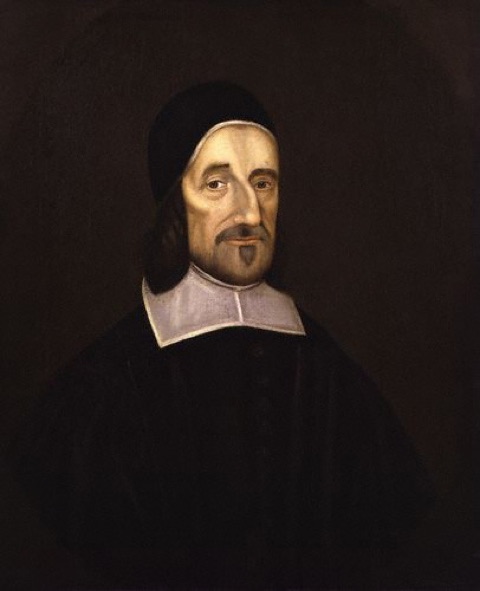
About the author
Richard Baxter
Richard Baxter (1615 to 1691 AD) was born in Rowton, Shropshire, and was largely self-educated. He was ordained in 1638, and his first settled ministry was at Bridgnorth, to whose people he dedicated the second part of this book. In 1641 he became minister at Kidderminster, where his preaching and household catechizing changed the life of the town. During the Civil War he served as a chaplain in the Parliamentary army, and it was while away from home, gravely ill and expecting to die, that he began this treatise. After the Restoration he declined the bishopric of Hereford, was ejected from Kidderminster in 1662, and lived in London, writing and preaching when he could. In 1685 he was tried before Judge Jeffreys and imprisoned. He died in London in 1691.