Modernized edition · Full text · Free PDF/EPUB
Practical Religion in Modern English
Want the file? The PDF/EPUB is free with an account.
Summary
- Author
- J.C. Ryle (1816 to 1900 AD), then Vicar of Stradbroke, later the first Bishop of Liverpool
- Published
- 1878 AD; the Preface is dated November 1878
- Source edition
- The third edition, London: William Hunt and Company, 1883, in modern English
- Type
- Collected papers on Christian life and duty
- Length
- 162,000 words · 11 hours
What is Practical Religion about?
Practical Religion is a collection of twenty-one papers by J.C. Ryle, published in 1878, on the everyday life of a professing Christian. Writing as an evangelical clergyman of the Church of England, Ryle presses self-examination and heart religion, and treats prayer, the Bible, the Lord's Supper, worldliness, sickness and eternity.
Read the full summary (9 points, key themes)Show less
How the argument unfolds
- 01
Self-Inquiry and Self-Exertion. Ten searching questions open the book, then Christ's command to strive to enter the strait gate.
- 02
Reality. Every grace has a counterfeit, and five tests show whether religion is genuine.
- 03
Prayer and Bible Reading. Seven reasons for private prayer, then eight for reading Scripture, each with practical rules.
- 04
Going to the Table. The Lord's Supper as a remembrance of Christ's death, its proper communicants, and the excuses of those who stay away.
- 05
Charity and Zeal. What Bible love is and is not, and how true zeal differs from blind earnestness.
- 06
Freedom, Happiness and Formality. The liberty Christ gives, the one road to happiness, and outward religion without the heart.
- 07
The World and Riches and Poverty. True and false separation from the world, and the lessons of the beggar Lazarus.
- 08
The Best Friend to Heirs of God. Christ as friend, sickness as a teacher, the one family of God, Christ as the soul's home, and the marks of sonship.
- 09
The Great Gathering to Eternity. The reunion of the saints, the division of wheat and chaff, and the eternity of heaven and hell.
Key themes
- Heart religion. Church attendance, sacraments and sound opinions count for nothing unless the heart has been renewed.
- The means of grace. Bible reading, prayer, public worship, the Lord's Supper and the Lord's Day show a soul's true state by the way they are used.
- Thoroughness. Half-hearted Christianity brings little comfort in health or sickness, and Ryle urges readers never to fear going too far in following Christ.
- Looking forward. The second coming and the gathering of the saints are set before believers as comfort in loneliness and bereavement.
Reader questions (10)Hide the questions
Questions about Practical Religion
Is there a modern English version of Practical Religion?
Yes. This is Practical Religion by J.C. Ryle in modern English. The language is modernized and the author's order and argument are kept. The full modernized text is free to read on this page.
Can I read Practical Religion online for free?
Yes. The complete text of this modern English edition is on this page, with no sign-up or paywall.
Is there a free PDF of Practical Religion?
Yes. The PDF and EPUB of this edition are free with an Updated Works account. Sign in with Google or an email link; no card is needed.
What is Practical Religion by J.C. Ryle about?
It is about the daily duties, dangers and privileges of professing Christians. Ryle asks readers whether their religion is real, then works through prayer, Scripture, the Lord's Supper, love, zeal, worldliness, money, sickness and the last things, ending each paper with direct appeals.
How does Practical Religion relate to Ryle's other books?
Ryle calls it a companion to Knots Untied, on disputed points in the Church of England, and Old Paths, on the doctrines needed for salvation. Read beside Holiness, he says, it should show what every believer ought to be, to do and to expect.
Does Ryle forbid all amusements?
No. He approves cricket, rowing, running and chess in moderation. He rejects horse racing and the theater as bound up with gambling and immorality, advises giving up balls and cards, and declines to condemn field sports outright.
How does Ryle recommend reading the Bible?
Begin at once, read to understand, receive everything humbly, apply it, read daily and read the whole Bible in order. His own plan for nearly forty years was to begin both Testaments together and read each straight through.
What does Ryle say about praying from a book in private?
He cannot recommend it. Crutches help a man while a broken leg heals, but no one rejoices to see him on crutches for life. Whoever can describe his body to a doctor can tell God the needs of his soul.
Does Ryle expect the world to be converted before Christ returns?
No. He expects a few witnesses in every nation, a visible church that stays mixed, and the separation of wheat and chaff only at Christ's return.
Why does the last chapter include a postscript?
The chapter on eternity is the substance of a sermon preached in Peterborough Cathedral in Advent 1877. Afterward Ryle read Canon Farrar's Eternal Hope and added a postscript explaining why it did not change his view.
Practical Religion in Modern English · Full text
Preface
The volume now in the reader’s hands is intended as a companion to two other volumes I have already published, entitled Knots Untied and Old Paths.
Knots Untied consists of a connected series of papers, systematically arranged, on the main points of controversy among Church of England members today. Everyone who takes an interest in such disputed questions as the nature of the church, the ministry, baptism, regeneration, the Lord’s Supper, the real presence, worship, confession, and the Sabbath will find them discussed quite thoroughly in Knots Untied.
Old Paths consists of a similar series of papers on the leading doctrines of the gospel that are generally considered necessary to salvation. The inspiration of Scripture, sin, justification, forgiveness, repentance, conversion, faith, the work of Christ, and the work of the Holy Spirit are the main subjects handled in Old Paths.
The present volume contains a series of papers on “practical religion.” It treats the daily duties, dangers, experiences, and privileges of all who profess and call themselves true Christians. Read alongside another work I have previously published, called Holiness, I think it will shed light on what every believer ought to be, to do, and to expect.
One common feature runs through all three volumes. I state it frankly at the outset and will not hold it back for a moment. From first to last, the standpoint I have tried to occupy is that of an evangelical Churchman.
I say this deliberately and emphatically. I am fully aware that evangelical churchmanship is neither popular nor well received today. Many despise it, and it has “no form or comeliness” in their eyes. In some quarters, openly confessing attachment to evangelical views provokes a sneer and brings on you the reproach of being an “unlearned and ignorant man.”
None of these things move me. I am not ashamed of my convictions. After forty years of Bible reading, prayer, meditation, and theological study, I find myself clinging more tightly than ever to “evangelical” religion and more satisfied with it than ever. It wears well. It stands the fire. I know no system of religion that is better. In the faith of it I have lived for a third of a century, and in the faith of it I hope to die.
The plain truth is that I see no other ground to stand on and find no other rest for the sole of my foot. I make no claim to infallibility, and I have no desire to judge any other person. Yet the longer I live and read, the more convinced and persuaded I am that evangelical principles are the principles of the Bible, of the Thirty-Nine Articles and Prayer Book, and of the leading theologians of the reformed Church of England. Holding these views, I cannot write otherwise than I have written.
I now send out this volume with an earnest prayer that God the Holy Spirit may bless it and make it useful and helpful to many souls.
J. C. Ryle Vicar of Stradbroke November 1878
Chapter 1
Self-Inquiry
“Let us go again and visit our brethren in every city where we have preached the word of the Lord, and see how they do” (Acts 15:36).
The text at the head of this chapter contains a proposal the apostle Paul made to Barnabas after their first missionary journey. He proposed to revisit the churches they had helped to plant and see how they were getting along. Were their members standing firm in the faith? Were they growing in grace? Were they moving forward or standing still? Were they thriving or falling away? “Let us go again and visit our brethren, and see how they do.”
That was a wise and helpful proposal. Let us take it to heart and apply it to ourselves in the nineteenth century. Let us examine our ways and find out how matters stand between ourselves and God. Let us “see how we do.” I ask every reader of this volume to begin by joining me in self-inquiry. If self-inquiry about religion was ever needed, it is needed today.
We live in an age of remarkable spiritual privileges. Since the world began, there has never been such an opportunity for a person’s soul to be saved as there is in England today. Never have there been so many outward signs of religion in the land. Never have so many sermons been preached, so many services held in churches and chapels, so many Bibles sold, so many religious books and tracts printed, so many societies for evangelizing humanity supported, and so much outward respect paid to Christianity.
Things are done everywhere today that a hundred years ago would have been thought impossible. Bishops support the boldest and most aggressive efforts to reach the unconverted. Deans and cathedral chapters throw open the naves of cathedrals for Sunday evening sermons! Clergy of the strictest High Church school champion special missions and rival their evangelical brothers in declaring that going to church on Sunday is not enough to take anyone to heaven. In short, there is a stir about religion today unlike anything since England became a nation, a stir that the cleverest skeptics and unbelievers cannot deny.
If Romaine, Venn, Berridge, Rowlands, Grimshaw, and Hervey had been told that such things would happen a century after their deaths, they would have been tempted to say, like the Samaritan nobleman, “If the Lord should make windows of heaven might such a thing be” (2 Kings 7:19). Yet the Lord has opened the windows of heaven. More of the true gospel and the way of salvation by faith in Jesus Christ is taught in England in one week today than was taught in a whole year in Romaine’s time. Surely I have every right to say that we live in an age of spiritual privileges. Yet are we any better for it? In an age like this, it is wise to ask, “How do we do about our souls?”
We also live in an age of remarkable spiritual danger. Never before, perhaps since the world began, has there been such an immense amount of mere outward profession of religion as there is today. A painfully large proportion of every congregation in the land consists of unconverted people who know nothing of heart religion, never come to the Lord’s Table, and never confess Christ in their daily lives. Vast numbers of people who constantly chase after preachers and crowd in to hear special sermons are nothing better than empty barrels and clanging cymbals, without a scrap of real, living Christianity at home. (See the Author’s Note at the end of this chapter.) The parable of the sower receives vivid and painful illustrations every day. Wayside hearers, stony-ground hearers, and thorny-ground hearers abound on every side.
I fear the spiritual life of many professing Christians in this age is nothing better than a steady round of spiritual stimulants. They are always morbidly craving fresh excitement, and they seem to care little what it is as long as they get it. All preaching sounds alike to them. They seem unable to “see differences,” so long as they hear something clever, have their ears tickled, and sit in a crowd.
Worst of all, hundreds of young, ungrounded believers have caught this same love of excitement, so much so that they actually consider it a duty to be always seeking it. Almost without realizing it, they adopt a hysterical, sensational, sentimental brand of Christianity. They are never content with the “old paths,” and like the Athenians, they are always running after something new.
To see a calm-minded young believer who is not stuck up, self-confident, self-conceited, and more eager to teach than to learn is becoming almost a rarity! How rare to find one content with a steady daily effort to grow into Christ’s likeness and do Christ’s work quietly and unostentatiously at home. Too many young professing Christians, sadly, behave like new army recruits who have not yet spent their enlistment bonus. They reveal how little deep root they have, and how little knowledge of their own hearts, by their noise, pushiness, readiness to contradict and put down older Christians, and inflated confidence in their own imagined soundness and wisdom! Many young professing Christians of this age will be fortunate if, after being tossed about for a while and “carried to and fro by every wind of doctrine,” they do not end up joining some petty, narrow-minded, censorious sect or embracing some senseless, irrational, eccentric heresy.
Surely in times like these there is great need for self-examination. When we look around us, we may well ask, “How do we do about our souls?”
In addressing this question, I think the shortest approach is to suggest a list of subjects for self-inquiry and walk through them in order. By doing so, I hope to reach the situation of everyone into whose hands this volume may fall. I invite every reader of this chapter to join me in calm, searching self-examination for a few short minutes. I want to speak to myself as well as to you. I come to you not as an enemy, but as a friend. “My heart’s desire and prayer to God is that you may be saved” (Rom. 10:1). Bear with me if I say things that at first glance seem harsh and severe. Believe me, your best friend is the one who tells you the most truth.
1. Let me ask, in the first place, do we ever think about our souls at all? Thousands of English people, I fear, cannot give a satisfactory answer to that question. They never give religion any place in their thoughts. From the beginning of the year to the end, they are absorbed in pursuing business, pleasure, politics, money, or self-indulgence of one kind or another. Death, judgment, eternity, heaven, hell, and the world to come are never calmly faced and considered. They live on as if they were never going to die, rise again, stand at the bar of God, or receive an eternal sentence!
They do not openly oppose religion, for they do not think enough about it to do so. Instead, they eat, drink, sleep, make money, and spend money as if religion were pure fiction rather than reality. They are neither Roman Catholics, nor Socinians, nor unbelievers, nor High Church, nor Low Church, nor Broad Church. They are simply nothing at all, and they do not even bother to hold opinions. A more senseless and unreasonable way to live cannot be imagined, yet they do not pretend to reason about it. They simply never think about God unless frightened for a few minutes by illness, a death in the family, or an accident. Apart from such interruptions, they ignore religion altogether and go on their way cool and undisturbed, as if nothing were worth thinking about except this world.
It is hard to imagine a life more unworthy of an immortal creature than the life I have just described, for it lowers a human being to the level of an animal. Yet it is literally and truly the life of multitudes in England, and as they pass away, their place is taken by multitudes just like them. The picture is no doubt horrible, distressing, and revolting, yet sadly it is all too true. In every large town, in every market, on every stock exchange, and in every club, you can see specimens of this class by the dozens: people who think of everything under the sun except the one thing needful, the salvation of their souls.
Like the Jews of old, they do not “consider their ways,” they do not “consider their latter end,” and they do not “consider that they do evil” (Isa. 1:3; Hag. 1:7; Deut. 32:29; Eccles. 5:1). Like Gallio, they “care for none of these things,” because such matters are outside their concern (Acts 18:17). If they prosper in the world, get rich, and succeed in their line of work, their contemporaries praise and admire them. Nothing succeeds in England like success! Yet for all that, they cannot live forever. They will have to die, appear before the bar of God, and be judged. And then what will the end be?
When so large a class of people exists in our country, no reader should be surprised that I ask whether you belong to it. If you do, you ought to have a mark painted on your door, just as a mark used to be placed on a plague-stricken house two centuries ago with the words, “Lord have mercy on us,” written across it. Look at the class I have been describing, and then look at your own soul.
2. Let me ask, in the second place, whether we ever do anything about our souls? Multitudes in England think occasionally about religion, yet sadly never get beyond thinking. After a stirring sermon, after a funeral, under the pressure of illness, on Sunday evening, when things go badly in their families, when they meet a bright example of a Christian, or when they come across a striking religious book or tract, they think quite seriously for the moment and even talk a little about religion in a vague way. Yet they stop short, as if thinking and talking were enough to save them.
They are always meaning, intending, purposing, resolving, wishing, and telling us that they “know” what is right and “hope” to be found right at last, yet they never reach action. There is no actual break from the service of the world and sin, no real taking up the cross and following Christ, no positive doing in their Christianity. Their lives are spent playing the part of the son in our Lord’s parable, to whom the father said, “Go, work in my vineyard: and he answered, I go, sir, and went not” (Matt. 21:30).
They are just like the people Ezekiel describes, who enjoyed his preaching yet never practiced what he preached: “They come unto thee as the people cometh, and they sit before thee as my people, and they hear thy words, but they will not do them. … And, lo, thou art unto them as a very lovely song of one that hath a pleasant voice, and can play well on an instrument: for they hear thy words, but they do them not” (Ezek. 33:31–32). In a day like this, when hearing and thinking without doing is so widespread, no one can fairly wonder why I press the absolute need for self-examination. Once more, then, I ask my readers to consider the question of my text: “How do we do about our souls?”
3. Let me ask, in the third place, whether we are trying to satisfy our consciences with a mere formal religion? Vast numbers in England at this very moment are making shipwreck on this rock. Like the Pharisees of old, they make a great fuss over the outward side of Christianity while completely neglecting the inward and spiritual side. They are careful to attend every service at their place of worship and regular in observing all its forms and ordinances. They never miss Communion when the Lord’s Supper is administered. Sometimes they keep Lent strictly and attach great importance to saints’ days. They are often fierce partisans of their own church, denomination, or congregation, ready to argue with anyone who disagrees with them.
Yet all this time there is no heart in their religion. Anyone who knows them closely can tell at a glance that their affections are set on things below rather than on things above, and that they are trying to make up for a lack of inward Christianity with an excessive dose of outward form. And this formal religion does them no real good. They are not satisfied. Because they start at the wrong end by putting outward things first, they know nothing of inward joy and peace. They spend their lives in constant struggle, secretly aware that something is wrong, yet not knowing why. It is well if they do not drift from one stage of formality to another until, in despair, they take a fatal plunge and fall into Roman Catholicism!
When professing Christians of this kind are so painfully numerous, no one should wonder why I press the supreme importance of close self-examination. If you value your life, do not settle for the husk, the shell, and the scaffolding of religion. Remember our Savior’s words about the Jewish formalists of his day: “This people draweth nigh with their mouth, and honoreth Me with their lips, but their heart is far from Me. In vain do they worship” (Matt. 15:9). It takes more than going diligently to church and receiving the Lord’s Supper to bring our souls to heaven. Means of grace and forms of religion are useful in their place, and God seldom works for his church without them. Yet let us beware of wrecking our ship on the very lighthouse meant to mark the channel into the harbor. Once more I ask, “How do we do about our souls?”
4. Let me ask, in the fourth place, whether we have received the forgiveness of our sins? Few reasonable English people would think of denying that they are sinners. Many might say they are not as bad as others, that they have not been all that wicked, and so on. Yet few, I repeat, would claim to have lived like angels and never done, said, or thought a wrong thing in all their days. In short, all of us must admit that we are to some degree “sinners.” As sinners, we are guilty before God. And as guilty, we must be forgiven, or else be lost and condemned forever on the last day.
Now it is the glory of the Christian religion that it provides the exact forgiveness we need: full, free, perfect, eternal, and complete. It is a leading article in that well-known creed most English people learn as children. They are taught to say, “I believe in the forgiveness of sins.” This forgiveness of sins was purchased for us by the eternal Son of God, our Lord Jesus Christ. He purchased it by coming into the world to be our Savior, and by living, dying, and rising again as our Substitute on our behalf. He bought it for us at the price of his own most precious blood, suffering in our place on the cross and making full satisfaction for our sins.
Yet this forgiveness, great, full, and glorious as it is, does not become the possession of every man and woman automatically. It is not a privilege every church member owns simply by belonging to a church. Each individual must receive it personally by faith, lay hold of it by faith, claim it by faith, and make it his own by faith. Otherwise, so far as he is concerned, Christ will have died in vain. “He that believeth on the Son hath everlasting life, and he that believeth not the Son shall not see life, but the wrath of God abideth on him” (John 3:36).
No terms could be simpler or better suited to humanity. As good old Latimer said regarding justification, “It is but believe and have.” Faith alone is required, and faith is simply the humble, heartfelt trust of a soul that longs to be saved. Jesus is able and willing to save, yet a person must come to Jesus and believe. All who believe are at once justified and forgiven, while without believing there is no forgiveness at all.
Here, I fear, is the exact point where multitudes of English people fail and stand in immediate danger of being lost forever. They know there is no forgiveness of sin except in Christ Jesus. They can tell you there is no Savior for sinners, no Redeemer, and no Mediator except him who was born of the Virgin Mary, crucified under Pontius Pilate, died, and was buried. Yet right there they stop and go no further! They never come to the point of actually laying hold of Christ by faith, becoming one with Christ and having Christ in them. They can say he is “a Savior,” but not “my Savior”; “a Redeemer,” but not “my Redeemer”; “a Priest,” but not “my Priest”; “an Advocate,” but not “my Advocate.” And so they live and die unforgiven! No wonder Martin Luther said, “Many are lost because they cannot use possessive pronouns.”
When so many are in this condition today, no one should wonder why I ask whether you have received the forgiveness of sins. An eminent Christian lady once said in her old age, “The beginning of eternal life in my soul was a conversation I had with an old gentleman who came to visit my father when I was only a little girl. He took me by the hand one day and said, ‘My dear child, my life is nearly over, and you will probably live many years after I am gone. But never forget two things. One is that there is such a thing as having our sins forgiven while we live. The other is that there is such a thing as knowing and feeling that we are forgiven.’ I thank God I have never forgotten his words.”
How is it with us? Let us not rest until we “know and feel,” as the Prayer Book says, that we are forgiven. Once more let us ask: in the matter of forgiveness of sins, “How do we do?”
5. Let me ask, in the fifth place, whether we know anything by personal experience of conversion to God? Without conversion there is no salvation. “Except ye be converted, and become as little children, ye shall not enter into the kingdom of heaven.” “Except a man be born again, he cannot see the kingdom of God.” “If any man have not the Spirit of Christ, he is none of His.” “If any man be in Christ he is a new creature” (Matt. 18:3; John 3:3; Rom. 8:9; 2 Cor. 5:17).
By nature we are all so weak, so worldly, so earthly-minded, and so bent toward sin that without a thorough inward change we cannot serve God in life and could not enjoy him after death. Just as ducks, the moment they hatch, take naturally to water, so children, the moment they can do anything, take to selfishness, lying, and deceit. None pray or love God unless they are taught. High or low, rich or poor, educated or unlettered, we all need a complete change, a change that is the special work of the Holy Spirit to give us. Call it what you please: new birth, regeneration, renewal, new creation, spiritual awakening, or repentance. The reality itself must be possessed if we are to be saved, and if we possess it, it will be seen.
A deep sense of sin and hatred of it, faith in Christ and love for him, delight in holiness and longing for more of it, love for God’s people and distaste for the ways of the world: these are the signs and evidences that always accompany conversion. Vast numbers around us, I fear, know nothing about it. In Scripture’s language, they are dead, asleep, blind, and unfit for the kingdom of God.
Year after year, perhaps, they repeat the words of the Creed, “I believe in the Holy Ghost”; yet they remain completely ignorant of his transforming work within the human heart. Sometimes they flatter themselves that they are born again because they have been baptized, attend church, and take the Lord’s Supper, while lacking every single mark of the new birth described by John in his first letter. Meanwhile, the words of Scripture remain clear and unmistakable: “Except ye be converted, ye shall in no case enter the kingdom” (Matt. 18:3).
In times like these, no reader should wonder why I press the subject of conversion on people’s souls. No doubt there are plenty of counterfeit conversions in an era of religious excitement like ours. Yet counterfeit money does not prove there is no genuine currency. On the contrary, it proves that real, valuable money is in circulation and worth imitating. Hypocrites and counterfeit Christians are indirect evidence that real grace exists among people. Let us search our own hearts, then, and see where we stand. Once more let us ask, in the matter of conversion, “How do we do?”
6. Let me ask, in the sixth place, whether we know anything of practical Christian holiness? It is as certain as anything in the Bible that “without holiness no man shall see the Lord” (Heb. 12:14). It is equally certain that holiness is the invariable fruit of saving faith, the true test of regeneration, the only sound proof of indwelling grace, and the sure result of living union with Christ.
Holiness does not mean absolute perfection and complete freedom from faults. Nothing of the sort! The wild claims of some who boast of enjoying “unbroken communion with God” for months on end are deeply regrettable, because they create unscriptural expectations in young believers and cause real harm. Absolute perfection belongs to heaven, not to earth, where we live with a weak body, a wicked world, and a busy devil constantly near our souls. Nor is genuine Christian holiness ever gained or maintained without an ongoing fight and struggle. The great apostle who said, “I fight, I labor, I keep under my body and bring it into subjection” (1 Cor. 9:27), would have been astounded to hear of sanctification without personal exertion, or to be told that believers need only sit still while everything is done for them!
Yet weak and imperfect as the holiness of the finest saints may be, it is a real, genuine thing, with a character as unmistakable as light and salt. It does not begin and end in noisy talk. It will be seen far more than heard. Genuine, scriptural holiness makes a person do his duty at home and by the fireside, and bring honor to his faith amid the everyday trials of life. It shows itself in passive graces as well as active ones. It makes a person humble, kind, gentle, unselfish, good-tempered, considerate of others, loving, meek, and forgiving. It will not force him to withdraw from the world and lock himself in a cave like a hermit. Instead, it will lead him to fulfill his calling right where God has placed him, on Christian principles and after the pattern of Christ.
I know well that such holiness is not common. It is a kind of practical Christianity that is painfully rare today. Yet I can find no other standard of holiness in the Word of God, and no other that matches the portraits drawn by our Lord and his apostles. In an age like this, no reader can be surprised that I press this subject on your attention as well. Once more let us ask: in the matter of holiness, how is it with our souls? “How do we do?”
7. Let me ask, in the seventh place, whether we know anything of enjoying the means of grace? When I speak of the means of grace, I have five main things in view: reading the Bible, private prayer, public worship, the sacrament of the Lord’s Supper, and the rest of the Lord’s Day. These are the channels God has graciously appointed to convey grace to the human heart through the Holy Spirit, and to sustain spiritual life once it has begun. As long as the world lasts, the health of a person’s soul will always depend greatly on the manner and spirit in which he uses the means of grace.
I say the manner and spirit deliberately and on purpose. Many English people use the means of grace regularly and formally, yet know nothing of enjoying them. They attend to them out of bare duty, without a trace of feeling, interest, or affection. Even common sense should tell us that this mechanical, routine handling of holy things is utterly worthless and unprofitable. Our feeling toward them is one of the clearest tests of the state of our souls.
How can anyone be thought to love God who reads about him and his Christ out of sheer duty, perfectly satisfied once he has moved his bookmark forward across so many chapters? How can anyone imagine he is ready to meet Christ who never bothers to pour out his heart to him privately as a Friend, and settles for reciting a string of words morning and evening under the name of “prayer,” scarcely thinking about what he is doing? How could anyone be happy in heaven forever who finds Sunday a dull, gloomy, tiresome day, who knows nothing of wholehearted prayer and praise, and who cares nothing whether he hears truth or error from the pulpit, scarcely even listening to the sermon? And what must be the spiritual condition of someone whose heart never “burns within him” when he receives the bread and wine that specially remind us of Christ’s death on the cross and his atonement for sin?
These are very serious and searching questions. Even if the means of grace served no other purpose and were not mighty helps toward heaven, they would still be invaluable as a test of our real standing in the sight of God. Tell me what a person does with Bible reading and prayer, with Sunday, public worship, and the Lord’s Supper, and I will soon tell you what he is and which road he is traveling. How is it with us? Once more let us ask: in the matter of the means of grace, “How do we do?”
8. Let me ask, in the eighth place, whether we ever try to do any good in the world? While on earth, our Lord Jesus Christ was continually “going about doing good” (Acts 10:38). The apostles and all the disciples in Bible times strove continually to walk in his footsteps. A Christian who was satisfied to go to heaven alone and cared nothing about what became of others, whether they lived happily and died in peace or not, would have been regarded in the early church as a kind of monster who lacked the Spirit of Christ. Why should we imagine for a moment that a lower standard will do today? Why should barren fig trees be spared now when in our Lord’s time they were ordered cut down as “cumberers of the ground” (Luke 13:7)? These are serious questions, and they call for serious answers.
There is a generation of professing Christians today who seem to know nothing of caring for their neighbors. They are completely wrapped up in the concerns of number one, meaning themselves and their own families. They eat, drink, sleep, dress, work, make money, and spend money year after year. Whether others are happy or miserable, healthy or sick, converted or unconverted, headed toward heaven or toward hell, seems to be a matter of supreme indifference to them. Can this be right? Can it be squared with the religion of him who told the parable of the good Samaritan and commanded us, “go and do likewise” (Luke 10:37)? I doubt it completely.
There is plenty to be done on every side. There is not a place in England without a field of service and an open door for usefulness, if anyone is willing to walk through it. There is not a Christian in England who cannot find some good work to do for others, if only he has the heart for it. The poorest man or woman, without a single penny to give, can still offer deep sympathy to the sick and sorrowful. Through simple kindness and tender helpfulness, anyone can lighten the misery and add to the comfort of someone else in this troubled world.
Yet sadly, the vast majority of professing Christians, whether rich or poor, Anglicans or Nonconformists, seem possessed by a spirit of detestable selfishness and know nothing of the luxury of doing good. They can argue for hours about baptism, the Lord’s Supper, forms of worship, the union of church and state, and similar dry-bone questions. Yet all the while they seem to care nothing for their neighbors. The plain, practical question of whether they love their neighbor as the Samaritan loved the traveler in the parable, and will spare time and trouble to help him, is one they never touch with a single finger. In too many English parishes, in both city and countryside, genuine love seems nearly dead in church and chapel alike, while miserable party spirit and controversy look like the only fruit Christianity can produce.
In a day like this, no reader should wonder why I press this plain old subject on your conscience. Do we know anything of genuine Samaritan love for others? Do we ever try to do good to anyone beyond our own friends, relatives, party, or cause? Are we living as disciples of him who always “went about doing good” and commanded his followers to take him as their “example” (John 13:15)? If not, how will we face him on the day of judgment? In this matter too, how is it with our souls? Once more I ask, “How do we do?”
9. Let me ask, in the ninth place, whether we know anything of living a life of habitual communion with Christ? By “communion,” I mean that habit of “abiding in Christ” that our Lord describes in the fifteenth chapter of John’s Gospel as essential to Christian fruitfulness (John 15:4–8).
Let it be clearly understood that union with Christ is one thing, and communion is another. There can be no communion with the Lord Jesus without union first. Sadly, however, there can be union with the Lord Jesus followed by little or no communion at all. The difference between the two is not the difference between two separate steps, but between the lower and upper ends of an inclined plane.
Union is the common privilege of everyone who feels his sins, truly repents, comes to Christ by faith, and is accepted, forgiven, and justified in him. Too many believers, I fear, never get beyond this stage! Partly from ignorance, partly from laziness, partly from fear of people, partly from secret love of the world, and partly from some unchecked besetting sin, they settle for a little faith, a little hope, a little peace, and a small measure of holiness. They live out their whole lives in that state: doubting, weak, stumbling, and bearing only “thirty-fold” fruit to the very end of their days!
Communion with Christ is the privilege of those who continually strive to grow in grace, faith, knowledge, and likeness to the mind of Christ in all things. They do not “look to the things behind” and “count not themselves to have attained,” but “press toward the mark for the prize of the high calling of God in Christ Jesus” (Phil. 3:14). Union is the bud, while communion is the flower. Union is the infant, while communion is the mature adult. Whoever has union with Christ does well, yet whoever enjoys communion with him does far better. Both share one life, one hope, and one heavenly seed in their hearts, along with one Lord, one Savior, one Holy Spirit, and one eternal home. Still, union alone is not as good as communion!
The great secret of communion with Christ is continually “living the life of faith in him” and drawing from him every hour the supply that every hour requires. “To me,” said Paul, “to live is Christ.” “I live: yet not I, but Christ liveth in me” (Gal. 2:20; Phil. 1:21).
Such communion is the secret of the abiding “joy and peace in believing” that eminent saints like Bradford and Rutherford famously possessed. No one was ever humbler or more deeply aware of his own weakness and corruption. They would have told you that the seventh chapter of Romans captured their own experience precisely. They would have endorsed every word of the Confession placed in the mouths of true believers in our Prayer Book Communion Service. They would have said continually, “The remembrance of our sins is grievous unto us; the burden of them is intolerable.” Yet they were always looking to Jesus, and in him they were always able to rejoice.
Communion like this is also the secret of the splendid victories such men won over sin, the world, and the fear of death. They did not sit idly by, saying, “I leave it all to Christ to do for me.” Instead, strong in the Lord, they boldly and confidently exercised the new divine nature he had implanted in them, and were “more than conquerors through Him that loved them” (Rom. 8:37). Like Paul, they could say, “I can do all things through Christ which strengtheneth me” (Phil. 4:13). Ignorance of this life of communion is one of the many reasons so many today crave the confessional and strange theories of the “real presence” in the Lord’s Supper. Such errors often grow out of an imperfect knowledge of Christ and dim views of the life of faith in a risen, living, interceding Savior.
Is communion with Christ like this common? Sadly, it is very rare indeed! Most believers seem content with the barest elementary grasp of justification by faith and half a dozen other doctrines. They go doubting, limping, stumbling, and groaning along the road to heaven, experiencing little sense of victory or joy. The churches of these latter days are full of weak, powerless, uninfluential believers who will be saved at last, “but so as by fire,” never shaking the world and knowing nothing of an “abundant entrance” (1 Cor. 3:15; 2 Pet. 1:11).
Despondency, Feeble-mind, and Much-afraid in The Pilgrim’s Progress reached the Celestial City just as truly as Valiant-for-the-Truth and Great-heart. Yet they certainly did not reach it with the same comfort, nor did they do a tenth as much good in the world! I fear there are many like them today. When things are like this in our churches, no reader can wonder why I inquire how it is with our souls. Once more I ask: in the matter of communion with Christ, “How do we do?”
10. Let me ask, in the tenth and last place, whether we know anything of being ready for Christ’s second coming? That he will come again a second time is as certain as anything in the Bible. The world has not yet seen the last of him. Just as surely as he ascended visibly and bodily from the Mount of Olives before the eyes of his disciples, so surely will he come again in the clouds of heaven with power and great glory (Acts 1:11). He will come to raise the dead, transform the living, reward his saints, punish the wicked, renew the earth, and lift the curse. He will purify the world just as he purified the temple, and establish a kingdom where sin has no place and holiness is the universal rule.
The creeds we repeat and profess to believe continually declare that Christ is coming again. The early Christians made looking for his return a regular part of their faith. Backward they looked to the cross and the atonement for sin, rejoicing in Christ crucified. Upward they looked to Christ at the right hand of God, rejoicing in Christ interceding. Forward they looked to the promised return of their Master, rejoicing in the thought that they would see him again. We ought to do the same.
What have we truly received from Christ? What do we know of him? What do we think of him? Are we living as people who long to see him again and love his appearing? Readiness for his appearing simply means being a real, consistent Christian. It requires no one to abandon daily work. The farmer need not give up his farm, nor the shopkeeper his counter, nor the doctor his patients, nor the carpenter his hammer and nails, nor the bricklayer his mortar and trowel, nor the blacksmith his forge. None of them can do better than be found doing their duty, doing it as a Christian, with a heart packed up and ready to leave.
In the face of such truth, no reader can feel surprised if I ask how it is with our souls regarding Christ’s second coming. The world is growing old and running to seed. The vast majority of Christians look like the people in the days of Noah and Lot, who went on eating and drinking, marrying and giving in marriage, planting and building right up to the very day the flood and fire struck. Our Master’s words are solemn and heart-searching: “Remember Lot’s wife.” “Take heed lest at any time your heart be overcharged with the cares of this life, and that day come upon you unawares” (Luke 17:32; 21:34). Once more I ask: in the matter of readiness for Christ’s second coming, “How do we do?”
I end my inquiries here. I could easily add more, yet I trust I have said enough at the opening of this volume to awaken self-inquiry and self-examination in many minds. God is my witness that I have said nothing I do not feel to be of supreme importance to my own soul. I only want to do good to others. Let me now close with a few words of practical application.
1. Is any reader of this chapter asleep and utterly thoughtless about religion? Oh, wake up and sleep no more! Look at the churchyards and cemeteries. One by one the people around you are dropping into them, and one day you must lie there too. Look ahead to the world to come, lay your hand on your heart, and say, if you dare, that you are ready to die and meet God. Ah, you are like someone sleeping in a boat drifting down the river toward Niagara Falls! “What meanest thou, oh sleeper! Arise and call upon thy God!” “Awake thou that sleepest, and arise from the dead, and Christ shall give thee light!” (Jonah 1:6; Eph. 5:14).
2. Is any reader of this chapter feeling self-condemned and afraid there is no hope for his soul? Cast aside your fears and accept the offer of our Lord Jesus Christ to sinners. Hear him say, “Come unto Me, all ye that labor and are heavy laden, and I will give you rest” (Matt. 11:28). “If any man thirst, let him come unto Me and drink” (John 7:37). “Him that cometh unto Me I will in no wise cast out” (John 6:37).
Never doubt that these words are for you just as much as for anyone else. Bring all your sins, unbelief, sense of guilt, unworthiness, doubts, and weaknesses: bring it all to Christ. “This Man receiveth sinners,” and he will receive you (Luke 15:2). Do not stand still, wavering between two opinions and waiting for a more convenient time. “Arise: He calleth thee!” (Mark 10:49). Come to Christ this very day.
3. Is any reader of this chapter a professing believer in Christ, yet a believer without much joy, peace, and comfort? Take some advice today. Search your own heart and see whether the fault is not entirely your own. Very likely you are sitting comfortably, content with a little faith, a little repentance, a little grace, and a little sanctification, unconsciously shrinking back from going too far. At that rate, you will never be a very happy Christian even if you live as long as Methuselah.
Change your approach without delay, if you love life and want to see good days. Step out boldly and act decisively. Be thorough, thorough, very thorough in your Christianity, and turn your face squarely toward the sun. Lay aside every weight and the sin that so easily entangles you. Strive to draw nearer to Christ, abide in him, cling to him, sit at his feet like Mary, and drink deeply from the fountain of life. “These things,” says John, “we write unto you that your joy may be full” (1 John 1:4). “If we walk in the light as He is in the light, we have fellowship one with another” (1 John 1:7).
4. Is any reader of this chapter a believer weighed down with doubts and fears because of his weakness, failings, and sense of sin? Remember the verse that says of Jesus, “A bruised reed will He not break, and smoking flax shall He not quench” (Matt. 12:20). Take comfort in knowing that this promise is for you. What if your faith is weak? Weak faith is better than no faith at all. The smallest spark of life is better than death. Perhaps you are expecting too much from this world. Earth is not heaven. You are still in this mortal body. Expect little from yourself, and expect much from Christ. Look more to Jesus and less to yourself.
5. Finally, is any reader of this chapter sometimes downcast by the trials he meets on the road to heaven: physical trials, family trials, financial trials, trials from neighbors, and trials from the world? Look up to a sympathetic Savior at God’s right hand and pour out your heart before him. He can sympathize with your weaknesses, for he himself suffered when he was tempted. Are you lonely? So was he. Are you misrepresented and slandered? So was he. Are you abandoned by friends? So was he. Are you persecuted? So was he. Are you exhausted in body and grieved in spirit? So was he.
Yes, he can feel for you, and he can help as well as feel. Learn, then, to draw nearer to Christ. The time is short. Just a little while longer and all will be over, and we will soon be “with the Lord.” “There is an end; and thine expectation shall not be cut off” (Prov. 23:18). “Ye have need of patience, that, after ye have done the will of God, ye might receive the promise. For yet a little while, and He that shall come will come, and will not tarry” (Heb. 10:36–37).
Author’s Note
On crowds running after preachers without living Christianity at home: It is curious and instructive to observe how history repeats itself, and how much sameness there is in the human heart in every age.
Even in the early church, says Canon Robertson, “Many persons were found at church for the great Christian ceremonies, and at the theaters, or even at the temples, for the heathen spectacles. The ritual of the Church was viewed as a theatrical spectacle. The sermons were listened to as the display of rhetoricians; and eloquent preachers were cheered, with clapping of hands, stamping of feet, waving of handkerchiefs, cries of ‘Orthodox,’ ‘Thirteenth Apostle,’ and suchlike demonstrations, which such teachers as Chrysostom and Augustine tried to restrain, that they might persuade their flocks to a more profitable manner of hearing. Some went to church for the sermon only, alleging that they could pray at home. And when the more attractive parts of the service were over, the great mass of the people departed without remaining for the Eucharist” (Robertson, Church History, Book 2, Chapter 6, p. 356).
Chapter 2
Self-Exertion
“Strive to enter in at the strait gate: for many, I say unto you, will seek to enter in, and shall not be able” (Luke 13:24).
Once a man asked our Lord Jesus Christ a very deep question. He said to him, “Lord, are there few that be saved?”
Who this man was, we do not know. What motive led him to ask this question, we are not told. Perhaps he wanted to satisfy an idle curiosity, or perhaps he was looking for an excuse not to seek salvation himself. The Holy Spirit has kept all that back from us. Both the name and the motive of the questioner remain hidden.
One thing, however, is unmistakable: the immense importance of the saying our Lord gave in response. Jesus seized the moment to direct the minds of everyone around him to their own plain duty. He knew the train of thought the man’s question had sparked in their hearts. He saw what was going on inside them. “Strive,” he cries, “to enter in at the strait gate.” Whether few are saved or many, your course is clear: strive to enter in. Now is the accepted time. Now is the day of salvation. A day is coming when many will seek to enter in and will not be able. “Strive to enter in now.”
I want to draw the serious attention of everyone who reads this chapter to the solemn lessons this saying of the Lord Jesus is meant to teach. It deserves special remembrance today. It teaches unmistakably that mighty truth of our own personal responsibility for the salvation of our souls. It also reveals the immense danger of putting off the great business of religion, as so many sadly do. On both points, the testimony of our Lord Jesus Christ in this text is clear. He who is the eternal God, and who spoke the words of perfect wisdom, says to humanity, “Strive to enter in at the strait gate: for many, I say unto you, will seek to enter in, and shall not be able.”
1. Here is a description of the way of salvation. Jesus calls it “the strait gate.”
2. Here is a plain command. Jesus says, “Strive to enter in.”
3. Here is a solemn prophecy. Jesus says, “Many will seek to enter in, and shall not be able.”
May the Holy Spirit apply this message to the hearts of all into whose hands this chapter may fall! May everyone who reads it come to know the way of salvation by personal experience, obey the Lord’s command in daily practice, and be found safe on the great day of his second coming!
1. A Description of the Way of Salvation
Here is a description of the way of salvation. Jesus calls it “the strait gate.”
There is a gate that leads to pardon, peace with God, and heaven. Whoever enters through that gate will be saved. Never, surely, was a gate more desperately needed. Sin is a vast mountain between humanity and God. How can anyone climb over it? Sin is a high wall between humanity and God. How can anyone break through it? Sin is a deep chasm between humanity and God. How can anyone cross it?
God is in heaven: holy, pure, spiritual, undefiled, light without any darkness at all, a Being who cannot tolerate evil or look upon wrongdoing. Humanity is a poor fallen worm, crawling on earth for a few brief years: sinful, corrupt, erring, flawed, with an imagination inclined only to evil and a heart deceitful above all things and desperately wicked. How can humanity and God ever be brought together? How can a person ever draw near to his Maker without fear and shame? Blessed be God, there is a way! There is a road. There is a path. There is a door. It is the gate spoken of in the words of Christ: “the strait gate.”
This gate was made for sinners by the Lord Jesus Christ. From all eternity he covenanted and pledged to build it. In the fullness of time he came into the world and built it through his own atoning death on the cross. By that death he satisfied divine justice for our sin, paid our debt to God, and bore our punishment.
He built a great gate at the cost of his own body and blood. He set up a ladder on earth whose top reached into heaven. He opened a door through which the worst of sinners can enter God’s holy presence without fear. He opened a road by which the vilest of people, trusting in him, can draw near to God and find peace. He calls out to us, “I am the door: by Me if any man enter in, he shall be saved” (John 10:9). “I am the way: no man cometh unto the Father but by Me” (John 14:6). “By Him,” says Paul, “we have boldness and access with confidence” (Eph. 3:12). That is how the gate of salvation was built.
This gate is called the strait gate, and not without good reason. It is always tight, narrow, and hard to pass through for certain people, and it will stay that way as long as the world lasts. It is narrow to all who love sin and refuse to part with it. It is narrow to all who set their hearts on this world and seek its pleasures and rewards first. It is narrow to all who dislike effort and refuse to take pains or make sacrifices for their souls. It is narrow to all who love popular company and want to stay in step with the crowd. And it is narrow to all who are self-righteous, thinking they are good people who deserve to be saved.
To all such people, the great gate Christ made is narrow and tight. They try in vain to squeeze through. The gate will not let them in. God is not unwilling to welcome them, nor are their sins too numerous to be forgiven. They are simply unwilling to be saved in God’s way. For the past eighteen centuries, thousands have tried to widen the gateway. Thousands have labored and struggled to reach heaven on easier terms. Yet the gate never changes. It is not elastic. It will not stretch to accommodate one person more than another. It remains the strait gate.
Narrow as this gate is, it is the only one by which anyone can reach heaven. There is no side door, no side path, and no gap or low spot in the wall. Every person who is ever saved will be saved by Christ alone, and solely through simple faith in him. No one will be saved by repentance; today’s sorrow does not erase yesterday’s debt. No one will be saved by his own good works; the finest works anyone can do are little better than splendid sins. No one will be saved by formal regularity in the outward means of grace; when we have done everything, we remain poor “unprofitable servants.”
Oh, no! It is a sheer waste of time to look for any other road to eternal life. People may search right and left and wear themselves out with their own inventions, yet they will never find another door. Proud people may dislike the gate if they choose. Reckless people may mock it and ridicule those who enter it. Lazy people may complain that the way is hard. Still, humanity will discover no other salvation than faith in the blood and righteousness of a crucified Redeemer. One great gate stands between us and heaven. It may be narrow, yet it is the only one. We must either enter heaven by the strait gate or not enter at all.
Narrow as this gate is, it is a gate always ready to open. Sinners of no kind are forbidden to approach. Whoever wills may enter in and be saved. There is only one condition of admission: that you genuinely feel your sins and long to be saved by Christ in his own way. Are you truly aware of your guilt and sinfulness? Do you have a genuinely broken and contrite heart? Look at the gate of salvation and come in. The one who built it declares, “Him that cometh unto Me I will in no wise cast out” (John 6:37).
The question to ask is not whether you are a great sinner or a small sinner, whether you are elect or not, or whether you are converted or not. The question is simply this: “Do you feel your sins? Do you feel weary and burdened? Are you willing to place your soul into Christ’s hands?” If so, the gate will open to you immediately. Come in this very day. “Wherefore standest thou without?” (Gen. 24:31).
Narrow as this gate is, it is one through which thousands have entered and been saved. No sinner was ever turned away and told he was too wicked to be admitted if he came genuinely sick of his sins. Thousands of every sort have been welcomed, cleansed, washed, pardoned, clothed, and made heirs of eternal life. Some of them seemed very unlikely candidates; you and I might have thought they were too far gone to be saved. Yet the one who built the gate did not turn them away. The moment they knocked, he ordered the gate opened to let them in.
Manasseh, King of Judah, came up to this gate. No one could have been worse than he was. He had despised the example and counsel of his godly father, Hezekiah. He had bowed down to idols. He had filled Jerusalem with bloodshed and cruelty, even sacrificing his own children. Yet the moment his eyes were opened to his sins and he fled to the gate for pardon, the gate flew wide open and he was saved.
Saul the Pharisee came up to this gate. He had been a terrible offender. He had blasphemed Christ and persecuted Christ’s people. He had worked furiously to stamp out the progress of the gospel. Yet the moment his heart was pierced, and he saw his own guilt and fled to the gate for pardon, the gate flew wide open at once and he was saved.
Many of the Jews who crucified our Lord came up to this gate. They had been terrible sinners indeed. They had refused and rejected their own Messiah. They had handed him over to Pilate and demanded his execution. They had asked for Barabbas to be released and the Son of God to be crucified. Yet on the day they were cut to the heart by Peter’s preaching, they fled to the gate for pardon. At once the gate flew open and they were saved.
The jailer at Philippi came up to this gate. He had been a cruel, hard, godless man. He had done everything in his power to mistreat Paul and his companion, throwing them into the inner prison and locking their feet in the stocks. Yet when the earthquake awakened his conscience and Paul’s teaching enlightened his mind, he fled to the gate for pardon. At once the gate flew open and he was saved.
Why stop with Bible examples? Why not add that multitudes have come to “the strait gate” since the days of the apostles, entered through it, and been saved? Thousands of every rank, class, and age, educated and unlettered, rich and poor, old and young, have tried the gate and found it ready to open. They have passed through it and found peace for their souls. Yes, thousands still living have put the gate to the test and discovered it to be the road to true happiness. Nobles and commoners, merchants and bankers, soldiers and sailors, farmers and shopkeepers, laborers and craftsmen are still on earth who have found the strait gate to be “a way of pleasantness and a path of peace.” They have brought back no bad report of the country inside. They have found Christ’s yoke easy and his burden light. Their only regret is that so few enter in, and that they themselves did not enter sooner.
This is the gate I want everyone to enter into whose hands this chapter may fall. I want you not merely to attend church or chapel, but to come heart and soul to the gate of life. I want you not merely to believe such a gate exists and think well of it, but to enter by faith and be saved.
Think what a privilege it is to have a gate at all. The angels who abandoned their original position fell, never to rise again; no door of escape was opened for them. Unreached nations have never heard of any way to eternal life. What would many an African and many a Native American not give just to hear one plain sermon about Christ? Even the Jews in Old Testament times saw the gate only dimly and from afar. “The way into the holiest was not made manifest, while the first tabernacle was standing” (Heb. 9:8).
Yet the gate stands plainly before you. Christ and full salvation are offered to you without money and without price. You never need to wonder which way to turn. Oh, consider what a mercy this is! Make sure you do not despise the gate and perish in unbelief. It is a thousand times better never to know about the gate than to know about it and still linger outside. How indeed will you escape if you neglect so great a salvation?
Think what a thankful person you ought to be if you have truly entered the strait gate. To be a pardoned, forgiven, justified soul, ready for sickness, death, judgment, and eternity, provided for in both worlds: surely this is reason for daily praise. True Christians ought to be far fuller of thanksgiving than they are. I fear few remember clearly enough what they once were by nature and how deeply they are indebted to grace. A pagan observer once noted that singing hymns of praise was a distinctive mark of the early Christians. It would be well for Christians today if they shared more of that spirit. Plenty of complaining and little praise is no sign of a healthy soul. It is an amazing mercy that any gate of salvation exists at all, and an even greater mercy when we are taught to enter through it and be saved.
2. A Plain Command
In the second place, here is a plain command. Jesus says to us, “Strive to enter in at the strait gate.”
There is often much to learn from a single word of Scripture. The words of our Lord Jesus in particular are always rich with food for thought. Here is a word that gives a striking example of what I mean. Let us see what the great Teacher wants us to draw from the word “Strive.”
“Strive” teaches that a person must use the appointed means diligently if he wants his soul to be saved. God has provided means to help us as we seek to approach him. There are paths a person must walk if he wants to be found by Christ. Public worship, reading the Bible, and hearing the gospel preached are the kinds of things I mean. They stand, as it were, in the middle between us and God. Of course no one can change his own heart, wipe away a single sin, or make himself in the slightest degree acceptable to God. Still, I insist that if humanity could do nothing but sit still, Christ would never have said, “Strive.”
“Strive” teaches that a human being is a free agent whom God deals with as a responsible creature. The Lord Jesus does not tell us merely to wait, wish, feel, hope, and long. He says, “Strive.” I call it a miserable religion that teaches people to settle for saying, “We can do nothing of ourselves,” and leaves them continuing in sin. That is as bad as teaching people it is not their fault if they are unconverted, and that God alone is to blame if they are not saved.
I find no such theology in the New Testament. I hear Jesus saying to sinners, “Come, repent, believe, labor, ask, seek, knock.” I see clearly that our salvation, from first to last, is entirely of God. Yet I see just as clearly that our ruin, if we are lost, is wholly and entirely of ourselves. I maintain that Scripture always addresses sinners as accountable and responsible, and I need no better proof of that than the word “Strive.”
“Strive” teaches that a person must expect many enemies and a hard fight if he wants his soul saved. Experience confirms this to the letter. There are no “gains without pains” in spiritual matters any more than in worldly ones. That roaring lion, the devil, will never let a soul slip from his grasp without a struggle. A heart that is naturally sensual and earthly will never turn to spiritual things without a daily fight. The world, with all its opposition and temptations, will never be overcome without conflict.
Why should any of this surprise us? What great and good thing was ever accomplished without effort? Wheat does not grow without plowing and sowing. Wealth is not gained without care and attention. Success in life is not won without hardship and toil. Above all, heaven is not reached without the cross and the battle. The “violent take the kingdom by force” (Matt. 11:12). A person must “strive.”
“Strive” teaches that seeking salvation is well worth the effort. That can safely be said. If anything in this world deserves a struggle, it is the welfare of the soul. The goals most people strive for are small and trivial by comparison. Wealth, status, rank, and learning are “a corruptible crown.” The imperishable treasures all lie inside the strait gate. The peace of God that passes all understanding, the bright hope of good things to come, the assurance of the Spirit dwelling within us, and the knowledge that we are pardoned, safe, ready, secure, and provided for in time and eternity no matter what happens: these are true gold and lasting riches. Well may the Lord Jesus call on us to “strive.”
“Strive” teaches that laziness in religion is a great sin. It is not merely a misfortune, as some imagine, something to be pitied and regretted. It is far more serious than that. It is breaking a plain command. What should be said of someone who breaks God’s law and does what God says not to do? There is only one answer: he is a sinner. “Sin is the transgression of the law” (1 John 3:4). And what should be said of someone who neglects his soul and makes no effort to enter the strait gate? There is only one reply: he is neglecting a clear duty. Christ tells him, “Strive,” and look, he sits still!
“Strive” teaches that everyone outside the strait gate is in grave danger. They are in danger of being lost forever. Only a single step separates them from death. If death overtakes them in their present state, they will perish without hope. The Lord Jesus saw that clearly. He knew how uncertain life is and how short time is. He longs for sinners to hurry and not delay, so that they do not put off the care of their souls until it is too late. He speaks as one who saw the devil creeping closer to them each day while the days of their lives steadily ebbed away. He wants them to make sure they are not too late. Therefore he cries, “Strive.”
That word “Strive” stirs solemn thoughts in my mind. It is brimming with condemnation for thousands of baptized people. It condemns the habits and practices of multitudes who profess and call themselves Christians. Many neither swear, nor murder, nor commit adultery, nor steal, nor lie. Yet one thing sadly cannot be said of them: they cannot be said to “strive” to be saved. The “spirit of slumber” grips their hearts in everything concerning religion. Where worldly matters are concerned, they are energetic enough. They get up early and stay up late. They work, they toil, they keep busy, they are full of anxious care. Yet for the one thing needful, they never “strive” at all.
What shall I say of those who are irregular in public worship on Sundays? Thousands across Great Britain fit this description. Sometimes, if they feel like it, they go to a church or chapel and attend a service. Other times they stay home to read the newspaper, lounge around, go over their accounts, or chase some amusement. Is this “striving”? I appeal to people of common sense. Let them judge what I say.
What shall I say of those who attend a place of worship regularly, yet go strictly out of habit? Many in every parish of Great Britain are in this condition. Their parents raised them to go, and going has always been their custom; it would not look respectable to stay away. Yet they care nothing for the worship of God once they are there. Whether they hear law or gospel, truth or error, it makes no difference to them. They remember nothing afterward. They take off their formal religion along with their Sunday clothes and head straight back into the world. And is this “striving”? I appeal to people of common sense. Let them judge what I say.
What shall I say of those who seldom or never read the Bible? Thousands, I fear, fit this description. They know the Book by name. They know it is widely regarded as the only book that teaches us how to live and how to die. Yet they can never find time to read it. Newspapers, magazines, novels, and romances they find time to read, but not the Bible. And is this “striving” to enter in? I appeal to people of common sense. Let them judge what I say.
What shall I say of those who never pray? Multitudes, I firmly believe, live in this condition. Without God they rise in the morning, and without God they lie down at night. They ask for nothing, confess nothing, give thanks for nothing, and seek nothing. They are mortal creatures on their way to the grave, yet they are not even on speaking terms with their Maker and Judge! And is this striving? I appeal to people of common sense. Let them judge what I say.
It is a solemn thing to be a minister of the gospel. It is painful to watch how human beings behave in spiritual matters. We hold in our hands God’s great statute book, which declares that without repentance, conversion, faith in Christ, and holiness, no one living can be saved. Carrying out our office, we urge people to repent, believe, and be saved. Yet sadly, how often we have to grieve that our labor seems wasted! People attend our churches, listen, and nod in approval, yet do not “strive” to be saved.
We show the sinfulness of sin, unfold the beauty of Christ, expose the emptiness of the world, set forth the joy of Christ’s service, and offer living water to weary, burdened workers. Yet sadly, how often we feel as if we are speaking to the wind! Our words are heard politely on Sundays, and our arguments go unchallenged. Yet during the week we see plainly that people are not “striving” to be saved. Monday morning arrives, and the devil lays out his countless traps while the world dangles its glittering prizes. Our listeners chase after them greedily. They work hard for worldly possessions and slave away at Satan’s bidding, yet for the one thing needful they will not “strive” at all.
I am not writing from hearsay. I speak of what I have seen with my own eyes. I am recording the fruit of thirty-seven years of experience in the ministry. During those years I have learned lessons about human nature I never knew before. I have seen how true our Lord’s words about the narrow way are. I have discovered how few actually “strive” to be saved.
Earnestness about earthly matters is common enough. Striving to get rich and prosper in this world is not rare at all. Effort over money, business, and politics; effort over trade, science, fine arts, and entertainment; effort over rent, wages, labor, and land: I see effort like that in abundance in both city and countryside. Yet I see very few taking pains over their souls. I see very few anywhere who “strive” to enter in at the strait gate.
None of this surprises me. I read in the Bible that it is exactly what I should expect. The parable of the great banquet is an exact portrait of what I have watched with my own eyes ever since I became a minister (Luke 14:16). Just as my Lord and Savior tells me, I find that “men make excuse.” One has his piece of land to inspect, another has his oxen to test, and a third has his family ties. Still, expecting it does not keep me from grieving deeply for human souls. It grieves me to see people with eternal life right within their reach, yet lost simply because they will not “strive” to enter in and be saved.
I do not know the spiritual state of many who read this chapter. Yet I warn you to make sure you do not perish forever for lack of “striving.” Do not imagine it takes some glaring, scandalous sin to bring you down to the pit of destruction. You only have to sit still and do nothing, and you will end up there at last. Yes! Satan does not ask you to walk in the footsteps of Cain, Pharaoh, Ahab, Belshazzar, or Judas Iscariot. There is another road to hell that is just as sure: the road of spiritual laziness, spiritual apathy, and spiritual sloth.
Satan has no objection to your being a respectable member of a Christian church. He will gladly let you pay your tithes, church taxes, and pew rents. He will let you sit comfortably in church every Sunday of your life. He knows very well that as long as you do not “strive,” you will come at last to the worm that never dies and the fire that is never quenched. Take care that you do not meet that end. I repeat it: you have only to do nothing, and you will be lost.
If you have been taught to “strive” for your soul’s welfare, I beg you never to imagine you can go too far. Never give in to the notion that you are taking too much trouble over your spiritual health, or that there is no need for such diligence. Settle it in your mind instead that “in all labor there is profit,” and that no labor pays a richer return than labor given to the soul. Good farmers have a saying that the more they put into the land, the more the land gives back to them. Surely Christians ought to have a saying that the more they put into their faith, the more their faith will give back to them.
Guard against the slightest tendency to grow careless with any means of grace. Beware of cutting short your prayers, your Bible reading, and your private fellowship with God. Be careful not to slip into a thoughtless, lazy way of attending the public worship of God’s house. Fight any rising urge to grow drowsy, critical, and fault-finding while listening to the preaching of the gospel. Whatever you do for God, do it with all your heart, mind, and strength. In other areas of life, be moderate and avoid extremes. In matters of the soul, fear moderation as you would fear the plague. Never mind what people think of you. Let it be enough for you that your Master says, “Strive.”
3. A Solemn Prophecy
The last thing I want to consider in this chapter is the solemn prophecy that the Lord Jesus delivers. He says, “Many will seek to enter in, and shall not be able.”
When will this happen? At what moment will the gate of salvation be shut forever? When will “striving” to enter become useless? These are serious questions. Right now the gate stands ready to open to the worst of sinners, yet a day is coming when it will open no more.
The time our Lord foretold is the time of his own second coming to judge the world. God’s patience will finally reach its limit. The throne of grace will at last be taken down, and the throne of judgment will be set up in its place. The fountain of living water will finally be closed. The strait gate will at last be barred and bolted. The day of grace will be over and gone. The day of reckoning with a sin-laden world will finally begin. Then the solemn prophecy of the Lord Jesus will come to pass: “Many will seek to enter in, and shall not be able.”
Every prophecy of Scripture fulfilled so far has been fulfilled to the very letter. Up to the very moment of their fulfillment, many thought them unlikely, improbable, or impossible, yet not a single word has ever failed.
The promises of good things have come true despite seemingly insurmountable obstacles. Sarah bore a son long past childbearing age. The children of Israel were brought out of Egypt and settled in the promised land. The Jews were delivered from Babylonian captivity after seventy years and enabled to rebuild the temple once again. The Lord Jesus was born of a pure virgin, lived, ministered, was betrayed, and was cut off, exactly as Scripture foretold. In every case, God’s Word pledged that it would happen. And so it was.
The predictions of judgments on cities and nations have also come true, though when first spoken they sounded unbelievable. Egypt is the lowliest of kingdoms. Edom is a wasteland. Tyre is a bare rock for drying fishing nets. Nineveh, that “exceeding great city,” has been laid waste and turned into a ruin. Babylon is a dry desert and wilderness, its massive walls utterly torn down. The Jewish people have been scattered across the entire earth as a distinct nation. In every case, God’s Word foretold that it would be so. And so it was.
The prophecy of the Lord Jesus Christ that I press on your attention today will be fulfilled in the very same way. Not one word of it will fail when its appointed time arrives. “Many will seek to enter in, and shall not be able.”
A time is coming when seeking God will be useless. Oh, that people would remember that! Too many seem to imagine that the hour will never arrive when they will seek and not find. They are tragically mistaken. Unless they repent, they will discover their mistake one day to their own ruin. When Christ returns, “many shall seek to enter in, and not be able.”
A time is coming when many will be shut out of heaven forever. That will not be the fate of just a handful, but of a vast multitude. It will not happen to just one or two in this parish and one or two in that. It will be the tragic end of a huge crowd. “Many will seek to enter in, and shall not be able.”
Knowledge will come to many too late. They will finally see the worth of an immortal soul and the joy of having it saved. They will finally understand their own sinfulness, God’s holiness, and the glorious sufficiency of Christ’s gospel. They will finally grasp why ministers seemed so urgent, preached so long, and pleaded with them so earnestly to be converted. Yet sadly, they will realize all of this too late!
Repentance will come to many too late. They will see their own deep wickedness and feel thoroughly ashamed of their past folly. They will be filled with bitter regret and useless grief, sharp convictions and piercing sorrow. They will weep, wail, and mourn as they look back on their sins. The memory of their lives will feel grievous to them, and the weight of their guilt will seem unbearable. Yet sadly, like Judas Iscariot, they will repent too late!
Faith will come to many too late. They will no longer be able to deny that there is a God and a devil, a heaven and a hell. Deism, skepticism, and unbelief will be thrown aside forever. Mocking, joking, and freethinking will cease. They will see with their own eyes and feel in their own bodies that the truths ministers proclaimed were not cleverly invented fables, but mighty realities. They will discover to their ruin that evangelical religion was not empty jargon, excess, fanaticism, or wild emotionalism. They will realize it was the one thing needful, and that for lack of it they are lost forever. Like the devil, they will finally believe and tremble, yet too late!
A desire for salvation will come to many too late. They will long for pardon, peace, and God’s favor when they can no longer be obtained. They will wish they could have just one more Sunday over again, one more offer of forgiveness, one more call to prayer. Yet nothing they think, feel, or desire then will make any difference. The day of grace will be over. The gate of salvation will be bolted and barred. It will be too late!
I often think of the dramatic shift that is coming one day in how everything is priced and valued. I look around this world where my life is set and note the going price of everything it contains. Then I look ahead to the coming of Christ and the great day of God. I think of the new order of things that day will usher in. I read the words of the Lord Jesus describing the master of the house rising up and shutting the door, and as I read, I tell myself, “There will be a great change soon.”
What are the costly things now? Gold, silver, precious stones, banknotes, mines, ships, lands, houses, horses, carriages, furniture, food, drink, clothing, and the like. These are the things considered valuable. These are the things that command a ready market and never drop below a certain price. Anyone who owns plenty of these is counted wealthy. Such is the world!
And what are the cheap things now? The knowledge of God, the free salvation of the gospel, the favor of Christ, the grace of the Holy Spirit, the privilege of being God’s child, the title to eternal life, the right to the tree of life, the future claim to a mansion in heaven, the promise of an imperishable inheritance, and the offer of a crown of glory that never fades. Hardly anyone cares for these things. They are offered to humanity without money and without price. They can be had for nothing, freely and without charge. Whoever wills may claim his share. Yet sadly, there is no demand for them! They go begging. They are barely glanced at. They are offered in vain. Such is the world!
Yet a day is coming upon us all when the value of everything will be overturned. A day is coming when banknotes will be as useless as rags, and gold as worthless as the dust of the ground. A day is coming when thousands will care nothing for the things they once lived for, and will crave nothing so much as the things they once despised. Mansions and palaces will be forgotten in the longing for a “house not made with hands.” The favor of the rich and powerful will fade from memory in the yearning for the favor of the King of kings. Silks, satins, velvets, and laces will be forgotten in the desperate need for the robe of Christ’s righteousness. Everything will be reversed and transformed on the great day of the Lord’s return. “Many will seek to enter in, and shall not be able.”
Some wise person once made the weighty remark that “hell is truth known too late.” I fear thousands of professing Christians today will learn that by bitter experience. They will recognize the value of their souls when it is too late to find mercy, and see the beauty of the gospel when they can no longer draw any benefit from it. Oh, that people would be wise in time!
I often think there are few passages of Scripture more terrifying than the one in the first chapter of Proverbs: “Because I have called, and ye refused; I have stretched out my hand, and no man regarded; but ye have set at nought all my counsel, and would none of my reproof: I also will laugh at your calamity; I will mock when your fear cometh; when your fear cometh as desolation, and your destruction cometh as a whirlwind; when distress and anguish cometh upon you. Then shall they call upon Me, but I will not answer; they shall seek Me early, but they shall not find Me: for that they hated knowledge, and did not choose the fear of the Lord: they would none of my counsel; they despised all my reproof. Therefore shall they eat of the fruit of their own way, and be filled with their own devices” (Prov. 1:24–31).
Perhaps some reader of this chapter dislikes both the faith and the practice that the gospel of Christ demands. You think we go too far when we urge you to repent and be converted. You think we ask too much when we press you to step away from the world, take up the cross, and follow Christ. Take note, however, that one day you will confess that we were right. Sooner or later, in this world or the next, you will admit that you were wrong.
Yes, it is a sobering thought for a faithful minister of the gospel that everyone who hears him will one day admit his counsel was right. Mocked, despised, scorned, and ignored though his message may be on earth, a day is coming that will prove beyond all doubt that truth was on his side. The wealthy person who hears us yet makes a god of this world, the merchant who hears us yet makes his account book his Bible, the farmer who hears us yet stays as cold as the clay on his fields, and the laborer who hears us yet feels no more for his soul than a stone: all of them will finally admit before the entire world that they were wrong. All of them will finally long earnestly for the very mercy we now hold out to them in vain. “They will seek to enter in, and shall not be able.”
On the other hand, perhaps some reader of this chapter loves the Lord Jesus Christ sincerely. Such a person has every reason to take comfort when looking ahead. Today you often suffer opposition for your faith. You have to endure harsh words and unkind hints. Your motives are often twisted and your conduct slandered. The reproach of the cross has not disappeared. Yet you can take real courage when you look forward and think of the Lord’s second coming. That day will make up for everything.
You will see those who now laugh at you for reading the Bible, praying, and loving Christ in a very different state of mind. They will come to you as the foolish virgins came to the wise, saying, “Give us of your oil, because our lamps are gone out” (Matt. 25:8). You will see those who now resent you and call you a fool because, like Caleb and Joshua, you bring back a good report of Christ’s service, utterly changed and no longer the same people. They will say, “Oh, if only we had sided with you! You were the truly wise ones, and we were the fools.”
Do not fear the scorn of people, then. Confess Christ boldly before the world. Show your colors, and never be ashamed of your Master. Time is short, and eternity is racing toward us. The cross lasts only for a brief season, while the crown lasts forever. Make sure work of that crown, and leave nothing uncertain. “Many will seek to enter in, and shall not be able.”
And now let me offer every reader of this chapter a few parting words to apply the entire subject to your soul. You have heard the words of the Lord Jesus opened and explained. You have seen the portrait of the way of salvation: it is a strait gate. You have heard the command of the King: “Strive to enter in.” You have been told of his solemn warning: “Many shall seek to enter in, and shall not be able.” Bear with me a little longer while I try to press this whole matter upon your conscience. I still have something to say on God’s behalf.
1. I will ask you a plain question. Have you entered in at the strait gate or not? Old or young, rich or poor, Anglican or Nonconformist, I repeat my question: have you entered in at the strait gate?
I am not asking whether you have heard of it and believe a gate exists. I am not asking whether you have looked at it, admired it, and hoped to go through it someday. I am asking whether you have walked up to it, knocked on it, been admitted, and are now inside?
If you are not inside, what good has your religion done you? You are not pardoned and forgiven. You are not reconciled to God. You are not born again, sanctified, and fit for heaven. If you die as you are, the devil will claim you forever, and your soul will be eternally miserable.
Oh, think, think what a condition this is to live in! Think, above all things, what a condition this is to die in! Your life is just a vapor. A few more years at most and you are gone. Your place in the world will soon be filled, and someone else will live in your house. The sun will keep shining, grass and daisies will soon grow thick over your grave, your body will become food for worms, and your soul will be lost for all eternity.
Meanwhile, a gate of salvation stands wide open before you. God invites you. Jesus Christ offers to save you. Everything is ready for your rescue. Only one thing is lacking: that you be willing to be saved.
Oh, think about these things and be wise!
2. I will give plain advice to everyone who is not yet inside the strait gate. That advice is simply this: enter in without a single day’s delay.
Tell me, if you can, of anyone who ever reached heaven except through “the strait gate.” I know of no one. From Abel, the first person who died, down to the very end of the list of Bible names, I see no one saved by any way other than faith in Christ.
Tell me, if you can, of anyone who ever entered the strait gate without “striving.” I know of no one, except those who die in infancy. Whoever wants to win heaven must be willing to fight for it.
Tell me, if you can, of anyone who ever strove earnestly to enter and failed to get in. I know of no one. I believe that however weak and ignorant people may be, they never seek eternal life wholeheartedly and sincerely at the right door and get left without an answer of peace.
Tell me, if you can, of anyone who ever entered the strait gate and afterward regretted it. I know of no one. I believe all the footprints across the threshold of that gate point one way. Everyone who enters has found it good to serve Christ, and none have ever regretted taking up his cross.
Since these things are true, seek Christ without delay and enter the gate of life while you can! Make a start this very day. Go to that merciful and mighty Savior in prayer and pour out your heart before him. Confess to him your guilt, your wrongdoing, and your sin. Open your heart freely to him and hold nothing back. Tell him that you cast yourself and every concern of your soul completely into his hands, and ask him to save you according to his promise and place his Holy Spirit within you.
There is every reason to encourage you to do this. Thousands just as sinful as you have come to Christ in this way, and not one has ever been turned away or refused. They have found a peace of conscience they never knew before and have gone on their way rejoicing. They have found strength for all the trials of life, and none of them have been left to perish in the wilderness. Why should you not seek Christ as well?
There is every reason to encourage you to do what I urge right away. I know no reason why your repentance and conversion cannot be just as immediate as that of others before you. The Samaritan woman came to the well an ignorant sinner and walked back home a new creation. The Philippian jailer turned from darkness to light and became an open disciple of Christ in a single day. Why should others not do the same? Why should you not leave your sins and lay hold of Christ this very day?
I know the advice I have given you is sound. The decisive question is, will you take it?
3. My last word is a request to all who have truly entered the strait gate. That request is that you tell others about the blessings you have found.
I want all converted people to be missionaries. I do not expect all of them to travel to foreign lands and preach to unreached peoples, yet I do want all of them to carry a missionary spirit and strive to do good at home. I want them to testify to everyone around them that the strait gate is the road to happiness, and to persuade them to enter through it.
When Andrew was converted, he found his brother Peter and said to him, “We have found the Messias, which is, being interpreted, the Christ. And he brought him to Jesus” (John 1:41–42). When Philip was converted, he found Nathanael and said to him, “We have found Him, of whom Moses in the law, and the prophets did write, Jesus of Nazareth, the son of Joseph. And Nathanael said unto him, Can there any good thing come out of Nazareth? Philip said unto him, Come and see” (John 1:45–46). When the Samaritan woman was converted, she “left her waterpot, and went into the city, and said to the men, Come, see a man which told me all things that ever I did: is not this the Christ?” (John 4:28–29). When Saul the Pharisee was converted, “Straightway he preached Christ in the synagogues, that He is the son of God” (Acts 9:20).
I long to see that same spirit among Christians today. I long to see greater zeal to commend the strait gate to everyone still outside, and deeper desire to persuade them to enter in and be saved. Happy indeed is the church whose members not only want to reach heaven themselves, but also long to bring others along with them!
The great gate of salvation still stands ready to open, yet the hour is drawing near when it will close forever. Let us work while it is still called today, for “the night cometh when no man can work” (John 9:4). Let us tell our relatives and friends that we have tested the way of life and found it pleasant, and tasted the bread of life and found it good.
I have heard it calculated that if every believer in the world brought just one soul to Christ each year, the entire human race would be converted in less than twenty years. I offer no judgment on that calculation. Whether that would happen or not, one thing is certain: far more souls would probably be converted to God if Christians were more zealous to do good.
This much, at least, we can keep in mind: God is “not willing that any should perish, but that all should come to repentance” (2 Pet. 3:9). Whoever tries to point his neighbor to the strait gate is doing work that God approves. He is doing work that angels watch with deep interest, work beside which building a pyramid shrinks into insignificance. What does Scripture say? “He which converteth a sinner from the error of his way, shall save a soul from death, and shall hide a multitude of sins” (James 5:20).
Let us all wake up to a deeper sense of our responsibility here. Let us look around the circle of people we live among and think about their standing before God. Are not many of them still outside the gate, unforgiven, unsanctified, and unprepared to die? Let us watch for openings to speak to them. Let us tell them about the strait gate and urge them to “strive to enter in.”
Who can tell what “a word spoken in due season” might accomplish? Who can tell what it might do when spoken in faith and prayer? It could become the turning point in someone’s life story. It could spark the beginning of serious thought, prayer, and eternal life. Oh, for more love and boldness among believers! Think what a blessing it is to be allowed to speak even one word that leads to someone’s conversion!
I do not know what my readers feel on this subject. My heart’s desire and prayer is that you will remember Christ’s solemn words every day: “Many will seek to enter in, and shall not be able.” Keep those words in mind, and then stay careless about the souls of others if you can.
Chapter 3
Reality
“Reprobate silver” (Jer. 6:30).
“Nothing but leaves” (Mark 11:13).
“Let us not love in word neither in tongue, but in deed and in truth” (1 John 3:18).
“Thou hast a name that thou livest, and art dead” (Rev. 3:1).
If we claim to have any religion at all, let us make sure it is real. I say it emphatically, and I repeat it: let us see to it that our religion is real.
What do I mean when I use the word “real”? I mean what is genuine, sincere, honest, and thorough. I mean what is not cheap, hollow, formal, false, counterfeit, sham, or merely nominal. “Real” religion is not mere show, pretense, skin-deep feeling, temporary profession, or outward performance. It is inward, solid, substantial, genuine, living, and lasting. We know the difference between counterfeit coins and real money, between solid gold and tinsel, between plated metal and pure silver, and between real stone and plaster imitation. Let us keep these comparisons in mind as we consider this subject. What is the character of our religion? Is it real? It may be weak, feeble, and mixed with many flaws. That is not the question before us today. Is our religion real? Is it true?
The times we live in demand our attention to this subject. A lack of reality is a striking feature of a vast amount of religion today. Poets have sometimes told us that the world has passed through four different ages: a golden age, a silver age, a bronze age, and an iron age. How far that is true, I do not stop to ask. Yet I fear there is little doubt about the character of our own age. Everywhere we look, it is an age of cheap metal and alloy. If we measure the religion of our time by its apparent quantity, there is plenty of it. If we measure it by its quality, there is very little indeed. On every side, we need more reality.
I ask for your attention while I try to bring the question of this chapter home to your conscience. There are two things I intend to do:
1. I will show the importance of reality in religion.
2. I will provide some tests by which we can check whether our own religion is real.
Does any reader of these pages have the slightest desire to go to heaven when he dies? Do you want a religion that will comfort you in life, give you solid hope in death, and stand the judgment of God on the last day? Then do not turn away from the subject before you. Sit down and calmly consider whether your Christianity is real and true, or cheap and hollow.
1. The Importance of Reality in Religion
First, I must show the importance of reality in religion. At first sight, this point may seem to require very few words to prove. Everyone, I will be told, is already convinced that reality matters.
But is that true? Can it really be said that reality is properly valued among Christians? I deny it completely. Most people who claim to admire reality seem to assume that almost everyone possesses it. They tell us that “everyone has a good heart at bottom,” and that people are sincere and true overall, even if they make mistakes. They call us uncharitable, harsh, and judgmental if we ever question the goodness of anyone’s heart. In short, they destroy the value of reality by treating it as something nearly everyone already has.
This widespread delusion is one of the main reasons I take up this subject. I want people to understand that reality is far rarer and less common than is usually supposed. I want them to see that unreality is one of the great dangers Christians must guard against.
What does Scripture say? That is the only judge that can settle this question. Let us turn to our Bibles, examine them fairly, and then deny, if we can, the importance of reality in religion and the danger of being unreal.
(1) Look, first, at the parables spoken by our Lord Jesus Christ. Notice how many of them draw a sharp contrast between the true believer and the merely nominal disciple. The parables of the sower, the wheat and the tares, the dragnet, the two sons, the wedding garment, the ten virgins, the talents, the great banquet, the pounds, and the two builders all share one central point. They all paint in vivid colors the difference between reality and unreality in religion. They all show the uselessness and danger of any Christianity that is not real, thorough, and true.
(2) Look, next, at the language our Lord Jesus Christ used about the scribes and Pharisees. Eight times in a single chapter, we find him denouncing them as “hypocrites” in words of terrifying severity. “Ye serpents, ye generation of vipers,” he says, “How can ye escape the damnation of hell?” (Matt. 23:33). What should we learn from such startlingly strong words? Why did our gracious and merciful Savior speak so sharply about people who were at least more moral and respectable than tax collectors and prostitutes? It is meant to teach us how deeply God abhors false profession and merely outward religion. Open immorality and willful indulgence in fleshly desires are certainly ruinous sins if they are not abandoned. Yet nothing appears to displease Christ so deeply as hypocrisy and unreality.
(3) Look, third, at a startling fact: there is scarcely a grace in the character of a true Christian that does not have a counterfeit described in the Word of God. There is not a single feature of a believer’s face that lacks an imitation. Give me your attention, and I will show this in a few specific examples.
Is there not an unreal repentance? Beyond doubt, there is. Saul, Ahab, Herod, and Judas Iscariot all felt sorrow over sin, yet they never truly repented to salvation.
Is there not an unreal faith? Beyond doubt, there is. It is written of Simon Magus in Samaria that he “believed,” yet his heart was not right in the sight of God. It is even written of demons that they “believe and tremble” (Acts 8:13; James 2:19).
Is there not an unreal holiness? Beyond doubt, there is. Joash, king of Judah, appeared very holy and good as long as Jehoiada the priest lived. Yet as soon as Jehoiada died, the religion of Joash died with him (2 Chron. 24:2). Judas Iscariot’s outward life was as proper as that of any of the apostles right up to the moment he betrayed his Master. Nothing about him raised suspicion. Yet in reality he was “a thief” and a traitor (John 12:6).
Is there not an unreal love and affection? Beyond doubt, there is. Some love consists only of smooth words, tender expressions, an outward show of warmth, and calling others “dear brothers and sisters,” while the heart does not love at all. It is not for nothing that St. John says, “Let us not love in word, neither in tongue, but in deed and in truth.” Nor was it without reason that St. Paul said, “Let love be without dissimulation” (1 John 3:18; Rom. 12:9).
Is there not an unreal humility? Beyond doubt, there is. A pretended lowliness of manner often hides a very proud heart. St. Paul warns us against a “voluntary humility,” and speaks of “things which had a show of wisdom in will-worship and humility” (Col. 2:18, 23).
Is there not unreal praying? Beyond doubt, there is. Our Lord condemns it as one of the particular sins of the Pharisees that for a “pretense they made long prayers” (Matt. 23:14). He does not blame them for failing to pray, or for praying too briefly. Their sin lay in this: their prayers were not real.
Is there not unreal worship? Beyond doubt, there is. Our Lord says of the Jews, “This people draw nigh to Me with their mouths, and honor Me with their lips, but their heart is far from Me” (Matt. 15:8). They had plenty of formal services in their temple and synagogues. Their fatal flaw was a lack of reality and a lack of heart.
Is there not unreal talking about religion? Beyond doubt, there is. Ezekiel describes professing Jews who talked and spoke like God’s people “while their hearts went after their covetousness” (Ezek. 33:31). St. Paul tells us that we may “speak with the tongue of men and angels” and still be no better than sounding brass and a clanging cymbal (1 Cor. 13:1).
What should we say to these things? At the very least, they ought to make us think. To my mind, they lead to only one conclusion. They show clearly how much weight Scripture places on reality in religion. They show how urgently we must watch out, so that our Christianity does not turn out to be merely nominal, formal, unreal, and counterfeit.
This subject matters deeply in every age. Never since the church of Christ was founded has there been a time free from vast unreality and merely nominal religion among professing Christians. I am sure it is true today. Wherever I look, I see abundant reason for the warning: “Beware of counterfeit metal in religion. Be genuine. Be thorough. Be real. Be true.”
How much religion among some members of the Church of England consists of nothing but churchmanship! They belong to the Established Church. They are baptized at its fonts, married at its communion rails, buried in its churchyards, and preached to on Sundays by its ministers. Yet the great doctrines set down in its Articles and Liturgy have no place in their hearts and no influence on their lives. They do not think, feel, care, or know anything about them. Is the religion of such people real Christianity? Not at all. It is mere base metal. It is not the Christianity of Peter, James, John, and Paul. It is Churchianity, and nothing more.
How much religion among some Dissenters from the Church of England consists of nothing but dissent! They pride themselves on having nothing to do with the Established Church. They boast of having no liturgy, no set forms, and no bishops. They glory in exercising private judgment and stripping away every trace of ceremony from public worship. Yet all this time they have no grace, no faith, no repentance, no holiness, and no spirituality in their conduct or speech. They are completely devoid of the experiential and practical godliness of the old Nonconformists. Their Christianity is as sapless and fruitless as a dead tree, and as dry and marrowless as an old bone. Is the Christianity of these people real? Not at all. It is base metal. It is not the Christianity of Owen, Manton, Goodwin, Baxter, and Traill. It is Dissentianity, and nothing more.
How much Ritualistic religion is utterly unreal! You sometimes see people boiling over with zeal for vestments, gestures, postures, church decorations, daily services, and frequent communions, while their hearts are plainly in the world. Yet of the inward work of the Holy Spirit, of living faith in the Lord Jesus, of delight in the Bible and spiritual conversation, of separation from worldly follies and amusements, and of zeal for the conversion of souls to God, they are profoundly ignorant. Is Christianity like this real? Not at all. It is an empty name.
How much Evangelical religion is completely unreal! You sometimes see people claiming deep devotion to the pure “gospel” while practically doing it the greatest harm. They talk loudly about soundness in the faith and have a sharp nose for heresy. They run eagerly after popular preachers and cheer Protestant speakers at public meetings until the walls echo. They know all the vocabulary of evangelical religion and speak fluently about its leading doctrines. To see their faces in church or at public meetings, you would think them remarkably godly. To hear them talk, you would suppose their lives revolved around religious societies, the Record or Rock newspapers, and Exeter Hall. Yet in private, these very people sometimes do things that would shame even unbelievers. They are neither truthful, straightforward, honest, courageous, nor just. They are neither good-tempered, unselfish, merciful, humble, nor kind! Is Christianity like this real? It is not. It is a miserable fraud, a cheap cheat, and a caricature.
How much Revivalist religion today is utterly unreal! Wherever the Holy Spirit is poured out, you will find a crowd of false professing Christians bringing discredit on the work of God. Whenever Israel leaves Egypt, a mixed crowd of Egyptians tags along and harms them. How many people nowadays claim to be suddenly convicted of sin, to find peace in Jesus, and to be swept away with spiritual joys and ecstasies, while in reality they have no grace at all! Like the stony-ground hearers, they last only for a season. “In the time of temptation they fall away” (Luke 8:13).
Once the first excitement fades, they go back to their old ways and take up their former sins. Their religion is like Jonah’s gourd, which sprang up in a night and withered in a night. They have neither root nor life. They only hurt God’s cause and give God’s enemies reason to blaspheme. Is Christianity like this real? Not at all. It is base metal from the devil’s mint, and it is worthless in God’s sight.
I write these things with sorrow. I have no desire to bring any branch of Christ’s church into contempt, nor any wish to cast a slur on any genuine movement begun by the Spirit of God. Yet our times call for very plain speaking about the prevailing Christianity around us. One issue that urgently demands attention, I am fully convinced, is the widespread lack of reality visible on every side. Surely no reader can deny that the subject before us is of immense importance.
2. Tests of Real Religion
I now move on to the second thing I proposed to do. I will supply some tests by which we may examine the reality of our religion.
As we approach this part of our subject, I ask every reader to deal fairly, honestly, and sensibly with his own soul. Put out of your mind the common assumption that everything must be fine simply because you go to church or chapel. Throw away such empty ideas forever. You must look further, higher, and deeper than that if you want to know the truth. Listen to me, and I will give you a few practical guides. Believe me, this is no minor matter. It is your life.
(1) First, if you want to know whether your religion is real, test it by the place it occupies in your inner life. It is not enough for it to be in your head. You may know the truth, agree with the truth, and believe the truth intellectually, and still be wrong in God’s sight. It is not enough for it to be on your lips. You may recite the creed daily and say “Amen” to public prayers in church, and still have nothing more than an outward religion.
Nor is it enough for it to be in your feelings. You may weep under a sermon one day, and feel lifted to the third heaven by joyful excitement the next, and still be dead to God. If your religion is real and given by the Holy Spirit, it must be in your heart. It must hold the citadel. It must hold the reins. It must govern your affections, lead your will, shape your tastes, and direct your choices and decisions. It must occupy the deepest, innermost seat of your soul. Is this your religion? If not, you have good reason to doubt whether it is “real” and true (Acts 8:21; Rom. 10:10).
(2) Next, if you want to know whether your religion is real, test it by the feelings toward sin that it produces. Christianity born of the Holy Spirit always holds a deep view of the sinfulness of sin. It will not treat sin merely as a flaw or misfortune that makes men and women objects of pity. It sees sin as the abominable thing God hates, the thing that leaves us guilty and lost before our Maker and deserving of God’s wrath and condemnation. It views sin as the root of all sorrow and misery, of strife and wars, of quarrels and conflicts, and of sickness and death. Sin is the blight that has ruined God’s fair creation, the cursed thing that makes the whole earth groan and suffer in pain.
Above all, real religion sees sin as the enemy that will ruin us forever unless we find a ransom. It will hold us captive unless its chains are broken. It will destroy our happiness both now and forever unless we fight against it to the death. Is this your religion? Are these your feelings about sin? If not, you have good reason to doubt whether your religion is “real.”
(3) Next, if you want to know whether your religion is real, test it by the feelings toward Christ that it produces. Nominal religion may accept that a person named Christ once lived and was a great benefactor to humanity. It may show him outward respect, attend his ordinances, and bow the head at his name. Yet it goes no further. Real religion makes a person glory in Christ as the Redeemer, the Deliverer, the Priest, and the Friend without whom he would have no hope at all. It produces trust in him, love for him, delight in him, and comfort in him as the mediator, food, light, life, and peace of the soul. Is this your religion? Do you know anything of feelings like these toward Jesus Christ? If not, you have good reason to doubt whether your religion is “real.”
(4) Next, if you want to know whether your religion is real, test it by the fruit it bears in your heart and life. The Christianity that comes from above is always known by its fruit. In the person who possesses it, it produces repentance, faith, hope, love, humility, spirituality, a kind temper, self-denial, unselfishness, forgiveness, self-control, truthfulness, brotherly kindness, patience, and forbearance. The degree to which these graces appear may vary from one believer to another. Yet the seeds and beginnings of them are found in all who are truly children of God. By their fruit they can be known. Is this your religion? If not, you have good reason to doubt whether it is “real.”
(5) Finally, if you want to know whether your religion is real, test it by your feelings and habits regarding the means of grace. Test it by Sunday. Is that day a time of boredom and restriction, or a delight, a refreshment, and a sweet foretaste of the rest waiting in heaven? Test it by the public means of grace. How do you feel about public prayer and praise, the public preaching of God’s Word, and the Lord’s Supper? Do you give them only cold approval, tolerating them as proper and respectable? Or do you genuinely delight in them, feeling you could not live happily without them?
Test it, lastly, by your feelings about the private means of grace. Do you find it essential to your peace to read the Bible regularly in private and to speak to God in prayer? Or do you find these practices tiresome, rushing carelessly through them or neglecting them altogether? These questions deserve your honest attention. If the means of grace, both public and private, are not as necessary to your soul as food and drink are to your body, you have good reason to doubt whether your religion is “real.”
I urge every reader to weigh carefully the five points I have just named. Nothing is more helpful in spiritual matters than getting down to specifics. If you want to know whether your religion is “real,” genuine, and true, measure it by these five standards. Measure it fairly, and test it honestly. If your heart is right in the sight of God, you have no reason to shrink from self-examination. If it is wrong, the sooner you discover it, the better.
Practical Application
Now I have done what I set out to do. I have shown from Scripture the unspeakable importance of reality in religion and the danger many face of being lost forever for lack of it. I have given five plain tests by which anyone can discover whether his Christianity is real. Let me conclude by applying the whole subject directly to the soul of every person reading these pages. I will draw my bow at random, trusting God to guide an arrow home to many hearts and consciences.
1. My first word of application is an inquiry. Is your own religion real or unreal, genuine or counterfeit? I am not asking what you think about other people. Perhaps you see plenty of hypocrites around you and can point to many who have no “reality” at all. That is not the question. You may be completely right in your opinion of others, yet I want to know about yourself. Is your own Christianity real and true, or nominal and counterfeit?
If you love life, do not dodge the question now before you. A day is coming when the whole truth will be uncovered. Judgment day will reveal what kind of religion every person truly has, and the parable of the wedding garment will have a solemn fulfillment. Surely it is a thousand times better to discover your condition now and repent, rather than find out too late in the next world, when there is no opportunity for repentance. If you have any common prudence, sense, and judgment, think carefully about what I say. Sit down quietly today and examine yourself. Find out the true character of your religion. With the Bible in your hand and honesty in your heart, you can know the truth. Resolve to find out.
2. My second word of application is a warning. I address it to everyone who knows in his own conscience that his religion is not real. Remember the greatness of your danger and your deep guilt in the sight of God. Unreal Christianity is especially offensive to the great God to whom we must give an account. Scripture repeatedly calls him the God of Truth, for truth is distinctively one of his attributes. Can you doubt for a moment that he abhors everything false and counterfeit? I firmly believe it is better to stand before God on the last day as someone who never heard the gospel than to stand there with nothing more than a nominal religion. If your religion is of that sort, beware!
Unreal Christianity is guaranteed to fail you in the end. It will wear out and break down. It will leave its owner like a wrecked ship stranded on a sandbank, high, dry, and abandoned by the tide. It will offer no comfort when comfort is needed most: in the hour of suffering and on the bed of death. If you want a religion that will actually help your soul, beware of unreality! If you do not want to be comfortless in death and hopeless on judgment day, be genuine, be real, and be true.
3. My third word of application is advice. I offer it to everyone whose conscience feels stung by this chapter. Stop trifling and playing games with religion. Become an honest, thoroughgoing, wholehearted follower of the Lord Jesus Christ.
Go without delay to the Lord Jesus, and ask him to be your Savior, your Physician, your Priest, and your Friend. Do not let the thought of your unworthiness keep you away, and do not let the memory of your sins stop you from coming to him. Never, never forget that Christ can cleanse you from any amount of sin, if only you entrust your soul to him. Yet one thing he does ask of all who come to him: he asks them to be real, honest, and true.
Make reality the great mark of your approach to Christ, and you have every reason for hope. Your repentance may be feeble, but let it be real. Your faith may be weak, but let it be real. Your desires for holiness may be mixed with much weakness, but let them be real. Leave no room for holding back, double-dealing, playacting, dishonesty, sham, or counterfeit in your Christianity. Never be satisfied to wear a cloak of religion. Be everything you claim to be. Though you may make mistakes, be real. Though you may stumble, be true. Keep this principle constantly before your eyes, and it will be well with your soul all the way from grace to glory.
4. My final word of application is encouragement. I address it to all who have courageously taken up the cross and are honestly following Christ. I urge you to persevere and never be shaken by hardship or opposition. You may often find few standing with you and many standing against you. You may often hear harsh things said about you. People may tell you that you go too far and that you are extreme. Pay no attention. Turn a deaf ear to comments like that, and press on.
If there is anything in life a person ought to do thoroughly, genuinely, honestly, and with his whole heart, it is the business of his soul. If there is any work he should never rush through or do carelessly, it is the great work of “working out his own salvation” (Phil. 2:12). Believer in Christ, remember this! Whatever you do in religion, do it well. Be real. Be thorough. Be honest. Be true.
If there is anything in this world of which a person never needs to be ashamed, it is the service of Jesus Christ. A person may well be ashamed of sin, worldliness, frivolity, trifling, wasting time, pleasure-seeking, bad temper, and pride. He may well be ashamed of making an idol of money, fashion, dancing, hunting, shooting, card-playing, novel-reading, and similar pursuits. Living that way makes angels grieve and demons rejoice. Yet living for your soul, caring for your soul, thinking of your soul, providing for your soul, and making your soul’s salvation the foremost priority of daily life is nothing to be ashamed of at all. Believer in Christ, remember this! Remember it in your Bible reading and private prayer. Remember it on your Sundays. Remember it in your worship of God. In all these things, never be ashamed of being wholehearted, real, thorough, and true.
The years of our lives are rushing past. Who knows whether this year may be his last? Who can tell whether he may be called this very year to meet his God? If you want to be found ready, be a real and true Christian. Do not be counterfeit metal. The day is quickly coming when only reality will survive the fire. Real repentance toward God, real faith in our Lord Jesus Christ, and real holiness of heart and life are the only currency that will be accepted as genuine on the last day. Remember the solemn words of our Lord Jesus Christ: “Many shall say in that day, Lord, Lord, have we not prophesied in Thy name, and in Thy name have cast out devils, and in Thy name done many wonderful works? And then will I profess to them, I never knew you. Depart from Me, ye that work iniquity” (Matt. 7:22–23).
Chapter 4
Prayer
“Men ought always to pray” (Luke 18:1).
“I will that men pray everywhere” (1 Tim. 2:8).
Prayer is the most important subject in practical religion. Every other subject comes second to it. Reading the Bible, keeping Sunday holy, hearing sermons, attending public worship, and coming to the Lord’s Table are all weighty matters. Yet none of them is as important as private prayer.
In this chapter, I intend to offer seven plain reasons why I speak so strongly about prayer. I invite every thoughtful reader who picks up these pages to weigh these reasons carefully. I am confident they deserve your most serious attention.
1. Prayer Is Essential to Salvation
First, prayer is absolutely essential to a person’s salvation. I say absolutely essential, and I say so deliberately. I am not speaking here of infants or those who lack mental capacity. Nor am I settling the condition of those who have never heard the gospel. I remember that where little is given, little will be required. I am speaking specifically of people who call themselves Christians in a land like ours. Of them I say plainly: no man or woman who does not pray can expect to be saved.
I hold to salvation by grace as firmly as anyone. I would gladly offer a free and full pardon to the worst sinner who ever lived. I would not hesitate to stand by his deathbed and say, “Believe in the Lord Jesus Christ even now, and you will be saved.” Yet I cannot find anywhere in the Bible that a person can have salvation without asking for it. I cannot find that anyone will receive forgiveness of sins who refuses even to lift his heart inwardly and say, “Lord Jesus, give it to me.” Scripture shows me clearly that nobody will be saved by his prayers, yet I cannot find anywhere that without prayer anybody will be saved.
Reading the Bible is not absolutely essential to salvation. A person may be illiterate or blind, and still have Christ in his heart. Hearing the public preaching of the gospel is not absolutely essential to salvation. Someone may live where the gospel is not preached, or be bedridden, or be deaf. Yet the same cannot be said of prayer. It is absolutely essential to salvation that a person pray.
There is no royal shortcut to health or learning. Kings and princes, poor people and peasants alike must attend to the needs of their own bodies and minds. No one can eat, drink, or sleep by proxy. No one can have someone else learn the alphabet for him. Everyone must do these things for himself, or they will never be done at all.
It is the same with the soul as with the mind and body. Certain things are absolutely essential to the soul’s health and well-being, and each person must attend to them personally. Each must repent for himself. Each must turn to Christ for himself. And each must speak to God and pray for himself. You must do it yourself, because nobody else can do it for you.
How can we expect to be saved by an “unknown” God? And how can we know God without prayer? We cannot get to know people in this world unless we speak with them. In the same way, we cannot know God in Christ unless we speak to him in prayer. If we hope to be with him in heaven, we must be his friends on earth. If we want to be his friends on earth, we must pray.
Many will stand at Christ’s right hand on the last day. The saints gathered from north and south, east and west, will be “a multitude that no man can number” (Rev. 7:9). The song of victory that bursts from their lips when their redemption is finally complete will be a glorious song indeed, rising far above the roar of rushing waters and mighty thunder. Yet there will be no discord in that song. Those who sing will sing with one heart as well as one voice. Their experience will be one and the same. All will have believed. All will have been washed in the blood of Christ. All will have been born again. All will have prayed.
Yes, we must pray on earth, or we will never praise in heaven. We must pass through the school of prayer, or we will never be ready for the holiday of praise. In short, to be prayerless is to be without God, without Christ, without grace, without hope, and without heaven. It is to walk on the road to hell.
2. A Habit of Prayer Is One of the Surest Marks of a True Christian
Second, a habit of prayer is one of the surest marks of a true Christian. All God’s children on earth are alike in this respect. The moment there is any life and reality in their religion, they pray. Just as breathing is the first sign of life in a newborn infant, so praying is the first act of men and women when they are born again.
This is a shared mark of all God’s elect: “They cry unto Him day and night” (Luke 18:7). The Holy Spirit, who makes them new creations, works in them the spirit of adoption and moves them to cry, “Abba, Father” (Rom. 8:15). When the Lord Jesus brings them to life, he gives them a voice and a tongue and says to them, “Be silent no more.” God has no mute children. Praying is as natural a part of their new nature as crying is to a baby. They see their need for mercy and grace. They feel their emptiness and weakness. They cannot help themselves. They must pray.
I have carefully examined the lives of God’s saints in the Bible. From Genesis to Revelation, I cannot find a single one whose story is told at length who was not a person of prayer. Scripture notes as a defining trait of the godly that “they call on the Father” and “they call on the name of the Lord Jesus Christ.” It notes as a defining trait of the wicked that “they call not upon the Lord” (1 Pet. 1:17; 1 Cor. 1:2; Ps. 14:4).
I have read the biographies of many remarkable Christians who have lived since Bible times. Some were rich, and some were poor. Some were educated, and some had little schooling. Some were Episcopalians, some Presbyterians, some Baptists, and some Independents. Some were Calvinists, and some were Arminians. Some loved using a written liturgy, and some preferred none. Yet I see one thing they all had in common: they were all men of prayer.
I also read the reports of missionary societies in our own day. I rejoice to see non-Christian men and women receiving the gospel across the globe. People are being converted in Africa, New Zealand, India, and America. By nature and culture, these converts could hardly be more different from one another. Yet one striking pattern stands out at every missionary station: converted people always pray.
I do not deny that someone can pray without heart or sincerity. I do not pretend for a moment that the mere act of praying proves everything about a person’s soul. As in every other area of religion, prayer has plenty of deception and hypocrisy. Yet this much I do say: not praying is clear proof that a person is not yet a true Christian. Such a person cannot truly feel his sins, love God, sense his debt to Christ, long for holiness, or desire heaven. He still needs to be born again and made a new creation. He may boast confidently about election, grace, faith, hope, and doctrine, and he may impress people who do not know better. Rest assured, however, it is all empty talk if he does not pray.
Furthermore, of all the evidences of a genuine work of the Spirit, a habit of heartfelt private prayer is one of the most convincing we can name. A man may preach from selfish motives. He may write books, deliver fine speeches, and appear busy in good works, and still be a Judas Iscariot. Yet a person rarely goes into his private room and pours out his soul before God in secret unless he is truly in earnest. The Lord himself stamped prayer as the clearest proof of true conversion. When he sent Ananias to Saul in Damascus, he gave him no other evidence of Saul’s changed heart than this: “Behold, he prayeth” (Acts 9:11).
I know that much can happen in a person’s mind before he is brought to pray. He may have many convictions, desires, feelings, intentions, resolutions, hopes, and fears. Yet all these are very uncertain signs. They appear in ungodly people and often come to nothing. In many cases they last no longer than “the morning cloud, and the dew that goeth away” (Hos. 6:4). One genuine, heartfelt prayer rising from a broken and contrite spirit is worth all those emotions put together.
I know that God’s elect are chosen to salvation from eternity, and I do not forget that the Holy Spirit, who calls them in due time, often leads them very gradually to know Christ. Still, human eyes can judge only by what they see. I cannot call anyone justified until he believes, and I dare not say anyone believes until he prays. I cannot make sense of a silent faith. The first act of faith is to speak to God. Faith is to the soul what life is to the body, and prayer is to faith what breath is to life. How a person can live without breathing is beyond my understanding, and how a person can believe without praying is beyond my understanding too.
No one should be surprised when gospel ministers dwell heavily on the importance of prayer. This is the very point we want to bring you to: we want to know that you pray. Your doctrinal views may be sound, and your attachment to Protestantism may be warm and unmistakable. Still, all that can be nothing more than head knowledge and party spirit. The crucial question is whether you can speak to God, not merely speak about God.
3. No Duty in Religion Is So Neglected as Private Prayer
Third, no duty in religion is so neglected as private prayer. We live in an age of abundant religious profession. There are more places of public worship now than ever before, and more people attending them than at any time since England became a nation. Yet despite all this public religion, I believe there is a massive neglect of private prayer.
I would not have said this a few years ago. In my ignorance, I once assumed that most people said their prayers and that many truly prayed. I have lived long enough to think differently. I have reached the conclusion that the vast majority of professing Christians do not pray at all.
I know this sounds shocking and will startle many readers. Yet I am convinced that prayer is one of those duties assumed to be a “matter of course,” and like many things taken for granted, it is shamefully neglected. It is “everybody’s business,” and as often happens in such cases, very few actually attend to it. Because prayer is a private transaction between God and our souls that no human eye sees, there is constant temptation to skip it and leave it undone.
I believe thousands never say a word of prayer at all. They eat, drink, sleep, and wake. They go out to work and come home again. They breathe God’s air, see God’s sun, walk on God’s earth, and enjoy God’s mercies. They live in dying bodies, with judgment and eternity ahead of them. Yet they never speak to God! They live like animals that perish and behave like creatures without souls. They have not a single word to say to the one who holds their life, breath, and everything in his hand, and from whose mouth they will one day hear their eternal sentence. How dreadful that sounds! Yet if human secrets were laid bare, how terribly common it would prove to be!
I believe tens of thousands offer prayers that are nothing more than an empty form, a string of words recited by rote without a thought for their meaning. Some rattle off a few hasty sentences learned in the nursery as children. Some settle for reciting the Apostles’ Creed, forgetting that there is not a single request in it. Others add the Lord’s Prayer, yet without the slightest desire that its solemn petitions be granted. Even today, some poor people still repeat the old medieval lines:
“Matthew, Mark, Luke, and John,
Bless the bed that I lie on.”
Many people, even those who use good written prayers, mumble them after climbing into bed, or rush through them while washing and dressing in the morning. People may think whatever they like, but they can be certain that in God’s sight this is not praying. Words spoken without heart are as useless to our souls as the drumbeating of idolaters before their idols. Where there is no heart, there may be lip-work and tongue-work, yet there is nothing God listens to. There is no prayer. I have no doubt Saul recited many long prayers before the Lord met him on the road to Damascus. Yet it was not until his heart was broken that the Lord said, “He prayeth.”
Does this surprise any reader? Listen to me, and I will show you that I do not speak without good reason. Do you think my claims are exaggerated and unfounded? Give me your attention, and I will quickly show you that I am simply telling the truth.
Have you forgotten that praying is not natural to anyone? The sinful mind is hostile to God. By nature, the human heart wants to get far away from God and have nothing to do with him. Its feeling toward him is not love, but fear. Why would anyone pray when he has no real sense of sin, no real awareness of spiritual needs, no solid belief in unseen realities, and no desire for holiness and heaven? Of all these things, the vast majority of people know and feel nothing. The crowd walks down the broad road. I cannot forget that fact. That is why I say boldly: I believe few people pray.
Have you forgotten that praying is not fashionable? It is one of those habits many people are embarrassed to admit. Hundreds of people would sooner storm a fortress wall or lead a desperate vanguard assault than admit publicly that they pray regularly. Thousands who happen to share a room with a stranger would climb into bed without saying a prayer. Riding well, shooting well, dressing well, going to balls, concerts, and theaters, and being thought clever and charming are all fashionable. Praying is not. I cannot forget that fact. I cannot believe a habit is widespread when so many seem ashamed to admit it. I believe few people pray.
Have you forgotten the lives many people live? Can we seriously imagine people are praying against sin night and day when we watch them plunging headlong into it? Can we imagine they are praying against worldliness when they are completely absorbed in worldly pursuits? Can we think they genuinely ask God for grace to serve him when they show not the slightest desire to serve him at all? Surely not! It is plain as daylight that most people either ask nothing of God, or do not mean what they say when they do ask, which amounts to the same thing. Praying and sinning will never live together in the same heart. Prayer will drive out sin, or sin will choke prayer. I cannot forget that fact. I look at how people live, and I believe few people pray.
Have you forgotten the deaths many people die? How many draw near death looking like complete strangers to God! Not only are they sadly ignorant of his gospel, but they also lack any real ability to speak to him. A painful awkwardness, shyness, unfamiliarity, and rawness mark their attempts to approach him. They act as if they were trying something brand new, as though they needed an introduction to God and had never spoken with him before.
I remember hearing of a woman who wanted a minister to visit her during her final illness. She asked him to pray with her. When he asked what she wanted him to pray for, she did not know and could not tell him. She could not name a single thing she wanted him to ask God for her soul. All she seemed to want was the outward formality of a minister’s prayers. I can easily understand why. Deathbeds reveal deep secrets. I cannot forget what I have witnessed beside the sick and dying. That too convinces me that few people pray.
4. Prayer Has the Greatest Encouragement
Fourth, prayer is the act in religion to which God gives the greatest encouragement. On God’s side, everything has been done to make prayer accessible if people will only begin. “All things are ready” on his part (Luke 14:17). Every objection has been anticipated, and every obstacle has been removed. The crooked paths are made straight, and the rough places are made smooth. The prayerless person has no excuse left.
There is a way by which anyone, however sinful and unworthy, may draw near to God the Father. Jesus Christ opened that way through his sacrifice for us on the cross. God’s holiness and justice need not terrify sinners or drive them back. Only let them cry to God in the name of Jesus, pleading his atoning blood, and they will find God seated on a throne of grace, willing and ready to hear. The name of Jesus is a never-failing passport for our prayers. In that name anyone may approach God with boldness and ask with confidence, for God has pledged to hear him. Think about that. Is this not encouragement?
There is an advocate and intercessor always waiting to present the prayers of all who call on him. That advocate is Jesus Christ. He mingles our prayers with the incense of his own mighty intercession, so they rise as a fragrant aroma before the throne of God. Weak as our prayers are in themselves, they become mighty and powerful in the hands of our High Priest and elder brother. A banknote without a signature at the bottom is a worthless scrap of paper; a few strokes of the pen give it all its value. In the same way, the prayer of a weak child of Adam is a feeble thing by itself, yet once endorsed by the hand of the Lord Jesus, it accomplishes much.
In ancient Rome, an official was appointed to keep his doors open at all times to receive any Roman citizen who came for help. In the same way, the ear of the Lord Jesus is always open to the cry of anyone seeking mercy and grace. Helping them is his appointed role, and their prayers are his delight. Think about that. Is this not encouragement?
There is the Holy Spirit, always ready to help us in our weaknesses when we pray. Assisting us as we try to speak to God is a special part of his work. We need not grow discouraged or anxious over not knowing what to say. The Spirit will give us words if we only ask for his help. He will supply us with “thoughts that breathe and words that burn.” The prayers of God’s people are inspired by the Lord’s Spirit, the work of the Holy Spirit who lives in them as the Spirit of grace and supplication. Surely God’s people have every reason to expect an answer. It is not merely they who pray, but the Holy Spirit pleading within them (Rom. 8:26). Think about that. Is this not encouragement?
There are extraordinarily great and precious promises given to those who pray. What did the Lord Jesus mean when he spoke words like these? “Ask, and it shall be given you; seek, and ye shall find; knock, and it shall be opened unto you: for every one that asketh receiveth; and he that seeketh findeth; and to him that knocketh it shall be opened” (Matt. 7:7–8). “All things, whatsoever ye shall ask in prayer believing, ye shall receive” (Matt. 21:22). “Whatsoever ye shall ask in my name, that will I do, that the Father may be glorified in the Son. If ye shall ask any thing in my name, I will do it” (John 14:13–14). What did the Lord mean when he told the parables of the friend at midnight and the persistent widow (Luke 11:5; 18:1)? Ponder these passages. If they are not encouragement to pray, then words have no meaning at all.
There are also astonishing examples in Scripture of the power of prayer. Nothing seems too great, too hard, or too difficult for prayer to accomplish. It has obtained things that looked impossible and out of reach. It has won victories over fire, air, earth, and water. Prayer parted the Red Sea. Prayer brought water from the rock and bread from heaven. Prayer made the sun stand still. Prayer called down fire from the sky onto Elijah’s sacrifice. Prayer turned Ahithophel’s counsel into foolishness. Prayer overthrew Sennacherib’s army.
Mary, Queen of Scots, had good reason to say, “I fear John Knox’s prayers more than an army of ten thousand men.” Prayer has healed the sick, raised the dead, and brought about the conversion of souls. “The child of many prayers,” an aged Christian told Augustine’s mother, “shall never perish.” Prayer, hard work, and faith can accomplish anything. Nothing seems impossible when a person has the Spirit of adoption. “Let me alone,” was God’s remarkable word to Moses as Moses prepared to intercede for the people of Israel (Exod. 32:10). The ancient Aramaic version renders it, “Leave off praying.” As long as Abraham kept asking mercy for Sodom, the Lord kept giving; he never stopped giving until Abraham stopped praying. Think about that. Is this not encouragement?
What more could anyone need to take action in religion than what I have just shared about prayer? What more could God have done to make the path to the mercy seat open and clear every stumbling block from the sinner’s way? Surely if the demons in hell had such a door flung open before them, they would leap for joy and make the very pit ring with gladness. Where will the person hide his face at last who ignores such glorious encouragements? What excuse can possibly be offered for someone who still dies without prayer? May God forbid that any reader of this chapter should be that person.
5. Diligence in Prayer Is the Secret of Eminent Holiness
Fifth, diligence in prayer is the secret of eminent holiness. Beyond dispute, there is a vast difference among true Christians. A wide gap separates those at the front from those at the rear of God’s army.
They are all fighting the same good fight, yet how much more courageously some fight than others! They are all doing the Lord’s work, yet how much more some accomplish than others! They are all light in the Lord, yet how much more brightly some shine than others! They are all running the same race, yet how much faster some move forward than others! They all love the same Lord and Savior, yet how much more deeply some love him than others! I ask any true Christian: is this not the case? Are these things not true?
Some of the Lord’s people seem never able to move forward from the day of their conversion. They are born again, yet they stay infants their entire lives. They are students in Christ’s school, yet they never get past their ABCs and the lowest grade. They have stepped inside the sheepfold, only to lie down there and go no further. Year after year, you see the same old besetting sins in them and hear the same stale testimony from them.
You notice the same lack of spiritual appetite, the same reluctance to take anything beyond the milk of the Word, and the same distaste for solid food. They show the same childishness, weakness, smallness of mind, narrowness of heart, and lack of concern for anything outside their own tiny circle that you noticed ten years ago. They are pilgrims, to be sure, yet pilgrims like the Gibeonites of old: their bread is always dry and moldy, their sandals are always old and patched, and their clothes are always ripped and worn out (Josh. 9:4–5). I say this with deep sorrow. Still, I ask any real Christian: is it not true?
Other believers seem to be always moving forward. They grow like grass after rain and multiply like Israel in Egypt. They press ahead like Gideon, sometimes “faint, yet always pursuing” (Judg. 8:4). They keep adding grace to grace, faith to faith, and strength to strength. Every time you meet them, their hearts seem wider and their spiritual stature taller and stronger. Each year they seem to see more, know more, believe more, and feel more deeply in their walk with God. They not only have good works to confirm their faith, but are zealous for them. They not only do good, but remain unwearied in doing good (Titus 2:14; Gal. 6:9).
They attempt great things, and they accomplish great things. When they fail, they try again; when they fall, they get right back up. Yet all the while they view themselves as unworthy servants and feel as if they do nothing at all! These are the people who make Christianity attractive and beautiful in everyone’s eyes. They win admiration even from unbelievers and earn golden opinions even from selfish people of the world. It does your soul good simply to see them, spend time with them, and listen to them. When you meet them, you could well believe that, like Moses, they had just stepped out from the presence of God. When you part from them, you feel warmed by their company, as though your soul had been sitting near a fire. I know such people are rare. I only ask: is this not true?
Now, how can we explain the difference I have just described? Why are some believers so much brighter and holier than others? In nineteen cases out of twenty, I believe the difference comes down to their habits of private prayer. I believe those who are not eminently holy pray little, and those who are eminently holy pray much.
I expect this claim will surprise some readers. Many, I suspect, view eminent holiness as a special gift that only a select few can venture to pursue. They admire it from a distance in books, and they think it lovely when they spot an example nearby. Yet it never seems to cross their minds that such holiness lies within reach of ordinary believers. In short, they treat it as a monopoly granted to a handful of favored Christians, and certainly not to everyone.
I believe that assumption is a most dangerous mistake. Spiritual greatness, like natural achievement, depends far more on faithfully using the means within everyone’s reach than on anything else. Of course, I am not saying we have any right to expect a miraculous gift of intellect. What I do say is that once a person is converted to God, whether he grows into eminent holiness depends chiefly on his own diligence in using God’s appointed means. And I state with confidence that the main tool by which most believers have become great in the church of Christ is the habit of diligent private prayer.
Look across the lives of God’s brightest and best servants, both inside the Bible and outside it. Read what is written of Moses, David, Daniel, and Paul. Notice what is recorded of the Reformers Luther and Bradford. Observe what we know about the private devotions of Whitefield, Cecil, Venn, Bickersteth, and M’Cheyne. Name a single person in the whole noble company of saints and martyrs who did not bear this unmistakable mark: he was a man of prayer. Depend on it: prayer is power!
Prayer draws down fresh and ongoing outpourings of the Spirit. The Spirit alone begins the work of grace in a person’s heart, and he alone can carry it forward and make it flourish. Yet the good Spirit loves to be earnestly sought. Those who ask most will always receive most of his power.
Prayer is also our surest weapon against the devil and against besetting sins. No sin will stand firm for long when it is earnestly prayed against. No devil will keep its grip on us when we urgently ask the Lord to cast it out. Yet we must lay our whole condition open before our Heavenly Physician if he is to bring us daily relief. We must drag our indwelling sins to the feet of Christ and cry out to him to send them back to the pit.
Do we long to grow in grace and become deeply holy Christians? Then let us never forget the value of prayer.
6. Neglect of Prayer Is a Major Cause of Backsliding
Sixth, neglect of prayer is one major cause of backsliding. It is sadly possible to slip backward in the Christian life after making a good start. People can run well for a season, like the Galatians, and then turn aside after false teachers. They can speak boldly while their feelings are warm, as Peter did, and then deny their Lord in the hour of testing. They can lose their first love, as the Ephesians did. They can cool down in their zeal to serve, like Mark, Paul’s companion. They can follow an apostle for a time and then, like Demas, drift back into the world. All of these things can happen.
Being a backslider is a miserable condition. Of all the painful things that can happen to a believer, I suppose it is the worst. A stranded ship, a broken-winged eagle, a garden choked with weeds, a harp without strings, and a church in ruins are all sad sights. Yet a backslider is sadder still. I have no doubt that true grace will never be extinguished and that real union with Christ will never be broken. Even so, I believe a person can drift so far that he loses sight of his own grace and despairs of his salvation.
If that is not hell, it is surely the next thing to it! A wounded conscience, a mind disgusted with itself, a memory packed with regret, a heart pierced by the Lord’s arrows, and a spirit crushed under inward accusation are a taste of hell. They are hell on earth. How solemn and weighty is the proverb of the wise man: “The backslider in heart shall be filled with his own ways” (Prov. 14:14).
What, then, causes most backsliding? As a general rule, I believe one of the chief causes is neglecting private prayer. Naturally, the hidden story of spiritual falls will not be fully known until the last day. I can only offer my judgment as a minister of Christ and a student of the human heart. That judgment, I repeat plainly, is that backsliding usually begins with neglect of private prayer.
Bibles read without prayer, sermons heard without prayer, marriages entered without prayer, journeys begun without prayer, homes chosen without prayer, friendships formed without prayer, and daily private prayer itself rushed or done without heart: these are the downward steps by which many Christians slide into spiritual paralysis or reach the point where God allows them to suffer a devastating fall. This is what produces the lingering Lots, the unstable Samsons, the wife-idolizing Solomons, the inconsistent Asas, the overly pliable Jehoshaphats, and the overly anxious Marthas found so often in Christ’s church. Often the whole explanation of such cases is simple: they grew careless about private prayer.
We can be sure that people fall in private long before they fall in public. They backslide on their knees long before they backslide openly before the watching world. Like Peter, they first ignore the Lord’s warning to watch and pray; then, like Peter, their strength drains away, and in the hour of temptation they deny their Lord.
The world sees their fall and mocks loudly, yet the world knows nothing of the real cause. Pagans once forced Origen, the early Christian father, to offer incense to an idol by threatening him with a punishment worse than death. Then they gloated over his cowardice and apostasy. What they did not know, as Origen himself later confessed, was that on that very morning he had rushed out of his bedroom without finishing his usual prayers.
If you are a true Christian, I trust you will never become a backslider. Yet if you want to avoid backsliding, remember the counsel I give you: guard your prayers.
7. Prayer Is One of the Best Recipes for Happiness and Contentment
Seventh, prayer is one of the best recipes for happiness and contentment. We live in a world filled with sorrow. It has been this way ever since sin entered. There can be no sin without sorrow, and until sin is banished from the earth, it is foolish to imagine anyone can escape grief. Some undoubtedly drink from a deeper cup of sorrow than others. Yet very few live long without troubles and anxieties of one kind or another.
Our bodies, our finances, our families, our children, our relatives, our employees, our friends, our neighbors, and our daily work are all sources of care. Sickness, death, financial loss, disappointment, farewells, separation, ingratitude, and slander are everyday realities. We cannot pass through life without encountering them; sooner or later they find us all. The deeper our affections, the sharper our sorrows; the more we love, the more we have to weep over.
What, then, is the best recipe for cheerfulness in a world like this? How can we walk through this valley of tears with the least pain? I know no better recipe than the habit of taking everything to God in prayer.
This is the plain counsel of the Bible in both the Old Testament and the New. What does the psalmist say? “Call upon Me in the day of trouble: I will deliver thee, and thou shalt glorify Me” (Ps. 50:15). “Cast thy burden upon the Lord, and He shall sustain thee: He shall never suffer the righteous to be moved” (Ps. 55:22). What does the apostle Paul say? “Be careful for nothing; but in everything by prayer and supplication with thanksgiving let your requests be made known unto God. And the peace of God, which passeth all understanding, shall keep your hearts and minds through Christ Jesus” (Phil. 4:6–7). What does the apostle James say? “Is any afflicted among you? let him pray” (James 5:13).
This was the regular practice of every saint whose story Scripture records. It is what Jacob did when he feared his brother Esau. It is what Moses did when the people were ready to stone him in the wilderness. It is what Joshua did when Israel was defeated before Ai. It is what David did when he was trapped in danger at Keilah. It is what Hezekiah did when he received Sennacherib’s threatening letter. It is what the church did when Peter was thrown into prison. It is what Paul did when he was locked in the dungeon at Philippi.
The only way to be truly happy in a world like this is to keep casting all our cares on God. Trying to carry their own burdens is what so often makes believers downcast. If they will only tell their troubles to God, he will give them strength to carry them as easily as Samson carried the gates of Gaza. If they insist on keeping their worries bottled up inside, they will discover one day that even a grasshopper feels like a heavy burden (Eccles. 12:5).
There is a friend always waiting to help us if we will only pour out our sorrow to him. He is a friend who pitied the poor, the sick, and the grieving when he walked this earth. He is a friend who understands the human heart because he lived thirty-three years as a man among us. He is a friend who can weep with those who weep because he was a man of sorrows, acquainted with grief. He is a friend who is able to help us because there was never an earthly pain he could not heal. That friend is Jesus Christ. The path to happiness is constantly opening our hearts to him. Oh, that we were all like that poor Black Christian who, when threatened and punished, simply answered, “I must tell the Lord.”
Jesus can make those who trust him and call on him joyful, no matter what their outward circumstances may be. He can give them peace of heart inside a prison, contentment in the middle of poverty, comfort in the middle of bereavement, and joy on the edge of the grave. There is a mighty fullness in him for all who belong to him by faith, a fullness ready to be poured out on everyone who asks in prayer. Oh, that people would realize that happiness does not depend on outward circumstances, but on the state of the heart!
Prayer can lighten our crosses, however heavy they feel, because it brings to our side the one who helps us carry them. Prayer can open a door when our way looks completely blocked, bringing the one who says, “This is the way, walk in it.” Prayer can let in a beam of hope when every earthly prospect turns dark, bringing the one who says, “I will never leave thee nor forsake thee.” Prayer can bring relief when those we love most are taken away and the world feels hollow, bringing the one who fills the empty place in our hearts with himself and speaks to the storm within, “Peace: be still!” Oh, that people were not so much like Hagar in the wilderness, blind to the well of living water right beside them (Gen. 21:19)!
I want every reader of this chapter to be a genuinely happy Christian. I am certain I cannot urge upon you any more important duty than prayer.
Practical Application
Now it is high time to bring this chapter to a close. I trust I have placed before you truths that you will weigh seriously. I pray wholeheartedly that God will bless these thoughts to your soul.
1. Let me speak a parting word to those who do not pray. I cannot assume that everyone reading these pages is a praying person. If you live without prayer, allow me to speak to you today on God’s behalf.
Prayerless friend, I can only warn you, and I warn you with all solemnity. You stand in terrible danger. If you die in your present condition, you are a lost soul, and you will rise again only to face eternal misery. I warn you that of all professing Christians, you are the most completely without excuse. You cannot offer a single valid reason for living without prayer.
It is useless to say you do not know how to pray. Prayer is the simplest act in all religion: it is simply speaking to God. You need no scholarship, brilliance, or book learning to begin. You need only a willing heart. The weakest baby can cry when hungry. The poorest beggar can hold out a hand for help without waiting to polish fine phrases. The least educated person will find something to say to God if he only has the will.
It is useless to say you have no convenient place to pray. Anyone who truly wants to pray can find a private spot. Our Lord prayed on a mountainside, Peter on a rooftop, Isaac in a field, Nathanael under a fig tree, and Jonah inside the belly of a whale. Any place can become a private room, a place of prayer, and a Bethel, bringing us into the presence of God.
It is useless to say you have no time. There is plenty of time if people choose to use it. Life may be short, yet there is always time enough for prayer. Daniel carried the affairs of an entire kingdom on his shoulders, and still prayed three times a day. David ruled a mighty nation, yet he could say, “Evening and morning and at noon will I pray” (Ps. 55:17). When we truly want time for something, we always find it.
It is useless to say you cannot pray until you have faith and a new heart, and that you must sit still and wait for them. That only adds sin to sin. Being unconverted and headed for hell is bad enough. Saying, “I know it, yet I refuse to cry for mercy,” is far worse. Scripture gives no support whatsoever to such an excuse. “Call ye upon the Lord,” says Isaiah, “while He is near” (Isa. 55:6). “Take with you words, and come unto the Lord,” says Hosea (Hos. 14:2). “Repent and pray,” Peter told Simon Magus (Acts 8:22). If you want faith and a new heart, go and cry out to the Lord for them. The very attempt to pray has often been the moment God brought a dead soul to life. Sadly, no demon is so dangerous as a mute demon.
Prayerless friend, who do you think you are that you refuse to ask anything of God? Have you made a treaty with death and hell? Are you at peace with the worm and the fire? Have you no sins that need forgiveness? Have you no fear of eternal torment? Have you no longing for heaven? Oh, that you would wake up from your folly! Oh, that you would think about your final end! Oh, that you would rise and call upon God!
A day is coming when people will pray loudly, “Lord, Lord, open to us,” only to find it is far too late. On that day, many who refused to cry out to God will cry to the rocks to fall on them and the hills to cover them. Out of genuine affection, I warn you: take care that this is not the end of your soul. Salvation is right beside you. Do not lose heaven simply because you refused to ask.
2. Next, let me speak to those who truly desire salvation, yet do not know what steps to take or where to begin. I cannot help hoping that some readers are in this very place. Even if there is only one, I want to offer encouragement and practical counsel.
Every journey begins with a first step. There has to be a shift from sitting still to moving forward. Israel’s travels from Egypt to Canaan were long and exhausting, taking forty years before they crossed the Jordan. Still, someone took the first step when they marched out from Rameses to Succoth. When does a person truly take his first step away from sin and the world? He takes it on the day he first prays from the heart.
In every building project, a first stone must be laid and a first blow struck. Noah spent 120 years building the ark, yet there was a definite day when he swung his ax into the first tree he felled for it. Solomon’s temple was a magnificent structure, yet there was a definite day when the first huge stone was set in place at the foot of Mount Moriah. When does the Spirit’s building work first become visible in a person’s heart? As far as we can see, it begins when he first pours out his heart to God in prayer.
If you desire salvation and want to know what to do, I advise you to go this very day to the Lord Jesus Christ in the first private place you can find, and plead with him in prayer to save your soul.
Tell him you have heard that he receives sinners and has promised, “Him that cometh unto Me I will in no wise cast out” (John 6:37). Tell him you are a poor, guilty sinner coming to him on the strength of his own invitation. Tell him you place yourself completely in his hands, that you feel stained, helpless, and hopeless in yourself, and that unless he saves you, you have no hope of being saved at all.
Beg him to rescue you from the guilt, the power, and the consequences of sin. Plead with him to forgive you and wash you clean in his own blood. Ask him earnestly to give you a new heart and place the Holy Spirit inside your soul. Implore him to grant you the grace, faith, will, and strength to be his disciple and servant from this day forward forever. Go this very day and tell these things to the Lord Jesus Christ, if you are truly serious about your soul.
Tell him in your own way and your own words. If a doctor visited you when you were sick, you could tell him where it hurt. If your soul truly feels its disease, you can surely find something to tell Christ.
Do not doubt his willingness to save you just because you are a sinner. Saving sinners is Christ’s very calling. He says himself, “I came not to call the righteous, but sinners to repentance” (Luke 5:32).
Do not wait because you feel unworthy. Wait for nothing, and wait for nobody. Delay comes from the devil. Go to Christ just as you are. The worse off you are, the more urgently you need to go to him. You will never fix yourself by staying away.
Do not be afraid because your prayer feels stammering, your words weak, and your expression clumsy. Jesus understands you. Just as a mother understands the first babblings of her baby, our blessed Savior understands sinners. He can read a sigh and hear the meaning in a groan.
Do not despair if you do not receive an immediate answer. While you are speaking, Jesus is listening. If he delays his answer, it is only for wise reasons and to test whether you are truly in earnest. Keep praying, and the answer will certainly come. Even if it seems delayed, wait for it; it will surely arrive at last.
If you have any desire to be saved, take to heart the advice I have given you today. Act on it honestly and wholeheartedly, and you will be saved.
3. Finally, let me speak to those who do pray. I trust that some reading this chapter already know prayer well and have received the Spirit of adoption. To all of you, I offer a few words of brotherly counsel and encouragement. In the Old Testament tabernacle, God gave strict instructions for how the incense was to be made; not just any mixture would do. Let us remember that lesson and take care with both the substance and the spirit of our prayers.
If I know anything about a Christian’s heart, those of you I am addressing now often grow weary and frustrated with your own prayers. You never grasp Paul’s words, “When I would do good, evil is present with me” (Rom. 7:21), quite as keenly as you sometimes do on your knees. You understand David’s cry, “I hate vain thoughts.” You can relate deeply to that poor South African convert who was overheard praying, “Lord, deliver me from all my enemies; and, above all, from that bad man myself!”
Few of God’s children do not often experience prayer as a battleground. The devil aims special fury at us when he sees us on our knees. Even so, I believe prayers that cost us no effort deserve deep suspicion. We are very poor judges of the quality of our own prayers; often the prayer that pleases us least pleases God most. Allow me, then, as a fellow soldier in the Christian warfare, to offer you some practical encouragement. One thing we all know for sure: we must pray. We cannot give it up. We must press on.
(1) First, I commend to you the importance of reverence and humility in prayer. Never forget who we are and how solemn a thing it is to speak with God. Guard against rushing into his presence with carelessness or flippancy. Let us say to ourselves, “I am standing on holy ground. This is nothing less than the gate of heaven. If I do not mean what I say, I am trifling with God. If I regard iniquity in my heart, the Lord will not hear me.” Let us keep Solomon’s words in mind: “Be not rash with thy mouth, and let not thine heart be hasty to utter anything before God; for God is in heaven, and thou on earth” (Eccles. 5:2). When Abraham spoke to God, he said, “I am dust and ashes.” When Job spoke, he said, “I am vile” (Gen. 18:27; Job 40:4). Let us share their humility.
(2) Next, I commend to you the importance of praying spiritually. By this I mean we should always seek the direct help of the Holy Spirit in our prayers and guard above all against empty formality. Nothing is so spiritual that it cannot harden into mere routine, and that is especially true of private prayer. Without even noticing, we can slip into using the finest phrasing and the most scriptural requests, yet repeat them all by rote without feeling them, trudging around a worn path every day like a horse turning a mill.
I want to handle this point carefully and thoughtfully. Certain great needs return every day, and there is nothing automatically formal about asking for them in similar words. The world, the devil, and our own hearts are the same each day, so we must inevitably cover familiar ground. Still, we must stay alert. Even if the basic framework and outline of our prayers become familiar through habit, let us strive to make the living substance of our prayers genuinely led by the Spirit.
As for praying strictly out of a prayer book in private, it is a habit I cannot recommend. If we can explain our physical condition to a doctor without reading from a book, we ought to be able to explain our soul’s condition to God. I have no objection to a man using crutches while recovering from a broken leg; walking on crutches is far better than not walking at all. Yet if I saw him on crutches for the rest of his life, I would not consider it something to celebrate. I would want to see him grow strong enough to throw his crutches away.
(3) Next, I commend to you the importance of making prayer a regular business of life. Much could be said about the value of set times each day for prayer. God is a God of order. The fixed hours for morning and evening sacrifice in the Jewish temple were established for a purpose. Disorder is unmistakably a fruit of sin. Still, I have no wish to put anyone under legalistic bondage. I simply insist that for your soul’s health, praying must be part of the essential work of every twenty-four hours.
Just as you set aside time for eating, sleeping, and daily work, set aside time for prayer. Choose the hours and seasons that fit your life. At the very least, speak with God in the morning before you speak with the world, and speak with God at night after you are done with the world. Settle it firmly in your mind that prayer is one of the main priorities of every single day. Do not shove it into a corner. Do not hand God the scraps, leftovers, and trimmings of your schedule. Whatever else you make your business, make prayer your business.
(4) Next, I commend to you the importance of perseverance in prayer. Once you have formed the habit, never abandon it. Your heart will sometimes whisper, “We already had family prayers; what harm can it do to skip private prayer?” Your body will sometimes say, “You are sick, sleepy, or worn out; you do not need to pray.” Your mind will sometimes argue, “You have urgent work to handle today; cut your prayers short.” Treat every one of those suggestions as coming straight from the devil. Every one of them really says, “Neglect your soul.” I do not claim your prayers must always be the same length, yet I do say this: never let any excuse make you give up prayer.
It is not for nothing that Paul wrote, “Continue in prayer,” and “Pray without ceasing” (Col. 4:2; 1 Thess. 5:17). He did not mean that Christians must stay on their knees nonstop, as an ancient sect called the Euchites supposed. He meant that prayer should resemble the continual burnt offering, steadily maintained every single day. It should be like seedtime and harvest, summer and winter, returning faithfully at regular intervals. It should be like the fire on the temple altar: not always consuming a sacrifice, yet never going out completely.
Never forget that you can link your morning and evening prayers together with a continuous chain of brief, spontaneous prayers throughout the day. Even in company, at work, or walking down the street, you can silently send up swift winged messages to God, just as Nehemiah did right in front of King Artaxerxes (Neh. 2:4). Never think that time given to God is wasted. A nation does not grow poorer by setting aside one day in seven for the Sabbath. In the long run, a Christian never loses by persevering in prayer.
(5) Next, I commend to you the importance of earnestness in prayer. You do not need to shout, scream, or raise your voice loudly to prove you are in earnest. Yet we should be wholehearted, fervent, and warm, asking as though we truly care about what we are doing. It is the “effectual fervent” prayer that “availeth much,” not the cold, drowsy, lazy, halfhearted one. Scripture teaches this lesson through the very words it uses for prayer, calling it “crying, knocking, wrestling, laboring, striving.”
Scripture teaches the same lesson through its examples. Jacob is one; he told the angel at Penuel, “I will not let thee go, except thou bless me” (Gen. 32:26). Daniel is another; hear how he pleaded with God: “O Lord, hear; O Lord, forgive; O Lord, hearken and do; defer not, for thine own sake, O my God” (Dan. 9:19). Our Lord Jesus Christ is another; it is written of him, “In the days of His flesh He offered up prayer and supplication, with strong crying and tears” (Heb. 5:7).
How painfully different this is from so many of our prayers! How tame and lukewarm ours look by comparison! How truthfully God could say to many of us, “You do not really want what you are asking for!” Let us work to correct this fault. Let us knock loudly at the door of grace, like Mercy in The Pilgrim’s Progress, as though we will perish unless we are heard. Let us fix it firmly in our minds that cold prayers are a sacrifice without fire. Remember the story of Demosthenes, the famous orator. When a man came asking him to plead his case, Demosthenes listened indifferently while the man told his story without feeling. Seeing this, the man cried out anxiously that every word was true. “Ah!” said Demosthenes, “I believe you now.”
(6) Next, I commend to you the importance of praying with faith. We should strive to believe that our prayers are always heard and that whenever we ask according to God’s will, we will be answered. This is the plain command of our Lord Jesus Christ: “Whatsoever things ye desire, when ye pray, believe that ye receive them, and ye shall have them” (Mark 11:24). Faith is to prayer what feathers are to an arrow: without it, prayer will never hit the mark.
We should build the habit of pleading God’s promises when we pray. We should bring a promise before him and say, “Lord, here is your own word pledged. Do for us as you have said” (2 Sam. 7:25). That was the habit of Jacob, Moses, and David. Psalm 119 is filled with requests made “according to Thy word.” Above all, we should build the habit of expecting answers to our prayers. Like a merchant who sends ships out to sea, we should not be content until we see a return. Sadly, few areas reveal our shortcomings more than this. The church in Jerusalem prayed earnestly without ceasing for Peter in prison, yet when their prayer was answered, they could hardly believe it (Acts 12:15). Remember the solemn saying of old Traill: “There is no surer mark of trifling in prayer, than when men are careless what they get by prayer.”
(7) Next, I commend to you the importance of boldness in prayer. Some people pray with a disrespectful familiarity I cannot approve. Yet there is such a thing as holy boldness, and it is deeply desirable. I mean the boldness of Moses when he pleaded with God not to destroy Israel: “Wherefore,” he says, “should the Egyptians speak and say, For mischief did He bring them out, to slay them in the mountains? Turn from Thy fierce anger” (Exod. 32:12). I mean the boldness of Joshua when Israel was defeated before Ai: “What,” he says, “wilt Thou do unto Thy great name?” (Josh. 7:9).
This was the boldness for which Luther was famous. Someone who heard him praying wrote, “What a spirit, what a confidence was in his very expressions! With such a reverence he pleaded, as one begging of God, and yet with such hope and assurance, as if he spoke with a loving father or friend.” This was the boldness that marked Bruce, a great Scottish minister of the seventeenth century, whose prayers were described as “like bolts shot up into heaven.” Here too, I fear, we fall sadly short. We do not sufficiently grasp our privileges as believers. We do not plead as often as we might, “Lord, are we not your own people? Is it not for your glory that we should be made holy? Is it not for your honor that your gospel should spread?”
(8) Next, I commend to you the importance of fullness in prayer. I do not forget that our Lord warned us against the Pharisees, who made long prayers for show, and commanded us not to use empty repetitions when we pray. On the other hand, I cannot forget that he gave his own endorsement to long, deep times of devotion by spending an entire night in prayer to God. In any case, we are in very little danger today of praying too much. Is it not far more likely that many believers in our generation pray too little? Is the total time many Christians actually give to prayer not painfully small?
I am afraid those questions cannot be answered comfortably. I fear the private devotions of many believers are terribly meager and brief, barely enough to prove they are spiritually alive and nothing more. They seem to need very little from God. They seem to have little to confess, little to ask for, and little to thank him for. That is completely wrong!
Nothing is more common than hearing believers complain that they are not making progress or growing in grace as they wish. Might we not suspect that many already have about as much grace as they ask for? Is the real truth not that they have little because they ask little? The root of their weakness lies in their own stunted, shrunken, clipped, cramped, rushed, narrow, tiny prayers. They have not because they ask not. Reader, we are not limited in Christ; we are limited in ourselves. The Lord says, “Open thy mouth wide, and I will fill it.” Yet we act like the king of Israel who struck the ground three times and stopped, when he ought to have struck five or six times (Ps. 81:10; 2 Kings 13:18–19).
(9) Next, I commend to you the importance of specificity in prayer. We should not settle for broad, general petitions. We should lay our specific needs before the throne of grace. It is not enough simply to confess that we are sinners; we should name the exact sins our conscience convicts us of most deeply. It is not enough simply to ask for holiness; we should name the specific graces we lack most. It is not enough simply to tell the Lord we are in trouble; we should describe our trouble and every detail of it.
That is what Jacob did when he feared his brother Esau: he told God plainly what he feared (Gen. 32:11). That is what Eliezer did when seeking a wife for his master’s son: he laid before God precisely what he needed (Gen. 24:12). That is what Paul did when afflicted with a thorn in the flesh: he pleaded with the Lord about it (2 Cor. 12:8). That is genuine faith and trust. We should believe that nothing is too small to bring before God.
What would we think of a patient who told his doctor he felt sick, yet refused to give any details? What would we think of a wife who told her husband she was unhappy, yet would not say why? What would we think of a child who told his father he was in trouble, and said nothing more? Never forget that Christ is the true bridegroom of the soul, the true physician of the heart, and the true father of all his people. Let us show that we believe this by speaking openly and unreservedly with him. Let us keep no secrets from him. Let us pour out our whole hearts to him.
(10) Next, I commend to you the importance of intercession in our prayers. By nature we are all selfish, and selfishness clings tightly to us even after conversion. We easily slip into thinking only about our own souls, our own spiritual battles, and our own growth, while forgetting others. We all need to watch and fight against that tendency, especially in prayer. We should cultivate a generous, outward-looking spirit and stir ourselves to lift up other names besides our own before the throne of grace.
We should try to carry the whole world in our hearts: the unreached nations, the Jewish people, Roman Catholics, the whole body of true believers, professing Protestant churches, the nation where we live, the congregation to which we belong, the household in which we live, and all our friends and relatives. We should plead for every one of them. Intercession is the highest form of love: the person who loves me best is the one who loves me in his prayers.
It strengthens our own spiritual health by widening our sympathies and expanding our hearts. It blesses the church, for prayer oils every wheel of gospel ministry. Those who intercede like Moses on the mountain do just as much for the Lord’s cause as those who fight like Joshua in the thick of the battle. Above all, intercession makes us like Christ, who carries the names of his people on his chest and shoulders as their High Priest before the Father. What a privilege to resemble Jesus! It also makes us true helpers to pastors. If I had to choose a congregation, give me a people who pray.
(11) Next, I commend to you the importance of thankfulness in prayer. I know well that asking God is one thing and praising God is another. Yet Scripture links prayer and praise so closely that I dare not call anything true prayer if thankfulness has no part in it. It is not for nothing that Paul writes, “By prayer and supplication, with thanksgiving, let your request be made known unto God” (Phil. 4:6), and “Continue in prayer, and watch in the same with thanksgiving” (Col. 4:2).
It is sheer mercy that we are not in hell. It is sheer mercy that we have the hope of heaven. It is sheer mercy that we live in a land of spiritual light. It is sheer mercy that the Spirit has called us rather than leaving us to reap the fruit of our own ways. It is sheer mercy that we are still alive with opportunities to glorify God, whether by active service or patient endurance. Surely these thoughts should fill our minds whenever we speak with God. We should never open our lips in prayer without thanking God for the free grace by which we live and the loving-kindness that endures forever.
Never has there been an eminent saint who was not overflowing with gratitude. St. Paul scarcely writes a single letter without beginning with thanksgiving. Men like Whitefield in the last century, and Bickersteth, Marsh, and Haldane Stewart in our own time, were continually brimming with thankfulness. If we want to be bright and shining lights in our generation, we must nurture a spirit of praise. Above all, let our prayers be thankful prayers.
(12) Finally, I commend to you the importance of watchfulness over your prayers. Of every point in the Christian life, prayer is where you must stay most closely on guard. True religion begins here, flourishes here, and decays here. Tell me what a person’s prayers are like, and I will quickly tell you the condition of his soul. Prayer is the spiritual pulse by which our spiritual health can always be checked. Prayer is the spiritual barometer by which we can always tell whether the weather in our hearts is fair or stormy.
Let us keep a close, steady eye on our private devotions! Here is the pith, marrow, and backbone of practical Christianity. Sermons, books, tracts, committee meetings, and good Christian fellowship are all valuable in their place, yet they can never make up for neglecting private prayer. Take careful note of the places, social circles, and companions that unsettle your heart for communion with God and make your prayers drag heavily. Be on your guard there. Watch closely which friends and activities leave your soul in its healthiest spiritual condition, most ready to speak with God. Hold tightly to these and stay close to them. If you will only take care of your prayers, I can assure you that nothing will go very wrong with your soul.
I offer these reflections for your private consideration, and I do so in all humility. I know nobody who needs to be reminded of them more than I do myself. Yet I believe they are God’s own truth, and I want both myself and everyone I love to feel their weight more deeply.
I want the times we live in to be praying times. I want the Christians of our day to be praying Christians. I want the church of our age to be a praying church. My heart’s desire and prayer in sending out this chapter is to stir up a spirit of prayerfulness. I want those who have never prayed yet to rise and call upon God. And I want those who already pray to grow in their prayers every year, making sure they never grow slack or pray amiss.
Chapter 5
Bible Reading
“Search the Scriptures” (John 5:39).
“How readest thou?” (Luke 10:26).
Next to praying, nothing is so important in practical religion as Bible reading. God has mercifully given us a book that is “able to make us wise unto salvation through faith which is in Christ Jesus” (2 Tim. 3:15). By reading that book, we can learn what to believe, what to be, and what to do. It teaches us how to live with comfort and how to die in peace. Happy is the person who owns a Bible! Happier still is the one who reads it! Happiest of all is the one who not only reads it, but obeys it, and makes it the rule of his faith and practice!
Yet it is a sorrowful fact that humanity has an unhappy skill in abusing God’s gifts. Our privileges, powers, and faculties are all cleverly twisted to ends other than those for which they were given. Speech, imagination, intellect, strength, time, influence, and money are meant to serve as instruments for glorifying our Maker. Instead, they are usually wasted or spent on selfish ends. Just as people naturally misuse their other mercies, so they misuse the written Word. One sweeping charge can be brought against the whole of Christendom, and that charge is the neglect and abuse of the Bible.
To prove this charge, we have no need to look abroad. The proof lies at our own doors. I have no doubt that there are more Bibles in Great Britain at this moment than there have ever been since the world began. There is more Bible buying and Bible selling, more Bible printing and Bible distributing, than ever since England became a nation. We see Bibles in every bookseller’s shop: Bibles of every size, price, and style, large Bibles and small Bibles, Bibles for the rich and Bibles for the poor. There are Bibles in almost every house in the land. Yet all this time I fear we are in danger of forgetting that to have the Bible is one thing, and to read it is quite another.
This neglected Book is the subject on which I address the readers of these pages today. Surely it is no light matter what you are doing with the Bible. When the plague is abroad, you should search and see whether the plague spot is on you. Give me your attention while I offer a few plain reasons why everyone who cares for his soul ought to value the Bible highly, study it regularly, and become thoroughly acquainted with its contents.
1. The Bible’s Unique Divine Inspiration
In the first place, there is no book in existence written in such a manner as the Bible.
The Bible was “given by inspiration of God” (2 Tim. 3:16). In this respect, it is utterly unlike all other writings. God taught its writers what to say. God put thoughts and ideas into their minds. God guided their pens in setting down those thoughts and ideas. When you read it, you are not reading the self-taught compositions of poor, imperfect people like yourself, but the words of the eternal God. When you hear it, you are not listening to the flawed opinions of short-lived mortals, but to the unchanging mind of the King of kings.
The men employed to write the Bible did not speak on their own authority. They “spake as they were moved by the Holy Ghost” (2 Pet. 1:21). All other books in the world, however good and useful in their way, are more or less defective. The more you look at them, the more you see their defects and blemishes. The Bible alone is absolutely perfect. From beginning to end, it is “the Word of God.”
I will not waste time attempting any long, labored proof of this. I say boldly that the Book itself is the best witness to its own inspiration. From any other point of view, it is utterly inexplicable and unaccountable. It is the greatest standing miracle in the world. Whoever dares to say the Bible is not inspired should give a reasonable account of it, if he can. Let him explain the unique nature and character of the Book in a way that will satisfy anyone of common sense. The burden of proof, to my mind, lies entirely on him.
It proves nothing against inspiration, as some have claimed, that the writers of the Bible each have a different style. Isaiah does not write like Jeremiah, and Paul does not write like John. That is completely true, yet their writings are not one bit less equally inspired. The waters of the sea have many different shades. In one place they look blue, and in another green. Yet the difference comes from the depth or shallowness of the water we see, or from the nature of the seabed. In every case, the water is the same salt sea.
A musician’s breath produces different sounds depending on the instrument he plays. The flute, the pipe, and the trumpet each have their own distinctive note, yet the breath that calls forth the notes is in every case one and the same. The light of the planets we see in heaven varies greatly. Mars, Saturn, and Jupiter each have a distinctive color, yet we know that the sunlight each planet reflects is one and the same. In just the same way, the books of the Old and New Testaments are all inspired truth, yet the appearance of that truth varies according to the mind through which the Holy Spirit causes it to flow. The handwriting and style of the writers differ enough to prove that each was a distinct individual, yet the divine Guide who dictates and directs the whole is always one. All is alike inspired. Every chapter, verse, and word is from God.
Oh, how I wish that those who are troubled with doubts, questions, and skeptical thoughts about inspiration would calmly examine the Bible for themselves! How I wish they would act on the advice that led to the first step in Augustine’s conversion: “Take it up and read it! Take it up and read it!” How many Gordian knots that simple action would cut! How many difficulties and objections would vanish at once like mist before the rising sun! How many would soon confess, “The finger of God is here! God is in this Book, and I knew it not.”
This is the Book about which I address the readers of these pages. Surely it is no light matter what you are doing with this Book. It is no small thing that God caused this Book to be “written for your learning,” and placed before you “the oracles of God” (Rom. 3:2; 15:4). I charge you, I summon you, to give an honest answer to my question. What are you doing with the Bible? Do you read it at all? “How readest thou?”
2. The Only Knowledge Necessary for Salvation
In the second place, there is no knowledge absolutely necessary to a person’s salvation except a knowledge of the things found in the Bible.
We live in days when Daniel’s words are fulfilled before our eyes: “Many run to and fro, and knowledge is increased” (Dan. 12:4). Schools are multiplying on every side. New colleges are founded. Old universities are reformed and improved. New books are continually appearing. More is being taught, more is being learned, and more is being read than ever since the world began.
All of this is good, and I rejoice at it. An ignorant population is a dangerous and costly burden to any nation. It is easy prey for the first Absalom, Catiline, Wat Tyler, or Jack Cade who rises up to lead it into evil. Yet this I must say: we must never forget that all the education a man’s head can receive will not save his soul from hell unless he knows the truths of the Bible.
A man may have prodigious learning, and yet never be saved. He may master half the languages spoken around the globe. He may be familiar with the highest and deepest things in heaven and earth. He may read books until he becomes a walking encyclopedia. He may know the stars of heaven, the birds of the air, the beasts of the earth, and the fish of the sea. Like Solomon, he may be able to “speak of trees, from the cedar of Lebanon to the hyssop that grows on the wall, of beasts also, and fowls, and creeping things, and fishes” (1 Kings 4:33). He may discuss all the secrets of fire, air, earth, and water. Yet if he dies ignorant of Bible truths, he dies a miserable man!
Chemistry never silenced a guilty conscience. Mathematics never healed a broken heart. All the sciences in the world never smoothed a dying pillow. No earthly philosophy ever supplied hope in death. No natural theology ever gave peace at the prospect of meeting a holy God. All these things are of the earth, earthy, and can never lift a person above the earth’s level. They may enable someone to strut and fret his brief season here below with a grander stride than his fellow mortals, but they can never give him wings to soar toward heaven. Whoever holds the largest share of them will find at last that without Bible knowledge, he holds no lasting possession. Death will bring all his achievements to an end, and after death they will do him no good at all.
A man may be a very ignorant man, and yet be saved. He may be unable to read a word or write a letter. He may know nothing of geography beyond his own parish, and be completely unable to say whether Paris or New York is closer to England. He may know nothing of arithmetic, and see no difference between a million and a thousand. He may know nothing of history, not even of his own land, and have no idea whether his country owes more to Semiramis, Boadicea, or Queen Elizabeth. He may know nothing of current affairs, and be unable to tell you whether the Chancellor of the Exchequer, the Commander-in-Chief, or the Archbishop of Canterbury manages the national finances.
He may know nothing of science and its discoveries. Whether Julius Caesar won his victories with gunpowder, or the apostles had a printing press, or the sun goes around the earth, may be questions about which he has not the slightest idea. Yet if that very man has heard Bible truth with his ears and believed it with his heart, he knows enough to save his soul. He will be found at last with Lazarus in Abraham’s bosom, while his scientific neighbor, who died unconverted, is lost forever.
There is much talk these days about science and “useful knowledge.” After all, though, knowledge of the Bible is the one knowledge that is essential and eternally useful. A man can reach heaven without money, learning, health, or friends, but without Bible knowledge he will never get there at all. A man may possess the mightiest of minds and a memory packed with everything that mind can grasp. Yet if he does not know the truths of the Bible, he will make shipwreck of his soul forever. Woe, woe, woe to the person who dies in ignorance of the Bible!
This is the Book about which I am addressing the readers of these pages today. It is no light matter what you do with such a book. It concerns the life of your soul. I summon you, I charge you, to give an honest answer to my question. What are you doing with the Bible? Do you read it? “How readest thou?”
3. The Unmatched Importance of the Bible’s Contents
In the third place, no book in existence contains such important matter as the Bible.
Time would fail me if I tried to cover fully all the great things found in the Bible, and only in the Bible. No brief sketch or outline can display the treasures of Scripture. It would be easy to fill this entire volume with a list of the distinctive truths it reveals, and still half its riches would remain untold.
How glorious and soul-satisfying is its description of God’s plan of salvation and the way our sins can be forgiven! Consider the coming of Jesus Christ, the God-man, into the world to save sinners. Consider the atonement he made by suffering in our place, the just for the unjust, and the complete payment he made for our sins by his own blood. Consider the justification of every sinner who simply believes in Jesus, and the readiness of Father, Son, and Holy Spirit to receive, pardon, and save to the uttermost. How unspeakably grand and cheering are all these truths! Without the Bible, we would know nothing of them.
How comforting is its account of the great Mediator of the New Testament, the man Christ Jesus! Four times over, his portrait is graciously drawn before our eyes. Four separate witnesses tell us of his miracles and his ministry, his sayings and his doings, his life and his death, his power and his love, his kindness and his patience. They show us his ways, his words, his works, his thoughts, and his heart. Blessed be God, there is one thing in the Bible that even the most prejudiced reader can hardly fail to understand, and that is the character of Jesus Christ!
How encouraging are the Bible’s examples of godly people! It tells us of many who shared the same human weaknesses and feelings as ourselves. They were men and women who had cares, crosses, families, temptations, afflictions, and illnesses just like ours, and yet “by faith and patience inherited the promises” and arrived safely home (Heb. 6:12). Scripture holds back nothing in their stories. Their mistakes, infirmities, conflicts, experiences, prayers, praises, useful lives, and happy deaths are all faithfully recorded. And it tells us that the God and Savior of these men and women still waits to be gracious and has never changed.
How instructive are the Bible’s examples of wicked people! It tells us of men and women who had light, knowledge, and opportunities like ours. Yet they hardened their hearts, loved the world, clung to their sins, insisted on their own way, despised correction, and ruined their own souls forever. And it warns us that the God who punished Pharaoh, Saul, Ahab, Jezebel, Judas, and Ananias and Sapphira is a God who never changes, and that there is a hell.
How precious are the promises the Bible contains for those who love God! There is scarcely any emergency or condition for which it does not have some “word in season.” It tells us that God loves to be reminded of these promises, and that if he has said he will do something, his promise will certainly be kept.
How blessed are the hopes the Bible holds out to the believer in Christ Jesus! Peace in the hour of death, rest and happiness on the other side of the grave, a glorious body on the morning of the resurrection, a full and triumphant acquittal on the day of judgment, an everlasting reward in the kingdom of Christ, and a joyful reunion with the Lord’s people on the day of gathering together: these are the future prospects of every true Christian. They are all written in the Book, in the Book that is entirely true.
How striking is the light the Bible throws on human nature! It teaches us what people can be expected to be and do in every position and station of life. It gives us the deepest insight into the hidden springs and motives of human actions, and into the ordinary course of events under human hands. It is the true “discerner of the thoughts and intents of the heart” (Heb. 4:12). How deep is the wisdom in Proverbs and Ecclesiastes! I can well understand an old theologian saying, “Give me a candle and a Bible, and shut me up in a dark dungeon, and I will tell you all that the whole world is doing.”
All these are things people could find nowhere except in the Bible. We probably have not the slightest idea how little we would know about them if we did not have the Bible. We scarcely appreciate the air we breathe or the sun that shines on us because we have never known what it is to live without them. In the same way, we fail to value the truths I have just described because we do not realize the darkness of those to whom these truths have never been revealed. Surely no tongue can fully tell the worth of the treasures contained in this single volume. Old John Newton said it well: in his estimation, some books were copper books, some were silver, and a few were gold, but the Bible alone was like a book made entirely of banknotes.
This is the Book about which I address the reader of these pages today. Surely it is no light matter what you are doing with the Bible. It is no light matter how you treat such a treasure. I charge you, I summon you, to give an honest answer to my question. What are you doing with the Bible? Do you read it? “How readest thou?”
4. The Bible’s Wonderful Effects on Mankind
In the fourth place, no book in existence has produced such wonderful effects on mankind at large as the Bible.
(1) This is the Book whose doctrines turned the world upside down in the days of the apostles.
Eighteen centuries have passed since God sent out a handful of Jews from a remote corner of the earth to do a work that, by human judgment, looked impossible. He sent them out at a time when the whole world was full of superstition, cruelty, lust, and sin. He sent them to proclaim that the established religions of the earth were false and useless and had to be abandoned. He sent them to persuade people to give up old habits and customs and live completely different lives. He sent them to do battle with the most groveling idolatry and the vilest, most disgusting immorality. They faced vested interests, old loyalties, a bigoted priesthood, sneering philosophers, an ignorant populace, bloody-minded emperors, and the entire weight of Rome. By all outward appearances, no venture was ever more quixotic or less likely to succeed!
And how did God arm them for this battle? He gave them no earthly weapons. He gave them no worldly power to force agreement and no worldly wealth to bribe belief. He simply put the Holy Spirit into their hearts and the Scriptures into their hands. He simply told them to expound and explain, to press home and publish, the doctrines of the Bible. The first-century preacher of Christianity was not a man with a sword and an army to terrorize people, like Muhammad. Nor was he a man offering license to sensuality to lure people in, like the priests of the shameful idols of India. No! He was nothing more than one holy man with one holy Book.
And how did these men of one Book succeed? Within a few generations, they completely transformed society through the doctrines of the Bible. They emptied the temples of the pagan gods. They starved idolatry, or left it high and dry like a beached ship. They brought into the world a higher standard of morality between person and person. They elevated the dignity and standing of women. They raised the standard of purity and decency. They put an end to many cruel and bloody customs, such as the gladiatorial games.
There was no stopping the change. Persecution and opposition were useless. One victory after another was won. One evil practice after another melted away. Whether people liked it or not, they were imperceptibly affected by the advance of the new faith and drawn into the current of its power. The earth shook, and their rotten refuges collapsed. The flood rose, and they had to rise with it. The tree of Christianity swelled and grew, and the chains they wrapped around it to stop its growth snapped like dry flax. And all of this was accomplished by the doctrines of the Bible! Talk about victories! What are the conquests of Alexander, Caesar, Marlborough, Napoleon, and Wellington compared with these? For reach, completeness, results, and permanence, no victories compare with the victories of the Bible.
(2) This is the Book that turned Europe upside down in the days of the glorious Protestant Reformation.
No one can read the history of Christendom as it stood five hundred years ago without seeing that darkness covered the whole professing church of Christ, a darkness thick enough to be felt. So drastic was the change that had overtaken Christianity that if an apostle had risen from the dead, he would not have recognized it; he would have thought paganism had come back to life. The doctrines of the gospel lay buried under a dense mass of human traditions. Penances, pilgrimages, indulgences, relic worship, image worship, saint worship, and worship of the Virgin Mary made up the sum and substance of most people’s religion. The church was turned into an idol. Its priests and ministers usurped the place of Christ. And by what means was all this miserable darkness cleared away? By nothing so much as bringing out the Bible once more.
It was not merely the preaching of Luther and his friends that established Protestantism in Germany. The great lever that overthrew the pope’s power in that country was Luther’s translation of the Bible into German. It was not merely the writings of Cranmer and the English Reformers that toppled popery in England. The seeds of that work had been sown many years earlier by Wycliffe’s translation of the Bible. It was not merely the quarrel between Henry VIII and the Pope of Rome that loosened the pope’s grip on English minds. It was the royal permission to translate the Bible and set it up in churches so that anyone who wished might read it.
Yes, it was the reading and circulation of Scripture that chiefly established the Protestant cause in England, Germany, and Switzerland. Without it, the people would likely have slipped back into their former bondage once the first Reformers died. Through reading the Bible, however, the public mind became gradually leavened with the principles of true religion. People’s eyes were thoroughly opened, and their spiritual understanding was greatly enlarged. The abominations of popery became unmistakably clear, and the beauty of the pure gospel took deep root in their hearts.
From then on, popes thundered excommunications in vain. Kings and queens tried in vain to halt Protestantism with fire and sword. It was all too late. The people knew too much. They had seen the light. They had heard the joyful sound. They had tasted the truth. The sun had risen on their minds, and the scales had fallen from their eyes. The Bible had done its appointed work within them, and that work could not be undone. The people would not go back to Egypt. The clock could not be turned back. A mental and moral revolution had taken place, brought about mainly by God’s Word.
Those are the true revolutions that the Bible produces. What are all the revolutions recorded by Vertot, or all the revolutions France and England have lived through, compared with these? No revolutions are so bloodless, none so satisfying, and none so rich in lasting fruit as the revolutions accomplished by the Bible!
This is the Book on which the well-being of nations has always hinged, and with which the highest interests of every nation in Christendom are still inseparably bound up. In exact proportion to whether the Bible is honored or neglected, light or darkness, morality or immorality, true religion or superstition, liberty or despotism, and good laws or bad laws will prevail in a land. Open the pages of history with me, and you will see the proof in ages past.
Read it in the history of Israel under the kings. How great was the wickedness that prevailed then! Yet who can be surprised? The law of the Lord had been completely forgotten and was found in Josiah’s day tossed aside in a corner of the temple (2 Kings 22:8). Read it in the history of the Jews in our Lord Jesus Christ’s day. How appalling is the picture of the scribes and Pharisees and their religion! Yet who can be surprised? Scripture was “made of none effect by man’s traditions” (Matt. 15:6). Read it in the history of the church of Christ in the Middle Ages. What could be worse than the accounts we have of its ignorance and superstition? Yet who can be surprised? The times could only be dark when people did not have the light of the Bible.
This is the Book to which the civilized world owes many of its best and most praiseworthy institutions. Few realize how many public benefits can be traced directly back to the Bible. Wherever it has been received, it has left lasting marks. From the Bible come many of the best laws that keep society in order. From the Bible comes the moral standard regarding truth, honesty, and the relationship between husband and wife that prevails in Christian nations. However imperfectly respected it may be in many cases, it still creates a vast difference between Christian and pagan societies.
To the Bible we owe that most merciful provision for the poor worker, the Sabbath day. To the Bible’s influence we owe nearly every humane and charitable institution in existence. The sick, the poor, the elderly, the orphan, the mentally ill, the intellectually disabled, and the blind were seldom or never cared for before the Bible leavened the world. You may search the histories of Athens and Rome in vain for any record of institutions built for their relief.
Sadly, many who sneer at the Bible and claim the world would do well enough without it little realize how deeply indebted they themselves are to it! Little does the unbelieving laborer think, as he lies sick in one of our great hospitals, that he owes all his present comforts to the very Book he pretends to despise. Without the Bible, he might have died in misery, uncared for, unnoticed, and alone. Truly, the world we live in is fearfully blind to its debts. Only the last day, I believe, will reveal the full measure of good the Bible has conferred on mankind.
This wonderful Book is the subject about which I address the reader of these pages today. Surely it is no light matter what you are doing with the Bible. The swords of conquering generals, the ship in which Nelson led England’s fleets to victory, and the hydraulic press that lifted the tubular bridge across the Menai Strait are all fascinating objects as instruments of mighty power. The Book I speak of today is an instrument a thousandfold mightier still. Surely it is no light matter whether you are giving it the attention it deserves. I charge you, I summon you, to give me an honest answer today. What are you doing with the Bible? Do you read it? “How readest thou?”
5. What the Bible Can Do for Everyone Who Reads It Rightly
In the fifth place, no book in existence can do so much for everyone who reads it rightly as the Bible.
The Bible does not claim to teach the wisdom of this world. It was not written to explain geology or astronomy. It will not instruct you in mathematics or natural science. It will not make you a doctor, a lawyer, or an engineer.
Yet there is another world to think of besides the world in which we now live. There are higher purposes for which we were created besides making money and working. There are other interests we are meant to attend to besides those of our bodies, and those are the interests of our souls. It is the interests of the immortal soul that the Bible is uniquely able to serve. If you want to learn law, study Blackstone or Sugden. If you want to learn astronomy or geology, study Herschel and Lyell. But if you want to know how your soul can be saved, you must study the written Word of God.
The Bible is “able to make a man wise unto salvation, through faith which is in Christ Jesus” (2 Tim. 3:15). It can show you the way that leads to heaven. It can teach you everything you need to know, point out everything you need to believe, and explain everything you need to do. It can show you what you are: a sinner. It can show you what God is: perfectly holy. It can show you the great giver of pardon, peace, and grace: Jesus Christ.
I have read of an Englishman who visited Scotland in the days of Blair, Rutherford, and Dickson, three famous preachers, and heard all three in turn. He said the first showed him the majesty of God, the second showed him the beauty of Christ, and the third showed him all his own heart. It is the glory and beauty of the Bible that it is always teaching these three things, more or less, from its first chapter to its last.
The Bible, applied to the heart by the Holy Spirit, is the grand instrument by which souls are first converted to God. That mighty change usually begins with some verse or doctrine of the Word brought home to a person’s conscience. In this way, the Bible has worked moral miracles by the thousands. It has made drunkards sober, immoral people pure, thieves honest, and violent-tempered people meek. It has completely altered the course of people’s lives, causing old things to pass away and making all their ways new.
It has taught worldly people to seek first the kingdom of God, and lovers of pleasure to become lovers of God. It has turned the stream of human affections upward instead of downward. It has led people to think of heaven rather than always thinking of earth, and to live by faith rather than by sight. It has done all this in every part of the world, and it is doing it still. What are the Roman Catholic miracles that gullible people believe compared with all this, even if they were true? The truly great miracles are those worked year after year by the Word.
The Bible, applied to the heart by the Holy Spirit, is the chief means by which believers are built up and established in the faith after conversion. It can cleanse them, sanctify them, train them in righteousness, and equip them thoroughly for every good work (Ps. 119:9; John 17:17; 2 Tim. 3:16–17). The Spirit ordinarily does these things through the written Word, sometimes through the Word read and sometimes through the Word preached, but seldom, if ever, without the Word.
The Bible shows a believer how to walk in this world so as to please God. It teaches him how to glorify Christ in every relationship of life, making him a good employer, worker, citizen, husband, father, or son. It enables him to bear afflictions and hardships without grumbling and to say, “It is well.” It enables him to look down into the grave and say, “I fear no evil” (Ps. 23:4). It enables him to think of judgment and eternity without fear. It enables him to endure persecution without flinching, and to surrender liberty and life rather than deny Christ’s truth.
Is his soul drowsy? It can awaken him. Is he mourning? It can comfort him. Is he straying? It can restore him. Is he weak? It can make him strong. Is he in company? It can keep him from evil. Is he alone? It can talk with him (Prov. 6:22). All this the Bible can do for every believer, for the least as well as the greatest, for the richest as well as the poorest. It has done it for thousands already, and it is doing it for thousands every day.
The person who has the Bible, and the Holy Spirit in his heart, has everything absolutely necessary to make him spiritually wise. He needs no priest to break the bread of life for him. He needs no ancient traditions, no writings of the Church Fathers, and no voice of the church to guide him into all truth. He has the well of truth open right before him; what more could he need?
Even if he is shut up alone in a prison or stranded on a desert island, even if he never sees a church, a minister, or a sacrament again, if he has the Bible, he has the infallible guide and needs no other. If he has the willingness to read that Bible rightly, it will certainly teach him the road to heaven. Infallibility resides here alone. It is not in the church. It is not in church councils. It is not in ministers. It is only in the written Word.
(1) I know well that many say they have found no saving power in the Bible. They tell us they tried to read it and learned nothing from it. They can see nothing in it except hard, deep things, and they ask what we mean by talking of its power.
I answer that the Bible certainly contains hard things, or else it would not be the Book of God. It contains things hard to grasp, but only because our minds lack the capacity to grasp them. It contains things beyond our reasoning powers, yet nothing that could not be explained if the eyes of our understanding were not feeble and dim.
Is not acknowledging our own ignorance the very cornerstone and foundation of all knowledge? Must not many things be accepted on trust at the start of every science before we can take a single step forward? Do we not require children to learn many things whose meaning they cannot see at first? Then ought we not to expect to find “deep things” when we begin studying God’s Word, while trusting that if we keep reading, many of them will one day become clear? Of course we should. We must read with humility. We must take much on trust. We must believe that what we do not understand now, we will understand later, partly in this world and fully in the world to come.
Yet let me ask the person who has given up reading the Bible because it contains hard things: did he not also find many things in it easy and plain? I put it to his conscience: did he not see great landmarks and clear principles all the way through? Did not the truths essential to salvation stand out boldly before his eyes, like the lighthouses along the English headlands from Land’s End to the mouth of the Thames?
What would we think of a steamer captain who stopped his ship at night at the entrance of the English Channel on the excuse that he did not know every parish, village, and creek along the British coast? Would we not call him a lazy coward when the lights on the Lizard, Eddystone, Start Point, Portland, St. Catherine’s, Beachy Head, Dungeness, and the Forelands were all shining out like lamps to guide him up to the river? Would we not ask, “Why did you not steer by the great leading lights?”
And what should we say to the person who stops reading the Bible because of its hard passages, when his own spiritual state, the path to heaven, and the way to serve God are written down as clearly and unmistakably as with a sunbeam? Surely we must tell him that his objections are nothing better than lazy excuses and do not deserve a hearing.
(2) I also know well that many raise another objection: thousands read the Bible and are not one bit better for it. When that happens, they ask, what becomes of the Bible’s boasted power?
I answer that the reason so many read the Bible without benefit is plain and simple: they do not read it the right way. There is usually a right way and a wrong way to do everything in the world, and reading the Bible is no exception. The Bible is not so different from other books that it makes no difference in what spirit and manner you read it. It does not do good automatically by merely running our eyes over the print, any more than the sacraments do good merely through the outward act of receiving them. It does not ordinarily profit us unless it is read with humility and earnest prayer.
The finest steam engine ever built is useless if a man does not know how to run it. The finest sundial ever made will not tell its owner the time of day if he is foolish enough to set it up in the shade. Just as it is with that steam engine and that sundial, so it is with the Bible. When people read it without profit, the fault is not in the Book, but in themselves.
To anyone who doubts the power of the Bible because many read it without improvement, I say that the abuse of a thing is no argument against its proper use. I state boldly that never did a man or woman read that Book in a childlike, persevering spirit, like the Ethiopian eunuch and the Bereans (Acts 8:28; 17:11), and miss the way to heaven. Many a broken cistern will be put to shame on the day of judgment. Yet not one soul will ever stand up and say that he came thirsting to the Bible and found no living water, or searched for truth in the Scriptures and failed to find it.
The words spoken of Wisdom in Proverbs are strictly true of the Bible: “If thou criest after knowledge, and liftest up thy voice for understanding; if thou seekest her as silver, and searchest for her as for hid treasures; then shalt thou understand the fear of the Lord, and find the knowledge of God” (Prov. 2:3–5).
This wonderful Book is the subject about which I address the readers of these pages today. Surely it is no light matter what you are doing with the Bible. What would you think of someone who, in a time of cholera, scorned a sure remedy for preserving the health of his body? What must be thought of you if you scorn the only sure remedy for the eternal health of your soul? I charge you, I plead with you, to give an honest answer to my question. What are you doing with the Bible? Do you read it? “How readest thou?”
6. The Only Rule for Doctrine and Duty
In the sixth place, the Bible is the only rule by which all questions of doctrine or duty can be tested.
The Lord God knows the weakness and frailty of our fallen understanding. He knows that even after conversion, our sense of right and wrong remains painfully unclear. He knows how cleverly Satan can coat error with an appearance of truth and dress up wrong with plausible arguments until it looks like right. Knowing all this, God has mercifully given us an unerring standard of truth and error, right and wrong, and has made sure that standard is a written book, namely Scripture.
No one can look around the world and miss the wisdom of such a provision. No one can live long without discovering that he constantly needs a counselor and adviser, a rule of faith and practice he can rely on. Unless a person lives like an animal, without soul or conscience, he will continually face difficult, puzzling questions. He will often ask himself, “What must I believe, and what must I do?”
(1) The world is full of difficulties about points of doctrine. The house of error stands right next to the house of truth, and the door of one looks so much like the door of the other that there is constant danger of making a mistake.
Does a man read or travel widely? He will soon find the most opposite opinions among those who call themselves Christians. He will discover that different people give completely different answers to the vital question, “What must I do to be saved?” The Roman Catholic and the Protestant, the Neologian and the Tractarian, the Mormon and the Swedenborgian, will every one claim that he alone has the truth. Every one will tell him that safety is found only in his group. Every one calls out, “Come with us.” All this is puzzling. What is a man to do?
Does he settle down quietly in some English or Scottish parish? He will soon find that even at home the most conflicting views are held. He will discover serious disagreements among Christians over the relative importance of different parts of the faith. One person thinks of nothing but church government. Another thinks of nothing but sacraments, services, and forms. A third thinks of nothing but preaching the gospel. Does he turn to ministers for an answer? He may find one minister teaching one doctrine and another teaching a different one. All this is puzzling. What is a man to do?
There is only one answer to this question. A person must make the Bible alone his rule. He must accept nothing and believe nothing that does not agree with the Word. He must test all religious teaching by one simple question: Does it square with the Bible? “What saith the Scripture?”
I pray to God that the eyes of laypeople in this country were wider open on this point. I pray they would learn to weigh sermons, books, opinions, and ministers in the scales of the Bible, valuing each according to its agreement with the Word. I pray they would see that it matters very little who says a thing, whether he is a Church Father or a Reformer, a bishop or an archbishop, a priest or a deacon, an archdeacon or a dean. The only question is this: Is what he says scriptural? If it is, it ought to be received and believed. If it is not, it ought to be rejected and set aside.
I fear the results of that blind acceptance of everything “the parson” says, which is so common among many English laypeople. I fear they may be led where they do not know, like the blinded Syrians, and wake up one day to find themselves in the grip of Rome (2 Kings 6:20). Oh, if only people in England would remember why the Bible was given to them!
I tell laypeople that it is nonsense to claim, as some do, that it is presumptuous to measure a minister’s teaching by the Word. When one doctrine is preached in one parish and a different doctrine in another, people must read and judge for themselves. Both doctrines cannot be right, and both must be tested by the Word. Above all, never suppose that any true minister of the gospel dislikes seeing his congregation test everything he teaches by the Bible. On the contrary, the more they read the Bible and test everything he says by it, the happier he will be.
A false minister may say, “You have no right to use your private judgment; leave the Bible to us who are ordained.” A true minister will say, “Search the Scriptures, and if I do not teach you what is scriptural, do not believe me.” A false minister may cry, “Hear the church,” and “Hear me.” A true minister will say, “Hear the Word of God.”
(2) Yet the world is not only full of difficulties about points of doctrine; it is equally full of difficulties about points of practice. Every professing Christian who wants to act conscientiously knows this well. Puzzling questions arise constantly. He is tested on every side by doubts about the line of duty and can often scarcely see what is right to do.
He is tested by questions about managing his worldly calling in business or trade. At times he sees very questionable practices going on, things that can hardly be called fair, straightforward, truthful, or treating others as you would want to be treated. Yet everyone in the trade does them. They have always been done in the most respectable firms. People say you cannot run a profitable business without doing them, and they are not explicitly named and forbidden by God. All this is very puzzling. What is a man to do?
He is tested by questions about worldly amusements. Horse races, balls, operas, theaters, and card parties are all very questionable ways of spending time. Yet he sees plenty of prominent people taking part in them. Are all those people wrong? Can there really be such great harm in these things? All this is very puzzling. What is a man to do?
He is tested by questions about the education of his children. He wants to raise them morally and religiously, keeping their souls in view. Yet many sensible people tell him that young people will be young, that it never works to restrain them too tightly, and that he ought to take them to pantomimes and children’s parties, and host children’s balls himself. He is told that this nobleman or that lady of rank always does so, and yet they are counted as religious people. Surely it cannot be wrong. All this is very puzzling. What is he to do?
There is only one answer to all these questions. A person must make the Bible his rule of conduct. He must make its great principles the compass by which he steers through life. By the letter or spirit of the Bible, he must test every difficult point and question. “To the law and to the testimony! What saith the Scripture?” He should not care what other people think is right. He must not set his watch by his neighbor’s clock, but by the sundial of the Word.
I solemnly urge my readers to act on this rule and hold to it firmly all the days of their lives. You will never regret it. Make it a guiding principle never to act contrary to the Word. Do not worry about being accused of over-strictness or needless precision. Remember that you serve a strict and holy God. Pay no attention to the common objection that such a rule is impossible and cannot be lived out in a world like this. Let those who raise that objection speak plainly and tell us why God gave the Bible to mankind. Let them remember that we will all be judged by the Bible on the last day. Let them learn to judge themselves by it now, so that they will not be judged and condemned by it hereafter.
This mighty rule of faith and practice is the Book about which I am addressing the readers of these pages today. Surely it is no light matter what you are doing with the Bible. When danger threatens on the right hand and on the left, you ought to consider what you are doing with the safeguard God has provided. I charge you, I plead with you, to give an honest answer to my question. What are you doing with the Bible? Do you read it? “How readest thou?”
7. The Food and Love of All True Servants of God
In the seventh place, the Bible is the book that all true servants of God have always lived on and loved.
Every living thing God creates requires food. The life God gives needs to be sustained and nourished. This is true of animal and plant life alike: birds, beasts, fish, reptiles, insects, and plants. It is equally true of spiritual life. When the Holy Spirit raises a person from the death of sin and makes him a new creation in Christ Jesus, that new life in his heart needs food. And the only food that can sustain it is the Word of God.
From one end of the world to the other, there has never been a truly converted man or woman who did not love God’s revealed will. Just as a newborn infant naturally craves the milk provided for its nourishment, so a soul “born again” craves the pure milk of the Word. This is a common mark of all God’s children: they “delight in the law of the Lord” (Ps. 1:2).
Show me someone who despises Bible reading or thinks little of Bible preaching, and I take it as certain that he is not yet “born again.” He may be zealous about forms and ceremonies. He may be diligent in attending sacraments and daily services. Yet if those things are more precious to him than the Bible, I cannot believe he is a converted person. Tell me what the Bible means to a person, and I can usually tell you what he is. If we want to know the state of the heart, this is the pulse to check and this is the barometer to read. I cannot imagine the Spirit dwelling in someone without giving clear proof of his presence. And I believe it is striking evidence of the Spirit’s presence when the Word becomes genuinely precious to a soul.
Love for the Word is one of the traits we see in Job. Little as we know of this patriarch and his era, this at least stands out clearly. He says, “I have esteemed the words of his mouth more than my necessary food” (Job 23:12).
Love for the Word is a shining feature in David’s character. Notice how it appears throughout that wonderful portion of Scripture, Psalm 119. He could well say, “Oh, how I love thy law!” (Ps. 119:97).
Love for the Word is a striking trait in Paul’s character. What were he and his companions but men “mighty in the Scriptures”? What were his sermons but expositions and applications of the Word?
Love for the Word shines out preeminently in our Lord and Savior Jesus Christ. He read it publicly. He quoted it continually. He expounded it frequently. He urged the Jews to “search” it. He used it as his weapon to resist the devil. Again and again he said, “The Scripture must be fulfilled.” Almost the last thing he did was to “open the understanding of his disciples, that they might understand the Scriptures” (Luke 24:45). I fear no one can be a true servant of Christ who does not share something of his Master’s mind and heart toward the Bible.
Love for the Word has marked the history of all the saints we know anything about since the days of the apostles. This is the lamp that Athanasius, Chrysostom, and Augustine followed. This is the compass that kept the Waldensians and Albigensians from making shipwreck of the faith. This is the well reopened by Wycliffe and Luther after it had long been blocked up. This is the sword with which Latimer, Jewel, and Knox won their victories. This is the manna that fed Baxter, Owen, and the noble company of the Puritans and made them strong for battle. This is the armory from which Whitefield and Wesley drew their mighty weapons. This is the mine from which Bickersteth and M’Cheyne brought up rich gold. Though these godly men differed on some points, on one thing they were wholly united: they all delighted in the Word.
Love for the Word is one of the first signs that appears in new converts at mission stations around the globe. In hot climates and cold, among tribal peoples and civilized nations, in New Zealand, the South Sea Islands, Africa, and India, it is always the same. They love hearing it read. They long to be able to read it themselves. They wonder why Christians did not send it to them sooner.
How striking is the picture Moffat draws of Africaner, the fierce South African chieftain, when first brought under the power of the gospel! “Often have I seen him,” he says, “under the shadow of a great rock nearly the livelong day, eagerly perusing the pages of the Bible.” How touching is the comment of a poor converted Black man speaking of the Bible: “It is never old and never cold.” How moving were the words of another elderly Black man when some tried to discourage him from learning to read because of his great age! “No!” he said. “I will never give it up till I die. It is worth all the labor to be able to read that one verse, ‘God so loved the world, that he gave his only begotten Son, that whosoever believeth in him should not perish, but have eternal life.’”
Love for the Bible is one of the grand points of agreement among all converted men and women in our own country. Episcopalians and Presbyterians, Baptists and Independents, Methodists and Plymouth Brethren all unite in honoring the Bible as soon as they become real Christians. This is the manna on which all the tribes of our Israel feed and find satisfaction. This is the fountain around which all the scattered parts of Christ’s flock gather, and from which no sheep goes away thirsty.
Oh, that believers in this country would learn to cling more closely to the written Word! Oh, that they would see that the more the Bible, and the Bible alone, forms the substance of their religion, the more they agree! No uninspired book has probably ever been more universally admired than Bunyan’s Pilgrim’s Progress. Christians of every denomination delight to honor it, and it has won praise from every side. What a striking fact it is that its author was preeminently a man of one Book! He had read scarcely anything else besides the Bible.
It is a blessed thought that there will be “much people” in heaven at last. Few as the Lord’s people certainly are in any one time or place, when all are gathered together at last, they will be “a multitude that no man can number” (Rev. 7:9; 19:1). They will be of one heart and mind. They will have passed through similar experiences. All will have repented, believed, and lived holy, prayerful, and humble lives. All will have washed their robes and made them white in the blood of the Lamb. Beyond all this, they will share one more thing in common: they will all love the verses and doctrines of the Bible. The Bible will have been their food and delight during their earthly pilgrimage, and it will be a shared theme of joyful meditation and reflection when they are gathered together in heaven.
This Book, which all true Christians live upon and love, is the subject about which I am addressing the readers of these pages today. Surely it is no light matter what you are doing with the Bible. Surely it calls for serious examination whether you know anything of this love for the Word, and bear this mark of walking “in the footsteps of the flock” (Song 1:8). I charge you, I plead with you, to give me an honest answer. What are you doing with the Bible? Do you read it? “How readest thou?”
8. The Only Comforter in the Hour of Death
In the last place, the Bible is the only book that can comfort a person in the last hours of life.
Death is an event that in all likelihood lies ahead of every one of us. There is no avoiding it. It is the river each of us must cross. I who write, and you who read, must each die one day. It is good to remember this, for we are all sadly prone to push the subject away. “Each man thinks each man mortal but himself.” I want everyone to do his duty in life, but I also want everyone to think of death. I want everyone to know how to live, but I also want everyone to know how to die.
Death is a solemn event for everyone. It winds up all earthly plans and expectations. It separates us from everyone we have loved and lived with. It often brings heavy bodily pain and distress. It brings us to the grave, the worm, and decay. It opens the door to judgment and eternity, to heaven or to hell. After it, there is no change and no room for repentance. Other mistakes can be corrected or undone, but not a mistake on our deathbeds. Where the tree falls, there it must lie. No conversion in the coffin! No new birth after we have stopped breathing! And death lies ahead of us all. It may be close at hand. The time of our departure is utterly uncertain. Yet sooner or later, each of us must lie down alone and die. These are serious realities.
Death is a solemn event even for the believer in Christ. For him, no doubt, the “sting of death” is removed (1 Cor. 15:55). Death has become one of his privileges, because he belongs to Christ. Living or dying, he is the Lord’s. If he lives, Christ lives in him; if he dies, he goes to live with Christ. For him, “to live is Christ, and to die is gain” (Phil. 1:21). Death frees him from many trials: a weak body, a corrupt heart, a tempting devil, and an ensnaring or persecuting world. Death ushers him into many blessings. He rests from his labors. His hope of a joyful resurrection becomes certainty. He joins the company of holy, redeemed spirits. He is “with Christ.”
All this is true, yet even for a believer, death remains a solemn thing. Flesh and blood naturally shrink from it. Parting from everyone we love wrenches and tries our feelings. The world we enter is an unknown world, even though it is our home. Friendly and harmless as death is to a believer, it is never to be treated lightly. It must always remain a deeply solemn moment.
It is right for every thoughtful, sensible person to consider calmly how he plans to meet death. Brace yourself with courage and look the subject in the face. Listen while I tell you a few truths about the end to which we are all coming.
The good things of this world cannot comfort someone when he draws near death. All the gold of California and Australia will not cast light into the dark valley. Money can buy the best medical advice and care for a person’s body, but money cannot buy peace for his conscience, heart, and soul.
Relatives, dear friends, and caregivers cannot comfort someone when he draws near death. They can tend affectionately to his bodily needs. They can watch tenderly by his bedside and anticipate every wish. They can smooth his dying pillow and hold his weakening body in their arms. Yet they cannot “minister to a mind diseased.” They cannot quiet the ache of a troubled heart. They cannot shield an uneasy conscience from the eye of God.
The pleasures of the world cannot comfort someone when he draws near death. The glittering ballroom, the merry dance, the midnight revel, the trip to Epsom races, the card table, the box at the opera, and the voices of singing men and singing women all grow distasteful at last. Hearing of hunting and shooting engagements gives him no delight. Invitations to feasts, regattas, and festive fairs bring him no relief. He cannot hide from himself that these things are hollow, empty, and powerless. They grate against his conscience and clash with his condition. They cannot fill a single void in his heart when the last enemy comes in like a flood. They cannot make him calm at the prospect of meeting a holy God.
Books and newspapers cannot comfort someone when he draws near death. The most brilliant pages of Macaulay or Dickens will lose their appeal. The sharpest article in the Times will fail to hold his interest. The Edinburgh and Quarterly Reviews will give him no pleasure. Punch, the Illustrated News, and the latest novel will lie unopened and ignored. Their season is over, and their work is done. Whatever they may be in health, they are useless in the hour of death.
There is only one fountain of comfort for someone drawing near his end, and that is the Bible. Chapters from the Bible, verses from the Bible, truths drawn from the Bible, and books filled with Bible truth are a person’s only hope of comfort when he comes to die. I am not saying for a moment that the Bible will automatically help a dying person who never valued it before. Sadly, I know too much of deathbeds to claim that. Nor am I saying how likely it is that someone who lived in unbelief and neglected the Bible in life will suddenly believe and draw comfort from it in death. What I do say positively is that no dying person will ever find real comfort except from the contents of God’s Word. Comfort from any other source is a house built on sand.
I lay this down as a rule without exception. I make no allowance for any class on earth. Kings and paupers, scholars and the unlearned, all stand on level ground here. There is not a scrap of genuine consolation for any dying person unless he draws it from the Bible. Chapters, passages, verses, promises, and doctrines of Scripture, heard, received, believed, and rested upon: these are the only comforters I dare promise anyone leaving this world.
Taking the sacrament will do a person no more good than Roman Catholic extreme unction if the Word is not received and believed. Priestly absolution will no more quiet the conscience than the incantations of a pagan magician if the poor dying sinner does not receive and believe Bible truth. I tell everyone reading these pages that while people may seem to get along comfortably without the Bible in life, they may be certain that without the Bible they cannot comfortably die. The learned Selden made a true confession: “There is no book upon which we can rest in a dying moment but the Bible.”
I could easily back up all I have said with examples and stories. I could show you the deathbeds of men who claimed to despise the Bible. I could tell you how Voltaire and Paine, those famous skeptics, died in misery, bitterness, rage, fear, and despair. I could show you the happy deathbeds of those who loved and believed the Bible, and the blessed impact those scenes had on others. Richard Cecil, a minister whose praise ought to be in all the churches, writes: “I shall never forget standing by the bedside of my dying mother. ‘Are you afraid to die?’ I asked. ‘No!’ she replied. ‘But why does the uncertainty of another state give you no concern?’ ‘Because God has said, Fear not; when thou passest through the waters I will be with thee, and through the rivers, they shall not overflow thee’” (Isa. 43:2).
I could easily multiply examples like this, yet I think it is better to close this part of my subject with my own observations as a minister. I have seen many dying people in my time, with great differences in how they faced the end. I have seen some die sullen, silent, and without comfort. I have seen others die ignorant, unconcerned, and seemingly without much fear.
I have seen some so worn out by long illness that they were quite willing to go, yet they did not seem at all ready to meet God. I have seen others die expressing hope and trust in God while leaving no convincing evidence that they were standing on the rock. I have seen others die who, I believe, were “in Christ” and safe, yet who never seemed to enjoy much felt comfort. And I have seen a few die in full assurance of hope, like Bunyan’s “Standfast,” bearing glorious witness to Christ’s faithfulness even in the river itself.
Yet one thing I have never seen. I have never seen anyone enjoy real, solid, calm, well-grounded peace on his deathbed who did not draw that peace from the Bible. I say boldly that anyone who expects to reach his deathbed without having the Bible as his comforter, companion, and friend is among the greatest madmen in the world. There are no comforts for the soul except Bible comforts. Whoever does not have hold of these has hold of nothing at all, except a broken reed.
The only comforter for a deathbed is the Book about which I address the readers of these pages today. Surely it is no light matter whether you read that Book or not. Surely a dying person in a dying world should ask seriously whether he has anything to comfort him when his turn comes to die. For the last time, I charge you, I plead with you, to give an honest answer to my question. What are you doing with the Bible? Do you read it? “How readest thou?”
Plain Words to Every Class of Reader
I have now given the reasons why I press on every reader the duty and importance of reading the Bible. I have shown that no book is written in such a manner as the Bible, that Bible knowledge is essential to salvation, and that no book contains such momentous truth. I have shown that no book has done so much for the world at large, that no book can do so much for everyone who reads it rightly, and that this Book is our only rule of faith and practice. I have shown that it has always been the food of all true servants of God, and that it is the only book able to comfort people when they die.
All these are ancient truths. I do not claim to offer anything new; I have simply gathered old truths and tried to mold them into a fresh shape. Let me close by addressing a few plain words to the conscience of every class of reader.
1. These pages may fall into the hands of some who can read, yet never read the Bible at all. Are you one of them? If so, I have something to say to you.
I cannot comfort you in your present condition. To do so would be mockery and deceit. I cannot speak to you of peace and heaven while you treat the Bible as you do. You are in danger of losing your soul.
You are in danger because your neglected Bible is plain evidence that you do not love God. The health of a person’s body can usually be judged by his appetite. The health of a person’s soul can be judged by his treatment of the Bible. Right now, you are clearly suffering from a severe spiritual disease. Will you not repent?
I know I cannot reach your heart. I cannot make you see and feel these things. I can only raise my solemn protest against your neglect of the Bible and lay it before your conscience. That I do with all my soul.
Oh, take care that you do not repent too late! Take care that you do not put off reading the Bible until you send for the doctor in your final illness, only to find the Bible a sealed book, as dark to your anxious soul as the cloud between the armies of Israel and Egypt! Take care that you do not go on saying all your life, “People get along fine without all this Bible reading,” only to discover to your cost that they do terribly and end in hell! Take care that the day never comes when you feel, “If only I had honored the Bible as much as I honored the newspaper, I would not be left without comfort in my final hours!” Bible-neglecting reader, I give you a plain warning. The plague cross is already on your door. May the Lord have mercy on your soul!
2. These pages may fall into the hands of someone who is willing to begin reading the Bible, but needs advice on how to go about it. Are you that person? Listen to me, and I will give you a few brief guidelines.
(1) Begin reading your Bible this very day. The way to do a thing is to do it, and the way to read the Bible is actually to read it. Meaning to do it, wishing to do it, resolving, intending, or thinking about it will not move you forward a single step. You must actually read. There is no royal shortcut here, any more than in prayer. If you cannot read yourself, persuade someone else to read to you. One way or another, through your eyes or your ears, the words of Scripture must actually pass before your mind.
(2) Read the Bible with an earnest desire to understand it. Never imagine for a moment that the goal is simply to turn over a set number of printed pages, regardless of whether you grasp what they say. Some uninformed people seem to think everything is accomplished once they finish so many chapters a day, even if they have no idea what those chapters were about and only know they moved their bookmark forward a few pages. That turns Bible reading into an empty ritual. It is almost as bad as the Roman Catholic practice of buying indulgences by reciting an astonishing number of Hail Marys and Our Fathers. It recalls the poor Khoikhoi man who ate a Dutch hymnbook because he saw it comforted his neighbors’ hearts.
Settle it in your mind as a firm rule that a Bible not understood is a Bible that does no good. Ask yourself often as you read, “What is all this about?” Dig for the meaning like a miner digging for Australian gold. Work hard, and do not give up quickly.
(3) Read the Bible with childlike faith and humility. Open your heart as you open your Book, and say, “Speak, Lord, for thy servant heareth.” Resolve to believe implicitly whatever you find there, however strongly it cuts against your own prejudices. Resolve to receive every statement of truth wholeheartedly, whether you like it or not.
Guard against that miserable habit into which some Bible readers fall: they accept certain doctrines because they like them, and reject others because those doctrines condemn them or some loved one, relative, or friend. On those terms, the Bible becomes useless. Are we to sit in judgment over what ought to be in the Word? Do we know better than God? Settle it in your mind that you will accept everything and believe everything, and that what you cannot yet understand you will take on trust. Remember: when you pray, you are speaking to God, and God listens to you. When you read the Bible, God is speaking to you, and you are not to “answer again,” but to listen.
(4) Read the Bible in a spirit of obedience and self-application. Sit down to study it with a daily resolve that you will live by its rules, rest on its statements, and act on its commands. Ask yourself as you move through every chapter, “How does this affect my position and way of life? What does this teach me?” It is poor work to read the Bible out of mere curiosity or speculation, simply filling your head with opinions while refusing to let the Book shape your heart and life. The Bible is read best when it is practiced most.
(5) Read the Bible daily. Make reading and meditating on some portion of God’s Word part of every day’s routine. Private means of grace are just as necessary every day for our souls as food and clothing are for our bodies. Yesterday’s bread will not feed the laborer today, and today’s bread will not feed him tomorrow. Do as the Israelites did in the wilderness: gather your manna fresh every morning. Choose your own times and hours. Do not rush and scramble through your reading. Give your Bible the best part of your time, not the worst. Whatever schedule you follow, make it a rule of life to visit the throne of grace and the Bible every day.
(6) Read all of the Bible, and read it in an orderly way. I fear there are large parts of the Word that some people never read at all. To say the least, that is a very presumptuous habit. “All Scripture is profitable” (2 Tim. 3:16). This neglect explains much of the lack of broad, well-balanced views of truth so common today. Some people’s Bible reading is a habit of endless dipping and picking, with no plan for steadily reading through the whole Book. That too is a serious mistake.
Of course, in seasons of sickness and affliction, it is completely right to seek out fitting passages. Aside from that exception, however, I believe the best plan by far is to begin the Old and New Testaments at the same time, read each straight through to the end, and then begin again. Everyone must decide what works best in his own mind. I can only say this has been my own plan for nearly forty years, and I have never seen reason to change it.
(7) Read the Bible fairly and honestly. Determine to take everything in its plain, obvious sense, and treat all forced interpretations with deep suspicion. As a general rule, whatever a verse of the Bible seems to mean, it actually means. Cecil’s rule is deeply valuable: “The right way of interpreting Scripture is to take it as we find it, without any attempt to force it into any particular system.” Hooker also said it well: “I hold it for a most infallible rule in the exposition of Scripture, that when a literal construction will stand, the furthest from the literal is commonly the worst.”
(8) Finally, read the Bible with Christ continually in view. The grand, primary purpose of all Scripture is to testify of Jesus. Old Testament ceremonies are shadows of Christ. Old Testament judges and deliverers are types of Christ. Old Testament history exposes the world’s need of Christ. Old Testament prophecies are full of Christ’s sufferings and of his glory yet to come. His first coming and his second, the Lord’s humiliation and the Lord’s kingdom, the cross and the crown, shine out everywhere in the Bible. Hold fast to this key if you want to read the Bible rightly.
I could easily add more guidelines if space allowed. Few and brief as these are, you will find them well worth your attention. Act on them, and I firmly believe you will never be allowed to miss the way to heaven. Act on them, and you will find light steadily growing in your mind. No book of Christian apologetics can compare with the inward evidence gained by the person who uses the Word rightly every day. Such a believer does not need the learned treatises of Paley, Wilson, and M’Ilvaine; he has the witness within himself. The Book satisfies and feeds his soul. A poor Christian woman once told a skeptic, “I am no scholar. I cannot argue like you. But I know that honey is honey, because it leaves a sweet taste in my mouth. And I know the Bible to be God’s book, because of the taste it leaves in my heart.”
3. These pages may fall into the hands of someone who loves and believes the Bible, and yet reads it very little. I fear there are many like this today. Ours is an age of bustle and hurry, an age of talking, committee meetings, and public activity. These things are all fine in their place, yet I fear they sometimes crowd out and cut short private Bible reading. Does your conscience tell you that you are one of the people I am describing? Listen to me, and let me share a few truths that deserve your serious attention.
You are the person likely to get little comfort from the Bible in a time of need. Trial is a sifting season. Affliction is a searching wind that strips the leaves off the trees and exposes the birds’ nests. I fear your store of Bible comforts may one day run very low. I fear you may find yourself at last on very short rations and limp into harbor weak, worn, and thin.
You are the person likely never to become firmly established in the truth. I will not be surprised to hear that you are troubled with doubts and questions about assurance, grace, faith, perseverance, and similar truths. The devil is an ancient and cunning enemy. Like the Benjamites, he can “throw stones at a hair-breadth, and not miss” (Judg. 20:16). He can quote Scripture readily enough when it suits him. Yet you are not practiced enough with your weapons to fight him well. Your armor does not fit properly, and your sword sits loosely in your hand.
You are the person likely to make mistakes in life. I will not be surprised to hear that you have stumbled in your marriage, in raising your children, in managing your household, or in the company you keep. The sea you sail is full of rocks, shoals, and sandbanks, and you are not familiar enough with either the lights or the charts.
You are the person likely to be carried away for a season by some plausible false teacher. It will not surprise me to hear that one of those clever, eloquent speakers who can “make the worse appear the better cause” is leading you into serious follies. You lack ballast. No wonder you are tossed back and forth like a cork on the waves.
All these are painful prospects. I want every reader of these pages to escape them all. Take the advice I offer you today: do not merely read your Bible “a little,” but read it a great deal. “Let the Word of Christ dwell in you richly” (Col. 3:16). Do not remain a mere infant in spiritual knowledge. Seek to become “well instructed in the kingdom of heaven,” continually adding new treasures to the old. A religion of feeling is an unstable thing. It is like the tide, sometimes high and sometimes low. It is like the moon, sometimes bright and sometimes dim. A religion grounded in deep Bible knowledge is a firm, lasting possession. It enables a believer not merely to say, “I feel hope in Christ,” but “I know whom I have believed” (2 Tim. 1:12).
4. These pages may fall into the hands of someone who reads the Bible a great deal, and yet imagines he gets no good from his reading. This is a crafty temptation of the devil. At one stage he whispers, “Do not read the Bible at all.” At another he whispers, “Your reading does you no good; give it up.” Are you that person? I feel for you from the bottom of my soul. Let me try to help you.
Do not conclude you are gaining no good from the Bible merely because you cannot see the benefit day by day. The greatest effects are rarely the ones that make the most noise or show up most quickly. The greatest effects are often quiet, silent, and hard to detect while they are taking place. Think of the pull of the moon upon the earth, or the action of air upon the human lungs. Remember how silently the dew falls and how imperceptibly the grass grows. Far more may be happening in your soul through your Bible reading than you realize.
The Word may be steadily leaving deep impressions on your heart that you do not yet notice. Often, even when the memory retains no specific facts, a person’s character is receiving a lasting imprint. Is sin becoming more hateful to you every year? Is Christ becoming more precious every year? Is holiness becoming lovelier and more desirable in your eyes every year? If so, take courage. The Bible is doing you good, even if you cannot trace its progress day by day.
The Bible may also be holding you back from sins or delusions into which you would otherwise run. Day by day it may be hedging you in and preventing many a false step. Ah, how quickly you might discover this to your cost if you stopped reading the Word! The very familiarity of our blessings often blinds us to their worth. Resist the devil. Settle it in your mind as a fixed rule that whether you feel it at the moment or not, you are breathing in spiritual health as you read the Bible and imperceptibly growing stronger.
5. Finally, these pages may fall into the hands of some who truly love the Bible, live upon the Bible, and read it much. Are you one of them? Give me your attention, and let me highlight a few resolutions we will do well to take to heart for the days ahead.
Let us resolve to read the Bible more and more every year we live. Let us work to get it rooted in our memories and grafted into our hearts. Let us provision ourselves thoroughly with it for the voyage of death. Who knows whether our crossing may be stormy? Sight and hearing may fail, and we may pass through deep waters. Oh, to have the Word “hid in our hearts” in an hour like that (Ps. 119:11)!
Let us resolve to be more watchful over our Bible reading every year we live. Let us guard carefully both the time we give to it and the way we spend that time. Let us beware of skipping our daily reading without genuine necessity. Let us not sit gaping, yawning, and dozing over our Book. Instead, let us read like a London merchant studying the financial column in the Times, or like a wife reading a letter from her husband in a distant land.
Let us take special care never to elevate any minister, sermon, book, tract, or friend above the Word. Cursed be any book, tract, or human counsel that slips between us and the Bible and hides the Bible from our eyes! Once more I say, let us stay alert. The moment we open the Bible, the devil sits down beside us. Oh, to read with a hungry spirit and a simple longing to be built up in the faith!
Let us resolve to honor the Bible more in our families. Let us read it morning and evening to our children and households, and never be ashamed to let others see that we do. Let us not lose heart if we see no immediate fruit. Family Bible reading has kept many a person out of jail, the workhouse, and bankruptcy, even where it has not yet kept him from hell.
Let us resolve to meditate more on the Bible. It is a wise habit to carry two or three verses with us when we go out into the world and turn them over and over in our minds whenever we have a spare moment. It crowds out vain thoughts. It clinches the nail of daily reading. It keeps our souls from growing stagnant and breeding corruption. It sanctifies and enlivens our memories, keeping them from becoming like stagnant ponds where the frogs thrive while the fish die.
Let us resolve to talk more with fellow believers about the Bible when we meet. Sadly, the conversation of Christians when they gather is too often unprofitable! How many trivial, frivolous, and uncharitable things get said! Let us bring out the Bible more often; it will help drive the devil away and keep our hearts in tune. Oh, that we may walk together in this evil world in such a way that Jesus often draws near and walks with us, just as he walked with the two disciples on the road to Emmaus!
Last of all, let us resolve to live by the Bible more and more every year we live. Let us regularly examine all our opinions and practices, our habits and tempers, our conduct in public and in private, out in the world and by our own firesides. Let us measure everything by the Bible, and resolve, by God’s help, to bring our lives into line with it. Oh, that we may learn more and more to “cleanse our ways” by the Word (Ps. 119:9)!
I commend all these things to the serious, prayerful attention of everyone into whose hands these pages may fall. I want the ministers of my beloved country to be Bible-reading ministers, the congregations to be Bible-reading congregations, and the nation to be a Bible-reading nation. Toward that great goal, I cast my mite into God’s treasury. May the Lord grant that it has not been in vain!
Chapter 6
Going to the Table
“Let a man examine himself, and so let him eat of that bread, and drink of that cup.” (1 Cor. 11:28)
The words that form the title of this chapter refer to a subject of vast importance. That subject is the sacrament of the Lord’s Supper.
Perhaps no part of the Christian religion is so thoroughly misunderstood as the Lord’s Supper. On no point have there been so many disputes, strifes, and controversies for almost 1,800 years. On no point have mistakes done so much harm. Even today the battle is still raging, and Christians seem hopelessly divided. The very ordinance meant for our peace and spiritual profit has become a cause of discord and an occasion of sin. These things should never be!
I make no excuse for including the Lord’s Supper among the leading points of practical Christianity. I firmly believe that ignorant views or false doctrine about this sacrament lie at the root of half the present divisions among professing Christians. Some neglect it altogether. Some completely misunderstand it. Some exalt it to a position it was never meant to occupy, turning it into an idol.
If I can shed a little light on this subject and clear up the doubts of some minds, I will feel very thankful. I fear it is hopeless to expect the controversy about the Lord’s Supper to be finally closed until the Lord returns. Still, it is not too much to hope that plain Bible truth may clear away the fog, mystery, and obscurity that surround it in some minds.
In examining the sacrament of the Lord’s Supper, I will limit myself to asking four practical questions and offering answers to them:
1. Why was the Lord’s Supper ordained?
2. Who ought to go to the Table and be communicants?
3. What may communicants expect from the Lord’s Supper?
4. Why do many so-called Christians never go to the Lord’s Table?
I believe it is impossible to handle these four questions fairly, honestly, and impartially without seeing our subject more clearly and gaining distinct, practical ideas about some leading errors of our day. I say “practical” emphatically. My chief aim in this volume is to promote practical Christianity.
1. Why Was the Lord’s Supper Ordained?
In the first place, why was the Lord’s Supper ordained?
I answer that question in the words of the Church Catechism, for I am sure I cannot improve on them. It was ordained “for the continual remembrance of the sacrifice of the death of Christ, and of the benefits which we receive thereby.” The bread that is broken, given, and eaten in the Lord’s Supper is meant to remind us of Christ’s body given on the cross for our sins. The wine that is poured out and received is meant to remind us of Christ’s blood shed on the cross for our sins. Whoever eats that bread and drinks that wine is reminded in the most striking and forcible way of the benefits Christ has obtained for his soul, and of Christ’s death as the hinge and turning point on which all those benefits depend.
Now, is this view the doctrine of the New Testament? If it is not, let it be rejected, cast aside, and refused forever. If it is, let us never be ashamed to hold it fast, profess our belief in it, stake our faith on it, and steadfastly refuse any other view, no matter who teaches it. In subjects like this we must call no man master. It matters little what great bishops and learned theologians have seen fit to put forward about the Lord’s Supper. If they teach more than the Word of God contains, they are not to be believed.
I take down my Bible and turn to the New Testament. There I find no fewer than four separate accounts of the first appointment of the Lord’s Supper. St. Matthew, St. Mark, St. Luke, and St. Paul all describe it, and all four agree in telling us what our Lord did on that memorable occasion. Only two tell us the reason our Lord gave for why his disciples were to eat the bread and drink the cup. St. Paul and St. Luke both record the remarkable words, “Do this in remembrance of Me.” St. Paul adds his own inspired comment: “As often as ye eat this bread and drink this cup, ye do show (or declare or proclaim) the Lord’s death till He come” (Luke 22:19; 1 Cor. 11:25–26).
When Scripture speaks so plainly, why can people not be content with it? Why should we mystify and confuse a subject that is so simple in the New Testament? The “continual remembrance of Christ’s death” was the one grand purpose for which the Lord’s Supper was ordained. Whoever goes further than this is adding to God’s Word, and does so at great peril to his soul.
Now, is it reasonable to suppose that our Lord would appoint an ordinance for so simple a purpose as keeping his death in remembrance? Most certainly it is. Of all the facts in his earthly ministry, none equals his death in importance. It was the great satisfaction for human sin, appointed in God’s covenant from the foundation of the world. It was the great atonement of almighty power to which every animal sacrifice since the fall continually pointed. It was the grand end and purpose for which the Messiah came into the world. It was the cornerstone and foundation of all human hope for pardon and peace with God.
In short, Christ would have lived, taught, preached, prophesied, and worked miracles in vain if he had not crowned it all by dying for our sins as our Substitute! His death was our life. His death was the payment of our debt to God. Without his death, we would have been the most miserable of all creatures. No wonder an ordinance was specially appointed to remind us of our Savior’s death. It is the one thing poor, weak, sinful humanity needs to be continually reminded of.
Does the New Testament warrant anyone in saying that the Lord’s Supper was ordained to be a sacrifice, and that Christ’s body and blood are present in it under the forms of bread and wine? Most certainly not! When the Lord Jesus said to the disciples, “This is my Body,” and “this is my Blood,” he clearly meant, “This bread in my hand is an emblem of my body, and this cup of wine in my hand contains an emblem of my blood.” The disciples were used to hearing him speak like this. They remembered him saying, “The field is the world,” and “The good seed are the children of the kingdom” (Matt. 13:38). It never entered their minds that he meant he was holding his own body and blood in his hands and literally giving them his literal body and blood to eat and drink.
Not one writer of the New Testament ever speaks of the sacrament as a sacrifice, calls the Lord’s Table an altar, or even hints that a Christian minister is a sacrificing priest. The universal doctrine of the New Testament is that after the one offering of Christ, there remains no more need of sacrifice.
If anyone imagines that St. Paul’s words to the Hebrews, “We have an altar,” prove that the Lord’s Table is an altar, I advise him to read what Waterland, no ordinary theologian, says on the subject: “Christians have an altar of which they partake. That altar is Christ our Lord, who is Altar, Priest, and Sacrifice, all in one” (Waterland’s Works, Vol. 5, p. 268, Oxford edition).
Does the English Prayer Book warrant any churchman in saying that the Lord’s Supper was meant to be a sacrifice, and that Christ’s body and blood are present under the forms of bread and wine? Once more I reply, Most certainly not! Not once is the word altar found in the Prayer Book. Not once is the Lord’s Supper called a sacrifice. Throughout the Communion Service, the one idea continually pressed on our attention is that of a “remembrance” of Christ’s death.
As for any presence of Christ’s natural body and blood under the forms of bread and wine, the rubric at the end of the service gives the flattest and clearest contradiction to the idea. That rubric expressly asserts that “the natural body and blood of Christ are in heaven, and not here.” Those many so-called churchmen who delight in talking about the “altar,” the “sacrifice,” the “priest,” and the “real presence” in the Lord’s Supper would do well to remember that they are using language completely unused by the Church of England.
The point before us is of vast importance. Let us take hold of it firmly and never let it go. It is the very point on which our Reformers had their sharpest controversy with Roman Catholics, going to the stake rather than giving way. Sooner than admit that the Lord’s Supper was a sacrifice, they cheerfully laid down their lives. To bring back the doctrine of the “real presence” and turn the good old English Communion into the Roman “mass” is to pour contempt on our martyrs and overturn the first principles of the Protestant Reformation.
Worse still, it ignores the plain teaching of God’s Word and dishonors the priestly office of our Lord Jesus Christ. The Bible teaches expressly that the Lord’s Supper was ordained to be “a remembrance of Christ’s body and blood,” not an offering. The Bible teaches that Christ’s substitutionary death on the cross was the one perfect sacrifice for sin, which never needs to be repeated. Let us stand fast in these two great principles of the Christian faith. A clear view of the purpose of the Lord’s Supper is one of the soul’s best safeguards against the delusions of modern days.
2. Who Ought to Be Communicants?
In the second place, let me try to show who ought to be communicants. What kind of people were meant to go to the Table and receive the Lord’s Supper?
It will clear the ground if I first show who ought not to partake of this ordinance. The ignorance that prevails on this point, as on every part of the subject, is vast, tragic, and appalling. If I can contribute anything that throws light on it, I will feel very thankful. The principal giants whom John Bunyan describes in The Pilgrim’s Progress as dangerous to Christian pilgrims were two: Pope and Pagan. If that good old Puritan had foreseen the times we live in, he would have had something to say about the giant Ignorance.
(1) It is not right to urge all baptized persons to become communicants. There is such a thing as fitness and preparedness for the ordinance. It does not work like a medicine, independently of the state of mind of those who receive it. The teaching of those who press their entire congregation to come to the Lord’s Table, as if coming must automatically do everyone good, has no warrant in Scripture. In fact, such teaching is likely to do immense harm to people’s souls and turn the reception of the sacrament into an empty form.
Ignorance can never be the mother of acceptable worship. An ignorant communicant who comes to the Lord’s Table without knowing why he comes is completely in the wrong place. “Let a man examine himself, and so let him eat of that bread and drink of that cup.” “To discern the Lord’s body” means understanding what the elements of bread and wine represent, why they were appointed, and what particular value there is in remembering Christ’s death. That understanding is an essential qualification of a true communicant. God “commands all men everywhere to repent” and believe the gospel (Acts 17:30). Yet he does not in the same way, or on the same terms, command everyone to come to the Lord’s Table. No, this ordinance is not to be taken in hand rashly, lightly, or carelessly! It is a solemn ordinance, and it must be used solemnly.
(2) But this is not all. Sinners living in open sin, determined not to give it up, ought on no account to come to the Lord’s Table. Doing so is a direct insult to Christ and pours contempt on his gospel. It is nonsense to profess that we wish to remember Christ’s death while clinging to the accursed thing that made it necessary for Christ to die. The bare fact that a man continues in sin is plain proof that he does not care for Christ and feels no gratitude for redemption.
The uninstructed Roman Catholic who goes to the priest’s confessional and receives absolution may think he is fit to go to the Roman mass, and after mass may return to his sins. He never reads the Bible and knows no better! But the Englishman who habitually breaks any of God’s commandments, yet goes to the sacrament as if it would do him good and wipe away his sins, is deeply guilty. As long as he chooses to continue his wicked habits, he cannot receive the slightest benefit from Christ’s ordinances and is only adding sin to sin.
To carry unrepented sin up to the Communion rail and receive the bread and wine there, knowing in our hearts that we and wickedness are still friends, is one of the worst things a person can do, and one of the most hardening to the conscience. If a man must keep his sins and will not give them up, let him by all means stay away from the Lord’s Supper. There is such a thing as “eating and drinking unworthily,” and to our own “condemnation.” To no one do those words apply more thoroughly than to an open sinner.
(3) But I am not done yet. Self-righteous people who think they will be saved by their own works have no business coming to the Lord’s Table. Strange as it may sound at first, these people are the least qualified of all to receive the sacrament. They may be outwardly correct, moral, and respectable in their lives. Yet as long as they trust in their own goodness for salvation, they are completely in the wrong place at the Lord’s Supper.
For what do we declare at the Lord’s Supper? We publicly profess that we have no goodness, righteousness, or worthiness of our own, and that all our hope is in Christ. We publicly profess that we are guilty, sinful, and corrupt, and by nature deserve God’s wrath and condemnation. We publicly profess that Christ’s merit and not ours, Christ’s righteousness and not ours, is the sole ground on which we look for acceptance with God. Now, what does a self-righteous man have to do with an ordinance like this? Clearly nothing at all.
One thing, at any rate, is very plain: a self-righteous man has no business receiving the sacrament in the Church of England. The Communion Service bids all communicants declare that “they do not presume to come to the Table trusting in their own righteousness, but in God’s manifold and great mercies.” It tells them to say, “We are not worthy so much as to gather up the crumbs under your table,” and “the remembrance of our sins is grievous to us; the burden of them is intolerable.” How any self-righteous churchman can go to the Lord’s Table and take these words into his mouth passes my understanding! It only proves that many professing Christians use excellent “forms” of worship without taking the trouble to consider what they mean.
The plain truth is that the Lord’s Supper was not meant for dead souls, but for living ones. The careless, the ignorant, the willfully wicked, and the self-righteous are no more fit to come to the Communion rail than a corpse is fit to sit down at a king’s feast. To enjoy a spiritual feast, we must have a spiritual heart, taste, and appetite. Supposing that Christ’s ordinances can do good to an unspiritual person is as foolish as putting bread and wine into the mouth of a dead man. As long as the careless, the ignorant, and the willfully wicked remain in that state, they are utterly unfit to be communicants. Urging them to attend does them harm, not good. The Lord’s Supper is not a converting or justifying ordinance. If a person goes to the Table unconverted or unforgiven, he will come away no better than before.
Still, once the ground has been cleared of error, the question remains to be answered: what sort of people ought to be communicants? I answer that question in the words of the Church Catechism. There I find the inquiry asked, “What is required of those who come to the Lord’s Supper?” In reply, I find it taught that people should “examine themselves whether they truly repent of their former sins, steadfastly purposing to lead a new life,” whether they “have a living faith in God’s mercy through Christ, with a thankful remembrance of his death,” and whether they “are in charity with all men.”
In a word, a worthy communicant possesses three simple marks and qualifications: repentance, faith, and charity. Does a man truly repent of sin and hate it? Does he put his trust in Jesus Christ as his only hope of salvation? Does he live in love toward others? Whoever can truthfully answer “I do” to each of these questions is biblically qualified for the Lord’s Supper. Let him come boldly. Let no barrier be placed in his way. He meets the Bible’s standard for communicants. He may draw near with confidence, assured that the great Master of the banquet is not displeased.
Such a man’s repentance may be very imperfect. Never mind! Is it real? Does he truly repent at all? His faith in Christ may be very weak. Never mind! Is it real? A penny is just as truly the legal coin of the realm, and just as really stamped with the Queen’s image, as a gold sovereign. His love may be very lacking in quantity and degree. Never mind! Is it genuine? The grand test of a person’s Christianity is not the quantity of grace he has, but whether he has any grace at all. The first twelve communicants, when Christ himself gave the bread and wine, were weak indeed: weak in knowledge, weak in faith, weak in courage, weak in patience, and weak in love! Yet eleven of them possessed something that outweighed every defect: they were real, genuine, sincere, and true.
Let this great principle be rooted forever in our minds: the only worthy communicant is the person who knows by personal experience repentance toward God, faith toward our Lord Jesus Christ, and practical love toward others. Are you that person? Then you may draw near to the Table and take the sacrament to your comfort. Lower than this I dare not set my standard for a communicant. I will never help crowd a Communion rail with careless, ignorant, or self-righteous attendees.
Higher than this I will not set my standard either. I will never tell anyone to stay away until he is perfect, waiting until his heart is as unruffled as an angel’s. I refuse to do so because I believe neither my Master nor his apostles would have done so. Show me a person who really feels his sins, really leans on Christ, and really struggles to be holy, and I will bid him welcome in my Master’s name. He may feel weak, erring, empty, feeble, doubting, wretched, and poor. What does that matter? St. Paul, I believe, would have received him as a true communicant, and I will do the same.
3. What Benefit May Communicants Expect?
In the third place, let us consider what benefit communicants may expect to get by going to the Table and attending the Lord’s Supper. This is a point of grave importance, and one on which massive mistakes abound. On perhaps no other aspect of this ordinance are the views of Christians so vague, misty, and undefined.
One common notion among people is that “taking the sacrament must do them good.” Why, they cannot explain. What good, they cannot exactly say. They simply hold a loose general idea that being a communicant is the right thing to do, and that somehow or other it helps their souls! Of course, this is nothing better than ignorance. It is unreasonable to suppose that such communicants can please Christ or receive any real benefit from what they do.
If there is any principle clearly laid down in the Bible about any act of religious worship, it is that worship must be intelligent. The worshiper must at least understand something of what he is doing. Mere bodily worship, unaccompanied by mind or heart, is utterly worthless. The man who walks up to a Communion rail and eats the bread and drinks the wine as a bare formality, simply because his minister tells him to, without any clear grasp of what it all means, derives no benefit. He might just as well stay at home!
Another common notion is that “taking the sacrament will help them to heaven and take away their sins.” To this delusive idea we can trace the habit in some parishes of going to the sacrament once a year in order, as an old farmer once put it, “to wipe off the year’s sins.” To this same idea we can trace the all-too-common practice of sending for a minister during sickness so the patient can receive the sacrament before death.
Alas, how many take comfort about their relatives, after they have lived thoroughly ungodly lives, for no better reason than that they took the sacrament when they were dying! Whether those relatives repented, believed, and received new hearts, they neither seem to know nor care. All they know is that “they took the sacrament before they died.” My heart sinks within me when I hear people resting on evidence like this. Ideas like these are mournful proofs of the ignorance filling human minds about the Lord’s Supper. They have not the slightest warrant in Scripture or in the Prayer Book. The sooner they are cast aside and abandoned, the better for the Church and the world.
Let us settle it firmly in our minds that the Lord’s Supper was not given to be a means of either justification or conversion. It was never meant to impart grace where no grace already exists, or to provide pardon where pardon is not already enjoyed. It cannot possibly make up for the absence of repentance toward God and faith toward the Lord Jesus Christ. It is an ordinance for the penitent, not the impenitent; for the believing, not the unbelieving; for the converted, not the unconverted.
The unconverted man who imagines he can find a shortcut to heaven by taking the sacrament, without walking the well-worn steps of repentance and faith, will discover to his cost one day that he is totally deceived. The Lord’s Supper was meant to increase and strengthen the grace a believer already has, not to impart grace he lacks. It was certainly never intended to make our peace with God, to justify, or to convert.
The simplest statement of the benefit a true-hearted communicant may expect from the Lord’s Supper is supplied by the Church Catechism: “The strengthening and refreshing of our souls.” Among the leading returns a believer may confidently expect from attending the Lord’s Table are clearer views of Christ and his atonement, clearer views of all the offices Christ fills as our Mediator and Advocate, and clearer views of the complete redemption Christ obtained for us by his substitutionary death on the cross. He may also expect clearer views of our full and perfect acceptance in Christ before God, fresh reasons for deep repentance over sin, and fresh reasons for living faith. Whoever eats the bread and drinks the wine in a right spirit will find himself drawn into closer communion with Christ, feeling that he knows him more and understands him better.
(1) Right reception of the Lord’s Supper has a humbling effect on the soul. Seeing these emblems of Christ’s body and blood reminds us how sinful sin must be, when nothing less than the death of God’s own Son could make satisfaction for it or redeem us from its guilt. Surely we ought never to be so “clothed with humility” as when we kneel at the Communion rail.
(2) Right reception of the Lord’s Supper has a cheering effect on the soul. Seeing the bread broken and the wine poured out reminds us how full, perfect, and complete our salvation is. Those vivid emblems remind us what an enormous price has been paid for our redemption. They press on us the mighty truth that, believing in Christ, we have nothing to fear because a full payment has been made for our debt. The “precious blood of Christ” answers every charge that can be brought against us. God can be a “just God, and yet the justifier of every one that believeth on Jesus” (Rom. 3:26).
(3) Right reception of the Lord’s Supper has a sanctifying effect on the soul. The bread and wine remind us how great our debt of gratitude is to our Lord, and how thoroughly we are bound to live for him who died for our sins. They seem to say to us, “Remember what Christ has done for you, and ask yourself whether anything is too great to do for him.”
(4) Rightly receiving the Lord’s Supper into the heart has a restraining effect on the soul. Every time a believer walks up to the Communion rail, he is reminded what a serious thing it is to be a Christian and what an obligation rests on him to live consistently. Bought with such a price as that bread and wine call to mind, ought he not to glorify Christ in body and spirit, which belong to Christ? The believer who goes regularly and intelligently to the Lord’s Table finds it increasingly hard to yield to sin and conform to the world.
This is a brief account of the benefits a right-hearted communicant may expect from the Lord’s Supper. Eating that bread and drinking that cup will deepen his repentance, increase his faith, enlarge his knowledge, and strengthen his habit of holy living. He will experience more of the “real presence” of Christ in his heart. Eating that bread by faith, he will feel closer communion with the body of Christ. Drinking that wine by faith, he will feel closer communion with the blood of Christ.
He will see more clearly what Christ is to him and what he is to Christ. He will understand more thoroughly what it means to be “one with Christ, and Christ one with him.” He will feel the roots of his soul’s spiritual life watered, and the work of grace in his heart established, built up, and carried forward. All of this may sound like foolishness to a natural person, yet to a true Christian these things are light, health, life, and peace. No wonder a true Christian finds the Lord’s Supper a rich source of blessing!
Remember, I do not claim that all Christians experience the full blessing of the Lord’s Supper that I have just described. Nor do I say that the same believer will always find his soul in the same spiritual condition, or always receive the same measure of benefit from the sacrament. Yet this I will boldly say: you will rarely meet a true believer who does not count the Lord’s Supper among his best helps and highest privileges. He will tell you that being deprived of it would be a great loss to his soul. There are some things whose value we never fully know until they are taken from us. So I believe it is with the Lord’s Supper. The weakest and humblest of God’s children receives a blessing from this sacrament to a degree he does not even realize.
4. Why Do Many Professing Christians Never Come to the Lord’s Supper?
In the last place, I must consider why it is that many so-called Christians never come to the Lord’s Supper.
It is a simple matter of fact that countless baptized people never come to the Table of the Lord. They would not tolerate being told that they deny the faith and are practically out of communion with Christ. When they worship, they attend a place of Christian worship. When they hear religious teaching, it is Christian teaching. When they marry, they use a Christian service. When their children are baptized, they ask for the sacrament of baptism. Yet all this time they never come to the Lord’s Supper!
They often go on living in this state of mind for many years, and by all appearances are not ashamed. They often die in this condition without ever having received the sacrament, yet they profess to feel hope at the end, and their friends express hope for them. All the while, they live and die in open disobedience to a plain command of Christ! These are simple facts. Let anyone look around and deny them if he can. I challenge anyone to deny that non-communicants form the majority in all English congregations, while communicants form the minority of worshipers.
How is this? What account can we give of it? Our Lord Jesus Christ’s final instructions to his disciples are clear, plain, and unmistakable. He says to all, “Eat, drink: do this in remembrance of Me.” Did he leave it to our discretion whether to obey his command or not? Did he mean that it did not matter whether his disciples kept up the ordinance he had just established? Certainly not. The very idea is absurd, and one never dreamed of in apostolic times. St. Paul obviously takes for granted that every Christian is a communicant. A class of Christian worshipers who never came to the Table was completely unknown to him.
What, then, are we to say about that large crowd of non-communicants who walk out of our churches every Communion Sunday, unabashed, unhumbled, unafraid, and not in the least ashamed? Why is it? How can it be? What does it all mean? Let us face these questions squarely and try to answer them.
(1) For one thing, many are not communicants because they are utterly careless and thoughtless about religion, and ignorant of the very first principles of Christianity. They go to church out of habit because other people go, yet they neither know nor care anything about what is done there! The faith of Christ has no place in their hearts, heads, consciences, wills, or minds. It is a mere matter of “words and names,” about which they know no more than Festus or Gallio.
There were very few such Christians in St. Paul’s day, if indeed there were any at all. There are far too many in these last days of the world, when everything seems to be wearing out and running to seed. They are the dead weight of the churches and the scandal of Christianity. What such people need is light, knowledge, grace, a renewed conscience, and a changed heart. In their present state they have no part or share in Christ, and dying in this condition they are unfit for heaven. Do I wish them to come to the Lord’s Supper? Certainly not, until they are converted. Unless a person is converted, he will never enter the kingdom of God.
(2) For another thing, many are not communicants because they know they are living in the habitual practice of some sin, or in the habitual neglect of some Christian duty. Their conscience tells them that as long as they live in this state and do not break with their sins, they are unfit to come to the Table of the Lord. Well, so far they are quite right! I want no one to be a communicant who refuses to give up his sins.
Still, I warn these people not to forget that if they are unfit for the Lord’s Supper, they are unfit to die, and if they die in their present condition they will be lost eternally. The very same sins that disqualify them for the sacrament most certainly disqualify them for heaven. Do I want them to come to the Lord’s Supper as they are? Certainly not! But I do want them to repent and be converted, to stop doing evil, and to break off from their sins. Let it be remembered forever that the person unfit for the Lord’s Supper is unfit to die.
(3) For another thing, some are not communicants because they imagine it will add to their responsibility. Unlike many others, they are not ignorant or careless about religion. They even attend the means of grace regularly and enjoy gospel preaching. Yet they say they dread stepping forward and making a public profession. They fear they might afterward fall away and bring scandal on the cause of Christianity. They think it wisest to stay on the safe side and not commit themselves at all.
Such people would do well to remember that while they avoid one kind of responsibility by staying away from the Lord’s Table, they incur another kind just as grave and just as harmful to the soul. They are responsible for open disobedience to a command of Christ. They are shrinking back from what their Master continually requires of his disciples: confessing him before others.
No doubt it is a serious step to come forward and receive the sacrament, and no one should take it lightly or without self-examination. Yet it is no less a serious step to walk away and refuse the ordinance, when we remember who invites us to receive it and for what purpose it was appointed! I warn the people I have in mind here to watch carefully what they are doing. Let them not flatter themselves that neglecting a plain command of Christ can ever be a wise, prudent, or safe course. In the end, such people may discover to their cost that they have only increased their guilt and forsaken their own mercies.
(4) For another thing, some are not communicants because they think they are not yet worthy. They wait and stand still under the mistaken notion that no one is qualified for the Lord’s Supper unless he feels something like perfection inside. They set their ideal of a communicant so high that they despair of ever reaching it. Waiting for inward perfection they live, and waiting for it, too often, they die.
Such people would do well to realize they have completely misunderstood what “worthiness” truly means. They forget that the Lord’s Supper was not meant for sinless angels, but for men and women surrounded by weakness, living in a world full of temptations, and needing mercy and grace every single day. A sense of our own utter unworthiness is the best worthiness we can bring to the Communion rail. A deep feeling of our complete indebtedness to Christ for all we have and hope for is the best attitude we can bring with us.
The people I am addressing should seriously consider whether their position is defensible, and whether they are not standing in their own way. If they wait until they feel perfect hearts, perfect motives, perfect feelings, perfect repentance, perfect love, and perfect faith, they will wait forever. There have never been such communicants in any age, certainly not in the days of our Lord and the apostles, and there never will be as long as the world lasts. In fact, the very notion that we feel literally worthy is a symptom of secret self-righteousness and proves us unfit for communion in God’s sight. We are sinners when we first come to the throne of grace, and sinners we will remain until we die: converted, changed, renewed, and sanctified, yet sinners still. In short, no one is a truly worthy communicant who does not deeply feel that he is a “miserable sinner.”
(5) Finally, some refuse to be communicants because they see others coming to the Lord’s Table who are unworthy and not in a right state of mind. Because others eat and drink unworthily, they refuse to eat and drink at all. Of all the grounds non-communicants use to justify neglecting Christ’s ordinance, I must say plainly that I know none so foolish, weak, unreasonable, and unscriptural as this.
It is as good as saying we will never receive the Lord’s Supper at all! When will we ever find a body of communicants on earth whose members are all converted? It puts us in the unhealthy posture of judging others. “Who art thou that judgest another?” “What is that to thee? Follow thou Me.” It robs us of a great privilege merely because others profane and misuse it. It pretends to be wiser than our Master himself. If St. Luke’s words mean anything, Judas Iscariot was present at the first Communion and received the bread and wine alongside the others. It takes a stand with no warrant in Scripture. St. Paul sharply rebukes the Corinthians for the irreverent behavior of some communicants, yet I cannot find him giving a single hint that when some came to the Table unworthily, others should draw back or stay away.
Let me advise the non-communicants I have in view here to beware of being wiser than what is written. Study the parable of the wheat and the tares, and notice how both were to “grow together till the harvest” (Matt. 13:30). Perfect churches, perfect congregations, and perfect bodies of communicants are all unattainable in this world of confusion and sin. Let us earnestly desire the best gifts and do all we can to restrain sin in others, yet let us not starve ourselves because ignorant sinners turn their food into poison. If others are foolish enough to eat and drink unworthily, let us not turn our backs on Christ’s ordinance and refuse to eat and drink at all.
These are the five common excuses why multitudes today, though professing themselves Christians, never come to the Lord’s Supper. One general observation applies to them all: not a single reason among the five deserves to be called “good,” and every one of them condemns the person who gives it. I challenge anyone to deny this. I have said repeatedly that I want no one to be a communicant who is not properly qualified. Still, I ask those who stay away never to forget that the very reasons they give for their conduct condemn them.
They stand convicted before God either of being deeply ignorant of what a communicant is and what the Lord’s Supper means, or else of living wrongly and being unfit to die. In short, saying “I am a non-communicant” is practically saying one of three things: “I am living in sin and cannot come,” “I know Christ commands me, but I will not obey him,” or “I am an ignorant person and do not understand what the Lord’s Supper means.”
Closing Warnings
I do not know what state of mind this book may find you in, or what your views may be about the Lord’s Supper. Yet I will close this whole subject by offering everyone a few warnings that I believe our times especially require.
1. First, do not neglect the Lord’s Supper. Whoever coolly and deliberately refuses to use an ordinance that the Lord Jesus Christ appointed for his spiritual benefit may be very sure his soul is in a very wrong state. A judgment is yet to come, and an account must be given of all our conduct on earth. How anyone can look ahead to that day and expect to meet Christ with comfort and peace, after refusing all his life to meet Christ in his own ordinance, is something I cannot understand. Does this come home to you? Watch what you are doing.
2. Second, do not receive the Lord’s Supper carelessly, irreverently, or as a mere formality. Whoever walks up to the Communion rail and eats the bread and drinks the wine while his heart is far away commits a great sin and robs himself of a great blessing. In this, as in every other means of grace, everything depends on the state of mind in which the ordinance is used. Whoever draws near without repentance, faith, and love, with a heart full of sin and the world, will certainly be no better for it, and rather worse. Does this come home to you? Watch what you are about.
3. Third, do not make an idol of the Lord’s Supper. Anyone who tells you it is the first, foremost, chief, and principal ordinance in Christianity is making a claim he will find hard to prove. In the great majority of the books of the New Testament, the Lord’s Supper is not even named. In the letters to Timothy and Titus about a minister’s duties, the subject is not even mentioned. Repenting and being converted, believing and being holy, being born again and having grace in our hearts: all of these matter far more than being a communicant. Without them we cannot be saved. Without the Lord’s Supper we can. The penitent thief was not a communicant, and Judas Iscariot was! Are you tempted to let the Lord’s Supper override and overshadow everything else in Christianity, placing it above prayer and preaching? Take care. Watch what you are about.
4. Fourth, do not use the Lord’s Supper irregularly. Never be absent when this ordinance is administered. Make every sacrifice to be in your place. Regular habits are essential to maintaining bodily health, and regular use of every means of grace is essential to the health of our souls. Whoever finds it wearisome to attend every time the Lord’s Table is spread may well doubt whether all is right inside, and whether he is ready for the Marriage Supper of the Lamb. If Thomas had not been absent when the Lord first appeared to the assembled disciples, he would not have said the foolish things he did. Absence cost him a blessing. Does this come home to you? Watch what you are about.
5. Fifth, do not do anything to bring discredit on your profession as a communicant. The person who runs into sin after attending the Lord’s Table perhaps does more harm than any other sinner. He is a walking sermon on behalf of the devil. He gives the enemies of the Lord occasion to blaspheme, and he helps keep people away from Christ. Lying, drinking, adulterous, dishonest, hot-tempered communicants are helpers of the devil and the worst enemies of the gospel. Does this come home to you? Watch what you are about.
6. Finally, do not despond and grow cast down if, despite all your desires, you do not feel that you receive great benefit from the Lord’s Supper. Very likely you are expecting too much. Very likely you are a poor judge of your own condition. The roots of your soul may be strengthening and growing while you think you are making no progress. Very likely you are forgetting that earth is not heaven, that here we walk by faith and not by sight, and that we must expect nothing perfect yet. Take these things to heart. Do not write bitter things against yourself without cause.
To every reader into whose hands this chapter may fall, I commend this entire subject as worthy of serious and solemn consideration. I am nothing better than a poor, fallible man myself. Yet if I have made up my mind on any point, it is this: no truth demands plainer speaking than truth about the Lord’s Supper.
Note: Archbishop Longley on the Lord’s Supper
I ask my readers’ special attention to the following extracts from the final Charge of the late Dr. Longley, Archbishop of Canterbury. The office held by the Archbishop, the remarkable gentleness and mildness of his character, the fact that this Charge contains his final convictions, and the fact that it was not published until after his death all give these extracts about the Lord’s Supper unusual weight:
“It is far from my intention to impute any sympathy with Roman error to all those who have taken the ill-advised step of adopting sacrificial vestments in administering the Lord’s Supper. Yet I am constrained to avow that there are plain indications in some publications issued as manifestos of the opinions of that section of our Church that some of its professed members, and even of her ministers, think themselves at liberty to hold the doctrines of the Church of Rome regarding the Sacrifice of the Mass, while retaining their position within the pale of the Anglican Church with the avowed purpose of eliminating from its formularies every trace of the Reformation’s protest against Roman error.
“The language they hold toward it is entirely incompatible with loyalty to the Church to which they profess to belong. They call it ‘a Communion deeply tainted with Protestant heresy.’ ‘Our duty,’ they say, ‘is the expulsion of the evil, not flight from it.’ It is no lack of charity, therefore, to declare that they remain with us in order to substitute the Mass for the Communion, whereas the obvious aim of our Reformers was to substitute the Communion for the Mass.
“Doubtless the Church of England admits considerable latitude in the views that may be taken of that most mysterious of all mysteries, the sacrament of the Lord’s Supper. As long as those solemn words of its original institution, ‘This is my Body,’ ‘This is my Blood,’ remain in the sentence of consecration (and they can never be erased from it), there will be varieties of interpretation of these words. All of them may be consistent with true allegiance to our Church, provided these three conditions are observed:
1. “That they not be construed to signify that the natural body of Christ is present in the sacrament.
2. “Nor to admit any adoration either of the sacramental bread and wine bodily received there, or of any corporal presence of Christ’s natural body and blood.
3. “Nor to justify the belief that the body and blood are offered again as a satisfaction for sin, seeing that the offering of Christ once made was a perfect redemption, propitiation, and satisfaction for the sins of the whole world, original and actual.
“These are the limits our Church places on the liberty of interpreting the words of our blessed Lord.
“In the minds of many, the use of these sacrificial vestments is closely linked with the idea that an essential element of Holy Communion is offering to God a sacrifice of the body and blood of Christ, which abide with the elements in a mysterious way after the act of consecration. The minister wears the vestments at that time as a sacrificing priest. According to this view, it would seem that the most important part of this Holy Sacrament is what we offer to God, not what we receive from him.
“This view is not recognized by the Church of England in her formularies. The general definition in Article 25 states that sacraments are ‘certain sure witnesses and effectual signs of grace, by which God works invisibly in us.’ Specifically, Article 28 says of the Lord’s Supper that it ‘is a Sacrament of our Redemption by Christ’s death, so that to those who rightly, worthily, and with faith receive it, the Bread which we break is a partaking of the Body of Christ; and likewise the Cup of Blessing is a partaking of the Blood of Christ.’ The idea of sacrificing that body and blood finds no place in either of these strict definitions. The Catechism speaks the same language when it defines a sacrament as ‘an outward and visible sign of an inward and spiritual grace given to us.’
“Nor will an examination of the Office of Holy Communion itself give any support to the idea in question. The only distinct oblation or offering mentioned in that service comes before the consecration of the elements, in the Prayer for the Church Militant, and therefore cannot be an offering or sacrifice of the body and blood of Christ. The only sacrifice we are spoken of as making is the offering of ‘ourselves, our souls and bodies, to be a reasonable, holy, and living sacrifice.’ (See Proctor on the Common Prayer, p. 320.)
“Our Church seems to have studiously avoided any phrase that could support the notion of a perpetual sacrifice of Christ. On the other hand, it speaks of Christ’s death on the cross as ‘his own oblation of himself once offered as a full, perfect, and sufficient sacrifice for the sins of the whole world.’ No room is left for repeating that sacrifice, or for admitting any other sacrifice for sin.
“The Roman notion of a true, real, and substantial sacrifice of the body and blood of Christ, as the Council of Trent calls it, required the use of the term altar. Yet this term appears nowhere in the Book of Common Prayer, and was no doubt omitted so that no support would be given to the sacrificial view. The notion, therefore, of making a perpetual offering of the body and blood of Christ in the material elements is as foreign to the spirit and letter of our service as I hold it to be to the doctrine of the early Fathers and of the leading theologians of our Church. This latter point I will also endeavor to establish hereafter.
“Meanwhile, it cannot be denied, on the other hand, that the doctrine of the Real Presence is, in one sense, the doctrine of the Church of England. She asserts that the body and blood of Christ are ‘truly and indeed taken and received by the faithful in the Lord’s Supper.’ Equally, she asserts that this presence is not material or corporal, but that Christ’s body ‘is given, taken, and eaten in the Supper only after a heavenly and spiritual manner’ (Article 28). Christ’s presence is effective for all the intents and purposes for which his body was broken and his blood shed. As to any presence elsewhere than in the heart of the believer, the Church of England is silent, and the words of Hooker therefore represent her views: ‘The real presence of Christ’s most blessed body and blood is not to be sought in the sacrament, but in the worthy receiver of the sacrament.’”
Chapter 7
Charity
“Now abideth faith, hope, charity, these three; but the greatest of these is charity.” (1 Cor. 13:13)
Charity is rightly called “the Queen of Christian graces.” “The end of the commandment,” says St. Paul, “is charity” (1 Tim. 1:5). It is a grace everyone professes to admire. It seems like a plain, practical thing that everybody can understand. It is none of “those troublesome doctrinal points” over which Christians disagree. Thousands, I suspect, would not be ashamed to tell you they knew nothing about justification or regeneration, or about the work of Christ or the Holy Spirit. Yet nobody, I believe, would like to admit knowing nothing about “charity”! If people possess nothing else in religion, they always flatter themselves that they possess “charity.”
A few plain thoughts about charity may prove useful. False notions about it are widespread and need to be dispelled. Mistakes about it need to be corrected. In admiring charity, I yield to no one. Still, I will boldly say that in many minds the whole subject seems completely misunderstood.
1. First, let me show the place the Bible gives to charity.
2. Second, let me show what the charity of the Bible really is.
3. Third, let me show where true charity comes from.
4. Finally, let me show why charity is “the greatest” of the graces.
I ask for my readers’ best attention to this subject. My heart’s desire and prayer to God is that the growth of charity may be promoted in this sin-burdened world. Nowhere does humanity’s fallen condition show itself more clearly than in the scarcity of Christian charity. There is little faith on earth, little hope, and little knowledge of divine things. Yet after all, nothing is so scarce as real charity.
1. The Place the Bible Gives to Charity
I begin with this point to establish the immense practical importance of my subject. I do not forget that there are many high-flying Christians today who almost refuse to look at anything practical in Christianity. They can talk of nothing but two or three favorite doctrines. I want to remind my readers that the Bible says a great deal about practice as well as doctrine, and one thing to which it attaches great weight is “charity.”
I turn to the New Testament and ask you to observe what it says about charity. In every religious inquiry, nothing compares with letting Scripture speak for itself. There is no surer way to discover truth than the old way of turning to plain texts. Texts were our Lord’s weapons both in answering Satan and in arguing with the Jews. Texts are the guides we must never be ashamed to appeal to today: “What saith the Scripture? What is written? How readest thou?”
Let us hear what St. Paul says to the Corinthians: “Though I speak with the tongues of men and of angels, and have not charity, I am become as sounding brass, or a tinkling cymbal. And though I have the gift of prophecy, and understand all mysteries, and all knowledge; and though I have all faith, so that I could remove mountains, and have not charity, I am nothing. And though I bestow all my goods to feed the poor, and though I give my body to be burned, and have not charity, it profiteth me nothing” (1 Cor. 13:1–3).
Let us hear what St. Paul says to the Colossians: “Above all these things put on charity, which is the bond of perfectness” (Col. 3:14).
Let us hear what St. Paul says to Timothy: “The end of the commandment is charity out of a pure heart, and of a good conscience, and of faith unfeigned” (1 Tim. 1:5).
Let us hear what St. Peter says: “Above all things have fervent charity among yourselves: for charity shall cover the multitude of sins” (1 Pet. 4:8).
Let us hear what our Lord Jesus Christ himself says about that love, which is only another name for charity (in Greek, one and the same word is used for both “love” and “charity,” and our English translators have rendered it sometimes one way and sometimes the other): “A new commandment give I unto you, That ye love one another; as I have loved you, that ye also love one another. By this shall all men know that ye are my disciples, if ye have love one to another” (John 13:34–35). Above all, let us read our Lord’s account of the final judgment and notice that lack of love will condemn millions (Matt. 25:41–42).
Let us hear what St. Paul says to the Romans: “Owe no man anything, but to love another: for he that loveth another hath fulfilled the law” (Rom. 13:8).
Let us hear what St. Paul says to the Ephesians: “Walk in love, as Christ also hath loved us” (Eph. 5:2).
Let us hear what St. John says: “Beloved, let us love one another: for love is of God; and every one that loveth is born of God, and knoweth God. He that loveth not knoweth not God; for God is love” (1 John 4:7–8).
I will make no comment on these texts. I think it better to place them before my readers in their plain simplicity and let them speak for themselves. If anyone is inclined to think this subject of minor importance, I will only ask him to look at these texts and think again. Whoever would pull “charity” down from the high and holy place it holds in the Bible, treating it as a secondary matter, must settle his account with God’s Word. I certainly will not waste time arguing with him.
To my own mind, the evidence of these texts is clear, plain, and undeniable. They reveal the immense importance of charity as one of the “things that accompany salvation.” They prove that it has every right to claim the serious attention of all who call themselves Christians, and that those who despise the subject only expose their own ignorance of Scripture.
2. What the Charity of the Bible Really Is
Second, let me show what the charity of the Bible really is. I consider it hugely important to have clear views on this point, because this is precisely where mistakes about charity begin. Out of sheer ignorance of Scripture, thousands delude themselves into thinking they have “charity” when they do not. Their charity is not the charity described in the Bible.
(1) The charity of the Bible does not consist in giving to the poor. It is a common delusion to suppose it does. Yet St. Paul tells us plainly that a man may “bestow all his goods to feed the poor” (1 Cor. 13:3) and still not have charity. That a charitable person will “remember the poor” is beyond question (Gal. 2:10). I do not deny for a moment that he will do all he can to assist them, relieve them, and lighten their burdens. All I say is that this alone does not make up “charity.” It is easy to spend a fortune giving away money, soup, wine, bread, coal, blankets, and clothing, and yet remain utterly destitute of Bible charity.
(2) The charity of the Bible does not consist in never disapproving of anyone’s conduct. Here is another very common delusion! Thousands pride themselves on never condemning others or calling them wrong, no matter what they do. They twist our Lord’s command, “judge not,” into an excuse for holding no unfavorable opinion about anyone at all. They turn his prohibition of rash and censorious judgment into a prohibition of all judgment whatsoever.
Your neighbor may be a drunkard, a liar, a Sabbath-breaker, or a hot-tempered man. Never mind! “It is not charity,” they tell you, “to pronounce him wrong.” You are supposed to believe he has a good heart deep down! Sadly, this idea of charity is very common, and it is full of harm. Throwing a veil over sin and refusing to call things by their right names, talking about “hearts” being good when “lives” are flatly wrong, shutting our eyes to wickedness and speaking smoothly of immorality: this is not scriptural charity.
(3) The charity of the Bible does not consist in never disapproving of anyone’s religious opinions. Here is another grave and growing delusion. Many pride themselves on never calling anyone mistaken, whatever views they may hold. Your neighbor may be an Arian or a Socinian, a Roman Catholic or a Mormon, a Deist or a skeptic, a mere formalist or a thorough antinomian. Yet the “charity” of many insists that you have no right to think him wrong! As long as he is sincere, they say, it is “uncharitable” to view his spiritual state unfavorably!
May I always be delivered from such charity! At that rate, the apostles were wrong to go out and preach to the Gentiles! At that rate, there is no use for missions! At that rate, we might as well close our Bibles and shut up our churches! Everybody is right, and nobody is wrong! Everybody is going to heaven, and nobody is going to hell!
Such charity is a monstrous caricature. Saying that everyone is equally right in his opinions even when those opinions flatly contradict each other, or that everyone is equally on the way to heaven though their doctrines are as opposite as black and white, is not scriptural charity. Charity like this pours contempt on the Bible and speaks as if God had never given us a written test of truth. It confuses every idea of heaven and would fill it with a discordant, clashing crowd. True charity does not think everyone is right in doctrine. True charity cries, “Believe not every spirit, but try the spirits whether they be of God: because many false prophets are gone out into the world.” “If there come any unto you, and bring not this doctrine, receive him not” (1 John 4:1; 2 John 1:10).
I leave the negative side of the question here. I have dwelt on it at some length because of the times we live in and the strange notions that abound. Let me now turn to the positive side. Having shown what charity is not, let me now show what it is.
Charity is that “love” which St. Paul places first among the fruits the Spirit produces in a believer’s heart. “The fruit of the Spirit is love” (Gal. 5:22). Love to God, such as Adam had before the fall, is its first feature. Whoever has charity desires to love God with heart, soul, mind, and strength. Love to people is its second feature. Whoever has charity desires to love his neighbor as himself. That is the aspect Scripture especially emphasizes in the word “charity.” When I speak of a believer having “love” in his heart, I mean love to both God and people. When I speak of a believer having “charity,” I mean more particularly love to other people.
The charity of the Bible will show itself in a believer’s doings. It will make him ready to do kind acts to everyone within his reach, for both their bodies and their souls. It will not let him settle for soft words and kind wishes. It will make him diligent in doing everything in his power to lessen the sorrow and increase the happiness of others. Like his Master, he will care more about serving than being served, expecting nothing in return. Like his Master’s great apostle, he will gladly “spend and be spent” for others, even if they repay him with hatred instead of love. True charity asks for no wages. Its work is its own reward.
The charity of the Bible will show itself in a believer’s readiness to bear evil as well as to do good. It will make him patient under provocation, forgiving when injured, meek when unjustly attacked, and quiet when slandered. It will make him bear much and forbear much, put up with much and overlook much, submit often and deny himself often, all for the sake of peace. It will make him put a strong bit on his temper and a firm bridle on his tongue. True charity is not always asking, “What are my rights? Am I being treated as I deserve?” Instead it asks, “How can I best promote peace? How can I do what builds others up the most?”
The charity of the Bible will show itself in the general spirit and demeanor of a believer. It will make him kind, unselfish, good-natured, good-tempered, and considerate of others. It will make him gentle, approachable, and courteous in all the daily relationships of private life, thoughtful for others’ comfort, tender toward others’ feelings, and more eager to give pleasure than to receive it. True charity never envies others when they prosper, nor rejoices in their calamities when they are in trouble. At all times it believes, hopes, and tries to put the best construction on others’ actions. Even at the worst, it stays full of pity, mercy, and compassion.
Would we like to know where the true pattern of such charity can be found? We need only look at the life of our Lord Jesus Christ as described in the Gospels, and we will see it perfectly modeled. Charity shone through all his actions. His daily life was an unceasing “going about” doing good. Charity shone through all his endurance. He was continually hated, persecuted, slandered, and misrepresented, yet he bore it all patiently. No angry word ever fell from his lips, and no ill temper ever showed in his demeanor. “When He was reviled, He reviled not again: when He suffered, He threatened not” (1 Pet. 2:23). Charity shone through all his spirit and conduct. The law of kindness was always on his lips. Among weak and ignorant disciples, among sick and sorrowful petitioners seeking help, among tax collectors and sinners, and among Pharisees and Sadducees, he was always the same: kind and patient to all.
Yet let it be remembered that our blessed Master never flattered sinners or excused sin. He never shrank from exposing wickedness in its true colors or rebuking those who clung to it. He never hesitated to denounce false doctrine, no matter who held it, or to reveal false living in its true colors along with the certain end toward which it leads. He called things by their right names. He spoke as freely of hell and the unquenchable fire as of heaven and the kingdom of glory. He has left on record an everlasting proof that perfect charity does not require us to approve of everyone’s life or opinions. It is entirely possible to condemn false doctrine and wicked living while being full of love at the same time.
I have now laid before my readers the true nature of scriptural charity, giving a brief sketch of what it is not and what it is. Before moving on, I cannot help suggesting two practical thoughts that press on my own mind with great force, and I hope will press on yours as well.
You have heard what charity is. Think for a moment how deplorably little charity exists on earth! How glaring is the absence of true love among Christians! I am not speaking of unbelieving nations now; I am speaking of Christians. What angry tempers, outbursts of anger, selfishness, and bitter tongues exist inside private families! What strife, quarrels, spitefulness, malice, revenge, and envy divide neighbors and fellow church members! What jealousies and conflicts rage between Anglicans and Dissenters, Calvinists and Arminians, High Churchmen and Low Churchmen! “Where is charity? Where is love? Where is the mind of Christ?” we may well ask when we look at the spirit ruling the world. No wonder Christ’s cause stalls and unbelief abounds when people’s hearts know so little of charity! Surely we may well ask, “When the Son of man cometh, shall He find charity upon earth?”
Think, too, what a happy world this would be if there were more charity. The lack of love causes half the misery on earth. Sickness, death, and poverty cannot account for more than half of human sorrow. The rest comes from bad temper, ill nature, strife, quarrels, lawsuits, malice, envy, revenge, fraud, violence, wars, and the like. It would be one great step toward doubling the happiness of humanity and cutting its sorrows in half if all men and women were filled with scriptural charity.
3. Where the Charity of the Bible Comes From
Third, let me show where the charity of the Bible comes from.
Charity of the kind I have described is certainly not natural to humanity. By nature we are all more or less selfish, envious, bad-tempered, spiteful, ill-natured, and unkind. We only need to watch children left to themselves to see the proof. Let boys and girls grow up without proper training and discipline, and you will not find one of them possessing Christian charity. Notice how some think first of themselves and their own comfort and advantage! Notice how others are full of pride, anger, and bad tempers! How can we explain it? There is only one answer: the natural heart knows nothing of true charity.
The charity of the Bible will never be found except in a heart prepared by the Holy Spirit. It is a tender plant that will grow in only one soil. You might as well expect grapes from thorns or figs from thistles as look for charity where the heart is not right.
The heart in which charity grows is a heart changed, renewed, and transformed by the Holy Spirit. The image and likeness of God that Adam lost at the fall has been restored to it, however faint and imperfect that restoration may look. By union with Christ and adoption as God’s child, it is a “partaker of the Divine nature,” and one of the first features of that nature is love (2 Pet. 1:4).
Such a heart is deeply convinced of sin, hates it, flees from it, and fights against it day by day. One of the chief impulses of sin that it labors daily to overcome is selfishness and lack of charity.
Such a heart is deeply conscious of its mighty debt to our Lord Jesus Christ. It feels continually that it owes all its present comfort, hope, and peace to the one who died for us on the cross. How can it express its gratitude? What can it render to its Redeemer? If it can do nothing else, it strives to be like him, to drink in his spirit, to walk in his footsteps, and, like him, to be full of love. “The love of Christ shed abroad in the heart by the Holy Ghost” is the surest fountain of Christian charity. Love produces love.
I ask my reader’s special attention to this point, for it carries great weight today. Many people profess to admire charity while caring nothing for vital Christianity. They like some of the fruits and results of the gospel, yet reject the root from which those fruits alone can grow and the doctrines inseparably tied to them. Hundreds praise love and charity who hate hearing about human corruption, the blood of Christ, and the inward work of the Holy Spirit. Many a parent wants his children to grow up unselfish and good-tempered, yet would not be pleased if conversion, repentance, and faith were pressed home on their conscience.
I want to protest strongly against this notion that you can have the fruits of Christianity without the roots, that you can produce Christian character without teaching Christian doctrine, and that you can have charity that lasts and endures without grace in the heart.
I gladly grant that every now and then we meet someone who appears very charitable and amiable without any clear doctrinal religion. Yet such cases are so rare and unusual that, like exceptions, they only prove the general rule. Too often, it is to be feared, the apparent charity in such cases is only surface deep and fails completely in private. I firmly believe that, as a general rule, you will not find the charity the Bible describes except in the soil of a heart thoroughly shaped by Bible religion. Holy living will not flourish without sound doctrine. What God has joined together, it is useless to expect to pull apart.
This delusion I am opposing is pushed forward to a most harmful degree by the vast majority of novels, romances, and works of fiction. Who does not know that the heroes and heroines of these books are constantly portrayed as models of perfection? They are always doing the right thing, saying the right thing, and showing the right attitude! They are always kind, amiable, unselfish, and forgiving! Yet you never hear a word about their religion! To judge by most works of fiction, it is entirely possible to have excellent practical religion without doctrine, the fruits of the Spirit without the grace of the Spirit, and the mind of Christ without union with Christ!
Here, in short, lies the great danger in reading most novels, romances, and fiction. Most of them give a false or distorted picture of human nature. They paint their model men and women as they ought to be rather than as they really are. Readers of such books fill their minds with wrong ideas of what the world is like. Their views of humanity become dreamy and unreal. They keep looking for people they never meet and expecting what they never find.
Let me urge my readers, once and for all, to draw their view of human nature from the Bible, not from novels. Settle it in your mind that true charity cannot exist without a heart renewed by grace. A certain measure of kindness, courtesy, amiability, and good nature may undoubtedly appear in many who have no vital religion. Yet the glorious plant of Bible charity, in all its fullness and maturity, will never be found without union with Christ and the work of the Holy Spirit.
Teach this to your children, if you have any. Hold it up in schools, if you are connected with any. Lift up charity and make much of it. Yield to no one in exalting kindness, love, good nature, unselfishness, and a gentle temper. Still, never, never forget that there is only one school where these things can be thoroughly learned, and that is the school of Christ. Real charity comes down from above. True love is the fruit of the Spirit. Whoever wants it must sit at Christ’s feet and learn from him.
4. Why Charity Is Called the Greatest of the Graces
Finally, let me show why charity is called the “greatest” of the graces.
St. Paul’s words on this subject are distinct and unmistakable. He closes his wonderful chapter on charity like this: “Now abideth faith, hope, charity, these three: but the greatest of these is charity” (1 Cor. 13:13).
This statement is remarkable. Of all the New Testament writers, certainly no one exalts “faith” as highly as St. Paul. His letters to the Romans and Galatians overflow with sentences showing its vast importance. By faith the sinner takes hold of Christ and is saved. Through faith we are justified and have peace with God. Yet here the same St. Paul speaks of something even greater than faith. He places the three leading Christian graces before us and pronounces this verdict on them: “The greatest is charity.” Such a sentence from such a writer demands careful attention. What are we to understand when we hear that charity is greater than faith and hope?
We must not imagine for a moment that charity can atone for our sins or make our peace with God. Nothing can do that for us except the blood of Christ, and nothing can give us a share in Christ’s blood except faith. Not knowing this is unscriptural ignorance. The work of justifying the sinner and uniting the soul to Christ belongs to faith alone. Our charity, like all our other graces, is imperfect and could never stand the strictness of God’s judgment. When we have done everything, we are “unprofitable servants” (Luke 17:10).
Nor must we suppose that charity can exist apart from faith. St. Paul never intended to pit one grace against another as rivals. He did not mean that one person might have faith, another hope, and another charity, with the charitable person being the best of the three. The three graces are inseparably joined together. Where there is faith, there will always be love; where there is love, there will be faith. Sun and light, fire and heat, ice and cold are no more closely united than faith and charity.
The reasons why charity is called the greatest of the three graces seem to me plain and simple. Let me show what they are.
(1) Charity is called the greatest of graces because it is the one in which there is some likeness between the believer and his God. God has no need of faith. He depends on no one, and no one stands above him in whom he must trust. God has no need of hope. To him everything is certain, whether past, present, or future. Yet “God is love,” and the more love his people have, the more they resemble their Father in heaven.
(2) Charity is also called the greatest of the graces because it is most useful to others. Precious as faith and hope unquestionably are, they look especially to a believer’s own personal benefit. Faith unites the soul to Christ, brings peace with God, and opens the way to heaven. Hope fills the soul with cheerful expectation of what is to come, comforting us amid the discouragements of things seen with visions of things unseen.
Charity, however, is above all the grace that makes a person useful. It is the spring of good works and kindnesses. It is the root of missions, schools, and hospitals. Charity moved apostles to spend and be spent for souls. Charity raises up workers for Christ and keeps them working. Charity smooths over quarrels, stops strife, and in that sense “covers a multitude of sins” (1 Pet. 4:8). Charity adorns Christianity and commends it to the world. A man may possess real faith and feel it deeply, yet his faith may remain invisible to others. A man’s charity, however, cannot be hidden.
(3) Finally, charity is the greatest of the graces because it is the one that endures the longest. In fact, it will never die. One day faith will be swallowed up in sight, and hope in certainty. Their work will be finished on the morning of the resurrection, and like old almanacs, they will be laid aside. Love, however, will live on through the endless ages of eternity. Heaven will be the home of love. Everyone who lives in heaven will be full of love. One shared affection will fill every heart there, and that affection will be charity.
I leave this part of my subject here and move to a conclusion. It would be easy to expand on each of these three points of comparison between charity and the other graces, yet time and space forbid it. If I have said enough to guard against misunderstandings about the true meaning of charity’s “greatness,” I am content. Let it always be remembered that charity cannot justify us or put away our sins. It is neither Christ nor faith. Yet charity makes us resemble God. Charity is of immense use to the world. Charity will live and flourish when faith’s work is done. Viewed in these ways, charity surely deserves the crown.
Conclusion and Application
1. Now let me ask everyone into whose hands this chapter may fall a simple question. Let me press the whole subject home on your conscience. Do you know anything of the grace I have been describing? Have you charity?
The strong language of the apostle Paul should surely convince you that this question cannot be brushed aside lightly. The grace without which that holy man could say, “I am nothing,” and the grace our Lord Jesus expressly calls the great mark of being his disciple, demands the serious consideration of everyone who cares about the salvation of his soul. It should set each of us thinking: “How does this affect me? Have I charity?”
Perhaps you have some religious knowledge. You know the difference between true and false doctrine. Perhaps you can even quote Scripture and defend the views you hold. Yet remember that knowledge barren of practical results in life and temper is a useless possession. The apostle’s words are unmistakable: “Though I understand all knowledge, and have not charity, I am nothing” (1 Cor. 13:2).
Perhaps you think you have faith. You trust you are one of God’s elect and rest in that thought. Yet remember that even demons have a kind of faith that is completely worthless, while the faith of God’s elect is a “faith that worketh by love.” It was when St. Paul remembered the “love” of the Thessalonians, along with their faith and hope, that he said, “I know your election of God” (1 Thess. 1:4).
Examine your daily life, both at home and in public, and consider what place scriptural charity holds in it. What is your temper like? How do you treat those around you in your own family? How do you speak, especially in moments of frustration and provocation? Where are your good nature, courtesy, patience, meekness, gentleness, and forbearance? Where are your practical acts of love in dealing with others? What do you know of the mind of him who “went about doing good,” who loved all people and especially his disciples, who returned good for evil and kindness for hatred, and whose heart was wide enough to feel for everyone?
What would you do in heaven, I wonder, if you arrived there without charity? What comfort could you find in a home where love is the law, and selfishness and ill nature are completely shut out? Alas, I fear heaven would be no place for an uncharitable, ill-tempered person! Remember what a little boy said one day: “If grandfather goes to heaven, I hope my brother and I will not go there.” “Why do you say that?” someone asked. He replied, “If he sees us there, I am sure he will say, just as he does now, ‘What are these boys doing here? Let them get out of the way.’ He does not like seeing us on earth, and I suppose he would not like seeing us in heaven.”
Give yourself no rest until you know something by personal experience of real Christian charity. Go and learn from him who is meek and lowly of heart, and ask him to teach you how to love. Ask the Lord Jesus to put his Spirit within you, take away the old heart, give you a new nature, and teach you something of his own mind. Cry out to him night and day for grace, and give him no rest until you experience something of what I have described in this chapter. Happy indeed will your life be when you truly understand “walking in love.”
2. At the same time, I do not forget that I am writing to some who already know the charity of Scripture and long to experience more of it every year. I will give you two simple words of exhortation: “Practice and teach the grace of charity.”
Practice charity diligently. Above all, it is one of those graces that grow through constant exercise. Strive more and more to carry it into every small detail of daily life. Watch over your tongue and temper every hour of the day, especially in your dealings with servants, children, and close relatives. Remember the portrait of the virtuous woman: “In her tongue is the law of kindness” (Prov. 31:26). Remember St. Paul’s words: “Let all your things be done with charity” (1 Cor. 16:14). Charity should appear in little things as well as great ones. Remember, too, St. Peter’s words: “Have fervent charity among yourselves,” not a charity that barely stays lit, but a burning, shining fire everyone around can see (1 Pet. 4:8). Keeping these things in mind may take real effort and trouble, and you may receive little encouragement from the example of others. Still, persevere. Charity like this brings its own reward.
Finally, teach charity to others. Press it continually on servants, if you have any, reminding them of the great duty of kindness, helpfulness, and consideration for one another. Press it above all on children, if you have any. Remind them constantly that kindness, good nature, and a gentle temper are among the first evidences Christ looks for in children. Even if they cannot understand much or explain doctrines, they can understand love.
A child’s religion is worth very little if it consists only of reciting Bible verses and hymns. Useful as those are, they are often memorized without thought, remembered without feeling, repeated without grasping their meaning, and forgotten once childhood ends. By all means teach children Bible verses and hymns, but do not make that the whole of their religion. Teach them to control their tempers, to be kind to one another, and to be unselfish, good-natured, obliging, patient, gentle, and forgiving. Tell them never to forget until their dying day, even if they live as long as Methuselah, that without charity, as the Holy Spirit says, “we are nothing.” Tell them “above all things to put on charity, which is the bond of perfectness” (Col. 3:14).
Chapter 8
Zeal
“It is good to be zealously affected always in a good thing.” (Gal. 4:18)
Zeal, like many other subjects in religion, is sadly misunderstood. Many people would feel ashamed to be thought of as “zealous” Christians. Many are ready to say of zealous believers what Festus said of Paul: “They are beside themselves; they are mad” (Acts 26:24).
Yet no reader of the Bible has any right to pass over zeal. If we make Scripture our rule of faith and practice, we cannot turn away from it. We must look it squarely in the face. What does the apostle Paul write to Titus? “Christ gave Himself for us that He might redeem us from all iniquity, and purify unto Himself a peculiar people, zealous of good works” (Titus 2:14). What does the Lord Jesus say to the Laodicean church? “Be zealous and repent” (Rev. 3:19).
My aim in this chapter is to plead the cause of zeal in religion. I believe we should not fear it, but rather love and admire it. It is a mighty blessing to the world and the source of countless benefits to humanity. I want to strike a blow at the lazy, easy, sleepy Christianity of our day, which sees no beauty in zeal and uses the word “zealot” only as an insult. I want to remind Christians that “Zealot” was a title given to one of our Lord Jesus Christ’s apostles, and I want to persuade them to become zealous people themselves.
I ask every reader to give me your full attention while I speak about zeal. Listen to me for your own sake, for the sake of the world, and for the sake of the church of Christ. Listen to me, and by God’s help I will show you that to be “zealous” is to be wise.
1. I will show what zeal in religion is.
2. I will show when a person can rightly be called zealous in religion.
3. I will show why it is a good thing to be zealous in religion.
1. What Zeal in Religion Is
First of all, let us consider this question: What is zeal in religion?
Zeal in religion is a burning desire to please God, do his will, and advance his glory in the world in every possible way. No one feels this desire by nature. The Spirit plants it in the heart of every believer at conversion. Yet some believers feel it so much more intensely than others that they alone deserve to be called “zealous.”
When this desire truly reigns in someone, it grows overwhelmingly strong. It drives that person to make any sacrifice, endure any hardship, and practice any degree of self-denial. Such a believer is ready to suffer, work, labor, toil, spend and be spent, and even die, if only God is pleased and Christ is honored.
A zealous Christian is above all a person of one thing. It is not enough to call him earnest, hearty, uncompromising, thoroughgoing, wholehearted, and fervent in spirit. He sees only one thing, cares for one thing, lives for one thing, and is completely absorbed in one thing. That one thing is to please God.
Whether he lives or dies, enjoys health or suffers sickness, is rich or poor, pleases people or offends them, the zealous Christian does not care. Whether others call him wise or foolish, blame him or praise him, honor him or shame him, none of it moves him at all. He burns for one thing: to please God and advance God’s glory. Even if he is consumed in the burning, he does not mind; he is content. Like a lamp, he knows he was made to burn. If he is used up in shining, he has simply done the work God appointed for him.
Such a person will always find a sphere for his zeal. If he cannot preach, work, or give money, he will weep, sigh, and pray. Even if he is only a penniless invalid confined forever to a sickbed, he will slow down the wheels of sin around him by praying continually against it. If he cannot fight in the valley with Joshua, he will do the work of Moses, Aaron, and Hur on the hill (Exod. 17:9–13). If he is cut off from working himself, he will give the Lord no rest until help rises up from another quarter and the work is done. That is what I mean by “zeal” in religion.
We all recognize the habit of mind that makes people great in this world. It shaped figures like Alexander the Great, Julius Caesar, Oliver Cromwell, Peter the Great, Charles XII, Marlborough, Napoleon, and Pitt. Whatever their faults, every one of them was a man of one thing. They threw themselves into a single grand pursuit and cared for nothing else. They pushed everything else aside, treating every other concern as secondary beside the one goal kept before their eyes every day. Apply that same habit of mind to the service of the Lord Jesus Christ, and it becomes religious zeal.
We also know the habit of mind that makes people great in the sciences. It shaped Archimedes, Sir Isaac Newton, Galileo, Ferguson the astronomer, and James Watt. All of them were men of one thing. They focused all the powers of their minds on one single point and cared for nothing else beside it. That was the secret of their success. Consecrate that same habit of mind to the service of God, and it becomes religious zeal.
We know, too, the habit of mind that makes people wealthy, enabling them to amass mighty fortunes and leave millions behind. What kind of people were the bankers, merchants, and tradesmen who rose from poverty to immense riches? They threw themselves wholly into their business and set aside everything else for its sake. They gave their first attention, their first thoughts, their best hours, and their sharpest mental energy to advancing their enterprises. They were people of one thing. Their hearts were undivided; they devoted body, soul, and mind to their work and seemed to live for nothing else. Turn that habit of mind to the service of God and his Christ, and you have religious zeal.
(1) This habit of mind, this zeal, was the hallmark of all the apostles. Look, for example, at the apostle Paul. Hear him speaking to the Ephesian elders for the last time: “None of these things move me, neither count I my life dear unto myself, so that I might finish my course with joy, and the ministry that I have received of the Lord Jesus, to testify the Gospel of the grace of God” (Acts 20:24). Hear him again writing to the Philippians: “This one thing I do; I press toward the mark for the prize of the high calling of God in Christ Jesus” (Phil. 3:13–14).
Watch Paul from the day of his conversion. He gave up brilliant worldly prospects, forsook everything for Christ’s sake, and went out to preach the very Jesus he had once despised. Watch him traveling across the world through persecution, oppression, opposition, prisons, chains, afflictions, and dangers bordering on death itself. He kept going until the day he sealed his faith with his blood and died at Rome as a martyr for the gospel he had proclaimed so long. That was true religious zeal.
(2) This again was the hallmark of the early Christians. They were people “every where spoken against” (Acts 28:22). Driven to worship God in dens and caves of the earth, they often lost everything they owned in the world for their faith. They usually gained nothing from men except the cross, persecution, shame, and reproach. Yet they seldom, very seldom, turned back. If they could not debate, they could at least suffer. If they could not convince their enemies by argument, they could at least die and prove that they meant what they believed.
Look at Ignatius traveling cheerfully to the arena where lions would devour him, saying along the way, “Now I begin to be a disciple of my Master, Christ.” Hear aged Polycarp standing before the Roman governor when ordered to deny Christ: “Eighty-six years I have served Christ, and he has never wronged me in anything; how then can I revile my King?” That was true zeal.
(3) This again was the hallmark of Martin Luther. He boldly defied the most powerful hierarchy the world has ever seen and exposed its corruptions with an unflinching hand. He preached the long-neglected truth of justification by faith despite curses and excommunications poured down upon him thick and fast. Watch him walking into the Diet of Worms to plead his cause before the emperor, the papal legate, and a host of worldly powers. When friends tried to hold him back by reminding him of John Huss’s fate, Luther replied, “Though there were a devil under every tile on the roofs of Worms, in the name of the Lord I will go forward.” That was true zeal.
(4) This again was the hallmark of our own English Reformers. You see it in our first Reformer, Wycliffe, rising up on his sickbed to tell the friars who demanded that he retract his words against the pope, “I shall not die, but live to declare the villainies of the friars.” You see it in Cranmer, choosing the stake rather than denying Christ’s gospel, thrusting first into the fire the hand that had signed a recantation in a moment of weakness, and crying, “This unworthy hand!” You see it in aged Bishop Latimer, standing boldly beside the firewood at seventy years old and saying to Ridley, “Courage, brother Ridley! We shall light such a candle this day as, by God’s grace, shall never be put out.” That was zeal.
(5) This again has been the hallmark of all the greatest missionaries. You see it in Dr. Judson, Carey, Morrison, Schwartz, Williams, Brainerd, and Eliot. Nowhere does it shine more brightly than in Henry Martyn. Here was a man who had won the highest academic honors Cambridge could offer. Whatever career he chose, dazzling success lay before him. He turned his back on it all to preach the gospel to lost people in spiritual darkness, going out to an early grave in a foreign land. When he arrived and saw the condition of the people, he said, “I could bear to be torn in pieces, if I could only hear the sobs of penitence, if I could only see the eyes of faith directed to the Redeemer!” That was zeal.
(6) Yet let us look beyond every earthly example and remember that zeal was above all the hallmark of our Lord and Savior Jesus Christ himself. Hundreds of years before he came to earth, Scripture foretold that he would be “clad with zeal as with a cloak,” and declared, “the zeal of thine house hath even eaten me.” His own words were, “My meat is to do my Father’s will, and to finish His work” (Ps. 69:9; Isa. 59:17; John 4:34).
Where would we begin if we tried to list examples of his zeal? And where would we ever end? Trace the record of his life through all four Gospels. Read all he was from the start of his ministry to its close. If anyone was ever all zeal, it was our great Example, our Head, our High Priest, the great Shepherd of our faith, the Lord Jesus Christ.
Since these things are true, we must never run down zeal ourselves, nor tolerate having it mocked in our presence. Misdirected zeal becomes a curse, of course, just as fire can be the worst of masters when uncontrolled. Yet turned to the highest and best ends, zeal is a mighty blessing, and like fire it is one of the best of servants.
Do not listen to people who dismiss zeal as weakness and wild fanaticism. Do not listen to those who see no beauty in missions, who laugh at every effort to see souls converted, and who call missionary societies useless. Pay no heed to critics who scorn city missions, neighborhood visitation, schools for poor children, and open-air preaching as sheer folly and extremism. Be careful not to join a chorus that ends up condemning the Lord Jesus Christ himself. Be careful not to speak against the one who has “left us an example that we should follow His steps” (1 Pet. 2:21).
Sadly, I fear many professing Christians, if they had lived when our Lord and his apostles walked the earth, would have labeled him and all his followers extremists and fanatics. Many, I fear, have far more in common with Annas and Caiaphas, with Pilate and Herod, with Festus and Agrippa, and with Felix and Gallio than with Paul and the Lord Jesus Christ.
2. When a Person Is Truly Zealous in Religion
I move on now to the second question I proposed to address: When is a person truly zealous in religion?
There has never been a Christian grace that Satan has not counterfeited. No good coin ever leaves the mint before forgers stamp out something that looks very much like it. One of Nero’s cruel practices was to sew Christians into the skins of wild beasts and then set dogs on them. In the same way, Satan sets distorted copies of Christian graces before the eyes of the world so that people will despise the real thing.
No grace has suffered more from this strategy than zeal. Perhaps no other virtue has so many shams and counterfeits circulating today. We must therefore clear away all the rubbish surrounding this subject and identify when religious zeal is truly good, genuine, and from God.
(1) If zeal is genuine, it will be a zeal according to knowledge. It must never be blind or ignorant. It must be a calm, reasonable, intelligent conviction that can produce clear biblical warrant for every step it takes.
The unconverted Jews had zeal. Paul writes, “I bear them record that they have a zeal of God, but not according to knowledge” (Rom. 10:2). Saul had zeal when he was a persecuting Pharisee. He told the Jews himself, “I was zealous toward God as ye all are this day” (Acts 22:3). King Manasseh had zeal during his years of idolatry. Any man who made his own children pass through the fire and offered his own child to Moloch to atone for his soul’s sin certainly had zeal.
James and John had zeal when they wanted to call down fire on a Samaritan village, yet our Lord rebuked them. Peter had zeal when he drew his sword and cut off the ear of Malchus, yet he was completely wrong. Bishops Bonner and Gardiner had zeal when they burned Latimer and Cranmer. Were they not in earnest? Let us be fair to them: they were zealous, though it was for an unscriptural religion. The officers of the Spanish Inquisition had zeal when they tortured people and put them to horrible deaths for refusing to abandon the gospel. They marched men and women to the stake in solemn procession, called it “An Act of Faith,” and believed they were serving God.
Think of the Hindus who used to throw themselves beneath the wheels of the chariot of Juggernaut: did they not have zeal? Think of the Indian widows who burned themselves on their husbands’ funeral pyres, or the Roman Catholics who hunted the Waldensians and Albigensians to death and hurled men and women off cliffs as heretics: did they not have zeal? Think of the Saracens, the Crusaders, the Jesuits, the Anabaptists of Münster, and the followers of Joanna Southcott: did they not all have zeal? Yes, without question! Every one of them was zealous and deeply in earnest. Yet God did not approve their zeal, because it was not a “zeal according to knowledge.”
(2) Next, if zeal is genuine, it will be a zeal from true motives. The human heart is so subtle that people often do right things for wrong reasons. Amaziah and Joash, kings of Judah, offer striking examples of this. In the same way, someone can be zealous about good and right causes from second-rate motives rather than a desire to please God. Such zeal is worthless. It is rejected silver, found completely wanting when weighed on God’s scales. People look only at the outward action, while God examines the motive. People count how much work is done, while God inspects the worker’s heart.
There is such a thing as zeal driven by party spirit. A man can labor tirelessly to advance his own church or denomination while having no grace in his own heart. He may be willing to die for the distinctive opinions of his Christian faction while having no real love for Christ. Such was the zeal of the Pharisees. They “compassed sea and land to make one proselyte, and when he was made, they made him two-fold more the child of hell than themselves” (Matt. 23:15). That zeal is not true.
There is also zeal driven by sheer selfishness. Sometimes being religiously zealous serves a person’s worldly advantage. Power and patronage occasionally flow to godly people, and worldly rewards can sometimes be won by wearing a cloak of religion. Whenever that happens, false zeal springs up in abundance. Such was Joab’s zeal while serving David, and such was the zeal of far too many Englishmen during the Commonwealth when the Puritans held power.
There is also zeal driven by the love of praise. Such was Jehu’s zeal when he tore down the worship of Baal. Remember how he met Jonadab, son of Rechab, and boasted, “Come with me, and see my zeal for the Lord” (2 Kings 10:16). Bunyan points to this same spirit in The Pilgrim’s Progress when he mentions those who traveled “for praise” to Mount Zion. Some people feed on human applause, and they would rather get it from Christians than go without it altogether.
It is a sad and humbling proof of human corruption that people can go to any extreme of self-denial and self-sacrifice from false motives. A person’s faith is not proven genuine simply because he “gives his body to be burned” or “gives his goods to feed the poor.” The apostle Paul tells us someone may do all that and still lack true love (1 Cor. 13:1–3).
Going off into a wilderness to live as a hermit does not prove anyone knows true self-denial. Locking oneself inside a monastery or convent, or joining an order of “sisters of charity” or “sisters of mercy,” does not prove someone understands true crucifixion of the flesh and self-sacrifice in God’s sight. People can do all these things on false principles and from corrupt motives, feeding a secret pride and craving recognition rather than seeking God’s glory. Let us be clear: all such zeal is false. It comes from earth, not from heaven.
(3) Next, if zeal is genuine, it will be a zeal directed toward things aligned with God’s mind and backed by plain examples in God’s Word.
Take, first, the highest and best form of zeal: zeal for our own growth in personal holiness. This zeal makes a believer feel constantly that sin is the greatest of all evils and likeness to Christ is the greatest of all blessings. It convinces him that no effort is too costly to maintain a close walk with God. It makes him willing to cut off a right hand, pluck out a right eye, or make any sacrifice to gain closer fellowship with Jesus.
Is that not exactly what we see in the apostle Paul? He writes, “I keep under my body and bring it into subjection, lest that by any means, when I have preached to others, I myself should be a castaway.” And again, “I count not myself to have apprehended: but this one thing I do, forgetting those things which are behind, and reaching forth unto those things which are before, I press toward the mark” (1 Cor. 9:27; Phil. 3:13–14).
Take, next, zeal for the salvation of souls. This zeal makes a person burn with longing to pierce the darkness covering the souls of multitudes and bring every man, woman, and child he meets to the knowledge of the gospel. Is that not what we see in the Lord Jesus, who left neither himself nor his disciples leisure even to eat (Mark 6:31)? Is that not what we see in the apostle Paul? He declares, “I am made all things to all men, that I might by all means save some” (1 Cor. 9:22).
Take, next, zeal against evil practices. This zeal makes a person hate everything God hates, such as drunkenness, slavery, or infanticide, and long to sweep such evils off the face of the earth. It makes him protective of God’s honor and glory, treating whatever robs God of his glory as a personal offense. Is that not what we see in Phinehas, the son of Eleazar, or in Hezekiah and Josiah when they tore down idolatry?
Take, finally, zeal for defending the doctrines of the gospel. This zeal makes a believer hate unscriptural teaching just as he hates sin. It leads him to treat religious error as a deadly plague that must be stopped at any cost. It makes him scrupulously careful about every jot and tittle of God’s truth, afraid that dropping even one part could spoil the whole gospel. Is that not what we see in Paul at Antioch when he opposed Peter to his face and said he was to be blamed (Gal. 2:11)? These are the proper objects of true zeal. Understand clearly: this kind of zeal is honorable before God.
(4) Next, if zeal is genuine, it will be a zeal tempered with kindness and love. It will never be bitter or fueled by fierce hostility toward individuals. It will never rush to draw the sword or strike with worldly weapons, for the weapons of true zeal are spiritual, not earthly.
True zeal hates sin yet loves the sinner. It hates heresy yet loves the heretic. It longs to smash the idol while deeply pitying the idolater. It abhors every kind of wickedness while laboring to do good even to the worst offenders.
True zeal warns firmly, as Paul warned the Galatians, yet feels the tenderness of a nurse or mother over wayward children. It exposes false teachers as Jesus exposed the scribes and Pharisees, yet weeps tenderly as Jesus wept over Jerusalem when he approached it for the last time. True zeal is decisive like a surgeon treating a diseased limb, yet gentle like someone binding up a brother’s wounds. It speaks truth boldly, like Athanasius standing against the world without caring who takes offense, yet strives in all its speaking to “speak the truth in love.”
(5) Finally, if zeal is genuine, it will be joined to deep humility. A truly zealous believer is the last person to notice the greatness of his own achievements. Everything he is and does falls so far short of his own desires that he feels deeply unprofitable and marvels that God would use him at all. Like Moses coming down from Mount Sinai, he does not realize his face is shining. Like the righteous in Matthew 25, he is unaware of his own good works.
Dr. Buchanan is honored throughout the churches. He was one of the first to take up the cause of the perishing nations, literally wearing out body and mind to wake sleeping Christians to the urgency of missions. Yet in one of his letters he wrote, “I do not know that I ever had what Christians call zeal.”
George Whitefield was one of the most zealous gospel preachers the world has ever known. Fervent in spirit and always ready in season and out of season, he was a burning and shining light who turned thousands to God. Yet after thirty years of preaching he prayed, “Lord, help me to begin to begin.”
Robert Murray M’Cheyne was one of the greatest blessings God ever gave the Church of Scotland. He hungered insatiably for the salvation of souls, and though he died at twenty-nine, few ministers ever did so much good. Yet he wrote in a letter, “No one but God knows what an abyss of corruption is in my heart. It is utterly amazing that God could ever bless such a ministry.” We may be certain that wherever self-conceit lives, there is very little true zeal.
I ask every reader to remember carefully the portrait of true zeal I have just drawn. Zeal according to knowledge, zeal from pure motives, zeal grounded in scriptural examples, zeal tempered with love, and zeal accompanied by deep humility: this is genuine zeal, and this is the zeal God approves. Of such zeal, you and I need never fear having too much.
I urge you to hold fast to this definition because of the age in which we live. Never imagine that sincerity alone constitutes true zeal, or that ignorant earnestness makes anyone a truly zealous Christian in God’s sight. A generation has risen today that makes an idol of what it calls “earnestness” in religion. Such people will not allow a word of criticism against an “earnest man.” Whatever his theology may be, if he is only earnest, that settles everything for them, and we are told to ask no further questions. They insist we have no business worrying over fine points of doctrine or disputes over “words and names” on which Christians disagree. Is the man earnest? If so, we must be satisfied. In their eyes, “earnestness” covers a multitude of sins.
I warn you solemnly to beware of this deceptive teaching. In the name of the gospel and in the name of the Bible, I protest against the idea that bare earnestness can make anyone truly zealous or godly before God. These idolaters of earnestness imply either that God has given us no standard of truth and error, or that his standard, the Bible, is so obscure that no one can discover truth by reading it. They pour contempt on the written Word of God, and therefore they must be wrong.
These idolaters of earnestness would force us to condemn every witness for truth and every opponent of false teaching from the days of Jesus until now. The scribes and Pharisees were “in earnest,” yet our Lord opposed them. Will we dare hint that he should have left them alone? Queen Mary, Bonner, and Gardiner were “in earnest” about restoring papal religion and stamping out Protestantism, yet Ridley and Latimer resisted them to the death. Will we dare claim that because both sides were “in earnest,” both were right?
Idolaters and devil-worshipers today are in earnest, yet our missionaries work to expose their errors. Will we dare say that “earnestness” will carry them to heaven and that missionaries to non-Christian peoples and Roman Catholics should stay home? Are we really ready to admit that the Bible does not clearly reveal the truth? Are we really going to set a vague quality called “earnestness” in the place of Christ and claim that no “earnest” person can be wrong?
God forbid that we should ever accept such teaching! I recoil in horror from such theology. I solemnly warn everyone not to be swept away by it, because it is widespread and deeply seductive today. Watch out for it: it is only a fresh disguise for the old error that says a man “can’t be wrong whose life is in the right.”
Admire zeal. Pursue zeal. Encourage zeal. Only make sure your own zeal is genuine. Make sure the zeal you admire in others is a zeal “according to knowledge,” flowing from right motives and able to point to chapter and verse in Scripture as its foundation. Any other zeal is false fire, never kindled by the Holy Spirit.
3. Why It Is Good to Be Zealous in Religion
I come now to the third point I set out to prove: why it is good for a person to be zealous.
God never gave humanity a command that was not for our own good as well as our duty to obey. He never set a grace before his believing people without making its pursuit their highest happiness. That holds true for every Christian grace, and perhaps above all for zeal.
(1) Zeal is good for a Christian’s own soul. We all know that physical exercise promotes health; regular use of our muscles and limbs increases bodily comfort and vigor. What exercise does for the body, zeal does for the soul. It powerfully promotes inner joy, peace, comfort, and happiness.
No one enjoys Christ more deeply than those who burn for his glory, watch carefully over their own walk, keep tender consciences, care deeply about the souls of others, and constantly watch, work, labor, strive, and toil to spread the knowledge of Jesus Christ on earth. Such believers live in the full light of the sun, so their hearts stay warm. They water others, and therefore they are watered themselves. Their hearts are like a garden refreshed daily by the dew of the Holy Spirit. They honor God, and God honors them.
Do not misunderstand me here. I would never speak lightly of any believer. I know that “the Lord takes pleasure in all His people” (Ps. 149:4). From the smallest child in God’s kingdom to the oldest soldier fighting Satan, there is not one believer in whom the Lord Jesus Christ does not delight. We are all his children, and however weak and frail some of us may be, “as a father pitieth his children, so does the Lord pity them that love and fear Him” (Ps. 103:13). We are all plants of his own planting. Even though many of us are frail exotic plants barely surviving in foreign soil, the Lord Jesus loves the poor sinners who trust him just as a gardener loves the plants his own hands have raised.
Yet even while affirming this, I still believe the Lord takes special pleasure in those who are zealous for him, who give themselves body, soul, and spirit to advance his glory in this world. To them he reveals himself in ways he does not to others, showing them things others never see. He blesses the work of their hands and cheers them with spiritual comforts that others know only by hearsay. They are people after his own heart because they resemble him more closely than others do.
No one knows such joy and peace in believing, such deeply felt comfort in faith, or so much of “heaven upon earth” (Deut. 11:21) as zealous, earnest, thoroughgoing, devoted Christians. No one sees and tastes the consolations of the gospel as richly as they do. For the sake of our own souls alone, if for no other reason, it is good to be zealous, very zealous, in our faith.
(2) Just as zeal is good for us individually, it is also good for the professing church of Christ as a whole. Nothing keeps true religion alive like a leaven of zealous Christians scattered across a church. Like salt, they keep the entire body from sliding into decay. Only believers of this stamp can revive churches that are on the verge of death.
We can never overstate the debt all Christians owe to zeal. The worst mistake church leaders can ever make is driving zealous people out of their fellowship. When they do that, they drain the lifeblood out of the body and speed up spiritual decline and death.
Zeal is the very grace God delights to honor. Look down the roll call of Christians remembered for lasting usefulness. Who left the deepest, most permanent marks on the church of their era? Whom has God most often honored to rebuild the walls of Zion and turn back the battle at the gate? Not primarily scholars and literary geniuses, but men of zeal.
Bishop Latimer was not as deeply read a scholar as Cranmer or Ridley. He could not quote the church fathers from memory as they could, and he refused to get tangled in arguments over ancient tradition. He stuck to his Bible. Yet it is no exaggeration to say that no English Reformer left a deeper, longer-lasting mark on the nation than old Latimer. And what was the reason? His simple zeal.
Richard Baxter, the Puritan, did not equal some of his contemporaries in sheer intellect; it is no slight to say he did not stand on the same level as Thomas Manton or John Owen. Yet probably few men exerted so wide an influence over their generation. And why? His burning zeal.
Whitefield, Wesley, Berridge, and Venn had fewer academic attainments than Bishops Butler and Watson. Yet they produced an impact on the people of England that fifty Butlers and Watsons could probably never have achieved. They rescued the Church of England from ruin. And what was a major secret of their power? Their zeal.
These men stepped forward at turning points in church history. Unmoved by storms of opposition and persecution, they were not afraid to stand alone. They did not care when their motives were misread. They counted everything as loss for the sake of truth. Every single one of them was preeminently a man of one thing, living to advance God’s glory and uphold his truth in the world.
They were all on fire, and so they set others ablaze. They were wide awake, and so they woke others up. They were fully alive, and so they stirred others to life. They were always working, and so they shamed others into working too. They came down among people like Moses from the mountain, shining as though they had just left God’s presence. As they walked through the world, they carried with them something of the atmosphere and fragrance of heaven itself.
In a very real sense, zeal is contagious. Nothing helps professing Christians more than seeing a real, living Christian, a thoroughly zealous servant of God. People may mock him, nitpick his behavior, look suspiciously at him, and understand him no better than crowds understand a new comet appearing in the sky. Yet quietly, almost without their realizing it, a zealous believer does them good.
He opens their eyes and makes them feel their own drowsiness. He exposes their spiritual darkness and forces them to see their barrenness. Whether they like it or not, he compels them to ask, “What are we doing? Are we any better than useless trees just taking up ground?” Sadly, it is true that “one sinner destroyeth much good,” yet it is an equally blessed truth that one zealous Christian can do much good.
One single zealous believer in a town, a congregation, a society, or a family can become a vast, far-reaching blessing. How many engines of usefulness such a person sets in motion! How much Christian energy he wakes up that would otherwise have slept! How many fountains he unseals that would otherwise have stayed closed! Truly, there is a deep vein of truth in Paul’s words to the Corinthians: “Your zeal hath provoked very many” (2 Cor. 9:2).
(3) Finally, just as zeal blesses individuals and the church, it is also good for the world. Where would missionary work be without zeal? Where would our city missions and schools for destitute children be without zeal? Where would our neighborhood visitation and pastoral aid societies be without zeal? Where would every organization dedicated to uprooting sin and ignorance, reaching the dark corners of the earth, and rescuing lost souls be without Christian zeal?
Zeal brought all these noble institutions into existence, and zeal keeps them running once they begin. Zeal gathers a handful of despised believers and forms them into the core of a powerful society. Zeal sustains the financial giving once an organization is established, and keeps workers from growing sluggish when the movement becomes large and wins public respect. Zeal raises up men willing to risk their lives, like Moffat and Williams in our own time, and supplies replacements when faithful workers are gathered safely home into heaven.
What would become of the untaught crowds packing the lanes and alleys of our sprawling cities without Christian zeal? Governments cannot solve the problem; they cannot pass laws able to cure the evil. Most professing Christians have no eyes to see it, passing by on the other side like the priest and the Levite.
Zeal, however, has eyes to see, a heart to feel, a mind to plan, a tongue to plead, hands to work, and feet to go out and rescue lost souls from their misery. Zeal does not sit paralyzed staring at obstacles; it simply says, “Here are souls perishing, and something shall be done.” Zeal does not shrink back because giants stand in the way; like Moses on Mount Pisgah, it looks right over their heads and says, “The land shall be possessed.” Zeal does not wait for company or hold off until good works become fashionable. It marches ahead like a daring advance guard, trusting that others will follow soon enough.
The world has no idea how vast a debt it owes to Christian zeal. How much crime it has restrained! How much rebellion it has prevented! How much public unrest it has calmed! How much respect for law and love of order it has fostered! How many souls it has saved!
Indeed, we can barely imagine what might be accomplished if every Christian were zealous. Imagine what would happen if more pastors were like Bickersteth, Whitefield, and M’Cheyne, and if more laypeople were like Howard, Wilberforce, Thornton, Nasmith, and George Moore! For the world’s sake, as well as your own, resolve, labor, and strive to be a zealous Christian!
Let every professing Christian beware of dampening zeal. Seek it. Cultivate it. Fan the flame in your own heart and in the hearts of others, but never, ever quench it. Beware of throwing cold water on zealous souls whenever you meet them. Beware of nipping this precious grace in the bud when it first sprouts. If you are a parent, do not crush it in your children. If you are a husband, do not suppress it in your wife. If you are a brother, do not stifle it in your sisters. If you are a pastor, do not quench it in the members of your congregation. Zeal is a shoot of heaven’s own planting; for Christ’s sake, beware of trampling it down.
Yes, zeal can make mistakes. Zeal may need direction, guidance, restraint, and wise counsel. Like war elephants on ancient battlefields, it can occasionally injure its own side. Yet in a cold, corrupt, miserable world like ours, zeal does not need to be chilled. Like John Knox tearing down Scottish monasteries, zeal may ruffle the feelings of narrow-minded, sleepy Christians. It may offend old-fashioned traditionalists who hate anything new and abhor all change, like those who insisted soldiers and sailors should keep wearing powdered pigtails. Yet in the end, zeal will be vindicated by its fruit. Like John Knox, over the long course of history, zeal does infinitely more good than harm.
There is very little danger of ever having too much zeal for God’s glory. God forgive anyone who thinks there is! Such people know little of human nature. They forget that sickness spreads far more easily than health, and that it is far easier to catch a chill than to spread warmth. Depend on it: the church rarely needs a bridle, and very often needs a spur. It seldom needs holding back; it constantly needs urging forward.
Practical Application
Now, in closing, let me apply this subject directly to the conscience of every reader. Depending on the condition of our hearts, zeal is a warning subject, an awakening subject, or an encouraging subject. With God’s help, I want to give every reader the exact word you need.
1. Let me offer a solemn warning to all who make no decided commitment to Christ. I fear tens of thousands are in this condition. If you are one of them, this subject carries a serious warning for you. May the Lord in mercy open your heart to receive it!
I ask you in all affection: Where is your zeal in religion? With the Bible open before me, I can ask boldly. Yet with your life before me, I tremble at the answer. I ask again: Where is your zeal for the glory of God? Where is your zeal for spreading Christ’s gospel in an evil world? Zeal was the defining mark of the Lord Jesus; it marks the angels; it shines in all the brightest Christians. Unconverted reader, where is your zeal?
You know well that it does not exist. You see no beauty in it. You and your companions scorn it and treat it as something distasteful. You know it has no place, no share, and no foothold in your spiritual life.
Perhaps you know plenty about being zealous in another way. You have zeal, only it is completely misdirected. It is entirely earthly, poured into temporary things rather than God’s glory or the salvation of souls. Many people have zeal for the newspaper but none for the Bible, zeal to read The Times every day but no zeal to read God’s blessed Word each day. Many have zeal for their ledgers and business accounts, yet none for the Book of Life and the final day of reckoning. They burn with zeal for Australian and Californian gold, yet feel none for the unsearchable riches of Christ. Many are full of zeal for earthly concerns, their families, their pleasures, and their daily ambitions, yet feel no zeal at all for God, heaven, and eternity.
If this describes you, wake up, I plead with you, and see your sheer folly. You cannot live forever. You are not ready to die. You are utterly unfit for the company of saints and angels. Wake up: be zealous and repent!
Wake up and see the harm you are doing! Your shameful coldness hands ammunition to unbelievers. You tear down as fast as ministers build up. You are helping the devil. Wake up: be zealous and repent!
Wake up and see your childish inconsistency! What could possibly deserve zeal more than eternal realities, the glory of God, and the salvation of souls? If it makes sense to work hard for temporary rewards, it makes a thousand times more sense to labor for eternal ones. Wake up: be zealous and repent!
Go pick up that long-neglected Bible. Open that blessed book you own and perhaps never read. Read the New Testament straight through. Do you find nothing there to kindle zeal and make you earnest about your soul? Go look at the cross of Christ. See how the Son of God shed his precious blood for you there, how he suffered, groaned, and died for you, pouring out his life as an offering for sin so that you, sinful brother or sister, might not perish but have eternal life. Go look at the cross of Christ, and never rest until you feel real zeal for your own soul, for God’s glory, and for spreading the gospel across the world. Once more I say: wake up, be zealous, and repent!
2. Let me speak a word to wake up those who claim to be committed Christians yet live lukewarm lives. Sadly, far too many believers are in this spiritual state. If you are one of them, this topic should stir deep heart-searching. Let me speak straight to your conscience.
To you also I ask in brotherly love: Where is your zeal? Where is your zeal for God’s glory and for spreading the gospel across the world? You know it is dangerously low. Your zeal is a tiny, flickering spark that barely stays alive, like something “ready to die” (Rev. 3:2).
Surely something is badly wrong when things look like this. It should never be this way. You are a child of God, redeemed at a glorious price, ransomed with precious blood, and an heir of glory beyond what any eye has seen or tongue has told. Surely you ought to live on a different level. Surely your zeal should not be so small.
I touch on this with real pain and reluctance, keenly aware of my own shortcomings. Still, the truth must be told. The plain fact is that many believers today seem so terrified of doing harm that they barely dare to do good. Many are rich in objections but barren in action, overflowing with wet blankets yet short on Christian fire. They resemble the Dutch deputies of the last century who refused to let Marlborough take any risks, costing him victory after victory through their excessive caution. Looking around the church today, someone might almost suppose God’s kingdom had already come and his will were already being done on earth, so tiny is the zeal many Christians display.
There is no point denying it. I do not have to look far for proof. I point to societies dedicated to reaching the nations, the colonies, and the spiritually dark places of our own land, all struggling and stalled for lack of active support. I ask: Is this zeal? I point to thousands of stingy annual donations that the givers never even feel, yet which make up the sum total of their Christian generosity. I ask: Is this zeal? I point to false teaching allowed to take root in parishes and homes without a finger lifted to stop it, while professing believers look on and merely wish things were different. I ask: Is this zeal? Would the apostles have been content with such a state of affairs? We know they would not.
If your conscience pleads guilty to any share in these failures, I call on you in the Lord’s name to wake up, be zealous, and repent. Do not let zeal belong only to Lincoln’s Inn, the Temple, and Westminster, or to banks, shops, and business offices. Let us see that same zeal in the church of Christ. Do not let zeal overflow for daring military assaults, Australian gold rushes, and Arctic voyages across thick-ribbed ice, yet run dry when it comes to sending the gospel to the nations, rescuing Roman Catholics like brands plucked from the fire, or shining light into the dark places of the colonies of this great land.
Never have so many doors of usefulness stood open; never have opportunities to do good been so abundant. I detest that finicky spirit that refuses to support Christian work whenever there is some flaw in the people or organization carrying it out. By that standard we would never do anything at all. Resist that temptation whenever it strikes, for it is one of Satan’s schemes. Working with imperfect instruments is far better than doing nothing at all.
At all events, try to do something for God and Christ, something against ignorance and sin. Give, raise funds, teach, encourage, visit, and pray as God enables you. Settle it in your mind that everyone can do something, and resolve that through you, at least, something will be done. If you have only one talent, do not bury it in the ground. Aim to live so that you will be missed. Far more can be accomplished in twelve hours than most of us have ever done in a single day of our lives.
Think of the precious souls perishing while you sleep. Spend all your time wrestling with your inner conflicts if you insist. Keep dissecting your own feelings and brooding over your own flaws if you are determined to do so. Yet remember that all the while, souls are heading to hell, and you could do something to help save them by working, giving, writing, appealing to others, and praying. Wake up, be zealous, and repent!
Think of the shortness of time. You will soon be gone. You will have no chance for works of mercy in the next world. In heaven there will be no ignorant people to teach and no unconverted people to win back. Whatever you are going to do must be done now. When are you going to begin? Wake up, be zealous, and repent!
Think of the devil and his zeal to do harm. Old Bernard spoke a sobering word when he said that “Satan would rise up in judgment against some people at the last day, because he had shown more zeal to ruin souls than they had to save them.” Wake up, be zealous, and repent!
Think of your Savior and all his zeal for you. Picture him in Gethsemane and on Calvary, shedding his blood for sinners. Reflect on his life and death, his sufferings and his deeds. He did all that for you. What are you doing for him? Resolve that from this day forward you will spend and be spent for Christ! Wake up, be zealous, and repent!
3. Finally, let me encourage every reader who is a truly zealous Christian. I have only one request for you: that you will persevere. I urge you to hold fast to your zeal and never let it go. I plead with you never to fall away from your first works, never to abandon your first love, and never to let it be said that your beginning was better than your finish.
Beware of cooling down. You only have to grow lazy and sit still, and you will soon lose all your warmth. Before long you will become a completely different person from who you are today. Never treat this as an unnecessary warning! Wise young believers may be rare, yet zealous older believers are just as rare.
Never let yourself imagine you can do too much or spend yourself too freely for Christ’s cause. For every one person who does too much, I can show you a thousand who do not do enough. Remember instead that “the night cometh, when no man can work” (John 9:4). Give, gather support, teach, visit, work, and pray as though you were doing it for the very last time. Take to heart the reply of that noble-minded Jansenist who, when advised to take a little rest, answered, “What should we rest for? Have we not all eternity to rest in?”
Do not fear human criticism, and do not lose heart when people mistreat you. Pay no attention if you are sometimes called a bigot, extremist, fanatic, madman, or fool. There is nothing shameful in those labels; they have often been pinned on the best and wisest people in history. If you stay zealous only while people applaud you, if the wheels of your zeal require the oil of the world’s approval, your zeal will not last long. Care nothing for human praise or frowns. Only one thing matters: the approval of God. And only one question about our actions is worth asking: “How will they look on the day of judgment?”
Chapter 9
Freedom
“If the Son shall make you free, ye shall be free indeed.” (John 8:36)
The subject before us deserves a thousand thoughts. It ought to ring in the ears of Englishmen and Scots like the blast of a trumpet. We live in a land that is the very cradle of freedom. Yet are we ourselves truly free?
This question calls for special attention in the current climate of public opinion in Great Britain. Many minds are completely absorbed in politics. Yet there is a freedom within everyone’s reach that few, I fear, ever stop to consider. It is a freedom independent of every political change, a freedom that neither Queen, Lords, and Commons nor the cleverest popular leaders can bestow. That is the freedom I write about today. Do we know anything of it? Are we free?
In opening this subject, there are three points I wish to lay before you:
1. I will show the general excellence of freedom.
2. I will show the best and truest kind of freedom.
3. Finally, I will show how the best kind of freedom may become your own.
Do not imagine for a moment that this is going to be a political essay. I am no politician; I hold no politics except those of the Bible. The only party I care for is the Lord’s side; show me where that stands, and it has my support. The only election that deeply concerns me is the election of grace. My one desire is that sinners make their calling and election sure.
The liberty I long above all things to proclaim and advance is the glorious liberty of the children of God. The government I care to uphold is the government resting on the shoulders of my Lord and Savior Jesus Christ. Before Christ I want every knee to bow and every tongue to confess that he is Lord. Give me your attention while I explore these themes. If you are not free, I want to lead you into true liberty. If you are already free, I want you to grasp the full value of your freedom.
1. The General Excellence of Freedom
The first point I want to establish is the general excellence of freedom.
Some readers may think nothing needs to be said here. They assume everyone already appreciates freedom and that dwelling on it wastes time. I completely disagree. I believe countless Englishmen have no real awareness of the blessings they enjoy in their own country. Having grown up from infancy to adulthood surrounded by free institutions, they have no idea what life looks like in other lands. They know nothing firsthand of the two worst forms of tyranny: the crushing tyranny of a cruel military dictator and the intolerant tyranny of an unreasoning mob. In short, many Englishmen fail to value liberty simply because they were born in the middle of it and have never lived a single moment without it.
I urge every reader to remember that liberty is one of the greatest earthly blessings anyone can enjoy on this side of the grave. We live in a land where our bodies are free. As long as we harm no one’s person, property, or reputation, no one can touch us; the poorest citizen’s home is his castle. We live in a land where our actions are free. As long as we support ourselves, we may choose our work, our travels, and how we spend our time. We live in a land where our consciences are free. As long as we go quietly on our way without interfering with others, we may worship God as we choose, and no one can force us onto his path to heaven.
We live in a land where no foreign ruler governs us. Our laws are drafted and amended by fellow citizens like ourselves, and our leaders live beside us, bone of our bone and flesh of our flesh. In short, we enjoy every form of liberty to a degree unmatched by any other nation on earth. We have personal freedom, civil freedom, religious freedom, and national freedom. We have free bodies, free consciences, free speech, free thought, free action, free Bibles, a free press, and free homes.
How vast this list of privileges is! How countless the comforts it contains! Perhaps we can never measure their full worth. Well did the ancient Jewish rabbis say, “If the sea were ink and the world parchment, it would never serve to describe the praises of liberty.”
The lack of this freedom has been the richest source of national misery in every era of history. What Bible reader can forget the sorrows of the Israelites as slaves under Pharaoh in Egypt or under the Philistines in Canaan? What student of history needs reminding of the agony inflicted on the Netherlands, Poland, Spain, and Italy by foreign oppressors or the Inquisition? Even in our own era, who has not heard of that monstrous fountain of misery, the enslavement of African people? Surely no earthly misery rivals the misery of slavery.
Winning and preserving freedom has fueled countless national struggles that drenched the earth in blood. Myriads of Greeks, Romans, Germans, Poles, Swiss, Englishmen, and Americans have willingly laid down their lives for liberty. No price has ever seemed too steep so that nations might live free.
The champions of freedom in every age have rightly been honored among humanity’s greatest benefactors. Names like Moses and Gideon in Jewish history, Leonidas of Sparta, Horatius of Rome, Martin Luther of Germany, Gustavus Vasa of Sweden, William Tell of Switzerland, Robert the Bruce and John Knox of Scotland, Alfred, Hampden, and the Puritans of England, and George Washington of America are rightly treasured in history and will never be forgotten. To raise up many true patriots is a nation’s highest honor.
Conversely, the enemies of freedom in every age have rightly been remembered as the plagues and curses of their times. Names like Pharaoh in Egypt, Dionysius of Syracuse, Nero of Rome, Charles IX of France, and Bloody Mary of England can never be cleared of disgrace. Humanity’s verdict will never stop condemning them for one simple reason: they refused to let people be free.
Yet why go on? Time and space would run out before I could utter a tenth of what might be said in praise of freedom. What are the records of history except one long struggle between the friends and enemies of liberty? What nation has ever achieved true greatness and left a lasting mark on the world without freedom? Which nations today advance fastest in trade, arts, sciences, civilization, philosophy, morals, and social well-being? Precisely those with the greatest measure of true freedom.
And which nations today suffer the deepest internal misery, plagued continually by secret plots, grumbling, unrest, and attacks on life and property? Precisely those where freedom does not exist or exists only on paper, where people are treated like serfs and slaves and forbidden to think and act for themselves. No wonder a great American statesman declared to his countrymen at a decisive hour, “Is life so dear, or peace so sweet, as to be purchased at the price of chains and slavery? Forbid it, almighty God! I know not what course others may take; but as for me, give me liberty or give me death!” (To prevent any mistake, I am referring to Patrick Henry, the eighteenth-century American statesman.)
As Englishmen, let us beware of undervaluing the liberty we enjoy in our own country. We clearly need this warning. Perhaps no nation on earth grumbles and finds fault as loudly as England. People fixate on imagined wrongs around them, exaggerating both their number and their severity, while ignoring or discounting the countless blessings and privileges surrounding us.
They forget that everything in this life must be judged by comparison. With all our flaws and failings, no country on earth today offers as much liberty and happiness across every class as England does. People forget that as long as human nature remains fallen, expecting perfection here below is foolish. No set of laws or form of government can ever eliminate all abuses and corruption.
Once again, then, let us beware of undervaluing English liberty and chasing eagerly after everyone who promises sweeping upheaval. Change is not always improvement. Old shoes may have holes and worn spots, yet new shoes can pinch so badly that we cannot walk at all. Certainly we could have better laws and better government than we have, yet we could just as easily have far worse. Today, no nation on the globe guards the life, health, property, reputation, and personal freedom of its humblest citizen more carefully than England. Anyone clamoring for greater liberty would quickly discover, if he crossed the seas, that no country on earth offers more genuine freedom than our own. (See the passage from Richard Hooker at the end of this chapter.)
Yet while I urge you not to undervalue English liberty, I equally warn you not to overvalue it. Never forget that political slavery is not the only kind of slavery, and political freedom is not the only kind of freedom. What good does it do to be a citizen of a free nation while your soul remains in chains? What use is living in a free land like England, with free thought, free speech, free action, and free conscience, while you remain a slave to sin and a captive of the devil?
There are tyrants no human eye can see, every bit as real and destructive as Pharaoh or Nero! There are chains no hand can touch, every bit as heavy and soul-crushing as any irons that ever bound an African slave! Those are the tyrants I want you to recognize today, and those are the chains from which I want you freed. Value your national liberty by all means, yet never overvalue it. Look higher and further than any earthly freedom. In the deepest sense of all, make sure that “we are free.”
2. The Truest and Best Kind of Freedom
The second point I want to show is the truest and best kind of freedom.
This freedom stands within reach of every child of Adam who is willing to receive it. No earthly power can keep any man or woman from having it if they truly want it. Tyrants may threaten and throw us into prison, yet nothing they do can block anyone from possessing this liberty.
And once it is ours, nothing can ever take it away. People may torture us, exile us, hang us, behead us, or burn us, yet they can never tear true freedom out of our grasp. The poorest person can own it just as fully as the richest. The most uneducated can have it as readily as the greatest scholar, and the weakest as surely as the strongest. Laws cannot strip it from us, and papal decrees cannot rob us of it. Once it becomes ours, it is an everlasting possession.
What, then, is this glorious freedom? Where can it be found, and what is it like? Who won it for humanity, and who holds it ready to give right now? Give me your attention, and I will answer these questions plainly.
The true freedom I mean is spiritual freedom, freedom of the soul. It is the liberty Christ gives, without money and without price, to every true Christian. Those whom the Son sets free are free indeed: “Where the Spirit of the Lord is, there is liberty” (2 Cor. 3:17). Let people debate all they like about the relative merits of monarchies and republics. Let them campaign, if they wish, for universal liberty, fraternity, and equality. We never taste the highest form of liberty until we are enrolled as citizens of the kingdom of God. We know nothing of the finest freedom unless we are Christ’s free people.
Christ’s free people are free from the guilt of sin. That crushing weight of unforgiven sins pressing heavily on so many consciences no longer bears them down. Christ’s blood has washed it completely away. They know they are pardoned, reconciled, justified, and accepted in God’s sight. Looking back at their past sins, however dark and numerous, they can say, “You cannot condemn me.” Looking back over long years of carelessness and worldliness, they can ask, “Who shall lay anything to my charge?” This is true liberty. This is what it means to be free.
Christ’s free people are free from the power of sin. Sin no longer sits on the throne of their hearts or sweeps them along like a flood. By the power of Christ’s Spirit, they put to death the deeds of the body and crucify the flesh with its passions and desires. Through his grace at work in them, they gain victory over their sinful inclinations. The flesh still fights, yet it does not conquer them; the devil still tempts and troubles them, yet he cannot overpower them. They are no longer bondslaves to lusts, appetites, passions, and bad tempers. Over all these enemies they are more than conquerors through him who loved them. This is true liberty. This is what it means to be free.
Christ’s free people are free from the slavish fear of God. They no longer regard him with dread and terror as an offended Creator. They no longer resent him or hide from him as Adam hid among the trees of the garden, nor do they tremble at the thought of his judgment. Through the Spirit of adoption Christ has given them, they look up to God as a reconciled Father and delight in his love. They know his wrath has passed away. They know that when God the Father looks down on them, he sees them in Christ, and unworthy as they are in themselves, he is well pleased. This is true liberty. This is what it means to be free.
Christ’s free people are free from the fear of man. They no longer live in terror of human opinions or worry endlessly about what others think of them. They stand steady before human praise or hostility, smiles or frowns. Looking past people whom they can see to Christ whom they cannot see, they hold Christ’s favor and care little for human criticism. “The fear of man” once trapped them in a snare. They used to tremble over what people might say, think, or do, afraid to go against local fashions and customs and shrinking from standing alone. Now that snare is broken, and they are set free. This is true liberty. This is what it means to be free.
Christ’s free people are free from the fear of death. They no longer stare ahead at death in silent dread, treating it as a horror they cannot bear to think about. Through Christ they can look this last enemy calmly in the face and say, “You cannot harm me.” They can look ahead to everything beyond death, to decay, resurrection, judgment, and eternity, without losing heart. They can stand beside an open grave and declare, “O death, where is thy sting? O grave, where is thy victory?” They can lie down on their deathbeds and say, “Though I walk through the valley of the shadow of death, I will fear no evil” (Ps. 23:4). “Not a hair of my head shall perish.” This is true liberty. This is what it means to be free.
Best of all, Christ’s free people are free forever. Once their names are written on the roll of heaven’s citizens, they will never be crossed off. Once granted the freedom of Christ’s kingdom, they hold it forevermore. The finest privileges of earthly citizenship last only for a lifetime; the freest citizen on earth must eventually die and lose his earthly rights forever. Yet the citizenship of Christ’s people is eternal. They carry it down into the grave, where it lives on; they will rise with it on the last day and enjoy its privileges forever. This is true liberty. This is what it means to be free.
Does anyone ask how Christ won these mighty privileges for his people? You have every right to ask, and the answer can never be stated too clearly. Listen closely while I explain how Christ made his people free.
Like every other liberty, the freedom of Christ’s people was purchased at an immense cost and through a mighty sacrifice. Deep was the bondage holding them by nature, and huge was the price required to buy their release. Powerful was the enemy claiming them as captives, and mighty power was needed to wrench them from his grip. Yet, blessed be God, Jesus Christ possessed all the grace and power required. He supplied to the uttermost everything needed to set his people free.
The price Christ paid for his people was nothing less than his own lifeblood. He became their Substitute and suffered for their sins on the cross. He redeemed them from the curse of the law by becoming a curse for them (Gal. 3:13). He settled their entire debt in his own person by letting the punishment that brought them peace fall upon him (Isa. 53:5). He met every claim the law held against them by fulfilling its righteousness completely, and he cleared them from every charge of sin by becoming sin for them (2 Cor. 5:21).
He fought their battle against the devil and triumphed over him on the cross. As their Champion, he disarmed principalities and powers and put them to open shame at Calvary. In short, by giving himself for us, Christ purchased the full right to redeem us. Nothing can touch those to whom he grants freedom. Their debts are paid a thousand times over, and their sins are covered by a full, perfect, and sufficient atonement. The death of a divine Substitute completely satisfies God’s justice and completely secures humanity’s redemption.
Look closely at this glorious plan of redemption and make sure you understand it. Ignorance here is one major root of weak hopes, scant comfort, and endless doubts among Christians. Too many settle for a foggy notion that Christ will somehow save sinners, without being able to explain how or why. I protest against such ignorance! Let us fix our eyes firmly on the doctrine of Christ’s substitutionary death and rest our souls upon it.
Grasp this mighty truth with both hands: on the cross, Christ stood in his people’s place, died for them, suffered for them, was counted a curse and sin for them, paid their debts, satisfied justice for them, and acted as their guarantor and representative, thereby winning their freedom. Understand this clearly, and you will see what a glorious privilege it is to be set free by Christ.
Above every other liberty, this freedom is worth possessing. We can never value it too highly, and there is zero risk of overvaluing it. Every earthly freedom is unsatisfying at best and fragile at any moment. Christ’s freedom alone can never be overthrown. Secured by a covenant ordered in all things and sure, its foundations rest in the eternal counsels of God, where no enemy can touch them. Cemented and sealed by the blood of the Son of God himself, they can never collapse. National freedom rarely endures beyond a few centuries, yet the freedom Christ grants each of his people will outlast the solid earth itself. This is the truest, highest freedom, and in a shifting, dying world, this is the freedom I want everyone to possess.
3. How the Best Kind of Freedom Becomes Our Own
Finally, I must show how the best kind of freedom becomes our own.
This point carries enormous weight because so many misunderstandings surround it. Thousands willingly admit that spiritual freedom exists and that Christ alone purchased it. Yet when it comes to how that redemption is personally applied, they lose their way. They cannot answer the question, “Whom does Christ actually set free?” Because they do not know the answer, they stay sitting in their chains.
Give me your attention once more while I shed some light on this question. The redemption Christ won will do you no good unless you know how its benefits become yours. You have read in vain about the freedom Christ gives unless you understand how you yourself can share in it.
We are not born Christ’s free people. Citizens of certain cities inherit privileges simply from their birthplace. Because Paul first drew breath in Tarsus of Cilicia, he could tell the Roman commander, “I was free-born.” Spiritually, however, that is never true of Adam’s descendants. We are born slaves and servants of sin; by nature we are “children of wrath,” without any claim to heaven.
We are not made Christ’s free people by baptism. Every year countless people are brought to the font and solemnly baptized in the name of the Trinity, yet go on serving sin like slaves and neglecting Christ all their lives. How miserable is the spiritual state of anyone who can offer no better proof of heavenly citizenship than the bare fact of having been baptized!
Nor are we made Christ’s free people merely by joining Christ’s church. Certain guilds and corporations grant vast privileges to everyone whose name appears on the membership roll, regardless of personal character. Christ’s kingdom is not a corporation like that. The decisive proof of belonging to his kingdom is personal character.
Let these truths sink deep into our minds. Far be it from me to shrink the reach of Christ’s redemption; the price he paid on the cross is sufficient for the entire world. Far be it from me to disparage baptism or church membership; neither the ordinance Christ instituted nor the church he sustains in a dark world should ever be taken lightly. All I insist on is that we must never rest content with baptism or church membership alone. If our religion stops there, it leaves us empty and unsaved. Something more is required to give us a personal share in the redemption Christ purchased.
There is only one way to become Christ’s free person, and that is simply by believing. Souls are set free by faith, simple faith in him as our Savior and Redeemer. Receiving Christ, trusting Christ, entrusting ourselves to Christ, resting our entire weight upon Christ: by this means, and by no other, spiritual liberty becomes ours. Vast as the privileges of Christ’s free people are, every single one becomes a believer’s possession the very day he first trusts Christ. He may not yet grasp their full value, yet they all belong to him. Everyone who believes in Christ is not condemned, is justified, is born again, is an heir of God, and has everlasting life.
This truth is priceless. Let us hold it tightly and never let go. If you long for peace of conscience, inner rest, and comfort, never budge an inch from the truth that faith is the great key to sharing in Christ’s redemption. Keep the simplest view of faith, and do not tangle your mind in complicated theories about it. Pursue holiness as earnestly as you can, and look for the clearest evidence of the Spirit’s inward work. Yet when it comes to receiving a share in Christ’s redemption, remember that faith stands alone. By believing, simply believing, souls become free.
No teaching suits the uneducated and ordinary person like this! Visit the poorest, humblest villager who knows nothing of theology and cannot even recite the Creed. Tell him the story of the cross and the good news of Jesus Christ’s love for sinners. Show him that freedom has been provided for him just as much as for the greatest scholar in the country: freedom from guilt, from the devil, from condemnation, and from hell. Then tell him plainly, boldly, broadly, and without hesitation that all this freedom can be his if he will only trust Christ and believe.
No teaching suits the sick and dying like this! Stand beside the bed of the worst sinner as death draws near, and tell him lovingly that hope exists even for him if he will receive it. Tell him Christ came into the world to save sinners, even the foremost of them. Tell him Christ has done everything, paid everything, accomplished everything, and purchased everything a human soul could ever need for salvation. Then assure him that even he can be freed immediately from all his guilt if he will only believe. Speak to him in the very words of Scripture: “If thou shalt confess with thy mouth the Lord Jesus, and believe in thine heart that God hath raised Him from the dead, thou shalt be saved” (Rom. 10:9).
Never forget that this is the exact point we must examine to know whether we have a saving share in Christ’s redemption. Stop wasting time speculating about whether you are elect, converted, or a vessel of grace. Stop agonizing over the fruitless question of whether Christ died for you. Nobody in the Bible ever wasted time on that question. Focus your mind on one simple inquiry: “Do I truly trust in Christ as a humble sinner? Do I cast myself upon him? Do I believe?” Look nowhere else; look at this alone. Do not hesitate to rest your soul on the plain verses and promises of Scripture. If you believe, you are free.
Concluding Application
1. As I bring this chapter to a close, let me warmly press upon every reader the question that grows straight out of our whole subject. Let me ask each of you plainly: “Are you free?”
I do not know who you are or what circumstances you live in as you read these pages. Yet I know this: no generation has ever needed this question more urgently than ours. Political liberty, civil liberty, commercial liberty, freedom of speech, freedom of the press, and a hundred related topics dominate public attention. Few, very few, pause to think about spiritual liberty. Far too many forget that whatever a person’s station in life, no one is so utterly enslaved as the person who serves sin.
Thousands across this nation are slaves to beer and liquor, slaves to lust, slaves to ambition, slaves to political party, slaves to money, slaves to gambling, slaves to fashion, or slaves to temper! You may not see their chains with the naked eye, and they themselves may brag about their freedom, yet they are thorough slaves all the same. Whether people like hearing it or not, the gambler and the drunkard, the greedy and the hot-tempered, the glutton and the sensualist are not free; they are slaves bound hand and foot by the devil. “He that committeth sin is the servant of sin” (John 8:34). Anyone boasting of freedom while enslaved by lusts and passions is heading down to hell holding a lie in his right hand.
Wake up to these realities while you still have health, time, and life. Do not let political battles and party conflicts make you neglect your priceless soul. Take whatever political side you choose and follow your honest convictions, yet never, ever forget that there is a liberty far higher and longer-lasting than politics can ever grant. Do not rest until that liberty is yours. Do not rest until your soul is free.
2. Do you feel any desire to be free? Do you sense a longing inside for a higher, richer liberty than this world can offer, a freedom that will not end at death but travel with you beyond the grave? Then take the counsel I offer you today: seek Christ, repent, believe, and be free.
Christ holds out a glorious liberty to everyone who cries to him humbly for release. He can lift burdens off your heart and shatter the chains around your inner life. “If the Son shall make you free, you shall be free indeed” (John 8:36).
Freedom like this is the secret of true happiness. No one walks through this world with such quiet peace and contentment as citizens of a heavenly country. Earthly burdens weigh more lightly on their shoulders; earthly disappointments do not crush them as they crush others; earthly duties and anxieties do not drain their spirit. Even in their darkest hours, they can always fall back on this sustaining certainty: “I possess something that makes me independent of this world: I am spiritually free.”
Freedom like this is also the secret of being a good citizen in political life. In every age, Christ’s free people have been the staunchest friends of law, order, and policies serving the good of all classes. Never forget that two hundred years ago, the despised Puritans did more for genuine liberty in England than all the governments that ever ruled this nation. No leader ever made this country so respected and feared abroad as Oliver Cromwell. The root of the truest patriotism is belonging to those whom Christ has set free.
3. Are you spiritually free? Then rejoice and give thanks for your freedom! Do not worry about human scorn or contempt; you have no reason to feel ashamed of your faith or your Master. Anyone whose citizenship is in heaven (Phil. 3:20), who has God as his Father, Christ as his Elder Brother, angels as his daily guardians, and heaven itself as his home, is richly provided for indeed. No change of laws can heighten his dignity; no expansion of voting rights can lift him higher than he already stands in God’s sight. “The lines are fallen to him in pleasant places, and he has a goodly heritage” (Ps. 16:6). Grace now and the hope of glory ahead are far more enduring privileges than the right to vote in twenty boroughs or counties.
Are you free? Then stand firm in your liberty, and never be entangled again in a yoke of slavery. Refuse to listen to those who use smooth words and flattering speeches to lure you back to the Church of Rome. Watch out for anyone who tries to persuade you that there is any mediator other than the one Mediator, Christ Jesus, or any sacrifice other than the one Sacrifice offered on Calvary. Reject any claim of another priest besides our great High Priest, Emmanuel, or any incense needed in worship besides the fragrance of the name of him who was crucified.
Refuse any rule of faith and practice besides God’s Word, any confessional besides the throne of grace, any effective absolution besides the forgiveness Christ grants to believers’ hearts, and any purgatory besides the one fountain open for all sin, the blood of Christ, to be used only while we live. Stand firm and stay alert on every one of these points. Scores of misguided teachers are working to rob Christians of gospel liberty and bring back discredited superstitions. Resist them courageously and do not yield an inch. Remember what Roman Catholicism was in this country before the blessed Reformation, and remember the heavy price our martyred Reformers paid to bring spiritual freedom back to light through the gospel. Stand firm for this freedom with courage, and labor to pass it down to your children whole and intact.
Are you free? Then remember every day you live the millions of fellow human beings still bound hand and foot in spiritual darkness. Think of the six hundred million people in non-Christian lands who have never yet heard of Christ and salvation. Think of the scattered Jewish people wandering across the earth because they have not yet received their Messiah. Think of the millions of Roman Catholics still held under papal authority, knowing nothing of true liberty, light, and peace. Think of the crowds of our own fellow citizens in our great cities who live without Sabbaths or Christian worship, practically unbelievers whom the devil continually leads captive at his will. Think of them all, feel deeply for them, and ask yourself often, “What can I do for them? How can I help set them free?”
Shall it be announced on the last day that Pharisees and Jesuits crossed sea and land to win converts? Shall it appear that politicians banded together and labored day and night to win Catholic Emancipation and free trade, and that philanthropists poured out their souls for years to abolish African slavery, while Christ’s free people did almost nothing to rescue men and women from hell?
May faith forbid it! May love forbid it! Surely, if people of this world show such zeal for earthly freedom, God’s children ought to show far greater zeal for spiritual freedom. Let the past be enough time wasted in selfishness and laziness here. For the rest of our lives, let us spare no effort to advance spiritual emancipation. Having tasted the blessings of freedom ourselves, let us do everything in our power to help set others free.
Are you free? Then look ahead in faith and hope for even better things still to come. Free as believers are from the guilt and power of sin, we feel every day that we are not yet free from sin’s presence or Satan’s temptations. Redeemed as we are from the eternal consequences of the fall, we constantly feel that we are not yet delivered from sickness and weakness, sorrow and pain.
Indeed, where is the free follower of Christ on earth who is not often painfully reminded that we are not in heaven yet? We are still in the body, still traveling through the wilderness of this world, still away from home. We have shed many tears already and will likely shed many more. We still carry a frail, weak heart inside us and remain open to the devil’s attacks. Our redemption has truly begun, yet it is not yet finished. We possess redemption now in the root, not yet in the full bloom.
Take courage, though: better days lie ahead! Our great Redeemer and Liberator has gone ahead to prepare a place for his people, and when he returns our redemption will be complete. The great Jubilee year is still coming. A few more Christmases and New Year’s Days, a few more meetings and farewells, a few more births and deaths, a few more weddings and funerals, a few more tears and struggles, a few more illnesses and pains, a few more Sundays and communions, a few more sermons and prayers, and then the end will arrive!
Our Master will return. The dead in Christ will rise, and living believers will be transformed. Then, and not until then, we will be completely free. The liberty we now enjoy by faith will turn into the liberty of sight, and the freedom of hope will become the freedom of certainty.
Come, then, and let us resolve to wait, watch, hope, pray, and live like people with treasure waiting in heaven. The night is nearly over, and the day is at hand. Our King is not far off; our full redemption is drawing near. Our salvation is closer now than when we first believed. The signs of the times are strange and call for every Christian’s serious attention. The kingdoms of this world are in turmoil, and earthly powers, both political and religious, are reeling and shaking to their foundations everywhere. Happy, thrice happy, are the citizens of Christ’s eternal kingdom, ready for whatever comes! Blessed indeed are the men and women who know and feel that they are free!
Author’s Note
On the danger of undervaluing English liberty, I commend the following weighty passage from the pen of the judicious Richard Hooker to every reader’s attention today. It is the opening passage of the first book of his Laws of Ecclesiastical Polity:
He that goes about to persuade a multitude that they are not so well governed as they ought to be shall never lack attentive and favorable hearers, because they know the many defects to which every kind of rule or government is subject; yet the hidden obstacles and difficulties, which in public proceedings are countless and unavoidable, they do not ordinarily have the judgment to consider. And because those who openly reprove disorders of states are taken for chief friends to the common benefit of all, and for men who carry singular freedom of mind, under this fair and plausible appearance whatever they utter passes for good and accepted. What is lacking in the weight of their speech is supplied by the readiness of men’s minds to accept and believe it.Whereas, on the other side, if we maintain things that are established, we must not only strive against a number of heavy prejudices deeply rooted in the breasts of men, who think that in this we serve the times and speak in favor of the present state because we either hold or seek advancement, but must also endure the reception that minds turned against us beforehand usually give to what they are unwilling to have poured into them.
Chapter 10
Happiness
“Happy is that people whose God is the Lord.” (Ps. 144:15)
An unbeliever was once speaking to a crowd of people in the open air. He was trying to persuade them that there was no God and no devil, no heaven and no hell, no resurrection, no judgment, and no life to come. He advised them to throw away their Bibles and pay no attention to what ministers said. He urged them to think as he did and to be like him. He spoke boldly, and the crowd listened eagerly. It was “the blind leading the blind,” and both were falling into the ditch (Matt. 15:14).
In the middle of his speech, a poor old woman suddenly pushed her way through the crowd to where he was standing. She stood right before him and looked him full in the face. “Sir,” she said in a loud voice, “are you happy?”
The unbeliever looked at her with scorn and gave no answer.
“Sir,” she said again, “I ask you to answer my question. Are you happy? You want us to throw away our Bibles. You tell us not to believe what ministers say about religion. You advise us to think as you do and be like you. Before we take your advice, we have a right to know what good we will get by it. Do your fine new ideas give you much comfort? Do you yourself really feel happy?”
The unbeliever stopped and tried to answer the old woman’s question. He stammered, shuffled, fidgeted, and tried to explain what he meant. He worked hard to change the subject, saying he “had not come there to preach about happiness.” But it was no use. The old woman stuck to her point. She insisted that her question be answered, and the crowd took her side. She pressed him hard and would accept no excuse. At last the unbeliever had to leave the field and slink away in confusion. He could not answer her question. His conscience would not let him. He dared not say that he was happy.
The old woman showed great wisdom in asking that question. Her argument may seem very simple, yet in reality it is one of the most powerful that can be used. It is a weapon that has more effect on some minds than the most thorough reasoning of Butler, Paley, or Chalmers. Whenever someone takes up new views of religion and pretends to despise old Bible Christianity, press home the old woman’s question to his conscience. Ask whether his new views make him feel at peace within. Ask whether he can say, with honesty and sincerity, that he is happy. The grand test of a person’s faith and religion is this: “Does it make him happy?”
Let me now affectionately invite every reader to consider the subject of this chapter. Let me warn you to remember that the salvation of your soul, and nothing less, is closely bound up with it. The heart that knows nothing of happiness cannot be right in the sight of God. The man or woman who feels nothing of peace within cannot be in a safe state of soul.
There are three things I intend to do in order to clear up the subject of happiness. I ask your special attention to each one, and I pray that the Spirit of God will apply all of them to the souls of all who read this chapter.
1. Let me point out some things that are absolutely essential to all happiness.
2. Let me expose some common mistakes about the way to be happy.
3. Let me show the way to be truly happy.
1. Things Essential to True Happiness
First of all, I want to point out some things that are absolutely essential to all true happiness.
Happiness is what all humanity longs to obtain. The desire for it is deeply planted in the human heart. Everyone naturally dislikes pain, sorrow, and discomfort. Everyone naturally likes ease, comfort, and gladness. Everyone naturally hungers and thirsts for happiness. Just as the sick person longs for health and the prisoner of war for liberty, and just as the parched traveler in hot countries longs for a cooling spring or the ice-bound polar voyager watches for the sun rising above the horizon, in the very same way poor mortal humanity longs to be happy.
Yet, alas, how few consider what they really mean when they talk of happiness! How vague, indistinct, and undefined most people’s ideas are on the subject! They think some are happy who in reality are miserable. They think some are gloomy and sad who in reality are truly happy. They dream of a happiness that would never actually satisfy the needs of their nature. Let me try today to throw a little light on the subject.
True happiness is not perfect freedom from sorrow and discomfort. Never forget that. If it were, there would be no such thing as happiness in this world. Such happiness belongs to angels who have never fallen, not to human beings. The happiness I am asking about is the kind that a poor, dying, sinful creature may hope to reach. Our whole nature is defiled by sin. Evil abounds in the world. Sickness, death, and change do their sad work every day on every side. In such a world, the highest happiness we can reach on earth must be a mixed thing. If we expect to find literally perfect happiness on this side of the grave, we expect what we will never find.
True happiness does not consist in laughter and smiles. The face is very often a poor index of the inward person. Thousands laugh loudly and seem as merry as a grasshopper in company, yet are wretched and miserable in private, almost afraid to be alone. Hundreds are grave and serious in their demeanor, yet their hearts are full of solid peace. One of our own poets has truly told us that smiles are worth very little:
A man may smile and smile and be a villain.
And the eternal Word of God teaches us that “even in laughter the heart is sorrowful” (Prov. 14:13). Do not tell me merely of smiling and laughing faces. I want to hear of something more than that when I ask whether someone is happy. A truly happy person will no doubt often show his happiness in his countenance, yet a person may wear a very merry face and not be happy at all.
Of all deceptive things on earth, nothing is more deceptive than mere gaiety and merriment. It is a hollow, empty show, utterly devoid of substance and reality. Listen to the brilliant talker in society and watch the applause he receives from an admiring room. Follow him to his own private quarters, and you will very likely find him plunged in gloomy despondency. Colonel Gardiner confessed that even when people thought him happiest, he often wished he were a dog. Look at the smiling beauty in the ballroom, and you might suppose she never knew what unhappiness was. See her the next day at home, and you may well find her out of temper with herself and everyone around her.
Oh, no! Worldly merriment is not real happiness. I do not deny that there is a certain pleasure in it. I do not question that there is a lively excitement in it. I freely concede that it brings a temporary lift of spirits. But do not call it by the sacred name of happiness. The most beautiful cut flowers stuck into the ground do not make a garden. When glass is called diamond and tinsel is called gold, then, and not until then, people who merely laugh and smile will deserve to be called happy.
To be truly happy, the highest needs of human nature must be met and satisfied. Every requirement of our intricate constitution must be filled. There must be nothing within us that cries, “Give, give,” yet cries in vain and gets no answer. The horse and the ox are happy as long as they are warm and fed. Why? Because they are satisfied. The little infant looks happy when clothed, fed, healthy, and held in its mother’s arms. Why? Because it is satisfied. So it is with human beings. Our highest needs must be met and satisfied before we can be truly happy. Every part must be filled. There must be no void, no empty spaces, and no unmet cravings. Until then, no one is truly happy.
And what are our principal needs? Do we have a body only? No, we have something more: we have a soul. Do we have physical senses only? Can we do nothing more than hear, see, smell, taste, and feel? No, we have a thinking mind and a conscience! Do we have no awareness of any world beyond the one in which we live and move? We do. There is a still, small voice within us that often makes itself heard: “This life is not all! There is an unseen world; there is a life beyond the grave.” Yes, it is true. We are fearfully and wonderfully made. Everyone knows it and feels it, if only they would speak the truth. It is utter nonsense to pretend that food, clothing, and earthly goods alone can make people happy. There are soul-needs. There are conscience-needs. There can be no true happiness until these needs are satisfied.
To be truly happy, a person must have sources of gladness that do not depend on anything in this world. Nothing on earth is free from the mark of instability and uncertainty. All the good things money can buy last only for a moment. Either they leave us, or we must leave them. All the sweetest relationships in life can come to an end; death may come any day and cut them off. Anyone whose happiness depends entirely on things here below is like a person who builds his house on sand or leans his weight on a reed.
Do not tell me of your happiness if it hangs daily on the uncertainties of earth. Your home may be rich in comforts. Your wife and children may be all you could desire. Your income may be more than enough to meet all your needs. Yet remember this: if you have nothing more to look to, you stand on the brink of a precipice! Your rivers of pleasure may dry up any day. Your joy may be deep and sincere, yet it is terribly short-lived. It has no root. It is not true happiness.
To be really happy, a person must be able to look on every side without uneasy feelings. He must be able to look back to the past without guilty fears. He must be able to look around him without discontent. He must be able to look forward without anxious dread. He must be able to sit down, think calmly about things past, present, and to come, and feel prepared. Anyone who has a weak side in his condition, a side he does not like to look at or consider, is not truly happy.
Do not talk to me of your happiness if you cannot look steadily both before and behind you. Your present position may be easy and pleasant. You may find many sources of joy and gladness in your profession, your home, your family, and your friends. Your health may be good, and your spirits cheerful. Still, stop and think quietly over your past life. Can you reflect calmly on all the sins of omission and commission in bygone years? How will they bear God’s inspection? How will you answer for them on the last day?
Then look forward and think of the years yet to come. Think of the certain end toward which you are hastening. Think of death. Think of judgment. Think of the hour when you will meet God face to face. Are you ready for it? Are you prepared? Can you look forward to those things without alarm? Be very sure that if you cannot look comfortably at any season except the present, your boasted happiness is a poor, unreal thing. It is only a whitewashed tomb, fair and beautiful outside, yet full of bones and corruption within. It is a mere thing of a day, like Jonah’s gourd. It is not real happiness.
I ask my readers to fix in their minds this account of what is essential to happiness. Dismiss from your thoughts the many mistaken notions that pass current on this subject like counterfeit coin. To be truly happy, the needs of your soul and conscience must be satisfied. Your joy must be founded on something more than this world can give you. You must be able to look on every side, above, below, behind, and before, and feel that all is right. This is real, sterling, genuine happiness. This is the happiness I have in view when I urge the subject of this chapter on your attention.
2. Common Mistakes About the Way to Be Happy
In the next place, let me expose some common mistakes about the way to be happy.
There are several roads that many people think lead to happiness. Along each of these roads, thousands and tens of thousands of men and women are continually traveling. Each imagines that if only he could gain everything he wants, he would be happy. Each imagines that if he does not succeed, the fault lies not in his road, but in his lack of luck and good fortune. All of them alike seem blind to the fact that they are hunting shadows. They have started in the wrong direction. They are seeking what can never be found where they are looking for it.
I will name some of the chief delusions about happiness. I do so in love, charity, and compassion for human souls. I believe it is a public duty to warn people against cheats, quacks, and impostors. Oh, how much trouble and sorrow it would save my readers if only they would believe what I am about to say!
It is an utter mistake to suppose that rank and greatness alone can give happiness. The kings and rulers of this world are not necessarily happy men. They have troubles and burdens that no one knows except themselves. They see a thousand evils they cannot remedy. They are slaves working in golden chains, with less true liberty than anyone else in the world. They carry responsibilities that weigh daily on their hearts. The Roman Emperor Antonine often said that “the imperial power was an ocean of miseries.” Queen Elizabeth, when she heard a milkmaid singing, wished she had been born to a lot like hers. Never did our great poet write a truer word than when he said:
Uneasy lies the head that wears a crown.
It is an utter mistake to suppose that riches alone can give happiness. Riches can enable someone to command and possess everything except inward peace. They cannot buy a cheerful spirit or a light heart. There is care in getting them and care in keeping them, care in using them and care in disposing of them, care in gathering them and care in scattering them. It was a wise man who said that “money” was only another name for “trouble,” and that the same English letters that spell “acres” also spell “cares.”
It is an utter mistake to suppose that learning and science alone can give happiness. They may occupy a person’s time and attention, yet they cannot truly make him happy. Those who increase knowledge often “increase sorrow” (Eccles. 1:18). The more they learn, the more they discover their own ignorance. Nothing on earth or under the earth has power to “minister to a mind diseased.” The heart needs something as well as the head; the conscience needs food as well as the intellect. All the secular knowledge in the world will not give joy and gladness when a person thinks of sickness, death, and the grave. Those who have climbed the highest have often found themselves solitary, dissatisfied, and empty of peace. The learned John Selden confessed near the close of his life that all his learning had not given him as much comfort as four verses of Paul (Titus 2:11–14).
It is an utter mistake to suppose that idleness alone can give happiness. The laborer who gets up at five in the morning and works all day in a cold clay ditch often thinks, as he walks past the rich man’s door, “What a fine thing it must be to have no work to do.” Poor fellow, he little knows what he is thinking! The most miserable creature on earth is the person who has nothing to do. Work for the hands or work for the head is essential to human happiness. Without it, the mind feeds on itself, and the whole inner person becomes unhealthy. The machinery within will work, and without something to work on, it often wears itself to pieces.
There was no idleness in Eden: Adam and Eve had to “dress the garden and keep it.” There will be no idleness in heaven: God’s “servants shall serve Him” (Gen. 2:15; Rev. 22:3). Be very sure that the idlest person is the most truly unhappy!
It is an utter mistake to suppose that pleasure-seeking and amusement alone can give happiness. Of all the roads people take in search of happiness, this one is the most completely wrong. Of all weary, flat, dull, and unprofitable ways to spend life, this exceeds them all. Think of a dying creature with an immortal soul expecting happiness from feasting and reveling, from dancing and singing, from dressing up and visiting, from balls and card-playing, from races and fairs, from hunting and shooting, from crowds, laughter, noise, music, and wine! Surely it is a sight enough to make the devil laugh and the angels weep. Even a child will not play with toys all day long; a child must have food. When grown men and women try to find happiness in an endless round of amusement, they sink far below a child.
I set these common mistakes before every reader of this chapter. I ask you to mark them well. I warn you plainly against these pretended shortcuts to happiness, however crowded they may be. If you imagine that any one of them can lead you to true peace, you are completely deceived. Your conscience will never feel satisfied. Your immortal soul will never feel at ease. Your whole inner being will feel restless and unwell.
Take any one of these roads, or take them all, and if you have nothing else to look to, you will never find happiness. You may travel on and on, and the desired goal will seem just as far away at the end of each stage of life as when you began. You are like someone pouring water into a sieve or putting money into a bag with holes. You might as well try to make an elephant happy by feeding it one grain of sand a day as try to satisfy your heart with rank, riches, learning, idleness, or pleasure.
Do you doubt the truth of what I am saying? I suspect you do. Then let us turn to the great book of human experience and read a few lines from its solemn pages. You shall hear the testimony of several competent witnesses on the great subject I am urging on your attention.
A king shall be our first witness: Solomon, king of Israel. We know he had power, wisdom, and wealth far exceeding that of any ruler of his time. We know from his own confession that he conducted the great experiment to see how far the good things of this world can make a person happy. We have from his own hand the record of that remarkable experiment, written by the inspiration of the Holy Spirit for the benefit of the whole world in the book of Ecclesiastes. Never was the experiment tried under more favorable circumstances; never was anyone more likely to succeed than the Jewish king. Yet what is Solomon’s testimony? You have it in his melancholy words: “All is vanity and vexation of spirit” (Eccles. 1:14).
A famous French lady shall be our next witness: Madame de Pompadour. She was the friend and favorite of Louis XV, with unbounded influence at the court of France. She lacked nothing that money could buy. Yet what does she say of herself?
“What a situation is that of the great! They only live in the future, and are only happy in hope. There is no peace in ambition. I am always gloomy, and often so unreasonably. The kindness of the King, the regard of courtiers, the attachment of my domestics, and the fidelity of a large number of friends, motives like these, which ought to make me happy, affect me no longer. I have no longer inclinations for all which once pleased me.
“I have caused my house at Paris to be magnificently furnished: well, it pleased for two days! My residence at Bellevue is charming; and I alone cannot endure it. Benevolent people relate to me all the news and adventures of Paris: they think I listen, but when they have done I ask them what they said. In a word, I do not live: I am dead before my time. I have no interest in the world. Everything conspires to embitter my life. My life is a continual death” (Sinclair’s Anecdotes and Aphorisms, p. 33). To such testimony I need not add a single word.
A famous German writer shall be our next witness: Goethe. It is well known that many almost idolized him during his life. Thousands read and admired his works, and his name was honored wherever German was read across the world. Yet the praise of humanity, of which he reaped such an abundant harvest, could not make Goethe happy. “He confessed, when about eighty years old, that he could not remember being in a really happy state of mind even for a few weeks together; and that when he wished to feel happy, he had to veil his self-consciousness” (Sinclair’s Anecdotes and Aphorisms, p. 280).
An English peer and poet shall be our next witness: Lord Byron. If ever anyone ought to have been happy by the world’s standards, Lord Byron was the man. He began life with all the advantages of English rank and position. He had splendid abilities and powers of mind, which the world quickly discovered and rushed to honor. He had ample means to gratify every lawful wish and never knew real poverty. Humanly speaking, nothing seemed to keep him from enjoying life and being happy. Yet it is a notorious fact that Byron was a miserable man. Misery stands out in his poems and creeps out in his letters. Weariness, satiety, disgust, and discontent appear in all his ways. He stands as a solemn warning that rank, title, and literary fame alone are not enough to make anyone happy.
A man of science shall be our next witness: Sir Humphrey Davy. He was remarkably successful in his chosen field, and deservedly so. A distinguished scientist, the inventor of the famous safety lamp that bears his name and saved so many poor miners from death by firedamp, a baronet of the United Kingdom and president of the Royal Society, he seemed to enjoy one unbroken career of prosperity. If learning alone were the road to happiness, this man at least ought to have been happy. Yet what is the true record of Davy’s feelings? We have it in his own melancholy journal near the end of his life. He describes himself in two painful words: “Very miserable!”
A man of wit and pleasure shall be our next witness: Lord Chesterfield. He shall speak for himself; his own words in a letter shall be his testimony.
“I have seen the silly round of business and pleasure, and have done with it all. I have enjoyed all the pleasures of the world, and consequently know their futility, and do not regret their loss. I appraise them at their real value, which in truth is very low; whereas those who have not experience always overrate them. They only see their bright outside, and are dazzled with their glare; but I have been behind the scenes.
“I have seen all the coarse pulleys and dirty ropes which exhibit and move the gaudy machine, and I have seen and smelled the tallow candles which illuminate the whole decoration, to the astonishment and admiration of the ignorant audience. When I reflect on what I have seen, what I have heard, and what I have done, I cannot persuade myself that all that frivolous hurry of bustle and pleasure of the world had any reality. I look on all that is past as one of those romantic dreams which opium occasions, and I do by no means wish to repeat the nauseous dose for the sake of the fugitive dream.” Those sentences speak for themselves. I need not add a single word.
The statesmen and politicians who have shaped the destinies of the world ought by good right to be our last witnesses. Yet in Christian charity, I refrain from naming them. It makes my heart ache when I scan the list of famous names in English history and think how many wore out their lives in a breathless struggle for office and distinction. How many of our greatest men died of broken hearts, disappointed, disgusted, and worn down by constant failure! How many left behind some humbling confession that at the height of their power they pined for rest, like a caged eagle longing for liberty! How many whom the world applauds as “masters of the situation” are in reality little better than galley slaves, chained to the oar and unable to break free! Alas, there are many sad proofs, among both the living and the dead, that being great and powerful does not make a person happy.
I think it very likely that many people still do not believe what I am saying. I know something of the deceitfulness of the human heart on the subject of happiness. There are few truths people are slower to believe than the ones I am setting forth about the way to be happy. Bear with me, then, while I say something more.
Come and stand with me some afternoon in the heart of the city of London. Watch the faces of most of the wealthy men leaving their offices at the close of the day. Some of them are worth hundreds of thousands; some are worth millions of pounds. Yet what is written on the faces of these serious men streaming out from Lombard Street and Cornhill, from the Bank of England and the Stock Exchange? What do those deep lines mean, furrowing so many cheeks and brows? What does that air of anxious preoccupation mean, worn by five out of every six we meet? Ah, those things tell a sobering tale. They tell us that it takes something more than gold and bank notes to make people happy.
Come next and stand with me near the Houses of Parliament in the middle of a busy session. Let us scan the faces of lords and commoners whose names are known throughout the civilized world. There, on some fine May evening, you may see the mightiest statesmen in England hurrying to a debate, like eagles gathering to a carcass. Each holds a power for good or evil on his tongue that is fearful to consider. Before tomorrow’s sun dawns, each may say things that affect the peace and prosperity of nations and shake the world.
There you see the men who already hold the reins of power and government, and there you see those watching daily for a chance to snatch those reins from their hands and govern in their place. Yet what do their faces tell us as they hurry to their posts? What can we read in their careworn features and wrinkled foreheads, so absent-looking and sunk in thought? They teach us a solemn lesson: it takes something more than political greatness to make people happy.
Come next and stand with me in the most fashionable part of London at the height of the season. Let us visit Regent Street or Pall Mall, Hyde Park or Mayfair. How many handsome faces and splendid carriages we see! How many people we can count in an hour who seem to possess the choicest gifts of this world: beauty, wealth, rank, fashion, and crowds of friends! Yet, alas, how few look happy! On how many faces we can read weariness, dissatisfaction, discontent, sorrow, or unhappiness, as clearly as if written with a pen! It is a humbling lesson, yet a wholesome one. It takes something more than rank, fashion, and beauty to make people happy.
Come next and walk with me through some quiet country parish in merry England. Let us visit some secluded corner in our beautiful old homeland, far away from big towns, fashionable excess, and political strife. Not a few such places exist across the land. There are rural parishes with neither crowded street nor tavern nor beer shop, where there is work for all the laborers, a church for all the people, a school for all the children, and a minister of the gospel to care for them. Surely, you say, we will find happiness here! Surely such parishes must be the very homes of peace and joy!
Go into those quiet-looking cottages one by one, and you will soon be undeceived. Learn the inner story of each family, and you will quickly change your mind. You will soon discover that backbiting, lying, slander, envy, jealousy, pride, laziness, drinking, extravagance, lust, and petty quarrels can murder happiness in the country just as much as in the city. A rural village sounds lovely in poetry and looks charming in paintings, yet in sober reality human nature is the same fallen thing everywhere. Alas, it takes something more than living in a quiet country parish to make any child of Adam happy!
I know these are old truths. They have been said a thousand times before without effect, and I suppose they will be said without effect again. I need no stronger proof of the corruption of human nature than the stubborn persistence with which we look for happiness where it cannot be found. Century after century, wise people have left on record their experience of the way to be happy. Century after century, human beings insist they know the way perfectly well and need no teaching. They cast our warnings to the winds. Everyone rushes down his own favorite path. They walk in a vain shadow, trouble themselves in vain, and wake up too late to discover that their whole life has been a grand mistake.
Their eyes are blinded. They will not see that their visions are as empty and disappointing as a mirage in the African desert. Like the exhausted traveler in those sands, they think they are approaching a lake of cool water. Like that same traveler, they discover to their dismay that the imagined lake was only an optical illusion, leaving them helpless in the midst of burning sands.
Are you a young person? I urge you to accept the affectionate warning of a minister of the gospel, and stop seeking happiness where it cannot be found. Do not seek it in riches. Do not seek it in power and rank. Do not seek it in pleasure. Do not seek it in learning. All these are bright and splendid fountains, and their waters taste sweet. A crowd stands around them and refuses to leave. Yet remember that God has written over every one of those fountains, “He that drinketh of this water shall thirst again” (John 4:13). Remember this, and be wise.
Are you poor? Are you tempted to imagine that if you had the rich man’s place you would be completely happy? Resist that temptation and put it behind you. Do not envy your wealthy neighbors; be content with what you have. Happiness does not depend on houses or land. Silks and satins cannot shut sorrow out of the heart. Castles and great halls cannot keep anxiety and care from walking through their doors. There is just as much misery riding in carriages as walking on foot, and just as much unhappiness in finely paneled houses as in humble cottages. Remember the common mistakes about happiness, and be wise!
3. The Way to Be Truly Happy
Let me now, in the last place, point out the way to be really happy.
There is a sure path that leads to happiness, if only people will take it. No one has ever walked that path and missed the goal he sought.
It is a path open to all. It requires neither wealth, nor rank, nor learning to walk in it. It is for the servant as well as the master, for the poor as well as the rich. No one is excluded except those who exclude themselves.
It is the one and only path. All who have ever been truly happy since the days of Adam have journeyed on it. There is no royal shortcut to happiness. Kings must be content to walk side by side with their humblest subjects if they want to be happy.
Where is this path? Where is this road? Listen, and you shall hear.
The way to be happy is to be a real, thoroughgoing, true-hearted Christian. Scripture declares it, and experience proves it. The converted person, the believer in Christ, the child of God: he, and he alone, is the happy person.
It sounds too simple to be true. At first sight it seems so plain a prescription that people refuse to believe it. Yet the greatest truths are often the simplest. The secret that many of the wisest on earth have utterly failed to discover is revealed to the humblest believer in Christ. I repeat it deliberately, and I defy the world to disprove it: the true Christian is the only happy person.
What do I mean when I speak of a true Christian? Do I mean everyone who goes to church or chapel? Do I mean everyone who professes an orthodox creed and bows his head during the Creed? Do I mean everyone who claims to love the gospel? No, indeed! I mean something very different. Not all who are called Christians are truly Christians. The person I have in view is the Christian in heart and life. He has been taught by the Spirit really to feel his sins, and he truly rests all his hopes on the Lord Jesus Christ and his atonement. He has been born again and genuinely lives a spiritual, holy life. His religion is not a mere Sunday coat, but a mighty governing principle guiding every day of his life. That is the person I mean when I speak of a true Christian.
What do I mean when I say the true Christian is happy? Does he have no doubts and no fears? Does he have no anxieties and no troubles? Does he have no sorrows and no cares? Does he never feel pain or shed tears? Far be it from me to say anything of the kind! He has a weak, frail body like other people. He has feelings and struggles like every person born of woman. He lives in a changing world. Yet deep down in his heart, he has a mine of solid peace and substantial joy that is never exhausted. That is true happiness.
Do I say that all true Christians are equally happy? No, not for a moment! There are infants in Christ’s family as well as mature believers. There are weak members of Christ’s body as well as strong ones, tender lambs as well as full-grown sheep. There are not only the cedars of Lebanon, but also the hyssop that grows on the wall. There are degrees of grace and degrees of faith. Those who have the most faith and grace will have the most happiness. Yet all of them, more or less, compared with the children of the world, are happy people.
Do I say that true Christians are equally happy at all times? No, not for a moment! All have their ebbs and flows of comfort: some almost imperceptibly, like the Mediterranean Sea, and some dramatically, like the tide at Chepstow rising and falling fifty or sixty feet at a time. Their bodily health is not always the same. Their earthly circumstances are not always the same. The souls of those they love fill them at times with special anxiety. Sometimes they are overtaken by a fault and walk in darkness. Sometimes they give way to inconsistencies and besetting sins and lose their sense of pardon. Yet, as a general rule, the true Christian has a deep pool of peace within him that even at its lowest never runs completely dry.
The true Christian is the only happy person, because his conscience is at peace. That mysterious witness for God, so mercifully placed within us, is fully satisfied and at rest. It sees in the blood of Christ a complete cleansing away of all its guilt. It sees in the priesthood and mediation of Christ a complete answer to all its fears. It sees that through the sacrifice and death of Christ, God can be just and yet the justifier of the ungodly. Conscience no longer bites and stings or makes its owner afraid of himself. The Lord Jesus Christ has amply met all its demands. Conscience is no longer the true Christian’s enemy, but his friend and adviser. Therefore he is happy.
The true Christian is the only happy person, because he can sit down quietly and think about his soul. He can look behind him and before him, within him and around him, and feel, “All is well.” He can think calmly about his past life, and however many and great his sins, take comfort in knowing they are all forgiven. The righteousness of Christ covers them all, just as Noah’s flood rose above the highest hills.
He can also think calmly about things to come and not be afraid. Sickness is painful, death is solemn, and judgment day is a fearful thing. Yet having Christ for him, he has nothing to fear. He can think calmly about the holy God, whose eyes are on all his ways, and feel, “He is my Father, my reconciled Father in Christ Jesus. I am weak and unprofitable, yet in Christ he regards me as his dear child and is well pleased.” Oh, what a blessed privilege it is to be able to think and not be afraid! I can well understand the mournful complaint of the prisoner in solitary confinement. He had warmth, food, clothing, and work, yet he was not happy. Why? He said, “He was obliged to think.”
The true Christian is the only happy person, because he has sources of happiness entirely independent of this world. He has something that cannot be touched by sickness or death, by private losses or public disasters: the “peace of God, which passeth all understanding.” He has a hope stored up for him in heaven. He has a treasure that moth and rust cannot destroy. He has a house that can never be torn down. His loving wife may die, leaving his heart feeling torn in two. His dear children may be taken from him, leaving him alone in this cold world. His earthly plans may be overturned, and his health may fail. Yet through it all he has a portion nothing can harm. He has one Friend who never dies. He has possessions beyond the grave that nothing can take away. His lower springs may fail, yet his upper springs never run dry. This is real happiness.
The true Christian is happy, because he is in his right position. All the powers of his being are directed toward their proper ends. His affections are set not on things below, but on things above. His will is not bent on self-indulgence, but submitted to the will of God. His mind is not absorbed in miserable, perishable trifles. He desires useful work and enjoys the privilege of doing good.
Who does not know the misery of disorder? Who has not tasted the discomfort of a house where everything and everyone is out of place, with the last things first and the first things last? The heart of an unconverted person is just like that house. Grace puts everything in that heart back in its rightful place. The things of the soul come first, and the things of the world come second. Anarchy and confusion cease; unruly passions no longer do whatever seems right in their own eyes. Christ reigns over the whole person, and every part does its proper work.
The new heart is the only truly light heart, because it is the only heart in order. The true Christian has found his place. He has laid aside his pride and self-will, sits at the feet of Jesus in his right mind, loves God and loves his neighbor, and so he is happy. In heaven everyone is happy because everyone does God’s will perfectly. The closer a person comes to that standard, the happier he will be.
The plain truth is that without Christ there is no happiness in this world. He alone can give the Comforter who abides forever. He is the sun; without him people never feel warm. He is the light; without him people are always in the dark. He is the bread; without him people are always starving. He is the living water; without him people are always thirsty. Give them whatever you like, place them wherever you please, surround them with every comfort you can imagine, and it makes no difference. Apart from Christ, the Prince of Peace, no one can be happy.
Give a person a real, felt share in Christ, and he will be happy in spite of poverty. He will tell you that he lacks nothing truly good. He is well provided for: he has riches in hand and riches in reserve. He has food to eat that the world knows nothing about. He has friends who never leave or forsake him. The Father and the Son come to him and make their home with him; the Lord Jesus Christ dines with him, and he with Christ (Rev. 3:20).
Give a person a real, felt share in Christ, and he will be happy in spite of sickness. His flesh may groan and his body may be worn out with pain, yet his heart will rest in peace. One of the happiest people I ever saw was a young woman who had been hopelessly ill for many years with a disease of the spine. She lay in an attic room without a fire, with the straw thatch less than two feet above her face. She had not the slightest hope of recovery. Yet she was always rejoicing in the Lord Jesus. The spirit triumphed mightily over the flesh. She was happy because Christ was with her.
Give a person a real, felt share in Christ, and he will be happy in spite of abounding public calamities. His country’s government may be thrown into confusion. Rebellion and disorder may turn everything upside down. Laws may be trampled underfoot, justice and fairness outraged, liberty cast to the ground, and might prevail over right. Still his heart will not fail. He remembers that Christ’s kingdom will one day be established. Like the old Scottish minister who lived unshaken through all the turmoil of the first French Revolution, he will say, “It is all right: it shall be well with the righteous.”
I know well that Satan hates the truth I am pressing upon you. I have no doubt he is filling your mind with objections and arguments to persuade you that I am wrong. I am not afraid to meet those objections face to face. Let us bring them forward and examine them.
You may tell me that “you know many very religious people who are not happy at all.” You see them faithfully attending public worship. You know they never miss the sacrament of the Lord’s Supper. Yet you see in them none of the peace I have been describing.
Are you sure, though, that these people are true believers in Christ? Are you sure that, for all their religious appearance, they have been born again and converted to God? Is it not very likely that they have only the name of Christianity without its reality, and a form of godliness without its power? Alas, you have yet to learn that people can perform many religious duties and still possess no saving faith! Mere formal, ceremonial Christianity will never make anyone happy. We need something more than going to church and taking the sacraments to give us peace. There must be real, living union with Christ. It is not the formal Christian, but the true Christian, who is happy.
You may tell me next that “you know really spiritually minded and converted people who do not seem happy.” You have often heard them complaining about their own hearts and groaning over their own sinfulness. They seem full of doubts, anxieties, and fears, and you wonder where the happiness is that I have been talking so much about.
I do not deny that there are many saints of God like the ones you describe, and I am sorry for it. I admit that many believers live far below their privileges and seem to know little of joy and peace in believing. Yet have you ever asked any of them whether they would give up what they have in Christ and go back to the world? After all their groaning, doubting, and fearing, have you ever asked whether they think they would be happier if they stopped following Christ? Did you ever ask those questions?
I am certain that if you did, the weakest and lowest believers would all give one answer. They would tell you they would rather cling to their little scrap of hope in Christ than possess the whole world. They would all reply, “Our faith is weak, if we have any; our grace is small, if we have any; our joy in Christ feels like next to nothing. Yet we cannot give up what we have. Though the Lord slay us, we must cling to him.” The root of happiness lies deep in many a weak believer’s heart, even when neither leaves nor blossoms are in sight!
You may tell me, finally, that “you cannot think most believers are happy, because they are so grave and serious.” You think they do not possess the happiness I have described because their faces do not show it. You doubt the reality of their joy because you see so little of it.
I could easily repeat what I said at the beginning of this chapter: a merry face is no sure proof of a happy heart. Instead, let me ask whether you yourself might be the reason believers look grave and serious when they meet you. If you are unconverted yourself, you can hardly expect them to look at you without sorrow. They see you on the broad road to destruction, and that alone is enough to grieve them. They see thousands like you hurrying toward weeping, wailing, and endless woe. How could such a daily sight not bring them grief? Your own company is very likely one reason they look serious! Wait until you are converted yourself before you pass judgment on the seriousness of believers. See them gathered where all are of one heart and all love Christ, and so far as my own experience goes, you will find no people on earth as truly happy as true Christians.
I repeat my claim in this part of the chapter boldly, confidently, and deliberately. There is no happiness among humanity that can compare with that of the true Christian. Every other happiness beside his is moonlight compared to sunshine, brass beside gold. Boast, if you like, of the laughter and merriment of irreligious people; sneer, if you like, at the seriousness in the demeanor of many Christians. I have looked the whole subject in the face and am not moved. The true Christian alone is the truly happy person, and the way to be happy is to be a true Christian.
Practical Application
Now let me close this chapter with a few words of plain application. I have tried to show what is essential to true happiness. I have tried to expose the falsehood of many popular notions on the subject. I have tried to point out, in plain and unmistakable words, the only place where true happiness can be found. Allow me to finish with an affectionate appeal to the conscience of everyone into whose hands this book may fall.
1. First, let me urge every reader of this chapter to press this solemn question home to his own heart: Are you happy?
High or low, rich or poor, employer or worker, farmer or laborer, young or old, here is a question that deserves an answer: Are you really happy?
Man of the world, caring for nothing except the things of time, neglecting the Bible, making a god of business or money, providing for everything except the day of judgment, scheming and planning for everything except eternity: are you happy? You know you are not.
Foolish woman, trifling life away in emptiness and frivolity, spending hour after hour on that poor frail body that must soon return to dust, making an idol of dress, fashion, excitement, and human praise as if this world were all: are you happy? You know you are not.
Young man, bent on pleasure and self-indulgence, fluttering from one idle pastime to another like a moth around a candle, imagining yourself clever and knowing, too wise to listen to ministers, and blind to the fact that the devil is leading you captive like an ox to the slaughter: are you happy? You know you are not.
Yes, every single one of you is not happy, and in your own conscience you know it well! You may not admit it, yet it is sadly true. There is a great empty place in each of your hearts, and nothing will fill it. Pour in money, learning, rank, and pleasure, and it stays empty still. There is a sore place in each of your consciences, and nothing will heal it. Unbelief cannot, freethinking cannot, and Roman Catholicism cannot; they are all quack remedies. Nothing can heal it except the one thing you have not yet used: the simple gospel of Christ. Yes, you are a miserable people indeed!
Take warning today that you will never be happy until you are converted. You might as well expect to feel the sun shine on your face while turning your back to it as expect to feel happy while turning your back on God and Christ.
2. Second, let me warn all who are not true Christians of the folly of living a life that cannot make them happy.
I pity you from the bottom of my heart and would gladly persuade you to open your eyes and be wise. I stand as a watchman on the tower of the everlasting gospel. I see you sowing misery for yourselves, and I call on you to stop and think before it is too late. Oh, may God show you your folly!
You are digging out cisterns for yourselves, broken cisterns that can hold no water. You are spending your time, strength, and affections on what gives no return for your labor, “spending your money on that which is not bread, and your labor for that which satisfieth not” (Isa. 55:2). You are building Babels of your own devising, blind to the fact that God will pour contempt on all your schemes for finding happiness without him.
Wake up from your dreams, I urge you, and come to your senses. Think of the uselessness of living a life you will be ashamed of when you die, and of holding a mere nominal religion that will fail you right when you need it most.
Open your eyes and look around the world. Tell me who was ever truly happy without God, Christ, and the Holy Spirit. Look at the road you are traveling. Mark the footsteps of those who went before you, and see how many turned back and confessed they were wrong.
I warn you plainly: if you are not a true Christian, you will miss happiness in the world that now is, as well as in the world to come. Believe me, the way of happiness and the way of salvation are one and the same! Whoever insists on having his own way and refuses to serve Christ will never be truly happy. Whoever serves Christ has the promise of both lives. He is happy on earth, and he will be happier still in heaven.
If you are happy neither in this world nor in the next, it will be entirely your own fault. Oh, think of that! Do not be guilty of such enormous folly. Everyone mourns the folly of the drunkard, the opium addict, and the person who takes his own life. Yet no folly matches that of the unrepentant child of the world.
3. Third, let me urge all readers of this book who are not yet happy to seek happiness where alone it can be found.
The keys to the way of happiness are in the hands of the Lord Jesus Christ. He is sealed and appointed by God the Father to give the bread of life to those who hunger and the water of life to those who thirst. The door that riches, rank, and learning have tried so often to open in vain stands ready to open to every humble, praying believer. Oh, if you want to be happy, come to Christ!
Come to him, confessing that you are weary of your own ways and want rest. Confess that you have no power or strength to make yourself holy, happy, or fit for heaven, and have no hope except in him. Tell him this unreservedly. This is coming to Christ.
Come to him, pleading with him to show you his mercy and grant you his salvation. Ask him to wash you in his own blood, take your sins away, speak peace to your conscience, and heal your troubled soul. Tell him all this unreservedly. This is coming to Christ.
You have everything to encourage you. The Lord Jesus himself invites you. He proclaims to you as well as to others, “Come unto Me, all ye that labor and are heavy laden, and I will give you rest. Take my yoke upon you, and learn of Me; for I am meek and lowly in heart: and ye shall find rest unto your souls. For my yoke is easy, and my burden is light” (Matt. 11:28–30). Wait for nothing. You may feel unworthy. You may feel you have not repented enough. Wait no longer. Come to Christ.
You have everything to encourage you. Thousands have walked the path you are invited to enter and have found it good. Once, just like you, they served the world and plunged deeply into folly and sin. Once, just like you, they grew weary of their wickedness and longed for deliverance and rest. They heard of Christ and his willingness to help and save. After many doubts and hesitations, they came to him in faith and prayer, and they found him a thousand times more gracious than they expected. They rested on him and were happy; they carried his cross and tasted peace. Oh, walk in their steps!
I plead with you, by the mercies of God, come to Christ. As surely as you want to be happy, I urge you to come to Christ. Cast off delays. Wake up from your past slumber; arise, and be free! This very day, come to Christ.
4. Finally, let me offer a few practical suggestions to all true Christians for increasing and deepening their happiness.
I offer these suggestions humbly, wanting to apply them to my own conscience as well as yours. You have already found Christ’s service happy. I have no doubt that you have tasted such sweetness in Christ’s peace that you long to know more of it. I am sure these suggestions deserve your attention.
Believers, if you want greater happiness in Christ’s service, labor every year to grow in grace. Beware of standing still. The holiest people are always the happiest. Make it your aim every year to become more holy, to know more, feel more, and see more of the fullness of Christ. Do not rest on old grace or settle for the degree of spiritual maturity you have already reached. Search the Scriptures more earnestly. Pray more fervently. Hate sin more. Put self-will to death more thoroughly. Grow humbler the nearer you draw to your end. Seek more direct personal communion with the Lord Jesus. Strive to be more like Enoch, walking daily with God. Keep your conscience clear of little sins. Do not grieve the Spirit. Avoid wrangling and disputes over lesser matters of religion, and hold more firmly to the great truths without which no one can be saved. Remember and practice these things, and you will be happier.
Believers, if you want greater happiness in Christ’s service, labor every year to be more thankful. Pray that you may know more and more what it means to “rejoice in the Lord” (Phil. 3:1). Learn to feel more deeply your own wretched sinfulness and corruption, and to be far more grateful that by the grace of God you are what you are. Alas, there is far too much complaining and far too little thanksgiving among God’s people! There is too much murmuring and brooding over what we do not have, and too little praising and blessing God for the many undeserved mercies we already possess. Oh, may God pour out on us a great spirit of thankfulness and praise!
Believers, if you want greater happiness in Christ’s service, labor every year to do more good. Look around the circle where God has placed you, and lay yourself out to be useful. Strive to share the character of God: he is not only good, but “doeth good” (Ps. 119:68). Alas, there is far too much selfishness among believers today! There is far too much lazy sitting by the fire nursing our own spiritual ailments and grumbling over the state of our own hearts.
Get up, and be useful in your day and generation! Is there no one in the whole world you can read to? No one you can speak to? No one you can write to? Is there literally nothing you can do for the glory of God and the good of your fellow human beings? Oh, I cannot believe it! I cannot believe it. There is plenty you could do, if only you had the will. For the sake of your own happiness, arise and do it without delay. Bold, outspoken, active Christians are always the happiest. The more you do for God, the more God will do for you.
The compromising, lingering Christian must never expect to taste perfect peace. The most wholehearted, decided Christian will always be the happiest person.
Author’s Notes
On outward laughter and inward sadness: Cervantes, the author of Don Quixote, was overwhelmed by a deep cloud of melancholy at the very time all Spain was laughing at his humorous work. Molière, the foremost of French comic writers, carried into his home life a sadness that the greatest worldly prosperity could never dispel. Samuel Foote, the noted wit of the last century, died of a broken heart. Theodore Hooke, the humorous novelist who could set everyone laughing, wrote in his diary, “I am suffering under a constant depression of spirits, which no one who sees me in society dreams of.” A woebegone stranger once consulted a physician about his health. The doctor advised him to lift his spirits by going to hear the great comic actor of the day: “You should go and hear Matthews. He would make you well.” “Alas, sir,” was the reply, “I am Matthews himself!” (Pictorial Pages).
On “as a general rule”: I use the words “as a general rule” deliberately. When a believer falls into a horrible sin like David’s, it would be monstrous to talk of his feeling inward peace. If someone professing to be a true Christian told me he felt happy in such a case, before showing any evidence of the deepest, most humbling repentance, I would feel serious doubts whether he had ever known grace at all.
On John Howard’s sources of joy: John Howard, the famous Christian philanthropist, said during his last journey, “I hope I have sources of enjoyment that depend not on the particular spot I inhabit. A rightly cultivated mind, under the power of religion and the exercises of beneficent dispositions, affords a ground of satisfaction little affected by heres and theres.”
On David Hume and Bishop Horne: When the skeptic Hume asked Bishop Horne why religious people always looked melancholy, the learned bishop replied, “The sight of you, Mr. Hume, would make any Christian melancholy” (Sinclair’s Aphorisms, p. 13).
Chapter 11
Formality
“Having a form of godliness, but denying the power thereof.” (2 Tim. 3:5)
“He is not a Jew, which is one outwardly; neither is that circumcision, which is outward in the flesh: But he is a Jew, which is one inwardly; and circumcision is that of the heart, in the spirit, and not in the letter; whose praise is not of men, but of God.” (Rom. 2:28–29)
The texts at the head of this chapter deserve serious attention in any age, yet they deserve special notice in this age of the church and the world. Never since the Lord Jesus Christ left the earth has there been so much formality and false profession as there is today. Now, if ever, we ought to examine ourselves and search our religion to see what sort it is. Let us try to find out whether our Christianity is a matter of form or a matter of heart.
I know no better way to unfold this subject than by turning to a plain passage of the Word of God. Let us hear what Paul says about it. He lays down these great principles in his letter to the Romans: “He is not a Jew, which is one outwardly; neither is that circumcision, which is outward in the flesh: but he is a Jew, which is one inwardly; and circumcision is that of the heart, in the spirit, not in the letter; whose praise is not of men, but of God” (Rom. 2:28–29). Three highly instructive lessons stand out clearly on the face of that passage. Let us see what they are.
1. We learn, first, that formal religion is not religion, and a formal Christian is not a Christian in God’s sight.
2. We learn, second, that the heart is the seat of true religion, and that the true Christian is the Christian in heart.
3. We learn, third, that true religion must never expect to be popular. It will not have the “praise of man, but of God.”
Let us examine these great principles thoroughly. Two hundred years have passed since a mighty Puritan theologian said, “Formality, formality, formality is the great sin of England at this day, under which the land groans. There is more light than there was, but less life; more shadow, but less substance; more profession, but less sanctification” (Thomas Hall, on 2 Tim. 3:5, 1658). What would that good man have said if he had lived in our times?
1. Formal Religion Is Not True Religion
We learn first that formal religion is not religion, and a formal Christian is not a Christian in God’s sight.
What do I mean when I speak of formal religion? This point must be made crystal clear. Thousands, I suspect, know nothing about it. Without a clear understanding of this point, my whole chapter will be useless. My first step, therefore, is to picture, describe, and define it.
When a person is a Christian in name only and not in reality, in outward things only and not in inward affections, in profession only and not in practice, his Christianity is simply a matter of form, fashion, or custom without any real influence on his heart or life. That is what I call “formal religion.” Such a person possesses the form, the husk, or the outer skin of religion, yet he does not possess its substance or its power.
Look, for example, at the thousands of people whose whole religion seems to consist in keeping religious ceremonies and ordinances. They attend public worship regularly. They go regularly to the Lord’s Table. Yet they never go any further. They know nothing of experiential Christianity. They are unfamiliar with the Scriptures and take no delight in reading them. They do not separate themselves from the ways of the world. They draw no line between godliness and ungodliness in their friendships or their marriages.
They care little or nothing about the distinctive doctrines of the gospel and seem completely indifferent to what they hear preached. You could spend weeks in their company, and from everything you hear or see on a weekday, you might take them for unbelievers or deists. What can be said about such people? By profession they are certainly Christians, yet there is neither heart nor life in their Christianity. Only one thing can be said: they are formal Christians. Their religion is a form.
Look in another direction at the hundreds of people whose whole religion seems to consist in talk and lofty profession. They know the theory of the gospel in their heads and claim to delight in evangelical doctrine. They can talk endlessly about the “soundness” of their own views and the “darkness” of everyone who disagrees with them. Yet they never go any further! When you look into their private lives, you find they know nothing of practical godliness. They are neither truthful, charitable, humble, honest, kind-tempered, gentle, unselfish, nor honorable. What shall we say of such people? They are Christians in name, no doubt, yet there is neither substance nor fruit in their Christianity. Only one thing can be said: they are formal Christians. Their religion is an empty form.
This is the formal religion against which I want to raise a warning voice today. Here is the rock on which multitudes on every side are making miserable shipwreck of their souls. One of the wickedest things Machiavelli ever said was this: “Religion itself should not be cared for, but only the appearance of it. The credit of it is a help; the reality and use is a burden.” Such ideas are of the earth, earthy. No, rather, they come from beneath; they smell of the pit. Beware of them, and stand on your guard. If Scripture speaks plainly about anything, it is the sin and uselessness of formality.
Hear what Paul tells the Romans: “He is not a Jew which is one outwardly, neither is that circumcision which is outward in the flesh” (Rom. 2:28). Those are strong words indeed! A man could be a son of Abraham by physical descent, a member of one of the twelve tribes, circumcised on the eighth day, a keeper of all the feasts, and a regular worshiper in the temple, and yet in God’s sight not be a Jew at all! In the very same way, someone may be a Christian by outward profession, a member of a Christian church, baptized with Christian baptism, and a regular participant in Christian ordinances, and yet in God’s sight not be a Christian at all.
Hear what the prophet Isaiah says: “To what purpose is the multitude of your sacrifices unto Me? saith the Lord: I am full of the burnt offerings of rams, and the fat of fed beasts; and I delight not in the blood of bullocks or of lambs, or of he-goats. When ye come to appear before Me, who hath required this at your hand, to tread my courts? Bring no more vain oblations: incense is an abomination unto Me; the new moons and sabbaths, the calling of assemblies, I cannot away with; it is iniquity, even the solemn meeting. Your new moons and your appointed feasts my soul hateth: they are a trouble unto Me: I am weary to bear them. And when ye spread forth your hands I will hide mine eyes from you; yea, when ye make many prayers I will not hear: your hands are full of blood” (Isa. 1:11–15).
When properly weighed, those words are extraordinary. The very sacrifices declared useless here had been appointed by God himself! The very feasts and ordinances that God says he “hates” had been prescribed by himself! God himself pronounces his own institutions useless when they are observed formally and without heart in the worshiper! In fact, they are worse than useless; they are offensive and harmful. No words could be clearer or more unmistakable. They show that formal religion is worthless in God’s sight. It is not worth calling religion at all.
Hear, finally, what our Lord Jesus Christ says. He says of the Jews of his day, “This people draweth nigh unto Me with their mouth, and honoreth Me with their lips; but their heart is far from Me. But in vain do they worship Me” (Matt. 15:8–9). We see him repeatedly denouncing the formalism and hypocrisy of the scribes and Pharisees and warning his disciples against it. Eight times in a single chapter (Matt. 23:13) he tells them, “Woe unto you, scribes and Pharisees, hypocrites!”
For sinners of the worst kind he always had a word of kindness and held out an open door. Yet formalism, he wants us to know, is a desperate disease that must be exposed in the sharpest terms. To an ignorant onlooker, a formalist may seem to have a respectable quantity of religion, even if not the highest quality. In Christ’s eyes, however, the matter is entirely different. In his sight, formality is no religion at all.
What shall we say to these testimonies of Scripture? It would be easy to add more; they do not stand alone. If words mean anything, they are a clear warning to everyone who claims the name of Christian. They teach us plainly that just as we dread sin and avoid sin, we ought to dread formality and avoid formality. Formalism may take us by the hand with a smile and look like a brother, while sin marches against us with a drawn sword and strikes like an open enemy. Yet both have the same goal in mind. Both seek to ruin our souls, and of the two, formalism is far more likely to succeed. If we love life, let us beware of formality in religion.
Nothing is so common. It is one of the great family diseases of the entire human race. It is born with us, grows with us, and is never completely cast out of us until we die. It meets us in church and in chapel. It meets us among the rich and among the poor. It meets us among the educated and among the uneducated. It meets us among Roman Catholics and among Protestants. It meets us among High Churchmen and among Low Churchmen. It meets us among Evangelicals and among Ritualists. Go where we will and join whatever church we choose, we are never out of reach of its infection. We find it among Quakers and Plymouth Brethren just as surely as at Rome. Anyone who assumes there is no formal religion in his own camp is blind and ignorant indeed. If you love life, beware of formality.
Nothing is so dangerous to a person’s own soul. Familiarity with the form of religion while neglecting its reality has a terribly deadening effect on the conscience. Little by little, it builds a thick crust of numbness over the whole inner person. No one seems to grow so desperately hard as those who are constantly repeating holy words and handling holy things while their hearts chase after sin and the world.
Landlords who attend church merely as a formality to set an example for their tenants, and heads of households who hold family prayers merely to keep up appearances, are all in grave danger. The same is true of unconverted ministers who read prayers and Scripture lessons every week with no real heart for them, and unconverted clerks who recite responses and say “Amen” without feeling a word of it. It is equally true of unconverted singers who sing the most spiritual hymns every Sunday simply because they have fine voices while their affections rest entirely on things below. They are steadily hardening their hearts and searing their consciences. If you love your own soul, beware of formality.
Nothing, finally, is so foolish, senseless, and unreasonable. Can a formal Christian really suppose that the mere outward Christianity he professes will comfort him in a time of sickness or in the hour of death? Impossible! A painted fire cannot warm you, a painted banquet cannot satisfy hunger, and a formal religion cannot bring peace to the soul.
Can he suppose that God does not see the heartlessness and deadness of his Christianity? Though he may deceive neighbors, acquaintances, fellow worshipers, and ministers with a form of godliness, does he think he can deceive God? The very idea is absurd. “He that formed the eye, shall He not see?” He knows the deepest secrets of the heart. He will “judge the secrets of men” on the last day. The one who said to each angel of the seven churches, “I know thy works,” has not changed. The one who said to the man without a wedding garment, “Friend, how camest thou in hither?” will not be fooled by a thin cloak of outward religion. If you do not want to be put to shame on the last day, once more I say, beware of formality (Ps. 94:9; Rom. 2:16; Rev. 2:2; Matt. 22:11–12).
2. The Heart Is the Seat of True Religion
I move on to the second point I proposed to consider: The heart is the seat of true religion, and the true Christian is the Christian in heart.
The heart is the true test of a person’s character. You cannot always know someone simply by what he says or does. He may say and do right things from false, unworthy motives while his heart is altogether wrong. The heart is the person. “As he thinketh in his heart, so is he” (Prov. 23:7).
The heart is the true test of a person’s religion. It is not enough to hold a correct creed of doctrine and keep up a proper outward form of godliness. What is his heart like? That is the grand question. That is what God looks at. “Man looketh at the outward appearance, but the Lord looketh at the heart” (1 Sam. 16:7). This is what Paul lays down plainly as the standard measure of the soul: “He is a Jew, which is one inwardly; and circumcision is that of the heart” (Rom. 2:29). Who can doubt that this mighty sentence was written for Christians just as much as for Jews? The apostle wants us to know that he is a Christian who is one inwardly, and true baptism is that of the heart.
The heart is the place where saving religion must begin. By nature it is irreligious and must be renewed by the Holy Spirit. “A new heart will I give unto you.” By nature it is hard and must be made tender and broken. “I will take away the heart of stone, and I will give you a heart of flesh.” “The sacrifices of God are a broken spirit; a broken and contrite heart, O God, thou wilt not despise.” By nature it is closed and shut against God and must be opened. The Lord “opened the heart” of Lydia (Ezek. 36:26; Ps. 51:17; Acts 16:14).
The heart is the seat of true saving faith. “With the heart man believeth unto righteousness” (Rom. 10:10). A person may believe that Jesus is the Christ, just as the demons do, and still remain in his sins. He may believe that he is a sinner and that Christ is the only Savior, and feel occasional lazy wishes that he were a better person. Yet no one ever lays hold of Christ and receives pardon and peace until he believes with the heart. It is heart-faith that justifies.
The heart is the spring of true holiness and steady perseverance in doing good. True Christians are holy because their hearts are engaged. They obey from the heart. They do God’s will from the heart. Weak, feeble, and imperfect as all their efforts are, they please God because they flow from a loving heart. The one who praised the widow’s small coins above all the gifts of the wealthy Jews values quality far more than quantity. What he delights to see is obedience coming from “an honest and good heart” (Luke 8:15). There is no true holiness without a right heart.
What I am saying may sound strange. Perhaps it cuts across all the assumptions of some who read this chapter. Perhaps you have assumed that if a person’s religion is outwardly correct, God must be well pleased with him. You are completely mistaken. You are rejecting the whole tenor of Scripture’s teaching. Outward correctness without a right heart is nothing more or less than Pharisaism. The outward things of Christianity, such as baptism, the Lord’s Supper, church membership, and charitable giving, will never take anyone’s soul to heaven unless his heart is right. There must be inward things as well as outward things, and it is on the inward things that God’s eyes are chiefly fixed.
Hear how Paul teaches us about this in three striking verses: “In Jesus Christ neither circumcision availeth anything, nor uncircumcision; but faith that worketh by love.” “In Christ Jesus neither circumcision availeth anything, nor uncircumcision, but a new creature.” “Circumcision is nothing, and uncircumcision is nothing, but the keeping of the commandments of God” (1 Cor. 7:19; Gal. 5:6; Gal. 6:15).
Did the apostle merely mean in these texts that circumcision was no longer needed under the gospel? Was that all? No, indeed! I believe he meant far more. He meant that true religion does not consist in outward forms, and that its essence is far greater than being circumcised or uncircumcised. He meant that in Christ Jesus everything depends on being born again, having true saving faith, and living a holy life. He meant that these are the things we must look to first, not outward forms. “Am I a new creature? Do I truly believe in Christ? Am I a holy person?” These are the grand questions we must seek to answer.
When the heart is wrong, everything is wrong in God’s sight. Many right actions may be performed. The forms and ordinances God himself appointed may appear to be honored. Yet as long as the heart is at fault, God is not pleased. He will have a person’s heart, or nothing.
The ark was the most sacred object in the Jewish tabernacle. On it rested the mercy seat. Inside it lay the stone tablets of the law, written by God’s own finger. The high priest alone was permitted to enter the place where it was kept behind the veil, and only once each year. Having the ark in the camp was thought to bring a special blessing. Yet this very ark could do the Israelites no more good than an ordinary wooden box when they trusted in it like an idol while their hearts were full of wickedness.
They brought it into the camp on a critical occasion, saying, “Let us fetch the ark, that it may save us out of the hand of our enemies” (1 Sam. 4:3). When it arrived, they treated it with every show of reverence and honor. “They shouted with a great shout, so that the earth rang again.” Yet it was all in vain. They were defeated by the Philistines, and the ark itself was captured. Why? Because their religion was mere form. They honored the ark, yet they did not give the God of the ark their hearts.
Several kings of Judah and Israel did many things that were right in God’s sight, yet they were never numbered among the godly and righteous. Rehoboam began well and “for three years walked in the way of David and Solomon” (2 Chron. 11:17). Afterward, however, “he did evil, because he prepared not his heart to seek the Lord” (2 Chron. 12:14). Abijah, according to Chronicles, said many right things and fought successfully against Jeroboam, yet the overall verdict goes against him. We read in Kings that “his heart was not perfect with the Lord his God” (1 Kings 15:3).
Amaziah, Scripture tells us plainly, “did that which was right in the sight of the Lord, but not with a perfect heart” (2 Chron. 25:2). Jehu, king of Israel, was raised up by God’s command to tear down idolatry and showed remarkable zeal in doing God’s work. Yet sadly it is written of him, “He took no heed to walk in the law of the Lord God of Israel with all his heart: for he departed not from the sins of Jeroboam, which made Israel to sin” (2 Kings 10:31). One general verdict sums up all these kings: they were wrong within. They were rotten at heart.
There are places of worship in England today where every outward element of religion is carried out to perfection. The building is beautiful. The service is beautiful. The singing is beautiful. The forms of devotion are beautiful. Everything is designed to gratify the senses. Eye, ear, and natural sentiment are all delighted. Yet all the while, God is not pleased. One thing is missing, and the lack of that one thing spoils everything. What is it? It is heart! Beneath all that handsome outward show, God sees the form of religion put in place of the substance, and seeing that, he is displeased. He looks with no favor on the building, the service, the minister, or the congregation if he does not see converted, renewed, broken, repentant hearts. Bowed heads, bent knees, loud amens, folded hands, and faces turned to the east mean nothing at all in God’s sight without right hearts.
When the heart is right, God can overlook many things that are defective. There may be faults in judgment and weaknesses in practice. There may be many departures from the best pattern in the outward forms of religion. Yet if the heart is basically sound, God is not quick to condemn what is amiss. He is merciful and gracious, willing to pardon much imperfection when he sees a true heart and a sincere aim.
Jehoshaphat and Asa were kings of Judah who were flawed in many ways. Jehoshaphat was timid and indecisive, unable to say “No,” and made an alliance with Ahab, the wickedest king who ever ruled over Israel. Asa was unstable, once trusting the king of Syria more than God, and another time growing angry with God’s prophet for rebuking him (2 Chron. 16:10). Yet both men had one great redeeming trait in their character: for all their faults, they had right hearts.
The Passover kept by Hezekiah involved many irregularities. Many people failed to observe the proper forms. They ate the Passover “otherwise than the commandment” directed. Yet they did it with true and honest hearts. And we read that Hezekiah prayed for them, saying, “The good Lord pardon every one that prepareth his heart to seek God, … though he be not cleansed according to the purification of the sanctuary. And the Lord hearkened to Hezekiah, and healed the people” (2 Chron. 30:18–20).
The Passover kept by Josiah must have been far smaller and more sparsely attended than dozens of Passovers in the days of David and Solomon, or even under Jehoshaphat and Hezekiah. How, then, can we explain the strong language Scripture uses about it? “There was no passover like to that kept in Israel from the days of Samuel the prophet; neither did all the Kings of Israel keep such a passover as Josiah kept, and the Priests, and the Levites, and all Judah and Jerusalem that were present” (2 Chron. 35:18). There is only one explanation: never had there been a Passover where the hearts of the worshipers were so genuinely engaged in the feast. The Lord does not look so much at the quantity of worshipers as at their quality. The glory of Josiah’s Passover was the state of the people’s hearts.
There are many gatherings of Christian worshipers on earth today with literally nothing to appeal to the natural mind. They meet in shabby, unattractive chapels, or in humble upper rooms and cellars. They sing out of tune. They hear feeble prayers and even feebler sermons. Yet the Holy Spirit is often right in the midst of them! Sinners are frequently converted there, and the kingdom of God advances far more than in any Roman Catholic cathedral or in many magnificent Protestant churches. How can that be explained? Simply because in these humble gatherings heart-religion is taught and held. Heart-work is aimed at. Heart-work is honored. As a result, God is pleased and pours out his blessing.
I leave this part of my subject here. I ask you to weigh carefully what I have said. I believe every word of it will stand the test of examination and is completely true. Resolve today, whatever church you belong to, to be a Christian in heart. Whether Episcopalian or Presbyterian, Baptist or Independent, never be content with a mere form of godliness without its power. Settle it firmly in your mind that formal religion is not saving religion, and that heart-religion is the only religion that leads to heaven.
I add only one word of caution. Because formal religion cannot save, do not suppose that religious forms are completely useless. Beware of such a senseless extreme. The misuse of a thing is no argument against its proper use. The blind idolatry of forms prevailing in some circles is no reason to throw all forms away. When Israel made an idol of the ark and put it in God’s place, it could not save them from the Philistines. Yet that same ark, when treated irreverently and carelessly, brought death upon Uzzah, and when properly honored and reverenced, brought blessing to the house of Obed-edom.
Bishop Hall’s words are strong, yet true: “He who has only a form is a hypocrite; but he who has no form is an atheist” (Hall’s Sermons, No. 28). Forms cannot save us, yet they must not be despised. A lantern is not a traveler’s home, yet it helps him find his way home on a dark night. Use the appointed forms of Christianity diligently, and you will find them a blessing. Just remember, in every use of forms, the supreme principle: the first thing in religion is the state of the heart.
3. True Religion Must Never Expect to Be Popular
I come now to the final point I proposed to consider: True religion must never expect to be popular. It will not have the praise of man, but of God.
I dare not shrink from this part of my subject, however painful it may be. Eager as I am to commend heart-religion to everyone who reads this chapter, I will not hide what heart-religion costs. I will not recruit soldiers for my Master’s army under false pretenses. I will not promise anything Scripture does not warrant. Paul’s words are clear and unmistakable. Heart-religion is a religion “whose praise is not of men, but of God” (Rom. 2:29).
God’s truth and biblical Christianity are never truly popular. They never have been, and they never will be as long as the world lasts. No one who calmly considers human nature as the Bible describes it can reasonably expect anything else. As long as human nature remains what it is, the majority of people will always prefer a religion of form far more than a religion of heart.
Formal religion suits an unenlightened conscience perfectly. People will generally have some kind of religion. Atheism and outright unbelief are rarely very popular. Yet a person wants a religion that does not ask too much, does not trouble his heart too deeply, and does not interfere too much with his sins. Formal Christianity fits him like a glove. It seems to be the very thing he wants.
Formal religion also flatters humanity’s secret self-righteousness. All of us are Pharisees to some degree. We naturally cling to the idea that the way to be saved is to perform a certain number of duties, go through enough religious observances, and somehow earn our way to heaven at last. Formalism meets us right there. It seems to offer a way to make our own peace with God.
Formal religion also caters to human laziness. It places excessive importance on the easiest part of Christianity, the outer shell and form. People like that. They hate hard spiritual work. They want something that will not disturb their conscience or inner life. Just leave conscience alone, and like Herod, a person will gladly “do many things” (Mark 6:20). Formalism appears to open a wider gate and an easier road to heaven.
Facts speak louder than assertions, and facts are stubborn things. Look across the history of religion in every age and observe what has always been popular. Look at the history of Israel from the start of Exodus to the end of Acts, and see what always won favor. Formalism was one of the chief sins against which the Old Testament prophets continually protested. Formalism was the great plague overspreading the Jews when our Lord Jesus Christ came into the world.
Look at the history of Christ’s church after the days of the apostles. How quickly formalism drained the life and vitality out of the early Christians! Look at the Middle Ages, when formalism blanketed Christendom so completely that the gospel lay almost dead. Look, finally, at the history of Protestant churches over the last three centuries. How few places have kept religion alive and vital! In how many countries is Protestantism nothing more than an empty form! There is no escaping these facts. They speak with a voice of thunder. All of them prove that formal religion is popular. It enjoys human praise.
Yet why look only at history? Why not look at the facts right before our eyes and at our own doorsteps? Can anyone deny that a mere outward religion, a religion of outright formality, is the popular religion in England today? It is not for nothing that John says of certain false teachers, “They are of the world: therefore speak they of the world, and the world heareth them” (1 John 4:5). Just say your prayers, attend church fairly regularly, and take communion occasionally, and the vast majority of English people will write you down as an excellent Christian. “What more could you want?” they ask. “If that isn’t Christianity, what is?”
To expect anything more of someone is dismissed as bigotry, narrow-mindedness, fanaticism, and extremism! Even to suggest a doubt whether such a person is bound for heaven is branded the height of uncharitableness! With things as they are, it is pointless to deny that formal religion is popular. It is popular. It always was popular. It always will be popular until Christ comes again. It always has had, and always will have, “the praise of man.”
Now turn to the religion of the heart, and you will hear a very different story. As a general rule, it has never won the world’s applause. It has brought on those who profess it laughter, mockery, ridicule, scorn, contempt, hostility, hatred, slander, persecution, imprisonment, and even death. Those who truly love it have been faithful and devoted, yet they have always been few. Comparatively speaking, it has never enjoyed “the praise of man.”
Heart-religion is too humbling to be popular. It leaves natural human pride no room to boast. It tells a person that he is a guilty, lost, hell-deserving sinner who must flee to Christ for salvation. It tells him he is spiritually dead and must be made alive again, born of the Spirit. Human pride rebels against news like that. People hate to be told their condition is so desperate.
Heart-religion is too holy to be popular. It will not leave the natural person alone. It interferes with his worldliness and his sins. It demands things he loathes and resents: conversion, faith, repentance, spiritual-mindedness, Bible reading, and prayer. It calls him to give up many things he loves and clings to, things he cannot bring himself to lay aside. It would be strange indeed if he liked it! It crosses his path like a killjoy and a spoilsport, and it is absurd to expect him to be pleased with it.
Was heart-religion popular in Old Testament times? We hear David complaining, “They that sit in the gate speak against me; and I was the song of the drunkards” (Ps. 69:12). We see the prophets persecuted and mistreated because they preached against sin and called people to give their hearts to God. Elijah, Micaiah, Jeremiah, and Amos are all clear examples. The Jews rarely seemed to object to formalism and ceremonialism. What they disliked was serving God with their hearts.
Was heart-religion popular in New Testament times? The entire story of our Lord Jesus Christ’s ministry and the lives of his apostles provide a sufficient answer. The scribes and Pharisees would gladly have welcomed a Messiah who encouraged formalism and a gospel that exalted ritual. What they could not tolerate was a religion whose first principles were humility and holiness of heart.
Has heart-religion ever been popular in the professing church of Christ during the last eighteen centuries? Hardly ever, except in the early centuries before the primitive church left her first love. Soon, very soon, those who protested against formalism and sacramentalism were fiercely denounced as “troublers of Israel.” Long before the Reformation, matters reached the point where anyone who championed heart-holiness and condemned formality was treated as a public enemy. He was silenced, excommunicated, imprisoned, or put to death like John Huss. During the Reformation itself, Luther and his fellow Reformers carried on their work under an endless storm of slander and abuse. Why? Because they protested against formalism, ceremonialism, monasticism, and priestcraft, and preached the necessity of heart-religion.
Has heart-religion ever been popular in our own land in generations past? Never, except for brief seasons. It was not popular in the days of Queen Mary, when Latimer and his fellow martyrs were burned at the stake. It was not popular under the Stuarts, when being a Puritan was treated as worse than getting drunk or swearing. It was not popular in the middle of the last century, when Wesley and Whitefield were shut out of the established church. The cause of our martyred Reformers, the early Puritans, and the Methodists was essentially one and the same. All of them were hated because they preached the uselessness of formalism and the impossibility of salvation without repentance, faith, new birth, spiritual-mindedness, and holiness of heart.
Is heart-religion popular in England today? I answer sorrowfully that I do not believe it is. Look at its followers among the laity. They are always comparatively few. They often stand alone in their congregations and parishes. They have to endure hard things, harsh words, unfair accusations, rough treatment, laughter, ridicule, slander, and petty persecution. That is hardly popularity!
Look, too, at the teachers of heart-religion in the pulpit. No doubt they are loved and appreciated by the few hearers who share their convictions, and sometimes admired for their talent and eloquence by many who disagree with them. They are even labeled “popular preachers” because of the crowds who come to listen. Yet no one knows better than faithful teachers of heart-religion how few genuinely like them, help them, sympathize with them, or stand by them in a time of need. Like their divine Master, they find they must often work almost alone. I write these things with sorrow, yet I believe they are true. Real heart-religion today, no less than in days gone by, does not enjoy “the praise of man.”
After all, though, it matters very little what people think and what people praise. The one who judges us is the Lord. Human beings will not judge us on the last day. Human beings will not sit on the great white throne, examine our religion, and pronounce our eternal sentence. Only those whom God commends will be commended at the judgment seat of Christ. Here lies the true worth and glory of heart-religion: it may not have human praise, yet it has “the praise of God.”
God approves and honors heart-religion in this present life. He looks down from heaven and reads the hearts of all humanity. Wherever he sees heart-repentance for sin, heart-faith in Christ, heart-holiness in daily living, and heart-love for his Son, his law, his will, and his Word, God is well pleased. He writes a book of remembrance for that person, however poor and uneducated he may be. He gives his angels special charge over him. He sustains the work of grace within him and grants him daily supplies of peace, hope, and strength. He regards him as a member of his own dear Son, as one bearing witness to the truth just as his Son did. Weak as that believer’s heart may feel to himself, it is the living sacrifice God loves, the very heart he has solemnly promised never to despise. Such praise is worth far more than the praise of men!
God will also proclaim his approval of heart-religion before the assembled universe on the last day. He will command his angels to gather his saints from every corner of the globe into one glorious company. He will raise the dead, transform the living, and place them at the right hand of his beloved Son’s throne. Then all who have served Christ from the heart will hear him say, “Come, ye blessed of my Father, inherit the kingdom prepared for you from the foundation of the world: you were faithful over few things, and I will make you rulers over many things; enter into the joy of your Lord. Ye confessed Me before men, and I will confess you before my Father and His holy angels. Ye are they who continued with Me in my temptations, and I appoint unto you a kingdom as my Father hath appointed unto Me” (Matt. 25:21, 34; Luke 12:8; 22:28–29).
Those words will be spoken to no one except those who have given Christ their hearts! They will not be spoken to the formalist, the hypocrite, the wicked, or the ungodly. They will indeed stand by and see the fruits of heart-religion, yet they will never taste them. We will never grasp the full value of heart-religion until that last day. Then, and only then, we will fully understand how much better it is to have the praise of God than the praise of man.
If you embrace heart-religion, I cannot promise you human applause. Pardon, peace, hope, guidance, comfort, consolation, grace equal to your need, strength equal to your day, and joy the world can neither give nor take away: all this I can boldly promise anyone who comes to Christ and serves him from the heart. Yet I cannot promise that his religion will be popular with people. Rather, I warn him to expect mockery, ridicule, slander, unkindness, opposition, and persecution. A cross belongs to heart-religion, and we must be willing to carry it. “Through much tribulation we must enter the kingdom.” “All that will live godly in Christ Jesus shall suffer persecution” (Acts 14:22; 2 Tim. 3:12). Yet if the world hates you, God will love you. If the world forsakes you, Christ has promised never to forsake or fail you. Whatever you may lose for heart-religion, be sure that the praise of God will more than make up for it all.
Practical Application
Now I close this chapter with three plain words of application. I want them to strike home and stick to the conscience of everyone into whose hands this book falls. May God make them a blessing to many souls in both time and eternity!
1. First, is your religion a matter of form and not of heart? Answer this question honestly, as in the sight of God. If it is, consider solemnly the immense danger in which you stand.
You have nothing to comfort your soul in the day of trial, nothing to give you hope on your deathbed, and nothing to save you on the last day. Formal religion never took a single person to heaven. Like counterfeit metal, it will not stand the fire. Continuing as you are, you stand in imminent danger of being lost forever.
I earnestly plead with you today to recognize your danger, open your eyes, and repent. Churchman or Dissenter, High Church or Low Church, if you have only a reputation for being alive and a form of godliness without its power, wake up and repent! Wake up, above all, if you are an evangelical formalist. “There is no devil,” said the quaint old Puritans, “like a white devil.” No formalism is as dangerous as evangelical formalism.
I can only warn you, and I do so with all affection. God alone can press the warning home to your soul. Oh, may you see both the folly and the danger of a heartless Christianity! It was sound advice a dying man in Suffolk once gave his son: “Son,” he said, “whatever religion you have, never be content with wearing a cloak.”
2. Second, if your heart condemns you and you want to know what to do, consider seriously the only course you can safely take.
Go to the Lord Jesus Christ without delay and lay open before him the true state of your soul. Confess to him your past formality and ask him to forgive it. Seek from him the promised grace of the Holy Spirit, and plead with him to bring your inner life alive and renew your heart.
The Lord Jesus is appointed and commissioned to be the Physician of human souls. No case is too hard for him. No condition of soul lies beyond his cure. There is no demon he cannot cast out. Seared and hardened as a formalist’s heart may be, there is balm in Gilead that can heal him, and a Physician who is mighty to save. Go and call on the Lord Jesus Christ this very day. “Ask, and it shall be given you; seek, and you shall find; knock, and it shall be opened to you” (Luke 11:9).
3. Finally, if your heart does not condemn you and you have real, well-grounded confidence toward God, consider seriously the many responsibilities of your position.
Praise him daily who has called you out of darkness into light and made you different. Praise him daily, and ask him never to forsake the work of his own hands.
Guard every part of your inner life with jealous watchfulness. Formality is always ready to creep in upon us, like the Egyptian plague of frogs that climbed even into the king’s bedroom. Watch, and stay on your guard. Watch over your Bible reading, your praying, your temper, your tongue, your family life, and your Sunday worship. Nothing is so good or spiritual that we cannot slip into merely formal habits with it. No one is so spiritual that he cannot suffer a heavy fall. Watch, therefore, and stay on your guard.
Look forward, finally, and hope for the coming of the Lord. Your best days are still ahead. The second coming of Christ will soon be here. The season of temptation will soon be over and gone. The judgment and reward of the saints will soon make up for everything. Rest in the hope of that day. Work, watch, and look forward. One thing, at any rate, that day will make unmistakably clear: there was never a single hour in our lives when we gave our hearts too thoroughly to Christ.
Chapter 12
The World
“Come out from among them, and be ye separate, saith the Lord.” (2 Cor. 6:17)
The text at the head of this chapter touches a subject of vast importance in religion. That subject is the great duty of separation from the world. This is the point Paul had in view when he wrote to the Corinthians, “Come out, be separate.”
This subject demands the best attention of all who profess and call themselves Christians. In every age of the church, separation from the world has been one of the grand evidences of a work of grace in the heart. Whoever has truly been born of the Spirit and made a new creation in Christ Jesus has always endeavored to “come out from the world” and live a separate life. Those who have only had the name of Christian without the reality have always refused to “come out and be separate” from the world.
Perhaps this subject was never more important than it is today. There is a widespread desire to make religion pleasant, to saw off the corners and edges of the cross, and to avoid self-denial as far as possible. On every side we hear professing Christians declaring loudly that we must not be “narrow and exclusive.” They insist there is no harm in many things that the holiest saints of old thought harmful to their souls.
To go anywhere, do anything, spend our time on anything, read anything, keep any company, and plunge into anything, while still remaining very good Christians, has become the motto of thousands. In a day like this, I think it good to raise a warning voice and invite attention to the teaching of God’s Word. It is written in that Word, “Come out, and be separate.”
In examining this mighty subject, I shall try to show my readers four points:
1. First, that the world is a source of great danger to the soul.
2. Second, what is not meant by separation from the world.
3. Third, what real separation from the world consists of.
4. Fourth, the secret of victory over the world.
Before I go a single step further, let me warn every reader of these pages. You will never understand this subject unless you first understand what a true Christian is. If you are one of those unhappy people who think everybody is a Christian who goes to a place of worship, no matter how he lives or what he believes, I fear you will care little about separation from the world.
But if you read your Bible and are in earnest about your soul, you will know that there are two classes of Christians: converted and unconverted. You will know that what the Jews were among the nations under the Old Testament, the true Christian is meant to be under the New. You will understand what I mean when I say that true Christians are meant to be a “peculiar people” under the gospel, and that there must be a difference between believers and unbelievers.
To you, therefore, I make a special appeal today. Many avoid the subject of separation from the world. Many positively hate it, and many are puzzled by it. Give me your attention while I try to show you “the thing as it is.”
1. The World Is a Source of Great Danger to the Soul
First of all, let me show that the world is a source of great danger to the soul.
By “the world,” remember, I do not mean the material world on whose surface we live and move. Anyone who claims that what God created in the heavens above or the earth beneath is in itself harmful to the human soul speaks unreasonably and absurdly. On the contrary, the sun, moon, and stars; the mountains, valleys, and plains; the seas, lakes, and rivers; and the animal and vegetable creation are all in themselves “very good” (Gen. 1:31). All are full of lessons of God’s wisdom and power, and all proclaim daily, “The hand that made us is divine.” The idea that “matter” is in itself sinful and corrupt is a foolish heresy.
When I speak of “the world” in this chapter, I mean people who think only, or chiefly, of this world’s things and neglect the world to come. I mean people who are always thinking more of earth than of heaven, more of time than of eternity, more of the body than of the soul, and more of pleasing others than of pleasing God. It is of them and their ways, habits, customs, opinions, practices, tastes, aims, spirit, and tone that I am speaking when I speak of “the world.” This is the world from which Paul tells us to “come out and be separate.”
The well-known Church Catechism teaches us at its very beginning that “the world,” in this sense, is an enemy to the soul. It tells us there are three things a baptized Christian is bound to renounce and give up, and three enemies he ought to fight and resist. These three are the flesh, the devil, and “the world.” All three are terrible foes, and all three must be overcome if we would be saved.
Whatever people think about the Catechism, we shall do well to turn to the testimony of Holy Scripture. If the texts I am about to quote do not prove that the world is a source of danger to the soul, words have no meaning.
(1) Let us hear what Paul says:
“Be not conformed to this world: but be ye transformed by the renewing of your mind.” (Rom. 12:2)
“We have received, not the spirit of the world, but the Spirit which is of God.” (1 Cor. 2:12)
“Christ gave Himself for us, that He might deliver us from this present evil world.” (Gal. 1:4)
“In time past ye walked according to the course of this world.” (Eph. 2:2)
“Demas hath forsaken me, having loved this present world.” (2 Tim. 4:10)
(2) Let us hear what James says:
“Pure religion and undefiled before God and the Father is this, To visit the fatherless and widows in their affliction, and to keep himself unspotted from the world.” (James 1:27)
“Know ye not that the friendship of the world is enmity with God? Whosoever therefore will be a friend of the world is the enemy of God.” (James 4:4)
(3) Let us hear what John says:
“Love not the world, neither the things that are in the world. If any man love the world, the love of the Father is not in him.
“For all that is in the world, the lust of the flesh, and the lust of the eyes, and the pride of life, is not of the Father, but is of the world.
“And the world passeth away, and the lust thereof; but he that doeth the will of God abideth for ever.” (1 John 2:15–17)
“The world knoweth us not, because it knew Him not.” (1 John 3:1)
“They are of the world: therefore speak they of the world, and the world heareth them.” (1 John 4:5)
“Whatsoever is born of God overcometh the world.” (1 John 5:4)
“We know that we are of God and the whole world lieth in wickedness.” (1 John 5:19)
(4) Let us hear, lastly, what the Lord Jesus Christ says:
“The cares of this world choke the Word, and it becometh unfruitful.” (Matt. 13:22)
“Ye are of this world: I am not of this world.” (John 8:23)
“The Spirit of truth; whom the world cannot receive, because it seeth Him not, neither knoweth Him.” (John 14:17)
“If the world hate you, ye know that it hated Me before it hated you.” (John 15:18)
“If ye were of the world, the world would love his own: but because ye are not of the world, but I have chosen you out of the world, therefore the world hateth you.” (John 15:19)
“In the world ye shall have tribulation: but be of good cheer; I have overcome the world.” (John 16:33)
“They are not of the world, even as I am not of the world.” (John 17:16)
I make no comment on these twenty-one texts. They speak for themselves. If anyone can read them carefully and still fail to see that “the world” is an enemy to the Christian’s soul, and that there is an utter opposition between the friendship of the world and the friendship of Christ, he is past the reach of argument. It is a waste of time to reason with him. To my eyes, these texts contain a lesson as clear as the sun at noonday.
I turn from Scripture to matters of fact and experience. I appeal to any seasoned Christian who keeps his eyes open and knows what is going on in the churches. Is it not true that nothing damages the cause of religion as much as “the world”? It is not open sin or open unbelief that robs Christ of his professing servants nearly as much as the love of the world, the fear of the world, the cares of the world, the business of the world, the money of the world, the pleasures of the world, and the desire to stay in good standing with the world.
This is the great rock on which thousands of young people are continually making shipwreck. They do not object to any article of the Christian faith. They do not deliberately choose evil and openly rebel against God. They hope somehow to get to heaven at last, and they think it proper to have some religion.
Yet they cannot give up their idol: they must have the world. So after running well and showing bright promise for heaven while they are boys and girls, they turn aside when they become men and women. They walk down the broad way that leads to destruction. They begin with Abraham and Moses, and they end with Demas and Lot’s wife.
The last day alone will prove how many souls “the world” has slain. Hundreds will be found who were raised in religious families and knew the gospel from childhood, and yet missed heaven. They left the harbor of home with bright prospects, launching out on the ocean of life with a father’s blessing and a mother’s prayers. Then they drifted off course through the seductions of the world and ended their voyage in shallows and misery. It is a sorrowful story to tell, yet sadly it is all too common! I cannot wonder that Paul says, “Come out and be separate.”
2. What Does Not Constitute Separation from the World
Let me now try to show what does not constitute separation from the world.
This point needs clearing up, because many mistakes are made about it. You will sometimes see sincere, well-meaning Christians doing things God never intended them to do in the name of separation from the world, honestly believing they are in the path of duty. Their mistakes often do great harm. They give the wicked occasion to ridicule all religion and supply them with an excuse for having none. They cause the way of truth to be spoken against and add to the offense of the cross.
I think it a plain duty to make a few remarks on this point. We must never forget that we can be very much in earnest and think we are “doing God service” when we are actually making a serious mistake. There is such a thing as “zeal not according to knowledge” (John 16:2; Rom. 10:2). There are few matters about which it is so important to pray for sound judgment and sanctified common sense as separation from the world.
(1) When Paul said, “Come out and be separate,” he did not mean that Christians ought to give up all worldly callings, trades, professions, and business. He did not forbid people to be soldiers, sailors, lawyers, doctors, merchants, bankers, shopkeepers, or tradesmen. Not a word in the New Testament justifies such conduct. Cornelius the centurion, Luke the physician, and Zenas the lawyer are examples to the contrary.
Idleness is itself a sin, and a lawful calling is a safeguard against temptation. “If any man will not work, neither shall he eat” (2 Thess. 3:10). To surrender any business of life that is not inherently sinful to the wicked and the devil, out of fear of being harmed by it, is lazy and cowardly. The right plan is to carry our religion into our work, not to abandon our work under the plausible-sounding excuse that it interferes with our religion.
(2) When Paul said, “Come out and be separate,” he did not mean that Christians ought to decline all social contact with unconverted people and refuse to enter their company. There is no warrant for such conduct in the New Testament. Our Lord and his disciples did not refuse to attend a wedding feast or sit down to a meal at a Pharisee’s table. Paul does not say that “if any of them that believe not bid you to a feast,” you must refuse to go; he only tells us how to behave if we do go (1 Cor. 10:27).
Moreover, it is dangerous to start judging people too closely, trying to settle who is converted and who is not, and which company is godly and which is ungodly. We are sure to make mistakes. Above all, such a course of life would cut us off from many opportunities to do good. If we carry our Master with us wherever we go, who knows whether we may “save some” and take no harm (1 Cor. 9:22)?
(3) When Paul said, “Come out and be separate,” he did not mean that Christians ought to take no interest in anything on earth except religion. Some people think it right and proper to neglect science, art, literature, and politics, and to read nothing that is not directly spiritual. They think they should know nothing of world events, never look at a newspaper, care nothing about their country’s government, and remain utterly indifferent to who guides its counsels and makes its laws. I take leave to think this is an idle, selfish neglect of duty.
Paul knew the value of good government as one of the main helps to our “living a quiet and peaceable life in godliness and honesty” (1 Tim. 2:2). Paul was not ashamed to read pagan writers and quote their words in his speeches and letters. He did not think it beneath him to show familiarity with the laws, customs, and callings of the world in his illustrations. Christians who pride themselves on their ignorance of secular affairs are the very ones who bring religion into contempt. I knew of a blacksmith who would not come to hear his pastor preach the gospel until he discovered that the pastor knew the properties of iron. Then he came.
(4) When Paul said, “Come out and be separate,” he did not mean that Christians should be odd, eccentric, and peculiar in their dress, manners, demeanor, and voice. Anything that draws attention to us in these matters is most objectionable and should be carefully avoided. Wearing clothes of such a color or style that every eye fixes on you the moment you enter a room is a huge mistake. It gives the wicked an excuse to mock religion and looks self-righteous and artificial.
There is not the slightest proof that our Lord, his apostles, Priscilla, Persis, and their companions dressed or behaved differently from others in their own walks of life. On the other hand, one of our Lord’s many charges against the Pharisees was that of “making broad their phylacteries, and enlarging the borders of their garments,” so as to be “seen of men” (Matt. 23:5). True sanctity and sanctimoniousness are completely different things. Those who try to show their unworldliness by wearing conspicuously ugly clothes, speaking in a whining, nasal voice, or putting on an unnatural servility, humility, and gravity of manner miss the mark completely. They only give the Lord’s enemies an excuse to blaspheme.
(5) When Paul said, “Come out and be separate,” he did not mean that Christians ought to withdraw from human society and shut themselves up in solitude. It is one of the glaring errors of the Church of Rome to suppose that eminent holiness is gained through such practices. That is the unhappy delusion of the whole army of monks, nuns, and hermits.
Separation of this kind is not according to the mind of Christ. He says distinctly in his last prayer, “I pray not that Thou shouldest take them out of the world, but that Thou shouldest keep them from the evil” (John 17:15). Not a word in Acts or the Epistles recommends such a withdrawal. True believers are always pictured as mingling in the world, doing their duty in it, and glorifying God through patience, meekness, purity, and courage in their various callings, not by cowardly desertion of them.
Moreover, it is foolish to imagine that we can keep the world and the devil out of our hearts by retreating into holes and corners. True religion and unworldliness are best displayed not by timidly abandoning the post God has assigned us, but by courageously standing our ground and showing the power of grace to overcome evil.
(6) Last but not least, when Paul said, “Come out and be separate,” he did not mean that Christians ought to withdraw from every church that contains unconverted members, refuse to worship alongside unbelievers, or stay away from the Lord’s Table if ungodly people come to it. This is a very common and very grievous mistake. Not a single text in the New Testament justifies it, and it should be condemned as a pure human invention.
Our Lord Jesus Christ himself deliberately allowed Judas Iscariot to be an apostle for three years and gave him the Lord’s Supper. In the parable of the wheat and the tares, he taught us that the converted and unconverted will remain “together till the harvest” and cannot be divided beforehand (Matt. 13:30). In his letters to the seven churches and throughout Paul’s Epistles, faults and corruptions are frequently named and rebuked, yet we are never told they justify deserting the assembly or neglecting God’s ordinances.
In short, we must not look for a perfect church, a perfect congregation, or a perfect company of communicants until the marriage supper of the Lamb. If others are unworthy church members or unworthy partakers of the Lord’s Supper, the sin is theirs, not ours; we are not their judges. Separating ourselves from church assemblies and depriving ourselves of Christian ordinances because others misuse them is a foolish, unreasonable, and unscriptural stance. It is not the mind of Christ, and it is certainly not Paul’s idea of separation from the world.
I commend these six points to the calm consideration of everyone who wants to understand separation from the world. Much more could be said on each of them than I have room to say here. On every one of them I have seen so many mistakes made, and so much misery and unhappiness caused by those mistakes, that I want to put Christians on their guard. I want them not to rush into hasty positions in the zeal of their first love, only to be forced to abandon them later.
I leave this part of my subject with two pieces of advice, offered especially to young Christians.
First, if you truly desire to come out from the world, remember that the shortest path is not always the path of duty. Quarreling with all your unconverted relatives, cutting off all your old friends, withdrawing completely from mixed company, living an exclusive life, and giving up every act of courtesy and civility so that you can devote yourself exclusively to direct Christian work may seem very right. It may satisfy your conscience and save you trouble. Yet I suspect it is often a selfish, lazy, self-pleasing course, and that the true cross and true path of duty may require denying yourself and taking a very different road.
Second, if you want to come out from the world, watch against a sour, morose, ungenial, gloomy, unpleasant, bearish demeanor. Never forget that there is such a thing as “winning without the Word” (1 Pet. 3:1). Strive to show unconverted people that your principles, whatever they think of them, make you cheerful, amiable, good-tempered, unselfish, considerate of others, and ready to take an interest in everything that is innocent and praiseworthy.
In short, let there be no needless separation between us and the world. In many things, as I will soon show, we must be separate, so let us make sure it is separation of the right kind. If the world is offended by that kind of separation, we cannot help it. Yet let us never give the world reason to call our separation foolish, senseless, ridiculous, unreasonable, uncharitable, and unscriptural.
3. What True Separation from the World Really Is
In the third place, I shall try to show what true separation from the world really is.
I take up this branch of my subject with a deep sense of its difficulty. Clearly there is a definite course of conduct that all true Christians ought to pursue regarding “the world, and the things of the world.” The texts already quoted make that plain, and the key lies in the word “separation.” Yet showing exactly what separation consists of is not easy. On some points it is not hard to lay down specific rules. On others, it is impossible to do more than state general principles and leave each person to apply them according to his station in life. That is what I shall now attempt to do.
(1) First and foremost, the person who desires to “come out from the world, and be separate” must steadily and habitually refuse to be guided by the world’s standard of right and wrong.
The rule of the bulk of humanity is to go with the stream, do as others do, follow the fashion, keep in step with popular opinion, and set your watch by the town clock. The true Christian will never be satisfied with such a rule. He will simply ask, “What does Scripture say? What is written in the Word of God?” He will maintain firmly that nothing can be right if God says it is wrong. The customs and opinions of his neighbors can never turn into a trifle what God calls serious, or declare harmless what God calls sin.
He will never think lightly of such sins as drinking, swearing, gambling, lying, cheating, swindling, or breaking the seventh commandment simply because they are common and many ask, “Where is the great harm?” That miserable argument, “Everybody thinks so, everybody says so, everybody does it, everybody will be there,” carries zero weight with him. Is it condemned or approved by the Bible? That is his only question. Even if he stands alone in the parish, town, or congregation, he will not go against the Bible. If he must step out from the crowd and take a solitary stand rather than disobey Scripture, he will not flinch. This is genuine scriptural separation.
(2) The person who desires to “come out from the world and be separate” must be very careful how he spends his leisure time.
At first glance this point may look small, yet the longer I live, the more convinced I am that it deserves the most serious attention. Honorable occupation and lawful business are a great safeguard to the soul, and the hours spent on them are usually the time of our least danger. The devil finds it hard to get a hearing from a busy person. When the day’s work is done and leisure arrives, however, then comes the hour of temptation.
I do not hesitate to warn everyone who wants to live a Christian life to guard how he spends his evenings. Evening is the time when we naturally unwind after the day’s labors, and it is also the time when a Christian is too often tempted to lay aside his armor and bring trouble on his soul. “Then cometh the devil,” and with the devil comes the world.
Evening is when the poor man is tempted to go to the tavern and fall into sin. Evening is when the tradesman too often goes to the inn parlor and sits for hours hearing and seeing things that do him no good. Evening is the time the upper classes choose for dancing, card playing, and the like, keeping them out of bed until late at night. If we love our souls and do not want to become worldly, let us watch how we spend our evenings. Tell me how a person spends his evenings, and I can generally tell you what his character is.
The true Christian will do well to make it a settled rule never to waste his evenings. Whatever others do, let him resolve always to reserve time for quiet, calm thought, Bible reading, and prayer. This rule will prove hard to keep. It may bring on him the charge of being unsocial and overly strict. Let him pay no mind to that. Anything of that sort is better than habitual late hours in company, hurried prayers, sloppy Bible reading, and a guilty conscience. Even if he stands alone in his parish or town, let him hold to his rule. He will find himself in a minority and be considered a strange person. Yet this is genuine scriptural separation.
(3) The person who desires to “come out from the world and be separate” must steadily and habitually determine not to be swallowed up and absorbed in the business of the world.
A true Christian will strive to do his duty well in whatever station or position he holds. Whether statesman, merchant, banker, lawyer, doctor, tradesman, or farmer, he will do his work so well that no one can find fault with him. Yet he will never allow his work to come between him and Christ.
If he finds his business beginning to eat up his Sundays, his Bible reading, and his private prayer, bringing clouds between him and heaven, he will say, “Stand back! There is a limit. This far you may go, and no further. I cannot sell my soul for position, fame, or gold.” Like Daniel, he will make time for communion with God, whatever the cost. Like Havelock, he will deny himself anything rather than lose his Bible reading and prayers.
In all this he will find that he stands almost alone. Many will laugh at him and say they get along well enough without being so strict and particular. He will pay them no heed. He will resolutely hold the world at arm’s length, whatever present loss or sacrifice it may seem to entail. He would rather be less rich and prosperous in this world than fail to prosper in his soul. Standing alone like this and running counter to the ways of others demands immense self-denial. Yet this is genuine scriptural separation.
(4) The person who desires to “come out from the world and be separate” must steadily abstain from all amusements and recreations that are inseparably connected with sin.
This is a hard subject to handle, and I approach it with pain. Still, I do not think I would be faithful to Christ or to my office as a minister if I did not speak very plainly about it when discussing separation from the world.
Let me say honestly that I cannot understand how anyone who claims real, vital religion can allow himself to attend horse races and theaters. Conscience, no doubt, is a strange thing, and everyone must judge for himself and use his liberty. One person sees no harm in things another views with abhorrence as evil. I can only offer my own judgment for what it is worth and urge my readers to weigh seriously what I say.
No sensible person will deny that watching horses run at full speed is perfectly harmless in itself. Nor can anyone deny that many plays, such as Shakespeare’s, rank among the finest achievements of the human intellect. Yet all of that is beside the point. The real question is whether horse racing and theaters, as they are presently conducted in England, are not inseparably bound up with things that are downright wicked. I assert without hesitation that they are. Breaches of God’s commandments so invariably accompany the racecourse and the playhouse that you cannot attend these amusements without encouraging sin.
I urge all professing Christians to remember this and watch carefully what they do. I warn them plainly that they have no right to shut their eyes to facts every intelligent person knows, just for the pleasure of watching a horse race or listening to fine actors and actresses. I warn them not to talk about separation from the world if they lend their approval to amusements that are invariably tied to gambling, betting, drunkenness, and sexual immorality. These are the things “which God will judge.” “The end of these things is death” (Heb. 13:4; Rom. 6:21).
Hard words these, no doubt! Yet are they not true? It may seem very straitlaced, strict, and narrow to your relatives and friends if you tell them you cannot go to the races or the theater with them. We must fall back on first principles. Is the world a danger to the soul, or is it not? Are we to come out from the world, or are we not? Those questions can be answered in only one way.
If we love our souls, we must have nothing to do with amusements that are bound up with sin. Nothing short of this can be called genuine scriptural separation from the world. (See the Author’s Note at the end of this chapter.)
(5) The person who desires to “come out from the world, and be separate” must be moderate in the use of lawful and innocent recreations.
No sensible Christian will ever think of condemning all recreation. In a world of wear and tear like ours, occasional unwinding and relaxation are good for everyone. Body and mind alike need seasons of lighter activity and opportunities to release high spirits, especially in youth. Exercise itself is a positive necessity for preserving mental and physical health. I see no harm in cricket, rowing, running, and other vigorous athletic sports. I find no fault with those who play chess and similar games of skill. We are all fearfully and wonderfully made. No wonder the poet says:
Strange that a harp of thousand strings
Should keep in tune so long!
Anything not sinful in itself that strengthens nerves, brain, digestion, lungs, and muscles, making us fitter for Christ’s work, is a blessing and should be used with thankfulness. Anything that occasionally turns our thoughts out of their usual grinding routine in a healthy way is a good, not an evil.
It is the excess of these innocent things that a true Christian must guard against if he wants to stay separate from the world. He must not pour his whole heart, soul, mind, strength, and time into them, as many do, if he wishes to serve Christ. Hundreds of lawful things are good in moderation yet harmful in excess: healthful medicine in small quantities, downright poison when swallowed in huge doses. Nowhere is this truer than in recreation. Using it is one thing; abusing it is another.
The Christian who engages in recreation must know when to stop and how to say, “Hold! Enough!” Do these activities interfere with his private devotion? Do they claim too much of his thoughts and attention? Do they have a secularizing effect on his soul? Do they tend to pull him down to earth? Then let him rein them in and take care.
All of this requires courage, self-denial, and firmness. Such conduct will often draw ridicule and contempt from those who know nothing of moderation and spend their lives making trifles into serious matters and serious matters into trifles. If we intend to come out from the world, we must not mind that. We must be “temperate” even in lawful things, whatever others think of us. This is genuine scriptural separation.
(6) Last but not least, the person who desires to “come out from the world and be separate” must be careful how he conducts himself in friendships, intimacies, and close relationships with worldly people.
We cannot help meeting many unconverted people as long as we live. We cannot avoid interacting and doing business with them unless “we go out of the world” (1 Cor. 5:10). Treating them with the utmost courtesy, kindness, and love whenever we meet them is a positive duty. Yet acquaintance is one thing, and intimate friendship is quite another. Seeking their society without good reason, choosing their company, and cultivating intimacy with them is very dangerous to the soul.
Human nature is so made that we cannot spend much time with other people without its affecting our own character. The old proverb never fails to prove true: “Tell me with whom a man chooses to live, and I will tell you what he is.” Scripture states it expressly: “He that walketh with wise men shall be wise; but a companion of fools shall be destroyed” (Prov. 13:20).
If a Christian who desires to live consistently chooses for his close friends people who do not care for their souls, the Bible, God, Christ, or holiness, or who treat them as secondary matters, it seems to me impossible for him to prosper spiritually. He will soon discover that their ways are not his ways, their thoughts are not his thoughts, and their tastes are not his tastes. Unless they change, he must give up close intimacy with them. In short, there must be separation.
Of course such separation will be painful. Yet if we must choose between losing a friend and injuring our souls, there should be no hesitation in our minds. If friends will not walk the narrow way with us, we must not walk the broad way to please them. Let us clearly understand that trying to maintain close intimacy between a converted person and an unconverted person, if both stay true to their natures, is attempting an impossibility.
Every unmarried Christian should carefully remember this principle when choosing a husband or wife. I fear it is far too often forgotten altogether. Too many people seem to think of everything except faith when choosing a life partner, or they assume it will somehow come along as a matter of course. Yet when a praying, Bible-reading, God-fearing, Christ-loving, Sabbath-keeping Christian marries someone who takes no interest at all in serious faith, what can follow except spiritual harm to the Christian or immense unhappiness?
Health is not contagious, but disease is. As a general rule in such marriages, the godly partner sinks to the level of the ungodly, while the ungodly does not rise to the level of the godly. This is a delicate subject, and I do not wish to linger on it. Yet I say this confidently to every unmarried Christian man or woman: if you love your soul, if you do not want to fall away and backslide, and if you do not want to destroy your peace and comfort for life, resolve never to marry anyone who is not a thorough Christian, whatever that resolution costs you.
You had better die than marry an unbeliever. Stand by this resolution, and let no one talk you out of it. Abandon it, and you will find it almost impossible to “come out and be separate.” You will discover that you have tied a millstone around your own neck in running the race toward heaven, and if saved at last, it will be “so as by fire” (1 Cor. 3:15).
I offer these six general guidelines to all who want to follow Paul’s counsel and come out from the world and be separate. In offering them, I claim no infallibility, yet I believe they deserve serious thought and attention. I do not forget that the subject is full of difficulties, and that dozens of borderline cases keep arising in a Christian’s life where it is hard to know the path of duty and how to act.
Perhaps these four pieces of advice will prove helpful in all doubtful cases:
First, pray for wisdom and sound judgment. If prayer is worth anything, it must be especially valuable when we want to do right yet cannot see our way.
Second, test yourself often by remembering the eye of God. Would I go to such a place or do such a thing if I truly realized God was watching me?
Third, never forget the second coming of Christ and the day of judgment. Would I want to be found in such company or engaged in such pursuits when he returns?
Finally, find out how the holiest and best Christians have acted in similar circumstances. When we cannot clearly see our own way, we need not be ashamed to follow good examples.
I offer these suggestions to everyone struggling with debatable questions about separation from the world. I cannot help thinking they will untie many knots and solve many problems.
4. The Secrets of Real Victory over the World
I shall now conclude the whole subject by trying to show the secrets of real victory over the world.
Coming out from the world is certainly not easy. It cannot be easy as long as human nature is what it is and a busy devil is always near us. It demands constant struggle and effort. It involves ongoing conflict and self-denial. It often puts us in direct opposition to members of our own families, relatives, and neighbors. Sometimes it requires us to do things that give great offense and bring ridicule and petty persecution upon us.
This is precisely what makes so many hold back and shrink from wholehearted faith. They know they are not right. They know they are not as “thorough” in Christ’s service as they ought to be, and they feel uncomfortable and uneasy. Yet the fear of people holds them back. So they linger through life with aching, dissatisfied hearts, having too much religion to be happy in the world and too much of the world to be happy in their religion. If the truth were known, I fear this is a very common case.
Yet in every age there are some who gain the victory over the world. They come out decisively from its ways and are unmistakably separate. They are independent of its opinions and unshaken by its opposition. They move like planets in an orbit of their own, rising equally above the world’s smiles and its frowns. What are the secrets of their victory? I will set them down.
(1) The first secret of victory over the world is a right heart.
By that I mean a heart renewed, changed, and sanctified by the Holy Spirit: a heart where Christ dwells, where old things have passed away and all things have become new. The grand mark of such a heart is the direction of its tastes and affections. The owner of such a heart no longer loves the world and the things of the world, and therefore finds it no trial or sacrifice to give them up. He no longer has an appetite for the company, conversation, amusements, occupations, and books he once loved. Coming out from them feels natural to him.
Great indeed is the expulsive power of a new principle! Just as the new spring buds in a beech hedge push off the old dead leaves and make them drop quietly to the ground, so a believer’s new heart inevitably reshapes his tastes and desires. It makes him drop many things he once loved and lived for, simply because he no longer cares for them.
Let anyone who wants to “come out from the world and be separate” make sure first and foremost that he has a new heart. If the heart is truly right, everything else will come right in time. “If thine eye be single, thy whole body shall be full of light” (Matt. 6:22). If the affections are not right, right action will never follow.
(2) The second secret of victory over the world is a living, practical faith in unseen things.
What does Scripture say? “This is the victory that overcometh the world, even our faith” (1 John 5:4). We must build and keep the habit of looking steadily at invisible things as if they were visible. Every day we must set before our minds as grand realities our souls, God, Christ, heaven, hell, judgment, and eternity. We must cherish an abiding conviction that what we cannot see is just as real as what we see, and ten thousand times more important. That is one sure way to become conquerors over the world.
This was the faith that earned the noble army of saints in the eleventh chapter of Hebrews such a glorious testimony from the Holy Spirit. They all acted under a firm conviction that they had a real God, a real Savior, and a real home in heaven, though unseen by mortal eyes. Armed with this faith, a person views this world as a shadow compared to the world to come, caring little for its praise or blame, its hostility or its rewards.
Let anyone who wants to come out from the world and be separate, yet shrinks and holds back out of fear of things seen, pray and strive for this faith. “All things are possible to him that believes” (Mark 9:23). Like Moses, he will find it possible to forsake Egypt, seeing him who is invisible. Like Moses, he will not care what he loses or whom he displeases, because he sees far ahead, like one looking through a telescope, a substantial reward (Heb. 11:26).
(3) The third and final secret of victory over the world is to build and cultivate the habit of boldly confessing Christ on all proper occasions.
I would not be misunderstood in saying this. I want no one to blow a trumpet before himself and force his religion on others at every turn. Yet I do want to encourage everyone striving to come out from the world to show their colors, acting and speaking out like people who are not ashamed to serve Christ.
We need a steady, quiet assertion of our Christian principles. We need a settled readiness to let the children of the world see that we live by different rules and do not intend to swerve from them. We need a calm, firm, courteous upholding of our standard in every company. All this will gradually form a habit within us and make it comparatively easy to live a separate life. It will be hard at first, no doubt, and cost us many a struggle, yet the longer we continue, the easier it becomes.
Repeated acts of confessing Christ produce habits. Habits once formed produce a settled character. Once our character is known, we are spared a great deal of trouble. People know what to expect from us and think it nothing strange to see us living as a separate, distinct people. Whoever grasps a nettle firmly is always hurt less than the one who touches it with a trembling hand.
It is a great thing to be able to say “No” firmly yet courteously when asked to do anything conscience says is wrong. The person who shows his colors boldly from the start, and is never ashamed to let others see “whose he is and whom he serves,” will soon discover that he has overcome the world and will be left in peace. Bold confession is a long step toward victory.
Practical Application
It only remains for me now to close this subject with a few brief words of personal application. The danger of the world ruining the soul, the nature of true separation from the world, and the secrets of victory over the world are all before you. I ask for your attention one last time as I try to speak directly for your personal good.
1. My first word is a question. Are you overcoming the world, or are you overcome by it? Do you know what it is to come out from the world and be separate, or are you still entangled by it and conformed to it? If you have any desire to be saved, I urge you to answer this question.
If you know nothing of “separation,” I warn you affectionately that your soul is in great danger. The world is passing away, and those who cling to the world and think only of the world will pass away with it to everlasting ruin. Wake up to your peril before it is too late. Wake up and flee from the wrath to come.
Time is short. The end of all things is at hand. The shadows are lengthening. The sun is going down. Night is coming when no one can work. The great white throne will soon be set. The judgment will begin. The books will be opened. Wake up, and come out from the world while it is still called today.
In just a little while, there will be no more worldly occupations or worldly amusements. There will be no more making money and spending money. There will be no more eating, drinking, feasting, dressing up, balls, theaters, races, cards, and gambling. What will you do when all these things have passed away forever? How could you possibly be happy in an eternal heaven where holiness is everything and worldliness has no place? Oh, consider these things and be wise! Wake up and break the chains the world has wrapped around you. Wake up and flee from the wrath to come.
2. My second word is counsel. If you want to come out from the world but do not know what to do, take the advice I give you today. Begin by going directly, as a repentant sinner, to our Lord Jesus Christ, and place your case in his hands. Pour out your heart before him. Tell him your whole story and hold nothing back. Tell him you are a sinner longing to be saved from the world, the flesh, and the devil, and plead with him to save you.
That blessed Savior “gave Himself for us that He might deliver us from this present evil world” (Gal. 1:4). He knows what the world is, for he lived in it thirty-three years. He knows what human struggles are, for he was made man for our sakes and dwelt among us. High in heaven, at the right hand of God, he is able to save completely all who come to God through him. He is able to keep us from the evil of the world while we still live in it, to give us power to become children of God, to keep us from falling, and to make us more than conquerors.
Once more I say: go directly to Christ with the prayer of faith, and place yourself wholly and unreservedly in his hands. Hard as it may seem to you right now to come out from the world and be separate, you will discover that with Jesus nothing is impossible. You, even you, will overcome the world.
3. My third and final word is encouragement. If you have learned by experience what it is to come out from the world, I say to you: take comfort and persevere. You are on the right road; you have no reason to be afraid. The everlasting hills are in sight. Your salvation is nearer than when you first believed. Take comfort and press on.
No doubt you have fought many battles and made many false steps. At times you have felt ready to faint and half inclined to turn back to Egypt. Yet your Master has never entirely left you, and he will never allow you to be tempted beyond what you are able to bear. So persevere steadily in your separation from the world, and never be ashamed to stand alone. Settle it firmly in your mind that the most wholehearted Christians are always the happiest. Remember that no one ever said at the end of his life that he had been too holy or lived too close to God.
Hear, last of all, what is written in the Scriptures of truth:
“Whosoever shall confess Me before men, him shall the Son of man also confess before the angels of God.” (Luke 12:8)
“There is no man that hath left house, or brethren, or sisters, or father, or mother, or wife, or children, or lands, for my sake, and the gospel’s,
“But he shall receive an hundred-fold now in this time, houses, and brethren, and sisters, and mothers, and children, and lands, with persecutions; and in the world to come eternal life.” (Mark 10:29–30)
“Cast not away therefore your confidence, which hath great recompense of reward.
“For ye have need of patience, that, after ye have done the will of God, ye might receive the promise.
“For yet a little while, and He that shall come will come, and will not tarry.” (Heb. 10:35–37)
Those words were spoken and written for our sakes. Let us lay hold of them and never forget them. Let us persevere to the end, never ashamed to come out from the world and be separate. We may be sure it brings its own reward.
Author’s Note: Balls, Card Playing, and Field Sports
Thoughtful and intelligent readers will probably notice that under the head of worldly amusements I have said nothing about going to balls and playing cards. These are delicate and difficult subjects, and many classes of society are untouched by them. Yet I am quite willing to state my opinion, all the more because I do not speak without firsthand experience from the days of my youth.
1. Concerning going to balls, I simply ask Christians to judge this amusement by its tendencies and accompaniments. Saying there is anything morally wrong in the bare physical act of dancing would be absurd. David danced before the ark, and Solomon said, “There is a time to dance” (Eccles. 3:4). Just as it is natural for lambs and kittens to frisk about, it seems natural for young people all over the world to move energetically to a lively tune. If dancing were done simply for exercise, at early hours, with men dancing only with men and women with women, objecting to it would be needless and absurd.
Everyone knows, however, that this is not what modern ball-going means. It is an amusement involving very late hours, extravagant dress, and an immense amount of frivolity, vanity, jealousy, unhealthy excitement, and empty talk. Who would want to be found in a modern ballroom when the Lord Jesus Christ comes the second time? Who that has attended many balls, as I myself once did before I knew better, can deny that they have a deeply dissipating effect on the mind, like opium and hard liquor on the body?
I cannot withhold my judgment that going to balls is one of those worldly amusements that “war against the soul” and is wisest and best to give up. As for parents who push their sons and daughters to attend balls against their wills and inclinations, I can only say they are taking on a most dangerous responsibility and risking grave harm to their children’s souls.
2. Concerning card playing, my judgment is much the same. I ask Christian people to test it by its tendencies and results. Of course it would be nonsense to call an innocent game of cards, played for relaxation and not for money, positively wicked. I have known elderly people of sluggish, frail health, unable to work or read, for whom an evening game of cards was genuinely helpful to keep them alert and preserve their health.
Yet it is futile to close our eyes to facts. Once masters and mistresses begin playing cards in the parlor, servants are likely to play cards in the kitchen, bringing in a whole train of evils. Moreover, from simple card playing to desperate gambling is only a chain of steps. If parents teach young people there is no harm in the first step, they must never be surprised when they go on to the last.
I offer this opinion with much modesty and lay no claim to infallibility. Let everyone be fully convinced in his own mind. Still, considering everything, it is my deliberate judgment that the Christian who wants to keep his soul healthy and “come out from the world” will do wisely to leave card playing alone. It is a habit that grows so strong in some people that it becomes a necessity they cannot live without. “Madam,” said Romaine to an elderly lady at Bath who declared she could not do without her cards, “Madam, if this is the case, cards are your god, and your god is a very poor one.” Surely in doubtful matters like these it is wise to give our souls the benefit of the doubt and refrain.
3. Concerning field sports, I admit it is not easy to lay down a strict rule. I cannot go as far as some and say that riding across country, shooting grouse, partridges, or pheasants, or catching salmon or trout are inherently sinful pursuits and sure marks of an unconverted heart. I know many people for whom vigorous outdoor exercise and complete mental diversion are absolute necessities for preserving bodily and mental health.
In all these matters, the real question is one of degree. Much depends on the company a person is thrown into and how far the pursuit is carried. The great danger lies in excess. A person can be just as intemperate about hunting and shooting as about drinking. Scripture commands us to be “temperate in all things” if we would run so as to win the prize, and those devoted to field sports should not forget that rule.
Christians, however, must be careful in expressing an opinion here and moderate in their judgments. Someone who can neither ride, nor shoot, nor cast a fly is hardly qualified to speak dispassionately on such matters. It is cheap and easy to condemn others for doing things you cannot do yourself and are utterly unable to enjoy! One thing alone is completely certain: all intemperance or excess is sin. The person who is totally absorbed in field sports, spending all his years as if God created him solely to be a “hunting, shooting, and fishing animal,” at present knows very little of scriptural Christianity. It is written, “Where your treasure is, there will your heart be also” (Matt. 6:21).
Chapter 13
Riches and Poverty
“There was a certain rich man, which was clothed in purple and fine linen, and fared sumptuously every day:
“And there was a certain beggar named Lazarus, which was laid at his gate, full of sores,
“And desiring to be fed with the crumbs which fell from the rich man’s table: moreover, the dogs came and licked his sores.
“And it came to pass that the beggar died, and was carried by the angels into Abraham’s bosom: the rich man also died, and was buried;
“And in hell he lift up his eyes, being in torments, and seeth Abraham afar off, and Lazarus in his bosom.” (Luke 16:19–23)
Few readers of the Bible are unfamiliar with the parable of the rich man and Lazarus. It is one of those passages of Scripture that leave an indelible impression on the mind. Like the parable of the prodigal son, once read it is never forgotten.
The reason is clear and simple. The whole parable is a vividly painted picture. As the story unfolds, it carries our senses along with irresistible force. Instead of readers, we become onlookers. We are eyewitnesses of every event described. We see. We hear. We feel we could almost reach out and touch it. The rich man’s banquet, the purple, the fine linen, the gate, the beggar lying beside it, the sores, the dogs, the crumbs, the two deaths, the rich man’s burial, the ministering angels, Abraham’s bosom, the rich man’s fearful awakening, the fire, the chasm, and the hopeless remorse all stand out before our eyes in bold relief and stamp themselves upon our minds. This is language at its perfection. It reaches the famous Arabian standard of eloquence: “He speaks the best who turns the ear into an eye.”
After all, however, admiring the masterly storytelling of this parable is one thing, and receiving its spiritual lessons is quite another. The eye of the intellect often sees beauty while the heart stays asleep and sees nothing at all. Hundreds read Pilgrim’s Progress with deep interest, yet to them the struggle for the Celestial City is foolishness. Thousands know every word of this parable by heart, yet never consider how it speaks directly to their own case. Their conscience is deaf to the cry that should ring in their ears as they read, “Thou art the man.” Their heart never turns to God with the solemn question, “Lord, is this my picture? Lord, is it I?”
Today I invite my readers to consider the leading truths this parable is meant to teach us. I intentionally limit myself to the portion printed at the head of this chapter. May the Holy Spirit give us a teachable spirit and an understanding heart, leaving lasting impressions on our souls!
1. The Different Conditions God Allots to Different People
First of all, let us observe how different the conditions are that God allots to different people.
The Lord Jesus opens the parable by telling us of a rich man and a beggar. He says not a word in praise of either poverty or riches. He describes the circumstances of a wealthy man and the circumstances of a poor man, yet he neither condemns the earthly position of one nor praises that of the other.
The contrast between the two men is painfully striking. Look at one picture, and then at the other.
Here is a man who possesses an abundance of this world’s good things. “He was clothed in purple and fine linen, and fared sumptuously every day.”
Here is another who has literally nothing. He is a friendless, diseased, half-starved pauper. “He lies at the rich man’s gate full of sores,” begging for crumbs.
Both are children of Adam. Both came from the same dust and belong to one human family. Both live in the same land under the same government. Yet how vastly different is their condition!
Still, we must be careful not to draw lessons from this parable that it was never meant to teach. The rich are not always bad people, nor do they always go to hell. The poor are not always good people, nor do they always go to heaven. We must not rush to the extreme of thinking it is sinful to be rich. Nor must we run away with the notion that there is anything wicked in the difference of condition described here, or that God intended everyone to be equal. Nothing in our Lord Jesus Christ’s words warrants such a conclusion. He simply describes life as it is often seen in the world, and as we must expect to see it.
Universal equality is a high-sounding phrase and a favorite notion of visionaries. In every age, many have unsettled society by stirring up the poor against the rich and preaching the popular doctrine that all people ought to be equal. Yet as long as the world remains under its present order, universal equality cannot be achieved. Those who rail against the vast inequality of human lots will never lack an audience, but while human nature stays what it is, inequality cannot be prevented.
Some people will always be wise and some foolish, some strong and some weak, some healthy and some sick, some lazy and some diligent, some thrifty and some wasteful. Children will always reap the results of their parents’ misconduct. Sun, rain, heat, cold, wind, waves, drought, blight, storms, and tempests will always remain beyond human control. As long as these things are true, there will always be some rich and some poor. All the economics in the world will never make the poor altogether “cease out of the land” (Deut. 15:11).
Seize all the property in England by force today and divide it equally among the inhabitants. Give every adult over twenty an equal share. Let everyone take share and share alike and start the world all over again. Do that, and see where you stand fifty years later. You would come right back to where you started. Things would be just as unequal as before. Some would have worked and others would have been idle. Some would have been careless and others constantly scheming. Some would have sold and others bought. Some would have squandered and others saved. In the end, some would be rich and others poor.
Do not listen to those empty, foolish talkers who say everyone was meant to be equal. They might as well claim that all people should have the same height, weight, strength, and cleverness, or that every oak tree should be the same shape and size, or that every blade of grass should be the same length.
Settle it in your mind that the main cause of all the suffering around you is sin. Sin is the root cause of the enormous luxury of the rich and the painful degradation of the poor, of the heartless selfishness of the highest classes and the helpless poverty of the lowest. Sin must first be cast out of the world. All human hearts must be renewed and sanctified. The devil must be bound. The Prince of Peace must come down and take his great power and reign. All this must happen before there can ever be universal happiness or before the gulf dividing rich and poor can be closed.
Beware of expecting a millennium to be brought about by any form of government, any system of education, or any political party. Work with all your might to do good to all people. Pity your poorer neighbors and support every sensible effort to lift them from their low condition. Do not hold back from any effort to spread knowledge, promote morality, and improve the earthly condition of the poor. Yet never, never forget that you live in a fallen world, surrounded by sin, with the devil at large. Be very sure that the rich man and Lazarus represent two classes that will always exist in this world until the Lord returns.
2. Earthly Condition Is No Test of the State of the Soul
In the next place, let us observe that a person’s earthly condition is no test of the state of his soul.
The rich man in the parable appears to have been the world’s model of a prosperous man. If this present life were all, he seemed to have everything a heart could wish. We know he was “clothed in purple and fine linen, and fared sumptuously every day.” We need not doubt he possessed everything else money could buy. The wisest of men had good reason for saying, “Money answereth all things,” and, “The rich hath many friends” (Eccles. 10:19; Prov. 14:20).
Yet who can read the story to the end and fail to see that, in the highest and best sense, the rich man was pitiably poor? Take away the good things of this life, and he had nothing left: nothing after death, nothing beyond the grave, nothing in the world to come. With all his wealth, he had no “treasure laid up in heaven.” With all his purple and fine linen, he had no robe of righteousness. With all his merry companions, he had no Friend and Advocate at God’s right hand. With all his lavish banquets, he had never tasted the bread of life.
With all his splendid palace, he had no home in the eternal world. Without God, without Christ, without faith, without grace, without pardon, and without holiness, he lived for himself for a few brief years and then went down hopelessly into the pit. How hollow and unreal was all his prosperity! Judge what I say: the rich man was very poor.
Lazarus, by contrast, appears to have had literally nothing in the world. It is hard to imagine a case of greater misery and destitution than his. He had neither house, nor money, nor food, nor health, nor, in all likelihood, even decent clothes. His portrait can never be forgotten. He “lay at the rich man’s gate, covered with sores.” He longed to be “fed with the crumbs that fell from the rich man’s table.” Moreover, the dogs came and “licked his sores.” Truly the wise man could well say, “The poor is hated even of his neighbor,” and, “The destruction of the poor is their poverty” (Prov. 14:20; 10:15).
Yet who can read the parable to the end and fail to see that, in the highest sense, Lazarus was not poor, but rich? He was a child of God and an heir of glory. He possessed lasting riches and righteousness. His name was written in the book of life, and his place was prepared for him in heaven. He had the finest clothing: the righteousness of a Savior. He had the best of friends: God himself was his portion. He had the finest food: spiritual nourishment the world knew nothing of.
Best of all, he had these things forever. They sustained him in life. They did not desert him in the hour of death. They went with him beyond the grave and belonged to him for eternity. From this perspective, we may rightly speak not of “poor Lazarus,” but of “rich Lazarus.”
We would do well to measure everyone by God’s standard, judging people not by the size of their income, but by the state of their souls. When the Lord God looks down from heaven upon humanity, he takes no account of many things the world prizes highly. He does not look at money, land, or titles. He looks solely at the state of the soul and values people accordingly. Oh, that you would strive to do the same! Oh, that you would prize grace above titles, intellect, or gold! Far too often, the only question asked about a person is, “How much is he worth?” We would all do well to remember that every person is pitiably poor until he is rich in faith and rich toward God (James 2:5).
Surprising as it may sound to some, all the money in the world is worthless on God’s scales compared to grace! Hard as the saying may seem, I believe a converted beggar is far more important and honorable in God’s sight than an unconverted king. The king may glitter like a butterfly in the sun for a brief season, admired by an ignorant world, yet his end is darkness and misery forever. The beggar may crawl through life like a crushed worm, despised by everyone who sees him, yet his end is a glorious resurrection and a blessed eternity with Christ. Of him the Lord says, “I know thy poverty (but thou art rich)” (Rev. 2:9).
King Ahab ruled over the ten tribes of Israel, while Obadiah was only a servant in his household. Yet who can doubt which one was more precious in God’s sight, the servant or the king?
Ridley and Latimer were stripped of all their offices, thrown into prison like criminals, and finally burned at the stake. Bonner and Gardiner, their persecutors, rose to the highest pinnacle of church greatness, enjoyed large incomes, and died peacefully in their beds. Yet who can doubt which side stood with the Lord?
Richard Baxter, the famous pastor, was persecuted with savage malice and sentenced to a long imprisonment by an unjust verdict. Judge Jeffreys, the Lord Chief Justice who condemned him, was a man of infamous character, lacking both morality and faith. Baxter was sent to jail while Jeffreys was heaped with honors. Yet who can doubt which was the truly good man, the Lord Chief Justice or the author of The Saint’s Rest?
We can be very sure that wealth and worldly greatness are no certain signs of God’s favor. Often they are quite the opposite: a snare and a hindrance to the soul, leading people to love the world and forget God. What does Solomon say? “Labor not to be rich” (Prov. 23:4). What does Paul say? “They that will be rich, fall into temptation and a snare, and into many foolish and hurtful lusts, which drown men in destruction and perdition” (1 Tim. 6:9).
We can be equally sure that poverty and trial are no certain proof of God’s anger. Often they are blessings in disguise, always sent in love and wisdom. They frequently serve to wean us from the world and teach us to set our affections on things above. They often reveal the sinner’s own heart and make the believer fruitful in good works. What does the book of Job say? “Happy is the man whom God correcteth; therefore despise not thou the chastening of the Almighty” (Job 5:17). What does Paul say? “Whom the Lord loveth He chasteneth” (Heb. 12:6).
One great secret of happiness in this life is a patient, contented spirit. Strive daily to grasp the truth that this life is not the place of final reward. The time of reckoning and repayment is still to come. Judge nothing hastily before that day. Remember the words of the wise man: “If thou seest the oppression of the poor, and violent perverting of judgment and justice in a province, marvel not at the matter: for He that is higher than the highest regardeth, and there be higher than they” (Eccles. 5:8).
Yes! A day of judgment is coming, and that day will put everything in its right place. At last there will be a vast visible difference “between him that serveth God, and him that serveth Him not” (Mal. 3:18). The spiritual children of Lazarus and the spiritual children of the rich man will finally appear in their true colors, and everyone will receive according to his works.
3. All Classes Alike Come to the Grave
In the next place, let us observe how all classes alike come to the grave.
The rich man in the parable died, and Lazarus died too. Divided and different as they were in life, both had to drink from the same cup at the end. Both went to the house appointed for all living. Both entered the place where rich and poor meet together. Dust they were, and to dust they returned (Gen. 3:19).
This is the common lot of all humanity. It will be ours as well, unless the Lord returns in glory first. After all our scheming, contriving, planning, and studying, and after all our inventions, discoveries, and scientific achievements, one enemy remains that we can neither conquer nor disarm: death. The chapter in Genesis recording the long lives of Methuselah and the others before the flood closes each simple biography with two telling words: “he died.” Now, after 4,800 years, what more can be said of the greatest among us? The histories of Marlborough, Washington, Napoleon, and Wellington reach the exact same humbling conclusion. After all their greatness, the end of each is simply this: “he died.”
Death is a mighty leveler. It spares no one, waits for no one, and stands on no ceremony. It will not pause until you are ready. Moats, doors, bars, and bolts cannot keep it out. The Englishman boasts that his home is his castle, yet for all his boasting, he cannot lock out death. An Austrian nobleman forbade anyone to mention death or smallpox in his presence. Named or unnamed, it makes little difference: at God’s appointed hour, death will come.
One man glides smoothly down the road in the finest, most comfortable carriage money can buy. Another trudges wearily along the path on foot. Yet both are certain to meet at last in the same final home.
One man, like Absalom, has fifty servants waiting on him and doing his bidding. Another has no one to lift a finger to help him. Yet both are traveling to a place where they must lie down alone.
One man owns hundreds of thousands. Another has scarcely a shilling he can call his own. Yet neither one can carry a single farthing into the unseen world.
One man owns half a county. Another does not own so much as a small herb garden. Yet two paces of common earth will be more than enough for either of them in the end.
One man pampers his body with every possible delicacy and dresses it in the richest, softest clothing. Another barely has enough to eat and seldom enough to wear. Yet both are hurrying toward a day when “ashes to ashes, and dust to dust” will be spoken over them, and fifty years later no one will be able to say, “This was the rich man’s bone, and this the bone of the poor.”
I know these are ancient truths. I do not deny it for a moment. I am writing old, familiar things that everyone knows. Yet I am also writing things that everyone does not feel. Oh no! If people truly felt them, they would never speak and act as they do.
You sometimes wonder at the tone and language of gospel ministers. You marvel that we press you for an immediate decision. You think us extreme, excessive, and radical because we urge you to embrace Christ, leave nothing uncertain, and make sure you are born again and ready for heaven. You listen without approving, walk away, and say to one another, “The man means well, but he goes too far.”
Do you not see that the reality of death constantly forbids us from speaking any other way? We watch death steadily thinning our congregations. We miss face after face in our assemblies. We never know whose turn comes next. We only know that where the tree falls, there it will lie, and that “after death comes the judgment.” We must be bold, decisive, and uncompromising in our language. We would rather risk offending some than losing any. We aim at the standard set by old Richard Baxter:
I’ll preach as though I ne’er should preach again,
And as a dying man to dying men!
We want to match the description King Charles II gave of one of his preachers: “That man preaches as though death was behind his back. When I hear him I cannot go to sleep.”
Oh, that people would learn to live as those who must one day die! Truly it is poor work to set our hearts on a dying world and its short-lived comforts, losing a glorious immortality for an inch of time! Here we are toiling, laboring, wearing ourselves out over trifles, and scurrying back and forth like ants on a mound, yet in a few years we will all be gone and another generation will fill our place. Let us live for eternity. Let us seek a portion that can never be taken from us. And let us never forget John Bunyan’s golden rule: “He that would live well, let him make his dying day his company-keeper.”
4. How Precious a Believer’s Soul Is in the Sight of God
In the next place, let us observe how precious a believer’s soul is in the sight of God.
The rich man in the parable dies and is buried. Perhaps he had a grand funeral matching his extravagant lifestyle. Yet we hear nothing more about the moment when soul and body parted. The very next thing we hear is that he is in hell.
The poor man in the parable dies too. What sort of burial he received we are not told. A pauper’s funeral among us is a sad affair, and Lazarus’s burial was probably no better. Yet this we do know: the moment Lazarus dies, he is carried by the angels into Abraham’s bosom. He is borne to a place of rest where all the faithful await the resurrection of the just.
To my mind, there is something deeply striking, touching, and comforting in this detail of the parable. I ask for your special attention to it. It sheds bright light on the relationship between every believing sinner and his God and Father. It reveals something of the tender care the King of kings bestows on the least and lowest of Christ’s disciples.
No one has such friends and attendants as the believer, however little he may realize it. Angels rejoice over him the day he is born again of the Spirit. Angels minister to him throughout life. Angels encamp around him in the wilderness of this world. Angels take charge of his soul at death and carry it safely home.
Yes! Lowly and unworthy as he may feel in his own eyes, the very poorest and humblest believer in Jesus is cared for by his Father in heaven with a care that surpasses knowledge. The Lord has become his Shepherd, and he can “want nothing” (Ps. 23:1). Let anyone come sincerely to Christ and be united to him, and he will enjoy all the blessings of a covenant ordered in all things and sure.
Is he weighed down with many sins? Though they are like scarlet, they shall be as white as snow.
Is his heart hard and prone to evil? A new heart shall be given to him, and a new spirit put within him.
Is he weak and cowardly? The Lord who enabled Peter to confess Christ before his enemies will make him bold.
Is he slow to understand? The Lord who bore patiently with Thomas’s slowness will bear with him and guide him into all truth.
Is he alone in his situation? The Lord who stood by Paul when everyone deserted him will stand at his side too.
Is he placed in circumstances of special trial? The Lord who enabled people to live as saints in Nero’s household will enable him to persevere.
The very hairs of his head are all numbered. Nothing can harm him without God’s permission. Whoever hurts him touches the apple of God’s eye and injures a brother and member of Christ himself.
His trials are all wisely ordered. Satan can trouble him, as he did Job, only when God permits it. No temptation can overtake him beyond what he is able to bear. All things are working together for his good.
His steps are all ordered from grace to glory. He is kept on earth until he is ripe for heaven, and not one moment longer. The Lord’s harvest must receive its appointed measure of sun and wind, cold and heat, rain and storm. Then, when the believer’s work is finished, God’s angels will come for him, as they did for Lazarus, and carry him safely home.
How little the people of the world realize whom they are despising when they mock Christ’s followers! They are mocking people whom angels are not ashamed to serve. They are mocking the brothers and sisters of Christ himself. Little do they reflect that it is for the sake of such people that the days of tribulation are shortened, and that through their prayers rulers reign in peace. Little do they realize that the prayers of people like Lazarus carry more weight in the affairs of nations than armies of armed soldiers.
Believers in Christ who read these pages, you scarcely know the full extent of your privileges and possessions. Like children away at school, you do not know half of what your Father is doing for your good. Learn to live by faith more than you have done. Get better acquainted with the fullness of the treasure stored up for you in Christ even now. This world will always remain a place of trial while we are in the body, yet there are comforts provided for the brothers and sisters of Lazarus that many never enjoy.
5. The Dangerous and Soul-Ruining Sin of Selfishness
Observe, in the last place, what a dangerous and soul-ruining sin selfishness is.
Here in the parable we see the rich man in a hopeless state. Even if there were no other picture of a lost soul in hell in the entire Bible, we have it here. We meet him at the start clothed in purple and fine linen. We leave him at the end tormented in everlasting fire.
Yet nothing indicates that this man was a murderer, thief, adulterer, or liar. There is no reason to think he was an atheist, skeptic, or blasphemer. For all we know, he observed every outward requirement of the Jewish religion. What we do know is that he was lost forever!
To my mind, there is something deeply solemn in that thought. Here is a man whose outward conduct was probably quite respectable. At any rate, nothing scandalous is recorded against him. He dressed richly, yet he had the money to spend on fine clothes. He hosted lavish feasts and entertainments, yet he was wealthy and could easily afford it. Nothing is written against him that could not be said of hundreds and thousands today who are considered respectable, decent people. Still, the end of this man is that he goes to hell. Surely this deserves our most serious attention.
(1) I believe this parable is meant to teach us to beware of living only for ourselves.
It is not enough to say, “I live a respectable life. I pay everyone what I owe. I fulfill all my family and social obligations properly. I observe all the outward duties of Christianity.” Behind all that stands another question to which the Bible demands an answer: “For whom do you live: for yourself or for Christ? What is the grand goal, aim, object, and ruling motive of your life?”
Let people call that question extreme if they wish. For my part, I can find nothing less in Paul’s words: “He died for all, that they which live should not henceforth live unto themselves, but unto Him which died for them and rose again” (2 Cor. 5:15). I draw the conclusion that if, like the rich man, we live only for ourselves, we will ruin our souls.
(2) I believe, further, that this passage is meant to teach us the damnable nature of sins of omission.
It appears that what cost the rich man heaven was not so much what he did, as what he left undone. Lazarus lay at his gate, and he left him alone.
Does this not agree completely with our Lord’s account of the final judgment in the twenty-fifth chapter of Matthew? Nothing is mentioned there about sins of commission committed by the lost. How does the charge read? “I was an hungered, and ye gave me no meat: I was thirsty, and ye gave me no drink: I was a stranger, and ye took me not in: naked, and ye clothed me not: sick, and in prison, and ye visited me not” (Matt. 25:42–43). The accusation against them is simply that they failed to do certain things. On that failure their sentence turns.
Once again I draw the conclusion: unless we take heed, sins of omission can ruin our souls. Truly it was a solemn prayer of good Archbishop Ussher on his deathbed: “Lord, forgive me all my sins, but especially my sins of omission.”
(3) I believe, further, that this passage is meant to teach us that riches bring special danger with them.
Yes! Riches, which the vast majority of people are always chasing, spending their lives for, and turning into an idol, bring immense spiritual peril to those who own them! Possessing wealth has a deeply hardening effect on the soul. Riches chill, freeze, and petrify the inner person. They shut the eye to the realities of faith and quietly breed a habit of forgetting God.
Does this not harmonize completely with everything Scripture says on the subject? What does our Lord say? “How hardly shall they that have riches enter into the kingdom of God! It is easier for a camel to go through the eye of a needle, than for a rich man to enter the kingdom of God!” (Mark 10:23, 25). What does Paul say? “The love of money is the root of all evil; which while some coveted after, they have erred from the faith, and pierced themselves through with many sorrows” (1 Tim. 6:10).
What could be more striking than how often the Bible portrays money as a fertile source of sin and ruin? For money, Achan brought defeat on Israel’s armies and death on himself. For money, Balaam sinned against clear light and tried to curse God’s people. For money, Delilah betrayed Samson to the Philistines. For money, Gehazi lied to Naaman and Elisha and became a leper. For money, Ananias and Sapphira became the first hypocrites in the early church and lost their lives. For money, Judas Iscariot sold Christ and was ruined eternally. Surely these facts speak loudly.
Money, in truth, is one of the most unsatisfying of possessions. It removes some cares, no doubt, yet it brings quite as many cares as it takes away. There is trouble in getting it, anxiety in keeping it, temptation in using it, guilt in abusing it, sorrow in losing it, and perplexity in passing it on. Two-thirds of all the disputes, quarrels, and lawsuits in the world spring from one simple cause: money!
Money is most certainly one of the most ensnaring and heart-changing of possessions. It looks desirable from a distance, yet it often proves a poison in our hand. No one can predict what effect money will have on his soul if it suddenly falls into his lap. Many who ran well while poor forget God once they grow rich.
I conclude that those who have wealth, like the rich man in the parable, must take double care for their souls. They live in a very unhealthy spiritual atmosphere and have double need to stay on their guard.
(4) I believe, not least, that this passage is meant to stir up special watchfulness against selfishness in these last days.
You have a direct warning in 2 Timothy 3:1–2: “In the last days perilous times shall come: for men shall be lovers of their own selves, covetous.” I believe we have reached the last days, and if we love our souls, we must beware of the sins named here.
Perhaps we are poor judges of our own era, prone to exaggerate its evils simply because we see and feel them up close. Even after making every allowance, however, I doubt there was ever a greater need for warnings against selfishness than today. Surely there was never a time when all classes in England enjoyed so many comforts and material blessings. Yet there is an utter disproportion between what people spend on themselves and what they give to works of charity and mercy.
I see this in the paltry one-guinea subscriptions to which many wealthy people confine their giving. I see it in the struggling state of many of our finest religious societies and the painfully slow growth of their annual incomes. I see it in the tiny number of names appearing on contributor lists for any good cause. I believe thousands of wealthy people in this country give away literally nothing at all. I see it in the notorious fact that even among those who do give, very few give anything in proportion to their means. I see all this and grieve over it. I view it as the very selfishness and greed foretold for “the last days.”
I know this is a painful and delicate topic, yet a minister of Christ must not dodge it on that account. It is a subject for our times and needs to be pressed home. I wish to speak to myself and to everyone who makes any profession of faith. Of course I cannot expect worldly, completely ungodly people to look at this subject in the light of Scripture. For them, the Bible is no rule of faith and practice, so quoting texts to them would accomplish little. Yet I do ask all professing Christians to weigh carefully what Scripture says against greed and selfishness, and on behalf of generosity in giving.
Is it for nothing that the Lord Jesus told the parable of the rich fool and rebuked him for not being “rich toward God” (Luke 12:21)?
Is it for nothing that in the parable of the sower he named the “deceitfulness of riches” as one reason the seed of the Word bears no fruit (Matt. 13:22)?
Is it for nothing that he said, “Make to yourselves friends of the mammon of unrighteousness” (Luke 16:9)?
Is it for nothing that he said, “When thou makest a dinner or a supper, call not thy friends, nor thy brethren, neither thy kinsmen, nor thy rich neighbors; lest they also bid thee again, and a recompense be made thee. But when thou makest a feast, call the poor, the maimed, the lame, the blind: and thou shalt be blessed; for they cannot recompense thee; for thou shalt be recompensed at the resurrection of the just” (Luke 14:12–14)?
Is it for nothing that he said, “Sell that ye have and give alms; provide yourselves bags which wax not old, a treasure in the heavens that faileth not, where no thief approacheth, neither moth corrupteth” (Luke 12:33)?
Is it for nothing that he said, “It is more blessed to give than to receive” (Acts 20:35)?
Is it for nothing that he warned us against the example of the priest and the Levite, who saw the wounded traveler and passed by on the other side, and praised the good Samaritan, who denied himself to show kindness to a stranger (Luke 10:34)?
Is it for nothing that Paul groups covetousness with the grossest sins and condemns it as idolatry (Col. 3:5)?
Is there not a striking and painful contrast between this biblical teaching and the habits and attitudes of society toward money? I appeal to anyone who knows the world. Let him judge what I say.
I simply ask my reader to think calmly about the passages of Scripture I have cited. I cannot believe they were meant to teach nothing at all. I freely grant that Eastern customs differ from ours, and I freely admit that some of these expressions are figurative. Even so, a clear principle lies at the bottom of every one of them. Let us make sure we do not neglect that principle. I wish many professing Christians today who dislike what I am saying would try to write their own commentary on these verses and explain to themselves what they mean.
Knowing that almsgiving cannot atone for sin is good. Knowing that good works cannot justify us is excellent. Knowing that we could give away all our goods to feed the poor and build hospitals and cathedrals without any true love is vital. Yet let us be careful not to swing to the opposite extreme, giving away no money at all simply because money cannot save us.
Does anyone reading these pages have money? Then “take heed and beware of covetousness” (Luke 12:15). Remember that you carry extra weight in the race toward heaven. All people are naturally in danger of being lost forever, yet you are doubly so because of your wealth. Nothing puts out a fire faster than throwing dirt on it, and nothing, I am certain, tends to quench the fire of true religion faster than possessing money. It was a solemn message George Buchanan sent from his deathbed to his former pupil, King James I: he was going to a place where few kings and great men would come.
No doubt it is possible for you to be saved like anyone else. With God nothing is impossible. Abraham, Job, and David were all rich, and yet they were saved. Still, watch over yourself carefully! Money is a good servant, yet a terrible master. Let our Lord’s words sink deep into your heart: “How hardly shall they that have riches enter into the kingdom of God” (Mark 10:23).
Well said an old pastor: “The surface above gold mines is generally very barren.” Well might old Latimer open one of his sermons before King Edward VI by repeating our Lord’s words three times, “Take heed and beware of covetousness,” and then asking, “What if I should say nothing else these three or four hours?” Few prayers in our Litany are wiser or more needed than that petition: “In all time of our wealth, good Lord deliver us.”
Does anyone reading these pages have little or no money? Then do not envy those who are richer than you. Pray for them, pity them, and be charitable toward their faults. Remember that high places are dizzying places, and do not rush to condemn their behavior. If you faced their temptations, perhaps you would do no better yourself.
Beware of the “love of money,” which is the “root of all evil” (1 Tim. 6:10). A person can love money far too much without owning any at all. Beware of selfishness, which can live in a cottage just as easily as in a palace. Above all, beware of imagining that poverty alone will save you. If you hope to sit with Lazarus in glory, you must share not only his suffering, but his grace.
Does any reader want to know the cure for that love of self which ruined the rich man’s soul and clings to all of us by nature like our own skin? I tell you plainly there is only one remedy, and I ask you to notice carefully what it is. It is not the fear of hell. It is not the hope of heaven. It is not any mere sense of duty. Oh no! The disease of selfishness runs far too deep to yield to secondary motives like those.
Nothing will ever cure it except a personal, experiential knowledge of Christ’s redeeming love. You must know the misery and guilt of your natural condition. You must experience the power of Christ’s atoning blood cleansing your conscience and making you whole. You must taste the sweetness of peace with God through the mediation of Jesus, and feel the love of a reconciled Father poured into your heart by the Holy Spirit.
Then, and not until then, the mainspring of selfishness will be broken. Then, grasping the immensity of your debt to Christ, you will feel nothing is too great or too costly to give him. Sensing that you have been loved so deeply when you deserved nothing, you will love warmly in return and cry, “What shall I render unto the Lord for all His benefits?” (Ps. 116:12). Knowing you have freely received countless mercies, you will count it a privilege to do anything to please the one to whom you owe everything. Realizing you have been “bought with a price” and are no longer your own, you will labor to glorify God with your body and spirit, which are his (1 Cor. 6:20).
Yes, I repeat it today: I know no effective remedy for selfishness except a believing grasp of the love of Christ. Other remedies may soothe the symptoms, yet this alone heals the disease. Other antidotes may mask its ugliness, yet this alone works a complete cure.
An easy, good-natured temperament may disguise selfishness in one person. A craving for praise may conceal it in another. Self-righteous austerity and a show of self-denial may hide it in a third. Nothing will ever tear selfishness up by the roots except the love of Christ revealed to the mind by the Holy Spirit and felt in the heart through simple faith.
Once a person sees the full meaning of the words, “Christ loved me and gave Himself for me,” he will delight in giving himself to Christ and all he owns to his service. He will live for Christ not to earn security, but because he is secure already. He will work for Christ not to gain life and peace, but because life and peace already belong to him.
Go to the cross of Christ, all of you who want to be freed from the grip of selfishness. Go and see what a price was paid there to ransom your soul. Go and see what an astounding sacrifice was made there to open a door to eternal life for poor sinners like you. Go and see how the Son of God gave himself for you, and learn to count it a small thing to give yourself to him.
The disease that ruined the rich man in the parable can be cured. Yet remember, there is only one real remedy! If you would stop living for yourself, you must live for Christ. Make sure this remedy is not merely known, but applied; not merely heard about, but used.
Practical Application
1. And now let me conclude by urging on every reader of these pages the great duty of self-examination.
A passage of Scripture like this parable ought to stir deep searchings of heart in many of us. “What am I? Where am I going? What am I doing? What will my condition be after death? Am I ready to leave this world? Do I have a home to look forward to in the world to come? Have I put off the old self and put on the new? Am I truly one with Christ and a forgiven soul?” Surely questions like these deserve to be asked after hearing the story of the rich man and Lazarus. Oh, that the Holy Spirit may move many a reader’s heart to ask them!
2. Next, I invite all readers who want their souls saved, yet have no good account to give of themselves right now, to seek salvation while it may be found.
I urge you to go to the only one through whom anyone can enter heaven and be saved, Jesus Christ the Lord. He holds the keys of heaven. He is sealed and appointed by God the Father to be the Savior of everyone who comes to him. Go to him in earnest, heartfelt prayer and lay your case before him. Tell him you have heard that “He receiveth sinners,” and that you come to him as a sinner (Luke 15:2). Tell him you want to be saved by him in his own way, and ask him to save you. Oh, take this step without delay! Remember the hopeless end of the rich man. Once death arrives, there is no further change.
3. Finally, I urge all professing Christians to cultivate habits of generosity toward every cause of charity and mercy.
Remember that you are God’s stewards, and give liberally, freely, and without grudging whenever you have the opportunity. You cannot keep your money forever. One day you must give an account of how you spent it. Oh, invest it with an eye to eternity while you still can!
I do not ask wealthy people to abandon their stations in life, give away all their property, and move into the poorhouse. That would be refusing to serve as God’s steward. I ask no one to neglect his earthly calling or fail to provide for his family. Diligence in business is a positive Christian duty, and providing for dependents is sound Christian wisdom.
Yet I ask everyone to look around continually as you travel through life and remember the poor, both the poor in body and the poor in soul. We are here for only a few brief years. How can we do the most good with our money while we are here? How can we spend it so as to leave the world a little happier and a little holier when we are gone? Could we not cut back on some of our luxuries? Could we not spend less on ourselves and give more to Christ’s cause and Christ’s poor? Is there no one we can help? Are there no sick, poor, or needy people whose sorrows we could ease and whose comforts we could increase?
Questions like these will never fail to find an answer somewhere. I am thoroughly convinced that the income of every religious and charitable society in England could easily be multiplied tenfold if English Christians would give in proportion to their means.
Surely there is no one whom such appeals should strike with greater force than professing believers in the Lord Jesus. This parable vividly illustrates our condition by nature and our debt to Christ. Like Lazarus, we all lay at heaven’s gate, sick to the point of death, helpless, and starving. Blessed be God, we were not neglected as he was! Jesus came out to relieve us. Jesus gave himself for us so that we might have hope and live. For a poor, Lazarus-like world he came down from heaven and humbled himself to become a man. For a poor, Lazarus-like world he went about doing good, caring for people’s bodies as well as their souls, until he died for us on the cross.
I believe that in giving to support works of charity and mercy, we act in harmony with the mind of Christ. I ask the readers of these pages to begin the habit of giving if you have never begun it before, and to grow in it if you have already started. In offering a warning against worldliness and greed, I have simply brought forward a message urgently needed for our times, and I ask God to bless the reading of these pages to many souls.
Chapter 14
The Best Friend
“This is my friend.” (Song of Sol. 5:16)
A friend is one of the greatest blessings on earth. Do not talk to me about money. Affection is better than gold, and sympathy is better than lands. The truly poor person is the one who has no friends.
This world is full of sorrow because it is full of sin. It is a dark place. It is a lonely place. It is a disappointing place. The brightest sunbeam in it is a friend. Friendship halves our troubles and doubles our joys.
A real friend is scarce and rare. Many people will eat, drink, and laugh with us in the sunshine of prosperity. Few will stand by us in days of darkness. Few will love us when we are sick, helpless, and poor. Above all, few will care for our souls.
Does any reader of this chapter want a real friend? I write to recommend one to you today. I know of one “who sticketh closer than a brother” (Prov. 18:24). I know of one who is ready to be your friend for time and for eternity, if you will receive him. Listen while I try to tell you something about him.
The friend I want you to know is Jesus Christ. Happy is the family in which Christ holds the foremost place! Happy is the person whose chief friend is Christ!
1. A Friend in Need
Do we want a friend in need? Such a friend is the Lord Jesus Christ.
Man is the neediest creature on God’s earth, because he is a sinner. No need is as great as the need of sinners. Poverty, hunger, thirst, cold, and sickness are nothing in comparison. Sinners need pardon, and they are utterly unable to provide it for themselves. They need deliverance from a guilty conscience and the fear of death, and they have no power of their own to obtain it. This is the need the Lord Jesus Christ came into the world to relieve. “He came into the world to save sinners” (1 Tim. 1:15).
By nature, we are all poor, dying creatures. From the king on his throne to the pauper in the poorhouse, we are all sick with a fatal disease of the soul. Whether we know it or not, whether we feel it or not, we are all dying daily. The plague of sin is in our blood. We cannot cure ourselves, and we are growing worse hour by hour. All this the Lord Jesus undertook to remedy. He came into the world “to bring in health and cure.” He came to deliver us “from the second death.” He came “to abolish death, and bring life and immortality to light through the Gospel” (Jer. 33:6; Rev. 2:11; 2 Tim. 1:10).
By nature, we are all imprisoned debtors. We owed our God ten thousand talents, and we had nothing to pay. We were wretched bankrupts, with no hope of clearing our debt. We could never have freed ourselves from our crushing load of obligations, and every day we sank deeper into debt. All this the Lord Jesus saw and undertook to remedy. He pledged to “ransom and redeem us.” He came to “proclaim liberty to the captives, and the opening of the prison to them that are bound.” “He came to redeem us from the curse of the law” (Hos. 13:14; Isa. 61:1; Gal. 3:13).
By nature, we were all shipwrecked and cast away. We could never have reached the harbor of everlasting life. We were sinking amid the waves, utterly adrift, hopeless, helpless, and powerless. We were tied and bound by the chain of our sins, sinking under the weight of our own guilt, and about to become prey to the devil. All this the Lord Jesus saw and undertook to remedy. He came down from heaven to be our mighty “helper.” He came to “seek and to save that which was lost,” and to “deliver us from going down into the pit” (Ps. 89:19; Luke 19:10; Job 33:24).
Could we have been saved without the Lord Jesus Christ coming down from heaven? So far as our eyes can see, it would have been impossible. The wisest men of Egypt, Greece, and Rome never discovered the way to peace with God. Without the friendship of Christ, we would all have been lost forever in hell.
Was the Lord Jesus Christ forced to come down to save us? Oh, no! Not at all! His own free love, mercy, and pity brought him down. He came unsought and unasked because he was gracious.
Think about these things. Search all of history from the beginning of the world, and look around the entire circle of those you know and love. You have never heard of such friendship among human beings. There has never been such a real friend in need as Jesus Christ.
2. A Friend in Deed
Do you want a friend in deed? Such a friend is the Lord Jesus Christ.
The true extent of a person’s friendship must be measured by his deeds. Do not tell me what he says, feels, and wishes. Do not tell me about his words and letters. Tell me instead what he does. “Friendly is that friendly does.”
The deeds of the Lord Jesus Christ for humanity are the supreme proof of his friendly heart toward us. Never have there been such acts of kindness and self-denial as those he has performed on our behalf. He has loved us not in word only, but in deed.
For our sakes he took our nature upon himself and was born of a woman. He who was truly God, and equal with the Father, laid aside his glory for a season and took on flesh and blood like our own. The almighty Creator of all things became a little baby like any of us. He experienced all our bodily weaknesses and infirmities, yet without sin. “Though He was rich He became poor, that we through His poverty might be rich” (2 Cor. 8:9).
For our sakes he lived thirty-three years in this evil world, despised and rejected by men, a man of sorrows, and acquainted with grief. Though he was King of kings, he had nowhere to lay his head. Though he was Lord of lords, he was often weary, hungry, thirsty, and poor. “He took on Him the form of a servant, and humbled Himself” (Phil. 2:7–8).
For our sakes he suffered the most painful of all deaths, even death on a cross. Though innocent and without fault, he allowed himself to be condemned and declared guilty. He who was the Prince of Life was led like a lamb to the slaughter and poured out his soul to death. He “died for us” (1 Thess. 5:10).
Was he forced to do this? Oh, no! He could have summoned more than twelve legions of angels to his side and scattered his enemies with a single word. He suffered voluntarily and of his own free will to make atonement for our sins. He knew that nothing except the sacrifice of his body and blood could ever make peace between sinful humanity and a holy God.
He laid down his life to pay the price of our redemption. He died so that we might live. He suffered so that we might reign. He bore shame so that we might receive glory. “He suffered for sins, the just for the unjust, that He might bring us to God.” “He was made sin for us, who knew no sin: that we might be made the righteousness of God in Him” (1 Pet. 3:18; 2 Cor. 5:21).
Friendship like this passes human understanding. We may sometimes have heard of friends willing to die for those who love them. Yet who can find a person willing to lay down his life for those who hate him? That is exactly what Jesus has done for us. “God commendeth His love toward us, in that while we were yet sinners, Christ died for us” (Rom. 5:8).
Ask every nation on earth, from one end of the world to the other, and you will nowhere hear of a deed like this. No one was ever so high and stooped so low as Jesus, the Son of God. No one ever gave so costly a proof of his friendship. No one ever paid so much and endured so much to do good to others. Never has there been such a friend in deed as Jesus Christ!
3. A Mighty and Powerful Friend
Do we want a mighty and powerful friend? Such a friend is Jesus Christ.
Power to help is something few possess in this world. Many people have the desire to do good to others, yet lack the power. They feel deeply for the sorrows of others and would gladly relieve them if they could. They can weep with their friends in affliction, yet they are unable to take their grief away.
Human beings are weak, but Christ is strong. Even the best of our earthly friends is feeble, but Christ is almighty. “All power is given unto Him in heaven and earth” (Matt. 28:18). No one can do as much for those he befriends as Jesus Christ. Others can help our bodies a little; he can befriend both body and soul. Others can do a little for us in time; he can be a friend for both time and eternity.
(1) He is able to pardon and save the very chief of sinners. He can lift every burden from the most guilty conscience and give it perfect peace with God. He can wash away the vilest stains of wickedness and make a person whiter than snow in the sight of God. He can clothe a poor, weak child of Adam in everlasting righteousness and give him a title to heaven that can never be overturned. In short, he can give any one of us peace, hope, forgiveness, and reconciliation with God, if we will only trust in him. “The blood of Jesus Christ cleanseth from all sin” (1 John 1:7).
(2) He is able to convert the hardest of hearts and create a new spirit within a person. He can take the most thoughtless and ungodly people and give them a new mind through the Holy Spirit whom he places within them. He can cause old things to pass away and all things to become new. He can make them love the things they once hated and hate the things they once loved. “He can give them power to become the sons of God.” “If any man be in Christ, he is a new creature” (John 1:12; 2 Cor. 5:17).
(3) He is able to preserve to the end all who believe in him and become his disciples. He can give them grace to overcome the world, the flesh, and the devil, and to fight a good fight to the finish. He can lead them safely through every temptation and carry them home through a thousand dangers. He can keep them faithful even when they stand alone with no one else to help them. “He is able to save them to the uttermost that come unto God by Him” (Heb. 7:25).
(4) He is able to give the very best gifts to those who love him. In life he gives inward comforts that money can never buy: peace in poverty, joy in sorrow, and patience in suffering. In death he gives bright hopes that enable believers to walk through the dark valley without fear. After death he gives a crown of glory that never fades away, a reward compared to which the Queen of England has nothing to offer.
This is power indeed. This is true greatness. This is real strength. Go and look at the poor Hindu idolater, seeking peace in vain by afflicting his body, unable to find it even after fifty years of self-imposed suffering. Go and look at the misguided Roman Catholic, paying his priest to pray for his soul, yet dying without comfort. Go and look at wealthy people, spending thousands in search of happiness, yet always discontented and unhappy.
Now turn to Jesus and consider what he can do, and is daily doing, for all who trust him. Think how he heals the brokenhearted, comforts the sick, cheers the poor who trust him, and supplies all their daily needs. The fear of man is strong. The opposition of this evil world is mighty. The desires of the flesh rage fiercely. The fear of death is terrible, and the devil is a roaring lion looking for someone to devour. Yet Jesus is stronger than them all. Jesus can make us conquerors over every one of these foes. Tell me, then, is it not true that there has never been so mighty a friend as Jesus Christ?
4. A Loving and Affectionate Friend
Do we want a loving and affectionate friend? Such a friend is Jesus Christ.
Kindness is the very essence of true friendship. Money, advice, and help lose half their grace when they are not given in a loving manner. What kind of love does the Lord Jesus have toward humanity? Scripture calls it “a love that passeth knowledge” (Eph. 3:19).
Love shines forth in his reception of sinners. He turns away no one who comes to him for salvation, however unworthy they may be. Even if their lives have been thoroughly wicked, even if their sins outnumber the stars of heaven, the Lord Jesus stands ready to receive them and give them pardon and peace. There is no end to his compassion and no limit to his pity. He is not ashamed to befriend those whom the world casts off as hopeless. No one is too bad, too filthy, or too diseased with sin to be welcomed into his home. He is willing to be the friend of any sinner. He has kindness, mercy, and healing medicine for all. Long ago he proclaimed his rule: “Him that cometh unto Me I will in no wise cast out” (John 6:37).
Love shines forth in his dealings with sinners after they have believed in him and become his friends. He is deeply patient with them, even when their conduct is trying and provoking. He never grows tired of hearing their complaints, no matter how often they come to him. He sympathizes deeply with all their sorrows. He knows what pain is, for he is “acquainted with grief” (Isa. 53:3).
In all their afflictions he is afflicted. He never allows them to be tempted beyond what they can bear, and he supplies daily grace for their daily battle. Their weak service is acceptable to him. He is as delighted with it as a parent is with a small child’s first efforts to speak and walk. He has caused it to be written in his book that “He taketh pleasure in His people,” and that “He taketh pleasure in them that fear Him” (Ps. 147:11; 149:4).
No love on earth can even be compared with this! We love those in whom we see something worthy of affection, or those who are our own flesh and blood. The Lord Jesus loves sinners in whom there is no good thing. We love those who give us some return for our affection. The Lord Jesus loves those who can do little or nothing for him compared to what he does for them. We love where we can point to some reason for loving. The great Friend of sinners draws his reasons purely out of his own everlasting compassion. His love is completely unselfish, completely generous, and completely free. Never, never has there been so truly loving a friend as Jesus Christ.
5. A Wise and Prudent Friend
Do we want a wise and prudent friend? Such a friend is the Lord Jesus Christ.
Human friendship is sadly blind. A person often harms those he loves through unwise indulgence. He often gives poor counsel and leads his friends into trouble by bad advice, even when he means to help them. Sometimes he holds them back from the way of life and entangles them again in the empty pursuits of the world when they had nearly escaped. The friendship of the Lord Jesus is never like that. It always does us good, and never harm.
The Lord Jesus never spoils his friends with foolish indulgence. He gives them everything that is truly for their good and withholds nothing that is genuinely beneficial. At the same time, he requires them to take up their cross daily and follow him. He calls them to endure hardship as good soldiers and to fight the good fight against the world, the flesh, and the devil. His people often dislike this discipline at the time and think it hard, but when they reach heaven they will see that it was all done well.
The Lord Jesus makes no mistakes in managing his friends’ affairs. He orders all their circumstances with perfect wisdom, so that everything happens to them at the right time and in the right way. He gives them just as much sickness and health, poverty and riches, sorrow and joy, as he sees their souls require. He leads them along the right path to bring them safely to the city where they will dwell. Like a wise physician, he mixes their bitterest cups and ensures they receive not a single drop too little or too much. His people often misunderstand his dealings and foolishly imagine their lives might have been ordered better. Yet on the day of resurrection they will thank God that Christ’s will, not theirs, was done.
Look around the world and see how much harm people continually suffer from their friends. Notice how much more ready people are to encourage one another in worldliness and frivolity than to stir one another up to love and good works. Think how often they gather together not for the better, but for the worse. They meet not to enliven one another’s souls on the road to heaven, but to strengthen one another in love for this present world. Sadly, thousands are wounded unexpectedly in the house of their friends!
Now turn to the great Friend of sinners and see how different his friendship is from human friendship. Listen to him as he walks along the road with his disciples, and notice how he comforts, corrects, and encourages with perfect wisdom. Watch how he times his visits to those he loves, as he did with Mary and Martha at Bethany. Hear how he speaks as he eats with his disciples on the shore of the Sea of Galilee: “Simon, son of Jonas, lovest thou Me?” (John 21:16).
His company is always sanctifying. His gifts are always for our soul’s good. His kindness is always wise, and his fellowship always builds us up. One day with the Son of Man is better than a thousand in the company of earthly friends. One hour spent in private communion with him is better than a year in the palaces of kings. Never, never has there been so wise a friend as Jesus Christ.
6. A Tried and Proven Friend
Do we want a tried and proven friend? Such a friend is Jesus Christ.
Six thousand years have passed since the Lord Jesus began his work of befriending humanity. Throughout that long span of time he has had many friends in this world. Millions upon millions, tragically, have refused his offers and been miserably lost forever. Yet thousands upon thousands have enjoyed the mighty privilege of his friendship and been saved. He has vast experience.
(1) He has had friends of every rank and station in life. Some of them were kings and wealthy men, like David, Solomon, Hezekiah, and Job. Others were very poor in this world, like the shepherds of Bethlehem, James, John, and Andrew. Yet they were all alike Christ’s friends.
(2) He has had friends of every age a person can pass through. Some never knew him until they were advanced in years, like Manasseh, Zacchaeus, and probably the Ethiopian eunuch. Others were his friends from their earliest childhood, like Joseph, Samuel, Josiah, and Timothy. Yet they were all alike Christ’s friends.
(3) He has had friends of every possible temperament and disposition. Some were plain, quiet men, like Isaac, while others were mighty in word and deed, like Moses. Some were fervent and warmhearted, like Peter, while others had gentle and retiring spirits, like John. Some were active and energetic, like Martha, while others loved to sit quietly at his feet, like Mary. Some lived quietly and unknown among their own people, like the Shunammite woman, while others went everywhere and turned the world upside down, like Paul. Yet they were all alike Christ’s friends.
(4) He has had friends in every condition of life. Some were married and had sons and daughters, like Enoch, while others lived and died unmarried, like Daniel and John the Baptist. Some were frequently ill, like Lazarus and Epaphroditus, while others had strength for hard labor, like Persis, Tryphena, and Tryphosa. Some were masters, like Abraham and Cornelius, while others were servants, like the believers in Nero’s household. Some had bad servants, like Elisha, some had bad masters, like Obadiah, and some had difficult wives and children, like David. Yet they were all alike Christ’s friends.
(5) He has had friends from almost every nation, people, and language. He has had friends in hot climates and in cold ones, friends among highly developed nations and friends among the simplest, untaught tribes. His book of life contains the names of Greeks and Romans, Jews and Egyptians, slaves and free people. On its lists are reserved Englishmen and cautious Scotsmen, impulsive Irishmen and fiery Welshmen, lively Frenchmen and dignified Spaniards, refined Italians and steady Germans, untaught Africans and cultured Hindus, educated Chinese and tribal New Zealanders. Yet they were all alike Christ’s friends.
All of these have tested Christ’s friendship and proved it to be good. None of them found anything lacking when they began, and none found anything lacking as they went on. No flaw, no defect, and no shortage was ever discovered by any of them in Jesus Christ. Every single one found his soul’s needs completely supplied. Every single one discovered day after day that in Christ there was enough and to spare. Never, never has there been a friend so thoroughly tried and proven as Jesus Christ.
7. An Unfailing Friend
Last, but not least, do we want an unfailing friend? Such a friend is the Lord Jesus Christ.
The saddest feature of all good things on earth is their instability. Riches sprout wings and fly away. Youth and beauty last only a few years. Bodily strength soon fades, and mind and intellect soon grow weary. Everything is perishing. Everything is fading. Everything is passing away. Yet there is one glorious exception to this universal rule, and that is the friendship of Jesus Christ.
The Lord Jesus is a friend who never changes. There is no fickleness in him. Those whom he loves, he loves to the very end. Husbands have been known to forsake their wives, and parents have been known to disown their children. Human vows and promises of faithfulness have often been forgotten. Thousands have been neglected in their poverty and old age who were honored by everyone when they were rich and young. Yet Christ has never changed his feelings toward a single one of his friends. He is “the same yesterday, to-day, and for ever” (Heb. 13:8).
The Lord Jesus never leaves his friends. There is never a parting or a goodbye between him and his people. From the moment he makes his home in a sinner’s heart, he stays there forever. This world is full of farewells and departures. Death and the passage of time break up even the most united family. Sons go out to make their way in life, and daughters marry and leave their father’s house permanently. Scattering, scattering, scattering is the yearly story of even the happiest home.
How many we have tearfully watched drive away from our doors, whose dear faces we have never seen again! How many we have sorrowfully followed to the grave, only to return to a cold, silent, lonely, and empty fireside! Yet, thanks be to God, there is one who never leaves his friends! The Lord Jesus is the one who has said, “I will never leave thee nor forsake thee” (Heb. 13:5).
The Lord Jesus goes with his friends wherever they go. No separation is possible between him and those he loves. No place or circumstance on earth or under the earth can divide them from the great Friend of their souls. When duty calls them far from home, he is their companion. When they pass through the fire and water of fierce trouble, he is with them. When they lie on a bed of sickness, he stands beside them and makes all their trouble work for good.
When they walk down the valley of the shadow of death, and earthly friends and relatives must stop because they can go no further, he walks down by their side. When they wake in the unknown world of Paradise, they are still with him. When they rise with new bodies on the day of judgment, they will not stand alone. He will claim them as his friends and say, “They are mine; deliver them and let them go free.” He will fulfill his own promise: “I am with you alway, even unto the end of the world” (Matt. 28:20).
Look around the world and see how failure is written across every human plan. Count the partings, separations, disappointments, and losses you have witnessed yourself. Think what a privilege it is that there is one friend at least who never fails and in whom no one was ever disappointed! Never, never has there been so unfailing a friend as Jesus Christ.
Practical Application
Now allow me to conclude this chapter with a few plain words of application. I do not know who you are or what condition your soul is in. Still, I am certain that what I am about to say deserves your serious attention. Oh, how I pray this chapter does not find you careless about spiritual things! Oh, may you pause and give some earnest thought to Christ!
1. First, I call on you to consider solemnly whether Christ is your Friend and you are his.
I grieve to say that there are thousands upon thousands who are not Christ’s friends. They are baptized in his name, outward members of his church, and regular attenders at his means of grace. All of that they certainly are, yet they are not Christ’s friends. Do they hate the sins Jesus died to put away? No. Do they love the Savior who came into the world to save them? No. Do they care for the souls that were so precious in his sight? No. Do they delight in the message of reconciliation? No. Do they seek to speak with the Friend of sinners in prayer? No. Do they long for close fellowship with him? No. Oh, reader, is this your condition? How is it with you? Are you, or are you not, one of Christ’s friends?
2. Second, know that if you are not one of Christ’s friends, you are a poor, miserable creature.
I write this down deliberately. I do not say it lightly. If Christ is not your friend, you are a poor, miserable creature. You live in a failing, sorrowful world with no true source of comfort and no refuge in time of need. You are a dying creature, yet you are not ready to die. You have sins, and they are not forgiven. You are headed for judgment, and you are unprepared to meet God. You could be prepared, yet you refuse the one and only Mediator and Advocate. You love the world more than Christ. You reject the great Friend of sinners, and you have no friend in heaven to plead your cause. Yes, it is sadly true! You are a poor, miserable creature. Your income does not matter in the least: without Christ’s friendship, you are utterly poor.
3. Third, know that if you truly want a friend, Christ is willing to become your friend.
He has long wanted you to join his people, and he now invites you through these words. He is ready to receive you, however unworthy you may feel, and to write your name on the list of his friends. He is ready to pardon all the past, to clothe you in righteousness, to give you his Spirit, and to make you his own dear child. All he asks is that you come to him.
He invites you to come with all your sins, simply admitting your guilt and confessing your shame. Just as you are, waiting for nothing and unworthy of anything in yourself, Jesus invites you to come and be his friend. Oh, come and be wise! Come and be safe. Come and be happy. Come and be Christ’s friend.
4. Finally, know that if Christ is your friend, you possess great privileges and ought to walk worthy of them.
Seek every day to enjoy closer communion with him who is your Friend, and to know more of his grace and power. True Christianity is not merely agreeing to a set of dry, abstract propositions. It is living in daily personal fellowship with an actual living person, Jesus the Son of God. “To me,” said Paul, “to live is Christ” (Phil. 1:21).
Seek every day to glorify your Lord and Savior in all your ways. “He that hath a friend should show himself friendly” (Prov. 18:24), and surely no one carries greater obligations than the friend of Christ. Avoid everything that would grieve your Lord. Fight hard against your persistent sins, against inconsistency, and against reluctance to confess him before others. Whenever you are tempted to do wrong, say to your soul, “Soul, soul, is this your kindness to your Friend?”
Above all, think of the mercy that has been shown to you, and learn to rejoice daily in your Friend! What if your body is weighed down with disease? What if your poverty and trials are very heavy? What if your earthly friends abandon you and you stand alone in the world? All of this may be true. Yet if you are in Christ, you have a Friend: a mighty Friend, a loving Friend, a wise Friend, a Friend who never fails. Oh, think deeply and often about your Friend!
Only a little while longer, and your Friend will come to take you home, and you will dwell with him forever. Only a little while longer, and you will see as you have been seen and know as you have been known. Then you will hear assembled worlds confess that he is the rich and happy man who has had Christ for his friend.
Chapter 15
Sickness
“He whom Thou lovest is sick.” (John 11:3)
The chapter from which this text is taken is well known to all Bible readers. For lifelike description, touching power, and sublime simplicity, no piece of writing on earth can compare with it. A narrative like this is, to my mind, one of the great proofs of the inspiration of Scripture. When I read the story of Bethany, I feel within myself, “There is something here that the unbeliever can never explain. This is nothing less than the finger of God.”
The words I want to focus on in this chapter are remarkably moving and instructive. They record the message Martha and Mary sent to Jesus when their brother Lazarus fell ill: “Lord, behold he whom Thou lovest is sick.” That message was short and simple, yet almost every word is deeply meaningful.
Notice the childlike faith of these godly women. They turned to the Lord Jesus in their hour of need just as a frightened child turns to its mother, or as a compass needle turns to the pole. They turned to him as their Shepherd, their almighty Friend, and their Brother born for adversity. Different as the two sisters were in natural temperament, in this matter they were completely united. Christ’s help was their very first thought in the day of trouble. Christ was the refuge to which they fled in their hour of need. Blessed are all who do the same!
Notice the simple humility of their words about Lazarus. They call him “He whom Thou lovest.” They do not say, “He who loves you, believes in you, and serves you,” but “He whom Thou lovest.” Martha and Mary had been deeply taught by God. They had learned that Christ’s love toward us, not our love toward Christ, is the true ground of expectation and the solid foundation of hope. Blessed again are all who have learned the same lesson! Looking inward at our love for Christ is painfully unsatisfying; looking outward at Christ’s love for us brings peace.
Notice, finally, the touching truth that Martha and Mary’s message reveals: “He whom Thou lovest is sick.” Lazarus was a godly man, converted, believing, renewed, sanctified, a friend of Christ, and an heir of glory. Yet Lazarus was sick! Sickness, then, is no sign that God is displeased with us. Sickness is meant to be a blessing to us, not a curse. “All things work together for good to them that love God, and are called according to His purpose.” “All things are yours: life, death, things present, or things to come; for ye are Christ’s; and Christ is God’s” (Rom. 8:28; 1 Cor. 3:22). Blessed, I say again, are those who have learned this! Happy are those who can say when they are ill, “This is my Father’s doing. It must be well.”
I invite my readers to give serious attention to the subject of sickness. It is a subject we ought to face squarely and often. We cannot escape it. It takes no prophet’s eye to see sickness coming to each of us in turn one day. “In the midst of life we are in death.” Let us pause for a few moments and think about sickness as Christians. Thinking about it will not hurry its arrival, and by God’s blessing it may teach us wisdom.
In considering the subject of sickness, three points seem to demand our attention, and I will say a few words on each:
1. The universal prevalence of sickness and disease.
2. The general benefits that sickness brings to humanity.
3. The special duties to which sickness calls us.
1. The Universal Prevalence of Sickness
I do not need to linger long on this point. Proving it in detail would only pile up obvious facts that everyone already admits.
Sickness is everywhere. In Europe, Asia, Africa, and America, in hot countries and cold ones, in developed nations and remote tribes, men, women, and children grow sick and die.
Sickness reaches every social class. Grace does not lift a believer beyond its reach. Wealth cannot buy exemption from it, and rank cannot turn back its attacks. Kings and subjects, masters and servants, rich and poor, educated and uneducated, teachers and students, doctors and patients, ministers and congregations all go down alike before this great enemy. “The rich man’s wealth is his strong city” (Prov. 18:11). An Englishman’s house is called his castle, yet no doors or locks can keep out disease and death.
Sickness comes in every form and description. From the crown of our head to the sole of our foot, we are vulnerable to disease. Our capacity for suffering is sobering to contemplate. Who can count all the ailments that can attack our bodies? Who has ever walked through a museum of medical pathology without shuddering? “Strange that a harp of thousand strings should keep in tune so long.” To my mind, it is not so astonishing that people die so soon as that they live so long.
Sickness is often one of the most humbling and distressing trials that can strike us. It can reduce the strongest person to a helpless child and make “the grasshopper a burden” (Eccles. 12:5). It can unnerve the boldest spirit and make him tremble at the drop of a pin. We are “fearfully and wonderfully made” (Ps. 139:14). The bond between body and mind is remarkably close, and some diseases exert an enormous power over our mood and spirits. Ailments of the brain, liver, and nerves can bring down a mind as brilliant as Solomon’s to a state little stronger than an infant’s. Anyone who wants to see how deeply humanity can be humbled needs only to spend a little time sitting beside sickbeds.
No human effort can prevent sickness altogether. Average lifespans may certainly be extended somewhat. Medical skill may continually discover new remedies and achieve remarkable cures. Wise public health measures may greatly reduce a nation’s death rate. Yet after everything is done, whether in healthy or unhealthy regions, in mild climates or cold ones, whether treated by homeopathy or conventional medicine, people will still grow sick and die. “The days of our years are three-score years and ten; and if by reason of strength they be four-score years, yet is their strength labor and sorrow; for it is soon cut off, and we fly away” (Ps. 90:10). That testimony is undeniably true. It was true 3,300 years ago, and it is true today.
Now, what are we to make of this great fact, the universal prevalence of sickness? How do we account for it? What explanation can we offer? What answer should we give our curious children when they ask us, “Father, why do people get sick and die?” These are serious questions, and a few words on them are well worth our time.
Can we suppose for a single moment that God created sickness and disease at the beginning? Can we imagine that the one who formed our world in such perfect order was the author of needless suffering and pain? Can we believe that the God who made all things “very good” designed Adam’s race to sicken and die? To my mind, the very idea is revolting. It introduces a glaring flaw right into the heart of God’s perfect creation. I must find another answer to satisfy my mind.
The only explanation that satisfies me is the one the Bible gives. Something entered the world that dethroned humanity from its original standing and stripped us of our original privileges. Something entered that, like a handful of gravel thrown into delicate machinery, wrecked the perfect order of God’s creation. What is that something? I answer in one word: it is sin. “Sin has entered into the world, and death by sin” (Rom. 5:12). Sin is the root cause of all the sickness, disease, pain, and suffering across the earth. All of these belong to the curse that entered the world when Adam and Eve ate the forbidden fruit and fell. There would have been no sickness if there had been no fall. There would have been no disease if there had been no sin.
Let me pause here for a moment without straying from my subject. I want to remind my readers that no position is more indefensible than the one held by the atheist, the deist, or the unbeliever who rejects the Bible. I urge every young reader who feels troubled by the bold, deceptively plausible arguments of unbelievers to study carefully that vital subject, the difficulties of unbelief. I state boldly that it takes far more blind credulity to be an unbeliever than to be a Christian. There are broad, undeniable facts in human existence that nothing except the Bible can explain, and one of the most striking of them is the universal prevalence of pain, sickness, and disease.
In short, one of the greatest stumbling blocks in the path of atheists and deists is the human body itself.
You have surely heard of atheists. An atheist claims to believe that there is no God, no Creator, and no First Cause, and that everything in this world came together by sheer chance. Should we listen to such a teaching? Take an atheist into one of the finest medical schools in our country and ask him to examine the marvelous design of the human body. Show him the matchless skill with which every joint, vein, valve, muscle, sinew, nerve, bone, and limb has been formed. Show him how perfectly every part of the human body fits the purpose it serves. Show him the thousands of intricate mechanisms designed to handle daily wear and tear and restore lost energy.
Then ask this person who denies God and a great First Cause whether all this astonishing machinery is the product of chance. Ask him if it fell together originally by luck and accident. Ask him if he thinks that way about the watch he checks, the bread he eats, or the coat he wears. Oh, no! Design is an insurmountable obstacle in the atheist’s path. There is a God.
You have also surely heard of deists. A deist claims to believe there is a God who created the world and everything in it, yet he rejects the Bible. “A God, but no Bible! A Creator, but no Christianity!” That is the deist’s creed. Should we listen to this teaching? Go again, I say, and take a deist into a hospital. Show him some of the terrible handiwork of disease. Lead him to the bed where a small child, scarcely old enough to know good from evil, lies dying of incurable cancer. Bring him to the ward where a loving mother of a large family lies in the final stage of an agonizing illness. Show him the racking pains and torments our bodies endure, and ask him to explain them.
Ask this person, who believes a great and wise God made the world yet refuses to believe the Bible, how he explains these marks of disorder and brokenness in his God’s creation. Ask this person, who sneers at Christian theology and thinks himself too clever to believe in the fall of Adam, to explain on his own theory why pain and disease are everywhere in the world. You may ask in vain! You will receive no satisfactory answer. Sickness and suffering are insurmountable obstacles in the deist’s path. Man has sinned, and therefore man suffers. Adam fell from his original state, and therefore Adam’s children sicken and die.
The universal prevalence of sickness is one of the indirect proofs that the Bible is true. The Bible explains it. The Bible answers the questions that naturally rise in every thoughtful mind. No other religious system can do this. They all fail here. They fall silent and stand confounded. The Bible alone faces the reality squarely. It boldly declares that humanity is fallen, and with equal boldness it proclaims a vast remedy designed to meet our need. I find myself compelled to conclude that the Bible comes from God. Christianity is a revelation from heaven. “Thy word is truth” (John 17:17).
Let us stand firm on the old ground that the Bible, and the Bible alone, is God’s revelation of himself to humanity. Do not be shaken by the many new attacks modern skepticism launches against the inspired Scriptures. Do not be rattled by the hard questions critics love to raise about biblical difficulties, even when you feel unable to answer them right away. Anchor your soul firmly on this safe conviction: the whole book is God’s truth.
Tell the critics of the Bible that, despite all their arguments, no book in the world can compare with Scripture. None so thoroughly meets human need, and none explains so much about the condition of mankind. As for the hard things in the Bible, tell them you are content to wait. You find more than enough plain truth in its pages to satisfy your conscience and save your soul. The hard things will be made clear one day. What you do not understand now, you will understand hereafter.
2. The General Benefits of Sickness
The second point I want to consider is the general benefits that sickness brings to humanity.
I use the word “benefits” deliberately. It is deeply important to see this side of our subject clearly. I know very well that sickness is one of the supposed weak spots in God’s rule over the world where skeptical minds love to linger. “Can God be a God of love when he allows pain? Can God be a God of mercy when he permits disease? He could prevent pain and disease, yet he does not. How can these things be?” Reasoning like this often crosses the human heart.
To all who reason this way, I reply that their doubts and objections are completely unreasonable. They might just as well doubt the existence of a Creator because earthquakes, hurricanes, and storms disturb the order of nature. They might just as well doubt God’s providence because of the horrible massacres at Delhi and Cawnpore. That would be just as reasonable as doubting God’s mercy because sickness exists in the world.
I ask everyone who struggles to reconcile disease and pain with the love of God to look around at ordinary life and notice what happens every day. Observe how constantly people accept present loss for the sake of future gain, present sorrow for future joy, and present pain for future health. The seed is cast into the soil and decays, yet we sow it in hope of a coming harvest. A boy is sent away to school amid many tears, yet we send him in hope that he will gain wisdom for the future. A father undergoes a frightening surgical operation, yet he endures it in hope of restored health.
Apply that same great principle to God’s government of the world. Believe that God allows pain, sickness, and disease not because he delights in troubling us, but because he intends to benefit our hearts, minds, consciences, and souls for all eternity.
Once more I repeat that I speak of the “benefits” of sickness intentionally and deliberately. I know the suffering and pain sickness brings. I freely admit the misery and distress that often follow in its wake. Yet I cannot view it as an unmixed evil. I see in it a wise permission of God. I see in it a useful safeguard that checks the ravages of sin and the devil among human souls. If humanity had never sinned, I would be at a loss to see any benefit in sickness. Yet because sin is in the world, I can see that sickness serves a good purpose. It is a blessing just as much as it is a curse. It is a stern teacher, I grant, yet it is a real friend to the human soul.
(1) Sickness helps remind people of death. Most people live as though they were never going to die. They pursue business, pleasure, politics, or science as if earth were their permanent home. Like the rich fool in the parable, they plan and scheme for the future as if they held a long lease on life rather than being tenants at will. A serious illness often goes far toward shattering those illusions. It jolts people awake from their daydreams and reminds them that they must die as well as live. That, I say emphatically, is a tremendous good.
(2) Sickness helps make people think seriously about God, their souls, and the world to come. In days of health, most people claim they have no time for such thoughts. They dislike them, push them aside, and treat them as bothersome and unpleasant. A severe illness often has a remarkable power to gather those neglected thoughts and place them squarely before a person’s soul. Even a wicked king like Ben-hadad thought of Elisha when he fell sick (2 Kings 8:8). Even pagan sailors grew afraid when death stared them in the face, and “cried every man to his god” (Jonah 1:5). Surely anything that moves people to think seriously is a good.
(3) Sickness helps soften people’s hearts and teach them wisdom. The natural heart is as hard as stone. It sees no value in anything outside this life and expects no happiness beyond this world. A prolonged illness often goes a long way toward correcting those false ideas. It exposes the emptiness and hollowness of what the world calls “good” things and teaches us to hold them loosely. The businessman discovers that money alone cannot supply everything the heart needs. The worldly woman discovers that expensive clothes, novels, and gossip about balls and operas are miserable comforters in a sickroom. Surely anything that forces us to remeasure the true value of earthly things is a real good.
(4) Sickness helps level and humble us. By nature we are all proud and arrogant. Even among the poorest, few escape that infection. Few people fail to look down on someone else and secretly flatter themselves that they are “not as other men.” A sickbed is a mighty tamer of thoughts like these. It presses home the humbling truth that we are all fragile creatures who “dwell in houses of clay” and are “crushed before the moth” (Job 4:19). It reminds us that kings and subjects, masters and servants, rich and poor are all dying mortals who will soon stand side by side before the judgment seat of God. Within sight of the coffin and the grave, it is hard to stay proud. Surely anything that teaches that lesson is good.
(5) Finally, sickness helps test people’s religion and reveal what sort it really is. Not many people on earth have no religion at all, yet few have a religion that can withstand inspection. Most settle for traditions inherited from their parents and cannot give any solid reason for the hope they claim to have. Disease often performs a priceless service by exposing how worthless a person’s spiritual foundation really is.
It shows him that he has nothing solid beneath his feet and nothing firm to hold in his hand. It reveals that despite his outward religious habits, he has spent his whole life worshiping “an unknown God.” Many a creed looks fine on the smooth waters of health, only to prove completely rotten and useless on the rough waves of a sickbed. Winter storms expose the leaks in a house, and sickness exposes the lack of grace in a soul. Surely anything that reveals the true state of our faith is a good.
I do not claim that sickness brings these benefits to everyone it touches. Sadly, I can say nothing of the sort! Countless thousands are laid low by illness every year, recover their health, learn no lesson whatever from their sickbeds, and plunge right back into the world. Countless thousands pass through sickness to the grave every year receiving no more spiritual impression from it than animals that perish. While they live they feel nothing, and when they die there are “no bands in their death” (Ps. 73:4). These are solemn and sobering things to say, yet they are true. The depth of numbness a human heart and conscience can reach is beyond my power to fathom.
Does that mean sickness brings these benefits only to a few? I will not admit that for a moment. I believe that in very many cases sickness awakens serious impressions closely akin to the ones I have just described. I believe that in many minds sickness becomes God’s “day of visitation,” arousing convictions on a sickbed that, if rightly used, may by God’s grace lead to salvation.
I believe that in non-Christian lands sickness often opens the door for the missionary and inclines the idolater to listen willingly to the good news of the gospel. I believe that in our own land sickness is one of the greatest helpers to the minister of the gospel. Sermons and counsel neglected in days of health are often driven home in days of illness. Sickness is one of God’s most effective secondary instruments in saving souls. Though the feelings it stirs are often temporary, it is also frequently the very means the Spirit uses to work decisively in the heart. In short, I firmly believe that in God’s wonderful providence, bodily sickness has often led to the salvation of souls.
Here I leave this part of my subject; it needs no further proof. If sickness can accomplish the things I have described (and who can deny it?), and if sickness in a wicked world helps turn people’s minds toward God and their souls, then sickness truly brings benefits to humanity.
We have no right to grumble at sickness or resent its presence in the world. We ought to thank God for it instead. It is God’s witness. It is the soul’s counselor. It awakens the conscience and purifies the heart. Surely I have every right to tell you that sickness is a blessing and not a curse, a help and not an injury, a gain and not a loss, a friend and not an enemy to humanity. As long as we live in a world with sin, it is a mercy that we live in a world with sickness.
3. The Special Duties to Which Sickness Calls Us
The third and final point I want to consider is the special duties that the prevalence of sickness lays upon each one of us.
I would be sorry to leave the subject of sickness without addressing this directly. In delivering God’s message to souls, it is critically important never to stop at general truths. I want to press upon every single reader his own personal responsibility in light of this subject. I deeply want no one to put this chapter down unable to answer the questions: “What practical lesson have I learned? Living in a world of disease and death, what ought I to do?”
(1) One supreme duty that the prevalence of sickness lays upon us is living habitually prepared to meet God.
Sickness is a reminder of death. Death is the doorway through which we must all pass to judgment. Judgment is the moment when we must at last see God face to face. Surely the very first lesson an inhabitant of a sick and dying world should learn is to prepare to meet his God.
When are you prepared to meet God? Never until your iniquities are forgiven and your sin is covered! Never until your heart is renewed and your will is taught to delight in the will of God! You have many sins. If you attend church, your own lips confess this every Sunday. Only the blood of Jesus Christ can wash those sins away. Only the righteousness of Christ can make you acceptable in God’s sight. Only faith, simple childlike faith, can give you a saving share in Christ and his benefits. Do you want to know whether you are prepared to meet God? Then where is your faith?
By nature your heart is unfit for God’s company. You take no genuine delight in doing his will. The Holy Spirit must transform you into the image of Christ. Old things must pass away, and all things must become new. Do you want to know whether you are prepared to meet God? Then where is your grace? Where is the evidence of your conversion and sanctification?
I believe that this, and nothing less than this, is true readiness to meet God. Pardon of sin and fitness for God’s presence, justification by faith and sanctification of the heart, the blood of Christ applied to us and the Spirit of Christ dwelling in us: these are the grand essentials of the Christian faith. They are not mere labels tossed around as bones of contention for arguing theologians. They are sober, solid, substantial realities. Living in the actual possession of these realities in a world full of sickness and death is the first duty I urge upon your soul.
(2) A second supreme duty that the prevalence of sickness lays upon you is living habitually ready to bear it patiently.
Sickness is unquestionably hard on flesh and blood. Feeling our nerves frayed and our natural strength draining away is a severe trial. Being forced to sit still, cut off from our usual work, watching our plans interrupted and our hopes disappointed, and enduring long hours, days, and nights of weariness and pain put poor sinful human nature under heavy strain. No wonder illness brings out irritability and impatience! Surely in a dying world like this, we ought to cultivate patience.
How can we learn to endure sickness patiently when our own turn comes? We must store up grace during our days of health. We must seek the sanctifying work of the Holy Spirit over our unruly tempers and dispositions. We must take our prayers seriously and ask regularly for strength to endure God’s will as well as to do it. That strength is available for the asking: “If ye shall ask anything in my name, I will do it for you” (John 14:14).
I do not think it unnecessary to emphasize this point. The passive graces of Christianity receive far less attention than they deserve. Meekness, gentleness, endurance, faith, and patience are all listed in God’s Word as fruits of the Spirit. These quiet graces bring special glory to God. They often make people stop and think who dismiss the more active side of Christian life. Nowhere do these graces shine more brightly than in a sickroom. They enable many a suffering believer to preach a silent sermon that those around him never forget. Do you want to adorn the gospel you profess? Do you want to make your Christianity attractive in the eyes of others? Then take the advice I give you today. Lay up a store of patience before illness arrives. Then, even if your sickness does not end in death, it will be for the “glory of God” (John 11:4).
(3) One more supreme duty that the prevalence of sickness lays upon you is habitual readiness to sympathize with and help your fellow human beings.
Sickness is never very far away from us. Few families have no sick relative, and few neighborhoods have no one who is ill. Wherever sickness is found, there is a call to duty. A little timely help in one case, a warm visit in another, a friendly check-in, or a simple expression of sympathy can accomplish tremendous good. Acts like these soften hard feelings, draw people together, and build goodwill. They open pathways by which you may ultimately lead people to Christ and save their souls. Every professing Christian should be ready for good works like these. In a world full of sickness and disease, we ought to “bear one another’s burdens” and be “kind one to another” (Gal. 6:2; Eph. 4:32).
I realize these actions may look small and ordinary to some people. They feel they must be doing something grand, dramatic, and heroic! Yet I make bold to say that faithful attention to these small acts of brotherly kindness is one of the clearest signs of having “the mind of Christ.” Our blessed Master himself abounded in such deeds. He was continually “going about doing good” to the sick and sorrowful (Acts 10:38). He attaches enormous weight to them in that most solemn passage of Scripture describing the final judgment, where he says, “I was sick, and ye visited Me” (Matt. 25:36).
Do you truly want to prove the genuineness of your love, that blessed grace so many talk about and so few practice? If so, guard against cold selfishness and neglect of your sick brothers and sisters. Seek them out. Help them when they need assistance. Show them genuine sympathy and try to lighten their load. Above all, strive to do good to their souls. Even if it achieves little for them, it will do you good. It will keep your own heart from grumbling and may prove a rich blessing to your soul.
I firmly believe that God tests and proves us through every case of sickness within our reach. By permitting suffering, he tests whether Christians truly have compassionate hearts. Be careful that you are not weighed in the scales and found lacking. If you can live in a sick and dying world without feeling for others, you still have a great deal to learn.
Here I leave this part of my subject. I offer these points as practical counsel, and I pray God will drive them home to many hearts. I repeat: habitual readiness to meet God, habitual readiness to suffer patiently, and habitual willingness to sympathize warmly are plain duties that sickness places on us all. They are within everyone’s reach. In naming them, I ask nothing extreme or unreasonable. I tell no one to retreat into a monastery and abandon the responsibilities of daily life. I simply want people to recognize that they live in a sick and dying world and to live accordingly. I declare boldly that the person who lives a life of faith, holiness, patience, and love is not only the truest Christian, but also the wisest and most reasonable human being.
Practical Application
Now I conclude with four words of practical application. I want this chapter to serve real spiritual good. My heart’s desire and prayer to God in placing it in this volume is to bless and save souls.
1. First, I offer a question to everyone who reads this chapter, and as God’s ambassador I urge your serious attention to it. It grows naturally out of everything I have written, and it concerns every person of every rank, class, and background. I ask you: What will you do when you are sick?
The time must come when you, like everyone else, must walk down the dark valley of the shadow of death. The hour must come when you, like all your ancestors before you, must grow sick and die. That time may be close or far off; only God knows. Whenever it arrives, I ask you again: what are you going to do? Where will you turn for comfort? On what will you rest your soul? On what will you build your hope? Where will you draw your consolation?
I plead with you not to brush these questions aside. Let them work on your conscience, and do not rest until you can give an honest, solid answer. Do not gamble lightly with that priceless treasure, an immortal soul. Do not put off dealing with it to a more convenient season, and do not count on a deathbed repentance. Surely the most important business of life should never be left to the very last moment. One dying thief was saved so that no one need despair, but only one so that no one dare presume. I repeat the question, because it demands an answer: “What will you do when you are sick?”
If you were going to live forever in this world, I would not speak to you like this. Yet that cannot be. There is no escaping the common destiny of humanity. No one can die in our place. The day must come when each of us goes to our eternal home, and I want you to be ready for that day. The body that claims so much of your attention right now, the body you clothe, feed, and keep warm with such care, must return to the dust. Oh, think what a dreadful thing it would be at the end to have provided for everything except the one thing needful! Think how tragic to have cared for the body while neglecting the soul, dying like Cardinal Beaufort and “giving no sign” of being saved! Once more I press my question on your conscience: “What will you do when you are sick?”
2. Second, I offer counsel to all who sense they need it and are willing to receive it, to all who realize they are not yet prepared to meet God. That counsel is short and clear: become acquainted with the Lord Jesus Christ without delay. Repent, be converted, flee to Christ, and be saved.
Either you have a soul or you do not. Surely you will never deny that you have one. Then if you have a soul, seek that soul’s salvation. Of all the gambling in the world, none is more reckless than living unprepared to meet God while putting off repentance. Either you have sins or you have none. If you have sins, and who dares deny it, break away from them, cast off your transgressions, and turn from them without delay. Either you need a Savior or you do not. If you do, flee to the only Savior today and cry earnestly to him to save your soul.
Go to Christ at once. Seek him by faith and place your soul in his keeping. Cry earnestly to him for pardon and peace with God. Ask him to pour out the Holy Spirit on you and make you a genuine, wholehearted Christian. He will hear you. No matter what you have been, he will never turn away your prayer. He has promised, “Him that cometh to Me I will in no wise cast out” (John 6:37).
I plead with you to beware of a vague and indefinite Christianity. Do not settle for a hazy hope that all is well because you belong to the historic Church of England, or that everything will turn out fine in the end because God is merciful. Do not rest without personal union with Christ himself. Do not rest until you have the witness of the Spirit in your heart that you are washed, sanctified, justified, and one with Christ, with Christ living in you. Do not rest until you can say with the apostle, “I know whom I have believed, and am persuaded that He is able to keep that which I have committed to Him against that day” (2 Tim. 1:12).
Vague, blurry, half-formed religion may seem fine enough in times of health, yet it will completely fail in the day of sickness. Formal, routine church membership may carry someone through the sunshine of youth and prosperity, yet it will collapse altogether when death comes into view. Nothing will stand then except real heart-union with Christ. Christ interceding for us at God’s right hand, Christ known and trusted as our Priest, our Physician, and our Friend: Christ alone can take away the sting of death and enable us to face sickness without fear. He alone can free those who are held in lifelong bondage by the fear of death. To everyone looking for advice, I say: get to know Christ. If you ever hope to have peace and comfort on a sickbed, get to know Christ. Seek Christ. Go to Christ.
Once you know him, bring every care and trouble to him. He will guard you and carry you through everything. Pour out your heart before him whenever your conscience feels heavy. He is the true Confessor; he alone can forgive you and lift the guilt away. Turn to him first in the day of sickness, just as Martha and Mary did, and keep looking to him until your very last breath. Christ is worth knowing. The more you know him, the more deeply you will love him. Therefore, get to know Jesus Christ.
3. Third, I exhort all true Christians who read this chapter to remember how deeply they can glorify God in times of sickness, and to rest quietly in God’s hand when they are ill.
I feel it is vital to address this point. I know how easily a believer’s heart grows faint, and how busy Satan becomes whispering doubts and fears, whenever a Christian’s body grows weak. I have witnessed the gloom and depression that sometimes settle over God’s children when disease suddenly sidelines them and forces them to sit still. I have seen how quick some sincere believers are to torment themselves with dark thoughts in those seasons, saying in their hearts, “God has forsaken me; I am cast out of his sight.”
I earnestly urge every sick believer to remember that you can honor God just as much through patient suffering as through active service. It often displays more grace to sit still in submission than to travel far and wide accomplishing great deeds. Remember that Christ cares for you just as much when you are sick as when you are healthy, and that the very discipline you feel so keenly is sent in love, not in anger.
Above all, remember the deep sympathy Jesus feels for all his weak members. He always cares for them tenderly, yet never more tenderly than in their hour of need. Christ has vast experience with sickness. He knows the heart of a sick person. While he walked the earth, he saw “all manner of sickness, and all manner of disease.” He felt special compassion for the sick during his earthly life, and he still feels special compassion for them today. Sickness and suffering, I often think, make believers more like their Lord in lived experience than health ever does. “Himself took our infirmities, and bare our sicknesses” (Isa. 53:3; Matt. 8:17). The Lord Jesus was a “Man of sorrows, and acquainted with grief.” No one has a better opportunity to learn the heart of a suffering Savior than a suffering disciple.
4. Finally, I close with a word of exhortation to all believers, which I pray God will stamp deeply on your souls. I urge you to cultivate close daily communion with Christ, and never be afraid of “going too far” in your faith. Hold fast to this if you want “great peace” when sickness comes.
I notice with regret a tendency in some circles to lower the standard of practical Christianity and criticize what people call “extreme views” about a Christian’s daily walk. It grieves me to see even religious people looking coldly on believers who step back from worldly society, dismissing them as “exclusive, narrow-minded, intolerant, uncharitable, and sour-spirited.” I warn every believer in Christ who reads this chapter not to be swayed by such criticism. I urge him, if he wants light in the valley of death, to “keep himself unspotted from the world,” to “follow the Lord very fully,” and to walk very closely with God (James 1:27; Num. 14:24).
The lack of thoroughness in so many people’s Christianity is one great reason they enjoy so little comfort, both in health and in sickness. The “half-and-half,” “get-along-with-everybody” religion that satisfies so many today is offensive to God. It plants thorns in dying pillows that hundreds never discover until it is too late. The weakness and emptiness of such a religion never show up more starkly than on a sickbed.
If you and I want “strong consolation” in our hour of need, we must not settle for mere union with Christ alone (Heb. 6:18). We must pursue heartfelt, deeply experienced communion with him. Let us never forget that “union” is one thing and “communion” is another. Thousands, I fear, who know what “union” with Christ means know almost nothing of “communion.”
The day may come when, after a long struggle with illness, we realize that medicine can do no more and nothing remains except to die. Friends will stand around our bed unable to help us. Hearing, eyesight, and even the strength to form prayers will rapidly fade. This world and its shadows will melt away beneath our feet, while eternity and its vast realities loom large before our minds. What will sustain us in that trying hour? What will enable us to feel, “I fear no evil” (Ps. 23:4)? Nothing, nothing on earth can do it except close communion with Christ. Christ dwelling in our hearts by faith, Christ placing his strong right arm beneath our heads, Christ sensed sitting right beside us: Christ alone can give us complete victory in that final struggle.
Let us cling to Christ more closely, love him more wholeheartedly, live for him more thoroughly, imitate him more faithfully, confess him more boldly, and follow him more completely. Faith like this always brings its own reward. Worldly people may laugh at it, and weak believers may call it extreme. Yet it will wear well. At evening time it will bring us light. In sickness it will bring us peace. In the world to come it will give us a crown of glory that never fades away.
The time is short, and the outward form of this world is passing away. A few more illnesses, and everything will be over. A few more funerals, and our own funeral will arrive. A few more storms and rough seas, and we will be safely in harbor. We are traveling toward a world with no more sickness, where parting, pain, crying, and mourning are finished forever. Heaven grows fuller every year, while earth grows emptier. The friends waiting ahead of us are steadily outnumbering the friends behind us.
“Yet a little time and He that shall come will come, and will not tarry” (Heb. 10:37). In his presence will be fullness of joy. Christ will wipe away every tear from his people’s eyes. The last enemy to be destroyed is death, and destroyed he will be. Death himself will one day die (Rev. 20:14).
In the meantime, let us live by faith in the Son of God. Let us lean our entire weight on Christ and rejoice that he lives forevermore. Yes, blessed be God! Christ lives, even though we may die. Christ lives, even though friends and family members are carried to the grave. He lives who abolished death and brought life and immortality to light through the gospel. He lives who declared, “O death, I will be thy plagues: O grave, I will be thy destruction” (Hos. 13:14). He lives who will one day transform our lowly, mortal body to be like his glorious body. In sickness and in health, in life and in death, let us lean confidently on him. Surely we ought to say every day, with one of old, “Blessed be God for Jesus Christ!”
Chapter 16
The Family of God
“The whole family in heaven and earth.” (Eph. 3:15)
The words that form the title of this chapter ought to stir warm feelings in our hearts at any time. Not a single man or woman lives on earth who does not belong to some “family.” The poorest person, just like the richest, has relatives and can tell you something about his “family.”
Family gatherings at certain seasons of the year, such as Christmas, are familiar to us all. Thousands of firesides are crowded then, if at no other time of the year. The young man working in the city snatches a few days from business and makes a trip home to see his parents. The young woman in household service gets a short holiday and returns to visit her father and mother. Brothers and sisters reunite for a few hours. Parents and children look one another in the face again. How much there is to talk about! How many questions to ask! How many interesting stories to share! Happy indeed is the fireside that sees gathered around it at Christmas “the whole family!”
Family gatherings are natural, right, and good. I approve of them with all my heart, and it does me good to see them kept alive. They are among the very few sweet things that have survived the fall of humanity. Next to the grace of God, I know of no force that binds people together so strongly in this sinful world as family affection. Shared blood is a powerful bond. An American naval officer spoke memorably when his crew insisted on helping English sailors fight the Taku forts in China: “I cannot help it; blood is thicker than water.” I have often noticed that people will stand up for their relatives simply because they are their relatives, refusing to hear a word against them even when they share none of their tastes or habits. Anything that nurtures healthy family affection deserves praise. Whenever possible, it is a wise thing to gather together at Christmas “the whole family.”
Yet family gatherings are often touched with sorrow as well. In a world like ours, it would be strange if they were not. Few family circles pass through the years without showing gaps and empty chairs. Changes and deaths take a painful toll as time rolls on. As we grow older, memories of faces and voices no longer with us rise unbidden in our hearts, and no Christmas cheer can wholly push them away. Once the younger members launch out into the world, the older heads may long outlive the scattering of the nest. Yet after a certain point, it rarely happens that you ever see together “the whole family.”
There is one great family to which I want every reader of this chapter to belong. Many despise it, and some do not even know it exists. Yet it is a family infinitely more important than any family on earth. Belonging to it grants a person far greater privileges than being the child of a king. It is the family the apostle Paul describes to the Ephesians when he speaks of “the whole family in heaven and earth.” It is the family of God.
I ask for every reader’s attention while I describe this family and commend it to you. I want to show you the astonishing blessings that membership in this family brings. I want you to be found among its members when its great reunion arrives at last, a gathering with no separation, no sorrow, and no tears. Listen while, as a minister of Christ and a friend to your soul, I speak to you briefly about “the whole family in heaven and earth”:
1. First, what is this family?
2. Second, what is its present position?
3. Third, what are its future prospects?
I want to open up these three questions before you and invite your serious reflection on them. Our earthly family gatherings must end one day. Our final earthly Christmas must come. Happy indeed is the Christmas that finds us prepared to meet God!
1. What Is the Family of God?
What is that family which the Bible calls “the whole family in heaven and earth”? Who belongs to it?
This family consists of all genuine Christians: everyone who has the Spirit, every true believer in Christ, the saints of every age, church, nation, and language. It includes the blessed company of all faithful people. It is identical to the elect of God, the household of faith, the spiritual body of Christ, the bride, the living temple, the sheep that never perish, the church of the firstborn, and the holy universal church. Every one of those expressions simply describes “the family of God” under another name.
Membership in this family never depends on earthly connections. It does not come by natural birth, but by new birth. Ministers cannot bestow it on their congregations, and parents cannot pass it down to their children. You may be born into the godliest home in the country and enjoy the richest spiritual privileges any church can offer, yet never belong to the family of God. To belong to it, you must be born again. Only the Holy Spirit can make someone a living member of God’s family. Bringing into the true church those who are being saved is his unique work and prerogative. Those who are born again are born “not of blood, nor of the will of the flesh, nor of the will of man, but of God” (John 1:13).
Do you ask why the Bible gives this name to the company of all true Christians? Would you like to know why they are called “a family”? Listen, and I will tell you.
(1) True Christians are called “a family” because they all have one Father. They are all children of God through faith in Christ Jesus. They are all born of one Spirit. They are all sons and daughters of the Lord Almighty. They have received the Spirit of adoption, by whom they cry, “Abba, Father” (Gal. 3:26; John 3:8; 2 Cor. 6:18; Rom. 8:15). They do not view God with slavish terror as a harsh master eager only to punish them. They look up to him with warm confidence as a reconciled and loving Father, one who forgives iniquity, transgression, and sin for all who believe in Jesus, and who overflows with pity even for the smallest and weakest child. The words “Our Father which art in heaven” are no empty ritual on the lips of true Christians. No wonder they are called God’s “family.”
(2) True Christians are called “a family” because they all rejoice in one name. That name is the name of their great Head and Elder Brother, Jesus Christ the Lord. Just as a shared surname unites all the members of a Scottish Highland clan, so the name of Jesus binds all believers together into one vast family. As members of visible churches on earth, they carry different denominational names and labels. As living members of Christ, they all rejoice with one heart and mind in one Savior.
Not a single heart among them fails to be drawn to Jesus as its only hope. Not a single tongue among them fails to confess that “Christ is all.” Sweet to every one of them is the thought of Christ’s death for them on the cross. Sweet is the thought of his intercession for them at the right hand of God. Sweet is the thought of his return to gather them to himself as one glorified company forever. In truth, you might as well remove the sun from the sky as remove the name of Christ from believers. To the world his name may mean little, yet to believers it is filled with comfort, hope, joy, rest, and peace. No wonder they are called “a family.”
(3) Above all, true Christians are called “a family” because there is such a strong family likeness among them. They are all led by the same Spirit and marked by the same broad traits of life, heart, taste, and character. Just as brothers and sisters in an earthly household share a physical family resemblance, all the sons and daughters of the Lord Almighty share a spiritual family resemblance.
They all hate sin and love God. They all rest their hope of salvation on Christ and put no confidence in themselves. They all strive to “come out and be separate” from worldly ways and set their minds on things above. They all turn naturally to the same Bible as the only food for their souls and the only reliable guide on their pilgrimage to heaven. They find it a “lamp to their feet, and a light to their path” (Ps. 119:105). They all come to the same throne of grace in prayer, finding it as necessary to speak with God as to breathe. They all live by the same rule, the Word of God, striving to align their daily lives with its teaching. They all share the same inward experience: repentance, faith, hope, love, humility, and spiritual struggle are familiar to them all in greater or lesser measure. No wonder they are called “a family.”
This family likeness among true believers deserves special attention. To my mind, it is one of the strongest indirect proofs of the truth of Christianity and one of the clearest demonstrations of the real work of the Holy Spirit. Some true Christians live in developed nations and others in remote non-Christian lands. Some are highly educated and others cannot read a single word. Some are rich and some are poor. Some are Churchmen and some are Dissenters. Some are old and some are young. Yet despite every one of those differences, there is a marvelous unity of heart and character among them. Their joys and sorrows, loves and hatreds, likes and dislikes, tastes and aversions, hopes and fears are all remarkably alike. Let others think what they want; I see in this the finger of God. His handiwork is always unmistakably one and the same. No wonder true Christians are compared to “a family.”
Take a converted Englishman and a converted Hindu and let them meet unexpectedly for the very first time. I guarantee that if they can understand each other’s language, they will quickly find common ground and feel completely at home. One may have been educated at Eton and Oxford and enjoyed every advantage of English culture. The other may have grown up amid paganism, shaped by customs, habits, and manners as different from the Englishman’s as night from day. Yet within half an hour they recognize each other as friends! The Englishman discovers he has more in common with his Hindu brother than with many an old college companion or schoolmate!
Who can account for this? How can it be explained? Nothing explains it except the unity of the Spirit’s teaching. It is “one touch” of grace (not nature) “that makes the whole world kin.” God’s people are, in the highest possible sense, “a family.”
This is the family to which I want to direct your attention in this chapter. This is the family to which I long for you to belong. Consider it carefully today, if you have never considered it before. I have shown you the Father of the family, the God and Father of our Lord Jesus Christ. I have shown you the Head and Elder Brother of the family, the Lord Jesus himself. I have shown you the traits and family likeness shared by all its members. Once more I urge you, consider it well.
Remember this: outside this family there is no salvation. According to the Bible, only those who belong to it are on the road that leads to heaven. Our eternal salvation does not depend on belonging to one denomination or separating from another. Those who think it does are tragically deceived, and unless they wake up, they will discover their mistake to their eternal cost. No! The life of our souls rests on something far greater. Eternal life is belonging to “the whole family in heaven and earth.”
2. What Is Its Present Position?
I now move on to the second question I promised to consider: What is the present position of the whole family in heaven and earth?
The family I am setting before you today is divided into two great parts, each with its own dwelling place. Part of the family is in heaven, and part is on earth. For now, the two parts are completely separated from each other. Yet even while living in two places, they form one single body in the sight of God, and their reunion is guaranteed to take place one day.
Remember carefully that two places, and only two, hold the family of God. The Bible knows nothing of a third dwelling place. There is no such thing as purgatory, no matter what some Christians choose to claim. There is no intermediate house of purifying, training, or second-chance testing for those who die without being true Christians. Oh, no! The family has only two parts: the part that is seen and the part that is unseen, the part in “heaven” and the part on “earth.” Every member not yet in heaven is on earth, and every member no longer on earth is in heaven. Two parts, and two only! Two places, and two only! Never forget this truth.
Some of God’s family are safe in heaven. They are at rest in the place the Lord Jesus expressly calls “Paradise” (Luke 23:43). They have finished their course. They have fought their battle. They have completed their assigned work. They have learned their lessons and carried their cross. They have crossed the rough waves of this troubled world and reached the harbor.
Little as we know about all the details of their state, we know they are happy. Sin and temptation trouble them no more. They have said goodbye forever to poverty and anxiety, to pain and sickness, to sorrow and tears. They are with Christ himself, who loved them and gave himself for them, and in his presence they cannot help but be happy (Phil. 1:23). They have nothing to fear when they look back on the past, and nothing to dread when they look ahead to the future. Only three things remain to make their joy completely full: the second coming of Christ in glory, the resurrection of their bodies, and the final gathering together of all believers. And of all three they are completely certain.
Some of God’s family are still on earth. They are scattered here and there across a wicked world, a few in one place and a few in another. All of them are engaged in much the same spiritual work, according to the measure of their grace. Every one is running a race, doing a work, fighting a warfare, and carrying a cross. They are striving against sin, resisting the devil, crucifying the flesh, and struggling against the world. They bear witness for Christ, grieve over their own hearts, and hear, read, and pray, however weakly, for the life of their souls. Each one is often tempted to think no cross is as heavy as his own, no task as hard, and no heart as stubborn. Yet one and all keep pressing on, a puzzle to the uncomprehending world around them and often a wonder even to themselves.
Still, however separated God’s family may currently be in location and dwelling place, it remains one family. Both parts are united in character, united in possessions, and united in their standing before God. The part in heaven does not hold as vast an advantage over the part on earth as might appear at first glance. The difference between them is only a difference of degree.
(1) Both parts of the family love the same Savior and delight in the same perfect will of God. The part on earth loves with much weakness and imperfection, walking by faith and not by sight. The part in heaven loves without weakness, doubt, or distraction, walking by sight instead of faith and seeing face to face what it once believed.
(2) Both parts of the family are saints. The saints on earth are often weary pilgrims who feel the “flesh lusting against the spirit and the spirit lusting against the flesh, so that they cannot do the things they would” (Gal. 5:17). Living amid an evil world, they often grow sick of their own shortcomings and of the sin around them. The saints in heaven, by contrast, are completely freed from the world, the flesh, and the devil, enjoying glorious liberty. Scripture calls them “the spirits of just men made perfect” (Heb. 12:23).
(3) Both parts of the family are equally God’s children. The children in heaven have finished every lesson, completed every assignment, and begun an eternal holiday. The children on earth are still in school. They are learning wisdom day by day, though slowly and with struggle, often needing correction and discipline to remind them of past lessons. Their holiday is still ahead.
(4) Both parts of the family are equally God’s soldiers. The soldiers on earth are still on the battlefield. Their campaign is not finished, their fight is not over, and every day they must put on the full armor of God. The soldiers in heaven are already victorious. No enemy can harm them now, and no flaming arrow can reach them. Helmet and shield can be laid aside. At last they can say to the sword of the Spirit, “Rest and be still.” At last they can sit down in peace, with no further need to keep watch or stand guard.
(5) Last, but not least, both parts of the family are equally safe and secure. Astonishing as it may sound, this is completely true. Christ cares just as much for his members on earth as for his members in heaven. You could sooner pluck the stars out of the sky than pluck a single believer, however weak, out of Christ’s hand. Both parts of the family are secured by “an everlasting covenant ordered in all things and sure” (2 Sam. 23:5).
Because of the weakness of the flesh and the dimness of their faith, believers on earth may not always see, know, or feel their own safety. Yet they are safe, whether they feel it or not. The whole family is “kept by the power of God, through faith unto salvation” (1 Pet. 1:5). Those still walking the road are just as secure as those who have already reached home. Not one will be missing on the final day. The words of the Christian poet will prove strictly true:
More happy, but not more secure,
The glorified spirits in heaven.
Before leaving this part of my subject, I urge every reader to grasp clearly the present condition of God’s family and estimate it rightly. Do not judge its numbers or its privileges merely by what your eyes can see. Right now you see only a small company of believers on earth. Never forget that a vast multitude has already arrived safely in heaven, and when all are gathered on the final day they will be “a multitude which no man can number” (Rev. 7:9).
You see only the part of the family still struggling on earth. Never forget that the greater portion of the family has already reached home and is resting in heaven. You see the militant part, not the triumphant part. You see those still carrying the cross, not those already safe in paradise. The family of God is far richer and more glorious than you imagine. Believe me, it is no small honor to belong to “the whole family in heaven and earth.”
3. What Are Its Future Prospects?
I now turn to the final question I promised to consider: What are the future prospects of the whole family in heaven and earth?
The future prospects of a family! What deep uncertainty those words stir when we look at any earthly family today! How little we can predict of what lies ahead for any of us! What a mercy that we do not know all the sorrows, trials, and separations our beloved children may walk through after we are gone! It is a mercy that we do not know “what a day may bring forth,” and an even greater mercy that we do not know what twenty years may bring (Prov. 27:1). Knowing the future of our loved ones in advance would ruin many a happy gathering and blanket the whole room in gloom!
Think how many a promising boy, now his parents’ pride and joy, will in time walk in the prodigal’s footsteps and never return home! Think how many a lovely daughter, the delight of her mother’s heart, will follow her own stubborn will a few years later and insist on a tragically mistaken marriage! Think how disease and pain often strike down the brightest member of a household, turning life into a heavy burden! Think of the endless rifts and feuds sparked by money! Sadly, many a lifelong quarrel breaks out over a few pounds between brothers and sisters who once played together in the same nursery! Think about these things. The “future prospects” of many a family gathering each Christmas are a sobering subject. Hundreds, at the very least, are meeting together for the last time; once they part, they will never all sit together again.
Yet, thank God, there is one great family whose “prospects” are altogether different. It is the family I am describing in this chapter and commending to your heart. The future prospects of the family of God are not uncertain. They are good, and only good; happy, and only happy. Listen while I lay them out before you.
(1) The members of God’s family will all be brought safely home one day. Here on earth they may be scattered, tested, storm-tossed, and weighed down by affliction. Yet not a single one of them will perish (John 10:28). Not the weakest lamb will be left to die in the wilderness, and not the frailest child will be missing when the roll is called on the last day. In spite of the world, the flesh, and the devil, the entire family will reach home. “If, when we were enemies, we were reconciled to God by the death of His Son, much more, being reconciled, we shall be saved by His life” (Rom. 5:10).
(2) The members of God’s family will all have glorious bodies one day. When the Lord Jesus Christ returns the second time, all believers who have died will be raised and all who are still living will be transformed. No longer will they carry a weak, mortal body plagued by frailty and disease. They will have a body like that of their risen Lord, completely free from the slightest vulnerability to sickness or pain. No longer will an aching body slow them down or hinder them when they long to serve God. They will serve him day and night without weariness and worship him without distraction. The former things will have passed away, and that promise will be fulfilled: “I make all things new” (Rev. 21:5).
(3) The members of God’s family will all be gathered into one company one day. It will not matter where they lived or where they died. Time and distance may have separated them widely. One may have lived in tents with Abraham, Isaac, and Jacob, while another traveled by railway in our own century. One may have been buried in an Australian desert and another in an English churchyard. It makes no difference at all. Everyone will be gathered from north, south, east, and west to meet in one joyful assembly and never part again.
The earthly partings of God’s family last only a few short days; their reunion lasts for eternity. It matters little where we live, for this present life is a time of scattering rather than gathering. It matters little where we die, for every grave lies equally close to paradise. What truly matters is whether we belong to God’s family. If we do, we are guaranteed to meet again at last.
(4) The members of God’s family will all be united in mind and judgment one day. They are not fully united right now on many secondary matters. On the truths essential to salvation, they already share a remarkable unity. Yet on many debated religious questions, forms of worship, and church governance, they sadly disagree. One day, however, all disagreement among them will vanish. Ephraim will no longer envy Judah, nor Judah trouble Ephraim. Churchmen will no longer quarrel with Dissenters, nor Dissenters with Churchmen.
Partial knowledge and dim vision will be over forever. Divisions and splits, misunderstandings and unfair judgments will be buried and forgotten. Just as there will be only one language, there will be only one mind. At last, after six thousand years of conflict and argument, perfect unity and harmony will shine forth. Angels and humanity will behold a family in which everyone shares one mind.
(5) The members of God’s family will all be perfected in holiness one day. They are not literally sinless now, though they are “complete in Christ” (Col. 2:10). Even though born again and renewed into Christ’s image, they stumble and fall short in many ways (James 3:2). No one knows this better than believers themselves. It is their deepest grief that they do not love God more wholeheartedly and serve him more faithfully.
Yet one day they will be freed completely from every trace of corruption. When Christ appears the second time, they will rise without any of the weaknesses that clung to them on earth. Not a single bad temper or corrupt impulse will remain in them. Their Head will present them to the Father without spot, wrinkle, or any blemish, completely holy and blameless, fair as the moon and clear as the sun (Eph. 5:27; Song of Sol. 6:10). Grace is already a beautiful thing when it lives, shines, and grows amid imperfection. How infinitely more beautiful will grace appear when it shines pure, unmixed, and unstained! And so it will shine when Christ returns to be glorified in his saints on the last day.
(6) Last, but not least, the members of God’s family will all be eternally provided for one day. When the affairs of this sinful world are finally closed and settled, an everlasting inheritance will await all the sons and daughters of the Lord Almighty. Not even the weakest among them will be overlooked or forgotten. There will be a portion for everyone according to his capacity. The smallest vessel of grace, just like the largest, will be filled to the brim with glory.
It would be foolish to try to describe the exact nature of that glory and reward, for eye has not seen it and the human mind has not imagined it. It is enough to know that every member of God’s family, waking in his Master’s likeness, will be completely “satisfied” (Ps. 17:15). Above all, it is enough to know that their joy, glory, and reward will last forever. What they receive on the day of the Lord they will never lose. The inheritance reserved for them when they come of age is “incorruptible, undefiled, and fadeth not away” (1 Pet. 1:4).
These prospects of God’s family are solid realities. They are not vague, dreamy inventions of human imagination. They are real and certain, and before long everyone will see them with their own eyes. They deserve your serious attention. Examine them carefully.
Look around at all the earthly families you know: the wealthiest, the greatest, the noblest, and the happiest. Where among them all can you find prospects that compare with what you have just heard? In many cases, the family fortune will be gone a hundred years from now. In many cases, noble ancestry cannot stop some disgraceful act from staining the family name. In many cases, the outward happiness turns out to be hollow and deceptive. Few homes indeed have no hidden grief or “skeleton in the closet.” Whether you consider present possessions or future prospects, no family is as richly blessed as “the whole family in heaven and earth.” Whether you look at what they have now or what they will have forever, there is no family like the family of God.
Practical Application
My task is done, and this chapter is drawing to a close. Only a few words of practical application remain. Give me your attention one final time, and may God bless what I say to the eternal good of your soul!
1. I leave you with a plain question. Carry it with you to every family gathering you attend at any time of year. Take it along, and amid all your joy make room to think seriously about it. It is a simple question, yet a deeply solemn one: Do you yet belong to the family of God?
To the family of God, remember! That is the whole point of my question. It is no answer to say that you are a Protestant, a Churchman, or a Dissenter. I want to hear of something deeper and better than that. I want you to possess a soul-satisfying, soul-saving faith, a faith that gives you peace while you live and solid hope when you die. To have that peace and hope, you must be more than a Protestant, a Churchman, or a Dissenter. You must belong to “the family of God.” Thousands around you do not belong to it, I know well enough. Yet that is no reason why you should stay outside.
If you do not yet belong to God’s family, I invite you to join it today without delay. Open your eyes to see the value of your soul, the sinfulness of sin, the holiness of God, the danger of your present condition, and the absolute necessity of a radical change. Open your eyes to these realities, and repent this very day.
Open your eyes as well to see the great Head of God’s family, Christ Jesus himself, waiting to save your soul. See how he loved you, lived for you, died for you, rose again for you, and won complete redemption for you. See how he offers you free, full, immediate pardon if you will believe in him. Open your eyes to see these things. Seek Christ at once. Come, believe in him, and entrust your soul to his keeping today.
I know nothing of your family background or your past. I do not know where you spend your vacations or whose company you keep. Yet I say boldly that if you join the family of God, you will find it the best and happiest family in the world.
2. If you truly belong to the whole family in heaven and earth, count your privileges and learn to be more thankful.
Think what a mercy it is to possess something the world can neither give nor take away, something that raises you above sickness or poverty, something that belongs to you forever. The old family fireside will soon grow cold and empty. The old family gatherings will soon pass away forever. The dear faces we love to look at are steadily leaving us, and the cheerful voices that welcome us now will soon fall silent in the grave. Yet, thank God, if we belong to Christ’s family, a far better reunion still lies ahead. Let us think of it often and be thankful!
The final gathering of all God’s people will more than repay everything their faith costs them now. A reunion where no one is missing, where there are no gaps or empty chairs, where there are no tears, and where there is no parting: a meeting like that is worth every battle and every struggle. And just such a reunion awaits “the whole family in heaven and earth.”
In the meantime, let us strive to live worthy of the family to which we belong. Let us work hard to do nothing that would bring reproach on our Father’s house. Let us seek to make our Master’s name beautiful through our temper, our conduct, and our speech. Let us love one another as brothers and sisters and hate every quarrel. Let us live as though the honor of “the family” rested on our shoulders.
Living this way, by the grace of God, we will make our calling and election sure both to ourselves and to others. Living this way, we may look forward to a rich welcome, entering the harbor under full sail whenever we exchange earth for heaven (2 Pet. 1:11). Living this way, we will commend our Father’s family to those around us, and perhaps by God’s blessing draw them to say, “We will go with you.”
Chapter 17
Our Home
“Lord, Thou hast been our dwelling-place in all generations.” (Ps. 90:1)
There are two reasons why the verse that opens this chapter should ring in our hearts with special power. It is the first verse of a deeply solemn psalm, the opening bar of a wondrous piece of spiritual music. I cannot tell how others feel when they read the ninetieth Psalm. It always makes me lean back in my chair and think.
For one thing, this ninetieth Psalm is the only psalm composed by “Moses, the man of God.” (I am well aware that I have no direct authority for this statement beyond the opening title of the psalm. Ancient as those headings are, scholars agree they were not given by inspiration and must not be treated as part of God’s Word. Still, critics show a remarkable consensus that the tradition of Moses’ authorship of Psalm 90 rests on solid ground.)
This psalm expresses that holy man’s feelings as he watched the whole generation he had led out of Egypt die in the wilderness. Year after year, he saw the fearful judgment Israel had brought on itself by unbelief coming true: “Your carcasses shall fall in this wilderness; and all that were numbered of you, according to your whole number, from twenty years old and upward, which have murmured against Me, doubtless ye shall not come into the land” (Num. 14:29).
One after another, Moses saw the heads of the families he had led out of Egypt lay their bones in the desert. For forty long years, he watched the strong, the swift, the wise, the tender, and the beautiful, who had crossed the Red Sea with him in triumph, cut down and withering like grass. For forty years, he saw his companions continually changing, wearing away, and passing on. Who can wonder that he cried, “Lord, Thou art our dwelling-place”? We are all pilgrims and strangers upon earth, and nothing here abides. “Lord, Thou art our home.”
For another thing, the ninetieth Psalm forms part of the Burial Service of the Church of England. Whatever fault people may find with the Prayer Book, I think no one can deny the rare beauty of the Burial Service. Beautiful are the texts it puts into the minister’s mouth as he meets the coffin at the churchyard gate and leads the mourners into God’s house. Beautiful is the chapter from First Corinthians about the resurrection of the body. Beautiful are the sentences and prayers appointed to be read as the body is laid in its long home.
Yet especially beautiful, to my mind, are the psalms chosen to be read just as the mourners take their places in church. I know nothing that sounds so soothing, solemn, heart-touching, and moving to the human spirit in that trying moment as the wondrous words of the ancient inspired lawgiver: “Lord, Thou hast been our dwelling-place.” “Lord, Thou art our home.”
I want to draw two thoughts from these words that may do my readers real good. An English home is famous all over the world for its happiness and comfort. It is a little piece of heaven left upon earth. Yet even an English home does not last forever. The family nest is sure to be taken down, and those who live in it are sure to be scattered. Bear with me for a few short minutes while I try to set before you the best, truest, and happiest home.
1. What the World Is
First, I want to show you what the world is.
It is a beautiful world in many ways, I freely admit. Its seas and rivers, its sunrises and sunsets, its mountains and valleys, its harvests and forests, its fruits and flowers, its days and nights are all beautiful in their way. Cold and unfeeling must the heart be that never finds a single day in the year to admire anything in nature!
Yet beautiful as the world is, many things in it remind us that it is not home. It is an inn, a tent, a tabernacle, a lodging, and a training school. It is not home.
(1) It is a changing world. Everything around us is continually moving, shifting, and passing away. Families, estates, landlords, tenants, farmers, laborers, and tradesmen are all constantly on the move. Finding the same family name in the same house for three generations running is so uncommon that it is the exception, not the rule. A world so full of change cannot be called home.
(2) It is a trying and disappointing world. Who ever lives to be fifty years old without discovering this at his own cost? Trials in married life and trials in single life, trials with children and trials with brothers and sisters, trials in finances and trials in health: how many they are! Their name is legion. Perhaps not even a tenth of them ever comes to light. Few indeed are the families that do not have “a skeleton in the closet.” A world so full of trial and disappointment cannot be called home.
(3) It is a dying world. Death is continually around us and near us, meeting us at every turn. Few are the family gatherings when Christmas comes around without some empty chairs and vacant places. Few are the men and women past thirty who could not count a long list of names, carved deeply forever in their hearts, belonging to loved ones now dead and gone.
Where are our fathers and mothers? Where are our ministers and teachers? Where are our brothers and sisters? Where are our husbands and wives? Where are our neighbors and friends? Where are the old gray-headed worshipers whose reverent faces we remember so well from when we first went to God’s house? Where are the boys and girls we played with at school? How many must answer, “Dead, dead, dead! The daisies are growing over their graves, and we are left alone.” Surely a world so full of death can never be called a home.
(4) It is a scattering and dividing world. Families are continually breaking up and heading in different directions. How rarely do the members of a family ever meet together again once the surviving parent is laid in the grave! The bond of union seems snapped, and nothing welds it back together. The mortar seems pulled from the building, and the whole principle of cohesion is lost.
How often some miserable squabble over trinkets, or some wretched wrangle over money, creates a rift that is never healed! Like a crack in china, even when mended with rivets, it can never be completely cured. Rarely indeed do those who played in the same nursery lie down at last in the same churchyard, or even keep peace with one another until they die. A world so full of division can never be home.
These are ancient realities. It is useless to be surprised by them. They are the bitter fruit of sin and the sorrowful consequence of the fall. Change, trial, death, and division all entered the world when Adam and Eve transgressed. We must not grumble, fret, or complain. We must accept the situation in which we find ourselves. Each of us should do our best to lighten the sorrows and increase the comforts of our place in life, steadily resolving to make the best of everyone and everything around us. Yet we must never, never, never forget that this world is not home.
Are you young? Does everything around you and ahead of you look bright, cheerful, and happy? Do you secretly think I take too gloomy a view of the world? Be careful. You will not think so in a few years. Learn wisdom early, and moderate your expectations. Depend on it: the less you expect from people and things here below, the happier you will be.
Are you prosperous in the world? Have death, sickness, disappointment, poverty, and family troubles passed over your door so far without coming in? Are you secretly telling yourself, “Nothing can hurt me much. I will die quietly in my bed and see no sorrow”? Be careful. You are not yet in harbor. A sudden storm of unexpected trouble may make you change your tune.
Do not set your affection on things below. Hold them with a very loose hand, ready to surrender them at a moment’s notice. Use your prosperity well while you have it, but do not lean all your weight on it, or it may snap suddenly and pierce your hand.
Do you have a happy home? Are you about to spend Christmas around a family hearth where sickness, death, poverty, partings, and quarrels have never yet appeared? Be thankful for it. Oh, be thankful for it! A truly happy Christian home is the closest thing to heaven on earth.
Still, be careful. This state of things will not last forever. It must come to an end. If you are wise, you will never forget the apostle’s words: “the time is short: it remaineth, that both they that have wives be as though they had none; and they that weep, as though they wept not; and they that rejoice, as though they rejoiced not; and they that buy, as though they possessed not; and they that use this world, as not abusing it; for the fashion of this world passeth away” (1 Cor. 7:29–31).
2. What Christ Is to True Christians
Second, I want to show you what Christ is, even in this life, to true Christians.
Heaven, beyond doubt, is the final home where a true Christian will dwell at last. Toward that home he travels daily, and nearer to it he comes every day. “We know that if our earthly house of this tabernacle were dissolved, we have a building of God, an house not made with hands, eternal in the heavens” (2 Cor. 5:1). Body and soul united once more, renewed, beautified, and perfected, will live forever in the Father’s great house in heaven. We have not reached that home yet. We are not yet in heaven.
Is there, meanwhile, no home for our souls? Is there no spiritual dwelling place we can turn to continually in this desolate world and find rest and peace? Thank God, that question is easy to answer. There is a home provided for all laboring and heavy-laden souls, and that home is Christ.
To be spiritually at home even before we die is to know Christ by faith, to live the life of faith in him, to abide in him daily by faith, and to flee to him in every storm of conscience. It is to use him as our refuge in every day of trouble, and to rely on him as our Priest, Confessor, Absolver, and spiritual Director every morning and evening of our lives. To all sinners who by faith receive and rely on Christ in this way, Christ is in the highest sense a dwelling place. They can say with truth, “We are pilgrims and strangers on earth, and yet we have a home.”
Of all the emblems and figures used to set Christ before us, I know few more cheering and comforting than this one. Home is one of the sweetest, tenderest words in the English language. It is the place to which our fondest thoughts are closely bound. Everything the best and happiest home is to its household, Christ is to the soul that believes on him.
In the midst of a dying, changing, disappointing world, a true Christian always possesses something no power on earth can take away. Morning, noon, and night, he has near him a living Refuge, a living home for his soul. You may rob him of life, liberty, and money. You may strip him of health, land, house, and friends. Do what you will, you cannot rob him of his home. Like those humblest of God’s creatures that carry their shells on their backs wherever they go, the Christian carries his home everywhere. No wonder holy Richard Baxter sings:
What if in prison I must dwell,
May I not then converse with Thee?
Save me from sin, Thy wrath, and hell,
Call me Thy child, and I am free!
(1) No home like Christ! In him there is room for all, and room for every kind of person. No one is an unwelcome guest or visitor, and no one is refused entry. The door is always on the latch and never bolted. The best robe, the fattened calf, the ring, and the sandals are always ready for all who come.
What if in the past you have been the vilest of the vile, a slave of sin, an enemy of all righteousness, a Pharisee of Pharisees, a Sadducee of Sadducees, or a tax collector of tax collectors? It does not matter. There is still hope. Everything can be pardoned, forgiven, and forgotten. There is a home and refuge where your soul may be welcomed this very day. That home is Christ. “Come unto Me,” he cries, “Knock, and it shall be opened unto you” (Matt. 11:28; 7:7).
(2) No home like Christ! In him there is boundless and unwearied mercy for all, even after admission. No one is rejected and turned back out after a trial period for being too weak or too bad to stay. Oh, no! Whom he receives, he always keeps. Where he begins, he brings the work to a good end. Whom he admits, he at once fully justifies. Whom he justifies, he also sanctifies. Whom he sanctifies, he also glorifies.
No hopeless characters are ever sent away from his house. No men or women are ever found too ruined to heal and renew. Nothing is too hard for the one who made the world out of nothing. He who is himself the Home has given his word, and he will stand by it: “Him that cometh unto Me, I will in no wise cast out” (John 6:37).
(3) No home like Christ! In him there is unvarying kindness, patience, and gentle dealing for all. He is not “an austere man,” but “meek and lowly in heart” (Matt. 11:29). No one who comes to him is ever treated harshly or made to feel that his company is unwelcome.
A rich feast is always spread for them. The Holy Spirit is placed in their hearts and dwells in them as in a temple. Leading, guidance, and instruction are supplied for them every day. If they stray, they are brought back to the right path. If they fall, they are lifted up again. If they sin willfully, they are disciplined to make them better. The rule of the whole house is love.
(4) No home like Christ! In him there is no change. From youth to old age, he loves everyone who comes to him and never grows tired of doing them good. Earthly homes, alas, are full of fickleness and uncertainty. Human favor is deceitful. Courtesy and politeness are often on people’s lips while inwardly they are weary of your company and wish you were gone. You seldom know how long your presence is truly welcome or how much your friends really care to see you. It is never so with Christ. “He is the same yesterday, and to-day, and for ever” (Heb. 13:8).
(5) No home like Christ! Fellowship once begun with him will never be broken off. Once joined to the Lord by faith, you are joined to him for an endless eternity. Earthly homes always come to an end sooner or later. The dear old furniture is sold and scattered. The dear old heads of the family are gathered to their fathers. The dear old nest is pulled to pieces.
It is not so with Christ. Faith will at last be swallowed up in sight, and hope will at last turn into certainty. One day we will see with our own eyes and no longer need to walk by faith. We will move from the lower room to the upper, and from the outer court into the Holy of Holies. Once in Christ, we will never be out of Christ. Once our name is written in the Lamb’s book of life, we belong to a home that will endure forevermore.
Practical Application
1. Before I close, let me ask every reader of this chapter a plain question. Do you have a home for your soul? Is your soul safe? Is it pardoned? Is it justified? Is it prepared to meet God? With all my heart I wish you a happy home. Still, remember my question. Amid the greetings and welcomes of home, amid the meetings and partings, amid the laughter and merriment, amid the joys, sympathies, and affections, think carefully of my question: do you have a home for your soul?
Our earthly homes will soon be closed forever. Time marches on with giant strides. Old age and death will overtake us before many years pass. Oh, seek an abiding home for the better part of you, the part that never dies! Before it is too late, seek a home for your soul.
Seek Christ, so that you may be safe. Woe to the person found outside the ark when the flood of God’s wrath finally bursts upon a sinful world! Seek Christ, so that you may be happy. No one has a real basis to be cheerful, glad, light-hearted, and at peace except those who have a home for their souls. Once more I say: seek Christ without delay.
2. If Christ is the home of your soul, accept a friendly caution. Beware of being ashamed of your home in any place or any company. The man who is ashamed of the home where he was born, the parents who raised him from infancy, and the brothers and sisters who played beside him is generally regarded as a mean and despicable person. What, then, shall we say of the person who is ashamed of the one who died for him on the cross? What shall we say of the person ashamed of his faith, ashamed of his Master, and ashamed of his home?
Make sure you are not that person. Whatever others around you choose to think, never be ashamed of being a Christian. Let them laugh, mock, joke, and scoff if they like. They will not scoff in the hour of death or on the day of judgment. Hoist your flag, show your colors, and nail them to the mast.
Of drinking, gambling, lying, swearing, Sabbath-breaking, idleness, and pride, you may well be ashamed. Of reading the Bible, praying, and belonging to Christ, you have no reason to be ashamed at all. Let those laugh who win. A good soldier is never ashamed of his Queen’s colors or his uniform. Make sure you are never ashamed of your Master. Never be ashamed of your home.
3. If Christ is the home of your soul, accept a piece of friendly advice. Let nothing tempt you to stray away from home. The world and the devil will often try hard to make you set your faith aside for a short season and walk with them. Your own flesh will whisper that going a little way with them carries no danger and can do no real harm. Be on your guard, I tell you! Be on your guard when temptation comes in that guise. Beware of looking back, like Lot’s wife. Do not forsake your home.
There are pleasures in sin, no doubt, but they are neither genuine nor lasting. There is excitement and brief enjoyment in the world’s ways, beyond question, yet it is a joy that leaves a bitter aftertaste. Oh, no! Wisdom’s ways alone are ways of pleasantness, and wisdom’s paths alone are paths of peace. Hold to them strictly, and do not turn aside. Follow the Lamb wherever he goes.
Stick to Christ and his rule through slander and praise alike. The longer you live, the happier you will find his service, and the more readily you will sing, in the highest sense, “There is no place like home.”
4. If Christ is the home of your soul, accept a reminder about your duty. Take every opportunity to tell others about your happiness. Tell them that, wherever you go. Tell them you have a happy home.
Tell them, if they will listen, that you find Christ a good Master and Christ’s service a joyful service. Tell them that his yoke is easy and his burden is light. Tell them that, whatever the devil may claim, the rules of your home are not burdensome, and your Master pays far better wages than the world ever does!
Try to do some good wherever you are. Try to invite more members into your happy home. Say to your friends and relatives, if they will hear you, as one did long ago: “Come with us, and we will do you good; for the Lord hath spoken good concerning Israel” (Num. 10:29).
Chapter 18
Heirs of God
“As many as are led by the Spirit of God, they are the sons of God.
“For ye have not received the spirit of bondage again to fear; but ye have received the Spirit of adoption, whereby we cry, Abba, Father.
“The Spirit itself beareth witness with our spirit, that we are the children of God:
“And if children, then heirs; heirs of God, and joint heirs with Christ; if so be that we suffer with Him, that we may be also glorified together.” (Rom. 8:14–17)
The people Paul speaks of in the verses before us are the richest people on earth. It must be so. They are called “heirs of God, and joint heirs with Christ.”
The inheritance of these people is the only inheritance really worth having. All others are unsatisfying and disappointing. They bring many cares with them. They cannot heal an aching heart or lighten a heavy conscience. They cannot keep off family troubles, nor can they prevent sickness, bereavement, separation, and death. Yet there is no disappointment among the “heirs of God.”
The inheritance I speak of is the only inheritance that can be kept forever. All others must be left behind in the hour of death, if they have not already been taken away. The owners of millions of pounds can carry nothing with them beyond the grave. It is not so with the “heirs of God.” Their inheritance is eternal.
The inheritance I speak of is the only inheritance within everyone’s reach. Most people can never obtain wealth and greatness, even if they labor hard for them all their lives. Yet glory, honor, and eternal life are offered freely to everyone willing to accept them on God’s terms. “Whosoever will” may be an “heir of God, and joint heir with Christ.”
If any reader of this chapter wants a share of this inheritance, understand that you must belong to the one family on earth that owns it: the family of all true Christians. You must become one of God’s children on earth if you want to have glory in heaven. I write this chapter to persuade you to become a child of God today, if you are not one already. I write it to persuade you to make sure you are one, if right now you have only a vague hope and nothing more.
None but true Christians are the children of God! None but the children of God are heirs of God! Give me your attention while I unfold these truths and show the lessons contained in the verses that open this chapter.
1. Let me show the relation of all true Christians to God. They are “sons of God.”
2. Let me show the special evidences of this relation. True Christians are “led by the Spirit.” They have “the Spirit of adoption.” They have the “witness of the Spirit.” They “suffer with Christ.”
3. Let me show the privileges of this relation. True Christians are “heirs of God, and joint heirs with Christ.”
1. The Relation of All True Christians to God
First, let me show the relation of all true Christians to God. They are God’s “sons.”
I know no higher or more comforting word that could have been chosen. To be servants of God, or his subjects, soldiers, disciples, and friends: all these are noble titles. Yet to be the “sons” of God is a step higher still. What does Scripture say? “The servant abideth not in the house for ever, but the Son abideth ever” (John 8:35).
To be the son of the rich and noble in this world, or the son of princes and kings of the earth, is commonly counted a great earthly advantage and privilege. Yet to be a son of the King of kings and Lord of lords, a son of the High and Holy One who inhabits eternity, is something infinitely higher. And yet this is the portion of every true Christian.
The son of an earthly parent looks naturally to his father for affection, support, provision, and education. A home is always open to him. He enjoys a love that, as a rule, no bad conduct can wholly extinguish. All this belongs even to earthly sonship. Think, then, how great is the privilege of that poor sinner who can say of God, “He is my Father.”
But how can sinful people like us become sons of God? When do we enter into this glorious relationship?
We are not sons of God by nature. We were not born so when we came into the world. No person has a natural right to look to God as his Father. It is a vile heresy to say that he does. People are sometimes said to be born poets and painters, yet no one is ever born a son of God.
Paul’s letter to the Ephesians tells us, “Ye were by nature children of wrath, even as others” (Eph. 2:3). The letter of John says, “The children of God are manifest, and the children of the devil: whosoever doeth not righteousness is not of God” (1 John 3:10). The Catechism of the Church of England wisely follows the Bible’s teaching and instructs us to say, “By nature we are born in sin, and children of wrath.” Yes, by nature we are children of the devil rather than children of God! Sin is certainly hereditary and runs in the family of Adam. Grace is anything but hereditary, and holy parents do not automatically have holy children.
How and when, then, does this mighty change and transfer happen? When and in what way do sinners become the “sons and daughters of the Lord Almighty” (2 Cor. 6:18)?
People become sons of God on the day the Spirit leads them to believe on Jesus Christ for salvation, and not before. (The reader will of course understand that I am not speaking here of children who die in infancy, or of those who live and die without the mental capacity to understand.) What does Galatians say? “Ye are all the children of God by faith in Christ Jesus” (Gal. 3:26). What does First Corinthians say? “Of Him are ye in Christ Jesus” (1 Cor. 1:30). What does the Gospel of John say? “As many as received Christ, to them gave He power (or privilege) to become the sons of God, even to them that believe on His name” (John 1:12).
Faith unites the sinner to the Son of God and makes him one of Christ’s members. Faith makes him one of those in whom the Father sees no blemish and is well pleased. Faith joins him in union with the beloved Son of God and entitles him to be counted among the sons. Faith gives him “fellowship with the Father and the Son” (1 John 1:3). Faith grafts him into the Father’s family and opens a room for him in the Father’s house. Faith gives him life instead of death and makes him a son instead of a servant. Show me a person with this faith, and whatever his church or denomination may be, I say he is a son of God.
This is a point we should never forget. You and I know nothing of a person’s sonship until he believes. No doubt the sons of God are foreknown and chosen from all eternity and predestined for adoption. Still, remember that it is not until they are called in due time and believe that you and I can be certain they are sons.
Not until they repent and believe do the angels of God rejoice over them. Angels cannot read the book of God’s election; they do not know who “His hidden ones” on earth are (Ps. 83:3). They rejoice over no one until he believes. When they see some poor sinner repenting and believing, then joy breaks out among them: joy that one more brand is snatched from the fire, and one more son and heir is born again to the Father in heaven (Luke 15:10). Once more I say, you and I know nothing certain about a person’s sonship to God until he believes on Christ.
I warn you to beware of the deceptive idea that all men and women are alike children of God, whether they have faith in Christ or not. It is a wild theory many cling to in our day, yet it cannot be proved from the Word of God. It is a dangerous dream with which many try to soothe themselves, but one that will end in a fearful awakening on the last day.
That God is in a certain sense the universal Father of all humanity, I do not deny. He is the Great First Cause of all things. He is the Creator of all humankind, and in him alone all people, whether Christians or non-Christians, “live and move and have their being.” All this is unquestionably true. In that sense Paul told the Athenians that one of their own poets had rightly said, “we are His offspring” (Acts 17:28). Yet this sonship gives no one a title to heaven. The sonship we have by creation belongs to stones, trees, animals, and even to devils as much as to us (Job 1:6).
That God loves all humanity with a love of pity and compassion, I do not deny. “His tender mercies are over all His works.” “He is not willing that any should perish, but that all should come to repentance.” “He has no pleasure in the death of him that dieth.” All this I admit to the full. In this sense our Lord Jesus tells us, “God so loved the world, that He gave His only begotten Son, that whosoever believeth in Him should not perish, but have eternal life” (Ps. 145:9; 2 Pet. 3:9; Ezek. 18:32; John 3:16).
Yet that God is a reconciled and pardoning Father to anyone outside the members of his Son Jesus Christ, or that anyone is a member of Jesus Christ without believing on him for salvation, is a doctrine I utterly deny. God’s holiness and justice both stand against it. They make it impossible for sinful people to approach God except through the Mediator. They tell us that God outside of Christ is “a consuming fire” (Heb. 12:29).
The entire framework of the New Testament stands against this doctrine. It teaches that no one can claim a saving share in Christ unless he receives him as Mediator and believes on him as Savior. Where there is no faith in Christ, it is a dangerous error to tell someone he may take comfort in God as his Father. God is a reconciled Father to none except the members of Christ.
It is unreasonable to call the view I am upholding narrow-minded or harsh. The gospel sets an open door before every person. Its promises are wide and full. Its invitations are earnest and tender. Its terms are simple and clear: “Only believe on the Lord Jesus Christ, and, whoever you are, you will be saved.”
Yet Scripture can never support the notion that proud people who refuse to bow their necks to the easy yoke of Christ, or worldly people determined to keep their own way and their sins, have any right to claim a share in Christ and call themselves sons of God. God offers to be their Father, but he does so on clear, definite terms: they must draw near to him through Christ. Christ offers to be their Savior, and in doing so he makes one simple requirement: they must entrust their souls to him and give him their hearts.
They refuse the terms, and yet dare to call God their Father! They scorn the requirement, and yet dare to hope Christ will save them! God is to be their Father, on their own terms! Christ is to be their Savior, on their own conditions! What could be more unreasonable? What could be more proud? What could be more unholy than a teaching like this?
Let us beware of it, for it is widespread in these modern times. Let us beware of it, for it is often smoothly presented and sounds lovely and charitable coming from poets, novelists, sentimentalists, and tender-hearted women. Let us beware of it, unless we mean to throw away our Bibles altogether and set ourselves up as wiser than God. Let us stand firm on the old scriptural ground: No sonship to God without Christ! No share in Christ without faith!
I wish to God there were not so much need for warnings like this. I have good reason to think they must be sounded clearly and unmistakably. A school of theology is rising up in our day that seems to me uniquely suited to promote unbelief, aid the devil, and ruin souls. Like Joab approaching Amasa, it comes to us with the loftiest professions of charity, breadth, and love.
According to this theology, God is all mercy and love, while his holiness and justice vanish completely from view! Hell is never mentioned; all its talk is of heaven! Condemnation is never spoken of, treated as an impossibility, for every man and woman is going to be saved! Faith and the work of the Spirit are thinned down into nothing at all!
“Everybody who believes anything has faith! Everybody who thinks anything has the Spirit! Everybody is right! Nobody is wrong! Nobody is to blame for anything he does! It is the result of his situation! It is the effect of circumstances! He is no more accountable for his opinions than for the color of his skin! He cannot help being what he is! The Bible is a very flawed book! It is old-fashioned! It is obsolete! We may believe just as much of it as we like, and no more!”
Of all such theology I solemnly warn people to beware. Despite its grand talk about “broad-mindedness,” “charity,” “generous views,” “new light,” “freedom from bigotry,” and the like, I genuinely believe it is a theology that leads to hell.
(1) Facts stand directly against the teachers of this theology. Let them visit Mesopotamia and see what desolation reigns where Nineveh and Babylon once stood. Let them go to the shores of the Dead Sea and peer down into its strange, bitter waters. Let them travel through Palestine and ask what turned that fertile land into a wilderness. Let them observe the scattered Jewish people, dispersed across the face of the earth without a homeland of their own, yet never absorbed into other nations. Then let them tell us, if they dare, that God is so exclusively a God of mercy and love that he never has punished sin and never will.
(2) The human conscience stands directly against these teachers. Let them go to the bedside of some dying person who has lived for this world and try to comfort him with their doctrines. Let them see whether their boasted theories calm his gnawing, restless dread of the future and help him depart in peace. Let them produce, if they can, even a few well-verified examples of joy and happiness in death without Bible promises, without conversion, and without that faith in the blood of Christ which old-fashioned theology urges. Alas, when people are leaving this world, conscience makes quick work of the trendy systems of our day. In the dying hour, conscience is not easily convinced that there is no such thing as hell.
(3) Every reasonable picture we can form of a future life stands directly against these teachers. Imagine a heaven that held all humanity! Imagine a heaven where the holy and unholy, the pure and impure, the good and the wicked were all swept together into one jumbled crowd! What point of unity could exist in such a company? What common bond of harmony and brotherhood? What shared delight in a shared service? What agreement, harmony, peace, or unity of spirit could live there?
Surely the mind recoils from the thought of a heaven with no distinction between the righteous and the wicked: between Pharaoh and Moses, Abraham and the Sodomites, Paul and Nero, Peter and Judas Iscariot, or the person who dies in the act of murder or drunkenness and people like Richard Baxter, George Herbert, William Wilberforce, and Robert Murray M’Cheyne! Surely an eternity trapped in such a miserably mixed crowd would be worse than annihilation itself! Surely such a heaven would be no better than hell!
(4) The interests of all holiness and morality stand directly against these teachers. If all men and women alike are God’s children regardless of how they live, and all alike are going to heaven no matter how differently they behave here on earth, what is the point of striving after holiness at all? What motive remains for living sensibly, righteously, and godly? What does it matter how people conduct themselves if everyone goes to heaven and nobody goes to hell?
Surely the pagan poets and philosophers of Greece and Rome could teach us something better and wiser than that! A doctrine that undermines holiness and morality and strips away every motive for moral effort carries the mark of its origin right on its face. It is from earth, not from heaven. It is from the devil, not from God.
(5) The Bible stands against these teachers from beginning to end. Hundreds of passages could be cited that flatly contradict their theories. Those passages must be tossed out without ceremony if the Bible is to be made to fit their views. There may be no good reason to reject them, yet to accommodate this theology they have to be thrown away! At that rate, the authority of the entire Bible quickly collapses. And what do these teachers offer us in its place? Nothing, nothing at all! They rob us of the bread of life and do not even hand us a stone in return.
Once more I warn everyone who reads this book to beware of this theology. I urge you to hold fast to the truth I have been setting forth in this chapter. Remember what I have said, and never let it go. No inheritance of glory without sonship to God! No sonship to God without a saving share in Christ! No share in Christ without your own personal faith! This is God’s truth. Never abandon it.
Who among the readers of this chapter wants to know whether he is a son of God? Ask yourself this question today, and ask it as in God’s sight: have you repented and believed? Ask yourself whether you know Christ by personal experience and are united to him in heart. If not, you may be very sure you are not a son of God. You are not yet born again. You are still in your sins.
God may be your Father by creation, but he is not your reconciled and pardoning Father. Yes, even if church and world agree to tell you otherwise, even if clergy and laity join hands to flatter you, your claimed sonship is worth little or nothing in God’s sight. Let God be true and every person a liar. Without faith in Christ, you are not a son of God; you are not born again.
Who among the readers of this chapter wants to become a son of God? Let that person see and feel his sins and flee to Christ for salvation, and this very day he will be placed among the children. Only acknowledge your guilt, and take hold of the hand Jesus holds out to you today, and sonship with all its privileges is yours. Only confess your sins and bring them to Christ, and God is “faithful and just to forgive thee thy sins, and cleanse thee from all unrighteousness” (1 John 1:9).
This very day old things will pass away and all things will become new. This very day you will be forgiven, pardoned, and “accepted in the Beloved” (Eph. 1:6). This very day you will receive a new name in heaven. You picked up this book a child of wrath; you will lie down tonight a child of God.
Notice this: if your desire for sonship is sincere, if you are genuinely weary of your sins and have something deeper than a lazy wish to be free, there is real comfort for you. It is all true. Every word of it is written in Scripture just as I have set it down. I dare not put barriers between you and God. Today I say to you: believe on the Lord Jesus Christ, and you will be “a son” and be saved.
Who among the readers of this chapter is truly a son of God? Rejoice, I say, and be exceedingly glad for your privileges. Rejoice, for you have every reason to be thankful. Remember the words of the beloved apostle: “Behold what manner of love the Father hath bestowed upon us, that we should be called the sons of God” (1 John 3:1). How amazing that heaven should look down on earth, that the holy God should set his affection on sinful people and welcome them into his family!
What if the world does not understand you? What if the people of this world laugh at you and scorn your name as evil? Let them laugh if they want. God is your Father. You have no reason to be ashamed. The Queen can make a nobleman. Bishops can ordain ministers. Yet Queen, Lords, and Commons, along with bishops, priests, and deacons, all put together cannot by their own power make one son of God, or confer any rank higher than a son of God. The person who can call God his Father and Christ his elder brother may be poor and humble, yet he never needs to be ashamed.
2. The Special Evidences of the True Christian’s Relation to God
In the second place, let me show the special evidences of the true Christian’s relation to God.
How can a person be certain of his own sonship? How can he tell whether he has truly come to Christ by faith and been born again? What are the marks, signs, and proofs by which the “sons of God” may be known? Every person who cares about eternal life ought to ask this question. And the verses of Scripture before us, like many others, give a clear answer.
(1) For one thing, the sons of God are all led by his Spirit. What does our opening passage say? “As many as are led by the Spirit of God, they are the sons of God” (Rom. 8:14).
They are all under the leading and teaching of an almighty though unseen power, the power of the Holy Spirit. They no longer turn each to his own way, walking by the light of his own eyes and following the natural desires of his own heart. The Spirit leads them. The Spirit guides them. There is a movement in their hearts, lives, and affections that they feel even when they cannot fully explain it, and it always moves in the same general direction.
They are led away from sin, away from self-righteousness, and away from the world. This is the road along which the Spirit leads God’s children. Whom God adopts, he teaches and trains. He shows them their own hearts. He makes them weary of their own ways. He makes them long for inward peace.
They are led to Christ. They are led to the Bible. They are led to prayer. They are led to holiness. This is the well-worn path along which the Spirit guides them. Whom God adopts, he always sanctifies. He makes sin deeply bitter to them, and he makes holiness deeply sweet.
It is the Spirit who leads them to Sinai and first shows them the law, so that their hearts may be broken. It is he who leads them to Calvary and shows them the cross, so that their hearts may be bound up and healed. It is he who leads them to Pisgah and gives them clear views of the promised land, so that their hearts may be cheered. When they are brought into the wilderness and taught to see their own emptiness, that is the leading of the Spirit. When they are carried up to Tabor or Hermon and lifted up with glimpses of the glory to come, that too is the leading of the Spirit.
Every single one of God’s sons experiences these leadings. Every one is made “willing in the day of the Spirit’s power” and yields to it. Every one is led by the right way to bring him to a city where he can dwell (Ps. 110:3; 107:7).
Settle this firmly in your heart and do not let it go. The sons of God are a people “led by the Spirit of God,” and they are always led along much the same road. Their experiences will match wonderfully when they compare notes in heaven. This is one mark of sonship.
(2) Furthermore, all the sons of God have the feelings of adopted children toward their Father in heaven. What does our opening passage say? “Ye have not received the spirit of bondage again to fear, but ye have received the Spirit of adoption, whereby we cry Abba Father” (Rom. 8:15).
The sons of God are set free from that slavish dread of God that sin breeds in the natural heart. They are delivered from the sense of guilt that made Adam “hide himself in the trees of the garden” and made Cain “go out from the presence of the Lord” (Gen. 3:8; 4:16). They are no longer terrified by God’s holiness, justice, and majesty. They no longer feel as though a great gulf and barrier stood between them and God, or as though God were angry with them and had to remain angry because of their sins. From those chains and shackles of the soul, the sons of God are set free.
Their feelings toward God are now feelings of peace and confidence. They see him as a Father reconciled in Christ Jesus. They look on him as a God whose every attribute is satisfied by their great Mediator and Peacemaker, the Lord Jesus, a God who is “just, and yet the Justifier of every one that believeth on Jesus” (Rom. 3:26).
As to a Father, they draw near to him with boldness; as to a Father, they speak to him freely. They have traded the spirit of bondage for the spirit of liberty, and the spirit of fear for the spirit of love. They know God is holy, yet they are not afraid. They know they are sinners, yet they are not afraid. Though he is holy, they believe God is completely reconciled; though they are sinners, they believe they are clothed from head to foot in Jesus Christ. Such is the disposition of the sons of God.
I grant that some feel this more vividly than others. Some carry around scraps and remnants of the old spirit of bondage until their dying day. Many suffer returning bouts and flare-ups of that old fear from time to time. Yet very few of God’s children, if pressed closely, would fail to say that since coming to know Christ their feelings toward God are altogether different from what they ever were before. They feel as if something like the ancient Roman ceremony of adoption had taken place between themselves and their Father in heaven, as if he had asked each one, “Will you be my son?” and their hearts had answered, “I will.”
Grasp this truth as well, and hold it fast. The sons of God feel toward God in a way the children of this world never do. They no longer feel slavish dread toward him; they feel toward him as a reconciled parent. This, then, is a second mark of sonship.
(3) Again, the sons of God have the witness of the Spirit in their consciences. What does our opening passage say? “The Spirit itself beareth witness with our spirit, that we are the children of God” (Rom. 8:16).
The sons of God have something inside their hearts telling them a living relationship exists between themselves and God. They sense something within assuring them that old things have passed away and all things have become new, that guilt is gone, peace is restored, heaven’s door is open, and hell’s door is shut. In short, they have what the children of this world lack: a felt, definite, reasonable hope. They have what Paul calls the “seal” and “earnest” of the Spirit (2 Cor. 1:22; Eph. 1:13).
I do not deny for a moment that God’s children possess this witness of the Spirit in very different degrees. With some, it is a loud, clear, ringing testimony of conscience: “I am Christ’s, and Christ is mine.” With others, it is a small, faint, stammering whisper that the devil and the flesh often drown out. Some of God’s children sail swiftly toward heaven under the full canvas of assurance. Others are tossed to and fro throughout their voyage and can scarcely believe they have faith at all.
Yet take the least and weakest of God’s children. Ask him if he will give up the little measure of spiritual hope he has found. Ask him if he will trade his heart, with all its doubts and conflicts, its battles and fears, for the heart of an openly worldly and careless person. Ask him if he would be content to turn around, lay down what he has grasped, and walk back into the world.
Who can doubt what his answer would be? “I cannot do that,” he would say. “I do not know whether I have faith, and I do not feel sure I have grace, yet I have something inside me that I would not part with for anything.” And what is that “something”? I will tell you: it is the witness of the Spirit.
Try to understand this as well. The sons of God have the witness of the Spirit in their consciences. This is a third mark of sonship.
(4) Let me add one thing more. All the sons of God share in suffering with Christ. What does our opening passage say? “If children, then heirs, heirs of God and joint heirs with Christ, if so be that we suffer with Him” (Rom. 8:17).
Every child of God has a cross to carry. All of them face trials, troubles, and afflictions for the gospel’s sake. They face trials from the world, trials from the flesh, and trials from the devil. They face painful trials from relatives and friends: harsh words, harsh treatment, and harsh judgments. They face attacks on their reputation: slander, distortion, mockery, and accusations of false motives often rain thick upon them.
They face trials in their worldly affairs, often forced to choose whether to please people and lose glory, or gain glory and offend people. They face trials from their own hearts. Most have their own thorn in the flesh, their own inward devil who is their worst enemy. This is the real experience of the sons of God.
Some suffer more, and some suffer less. Some suffer in one way, and some in another. God measures out each portion like a wise physician and never makes a mistake. Yet never, I believe, has a single child of God reached paradise without a cross.
Suffering is the daily fare of the Lord’s family. “Whom the Lord loveth He chasteneth.” “If ye be without chastisement, then are ye bastards, and not sons.” “Through much tribulation we must enter the kingdom of God.” “All that will live godly in Christ Jesus shall suffer persecution” (Heb. 12:6, 8; Acts 14:22; 2 Tim. 3:12). When Bishop Latimer was told by his landlord that he had never known a single trouble, Latimer replied, “Then God cannot be here.”
Suffering is part of the process by which God sanctifies his children. They are disciplined to wean them from the world and make them sharers in God’s holiness. The Captain of their salvation was “made perfect through suffering,” and so are they (Heb. 2:10; 12:10). There has never yet been a great saint who did not face either great afflictions or fierce inward corruptions. Philip Melanchthon said it well: “Where there are no cares there will generally be no prayers.”
Let us settle this firmly in our hearts too. God’s children all have a cross to bear. A suffering Savior generally has suffering disciples. The Bridegroom was a man of sorrows; the Bride must not be a woman of ease, unacquainted with grief. Blessed are those who mourn! Let us not grumble at the cross. This too is a sign of sonship.
I warn everyone never to assume you are a child of God unless you bear the scriptural marks of sonship. Beware of a sonship without evidence. Again I say, beware. When a person has no leading of the Spirit to show, no spirit of adoption to speak of, no witness of the Spirit in his conscience, and no cross in his life, is he a son of God? Whatever others may think, I dare not say so! His mark is “not the spot of God’s children” (Deut. 32:5). He is no heir of glory.
Do not tell me you were baptized and taught the catechism of the Church of England, and therefore must be a child of God. I tell you that the parish register is not the book of life. To be styled a child of God and called regenerate in infancy by the faith and charity of the Prayer Book is one thing; to be a child of God in reality is something else entirely. Go back and read that catechism again. It is the “death unto sin and the new birth unto righteousness” that makes people children of grace. Unless you know these by personal experience, you are not a son of God.
Do not tell me you are a member of Christ’s Church and therefore must be a son. I answer that the sons of the Church are not automatically the sons of God. That kind of sonship is not the sonship of Romans 8, and Romans 8 is the sonship you must have if you are to be saved.
Now I have no doubt some reader will ask whether a person can be saved without the witness of the Spirit. I answer: if by the witness of the Spirit you mean the full assurance of hope, you certainly can be saved without it. Yet if you are asking whether a person can be saved without any inward sense, knowledge, or hope of salvation, I answer that ordinarily he cannot.
I warn you plainly to cast off all indecision about your standing before God and make your calling sure. Clear up your position and relationship. Do not imagine there is anything admirable in always doubting; leave that teaching to Roman Catholics. Do not think it wise or humble to live forever like the borderers of old on “debatable ground.” As old John Dod the Puritan said, “Assurance may be attained: and what have we been doing all our lives, since we became Christians, if we have not attained it?”
I also have no doubt that some true Christians reading this chapter will think their evidence of sonship is too small to count, and will write harsh verdicts against themselves. Let me try to encourage you. Who gave you the desires you already have? Who made you hate sin? Who made you love Christ? Who made you long and strive to be holy?
Where did those feelings come from? Did they come from human nature? No such fruit ever grows in a natural heart. Did they come from the devil? He would gladly crush those feelings out of existence! Cheer up, and take courage. Do not be afraid or cast down. Press forward and keep going. There is real hope for you after all. Strive. Labor. Seek. Ask. Knock. Press on. You will yet see clearly that you are among the “sons of God.”
3. The Privileges of the True Christian’s Relation to God
Finally, let me show the privileges of the true Christian’s relation to God.
Nothing more glorious can be imagined than the future awaiting the sons of God. The verses at the head of this chapter hold a rich mine of good and comforting truths. “If we are children,” says Paul, “we are heirs, heirs of God, and joint heirs with Christ … to be glorified together with Him” (Rom. 8:17).
True Christians, then, are “heirs.” Something is prepared for all of them that has not yet been revealed.
They are “heirs of God.” To be the heir of wealthy parents on earth means something. How much more to be a son and heir of the King of kings!
They are “joint heirs with Christ.” They will share in his majesty and take part in his glory. They will be glorified together with him.
Remember, too, that this belongs to all the children. Abraham took care to provide for all his children, and God takes care to provide for his. None of them are disinherited. None will be cast out. None will be cut off. Each will stand in his allotted place and receive his portion on the day the Lord brings many sons to glory.
Who can describe the full nature of the inheritance of the saints in light? Who can picture the glory yet to be revealed and given to God’s children? Words fail us. Language falls short. No mind can fully grasp, and no tongue can adequately express, all that is wrapped up in the coming glory of the sons and daughters of the Lord Almighty. Truly the apostle John wrote, “It doth not yet appear what we shall be” (1 John 3:2).
Even the Bible itself only lifts a corner of the veil hanging over this subject. How could it do more? We could not fully understand more if more had been told us. Our minds are still too earthly, our understanding still too bound to the flesh, to take it in. For the most part, the Bible describes that future in negative terms rather than positive statements. It tells us what will not be there so we can form some faint idea of what will be there. It paints the absence of certain evils so we can begin to taste the blessedness of what is present.
Scripture tells us the inheritance is “incorruptible, undefiled, and fadeth not away.” It tells us “the crown of glory fadeth not away.” It tells us the devil will be “bound,” that there will be “no more night and no more curse,” that “death shall be cast into the lake of fire,” that “all tears shall be wiped away,” and that no inhabitant will ever again say, “I am sick.”
Glorious realities indeed! No decay! No fading! No withering! No devil! No curse of sin! No sorrow! No tears! No sickness! No death! Surely the cup of God’s children will overflow (1 Pet. 1:4; 5:4; Rev. 20:2; 21:25; 22:3; 20:14; 21:4; Isa. 33:24)!
Yet Scripture also tells us positive things about the coming glory of God’s heirs, things we should never hold back. Their future inheritance holds many sweet, rich, unspeakable comforts that every true Christian would do well to ponder. Many words and phrases in Scripture are reviving tonics for weary pilgrims, treasures you and I should store up for times of need.
(1) Is knowledge sweet to us now? Is the little we know of God, Christ, and the Bible precious to our souls, and do we hunger for more? We will have it perfectly in glory. What does Scripture say? “Then shall I know even as also I am known” (1 Cor. 13:12).
Blessed be God, there will be no more disagreements among believers! Episcopalians and Presbyterians, Calvinists and Arminians, Millenarians and Anti-millenarians, supporters of established churches and supporters of voluntary churches, advocates of infant baptism and advocates of adult baptism: all will at last see eye to eye. Our former ignorance will vanish. We will marvel to see how childish and shortsighted we were.
(2) Is holiness sweet to us now? Is sin the burden and bitterness of our lives? Do we long to be completely conformed to the image of God? We will have it perfectly in glory. What does Scripture say? “Christ gave Himself for the Church,” not only to sanctify it on earth, but also “that He might present it to Himself a glorious Church, not having spot or wrinkle, or any such thing” (Eph. 5:27).
Oh, the joy of an eternal goodbye to sin! How little even the best of us achieve right now! What unspeakable corruption clings like birdlime to all our motives, all our thoughts, all our words, and all our deeds! How many of us, like Naphtali, speak noble words, yet like Reuben prove unstable in our actions! Thank God, all of that will be changed (Gen. 49:4, 21).
(3) Is rest sweet to us now? Do we often feel “faint though pursuing” (Judg. 8:4)? Do we long for a world where we no longer have to stay constantly on watch and at war? We will have it perfectly in glory. What does Scripture say? “There remaineth a rest for the people of God” (Heb. 4:9). The daily, hourly battle with the world, the flesh, and the devil will finally end. The enemy will be bound. The warfare will be over. The wicked will at last cease from troubling, and the weary will finally be at rest. There will be a great calm.
(4) Is service sweet to us now? Do we find it joyful to work for Christ, yet groan under the burden of a weak body? Is our spirit often willing, yet slowed and hindered by frail flesh? Have our hearts burned within us when allowed to give even a cup of cold water for Christ’s sake, while we sighed to think what unprofitable servants we are? Take comfort. We will serve perfectly in glory, without weariness. What does Scripture say? “They serve Him day and night in His temple” (Rev. 7:15).
(5) Is satisfaction sweet to us now? Do we find this world empty? Do we long for every hollow space and ache in our hearts to be filled? We will have it perfectly in glory. We will no longer grieve over cracks in all our clay jars, thorns on all our roses, and bitter dregs in all our sweetest cups. We will no longer lament with Jonah over withered gourds. We will no longer echo Solomon, “All is vanity and vexation of spirit,” or cry with aging David, “I have seen an end of all perfection.” What does Scripture say? “I shall be satisfied when I awake with Thy likeness” (Eccles. 1:14; Ps. 119:96; 17:15).
(6) Is communion with the saints sweet to us now? Do we feel happiest when we are with the “excellent of the earth,” never more at home than in their company (Ps. 16:3)? We will have it perfectly in glory. What does Scripture say? “The Son of man shall send His angels, and they shall gather out of His kingdom all they that offend, and them which work iniquity.” “He shall send His angels with a great sound of a trumpet, and they shall gather together His elect from the four winds” (Matt. 13:41; 24:31).
Praise God! We will meet all the saints we have read of in the Bible and tried to follow. We will see apostles, prophets, patriarchs, martyrs, Reformers, missionaries, and ministers, of whom the world was not worthy. We will look again on the faces of those we knew and loved in Christ on earth, whose passing brought us bitter tears, and see them brighter and more glorious than ever before. Best of all, we will meet them without hurry or anxiety, and without the shadow of parting again. In the coming glory there is no death, no parting, and no farewell.
(7) Is communion with Christ sweet to us now? Is his name precious to us? Do our hearts burn within us at the thought of his dying love? We will have perfect communion with him in glory. “We shall ever be with the Lord” (1 Thess. 4:17). We will be with him in paradise (Luke 23:43). We will see his face in the kingdom.
These very eyes of ours will look upon the hands and feet pierced with nails, and the head crowned with thorns. Where he is, there God’s children will be. When he comes, they will come with him. When he sits down in his glory, they will sit beside him.
What a blessed prospect! I am a dying man in a dying world. Everything ahead of me is veiled in darkness. The world to come is an uncharted harbor. Yet Christ is there, and that is enough. Surely if there is rest and peace in following him by faith on earth, there will be infinitely more rest and peace when we see him face to face. If it has been good to follow the pillar of cloud and fire through the wilderness, it will be a thousand times better to sit down in our eternal inheritance with our Joshua in the promised land.
If any reader of this chapter is not yet among these sons and heirs, I pity you with all my heart! How much you are missing! How little real comfort you enjoy! There you are, struggling on, toiling in the fire and wearing yourself out for mere earthly goals, seeking rest and finding none, chasing shadows you never catch, wondering why you are not happy yet refusing to face the reason, hungry, thirsty, and empty while blind to the plenty right within reach. Oh, that you were wise! Oh, that you would hear the voice of Jesus and learn from him!
If you are one of God’s sons and heirs, you have every reason to rejoice and be glad. You can wait patiently, like the boy Patience in Pilgrim’s Progress: your best things are still ahead. You can bear your crosses without complaining, for your light affliction lasts only a moment. “The sufferings of this present time are not worthy to be compared to the glory which is to be revealed.” “When Christ our life appears, then you also shall appear with Him in glory” (Rom. 8:18; Col. 3:4).
You have no reason to envy the wicked or their wealth. You are the truly rich one. As a dying believer in my own parish put it so well, “I am more rich than I ever was in my life.” You can say, as Mephibosheth said to David, “Let the world take all, my king is coming again in peace” (2 Sam. 19:30). You can answer as Alexander did when he gave away all his riches and was asked what he kept for himself: “I have hope.”
You need not be cast down by sickness, for the eternal part of you is safe and provided for no matter what happens to your body. You can look calmly at death, for it opens the door into your inheritance. You need not grieve without hope over earthly trials, partings, bereavements, losses, and crosses, for the day of gathering lies ahead. Your treasure is beyond the reach of harm. Every year heaven grows fuller of those you love, and earth grows emptier. Glory in your inheritance. It is all yours if you are a son of God: “If we are children, then we are heirs.”
Practical Application
1. In closing this chapter, let me ask everyone who reads it: whose child are you? Are you a child of nature or a child of grace? Are you a child of the devil or a child of God? You cannot be both at once. Which are you?
Settle this question without delay, for you must die at last as either one or the other. Settle it, for it can be settled, and leaving it uncertain is sheer folly. Settle it, for time is short, the world is growing old, and you are swiftly approaching the judgment seat of Christ. Settle it, for death is near, the Lord is at hand, and no one knows what a single day may bring. Oh, never rest until the question is settled! Never be satisfied until you can say, “I have been born again: I am a son of God!”
2. If you are not a son and heir of God, let me urge you to become one without delay. Would you be rich? Unsearchable riches are in Christ. Would you be noble? You will be a king. Would you be happy? You will have a peace that surpasses all understanding, a peace the world can never give and never take away.
Oh, come out, take up the cross, and follow Christ! Step away from the thoughtless and worldly, and hear the word of the Lord: “I will receive you, and will be a Father unto you, and ye shall be my sons and daughters, saith the Lord Almighty” (2 Cor. 6:18).
3. If you are a son of God, I urge you to walk worthy of your Father’s house. I charge you solemnly to honor him in your life, and above all to honor him through wholehearted obedience to all his commands and genuine love for all his children. Strive to walk through this world like a child of God and an heir of glory. Let others trace a family likeness between you and the Father who gave you new birth.
Live a heavenly life. Seek the things that are above. Do not look as though you are building your nest down here. Live like someone seeking an unseen city, whose citizenship is in heaven, willing to put up with many hardships until he gets home.
Strive to feel like a son of God in every circumstance you face. Never forget that you walk on your Father’s ground as long as you are on earth. Never forget that a Father’s hand sends both your mercies and your crosses. Cast every care on him. Be joyful and cheerful in him. Why should you ever stay downcast if you are the King’s son? Why should anyone who watches you ever doubt that it is a joyful thing to be one of God’s children?
Strive to behave toward others like a son of God. Live blamelessly and harmlessly in your generation. Be a “peacemaker” among all you know (Matt. 5:9). Seek sonship to God for your children above everything else; seek an inheritance in heaven for them, whatever else you do for them. No parent leaves his children better provided for than the one who leaves them sons and heirs of God.
Persevere in your Christian calling, if you are a son of God, and press onward more and more. Lay aside every weight and the sin that so easily trips you up. Keep your eyes fixed steadily on Jesus. Abide in him. Remember that apart from him you can do nothing, and with him you can do all things (John 15:5; Phil. 4:13). Watch and pray daily. Be steadfast, immovable, always abounding in the work of the Lord.
Settle it in your heart that not even a cup of cold water given in a disciple’s name will lose its reward, and that every year brings you that much closer to home. “Yet a little time and He that shall come will come, and will not tarry” (Heb. 10:37). Then will come the glorious liberty and the full revealing of the sons of God (Rom. 8:19, 21). Then the world will admit that they were the truly wise. Then God’s children will finally come of age, no longer heirs in waiting, but heirs in possession. Then they will hear with overflowing joy those comforting words: “Come, ye blessed of my Father, inherit the kingdom prepared for you from the foundation of the world” (Matt. 25:34). Surely that day will make amends for all!
Chapter 19
The Great Gathering
“Now we beseech you, brethren, by the coming of our Lord Jesus Christ, and by our gathering together unto Him.” (2 Thess. 2:1)
The verse at the head of this chapter contains a phrase that deserves no ordinary attention. That phrase is “our gathering together.”
“Our gathering together!” Those three words strike a chord that should find an echo in every corner of the world. Human beings are social by nature; we do not like to be alone. Go wherever you will on earth, people generally enjoy meeting together and seeing one another’s faces. It is the exception, not the rule, to find children of Adam who do not enjoy “gathering together.”
Christmas, for example, is especially a time when English people “gather together.” It is the season when family reunions have become almost a national institution. In city and countryside, among rich and poor, from the palace to the workhouse, Christmas cheer and Christmas parties are proverbial. For many, it is the one time in the whole year they get to see their loved ones at all.
Sons snatch a few days from London business to travel down and see their parents. Brothers take leave from the office desk to spend a week with their sisters. Friends accept long-standing invitations and manage to pay a visit. Boys rush home from school and delight in the warmth and comfort of the old house. For a brief space, business comes to a standstill, and the weary wheels of constant labor almost stop turning for a few hours. From the Isle of Wight to Berwick-on-Tweed, and from Land’s End to the North Foreland, a general spirit of “gathering together” fills the land.
Happy is the country where such a spirit exists! Long may it last in England, and may it never die out! Poor and shallow is the philosophy that sneers at Christmas gatherings. Cold and harsh is the religion that frowns on them and condemns them as wicked.
Family affection lies at the very root of well-ordered society. It is one of the few good things that survived the fall and keeps men and women from becoming mere devils. It is the hidden oil on the wheels of our social order that keeps the whole machine running, without which neither steam nor fire would do any good. Anything that nurtures family affection and brotherly love is a genuine blessing to a nation. May the Christmas Day never dawn in England when there are no family reunions and no gatherings together!
Yet earthly gatherings, after all, carry something sad and sorrowful within them. The happiest parties sometimes include difficult members, and the merriest reunions last only a very short time. Worse still, as years roll by, the hand of death leaves painful gaps in the family circle. Even in the midst of Christmas cheer, we cannot help remembering those who have passed away.
The longer we live, the more we feel ourselves standing alone. Old faces rise before our minds and old voices ring in our ears, even amid holiday laughter and joy. People do not talk much about such feelings, yet few fail to sense them. We need not burden others with our deepest thoughts, especially when everyone around us is bright and happy. Still, I suspect very few who reach middle age would deny, if they spoke honestly, that sorrowful memories are inseparably woven into a Christmas gathering. In short, no earthly “gathering” brings unmixed pleasure.
Is there no better “gathering” still ahead? Is there no bright prospect on our horizon of an assembly that will far outshine the gatherings of Christmas and New Year, an assembly with joy without sorrow and gladness without tears? I thank God I can give a clear answer to those questions, and giving it is the simple purpose of this chapter. Give me your attention for a few minutes, and I will show you what I mean.
1. What the Great Gathering Is and When It Will Take Place
There is a “gathering together” of true Christians still to come. What is it, and when will it be?
The gathering I speak of will take place at the end of the world, on the day Christ returns to earth the second time. As surely as he came the first time, so surely he will come the second time. In the clouds of heaven he went away, and in the clouds of heaven he will return. Visibly, in the body, he went away, and visibly, in the body, he will return.
The very first thing Christ will do is “gather together” his people. “He shall send His angels with a great sound of a trumpet, and they shall gather together His elect from the four winds, from one end of heaven to the other” (Matt. 24:31).
The manner of this “gathering together” is plainly revealed in Scripture. All the dead saints will be raised, and all the living saints will be changed. It is written, “The sea shall give up the dead which are in it, and death and hell shall give up the dead that are in them.” “The dead in Christ shall rise first. Those which are alive and remain shall be caught up together with them in the clouds, to meet the Lord in the air.” “We shall not all sleep, but we shall all be changed, in a moment, in the twinkling of an eye, at the last trump: for the trumpet shall sound, and the dead shall be raised incorruptible, and we shall be changed” (Rev. 20:13; 1 Thess. 4:16-17; 1 Cor. 15:51-52).
When every member of Christ has been found and not one left behind, when soul and body, those old companions, are reunited once more, then will come the grand “gathering together.”
The purpose of this “gathering together” is revealed in Scripture just as clearly as its manner. It is partly for the final reward of Christ’s people: so that their full acquittal from all guilt may be declared before all creation, so that they may receive the “crown of glory which fadeth not away” and the “kingdom prepared before the foundation of the world,” and so that they may be welcomed publicly into the joy of their Lord.
It is also partly for the safety of Christ’s people, so that, like Noah in the ark and Lot in Zoar, they may be hidden and sheltered before the storm of God’s judgment breaks on the wicked. It is so that, when the final plagues fall on the Lord’s enemies, they may stay untouched like Rahab’s family at the fall of Jericho and unscathed like the three young men in the midst of the fire.
The saints have no reason to fear the day of gathering, however terrifying the signs that accompany it. Before the final collapse of all things begins, they will be hidden in the secret place of the Most High. The grand gathering is for both their safety and their reward. “Fear not ye,” the angel-reapers will say, “for ye seek Jesus which was crucified.” “Come, my people,” their Master will say, “enter thou into thy chambers, and shut thy doors about thee: hide thyself as it were for a little moment, until the indignation be overpast” (Matt. 28:5; Isa. 26:20).
(1) This gathering will be a great one. Every child of God who has ever lived, from Abel the first saint down to the last one born on the day our Lord returns, of every age, nation, church, people, and language, will be assembled together. Not one will be overlooked or forgotten. The weakest and frailest will not be left behind. Now, while “scattered,” true Christians seem a little flock; then, when “gathered,” they will prove to be a multitude no one can count.
(2) This gathering will be a wonderful one. Saints from distant lands who never met in the flesh, and could not have understood one another’s speech if they had, will all be brought together into one harmonious company. Believers living in Australia will find themselves as near heaven, and there as quickly, as believers in England. Believers who died five thousand years ago, whose bones have long turned to dust, will find their bodies raised and renewed just as swiftly as those alive when the trumpet sounds.
Above all, miracles of grace will be brought to light. We will see people in heaven whom we never expected to be saved at all. The confusion of languages will at last be reversed and undone. The assembled multitude will cry with one heart and in one language, “What hath God wrought!” (Num. 23:23).
(3) This gathering will be a humbling one. It will put an end to bigotry and narrow-mindedness forever. Christians of one denomination will find themselves standing side by side with Christians of another. If they refused to tolerate them on earth, they will have to tolerate them in heaven.
Churchmen and Dissenters who will neither pray together nor worship together now will discover to their shame that they must praise together hereafter for all eternity. The very people who will not welcome us to their ordinances now, and bar us from their communion table, will have to acknowledge us before our Master’s face and let us sit beside them. Never will the world have seen such a complete overthrow of sectarianism, party spirit, unbrotherliness, religious jealousy, and religious pride. At last we will all be completely “clothed with humility” (1 Pet. 5:5).
This mighty, wonderful “gathering together” is the gathering that ought to occupy our thoughts often. It deserves our reflection; it demands our attention. Gatherings of other kinds constantly fill our minds: political gatherings, scientific gatherings, gatherings for pleasure, and gatherings for profit. Yet the hour is coming, and will soon arrive, when gatherings like those will be wholly forgotten. One question alone will swallow up every mind: “Will I be gathered with Christ’s people into a place of safety and honor, or be left behind to everlasting woe?” Let us take care that we are not left behind.
2. Why This Gathering Together Is to Be Desired
Why is this “gathering together” of true Christians something to be desired? Let us find the answer to that question.
Paul clearly viewed the gathering at the last day as a cheering prospect Christians ought to keep steadily before their eyes. He pairs it with the second coming of our Lord, which he tells us elsewhere believers love and long for. He holds it up on the distant horizon as one of those “good things to come” that should strengthen the faith of every pilgrim on the narrow road. Not only, he implies, will each servant of God receive rest, a kingdom, and a crown; he will also share in a joyful “gathering together.” Where, then, lies the special blessedness of this gathering? Why should we look forward to it with joy and await it with delight? Let us see.
(1) For one thing, the “gathering together” of all true Christians will be a condition completely unlike their present state. Being scattered rather than gathered seems to be the rule of human existence now. Of all the millions born into the world each year, how few stay together until they die! Children who draw their first breath under the same roof and play by the same fireside are sure to separate as they grow up and draw their last breath far apart from one another.
The same rule holds for the people of God. They are scattered abroad like salt, one here and one there, rarely allowed to stay side by side for long. No doubt this is good for the world. A town would be a very dark place at night if all its lighted candles were crowded into a single room.
Good as it is for the world, however, it is no small trial for believers. Many a day they feel lonely and isolated. Many a day they ache for deeper fellowship with their brothers and sisters and more companionship with those who love the Lord! Still, they can look ahead with hope and comfort. The hour is coming when they will never lack companions. Let them lift up their heads and rejoice. There will be a “gathering together” before long.
(2) For another thing, the gathering together of all true Christians will be an assembly completely of one mind. No such assemblies exist now. Mixture, hypocrisy, and false profession creep in everywhere. Wherever there is wheat, there are sure to be weeds. Wherever there are good fish, there are sure to be bad. Wherever there are wise virgins, there are sure to be foolish ones.
There is no such thing as a perfect church on earth today. There is a Judas Iscariot at every communion table and a Demas in every apostolic band, and wherever the “sons of God” gather together, Satan is sure to show up among them (Job 1:6). Yet all this will end one day. Our Lord will finally present to the Father a spotless Church, “having neither spot nor wrinkle, nor any such thing” (Eph. 5:27).
How glorious that Church will be! Even meeting with half a dozen true believers now is a rare gift in a Christian’s year, cheering him like a sunny day in winter and making his heart burn within him as the disciples’ hearts burned on the road to Emmaus. How much greater will the joy be to meet a “multitude that no man can number”!
Imagine finding that everyone we meet shares one conviction and one mind and sees eye to eye! Imagine discovering that all our wretched controversies are buried forever, so that Calvinists no longer resent Arminians nor Arminians Calvinists, and Churchmen no longer quarrel with Dissenters nor Dissenters with Churchmen! Imagine joining a company of Christians free of all friction, squabbling, and discord, with every person’s graces fully matured and every person’s besetting sins shed like dead beech leaves in spring! That will be happiness indeed. No wonder Paul tells us to look forward.
(3) For another thing, the gathering together of true Christians will be a meeting from which no one will be absent. The weakest lamb will not be left behind in the wilderness; the youngest infant who ever drew breath will not be overlooked or forgotten. We will see once again our beloved friends and family members who fell asleep in Christ and left us in sorrow and tears, now better, brighter, more radiant, and more delightful than we ever knew them on earth.
We will enjoy fellowship with all the saints of God who fought the good fight before us, from the beginning of the world to the end. Patriarchs and prophets, apostles and church fathers, martyrs and missionaries, Reformers and Puritans: the whole host of God’s elect will be there. If reading their words and works has been sweet, how much sweeter it will be to see them! If hearing of them and being stirred by their example has done us good, how much more delightful it will be to talk with them and ask them questions!
Think of sitting down with Abraham, Isaac, and Jacob to hear how they kept the faith without a Bible. Think of conversing with Moses, Samuel, David, Isaiah, and Daniel to hear how they believed in a Christ yet to come. Think of speaking with Peter, Paul, Lazarus, Mary, and Martha and listening to their wondrous story of what their Master did for them. All this will be sweet indeed! No wonder Paul tells us to look forward.
(4) Finally, the gathering of all true Christians will be a meeting without a parting. No such meetings exist here. We seem to live in an endless rush, barely able to sit down and catch our breath before we are off again. “Goodbye” steps right on the heels of “How do you do?” The cares of this world, the necessary duties of life, the needs of our families, and the demands of our callings seem to swallow our days and make long, quiet seasons of fellowship with God’s people almost impossible.
Blessed be God, it will not always be so. The hour is coming, and will soon be here, when “goodbye” and “farewell” will be words laid aside and buried forever. We will meet in a world where the former things have passed away, with no more sin and no more sorrow, no more poverty and no more money, no more toil of body or strain of mind, no more anxious care for families, and no more sickness, pain, old age, death, or change. When we meet in that endless state of being, calm, restful, and unhurried, who can describe the blessedness of the change? I cannot wonder that Paul urges us to look up and look forward.
Practical Application
I lay these truths before everyone who reads this chapter and ask for your serious attention. If I know anything of Christian experience, I am sure they offer rich food for reflection. One thing at least I can say with confidence: the person who sees nothing appealing in the second coming of Christ and the public “gathering” of Christ’s people, nothing happy, joyful, pleasant, or desirable, has every reason to doubt whether he is a true Christian and possesses any grace at all.
1. I ask you a plain question. Do not turn away from it or refuse to face it squarely. Will you be gathered by the angels into God’s home when the Lord returns, or will you be left behind?
One thing, at any rate, is completely certain. There will be only two groups of humanity on that last great day: those on the right hand of Christ and those on the left; those counted righteous and those who are wicked; those safe inside the ark and those left outside; those gathered like wheat into God’s barn and those left behind like weeds to be burned. Now, which will be your portion?
Perhaps you do not know yet. You cannot say. You are not sure. You hope for the best and trust everything will turn out fine in the end, yet you will not venture an opinion. Well, I can only pray you will never rest until you do know. The Bible tells you plainly who will be gathered. Your own heart, if you deal with it honestly, will tell you whether you belong to that number. Do not rest, do not rest, until you know!
How people endure the partings and separations of this life without hope of something better completely baffles me. It passes my understanding how they bear to say “goodbye” to sons and daughters and send them out onto the stormy waves of this world without expecting a safe “gathering” in Christ at last. It passes my understanding how they part with loved ones traveling to the other side of the globe without knowing whether they will ever meet happily in this life or the next. I can only conclude that most people never think, never consider, and never look ahead. Once a person truly begins to think, he will never be satisfied until he has found Christ and is safe.
2. I offer you a plain test of your soul’s condition, if you want to know your prospect of being gathered into God’s home. Ask yourself what kind of gatherings you enjoy most here on earth. Ask yourself whether you genuinely love the assembling together of God’s people.
How could someone enjoy the gathering of true Christians in heaven who takes no delight in meeting true Christians on earth? How could a heart wholly absorbed in balls, races, banquets, amusements, and worldly parties, a heart that finds earthly worship tedious, ever be in tune with the company of saints, and saints alone? It is impossible. It cannot be.
Never, never forget that our tastes on earth are sure proof of the state of our hearts, and the state of our hearts now is a sure indicator of our place hereafter. Heaven is a prepared place for a prepared people. Anyone who hopes to be gathered with saints in heaven while he loves only the gatherings of sinners on earth is deceiving himself. If he lives and dies in that frame of mind, he will discover at last that it would have been better for him never to have been born.
3. If you are a true Christian, I urge you to look forward often. Your best things are still to come. Your redemption draws near. The night is far spent; the day is at hand. Yet a little while, and the one you love and trust will come and will not delay. When he comes, he will bring his departed saints with him and transform his living ones. Look forward! There is a “gathering together” still ahead.
The morning after a shipwreck is a sorrowful time. The relief of half-drowned survivors who have reached shore safely is often deeply shadowed by memories of shipmates who went down never to rise again. No such grief will mar the moment believers gather around the throne of the Lamb. Not one of the ship’s company will be missing. “Some on boards, and some on broken pieces of the ship … all will get safe to shore at last” (Acts 27:44). The deep waters and raging waves will swallow none of God’s elect. When the sun rises, every last one will be seen safe and “gathered together.”
Even the day after a great victory is a sorrowful time. The triumph of the victors is often mixed with bitter grief for those who fell in action and died on the field. The list of “killed, wounded, and missing” breaks many hearts, fills many homes with mourning, and brings many gray heads in sorrow to the grave. The great Duke of Wellington often said that there was only one thing worse than a victory, and that was a defeat.
Thanks be to God, there will be no such sorrow in heaven! Every soldier of the great Captain of our salvation will answer to his name at last. The muster roll will be just as complete after the battle as it was before. Not a single believer will be “missing” in the great “gathering together.”
Does Christmas, for instance, bring sorrowful feelings and painful memories for you? Do unbidden tears rise in your eyes when you notice empty chairs around the fireside? Do sober thoughts sweep across your mind, even amid your children’s laughter, as you recall dear faces and beloved voices now resting in the churchyard? Well, look up and look forward!
Time is short. The world is growing old. The coming of the Lord draws near. There is still to be a meeting without parting and a gathering without separation. Those believers you laid in the grave with many tears are in safe keeping, and you will see them again with joy. Look up! Once more I say it: lay hold by faith on the “coming of our Lord Jesus Christ, and our gathering together unto Him.” Believe it, meditate on it, and rest on it. It is all true.
Do you feel lonely and isolated as every December comes around? Do you find few to pray with, few to praise with, few to open your heart to, and few with whom you can share Christian experience? Do you discover more and more that heaven is growing fuller every year while earth grows emptier? Well, it is an old story. You are only drinking from a cup that countless believers have drunk before you.
Look up and look forward. The lonely season will soon be past and over, and you will have company enough before long. “When you wake up after your Lord’s likeness you shall be satisfied” (Ps. 17:15). Yet a little while, and you will see a congregation that will never break up and a Sabbath that will never end. “The coming of our Lord Jesus Christ, and our gathering together unto Him,” will make amends for all.
Chapter 20
The Great Separation
“Whose fan is in His hand, and He will throughly purge His floor, and gather His wheat into the garner; but He will burn up the chaff with unquenchable fire.” (Matt. 3:12)
The verse of Scripture now before our eyes contains words spoken by John the Baptist. They are a prophecy about our Lord Jesus Christ, and a prophecy that has not yet been fulfilled. Yet we will all see it fulfilled one day, and God alone knows how soon.
I invite every reader of this chapter to consider seriously the great truths this verse contains. Give me your attention while I unfold them and set them before you in order. Who knows whether this text may prove a word in season to your soul? Who knows whether this text may help make this day the happiest day in your life?
1. The Two Great Classes of Mankind
First, let me show the two great classes into which mankind may be divided.
In the sight of God, there are only two classes of people in the world, and both are mentioned in the text that opens this chapter. There are those called the wheat, and there are those called the chaff.
Viewed with human eyes, the earth holds many different sorts of people. Viewed with the eye of God, it holds only two. Man’s eye looks at the outward appearance, and that is all he thinks about. God’s eye looks at the heart, and that is the only part of which he takes account. Measured by the state of their hearts, people can be divided into only two classes: either they are wheat, or they are chaff.
Who are the wheat in the world? This is a question that demands special thought.
The wheat means all men and women who are believers in the Lord Jesus Christ. It means all who are led by the Holy Spirit, who have felt themselves to be sinners, and who have fled for refuge to the salvation offered in the gospel. They love the Lord Jesus, live for him, and serve him. They have taken Christ as their only confidence and the Bible as their only guide. They regard sin as their deadliest enemy and look to heaven as their only home. All such people, of every church, name, nation, people, and language, and of every rank, station, condition, and degree, are God’s “wheat.”
Show me people of this kind anywhere, and I know what they are. I do not know whether they and I agree on every detail, but I see in them the handiwork of the King of kings, and I ask no more. I do not know where they came from or where they found their faith, but I know where they are going, and that is enough for me. They are the children of my Father in heaven. They are part of his “wheat.”
All such people, though sinful, lowly, and unworthy in their own eyes, are the precious part of mankind. They are the sons and daughters of God the Father. They are the delight of God the Son. They are the dwelling place of God the Spirit.
The Father sees no iniquity in them. They are members of his dear Son’s mystical body, and in him the Father sees them and is well pleased. The Lord Jesus sees in them the fruit of his own anguish and work on the cross, and he is satisfied. The Holy Spirit regards them as spiritual temples that he himself has built, and he rejoices over them. In a word, they are the “wheat” of the earth.
Who are the chaff in the world? This also demands special attention.
The chaff means all men and women who have no saving faith in Christ and no sanctification of the Spirit, whoever they may be. Some of them are unbelievers, and some are formal Christians. Some are sneering Sadducees, and some are self-righteous Pharisees. Some make a point of keeping up a kind of Sunday religion, while others are completely careless about everything except their own pleasure and the world.
Yet all who share those two great marks, no faith and no sanctification, are “chaff.” From Paine and Voltaire to the lifeless churchgoer who thinks of nothing but outward ceremonies, and from Julian and Porphyry to the unconverted admirer of sermons today, all stand in one rank before God. All of them are “chaff.”
They bring no glory to God the Father. “They honor not the Son, and so do not honor the Father that sent Him” (John 5:23). They neglect that mighty salvation at which countless millions of angels marvel. They disobey the Word that was graciously written for their instruction. They do not listen to the voice of him who stooped to leave heaven and die for their sins. They pay no tribute of service and affection to him who gave them “life, and breath, and all things.” Therefore God takes no pleasure in them. He pities them, yet he counts them no better than “chaff.”
Yes, you may have rare intellectual gifts and high mental attainments. You may sway kingdoms by your counsel, move millions by your pen, or hold crowds in breathless attention by your speech. Yet if you have never submitted to the yoke of Christ and never honored his gospel by receiving it from the heart, you are nothing in his sight. Natural gifts without grace are like a row of zeros without a one in front of them: they look impressive, yet they have no value.
The lowest insect that crawls is a nobler being than you are. It fills its place in creation and glorifies its Maker with all its power, while you do not. You do not honor God with your heart, will, intellect, and body, though all of them belong to him. You turn his order upside down and live as if time mattered more than eternity, and the body more than the soul. You dare to neglect God’s greatest gift, his own incarnate Son. You remain cold toward the subject that fills all heaven with hallelujahs. As long as this is true of you, you belong to the worthless part of mankind. You are the “chaff” of the earth.
Let this truth be engraved deeply on the mind of every reader of this chapter, whatever else you forget. Remember that there are only two sorts of people in the world. There is wheat, and there is chaff.
There are many nations in Europe. Each differs from the rest, with its own language, its own laws, and its own distinct customs. Yet God’s eye divides Europe into only two great parties: the wheat and the chaff.
There are many classes in England. There are peers and commoners, farmers and shopkeepers, masters and servants, rich and poor. Yet God’s eye takes account of only two orders: the wheat and the chaff.
There are many kinds of minds in every congregation that meets for worship. Some attend out of mere form, and some truly desire to meet Christ. Some come to please others, and some come to please God. Some bring their hearts with them and do not soon grow tired, while others leave their hearts behind and consider the whole service tedious work. Yet the eye of the Lord Jesus sees only two divisions in the congregation: the wheat and the chaff.
Millions of visitors came to the Great Exhibition of 1851. From Europe, Asia, Africa, and America, and from north, south, east, and west, crowds gathered to see what human skill and industry could achieve. Children of our first father Adam’s family, who had never seen one another before, met face to face under one roof. Yet the eye of the Lord saw only two companies thronging that vast palace of glass: the wheat and the chaff.
I know well that the world dislikes this way of dividing professing Christians. The world tries hard to imagine there are three sorts of people, and not two. To be very good and very strict does not suit the world; they cannot and will not be saints. To have no religion at all does not suit the world either, because it would not be respectable. “Thank God,” they say, “we are not as bad as that.”
Their favorite idea is to have just enough religion to be saved without going to extremes, to be good enough without seeming odd, and to keep a quiet, easygoing, moderate Christianity that still carries them comfortably to heaven at last. The world imagines a third class, a safe middle class, and most people persuade themselves they will be found there.
I denounce this notion of a middle class as a vast, soul-ruining delusion. I warn you earnestly not to be swept away by it. It is as empty an invention as the pope’s purgatory. It is a refuge of lies, a castle in the air, a Russian ice palace, a huge unreality, and a hollow dream. This middle class of Christians is nowhere spoken of in the Bible.
There were two classes in the day of Noah’s flood: those inside the ark and those outside. There were two in the parable of the gospel net: the good fish and the bad. There were two in the parable of the ten virgins: the wise and the foolish. There are two in the account of the judgment day: the sheep and the goats. There are two sides of the throne: the right hand and the left. There are two abodes once the final sentence is passed: heaven and hell.
In the same way, there are only two classes in the visible church on earth. There are those in the state of nature and those in the state of grace. There are those on the narrow road and those on the broad road. Some have faith and some do not; some have been converted and some have not. Some are with Christ and some are against him; some gather with him and some scatter abroad. Some are “wheat,” and some are “chaff.” Into these two classes the entire professing church of Christ is divided. Besides these two classes, there is none.
See then what reason there is for self-examination. Are you among the wheat, or among the chaff? Neutrality is impossible. You are in one class or the other. Which of the two is it?
Perhaps you attend church. You go to the Lord’s table. You like good people. You can tell the difference between good preaching and bad. You think Roman Catholicism false and oppose it warmly. You think Protestantism true and support it wholeheartedly. You give to religious societies, attend religious meetings, and sometimes read religious books. All that is well, very well, and good. It is more than can be said of many. Yet it is still not a straightforward answer to my question. Are you wheat, or are you chaff?
Have you been born again? Are you a new creature? Have you put off the old self and put on the new? Have you ever felt the weight of your sins and repented of them? Are you looking simply to Christ for pardon and eternal life? Do you love Christ and serve Christ? Do you hate the sins of your heart and fight against them?
Do you long for perfect holiness and press hard after it? Have you come out from the world? Do you delight in the Bible? Do you wrestle in prayer? Do you love Christ’s people and seek to do good to the world? Are you humble and unworthy in your own eyes, willing to take the lowest place? Are you a Christian in your business, on weekdays, and by your own fireside? Oh, think, think, think on these things! Then perhaps you will be better able to judge the true state of your soul.
I plead with you not to turn away from my question, however unpleasant it may feel. Answer it, even if it pricks your conscience and cuts you to the heart. Answer it, even if it proves you wrong and exposes your fearful danger. Do not rest until you know how matters stand between you and God. It is a thousand times better to discover that your soul is in danger and repent in time than to live on in uncertainty and be lost forever.
2. The Time of Separation
Second, let me show the time when the two great classes of mankind will be separated.
The text at the opening of this chapter foretells a separation. It says that Christ will one day do to his professing church what a farmer does to his grain. He will winnow and sift it. He “shall throughly purge His floor.” Then the wheat and the chaff will be divided.
There is no separation yet. Good and bad are now all mingled together in the visible church of Christ. Believers and unbelievers, converted and unconverted, holy and unholy are all found among those who call themselves Christians. They sit side by side in our assemblies. They kneel side by side in our pews. They listen side by side to our sermons. Sometimes they come side by side to the Lord’s table and receive the same bread and wine from our hands.
Yet it will not always be so. Christ will come the second time with his winnowing fan in his hand. He will purge his church, just as he purified the temple. Then the wheat and the chaff will be separated, and each will go to its own place.
(1) Before Christ comes, separation is impossible. It is not within human power to carry it out. No minister on earth can read the heart of everyone in his congregation. About some he may speak with confidence, yet he cannot speak so about all. Who has oil in their lamps and who does not, who has grace alongside profession and who has profession alone, who are children of God and who belong to the devil: in many cases we cannot decide these questions with certainty. The winnowing fan has not been placed in our hands.
Grace is sometimes so weak and feeble that it looks like nature. Nature is sometimes so plausible and well-dressed that it looks like grace. Many of us would have said that Judas was as good as any of the apostles, yet he proved a traitor. We would have called Peter a reprobate when he denied his Lord, yet he repented immediately and rose again. We are only fallible men. “We know in part and we prophesy in part” (1 Cor. 13:9). We scarcely understand our own hearts, so it is no great wonder if we cannot read the hearts of others.
Yet it will not always be so. One is coming who never errs in judgment and is perfect in knowledge. Jesus will purge his floor. Jesus will sift the chaff from the wheat. I wait for that day. Until then, I will lean toward charitable forbearance in my judgments. I would rather tolerate much chaff in the church than cast out one grain of wheat. He will soon come “who has His fan in His hand,” and then the truth about everyone will be known.
(2) Before Christ comes, it is useless to expect to see a perfect church. There cannot be such a thing. In the present state of things, the wheat and the chaff will always be found together. I pity those who leave one church and join another because of a few faults and unsound members. I pity them because they nurse hopes that can never be realized, and they search for what cannot be found.
I see “chaff” everywhere. I see imperfections and weaknesses of some kind in every communion on earth. I believe there are few tables of the Lord, if any, where all the communicants are converted. I often see loud-talking professing Christians exalted as saints, and holy, contrite believers dismissed as having no grace at all. I am convinced that overly scrupulous people may flutter about like Noah’s dove all their days and never find rest.
Does any reader of this chapter long for a perfect church? You must wait for the day of Christ’s appearing. Then, and not until then, you will see a “glorious Church, not having spot or wrinkle or any such thing” (Eph. 5:27). Then, and not until then, the floor will be purged.
(3) Before Christ comes, it is vain to look for the conversion of the world. How could that happen, if he is to find wheat and chaff side by side on the day of his second coming? Some Christians expect that missions will fill the earth with the knowledge of Christ, that sin will gradually disappear, and that a state of perfect holiness will slowly glide in. I cannot see things as they do. I think they mistake God’s purposes and sow bitter disappointment for themselves.
I expect nothing of the kind. I see nothing in the Bible or in the world around me to make me expect it. I have never heard of a single congregation in England or Scotland being entirely converted to God, or anything close to it. Why then should I expect a different result from preaching the gospel in other lands? I expect only to see a few raised up as witnesses to Christ in every nation, some in one place and some in another. Then I expect the Lord Jesus to come in glory with his winnowing fan in his hand. When he has purged his floor, and not until then, his kingdom will begin.
No separation and no perfection till Christ comes! That is my creed. I am not shaken when the skeptic asks why the whole world is not converted if Christianity is truly from God. I answer that it was never promised in the present order of things. The Bible tells me that believers will always be few, that corruptions, divisions, and heresies will always abound, and that when my Lord returns to earth he will find plenty of chaff.
No perfection till Christ comes! I am not troubled when people say, “Make everyone good Christians at home before you send missionaries to the nations abroad.” I answer that if I wait for that, I will wait forever. When we have done all we can at home, the church will still be a mixed body containing some wheat and much chaff.
Yet Christ will come again. Sooner or later, the visible church will be divided into two companies, and fearful will that separation be. The wheat will form one company, and the chaff will form another. One company will be entirely godly; the other will be entirely ungodly. Each will stand apart, with a great gulf fixed between them that none can cross.
How blessed the righteous will be in that day! They will shine like stars, no longer hidden by clouds. They will be beautiful as the lily, no longer choked with thorns (Song of Sol. 2:2). And how wretched the ungodly will be! How corrupt will corruption become when left without a single grain of salt to season it! How dark will darkness become when left without a single spark of light! Ah, it is not enough to respect and admire the Lord’s people. You must belong to them, or you will one day be parted from them forever. There will be no chaff in heaven. Many are the families where one will be taken and another left (Luke 17:34).
Who among the readers of this chapter loves the Lord Jesus Christ in sincerity? If I know anything of a Christian’s heart, your greatest trials come in the company of worldly people, and your greatest joys come in the company of the saints. Yes, there are many weary days when your spirit feels bruised and weighed down by the earthly tone of all around you, days when you could cry with David, “Woe is me that I dwell in Mesech, and have my habitation in the tents of Kedar” (Ps. 120:5). Yet there are also hours when your soul is so refreshed and revived by meeting some of God’s dear children that it feels like heaven on earth. Do I not speak to your heart? Are these things not true?
See then how you ought to long for the time when Christ will come again. Pray daily that the Lord would hasten his kingdom, and say to him, “Come quickly, Lord Jesus” (Rev. 22:20). Then, and not until then, there will be pure, unmixed fellowship. Then, and not until then, all the saints will be gathered together and never leave one another’s presence again.
Wait a little. Wait a little. Scorn and contempt will soon be over. Laughter and ridicule will soon end. Slander and misrepresentation will soon cease. Your Savior will come and plead your cause. Then, as Moses said to Korah, “the Lord will show who are His” (Num. 16:5).
And who among the readers of this chapter knows his heart is not right in the sight of God? See how you ought to fear and tremble at the thought of Christ’s appearing! Alas for the person who lives and dies with nothing better than an outward cloak of religion! In the day when Christ purges his floor, you will be exposed in your true colors. You may deceive ministers, friends, and neighbors, yet you cannot deceive Christ.
The paint and varnish of a heartless Christianity will never survive the fire of that day. The Lord is a God of knowledge, and by him actions are weighed. You will discover that the eye which saw Achan and Gehazi has read your secrets and searched out your hidden things. You will hear that dreadful sentence, “Friend, how camest thou in hither, not having a wedding garment?” (Matt. 22:12).
Oh, tremble at the thought of the day of sifting and separation! Hypocrisy is always a losing game. It never pays to play a part. It never pays, like Ananias and Sapphira, to pretend to give God something while holding back your heart. All of it fails in the end. Your joy lasts only a moment, and your hopes are no better than a dream. Oh, tremble, tremble! Tremble and repent!
3. The Portion of Christ’s People
Third, let me show the portion Christ’s people will receive when he comes to purge his floor.
The text at the opening of this chapter tells us this in good, comforting words. It declares that Christ will “gather His wheat into the garner.”
When the Lord Jesus comes the second time, he will gather his believing people into a place of safety. He will send his angels to collect them from every quarter of the earth. The sea will give up the dead in it, the graves will give up the dead in them, and the living will be changed. Not one poor sinner who has ever laid hold of Christ by faith will be missing from that company. Not one single grain of wheat will be left outside when judgment falls on a wicked world. There will be a garner for the wheat of the earth, and into that garner all the wheat will be brought.
It is a sweet and comforting thought that “the Lord taketh pleasure in His people” and “careth for the righteous” (Ps. 149:4; 1 Pet. 5:7). Yet I fear how little known and dimly seen the depth of the Lord’s care truly is. Believers have many great trials, beyond all question. The flesh is weak, the world is full of snares, the cross is heavy, the way is narrow, and the companions are few. Still, they possess strong consolations, if only their eyes were open to see them. Like Hagar, they have a well of water close by even in the wilderness, though they often fail to see it. Like Mary, they have Jesus standing beside them, though often they do not recognize him through their tears (Gen. 21:19; John 20:14).
Bear with me while I try to speak of Christ’s care for poor sinners who believe in him. How sad that such reminders are so badly needed! We live in an age of weak, timid statements. The danger of the natural, unconverted state is feebly exposed, and the privileges of the state of grace are feebly set forth. Hesitating souls are not encouraged, and disciples are not established and confirmed. The person outside Christ is not properly alarmed, and the person in Christ is not properly built up. The one sleeps on with his conscience rarely pricked; the other creeps and crawls all his days, never grasping the riches of his inheritance.
This is a painful sickness, and one I would gladly help cure. It is a sad thing when God’s people never climb Mount Pisgah to survey the length and breadth of their possessions. To be brothers and sisters of Christ and adopted children of God, to possess full forgiveness and the renewing of the Holy Spirit, to have a place in the book of life and a name on the breastplate of the Great High Priest in heaven: all these are glorious things indeed. Yet they are not even the whole of a believer’s portion. They are upper springs, yet there are lower springs beside them.
(1) The Lord takes pleasure in his believing people. Though stained and unworthy in their own eyes, they are lovely and honorable in his. They are all fair, and he sees “no spot” in them (Song of Sol. 4:7). Their weaknesses and shortcomings do not sever the union between him and them. He chose them knowing all their hearts. He took them as his own with a full understanding of all their debts, liabilities, and frailties, and he will never break his covenant or cast them off. When they fall, he raises them again. When they wander, he brings them back.
Their prayers are pleasing to him. Just as a father delights in his child’s first stammering attempts to speak, so the Lord loves the poor, feeble petitions of his people. He endorses them with his own mighty intercession and gives them power on high. Their services are pleasing to him as well. As a father delights in the first daisy his child picks and brings to him, so the Lord is pleased with the weak efforts of his people to serve him. Not a cup of cold water will lose its reward, and not a word spoken in love will ever be forgotten. The Holy Spirit inspired Paul to tell the Hebrews about Noah’s faith, not his drunkenness, and about Rahab’s faith, not her lie. What a blessed thing it is to be God’s wheat!
(2) The Lord cares for his believing people in their lives. Their dwelling place is well known to him. The street called “Straight,” where Judas lived and Paul lodged, and the house by the seaside where Peter prayed were both familiar to their Lord. No one has such attendants as believers have: angels rejoice when they are born again, angels minister to them, and angels encamp around them. No one has such nourishment: their bread is given them, their water is sure, and they have food to eat that the world knows nothing about. No one has such company: the Spirit dwells with them, and the Father and the Son come to them and make their home with them (John 14:23).
Their steps are all ordered from grace to glory. Those who persecute them persecute Christ himself, and those who hurt them touch the apple of the Lord’s eye. Their trials and temptations are all measured out by a wise Physician. Not a single grain of bitterness is ever mixed into their cup that is not good for the health of their souls. Like Job’s, all their temptations remain under God’s control. Satan cannot touch a hair of their head without their Lord’s permission, nor even tempt them beyond what they are able to bear.
“As a father pitieth his own children, so does the Lord pity them that fear Him.” He never afflicts them willingly (Ps. 103:13; Lam. 3:33). He leads them by the right way and withholds nothing truly good for them. Come what may, there is always a necessary purpose. When they are placed in the furnace, it is to purify them. When they are disciplined, it is to make them more holy. When they are pruned, it is to make them more fruitful. When they are transplanted from place to place, it is so they may bloom more brightly. All things are continually working together for their good. Like the bee, they draw sweetness even from the bitterest flowers.
(3) The Lord cares for his believing people in their deaths. Their times are completely in the Lord’s hand. The very hairs of their heads are numbered, and not one can fall to the ground without their Father. They are kept on earth until they are ripe and ready for glory, and not a moment longer. Once they have had enough sun and rain, enough wind and storm, enough cold and heat, and the grain is fully ripe, then and not until then the sickle is put in.
They are immortal until their work is done. No disease can loosen the tent pegs of their earthly body until the Lord gives the word. A thousand may fall at their right hand, yet no plague can touch them until the Lord sees fit. Nor can any physician keep them alive once the Lord calls them home. When they reach their deathbed, the everlasting arms are underneath them and sustain them in their sickness. When they die, they die like Moses, “according to the word of the Lord,” at the right time and in the right way (Deut. 34:5). When they breathe their last, they fall asleep in Christ and are carried at once, like Lazarus, into Abraham’s bosom.
Yes, it is a blessed thing to be Christ’s wheat! When the sun of other people is setting, the sun of the believer is rising. When others lay aside their honors, the believer puts his on. Death locks the door on the unbeliever and shuts him out from hope. Death opens the door to the believer and ushers him into paradise.
(4) And the Lord will care for his believing people in the dreadful day of his appearing. The flaming fire will not come near them. The voice of the archangel and the trumpet of God will bring no terror to their ears. Sleeping or waking, living or dead, moldering in the coffin or standing at the post of daily duty, believers will be secure and unshaken. They will lift up their heads with joy when they see redemption drawing near. They will be changed and clothed in their glorious garments in the twinkling of an eye. They will be “caught up to meet the Lord in the air” (1 Thess. 4:17).
Jesus will do nothing to a sin-laden world until all his people are safe. There was an ark for Noah when the flood began. There was a Zoar for Lot when fire fell on Sodom. There was a Pella for the early Christians when Jerusalem was besieged. There was a Zurich for the English Reformers when Catholic Queen Mary came to the throne. And there will be a garner for all the wheat of the earth on the last day. Yes, it is a blessed thing to be Christ’s wheat!
I often marvel at the miserable lack of faith among those of us who are believers. Next to the hardness of the unconverted heart, it is one of the greatest wonders in the world. With such mighty reasons for confidence, how can we remain so full of doubts? Above all, I marvel that anyone can deny that Christ’s people persevere to the end, or imagine that he who loved them enough to die for them on the cross will ever let them be cast away.
I cannot think so. I do not believe the Lord Jesus will ever lose one member of his flock. He will not let Satan snatch from him even one sick lamb. He will not allow one bone of his mystical body to be broken, nor one jewel to fall from his crown. He and his bride have been joined in an everlasting covenant, and they will never be torn apart. Trophies won by earthly conquerors have often been wrested from them and carried off, yet that will never be said of the trophies of him who triumphed for us on the cross. “My sheep,” he says, “shall never perish” (John 10:28). I take my stand on that text. I do not see how it can be evaded. If words mean anything, the perseverance of Christ’s people is right there.
I do not believe that when David rescued the lamb from the lion’s paws, he left it weak and wounded to perish in the wilderness. Neither can I believe that when the Lord Jesus delivers a soul from the devil’s snare, he leaves that soul to take its chances and wrestle alone in its feebleness against sin, Satan, and the world.
Suppose you witnessed a shipwreck, saw a helpless child tossing in the waves, and plunged into the sea to save him at the risk of your own life. I am certain you would not be content merely to pull that child onto shore. You would not lay him on the sand and say, “I will do no more. He is weak, unconscious, and cold, yet it does not matter. I have done enough. I pulled him from the water, and he is not drowned.”
You would never do that. You would never speak or act that way. You would lift him in your arms and carry him to the nearest house. You would work to restore warmth and life, use every means to bring back his health and vigor, and never leave him until his recovery was secure.
Can you suppose that the Lord Jesus Christ is less merciful and compassionate than you? Can you think he would suffer and die on the cross, yet leave it uncertain whether those who believe in him would be saved? Can you imagine he would wrestle with death and hell and go down to the grave for our sake, yet leave our eternal life hanging on such a fragile thread as our own poor, miserable efforts?
Oh, no! He does no such thing! He is a perfect and complete Savior. Those whom he loves, he loves to the end. Those whom he washes in his blood, he never leaves or forsakes. He puts his fear into their hearts so that they will not depart from him. Where he begins a work, he also finishes it. All whom he plants in his “garden inclosed” on earth, he transplants sooner or later into paradise. All whom he makes alive by his Spirit, he will bring with him when he enters his kingdom. There is a garner for every grain of the wheat, and every one of them will appear in Zion before God.
From false grace people may fall, and fall both finally and foully. I never doubt that; I see proof of it continually. Yet from true grace believers never fall totally. They never did, and they never will. If they sin like Peter, they will repent and rise again. If they stray from the right path like David, they will be brought back.
No strength or power of their own keeps them from apostasy. They are kept because the power, love, and promises of the Trinity are all engaged on their side. The election of God the Father will not prove fruitless. The intercession of God the Son will not fail. The love of God the Spirit will not be labor in vain. The Lord “shall keep the feet of His saints” (1 Sam. 2:9). They will all be more than conquerors through him who loved them. All of them will conquer, and none will die eternally.
If you have not yet taken up the cross and become Christ’s disciple, you little realize what privileges you are missing. Peace with God now and glory hereafter, the everlasting arms to uphold you along the way, and the garner of safety at the end: all these are freely offered to you without money and without price. You may say that Christians face tribulations, yet you forget they also have consolations. You may say they have distinctive sorrows, yet you forget they also have distinctive joys.
You see only half the Christian life, not the whole. You see the warfare, yet not the food and the wages. You see the tossing and outward conflict of Christianity, yet not the hidden treasures lying deep within. Like Elisha’s servant, you see the enemies surrounding God’s children, yet you do not see, as Elisha did, the chariots and horses of fire protecting them. Oh, do not judge by outward appearances! Be sure that the smallest drop of the water of life is better than all the rivers of the world. Remember the garner and the crown. Be wise in time.
If you feel that you are a weak disciple, do not imagine that weakness shuts you out from any of these privileges. Weak faith is still true faith, and weak grace is still true grace, and both are gifts from him who never gives in vain. Do not fear or be discouraged. Do not doubt or despair. Jesus will never “break the bruised reed, nor quench the smoking flax” (Isa. 42:3).
The babies in a family are loved and cared for just as much as the older brothers and sisters. The tender seedlings in a garden are tended just as carefully as the mature trees. The lambs in a flock are watched over by the good shepherd just as faithfully as the older sheep. Rest assured it is exactly the same in Christ’s family, in Christ’s garden, and in Christ’s flock! All are loved. All are tenderly remembered. All are cared for. And all will be found safely in his garner at last.
4. The Portion of Those Who Are Not Christ’s People
Finally, let me show the portion that remains for all who are not Christ’s people.
The text at the opening of this chapter states this in words that should make our ears tingle: Christ will “burn up the chaff with fire unquenchable.”
When the Lord Jesus Christ comes to purge his floor, he will punish all who are not his disciples with a fearful punishment. All who are found impenitent and unbelieving, all who have suppressed the truth in unrighteousness, all who have clung to sin, held fast to the world, and set their affections on earthly things, and all who are without Christ will come to a terrible end. Christ will “burn up the chaff.”
Their punishment will be most severe. There is no pain like burning. Put your finger in a candle flame for a single moment, if you doubt it, and test it for yourself. Fire is the most destructive and devouring of all elements. Look into the mouth of a blast furnace and imagine what it would be to be cast there. Of all elements, fire is the most hostile to life. Creatures can live in air, earth, and water, yet nothing can live in fire. Still, fire is the portion awaiting the Christless and unbelieving. Christ will “burn up the chaff with fire.”
Their punishment will be eternal. Millions of ages will roll past, and the fire into which the chaff is cast will still burn on. That fire will never burn low or grow dim. Its fuel will never waste away or be consumed. It is “unquenchable fire.”
Alas, these are sad and painful truths to speak about! I take no pleasure in dwelling on them. As I write, I could rather say with the apostle Paul, “I have great heaviness and continual sorrow” (Rom. 9:2). Yet these things were written for our instruction, and it is good to face them. They belong to that Scripture which is “all profitable,” and they ought to be heard. Painful as the subject of hell is, it is one about which I dare not, cannot, and must not stay silent. Who would wish to speak of hellfire if God had not spoken of it? Yet when God has spoken of it so plainly, who can safely hold his peace?
I dare not shut my eyes to the fact that a deep-rooted unbelief lurks in people’s minds regarding hell. I see it showing itself in the utter apathy of some, who eat, drink, and sleep as if there were no wrath to come. I see it creeping out in the coldness of others toward their neighbors’ souls, showing little urgency to snatch brands from the fire. I want to expose and oppose such unbelief with all my might. Believing that there are “terrors of the Lord” as well as a “recompense of reward,” I call on everyone who claims to believe the Bible to be on guard.
(1) I know that some do not believe there is any hell at all. They think it impossible that such a place could exist. They call it inconsistent with God’s mercy and claim it is too dreadful an idea to be true. Naturally, the devil delights in such views. These people advance his kingdom mightily, preaching his own favorite doctrine: “Ye shall not surely die” (Gen. 3:4).
(2) I know, furthermore, that some do not believe hell is eternal. They tell us it is unthinkable that a compassionate God would punish people forever, and they insist he will open the prison doors at last. This also lends mighty aid to the devil’s cause. “Take it easy,” he whispers to sinners, “and even if you make a mistake, never mind; it is not forever.” A wicked woman was overheard in the streets of London telling a bad companion, “Come along, who is afraid? Some preachers say there is no hell.”
(3) I know also that some believe there is a hell, yet never admit that anyone is going there. To them, everyone becomes good the moment they die: everyone was sincere, everyone meant well, and everyone, they hope, made it to heaven. What a widespread delusion this is! I can well understand the little girl who asked her mother where all the wicked people were buried, “for she found no mention on the gravestones of any except the good.”
(4) And I know very well that some believe there is a hell, yet never want it mentioned. In their view, it is a subject that should always be kept quiet. They see no benefit in bringing it up and feel rather shocked when it is named. This too is an immense help to the devil. “Hush, hush!” says Satan. “Say nothing about hell.” The bird-catcher wants no noise while he lays his snares. The wolf wants the shepherd asleep while he prowls around the fold. The devil rejoices whenever Christians stay silent about hell.
All these notions are merely human opinions. Yet what does it matter to you or me what human beings think in religion? Man will not judge us on the last day. Human fancies and traditions are not to be our guide in this life. Only one question needs to be settled: “What says the Word of God?”
(1) Do you believe the Bible? Then depend on it, hell is real and true. It is as true as heaven, as true as justification by faith, as true as the fact that Christ died on the cross, and as true as the Dead Sea. There is not a single fact or doctrine in Scripture that you may not just as lawfully doubt if you doubt hell. Disbelieve hell, and you unscrew, unsettle, and unpin everything in the Bible. You might as well throw your Bible away at once. From “no hell” to “no God” is only a series of steps.
(2) Do you believe the Bible? Then depend on it, hell will have inhabitants. The wicked will certainly be turned into hell, along with all people who forget God. “These shall go away into everlasting punishment” (Matt. 25:46). The same blessed Savior who now sits on a throne of grace will one day sit on a throne of judgment, and people will discover there is such a thing as “the wrath of the Lamb” (Rev. 6:16). The same lips that now say, “Come: come unto Me!” will one day say, “Depart, ye cursed!” How solemn and dreadful is the thought of being condemned by Christ himself, judged by the Savior, and sentenced to misery by the Lamb!
(3) Do you believe the Bible? Then depend on it, hell will be intense and unutterable woe. It is useless to claim that all the Bible’s expressions about it are merely figures of speech. The pit, the prison, the worm, the fire, the thirst, the blackness, the darkness, the weeping, the gnashing of teeth, and the second death may all be figures of speech if you like. Yet biblical figures always stand for real truths, and here they point to a reality the human mind can never fully grasp. The torments of mind and conscience are far worse than those of the body. The full reality of hell, with its present suffering, its bitter memory of the past, and its hopeless outlook for the future, will never be fully understood except by those who go there.
(4) Do you believe the Bible? Then depend on it, hell is eternal. It must be eternal, or words mean nothing at all. Forever and ever, everlasting, unquenchable, never-dying: all these expressions are used of hell, and none of them can be explained away. It must be eternal, or the very foundations of heaven collapse. If hell has an end, heaven has an end too; both stand or fall together.
It must be eternal, or every doctrine of the gospel is undermined. If someone can eventually escape hell without faith in Christ or sanctification by the Spirit, then sin is no longer an infinite evil, and there was no compelling need for Christ to make an atonement. And where is there any warrant for saying that hell can ever change a heart or make it fit for heaven?
It must be eternal, or hell would cease to be hell altogether. Give a person hope, and he can endure anything. Offer even a distant hope of release, and hell shrinks to a drop of water. How solemn these truths are! As old Caryl rightly said, “FOREVER is the most solemn saying in the Bible.” Alas for that day which has no tomorrow, when people will seek death and not find it, and long to die while death flees from them! Who can dwell with devouring fire? Who can dwell with everlasting burnings (Rev. 9:6; Isa. 33:14)?
(5) Do you believe the Bible? Then depend on it, hell is a subject that ought not to be held back. It is striking how many verses in Scripture speak of it. Even more striking, no one says so much about it as our Lord Jesus Christ, that gracious and merciful Savior, and the apostle John, whose heart overflows with love. We ministers may well wonder whether we speak of it as often as we should. I cannot forget the words of a dying hearer of Mr. Newton’s: “Sir, you often told me of Christ and salvation; why did you not more often remind me of hell and danger?”
Let others stay silent about hell if they choose; I dare not do so. I see it plainly in Scripture, and I must speak of it. I fear that thousands are walking down the broad road that leads there, and I long to awaken them to the peril ahead. What would you think of someone who saw his neighbor’s house about to burn down and never shouted “Fire!”? What ought to be said of us ministers if we call ourselves watchmen for souls, yet see the fires of hell burning ahead and never sound the alarm?
Call it bad taste, if you like, to speak of hell. Call it kindness to keep everything pleasant, speak smoothly, and soothe people with a constant lullaby of peace. May I always be delivered from such notions of taste and kindness! My idea of true love is to warn people plainly of danger. My idea of faithfulness in ministry is to declare the whole counsel of God. If I never spoke of hell, I would feel I had held back something profitable, and I would consider myself an accomplice of the devil.
I urge every reader of this chapter, in all tender affection, to beware of false views on this subject. Beware of novel and strange doctrines about hell and the eternity of punishment. Beware of manufacturing a god of your own: a god who is all mercy but not just, all love but not holy, a god with a heaven for everyone and a hell for no one, a god who lets good and bad live side by side in time and makes no distinction between them in eternity.
Such a god is an idol of your own making, just as truly as Jupiter or Moloch, as truly as any snake or crocodile in an Egyptian temple, and as truly as any image ever molded from brass or clay. The hands of your own imagination and sentimentality have shaped him. He is not the God of the Bible, and besides the God of the Bible there is no God at all. Your heaven would be no heaven either. A heaven crowded indiscriminately with every sort of character would be miserable discord. Alas for the eternity of such a heaven! There would be little difference between it and hell. There is a hell! There is a fire for the chaff! Take care that you do not discover it, to your sorrow, when it is too late.
Beware of trying to be wiser than what is written. Beware of inventing theories of your own and then forcing the Bible to fit them. Beware of picking and choosing from Scripture to suit your taste, refusing like a spoiled child whatever seems bitter and grabbing whatever seems sweet. What is that but taking up Jehoiakim’s penknife (Jer. 36:23)? What does it amount to except telling God that you, a poor short-lived worm, know what is good for you better than he does?
It will not do. It will not do at all. You must take the Bible as it stands. You must read all of it and believe all of it, coming to it in the spirit of a little child. Never dare to say, “I believe this verse because I like it, and I reject that one because I do not. I accept this because I understand it, and I refuse that because I cannot square it with my views.” Rather, “O man, who art thou that repliest against God?” (Rom. 9:20). By what right do you talk that way? Surely it is far better to say over every chapter of the Word, “Speak, Lord, for thy servant heareth.” If people did that, they would never deny hell, the chaff, and the fire.
Conclusion
Now let me say four things in closing, and then I am done. I have shown the two great classes of mankind: the wheat and the chaff. I have shown the separation that will one day take place. I have shown the safety of the Lord’s people. And I have shown the fearful portion of the Christless and unbelieving. I commend these truths to the conscience of every reader as in the sight of God.
1. First of all, settle it in your mind that the things I have been speaking about are all real and true.
I believe many people never view the great truths of religion in this light. Many never listen to what ministers preach as genuine realities. Like Gallio, they treat it all as a matter of “names and words” and nothing more: a huge shadow, a formal performance, a vast sham. The latest novel and the latest news from France, India, Australia, Turkey, or New York feel vivid and real to them; they feel interested and excited by them. Yet when it comes to the Bible, heaven, the kingdom of Christ, and the judgment day, they listen unmoved because they do not truly believe them. If Layard had dug up something at Nineveh damaging the truth and authority of the Old Testament, it would not have disturbed their peace for an hour.
If you have fallen into that mindset, I charge you to cast it off forever. Whether you choose to listen or refuse, awaken to a thorough conviction that the things I have set before you are real and true. The wheat, the chaff, the separation, the garner, and the fire are all great realities, as real as the sun in the sky and as real as the page before your eyes. For my part, I believe in heaven and I believe in hell. I believe in a coming judgment and a day of sifting. I am not ashamed to say so. I believe them all, and that is why I write as I do. Take a friend’s advice: live as if these things were true.
2. Second, settle it in your mind that the things I write about concern you personally. They are your business, your affair, and your concern.
I am convinced many people never treat religion as a personal matter. They attend to its outward forms as a decent, respectable custom. They listen to sermons, read religious books, and have their children christened. Yet all along they never ask themselves, “What does all this mean for me?” They sit in church like spectators in a theater or courtroom. They read our books as if reading the report of an interesting trial or some distant event. They never say to themselves, “I am the man.”
If you feel that way, depend on it, it will never do. All of that must end if you are ever to be saved. You are the person I am writing to, whoever you are who reads these pages. I am not writing especially to the rich or especially to the poor. I am writing to everyone who will read, whatever your station in life may be. I am pleading for your soul, not someone else’s. You are spoken of in the text that opens this chapter. Today you are either among the “wheat” or among the “chaff.” One day your portion will be either the garner or the fire. Oh, that people were wise and would take these things to heart! Oh, that they would stop trifling, lingering, and living as half-and-half Christians who mean well, never act boldly, and wake up only when it is too late!
3. Third, settle it in your mind that if you are willing to be among the wheat of the earth, the Lord Jesus Christ is willing to receive you.
Does anyone suppose Jesus is unwilling to see his garner filled? Do you think he has no desire to bring many sons and daughters to glory? You little know the depth of his mercy and compassion if you can think such a thought! He wept over unbelieving Jerusalem, and he grieves over the impenitent and careless today. He sends you invitations through my words this very hour. He calls you to listen and live, to leave the path of the foolish and walk in the ways of understanding. “As I live,” he says, “I have no pleasure in the death of him that dieth. Turn ye, turn ye: why will ye die?” (Ezek. 18:32).
Oh, if you have never come to Christ for life before, come to him this very day! Come with a repentant prayer for mercy and grace. Come without delay. Come while the subject of this chapter is still fresh in your mind. Come to him before another sun rises on the earth, and let the morning find you a new creature.
If you are determined to have the world and its things, its pleasures and rewards, its follies and sins, and if you insist on your own way and will give up nothing for Christ and your soul, then only one end lies before you. I warn you fairly and tell you plainly: sooner or later you will come to the unquenchable fire.
Yet if anyone is willing to be saved, the Lord Jesus Christ stands ready to save him. “Come unto Me,” he says, “weary soul, and I will give you rest. Come, guilty and sinful soul, and I will give you free pardon. Come, lost and ruined soul, and I will give you eternal life” (Matt. 11:28). Let that promise be a word in season to you. Rise up and call on the Lord. Let the angels of God rejoice over one more saved soul. Let the courts of heaven hear the glad news that one more lost sheep has been found.
4. Finally, settle it in your mind that if you have entrusted your soul to Christ, Christ will never allow that soul to perish.
The everlasting arms are around you. Lean back in them and know your safety. The same hand that was nailed to the cross is holding you. The same wisdom that framed the heavens and the earth is pledged to defend your cause. The same power that redeemed the twelve tribes from bondage is on your side. The same love that bore with Israel and carried them from Egypt to Canaan is pledged to keep you. Yes, they are well kept whom Christ keeps! Our faith may rest calmly on a bed as sure as Christ’s omnipotence.
Take comfort, doubting believer. Why are you cast down? The love of Jesus is no summer-day fountain that dries up; no one has ever seen its bottom. The compassion of Jesus is a fire that has never burned low; its cold gray ashes have never been seen. Take comfort. Inside your own heart you may find little reason to rejoice, yet you may always rejoice in the Lord.
You say your faith is so small. Yet where does Scripture say no one will be saved unless their faith is great? And after all, “Who gave you any faith at all?” The very fact that you have any faith is a token for good. You say your sins are so many. Yet where is the sin, or the heap of sins, that the blood of Jesus cannot wash away? And after all, “Who told you that you had any sins?” That conviction never came from yourself. Blessed indeed is the person who truly knows and feels that he is a sinner.
Take comfort once more, if you have genuinely come to Christ. Take comfort and know your privileges. Cast every care on Jesus. Tell every need to Jesus. Roll every burden onto Jesus: sins, unbelief, doubts, fears, and anxieties, lay them all on Christ. He loves to see you do it. He loves to serve as your High Priest. He loves to be trusted. He loves to see his people stop trying in vain to carry their burdens by themselves.
I commend these truths to everyone into whose hands this book may fall. Only be among Christ’s “wheat” now, and then, on the great day of separation, as sure as the Bible is true, you will be gathered into Christ’s “garner” hereafter.
Author’s Notes
On Christ waiting until all the elect are gathered: “This is certain: when the elect are all converted, then Christ will come to judgment. As he who rows a boat waits until all the passengers are taken into his boat, and then rows away, so Christ waits until all the elect are gathered in, and then he will hasten away to judgment.” Thomas Watson, 1660.
On the eternal security of believers: “Blessed forever and ever be that mother’s child whose faith has made him the child of God. The earth may shake, the pillars of the world may tremble under us, the face of heaven may grow pale, the sun may lose his light, the moon her beauty, the stars their glory; yet concerning the man who trusts in God, what is there in the world that can change his heart, overthrow his faith, alter his affection toward God, or the affection of God toward him?” Richard Hooker, 1585.
Chapter 21
Eternity
“The things which are seen are temporal; but the things which are not seen are eternal.” (2 Cor. 4:18)
A subject stands out on the face of this text that is one of the most solemn and heart-searching in the Bible. That subject is eternity.
It is a subject of which the wisest person can grasp only a little. We have no eyes to see it fully, no measuring line to fathom it, and no mind to comprehend it; yet we must not refuse to consider it. There are star depths in the heavens above us that the most powerful telescope cannot pierce, yet it is good to look into them and learn something, even when we cannot learn everything. There are heights and depths to eternity that mortal minds can never fathom, yet God has spoken of it, and we have no right to turn away from it.
We must never approach this subject without the Bible in our hands. The moment we depart from “God’s Word written” when thinking about eternity and the future state of mankind, we are sure to fall into error. On questions like these, we have no business relying on preconceived notions about God’s character, or what we think God ought to be or ought to do with people after death. Our only task is to discover what is written. What does Scripture say? What does the Lord say? It is reckless talk to tell us we should hold “noble thoughts about God” independent of, and rising above, Scripture. Natural religion soon hits a wall here. The noblest thoughts about God that we have any right to hold are the thoughts he has been pleased to reveal to us in his “written Word.”
I ask the attention of everyone into whose hands this chapter may fall while I offer a few thoughts about eternity. As a mortal man, I feel deeply my own inability to handle such a subject. Yet I pray that God the Holy Spirit, whose strength is made perfect in weakness, may bless the words I write and make them seeds of eternal life in many minds.
1. All Things in This World Are Temporal
The first thought I commend to my readers is this: We live in a world where all things are temporal and passing away.
A person must be blind indeed not to see this. Everything around us is decaying, dying, and coming to an end. In one sense, no doubt, “matter” is enduring; once created, it does not simply vanish into nothing. Yet in a plain, practical sense, there is nothing undying about us except our souls. No wonder the poet writes:
“Change and decay in all around I see:
O thou that changest not, abide with me!”
We are all going, going, going, whether high or low, noble or common, rich or poor, old or young. We are all going, and we will soon be gone.
Beauty is only temporal. Sarah was once the fairest of women and the admiration of the court of Egypt, yet the day came when even her husband Abraham said, “Let me bury my dead out of my sight” (Gen. 23:4). Physical strength is only temporal. David was once a mighty man of valor, the slayer of the lion and the bear, and Israel’s champion against Goliath, yet the day came when even David had to be nursed and cared for in old age like a child. Wisdom and mental brilliance are only temporal. Solomon was once a prodigy of knowledge, and all the kings of the earth came to hear his wisdom, yet in his later years even Solomon played the fool and let his wives “turn away his heart” (1 Kings 11:2).
Humbling and painful as these truths may sound, it is good for all of us to face them and take them to heart. The houses we live in, the homes we love, the wealth we gather, the careers we pursue, the plans we form, and the relationships we enter into are all only for a time. “The things seen are temporal.” “The fashion of this world passeth away” (1 Cor. 7:31).
This truth ought to awaken everyone who lives only for this world. Unless your conscience is utterly seared, it should stir deep searchings of heart. Take care what you are doing! Wake up and see things in their true light before it is too late. Everything you now live for is temporal and passing away. The pleasures, amusements, recreations, celebrations, profits, and earthly pursuits that now absorb your heart and consume your mind will soon be over. They are brief, fleeting things that cannot last.
Do not love them too much, grasp them too tightly, or make them your idols! You cannot keep them, and you must leave them behind. Seek first the kingdom of God, and everything else will be added to you. “Set your affections on things above, not on things on the earth.” Oh, you who love the world, be wise in time! Never forget what is written: “The world passeth away, and the lust thereof; but he that doeth the will of God abideth for ever” (Col. 3:2; 1 John 2:17).
The same truth ought to cheer and comfort every true Christian. Your trials, crosses, and conflicts are all temporal. They will soon end, and even now they are working for you “a far more exceeding and eternal weight of glory” (2 Cor. 4:17). Accept them patiently and bear them quietly. Look upward, forward, onward, and far beyond them. Fight your daily battle with the steady conviction that it lasts only a little while and that rest is not far away. Carry your daily cross remembering that it belongs to the “things seen,” which are temporal. The cross will soon be exchanged for a crown, and you will sit down with Abraham, Isaac, and Jacob in the kingdom of God.
2. Everything in the Coming World Is Eternal
The second thought I commend to my readers is this: We are all moving toward a world where everything is eternal.
That great unseen state of existence beyond the grave is forever. Whether it is happy or miserable, a condition of joy or of sorrow, in one respect it is utterly unlike this world: it is forever. There, at any rate, will be no change or decay, no end, no goodbye, no mornings and evenings, no alteration, and no annihilation. Whatever lies beyond the tomb, once the last trumpet has sounded and the dead are raised, will be endless, everlasting, and eternal. “The things unseen are eternal.”
We cannot fully grasp this condition. The contrast between now and then, between this world and the next, is so vast that our feeble minds cannot take it in. The consequences it carries are so immense that they almost take our breath away, and we shrink from looking at them. Yet when the Bible speaks plainly, we have no right to look away. With the Bible in our hands, we do well to face the “things which are eternal.”
First, let us settle it in our minds that the future happiness of those who are saved is eternal. However little we understand it now, it is a joy that will never end. It will never cease, never grow old, never decay, and never die. At God’s “right hand are pleasures for evermore” (Ps. 16:11). Once landed in paradise, the saints of God will never leave it again. Their inheritance is “incorruptible, undefiled, and fadeth not away.” They will “receive a crown of glory that fadeth not away” (1 Pet. 1:4; 5:4).
Their warfare is finished, their fight is over, and their work is done. They will never hunger or thirst again. They are traveling toward an “eternal weight of glory”: toward a home that will never be broken up, a reunion without a parting, a family gathering without separation, and a day without night. Faith will be swallowed up in sight, and hope in certainty. They will see as they have been seen, know as they have been known, and “be for ever with the Lord.” No wonder the apostle Paul adds, “Comfort one another with these words” (1 Thess. 4:17-18).
Second, let us settle it in our minds that the future misery of those who are finally lost is also eternal. I know this is a solemn, dreadful truth, and flesh and blood naturally shrink from thinking about it. Yet I believe it is plainly revealed in Scripture, and I dare not hold it back from the pulpit. In my view, eternal future happiness and eternal future misery stand side by side. I do not see how anyone can separate the duration of one from the duration of the other. If the believer’s joy is forever, the unbeliever’s sorrow is also forever. If heaven is eternal, so is hell. It may be my own limitation, yet I see no way to escape that conclusion.
I cannot reconcile the idea of temporary punishment with the language of the Bible. Its advocates speak loudly about love and kindness, arguing that eternal punishment does not fit God’s merciful, compassionate character. Yet what does Scripture say? Who ever spoke more loving and merciful words than our Lord Jesus Christ? Still, his are the very lips that three times describe the end of impenitence and sin as “the worm that never dies and the fire that is not quenched.” He is the one who speaks in a single sentence of the wicked going away into “everlasting punishment” and the righteous into “life eternal” (Mark 9:43-48; Matt. 25:46).
Who does not remember the apostle Paul’s words about love? Yet he is the very apostle who declares that the wicked “shall be punished with everlasting destruction” (2 Thess. 1:9). Who does not recognize the spirit of love running through all of John’s Gospel and letters? Yet the beloved apostle is the very New Testament writer who dwells most powerfully, in the book of Revelation, on the reality and eternity of future woe.
What shall we say to these things? Shall we try to be wiser than what is written? Shall we adopt the dangerous principle that words in Scripture do not mean what they plainly say? Is it not far better to place our hands over our mouths and say, “Whatever God has written must be true”? “Even so, Lord God Almighty, true and righteous are Thy judgments” (Rev. 16:7).
I also cannot reconcile temporary punishment with the language of our Prayer Book. The very first petition in our matchless Litany reads, “From everlasting damnation, good Lord, deliver us.” The Catechism teaches every child who learns it that whenever we pray the Lord’s Prayer, we ask our heavenly Father to “keep us from our spiritual enemy and from everlasting death.” Even in our Burial Service, we pray at the graveside, “Deliver us not into the bitter pains of eternal death.” Once more I ask, what shall we say to these things? Should our congregations be taught that even when people live and die in sin, we may still hope for their happiness in some distant future? Surely the common sense of many of our worshipers would reply that if that is true, the words of the Prayer Book mean nothing at all.
I claim no special, private insight into Scripture. I feel every day that I am no more infallible than the Bishop of Rome. Yet I must speak according to the light God has given me, and I would fail in my duty if I did not raise a warning voice and put Christians on their guard. Six thousand years ago, sin entered the world through the devil’s bold lie: “Ye shall not surely die” (Gen. 3:4). After six thousand years, the great enemy of mankind still uses his old weapon, trying to persuade people that they may live and die in sin and still be saved at some distant future time. Let us not be ignorant of his schemes. Let us walk steadily in the old paths, hold fast to the old truth, and believe that just as the happiness of the saved is eternal, so is the misery of the lost.
(1) Let us hold this truth fast for the sake of the whole system of revealed religion. What was the purpose of God’s Son becoming incarnate, agonizing in Gethsemane, and dying on the cross to make atonement, if people can be saved at last without believing in him? Where is the slightest proof that saving faith in Christ’s blood can ever begin after death? Where is the need for the Holy Spirit if sinners will eventually enter heaven without conversion and renewal of heart? Where is the smallest evidence that anyone can be born again and receive a new heart after dying unregenerate? If a person can escape eternal punishment at last without faith in Christ or sanctification by the Spirit, then sin is no longer an infinite evil, and there was no need for Christ to make an atonement.
(2) Let us hold it fast for the sake of holiness and morality. I can imagine nothing more welcome to human flesh than the alluring theory that we may live in sin, still escape eternal ruin, and somehow all arrive in heaven even though we “serve divers lusts and pleasures” while we are here. Tell the young man “wasting his substance in riotous living” that heaven awaits even those who live and die in sin, and he is unlikely ever to turn from evil. Why should he repent and take up the cross if he can reach heaven in the end without the trouble?
(3) Finally, let us hold it fast for the sake of the common hopes of all God’s saints. Let us clearly understand that every blow aimed at the eternity of punishment strikes just as hard at the eternity of reward. The two cannot be separated. No clever theological distinction can divide them; they stand or fall together. The Bible uses the very same language and the same figures of speech when describing both states. Every attack on the duration of hell is equally an attack on the duration of heaven. It is a deep and true saying: “With the sinner’s fear our hope departs.”
I turn away from this part of my subject deeply aware of how painful it is. I agree wholeheartedly with Robert M’Cheyne that “it is a hard subject to handle lovingly.” Yet I also leave it with an equally deep conviction that if we believe the Bible, we must never surrender anything it teaches. From hard, harsh, unmerciful theology, good Lord, deliver us! If people are not saved, it is because they “will not come to Christ” (John 5:40).
Still, we must not try to be wiser than what is written. No unhealthy craving for supposed broad-mindedness should persuade us to reject anything God has revealed about eternity. People sometimes speak solely about God’s mercy, love, and compassion, as if he had no other attributes, leaving his holiness, purity, justice, unchangeableness, and hatred of sin completely out of view. Let us guard against that delusion. It is a growing evil in our times. Low, shallow views of the utter vileness and filthiness of sin, paired with low views of the utter purity of the eternal God, are fertile sources of error about mankind’s future state.
Think of the mighty Being with whom we have to do, just as he revealed his own character to Moses: “The Lord, the Lord God, merciful and gracious, long-suffering and abundant in goodness and truth, keeping mercy for thousands, forgiving iniquity, and transgression and sin.” Yet never forget the solemn clause that finishes the sentence: “And that will by no means clear the guilty” (Exod. 34:6-7). Unrepented sin is an eternal evil that can never stop being sin, and the one with whom we have to do is an eternal God.
The words of Psalm 145 are strikingly beautiful: “The Lord is gracious, and full of compassion; slow to anger, and of great mercy. The Lord is good to all: and His tender mercies are over all His works. … The Lord upholdeth all that fall, and raiseth up all those that be bowed down. … The Lord is righteous in all His ways, and holy in all His works. The Lord is nigh unto all them that call upon Him, to all that call upon Him in truth. … The Lord preserveth all them that love Him.” Nothing could surpass the mercy of those words! Yet how striking it is that the passage immediately adds this solemn conclusion: “All the wicked will He destroy” (Ps. 145:8-20).
3. Our Eternal State Depends on What We Are in Time
The third thought I commend to my readers is this: Our state in the unseen world of eternity depends entirely on what we are in time.
Our life on earth is short at best and soon gone. “We spend our days as a tale that is told.” “What is our life? It is a vapor: so soon passeth it away, and we are gone” (Ps. 90:9; James 4:14). The life ahead of us when we leave this world is an endless eternity, a sea without a bottom and an ocean without a shore. “One day in Thy sight,” eternal God, “is as a thousand years, and a thousand years as one day” (2 Pet. 3:8). In that world, time will be no more.
Yet brief as our life is here, and endless as it will be hereafter, it is a staggering truth that eternity hinges on time. Humanly speaking, our lot after death depends on what we are while we live. It is written that God “will render to every man according to his deeds: to them who by patient continuance in well-doing seek for glory and honor and immortality, eternal life: but to them that are contentious, and do not obey the truth, but obey unrighteousness, indignation and wrath” (Rom. 2:6-8).
We must never forget that while we live, we are in a state of probation. Every day and hour, we are sowing seeds that will spring up and bear fruit. All our thoughts, words, and actions carry eternal consequences that we take far too lightly. “For every idle word that men speak they shall give account in the day of judgment” (Matt. 12:36). Our thoughts are numbered, and our actions are weighed. No wonder Paul writes, “He that soweth to the flesh shall of the flesh reap corruption; but he that soweth to the Spirit shall of the Spirit reap life everlasting” (Gal. 6:8). In a word, what we sow in life we will reap after death, and reap for all eternity.
There is no greater delusion than the common notion that one can live wickedly and still rise in glory, or live without faith in this world and still be a saint in the next. When the famous Whitefield revived the doctrine of conversion in the eighteenth century, one of his hearers reportedly came to him after a sermon and said, “It is all quite true, sir. I hope I shall be converted and born again one day, but not until after I am dead.”
I fear many people think just like him. I fear the false doctrine of Roman Catholic purgatory has many secret friends even within the Church of England! However carelessly people live, they secretly cling to the hope that they will be counted among the saints when they die. They hug the notion that death itself has some cleansing, purifying effect, and that no matter how they live now, they will somehow turn out “meet for the inheritance of the saints” in the world to come. Yet it is all a delusion.
“Life is the time to serve the Lord,
The time to insure the great reward.”
The Bible teaches plainly that just as we die, whether converted or unconverted, believing or unbelieving, godly or ungodly, so we will rise when the last trumpet sounds. There is no repentance in the grave, and no conversion after the final breath is drawn. Now is the time to believe in Christ and lay hold of eternal life. Now is the time to turn from darkness to light and make our calling and election sure. The night is coming when no one can work. Where the tree falls, there it will lie. If we leave this world impenitent and unbelieving, we will rise the same on resurrection morning and find it would have been “good for us if we had never been born.”
I urge every reader of this chapter to remember this and make good use of time. Treat time as the very stuff life is made of, and never waste it or throw it away. Your hours, days, weeks, months, and years all bear directly on your eternal condition beyond the grave. What you sow in life you will surely reap in the life to come. As holy Baxter says, it is “now or never.” Whatever we are going to do in spiritual matters must be done now.
Remember this in your use of all the means of grace, from the smallest to the greatest. Never be careless with them. They are given as helps toward an eternal world, and not one of them should be treated thoughtlessly or handled lightly and irreverently. Your daily prayers and Bible reading, your weekly behavior on the Lord’s Day, and your attitude in public worship all matter deeply. Use them all as someone who remembers eternity.
Remember it especially whenever you are tempted to do wrong. When sinners entice you and say, “It is only a little sin,” or when Satan whispers in your heart, “Never mind, what great harm can it do? Everybody does it,” look past time to the unseen world. Hold up the thought of eternity right in the face of temptation. There is a noble saying recorded of the martyred Reformer, Bishop Hooper. Before he was burned at the stake, someone urged him to recant, saying, “Life is sweet and death is bitter.” “True,” replied the good bishop, “quite true! Yet eternal life is sweeter, and eternal death is more bitter.”
4. Christ Is Our Great Friend for Time and Eternity
The last thought I commend to my readers is this: The Lord Jesus Christ is the great Friend to whom we must all look for help, both for time and for eternity.
The purpose for which the eternal Son of God came into the world can never be declared too fully or proclaimed too loudly. He came to give us hope and peace while we live among the “things seen, which are temporal,” and glory and blessedness when we enter the “things unseen, which are eternal.” He came to “bring life and immortality to light” and to “deliver those who, through fear of death, were all their life-time subject to bondage” (2 Tim. 1:10; Heb. 2:15). He saw our lost, bankrupt condition and had compassion on us. Now, blessed be his name, a mortal person can walk through “things temporal” with comfort and look forward to “things eternal” without fear.
Our Lord Jesus Christ purchased these mighty privileges for us at the cost of his own precious blood. He became our Substitute, bore our sins in his own body on the cross, and rose again for our justification. “He suffered for sins, the just for the unjust, that He might bring us unto God.” He who knew no sin was made sin for us, so that we poor sinful creatures might receive pardon and justification while we live, and glory and blessedness when we die (1 Pet. 2:24; 3:18; 2 Cor. 5:21).
Everything our Lord Jesus Christ purchased for us, he offers freely to everyone who will turn from sin, come to him, and believe. “I am the light of the world,” he says; “he that followeth Me shall not walk in darkness, but shall have the light of life.” “Come unto Me, all ye that labor and are heavy laden, and I will give you rest.” “If any man thirst, let him come unto Me and drink.” “Him that cometh unto Me I will in no wise cast out.” And the terms are as simple as the offer is free: “Believe on the Lord Jesus Christ and thou shalt be saved.” “Whosoever believeth on Him shall not perish but have eternal life” (John 8:12; Matt. 11:28; John 7:37; 6:37; Acts 16:31; John 3:16).
Whoever has Christ has life. He can look around at the “things temporal” and watch change and decay on every side without dismay. He has treasure in heaven that neither rust nor moth can destroy, and that thieves cannot break in and steal. He can look ahead to the “things eternal” with a calm, steady heart. His Savior has risen and gone to prepare a place for him. When he leaves this world, he will receive a crown of glory and be forever with his Lord. He can even look down into the grave, as the wisest Greeks and Romans never could, and say, “Oh, death, where is thy sting? Oh, grave, where is thy victory? Oh, eternity, where are thy terrors?” (1 Cor. 15:55).
Let us all settle it firmly in our minds that the only way to pass through “things seen” with comfort and face “things unseen” without fear is to have Christ as our Savior and Friend. We must lay hold of Christ by faith, become one with Christ and have Christ in us, and live our earthly lives by faith in the Son of God (Gal. 2:20). How vast is the difference between the person who has faith in Christ and the person who has none! Blessed indeed is the man or woman who can truthfully say, “I trust in Jesus; I believe.”
When Cardinal Beaufort lay on his deathbed, our great poet portrays King Henry saying, “He dies, but gives no sign.” When John Knox, the Scottish Reformer, was nearing his end and could no longer speak, a faithful servant asked him to raise his hand as a sign that the gospel he had preached in life brought him comfort in death. Knox heard him, lifted his hand toward heaven three times, and then departed. Blessed, I say again, is the one who believes! That person alone is truly rich, independent, and beyond the reach of harm. If you and I have no comfort amid things temporal and no hope for things eternal, the fault is entirely our own. It is because we “will not come to Christ, that we may have life” (John 5:40).
Conclusion
I leave the subject of eternity here, praying that God may bless it to many souls. In closing, I offer every reader of this book some food for thought and material for self-examination.
1. First of all, how are you using your time? Life is short and very uncertain. You never know what a single day may bring. Business and pleasure, making money and spending it, eating and drinking, marrying and giving in marriage: all of it will soon be over and finished forever. And what are you doing for your immortal soul? Are you wasting time, or putting it to good use? Are you preparing to meet God?
2. Second, where will you be in eternity? It is coming, coming, coming very fast upon us. You are moving, moving, moving very fast toward it. Where will you be? On the right hand or on the left on the day of judgment? Among the lost or among the saved? Oh, do not rest until your soul is secure! Make sure work of it, and leave nothing to chance. It is a fearful thing to die unprepared and fall into the hands of the living God.
3. Third, do you want to be safe for time and eternity? Then seek Christ and believe in him. Come to him just as you are. Seek him while he may be found; call on him while he is near. There is still a throne of grace, and it is not too late. Christ waits to be gracious, and he invites you to come. Before the door shuts and the judgment begins, repent, believe, and be saved.
4. Finally, do you want to be happy? Cling to Christ and live the life of faith in him. Abide in him and walk close to him. Follow him with all your heart, soul, mind, and strength, and seek to know him better every day. Doing so, you will enjoy deep peace as you pass through “things temporal,” and in the midst of a dying world you will “never die” (John 11:26). Doing so, you will look forward to “things eternal” with unfailing confidence, able to feel and “know that if our earthly house of this tabernacle be dissolved we have a building of God, a house not made with hands, eternal in the heavens” (2 Cor. 5:1).
Postscript
Since preaching the sermon above, I have read Canon Farrar’s book, Eternal Hope. With much that this volume contains, I cannot agree at all. Anything written by so well-known an author naturally deserves respectful attention. Yet I must honestly confess that after reading Eternal Hope, I see no reason to withdraw anything I said in my sermon on “Eternity.” I laid the book down with regret and dissatisfaction, unconvinced and unshaken in my convictions.
I find nothing new in Canon Farrar’s arguments. He says scarcely anything that has not been said before and answered before. To all who wish to examine thoroughly the reality and eternity of future punishment, I gladly recommend several works that are far less known than they deserve to be, and that seem to me far sounder and more scriptural than Eternal Hope. These include Horbery’s Enquiry into the Scripture Doctrine of the Duration of Future Punishment, Girdlestone’s Dies Irae, the Rev. C. F. Childe’s Unsafe Anchor, and the Rev. Flavel Cook’s Righteous Judgment. Bishop Pearson’s On the Creed, under the heading “Resurrection,” and Hodge’s Systematic Theology, vol. 3, p. 868, will also repay careful reading.
The plain truth is that vast difficulties surround the future state of the wicked, and Canon Farrar seems to leave them untouched. He treats God’s amazing mercy and the solemn tragedy of supposing many around us will be lost eternally with great fullness and characteristic rhetoric. Beyond question, God’s compassions are inexpressible. He is “not willing that any should perish.” He “would have all men to be saved.” His love in sending Christ into the world to die for sinners is an inexhaustible theme.
Yet that is only one side of God’s character as revealed in Scripture. His character and attributes must be viewed as a whole. Think of the infinite holiness and justice of an eternal God, and his hatred of evil shown in Noah’s flood, at Sodom, and in the destruction of the seven nations of Canaan. Consider the unspeakable vileness and guilt of sin in God’s sight, the wide gulf between fallen humanity and its perfect Maker, and the vast spiritual change every child of Adam must undergo to dwell forever in God’s presence. Consider too the total absence of any hint in the Bible that such a change can occur after death. All these crucial points seem to me largely set aside or ignored in Canon Farrar’s book. My mind demands a solid answer on these points before I can accept the views argued in Eternal Hope, and I find no such answer there.
The position Canon Farrar takes was first formally proposed by Origen, a church father of the third century. Origen boldly floated the opinion that future punishment would be only temporary, yet almost all his contemporaries rejected it. As Bishop Wordsworth writes: “The Fathers of the Church in Origen’s time and in the following centuries, among whom were many to whom the original language of the New Testament was their mother tongue, and who could not be misled by translations, examined minutely the opinion and statements of Origen, and agreed for the most part in rejecting and condemning them. Irenaeus, Cyril of Jerusalem, Chrysostom, Basil, Cyril of Alexandria, and others of the Eastern Church, and Tertullian, Cyprian, Lactantius, Augustine, Gregory the Great, Bede, and many more of the Western Church, were unanimous in teaching that the joys of the righteous and the punishments of the wicked will not be temporary, but everlasting.
“Nor was this all. The Fifth General Council, held at Constantinople under the Emperor Justinian in AD 553, examined the tenets of Origen and passed a synodical decree condemning them. And for a thousand years after that time there was unanimous consent in Christendom in this sense” (Bishop Wordsworth’s Sermons, p. 34).
Let me add that the eternity of future punishment has been held by almost all the greatest theologians from the Reformation down to the present day. On this point, Lutherans, Calvinists, Arminians, Episcopalians, Presbyterians, and Independents have almost always spoken with one voice. Search the writings of the most eminent and learned Reformers. Search the works of the Puritans. Search the surviving writings of the men who revived English Christianity in the eighteenth century. As a rule, you will hear one harmonious answer. Within the last few years, no doubt, the “non-eternity of future punishment” has gained several zealous advocates. Yet until relatively recent times, I assert without hesitation that supporters of Canon Farrar’s views have always been a tiny minority among orthodox Christians. That fact is at least worth remembering.
As for the difficulties surrounding the older, traditional view of future punishment, I freely admit they exist, and I do not pretend to explain them all. Yet I expect to encounter many mysteries in revealed religion, and they do not trip me up. I see other mysteries in this world that I cannot solve, and I am content to wait for their solution. Think of what a great theologian called “the mystery of God, the great mystery of his allowing vice and confusion to prevail.” Think of the origin of evil, the permission of cruelty, oppression, poverty, and disease, and the sickness and death of infants before they know good from evil. Think of the future prospects of people who never heard the gospel, the times of ignorance that God overlooked, and the condition of China, India, and Central Africa over the last 1,800 years.
All these are great knots I cannot untie, and depths I have no line to fathom. Yet I wait for light, confident that all will one day be made clear. I rest in the thought that I am a poor, ignorant mortal, while God is a Being of infinite wisdom who does all things well. “Shall not the Judge of all the earth do right?” (Gen. 18:25).
Bishop Butler offers a wise remark here: “All shadow of injustice, and indeed all harsh appearances in the various economy of God, would be lost, if we would keep in mind that every merciful allowance shall be made, and no more shall be required of anyone than what might have been equitably expected of him from the circumstances in which he was placed, and not what might have been expected from him had he been placed in other circumstances” (Analogy, part 2, ch. 6, p. 425, Wilson’s edition). And Elihu speaks a grand word in Job: “Touching the Almighty, we cannot find Him out: He is excellent in power, and in judgment, and in plenty of justice: He will not afflict” (Job 37:23).
It may be quite true that many Roman Catholic theologians, and even some Protestants, have made extravagant and offensive claims about the physical sufferings of the lost in the next world. It may also be true that believers in eternal punishment have occasionally misunderstood or mistranslated texts, or pressed figurative language too far. Yet it is hardly fair to blame Christianity for the mistakes of its defenders. As the old saying goes, “Christian errors are infidel arguments.” Thomas Aquinas, Dante, Milton, Boston, and Jonathan Edwards were neither inspired nor infallible, and I refuse to be held responsible for everything they wrote about the physical torments of the lost.
Still, after every fair concession and deduction, there remains in my humble judgment a mass of scriptural evidence supporting eternal punishment that can never be explained away, and that no revision or new translation of the English Bible will ever overturn. (Horbery alone cites and examines no fewer than 103 texts on his side in his reply to Whiston.)
That there are degrees of misery as well as degrees of glory in the next life, and that the condition of some who are lost will be far worse than that of others, is undeniable. Yet the claims that the punishment of the wicked will someday end, that sheer passage of time can change a human heart, that the Holy Spirit works on the dead, or that some purging, purifying process beyond the grave will eventually fit the wicked for heaven are impossible to prove from Scripture. On the contrary, Scripture teaches something altogether different.
“It is surprising,” says Horbery, “if hell be such a state of purification, that it should always be represented in Scripture as a place of punishment” (vol. 2, p. 223). “Nothing,” says Girdlestone, “but clear statements of Scripture could justify us in holding, or preaching to ungodly men, the doctrine of repentance after death; and not one clear statement on this subject is to be found” (Dies Irae, p. 269). Once we begin inventing doctrines we cannot prove from Scripture, or rejecting scriptural evidence simply because we dislike its conclusions, we might as well lay the Bible aside altogether and stop treating it as the judge of controversy.
Some favor the argument that no religious doctrine can be true if it is rejected by the “common opinion” and popular feeling of mankind. They claim that any texts contradicting popular feeling must be wrongly interpreted, and therefore eternal punishment cannot be true because the inward feeling of the majority recoils against it. To me, this argument is both deeply dangerous and utterly unsound.
It is dangerous because it strikes directly at the authority of Scripture as the sole rule of faith. What use is the Bible if mortal human opinion carries more weight than the declarations of God’s Word? It is unsound because it ignores a foundational truth of Christianity: that man is a fallen creature with a corrupt heart and understanding, whose unaided judgment in spiritual matters is worthless. A veil lies over our hearts. “The natural man receiveth not the things of the Spirit of God, for they are foolishness to him” (1 Cor. 2:14). In the face of such a verse, claiming that any doctrine disliked by the majority must therefore be false is simply absurd. Popular opinion is more likely to be wrong than right!
No doubt Bishop Butler wrote, “If in revelation there be found any passage the seeming meaning of which is contrary to natural religion, we may most certainly conclude such seeming meaning not to be the real one.” Yet those who triumphantly quote those words ought to read the very next sentence: “But it is not any degree of a presumption against an interpretation of Scripture, that such an interpretation contains a doctrine which the light of nature cannot discover” (Analogy, part 1, ch. 2, p. 358, Wilson’s edition).
After all, what the “common feeling” or opinion of most of mankind actually is about the duration of future punishment is very open to doubt. Naturally we have no way to measure it, and it matters little either way; in such questions the only issue is, What does Scripture say? Still, I strongly suspect that if the world could be polled, we would find the greater part of mankind believed in eternal punishment.
About the view of the Greeks and Romans, at least, there can be little dispute. If anything is clearly taught in their mythology, it is the endless suffering of the wicked. Bishop Butler observes, “Gentile writers, both moralist and poetic, speak of the future punishment of the wicked, both as to duration and degree, in a like manner of expression and description as the Scripture does” (Analogy, part 1, ch. 2, p. 218). The strange, eerie legends of Tantalus, Sisyphus, Ixion, Prometheus, and the Danaides all share one striking feature: in every case, the punishment is eternal! That fact is worth noticing for what it is worth. At the very least, it shows that opponents of eternal punishment should not speak too confidently about the “common opinion of mankind.”
As for the doctrine of the annihilation of the wicked, which many hold, it seems to me completely irreconcilable with our Lord Jesus Christ’s words about “the resurrection of damnation” and “the worm that never dies, and the fire that is not quenched” (John 5:29; Mark 9:43-48). It is equally irreconcilable with Paul’s words about “the resurrection of the unjust” (Acts 24:15). Until someone proves those words do not belong to inspired Scripture, arguing about annihilation seems a mere waste of time.
The favorite argument of annihilationists is that “death, dying, perishing, destruction,” and similar terms can mean only “cessation of existence.” That claim is so pathetically weak it scarcely deserves attention. Every Bible reader knows God told Adam regarding the forbidden fruit, “In the day thou eatest thereof thou shalt surely die” (Gen. 2:17). Yet every well-taught Sunday school student knows Adam did not “cease to exist” when he broke the command. He died spiritually, yet he did not cease to exist! Likewise, Peter says of the flood, “The world that then was, being overflowed with water, perished” (2 Pet. 3:6). Though temporarily drowned, the earth certainly did not cease to exist, and once the water dried up, Noah lived on it again.
It remains only to add one final word of information. Those who wish to study the meaning of the words “eternal” and “everlasting” in Scripture will find the subject thoroughly examined in Girdlestone’s Old Testament Synonyms, ch. 30, p. 495, and in the same author’s Dies Irae, chs. 10–11, p. 128.
Author’s Notes
On the origin of this chapter: The pages above contain the substance of a sermon I preached by invitation in the nave of Peterborough Cathedral on the fourth Sunday in Advent, 1877: the substance, not the exact words. The plain truth is that the sermon was not meant for publication. It was preached from notes and was the kind of popular address that does not bear verbatim reporting. A style of speech that satisfies the ear when heard seldom satisfies the mind when read.
When I received a manuscript transcript from the publisher, I soon saw it would take far more labor to condense, correct, paragraph, punctuate, and prepare it for print than to write it out afresh from my own notes and memory. Pressed for time, I had no choice except to take that course or refuse publication altogether. As a result, the reader has the subject matter, order, headings, arrangement, and main thoughts of my sermon, though not, I repeat, the exact words.
On preconceived notions about God: “What sentence can we expect from a judge who, at the very time he calls in witnesses and pretends to examine them, declares that no matter what they say, the case is so absurd and so unjust that no evidence will be sufficient to prove it?” Horbery, vol. 2, p. 137.
On the wording of Scripture regarding eternal punishment: “If God had intended to tell us that the punishment of wicked men shall have no end, the languages in which the Scriptures are written hardly afford fuller or more certain words than those used in this case to express a duration without end; and likewise, which is almost a decisive settlement of the matter, the duration of the punishment of wicked men is expressed in the very same sentence by the very same word used for the duration of the happiness of the righteous.” Archbishop Tillotson, On Hell Torments (see Horbery, vol. 2, p. 42).
On Satan’s opposition to the doctrine of hell: “There is nothing Satan desires more than that we should believe he does not exist, that there is no such place as hell, and no such thing as eternal torments. He whispers all this into our ears, and he exults when he hears a layman, and much more when he hears a clergyman, deny these things, for then he hopes to make them and others his victims.” Bishop Wordsworth, Sermons on Future Rewards and Punishments, p. 36.
On the link between eternal reward and eternal punishment: “If the punishment of the wicked is only temporary, such will also be the happiness of the righteous, which is repugnant to the whole teaching of Scripture; but if the happiness of the righteous will be everlasting (who will be equal to the angels, and whose bodies will be like the body of Christ), such also will be the punishment of the wicked.” Bishop Wordsworth, Sermons on Future Rewards and Punishments, p. 31.
On whether future misery is purifying: “Scripture never represents the state of future misery as a state of purgation and purification, or anything analogous to a state of trial where men may fit and qualify themselves for some better state of existence, but always as a state of retribution, punishment, and righteous vengeance, in which God’s justice (a perfection of which some men seem to take no account) vindicates the power of his majesty, his government, and his love, by punishing those who have despised them.” Horbery, vol. 2, p. 183.
On this life as preparation for eternity: “This life is the time of our preparation for our future state. Our souls will continue forever what we make them in this world. Such a taste and disposition of mind as a man carries with him out of this life, he will retain in the next. It is true, indeed, that heaven perfects those holy and virtuous dispositions which are begun here; yet the other world alters no man as to his main state. He who is filthy will be filthy still, and he who is unrighteous will be unrighteous still.” Archbishop Tillotson, Sermon on Phil. 3:20 (see Horbery, vol. 2, p. 133).
Finis
Keep this book
Free PDF/EPUB
It stays free to read here. Choose how you would like to take it with you.
One free account opens 450+ books and saves your place on every device. Google sign-in or an email link. No card.
Theme
Typeface
Size
Save your place
A free account remembers where you stopped, on your phone or at your desk, and adds the PDF/EPUB to your library.
Create a free accountAlready have one? Log in
Readers like you keep these books free
Every edition takes real work to modernize and record. One gift funds the next classic, with no subscription.
Supporters receive
All 153 audiobooks, now and future
The whole ebook library as one download
Support the work Copied words
Take the whole book with you
Your passage is on your clipboard. If you want the full text to quote, print or read offline, the PDF/EPUB is free with an account.
Get the free PDF/EPUBGoogle sign-in or an email link. No card.
You are reading Practical Religion, free
Readers like you keep these books free
Every edition takes real work to modernize and record. One gift funds the next classic. No subscription.
- All 153 audiobooks, now and future
- The whole ebook library as one download
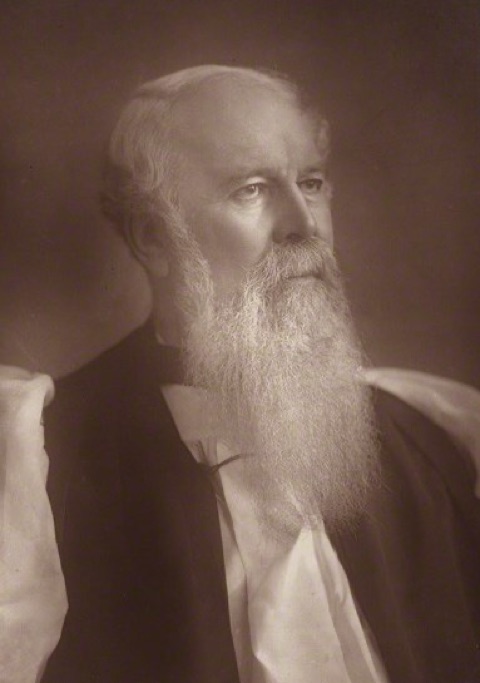
About the author
J.C. Ryle
J.C. Ryle (1816 to 1900 AD) was born on May 10, 1816, in Macclesfield, Cheshire, the son of a wealthy banker, and was educated at Eton and Christ Church, Oxford. When his father's bank collapsed in 1841, he turned to the ministry and was ordained in 1842. In the decades of rural parish work that followed he became the most prolific evangelical writer in the Church of England, known for his penny tracts, Expository Thoughts on the Gospels (1856 to 1873) and Holiness (1877). He signed the Preface to Practical Religion as Vicar of Stradbroke in November 1878. In 1880 he was appointed the first Bishop of Liverpool, a new diocese, and he served there for twenty years until his death in Liverpool on June 10, 1900.