Modernized edition · Full text · Free PDF/EPUB
A Christian Directory: Volume 5 in Modern English
Want the file? The PDF/EPUB is free with an account.
Summary
- Author
- Richard Baxter (1615 to 1691 AD), Puritan pastor of Kidderminster
- Published
- 1673 AD, in A Christian Directory: Or, A Sum of Practical Theology, and Cases of Conscience
- Part of the work
- Part 3, Christian Ecclesiastics, complete
- Contents
- Eleven chapters of directions, then 174 Cases of Conscience About Matters Ecclesiastical
- Length
- 233,000 words · 16 hours
What is A Christian Directory: Volume 5 about?
A Christian Directory: Volume 5 contains Part 3 of Richard Baxter's A Christian Directory (1673), called Christian Ecclesiastics. In eleven chapters of directions and 174 cases of conscience, Baxter teaches how Christians should worship God, keep their baptismal covenant and vows, use their pastors, seek truth, and preserve the unity of the church.
Read the full summary (8 points, key themes)Show less
How the argument unfolds
- 01
The worship of God. Fourteen directions on what worship is, why it is owed, and how to come to God through Christ, seeking God himself in every ordinance.
- 02
The manner of worship. Twenty directions marking out what Scripture fixes in worship and church order and what it leaves to prudence.
- 03
Covenant, baptism and profession. The covenant of grace solemnized in baptism, renewed through life, and owned openly before the world.
- 04
Vows and covenants. How to vow rightly, the evil of perjury, and forty-six rules on how far vows and imposed oaths bind.
- 05
Pastors and the search for truth. The work and limits of the pastoral office, the trust hearers owe, and directions against error.
- 06
Church unity and schism. The kinds of unity, the degrees of schism, when separation is lawful, and twenty-five directions for peace.
- 07
The assembly, the saints and the angels. Directions for public worship, then the communion believers hold with the souls in heaven and the holy angels.
- 08
Cases of conscience. 174 questions on the true church, ministry, baptism, discipline, prayer, images, Scripture, learning and a minister's books.
Key themes
- Scripture's rule and human prudence. Christ alone makes laws for the universal church; times, places, words and forms are left to be ordered for edification under his general rules.
- Baptism and the covenant. Baptism is a mutual covenant, valid for the church on profession and saving where consent is sincere.
- Peace among Christians. Baxter treats needless division as a grave sin and blames both proud separatists and rulers who impose unnecessary terms of communion.
- Distinctions in cases of conscience. He separates formal from material obedience and essentials from integral parts to show what readers may do when duties seem to conflict.
Reader questions (10)Hide the questions
Questions about A Christian Directory: Volume 5
Is there a modern English version of A Christian Directory: Volume 5?
Yes. This is A Christian Directory: Volume 5 by Richard Baxter in modern English. The language is modernized and the author's order and argument are kept. The full modernized text is free to read on this page.
Can I read A Christian Directory: Volume 5 online for free?
Yes. The complete text of this modern English edition is on this page, with no sign-up or paywall.
Is there a free PDF of A Christian Directory: Volume 5?
Yes. The PDF and EPUB of this edition are free with an Updated Works account. Sign in with Google or an email link; no card is needed.
What is A Christian Directory: Volume 5 by Richard Baxter about?
It is Baxter's guide to Christian duty in the church: worship, the baptismal covenant, vows, pastors, error, schism and public worship, followed by answers to 174 practical questions about church life.
How does this volume relate to the rest of A Christian Directory?
It holds Part 3, Christian Ecclesiastics, complete; earlier volumes hold the parts on private and family duties. Baxter calls this part incomplete and points readers to other books of his, such as the Reformed Pastor.
Does Baxter think Roman Catholics can be saved?
He denies that the papal polity is a church of Christ's institution, yet holds that a sincere Christian among the papists may be saved in spite of popery, as an antidote can overcome a small dose of poison.
What does Baxter say about set forms of prayer?
He weighs both and judges it best to join them: sound forms close to Scripture's language, with freedom for prayer suited to the occasion.
Would Baxter worship with other churches?
Yes. Left to his own freedom, he writes, “I would go sometimes to the Independents, sometimes to the moderate Anabaptists, and sometimes to those using a liturgy as flawed as that of the Greek or Ethiopian churches.”
What does Baxter count as the essentials of Christianity?
“The essentials of Christianity are those things necessary for the baptism of an adult.” No particular wording of them is essential.
What books does Baxter recommend?
He gives three ranks of library, the smallest holding the Bible, a concordance, annotations, catechisms, William Ames and practical English writers. He names none of his own works.
A Christian Directory: Volume 5 in Modern English · Full text
Part 3: Christian Ecclesiastics
To the Reader
Reader,
If you know me, and where and when I live, I need not apologize that this part and the next are incomplete. I have written only as much as I was able, not as much as I wished. If you desire some of what is missing here, you may find it in these works:
1. In my Universal Concord.
2. In my Christian Concord.
3. In our Agreement for Catechizing and my Reformed Pastor.
4. In the Reformed Liturgy, which was offered to the commissioned bishops at the Savoy.
Farewell.
Chapter 1
The Worship of God
Everyone who acknowledges that there is a God confesses that people ought to worship him solemnly. As Cicero observed, those who prayed and offered sacrifices all day long so that their children might outlive them were called superstitious, a name that later widened in sense. By contrast, those who carefully reviewed and went back over everything belonging to the worship of the gods were called religious, from the idea of careful re-reading, just as elegance comes from choosing, diligence from loving, and intelligence from understanding. Of the two terms, superstitious is a name of reproach, and religious is a name of praise.
Yet over the substance and manner of God’s worship, there are deep disagreements and disputes in the world. I am not attempting here to reconcile these contending parties. The terms of reconciliation are in themselves plain and obvious, so agreement would be not only possible, but easy. However, the sickness of human minds and wills makes impossible for anyone but God what would otherwise be simple. My purpose now is simply to give directions to those who are willing to worship God rightly.
Direction 1: Understand True Worship
Understand what it is to worship God rightly, so that you do not offer him emptiness and sin in place of worship. Worshiping God is the direct acknowledgment of his being and perfections to his honor. Indirectly and by consequence, he is also acknowledged in every act of obedience by those who truly obey and serve him. In that sense, they worship him indirectly and by participation. For this reason, all things are holy to the holy, because they use everything in a holy way. “Holiness to the Lord” is, as it were, written upon all that they possess or do insofar as they are holy.
That indirect obedience, however, is not the worship we are addressing here. Here we speak of what is done primarily and directly to glorify God by acknowledging his excellencies. In this way, God is worshiped either inwardly by the soul alone, or outwardly by the body expressing the worship of the soul. What is done by the body alone, without the agreement of the heart, is not true worship. It is merely a hypocritical image or show of it, called worship only in an equivocal sense. If those who serve God with mere words, ceremony, and mimicry were treated the same way themselves, they might be silenced by Aristippus’s defense of his finery and lavish fare, as Diogenes Laertius reports: “If this were blameworthy, it would certainly not be done at the festivals of the gods.” In the same way, Plato permitted drunkenness only at the feasts of Bacchus.
I have already spoken of the inward worship of the heart alone in the earlier part of this work. Outward or expressive worship is either simple or mixed. It is simple when we intend only the immediate worship of God in the action. This appears chiefly in praise and thanksgiving, which are therefore the purest and simplest form of expressive worship.
Mixed worship is that in which we join another intention for our own benefit in the action. We see this in prayer, where we worship God by seeking him for mercy. We see it in reverently hearing or reading his word, where we worship him by holy attention to his instructions and commands. We see it also in his sacraments, where we worship him by receiving and acknowledging his benefits to our souls. The same holds for offerings, where we also consider the use of the thing offered, and for holy vows and oaths, in which we acknowledge him as our Lord and Judge. All these are acts of divine worship, even though they are joined with other uses.
We do not worship God only when our acknowledgments, by word or deed, are directed immediately to him. We also worship him when we direct our speech to others, provided his praises are the subject and our words are intended directly to his honor. Many of David’s psalms of praise are of this kind. Where God’s honor is not directly intended, however, there is no direct worship of God, even though the exact same words are spoken as by others.
Direction 2: Know the True Reasons for Worship
Understand the true ends and reasons for worshiping God, so that you are not deceived by the ungodly who treat it as altogether useless. After inventing false reasons for worship, they judge it pointless to worship God because those imagined reasons are pointless. Anyone who does not understand the true reasons to worship God will not truly worship him. Instead, such a person will either neglect it profanely, pretend at it hypocritically, or perform it without heart. The true reasons are these.
1. The first reason arises from the purpose of the whole world, and especially from the nature of rational creatures. The entire world is made and upheld to express and share in the image and benefits of God. God is completely perfect and blessed in himself and needs no world to add to his happiness. Yet he made it to please his blessed will, as a self-giving good, through sharing his goodness and revealing himself. He made it so that he might have creatures who know him and are happy in his light. He also gave those creatures a fitting representation and revelation of himself so that they might know him.
Humanity is specially endowed with reason and speech to know our Creator as he appears in his works. We are made to share this knowledge and to express with our tongues that glory of our Maker which lower creatures express simply by their existence. If God were not to be worshiped, the purpose of human faculties and of all creation would be largely frustrated. Our reason is given to us to know our Maker. Our will, affections, and active powers are given to us to love and obey him freely. Our tongue is given to us chiefly to acknowledge and praise him. Whom should God’s handiwork serve, if not the one who made it?
2. Just as it is our natural purpose, so it is the creature’s highest honor to worship and honor the Creator. Is there any nobler or more excellent object for our thoughts, affections, or words? Nature itself desires its own perfection. It therefore forbids us to choose a sordid, base, dishonorable work while neglecting the highest and most honorable.
3. Rightly worshiping God powerfully tends to make us in our measure like him. It sanctifies and lifts the soul, healing it of its sinful disorders and imperfections. What can make us good as effectively as knowing, loving, and having communion with the highest good? Indeed, what is goodness itself in a creature if not this? Just as nearness to the sun brings light and warmth, nearness to God is the way to become wise and good. Beholding his perfections is the means of becoming like him.
True worshipers of God do not engage only their bare intellects in barren speculation about him. They engage all their affections toward him and all the powers of their souls in the most practical and serious manner. For that reason, they are most likely to receive the deepest, most living impressions of God upon their hearts. This is why true worshipers of God are genuinely the wisest and best of people. By contrast, many who remain at a distance, occupied with mere speculation about him and his works, stay almost as vain and wicked as before. Professing themselves wise, they become fools in practice (Romans 1:21–22).
4. Rightly worshiping God brings the heart into a cleansed, holy, and obedient disposition. This prepares it to govern the body and makes us upright and consistent in every action of our lives. The fruit will match the tree, and people will act according to what they are. Whoever does not honor his God is not likely to honor his parents or his king well. Whoever is not moved by regard for God is never likely to be universally and consistently just and faithful toward others. Experience tells us that the truest worshipers of God are the most honest and conscientious in their dealings with their neighbors. Worship winds up the spring and orders and strengthens every cause of a good way of life.
5. Rightly worshiping God is humanity’s highest and most rational delight. To a sick, corrupted soul it is unpleasant, like food to a sick stomach. To a wise and holy soul, however, nothing brings such solid and lasting contentment. God’s sentence of condemnation on the wicked is to say, “Depart from me” (Matthew 25:41; Matthew 7:23). In the same way, holy souls would lose all their joy and count themselves ruined if God should say to them, “Depart from me; worship me, love me, and praise me no more.” They would grow weary of the world if God were not in the world, and weary of their lives if God were not their life.
6. Rightly worshiping God prepares us for heaven, where we will behold him, love him, and worship him forever. God does not bring unprepared souls to heaven. This life is the time deliberately given to us for our preparation, just as an apprenticeship is the time to learn a trade. Heaven is a place of activity and full enjoyment, of perfect knowledge, love, and praise. The souls that will enjoy and praise God there must be shaped for it here. Therefore they must be deeply engaged in his worship.
7. While worship is necessary as a means in all these respects, God has also made it necessary by his command (Psalm 45:11; Psalm 66:4; Psalm 86:9; Psalm 95:6; Psalm 99:5). He has made it our duty to worship him continually, and he knows the reason behind his own commands. “It is written, Thou shalt worship the Lord thy God, and him only shalt thou serve” (Matthew 4:10). If God commanded us nothing, how would he be our Governor and our God? And if he commands us anything, what could he more fittingly command than to worship him? Anyone who refuses to obey him in this is not likely to obey him well in anything else. There is nothing a person can object to with less show of reason. All the reason in the world must confess that worship is supremely due to God from his own creatures.
Because these reasons for worshiping God are undeniable, the objections of unbelievers and the ungodly are unreasonable.
Objection 1: Our worship does God no good, for he has no need of it.
Answer: It pleases and honors him, just as the creation of the world and human happiness do. Does it follow that there should be no world and no happy people, simply because God does not need them and gains no addition to his blessedness from them? It is enough that worship is necessary and good for us, and pleasing to God.
Objection 2: Proud people are the most unlike God, and it is proud people who love to be honored and praised.
Answer: Pride is the craving for honor that is not due, or the improper craving for honor that is due. Seeking honor is a sin in the creature precisely because all honor belongs to God. None belongs to any creature except in a derived and subordinate way. For a subject to grasp at any of the honor belonging to his king is disloyalty, and to grasp at the honor due to his fellow subjects is injustice. God, however, requires nothing except what is absolutely his due. Indeed, he has commanded us even toward human beings to give “fear and honor to whom they are due” (Romans 13:7).
Direction 3: Seek True Knowledge of God
Strive for the truest knowledge of the God whom you worship. Do not let it be said of you, as Christ said to the Samaritan woman in John 4:22, “Ye worship ye know not what.” Nor let it be said of you as it was of the Athenians, whose altar was inscribed, “To the unknown God” (Acts 17:23). You must know whom you worship. Otherwise you cannot worship him with your heart, nor worship him sincerely and acceptably, no matter how much labor and expense you invest. God has no “pleasure in the sacrifice of fools” (Ecclesiastes 5:1, 4).
Although no one knows God perfectly, you must know him truly. God does not regard every person as a blasphemer and denier of his attributes simply because quarrelsome, irritable disputers label him that way when he indirectly crosses some favored opinion of theirs. Even so, a real misunderstanding of God’s nature and attributes is dangerous. It tends to corrupt his worship by corrupting the worshiper. Whatever you imagine God to be, that is the kind of worship you will offer him. Worship is the honorable acknowledgment of his perfections, so mistakenly praising him for supposed imperfections actually dishonors and insults him. If knowing God is your eternal life, it must also be the life of all your worship. Beware, therefore, of ignorance and error concerning God.
Direction 4: Come Through Christ Our High Priest
Understand the office of Jesus Christ as our great High Priest, through whose mediation alone we must have access to God (Hebrews 8:3). Scripture does not explicitly tell us whether there would have been any priesthood for sacrifice or intercession if sin had never entered the world. Still, we have strong reason to conclude there would have been none, because there would have been no reason to exercise such an office. Since the fall, however, not only Scripture but the practice of the entire world testifies to our need. Sinful people are unfit to approach God directly on their own, and must come through the mediation of a priest as sacrificer and intercessor.
Either nature teaches sinners the necessity of a mediator, or the tradition of the church has spread the knowledge of it throughout the world. Certainly no other priest besides Christ can secure the acceptance of a sinful people on his own account. Nor can any other serve as an effective mediator with God except in subordination to the one effective Mediator, who secures our access and acceptance for his own sake. Every other priest is a sinner just like the people and needs a mediator for himself just as much.
1. Make sure, therefore, that you never appear before God except as a sinner who has offended him and deserved to be cast out of his favor forever. Come as one who stands in absolute need of a mediator to secure access and acceptance with him. Do not approach God without a sense of your sin and misery.
2. Make sure also that you come as one who has a Mediator in the presence of God. He is Jesus our High Priest, who appears before God continually to make intercession for us. Come, therefore, with holy boldness, confidence, and joy. You have so sure and powerful a Friend with God, the Beloved of the Father, whom the Father always hears (Hebrews 7:27–28; Hebrews 9:26, 28; Hebrews 10:19–24; Hebrews 6:20; Hebrews 7:25–26; Matthew 17:5; John 11:42).
Direction 5: Bring a Holy Heart to God
Examine the condition of your soul carefully, so that you do not bring an unholy heart to worship the most holy God. Do not come loving sin or hating holiness. If you do, you hate God and are hated by him, because you bring before him what he cannot help but hate. Anyone can judge how unfit those are to worship God who hate him, and how unlikely they are to be accepted by the one who hates them.
As Psalm 5:3–7 says, “My voice shalt thou hear in the morning, O Lord: in the morning will I direct my prayer unto thee, and will look up: for thou art not a God that hath pleasure in wickedness, neither shall evil dwell with thee. The foolish shall not stand in thy sight; thou hatest all the workers of iniquity. Thou shalt destroy them that speak leasing: the Lord will abhor the bloody and deceitful man. But as for me, I will come into thy house in the multitude of thy mercies, and in thy fear will I worship towards thy holy temple.” And Psalm 66:18 declares, “If I regard iniquity in my heart, the Lord will not hear me.” Likewise Psalm 15:1–2 asks, “Who shall abide in God’s tabernacle, but he that walketh uprightly and worketh righteousness?”
God will be treated as holy by those who draw near to him (Leviticus 10:3). Are unsanctified people fit for that? Can the unholy offer him holy worship? “The carnal mind is enmity against God”; is it fit, then, to serve and honor him (Romans 8:7–8; see 2 Corinthians 6:15–18)? “Let him that nameth the name of Christ depart from iniquity” (2 Timothy 2:19). Christ has redeemed a purified, treasured, holy people to be God’s worshipers and, as priests, to “offer him acceptable sacrifice” (Titus 2:14; 1 Peter 2:5, 9). If you will “receive the kingdom that cannot be moved, you must have grace in your hearts to serve God acceptably with reverence and godly fear; for our God is a consuming fire” (Hebrews 12:28–29).
I know that as soon as an ungodly person has any repentant thoughts, he must express them in confession and prayer to God. Yet no prayers of an ungodly person profit him except those that are acts of his repentant return to God. Likewise, no worship of God has a promise of divine acceptance except what is offered by those who sincerely return to God, and such people are no longer ungodly. “The sacrifice of the wicked is abomination to the Lord, but the prayer of the upright is his delight” (Proverbs 15:8).
I know the wicked must “seek the Lord while he may be found, and call upon him while he is near,” yet it must be by “forsaking his way and thoughts, and turning to the Lord” (Isaiah 55:6–7). Simon Magus had first to “repent of his wickedness,” and then pray that the thoughts of his heart might be forgiven him (Acts 8:22). Do not come in an unholy, fleshly state to worship God, unless you come as a repentant sinner returning to him. First lament your sin and misery, so that you may be sanctified, reconciled, and made fit to worship him.
Direction 6: Prepare Your Heart for Each Act of Worship
Do not treat it as enough that you are already in a state of sanctification. Also set yourself apart specifically for every individual approach to God in holy worship. Even a king’s child will not walk carelessly into his father’s presence covered in dirt and filth. Who would not search his heart and life before venturing to speak to God? We should cleanse our souls from particular defilement through renewed repentance and resolutions of change.
Specific sins have caused painful breaches between God and his children. They have made a foul mess in souls that the blood of Christ had cleansed. Search yourself, therefore, with godly fear. Look for any reviving sin, any hidden root of bitterness, or any transgression you excuse or willfully cherish. If any such sin is there, grieve over it and hate it. Do not come to God as if he had laid aside his hatred of sin.
Direction 7: Awaken Reverence for God’s Majesty
Whenever you come to worship God, work to awaken your soul to a reverent awareness of his majesty. Reflect on his presence, greatness, and holiness. Awaken also a serious awareness of the greatness and excellence of the holy work you are taking up. Remember with whom you are dealing (Hebrews 4:13). Speaking to God is a completely different matter from speaking to the greatest ruler on earth, or even to the highest angel in heaven. Be holy, for the Lord your God is holy.
To treat God’s name as holy and come before him in holiness means recognizing him as infinitely exalted above the entire creation. It means coming with hearts set apart from ordinary things to him and lifted above an ordinary mindset. Bringing an everyday mindset into worship, like the one we carry into our daily business, is sheer profaneness. If it is common, it is unclean. Watch your steps when you go to the house of God (Ecclesiastes 5:1). Take off the shoes of earthly, ordinary, unholy affections whenever you tread on holy ground. That means whenever you engage in holy work and draw near to the holy God. In reverent adoration say with Jacob, “How dreadful is this place! this is none other but the house of God, and this is the gate of heaven” (Genesis 28:17; see Isaiah 6:1, 3, 5).
Direction 8: Remember Your Communion with Angels
In the worship of God, remember your communion with the holy angels and with all the hosts of heaven (Luke 20:36; see Ecclesiastes 5:5; Psalm 138:1; Isaiah 6:2). You are servants of the same God. Though you are still far below them, you are engaged in what leads toward their dignity, for you will one day be equal with them. Your work is partly of the same kind as theirs. It is the same holy Majesty whom you adore and praise, even though you still see him only as in a mirror. Some of the angels are present with you and see you, though you do not see them. In 1 Corinthians 11:10, you are commanded to show respect for them in your conduct during God’s worship.
Imagine if the eye of faith were opened wide enough in all your worship to see the blessed companies of angels. They are not in the same place or manner as you, yet they are united in the same worship and communion with you. They adore, magnify, extol, and praise the most glorious God and the glorified Redeemer with burning, fervent, holy minds. Seeing them by faith would surely lift your soul and draw you into some imitation and likeness of them.
You already know that in God’s public worship it greatly helps the soul toward holy cheerfulness and fervor to join a full assembly of holy, fervent, cheerful worshipers. You also know how hard it is, even for the best believers, to maintain vitality and fervent cheerfulness in a tiny, ignorant, or irreverent group where few truly join with us. What an uplifting help it would be, then, to praise God as within the sight and hearing of the heavenly praises of the angelic choir!
Notice how easily people conform to the company they keep. Those who spend time among dancers, gamblers, heavy drinkers, filthy talkers, mockers, or abusive speakers naturally act as their company does, or at least grow inclined toward it. Likewise, those who spend time among saints in holy worship or conversation imitate them far more readily than they would in other company. What more effective way is there to become like angels in worshiping God than to worship as in communion with the angels, seeing and hearing them in the choir by faith?
The angels do not look down on studying what we study, learning “by the church the manifold wisdom of God” (Ephesians 3:10; 1 Peter 1:12). They are neither so far from us nor so unfamiliar with our affairs that we should imagine ourselves outside their communion. Though we must never worship them (Colossians 2:18), we must worship as with them.
Direction 9: Guard the Substance of Your Worship
Pay special attention to the substance of your worship. Make sure it agrees with the will of God, the holiness of his nature, and the instructions of his word, and that it carries a promise of his acceptance. Do not offer him the sacrifice of fools, who do not realize they are doing evil and add to their sins while supposing they are pleasing him. Bring no unauthorized fire to his altars, and let your zeal for God be guided by knowledge. No amount of zeal will ever make a corrupt, unlawful kind of worship acceptable to God (Ecclesiastes 5:1–2; Leviticus 10:1–3; Romans 10:2–3). As Cyprian declared, whatever is instituted by human madness to violate the divine order is adultery, impiety, and sacrilege.
Direction 10: Aim at the Proper End of Every Duty
Make sure you perform every part of worship for the proper purpose to which it is appointed, keeping in view its ultimate, remote, and immediate ends. Purpose is essential to these duties. If you do not intend the right end, you turn the act into something else entirely. Preaching a sermon to build up the church, or offering a prayer to seek God’s blessing, is a holy act. It is not the same thing as a stage actor profanely repeating those words to mock godliness, or a hypocrite using them for personal gain or applause. The ultimate end of all worship and all moral action is the same: pleasing and glorifying God (1 Corinthians 10:31; 2 Timothy 2:4; 1 Thessalonians 2:4; Colossians 1:10; John 8:29; 1 Corinthians 7:32; Hebrews 11:6; 1 John 3:22).
Beyond this ultimate goal, every part of worship has its own proper, immediate end, which must be not only clearly known, but actively intended. It is God in Christ whom a holy worshiper thirsts for and seeks in every act of worship. We come to know more of God, his will, and his blessings, or to enjoy deeper communion with him. We come to receive fresh grace from him: pardoning, cleansing, reviving, strengthening, comforting, or uplifting grace. We come to be honored and delighted in his holy service, or to make known his grace and glory for the good of others and the honor of his name (Psalm 42; Psalm 84).
Here is where God proclaims his name, as in Exodus 34:6. The ordinances of God’s worship are like the tree Zacchaeus climbed, being too short on his own, to catch sight of Christ. Here we come to learn the will of God for our salvation. We should enter the assembly with the same resolve as Cornelius and his household in Acts 10:33. They said, “We are all here met to hear all things commanded thee of God.” Like those in Acts 2:37 and Acts 16:30, we come to learn what we must do to be saved.
We come here for that holy light that reveals our sin, reveals the grace we have received, and reveals the unspeakable love of God. We seek it until we are humbled for sin and lifted up by faith in Christ. Then with Thomas we can, as it were, put our fingers into his wounds and say with assurance, “My Lord and my God.” We can declare with Psalm 48:14, “This God is our God forever and ever: he will be our guide even unto death.” Here, like Mary, we sit at the feet of Jesus to hear his word (Luke 10:39). We seek him so that fire from heaven may fall upon our hearts and we may say, “Did not our hearts burn within us while he spake to us, and while he opened to us the Scriptures?” (Luke 24:32).
Here we cry out to him like the blind man in Mark 10:51, “Lord, that I may receive my sight.” Here we call to the watchmen in Song of Solomon 3:3, “Saw ye him whom my soul loveth?” Here we are in his “banqueting house,” under the “banner of his love” (Song of Solomon 2:4). Here we receive the sealing and reviving work of his Spirit, the putting to death of our sin, and the growth of grace. We gain a glimpse into eternal life and a foretaste of its endless joy.
Come to the worship of God, therefore, with these intentions and expectations. Then if God or your conscience asks you, as God once asked Elijah, “What dost thou here?” you will have a true answer. You can reply, “I came to seek the Lord my God, and to learn his will so that I might do it.” May your sweet delight move you to say with Psalm 84:4, “Blessed are they that dwell in thy house, they will be still praising thee.”
Beware of coming to worship for false motives. Perhaps you come out of mere habit, or to convince your fleshly heart that God will forgive you simply because you go through these motions. Perhaps you come to quiet your conscience by checking off a formal duty, to be seen by others, or to avoid being thought ungodly. If these are your aims, you will reap the result they deserve. A holy soul cannot live on the empty air of human applause, nor on the bare shell of ordinances without God, who is the kernel and life of them all. It is the love of God that brings believers there, and it is love they exercise there. Their desire and aim is the goal of love: drawing nearer to God himself. Make sure these are the genuine intentions of your heart.
Question: How can I know whether it is truly God himself that I am seeking, and that I am performing his worship for its appointed ends?
Answer: In a matter this important, it is shameful to be ignorant of your own intentions. If you pay attention to what you are doing and watch your heart, you can know what you came for and what your business is there. More specifically, you can discern it by these four marks:
1. Anyone who has right ends and seeks God will work to align all his duties with those ends and will value most what best serves them. He will strive to preach, hear, and pray not in the way that wins promotion or applause, but in the way that best pleases and honors God and obtains his grace. He will love that sermon or prayer best which is best suited to lift his soul to God, not the one that merely entertains a fleshly ear. Observe what you tailor the means to accomplish, and you will see what your real end is.
2. If it is God himself you seek in his worship, you will not be satisfied without God. Merely completing the task will not satisfy you, nor will the highest praise of others, not even of the most godly people. You will be content only insofar as you have reached your goal: cleansing, reviving, or strengthening your soul, drawing somewhat nearer to God, or pleasing and honoring him.
3. If God is your goal, you will be faithful in that quieter, more private and spiritual worship where God is found, even when no human applause can be gained there.
4. You will continue to love the same substantial, necessary truth and duty, which is to your soul what bread and drink are to your body. People with fleshly motives, by contrast, constantly hunt for novelty and variety and soon grow tired of the necessary bread of life. By watching these signs, you can discern what your true ends in worship are.
I cannot leave this essential direction without urging the reader more earnestly to put it into serious practice. It is tragic to see how many people turn the worship of God into vile hypocrisy and dead formality, offering God a dead carcass for a sacrifice. Yet their consciences are far from rebuking them for this terrible sin. Instead, they feel pleased and reassured by it, as if they had earned God’s favor and proved themselves deeply godly. They even act as if this very sin had made up for the ordinary sins of their lives.
Can people truly be seeking God himself and his sanctifying grace in worship when they hate his grace and despise sanctification? They would gladly leave God to others as long as they can keep their fleshly pleasures, wealth, and worldly honors. Even people who hate God and holiness are so blinded that they convince themselves they are sincerely seeking in worship the very God and holiness they hate.
How much effort many a formal hypocrite wastes to little purpose! They spend hours in outward, heartless, lifeless worship without ever once thirsting for God, for holy likeness to him, for communion with him, or for enjoying him in all their lives (2 Timothy 3:5; 1 Timothy 4:7). How much labor these Pharisees throw away on mere bodily routine that profits nothing! They lose it all for lack of a right goal, because it is not God they seek. Meanwhile, “godliness is profitable to all things” (1 Timothy 4:8). And what is godliness but the soul’s devotion to God and pursuit of him? We have enough trouble tearing some people away from their distractions to attend God’s outward worship. How much harder it is to bring the soul sincerely to seek God in the worship where the body is already present!
When David was driven into the wilderness away from the sanctuary, he cried out in the bitterness of his soul, “As the hart panteth after the water brooks, so panteth my soul after thee, O God: my soul thirsteth for God, for the living God: when shall I come and appear before God? My tears have been my meat day and night, while they continually say unto me, Where is thy God?” You see here that it was God himself whom David thirsted for in worship. What is all the outward splendor of worship if God is not the goal and life of it all? Without him, how empty the words of prayer, preaching, and the administration of the sacraments would be! It is not the dead letter, but the life-giving Spirit who brings those dead in sin to life. He alone convinces or comforts the soul and makes the worshiper holy and joyful.
In fact, it only deepens your misery to lack true communion with God while pretending to worship him. How tragic it is to remain far from him in heart while drawing so near with your lips, and to boast of the temple of the Lord while forsaken by the Lord of the temple! That Capernaum which is lifted up to heaven only in this outward way will be cast down to hell. It will be more bearable for Sodom on the day of judgment than for those who had the public ordinances without God. David left the ark with Absalom in Jerusalem, yet God was not with Absalom, but with David (Isaiah 29:13; Matthew 15:8; Matthew 11:23–24; 2 Samuel 15:25, 28–29).
No wonder such hypocrites resent every expense in God’s service, even the necessary support of ministers. If they get only the shell of ordinances without God, it will hardly repay their cost. No wonder they think all their effort is too much when they settle for chaff that is scarcely worth the trouble. No wonder they find little joy in God’s service, for what delight is there in husks, chaff, or a hollow nut? No wonder they grow no better, holier, or stronger through it, for what strength can chaff and shadows produce? No wonder they tire quickly and feel that a small dose of such religion is plenty, when its life, spirit, strength, and sweetness are neglected.
Sinners, remember that God does not want what is yours; he wants you. All your wealth and service mean nothing to him if he does not have you yourself, even though you are worth so little in yourself. Yet how earnestly he pleads to have you! How dearly he has bought you! He has every right to claim you as his own. Respond rightly to this kindness of God. Never let any ordinance or ordinary blessing satisfy you unless you have God himself. To encourage you, let me tell you three things further.
1. If you sincerely seek God himself in his worship, you will find him. Because you have chosen the better part, it will not be taken from you (Luke 10:42). Because you hunger and thirst for him, you will be satisfied. What joyful news this is to a thirsty soul!
2. You are far more welcome to God with these lofty desires. This holy ambition and longing of love is the only attitude acceptable to him. When all ordinances are nothing to you without God, he sees that you understand their true purpose. He writes your name among those who love him, whom he will never despise. He takes no pleasure in seeing people demean their souls to feed on husks and chaff with hypocrites, any more than to feed on filth and dirt with sensualists and worldly people. God welcomed Solomon’s prayer because he asked not for small things, but for great ones (2 Chronicles 1:10–12). In the same way, he is deeply pleased with the soul that remains unsatisfied with the entire world and will settle for nothing lower or lesser than God himself.
3. More than that, because you seek God himself, you will receive with him everything else worth having (Matthew 6:33; Romans 8:28). While hypocrites get only the carcass and the shadow, you will have the substantial nourishment and joy. Those traveling with Paul at his conversion heard the voice, yet saw no one (Acts 9:7). Likewise, others will hear only the sound of the word and the name of God, while you will see by faith the one who is invisible and experience the living power of it all. You will hear God speaking to you, while the person sitting in the very next seat hears nothing more than a human voice.
The person who seeks God in his ordinances is truly in earnest about religion. Such a person is engaged in work worthy of an immortal, rational soul. The pleasure of ordinances as performed by human beings always carries the flavor of human weakness and the taste of the instrument, often mixing bitterness with the sweet. The delight that comes from God himself, however, is far purer. Ordinances themselves are uncertain: you may have them today and lose them tomorrow. God, however, is everlasting and will be enjoyed forever.
Never stop short of God, therefore, in any act of worship. Before you begin, summon your soul to focus on its goal. Tell yourself what you are about to do, so that you do not miss the end simply by failing to aim for it. The devil will gladly let hypocritical worldly people amuse themselves with the finest ordinances, as long as he can keep God out of sight. He treats them just as you might let your children play with a box of gold, so long as it stays shut and they never see what is inside.
Direction 11: Keep Your Heart Active and Watchful
Work diligently with your heart in all God’s worship to keep it engaged in its duty. Watch over it carefully so that it does not grow sluggish or wander (Ephesians 6:18; Luke 21:36; Revelation 3:3; Colossians 4:2; Mark 13:33–37). Remember that heart work is primarily what you are engaged in. Make sure your heart stays active the whole time, and count yourself idle whenever your heart is idle.
If you do not take pains with your heart, how little effort it will put into its duty! If you do not watch over it, how quickly it will lie down, forget what it is doing, and fall asleep while you are in solemn dealings with God! How easily it will slip aside and drift into irrelevant distractions! Keep watch, therefore, for prayer and for every duty (1 Peter 4:7; 2 Timothy 4:5).
Direction 12: Keep Heaven in View
Look up to heaven as the destination toward which all your duties lead, so that you may draw your encouraging motives from there. Do everything as a means toward eternal life, and never separate any duty from its reward and goal. A traveler remembers where he is going all along the road, and the desired destination makes the roughest steps bearable. In the same way, remind yourself in every prayer you offer and in every duty you perform that it is all for heaven.
Direction 13: Depend on the Spirit of God
Depend on the Spirit of God for help. You cannot seek God spiritually and acceptably without him. Never suppose that you are able to worship God rightly on your own. Wherever the Spirit’s help is despised or neglected, you can see what pitiful work blind, corrupted human nature makes of God’s service. Sensual wretches who do not have the Spirit are fit for anything sooner than for worshiping God (Jude 1:19). “If he that hath not the Spirit of Christ be none of his” (Romans 8:9), then anyone who presumes to worship God without the Spirit of Christ can hardly expect to be heard for the sake of Christ.
Direction 14: Worship with Both Speech and Body
Watch your speech and the posture of your body as well, so that the whole person may worship God in holiness as he requires. Do not use your good intentions, or the spirituality of worship, as an excuse to neglect worshiping God with your body too. Your heart must be tended first, yet your words and body must be tended next. If you disregard them, it is hard to believe that you truly regard your heart.
1. Your words and gestures are the proper expression of your heart, and the heart naturally desires to express itself as it really is. Many people try to present their hearts as better than they are, which is why fine words often warrant suspicion. Few people, however, try to present their hearts as worse than they are, so careless outward appearances seldom lie.
2. Your words and actions are needed to honor God properly. Irreverent words and actions dishonor him, and an unseemly, disorderly performance of his service deeply harms such holy things. Fitting and reverent words and gestures, by contrast, form the outward beauty of your worship. God deserves to be served with our best.
3. Your words and gestures react strongly upon your own heart. Just as repeated actions strengthen habits, outward expressions strengthen inward affections, whether for good or for evil.
4. Your words and gestures must be guarded for the good of others, who cannot see your heart except through these outward signs. Where many share communion in worshiping God, such shared expressions carry great weight.
Chapter 2
The Manner of Worship
Painful disputes have arisen over the manner of God’s worship. From them have followed cruelty, bloodshed, divisions, and uncharitable insults. At the same time, every Christian must carefully worship God according to his will. For these reasons, it is necessary that I give you some directions in this matter.
Direction 1: Practice Serious Inward Worship
Make sure that you earnestly and faithfully practice the inward worship of God, in which the very life of religion consists. Love him above all else, fear him, believe him, trust him, delight in him, and be zealous for him. See that your heart is set apart for God and fixed on heaven and holiness. Doing this will be an immense help in setting you right on most controversies about worshiping God.
Nothing has filled the church with so many disputes, divisions, and cruelties over worship as having unholy, inexperienced people argue about them. Imagine people who hate a holy life, holy people, and the holiness of God himself debating how worship must be offered by themselves and others. When controversies over God’s service fall into the hands of those who despise all serious service of him, you can easily predict the ruinous work they will make of it. It is like letting sick people decide what food and drink everyone else must live on, allowing no one to eat except by their prescriptions. Most healthy people would find it hard to live in such a country.
As people are within, so they will incline to worship God without. Outward worship is simply the expression of inward worship. Someone whose heart is filled with the love and fear of God will naturally choose a manner of worship that most vividly and earnestly expresses that love and fear. If the heart is a stranger or an enemy to God, it is no wonder that such a person worships him accordingly.
Oh, if only we could bring every contender over worship to the inward light, life, love, and experience of holy, serious Christians! They would find enough within themselves and their own experience to settle a host of controversies of this kind, though some questions will still require other helps to resolve. In every age of the church, a striking pattern appears in worship disputes. The broad body of godly, earnest believers and the broad body of ungodly, trifling worshipers usually take opposite sides. The spiritual condition of the soul carries tremendous weight in deciding such cases.
Direction 2: Be Diligent in Agreed Outward Worship
Be serious and diligent in every part of outward worship on which all sober Christians agree. If you are careless and unfaithful in what you already acknowledge, your opinion on disputed matters deserves little weight. Profane people and insincere hypocrites prove by their lives that their practical judgment is corrupt. God is far less likely to guide them with sound judgment in holy things than to bless sincere believers who obey what he has already revealed.
We all agree that God’s word must be your daily meditation and delight (Psalm 1:2). We agree that you should “speak of it lying down and rising up, at home and abroad” (Deuteronomy 6:6–8). We also agree that we must be constant, fervent, and persistent in prayer, both in public and in private (1 Thessalonians 5:17; Luke 18:1; James 5:16). Do you carry out this much faithfully or not? If you do, you may expect with greater confidence that God will reveal his will further to you, resolve your doubts, and guide you into the way that pleases him.
If, however, you neglect the duty everyone agrees on and act unfaithfully in what you already know, how unfit are you to argue over disputed circumstances of duty! What is the point of meddling in such controversies? Do you do it willfully to condemn yourself before God and disgrace yourself before others, exposing the hypocrisy that makes your ungodliness even worse?
What a repulsive and pitiful sight it is to hear someone bitterly attack those who differ from him in minor circumstances of worship, when he himself has never seriously worshiped God at all! He does not meditate on God’s word. Instead of delighting in it, he treats it lightly, as if it scarcely concerned him. He knows no prayer beyond a little routine lip service. Is such an ungodly neglecter of all serious worship a fit person to fill the world with quarrels about the manner of worship?
Direction 3: Respect the Common Judgment of the Godly
Do not depart in God’s worship from the common judgment of the most faithful, godly Christians without deep suspicion of your own understanding and the most thorough examination of the case. When the shared judgment of faithful believers stands against you in practical matters like these, you have reason to suspect that the teaching of God’s Spirit stands against you as well. After all, the Spirit of God chiefly teaches his servants in matters of worship and obedience.
There are two errors I am warning you to avoid here.
1. Avoid the error of those who lean toward the opinion of the ungodly multitude, who have never known what it means to worship God in spirit and in truth. Consider the massive disadvantages such people face in judging rightly on this subject.
(1) They must judge without the teaching of the Spirit, by which spiritual things are discerned (1 Corinthians 2:13, 15). Someone blinded by sin is being asked to judge the mysteries of godliness.
(2) They must judge directly against their own nature, inclinations, and corrupted habits of will. Think how biased a drunkard would be if asked to judge the evil of drunkenness, or a sexually immoral person to judge the evil of fornication. A greedy, proud, or hot-tempered person would be just as biased in judging his own sin. An ungodly person is equally partial in judging the duties of godliness. You are asking him to judge what he hates.
(3) You are asking him to judge what he knows nothing about. He has probably never studied it thoroughly, and he has certainly never practiced it seriously. He lacks the experience of those who have long made worship a central business of their lives. Wouldn’t you rather trust a doctor who has made medicine his lifelong study and practice? Would you instead trust a sick patient who opposes a remedy he has never studied or tried, simply because his stomach dislikes it? Wouldn’t you rather trust a seasoned pilot on navigation than someone who has never been to sea? The difference in this present case is just as great.
2. I also speak this to warn you against a second error. Do not prefer the opinion of a single sect, faction, or small handful of godly people over the common judgment of the great body of faithful believers. The Spirit of God is far more likely to leave a small group of believers to error on particular opinions than to forsake the broad body of the godly. Even good people may be left to err in such matters. And if the issue is weightier, it is far more unreasonable and uncharitable to suspect that most people who appear godly are hypocrites forsaken by God than to suspect that a small party or a few individuals are.
Direction 4: Subordinate Human Advice to Christ
Even so, do not surrender yourself absolutely to the judgment of any person in the worship of God. Use human advice only in proper subordination to the will of God and the teaching of Jesus Christ. Otherwise you put human beings in the place of God. You reject Christ in his prophetic office just as surely as relying on rival mediators rejects him in his priestly office. No one may be called master except under Christ, because he alone is our Master (Matthew 23:8–10).
Direction 5: Distinguish Personal Scruples from Judging Others
Do not condemn everything in others that you dare not do yourself, and do not practice everything yourself that you dare not condemn in others (Romans 14–15; 1 Corinthians 8:13). You are better positioned to judge your own case, and you are obligated to examine it with greater precision and care, than you are in the case of another person.
Often a reasonable doubt may require you to hold back from an action while your judgment remains undecided. Yet that same doubt does not give you the right to condemn someone else whose mind and practice have no such hesitation. You may only wonder whether he is right, just as you remain uncertain for yourself. On the other hand, you must not dare to do everything you refuse to condemn in him. If you did, you would willfully commit every sin in the world that your own weakness turned into a doubt or controversy.
Direction 6: Suit Your Worship to God’s Nature
Offer God no worship that clearly contradicts his nature and perfections. Instead, offer worship suited to him as he has revealed himself in his word. This is how Christ teaches us to worship God according to who he is, and this is why God repeatedly calls for holy worship because he is holy (Leviticus 19:2; Leviticus 20:7; 1 Peter 1:16).
1. “God is a Spirit: therefore they that worship him, must worship him in spirit and in truth” (which Christ contrasts with mere outward ceremony and shadows), “for the Father seeketh such to worship him” (John 4:23–24).
2. God is incomprehensible and infinitely above us. Therefore worship him with awe and wonder. Make neither visible nor mental images of him, and do not demean him by improper comparisons to any of his creatures (Exodus 20:4–6). As Cicero reports, Posidonius believed that Epicurus actually thought there was no God, and merely mocked God by describing him as idle and careless like a human being, which Epicurus would never have done if he had believed God truly existed.
3. God is omnipresent. Therefore you may lift up holy hands to him everywhere (1 Timothy 2:8), and you must always worship him as in his sight.
4. God is omniscient and knows your heart. Therefore keep your heart actively engaged and closely guarded in his worship.
5. God is supremely wise. Therefore he is not to be worshiped playfully with trinkets, the way children are pacified with toys, but with wise and rational worship.
6. God is supremely great. Therefore he must be worshiped with the deepest reverence and seriousness, not presumptuously with a careless mind, wandering thoughts, or coarse expressions.
7. God is supremely good and gracious. Therefore he is not to be worshiped with reluctance, unwillingness, and weariness, but with great delight.
8. God is supremely merciful in Christ. Therefore he is not to be worshiped in despair, but in joyful hope.
9. God is true and faithful. Therefore he is to be worshiped with faith and confidence, not in distrust and unbelief.
10. God is supremely holy. Therefore he is to be worshiped by holy people in a holy manner. Never approach him with unholy hearts or lips, nor treat him casually as if we were dealing only with a human being.
11. He is the Maker of both your soul and your body. Therefore he is to be worshiped with both soul and body.
12. He is your Redeemer and Savior. Therefore worship him as sinners who humbly feel your sin and misery, and as redeemed people who gratefully feel his mercy. Let all of it aim at your further cleansing, healing, and restoration.
13. He is your Regenerator and Sanctifier. Therefore worship him not in confidence in your own natural sufficiency, but by the light, love, and life of the Holy Spirit.
14. He is your absolute Lord and the Owner of you and everything you possess. Therefore worship him with the complete surrender of yourself and all you have. Honor him with your wealth and resources, not hypocritically with exceptions and reserves.
15. He is your sovereign King. Therefore worship him according to his laws with obedient worship, not after human traditions or the will and wisdom of the flesh (Matthew 15:2, 3, 6; Mark 7:3–14; Colossians 2:8, 18, 22).
16. He is your heavenly Father. Therefore gather all these holy dispositions into the strongest love. Run to him with the greatest readiness, and rest in him with the greatest joy. Thirst for the full enjoyment of him with your deepest desires, and press toward him for himself with the most fervent and urgent prayers.
The very being and perfections of God teach you all of these truths for his worship. Consequently, if any disputed form of worship clearly contradicts any one of them, it is certainly unwarranted and unacceptable to God.
Direction 7: Reject Worship That Defeats Its Proper Ends
Do not claim to worship God through anything that destroys or contradicts the ends of worship. Suitability as a means to its proper goal is essential to true worship. The ends of worship are threefold.
1. Honoring God.
2. Building ourselves up in holiness and delighting our souls in contemplating and praising his perfections.
3. Imparting this knowledge, holiness, and delight to others, advancing his actual kingdom in the world.
(1) Avoid all claimed worship that dishonors God. I do not mean what offends carnal people who judge God by their own misguided imaginations, but what contradicts how he has revealed himself in his works and word. Many travelers who have conversed with the more sober pagan and Muslim nations report a sad reality. Seeing Christians around them worship God so ignorantly, irrationally, and childishly is no small obstacle to their conversion and a major cause of their contempt for Christianity.
The Jesuit José de Acosta claims it is different among uncivilized peoples. He argues that it is most useful to cultivate rites, signs, and every kind of outward ceremony. Unspiritual people, he admits (a revealing admission!), are delighted and held by these displays until their memory and taste for former ways gradually fade away. In the same way, Gregory of Nyssa writes in his life of Gregory of Neocaesarea that pagan festivals were turned into festivals for the martyrs to please the people better. Bede and many others also recount this practice of those times.
(2) Value most, all else being equal, the manner of worship that best promotes right understanding, holy resolve, and godly affections, lifting your soul into closer communion and delight in God. Do not favor what deceives, flatters, or distracts you from him. Reject whatever strikes your ears like sounding brass, a tinkling cymbal, or someone playing a musical piece for you without making you any better.
(3) Do not favor a manner of worship that opposes knowledge and keeps ignorance alive in the world. Much of Roman Catholic worship does exactly this. It reads the Scriptures to the people in an unknown tongue, and conducts public prayers, praises, and sacraments in an unknown tongue. It preaches rarely, teaching people to settle for a crowd of childish ceremonies in place of knowledge and rational worship. Whatever opposes knowledge opposes all holiness, true obedience, and the very ends of worship. Therefore it cannot be acceptable worship of God.
(4) Do not favor any claimed worship that by its nature destroys true holiness. This includes preaching false doctrine that does not promote godliness, and misapplying true doctrine to oppose and mock a holy life and worship. It also includes teaching poor souls to rest content with their Mass, Mass ceremonies, and a hollow shadow of worship while opposing genuine holiness. As Proverbs 24:24 declares, “He that saith to the wicked, Thou art righteous, him shall the people curse, nations shall abhor him.” If that is done as an act of worship to God, you can judge how acceptable it will be! As Isaiah 5:20 warns, “Woe unto them that call evil good, and good evil; that put darkness for light, and light for darkness; that put bitter for sweet, and sweet for bitter!”
Some teaching leads people to believe that holiness is mere hypocrisy or unnecessary. Other teaching suggests that the outward image of holiness is holiness itself, or that there is no real difference between the godly and the ungodly. All of this tends directly to human ruin. It damns people by deceiving them and roots holiness out of the earth. See Ezekiel 22:26; Ezekiel 44:23; and Jeremiah 15:19, “If thou take forth the precious from the vile, thou shalt be as my mouth” (see also Malachi 3:18; Psalm 1; Psalm 15).
(5) Do not favor a dead, heartless way of worship that neither convicts and awakens the ungodly nor makes people serious as those who are dealing with God.
Direction 8: Match the Manner to the Matter
Let the manner of your worship match the subject you have in hand. Remember that you are speaking either to or about the eternal God. Remember that you are engaged in the everlasting salvation of your own soul and the souls of others. Everything you are doing is high and holy; make sure your manner corresponds to it.
Direction 9: Never Offer God a Lie in Worship
Offer God nothing as part of worship that is a lie, much less a falsehood so blatant that the common senses and reason of the whole world disprove it. God does not need our lie to promote his glory (Romans 3:7). What kind of worship, then, do Roman Catholics offer him in their Mass? They hold as an article of faith that no bread or wine remains after consecration, claiming it has all been transubstantiated into the literal body and blood of Christ. Once the reliability of all human senses is abandoned, all certainty of faith and all religion are abandoned too, because they all presuppose the reliability of our senses.
Direction 10: Worship in Harmony with a Rational Soul
Do not worship God in a way that contradicts the true nature, order, and workings of a rational soul. I do not mean human nature as corrupted by sin, but human nature considered in itself as rational.
1. Do not let mere will and preference overrule your understanding. Do not speak like blind lovers who say, “I love this, though I do not know why,” or like children who eat unwholesome food simply because they like its taste.
2. Do not let passion overpower your reason. Worship God with a zeal that is guided by knowledge.
3. Do not let your tongue lead your heart, much less outrun it. Words can indeed act back upon the heart and warm it further, but that is only their secondary use. Their primary role is to express the heart. You must not speak without or against your heart, which is to speak falsely, hoping that speaking will later improve your heart and make words true that were untrue when spoken. The only exception is when your words are readings, recitations, or narratives rather than declarations spoken as your own.
The heart was made to lead the tongue, and the tongue to express the heart, not to drag it along. Therefore do not speak to God the words of a parrot, which you do not understand. Neither speak the words of a liar or hypocrite, which fail to express the real meaning, desires, or feelings of your heart. First understand and feel what you ought to say, and then speak what you understand and feel.
Question: How, then, can a prayer be lawful if it is read or heard from a book?
Answer: In reading, the eye first conveys the truth to the heart, and in hearing, the ear does the same; then the tongue performs its proper office. Although this happens in an instant, the movement into the heart comes first and the expression from the heart comes afterward. The soul is quick and can swiftly receive, be moved by, and express those words. In this respect, praying from a book is no different from joining in spoken words led by someone without a book. The soul must act just as quickly when joining with another person who prays aloud without a book as when using a written form.
Direction 11: Know How Far Scripture Is the Rule of Worship
Understand clearly how far Christ has given his church a law and rule for worship in the holy Scriptures. To that exact extent, receive Scripture as a perfect rule and never swerve from it by adding or subtracting.
This matter is deeply important because there is danger of error on both sides. On one side, you might think Scripture contains no law or rule of worship at all, or less of one than it truly does. If so, you deny a vital part of Christ’s office as King and Teacher of his church, and you accuse his laws of being inadequate. You will also be tempted to offer humanly invented worship. You may imagine yourself free to worship him according to your own ideas or to alter his worship to suit the fashion of the age or country where you live.
On the other side, if you imagine Scripture is a more detailed rule of worship than Christ ever intended, you will entangle yourself and others in endless scruples and controversies. You will find fault with practices that are lawful and even required simply because you do not see them spelled out in detail in Scripture. It is therefore urgently necessary to understand how far Scripture is meant to be our law and rule in worship, and how far it is not. Treating this exhaustively would be a digression, so I will answer it briefly.
1. Beyond all doubt, Christ is the sole universal Head and Lawgiver of his church (Isaiah 2:3; Isaiah 1:10; Isaiah 42:4; Micah 4:2; Hebrews 3:2, 3, 5; Hebrews 10:28; Acts 7:37, 38; Acts 3:23; Psalm 19:7; Isaiah 5:24). Making laws is the first and foremost part of governing; if Christ had made no laws for his church, he would not be its full Governor. Whoever claims authority to act as lawgiver to the universal church usurps Christ’s kingly office and commits treason against his rule. That remains true unless he can prove Christ delegated this chief power of government to him, which no one can do.
Because there is no universal lawgiver for the church except Christ, whether pope or council, no law made by any mere human being can bind the whole church universally. Since making all universal laws belongs to Christ alone, we may be certain that he has done so completely. He has omitted nothing from his laws that belonged there and left nothing open that needed to be fixed and commanded.
Consider anything that is just as useful and applicable to the universal church as to any single part of it, and to all ages as to any one age. Human beings ought not to impose it as a law on any part of the church if Christ has not made it a law for the whole. They must not do so, both because it accuses Christ of leaving defects in his laws and because all his subjects depend equally on him as their King and Judge. No one may step onto his throne claiming to mend what he did poorly or to supply deficiencies that the supreme Lawgiver should have supplied.
2. These laws of Christ for governing his church are completely contained in the holy Scriptures. Even what is written in nature is expressed more plainly in Scripture than nature alone expresses it. Not everything mentioned in Scripture is a law of Christ, yet all of Christ’s laws are recorded in Scripture.
Christ did not write them with his own hand, but by his Spirit through his apostles, whom he commissioned and sent to teach all nations to observe whatever he commanded them (Matthew 28:20). Being thus commissioned and fully empowered by the Spirit to fulfill their charge, the apostles must be recognized as having carried out their mission completely. They taught everything Christ commanded them, and nothing more as coming from Christ. They taught their own generation by spoken voice to those who could hear them. In the same way, they taught every generation afterward until the end of the world by writing, because later ages could not hear their living voice.
3. So far, then, as Scripture is a law and rule, it is a perfect rule. How far it serves as a law and rule must be determined by its own contents and statements.
(1) It is certain that all inward worship of God, including love, fear, trust, desire, and the like, is completely commanded in Scripture.
(2) The doctrine of Christ that his ministers must read and preach is completely contained in Scripture.
(3) The main and always necessary points of order in preaching are stated there too. Preachers must first aim to open people’s eyes and turn them from the power of Satan to God, and then strengthen and build them up further.
(4) Scripture commands us to humble ourselves before God in confessing our sins.
(5) It commands us to pray to God in the name of Christ for mercy for ourselves and others.
(6) It commands us to give thanks to God for his mercies to the church, to ourselves, and to others.
(7) It commands us to praise God for his excellencies revealed in his word and in his works of creation and providence.
(8) It commands us to do this by singing psalms with holy joy of heart.
(9) The substance and general order of ordinary Christian prayers and praises are set forth in Scripture, showing which petitions should have priority in our esteem, desires, and ordinary words.
(10) Christ himself has appointed that by baptizing people into the name of the Father, the Son, and the Holy Spirit, they are solemnly brought into his covenant, his church, and the Christian profession.
(11) He himself has appointed that his churches hold communion with him and with one another in the Eucharistic celebration of the sacrament of his body and blood. This is represented in breaking, delivering, receiving, and eating the consecrated bread, and in pouring out, delivering, receiving, and drinking the consecrated wine.
(12) Some circumstances, outward expressions, actions, and arrangements are changeable and supportive. They were not suited to be fixed in detail by a universal law because they fit one time or place and not another. For these, Christ has left general laws in both nature and Scripture so they can be decided as occasions arise.
Through particular providences, he fits things, persons, times, and places together so that we can discern their harmony with his general laws. Those laws require that all things be done decently, in order, for edification, and in love, unity, and peace. In the same general way, he has forbidden doing anything indecently, disorderly, to the harm or ruin of our brothers and sisters, even the weak, or to the division of the church (Romans 13:9; Matthew 22:37; Isaiah 8:16, 20; Acts 8:25; Acts 15:35, 36; Acts 26:17, 18; 1 John 1:9; Nehemiah 1:6; Leviticus 16:21; Philippians 4:6; Psalm 50:14; Psalm 69:30; Psalm 100:1, 2, 4; Ephesians 5:19; Psalm 9:11; Psalm 95:1; Luke 11:2, 3; Matthew 28:19; 1 Corinthians 11:23–26, 28; 1 Corinthians 14:5, 12, 26; 2 Corinthians 10:8; 2 Corinthians 13:10; Romans 15:2; 1 Corinthians 14:40; Romans 14:15, 20; 1 Corinthians 9:20–22; 1 Corinthians 8:10; 1 Corinthians 10:19, 28; 2 Corinthians 6:16).
(13) He has also specifically forbidden many things in worship, such as making any carved image for ourselves, worshiping angels, and the like (Exodus 20:4–6; Colossians 2:18; 1 John 5:21; Revelation 2:14).
As for the order and government of the church (for I want to cover all of this together here), the following points are clearly established in Scripture.
1. There are to be officers or ministers under Christ serving as the regular teachers of his people. They are to baptize, administer the sacrament of his body and blood, and serve as the voice and guide of the congregation in public prayers, thanksgiving, and praise. They are also to bind the impenitent, loose the penitent, and direct their flocks according to God’s law toward eternal life. Christ himself has defined and established their office.
2. Christians are required to assemble regularly for God’s public worship and to be guided in it by these pastors.
3. Alongside unattached ministers who devote themselves to converting unbelievers and serving the churches as itinerants, there must also be regular, settled ministers entrusted with the special care of each local church. In this way pastors can know their own flocks, even from house to house. Likewise, the people can know the pastors who are over them in the Lord, honoring and obeying them in everything they teach from God’s word for their salvation.
4. Ministers who baptize are to judge the readiness and fitness of those they baptize. This applies both to adults admitted on their personal profession and covenanting, and to infants admitted on their parents’ profession and covenanting on their behalf.
5. Pastors who administer the Lord’s Supper to their local flocks must discern and judge the fitness of those they receive. This includes both new members entering their charge and members of their flock admitted to communion in that sacrament.
6. Every such pastor is also personally responsible to watch over all the members of his flock as far as he is able. He must guard them so that false teachers do not mislead them, Satan does not gain an advantage over them, and no corruption or bitter root springs up among them to defile them.
7. It is the duty of individual members of the flock, if a fellow believer sins against them, to point out the fault privately between the two of them. If the offender will not listen, they are to take two or three others, and if he still refuses to listen, they are to tell it to the church.
8. It is the pastor’s duty to admonish the unruly, call them to repentance, and pray for their conversion.
9. It is the pastor’s duty to declare someone who remains stubbornly impenitent ineligible for church communion, charging him to stay away and charging the church to avoid him.
10. It is the congregation’s duty to avoid such a person accordingly, having no close fellowship with him so that he may be ashamed, not even eating with such a person.
11. It is the pastor’s duty to absolve the repentant, declaring the forgiveness of their sin and restoring them to the fellowship of the saints.
12. It is the congregation’s duty to welcome back the absolved into fellowship with joy and receive them as brothers and sisters in the Lord (Matthew 28:19; Romans 10:7, 8; Acts 14:23; Acts 2:42; Acts 20:7, 28; Ephesians 4:11, 14; Malachi 2:7; Ezekiel 3:17, 21; 1 Corinthians 12:17, 28; Colossians 1:28; Acts 26:18; 1 Thessalonians 5:12; Hebrews 13:7, 17; Acts 8:37; Acts 2:37, 38; Acts 8:20, 23; 1 Corinthians 10:16; 1 Corinthians 9:13, 14; Acts 20; 2 Corinthians 2:11; Hebrews 12:15; Deuteronomy 10:8; 2 Timothy 4:1–3; Matthew 18:15–17; 2 Thessalonians 3; 1 Corinthians 5:11; 2 John 1:10, 11; Titus 3:10; 1 Corinthians 5:3–8; Romans 16:17; 1 Timothy 5:17; Luke 10:16; Luke 12:42; Acts 13:23).
13. Every pastor has general authority to exercise his ministry in any part of the church where he is truly called. Yet each pastor also has a special obligation, and therefore a special authority, over the specific flock placed under his care and oversight.
14. The Lord’s Day is set apart by God’s appointment for the churches’ regular holy assembly in worship under the leadership of their pastors (Titus 1:5, 9; 1 Timothy 3:5; 1 Peter 5:1–4; Revelation 1:10; Acts 20:7; 1 Corinthians 16:2).
15. Local churches ought to maintain as much harmony with one another as their circumstances permit, holding proper synods and correspondence to that end.
This much of God’s worship and of church order and government, at minimum, is of divine institution and settled by Scripture rather than left to human preference. At least this far, the form of church government is established by divine right.
On the other hand, consider what Scripture has left undetermined.
1. Concerning doctrine and worship, Scripture lays down no specific law in the following matters.
(1) There are many natural truths Scripture does not take up, such as physics, metaphysics, logic, and similar subjects.
(2) Scripture does not tell a minister which specific text or subject he must preach on this day or that.
(3) It does not dictate the exact outline or method by which his text or subject must be explained and applied.
(4) It does not prescribe which weekday besides the Lord’s Day he must preach on, nor what hour on the Lord’s Day worship must begin.
(5) It does not specify the exact building or location where the church must meet.
(6) It does not dictate which specific sins we must confess most fully today, or which personal mercies we must ask for first right now. Nor does it specify for which blessings we must give the fullest thanks on a given day. Special circumstances must determine all of these.
(7) It does not specify which chapter we must read today or which psalm we must sing.
(8) It does not dictate which translation of Scripture or metrical version of the Psalms we must use, nor how to divide the Bible into sections as we do with chapters and verses. It does not prescribe whether the Bible must be printed or handwritten, in what typeface, or how it should be bound.
(9) It does not fix the exact outward sign by which I must express consent to truths or duties I am called to affirm, apart from the sacraments and ordinary speech.
(10) It does not dictate whether I should use written notes to aid my memory in preaching or preach without them.
(11) It does not dictate whether I should use a written text or book in prayer or pray without one.
(12) It does not dictate whether I should use the same wording in preaching and prayer or varied new expressions.
(13) It does not prescribe which furnishings and instruments I must use in worship. This includes whether we meet in a church building or an ordinary house, and our use of a pulpit, font, table, cups, cushions, and many other items that assist worship.
(14) It does not fix the exact posture in which we must preach, read, or listen.
(15) It does not specify the particular garments ministers or people must wear during worship.
(16) It does not prescribe what natural or artificial aids to our bodily faculties we may use, such as voice remedies, musical tunes, instruments, eyeglasses, or hourglasses.
All of these and similar matters are left undetermined in Scripture. They are entrusted to human prudence, not to be arranged by mere whim, but as fitting means toward the proper end under Christ’s general laws. For all such circumstances, Scripture serves as a general law rather than a detailed rule.
Likewise, concerning church order and government, Scripture has not specifically determined the following points.
1. Which individual men shall serve as pastors of a church.
2. Exactly how many members a congregation should contain.
3. How pastors should divide their duties when a church has more than one.
4. How many pastors each church should have.
5. Which particular people shall form a pastor’s specific charge.
6. Which specific individuals he shall baptize, admit to communion, admonish, or absolve.
7. In what exact wording most of these actions should be expressed.
8. How many pastors should gather in synods for the fellowship and agreement of different churches, or how often they should meet. Nor does it fix the exact time, place, or procedural order for their consultations, along with many similar details.
Understanding how far Scripture is your law in worship will serve as your greatest safeguard. It will keep you from disobeying either God or your rightful authorities. You will not plead obedience to human beings as an excuse to disobey God. Neither will you plead obedience to God against the proper obedience you owe your rulers, as people do when they treat Scripture as a more detailed rule than Christ ever meant it to be. This clarity will also prevent a host of needless scruples, disputes, and divisions.
Direction 12: Distinguish Universal Laws from Temporary Ones
Notice carefully in Scripture the difference between Christ’s universal laws, which bind all his subjects in every time and place, and laws that are only local, personal, or temporary. Otherwise you might imagine yourself bound to everything God ever commanded anyone else.
Universal and unchangeable laws either grow out of the universal, unchanging nature of people and things, or were supernaturally revealed by God as permanently suited to all people. Particular, local, or temporary laws have a narrower basis. Some grew out of a particular, changeable relationship among people and things, just as the law of nature required Adam’s sons to marry their sisters though it forbids others from doing so. Others were supernaturally enacted by God only for a specific person, nation, or era.
If you mistook all the Jewish laws for universal laws binding every nation and age, how many errors would trap you! In the same way, if you took every personal directive sent by a prophet or apostle to one individual as binding on everyone, you would turn it into a snare. Not everyone must abstain from vineyards and wine like the Rechabites. Not every preacher must travel in the exact attire Christ specified when he sent out the Twelve and the Seventy. Not everyone must administer or receive the Lord’s Supper in an upper room of a house, in the evening, with only eleven or twelve people. Nor must everyone carry Paul’s cloak and parchments or run the specific errands assigned to certain messengers.
In commands about worship, you must also distinguish what is primarily intended from what is merely a supporting means. Many laws are universal and unchangeable in their primary aim, yet local and temporary in the secondary means they use. Take, for example, the commands to greet one another with a holy kiss and to hold love-feasts in sacred fellowship. Their primary aim was to exercise and express holy love through fitting signs then in common use. Using those particular signs was secondary, a local and changeable requirement. This is clear for two reasons.
1. Those practices have actually been laid aside with God’s approval.
2. In other times and places, the same signs no longer carry that meaning or suitability at all, so they would not express holy love and might even convey an improper meaning.
Similarly, the earliest method of baptizing was to immerse people completely under water. That was fitting in a hot climate, whereas in colder countries it would not be, since it could endanger health and offend modesty. Clearly, then, that mode was a local and changeable rule. The same holds true for abstaining from blood and from things strangled, which was enjoined to avoid offending the Jews, along with other similar directives.
This principle applies to almost every command concerning outward postures in worship. What God universally commands is humble, reverent adoration of him in both mind and body. Adoration of the mind remains the same everywhere, while bodily expression varies with the customs of different countries. In most lands, kneeling or bowing prostrate expresses the deepest reverence and submission. In a few lands, sitting with the face covered by the hands expresses it more clearly, and in some places standing expresses it best. Kneeling is usually most suitable because it is the most widely understood sign of humble reverence, yet where it does not carry that meaning, it is not suitable.
The same must be said of other gestures and of clothing. Women among the Corinthians were not to go uncovered because of the angels (1 Corinthians 11:10), yet in places where long hair or head coverings carry the opposite meaning, the application may be different. Even the fourth commandment, though perpetual in setting aside a proportion of time, was changeable regarding the seventh day.
Some people call what I have named universal laws “moral laws.” That term, however, does not mark a real distinction, since every law is moral in the sense that it governs our moral conduct. Others divide them into natural laws and positive laws. The truth, however, is more nuanced. Some laws of nature are universal and others are particular, depending on whether they arise from universal or particular nature. Some laws of nature are perpetual because their foundation never changes, while others are temporary because the natural condition producing the duty is temporary. Likewise, some positive laws are universal and unchangeable for the duration of this world, while others are strictly local, particular, or temporary.
Direction 13: Do What You Can When Hindered
Remember that every duty you appear obliged to perform assumes it is not naturally impossible for you. You are therefore bound to carry it out as well as you can. When the force of other people or your own natural inability prevents you from doing a duty as you wish, you are not released from doing it altogether. Omitting it completely is worse than performing it imperfectly, just as performing it imperfectly is worse than doing it more thoroughly.
In such a situation, defects that are completely involuntary are not counted against you at all. They belong to the guilt of whoever hinders you, unless some prior sin of your own caused the hindrance. Suppose I lived in a country where I had liberty to read and pray, yet not to preach, or liberty to preach only once a month and no more. It would be my duty to do as much as I could, since that is far better than nothing, rather than giving up everything because I could not do everything.
Objection: Must you not refuse to give up any part of your duty?
Answer: Yes, that is true, yet nothing is my duty if it is naturally impossible for me to do. Either I can do it or I cannot. If I can, I must, assuming it is a duty in all other respects. If I cannot, I am not bound to do it.
Objection: Should you not refuse to let suffering deter you, since avoiding suffering is a fleshly motive, and your suffering might do more good than your preaching?
Answer: Suffering may be viewed in two ways: either as pain to the flesh, or as an irresistible obstacle to the work of the gospel. Simply as pain to the flesh, it must never deter me from God’s work. Yet suffering can also forcibly stop me from doing that work, through imprisonment, death, or having my tongue cut out. In that light, I may lawfully foresee it and avoid it by lawful means, provided my motive is sincerely to advance Christ’s work and not to spare my own flesh.
Consider Paul in Damascus. He foresaw that preaching one more sermon there would likely end his preaching altogether, because the Jews watched the city gates day and night to kill him. It was therefore Paul’s duty to be lowered down the wall in a basket, escape, and preach elsewhere (Acts 9:25). In the same way, when early Christians could not safely assemble in public, they met in secret (John 19:38; Acts 12:12, and elsewhere). Whether Paul should have chosen to suffer in Damascus for one more sermon or to go preach more widely elsewhere had to be decided by the cause of Christ and the gospel. Whatever serves the church best is what must be chosen.
Direction 14: Respect the Right Season for Each Duty
Remember that no particular duty is an actual duty at every single moment. What is a duty in its proper season is not a duty out of season. Positive commands do not bind us to perform the action at every moment. They bind us continually only to maintain settled inward dispositions and the quiet intention of our ultimate end, animating and guiding our choices whenever we are awake and able to reason.
Even great duties like praying and preaching can be performed so unseasonably that they become sins. Suppose refraining from a prayer, a sermon, or a sacrament for a single day or month is reasonably likely to secure your freedom to continue doing it afterward. Suppose performing it once or a few times now would likely stop you from ever doing it again. In that case, apart from some extraordinary situation, it would be your duty to refrain for the time being. Even the rest and holy work of the Sabbath could be interrupted to save the life of an ox or a donkey, or to show mercy to human bodies. How much more for the salvation of many souls!
Let me warn you again on both sides. You must never plead the goal of a law to override an unconditional, absolute command of God. Yet neither should you rush to conclude that a command is unconditional and absolute when obeying it in a given moment plainly contradicts its very purpose. Do not easily treat something as a duty when it clearly fails to serve, or even works against, the good that is the goal of duty. Still, no apparent usefulness as a means can ever turn into a duty something that God’s prohibition has made a sin.
Direction 15: Prefer the Greater Duty When Duties Conflict
It is always unseasonable to perform a lesser duty of worship when a greater one ought to be done. You therefore greatly need discernment to judge, whenever two duties cannot both be performed at once, which one is greater and must take priority. In making that judgment, the value of the end must guide you closely: the greater duty is usually the one that contributes most directly to the greatest good.
Direction 16: Do Not Pit One Part of Worship Against Another
Do not plead one part of God’s worship as an excuse to neglect another when all can be done in their proper place and order. Do not set preaching and praying against each other, nor public and private worship, nor inward worship against outward worship. Practice them all.
Direction 17: Guard Against Blind Custom and Baseless Prejudice
Do not let excessive deference to human opinion or popular custom bend your judgment away from the rule of worship. On the other hand, do not let baseless prejudice make you recoil from what does not deserve dislike. Errors at these two extremes fill the world with corruption and strife over the worship of God.
Among Roman Catholics, Russians, and other uninformed groups of Christians, countless corruptions persist in worship simply through the force of custom, tradition, and upbringing. Everything they have long been used to looks right to them. That is why churches across the south, east, and west remain so long covered in ignorance and resist reformation. As José de Acosta observes, a major hindrance to faith arises from deep-rooted custom. Custom exerts great power everywhere, and greatest of all among uncivilized peoples, for where reason is weakest, custom strikes its deepest roots. In all of nature, any movement lasts longer and runs stronger the more it is fixed in a single direction.
On the opposite extreme, sheer prejudice leads some people to dislike a written form of prayer, or any unfamiliar manner of worship that respected believers have spoken against. Their bias grows so strong that they leave no room for calm, impartial reason to weigh, test, and judge the matter.
Factions have pulled most Christians in the world into rival parties. Through this Satan has gained a huge advantage: instead of worshiping God in love and harmony, they spend their zeal in envious, bitter, censorious, uncharitable attacks on how others worship. Because the advantage of their faction demands this, they imagine that the cause of the church and of God demands it too. They convince themselves they serve God when they make other people’s religion look hateful.
Yet among most Christians in the world, the flaws in their modes of worship are nowhere near as grave as rival parties paint them. The only major exceptions are the two great crimes of Roman Catholic worship. First, it is not understood by the people and is therefore soulless. Second, they worship bread as God himself, which I am more willing than able to excuse from being idolatry. Never judge in such cases out of passion, partiality, and prejudice.
Direction 18: Honor the Early and Universal Church
Even so, weigh all such controversies with the reverence and charity owed to the universal church and the early church. If you find something in God’s worship on which the early or universal church agreed, you may be sure it is compatible with acceptable worship. God never rejected the worship of the early or universal church. Such a practice must not even be judged mistaken without thorough deliberation and very strong proof. We ought to be far more suspicious of our own understanding.
Direction 19: Avoid Eccentricity in Lawful Circumstances
In circumstances and forms of worship that are not forbidden by God’s word, do not strive to be unusual. Do not lightly break away from the practice of the church with which you hold fellowship, or from the commands and directions of your lawful authorities.
Of course, we must obey God rather than human beings if we are forbidden to pray like Daniel, or forbidden to speak any more in the name of Christ like the apostles (Acts 4:17, 18; Acts 5:28). The same holds if we are commanded to worship images like the three faithful men in Daniel 3, or commanded to commit any sin. Yet in mere differences of form, circumstance, and order of worship, be sure to give lawful authority and the consensus of your local church their proper due.
Direction 20: Watch Your Own Heart Above All
Pay closer attention to your own heart than to the gifts of ministers or the ceremonies and outward manner of the church’s worship in these lesser matters. Heart-work and heaven-work are what the sincere believer comes for. The corruption of his own heart is the heaviest burden he carries, the one he groans under with his deepest laments.
A hungry soul, set on fire with love for God and neighbor and keenly alive to the excellence of shared truths and duties, will overcome many flaws in public worship. Such a believer will draw closer to God in an imperfect, defective mode of worship than others can with the finest outward helps (James 3:15–17). Hypocrites, by contrast, find so little work to do with their own hearts and with heaven that they occupy themselves with words, forms, ceremonies, and externals. They applaud their own way, condemn everyone else’s, and end up serving Satan under the pretense of worshiping God.
Chapter 3
Covenant and Baptism
Although the first part of this book is little more than an explanation of the Christian covenant with God, because I am speaking here of baptism as a part of God’s worship, it is necessary that I also speak briefly about the covenant itself.
Direction 1: Understand the Nature of the Covenant
It is a matter of great importance that you clearly understand what the Christian covenant is. I will therefore briefly explain its nature first, and then address the reasons for it. After that, I will consider how we solemnize it in baptism, how we renew it, and finally how we keep it.
The Christian covenant is a contract between God and humanity, through the mediation of Jesus Christ. Its purpose is the return and reconciliation of sinners to God, along with their justification, adoption, sanctification, and glorification through Christ, to God’s glory.
To understand this clearly, we must examine seven things. We must consider who the parties in the covenant are, what God commits to on his part, and what we commit to on our part. We must also look at the terms God sets, where and how he expresses the covenant, what qualifications are necessary on our part, and what its goals and benefits are.
1. The parties are God and humanity: God the Father, Son, and Holy Spirit on one side, and repenting, believing sinners on the other. Humanity is the party that needs the covenant, yet God is the one who first offers it. Note five things here.
(1) God’s part of the covenant is made universally and conditionally with all mankind, in its stated terms, and so it already exists before we are born.
(2) The Father, Son, and Holy Spirit do not enter this covenant simply as persons in the Godhead, but as standing in a gracious relationship to humanity for the purposes of the covenant.
(3) God makes this covenant only with sinners, because its purpose is to restore those who broke an earlier covenant in Adam. It is a covenant of reconciliation, and therefore it presupposes a prior hostility.
(4) When I say the human party consists of repenting and believing sinners, I mean two distinct things.
[1] Taking the covenant in its first inward act, repentance and faith themselves are the act. They are our very entering into covenant.
[2] Taking the covenant in its outward expression, it is a repenting, believing sinner who must enter it. That outward act is simply the expression of his repentance and faith through an explicit contract with God.
(5) Although God’s covenant is established by one universal act (which I will explain further below), the human side must be entered through the distinct acts of individuals, each person for himself, and not merely by societies.
2. In general, the substance of the covenant on God’s part is that he will be our God. More specifically, God the Father will be our reconciled God and Father in Jesus Christ, God the Son will be our Savior, and God the Holy Spirit will be our Sanctifier. Being our God essentially contains three parts.
(1) On the right of creation and redemption, he is our Owner, and he takes us as his own treasured people.
(2) Since he has the right to be our absolute King and Governor, he takes us as his subjects.
(3) He will be our supreme Benefactor, our highest happiness, and our most loving Father, which sums up all the rest.
Because he enters these relationships with us, he will do for us everything they entail.
(1) He will do everything that belongs to a Creator for his creature, preserving us and supplying our needs.
(2) He will save us from our sins, from his wrath, and from hell.
(3) He will sanctify us into complete conformity to Christ, our Head.
Likewise, in keeping with his sovereign relationships toward us, he commits to three more blessings.
(1) He will treat us and defend us as his own treasured people.
(2) He will govern us by a law of grace and righteousness.
(3) He will make us completely happy in his love forever.
3. The substance of the covenant on our part involves both what we leave behind and whom we embrace.
(1) In terms of what we turn away from, we covenant to forsake the flesh, the world, and the devil, insofar as they oppose our relationship and duties to God.
(2) In terms of whom we turn to, we covenant to take the Lord as our God. More specifically, we enter a three-part commitment to the triune God.
[1] We take God the Father as our reconciled Father in Jesus Christ, and we give ourselves up to him as creatures to their Maker.
[2] We take Jesus Christ as our Redeemer, Savior, and Mediator, as our High Priest, Prophet, and King, and we give ourselves up to him as his redeemed people, to be reconciled to God and saved by him.
[3] We take the Holy Spirit as our Regenerator and Sanctifier, and we give ourselves up to be completely renewed and sanctified by him, and led forward by his work into God’s holy service.
We also respond directly to God’s threefold relationship toward us.
[1] We take God as our absolute Lord and Owner, and give ourselves up to him as his own possession.
[2] We take him as our universal, sovereign Governor, and give ourselves up to him as his subjects.
[3] We take him as our most bountiful Benefactor, loving Father, and highest joy. We give ourselves up to him as his children, to seek him, please him, and perfectly love, delight in, and enjoy him forever in heaven as our ultimate end.
By consenting to these relationships, we covenant to carry out their duties sincerely.
4. The terms or conditions God requires of us in his covenant are consent and faithful performance. He first consents conditionally, if we will consent, and he consents to be actually our God when we consent to be his people. Bare consent, before any performance, establishes the relationship between husband and wife, master and servant, or prince and people. Yet sincere performance of the duties we consented to is needed afterward to continue the relationship and obtain its benefits and goals. So it is between God and us. We become his children in covenant the moment we consent, yet we will not be glorified except on the condition of sincere obedience and faithfulness.
5. God’s covenant with humanity is nothing other than the universal promise in the gospel, together with its solemn declaration, application, and formal investiture or delivery by his authorized ministers. Consider the gospel under four aspects.
(1) As the gospel relates the historical facts of our redemption, it is a sacred history.
(2) As it sets out the terms on which God will be served and commands us to obey them for our salvation, it is called the law of Christ or the law of grace.
(3) As it contains the promise of life and salvation offered conditionally, it is called God’s promise and covenant (that is, on his part, simply as it is offered).
(4) When our consent fulfills that condition and accepts the covenant, God’s conditional, universal promise becomes actual and personal in its effect. In this way, the covenant becomes mutual between God and us. Think of a king who issues an act of pardon and amnesty to a nation of rebels, declaring that whoever comes in by a certain day, confesses his fault, applies for pardon, and promises future loyalty will be pardoned. In one sense, that act is a law. It is also a universal, conditional pardon, a promise and offer of pardon to everyone who hears of it.
Yet it becomes an actual pardon for those who come in. It confers the act’s benefits on them just as if their names were written in it, serving as their very title to pardon. Their consent is the condition. Once that condition is met, the pardon becomes personal and actual without any new royal decree, because the law itself intends it to work that way.
In the same way, our real, inward standing in the covenant, with its blessings of justification and adoption, becomes ours through this universal conditional covenant as soon as we meet its condition. As for our standing in the court of the church, however, and its proper solemnization and investiture, it is delivered to us when God’s minister applies it in baptism by Christ’s commission. Just as the rebel who was already pardoned in principle by the act of amnesty still receives his personal pardon from the lord chancellor under the great seal, so it is in baptism. In this sense, ministers serve as God’s instruments not only to declare us pardoned, but to deliver that pardon and solemnly invest us with it. They act much like an attorney who hands over formal possession to someone who already holds the underlying title. This is how God enters into covenant with humanity.
6. Seven qualifications are strictly necessary for our covenant with God to be valid in the court of conscience.
(1) We must understand what we are doing regarding all the essentials of the covenant, for there can be no true consent without understanding.
(2) It must be our own act, performed either by ourselves personally or by someone legally authorized to act on our behalf, as parents have authority to act for their children.
(3) It must be deliberate, sober, and rational, made by someone of sound mind, not in drunkenness, madness, or thoughtlessness. As José de Acosta lamented, everywhere at first and not infrequently even in his own time, many adults were baptized before they even moderately knew the Christian catechism. Often it was unclear whether they felt any repentance for a wicked and superstitious life, or even whether they truly wanted what they were receiving. Unless people ask and press for it, he insisted, they should not be granted the profession of the Christian life. When ignorant or wicked men rush by any means, right or wrong, by deceit or force, to turn uncivilized peoples into Christians, they only bring scorn on the gospel. In doing so, they ensure the ruin of those who later abandon a faith they rashly took up.
(4) It must be done seriously, with a genuine intention to enter the covenant, not as playacting, mockery, or a joke.
(5) It must be complete in all its essential parts. If we leave out any essential part, our consent is invalid, as when someone consents to have Christ as his Justifier, but not the Holy Spirit as his Sanctifier.
(6) It must be a present consent to be in covenant with God right now. To consent to become his servant tomorrow or later, but not yet, is only an intention to enter covenant later, not an actual covenanting now.
(7) Finally, it must be a settled and absolute consent, without any open or secret exceptions or reservations.
7. Although God needs nothing, he still reaps fruit from the covenant. It delights his good and gracious will as he exercises his love and mercy. Through it, he receives the praise and glory of his grace in his people’s love and happiness forever. The benefits that come to us are beyond words and would take an entire volume to explain adequately. Above all, God is our God, Christ is our Savior, Head, Intercessor, and Teacher, and the Holy Spirit is our Sanctifier. God will regard us as his own, protect us, preserve us, provide for us, govern us, and be our God and joy forever. He will pardon, justify, and adopt us, and glorify us with his Son in heaven.
Direction 2: Understand the Reasons for the Covenant
Once you clearly understand the nature of the covenant, work to understand its special reasons. You can already see the reasons for the substance of the covenant in the fruits and benefits just described. Now, however, I want to explain why God deals with us by way of a covenant in general, and by this particular kind of covenant.
1. In general, God wills that people receive life or death as those who accept and keep his covenant, or who refuse and break it. He does this because he acts not only as a Benefactor or absolute Lord, but also as a Governor. He makes his covenant function as his law, using his promises and benefits to promote obedience. He also chooses to deal with human beings as free moral agents, not as brute animals that lack a rational power to choose and refuse.
Life and death are placed in our own hands and still depend on our own will. Yet God completely secures his own dominion, rights, and purposes. He puts nothing outside his control by placing a choice in our hands, nor does he lose any of his own sovereign will by leaving us to our will. In the end, as a righteous Judge, God will assign everyone in the world to final joy or punishment according to their own choice in this life and what they have done in the body, whether good or evil (Matthew 25). For this reason, he deals with us on covenant terms.
2. God has also chosen to rule and judge us under a covenant of grace through a Redeemer, rather than under a strict law of works, so that his goodness and mercy may be displayed more fully to humanity. With such astonishing proof of his love, it becomes far easier for us to love him. In this way, our service here, and our work and happiness hereafter, will consist of love, to the glory of his goodness and the delight of his love forever.
Direction 3: Understand the Nature and Purpose of Baptism
Next, understand rightly the nature, use, and goal of baptism. Baptism stands in the same relationship to the mutual covenant between God and humanity as a wedding ceremony stands to two people who have already consented to marry. It is also like enlisting a soldier who has already agreed to serve, by handing him his unit’s colors and writing down his name.
In my Universal Concord, I described baptism this way. It is a holy sacrament instituted by Christ, in which a person professing the Christian faith (or the infant of such a person) is baptized with water into the name of the Father, the Son, and the Holy Spirit. It signifies and solemnizes the holy covenant. In that covenant, a penitent believer gives himself up to God the Father, Son, and Holy Spirit, or an infant is given up by a believing parent, forsaking the devil, the world, and the flesh. Through this ordinance, the person is solemnly entered as a visible member of Christ and his church, a pardoned and regenerate child of God, and an heir of heaven.
When the word “baptism” refers merely to the outward administration or external ordinance, the inward covenanting of faith and repentance in an adult candidate is not an essential part of it, nor required for its existence. Only the profession of faith and repentance, along with the outward entering of the covenant, is required for that outward act. Yet “baptism” can also mean the ordinance performed in all its essential parts, according to Christ’s true intent in instituting it. In that primary and proper sense, the inward covenanting of a sincere, penitent believer is essential to its very being.
In fact, the word “baptism” is used loosely, or at best by analogy, when it denotes only the outward action and administration. God does not institute ordinances of worship merely for physical motion. When he speaks to us and requires worship from us, he addresses us as human beings and requires truly human actions, the work of the soul itself, not the mimicry of a parrot or the movement of a puppet. Therefore, in its primary and proper sense, baptism includes the inward actions of the heart alongside the outward professions and actions.
In this proper sense, baptism is the mutual covenant between God the Father, Son, and Holy Spirit and a penitent, believing sinner, solemnized by washing with water. In this sacrament of his own appointment, God pledges himself to be the believer’s God, reconciled Father, Savior, and Sanctifier. He receives the believer as his reconciled child in Christ, and delivers to him, by solemn investiture, the pardon of all his sins and a title to the mercies of this life and the life to come. Everything I say here about a penitent believer also applies to the children of believers who are dedicated by them to God in baptism, who thereby have their share in the same covenant of grace.
Scripture uses “baptism” in the first, external sense when it says that Simon Magus was baptized (Acts 8), and we use it that way in an ecclesiastical sense when speaking of true baptism in the court of the church. It is used in the second, complete sense when speaking of God’s full ordinance according to his institution, aimed at baptism’s true goals of forgiveness of sin and eternal life, in the court of heaven.
Christ uses the word in this full and proper sense when he says, “He that believeth and is baptized shall be saved” (Mark 16:16), meaning the one who believes and is entered by baptism into God’s covenant. The early church fathers used it in the same way when they affirmed that all who were baptized were regenerated, pardoned, and made children of God. In this sense, it is entirely true that whoever is baptized (that is, whoever is a sincere covenanter) will be saved if he dies in that state.
All whom a minister rightfully baptizes are sacramentally regenerate, and in the court of the church they are members of Christ, children of God, and heirs of heaven. Yet only those who are sincerely given up to God in Christ through the covenant are spiritually and genuinely regenerate, and will be acknowledged as members of Christ and children of God in the court of heaven. It is therefore fitting for a minister to call baptized persons regenerate, pardoned members of Christ, children of God, and heirs of heaven, assuming that in the court of the church they were proper candidates for baptism. If they were people who ought not to have been baptized, the sin does not lie in calling baptized persons regenerate. Rather, it lies in baptizing those who had no right to it and to whom the seal of the covenant did not belong.
No one should be baptized except two groups. The first consists of those who personally give themselves up in covenant to God the Father, Son, and Holy Spirit, professing genuine repentance, faith, and consent. The second consists of infants who are dedicated and entered into covenant by Christians who hold enough rightful standing in relation to them and authority over them that their act is counted as the infants’ own act and legally credited to them as if they had done it themselves. If any others are improperly baptized, they gain no title to the forgiveness of sin or eternal life, nor does God count them as in covenant, since they have in no way consented to it.
Direction 4: Enter a Child into Covenant with Reverence
When you enter a child into the Christian covenant with God, approach it as one of the greatest works in the world. Come as people who recognize how immense the benefit, the duty, and the danger truly are. For those who are sincere in the covenant, the benefit is immense. It is nothing less than the forgiveness of all our sins, having God himself as our God and Father, Christ as our Savior, and the Holy Spirit as our Sanctifier. It also grants us a title to the blessings of this life and the life to come.
Consider the duty as well. What a weighty work it is for a sinner to enter such a solemn covenant with the God of heaven for reconciliation, newness of life, and salvation! Consequently, it is a terrible danger to mock God through hypocrisy. Anyone who pretends to consent to the covenant’s terms, whether for himself or for his children, when in fact he does not, commits grave profaneness and abuses God. Approach it, then, with the careful preparation, reverence, and seriousness that fit people transacting business of unspeakable importance with Almighty God.
Direction 5: Personally Renew Your Infant Covenant
Because your parents entered you into God’s covenant during your infancy, you must review that covenant once you reach an age of understanding and renew it personally yourself. Do this with as much seriousness and resolve as if you were entering and signing it for the very first time, and as if your eternal life or death depended on the sincerity of your consent and obedience. Your infant covenant in baptism will save no one who lives to an age of understanding and fails to embrace it personally and wholeheartedly, just as if he were being baptized now. I pass over this briefly here, since I have written extensively about it in my Book of Confirmation.
Direction 6: Renew Your Covenant Frequently
Once your covenant has been made, solemnized by baptism, and personally embraced at maturity, it must be renewed frequently throughout your entire life.
1. Your initial consent must remain an ongoing habit all your days. If that consent ends, your grace and your title to the benefits of God’s covenant end with it.
2. This covenant is implicitly renewed in every act of worship. Whenever you worship, you address God as your covenant God and present yourself to him as one of his covenanted people.
3. You should explicitly renew this covenant often in prayer, meditation, and other acts of communion with God.
4. Renew it especially after a fall, when you plead for the forgiveness of your sins and the mercies of the covenant, as well as on days of humiliation and thanksgiving, during deep distress, or in times of uplifting mercy.
5. The Lord’s Supper is an ordinance instituted for this very purpose. Maintaining and renewing our covenant consent is no small part of Christian diligence and watchfulness.
Direction 7: Keep Your Covenant with Sincere Obedience
You must be just as careful to keep and fulfill your covenant as you are to enter and renew it. We do this by continuing our consent, by sincere obedience, and by perseverance. We do not, and dare not, promise to obey perfectly, nor do we promise to be as obedient as the strongest and most mature Christians, though we desire both. Yet we must promise sincere obedience, because we must practice it.
Obedience is sincere when three marks are present.
1. The foundational consent and submission of our heart to God in Christ continues steadily and wholeheartedly.
2. God’s claim on us governs above everything else, so that his authority and law carry more weight with us than any sinful desire, worldly advantage, or human authority, word, or persuasion.
3. We genuinely long to be perfect, habitually and consistently love all that is good, and hate what is evil. We would rather do our duty than be excused from it, and rather be rescued from our sin than hold on to it.
Direction 8: Live by Faith on the Covenant’s Promises
As long as you sincerely consent to the covenant, live by faith on its promised benefits, believing that God will fulfill everything he has promised on his part. Rely on it as your title to forgiveness, sonship, and eternal life. Think what a mercy it is to have God in covenant with you as your God, Father, Savior, Sanctifier, and supreme joy! In this, rejoice continually.
Chapter 4
Professing Our Faith
Direction 1: Recognize the Duty of Open Profession
First, understand what a great duty it is to profess true religion, so you do not think, as some foolish people do, that everyone should hide his faith or keep it to himself. As Tertullian declared, it is never lawful for anyone to lie about his religion. By claiming to worship something other than what he truly worships, he transfers worship and honor to another and stops worshiping what he has denied. “We declare it,” Tertullian wrote, “we declare it openly, and even while you torture us, torn and bleeding, we cry aloud: ‘We worship God through Christ.’” Consider, then, five reasons why open profession is required.
1. God made our tongues and bodies to express and display the recognition and adoration of him that lives in our hearts. Just as a person denies God in his heart if he refuses to believe in him and worship him inwardly, so a person effectively denies God with his tongue and life if he refuses to profess and honor him outwardly. Such a person is a practical atheist.
Scripture speaks with full clarity on this point. “I have sworn by myself, the word is gone out of my mouth in righteousness, and shall not return, That unto me every knee shall bow, every tongue shall swear. Surely shall one say, In the Lord have I righteousness and strength … In the Lord shall all the seed of Israel be justified, and shall glory” (Isaiah 45:23–25). So also Paul writes: “Wherefore God also hath highly exalted him, and given him a name above every name, that at the name of Jesus every knee should bow … and that every tongue should confess that Jesus Christ is Lord, to the glory of God the Father” (Philippians 2:9–11). And Isaiah again foretells: “One shall say, I am the Lord’s; and another shall call him by the name of Jacob; and another shall subscribe with his hand unto the Lord, and surname himself by the name of Israel” (Isaiah 44:5).
2. God specifically appointed public assemblies and worship so that we might openly profess our faith in them. Anyone who rejects open profession rejects the church’s public faith and worship, along with baptism and the Lord’s Supper, which are sacraments instituted for the solemn profession of our faith.
3. Open profession is necessary for glorifying God. Other people cannot see our hearts. They do not know whether we believe in God, or what we believe about him, until they hear or see it in our words and actions. Paul’s whole life and death were a profession of Christ, so that in his “boldness Christ might be magnified in his body” (Philippians 1:20). Jesus told his disciples: “Ye are the light of the world: a city that is set on a hill cannot be hid. Neither do men light a candle to put it under a bushel, but on a candlestick, and it giveth light to all that are in the house. Let your light so shine before men, that they may see your good works, and glorify your Father which is in heaven” (Matthew 5:14–16).
4. Our profession is a means of saving others. A faith kept entirely secret cannot profit them. People must see our good works so that they may glorify God (Philippians 1:12–14).
5. God has commanded an open, bold profession of him with the strictest orders and the heaviest penalties. Peter writes: “Sanctify the Lord God in your hearts, and be ready always to give an answer to every man that asketh you a reason of the hope that is in you with meekness and fear” (1 Peter 3:15). Paul declares: “If thou shalt confess with thy mouth the Lord Jesus, and shalt believe in thy heart that God hath raised him from the dead, thou shalt be saved: for with the heart man believeth unto righteousness, and with the mouth confession is made unto salvation” (Romans 10:9–10). And Christ himself warns: “Whosoever shall be ashamed of me and of my words, in this adulterous and sinful generation, of him also shall the Son of man be ashamed, when he cometh in the glory of his Father with the holy angels” (Mark 8:38; 2 Timothy 2:12; Matthew 10:32–33; Luke 9:26).
Direction 2: Know What to Profess Above All
Next, understand what parts of religion you must chiefly profess (1 Corinthians 8:1; 2 Corinthians 10:8; Romans 15:2; 1 Timothy 1:4; Titus 3:9). It is not every lesser truth, and far less every personal opinion in which you feel confident you are wiser than your brothers and sisters. This is what Paul means when he says, “Hast thou faith? have it to thyself before God” (Romans 14:22). Here “faith” does not refer to the substance of Christian belief or any essential article of it, but to the conviction that the foods and drinks Paul was discussing are morally neutral.
If you know those things are lawful while your weak brother does not, and so you have greater knowledge than he does, thank God for your knowledge and use it for your own salvation. Do not fight for it with pride and lack of love, using it recklessly to endanger another person’s soul, much less to harm the church and the gospel and hinder weightier truths. Paul instructs Timothy: “Of these things put them in remembrance” (that is, the saints’ hope in God’s faithfulness), “charging them before the Lord that they strive not about words to no profit, but the subverting of the hearers” (2 Timothy 2:14). Yet “for the faith we must earnestly contend” (Jude 1:2–3). Again Paul writes: “But foolish and unlearned questions avoid, knowing that they do gender strife. And the servant of the Lord must not strive, but be gentle to all men” (2 Timothy 2:23–24).
The chief substance of our profession is the being and perfections of God himself, his love toward humanity and authority over us, and our submission and obligations to him. We are to profess the person, office, works, and benefits of our Redeemer, along with the whole duty of complete holiness we owe him and all the hopes we have in him. We must also declare the happiness of the saints, the ugliness of sin, and the misery of the wicked. These are the great realities we are called to profess, while never denying or renouncing even the smallest truth.
Direction 3: Profess Faith in Word and Action
Understand also how we must make profession of our faith.
1. There is a profession made by words, and a profession made by actions.
2. There is a solemn profession through God’s public ordinances, and an occasional, more private profession through conversation and our daily conduct.
We must profess true religion in all of these ways.
Direction 4: Observe the Right Timing for Profession
Understand the proper timing for each kind of profession, so you neither miss the right moment nor speak at the wrong time.
1. Profession through baptism, the Lord’s Supper, and church assemblies must take place at their appointed times, under the direction of church leaders.
2. Profession through an innocent, blameless, obedient life is never out of season.
3. Profession through private conversation and occasional acts of godliness should happen whenever opportunity invites us and our words or deeds are likely to achieve their goal.
4. The whole pattern and tenor of a believer’s life should be so holy, heavenly, dead to sin, and above the world that it stands as a serious profession of his confident hope in the life to come. It should show the world the difference between a worldly person and an heir of heaven, between corrupted nature and true grace. Those who profess godliness must be a people distinctly set apart as God’s own, zealous for good works, and adorned with them (Titus 2:14; 1 Timothy 2:10).
Direction 5: Make Sure Your Profession Is Sincere
Take special care that your profession is sincere, and that you truly are as good as you claim to be. Otherwise, two terrible results will follow.
1. Your own profession will condemn you.
2. It will bring dishonor on the truth you hypocritically profess. Hardly any greater injury can hit a good cause than having a bad, disgraceful representative defend it.
Listen to Paul’s warning: “And thinkest thou this, O man, that judgest them which do such things, and dost the same, that thou shalt escape the judgment of God?” (Romans 2:3). And again: “Thou that makest thy boast of the law, through breaking the law dishonorest thou God? For the name of God is blasphemed among the Gentiles through you …” (Romans 2:23–25).
Direction 6: Glorify God Rather Than Yourself
Do not make your profession chiefly about your own sincerity, but about God and his excellencies. Do not boast of yourself; boast of God, of Christ, of his promise, and of the hope of true believers, doing it for God’s praise rather than your own. Make sure that in every profession of faith you seek honor for God, not for yourself. When you profess your faith in this spirit, even someone who doubts his own sincerity can and must still profess Christ and true religion. Even when you cannot proclaim the uprightness of your own heart, you can still boldly proclaim the excellencies of true religion and the happiness of the saints.
Direction 7: Reject Cowardice and Trust God Alone
Live on God alone, trust his all-sufficiency, and detest the cowardice and smallness of spirit that make people afraid or ashamed to own the truth openly. Remember the example of your Lord, who before Pontius Pilate “witnessed a good confession” (1 Timothy 6:13), and who came “for this end into the world, to bear witness to the truth” (John 18:37). Do not fear the face of any human being, whose breath is in his nostrils and who is perishing even while he threatens. Under Valens, the Arians and later the Vandals repeatedly silenced orthodox preachers and banned their gatherings, accusing them of sedition for holding assemblies; yet the people stood by their pastors and kept meeting as long as they could.
If you do not believe that Christ can protect you from human rage, you do not truly believe in Christ. If you do not believe that heaven will more than make up for all the scorn or cruelty you suffer from sinners, you do not truly have a believer’s hope. No wonder, then, if you fail to profess what you do not really believe. Yet if you truly believe that God is God, Christ is Christ, heaven is heaven, and the gospel is true, your faith holds more than enough to steady you against all human scorn and cruelty. It assures you that Christ will repay every cost you bear for his sake.
How many people are secretly convinced of the truth, with consciences testifying to the wisdom of the saints and a holy life, and yet dare not stand up openly for what they know is true! They hold back for fear of being mocked by profane tongues, or for fear of losing their positions and promotions.
Miserable soul, do you not tremble when you are ashamed of Christ, thinking of the day when he will be ashamed of you? On the day he comes in glory, no one will be ashamed of him! Where then will be the tongue that mocked him and his servants? Who will ridicule his holy ways then? On that day, the very thing you are now ashamed of will be the highest glory. Can you believe that day is coming and still hide your profession out of cowardly fear or shame before people? Are mere mortals so great, and is Christ no greater than that in your eyes? If he is not worthier of your regard than human beings, do not believe in him. If he is, value him more, and do not put a worm ahead of your Savior.
Direction 8: Let Christ’s Cause Decide Doubtful Cases
Sometimes a doubt arises about whether you should make a specific profession of the truth right now, such as before mockers or when questioned by magistrates and others. Whenever that happens, do not let the advice or self-interest of the flesh have any say in the decision. Let the whole question be settled solely by what serves the cause of Christ. Spare yourself when Christ’s cause calls for it, not for your own sake, but for his. Yet when his cause is advanced most by your suffering, rejoice that you are able to serve him in any way (Matthew 10:18, 23, 32–33, 38–39; Matthew 12:14–15; Matthew 14:13; John 10:39; Hebrews 11:27; Acts 9:25).
Direction 9: Never Profess What Is False
Although a particular profession of faith may sometimes be poorly timed, you must never profess the opposite, either in words or in actions. The truth may sometimes remain silent, but a lie may never be professed or approved.
Direction 10: Answer Critics Who Mock True Holiness
If anyone who professes Christianity mocks you for professing holiness and diligence, show them that they hypocritically profess the very same thing, and that holiness is essential to Christianity. Open up their baptismal covenant to them, along with the Lord’s Prayer. Every day they pray that God’s will may be done on earth just as it is in heaven, a stricter standard than the best of us can reach. The only difference between them and you is whether we should be Christians hypocritically, as a joke, or in all seriousness.
Chapter 5
Vows and Covenants
Section 1: Making Vows and Covenants Rightly
Direction 1. Understand the nature of a vow and the purpose for which it is appointed.
A vow is a promise made to God. To understand it clearly, consider the following points.
1. A vow is not a bare assertion or denial.
2. It is not a mere declaration of intent, or an expression of a present purpose or resolution of mind. Someone who says or means only, “I intend or resolve to do this,” may act otherwise when sufficient reason arises. He can change his mind and resolution without lying or wronging anyone.
3. It is not merely devoting something to God for the present by actually handing it over. Delivering something now to sacred uses is not a promise for the future. Although we usually join both acts together, devoting a thing may be separated from vowing it.
4. A vow must therefore be a promise. A promise is a voluntary act by which a person binds himself to another for the future regarding some good.
5. This implies that a vow must be the act of a rational creature who has adequate use of reason in making it. It cannot be the act of a fool, someone lacking mental capacity, a madman, or a young child who lacks the reason needed for such a deed. Nor is it the valid act of a mentally disordered or severely melancholic person who is otherwise of sound mind, yet is delirious in that matter. The same applies if his illness irresistibly drives him to vow against the sober, deliberate judgment of his calmer hours. At the moment of vowing, such a person has enough reason to struggle against the act, but not enough self-control to restrain a passionate, melancholic vow.
6. Some writers on cases of conscience make deliberation essential to a vow. We must understand that enough deliberation to make it a rational human act is necessary to the very existence of a vow, for it must be an act of reason. Any further deliberation is necessary to the rightness of a vow, not to its existence. Without that fuller care, it is a rash vow, yet still a vow.
7. When we say a vow must be voluntary, we do not mean it must be wholly free from any fear or threat that moves us toward it. We mean only that it must be genuinely voluntary, an act of choice by a free agent who, considering everything, chooses to make it. A man with a sword held to his chest who swears or vows to save his life still acts voluntarily, since he chooses doing so over dying. Because a human being has free will, he may choose to die rather than vow if he judges that best. Fear may influence the will, but no person or force can compel it.
8. When I say a vow is a promise, I imply that its subject matter must be some real or supposed good: to be good, to do good, or to avoid evil. Evil may be the matter of an oath, but it is not properly a vow unless the matter is at least supposed to be good.
9. We are speaking here of a promise made to God. Whether the word “vow” also applies to a promise made only to human beings is merely a question of wording, and we need not pause over it.
A vow is either a simple promise to God or a promise strengthened with an oath or solemn self-curse. Some would restrict the name of a vow to this second kind, when people swear they will do this or that. That is indeed the most formidable kind of vowing, yet the true nature of a vow is also present in a simple self-binding promise.
The true reason and use of vows is simply to help us perform our duties more surely and effectively. Vows are not meant to create new laws, new duties, or new religions for ourselves. Rather, they are meant to urge the reluctant, lingering soul forward to its duty and break through difficulties and delays. By strengthening our bonds and setting the danger clearly before our eyes, vows stir us up to avoid it.
A major question is whether our own vows can add any new obligation to what God’s command has already laid upon us. William Ames writes in Cases of Conscience, Book 4, Chapter 16, that properly speaking no new obligation is added in such cases, nor is the former obligation increased in itself. Instead, it is more fully recognized and accepted by us. Passively, we were already just as bound to these duties before, but by an active acknowledgment we apply the obligation more closely to ourselves.
Others commonly speak of an additional obligation. In truth, a vow adds a double obligation to what God had previously laid on us concerning the duty itself. To see this clearly, distinguish between a governing obligation, which comes from a ruler’s authority, and a consensual obligation, a self-binding by voluntary consent that flows from the control a rational free agent has over his own actions. With that distinction in mind, two points follow.
1. The person who vows binds himself, whereas before he was bound by God alone. That a human being has the power to bind himself is clear by the light of nature. It is the foundation of the law of nations and of all human dealings. Although this self-binding is not itself a divine obligation, that does not mean it is no obligation at all.
2. Beyond this, the person who vows brings a new divine obligation upon himself by making himself subject to God’s command about vows. For example, God has said, “Honor the Lord with thy substance.” That command binds me to obey whether I vow it or not. The same God has also said, “Pay thy vows to the Most High” (Psalm 50:14), and, “When thou vowest a vow to God, defer not to pay it” (Ecclesiastes 5:4). Those commands lay no obligation on me until I vow, but once I have vowed, they do. I am now under a double divine obligation (one to the duty itself and another to keep my vow) as well as the self-obligation of my own promise. Consequently, a heavier penalty is due if I now offend than would otherwise have been the case.
From this you can see how to evaluate the common judgment of writers on cases of conscience regarding vows that are sinful in their content, when they say a person is not bound to keep them. That statement is true only in this sense: God binds the person not to do the particular thing he vowed. God had forbidden it beforehand, and he does not alter his laws because of human rashness. Yet the person did lay a self-obligation upon himself to do it.
That self-obligation to a sinful act was itself a sin, to be repented of rather than performed. It also brings the person under a double liability to punishment as a perjurer: God’s sentence binding the perjurer to punishment, and the person’s own consent to that punishment if the vow included an oath or self-curse. If such a person had brought himself under no obligation at all, he could not rightly be called perjured or punished as perjured. Someone who swears and vows to do evil, as the Jews vowed to kill Paul, must not do the deed because God forbids it. Still, he is guilty of perjury for breaking his vow and deserves the penalty not only of a rash vower but of a perjurer. Thus error can make a person sinful and miserable, though it can never authorize him to sin.
Direction 2. Carefully examine the matter of your vows, and never venture upon them until you are sure they involve nothing forbidden.
Sinful or doubtful matters are unfit for a vow. In affirming, signing, or bearing witness, you should take care to know with certainty that the matter is true and never venture on what may prove false. Much more should you avoid acting in doubt when making vows and oaths. These are solemn matters to be handled with reverence and tenderness, not played with or entered lightly as if speaking an ordinary word. “Be not rash with thy mouth, and let not thy heart be hasty to utter any thing before God” (Ecclesiastes 5:2).
Ignorant and rash vows often trap people in grievous snares, as the cases of Jephthah, Herod, and many others warn us. A mistake in such matters is discovered far more safely and cheaply beforehand than afterward. Having a rash vow or perjury to repent of is like setting a dislocated bone back in joint or pulling a thorn out of your very eye. Who would choose such pain and anguish? “Suffer not thy mouth to cause thy flesh to sin; neither say thou before the angel that it was an error: wherefore should God be angry at thy voice, and destroy the work of thy hands?” (Ecclesiastes 5:6). “It is a snare to the man who devoureth that which is holy, and after vows to make inquiry” (Proverbs 20:25). Be careful and deliberate so you prevent such snares.
Direction 3. Do not vow in a fit of passion; wait until the storm has passed.
Whether the passion is anger, desire, or anything else, delay and think carefully before you vow. When passion runs high, judgment operates at a great disadvantage. In heated emotion, you are most likely to be dogmatic and confident precisely when you are most deceived. If vowing is truly your duty today, it will still be your duty tomorrow when you are calm.
You may say that duty must not be delayed and that you ought to act while the Spirit is moving you. I answer: Was it not just as much a duty before your emotions flared up as it is now? Waiting until you have carefully tested whether an impulse comes from God is no sinful delay of so weighty a duty. If the Spirit of Christ is truly moving you, he will gladly have you deliberate and test it by the word that the same Spirit inspired to be your rule. God’s Spirit works chiefly on the judgment and the will through settled convictions that can endure rational examination. What works mainly on raw emotion and shrinks from testing and light is far more likely to be your own spirit (John 3:18–19; Isaiah 8:20).
Direction 4. Do not make a vow about morally neutral and unnecessary things.
If actions are not genuinely good according to a sound, comparative, practical judgment that weighs all accompanying conditions and circumstances, they are unfit matter for a vow. Some claim that morally neutral things are the fittest material for both vows and human laws. At best, they speak inaccurately or falsely, and therefore dangerously. If an idle word is a sin, then an idle action cannot rightly be vowed, because it ought not to be done at all. An idle action is just as truly a sin as an idle word. Anything wholly neutral is idle; if it were good for anything, it would not be wholly neutral. Because it is useless beforehand, doing it becomes sinful.
Objection 1: Those who say morally neutral things may be vowed do not mean things useless or unprofitable for any good end. They mean things that are good and useful yet not commanded, such as God’s counsels of perfection: vowing chastity, poverty, and absolute obedience.
Answer: No action is morally good without being commanded. That notion is an invention of people who effectively accuse God’s laws and government of imperfection, imagining that sinful mortals can do better than they are commanded, when no one except Christ has ever even done as well.
Question 1: What is moral goodness in any creature and subject except conformity to his Ruler’s will as expressed in his law? If conformity to God’s law is the very essence and being of moral goodness, nothing can be morally good that is not commanded.
Question 2: Does not God’s law command us to love him with all our heart, soul, and strength, and to serve him accordingly? Is it possible to give him more than all? Could God come along afterward and advise us to give him more than is possible?
Question 3: Does not the law of nature bind us to serve God to the utmost of our ability? Anyone who denies this becomes unnatural and must either deny that God is God or deny that he himself is God’s rational creature. Nothing is clearer in nature than that a creature who is nothing in himself, who has nothing except from God, and who belongs wholly to God owes him everything he is able to do.
Question 4: Does not Christ himself settle this matter with his disciples in Luke 17:10?
In morality, a middle ground between good and evil is a contradiction. No such thing exists, because good and evil make up the whole realm of morality. Without those two categories, there is no morality at all.
Objection 2: It seems, then, that you hold nothing is neutral, which is a paradox.
Answer: Not at all. Thousands and millions of things are neutral, yet they are natural things only, not moral ones. They are neutral with respect to moral good and evil because they are neither, not because they form a third moral category. Their neutrality denies any morality in them as a general class, as well as denying both species of morality (good and evil). Whatever has no share in virtue or vice, and is neither to be chosen nor refused by a moral agent as such, has no morality in it. Two words may be so equal that it does not matter which one you speak, and two eggs so equal that it does not matter which one you eat. That simply means choosing one over the other is not a moral act; there is no moral issue in the choice.
Objection 3: If natural things can be neutral, why not moral things?
Answer: Taken simply as existence, every natural thing is good. Taken as usefulness or advantage, everything is either helpful or harmful, and what helps one person may hurt another. Even if that were not so, such usefulness or harm is only incidental to natural existence, whereas moral goodness and evil are the very essence of morality.
Objection 4: Does not the apostle say, “He that marrieth doth well, and he that marrieth not doth better”? Therefore not everything short of the best is a sin.
Answer: The question submitted to the apostle concerned marrying or not marrying as it applied to Christians in general, not as it applied to a particular individual with special personal circumstances. Speaking to the church as a whole, Paul declares that no universal law commands all believers either to marry or to stay single. A law made for a whole body must fit what is common to that body. Because marriage is good for one person and not for another, it is not made the subject of a universal command, nor is it suited to be one. In that sense it is left open.
Yet during that season of distress in the church, marriage was more often a hindrance to good than a help. Therefore Paul called marrying “doing well,” because it broke no universal law and suited some people. He called not marrying “doing better,” because it more commonly served the aims of Christianity at that time. God does not issue a separate statute book for each individual believer, but one universal law for all. Because this matter varies with each person’s situation, it was not suited for a single blanket rule.
If the question had concerned one specific individual, however, the decision would run like this. Marriage is not directly commanded or forbidden in itself. To some people it is helpful toward moral ends, while to others it is harmful. To still others it is so evenly balanced that it is neither discernibly helpful nor harmful. By the general rules of Scripture, for those to whom marriage is discernibly helpful, all things considered, it is not neutral but a duty. For those to whom it is discernibly harmful, it is not neutral but a sin. For those to whom it is neither discernibly helpful nor harmful for moral ends, it is neutral, being neither duty nor sin, because it is not a matter of moral choice at all.
The light of nature teaches us that God has not left it morally neutral whether we help or hinder ourselves toward moral ends. Otherwise, why do we pray, “Lead us not into temptation”? Marriage is so great a help to some and so great a harm to others that no one can call it morally neutral for everyone in the world. Since that cannot be the apostle’s meaning, his meaning must be what I have just explained.
Objection 5: Many things are neutral in themselves, though not when clothed with all their accompanying conditions and circumstances. Because such actions are good in their circumstances, they may be the matter of a vow.
Answer: True, yet once clothed with those circumstances, those actions are commanded duties, not neutral things. Very few actions in the world are simply duties or sins in the abstract, apart from their circumstances. The most common subject matter of all God’s laws consists of actions or dispositions that are good or evil in their actual circumstances. Therefore I conclude that wholly neutral things must not be vowed.
Direction 5. Not every duty is proper matter for a lawful vow.
Otherwise you could have as many vows as duties, putting a vow on every good thought, word, and deed. Then every sin you committed would carry the added guilt of perjury. No wise person would run his soul into such a snare.
Objection: Do we not vow obedience to God in baptism? And does not obedience include every particular duty?
Answer: We vow sincere obedience, not sinless perfection. We do not vow that we will never sin or neglect a duty, nor ought we to make such a vow. Sincere obedience aims at every known duty as the steady direction of our lives, though not in perfect constancy or degree. To that extent our baptismal vow reaches all known duties, and no further.
Direction 6. To make a vow lawful, besides the goodness of what you vow, there must be a clear, rational probability to a wise and foreseeing judgment that vowing it will do more good than harm.
Vowing is not an ordinary act of worship offered routinely to God, aside from our baptismal vow renewed at the Lord’s Supper and on other special occasions. Rather, it is an extraordinary means reserved for ends that ordinary means cannot reach. We must therefore recognize the right occasion by discerning whether it is truly needed or useful. Swearing an oath is part of God’s service, yet it is not part of his daily worship, nor should it be used often or rashly by anyone who fears taking God’s name in vain. The same holds true for vowing.
Whoever would make a lawful vow must therefore weigh beforehand its probable benefit against its probable harm or danger. Without such foresight, the vow is rash and cannot be lawful. Consequently, no one can make a lawful vow except wise, foreseeing people, or those who consult and follow such guides if they lack that foresight themselves, except where God has directly commanded it, as in the Christian covenant. For this reason, the very same vow may be a sin for one person and a duty for another, because one may have stronger reason or need for it and less danger from it. One person may foresee that an unnecessary vow will ensnare him in tormenting doubts or terrors that make the rest of his life unstable and miserable, while another may discern no such risk.
Direction 7. No one should raise dangers or scruples against renewing the covenant of Christianity or any essential part of it.
That covenant is to take God the Father, Son, and Holy Spirit as my God, Savior, and Sanctifier, my Owner, Governor, and Father, while renouncing the devil, the world, and the flesh. Performing this is absolutely necessary, both by God’s command and as the indispensable means of salvation. Whoever refuses it will certainly be damned. No greater danger can possibly stand against it, for whoever refuses it hands himself over in despair to damnation.
Yet I have heard many people say, “I dare not promise to turn to God and live a holy life, for fear I will break that promise and be worse off than before.” Do you not know that this covenant must be both made and kept if you are to be saved? Will you choose certain damnation out of fear of something worse? There is only one remedy for your soul, and every hope of your salvation rests on that remedy alone. Will you refuse that one cure for fear you might throw it up and die, when you will certainly die unless you take it, keep it down, and digest it?
Direction 8. For particular sins and duties, deliberate resolutions are the ordinary means of governing our lives, and vows should not be used where resolutions will do the work.
Extraordinary means must not be used when ordinary means will suffice. Nor should you needlessly bring double guilt upon yourself in case you stumble. Moreover, in changeable or uncertain matters, a resolution may be altered, whereas a vow cannot. Test first what deliberate resolutions can accomplish, aided by all other ordinary means, before going any further.
Direction 9. Sometimes ordinary resolutions and other helps fail to hold your will back from a known sin or move it to a known duty. When temptations grow strong enough to overwhelm everything else, it is timely to bind yourself by a solemn vow.
This applies only when the vow is made cautiously and deliberately, with no greater danger likely to follow. In such a case of real necessity, take three steps.
1. Weigh carefully both the benefit and the genuine need.
2. Foresee every assault likely to tempt you into breaking the vow, so that temptations do not catch you off guard.
3. Join with your vow the diligent use of every other means for keeping it.
Direction 10. Do not create a new law and religion for yourself through voluntary vows that God never imposed by his authority. Nor should you bind yourself for the future to every present duty when changing circumstances might alter that duty.
God is our King and Governor, not we ourselves. It belongs to him, not to us, to make laws for us. We already have plenty of work of his appointing and need not invent more, as if he had not given us enough. Vows do not create new duties or new religions; they serve to strengthen our obedience to what our Lord has already commanded. It is a self-condemning sin for those who foolishly invent their own worship to pile extra burdens on themselves when they know they cannot even fulfill what God requires. Some of them even grumble that God’s laws are too strict and his followers too precise, though they fall far short of their actual duty, and yet they busy themselves cutting out extra work of their own making.
It is not enough that what you vow is your duty right now. You must bind yourself to it by vow no longer than it remains your duty. Today it may be your duty to remain single, yet if you vow never to marry, you may bind yourself to what later becomes a sin. You do not know what changes may come in your health or circumstances to call you to marriage. Are you sure no change will ever make it necessary? Will you presume to bind God himself by your vow so that he shall bring about no such change? Even if you felt utterly certain of your own steadiness, you cannot know what foolish and overpowering affections might seize another person and alter your duty.
Today it may be your duty to live quietly and avoid public office. Yet you may not vow to stay out of public service permanently, for God might reshape events until accepting office becomes so plain and weighty a duty that refusing it would be outright impiety or cruelty. Perhaps today it is your duty to give half your yearly income to charity and pious uses. Still, you must not vow to do so permanently without some special warrant. Next year, as God’s providence disposes of you and your estate, your duty might be to give a fourth, a tenth, or nothing at all. God may lay a clear necessity upon you to use your resources another way.
Direction 11. If you live under lawful authority, you may not rightly vow without your superiors’ consent to do anything you could not lawfully do without their consent had you never vowed it.
Doing so commits a double wrong.
1. You actually disobey them right now by making a vow without the direction and consent of those set over you.
2. You bind yourself to disobey them in the future by doing without their permission what you have no right to do without them.
If, however, the action is something you may do or must do even if your superiors forbid it, then you may vow it despite their prohibition, provided the vow itself is truly needed.
Direction 12. If usurpers who lack lawful authority command you to take an oath, you must not take it as an act of formal obedience to them.
Doing so would recognize their usurpation and encourage them in their sin. If we owe them no obedience in anything, we certainly must not obey them in so solemn a matter. Even if officials hold authority over us in other areas yet none in this (as a constable has no authority to administer an oath), we must not obey them where they lack authority.
Even so, other valid reasons may sometimes make taking an oath a duty, though not as an act of formal obedience. I may take an oath demanded by a thief or murderer, not to obey him, but to save my life. And if anyone commands me to do what God already commands me to do, I must do it because God commands it.
Direction 13. If a lawful magistrate requires an oath or vow from you, consult God before taking it and be sure it does not conflict with his will.
God must be obeyed first in everything, and above all in matters as weighty as vows and solemn promises.
Question 1: What if I doubt whether the oath or promise required of me is lawful? Should I take it or not? If I swear to what I judge unlawful or false, I become a perjurer and a profane despiser of God. Yet suppose people must refuse every oath or promise commanded by the magistrate whenever they merely doubt its lawfulness. Then government and justice will suffer, because anyone ignorant enough to feel uncertain will refuse oaths of allegiance or legal testimony.
Answer 1: First, I will tell you what others say about acting in doubt. Dr. Sanderson writes in Lecture 3, Section 10:
“The third case is when someone promises by oath to do something that may be lawful in itself, yet he believes it to be unlawful. Suppose a candidate about to be admitted to an ecclesiastical living before these times had promised to observe in public worship all the rites required by church law. These included the surplice, the sign of the cross at the baptismal font, kneeling to receive the elements in the Lord’s Supper, and the like. Yet out of some slight prejudice, he thought them superstitious and papistical. The question is what obligation exists in this case.
“In answer I say three things. First, while such an error continues, that oath cannot be taken without grievous sin, for a person sins grievously when he sins against his conscience, even an erroneous one. Because the judgment of the intellect is every person’s immediate rule of action, the will must go crookedly if it refuses to follow that judgment, since it swerves from its rule. It is a common saying that whoever acts against his conscience builds toward hell. Truly, someone who swears to what he believes is unlawful would swear just the same if it really were unlawful. Therefore the act, though lawful for another, is unlawful for him, as the apostle rules in Romans 14:14 and the following verses. Second, I say that such an oath does not bind …”
I will address the question of obligation shortly. Regarding whether to take the oath or promise, I believe the truth stands as follows.
1. The question of actual fact must be settled before the question of personal knowledge or opinion. Either the thing doubted or denied is truly lawful, or it is not. If it is not lawful, then swearing or promising it is a sin, and no issue of mistaken conscience arises. If it really is lawful, and vowing it is lawful, then the person’s duties follow in this exact order:
(1) Maintain a humble distrust of his own understanding.
(2) Search, study, and use every available means to discern what the thing really is.
(3) Through those means, come to acknowledge the truth.
(4) Promise and obey accordingly.
Because this is both his duty and the proper order of his duty, you cannot say he is excused from any part of it. He is bound to do all of it in order, and therefore not to do the last step first without the earlier ones. Even if you ask a hundred times what he should do while he still cannot see the truth, God’s law remains unchanged. His mistake does not release him from duty, for no one is entitled to profit from his own fault. Every step he omits is a sin: it is his sin not to obey the magistrate, his sin to misjudge the matter, and his sin to neglect the means of learning until he is rightly informed. His erring conscience thus entangles him in a necessity of sinning, yet it does not release him from obedience at all.
2. Still, one thing is certain in such a case. The person who swears simply because a human ruler commands him, while believing the oath to be false, is a perjured, profane despiser of God. By contrast, the person who refrains from swearing out of fear of sinning against God is guilty only of a pardonable, involuntary weakness.
Direction 14. Watch carefully against the hidden pull of worldly ends, self-interest, and fleshly reasoning. Do not let them bias your judgment and make you stretch your conscience to take vows or promises you would otherwise judge unlawful and refuse.
Nothing good ever comes from following the reasoning and self-interest of the flesh, even in small matters, much less in issues of such great weight. People imagine it serves their present turn and solves the pressing difficulty right in front of them, yet in the end it pays them back with trouble and perplexity. It is merely like a drink of cold water during a fever. You have some urgent errand to finish or some tight spot to pass through, and you think an oath, promise, or declaration will get you comfortably through it, so you venture on it, perhaps to your ruin.
It is foolish to cure one part, and that the lesser part, by neglecting and harming the whole. It is like those who cure an itch by rubbing themselves with mercury: it does the job for them, and then sends them to their graves or brings on a far worse disease. Remember how deceitful the human heart is, and how subtly the poison of worldly self-interest slips inside. How many thousands has this ruined! Before they realize it, their wills are first charmed and drawn toward the forbidden thing, and they eagerly wish it were lawful. Next they persuade themselves that it is lawful and commit the sin. Then they defend it, and finally they become Satan’s champions, fighting his battles and slandering and abusing those who, by holy wisdom and tenderness of conscience, kept themselves free from the deceit.
Section 2: Guarding Against Perjury and Keeping Vows
Direction 1. Make sure you have a true sense of how great a sin perjury is.
If people saw perjury in its true shape, it would terrify them away from it more than the sight of the devil himself. I will show you part of its ugliness in the following ten points.
1. Perjury contains a lie, carrying all the wickedness I have already shown to be in lying, and much more besides.
2. Perjury is a denial or contempt of God. Whoever appeals to God’s judgment by an oath while speaking falsely betrays his unbelief. He shows either that he does not believe there is a God, or that he does not believe God is the righteous Governor of the world who will justly decide every cause brought before his throne. The perjurer practically hurls defiance at God and treats him as nothing, as if he lacked the power to take vengeance.
3. Perjury calls down the vengeance of God upon yourself. You invite God to strike you, as though daring him to do his worst. You appeal to his judgment while standing in guilt, and you will find that he will not hold you guiltless. Self-curses are built into every oath; whoever swears is saying in effect, “Let God judge and punish me as a perjured wretch if I do not speak the truth.” It is a fearful thing to fall into the hands of the living God, for vengeance belongs to him and he will repay (Hebrews 10:30–31). When he judges the wicked, “he is a consuming fire” (Hebrews 12:29).
4. Perjury and treachery leave the conscience no relief through excuse or minimization. They are crimes so monstrous that they sow the seeds of self-tormenting despair. Conscience can sometimes manage for a while to disguise other sins by saying, “It is a disputed point, and many wise people think differently.” Yet even pagans and unbelievers testify as freely against perjury, in their own way, as Christians do. Other sins are brushed aside as small faults, but Christians and pagans alike agree that perjury is nearly as great a crime as the devil can teach his servants to commit.
Plutarch says that whoever deceives his enemy by an oath confesses that he fears his enemy and despises God. Cicero writes that the penalty for perjury is destruction from God and shame from men. Quintus Curtius says that treachery is a crime no merits can soften. (See also Cicero’s On Duties, Book 3.) Aristotle notes that anyone trying to make light of an oath must argue that the villains who think God does not see also expect their perjury to go unpunished.
In short, pagans generally regard the avenging of perjury as belonging so specially to the gods that they conclude a perjured, treacherous person, and usually his descendants as well, are marked out for ruin. History records of Agesilaus and many others that when their enemies broke oaths and covenants, they took it as a sign of victory and the best omen of their own success. Plutarch also tells the story of Clemens, who made a seven-day truce with the Argives and then attacked them by night, killing and capturing many. Charged with treachery, he replied, “I made a truce for seven days, not seven nights.” Yet the women took weapons from the temples of the gods and drove him back in disgrace. He went mad, mangled his own body with his sword, and died in a hideous way. When conscience wakes up to see a sin like perjury, it is no wonder people lose their minds or hang themselves, as treacherous Ahithophel and Judas did. Unless genuine conversion prevents it, everlasting horror and despair will surely be their end.
5. Perjury ruins families and societies, like a fire kindled in the thatch that never stops until it has consumed the entire house. “The curse of the Lord is in the house of the wicked, but he blesseth the habitation of the just” (Proverbs 3:33). Yet among all the wicked, few are so commonly marked out along with their households for disgrace and ruin as the perjured. Whatever nation earns the stigma of “Punic or Greek faith,” the notorious brand of perjury, bears not only its deepest shame but a sign of destroying judgment within, like “Lord, have mercy on us” written on plague-stricken doors.
As Silius writes:
Never shall home, or wife, or life remain to him
Free from grief and tears; over sea and land
A scorned and broken faith will ever press him hard,
And drive him in torment both night and day.
Claudian says:
A father’s perjuries descend upon his offspring,
And the son pays the just penalty himself.
And Tibullus writes:
Ah, wretched man! Though one may hide his perjuries at first,
Yet vengeance comes at last on silent feet.
Pausanias likewise remarks that the fraud committed through perjury falls upon posterity.
6. Perjury and treachery are virtually treason, rebellion, and murder against kings and magistrates. A ruler who values his life and safety should tolerate them in a kingdom no more than the plague in a city or poison in the body. Appian says that the most bitter household poison for all kings is the treachery of their children, their friends, and their army. What security do princes have for their crowns or lives where oaths and covenants carry no binding force? Nothing remains then except fear of punishment to restrain anyone bent on harm, and cunning or strength will easily snap the cords of fear.
Whoever dissolves the bond of oaths and teaches people to treat perjury lightly deserves no more place in a kingdom than someone openly urging subjects to kill their king or rise in rebellion. Anyone who breaks the least of God’s commands and teaches others to do the same will be called least in the kingdom of God (Matthew 5:19). Surely, then, someone who breaks great commands through the hateful sin of perjury and teaches others to do so should be neither great nor anything at all in the kingdoms of this world.
7. Perjury poisons all societies, friendship, and human dealings, turning social life into a state of hostility and teaching people to live together like enemies. Someone who cannot be trusted when he swears can never be trusted at all. When oaths and covenants mean nothing and no one can believe another, what are people to one another except enemies? How can the bonds of ruler and subject, husband and wife, or master and servant endure? How can trade or commerce survive without trust? Perjury destroys every society by untying every bond that holds people together.
Dionysius of Halicarnassus (Book 3) rightly says that treacherous people are far worse than open enemies and deserve far heavier punishment. One can more easily avoid an enemy’s ambushes and repel his attacks than escape the treachery of seeming friends. Valerius Maximus (Book 9, Chapter 6) calls treachery a hidden, ensnaring evil whose power lies in lying and deceit. Its fruit is some dreadful villainy, ripe and sure once it carries out cruelty with wicked hands. It brings as much ruin to mankind as faithfulness brings safety and good. Whoever teaches the doctrine of perjury and treachery tells everyone to fend for himself, trust neither friend nor neighbor, and guard against one another like serpents or wild beasts. Turning lions and bears loose among people would be safer than letting men teach others to make light of oaths.
8. In the same way, perjury destroys personal love and breeds mutual hatred. Nothing better can be expected once people become so hateful to one another that no one can be believed or lived with in trust.
9. Perjury and treachery mark people as hopelessly corrupt, branding them as individuals who will hesitate at no villainy in the world beyond what their own worldly self-interest checks. No Christian charity obliges you to assume that someone who has no conscience about perjury and treachery will shrink from murder, rebellion, fraud, adultery, or any imaginable wickedness. Such a person gives you every reason to judge that, given the right temptation, he will do whatever the devil bids, as a walking compound of iniquity ready for every evil work.
10. Finally, just as perjury dissolves societies and turns humanity into mutual enemies, it also makes the harm nearly incurable by rendering even professed repentance unbelievable. Who will believe a man’s claim to repent when he has already proved he cannot be believed under oath? Someone who dares to swear falsely will certainly dare to lie when claiming sorrow for his perjury. Only deeds far more credible than words or oaths can restore the credit of such a person’s promises. When perjury has shattered human relationships, it leaves the breach almost beyond healing, because no profession of repentance or future loyalty can be trusted. Thus I have shown in part the deadly evil of perjury and covenant-breaking.
Direction 2. Make sure you never enter a vow or covenant that God has forbidden you to keep.
Rash vowing and swearing are the most common causes of perjury. Before making a vow, you should look all the way to the bottom of it, foreseeing every evil that might follow and every temptation likely to pull you into breaking it. Whoever swears to do what he must not do is virtually perjured the moment he swears. Prevention is always the best safeguard here.
Direction 3. Take no oath or vow that you are not sincerely resolved to perform.
People who swear or vow with a secret mental reservation, intending to break the vow rather than suffer ruin by keeping it, are already habitual perjurers in character and standing even before they break it. Beyond that, they reveal a base, hypocritical, and reckless conscience capable of deliberately committing so great a sin.
Direction 4. See that every fleshly, worldly self-interest is fully brought under the welfare of your soul and the will of God.
Whoever cares more in his heart for his body than his soul, and loves worldly prosperity above God, will lie, swear, break oaths, or do anything else to protect the earthly advantage he treasures most. Anyone who is carnal and worldly at heart is false at heart. The religion of such a hypocrite always gives way to temporal safety or convenience and carries him no farther than the road stays smooth. It is no surprise that a proud person or a worldling renounces both God and true happiness for the world. In truth, he takes the world for his god and his happiness, just as a true believer renounces the world for God.
Direction 5. Beware of excessive fear of human beings and of distrustfully drawing your heart back from God.
Otherwise you will be driven to comply with human wishes ahead of God’s will and to dodge human anger rather than God’s wrath. Read and tremble at the heavy curse in Jeremiah 17:5–6. God is unchanging, and he has commanded you to imitate his faithfulness: “If a man vow a vow unto the Lord, or swear an oath to bind his soul with a bond, he shall not break his word; he shall do according to all that proceedeth out of his mouth” (Numbers 30:2).
Human beings, however, are changeable, and so are their interests and affairs. If you make yourself a servant of people, you will have to swear one thing this year and break it or swear the opposite next year. When their advantage calls for it, they will treat you as unfit to live among them unless you promise or swear as they demand. Then, when their advantage shifts and demands the opposite, you must treat all those solemn bonds as mere straws and snap them to serve their ends.
Direction 6. Never lose the fear of God and tenderness of conscience.
Once those are gone, your understanding, spiritual sensitivity, and true life are gone as well. You will hesitate at no wickedness and will not even recognize what you have done after doing it. Unless faith sees God continually present and looks ahead to the great approaching day of judgment, perjury or any other villainy will seem tolerable for worldly gain. Looking only at people’s outward condition now, you see that “the righteous and the wise, and their works, are in the hands of God; no man knoweth love or hatred by all that is before them. All things come alike to all; there is one event to the righteous, and to the wicked; to the good, and to the clean, and to the unclean; to him that sacrificeth, and to him that sacrificeth not: as is the good, so is the sinner; and he that sweareth, as he that feareth an oath” (Ecclesiastes 9:1–2).
Yet in the end, people “shall discern between the righteous and the wicked” (Malachi 3:18). Therefore it is a believing foresight of the end, preserving the fear of God and tenderness of conscience, that must keep you from perjury and every other heinous sin.
Direction 7. Do not act boldly and rashly around solemn matters like vows.
Do not rush into them as fearlessly as if you were merely going to dinner. The wrath of God is nothing to joke about. “As far as the altar” was the boundary even of a pagan’s loyalty to his friend. Approach oaths with the deepest reverence, caution, and care. It is a terrible thing to discover afterward that you went wrong through recklessness, carelessness, or the hidden lure of worldly self-interest.
Direction 8. Above all, be deeply afraid of endorsing any public teaching or performing any public act that hardens others in perjury or encourages multitudes to commit it.
To break your own oath is terrible enough. To teach whole nations or churches to break their oaths, or to argue for perjury and defend it as lawful, is far more terrible. Even if you do not endorse perjury under its own name, twisting plain perjury until it looks like no perjury at all so you can justify it remains a cruel and monstrous deed.
God knows I do not gloat over the papists or take pleasure in making any Christians look hateful. Yet I remember with sorrow how grievously they have disgraced our holy profession. Not only their leading teachers, but also their approved general council at the Lateran under Pope Innocent III, decreed this in its third canon. They declared that the pope may depose temporal rulers from their dominions and hand their lands to others. He may also release their subjects from allegiance and loyalty if those rulers are heretics or refuse to exterminate heretics (even holy people whom the pope counts as heretics). Think of telling Christian nations that they may lawfully break their oaths and promises to their rightful rulers, or their vows to God! Then to defend and justify all the nations guilty of such perjury and treachery is a horrifying crime! What a disgrace even to human nature, and what a wound to the Christian name!
Direction 9. Understand and remember the following rules showing how far a vow is binding. I draw them mostly from Dr. Sanderson, because his decisions on these cases currently stand in the highest esteem.
Rule 1. The general principle in Numbers 30:2–3 makes a vow binding by its very nature, even if the person holds a secret equivocation or private intent to deceive another with his words without binding himself.
Such a secret reservation does not prevent the obligation; it only proves him a treacherous hypocrite. As Dr. Sanderson puts it, every oath is binding by its own nature, so that if anyone swears without intending to bind himself, he is nevertheless bound by the very act of taking the oath. That holds provided he understands what he is doing well enough for his words to qualify as an oath or vow. If, on the other hand, he repeats the words of an oath in an unfamiliar language thinking they mean something else, or speaks them in his sleep, delirium, or madness, it is no true oath and carries no obligation.
Rule 2. All oaths are understood to include, whether stated aloud or not, whatever conditions the very nature of the matter necessarily implies, unless someone is so senseless as to state the contrary. These implied conditions all fall under two headings: natural impossibility and moral impossibility.
1. Natural impossibility means that whoever swears to do or give something is understood to mean, “If I live, if I am not disabled in body, mind, or resources, and if God does not make it impossible.” No one can reasonably be understood to mean, “I will do this whether God wills it or not, whether I am alive or dead, and whether I am able or unable.”
2. Moral impossibility means that whoever vows or swears to do something must be understood to mean, “Provided no change of providence turns it into a sin, and provided I do not discover, contrary to my present belief, that God forbids it.” No Christian making a vow should be understood to mean, “I will do this even if God forbids it or it proves sinful,” especially when people vow a thing precisely because they take it to be a duty.
Since anything sinful is morally impossible, a thing may appear or become sinful to us in two main ways:
(1) When we discover it is directly forbidden in God’s word, which we had not realized at first.
(2) When changing circumstances turn what used to be a duty into a sin. A hundred examples could be given, such as when changes in a person’s finances, opportunities, freedom, gifts and abilities, the objects of his duty, customs, or civil laws alter the very substance of his duty.
Question: Does every change of circumstances release us from a vow? If not, what kind of change does, since writers on cases of conscience commonly add the general condition “while things remain as they stand”?
Answer: No. Not every change releases us from the bond of a vow, or vows would mean very little. A vow ceases to bind in the following five cases.
1. When the very subject matter of the vow ceases to exist, the obligation ceases. If I promise to teach a pupil, I am released when the pupil dies. If I promise to pay a certain sum in gold and the king outlaws gold and changes the currency, I am no longer bound to pay in gold.
2. When the person or party to whom I am bound ceases to exist, my personal obligation ceases. Thus the marriage bond ends at death, and civil bonds end with civil death.
3. When the purpose and end of a vow completely cease, the obligation tied strictly to that purpose ceases. If a physician vows to give free medicine to all the poor of a city to cure the plague, once the plague ends, his purpose and obligation end with it.
4. When the natural person who made the vow dies, his personal obligation ceases. I cannot be bound after death to perform duties that belong only to the living. Once the subject bearing an obligation ceases to exist, the obligation attached to him must cease as well.
5. When a civil office or relationship ceases, the obligation belonging strictly to that role ceases. A king is not bound to govern or protect subjects who traitorously depose him, or if he relinquishes them to take another kingdom (as when Henry III of France left the kingdom of Poland). Nor are subjects bound in allegiance and obedience to someone who is no longer actually their king. A judge, justice of the peace, constable, or tutor is bound by his oath of office only while he continues in that office. A divorced wife is no longer bound by her marriage vow to her husband as before. The same is true of masters and servants once their relationship ends. Likewise, a soldier is no longer bound to his general by his military oath once the army is disbanded or he is discharged or dismissed.
Rule 3. No vows or promises of our own can cancel the obligation laid upon us by the law of God.
We hold no authority equal to God’s, much less superior to his, over ourselves. Our self-obligations exist solely to assist our obedience to him.
Rule 4. Therefore no vow can release anyone from a present duty or justify committing any sin.
Vows are meant to bind us to God, not against him. If what we vow is evil, it is a sin to vow it and a sin to carry it out under pretense of a vow. Sin is never an acceptable sacrifice to God.
Rule 5. If I vow to perform some duty better, that vow does not release me from doing the duty at all when I am prevented from doing it better. Suppose a magistrate sees much amiss in church and commonwealth and vows a reformation against the abuses he finds. The people’s obstinacy and rebellion may prevent him from keeping that vow. Yet it does not follow that he must lay down his scepter and stop governing them altogether, merely because he cannot govern as he ought if he were free.
The same holds for church pastors who vow to reform abuses in their churches. Rulers or people may hinder them. Still, it does not follow that they must abandon their callings and stop worshiping God publicly altogether. Even though they cannot worship as they wish and ought if they were free, they must continue so long as they can worship him without committing sin.
God’s first obligation on me is to worship him. His second obligation concerns the manner of worship, requiring me to follow his order as closely as I can. Suppose I cannot avoid imperfections in worship, even though I vowed to avoid them. I must not abandon worship itself, provided its corruptions do not destroy its very nature and I am not forced into actual sin. I was bound to worship God before my vows, and by the order of nature before my obligation regarding the manner. My vow carried an implied condition that the thing remained possible and lawful. When what I vowed ceases to be possible or lawful, I must still do whatever remains possible and lawful.
Abandoning God’s solemn worship with the church is no reformation. Choosing no worship over imperfect worship is a greater deformation and corruption than choosing imperfect worship over a more perfect form. Conversely, choosing worship that is imperfect in manner over no church worship at all is a greater reformation than choosing a more perfect manner of worship over a defective one. To worship God decently and in order assumes that he must be worshiped. A person who does not worship at all does not worship him decently.
Consider a physician who vows to give an effective antidote to all his plague patients. He also vows never to use a less effective preparation that some apothecaries, through greed or carelessness, have brought into common use to the harm of the sick. His vow must be understood with clear exceptions. He means, “I will do this if I can without dishonesty or greater harm. I will not administer the adulterated antidote when a better one is available. I make this vow for my patients’ benefit, not for their destruction.”
Suppose, then, that the adulterated antidote is far better than none and can save lives. Suppose also that the patients stubbornly refuse any other, or authorities forbid any other. In that case, the physician is neither bound to abandon his calling nor to neglect his patients’ lives. That assumes their lives truly depend on his care, they have no good hope without him, and the good of many does not require him to leave a few. He must do what he can when he cannot do what he wishes, while simply making clear that he does not consent to the adulteration.
Rule 6. Anyone who vows a lawful thing is understood to mean that he will do it if it remains possible and lawful. Yet if he himself is the culpable cause that makes it impossible or unlawful afterward, he breaks his vow. A man who vows to give a set sum to the poor, and then recklessly squanders it, breaks his vow. He does not break it if fire or thieves deprive him of it against his will. Similarly, a man who vows to preach the gospel breaks his vow if he cuts out his own tongue, or culpably causes another to imprison, silence, or stop him. He does not break it if the hindrance is involuntary and insurmountable. His consent makes the obstruction his own act.
Rule 7. In taking and keeping oaths and vows, we must deal simply and openly, without equivocation or deceit. “Who shall ascend into the hill of the Lord? or who shall stand in his holy place? He that hath clean hands, and a pure heart; who hath not lifted up his soul unto vanity, nor sworn deceitfully. He shall receive the blessing from the Lord, and righteousness from the God of his salvation” (Psalm 24:3–5).
Rule 8. A person who twists or stretches his conscience afterward through fraudulent evasions and interpretations is just as guilty as one who acts deceitfully when taking the oath. Breaking an oath by deceit is as bad as taking it in deceit. “Lord, who shall abide in thy tabernacle … he that sweareth to his own hurt and changeth not” (Psalm 15:1, 4).
As Dr. Sanderson writes, “It seems to me that the greater part of the men of these times either do not think of these things, or at least not seriously. They do not fear, freely and in express words, without hesitation, to swear to all that, whatever it is, which is proposed to them by those who have power to hurt them. Yes, and they take themselves for the only wise men. Not without some disdain, they deride the simplicity and needless fear of those who, for fear of hurting their consciences indeed, seek a knot in a rush and oppose the forms prescribed by those who have power to prescribe them.
“In the meantime, they complacently free themselves from all crime and fear of perjury. They think they have looked well to themselves and their consciences if, when they swear, like Jesuits, they can defend themselves by some tacit equivocation, mental reservation, or subtle interpretation that is strained and utterly alien from the words. Or else, after they have sworn, they look for something to slip through, some cunning evasion as a wise remedy. By this they hope to elude their oath so that, while keeping the words, the sense may be evaded by some sophism and all its force utterly weakened. The ancient Christians did not know this theology, nor the sounder heathens this moral philosophy. For Augustine says otherwise, ‘They are perjured who, keeping the words, deceive the expectation of those they swear to,’ and Cicero says otherwise.” He goes on to confirm this at length by argument.
Rule 9. An oath must be taken and interpreted strictly. As Dr. Sanderson says, the obligation of an oath is a matter of strict law. It holds “not as excluding an equitable interpretation, but as excluding an interpretation corrupted by partiality.” That is, it requires a just interpretation, standing between rigid severity and partial leniency. In doubtful cases, it is safer to follow the strict sense than the lenient or favorable sense. It is dangerous to stretch terms and venture too far in matters so sacred and weighty as vows and oaths.
Rule 10. When interpreting doubtful oaths and vows, two precautions are essential.
1. We must especially guard against self-interest or personal advantage, so that it does not corrupt our judgment.
2. We must never take our oaths, or any part of them, in any sense that a pious, prudent, impartial bystander, with no personal stake in the matter, cannot easily find in the words themselves.
Rule 11. In doubtful cases, we must most carefully avoid the greatest danger and choose the safer side. The danger to the soul through perjury is the greatest of all. Therefore, no bodily danger should be avoided with equal care. An oath that appears unlawful in its common and obvious sense should not be taken unless there is very full evidence that it carries another meaning.
As Dr. Sanderson argues, this reasoning rests on a general and most useful rule: in doubtful cases, we must take the safer course. Suppose the proposed words seem, in their common and obvious meaning, to contain something unlawful. It is far safer not to swear than to soften them by a loose interpretation for our own ends so we may swear more easily. Plainly, such an oath can be refused without any peril of perjury. It cannot, however, be taken without real danger or fear. The same rule must guide us in keeping vows.
Rule 12. It is commonly taught that imposed oaths must be kept according to the sense of the imposer, as Dr. Sanderson states. Yet I believe that assertion needs to be more carefully explained and qualified.
1. Where justice requires us to respect the will or right of the imposer, an imposed oath must be taken in his sense. Whether it must also be kept in his sense requires further thought.
2. Suppose I do my best to understand the imposer’s meaning when taking the oath. Still, I mistake it and sincerely take it in another sense without fraud. Then a hard question arises: must I keep it in the sense I took it in, or in his sense, which I did not understand at the time? If I must not keep it in my own sense, then I would have to keep a different oath from the one I actually took, for the sense is what makes the oath. I never bound myself to anything except according to my own understanding. Yet if every person could take oaths in a private sense, oaths would fail of their purpose and give imposers no security.
In this case, you must carefully distinguish between two things: the formal obligation of the oath itself, and the consequential obligation of justice toward your neighbor. As to the first, I judge with due submission that an oath or vow cannot bind me formally in any sense except the one in which I took it in good faith. Formally, an oath I never took cannot bind me. I never took what I never meant or thought of, once we define an oath to include its meaning, which is its very soul.
When we turn to the consequential obligation of justice toward another person, the question must be resolved through six distinctions.
1. Distinguish between a lawful imposer or contracting party and a violent usurper or robber who wrongfully forces us to swear.
2. Distinguish between the obvious, ordinary meaning of the words and an unusual, forced meaning.
3. Distinguish between a sincere, involuntary misunderstanding of the imposer and a deliberate, fraudulent reservation or private meaning.
4. Distinguish between someone to whom I already owe a duty beforehand and someone to whom I owe nothing except through the self-obligation of my vow.
5. Distinguish between an imposer who is himself culpably responsible for my misunderstanding and one who is not, where my own weakness or carelessness caused it.
6. Distinguish between a case where both senses can be kept and a case where they are inconsistent and cannot both be kept.
Based on these distinctions, I resolve the question in the following eight propositions.
Proposition 1. Suppose I fraudulently and willfully take an oath in a private sense. If that sense contradicts both the imposer’s meaning and the common, fair meaning of the words, I am guilty of treachery and profaneness in the very act of taking it.
Proposition 2. If I misunderstood the imposer because of my own culpable ignorance or negligence, that fault does not release me from the public sense of the oath.
Proposition 3. Suppose the imposer openly puts a sense on the imposed words that differs from their usual, obvious meaning. I must understand him according to his own stated explanation. I must not take the oath as imposed in any other sense.
Proposition 4. Suppose the imposer refuses or neglects to explain his meaning beyond the imposed words themselves. Then I must take and keep them according to the obvious sense commonly used in the time and place where I live.
Proposition 5. Suppose I mistook the imposer because of his own obscurity, his refusal to explain himself, or some other fault of his. I am not bound to keep my oath in his sense where it differs from mine, unless some other reason requires it.
Proposition 6. Suppose the imposer is a robber or usurper, or someone to whom I owe nothing in justice beyond what my oath creates. I am not bound at all to keep my oath in his sense, provided my own sense matched the ordinary use of the words.
Proposition 7. I may never lie to a robber or tyrant who unjustly forces promises or oaths on me. Yet suppose he imposes an oath whose words are good and lawful in their proper, ordinary sense, even though bad in his private sense, which contradicts the plain words. Whether I may take such an oath to save my liberty or life I leave to the judgment of wise readers.
Against taking it, one may argue that oaths must never be used indirectly or deceptively. In favor of taking it, four reasons may be offered.
(1) I have no obligation to fit my words to his personal, private sense.
(2) I do not deceive him, but only allow him to deceive himself, since he and not I misuses the words.
(3) My chief regard belongs to the public sense, and my sense, not his, is the public sense.
(4) Saving one’s life or liberty is sufficient reason for taking a lawful oath.
Proposition 8. If I misunderstood an imposed oath through my own fault, I am bound to keep it in both senses, mine and the imposer’s, if both are consistent and lawful. I am bound in my own sense because that was formally the oath or vow I intended. I am also bound in his sense because in justice I have made that performance his due.
For example, suppose the king commands me to vow to serve him in wars against the Turk. I misunderstand him to mean serving only with my money. So I vow with the intent of spending part of my estate to support the war, while his true meaning was personal military service. In that case, I see no way around being bound to both.
If the commitment were merely a promise binding me only to the king, I would be bound no further and no longer than he chose, since he can waive his own right. Yet if by a vow I bind myself directly to God as a party, no human being can waive God’s right. I must fulfill my vow as made to him.
Rule 13. Suppose someone imposes an ambiguous oath, refuses to explain it, insists that you simply swear those words, and leaves you to your own sense. Dr. Sanderson thinks an honest person should suspect fraud in such an oath and refuse it until all parties agree on its meaning. I also think he should not take it at all unless some other cause makes it his duty. Yet suppose a lawful magistrate commands it, or the good of church or state requires it. I see no reason why he may not take it, provided the oath is lawful in the plain, proper sense of the words and he openly declares that he takes it only in that sense.
Rule 14. Suppose an authority imposes an oath, vow, or promise whose proper, ordinary meaning is plainly impious, blasphemous, or sinful, yet tells me to take it in whatever sense I please. I might attach a private meaning that avoids real consent to the impiety. Even so, the words remain impious in the public sense of the world, and their grave consequences make taking the oath unlawful. Suppose I were told to sign, say, or swear the words, “There is no God,” or “Scripture is untrue.” Anyone can twist any words into a harmless private sense if allowed to redefine them at will. Yet their public sense is blasphemy. I may never publicly blaspheme under the pretense of a right private meaning and intention.
Rule 15. An imposed oath may be true in its strict, technical sense, yet that sense may not be commonly known or clearly shown to be the imposer’s meaning. Meanwhile, the words may sound false or blasphemous in the common understanding of the people around me who observe and follow my example. I must not take such an oath without freedom to make my meaning as public as my oath.
For example, suppose I were commanded to swear that God has no foreknowledge, no knowledge, and no will. One could easily argue that these terms apply primarily to human beings and are attributed to God only by analogy or metaphor. God does not possess human mental acts formally, but in an infinitely higher way. Because the form gives the name, strictly speaking God does not have knowledge and will in the primary human sense, but something infinitely higher for which humans have no other name. Yet even if the words could be defended in the strictest philosophical sense, they remain unlawful because they are blasphemy in ordinary speech. Anyone who speaks to ordinary people is understood to speak in their common sense unless he explains himself just as publicly.
Rule 16. Suppose the supreme authority imposes an oath or promise that is sinful in its ordinary, obvious sense. If a lower officer tells me to take it in whatever sense I please, that does not allow me to take it. A subordinate officer has no authority to interpret the law himself, much less to permit a private sense. Suppose, instead, that the lawgiver who imposes it tells me to take it in whatever sense I choose and lets me make my sense as public as my oath. Then I may take it, provided the words are merely ambiguous and not plainly false or sinful. This assumes no other grounds, such as harmful consequences, forbid it.
Rule 17. Suppose a man believes the imposer’s sense is bad and says, “I am not taking the oath they imposed, but another oath in the same words. I do not assume lower officers can authorize a new interpretation. I view them merely as men who can enforce or withhold the penalties of the law. So I take a vow of my own in my own sense, using their words, to escape their penalties.” This amounts to collusion in a very serious and delicate matter. If the public sense of the oath is sinful, that person must make his professed sense as public as his oath or promise. It is no small thing to do what appears impious in the public sense and thereby set an example of treachery before many.
Rule 18. An oath imposed by a usurper or through violence must not be taken out of formal obedience. In fact, it should not be taken at all unless a very great benefit requires it. Yet once taken, it still binds, assuming nothing else makes it void. A human being is a free agent who can be frightened but cannot be forced. If a man swears to a thief to save his life, he voluntarily chooses the burden of the oath as a means of preserving his life. Because it is a voluntary act, it binds him. Otherwise, we would have no obligation to suffer for Christ, since anything could be sworn or done to avoid suffering. Dr. Sanderson argues this point at length.
The imposition and the oath itself are two distinct things. In the imposition, the thief or tyrant is the one commanding and I am the one commanded. His lack of authority nullifies only his command, so I have no duty to obey him or to swear in obedience to him. Yet if I do swear without any lawful authority requiring me, as happens in private oaths, it remains an oath or vow whose parties are God and myself. By vowing, I make myself a debtor to God. God has full authority to require me to keep my vows even when humans had no authority to demand them. Everyone agrees that private vows bind. The lack of authority in the imposer simply reduces the oath to a private vow. This point is clear and widely agreed on.
Rule 19. A complex vow or promise may contain several things that turn out to be materially unlawful alongside one or more lawful things. The presence of the unlawful parts does not release me from keeping the lawful part. Otherwise, anyone could cancel all his vows to God and all his oaths and covenants with men simply by slipping something evil in alongside the good. Then God, the king, and our neighbors would have their debts paid off by our sin and the wrong done to them along the way.
Rule 20. If part of what you vowed becomes impossible, that does not release you from the part that remains possible. Suppose you vow allegiance to the king, and tyrants or personal inability prevent you from serving him in one specific way. You remain bound to serve him in every other way still open to you.
Likewise, suppose you took an oath against popery, vowing to preach against it, reject its practice, and renounce it forever. That oath would not forbid you from holding the common truths and duties of Christianity that papists share with all other Christians. Nor could you preach against popery while hindered by imprisonment, banishment, or restraint. Even then, you still have the power to refuse to approve, consent to, subscribe to, or practice their errors, and you remain bound to do so.
Rule 21. You are not bound to perform the parts of your vow that changed circumstances have made impossible or unlawful. Yet if a later change makes them possible and lawful again, your obligation returns in full, unless you built a time limit into the vow. A temporary interruption of the matter, the goal, or the other party does not permanently release you from your vow. If your wife is held captive for many years, you are bound to the duties of a husband as soon as she returns. If the king is driven out by usurpers, you owe him whatever duty is possible now, and you must obey him as your actual ruler when he returns.
With servants, soldiers, and other temporary relationships, the case is different, because removal may end the relationship itself. Suppose you promise to preach the gospel, treat the sick, relieve the poor, or reform your household. No vow binds you to do so while an insurmountable obstacle makes it impossible. Once the hindrance is removed, however, your obligation returns, because both the matter and your ability have been restored.
Rule 22. For this reason, many a vow or promise may lawfully go unperformed for a time without ever being lawfully renounced or disclaimed. If you are taken captive, you must suspend your active duty to your king, your father, or your spouse. Yet you may not renounce them and claim you have no obligation to them, not even until death. Those are lifelong relationships. However unlikely your return may appear, God can bring it about, and you must wait on him.
Rule 23. A former vow or promise is not canceled by a later one that contradicts it. Otherwise, a person could free himself from any obligation whenever he pleased. Someone who makes contrary vows binds himself to contradictory and impossible demands. He thus brings unavoidable guilt of perjury on himself for failing to perform the impossible things he vowed.
In certain cases, however, a later promise to human beings may cancel an earlier one. That happens when we made the earlier promise while reserving that liberty, or when we are rightly understood to have authority to revoke it. It also happens when we vowed the duty of a changeable calling, such as physician or schoolmaster, and by a later vow lawfully change that calling itself.
Rule 24. The act of swearing must always be distinguished from the matter sworn. Very often, the act of swearing is unlawful and sinful from the start, yet the oath still binds so long as the matter sworn is lawful or necessary. Dr. Sanderson cites the example of Joshua’s oath to the Gibeonites. The nature of the case is proof enough. Many actions are done sinfully, lacking a proper call, manner, or motive, and yet they truly take effect and are not nullities. A man may enter the ministry sinfully and still be bound to perform a minister’s duties. Likewise, many marriages are entered into sinfully without being invalid.
Rule 25. An oath is null from the very beginning only when we did not swear either in reality or in legal estimation. By contrast, an oath is sinful when we truly swore, yet did so unlawfully in its ground, purpose, matter, manner, or circumstances.
A man did not swear in reality in three cases.
1. He did not speak the words of an oath either mentally or aloud.
2. He believed the words meant no such thing and had no intention of swearing either inwardly or outwardly. For instance, an Englishman might be taught French oath words and led to believe they mean the opposite.
3. He merely repeated the words of an oath as a narrative, like a reporter or historian, with neither a real nor a professed intention of swearing.
A man did not swear in legal estimation in three cases.
1. He spoke the words of an oath in his sleep, or during delirium, mental derangement, madness, or melancholy so severe that it overpowered his reason. When a person is not of sound mind, his act is not a truly human moral act.
2. Another person forcibly moved his hand against his will to sign an oath or covenant, for a wholly involuntary motion is not a moral act. Spoken words, however, cannot be forced in that way. A man who swears to save his life still chooses voluntarily to swear in order to live. The will may be moved by fear, yet it cannot be forced.
Still, a person who wrongfully frightens another into consenting or swearing acquires no right to any benefit sought by force or fraud. In civil courts, therefore, such promises, covenants, or oaths may be treated as void in their practical effect. Someone who puts a sword to another man’s chest to force him to swear or sign and seal a deed of gift gains no legal right to it and deserves punishment for the violence. Yet even though the promise is void in human courts because violence confers no right, the oath is not a nullity before God. Whenever God is made a party, he holds an inviolable right. Whenever he is called upon as a witness, his name must not be taken in vain.
3. The oath is void in legal estimation when the person is naturally incapable of binding himself. That is true in early childhood, before reason has matured enough to make a person naturally capable of such an act. I say naturally incapable for the reasons that follow.
Rule 26. We must distinguish between a natural inability to vow or swear at all and an inability to do so lawfully. We must also distinguish between a true nullity and an oath that is only virtually null in its practical effect, meaning one I must not keep. Many genuine oaths and vows must not be kept and are therefore virtually null as to performing what was vowed. Yet they are not simply nullities, because they still have the real effect of making the person a sinner and guilty of perjury. They are sinful vows, and therefore they are still vows. Natural inability proves that no vow was made at all. If I am naturally capable, however, and merely forbidden by God or man, the result is not a non-vow, but a sinful vow, some of which must be kept and some of which must not.
In the following three cases, a real vow is virtually null, or must not be kept.
1. A vow must not be kept when the thing vowed, all things considered, is something God has forbidden, that is, something evil in itself. Yet if the thing itself is a duty, we must not leave it undone merely because unavoidable sins will cling to our performance of it. Suppose I vow to praise God, knowing full well that I cannot praise him without a sinful lack of the love and delight due to him. I must not stop praising him on that account. Otherwise, we would have to abandon every duty, because we cannot do any of them without some sin.
Still, there is a vital difference between unwilling weakness and chosen sin. In the case of unwilling weakness, we must perform the duty even knowing we will fall short in it. In the case of a deliberate, voluntary sin that we have immediate power to avoid, we must refrain from the duty itself, vowed or not, rather than commit that sin. Suppose I vow to preach the gospel, and I am forcibly prevented unless I tell one deliberate lie or commit one willful sin to gain that freedom. I ought rather never to preach the gospel. Under those terms, preaching ceases to be a duty and becomes morally impossible for me. The same would hold if in France or Spain I were forbidden to preach unless I swore Pope Pius’s Trent confession or oath.
Consider this further. Suppose the very lack of love and wandering thoughts that now unavoidably cling to my best deeds were immediately within my moral power to prevent. I would have no right to choose them deliberately for the sake of performing any duty. I would have to set aside the duty itself as no duty to me on such terms. On that assumption, I could serve God better without that duty by loving him more.
Here we must also note a major difference between sins of omission and sins of commission. A person may never commit a sin so that good may come of it, even if he vowed that good. Yet a person may often omit what would otherwise have been a duty in order to perform a greater good he has vowed. Negative commands bind always and at every moment, whereas positive commands do not, at least regarding outward acts. In a case of necessity, therefore, a person may consent to omitting a present good to avoid greater, unavoidable omissions later, or to fulfill a vow or higher duty that takes precedence.
2. A vow must not be kept when its matter is unjust and harmful to another person, unless you obtain that person’s consent. Examples include vowing to give away another man’s land or goods, to harm him by word or deed, or to withhold what you owe him. Thus a servant may not keep a vow to neglect his master’s work, unless the harm is so slight he can otherwise make it good. Nor may a husband, wife, parent, child, ruler, or subject keep a vow to deny necessary duties to one another. In such cases, human rights combined with God’s law make keeping the vow unjust.
3. A vow is virtually null, and must not be kept, when its matter lies morally or civilly outside our authority. For example, a servant, child, or subject might vow to do something he cannot lawfully do without his superior’s consent. Such a vow is not simply a nullity, for it is a real sinful vow unless it was made conditionally. Every rational creature is his own master to this extent: because his soul is directly accountable to God, he can bind himself to God. His vow is therefore a genuine sinful vow even when he lacks the legal authority to vow or carry out the act lawfully. Such a person must try to obtain his superior’s consent, yet he must not perform the vow without it, even if the act is lawful in itself. Because God has already bound me to obey my superiors in all lawful things, I cannot release myself from that duty by my own vows.
Yet very great difficulties arise here, causing disagreement among the most learned and pious casuists.
(1) Suppose a ruler has already enacted a law requiring what I vow against. Many hold that my vow must not be kept, provided the law does not contradict God’s law, because the prior obligation stands.
(2) Others argue that magistrates’ penal laws bind only to obedience or to paying the penalty. In morally neutral matters, therefore, I am bound to bear the penalty and keep my vow.
(3) Suppose I first make an unconditional vow in a neutral matter, such as drinking no wine or wearing no silk, and the magistrate later commands me to do it. Some hold that I must keep my vow. Although I must obey the magistrate in all lawful things, my vow already made this particular act unlawful for me before the magistrate made it a duty.
(4) Others contend that even in this case, my general duty to obey superiors prevents me from binding myself to any specific act they might forbid, or against any specific act they might command.
(5) Still others divide neutral matters into two kinds. Some become, by circumstances, so useful or necessary to the common good, which is the goal of government, that the magistrate properly legislates on them. Breaking such a law would be so harmful that my vow cannot bind me to it, since it is no longer a neutral matter. Other neutral matters, they say, do not belong to the magistrate to regulate. Examples include what I eat or drink, whether I marry, what trade I choose, or how a craftsman, tradesman, or scholar carries on his profession. In these private matters, they argue, the magistrate cannot bind people against their vows, because a person’s authority over himself in private affairs is greater than the magistrate’s authority over him.
I leave all these as questions unfit for me to settle amid the disputes of the learned. You can easily discern the main reasons moving each side.
(1) Some hold that an oath in lawful matters does not bind against a magistrate’s prior or later command. They argue that otherwise subjects and children could use vows to exempt themselves from obedience and nullify God’s command to obey superiors.
(2) Others hold that a vow binds even against a magistrate’s command. Otherwise, they say, a magistrate could nullify any vow at will, except vows to do what God already commanded, simply by issuing a contrary command afterward. Against papal claims, Protestants have denied that any mortal holds such power, insisting that God holds the first right, which no one can take away.
I must not be hasty in deciding matters that touch the authority of rulers. Yet for those who may and must settle this question, I add six further considerations.
(1) To decide this case, we must determine how far the subordinate who vowed was under his own authority when making the vow, and how far he remains under his own authority regarding the act itself. Where both the superior and the subordinate have some authority over an act, we must know whose authority is greater in that specific matter.
(2) We must distinguish sharply between acts that are purely private in use and meaning, and acts that are public in nature even before the ruler’s command, or that concern the ruler as much as the subordinate.
(3) We must examine the true intent and meaning of the superior’s command. Does the ruler truly intend to force subordinates to break their vows? Or does he intend only to bind those not already entangled by a prior vow, with an unspoken exception for those who are? We must presume the most just intent unless the contrary is unmistakable.
(4) We must discern whether a superior’s commands intend any guilt beyond the penalty written into the law, as in our penal laws about using bows and arrows, fishing, or hunting. Does the lawgiver intend that an offender incur eternal damnation, or only that paying the temporal penalty satisfies the law? And does God hold us to a harsher sanction than the superior intends?
(5) We must distinguish the purpose of human laws from their bare letter. Some forbidden acts do no harm beyond crossing the literal wording or will of a superior. Others defeat the just purpose of the law, doing greater or lesser harm to others or to the common good. There is a vast difference between the two, for when an act harms the common good, it becomes sinful in itself.
(6) Finally, it is easy to discern whether perjury or an unwilling breach of human laws is the greater sin, and which should be feared and avoided most in a doubtful case.
Rule 27. A vow may afterward become null or void in two ways. It ends when its matter or something essential to it ceases, as explained earlier, or through a release or dissolution by God, to whom we are bound. Without question, God has the power to release a person from a vow. The only question is how he does so. Since extraordinary revelations have ceased, his ordinary way is to bring the matter I vowed under the prohibition of some general divine law through the changing events of his providence.
Rule 28. Regarding human power to release someone from oaths and vows, there is a crucial distinction between two kinds of commitments. In the first kind, a human being is the only party to whom we are primarily bound, and God is called upon solely as witness or judge of our faithfulness to that person. In the second kind, God himself is made the party to whom I primarily bind myself, either alone or jointly with another person. In the first case, the human party can release me from my oath or vow by waiving his own right and freeing me from my promise. In the second case, no created power can do so.
For example, suppose I promise to pay someone a sum of money or perform a service, and I swear to keep my word faithfully. If, upon some later agreement or consideration, he releases me from that promise, God releases me as well. Witnesses and a judge have no case against a debtor whom the creditor has discharged.
By contrast, suppose I swear or vow to amend my life, reform some great abuse in my household, give a sum to the poor, or devote myself to gospel ministry. Suppose I vow never to marry, never to drink wine, or never to consent to popery or error. No human being can grant a dispensation from my vow or directly release me in any of these cases, because no one can give away God’s right. All a human being can do is become the occasion of God releasing me. If another person’s actions change my circumstances so that I come under some law of God commanding the opposite of my vow, then God himself releases me by making it unlawful to keep that vow. The word “vow” commonly means a promise directly binding us to God. Therefore, no human being can grant a dispensation from a vow in the strict sense, even though an oath in the first sense may sometimes be released.
The papists act most perversely on this matter of granting dispensations from oaths and vows. They grant the pope power over the entire Christian world, though he is a usurper and not our ruler, while denying that same power to princes and parents, who are our undoubted governors. According to them, the pope can release vassals from their oaths of allegiance to their princes, as declared by the Lateran Council cited earlier. Yet no king or parent may release anyone from an oath to the pope. Indeed, if a child vows a monastic life and leaves his parents, they forbid the parents to release him.
Rule 29. In settling controversies about the binding force of oaths and vows, the safest course is to observe carefully what Scripture says. We must never presume, on uncertain claims of human reasoning, to release ourselves where we are not sure that God releases us.
Rule 30. That noteworthy chapter on dispensations, Numbers 30, states many points plainly for resolving common and weighty doubts. Yet many conclusions that people draw from it as implied consequences remain doubtful and disputed among the most judicious interpreters and casuists.
Nine points are certain or generally agreed upon.
1. This chapter clearly does not speak of vows being completely null from the beginning, but of their cancellation or annulment by superiors.
(1) Mere silence, which produces nothing new, confirms that the vows are already in force.
(2) The text does not say “she is bound” or “she is not bound.” Instead, it says “her vow and bond shall stand” (Numbers 30:4, 7, 9, 11), or “shall not stand” (Numbers 30:5, 12), and “he shall make it of none effect” (Numbers 30:8). The Hebrew in Numbers 30:5 means, “Because her father has annulled it.” In Numbers 30:8, it means, “And if on the day her husband hears of it, he annuls it and breaks her vow.”
(3) The text expressly states that she had already bound her soul before the dissolution.
(4) The text says, “The Lord shall forgive her” (Numbers 30:5, 8, 12), which implies releasing her from an existing bond. At the very most, the parent’s silence confirms the vow, while his disapproval prevents its confirmation. So reads the Aramaic paraphrase. The Samaritan and Arabic versions read, “They shall not be confirmed,” and the Syriac reads, “They shall be valid or void.”
2. A father certainly holds this power of cancellation over an unmarried daughter living in his house in her youth, and a husband holds it over his wife. The text states this in express words.
3. This power certainly extends to vows concerning all matters in which the subordinate is not her own master. She lives under the superior’s care and oversight and could not perform the act without the superior’s consent even if no vow existed.
4. This power certainly extends not only to matters directly affecting the rulers themselves, but also to vows made to God, insofar as they prove beneficial or harmful to the subordinates.
5. Some vows are clearly so necessary and essential to the subordinate’s good that in these matters she acts under her own authority and no superior can suspend them. Examples include vowing to take the Lord as one’s God, or vowing not to commit idolatry, murder, or theft. No superior can release us here, because a superior’s authority exists solely for the subordinate’s protection and good.
6. The superior’s veto must certainly be prompt and timely, given before silence can be taken for consent and confirm the vow.
7. Once the superior has ratified the vow through silence or consent, he certainly cannot annul it later.
8. It is agreed that if the superior temporarily dissents and annuls the vow, yet afterward both subordinate and superior agree to it again, the vow stands ratified.
9. It is agreed that a superior who can release a subordinate from a vow cannot release himself from his own vows. If the pope could release everyone else, who would release him?
On four further points, however, there is no such certainty or agreement of judgment, because the text appears silent on them and people conjecture differently according to their leanings.
1. It is uncertain whether anyone other than women may be released by virtue of this chapter. Three textual reasons point to that doubt.
(1) The passage distinguishes explicitly between a man and a woman. It begins, “If a man vow a vow unto the Lord, or swear an oath to bind his soul with a bond, he shall not break his word; he shall do according to all that proceedeth out of his mouth” (Numbers 30:2).
(2) Only women are given as examples, even though Scripture normally uses the masculine gender whenever it means to include both sexes.
(3) The closing summary of the chapter’s contents says, “These are the statutes which the Lord commanded Moses between a man and his wife; between the father and his daughter … in her youth in her father’s house” (Numbers 30:16). This reads as a caution against stretching the rule any further.
Many good interpreters think it applies equally to minor sons as well as daughters by equal force of reasoning. Yet that remains an uncertain conjecture for three reasons.
(1) God seems to have set the boundary by his own wording.
(2) God does not reveal to us all the reasons behind his laws.
(3) There may be special reasons for granting an indulgence to the weaker sex in so weighty a matter.
Even though it remains probable that the rule may extend to sons, it is wise to stick to certainties in matters of such solemn importance as oaths and vows to God.
2. It is uncertain whether this power to annul vows belongs also to other superiors, such as princes, lower magistrates, pastors, masters, and military commanders over their soldiers, as well as to parents and husbands. Some think it does, claiming equal force of reasoning. Others consider it dangerous to annul oaths and vows on claims of similar reasoning when we cannot be sure we know all of God’s reasons. They deny that the cases are parallel and argue against extending this power for eight reasons.
(1) Parents and husbands alone are so emphatically named in the chapter’s closing summary (Numbers 30:16).
(2) It would have been just as easy for God to name the others.
(3) Scripture records no example of any other superior exercising such power, even when there were many occasions for it.
(4) Otherwise, vows would mean no more in a kingdom than the king pleases, in an army than the general and officers please, and among servants than the master pleases. That is widely regarded as a dangerous doctrine.
(5) Utter confusion would follow for nearly everyone on earth about when a vow binds and when it does not. One superior might oppose it while another, or a hundred others, remained silent. The king and distant magistrates would stay silent while a nearby master, justice of the peace, or captain annulled it. One officer might favor it and another oppose it. A master or pastor might approve it while a magistrate rejected it. Perjury would thus become the most disputed of sins and a subject of mockery.
(6) Public magistrates, commanders, and pastors do not have the close, natural bond and claim over their subordinates that parents and husbands have over their children and wives. Parents hold not only a restraining power, which husbands also have here, but a power to act for their infant children. They can enter them through baptism into the vow and covenant of Christianity, with the parents’ will standing for the child’s until he comes of age. If anyone claimed by similar reasoning that all princes, rulers, and pastors could do the same for all their subordinates, most Christians would find that unbelievable.
(7) Public magistrates are rightly assumed to be too far removed from almost all their individual subjects to disallow their personal vows promptly. Whatever this chapter teaches, plenty of other Scriptures forbid covenants and leagues against the persons, authority, or rights of our rulers. They even forbid acting without them where our station and calling do not allow it. Yet God commanded all Israel to enter successively into the covenant of circumcision with him. He would never have held them guiltless for refusing that covenant had a prince opposed it.
Few theologians believe that a subject, soldier, or servant who vowed to abstain from wine, feasting, or marriage is released simply because his prince, captain, or master objects. Jonathan and David were bound by an oath of friendship, called the Lord’s oath (2 Samuel 21:7). Saul could not release Jonathan as a father, since Jonathan was a grown man. Ask whether Saul, as king, annulled the oath between David and Jonathan by opposing it. No; Scripture clearly shows the opposite.
(8) Otherwise, a provision God granted specifically to a more vulnerable group would extend to the wisest and most learned people in the world. Their personal vows to God, even vows made to humble their own souls, could be canceled by a king or other superiors. Many such arguments are urged on this point.
3. It is uncertain whether this chapter applies to factual or courtroom testimonial oaths, if not certain that it does not. The passage speaks only of binding one’s soul to God by offering or doing something that might mistakenly prove harmful to oneself. Imagine if a parent or husband, much less a king or general, could cancel all testimonial oaths sworn in court by subordinates. Imagine if they could clear their subjects of the guilt of all lies and false oaths. That would drastically alter the morality of the world.
4. It is not beyond dispute how far this law remains in force today. Because the Mosaic law as such has been abrogated, this provision can bind now only insofar as it reflects the law of nature or is somehow confirmed or renewed by Christ. Its underlying equity does appear to be natural.
Rule 31. Whoever holds this power to annul vows, and to whomever it may apply, it certainly cannot release us from a promise or vow to do what is already our necessary duty under God’s law. Otherwise, humans would be able to exempt us from God’s law. Yet no one except the lawgiver, or someone superior to him, can relax or suspend his laws. Therefore, no one can grant exemptions from the laws of God.
I speak here of a duty that is also necessary as a means to our salvation, the good of others, or God’s honor. In lesser matters, a duty may be one no human can excuse us from, and yet vowing to perform it may still be unnecessary and sinful. For example, suppose I swear to keep God’s entire law and never sin or even think a sinful thought. Doing that is good, yet vowing it is wrong, because I can foresee that I will break it.
Rule 32. In some cases, a vow may bind you against what would have been your duty had you not vowed, and bind you to do what would otherwise have been a sin. That happens when the act is a sin or duty only because of some minor circumstance that the weight of a vow can outweigh. Suppose you swear to give a penny to a wandering beggar or to someone who does not need it. Given all the circumstances, that would have been an improper misuse of money that could have been spent better. Yet it seems to me your duty to give it once you have vowed it. Pouring away a cup of drink is a sin if done needlessly. Yet if you vow to do it, it is hard to say a person should commit perjury rather than spill a cup of drink, or give away a penny or a pin.
The Jesuits consider it lawful to train their novices in obedience by occasionally ordering them to pour a cup of wine down the sink, or to perform some similar act that would be sinful if done without reason. Shall not a vow bind even more strongly? Suppose it would normally be your duty to pray or read at a certain hour of the day because it best suits your health and schedule. If you foolishly vowed not to do so at that hour, it seems to me your duty to move it to another time. Perjury is too grave a sin to yield to on every slight occasion.
Dr. Sanderson gives this example. Suppose a law states that no citizen elected to the office of praetor may refuse it, and anyone who refuses must pay a fine. Caius swears he will not hold the office. His oath was unlawful, and disobedience would have been his sin had he been free. Even so, it appears he is bound to pay the fine and decline the office required by law rather than break his vow.
Rule 33. So many sins and duties depend on circumstances and shifting conditions, some weightier and some slighter, that it is exceedingly difficult in moral questions to judge when something is truly a sin or a duty. That judgment depends on weighing which circumstances carry greater force. Consequently, it is exceedingly difficult to discern when a vow outweighs those circumstances and when it does not.
Rule 34. Because such cases are both exceedingly difficult and very frequent, people entangled by vows need a very wise and faithful counselor. Someone who knows every detail of the situation can help them resolve their specific cases far better than any book, general rules, or advisor lacking full knowledge of the facts. And oh, what great ability is needed in ministers and theologians called to such work!
Rule 35. The same principle resolves whether an oath binds when it prevents a greater good I could have done had I not sworn. In some cases it may bind. For example, I may swear not to reveal an excellent medicine that I could never have learned myself without taking that oath. It may also bind when breaking the oath would cause more harm to myself or others than the value of the good omitted. The same holds when, all things considered, doing that good here and now is not my duty. Dr. Sanderson also discusses the difficulties of this case.
Rule 36. No personal injury or earthly loss is ever sufficient cause to break an oath. Anyone who swears falsely or breaks a promissory oath to save his own life, or even a thousand lives, has no valid excuse for his treachery and perjury. The same is true if he does so for lands, riches, crowns, and kingdoms. All earthly things are mere trifles compared with the will and pleasure of God and everlasting life. What cannot justify a lie can far less justify perjury.
Rule 37. If the matter of an oath proves to be merely a temptation to sin, rather than sin itself, the oath must still be kept, though with greater vigilance and resolve. If a man has married a quarrelsome, perverse wife who will be a temptation to him all his life, he is not released from his marriage vow to her.
Rule 38. If the matter of an oath directly makes me a tempter of myself or others, it is sinful and must not be kept, unless some greater good outweighs that evil. Although it is no sin to be tempted, it is a sin to tempt. Testing someone when necessary is not sinful, as when a master leaves money out before a suspected servant to discover whether he is a thief. Nor is it sinful to become an unintended occasion of temptation by doing one’s duty, as when a holy life unintentionally provokes a malicious person to hatred and persecution. Yet it is a sin to act directly and needlessly as a tempter of ourselves or others into sin. Therefore, anyone who vows to do so must not carry it out, as if you had vowed to persuade someone into unchastity, drunkenness, error, rebellion, and the like.
Rule 39. Suppose the matter of an oath incidentally lays so strong a temptation before people, especially before a multitude, that we can foresee it is very likely to draw them into sin. When no greater good outweighs the evil of that temptation, doing the act is a sin, even in fulfillment of a vow. When actions are good or evil only by circumstance, those consequences must be weighed against each other. The weightiest must prevail.
Consider ordinary matters of worldly benefit or harm. You may lawfully do an action that incidentally brings a smaller harm to one person if it brings a greater good to many. You may also do what hurts a private individual for the great good of the commonwealth. Yet you may not do what clearly tends, even incidentally, to cause more harm than good. For instance, you may not sell gunpowder and weapons when you foresee they will be used against the king and kingdom. Nor may you sell rat poison when you foresee it will likely be used to poison people.
Much more should the salvation of many, or even of one person, outweigh our worldly advantage. For a lesser good, we must never tempt people to evil, even incidentally. Suppose a man lives where there is little need for taverns or alehouses, and their common use is drunkenness. It is unlawful for him to sell ale or wine there unless he can keep people from getting drunk with it. He cannot do that if they take it home or are unruly. To act needlessly as a foreknowing tempter and occasion of sin is to become a moral cause of it.
Two things warrant a person in doing what incidentally tempts or occasions others to sin. The first is a command of God, when the action is a duty. The second is a greater good that cannot be achieved in a less dangerous way. Consider a country where alehouses and taverns are so necessary that the good they do outweighs the likely harm. Even though some people will get drunk and be hurt, practicing those trades there is lawful.
In the same way, selling meat is lawful even though some people will be gluttonous. Wearing moderate, decent adornment is lawful even though some vain minds will be tempted to lust by the sight. Going to sea is lawful even though some people drown. Performing a play or playing a lawful game is not unlawful if you take every safeguard to ensure the good outweighs the harm. Yet setting up a public playhouse or gaming house, where we can foresee far more harm than good, is playing the devil’s part. Even if the acts were lawful in themselves, that lays snares for souls. People must not be enticed to hell and damned for sport, even incidentally, and even if you vowed to do it.
Rule 40. The case of scandal must be resolved in the same way. Sometimes scandal means an action that gives another an occasion to sin, or a stumbling block over which we foresee he is likely to fall to the harm of his soul. That is the sense in which Christ and his apostles usually use the word. Taken that way, it is the very same case just discussed and needs no different answer.
At other times, in the recent misused sense, scandal means merely displeasing someone or causing him to condemn you as a sinner. In that sense, you must never break a vow to escape the blame or displeasure of the whole world. Otherwise pride would continually produce perjury, and two of the greatest sins would be upheld together.
Rule 41. Great difficulties surround the question of how far an oath binds when taken in ignorance or through deceit. Still, three points seem clear.
1. A person who is culpably ignorant is more strongly bound by his vow or contract, when he uses all the outward form, than one who is blamelessly ignorant.
2. The deceit of the person to whom I swear (like coercion) forfeits his right to what I promise him. Even so, my oath or vow still binds me to do or give the thing, because I have involved God himself in the matter.
3. Any error about the essentials of an oath or vow that nullifies it (which I discussed earlier), or makes its matter sinful, nullifies the obligation. Such an oath must not be kept. No smaller error, however, even when caused by deceit, releases us from obligation.
The most common doubt is whether a mistake about the very person to whom I swear, caused by his own deceit, releases me from obligation. Everyone grants that I remain bound despite any circumstantial error. For example, I remain bound if I think a woman I marry is rich and she turns out poor, or wise and godly and she turns out foolish or ungodly. This holds even if the error concerns an integral part, as if I thought she had two eyes or legs and she has only one.
Everyone also grants that an error about an essential part releases me, at least if the error is blameless. By an essential part, I mean something essential to the relationship or thing vowed. For example, I would be released if I married a man thinking he was a woman. The same holds if I engaged someone as a pastor, physician, counselor, or pilot who had no tolerable ability or skill in the essentials of that calling.
The great question is whether I am bound if I swear to Thomas thinking he is John, or if I marry Leah thinking she is Rachel. Most casuists say I am not, so I dare not boldly contradict them. Yet I strongly suspect they drew their decision from the lawyers, who rightly say that in the civil court it creates no obligation. I have serious doubts about their view, however, and question whether it does not still bind me ethically, and in the court of conscience and of heaven. (This seems to be the case of Isaac in blessing Jacob. The mistake about the person, caused by Jacob’s own deceit, did not nullify the blessing, because it was fixed on the specific person to whom it was spoken.) My doubt rests on three reasons.
1. This seems to be the very case of Joshua and the Israelites. Through the craftiness of the Gibeonites, they were deceived into a mistake about who those men were, taking them for other people than they really were. Yet that oath was binding, as Dr. Sanderson notes. That appears in three ways.
(1) It appears in the text itself (Joshua 9:19).
(2) It appears in the miracle worked for Joshua’s victory when he defended the Gibeonites and the sun stood still (Joshua 10:8, 13).
(3) It appears in the severe judgment brought upon the lives of Saul’s descendants for attempting to violate it (2 Samuel 21:2).
2. This also seems to be the very case of Jacob. He did not consider himself released from Leah despite the mistake about her identity caused by deceit. Although marital consummation was added to the contract, that bound him chiefly as the completion of the contract. An oath completes and binds a contract just as strongly.
3. The nature of the thing itself confirms my doubt. When I see the person standing before me, a specific individual is right there, this particular person. Everything essential to my vow is present. I may mistake the person’s name, station, birth, or family connections. Even so, my covenant is made with this specific person who stands before me, though I was led into it by the false belief that she was someone else. Still, I leave this question to the discussion of the wise.
Rule 42. Another weighty and frequent question arises here. Suppose a man vows something as a duty in obedience to God and conscience, which he would not have vowed had he known it was no duty. Later he discovers it was not a duty. Is he bound to keep that vow? The true answer is that discovering his mistake only proves he had no prior obligation to make that vow or to do the thing before he vowed. If the thing itself is lawful, his vow still binds him despite the mistake that led him to make it.
Rule 43. Vows about trifles that are not unlawful must be kept, even though they were sinfully made. This applies if you vow to pick up a straw, or to give up some morsel, kind of food, or garment, and the like. Yet making such vows is a great profanation of God’s name. It takes his name in vain just as common swearers do.
Rule 44. A general oath, even when taken on a particular occasion, must be interpreted generally and strictly. The only exception is when special reasons from the subject matter, purpose, or other evidence call for narrowing it. Suppose you fear your son will marry a certain woman and therefore make him swear not to marry without your consent. He is bound neither to marry that woman nor any other without your consent. Or suppose your servant frequents one particular alehouse and you make him swear off all alehouses in general. He must avoid all others as well. Dr. Sanderson gives the Oath of Supremacy as another example.
Rule 45. Whoever vows unconditionally or implicitly to obey another in all things is bound to obey him in all lawful things, as long as neither God, another superior, nor any other person is wronged. The only exception is when the nature of the relationship, the purpose or reasons of the oath, or some other factor implies a limitation.
Rule 46. Always distinguish between falsehood in words as disagreeing with the fact sworn to, and falsehood in words as disagreeing with the swearer’s own mind. The first is sometimes excusable. The second never is.
Many other questions about oaths belong more properly to the chapter on contracts and justice between person and person. I refer you there for them.
Chapter 6
Duty to Your Pastors
I will now explain the people’s internal and private duty to their pastors, along with how to make good use of their ministerial office and gifts, in the following directions. I can treat this subject without appearing to encroach upon the province of canons, rubrics, and diocesan bishops.
Direction 1: Understand the Ministerial Office
First, understand the true foundation, nature, and reasons of the ministerial office. Otherwise you will not understand the grounds, nature, and reasons of your duty to your pastors. I have already explained the nature and work of the ministerial office so plainly that I will refer you there to avoid repetition. Here two sets of reasons need to be given:
1. The reasons why the work of the ministry is necessary.
2. The reasons why particular people must be set apart for this work, rather than leaving it to everyone in common.
The necessity of the work itself appears from its very nature and from listing its parts. Christ has used two kinds of ministers for his church. The first kind was appointed to reveal some new law or doctrine as the church’s rule of faith or life. These had to prove their authority and credibility by divine attestation, especially by miracles. In this way Moses revealed the law to the Jews, and Christ and the apostles revealed the gospel.
The second kind of ministers is appointed to guide the church to salvation by explaining and applying the rule already sealed and delivered. Since they bring no new revelations, doctrines of faith, or rule of life, they need no miracles to prove their call or authority to the church. They have no authority to deliver any new doctrine or gospel. They deliver only what has already been confirmed by miracles. Demanding that every minister who expounds or preaches the same gospel prove it with new miracles is sheer impudence. That would make miracles cease to be miracles.
The work of the ordinary ministry (like the priests and teachers under the law, and ordinary pastors and teachers under the gospel) is simply to gather and govern the churches. Their work lies in explaining and applying the word of God and administering his sacraments. It includes the following fifteen duties.
1. They are to preach the gospel for the conversion of the unbelieving and ungodly world. This is done partly by translating the words into a language the hearers or readers understand, and partly by opening the meaning and substance of the message.
2. In this work they are not merely teachers, but messengers sent from God the Father, Son, and Holy Spirit. They are sent to charge, command, and entreat people in his name to repent, believe, and be reconciled to God. In his name they also offer a sealed pardon for all sins and a title to eternal life.
3. As Christ’s stewards, they welcome those who become his disciples into his house as fellow citizens with the saints and members of God’s household. As his commissioned officers, they solemnize through baptism each disciple’s entrance into the holy covenant. They receive the disciple’s pledge to God and serve as messengers of God’s pledge in return. By formal investiture through that sacrament, they deliver the pardon of all sin and the title by adoption to eternal life. This works like delivering a house by handing over a key, land by a twig and turf, or knighthood by a sword or garter.
4. These ministers gather converts into solemn assemblies and ordered churches. There believers join in the solemn worship of God, mutual building up, fellowship, and safe progress in their Christian walk.
5. They serve as the regular teachers of those assemblies, explaining and applying the word suited to build them up.
6. They guide the congregation in public worship, standing between the people and Christ in things pertaining to God, serving under Christ in his priestly office. In this role they offer up the church’s public prayers and praises to God both for the people and in their names.
7. They administer to the people, in the name and stead of Christ, his body and blood as broken and shed for them. In these frequent renewals of the holy covenant, they serve under Christ especially in his priestly office. They offer and deliver Christ and his benefits to the people, and act as the people’s agent in offering themselves to God.
8. They oversee and govern the church by ordering the public worship of God. They rebuke any who behave disorderly there and see that all things are done for edification.
9. They serve as teachers to whom every individual member of the church may come privately and personally, as far as possible. Members may turn to them to resolve weighty doubts, receive instruction in difficult and urgent cases, and settle their peace and comfort.
10. They serve as physicians under Christ, watching over every individual member in their care so none are infected with heresy or corrupted by vice. They admonish offenders and bring them back into the way of truth and holiness. If offenders remain unrepentant after public admonition, ministers exclude them from church communion and command the church to avoid them.
11. They bind over the unrepentant to answer for their stubborn defiance at the judgment bar of Christ. Likewise, they absolve the repentant, comfort them, and call on the church to readmit them to communion.
12. They serve as stewards in Christ’s household with a tender care even for the bodily welfare of their flocks. They work to supply their needs, stir up the rich to relieve the poor, and faithfully distribute, either themselves or through deacons, whatever is entrusted to them for that use.
13. They especially visit the sick. When sent for, they pray for them and with them, instruct them in special preparations for death, and strengthen them against those final assaults.
14. They serve as public champions of the truth. They defend it against all heretical and profane opponents and thereby protect the flock from being led astray.
15. Under Christ the Head, they serve as the nerves and ligaments of the various churches. Through the correspondence, consultations, and councils of their pastors, they keep the churches vigorous by sharing spiritual nourishment. They also keep them united in harmony and whatever fellowship they are capable of enjoying.
All these are the distinct and special uses for which Christ instituted the sacred office of the ministry. Simply naming them is enough to show you its excellence, necessity, and benefits.
From this you can also see why Christ instituted this sacred office.
1. It was fitting that his kingdom should have officers suited to carry out its administration.
2. It was fitting that they be human beings like ourselves, with whom we can speak and interact familiarly.
3. The great need of his church required it. Most believers are weak, unable to perform all these duties for themselves, and unable to stand well without the support of others. It was fitting, therefore, that pastors be chosen individuals who are wiser, holier, and stronger than the people, and qualified for so great and necessary a work.
4. It was also necessary for the order of the church. If the church were like an army without officers, there would be nothing but confusion, with neither order nor edification.
From this you can also see the nature and reasons of your obedience to your pastors. They are not appointed to govern you by force, but willingly, “not for filthy lucre, but of a ready mind, not as being lords over God’s heritage, but as ensamples to the flock” (1 Peter 5:1–3). Likewise, you must willingly and cheerfully obey them in their work. Their government does not use physical penalties or fines, for that belongs to the civil magistrate and not to them. Rather, it governs by the power of truth and love. Accordingly, your obedience consists in lovingly and thankfully receiving the truth they teach you and the mercies they offer you from Christ.
You can see, then, that the reasons for your obedience are many.
1. Some reasons come from God. He has sent his messengers to you and placed his officers over you. Christ has told you that whoever hears them hears him, and whoever rejects them rejects him and him who sent him (Luke 10:16). He commands you to hear and obey them as his officers.
2. Some reasons come from the pastors themselves. They hold authority through their commission and possess ability through their qualifications. Both call for your obedience and faithful use of their ministry.
3. Some reasons come from yourselves. Do you have reason to obey your natural parents, on whom your livelihood in this world depends? Do you have reason to obey someone who brings you a pardon from the king when you stand condemned? What about someone who offers you gold and riches in your poverty, invites you to a feast in a time of famine, or offers to defend and save you from your enemies?
Much more do you have reason to obey Christ’s ministers when they call you to repentance and offer you pardon of sin, peace, salvation, and eternal life. Did you ever hear of anyone so mad or surly as to tell a man offering him wealth, liberty, or life, “I am not bound to obey you; offer those to people you have authority over”? Because the ministry serves Christ as Savior and Benefactor as well as Teacher and King, its very nature binds you to obey pastors if you even love yourselves. If you were in hell and Christ sent to bring you out, you would not refuse to leave until the messenger proved his credentials. And when you are heirs of hell, condemned by the law and heading there, will you refuse to turn back and yield to the offers and commands of grace until you have enough skill to examine the minister’s commission?
From this you also see that your pastors’ authority is not absolute, coercive, or lordly, but ministerial. Roman Catholics scorn the word minister, yet they do so out of pride, passion, and malice, speaking against their own knowledge. Their own pope calls himself the servant of God’s servants. Paul writes, “Let a man so account of us as of the ministers of Christ, and stewards of the mysteries of God” (1 Corinthians 4:1). He asks, “Who then is Paul, and who is Apollos, but ministers by whom ye believed?” (1 Corinthians 3:5). Again he says, “Who made us able ministers of the new testament” (2 Corinthians 3:6), and “In all things approving ourselves as the ministers of God” (2 Corinthians 6:4).
Even civil magistrates and angels are not too exalted to be called, and used as, ministers of God for the good of his servants (Romans 13:3, 6). Angels are sent “to minister for them who shall be heirs of salvation” (Hebrews 1:7, 14). Even Christ himself is called a minister (Romans 15:8). You therefore have no better excuse for disobeying your pastors than for refusing the help of someone pulling you out of fire or water when you are perishing. You also see that your pastors cannot command you to do whatever they please, or however they please. They have no business doing the magistrate’s work. Nor may they usurp a master’s authority over his servants or dictate how you carry out your worldly trade, except in its moral aspect. Their work and office consist in the fifteen duties listed above, and in those matters you owe them a reasonable obedience.
Direction 2: Know and Obey Your Own Pastor
Know your own pastors in particular. Understand both what you owe any minister simply as a minister of Christ, and what you owe your own pastor by your special relationship and his charge over you. Whenever any minister of Christ delivers God’s word to you, hear him as a minister of Christ, not as a private person. To your own pastor, however, you are bound in a special relationship to attend his ministry regularly in every one of the duties mentioned above that concerns you. Your own bishop or pastor must be obeyed in a special way in nine respects.
1. Obey him as one who labors among you, is over you in the Lord, admonishes you, and preaches God’s word to you. He watches over your souls as one who must give an account (1 Thessalonians 5:12; Hebrews 13:7, 17). Obey him as one who rules well, especially one who labors in the word and doctrine (1 Timothy 5:17). He serves by “teaching you publicly and from house to house, taking heed to himself, and to all the flock over which the Holy Ghost hath made him an overseer, not ceasing to warn every one night and day with tears” (Acts 20:19, 20, 24, 28, 31, 33). He is “preaching Christ, and warning every man, and teaching every man in all wisdom, that he may present every man perfect in Christ” (Colossians 1:28).
2. Obey him as the guide of the congregation in conducting God’s public worship. Join with him seriously and reverently every Lord’s Day at least, in the public prayers and praises of the church. Do not regularly leave him to go to another.
3. Receive from him, or with him, the sacrament of the body and blood of Christ. In ancient times this was administered every Lord’s Day, and only in the church where the bishop was, meaning in every church of the faithful. As Ignatius notably writes, “In every church there is one altar, and one bishop, with the presbytery and deacons.” Likewise, in his Letter to the Magnesians, he writes, “Come all as one to the temple of God, as to one altar, as to one Jesus Christ.” Tertullian also says, “We do not take the sacrament of the Eucharist from the hand of any but the president.”
4. Turn especially to him in private for the resolution of your weighty doubts.
5. Hear your pastors and repent when they gently and lovingly convict and admonish you for your sins. Do not resist the word of God when they apply it powerfully and patiently to your conscience. Never force them with grief to cut you off from church communion for remaining unrepentant in scandalous sins.
6. After any scandalous sin that has brought you under the discipline of the church, go and humble yourself in repentant confession. Seek absolution and restoration to the communion of the church.
7. Place your public church alms ordinarily in your pastor’s hands. As Ignatius writes to Polycarp (cited by Dr. Hammond on 1 Corinthians 12:28), the bishop relieves the orphans and widows and serves as the guardian of all without exception who are in want.
8. Send for him in your sickness to pray with you and counsel you. See Dr. Hammond on James 5:14. On 1 Corinthians 12:28, he quotes Polycarp himself speaking of the elders or bishops: “They visit and take care of all who are sick, not neglecting the widows, the orphans, or the poor.” On James 5:14, Dr. Hammond also shows from early church history that visiting all the sick was explicitly set down as one part of the bishop’s office.
This does not mean you may never make use of a visiting minister, yet ordinarily and especially you should send for your own pastor. You are his special charge, and he “watcheth for your souls as one that must give account” (Hebrews 13:17). He is presumably better acquainted with your spiritual state and life than others are, and therefore less likely to harm you through misunderstanding or misapplying truth. It is assumed that you made your personal condition known to him while you were healthy, taking him as your regular spiritual counselor. It is likewise assumed that he has come to know your condition, strengthened you, and watched over you by name.
Ignatius makes this plain in his letter to Polycarp, bishop of Smyrna. As Bishop Ussher’s old Latin translation puts it: “Let congregations be held often; inquire after all by name; do not despise servants and maids.” The bishop took notice of every servant and maid by name and had the opportunity to see whether they were present in the congregation.
9. Make use of him as your leader and champion against all heretics, unbelievers, and subtle opponents of the truth whom you cannot answer on your own. Let your pastors clarify and defend the cause of Christ and righteousness, silencing all opponents with undeniable evidence. It is for your own benefit, not theirs, that you are required to use them and readily obey them in all these duties of their office. What harm can it possibly do you to obey them in any of these?
Direction 3: Understand How Christ Authorizes Ministers
Understand how Christ authorizes and sends out his ministers. Then wolves and deceivers will neither thrust themselves upon you as your lawful pastors nor turn you away from those whom God has set over you by tangling you in subtle disputes against their calling. Not only Paul’s warnings (Acts 20:30; 2 Timothy 3:6), but also sad experience shows how eagerly proud, self-conceited men push themselves onto churches as teachers and pastors. They creep into households, lead people captive, and draw away disciples after themselves. They claim, and perhaps even think, that others are deceivers and that only they are true teachers.
The very first strategy of wolves is to separate you from your pastors and then snatch up the stragglers. The malice, slander, lies, and railing of hirelings and deceivers, along with all the powers of hell, are aimed chiefly at the faithful pastors and leaders of the flock. The main goal of the Jesuits against you is to convince you that your pastors are no true pastors at all, but uncalled private men and mere usurpers. Their claim is that your pastors lack an uninterrupted succession of episcopal ordination tracing back to the apostles.
I admit that if our interruptions had been half as shameful as theirs, our ancestors would at least have had reason to question the calling of some who stood over them. Look at their own record: their schisms, rival popes reigning at the same time, popes accused or condemned by general councils as heretics, shifting methods of electing popes, and disqualifications through simony and usurpation. Let me help you in a few words see through the trickery of these deceivers. I will show you how Christ actually grants his commission to truly called ministers, and why proving an uninterrupted succession of regular ordination is unnecessary for you to receive your pastors and their ministry.
The ministerial commission is contained in, and conveyed by, the law of Christ, which is the charter of the church. Every true bishop or pastor receives his authority directly from Christ, not by efficient transfer from any mortal human being. In this respect it is like kings, who receive their authority not from man but from God himself. There is one difference: in the church, Christ has directly fixed the specific form of church offices, whereas in civil government he has directly and absolutely fixed only the general category.
You could not ask for a clearer illustration than how mayors, bailiffs, and constables are chosen each year in incorporated towns. By his royal charter, the king declares that each year at a set time the freemen or citizens shall meet and elect one person to be mayor. The steward or town clerk shall administer his oath, and he shall be installed in a prescribed manner. The charter also fixes his exact authority and duties, and no other. In the same way, the king decrees by law that constables and churchwardens shall be chosen in every parish.
Now let us answer two questions from this illustration:
1. Who gives these officers their authority?
2. Is an uninterrupted line of such officers across every generation since the law was enacted necessary for the present officer’s authority to be valid?
To the first question, it is certain that the king, through his law or charter, gives these officers their authority. The towns and parishes do not grant that authority by electing or installing them. Even though the king has made election and installation his instrument in conveying the office, they serve only like opening a door to let the officer in, as an indispensable condition. That does not make those instruments the givers of the authority. Nor were they intermediate vessels holding or transmitting it.
The king never gave the electors the officer’s authority either to use or to bestow. He simply made the electors his instruments to designate the person who will receive authority directly from the law or charter. Likewise, he made the installers his instruments to solemnize the transfer and admission. If the law or charter makes that solemnization absolutely necessary to the very being of the office, then it is so. If it makes it necessary only for the office’s better ordering and regular entrance when no necessity prevents it, then its necessity goes no further.
To the second question, the law itself remains the foundation of authority. Even if a parish failed for several years to choose a constable or churchwarden, the next time they choose one according to law, the law authorizes him nonetheless. The long interruption or vacancy does not undo it. The same holds in incorporated towns unless the law or charter explicitly says otherwise.
So it is in the church.
1. The established law of Christ defines the office, determines the degree and kind of authority, and grants or conveys it once the person is designated by electors and ordainers. Ordination regularly solemnizes the delivery and admission into office. Those outward acts carry just as much necessity as Christ’s law assigns them, and no more.
2. Even after the longest interruption or vacancy, whoever later enters lawfully, lacking nothing that Christ’s law makes necessary to the very being of the office, still receives his authority directly from the law of Christ.
Cardinal Bellarmine himself admits that the people do not need to know that their pastors are validly called or ordained for the sacraments and pastoral offices to be valid for them. If that is not necessary for the validity of the sacraments, it is not necessary for the validity of ordination either. Likewise, William Johnson concedes to me that consecration is not absolutely necessary to the very being of the office even for the pope himself, nor is any single class of electors required in his election.
In his Reply to Terms Explained, Johnson writes, “Neither papal nor episcopal jurisdiction (as all the learned know) depends on episcopal or papal ordination; nor were there ever interruptions of succession in episcopal jurisdiction in any see for want of that alone which is necessary for consecrating others validly, and not for jurisdiction over them.” You see, then, how little sincerity lies in these men’s arguments. They try to persuade you to reject your lawful pastors as no true ministers of Christ merely for lacking their ordination or succession.
Direction 4: Seek an Able, Godly Ministry
The sacraments and other ministerial acts remain valid whenever a minister has the abilities and calling essential to the office. That holds even if he falls short in gifts and faithfulness and has personal faults that prove his own ruin. Even so, there is a vast difference between a holy, heavenly, learned, wise, experienced, skillful, zealous, hardworking, faithful minister and an ignorant, ungodly, lazy, unskillful one. Every wise person should value the best means and advantages for his eternal happiness so highly that he uses every lawful means to enjoy and live under an able, godly, powerful ministry. He should do so even if he must part with worldly wealth and pleasure to obtain it.
I know we must never do evil to gain even the greatest spiritual helps. We cannot expect God to bless a sinful course or expect sin to help save our souls. I also know God can bless the weakest means when they are the ones he appoints us to use. He can teach us by angels when he withholds the help of human ministers. Yet Scripture, reason, and experience tell us that God ordinarily works morally through means and fits the means to the work he intends to do through them.
He does not usually give people light by a clod of earth or a stone, but by a candle. Nor does he light them so much by a rotting post or a glowworm as by a torch or bright lamp. In the same way, he does not usually accomplish as much through an ignorant, drunken, lazy man as he does through an able and compassionate minister. Such an ignorant, lazy man despises the God, heaven, Christ, Spirit, grace, and sacred word he preaches, and degrades both his own soul and others’.
The soul is worth far more than the body, and eternal things far more than temporal ones. Even a small advantage for the soul in securing our salvation must be valued above a great deal of worldly wealth. Anyone who knows what his soul, his Savior, and heaven are worth will not easily settle contentedly under a dark, dull, starving ministry that yields him little profit, if a better one can be had on lawful terms. If someone feels no difference between the ministry of these two kinds of men, he is a stranger to the work of the gospel on the soul. As Scripture says, “if the gospel” (in its truth, or worth, or use) “be hid, it is hid to them that are lost, the god of this world having blinded their minds” (2 Corinthians 4:3–4).
No small matter should satisfy a serious Christian in placing his soul under a harmful or dangerous disadvantage. Daniel and his companions thrived on plain vegetables, and Ezekiel lived on bread baked over dung when God ordered it so. Still, no wise person chooses such a diet. That is doubly true when his illnesses call for the strictest diet, or his weakness requires the most nourishing food, and even all of it is scarcely enough. Sadly, that is the common condition of our souls. Still, take two cautions with you here:
1. Do not use your own benefit as a pretext for the common loss or harm of others.
2. Consider where you may do the most good as carefully as where you may gain the most. The path of greatest service is the path of greatest gain.
Direction 5: Know What Belief You Owe Your Teachers
Understand what kind and degree of belief you owe your teachers. Then your unbelief will not hinder your faith in Christ, nor will excessive credulity betray you into heresy or make you the servants of men, contrary to Scripture (Matthew 23:8–10; Ephesians 4:13; 2 Corinthians 1:24; Acts 20:30). On one side, many poor souls are cheated into division and dangerous errors by abandoning their teachers and refusing their needed help. They do it all under the pretext that they must not make men lords of their faith, pin their faith on a minister’s sleeve, or take their religion on trust.
On the other side, among Roman Catholics and in every sect, we see what tragic ruin comes from excessive credulity and blind trust in ambitious, worldly, divisive, proud, and mistaken guides. To escape both extremes, note carefully the following conclusions. They show what your teachers have to set before you, in what order, and how far each point should or should not be accepted on their word.
First, as a preliminary step, two things are presupposed.
1. You must recognize your own ignorance and your need for a teacher. If you think you already know everything you need to know, you are like a full bottle that cannot hold a drop more.
2. You must regard the person you learn from as wiser than yourself and fit to teach you. You may think so because his reputation or others’ reports told you so, as the Samaritan woman drew her townspeople to Christ (John 4). You may think so because his own claim of skill invites your trust, just as you listen to anyone who professes to teach an art or science. Or listening to his teaching now may convince you of his wisdom. By one of these means you come to see him as someone you can learn from and should hear. Notice that you do not first need to take him as infallible, nor first determine which is the true church, as Roman Catholics claim. With these two points presupposed, we proceed.
The doctrines your teacher is to set before you, and the order in which they are to be taught, are as follows.
1. First, he will teach you the natural knowledge of yourself. As a human being, you are a rational, free agent, made by another for his will and use. You are meant to be governed by him toward your ultimate end, belonging wholly to him and at his disposal.
2. Next, he will teach you that there is a God who made you, what he is, and what relationship he holds to you and you to him. He is your Creator, Owner, Ruler, Benefactor, and End. Your teacher will show you what duty you owe him in these relationships: to submit to him, surrender yourself to him as his own, obey all his laws, and love and delight in him with all your heart, soul, and strength. You must serve him with all the powers of your soul and body, your resources, and all his blessings.
3. Next, he will teach you that this God has made your soul immortal, and that there is a life after this one where everlasting happiness or misery will be your portion. There the great rewards and punishments are carried out by the Judge of all the world according to how people have lived here. Your teacher will show you that your ultimate goal and happiness do not lie in this world, but in the life to come. This present life is the journey and time of preparation in which everlasting happiness is won or lost.
Up to this point, your teacher needs no supernatural proof for what he says. He can prove it all to you from the light of nature. You are not primarily to accept these truths from him as a witness merely by taking his word for them. Rather, you learn from him as a teacher, studying the evidence by which you can gradually come to know these truths for yourself.
Still, all along you should give him as much credit as the difference between his knowledge and yours deserves, insofar as that difference is clear to you. You do the same when you listen respectfully to a physician, lawyer, philosopher, or anyone else speaking on matters of his own profession. You admit his judgment is better than yours and therefore distrust your own impressions more than his. Truth can still compel you to see it even if you approach your teacher without that respect, yet doing so puts you at a needless, irrational disadvantage. Even so, this human trust in your teacher is only a means to your learning, and thus to genuine knowledge of the subject. You do not stop and rest on his authority or credibility. You simply use it as a step toward discovering the evidence itself, which he points out as a teacher and on which you finally rest.
These truths, revealed so far by natural light, are usually grasped at first by natural reason. That does not immediately bring the soul into a state of saving grace or prove that it is there. Yet it awakens the soul to inquire further. Then, when the soul advances to see those same truths by supernatural grace in the supernatural revelation of the holy Scriptures, what was previously known in a preparatory way becomes far more effectual and saving. At that point, the very same truths are objects of both knowledge and faith.
4. Having acquainted you with humanity’s ultimate end and happiness in the life to come, Christ’s ministers next teach you the way to heaven. They teach that Christ as our Savior, together with faith, repentance, and sincere obedience performed by us through his grace, is the way to heaven, or the means by which we attain that end. Knowing the preacher’s wisdom, godliness, and credibility removes some obstacles that might make receiving this harder. Even so, you must not accept it merely on his word as a matter of human trust. Ask for his proof, so that you have stronger reasons than his mere assertions for accepting it.
5. The proof he will give you rests on two propositions:
(1) All of God’s revelations are true.
(2) This message is one of God’s revelations.
This forms a clear argument: whatever God says is true; God says this; therefore this is true. You are not to accept the first proposition merely on your teacher’s word. Learn from him as a teacher to know it by its own proper evidence, because it is the formal ground of your faith. You first come to know God’s truthfulness by the same evidence and means by which you know that God exists. By the force of this truth, you then believe the particular doctrines that make up the content of faith.
Likewise, the second proposition, that God has revealed this message, must properly be proved first and accepted on its own evidence, not taken merely on your teacher’s word. Still, suppose you trust him with a human faith as someone likely to know what he is talking about, using that as a step toward divine faith. That will not hinder your divine faith and salvation. Instead, it will help them, and indeed it is nothing more than your duty.
Note four points here.
(1) Primarily, these two great foundations of faith, that God is true and that this is God’s revelation, are not themselves the material objects of divine faith, but objects of knowledge.
(2) Yet the conclusion that follows from both is a matter of faith.
(3) Secondarily, those same two foundations are also matters of faith, just as the existence of God is. Although they are known first by natural evidence, once Scripture is opened to us we find them revealed there as well. Thus the same truth can be an object of both knowledge and faith.
(4) Faith itself is a kind of knowledge. Human faith usually has enough uncertainty in its premises that we cannot properly say, “I know this is true because such a man said it.” Divine faith, however, has a certainty that makes it a noble kind of knowledge, as I have proved extensively elsewhere. When we believe a human being, we reason this way: “Whatever so wise and honest a person says is credible, meaning most likely to be true; he says this; therefore it is most likely true.” When we believe God, we reason this way: “Whatever God says is credible, meaning infallibly true; God says this; therefore it is infallibly true.” The word credible does not mean the same thing in both arguments, nor are divine faith and human faith the same.
6. Next, the preacher must teach you the proof of the minor proposition above, since the major proposition was already established in proving that God exists. That argument runs like this. First, the gospel that Christ and his apostles first preached, and that is now delivered in the sacred Scriptures, is the word, or infallible revelation, of God. Second, this doctrine, that Christ along with faith, repentance, and obedience on our part is the way to eternal life, is the gospel that Christ and his apostles first preached. Therefore, it is the word of God.
For the minor proposition, you do not need to take your teacher’s word if you can read. You can see it for yourself in the Bible, of which I will say more shortly. The major proposition, that the gospel is God’s word, is what everyone wants to be sure of. Here too, trusting your teacher is a helpful preparation, yet you must not stop there. Use him as a teacher to show you its truth through its proofs, or else you would have to accept anything your teacher calls God’s word. The proof he offers must be some divine attestation that can be shown to those we seek to convince.
7. The divine attestation, which he is next to show you, has many parts. These make it complete and satisfactory. It includes four testimonies: God’s antecedent testimony, his inherent or impressed testimony, his accompanying testimony, and his subsequent testimony.
(1) God’s antecedent testimony to the gospel is the long chain of promises, prophecies, and types. It also includes the preparatory ministry of John. All of these foretold Christ and were fulfilled in him.
(2) God’s impressed testimony is the image and inscription of God himself. It reflects his governing wisdom, holiness, and love, inimitably engraved on the gospel. It works like an image cut into a seal, making the gospel the instrument to imprint that same image on other things. Thus, like the sun, the gospel shines and proves itself by its own light.
(3) God’s accompanying testimony consists of the multitudes of verified, unrefuted miracles performed by Christ and his apostles. These miracles proved the approving hand of God. They obligate all rational creatures to believe a testimony so confirmed to them. Chief among them are Christ’s own resurrection and ascension, together with the miraculous gifts of his apostles.
(4) God’s subsequent testimony is the power and effectiveness of the gospel. It calls and sanctifies for Christ a people of his own, zealous for good works. It directs and strengthens them against all temptations and torments to the end. It produces on the souls of his elect that same image of God which is engraved even more perfectly on the word itself. In doing so, it works changes and gathers a people to God as no other teaching has ever done.
All four of these attestations are really one, namely, the Holy Spirit. He has become the great witness to Christ and his gospel in the world. The Spirit of prophecy is the antecedent testimony. The holy image that the Spirit has printed on the gospel itself is the inherent evidence. The miracles of the Spirit are the accompanying testimony. And the sanctifying work of the Spirit is the subsequent testimony, renewed and accompanying the gospel to the end of the world.
The argument therefore runs like this. Consider any teaching that bears this fourfold witness of the Holy Spirit. It is foretold by such prophecies, inherently stamped with his inimitable image, and accompanied by so many verified, unrefuted miracles. It is also followed by such matchless success in sanctifying the body of Christ. Any such teaching is fully attested by God as his own. The teaching of the gospel has this witness. Therefore, it is fully attested by God as his own.
You must not take this major premise merely on trust from your teachers. Respecting their judgment may indeed better dispose you to learn. Yet you must discern for yourself the clear evidence of truth within it. Anyone who denies this premise will be forced by argument to deny one of two things:
(1) Either he must deny that God is the Governor of the world, or he must deny that God is supreme by claiming that God is overruled by another.
(2) Or he must deny that God is good and true. He must then claim either that God governs the world by sheer deceits and undetectable lies, or that God has handed over his power to someone who governs it that way. Yet all of this amounts to claiming that there is no God, which is already assumed to have been proved.
8. Nothing now remains to be taught you to prove the truth of the gospel except certain matters of fact. These are the facts contained and assumed in the minor premise of the two preceding arguments. They consist of ten particulars:
(1) There truly were such persons as Christ and his apostles, and such a gospel was preached by them.
(2) The miracles assumed in the argument were genuinely performed by them.
(3) Both the teaching and the miracles were committed to writing by them in the Scriptures. This was done to preserve them more reliably for the church’s use. As Cicero observes, there is a wonderful continuity and sequence of things, so that one is linked to another, and all appear fitted and bound together.
(4) Churches were planted in the first ages, and souls were converted and confirmed by them. Many of those believers sealed their testimony with their blood.
(5) There has been a continuous succession of churches adhering to this Christ and this gospel.
(6) This book we call the Bible is that very book containing those sacred writings just mentioned.
(7) It has been continually copied and preserved without any distortion or corruption that would defeat its purpose.
(8) The copies from which our translations are made, and which we present, are genuinely those same writings.
(9) They are translated faithfully enough to contain no corruption or mistake that would defeat their purpose. Nothing in them makes them unfit for the work they were appointed to do.
(10) These particular words we read are indeed written here. So are these particular doctrines, which contain the essentials of Christianity along with the rest of the material objects of faith.
All ten of these particulars are matters of fact. They serve beneath the foundational principles of our faith, yet they are very necessary to know. The question now is how we must know and receive them without undermining our faith. We must also ask how far we should believe our teachers in these matters.
First, it helps to ask how the first Christians knew as many of these facts as existed in their day. How did they know that Christ and his apostles existed, preached such doctrines, spoke such languages, and did such works? How did they know that they wrote such books and sent such epistles to the churches? And how did they know that congregations were converted and strengthened through them, and that martyrs sealed this testimony with their blood?
It is easy to explain how they were certain of all these things. They knew them by their own eyes, ears, and direct sensory observation, just as we know that English people live in England. Those who lived farther from some of the events learned of them through eyewitness reports. In the same way, people among us who never saw the king, his court, or his restoration to the throne still know that the event took place and that the king lives. That is how they knew it then.
From this I note three conclusions:
(1) In those days, true faith did not require any supernatural testimony of the Spirit to acquaint believers with the facts they witnessed firsthand. Nor did it require any other kind of proof beyond their own senses and reason.
(2) Credible report or history was then the appointed means for anyone who did not see an event. Through it, he could know the fact as truly as those who saw it.
(3) Therefore, this remains the way faith is produced today. Some things we still know by sight and our own senses. We see that these Bibles and churches exist, and we observe the holy effects this doctrine produces on the soul, first in others by their fruits and afterward in ourselves. The rest we must know through history, tradition, or credible report.
In receiving these historical passages, note eight further points:
(1) Human belief is a naturally necessary means here. It acquaints us with the subject matter of our divine belief.
(2) There are varying degrees of this human belief. Some people need far more of it than others, depending on the degree of their ignorance. Someone who cannot read must largely rely on human trust to know that the preacher reads accurately and that such words really appear in the gospel. A literate person, however, can see this with his own eyes and need not take it on trust. Likewise, someone who does not understand Hebrew and Greek must take it on trust that Scripture is faithfully translated. Someone who knows those languages can verify it directly.
From all this it is easy to gather whether a pastor may perform his work through a deputy. As Grotius observes, the legal principle that what a person does through another counts as his own act has clear limits. It applies only to actions whose immediate agent the law leaves unspecified. Even so, people should strive for real maturity and steadfastness. They should be able to stand firm if their pastors die, are removed by persecution, or even forsake the truth themselves. Victor of Vita wrote of the Christians in Africa when their pastors were banished and none could be ordained in their place. Amid those trials, the people of God stood firm in the faith like swarms of bees building their waxen cells. They grew stronger through the honeyed bonds of faith. The more they were afflicted, the more they multiplied.
(3) History is the proper means for knowing past events outside our sight. Therefore, the same diligence needed for a thorough grasp of any other history is needed for this one.
(4) Receiving all such historical truths normally begins in one way. First, we believe our teachers as is fitting for learners. Meanwhile, we keep learning until we know as much as they do and stand on the same historical evidence.
(5) If anyone must take more on trust from his teachers than others do, it is because of his own ignorance. For such a person to protest against taking things on trust is like a madman raving against those trying to care for him. It is also like someone reproaching a nurse for feeding infants instead of letting them feed themselves. A learner must believe his teacher. Anyone who refuses to believe his teacher will never learn. Suppose a child refuses to believe his teacher about which marks are letters, vowels, and consonants. Suppose he rejects what he is told about their sounds, their spelling, and what each word means in the language he is learning. Will he ever profit from such teaching?
(6) Even someone who knows these historical matters only by trusting his particular teacher can still possess a divine and saving faith. He believes by human faith that these events happened, that this is the same book, and the like. Yet he believes the gospel itself, once brought to his knowledge, because God who attested it is true. Mary and Martha had saving faith in the same way. They knew by their own eyes and ears, and not merely by report, that Lazarus was raised and that Christ preached to them. Yet they believed his teaching to be true because of the truthfulness of God who attested it.
(7) It is a mark of God’s great wisdom and mercy toward his weak and ignorant people that he provides teachers to acquaint them with these things. He has graciously granted them this help toward salvation by establishing a standing office in his church until the end of the world. In this way, spiritual infants and the unlearned are not cast off, but have fathers, nurses, and teachers to care for them.
(8) Note especially, however, that these spiritual infants remain at a great disadvantage compared with others. Better-instructed believers know all these matters of fact by the same convincing evidence as their teachers. Anyone who presses on to learn as he ought can prove these supporting facts for himself. He can establish them by a convergence of evidence that amounts to an infallibility or moral certainty, far beyond mere human trust.
Consider an illiterate person who receives the text only from others. Even he can be certain that the book ordinarily read and preached to him really is the Bible. He can also be certain that it is translated faithfully enough to serve as a sufficient rule of faith and life, without any mistake that would endanger salvation. The Bible in the original languages is widely available, and many among us understand it. Moreover, there is such a sharp conflict of opinions and interests among them that many would quickly expose a public lie. No one could act falsely in so weighty and obvious a matter without being caught.
There is a moral certainty, equal to a natural certainty, that whole nations will not commit certain acts. This holds true even though every individual has the natural power and freedom to do them. For instance, any person in the kingdom might possibly kill himself, fast tomorrow, or lie in bed for many days together. Yet it is certain that all the people of England will do none of these things. In the same way, a single person might possibly lie even in an obvious public case. He might pretend that some other book is the Bible, or that it is the same book received from the apostles by the churches of that age when it is not. Yet for an entire country and all competent witnesses in the world to agree to do this is an utter impossibility. Such a thing could not happen without a universal miracle.
More than that, it is impossible for God to perform a miracle to accomplish such universal wickedness and deceit. Natural causes may indeed be turned out of their ordinary course by a miracle when nothing in God’s nature opposes it, as when the sun stood still.
We have a sure certainty that Julius Caesar, William the Conqueror, Aristotle, Cicero, Augustine, and Chrysostom lived. We are just as sure that the laws and statutes of the land were truly enacted by the kings and parliaments whose names they bear. The natural and civil interests of so many thousands who could expose a forgery could never be reconciled to a deceit. Judges and legal counselors, kings and nobles, and bitter enemies acting as plaintiffs and defendants all agree on these statutes. That agreement gives an individual greater certainty than if he had seen the laws passed with his own eyes.
So it is in our case. An office was established in the church to read and preach this gospel in the public assemblies. All the congregations received it as the charter of their salvation and the rule of their faith and life. These pastors and churches were dispersed across the entire Christian world, worshiping God in this way from day to day. Meanwhile, all sects and enemies stood ready to expose any falsification or deceit. Therefore, it is even more impossible for this kind of history, tradition, or testimony to be false in such essential matters of fact than for one person’s own senses to deceive him.
In this way I have shown you at once the true order of preaching, proving, and receiving the matters of religion. I have also shown how and into what our faith must be resolved, and how far your teachers are to be believed. Here you must especially observe two things:
1. There can be no danger in this grounding of faith of detracting from the work of the Holy Spirit, the self-evidence of Scripture, or any other cause. We ascribe nothing to history or tradition that the first Christians ascribed to any of those causes. We only put our reception through tradition in the place of their direct reception through their senses. Our receiving the facts through infallible history stands in the place of their receiving them by sight. It does not replace the self-evidence of Scripture or any testimony and teaching of the Spirit. The method is laid down exactly in Hebrews 2:3–4: “How shall we escape if we neglect so great salvation; which at the first began to be spoken by the Lord, and was confirmed to us by them that heard him; God also bearing them witness, both with signs and wonders, and divers miracles, and gifts of the Holy Ghost, according to his own will?” That passage sums up everything I have been saying.
2. Observe also the great difference between us and Roman Catholics in this controversy over using tradition to ground our faith.
(1) They decide the main question in a single sweep by tradition, namely, whether Scripture is the word of God. We use tradition only to decide the supporting questions of history and matters of fact.
(2) The tradition most of them appeal to is nothing more than the authoritative judgment of successive pastors in a general council confirmed by the pope, or, as another party among them says, the reception of the whole church, laity and clergy alike. Yet they restrict this church exclusively to the Roman faction. By contrast, we appeal to the combined testimony of friends and foes, orthodox believers and heretics. We cite all churches throughout the world: Greek and Latin, Ethiopian, Armenian, Protestant, and others. We do not plead this testimony merely as human testimony, still less as credible mainly because of the real or pretended power of the witnesses. Rather, through a convergence of testimonies and circumstances, it carries the evidence of infallible moral certainty in the history itself, beyond the authority of teachers. It is just as certain as the statutes of the realm.
Direction 6: Know What Obedience You Owe Your Pastors
Understand what kind and measure of obedience you owe your lawful pastors. Then you will neither prove divisive and unruly nor have a hand in setting up idols and usurpations in the church. You can learn this from the description of the pastor’s work already given. The kind of obedience you owe matches the kind of office and work he holds. You are not to obey your pastors as civil magistrates who bear the sword, nor as physicians who tell you what to do for your health. Nor do you obey them as craftsmen who command you how to plow, sow, and trade, except regarding the morality of those callings. Rather, you must obey them as your teachers and guides in matters of salvation.
Even in this, do not obey them as prophets or lawgivers to the church. Obey them as the appointed officers of Christ who explain and apply the laws he has given and settle the practical circumstances that serve those laws. They do not have dominion over your faith. They may not preach another gospel, contradict any truth God has revealed by Scripture or nature, or excuse you from any duty he has commanded. Instead, they hold all their power from God, for God, for your salvation, and for the good of other souls. That power is strictly for building up and never for tearing down (2 Corinthians 1:24; Galatians 1:7–8; 2 Corinthians 10:8; 2 Corinthians 13:10). I purposely set aside particular cases here.
As Chrysostom writes (cited by Bilson), pastors may not use violence, but only persuasion. The laws do not give them authority to suppress offenders by force. Even if it were lawful, they would have no use for such violent power. Christ crowns those who abstain from sin not under compulsion, but from a willing mind and purpose. Hilary adds to the same effect: if violence were used for the true faith, the teaching of the bishops would oppose it. God needs no forced service and requires no constrained confession. A pastor can receive only the willing and listen only to the one who entreats him. Origen is cited to the same effect.
Direction 7: See Christ’s Office in Your Pastors
Be sure to view your pastors as Christ’s officers in everything they do in that office. Look past their private persons to their ecclesiastical office, so that through them you deal directly with God. Do this especially in preaching, administering the sacraments, binding the impenitent, absolving the penitent, and comforting sad and humbled souls. All the holiness, life, and power of your spiritual dealings with them consist in seeing and dealing with God in them. You must receive them as his messengers and officers who deliver his message and do his work, not their own.
If you disobey them in his work, it is God you disobey. When they teach you his word, or deliver Christ and his benefits to you in the sacraments, it is Christ himself who acts through them as his instruments. This holds true insofar as they act according to his commission and will. Recognizing Christ in their teaching will fill you with proper reverence and care, causing you to treat it as a holy work. Seeing Christ in them as they deliver and seal his covenant to you will greatly increase your joy. By comparison, a human being by himself is only a shadow.
Direction 8: Seek Pastoral Counsel in Private
Make use of your pastors’ help in private, not only in public. A physician’s role is not merely to deliver a lecture on medicine to his patients. He must also be ready to direct each person according to his particular condition. Constitutions, diseases, and symptoms vary so widely that in dangerous cases the guidance of a discerning physician is necessary in applying the remedy. In the same way, it is no small part of pastoral work to watch over individuals and give them the personal counsel their condition requires.
Never expect all your books, sermons, prayers, or meditations to be enough without your pastors’ counsel in greater cases. That would only be a way of trying to prove God’s officers unnecessary to his church. If you are an ignorant or unconverted sinner, go to your minister. Ask him what you must do to be saved, and resolve to follow his sound advice. Perhaps you are in doubt about a weighty point of faith or godliness, or dangerously assaulted by an adversary. Or perhaps you need advice for settled peace, assurance of pardon and salvation, or preparation for death. In all such cases, go seek counsel from your pastors and receive their help with readiness and thankfulness. If you live where no pastor is able and willing to help you in this way, relocate to where such pastors are, if you lawfully can.
Direction 9: Support Your Pastors by Word and Example
Assist your pastors in the work of God through the duties of your own station that serve that end. Labor through holy, serious conversation to instruct the ignorant, convince the unbelieving, convert the ungodly, and strengthen the weak whenever you have a fitting opportunity. Labor through your holy examples of love, harmony, meekness, sobriety, contempt for the world, and a heavenly life to “shine as lights in the midst of a dark and crooked generation.”
All of you should preach by the example of blameless, humble, holy lives. Oh, how abundantly this course would advance the success of public gospel preaching! Some people cannot see the glory and power of the gospel in itself. Let them see it displayed in your holy and heavenly lives. Then many who would not be won by the word may be won without it, at least to seek after it, by your conduct (Acts 18:24, 26–27; Romans 16:3; 3 John 1:8; Ephesians 4:29; 1 Peter 4:11; Philippians 2:15; Matthew 5:16; 1 Peter 3:1–2; 2 Peter 3:11; 1 Peter 1:15–16; 1 Peter 2:12; Hebrews 3:13; Hebrews 10:24). In this way, all must preach and be helpers of the ministers of Christ.
Direction 10: Stand Fast with Your Faithful Pastors
Do not forsake your faithful pastors to follow deceivers. Hold fast to those who spend and are spent for you, and defend their innocence against false accusers. Do not refuse them the material support they need to devote themselves entirely to the holy work to which they are called (1 Thessalonians 5:12–13; 2 Timothy 2:10; 2 Corinthians 4:15; 1 Thessalonians 3:9; 1 Thessalonians 1:5; Matthew 26:56; 2 Timothy 4:16; Galatians 6:6, 10; 1 Corinthians 9; Colossians 1:24). Read and study Ephesians 4:13–15 and Acts 20:30 carefully.
It is for your sakes that your faithful pastors are singled out in the world. They bear the slanders and opposition of the wicked and lead the way in the fiery trial. Suppose they were willing to forsake you, abandon the sacred truth and duty needful for your salvation, and hand you over to cruel and deceitful men. They could then win human applause and worldly prosperity as easily as anyone else. It is treacherous ingratitude to forsake them in trial when they must lose their lives and everything in the world rather than forsake you or betray your souls. It is just as wrong to begrudge food and clothing to those who set aside profitable occupations so they may attend continually to the service of your souls.
Chapter 7
Discovering the Truth
Truth is naturally the proper object of the human mind, toward which it has a real inclination. Knowing the truth is also a delightful thing. As Diogenes Laertius writes, Socrates strove with the keenness of his great mind not so much to refute others’ opinions as to discover for himself what was true. Yet saving truth meets with such fierce opposition in the flesh and in the world that people praise it in general while resisting and rejecting it in particular. They hate and stubbornly throw away the practical use of holy truth. Still, hypocrites boast in its bare name and empty profession, using it as a pretext to brand dissenters as heretics.
As a result, the world is filled with bloody persecutions and cruel, implacable hatreds and divisions. All of this grows out of a startling zeal for the mere name of truth. It comes from people who would rather risk damnation than obey the truth they fight so fiercely to defend. Multitudes have tormented or murdered others as heretics while they themselves will be tormented in hell for failing to be Christians. We must therefore act with great wisdom and caution in this matter.
Direction 1. Guard against any selfish agenda or sinful desire that makes you unwilling to receive the truth. Watch out for any selfish agenda or craving that bends you toward error so that it may serve that interest or lust. Many people remain strangers or enemies to the truth, not because they cannot understand it, but because they do not want it to be true. Even people of great learning and natural ability are often led astray by a corrupt, fleshly, biased heart. Sometimes an error is the popular opinion, needed to protect their reputation and avoid scorn. Sometimes it is the way of those in power, needed for promotion and worldly greatness. At other times the truth opposes their fleshly pleasures, or threatens their honor, worldly advantage, reputation, or even their lives.
How reluctant a sensual, ungodly person is to believe that “without holiness none shall see God,” and that he “that is in Christ is a new creature, and that if any man have not the Spirit of Christ, the same is none of his, and that if they live after the flesh they shall die!” (Hebrews 12:14; 2 Corinthians 5:17; Romans 8:9, 13). How reluctant an ambitious minister is to believe that Christ’s service lies not in worldly pomp, ease, or pleasure. It lies instead in taking up the cross and following Christ in self-denial. Christ calls him to be the servant of all, unwearied in careful oversight and compassionate exhortation to the whole flock. Raise a dispute over any of these points, and lazy, ambitious minds immediately side with whatever flatters their fleshly desires. They embrace whatever excuses them from the demanding duty they already hate.
The secret lusts and vices of a false, hypocritical heart are the commonest and strongest arguments for error. Such people are delighted when prominent or learned figures ease their consciences and shelter their reputations. They love it when such men endorse what their desires want to be true, or at least turn it into a debate. Above all, then, do not inquire after truth with an unsanctified heart and sinful desires you have not put to death. Those desires bias your mind and bend it away from the very truth you seek. The fleshly mind neither submits to God’s law nor can do so. Obviously, then, it shrinks from believing it, since believing it means believing its own condemnation. An honest, sanctified heart is best fitted to welcome the truth.
Direction 2. Seek the truth out of love for the truth. Love it most of all for its proper purpose: shaping your heart and life into the image and will of God. Do not seek it merely for the idle delight of knowing, and far less for selfish, worldly ends. As Diogenes Laertius reports, Socrates spoke daily on ethics both in workshops and in public, urging people to seek out what trains moral character and serves practical use at home. No means can function as means unless the right end is settled first. Doing the same outward action for a different end is not really doing the same thing, because the new aim changes its nature. Your doctor will come to you if you send for him as a doctor, but not if you call him to mend your shoes.
In the same way, seek knowledge for its true purpose: to fill your heart with the love of God and guide your life in holiness and righteousness. Then God commits himself to help you in your search. But if you seek it only to feed your pride or curiosity, it is no wonder if you miss it. Even if you find it, it hardly matters, for it will do you little good. Every truth of God is appointed to serve as his instrument to do a holy work on your heart. Let the love of holiness drive your search for truth, and then you may expect God to be your teacher.
Direction 3. Seek the truth with neither too much nor too little regard for the judgment of others. Do not despise their counsel, and do not become a captive to it. Make use of the help of wise people, yet never surrender your reason unconditionally to anyone. Do not bind yourself to a party so tightly that you adopt its errors or blindly believe everything it says. That breeds a secret desire to please your faction and ties you to its divisive agenda. Soon it tempts you to betray the truth just to be counted orthodox by the people you admire. As Cicero observes, in debate we should seek the weight of reason rather than authority, for the authority of those who profess to teach usually hinders those who wish to learn; they stop exercising their own judgment and accept as settled whatever they see decided by the one they approve.
Direction 4. Guard against pride. Pride will make you dote on your own notions and dismiss the weightiest reasons others bring to correct you. Once you adopt an error, pride enlists all your cleverness, zeal, and energy to defend it. It makes you uncharitable and furious toward anyone who crosses your path. If you hold power, it turns you into a persecutor. If you hold a lower place, it makes you a faction leader, a church divider, turbulent and censorious. Paul had strong reason for his advice about choosing a bishop in 1 Timothy 3:6: “Not a novice; lest being lifted up with pride he fall into the condemnation of the devil.” Seeing a proud person fall into error and rage in self-confidence against everyone who corrects him is no surprise. It is no stranger than hearing a drunkard boast of his cleverness while only increasing his shame.
Direction 5. Guard against laziness and impatience in searching for the truth. Do not expect to find it in difficult matters without hard, patient study and mature understanding. Suspect every opinion born of idleness and ease, no matter what divine illumination it claims. The sole exception is when you lazily take it on trust from others who gained it through diligent study. God, who has called people to labor, ordinarily gives his blessing to the diligent. He spoke by his Spirit in 1 Timothy 4:15: “Meditate upon these things; give thyself wholly to them, that thy profiting may appear to all.” Accordingly, he causes those to profit who seek truth through this hardworking way of his appointment.
By contrast, he who declared, “The desire of the slothful killeth him,” does not ordinarily bless lazy people with his teaching. The Judge who will one day say, “Thou wicked and slothful servant,” will not reward the very laziness he condemns (Proverbs 24:30; Proverbs 21:25; Matthew 25:26). Listen to Scripture: “My son, if thou wilt receive my words, and hide my commandments with thee; so that thou incline thine ear unto wisdom, and apply thine heart to understanding; yea, if thou criest after knowledge, and liftest up thy voice for understanding; if thou seekest her as silver, and searchest for her as for hid treasures; then shalt thou understand the fear of the Lord, and find the knowledge of God: for the Lord giveth wisdom” (Proverbs 2:1–6).
Notice here to whom God gives wisdom. All godly people are taught by God, but observe how he teaches them. He does not teach them while they sneer at study and universities or expect knowledge to cost them nothing. Nor does he teach them while they treat the Spirit as a substitute for serious study, or assume their minds can tell true from false at first glance. Rather, he teaches them as they count no effort or patience too great to learn the truth in the school of Christ.
Direction 6. Keep heated passion out of your disputes and out of all religious controversies. Passion can certainly be useful beforehand to move the will to a firm decision. It can also help afterward to carry that decision out effectively. Yet it is commonly a great deceiver of the mind and strangely blinds and twists the judgment. As Scultetus remarked of Huber, he found in him the two foremost virtues of a debater: patience in listening to an opponent explain his views at length, and gentleness in bearing even harsh words. A passionate person is rarely further from the truth than when he feels most confident that he is defending it. Wait until passion stops boiling, the heart cools down, and the judgment works without noise or disturbance. It is astonishing then how different things appear. Matters take on an entirely different look and weight from what you supposed in the heat of emotion.
Direction 7. Keep a clear sense of the evil and danger of both extremes. Never become so absorbed in avoiding one extreme that you grow fearless of the other. The narrow minds of inexperienced people can scarcely look to both sides at once or feel the danger of opposite errors. Absorbed in hating and fighting one kind of mistake, they forget the errors waiting on the other side. Usually the sin or error we fail to watch for is more dangerous to us than the one we keep in view, provided the wind of temptation blows in that direction.
Direction 8. When you uncover an ancient error or corruption, look into its origin. Ask whether true reformation requires restoring its original state rather than uprooting the whole thing. Even in the papal system itself, many errors and harmful customs are simply corruptions of weighty truths or the decay of duties God appointed. In such cases, wise and genuine reformation brings everything back to its original truth. It does not throw away what belongs to God merely because it has fallen into the dirt of human corruption. Where the whole thing is bad, however, the whole thing must be rejected.
Direction 9. Never use a claim to truth and orthodoxy against Christian love and peace. Pursue truth in a way that does not cost you love and peace: “as much as in you lieth, live peaceably with all men” (Romans 12:18). Love is the goal of truth (1 Corinthians 13). It is madness to turn a means against its own end. Make sure your love is sincere and hold fast to it, and then no mistake you hold will destroy you. But suppose you know more than others and use your knowledge to weaken your love. Then you are deceived and ruined just like our first parents, through craving a fleshly, fruitless knowledge.
Such “knowledge puffeth up, but charity edifieth” (1 Corinthians 8:1). To fight for truth at the cost of losing love in yourself and destroying it among others is to choke on nourishing food. It imitates that orthodox, catholic physician who boasted of killing his patients according to the strictest rules of the craft. They died by the most accurate method and finest principles of medicine anyone could die by.
Direction 10. Never use a claim to truth against the power and practice of godliness (1 Timothy 6:3; Titus 1:1; 1 Timothy 4:7–8; 1 Timothy 6:5–6, 11; 2 Peter 1:3; 2 Peter 3:11). Godliness too is truth’s proper end. If a teaching does not accord with godliness, it is not worth seeking or contending for. If it opposes godliness in itself, it is not truth at all. Therefore, whenever truth is used against godliness, it is turned against its own purpose. Some people suppress or hinder the means of knowledge, holiness, unity, and spiritual growth under the pretext of guarding, defending, or spreading orthodox belief. One day they will discover how little God thanks them. He will show no more gratitude for their blind, backward zeal than a loving father would show to a doctor who killed his children because they disliked or spit out his medicine. The enemies of godliness usually make a pitiful defense of the truth.
Specific Directions Against Error
Direction 1. Begin with the greatest, clearest, most certain, and most necessary truths. From there, move in an orderly way to lesser truths with the help of those foundations (see Chapter 2, Direction 3). Do this just as you climb a tree by its trunk to reach the branches. Do not start with secondary truths that grow out of larger foundational ones. If you argue for conclusions without knowing their premises, you misuse your reason and lose both the truth and your labor. There is no way to reach the branches except by climbing up from the trunk. Well-laid first principles must support all the knowledge that follows.
Direction 2. The first two things you must learn are what humanity is and what God is. Before you can understand the covenant itself and all the dealings between God and people, you must know the nature and relationship of the two parties. As Cicero says, just as you know God even though you do not know his place or face, so you must know your own soul even if you do not know its place or form. A single error here will open the door to countless others. You may safely remain ignorant of a thousand questions in natural science. Yet you must know what a human being is, what reason is, what natural free will is, and what the lower sensory faculties are for. Ignorance of these things lays you open to endless mistakes.
In human nature you must see the foundation of our relationships to God. Our whole lives must be occupied with the duties of those great relationships. If you do not understand them, you can easily foresee the results of that ignorance or error. Likewise, you must know who God is and how he stands related to us, as far as is necessary to live out those duties. Otherwise the consequences will be tragic. When even learned people twist their understanding of a single attribute of God, what a flood of dreadful, impious conclusions follows! We see this in those who think God’s goodness is nothing more than mild kindness or an automatic tendency to do good. We see it too in those who imagine him as a necessary agent, forced to do good to the utmost of his power, and so on.
Direction 3. Once you have firmly understood these and other foundational principles of religion, test every later claim by them. Receive nothing as true that clearly contradicts any of these principles. As Cicero observes, there is no true piety toward the gods without an honorable view of their divine nature and mind. Principles not known directly by the senses may certainly be debated until they are well established, and debated with those who have not yet accepted them. Afterward, however, they should not be called back into question. If you keep questioning all your foundations, you will never move forward or build higher. Of course, no truth contradicts any other truth. When two obscure or doubtful points collide, it can be hard to tell which to reject. Here, however, the choice is easy. Nothing that contradicts the true nature of God or humanity, or any foundational principle, may ever be held.
Direction 4. Believe nothing that clearly contradicts the purpose of all religion. If a teaching naturally or necessarily leads toward ungodliness, it cannot be true. Anything that works against the love of God, or against a holy and heavenly mind and way of life, is false, no matter what it claims.
Direction 5. Distinguish carefully between revealed and unrevealed things. Before you debate any question, check first whether God has revealed its answer. If he has not, set it aside. Treat being ignorant of what God wants hidden from you as part of your necessary submission. It belongs to your obedience just as truly as working to know what he wants you to know. When unrevealed matters get mixed into a debate, pull them out and set them aside before going further. Never allow the answer to the rest to depend on them or get tangled with them, plunging the whole question into uncertainty and confusion. As Cicero notes, we are not those who think nothing appears true, but those who say that certain falsehoods are attached to every truth with such close resemblance, and so on.
This is how God instructed Job. He convinced him of his ignorance and showed him how many things lay beyond his knowledge (Job 38–41). This is how Christ instructed Nicodemus about the new birth. He showed that while its necessity must be known, the exact manner of the Spirit’s working on the soul cannot be known (John 3:7–8). In the same way, Paul in his discussion of election points to unsearchable depths and shows how unfit the creature is to argue with God (Romans 9).
Apply this rule whenever debates about predetermination or predestination boil down to questions like these. Does God determine or specify human moral acts by physical premoving influence, by divine concurrence, or by moral operation as an ultimate end? Is a positive decree regarding the act itself required for things not to happen? For instance, is it required for a person not to receive grace, not to be converted or saved, or for millions of possible people, names, and things never to exist? What kind of understanding, will, or power exists formally in God? How does he know future contingent events?
When faced with a hundred questions like these, answer with Moses in Deuteronomy 29:29: “The secret things belong to the Lord our God, but those things that are revealed unto us and to our children for ever, that we may do all the words of his law.” Leaders of various sects boast of many rare, profound discoveries. Yet you can read the Holy Spirit’s verdict on them in Colossians 2:18: “Let no man beguile you of your reward, in a voluntary humility and worshiping of angels, intruding into those things which he hath not seen, vainly puffed up by his fleshly mind.” Reverently draw back from unrevealed things, and do not debate them.
Direction 6. Be a careful and exact distinguisher, though never a pedantic one. Do not let ambiguity and confusion deceive you. Examine every word in your question, dissect it, and agree on the meaning of all your shared terms before debating any opponent. Even a single word or syllable can hide enough ambiguity and confusion to turn a long debate into foolish, ridiculous wrangling. As Lord Bacon remarked, “A man of judgment shall hear ignorant men differ, and know that they mean one thing. And yet they themselves will never agree.”
How ridiculous is it to hear people argue for hours over why you believe, and what faith finally rests upon! At the end they realize that by “why” one meant the source or cause of the truth, while the other meant the source of its disclosure, the evidence of its truth, or some other cause. One speaks of faith resting on its formal object, while another speaks of the supporting testimony or means, the proofs of divine attestation, or several other causes. How absurd is it to hear people argue over whether Christ died for all? By “for,” one means “for the benefit of all,” while another means “in the place of all, or for the sins of all as the procuring cause,” and so on. Yet a single syllable holds all that confusion!
How tedious it is to read long debates between many Roman Catholics and Protestants over justification, when one means one thing by “justification” and the other means something completely different! Every word must be forced to confess its exact meaning, so that the reality behind the word is clearly seen. Anyone who cannot do this will only deceive himself and others in a wordy, meaningless dispute.
Direction 7. Therefore, be especially wary of metaphors. Every metaphor remains ambiguous until an explanation fixes and defines its exact meaning. It is tiresome to listen to people argue over an unexplained figure of speech. Neither side has clarified what it means, even though plenty of plain, literal words are available.
Direction 8. Pay close attention to what kind of reality your inquiry or debate concerns. Adapt and interpret your terms to fit that category. For instance, suppose you are examining the nature of a grace such as faith, repentance, or obedience. Remember that it belongs to the moral order, as a moral act. You must not treat the terms as if you were debating mere physical acts, considered only in their bare physical being. The object that defines one moral act contains many physical parts, which involve many separate physical acts.
Suppose you accept a man as your king, your commander, your master, or your doctor. Imagine being brought to court later for disloyalty and starting to argue over the word “accept.” If you asked whether it is an act of the imagination, the senses, the intellect, or the will, would people not rightly laugh at you? It is the same when people ask what single physical act faith or repentance is, since each contains many distinct physical acts. When you debate theology, politics, law, or war, do not use terms in the same sense as when you debate physics or metaphysics.
Direction 9. In all your debates, keep the order of being clearly distinguished from the order of knowing. Do not allow unsettled questions about what is actually true to derail your entire discussion of how we know it. Consider the question of whether a person should do something he thinks God commands, and how far conscience must be obeyed.
First we must settle the question of actual fact: is the action genuinely commanded or lawful, or is it not? Only then can we settle what obligation follows from my perception of it. Regardless of what my conscience or opinion says, the action is either lawful or unlawful. If it is lawful, or a duty, the case is quickly decided. If it is unlawful, the mistake of my conscience does not alter God’s law or make it lawful for me. I am bound first to know and then to do what God reveals and commands. That obligation stands no matter what I imagine to the contrary, and I am bound to set aside any error that opposes it.
Direction 10. As soon as you begin an inquiry or debate, identify clearly how much of the controversy is merely verbal, a matter of words, and how much is substantive, a matter of reality. As Myson said in Diogenes Laertius, we must not examine things from words, but words from things. Never let your opponent proceed on the false assumption that the dispute is about real things when it is only about words. The difference between words and things is so wide that you would think no reasonable person could confuse them. Yet ordinary debaters are so careless here that they routinely stir up a huge commotion before checking whether a controversy is verbal or substantive.
I have heard many long, heated debates conducted as if they touched the very core of a substantive issue. They argued over human ability to do good, the sufficiency of grace, or justification. Yet the entire clash was solely or mainly about words, and neither side seemed to notice. As soon as you examine the terms of your question, sift this thoroughly. Debate verbal disputes only as verbal disputes, not as real, substantive ones. We have plenty of real differences already. We do not need to make them seem more numerous through blind, careless arguing. Mr. Le Blanc of Sedan is engaged in a noble work for this very purpose, stating all the controversies between us and Roman Catholics more accurately than has yet been done. From his disputations on justification and related matters that I have seen, I can easily judge how excellently he is likely to perform it.
Direction 11. Do not allow a wandering mind in study, or a rambling talker in debate, to break up your orderly progress. Never let them pull you off track before you bring an argument to its natural conclusion. Crafty sophists and scatterbrained chatterers will rush to start another chase and spoil the pursuit of the point in front of you. Hold them to the issue, or judge them unworthy of debate and let them go. The only exception is when the weakness of your listeners requires you to follow them on their wild-goose chase. You only waste time in rambling study or rambling disputes.
Direction 12. Be cautious about granting false assumptions, or at least about accepting any conclusion that rests on them. In some cases a person may grant a false assumption for the sake of argument when doing so does not imply that it is true. Nothing, however, may be built upon that falsehood as if it were established truth. False assumptions slyly and quietly woven into arguments are among the most common tools of deception.
Direction 13. Do not argue uncertainties against certainties. Instead, make certain truths the standard by which you test uncertain ones. Never reduce proven, solid truths to what is doubtful and rightly disputed. Rather, measure debatable points by what stands beyond doubt.
Direction 14. Do not argue darker passages of Scripture against those that are plain and clear. Nor should you argue a few texts against many that are equally plain. Any interpretation that contradicts the plainest and most frequent teaching of the same Scripture is certainly a misinterpretation.
Direction 15. Do not mistake obscure prophecies for commands. Their very obscurity should make you cautious about venturing into practices you do not understand. Even if they were completely clear, however, prophecies give you no warrant to fulfill them, not even when they promise good for the church. Predictions merely tell you as a matter of outcome what will happen. They do not authorize you to make it happen. God’s prophecies are often fulfilled by the wickedest people using the wickedest means. Think of the Jews in killing Christ, Pharaoh in refusing to let Israel go, and Jehu in punishing the house of Ahab. Yet many conceited people think they can pull something out of Revelation or the prophecies of Daniel to justify horrific crimes, using wicked means to fulfill God’s predictions.
Direction 16. Be very careful about when you treat human practice or example in Holy Scripture as equivalent to a command. In one case, an example binds us just like a command. That is when God commissions people to establish the form and order of his church and worship, as he did with Moses and the apostles, and promises them his Spirit to lead them into all truth in that work. In that case God commits himself to keep them from going astray. Otherwise his work would be poorly done, his church would be wrongly constituted and structured, and his servants would be unavoidably deceived.
The apostles were authorized to establish church officers and permanent church order. Scripture, much of which is written as history, tells us what they did as well as what they said and wrote. It records how they built the church according to their commission, or at least declared to the world what Christ had already appointed. If their practice did not bind us here, their words could be evaded by the very same excuses. On this ground at least, the Lord’s Day is easily shown to be of divine appointment and binding obligation. We must simply distinguish carefully between the apostles’ words and actions that belonged to a particular, temporary occasion and obligation, and those that rested on a universal, permanent foundation.
Direction 17. Be very cautious about what conclusions you draw from mere events of providence. Bold and blind readings of providence have led multitudes into the most heinous sins. No event of providence serves as a law to us. Still, providence often changes the circumstances of our duty and thus alters our obligations, as when a husband dies and his wife is released from her marriage bond.
Worldly-minded people, however, put an excessive value on worldly affairs. From outward events they dare to measure God’s love and hatred, and which causes he approves or disapproves. God’s wisdom seems deliberately to bring about astonishing, unexpected turns in human affairs. In doing so he shames the principles and attitudes of such people and exposes their instability and fickleness to their own confusion. One year they say, “This is surely God’s cause, or else he would never favor it the way he does.” Another year they say, “If this had been God’s cause, he would never have disowned it like this.” They judge just as the native people judged Paul when the viper fastened on his hand. In this way they judge God’s approval or disapproval by prosperity and affliction rather than by his word.
Direction 18. In controversies that depend heavily on the sincerity or spiritual experience of godly people, beware of trying to stand apart and depart from the shared judgment of the godly. The workings of God’s Spirit are better judged by their ordinary pattern than by some extraordinary case, whether real or merely supposed.
Direction 19. In controversies that depend mostly on the testimony of antiquity, do not depart from the judgment of the ancient writers. Those who lived within sight of the apostles’ days could tell far better than we can what the apostles did and in what condition they left the churches. To appeal to the ancients on every question, even where later Christians surpass them, is only to make fools of ourselves out of reverence for our forefathers’ wisdom. Yet on historical facts, or anything where they held a real advantage over later generations, their testimony should be preferred.
Direction 20. In controversies that depend on the experience of individual Christians or of the church, value most the judgment of the most experienced. Prefer the judgment of the church’s later ages over that of less experienced ages, except for the apostolic age, which had the greater help of the Spirit. An aged, experienced Christian or theologian deserves more weight on many points requiring experience than many younger people, even if the younger are more zealous and quicker in mind and speech. In the same way, those we call the Fathers or ancients actually lived in the church’s younger ages. We who live in a later, more experienced age possess all the wisdom and experience accumulated by the ages before us. God will therefore hold us accountable for these greater talents we have received.
Think of a physician today, equipped with all the extensive textbooks, observations, and experiments of past centuries. It would be inexcusable for him to know no more than earlier generations who lacked those aids. It would be just as inexcusable for the present age of the church to be no wiser than those earlier times. Aquinas, Scotus, Gregory of Rimini, and other Scholastics presented Christian doctrine in a form far different from Ignatius, Irenaeus, Tertullian, Cyprian, and other early writers. They certainly believed they had reached a far higher accuracy and excellence in theology than their predecessors. Roman theologians swear in the oath of Trent never to interpret Scripture otherwise than the Fathers did. Even so, I have no doubt that Suarez, Vasquez, and other modern Scholastics thought the same, and would have been reluctant to be counted no wiser than those ancient writers.
The later, older ages of the church have gained abundant experience. They have seen where papal ambition, climbing, and usurpation lead. They have seen the harm done by composing and imposing Roman Catholic missals and countless ceremonies. They have witnessed the evils of blind faith and of hiding Scripture from the common people, along with many similar matters. If all this experience leaves us no wiser, we are all the more inexcusable and deserve to be judged as those who neglected their greater advantages.
Direction 21. Some controversies depend mostly on skill in languages, philosophy, or other branches of general learning. In such cases, prefer the judgment of the few who are most learned in those fields. Value them above the oldest, the godliest, or the largest crowds, even whole churches, who lack that learning. Here neither numbers, nor antiquity, nor godliness will suffice. One sharp eye sees farther than ten thousand dim-sighted ones. In the same way, a single Jerome or Origen can judge a translation or the grammatical sense of a passage better than a hundred other Fathers could. One person who knows a language is better fitted to judge it than an entire nation that does not. One philosopher is better fitted to judge a philosophical question than a thousand uneducated people. Every person deserves the greatest hearing in the field he knows best.
Direction 22. Some controversies are very difficult, where theologians themselves disagree and a sharp, penetrating mind is required. In these cases, give more weight to a few keen, judicious, well-studied theologians thoroughly versed in those disputes than to a crowd of dull, ordinary minds trying to win by sheer numbers. As Lipsius says, truth triumphs sufficiently if it is accepted by a few good people; it is not in its nature to please the many. Experience proves all too clearly that truly judicious people are very few. The crowd of injudicious people lack the intelligence to understand them and the humility to admit it and learn from them. Yet they have plenty of pride and arrogance to contradict them, and often plenty of malice to slander them.
In such disputes, it is a mark of a wise person not only to be content with the approval of a few, but actually to have only a few approvers. The sole exception is when the injudicious take the judgment of those wise few on trust. Ordinarily a small handful of people wiser than the crowd are forced to stand by and pity not only the world but the church as well. They see both the disease and its simple cure, all in vain, while the rest ignore or despise them and refuse to be made wiser by their counsel.
Direction 23. In every controversy, hold closely to what all sides agree upon. Even Roman Catholics and Protestants agree on enough truth to save them all, if only all of them sincerely believed, loved, and practiced it. After all, they all confess that the entire canonical Scripture is true. Work harder, then, to sincerely hold and put to good use those shared truths everyone professes. Do this rather than fighting anyone’s particular opinions, except as those shared truths require. Sincerely believe the articles of the common creed that all profess. Earnestly and honestly pray the petitions of the Lord’s Prayer to God. Heartily and fully obey the Ten Commandments. Do this, and no error or disagreement will condemn you.
Direction 24. Treat nothing as necessary to salvation in belief, nor as universally necessary in practice, that the universal church in every age since Christ did not receive. Suppose something were necessary to salvation that the church of some age did not receive. Then the church of that age could not have been saved, and so it would not have been a church at all, since Christ is the Savior of his body. Yet Christ certainly had a church of saved people in every age, who openly professed everything universally necessary to salvation. An opinion can still be true even if it accuses the majority of the church of some mistake or imperfection. After all, the church on earth consists solely of erring, imperfect members, as far as those who have the use of reason are concerned. No opinion can be true, however, that condemns the entire church of any age to hell, for the Head and Husband of the church will be her Judge.
Direction 25. Do not let anyone’s harsh criticism intimidate you into overriding your own judgment and the truth. Never go along with their errors and extremes (as Peter and Barnabas erred in Galatians 2). Hold fast to the truth and keep your post, as God said in Jeremiah 15:19: “Let them return unto thee, but return thou not unto them.”
Too often the younger and less judicious sort of Christians grow most zealous over minor opinions, ceremonies, and words. They lash everyone who differs from them with bitter labels, calling them ungodly, false-hearted, and the like. As a result, some wiser Christians abandon the truth and simplicity of the gospel just to escape their censure. Or, as some claim, they comply to maintain influence with them so as to do them good. Yet such fleshly compromises, even with the most zealous people, will bring nothing home in the end but repentance and shame. Truth is the very instrument God uses for the good of souls. It must never be betrayed on the excuse of doing good to souls.
Direction 26. Do not doubt well-proven truths because of every difficulty that appears against them. Hardly any truth in the world is so plain that your own mind, or the quibbles of a clever arguer, cannot raise objections you can barely answer. Hardly anything is so obvious that someone will not argue against it. Even the most learned Jesuits and all the clergy of the Roman hierarchy do not hesitate to argue the whole world, if they could, out of trusting its own senses. They insist that bread is not bread and wine is not wine. Yet how many princes, lords, and rulers follow them, along with millions of ordinary people, simply because they cannot refute them! If they had claimed that a man is not a man but a worm (Psalm 22:6), they might just as reasonably have expected to be believed.
Direction 27. Do not abuse your knowledge by making it serve your selfish advantage or sensual pleasure. Whoever sins against his conscience and refuses to obey the knowledge he already has deserves to be handed over to blindness and deceit. He deserves to lose even what he has, and to be abandoned until he believes and defends a lie (Matthew 25:29; Romans 14:22): “that all they might be damned who obeyed not the truth, but had pleasure in unrighteousness” (2 Thessalonians 2:10–12). God will not hold anyone guiltless who degrades his sacred truth so far as to make it bow to personal profit and lust. Wherever God is teacher, he will also be king. He sends his truth as the instrument of his rule, not as a slave or pander to the flesh. Whoever will “do God’s will shall know it” (John 7:17). But the fleshly mind that cannot submit to God’s law is unfit to receive his truth, because it is spiritually discerned (Romans 8:7; 1 Corinthians 2:14).
Chapter 8
Church Unity and Schism
Almost everyone who calls himself a believer pleads for the peace and concord of believers. Yet almost everyone hinders and resists it while praising it. In the same way, the very people who commonly speak against Christian discord and division just as commonly stir it up. The few who are sincere, whether rulers or private believers, desire concord and hate division. They do so out of love for the holiness that unity promotes, love for the church, concern for souls, the honor of religion, and the glory of God. Among those sincere believers, the few who are experienced, wise, and discerning choose the means best fitted to those ends and pursue them steadily. Yet in the world they are like a spoonful of fresh water poured into the sea, or a spoonful of water thrown onto a burning house. No wonder they neither sweeten the briny sea nor quench the raging fire.
Other rulers of the world and of the churches favor concord and oppose division for a different reason. Unity quiets the people under them, makes them submissive and obedient, and secures their own titles, authority, and personal interests. All unholy people are predominantly selfish. Each wants to be the center of that union and the bond of the concord he desires. Each wants unity achieved on the terms and by the means that best suit his own principles and goals. On those points there are nearly as many minds as people. Consequently, among all who praise unity and concord, no one takes the true way to attain it except those who center it wholly in God and seek it on his terms and in his way. Everyone else tears unity and peace to pieces while praising it, and fights against it while seeking it. Every person seeks unity for himself, on his own terms, and in his own way. Those ways are so varied and conflicting that east and west would sooner meet than they.
Even so, the children of God must still be children of peace. They must keep praying and working for unity, however small their hopes of success may be. “If it be possible, as much as in us lieth, we must live peaceably with all men” (Romans 12:18). Far from being guilty of schism or unlawful church divisions, believers must make preserving Christian unity and peace a major part of their care and work. In what follows, I will direct them in this duty.
Direction 1: Understand Christian and Church Unity
First, understand what the unity of Christians and churches consists in. Otherwise, you will neither know how to preserve it nor recognize when you violate it. Christians are united to Christ when they enter into covenant with him. Through that covenant they become his disciples, his subjects, and members of his organized body. They are united to one another when they are united to Christ their common Head and share the Spirit, faith, and love given to every living member of his body. This union does not make many people into one Christian; it makes many Christians into one church. We may view this union either in its internal life or in its external order and profession.
With respect to internal life, our union has two bonds: first, the heart covenant (or faith), and second, the Spirit. The mutual consent of Christ and ourselves makes the marriage bond between us. The Spirit given from him to us acts like the nerves and ligaments of the body, or rather like the vital spirits flowing through every part.
With respect to the church’s visible outward polity, church union takes three forms: the union of the whole church, the union of particular churches within themselves, and the accidental union of several particular churches.
1. The union of the whole church is essential, integral, or accidental. Its essential union is the relationship of head and members between Christ and all the visible members of his church. This union rests on the mutual covenant between Christ and them, viewed on their part as outwardly professed, whether sincerely or not. People ordinarily enter this covenant in baptism, which is the chief act of their profession of faith. Thus the baptismal covenant makes us members of the visible church. I pass over the integral and accidental union of the whole church for now.
2. Alongside this union of the universal church with Christ the universal Head, every particular organized church has a subordinate union. It consists of two special relationships:
(1) The relationship between the pastor and the flock.
(2) The relationship of the people toward one another.
3. There is also an accidental union of many particular churches. This occurs when churches are joined under one civil government, or associated through their pastors in a synod or council. These are the several kinds of church union.
Direction 2: Understand Christian and Church Communion
Understand also what the communion of Christians and churches consists in, so that you may know what you must maintain. In the universal church, your internal communion with Christ has two sides. On his part, he imparts his Spirit, grace, word, and mercies to you. On your part, you return love, gratitude, and obedience to him, seeking him, depending on him, and receiving from him. Your internal communion with the church, or the saints, consists in mutual love and its resulting affections. It also consists in praying for and doing good to one another as to yourselves, according to your abilities and opportunities.
Your external communion with Christ and with most of the church in heaven and on earth is not mutually visible or local. Comparatively few believers ever see one another. Instead, your external communion with Christ consists in his visible gift of his word, officers, ordinances, and mercies to you, and in your visible learning, reception, obedience, and expressions of love and gratitude toward him. Your external communion with the universal church consists in the church’s prayers for you and your prayers for the church. It also consists in holding the same faith and professing to love and worship the same God, Savior, and Sanctifier in the same holy ordinances toward the same eternal goal.
Your external communion in a particular congregation has its own clear duties. It consists in assembling together to hear the preaching of God’s word, to receive the sacrament of the body and blood of Christ, and to pray and praise God. It also means helping one another in knowledge and holiness and walking together in the fear of the Lord.
Your communion with neighboring churches consists in praying for and counseling one another. It also means maintaining whatever correspondence is needed to preserve the love, peace, and holiness that all are bound to pursue, according to your abilities and opportunities.
Notice here that communion is one thing, and subjection is another. Communion with other churches does not require subjection to them. The churches Paul wrote to at Rome, Corinth, Galatia, Ephesus, Philippi, and elsewhere maintained communion with one another as far as distance allowed. Yet they were not subject to one another in any way except as all believers must submit to one another in humility (1 Peter 5:5). The church of Rome now accuses all Christians in the world of breaking communion unless they accept Rome as their ruler and obey it as the mistress church. Yet Paul does not speak a single syllable to any church about obeying the church of Rome.
To your own pastors you owe regular, settled subjection as well as communion. To other pastors of Christ’s churches, whether settled or itinerant, you owe temporary subjection insofar as you are called to make use of their ministry. A sick person submits in the same way to another physician when the hospital physician is away. Yet no church is the ruler of another, nor is any one church ruler over all the rest, by any appointment of the King of the church.
Direction 3: Know the Bounds of Unity and Separation
With the help of what has already been said, understand clearly how far you are bound to union or communion with any other church or person. Learn what distance, separation, or division is sinful and what is not. Then you will neither burden yourself with needless scruples nor trouble the church by sinful schism.
1. What unity exists among all Christians. There must be union among all churches and Christians in the following particulars:
(1) They all have one God.
(2) They have one Head and Savior, Jesus Christ.
(3) They have one Sanctifier, the Holy Spirit.
(4) They have one ultimate end and hope, namely, the full enjoyment of God in heaven.
(5) They have one gospel to teach them the knowledge of Christ and hold out the promise of their salvation.
(6) They have one kind of faith produced by that gospel.
(7) They have one and the same covenant, sealed by baptism, in which they are committed to God.
(8) They have the same instrumental founders of our faith under Jesus Christ, namely, the prophets and apostles.
(9) They are all members of the same universal body.
(10) They all share the same new nature, holy disposition, and holy affections in loving God and holiness and hating sin.
(11) They all acknowledge, in its essential parts, the same law of God as the rule of their faith and life, namely, the sacred canonical Scriptures.
(12) Every member has love for the whole body and for fellow members, especially the more excellent and useful ones, along with a desire for holy communion with them.
(13) They all share an inclination toward the same holy means and duties, such as prayer, learning the word of God, and doing good to others.
All these things the true living members of the church possess in sincerity, and the rest hold in outward profession.
2. What diversity remains in the church. Diversity will still exist among churches and individual Christians in the following areas without dissolving the unity just described:
(1) They will not all be of the same spiritual age or maturity in Christ. Some are infants, some young men, and some fathers.
(2) They will not have the same degrees of strength, knowledge, and holiness. Some will still need milk and remain unskilled in the word of righteousness.
(3) They will differ in the kind and measure of their gifts. Some will excel in one kind, some in another, and some in none at all.
(4) They will differ in natural temperament. This makes some hotter and some milder, some quicker and some slower, some more orderly in mind and some more scattered and confused.
(5) They will differ in spiritual health and soundness. One will be more orthodox and another more mistaken. One will have a healthier appetite for sound doctrine than others who lean toward novelties and empty quarrels. One will live more blamelessly than another; some are full of joy and peace, while others are full of grief and trouble.
(6) They differ greatly in usefulness and service to the body. Some are pillars supporting the rest, while others are burdens and troublers of the church.
(7) It is Christ’s will that they differ in office and calling, with some serving as pastors and teachers to the rest.
(8) There may be considerable difference in how they worship God. Some observe special days, distinctions of food and drink, set forms, and other ceremonies that others do not observe. Different churches may follow different practices.
(9) Through Satan’s temptation, these differences may escalate into fierce contentions. Believers may not only criticize and despise one another, but even reject one another from church communion. They may forbid one another to preach the gospel, or banish and imprison one another, just as Constantine himself banished Athanasius, and as Chrysostom and many others suffered.
(10) Consequently, the visible church contains both true members of Christ and children of the devil. Some will be saved and others will face the heaviest condemnation, for the greatest contrast in the world to come will be among visible church members. Even among the truly godly, not all are equally lovely or blessed. They will differ in glory as they differ in grace.
All these differences have existed, do exist, and will continue to exist in the church despite its unity in other things.
3. What schism is, and its several kinds. The word schism comes from the Greek schizō (meaning to cut apart or tear) and signifies any sinful division among Christians. Some Roman Catholic writers (such as Johnson) insist that nothing should be called schism except dividing oneself from the universal church. Others maintain that Scripture calls nothing schism except creating divisions within particular churches. The truth, obvious from the matter itself, is that there are several kinds of schism or division.
(1) One kind is causing divisions within a particular church when no party separates from that church, much less from the universal church. Thus Paul rebukes the divisions among the Corinthians when one said, “I am of Paul,” and another, “I am of Apollos,” and the like (1 Corinthians 3:3). And in 1 Corinthians 11:18 he writes, “I hear that there be divisions among you.” They had not separated from one another’s communion, but they held a disorderly communion. He earnestly warns them against such divisions in 1 Corinthians 1:10. Likewise he urges the Romans to “mark them which cause divisions and offenses among them, contrary to the doctrine which they had learned, and avoid them” (Romans 16:17). These troublemakers, it appears, had not first left the church themselves. Whoever causes conflicting opinions, practices, and quarrels within a church causes divisions even if no one separates from it.
(2) If that is a fault, it is a greater fault to cause divisions from a particular church as well as within it. A person may do this without separating from the church himself. He does so when he persuades others to leave, sows the weeds of error that produce separation, or excommunicates and casts others out without cause.
(3) It is an equally great sin to make a causeless separation yourself from the church you belong to. If you may neither cause division inside the church nor divide others from it, then you may not without cause separate yourself from it.
(4) It is an even greater schism when you divide not only from that one church, but from many churches because they agree with that one. That is the usual habit of dividers.
(5) It is a still greater schism when whole churches separate from one another and renounce proper communion without just cause. In the present estrangement among Greeks, Latins, and Protestants, whoever is to blame must stand guilty of this sin.
(6) It is a greater schism still when churches not only separate without cause, but also unchurch one another. They try to cut each other off from the universal church by denying that the other is a true church of Christ. Withdrawing from a true church as no church at all is a far graver schism than withdrawing from it as a corrupt church. Cutting off a church from Christ and the universal church is much worse than refraining from communion with it as a scandalous or offending church.
(7) All else being equal, it is a still higher degree of schism for a person or church to divide from the universal church without just cause, even in some partial or nonessential respect where unity is required. (Where unity is not required, disunion is no sin.) Yet a person who separates only partially from something incidental or secondary, and not essential to the universal church, remains a member of the universal church even though he sins.
(8) The highest degree of all is to separate from the universal church completely, in some essential respect. That happens only through heresy or apostasy. Roman Catholics try to make people believe that schismatics who are neither heretics nor apostates wholly separate themselves from the universal church, but this is a sheer invention of their own minds. Anyone who does not separate from the church in something essential to it does not completely separate from the church. He separates only partially, from something separable from the church. Whatever is essential to the church is necessary to salvation. Whoever separates from it by denying something necessary to salvation is either a heretic or an apostate. If he denies one or more essential articles of faith while claiming to hold the rest, he is a heretic. If he denies the entire Christian faith, he is an outright apostate. Both go beyond mere schism.
Church writers also use the word heresy in various ways. Augustine defines heresy as an entrenched schism, while Jerome defines it as a perverse opinion. Some apply the name heresy to any schism that gathers a separate party. Some call any perilous error heresy even without schism; others restrict heresy to cases where a party separates over a perilous error. Some say the error must be damnable, touching the essentials of religion, while others say it is enough for it to be dangerous. Among all these usages, the most common meaning of a heretic is someone who stubbornly errs in an essential point and divides from other Christians on that ground. Thus Pareus and many Protestants treat heresy as the species and schism as the genus: not all schism is heresy, they say, but all heresy is schism. Remember that all of this is merely a dispute over terminology, and therefore of little importance.
Who are truly guilty of schism. From what I have said, you can recognize who is guilty of church divisions as schism develops stage by stage:
(1) Its sparks are kindled when proud, self-conceited people grow mentally intoxicated with a foolish overestimation of their own opinions and feverish with zeal to spread them. Ignorant souls imagine that every shift in their opinions is an influx of heavenly light. They think that unless they bestir themselves to bring everyone to their mind, they will betray the truth and do the world unspeakable harm. When they measure and judge others by whether they accept or reject their private discoveries or notions, schism is in the egg.
(2) The fire is fanned when people crave a following to applaud them. They work busily to win others to their views, speak “perverse things to draw away disciples after them” (Acts 20:30), and seek to be recognized as leaders of a party.
(3) The flames break out when a single church or several churches split into rival factions burning with zeal against one another. Love cools, and they censure, condemn, backbite, and revile one another out of envy and strife. They view each other with suspicion as members of opposing sides, as if they were not children of the same Father or members of the same body. They act as if Christ were divided: one belongs to Paul, another to Apollos, another to Cephas, and everyone to a faction. They indulge jealousies and evil suspicions, twisting one another’s words and actions into the ugliest sense. They seize every chance to make others look foolish or hateful to listeners, as if saying outright, “Please hate and despise these people whom I hate and despise.” This is the core of the plague sore; it is schism in the bud.
(4) Next, people within the same church gather into private meetings. They do not meet under their pastors’ guidance to build one another up in holy exercises of love and peace. Instead, they meet in opposition to their lawful pastors or to one another, spreading their private opinions, enlarging their parties, and speaking against everyone outside their camp. Then schism is ready to bring forth and multiply, and the swarm is ready to take flight.
(5) Soon these people actually depart. They renounce or forsake the church’s communion, cast off their faithful pastors, form a separate body, choose new pastors, and call themselves a church, all without just or sufficient cause. Churches are gathered out of churches before the old ones are dissolved or any warrant to leave exists. Pastor is set up against pastor, church against church, and altar against altar. Schism is now ripe and fruitful; the swarm has flown and hived in another place.
(6) Next, neighboring churches, acting through their pastors in synods, may compassionately try to reclaim these stragglers. If they defend their unjust separation and despise the counsel of Christ’s churches and ministers, this is confirmed, obstinate schism.
(7) If they go further and declare the church they left to be no church at all, they cut off part of Christ’s body by an unjust verdict. In condemning the innocent and usurping authority over their spiritual guides, they add disobedience and uncharitableness to schism.
(8) If they also condemn and unchurch all other churches that do not share their opinions and practices, renouncing communion with them all, they unjustly condemn a large part of Christ’s body on earth. This adds fury and rebellion to uncharitable schism. If, to cover their sin, they falsely accuse those rejected churches of heresy or wickedness, they only multiply their crimes by such excuses.
(9) If the opinion fueling all this uproar is a damnable error against an essential article of true religion, it is heresy as well as schism.
(10) Sometimes separation is made to shield an ungodly life from church discipline. Wicked people withdraw to escape the shame of confession or excommunication. They cast off the church before it can cast them out, so that no one will govern or trouble them but themselves. This is profane, rebellious schism. That is the usual course of schism as it grows to its height.
(11) Beyond all these, there is an even more destructive kind of schism of which the church or court of Rome is guilty. They invent new articles of faith, new doctrines, and a new worship. Shall I say worship of God, or worship of bread as if it were a god? All of these they enact as law and impose on all other churches. They even bind them in an oath, requiring men to swear without any doubt that they believe them to be true. They claim authority to do so as the mistress of all other churches. They set up a new universal head as an essential part of the universal church, thereby inventing a new kind of universal church. Anyone who refuses to obey them in all this they cut off from communion. Then, to disguise this glaring, notorious schism, they call everyone a schismatic who will not submit to them.
(12) Carrying their schism as high as arrogance can reach, they do not merely refuse communion with those from whom they separate. They condemn as no pastors, no churches, and no Christians all who will not submit to this usurpation. Though they make up at most a third or fourth part of the Christian world, they condemn all the rest of Christ’s body to hell simply for not being subjects of the pope.
Alongside all this criminal, hateful schism of imposers and separatists, there is a degree of mistaken division that may be the weakness of a good and peaceable person. Suppose a humble, tenderhearted Christian mistakenly believes it is sinful to perform some action required of all who commune with a particular church (such as the matters Paul discusses in Romans 14, if they had been imposed). Suppose he distrusts his own judgment, uses every available means to learn the truth, and still remains in his mistake. If this Christian refrains from reviling his superiors, judging those who differ from him, or drawing others to his view, yet dares not join the church in what he believes to be a sin, his withdrawal is indeed a sinful mistake. Yet it is a pardonable weakness, consistent with integrity and the favor of God.
4. When separation is a duty and not a sin. In the following cases, separation is our duty and not a sin:
(1) The church’s separation from the unbelieving world is a necessary duty. What is a church, after all, but a society dedicated and set apart to God by separation from the rest of the world? As Scripture says, “Wherefore come out from among them, and be ye separate, saith the Lord, and touch not the unclean thing, and I will receive you, and will be a Father unto you, and ye shall be my sons and daughters, saith the Lord Almighty” (2 Corinthians 6:17–18). The church is a holy people, and therefore a separated people.
(2) We must refuse communion with a church that apostatizes and forsakes the faith, or turns openly heretical by directly denying any essential article of faith in explicit terms or clear sense (not merely by some unnoticed implication). Their departure from Christ is the sinful separation that makes our separation from them necessary. Yet this gives no excuse to any church or person who falsely accuses another of heresy on the basis of forced or disowned inferences from its teaching, and then separates after injuring them with slander and unjust censures.
(3) We are not bound to recognize as a church any group that makes no visible profession of faith and holiness. That is, its pastors and a sufficient number of the flock must make this profession. Pastor and flock are the constituent parts of a church considered as an organized society, and profession of faith and holiness is the essential qualification of its members. If either pastors or people lack this profession, it is not an organized church. If the people profess true religion but have no pastors, they are a community of believers, or an unorganized church, and should be acknowledged as such.
(4) Suppose anyone unlawfully creates a new church polity by appointing new constitutive officers as its visible head whom Christ never instituted. We must not hold communion with that church in its invented form or polity. We may still hold communion with its members as Christians and members of the universal church. Notice carefully that I do not say every newly devised officer releases us from communion, only the kind I have just described. I will explain this more fully.
Question: May men not place new officers and new forms of government in the church that God never instituted? Or are any form and officers of divine appointment?
Answer: Although I have answered this earlier, I will briefly answer it again.
[1] Some officers are essential to a church’s polity or form, some are needed only for its well-being, and some are merely incidental.
[2] There is a church form of God’s own institution, and there is a human polity added on top of it. God himself has instituted two kinds of churches or church forms. The first is the universal church considered as an organized body headed by Jesus Christ; this is so plainly of divine appointment that it is an article of our creed. If anyone invents and imposes another head over the universal church whom God never appointed, it is treason against Christ’s sovereignty, even if he claims to derive authority from Christ and under him. It sets up a universal ruler in Christ’s church without his authority and consent.
In this way the pope is the usurping head of a rebellion against Christ, and in that sense Protestants call him antichrist. Whoever endorses or acknowledges his usurpation, or swears obedience to him as governor, shares in that rebellion. That holds even if he promises to obey only in things lawful and honorable, because it is neither lawful nor honorable to consent to a usurper’s government. Suppose a usurper traitorously proclaimed himself viceroy of Ireland or Scotland without the king’s consent, falsely claiming royal authority while the king disowned him. Anyone who voluntarily swore obedience to him in lawful and honorable matters would still endorse his usurpation and treason. The lawfulness of the things commanded cannot justify acknowledging a usurper’s rule.
Second, Christ has also instituted a subordinate church form: particular churches consisting of pastors and people joined together for personal communion in God’s worship. These stand to the universal church as chartered towns or corporations stand to a kingdom, as parts having a distinct subordinate government of their own. A place is not a city or corporation without mayors, bailiffs, or other chief officers serving under the king to govern the people. Likewise, a group is not a particular organized church in a formal sense, but only a community, without pastors serving under Christ as spiritual guides in matters of salvation. In the same way, there is no school without teacher and students.
That particular organized churches are of Christ’s institution, through his Spirit in the apostles, is undeniable. “They ordained them elders in every church” (Acts 14:23). “Ordain elders in every city, as I commanded thee” (Titus 1:5). “He sent to Ephesus and called the elders of the church” (Acts 20:17), and told them, “Take heed to yourselves and to all the flock, over which the Holy Ghost hath made you overseers, to feed the church of God” (Acts 20:28). See also 1 Thessalonians 5:12–13 and Hebrews 13:7, 17, 24. And again, “If the whole church be come together into one place” (1 Corinthians 14:23). To this extent, church forms and government are unquestionably of divine appointment. Human beings can no more alter them or invent substitutes without God’s consent than a subject can alter or charter corporations without the king’s consent.
[3] Beyond these two divinely instituted forms, there are other permissible associations that some people call churches. God requires particular churches to maintain whatever communion they can to advance the common goals of Christianity. At the same time, he leaves prudence to settle the times, places, and manner of their pastors’ assemblies, councils, and correspondence according to his general rules. If some choose to call these councils or special associations by the name of churches, I will not quarrel over the word. Insofar as people have authority to form such an association, they may also appoint officers suited to its purposes, provided they do not encroach on the churches or officers Christ instituted. I will not oppose them in this, nor does it justify denying communion with them.
Furthermore, within the churches Christ instituted, some officers belong to the church’s completeness rather than its essential polity. Examples include deacons and having more than one pastor or presbyter. It is not essential to a church to have deacons or multiple pastors. Christ has appointed officers of this kind, and human beings have no right to alter his institution or set up similar officers on equal footing alongside them. Yet even if they do, as long as the true essentials of the church remain, I must not deny communion with that church, provided I do not approve the corruption.
[4] There are also circumstantial tasks connected with God’s worship, and therefore officers whom people may lawfully appoint to carry them out. Examples include clerks, churchwardens, doorkeepers, bell ringers, and the like. Adding such offices is no sin.
By now you can clearly see how far churches, officers, and church government exist by divine right, how far people may or may not add or alter, and what I meant earlier. If people introduce a new universal head over the universal church, or a new head over particular churches in place of what Christ instituted, they create a new kind of church in its formal polity. In doing so they destroy the churches Christ instituted, since the governing part and the governed part are a church’s essential constituents. With such a church, as a distinct polity of its own kind, I must hold no communion. That is our position toward the papal church, although I may still hold communion with its individual members as members of Christ.
(5) If individual members persist in stubborn unrepentance in true heresy, ungodliness, or any scandalous crime, the church may and must remove them from its communion. After all, it is the communion of saints. In that case the offender is the cause of the separation.
(6) If an entire church is guilty of some notorious, scandalous sin and stubbornly refuses to repent and reform when admonished by neighboring churches, or openly defends and endorses such a sin in any member, other churches may refuse communion with it until it repents and reforms. If they see reason to maintain communion in other respects, they must still have none in that sin.
(7) Some churches refuse to admit people to personal communion unless they take a false oath, subscribe to an untruth, or tell a lie, even if the church itself believes it to be true (such as the oath of Trent required of all its priests). It is never lawful to commit such a sin in order to gain communion. Anyone who refuses to sin in this case is completely innocent of separation and deserves praise for remaining faithful to God.
It is indeed sad to lose public worship and the benefits of public communion with that church. Yet sin is worse, and obedience is better than sacrifice. God will not be served by sin, nor will he accept the sacrifice of a disobedient fool (Ecclesiastes 5:1–2). We must never lie to glorify him or do evil that good may come of it; the condemnation of such servants of God is just (Romans 3:7–8). Better to omit all public worship than to commit a single sin in order to enjoy it, though neither should be done where a better course is possible. Trying to feed a person with poison is not as foolish as thinking we can serve God acceptably by sin.
(8) If any church ambitiously tries to usurp governing power over other churches, as Rome does over the world, refusing that usurped rule is no wrongful separation. We may hold communion with them as Christians while refusing to be their subjects. Therefore Rome’s complaint that Protestants break communion simply because we will not accept Rome as our governor is both proud and ignorant.
(9) Suppose someone uses violence to banish or expel the true bishops or pastors of a church and puts usurpers in their place, as frequently happened during the Arian persecution. It is not blameworthy separation, but praiseworthy and a duty, for the people to stand by their true pastors and refuse communion with the usurpers. Thus the people of the Eastern churches routinely refused communion with intruding bishops, even to the point of death. They told the civil rulers that they already had bishops of their own to whom they would remain faithful.
(10) Suppose a true church stubbornly denies its members any one ordinance of God, such as preaching, reading Scripture, prayer, praise, or discipline, while keeping the rest. We must not separate from it as no church at all, though whether it remains a true church is at least highly questionable if it totally rejects prayer or praise. Still, if we have the opportunity, we should transfer our local communion to a more edifying church that uses all of God’s public ordinances, unless the public good forbids it or some weighty obstacle or contrary duty excuses us.
(11) If a true church refuses to cast out an unrepentant, notorious, scandalous sinner, I am not to separate from the church. Yet I am bound to avoid private familiarity with that person, so that he may be ashamed and I may not share in his sin.
(12) The church contains very different kinds of members. Some are more holy and some less; some give us little hope of their sincerity; some are more honorable and some less; some walk blamelessly while others practice iniquity. Ministers and private members are bound to distinguish between them accordingly. Honoring and loving some far above others, even when we may not excommunicate the rest, is no sinful separation.
(13) If the church I live and commune with holds some tolerable error, I may differ from it on that point without guilty separation. Union with the church may continue alongside all the diversities listed earlier in this direction.
(14) When persecution breaks out in one church or city and Christ’s servants flee to another, provided no special duty forbids it, this is no sinful separation (Matthew 10:23).
(15) If the public service of the church requires a minister or private Christian to move to another church, doing so deliberately and with good counsel is no sinful separation.
(16) If a lawful ruler or magistrate commands us to move our residence, or directs a minister to move from one church to another, obeying the magistrate is no sinful separation, provided it does not plainly harm the common cause of religion.
(17) Suppose a humble Christian who cares deeply for his salvation finds that his soul declines and grows dull under one minister. Under another minister who is more sound, clear, and spiritually vital, he is greatly built up into a holy and heavenly disposition and life. If he puts his salvation above all else and moves to the church and minister where he is most edified, without unchurching the other by his censures, this is no sinful separation. It is simply choosing the one thing needful above everything else.
(18) Suppose one part of a church has the leisure, opportunity, need, and earnest desire to meet more often for spiritual edification and good stewardship of time than the poorer, busier, or less zealous members will. They may meet in a suitable place under their pastors’ oversight and guidance, provided they do not oppose the larger public assemblies. Believers did the same at Mary’s house to pray for Peter, “where many were gathered together praying” (Acts 12:12), and as in Acts 10:1 and the verses following. This is no sinful separation.
(19) If a person’s own outward affairs require him to move from one city or country to another, and no weightier consideration forbids it, he may lawfully transfer his local communion from his former church to the church where he now lives. With distant churches and Christians I can have only mental communion or communion through distant means such as letters and messengers. Local, personal communion is possible only with Christians who are present.
(20) In some circumstances a person may live a long time without local, personal communion with any church or Christians at all and still not be guilty of sinful separation. Examples include a king’s ambassador or agent in a land of unbelievers, travelers, merchants, trade agents, missionaries sent to convert unbelievers, and those who are banished or imprisoned. In all twenty of these cases, some kind of separation may be lawful.
(21) I may add one more case: when church buildings are so small and congregations so large that there is no room to hear and join in public worship, or when a church grows too large to fulfill the proper purposes of a congregation. Dividing or withdrawing in such a case is no sinful separation. When one hive cannot hold the bees, the swarm must find another without harming the rest.
From all this you can see where sinful separation lies. First, it begins in a censorious, uncharitable mind that condemns churches, ministers, and worship without cause as unfit for communion. Second, it appears in personal withdrawal carried out on the basis of that censure, not in any local relocation made on other lawful grounds.
Direction 4: Consider Why Christ Urges Unity and Forbids Division
Understand and weigh carefully why Christ so frequently and earnestly presses concord on his church and so strongly forbids divisions. Observe how much Scripture speaks to this point and on what weighty grounds. Four considerations deserve your serious attention: first, how many, plain, and urgent are the texts that commend unity and condemn division; second, the great benefits of concord; third, the harms of discord and division in the church; and fourth, the aggravations of the sin.
1. Scripture’s plain and urgent commands for unity. A true Christian hates sexual immorality, drunkenness, lying, and perjury because God’s word forbids them. He will also hate divisions once he sees how often and how strongly Scripture forbids them while praising and commanding concord. Listen to Christ’s prayer in John 17:21–23: “That they all may be one; as thou, Father, art in me, and I in thee, that they also may be one in us; that the world may believe that thou hast sent me. And the glory which thou gavest me I have given them; that they may be one, even as we are one: I in them, and thou in me, that they may be made perfect in one; and that the world may know that thou hast sent me, and hast loved them, as thou hast loved me.”
Here you see that the unity of the saints is meant to be a primary means of convincing an unbelieving world of the truth of Christianity. It also proves God’s special love for his church and brings believers to maturity.
Hear Paul as well in 1 Corinthians 1:10: “Now I beseech you, brethren, by the name of our Lord Jesus Christ, that ye all speak the same thing, and that there be no divisions (or schisms) among you; but that ye be perfectly joined together in the same mind, and in the same judgment. For it hath been declared to me of you, my brethren, … that there are contentions among you.” And in 1 Corinthians 3:3: “For ye are yet carnal: for whereas there is among you envying (zeal), and strife, and divisions (or parties, or factions), are ye not carnal, and walk as men? For while one saith, I am of Paul, and another, I am of Apollos, are ye not carnal?”
Again, in Philippians 2:1–4: “If there be any consolation in Christ, if any comfort of love, if any fellowship of the Spirit, if any bowels and mercies, fulfill ye my joy, that ye be like-minded, having the same love, of one accord, of one mind. Let nothing be done through strife or vain-glory, but in lowliness of mind let each esteem others better than themselves.” And in Romans 16:17–18: “Now I beseech you, brethren, mark them which cause divisions (or parties) and offenses (or scandals), contrary to the doctrine which ye have learned, and avoid them.” Multitudes of other passages like these could be cited.
2. The great benefits of Christian concord. The great advantages of harmony among Christians are these:
(1) Unity is necessary to the very life of the church and its individual members, since they are all one body. Union with Christ, the Head and source of their life, is primarily necessary. Unity among themselves is secondarily necessary to channel and receive the life that flows from Christ to all. Although the head is the fountain of life, the nerves and other parts must carry that life to the limbs. Any member cut off from the body is also cut off from the head and dies. Ponder the apostle’s words in Ephesians 4:3–16:
“Endeavoring to keep the unity of the Spirit in the bond of peace. There is one body, and one Spirit, even as ye are called in one hope of your calling: one Lord, one faith, one baptism, one God and Father of all, who is above all, and through all, and in you all. But unto every one of us is given grace according to the measure of the gift of Christ. … And he gave some, apostles; and some, prophets; and some, evangelists; and some, pastors and teachers; for the perfecting of the saints, for the work of the ministry, for the edifying of the body of Christ, till we all come in the unity of the faith, and of the knowledge of the Son of God, to a perfect man, unto the measure of the stature of the fullness of Christ: that … speaking the truth in love, we may grow up into him in all things, which is the Head, even Christ; from whom the whole body fitly joined together, and compacted by every joint of supply, according to the effectual working in the measure of every part, maketh increase of the body to the edifying of itself in love.”
See here how the church’s unity is essential to its life, its growth, and the proper nourishment of every part.
(2) The unity of the church and the concord of believers are necessary to its strength and safety. Christ strengthens as well as gives life to his people through fitting means. Woe to the one who stands alone! In the army of the Lord of hosts we may march safely forward, whereas stragglers are captured or killed by the weakest enemy. A threefold cord is not quickly broken. Enemies both spiritual and physical are deterred from attacking the church or its members when they see us marching in disciplined unity and order. In that formation every person is a blessing and a defense to his neighbor.
Every soldier benefits from the leadership, wisdom, and courage of the entire army as long as he keeps his rank. In the same way, every weak Christian enjoys the benefit of all the learning, wisdom, and gifts of the church as long as he keeps his place and walks orderly within it. The hand, eye, ear, foot, and every member of the body is as ready to help and serve the whole body and every other limb as itself. Cut it off, however, and it can neither help nor be helped. What a mercy it is for every Christian who cannot help himself to have the help of the entire church of God! He receives their guidance, exhortations, love, prayers, generosity, and compassion, according to each one’s abilities and opportunities, just as infants and the sick receive the care of all the healthy members of the family.
(3) Unity and concord not only spring from love; they also strongly nourish and increase love. Piling wood or coals together keeps a fire burning, while scattering them puts it out. Holy concord fosters holy companionship and communion, and holy communion powerfully kindles holy love. When Christ’s servants see the radiance of his graces in one another and hear the heavenly speech flowing from a godly, heavenly mind, their affections toward each other catch fire. They are drawn into close fellowship with those who show so much of God as his children. Indeed, this moves them to love God himself in others with a reverent, awe-filled, transcendent love, whereas others at best can love them only as human beings. Concord is the womb and soil of love, even though it is first love’s offspring. In quietness and peace, the voice of peace is best heard.
(4) Unity and concord are the church’s beauty. They make us attractive even to the eye of nature, and awe-inspiring and formidable even to the eye of malice. Agreement in sin brings no more honor than conquered prisoners marching in crowds into captivity, or cattle driven in droves to the slaughter. Yet consider the opposite sight. The churches of Christ acknowledge their Maker and Redeemer with one heart and soul, and sing his praise as with one voice. They live together in love and concord, sharing one principle, one rule, one nature, one work, one cause, one hope, and one goal. That is truly lovely symmetry and delightful harmony.
As Psalm 133 declares: “Behold how good and how pleasant it is for brethren to dwell together in unity! It is like the precious ointment upon the head, that ran down upon the beard, even Aaron’s beard, that went down to the skirts of his garment. As the dew of Hermon, and as the dew that descendeth upon the mountains of Zion: for there the Lord commanded the blessing, even life for evermore.” The Bible’s translators rightly titled this psalm, “The benefit of the communion of saints.”
(5) The concord of believers greatly advances the success of ministry, the spread of the gospel, the conviction of unbelievers, and the conversion and salvation of ungodly souls. When Christ prayed for the unity of his disciples, he repeated this very argument from its goal and effect: “that the world may believe that thou hast sent me,” and “that the world may know that thou hast sent me, and hast loved them” (John 17:21, 23). Would unity really convince the world that Christ was sent by God? Yes, undoubtedly! If all Christians were brought into holy concord, it would do more to win the unbelieving world than all other means without it.
It is the divisions and wickedness of professed Christians that make Christianity so despised by Muslims and other unbelievers throughout the world. Conversely, it is the holy concord of Christians that would convince and draw them home to Christ. Love, peace, and concord are virtues that the whole world cannot help applauding, despite human nature’s hostility toward good. Look at the first Christian church: they “were all with one accord in one place, and continued daily with one accord in the temple, and breaking bread from house to house partook of food with gladness and singleness of heart,” and “the multitude of believers were of one heart and of one soul” (Acts 2:1, 46; Acts 4:32). Then God sent the Holy Spirit upon them, and three thousand were converted at a single sermon (Acts 2:41). And with “great power gave the apostles witness of the resurrection of the Lord Jesus, and great grace was upon them all” (Acts 4:33).
Our concord in religion brings seven powerful advantages for converting unbelievers and the ungodly:
[1] It signals a compelling weight of truth in a gospel that convinces so many. Shared conviction and surrender to the truth is a mighty testimony on its behalf.
[2] Unbelievers see that religion is not a scheme of worldly policy or self-interest when so many people with competing interests embrace it together.
[3] They see that it is not the product of melancholy temperaments when people of every different disposition receive it.
[4] They can see that the gospel has power to conquer self-love and self-interest, the strongest forces in corrupted human nature. Otherwise it could never unite so many in God as their common good and goal.
[5] They can see that Christ’s gospel and Spirit are stronger than the devil and all the attractions of the flesh and the world, since they move so many to agree in renouncing earthly vanities for the hope of everlasting life.
[6] They will recognize that the purpose and teaching of Christianity are good and noble, worthy of God and desirable for humanity, when they see them produce such good fruit as love, unity, and concord among people.
[7] Most powerfully, Christian concord aids the world’s conversion because it is so visible to their eyes, so easy for them to understand, and so readily approved by them. Christ’s doctrine alone moves them little, because few see or hear it, fewer understand it, and much of it offends natural tastes. The holy concord of believers, however, is something they can readily see, judge, and approve. If God has so great a mercy in store for the unbelieving world, the holy concord of Christians will be the instrument of its conversion. That thought should not only keep us from causing divisions. If we have Christian hearts and any care for Christ’s cause, it should also move us to study zealously and labor with all our influence and strength to heal the tragic divisions among Christians.
(6) The concord of Christians greatly promotes the comfort and peace of individual believers. The very practice of loving one another sweetens our whole life and every duty. We sail toward heaven in a pleasant calm, with wind and tide in our favor, when we live together in love and peace. How easy it makes the work of godliness! How light a burden religion feels when we are all of one heart and soul!
(7) Finally, consider whether concord is not the state most like heaven, and therefore the one richest in Christian excellence and maturity. In heaven there is no discord, only a perfect harmony of glorified spirits lovingly and unitedly praising their Creator. If heaven is desirable, holy concord on earth is the next most desirable thing.
3. The harms of church divisions. On the other hand, weigh carefully the harms caused by division:
(1) Division kills the church, as far as dividers have power to do so, or at least wounds it. Christ’s body is one, and it is sensitive to pain. Therefore dividing it tends directly to destroy it and at the very least inflicts sharp pain. Trying to reform the church by dividing it is no wiser than cutting out the liver, spleen, or gallbladder to scrub away the filth blocking them from their work. You might clean them that way, but it will be a fatal cure. Someone who splits a kingdom in two dissolves the old kingdom, or at least part of it, in order to erect two new ones. In the same way, whoever tries to split the universal church in two would destroy it if he succeeded, or destroy the part that cuts itself off from the rest. Can a limb live when severed from the body, or a branch when broken from the tree?
Question: Wait, say the Romanists, why then do you cut yourselves off from us? You are the ones who made the division. We are the church, and you are dead until you return to us. How can you know which part is the church once a division is made?
Answer: Are you the church? Are you the only Christians in the world? The church consists of all Christians united in Christ their head. You traitorously set up a new usurping head. You proclaim yourselves to be the whole church and condemn everyone who does not submit to him. We keep our station, disclaim his usurpation, and refuse subjection to you. We tell you plainly that, as subjects of the pope, you are not the church of Christ at all. From that treasonable conspiracy we withdraw ourselves. Yet as subjects of Christ, we never divided from you, nor did we deny you our communion.
Let reason judge now who the real dividers are. Is it not easy to know which is the church in a division? It is all those who remain united to Christ. If you or we are divided from Christ and from the Christians who are his body, then we are no part of the church. If we are not divided from Christ, however, we still belong to the church. Suppose part of a tree, even the far greater part, is cut off or separated from the rest. The living tree is still the part that keeps growing from the root, however small it may be.
The Indian fig tree and certain other trees have branches that take root when they touch the ground. If you ask me whether the branches springing from that second root are members of the first tree, I answer in three ways:
[1] The remaining branches that have no new root are more undoubtedly members of the first tree.
[2] If any branches are separated from the first tree and grow upon the new root alone, the case is beyond doubt.
[3] If they still remain continuously joined to both, they belong most to the root from which they draw most of their nourishment.
Suppose a tyrant counterfeits a commission from the king to serve as viceroy in Ireland. He proclaims all who will not receive him to be traitors. The king disowns him, and the wisest subjects renounce him. The rest obey him only because they profess to believe he holds the king’s commission. Ask yourself now: who are the dividers in Ireland? Who are the king’s truest subjects? Which head gives the kingdom its true identity, and who are the traitors? That is exactly your case.
(2) Divisions are the deformities of the church. Cut off a nose, pluck out an eye, or dismember a living person or a portrait, and see whether you have not deformed it. Ask any compassionate Christian, or even any insulting enemy, whether our divisions are not our deformity and shame. They are the grief of our friends and the scorn of our enemies.
(3) The church’s divisions bring not only our own dishonor, but also a grievous dishonor upon Christ, religion, and the gospel. The world concludes that Christ is a powerless king who cannot keep his own kingdom unified. After all, he himself told us that “every kingdom divided against itself is brought to desolation, and every city or house divided against itself shall not stand” (Matthew 12:25). Whenever outsiders see divisions and quarrels arising from the gospel, they assume it breeds division and teaches strife. They blame the King for every fault of his subjects.
Believers are confused in their opinions and practices and do not know what to think or do. Seeing this, outsiders imagine that Christ was confused in his lawgiving and did not know what to teach or command. When men misunderstand the law of Christ, one says it means this while another says it means that. Onlookers then conclude that Christ spoke nonsense or did not understand himself, simply because ignorant people do not understand him. Who among us talks with the ungodly world without hearing their mockery? Their reproaches show how deeply God and religion are dishonored by the divisions of religious people.
(4) In the same way, our divisions tragically hinder the progress of the gospel and the conversion and salvation of the ungodly world. Unbelievers feel little encouragement to embrace your religion. Your divisions seem to tell them that you do not even know what religion to embrace yourselves. Everything Satan or wicked people would say against religion to turn the ungodly away, embittered Christians in these divisions say against one another’s way. When each of you condemns the other, how can unbelievers’ consciences persuade them to accept salvation in any of the ways you condemn?
Without doubt, the divisions of the Christian world have done more to hinder the conversion of unbelievers than all our power can ever undo. They have kept the pagan and Muslim world in damnable ignorance and delusion. They have brought ruin upon the church of Christ and reaped a rich harvest and kingdom for the devil. Every tender Christian heart ought to weep over them with bitter tears. Even if such offenses must come, woe to those through whom they come!
(5) Divisions expose the churches of Christ not only to the scorn of their enemies, but also to their malice, will, and fury. A kingdom or house divided cannot stand (Matthew 12:25). Where has the church ever been destroyed, or religion uprooted in any nation on earth, without divisions playing a leading role? What devastation they have brought upon the flocks of Christ! Seneca and others opened their own veins and bled to death when Nero or similar tyrants ordered them to die. Many churches have done the exact same thing through their divisions, to the delight of Satan, the enemy of souls.
(6) Divisions among Christians greatly hinder the spiritual growth of church members. Possessed by envy and distaste for one another, they lose all the benefit of each other’s gifts. They also lose the holy fellowship they ought to share. They are gripped by that zeal (as the Greek word means) and wisdom which James calls earthly, sensual, and devilish. It corrupts all their affections, turns their food into nourishment for their disease, and makes their very worship of God an increase of their sin.
Where divisions and contentions prevail, members should be growing in humility, meekness, self-denial, holiness, and love. Instead, they grow in pride, perverse disputes, passionate quarrels, and envious wrangling. The Spirit of God departs from them, and an evil spirit of malice and irritation takes his place. In their passion, they do not realize what spirit they are of. Yet if they were of one mind and lived in peace, the God of love and peace would be with them. What tragic examples of this calamity we see in many sectarians of our own day, especially among the people called Quakers! While claiming the strictest austerity, they grow into sour pride and uncharitable contempt for others, especially all superiors. They pour out hellish railing against the holiest ministers and believers, to a degree we have scarcely ever known or read of.
(7) These divisions fill the church with sin, and with sins of the most hateful kind. They bring in a swarm of errors. It becomes fashionable for everyone to invent a doctrine of his own and say something novel in religion to attract notice. “Of your own selves shall men arise, speaking perverse things, to draw away disciples after them” (Acts 20:30). Divisions breed pride, malice, and slander (the three great sins of the devil) as naturally as dead flesh breeds worms. They destroy impartial Christian love as naturally as bleeding drains away vital heat and moisture.
What wickedness will divisions not nourish? In short, Scripture tells us that “where envying and strife is, there is confusion, and every evil work.” What a miserable way to try to reform a few imaginary or minor evils!
(8) These divisions grieve honest onlookers and bring sorrow to those who are guilty of them. They make every Christian duty burdensome. They turn religion into a bitter, unpleasant, wrangling toil, like oxen in a yoke pulling against each other when they should draw evenly in order. How miserable is life for a husband and wife, or for anyone in a family, when they live in discord! It is just the same for members of the church. Some people act as if the kingdom of God consists of foods, drinks, or ceremonies, when it actually consists of righteousness, peace, and joy in the Holy Spirit. Once they turn to argue over unprofitable questions, they turn away from all the sweetness of true religion.
(9) Sects and divisions lead directly to apostasy from the faith. Nothing fits Satan’s plan better than confusing people with so many rival religions that they conclude there is no certainty in any of them. Ignorant onlookers then view all religion as mere imagination and deceit. Meanwhile, the contenders themselves spin from sect to sect until they arrive right back where they started. Those who began with no religion out of carelessness end up with no religion by deliberate choice. Satan has achieved no small success through this temptation.
(10) The divisions of Christians often go on to shake states and kingdoms, damaging civil peace. This stirs up the suspicions of rulers against them. It provokes harsh measures that the suffering party views as persecution. Even the Turks, along with every ruler hostile to reformation and holiness, justify their cruelest persecutions this way. They point to the divisions of Christians and the civic turmoil that follows.
Suppose Christians, and Protestants especially, lived in the unity, peace, and order that their Lord and Ruler commands. The consciences of persecutors would torment them and make their lives a hell on earth for treating such an excellent people cruelly. Instead, rulers see Christians sunk in confusion. They watch the troubles that follow and hear believers reviling one another. They convince themselves they may destroy them as troublers of the earth, and their consciences scarcely accuse them.
4. The aggravations of schism. To understand the full evil of this sin, you must also consider its aggravations, especially as they apply to us.
(1) It is a sin against so many clear, urgent words of the Holy Spirit (some of which I have already cited) that it is utterly without excuse. Sexual immorality, treason, and perjury are not forbidden more often in the gospel than schism is.
(2) It runs directly against the purpose of Christ in our redemption. His goal was to reconcile us all to God and unite and center us all in him. He came “to gather together in one the children of God that are scattered abroad” (John 11:52). He came “to gather together in one all things in Christ” (Ephesians 1:10), and “to make in himself of twain one new man, so making peace” (Ephesians 2:15). Shall we join with Satan, the divider and destroyer, against Christ the reconciler, in the very purpose of his redemption?
(3) It runs against the purpose of the Spirit of grace and against the very nature of Christianity itself. “By one Spirit we are all baptized into one body … and have all been made to drink into one Spirit” (1 Corinthians 12:13). “As there is one body and one Spirit, so it is our charge to keep the unity of the Spirit in the bond of peace” (Ephesians 4:3–4). The new nature of Christians consists in love and longs for the communion of the saints as saints. For that reason, this special love is called the new commandment (John 17:21; John 13:34; John 15:12, 17). Believers are said to be taught by God to love one another (1 Thessalonians 4:9).
Self-preservation is the governing principle of the natural body. It causes the body to shrink from wounding or cutting off its limbs and to avoid division as destruction, except when a gangrened limb must be amputated to save the whole. So it is with the mystical body of Christ. Anyone who does not shudder at wounds inflicted on the church is senseless and graceless.
(4) These divisions sin against the closest bonds of our noble relationships with one another. “We are brethren, and should there be any strife among us?” (Genesis 13:8). “We are all the children of God by faith in Christ Jesus” (Galatians 3:26). We are fellow members of the body of Christ. Should we tear his body, separate his limbs, cut his flesh, and break his bones (Ephesians 5:23, 30)? “For as the body is one, and hath many members, and all the members of that one body being many, are one body, so also is Christ” (1 Corinthians 12:12). “As we have many members in one body … so we being many are one body in Christ; and every one members one of another” (Romans 12:4–5).
Anyone who wounds or dismembers your own body will hardly be counted your friend. Are you Christ’s friends when you wound or dismember his body? Is it pleasant to see the children or servants in your own household at each other’s throats? Do civil wars make a kingdom safe? Does something bring honor to the children of God when it brings shame to ordinary people? Can what ruins every other kingdom somehow preserve his?
“We are all fellow-citizens with the saints, and of the household of God” (Ephesians 2:19). “We are God’s building” (1 Corinthians 3:9). “Know ye not that ye are the temple of God; and that the Spirit of God dwelleth in you? If any man defile the temple of God, him shall God destroy: for the temple of God is holy, which temple ye are” (1 Corinthians 3:16–17). Will he destroy those who defile his temple, yet love those who divide and tear it down? It is already a serious sin to take our brothers to law unnecessarily or to wrong them (1 Corinthians 6:8). What, then, must it be to disown them and cast them off? Those who greet and love only their brothers, rather than their enemies as well, are not God’s children (Matthew 5:47). What, then, are those who separate from and condemn even their own brothers?
(5) Church dividers either try to divide Christ himself among them or rob him of a great part of his inheritance. Neither of these is a small sin. If you make separate bodies, you want separate heads. “Is Christ divided?” asks the apostle (1 Corinthians 1:13). Will you turn him into the leader of a faction? He will be your common head as Christians, but he will never be the head of your sects and parties (which I will not name).
Or would you tear any part of Christ’s possessions out of his hands? Will he cut believers off simply because you cut them off? Will he separate them from himself because you separate from them or push them away from you? Will he hand them a certificate of divorce whenever you decide to bring some harsh accusation against them? Who can condemn them when Christ is the one who justifies them? Who can separate them from the love of God? Can your censure or separation accomplish that, when neither life, nor death, nor any created thing can do it (Romans 8:33–39)?
Has he not told you that “he will give them eternal life, and they shall never perish, neither shall any pluck them out of his hand” (John 10:28)? Will he throw away his jewels because you cast them aside like dirt? He suffered far more for souls than you ever did, and he knows their value far better! Do you think he will forget so costly a purchase? Will he take it kindly when you rob him of what he bought at so dear a price? Will you hand over Christ’s members and inheritance to the devil and declare, “They belong to Satan, not to Christ”? “Who art thou that judgest another man’s servant?”
(6) Church dividers who censoriously cast off their brothers are guilty of self-ignorance, pride, and deep ingratitude toward the God who bears with so much in them. Have you ever truly been humbled for your own sin? Do you know who you are, what corruption you carry within you, and how often you offend God yourself? If you did, you would surely judge your brothers gently. You would remember how tender a hand you need and what mercy you have received from God. Can someone who truly feels how recently his Redeemer’s gracious hand snatched him from the brink of hell cruelly sentence his brothers to hell over minor differences? Can someone so recently and mercifully saved be eager to condemn his own brothers?
(7) Church dividers are the devil’s most effective servants, because they act as enemies to Christ inside his own household and wearing his own uniform. They delight Satan and all the enemies of the church. They do the very work he wants done, far more effectively than open enemies ever could. In the same way, mutineers inside an army can do more to destroy it than the enemy’s own power.
(8) This sin contradicts all of God’s ordinances and means of grace, which were purposely appointed to establish and preserve the unity of his church. The Word and baptism gather believers into one body. The Lord’s Supper signifies and strengthens their harmony as one bread and one body (1 Corinthians 10:17). All church fellowship exists to express and preserve this concord. A primary purpose of the ministry is to serve as the bonds and joints holding believers together in unity (Ephesians 4:13–14, 16). Dividers despise and frustrate every one of these means.
(9) Church division is a sin committed (especially by us) against as vast and tragic a record of experience as almost any sin could be. For roughly sixteen hundred years the church has suffered from it. In many lands where the gospel once thrived and churches flourished, division has turned everything into ruin. It has handed those regions over to the curse of Islam and unbelief. The quarrels between Constantinople and Rome, between the Eastern and Western churches, shook the Christian cause across the earth. They surrendered much of the Christian world to tyranny and spiritual blindness. At the same time, they gave the papacy an opening to enslave and corrupt much of the rest by claiming to be the center of unity. What glorious churches, where the learned writers of those ages once lived, are now extinct! Their sanctuaries have been turned over to the worship of the devil and a deceiver. All this happened through the ambition and quarrels of bishops who should have been the bonds of their unity and peace.
Yet does England need to look back into ancient history, or abroad to foreign lands, for examples of the bitter fruit of discord? Has anyone in this generation, good or bad, spent his days in such deep sleep that he does not know what divisions have done? They have left ruins across church and state, kindled consuming fires, and spawned countless sects and parties. They have filled hearts with uncharitable rancor and mouths with slander and abuse. They have poisoned countless prayers with pride and factious opposition until they became sin, and unleashed streams of blood and fury across the entire land. Some people still make light of Christian divisions in these kingdoms or dislike those who speak against them. By doing so, they prove themselves so impenitent in this sin that they become one of its terrible consequences, like a pillar of salt warning future ages to beware.
(10) A further heinous aggravation of this sin is that those who commit it usually justify it instead of repenting of it. A drunkard or a fornicator will at least confess his sin, but a church divider defends his and stands by it. Woe to those who call evil good and good evil! Impenitence makes any sin far more terrible.
(11) Worse still, this sin is routinely blamed on God himself. Suppose a drunkard or a sexually immoral person declared, “God commands me to do this, and I serve God by it.” Would you not consider that a horrifying aggravation? Yet when did you ever know a sect or party, however bitterly opposed they were to one another, that did not claim God’s authority? They attach his name to their sin and call it his service. They condemn others as ungodly, or less godly, for refusing to act as badly as they do. James had to refute people who thought this wisdom came from above. They boasted in their sin and lied against the truth, when in fact their wisdom came from below and was nothing better than earthly, sensual, and devilish. For the “wisdom from above, is first pure, then peaceable, gentle, easy to be entreated, full of mercy …” (James 3:17).
(12) Church divisions are completely unlike our heavenly state. In one respect they are even worse than the devil’s kingdom, since Satan would not destroy his kingdom by dividing it against itself (Matthew 12:26). What a blessed harmony of united, holy souls there will be in the heavenly Jerusalem, where we hope to dwell forever! There will be no discords, jealousies, factions, or quarrels, with one belonging to this party and another to that. Instead, in the unity of perfect love, that entire world of spirits will magnify their Creator with joyful praise.
Can snarling envy or harsh discord be a fitting path to such an end? Is the church of Christ a Babel of confusion? Should those who must live as one in perfect love forever be split here into rival parties? Should those who will live together in the sweetest harmony in heaven condemn one another on earth as no children of the Most High? If there could be shame in heaven, you would feel it then. You would be ashamed to meet in the joys of glory, welcomed by the Lord of love, the very believers you reviled and causelessly cast out of the church or your fellowship on earth.
Remember, then, that schism and the forming of parties and divisions in the church are not minor sins, as so many imagine. What makes schism flourish more than anything else is treating it as a duty and a mark of holiness. It will never be cured until people grasp its true evil. Why do sober Christians stay so far away from swearing, drunkenness, fornication, and lewdness? Because those sins carry such an ugly reputation that people readily see how evil they are. Until church divisions are viewed with the same horror as sexual immorality, swearing, and drunkenness, they will never be properly healed. Impress upon your mind the true character of divisions laid out here. Look around at their effects, and you will dread this ruinous sin as much as a deadly plague.
Two hindrances to seeing the evil of schism. Two major causes keep divisions from being hated as they deserve.
(1) The first is a charitable respect for the good qualities in church dividers, which leads us to overlook the evil of their sin. We judge the sin by the people who commit it. Because many of them live blameless, devout lives in other respects, we assume nothing belonging to them can be truly hateful. Certainly, every Christian must rebuke the mistakes and faults of godly people wisely, without slandering the genuine piety joined with them. We should not make their persons hateful. Instead, we must give each person every fair commendation for his godliness while we oppose and expose the seriousness of his sin.
Christ himself distinguishes between the good and the evil, and between the person and the sin. He loves his own for what is good in them while hating what is evil, and we must do the same. Moreover, Satan’s grand strategy is to use the faults of the godly first to make their persons hated, then to make their godliness hated, and so to drive true religion out of the world. Every friend of Christ must oppose that scheme of Satan.
Even so, the sin must be disowned and resisted while the person is loved according to his real worth. Christ will not thank us for a love toward his children that indulges their church-destroying sins. Though there is no greater friend to souls than Christ, there is also no greater enemy to sin. Godliness was never meant to serve as a fortress for iniquity. It is neither a rampart where the devil can mount his cannons against the church, nor a screen to conceal the powder mines of hell. Satan never opposes truth, godliness, and unity more dangerously than when he can use religious people as his tools. Remember, therefore, that all human beings are frail. God’s cause and honor must never be sacrificed to theirs, nor the Most Holy insulted out of deference to the holiest of sinful people.
(2) The second major hindrance to recognizing the sinfulness of divisions is feeling our sufferings under superiors too deeply. We focus so heavily on the evil of persecution that we fail to watch against the opposite extreme. Under the papacy, for instance, the people of Germany at Luther’s Reformation felt papal cruelty so keenly that they thought any path people took to flee such bloody persecutors was easily excusable. Completely absorbed in denouncing Roman idolatry, corruption, and cruelty, they never feared the danger of their own divisions until they felt the sting of them.
The same thing happened to many good people here in England. They hated the wickedness of profane people and enemies of godliness so intensely that they never saw the danger of divisions among themselves. Profane people routinely mocked sober, godly Christians as “schismatics” and “factious.” As a result, those very labels began to sound honorable to many, as if they meant something good and no real sin of schism or faction existed to be feared. That continued until God allowed this sin to break in upon us with such fury that it nearly turned us into a Babel and a wasteland. I am convinced God deliberately permitted it to teach his people through bitter experience the evil of a sin they refused to recognize any other way. Once they had reviled and ruined each other, he wanted them to see that something inside themselves is far more to be feared than any enemy outside.
Direction 5: Own No Cause That Opposes Love
Own no cause that is an enemy to love. Never plead truth, holiness, unity, order, or anything else against it. The spirit of love is the one vital spirit that animates all the saints. Increasing love is the powerful balm that heals all the church’s wounds, even though loveless, lifeless physicians imagine every wound must be cured by the sword. Indeed, the weapon-salve has now become the proper cure: it is the sword itself that must be treated with medicine so that the wounds it inflicted may heal. The decay of love dissolves the church, first causing rifts and separations and eventually crumbling us all to dust. That is why the pastors of the church are the fittest instruments for healing. They are messengers of love whose leadership is fatherly and does not harm the body. Their rule is solely a government of love, carried out through every means of love.
Every Christian in the world admits that love is the very life and perfection of all grace, the goal of all our other duties, and what makes us like God. If love dwells in us, God dwells in us. Love will be the everlasting grace, the work of heaven, and the happiness of souls. It is the most excellent way, the mark of the saints, and the new commandment. Since all this is true, it is completely certain that no path is God’s path unless it is the path of love. One person may loudly champion truth, another holiness, another order, and another even unity itself to justify envy, hatred, and cruelty. However plausible their claims may sound, all such claims are satanical deceptions. If believers bite and devour one another, they do not act like Christ’s sheep, and they will be consumed by one another (Galatians 5:15). “Love worketh no ill to his neighbor: therefore love is the fulfilling of the law” (Romans 13:10).
Papists claim to demonstrate their love for people’s souls by racking their bodies and roasting them in fire. When they can convince people of the excellence of that sort of love, then they may use it to heal the church. In the meantime, their unity matches their religion. Everyone is counted a member of their union and a professed adherent of their faith who would be burned to ashes if he said otherwise. Those who offer God a mere statue and carcass of religion are naturally satisfied with a statue and carcass of a church in which to practice it. Even if nothing else exposed the sinfulness of the Quaker sect and many others, this alone is enough to convince any sober person that theirs cannot be the way of God. God is not the author of any spirit or path that produces wrath, rivalry, hatred, railing, and the death of Christian love toward everyone outside one’s own sect and party. Remember, as you love your soul, to shun every path that destroys universal Christian love.
Direction 6: Require Nothing Beyond God’s Terms
Make nothing necessary to the unity of the church or the fellowship of Christians that God has not made necessary or directed you to require. Through this single folly, the papists have become the most notorious schismatics on earth. They invent new articles of faith and new elements of worship and impose them on all Christians to be sworn to, subscribed, professed, or practiced. They declare that no one will be counted a catholic, or enjoy fellowship with them (or with the universal church, if they could prevent it), unless he follows them in all their novelties.
Suppose a believer is ready to affirm all of Scripture and all the ancient creeds of the church. He is willing to do everything Christ and his apostles commanded, and to walk every step of the way to heaven that Peter and Paul walked as far as he is able. Yet if he will go no further and believe no more (indeed, if he refuses to contradict some of those truths), these notorious schismatics condemn him, cast him out, and brand him a schismatic. If he holds fast to Christ, the universal head of the church, yet refuses to submit or swear allegiance to the pope, the usurping head, they treat him as cut off from Christ.
Nor is there any settled certainty among these men about what measure of faith, worship, and obedience to them is required for church membership. What sufficed in the apostles’ days and the centuries following no longer suffices today. Subscribing to all the other claimed councils before Trent will not suffice without subscribing to the creed and Council of Trent. Likewise, no one can predict what new belief, worship, or test of Christianity the next council (if the world ever sees another) may demand. Thousands who are faithful Trent Catholics today might be branded heretics or schismatics tomorrow. To avoid that fate, they must shut their eyes, follow blindly wherever they are led, and change their religion as often as papal ambitions require a change. Chillingworth, Hales, and Dr. Henry More have spoken plainly on this point.
Suppose the pope had imposed even a single lie to be subscribed, or a single sin to be committed, declaring, “All nations and persons who refuse this are not Christians and shall have no fellowship with the church.” The person who refuses that imposed lie or sin would be innocent of schism. He would simply be obeying God and saving his soul. The usurper who imposed it would stand guilty before God as the heinous schismatic and the cause of all those church divisions. In the very same way, suppose a private sectarian invents an opinion or practice of his own as necessary to salvation or church fellowship and refuses communion with those who disagree. He, not they, is the cause of the uncharitable separation.
Direction 7: Pray Against Carnal Pastors
Pray against the usurpations and intrusions of ungodly, worldly, ambitious, and greedy pastors into the churches of Christ. One wicked person holding the office of pastor can do more to spread schism or faction than many private Christians ever could. Worldly people have worldly minds and worldly aims, both of which are irreconcilable with a spiritual, holy mind and purpose. For the “carnal mind is enmity against God, and is not subject to his law, nor can be” (Romans 8:7). “And they that are in the flesh cannot please God” (Romans 8:8).
You can easily imagine what havoc will break out on a ship when an enemy of the owner subtly takes over the pilot’s post! He will accuse every faithful sailor of mutiny because they resist him when he tries to sail the vessel off course. If an enemy of Christ manages to become commander of one of his regiments or garrisons, every loyal soldier will be branded a traitor and dismissed so that no one blocks the treason he plans. “As then he that was born after the flesh, persecuted him that was born after the Spirit, even so it is now: but what saith the Scripture? Cast out the bondwoman and her son …” (Galatians 4:29–30).
Neither the sacred office of the ministry nor the profession of the same religion cures a worldly heart of its hostility toward holiness and the godly. The entire story of the world from age to age is simply the unfolding of the war declared when sin first entered the world. It is the conflict between the seed of the woman and the seed of the serpent (Genesis 3:15). None of the serpent’s seed are crueler or more effective than those who slip into Christ’s armies, especially those who gain command of his regiments.
Neither brotherhood nor shared outward religion restrained hateful Cain from murdering his brother Abel. Sharing the same religion, father, and household did not reconcile mocking Ishmael to Isaac or profane Esau to his brother Jacob. Living in Christ’s own company and holding the office of an apostle did not keep Judas from betraying his Lord. When worldly men invade the ministry, they pursue ease, prestige, and earthly wealth, and they compete for dominance and greatness. They do not mind how vast their power and jurisdiction grow, or how little useful work they do. Instead, they bend every aspect of worship and discipline to serve their ambitious, greedy goals, and spiritual worshipers become the objects of their hatred. Is it any wonder, then, that Christ’s churches are torn by schism and betrayed into profaneness wherever such tragic guides hold sway?
Direction 8: Guard Against Pride
In a special way, guard against pride. Suspect it and subdue it in yourself, and do all you can to bring it into disrepute among others. “Only by pride cometh contention” (Proverbs 13:10). I have never yet seen a single schism in which pride combined with ignorance was not the root cause. Nor, as far as I can recall, have I ever known a single person eager to promote a schism whose obvious disease was not pride.
I do not mean here, as papists do, to accuse everyone of schism or pride who refuses to surrender his own understanding and submit like a mindless beast to usurpers or pastors. Some think it is enough for their teacher to have reason and act like a human being in their place, and enough for their teacher to be Christian and religious for them. Anyone who thinks that must also be content for his teacher alone to be saved (though no teacher who promotes such a damning path will be saved either). By pride, I mean clearly overvaluing one’s own understanding, notions, and arguments far beyond any real evidence of their worth. At the same time, the proud person undervalues and despises the judgments and arguments of far wiser people, even when they offer ample evidence to show a sober, fair-minded person his folly and error.
Beyond question, the pride of both clergy and laity has tragically torn the church in every age. Read the history of schisms and church disorders, and look at the results our own era has produced. You will doubt that pride caused them no more than you doubt that the wind blew down trees and houses when you see multitudes of them flattened in one direction where the storm struck hardest. That is why a bishop must be “no novice, lest being lifted up with pride he fall into the condemnation of the devil” (1 Timothy 3:6). When such stars fall from heaven, it is no surprise that they drag many others headlong down with them.
Humble souls stay mostly at home examining themselves. They feel unworthy of their brothers’ fellowship and quarrel most fiercely with their own corruptions. “They do nothing in strife and vain-glory, but in lowliness of mind each one esteemeth other better than themselves” (Philippians 2:2–3), and they “judge not lest they be judged” (Matthew 7:1). Are such people likely to divide the church? Proud people, by contrast, must play the great man and domineer, loving preeminence like Diotrephes (3 John 1:9–10), casting the brothers out of the church, and speaking malicious nonsense against their most faithful pastors. Otherwise, they draw attention to their supposed superiority, promote themselves, and speak perverse things to draw disciples after them (Acts 20:30). They consider their brothers unworthy of their fellowship and look down on everyone else. Like the church of Rome, they confuse fellowship with subjection, judging no one fit for their communion who does not obey them or conform to their opinions and will. There is no hope of harmony wherever pride holds the upper hand.
Direction 9: Avoid Singularity and Narrowness
Guard against singularity, narrow-mindedness, and ignorance of the past and present condition of the church and the world. People raised in a small corner often have never read or heard about the wider state of the church or the world. They are easily misled into schism because they lack the factual knowledge that would keep them steady. Many sincere people I have met knew almost nothing beyond their own town or county. Yet they imagined themselves remarkably broad-minded in fellowship simply because they belonged to one or two congregations and did not split among themselves. To avoid schism, take these four steps:
1. Look with compassion on the unbelieving world, and remember that Christians of every kind make up only about a sixth of the entire earth.
2. Consider how small a portion of that sixth the Reformed churches represent. If you are willing to leave Christ any church at all, you should hesitate to break off into an even narrower party. Such a party bears no greater proportion to the whole world than one of your cottages bears to the entire kingdom. Is this tiny fragment the whole earthly kingdom you are willing to allow Christ? Is the King of the church king only of your little party? Although his flock is a little flock, do not shrink it down to almost nothing, as if he came into the world on so small a mission as gathering your sect alone. The smaller his flock already is, the greater the sin of robbing him of it and making it smaller still. It is already a little flock even when it includes all the Christians on earth: Protestants, Greeks, Armenians, Abyssinians, and papists.
Be distinct and separate from the unbelieving world without hesitation. Stand apart in holiness from profane, merely nominal, hypocritical Christians. Do not, however, strive to be eccentric in opinion or practice, or cut yourself off from fellowship with the universal church and the general body of sound believers. Even when you leave behind some widespread error, still maintain common love and fellowship with all the faithful as far as your opportunities allow.
3. Whenever you are tempted to separate from a church because of defects in its manner of worship, ask how God is worshiped in all the churches across the earth. Then consider whether, if you lived among them, you would abandon fellowship with them all over such defects, provided you were not forced to justify or endorse those defects.
4. It is also deeply useful to read church history and learn what heresies have arisen in past ages and what havoc schisms have brought among Christians. If well-meaning people in our own day had known even this much, we would not have seen old, discredited heresies praised as “new light.” Nor would we have seen so many sincere believers trying to reform the church and advance the gospel by methods that have destroyed churches and driven out the gospel across so many centuries and nations. A narrow soul imagines Christ’s entire cause on earth fits inside a few separated meetings, shutting the whole church up in a nutshell. Such a soul will inevitably commit the ugliest schisms. What makes a truly universal Christian is a catholic spirit and catholic principles: loving a Christian simply as a Christian, and hating the very names of sects and parties as wounds upon the church.
Direction 10: Distinguish the Visible Church from the World
Understand clearly the true difference between the visible church and the world. Otherwise, you may imagine you must separate from a corrupt church in the same way you separate from the world. It is not saving faith itself, but the profession of true faith, that qualifies a person to be recognized as a member of the visible church. If that profession is insincere and paired with an ungodly life, it is the sin and tragedy of that hypocrite. Even so, it does not immediately put him as completely outside your fellowship as an unbeliever outside the church.
What advantage, then, do such unsound church members have? I answer with the apostle in Romans 3:1–2: “Much every way, chiefly because unto them are committed the oracles of God.” And again in Romans 9:4: “To them pertaineth the adoption and the glory and covenants, and the giving of the law, and the service of God, and the promises.” Until the church finds proper cause to put them out, they still retain the outward privileges of its fellowship.
Great numbers of people have fallen into sinful separation by misunderstanding the passages of Scripture that command Christians to separate from pagans, unbelievers, and idolaters. One such text is 2 Corinthians 6:17: “Wherefore come out from among them, and be ye separate, saith the Lord …” That passage speaks solely of separating from the unbelieving, idolatrous world outside the church. Yet uninformed people routinely interpret it as though it commanded them to separate from the church because ungodly people are among its members. God knew why he called his people to separate from the world. He never calls them to separate from the universal church, nor to cut off any true local church in their minds so as to unchurch it.
We read of many repulsive corruptions in the churches of Corinth, Galatia, Laodicea, and elsewhere, yet never a command to separate from them. In the same way, many misuse Revelation 18:4, “Come out of her, my people,” treating God’s call to leave Babylon as if he were commanding them to leave a true church because of its corruptions or imperfections. Certainly, you must not share in any church’s sins. Yet you may join with any church in its holy profession and worship as far as you can do so without participating in its sins.
Direction 11: Know What Makes You Share Another’s Sin
Understand clearly what actually makes you a participant in the sins of a church or any of its members. Otherwise, you may imagine you must separate from them in what is good as well as in what is evil. Many people flee public worship assemblies for fear of sharing in the sins of others who are present there. In reality, nothing except consent, whether direct or indirect, can make another person’s faults your own. Therefore, nothing that does not signal such consent should be avoided on that ground.
1. If you endorse another person’s sin by word, written subscription, or active support, you directly consent to it.
2. If you neglect any duty that falls upon you to help remedy his sin, you indirectly consent to it. You show that you would rather let him remain in his sin than do your part to help rescue him from it. Consider, therefore, how far you are obligated to rebuke a sin or use other proper means to correct it, whether in the pastor or in the congregation. If you have neglected those means, your duty is to correct your own neglect and fulfill your responsibility, not to walk out of the church before doing your part to reform it. Once you have done everything that belongs to your part, however, the sin is no longer yours, even while you remain present.
It is a restless notion and troubling error to think that mere presence in the assembly and continued fellowship with the church makes you guilty of the personal faults of those you worship with. If that were true, who could ever join any assembly on earth?
Question: What if the church members are flagrant, scandalous sinners?
Answer: If you fail in your own duty to seek reform, that neglect is your sin. Yet if mere presence made their sins ours, it would make every sin in the entire assembly ours as well. No word of God hints at any such thing. Paul never told the churches of Galatia or Corinth any such thing, even though they had so many defiled members.
Question: What if the sins are committed openly in the worship assembly by the minister himself in his praying, preaching, and other acts of ministry? And what if all of this is imposed on him by law, so that I know ahead of time that I must join with something unwarranted in God’s worship?
Answer: The next direction provides the distinctions needed to answer this question.
Direction 12: Distinguish Ministerial and Personal Faults
Distinguish carefully between three things: (1) a minister’s personal faults and his ministerial faults, (2) his tolerable weaknesses and his intolerable insufficiencies, and (3) the work of the minister and the work of the congregation. Once you make these distinctions, you will see your doubt resolved in the following three principles.
1. A minister’s personal faults (such as swearing, lying, drunkenness, and the like) may damn him and must grieve the church. The congregation must do its best to reform him or obtain a better pastor through lawful means. Yet if they cannot, his sin is not theirs. It does not make his official ministry void or ineffectual, and it does not permit you to separate from the worship he leads. Even though many priests under the Old Testament were wicked men, godly Jews were never thereby released from attending God’s public worship or offering the sacrifices placed in those priests’ hands. Otherwise, what a miserable condition the church would be in, forced to answer for sins it neither committed nor could correct! No passage of Scripture lays any such burden upon believers.
2. Not every ministerial fault permits you to separate from or disown a minister, but only those faults that render him or his ministry completely intolerable. Those intolerable faults are four:
(1) An utter lack of knowledge or ability to speak for the essential tasks of the ministry. For example, he is unable to teach the necessary truths of the Christian faith or to administer the sacraments and other parts of public worship.
(2) Deliberately opposing the very purpose of his ministry by preaching down godliness or any part of it necessary to salvation. Such a man does the devil’s work by seeking the damnation of souls. He makes himself the devil’s minister rather than Christ’s, because the purpose of an office is essential to the relationship itself. Under this heading I include any preacher of heresy who promotes a damning error and tears down a necessary saving truth. Such error undermines either faith or godliness and does more harm than good in the church.
(3) Corrupting God’s public worship so severely that it destroys the very substance of worship, makes it unacceptable, and offers God false public worship that he rejects in its core content. Examples include offering blasphemy in place of praise and prayer, committing idolatry, or inventing new sacraments and leading the people in them. This is what papist priests do when they adore bread with divine worship, pray to the dead, and offer literal sacrifices for them. Such worship must not be joined in.
(4) Imposing an actual sin upon the people, such as requiring them in their liturgical responses to speak a falsehood, adore the bread, or commit some similar offense. Faults of this kind free us from attending such worship under such pastors.
Outside those four cases, however, many ministerial faults do not justify separation:
(1) Inner vices of the pastor’s heart, even when they show themselves in his ministry, such as tolerable errors of judgment or envy and peevish hostility toward others. “Some indeed preach Christ of envy and strife, and some of good will: the one preach Christ of contention, not sincerely, supposing to add affliction to my bonds; but the other of love …” (Philippians 1:15–17). Here was a hateful vice right inside the public ministry, an actual effort to add to the apostle’s suffering. Yet it was still lawful to hear such preachers, though not to prefer them over better ones. Most Christian sects carry a streak of envy and uncharitableness toward those who disagree with them, which regularly surfaces in their preaching and praying. Even so, it remains lawful to join with them.
(2) Defects and weaknesses in a minister’s performance or manner of worship. He may preach with some ignorance, poor organization, clumsy expressions or gestures, or awkward repetitions. He may do the same in prayer or the sacraments, putting something last that should come first, omitting something that ought to be said, or praying coldly and formally. These are genuine faults that we should do our best to correct, and we should never prefer such a ministry over a better one. Yet it is both lawful and a duty to join with such a minister when we have no better one available. Every human being is imperfect, so the manner of worship led by human beings will always be imperfect. Imperfect people cannot perform perfect ministry. We must either join in a defective, imperfect manner of worship or join in none on earth, just as we ourselves must offer imperfect worship or offer none at all. Which of you dares claim that your own private prayers contain no disorder, empty repetitions, dullness, or flaws?
(3) Errors of content or misstatements in a minister’s preaching or praying. Joining is still lawful provided we are not asked to approve them or adopt them as our own, and provided they do not destroy the core purpose of his ministry. Every person holds some errors, and those who hold them can be expected to voice them from time to time. Our mere presence never signals approval of their mistakes. If we flee from everyone who voices an untruth or mistake in public or private worship, we will scarcely find any church or person left with whom we can share fellowship. The reason for this follows next.
3. The real mind of the church and all its members is to be judged by their public professions, not by a minister’s personal words that never received their consent. By profession I am a Christian, and Scripture is the professed rule of my religion. When I enter the public assembly, I profess to worship God according to that rule. I attend as a hearer of a gospel minister whose office is to preach the word of God. At his ordination, he promised to instruct the people entrusted to his care from the Holy Scriptures. He also vowed to teach nothing as necessary to eternal salvation except what he is persuaded can be proved from Scripture.
That is what he professed at his ordination. By my presence, I profess only to hear such a preacher of the gospel and to worship God with him in the ordinances God has appointed. If this minister then lets slip some mistake in preaching, or phrases his prayers and services poorly, performing his role weakly or disorderly, the hearers do not become guilty of it simply by being present. If I had to flee God’s public worship because of human flaws in its performance, two impossible results would follow:
(1) I could join with no church on earth, because a small sin may no more be willfully committed or endorsed than a great one.
(2) Another person’s weakness would then excuse me and release me from my own duty.
Ordering and wording his prayers and sermons properly is part of the minister’s own work, not the congregation’s. If he does it well, the credit belongs to him, not to me as a listener. Therefore, if he does it poorly, the fault and blame belong to him, not to me.
Suppose the Common Council of London, or the Court of Aldermen, agrees to petition the king to renew their charter and entrusts their recorder to voice their request in their presence. If he petitions for something completely different from what they entrusted to him, betraying the substance of their business, they must openly interrupt him and disown his treachery or blunder.
Suppose, however, that he delivers the very petition they gave him, though with stammering, poor organization, omissions, and perhaps a few mistaken claims in his supporting remarks. That is his personal failure in carrying out his task. It cannot be blamed on the officials who sent him and stand present beside him, even if out of courtesy they remain silent and do not speak up to disown his flaws. How can it be their fault that a speaker lacks personal skill in his duty, unless they refused to choose a better one? Whether a minister speaks extemporaneously or with careful preparation, the principle remains the same. It makes no difference whether he uses a written form or none, or speaks in words others taught or wrote for him rather than words of his own making.
Objection: If a minister fails through weakness in his own delivery, I do not know about that beforehand. If his faulty manner of praying is prescribed and imposed on him by law, however, then I know about it ahead of time and am therefore guilty of it.
Answer: To avoid confusion, pinpoint what you think makes the action sinful. First, is it because the prayers are defective and faulty? Second, is it because they are imposed? Third, is it because you know the fault beforehand? None of these reasons can prove that joining in them is sinful.
1. It is not sinful simply because the prayers are faulty. You already admit that you may join with prayers just as faulty when they are not imposed. (As Bucholtzer remarks, a godly person does what he can, even when he cannot do what would be more desirable.)
2. It is not sinful because they are imposed, for two reasons.
(1) Imposition lessens the fault rather than aggravating it. It proves the minister acts less voluntarily than someone who commits the same fault without any command, through the error of his own judgment, as most erroneous people will.
(2) Lawful things often become unlawful when superiors forbid them. Yet no reason can show why a lawful thing becomes unlawful merely because a lawful superior commands it. Otherwise superiors could strip away all our Christian liberty and make anything unlawful simply by commanding it. Imagine your children or servants answering you when you tell them to learn a catechism or use a form of prayer. You would call it an absurd notion if they said, “It was lawful for us until you commanded us to do it, but because you told us to do it, it is unlawful.” If obeying those in authority in all lawful things is a duty, then obeying them is not a sin.
3. Nor does knowing the fault beforehand make joining unlawful.
(1) I already know in general beforehand that all imperfect people will act imperfectly. If foreknowledge itself made an action unlawful, not knowing the particular fault would not make it any more lawful.
(2) Suppose you know an Antinomian or some other mistaken preacher will regularly slip words for his error into his prayers or sermons. In your own judgment, that does not make joining with him unlawful, so long as it is not outright heresy.
(3) What you know beforehand is another person’s error or fault, not your own. Foreknowledge therefore does not make it yours.
(4) God himself, as the universal cause of nature, concurs with people in actions he foreknows they will perform sinfully. Yet God is never to be judged either the author or the approver of their sin on account of that concurrence and foreknowledge. Likewise, our foreknowledge does not make us approvers or guilty of anyone’s failings in sacred worship unless some other guilt is involved.
Perhaps you will argue that no single one of these three points makes it unlawful, yet all three together do. If so, you must offer a clear argument proving that their combination makes something unlawful when none of them can do so alone. Mere assertion will not suffice. Once we know your argument, I do not doubt it can be answered. Still, I admit that one thing can make defective worship unlawful for you. That happens when you prefer it over better worship and could, without greater harm, enjoy a more capable ministry and purer worship, yet refuse.
Objection: Someone who sits quietly in the same posture as the rest of the congregation seems to consent to everything said and done. We must avoid every appearance of evil.
Answer: An appearance of evil that really is evil must always be avoided. Yet what only appears evil while actually being good must not be avoided. We must never abandon our duty out of fear of seeming to sin. That would only prefer hypocrisy to sincerity and value appearances above realities. Omitting a duty is a real sin, and we must never commit a real sin to avoid a seeming one.
Besides, to whom does it appear evil? If it looks evil to the blind or prejudiced, their eyes are what need healing. If it looks evil to the wise, then it is likely evil indeed. A wise person should not judge something to be evil when it is not. I admit that in a matter that is completely morally neutral, even the misunderstandings of the ignorant may oblige us to hold back. The worship of God, however, must not be abandoned for that reason.
It is an unreasonable notion to think you must behave rudely whenever something is said or done that you disapprove of. You do not need to contradict the speaker, put your hat on your head, or do something offensive to the congregation. Your presence signifies your consent to what you profess: worshiping God according to his word. It does not signify consent to every human imperfection expressed there.
Direction 13: Distinguish Private and Church Duties
Distinguish carefully between your personal private duties and the duty of the pastor or church in which you share. Do not suppose that if the church or pastor fails in their duty, you are bound to perform it for them. Casting an obstinate, unrepentant sinner out of church fellowship by formal sentence belongs to the pastor or church. It is not your duty, except in cooperation with and support of the church. If it is not done, ask whether you fulfilled your own part toward it. If you did, the sin is not yours, for you lack the power to remove everyone unworthy from the church. Private close friendship, however, is in your power to refuse, and with such a person you must not even eat.
Direction 14: Put the Public Good First
Measure your circumstantial duties more by the good or harm of the church, or of many, than by immediate good or harm to yourself. Do not judge your place of duty merely by what feels most beneficial to your own soul. Judge it by where you can render God the greatest service. Suppose serving God for the good of many requires you to remain under a weaker minister and imperfect worship. In the end you will discover that this was not only the place of your duty, but also of your greatest gain.
Your life and all your comforts are in God’s hands. The surest path to your peace and happiness is the one where you please God most and hold his promise of the fullest acceptance and grace. I know that the smallest spiritual benefit to the soul outweighs all earthly wealth, yet it does not outweigh the public good. Indeed, the path in which we practice the fullest obedience will always prove most advantageous to us.
Direction 15: Guard Against Prejudice and Imagination
Be careful not to let prejudice and imagination pass for reason, stirring up unjustifiable distaste for any way or form of worship. It is astonishing what imagination and prejudice can do. Once you form a harsh opinion of something, your judgment will dismiss everything said in its favor. It will see nothing that might reconcile you to it. Bias will carry you away from fairness and truth. Countless things look false and evil to people who have once convinced themselves they are so. Yet those very same things would appear harmless, or even praiseworthy, if weighed by a mind free from prejudice.
Direction 16: Judge People by Their Doctrine
Do not judge doctrines and worship by the people who hold them. Rather, judge people by their doctrine and worship, together with their lives. The whole world is prone to be swayed by partiality toward persons. I admit that when something must be taken on trust, we should trust the intelligent, experienced, honest, and credible rather than the ignorant and untrustworthy. Where God’s word must be our rule, however, judging truth by the people who defend or oppose it is perverse. Sometimes a bad person is in the right, and a good person is in the wrong. Examine the way of the worst people before rejecting it in disputable matters. Examine the opinions and ways of the best and wisest before venturing to adopt them.
Direction 17: Refuse Enslavement to Any Party
Do not enslave yourself to any party of people, becoming overly eager to please them or overly afraid of their criticism. Keep the rest of the world in view as well as them. Most people who bind themselves to a party assume their honor and welfare are wrapped up with it. Thinking they stand or fall with their party’s favor, they make that party, before they realize it, the master of their conscience.
Direction 18: Value Mature Experience Over Hotheaded Zeal
Value the judgment of older, mature, experienced believers who have seen the fruits of various religious paths more than that of the young, immature, inexperienced, and hotheaded. Zeal is very useful for carrying out the decisions of a well-informed mind. The zeal of others also does much to warm the hearts of those who associate with them. Yet once it comes to judgment and deciding a difficult case, seasoned experience holds by far the advantage. Nowhere is this truer than in questions touching peace and harmony. In such matters, rash, hotheaded youth is very quick to take hasty steps that must afterward be repented of.
Direction 19: Stand Firm Against Censorious Extremists
Sometimes fervent, self-conceited people try to sweep everything before them by censoriousness and passion. At those times, pastors and older, mature Christians must openly rebuke them, oppose them, and stand their ground. Do not give in to misguided people just to escape their criticism. Next to the pride and ambition of the clergy, nothing has caused more schisms in the church than mature believers and ministers shrinking from the bitter censures of younger, hotter, less experienced people. To avoid criticism and stay in their good graces, they have followed those they ought to have led. They have let themselves be pulled far beyond their own better judgment.
God made wisdom the guide of the church, and he made zeal its servant to follow and faithfully carry out wisdom’s commands. Let ignorant, well-meaning people criticize you as bitterly as they please. Still hold your ground. Do not be so proud or weak as to value their good opinion above their true benefit and above pleasing God. Never sin against your own knowledge to escape the censure of the ignorant. If you do, God will turn the very people you overvalued into your scourges. They will become to their spiritual fathers what spoiled children like Absalom are to their natural fathers, and perhaps break your heart. Yet if pastors and mature, experienced Christians stand firm, hold together, and rebuke the excesses of censorious younger believers, they will uphold the honor of the gospel, guard the truth, and preserve the church’s peace. In time, the hotheads will either repent and grow sober, or be put to shame and kept from doing much harm.
Direction 20: Guard Zeal Against Pastors
Watch carefully how you unleash your zeal against the pastors of the church. Otherwise you may bring their persons, and next their office, into contempt, shattering the bonds of the church’s unity and peace. Maintaining unity and harmony in the church without the ministry is as hopeless as keeping strength and unity in the body’s limbs without the nerves. If those nerves are weak or suffer from convulsions or another disease, cutting them apart will not save the body. Only healing and strengthening them will bring health and safety.
Deal with the faults of ministers only so far as helps heal them or the church. Never aim to disgrace them, weaken their influence with the people, or disable them from doing good. Abhor that proud, rebellious spirit which sets itself up against Christ’s officers. Under the pretext of greater wisdom or holiness, it brings spiritual guides into contempt and picks quarrels behind their backs to make them mocked or hated by their hearers. Of course, a minister of Satan who does more harm in the church than good must be exposed in whatever way best stops him from doing harm. Yet one who does more good than harm must be turned away from the harm without being disabled from doing the good. “My brethren, be not many masters” (or teachers), “knowing that ye shall receive the greater condemnation” (James 3:1).
Direction 21: Look on Others with Charity
Look more with an eye of charity at what is good in others and in their worship of God than with an eye of malice to nitpick what appears evil. Some people have such diseased eyes that they can see scarcely anything but faults in whatever another party does. Envy and partisan spirit make them find fault with every word and every gesture. They have no scruple about magnifying every failing. They turn every mistake in worship into idolatry, every error in judgment into heresy or blasphemy, and every fall into apostasy. Sometimes they paint even the truth itself no better.
As Dr. Henry More wisely observes, far more good would be done in the world if every party were quicker to look for and commend what is good in the doctrine and worship of those who differ from them. That spirit would win others to listen to reforming counsel. It would also uphold the honor of the shared truths and duties of religion. By contrast, envious snarling at everything others do pushes the world toward atheism and drives all reverence for religion, along with Christian charity, from the earth.
Direction 22: Get Acquainted with Those Who Differ
Do not remain strangers to those from whom you differ. Get acquainted with them and calmly listen to what they have to say for themselves. Or else fellowship with them in Christian love in all the duties on which you agree. Even if you never discuss your differences, this will do much to reconcile you in everything else. Prince Frederick of Montbéliard, who had been taught to dislike the Reformed Protestants, used to say after visiting Geneva and Switzerland: “In Geneva and Switzerland I saw many things of which I had heard nothing, and few of the things of which I had heard so often.”
The usual road to division, uncharitableness, and finally cruelty begins with listening to harsh reports about those who differ from us behind their backs. People believe and exaggerate everything, then move on to slander and quarreling from a distance in the dark without ever getting to know them personally. Seeing places, people, and things with your own eyes brings a grasp that no report can match. In the same way, personal acquaintance brings a confidence about people that hearsay can never give, no matter how discerning the reporter may be. Every faction talks mostly within itself and seeks no close acquaintance with outsiders. They readily believe anything bad about them and repeat it before ever knowing the people they speak against.
I am convinced this is one of the greatest feeders of hostility, uncharitableness, contention, and slander in the world. I speak from long observation and experience. I have rarely heard anyone bitterly oppose Christ’s servants except people who were blatantly wicked or those who had little real acquaintance with them. I also commonly see that, however bitter people were before, once they spend time together and get to know one another, they grow far more reconciled.
There are two reasons for this. First, they discover less evil and more good in one another than they previously believed existed. Second, uncharitableness and malice, being ugly monsters, grow bold at a distance but feel ashamed of themselves face to face. That is why the pens of malicious champions are usually far sharper than their tongues when they speak to you in person. Of all the furious adversaries who have raged against me in the latter part of my life, I do not remember a single enemy I have, or ever had, who was ever personally acquainted with me. I have also heard bad reports of many people that personal acquaintance proved completely false. Stay together, and either set your differences aside or discuss them gently. Indeed, it is better even to argue it out face to face than to pull apart. Close acquaintance feeds love and unity.
Direction 23: Watch Against Both Extremes
Whenever you look at any corruption in the church, look at the opposite extreme as well. Recognize and avoid the danger of both. Be sure that every error and church corruption has its opposite extreme. If you fail to see it and its danger, you are all the more likely to run straight into it. Look carefully to both sides if you want to stay safe.
Direction 24: Maintain Occasional Communion Across Differences
Worship God in the purest way and under the most edifying ministry you can lawfully attain. Yet do not be too quick to condemn others who do not reach your standard or enjoy the same blessing. Do not refuse occasional personal communion with churches that are more blemished and less well suited for fellowship. When you cannot join them in person, still give them the fellowship of your heart in faith, love, and prayer for one another.
I am not afraid to state openly here what I would do if I were left completely to my own freedom. Ordinarily I would worship God in the manner I judged purest and most agreeable to his will and word. Yet if there were other Christian churches nearby fit for Christian fellowship, I would sometimes attend them. I would go sometimes to the Independents, sometimes to the moderate Anabaptists, and sometimes to those using a liturgy as flawed as that of the Greek or Ethiopian churches. I would do so to demonstrate by my practice the communion my heart holds with them all.
Direction 25: Keep the Church Out of Civil Disputes
Take care not to entangle religion or the church in civil disputes. (Since writing this, I have published The Cure of Church Divisions and a Defense of it, which treat these matters more fully.) This mistake has divided and ruined many famous churches. It has unjustly turned the holy truth and worship of God into an object of scorn and disgrace among selfish, partisan, worldly people. When princes and states quarrel among themselves, they insist on pulling ministers onto their side. Then the opposing side inevitably condemns those ministers and calls them every name self-interest and malice can invent. Often, when the dispute is purely a matter of law or politics, religion takes the blame for everything. The quarrels of lawyers and statesmen are charged to ministers. In that way, the devil makes them useless for the good of the entire opposing party and gets religion itself branded as rebellion.
Oh, that God would preserve the peace of kingdoms, and that kings and subjects alike were lovers of peace, especially because conflicts within states so commonly breed divisions in the church! It makes a person marvel, and makes any lover of history grieve, to see the conflicts between the pope and Emperor Henry IV, as well as other emperors. Historians split straight down the middle, one half praising the man the other half condemns. Bishops and churches split the same way, half siding with the pope and half with the emperor. Each side labeled the other rebels or schismatics, even though all shared one religion. Satan works so hard to ignite wars and stir up civil strife more to ruin the church than to ruin kingdoms. Therefore, let everyone who loves the church’s peace be an obedient subject and an enemy of sedition. Let him love and defend civil peace and government in the station where God has placed him, for this pleases God.
I know that in most ages some people, with overly bloody and disastrous results, have offered very different directions for rooting out error, heresy, and schism than I have given here. (As Bede records in his Ecclesiastical History, King Ethelbert had learned from the teachers and guides of his salvation that the service of Christ must be voluntary, not forced.) Yet God has always raised up the wisest, holiest, most charitable, and most experienced Christians to bear witness against them. He has always made their path of cruelty turn to their own shame. Like treasons and robberies, cruelty may seem for the moment to serve their purpose. Yet it proves bitter in the end and leaves a foul memory of their names and deeds to future generations. Meanwhile, the writings of peacemakers, such as our Halls, Usshers, Bergiuses, Burroughses, and many others, carry the pleasing fragrance of unity and love. They are sweet and welcome to prudent and peaceable readers, even though they rarely persuade the violent who needed them most.
Besides the witness of Sir Francis Bacon and others already cited, I will add one very ancient writer and one or two from our own age whom people of the opposite mind speak of with the highest respect. In his Dialogue with Trypho, Justin Martyr states his judgment at length about a Judaizing Christian who thinks it best to be circumcised and keep the law of Moses. Justin holds that such a believer should be borne with in his opinion and practice, welcomed into the fellowship and privileges of the church, and loved as someone who may be saved in that way. The one condition is that he does not make it his mission to persuade others to follow him or teach those practices as necessary for salvation or church communion. Those who do so, Justin condemns.
King James, writing through Isaac Casaubon to Cardinal du Perron, declares: “His Majesty thinks that for concord there is no nearer way than diligently to separate things necessary from the unnecessary, and to bestow all our labor so that we may agree in the things necessary, and that in things unnecessary room may be given for Christian liberty. The king calls those things simply necessary which either the word of God expressly commands to be believed or done, or which the ancient church gathered from the word of God by necessary consequence.”
Hugo Grotius, in his commentary on Matthew 13:41, speaks so fully on this point that I must urge the reader to read his own words. Using both reasoning and historical authority, he sharply rebukes the spirit of fury, cruelty, and uncharitableness. Under the pretext of order, discipline, and zeal, that spirit denies even to heretics and offenders, and far more to faithful ministers of Christ, the liberty and forbearance that human frailty requires and Christ has commanded his servants to grant. He concludes with the words (as Tertullian says), “Where they had made a wasteland, they called it peace.”
Grotius continues: “In all these measures, zeal for the divine name is usually offered as the pretext, yet for the most part it is only a pretext. God disdains forced service, and nothing squeezed out by human violence can please him. In reality, those who act this way are not looking out for the divine name, but for their own honors, advantages, and ease, as he knows who searches all minds. Thus it happens that the weeds are pulled up along with the wheat, the innocent with the guilty. Indeed, the wheat is often mistaken for weeds. Human affairs do not go so well that the better cause always pleases the majority or the stronger party. Rather, just as a bull does in a herd, so among men the stronger strikes down the weaker. And the very same people who complained about what they suffered soon dare to inflict it on others.” Read the rest for yourself.
Again, I urge everyone who wishes to avoid the sin of schism to read carefully the writings of the peacemakers mentioned earlier. Read especially Bishop Hall’s Peacemaker, Bishop Ussher’s sermon on Ephesians 4:3, and Jeremy Burroughs’s Irenicum. To these I may add Edward Stillingfleet’s Irenicum for those who contend hotly over church government, though I myself believe that all the substance of church order is of divine institution. I would also add Jacobus Acontius’s Stratagems of Satan.
We must also notice carefully that one way Satan tempts people into church divisions is through an overheated zeal against dividers. Under the pretext of zeal for unity and peace, he tries to push the rulers of the world into harsh persecution. He urges them to strike at everyone guilty of excessive scruples over church communion, or of any views or practices that swerve slightly from true universal Christian unity. By cruel penalties, silencing ministers, and harassing the people, they vastly multiply the very divisions they meant to heal. When Satan cannot accomplish his work openly and directly, he pretends to be the boldest champion of doing good, taking sides with Christ, truth, and godliness. Then his method is to overdo it. He will be overly orthodox, overly godly, and overly eager for peace, hugging the church and the truth to death with his crushing embrace.
In families and neighborhoods, some sharp words must be overlooked if we want peace. Whoever raises a storm over every irritating, unpeaceable remark becomes the most unpeaceable person of all. So it is in the church. Some younger Christians lean too easily toward divisive paths through their zeal against sin. Whoever cannot bear with their weaknesses, and instead immediately attacks them as schismatics, smears their name, and excommunicates or punishes them in anger, will only increase both the passion and the number of dividers. He will prove himself the greatest divider of all.
Furthermore, this violent, destructive zeal of orthodox rulers against the real faults and weaknesses of some separating, well-meaning believers has a wider effect. It emboldens a far greater number of unorthodox rulers to persecute the most learned, sober, and peaceable ministers and the most godly, faithful subjects. Those believers simply dare not conform to unrighteous edicts and church laws in things forbidden by the law of Christ. All of this is carried out under the pretext of promoting unity and peace and suppressing heresy and schism. Persecution thus becomes the devil’s weapon to bar the gospel and godliness from the unbelieving world and crush them inside the Christian world.
As Posthumianus observes in the first Dialogue of Sulpicius Severus: “Yet whether that view (Origen’s teaching on the future redemption of the devils) is an error, as I think, or a heresy, as it is supposed to be, it could not be suppressed by the many censures of the bishops. Indeed, it could never have spread so widely had it not grown through contention.”
Speaking in the same work of the bishops stirring up the civil power to afflict the monks of Alexandria for defending Origen, he adds: “I had no heart to stay where bitter resentment over the recent slaughter of brothers still burned. Even if they might seem to have owed obedience to the bishops, so great a multitude living under the confession of Christ should never have been afflicted on that account, least of all by bishops.”
When Emperor Constantius tried by force to compel the orthodox to hold communion with the Arians, he only widened the breach. Read Lucifer of Cagliari’s On Not Consorting with Heretics. The emperor claimed that the orthodox were enemies of peace, unity, and brotherly love. Declaring that he was determined to have unity and peace in his realms, he imprisoned and banished them. Lucifer replied: “You hate us because we abhor your assembly of evildoers. For this reason we are in exile. For this reason we are killed in prison. For this reason we are barred from the sight of the sun. That is why we are shut up in darkness under heavy guard, and why no one is allowed to visit us: simply because we refused to share any fellowship in your crimes with you ungodly, sacrilegious men.”
This violence provoked Bishop Lucifer in particular to go too far in refusing free fellowship even with repentant Arians. He piled up more Scripture texts against the communion the emperor demanded than anyone had done before. “You kept telling us, ‘I want peace to be made,’” he wrote, “while the enemy of our religion, dwelling in your heart, was plotting to use you to make us idolaters.”
He went on: “God rejects your schemes brought against his church. He cannot hate his own people, his own inheritance, and love you sons of pestilence, you persecutors of his servants. You said, ‘Make peace with the Arian bishops of my sect, and be united with them.’ Yet the Spirit of God says, ‘Do not follow the ways of the wicked, nor imitate the path of the unrighteous.’ … To some it seems sweet to gain your royal friendship by embracing your heresy. Yet those who chose to stand with you will taste something more bitter than gall when they begin to suffer with you forever in everlasting hell. Then they will cry, ‘Woe to us, who put Emperor Constantius above God!’”
Lucifer writes much more to prove that because the emperor was a heretic, they must have no communion with him or his bishops. When the emperor complained that they wronged and dishonored the ruler they ought to honor, Lucifer wrote his next book, On Not Sparing Those Who Offend Against God. It opens with these words: “Emperor, when you saw yourself defeated on every side by the servants of God, you said that you had suffered and still suffer insult from us contrary to the warnings of the Holy Scriptures. You say we have acted insolently toward you, whom we ought to have honored. If any worshiper of God ever spared apostates, then let what you say of us be true.” He then piles up just as many texts for harsh dealing with offending kings. I offer this one example to show the real fruits of violence practiced under the pretext of peace and unity.
All of church history records the persecutions of faithful believers in almost every age, even by professed Christians themselves. It also shows how God disowned that cruel spirit through remarkable acts of providence. Once their tragedy had fully played out and been understood, the names of such persecuting hypocrites stank in the nostrils of all sober people. In particular, the poor churches called the Waldenses, Picards, and Albigenses suffered the harshest effects of this tyranny. Yet the best and wisest judges testify that they were the purest churches and the closest to apostolic simplicity in the entire world. Meanwhile, the memory of their enemies and persecutors is detested by all who cherish Christian love and peace. Read Lasitius and Comenius on their church discipline, and Bishop Ussher’s On the Succession and State of the Christian Churches.
I will relate one memorable incident recorded by Thuanus (in Book 36 of his History) and by Comenius (in On the Good of Unity and Orderly Discipline). The good and moderate Emperor Maximilian was riding in his coach one day alone with Johann Crato, his chief physician and a learned Protestant. Lamenting the divisions among Christians, the emperor asked Crato which group he thought came closest to apostolic simplicity. Crato answered that he believed that honor belonged to the brethren called the Picards. The emperor replied that he thought so too. When Crato informed them of this, it encouraged them to dedicate a book containing part of their devotions to the emperor. Only the year before, God had wonderfully kept him from having a hand in their blood.
Joachim of Neuhaus, chancellor of Bohemia, had traveled to Vienna and given the emperor no peace until he persuaded him to sign an order reviving a former persecuting mandate against them. Having secured his commission, the chancellor rode just outside the gates of Vienna. As he crossed the bridge over the Danube, the bridge collapsed beneath him, plunging him and his entire company into that vast, terrible river. Every one of them drowned except six horsemen and one young nobleman. Seeing his lord in the waves, that young man caught hold of his gold chain and held him up until fishermen came in boats. They found the chancellor dead, and the box holding his commission sank beyond recovery. The surviving young nobleman recognized God’s judgment and joined the brethren in their faith, and the mandate was never pursued again. (Bishop Ussher used to tell a similar story of how Ireland was spared from persecution in Queen Mary’s reign.)
Yet the worst cruelty of all occurs when, as in Daniel’s case, ungodly or unjust laws are crafted deliberately to trap the innocent. Those who pass them admit, “We will find no fault against this Daniel unless it is concerning the law of his God.” Then believers are caught in these spiders’ webs and accused of being schismatics, or whatever else the schemers choose. This is especially heinous when true holiness is what is really hated, while order, unity, concord, peace, or obedience to pastors is used as a pretext to crush it maliciously. Gildas and Salvian spoke of this at length to church governors. Many persecuted Protestants have spoken of it even more fully to the Roman clergy.
The author of the Letter on Bad Teachers, ascribed to Pope Sixtus III, makes a sharp complaint: “Because of this teaching (that is, on behalf of holiness), they win few friends and many enemies. Those who condemn the vices of sinners must necessarily have as many opponents as there are people who delight in practicing vice. This is also why they are crushed by unjust and ungodly factions, attacked with false charges, and smeared with the disgrace of heresy. All the talk of their enemies draws its material from slandering them. Yet what wonder is it that the teaching of righteousness seems like heresy to the wicked? Still, to whom is it heresy? Their supposed secret is known only to their enemies. If there were any truth to the claims, their friends would have been far more likely to know it.”
Prosper (in On the Contemplative Life, Book 1, Chapter 20, followed by Halitgar of Cambrai, Book 5, Chapter 19) exposes the root cause: “Delighting in present things while we seek our own advantages and honors in this life, we hurry on, not to be better than others, but richer; not holier, but more honored. We do not think about the Lord’s flock entrusted to us to feed and guard. Instead, we carnally set our minds on our own desires, dominance, wealth, and other comforts. We want to be called shepherds, yet we do not strive to be shepherds. We shun the labor of our office while we crave its dignity. We do not drive away the wild beasts of unclean spirits from tearing the flock apart. What the beasts left behind, we devour ourselves.”
He continues: “When the rich or powerful sin, not only do we fail to reprove them, we even revere them. We fear that if offended, they will stop sending their usual gifts or withdraw the deference we desire. Caught by their gifts and favors, and indeed enslaved to them by these things, we dread speaking to them about their sin or the coming judgment. We have become powerful for one thing only: to claim tyrannical rule over those beneath us, not to defend the afflicted against the violence of the mighty who rage against them like wild beasts. As a result, some perish under crushing exhaustion, both from the powerful of this world and, what is worse, from us ourselves. And the Lord terribly threatens that he will require them at our hand.”
Sulpicius Severus also puts his finger on the sore when he writes in Book 2 of his History: “Men used to rush eagerly in rivalry into glorious struggles. Martyrdoms by glorious deaths were sought far more ardently then than bishoprics are now chased after with corrupt ambition.” Yet in the same place, after Constantine’s deliverance of the church, he writes: “Nor do we believe there will be any further persecution, except the one that the Antichrist will carry out at the very end of the age.” Either he was badly mistaken, or else people are acting as instruments of the Antichrist who are not thought to be.
The account with which Severus closes his History gives a striking example for our purpose, well worth the study of church prelates. It tells of the destructive zeal of the orthodox bishops Ithacius and Idacius against Priscillian and his Gnostics. “By harassing Instantius and his companions without restraint and beyond what was right,” Severus writes, “Idacius put a torch to a budding fire, so that he provoked the wicked rather than suppressing them.” In short, they persuaded the civil magistrate to step in and banish the Gnostics. The Gnostics quickly learned to bribe court officials and turn the emperor against the orthodox in their own favor. Meanwhile, the zeal of Idacius and Ithacius grew so overheated that they accused even the best men, including St. Martin himself, of favoring the Gnostics. At last they got another tyrannical emperor to put Priscillian and many other Gnostics to death, even though they themselves withdrew from the prosecution because it was bringing disgrace upon them.
Severus writes of Ithacius: “I declare without hesitation that Ithacius had no scruple and no holiness. He was bold, talkative, shameless, extravagant, and deeply given over to lust and gluttony. He had gone so far in his folly as to charge even all holy men who were devoted to reading or resolved to practice fasting as partners and disciples of Priscillian. The wretch even dared to hurl the disgrace of heresy openly at Bishop Martin, a man truly comparable to the apostles … because Martin never stopped rebuking Ithacius and urging him to drop the accusation.”
Once the leaders were executed, the heresy spread even further. Its followers honored Priscillian as a martyr and denounced the orthodox as wicked persecutors. In the end, the church was filled with divisions and countless evils, and all the godliest believers became objects of public scorn. “In the midst of all this, the people of God and every best person were treated with reproach and mockery.” Those are the final words of Severus’s History, and with only the names changed, they fit another place and later years.
Chapter 9
Worship in the Assembly
I have already given detailed directions on this subject in Part 2, written several books about it, and said much about it in the Cases of Conscience. Here I will add only a few general directions, so that the reader will not think I left a gap in this work.
Direction 1. Prepare yourself in secret and with your family at the start of the Lord’s Day, so that you are truly ready for public worship (Ecclesiastes 5:1–4; 1 Peter 2:1–2; Proverbs 1:20–33). Do not rush to church as ungodly people do, with a worldly heart that never sought God beforehand and never considered what you are about to do. Do not act as if all your religion were merely adding to the count of listeners. Never imagine that God is to be worshiped and obeyed only in church and not at home.
God may in mercy meet an unprepared person, open his eyes and heart, and save him. Yet he has made no promise of that mercy to any such person. Whoever goes to church to worship the God whom he forgets and despises in his heart and home may expect to be despised by him. Consider what it means for a sinner who must soon die to join God’s servants in worship. You go to pray for salvation, and to hear what God says through his minister for the life of your immortal soul.
Direction 2. Do not enter the holy assembly either superstitiously or irreverently. Never imagine that bending the knee, mumbling a few words with a careless and ignorant mind, and spending an hour there just as carelessly will save your soul. Yet do not act as if the worship, the worshipers, and the dedicated place bear no special relationship to God that calls for honor and regard. Although God is always with us everywhere, not every time, place, person, and activity stands in the same relation to him. Holiness is no unfitting word for a gathering or place set apart for God, even if only by lawful human dedication.
Where uncovering the head signifies reverence, removing your hat well becomes a reverent soul, except when the danger of cold forbids it. It is a sad fruit of our disputes that many who seem most reverent in their high regard for sacred things still behave more irreverently than those whom they call profane. God is the God of both soul and body, and both must worship him. While soul and body are united, the actions of one help the other, besides being right and fitting.
Direction 3. If you can, arrive at the beginning of worship. That shows your readiness to wait on God and your esteem for all his worship. This matters especially in our assemblies, where confession, praise, and the reading of Scripture all come at the start. It is fitting to show in this way that you prefer public worship to private duties, and that unnecessary business does not keep you away.
Direction 4. If you are free and can do so lawfully, choose the most able and holy teacher you can find. Do not be indifferent about whom you hear. How vast is the difference between teachers! How bad are our hearts, and how great is our need for the clearest doctrine and the most vital spiritual helps! Nor should you be indifferent about the kind of people you join with or the manner of worship offered there. In all these things, choose the best when you are free.
Where you are not free, however, or can find no better, do not refuse weaker teachers. Do not refuse to join faulty congregations in a defective, imperfect manner of worship, as long as you are not forced to sin. Never imagine that all the faults of the prayers or of fellow worshipers are charged to everyone who joins them. If that were true, we could join with no church anywhere in the world.
Direction 5. When the minister is weak, watch all the more carefully against prejudice and sluggishness of heart, or you will lose everything. Pay close attention to the word of God that he reads to you. Revere it, love it, and treasure it up in your heart. It was the law, read and meditated on, in which David says the godly delight (Psalm 1:2–3; Psalm 12:6–7; Psalm 19:7–9). The sacred Scriptures are not as obscure and useless as Roman Catholics claim. Instead, they convert the soul and are able to make us wise for salvation.
Christ regularly attended the synagogues, where even bad men read Moses and the prophets every Sabbath day. Thousands who cannot read for themselves must come to the assembly to hear the word they cannot read or hear at home. Every sentence of Scripture carries a divine excellence. Even if we had nothing more than the reading of it, and that by a bad man, a holy soul could still profit from it.
Direction 6. Concern yourself less with the spiritual state of others present than with your own. Do not dwell on how bad this or that person is, or how unworthy to be there. Think rather of how sinful you are yourself, and how unworthy of fellowship with the Lord’s people. Consider what a mercy it is that you are admitted at all, and not shut out from these holy opportunities.
Direction 7. Guard against a peevish, quarrelsome spirit that inclines you to nitpick everything said and done. Do not find fault with every form and detail, or put on a needless show of standing apart. Never assume that your own ways, words, and practices are far superior to everyone else’s. Think ill of nothing out of a quarrelsome disposition, but only when clear evidence compels you to disagree. Remember too that we are all imperfect. Imperfect people must offer imperfect worship, if they offer any at all, because the act cannot rise higher than the one who performs it.
Direction 8. When you hear a word in a sermon or prayer that you dislike, do not let it stop you. Never let it hinder you from continuing fervently and peaceably in the rest. Do not act as if you cannot join in what is good whenever any flaw is mixed with it. Press on in what you approve, and thank God that he pardons the weaknesses of others just as he pardons your own.
Direction 9. Conform to all the lawful postures and customs of the church with which you join. You do not come to display proudly to the congregation that you are wiser than they in the outward details of worship. Nor do you come to differ from them needlessly. Much less should you harden people into scorning true devotion by letting them see you place religion in quirks over lawful, nonessential matters. You come to practice love, peace, and harmony, and with one mind and one mouth to glorify God. Stand when the church stands, sit when the church sits, and kneel when the church kneels, in every case where God does not forbid it.
Direction 10. Beware of a routine, formal, unfeeling heart that lets itself day after day handle holy things in an ordinary way. Coming with a dull, careless mind is profaning them. Call back your thoughts whenever they begin to wander, and stir up your heart when you feel it growing dull. Remember what you are doing and with whom you have to do. You walk over the dust of people who once had these very opportunities. Theirs are now forever gone, and yours soon will be too. You hear and pray for more than your earthly life, so do not do it as if in jest or half asleep.
Direction 11. Do everything in faith and hope. Believe what you may receive from God in prayer and through an obedient hearing of his word. Would you not go cheerfully to a king if he had promised to grant whatever you asked? Has not God promised you far more than kings can ever give? It is an unbelieving, despairing heart that turns all worship into dead formality. Suppose you truly hoped that God would do all he has promised for you. Suppose you believed you could gain more by prayer than by your trade, your ventures, or all your friends. Then you would draw near to God with far greater earnestness and delight.
Direction 12. Apply all of God’s word to yourself according to its proper use. Ask as you listen: How does this concern me? How does this rebuke, this test of grace, this counsel, this comfort, this exhortation, or this direction apply to me? Remember as much as you can, especially the most practical and useful parts. Drive it deep into your heart so that it does not easily slip away. Root it by close personal application as you listen, so that stirred affections compel you to remember it.
Direction 13. Above all, resolve to obey whatever God reveals to be his will. Watch carefully so that no willful sin escapes the power of the word and walks out with you just as it came in. Careless hearing and careless living lead most dangerously to a hardened heart and a forsaken state. If you cherish iniquity in your heart, God will not hear your prayers. The sacrifice of the wicked is abominable to him. The foolish will not stand in his sight, for he hates all workers of iniquity (Acts 10:33; 1 Samuel 3:9–10; Proverbs 8:34; Ezekiel 33:4; Psalm 66:18; Psalm 5:5).
Whoever turns his ear away from hearing, that is, obeying, the law, even his prayer is an abomination. To the wicked God says, “What hast thou to do to take my covenant into thy mouth, seeing thou hatest instruction, and hast cast my words behind thee?” Obedience is better than sacrifice. Whoever names the name of Christ must depart from iniquity, or God will not see his mark upon him or own him as his. Christ’s sheep know his voice and follow him, and to them he gives eternal life. Even if you had preached or worked miracles in his name, he will say to you, “Depart from me, I know you not,” if you are a worker of iniquity.
Watch your step, then, meaning your heart and life, when you go to the house of God. Be more ready to listen to his law, which must govern you so that you know his will and do it, than to offer the sacrifice of fools. Those fools are disobedient sinners. They think that by sacrifices and outward worship they can buy pardon for an unholy life and reconcile God to them in their sins, not realizing they only add sin to sin (Daniel 4:27; Proverbs 10:29; Proverbs 28:9; Psalm 50:16–18; Psalm 125:5; 1 Samuel 15:22; 2 Timothy 2:19; Matthew 7:23; Luke 13:27; John 10:3–4, 27; Ecclesiastes 5:1–4).
You may seek God daily and delight to know his ways, like a nation that practiced righteousness and did not forsake its God’s ordinance. You may ask him for the ordinances of justice, such as sound doctrine, regular worship, and strict discipline. You may take delight in approaching God and humble your soul with frequent fasts. Yet if you still live in willful disobedience, you labor in vain and make your sins worse. Preachers need to lift up their voices like louder trumpets to confront you with your sins even more than other people (Isaiah 58:1–3).
Wash and make yourselves clean, put away the evil of your doings, cease to do evil, and learn to do well. Seek justice and relieve the oppressed. Then you may come to God with boldness and confidence. Otherwise, what use is the multitude of your sacrifices? Your offerings will be empty and your incense abominable. If you are willing and obedient, you will be blessed. If you refuse and rebel, you will be destroyed, for the mouth of the Lord has spoken it (Isaiah 1:10–20).
If you do well, will you not be accepted? If you do evil, sin lies waiting at the door. No matter how grand your profession of faith, and no matter how gifted your abilities or angelic your speech, sin is a reproach to any people. Even if you tried to hide from justice in the purest church, among the holiest people, and behind the longest and most numerous prayers, be sure your sin will find you out (Genesis 4:7; Proverbs 14:34; Numbers 32:23). Your secret lust, your greedy cheating, your hidden gluttony or heavy drinking, and much more your crimson sins, will surely find you out (James 1:22; Romans 2:13).
Alas, what then will those wicked men do whose sins are scarlet, bloody persecutions? They carry them out under the pretense of promoting unity, obedience, and the catholic church. Their only cloak is the thin, transparent spiderweb of human traditions, countless ceremonies, and childish empty formalities offered to God. They have nothing but the prayers of a long liturgy to cover the fruit of their earthly, sensual, and devilish zeal and wisdom (as James calls it in James 3:15–16).
They use those prayers to help digest the widows’ houses they devour. They use them to lend an air of reverence to an office and work that they spend all week bringing into disgrace through a sensual, luxurious, idle life and by treacherously trading in human souls (Ezekiel 7:19; Jeremiah 7:23; Jeremiah 11:4, 7; Jeremiah 26:13; Matthew 23:14; Mark 12:40; Exodus 6:30; Deuteronomy 7:12; Deuteronomy 11:13; Deuteronomy 13:18; Deuteronomy 15:5; Deuteronomy 26:17; Deuteronomy 28:1; Psalm 71:8–12).
As much as you care what becomes of your soul, take care that sin does not grow bold under prayers. Guard against growing familiar with and contemptuous of sermons and holy words. Beware of keeping up a settled habit of religious exercises alongside willful sins. How deeply that hardens the heart now and wounds it hereafter! The best hearer is the one who lives the holiest life and obeys most faithfully.
Direction 14. Do not be a mere listener to the pastor’s prayers, whether offered with a liturgy or without one. That is nothing but hypocrisy and a sin of omission. You do not come only to hear prayers; you come to pray. Kneeling is not praying, though it is a public profession that you are praying. Will you be prayerless even in the house of prayer, right when you profess and appear to pray, adding hypocrisy to ungodliness? I fear many who seem religious routinely permit themselves this gross omission and mockery of God. The very people who want prayerless families barred from the sacrament often remain prayerless themselves at the moment they seem to pray.
Direction 15. Stir up your heart in a special way to the greatest eagerness and joy in speaking and singing the praises of God. The Lord’s day is a day of joy and thanksgiving, and praising God is the highest, holiest work on earth. If ever you should do anything with all your might and with a joyful, triumphant spirit, it is this. Be glad that you can join the sacred assemblies in heart and voice in so heavenly a task.
Do not imitate some moody, irritable people who do not realize the danger of that proud sickness. They quarrel with David’s Psalms as unsuitable for some hearers, or turn up their noses at every flaw in the meter until they neglect or scorn so holy a duty. Alas, there are such people living right near me. Nor should prejudice against melody or church music, if you live where it is used, fill you with bitter disgust toward what ought to be your most joyful work. Once you see how much the embodied soul must use the body in harmony and in the joyful praises of Jehovah, you will not quarrel with lawful helps simply because they are physical and perceived by the senses.
Direction 16. Be deeply thoughtful and earnest in the sacramental renewals of your covenant with God. Think what great things you come there to receive! Think what a holy work you have to do! Think what kind of life you must promise! So solemn a covenanting with God, of such immense importance, calls for a most holy, reverent, and serious posture of soul. Yet do not let an unwarranted separation of this ordinance from God’s praises and the rest of worship mislead you into the common errors of our times. I mean these four errors:
1. Concluding that the sacrament should never be received without a special preparatory day of humiliation beyond the preparation needed for an ordinary Lord’s day’s worship.
2. Receiving it rarely as a result, whereas the early churches never spent a Lord’s day together without it.
3. Turning it into a perplexing, terrifying ordeal out of fear of being unprepared, when it should be a believer’s greatest comfort, even while remaining far less perplexed about unpreparedness for any other duty.
4. Driving so wide a wedge between this sacrament and church prayers, praises, and other public worship that people treat the sacrament alone as the proper work and privilege of church members. Out of this they turn it into an occasion for our great quarrels and divisions, shrinking from sacramental communion with others far more than from joining them in other church worship.
Oh, what damage our subtle enemy has done against the love, peace, and unity of Christians, especially in England, under the pretense of sacramental purity!
Direction 17. Offer all your worship to God in heart-communion with all of Christ’s churches on earth, even faulty ones, though not with their faults. Although you can be physically present with only one congregation, unite in spirit with them all. Never separate in heart from any church further than it separates from Christ.
Direction 18. Accordingly, carry the welfare and cause of Christ’s church deeply on your heart, and pray as earnestly for it as you pray for yourself.
Direction 19. In all your worship, remember your bond with the heavenly society and choir. Think of how they worship God in heaven, so that you may strive to imitate them in your measure. I will say more about this shortly.
Direction 20. Let your whole course of life afterward reflect the spirit of worship. Live as the servant of the God whom you worship, and as always in his presence. Live in love toward the Christians with whom you share communion. Do not quarrel with them at home, nor despise or persecute those alongside whom you worship God. Do not needlessly expose your minister’s weaknesses to prejudice others against him and against public worship. Above all, do not be religious at church alone, for then you are not truly religious at all.
Chapter 10
Saints Now with Christ
Our neglect of our duty toward the souls of the blessed now with Christ greatly hardens Roman Catholics in their erroneous excesses on this subject. If we ever hope to win them back or properly refute them, we must wisely assert the truth. We must practice alongside them whatever is genuinely our duty, and commend in them whatever deserves commendation. We must not flee from truth and duty simply to get far away from them and their errors, for error is a poor way to refute error. The practical truth lies in the following directions.
Direction 1. Remember that the departed souls in heaven are part, and the noblest part, of Christ’s body and God’s family, of which you are lower members. Therefore you owe them greater love and honor than you owe to any saints on earth. “The whole family in heaven and earth is named of Christ” (Ephesians 3:15). The happiest and noblest members are those who are purest and most perfected. They dwell in the highest and most glorious homes, nearest to Christ, indeed with him.
If holiness is lovely, then the most holy are the most lovely. We have many reasons to love them more than the saints on earth: they are more excellent and lovable, and Christ loves them more. If anyone deserves honor, it must especially be those spirits of greatest excellence and perfection, lifted to the highest glory and nearness to their Lord. Make it a matter of conscience, then, not only to love and honor blessed souls, but to love and honor them more than those still on earth. Every duty brings its own reward, and we will find a great benefit here. It will incline our hearts to be more heavenly and draw our desires upward toward the society we so deeply love and honor.
Direction 2. Remember that seeing the heavenly society of the blessed is part of the life of faith. Having frequent, earnest, and delightful thoughts of those crowned souls now with Christ is part of your heavenly way of life (Hebrews 11:1). Otherwise God would never have given us such descriptions of the heavenly Jerusalem. He would not have told us so much about the hosts of God who will inhabit it forever, who will come from the “east and from the west, and sit down with Abraham, Isaac, and Jacob in the kingdom of God.”
When Scripture says that our “conversation” (politeuma) is in heaven (Philippians 3:20), the word covers our standing, our privileges, and our daily fellowship. We are citizens of that heavenly society, and our title to its happiness is our highest privilege and honor. Our daily business lies there, and our sweetest, most earnest fellowship is with Christ and all those blessed spirits. Whatever we are doing here, our eye and heart should remain fixed there. We look not at the temporal things that are seen, but at the eternal things that are unseen (2 Corinthians 4:18). A wise Christian who has left the kingdom of darkness will want to know what Christ’s kingdom is like, into which he has been transferred. He will want to know who his fellow subjects are, and what their ranks and honors are, so far as it helps him hold fitting fellowship with them all.
How deeply it should move us to read that “we are come unto mount Zion, and unto the city of the living God, the heavenly Jerusalem, and to an innumerable company of angels, to the general assembly and church of the firstborn, which are written in heaven, and to God the Judge of all, and to the spirits of just men made perfect, and to Jesus the Mediator of the new covenant!” (Hebrews 12:22–24). Live, then, as members of this society, and do not shut its highest members out of your thoughts and fellowship. Our visible, local communion is only with these humble outlying villagers rather than with the royal courtiers of the King of heaven. Yet our communion of mind and heart may still be rich with them. If our home and treasure are there with them, our hearts will be there as well (Matthew 6:21).
Direction 3. It is God’s will that the memory of the saints be honored on earth after they die. This is part of the favor he has promised them: “The memory of the just is blessed; but the name of the wicked shall rot” (Proverbs 10:7). Christ himself declared, “Verily I say unto you, wheresoever this gospel shall be preached in the whole world, there shall also this that this woman hath done, be told for a memorial of her” (Matthew 26:13). The history of Scripture records the lives of the saints to their lasting honor.
God wills this for the sake of his mistreated servants on earth. He wants them to see that malicious slanders cannot blot out the glory of his grace, and that the lies of the ungodly prevail only for a moment. He wills it also for the sake of the ungodly, to shame them for their bitter hostility and lies against the righteous. They are forced to see that departed saints leave behind a lasting witness of holiness and innocence, strong enough to confound the venomous slanders of the serpent’s seed. Indeed, God wills that the names of his eminent servants be honored on earth for the honor of their Head, his grace, and his gospel. Malice tries to bring dishonor on Christ through the lowliness and failings of his living servants. Yet the memory of the dead, who were once just as despised and slandered, rises up against them to Christ’s honor and their shame.
How remarkable it is that God compels the bitterest enemies of holiness to bear this very witness against themselves! Many who are the cruelest persecutors and murderers of living saints honor dead saints even to excess. How zealous Roman Catholics are for their multitude of holy days! They honor the names and relics of the saints and claim that many miracles are worked by a mere touch of their shrines or bones. Yet at the same time they revile and murder those who imitate those saints, and strip civil rulers of their realms if they refuse to wipe them out. Even while burning living saints, they count it part of their alleged crime or heresy that they do not honor the feast days and relics of the dead as much as they do.
This shows us that what has been will be again, and that wickedness stays the same in every generation. “Woe unto you, scribes and Pharisees, hypocrites! because ye build the tombs of the prophets, and garnish the sepulchers of the righteous, and say, If we had been in the days of our fathers, we would not have been partakers with them in the blood of the prophets. Wherefore ye be witnesses unto yourselves that ye are the children of them which killed the prophets. Fill ye up then the measure of your fathers. Ye serpents, ye generation of vipers, how can ye escape the damnation of hell?” (Matthew 23:29–33).
I know that neither the Pharisees nor Roman Catholics believed the people they murdered were saints. They called them deceivers, heretics, and troublers of the world. Yet love is the grace most necessary to salvation. Surely it will not keep any man from damnation that he had enough malice and lack of love to convince himself that Christ’s members were children of the devil. Still, in this way God forces even the persecutors and haters of his saints to honor them. If God compels his enemies to do it, his own servants should not be reluctant to honor them according to his will.
Direction 4. Give to departed saints only the kind of honor that serves the honor of God. Ascribe to them nothing that belongs solely to him. Acknowledge everything of God that was given to them and shone through them, while always recognizing God as the source of it all. Never direct ultimate honor to them. It is God in them whom we must behold and love, marvel at and honor.
Direction 5. The honor given to departed saints must be only such as promotes holiness among the living. It is a dreadful aggravation of sin when men use their honoring of dead saints as a cover for hating and persecuting their living followers, or turn it into a tool for some base scheme. Some use it as a device to advance their own parties and distinctive opinions. Roman Catholics make it a major instrument for upholding the usurped power of the pope, granting him authority to canonize saints and assure the world which souls are in heaven.
A pope whom even a general council declared a heretic and a wicked wretch (such as John XXIII, Eugenius, and others) is unlikely ever to reach heaven himself. Yet he can certify a long catalog of people who are there! Roman Catholics admit he is fallible in matters of fact. Even so, he claims to know with such certainty who was a saint that he appoints holy days for them and commands the church to pray to them. He teaches people that they cannot be sure of their own salvation, yet once they are dead he claims to know for certain that they are saved. Using the veneration of saints as a pretext for such worldly, ambitious schemes, frauds, and cruelties is a sin unfit for anyone who even speaks the name of a saint.
The same sin is committed when people claim that saints are only a few rare, extraordinary individuals among the living members of the church (Romans 1:7; 1 Corinthians 1:2; 1 Corinthians 14:33; Ephesians 1:8; Ephesians 2:19; Ephesians 4:12; Ephesians 5:3; Romans 15:25–26). They do this to persuade people that honoring saints will do instead of imitating them, and that not everyone who goes to heaven is a saint. “God forbid,” they say, “that only holy people should be saved. We admit it is good to be a saint, and they hold the highest place in heaven, yet we hope that those who are not saints may still be saved.”
Yet God says that “without holiness none shall see him” (Hebrews 12:14). Heaven is the inheritance of none but saints (Acts 26:18; Colossians 1:12). Anyone who exalts saints in order to convince people that unsanctified persons may be saved serves the devil by honoring the saints. The same is true of those who give saints divine honor, attributing to each of them the power to hear and help everyone throughout the world who prays to them.
Direction 6. Look up to the blessedness of departed souls as members of the same body. Rejoice with them, and praise God who has so exalted them. This is the blessing of holy love and Christian unity: it makes our brothers’ and sisters’ happiness virtually our own. Scripture says, “That there should be no schism in the body, but that the members should have the same care one for another … that if one member be honored, all the members rejoice with it” (1 Corinthians 12:25–26). As selfishness is overcome and turned into the uniting love of the saints, all the joys of the blessed in heaven become the joys of everyone on earth who truly loves them.
How happy, then, is the condition of all true believers, who have so many to rejoice with! Do not deny God the thanksgiving for saving so many souls that you would readily give him if he had only spared your friends, your property, or your life. When trials or temptations threaten to rob you of joy in God’s mercies to yourself, comfort yourself by remembering your fellow believers’ joy. How unfitting and unbecoming it is for anyone to waste away in sorrow on earth when he has so many thousands of friends in heaven living in joy and blessedness, whose joys should all be like his own!
Direction 7. Whenever you feel your love for God, your zeal, your reverence, or other graces cooling, think of the spirit and ardor of those holy souls who behold his glory. Think with what fervor they love their God! With what overwhelming sweetness they delight in him! With what reverence they all behold him! Am I not his servant and a member of his family, just as they are? Should I act like the strangers of this frozen world when I ought to resemble my fellow citizens above? Seeing others weep and grieve moves a person to weep, and seeing others glad and cheerful moves a person to joy. In the same way, believingly pondering the love and delight of such a world of blessed spirits is a powerful help to lift the soul to love God and delight in his service.
Direction 8. When you draw near to God in his holy worship, remember that you belong to the same society as those blessed spirits who praise him in perfection. You are members of the same choir, and your part contributes to the harmony. Be as little out of tune with them as you possibly can. The character of those with whom we join in God’s service tends either to dull or to enliven us, to weigh us down or to lift us up. We move heavenward most easily and swiftly in the company that travels there at the fastest pace. Let your faith lay hold of the truth that we worship God in concert with the heavenly choir. Reflecting on the high, holy raptures of those spirits in their continual praise of their great Creator will warm and enliven us. It will lift us as close to their holy state of heart as can be expected on earth.
Direction 9. When you want to fill your heart with a vivid sense of how hateful sin is, and resist every temptation that draws you toward it, think of how the blessed souls with God judge sin. Ask how they would receive such a temptation if the proposal were made to them. What do they think of greed, pride, or lust? What do they think of malice, cruelty, or lying? How would they respond if lands and lordships, pleasure or high office, were offered to lure their hearts from God? Would they risk damnation for a prostitute, for their pastimes, or to indulge their appetites? Do they think as lightly of God and salvation as the ungodly world does? With what scorn and holy indignation they would reject an entire world if it were offered in place of God! With what loathing they would turn away from any suggestion of sin!
Direction 10. When you want to renew a true understanding and estimate of all earthly things, consider how the blessed souls with Christ value them. Think of wealth, honors, greatness, authority, and abundant comforts for the flesh. How little those souls care for all the things over which worldly people make such a commotion, and for which they sell their God and their salvation! How worthless crowns and kingdoms appear in their eyes! Their judgment is far closer to God’s than ours is: “That which is highly esteemed among men is abomination in the sight of God” (Luke 16:15). The entire world could not hire a saint in heaven to tell a single lie, take God’s name in vain, forget God, or be estranged from him for one hour.
Direction 11. Sometimes you see the godly despised by sinners here, treated as the filth of the world and the offscouring of all things (1 Corinthians 4:12–13; Lamentations 3:45). They are slandered, reviled, hated, and persecuted. When you see this, look up to the saints with Christ and think how they are valued and treated. When you want to know what a believer truly is, do not judge by how men value and treat them, but by how Christ values and treats them. Do not measure them by their brief afflictions or their humble outward condition, but by their endless happiness and glory above. Look up to the true home and world of saints if you want to know what saints really are. Do not judge by the few, scattered, imperfect travelers passing through this world, of whom the world is not worthy (Hebrews 11:38).
Direction 12. When you are tempted to think little of Christ’s kingdom, as if his flock were too small, poor, and sinful to matter, look up to the world of blessed souls dwelling above. There you will see no such smallness of number, imperfections, or blemishes as here below. The subjects there never bring dishonor on their King. Christ’s kingdom is not of this world (John 18:36). If you want to see it in its true splendor, look up to the world where it is glorious. Suppose you heard people despising the kingdom of Christ’s saints, and at that very moment caught a glimpse, as Stephen did, into that kingdom and all the glory of the blessed there. What would you think of the words that dishonored it?
Direction 13. When you hear sinners boasting of the wisdom or numbers of their party and appealing to the learned or mighty of the world, look up to the blessed souls with Christ. Ask whether they are not wiser and far more numerous than all the sinners on earth. The greatest scholars are ignorant and unlearned compared with the humblest soul with Christ. The greatest monarchs are mere worms compared with the glorified spirits with God. If they ask you, “Are you wiser than so many wise and learned men?” ask them in return, “Are you, or all the ungodly together, wiser than all the blessed souls with Christ?” Let the wiser side win the day.
Direction 14. When you are tempted to grow weary of a holy life or to think all your labor is in vain, look up to the blessed souls with Christ and see the outcome of holiness. There you will see that of all the labor of your life, none is more certain to reward you. In “due time you shall reap, if you faint not: and if you sow to the Spirit, of the Spirit you shall reap everlasting life” (Galatians 6:8–9). When you have “done the will of God,” if you “have but patience, you shall inherit the promise” (Hebrews 10:36). Ask yourself whether any of those blessed souls now regret the holiness of their lives on earth. Do they regret putting the flesh to death and denying themselves the pleasures of sin?
Direction 15. When you are tempted to turn back in the day of trial and abandon Christ or his cause when persecution breaks out, look up to the blessed souls above. See the outcome of suffering for Christ and righteousness. Foreseeing the great reward in heaven will convince you that instead of being terrified by suffering, you should “rejoice and be exceeding glad” (Matthew 5:11–12). Must you lie in prison or burn in the flames? So did many thousands who are now in heaven. Do you think they regret it now?
Ignatius, Polycarp, Cyprian, and many other holy men were once treated as harshly as you are now and put to death by cruel men. Rogers, Bradford, Hooper, Glover, and multitudes with them were once locked in prison and burned in the flames. Yet where are they now, and what is the end of all their pain? Now whose condition do you think is better, Bonner’s or Bradford’s? Would you rather be Gardiner or Philpot? Which do you think regrets their course more now, the poor Waldenses who were murdered by the thousands, or the popes and persecutors who murdered them?
Direction 16. When you are dismayed under the weight of your sins, the strength of your corruptions, the weakness of your graces, and the imperfection of your duties, look up to the blessed souls with Christ. Remember that all those glorified spirits once lived in flesh just as you do now. Once they lay at God’s feet in tears, groans, and cries, just as you do. They were once forced to cry out under the burden of their sins and mourn over the weakness of their graces, just as you do now. They were once weighed down by the flesh just as heavily as you are, cast down with doubts and fears, and bruised under a sense of God’s displeasure. They were once assaulted just as fiercely by temptations, had the same corruptions to grieve over and fight against, and suffered as much from God’s chastening and men’s cruelty. Yet is there any sting of it left now?
Direction 17. When you shrink back from the presence of the awesome, holy God and think he will never accept such worms as you, look up to the blessed souls with Christ. Remember how many millions of your brothers and sisters are welcomed there into a closer nearness than what you now seek. Remember that those very souls were once as dark, distant from God, and unworthy of his acceptance as you are now. A timid child gains courage when he sees his brothers and sisters safe in his father’s arms.
Direction 18. When you fear Satan, afraid that he will overcome and devour you, look up to the blessed souls with Christ. See how many millions have safely reached the shore who once stood in as dangerous a place as you do. Through many tribulations and temptations they have arrived at their heavenly rest. Satan once did his worst against them. They were tossed on the stormy seas of this troubled world, yet they were kept by the power of God through faith for salvation, and so may you be.
Direction 19. When you want to place a right value on all your present means and mercies and see where they lead, look up to the souls with Christ. See where similar mercies have carried them. The poorest cottage and the plainest food are great mercies when they lead toward endless blessedness. Even a little here, with heaven to follow, is great, no matter how small the thing may be in itself. Heaven gives all your mercies their real worth and meaning. The wicked turn their greatest blessings into empty zeros by separating them in their thoughts and use from God and heaven, which alone determine their true value.
Direction 20. When you see divisions among believers, hearing one champion this party and another that, and listening to them bitterly condemn one another, look up to the saints with Christ. Think of the perfect love, peace, and harmony among them. Consider how unlike our factions and schisms are to their fervent love and unity. See how unlike our jarring strifes and quarrels are to their harmonious praise of God. Remember the work in which they are so happily united: unceasing love and praise to Jehovah.
Then consider whether it would not unite the saints on earth to lay aside their struggles for supremacy in knowledge, disguised under the gilded name of zeal for God’s truth, and devote themselves instead to love and praise. What if they channeled their rivalry into striving to see who can love God and one another with a purer heart and more fervent love (1 Peter 1:22)? What if they vied to praise him with the most heavenly eagerness and delight? Consider whether this work of blessed souls is not far more desirable and noble than the work of self-conceited, wrangling sophists. Ask whether there is any danger of splitting into sects and factions, or falling out through jealous rivalries and disputes, while we make love and praise the substance of our religious fellowship.
Consider too how almost all the schisms that have ever troubled God’s church arose. They sprang either from pastors arguing over “who should be the greatest” (Luke 22:24, 26), or from some shallow pretender to learning or proud Gnostic. Such men boastfully claim to know more than others, and to champion some grand truth that others ignore or oppose. When you see each party fiercely disputing over its claimed orthodoxy or wisdom, which James 3 is specifically written against, remember how the harmony of those blessed souls puts such work to shame and should make it hateful to the heirs of heaven.
Direction 21. When you are afraid of death, or long to be more willing to die, look up to the blessed souls with Christ. Remember that you are simply walking the same road that all those souls have traveled before you. You are leaving a world of hostility and emptiness for the company of all those blessed spirits. Is not their blessed state far more desirable than so empty and vexing a life as this? There is no malice, slander, or cruel persecution there. There are no uncharitable judgments, quarrels, or divisions; no ignorance, unbelief, or estrangement from God; nothing except what is holy, lovable, and delightful.
Join yourself daily to that heavenly society. Picture yourself watching their order, purity, and glory, and listening to their harmonious praises of Jehovah. Live by faith in daily familiarity with them. Never say that you lack company or are alone when you may walk the streets of the heavenly Jerusalem. There you can hold fellowship with the prophets, the apostles, and all the glorious hosts of heaven.
Hold this fellowship with them throughout your life, and it will conquer the fear of death and make you long to be there with them. You will be like someone standing by a riverbank who sees his friends on the far shore in a place of delight while enemies pursue him from behind. How gladly he longs to cross over to them! Seeing that they all crossed safely ahead of him emboldens him to step into the passage himself. In this way death becomes to us like the Red Sea, carrying us safely into the land of promise while our pursuers are overthrown and perish in it. We would not feel like such strangers to the world above if we held this daily fellowship of faith with the blessed ones.
Direction 22. When you are excessively grieved over the death of your godly friends, look up to that world of blessed souls to which they have been carried. Ask yourself whether it is not far better for them to be there than here. Ask whether the law of love does not bind you to rejoice with those who are so exalted. If we only had a clear sight of the world they inhabit and the company they have joined, we would be far less displeased with God’s will in bringing his own into so glorious a state.
A believer may gain all these practical benefits from daily fellowship with the souls above. This is the communion we must maintain with them on earth. It is not by praying to them, which God has never encouraged us to do, nor by praying for them. It is true that praying for the resurrection of their bodies and the completion of their blessedness through it is lawful. Yet because that event is as absolutely certain as the day of judgment, we must be very cautious in how we perform even this lawful act. Their happiness does not depend on it at all. Furthermore, those given to self-invented worship have shown themselves all too eager to abuse it by stepping into what is unlawful. The dreadful abuses of the names, feast days, shrines, and relics of real or supposed saints in the papal kingdom sadly prove this.
Because this necessary part of our communion with the saints in heaven is of such great importance to the church on earth, I urge all faithful believers to examine themselves seriously. Should we not deeply repent of our neglect of it, and give it far more earnest attention in the time to come?
I must also confess that I see no reason why it should be considered unlawful to commemorate the life or martyrdom of some extraordinary servant of God with an annual observance on a fitting appointed day. Doing so simply preserves a grateful remembrance of God’s mercy to the church. Surely the life and death of such servants are among the church’s greatest earthly mercies. If it is lawful on November 5 to commemorate our deliverance from the Gunpowder Plot, I do not see why it should be thought unlawful to do the same in this case as well, provided four conditions are observed:
1. That it does not stop at honoring a saint, but terminates in the honor of the God of saints for giving so great a mercy to his church.
2. That it is not kept to honor a saint merely for being a saint, but only for truly extraordinary and eminent saints. Otherwise everyone who goes to heaven would have to be given a festival in remembrance of them, and we might have a million festivals for every single day.
3. That it is not placed on an equal footing with the Lord’s day, but kept in clear subordination to it, just as the life or death of any saint stands far below Christ’s work in human redemption.
4. That it is observed in a spiritual manner, to encourage people to imitate the holiness of the saints and the constancy of the martyrs, rather than to foster sensuality and laziness.
Chapter 11
Communion with Angels
Direction 1. Be content to know as much about angels as God has revealed in nature and Scripture. Do not presume to pry further, much less to make pronouncements about unrevealed things. That angels exist and are holy spirits is beyond dispute. Yet neither nature nor Scripture gives us infallible answers to many unnecessary questions: how many angels there are, how many worlds they inhabit, what orders, ranks, and degrees distinguish them, when they were created, how they occupy space, and how far they excel or differ from human souls.
Almost all the heretics in the early centuries of the church made doctrines about angels the first and chief part of their heresies. They arrogantly intruded into unrevealed matters and boasted of their familiarity with the orders and inhabitants of the higher world. Because such teachers had already arisen in the apostles’ days, Paul warned the church: “Let no man beguile you of your reward in a voluntary humility, and worshiping of angels, intruding into those things which he hath not seen, vainly puffed up by his fleshly mind” (Colossians 2:18).
Direction 2. Understand as much of the ministry of angels as God has revealed, and recognize your communion with them to that extent. Do not strive after any other kind of communion. As Gregory observes, the word angel is a name of office rather than of nature; those holy spirits of the heavenly homeland are always spirits, yet cannot always be called angels.
I will here set out how much of the ministry of angels Scripture reveals to us.
1. Part of the appointed work of angels is to serve as ministering spirits for the heirs of salvation (Hebrews 1:14; Daniel 4:13; Genesis 32:1–2; Exodus 33:2; Daniel 6:22; Acts 12:7, 11; 1 Kings 19:5–6). They are not servants of the godly, but servants of God on behalf of the godly, just as a shepherd is not the servant of the sheep, but serves for the sheep. This is not an accidental or occasional task performed only in extraordinary moments. It is their regular office, to which they are sent forth. Their ministry covers the ordinary concerns of our lives, not merely great or unusual emergencies (Psalm 34:6–7; Psalm 91:11–12).
2. Not merely some angels, but all angels are appointed by God to this ministry. “Are they not all ministering spirits sent forth …” (Hebrews 1:14). Notice this carefully. You may ask whether God has higher spirits who govern these angels rather than serving in so humble an office. You may also ask whether this world alone is the angels’ charge, or whether they care for many other worlds of wayfaring creatures as well. Neither nature nor Scripture settles any of these questions. Leave them as unrevealed things, along with the many similar speculations by which ancient heretics and papal schoolmen diverted people’s minds from plain and necessary truths. That all angels minister for us, however, is stated in the express words of Scripture.
3. This office is not carried out indiscriminately among them. Individual angels have their own distinct tasks and charges. Scripture therefore speaks of some sent on one message and others on another (Luke 1:13, 18–19, 26, 28; Luke 2:10, 13, 21; Acts 10:7, 22; Acts 12:8–9; Daniel 3:28; Daniel 6:22; Genesis 24:40). It also tells us that even the lowliest of Christ’s members on earth have their angels before God in heaven: “I say unto you, that in heaven their angels do always behold the face of my Father which is in heaven” (Matthew 18:10). Whether each true believer has one angel or several, and whether one angel watches over more than one believer, God has not revealed in nature or Scripture. Yet our Lord plainly affirms here that each true Christian has his angel.
4. In this ministry, angels are servants of Christ as Head of the church and Mediator between God and humanity, advancing the ends of his superior office in our redemption (1 Peter 3:22; Matthew 26:53). Christ declares, “All power is given to me in heaven and earth” (Matthew 28:18; John 13:3). Paul adds that God “set him at his right hand in the celestials, far above all principality, and power, and might, and dominion, and every name that is named, not only in this world, but also in that which is to come, and hath put all things under his feet, and gave him to be head over all things to the church” (Ephesians 1:20–22). And Christ says, “I Jesus have sent mine angel to testify unto you these things in the churches” (Revelation 22:16; Revelation 1:1). Whether angels were appointed to serve Adam in his innocence, or first began this office as ministers under Christ the Mediator, God has not revealed. That they serve under Christ for his church is plain.
5. The angels’ care for us continues throughout our lives, saving us from all our dangers and delivering us from all our troubles (2 Kings 6:17). Scripture promises, “This poor man cried, and the Lord heard him, and saved him out of all his troubles: the angel of the Lord encampeth about them that fear him, and delivereth them” (Psalm 34:6–7). Again, “For he shall give his angels charge over thee to keep thee in all thy ways: they shall bear thee up in their hand, lest thou dash thy foot against a stone” (Psalm 91:11–12). In all our good ways, and at every step we take, we enjoy the care and ministry of guardian angels. They are our ordinary defense and guard.
6. In all this ministry, they obey God’s will perfectly and do nothing except by his command (Daniel 4:35; Psalm 103:20; Zechariah 1:8, 10; Matthew 18:10). They are his messengers to humanity.
7. Much of their work is to oppose the malice of evil spirits who target our hearts and to defend us against them (1 Kings 22:19–22; 1 Thessalonians 2:18). Under Christ, they are engaged in daily warfare and conflict against those enemies (Revelation 12:7, 9; Psalm 68:17; Psalm 78:49; Matthew 4:11).
8. In this ministry, angels are ordered into different ranks of superiority and subordination, rather than being equal among themselves (Luke 1:19, 26; 1 Thessalonians 4:16; Jude 1:9; Daniel 10:13, 20–21; Ephesians 1:21; Colossians 2:10; Ephesians 3:10; Ephesians 6:12; Colossians 1:16; Zechariah 4:10; Revelation 4:5; Revelation 5:6).
9. Angels are employed not only for our bodies, but also for our souls, by advancing the means of our salvation. They preached the gospel themselves, just as they had delivered the law (Acts 7:53; Luke 2:9–10; Luke 1:11; Hebrews 2:2; Galatians 3:19; Acts 10:4; Daniel 7:16; Daniel 8:15–17; Daniel 9:21–22; Luke 1:29; Luke 2:19). In particular, they bring specific messages that presuppose the sufficiency of Christ’s law and simply aid us in obeying it.
10. Angels are sometimes God’s instruments to confirm, warn, comfort, and stir up the soul, working upon the mind, will, and affections (Acts 27:24; Luke 1:13, 30; Luke 2:10; Daniel 10:12; 2 Kings 6:16; Genesis 16:9–10; Numbers 22:32). It is quite clear that they do this persuasively, and that they have as much access and power to do us good as Satan has to do us harm. Good angels have as much power and access to the soul to move us toward duty as devils have to tempt us to sin. Just as God has often sent them in visible form on messages of warning and consolation to his servants, so he sends them on similar messages invisibly (Judges 5:23; Matthew 1:20; Psalm 104:4). In Luke 22:43, an angel from heaven was sent to strengthen Christ himself in his agony.
11. They pursue and drive back the enemies of the church, sometimes destroying them (Psalm 35:5–6; 2 Kings 19:35; Isaiah 37:36), and hindering them from doing harm (Numbers 22:24).
12. They serve as an escort for the departing souls of the godly, carrying them to the place of their blessedness (Luke 16:22), though how they do this we cannot understand.
13. They attend Christ at his coming in judgment and serve as his ministers to gather his elect and separate the wicked from the righteous for their endless punishment or joy. “The Lord himself shall descend from heaven with a shout, with the voice of the archangel, and with the trump of God, and the dead in Christ shall rise first: then we which are alive and remain shall be caught up …” (1 Thessalonians 4:16). Again, “The Son of man shall send forth his angels, and they shall gather out of his kingdom all offenses or scandals, and them which do iniquity; and shall cast them into a furnace of fire. At the end of the world, the angels shall come forth, and sever the wicked from among the just, and shall cast them into the furnace of fire …” (Matthew 13:41–42, 49; 2 Thessalonians 1:7–8; Mark 8:38; Matthew 25:31).
Direction 3. Understand our close kinship and relationship with the angels, and how deeply they and we share an interest in one another’s condition and affairs. In nature, our immortal souls are akin to the angels, though our bodies resemble the animals. Souls created in God’s image in their very natural essence as rational and free agents, besides his moral image of holiness (Genesis 9:6), may rightly be called like the angels. “He made us a little lower than the angels” (Psalm 8:5).
Because God has made us their charge and care, he has without doubt given them a special love for us to fit them for their trust. Ministers have a special fatherly love for their flocks, and Christians are called to a special love for one another to fit and bind them to their God-given duties toward each other. In the same way, these excellent spirits surely bear a far purer and greater love for God’s image in the saints, and for the saints for the sake of God and his image, than the dearest friends and holiest people on earth can ever have. They are holier than we are, more perfectly conformed to God’s mind, and love God himself more perfectly than we do. Therefore, for his sake, they love his people far more perfectly than we can. For the same reason, we should love them more than any mortals, both because they are more excellent, pure, and lovely, and because they love us more.
Moreover, the angels serve the same God and belong to the same society as we do. They inhabit the heavenly Jerusalem of which we are heirs; they already possess it, while we hold title to it and will possess it in time. We are called to much of the same work as they are. We must love the same God and glorify him through obedience, thanksgiving, and praise, and so do they. Therefore they minister for our good and rejoice in the fruit of their labors, just as Christ’s ministers on earth do (Hebrews 1:14). Not a single sinner is converted without bringing joy to the angels (Luke 15:10), which shows how intently they attend to that work.
“We are come to mount Zion, and unto the city of the living God, the heavenly Jerusalem, and to myriads of angels …” (Hebrews 12:22–24). They are especially present and attentive among us in our holy assemblies and worship of God. For this reason we are warned to revere their presence and do nothing sinful or unseemly before them (1 Corinthians 11:10; Ecclesiastes 5:6). The presence of God, the Lord Jesus Christ, and the elect angels must continually move us to careful obedience (1 Timothy 5:21). Together with the church, they look intently into the mystery of the Spirit’s dealings with the church (1 Peter 1:12). Thus “by the church,” that is, through God’s dealings with the church, is “made known the manifold wisdom of God,” even to these “heavenly principalities and powers” (Ephesians 3:10). In the end, Christ tells us that in our state of blessedness we will “be equal to the angels” (Luke 20:36) and live with them forever.
Direction 4. When your thoughts of heaven waver or feel strange, and when you are tempted to doubt whether there truly is such a life of glory for the saints, it can greatly strengthen your faith to think of the world of angels who already possess it. Quite apart from Scripture, reason itself strongly persuades any thoughtful person that such excellent and happy inhabitants dwell in the higher realms.
1. Consider that the sea, land, air, and every corner of this lower, humbler part of creation are filled with creatures suited to their natures. It is therefore irrational to imagine that the incomparably greater and more glorious realms above should all stand empty.
2. Just as we see rational creatures appointed to govern the animals in this lower world, reason suggests it is unlikely that the higher intelligence of those who dwell in the higher realms should have no part in governing humanity.
God has also stooped even further to reassure us through some unquestionable appearances of good angels, and many more of evil spirits, placing it beyond doubt that the unseen world has inhabitants. Once we know such beings exist, it becomes easier to believe that we ourselves may join either the blessed or the miserable spirits, given the kinship between our souls and theirs. Overcoming senseless Sadducee skepticism is a strong step toward overcoming irreligion. Anyone convinced that angels and spirits exist is far better prepared than a Sadducee to believe in the immortality of the soul.
Because the infinite distance between God and us can make the thought of approaching his glory feel doubtful or terrifying, remembering those myriads of blessed spirits who already dwell in his glorious presence greatly emboldens and steadies our hearts. Someone afraid of whether he would ever gain access to a king and find acceptance would take fresh courage if he saw a multitude as lowly as himself, or not much unlike him, serving freely in the king’s presence. I must confess that such is my own weakness that I often need to call to mind the holy hosts of saints and angels with God. Doing so emboldens my soul and makes the thought of heaven sweeter and more familiar, lessening my sense of strangeness, bewilderment, and fear. In this limited sense, I use them as the means (so that I do not call them the mediators) of my thoughts in approaching the Most High and holy God, though remembering Christ the true Mediator remains my chief encouragement. And when we reflect on how fervently those holy spirits love every holy person on earth, so that all who dwell with God are dearer friends to us than our own fathers or mothers here below (as was briefly shown earlier), our courage grows greater still.
Direction 5. Use thoughts of the angelic hosts when you want to see the glory and majesty of Christ. If you think it a small thing that he is Head of the church on earth, a handful of people despised by the satanic faction of the world, think instead of what it means to be “Head over all things, far above all principality, and power, and might, and dominion, and every name that is named, not only in this world, but also in that which is to come” (that is, given a power, dignity, and name greater than any power, dignity, or name of people or angels), “and hath put all things under his feet” (Ephesians 1:21–23). He is described as “being made so much better than the angels, as he hath by inheritance obtained a more excellent name than they,” and of him it is written, “Let all the angels of God worship him” (Hebrews 1:4, 6). Read the whole chapter. Our Head is the Lord of all these hosts.
Direction 6. Use the remembrance of the glorious angels to grasp the dignity of human nature and the special dignity of God’s servants, lifting your heart in thankfulness to your Creator and Redeemer who has raised you so high (Luke 20:36). As Jerome notes, great is the dignity of believing souls, since each has an angel, indeed more than one, appointed from birth to guard it.
1. What a dignity it is that all these holy angels should be ministering spirits sent out for our good! What an honor that they should love us and care so deeply for us as to rejoice in heaven over our conversion! “Lord, what is man, that thou art mindful of him, and the son of man that thou visitest him? For thou hast made him a little lower than the angels, and hast crowned him with glory and honor” (Psalm 8:4–5).
2. Yet it is an even higher proof of our dignity that in heaven we will be equal with them, numbered in their fellowship, and joined with them forever in praising our Creator.
3. And it is a greater honor still that our human nature was taken into personal union with the Son of God and thus exalted above the angels. “For he took not on him the nature of angels, but the seed of Abraham,” nor has he placed the world to come under the rule of angels (Hebrews 2:5, 16). This is the Lord’s doing, and it is marvelous in our eyes.
Direction 7. When you want to admire God’s works and government, pay special attention to the angels’ part. If God is to be glorified in his works, he must be glorified especially in their noblest parts. If he delights to work through instruments and impart to them such excellence and honor as serve the honor of the primary Cause, we cannot overlook their excellence without robbing God of the honor due to him. Someone who wants to appreciate the fine craftsmanship of a watch or any other intricate mechanism must not ignore its principal parts or how they move the rest. In the same way, anyone who wants to see the admirable order of God’s works and government must not overlook the angels or their role in governing and preserving lower creatures, as far as God has revealed it to us. We spoil the music if we leave out these strings. A great part of the glory of God’s works lies in how wonderfully all parts in heaven and earth are joined together, each contributing in its place to the beauty and harmony of the whole.
Direction 8. When you want to feel deeply the excellence of love, humility, and exact obedience to God’s will, look up to the angels and see how brightly all these virtues shine in them. How perfectly they love God and all his saints, even the weakest and lowliest members of Christ! With what humility they stoop to minister for the heirs of salvation! How readily and perfectly they obey their Maker (Hebrews 1:14; Psalm 103:20–21)! Although our supreme pattern is Christ himself, who came closer to us and appeared in human flesh to set us an example of every duty, under him the example of the angels also deserves our notice and joyful imitation. And ask the enemies of holiness, who press you with the examples of the great and learned, whether those people are wiser than all the angels of God.
Direction 9. When you are tempted to crave some disorderly communion with angels, such as visible appearances or sensory encounters, or to give them any share in the office or honor of Jesus Christ, stop and consider how well the office God gave them fits your safety and good. Reflect on how deeply angels themselves abhor aspiring to or usurping the office and honor of their Lord. As Gregory observes, an angel fears to be worshiped by human nature, which it sees exalted in God. Consider also how much better for you this spiritual ministry of angels is than if they appeared in bodily form.
In this spiritual communion, they act according to their spiritual nature, without deception. They serve us without terrifying appearances and without drawing us into crude, sensory notions of them, or enticing us into improper attachment or misplaced honor. If they appeared in visible shapes, we could easily be terrified, bewildered, and left unsure whether they were truly good angels or not. Our true happiness is communion with God himself, and communion with angels or saints is desirable only as it leads us to him. Therefore, the best kind of communion with angels is the kind that most advances our communion with God. Likewise, the best way to receive his mercy through instruments is the way that carries the least danger of excessive attachment to the instruments and neglect of God.
We do not know as well as God what way is best and safest for us. Just as it is dangerous to try to improve his word by fancies of our own that we think more suitable, so it is dangerous to try to improve his government, providence, and order, imagining that some path other than the one he has appointed in nature would serve us better. It is dangerous to wish God would step out of his own way to deal with us and lead us down side paths of our own choosing, where we have no skill and little idea of the outcome.
Direction 10. When you are inclined to tremble with fear of devils, think of the guard of angels and remember how much greater is the strength for you than against you. God alone is our foundational security, and our highest trust must rest in him. Still, experience shows how quickly we look to instruments and how strongly our emotions rise or fall as secondary causes seem to favor or oppose us. Therefore, when visible dangers frighten us, we should take note of the secondary helps God provides to comfort and encourage us.
Direction 11. Strive to answer the great and holy love of angels with such great and holy love toward them that it helps overcome your reluctance to die and makes you long for the company of those you love so much. When death looks frightening because the world to come feels unfamiliar, remember that you are going to the fellowship of those very angels who rejoiced at your conversion, ministered for you on earth, and stand ready to escort your soul to Christ.
Although the thought of God and our blessed Mediator should be the one ultimate object that draws our love and makes us long for heaven, under Christ we should also think of the love and fellowship of saints and angels to stir our desires and delight. Even in heaven, God will not be all to us in a way that excludes every creature from ministering to our comfort. Otherwise the glorified humanity of Christ would bring us no comfort there, the heavenly Jerusalem would not be pictured through its created glories as in Revelation 21–22, and it would be no comfort in God’s kingdom to sit down with Abraham, Isaac, and Jacob (Luke 13:28; Matthew 8:11).
As Bernard urges, let us be devoted and grateful to such noble guardians, returning their love as earnestly as we can and ought. Woe to us if, provoked by our sins and negligence, the holy angels ever judge us unworthy of their presence and care. We must guard against offending them and devote ourselves especially to what we know delights them, such as sobriety and chastity. In every quiet corner, show reverence to your angel, and never dare in his presence what you would not dare before human eyes.
Direction 12. Pray for the protection and help of angels as part of the blessings Christ has secured for the saints, and be thankful for it as a privilege of believers that outshines every honor of the ungodly. Walk with reverence for their presence, especially in the worship of God. It is wrong to undervalue such a mercy or receive it without gratitude, or to overlook so ordinary a means of our preservation and fail to ask God for it in prayer. Remember, however, that the way to keep the love of angels is to keep up the love of God, and the way to please them is to please him, for his will is theirs.
Direction 13. In all the worship you offer to God, remember that you join with the angels of heaven and take your part in their chorus. Worship therefore with holiness, reverence, and warm affection, remembering not only to whom you speak, but also what companions surround you. Do not allow too harsh a discord in your heart or in your praises. Think with what vibrant, joyful minds they praise their glorious Creator, and how tireless they are in their blessed work. Labor to grow like them in love and praise now, so that you may come to be equal with them in their glory (Luke 20:36).
Cases of Conscience About Matters Ecclesiastical
To the Reader
Reader, I have something to say to you about the number of these cases, something about their order, and something about the manner of handling and resolving them.
1. That there are so many is because there are genuinely so many difficulties that not everyone is able to resolve. That there are no more is partly because I could not recall at the time any others that necessarily needed to be treated, and because I was unwilling to swell so large a book with unnecessary matters.
2. As for the order, I have reasons for the arrangement of most of these cases, though explaining them would be too tedious for you. Some, however, are placed out of order for two reasons:
(1) I could not remember them in their proper place.
(2) Great haste left me no time to rearrange them.
If you say that I ought to take my time in such a work, I answer that you are no competent judge unless you knew me, the rest of my work, and the likelihood that my time will be short. Those who would rather receive my writings with defects caused by haste than not have them at all are welcome to use them, and the rest are free to despise and ignore them. Two or three questions about Scripture I would have placed nearer the beginning if I had the time, but since I cannot, you may easily rearrange them in your reading.
3. The resolution of these cases avoids every extreme so carefully that I expect them to displease the vast number of Christians who bind themselves to the opinions and interests of their various sects as such, and who hold the faith of our Lord Jesus Christ with partiality. Yet there will always remain a number of truly catholic, impartial readers whose favorable reception I confidently foresee. Standing outside the dust, noise, and passions of contending parties and their interests, they will see a self-evidencing light in these solutions, which are set down briefly without the pomp of formal disputation or persuasive oratory.
The Eternal Light reveals himself to us through Christ, who is the Light of the world, and through the illumination of the Spirit and the word of light, so that we may walk in the light as children of light until we reach the world of glorious, everlasting light. Whatever other defect our knowledge may have, if anyone has knowledge enough to kindle the love of God in him, that person is known by God, is therefore loved by him, and will be blessed with him and in him forever (1 Corinthians 8:1–3).
Question 1: Knowing the True Church
How can we know which is the true church among all claimants, so that a Christian’s conscience may be at peace in his relation and communion with it?
I have already written so much on this subject in four books (The Safe Religion, A Key for Catholics, The Visibility of the Church, and A True Catholic, and the Catholic Church Described) that I will say little here, yet enough for an impartial, thoughtful reader.
The terms must first be clarified.
1. By a church is meant a society of Christians as such.
(1) Sometimes it is used narrowly for the body or members distinct from the head, just as the word kingdom is used for the subjects alone distinct from the king. At other times it is used more fully and properly for the whole political society made up of its head and body, that is, the governing part and the governed part.
(2) Used in this sense, the word church sometimes means the universal church called catholic, which consists of Christ and his political or mystical body. At other times it means only a part of the universal church: either a subordinate political part, a community or associated body that is not political, or many particular political churches agreeing and maintaining harmony and communion without any common head except the universal Head.
(3) Such political churches are either of divine constitution and polity, or merely of human origin.
2. By Christians, I mean those who profess the essentials of the Christian religion, since we are speaking of the church as visible.
3. By true, we may mean either genuine in essence, as opposed to what is not really a church in this strict sense, or sound and orthodox in its fuller parts, as opposed to what is erroneous and stained with gross corruption. With these distinctions set down, I answer the question in the following propositions.
Proposition 1. The true catholic church consists of Christ the Head and all Christians as his body or members, just as a kingdom consists of the king and his subjects (1 Corinthians 11:3; 1 Corinthians 12:12; Ephesians 1:22–23; 1 Corinthians 6:15; 1 Corinthians 12:27).
Proposition 2. Just as all sincere heart-covenanters make up the regenerate, mystical, or invisible church, so all who are christened (that is, baptized) and profess consent to all the essentials of the baptismal covenant, without having apostatized or been excommunicated by lawful authority, are Christians and make up the visible church (Ephesians 4:4–5; Matthew 28:19–20).
Proposition 3. There is therefore only one universal church, because it contains all Christians and leaves none outside to form the material of another (Ephesians 4:4–5; 1 Corinthians 12:12; Mark 16:16).
Proposition 4. Ignorance or error concerning the nonessential parts of Christianity does not make non-Christians of those who hold the essentials, that is, the baptismal covenant (Romans 14:1, 6–7; Romans 15:1, 3–4).
Proposition 5. So that the baptismal covenant might be rightly understood and professed, the churches have always used the Creed as the explanation of the covenant in matters of faith and treated it as the summary of Christian belief. No further profession of faith was or is to be required as necessary to the being of Christianity (1 Corinthians 15:1–2; Matthew 28:19–20).
Proposition 6. If proud usurpers or censurers take it upon themselves to excommunicate, unchristian, or unchurch others without authority or just cause, this does not stop those so treated from being Christians or churches (Romans 14:3–4).
Proposition 7. Therefore, to know which is the true catholic or universal church is simply to know who are baptized, professed Christians (Romans 6:1–2).
Proposition 8. The Reformed churches, the Lutherans, the Abyssinians, the Copts, the Syrians, the Armenians, the Jacobites, the Georgians, the Maronites, the Greeks, the Muscovites, and the Romanists all receive baptism in all its visible essentials and profess all the essentials of the Christian religion, though not with equal soundness (Ephesians 4:4–5).
Proposition 9. Whoever denies any single essential part directly in itself is a heretic to the point of being no Christian and no true member of the church, provided it is justly proved or publicly known. That is, no one who knows the proof of his denial of that essential part of Christianity, or to whom it is publicly known, ought to regard him as a visible Christian (Titus 3:10; 3 John).
Proposition 10. Whoever holds the essentials primarily, and alongside them holds some error that by an unseen consequence undermines an essential truth, yet holds the essentials so much more firmly that he would forsake his error if he saw the inconsistency, remains a Christian all the same. If the name heretic applies to him at all, it is only in a sense consistent with his being a Christian (James 3:2; Philippians 3:15–16; Hebrews 5:1–2).
Proposition 11. Anyone justly judged by others to be a heretic and no Christian must be lawfully summoned, allowed to plead his cause, and judged upon sufficient proof, rather than condemned unheard or upon rash assumption (Titus 3:10; Matthew 18:15).
Proposition 12. Because Christianity and heresy are personal qualities found nowhere except in individuals, and one person is not guilty of another’s error, it follows that single individuals must be judged on the basis of personal guilt (Ezekiel 18:17; Genesis 18:23–25).
Proposition 13. Any person may judge another to be a Christian or a heretic by a private judgment of discernment, using the reason that guides all human actions. Only church rulers, however, may judge him by that public judgment which grants or denies his public privileges and communion (1 Corinthians 10:15; Acts 1:19; 1 Corinthians 5:3–5; 1 Corinthians 11:3).
Proposition 14. If church rulers through flagrant injustice condemn Christians as non-Christians, they may indeed bar them from communion with the public assemblies they govern, yet they do not bind the people to regard those wronged believers as non-Christians. Otherwise they could bind everyone to believe a lie, consent to malicious wrongs, and abandon truth, righteousness, and love (Matthew 5:11–12; John 16:2).
Proposition 15. There is no single individual or collective head and governor of all the churches in the world (the universal church) except Jesus Christ. Therefore no one has governing authority to excommunicate anyone out of the universal church, and such usurpation would be treason against Christ, whose prerogative it is (1 Corinthians 12:27–29; Ephesians 4:5–7; 1 Corinthians 1:12–13; 1 Corinthians 3:22–23; Ephesians 5:23; Ephesians 4:15; Colossians 1:18; Colossians 2:19).
Proposition 16. Still, a person who deserves to be excommunicated from one church deserves to be excommunicated by and from all, if the cause is common to all or nullifies his Christianity (3 John).
Proposition 17. Where neighboring churches are associated and live in order and harmony, someone orderly excommunicated from one church, once notice is given to the rest, should not be admitted to communion in any of the others until he is cleared or becomes fit for their communion (Ephesians 5:11; 1 Corinthians 5:11). Yet this obligation arises only from the harmony of associated churches, not from the authority of one church over the rest. Nor can it reach the whole world where the person never goes and was never known; it applies only to those whose proximity enables them to receive proper notice and to grant or withhold communion.
Proposition 18. From all this it is clear that neither papists alone, nor Greeks alone, nor Protestants alone, nor any single party of Christians constitutes the universal church, since that church contains all Christians (1 Corinthians 12:12; John 13:35; 1 Corinthians 13:1–2). Reviling others, even whole nations, as heretics, schismatics, and non-Christians or false churches will no more prove the revilers to be the only church or Christians than lack of love will prove someone to be one of Christ’s disciples, who are known to all people by their love.
Proposition 19. It is therefore the shameful language of confused people to cry out against other Christian nations, “It is not you, but we who are the catholic or universal church.” Our shameful dispute over which of them is the catholic church is no wiser than asking whether this house or that house is the street, whether this street or that street is the city, whether the kitchen, the hall, or the parlor is the house, or whether the hand, foot, or eye is the man. Oh, when will God bring divisive teachers to repentance and bewildered people to their senses (1 Corinthians 12:12; 1 Corinthians 6:17; 1 Corinthians 10:17; Ephesians 4:3)!
Proposition 20. There is a great difference in purity and soundness among the various parts of the universal church. Some are more orthodox and holy, while others are stained with so many errors and sins that it is hard to tell whether they do not deny the very essentials (Galatians 4:11–12).
Proposition 21. The Reformed churches are the soundest and purest that we know in the world, and their privilege is therefore exceedingly great, even though they are not the whole universal church.
Proposition 22. Particular churches consisting of lawful pastors and Christian people joined together for personal communion in worship and holy living are societies or true churches of Christ’s institution, and the chief parts of the universal church, just as cities and towns are parts of a kingdom (Revelation 3:8–12; Revelation 2:10–11; Acts 14:22; Titus 1:5; Romans 16:4, 16; 1 Corinthians 7:17; 1 Corinthians 11:16; 1 Corinthians 14:33–34; 2 Thessalonians 1:4; Revelation 2:23).
Proposition 23. There are thousands of these in the world, and a person may be saved in one as well as in another. The purest simply offer the greatest advantages for salvation, and should therefore be preferred by all who are wise and love their souls, as far as they are free to choose their communion.
Proposition 24. The question of which is the true church is thus easily resolved: all Christians as Christians are the catholic or universal church (1 Corinthians 1:13; Romans 16:17; Acts 20:30), and all congregations just described, made up of true pastors and Christians, are true particular churches differing only in degrees of purity. Anyone claiming to be a learned teacher who still troubles the consciences of the unlearned with this frivolous question, trying to muddy and obscure so clear a matter so that people will not rest in the plain truth, deserves to be suspected as a scheming deceiver and troubler of the world.
Proposition 25. Because the papal church as such is no true church of Christ’s institution (a point I will address by itself shortly), it follows that a papist as a papist is no member of Christ’s church, that is, no Christian (Acts 2:44; 1 Corinthians 1:10; 1 Thessalonians 5:12–13). Whether the same person can be both a papist and a Christian, and thus a member of the catholic church, we will examine shortly.
Proposition 26. Many qualities make a particular church fitting and desirable when we choose one for our regular personal communion (Hebrews 10:25; 1 Timothy 3:7; 3 John 1:12):
(1) That it is the church of the place where we live; if the place is so blessed as to have no divided churches, that it is the only church there, or at least close enough to be suitable for our communion.
(2) That it maintains communion with other neighboring churches and does not isolate or divide itself from them, or at least not from the broad body of Christ’s churches, nor differ in major matters from the purest churches.
(3) That it holds a reputation for soundness among those neighboring churches and is not under the scandal of heresy, schism, or gross corruption among those who live nearby (Acts 16:32, 34; Acts 10:2, 22; Acts 18:8; Colossians 4:15).
(4) That it enjoys the support and encouraging favor of the Christian magistrate.
(5) That it is the same church to which the rest of our household belongs, so that husband and wife, parents and children, and masters and servants are not divided among different churches.
(6) That its pastors are able teachers, wise guides, holy in life, and diligent in their office.
(7) That its pastors are regularly called to their office.
(8) That its members are well-instructed, peaceable, and holy, self-controlled, and righteous in their lives.
When all of these cannot be found together, we must choose the church that has the most necessary qualifications and bear with tolerable imperfections. The most necessary are the first, second, and sixth.
Proposition 27. Someone who is free should choose the church best suited for his own spiritual growth, that is, the one with the best pastors, people, and ministry.
Proposition 28. A person’s freedom in this matter is restricted in many ways:
(1) When his choice would cause greater public harm through disorder, bad example, division, discouragement, and similar evils.
(2) When those in authority over him forbid it, such as husbands, parents, masters, or magistrates.
(3) By some serious occasion of offense or scandal.
(4) By the distance or inconvenience of where we live.
(5) By differences of judgment and other sources of contention in those churches, along with many other factors.
I have written so much about these matters in The Cure of Church Divisions, in my Defense of it, and at the end of The Reasons of the Christian Religion that I pass over them more briefly here.
Proposition 29. A free person who moves from one church to another for his spiritual growth is not thereby a separatist or schismatic. Someone who is not free, however, must not do so unless faced with a necessity that sets him free.
Proposition 30. It is schism or sinful separation to separate (1) from a true church as if it were no true church, or (2) from lawful worship and communion as such. I will say more about this in its proper place.
Question 2: Whether the Church of Rome Is a True Church
Must we regard the church of Rome as a true church? And in what sense do some theologians affirm it while others deny it?
The lack of a few simple distinctions has made this look like a controversy, when in fact it is so plain that there could scarcely be any dispute among Protestants once the question is properly stated.
Remember therefore three points: (1) By a church is meant not a mere collection of Christians related to one another in any casual way, but a society consisting of an ecclesiastical head and body, what we call a political society. (2) We are not speaking of an accidental head (such as a king, who governs them in his own way by the sword), since that is not an essential, constitutive part of the church, but of a constitutive ecclesiastical head and body. (3) The question is not whether the church of Rome is a part of the church, but whether it is a true church. With these points clear, I answer:
1. To affirm that the church of Rome is the catholic or universal church goes far beyond affirming that it is a true catholic church (that is, a true part of the catholic church). It amounts to claiming that it is the whole and only church, and that no other exists, which is a hateful falsehood, a usurpation, and a slander against all other churches.
2. The church of Rome is spoken of in this question as a polity or church in a general sense. The real question is whether it is a divine polity, or a human or diabolical one, that is, whether it is a lawful church.
3. The church of Rome may be considered (1) formally, as a church or polity, and (2) materially, in terms of how its individual members are qualified. Because the form is what gives a thing its proper name, the question must be understood of the Roman polity, or the church of Rome as such: that is, one ruler claiming to be the vicarious, constitutive, governing head of Christ’s entire visible church on earth, together with the body that owns him in that role.
4. I therefore conclude, as all Protestants do, that this Roman polity or church is no true church of Christ’s institution or approval, but a human, sinful polity shaped by the temptation of Satan, the prince of pride, deceit, and darkness. The proof of this fills whole volumes of Protestant writings. Indeed, since the burden of proving their polity rests on them, they fail in it and are constantly forced to fall back on pretended, false tradition. Their sophists know that either they must act as judges in their own cause so that it passes for truth simply because they say so, or else, if they can drag the debate into a dense thicket of church fathers and church history, they can at least bewilder the unlearned and escape detection themselves. On this point see my Disputation with Johnson and my Key for Catholics.
5. The bishop of the English papists, Smith, called Bishop of Chalcedon, says in his Survey, “To us it suffices that the bishop of Rome is St. Peter’s successor; and this all the fathers testify, and all the catholic church believes; but whether it be by divine or human right is no point of faith.” Davenport, called Franciscus a Sancta Clara, says the same thing more fully. From this let the reader judge whether we need any more words to prove that their church is not one Christ instituted, when belief in its divine right is not even part of their own faith.
6. If the church of Rome in its formal polity is merely of human institution, then it is (1) unnecessary to salvation and (2) unlawful, because those who first instituted it had no authority to do so and were usurpers. Either the makers of it were already a church or they were not a church. If they were not a church, they could not lawfully make a church; unbelievers or pagans are not to be our church-makers. If they were already a church, then there was a church before the church of Rome, and one of a different form. If that earlier form was instituted by Christ, no human being had the right to alter it; if not, who made that earlier form, and so on?
7. When our theologians say that the church of Rome is a true church, though corrupt, they do not speak of it formally with respect to papal polity or headship, but materially: (1) that all papists who are visible Christians are visible parts of the universal church, and (2) that their particular congregations, considered apart from the Roman headship, may be true particular churches, though corrupt. Since this second point is the only real difficulty, it will be the subject of our next inquiry.
Question 3: Whether Roman Clergy Are True Ministers
Must we regard the Roman clergy as true ministers of Christ, and are their baptism and ordination null and void?
I join these two distinct questions together for the sake of brevity.
1. Whether Their Calling Lacks Anything Essential
When true means regularly called, the Roman clergy are commonly irregular and not true ministers. When true means real as opposed to null and void, the question needs closer examination.
The doubt concerns either the sufficiency of a priest’s call or something thought to destroy it by contradiction or corrupt addition: (1) Does someone called in the church of Rome lack anything absolutely necessary to the office? Or (2) is there something in his office or entrance into it that nullifies or invalidates what would otherwise be sufficient?
On the first doubt, neither papists nor Protestants agree on what is necessary to the very being of the ministry. Some think genuine godliness in the person is necessary, though most think not. Some think visible, professed godliness, not disproved by mortal sin, is necessary, while others think not. Some think the people’s election is necessary and that ordination serves only for the well-being of the office; others think ordination is necessary for its very being, and election only for its well-being or not at all; some think both are necessary for its being, and some think neither. Some think election by the people is necessary, while others think only their consent is necessary, even after election by others; among these, some require the consent of the entire flock or nearly all, some only of the majority, and some of the better part even if a minority.
Some think ordination by a diocesan bishop is necessary for the being of the office, and others deny it. Some think the validity of the ordainers’ own calling or authority is necessary for valid ordination, and others deny it. Some require two, three, or more ordainers, and others do not. Some think the validity of the ministry requires an uninterrupted succession of truly ordained bishops from the apostles, while others deny it. A few think the magistrate’s command or license is necessary, and that alone, while most deny both. Johnson, alias Terret, the papist, argues in his disputation against me that consecration is not necessary to the being of the office, nor any single method of election by this or that group, but only the church’s reception upon an election that gives them proper notice, which may vary according to times, places, and circumstances.
In the midst of all this confusion, what should we hold? I have explained the matter as fully and plainly as I can in my second Disputation of Church Government, on ordination, to which I must refer the reader, touching only briefly on the summary here.
1. Certain personal qualifications are necessary to the very being of the office (of which more shortly), while others are necessary only to its well-being.
2. The efficient conveying cause of ministerial authority or office is God’s will revealed in his own established law, in which he determines that persons so called receive such authority from him and are bound to perform such official duties.
3. Any providence of God that infallibly or satisfactorily makes known to the church who these persons are that receive such authority from God obliges the church to submit to them as thus empowered.
4. God’s ordinary, established way of regularly designating the person is through the church’s consent and ordination by senior pastors.
5. By these actions, the people and pastors are not the proper donors or efficient sources of the power or office given. Rather, the people’s consent and the ordination designate the recipient and thus serve regularly as an indispensable condition of his receiving it. Ordination is also a solemn investiture in the office, just as when a servant is sent with a key to hand over possession of a house, by his master’s consent, to someone who already held the owner’s grant. It ceremonially places him in visible possession, like the solemnizing of a marriage or the enlisting of a soldier.
6. The people’s consent, whether before or after, is necessary not only by institution but by nature for someone to become pastor to those particular people, since no one can learn from or obey a pastor without consenting. Yet it is not necessary to the being of the ministry in general or at its first stage. Without it, a man may still be authorized as a minister to go preach the gospel for conversion, baptize, and gather churches, though not to be their settled pastor.
7. When death, distance, corruption, heresy, or hostility among nearby pastors makes ordination impossible, God’s choice of the person may be made known without it through (1) eminent qualifications, (2) the people’s real necessities, (3) the removal of obstacles and a convergence of inviting opportunities and advantages, (4) sometimes the people’s desire, and (5) sometimes the magistrate’s commission or consent. Though not absolutely necessary in themselves, these may serve to designate and invest the person when the ordinary way fails, which is all that is left for human beings to do in conveying the office.
Having thus stated what is necessary to confer the power or office, we may next ask whether any Roman priest possesses such power by these means.
1. We have sufficient reason to judge that many of them possess all the personal qualifications that are essentially necessary.
2. Many among them have the consent of a sober Christian people (of which more shortly). Indeed, Mr. Jacob, who opposed bishops and their ordination, argued at length that by the people’s election or consent alone a man may be a true pastor, either without such ordination or despite both its vanity and its error.
3. Many of them have ordination by able and sober bishops, if that is also necessary.
4. In that ordination, they are invested with everything essential to the pastoral office.
So I do not see that their calling is null and void through the lack of anything absolutely necessary to its being and validity, even though it is in many ways irregular and sinful.
2. Whether Contradicting Additions Nullify the Office
We must next ask whether any contradicting additions nullify what would otherwise not be null and void. This is the great difficulty. Just as we fault their religion not for having too little, but for having too much, so this is our chief doubt concerning their ministry.
1. With respect to the office itself, it is doubted whether a Mass priest can be a true minister, since he has another task to perform: to make his Maker, to place Christ’s literal flesh into the people’s hands, and to preach the unsound doctrines of their church, all of which seem to be essential parts of his function.
The case is indeed very bad and sad, yet what I said earlier about heresies or errors that may coexist with Christianity when they undermine it only by an unseen consequence must be considered here as well. The chief part of their office, as to its essentials, is what Christ ordained. This they receive, and onto it they sew a filthy rag of human devising. Yet if they knew this addition to be inconsistent with Christianity or the essentials of the ministry, we may well presume that many of them would not receive it.
As Davenant, Morton, and Hall have shown, an error that undermines an essential article of faith only by consequence does not nullify the Christianity of someone who holds the faith first and fastest and would cast away the error if he saw the contradiction. Therefore, the same applies to practical error in the present case. These are grievous errors and sins on their part, yet as far as I can see they do not nullify their office for the church. As a Mass priest, he is no minister of Christ, just as an Anabaptist is not one as a rebaptizer, nor a Separatist as a separator, nor an Antinomian or any erroneous teacher as a preacher of that error. Yet as a Christian pastor ordained to preach the gospel, baptize, administer the Lord’s Supper, pray, praise God, and guide the church, he may still be one.
The same answer meets the objection as it extends to the erroneous doctrines they preach, which oppose the essentials of religion only by consequence.
2. A greater doubt is whether any ministerial power can be conveyed by or from Antichrist, and whether God will acknowledge any of Antichrist’s administrations. Since they claim to hold no office except what they receive from the pope, and Christ disowns his usurpation, the same person cannot be a minister of both Christ and Antichrist, just as the same man cannot be an officer in both the king’s army and his enemy’s.
Yet this finds the same solution as the former objection. If this Antichrist were an open, professed enemy of Christ, all of this would hold, because their corrupt additions would not merely contradict Christianity or the true ministry by obscure consequence, but would so directly deny them that it would be impossible to hold both. As our theologians commonly observe, however, Antichrist sits in the temple of God, and the pope’s treason is carried out under the pretense of the greatest service and friendship to Christ, making himself Christ’s vicar-general without his commission. Thus those who receive authority from him truly believe him to be Christ’s vicar. They do not renounce Christ, but profess their first and chief allegiance and dependence to be toward Christ, and would have nothing to do with the pope if they knew him to be against Christ.
Some of them even write that ministerial power or office comes immediately from Christ, and that the pope, ordainers, and electors merely designate the person who receives it (otherwise they would not know how to explain the election and consecration of the pope himself, who has no superior). The Spanish bishops at the Council of Trent held so firmly to this position that the rest were forced to leave it unsettled, so that it is no part of their religion, but a disputed opinion, whether the authority of bishops is derived from the pope, even though they are governed by him.
As to the other matter, the case is like this. Suppose a subject in Ireland usurps the office of lord lieutenant. He tells all the people that he holds the king’s commission to govern them, and he commands everyone to submit to him, receive their offices from him, and obey him. Meanwhile, the king declares him a traitor (beforehand only by the general description of his laws) and makes it the duty of his subjects to renounce him. Those who know the king’s will and still adhere to the usurper, knowing the king opposes it, are traitors along with him.
It is different with those from whom the usurper conceals the laws. For lack of full information, they genuinely believe he is the king’s lieutenant, especially when everyone around them believes the same. Yet they would renounce him if they knew he lacked the king’s commission. Such people remain the king’s loyal subjects, even though in ignorance they obey a usurper. On this basis Archbishop Ussher concluded that an ignorant papist might be saved, though a learned one could hardly be. Yet when learned people suffer the same ignorance through the disadvantages of their upbringing, having been educated only on one side to their greater deception, their case may be the same.
Therefore, the same man may receive a true office from Christ while ignorantly submitting to the pope and accepting corrupt additions from him.
Even if I am mistaken in all this, let us move on to the second question.
3. Are baptism and ordination administered by papists nullities? I answer no, for a further reason.
(1) A ministry that is a nullity to the man who holds it (meaning God will punish him as a usurper) may still perform ministerial acts that are not nullities to the church (Matthew 7:23–25; Philippians 1:15–17; Mark 9:40). Otherwise, what utter confusion would overwhelm every church! It is hard ever to know for certain whether ministers possess everything essential to their office. Suppose a man is ignorant, or holds a heresy against some essential article of faith. Suppose he forged credentials of ordination when he had none, or was ordained by men who had no real authority to ordain. Or suppose he claimed the consent of the majority of the congregation when the greater part actually favored someone else. If all this remains unknown, his baptizing and other official acts are not made nullities to the church, though they are sins in him.
The reason is plain: the church must not suffer or lose her right because of another man’s sin. When the fault is not theirs, the loss and punishment will not be theirs. The man who holds possession of the office performs valid ministry for those who do not know of his usurpation and share no guilt in it. Otherwise we would never finish rebaptizing people, nor could we easily know when we receive any valid ordinance. We disagree so widely about the essentials of the ministerial office and calling, and it is so hard in every case to judge the calling of other men.
(2) Just as papists say that a private man or woman may baptize in an emergency, so many learned Protestants think that even though a private person’s baptism is a sin, it is not a nullity, even when the person is known not to be a minister.
To avoid tediousness, you may apply everything said here about baptism to ordination as well. That carries the first case a long way toward confirming the validity of ministry received through papal ordination, as well as baptism and visible Christianity received through them. For my own part, God used Robert Parsons’s Book of Resolution (in its corrected edition) greatly for my own good, and I have known many eminent Christians and even ministers converted by it. I am therefore glad that no one raises a controversy over whether conversion, faith, or love for God is valid when received through the books or means of a papist.
Question 4: Must We Believe the Pope Is the Antichrist?
Is it necessary to believe that the pope is the Antichrist?
It is one question whether the pope is the Antichrist, and another whether it is necessary to believe it.
1. As to the first question, I say two things.
(1) There are many antichrists, so we must remove the ambiguity of the name before we can answer. Suppose by “antichrist” we mean someone who usurps the office of universal vicar of Christ and constitutive governing head of the whole visible church. Such a one lays the foundation for schisms, conflicts, and bloodshed in the world. He would rob Christ of all his members who do not belong to the pope’s kingdom. He creates a sprawling, varied ministry to serve that claim, and he corrupts much of the church’s doctrine, worship, and discipline. In this sense, there is no doubt that the pope is antichrist.
(2) If, however, by “antichrist” we mean the specific figure described in Revelation and Thessalonians, then the controversy about the matter itself concerns the interpretation of those obscure prophecies. On that point I can say no more than three things.
[1] If the pope is not that figure, he has had the bad luck to look remarkably like him.
[2] Dr. More’s moral arguments, along with the exegetical arguments of Bishop Downame and many others, are arguments I cannot answer.
[3] Yet my skill in interpreting those obscure prophecies is not so great that I can claim certainty that they speak of the pope, or that Lyra, the learned Zanchius, and others who take them to mean Muhammad, or those who interpret them differently, were mistaken.
2. As to the second question, I speak more boldly.
(1) Everyone who truly knows this to be the meaning of those texts is bound to believe it.
(2) Yet God has not made it necessary to salvation to understand hundreds of plainer texts, nor has he made it strictly necessary to understand more than the foundational articles of our religion. Still less has he made it necessary to salvation to understand the most obscure prophecies.
(3) Just as this suspicion should make all Christians cautious about what they receive from Rome, so the obscurity of the texts should make all Christians careful not to draw conclusions from them that destroy love, order, truth, or any Christian duty. That is the advice I give to all.
Question 5: Whether a Papist May Be Saved
Must we hold that a papist may be saved?
This question is easily answered from what has already been said.
1. A papist, considered simply as a papist (that is, by popery), will never be saved, any more than a man’s life is saved by leprosy.
2. If a papist is saved, he must be saved against and from popery. This happens either by his turning away from those beliefs (in which case he is no longer a papist), or by his preserving his heart from the practical power of his own errors. The same is true of every error and sin. Whoever is saved must be saved from it, at least from its dominion over the heart, and from its guilt through forgiveness.
3. Everyone who is a true, sincere Christian in faith, love, and genuine obedience will be saved, whatever error he may hold that can coexist with these.
4. Many Antinomians and other mistaken people hold ideas that logically undermine Christianity. Yet because they do not see the inconsistency, they hold Christianity first and more firmly in their heart and sincere practice, and they would renounce their error if they saw the contradiction. It is the same with many papists. What they hold first, most firmly, and practically saves them from the power, effects, and poison of their own errors, much as an antidote or a strong constitution may save a person from a small dose of poison.
5. Moreover, we have reason to judge that millions among the papists are corrupted by many of their lesser errors while not holding their greater ones. They do not believe that only the pope’s subjects are Christians, or that Christ’s kingdom and the pope’s have the same boundaries. They do not believe that the pope can remit men’s punishments in the next world, or that the bread and wine cease to be bread and wine. They do not believe that men earn merit from God as a matter of strict justice, or that we must adore and worship the bread, or the cross or image itself, and the like. Nor do they consent to the countless tyrannical usurpations and abuses of the clergy. Not being true papists in these respects, they could be saved even if a thorough papist could not. We know all the less how many or how few among them truly share the clergy’s religion and mind, because terror keeps them from expressing their real judgment and forces them into outward compliance.
6. Still, just as fewer people escape death when struck by leprosy, plague, or poison than those who avoid them, we have strong reason to believe that far fewer papists are saved than those who escape their errors. Therefore, everyone who loves his soul should stay clear of them.
7. Papists often use a trick to persuade people that theirs is the safest religion: they point out that we admit a papist may be saved, while they claim a Protestant cannot. This is such an obvious deception that it should drive people away from their system instead. God is love, and whoever lives in love lives in God. All people must know we are Christ’s disciples by our love for one another. Whoever says he loves God and does not love his brother is a liar, and love believes all things that are credible. The religion most likely to be from God is the one marked by the greatest love, not the one that is most uncharitable, malicious, and like Satan.
To conclude, no one will be saved merely for not being a papist, and far less for being one. All who are truly holy, heavenly, humble lovers of God and of his servants will be saved. How many such people exist among the papists is known only to God, who is their Judge.
The questions whether Greeks, Abyssinians, Nestorians, Eutychians, Antinomians, Anabaptists, and others may be saved must all be answered in the same way as this question about papists, making allowance for the different degrees of their corruption. I therefore ask the reader to be content with this single answer for all of them and excuse me from needless repetition.
As for disputants like my opponent Mr. Johnson, who presses that text in Titus 3:10, “A man that is an heretic … is condemned of himself,” I will agree with him once he proves that the word “heretic” has only one meaning. Until then, if he wants to decide who will be damned by bare ambiguous words without defining them, let him go his way, for I will not imitate him.
Question 6: Separating from Rome and Attending the Mass
Are those in the church of Rome bound to separate from it? And is it lawful to attend their Mass or other worship?
For the sake of brevity, I join these two questions together.
First, regarding separation from the church of Rome: Before answering, we must make two necessary distinctions.
1. We must distinguish different kinds of separation.
(1) It is one thing to judge evil to be evil and separate from it in one’s mind.
(2) It is another thing to express that judgment by refusing to subscribe, swear to, or otherwise approve that evil.
(3) It is another thing to abstain from joining them in the Mass, image worship, and gross or known sins.
(4) It is another thing to abstain from all fellowship with them, even in baptism and other lawful things.
(5) It is another thing to make open protests or public declarations of rejection against them.
2. We must also distinguish carefully between different persons: whether they are ministers or laypeople, and whether they are free or bound by authority, such as wives, children, and others in similar positions.
With these distinctions in place, I answer as follows.
1. Without question, it is every person’s duty to judge evil to be evil among papists or anyone else.
2. It is everyone’s duty to refuse to subscribe to, swear to, or otherwise approve evil.
3. It is the duty of all Mass priests to renounce that part of their office and refuse to celebrate the Mass or perform any other unlawful rite.
4. It is the duty of all private Christians to abstain from sharing in the Mass, because it is a form of idolatry in which they worship a piece of bread as God. They must likewise abstain from image worship and from every other part of Roman religion in which they are pressured to sin themselves, or which involves notorious scandal, outward agreement with bread worship, or corruption of the substance of God’s ordinances.
5. Whenever they have a suitable opportunity and it is likely to do more good than harm, it is their duty to protest against papal corruptions where they live and declare their detestation of them.
6. Those who have children to be baptized or catechized have a duty to seek out more lawful and sound ministers whenever they are available, rather than a papist priest.
7. If, however, they cannot relocate or obtain better ministry, I believe it is lawful for them to do the following.
(1) They may allow such a priest to baptize their children rather than leave them unbaptized.
(2) They may allow their children to be taught by them to read, to learn the arts and sciences, or to study the catechism and common principles of religion, provided no dangerous errors are mixed in.
(3) They may listen to those among them who preach soundly and piously, such as Gerard of Zutphen, Tauler, Ferus, and many others.
(4) They may read the good books written by such men as these.
(5) They may join with them in prayers that are sound and pious, provided they go no further.
8. Wives, children, and others who are bound by their station and cannot lawfully leave may remain among them and make use of these helps, while faithfully abstaining from the rest.
Second, regarding attendance at the Mass and other worship: The second question is already answered in what has been said. I add only that it is one thing to be present as Elijah was, to oppose them, or as disputants attend to expose their errors, or as a wise person may go to hear and observe what they do without participating, just as we read their books. It is quite another thing to join with them in their sinful worship, or to encourage them scandalously by appearing to do so. See Calvin’s treatise against the Nicodemites, and similar works.
Question 7: Is a Minister’s Calling Essential to the Church?
Is the true calling of a minister, by ordination, election, and the like, necessary to the essence of the church?
By a “church” here we mean an organized society of Christians, not just any casual gathering or community. Undoubtedly, pastor and flock are the constitutive parts of such a church; where either is plainly missing, there is plainly no true church. The whole question, then, is whether these elements of a minister’s calling are necessary to the very being of the ministry. Here we must recognize that the words “ministry” and “church” are used in two senses. By a minister or pastor we may mean either one whom God owns so far as to accept and justify his ministry for his own sake, for his own good and salvation, or one whose ministry God will own, accept, and bless for the people.
1. In the first sense, two requirements hold.
(1) No man is a true minister if he lacks the essential qualifications of a minister, namely:
[1] The understanding and belief of all essential articles of faith, without heresy.
[2] Adequate ability to teach these truths to the people and perform the other essentials of his office.
[3] Sincere godliness, so that he does all this in love and obedience to God as his servant, aiming at eternal life.
(2) Nor is a man a true pastor, as to God’s acceptance of himself, unless he has a lawful calling, namely:
[1] Ordination, whenever it may be had.
[2] The consent or reception of the church he claims to pastor, which is always necessary and must be had even if ordination cannot.
2. In the second sense, a man is a pastor so far that God will own his ministry for the people’s good when two things are present.
(1) He has possession of the office.
(2) He appears to the people to have the necessary qualifications and a lawful call, even if it proves otherwise, provided the fault or mistake is not due to their willful neglect.
If he is not a true believer, but an unbeliever or a heretic, he is no minister as to himself; God will treat him as a usurper with no title (Acts 1:17; Matthew 7:23). Yet if he professes to be a believer when he is not, he is a visible pastor to the people; otherwise they could never know when they have a pastor. Just as real faith makes a real Christian and professed faith makes a visible Christian, so it is with the ministry. If he appears to understand the articles of faith when he does not, or appears to have valid ordination when he does not, and the people accept him under that mistake, he is a true visible pastor to them. That is, his ministry holds for their duty and benefit, though not for himself. Indeed, for him to be a visible pastor, the people’s consent to his entrance is not essential, nor is their consent to his pastoral relation so far as justifying himself is concerned. What is necessary is only their consent to his ministry and to his relation so far as their own right and benefit are involved. Thus two things are required for a visible pastor to perform valid ministry for the church: apparent qualifications and calling, and actual possession through the people’s reception or consent to his ministry and relation for their own benefit.
3. We must distinguish the word “church” in the same way. It means either a complete Christian society that has a pastor whose office is valid both for himself and for them, or a society that has a pastor whose office is valid for them though not for himself. Let us not confuse the question about the reality itself with the question about the name. These two societies differ as just described, yet both may rightly be called true churches.
The case is just like a kingdom that has a rightful prince compared with one ruled by a usurper.
1. If it has a rightful king accepted by the people, it is a kingdom in the fullest sense.
2. If it has a usurper accepted as king, it is still a kingdom, though a flawed one.
3. Suppose the people accept the usurper only to a limited extent. They do not consent to his seizing power or justify his title, and they wish him cast out if they could manage it. Yet they consent to receive the protection and justice owed to them from the man in power, consenting to his rule only that far. This is still truly a kingdom, though more defective and maimed than the first.
4. If, however, the people neither receive him nor submit to his rule at all, he is merely a conqueror, not a king, and in relation to him it is no kingdom (though in relation to another ruler who has title and consent without actual possession of power, it may still be a kingdom). This is the true and plain solution to a question that lack of clear distinctions has made obscure.
Question 8: Godliness in the Ministry and Hearing Wicked Men
Are sincere faith and godliness necessary to the being of the ministry? And is it lawful to hear a wicked man preach, receive the sacrament from him, or accept him as a minister?
This question receives the very same solution as the previous one, so I do not need to say much more about it.
First, on whether sincere faith and godliness are necessary to the being of the ministry:
1. The first part of this question is too often answered wrongly at both extremes. Some say flatly that godliness and faith are not necessary to the being of the ministry, while others say flatly that they are. The true solution is what I have already given. Sincere faith and godliness are necessary to make a man a minister whom God owns and justifies as sent by him, for the man’s own duty and benefit. A man cannot be inwardly and heartily a Christian pastor if he is not a Christian, nor a minister of God if he is not godly, that is, truly yielded to God, obeying him, and loving him as God. Yet the inner reality of these graces is not necessary to make him a visible pastor for the people’s duty and benefit.
2. The profession of true faith and godliness is necessary, however, to the extent that without it the people ought not to accept a man as a visible minister, just as the profession of Christianity is necessary to be recognized as a visible Christian.
3. In choosing a pastor, all else being equal, the people ought to prefer the man whose profession is most credible.
Objection. What makes a minister is gifts and a calling, which are distinct from grace and real Christianity.
Answer. Every minister is a Christian, even though every Christian is not a minister or pastor. Therefore, anyone who is a visible pastor must visibly, or by profession, possess both.
Objection. Still, a man may be a Christian without saving grace or godliness.
Answer. Only in the sense that a man may be godly without godliness. That is, he may be visibly a Christian and visibly godly without sincere faith or godliness, but not without professing both. It is impossible to profess the essentials of Christianity without professing godliness, because Christianity includes it.
Second, on hearing a wicked minister or receiving the sacrament from him:
1. A man who professes unbelief or ungodliness, or who does not profess faith and godliness, must not be accepted as a minister or heard as one.
2. Everyone who professes to stand by his baptismal covenant thereby professes faith and godliness.
3. A minister who contradicts his profession by a corrupt life or by wicked application of doctrine should be lawfully accused, given a hearing to speak for himself, and removed by proper church discipline, not merely by the private judgment of an individual.
4. Until that is done, a private church member is not bound to believe that the minister is worthy, or that the church does well to tolerate and keep him. Yet the member is bound to recognize that, through the church’s acceptance, the man holds possession of the office and is therefore a visible pastor, and so to submit to his public ministry. Determining who shall be pastor belongs to the church, not to a private individual.
5. If, however, the case is beyond dispute and notorious, so that the man is not merely scandalous, weak, dull, and negligent, but also either (1) intolerably incompetent, (2) an unbeliever or gross heretic, or (3) undeniably ungodly, a private Christian should warn both the church and the man. If they continue impenitent, he should move to a better church and ministry. The church itself should disown such a man and entrust its souls to someone better fitted for the charge.
6. Any church or individual who needlessly accepts such a pastor, or prefers him over a fitter man, hardens him in his usurpation. They share the guilt for the harm done to the people’s souls, to his own soul, and to the honor of God.
Question 9: Receiving an Unfit Pastor Imposed by Authorities
Are the people bound to receive or consent to an ungodly, intolerable, or heretical pastor, or even one far less fit and worthy than a competitor, if the magistrate commands it or the bishop imposes him?
To settle this question, consider the following propositions.
1. The magistrate is authorized by God to govern ministers and churches in accordance with the orders and laws of Christ, not against them. He is not authorized to ordain or depose ministers, to make or unmake them, or to strip the church of the liberty settled on it by Christ’s laws.
2. Bishops or ordainers are authorized by Christ to judge a candidate’s general fitness for the office and solemnly invest him with it. They are not authorized to deprive the people of their freedom, their natural care for their own salvation, or any liberty given them by Christ.
3. The people’s liberty to choose or consent to the pastors to whom they entrust their souls rests partly on nature itself. They are the ones who will gain the benefit or suffer the loss, and no one has authority to damn or endanger people’s souls, least of all against their will. It is also settled by Scripture and continued in the church for more than a thousand years after Christ, at least across very many parts of it. (For instance, in the time of the Arian emperors, the churches refused the bishops whom the emperors imposed on them and held fast to their own orthodox bishops, especially at Alexandria and Caesarea, even under the strongest pressure to comply.)
See Blondel’s full proof on the right of the people in church government. Even in his day, Hildebert of Le Mans (also known as Hildebert of Tours) shows in his twelfth letter that although the clergy were to lead and the people to follow, no man was to be made a bishop or forced upon the people without their consent. Filesac will point you to more testimonies of the same kind. Indeed, the matter is beyond dispute. To learned readers I need not repeat Cyprian’s familiar testimony: “The people have the greatest power to refuse the unworthy.” And in the very nature of things it could not be otherwise. You may force-feed medicine to a madman’s body, but you cannot force-feed men’s souls or cure them against their will.
4. The people’s consent is not necessary to the general office of a gospel minister, to preach and baptize. It is necessary only to connect and bind a minister to themselves as their pastor. In other words, it is essential to being the pastor of a particular church, though not to being a minister of Christ in general.
5. A person’s soul is so far above all human favor or earthly treasure that no one should be indifferent about whose care he entrusts it to. Nor should anyone expose his soul to the danger of everlasting misery for fear of displeasing men or being accused of schism or disorder.
6. There is as vast a difference between an able, learned, discerning, orthodox, godly, diligent, earnest teacher and an ignorant, heretical, ungodly, dull, and lazy man as there is between a skillful pilot at sea and an ignorant one, or between a capable, experienced, faithful physician and an ignorant, reckless, treacherous one when human life is at stake. No one would accept a fool or a quack likely to kill him as his physician, and reject a capable doctor, merely out of obedience to a magistrate or bishop. He has just as little reason to do the same with his soul, nor should he value his soul less than his bodily life (Matthew 16:26; Proverbs 10:32; Proverbs 19:8; Luke 12:4).
If Paul said, “We have this power for edification, and not for destruction,” we may say the same of all magistrates and bishops. Sober theologians have recently exposed the error of those who teach that people must be willing to submit to damnation if God requires it, or imagine that God’s glory and our salvation are separable ends; for human nature itself makes it impossible to desire or intend damnation. Shall we then grant more authority to a magistrate than to God, and claim we must cast our souls into likely damnation to preserve order and obey men? No one can be saved without knowledge and holiness. An ignorant, lifeless, ungodly minister is far less likely to lead us to knowledge and holiness than an able, holy man. Saying that God can work through the unfittest instrument is beside the point, until you prove that God wants us to choose such a man as his instrument, that he works equally well through the unfit as through the fit and worthy, or that we may ordinarily expect miracles from God without putting him to the test. All the more so when such a usurper of the ministry is likely to damn himself along with the people.
To soften the minds of Ithacian prelates toward those who seek their own spiritual edification in such a case, or who refuse unworthy pastors imposed upon them, I appeal to them not to censure those around them more harshly than they judge the men in the following historical examples. Indeed, even if a separatist goes too far, treat him no more uncharitably than you treat these men.
(1) Gildas the Briton is called “the Wise” and is our oldest British writer. Yet in his Sharp Reproof, he calls the multitude of wicked British clergy whom he rebukes traitors and no priests at all. He seriously concludes that anyone who calls them priests is no outstanding Christian, while excepting and praising the pious few. Shall he refuse to count them priests because of their wickedness, while you force people not only to call such men priests, but to entrust their souls to their guidance? Christ himself has said, “If the blind lead the blind, both will fall into the ditch.” And Paul says, “Take heed unto thyself and unto thy doctrine; for in so doing, thou shalt both save thyself and them that hear thee” (Matthew 15:14; 1 Timothy 4:6, 16; Matthew 16:6; Matthew 24:4; Mark 4:24; Luke 8:18; Matthew 23:16).
(2) The second instance comes from our second historian (and first English historian), Bede, in his account of the famous John, Bishop of Hexham. As Bede records in his Ecclesiastical History (book 5, chapters 2–5), this bishop worked very great miracles. Among his clergy was a man named Herebald, later an abbot, who told Bede the story himself. Bishop John miraculously healed him of a dangerous injury caused by disobedient horsemanship. Once Herebald recovered, the bishop asked whether he was sure he had been baptized. Herebald replied that he knew it beyond doubt and named the presbyter who had baptized him.
The bishop answered, “If you were baptized by that priest, you were not rightly baptized. I know him, and when he was ordained presbyter he was so slow-witted that he could not learn the ministry of catechizing and baptizing. Therefore I commanded him to give up completely the presumption of a ministry he could not properly fulfill.” With those words, the bishop immediately took care to catechize Herebald that very hour, and once he was healed, Herebald says, he was washed in the life-giving water of baptism.
I do not commend this example of rebaptizing, especially since it seems the priest was not deposed until after he had baptized Herebald. Yet if that bishop went so far as to rebaptize and treat baptism by an incompetent, insufficient presbyter as a nullity, even though the man was validly ordained, judge at least as favorably of people in our own day who avoid such ministers.
(3) The third instance is Cyprian and all the worthy bishops of the councils of Carthage in his time, who rebaptized those who had been baptized by heretics. Keep in mind also that in those days many were called heretics whom we now call only schismatics, men who drew disciples away after themselves into separate bodies and parties, speaking perverse things, though not contradicting the very essentials of religion (Acts 20:30). I do not justify their view. Yet if so many holy bishops regarded even the baptism of such men as a nullity, do not be too harsh and censorious against those who go nowhere near that far when they avoid an incompetent, ungodly, or grossly scandalous minister simply to preserve their own souls.
(4) To these I will add the words of one of the more honest Jesuits, Acosta, who in book 4, chapter 1 of his treatise on Indian affairs praises the words of Dionysius in Letter 8 to Demophilus: “Si igitur quae illuminat sacerdotum est sancta distinctio, proculdubio ille a sacerdotali ordine et virtute omnino prolapsus est, qui illuminans non est, multoque sane magis qui neque illuminatus est. Atque mihi quidem videtur audax nimium hujusmodi est, si sacerdotalia munia sibi assumit; neque metuit, neque veretur ea quae sunt divina praeter meritum persequi; putatque ea latere Deum, quorum sibi ipse conscius sit; et se Deum fallere existimat, quem falso nomine appellat patrem; audetque scelestas blasphemias suas (neque enim preces dixerim) sacris aris inferre; easque super signa illa divina, ad Christi similitudinem dicere. Non est iste sacerdos; non est; sed infestus, atrox, dolosus, illusor sui, et lupus in dominicam gregem ovina pelle armatus. His plura aut majora de evangelici ministerii et culmine et praecipitio qui expectat, cuique ad resipiscendum non ista sufficiunt, infatuatum se juxta Domini sententiam, et nullo unquam sale saliri posse demonstrat.” I will not put this into English, so that those bent toward the opposite extreme may not take encouragement from it.
7. On the other hand, it is a serious offense if any critical, self-conceited person uses this pretext to set up his own judgment of ministers’ abilities in contempt of authority or to belittle worthy men, especially if he stirs up division and schism in the church instead of seeking his own edification.
8. Indeed, even if a minister is weaker, colder, and worse than another, so long as his ministry is reasonably able to build people up, anyone who cannot leave him for a better minister without clear harm to the church and others’ souls must remain. Such harm might come through causing division, provoking rulers, disrupting family order, or violating duties in one’s relationships. That person should regard himself as currently denied the stronger helps others enjoy, and trust God to accept and bless him in using those weaker means, because he stands in the place where God has put him. This case must therefore be decided by carefully weighing the good and harm likely to follow, along with the particular circumstances that show which way the balance tips.
Question 10: When Magistrate and Bishop Command Different Pastors
What if the magistrate commands the people to receive one pastor, and the bishops or ordainers command another? Which of them must be obeyed?
1. The magistrate, and not the bishop or the people (except under him), holds authority over the outward circumstances and temporal arrangements of the church, namely the building, the pulpit, the tithes, and the like. (More on this will follow later.) He is to determine which ministers are fit for his public support or toleration, and which are not. In these matters, therefore, he is to be obeyed above bishops or anyone else.
2. If a pope, a prelate of a foreign church, or anyone else without lawful jurisdiction over the church lacking a pastor commands them to receive a particular man, that command is void and should be disregarded.
3. As already stated, neither magistrate nor bishop may strip the church or the people of any liberty that God in nature or Christ in the gospel has settled upon them regarding the acceptance of their own pastors.
4. No bishop, but only the magistrate, can enforce obedience to his commands by the sword.
5. If one of them commands the people to receive a worthy man and the other an intolerable one, the worthy man must prevail, out of obedience to Christ and care for our souls.
6. If both candidates are equal, or both are fit, the magistrate must be obeyed if he issues a firm command and settles the matter for the church’s peace or protection. This holds both because compliance is lawful and because otherwise he will permit no one else.
7. This is all the more certain because the magistrate’s authority is far less disputed than the question whether any bishop, pastor, or synod can oblige people to accept a pastor by anything beyond counsel and persuasion.
Question 11: Is Uninterrupted Succession Necessary to the Ministry?
Is an uninterrupted succession, either of valid ordination or of conveyance by jurisdiction, necessary to the being of the ministry or of a true church?
Until now, papists have insisted on the necessity of an uninterrupted succession of valid ordination. Voetius, however, in his Desperate Cause of the Papacy, has handled them so thoroughly and refuted Jansenius so decisively that he has exposed how hopeless that claim truly is. Seeing that the papacy itself cannot stand on that ground, Johnson (also known as Terret), in his rejoinder against me, now concludes that they condemn the Church of England not for lacking successive consecration, but for lacking true jurisdiction, because other bishops held title to those sees when the new bishops were installed. He concedes that successive consecration (which we take to include ordination) is not necessary to the being of the ministry or the church.
To anyone familiar with church history, it is completely clear that the popes themselves have had an uninterrupted succession of neither. Their method of election has changed repeatedly: sometimes by the people, sometimes by the clergy, sometimes by the emperors, and finally by the cardinals alone. Sometimes they have lacked ordination altogether, and a layman has been chosen. Often ordination was performed by men who lacked authority even under their own laws. Frequent breaks have also occurred. Sometimes the papal seat stood vacant for many years, leaving them with no church at all (and so none on earth, if the pope is its constitutive head) for lack of a pope. Sometimes long schisms left two or three rival popes, where no one could tell which had the better right, and force alone decided the outcome in the end. Sometimes the holders were utterly disqualified, being laymen, heretics, or unbelievers, as judged by councils at Rome, Constance, and Basel. Pope Eugene the Fourth even kept his seat after a general council censured, condemned, and deposed him. I have proved all of this at length elsewhere.
Anyone who refuses to be fooled by empty words need only ask them a plain question. By a “succession of jurisdiction,” do they mean an efficient, power-conveying jurisdiction in those who create the call, or simply the received jurisdiction that belongs to the office once obtained? Ask that, and you will see they are merely hiding a hopeless cause behind confusion and hollow noise. They themselves maintain that no one on earth holds efficient jurisdiction to make a pope. The previous pope does not create his successor. The electors, ordainers, consecrators, and the people who receive him are all, by their own teaching, subjects of the pope once he is made, and so they cannot create him by conferring jurisdiction from above.
Johnson therefore tells me that Christ alone, and not man, grants the power. They are forced to hold that men do nothing more than designate the recipient through election and acceptance, and ceremonially invest him in possession of the office. No human efficient jurisdiction is exercised here at all. As for received jurisdiction, two points settle it.
(1) No one disputes that when a man receives an office that is essentially governing, he receives governing power; otherwise he has not received the office. If the question is merely whether a bishop’s office includes jurisdiction or governing power, they do not even treat that as disputed themselves. Thus all the clamor about successive jurisdiction vanishes into thin air.
(2) For those who deny that presbyters hold any jurisdiction at all, this argument means nothing in the case of presbyters, who receive only holy orders.
The only sensible argument left to them is this: although the efficient jurisdiction that makes popes resides in Christ alone (since no humans are their superiors), bishops and presbyters do have human superiors, and therefore can receive their power only through an efficient human authority handed down in uninterrupted succession.
Answer. I reply with two points.
1. Even on their own terms, if the papal office ever suffers a break (as I have proved it has with respect to lawful popes), the entire catholic church is nullified, and it becomes impossible to restore it except through a new pope.
Even better, by their own doctrine they have no real need to argue for an uninterrupted succession of popes, bishops, or presbyters, except that they find it a convenient trick to unsettle everyone who does not submit to them. Suppose the papacy were extinct for a hundred years. Christ is still alive. It does not matter to the being of the office who the electors or consecrators are, so long as the choice is properly made known to the people. Men merely elect and accept the person, while Christ alone grants the power through his standing law. What, then, prevents someone, after the longest extinction or break, from choosing a pope again so that Christ makes him pope? In that way the catholic church could die and come back to life by a new creation many times over.
Once the pope rises again after the longest break, all the bishops and priests in the world can rise with him, because a new pope can make new bishops, and new bishops can make new priests. Where, then, is even the appearance of necessity for an uninterrupted succession of any of them? All that follows from their view is that particular churches die until a resurrection, and indeed the whole church on earth dies every time a pope dies until another is chosen, if he is its constitutive head.
2. Just as they say Christ alone efficiently grants power to the pope, we say the very same of the bishops or pastors of the church. No act of Christ conferring power can be proved except his standing law and grant in Scripture. If that standing law gives power to the pope once men designate the person, the same law does the same for bishops or pastors, for it establishes their office in the same way. Better yet, in truth, not a single word of Scripture grants power to a universal head or pope, whereas the law establishing the pastoral office is beyond dispute.
I need not even mention what the Spanish bishops at Trent thought about the divine right of the bishop’s office.
I therefore resolve the question truly in four points.
1. In all ordinations and elections, men do two things: first, they choose the recipient, and second, they ceremonially and ministerially invest him with possession once God has granted him the power. The efficient conferral or grant of power comes from Christ alone, through the instrument of his law and institution. It is just like a king who declares by charter that whoever a city chooses shall be its mayor, hold specific powers, and be installed by the recorder or steward. The elected man receives all his authority from the king through the charter (which acts as a standing instrument conveying authority to the qualified person chosen), not from the voters or the recorder. The recorder acts merely as a servant delivering possession. So it is in the church.
2. The regular way of entering the ministry, appointed by Christ to qualify a candidate, is this election and ordination. For the sake of order, wherever ordination can be had, unordained men must not be accepted as pastors.
3. If someone gains possession through false, pretended ordination or mission and is accepted by the church, I have already shown that he is a pastor for the church’s use and benefit, though not for his own. Thus the church is not extinguished by every fraudulent usurpation or mistake, nor by the lack of true ordination or mission.
4. If the regular way of ordination fails, God may still make his will known to the church in another way, through the church’s necessity and the clear fitness of the person. Suppose a layman were shipwrecked on the shore of India and converted thousands, where no ordination could be obtained. Upon the people’s acceptance and consent, that man would be a true pastor.
In the end, papists (like Johnson in the work cited above) are forced to rest their entire case on the church’s acceptance of the pope. They cannot reasonably deny, then, that the church’s acceptance may also suffice for the being of another office; indeed, it works far better for local pastors than for a pope.
(1) The universal church is so vast that no one can know when the majority accepts a pope and when it does not, except in rare, unmistakable declarations.
(2) It is already a known fact that the far greater part of the universal church (the Greeks, Armenians, Abyssinians, Copts, Protestants, and others) does not accept the Roman head.
(3) When one part of Europe accepted one pope and another part accepted a rival pope for over forty years together, who could tell which side was to be counted as the true church? It was not known then, it is not known to this day, and no papist who claims otherwise can prove it.
Just as a church (for example, at Constantinople) may be gathered or arise anew where none existed before, so it may be restored where it has died out. A layman, like Frumentius and Edesius in the Indies, may become the instrument of people’s conversion. When that happens, they may become their pastors by mutual consent when regular ordination cannot be obtained.
I have said more on this subject in my Disputations of Church Government (Disputation 2). The truth is that the claim that uninterrupted succession in ordination, mission, or conferral of jurisdiction is essential to the being of the ministry or the church is nothing but a trick by men whose own interests require that plea, though they can easily see it would overthrow themselves.
Question 12: One Universal Church Under an Earthly Head
Is there, or was there ever, such a thing in the world as one catholic church constituted by any head besides or under Christ?
The first and greatest controversy between us and the papists is not which man or governing body is head of the whole visible church. It is whether there is any such head at all under Christ, personal or collective, monarchical, aristocratic, or democratic, appointed or allowed by him, or any such thing as a catholic church constituted under such a head. They affirm it, and we deny it. I have proved so fully in my Key for Catholics and other books that neither pope nor general council is such a head that I will not pause here to repeat the whole argument.
We may take it as settled that the pope is no such head, for four reasons.
1. They offer no real proof for it, whatever they vainly claim.
2. Our theologians have thoroughly disproved it, and I refer you to their works.
3. The universal church has never accepted such a head, as I have proved against Johnson.
4. Even their own bishop of Chalcedon (in the work cited above) and Sancta Clara (in his System of Faith) admit that whether the pope is that head is not an article of faith.
That a general council is no such head I have also proved at length in Part 2 of Key for Catholics, for three reasons.
1. The purpose of a council is simply to promote concord, which proves it is not a constitutive head.
2. Most papists themselves admit this.
3. Otherwise there would rarely be any church in the world for lack of a head, and indeed there would never have been one.
As I have proved in that work and in my reply to Johnson, there has never been a true general council of the entire universal church. There have only been imperial councils of the churches under a single emperor’s rule, along with those formerly under it who had grown accustomed to such assemblies. Nor is a truly universal council something ever to be attempted or expected, since it is both unlawful and morally impossible.
Question 13: The Visible Universal Church
Is there such a thing as a visible catholic church, and what is it?
The ancient Christians used the terms “a catholic church” and “the catholic church” in two different ways. By the first, they meant any particular church that was part of the universal church; by the second, they meant the universal church itself (1 Corinthians 12:12, and throughout the chapter). It is the second sense that we mean here.
1. I answer yes: there is a visible universal church, not merely as a loose community or a kingdom considered apart from its king, but as an organized political society.
2. This church is the whole body of baptized visible Christians headed by Jesus Christ himself (Ephesians 4:1, 5–7, 16).
There is this universal church, and there is no other upon earth. Papists object that this cannot be a visible church because its Head is not visible. I answer in five points.
1. It is not necessary that he be seen right now by everyone, only that he be visible. And is not Christ a visible person?
2. This church consists of two parts: the church triumphant in glory, and the church militant on earth. Christ is not only visible, but is actually seen by the triumphant part. In the same way, an earthly king is not seen by one in ten thousand of his subjects, but only by his courtiers and those around him, yet he is king of all.
3. Christ was seen on earth for more than thirty years. His kingdom may rightly be called visible because the King was once visible on earth and is now visible in heaven, just as if an earthly king showed himself to his people for only a single year of his life.
4. Of all people, it ill becomes papists to claim that Christ is not visible. They claim to make him, see him, taste him, handle him, eat him, drink him, and digest him in every church and every Mass throughout the year and throughout the world, not in pieces, but as the whole Christ.
Objection. But he is not visible there in his capacity as ruler.
Answer. If you see the one who is ruler, and you see his laws and gospel (his governing instruments), along with his ministers (his officers), that is more than enough to call his kingdom visible.
5. The church might still be rightly called visible in a qualified sense even if Christ himself were invisible, because the organized body is visible, and its dispersed officers, assemblies, and laws are visible. Surely all these together are more than enough to justify calling it visible.
Question 14: What Makes a Visible Member of the Universal Church
What makes a person a visible member of the universal church, and who are to be accounted such?
1. Baptism makes a person a visible member of the universal church, and all who are baptized are to be counted as such upon entrance, unless they later depart from it (Matthew 28:19; Mark 16:16).
2. By baptism we mean open devotion and dedication to God through the baptismal covenant. In this covenant, adults for themselves, and parents for their infants, profess consent to the covenant of grace. That includes belief in all the essential articles of the faith, a resolve to live in sincere obedience, and consent to the covenant relations between God and us: that he is our reconciled Father, our Savior, and our Sanctifier.
3. Continuing in this consent is necessary to continuing in our visible membership.
4. Suppose someone is unbaptized through ignorance, or through inability for lack of water or a minister. Yet he is solemnly and publicly dedicated and devoted to God the Father, Son, and Holy Spirit in the same covenant (though without the outward sign) and openly professes the same religion. He is a visible Christian, though without complete and regular visibility, like a soldier not yet formally enlisted under his colors, or a marriage not regularly solemnized, and the like.
5. Anyone who abandons his covenant by apostasy, or is totally and duly excommunicated, ceases to be a visible member of the church.
Question 15: Profession and Evidence of Conversion for Membership
Besides the profession of Christianity, is testimony or evidence of conversion or practical godliness necessary to prove a man a member of the universal visible church?
1. Because the Mediator is the way to the Father, sent to bring us back to God, Christianity includes godliness. No one truly professes Christianity who does not profess godliness (John 14:6; 1 Timothy 3:16; 1 Timothy 6:3, 11; 2 Peter 1:3).
2. Whoever professes the baptismal covenant professes Christianity, godliness, and true conversion. Therefore, he cannot be rejected for lacking a profession of conversion or godliness.
3. However, if a candidate is rightly suspected of not understanding his own profession, and merely repeating general words without grasping their meaning, the minister who is to baptize him may and should examine him. The apostles, working among Jews who had been raised on the oracles of God, rightly assumed enough prior understanding to baptize people on the very day they professed faith in Christ. Yet when they baptized converted Gentiles, we have good reason to think they first required a clear account showing that the converts understood the three essential articles of the covenant (Acts 2:38–39).
(1) The Creed is designed for that very purpose, and churches have always used it that way by tradition from the apostles’ practice.
(2) As far back as church history reaches, the church has practiced catechizing before baptism, and even kept candidates as catechumens for a period of preparation.
(3) Common experience tells us that multitudes can recite the Creed without understanding it.
If anyone still appeals to the apostles’ example, I grant that it binds us whenever the circumstances are the same (nor will I resort to any notion that the apostles could read hearts or discern inner sincerity). Bring us to a people who were already God’s visible church, trained all their lives in the knowledge of God, sin, duty, and the promised Messiah from the law and the prophets, and who lack nothing except knowing the Son and the Holy Spirit: that this Jesus is the Christ who reconciles us to God and gives the sanctifying Spirit. Then we too will baptize people on the very day they profess faith in Jesus Christ, in the Father as reconciled through him, and in the Holy Spirit as given by him. When, however, we deal with people who do not know God, sin, human misery, Scripture prophecies, or even natural truths, we have no proof that the apostles ever baptized such people so hastily.
I have spoken at length on this in my Treatise of Confirmation.
4. A person does not need to provide evidence of a prior godly life in order to be baptized and first enter church membership. His title is professed repentance and future obedience. We must not bar people from entering the covenant until we first see whether they will keep the covenant they have not yet made. Making a covenant comes before keeping it, and even the most ungodly sinner who repents is to be washed and justified as soon as he becomes a believer.
5. Yet if someone who professes faith and repentance commits sexual immorality, drunkenness, murder, blasphemy, or any other mortal sin before being baptized, we have good reason to pause his baptism. He contradicts his own profession and gives us cause to consider it hypocritical until he offers better evidence of genuine repentance (1 Corinthians 6:9–10; Titus 3:3–5; Ephesians 2:1–3; Acts 2:37–38).
6. Heart covenanting makes a person a member of the invisible church; verbal covenanting and baptism make him a member of the visible church. Suppose a man professes Christianity by declaring that he believes all the articles of the Creed individually and with tolerable understanding (even if not yet fully clear and thorough), and openly devotes himself to God the Father, Son, and Spirit in the vow and covenant of baptism. He thereby presents a sufficient title to the standing of a Christian and church member. No minister may reject him merely because he cannot tell exactly when, or by what arguments, means, sequence, or stages, he was converted.
7. Those who abandon these terms of church entrance left to us by Christ and his apostles and practiced by all churches throughout the world commit a grave wrong. If they reject people who present the title of such a profession because they demand something more, and set up stricter terms of their own as necessary to prove conversion and sincerity, they are guilty of church tyranny against men and usurpation against Christ. They also forge instruments to divide the churches, since people will never agree on humanly invented terms once they forsake the terms of Christ; some will insist on one requirement, and some on another.
8. Still, if a pastor sees reason to suspect hypocrisy, he may, for the greater well-being of the church, ask one candidate more questions than another to gain further assurance. Catechumens ought in conscience to answer him and try to satisfy his concerns. A minister is not restricted to speaking only one fixed set of words to a penitent. Anyone who replies, “I will answer you nothing beyond repeating the Creed,” gives good reason to suspect him of either ignorance or pride, and to delay receiving him, though not to deny him altogether. Yet as essential to the being of church membership, no terms may be imposed as necessary on the church except those established by the Holy Spirit through the apostles.
Question 16: Requirements for Particular Church Membership
What is necessary for a man’s reception into membership in a particular church, over and above the title already described? Are any other trials, or a covenant, or anything else required?
1. A particular church is a regular part of the universal church, just as a city is part of a kingdom or a troop is part of an army.
2. Every member of a particular church is a member of the universal church, but not every member of the universal church is a member of a particular church.
3. Every particular church has its own particular pastor (one or more) and its own particular place or bounds of residence. Therefore, anyone who wishes to be a member of a particular church must meet two conditions.
(1) He must live near enough to participate in regular communion.
(2) He must consent to be a member of that particular church and to place himself under the guidance of its particular pastor in the work of his office. No one can be made a member without his own consent and will, nor can anyone be a member who refuses to submit to its governor and guide.
4. Therefore, anyone who tries to push his way into a church’s fellowship and privileges without first expressing his consent to be a member and to submit to its pastoral oversight is to be treated as an intruder.
5. Beyond this, no other personal qualification may be demanded of him as necessary except that he be a member of the universal church. Just as he is not to be baptized again, neither is he required to repeat all the detailed account of his faith and repentance that he gave at baptism, much less to produce higher proofs of his sincerity. If he continues in the covenant and church standing into which he was baptized, he is thereby qualified for reception into any particular church upon his particular consent. Nor is there any proof in Scripture for new examinations into people’s conversion or sincerity when they move to or enter a particular church.
6. Yet he is not looked on now solely as a covenant maker, as he was at baptism, but also as a covenant keeper and performer. Therefore, if anyone can prove that he has been false to his baptismal covenant through apostasy, heresy, or a wicked life, he must be refused until he is absolved upon renewed repentance.
7. Someone who often professes to repent, yet repeatedly falls back into mortal sin (that is, sin that shows a state of spiritual death), proves that he was not sincere. Afterward, he must demonstrate his repentance by actual amendment of life before he can claim a right to be believed.
8. Whether you call this consent to a particular church relation and duty a covenant or not is merely a dispute over words. More than mutual consent must be expressed, and expressed mutual consent may properly be called a covenant.
9. For the church’s fuller well-being, the more explicit the consent or covenant is, the better. In matters of such weight, people should know what they are doing and act openly. Experience teaches us that ignorance and lifeless outward imagery are ready to eat out the heart of religion in almost every church in the world. Yet as to what is essential for a church’s very being, churches must take care not to invent or require more covenants than God has made. Unnecessary human inventions have long distracted and laid waste the churches of Christ.
10. The pastor’s consent must concur with that of the people to be received, for the consent must be mutual. Just as no one can be made a member against his will, so no one may be made a pastor against his will (Matthew 28:19–20; Hebrews 13:7, 17; 1 Thessalonians 5:12–13; 1 Timothy 5:17). Though the pastor is governed by Christ’s laws regarding whom to receive and is not free to act arbitrarily as he pleases, he is still the guide of the church and the judge of his own duty. A pastor may have good reason to decline taking someone into his particular charge without rejecting him as unworthy. For example, he may already have more people under his care than he can faithfully tend, and other similar reasons may arise.
11. In countries where civil laws and common consent treat every qualified person as a member of the church where he lives (called a parish) and ordinarily attends, a pastor who accepts that charge thereby implies his consent to be pastor to all such persons in that parish. In such settings, residence and regular fellowship with the church serve as a sign of consent, standing in place of a more formal contract or covenant by virtue of those laws and customs. Even so, a person is not counted a church member merely because he lives in the parish, for atheists, unbelievers, heretics, and papists may live there too. Rather, he is counted a member because he is: (1) a parishioner, (2) qualified, and (3) joining with the church and actually submitting to its ministry.
12. Where at least this much is present, it is a sinful slander to say that such a parish is no true church of Christ, even though many desirable arrangements may still be lacking for its fuller well-being. Who holds the power of examining and receiving members we will show shortly.
Question 17: The Essence of the Ministerial Office
In what does the ministerial office essentially consist?
The office of the sacred ministry is a compound relation, not a simple one (John 20:21; John 13:20; Luke 10:3; Romans 10:15; Acts 20:28).
1. As the minister stands related to Christ, he is Christ’s servant or minister by office, commissioned by him for that sacred work.
(1) This involves two things: first, the commission itself, which is not given individually but in a general law that applies to each qualified person; and second, the designation of the specific person who is to receive it. That designation consists in the call, which I have already explained and will not repeat here. Note again two points. First, by virtue of the general commission or institution of the office in kind, the authority is conveyed directly from Christ to the individual. The church, whether electors or ordainers, are not the donors, authorizers, or obligers of that power; they are only instruments for designating a suitable recipient and delivering possession to him. Second, by virtue of this institution, charter, or legal commission, the acts of a man visibly and seemingly called are valid for the church, even if he was never truly ordained or rightly called, but deceived them by hypocritical intrusion (Philippians 1:15–17; Matthew 7:22; Romans 15:14).
(2) Christ’s causal work in making anyone a minister has two parts: first, a preparing work that makes him a qualified, fit recipient; and second, the application of the general commission to him, conferring the office itself (Ephesians 4:7–8; 2 Timothy 2:2; 2 Timothy 1:5, 7; Ephesians 6:19; Colossians 4:3; 2 Corinthians 10:4–5).
[1] Christ’s preparing acts are three: first, giving him competent knowledge for the ministry; second, giving him competent goodness, namely love for God, truth, and souls, along with willingness for the work; and third, giving him competent ability for execution, chiefly in utterance. In this way Christ qualifies his intellect, will, and active power (Titus 1:2; 2 Corinthians 8:6; 1 Corinthians 4:1–2; Titus 1:7).
[2] Christ’s immediate conveyance of the office includes two things: first, an obligation laid on the man to perform the work; and second, authority granted to warrant his action and oblige others, that is, the right to teach, govern, and carry out his other duties.
(3) The form of this relation is defined in two ways: first, from the reception of these causal acts in general; and second, from the subordination to Christ in which ministers are thereby placed, as their relation is defined by its goal.
[1] Formally, the office consists in an obligation to perform the work of the office, together with authority to perform it and to oblige others to submit to it.
[2] These together make up an office that, viewed in light of its goal, has both a nearer end and a further end. The nearer end is the work to be done, which is teaching, ruling, and leading worship (1 Timothy 2; 1 Timothy 3:2; 1 Timothy 4:11; 1 Timothy 6:2–3; 1 Thessalonians 5:12–13). Thus the office is essentially an obligation and power for ministerial teaching, ruling, and worshiping God. The further end is the object of that work: first, the world to be converted; second, converts to be baptized and gathered into ordered congregations as far as possible; and third, the baptized and gathered believers to be taught, ruled, and guided in worship (Hebrews 13:7, 17; Acts 6:4; Acts 9:40; Acts 20:36; Malachi 2:7; Hebrews 10:11).
From all this arises an office ministerially subordinate to Christ as Prophet or Teacher, as Ruler, and as High Priest and Lover of his church. It may fittingly be called a teaching ministry, a ruling ministry (not by the sword, but by the word), and a priestly ministry (Revelation 1:6; Revelation 5:10; Revelation 20:6; 1 Peter 2:5–6).
2. As the pastor stands related to the church, he is first a constitutive part of particular organized churches, and second, Christ’s minister for the church and for Christ, appointed to teach, rule, and worship with the church. In order and authority, he stands above the church and is greater than it, and he is not the church’s minister as though the church created his office. Yet in terms of its ultimate end and the body as a whole, he is less than and subordinate to the church. He is finally the church’s minister, just as a physician is a patient’s physician: not made a physician by the patient, yet chosen and used by the patient for his cure. Properly speaking, then, the pastor is not from the people, but for them. He is Christ’s servant for their good, just as a shepherd is his master’s servant for the sake of the flock, and in that final sense alone the servant of the sheep (Romans 1:1; Colossians 4:12; 2 Peter 1:1; 1 Corinthians 4:1–2; 1 Corinthians 3:5; 2 Corinthians 3:6; 2 Corinthians 11:4, 23; Matthew 24:45–46, 48; 1 Corinthians 9:19).
The full, uncontroversial work of the ministerial office is set forth in my small book Universal Concord, to which I must refer you.
Question 18: Calling Ministers to Convert Unbelievers
Is the people’s choice or consent necessary to the office of a minister in his first work, as he converts and baptizes unbelievers? Is this a work of office? And what call is necessary for it?
I combine these three distinct questions for the sake of brevity.
1. Converting and baptizing unbelievers is indeed a continuing work of the ministerial office.
(1) It is undeniably part of the minister’s office to teach, convert, and baptize people, bringing them out of the world into the church. This is clear first from Christ’s express commission in Matthew 28:19–20, “Go, disciple me all nations, baptizing them …” and second from the actual execution of that commission.
(2) That this work was not unique to the apostles or their age is proved by six reasons.
[1] It is not an extraordinary work like miracles, but the first great business of the gospel and ministry in the world.
[2] Others besides the apostles performed this work in that first age, and ministers have done so ever since.
[3] Christ’s promise is attached to the office so described: “I am with you always to the end of the world.” Even if you translate the word as “age,” it refers to the age of the church of the incarnate Messiah, which comes to the same thing.
[4] Comparatively speaking, only a small part of the world heard the gospel in the apostles’ days (Romans 10:15–16). By far the greatest part of the world remains without it today, though God our Savior desires all people to be saved and to come to the knowledge of the truth.
[5] Even where the gospel has long continued, many people still remain in unbelief. So great a work is not left without an appointed, suitable means to carry it out. If an office was necessary for it in the first age, it is not credible that it has been left merely to private charity ever since.
[6] Private individuals must ordinarily be regarded as insufficient for this task. First, they are not specifically educated for it, but usually for something else. Second, they have other callings that occupy their time. Third, they have no special official obligation, and what is no one’s particular duty is usually left undone by everyone.
2. The people’s call or consent is not necessary for a minister to receive his office in general, nor for this evangelistic part of his work in particular. It is necessary only for his pastoral relation to a specific congregation.
(1) The same principle holds in other callings exercised by specialized skill. Patients and citizens do not make a man a physician or a lawyer; they only choose which physician will treat them and which lawyer will counsel them.
(2) If the people’s call or consent were necessary, it would have to come either from the unbelievers or from the church. It cannot come from the unbelievers to whom he is to preach, for five reasons.
[1] Like the apostles, he is authorized to preach to them before he ever goes to them.
[2] Their consent is only a natural consequent needed for receiving and profiting from his teaching, not a requirement for the authority that precedes his coming.
[3] Unbelievers have no standing to do so much toward making a minister of Christ.
[4] If their consent were required, Christ would have very few such ministers.
[5] If unbelievers gave this authority, would it be all of them or only some? If only some, why those rather than others? Or is a man made a minister anew by every unbelieving audience that listens to him?
(3) Nor must Christian laypeople confer this general ministry, for four reasons.
[1] Neither nature nor the word of God gives them any such authority.
[2] They are generally unqualified and unable to judge fitness for such a work.
[3] They are nowhere obliged to do it, nor can they fittingly leave their own callings for it, much less acquire the learning needed to examine candidates.
[4] Which of the people would hold this power? Any individual, any private congregation, or one group above the rest? Neither one nor all can lay any just claim to it. There is good reason why a particular congregation should choose its own pastor, but there is no reason in nature or Scripture why one congregation should choose a minister to convert the world.
3. I conclude, therefore, that a minister’s general call consists of three things: first, his own due qualifications and fitness, which prepare him for the office; second, the people’s need joined with opportunity, which forms the providential part of the call; and third, the ordainers, who are the orderly electors and designators of the person who receives authority from Christ.
(1) Ordination belongs to the power of the keys, that is, church government.
(2) Paul gives direction for exercising this power to Timothy, showing the ordinary manner of calling ministers in 2 Timothy 2:2: “And the things which thou hast heard of me among many witnesses, the same commit thou to faithful men, who shall be able to teach others also” (1 Timothy 3:6–7; Titus 1:5–6). Likewise Acts 13:1–3 says, “There were in the church at Antioch certain prophets … As they ministered to the Lord, the Holy Ghost said, Separate me Barnabas and Saul for the work whereunto I have called them; and when they had fasted and prayed, and laid their hands on them, they sent them away. And they being sent forth by the Holy Ghost, departed.” In this action, whether called an ordination or rather a commissioning, there is something ordinary (that it is performed by men already in office) and something extraordinary (that it came by a special inspiration of the Holy Spirit).
In the same way, Timothy received his gifts and office through the laying on of hands by Paul and the presbytery (1 Timothy 4:14; 2 Timothy 1:6), and Paul instructs him in 1 Timothy 5:22, “Lay hands suddenly on no man.”
These examples make the case even clearer for two reasons. First, it is certain that all governing power given by Christ to the church under the name of the keys is entrusted to its pastors. Second, there are no other plausible claimants who can reasonably assert a right to it.
Question 19: The Power, Nature, and Manner of Ordination
In what do the power and nature of ordination consist? To whom does it belong? Is it an act of jurisdiction? And is the laying on of hands necessary in it?
1. The nature of ordination has already been touched on in passing, and three points make it clear.
(1) Ordination accomplishes two things: first, the designation, choice, or determination of the person who is to receive the office; and second, his ministerial investiture in that office. This investiture is a ceremonial delivery of possession, like a servant handing over the key of a house to someone who has already received ownership or right from the master.
(2) The office conveyed by this choice and investiture is the sacred ministerial office in general, to be exercised afterward according to particular calls and opportunities. Thus Christ called the apostles, and the Spirit called the ordinary general teachers of those times, such as Barnabas, Silas, Silvanus, Timothy, Epaphroditus, Apollos, and others, as cited earlier in 2 Timothy 2:2. It is just as a man is licensed in general as a physician or a lawyer.
(3) Ordination is necessary for the sake of order, and therefore as far as order itself is necessary. Ordinarily that holds whenever the greater interest of the substantial duty or of the thing ordered does not stand against it. Christ settled this principle in the cases of Sabbath-keeping and eating the showbread. Just as the Sabbath was made for man and not man for the Sabbath, and the end must be preferred over separable means, so ordination was instituted for order, and order for the work of the gospel and the good of souls, not the gospel and human souls for the sake of that order. Therefore, when the death, distance, or hostility of ordainers deprives a man of ordination, three substitutes may reveal God’s will that he is called to that office: first, fitness for the work in understanding, willingness, and ability; second, the urgent need of souls; and third, genuine opportunity.
2. The power of ordaining does not belong to civil magistrates or to private Christians, whether acting singly or as a congregation. It belongs to the senior pastors of the church, though the reader must not expect me here to settle whether bishops and presbyters form distinct orders. Five reasons establish this.
(1) Christ has given this power to pastors, as proved above and in Titus 1:5.
(2) No one else is ordinarily able to judge a candidate’s fitness for the sacred ministry. The people can tell whether a preacher is moving and profitable, but they are not ordinarily able to judge whether he truly understands Scripture and the substance of religion, whether he is sound in the faith and free from heresy, or whether he is merely deluding them with well-spoken words.
(3) No one else is positioned to attend to this duty except pastors who are set apart to the sacred office (Acts 13:2; Romans 1:1; 1 Timothy 4:15). Becoming qualified for this judgment and carrying it out faithfully requires more time than magistrates or laypeople can ordinarily spare.
(4) Christ has nowhere given this power to magistrates or to the people.
(5) In the apostles’ days and ever since, across all the churches in the world, ordination has been exercised by pastors and church officers alone. We have no reason to believe that the church has been gathered from the beginning until now through so fundamental an error as a wrong conveyance of ministerial authority.
3. The word jurisdiction, as applied to church officers, is not a Scripture term. In its common sense it sounds too grand, suggesting more power than the servants of all may claim, for there is “one Lawgiver who is able to save and to destroy” (Isaiah 33:22; James 4:12). Yet in a more moderate sense the word may be tolerated. If jurisdiction means specifically legislation, judicial trial and sentence, or the execution of a sentence strictly taken, then ordination is no part of jurisdiction. But if jurisdiction means the general power of governing, then ordination is an act of jurisdiction.
It resembles a steward appointing lesser servants in a household, the college of physicians licensing doctors, the society of judges admitting lawyers, or a faculty of scholars or particular rulers conferring degrees in philosophy. Notice that in the last three cases, the learning and competence of those persons or societies constitute only their qualification to exercise power. Their actual authority to confer office on others and designate recipients comes from the supreme civil power of the land, making it properly an act of authority, here called jurisdiction. Therefore, the common habit of treating ordination and jurisdiction or government as completely different in kind is unsound.
4. The laying on of hands was a custom, like the kiss of peace, the anointing of persons, or our kneeling in prayer. Having something naturally fitting to commend it, it became a common, meaningful sign of a superior’s blessing upon an inferior in those times and lands. It was adopted in ordination because of that preexisting meaning and suitability. It was not newly invented for this purpose, nor did it receive its significance from a special divine institution, so it is not like a sacrament bound necessarily and perpetually to ordination.
We must therefore draw two conclusions.
(1) The laying on of hands in ordination is a decent, fitting, and meaningful sign. No one should object to it on conscience, nor should it be omitted without necessity, since it carries scriptural, ancient, and widespread use.
(2) Yet it is not essential to ordination, which remains valid through any fitting designation and setting apart of the person. Omitting the laying on of hands does not nullify the ordination. If ordainers conferred it by letters upon a man a thousand miles away, it would still be valid, and indeed some persons in ancient times were ordained while absent.
5. As to the necessity of ordination, I add three further points.
(1) Without this key, the doors of the office and the church would stand wide open, allowing every heretic or self-conceited person to intrude.
(2) It is the mark of a proud, unworthy man to judge himself fit for so great a work and intrude on his own conceit when he could seek the judgment of pastors and deliberately avoids it (Acts 13:2; Hebrews 5:4, 10).
(3) Those who act that way should no more be accepted as ministers by the people than unbaptized persons should pass for Christians, or couples whose marriage has never been solemnized should pass for married.
Question 20: General Ordination and Particular Pastors
Is ordination necessary to make a man the pastor of a particular church as such? And should he be made a general minister and the elder or pastor of a particular church at the same time, by one ordination?
I have already proved that a man may be made a minister in general, and sent to convert and baptize unbelievers, before he is ever the pastor of a particular congregation. I add that in this general ministry he is a pastor in the universal church, just as a licensed physician without a hospital post is still a physician in the kingdom.
1. Just as baptism, considered in itself, is our entrance into the universal church rather than into one local congregation, so ordination is strictly a minister’s entrance into the ministry as such.
2. Yet a man may be made a general minister and the pastor of a particular church at the same time. In kingdoms already Christian and organized into churches, it is usually best to do so. Otherwise, many might be ordained without a specific charge, and the idleness and poverty of surplus ministers would corrupt and dishonor the ministry. That was the very reason behind the ancient church canons on this point.
3. When a man is called to both at once, ordination alone does not accomplish everything; rather, his twofold relation springs from a combination of causes. He becomes a minister through ordination. He becomes the pastor of this particular people through the combined causes that assign him to them: (1) necessarily, the people’s consent; (2) regularly, the neighboring pastors’ approval, recommendation, and reception of him into their fellowship; and (3) sometimes, the civil magistrate’s action, which may do much to move the people to consent.
4. When a man has already been ordained a minister in general, he needs no proper re-ordination to place him in a particular charge, but only approval, recommendation, particular installation, and reception. Otherwise, a minister would have to be ordained again every time he moved to a new congregation. Even so, the laying on of hands may fittingly be used in that particular installation, though it is not a proper ordination conferring the general office, but the settling of one who was already a minister.
Question 21: May a Man Be Ordained Twice?
May a man be ordained twice or repeatedly?
Assuming we are not playing with an ambiguous word, we must remember what ordination truly is. We will then see reason to distinguish, first, between true, complete ordination and the outward act, words, or ceremony alone; and second, between someone who was truly ordained before and someone who was not. With those distinctions in mind, I answer as follows.
1. A man who only seemed to be ordained, but was not truly ordained, is not re-ordained when he is genuinely ordained afterward.
2. Therefore, we must carefully distinguish the essentials of ordination from its integral parts and incidental circumstances.
3. A man who was truly ordained before may, in certain cases, undergo a repetition of the mere outward words and ceremonies of ordination, such as the laying on of hands. I will show first in what cases this may be done, and second, why.
(1) The outward ceremony may be repeated in the following cases.
[1] When there were not sufficient witnesses of his ordination, leaving the church without adequate proof or assurance that he was truly ordained, or when the witnesses died before certifying it. Whether the church ought to take his word in that situation is not my question here; my question is whether he should submit to the repetition if they will not.
[2] Especially in a time and place (such as I have known) where written and sealed ordination papers are frequently counterfeited, calling the church to extraordinary caution.
[3] When the church or magistrate is guilty of some groundless, blameworthy skepticism and will not believe the ordination took place unless they see it performed again.
[4] When some real or supposed integral part (though not an essential part) was omitted, or is believed by the church or magistrate to have been omitted, and they will not permit or receive the minister to exercise his office unless he repeats the entire ceremony to supply that lack.
[5] When the minister himself thinks his ordination was defective and cannot exercise his ministry with a quiet conscience until the defect is repaired.
In these cases, and perhaps others like them, the outward action may be repeated.
(2) The reason this is lawful is that it does not constitute being ordained twice. The word ordination signifies a moral act, not merely a physical one, just as the word marriage does. It essentially includes a new dedication and designation to the sacred office, by a kind of covenant between the dedicated person and Christ, to whom he is consecrated and devoted. The outward words are only one part, and they function solely as signs of the inward act of the mind. Expressing the same inward dedication more than once does not turn it into several distinct dedications.
[1] Suppose a liturgy or a minister’s own words were repetitive, stating the same thing over and over during an ordination service for confirmation, where saying it once might have sufficed. That would not produce multiple ordinations. Peter expressed only one love when Christ made him affirm three times that he loved him, nor did Christ perform three ordinations when he said to him three times, “Feed my lambs and sheep.”
[2] If saying it three times in one hour does not make three ordinations, neither will repeating it after more hours, days, months, or years in special cases. The lapse of time does not multiply the ordination; it remains one moral act. The common confusion arises from calling the outward ceremony alone by the name of the whole moral act, a mistake that causes similar confusion regarding the baptismal covenant and the Lord’s Supper.
[3] The common judgment and practice of the world confirm this. If a married couple, for lack of witnesses or proper solemnity, must repeat the outward vows and ceremony all over again, no sensible person takes that in the full moral sense as a second marriage; it is one marriage expressed twice. Likewise, if you take an oath as a witness and an absent magistrate says, “Hand him the book again, for I did not hear him swear,” swearing twice does not morally create two oaths, but one oath physically uttered twice. And if you bind your son as an apprentice or draw up any contract, and because the papers are lost or flawed you write, sign, and seal them all over again, that is not morally a second contract, but the same contract better executed or newly recorded. The case here is plainly the same.
4. However, re-ordination in the proper, moral sense is unlawful, for five reasons.
(1) It is, or implies, a lie: namely, that we were not truly dedicated and set apart to this office before.
(2) It is a sacrilegious renunciation of our former dedication to God. Ministerial dedication and covenant are for life, not on trial. That is the true meaning of an indelible character: a permanent relation and obligation.
(3) It takes the name of God in vain to do, undo, and do again, to promise, renounce, and promise again, and to pretend to receive an authority we already possessed.
(4) It breeds severe confusion in the church, leading people to doubt the validity of their baptism and every other ministerial act performed by re-ordained men under their first ordination.
(5) It has always been condemned in the churches of Christ, as the canons called the Apostles’ and the constant practice of the church testify.
5. Even though merely repeating the outward words and actions is not true re-ordination, anyone required to repeat them on the grounds mentioned above must do so in a way that does not appear to be re-ordination and thus scandalize the church. If the outward act makes it look like re-ordination, he is bound to declare openly that it is no such thing, in order to counteract that appearance of evil.
6. When the ordainers, or the general judgment of the church, interpret the repetition of the words and ceremony as a true re-ordination, it may become unlawful for the minister even though he does not intend it that way. By accepting what is commonly understood as re-ordination, he causes those who are in error to stumble and hardens them.
7. This is especially true when ordainers demand such repetition on notoriously wicked grounds, stamping that false meaning on the act through their own doctrines and demands. Consider five instances.
(1) If heretics, such as the Arians, claim we are no ministers because we do not share their heresy or were not ordained by men of their party.
(2) If the pope or proud papal usurpers say, “You are no ministers of Christ unless we ordain you,” using the demand to establish a traitorous, usurped rule in the church, it is unlawful to serve such usurpation. The same holds if cardinals or archbishops say, “No one is a true minister unless we ordain him,” or if councils or synods of bishops or presbyters claim the same monopoly, or if one presbyter or bishop without authority tries to make himself master over the rest and over other churches by saying, “You are no ministers unless I ordain you.” We may never promote such tyranny and usurpation.
(3) If civil magistrates attempt to usurp the power of the keys in ecclesiastical ordination and claim that only they have authority to ordain, we may not encourage such claims by repeating the words and ceremony.
(4) If ordainers make something necessary to ordination that is not (such as a false oath, a false subscription or profession, or some unlawful ceremony like anointing or wearing horns) and declare, “You are no ministers without these, so you must be re-ordained to receive them.”
(5) Indeed, whenever they groundlessly declare our former ministry null and say, “You are no ministers until you are ordained again,” publicly putting the sense of re-ordination upon our act. All these circumstances make repeating the words and ceremony unlawful, unless far weightier circumstances plainly outweigh them.
Question. If such church tyrants hold so much power that we cannot exercise our ministry without repeating ordination on their terms, is it lawful to accept it in a case of such necessity?
Answer. First, remember that what seems a necessity to you is not always a necessity to the church. Second, ask whether or not you are allowed to declare a contrary meaning publicly when receiving their new orders.
(1) If you are not permitted to declare publicly that you do not renounce your former ministry and dedication to God, as publicly as the ordainers declare it null, so that your open statement clears you from seeming to consent, then I judge it a sinful compliance with their sin.
(2) Even if you are allowed to make that public declaration, I believe you may not accept re-ordination on such terms if your liberty to minister in that place is not truly necessary. That is the case under four conditions: [1] if there are enough worthy ministers to supply the church’s needs there without you; [2] if you can still serve God fruitfully in a persecuted state, even at the cost of bodily suffering; [3] if your imprisonment for preaching is likely to serve the church and gospel as much as continuing to preach on those scandalous terms; or [4] if you are able to move and preach in another country.
8. Whenever a case arises in which repeating the outward words and ceremony is lawful, it is never lawful to mix in any false or scandalous expressions. We may not, for instance, falsely declare, “I accept this ordination as confessing myself no minister of Christ until now,” or anything of that kind.
9. In short, a peaceable Christian may yield a great deal regarding mere outward actions and submission for the sake of obedience, peace, order, or satisfying his own or others’ consciences. Yet two limits stand firm. (1) He may do nothing false or harmful to the church, even for good ends (1 Thessalonians 5:22; Galatians 2:4–5, 14). (2) He may not do even what would otherwise be lawful when it serves evil ends or tends to do more harm than good, such as promoting heresy or church tyranny and usurpation, whether by pope, prelates, presbyters, or people.
Question 22: How Many Ordainers Are Necessary?
How many ordainers are necessary by God’s institution for the validity of ordination: one or more?
My question here does not concern ancient canons or human laws and customs, for those are easily known; it concerns divine right. Either God has settled the required number of ordainers, or he has not. If he has not, then either he has given the church a general rule by which to determine it, or he has not. If he has not, then the number is no part of the divine order or law; and if we suppose that he has settled the ordaining office itself without fixing the number, it follows that a single ordainer can suffice. The truth, I think, may be explained in five points.
1. There is in the church a primary order of office and a secondary order of exercise or administration. As to the primary order of office, God has determined that ordaining officers, and no others, shall ordain officers or confer orders. Since he has not fixed whether there must be one ordainer or more, it follows that ordination by a single lawful ordainer is not rendered null merely because he acted alone, unless something else invalidates it.
2. Although God has not fixed a set number, he has given ordainers general rules for the proper exercise of their office. All things must be done in judgment, truth, love, and concord, aiming at the church’s edification, unity, and peace.
3. According to these general laws, ordination by one ordainer alone may sometimes be not only valid but fully regular, as when no others are available to join or no one else’s concurrence is needed for those ends. At other times, the concurrence of several is needed: (1) for the candidate’s own assurance, (2) for the satisfaction of the church and people, and (3) for maintaining concord among pastors and neighboring churches. In such cases, joint participation is the regular way.
4. Where neighboring pastors and churches live close enough that someone ordained in one church will often travel, preach, and officiate occasionally in others, giving those churches communion with him, it is most fitting that neighboring pastors concur in his ordination.
5. The ordainer is certainly superior to the candidate while the candidate is still a private layman, so ordination is to that extent an act of jurisdiction in the broad sense of government. Whether the ordainer must remain superior after the man is ordained has been debated far too long. Even papists admit that the pope is not ordained by a superior, and a bishop does not have to be ordained by anyone of a higher order or jurisdiction. Although Italian papists maintain that a superior papal jurisdiction must be the secondary fountain of ordaining power even when the ordainer himself is of the same order, Protestants hold no such view.
All agree that laying hands on a layman to make him a minister of Christ is a kind of official generation (whether of the same kind or an inferior kind, which raises the question of how the pope is ordained or made). Consequently, the newly ordained minister, as a junior in office, stands like a son to his ordainer and owes him fitting honor, much as a convert stands in a special relation to the one who converted him. Whether the one who ordains a presbyter, though not the one who consecrates a bishop, must belong to a higher order or office is a question the reader must not expect me to enter into here.
Question 23: Conflicting Judgments Over an Ordination
What if one bishop ordains a minister, and three, many, or all the rest protest against it and declare him no minister, or depose him? Should he be received as a true minister or not?
Assuming the man does not lack any necessary personal qualification for the office, two further points are in question: first, his office itself, whether he is truly a minister; and second, his regularity and comparative standing, whether he entered regularly and whether he or another should be preferred. I answer as follows.
1. If the man is utterly incapable, then whichever side recognizes his incapacity, whether the one bishop or the many, must be believed and obeyed for the truth’s sake.
2. If the man is excellently qualified and his ministry is greatly needed by the church, whoever tries to deprive the church of him, whether one bishop or many, must be disobeyed, and the ordainers preferred.
Objection. But who shall judge?
Answer. Being comes before knowing. A thing is first true or false before I judge it to be so. Therefore, when someone judges falsely in a case so clear and weighty that, taking all relevant factors into account, the welfare of the church and souls is injured and endangered by his error, he is neither to be believed nor obeyed on the pretext of order. Every Christian possesses a discerning judgment.
3. If the case cannot be settled simply by the man’s obvious qualifications, then we must consider it from the standpoint of the ordained man himself, the people who must decide whether to receive him as a minister, and the neighboring ministers.
(1) All other things being equal, the candidate himself ought to respect the judgment of many agreeing bishops more than that of one isolated bishop. He should not accept ordination from a solitary bishop when the general body of wise and faithful pastors opposes it, unless he is certain that obvious faction or error has corrupted them and that his labor is plainly necessary.
(2) As for the hearers, they are either unbelievers to be converted (who will not accept any preacher merely on ecclesiastical authority) or converted Christians. If those Christians belong to the particular charge of the single bishop who ordained him, then for the time being, for order’s sake, they owe their bishop a special obedience until further inquiry or proof releases them, even if the majority stand on the other side. Yet they may still have good reason to scrutinize their bishop’s judgment carefully while submitting to it for the sake of order.
If, however, the hearers do not belong to his flock, then the judgment and action of the many should carry enough weight against one isolated individual that both neighboring ministers and people should decline to recognize him as a minister in their fellowship, since communion among churches is preserved by the concord of pastors. Whether their opposing declaration or deposition makes his ministry an absolute nullity for himself and for those who submit to him is something neither I nor any other outsider unfamiliar with the specific facts should decide. If he is rejected or deposed without sufficient cause and proof to satisfy sober observers, he suffers wrong; if he is deposed upon proven, sufficient cause, he gives those who deposed him the advantage among all who know the facts (Ephesians 4:3; 1 Corinthians 12; Romans 14:17, 19; 1 Corinthians 14:33; 1 Thessalonians 5:12–13; Philippians 2:1–3; Ephesians 4:15–16; 1 Corinthians 1:10).
Therefore, because individual members owe obedience to their own proper pastor, and particular churches owe mutual cooperation and communion according to their capacity, everyone must act in such cases according to both laws: obedience to one’s pastor and concord among the churches.
Question 24: Ministering in Another Pastor’s Church
Does one bishop have authority by divine right to ordain, depose, govern, excommunicate, or absolve in another’s diocese or church, either with or against his consent? When a minister officiates in another’s church, does he act as a pastor, and as their pastor, or as a private man? And does the ministerial office cease when a man leaves his flock?
I group these questions together because of their close connection and for the sake of brevity.
1. Every true minister of Christ, whether called bishop or pastor, is bound to the universal church by stronger obligations than to his particular charge, just as the whole is greater than its parts and its welfare must be preferred.
2. A man who is not the pastor of a particular congregation may still be a pastor in the universal church, bound as a consecrated servant to seek its good through the duties of his office whenever he has a fitting call and opportunity.
3. Yet a minister who holds a particular charge is more closely and specially bound to that flock than to any other part of the universal church (though not more than to the whole). Consequently, he holds a special authority wherever he holds a special obligation and work.
4. A minister who leaves a particular church without being deposed does not cease to be a general minister and pastor related to the universal church, just as a physician dismissed from a hospital post remains a physician. He therefore needs no new ordination, only a specific appointment to his next particular charge.
5. No man is bishop of a diocese as a stretch of territory or geographic space by divine right, that is, by any specific law or appointment of God. He is bishop only of the church or people, for the pastoral office essentially involves a relation to people and only incidentally to a place.
6. Even so, natural convenience and God’s general laws of order and edification make it usually (though not always) best, and therefore a duty, to organize churches according to where people live. This does not mean treating a person as a member merely because he resides on that ground. Rather, for the sake of order, churches ordinarily receive no one as a member who does not live within their bounds, and avoid intruding needlessly into one another’s territory.
7. A minister who, by the call or consent of a neighboring pastor and people, officiates in another’s special charge (whether by preaching, administering the sacraments, excommunicating, or absolving) for a day, a week, a month, or longer without a permanent relation to that flock, does not act as a layman, nor unlawfully or irregularly. Rather, he acts (1) as a minister of Christ in the universal church, and (2) as the pastor of that congregation for the present time, though not permanently. In the same way, a physician called in to assist another doctor in his hospital or to fill his place temporarily performs his work (1) as a licensed physician, and (2) as the physician of that patient or hospital for the time being, though not permanently.
8. No minister may intrude into another’s charge without a call, much less claim permanent oversight and authority over it. Although he is not a usurper with respect to the ministry in general, he is a usurper with respect to that particular flock. There is no error in the ordination formula that says, “Take authority to preach the word of God and administer the holy sacraments when you are lawfully called to it.” That means when you receive a particular call to exercise your ministry in a settled charge, just as you now receive a call to the office in general.
9. Still, every bishop or pastor, by virtue of his relation to the universal church, to mankind, and to the cause of Christ, is obliged not only as a Christian but as a pastor to do his best for the common good. He must not cast another congregation wholly out of his care simply because another pastor oversees it. If a heretic gains entry, or if a church falls into heresy or destructive error or sin, neighboring pastors are bound by both the law of nature and their office to step in with counsel as ministers of Christ. They must prefer the substance of the faith over a pretext of order and seek to recover the people’s souls, even against their own pastor’s will. In such a case of necessity, they may ordain, depose, excommunicate, and absolve in another’s charge as though it were vacant.
10. Moreover, it is one thing to excommunicate someone from a particular church, and another for associated or neighboring churches to renounce communion with him. The proper pastors of particular churches, holding government over those flocks, are the specific judges of who may or may not have member communion in their own congregations. Neighboring pastors, however, have authority to judge with whom they and their own flocks will or will not maintain fellowship. For example, Athanasius, as governor of his flock, may declare an Arian member excommunicated and require his own congregation to have no communion with him. Neighboring pastors, though they do not excommunicate that man as his immediate governors, may still declare to their flocks that if he comes among them they will have no communion with him, and that even at a distance they renounce the Christian fellowship owed between believers and regard him as outside the church of Christ (1 Corinthians 5; Titus 3:10; 2 Thessalonians 3:6, 14; 2 John 1:10; Revelation 2:14–15, 20).
Question 25: Are Church Canons Laws?
Are church canons laws, and do pastors possess a legislative power?
People do not all agree on what a law is, that is, what counts as the proper meaning of the word. Some restrict the name to standing, durable public rules governing a subject’s actions. Others extend it to personal, temporary, spoken commands and instructions, such as parents and masters give daily to children and servants in their households. Among the first group, some confine the name law to acts of sovereignty dealing with the common affairs of a kingdom that no lesser officer may enact. Others extend it to regulations that a town corporation, college, or school may establish under the sovereign’s charter to govern its own society and affairs.
I have explained my own view of the definition fully elsewhere. First, a law, in its proper general sense, is a sign or expression of the reason and will of a ruler as ruler, directed to his subjects as subjects, establishing or determining beforehand what is owed from them and to them, and thus creating legal obligation in an orderly way.
Second, laws are distinguished in far more ways (by their author, form, subjects, subject matter, end, and the like) than is fitting to list here. It is enough to note four distinctions: standing regular laws as opposed to temporary commands and proclamations; laws for kingdoms and commonwealths as opposed to rules for individuals, schools, or families; laws made by supreme authority as opposed to bylaws or orders made by derived authority in colleges and corporations; and laws concerning weighty, substantial matters as opposed to minor, changeable circumstances. (Here I leave aside parents and pastors, whose authority comes directly from nature in the one case and divine institution in the other, not from the magistrate or any human source.) The first type in each pair is called law in the highest and preeminent sense. Yet the others may still properly be called laws under the best general definition of the term. If anyone prefers to speak differently, let him remember that this is merely a dispute over words; he may use his liberty, and I will use mine. Now to the question itself.
1. Canons made by virtue of the pastoral office and God’s general laws in nature or Scripture for regulating it are a kind of law for the subjects or flocks of those pastors.
2. Canons made by the votes of the laity, or the private members of a church acting as private persons, are not laws at all, but agreements, because they are not acts of governing authority.
3. Canons made by civil rulers concerning the external circumstances of the church, which belong to their office as orderers of public affairs, are laws and may be enforced by moderate, fitting civil or bodily penalties, and by no other means.
4. Canons made by princes or lesser magistrates are not purely and formally ecclesiastical laws, which are essentially acts of pastoral authority. They are ecclesiastical only in their subject matter, and formally civil laws.
5. No church officers as such, much less the people, can make laws backed by coercive force. They have no authority to enforce their decrees with the sword, bodily penalties, fines, or physical compulsion. Coercion is the exclusive prerogative of secular powers, whether civil, household, or academic.
6. No subject has any obligation to obey a particular law that is clearly contrary to the laws of God in nature or holy Scripture.
7. Decrees made by pastors for people outside their authority, such as those issued by popes, are not laws at all.
8. There is no power on earth under Christ with authority to make universal laws binding the whole church across the earth or all mankind, because there is no universal sovereign on earth, either civil or spiritual, individual or collective.
9. Therefore, it is not schism, but loyalty to Christ, to renounce or separate from a society built on such usurpation, nor is it disobedience or rebellion to refuse them obedience.
10. If a king makes pastors civil magistrates, they may and must be obeyed in lawful matters in their capacity as magistrates. Even so, I think it unfitting for pastors to accept a magistracy bearing the sword, except in some rare emergency.
11. If a pope, patriarchs, or pastors usurp any of the king’s authority, loyalty to Christ and the king, along with love for church and state, obliges us to stand with Christ and the king against that usurpation, using only lawful means within our own proper station and calling.
12. Canons made by councils representing many churches have a double nature. As framed for the people under those pastors’ care, they are a kind of law, binding through the pastors’ own authority, for pastors of separate churches do not lose their authority by meeting together, but exercise it with the added advantage of concord. Yet as framed to bind the attending or absent pastors themselves, who individually hold equal ministerial authority, they are not laws except in an imprecise sense, but only agreements or contracts. Bishop Ussher declared this to be his judgment, as did the Council of Carthage in Cyprian’s time. Indeed, it needs no more proof than the plain fact that a conference of kings cannot enact laws to bind the kings of England, but can only enter into treaties.
13. Nevertheless, we are bound from another source, even by God himself, to keep such agreements in lawful matters for the church’s peace and concord, whenever weightier reasons drawn from the ultimate end do not release us. God’s law commands, “You shall maintain peace and concord, and keep lawful covenants.” The canons supply the minor premise: “These are lawful agreements and means of the church’s peace and concord.” Therefore, God’s law concludes, “You shall observe them.” Just as contracts between husband and wife or buyer and seller are not themselves laws, yet God’s law binds us to keep them, so it is here.
14. Even the binding directives of pastors may not be enforced by the sword, but operate through the manifest power of divine commission and through holy reason and love. Because pastors must not lord it over God’s heritage, but be examples to all (1 Peter 5:2–3; 2 Corinthians 1:24), it is therefore most modest and fitting for them to use the humbler name of authoritative directions and persuasions rather than laws. This is especially wise in an age when papal usurpation makes such ruinous use of that word, and civil magistrates reserve it for its loftier, narrower sense.
Two further questions I will pass over here: first, if one pastor makes rules for his church and the majority or synods oppose them, which must be obeyed (an answer you may gather from what was said earlier about ordination); and second, which particular matters belong by their nature to the magistrate’s decision and which to the pastor’s.
Question 26: Do Church Canons Bind the Conscience?
Do church canons, or pastors’ directive determinations in matters pertaining to their office, bind the conscience? And what circumstances release the people from their obligation?
You may gather the answer from what was said earlier in the political directions on the same case regarding civil magistrates’ laws. You may also see it by fairly applying the case of parents’ and schoolmasters’ commands to children, setting aside their power of the rod or supposing they had none.
Question 27: Christ’s Means for Universal Church Unity
What are Christ’s appointed means for the unity and concord of the universal church, and thus for its preservation, if there is no human universal head and governor over it on earth? And if Christ has instituted no such head, do prudence and the law of nature oblige the church to establish and maintain a universal ecclesiastical monarchy or aristocracy, seeing that what is everyone’s business becomes no one’s and is neglected by all?
1. To the first question, I must partly refer you to two small, accessible, yet satisfactory treatises I wrote long ago, Catholic Unity and The True Catholic and Church Described, so that I do not repeat the same material too often. Briefly, however, consider four points.
(1) The unity of the universal church is founded in and sustained by its members’ common relation to Christ the Head, just as a kingdom’s unity rests in its relation to the king.
(2) Complete agreement in degrees of holiness, and in the integral parts and incidental details of Christianity, will never be achieved on earth while the church remains imperfect. Perfect holiness and wisdom are necessary for perfect harmony and concord (Philippians 3:12–14).
(3) Experience has long taught the church, if only it will learn, that the claim of papal headship and government over the universal church has been the notorious firebrand and obstacle to concord throughout the Christian world.
(4) In my treatise The Reasons of the Christian Religion (part 7, chapter 14, pages 470–471, taking about two leaves), I have already set forth clearly, thoroughly, and concisely the means of attaining whatever measure of concord and harmony can be hoped for or striven after on earth, along with the obstacles opposing it. I will therefore not recite them here. If you say you are not obliged to read the books I refer you to, I answer: nor are you obliged to read this one.
2. To the second question, I answer that setting up such a universal human head on grounds of natural reason and human policy fails for four reasons.
(1) It directly contradicts Christ’s institution and the laws of the Holy Spirit, as Protestants have long proved from Scripture.
(2) It is treason against Christ’s sovereign office to usurp such a vicegerency without his commission.
(3) It contradicts the plain light of nature, which shows that mortal man is naturally incapable of serving as a universal governor over the whole world.
(4) It sins against long and dreadful universal experience. It keeps burning the fire that has ruined emperors, kings, and kingdoms, and plunged churches, pastors, and the Christian world into divisions. Those divisions are Satan’s great and effective work, blocking the church’s growth, purity, and peace, and bringing glaring disgrace upon the Christian profession in the eyes of the unbelieving world.
If so many centuries of bitter experience cannot answer those who say, “If the pope were a good man, he might unite us all,” then I conclude that such people deserve to be deceived (2 Thessalonians 2:10–12).
Question 28: Who Judges Controversies in the Church?
Who is the judge of controversies in the church? First, regarding the exposition of Scripture and doctrinal points considered in themselves; and second, regarding heresies or wicked practices charged against accused persons, either beforehand as a rule for our conduct, or afterward by judicial sentence and execution upon offenders.
I have answered this question so often that I can bring myself to offer no more than this brief yet clear solution.
Papists have long tricked poor, unlearned people, who cannot clearly distinguish things that differ, by confusing them with this tangled, ambiguous question. Some things they slyly and falsely take for granted, such as the claim that there exists on earth a political universal church headed by a mortal governor. Other things they shuffle together under equivocal terms. They blur three crucial distinctions: first, public judgment of decision versus private judgment of discernment; second, the magistrate’s judgment of church controversies versus the pastor’s, along with the distinct cases, aims, and effects of each; and third, church judgment as a directive for one particular congregation versus its role as a means of concord among several churches. Once these are properly distinguished, a few words will clear away the entire difficulty.
1. There is no universal human church constituted or governed by a mortal head. Likewise, Christ has set up no universal judge of either kind of controversy by decisive judicial sentence. Nor has he established any universal civil monarch over the world.
2. Public, governing, decisive judgment that binds others belongs to public persons or officers of God. It does not belong to any private individual (Ephesians 4:7, 13–16; 1 Corinthians 12:28–29; Acts 15:17).
3. The public decision of doubts or controversies about faith itself, or about the true sense of God’s word and laws, when it binds the whole church on earth to believe that decision or never oppose it because of the deciders’ infallibility or governing authority, belongs to Jesus Christ alone. As I have said, he has appointed no universal governor and no infallible interpreter. Only the lawgiver has the right to give a universally binding exposition of his own laws.
4. True bishops or pastors in their own particular churches are authorized teachers and guides in expounding Christ’s laws and word. The people are bound as learners to respect their teaching and not contradict it without genuine cause. Indeed, they should believe them with human trust in matters belonging to their office, for a learner must trust his teacher.
5. Yet no pastors are to be believed absolutely. Nor are they to be believed in any case of notorious error or heresy where God’s word is clearly seen to be against them.
6. For all the people, as rational creatures, possess a judgment of private discernment. By it they judge what they must receive as truth and discern their own duty, aided by God’s word and their teachers.
7. Lawful synods hold the same power of governing judgment over their respective flocks that a pastor holds over his own, though with greater advantage.
8. Consider the power of judging among many associated churches about who should be received into communion as orthodox and who refused as heretics in kind. That is, who decides what doctrine they will judge sound or unsound? As a judgment of discernment, this belongs to every member of the council individually. As a judgment that binds themselves by agreement rather than governing one another, it belongs to those who contract and consent. For peace and order, it usually rests with the majority vote, under the limitations already stated.
9. Every true Christian believes all the essentials of Christianity with a divine faith, not by a mere human trust in his teachers. Still, his faith is generated, confirmed, and preserved through their help and teaching. Therefore, no essential article of Christianity is left to any binding decision of any church. It is left only to subservient, binding teaching.
For example, no church decides whether there is a God, a Christ, a heaven, a hell, or the immortality of souls. No church decides whether God is to be believed, loved, feared, and obeyed before man. No church decides whether Scripture is God’s word and true, or whether those who contradict it are to be believed on that point. The same holds for whether pastors, assemblies, public worship, baptism, and the sacrament of the Lord’s Supper are divine institutions. Indeed, it holds for any known word of God. No mortals may judge either way as they please. Pastors are only authorized teachers and helpers of the people’s faith, and partly of one another’s faith as well.
10. Suppose the pope, or his council, were the infallible or governing expositors of all God’s laws and Scriptures. Two consequences would follow.
(1) God would have enabled them to fulfill that office. He would have given them the ability to write a universal commentary that all people would be bound to believe, or at least never contradict. God never gives men authority and an obligation across so many successive generations to decide needed controversies without giving them the ability to do it. That would bind them to the impossible.
(2) The pope and his council would be the most treacherous miscreants on earth. In so many hundreds of years, they have never written such an infallible or governing commentary to end the disputes of the Christian world. True, they have judged along with others against Arius that Christ is true God and one in substance with the Father, and similar truths. Yet if they had declared the opposite, would we have been bound to take it for God’s truth or believe them?
11. Judging who shall be punished by the sword for heresy or scandal belongs solely to the magistrate within his own dominions. Likewise, judging who shall have communion or be excommunicated from the church belongs, as I said before, to the pastors. First, as a man, the magistrate exercises his own judgment of discernment. He judges what heresy is and which of his subjects are guilty of it, in order to form his public governing judgment.
12. The supreme civil ruler may first exercise this judgment of discernment, aided by his proper teachers, to pass later sentences on offenders. In his laws, he may tell his subjects which doctrines and practices he will tolerate or punish. Church pastors may do the same in their canons to their respective flocks regarding communion or non-communion.
13. Anyone who condemns particular persons as heretics or offenders must allow them to speak for themselves. He must hear the proofs and grant them what justice requires. Can the pope do that on the opposite side of the earth and throughout the whole world? Can he do it either in person or through another without granting that other his own claimed essential power? If so, let him prove it by better evidence than we have seen so far.
14. Just as primary and sole universal legislation belongs to Jesus Christ, so the final judgment, both universal and particular, belongs to him. That judgment alone will end all controversies, and from it there is no appeal.
Question 29: Parental vs. Pastoral Authority
Whose authority is greater and more binding in matters of religion and public worship: a parent’s authority over his children, or the authority of a pastor (or of many pastors or bishops) over those same children as members of their flock?
Since I have touched on this elsewhere, I will only say now what I would do if the case were my own.
1. I would labor to know their distinct spheres of authority with respect to the matter commanded. Then I would obey each in what belongs to its proper place.
2. If I were young and ignorant, natural necessity and natural obligation would work together. They would give the parents with whom I lived a clear advantage over a minister whom I seldom saw or understood. That would settle the case in actual outcome, and largely in right as well.
3. Suppose my parents commanded me to hear a teacher who opposes ceremonies or set forms, and to hear none who favor them. Natural necessity would ordinarily make it my duty first to hear and obey my parents. The same holds in many other cases, until I came to understand the greater authority of pastors in their own place and work.
4. Yet suppose I came to church, or learned that the united judgment of all godly pastors condemned something as damnable heresy or sin. If my father commanded me to receive and profess it, I would trust and follow the judgment of the pastors and churches above his.
Question 30: Can a Pastor Also Be a Disciple?
May an office-bearing teacher or pastor stand at the same time in a settled relation both as a pastor and as a disciple to some other pastor?
1. Timothy remained Paul’s son in learning and his disciple. Scripture seems clearly to show that under the apostles, the same persons could stand in both relations at once.
2. However, the same person who is a pastor is not at the same time a mere layman.
3. Men holding the same office may differ greatly in age, experience, and degrees of knowledge. It is beyond all doubt that young pastors may, and often ought, to receive help from older pastors for many years. They need not limit this to occasional assistance; they may remain in an ordinary, settled arrangement for receiving it. Through such differences of maturity, they stand related to those older men as their ordinary teachers. All juniors and novices owe genuine reverence, an attentive hearing, and a measure of obedience to those who are older and wiser.
4. Still, this does not mean being a disciple to another as one of a lower office or order. It means standing as one of lesser gifts and grace.
5. It is lawful and very beneficial to the church for some ordained men to continue for a long time as students under tutors in schools or academies. They may do so, for example, to learn the biblical languages if they do not yet know them, and the like. This relation, however, is left to voluntary agreement.
6. In the ancient churches, particular churches had one bishop along with several presbyters and deacons, usually of much lesser abilities. They lived together, single or chaste, in the bishop’s or church’s house. That house functioned as a college where he built them up daily by doctrine and example.
7. It is not my business here to enter the controversy over different ministerial orders by divine institution. Yet consider the natural and acquired differences in age and gifts, and the unspeakable benefit to junior ministers and the churches. Anyone who is impartial and judicious can see how desirable such a pattern of education and edification would be.
Ambrose was at once a teacher and a learner. Bede, in his Ecclesiastical History, mentions a man in England who was simultaneously a pastor and a disciple. In Scotland, some who became bishops still remained under the government of the abbot of their monastery according to their first vow, even though the abbot was only a presbyter.
8. Consider another case: may a settled private church member keep his formal relation to the pastor of that church while simultaneously serving as pastor of the same order in another church? He might do so just as, in cases of necessity, a man might continue an apprenticeship or civil service. I will not decide that case. Anyone who denies it, however, must prove its unlawfulness by sufficient evidence from Scripture or nature, which is difficult to do.
Question 31: Who Can Make Church Canons?
Who has the authority to make church canons?
This has already been sufficiently resolved.
1. The magistrate alone has the authority to make church canons or laws that are enforced by the sword.
2. Every pastor has authority to make canons for his own congregation. He may determine what hour and at what place they will meet. He may choose which translation of Scripture or version of the Psalms will be used in his church, which chapter will be read, which psalm will be sung, and similar matters. This holds unless the magistrate overrides him and determines otherwise in matters not proper to the ministerial office.
3. Councils or assemblies of pastors have authority to make canons for many churches. These serve as governing rules for the people and mutual agreements among the pastors themselves.
4. No one has authority to make church laws or canons about anything except for two purposes:
(1) To put God’s own laws into execution.
(2) To determine, toward that end, those incidental circumstances that God has left undetermined in his word.
5. Making canons under the pretense of order and harmony has done enormous harm to the churches. Clergymen have moved from mutual agreements to tyrannical usurpations and impositions. They have moved from agreeing on necessary incidental circumstances of worship to framing new ordinances of worship and forcing them on everyone else. This mischief has occurred in two main ways:
(1) They have encroached on the power of kings. They tell rulers that they are bound in conscience to enforce all church canons by civil force.
(2) They have made church unity and Christian communion depend on needless and doubtful things, and at last on many sinful things. By this means the churches have been thoroughly divided. The Christian world has been thrown into bitter conflict, and schisms and even wars have broken out.
These evils can never be healed until those tormenting, tearing instruments are broken and cast away. The bulky canons of numerous councils are themselves a source of endless controversy. They must give way to primitive simplicity, making a few necessary things the terms of concord. Suppose every pastor had been left entirely to himself to order the circumstances and incidental details of worship in his own church, with no common canons beyond the Scriptures and the laws of the land. Surely there would have been far less division than all the councils’ numerous imposed canons have produced.
Question 32: Baptism and Church Membership
Does baptism, as such, enter the baptized person into the universal church, into a particular church, or into both? And is baptism itself the particular church covenant?
Answer. 1. Baptism as such enters us into the universal church, and into it alone. It is not a particular church covenant. Rather, it is the solemnizing of the great Christian covenant of grace between God and a believer and his offspring. Five reasons prove this:
(1) Baptism does not essentially include any mention of a particular church.
(2) A person may be baptized by a general, unfixed minister who is not the pastor of any particular church (Matthew 28:19–20). He may also be baptized in solitude, where no particular church exists. The eunuch in Acts 8 was not baptized into any particular church.
(3) Baptism simply makes us Christians. Yet a person may be a Christian without being a member of any particular church.
(4) Otherwise, baptism would necessarily bind us to a human pastor. It would become a covenant between the baptized person and the pastor and local church into which he is baptized. In truth, it is solely our covenant with Christ.
(5) We may frequently change our relation to a particular church without being baptized again. Yet we never change our relation to the church into which we are baptized, except by apostasy.
2. At the same time, a person may enter both the universal church and a particular church when he is baptized. Ordinarily, where it can be done, it ought to be so.
3. The covenant we make with Christ in baptism binds us to obey him. Consequently, it binds us to use his appointed means, to hear his ministers, and to maintain proper communion with his churches.
4. Yet this no more enters us into a particular church than into a particular family. We bind ourselves to obey Christ in family relations just as much as in church relations.
5. Therefore, when a baptized person enters the universal church and a particular church at once, it happens by a twofold consent to a twofold relation. By baptism he professes his consent to be a member of Christ and his universal church. In addition, he consents to be guided by that particular pastor in that particular church. That is a distinct covenant or consent.
Question 33: Infant Baptism and Sacraments
Whether infants should be baptized I answered long ago in a treatise on that subject. I have also resolved several related questions in my Disputations of Right to Sacraments. There I addressed which infants should be baptized, who has a right to the sacraments, and whether hypocrites are Christians and church members in the same true sense or only in name.
Question 34: Unbaptized Believers and Infants
Is an unbaptized person who nevertheless makes a public profession of Christianity a member of the visible church? And what of the unbaptized infants of believers?
Answer. 1. Such persons have an imperfect, irregular kind of profession and therefore an irregular membership. Their visible Christianity is not of the sort Christ has appointed. They resemble couples who are married without legal solemnization, or men who in cases of necessity act as ministers without ordination. Such were Christians like Constantine and many in the early church who remained unbaptized.
2. Ordinarily, such persons are not to be admitted to the rights and communion of the visible church, because we must recognize Christ’s sheep by his own mark. Yet they are visible Christians to such a degree that we may still be persuaded of their salvation. With respect to visible communion, they have only a remote and incomplete right to the thing. They have no actual right in the thing through legal investiture and possession.
3. The same holds for the unbaptized infants of believers. They do not belong to the church merely as the believers’ natural offspring. Rather, it is assumed that a person who has devoted himself to God also devotes his children to God. Not nature alone, then, but this assumption flowing from his own dedication to God gives believers’ children their right to baptism. Until he has actually devoted them to God in baptism, they are not legally members of the visible church. They are only in the making and imperfectly so, as I have said. I will say more on this shortly.
Question 35: Are All Baptized Infants Saved?
Is it certain by the word of God that all baptized infants who die before committing actual sin are undoubtedly saved? Or of which infants may we say this?
Answer. Since writing this, an excellent book for infant baptism by Mr. Joseph Whiston has appeared, in which the grounds of my present answers are notably clarified. First, we must draw six distinctions:
1. We must distinguish between objective certainty and subjective certainty. Put more plainly, we must distinguish between the truth of the thing itself and our certain grasp of it.
2. Certainty of grasp sometimes means merely that our understanding is true and not mistaken. More commonly, it means a clear understanding joined with truth that fully quiets the mind and excludes doubt.
3. We must distinguish between infants baptized lawfully upon a just title and those baptized unlawfully without title.
4. We must also distinguish between a title before God and a title before the church. A title before God makes a person’s claim and reception lawful at his bar. A title before the church makes only the minister’s administration lawful before God, and the reception lawful only in the outward court of the church.
5. The word baptism signifies either the external rite alone, consisting of the words and outward action, or the internal covenanting of the heart as well.
6. That internal covenant is either sincere, giving a right to the benefits of God’s covenant, or partial, reserved, and unsound, such as is common to hypocrites.
Conclusions. 1. God has been pleased to say so little in Scripture about the case of infants that modest people will use the words certainly and undoubtedly about them with great caution. Many eminent theologians have even maintained that infant baptism itself cannot be proved with undoubted certainty from Scripture, but only by tradition. I have, however, endeavored to prove the opposite in a special treatise on that point.
2. No one can tell what is objectively certain or revealed in God’s word without having subjective certainty or knowledge of it.
3. A person’s understanding may be true while remaining only a wavering opinion full of doubt. By a certain grasp, therefore, we do not usually mean merely a true opinion, but a clear and mind-quieting one.
4. It is possible to baptize infants unlawfully or without any right. When that happens, their reception and baptism become a great sin, just like the misapplication of other ordinances. For instance, someone in America, where there is no church to receive them and no Christian parents or sponsors, might seize the Indians’ children and baptize them against their parents’ wills. Or the parents might consent to have their children outwardly baptized while refusing baptism themselves. They might not know what baptism means, desire it only for worldly advantage, or offer their children in open derision and scorn of Christ. Such children have no right to be received, and many closer examples could be given.
5. It is also possible that the person who baptizes them has no authority from Christ at all. Christ’s part in receiving a person, conferring his benefits, and investing him in them must be carried out by his commission. Otherwise, how can we say that Christ does it? Yet open unbelievers, women, children, madmen, and scorners who hold none of his commission may perform the outward rite.
6. We have good reason to believe that infants baptized without title or right by misapplication, and dying in infancy, are not undoubtedly saved. No word of God certainly affirms that they are. Ten grounds support this conclusion:
(1) We can find no such text in Scripture. Nor have we ever been able to get those who claim it to show us any word of God that guarantees it.
(2) Otherwise, gross sin would infallibly become the way to salvation. Misapplying baptism, at least on the part of those who demand it, is certainly a gross sin, just like misapplying the Lord’s Supper.
(3) That claim directly contradicts the tenor of the new covenant, which promises salvation only to penitent believers and their offspring. What God may do for others unknown to us is not our business, but his covenant makes no other promise that I can find. We cannot be certain of anyone’s salvation by baptism to whom God has never promised it. Even if the children of the faithful include adopted or purchased children who truly belong to them, as well as their natural offspring, that says nothing about all other children.
(4) Adding to God’s words, especially to his very promise and covenant, is too terrible a presumption for us to risk.
(5) Such a view ties grace and salvation to the outward washing of the body, or the bare outward act performed. That contradicts the nature of God’s ordinances, the tenor of Scripture, and the judgment of Protestant theologians.
(6) It would create a strange disparity between the two sacraments of the same covenant of grace. Suppose someone receives the Lord’s Supper unworthily, in scorn, drunkenness, or impenitence, or even worse, without any right at all, as unbelievers do. He eats and drinks judgment to himself and deepens his sin. Therefore, someone who gets a child baptized unworthily and without right does not infallibly secure the child’s salvation.
(7) The apostle says in 1 Corinthians 7:14, “Else were your children unclean, but now are they holy.” Scripture grants this privilege to the children of believers above others. The opposite opinion puts them on the same level as the children of unbelievers and pagans, as if mere baptism gave those children the same right to salvation.
(8) Otherwise, the greatest act of charity in the world would be to send soldiers to seize all the children of pagans and unbelievers and baptize them. No Christians have ever thought that their duty. Worse, it would create an overwhelming temptation to kill the children afterward so that they would all be undoubtedly saved.
Objection. But that would be doing evil so that good might come of it.
Answer. We must not dishonor God by supposing he makes laws that forbid people the greatest good in the world, and then tempts them by the sheer size of the benefit to think it is not evil. That would be as if he said, “If soldiers seize a million pagan children and baptize them, it will place them in an undoubted state of salvation, yet I forbid them to do it. And if they kill them immediately so that they do not sin later, they will undoubtedly be saved, yet I forbid them to do it.”
I need not press the weight of this temptation upon those who know the power of the law of nature. That law is the law of love and good works, and God, who is supremely good, delights in our doing good. True, he once tested Abraham’s obedience as though he were to kill his son, yet he stopped him before the act. Does God ordinarily test people’s obedience by forbidding them to save other people’s souls when it lies easily in their power? Think how striking that would be when our hardest labor and most powerful preaching to adults so often proves fruitless that not one in many is converted.
(9) Otherwise, God would deal with infants and adults in an unaccountably unequal way in the very same ordinance of baptism. Certainly not every baptized adult who dies immediately afterward is saved. None are saved who had no right to the covenant and to baptism. That includes unbelievers, pagans, impenitent people, and hypocrites who lack true repentance and faith. Why then should baptism save an infant without title any more than an adult without title? I am assuming here that some infants have no title, and I am speaking only of them.
Objection. But the church gives all of them a right by receiving them.
Answer. I will examine this more fully shortly. If you mean a particular church, perhaps they are not baptized into any particular church. Baptism as such is reception only into the universal church, as appears in the eunuch’s case (Acts 8). If you mean the universal church, the baptizer may be a single ignorant man in an unbelieving country. He is not the universal church, and perhaps he is not even a lawfully called minister of that church.
In any case, this merely claims that baptism gives a right to baptism, since this receiving is nothing other than baptizing. Yet there must be a prior right to this reception if baptism is a distinguishing ordinance to which the whole world does not automatically have a right. Christ says in Matthew 28:19, “Disciple me all nations, baptizing them …” People must first be made disciples initially by consent, and then be invested in the visible state of Christianity by baptism.
(10) Suppose the children of pagans have a right to baptism, and to salvation through it. That right would have to come from one of eight sources: [1] simply because they are human beings and all have a right, [2] because their parents give them a right, [3] because remote ancestors give them a right, [4] because the universal church gives them a right, [5] because a particular church gives them a right, [6] because sponsors give them a right, [7] because the magistrate gives them a right, or [8] because the baptizer gives them a right. Yet it is none of these, as I will prove shortly.
Answer to the second question. 1. We will understand the case better if we prepare the way by opening the case of adults. In Scripture times, adults were the most prominent subjects of baptism. Six things are certain about them:
(1) Not everyone outwardly baptized is in a state of salvation. No hypocrite who is not a true, penitent believer is in such a state.
(2) Every true, penitent believer is in a state of salvation before God as soon as he becomes one. He stands in that state before the church as soon as he is baptized.
(3) We must not use the word baptism merely as a physical term, but as a moral and theological term. Words, as in law or medicine, must be understood according to the discipline in which they are used. Theologically, baptism essentially includes the will’s consent, or heart-covenanting with God. It does so just as matrimony includes marriage consent and as a human being includes a soul as well as a body. In this sense, all truly baptized persons are certainly in a state of salvation. That means all who sincerely consent to the baptismal covenant when they profess consent in baptism, excluding hypocrites.
(4) In this sense all the ancient pastors of the churches agreed that baptism washed away all sin and placed the baptized person in a present right to eternal life. Anyone who examines their writings will see this. They did not mean the outward washing and words alone. They meant the union of the inward and outward parts, when by true faith and repentance the receiver has a right to God’s covenant.
(5) In this sense it is fitting to echo the church fathers and say that the truly baptized are in a state of justification, adoption, and salvation. The only exception is when people’s misunderstanding makes that language unsafe.
(6) Thoughtful Roman Catholics themselves say the same thing. Even after saying that baptism saves by the mere outward act performed, they add that it does so only for a qualified receiver. For adults, that means a penitent believer and no one else. So far, then, there is no disagreement.
2. Now let us test the case of infants by this standard. On this subject, theologians hold thirteen different opinions:
(1) Some think that all infants, whether baptized or not, are saved from hell and positive punishment, yet are not brought to heaven because they are incapable of its joys.
(2) Some think that all infants who die in infancy are saved as others are, enjoying actual happiness in heaven, though in a lower degree. Both of these groups suppose that Christ’s death saves everyone who does not reject it, and that infants do not reject it.
(3) Some think that all unbaptized infants suffer the punishment of loss, being shut out of heaven and happiness, though they are not tormented or cast into hell. Jansenius wrote a treatise arguing this, and many other Roman Catholics hold the same view.
(4) Some think that all children of sincere believers who die in infancy are saved and glorified, whether baptized or not, and that no other infants are.
(5) Some think that God has not revealed at all what he will do with any infants.
(6) Some think that God has promised salvation, as described above, to believers and their offspring, but has not revealed at all what he will do with the rest.
(7) Some think that only the baptized children of true believers are certainly saved by promise.
(8) Some think that all adopted and purchased children of true Christians, as well as their natural children, are saved. Some say this holds only if they are baptized; others say it holds even if they are not.
(9) Some think that elect infants are saved and no others, though no one can know who they are. Among these, two positions emerge:
[1] Some deny infant baptism altogether.
[2] Most say that infants are to be baptized. On this view, non-elect infants are received only into the visible church and its privileges, with no promise or certainty of justification or a state of salvation.
(10) Some think that all infants baptized through the dedication of Christian sponsors are saved.
(11) Some think that all infants whom a pastor dedicates to God are saved. Some say this is because he dedicates them; others say it is because baptism saves by the mere outward act performed. On either view, every baptized infant is in a state of salvation.
(12) Some think this applies only to those who have a right to baptism before God. Some of them believe the church’s reception gives infants that right, which I will examine shortly.
(13) Others think it applies only to those who have a right before the church, or are rightfully baptized on the minister’s part. Among these, some treat the magistrate’s command as sufficient, some the bishop’s, and some the baptizer’s own will.
I will discuss the title to baptism shortly. As for the salvation of infants, it would be too tedious to refute every view I dissent from. Amid such obscurity and diversity of opinion, I do not presume to speak dogmatically. I do not claim certainty from God’s word about who is undoubtedly saved. Nor do I deny the settled certainty of wiser men, who may know what people like me still doubt. Submitting what I say to the judgment of God’s church and my superiors, I humbly offer my own thoughts as follows:
1. I think no promise or proof can be produced showing that all unbaptized infants are saved from the punishment of loss, the punishment of active suffering, or both.
2. I think no one can prove that all unbaptized infants are damned or shut out of heaven. In fact, I think I can prove a promise to the contrary.
3. All who are rightfully baptized in the outward court of the church are visible church members. They hold an ecclesiastical right to the privileges of the visible church.
4. I think Christ never instituted baptism solely to confer these outward privileges, except on the assumption that people culpably fall short of its higher ends.
5. I think baptism is a solemn mutual contract or covenant between Christ and the baptized person. There is only one covenant, the covenant of grace that sums up the gospel, sealed and received in baptism. This covenant essentially contains our saving relation to God the Father, Son, and Holy Spirit. It also contains our pardon, justification, and adoption, or right to everlasting life. God never made a separate covenant of outward privileges alone to be sealed by baptism. Outward mercies are simply the secondary, lesser gift of the same covenant that first grants the great and saving blessings.
6. Therefore, whoever has a right before God to claim and receive baptism also has a right to the benefits of God’s covenant, which is salvation. I do not say this, however, of everyone who has a right before the church such that God requires the minister to baptize him. By a right before God, or in the court of heaven, I mean a right that justifies the claim immediately before God. The person is someone whom God commands in his present state to claim and receive baptism. Many people have no such right before God to claim or receive it, even though the minister has the right to give it to them when they claim it.
The case stands like this. God says in his covenant that whoever believes shall be saved and ought to be baptized to profess that faith and be invested in the covenant’s benefits. Whoever professes to believe, whether sincerely or not, must be taken by the church as a visible believer and received into the visible church by baptism. God calls none except true believers and their offspring to be baptized. He makes an actual promise or covenant with no one else, so no others have a right in the court of heaven.
Yet the church cannot read men’s hearts. It must accept a serious profession as a credible sign of the faith professed, and as the outward title requiring the pastor to baptize the claimant (Mark 16:16; Acts 2:37–38; Acts 22:16; 1 Corinthians 6:11; Titus 3:3, 5–6; Hebrews 10:22; Ephesians 5:26; Romans 6:1, 4; Colossians 2:12; 1 Peter 3:21–22; Ephesians 4:5; Acts 8:12–13, 16, 36, 38; Acts 9:18; Acts 16:15, 33; Acts 19:5; Galatians 3:27). Thus even the most hostile, scornful hypocrite who makes a seemingly serious profession has a right before the church. He has no right before God, except in the sense that God wants the minister to baptize him. I have explained this more fully in my Disputations of Right to Sacraments.
7. I therefore think that all children of true Christians receive through baptism a public investiture, by God’s appointment, into a present state of forgiveness, adoption, and right to salvation. I dare not claim undoubted certainty here, knowing how much is argued against it. Still, I agree with the Synod of Dort, Article 1. Believing parents have no reason to doubt the salvation of their children who die in infancy before committing actual sin. That means they need not trouble themselves with fears about it.
Two reasons move me to this judgment, though not without some doubt and hesitation:
(1) Whoever has a right to the present investiture, delivery, and possession of the primary and great benefits of God’s covenant in baptism has a right to pardon, adoption, and everlasting life. The infants of true Christians have a right to that present investiture, delivery, and possession. Therefore, they have a right to pardon and everlasting life.
Infants are either in the same covenant (that is, subjects of the same promise of God) as their believing parents, or in some other covenant, or in no covenant at all. If they are under no covenant or promise, or only under some different covenant, they are not to be baptized. Baptism is a mutual covenanting in which the minister acts Christ’s part by his commission and the believer acts his own and his infant’s part. God has only one covenant to be made, sealed, and delivered in baptism. Baptism is not an ambiguous word with two different meanings, signifying different covenants of God.
Objection. But the same covenant of God has different kinds of benefits. God gives the special benefits to the sincere receiver and the common benefits to the common and hypocritical receiver.
Answer. [1] God does indeed require the minister to accept profession as the visible church title. Because the minister must believe a liar that far and receive dissemblers who had no right to make that claim, you might say that God indirectly and improperly grants them church privileges. Properly speaking, however, by his promise, covenant deed, or gift, he gives them nothing at all. His covenant is one and undivided in its action. Though it grants multiple benefits, and providence may give one without another, the covenant itself gives all or none. God says that godliness holds the promise of this life and of the life to come. Yet he never said, so far as I know, to the hypocrite or unsound believer, “I promise or grant you a right to common mercies” (Acts 2:39; Galatians 3:22, 29; 1 Timothy 4:8; Ephesians 2:12; 2 Timothy 1:1; Hebrews 4:1; Hebrews 6:17; Hebrews 9:15; Hebrews 10:36; Hebrews 8:6; 2 Peter 1:4–5).
[2] Even supposing it were otherwise, the children of true believers either meet the true condition for the covenant’s special blessings or meet no condition at all. Nothing more can be required of an infant for any special covenant blessing than to be the child of believing parents and dedicated to God by them. Either this condition entitles them to all the covenant promises belonging to an adult believer, so far as their nature is capable, or it entitles them to none at all. If it entitles them to none, they should not be baptized. Scripture institutes only one baptism, professing one faith, and that one baptism is always for the remission of sins (Acts 2:38; Acts 26:18; Luke 24:47): “He that believeth and is baptized shall be saved” (Mark 16:16).
[3] Even if everything else were granted to you, one consequence would still follow. All infants in the world, even those of true believers, would be left out of God’s covenant of grace, the promise of pardon and life. They would be included only in a covenant of church privileges. Two errors would immediately result. First, you would create two covenants, which you just denied, rather than two kinds of benefits under one covenant. Second, you would create two distinct kinds of baptism. All infants would stand under a covenant of mere outward privileges with a baptism sealing only that, while adult believers would hold the covenant, promise, and seal of pardon and life.
(2) Here is my second reason. Otherwise, we would have no promise, certainty, or ground of faith for the pardon and salvation of any individual infant in the world. Parents would be left with little comfort for their children. Where there is no promise, there can be no faith in it and no baptism to seal it. That makes opposition to infant baptism unavoidable. Who dares set God’s seal upon those who hold no promise? Who dares claim to invest anyone in a close and saving relation to God the Father, Son, and Holy Spirit, which is the very nature of baptism, when God has given no such commission?
Objection. Yes, baptism and the covenant of special promises are for all the elect, even though we do not know who they are.
Answer. [1] I do not deny God’s eternal, prior election. Yet I deny that Scripture ever speaks of him pardoning or glorifying anyone on the ground of election alone, without specific spiritual conditions that explain the distinction in judgment. God may freely give the gospel to whomever he wills. He may also give faith or initial grace through the gospel without any prior condition in man, purely according to his free election. Yet he grants pardon and heaven as a ruler administering his just laws and judgment. He always gives a reason for the difference based on people’s qualifications.
[2] If matters stood as you claim, it would still overthrow infant baptism. We must either baptize all infants indiscriminately, baptize none, or know how to distinguish among them. We must not baptize all indiscriminately. Election is a secret to us by which no minister on earth can tell whom to baptize. Therefore, he would have to baptize none if there were no other distinguishing mark to identify them.
Objection. God has more elect children among the infants of true believers than among others, and therefore they should all be baptized.
Answer. [1] It will be hard to prove even that much, that he has more elect among them, if there is no promise made to all of them as believers’ children.
[2] Even if he does have more, no one knows how many. No one knows whether the elect are one in ten, twenty, forty, or a hundred compared to the non-elect, for Scripture does not tell us. No minister of a church could then be sure that even a single infant he ever baptized was elect.
[3] God has given no rule for sealing and delivering his covenant and its benefits by scattering it haphazardly among all, simply because it may possibly or probably belong to some.
Objection. You have no certainty which professing adult is sincere, or to which of them the special benefits belong, not even of one person in a church. Yet because it is probable that some among many are sincere, you baptize them all. Treat birth privilege simply as equal to an adult’s profession.
Answer. This argument partly satisfied me at one time, yet I cannot forget one crucial truth. A visible, false, or hypocritical profession is not the condition of God’s covenant of grace. Nor is it what he requires of us to share in his covenant benefits. In fact, he never commands it at all. He commands only the profession of consent that flows from genuine consent of the heart (Romans 10:9; Acts 8:37). God condemns lying; he makes it neither our duty nor the condition of church membership as his promised gift.
Notice carefully that God requires a professed consent to the whole covenant as the condition of any true right to any part or benefit of it. Someone who merely says, “I consent to be a visible church member,” gains no right to that membership, not even in the court of the church. He must also profess that he consents to have God for his God, Christ for his Lord and Savior, and the Holy Spirit for his Sanctifier. Thus anyone making this profession must be either a liar or a sound believer.
By contrast, consider what God requires for an infant’s title to his covenant. Being born of true believers and sincerely dedicated by them in covenant to God is the entire condition God has ever required. It is not a failure of the true condition, as a false profession is.
If the comparison were framed this way, it would hold. We do not know which adult sincerely covenants for himself, yet we must baptize all who soberly profess it. In the same way, we do not know which parent sincerely covenants for his infant, yet we must baptize all infants whom parents bring with such a profession for themselves and their children.
Suppose, however, a sound believer’s sincere dedication is treated as no better than an adult’s lying profession, which is neither commanded nor given any promise. Then infants are not in the covenant of grace at all. And the sincerest dedication of a child to God is neither commanded nor backed by a promise.
If I were sure that an adult’s profession for himself was sincere, I would be sure he was in a state of grace. If I cannot be equally sure when a parent sincerely dedicates his infant, I must conclude that this dedication is not a condition of the same covenant. That would mean the infant is not in the same covenant or conditional promise of God, unless some other condition is required in him or for him. Yet no other condition can be imagined.
Objection. Election is the condition.
Answer. Election is God’s act, not man’s. It may be an antecedent cause, but it is not a condition required of us. No one is called to profess that he is elected, as he is called to profess his faith and consent to the covenant. God alone knows who are his by election, and therefore God alone could baptize on that basis.
What, too, is this probability the objectors speak of, that many infants of believers are elect? Either it is a promise or merely a prediction. If it is no promise, baptism is not to seal it. If it is a promise, it is either absolute or conditional. Suppose it is an absolute promise, such as, “I will save many children of believers.” First, that promise applies to no individual person, whereas baptism does. Second, Christ did not appoint baptism to seal an absolute promise. That is clear from Mark 16:16 and from the case of adults. Baptism does not seal one covenant to adults and a different covenant to infants, or else baptism itself would not be the same ordinance. If, on the other hand, it is a conditional covenant, what is that covenant, and what is its condition?
Moreover, what does baptism give to believers’ children if it does not justify them from original sin? You will not claim that it conveys inherent sanctifying grace. It does not do that even for all the elect themselves, many of whom go for years afterward without it. Nor can you say it seals to them even a promise of visible church privileges. God may allow them to be seized immediately, made Janissaries, and torn violently from their parents. They may become strangers and despisers of church privileges, as commonly happens to Greek children under the Turks.
God either promised such church privileges absolutely, conditionally, or not at all. Not absolutely, or else they would always possess them. If conditionally, what is the condition? If not at all, then what promise does baptism seal to them, and what benefit does it secure? God has instituted no baptism that merely hands over possession of a church status without sealing any promise. True baptism first seals the promise and then delivers possession of some of its benefits.
Indeed, outward church privileges are such uncertain blessings of the promise that, being secondary, they are only secondarily given and sealed. No one should ever be baptized if those were all the promise contained (Matthew 6:33; Romans 8:28, 32, and others). The holiest believer may be cast into a wilderness and deprived of all visible church communion. Does God thereby break his promise to him? Certainly not. It is our saving relation to God the Father, Son, and Holy Spirit that the promise grants and baptism seals. Other things follow subordinately and contingently as means to that end. Clearly, then, believers’ infants have a promise of salvation, or else they have no promise at all that baptism was instituted to seal.
I have written so much more on this in my appendix to the Treatise of Infant Baptism, addressed to Mr. Bedford in defense of Dr. Davenant’s judgment, that I must refer the reader there.
8. I think it very probable that this assuring promise belongs not only to the natural offspring of believers, but also to all children whom they have a true power and right to dedicate in covenant to God. These seem to be all who are properly their own, whether adopted or purchased. Still, there is more obscurity and doubt here than in the former case, because Scripture says less about it.
9. I cannot prove, nor do I see any probable reason to believe, that any except sound believers hold such a promise for their children. Nor can I believe that a hypocrite certainly saves his child merely by dedicating him to God in baptism. Three reasons compel this view:
(1) I find no such promise made to hypocrites in Scripture.
(2) Someone who does not sincerely believe himself or consent to God’s covenant cannot sincerely believe or consent for his child.
(3) A faith that cannot save its own possessor, because it does not meet the condition of the promise, cannot save another.
Much more could be said on this point. I admit that the church must receive the children of hypocrites along with the parents themselves. Their baptism is valid in the outward court of the church and must not be repeated. Yet it accomplishes no more for the child than it does for the parent.
10. Consider then a person rightfully baptized by a minister, meaning baptized in a way that is lawful on the minister’s part. I do not think he is certainly saved by baptism unless he is also rightfully baptized in terms of his own right to claim and receive it. Let those who can prove more do so, for I cannot.
11. Some misinterpret the old rubric of confirmation in the English liturgy as if it spoke of every baptized child, whether entitled to baptism or not. The words themselves correct that mistake: “And that no man shall think any detriment shall come to children by deferring their confirmation, he shall know for truth that it is certain by God’s word that children being baptized have all things necessary for their salvation, and are undoubtedly saved.”
Plainly, the rubric means they have all things necessary on the church’s part, or all of God’s applying ordinances necessary, even if they die unconfirmed. That assumes they have all things necessary for lawful baptism on their own part. This is simply what the early church fathers used to say of baptized adults. They never meant that an unbeliever, hypocrite, or impenitent person stood in a state of life merely because he was baptized. They meant that all who truly consent to the covenant and signify it by baptism are saved. In the same way, the Church of England says children suffer no harm by delaying confirmation. It never said they suffer no harm from their parents’ or sponsors’ unbelief and hypocrisy, or from lacking a true right before God to be baptized.
12. Yet before either of these questions can be considered settled by me, I must first address several related questions that bear on the same subject.
Question 36: Being in God’s Covenant
What is meant by saying that believers and their offspring are in the covenant of God, giving them a right to baptism?
Answer. Though I touched on this in passing earlier, I add two clarifications of what it does not mean, followed by what it does mean.
1. It does not mean that they stand in that absolute promise of initial and all subsequent grace commonly thought to be made to the elect as such, who are unknown to us. That promise is framed as: “I will give them faith, repentance, conversion, justification, salvation, and all the conditions of the conditional promise without any condition on their part.” Many take this to be the meaning of “I will take the hard heart out of them,” and similar passages.
This cannot be the meaning. That promise is not now being fulfilled for the first time in adults who already repent and believe, and no other adults may be baptized. If baptism sealed that absolute promise, it would have to seal it either before its fulfillment or after. If before, it would seal it either to everyone because some are elect, or only to some as elect. It cannot be sealed to all, for it does not belong to unbelievers. It cannot be sealed only to some as elect, for two reasons:
(1) They are unknown to us.
(2) Even if they were known, they are still supposed to be unbelievers at that point.
Nor can it be sealed after fulfillment, for then it would be too late.
2. Nor does it mean merely that the conditional covenant of grace is made and offered to them. That is equally true of pagans, unbelievers, and everyone in the world who hears the gospel.
Instead, the true meaning has three parts:
1. The covenant meant is strictly this conditional covenant: “He that believeth and is baptized, shall be saved” (Mark 16:16).
2. To be in this covenant is to be a consenting believer. Such a person meets by inward heart consent the true condition for a right to the covenant’s benefits. He is thus prepared to profess that consent solemnly in baptism, and to receive investiture and the seal of God’s part from his minister in his name.
3. Infants are in covenant in this way along with their parents. By legal reckoning, their parents’ wills stand for theirs to dispose of them for their good. Therefore, infants consent through their parents, who consent on their behalf.
Question 37: In Covenant Before Baptism?
Are believers’ children certainly in covenant before their baptism, and thus already in a state of salvation, or not until they are baptized?
Answer. First distinguish between heart-covenanting and mouth-covenanting. Then distinguish between being in covenant before God and being visibly in covenant before the church.
1. No adult is to be baptized unless his inward heart consent, professed beforehand, already gives him a right to baptism. Therefore, all adults must be in covenant, meaning they must consent on their part to the covenant, before they are baptized.
2. The same holds for the children of believers. They must consent through their parents before they have a right to baptism. Otherwise all children would have a right, and infant baptism would become an essentially different baptism, sealing some other covenant or none at all.
3. If no promise is made to the children of believers beyond what is made to others, they have no more right than others to baptism or salvation. If, however, a promise is made to them as believers’ children, then as such they stand within that promise. They meet its conditions through their parents and have a right to its benefit.
4. If an adult’s heart consent or faith places him in a state of salvation before baptism, then it does the same for his children. And the first is true; therefore the conclusion follows.
5. Yet this right to salvation in both parents and children upon heart consent before baptism exists only before God. The church takes no judicial notice of secret heart transactions. In the church’s judgment, a person consents only when he openly professes it and desires to signify it by being baptized.
6. Even before God, there is a binding necessity of command obliging us to receive open baptism after heart consent. Anyone who truly consents in heart cannot refuse God’s appointed way of expressing it. The only exceptions are if, out of ignorance, he does not know it is his duty for himself and his child, or if he lacks the ability or opportunity to obtain it. While a person remains unbaptized, something is still lacking to the completeness of his right to the covenant’s benefits, namely, receiving investiture and possession in God’s appointed way. Still, that lack does not defeat the salvation of those who genuinely consented in their hearts.
7. I take it as certain, therefore, that the children of true believers consent to the covenant through their parents. They are as certainly saved if they die before baptism as after it. Yet those who despise baptism when they know it is a duty cannot genuinely be thought to believe or consent either for their children or for themselves.
Question 38: Moral Condition vs. Natural Relation
Is an infant’s title to baptism and the covenant’s benefits granted by God in his promise upon a genuine moral condition, or only upon the condition of natural relation, simply because he is the offspring of believers?
Answer. What people call a mere natural condition is, strictly speaking in law, no condition at all. It does not make a contract or promise conditional in a moral sense. We are dealing here with moral realities, not merely physical ones, so we must use the terms in their moral sense.
A physical condition relates to the past, the present, or the future. If it is past or present, the statement may be phrased hypothetically, yet it is not the kind of conditional promise we are discussing. For instance, suppose you say, “If you were born in such a city, or if your name is John, I will give you this much.” Those are the words of an uncertain promiser, while the promise itself is already either an absolute gift or void. Likewise, suppose the physical condition refers to the future, such as, “If you are alive tomorrow, I will give you this or that,” or “If the sun shines tomorrow,” and the like. That does suspend the gift or outcome. Yet it suspends it not upon any moral act within the receiver’s power, but upon a natural contingency or uncertainty.
God has no such conditional covenants or promises to be sealed by baptism. He does not say, “If you are the child of such and such a man, you shall be saved,” merely as his natural offspring. Some Roman Catholics accuse us of teaching that the mere natural offspring of believers are saved on that basis alone. If they rightly understood our doctrine, they would see that we do not differ on this point from the thoughtful theologians among them, or at least that their accusations rest on a misunderstanding.
I have already told you that three things must be considered distinctly in an infant’s title to baptism and salvation: (1) by what right the parent covenants for his child, (2) what right the child has to baptism, and (3) what right the child has to the covenant benefits sealed and delivered in baptism.
1. As to the first, two things combine to give a parent the title to covenant in his child’s name. One is his natural right in the child: because the child is his own, the child is at his disposal. The other is God’s gracious will and consent that it should be so, allowing the parent’s will to act as the child’s will for his good until he comes of age to have a will of his own.
2. To the second point, a child’s right to baptism does not rest merely on his natural birth from believing parents. Rather, it stands in two degrees.
(1) He has a virtual right on the condition of his parent’s faith. The reason is that a believer’s consent and self-dedication to God virtually include dedicating everything that belongs to him along with himself. It is a contradiction to say that a man truly dedicates himself to God, yet not all that he has. It is equally contradictory to say that he truly consents to the covenant for himself, yet not for his child, if he understands that God will accept it.
(2) His actual title condition is his parent’s (or owner’s) actual consent to enter him into God’s covenant, along with an actual mental dedication of the child to God. That dedication is his title before God, and the outward profession of it is his title before the church. An infant’s title condition to baptism is therefore not merely physical, but moral: his parent’s consent to dedicate him to God.
3. To the third point, a child’s title condition to the benefits of baptism also has two degrees.
(1) He must be genuinely dedicated to God by the heartfelt consent of his parent, as stated above.
(2) His parent must express this dedication by solemnly committing him to God in baptism. The first is necessary as an indispensable means. The second is necessary as a duty whose neglect is sin whenever baptism is possible, and as the means before the church of entering the privileges of the visible church.
To sum it all up, our bare natural bond with our children is not their title condition to baptism or to salvation. It is only the presupposed relationship that enables us, by God’s gracious grant, to covenant on their behalf. Their title condition to baptism and salvation is our covenanting for them, or our voluntary dedication of them to God. We do this in three ways: (1) virtually, when we dedicate ourselves and all that we have or shall ever have; (2) actually, when our hearts consent specifically for them and actively devote them to God before baptism; and (3) sacramentally, when we express this in solemn baptismal covenanting and dedication.
Think through this carefully once more. If you loathe making careful distinctions, admit honestly that you loathe the truth itself, or at least the necessary means of knowing it.
Question 39: The Meaning and Lawfulness of Godparents
What is the true meaning of sponsors, or godfathers as we call them? And is it lawful to make use of them?
Answer. 1. To the first question, people do not all share the same view of either their origin or their present role.
(1) Some think that at first they were sponsors or sureties for the parents rather than for the child. In times of persecution, heresy, and apostasy, many people baptized their children one month or year and denied Christ themselves the next. On this view, sponsors were simply trustworthy Christians who testified that they believed the parents were firm, credible believers unlikely to fall away.
(2) Others think they were guarantors who promised that, if the parents died or apostatized, they themselves would see to the child’s Christian education.
(3) Others think they served both roles together, which is my own opinion. That is, they testified to the likely faithfulness of the parents, and they promised that if the parents either died or apostatized, they would ensure the children received a godly upbringing.
(4) Others think they were unconditional guarantors that the children would be raised in godliness, whether the parents died or apostatized or not, acting as joint guarantors alongside the parents during their lifetime.
(5) Lately I have also met some who claim that godfathers and godmothers become legal owners of the child, adopt him, and take him as their own, and that this is the teaching of the Church of England. I do not believe them, for the following reasons.
[1] There is no such statement in the liturgy, doctrine, or canons of the Church of England. We must not invent and attribute to the church what it has never said.
[2] It would violate the law of nature to force all parents to hand over sole or joint ownership of their children to others. Nature has given that ownership to the parents themselves, and we cannot rob them of it.
[3] It would do grave harm to the children of noble and learned parents if those parents were forced to surrender the ownership and education of their children to others, perhaps to people of lower standing and less fitness for the task than themselves.
[4] It would do even greater harm to all godfathers and godmothers, who would be forced to make other people’s children their own and therefore care for them as their own.
[5] It would leave most children unbaptized. Once people understood that they had to adopt the child as their own, few would serve as sponsors for the children of the poor for fear of having to support them. Few except the ignorant, who do not know what they are doing, would serve as sponsors for anyone, given the weight of the burden and their reluctance to adopt other people’s children.
[6] It would throw the commonwealth into great confusion if everyone were required to exchange children with one another.
[7] I have never known a single man or woman who became a godfather or godmother on those terms, or who regarded the child as their own. Even if one such person were found among ten thousand, that would be no rule for discerning the judgment of the church.
[8] In confirmation, the godfather and godmother are expressly appointed for this role: to serve as witnesses that the person has been confirmed.
[9] In the minister’s address to adults coming for baptism, in the office for the baptism of those of riper years, the candidates themselves make the promises and enter the covenant. The godfathers and godmothers are called only “these your witnesses.” If they are merely witnesses for adults, they are hardly adopters of infants.
2. Those who doubt whether it is lawful to use sponsors for their children do so on two grounds. First, they assume it is unlawful to engage in such an indiscriminate adoption of children, or to appoint someone else to covenant for the child in place of the parent to whom the child belongs, or to hand over parental ownership, education, or formal promises of education to someone who neither intends nor is able to carry them out. Second, they consider sponsors an unlawful addition to God’s ordinance, since Scripture never mentions them. To these objections I answer as follows.
(1) I grant that it is unlawful to treat someone as a parent or owner who is not, or to attribute to him an authority and claim over your child that he does not possess. It is equally unlawful to ask him to undertake what he cannot perform and what neither he nor you expect him to perform. I grant that you are not bound to transfer ownership of your children, to bring in another as joint owner, or to turn your children’s upbringing over to a godfather. If you misunderstand the role of sponsors in that way, you will indeed make their use unlawful.
However, if you treat sponsors as the ancient churches did, you have little reason to scruple over it. On that understanding, they testify to their conviction of the parents’ faithfulness, promise first to remind you of your duty, and promise next to care for your children’s godly education if you die.
Even more, it is entirely within your power to agree with the godfathers that they will represent you personally, speaking and promising solely as your deputies in your name. What could you object to in that? Suppose you were sick, disabled, imprisoned, or banished. Would you not still want your child baptized? How could that be done except by deputing someone else to represent you in entering the child into covenant with God?
Objection. When church leaders intend something else, acting on this understanding is only deceiving the world.
Answer. How can you prove that the authority that drafted or enacted the liturgy meant anything different? Individual interpreters are not the masters of your meaning. Indeed, even if those who imposed the practice had a faulty intention in something that can still be done rightly, you may clear your conscience by doing it rightly and clearly stating your sounder meaning.
(2) On these terms, it is no sinful addition to God’s ordinance to settle a lawful circumstance that God has left to human prudence, such as choosing a suitable deputy, witness, or sponsor who promises nothing beyond what is fitting.
Question 40: On Whose Right an Infant Has Title to Baptism
On whose account or right does an infant have title to baptism and its benefits? Is it on the right of the parents, the ancestors, the sponsors, the church, the minister, the magistrate, or the infant himself?
Answer. Many different titles have been claimed. Let us examine every one of them.
1. I cannot think that a magistrate’s command to baptize an infant gives the child a right to baptism.
(1) There is no proof that such a title is valid.
(2) A magistrate cannot command anything contrary to God’s word, and this would contradict it by putting the children of pagans and the children of believers on the exact same level. Besides, I know very few who hold this opinion.
2. I do not think that the minister, simply as a minister, gives title to the infant.
(1) He is not the owner of the child.
(2) He can show no such grant or authority from God.
(3) He may baptize only those who already have a prior right.
(4) Otherwise he too could erase all distinctions and bring pagans’ children in alongside believers’ children.
(5) Nor, so far as I know, do many claim such authority.
3. I cannot think that a particular local church gives this right or performs the condition of it.
(1) As I have shown earlier, baptism as such simply makes a person a Christian and a member of the universal church, not of any particular local congregation.
(2) The church is not the owner of the child.
(3) No Scripture commission can be produced for such a power. Where has God ever said that everyone a local congregation chooses to receive has a right to baptism?
(4) By what act would the church confer this right? If by baptizing the child, the very question is whether the child had a prior right to be baptized. If by willing that the child be baptized, two absurdities follow.
[1] If a church wills that someone be baptized who has no right to it, its will is sinful and therefore unfit to confer a right.
[2] The baptizing minister has more authority to judge who should be baptized than a thousand or ten thousand private church members.
(5) Otherwise a church could save all the pagan children it managed to baptize, erasing the distinction between the offspring of unbelievers and the offspring of Christians.
(6) It is not the church at large, but a specific individual, who must raise the child. The church as a whole cannot even promise to educate him. The church has no jurisdiction over those outside, only over its own; and pagans’ children are neither its own nor placed under its charge.
4. I do not believe that the universal church gives the infant title to baptism.
(1) Whoever gives title to the covenant and to baptism does so by performing the moral condition of that title. Yet God has nowhere made the church’s faith the condition of baptism or salvation, either for unbelievers or for their children.
(2) The universal church is a body that cannot be consulted for its vote and consent, nor does it have deputies to act on its behalf. There is no universal visible governor on earth. If someone claims that every priest is commissioned to act and judge in the name of the universal church, he lacks proof, and that claim has already been refuted above.
(3) If everyone offered to God by the universal church had title to baptism, and every minister or bishop counted as its agent for that purpose, then any minister could erase all distinctions and baptize and save everyone, contrary to the word of God.
5. I believe that godfathers as such, being neither adopters nor owners, do not perform the condition of salvation for the infant and do not give him the right to be baptized.
(1) The child is not their own, so their will and action cannot stand in place of his.
(2) There is no word of God declaring that everyone for whom Christians serve as sponsors shall be baptized or saved. God’s church blessings are not tied to human inventions that did not even exist when God gave his laws. Where there is no promise or word from God, there is no ground for faith.
(3) As I have already shown, no sponsors are even lawful unless they are owners, deputies of the owners, or secondary helpers who presuppose the primary covenanting parent.
(4) As for the infant’s salvation, sponsors are all too often ignorant unbelievers and hypocrites themselves. Having no true faith to save themselves, they certainly have none sufficient to save another.
(5) It would be strange indeed if God made no promise to a wicked parent for his own child, yet promised to save through baptism every child offered by wicked and hypocritical godfathers. That would put the offspring of pagans and Christians on the same level, while handing the privilege of saving children over to any bold, ignorant guarantor. All of this is mere human imagination without proof. God, who never commanded godfathers, who forbids usurping ones, and who only permits human prudence to use lawful ones, never placed the souls of all children, Christian and pagan alike, into their hands any more than into the hands of the baptizing minister.
6. I do not find that remote ancestors who are dead, or who are not owners of the children, perform the condition by which infants gain a right to baptism or salvation.
(1) God has placed that authority and responsibility in the hands of others, namely the parents, and remote ancestors cannot nullify it.
(2) The promise of mercy to thousands of generations assumes that succeeding generations do not break off the covenant line by unbelief.
(3) Otherwise the scriptural warnings against the offspring of the wicked would mean nothing, and no one in the world would be excluded from title to baptism. Everyone would be placed on the same level, because Noah was the common father of all mankind. Once you rest the right on dead ancestors, you have no rule for where to stop until you go all the way back to Noah.
7. I conclude, therefore, that it is clearly the immediate parents (both or one of them), and probably any true domestic owner of the child, who hold the authority to choose or refuse for him, to enter him into covenant with God, and thus by their consent to perform the condition of his right.
An abundance of Scripture promises are made to the faithful and their offspring, as I have discussed at length in my book Of Infant Baptism. Moreover, beyond the punishment of Adam’s sin, there is scarcely a parent infamous for sin in Scripture whose descendants do not fall under punishment as for a secondary inherited guilt. The cases of Cain, Ham, the Sodomites, the Amalekites, the Jews, Achan, Gehazi, and others demonstrate this. And in 1 Corinthians 7:14 it is expressly said, “Else were your children unclean, but now are they holy,” the meaning of which I have explained in the work already cited.
Objection. If owners qualify, then a man could buy multitudes of children, or a king or slaveholder whose people belong to him could have them all baptized and saved.
Answer. 1. Remember what I actually said: the Christian parent’s right is clear, while I regard the other case as far less certain. It rests mainly on Abraham and the Israelites circumcising children born in their household or bought with money, and it is hard to know how far that parallel extends. All I say is that I will not deny it, since favorable grants should be construed broadly.
2. If such a ruler is a hypocrite and not a sincere Christian himself, his faith and consent cannot save others when they cannot even save himself.
3. Only an ownership joined with a divine grant gives this authority to consent for an infant. We find clear proof of God’s grant to natural parents and probable proof of his grant to domestic owners, but nothing beyond that so far as I know (Deuteronomy 29:10–13).
(1) It is an act of God’s love to the child for the parent’s sake, and therefore applies to children to whom we are expected to bear a special closeness and affection.
(2) What God requires is a consent and covenant that binds the one who promises to provide a subsequent godly education, which is a household duty.
(3) Those who adopt and educate children are included under the name of parents.
(4) The infants are their children, not their slaves. If the emperor of Muscovy or Hindustan held ownership over all his subjects as slaves, that would resemble tyranny rather than paternal bond and love, nor could he serve as their household educator. I therefore limit this right to a substitute parent, or a domestic, educating owner.
Question 41: Validity of Baptism Under the English Liturgy
Are those people truly baptized who are baptized according to the English liturgy and canons, where the parent seems to be excluded and others appear to consent for the infant who have no authority to do so?
Answer. I find some people troubled by this doubt: whether all our infant baptisms are not completely void. They argue that outward washing without covenanting with God is no more baptism than a corpse is a living man. The covenant, they say, is the chief essential part of baptism, so anyone never entered into covenant with God was never baptized.
They try to prove that infants baptized under the English liturgy are never entered into covenant with God by this argument: those who never covenanted either by themselves or by an authorized representative were never entered into covenant with God, because an act performed by an unauthorized stranger does not count as theirs. They then claim that infants baptized under the liturgy meet neither condition. That infants did not covenant for themselves is undeniable. That they did not covenant through anyone empowered by God to act for them, these objectors argue on two grounds.
First, godfathers are the ones through whom the infant is said to promise, yet godfathers hold no authority from God, neither by nature nor by Scripture. Second, parents are not only omitted as covenanters, but positively excluded: the entire task of covenanting for the child from start to finish is assigned to others, and the twenty-ninth canon states, “No parent shall be urged to be present, nor admitted to answer as godfather for his own child.” Since the parent who holds the authority is excluded, they conclude that our children are all unbaptized.
To all of this I answer in six points.
1. The parent’s consent is presupposed, even when the parent is absent.
2. The parent is not required to stay away, only not urged to be present; he may attend if he wishes.
3. The reason behind that canon seems to have been a cautious fear that some people might try to exclude godfathers altogether.
4. Since the church has nowhere defined what legal capacity sponsors hold, nor specified anything further for them to do beyond speaking the covenant words and promising to see to the child’s godly upbringing, parents may agree that the godfathers act primarily as their deputies in their place, and secondarily as friends promising their help.
5. As long as parents genuinely consent, their silence does not void the covenant.
6. All parents are expected and required to choose the sponsors or sureties themselves, and also to notify the minister beforehand. This makes clear that their consent is presupposed. Although my own judgment is that parents ought explicitly to be the primary covenanters for their child, the lack of that explicitness does not leave us unbaptized.
Question 42: How the Holy Spirit Is Given to Infants in Baptism
Here is the great question: How is the Holy Spirit given to infants in baptism? Do all the children of true Christians have inward sanctifying grace? Can those who are not inherently sanctified be called justified and in a state of salvation? And do any ever fall from this infant state of salvation?
Answer. On all these weighty difficulties I have already written what I know in my Appendix to Infant Baptism, addressed to Mr. Bedford and Dr. Ward, as well as on Bishop Davenant’s judgment. I confess that my own judgment aligns more closely with Davenant’s than with anyone else’s, except that he does not restrict the benefits of baptism to the children of sincere believers as strictly as I do. Although a letter I wrote pleading Davenant’s cause led good Mr. Gataker to publish his reply to him, I remain most inclined to Davenant’s view: not that all baptized infants, but that all baptized children of true Christians, are pardoned, justified, adopted, and given title to the Spirit and to salvation.
The difficulties in this question are indeed so great that they drive away most people who do not weigh equally the far greater problems we must face if we abandon this view. If we give it up, we must treat all infants as outside God’s covenant and without any promise of salvation. Surely, however, the covenant of grace, no less than the covenant of works, included all the offspring according to their capacity.
To the first of these questions I answer in the following fifteen points.
1. Just like all true believers, all their infants receive initially by the promise, and by sacramental sealing and investiture in baptism, a right of special relation to all three persons of the blessed Trinity: to God as their reconciled, adopting Father; to Jesus Christ as their Redeemer, actual Head, and Justifier; and to the Holy Spirit as their Regenerator and Sanctifier (Matthew 28:19–20; 1 Corinthians 12:12–13; Ephesians 4:4–5). This right and relation belongs to them and is conferred on them with a view to future active working and communion. It is like a marriage covenant, which gives each spouse a right and relation to the other toward the subsequent fellowship and duties of married life. It is also like swearing allegiance to a king, enlisting in an army, or enrolling in a school: each establishes a mutual bond that entails future obligations and grants title to many specific benefits.
By this right and relation, God is the child’s own God and Father, Christ is his own Head and Savior, and the Holy Spirit is his own Sanctifier. Saying this does not assert what inward operations have already been worked in the child’s soul, only the future ends and purposes for which these relations are given. Yet just as these rights and relations are bestowed immediately, so too are those relational benefits of which an infant is immediately capable. He immediately receives the pardon of original sin by virtue of Christ’s sacrifice, merit, and intercession. He receives a state of adoption, a right to divine protection, provision, and church fellowship according to his natural capacity, and a right to everlasting life.
2. We must carefully note that our relational union with Christ the Mediator is what baptism confers first in the order of nature, and everything else flows from it. The covenant and baptism deliver the covenanter in three ways: (1) from divine displeasure through reconciliation with the Father; (2) from legal penalties through justification by the Son; and (3) from sin itself through the operations of the Holy Spirit.
Yet it is Christ as our Mediator and Head who is first given to us in relational union, and from that union two things follow. (1) The Father loves us with delight as being in the Son, for the sake of his first Beloved. (2) The Spirit given to us in relation is first the Spirit of Christ our Head, not first rooted in us. Through union with our Head, that Spirit is united to us both relationally and as rooted in the human nature of our Lord, to whom we are joined. The Spirit is not given at the root or immediately to any Christian, but to Christ our Head alone, and from him to us. Just as the nerves and vital spirits that move the whole body are rooted only in the head, flowing from there into the members to operate as needed (even when obstructions occur), so the Spirit dwells in the human nature of our Head, where he can never be lost. He need not dwell in us at the root, but by influence and operation.
Very few people understand these matters clearly and distinctly, and we are all still much in the dark about them. Whatever better language we may use in formal doctrine, I believe most Christians have fallen into a dangerous misconception that runs partly against Christianity itself. We imagine that, in authoritative and official bestowal, the Spirit flows directly from the divine nature of the Father and the Son into our souls. We forget that the Spirit is first given to Christ in his glorified humanity as our Head, rooted in him, and that it is the office of this glorified Head to send and impart from himself to all his members the Spirit who must work in them as they have need.
This is plain from many passages of Scripture.
In Romans 8:32, “He that spared not his own Son, but gave him up for us all, how shall he not also with him freely give us all things?” (that is, when he gives Christ specifically to us).
In 1 John 5:11–12, “And this is the record that God hath given us eternal life, and this life is in his Son; he that hath the Son hath the life, and he that hath not the Son hath not the life.”
In Romans 8:9, “If any man have not the Spirit of Christ, the same is none of his.”
In Ephesians 1:22–23, “And gave him to be the Head over all things to the church, which is his body, the fullness of him that filleth all in all.”
In John 15:26, “The Advocate or Comforter whom I will send unto you from the Father …”
In John 16:7, “If I depart, I will send him unto you.”
In John 14:26, “The Comforter, whom the Father will send in my name.”
In Galatians 4:6, “And because ye are sons, God hath sent forth the Spirit of his Son into your hearts, crying Abba, Father.”
In Galatians 2:20, “I live: yet not I, but Christ liveth in me.” (I know this is true of his living in us as our object and end, yet that does not seem to be all it means.)
In Colossians 3:3–4, “For ye are dead, and your life is hid with Christ in God; when Christ who is our life shall appear, then shall ye also appear with him in glory.” I know that in verse 3 “life” means happiness or glory, but not only that, as verse 4 shows when it calls Christ himself our life.
In Matthew 28:18, “All power is given unto me in heaven and earth,” and in Matthew 28:20, “I am with you always.” Again in John 13:3, “The Father hath given all things into his hands.”
In John 17:2–3, “Thou hast given him power over all flesh, that he should give eternal life to as many as thou hast given him; and this is life eternal, to know thee …”
In John 5:21, “The Son quickeneth whom he will,” and in John 5:26, “For as the Father hath life in himself, so hath he given to the Son to have life in himself.”
In John 6:27, “Labor for that meat which endureth to everlasting life, which the Son of man shall give unto you, for him hath God the Father sealed.” In John 6:33, “He giveth life unto the world.” In John 6:54–57, “Whoso eateth my flesh and drinketh my blood hath eternal life … dwelleth in me and I in him … my flesh is meat indeed … As the living Father hath sent me, and I live by the Father, so he that eateth me, even he shall live by me.” And in John 6:63, “It is the Spirit that quickeneth: the flesh profiteth nothing.”
In John 7:39, “This spake he of the Spirit, which they that believe in him should receive.” And in John 3:34, “God giveth not the Spirit to him by measure.”
In 1 Corinthians 6:17, “He that is joined to the Lord is one spirit.”
In 2 Corinthians 3:17, “The Lord is the Spirit, and where the Spirit of the Lord is, there is liberty.”
In Philippians 1:19, “Through the supply of the Spirit of Jesus Christ.”
In John 15:4–5, “Abide in me and I in you: as the branch cannot bear fruit of itself, except it abide in the vine, no more can ye except ye abide in me. I am the vine, ye are the branches: he that abideth in me and I in him, the same bringeth forth much fruit: for without me (or, out of me, or, severed from me) ye can do nothing.”
I will add no more. All of this is proof enough that the Spirit is not given at the root or immediately from God to any believer, but first to Christ, and derivatively from him to us. This does not mean that the divine nature in the third person is subject to the human nature in Christ. Rather, God has appointed our Mediator’s glorified humanity to serve as the cistern that first receives the waters of life and conveys them through the pipes of his appointed means to every room of his house, or as the head that holds the vital spirits and conveys them through the nerves to all the members.
3. We are very much in the dark about the degree of glory infants will enjoy. Consequently, we know just as little about what degree of grace is needed to prepare them for that glory.
4. It is certain that before infants are glorified, they will receive all the grace required to prepare them for heaven and enable them to enjoy God.
5. No sanctified person on earth is immediately ready for glory, because sin and imperfection must first be removed. That happens at the separation of soul and body in death; the soul’s very entrance into God’s presence makes it perfect.
6. Infants have no active faith, hope, or love toward God to exercise. Therefore they do not need the influence of the Spirit of Christ to exercise them.
7. All of us remain so deeply in the dark about the exact nature of original inherent depravity or sin that we must remain equally unsure about the exact nature of inherent holiness, which is its opposite and cure. Learned Illyricus thought original sin was a substance, a view he defended at length in his Key to Scripture. Others call it a habit. Others call it a nature or natural bent, together with the absence of a natural bent toward God. Still others call it an indisposition of mind and will toward holy truth and goodness, paired with an ill disposition toward error and evil. Others call it merely the disorderly craving of the bodily appetites, accompanied by a weakness of reason and will to resist it. As long as the nature of the soul itself and its faculties remains so largely unknown to us, the nature of original depravity and righteousness must remain largely unknown as well.
8. Although an infant is a distinct natural person from his parents, he is not yet actually a distinct moral person, since he is not a moral agent capable of moral actions, good or evil. For that reason, his parents’ will stands for his own.
9. An infant’s first acceptance into God’s delighting love (as distinct from God’s love of goodwill) does not rest on any inherent holiness within himself. It rests on two grounds: (1) he is the child of a believing parent who has dedicated him to Christ; and (2) he is a member of Christ, in whom God is well pleased.
10. Therefore God can love an infant in Christ with delighting love as well as with goodwill, even though the child believes and repents only through his parents and is not yet supposed to have the Spirit of sanctification.
11. The Spirit of sanctification is not the prior condition of a person’s acceptance into covenant with God. Rather, he is a gift of God’s covenant itself, following both our fulfillment of the covenant condition and our resulting right to enter the covenant and claim God’s promise.
12. Even adults first receive that work of the Spirit by which they believe and repent, gaining their title to God’s part in the baptismal covenant, since this precedes their baptism. Yet they do not receive the gift of the Spirit called in Scripture the “Spirit of sanctification, and of power, love, and a sound mind,” which is the benefit conferred by the baptismal covenant, until afterward, because they must first enter that covenant before its promise can be made good to them (Acts 26:18; 2 Timothy 1:7; Romans 8:30; Galatians 4:6). In the same way, parents’ faith and consent establish their infant’s prior right before the covenant gift is bestowed.
13. There is therefore a significant difference between the work of the Spirit by which we first repent and believe, gaining title to the promise of the Spirit, and that gift of the Spirit promised to believers. This promised gift is not merely the Spirit of miracles given in the apostolic age, but a notable measure of love toward our reconciled Father, fitting the grace and gospel of redemption and reconciliation. Scripture calls this the “Spirit of Christ” and the “Spirit of adoption” (Romans 8:9, 16, 26), which even the apostles themselves seem not to have received until Christ’s ascension.
This gift differs not only from the common gifts of the Spirit shared by hypocrites and unbelievers, but also from the special grace of the Spirit that first makes people believers. Mr. Thomas Hooker spoke more truly than I once realized when he said that effectual calling is a special grace of the Spirit, distinct from common grace on one side and from sanctification on the other. Whether the grace that first brings people to believe is the same degree of the Spirit that believers possessed before Christ’s incarnation, distinct from the higher degree that follows, I leave open for inquiry. The surest distinction lies in their different effects.
14. Although an infant cannot be actively disposed to a holy life or immediately fit for glory without an inward holiness of his own, what we have said makes one point clear. Simply on the basis of the condition performed by his parent, his resulting relational union with Christ, and his title to God’s promise on those grounds, he may rightly be called in a state of salvation. That is, he possesses the pardon of his original sin, deliverance from hell by covenant right, adoption, and a title to all needful operations of the Holy Spirit as given to him in Christ, who first receives the Spirit.
15. Yet when, in what manner, and in what degree Christ grants the active operations of the Spirit to all covenanted infants is exceedingly hard for us to know. Two points, however, seem clear. (1) Christ may, whenever he pleases, work on an infant’s soul to change its disposition even before the child reaches the use of reason. (2) Christ and his Spirit, as in covenant with infants, stand ready to give all necessary assistance for their inward sanctification in the use of those means and on those further conditions on which we must wait for and expect it.
As Mr. Whiston shows, even the promises of a new heart in Ezekiel 36 and Ezekiel 37, though stated unconditionally in their outward wording, are not absolutely unconditional. They carry a subordinate condition: that those concerned faithfully use the means God has appointed in subordination to his working in or bestowing on them the promised good. For the Holy Spirit is not bound in our covenant or baptism to grant immediately all the grace we lack; he binds himself to give it on further conditions and in the use of appointed means. Because this brings me directly to the next question, I will postpone the rest of my answer until that question is examined. First, however, I must answer two objections.
Objection. It contradicts God’s holy nature to love with delight an unsanctified infant who remains unchanged in his original corruption. God justifies no one relationally from the guilt of sin without at the same time inherently sanctifying him.
Answer. 1. God’s delighting love regards each person as he truly is, because it is only goodness that he loves in that way. He never loves those who neither actively nor habitually love him under any false assumption that they do love him when they do not. His love toward adults and toward infants therefore differs as its objects differ. Yet there is much that is genuinely lovely in such infants: (1) they are the children of believing, sanctified parents; (2) by God’s covenant they are relationally united to Christ, and so are lovely as his members; (3) they are pardoned of all their original sin; and (4) by being dedicated to God, they are placed on the path toward active love and holiness.
2. All imperfect saints are still sinners, and sinners as such are abhorred by God, whose pure eyes cannot look favorably upon iniquity. Just as it agrees with God’s purity to accept and love adults upon their first believing, before their further sanctification and despite the remnants of their sin, so it agrees with his purity to accept their infants through Christ upon their dedication.
3. Since the actual sin imputed to infants was only Adam’s act and their parents’ act, not their own, it should be no surprise that upon their parents’ faith and repentance, Christ washes and justifies them from guilt that arose solely from another’s act.
4. Inherent depravity, moreover, was the result of that ancestral act which is now forgiven them. This inherent original sin may be said to be put to death at the root, virtually, or initially even before any inward change takes place in the infant, and in three ways. (1) It is already put to death in the parents from whom the child inherited it, who hold the authority to choose for him. (2) By covenant the child is grafted into Christ, and so joined to the very source of his future sanctification. (3) By the covenant and his parents’ promise, he is bound to use the means Christ has appointed for sanctification. (As Mr. Whiston also notes, God’s being a God to any individual requires and presupposes that the person take God in Christ as his God now if capable, or in the future as soon as he becomes capable.)
5. We must also remember that just as this change is only initial and preparatory, so the pardon of inherent corruption itself is not yet complete, as I have proved at length elsewhere, even though some Roman Catholics and Protestants deny this. As long as sin and corruption still dwell within us, alongside all their unremoved penalties, the very existence of indwelling sin proves it is to that extent not yet fully pardoned, because it has not yet been abolished. Its very continuance is no small punishment, since God still permits it and has not yet granted the Spirit to the degree that cures it completely. An incomplete pardon is wholly consistent with a present title both to further sanctification by the Spirit and to heaven.
Objection. Christ’s body has no unholy members.
Answer. 1. In 1 Corinthians 7:14, Scripture declares, “Now are your children holy.” Children who possess all the holiness just described are certainly not wholly unholy.
2. Just as newborn infants naturally lack memory and active reason yet are initially human beings, so as members of Christ they may lack active and habitual faith and love yet be initially sanctified through their union with him and his Spirit and their parents’ dedication. They are set on the road for more as they grow capable, and are Christians and saints in the making, or initially only, just as they are human beings.
Question 43: Conditions of Baptismal Grace and Whether It May Be Lost
Is the right of the baptized (whether infants or adults) to the sanctifying operations of the Holy Spirit now unconditional, or is it suspended on further conditions? Are the parents’ subsequent duties toward their children conditions for their children’s receiving the actual help of the Spirit? Are the children’s own actions such conditions? And may apostate parents forfeit the covenant benefits of their baptized infants or not?
Answer. This question is weighty and difficult, and few dare to touch it. Almost every question concerning infants remains obscure to us.
First, regarding the conditions of the Spirit’s operations:
1. It is certain that parents have a solemn duty to raise their children in the nurture and admonition of the Lord.
2. It is certain that God has appointed this upbringing as the means of their actual knowledge, faith, and holiness (Ephesians 6:4–5; Colossians 3:21; Genesis 18:19; Deuteronomy 6:6–8; Deuteronomy 11:18–20).
3. God does not appoint such means unnecessarily or in vain. Ordinarily, we have no right to expect his grace except in the use of the means of grace he has appointed for us.
4. It is certain that God’s receiving the children of believers is an act of love toward the parents as well as the children, promised as part of his blessing upon the parents themselves.
5. It is certain that these parents hold their own mercies on the condition of their continued faithfulness. However impossible or unlikely their apostasy may be for other reasons, the promise of continuing and completing the personal happiness of even the greatest saint on earth still remains conditional upon his persevering fidelity.
6. Even before children are old enough for instruction, God lays specific duties on parents for their sanctification: (1) that parents pray earnestly and in faith for them; and (2) that parents themselves walk before God in a manner that invites him to keep blessing their children for their sakes, as he blessed Abraham’s seed and ordinarily blesses the children of the faithful (the second commandment; Proverbs 20:7).
7. It is certain that the church has always required parents not merely to enter their children into the covenant and then leave them, but to carry out their subsequent duty for the children’s good, praying for them and educating them according to their covenant.
8. It is clear that if no one promised to educate them in this way, the church would not baptize them. God himself, who allowed the Israelites and still allows us to bring our children into his covenant, does so on the understanding that we also promise to continue doing our duty for them, and that we actually fulfill it.
9. Putting all these points together makes two conclusions plain. (1) Even for adults who are true believers, God never promises in baptism that he will work every further grace in them by his sanctifying Spirit no matter how much they neglect or resist him, nor that he will unconditionally prevent them from ever resisting him. Neither does he promise that the Spirit will keep helping them if they neglect all his appointed means, or that he will keep them from neglecting those means. Election may secure this for the elect as such, but the baptismal covenant as such does not secure it to the baptized or to believers simply as believers. (2) Consequently, infants remain in covenant with the Holy Spirit conditionally, just as their parents do. The promise means that the Holy Spirit, as their Sanctifier, will grant them all necessary help and grace through their parents’ and their own faithful use of the means he has appointed for receiving his help.
Objection. Infants have no means they can use.
Answer. While infants stand on their parents’ account and wills, their parents have means to use for continuing their grace, just as they did for beginning it.
10. Therefore I cannot see how to avoid concluding that if a believer apostatizes (whether any true believer ever does is not our present question), and his infant is not adopted as another believer’s child, he forfeits the covenant benefits for his infant. If ownership of the infant is transferred to another believer, however, that may alter the case.
11. Moreover, I fear many believing parents have never seriously considered how dangerously they may bring about partial forfeitures of the Spirit’s help and working in their children through their own sinful lives, neglect of prayer, and neglect of wise, godly upbringing, even in particular acts.
12. Yet this forfeiture does not compel God to withhold his Spirit. As a free benefactor, he may do as he pleases with what is his own, and freely show mercy beyond his promise (though never against his word) on whom he will have mercy. Even so, anyone who observes the tragic unfaithfulness and neglect of most parents, even religious ones, in the great work of raising their children in godliness must lay the blame for their children’s ungodliness on the parents themselves. They must not blame Christ or the Spirit who stood in covenant with them as their Sanctifier, since he promised only conditionally to grant the sanctifying heavenly influences of his life, light, and love in their faithful use of his appointed means according to their abilities.
As Mr. Whiston observes from Genesis 17:1 and Genesis 18:19, just as Abraham as an individual in the covenant had to accept and fulfill its personal conditions, so as a parent he bore a binding duty toward his immediate offspring. Performing that parental duty was just as indispensable for enjoying the promised blessing for himself and his children as his personal faithfulness was. Whiston proves that the promise is conditional, and that remaining in the covenant state depends on three things: (1) the parent’s upright life; (2) the parent’s faithful discharge of duty toward his children; and (3) the children’s own obedience as soon as they become capable.
13. Likewise, as soon as children reach even a modest use of reason, they stand jointly on their parents’ wills and on their own. Just as parents are bound to teach and govern them, so children are bound to learn from them and submit to their guidance for their own good. Although not every sin of a parent or a child brings a total forfeiture of grace, serious actual sins by either one may justly be punished with the denial of further help from the Spirit whom they grieve and quench.
Second, regarding whether infants’ baptismal saving grace may be lost:
Now I may fittingly answer the earlier question of whether infants’ baptismal saving grace can be lost. For the fullest discussion of this subject, I must refer the reader to Bishop Davenant’s treatment (published in Mr. Bedford’s book), together with Dr. Samuel Ward’s treatise joined to it (although Mr. Gataker’s replies are very learned and weighty), as well as to my own short work My Judgment of Perseverance.
Augustine, who first stood up to defend the doctrine of perseverance against its opponents, carried it no further than all the elect as such, and not at all to every sanctified person. He often affirmed that some who were justified, sanctified, loved God, and stood in a state of salvation were not elect and fell away. Since the Reformation, however, strong reasons have been advanced to extend perseverance to all who are truly sanctified, a cause for which Zanchius was one of the earliest learned and zealous champions, maintaining it with great diligence in lengthy disputations. All I will say here is this: I would far rather believe with Davenant that the infant state of salvation described above, which came through the parents, may be lost by the parents and the children than believe that no infants belong to the covenant of grace or ought to be baptized. That holds even if a renewed, sanctified nature rooted in holy habits of love, such as adults possess, is never lost.
Objection. Once a child is in possession of grace, he shall not be punished for his parents’ sin.
Answer. 1. This point is rarely well understood. I have by me a thorough treatise proving from the whole tenor of Scripture that there is a secondary original sin beyond Adam’s, and a secondary punishment ordinarily brought upon children for their parents’ sins, beyond the common punishment of mankind for the first sin.
2. What is in question here, however, is simply the loss of a benefit that children received and held solely through another. It is not so properly called a punishment for another’s sin as a withholding, or non-continuance, of a deliverance that they were to receive on the condition of another’s duty.
Objection. The church still retains them as her members, so their right is not lost by the fault or apostasy of their parents.
Answer. 1. Lost it certainly is, one way or another, in multitudes of true Christians’ children who never show any signs of grace and sometimes turn out to be the worst of men. Yet God never breaks his covenant.
2. How does the church keep the children of Greek Christians who are carried off and made Janissaries?
3. No one remains in the church without a valid title. If the church or other Christians adopt those children as their own, that is another matter. I will not pause here to debate whether the baptized infants of apostates remain outward church members, yet what I have said about their standing before God seems plain.
4. Notice too that whomever you base an infant’s right upon, you could raise the exact same objection that he might suffer for someone else’s default. If you base it on the magistrate, the minister, the church, or the godfathers, any of them may fail. They may deny him baptism altogether or fail in his education. Does he not then suffer for lack of baptism or godly upbringing through their fault? Whenever a child or an adult is meant to receive a benefit through another person, that person’s failure can deprive him of the benefit. I must pass over further objections to avoid excessive length.
Question 44: Present and Future Effects of Baptism
Does baptism always bind us in the present and bestow grace in the present? And is grace that is not given until long afterward given by baptism, or is it an effect of baptism?
Answer. I add this case for two reasons. (1) It exposes the dangerous error of those who imagine that a promise made to God solely for some distant future duty (such as repenting and believing before we die) is all that baptismal covenanting requires. (2) It clarifies the common remark of many theologians who say that baptism does not always take effect at the present, but sometimes only long afterward. The truth, I believe, may be stated in the following points.
1. It is not true baptism unless there is a profession of present faith, present consent, and a present surrender, resignation, or dedication of the person to God, made by adults for themselves and by parents for their infants. Anyone who says only, “I promise to believe, repent, and obey when I am twenty or thirty years old,” is not morally baptized. He is attempting to invent another covenant of his own, which God does not accept.
2. What the baptized person consents to is not merely a future relation, but a present relation to God as his own, his subjects, and his children by redemption.
3. What God consents to on his part is likewise a present mutual relation, not merely a future one: to be their Father, Savior, and Sanctifier, their special Owner, their gracious Ruler, and their chief Benefactor, Happiness, and End.
4. What God bestows on true consenters through his covenant and baptism is not merely future, but a present forgiveness of sin, adoption, and title to both temporal and eternal mercies.
5. Nevertheless, those mercies we are not yet capable of receiving are not bestowed at the present, but later when we become capable of them. These include the particular assistances of the Spirit needed for every future occasion, the pardon of future sins, actual glorification, and the like (Romans 6:1, 4, 6–7).
6. Likewise, duties that can only be performed in the future are promised now to be carried out in their proper season until the end of our lives. We therefore cannot promise that infants will believe, obey, or love God until they are naturally capable of doing so.
7. If a hypocrite does not genuinely repent, believe, or consent when he is baptized or when he has his child baptized, he fails to that extent in the covenant he professes. So much of baptism remains undone, and God does not enter into present covenant relations with him, since he is unfit for them (Acts 8:37–38; Acts 8:20–23).
8. If that person later repents and believes, he performs the very thing he left undone at baptism and enters the same covenant, yet not as a part of his baptism itself, which lies long in the past.
9. Nor should he be rebaptized on that account. The outward rite was already performed and is not to be repeated, while the omitted inward part must now be performed not as part of baptism (old or new), but as part of repentance for his prior omission.
Objection. If covenanting is a part of baptism, then this person, whose covenanting is never part of his baptism, lives and dies unbaptized.
Answer. When “baptism” refers only to the outward ordinance, heartfelt covenanting is not part of it, though the outward profession of it is. If no profession of faith was made by word or sign, the person is indeed unbaptized. When “baptism” refers to the inward reality joined with the outward rite, then he will never be a baptized person in that fullest sense (one who truly consented in the act of baptism and received its spiritual relations to God), yet he receives the very same spiritual reality in another way of God’s appointment.
10. When this person is later sanctified, God pardons, justifies, and adopts him by fulfilling the same covenant in kind that baptism is appointed to seal. Yet God does this not through his past baptism as a cause, but through subsequent grace and absolution. The same covenant accomplishes it, not the past baptism. The gospel covenant or promise says, “Whenever you believe and repent, I will forgive you.” Baptism says, “Because you now believe, I do forgive you and wash away your sin,” making a present application.
11. Similarly, if an infant or adult lives without grace and grows up ungodly, his baptismal covenant is broken. His later conversion (his faith and repentance) is neither the fulfillment of God’s covenant nor an effect of his baptism. The reason is clear: although pardon and adoption are given through that conditional covenant of grace which baptism seals, the initial grace of faith and repentance is not given by it, because faith and repentance are the condition of pardon and adoption, and the title to baptism itself. Otherwise unbelievers would have a right to baptism, and through baptism a right to faith and repentance. Instead, that first grace is solely God’s free gift to the elect, fulfilling certain unconditional predictions concerning their calling and fulfilling God’s covenant with Christ the Mediator, that “he shall see the travail of his soul and be satisfied” (Isaiah 53:11) and possess those whom the Father has given him.
12. Yet when a parent fulfills the initial condition of the covenant on an infant’s behalf, and that covenant is never broken on the child’s behalf (despite sins of weakness), the child’s first active faith and repentance as he grows up do flow from God’s fulfilling his baptismal covenant with him. In that covenant, God gave the child a right of relation to the Holy Spirit in Christ his Head as his Sanctifier, to work within him as he grows capable. If, however, such children first prove apostates and are later converted, God is released from the engagement he made in baptism (and to hypocrites he was never bound at all). Now God (1) freely grants them faith and repentance as a benefactor to his elect, and then (2) as a covenant-keeper bestows upon them pardon, adoption, and the rest of his covenant blessings.
13. The same holds true for adults who truly entered the baptismal covenant and never apostatized from it. All the grace God gives them throughout their lives fulfills the promises made to them and sealed in baptism, and is a genuine fruit of their baptism. For hypocrites and apostates, however, it is otherwise, as explained above.
Question 45: What Constitutes a Violation of the Baptismal Covenant
What is a proper violation of our baptismal covenant?
Answer. Note carefully that there is a wide difference among three distinct questions. (1) When does a person miss or lose his present share in God’s gospel covenant or promise (John 3:16–18, 36; John 1:11–13)? That continues as long as he remains impenitent, an unbeliever, and one who refuses Christ. (2) When does a person totally lose his share and hope in that covenant, becoming liable to its full penalty? That occurs only through final impenitence, unbelief, and refusal when life ends. (3) When does a person violate his own covenant or promise made to God in baptism? That is our present question, to which I answer in three points.
1. Our baptismal promise has both essential parts and integral parts. Although both are promised, we do not promise both in the same way or on the same terms. The essential parts are the essential duties of Christianity, such as faith, love, and repentance in their core reality. The integral parts are all the broader, completing duties of the Christian life (2 Peter 2:20–22; Hebrews 6:2, 4–8; Hebrews 10:26–28; 1 John 1:9–10; James 3:2–3).
2. Whoever fails to perform the essential duties is an apostate or a hypocrite.
3. Whoever falls short of the integral duties is indeed a sinner, not only against the law of nature and Christ’s commands, but also against his own promise (and in this sense we all confess our breach of covenant with Christ). Yet he is neither an apostate, nor a hypocrite, nor outside the covenant.
Question 46: When Baptism May Be Repeated
May baptism in some cases be repeated, and when?
Answer. Before answering directly, you must make four distinctions. First, distinguish between baptism taken morally and baptism taken merely physically. Second, distinguish between moral baptism as a visible church covenant and as a heart covenant. Third, distinguish between real baptism and a mere appearance of baptism, which is a nullity. Fourth, distinguish between the certain reception of baptism and one that is uncertain or justly doubted. With these distinctions in place, I answer as follows.
1. Real and certain baptism, as a visible church ordinance, must not be repeated. This holds even if the heart covenant was absent. It holds even if the administration lacked not only fitting modes, but also integral parts.
2. However, baptism may be administered in the following cases, where it only seemed to have been received before.
(1) When the person made no profession of the Christian faith, nor did his parents make it for him if he was an infant.
(2) When that profession notoriously lacked an essential part. For example, a person may have professed faith only in God the Father, and not in the Son or the Holy Spirit.
(3) When the minister baptized the person only into the name of the Father, or of the Son, or omitted any essential part.
(4) When the person or the minister contracted only for the distant future rather than for the present, such as saying, “I will be a Christian when I am old.” That is not to be christened, but only to promise to be christened later.
(5) When every application of water (or any watery element), which is the external sign, was omitted.
(6) I will speak shortly about the baptizer’s authority.
(7) When the church or the person himself has just cause to doubt whether he was truly baptized. In that case, it is lawful and fitting to administer baptism again using conditional words: “If you are not baptized, I baptize you.” It is also lawful to do so simply while that condition is understood. Morally, this is not being baptized twice, but only physically. I have explained this fully in the question on re-ordination, to which I must refer the reader.
3. I confess I have little doubt that those mentioned in Acts 19:1–5 were rebaptized. I hold this despite the clever evasion invented by Philip Marnix of Sainte-Aldegonde, Theodore Beza’s refinement of it, and the now-common acceptance of that interpretation. My reasons are six.
(1) A new and forced interpretation that no reader ever thinks of until someone puts it into his head should usually be suspected. Otherwise, scholarly ingenuity may deceive us.
(2) The omission of the Holy Spirit is an essential defect that makes baptism a specifically different thing. Anyone baptized that way today would need to be rebaptized.
(3) Some argue otherwise in the heat of controversy against Roman Catholics. Yet John’s baptism and our Christian baptism are also so specifically distinct that anyone today who had only John’s baptism would still need to be baptized. The person of the Messiah himself was not specifically named in John’s baptism as such. Nor can we suppose that all the Jews John baptized were baptized into professing faith in this particular person, Jesus. Rather, they were baptized into an unnamed Savior yet to be revealed, even though John pointed to Christ in the hearing of some of his disciples. We must not run away from plain truth out of peevishness or opposition to Roman Catholics or anyone else.
(4) The fifth verse (Acts 19:5) would not be true of John’s baptism, as the narrative shows. It cannot mean that “when John’s hearers heard this, they were baptized into the name of the Lord Jesus.” That contradicts the text that records it.
(5) In the fourth verse (Acts 19:4), the words “that is, on Christ Jesus” are plainly Paul’s explanatory words about John’s message, not John’s own words. John baptized them into the name of the Messiah who should come after him. That Messiah, Paul explains, was indeed Christ Jesus, though John had not then identified him by name.
(6) The connection of the fourth, fifth, and sixth verses puts the matter beyond all doubt.
[1] In the fourth verse, the last words are Paul’s: “that is, on Christ Jesus” (Acts 19:4).
[2] The very next words in verse 5, “When they heard this, they were baptized,” must refer to those last words, or to the words of the one who was speaking to them (Acts 19:5).
[3] In verse 6, the pronoun “them” in “when Paul had laid his hands on them” plainly refers to those last spoken of in verse 5 (Acts 19:6). They were therefore not John’s hearers as such.
[4] The words “they were baptized into the name of the Lord Jesus” clearly distinguish this from John’s baptism (Acts 19:5). As Grotius says, “So the Latin, Syriac, Arabic, and all the ancient interpreters before Marnix understood them, as Luke’s own words.” Yet I do not speak as harshly of John’s baptism as Tertullian does on this text in On Baptism. He writes, “Thus we find afterward in the Acts of the Apostles that those who had John’s baptism had not received the Holy Spirit, of whom they had not even heard; therefore what did not confer heavenly things was not heavenly.” See Dr. Hammond on this passage.
Question 47: Baptism by Laymen or Women
Is baptism by laymen or women lawful in cases of necessity? Or are such baptisms nullities, so that the person must be rebaptized?
Answer. I answer in two parts.
1. I know that some of the ancients allowed lay baptism in cases of necessity. Yet I know of no such necessity that can ever exist, for five reasons.
(1) God has expressly made baptism part of the ministerial office by commission (Matthew 28:19–20).
(2) Nowhere has he given anyone else a command obliging them to do it, or a commission authorizing them. Nor has he given any promise to bless and accept them in it, or any warning if they omit it.
(3) He often severely punishes those who invade the sacred office or usurp any part of it.
(4) Therefore, it is a sin in the one who performs it. In that case, there can be no necessity for the recipient to seek it.
(5) Whoever is in covenant with God by open, professed consent lacks nothing necessary to his salvation. This holds whether by necessity of means or by necessity of command, whenever baptism cannot be obtained in a lawful way.
2. As to whether such a baptism is a nullity, I will not settle so disputed a point any further than to say three things.
(1) Suppose the layman held counterfeit ministerial orders, occupied the office, and was taken for a true minister. His deceit did not deprive the recipient of his right or make it the recipient’s sin. I would not rebaptize that person if the deceit were discovered later.
(2) Suppose, however, the person had neither possession nor any claim of the office. If it were my own case, I would be baptized again. I would fear that what is done in Christ’s name by someone who notoriously had no authority from him is not owned by Christ as his deed, and is therefore a nullity. It is just as if a deceiver went in my name to make bargains for me.
(3) Suppose someone later discovers that the minister who baptized him was not truly a minister. If he doubts the validity of his baptism and has it performed again by an authorized minister for certainty, I would not fault him. Nor would I count it morally as being baptized twice. Rather, it is a physical repetition of an act that morally is only one, as I explained earlier regarding re-ordination.
Therefore, consider someone baptized (with the right words) by a gross heretic in the very essentials, by an unbeliever, or by someone lacking the knowledge and abilities essentially necessary for the ministry. I would not blame him if, for certainty, he had an authorized minister do it again, especially if the baptizer was notoriously such a person at the time. Those who are angry with this judgment should be as fair to me as they are to the Venerable Bede and to that great miracle-working Bishop John. In his Ecclesiastical History (book 5, chapter 6), Bede reports that John baptized a man named Herebald again in England. He did so simply because the priest who first baptized him was so dull, ignorant, and incompetent that John judged him incapable of the office and had forbidden him to exercise it, even though Herebald (baptized as an adult) knew nothing of this.
Question 48: Church Communion with Anabaptists
May Anabaptists who hold no other error be admitted to church communion?
Answer. Yes, and they may be tolerated in their own practice as well, for four reasons.
1. They agree with us in every point absolutely necessary for church communion.
2. The ancient Christians had liberty either to baptize infants or to let them wait until they came of age, as they judged best. That is why Tertullian and Gregory of Nazianzus spoke against haste. It is also why Augustine and many other children of Christian parents were baptized as adults.
3. This controversy is very difficult. If we refuse to tolerate anyone who differs on points like this, we will not be able to live together in the world or the church. Instead, we will endlessly excommunicate or persecute one another.
4. Sober antipedobaptists will agree to profess openly that they devote their children to God according to all the authority and duty they can find in God’s Word. They will affirm that if they believed God would accept their children into his covenant upon their dedication, they would gladly offer them. They do in fact offer their children to God as far as they understand their authority, and they promise to raise them in his way. After all, who can force people’s wills to choose rightly for themselves or for others?
Question 49: Baptism with Disputed Ceremonies
May a parent who believes such practices are unlawful present his child to be baptized with the sign of the cross, chrism, a white garment, milk and honey, or exorcism, as among the Lutherans?
Answer. I am not now dealing with the question of whether these ceremonies are lawful. To the present question, I answer in eight points.
1. Whoever judges them unlawful must first do his best to be sure whether they truly are so.
2. If they are unlawful, he must never approve of them or consent to them.
3. All else being equal, he must not present his child to be baptized in that manner when he can have it done in a better way on lawful terms.
4. When he cannot lawfully obtain better, however, he may and must present his child to those who will baptize him this way, rather than to worse ministers or to none at all. Baptism is God’s ordinance and the child’s privilege, and the sin belongs to the minister, not to the parent. Another person’s sinful manner does not justify neglecting our duty. Otherwise we could not join in any prayer or sacrament where the minister sins in the manner of performing it. That would mean joining with no one at all.
5. Milk and honey, the white garment, and chrism are so ancient that their origin is unknown. Epiphanius and others call them the traditions and customs of the universal church. Anyone in that age who refused to be baptized with them could not have been baptized at all.
6. Even so, a parent who brings his child to baptism in such a case should make his intent known. He should state that he desires baptism alone, and that he disowns and disapproves of the manner he considers sinful. Then he is no consenter to it.
7. Where law, scandal, or great harm forbids him from doing so publicly, he should not make this protest openly in the congregation. Instead, he should express it in the prudent way that befits a sober, peaceable person. He may speak privately to the minister or in conversation with his neighbors. It is easy to make one’s dissent known among neighbors without disturbing the church in a disorderly way or breaking the laws of obedience, civility, and peace.
8. Still, there are two limits he must not cross.
(1) He must not present his child for baptism where the ordinance is essentially corrupted or worse than none at all.
(2) He must not present his child where he cannot be admitted without committing an actual sin himself, such as making false professions or subscriptions. We must never do evil to achieve a good end.
Question 50: Ancient Baptismal Ceremonies
Where did the ancient universal customs of anointing at baptism, putting on a white garment, and tasting milk and honey come from? And are they lawful for us?
Answer. Consider seven historical and practical points.
1. We must remember that the meaning of these signs did not come from a new church institution. Rather, it came from the earlier customs of the countries where those Christians lived (Psalm 23:5; Psalm 92:10; Luke 7:46; Matthew 6:17; Amos 6:6; Psalm 89:20; Leviticus 16:32; Luke 16).
(1) Anointing in Judea was like bathing in Rome. In those scorching climates, it was regarded as wholesome, soothing, and comforting. It was therefore used to refresh the weary limbs of travelers and to comfort the sick (James 5:14; Mark 6:13).
(2) Anointing was also the long-established ceremony used for officers counted sacred. Kings and priests were anointed at their entrance and investiture.
(3) White clothing and purple were then and there regarded as the noblest attire (Revelation 3:4–5, “they shall walk with me in white”). They were not reserved for sacred things and persons. Like scarlet recently in England, they were simply the dress of great people. For that reason, when bishops began to be elevated in status, they were allowed to wear white clothing. They wore it not as a sacred vestment, but as honorable attire, both when they officiated and at other times.
(4) Milk and honey were highly esteemed there as food. They were regarded as the defining mark of the promised land.
2. On this basis, the churches applied these signs to the sacred ordinance of baptism. Again, they did not invent a new meaning for them, but applied their old, well-known meaning.
3. Natural signs are commonly allowed to be applied to holy things. Signs whose meaning is long established and universally understood by agreement or custom seem no different in this respect from natural signs. All words are like this as signs of our thoughts. No word signifies anything by nature, but only by agreement or custom. The same is true of kneeling in prayer, uncovering the head, and many similar practices. Concerning some of these, Paul appeals to the custom of the churches of God (1 Corinthians 11:16).
4. Most likely, two things together brought anointing into baptism.
(1) The common use of anointing in that day in both cases mentioned above, namely ordinary refreshment and sacred investiture.
(2) A misunderstanding of those Scripture texts that command or mention anointing metaphorically. Examples include: “The anointing which you have received … teacheth you all things” (1 John 2:27); “I washed thee, I anointed thee with oil” (Ezekiel 16:9); “Touch not mine anointed” (Psalm 105:15; 1 Chronicles 16:22); and Revelation 3:18.
They also read that we are made kings and priests to God, and a royal priesthood (Revelation 1:6; Revelation 5:10; Revelation 20:6; 1 Peter 2:5, 9). They thought this status might be signified by the usual honorary tokens of kings and priests, just as well as by calling believers by those titles. In our own age, it would be like seating the baptized person in a chair of state and dressing him in fine clothing. It would be like holding a feast to honor the occasion, as people do at weddings, and placing him at the head of the table. These are significant actions and ceremonies. Yet those early Christians did not intend them as new sacraments or as part of the sacrament. They intended them simply as a grand celebration of the sacrament through added ceremonial accompaniments.
5. Remember also that they lived among unbelievers, where their Christian profession was an object of public scorn. That tempted them to seek honor for their faith through outward display and splendor. They wanted to show how highly they prized it, and to encourage those who might easily be disheartened by contempt. For the same reason, they also used the sign of the cross and memorials of the martyrs.
6. Still, some, and indeed many afterward, came to treat anointing as a sacramental act. They read that the laying on of hands was the sign of giving the Holy Spirit as distinct from baptism. They also read that Scripture calls the Spirit the anointing. Joining the two together, they created what they now call the sacrament of confirmation.
7. Whether anointing, milk and honey, and the white garment were sinful in themselves for those who used them then, I do not decide. Certainly, however, they had very harmful consequences in practice. Through this door entered those numerous unlawful ceremonies that have so troubled the churches and corrupted religion. Among Roman Catholics, Greeks, Armenians, Abyssinians, and many others, they have made the sauce become the meal and the lace pass for the clothing. They have turned far too much of God’s worship into imagery, shadows, and empty pomp.
Question 51: Adult Renewal of Infant Baptism
Must those baptized in infancy solemnly renew and own their baptismal covenant when they come of age, before they have a right to the standing and privileges of adult members? And if they do not, should they be counted as Christians or apostates?
Answer. Consider eleven points in answer to this question.
1. Church membership is the same thing in infants and in adults.
2. Infants are naturally incapable of doing everything in baptism that adults must do, such as understanding and professing the faith themselves.
3. Because adult recipients are mature, adult baptism is the most complete form and is made the standing pattern in Scripture. God shapes his ordinances around their fullest ordinary recipients.
4. Although an infant is acceptably devoted to God by his parent’s will, when he comes of age it must be done by his own will.
5. Therefore, a mere infant title ends when we reach maturity. The person’s title ceases unless he renews it himself by his own consent. The reason is that the conditions of his infant title end, since his parent’s will can no longer stand for his own.
6. In regular order, and for the well-being of the church, the transition from infant membership to adult membership should be very solemn. It should be carried out through an understanding, personal owning of the baptismal covenant.
7. This needs no further proof than three plain truths.
(1) In Scripture, God never gave adults a title to this covenant except by their own personal consent. When baptism was first instituted, personal profession and baptism went together because the recipients were adults.
(2) Infants are capable of receiving baptism, but not of making a personal profession.
(3) Therefore, although they are not to repeat baptism, which was already administered, they are bound upon coming of age to make the personal profession they never made before.
8. Sometimes this solemn owning of the covenant cannot be practiced because of church corruptions or the prohibition of magistrates. In that case, a person’s ordinary joining with the church in public profession and worship should be taken as owning it.
9. Anyone baptized in infancy who reaches full age and in no way owns his baptismal covenant must be counted an apostate, for three reasons.
(1) His infant title has ended.
(2) He blatantly violates his covenant.
(3) No one can be an adult Christian who in no way owns Christ.
10. This applies, of course, to those who have opportunity. Someone living in a wilderness among pagans alone cannot join in public worship or bear testimony of his Christianity to the church.
11. Although the sacrament of the Lord’s Supper is appointed for renewing our covenant as adults, it is not the first owning of the covenant for those who have come of age. That sacrament belongs neither to infants nor to unbelievers. Whoever claims it must already be an adult church member or Christian. That does not describe those who have reached full age without ever owning their baptismal covenant or making any personal profession of Christianity.
I wrote specifically on this whole subject long ago in my Treatise of Confirmation.
Question 52: Scope of the Universal Church
Does the universal church consist only of particular churches and their members?
Answer. No. Particular churches are the most regular parts of the universal church, but they are not the whole, any more than cities and incorporated towns make up an entire kingdom.
1. Some believers may be baptized before they can join any particular church, like the Ethiopian eunuch, or before they can be received into one, like Paul (Acts 8:37; Acts 9:17–20, 26–28).
2. Some may live where church tyranny hinders them by sinful impositions, as is true of all who live among Roman Catholics.
3. Some may live in times of doubt, distraction, and confusion, not knowing which church they ought regularly to join. They may prudently attend many churches indiscriminately and remain unattached for a time.
4. Some may be wives, children, or servants who are forcibly prevented from joining.
5. Some may live where no particular churches exist, such as merchants and ambassadors living among Muslims and heathens.
Question 53: Calling a Church or Choosing a Pastor
Must the pastor first call the church and gather them to himself, or must the church first gather together and then choose the pastor?
Answer. Three points settle this question.
1. In order of nature, if not always in time, pastors are first ministers of Christ in general before they are related to a particular flock.
2. As ministers of Christ, they first prepare people to be gathered into a church and teach them their duty in doing so.
3. Yet the order of calling is variable and morally neutral. The minister may first say, “All who will join with me and submit to me as their pastor shall be my particular flock.” Or the people may first gather together and call a man to be their pastor.
Question 54: Particular Churches and Consociations
How does a particular church of Christ’s institution differ from a consociation of many churches?
Answer. It differs in three essential respects.
1. A particular church is a company of Christians associated for immediate, personal communion in God’s worship and in holy living (Acts 2:1, 24, 44, 46; Acts 4:32; Acts 5:12; 1 Thessalonians 5:12–13; 1 Corinthians 14:19, 23–24, 28, 35; Acts 14:23; Titus 1:5; Acts 11:26; James 2:2). By contrast, consociations of churches are joined for indirect, mediated communion, carried out through delegates or representatives, as in synods.
2. A particular church consists of one or more pastors together with the people, officiating in the sacred ministry among them in doctrine, worship, and discipline for that personal communion. A consociation of churches, however, has no particular head of divine institution to constitute and govern them as one body. In Ignatius’s day, every particular church was known by two marks of unity. First, it had one altar, meaning one place of assembly for holy communion. Second, it had one bishop with the presbyters and deacons. Two altars and two bishops proved there were two churches.
3. A particular church under one bishop or the same pastors is a structured holy society. A combination of many consociated churches is not. It is only one of two things. Either it is a fellowship agreeing to live in concord, much as neighboring kingdoms may. Or it is a human arrangement or society, not one of direct divine institution. Therefore, if a consociation of churches is called a church, that name is used either ambiguously or in a merely human sense.
Question 55: Multiple Assemblies in One Church
May a particular church consist of more than one assembly, or must all its members meet in one place?
Answer. Six points clarify the answer.
1. The true distinguishing mark of a particular church is that its members are associated for holy communion in worship and holy living, in one another’s actual presence. They are not united merely through delegates. Nor are they united only from afar by holding the same faith and loving one another, as we can do with Christians on the other side of the world.
2. Therefore, they must live close enough to be capable of personal, face-to-face communion (1 Corinthians 14:19, 23; Acts 11:26).
3. It is most convenient for them to be no more numerous than can ordinarily meet in the same assembly, at least for sacramental communion.
4. Nevertheless, they may meet in several places or assemblies, such as chapels, oratories, or other subordinate gatherings. These are appointed to meet the needs of the weak, the elderly, and those who cannot travel far. In times of persecution, when the church dares not meet in one place at all, they may form several smaller meetings under several pastors of the same church. Even so, they should assemble all together as often as they can.
5. We must also remember that all the members of a household can seldom attend the assembly at the same time, especially when they live at a distance. Thus, even if a church building holds only ten thousand people, twenty thousand could still be members. Half could attend one day and half another, or at different times of the day.
6. Two congregations distinctly associated for personal worship under distinct pastors, or having regularly (as Ignatius puts it) two bishops and two altars, are two particular churches. They can be called one church only in the sense in which a consociation of several churches may be called one.
Question 56: Divine Institution of Church Government
Is any form of church government of divine institution?
Answer. Yes. There are two essentially different structures or forms of church government instituted by Christ himself, never to be altered by human authority.
1. The form of the universal church, headed by Christ himself, which all Christians acknowledge in their baptism as Christians.
2. Particular churches, which are headed by their own bishops or pastors. They are parts of the universal church, just as a troop is part of an army or a city is part of a kingdom. In these churches, three things are of divine institution.
(1) There must be holy assemblies for the public worship of God.
(2) These assemblies must be societies made up of the people with their pastors. Pastors stand to them as captains to their troops under the general, or as mayors to cities under the king (Ephesians 1:22–23; Ephesians 5:25–26; Ephesians 4:4–6, 16; Hebrews 10:25; 1 Corinthians 14; Acts 14:23; Titus 1:5; 1 Timothy 5:17; 1 Thessalonians 5:12–13; 1 Timothy 3:3–6; 1 Peter 5:1–3; Acts 20:28; Philippians 1:1–2).
(3) These pastors hold the power of the keys. That means they have the special guidance and governance (by the Word, not by the sword) of their own particular flock in matters of faith, worship, and holy living, and the flocks must obey them. Since all of this is by divine right, why should anyone claim that no form of church government is by divine right?
3. Moreover, it is of divine appointment that these churches maintain the closest concord and help one another as much as they can, whether through synods or other fitting means of fellowship. Although this is not a separate government, it is a distinct way of governing.
Objection. Still, having pastors with fixed churches or assemblies does not belong to the law of nature.
Answer. Two replies suffice.
1. Has Christ no law except the law of nature? If so, how does the Christian religion differ from paganism?
2. Simply grant that Christ is Christ and that humanity is what it is, and nature itself will tell us that this is the best way to order the worship of God. Nature says that God must be solemnly and regularly worshiped, and that qualified men should serve as official guides in that worship. It also says that people who need private direction and oversight besides should have their own stated overseers where they live.
Objection. Particular congregations are not of primary divine intention. If the whole world could join together in the public worship of God, that would no doubt be properly a church. Particular congregations are only accidental in relation to God’s intention of having a church, arising merely because it is impossible for everyone to assemble together for ordinances.
Answer. I reply in three points.
1. My question is not whether they are of primary intention, but whether stated churches headed by their own bishops or pastors are of God’s institution in Scripture.
2. This objection actually confirms my point rather than denying it. First, it concedes that there is a necessity of joining together for God’s worship. Second, it admits that it is impossible for the whole world to join in one assembly. Third, it grants that if the whole world could so join, it would properly be a church. Thus it admits that to be a society joined for God’s public worship is to be properly a church. We grant all of this. If the whole world could be one family, it might have one head; if one kingdom, it might have one king. Once it is admitted that natural impossibility requires multiple particular assemblies, and that Christ has actually instituted them in his Word, what more can a thoughtful person ask?
3. I do not understand this distinction between primary divine intention and what is merely accidental. Primary intention properly belongs only to the ultimate end. No one thinks that a law concerning the means is not a real law, or that God has made no laws concerning means. After all, Christ as Mediator is himself a means. Suppose the distinction is restricted to church laws. Then it means only that particular assemblies are a subordinate rather than the principal means, instituted not solely for the ultimate end or for their own sake, but for a higher immediate goal. We have no quarrel with that. Assemblies do not exist simply so that assemblies may exist. They exist for the worship and ministry performed in them, those exist for humanity, and all exist for God. Yet what follows from this? Has God made no laws for subordinate means? No Christian denies that he has.
Therefore, the learned and judicious writer on this subject agrees with me. He says, “I engage not in the controversy, whether a particular congregation be the first political church or no; it suffices for my purpose, that there are other churches besides … The thing in question is, whether there be no other church but such particular congregations?” Here he seems to grant that particular churches are of divine institution. I will say more about other churches shortly. Meanwhile, notice that the issue here is merely about the name, whether the word church fits other societies, and not about the reality itself. As Dr. Stillingfleet writes in his Irenicum, “By church here I mean not a particular congregation.” He thus grants that both the universal church and particular congregations are of divine institution. The one is so by primary intention, and the other, as he calls it, accidentally, yet out of natural necessity.
Yet so that no one grows bold enough to deny that Christ has instituted stated Christian societies, let me prove it. By a particular church, I mean pastors and flocks associated for personal communion in public worship and holy living. It is not so confined to one assembly that it cannot meet in several. Yet it does not consist of multiple distinct stated assemblies with their own distinct pastors, nor of people who can have communion only through delegates. I prove its divine institution from God’s Word and from natural necessity.
1. First, from the Word of God:
(1) The apostles were commissioned by Christ to deliver his commands to all the churches and to establish them according to his will (John 20:21; Matthew 28:19–20).
(2) These commissioned men received the promise of an infallible Spirit to carry out their work faithfully (John 16:13–15; John 15:26; John 14:26; Matthew 28:20).
(3) Wherever the success of the gospel prepared materials for them, these apostles settled stated Christian societies. They consisted of pastors or elders with their flocks, associated for personal communion in public worship and holy living. The apostles gave these settled churches orders for their guidance, preservation, and reform. They took chief care of them themselves and urged their elders to be faithful in their work. They commanded that no one forsake such assemblies, and they described them so fully that they cannot easily be misunderstood (Acts 14:23; Titus 1:5; Romans 16:1; 1 Corinthians 11:18, 20, 22, 26; 1 Corinthians 14:4–5, 12, 19, 23, 28, 33–34; Colossians 4:16; Acts 11:26; Acts 13:1; 1 Corinthians 16:1–2; Acts 14:27; Acts 15:3). Here is proof enough that the apostles actually established such particular churches. As Scripture says, “Forsake not the assembling of yourselves together” (Hebrews 10:25). Likewise, in James 2:2, they are called synagogues.
2. Second, everyone admits that there is a natural necessity for such stated churches or assemblies, once you grant the institution of the worship performed in them. If so, we may say that the law of nature itself partly requires them.
(1) It belongs to the law of nature that God be publicly worshiped, as most expositors of the fourth commandment acknowledge.
(2) It belongs to the law of nature that people be taught to know God and their duty by those who are able and qualified to teach them.
(3) Humanity is social by nature, and coming together stirs the strongest affections. The law of nature therefore requires us to use our sociability in the greatest matters, letting fellowship strengthen our zeal in praying to God and praising him.
(4) Scarcely any Christian denies that God has instituted public preaching, prayer, and praise.
(5) None of these can be carried out publicly except by assembling.
(6) No assembly can suffice for these duties without a minister of Christ. It belongs solely to his office to serve as the regular teacher, to lead the people in prayer and praise, and to administer the Lord’s Supper. The Supper cannot be celebrated without a minister, because Christ’s part can be performed only by someone acting in his name and by his warrant. That minister must deliver Christ’s sealed covenant to the recipients, visibly invest them in its benefits, and receive those who offer themselves in covenant to him.
(7) It is also a ministerial duty to instruct the people personally and watch over them at other times (Acts 20:20, 28), to be examples to the flock (1 Peter 5:1–3), and to lead, labor among, and admonish them (1 Thessalonians 5:12; Hebrews 13:7, 17; 1 Timothy 5:17). Ministers must exercise holy discipline (Titus 3:10; Matthew 18:17–18; 1 Corinthians 5), visit and pray over the sick (James 5:14), and even care for the poor (see Dr. Hammond on 1 Corinthians 12:28). None of this can be done well by uncertain, passing ministers, but only by a resident, stated pastor. Passing strangers can no more do this than they can govern our households or the Christian kingdoms of the world.
(8) Just as this work cannot be done without stated pastors, neither can it normally be done for transient hearers. Who can teach people who are here today and gone tomorrow? Just when the pastor should build one lesson upon another day by day, the hearers would be gone and new ones would take their place. How could vigilance and discipline be exercised over transients whose faults and circumstances are unknown? How could they mutually help one another? Most people in the world have fixed homes. If they did not also have fixed church relationships, they would either have to abandon their homes and wander or have no church communion at all.
(9) While this necessity of fixed pastors and flocks is admitted, I have already proved that the apostles actually settled them in practice, if any Scriptures count as proof.
The institution and settlement of particular worshiping churches is therefore beyond doubt. Thus two forms of church government are by divine right: the universal church form and the particular church form.
4. Beyond this, in the apostles’ days there were many general officers under Christ in the universal church. They had the care of gathering and overseeing churches in various places and were not bound by a stated relationship to any single congregation. Such were the apostles, evangelists, and many of their helpers in that era. Most Christian churches hold that although the apostles’ extraordinary gifts, privileges, and offices ceased, government itself is an ordinary part of their work. Therefore, they hold, the same form of government that Christ and the Holy Spirit settled in the first age was settled for all following ages, though without the same extraordinary gifts and accompaniments. Four reasons are urged for this view.
(1) We read of that form being established (namely, general officers as well as particular pastors), but we never read of the institution being abolished, discharged, or ended.
(2) If we assert a cessation without proof, we seem to accuse God of changeableness, as if he established one form of government for a single age and no longer.
(3) We also leave an opening for bold minds to question other gospel institutions in the same way, such as pastors and sacraments, claiming that they too were only for one age.
(4) It was general officers whom Christ promised to be with to the end of the world (Matthew 28:20).
Now, either this argument holds true or it does not. If it does not, then this general ministry belongs among the human additions I will examine next. If it does hold true, then here is another part of church government proved to be of divine institution. I do not say another church, for I find nothing called a church in the New Testament except the universal church and the particular church. Rather, it is another part of the government of both, because such general officers serve in the universal church with a general oversight over particular churches.
Consider how an army works. The army is headed only by the general himself, a regiment by its colonel, and a troop by its captain. Yet the general officers of the army (the lieutenant generals, major generals, and so on) serve under the commander-in-chief over the whole army and exercise general oversight over its particular regiments and troops. Now consider Christ’s instituted church government. Christ himself rules absolutely as general. Under him are certain general officers, none having charge of the whole, but serving unfixedly across the whole or voluntarily dividing their regions. Finally, each particular church has its own proper pastor or pastors. If this is Christ’s order, who can say that no form of church government is of divine appointment or command?
Objection. The real question is only whether any single, exclusive form is commanded by God, and whether just as much might not be said for another form as for this one.
Answer. You mean either another form instead of this one as a rival, or another part joined alongside these parts.
1. If you mean the first, you have two tasks before you.
(1) You must prove that the forms I have already mentioned were changeable institutions. Or you must prove they were settled merely as options alongside another form, leaving the choice morally neutral and open to human judgment.
(2) You must prove the divine institution of that other form which you suppose was left with this one to human free choice.
I have already proved, however, that both the universal and particular church forms were settled permanently as unchangeable ordinances of God. I assume you do not doubt the permanence of Christ’s supremacy and thus of the universal church form. As for proving that church assemblies with their pastors may cease and be replaced by some other arrangement, anyone attempting that would be a strange and solitary pioneer. The other two aspects of government (general officers and the consociation of churches) are more disputed. Yet regarding consociation, only the circumstances are debated, not the thing itself. Regarding general officers, I will add nothing now to what I have written elsewhere.
2. If you mean only that another part of the form may also be by divine right alongside this one, that still proves that some form of church government is by divine right.
3. If you mean that after God instituted the forms just proved, he left humans free to add more of their own, I will examine that question next.
Question 57: Humanly Invented Church Forms and Officers
May humans lawfully invent and establish any forms of churches, church government, or new church officers?
Answer. To remove ambiguities, we must clarify four terms before answering. First, the word forms may mean the relational form of an organized body that makes up its essence and gives it its essential name. Or it may mean merely some accidental mode that names it only incidentally. Second, churches means either holy societies bound together on the foundation of divine institution, or societies linked only by circumstance or human contract. Third, church government means either formally ecclesiastical government that constitutes a church of Christ’s making, or some government concerning church affairs that is formally civil or human (resting on contract). Fourth, church officers means either those regarded as essential to a church in the pure Christian sense, or at least integral to it (like deacons). Alternatively, it can mean those counted merely accidental to Christ’s church and essential only to a human arrangement. With these clarifications, I answer as follows.
1. Just as certain matters surrounding sacred worship are left to human prudence to decide, human prudence may also decide who will handle them. For example, someone must decide who repairs the church buildings, windows, bells, pulpits, and tables. Someone must decide who tends the clock, and who keeps the cups, cloths, and other utensils. Someone must decide who serves as porter or keeper of the books. Someone must call the people to church, ring the bells, or give notice of church assemblies. Someone must bake the communion bread, provide the wine, or bring water for baptism.
The same applies to who digs the graves, buries the dead, or attends weddings and baptisms, and who sets the psalm tune or leads church music, if there is any. Likewise, human prudence may appoint who summons people to their pastors on a just occasion. It may appoint who summons pastors to a synod or lawful assembly and notifies them of the time and place. When they meet, someone must decide who is called first and second, and who sits highest and lowest. Someone must take the votes, moderate and guide the discussions, and serve as scribe to record the proceedings. Finally, someone must send out their agreements and carry them as church messenger.
The agents for such circumstantial duties may be chosen by the magistrate, by the churches, or by the pastors, as is most convenient. I have no doubt that in the beginning, deacons were simply servants to the pastors, handling as much of this circumstantial work as they could. Serving tables, caring for the poor, and carrying bread and wine to the absent were only parts of their work. All of it fell under ministering to the pastors or churches. They therefore seem to have been an incidental office appointed by the apostles for common practical reasons, such as magistrates or churches could have appointed if the apostles had not.
2. If one person chooses to call all or many of these agents church officers, and another does not, that is merely a quarrel over words. One person simply uses the term broadly and the other strictly.
3. Magistrates by authority, or churches by agreement, may divide a country into parishes for convenience. They do not make everyone living within those borders church members. They simply determine that all qualified people within those bounds, and they alone, shall belong to that particular church. Naming the church after this circumstance of location is well within their discretion.
4. Likewise, magistrates or churches may divide a kingdom into provinces for mutual fellowship. God commands us to use correspondence, mutual counsel, and synods for the help, concord, and communion of churches, and requires all things to be done in order and for edification. They may therefore decide that a certain number of churches will form one synod, and the churches of another district will form another, establishing a special relationship of counsel and concord. All of this is simply the prudent ordering of church circumstances left to human discretion.
5. For the sake of order, they may also appoint either a magistrate or a pastor to set the times and places of meetings, or to act as president of the synod to regulate proceedings and maintain peace. That too is merely a circumstance of the sacred work that human prudence may settle. Consequently, a layman may serve as such a president or regulator.
6. Suppose people call this person a church governor, even though he performs only a common administrative role. Suppose they then call that association or province a church, even though it is simply a group of churches associated for concord and counsel. The label does not make the thing different from what it was without the label. Whether using the name is lawful or unlawful depends on whether the times and likely consequences make it helpful or harmful.
7. Whatever part of church affairs belongs to the magistrate’s government may be administered under a monarchy, an aristocracy, or a democracy, and through whatever subordinate officers the supreme ruler appoints.
8. A magistrate may make assemblies or councils of pastors into his own advisory councils, requiring them to meet regularly to advise him in his trust and duty toward religion and the church. He may accordingly divide them into provinces for that purpose and arrange such circumstances as he pleases.
9. A province of churches may be called one church because it is under one magistrate. A nation of churches may be called a national church because it is under one king. An empire of many kingdoms may be called one catholic church because all are under one emperor. In all such cases, we must admit that the dispute is merely about the name and not about the reality itself.
Furthermore, four principles govern the use of such language.
(1) In sacred matters, what is of divine and primary institution is the primary and proper sense of the term, not what is formed only by human arrangement.
(2) Whenever an ambiguous word is used without explanation or clarifying context, it must be understood in its primary and proper sense.
(3) In this case, the word church or church form is plainly ambiguous, not single in meaning.
(4) A national, imperial, or provincial church headed by a king, emperor, magistrate, or any humanly appointed head is a different thing from a church of Christ’s institution. It is merely an accident or attachment to it. Even if the head of that human structure is called the head of Christ’s church, he is only an accidental head, not a constitutive one. Calling Christ’s churches by such a head names them only from an external circumstance. It is just like describing a person as clothed or unclothed, dressed richly or poorly, or a neighbor to this person or that. It is not the formal title of a church in its primary and proper sense, even though in a looser sense many kinds of societies may be called assemblies or gatherings. Theologians, however, ought not to be fond of confusion.
10. It seems to me that the early division of churches in the Roman Empire into patriarchal, primatial, metropolitan, provincial, and diocesan levels was merely the ordering of such external arrangements. It arose partly from the emperors and partly from the churches’ consent under imperial permission. Thus these new church governments were partly civil, exercising power derived from the emperors, and partly mere agreements or contracts that gradually degenerated into governing authorities. All the new forms and titles were therefore merely accidental attachments to the true Christian churches. Looking at the matter simply in itself, I cannot prove it unlawful to create such external arrangements, forms, and titles. Yet in practice these attachments have proved to the true churches what sickness is to the body. They have caused the divisions, wars, rebellions, ruins, and confusions of the Christian world, for four reasons.
(1) They have served the greed and ambition of worldly men.
(2) They have enabled them to oppress simplicity and sincerity.
(3) Princes have neither exercised their own power directly nor entrusted it to lay officers, but have handed it over to churchmen.
(4) As a result, this external government has degenerated, obscured the internal pastoral office, and become tangled up with it. Both now pass under the ambiguous label of “ecclesiastical government,” and few churches have been fortunate enough to see the two kept practically distinct. Indeed, few theologians distinguish them clearly even in their controversies. Although Marsilius of Padua and a few others long ago shed very clear light on this subject, little use has been made of it.
11. There seems to me no quicker or more direct way to restore the churches to holy concord and true reformation than for princes and magistrates, who are the external rulers, to reclaim what is theirs. They should openly and practically distinguish between the properly priestly or pastoral internal office and their own external role. They should strip pastors of everything that does not intrinsically belong to their office. Their own work is quite enough for them, and things so different in nature do not sit well in one person. Once people know what is claimed solely on the magistrate’s authority, most of their scruples about submission and consent will vanish.
12. No mortal may abolish or tear down the pastoral office, its genuine internal authority, or the church form constituted by it, since God has instituted them to endure on earth.
13. Whether a single church has one pastor or many does not alter the essential form of a particular church. Rather, having multiple pastors belongs to the completeness and fuller maturity of churches that need many, while smaller churches do not. This is not left merely to human whim, but must vary as practical necessity and good reason require.
14. Anyone who wishes to understand this subject must grasp the nature of the internal pastoral office (which I will describe shortly) as distinct from civil power. In a civil state, the number of rulers determines the form of the commonwealth: monarchy, aristocracy, or democracy. Commanding authority is what is most visibly exercised and prized in civil government. Even a wiser and better man, indeed a thousand of them, must stand aside as subjects if they lack authority. Supreme authority can reside only in one single natural or corporate person, because government cannot function in self-contradiction. If one ruler demands war and another demands peace, there is no rule. Therefore, the many must form one collective body and act by consent or majority vote, or they cannot govern at all.
What is called government in ministers, however, is of an entirely different nature. It is only a secondary, supporting branch of their office. Their primary work is teaching the people and guiding them, as their priests, to God in public worship. They govern by teaching, and for the purpose of furthering teaching and the worship of God, not by force, but by reason and love. I will say more on this shortly. Suppose a sacred congregation is taught, led in public worship, and governed toward that end by one pastor, two, or many. That no more changes the form of the church than having one master in a small school and four in a large one changes the form of a school. Nor does having one physician in a small hospital and many in a large one change the form of a hospital. In both cases, teaching in the one and healing in the other is the main defining work, to which government is only a servant in its primary acts.
15. No mortal may take it upon himself to create another church or another church office as a divine thing, on the same grounds and claiming the same nature as those Christ has already established. Adding new church officers or church forms stands on the same footing as inventing new ordinances of worship for God, and must be judged by the same rule, which I have explained fully in its proper place. External circumstances may be added. Substantial elements claiming a like divine nature may not be added. Doing so usurps Christ’s authority without any proved commission and accuses him of having left his own work incomplete.
16. Indeed, no one can invent a new church officer of this internal kind without inventing new work for him. That means inventing new doctrine or new worship, both of which are forbidden. Doing the work God has already appointed belongs to the office he has already instituted. Even if every king appoints his own civil officers, or authorizes higher officers to appoint lower ones, no one must presume to make officers and churches for Christ without his commission.
17. No one may establish any office, church, or ordinance that corrupts, destroys, opposes, or harms the offices, churches, and ordinances that Christ himself has made. Even Bellarmine admits this, so I assume Protestants will not deny it. Humanly invented officers who usurp the work of Christ’s own officers and snatch it from their hands fight maliciously against Christ’s institutions. They may claim that their additions merely preserve rather than corrupt or oppose Christ’s ordinances. Yet with those very words in their mouths, they hand the work of Christ’s officers over to others, hinder and oppress his true officers, and undermine or openly destroy the old church forms with their new ones. By this display of hostility, they refute themselves.
18. This has been the tragic history of the Roman system of church innovations, as you can see in the specific stages of its decline.
(1) Councils were first called general or ecumenical in relation to a single empire, and then men stretched the title to cover the entire world. They might just as well say that Constantine, Marcian, and other emperors were emperors of the whole world, since those councils were called by their authority.
(2) At first, these councils were the emperor’s advisory councils, summoned to guide him on what church arrangements to establish by his own authority. Later they turned to claiming an imposing authority of their own, commanding the churches as if by commission from God.
(3) At first, these councils existed only for counsel, or for agreements made by mutual consent among particular bishops. Later they degenerated into a form of government, claiming ruling and commanding power.
(4) At first, patriarchs, primates, and metropolitans claimed authority only over external circumstances outside the pastoral office, such as setting the time and place of councils and presiding over others. They also exercised whatever share of civil power the magistrate entrusted to them. That included removing bishops or pastors from the public liberty and support that the magistrate may grant or withdraw as occasion requires. In time, however, they degenerated to claim the spiritual power of the keys over other bishops in ordination, excommunication, and absolution.
(5) At first, these patriarchs, primates, and metropolitans claimed their external authority only from human sources, either the consent and agreement of the churches or the grant of the emperors. In time, they came to claim it as a divine or apostolic appointment that could never be altered.
(6) At first, they were regarded only as external attachments, ornaments, supports, or conveniences for the churches. Later they claimed to be integral parts of the universal church. At last the pope insisted on being an essential part of it. His cardinals then claimed the power of the entire universal church in electing a universal head: a king, priest, and teacher for all Christians in the world.
(7) At first, laymen (now called chancellors and similar titles) served only as legal advisers to the bishops, or as officers to the magistrate or bishops in handling external church business that a layman may properly do. Eventually they came to exercise the internal power of the keys in excommunications, absolutions, and the like.
(8) At first, a number of consociated particular churches with their several bishops were regarded simply as a fellowship of true churches, prudently grouped into districts and joined together for concord. Later they came to be treated as proper political societies or churches of divine appointment, if not as the smallest unit of the church itself. That reduced particular churches to mere chapels or oratories. It destroyed Ignatius’s mark of a single church: “To every church there is one altar, and one bishop with his presbyters and deacons.” Plenty of other examples like these could be given.
Objection. Wherever we find the idea of a particular church, there must be government in that church. Consider a national society united under one civil government, joining in the profession of Christianity, and thereby having a right to share in gospel ordinances as conveniently distributed among particular congregations. Why should such a society not be called a church? I confess I can see no reason against it.
Answer. I respond in four points.
1. Notice first that this question is solely about the name, namely whether it may be called a church. It is not about the reality itself, whether all the churches in a kingdom may be under one king, which no sober person denies.
2. Names are largely at human disposal. Yet I confess I wish the name had never been used in any other way, or for any other societies, than Scripture uses it. I have two reasons.
(1) When Christ has set apart and specially applied one name to the sacred societies of his own institution, it seems rather bold to make that name common to other societies.
(2) It breeds confusion, misunderstanding, errors, and disputes in the churches when every name is made common or ambiguous. Holy things are then left without any distinctive name of their own, and nothing can be recognized by its bare name without an added description. If the title Christ were applied to every anointed king, it would seem deeply disrespectful to him. If the names Bible, Scripture, and preachers were extended to everything their root meanings could cover, the same confusion would follow. In the same way, how can we distinguish in ordinary speech between sacred societies of divine institution and those of human making if you allow us no distinctive name, but make common what Christ has chosen?
3. That the name church is used ambiguously here is obvious. A political body takes its form and name from its governing part or head. Therefore, a head of divine institution, authorized for spiritual and pastoral work, defines the society accordingly. By contrast, a civil head can make only a civil society, and a humanly made head only a human society. It is certain that Christ has appointed the episcopal or pastoral office, its work, and consequently episcopal or pastoral churches. It is equally certain that a king is not a constitutive part of one of those churches, but an external circumstance. He is therefore only an accidental head to a pastoral church as such, whereas the pastor is essential to it.
Therefore, if you insist on calling both of these societies churches, you must distinguish them into pastoral churches and regal or civil churches. The word national does not tell us what the governing power is, which is the constitutive part. After all, the term can be applied to consociated churches even when they live under several different civil rulers, as in the Saxon Heptarchy.
So our question is much like this: may all the grammar schools in England, because they are under one king, be called one national school?
Answer. Not without awkwardness and real inconvenience. Still, rather than stir up a quarrel, anyone who wishes may call them that, provided they grant three things.
(1) They must admit that a single, particular school is the most common and primary meaning of the word.
(2) They must admit that the king is king of schools, not a schoolmaster, nor a constitutive part of any school.
(3) If they insist on naming them all as one body from their ruling head, they must call them all one royal school, abandoning the well-known meaning of words for such clumsy phrases. For our part, let us be allowed to call the body constituted in its essence by a king simply a kingdom. It contains many schools, academies, colleges, cities, and churches. Those who love confusion may, if they please, call them all one royal school, academy, college, city, and church.
4. Christianity gives people a right to communion in particular churches only under a clear condition. They must make their Christianity known to the bishops of those churches and be received as permanent or temporary members by mutual consent. It does not give that right otherwise. Nor does mere royal government give any subject a right to church communion, unless by “church” you simply mean a kingdom.
Objection. Then I would describe a particular church like this: it is a society of people joined together in the visible profession of the true faith, having a right to the ordinances of the gospel and enjoying them among themselves.
Answer. When you tell us by your description what you mean by a particular church, we can understand your label. Yet because your usage is unusual, you must not expect others to use the word that way. Had you called your description a definition, I would have asked you four questions.
1. By “a society,” do you mean strictly a political society constituted by a governing part and a governed part? If not, it is a church only in an ambiguous sense. If so, should you not have included the ruling part, which is essential to its constitution? If private individuals merely join together and so on, they form only a community, not a governed society.
2. A right to gospel ordinances is presupposed, yet it does not need to appear in the definition.
3. The actual enjoyment of those ordinances is not essential to a church. The church relation may continue even when their enjoyment is hindered for a long time.
4. “Among themselves” is a very ambiguous phrase. Does it mean among themselves in the same place, in the same country or kingdom, or in the same world? You must distinguish and define particular churches by their relation to the same bishops or pastors and by intended personal holy communion. Otherwise, your description confuses both the universal church and the national church with a particular church. After all, the entire Christian world is a society of people joined together in the visible profession of the true faith, having a right to gospel ordinances and enjoying them among themselves.
Objection. A nation joining in the profession of Christianity is a true church of God. From this it clearly follows that there must be a form of ecclesiastical government over a nation as a church, just as there is civil government over it as a society ruled by the same laws. Every society must have its own government belonging to it as that kind of society. The same reason that makes government necessary in any particular congregation makes it necessary for all particular congregations joined together in one visible society as a particular national church. Indeed, the unity and peace of that national church ought to be cared for far more than those of any single congregation, and so on.
Answer.
1. From one absurdity many others follow. Our dispute earlier was only about a name. Suppose an incidental royal or civil head loosely gives its name to an ecclesiastical society, and we allow you that ambiguous use (or rather abuse) of the term. Even then, you press us too hard if you infer from it the necessity of a real ecclesiastical polity alongside the civil one. Abused names do not prove the existence of the things signified by a strict, unambiguous term.
2. You must first prove the form of government and then derive the name from it. You must not do the reverse by assuming the name without proof and then inferring the government.
3. Still, you may mean nothing more by “a form of ecclesiastical government” than the king’s external government. You might just as well call that a form of school government or college government and the like, and we would grant you everything. Yet if I understand you rightly, you now speak of ecclesiastical government as distinct from the king’s civil rule. And in that case, consider what follows.
4. You have now escalated from a “may be” to a “must be” and a necessity. Worse, you claim a greater necessity for one national ecclesiastical government than for the government of a particular church. Yet particular church government is undeniably instituted by Christ through the Holy Spirit in the apostles. You do not treat all forms as morally neutral or deny that particular church government exists by divine right. What! Is a national government necessary, even more necessary than what exists by divine right, and yet morally neutral and not by divine right?
If you reply that it is necessary only on the supposition that a national church exists, I have a plain answer. Your own reasons clearly imply that there must be such a national church wherever it can be obtained, even though you deny the necessity of monarchical government by one high priest over it. I know you do not call this a “form of government” unless it is specifically administered by one, by many, or by the majority. Still, I do not see why a national spiritual polity distinct from a congregational one may not be called a form of government. It differs from congregational rule just as rule by one person differs from rule by two over the same people. That point I leave to your choice. Your claim that such a national regime is necessary, however, is a matter of far greater consequence.
In three senses I willingly acknowledge a national church. (1) All the Christians in a nation live under one civil ruler over the church. (2) They are associated together for harmony and meet in synods or maintain correspondence. (3) They are all a part of the universal church living together in one nation. Yet all three are loose, equivocal uses of the word “church.” In the first, the name is drawn from an external circumstance. In the second, the name of a governed polity is applied to a community agreeing for concord. In the third, the name of the whole is given to a small integral part.
As for the necessity of any other national church, headed by your national ecclesiastical governor, whether a single person or a collective body, monarchical, aristocratic, or democratic, I utterly deny it. I find not a single word of proof that I think requires any answer for the reader.
5. Furthermore, your opinion directly contradicts the constitution, canons, and judgment of the national Church of England. That the Church of England uses the word in the senses I allow, and not in yours, is proven on three grounds.
(1) It is proven from its visible constitution, in which there is no distinct national ecclesiastical head besides the king. The Archbishop of Canterbury is not the proper governor of the Archbishop of York and his province.
(2) It is proven from the canons. Canon 139 declares: “A national synod is the church representative; whoever shall affirm that the sacred synod of this nation, assembled in the name of Christ and by the king’s authority, is not the true Church of England by representation, let him be excommunicated …” Thus the synod is only the representative church, and therefore not the political head of the church. Whether it represents the laity, the entire clergy, or both, representing those who are not a national head cannot make the synod a national head.
(3) It is proven from the ordinary judgment of episcopal theologians, argued at length by Bishop Bilson and many others against the papists. They maintain that by divine right all bishops are equal and independent, except as human laws, voluntary agreements, or differences in gifts distinguish them, or as they are bound to associate together for harmony.
6. On your principles, how could I deny not only the lawfulness but also the necessity of such a papacy as actually existed in the Roman Empire? I have proved against W. Johnson that the pope was in fact only the head of the imperial churches, not of the whole world. If there must be one national ecclesiastical head under one king, why not one head in one empire as well? Whether that head is a single monarch or a collective body, it is still one political person that is in question. Whether it takes the form of a ruling pope, a ruling aristocracy, or a ruling democracy is not the main point in dispute.
7. Why will the very same argument not carry the day for one universal visible head of all the churches in the world? At the least, would it not prove such a head lawful, as far as human capacity and communication allow? Who then shall choose this universal head? Who can lay as plausible a claim to it as the pope? If the form of government is morally neutral, why may the churches not set up one person by consent as readily as many?
You may push this principle to an imperial church or a papal one, or to a patriarchal, provincial, or national church. Whatever form you propose, you must first prove it to be of divine institution, and prove particular churches to be unnecessary, alterable, and merely human. Until you do, I will never grant that it should be preferred to what is unquestionably ordained by God. I readily grant that all the churches of a nation, an empire, or the world deserve greater esteem and more careful preservation than one bishop’s or pastor’s particular church. Even so, I will not grant that your human polity is more necessary to their safety than God’s own design.
The safety of all these churches is far better preserved by God’s three great means than by any new church form or any national, imperial, or universal pastor. Those three means are: (1) the polity of particular churches under the guidance of their present, faithful bishops or pastors; (2) the loving association of neighboring churches for harmony; and (3) the protection and support of civil magistrates.
Indeed, that sort of usurpation has been the very instrument of dividing, corrupting, and ruining Christian churches for more than a thousand years. After all that history, we are not easily persuaded now that it is either necessary or desirable.
8. The best and easiest way to discern how far creating new churches or church offices is lawful or unlawful is to test them by the nature of their office work. The work defines the office, and the office of the ruling part defines the church that this office constitutes.
The work assigned to a new human officer must fall into one of four categories. (1) It is the same work God has already appointed bishops or pastors to do, or at least unattached ministers in the universal church. (2) It is work God has appointed civil magistrates to do. (3) It is work that belongs to private Christians and laypeople. (4) It is something different from all three.
(1) If it is of the first kind, it is a contradiction. People appointed by office to do the same work ministers are already appointed to perform do not hold a new office. They are simply ministers, such as Christ has already instituted, because an office is nothing other than an obligation and authority to do a given work.
(2) If it is the same work that belongs to the magistrate, then again it is no new office, for they are simply magistrates.
(3) If it is work that belongs to private Christians by God’s appointment, they cannot free themselves from their obligation by transferring it to a new officer.
(4) If it is none of these three, what can it be? I fear it will turn out to be some needless, or even sinful, work that God committed to none of these three groups, and therefore wholly unfit to be made a church office. The only exceptions are the lawful arrangements I described and granted earlier.
[1] I acknowledge that the magistrate may create new subordinate officers to carry out his own part, such as church justices, churchwardens, and the like.
[2] I grant that the people may establish an office for carrying out some parts of their own work more effectively. If the magistrates leave it to them, they may appoint collectors, doorkeepers, and skilled workers to maintain the clock, the bells, the church buildings, and similar matters.
[3] I grant that bishops or pastors may handle certain circumstantial details of their work through human officers. For example, to aid their harmony in synods, they may choose someone to preside, set the time and place, send messengers to gather votes, moderate debates, record agreements, and the like. Such circumstantial tasks are proper matters for human officers.
However, a bishop or pastor cannot hand over to another person the modes and circumstances that belong to his own required work, such as choosing his text, subject, method, words, and the like. Those are parts of his own personal duty, even though maintaining harmony in them is the shared concern of many.
Now, beyond all these, what work remains that requires us to invent new churches and offices? Is it to govern all these bishops and churches? How, then? By the word or by the sword? If by the sword, that is the magistrate’s task. If by the word and spiritual authority, then either God has established an office such as archbishops or general bishops over many churches, or he has not. If he has, we need no new human office for it, since God has already provided it.
What if he has not, and has instead left all bishops independent, equal in office, unequal only in gifts, and bound to learn from one another? Then either such an office is fit and necessary, or it is not. If it is necessary, you accuse God of an omission in failing to appoint a bishop over bishops just as he appointed bishops of the local order. If it is not, by what reason or authority do you create needless new officers in the church? Remember how vehemently Cyprian and his Council of Carthage disclaimed being “bishops of bishops.”
19. Consider these newly invented churches of human rather than divine construction, whether universal and papal, patriarchal, provincial, and the like. I would gladly know whether they were created by earlier churches or by no churches at all. If they were created by no churches, then they were made either by other societies or by single individuals. If by other societies, by what authority do societies that are not themselves churches create new churches for Christ? If by single individuals, either they were church members beforehand or they were not. If they were not, how can people who are not even members of a church create new churches without a commission from Christ?
On the other hand, if earlier churches or their members created these new churches, two consequences follow.
(1) Another kind of church existed before these new, humanly made churches. If so, those earlier churches were themselves either made by God or not. The question will keep running backward until you arrive either at a church of God’s making that created these others, or at someone directly commissioned by Christ to do it. If you choose the first answer, anyone who admits there is one kind of church instituted by Christ and another not instituted by him must prefer Christ’s institution and offer solid proof for the power to create the second. The same proof is required if you claim it was done by individuals who belonged to no particular church. After all, if Christ commissioned them to establish one specific kind of church, that kind must be regarded as settled by Christ himself.
(2) If you claim instead that Christ left people free to alter the very species of churches as they saw fit, right down to the end of the world, two answers suffice. [1] You must offer solid proof for that claim. [2] It has already been disproved earlier, unless you use the word “church” in a loose, equivocal sense.
20. Finally, all Christians are convinced of Christ’s authority, and on that ground they can agree. They are not convinced of the authority of any human church-maker, and on that ground there will never be agreement. Therefore, such newly invented churches and ecclesiastical governments will only prove to be, as they have always been, instruments of division and ruin in the churches. Holding to the kind of church God has made, while allowing flexibility in changeable details and circumstances, will best preserve the peace of the church.
If the true nature of pastoral or ecclesiastical government were well understood, it would put an end to all these controversies. Most of it can already be gathered from what has been said above. To that, I will add the following brief summary.
Question. What does the true nature of pastoral church government consist in?
Answer. First, let us see what it does not consist in.
1. It does not consist in any use of the sword or bodily force.
2. It does not consist in any power to contradict God’s word.
3. It does not consist in a power coordinate with Christ’s, to perform his unique work or exercise an authority resting on the same grounds, reasons, and nature.
4. It does not consist in an unquestionable dominion that commands things no one may dare examine or evaluate with discerning judgment to see whether God forbids them.
5. It does not now consist in making a new word of God, new articles of faith, or new universal laws for the entire church.
6. It does not consist in anything that diminishes the true authority of civil magistrates, parents, or masters.
Now let us see what it positively consists in.
1. It is a ministerial authority, the power of a messenger or servant commissioned to deliver his master’s commands and exhortations (1 Corinthians 4:1–2).
2. Over the laity or flocks, it is an authority in sacred assemblies to teach the people by office and serve as their priests or guides in holy worship (1 Peter 5:1–3; Matthew 28:19–20). It also includes directing the actions of worship in their timing, length, order, and proper conduct (1 Thessalonians 5:12–13).
3. Toward particular individuals, it is the power of the keys of the church. This includes six duties. (1) Judging who is qualified to be received into the church by baptism. (2) Reproving, exhorting, and instructing those who, through vice or ignorance, need pastoral help toward repentance, knowledge, or confirmation (2 Timothy 4:1–3, 5). (3) Judging who must be barred from church communion as unrepentant, or at least with whom that church must be forbidden to commune. (4) Judging who is fit for absolution as a true penitent. (5) Delivering personally to believers a sealed pardon from Christ in his two sacraments. (6) Visiting the sick, comforting the sorrowful, resolving the doubting, and helping the poor.
This is true church government. It resembles a philosopher’s or schoolmaster’s authority in his school among willing students. Suppose he has no power of the rod or violence, but only authority to admit students or put them out of his school. What need is there for a universal, patriarchal, or national head to do any of this work? It is simply the guidance of a personal teacher and leader, and it operates solely on the conscience.
4. Beyond this, there is a need to agree on the right management of this work. That requires no new ecclesiastical head, only consultation among the various bishops or pastors, together with the magistrate’s civil oversight, or “external episcopacy,” as Constantine called it.
5. Beyond this, there is a need to ordain pastors and bishops in the church. This too is done without any force. It consists in three steps: (1) judging which men are qualified; (2) persuading the people to consent and receive them; and (3) investing them in office by the laying on of hands. None of this requires inventing a human species of bishops or churches.
6. Finally, pastors, ministers, and settled bishops need some oversight once they are ordained. Pastors and people alike also need general care if they drift into heresy, error, vice, or lukewarmness. Four safeguards exist for this: (1) magistrates doing their part; (2) neighboring ministers helping one another; (3) associated bishops watching over particular ones; and (4) unattached ministers doing their part wherever they happen to travel. Beyond all this, suppose any general pastors or archbishops are truly necessary to rebuke, direct, and persuade bishops or their flocks by messengers, letters, or personal presence. Then without doubt God has already appointed them as successors of the apostles, evangelists, and other general ministers of those earliest times. If Christ has appointed no such office, we may be certain it is neither necessary nor best.
Consider how closely the ruling power in the church is tied to the teaching power. It is exercised by teaching and solely by God’s word, applied generally or personally. Moreover, it operates only on those who willingly consent to receive it. If people grasped this truth, the world would soon be quieted on these disputes. Oh, that magistrates would once and for all take the sword wholly to themselves and leave church power to work solely by its own proper strength and efficacy! Then everything would fall back into joint again, even though the Ithacians would be displeased. Mixing those two powers tempts the Erastians to deny and tear down both together. They find in the pastor’s hands a power that belongs to the magistrate, and we fail to teach them to untangle and separate the two.
Question 58: Delegating Pastoral Power
May any part of proper pastoral or episcopal power be given or delegated to a layman, or to someone of another office, and may such a person perform that proper work?
Answer.
1. External, circumstantial, or incidental actions like those mentioned earlier may be performed by deputies or others. Examples include summoning the church together, calling offenders to appear, recording proceedings, and the like.
2. The proper episcopal or pastoral work or office cannot be delegated, in whole or in part, in any way other than by imparting the office itself through ordination, that is, by making another person hold the same office. If a layman, or someone not of the same order and office, could legitimately perform it, then it would not be a proper part of the pastoral or episcopal office at all. Suppose a layman could baptize, administer the sacrament of Christ’s body and blood, ordain, pronounce ecclesiastical excommunication, or absolve merely because a bishop authorizes or directs him to do so. Three absurdities would follow.
(1) Why would Christ ever have made these tasks an office work, with people set apart and consecrated to perform them?
(2) Why would the people’s election and the king’s commission not be enough to authorize a layman to do them? If only commanding belongs to the bishop or pastor while executing belongs to laymen, it is certain that the king may command all bishops and pastors to do their office work. By the same logic, the king could command a layman to do anything a bishop may command him to do.
(3) Is it not a flat contradiction to say someone remains a layman, or belongs to a different order, when a bishop authorizes him to perform a bishop’s work or office? As I have often said, an office is nothing other than an obligation and authority to do the work. Therefore, if a bishop authorizes and obliges another person to perform the proper work of a bishop or pastor (to ordain, baptize, administer the Eucharist, excommunicate, absolve, and the like), he thereby makes that person a bishop or pastor, whatever title he may give him.
Objection. Does a bishop not preach through others to his whole diocese, and administer the sacraments through others, and so on?
Answer. Let us not turn a figure of speech into the controversy instead of the substance. Those other people are either ministers of Christ or laymen. If they are laymen, their actions are unlawful. If they are ministers, they are themselves commissioned officers of Christ. The work they perform is the work of their own office, and they are the ones who will receive the reward or punishment for it.
If preaching to all these churches, or administering the sacraments to every person across a thousand parishes, were truly the work of bishops or archbishops (meaning work they themselves were obliged to do), then they would sin by not doing it themselves. If instead they are only governors over those who are obliged to do it, and are not obliged to do it themselves, then governing those who perform the work is their only work. In that case, it is only in a loose, equivocal sense that anyone calls the work “theirs” when others are obliged to do it, or says they do their work “through others” when they merely govern those others in doing their own work.
On this point, read Lord Bacon’s Considerations and Grotius’s On the Authority of Supreme Powers in Sacred Matters, both of whom soundly settle the case against performing pastoral work through another.
Question 59: Lay Preaching and the Pastor’s Office
May a layman preach or expound the Scriptures, or what part of this belongs strictly to the pastor’s office?
Answer.
1. Without doubt there is a kind of preaching, teaching, and expounding that a layman may practice. Origen did so, and Constantine did so. A king or a judge on the bench may do so, as may a parent to his children, a master to his household, and a schoolmaster or tutor to his students.
2. No single method or sermon format is reserved strictly for a minister and forbidden to a layman. Whatever method best suits the subject and the hearers may be used by either one.
3. Nor does the mere public nature of teaching tell us what is unlawful for a layman. Writing and printing are the most public ways of teaching, and no one supposes these are forbidden to the laity. Scaliger, Casaubon, Grotius, Erasmus, Constantine, King James, Lord Bacon, and countless other laypeople have done the church great service through their writings. Judges on the bench also speak often on theological matters before large crowds.
What belongs strictly to the ministers or pastors of the church consists in three things.
1. Making teaching a stated office, being separated, set apart, devoted, consecrated, and dedicated to this sacred work. They do not do it merely occasionally or on the side, but as their calling and the employment of their lives.
2. Doing it as called and commissioned ministers of Christ, who hold a special heralding and teaching authority entrusted to them, and who are therefore to be heard with special regard corresponding to that authority.
3. Serving as the stated teachers of particular churches, as their pastors and guides, even though they may sometimes permit a layman for good reason to teach temporarily. These three things belong strictly to the ministerial and pastoral office.
To regulate the teaching of laypeople, however, five rules must be observed.
1. As a regular practice, they must remain within their families or within their own proper bounds.
2. They must not presume to go beyond their abilities, especially in obscure and difficult matters.
3. They must not push themselves into public or crowded assemblies as teachers without a just call and real necessity, nor do anything that smacks of pride or showmanship, or encourages those vices in others.
4. They must not live or preach as if exempt from the government of the church’s pastors. As members of the flock, they must do everything under their pastors’ lawful oversight and guidance. Much less may they proudly and divisively set themselves up against their lawful pastors, bring them into contempt to build their own reputation, and draw away disciples after themselves (Acts 20:30; Hebrews 13:7, 17, 24; 1 Thessalonians 5:12–13; 1 Timothy 5:17).
5. Times and places must be carefully distinguished. In unbelieving or deeply ignorant lands, where a lack of preachers creates genuine necessity, laypeople may go much further than in countries where teachers and knowledge abound.
Question 60: Inner and Outer Courts of Pastoral Power
What is the true meaning of the distinction between pastoral power in the inner court and in the outer court, when rightly used?
Answer.
1. It does not mean that pastors possess any power of the sword or outward force, or any direct control over people’s bodies or property. All pastoral power acts immediately upon the soul, and only secondarily on the body, insofar as the persuaded soul moves it. Reason, love, and the authority of a messenger of Christ are the only power by which bishops or pastors as such can work, whether in the inner court or the outer court. They rule the body only by ruling the soul.
2. The true use of this distinction is simply to express the familiar difference between personal and public obligation. It is one thing to satisfy a person’s private conscience about his own personal condition or affairs. It is another thing to bind the entire church, or an individual member, regarding his duty to the rest of the society.
When a pastor absolves a penitent person in the inner court (that is, in the person’s own conscience), he pronounces a pardon in Christ’s name on the condition that the person is genuinely repentant; otherwise it does not hold. Yet in the outer court, he actually and unconditionally restores the person to his visible standing in church communion. Other members may perhaps have reason to doubt whether the person will prove truly repentant. In the inner court, they are not bound to believe that he is certainly repentant or pardoned by God. In the outer court, however, they are bound (even inwardly in conscience) to recognize that he has been restored to church communion, and that for the sake of order they must maintain communion with him. Thus this distinction comes very close to the difference between secret judgment (the judgment of God and conscience) and public church judgment.
Question 61: External and Internal Church Government
In what sense is it true, as some say, that the magistrate alone holds the external government of the church, while pastors hold the internal?
Answer. First, consider four senses in which this statement is not true.
1. It is not true if “external” and “internal” are contrasted in the nature of the outward action itself. The pastor’s voice in preaching is just as external as the king’s.
2. It is not true if they are contrasted in how the action is received. The ears of the listeners are external recipients of the preacher’s words just as much as of the king’s.
3. It is not true as a division of the faculties that must obey, the duties commanded, or the sins forbidden, as though the king ruled only the body and the pastor ruled only the soul. The soul is bound to obey the king; otherwise the body could never be morally bound to obey him, except by ropes and chains. Likewise, the body must obey the preacher just as the soul does. Murder, drunkenness, profanity, lying, and other outward vices fall under the pastor’s authority to forbid in Christ’s name, just as they fall under the king’s.
4. It is not true as if all outward parts or actions of religion were outside the pastor’s care. Preaching, praying, reading Scripture, the sacraments, and church assemblies are all external acts of religion, and all fall under the pastor’s charge.
In two respects, however, external power belongs solely to the king or civil magistrate.
1. It is external when named from the sword, fines, and bodily penalties, which are outward means of enforcement. Even here, though, the distinction would be expressed far more clearly as government by the sword versus government by the sacred word.
2. The chief sense of the distinction is the same as Constantine’s, who spoke of a bishop outside the church and a bishop within, or our common distinction between intrinsic and extrinsic government. Although “internal” and “external” carry the same basic meaning, common usage makes “intrinsic” and “extrinsic” much clearer.
By “internal” is meant the power that belongs intrinsically to the pastor’s office as instituted by Christ, and is therefore intrinsic to the pastorate and the church: preaching, praying, administering the sacraments, exercising the keys of admission and exclusion, ordaining, and the like. By “external” is meant whatever is extrinsic to the pastorate and the church. Princes have sometimes granted such powers to clergy, yet Christ never made them part of the pastoral office. Taken in this sense, the statement is sound, clear, and necessary: the ordering of all matters relating to sacred things, all incidental arrangements and external circumstances that Christ’s institution did not make intrinsic to the pastorate and the church, belongs to the authority of kings and civil magistrates.
Question 62: The Laity’s Role in Admitting Members
Is the examination, judgment, or consent of the laity necessary for admitting a member into the universal church or a particular church?
Answer.
1. It is the pastor’s office to hold and exercise the keys of Christ’s church. By office, therefore, he is the one who receives those who enter, and consequently he is the examiner and judge of their fitness.
2. Judging who should be baptized belongs to the same office that administers baptism. Otherwise ministers would not be rational judges of their own actions, but mere executioners carrying out other people’s verdicts. Indeed, a minister’s office consists far more in judging who should be baptized than in merely performing the outward act of baptizing.
3. Whoever serves as the regular judge in church admissions must be expected to have both the ability and the leisure to qualify him, along with the authority and obligation to do the work.
4. The ordinary body of the laity lacks each of these four qualifications, much less possessing all four together. (1) They are not ordinarily skilled enough to examine a person’s faith and resolve with the judgment needed to avoid wronging either the applicant or the church, for great skill is required for that task. (2) They do not ordinarily have the leisure, apart from their own callings and daily labor, to attend to such work as carefully as it demands, especially in populous places. (3) Therefore they are not obliged to do a work for which they cannot be expected to have either ability or leisure. (4) Where they lack the first three, they cannot have authority to perform it.
5. It is therefore just as great a sin for the laity to usurp the pastor’s office in admitting members as in preaching, baptizing, or any other part of the ministry.
6. Pride often blinds both people and pastors, making them overlook the heavy burden and gaze only at the authority and honor. Yet in truth, it would be an unbearable wrong to the laity to lay upon them a burden they cannot carry, and thus make them answerable to Christ their Judge for neglecting or mishandling it.
7. There is not even a plausible claim that the laity have authority to judge who should be received into the universal church. Which laypeople would hold such power? Certainly not all of them, nor a majority vote of the whole church, for who ever polled all the Christians in the world before baptizing someone? Nor does any single congregation or group hold that power above the rest, for they can show no greater right to it than any other.
8. Nor does it lie in the laity’s power to bar from their own particular church communion someone whom the pastor receives. As already stated, it is the pastor’s office to judge and hold the keys.
9. Therefore, if admission is handled poorly and an unworthy person is received, the consciences of the people need not accuse themselves or be troubled, because that duty does not belong to them.
10. Even so, we must distinguish the liberty of the church or people from governing power, and their duty of carrying out a decision from the authority of judging it. Five practical truths follow.
(1) The people are to be guided by their pastors as willing followers, not driven by force. In all doubtful cases, therefore, it is the pastor’s duty to give the people every reasonable satisfaction by explaining the grounds of his decisions, so they may obey and submit peacefully and with understanding.
(2) If the people see clear signs of danger, such as heretics or openly ungodly people being brought in to corrupt the church and overturn Christ’s order, they may go to their pastors and ask for an explanation.
(3) Suppose open proof or undeniable public knowledge makes it certain that pastors are corrupting the church through ignorance, fraud, or negligence. In that case, the people may seek proper redress from other pastors and from civil magistrates.
(4) They may publicly declare their own dissent from such proceedings.
(5) In extreme cases, they may cast off heretical, ungodly, and intolerable pastors and entrust their souls to the guidance of fitter leaders. This is what the churches did against the Arian bishops, and what Cyprian declares it is his people’s duty to do, as I have noted before (John 20:21–23; John 21:15–17; Matthew 28:19–20; 1 Corinthians 4:1–2; 1 Timothy 5:17; Hebrews 13:7, 17; 1 Corinthians 5:3–6, 11; 2 Thessalonians 3:6, 10, 14; Titus 3:10; 2 John 1:1–13; Mark 13:9, 23, 33; Mark 4:24; Matthew 7:15–16; Matthew 16:6, 11–12; Mark 12:38; Mark 8:15; Philippians 3:2–3; Colossians 2:8; 2 Peter 3:17; Matthew 24:4).
Question 63: The People’s Role in Church Discipline
What power do the people have in church censures and excommunication?
Answer. I place this question next because it requires little beyond the preceding answer.
1. Just as it is the pastor’s office to judge who should be received, so it is his office to judge who should be excluded.
2. Carrying out his sentence, however, belongs to the people as well as to himself. They are the ones who either maintain communion with the person or avoid him (1 Corinthians 5:3, 6, 11; 2 John 1:1–13; Titus 3:10).
3. Therefore, the people must ordinarily accept the pastor’s judgment. Yet if he grossly violates the law of God (for example, by bringing them into communion with heretics and openly ungodly people while excommunicating the orthodox and godly), they may seek the same remedies outlined above.
Question 64: Remedies for Pastoral Maladministration
What is the people’s remedy when a pastor mismanages his office?
Answer. I add this here for brevity, since it has already been largely answered.
First, we must recognize that not every church disorder or act of mismanagement can be cured. Because we are all imperfect sinners, many faults must simply be endured. When a remedy is needed, four steps apply.
1. The first remedy is to speak humbly to the pastor about his faults, saying to Archippus, “Take heed to the ministry which thou hast received” (Colossians 4:17). If he does not listen in private, the people may warn and entreat him more openly. They do this not as his rulers, but as Christians who have good reason to care for Christ’s cause and their own spiritual welfare, and who love him enough to desire his reform.
2. The next remedy is to consult neighboring pastors of other churches so that they may admonish him, not as his governors, but as fellow neighboring pastors (Acts 15).
3. The next remedy is to seek redress from those rulers who have authority to correct or remove an intolerable offender.
4. The final remedy is Cyprian’s: to withdraw from such intolerable pastors.
In every one of these steps, however, the people must take great care not to act proudly, ignorantly, erroneously, passionately, divisively, disorderly, or rashly.
Question 65: Distant Pastors and Church Members
Can someone remain a pastor or member of a particular church while living so far away as to be incapable of personal communion with it?
Answer. The title comes from the relationship, and the relationship rests on capacity, right, and obligation for actual communion, duties, and privileges. Five principles settle the question.
1. Someone who lives permanently at such a distance is permanently incapable of communion, and therefore incapable of holding the relationship and title.
2. Someone who is distant only temporarily and by circumstance is incapable of communion only for that interval. He keeps his capacity, right, and settled obligation for the future, though not for present exercise. Therefore he retains the relationship and title with respect to his intended future participation, though not in as complete a sense as someone capable of present communion.
3. What ends or preserves the relationship and title is not simply the length or shortness of the absence, but the likelihood or unlikelihood of a timely return. If a person moves away for even one day intending never to return, the relationship ends at once. On the other hand, if someone intends and is likely to return over a long period, yet is delayed by illness or some other obstacle, his relationship does not wholly cease.
4. Sometimes the delay stretches so long that a return becomes unlikely, or it forces a church that can support only one pastor to call another permanently in his place. In that case, once the people take another pastor and consent (even with grief) to relinquish their bond and claim to the former one, the relationship ends.
5. Some people cling to an empty, deceptive formality. They call themselves members of a separated or other church from which they permanently live far away. Meanwhile, they deny they are members of the church where they actually live and regularly worship, all because they covenanted with the first and not the second.
Question 66: Remedies for Unjust Excommunication
If someone is unjustly suspended or excommunicated by a pastor or congregation, how may he obtain a remedy?
Answer. The steps are the same as those given above for pastoral mismanagement.
1. Admonish the pastor or those who have wronged him.
2. Consult neighboring pastors so that they may admonish the offender.
3. Seek help from rulers, where there are such rulers and the good of the church allows it.
4. In an extreme case, move to a church that will not treat you unjustly. What more is needed beyond this, except patience?
Question 67: Sharing Guilt by Presence in Worship
Does our presence always make us guilty of the errors or faults of a pastor or church in God’s worship, or in what cases are we guilty?
Answer.
1. If mere presence always made us guilty, no one could join any pastor or church on earth without sinning willfully. No one worships God without some sin in content or manner, by omission or commission.
2. If presence never made us guilty, it would be lawful to join in worship with Muslims, bread-worshipers, and the like.
3. Therefore, our later answer to the question of when separation is a duty or a sin settles this question as well. Whenever separation is not a duty but a sin, our presence in worship is no sin. Whenever separation is a duty, our presence is a sin.
4. In two cases especially, our presence becomes a sin. (1) When the assembly and its worship are so corrupt that God will not accept them, and judges the very substance of the worship to be sinful. (2) When we ourselves are required to commit some sin in communion, or as a prior condition of communion. Examples include making a false profession, declaring our consent to other people’s sin, committing bodily, visible, or apparent idolatry, or anything similar. Otherwise, when we have good reason to be present and do not make the pastor’s or church’s faults our own through any sinful act, they will answer for their own faults, not we.
Question 68: Taking Communion with Wicked People
Is it lawful to take the Lord’s Supper alongside wicked people?
Answer. The answer may be gathered from what has already been said.
1. If the wicked are so numerous, grossly depraved, and notorious that it becomes our duty to leave that church altogether, then taking communion with them is a sin. Readers should consult our later discussion of the just grounds for separation. Suppose a church is so corrupted by heresy or open ungodliness that the majority approves it and suppresses faith and godliness. When the society can no longer achieve the goals of church fellowship and communion, in this and similar cases it must be forsaken.
2. We have a duty to oppose unlawful communions by admonishing the offender or the pastor, or by taking whatever step is genuinely required of us. If we fail to perform that duty, the neglect is our sin.
3. If we do not sin by neglecting our own duty, however, it is no sin for us to take communion in a church where scandalous sinners or heretics are tolerated. The sins of the pastor and the offender are not our sins.
4. Furthermore, even if we do neglect our own duty to seek a remedy, that will not justify us in refusing communion with the church while wicked people are there. On the contrary, it will only worsen our sin to neglect one duty first and then use that neglect as an excuse to neglect another.
Question 69: Right to the Lord’s Table and Suspension
Do all church members have a right to the Lord’s table, and is suspension lawful?
Answer. On this topic, see the defense of the Synod’s propositions in New England. I answer as follows.
1. You must distinguish between a fundamental right belonging to one’s standing and an immediate right of present access. Put another way, distinguish between a right to receive the sacrament in a proper manner and a simple right to receive it immediately.
2. You must also distinguish between a questioned, disputed right and an unquestioned right. Two conclusions follow.
(1) Every church member (at least every adult member), simply as a member, possesses the fundamental right of his standing, that is, a right to receive the sacrament properly. This means receiving it with understanding and seriousness at the appointed times when pastors administer it.
(2) Yet if faults or accusations bring this right under formal question in the church, it becomes a disputed right. The bishops or pastors of the church may suspend the person’s access or admission, if they see good reason, while the matter is under examination and until a just decision is reached.
3. Although infants are true members of the church, their natural inability to receive properly makes it unlawful to give them the Lord’s Supper. The sacrament is to be given only to genuine receivers, and receiving means far more than eating and drinking. It means consenting to the covenant, which is true receiving in a moral sense, or at least professing that consent. Infants do not lack a state of right by virtue of their relationship, but they do lack the natural capacity to receive.
4. Adults who do not lack the right of church standing may still face actual natural or moral obstacles that make them unfit to receive for the time being. Natural obstacles include illness, contagious disease, travel, persecution, the scattering of the church, or imprisonment. Moral obstacles include four conditions.
(1) Lack of the basic knowledge needed to understand the nature of the sacrament, which through the neglect of pastors or parents may happen to some who have only recently passed out of childhood.
(2) Some serious sin of which the sinner has not yet repented enough to be ready for a sealed pardon. The same holds for a sin so scandalous in the church that, on public grounds, the person is not yet fit for its privileges.
(3) Sins or accusations of sin that rightly put the person’s church standing in dispute, leaving his communion suspended until the case is resolved.
(4) Such heavy fears of receiving unworthily that taking the sacrament would likely harm and overwhelm the person until his mind is better settled.
All of these render a person incapable of present reception and therefore block his complete right. He still retains a right to receive in a proper manner, yet because he is currently incapable of receiving properly, he does not yet possess a complete right to the act itself.
5. The same principle holds for other duties and privileges. A person may possess a relative, habitual, or settled right to praise God and thank him for justification, sanctification, and adoption. He may also have a standing right to join in godly conversation or share in acts of solemn humiliation. Yet for lack of present, actual preparation, he may still be incapable of them and thus lack a complete right at that moment.
6. Understanding the twofold preparation required clarifies this whole case. Someone in an unregenerate condition must be visibly healed of that state (of utter ignorance, unbelief, and ungodliness) before he can become a church member and claim its privileges. Once that is done, however, beyond this general preparation, a specific preparation for each duty is still needed to perform it rightly. A person must understand what he is about to do, reflect upon it, and approach it with fitting affections.
Someone may have every right to take a journey, yet lack a horse or have a horse not yet saddled. Someone who owns clothes must still put them on before he is fit to appear in company. Someone who has a right to write may lack a pen or have a broken one. In the same way, having settled habits of grace still requires bringing them into actual exercise suited to the work at hand.
Question 70: A Middle Rank of Baptized Church Members
Is there any rank, class, or category of adult church members between infant members and confirmed adult communicants who are admitted only to hearing the word and prayer, and not to the Lord’s table?
Answer. Some have devised such a class, category, or order as a prudent and necessary measure of convenience. On one side, they think it dangerous to admit everyone to the Lord’s table. On the other side, they think it dangerous, and more than the people would tolerate, to cast out of the church everyone who is unfit for the table. To protect reverence for the sacrament while preserving their own and the church’s peace, they have constructed this middle way or rank.
In truth, the dispute seems to be more about the label (whether it should be called a middle order of mere learners and worshipers) than about the substance. I have written more on this elsewhere than I can pause to repeat here, and treating it thoroughly would take more words than I intend to spend. This brief summary, then, must suffice.
1. It is certain that catechumens who are merely preparing for faith, repentance, and baptism are not church members or Christians at all, and therefore do not belong to any of these ranks.
2. Baptism is the sole regular, ordinary door of entrance into the visible church. Apart from extraordinary cases, no one is to be regarded as a church member or visible Christian until baptized.
Two objections are raised against this.
Objection 1. The infants of Christians are church members as such before baptism, and so are adult believers. They are baptized because they are already members, not made members by baptism.
Answer. This objection presents no real difficulty.
(1) A believer as such is a member of Christ and of the invisible church, yet he is not a member of the visible church until he makes an orderly profession of that faith. How that profession is to be made is not left to each person’s whim. Christ has prescribed and instituted one specific manner of profession to serve as the sole ordinary symbol or badge by which the church recognizes its visible members, and that is baptism.
Of course, where baptism cannot be obtained, an open profession without it may suffice, for sacraments were made for man, not man for sacraments. Where it can be obtained, however, baptism is Christ’s appointed symbol, token, and door into the church. Until someone is baptized, he is only irregularly and initially a professing believer. He is like an embryo in the womb compared to a born human being, or a covenant before it is written, sealed, and delivered, or a couple privately betrothed without solemn marriage, or a minister elected and examined before ordination. In every one of these cases, the person has only the beginning of a title. It is not complete, nor is it sufficient before the court of the church to make someone visibly and legally married, ordained, or, in this case, a Christian. Christ has chosen his own visible badge by which his church members must be known.
(2) The same holds for the infant title of believers’ children. Before baptism they possess only an initial right, not the badge of visible Christians. Three distinct steps complete their visible Christianity. [1] Because children belong to their parents, and are in a sense parts of them, believers have both the authority and the obligation to dedicate their children in covenant with God. [2] Every believer dedicates himself to God along with everything that is his, according to its capacity. Therefore, a believer’s child is regarded as virtually (though not yet actually) dedicated to God in the parent’s own covenant dedication as soon as the child comes into being. [3] Having been virtually and implicitly dedicated first, the child is afterward actually and regularly dedicated in baptism, sacramentally receiving the badge of the church. This makes the child a visible member or Christian; the first two steps were only introductory, as conception is to birth.
Objection. But the offspring of believers, simply as such, are in the covenant, and therefore are already church members.
Answer. The word “covenant” is ambiguous here. It may mean God’s law of grace, his prescribed terms of salvation with his immediate offer of its benefits to those who accept, which is called God’s unilateral covenant. Or it may mean that offer joined with human consent, called the mutual covenant, in which both parties bind themselves. In the first sense, the covenant only offers church membership; it makes no one a church member until consent is given. It is merely God’s conditional promise: “If you believe, you shall be saved,” and so on; “If you give up yourself and your children to me, I will be your God, and you shall be my people.” Only the mutual covenant makes someone a Christian or a church member.
Objection. The promise belongs to us and to our children simply because they are ours.
Answer. That means you and your children, when dedicated to God, will be received into covenant, and not otherwise. Believing is not mere mental assent; it is consenting to the covenant and surrendering yourselves to Christ. If you do not consent for your child to be in the covenant and surrender him to God as well, you cannot expect God to accept him against your will. Indeed, you cannot even be counted true believers yourselves unless you dedicate to him both yourselves and all that lies under your authority.
Objection. That offer, or conditional covenant, belongs to unbelievers as well.
Answer. The offer is indeed made to them, yet they do not accept it. Every believer, however, accepts it for himself and his household, devoting to God both himself and whatever children he may have. By that virtual dedication and consent, his children are virtually in the mutual covenant, and they enter it actually upon actual consent and dedication.
Objection. It is profession, not baptism, that makes someone a visible member.
Answer. That has already been answered: it is profession made through baptism. Baptism is the specific act of profession God has chosen for this purpose. When a person is wholly devoted, surrendered, and pledged to God in a solemn sacrament, that is our regular initiating profession. Whatever precedes baptism ordinarily is only an irregular embryo of a profession.
3. The period of infant membership, during which we stand in covenant by our parents’ consent, cannot be fixed by a set span of years. It is measured instead by the lack of sufficient reason, whether through immaturity of age or in those who permanently lack the use of reason, to choose for oneself.
4. It is not necessary to teach catechumens the doctrine of the Lord’s Supper before baptism. Nor was that the usual practice of the ancient church, although it may very well be done.
5. It is necessary, however, to teach the nature of the Lord’s Supper to all who are baptized before they receive it, as I explained earlier. Otherwise they would act without knowing what they are doing.
6. The Lord’s Supper does not seal a different covenant from baptism, but the very same one. Even so, it expresses further truths and calls for more specific exercises of faith in Christ’s sacrifice and coming, along with hope, love, gratitude, and the like. Therefore, the qualifications sufficient for baptism, justification, adoption, and salvation are not enough by themselves for rightly sharing in church communion at the Lord’s Supper. Baptism is the sacrament of initiation and our new birth; the Lord’s Supper is the sacrament of our confirmation, active exercise, and growth in grace.
7. Whether people are baptized in infancy or as adults, if they do not yet understand these higher mysteries, they must hold back from participating in them until they do. With most people, therefore, there must be an interval between baptism and fuller communion.
8. What we say of the Lord’s Supper holds equally for other parts of worship, such as singing psalms, offering praise, giving thanks, and the like. People must learn them before they can practice them, and ordinarily these acts of thanksgiving accompany the Lord’s Supper.
9. Whether you choose to call people in this stage “church members of a middle rank and order” between the newly baptized and communicants is purely a verbal dispute. Everyone agrees that such a middle group of people exists in the church.
10. We must maintain that these people are in a state of salvation even before they come to the Lord’s table. They are kept back not because they lack a standing relationship and title, but because they lack immediate readiness, as explained above.
11. Apart from such unreadiness, there is no necessity that even a single day should pass between baptism and the Lord’s Supper, nor is delay desirable. If newly baptized believers understand these mysteries on the very first day, they may partake of them.
12. According to how well prepared people are, therefore, some may promptly come to communion while others must wait longer.
13. When people have reached adulthood, provided their pastors, their parents, and they themselves are not grossly negligent, they can and ought to learn these things in a very short time. Thus they have no need to remain settled in a lower learning stage for any considerable period, unless their own negligence keeps them there.
14. To help them learn, they have a right to remain as observers and hearers during the Lord’s Supper. They should not be driven out with the catechumens as if they had no right to be there. This ordinance is best learned by watching it practiced.
15. What if someone gives cause to question his title and suspend his access to these sacred privileges through scandal or gross neglect of godliness, rather than mere ignorance? Such people belong in a different class altogether. They must be numbered among those whose very title to church membership has come into dispute and must undergo examination in the church.
This much, I think, is enough to settle this important question.
Question 71: The Lawfulness of Set Forms of Prayer
Is a set form of prayer lawful?
Answer. I have written so much on this and several following questions in other books already that, to avoid repetition, I will say very little here.
This question ought to be beyond dispute among all Christians.
1. Scripture itself contains many set forms of prayer, which therefore cannot be unlawful.
Objection. They were lawful then, but not now.
Answer. Whoever claims that must prove where God has since forbidden them, which can never be done.
Objection. They may lawfully be read in Scripture for instruction, but not used as prayers.
Answer. They were used as prayers then and have never been forbidden since. Indeed, both John and Christ taught their disciples to pray, and Christ introduces his own form with these words: “When ye pray, say …”
2. All things must be done for edification. Using a form of prayer edifies many people, at least those who cannot do as well without one. Therefore, those people ought to use a form. Ample experience proves the minor premise, and only unfamiliarity with human nature can contradict it.
Question 72: Forms of Prayer and Preaching in the Church
Are forms of prayer or preaching in the church lawful?
Answer. Yes. Most ministers study the structured form of their sermons before preaching them. Many write down or study the very words. In that way, most sermons are a form. Surely it is as lawful to think beforehand about what to say in praying as in preaching. (God gave forms of preaching to Moses and the prophets; see a full form of prayer for all true people in Deuteronomy 26:13–15, along with many others elsewhere.)
1. Whatever God has not forbidden is lawful. God has not forbidden ministers to study their sermons or prayers for content, structure, or wording. Thus he has not forbidden making them a form in several respects.
2. Whatever God prescribed is lawful, provided he has not revoked it. God prescribed public forms of prayer, as the titles and content of many Psalms prove. These were used daily in the Jewish synagogues.
Objection. Because the Psalms were meant to be sung, they are more than prayers.
Answer. They were prayers, even if they were more than prayers. They are expressly called prayers. As for their content, many of them were simply prayers arranged in poetic meter. Besides, ancient singing was not like ours today, but more like our speaking. Many other prayers are recorded in Scripture as well.
3. All the churches of Christ, for at least the past thirteen or fourteen hundred years, have considered public forms lawful. That consensus must not be contradicted without proof.
Question 73: Humanly Composed Public Forms
Are public forms devised or composed by human beings lawful?
Answer. Yes, for three reasons.
1. The ministers already mentioned throughout the Christian world devise and compose the forms of their own sermons and prayers. That fact does not make them unlawful.
2. Whoever speaks extemporaneously still uses a form of words at the moment he speaks them. It is simply not a premeditated form.
3. Scripture strongly commands us to search, meditate, and study the Scriptures. It tells us to pay close attention to ourselves and to our teaching. What kind of person condemns prayer or preaching simply because we studied or considered beforehand what to say? That would imply God abhors diligence and the use of reason.
People are not barred today from thinking beforehand about what to say to a judge when estate or life is at stake. Neither are they forbidden to prepare what to say on an embassy, to a king, or to anyone else they converse with. Where, then, are we forbidden to think beforehand about what to say to God? The people must pay careful attention to how they hear and watch their step when they enter God’s house. Must we not also watch what we speak and make sure our words are fitting and reverent?
Objection. Are not forms images of prayer and preaching, forbidden in the second commandment?
Answer. Prove that claim, and do not add to the word of God.
1. On that reasoning, Scripture and God’s servants, even Christ himself, broke the second commandment whenever they used or prescribed forms.
2. Forms are no more images than extemporaneous words are, since both simply express our minds. Are all catechisms, printed and written sermons and prayers, or forms that parents teach their children images or idols? Do not charge such untruths against God. Do not invent falsehoods about his word while condemning human inventions.
Question 74: Imposing Forms on a Congregation
Is it lawful to impose forms on the congregation or the people in public worship?
Answer. Yes, and more than lawful; it is the pastor’s duty to do so. Whether he thinks beforehand about what to pray or not, his prayer is a form of words to the congregation. They are bound, in every lawful part of it, to join with him in spirit and desire, and to say “Amen.”
Every minister, by his office, daily imposes a form of prayer on all the people in the congregation. Some ministers impose the same form many times over, or every day. Others impose a new one every day.
Question 75: Using Humanly Composed Forms Imposed on Pastors
Is it lawful to use forms composed by human beings and imposed not only on the people, but on the pastors of the churches?
Answer. This question does not concern the lawfulness of imposing forms. It concerns the lawfulness of using imposed forms.
1. It is not unlawful to use them merely because they are imposed or commanded, without some greater reason for their unlawfulness. Otherwise, no one could lawfully use imposed forms. A student or child could not use forms imposed by a teacher or parent. Nor could a congregation use forms imposed by its pastor. That is clearly false.
2. Using imposed forms may be good or evil depending on the circumstances that attend it.
(1) The following circumstances may make using them evil.
[1] When the form is bad in content or manner, and we voluntarily prefer it over what is better, welcoming the imposition.
[2] When we use it to indulge our laziness, or to conceal our willful ignorance and lack of ability.
[3] When we voluntarily obey and strengthen unlawful, usurping pastors or powers who impose it without authority, thereby encouraging church tyranny.
[4] When we choose an unusual form imposed by some isolated pastor, avoiding what the rest of the churches agree on, at a time when it may tend toward division and offense.
[5] When the weakness and offense of the congregation are so great that they will not join with us in the imposed form. By using it then, we drive them away from all public worship or divide them.
(2) In the following circumstances, using an imposed form is both lawful and a duty.
[1] When the minister is so weak that he cannot pray well without one, nor compose as good a form himself.
[2] When the errors or great weakness of most ministers lead them routinely to corrupt God’s worship by their own manner of praying, and no better ministers are available. In such a troubled time, wise and faithful pastors and magistrates may impose one sound and fitting liturgy to prevent error and division. Even the ablest ministers cannot then be left at liberty without relaxing the standard for the rest.
[3] When it serves as a means of harmony among the churches and does not hinder our other prayers.
[4] When our hearers will not join with us unless we use them. Error and weakness must be borne with on one side as well as on the other.
[5] When obedience to rightful authority requires it, and no command of Christ is violated by it.
[6] When the imposition is so strict that we must worship God publicly in this way or not at all. Otherwise, all public worship of God would be shut out of that congregation, region, or nation unless we use imposed prayers.
[7] In short, when the good consequences outweigh the bad ones likely to follow. Such good consequences include obedience, unity, avoiding offense, and keeping liberty for public worship and preaching the gospel. The weightier consequences must prevail.
[8] When a minister’s own judgment and conscience cannot be satisfied to carry out God’s work comfortably and peacefully in any other way. That consideration may carry great weight in the decision. Still, the common good of many churches must always be preferred over a smaller good.
Question 76: Ministerial Gifts and Using the Help of Others
Does not the calling of a minister consist so fully in exercising his own ministerial gifts that he may not officiate without them, nor make use of other men’s gifts instead of them?
Answer.
1. The office of the ministry is an obligation and authority to perform ministerial work through the personal, competent abilities God has given us.
2. This obligation to use our own abilities does not forbid us to use the helps, gifts, and abilities of others. We may use them either to strengthen our own abilities and habits, or to assist us in exercising them.
(1) There is no such prohibition in Scripture.
(2) No one is sufficient on his own. Both nature and Scripture require us to use the best help we can receive from others.
(3) God’s service must be performed in the best manner we can. Yet many ministers cannot perform it as well, all things considered, without other men’s help as they can with it.
3. We may use other men’s gifts to help us in three respects: (1) for content, (2) for structure, and (3) for wording. Thus we may receive help in a threefold form of preaching or prayer.
4. Whoever uses a Scripture form of content, structure, or wording exercises his own abilities no more than if he used a form from another book. Yet using a Scripture form is lawful. Therefore, it is lawful to receive assistance to that extent while exercising our own abilities.
5. Whoever uses a form still exercises his own abilities in using it, as well as at other times. He uses his understanding to grasp the true meaning and fitness of the words he speaks. He exercises his holy desires and other graces in lifting up those prayers to God, just as he does in other prayers. He also uses his voice and delivery in speaking them fittingly and reverently.
6. A minister is not always bound to use his own gifts to the utmost and other men’s gifts as little as possible.
(1) God has given no such command.
(2) All things must be done for the church’s edification. Sometimes making greater use of another man’s gifts and less use of our own may contribute more to the church’s edification.
Examples of the lawful use of other men’s gifts include the following.
1. For content, an abler minister may tell a young minister what subjects are most suitable for preaching and prayer. He may explain the meaning of the Scriptures to be expounded and show the true solution to various doubts and cases. A minister who is young, inexperienced, or unlearned (indeed, even the best minister) may remain a learner while he is a teacher. To the extent that he is a learner, he uses the gifts of others. In fact, all teachers in the world use the gifts of others, because all teach what they have learned from others.
2. For structure, it is just as lawful to learn method from another as content. Christ taught his disciples a pattern for prayer, and other men may explain that pattern to us. All tutors teach their students method along with content, because structure is essential for rightly understanding and applying the subject. A method of theology, a method of preaching, and a method of praying may be taught to a preacher orally, or written and printed for his use.
3. For wording, many clear reasons show that using another’s words is lawful.
(1) God’s word no more forbids learning or using another man’s words than learning or using his structure or content. Therefore, it is not unlawful.
(2) A tutor or senior minister may teach the words of Scripture to a student or junior minister. He may even arrange them and compose a sermon or prayer for him out of Scripture’s own words. Anyone who may lawfully use a poorly arranged Scripture form of his own gathering may surely use a well-arranged one gathered by another.
(3) All the books in our libraries are forms of words. Surely it is lawful to use some of the words we read. Otherwise, our books would become a snare and a restriction on our speech.
(4) All preachers routinely use quotations, testimonies, and similar materials in other men’s words.
(5) All ministers use psalms in poetic meter composed (and usually imposed) by other men. There is no more prohibition against using another man’s words in a prayer than in a psalm.
(6) Almost all ministers use other men’s gifts and forms of words when they read the Scriptures in their common languages. God did not write the Scriptures through his apostles and prophets in English, French, Dutch, or other modern tongues, but in Hebrew, Aramaic, and Greek. Wording them in English or any other modern tongue is therefore a human form of words. Yet few ministers think they are bound to translate the entire Bible themselves so as not to use other men’s words or abilities.
(7) Suppose a young minister who prays weakly hears more fitting expressions and sentences in another minister’s prayers than his own. He may certainly use those sentences and expressions afterward. If he may use one sentence, why not two or ten, since God has not forbidden it? The same holds true in preaching.
(8) It is lawful to read another man’s epistles or sermons in the church, as the early churches did with Clement’s epistle and some others.
(9) An imposition may be so strict that we cannot use our own words unless we also use some words of others.
(10) Nearly all churches throughout the world have agreed to use creeds, confessions, prayers, and psalms in the words of others.
Yet three cautions remain.
1. No minister may use these reasons as an excuse to stifle his own gifts and grow negligent.
2. No minister may consent to church tyranny or papal usurpations.
3. No minister may do anything that tends to hollow out seriousness in the worship of God and turn everything into lifeless ritual or empty formality.
Reading a Prayer in the Church
Is it lawful to read a prayer in the church?
Answer.
1. Whatever is not forbidden is lawful. Reading a prayer is not forbidden in itself, though circumstances may make it wrong.
2. The prayers in the biblical Psalms were ordinarily read in the Jewish synagogues lawfully. They were written for that very purpose and served as the Jewish liturgy. Therefore, reading a prayer is not unlawful.
3. Someone with a weak memory may read his own sermon notes. Therefore, he may also read his prayers.
4. Regarding both this case and the previous one together, I add four observations.
(1) Christ regularly attended the Jewish synagogues.
(2) In those synagogues, forms of prayer were used and ordinarily read aloud, at least Scripture forms. Moreover, human forms were probably used as well, if we credit either the Jewish rabbis (cited by Scaliger, by Selden on Eutychius of Alexandria, and others) or the strongest probability. Who can imagine that the Pharisees had no human forms, when [1] they are so strongly accused of formality and following traditions, and [2] they used long and frequent prayers? On the other hand, suppose they really had no such forms. Then long and frequent extemporaneous prayers are not as great a proof of the Spirit’s gifts as people imagine, since those Pharisees abounded in them. In all likelihood, however, they used both.
(3) Christ did not separate from the synagogues on account of those prayers.
(4) Indeed, we never read that Christ entered into that dispute, since it was no controversy at the time. We never read that he once reproved such forms or the reading of them. Nor did he ever call the Jews to repent of them.
If you say that his general reproof of traditions was enough, I answer three things.
1. He did not reprove traditions simply as traditions. He reproved them when they were placed above or against the commands of God.
2. He named many of their specific traditions and corruptions (Matthew 15; Matthew 23), yet he never named this one.
3. His regular attendance at their assemblies and participation in their worship carried a strong appearance of approval. If he had truly considered the practice sinful, he would have needed to express his disapproval.
Consider all of this impartially. Christ joined with them, specifically reproved other corruptions, and never said a single recorded word against forms or reading prayers. Anyone who weighs these facts will surely be moderate in judging matters that are morally neutral in themselves, if he knows what moderation is.
Question 77: Praying Without a Prescribed Form
Is it lawful to pray in the church without a prescribed or premeditated form of words?
Answer. So few sober and serious Christians have ever doubted this that I will not spend many words proving it.
1. Whatever is not forbidden is lawful. Church prayer without a premeditated or prescribed form of words is not forbidden by God. Therefore, as to God’s laws, it is not unlawful.
2. Expressing holy desires with understanding, order, seriousness, and fitting words is lawful praying. All of this can be done without a set form of words. Therefore, praying without a set form of words may be lawful.
3. The consensus of the universal church and the experience of godly people are arguments too strong to dismiss lightly.
4. To these, the examples in Scripture may be added.
Question 78: Set Forms Compared with Free Prayer
Which is the better way: set forms of words, or free praying without them? What are the advantages and disadvantages of each way?
Answer. I will answer the second question first, because the first depends on it.
1. The advantages of a set form of words, and the disadvantages of free prayer, are the following.
(1) In a time of dangerous heresy that has infected the pastors, a set form of prescribed words serves as a safeguard. It helps protect the church and the consciences of those who join in worship from infection, offense, and guilt.
(2) Some ministers are so weak that they dishonor God’s worship with unfitting, careless, and unsound expressions. Well-composed set or prescribed forms provide a safeguard and remedy. Free prayer leaves the church exposed to this harm.
(3) Some ministers, driven by faction, passion, or selfish interests, bring those vices into their prayers, harming others as well as God’s cause and church. Free prayer fosters this evil or gives it room, whereas set forms restrain it.
(4) Agreed-upon set forms promote the closest unity among the churches, so that all may speak the same things together.
(5) They are necessary for some weak ministers who cannot pray as well without them.
(6) They keep the reputation of religious worship from resting wholly on a single minister’s abilities. In free prayer, the dignity and comfort of worship vary with each pastor’s gifts. In one place worship is done excellently. In another it is done dryly, coldly, and poorly. In another it is done erroneously, unedifyingly, or even dishonorably, bringing holy things into contempt. With set liturgies, though the ablest minister does no better at that moment, the weakest minister speaks just as well, and all stand on equal footing for the words.
(7) Suppose proud and weak men are not the ones composing and imposing the liturgy. Everyone then knows that words crafted through study, sober reflection, and consultation have a far better chance of being accurate and fitting. They naturally surpass words never thought of until the moment we speak them.
(8) The sheer fear of making a mistake unsettles some ministers who are not quick of speech. That anxiety makes them perform all the worse.
(9) Hearers know beforehand whether what they are about to join in is sound or unsound, because they have time to examine it.
(10) They can also give their consent more readily and make the prayer their own when they know beforehand what it contains. It is harder for slower hearers to follow with understanding and consent as quickly as a speaker utters new words. That can certainly be done, yet not without considerable difficulty for slower minds.
(11) Set forms help curb the pride and self-deception of many people. Some suppose they are good Christians and possess the spirit of grace and supplication simply because, through learning and practice, they can speak for hours with varied expressions in prayer. That is a dangerous mistake.
2. The advantages of free extemporaneous prayer, and the disadvantages of prescribed or set forms, are the following.
(1) Set forms give proud men who think themselves wiser than everyone else an opening to force their compositions on others. They act as though no one else were wise enough or fit to speak to God except in their words. In this way, they introduce church tyranny.
(2) They may hinder able, worthy ministers who can do better.
(3) They may become a dividing snare to churches that cannot all agree and consent to such human impositions.
(4) They may give heretics an advantage whenever they gain power, as the Arians did in ancient times. Heretics can then corrupt all the churches and public worship at once. In the same way, the papists have corrupted the churches through the Mass.
(5) They may become an instrument or occasion for persecution, silencing every minister who cannot in conscience consent to such impositions.
(6) They may degrade the ministry and reduce ministers to widespread idleness and ignorance, if other factors work in the same direction. When men see that no greater abilities are used or required, they will commonly strive for no greater abilities. Soon they become unable to pray without their forms of words.
(7) By this means, the Christian religion itself may decay and fall into contempt. We might wish that Christianity’s own worth alone would sustain its honor and success. Yet it has never been sustained that way without the support of God’s notable gifts and graces in his ministers. Wherever there has been a learned, able, holy, zealous, and diligent ministry, religion has usually flourished. Wherever there has been an ignorant, corrupt, cold, idle, negligent, and disgraced ministry, religion has usually withered and fallen into reproach. We have no reason now to expect what has never happened before, or to suppose that God will take a wholly new course in the world.
(8) Moreover, the argument for imposing forms of prayer may easily lead to imposing forms of preaching as well. Free preaching may be restricted just as much as free prayer, as we see in Muscovy. Once nothing more than bare reading is required, nothing more will ordinarily be sought. Then the ministry becomes the scorn of the people.
(9) It is also a shameful and painful failure when a minister cannot adapt his prayers to changing circumstances and cannot go a step beyond his book or memorized lesson. It is as impossible to write prayers fitted to every event that will arise as to write sermons for every occasion, or, as the saying goes, to make a coat for the moon. People will despise ministers when they see such glaring inadequacy.
(10) Many ministers find it extremely difficult to memorize and recite a form without a book. Men who can speak all day about what they understand can scarcely recite a fixed form of words for fifteen minutes. Memory depends far more on the body and its physical condition than the exercise of understanding does.
A man tied strictly to exact words and no others faces a double burden. He is like someone walking high above the ground on a narrow plank, where the fear of falling makes him fall. By contrast, someone free to express his soul’s true desires in whatever fitting and reverent words come to mind is like a man with an open field to walk in. For my own part, it is easier for me to pray or preach freely for six hours on subjects I understand than to pray or preach for six minutes in the fetters of a fixed form I must not vary. Then, when the minister must rely on a book, the reputation of his abilities drops in the eyes of the people.
(11) The greatest disadvantage of all, however, is that set forms commonly breed carelessness, deadness, formality, and heartless lip service in our prayers to God. Free prayer, by contrast, naturally rouses our minds to attend to what we say. It is not merely the crowd of dead-hearted hypocrites who are tempted to persist in lip service and hypocrisy, drawing near to God with their lips while their hearts are far from him. They are comforted in their self-deception as they repeat words like parrots without heeding them, their tongues outrunning their hearts. Even better people are strongly tempted to lifeless slackness, both speakers and hearers alike.
[1] The human mind is naturally prone to sluggish weariness just as the body is, doing no more than necessity demands. God’s presence alone ought to be enough to engage every power of our souls. Yet sad experience proves that God’s eye and human observation together accomplish more with almost everyone than either alone. For that reason, no one governs his thoughts as carefully as his words.
When a minister knows that human approval requires nothing more than reading what lies in front of him, he easily lets his thoughts wander and his affections grow sluggish. No human being calls him to account for his inner state. In free, varied prayer, however, a man must rouse his understanding to think closely about what to say. He must stir his affections to speak with earnestness, or else the hearers will notice his coldness. All of this can indeed be counterfeited and put on hypocritically. Still, keeping all our faculties awake is a great help to seriousness and sincerity, and standing under a steady external necessity from our hearers helps keep them awake. In the same way, people prone to fall asleep during prayer do so far less when they know others are watching them.
[2] For both speaker and hearers, human frailty makes it hard to be moved as deeply by the same words spoken a hundred times as when they are fresh and clothed in fitting variety of expression. In the same way, the same book does not move us on the twentieth reading as it did on the first. Do not say that it is a shameful weakness to be affected by freshness of matter or words. Even if that is true, it is a weakness common to all humanity. It is a malady you share yourself, which God allows us to use every lawful means to heal and to counteract while it remains uncured.
(12) Finally, set forms give unworthy men a cover for their unworthiness. They also furnish a controversy through which they can vent their envy against those who are abler and holier than themselves.
3. Having now honestly shown you the advantages and disadvantages of both ways, I turn to the other question: which way is best? I can answer only by giving you several rules to judge for yourselves.
(1) That way is best which has the most and greatest advantages, and the fewest and smallest disadvantages.
(2) Neither way is forbidden or evil in itself, but only because of attending circumstances.
(3) One way may have more advantages and the other more disadvantages in one country or age than in another, and with some people than with others.
(4) Sober Christians should be very slow in such matters to quarrel with the churches where they live or worship. Instead, they should humbly submit to them in lawful things, even when they think them inconvenient, because they are not the governors and judges.
(5) The commands of authority and the unity of the churches may outweigh many smaller disadvantages.
(6) I ask leave to state my own judgment: joining something of both ways together best overcomes the disadvantages of each. We should have enough wholesome, orderly, unquestionable forms, framed as closely as possible in Scripture language, to avoid the drawbacks of excluding forms altogether and to secure their worthwhile benefits. At the same time, we should have enough freedom in prayer to serve its purposes and avoid the deadness, formality, and other drawbacks of forms alone.
This judgment goes against the notions of prejudiced people on both extremes. Yet I do not think it goes against the judgment of the Church of England, which allows free prayer in the pulpit and at the visitation of the sick. Nor does it go against the view of any ancient church I have ever read of, or the church fathers and pastors whose works have come down to us. Neither does it oppose Luther, Melanchthon, Bucer, Zwingli, Calvin, Beza, Zanchius, and the rest of our renowned Reformers. Nor does it contradict the famous nonconformists of England, including Cartwright, Hildersham, Greenham, Perkins, Bain, Ames, and others. I am far less afraid of erring in all this company than with those on either extreme.
In fact, I have a manuscript of Mr. Cartwright’s in which he fully proves the falsehood of Sutliff’s suspicion that he was acquainted with Hacket’s plot. In it, he answers Sutliff’s charge that he opposed forms of prayer. He writes that throughout all the years he lived in Middelburg and Antwerp, he consistently used the same form before the sermon and usually after it. He also read prayers in the church, and afterward seldom concluded without the Lord’s Prayer.
Question 79: Forbearing Certain Truths for Peace or Liberty
Is it lawful to refrain from preaching certain truths when human authority forbids them, so that I may have liberty to preach the rest, and even to promise beforehand to refrain from them? Or is it lawful to do so for the church’s peace?
Answer.
1. Some truths are of such great importance and necessity that without them you cannot preach the gospel in a saving way. You may neither refrain from preaching these nor promise to refrain.
2. Other truths are ones God specially calls people to proclaim and receive at a particular moment. Examples include truths opposing a heresy at its very height when the church is in the greatest danger from it, or truths concerning a duty God urgently requires at that hour, such as loyalty during a perilous rebellion. Because preaching such truths is an immediate duty, you must not refrain from them when you can perform that duty on lawful terms.
3. Still other truths are disputed among good people, and some are of lesser weight and usefulness. Concerning these, I add two further rules.
(1) You may not renounce or deny them. Neither may you subscribe to the smallest falsehood in order to gain liberty to preach the greatest truth.
(2) Yet for as long as the church’s good requires it, you may both refrain from preaching them and promise to refrain. You may do this for the church’s peace, or to gain liberty to preach the gospel when you cannot obtain it otherwise. There are three reasons for this.
[1] It is not a duty to preach them at that time. No duty is a duty at every moment. Positive commands do not bind at every instant, because human beings cannot perform all duties at once.
[2] It is a sin to prefer a lesser truth or good over a greater one. You cannot speak everything at once. When you have done all you can, many things, indeed a thousand things, must be left unsaid. Therefore, the lesser should be omitted rather than the greater.
[3] You hold your office for the church’s edification. Preaching was made for man, not man for preaching. The church’s edification requires you to preach the gospel rather than the particular opinion or point you are asked to pass over. Hearers can be saved without that point, but not without the gospel.
Whatever a person may do and must do, he may on good occasion promise to do.
Consider someone who thinks diocesan bishops, liturgies, or ceremonies are unlawful. Suppose he cannot obtain permission to preach the gospel in a time of need unless he refrains and promises to refrain from preaching against them. He both may and ought to do so, and promise so, rather than not preach the gospel at all.
Objection. If authorities imprison me or stop me from preaching, that is their fault. If I voluntarily refrain from any duty, that is my own fault.
Answer.
1. In that situation, you are refraining from a sin, not a duty. At that moment, preaching that point is no more a duty than reading, singing, or praying at sermon time.
2. Suppose you are in prison, or know in all likelihood that you will be put there, even through another’s fault. It becomes your own fault if you refuse a lawful way to avoid it. Your failure to preach the gospel is then your own sin as well as theirs, and their sin does not excuse yours.
Question 80: Preaching When Silenced by Law
May or must a minister who is silenced or forbidden to preach the gospel continue preaching against the law?
Answer. Distinguish between (1) just and unjust silencing, and (2) necessary and unnecessary preaching.
1. Some men are justly forbidden to preach the gospel. This includes (1) those who are utterly incompetent and do worse than nothing when they attempt it, (2) heretics who overturn the essentials of Christianity or godliness, and (3) men so ungodly and malicious that they turn everything against the practice of the religion they profess. In short, it includes all who directly do more harm than good.
2. In some places there are so many able preachers that a few passable men can be spared, or even considered surplus, without the church suffering from their silence. In other lands, however, preachers are so few or incompetent, or the people are so deeply ignorant, hardened, and ungodly, or so many stand in deep need, that the necessity of preaching is undeniable.
Therefore, I draw the following conclusions.
1. Whoever is justly silenced and unfit to preach is bound to refrain.
2. Whoever is silenced by rightful authority, even unjustly, in a land that does not need his preaching must refrain there. If he can, he must move to another land where he may be more useful.
3. Magistrates may not ecclesiastically ordain or depose ministers. They may only grant or withhold civil liberty to preach, as there is just cause.
4. Magistrates are not the source of the ministerial office, the way a sovereign is the source of all civil power held by subordinate magistrates. Both offices come immediately from God.
5. Magistrates have no authority from God to forbid men to preach in every case or merely as they please. They may forbid them only justly and according to God’s laws.
6. Men are not made ministers of Christ temporarily or on trial, to walk away again if they dislike it. They are wholly dedicated to God and accept their calling for better or for worse. This is why Romanists call ordination a sacrament (and it may aptly be called one). It is also why they say we receive an indelible character, that is, a lifelong obligation, unless God himself disables us.
7. Ministers are more closely devoted and related to God than church lands, goods, and buildings are. Therefore, the sacrilege of unjustly alienating a consecrated person is greater and more undeniable than the sacrilege of alienating consecrated houses, lands, or property. Consequently, no minister may sacrilegiously alienate himself from God and from his undertaken office and work.
8. We must do everything lawful to obtain the magistrate’s license to preach in his realm.
9. Not every minister silenced or forbidden by magistrates to preach is thereby obligated or permitted to stop preaching.
(1) The apostles settle this plainly in Acts 4:19: “Whether it be better to hearken to God rather than to you, judge ye.”
(2) Christ often foretold that his servants would have to preach against the will of rulers and suffer at their hands.
(3) Both the apostles and ordinary ministers, for three hundred years after Christ, generally preached against the magistrate’s will throughout the Roman Empire and the world.
(4) Orthodox bishops commonly considered themselves bound to preach when Arian or other heretical emperors forbade them.
(5) A moral duty of established necessity for the church and for human salvation is not subject to human will for the sake of order. Order exists for the thing ordered and for its end. Magistrates cannot release us from loving our neighbors, showing mercy to the poor, or saving the lives of the needy in famine and distress. Otherwise, those who at the last day hear, “I was hungry and ye fed me not, I was naked and ye clothed me not, I was in prison and ye visited me not,” could often reply that their parents, masters, or magistrates forbade them. Still, a magistrate may forbid a lesser moral duty for the sake of a greater one. In that case it ceases to be a duty at all, and could be omitted even without his prohibition. For example, one must not save a single man’s life if doing so would bring death to a multitude, nor save one man’s burning house if doing so would set many others ablaze.
10. Therefore, it is lawful and a duty to forgo a certain number of sermons, prayers, or sacraments for a time when holding them now would clearly produce more harm than good. The same is true when forgoing them would likely produce more good than holding them. All these ordinances exist for our edification. They were made for man, not man for them, even though they are for God. For instance, forgoing preaching today might secure liberty for many days of service afterward.
11. It is not lawful at human command to abandon or suspend our calling when it must be judged necessary for God’s honor, the church’s good, and the salvation of souls. This applies when, as in Daniel’s case (Daniel 6), stopping our duty would amount to suspending our religion itself and our allegiance to the true God. It also applies when the multitude of ignorant, hardened, ungodly souls and the lack of qualified ministers put the great necessity of our work beyond dispute.
12. Even those called through human means rather than immediately by Christ, as the apostles were, are still permanently bound until death once they are called. They may truly say with Paul, “Necessity is laid upon me, and woe be to me if I preach not the gospel” (Matthew 28:20; Romans 10:14; 1 Corinthians 9:16; Acts 5:42; Acts 10:42; 2 Timothy 4:1–2; Acts 8:4, 12; Acts 15:35).
13. Both papists and Protestants agree in this judgment. Papists will preach when the law forbids them. Among Protestants, the same position is plainly asserted by Bishop Bilson on Subjection, Bishop Andrewes in Tortura Torti, and others.
14. Yet not all who are bound to preach are bound to preach to the same number of people or in the same manner. They do not all share the same opportunity and call. Whether to preach in this place or that, to more people or fewer, or at this hour or that, is neither fixed in Scripture nor the same for everyone.
15. Church buildings, tithes, and similar external provisions for worship and ministry are at the magistrate’s disposal. They must not be seized against his laws.
16. Whenever ministers are obligated to preach under official prohibition and disfavor, they must act with prudence, caution, peaceableness, and obedience in all lawful circumstantial matters. In doing so, they preserve peace and the honor of civil authority while avoiding temptations to sedition and unruly passions.
Question 81: Keeping the Lord’s Day as a Fast
May we lawfully keep the Lord’s Day as a fast?
Answer. Not ordinarily. God has made it a day of thanksgiving, and we must not turn it away from the purpose for which he appointed it. In cases of extraordinary necessity, however, it may be done.
1. When some great judgment summons us so suddenly to humiliation and fasting that it cannot wait until the next day, such as a sudden invasion, fire, or outbreak of sickness.
2. When persecution denies the church liberty to assemble on any other day during a season when public fasting and prayer are a duty.
3. When the people are so poor, or servants, children, and wives are so strictly restrained, that they cannot gather at any other time.
It is lawful in such cases because positive ordinances give way to moral or natural duties, all other things being equal, and lesser duties give way to greater ones. The Sabbath was made for man, and not man for the Sabbath (Luke 6:5; Luke 13:15; Mark 2:27).
Question 82: How the Lord’s Day Should Mainly Be Spent
How should the Lord’s Day mainly be spent?
Answer. I have already explained this so fully in the family directions that I will add only three points here.
1. Worship of thanksgiving is the great work of the day. It should be kept as a day of public thanksgiving for the entire work of redemption, and especially for the resurrection of our Lord (Psalm 92:1–5; Psalm 118:1–3, 15, 19, 23, 24, 27–29; Acts 20:7, 9; Revelation 1:10; Acts 24:14, 25–26; Psalm 16:7–10; 1 Corinthians 16:1–2).
2. For that reason, celebrating the sacrament of the Lord’s Supper was always a central part of observing the day in the early churches. That was not merely for the sacrament’s own sake, but because all the worship of praise and thanksgiving was joined with it. It was the pastor’s task to pray, praise God, and preach so as to fill the people’s souls with the most vivid sense of the Father’s love, the Son’s grace, and the Holy Spirit’s communion in our redemption.
3. Confession of sin and humiliation must not be the chief work of the day. Yet they may and must have a place in proper subordination to that chief work.
(1) Many people are usually present who belong only to the visible church and are not yet fit for the part of praise and rejoicing.
(2) While we remain in the flesh, both our salvation and we ourselves are still incomplete. Much sin remains, which must grieve and burden believers. Therefore, as long as sin is mixed with grace, repentance and sorrow must be mixed with our thanksgivings, and we must “rejoice with trembling.” Even though we “receive a kingdom which cannot be moved,” our “acceptable service of God” must still be “with reverence and godly fear, because our God is a consuming fire” (Psalm 2:9–11; Hebrews 12:28–29).
(3) Because our sin and misery are what we are saved from, they enter into the very definition of our salvation. Without feeling them, we can never rightly know what mercy is, nor ever be truly glad and thankful. Yet take care that this subordinate duty is not used as an excuse to neglect the thanksgiving that is the true work of the day.
Question 83: The Congregation’s Vocal Part in Worship
May the people take a vocal part in worship, or do anything more than say “Amen”?
Answer. Yes (1 Corinthians 14; Psalm 150; Psalm 81:2–3; Psalm 98:5; Psalm 94:1–3; Psalm 105:2, 7; Psalm 145; Colossians 3:16). The people should say “Amen,” that is, openly express their consent. Yet that does not mean they may do no more, or never express their consent except by that single word.
1. No passage of Scripture forbids more.
2. The people take an equal part in singing the Psalms, which consist of prayer, praise, and instruction.
3. If they may do so with the Psalms in poetic meter, no reason can be given why they may not lawfully do so with the Psalms in prose. Saying and singing are simply different modes of utterance. Both are the speaking of prayer and praise to God. Moreover, ancient singing was more like our speaking than like our modern tunes, as most scholars judge.
4. The early Christians were so filled with zeal and love for Christ that they would have considered it a wrong, and a quenching of the Spirit, to be kept entirely from taking their part in the church’s praises.
5. Using the tongue keeps the mind awake and stirs up God’s graces in his servants.
6. It was the decline of zeal among the people that first drove out congregational responses. While they maintained their ancient zeal, they were eager to take a vocal part in worship. When that zeal faded, the pride and usurpation of some priests reinforced the change. They regarded the people of God as too profane to speak in the assemblies or take such an active share in holy things.
Even so, the memory of earlier zeal led most churches to keep many of their predecessors’ words after they had lost the life and spirit that should animate them. The very same words entered the liturgies. Too many people then spoke them out of mere habit and formality, though their ancestors had uttered them in heartfelt fervor.
Indeed, if dead-hearted, formal people did not bring responses into disgrace by speaking them carelessly and hypocritically, few good Christians who value seriousness would oppose them today. If all the serious, zealous Christians in the assembly spoke those same words earnestly, nothing in them would give offense. If the congregation, out of the fullness of their hearts, broke out into such words of prayer, confession, or praise, it would be seen as an extraordinary burst of zeal. Were it unusual, it would move people deeply.
Yet the better a thing is, the more loathsome it becomes when deadened by hypocrisy and lifeless formality. Then it turns into a mockery or an affected theatrical display. Every Christian’s duty here is to strive to restore life and spirit to the words, so that they may once again be used in a serious and holy manner as in former times.
7. Consider those who would have private individuals pray and prophesy in public, appealing to 1 Corinthians 14, “Ye may all speak,” and similar words. They sharply contradict themselves if they also claim that a layperson may say nothing except “Amen.”
8. All the people were instructed to say “Amen” in Deuteronomy 27:15–16, 18–20. Yet they often said much more. In Exodus 19:8, the assembly was as solemn as any of ours. God himself gave Moses a sermon in a set form of words to deliver to the people, recounting his mercies, commanding obedience, and promising great blessings upon that condition. When Moses repeated it as from the Lord, “all the people answered together and said, All that the Lord hath spoken we will do.”
The same happened again in Exodus 24:3 and Deuteronomy 5:27. Do not suppose that the assembly was less solemn than ours, or that the people did wrong to say more than “Amen.” God himself was present and declared his approval even of their words, though the speakers’ hearts were not as sincere as they should have been. We read in Deuteronomy 5:28–29, “And the Lord heard the voice of your words when you spake unto me, and the Lord said unto me, I have heard the voice of the words of this people … They have well said all that they have spoken. O that there were such a heart in them …”
Objection. That was only a speech to Moses, not to God.
Answer. Then I will recite for you a form of prayer that the people themselves were required to speak publicly to God in Deuteronomy 26:13–15: “Then shalt thou say before the Lord thy God, I have brought away the hallowed things out of my house, and also have given them unto the Levite and unto the stranger, to the fatherless, and to the widow, according to all thy commandments which thou hast commanded me: I have not transgressed thy commandments, neither have I forgotten them. I have not eaten thereof in my mourning, neither have I taken away ought thereof for any unclean use, nor given ought thereof for the dead; but I have hearkened to the voice of the Lord my God, and have done according to all that thou hast commanded me. Look down from thy holy habitation, from heaven, and bless thy people Israel, and the land which thou hast given us, as thou swarest unto our fathers, a land that floweth with milk and honey.”
Is this not a full form of prayer to be spoken by all the people? Remember that Joseph, Mary, and Christ himself lived under this law. You never read that Christ found fault with the people speaking in worship, nor that he uttered a single word to restrain it in his churches.
In Leviticus 9:24, “When all the people saw the glory of the Lord, and the fire that came out from it, and consumed the burnt offering, they shouted and fell on their faces.” That was an acclamation far more than a bare “Amen.”
In 2 Kings 23:2–3, we read: “King Josiah went up into the house of the Lord, and all the men of Judah … and the priests and the prophets, and all the people, both small and great: and he read in their ears all the words of the book of the covenant. And the king stood by a pillar, and made a covenant before the Lord, to walk after the Lord, and to keep his commandments … with all their heart, and all their soul … And all the people stood to the covenant.” Here a king was the speaker, and it is likely that the people used words to express their consent.
In 1 Chronicles 16:35–36, David delivered a psalm as a form of praise, telling the people in verse 35: “And say ye, Save us, O God of our salvation, and gather us together, and deliver us from the heathen, that we may give thanks to thy holy name, and glory in thy praise. Blessed be the Lord God of Israel for ever and ever. All the people said, Amen, and praised the Lord.” Here too, their praising the Lord likely involved more than saying “Amen.”
Scripture also commands in Psalm 67:3, 5, “Let all the people praise thee, O God, let all the people praise thee.” Someone may try to restrict this to solitary individuals, or insist it must not be done vocally in church. Others may limit it to poetic meter and forbid prose, or allow it only with tunes and never without them. Whoever makes such claims must prove them, or else he will be shown to have added to God’s word.
It would be tedious to list all the repeated refrains in the Psalms that are widely believed to be responses spoken or repeated by the people. In Revelation 14:2–3, the voice as “of many waters and as of a great thunder, and the voice of harpers harping with their harps, who sung a new song before the throne and before the four beasts and the elders, a song which none could learn but the hundred forty and four thousand which were redeemed from the earth, which were not defiled with women, who were virgins and followed the Lamb,” and so on, very plainly appears to describe the praises of all the saints. In Revelation 17:15, waters symbolize peoples and multitudes.
Then in Revelation 19:5–8, a form of praise for all the people is explicitly recorded: “A voice came out of the throne, saying, Praise our God, all ye his servants, and ye that fear him, both small and great. And I heard as it were the voice of a great multitude, and as the voice of many waters, and as the voice of mighty thunderings, saying, Alleluia: for the Lord God omnipotent reigneth. Let us be glad, and rejoice, and give honor to him; for the marriage of the Lamb is come, and his wife hath made herself ready. And to her it was granted,” and so on.
Indeed, God has called all his people “priests to God, and a holy and royal priesthood, to offer up spiritual sacrifices acceptable to God by Jesus Christ, and to show forth the praises (that is, the virtues) of him that hath called us out of darkness into his marvelous light.” Surely he does not view them as so profane a generation that they are barred from speaking to God in public except through the mouth of a priest.
This privilege seems even more fully granted under the gospel than under the law. Under the law, the people stood under guilt at a greater distance from God. They had to address him more through a priest who foreshadowed Christ our Intercessor (Numbers 1:54; Numbers 3:10, 31; Exodus 20; Hebrews 4:16; Ephesians 2:13; Hebrews 12:18, 21–23). Now, however, we are brought near and reconciled to God. We have received the spirit of sons, and we may come through Christ alone to the Father. Therefore, even though ministers still serve as subordinate intercessors under Christ our High Priest, the New Testament rarely calls them priests. Instead, it describes them through other aspects of their office.
Objection. The people’s responses create a confused, unintelligible noise in the assembly.
Answer. Everything is done badly when ungodly people rush carelessly and formally through it. Suppose, however, that the best and holiest believers unanimously committed themselves to speaking the responses, just as they do in singing psalms, rather than merely standing by to listen to others. Then it would be done just as orderly and spiritually as singing is.
Question 84: Parish Clerks Leading the Responses
Is it not a sin for our clerks, who are not ordained ministers of Christ, to make themselves the mouth of the people?
Answer.
1. In places where ordained deacons perform this role, the objection does not apply at all.
2. Clerks are not appointed to be the mouth of the people. Each clerk is simply one of the people instructed to do what everyone ought to do, so that it will not be left entirely undone. If the entire congregation speaks everything the clerk speaks, it fulfills the primary intent of the church’s leaders, who call on all the people to participate.
Suppose those who refuse to participate themselves claim that the clerk usurps the ministry simply because he does not stop when they do. They might just as well make the same charge against a few believers who sing psalms in church when the rest oppose singing and remain silent. May a man not perform his duty in singing or speaking when you refuse yours, without pretending to be your mouth or usurping the ministry?
Question 85: Repeating the Same Words in Church Prayers
Are repetitions of the same words in church prayers lawful?
Answer.
1. It is not lawful to use repetitions as the pagans do. They think they will be heard for their vain repetition, saying the same words over and over as though God could be moved by them like a charm (Matthew 6:7).
2. Neither is it lawful to do anything that carries a strong appearance of that notion and makes God’s worship look ridiculous and contemptible. The papists fall into this in their psalters and prayer books. They repeat the names of Jesus and Mary so many times in a row that it sounds like ridiculous mechanical chanting.
On the other hand, repetitions are lawful in the following cases.
1. When we speak the same words out of the fullness and fervor of zeal.
2. When we are reluctant to stop for fear that we have not yet prevailed with God.
3. In solemn praises to God, whether sung or spoken, a frequently repeated word or line sometimes carries an elegance and moving appropriateness. That is why repetition is used so often in the Psalms and in many biblical prayers.
4. In such cases, believers should bring serious earnestness of spirit to the repeated words rather than quarreling over them. That is the duty of everyone who joins with true Christian assemblies as a child of piety and peace (Psalm 136; Psalm 107:8, 13, 21).
Question 86: Bowing at the Name of Jesus
Is it lawful to bow at the naming of Jesus?
Answer. The question concerns either the person of Jesus, referred to by any of his names, or the name “Jesus” exclusively. In either case, it may be considered simply in itself, or comparatively, as excluding or omitting his other names.
1. I never knew a Christian to deny that we should bow to the person of Jesus.
2. Very few Christians deny that we may lawfully show reverence by bowing when the names God, Jehovah, Jesus Christ, and the like are spoken. Nor do I know any reason to deny it.
3. Had it been my place to prescribe rules for other ministers or churches, I would not have urged them to bow at the name of Jesus any more than at the name of God, Jehovah, or Christ. Still less would I have commanded it. I have many reasons for this that the reader can easily imagine, though I will not list them here.
4. Yet suppose I live and worship in a church where bowing at the name of Jesus is commanded and strictly required, and where refusing would be divisive, scandalous, or offensive. In that case, I will bow at the names God, Jehovah, Jesus, Christ, Lord, and the rest alike. It is not bowing at Christ’s name that I object to. Rather, I object to the consequences of seeming to single out and elevate that one name above all the others (Micah 6:6; Jeremiah 23:27; Isaiah 52:5–6; Isaiah 29:24; Isaiah 42:8–9; Psalm 2:10–11; Philippians 2:2, 9–12; Psalm 34:3; Psalm 66:2; Psalm 68:4; Psalm 72:19; Psalm 76:1–2; Psalm 96:2; Psalm 100:4; Psalm 111:9; Psalm 148:13; Psalm 149:3; Isaiah 9:6–7; Isaiah 12:4; Psalm 138:2–3; Revelation 15:4; 1 Chronicles 29:20; 2 Chronicles 29:30).
Question 87: Standing for the Reading of the Gospel
Is it lawful to stand up at the reading of the Gospel as we are instructed?
Answer.
1. Had I been making rules for others myself, I would not have required the congregation to stand for one portion of a chapter read under the title of the Gospel, yet not stand for the very same words when the whole chapter is read.
2. Yet suppose I live where rulers strictly command it. I assume they do not forbid us to stand when the Gospel is read in whole chapters, but simply select this portion as a token of agreed reverence for the Gospel from those who will do no more. Rather than cause offense, I would obey them by standing at the reading of the whole chapters as well. I assume that doing so violates none of their laws.
Question 88: Kneeling When the Ten Commandments Are Read
Is it lawful to kneel when the Ten Commandments are read?
Answer.
1. If I lived in a church that mistook the commandments for prayers, as many ignorant people do, I would not harden them in that error.
2. Likewise, if I knew that many people present held that misconception, I would prefer to do nothing that might cause them to stumble or harden them in it.
On the other hand:
1. That the act itself is lawful is beyond doubt. Just as we may kneel to the king when we hear him or speak to him, so it is lawful to kneel to God when we read a chapter of Scripture or hear it read. This is especially true of the Ten Commandments, which were delivered in such awe-inspiring majesty and written by his own finger in stone.
2. If kneeling is strictly commanded, and leaving it out would cause offense, I would practice it even when mistaken people are present, for several reasons.
(1) I cannot disobey authority and separate myself from the whole congregation without causing greater harm and scandal than the risk of seeming to confirm a mistaken person in his error.
(2) I could and would remove any danger to that person coming from my example by other means, by helping him understand that the commandments are not a prayer.
(3) This is even easier in our own times, because we can ask the minister in the pulpit to explain publicly to the people that they are not a prayer.
(4) In catechizing, it is already the minister’s appointed duty to teach them this.
(5) We find that the same uneducated people who mistook the commandments for a prayer also mistook the Creed for a prayer, even though no one kneeled at the Creed. This proves that kneeling is not what deceived them.
Question 89: Fitting Gestures in Public Worship
What gestures are most fitting in all public worship?
Answer. 1. Different countries attach different meanings to bodily gestures, and this greatly alters the case.
2. We must not lightly depart from the customs of the churches where we live in a matter like this.
3. Considering the present state of our churches, the meaning of gestures, and the physical needs of our bodies, I think it best to follow three practices.
(1) Kneel in prayer and in the confession of sin, except in crowded congregations where there is not enough room.
(2) Stand up in acts of pure praise to God, that is, during the singing and reading of psalms of praise and other hymns.
(3) Sit during the hearing of the Word read and preached, because the body needs some rest.
4. If I had my choice, I would receive the Lord’s Supper sitting. Where I do not have that choice, however, I will use the gesture the church uses. Note also that the Church of England requires communicants only to receive the elements kneeling. It does not require them to eat or drink kneeling once they have received them. The ancient churches observed a universal custom, established by many general councils and continued for hundreds of years. Under that custom, no church kneeled in any act of worship on any Lord’s Day of the year, or on any weekday between Easter and Pentecost; they stood the entire time. Yet physical weariness easily draws the mind along with it and makes God’s service burdensome. We therefore comply sufficiently with their custom and its reasons when we stand only in acts of praise, and when we profess our assent to the Christian faith and covenant (1 Chronicles 17:16; 2 Samuel 7:18).
5. Hearers in most congregations differ greatly, and some are weak and unable to stand for long. It is therefore completely unfitting to insist rigidly on uniform posture or to judge others harshly over a bodily gesture.
Question 90: Disagreements Between Pastor and Church Over Worship
What if a pastor and his church cannot agree about singing psalms, which version or translation to use, or the time and place of meeting, and the like?
Answer. (I am not addressing the magistrate’s role here.)
1. It belongs to the pastor’s office to serve as guide and ruler in such matters, when the magistrate does not intervene, and the people ought to obey him.
2. If the pastor harms the church through misguidance and poor administration, he must correct himself and satisfy the church. If he refuses to do so, the church has the remedy already described earlier.
3. If the people stubbornly refuse to obey over groundless quarrels, the pastor must first work to convince them by reason, love, and his pastoral authority. If no effort brings them to submit, he must weigh what best serves the public good of Christ’s church: whether to yield to them and bear with them, or to leave and go to a more teachable people. He must then act accordingly, for they cannot remain together in fellowship unless one side yields to the other.
Usually, or at least often, it is better to leave such a stubborn, self-willed people, so that yielding to them in their sin does not harden them or encourage others to follow their example. Their own experience may eventually convince them and lead them to accept better things, just as Geneva did when they called Calvin back. Sometimes, however, the public good requires the pastor to give way to the people’s folly and stay among them. He should then accept what is less than ideal, as long as it is lawful, such as a weaker translation, a poorer psalter version, liturgy, order, time, or place, rather than abandon them altogether. In such a case, the one who is in the right may yield in practice to the one who is in the wrong.
Question 91: When a Church Rejects a Pastor’s Excommunication
What if a pastor excommunicates someone, and the people refuse to withhold communion from him because they think he was unjustly excommunicated?
Answer. Several distinctions must first be made. 1. Either the pastor or the people are in error. 2. Either the person is a dangerous heretic or grossly wicked, or he is not. 3. Either the people embrace the error or sin for which he is excommunicated, or they simply judge the person not guilty. 4. The pastor’s role and the people’s role in carrying out discipline must be distinguished. On this basis, I conclude four things.
1. If the pastor has erred and wronged the people, he must repent and make satisfaction to them. If the error and stubbornness lie with the people, then the following rules apply.
2. If the pastor knows beforehand that the people will disagree, he may in minor, dispensable cases refrain from excommunicating someone who deserves it. If he discovers afterward that they will not withhold communion from the person, he may still carry out his office, rest satisfied that he has done his own duty, and leave them under the guilt of their own fault.
3. If the sin is an intolerable wickedness or heresy, such as Arianism or Socinianism, and the people embrace the error or sin along with the offender, the pastor must admonish the people as well. He must use every means to bring them to repentance, and if they remain unrepentant, he must renounce fellowship with them and leave them.
4. If the people do not embrace the crime, but only believe the person was wronged, the pastor must lay the proof before them to satisfy them. If they remain unconvinced, he may still proceed in his office as before.
Question 92: Excommunicating a Whole Church or Its Majority
May a whole church, or the greater part of it, be excommunicated?
Answer. 1. To excommunicate is to declare by ministerial authority that a person is unfit for Christian communion because he remains unrepentant in serious sin. It also charges the church to withhold communion from him and avoid him, and binds him over to the judgment bar of God.
2. The pastor of a particular church may declare the entire church unfit for Christian communion and salvation until they repent. Suppose, for example, they all became unrepentant Arians, Socinians, or blasphemers. He has the authority to pronounce this sentence, and they deserve it. Yet he has no church left under his pastoral charge whom he can command to avoid them.
3. Neighboring pastors of surrounding churches may, upon full proof, warn their own congregations about such a church. If a neighboring church falls into Arianism or similar heresy, they may declare it unfit for Christian communion and no longer to be recognized as a church of Christ. They may therefore charge their flocks neither to recognize that church nor to admit its members to occasional communion when they visit. Here there is proper authority, a fitting object, and real necessity. Therefore, it may rightly be done.
4. However, a single pastor of another church may not usurp authority over a neighboring church to judge and excommunicate them. He has neither a calling nor full proof, because he has had no opportunity to admonish them all and test their repentance (2 John 1:10–11; 3 John 1:9–10; Revelation 2:5, 16; Revelation 3:5–6, 15). For this reason, the pope’s excommunications deserve contempt rather than regard.
5. Still, if many churches openly turn heretical, a single neighboring pastor may renounce fellowship with them and require his own flock to avoid them all.
6. A pastor may just as lawfully excommunicate the majority of his church, by charging the minority to avoid them, as he may excommunicate a minority. The only qualification is that, in practice, the harm of a division may sometimes be so great that it is better to hold back. That may also often happen even when the offenders are a minority.
Question 93: When Two Pastors of One Church Disagree on Discipline
What if a church has two pastors, and one excommunicates a member while the other absolves him? What should the church and the dissenting pastor do?
Answer. It was cases like this that led the ancient churches to choose bishops and always keep only one bishop in a single church. Yet when this happens, four rules apply.
1. Whoever is in the wrong is first bound to repent and yield to the other.
2. If he refuses, the other pastor may, in an ordinary and tolerable case, give way for the sake of peace, without consenting to the unjust action.
3. In a doubtful case, both should pause and hold off from acting until the matter is made clear.
4. In most cases, if the counsel of neighboring pastors cannot reconcile them, each party should act according to his own judgment. The people may likewise follow their own judgment and refrain from formally obeying either pastor until the two agree.
Question 94: Which Sins Warrant Exclusion or Excommunication
For what sins may a person be denied communion or excommunicated? Should it be for impenitence in every small sin, or for a great sin even without impenitence?
Answer. 1. I have already shown that there is a form of suspension that simply holds back the sacrament from someone under accusation until his case is tried. An innocent person may be falsely accused and tried in this way.
2. Some sins cause such severe public scandal that even if the offender repents today, his absolution and readmission may be delayed until the scandal is cleared away.
(1) The public good must take priority over any individual’s personal good.
(2) Neighboring churches and outside enemies cannot immediately know whether a person’s repentance is genuine. If they hear of someone’s murder, perjury, or adultery today, and hear that he was absolved tomorrow, they will assume the church is full of such people or treats sin lightly. That is partly why the ancient churches delayed restoration and imposed penances, to prevent such scandal.
(3) Some sins are so grievous that a sudden verbal profession is not enough proof of repentance without some real evidence of contrition.
3. Ordinarily, however, no one should be excommunicated for any sin whatsoever unless impenitence is added to the sin (Luke 13:3, 5; Acts 2:37–39, and others). The offender must first be admonished to repent (Matthew 18:15, 16; Titus 3:10), and repentance is the gospel condition of pardon for believers.
4. A person is not to be excommunicated for every sin of which he has not repented, for three reasons.
(1) Otherwise every single person would have to be excommunicated, since everyone holds some mistaken views about sin and duty, and thus has sins he cannot yet recognize as sins.
(2) Ministers are not infallible; they might treat something as a sin that is no sin at all, and thus excommunicate the innocent.
(3) Daily unavoidable weaknesses, even when repented of, do not always stir the soul to a notable display of contrition, nor are they proper grounds for church admonition (Galatians 6:1–4; James 3:1–3). A person is not to be called publicly to repentance before the church for every idle word or wasted hour.
5. Therefore, two things must come together to justify excommunication: (1) the sin must be serious and grievous, and (2) there must be impenitence after proper admonition and patient waiting.
Question 95: Examining Members Before the Lord’s Supper
Must pastors examine the people before the sacrament?
Answer. 1. As a regular rule, once young people come of age, pastors should have sufficient assurance of three things. They should know that these young people personally affirm their baptismal covenant, understand the sacrament and its work well enough to participate properly, and make a credible Christian profession.
2. This is most fittingly done at their solemn transition from infant church membership into adult membership. It does not need to be repeated every time they come to the Lord’s table, unless someone asks for help for his own benefit. If the goal is simply to satisfy the pastor or the church, it is needed only once, before their first communion.
Question 96: Is the Lord’s Supper a Converting Ordinance?
Is the sacrament of the Lord’s Supper a converting ordinance?
Answer. You must distinguish three things: 1. between the conversion of unbelievers outside the church and of hypocrites inside it; 2. between the primary and secondary intention of Christ who instituted it; and 3. between the receiver’s primary duty and the actual outcome. With these distinctions in mind, I conclude seven things.
1. God did not command ministers to give the Lord’s Supper to unbelievers in order to convert them to Christianity.
2. He requires us to give it only to those who profess to be converted from unbelief and a wicked life, and who profess true saving faith and repentance.
3. God never commanded or allowed any unbeliever to ask for or receive the sacrament in order to be converted by it.
4. God does command the pastors of the church to administer it to hypocrites (who are unbelievers, impenitent, or ungodly in their hearts) if they profess faith and repentance and ask for or request it (Luke 22:19; 1 Corinthians 11:24; Acts 2:37, 38; Matthew 28:19, 20; 1 Corinthians 10:16; 2 Corinthians 6:14; Acts 8:13, 37, 38; 1 Corinthians 11:27–30).
5. Much in the very nature of the sacrament tends toward the conversion of a hypocrite.
6. God often blesses it to the conversion of hypocrites, so that this may rightly be called his secondary intention.
7. Nevertheless, someone who knows himself to be a mere hypocrite, lacking saving faith and repentance, should not come straight to the sacrament first in hopes of being converted by it. He should first hear the Word, read, meditate, and pray until he repents and believes and his heart consents to God’s covenant. Then he should come with humble contrition, solemnly renew his covenant in this sacrament, and receive there a sealed pardon.
Question 97: Coming to the Sacrament While Doubting Sincerity
Must no one come to the sacrament who is uncertain or doubtful about the sincerity of his faith and repentance?
Answer. 1. Someone who is sure of his own unsoundness and hypocrisy should not come (1 Corinthians 11:28, 29, 31).
2. What about someone who is not certain upon self-examination, yet judges himself an impenitent hypocrite as far as he can read his own heart and life? He should use other means to know himself more surely and to repent more fully before coming. Some depressed and timid souls falsely convince themselves that they are impenitent. Even so, it is better for them to wait before taking the sacrament while they use other means to understand themselves better. That is far safer than telling all hypocrites and wicked, impenitent people that they must come as long as they can make themselves doubtful about their own impenitence.
3. On the other hand, consider someone who has used his best efforts to know himself. Suppose he can say, “I am not certain that I truly repent, yet as far as I can know my heart, I do.” Such a person should not be kept from the sacrament by that uncertainty, for three reasons.
(1) Few even of the best Christians reach full certainty about their own sincerity.
(2) All that can be expected of us is that we act according to our best understanding and the clearest self-knowledge we can gain.
(3) Otherwise, the same uncertainty would bar us from every other duty proper to true Christians. We could not even give thanks for our justification, sanctification, or adoption.
4. Someone who is mistaken only about the definition of true faith and repentance, rather than lacking the reality of it, should not be kept away by that mistake. Suppose he says, “As far as I know my heart, I am willing to part with every known sin and to discover every sin so I may part with it. Yet I fear this is not true repentance.” Or suppose he says, “I believe the gospel is true. I am willing to have Christ on his covenant terms and surrender myself wholly to him, yet I still fear I am not a true believer.” This person is truly penitent and is a true believer. Therefore, he ought to come.
5. The question of actual reality (whether a person is a true Christian or not) comes before the question of knowledge (whether he is certain of it or not) (2 Corinthians 13:5, 6). A hypocrite is bound by God first to recognize what he is, then to repent, and then to take communion. A sincere believer is bound by God to recognize his sincerity, to be thankful, and to take communion. Our neglect of one duty does not make God alter his laws. Those laws still bind us to all these duties at once.
Question 98: Joining Offerings to the Lord’s Supper
Is it lawful or a duty to join offerings to the sacrament, and how should it be done?
Answer. 1. Without question, a Christian must offer himself, soul and body, along with everything he has, to God for his service. This offering is Christianity itself (Romans 12:1; 1 Peter 2:5, 9).
2. Undoubtedly, the Lord’s Day is a fitting time to set aside what we can spare for charitable and pious uses, and this rests in part on divine appointment (1 Corinthians 16:1, 2).
3. Surely what we give to the poor should be given for God’s sake and out of love for God. It must therefore be devoted and offered first to God, and secondarily to the poor (Matthew 10:42; Matthew 25:40, and others).
4. It is certain that the Lord’s Supper is as fitting a time as any part of the Lord’s Day for such offerings and collections. The early Christians called it “the communion” for this very reason, because in it they expressed their love and fellowship and shared a common meal to that end. Two distinct kinds of offerings may lawfully and fittingly be made at communion.
(1) The created elements of bread and wine should be presented before God, acknowledging him as the Creator and Giver of all things, and asking his acceptance and blessing upon them for that holy use.
(2) Our alms and charitable gifts may then be fittingly offered to God, so that he may first accept them and they may then be distributed to the church and the poor. At the Lord’s table we receive the blessings that bind us most deeply to God, return our highest thanks, and surrender ourselves and all we own to him. Surely that is a fitting moment to express all this by offering our generosity. Hypocrites then cannot merely claim to be charitable in secret. Instead, the church has proper awareness of the gifts, and the pastors are properly entrusted with them (1 Corinthians 16:1, 2).
Question 99: How Many Sacraments Christ Appointed
How many sacraments are appointed by Christ?
Answer. The word “sacrament” has so many meanings (Bellarmine himself counts five) that it is unfit for this question until we define it. Setting all other uses aside for now, we must notice six things.
1. We do not use the word as broadly as the Latin translator who uses it for “mystery.” Rather, we use it for a solemn dedication of a person to God by a vow expressed through a sacred ceremony. That ceremony signifies both our covenant with God and God’s acceptance of us and covenant with us. The word entered the church from the Roman military oath called a sacrament. As Tertullian shows in On the Soldier’s Crown, the soldier swore loyalty and obedience to Caesar in that oath. He renounced father, mother, and all else for Caesar’s service, swearing to put that service and its safety before everything. (See Martinius’s quotation of the oath from various authors.) This is what we mean by the word. Let no one who uses it in another sense pretend on that account that we differ in doctrine.
2. Because “sacrament” is not a Scripture word, it is not essential to the faith or peace of the church. Whenever disputants cannot agree on the meaning of the word, they would do best to set it aside and use terms whose meaning they can agree on.
3. The name “sacrament” is taken either from the covenant sworn to, from the sign or ceremony of consent by which we bind ourselves, or from both together.
4. The covenant of Christianity differs from a particular covenant for a specific office, and sacraments must be distinguished accordingly.
5. Just as civil, household, and ecclesiastical offices are distinct, so are their respective sacraments.
6. A solemn renewal of the sacred vow or covenant without any divinely instituted, binding sign must be distinguished from renewing it through a sign of God’s institution.
On these grounds, I now conclude twelve things.
1. Sometimes the word “sacrament” is used loosely, in a partial sense, named after its nobler part alone, namely the covenant itself (just as a person’s soul is sometimes called the person). Taken that way, there are as many sacraments as there are covenants. In kind, there is only one covenant of Christianity, and thus only one sacrament of Christianity, variously expressed.
2. Take the word “sacrament” properly and fully according to the definition given above. In this proper sense, there are two sacraments of Christianity, or of the covenant of grace. They are baptism, the sacrament of initiation (most fully called a sacrament), and the Lord’s Supper, the sacrament of confirmation, exercise, and growth.
3. Sometimes the word “sacrament” is used less properly, in a partial and limited sense. It then refers to the same covenant of grace renewed through any chosen sign of our own, without a solemn ceremony of divine institution. Taken in this way, there are several sacraments of Christianity, that is, several solemn renewals of our covenant with God.
(1) At our solemn transition from infant membership to adult membership, when we solemnly affirm our baptismal covenant, which Calvin, many Protestants, and the English rubric call confirmation.
(2) The solemn affirmation of the Christian faith and covenant in our regular church assemblies, when we stand at the Creed or profession of faith and renew our covenant with God and dedication to him.
(3) On solemn days of fasting, humiliation, and thanksgiving, when this renewal should be solemnly made, especially after some public falling away.
(4) Upon the public repentance of an individual sinner before his absolution.
(5) When a person is departing this world and commending his soul to God through Christ.
All these are solemn renewals of our covenant with God. In them we may use any lawful, natural, or chosen signs to express our minds, such as speaking, signing our name, standing up, lifting the hand, laying it on a book, or kissing the book. These are called sacraments only in an improper sense; they are divine as to the covenant renewed, but human as to the outward signs used to express it.
4. Ordination is not improperly or unfittingly called a sacrament. It solemnizes a mutual covenant between God and a person, dedicating him to God’s special service and signifying God’s acceptance and blessing upon him. True, the laying on of hands is not as solemn an instituted ceremony as baptism and the Lord’s Supper. Still, we must note that ordination is not a sacrament of the Christian covenant, but a sacrament of ordination or of a particular office, though of divine institution.
5. The solemn celebration of marriage is a household sacrament. It is a solemn binding of man and woman by vow to one another, and of both to God in that relationship, which may be expressed through any lawful signs or ceremonies.
6. The solemn covenant between a master and his servant is, for the same reason, a household sacrament.
7. The inauguration of a king, in which he is sworn to his subjects and dedicated to God in that office, and his subjects swear or consent to him, is a civil sacrament, whether anointing is added or not. So too is a judge’s entrance into office when done solemnly by a binding vow or covenant.
8. Confirmation in the Roman Catholic sense, conferred by anointing oil on infants to impart the Holy Spirit, is merely an unwarranted imitation of the ancient miraculous work of the apostles. It is neither a Christian sacrament nor a warranted practice, but a presumption.
9. The same may be said of their sacrament of extreme unction.
10. Their sacrament of marriage is a sacrament in no higher sense than the inauguration of a king. Kingship is approved by God just as marriage is, and it likewise signifies an honorable conferring of authority from the universal King.
11. Their sacrament of penance is no more a sacrament than the many other covenant renewals mentioned above.
12. Therefore, the Roman Catholic sevenfold list of sacraments is confused, partly redundant, and partly defective. It does not deserve to be made part of their faith or religion, nor the subject of their petty and ignorant quarrels. At the same time, those who flatly assert, without making distinctions, that there are only two sacraments in every sense only harden them by narrowing the word without warrant.
Question 100: External Penances and Self-Affliction for Sin
How far is it lawful, necessary, or unlawful for a person to afflict himself through outward penances for sin?
Answer. First, let us mark what is unlawful.
1. It is not lawful to destroy one’s body, life, or health, or to disable and unfit body or mind for the service of God.
2. It is not lawful to make it an expression of sinful, excessive dejection, despondency, sorrow, or despair.
3. It is not lawful to act in a way that presents an outward picture of such unruly passions, or causes scandal to others and turns them away from religion as a gloomy, harmful thing.
4. Nor is it lawful to act as if God accepts bare outward self-affliction for its own sake, as if he delights in our hurt, or as if we earn merit with him by unprofitable, self-chosen hardships.
On the other hand, outward self-humbling is lawful and right within these six limits.
1. It is a duty to express true godly sorrow through its proper exercises and outward signs, so far as expressing, deepening, or sustaining that sorrow through those signs is profitable to ourselves.
2. It is right so far as it is needed to profit others, by showing them the evil of sin and drawing them to repentance (Isaiah 58:3, 5–8; Matthew 9:13; Matthew 12:7; Matthew 6:1, 3, 5, 6, 17; Zechariah 8:19; 2 Corinthians 2:7; Colossians 2:22–23; Joel 1:14; Joel 2:15; Daniel 9:3; Acts 10:13; 1 Corinthians 7:5; Luke 2:37; Matthew 4:2; 2 Samuel 12:22; Luke 18:12; 2 Corinthians 7:9–11; 1 Corinthians 9:27; Colossians 3:5, 6; Romans 13:13, 14).
3. It is right so far as it is necessary to satisfy the church of the genuineness of our repentance, in preparation for our absolution and communion.
4. It is especially right so far as it is necessary to subdue our fleshly desires, discipline our bodies, bring them into proper subjection to our faith, and guard against sin in the future. By sober, prudent self-denial we also keep down all our worldly fantasies and love of this present world, without rendering ourselves unfit for duty.
5. It is right so far as such self-denial is needed to fit us for earnest prayer, especially through fasting on days of humiliation. It is also right when it aids our meditations on death and judgment, and advances our heavenly thoughts and way of life.
6. The hardest question is whether any self-revenge is lawful or required, and this is answered by what has already been said. No self-punishment that disables us for God’s service is lawful. Yet true repentance includes a holy anger and deep displeasure with ourselves for sin, a hatred of sin, and a loathing of ourselves for it. Judging, condemning, and afflicting our own souls through voluntary self-discipline is simply the exercise of justice upon ourselves that fits pardoned sinners who are not to be condemned by the Lord. It is indeed the proper working of repentance and displeasure against ourselves (Psalm 69:10; Leviticus 16:29, 31; Leviticus 23:27, 32; Numbers 29:7; Numbers 30:13; Ezra 8:21).
On this ground of sober self-revenge, we may practice such degrees of godly sorrow, fasting, coarse clothing (such as sackcloth), and self-denial of worldly pleasures as help rather than hinder our duty. When great and notorious sinners of old went further than others in austerities and self-affliction on these terms, we cannot condemn them for superstition unless we knew more specific reason to do so. Yet to imagine, in the Roman Catholic manner, that self-affliction apart from such causes or needs is a meritorious perfection suited to others is truly superstition (Isaiah 58:5). And to think, as many depressed people do, that suicide is a lawful self-revenge is a grievous sin that leads to something even more grievous and dangerous.
Question 101: Observing Stated Fasts and Lent
Is it lawful to observe stated times of fasting imposed by others without extraordinary occasions, and particularly Lent?
Answer. Remember that I am not addressing here how far rulers may lawfully impose such fasts on others, except to say three things. 1. It is undoubtedly fitting for kings to appoint fasts by command, and for churches to do so by mutual consent, in extraordinary cases of backsliding, sin, or divine judgment (2 Chronicles 20:3; Ezra 8:21; Jonah 3:5; Zechariah 8:19; Joel 2:15). 2. It is undoubtedly sinful usurpation for either the pope or any self-styled universal church rulers to impose fasts on the universal church, because there are no universal rulers. The same is true when a neighboring bishop usurps authority to impose them on a neighboring church. 3. It is sinful for all or many churches to agree to make such fasts necessary to union or communion with neighboring churches. They must not treat everyone who differs from them in morally neutral matters as a schismatic. Setting aside the imposing of fasts, I offer the following judgment on observing them.
First, concerning stated fasts in general:
1. So great and extraordinary a duty as holy fasting must never be turned into a mere formality or empty ceremony (Isaiah 58:3, 5–8).
2. No individual should observe a public, commanded annual fast in a way that neglects a duty God has commanded that conflicts with it. Examples include rejoicing or keeping a thanksgiving during Lent for an extraordinary compelling reason, observing the Lord’s Day during Lent as a day of thanksgiving and rejoicing, or preserving one’s own health. Out of obedience to human authority, we may not fast so heavily or keep such a diet as threatens to destroy our life or health. Our life and health are not placed so far under human power, nor can human rulers release us from the duty of self-preservation. God himself does not require us to offer our lives and health needlessly as an acceptable sacrifice. He never makes self-destruction, or anything contrary to our true good, our duty. Therefore, we must not believe without very clear proof that princes or prelates possess more power than God himself ever exercises.
3. An annual fast that fittingly recalls some great sin or judgment, when commanded, should be kept both for the reason behind it and for the authority of the commander, on two grounds.
(1) It is not unlawful simply because it is annual. First, Scripture does not forbid it. Second, there may be just occasion for it. Some people freely keep an annual fast on their birthday, as I have long done. Others keep one on the anniversary of a grave sin they fell into, or of a friend’s death, or of some personal, family, or national calamity. None of this is forbidden.
(2) What is not unlawful in itself does not become unlawful simply because it is commanded. Obedience to superiors is our duty, not a sin, except when they command something sinful.
4. Whether it is lawful or fitting to commemorate Christ’s sufferings through annual fasts must be considered next.
Second, concerning Lent in particular:
We must distinguish four things: 1. between the ancient Lent and the later Lent; 2. between keeping it for civil reasons and keeping it for religious reasons; 3. between genuine fasting and a mere change of diet; and 4. between trying to imitate Christ’s forty-day fast and merely commemorating it. With these distinctions set down, I conclude nine points.
1. Keeping a true fast, or total abstinence from food, for forty days on any grounds whatsoever is either impossible or suicide, and must never be attempted.
2. Imitating Christ’s forty-day fast must neither be attempted nor claimed, because his miraculous works were not performed for our imitation. It is presumption to claim the miraculous power required for such works, or even to attempt an imitation of them, any more than we would attempt to raise the dead.
3. Pretending to fast when people merely change their diet, swapping meat for fish, fruit, and sweets, is hypocritical and ridiculous. Most poor laborers and temperate ministers live all year long on a plainer, more self-denying diet and in greater abstinence than many Roman Catholics practice in Lent or on their fast days. Consider what an absurd dispute it is to hear someone like Calvin, who ate only one small meal a day for many years, argue against Roman Catholic fasts. Meanwhile, their clergy call him greedy, carnal, and an epicure, and plead for fasting as holy self-denial. Yet those same clergy eat as many meals and as much food on a Lenten fast day as Calvin ate in three feast days, and drink as much wine in one Lent as he drank in twenty years!
I know for certain many people on both sides just like this. Some eat only one small meal a day and never drink wine at all. Others drink wine daily and eat their fill of many rich dishes, including fish and sweet fruits, yet denounce the former for not fasting as they do. How deceptive are outward appearances, and how hollow are the pretensions of carnal people!
4. The ancient Lent consisted at first of only one day (Good Friday), then grew to three days, then six, and finally reached forty days. (On this subject, read Dallaeus at length in his treatise on fasts.)
5. No one can question the lawfulness of obediently keeping a civil Lenten fast such as our statutes command, for the selling of fish and the preservation of livestock, provided no bodily necessity or greater duty stands against it.
6. For those who cannot fast completely, it is lawful to practice greater abstinence and a more self-denying diet than usual for the exercises of repentance and subduing the flesh at appropriate times.
7. If authority appoints such a self-denying, abstemious regimen for lawful or tolerable reasons and ends, I will obey when they strictly require it, as long as my health or some greater duty does not forbid it.
8. As for commanding an abstinence like Lent not in imitation, but simply in commemoration of Christ’s forty-day fast, I would not command it if it were in my power. Yet if it is strictly commanded, I cannot prove it unlawful to obey, subject to the exceptions already stated.
9. Anciently it was considered a crime to fast on the Lord’s Day, even during Lent. I hold that day to be set apart by Christ and the Holy Spirit as a church festival and day of thanksgiving. Therefore, I will not keep it as a fast even if commanded, unless an extraordinary necessity arises as mentioned above.
Many other questions remain: pilgrimages, saints, relics, shrines, temples, and their miracles; praying to angels, praying to saints, praying for the dead, and purgatory; papal pardons, indulgences, dispensations, and the power of true pastors to forgive sins. Because our controversial writers against Rome commonly handle all these subjects, I must refer the reader to them for answers. Treating all such particular cases here would swell this book beyond my intention and make this section disproportionate to the rest.
Question 102: Remaining in a Church That Lacks an Ordinance
May we continue in a church where one of Christ’s ordinances is lacking, such as discipline, prayer, preaching, or the sacraments, while we have all the rest?
Answer. First, distinguish three things: 1. between different ordinances; 2. between a settled lack and a temporary lack; and 3. between someone who is able to find a better church and someone who cannot.
1. Teaching, prayer, and praise are ordinances of such necessity that church assemblies lose their proper purpose without them.
2. The Lord’s Supper is of secondary necessity. It must be observed whenever possible, yet a church assembly can sometimes achieve its purpose to a good degree without it.
3. Discipline is exercised implicitly whenever only the baptized are admitted to communion, professed Christians assemble voluntarily, and the preaching of the Word separates the precious from the vile. It is exercised even more when notorious, scandalous sinners are barred by law from the sacrament, as our rubric and canons require.
4. A fuller, more explicit, and more thorough exercise of discipline is deeply desirable for the well-being of the churches. Still, it serves as a stronger fence, hedge, and safeguard of sacred order. Both the very existence of a church and the profitable use of holy assemblies can continue without it, as is seen in Switzerland and other countries.
I conclude, then, with eight points.
1. A person who, all things considered, is free to move should choose the place where he has the fullest opportunities to worship God and build up his soul.
2. A person is not to be considered free to move if he cannot relocate without doing greater harm than good to the church, the country, his family, his neighbors, or himself.
3. Without teaching, prayer, and the praise of God, we cannot consider ourselves to have proper church assemblies and communion.
4. We must do everything in our power to obtain the right use of the sacraments and church discipline.
5. When we cannot obtain them, it is both lawful and our duty to join in assemblies that lack them, enjoying the remaining ordinances rather than none at all. Few churches celebrate the Lord’s Supper more than once a month, though the early church celebrated it every Lord’s Day and even more often. Yet churches still assemble on other days (Acts 28:31; Acts 11:26; Acts 20:7, 20; 1 Corinthians 14; Acts 2:42; 1 Timothy 4:13, 14; 2 Timothy 4:1, 2; 2 Timothy 3:16; Hebrews 10:25, 26; Colossians 4:16; Acts 13:27; Acts 15:21; 1 Thessalonians 5:27, and others).
6. Preaching, prayer, and praise may be carried out with great excellence in a church that lacks both discipline and the Lord’s Supper. Meanwhile, another church with every ordinance may handle all of them coldly and ignorantly. In such a case, souls may flourish and prosper far more under the first church than under the second.
7. If doing without certain ordinances for a time serves as a likely step toward obtaining them, we may bear the lack more patiently (Matthew 26:31; Acts 8:1).
8. How long we wait must be judged not merely by the length of time, but by the likelihood of success. Sometimes God’s providence, troubled times, or the scheming of powerful men may keep people in the dark so long that patient, extended waiting becomes our duty.
Question 103: When Magistrate, Bishops, and People Disagree Over a Pastor’s Removal
Must pastors move from one church to another whenever the magistrate commands it, even if the bishop opposes it and the church refuses to release them? And what about other cases of disagreement among them?
Answer. In the human soul, intellectual guidance, the will, and executive power work together. In the same way, church affairs of this kind require three forces to concur: the governing authority of the magistrate, the guiding counsel of senior pastors, and the willing love of the people (who are the chief earthly end). When they do not concur, confusion follows. Once God’s appointed order calling for their harmony is broken, it becomes very hard to know what to do in a conflict God does not approve. It is like asking whether I should side with the heart against the head, or with the head against the stomach and liver, when their inclinations or needs clash. Nature assumes harmony of purpose and interest, or else sickness, ruin, or death follows. The real remedy lies in reconciling them rather than deciding which organ to support against the rest.
Yet because we must recognize that such disorders happen frequently, those who cannot cure them must know how to conduct themselves and do their own duty. For my own part, in such cases I would follow eight rules.
1. I would keep my eye on my ultimate end, the glory of God, and on my immediate end, the good of souls and the welfare of the church. That includes the people’s good, which is the true goal of both civil government and Christian ministry. I would hold myself so bound to that end that no point of mere outward order could release me from it, since the end is always greater than the means. Therefore, I would do everything for edification. All human authority, like Paul’s, is given for building up and not for tearing down (Ephesians 4:12, 14; 2 Corinthians 10:8; 2 Corinthians 13:10; Romans 14:19; Romans 15:2; 1 Corinthians 10:23; 1 Corinthians 14:5, 12, 26; 2 Corinthians 12:19).
2. In judging what is truly best for the church, however, I must weigh every circumstance and detail. I must consider the many more than the few, distant regions as well as those nearby, and future generations as well as the present. I must never act on hasty, mistaken notions of the church’s good. Anyone who fails to weigh every factor in the balance may err by overlooking just one.
3. I would obey the magistrate formally, for conscience’ sake, in everything belonging to his office. In this particular case, I would obey if the move simply concerned the church building, financial support, civil peace, or preserving church order. That assumes, of course, that it does not gravely harm the church and the gospel.
4. In matters that belong by God’s appointment to the direction of bishops, pastors, or the harmony of associated churches, I would formally follow them. Specifically, suppose they convince me that my removal is an obvious injury to the church. That happened in the Arian era, when emperors removed orthodox pastors from all the major churches to install Arians. In such a case, I would not voluntarily relocate out of obedience.
5. If magistrates and bishops both joined in commanding my removal in a case blatantly harmful and destructive to the church (as in the example above, to bring in an Arian), I would not obey formally for conscience’ sake. God never gave them authority against human souls and the gospel of Christ, and there is no authority except from God.
6. On the other hand, I would put both the magistrate’s command and the pastors’ guidance ahead of the mere whim and preference of the people whenever their spiritual safety and welfare were not at stake.
7. When the magistrate insists firmly, I must usually obey him materially even when I do not obey him formally (out of conscience toward his bare command). Even when he oversteps his own office and intrudes into the pastor’s sphere, his force may make it better for the church that I yield and step aside from his wrath. Since I must not resist him by force, refusing to leave at his command might bring far heavier suffering upon the churches. Thus, to prevent a greater evil, we must submit to him in many cases where he acts against God and without true authority, even though we do not formally obey him.
8. Particular churches hold no such exclusive claim on their ministers or pastors as to keep them against the pastors’ own will, the magistrate’s will, and the good of the universal church, as I will show next.
I have addressed this example because it covers all other conflicts between the magistrate’s power, the pastors’ guidance, and the people’s welfare when they disagree, not just this single case.
Question 104: Whether Pastors or Members Are Bound to One Church for Life
Is a pastor bound to his flock for life? Is it lawful for him to bind himself that way? May he leave without their consent? And what about a church member in the same questions?
Answer. I have grouped these four questions together for brevity and will answer each one distinctly.
First: 1. A minister is bound to Christ and to the universal church for life, unless God disables him from serving. 2. As a pastor, however, he is not bound to this or that particular flock for life. God’s Word contains no such command or example.
Second: 1. In some cases it is lawful to commit ourselves to a congregation for life conditionally, that is, unless God clearly calls us elsewhere. 2. It is never lawful, however, to bind ourselves unconditionally, for four reasons.
(1) We would be binding ourselves against God, against his authority over us, his ownership of us, and his wisdom that must guide us. God may call us wherever he pleases, and though he no longer speaks by supernatural revelation, he still directs us through changes in providence.
(2) We would be binding ourselves against the universal church, to which we owe a stricter obligation than to any single congregation, and whose welfare may require us to move.
(3) We might even bind ourselves to the harm of that very congregation, since a time may come when parting with us is in their own best interest.
(4) We would also be binding ourselves against our duty to lawful authority, which may require us to relocate.
Third: 1. A pastor may not leave without just cause, nor for his own worldly advantage when leaving would injure the church and hinder the gospel. 2. When he has a just cause, he must inform the people of it and seek their understanding and consent. 3. If he cannot obtain their consent, he may still leave without it when (1) he is certain that the good of the gospel and the universal church requires it, or (2) rightful authority obliges him to go.
The reasons are clear from what has already been said, along with two more. 1. A pastor is no more bound to the people than they are to him, yet they are not bound to him so strictly that they cannot move on a just occasion. 2. If he were forbidden to leave, it would have to be either because God forbids it or because his own agreement with them barred it. Yet (1) God nowhere forbids it, and (2) such an unconditional agreement is neither assumed to exist nor lawful to make.
Fourth: As for church members, the case requires no different answer. 1. No member may leave without good cause. 2. Nor may he leave abruptly or uncharitably, causing distress to the church when he could avoid it. 3. Yet he may leave for many just reasons, whether private or public, with or without the consent of the church and its pastors, provided he does so in a manner worthy of a Christian.
Question 105: Choosing Whom to Follow When Rival Pastors Claim a Church
When several men claim at once to be the true pastor of a particular church, disputing one another’s title because of disagreements among magistrates, ordainers, and congregations, what should the people do, and whom should they follow?
Answer. This question has already been answered for the most part in Question 82 and the questions following it. I need only add six rules of caution.
1. Under no pretext should you accept a heretic or someone completely unfit for the office.
2. Do not lightly adopt a divisive course or follow a divisive leader. Stay as far as possible in harmony with the united, faithful pastors and churches in your neighborhood or region.
3. Look to the public good and broader cause of Christianity more than to your own particular congregation.
4. Do not neglect the greatest opportunities for your own spiritual growth. Yet seek them by moving your residence, even at financial cost to yourself, rather than through division, disturbing the church’s peace, or harming the common good.
5. Do not lightly go against the magistrate’s commands regarding the reception of pastors, unless those commands are clearly unlawful and bring harm or ruin to the church.
6. Do not lightly abandon a pastor who has been rightly received by the church and holds his charge, until real necessity requires it.
Question 106: Who Should Reform a Corrupted Church
To whom does it belong to reform a corrupted church: the magistrates, the pastors, or the people?
Answer. A church is reformed in three distinct ways: 1. by the personal reformation of every member; 2. by doctrinal guidance; and 3. by public, coercive enforcement that restrains others.
1. Every member, whether magistrate, pastor, or ordinary believer, must reform himself by forsaking all his own sins and fulfilling his own duties. If a ruler commands a private citizen to attend Mass, affirm any falsehood, or commit any sin, he must not be obeyed, because God must be obeyed first.
2. Bishops and pastors are to reform the church through sound teaching, reproof, faithful exhortation, and ministerial commands spoken in the name of Christ, calling rulers and people alike to their respective duties, while actually fulfilling their own (1 Corinthians 11:28, 29, 31, 33, 34; 1 Corinthians 5:11; Daniel 3; Daniel 6; 1 Corinthians 5:3–5; 1 Peter 5:2, 3; Luke 22:24–27).
3. The king and the magistrates under him alone are to reform by the sword, that is, by outward force, civil laws, and bodily penalties. To them belong such acts as forcibly tearing down images, expelling idolaters or the instruments of idolatry from church buildings, placing true ministers in possession of church buildings and legal public support, and destroying, punishing, or harming idolaters. This still leaves intact the rightful authority of parents and masters within their own households.
Question 107: Who Has Authority to Call Synods
Who is to call synods: princes, pastors, or the people?
Answer. (The question of the authority of synods has been sufficiently answered earlier.)
There are three ways of calling synods: (1) by force and civil mandates, (2) by pastoral persuasion and counsel, and (3) by humble request and petition.
1. Magistrates alone (the supreme ruler by his own authority, and lower officials by authority derived from him) may call synods through laws and mandates backed by the sword, bodily penalties, or fines.
2. Bishops or pastors, in proper circumstances, may call synods through counsel and persuasive invitation.
3. The people, in proper circumstances and necessity, may seek synods through petition and entreaty.
But what are the proper circumstances?
Answer. 1. The magistrate may call synods by command at his discretion, for his own counsel, for civil peace, or for the good of the church.
2. Pastors and people may not call synods or assemble when the magistrate forbids it, except when the urgent necessity of the church requires it. Synods may usefully meet on a regular schedule for good order whenever that can be lawfully arranged, with agreed limits on location, numbers, and time. Yet these prudential arrangements are not fixed necessities; they must give way when weightier reasons point the other way.
3. Synods themselves are not ordinarily necessary by nature or by divine institution (let anyone who claims they are prove it). What is always necessary is the harmony of the churches as the goal and sufficient communication among the churches as the means; synods, when they can conveniently be held, are simply one helpful form of that means.
4. When synods cannot be held or are unnecessary, messengers and letters passed from church to church can maintain communication and harmony.
5. In cases of genuine necessity (which are very rare, though usefulness is much more common), bishops and people should first petition the king for his consent. If that cannot be obtained, they may meet quietly in small numbers for mutual consultation and counsel about the work of God, rather than provoking the king by insisting on the formality of fixed numbers, times, places, and procedures.
6. Two extremes have deeply harmed and divided the churches throughout the world. On one side stands the separatists’ contempt for synods. On the other stands the error of giving synods more power than God ever granted them, while insisting rigidly on their outward forms as though they were a civil senate or court.
Question 108: Who Appoints Days of Public Humiliation and Thanksgiving
To whom does it belong to appoint days and assemblies for public humiliation and thanksgiving?
Answer. The answer to the previous question applies here as well.
1. The magistrate alone may appoint them through laws or civil commands enforced by the sword.
2. Pastors may appoint them in cases of necessity through pastoral counsel, exhortation, and ministerial command in the name of Christ.
3. The people may seek them by petition.
4. Just as ordinary church assemblies must still be held if the magistrate forbids them (as will be discussed next), so must extraordinary assemblies when extraordinary occasions make them a duty.
5. Whenever the magistrate prevents them by force, physical impossibility settles the question of our duty.
Question 109: Omitting Lord’s Day Assemblies When Forbidden by Magistrates
May we omit church assemblies on the Lord’s Day if the magistrate forbids them?
Answer. Four distinctions must be made first.
1. It is one thing to forbid assemblies temporarily for a special reason (such as plague, fire, or war), and quite another to forbid them permanently or out of hostility to religion.
2. It is one thing to omit assemblies for a short time, and another to omit them as a regular practice.
3. It is one thing to omit them out of formal obedience to a law, and another to omit them out of prudence or necessity because we cannot hold them.
4. The assembly itself must be distinguished from the outward circumstances of the assembly.
With these distinctions clear, four conclusions follow.
1. If the magistrate forbids church assemblies for a greater good (such as public safety) during a time of plague, enemy attack, fire, or similar emergency, it is our duty to obey him, for three reasons.
(1) Positive duties give way to the great natural duties that are their true end. On this ground Christ defended himself and his disciples when they set aside the outward rest of the Sabbath: “For the sabbath was made for man, and not man for the sabbath.”
(2) Affirmative commands do not bind us at every single moment, and duties performed out of season become sins.
(3) A single Lord’s Day or assembly must not be prized above many future assemblies that are likely to be preserved by omitting that one.
2. If rulers profanely forbid holy assemblies and public worship, either permanently or as a renunciation of Christ and our faith, it is not lawful to obey them formally.
3. Yet it is lawful and prudent to do secretly in a time of immediate necessity what we cannot do publicly, and to meet in smaller numbers when we cannot gather in large congregations. It is even lawful to omit some assemblies for a time in order to secure the opportunity for more later, for this is not formal obedience, only material compliance.
4. If only certain outward circumstances of assembling are forbidden to us, that is the next question to resolve.
Question 110: When Magistrates Restrict Place, Numbers, or Circumstances of Worship
Must we obey the magistrate if he forbids us only from worshiping God in a particular place or region, or in certain numbers, or the like?
Answer. We must distinguish between restrictions on circumstances, modes, or incidental details that plainly destroy worship or its purpose, and restrictions that do not.
1. Someone who says, “You shall never assemble more than once a year, or never except at midnight, or never for more than six or seven minutes at a time,” is only regulating the circumstance of time. Yet he regulates it in a way that destroys worship, since worship cannot be carried out in harmony with its purpose under such terms. By contrast, someone who simply says, “You shall not meet before nine o’clock, nor stay into the night,” does no such thing.
2. Likewise, consider someone who says, “You shall not assemble unless you are forty miles apart,” or “You shall meet only in a room that holds one-twentieth of the church.” Or suppose he says, “You shall never preach in any city or populated place, only in a wilderness far from the people.” He is only regulating the circumstance of place, yet he does so in a way that destroys or defeats the work God commands us to do. By contrast, someone who simply sets parish boundaries for churches or forbids unsuitable venues does no such thing.
3. Likewise, someone who says, “You shall never meet with fewer than a hundred thousand together, or never with more than five or six,” is only regulating the detail of numbers. Yet he does so in a way that destroys the work and its purpose. The first is impossible. Under the second, the people would have to hold church assemblies without ministers, since there are not enough ministers for every tiny group to have one. By contrast, someone who merely says, “You shall not meet with more than ten thousand or fewer than ten,” does no such thing.
4. Likewise, consider someone who says, “You shall not hear a Trinitarian, only an Arian,” or “You shall hear only someone unable to preach the essentials of Christianity, or someone who tears down godliness itself.” Or suppose he says, “You shall hear only ministers ordained at Jerusalem or Rome, or only those who subscribe to the Council of Trent.” He is only regulating which person we may hear, yet he does so in a way that destroys the work and its purpose. By contrast, someone who simply says, “You shall hear this able minister rather than that one,” does no such thing.
I need not dwell on the application. In the latter cases, we owe formal obedience. In the former, we must suffer and not obey.
For if it is right to obey in that way, then it is right in obedience to abandon God’s worship altogether. Christ said, “When they persecute you in one city, flee to another.” Yet he never said that if rulers forbid you to preach in a city or populous place, you must obey them. He commanded us, “Preach the gospel to every creature, and to all nations, and all the world,” and he “would have all men to be saved and to come to the knowledge of the truth” (Matthew 10:23; Mark 16:15; Matthew 28:19; 1 Timothy 2:4; 2 Timothy 2:25–26; 2 Timothy 4:1–3).
He does not allow us to forsake the souls of all who live in cities and populous places and preach only to a few cottagers elsewhere. No more will he allow us to love, pity, and relieve the bodies of only those few. We cannot refuse to count city dwellers as our neighbors, passing them by like the priest and the Levite.
Question 111: Weekly Spiritual Helps Under Authority
Must subjects or servants give up weekly lectures, reading, or similar helps beyond the Lord’s Day worship if rulers or masters command it?
Answer. 1. There is a great difference between a mere subject, or governed person, and a servant, slave, or child.
2. There is also a great difference between those hindered by just cause and real necessity, and those hindered only through profane hostility.
(1) Poor people have less leisure from their callings than the rich. Because of that necessity, providing for their families may at that time become their greater and more immediate duty.
(2) The same may hold true for soldiers, judges, and others with urgent work of public consequence, when others face no such obstacle.
(3) A child or slave, or anyone who belongs to another by ownership, is more under that person’s power than a mere subject. A subject is to be governed only for his own good and the common good.
(4) A servant who has hired himself out absolutely to another is, for that term, close to the condition of a slave. By contrast, a servant hired with limitations and reserved liberties, whether expressed or understood, has a right to that reserved liberty.
(5) Suppose a king forbids judges, soldiers, or others whose labor is owed to the public to hear sermons when they should be doing their work. Or suppose parents or masters similarly forbid children and servants. They must be obeyed, provided they do not exclude public worship on the Lord’s own day, or necessary prayer and duty in private daily life.
(6) Yet anyone under such bondage that it hinders the necessary helps of his soul should move to a freer place if he lawfully can. A child, a wife, or anyone else who is not free must trust in God’s help while using whatever means he allows them.
(7) A prince, tutor, or schoolmaster is not an owner of the person, but only a governor. He is not to be obeyed formally and for conscience’ sake if he forbids his subjects or students the daily or weekly helps they greatly need for their salvation, when there is no necessity to omit them. Such helps include hearing sermons or assembling with the church on weekdays at convenient times, reading the Scriptures or good books daily, keeping company with God-fearing people, praying, and the like. We may not yield to such prohibitions because God has commanded these duties whenever we can perform them.
Question 112: Religious Worship Given to Creatures
May religious worship be given to a creature, and if so, what kind?
Answer. As long as the terms of the question remain ambiguous, it cannot be answered.
1. By worship is meant either worship in general, that is, any honor expressed to another, or some specific act of honor. We must take the question in the first, general sense. Otherwise we cannot answer it until people specify which acts of honor they mean.
2. By religious is meant either, in general, what God binds us to do by virtue of a religious or divine obligation, making it part of our religion and obedience to God. Or else religious means divine, that is, what is properly due to God alone. We must take the question in the first, general sense. Otherwise it is no real question at all, for it is absurd to ask whether we may give God’s proper worship to a creature.
Accordingly, I answer first by way of distinction, and second by way of solution.
(1) We must distinguish between honor shown by acts of worship in the mind and acts of worship in the body.
(2) We must distinguish between idolatry against the first commandment, and idolatry or scandal against the second commandment.
Affirmative Propositions.
1. Every creature is owed a true estimate according to its dignity or goodness, along with a proportionate love. Likewise, every person is owed belief, trust, and fear proportionate to his credibility, faithfulness, power, and similar qualities.
2. Therefore, a high degree of esteem, reverence, love, and trust is owed to good people above the wicked, and to those in heaven above those on earth. A special honor is also owed to rulers as rulers, which is not owed to their inferiors (Psalm 15:4).
3. This honor should be expressed by the body through fitting actions.
4. The highest honor we owe to any creature is for the image of God in them. That includes (1) his natural image, as human beings; (2) his moral image, as saints; and (3) his relative image of preeminence, as superiors. Thus it is God in them first, and they next as images of God, who are to be honored.
5. No honor may be given to any creature except honor whose ultimate end is God himself, referring to his glory.
6. Therefore, all honor given to human beings must be to that extent religious honor, or worship. Just as all things are sanctified to and by the saints, so everything religious people do must be done religiously (1 Timothy 4:5; Titus 1:15; 1 Corinthians 10:14; 1 Peter 4:3).
7. Just like persons, so places, books, words, vessels, times, and similar things must be honored for God’s sake. We should treat them according to their relation to him, with estimates and expressions suited to those relations.
Negative Propositions.
1. No creature may be regarded as a god. Nor may any of God’s proper attributes or honors be given to any creature whatsoever.
2. No creature may be regarded as better, greater, or wiser than it really is, so far as we have the means to know it.
3. Some outward expressions of honor, in word or deed, are reserved exclusively to the true God, whether by divine institution, by nature, or by established custom. No such expression may ever be offered to a creature, however free the heart may be from honoring it as God. (1) It is bodily idolatry. (2) It is also scandal, because it is idolatry by reasonable interpretation in the fair judgment of others (1 Corinthians 6:9; 1 Corinthians 10:17; Revelation 21:8; Revelation 22:15; Acts 17:16; Galatians 5:20; the second commandment; Revelation 22:8–9; Revelation 2:14; Revelation 2:20; 1 Corinthians 8; 1 Corinthians 10:19; 1 Corinthians 10:28; 1 John 5:21; Daniel 3).
4. Idolaters have used, and still use, certain outward expressions of honor to signify their inward idolatry and treat a creature or fiction as God. In doing so, they make those actions a badge, symbol, or professing sign of their idolatry. Whenever those actions are used or understood that way among us, or within view of our actions, it is unlawful for us to offer the same to any creature. Using their expression turns it into a profession of idolatry on our part. It becomes idolatry in effect and a scandal, for to use professing symbols is to profess what they signify.
There is an exception only when an unmistakable reason requires using the same words or actions with another lawful meaning that outweighs the scandal. Even then, we must make our true intent equally public to prevent the scandal and show we do not share the idolater’s purpose.
For example, suppose Muslims make it a symbol of their religion to say, “God is only one,” on the false assumption that Christians worship more than one God. It is still lawful for us to use that symbolic statement for a better purpose. Yet if they add, “and Muhammad is his prophet,” we may not use that addition. (1) It is symbolic of a false religion. (2) It is false in itself.
Similarly, suppose they make it a distinguishing mark of their religious assemblies to summon people by voice rather than by bells. Whenever doing the same would be taken as professing their religion, we must avoid it. Yet we are not bound to avoid it when there is strong reason for it, such as having no other means, and when the objection or scandal can be properly prevented.
5. Image worship means bowing or otherwise worshiping toward an image as an object during divine worship, or while we profess to worship God. It carries so gross an appearance of inward idolatry that God saw fit to forbid it to all mankind by a special law in the second commandment. It either visibly depicts God as like a creature, or else appears to mean what idolaters meant by that same action.
6. The scandal of seeming idolatry is a heinous sin. A contrary intention in the heart cannot excuse it, any more than it can excuse lying idolatrous professions. Blaspheming God as though he were like a creature is deeply heinous, and so is telling the world by our actions that a creature is God. So too is murdering our brothers’ souls by tempting them to do the same (Romans 11:4; 1 Kings 19:18; Revelation 22:8–9; Joshua 23:7; 2 Kings 17:35; Exodus 20:5).
7. Kneeling to a king, a father, or a superior carries no appearance of idolatry when we profess nothing more than giving them their due honor. Yet when the church assembles professedly to worship God, the case changes. Mixing expressions of veneration to angels, saints in heaven, a king, or any creature into God’s worship, without an unmistakable mark of distinction, will look like joining them in a share of divine honor (Genesis 27:29; Genesis 32:10; Genesis 44:8; Exodus 11:8; 2 Kings 5:18; Genesis 41:43; Ruth 2:10; 1 Samuel 25:23; 1 Samuel 25:41).
8. Thus we may remove our hats before the chair of state or the king’s portrait, and even kneel toward it as toward him, if commanded at a proper time and place, when we profess only human honor. Yet to kneel or bow as an act of honor toward the image of a king, saint, or angel during our professed worship of God is scandalous. It creates the appearance that we are giving them a share of what belongs to God.
9. Still, it is not unlawful even in sacred assemblies to bow to a superior when entering, leaving, or during intervals in God’s worship. The time, custom, and manner can make the distinction clear enough to prevent scandal.
10. Suppose presumptuous clergymen, on the pretext of their authority, bring images into churches and set them before us during divine worship. They may claim they are objects solely for remembrance and for stirring our affections toward God, as if to show how close they can come to sin without sinning. Good Christians should not follow them in their presumption, nor by obeying them encourage them in their church tyranny (Leviticus 26:1; Galatians 2:4–5; Galatians 5:1; 1 Corinthians 7:23). I will not decide here whether, in a case of necessity, a person may attend such a church if its worship of God himself is sound. Even then, he would need to make his dissent sufficiently clear and avoid scandalously directing his own worship toward those images, as we may suppose worshipers avoid in the Lutheran churches.
Question 113: Lawful and Unlawful Images
What images, and what uses of images, are lawful or unlawful?
Answer.
Unlawful Images and Uses.
1. It is unlawful to make any image of God. Doing so blasphemes him by portraying him as like what he is not like, namely, a creature (Isaiah 40:18; Isaiah 40:25; Isaiah 46:5; Exodus 20:4; Genesis 1:26; Genesis 5:1; Deuteronomy 4:16–18; Deuteronomy 4:23; Deuteronomy 4:25; Deuteronomy 5:8; Deuteronomy 16:22; 2 Chronicles 33:7; Ezekiel 8:3; Ezekiel 8:5; Daniel 3; Romans 1:23; Hebrews 12:29; Colossians 3:10; Deuteronomy 9; Exodus 23:24; Exodus 34:13; Deuteronomy 7:5; 1 Kings 14:9; 1 Kings 14:23; 2 Kings 17:19; 2 Chronicles 14:3; 2 Chronicles 14:5; Habakkuk 2:18; Jeremiah 10:8; Deuteronomy 27:15; Isaiah 17:8; Isaiah 41:29; 2 Chronicles 28:2; 2 Chronicles 24:3–4; Hosea 13:2; Ezekiel 16:17; Ezekiel 23:14; Ezekiel 30:13; Hosea 10:1–2; 2 Kings 21:7; Jeremiah 8:19; Jeremiah 51:47).
Objection. Man is God’s image. It is lawful to make an image of a man, which is therefore an image of God’s image, and thus may serve as a secondary image of God.
Answer. (1) It is the human soul that is the image of God, not the body, and no image can be drawn or made of the soul. (2) An image of someone who is God’s image in one qualified respect, namely his soul, is not an image of God. It is an image of man with respect to another part, his body. We need not quarrel much over the word, whether it might be called a remote image of God, though that term is undoubtedly unfitting. In any case, we must not actually take it to be like God or use it as his image.
Objection. God has imprinted his image on the whole creation. For example, he is called a consuming fire; therefore fire may be pictured as his image.
Answer. The same reply answers this objection as the previous one. Not every impression and trace of God’s power, wisdom, and goodness is called his image. A house is not the image of its builder, nor is a clock the image of its clockmaker. God is metaphorically called fire, just as he is called a lion and other things, because of some likeness in action or effect. Yet it does not follow that those things are his image, much less that a picture of them is his image.
2. No image may be made to serve as a teacher of lies. Just as we may not lie with words, neither may we lie with images. Therefore, false stories or false depictions of real things, when made as true and presented as genuine representations, are unlawful.
3. For the same reason, it is unlawful to make an image of a spirit and present it as a true likeness, because it will be a lie.
4. It is unlawful to make, place, or use any image in a way likely to do more harm than good.
5. Therefore, it is unlawful to make, place, or use images in a way likely to tempt anyone to sin, unless necessity for some greater good requires it, which I will address shortly.
6. Therefore, all images of idols or false gods are unlawful when they are likely to tempt anyone to believe in them or worship them.
7. Likewise, all images of creatures to which others offer unlawful worship or honor are unlawful whenever they are likely to tempt us or others to do the same. Thus among Roman Catholics, images of the crucifix, the Virgin Mary, and angels may not be made, placed, or used in ways that may tempt anyone to worship them sinfully as they commonly do.
8. An image of an over-honored or falsely honored person, even if not adored as a god, may not be made, placed, or used in a way that tends to tempt others to that same undue honor. Examples include Muhammad or Apollonius, whom Alexander Severus placed alongside Abraham and Christ in his private chapel. Many likewise give undue honor through images to Alexander, Caesar, and other great robbers and murderers of mankind.
9. It is unlawful to make lascivious images of naked persons, or to place or use them in ways that tend to tempt viewers to lust or immodesty. This is a common sin among people with unclean imaginations.
10. It is also unlawful to depict plays, pompous honors, or splendid clothing and buildings in ways that tend more to tempt beholders to sinful desires than to produce any good.
11. It is unlawful to set images before our eyes in churches or in private while we worship God, when doing so tends to corrupt the imagination or occupy it and hinder the spiritual exercise of the mind. That is the ordinary effect of images.
12. It is unlawful to use images scandalously in the same manner as any of the sinners mentioned above, even if we do not share their intent. We may not use them in a way that is, in effect or outward appearance, the same as their use. Doing so dishonors God as they do and hardens them in sin. Therefore, placing images in churches or chapels in countries where others use them sinfully, or near such countries where it may harden people in their sin, is evil.
13. It is unlawful to make talismans or figures on the false assumption that the shape itself naturally disposes the material to receive astral influences. Some claim these figures protect people from plagues, fire, wild beasts, serpents, or diseases, or work other wonders. Gaffarel vainly argues at length for these, which they call naturally magical and spell-working figures.
14. It is far more unlawful deliberately to make figures as symbols or instruments through which the devil may act, whether for good or for evil. It is unlawful to employ him in any way.
15. It is likewise unlawful to make such figures on the notion that God or good angels will act in or through them. Some use the cross or other images to ward off devils, cure a toothache or other diseases, and the like. Yet God has neither appointed any such means for those ends nor promised any blessing or effect through them.
16. It is unlawful to set up the image of a patron saint or guardian angel in a house, church, or town on the assumption that we will be safer while it stands there, or to profess trust in that particular guardian. No one knows which angel God makes his guardian, nor can we distinguish among them. Still less do we know that he appoints this or that saint as our guardian. People’s own foolish choice of someone as their guardian does not make him one, nor has God appointed or promised to bless any such imagery.
17. It is sinful to use amorous pictures of someone toward whom your lust is kindled in a way that increases or sustains that lust, or makes a display and profession of it. Lustful people commonly carry or keep pictures of those on whom they dote.
18. It is unlawful to use pictures of deceased friends in a way that tends to increase immoderate grief for them.
19. It is unlawful to make images, monuments, or memorials of even the best and holiest people or martyrs in a way that risks tempting others to excessive veneration of, or trust in, the persons honored.
20. Inward images of God imprinted on the imagination are sinful. So too are the other false and sinful images mentioned above, even when they are not crafted externally for the eye.
21. I think it is unlawful to make an image, or any comparable instituted sign, the common public symbol of the Christian religion, even if it is only a professing sign. God has already instituted the public symbols and badges of our Christian profession and religion, so it is a usurpation to create another without his commission. A king who has made a St. George medal and star the badge of the Order of the Garter would resent anyone inventing another badge for the order, and still more imposing it on every member. So it is here, though I do not presume to condemn it absolutely.
Lawful Images and Uses.
1. Not all painted or engraved images are unlawful. God himself commanded and allowed the use of many in the Old Testament, and Christ did not rebuke Caesar’s image on his coin (2 Chronicles 3:10; Matthew 22:20; Numbers 21:9; 2 Kings 16:17; 1 Kings 7:18–19; 1 Kings 7:25–26; 1 Kings 7:29–30).
2. The civil use of images on coins, signposts, banners, and ornaments of buildings, books, rooms, or gardens is not unlawful.
3. When the word image is taken broadly for signs, there is no doubt that signs must be used constantly. All a person’s spoken words are images, that is, signs of his mind, and all his writings are the same signs made visible. Some among us today, otherwise very sober and good people, fall into a blind, confused error here. They condemn all written forms of prayer and preaching as sinful because, they say, they are idols or images of prayer and preaching. Yet they are neither engraved nor painted images of any creature. All words are, or ought to be, signs of the speaker’s mind.
If you choose in a qualified sense to call only inward desires by the name of prayer, then words are the signs of that prayer. Yet because prayer in the full sense is desire expressed, spoken words are not mere signs of prayer, but part of prayer itself, just as the body is part of a human being. Nor is a set form, meaning premeditated words held in mind or writing, any more an image of prayer than extemporaneous prayer is. All words are signs, and being premeditated or written does not make them more so. By this flawed reasoning, all books, sermon notes, printed Bibles, pious letters between friends, and catechisms would be sinful images. Outsiders will scarcely believe that so monstrous an opinion is maintained in these very instances today by people otherwise so intelligent, truly godly, and blameless in every way.
4. Making and using an image of Christ as born, living, preaching, walking, dying on a cross, rising, or ascending is not unlawful in itself. Any of the attending circumstances mentioned earlier may make it unlawful in particular cases. Still, because Christ was a human being like us, he may be pictured as a man.
Objection. Christ’s divine nature and human soul are Christ, and these cannot be pictured; therefore no image of Christ can be made.
Answer. I am speaking of the reality, not the label. Choose whether to call it an image of Christ with respect to his body, or an image of Christ’s body. You cannot picture a human soul either, yet you may draw a picture of a human body.
5. It is a major part of a believer’s work to keep the image of Christ vividly upon his imagination and mind (Romans 8:29; Revelation 1:12, and following; 2 Corinthians 4:4; Colossians 1:15; Philippians 3:8–10, and following). We should picture him as if seeing him in the manger, in his temptations, preaching, praying, watching, fasting, weeping, doing good, crowned with thorns, and crucified. With a crucified Savior ever before our eyes, we will remember the price of our redemption and the example we must imitate. We will remember that we are not to live like a Dives or a Caesar, but as servants of a crucified Christ. A crucifix well suits the imagination and mind of a believer.
6. It is a great part of true godliness to see God’s image in the mirror of creation. We should love and honor his image in his saints, along with all the impressions of his power, wisdom, and goodness in his works, loving and honoring him as he appears in them (1 Corinthians 11:7; 2 Corinthians 3:18; Colossians 3:10).
7. On a fitting occasion, it is lawful to make an image of fire or light. It may signify the unapproachable light in which God is said to dwell, and the glory in which he will appear to the blessed in heaven (Exodus 25:18–19; Exodus 37:8–9). Scripture sets these forth by many such likenesses in Revelation 1, Revelation 21, Revelation 22, and elsewhere. Moses likewise saw God’s back, that is, a created glory.
8. On fitting occasions, it is lawful to represent an angel in a form angels have taken in appearances, or as described in Ezekiel and elsewhere in Scripture. We must simply take it not as an image of their true spiritual nature, but as a figurative representation, like a metaphor in speech (1 Kings 6:24–27; Ezekiel 10:2; Ezekiel 10:4; Ezekiel 10:7; Ezekiel 10:9; Ezekiel 10:14; 1 Kings 7:29; 1 Kings 7:36; 1 Kings 8:6–7; 1 Samuel 4:4; 2 Kings 19:15; Psalm 80:1; Psalm 99:1; Isaiah 6:2; Isaiah 6:6).
9. Seasonably and in proper circumstances, it is lawful to use images (1) for memory, (2) for clearer understanding, and (3) for deeper affection, even in religious matters. This is commonly called their historical use. For these ends the Geneva Bible and several others include printed illustrations of Scripture history. They show Roman Catholics that Protestants do not oppose all images or every use of them. In the same way, people used to paint Dives feasting while Lazarus lay in rags above their dining tables to remind themselves of the sinfulness of sensuality. Sacred histories are likewise commonly painted as useful room ornaments that can profit viewers.
10. In this way it is lawful to honor the memory of learned, great, and virtuous people, including saints and martyrs, by keeping their portraits. Beholding them can remind us of our duty and stir us to imitate them.
11. It is lawful to use symbolic emblems, or images representing virtues and vices. Artists commonly depict prudence, temperance, charity, fortitude, justice, and the like, as well as envy, sloth, pride, and lust. The same is done for the five senses, the four seasons of the year, the stages of human life, and the various ranks and qualities of people.
12. Likewise, it is lawful to depict the devil and idols when the purpose is solely to make them hateful. We must not take their names onto our lips when doing so honors them or tempts people toward them (Psalm 16:4; Exodus 23:13; Ephesians 5:3). Yet we may name them as Elijah did in scorn, or as the prophets did in rebuking sin. The same principle governs depicting them, just as a drunkard may be painted in his filth and folly to bring shame and disgust upon the sin.
13. It is lawful to use hieroglyphs instead of letters when teaching children or writing to friends. We may also make pictures serve as characters in place of words, even when dealing with sacred matters.
14. It is lawful to use freely chosen professing signs even in holy matters, provided they signify no more than words, have a natural or customary fitness for that purpose, and go no further than expressing our own minds. Therefore it can be lawful to use a symbolic or emblematic image for that end when it has the same fitness, though not otherwise. A circle or ring, as an emblem of perpetuity and constancy, serves as a meaningful profession of faithfulness in marriage, and exchanging portraits might serve similarly.
In making a covenant or taking an oath, the professing sign is left to the custom of the country, whether we express consent by gesture, word, action, or writing. It is lawful to engrave a sacred emblem on a seal, such as a flaming heart on an altar, a Bible, or a praying saint, just as it is lawful to write a religious motto on a seal. Likewise, it is lawful to affix that seal to a signed covenant with God and his church, or with our king and country, when we have a lawful call to seal such a covenant (Nehemiah 9:38; Esther 8:8). Yet if law or custom were to make such a seal the common public badge or symbol of the Christian religion, I believe it would become unlawful.
For all I know, the crucifix might once have been used freely in this way as a seal, or as a temporary, voluntary professing sign, much as the early Christians used the sign of the cross at the beginning. Suppose someone mocked me for believing in a crucified Christ. I see no reason why I might not make a cross by craft, act, or gesture to show him I am not ashamed of Christ, just as I might tell him in spoken words.
Yet consider what happens when human institution or custom turns this into the badge of a Christian. Suppose men weave it into baptism, or attach it as a dedicating sign and the common professing symbol every baptized person must use. It is then meant to declare that he is not ashamed of Christ crucified, believes in him, and will fight courageously under his banner against the flesh, the world, and the devil to the death. Someone may call it only a professing sign and say he is merely expressing his own mind rather than God’s act and grace. Even so, I would distinguish between a private, voluntary act of profession and a common public badge and professing symbol of our religion.
Instituting that public badge belongs to God alone. He has appointed two sacraments for that very purpose. Those sacraments are essentially the symbols and badges of our profession, and they are dedicating signs on the receiver’s part. Moreover, Christ crucified is the supreme grace and mercy given to the church, and his sacrifice is his own act. Objectively, therefore, God’s grace and act are signified here as well.
Putting two reasons together, I fear this use of the cross or crucifix is sinful. (1) It is an image, even if only a passing gesture, used as a medium in God’s worship, and therefore forbidden by the second commandment. It is not a mere circumstance of worship, but an outward act of worship. (2) It is a new human sacrament, or carries too much of the essence of a sacrament, and thus usurps the prerogative of him who instituted the sacraments. As I said earlier, it belongs to the king to appoint the common badge or symbol of his subjects or of any order he honors. A general issues his own colors. One soldier might wear another color privately. Yet if anyone issued common colors to the army, a regiment, or a troop besides the general’s own to serve as the soldiers’ badge, the general would surely view it as gross presumption.
Admittedly, a subordinate captain might issue lesser colors not to mark a soldier of the army as such, but merely to distinguish his troop from the rest. That would not go as far as the other offense. Similarly, a bishop or ruler might create a symbol merely to distinguish the Christians under his charge from all others, and not as a badge of Christianity itself. I see no reason for such a distinction, and it might be faulty on other grounds, yet it would not be the usurpation of sacramental institution I am speaking of. Not every professing sign is a symbol of Christianity. Christ has done his own work well already. His colors, sacraments, and symbols are sufficient. We have no need to invent more, accuse his institutions of inadequacy, or create extra religious duties for ourselves when we leave undone so much of what he has already commanded.
15. Not every abuse of images justifies separating from a church that abuses them, nor is every such abuse idolatry. Suppose the church or our rulers place images inappropriately in churches against our will. We may still lawfully worship there, provided two conditions hold: the images must not be symbols of idol worship or of a worship so corrupt in substance that God will not accept it, and we must make no sinful use of those images ourselves. Temptation and scandal make them sinful in those who set them up and abuse them. Yet a person who is not the author of that temptation or scandal may not forsake God’s worship merely because such things are present. Nor should he be judged a consenter to them when he comes only for lawful worship, and perhaps takes fitting opportunities at other times to state his dissent.
16. It is lawful to foster honest, sober love for our friends by keeping their portraits, or to show our affection through decent monuments.
17. Wherever we may profitably use created things themselves by looking at them, we may ordinarily use images of those things as well. Seeing trees, fruits, cities, or the sun, moon, and stars can delight us and remind us of God’s power, wisdom, and goodness. Pictures of those same things can do the same. Likewise, a dead body, skeleton, or skull can profitably remind us of our final end, and so can a picture of any of them, which we can keep more conveniently.
18. It is not unlawful to pray before or facing an image in a room where images hang solely for ornament. That holds as long as we give them no regard as a medium or object of our worship, apart from the incidental hazards mentioned earlier.
19. Apart from those incidental evils, it is not unlawful to use an image as an object or means of reflection that stirs our minds to worship God. A skull, a crucifix, or a historical image of Christ or some holy person may be used in this holy way. Indeed, the sight of any of God’s creatures can awaken worshipful affection in us, serving as an exciting or prompting means of worship.
Yet I believe no creature or image may lawfully be made a worshiped medium, or the target and end of our worship. We may not treat it as something we worship mediately on the claim that it represents God and that we worship him ultimately in it. This, I take it, is what the second commandment directly forbids. We must not worship a creature, with mind or body, during divine worship as representing God, or as an intermediate target through which we transmit our worship to God as though it were thereby more acceptable to him. Thus it is lawful to be moved by the sight of a crucifix to worship God. It is unlawful, however, to offer God that worship by offering it to the crucifix first as the sign, channel, or means of sending it to God.
20. Nevertheless, a creature may be honored or worshiped with the honor due to it through such a representing target or image. If a king commands his subjects to bow toward his portrait or throne in his absence as an act of human honor to himself, it is lawful, because God has not forbidden it. God has forbidden us to do this with himself, however, because he has no image, is confined to no place, and guards us against the danger and appearance of idolatry.
21. Still, it is lawful to lift our hands and eyes toward heaven as the place of God’s glory, and I do not condemn the ancient churches that worshiped facing the east. They did not worship heaven, the sun, or the east. Nor did they direct their worship to them as a mediate endpoint or object mediately worshiped. They directed it solely to God himself, whose glory dwells in the heavens.
Question 114: The Lawfulness of Stage Plays
Are stage plays, in which virtuous and vicious characters are acted out, lawful?
Because stage plays are a form of imagery, this question fits well here. I have already said so much about stage plays and the sins involved in them in Part 1, Chapter 18, that I have nothing further to add here except to settle this specific case of conscience regarding them.
I have no wish to push anyone to extremes, nor to burden people by calling things sins that God has not forbidden. At the same time, I have good reason to advise people to take the safer side in doubtful cases. Far more must I dissuade them from undoubted sin, especially great and multiplied sins. I must therefore decide the question as follows.
1. It is not absolutely unlawful to impersonate another person, nor does the second commandment forbid such living images across the board. I pass over the example of the woman of Tekoa (2 Samuel 14), because a bare historical record does not prove lawfulness. Yet Paul’s speaking as if of himself and Apollos regarding things that concerned others was commendable. Christ also taught frequently by parables, depicting good and evil through invented stories as though certain deeds had been done by people who never existed. Such fiction is no lie, because the hearer knows it is meant not as a historical account, but as a parable. It is simply an image in words, a painted doctrine. If a person and action may be invented in words, I do not know where it is forbidden to depict them through personal acting. Therefore, impersonating another is not in itself a sin.
2. Acting the part of good people in good actions is not in itself unlawful. (1) It is not unlawful simply as impersonation, as already shown. (2) It is not lying, since it is representation rather than assertion, and is understood as such.
3. Acting the part of a wicked person in a wicked action is more doubtful, yet it does not seem unlawful in every case. Leaving aside David’s pretending to be mad, whose moral quality is uncertain, preachers routinely speak the words of wicked people in those people’s own voice or persona to expose them. Proverbs 5:11–12 and the following verses come close to this. Moreover, the most learned commentators debate whether Job is strict history or a dialogue personifying its speakers.
4. I believe it is possible to write and perform a comedy or tragedy that would be lawful and very edifying. Wise people could arrange it that way.
5. Yet I think I have never known or heard of a lawful stage play, comedy, or tragedy in the age in which I have lived. Those now commonly performed are not only sins, but heinous, aggravated sins, for the following reasons.
(1) They commonly portray hateful vices in a vicious way. [1] Without any need, they recite sinful words and act out sinful deeds, which are as evil in needless repetition as in their first commission. As Paul writes in Ephesians 5:3–4 and Ephesians 5:12, “But fornication, and all uncleanness, or covetousness (or lust), let it not be once named among you as becometh saints; neither filthiness, nor foolish talking, nor jesting, which are not convenient; but rather giving of thanks … For it is a shame even to speak of those things which are done of them in secret.” [2] They are commonly spoken and acted without the shame, hatred, and grief that would move hearers to detest them. Consequently, they tend to make people comfortable with sin and tempt them to treat it as mere sport.
(2) Such portrayals of good and evil usually include so many statements that are materially false, even if not strict lies, that they become unwholesome and tempt people toward fabrication and falsehood.
(3) They usually pour out floods of idle words over trivial details, which are sinful in themselves and tempt the audience to imitate them.
(4) They usually mix in amorous or other ensnaring lines and actions well suited to kindle sinful lusts, becoming temptations to the very vices they claim to cure.
(5) They waste a great deal of precious time that could be spent far better toward every lawful goal they can claim.
(6) They choose an unsuitable and dangerous recreation over many better ones. Since God has granted us so wide a choice of better recreations, it cannot be lawful to choose a worse one. For most spectators, the body, which most needs exercise, gets no exercise at all. Meanwhile, the mind could be refreshed far more fruitfully through a variety of books, good conversation, contemplating God and his works, meditating ahead on heavenly glory, and the like. Thus plays are unlawful because they are unsuited to their claimed ends.
(7) They usually appeal most to the most carnal minds and further corrupt the affections and passions, as ample experience proves. Those who love and attend them most are not reformed by them. Instead, they are generally the loosest, most ungodly, and most sensual people (Psalm 26:4; Psalm 119:113; 1 Timothy 6:20; Matthew 12:36–37; 1 Peter 1:18; Ecclesiastes 7:3–7; Ephesians 4:29–30; Ephesians 5:15–16; Luke 12:17–19; Romans 13:13–14).
(8) The best and wisest people enjoy them least and generally oppose them most, and they are best qualified to judge by experience what helps or harms the soul. When sensual people claim, “We profit from plays as much as from sermons,” they speak only from their appetite and lust. Just so, someone with an illness that perverts the appetite may claim that coals, clay, and ashes do more good than wholesome food. Such people are unfit to judge compared with those who have a healthy body and appetite. Besides, remembering the time spent at stage plays rarely comforts the conscience of a dying person.
(9) Great expense is usually spent on them that could be put to better use, which also makes them unlawful.
(10) God has appointed established means for instructing souls through parents, ministers, and the like, which are far more fitting and effective. The time would therefore be much better spent there (John 6:12; 1 Peter 4:10; Matthew 18:23; Romans 14:12; Philippians 4:17; Psalm 1:2; 2 Timothy 4:1–2). Furthermore, it is questionable whether playhouses are not a humanly instituted system set up for the same claimed purpose as Christ’s church and ministry, and thus contrary to the second commandment. For my part, I cannot defend them if anyone charges that the devil has aped Christ by making playhouses his own churches in rivalry with the churches of Christ.
(11) It seems to me a heinous sin for actors to make a livelihood and profession of this, being trained for it and supported by it. What might be lawful as a recreation may not always be turned into a trade.
(12) There is no mention that any godly people in Scripture times ever used such plays.
(13) The early Christians and churches generally opposed them, and many church canons condemning them can still be read today. Read Dr. John Rainolds against Alberico Gentili, and you will find unanswerable testimonies against them from councils, church fathers, emperors, kings, and all sober antiquity.
(14) Thousands of young people in our own time have been ruined by them. Some have come to the gallows. Many apprentices who fall short in their accounts, neglect their masters’ business, and turn to drunkenness, sexual immorality, and debauchery confess that stage plays were neither the last nor the least of the temptations that destroyed them.
(15) The best that can be said of these plays is that they are disputed and of doubtful lawfulness. Yet there are plenty of other means of undoubted and undisputed lawfulness for the same honest ends. It is therefore a sin to choose what is doubtful without necessity.
For all these reasons, I advise everyone who loves their time, their soul, their God, and their happiness to turn away from these nurseries of vice and delight instead in the law and ordinances of their Savior (Psalm 1:2–3).
Question 115: Using Known Symbols of Idolatry
Is it ever unlawful to use the known symbols and badges of idolatry?
Answer. 1. Ordinarily it is unlawful, because it is the very thing forbidden in the second commandment. Whoever uses them (1) commits bodily idolatry, whatever his secret thoughts may be, and (2) is in effect an idolater by reasonable interpretation, actively persuading others to become idolaters as well.
2. Yet although no one may ever use such symbols of idolatry formally, as such, there are cases in which a person may use them materially.
(1) An idolater may take an ordinance of God and an appointed duty and turn it into a symbol of his idolatry, as in the earlier example of Muslims. We may not abandon that duty on that account. Instead, we must perform it in a way that clearly disclaims the idolater’s use of it. If idolaters make a symbol out of certain Scripture texts, the Lord’s Day, or the sacramental bread and wine, we must not stop using them.
(2) Suppose a morally neutral thing is made an idolatrous symbol or badge. Although I must not use it as idolaters do, an act of divine providence may make it necessary as a moral duty. In that case I may be bound to use it while disclaiming the idolater’s manner and purpose, making it clear that I am not using it as their symbol. For instance, suppose someone were dying of starvation or a fainting spell inside an idol’s temple. I might give him food and drink there to save his life, even if it were a badge of their idolatry, while disclaiming their purpose and use.
The reasons are clear. [1] At that moment it is a natural duty. Therefore it may not be omitted for fear of scandal or seeming sin, which in that circumstance is no sin. [2] Christ taught us by his own example and his disciples’ that positive commands yield to natural duties, all else being equal. The Sabbath was made for man, not man for the Sabbath. We must learn what this means: “I will have mercy and not sacrifice.” If we must break the Sabbath rest for the life, or even the feeding, of an ox or a donkey, how much more for a human being (Matthew 9:13; Matthew 12:7; Mark 2:27)? The positive rules of the second commandment must be regulated just like the positive rules of the fourth. [3] Any scandal in such a case can be prevented by openly declaring that I disclaim their use and purpose.
Consider a country where kneeling or uncovering the head before the prince is a civil custom of honor. Suppose the prince turned into a Caligula, commanding his subjects to worship him and his image as a god, and making bowing, kneeling, or uncovering the head the badge of that worship. I would ordinarily avoid even what had formerly been a duty. It was only a duty by circumstance, and would now be understood as a heinous sin. Yet suppose someone’s life depended on it, or refusing civil honor to the prince would bring a greater and more dangerous scandal upon religion than the scandal of seeming idolatry. Then I would perform the civil honor I owed before and that God commands me to give my prince. At the same time, I would prevent the scandal by openly and seasonably protesting against the idolatry.
Question 116: Using Symbols of Error or Sects
Is it unlawful to use the badge or symbol of any error or sect in the worship of God?
Answer. 1. It is unlawful to use it formally, as such.
2. It is not unlawful to use it materially when (1) there are just and weighty reasons for doing so, and (2) I can disown the error.
Every sect of erring Christians tends to err in worship and to adopt some badge and symbol of its sect and error.
(1) Any sect or erring group may turn holy words and duties into symbols of their errors.
(2) Because all Christians in the world are imperfect, all sometimes err in the content or manner of their worship. Anyone who insists on materially avoiding every badge or symbol of their errors will have no communion with any church or Christian.
(3) We must do our best to avoid all their errors, not choosing them or making them formally our own practice, such as redundancies, vain repetitions, disorders, and unfitting phrases. When we are the ones speaking, we must do as much better as we can. Yet we must not separate from those who use them or refuse them our communion when they do. Otherwise we would have to separate from everyone else, and everyone else from us.
(4) When we are present with them, our minds must disown every fault even in the holiest prayer on earth in which we join. We may be duty-bound to stay with them and unite in all that is good and warranted, while inwardly disowning as we go along whatever we know to be amiss.
Question 117: Morally Neutral Things Abused to Idolatry
Are all morally neutral things that have been abused in idolatrous worship made unlawful for us?
Answer. You must make three distinctions. Distinguish (1) between the symbol of idolatry spoken of earlier and other incidental abuses. Distinguish (2) between an abuse committed in former ages or distant countries and one in our own age and country. Distinguish (3) between the reasons inviting us to use them, whether necessary or not.
1. The case of symbols or badges is not what is in view here, but other kinds of abuse.
2. Consider an abuse committed in our own time and place, or any other abuse whose scandal would embolden others to do the same. We may not comply with it unless a strong reason clearly outweighs the harmful consequences.
3. Yet in many cases, morally neutral things that have been abused may afterward be lawfully used by believers. Consider these examples.
(1) Names can be morally neutral things abused to idolatry and yet lawfully used by us, such as God, Deus, Lord, holy, just, good, temple, altar, sacrifice, priest, heaven, sun, moon, Jupiter, Saturn, and a hundred others. I mean the letters and syllables themselves in these languages. These names are all morally neutral in themselves, because they are neither naturally necessary nor divinely instituted, but conventional signs of human invention and choice. We could easily and lawfully invent new words to mean the exact same things. That they have been abused to idolatry is plainly known. Yet that they are lawfully used is confirmed by the practice of all Christians, English and Latin alike, even the most scrupulous among them.
(2) The use of temple buildings, the very structures once used for idolatry, is lawful.
(3) The same holds for bells, pulpits, cups, tables, fonts, and other utensils.
(4) Even the Bible itself, considered as one particular physical book rather than another, is a morally neutral thing. Yet it may still be read after it has been abused to idolatry.
(5) Suppose the king gave not only vestments, but money, lands, estates, and houses that had been consecrated or otherwise abused to idolatry to poor people, or even to most of the scrupulous. They would consider it lawful to receive and use them. Indeed, it is lawful to dedicate those same lands and funds afterward to holy uses and the support of religious worship.
(6) Otherwise, any idolater could at will strip the whole Christian world of its Christian liberty and leave nothing morally neutral for us, since idolaters can abuse anything.
(7) In fact, scarcely anything would remain morally neutral even now. Very few things exist that someone, somewhere, at some time has not abused to idolatry.
(8) If the question concerns only particular individual objects abused to idolatry, the ruling just given stands. If it concerns entire classes of such things, it would be an insult to human reason even to raise the question.
Question 118: Idolatrous Names of Days and Months
May we use the names of weekdays with which idolaters honored their idols, such as Sunday, Monday, Saturday, and the rest, and likewise the names of the months?
Answer. 1. It is to be wished that the custom were changed. (1) Those names have been grossly abused. (2) We have no need of them. (3) Roman Catholics say to us, “Our monuments, church names, and other relics among you prove ours to be the older religion and hold possession for us until it is restored.” In the same way, pagans might say to all Christians, “The very names of your days and months prove our religion is older than yours and hold possession for us until it is restored.”
2. It is fitting that we wisely do our part toward reforming this abuse.
3. Yet long custom and sound doctrine have largely removed the scandal and harmful effects. Rather than offend anyone by appearing eccentric, it is just as lawful to continue using these names as it was for Luke to use the names of Castor and Pollux, Jupiter and Mercury, in historical narration.
4. In such cases, the true answer must be found by weighing attending circumstances and foreseen consequences wisely and impartially. Whoever can discern which course is likely to do the most good or harm can know his duty with satisfaction.
Question 119: Private Prayer on Entering Church
Is it lawful to pray privately when we first enter the church, especially when the congregation is already engaged in something else?
Answer. 1. God has given us no specific law on this point, so the general rules must guide us: “Let all be done decently, in order, and to edification.”
2. Our chief and primary purpose in coming to the church assembly is to join with them in public worship. That is our main business, and it is what we must aim at and do.
3. Where superstition leads ignorant people to think it necessary to begin with private prayer even when the church is engaged in something else, practicing it is more scandalous. It encourages them in their error.
4. The best course is to arrive before public worship begins. Then those who think private prayer most fitting can practice it without scruple or just offense.
5. Still, a person’s heart may lift a brief spontaneous prayer while walking into the church without missing what else he might hear. Likewise, someone kneeling can be brief enough that his loss is minimal. Whether his spiritual gain outweighs that small loss of time is something he can judge better than another. Therefore, although I prefer keeping in full harmony with the assembly in our devotion, these are matters in which it is deeply unbecoming for Christians to judge or despise one another. On either side, I regard judging and despising those who differ from us as a far greater sin than either doing or omitting the practice.
Objection. Is it not called in Ecclesiastes 5:1–2, “The sacrifice of fools who know not that they do evil”?
Answer. No. I have wondered to hear that verse so commonly twisted in this way. The text reads, “Keep thy foot when thou goest to the house of God, and be more ready to hear, than to offer the sacrifice of fools …” That means simply that fools imagine and make it their habit to think they can please God by their sacrifices and offerings while refusing or neglecting to hear his commands and obey him. Yet obedience is better than sacrifice, and the sacrifice of the wicked is an abomination to the Lord. Whoever turns away his ear from hearing the law, even his prayer is abominable. Because they hate instruction, they will cry out and God will not hear them.
Therefore, be careful first to hear what God says to you, learn his will, and do it, and then bring your sacrifice to him. Leave your gift at the altar and go be reconciled to your brother. Obey first, and then come and offer your gift. That is the entire meaning of the passage. See also Psalm 50:8, and compare the passages just cited (1 Samuel 15:22; Proverbs 15:8; Proverbs 21:27; Matthew 5, and others). As for whether we should begin with prayer or hearing when entering church, God has left that to prudence, to be guided by the general rules.
Question 120: A Preacher’s Private Prayer in the Pulpit
May a preacher kneel in the pulpit and offer private prayer in the presence of the assembly?
Answer. This receives the same answer as the previous question, so I will not trouble the reader with anything further.
Question 121: Praying in the Singular or Plural in Public
May a minister pray publicly in his own name alone, for himself or others, or only in the church’s name as their mouthpiece to God?
Answer. It is good to be as careful in order and propriety as we can. Yet those who do not want other people’s ceremonies imposed on that pretext ought not to impose man-made doctrines of their own.
1. It is certain that the whole assembly comes not merely to listen to a prayer, but to pray along with the minister. For that reason, the practice of all churches throughout the world, as seen in all liturgies, is for the minister to speak in the plural and ordinarily pray in the church’s name. In this way he serves as both their guide and their mouthpiece in prayer. Even when praying for himself, therefore, it is usually most fitting, or very fitting, for him to say, “We ask you, give the speaker your assistance,” rather than, “I ask you.”
2. Even from the speaker’s own standpoint, it is not unfitting to refer to himself in the third person, saying, “Give him,” or “Give the speaker your help,” instead of “Give me.”
3. Yet those who make either of these practices an absolute necessity, and turn the alternative into a sin, must have more knowledge than I possess to prove it. Two reasons make this clear.
1. For in the latter case, the minister does not pray in his own person, but only for his own person, when he says, “We ask you, give me your help,” and so on.
2. I know of no word of God that says the minister is only the mouth of the people, or that he must speak only in their names, or that he may not pray for himself or for them in his ministerial capacity in the first person (1 Timothy 2:1–2; Isaiah 59:16; Jeremiah 27:18; Jeremiah 7:16; Jeremiah 29:7; Jeremiah 37:3; Jeremiah 42:2, 4, 20; 1 Samuel 7:5; 1 Samuel 12:19, 23; 2 Corinthians 13:7; Philippians 1:9; Colossians 1:3, 9; 1 Thessalonians 5:23; 2 Thessalonians 1:11; 1 Thessalonians 3:10).
(1) He is a minister of Christ for the church, and not strictly the minister of the church. He stands subordinate to Christ in his priestly office, just as he does in his teaching and ruling offices. The priests always understood their office not merely as speaking as the people’s mouth, but as serving as sub-mediators or intercessors for them before God. Just as they were types of Christ by standing between God and the people, they were also his officers as well as types, and ministers remain his officers to this day. Just as they teach and rule in his name by office, so too they intercede in his name. Everyone agrees that they may do this in private. Where, then, is it forbidden in public?
(2) Moreover, there are certain cases in which this is the most fitting way to pray, namely, whenever it is understood that the congregation does not join with him.
[1] Suppose the whole church has fallen into some error of judgment (and who does not have many?), and the minister knows they differ from him. In that case, it is better for him to pray as a sub-intercessor for them in his own person than to speak in the name of people who he knows do not join with him. To speak in their name in such a case carries a plain untruth.
[2] Suppose the whole church has fallen into some lesser sin, and deception still keeps them from repenting of it. He is better off confessing it and expressing sorrow for it in his own person than speaking in the name of those who do not join with him.
[3] Suppose he prays for something for himself and them that lies beyond their understanding, such as guidance in difficult controversies and the like. I see no reason why he is bound to speak in the name of people who do not understand him.
Therefore, this is no matter for Christians (unless they are possessed by a proud, peevish, self-conceited, quarrelsome temper) to censure or despise a minister over. Nor should anyone introduce into the church that false, man-made doctrine that a minister may pray in public only as the people’s mouth. Yet the power of prejudice is great.
Question 122: Using the Names Priests, Sacrifice, and Altars
May the names “priests,” “sacrifice,” and “altars” now be lawfully used instead of “Christ’s ministers,” “worship,” and “the holy table”?
Answer.
1. Anyone who uses these terms with the intent of bringing in the popish doctrine of transubstantiation and the real sacrifice of the Mass sins grievously in that intent and usage.
2. In any time and place where these words cannot be used without causing scandal, or without tempting or encouraging others toward those errors, the scandal itself will be a grievous sin.
3. The New Testament uses all the Greek words that we translate as priests, sacrifice, and altars. Therefore we may use those same words in Greek, and our English translations and terms are not intolerable. If the word “priest” comes from “presbyter,” I need not prove its lawfulness. Even if it does not, all ministers are subordinate to Christ in his priestly office just as essentially as in his other offices. In Revelation 1:6, Revelation 5:10, and Revelation 20:6, it is said that we are or shall be made priests of God and to God. In 1 Peter 2:5, we are called “an holy priesthood,” and in 1 Peter 2:9, a “royal priesthood.” If this is said of all believers, it applies especially to ministers.
The word “sacrifice” is also used of ourselves and our offered worship (1 Peter 2:5; Hebrews 13:15–16; Philippians 4:18; Ephesians 5:2; Romans 12:1).
Likewise, Hebrews 13:10 says, “We have an altar whereof they partake not,” and so on. The word “altar” is also used frequently in Revelation in connection with gospel times (Revelation 6:9; Revelation 8:3, 5; Revelation 16:7, and elsewhere). We must not, therefore, quarrel over the bare names unless they are twisted to some evil use.
4. The ancient fathers and churches consistently used all these words with complete familiarity. Neither the orthodox nor any heretics, so far as I can remember ever reading, raised any question or scruple against them. For that reason, we should be all the more careful not to condemn the bare words, so that we do not give the papists an opening to tell their followers that all antiquity stood on their side. They could prove that claim very easily if the dispute were about the words alone. Extremes and hot-headed imprudence give our adversaries great advantages.
5. The ancient churches did not use the names “sacrifice” and “altar” in a literal sense. Rather, they used them merely in allusion to Jewish and pagan sacrifices and altars, together with a figurative meaning drawn from Christian reasons for those terms.
The Lord’s Supper is truly the commemoration of Christ’s sacrifice, and Protestants therefore call it a commemorative sacrifice. Our dispute with the papists is not whether it may be called a sacrifice. Rather, the question is whether it is only the sacrament of a sacrifice (a sacramental, commemorative sacrifice), or also a real, literal sacrifice of the very body and blood of Christ himself. We freely grant that “This is a sacrifice” is no more figurative a statement than “This is my body and blood.”
6. Still, we must note that Scripture uses the word “sacrifice” for ourselves, our thanksgivings, our praises, and our works of charity, rather than for the Lord’s Supper. It also uses the word “priests” for all believers, lay or clergy, who offer these sacrifices to God. Even so, the ancient church teachers used those terms freely, by way of allusion, for the sacrament and those who administer it.
7. In short, no Christian may use these or any other words for false purposes, false meanings, deception, or scandal. Outside those cases, however, the words themselves are lawful. The early fathers deserve no further blame for using them than that their words, in ways they did not foresee, gave papists an opening to bring in an unsound sense and doctrine. Likewise, those who now live in churches and countries where the publicly professed doctrine clears them from suspicion of a popish meaning should not be judged or quarreled with over the terms. All sober Christians should allow one another liberty in such expressions without censoriousness or any breach of love or peace.
Question 123: Placing and Railing In the Communion Table
May the communion table be turned altar-wise and railed in? And is it lawful to come up to the rails to receive communion?
Answer. The answer to this is mostly the same as the answer to the preceding question.
1. God has given us no specific command or prohibition regarding these circumstances. He has given us only the general rules of unity, edification, order, and decency. Whether the table stands this way or that way, here or there, and the like, he has not specifically prescribed.
2. Those who turn the table altar-wise and rail it in with the design of drawing people to popery, or in a scandalous way that encourages people toward or in popery, commit a sin.
3. Those also sin who rail in the table to suggest that ordinary or lay Christians must not approach it and must be kept at a distance. Christ, in his own bodily presence, admitted his disciples to share the meal at the table with himself.
4. Sometimes, however, there are no such designs. The practice is used only to imitate the ancients who did so, and to show reverence for the table on account of the sacrament (such as keeping out dogs and preventing boys from sitting on it). Where that is true, and where the professed doctrine of the church condemns transubstantiation, the real bodily presence, and the like (as ours does), Christians should treat these practices for what they are: morally neutral matters. They should neither censure nor condemn one another over them, nor should anyone force them upon those who believe them to be unlawful.
5. In this case, receiving communion is not only lawful when we cannot prove that the minister is sinning. It is lawful even when we suspect an evil design in him that we cannot prove, and even when we can prove that his personal view of the place, name, position, and rails is unsound. We assemble there to commune in and according to the professed doctrine of Christianity, the church’s confession, and our own open profession, not according to every private opinion and error of the minister. I may receive communion from an Anabaptist or separatist despite his personal errors. In the same way, I may receive it from another minister whose error destroys neither his ministry nor the ordinance, so long as I do not consent to his error and, with the church, profess my dissent from it.
6. Still, other things being equal, every free person who has a choice should choose to receive communion where there is the greatest purity and the least error, rather than with those who stray further from sound order.
Question 124: Singing David’s Psalms in Public Worship
Is it lawful to use David’s psalms in our assemblies?
Answer. Yes.
1. Christ most likely used them at his Last Supper, and he regularly joined with the Jews who used them. The apostles did the same.
2. Everyone admits it is lawful to read or speak them; therefore it is also lawful to sing them. Speaking and singing do not change the main purpose.
3. They are well suited to our use. They served as the liturgy of the Jewish church not on ceremonial grounds, but because of a fitness that is common to us and to them.
4. The New Testament commands us to sing psalms, yet it does not command us to compose new ones. Not everyone who is commanded to sing psalms is able to write them. And if it is lawful to sing psalms of our own or our neighbor’s making, how much more lawful is it to sing psalms made by God through his Spirit in his prophets (Matthew 26:30; Mark 14:26; Luke 4:16; Luke 6:6; John 6:59; John 18:20; Mark 1:21, 23, 29; Mark 3:1; Mark 6:2; 1 Chronicles 16:7; Psalm 95:2; Psalm 105:2; James 5:13; 1 Chronicles 16:9)?
Objection. They do not fit all our circumstances, nor do they fit everyone in the assembly.
Answer.
1. We may use them to the full extent that they do fit our circumstances. You may join in prayer with a person who voices part of your needs even though he does not voice them all. Otherwise, you could never join in prayer with anyone in the world.
2. If ungodly people are present when believers speak to God, must we stay silent about our own spiritual condition just because they are there? In public church worship, the minister speaks primarily in the name of the faithful, not in the name of hypocrites. Must he leave out of his prayers everything suited to the godly merely because some wicked people are present? No more must the church omit such words when singing to God.
3. Those who cannot speak every word in a psalm as an exact description of their own state may still speak it for instruction. Otherwise, they could neither read nor recite it.
The sectarian objections against singing David’s psalms are so frivolous that I will not tire the reader with any more of them (James 5:13; Ephesians 5:19; Colossians 3:16).
Question 125: Using Psalms as Prayers and Praises
May psalms be used as prayers, praises, and thanksgivings, or only for instruction? Does this apply to reading them as well as singing them?
Answer. The sober reader who does not know what strange errors some people hold will wonder why I bother anyone with such questions. Yet I have often dealt with people who have no other evasion by which to deny the lawfulness of written and set forms of prayer. Because of that, they claim psalms must never be read or sung as prayers at all, but only as doctrinal Scriptures for instruction (Psalm 72:20; the titles of Psalm 90, Psalm 86, Psalm 17, and others). The falsehood of that claim is clear from three facts.
1. Certain compositions are genuinely prayers, praises, and thanksgivings in their very substance, written for that exact purpose (as their titles show). They were also used in that way in the Jewish synagogues where Christ regularly worshiped. Whatever fits that description may be used in the same way by us, and the psalms are precisely such compositions, whether spoken or sung.
2. We are commanded to sing psalms, and we have Christ’s own example for using them this way, for he sang a hymn or psalm of praise at his Last Supper. Whatever carries that command and example, we may use in the same way. Such are the psalms.
3. Whatever God’s Spirit has fitted for use in prayer, praise, and thanksgiving, and never forbidden to be used in that way, we may rightly use for those ends. Such are the psalms. I will weary you with no more proof.
Question 126: Human-Composed Church Tunes
Are our church tunes lawful, since they are of human invention?
Answer. Yes. They are a lawful invention, permitted to us by God and suited to his general rules for edification. Scripture is not a detailed rulebook for such modes and circumstances.
Objection. They produce a carnal pleasure through their melody, which is unfit for spiritual devotion.
Answer.
1. Melody produces a lawful sensory pleasure, sanctified to a holy use. Far from hindering the soul, it greatly helps the soul in spiritual worship.
You must either call this pleasure “carnal” because it gratifies the sinful, corrupt inclinations of humanity, or simply because it is sensory, a delight of the imagination and the lower faculties. If you mean the former, consider two points.
(1) There is nothing in melody that necessarily causes sinful pleasure or obstructs spiritual joy.
(2) A lustful person will twist every sensory pleasure into sin: our food, drink, clothing, houses, friends, and health. Even the bread and wine in the sacrament can be abused in that way (Luke 12:17–19; Luke 16:20–22).
2. You must also understand that while our bodies are united to our souls in this life, they act together. So long as the sensory part remains subordinate to reason, it serves reason rather than hindering it. Once our souls are separated from the body, we will use no bodily instruments, though even then we cannot be sure whether the sensory powers of the soul do not still accompany it and act with it. In the meantime, however, whoever refuses to use the senses will not use reason either. Whoever does not act through the senses does not act as a human being. It is no sin to be human, and therefore no sin to see, hear, taste, smell, and the like. Nor is it a sin to taste sweetness in our food or drink, or for our eyes to behold the light and the rich variety of God’s beautiful works and take delight in them. “His works are great, sought out of all them that have pleasure therein” (Psalm 111:2).
You do not know what it is to be human if you do not realize that God made all the senses as gateways for outward objects, and thus for holy pleasure, to enter the soul. Would he have given us eyes, ears, and appetites, and made his creatures sweet and beautiful, only so that all of it would be sinful or useless to us? No. All things are sanctified, and to the pure all things are pure (Romans 8:18, 32; Titus 1:15; Romans 14:20; 1 Corinthians 3:21; 2 Corinthians 4:15).
The senses are the natural pathway to the imagination, and the imagination leads to the understanding. Whoever refuses all sensory and natural pleasure will have no spiritual pleasure either, though whoever wants nothing but sensory pleasure would be better off with none at all. It is therefore a foolish pretense of spirituality to dream of acting without our senses, or of shunning delights that can and should be sanctified to us. Harmony and melody are such an elevated pleasure of the senses that they stand closest to rational delights, if they do not indeed share in them, and they are remarkably suited to lift the mind and affections to God.
True holiness by its very nature fits us to delight in holy things. The genuine saint and the best Christian is the one who delights most in God and holiness. Therefore, the best means to make us better Christians is whatever helps us most toward these delights. If anything on earth resembles heaven, it is having our delight in God. Whatever lifts us into such delights makes us heavenly. A choir of holy people melodiously singing the praises of Jehovah is the closest likeness on earth to the society of angels (Psalm 150).
Question 127: Musical Instruments in Church Worship
Is church music with organs or similar instruments lawful?
Answer. In Revelation 14:2–3, “the voice of harpers harping with their harps” is ordinarily interpreted as referring to public worship. I know that in the persecuted and poorer ages of the church, no such instruments were used, when believers had neither church buildings nor always a fixed meeting place. I also know that the author of Questions and Answers attributed to Justin Martyr speaks against them, a passage that Perkins and others cite to that end. And I readily grant the following points.
1. Weak, spiritually troubled Christians have it in their power to make many things unlawful for their brothers and sisters, so that we do not harm them. In this way they can deprive us not only of many liberties, but of many genuine helps as well. Consequently, in a great many congregations, instrumental church music becomes unlawful because of circumstances and their mistaken scruples. Other things being equal, it is unlawful to stir up divisions in the churches over something unnecessary. Where one part of a congregation judges instrumental music to be unlawful, another part’s insistence on using it would cause division and drive the others away. I therefore wish church music never to be introduced except where the congregation can agree in using it, or at least will not divide over it.
2. I also consider it unlawful to use musical styles that are frivolous, or that the congregation cannot easily follow. It is even more unlawful to hand the entire work of singing over to choristers on purpose and shut the congregation out. I am not willing to join a church where I am barred from taking part in this noble work of praise.
3. As for plain, intelligible church music that causes no division and has the church’s agreement, I myself have never doubted its lawfulness, for five reasons.
(1) God established it long after Moses’ ceremonial law, through David, Solomon, and others.
(2) It is not merely an instituted ceremony, but a natural help to the mind’s lively readiness. While we may not invent sacraments or similar ordinances of our own, it is a duty, not a sin, to use the helps of nature and lawful art. Just as it is lawful to use the helpful aid of spectacles in reading the Bible, so it is lawful to use music to lift and gladden the soul toward God (1 Samuel 18:6; 1 Chronicles 15:16; 2 Chronicles 5:13; 2 Chronicles 7:6; 2 Chronicles 23:13; 2 Chronicles 34:22; Psalm 98; Psalm 99; Psalm 149; Psalm 150).
(3) Jesus Christ worshiped alongside the Jews who used instrumental music, and he never spoke a word against it.
(4) No Scripture forbids it; therefore it is not unlawful.
(5) Nothing can be urged against it, so far as I know, that could not equally be urged against vocal tunes and melody. Critics say it is a human invention, yet so are our vocal tunes, meters, and translations. In fact, instrumental praise is not a human invention at all, as the final psalm and many other passages prove, calling us to praise the Lord with musical instruments.
When critics call it a carnal kind of pleasure, they could say the exact same thing about a melodious, harmonious chorus of human voices, which is finer music than any instrument.
When some say they find it harms them, others say the same of melodious singing, while equally wise believers testify that they find it does them good. Why should the experience of some prejudiced, self-conceited person, or of half a man who has no ear for melody, be set against the experience of everyone else to rob them of helps and mercies simply because these critics feel no benefit from them?
Just as some mock instrumental church music with scornful names, others mock singing itself. Several congregations near me bear witness to this: for many years they have abandoned singing and will not tolerate it, so their pastor is forced to keep the peace by omitting psalm-singing altogether. Some people do a great wrong to uninformed Christians by planting such notions and scruples in their heads. The moment those scruples take root, they turn what might have been a real help and comfort (as it is to others) into an object of scorn, a snare, and a source of trouble.
Question 128: The Lord’s Day as a Christian Sabbath
Is the Lord’s Day a Sabbath, to be so called and kept, and of divine institution? And is the seventh-day Sabbath abrogated, and related questions?
Answer. I have placed all cases concerning the Lord’s Day (except the practical directions for keeping it in the family part of this book) in a separate treatise dedicated to that subject. I therefore pass over them here and refer the reader to that work.
Question 129: Humanly Appointed Holy Days
Is it lawful to appoint and observe human holy days?
Answer. I have also addressed this question in the treatise just mentioned and in my Disputations of Church Government and Ceremonies. Briefly, however, consider these seven points.
1. It is not lawful to appoint another weekly Sabbath, or another weekly day wholly set apart to commemorate our redemption. That would be claiming to improve on God’s own institutions, and contradicting him who judged one day in seven alone to be the fittest weekly proportion.
2. Just as parts of certain days may be used weekly for holy assemblies, so entire days may be set apart on just and extraordinary occasions for prayer, preaching, humiliation, and thanksgiving.
3. The holy doctrine, lives, and sufferings of the martyrs and other godly believers have been a great mercy to the church. Therefore, so far as I know, it is lawful to keep annual days of thanksgiving in remembrance of them. Such occasions encourage the weak and spur them to steadfastness and imitation.
4. It is unlawful, however, to dedicate days or temples to them in any higher sense, as pagans and idolaters did to their heroes. We must never suggest, either by word or by worship, that divinity belongs to them.
5. Believers who live among such idolaters must be careful not to give them scandalous encouragement.
6. Those who scrupulously fear sin in such observances more than there is real cause should not be forced to act against their consciences.
7. Yet no Christian should needlessly refuse what is lawful, nor refuse to join the churches in holy worship on days of thankful commemoration for the apostles, martyrs, and outstanding servants of the church. Still less should anyone defiantly work and open shop to give offense to others. Rather, we should persuade everyone to imitate the holy lives of the saints to whom such honors are shown.
Question 130: How Far Scripture Is a Perfect Rule
How far are the holy Scriptures a law and a perfect rule to us?
Answer.
1. Scripture is a perfect rule for all thoughts, words, affections, and actions of divine faith and obedience, always assuming God’s law of nature. It is not believing God to believe what he has never revealed. It is not trusting God to trust that he will certainly give us what he has never directly or indirectly promised. And it is not obeying God to do what he has never commanded.
2. The contents of Scripture itself best show its scope. For whatever is revealed, promised, and commanded in it, Scripture is a perfect rule. It is certainly perfect in its own kind and for its proper purpose.
3. It is a perfect rule for everything of universal moral necessity. Whatever humanity is required to believe, think, or do in all ages and places of the world carries divine obligation. Whatever the whole world is universally bound to, it is certain that God’s law in nature, in Scripture, or in both binds them to it. The world has no universal king or lawgiver except God.
4. God’s own laws in nature and Scripture are a perfect rule for all duties of the mind, thoughts, affections, and passions directed immediately toward God himself, because no one else can discern or judge such inward matters (2 Timothy 3:16; 2 Peter 1:10; 2 Timothy 3:15; Romans 15:4; Romans 16:26; John 5:39; Acts 17:2, 11; John 19:24, 28, 36–37).
5. It perfectly contains all the essential and integral parts of the Christian religion, so that nothing is directly and of itself a part of Christianity unless it is found there.
6. It perfectly institutes the sacraments that serve as the seals of God’s covenant with humanity, the means of delivering its benefits, and the badges or symbols of Christ’s disciples and religion in the world.
7. It determines what faith, prayer, and obedience are God’s appointed means and conditions of justification, adoption, and salvation, and therefore what must be professed and preached in his name throughout the world.
8. It is a perfect instrument of grant and conveyance establishing our right to Christ, pardon, justification, adoption, the Holy Spirit’s assistance, and glory, inasmuch as it is God’s covenant, promise, and deed of gift.
9. It institutes certain ministers as Christ’s own church officers, and perfectly describes the office he has instituted for them.
10. It institutes the form of his universal church, which is called his body, as well as particular holy societies for his worship, and prescribes certain duties as the common worship to be offered there.
11. It appoints one weekly day, namely the first day of the week, to be set apart and used for this holy worship.
12. It is a perfect general rule for regulating those matters that it does not specifically command or forbid, directing that everything be done wisely, for edification, and in love, peace, harmony, timeliness, order, and the like.
13. It grants to civil rulers, pastors, parents, and other superiors all the authority by which they may oblige us, under God, in matters left undetermined in detail.
14. It is the perfect rule by which Christ will proceed when judging, rewarding, and punishing at the last day.
15. It is the only law enacted by original, underived authority.
16. It is the only law framed by infallible wisdom.
17. It is the only faultless law, containing nothing that can do its subject any harm.
18. It is the only law issued by absolute authority, the standard of all other laws, from which there is finally no appeal (Psalm 12:6; Psalm 19:7–10; Psalm 119).
Thus far, holy Scripture together with the law of nature is our perfect rule. It is not, however, our rule in any of the following respects.
1. It is not a specific revelation or perfect rule of the natural sciences, such as physics, metaphysics, and the like.
2. It is not a rulebook for the arts and sciences, such as medicine, music, arithmetic, geometry, astronomy, grammar, rhetoric, and logic. Nor is it a manual for mechanical crafts such as navigation and architecture, or for human trades and occupations, not even farming, by which we obtain our food.
3. It is not a detailed rule for all the changing, subordinate duties of human societies. It cannot replace all the statutes of this and other nations, tell us when legal terms begin and end, or specify what work every parent and master must assign to children and servants in a household.
4. It is not a complete, detailed rule for all the political arrangements underlying human laws. It does not determine whether a commonwealth should be monarchical, aristocratic, or democratic, which person or family shall reign, who the ruler’s officers and judges shall be and how their duties are divided, or how his treasury, armaments, coinage, and the like shall be managed.
5. It is not a detailed rule of property rights by which every person can know which land, house, goods, or cattle belong to him.
6. It is not a specific rule for our ordinary natural actions, such as what food we must eat, what clothes we must wear, or how we must arrange our rest, labor, and the like.
7. It is not a detailed law or rule for any of those actions and circumstances surrounding religion and God’s own ordinances that he has commanded only in general, leaving their specific kind and particular details to be determined by human judgment under his general laws. I will address these next.
Question 131: Unlawful Human Additions in Religion
What additions or human inventions in or about religion, not commanded in Scripture, are lawful or unlawful?
Answer. First, the following additions are unlawful.
1. Inventing any new article of faith or doctrine, or any command, promise, threat, prophecy, or revelation, and falsely attributing it to God as if it came from him or were his special word (Deuteronomy 12:32; Revelation 22:18; Colossians 2:18, 23; Matthew 15:3, 8–9; Galatians 1:8–9; Jeremiah 5:12; Jeremiah 14:14; Jeremiah 23:25–26, 32; Ezekiel 13:9, 19; Ezekiel 22:28; Zechariah 13:2–6).
2. Claiming either that something is written in the Bible when it is not, or that a text means something it does not mean, and thus declaring something a sin or a duty by Scripture when it is not. The same holds for attributing apocryphal books, texts, or words to the Spirit of Christ.
3. Making any law for the universal church or as binding on all Christians. That usurps the sovereignty of Christ, and it is for this treasonable usurpation that Protestants call the pope Antichrist.
4. Adding new parts to the Christian religion.
5. Making any law that properly belonged to the universal Sovereign to make, if it were to be made at all, or any law that implies a charge of ignorance, oversight, error, or omission in Christ and the holy Scriptures.
6. Making new laws to govern people’s inward heart-duties toward God.
7. Inventing new sacraments to seal Christ’s covenant, confer the benefits contained in it, and serve as the public tokens, badges, or symbols of Christians and Christianity in the world.
8. Inventing new conditions of God’s covenant or new necessary means for our justification, adoption, and salvation.
9. Altering Christ’s instituted church ministry, or adding any offices superior to, equal with, or detracting from their office, resting on a like pretended basis and claiming equal authority and ends.
10. Creating new spiritual societies or church structures that are superior to, equal with, or detracting from the forms Christ himself instituted (Galatians 2:5).
11. Any imposition laid upon the churches, however lawful the thing itself may be, by a pretended authority not derived from God and the Redeemer (Acts 15:23–25).
12. Anything contrary to the church’s good and edification, or to justice, love, piety, order, unity, or peace (2 Corinthians 10:8; 2 Corinthians 13:10; 1 Corinthians 14:5, 12, 26; 2 Corinthians 12:19; Ephesians 4:12, 16; 1 Timothy 1:4).
13. Any unnecessary burden laid on the consciences of Christians, especially when made necessary for their salvation, communion, liberty, or peace.
14. Exercising any authority claimed to be original and underived, infallible, sinless, or absolute.
15. In general, anything contrary to the authority, substance, form, obligation, honor, or purpose of God’s laws in nature or Scripture.
16. Anything that restores those Jewish laws and ceremonies which Christ abolished, in the form and respect in which he abolished them.
17. Imposing things confessedly unnecessary when sober, conscientious Christians fear that in obeying human rulers they may sin against God and disobey his laws. So infinite is the distance between God and humanity, and so completely dependent on him are even the highest rulers, that they should be exceedingly reluctant to compete with their Maker’s authority in human consciences. They should never do anything unnecessary that pressures people to trample down God’s authority in their consciences and put human authority above it. Still more reluctant should they be to silence sober preachers of Christ’s gospel on such grounds.
Question 132: Obeying Unlawful Commands and Pastors
Is it unlawful to obey in every case where it is unlawful to impose and command? If not, in what cases? And how far must pastors be believed and obeyed?
Answer. I urge the reader carefully to distinguish four things.
1. Distinguish between God’s law forbidding rulers to do evil and his law forbidding subjects or private persons.
2. Distinguish between formal obedience and material obedience. Formal obedience is when we obey in conscience because a thing is commanded, so that the commander’s authority is the formal reason and object of our obedience. Material obedience is not strictly obedience at all, but doing the commanded thing for other reasons, and not because it was commanded.
3. Distinguish between formal obedience to the ruler’s office in general, and formal obedience to him in commanding this particular matter.
4. Distinguish between the kind of authority in a ruler that justifies his impositions before God, and the kind of authority that makes it my duty to obey him.
With these distinctions in mind, I answer as follows.
1. We will not be judged by the laws of God that defined the ruler’s duty, but by the laws that define our own. Saying “You shall not command it” is not the same as saying “You shall not do it.”
2. Whatever God absolutely forbids us to do, we must never do, no matter who commands it.
3. Many of the things listed earlier are absolutely and always unlawful, being evil in themselves, so no one may either command or do them. Others are evil only because of circumstances. Though they may not rightly be commanded, they may be done when weightier contrary circumstances outweigh them.
4. Many such things may be done materially for other good reasons, such as the church’s good, the advance of the gospel, winning people to God, or avoiding scandal and harm to others or ourselves. In those situations we may do them even when we must not do them in formal obedience out of conscience toward the imposing authority, as when the command comes from someone with no rightful power.
5. Our actions may share in general obedience as the actions of subjects even when they are not full and formal obedience regarding the specific command. The final page of the eighth book of Richard Hooker’s Of the Laws of Ecclesiastical Polity shows the reason for this. A ruler who lacks just power to command me in one specific act may still be my ruler in general, and I am bound to honor him in general as my ruler. Disobeying him in a matter lawful for me to do, though unlawful for him to command, may dishonor him and create an appearance of disobedience and a denial of his authority (Ephesians 5:24; Colossians 3:20, 22; Romans 13:1–6).
God forbids a parent to command a child to speak an idle word or perform a pointless, useless action, and much more a harmful one. Yet if a parent commands a child to speak an idle word or do a pointless act, the duty of obedience makes it no longer pointless or idle for the child at that moment. Even if the parent tells him to throw away a cup of wine or a piece of bread, which is wrong when done without cause, the child may still be bound to do it.
That holds not only because the child cannot be sure the parent lacks a lawful purpose, such as testing and training his obedience. It holds even if he knew there were no such purpose. Because he is under authority, honoring a parent is a great good, and dishonoring him by disobedience carries harmful consequences that outweigh the loss of a cup of wine or the like. Still, the obedience in such a case is mixed. It is an act of subjection and honor to a parent because he is a governor in general. Yet regarding that specific act, which we know he had no authority to command, it is only material obedience.
6. In this respect, then, a ruler may possess enough authority to place an obligation of obedience upon the subject, yet not enough to justify his own commands before God or shield himself from divine punishment.
I state this with such precision so that no one will misapply Richard Hooker’s teaching in Ecclesiastical Polity, Book 8: “As for those who exercise power altogether against order, though the kind of power which they have may be of God, yet their exercise of it is against God, and therefore not of God, except by permission, as all injustice is … Usurpers of power, by which we do not mean those who by violence have aspired to places of highest authority, but those who use more authority than they ever received in the form and manner mentioned before … Such usurpers, who in the exercise of their power do more than they have been authorized to do, cannot in conscience bind any man to obedience.”
Some might conclude from this passage that they are never bound in conscience to obey parents, kings, or pastors whenever those rulers exceed the power God gave them. To prevent that mistake, I thought it right to speak more precisely on a point that required these distinctions. The principle stands firm that “there is no power but of God” (John 19:11; Romans 13:1), and God has given no one authority against himself, his laws, or his service. Even so, there are many cases in which God binds children and subjects to obey their superiors in matters those superiors sinned in commanding.
7. It is therefore of the greatest importance for all sober Christians to study God’s law thoroughly. We must know for certain what God has absolutely forbidden us to do, whoever commands it, and distinguish those things from matters that depend on changing circumstances. Then, like the three Hebrew witnesses and Daniel (Daniel 3; Daniel 6), we may stay faithful to God whatever we suffer for it, while still obeying human authorities in everything that is our duty toward them.
Thus the apostles knew that no one had authority from God to silence them or persecute them for the gospel, so they refused to obey those who forbade them to preach. Yet they still appeared before any magistrate who summoned them and obeyed the summons, and we may do the same even for a usurper or a private person.
8. The chief and most notable case in which we must obey a ruler who commands sinfully is clear. The action he commands is neither forbidden by God, nor wholly outside the scope of his office and calling, nor destructive of our duty to God. Rather, it belongs in general to his office to regulate according to God’s general rules. He mishandles it and violates those rules, yet he does not go so far as to destroy our duty to God or its purpose.
For example, it is not within a ruler’s power to decide whether there shall be preaching or none, or true doctrine or false, and the like. It is, however, within his power to regulate circumstances of time, place, and similar details (which I will list next). If he orders them for unity, order, and edification, I will obey him formally and fully for conscience’ sake. Suppose instead that he orders them in a way that destroys their purpose, such as decreeing that we may meet only twenty miles away or only at midnight. Then I will obey him no further than necessity and the common good require. Suppose he orders them merely with a tolerable inconvenience, such as decreeing that we may meet nowhere except in the open fields. Then I will obey for conscience’ sake, because as a subject I am bound in general to honor the magistrate. Yet with respect to his choice of an unsuitable circumstance, my obedience will be only material.
I need not treat as a separate question whether pastors are to be believed or obeyed any further than they show a word of God revealing and commanding the specific point. Divine faith and obedience are one thing; human faith and obedience are another. If a preacher says, “This is God’s word; believe it and obey it as such,” you owe him a human trust that he is more likely to know what he is talking about than you are. The exceptions are when you see clear evidence against him, or when the consensus of more credible people stands against him, in which case you are not to believe him at all. Just as a child trusts his teacher in order to learn the truth for himself, you should take your pastor’s word provisionally while you are learning whether the matter is so or not. You must not, however, rest in his word as infallible certainty, nor mistake your trust in him and obedience to him for formally believing and obeying God, even though respecting him is a duty.
Question 133: Lawful Human Additions and Arrangements
What additions or inventions of men are not forbidden by the word of God, whether devised by rulers or by private persons?
Answer. I have already addressed this under the directions for worship, to which I refer the reader, as well as for part of the answer to the preceding questions. Still, I will repeat this much here.
1. All inventions and additions are lawful that God has commanded people (rulers, pastors, parents, or private individuals) to make under the guidance of his general laws.
2. All additions are lawful that are merely subordinate and subservient to God’s laws and ordinances, and are not forbidden by him among the prohibited additions listed above.
The examples are many.
1. All modes of performing a duty that must be decided one way or another in general, yet are left to human prudence in their particulars.
(1) Whether I shall spread the gospel this week or month by speaking, by writing, or by printing.
(2) Whether I shall use this outline, that outline, or another method in a sermon.
(3) Whether I shall use these words and phrases or others.
(4) Whether I shall use notes to aid my memory or not, and whether long ones or short ones.
(5) Whether I shall preach for one hour or two.
(6) Whether I shall preach with a loud voice or a quiet one.
(7) Whether on this occasion I shall focus more on explanation or application, comfort or warning, rebuke or direction, and the like. All these may be varied by lawful human judgment according to God’s general rules.
2. It is also lawful and necessary for our own judgment or that of our superiors, guided by God’s general laws, to determine the particular subjects and applications of our office that Scripture does not specify, namely:
(1) Scripture does not tell ministers in which country, parish, or church they should labor.
(2) It does not tell them how many people they should pastor.
(3) It does not tell them which text or subject to preach on.
(4) It does not tell them which specific individuals should receive comfort, counsel, or warning.
(5) It does not tell them whom to admit to the sacrament, except by general rule and description.
(6) It does not tell them whom to rebuke publicly or excommunicate.
(7) It does not tell them whom to absolve. In none of these cases does Scripture identify the specific individuals who match its general descriptions.
(8) It does not tell them whether witnesses accusing someone are speaking truthfully or falsely.
(9) It does not tell them whether an accused person should be judged guilty of heresy, scandal, schism, and the like.
3. It is also a lawful human invention to discover, choose, and use natural helps that assist us in obeying God’s laws and practicing his worship, so long as God does not forbid them. Indeed, in general they are commanded, yet never specifically prescribed in Scripture.
(1) Whatever clears a preacher’s voice so that he can speak audibly.
(2) The advantage of a pulpit to raise the speaker above the people.
(3) The use of spectacles for those who need them to read Scripture.
(4) Translating the Scriptures into our native language.
(5) Choosing which of several translations to use in the churches.
(6) Printing the Bible.
(7) Dividing the Bible into chapters and verses.
(8) Printing good books to explain and apply Scripture, such as commentaries, sermons, and the like.
(9) Setting the forms of academic exercises, disputations, and the like to prepare students for the ministry, and deciding which theological books tutors should read with their students or every student should keep in his library.
(10) Choosing the style and tunes for singing psalms in the churches.
(11) Choosing which psalter version or meter to use.
(12) Choosing which catechism (spoken, written, or printed) among many to use in the church or family.
(13) Deciding whether to pray often in the same words or in varied words.
(14) Deciding whether to use words of our own composing or those composed by others, whether through guidance, persuasion, or command.
(15) Using a written or printed form, or neither; reading it from a book or speaking it from memory.
(16) Using only Scripture forms of prayer, praise, psalms, and hymns, or also using those of later composition.
(17) Printing and using the Bible with marginal notes and chapter summaries, or without them.
(18) Baptizing in a river, well, pool, or font.
(19) Having sponsors or witnesses to vouch for the parents’ trustworthiness and the child’s covenant, or not.
(20) Deciding at how many days old children shall be baptized.
(21) Deciding whether children shall be named during baptism, before it, or after it.
(22) Deciding whether one of the ministers shall act as tutor or instructor to the younger ministers.
(23) Deciding how far the others shall defer to the judgment of the oldest and ablest minister and be guided by him.
(24) Deciding whether there shall be deaconesses in the church.
(25) Deciding whether a church shall have one minister, two, or more.
(26) Choosing which specific men they shall be.
(27) Determining what geographic boundaries shall define the church’s territory for the local residence of its members.
(28) Deciding how many neighboring churches shall form a synod, and which churches they shall be.
(29) Deciding how many members a synod shall comprise.
(30) Deciding who shall serve as president (or whether there shall be one) and who shall collect the votes.
(31) Deciding who shall record the synod’s proceedings as scribe.
(32) Deciding which messenger shall carry those decisions to the churches.
(33) Determining what letters of correspondence and communion shall be written to the churches.
(34) Deciding when pastors shall move from one church to another, and to which church.
(35) Choosing who shall be ordained as ministers to preach, baptize, and gather churches.
(36) Deciding how many ministers shall perform the ordination.
(37) Deciding whether there shall be instrumental music in the church or home for praising God, and what kind.
(38) Deciding who shall lead the psalm.
(39) Deciding who shall read Scripture.
(40) Deciding what wording shall express the church’s profession of faith.
(41) Deciding by what sign the church shall express its consent, whether by lifting the hand, standing up, bowing the head, speaking aloud, or signing in writing.
(42) Deciding by what sign or ceremony people shall take an oath, whether by raising the hand toward heaven, laying it on a book, kissing the book, and the like.
(43) Deciding whether people at the sacrament shall sit near the table or stay farther away.
(44) Deciding whether the elements shall be placed into each person’s hand or taken by the communicants themselves.
Many other similar matters could be added.
4. It is also a lawful invention to settle ordinary circumstances of time and place that God has not specified in Scripture.
(1) How often in the year or week baptism shall be administered.
(2) At what age people shall be admitted to the Lord’s Supper.
(3) On what days and hours of the week lectures or church assemblies shall be held.
(4) How often and when ministers shall catechize and instruct people privately.
(5) At what hour the church shall gather on the Lord’s Days and celebrate the sacrament.
(6) How long prayer, Scripture reading, and the sermon shall last.
(7) At what hour public worship shall end.
(8) At what hours families or individuals shall pray in private.
(9) How often disciplinary meetings shall be held to try accused members.
(10) How often synods shall meet and how long they shall continue. (I have already addressed holy days above.)
5. The same applies to the places of holy worship.
(1) What buildings the church shall have for these purposes.
(2) Where those buildings shall be located.
(3) Where the pulpit shall stand.
(4) Where the baptismal font shall stand.
(5) Where the communion table shall stand.
(6) Where each member of the congregation shall sit.
(7) Where synods shall meet.
(8) How many church buildings there shall be in a city, and the like.
6. The same applies to all incidental, subordinate officers, such as lecturers, clerks, doorkeepers, churchwardens, and many others already mentioned.
7. The same applies to church furnishings and equipment, such as the table, cups, linen, pulpits, fonts, clock, hourglass, bells, seats, suitable attire, and the like.
8. The same applies to decent postures not specifically commanded. That includes whether to stand or sit while preaching, reading, hearing, or singing psalms, whether to keep the head covered or uncovered, and what posture to take in receiving the Lord’s Supper. On that point Scripture regulates us no more than it does on the room, the hour of communion, the number of communicants, or the place. In all of these, Christ’s example was not a binding specific law.
9. The same applies to the order of worship.
(1) Whether the pastor shall begin with prayer, Scripture reading, or exhortation.
(2) Whether the people shall begin privately with prayer or brief spontaneous prayers.
(3) Whether we shall offer only one or two long, continuous prayers or several shorter ones.
(4) Whether we shall pray immediately before and after the sermon in the pulpit or at the reading desk.
(5) When the psalms shall be spoken or sung, and how many.
(6) How many chapters of Scripture shall be read, which ones, and in what order.
(7) Whether baptism shall take place before the sermon, after it, or at some other point.
(8) When catechumens and new learners shall be dismissed and the proper communion services of the church shall begin.
(9) When offerings shall be collected, and the like.
But, O Lord, have compassion on your scattered flock! They are afflicted and divided by the imperiousness of pastors who think it not enough for their love of domination to uphold all your own holy laws and doctrines, and to make their own canons in all these matters and similar ones. Instead, they must create far more burdens than all this amounts to, both for themselves and for their flocks. They bring on those distractions, scatterings, fierce persecutions, and contentions that for many hundreds of years have troubled the Greek and Latin churches, along with many others throughout the world.
Question 134: The Evils of Unlawful Additions in Religion
What are the harms of unlawful additions in religion?
Answer. Alas, they are many and great.
1. They tend to dethrone Christ from his sovereignty and his exclusive right to make laws.
2. They elevate humanity, blind and sinful humanity, into his place.
3. In doing so, they debase religion, turning it into something merely human or mixed, and religion can never be nobler than its author.
4. They likewise debase the church of God and its government, reducing it to a mere human policy instead of a divine order.
5. They tend to depose God from his authority in human consciences, putting him on the same level as humanity or merely joining him with human rulers there.
6. They breed doubt and uncertainty about religion, since human beings are fallible, and so their decrees may be fallible too.
7. They tend to drive all true religion out of the world. When creatures so corrupt become the makers of religion, people naturally suspect that what comes from such a bad author must itself be bad.
8. They weaken the fear of God and of his judgment, because people must fear man insofar as man is the lawgiver. They also destroy the comfort of believers, which rests in the hope of a reward from God, for whoever serves man must look to man for his reward. Even when rulers do not exclude God outright, but join themselves alongside him, that mixture debases and ruins religion. It acts just like mixing love for God with love for mammon, or mixing base metals into the king’s coin to corrupt the currency.
9. They harden unbelievers and hinder their conversion. Unbelievers will respect no more of our religion than we can prove to be divine. When they discover that one part of it is merely human, they suspect the rest is human too and despise the whole. In the same way, Protestants reject popery for the pile of man-made trinkets and trifles with which we see them occupy and delude their gullible followers.
10. They are the great instrument for dividing all the churches and breeding and feeding quarrels throughout the Christian world.
11. People who insist on commanding will insist on being obeyed, while those who are wholly submitted to God will obey no one against him, whatever it costs them (Daniel 3; Daniel 6; Hebrews 11; Luke 14:26, 33; Matthew 5:10–12). As a result, unlawful additions have sparked bloody persecutions in the churches, by which professed Christians bring the guilt of Christian blood upon themselves.
12. They have grievously hindered the gospel, as persecutors have silenced many worthy, conscientious preachers of it.
13. They have quenched love in the hearts of both sides, training both the sufferers and their oppressors to be equally bitter in condemning, if not detesting, one another.
14. Unbelievers, watching these divisions and bitter passions among Christians, mock, scorn, and hate them all (Romans 14–15).
15. Indeed, disputes like these in the Latin and Greek churches have not only turned emperors and princes against their own subjects, so that histories and books of martyrs preserve their dishonor just as Pilate’s name stands in the Creed. They have also plunged those rulers into bloody wars with one another.
These have been the fruits, and this is the inevitable drift, of usurping Christ’s prerogative over his religion and worship in his church.
The greatness of this sin appears even more clearly in five aggravating features.
1. It displays pitiful ignorance and pride when mere dust exalts itself against God, like Nebuchadnezzar, only to ensure its own disgrace and downfall.
2. It shows how little such people know themselves when they think themselves fit to invent a religion for so many others. It also shows what a low opinion they hold of everyone else, thinking others unfit to worship God in any way except the one they devise, and assuming everyone will deny God enough to accept a man-made religion.
3. It reveals how devoid of love they are toward others, when they can treat them so harshly over such slight matters.
4. It shows how little genuine regard or reverence they have for the Christian religion themselves, when they can debase it like this and set their own inventions on a level with it.
5. It leaves them completely without excuse when they refuse to take warning from centuries of painful experience across most churches in the world. We still see the ongoing divisions of the Eastern and Western churches, centered largely on the human parts of religion. We read of the rivers of blood shed in Piedmont, France, Germany, the Low Countries, Poland, and Ireland, and of the fires in England and many other nations, all over the human additions to religion. Anyone who still presses on and takes no warning should go read Revelation 18 and Revelation 19, and see what joy will fill heaven and earth when God executes justice upon such people.
Remember, however, that I say all of this of no one other than those expressly described here.
Question 135: Treating Scripture as a Rule Beyond Its Scope
What are the harms of the opposite extreme, when people claim that Scripture is a rule where it is not, and reject the lawful things just listed on the pretense that Scripture is a perfect rule (as some say, for all things)?
Answer.
1. They fill their own minds with countless groundless scruples that their own principles can never resolve, leaving themselves with no peace.
2. They manufacture a religion of their own, making superstition their daily devotion. Because it is built on error, it cannot hold together and is full of internal contradictions. Being human and corrupt, it can never give genuine stability to the soul.
3. As a result, they spend much of their lives in melancholy distress and unsettled, distracting doubts and fears, instead of enjoying the solid joys of faith, hope, and love.
4. Even if they escape such inner distress, their religion turns contentious, argumentative, censorious, and factious. Their zeal lashes out against everyone who differs from their private superstitions and notions.
5. Consequently, they are usually changeable and unstable in their religion, following one path this year and another the next, because there is no certainty in their own inventions and notions.
6. For the same reason, they continually splinter into countless factions. Each person constructs a religion for himself by misinterpreting God’s word, so there is no end to their divisions.
7. They also cause great harm in the church by planting the same distracting and divisive notions in the minds of others. Young Christians, women, and uninformed, well-meaning people who cannot discern who is right often gravitate toward whichever party looks strictest and most godly, even groups such as our Quakers. Their high opinion of the people they learn from fixes so deep a prejudice in their minds that scarcely any argument or evidence can dislodge it. In this way, upbringing, social association, and human esteem breed a steady succession of dividers and troublers of the churches.
8. They sin against God by calling good evil and light darkness, and by dressing up superstition, which is the work of Satan, in holy names.
9. They sin by adding to the word of God. Speaking of many lawful things, they declare, “This is unlawful,” and “That is against the word of God,” claiming that their rule of “Touch not, taste not, handle not” is taught in Scripture. Because they try to turn Scripture into a detailed rule for every single circumstance, they must squeeze, force, and twist it to find rules there that were never written in it. Through such false interpretations, they turn the Scriptures into something else entirely.
10. How great a sin it is to attribute Satan’s works to God! To claim that all these things are forbidden or commanded in Scripture is to misrepresent the Lord and his word of truth.
11. This error sets all subjects against their rulers’ laws and government. It draws them into denying rulers their just obedience. Under this view, the entire statute book must be found in Scripture or else be condemned as unlawful.
12. It fosters disobedience in the churches and unavoidably causes schisms and confusion. Some refuse to obey their pastors or join with any church until they can produce a specific Scripture for every translation, method, meter, tune, and detail of practice. Such people can join with no church in the world.
13. It brings rebellion and confusion into families. Children and servants would be unable to learn a catechism, hear a minister, or give an account of their learning. They could not observe set hours of prayer, or even do any daily work, without a specific Scripture for it.
14. It drives people into fanatical expectations and an irrational, scandalous worship of God. Everyone would have to avoid all methods, phrases, books, and helps not expressly named in Scripture. No one could use human prudence or judgment to order the duties of religion rightly.
15. It destroys Christian love and harmony. People are taught to condemn anyone who uses something in God’s worship not specifically prescribed in Scripture. That means condemning every true worshiper in the world.
16. Indeed, it will eventually tempt people to grow weary of their own religion. They will find it an unsatisfying, uncomfortable, and exhausting burden to keep up their own superstitious demands.
17. They will also tempt everyone they draw into this opinion to grow weary of religion. God’s part of religion is wise, good, and pleasant, while human superstition is foolish, bad, and unpleasant. Truly, if God’s part had not prevailed against the harm of human superstition, religion would long ago have been cast off as a tiresome, distracting burden. Or, just as bad, it would have been used merely to delude people.
18. Worse still, it will eventually tempt people to unbelief. Satan will quickly teach them to argue that if Scripture claims to be a complete, detailed rule for forty things never found in it, then Scripture is defective and not from God. It would appear to promise what it fails to perform, and thus to be a deceit.
19. The glaring absurdity of this error will also tempt the ungodly to hold religious people in scorn.
20. Finally, rulers in church and state will be tempted to view such people as intolerable in any society, since their principles conflict with government. It will be no credit to this opinion if rulers are not also tempted to dislike Scripture itself. They may turn instead to the traditions of the papists, the legislative sovereignty of the church, or something worse.
Remember here as well that I charge none with all these evils except those whom I described before.
Question 136: Universal and Temporary Scripture Commands
How shall we know which parts of Scripture’s commands or examples were meant to be universal, permanent obligations, and which were only for the times and people to whom they were first directed?
Answer. It cannot be denied that some things in Scripture, even in the New Testament, are not laws, much less universal and permanent laws. The difference is to be found in Scripture itself.
1. Everything that is simply a transcript of the universal and permanent law of nature is certainly of universal and permanent obligation.
2. Everything that bears the explicit marks of universality and permanence is likewise binding. Such are all the essential parts of the gospel. “Except ye repent, ye shall all perish” (Luke 13:3, 5). “Except a man be born again, he cannot enter into the kingdom of heaven” (John 3:3, 5). “He that believeth in him, shall not perish, but have everlasting life” (John 3:16). “He that believeth and is baptized, shall be saved, and he that believeth not shall be damned” (Mark 16:16). “Without holiness none shall see God” (Hebrews 12:14). “Go, preach the gospel to all nations, baptizing them … teaching them to observe all things that I have commanded you” (Matthew 28:19–20). A great many texts like these carry the explicit marks of universality and permanence, which many call moral law.
3. With these we may count the commands given to all the churches with instructions to keep them and pass them down to future generations.
4. We may also include those commands that have a plain and necessary connection with the ones just mentioned.
5. Finally, we include those that clearly share the same full force of reason. Here it is evident that the command was given to those particular times and people not for reasons unique to them, but for reasons common to everyone else. I do not deny what William Ames notes after others: many ceremonial and temporary laws were urged, when first made, with natural and permanent motives. Yet the reasons for enacting them were narrower, whatever the reasons for obeying them might have been.
On the other hand, narrow and temporary commands and examples have these marks:
1. They lack all the marks just described.
2. They deal with matters of temporary use.
3. They merely regulate customs that already existed and belonged to those particular countries.
4. Many sayings are plainly suited only to the specific time and people addressed.
5. Many actions were manifestly tied to a particular occasion, with no hint of any reason or intention to bind others to imitate them.
Consider these examples:
1. Christ preached sometimes on a mountain, sometimes from a boat, sometimes in a house, and sometimes in the synagogues. This shows that all these places are lawful when a similar occasion arises. Yet he did not intend to bind people to any single one of them alone.
2. Likewise, Christ administered the sacrament of his body and blood in an upper room and in a private house after supper. He gave it to ministers alone, to his own household alone, and to only twelve men. He did so on the fifth day of the week alone, in a reclining or leaning posture. All these circumstances were plainly tied to that occasion and were not meant to bind us to imitation. What he made a law, he separated out in his own words, commanding them to do it in remembrance of him until he comes. Paul explains this distinction by his own practice in 1 Corinthians 11.
In the same way, the promise of the Spirit of revelation and miracles is explained by the outcome. It served as the seal of the gospel and Scripture, belonging mainly to those early times.
So too, the early Christians sold their estates and distributed the proceeds to the poor, or laid them at the apostles’ feet. This practice was plainly suited to that time or to similar emergencies. Its reason shows this: it suddenly displayed to the world what faith in heaven through Christ’s promises could make of them. It showed how great their love was for Christ and one another, and how little for the world. Its ending also shows this, for it ceased when persecution eased and the churches became settled. Even at the first, it was not commanded to all, but done voluntarily.
Similarly, women’s veils, greeting one another with a kiss as a token of love, and men not wearing long hair were local customs of that country. The apostles regulated and turned them to good use in sacred matters. They did not, however, impose them on other countries that had no such customs.
Likewise, anointing with oil was regarded in those countries as healthful and refreshing to the body. It was also a ceremony of installation into offices of great honor. For this reason it was used with the sick, and God’s gift of healing in those times was often joined with this means. That is how the anointing of the sick arose. It is also how early Christians turned anointing into an initiation ceremony, because we are kings and priests to God. Those circumstances do not extend to countries where anointing has no such use, value, or meaning.
Again, Paul became a Jew to the Jews, shaved his head, purified himself, and circumcised Timothy. These were clearly temporary accommodations in things then lawful, done to avoid offense and advance the gospel. They are not permanent, binding laws for us. Most theologians likewise think that eating strangled meat and blood (Acts 15) was forbidden only for a time to those who lived and mingled with the Jews. Beckmann, however, offers many reasons for its permanence that are not to be dismissed lightly.
So also the office of deaconesses (and some think of deacons as well) seems to have been fitted to the time, state, and condition of Christians then. Wherever the reasons and circumstances are the same, the obligations will be the same. In short, the text itself will in one way or another show us when a command or example is universally and permanently binding, and when it is not.
Question 137: How Much Scripture Is Necessary for Salvation
How much of Scripture must be believed and understood as necessary to salvation?
Answer. This question is especially worth considering for three reasons. It helps us understand the use of catechisms, confessions, and creeds, which we will treat next. It shows us God’s great and tender mercy toward the weak. And it equips us to answer the quibbles of the papists, who attack Scripture as insufficient to be the rule of faith and life because much of it is hard to understand.
1. Whoever believes God to be true, and believes Scripture to be his word, must necessarily believe everything to be true that he believes to be his word.
2. All Scripture is profitable for our knowledge, love, and practice. None of it should be neglected. All of it should be loved, revered, and studied in due time and order by those who have the time and capacity to do so.
3. Not every part of Holy Scripture, either in subject matter or in wording, is so necessary that no one can be saved without believing or understanding it. Some parts of Scripture are more necessary than others.
4. It is not necessary to salvation to believe every individual book or verse in Scripture to be canonical or written by the Spirit of God. The papists’ canon is larger than the one Protestants accept. Likewise, if our canon lacked some single book, it would not follow that we could not be saved for lack of a sufficient faith. Immediately after the apostles’ days, no single church possessed all their writings. They were gathered together over time and received gradually, as churches gained proof that authorized, inspired men wrote them.
Second Peter, James, Jude, Hebrews, and Revelation were received in many churches later than the rest. Even if some book has been lost (such as Enoch’s prophecy, Paul’s letter to the Laodiceans, or other letters of his not named in the rest), or if any book should hereafter be lost or doubted (such as the Song of Solomon, Second or Third John, or Jude), it would not follow that all true faith and hope of salvation would be lost with it.
There is a controversy over whether 1 John 5:7 and certain other particular verses are canonical, because some Greek manuscripts include them and others omit them. Yet anyone who errs on that point alone may still be saved.
5. There are hundreds or thousands of texts in Scripture whose meaning a person may not know, and yet still have saving faith and be in a state of salvation. After all, no one alive understands every part of it.
6. Holy Scripture is a complete, well-proportioned body. It contains not only the essential parts of true religion, but also its integral parts, its ornaments, and many secondary details. These must be distinguished and not all treated as equal (Romans 14:17–18; Romans 13:8–10; 1 Corinthians 15:2–6; Mark 16:16).
7. That portion of Scripture which contains the essentials of true religion must be understood and believed as necessary to salvation. That portion which contains the integral parts of religion contributes greatly to our salvation. It helps us become both more assured and better Christians by giving us greater helps toward both.
Even the accompanying details have their use. They make us more well-rounded Christians and deepen our knowledge of greater things.
Question 138: Identifying the Essentials of Christianity
How may we know the fundamentals or essentials, that is, what parts are necessary to salvation? And is the position of some papists acceptable, who deny this distinction and make the difference lie only in the degree of each person’s opportunity for knowledge?
Answer.
1. The perverseness of those papists can mean nothing better than that Christianity itself is not necessary to salvation for those who lack opportunity to know it. Johnson’s Rejoinder to me, Sancta Clara, and many others plainly imply this. Yet even if that were ever so true and certain, it does not touch the question between them and us. Our real controversy is this: What are the essentials of Christianity? What is necessary to salvation where Christianity is necessary, where the Christian religion is made known, and where people can come to know it if they do their best?
Those papists try to make all parts of Christian faith and practice equally necessary whenever people have the capacity and ability to know, believe, and practice them. That is a gross deceit, unworthy of anyone claiming even a moderate knowledge of religion. By this reasoning, they make all sins and errors as equal as all duties and truths. Consider the facts:
(1) There is no one who has no error and no sin (James 3:2; 1 John 1:10).
(2) There is no one who has done everything in his power to understand all truth.
(3) Therefore, there is no one whose errors (at least many of them) are not blameworthy or sinful.
(4) Those who distinguish between mortal and venial sins, yet refuse to distinguish between mortal and venial errors, are either blind themselves or wish to keep others blind.
Thinking a vain thought or speaking an idle word is not as damning a sin as failing to love God or holiness. That holds true even though a person was more able to refrain from that idle word than to love God. In the same way, mistaking a minor matter (such as who was the father of Arphaxad, or what year the flood occurred) is not a mortal sin incompatible with a justified state. It cannot be compared with blaspheming the Holy Spirit, denying Jesus Christ to be the Savior of the world, or denying God, everlasting life, or the difference between good and evil. All sins are not equal in weight or danger. Therefore, all errors are not equal in weight, sinfulness, or danger.
2. Besides, on such terms, what priest could ever know whom to count as a Christian and whom to baptize? Who knows exactly what opportunities for knowledge other people have had, and what obstacles stood in their way? Will they actually baptize a heathen simply because he had no opportunity to learn Christianity? I think not. Or will they deny baptism to someone who knows and believes only the articles of the Creed and the chief points of religion, because he does not know all the rest he had opportunity to learn? I think not. Do these men not see how they condemn themselves? They themselves claim that baptism washes away sin in a proper recipient and brings him into a state of life. Oh, when will God deliver his poor church from factious deceivers?
3. Either Christianity is something real and recognizable, or it is nothing and unrecognizable. If the latter, then Christians cannot be distinguished from heathens and unbelievers. If the former, then Christianity has constitutive parts that make it what it is. It therefore has essential parts that can be distinguished from the rest.
4. Because the word fundamentals is only a metaphor, it has given deceivers and quarrelers room to manufacture a controversy and kick up dust over it. I therefore purposely use the word essentials, which is less open to petty quibbles.
5. The essentials of Christianity are those things necessary for the baptism of an adult. Know that one point, and you answer all the empty chatter of the papists who clamor for a list of fundamentals. Surely it is no mystery in the Christian world today what a Christian is or who should be baptized. Do not the priests know this, who baptize everyone christened in the world? Why is baptism called our christening, if it does not make us Christians? And why has Christ promised that “he that believeth and is baptized, shall be saved” (Mark 16:16), if the faith required for baptism is not also sufficient to bring a person into a state of salvation?
6. The baptismal covenant of grace is therefore the essential part of the gospel and of the Christian religion. Everything else belongs to its integral parts, ornaments, or accompanying details.
7. This covenant contains the following:
(1) Objectively, it presents [1] things true as true, [2] things good as good, and [3] things practicable or to be done as duties. These are the things to be believed, the things to be loved (and chosen), and the things to be done. They answer to our intellect, will, and active power.
The things to be known and believed are threefold: [1] God as God, and as our God and Father. [2] Christ as the Savior, and our Savior. [3] The Holy Spirit as the Holy Spirit, and as the Sanctifier, and our Sanctifier, as these relations are offered to us in the covenant.
The things to be loved are these same three Persons in these three relations, as good in themselves and good to us. This includes the grand benefits of reconciliation, adoption, justification, sanctification, and salvation.
The things to be done at the time of baptism that make us Christians are twofold: [1] the actual surrender, yielding, or dedication of ourselves to God the Father, Son, and Holy Spirit in these relations, and [2] a promise or vow to endeavor faithfully to live according to the relations we have entered, though not in sinless perfection. That means living as creatures toward our Creator and reconciled God and Father. It means living as Christians toward our Redeemer, Teacher, Ruler, and Savior, and as willing receivers of the sanctifying and comforting work of the Holy Spirit.
(2) On our part, these objects show what our acts must be. [1] With the understanding, we must know and believe. [2] With the will, we must love, choose, desire, and resolve. [3] In practice, we must give ourselves up for the present and promise obedience for the time to come. These are the essentials of the Christian religion.
8. The Creed is a fuller explanation of the things to be believed. The Lord’s Prayer is a fuller explanation of the things to be loved, willed, desired, and hoped for. The Ten Commandments are a fuller explanation of the natural part of the things to be done.
9. Do not let your own ignorance or the papists’ tricks confuse two different questions about fundamentals: the question of the essential matter, and the question of the words expressing it. It is one thing to ask what subject matter is essential to Christianity. It is another to ask what words, creeds, or sentences are essential to it. I have already answered the first question. To the second, I give this answer:
(1) Taking the Christian religion as an outward doctrine expressed in signs, its essence consists of words and signs that express and signify that essential matter. That they be such in kind is all that is essential.
(2) If anyone asks which exact words those must be, I answer that no particular words in the world are essential to the Christian religion.
[1] No single language is essential to it. It is not necessary to salvation that you be baptized, or learn the Creed or Scriptures, in Hebrew, Greek, Latin, or English. It is enough that you learn them in a language you understand.
[2] It is not necessary to salvation that you use the exact same words even within the same language, since a language has more than one way to express the same truth.
[3] It is not necessary to salvation that we use one single form, method, or order of words, as found in the creeds, without variation. Thus, while the early Christians held firmly to the same creed, they used different words to express it. As may be seen in Irenaeus, Tertullian, Origen, and Rufinus, whom I have cited elsewhere, by “the same creed” they clearly meant the same substance, even when expressed in somewhat different words. Still, they avoided any variation that might alter the sense and substance.
10. Words are needed (1) to help a learner understand, and (2) to let him tell another what he understands. Because human capacities vary greatly, what words or forms are necessary varies greatly as well. An Englishman must have them in English, and a Frenchman in French. A perceptive person may grasp all the essentials in a few words, while an unlearned person needs many words to understand the matter. For one who understands them, the words of the baptismal covenant express all the essentials of Christianity. For one who does not, the Creed is needed to explain them. For one who does not understand the Creed, a catechism or fuller explanation is needed. This is the plain answer to a question that many papists seem reluctant to understand.
Question 139: The Use and Authority of the Creed
What is the use and authority of the Creed? Was it framed by the apostles or not? And is it the word of God or not?
Answer.
1. The use of the Creed is to serve as a plain explanation of the faith professed in the baptismal covenant.
(1) It provides fuller instruction for slower learners and those without prior knowledge. Without more words, they could not adequately understand the three articles of the covenant, or what it means to believe in God the Father, Son, and Holy Spirit.
(2) It satisfies the church that candidates truly understand what they are doing in baptism and what they profess to believe.
2. The Creed is the word of God in all its doctrine and substance, whatever its order and wording may be.
3. The early church often called a thing “the apostles’” when it contained the substance handed down by the apostles, even if the exact form of words was not compiled by them.
4. It is certain that not every word now in our Creed was put there by the apostles:
(1) Some clauses were not added until long after their days.
(2) The ancient forms do not agree word for word among themselves.
5. Still, it is beyond doubt that the apostles appointed and commonly used a creed in their own day. In substance it was the same as what we now call the Apostles’ Creed and the Nicene Creed. It did not have the exact same fixed wording, nor can any single fixed wording be proved from them. Yet this much is easily proved:
(1) Christ himself composed a creed when he established his covenant and instituted baptism (Matthew 28:19).
(2) In the Jewish church, people were raised with a knowledge of the Scriptures and an expectation of the Messiah. It was therefore assumed that they already had enough preparatory knowledge to be ready for baptism as soon as they seriously professed faith and consented to the terms of the covenant. For this reason they were baptized immediately (Acts 2:38–40).
(3) That preparatory knowledge could not reasonably be assumed among the Gentiles and the ordinary, unlearned people of the world. Where there is ignorance, there is no true consent. A person does not enter a covenant if he does not understand what is promised to him and what he is promising.
(4) The apostles baptized, and had others baptize, many thousands of people. They established many churches long before any part of the New Testament was written, indeed for many years before.
(5) The apostles did their work as well as, and better than, any who came after them.
(6) As far back as church history takes us, their successors in the ordinary ministry instructed and catechized candidates in the meaning of the baptismal covenant (the Christian faith) before baptizing them. Indeed, they usually kept them as catechumens for a long time before admitting them to baptism. Later they baptized only twice a year, at Easter and Pentecost, as our liturgy notes. They also required candidates to give an account of an adequate understanding of religion before receiving them into the church.
(7) Without doubt, then, the apostles ordinarily saw to it among the Gentiles that baptismal candidates understood the three articles of Christ’s own creed and covenant. They required them to give some account of that understanding before baptism (Hebrews 5:11–12; Hebrews 6:1–3).
(8) Without doubt, therefore, they used many additional explanatory words to help them understand those few words.
(9) There is neither proof nor likelihood that they used one rigid arrangement of the exact same words, neither more nor less. They dealt with people of different capacities. Some were knowledgeable and needed fewer words, while others were unlearned and slow and needed more. Nor has any single fixed wording come down to us.
(10) Yet it is more than likely that the substance they explained to all catechumens remained the same even when the words varied. Wherever the gospel goes, God’s promises and human conditions remain the same. In later times, however, a few substantive clauses were added in response to heresies. All Christians share one Christianity and must walk one way to heaven.
(11) It is also more than likely that they did not vary the wording needlessly, so that people would not be led to alter the substance. Rather, all Christians before baptism made the same profession of faith in meaning, and very largely in the same words. They used necessary care while avoiding needless rigidity of form. They framed the profession to guard against damnable heresies and fulfill the purpose of Christian confession.
(12) Finally, there is no doubt that this apostolic practice served as an example imitated by the churches. In this way the essentials of religion were delivered by the apostles themselves through the tradition of the creed and baptism wherever Christianity spread, long before any book of the New Testament was written. Every Christian was an imprint, transcript, or living specimen of it (2 Timothy 1:13; 2 Corinthians 3:2–3, 7; Hebrews 8:10; Hebrews 10:16). Thus the churches that followed, using the same creed (wholly in meaning and mostly in words), could rightly call it the Apostles’ Creed, as they did both the Western and the Nicene creeds.
Question 140: The Use of Catechisms
What is the use of catechisms?
Answer. Catechisms serve as a more familiar explanation of the essentials of Christianity and its main integral parts. They present these more fully than the Creed, the Lord’s Prayer, and the Ten Commandments do, so that the unlearned may understand them more easily. Not everyone can gather the weightiest truths out of Scripture in their proper order and distinguish them from the rest. It is therefore part of the work of the church’s teachers to prepare this summary for the use of the unlearned.
Question 141: Knowing Essentials from Scripture Alone
Could any of us have known the essentials of religion apart from the rest by Scripture alone, if tradition had not handed them to us in the Creed as gathered by the apostles?
Answer. Yes. Scripture itself tells us what is necessary to salvation. It sets out the covenant of grace, both its promises and its conditions. It would be strange indeed if so large a volume could not tell us what is necessary to salvation as plainly as a few brief words can! Scripture does not contain less than the Creed, but more.
Question 142: The Best Method for a Catechism
What is the best method for a true catechism or summary of theology?
Answer. God willing, I plan to give the church my full judgment on that question in a dedicated Latin treatise called Methodus Theologiae, which I cannot do here. I will only say that among the great variety of methods used today, none comes closer to the natural order of the subject matter (the true merit of any method) than those that unfold theology in three stages:
1. In the brief summary of the baptismal covenant.
2. In the three explanatory summaries: the Creed, the Lord’s Prayer, and the Ten Commandments, together with the added precepts of the gospel.
3. In its fullest form, which is the whole of Scripture.
I believe our common English catechism follows this right course. Paraeus, Ursinus, and many others who use that plain, accessible method are more truly methodical than most who claim greater precision. Still, I greatly commend the diligent labors of men like Dudley Fenner, Gomarus, and especially George Sohnius.
Question 143: The Use of Church Confessions
What is the use of various church confessions or articles of faith?
Answer. I will pass over the very bad use made of them in too many countries, where unnecessary or uncertain opinions are inserted. There, people who gain favor with the civil power use the pretext of orthodoxy, uniformity, truth, and peace to make their own opinions a common rule. Everyone must bow to their judgment, even people wiser than themselves. They silence all ministers and scatter and divide the flocks that will not say or swear as they do. That amounts to swearing that these men are wise and in the right.
The true and commendable use of various church professions or confessions of faith is threefold:
1. To instruct the less knowledgeable in how to understand the Scriptures on most of the weightiest points.
2. To list the doctrines that no minister may preach against, and according to which he must teach the people.
3. To bear witness to neighboring or foreign churches in a heterodox, contentious, and suspicious age about how we understand the Scriptures. This refutes slanders and unjust suspicions, and maintains fellowship in faith, love, and doctrine.
Question 144: Subscribing to Scripture Without Creeds
Would subscribing to the whole of Scripture not suffice for all the purposes just mentioned, without creeds, catechisms, or confessions?
Answer.
1. By subscribing to the Scriptures, you mean one of two things. Either you mean generally and implicitly that everything in them is true and good, even if you do not know all that is in them. Or you mean particularly and explicitly that you both understand and believe every single point in them to be true.
In the first sense, it is not sufficient for salvation. This implicit faith really contains no act beyond believing that everything God says is true. That concerns only the formal ground of faith, and is no more than believing that there is a God, for a liar is not God. A person may go that far without ever believing in Christ or a single word of Scripture. He may not recognize Scripture as God’s word, or even believe that God forbids his brutish way of life. Unbelievers routinely go that far.
In the second sense (an explicit, detailed, actual belief), believing the whole of Scripture would certainly be enough. In fact, it is more than any person alive can attain, because no one understands all of Scripture. Therefore, what no one possesses is not to be demanded of everyone, or of anyone, as a condition for ministry or church fellowship. Consider why:
(1) No one can subscribe to any single translation of the Bible as completely free of fault, since every translation is the work of fallible people.
(2) Few have such mastery of Hebrew, Aramaic, and Greek as to claim that they understand the original languages perfectly.
(3) Even those who understand the words do not perfectly understand the subject matter.
It follows that no one should be forced or pressed to subscribe to everything in Scripture as individually understood by him with an explicit faith. Yet a merely implicit faith is not half enough.
2. The right middle way, therefore, is the ancient path:
(1) Select the essentials for all Christians to believe specifically and explicitly.
(2) Gather certain of the most needed integral doctrines that teachers may not preach against.
(3) Have everyone also profess in general that they implicitly believe everything they can discern to be Holy Canonical Scripture, and that all which is God’s word is true. Meanwhile, they must bear patiently with one another even over the exact number of canonical books and disputed verses.
God’s great wisdom and mercy have ordered Scripture this way. It has enough depth to exercise the strongest minds, yet the weakest believer may remain ignorant of the meaning of a thousand passages without danger of damnation. He need only understand the core essentials and labor faithfully to grow in the knowledge of the rest (1 Corinthians 8:1–3; 1 Corinthians 13:1–4; Romans 8:28).
Question 145: Salvation Through Verbal Gospel Tradition
May a person be saved who believes all the essentials of religion as they reach him through spoken tradition, rather than as contained in the Holy Scriptures, which perhaps he never knew?
Answer.
1. Whoever truly believes shall be saved, no matter how he came by his belief, provided it is sound in both its object and its act. That is, it must contain all the essentials, and they must be genuinely believed, loved, and practiced above all else.
2. The Scriptures are the written records of Christ’s doctrine, delivered by himself, his Spirit, and his apostles. It is therefore the office of ministers and the duty of all teachers to open these Scriptures to those they instruct. They must teach specific truths upon the authority of these inspired, sealed records that contain them.
3. Those who receive particular truths from a teacher explaining Scripture do receive them in subordination to Scripture as to the substance and the teacher’s part, though not formally on their own part. Even though they do not yet understand Scripture’s authority as the formal ground of their faith, they still rest on God’s authority in general.
4. Those who are ignorant of the very existence of Scripture face a great disadvantage for their faith.
5. Yet we cannot deny that thousands may be saved through the gospel handed down by spoken tradition, without tracing their faith directly to the authority of Scripture. Consider these cases:
(1) This was the situation of all Christians (as far as the New Testament is concerned) who lived before it was written. Several articles of the Creed now necessary were not revealed in the Old Testament (Matthew 16:16).
(2) This may be the case of thousands in unlearned countries, where Bibles are rare and unknown to most people (Romans 10:9–10, 13–15).
(3) This may be the case of thousands of children who are taught their creed and catechism before they understand what the Bible is.
(4) This may be the case of thousands among the papists, where perverse priests withhold not only the reading but even the knowledge of Scripture from the people. They do so for fear that the people would learn to ground their faith on Scripture. Instead, they teach them only the articles of faith and catechism as known through church tradition alone.
Question 146: Should All Christians Read Scripture?
Since Scripture is so obscure in places, is it fitting for all Christians to read?
Answer.
1. The essentials and points necessary to salvation are plain.
2. We are repeatedly and earnestly commanded to delight in Scripture, to meditate on it day and night, and to search it. We must teach it to our children, talk of it at home and abroad, when lying down and rising up, and write it on the doorposts of our houses and on our gates.
3. It is suited to the needs and understanding of the humblest people, to give light to the simple and make the foolish wise (John 5:39; Psalm 1:2; Deuteronomy 6; Deuteronomy 11; Psalm 19:7–11; 2 Timothy 3:15; Psalm 119:98, 105, 133, 148; Acts 17:11; Acts 8).
4. The ancient church fathers and early Christians were all of this mind.
5. All Christian churches throughout the world have been accustomed to read Scripture openly to everyone, even the simplest. If people may hear it, they may certainly read the same words they hear.
6. God blessed the unlearned Ethiopian eunuch when he was found reading the Scriptures, even though he did not understand the meaning of what he read. God sent Philip to instruct and convert him.
7. Timothy was trained in the knowledge of the Scriptures from his childhood.
8. Whatever is written to and for all people may be read by all who are able to read. Scripture was written to and for all (2 Timothy 3:15; Romans 15:4; Mark 12:24), and therefore may be read by all.
Objection. But there are many things in Scripture that are hard to understand.
Answer.
1. There are also many things in it that are easy to understand.
2. We have never said that people should not use the help of their teachers and every other means they can to understand it.
3. Were those teachers not once unlearned themselves? Yet they read Scripture with the help of teachers, and others may do the same.
4. For the sake of harmony, the king commands all schoolmasters to teach one standard grammar. In the same way, God makes it the minister’s office to instruct people in the Scriptures. Would it not be beneath any schoolmaster to argue whether students should learn from their book or from their teacher? Even worse, imagine concluding that they must learn from their teacher and not from their book, or never open their book unless their teacher is standing right beside them!
The doctrine of the papists, who claim ordinary people should not read Scripture because it is the source of all heresies, is inhuman and impious. It betrays gross hostility toward Scripture and knowledge. Even if there were no other reason, this alone would move every lover of true religion and human souls to pray earnestly to Christ. We must ask him to rescue his flocks from such deceivers, who abuse the key of knowledge just as the Jewish teachers did.
Objection. But many people twist the Scriptures to their own destruction, and what heresy is not defended on their claimed authority?
Answer.
1. Yet many thousands receive saving knowledge and grace through them. The law of the Lord is perfect, converting the soul. All Scripture is profitable for instruction and more, to make the man of God complete. It is the imperishable seed by which we are born again, and the pure milk by which we are nourished (2 Peter 3:16; Psalm 19:7–10; 2 Timothy 3:16; 1 Peter 1:23).
2. Is the very same thing not true in other areas as well?
(1) Is the law of the land not abused by every false claimant, dishonest lawyer, and corrupt judge? What claim is so bad that it is never defended in Westminster Hall under the pretext of law? What deed is so wicked that no one claims the law allows it? What then? Must the law be forbidden to ordinary citizens on that account?
(2) Even more, what is so widely abused in the service of unrighteousness and sin as reason itself? What heresy or crime do people not plead reason to justify? Must reason therefore be forbidden to ordinary people?
(3) On the contrary, this proves that law and reason are far from being forbidden. Nature and necessity have taught the whole world to use them to test and distinguish right from wrong, good from bad. Otherwise, good and bad people alike would not all appeal to them and claim their support.
(4) Many people are poisoned or harmed through eating and drinking, and many misuse their eyesight to lead themselves into sin. Yet the remedy is not to eat nothing except what someone else spoons into our mouths. Nor is it to put out our eyes, or keep them shut and be led around only by a priest. The remedy is to use both more carefully, with the best advice and help we can get.
(5) Do these deceivers not see that their argument proves just as strongly that priests and prelates themselves should never read Scripture? That would mean banishing the Bible from the world altogether. Anyone who is awake knows that priests and prelates have been the leaders of almost all heresies and sects. They are the ones who differ in their interpretations and opinions, and who lead ordinary people into all the heresies they fall into. Who then should be forbidden to read Scripture, if not priests and prelates who twist it to their own and others’ destruction?
Question 147: The Role of Tradition and Ministry in Faith
How far should tradition, human words, and the ministry be used or trusted in the exercise of faith?
Answer.
1. The churches and ministers received the gospel in Scripture from the apostles, along with the Creed as the summary of faith. They handed it down to others, and those handed it down to us.
2. Ministers by their office are the teachers of the people in the meaning of Scripture. They are also the custodians of the Scriptures, just as lawyers are of the laws of the land (Hebrews 2:3–4; 2 Peter 1:17–21; 1 John 1:1–5; 1 John 4:6; 2 Timothy 2:2; Titus 1:5).
Question 148: Distinguishing Canonical Books from the Apocrypha
How do we distinguish the true canon of Scripture from the Apocrypha?
Answer. By combining these three means:
1. For the most part, there is a special, venerable excellence in the canonical books themselves, which helps us recognize and receive them distinctly.
2. The tradition of infallible church history tells us which books were written by men inspired by the Holy Spirit who sealed their doctrine with miracles in those times. This is a matter of historical fact: which books were written by the men to whom God bore witness. Infallible church history (such as we have to know which are the true statutes of the land and which are counterfeits) provides sufficient testimony and proof.
3. In all ages and in all Christians, the sanctifying Spirit continues to attest the divine origin and truth of the doctrine in the main body of the Bible, especially the gospel. Even if we should err concerning the authority of one particular book, that would not overthrow our faith. It is not necessary to salvation to believe every individual text to be divine. Still, it is both sin and folly to doubt particular parts without cause when the Spirit bears witness to the doctrine and the body of the book. I pass over these points briefly because I have treated them more fully elsewhere.
Question 149: Who May Read Scripture Publicly
Is the public reading of Scripture the proper work of a minister, or may a layman or another officer ordinarily do it?
Answer.
1. In the same circumstances where I showed earlier that a layman may preach, he may also read the Scriptures. Look back to that discussion.
2. Without doubt, it is a work well suited to ordained ministers or pastors, and an integral part of their office. They should not hand it off to others when they are able to do it themselves.
3. When ministers need assistance, deacons are ordained officers authorized to help them in such work, and are the fittest to do it.
4. Whether in a case of necessity a layman may regularly read Scripture to the congregation is a question I am reluctant to decide, because I am reluctant even to suppose such a necessity. Yet if the minister cannot do it and there is no deacon, I cannot prove it unlawful for a layman to read under the pastor’s direction. I once lived under an aged minister of about eighty years old, who never preached himself. When his eyesight failed and he had no income to support an assistant, he recited the Common Prayer from memory himself. He then got a tailor one year, and a thresher or poor day-laborer another year, to read all the Scriptures. Whether that was not better than nothing, I leave to the reader’s judgment.
I think it is generally agreed that where there is no minister, it is better for people to meet and hear a layman read the Scriptures and some good books than to have no public helps or worship at all.
Question 150: Reading the Apocrypha and Other Books in Church
Is it lawful to read the Apocrypha, or any good books besides Scripture (such as homilies), to the church?
Answer.
1. It is not lawful to read them as God’s word or to claim that they are Holy Scripture, for that is a falsehood and an addition to God’s word.
2. It is not lawful to read them in a misleading way, using a title or manner that tends to make people believe they are God’s word, without clearly distinguishing them from Holy Scripture.
3. Our Protestant writers (Rainolds, Ames, Whitaker, Chamier, and many more) affirm that certain apocryphal books, such as Judith, Tobit, and Bel and the Dragon, are full of fables, falsehoods, and defects. If any of them are as bad as these writers maintain, it is not lawful to read them regularly in the honored way that Scripture chapters called “lessons” are read in church assemblies. Nor is it lawful to read heretical, mythical, or erroneous books in that way.
However, it is lawful to read apocryphal and human writings, homilies, or edifying sermons publicly, on the following conditions:
1. Provided that they genuinely contain sound, holy doctrine suited to build up the people.
2. Provided that they are not read in a misleading way, without clearly distinguishing them from God’s book.
3. Provided that they are not read in a way that crowds out or hinders the reading of Scripture or any other necessary church duty.
4. Provided that they are not read to prop up an ignorant, lazy ministry that cannot or will not do better, nor to indulge a minister’s laziness and keep him from preaching.
5. Especially if lawful authority commands it and the church’s agreement requires it, as a public declaration of the doctrine they profess.
6. Or if the church’s necessities require it, as when they have no minister, or no one who can build them up as effectively in any other way.
7. For these reasons, almost everyone acknowledges that the use of catechisms in the church is lawful.
Question 151: Lay Assemblies Where There Is No Minister
May church assemblies be held where there is no minister? What public worship may laymen perform in such cases (for example, among unbelievers or papists, where persecution has killed, imprisoned, or banished the ministers)?
Answer.
1. An assembly that has no pastor or minister of Christ is not a church in the structured, governmental sense of a society composed of pastor and flock. It may, however, be a church in a broader sense: a community or gathering of private Christians for mutual help in holy things.
2. Such an assembly ought to meet on the Lord’s Day and at other suitable times for mutual help and the public worship of God, as well as they can, rather than not meet at all.
3. In those meetings they may do all of the following:
(1) They may pray together, with a layman leading in prayer.
(2) They may sing psalms.
(3) They may read the Scriptures.
(4) They may read holy, edifying writings of sound theologians, or repeat a minister’s sermons.
(5) Those who are ablest may speak to instruct and exhort the rest. They may do this just as a head of a household does in his family, or as neighbors do to stir up God’s graces in one another, as explained earlier.
(6) Some of the ablest may catechize the younger and less knowledgeable.
(7) By mutual conversation, they may share their spiritual questions with one another and pass along what knowledge or experience they have, to God’s praise and one another’s edification.
(8) They may make a solemn profession of their faith, covenant, and submission to God the Father, Son, and Holy Spirit. All of this is far better than nothing at all.
However, they must observe these limits:
(1) None of them may do any of these things as a pastor, ruler, priest, or official teacher of the church.
(2) They may not baptize.
(3) They may not administer the Lord’s Supper.
(4) They may not pronounce a formal sentence of excommunication, though in practice they may agree to avoid the notoriously unrepentant.
(5) They may not pronounce ministerial absolution as by official authority, nor exercise any power of the keys, that is, of church government.
(6) They must do their best to obtain a pastor as soon as they are able.
Question 152: Subscribing Assent to Fallible Religious Books
Is it lawful to subscribe or profess full assent and consent to any religious books besides Scripture, seeing that all of them are fallible?
Answer.
1. It is not lawful to profess or subscribe that any book is truer or better than it really is, or that there is no fault in a book that has faults. Nor is it lawful to profess that we believe any mortal person to be wholly infallible in everything he writes or says, or incapable of sin in everything he does.
2. Because all people are fallible, and we too are fallible in judging, it is not lawful to declare of any large book open to question that there is no fault or error in it, even when we know of none. We cannot be certain of that. Even the best people commonly make mistakes in their best writings, prayers, or works, as a result of our shared, blameworthy imperfection. We may, however, say that we know of no fault or error in it, if in fact we know of none.
3. It is lawful to profess or subscribe our assent and consent to any human writing that we judge to be true and good, according to the measure of its truth and goodness. Suppose sound church confessions are offered for our consent. We may say or subscribe, “I hold all the doctrine in this book to be true and good.” In doing so, I do not claim that the authors are infallible, only that the writing is true. I do not say that an author cannot err or never errs, only that he has not erred in this work so far as I am able to discern.
Question 153: Swearing Obedience to Pastors and Usurpers
May we lawfully swear obedience in all things lawful and honest, either to usurpers or to our lawful pastors?
Answer.
1. Suppose the question were about imposing such oaths. Many centuries passed before the churches of Christ, whether under persecution or in their prosperity and glory, ever knew of people or presbyters swearing obedience to bishops. When that custom arose, civil rulers, princes, and emperors fell beneath the feet of the pope. The clergy then grew into what we now see in the Roman kingdom that calls itself a church. I would be very far from wishing such oaths to be imposed.
2. Since the question concerns only taking such oaths, not imposing them, I give these answers:
(1) It is not lawful to swear obedience in things lawful and honest to a usurper, whether civil or ecclesiastical. Doing so submits us to him and acknowledges an authority he does not possess. We can swear no more to the king himself than to obey him in things lawful and honest. To swear the same to a usurper wrongs both the king and Christ.
(2) However, if the king himself commands us to swear obedience to a subordinate civil usurper, that person ceases to be a usurper. He receives lawful authority, and obeying him becomes our duty. Likewise, someone may be an ecclesiastical usurper as to his person, having no true call to a lawful office. If he later receives a valid call, or if something occurs that makes it our duty to consent and call him, then the obstacle arising from his usurpation is removed.
(3) Even if the civil ruler commands it, it is not lawful to swear obedience (even in things lawful and honest) to a usurper whose office itself is unlawful or forbidden by Christ, considered in that office. No Protestant thinks it lawful to swear obedience to the pope as pope. Nor do those who consider lay elders an unlawful office think it lawful to swear obedience to them in that capacity.
(4) If someone holding an unlawful ecclesiastical office also holds another office that is lawful, we may swear obedience to him with respect to the lawful office. Thus it is lawful to swear obedience to the pope in Italy as a temporal prince within his own dominions. It is also lawful to swear obedience to a cardinal (such as Richelieu, Mazarin, or Ximenes) as the king’s minister exercising power derived from the crown. So too, where law and custom require it, a tenant may lawfully swear fidelity to a lay elder as his landlord or temporal master.
In the same way, the old nonconformists judged English prelacy an unlawful office, yet still maintained it was lawful to take the oath of canonical obedience. They regarded it as imposed by the king and the laws. They swore to prelates not as officers claiming divine right in spiritual government, but as ordinaries appointed by the king to exercise such ecclesiastical jurisdiction under him as he may delegate.
This accords with the Oath of Supremacy, in which we all acknowledge the king to be supreme in all ecclesiastical causes. We do not mean he is supreme pastor, bishop, or spiritual bearer of the keys. Rather, he is the supreme civil ruler of the church. He holds the power of the sword, governs all matters external to the pastoral office, and exercises coercive authority over pastors and churches just as over other subjects. Even if prelacy were proved ever so unlawful, by the king’s command we could undoubtedly swear or render formal obedience to a prelate as the king’s officer. (On the nonconformists’ judgment in this matter, read Bradshaw against Canne, and similar works.)
(5) Yet in such a case, no oath to subordinate officers is lawful without the consent of the sovereign power, or at least never against his will.
(6) It is certainly the flock’s duty to obey every presbyter. Yet if presbyters try to make all the people swear obedience to them, all wise and conscientious Christians should oppose introducing such a custom and refuse such oaths as far as they lawfully may. First, if the king is against it, we must refuse it. Second, if he is neutral or merely passive, we must refuse it unless some clear necessity for the church’s good requires it. We must refuse for five reasons:
[1] It smacks of pride in such presbyters.
[2] It is a new custom in the church, contrary to ancient practice.
[3] They lack any authority from Christ to demand such oaths. Worse, doing so contradicts the deep humility, lowliness, and willingness to serve the lowly by which Christ describes his ministers, who must be great by being the servants of all (Matthew 23:4, 10; Luke 22:27; Mark 9:35; 1 Peter 5:2–3; 1 Corinthians 9:19; 1 Corinthians 4:1; 2 Corinthians 4:5).
[4] It tends to corrupt the clergy for the future.
[5] Such novel demands give princes and people just cause to suspect that the presbyters are reaching for undue power or plotting some harmful scheme to advance themselves.
(7) Nevertheless, suppose the oath is not imposed merely by their own ambition, but either commanded by the king and the laws or required by necessity to avoid a greater evil. Then it may be both lawful and a duty to take an oath of obedience to a lawful presbyter or bishop. That is true for two reasons: [1] it is our duty to obey them, and [2] Christ has not forbidden us to promise or swear to do our duty, even when they may sin in demanding such an oath.
(8) Suppose an office is lawful in its essential parts, yet has unlawful integral parts or secondary additions, or is abused in practice. Those additions or abuses do not make it unlawful to swear obedience to the officer as such.
(9) If one presbyter or bishop tries to force another presbyter or bishop to swear obedience to him without authority, the case is the same as with the usurpers discussed above.
Question 154: Must All Preaching Be on a Scripture Text?
Must all our preaching be based on a text of Scripture?
Answer.
1. In many cases it may be lawful to preach without a specific text (Acts 2; Acts 3; Luke 4:18). One may deliver sacred orations like those of Gregory of Nazianzus, or homilies like those of Macarius, Ephrem the Syrian, many other ancient writers, and our own church homilies.
2. Ordinarily, however, the fittest way is to preach upon a text of Scripture (Malachi 2:7):
(1) It is our very office to teach the people the Scriptures. The prophets brought a new word or message from God, whereas the priests kept, interpreted, and preached the law already received. We are not successors of the inspired prophets, but like the priests, teachers of God’s received word. Preaching from a text helps the people understand our true office.
(2) It also preserves the proper esteem and reverence for the Holy Scriptures, which the opposite practice might weaken.
Question 155: The Continuing Use of the Old Testament
Is the law of Moses not abolished, and the whole Old Testament out of date, so that it should not be read publicly or preached on?
Answer.
1. The covenant of innocence has ceased as a covenant or promise, since the capacity of its subjects has ceased. So too have the positive laws given specifically to Adam in that state, and to many particular individuals since then.
2. The covenant mixed of grace and works that belonged to the Jews, together with the whole Jewish law as such, was never made with us or with the rest of the world. Even for the Jews, it has ceased through the coming of Christ’s more perfect laws and covenant.
3. The prophecies and types of Christ, along with the promises made to Adam, Abraham, and others concerning his coming in the flesh, are all fulfilled. They therefore no longer serve all the purposes for which they were first given. Likewise, the many prophecies concerning particular events and people now past and gone have already been accomplished.
4. Yet the law of nature is still Christ’s law, and that law is richly expounded for us in the Old Testament. If God once declared, for another occasion, “This is the law of nature,” the truth of those words as divine teaching and as an exposition of the law of nature remains unchanged.
5. The covenant of grace made with Adam and Noah for all humanity is still in force in its great benefits and main condition. It still grants pardon to truly penitent believers, gives them a right to everlasting life, and binds them to sincere obedience for salvation. It is no longer in force, however, as a promise of Christ’s still-future coming in the flesh.
This law of grace was never repealed any further than Christ’s coming fulfilled and perfected it. Therefore, for the rest of the world who can never have the gospel or the more perfect testament that Christians possess, that former law of grace remains in force. Joined with the law of nature, it is the law under which the world outside the church now stands.
I say they are under it in the force of the law itself, in its former proclamation to Adam and Noah, and in common intimations of it through God’s merciful forbearances, pardons, and benefits. Yet how many are under it in actual knowledge, reception, faith, and obedience, and are therefore saved by it, is more than I or any person knows.
6. Many prophecies of Christ and the Christian church in the Old Testament are still waiting to be fulfilled. Therefore, they remain God’s word for us.
7. Many commands that God gave to the Jews and to particular individuals rest on reasons common to them and to us. Wherever the same reason holds, we can rightly gather our own duty from them today.
8. Many holy expressions, such as those in the Psalms, fit people in our condition and came from the Spirit of God. As such, they remain fitting for us now.
9. Even the fulfilled promises, types, and prophecies are still God’s words, given for their several proper uses. Although much of their original use has changed or ended, not all of it has ceased. They are still useful to confirm our faith as we see their fulfillment and watch how consistently God has led his church to happiness in one and the same way.
10. For all these reasons, we may still read the Old Testament and preach from it in public churches (2 Timothy 3:15; Romans 15:4; Romans 16:26; Matthew 22:29; Luke 24:27, 32, 45; John 5:39; Acts 17:2, 11; Acts 18:24–25; John 20:9; John 7:38, 42; John 10:35; John 13:18; John 19:24, 28; Luke 4:18, 21; 2 Timothy 3:16; 2 Peter 1:19–20; Acts 8:32–33, 35; Romans 1:2).
Question 156: Did Moses’ Law and Scripture Bind Other Nations?
Must we believe that Moses’ law ever bound other nations, or that any other parts of Scripture bound or belonged to them, or that the Jews were God’s entire visible church on earth?
Answer. I combine these three questions for brevity.
1. Regarding Moses’ law, we must distinguish three things.
(1) Some of the content of Moses’ law did bind all nations, namely, the law of nature as such.
(2) Those who knew the Jewish law were indirectly bound to believe and obey every explanation of the law of nature in it. They were also bound to all laws resting on reasons common to the whole world, such as prohibited degrees of marriage and specific rules of justice. Imagine that I heard God speak from heaven to someone standing beside me: “You shall not marry your father’s widow, for it is abominable.” As God’s subject, I ought to apply to myself what was spoken to another on a reason common to us both (Romans 2; Romans 1:20–21; Exodus 12:19, 43, 48–49; Exodus 20:10; Leviticus 17:12, 15; Leviticus 18:26; Leviticus 24:16, 22; Numbers 9:14; Numbers 15:14–16, 29–30; Numbers 19:10; Deuteronomy 1:16).
(3) All Gentiles who became proselytes, joined the Jews in their commonwealth, and lived among them were bound to keep their laws. Even so, two limits remained.
[1] The law of nature, strictly as Mosaic, did not formally and directly bind other nations.
[2] Other nations were not bound to the laws of Israel’s distinctive civil or ecclesiastical polity, which were positive statutes.
The reason for both points is twofold. First, all of Moses’ laws formed one body of political laws given exclusively to one political body; even the Ten Commandments functioned as a political law for Israel. Second, Moses was never authorized or sent to mediate or deliver that law to any nation except the Jews. Because it was never enacted for or directed to the rest of the world, it could not bind them.
2. As for the second question, although Scripture as a written document did not bind the whole world, four truths still hold.
(1) The law of nature as such, which is recorded in Scripture, did bind everyone.
(2) The covenant of grace was made with all humanity in Adam and Noah, who were bound to hand it down to all their descendants. No doubt they did so, both by spoken word (as all did) and probably in writing as well. Enoch’s prophecies were likely preserved in writing, or else they would not have survived word for word until Jude’s time.
(3) As stated earlier, God himself partly proclaimed this covenant through actual works of providence, extending pardon and benefits to those who deserved hell.
(4) Neighboring nations could also learn much from God’s teaching and dealings with the Jews (Psalm 145:9; Psalm 103:19; Psalm 100:1; Romans 14:11; Jude 1:14–15).
3. To the third question, I give three answers.
(1) God chose the Jews out of all the nations on earth to be a holy nation and his treasured possession. He gave them a distinctive divine law, a special covenant, and many great privileges unknown to the rest of the world. In this way they were elevated above every other kingdom on earth, not in wealth, worldly power, or extent of dominion, but in being especially dear to God (Deuteronomy 14:2–3; Deuteronomy 7:2, 6–7; Exodus 19:5; Exodus 6:7–8; Leviticus 20:24, 26; Deuteronomy 4:20, 33; Deuteronomy 29:13; Deuteronomy 33:29; Romans 3:1–3).
(2) Still, they were not the only people with whom God made a covenant of grace in Adam and Noah, distinct from the law or covenant of innocence.
(3) Neither were they the only people who professed to worship the true God. Holiness and salvation were not confined to them, but were found in other nations as well. Although we have little record of other kingdoms in those eras, and scarcely know what national churches (that is, whole nations professing saving faith) existed, we may still conclude that other visible churches existed besides the Jews. Consider ten reasons.
[1] No passage of Scripture denies it, so Christian charity should hope the best.
[2] The Old Testament Scriptures give us very little history of other countries, focusing almost entirely on the Jews and a few of their neighbors.
[3] Shem was still alive in Abraham’s days. In fact, he lived about 34 years after Abraham’s death and within 12 years of Ishmael’s death, until about the year 2158 from the creation of the world. A man as great and blessed as Shem cannot have been less than a king with a kingdom governed according to his holiness. Thus there was with him not merely a church, but a national church, or holy kingdom.
[4] Melchizedek was a holy king and priest, and therefore ruled a kingdom in holiness. That means he had not only a visible church, but a national church as well, assuming he was not Shem himself. (Jewish writers, Hugh Broughton, and others think he was Shem, though the location of his country leads many to abandon that view.)
[5] Job and his friends show that churches existed in those days outside Israel.
[6] We have no reason to suppose that all of Ishmael’s descendants immediately apostatized.
[7] Nor should we assume that Esau’s descendants had no church standing, since both lines retained circumcision.
[8] It is also unlikely that all of Abraham’s children by Keturah became apostates after once belonging to the church. Although the special promise belonged to Isaac’s seed as God’s distinctive holy nation, they were not the only children of God or the only people in a state of salvation.
[9] The account of Nineveh in the book of Jonah gives us further hints of the same truth.
[10] Because Japheth and his descendants stood under a special blessing, it is unlikely that every one of them proved apostate. Beyond this, we know very little of what took place in all the other kingdoms of the world.
We must therefore be careful not to draw the conclusion the proud Jews later tended to draw about themselves. Even though they were a chosen nation privileged above all others, that never meant the Redeemer under Adam’s law of grace had no other churches in the world, or that no one was saved except Jews and proselytes. Indeed, it is this very Jewish pride in their own privileges that Paul works so hard to tear down throughout his epistles.
Question 157: Are Christians the Only People Who Are Saved?
Must we think in the same way about Christian churches today: that they are elevated above the rest of the world as the Jews were, yet are not the only people who are saved?
Answer. The question of what hope exists for the salvation of non-Christians belongs more properly elsewhere, and I have treated it directly in another book, my Method of Theology. For now I will say only four things.
1. Those who reject Christ and the gospel when it is revealed and offered to them cannot be saved (Mark 16:16; John 3:16–20; John 1:11–12).
2. All who never had sufficient means to know Christ incarnate, yet faithfully fulfill the common conditions of the covenant of grace made with Adam and Noah, shall be saved, if such people exist. This includes everyone who is truly sanctified. They genuinely hate all known sin, and they love God as God above all else, trusting him as a merciful, reconciled, and pardoning Father. They place all their hope in heaven and the eternal enjoyment of him in glory. Setting their hearts there, they deny the desires of the flesh and everything in this world for that hope (Psalm 19:1–5; Acts 10:2–3, 35; Romans 2).
3. Yet we cannot possibly know who or how many people across all the kingdoms of the earth live this way without distinct knowledge of the articles of the Christian faith.
4. Still, as Aquinas and the scholastic theologians ordinarily conclude on this question, we are certain that the church holds one great advantage over everyone else. Salvation is incomparably more common among Christians than among any others, because their light, helps, and means are far greater. The views of Justin Martyr, Clement of Alexandria, Origen, and many other early writers on the salvation of non-Christians are well known.
In short, consider these eighteen points.
1. It seems plain to me that non-Christians throughout the world who do not have the gospel were not placed in a worse condition by Christ’s incarnation than they were in before. They may still be saved on the same terms as before (1 Timothy 2:4; 1 Timothy 4:10; Titus 2:11; John 1:29; John 3:17; John 4:42; Romans 1:21).
2. Christ’s own apostles were already in a state of salvation before they believed the articles of his death for sin, his resurrection, his ascension, the outpouring of the Holy Spirit, and his return to judgment as those truths must now be believed (John 5:1; John 9:12; Matthew 16:22; John 12:26; Luke 18:34).
3. All believers before Christ’s coming were saved by a more general faith than the apostles held. Their faith did not center on this specific person, Jesus, as the Messiah, but simply looked forward to the Messiah who was to come (Malachi 3:1–2; John 4:25).
4. More articles of faith are required of those who have the gospel than of those who do not. Likewise, more is required of those who hear of Christ since his incarnation than of the Jews before it. Before Christ’s coming, too, more was required of those Jews (whose creed was shorter than what the apostles believed before the resurrection) than of the rest of the world. Other nations lacked such detailed, distinct, and full promises, prophecies, types, and laws (Romans 2:12, 14, 26; Luke 12:47–48; Luke 16:10).
5. The promises, covenant, or law of grace were made to all fallen humanity in Adam and Noah (Genesis 3:15; Genesis 9:1–4).
6. That law or covenant still stands in the same terms and has never been repealed (Psalm 136; Psalm 103:17; Psalm 100:5).
7. This covenant grants pardoning mercy and salvation, and promises victory over Satan to and through the holy seed (Genesis 3:15; Jonah 3:9–10; Jonah 4:2).
8. The condition on humanity’s part is repentance and faith in God as a merciful God who pardons sin and saves the penitent believer. Exactly how detailed or distinct their belief in Christ’s incarnation had to be is hard to determine (Jonah 3:9–10; Jonah 4:2; Romans 2:4; Luke 13:3, 5; Acts 10:35; John 3:19–21).
9. Even after Christ’s incarnation, those who know nothing of it are not bound by the first covenant to believe that the Messiah is still to become incarnate, or that the Word is yet to be made flesh. God does not bind anyone to believe a falsehood as a condition of salvation (1 John 4:2–3; 1 Timothy 3:16).
10. People were saved by Christ for about four thousand years before he became man, or had suffered, made satisfaction, or merited anything as man.
11. Since the fall, the entire course of God’s active providence has filled the world with mercies contrary to what humanity deserves. This providence serves as a real, universal proclamation of the pardoning law of grace. In that sense, it has become a law of nature, specifically of fallen, pardoned nature, just as the first covenant was the natural law of innocence (Romans 1:20–21; Acts 14:17; Romans 2:15–16; Psalm 19:1–3; Proverbs 1:20–24; Exodus 34:6; Jeremiah 3:12; Jonah 4:2; Luke 6:36; Luke 18:13).
12. Christ gives abundant mercy to people who have never heard of him or known him. Even to believers, he gives far more mercy than they specifically know or believe (Psalm 145:9; 1 Timothy 4:10; Romans 10:20).
13. There is no salvation except through Christ, the Savior of the world, yet there is more mercy coming from Christ than there is explicit faith in Christ (Acts 4:12; John 14:6–7).
14. No one could ever be saved without believing in God as a merciful, pardoning, saving God, yet many have been saved who did not specifically know the person of Christ. Whoever comes to God must believe that he exists and rewards those who diligently seek him. God shows no partiality, but in every nation anyone who fears God and does what is right is accepted by him (Hebrews 11:6; Acts 10:35; 2 Thessalonians 1:11–12; Jeremiah 10:25; Romans 10:12–15).
15. All nations on earth without the gospel are still bound by God to use certain means and profit from certain mercies that lead toward salvation. It is their sin if they neglect them (Acts 14:17; Acts 17:27–30; Romans 1:19–22; Romans 2:4, 7, 10, 14–16, 27; Isaiah 55:6–7).
16. God has appointed no means in vain, such that people must either leave them unused or use them in despair. Rather, his command to use any means toward an end carries great and comforting encouragement to use those means in hope, even where no explicit promise is stated (Jonah 4:2; Jonah 3:10; Acts 10:35; Malachi 3:14; Isaiah 45:19; Deuteronomy 32:47; Malachi 1:10; Proverbs 1:22–24; Genesis 4:7; Romans 2; Romans 3).
17. Therefore, compared with the universal church today, the rest of the world stands in much the same position as it did before Christ’s incarnation compared with the Jewish church. The Jews had great advantages in many ways, yet God was not the God of the Jews only, but of the Gentiles also, who had a law written on their hearts and a conscience that either accused or excused them.
18. Overzealous theologians who claim to be certain that every non-Christian in the world is damned add to God’s word. They act as powerful agents for Satan, tempting people toward unbelief and even atheism, and blinding humanity to the infinite goodness of God. They even drive many to deny the immortality of the soul. People reject immortality rather than believe that five-sixths of the world today, and nearly all humanity before Christ’s incarnation, received immortal souls simply to be damned without any offered means or natural possibility of remedy.
I know these critics will pour out bitter censure on what I have written here, which I could easily have avoided if I valued their approval more than the truth. Yet with the measure they use, it will be measured back to them, and others will condemn them just as confidently as they condemn nearly the whole world. I will boldly say that they undo the church by overdoing. For more on this, see my Vindication of God’s Goodness.
Question 158: Should Christians Study Philosophy and Human Learning?
Should Christians content themselves with Scripture wisdom alone, without studying philosophy and other human learning from non-Christian thinkers?
Answer. I have already proved the usefulness of common knowledge, called human learning, by twenty arguments in my book The Unreasonableness of Infidelity (Part 2, Section 23, page 163), to which I refer the reader. Here I will add only four points.
1. Grace presupposes nature. In the order of nature at least, we are human beings before we are saints, and reason comes before supernatural revelation.
2. Common knowledge therefore serves faith. We must know the Creator and his works, and the Redeemer restores us to the proper knowledge of the Creator. In this sense, human learning is also divine, because God is the author of the light of nature just as surely as he is the author of grace.
We have more than unbelievers do, so we must not therefore settle for less by throwing away the good things we share with them. Otherwise we would have to give up our souls, bodies, reason, health, time, food, drink, and clothing simply because unbelievers have them too. God’s works are honorable, studied by all who delight in them, and natural philosophy is nothing else than the knowledge of God’s works.
3. Knowing languages is necessary both for human communication and for understanding the Scriptures themselves. The Scriptures do not include a Greek and Hebrew grammar to teach us the languages in which they were written; they assume we learn those languages elsewhere so we can interpret them.
4. The purpose of the gospel is not to teach us everything we need to know. Assuming our common knowledge, it lifts us higher into supernatural, saving knowledge, faith, love, and practice. Scripture does not teach us how to build a house, plow, sow, weave, or practice our crafts.
Anyone who learns their native tongue from their parents gains human learning of the exact same kind as studying Greek and Hebrew. Someone who never learns to read cannot read the Bible. And anyone who cannot read Scripture in the original languages must either rely on scholars who possess human learning, or remain a stranger to it (Proverbs 2–6; Psalm 92:5–6; Psalm 104:24–25; Psalm 113:5–6; Psalm 107:8, 15, 21; Psalm 66:3–4; Psalm 111:2–6; Psalm 145:7–11, 17–19; Acts 2:6–9; Acts 21:40; Acts 24:2; 1 Corinthians 14:2, 4, 9, 13–14, 19, 26–27; Revelation 9:11; Revelation 14:16; Revelation 5:9; Psalm 19:1–3; Psalm 94:10; Psalm 139:6; Proverbs 2:1–4, 8–10, 12; 1 Corinthians 15:34; Proverbs 19:2; Job 32:8; Job 38:36). Still, I also refer the reader to my Treatise of Knowledge, which exposes the emptiness of pretended learning.
Only proud fools will deny the need for human learning that improves nature and serves our understanding of supernatural revelation. Yet Paul wisely warns us to make sure no one deceives us through empty philosophy. He declares that the wisdom of the world is foolishness with God, and that knowing Christ crucified is the true Christian philosophy and wisdom.
Darkened philosophers, groping after the knowledge of God, stumbled constantly. Under the name of philosophy they brought in heaps of logical and physical vanities, uncertainties, and falsehoods. Driven by hairsplitting and lofty pretensions, they sought the glory of wisdom for themselves.
It is one thing to know God’s works and to know God in them. It is quite another to build a system of physics and metaphysics stuffed with error and confusion, jumbling a few certainties with countless uncertainties and falsehoods. Every school tears down what others asserted; every one disproves the methods and claims of its rivals, while none can prove its own.
Even after all modern discoveries, every pretentious philosophical school remains full of error, darkness, uncertainty, and confusion. This holds for the Peripatetics, the Stoics, the Pythagoreans, and the Platonists, and still more for the Epicureans, the Lullianists, the Cartesians, Telesio, Campanella, Patrizi, Gassendi, and others. It is a wonder that anyone who has ever tested them thoroughly can be weak enough to boast of the certainties and methods of any school, when so far they are so blatantly uncertain and full of undeniable errors.
We may therefore use all true human learning, both substantive and instrumental. Happy is the scholar who fastens onto what is certain and useful, separates it clearly from the rest, and puts it to its great and proper ends. Meanwhile, we should largely set aside uncertain speculation and the trivial subtleties some people waste their lives on for mere show. Everyone who wants to prove wise in the end must dearly love, thankfully embrace, studiously learn, and faithfully practice the great, certain, necessary, saving truths of morality and the gospel (Colossians 2:8–9, 23; 1 Corinthians 2:1, 4–6, 13; 1 Corinthians 3:19; 2 Corinthians 1:12; Job 28:28; Proverbs 1:7; Proverbs 9:10; John 17:3; Galatians 4:9; Ephesians 3:10; 1 John 2:13–14; Colossians 1:9, 27–28; Ephesians 6:19; 1 Corinthians 2:11; Colossians 3:16; Acts 17:18–19; Ephesians 4:18–19; Hosea 4:8; Hosea 6:6; Psalm 119:99; 2 Peter 3:18; 2 Peter 1:3, 5, 8; Colossians 2:3; Colossians 3:10; Philippians 3:8; Ephesians 3:19; Ephesians 1:17; Romans 1:20–22; Ecclesiastes 1:16–18; 1 Corinthians 8:1, 11; 1 Corinthians 13:2–3, 8–9; Romans 2:20; James 3:13–14, 17; Jeremiah 4:22; 1 Corinthians 8:2).
Question 159: How Should We Reconcile Scripture and Natural Law?
If we think Scripture and the law of nature contradict each other on some point, which one should be the standard for testing the other?
Answer. Keep these six principles in mind.
1. It is certain that they never actually contradict each other.
2. Some parts of the law of nature are very clear by natural evidence, while other parts are obscure, such as degrees of blood relationship unfit for marriage (1 Corinthians 5:1–2) or the wrongness of well-intentioned lies.
3. Scripture likewise has both plain passages and more obscure ones.
4. An obscure passage of Scripture must never be interpreted against a plain natural truth.
5. An obscure and doubtful point in nature must never be interpreted against a plain and certain passage of Scripture.
6. We cannot suppose a genuine contradiction where both appear equally clear or equally doubtful. Anyone who imagines such a conflict must do what they would do if two Bible texts seemed to contradict each other: study both more carefully until they see their own mistake. Remember, too, that natural evidence has two advantages: first, it comes first in order; second, it is most universal and accepted by all. Supernatural evidence, on the other hand, has this advantage: for the most part, it is clearer and more satisfying (1 John 1:1–3; Hebrews 2:3–4).
Question 160: Should We Expect Further Revelations Beyond Scripture?
May we still expect God to give us further revelations of his will beyond what is already revealed in Scripture?
Answer. You must draw two distinctions. First, distinguish between new universal laws or covenants for humanity and new predictions or messages for a particular person. Second, distinguish between what is possible and what we may expect as certain or probable. On that basis, I draw seven conclusions.
1. It is certain that God will make no other covenant, testament, or universal law to govern humanity or the church as a rule of duty and judgment. He has repeatedly told us that this covenant and law is complete and will remain in force as our rule until the end of the world (Galatians 1:7–9; Matthew 28:20; 2 Thessalonians 1:10–11; Mark 16:15–16).
Objection. The same thing was said of the law of Moses, and even of many ceremonies in it, that it would stand forever.
Answer. Three facts settle this objection.
(1) The original language says only “for ages and ages,” or “to generations and generations,” which we translate as “forever” even when it simply means for many generations.
(2) Scripture never says of Moses’ law as such that it would continue until the end of the world or the day of judgment, as it says of the gospel.
(3) God never said he would add nothing more to the former testament; on the contrary, he promised to make a new covenant with them. In the gospel, however, he decisively rules out all innovations and additions (Revelation 14:6; Revelation 22:18–19; Hebrews 12:28–29; 1 Timothy 1:16; Romans 6:22; John 5:22, 24; John 6:27, 40, 47; John 12:50; Hebrews 1:7–9).
2. It is certain that God will give no new Scripture or inspired word to serve as an infallible, universal rule for interpreting what is already written. First, that would be an addition, which he has ruled out. Second, it would imply that the gospel is unintelligible and insufficient for its own purpose, contradicting its declared perfection. Third, it would overturn the established method for understanding Scripture that God has already settled and appointed for us until the end (Ephesians 1:18–19).
3. It is certain that God will give all his servants, in their various measures, the help and illumination of his Spirit to understand and apply the gospel.
4. It is possible that God may grant new revelations to particular individuals about their specific duties, future events, or matters of fact, in subordination to Scripture, whether by inward impression, vision, apparition, or voice. He has never told us that he will never do so. For instance, he might tell someone what will happen to them or to others, or direct them to go to a certain place, live in a certain place, or do a certain thing. Such guidance would neither contradict Scripture nor stand on equal footing with it, but would simply settle an undetermined circumstance or direct the details of an action.
5. Even though such revelation and prophecy are possible, there is no certainty of them in general, no probability of them for any given individual, and still less any promise. Expecting or praying for them is therefore a presumptuous testing of God (Micah 2:11; 1 Kings 22:21–22; 1 John 4:1–2; 2 Thessalonians 2:2).
6. Sober Christians should be all the more cautious not to be deceived by their own imaginations. Clear experience tells us that most people in our age who have claimed prophecy, inspirations, or revelations have been melancholic, unstable individuals bordering on madness, who proved deluded in the end. Unsettled minds remain especially prone to such fancies.
7. Therefore, sober Christians must also guard against hastily believing every self-proclaimed prophet or claimed spirit. Otherwise they will be led away from the sacred rule and, before they realize it, get lost in empty expectations and delusions.
Question 161: Should We Expect a Third Dispensation of the Spirit?
Should we expect a third rule of the Holy Spirit, or a more perfect kingdom of love, distinct from the reign of the Creator and the Redeemer?
Answer. Keep two truths clear.
1. The outward works and reign of the Father, Word, and Spirit are undivided. Still, some works are more distinctively attributed to one person of the Trinity, and some to another (John 5:21, 25; Proverbs 1:20–21).
2. Under the law and covenant of innocence, the Creator distinctively ruled in omnipotence. Under the covenant of promise or grace, the Son distinctively ruled in wisdom: initially from Adam until his incarnation and the descent of the Holy Spirit, and more fully and perfectly afterward through the Holy Spirit. Ever since, the Holy Spirit has ruled in the saints as the Comforter, Advocate, or Agent of Christ, and Christ has ruled through him, distinctively by holy love.
That rule of love is still only initial now, yet the same Holy Spirit, as the Spirit of the Father and the Son, will rule perfectly by perfect love in glory forever. We already possess the initial kingdom of love through the Spirit, and we shall possess the perfect kingdom in heaven. Between the initial kingdom and the perfect kingdom, there is no third one.
Nor should we expect that perfect kingdom before the day of judgment or our departure to heaven, for our kingdom is not of this world. Those who sell all and follow Christ make the exchange for a reward in heaven. Those who suffer persecution for his sake must rejoice because their reward in heaven is great. Those who help a prophet or a righteous person for Christ’s sake, or lose anything for him, will indeed receive a hundredfold in value in this life, and in the age to come eternal life.
We will be caught up in the clouds to meet the Lord in the air, and so we will always be with the Lord. Those are the words with which we must comfort one another, not with Jewish hopes of an earthly kingdom. Still, “we look for a new heaven and a new earth wherein dwelleth righteousness, according to his promise.” Who will inhabit it, how that heaven and earth will differ, and what our role toward that earth will be, such as whether we will oversee that righteous earth (and so judge or rule the world) as angels now watch over us here, are things I do not yet understand (Matthew 5:11–12; Luke 18:22–23; Matthew 10:41–42; Luke 6:23; Luke 16:20; 2 Corinthians 12:2–3; 2 Corinthians 5:1, 3, 8; Matthew 18:10; 1 Thessalonians 4:17–18; Mark 12:25; 2 Peter 3:11–13; 1 Peter 1:4; Hebrews 10:34; Hebrews 12:13; Colossians 1:5; Philippians 3:20–21).
Question 162: Should We Expect Miracles Today?
May we still expect miracles in the future?
Answer. The answer to Question 160 applies here as well.
1. God may work miracles whenever he pleases, and he has never told us that he never will (Luke 23:8).
2. Yet he has not promised that he will, so we cannot believe such a promise or expect miracles as a certainty. Nor may anyone pray for the gift of working miracles.
3. If there is any likelihood of miracles, it would be among those converting unbelieving nations, where miracles might serve part of the same purpose they served at the beginning.
4. Even now, God certainly still performs miracles on occasion, yet he does so rarely and at his own sovereign discretion, giving no individual grounds to expect them.
Objection. Is not the promise the same for us as it was for the apostles and early Christians, if only we could believe as they did?
Answer. Two considerations answer this objection.
1. The promise to be believed must come before the faith that believes it, not faith before the promise.
2. The promise of the Holy Spirit was given permanently to sanctify all believers. The promise of the special gift of miracles, however, was temporary because it served a specific purpose. It stood as a lasting seal to the truth of the gospel, so that every later age can be convinced of the historical fact and continue to enjoy its benefit (1 Corinthians 12:28–29; Hebrews 2:3–4; John 10:41).
Providence itself interprets the promise this way by bringing miracles to an end. If miracles were ordinary for every person and every age, they would cease to be miracles. Besides, we have seen that those who most confidently believed they would perform miracles have all failed.
Because I have already treated this point at length in a formal argument in my treatise The Unreasonableness of Infidelity, fully proving that those original miracles remain convincing and binding for all later ages, I must refer the reader there.
Question 163: Should We Test Scripture by the Spirit or the Spirit by Scripture?
Should Scripture be tested by the Spirit, or the Spirit by Scripture, and which of the two should be preferred?
Answer. I state the question in this confused way for the sake of those who commonly phrase it so, to help them untangle their own confusion. You must distinguish three things: first, the Spirit in himself versus Scripture in itself; second, the different operations of the Spirit; and third, the different people who possess the Spirit. On that basis, draw five conclusions.
1. In himself, the Spirit is infinitely more excellent than Scripture. The Spirit is God, while Scripture is only the work of God.
2. The Spirit’s work in the apostles was more excellent than his work in us today, because it produced higher and infallible results.
3. Therefore, the Holy Scriptures, which are the infallible declarations of the Spirit through the apostles, are more perfect than any of our own insights gained through the same Spirit, whom we do not possess in the same measure (1 John 4:1–2, 6; John 18:37; John 8:47).
4. Consequently, we must not test Scripture by our most spiritual insights; we must test our insights by Scripture. That means preferring the Spirit’s inspiration of the apostles to compose Scripture above his illumination of us to understand it, and above any present inspirations. The apostles’ inspiration is the higher work. Christ gave them the Spirit to deliver his commands infallibly and write a rule for all coming ages. To us, by contrast, he gives the Spirit only to understand and use that rule rightly (Acts 17:11–12; Matthew 5:18; Romans 16:26; Matthew 28:20; Luke 10:16).
5. Testing the Spirit by Scripture does not place Scripture above the Spirit himself. It simply tests the Spirit by the Spirit. In other words, we test the Spirit’s work in ourselves, and his claimed revelations to anyone today, by the Spirit’s work in the apostles and their revelations recorded for our use. They, not we, are called the foundations of the church (Revelation 2:2; Jude 1:17; 2 Peter 3:2; Ephesians 4:11–12; 1 Corinthians 12:28–29; Ephesians 2:20).
Question 164: How Should We Test a Claimed Prophet or Revelation?
How should a claimed prophet or revelation be tested?
Answer. Follow these five rules.
1. If it contradicts Scripture, reject it as a deception (Acts 17:11; 1 Corinthians 15:3–4; John 10:35; John 19:24, 28, 36–37).
2. If it says the same thing Scripture already says, we already have that truth more surely revealed in God’s word. The experience can be nothing more than an aid to the person’s faith, a call to obedience, or a rebuke for some sin. Each person should believe it only insofar as there is genuine evidence that it truly was a divine revelation or vision. Even if it was not, the truth itself remains just as sure to us in Scripture.
3. If it concerns something simply outside Scripture, such as future events, matters of fact, or predictions about particular places or people, we must first check whether clear evidence proves it to be a divine revelation. That is known in two ways.
(1) To the recipient himself, it is known by the self-attesting, convincing power of a genuine divine revelation, which no one knows except the one who receives it. Even here, we must be very cautious not to mistake false impressions for divine revelation.
(2) To both the recipient and others, it is known in two ways.
[1] In the present, it is known by clear, undisputed miracles, which serve as God’s signature. If someone displays such miracles in a case like this, we are bound to believe them.
[2] For the future, it is known by the outcome, when events unfold so plainly as to prove the prediction came from God.
Therefore, anyone who offers no certain, undisputed miracles as valid proof that God sent him must be heard with suspended judgment. Wait until the outcome shows whether he spoke the truth, and do nothing in the meantime based on an unproved assumption that his words are either true or false (John 3:2; John 13:19; John 14:20; Luke 21:7, 9, 28, 31, 36; Matthew 5:18; Matthew 24:34; Matthew 21:4).
4. If you doubt whether what he says contradicts God’s word, listen with proportionate caution and give him no credit until you have tested whether it does.
5. It is a dangerous snare and a sin to believe someone’s prophecies or revelations merely because they are very holy people and assert or swear to them with total confidence, for even holy people can be deceived. It is equally dangerous to mistake hysterical or melancholic delusions for revelations of God’s Spirit, and so attribute falsehood to God.
Question 165: Can Someone Be Saved Who Doubts Parts of Scripture?
Can someone be saved who believes Scripture contains a mistake or error, and does not believe all of it?
Answer. The main part of this answer must be drawn from what was said earlier about fundamental truths.
1. No one can be saved who does not believe that God cannot lie and that all his word is true, because such a person does not really believe that God exists (Revelation 6:10; Revelation 19:9, 11; Revelation 21:5; Revelation 22:6; 1 John 2:8; 1 John 5:20; 2 Corinthians 1:18; 1 Corinthians 15:1–3).
2. No one can be saved who does not believe the truths essential to genuine godliness. Nor can anyone who hears the word be saved without believing everything essential to Christianity, the Christian covenant, and the Christian faith.
3. A person may be saved who does not believe certain books of Scripture (such as Jude, 2 Peter, 2 John, 3 John, or Revelation) to be canonical or the word of God. This holds, however, only if they heartily believe the rest, or the essentials.
4. Consider someone who believes the prophets, sacred historians, evangelists, and apostles were guided infallibly in delivering and recording all the great, substantial, necessary truths of the gospel, yet not in every incidental phrase, expression, quotation, or minor detail. That person weakens their own faith regarding the rest. Even so, they may still be saved if they believe the substance of the gospel with a sound and practical faith (Mark 16:16; Romans 10:12–13; John 3:16, 18; 1 John 4:2–3).
Question 166: Who Gives Too Little or Too Much to Scripture?
Who gives too little to Scripture, who gives too much, and what is the danger of each extreme?
Answer. We must look at both extremes and the dangers attached to each.
1. It is not easy to list every error on either extreme, so I will give representative examples of each. First, twelve kinds of people give too little to Scripture.
(1) Those who deny that Scripture was written by inspiration of God’s infallible Spirit and is wholly true.
(2) Those who diminish some parts or books of Scripture while believing the rest.
(3) Those who think Scripture is not given as a law of God and a rule of faith and life.
(4) Those who think it is not a universal law and rule for the whole world, wherever it is proclaimed, but only for certain regions.
(5) Those who treat it as an incomplete law and rule that must be supplemented by human traditions or new revelations.
(6) Those who think it was tailored only to the age in which it was written, not to ours, as though God did not foresee what would come.
(7) Those who think Scripture is blamefully defective in its arrangement.
(8) Those who think it is blamefully defective in wording, suitability, or elegance of style.
(9) Those who think Scripture omits necessary or fitting universal ordinances within the very categories it does universally establish. For example, they claim it instituted two sacraments without instituting all that are fitting, leaving humans to invent more of the same nature and purpose.
(10) Those who think Scripture is suited only to scholars or only to the unlearned, only to rulers or only to subjects.
(11) Those who think it is temporary and destined to be improved by later revision, as Moses’ law was.
(12) Those who think the pope, princes, bishops, or any human beings may change or alter it (James 4:12; Isaiah 33:22; Revelation 22:18–19; Matthew 28:20; Isaiah 8:16, 20; Psalm 19:7–8; Psalm 119:130; Proverbs 14:20, 22; Proverbs 8:5; Deuteronomy 12:32).
2. On the other side, twenty kinds of people give too much to Scripture in appearance, yet too little in true worth.
(1) Those who set Scripture up in place of the whole law and light of nature, treating natural light as useless wherever Scripture exists.
(2) Those who imagine Scripture replaces all grammar, logic, philosophy, and other arts and sciences, serving as a complete technical manual for every ruler, lawyer, physician, sailor, architect, farmer, and craftsman.
(3) Those who claim Scripture is completely sufficient for everyone to prove its own authority and truth without the supporting witness of church history and historical tradition. Yet history must tell us the foundational facts and help us identify which books are canonical and which are not. It also supplies the historical evidence that these are the authentic books written by the prophets and apostles, along with the miracles and providences that attested them (1 John 1:1–3; 3 John 1:12; Hebrews 2:3–4; John 21:24; Ephesians 4:8–16).
(4) Those who think Scripture suffices to spread itself and instruct the people without human ministry to preserve, deliver, translate, explain, and preach it.
(5) Those who think Scripture alone is enough to sanctify people without the accompanying work of the Spirit’s illumination, life-giving power, and inward operation (John 6:63; Romans 8:9; 1 John 3:24; John 3:5–6).
(6) Those who say no one can be saved by knowing, believing, loving, and practicing all the essential truths of Christianity unless they know the written book itself. Some people receive those truths through tradition, parents, or preachers who teach the gospel as attested by miracles and the Spirit without mentioning the Bible (as many Roman Catholic priests and others do).
(7) Those who insist that Scripture alone may be used for the history of biblical times, claiming it is unlawful to consult other historians such as Josephus.
(8) Those who say no other theological books besides Scripture are useful, or even lawful, for Christians to read, at least in the church.
(9) Those who claim Scripture is so divine not only in content, but also in arrangement and style, that it contains no blameless human imperfection or weakness.
(10) Those who claim the logical structure and phrasing of Scripture are as perfect as God was able to make them.
(11) Those who claim every statement recorded historically in Scripture is a moral truth, which would make even the devil’s words to Eve, about Job, and to Christ all true.
(12) Those who say every practice in Scripture binds all places and ages just as it bound its first recipients, such as the kiss of peace, women’s veils, foot washing, anointing the sick, and deaconesses.
(13) Those who make Scripture so exclusive a rule of belief that nothing coming through another channel, such as natural or historical knowledge, can be accepted as certain.
(14) Those who think it wrong to translate Scripture, set the Psalms to meter and music, or divide the Bible into chapters and verses, calling these disrespectful alterations of the perfect word.
(15) Those who treat Scripture as a complete manual for every circumstance, method, accessory, and outward expression of God’s worship. On that view, humanity may invent or add nothing not explicitly prescribed there, including time, place, clothing, posture, utensils, methods, words, and many other matters already discussed (1 Corinthians 14:26, 32, 40).
(16) Those who imitate Jewish speculation by inventing countless unproved mysteries hidden in the letters, sequence, numbers, and proper names of Scripture, though I do not deny that Scripture holds many mysteries we scarcely notice.
(17) Those who claim Scripture is everywhere so plain that it contains no obscure or difficult passages that people risk twisting to their own destruction.
(18) Those who claim everything in Scripture, even the darkest prophecies, is so necessary to salvation that no one can be saved without understanding all of it, or at least striving studiously to master every detail (Hebrews 5:10–12).
(19) Those who say every single book and text must be believed to be canonical and true as a condition of salvation.
(20) Those who claim God has preserved Scripture so perfectly that no variant readings or doubtful texts exist, and that no handwritten or printed copies have ever been corrupted. Yet Dr. Heylin tells us that the king’s own printer once printed the seventh commandment as, “Thou shalt commit adultery.” All twenty of these errors stem from overdoing.
3. Detracting from Scripture carries six grave dangers.
(1) It wrongs the Holy Spirit, who is the author of Scripture.
(2) It strikes at the foundation of our faith by undermining the records left for us to believe. It emboldens people to sin by weakening the authority of God’s law, and it weakens our hope by weakening his promises.
(3) It shakes Christ’s universal government by shaking the authority or completeness of the laws through which he rules.
(4) It opens the door to human usurpation and human traditions as supplements to Holy Scripture, leaving people free to tinker with God’s word and worship and invent rival laws and doctrines of their own.
(5) It hinders the conviction and conversion of sinners, hardening them in unbelief by questioning or weakening the very means meant to convince and turn them.
(6) It tempts people toward the cursed sin of adding to God’s word.
4. Overdoing here brings four grave dangers as well.
(1) It leads directly to unbelief. When people discover that Scripture lacks the kind of perfection they imagined for it, and really does not teach physics, logic, medicine, or languages, they will be tempted to say, “It is not from God, because it does not deliver what it claims.”
(2) It makes God the author of human defects and imperfections.
(3) It exposes Scripture to the mockery and refutation of unbelievers.
(4) It helps Roman Catholics argue that Scripture is incomplete.
I must stop here, since I have already dealt with this subject at greater length in Question 135, and partly in Questions 130, 131, and 133.
Question 167: How Far Do Good Men Now Preach and Pray by the Spirit?
How far do good men today preach and pray by the Spirit?
Answer. First, see what this does not mean.
1. It does not mean receiving the kind of inspiration of new truth from God that the prophets and apostles had when they wrote Scripture.
2. It does not exclude using reason, memory, or diligence, which we must exercise here even more than in ordinary affairs.
3. It does not exclude the use and necessity of Scripture, ministry, sermons, books, Christian conversation, examples, practice, or other means and helps.
Instead, the Spirit assists us in seven genuine ways.
1. The Spirit inspired the doctrine and Scripture that serve as our rule for both prayer and preaching.
2. The Spirit’s miracles and works in and through the apostles seal that doctrine to us and confirm our faith in it (Hebrews 2:3–4; 1 Peter 1:2, 22).
3. The Spirit working in our faithful pastors and teachers instructs us through them how to pray and preach (2 Thessalonians 2:13).
4. Through illumination, spiritual awakening, and sanctification, the Spirit gives us an abiding familiarity with our sins, our needs, the word of command and promise, God, Christ, grace, and heaven. He forms in us a settled habit of holy love for God and goodness, thankfulness for mercy, faith in Christ and the life to come, longing for perfection, and hatred of sin.
Anyone who has these graces carries a constant habit of prayer within, because prayer is simply putting into spoken words the graces already living in the heart. In this way, the Spirit of sanctification becomes a Spirit of adoption and supplication. Whoever has freedom of speech can then express what God’s Spirit has planted deep in their heart, making it their nearest, greatest concern and the most necessary, excellent thing in all the world. This is the Spirit’s chief help (John 3:5–6; Romans 8:8–9, 15–16, 26–27; 2 Timothy 1:7; Nehemiah 9:20; Isaiah 11:2; Ezekiel 36:26; Ezekiel 37:14; Galatians 4:6; Zechariah 12:10; Ezekiel 18:31; Ezekiel 11:19).
5. The same Spirit inclines our hearts to use diligently every means that strengthens our abilities, such as reading, listening, spiritual discussion, regular prayer, meditation, and self-examination.
6. The same Spirit helps us profit from all these means and makes them effective in our hearts.
7. The same Spirit works alongside means, habits, reason, and our own efforts to aid us in the very act of praying and preaching.
(1) He illuminates our minds to know what to desire and say.
(2) He moves our wills to love, holy desire, and other godly affections.
(3) He awakens and stirs us to spiritual vitality and fervor in it all.
By bringing our settled graces into active exercise, the grace of prayer becomes the heart and soul of our gifts. In this way the Spirit teaches us to pray (Romans 7:6; John 4:23–24; John 7:38–39; 1 Corinthians 2:10–11; 1 Corinthians 6:11, 17; 2 Corinthians 4:13; Galatians 5:5, 16–18, 25; Ephesians 3:16; Ephesians 5:9, 18; Ephesians 6:18; 1 Thessalonians 5:19).
Indeed, by common assistance the same Spirit even helps ungodly people pray and preach, giving them common abilities and actions that fall short of saving grace. People left entirely to themselves without God’s Spirit have none of these helps. Thus the Spirit is said to intercede for us by stirring up our inexpressible groans, and to help our weaknesses when we do not know what to pray for as we ought (Romans 8:26).
Question 168: Do Study, Reason, and Forms Quench the Spirit?
Are our own reason, study, memory, effort, books, set forms, methods, and ministry unnecessary, or even a harmful quenching and forestalling of the Spirit that substitutes our work for his?
Answer. Two distinct cases must be separated.
1. Yes, they are harmful if we rely on them with an arrogant assumption that we, our reason, memory, study, books, or forms are sufficient without the Spirit (John 15:1, 3–5, 7). They are equally harmful if we credit any of them with what belongs strictly to Christ or his Spirit. Proud, self-sufficient despisers of the Spirit cannot reasonably expect his help.
I fear that among people considered learned and rational there are far too many like this, even among those who heard at their ordination, “Receive ye the Holy Ghost,” and, “Over which the Holy Ghost hath made you overseers.” They understand neither human helplessness and corruption, nor the necessity and work of the Holy Spirit into whose name they were baptized and in whom they claim to believe. Instead, they dismiss everyone who claims the Spirit’s help as fanatics, deluded visionaries, and self-conceited people.
Yet the Spirit himself says in Romans 8:9, “If any man have not the Spirit of Christ, the same is none of his.” And Galatians 4:6 declares, “Because we are sons, God hath sent forth the Spirit of his Son into our hearts, whereby we cry, Abba, Father.”
2. On the other hand, when we keep reason, memory, study, books, methods, and forms in their proper place under Christ and his Spirit, they never quench the Spirit. Instead, they are necessary in their proper role, and we must use them if we ever expect the Spirit’s help.
The Spirit is not given to a beast to turn it into a rational human being. Neither is he given to a proud despiser or lazy neglecter of God’s appointed means to replace those means, nor to sponsor the vices of pride and laziness that he came primarily to destroy. Rather, he blesses people as they labor faithfully in the means God has appointed for them.
Just read Proverbs 1:20 and the following verses, along with Proverbs 2, Proverbs 3, Proverbs 5, Proverbs 6, and Proverbs 8. You will see that knowledge must be labored for and instruction heard. Imagine someone who lies idle waiting for the Spirit to move him. He refuses to stir himself up to seek God, strive to enter through the narrow gate, or make every effort to confirm his calling and election (Isaiah 64:7; Matthew 7:13–14; 2 Peter 1:10). In the end, he may discover that the spirit of sloth has destroyed him while he imagined the Spirit of Christ was saving him.
Even someone with only two articles in his creed must make this the second: “For he that cometh to God must believe that God is, and that he is the rewarder of them that diligently seek him” (Hebrews 11:6).
Question 169: How Does the Holy Spirit Set Bishops Over the Churches?
How does the Holy Spirit set bishops over the churches?
Answer. He does so in three ways.
1. He established the office itself, insofar as the apostles had a hand in it, Christ himself having instituted their office (Acts 20:28).
2. Working in those who elect and ordain, the Holy Spirit guides them to discern the fitness of candidates, so that they call those whom God approves and calls through the Spirit in them.
(1) At first, this happened through the apostles’ extraordinary gift of discernment.
(2) Ever since, it has happened through the ordinary help of God’s Spirit in wise and faithful electors and ordainers (Acts 1:24; Acts 13:2; Acts 15:28; Acts 14:23).
3. The Holy Spirit qualifies ministers for the work with proper spiritual life, light, and love, along with knowledge, willingness, and practical ability. In this way he both inclines them to the work and marks out by his gifts the people he wants elected and ordained.
(1) At first, he did this by extraordinary gifts.
(2) Ever since, he has done it by ordinary gifts of two kinds.
[1] Special, saving gifts in some ministers.
[2] Common gifts in others, suited only to instructing the church.
Therefore, anyone who is not competently qualified is not called by the Holy Spirit. When Christ ascended, he gave “gifts to men, some apostles, prophets, and evangelists, some pastors and teachers, for the edifying of his body” (Ephesians 4:7–10; 1 Corinthians 12:12, 23, 28–29).
Question 170: Are Churches, Utensils, Lands, and Ministers Holy?
Are church buildings, baptismal fonts, church utensils, church lands, and much more the ministers themselves holy? And what reverence is due to them as holy?
Answer. The question concerns either the name (whether it is fitting to call them holy) or the reality itself (whether they possess what is called holiness).
1. Applied to God, the word holy signifies essential, transcendent perfection, which does not enter our present question. Applied to creatures, it has two distinct meanings.
First, it means a divine nature in rational creatures (angels and humans) that makes them like God and disposes them toward him and his service through knowledge, love, and holy vitality. This is commonly called real, saving holiness, as distinct from merely relative holiness.
Second, it refers to the relation of anything to God as his own special possession set apart for him. So infinite is the distance between God and us that whatever belongs to him in a special sense, or is separated to his use, is called holy. That applies both to persons and to things.
Holy persons are either devoted to his love and service in general, or specially devoted to him in a particular office, whether ecclesiastical, domestic, or political. Those devoted to his general service are either heartily and sincerely devoted (and thus always sanctified in the first, real sense as well), or devoted only in word and outward profession.
Holy things are set apart for God either by his own immediate choice, designation, and command, or by human dedication following his general directions. Among these, some are separated to him more closely, and others more remotely. We must never confuse these distinctions, and from them we draw eight conclusions.
(1) All who will be saved are really holy by a divine nature, inclination, and active practice, and also relatively holy in a special sense as persons devoted and set apart to God.
(2) All baptized and professing believers who have not apostatized are relatively holy, as people verbally devoted and set apart to God.
(3) All who are ordained to the sacred ministry are relatively holy, as people devoted and set apart to that office. Those who are well qualified are also really holy, according to whether their qualifications are special or common.
(4) All who are duly called by God to serve as kings, judges, or heads of families are relatively sacred, because their offices and they themselves come from God, exist for him, and are devoted to him.
(5) Church buildings and utensils designated by God himself are holy because of their relation to him through that designation.
(6) Church buildings, utensils, lands, and similar items lawfully devoted and set apart by people for holy uses are holy because of their just relation to God through that lawful separation. Saying, as some do, that they are indeed consecrated and separated, yet not holy, is trying to be cleverly wise through self-contradiction and a domineering misuse of the word holy against both common usage and one’s own words.
(7) Ministers are more holy than temples, lands, or utensils, because they are more closely related to holy things. Likewise, things set apart by God himself are more holy than those justly set apart by men. The same holds true of days.
(8) Things remotely devoted to God are holy in their distant place and measure. This includes the food, drink, house, lands, and labors of every godly person, who devotes all he has to God along with himself. Because this relation is more distant, however, it is a more remote degree of holiness (Mark 6:20; Colossians 1:22; Titus 1:8; 1 Peter 1:15, 16; 1 Peter 3:5; 2 Peter 3:11; Exodus 22:31; 1 Corinthians 1:1–3; 1 Corinthians 6:9–11; Hebrews 12:14; Titus 3:3, 5, 6; Titus 2:13, 14; 1 Peter 2:5, 9; Exodus 19:6; Romans 1:1, 2; 1 Corinthians 3:17; 1 Corinthians 7:14; Zechariah 2:12; Haggai 2:12; Luke 1:71, 72; Ezra 8:28; Ezra 9:2; Numbers 31:6; Numbers 6:8, 20; Leviticus 16:4, 33; Exodus 29:6, 33; Psalm 89:20; Numbers 35:25; 2 Timothy 3:15; Isaiah 58:13; Psalm 42:4; 2 Peter 1:18, 21; Psalm 87:1; Numbers 5:17; Exodus 3:5; 1 Samuel 21:5; Nehemiah 8:9–11).
2. Everything should be reverenced according to the measure of its holiness. This reverence should be expressed by the signs, gestures, and actions best suited to honor God, to whom these things are related. Thus, keeping the head uncovered in church and using reverent demeanor and gestures there helps preserve proper reverence for God and his worship (1 Corinthians 16:20).
Question 171: What Is Sacrilege, and What Is Not?
What is sacrilege, and what is not?
Answer.
1. Sacrilege is robbing God through the unjust alienation of holy things. Its degree is measured by the varying degrees of holiness in the things themselves:
(1) The greatest sacrilege is profanely and unholily turning a person away from God, his love, and his service to the flesh and the world after that person was devoted to him in baptism. In this sense, all wicked Christians are grossly sacrilegious.
(2) The next degree is taking consecrated persons away from their sacred work and office. This happens when kings are deposed, when true ministers are unjustly silenced or suspended, or when ministers themselves abandon God’s work. This is a far greater sacrilege than taking away church lands or utensils.
(3) The next degree is the unjust alienation of temples, utensils, lands, or days that were set apart by God himself (Romans 2:22; 2 Peter 2:20–22; Hebrews 6:6, 7; Hebrews 10:26–29; 1 Thessalonians 2:15, 16; Leviticus 19:8; Hebrews 12:16; Acts 5:5 and following; Ezekiel 22:26; Ezekiel 42:20; Ezekiel 44:23).
(4) The next degree involves things justly consecrated by men, as explained earlier under the degrees of holiness.
2. On the other hand, it is not sacrilege in the following cases:
(1) It is not sacrilege to cease from the ministry or other holy service when sickness, bodily disability, or violence utterly prevents us from performing it.
(2) Nor is it sacrilege to alienate temples, lands, goods, or utensils when providence makes it necessary for the good of the church. Thus, the Great Fire of London reduced the number of churches. Some ancient bishops sold the church plate to relieve the poor, and some princes have sold church lands to preserve the church and state during the necessities of a lawful war (Matthew 12:5).
(3) It is not sacrilege to alienate what men devoted, if God neither accepted it nor claimed it as his own. His prohibition of such a dedication proves that he did not accept it. For instance, a man might devote his wife to celibacy or his son to the ministry against their wills. Or a man who has no ability and no calling might vow himself to the ministry. Or so much land or wealth might be consecrated that it becomes superfluous, useless, and harmful to the common welfare and the state. Alienation in such cases is no sin.
Question 172: Are All Forbidden Private Religious Meetings Unlawful, or Are Any Necessary?
Answer. Both our private meetings and our prisons show how sharply we now differ over applying this point to particular persons and to our present situation. Yet I know of no disagreement at all among most sober Christians on the doctrinal resolution of the question, which makes our present condition strange.
So far as I know, we are agreed on the following points:
1. First, regarding public worship:
(1) It brings more honor to the church, to religion, and to God, and contributes more to our safety and edification, when God’s worship is performed solemnly, publicly, and in large assemblies rather than secretly in a corner with only a few (Psalm 1:2, 4, 5; Psalm 22:25; Psalm 35:18; Psalm 40:2, 10; Acts 28:30, 31; Hebrews 10:20; Acts 20:7; Acts 1:15; Acts 2:44; 1 Corinthians 14:23).
(2) Therefore, it is a great mercy whenever rulers allow the church such public worship.
(3) Other things being equal, all Christians should prefer public worship to private worship. No private meetings should be maintained in opposition to public assemblies or to their harm.
(4) Consequently, if harmful private meetings (or any meetings unnecessary for the goals of the ministry, the service of God, and the good of souls) are forbidden by lawful rulers, they must be given up.
2. At the same time, we are also agreed on these principles:
(1) It is not the building, but the presence of true pastors and people, that makes the church (1 Corinthians 16:12; Romans 16:5; Acts 12:12; Colossians 4:15).
(2) God may be acceptably worshiped in any place when duty calls for it.
(3) In times of persecution, the ancient churches and Christians ordinarily met in secret against the ruler’s will. Their assemblies were called conventicles and slandered, which led to Pliny’s investigation and the justice he did them.
(4) No minister may forsake and abandon his work while there is need and he is able to do it (Matthew 18:20; 1 Corinthians 9:16; 1 Thessalonians 2:15, 16; Acts 4:19).
(5) More ministerial help is needed wherever there are many thousands of ignorant and ungodly people and the public ministers are insufficient for all the public and private pastoral work God has appointed to instruct, persuade, and save such needy souls. That insufficiency may arise from their small number in proportion to the people, or from their inability, unwillingness, negligence, or all of these combined (1 Timothy 2:8; Acts 8:4; 1 John 3:17; 2 Timothy 4:1–3; Hebrews 10:25).
(6) In cases of real, not counterfeit, necessity, ministers hindered from exercising their office publicly should exercise it privately. This applies when they hold true ordination and have the call of the people’s necessity, desire, and opportunity. They must act in a peaceable, orderly, and quiet manner that genuinely advances the cause of religion and does not detract from the lawful public ministry and its work.
(7) Those who are forbidden to worship God publicly unless they commit some clear sin are effectively prohibited, because they may not worship on sinful terms (see Questions 109 and 113, where much of this case is already handled).
(8) Private meetings held on the terms just stated, in such cases of necessity, must not be forsaken even when prohibited. Yet the honor of the magistrate must still be preserved, and obedience must be rendered to him in all lawful things. Such meetings are neither sinful nor dishonorable to the assemblies. As Tertullian (and Dr. Heylin after him) says, “When pious and good people meet” (especially on these terms), “it is not to be called a faction, but a court.” Thus far, I think we all agree.
It is also certain that the Church of England really holds this same view, for seven reasons:
1. They met together in private themselves during Cromwell’s usurpation, toward the end when he began to restrict the use of the Book of Common Prayer.
2. They wrote in defense of it; see the beginning of Dr. Hyde’s Of the Church.
3. Both during the reigns of earlier princes since the Reformation and to this very day, many diligent conforming ministers have regularly repeated their sermons in their own houses, where many people came to hear them.
4. The liturgy permits private baptism. It neither restricts the number of people who may attend nor forbids the minister from instructing them in the meaning of baptism, which is the sum of Christianity.
5. The liturgy commands the visitation of the sick. It allows the minister to pray and instruct the sick person according to his own ability about repentance, faith in Christ, and preparation for death and the life to come. It also does not forbid friends and neighbors from being present.
6. The liturgy and canons permit private communion for the sick, lame, or aged who cannot come to the public assembly. In such gatherings, the nature of that holy ordinance must be explained and the Lord’s Supper administered; some people must be present, and their number is not restricted.
7. Beyond these express proofs that the Church of England does not disallow all private meetings, there are other cases of natural necessity that no one should suppose the church opposes:
(1) A captain may pray, read Scripture or good books, and sing psalms with his soldiers, or with sailors at sea, when they have no minister.
(2) Hundreds of thousands of people in England live too far from the church, or are too weak to attend often, or belong to parishes whose church buildings cannot hold a quarter of the residents. Many of these people cannot read, so they cannot help themselves, nor do they have a minister who will help them. Thousands more cannot remember a sermon once they have heard it, but lose it immediately. If people who cannot read, remember, teach their own families, or reach church gather with their families at a neighbor’s house where the sermon is repeated or the Bible or liturgy is read, it seems to me the church should not oppose it.
Yet two cautions must always be kept in mind:
1. Unbelieving, Roman Catholic, heretical, or persecuting rulers who suppress church assemblies to the harm of men’s souls must be distinguished from godly princes who restrain only heretics and genuine schismatics for the church’s good.
2. Times of heresy and schism can make private meetings more dangerous than peaceful times. For that reason, even the Scottish church recently forbade private meetings during the days of the separatists. Whenever such meetings do more harm than good and are justly forbidden, it is undoubtedly our duty to obey and refrain from them, as stated earlier.
Question 173: What Order of Studies and Books Should Young Students Follow?
Because disorder is a serious disadvantage to young students, I will address that first. Many have also earnestly asked me to name a few of the best books, since they lack both the time to read many and the money to buy them. I will answer both requests here.
1. The order of a student’s studies may refer either to his whole life or to each individual day. Here I address the order for his whole life.
Direction 1. As soon as you have learned to speak, the first thing you must learn is as much theology as is necessary for your own duty and salvation. Children have souls to save, and their reason was given to them to serve their Creator and seek their salvation.
(1) They can never begin too early to learn what they were created and redeemed to learn, and what their entire lives must be spent practicing.
(2) They must begin with what absolute necessity requires, without which there is no salvation.
(3) They must first learn what reveals the only ultimate goal a person must aim at in every moral action of life. Rightly intending our ultimate end must precede every right use of means. Until this is settled, a person has not truly begun to live or to use his reason, nor does he have any proper work for his reason to do. Anyone who does not make God, the public good, and his own salvation his goal lives in continual sin. Those who would keep children from beginning with theology would have them serve the devil and the flesh. God must be our first, our last, and our all.
This does not mean that children must learn an exact or complete system of theology so early. Rather, their early training should follow these nine steps:
(1) The baptismal covenant must be clearly explained to them early and frequently pressed upon their hearts.
(2) Accordingly, the Creed, the Lord’s Prayer, and the Ten Commandments must be explained to them early; that is, they must be wisely catechized.
(3) They must be taught Scripture history, especially Genesis and the gospel of Christ.
(4) Alongside the rest of Scripture, they must read the plainest and most suitable books of practical Christian writers (named below).
(5) They must be kept in the company of wise, suitable, and exemplary Christians whose entire way of life will foster a sense and love of holiness, and they must be strictly guarded from corrupting, wicked company.
(6) They must be spoken with frequently, lovingly, warmly, and yet seriously about the state of their own souls, so they understand their need of Christ, his Holy Spirit, justification, and spiritual renewal.
(7) They must be trained in the daily practice of godliness, including prayer, godly speech, and obedience to both God and man.
(8) They must be placed under the most powerful and profitable ministers of Christ available.
(9) They must be earnestly urged to study their own hearts and know themselves. They should learn what it means to be a human being endowed with reason, free will, and an immortal soul. They must learn what it means to be a child of fallen Adam and an unregenerate, unpardoned sinner. They must also learn what it means to be a redeemed, sanctified, justified believer and an adopted heir of eternal life. Through close self-examination, they should discover which of these states is their own, what their daily duty is, what dangers, temptations, and hindrances face them, and how to escape them.
Once the soul is truly sanctified, eight great blessings follow:
(1) Their salvation is largely secured, the main work of life is happily begun, and they are ready to die safely whenever God calls them home.
(2) Sanctification equips them with the right goal in all their studies and labors. This is an unspeakable advantage for pleasing God and benefiting both themselves and others. Without it, they will only profane God’s name and word, turn the ministry into a worldly, fleshly trade, and study and preach for wealth, advancement, or applause. They will live like the rich fool who said, “Soul, take thy ease, eat, drink, and be merry” (Luke 12:18–19), turning theology into a road to hell and studying and preaching their own condemnation.
(3) A holy heart always operates under the highest motives, and is therefore constantly and powerfully moved to diligence in study and every good endeavor, in secret as well as before others.
(4) Holiness makes study sweet and pleasant, because it is a noble work filled with the taste of God’s love and the endless glory toward which it leads. All year long, a holy soul engages in sacred studies and duties with constant delight, like a healthy appetite at a feast. How happily everything goes forward then! By contrast, a carnal person with a dull, reluctant, weary mind takes in only a little now and then when selfish ambition overcomes his slothful, sensual inclinations. He never pursues study with hearty affection, and therefore seldom succeeds well.
(5) A holy soul becomes a continual treasury and fountain of godly truth to pour out to others upon entering the sacred ministry. Such a minister can speak more from the deep experience of his own soul than another can gather in a long time from books.
(6) What he speaks will reach his hearers with warmth, in a far more living and experiential manner than carnal preachers usually achieve.
(7) His ministry is far more likely to be accompanied by a greater blessing from God.
(8) In many church controversies, an experienced, holy person (other things being equal) has a great advantage over others in discerning the truth and staying clear of error.
Direction 2. Until about eighteen, nineteen, or twenty years of age, young men should devote their time to strengthening their memories rather than to studies requiring mature judgment. Use those years to acquire the instrumental tools of learning: first and chiefly Latin and Greek, and then Hebrew, Aramaic, Syriac, and Arabic, along with a thorough grasp of the true rules of logic. Let them memorize a concise summary of logic by heart. During these same years, let them read widely in history: civil history, scholarly history (concerning philosophers, orators, poets, and the like), and church history. Then let them add as much mathematics as their more necessary studies allow, always valuing each branch of knowledge according to its degree of usefulness.
Direction 3. When you move on to deeper and more substantial wisdom, unite the study of natural philosophy with theology. Do not treat natural philosophy as separate from or independent of theology, but as the study of God in his works and of his works as leading back to him. Otherwise you will be like a scribe or printer who shapes his letters neatly but does not know what they mean.
Direction 4. Unite all ontology, or the knowledge of real beings, into a single science covering both spirits and bodies, with God at the beginning and the end as the origin, director, and goal of all. Do not study bodies in isolation from spirits, for that separation is imaginary and misleads the mind. Even if you give these branches different names, be sure to connect them so closely that the dependence of bodies on spirits, and of passive natures on active ones, remains clear. Then they will remain one in substance even while you call them several sciences.
Direction 5. When you study simply to discover what is true, begin with the first thing knowable and rise upward in the order of knowing. When you want to see things in their proper arrangement through a fuller, more satisfying knowledge, construct a comprehensive synthesis according to the order of being. In that order, God stands first and last as the first efficient cause, Governor, and End of all.
Direction 6. Your first study in philosophy, therefore, should be yourself: to know what man is. Knowledge of the human soul is so necessary, so close at hand, and so useful that it should occupy the first and largest place in all your natural philosophy, or knowledge of God’s works. Labor to be thorough and accurate here.
Direction 7. Alongside self-knowledge, study the rest of God’s works, proportionate to how useful each part is to your moral duty and as everything stands in relation to God and to you.
Direction 8. Throughout your progress, keep a clear boundary between what is certain and what is uncertain, what can be investigated and what cannot, and what is revealed and what is unrevealed. Lay the certain truths as your foundation; indeed, keep them together as your core natural philosophy. Never allow obscurities in secondary matters to make you doubt what is certain, and never be so perverse as to test known truths by unknown ones, arguing from what is less known. Put no weight on trivial or doubtful points.
Direction 9. Metaphysics, as currently practiced, mixes instrumental knowledge with substantive knowledge. Part of it belongs to logic (the instrumental part), while the rest belongs to theology, the study of spirits, and the highest parts of ontology, or real science.
Direction 10. In studying philosophy, keep two rules in balance:
(1) Do not neglect the help of those who went before you on the pretext of taking nothing on trust and studying bare things by themselves. If every person had to start from scratch as though he were the first philosopher, knowledge would advance very little.
(2) Yet do not stop at merely trusting any human author. Study every subject in its own real nature and proper evidence, using the help others provide. Otherwise, no matter whom you borrow it from, what you have is merely human belief, not genuine knowledge.
Direction 11. The errors of philosophers are numerous and undeniable, many of their claims are uncertain, and their schools are deeply divided. Anyone can easily tear down much of what others have built, while it is hard to erect any sound system that others cannot tear down in turn. Therefore, I cannot advise you to enlist under any single school of philosophers who have published their views to the world.
The Platonists made very noble inquiries into spiritual being, yet they fell into many unproven fancies and various errors, and they lacked the help of sound method. Aristotle’s intellect was remarkable for subtlety and solidity, his knowledge vast, and his method often precise. Yet he wove many ungrounded and even erroneous ideas so deeply into his framework that they trouble and corrupt the rest.
The Epicureans and followers of Democritus have always justly earned the contempt of all sober schools. Our modern materialists who follow them (including Gassendi, many who call themselves Cartesians, Descartes himself, and far more Berigardus, Regius, and Hobbes) attribute far too much to mere matter and motion. They know and say far too little about spirits, active natures, and vital powers, which are the true principles of motion. As a result, they differ from true philosophers as a corpse or a clock differs from a living man.
The Stoics held noble ethical principles, and they (along with the Platonists and Cynics) lived among the best lives. Most of their writings are lost, however, little of their natural philosophy is fully known to us, and even that contains errors. Patrizi is merely a Platonist so captivated by the nature of light that he presses it in fanciful terms and leaves out much else that must be joined with it. Telesio does the same with heat and cold, heaven and earth; amid many notable observations, he includes much that is unsound and harmful. Campanella improved upon him and offered many hints of better principles (especially in his primalities) than all the rest. Yet he built upon them so many unproven, vain, and mistaken superstructures that no sound system of natural philosophy can be drawn from all his works. The devout Comenius produced much of value in his brief manual, yet it falls far short of precision.
The Hermetic philosophers have no true philosophical method. Building a whole system on the assumption that their three or five principles are the simple elements composing all compounds is a trifle that will never satisfy judicious minds, especially given how defective their omissions make it. Lull and his followers do not match their method to the true order of things. Scaliger, Scheggius, Wendelin, and Sennertus (especially in his Philosophical Notes) were great men with many excellent insights, yet too much of Aristotle passes unchallenged with them. My worthy, learned, and truly pious friend Mr. Samuel Gott, in his new book on Genesis 1, offers many fine ideas seldom found elsewhere, yet its long paragraphs, lack of clear method, and several unprovable claims leave it, like all human works, imperfect.
If I must advise you according to my own judgment, then, I offer four rules:
(1) Assume that philosophers still walk in very great darkness, with much confusion, defect, error, division, and uncertainty among them.
(2) Therefore, tie yourself unconditionally to no school among them.
(3) In your early study of all of them, leave room for your judgment to change. Do not settle hastily on any of their opinions as certain until you have heard other sides and have studied the things themselves deeply and long with a mature understanding.
(4) Select as many of the certain and useful parts of natural philosophy as you can master, and keep them in their proper place serving your holy principles and goals. Be content with that, rather than wasting too much time exhausting your mind for more.
I have attempted to lay out that much, especially on the world and on man, in my Method of Theology, though I do not expect it to satisfy others any more than theirs have satisfied me.
Direction 12. Once you have established your ontology, or substantive science, return to review your logic and the instrumental part of metaphysics. See to it that words are fitted to things, drawing your terms and logical concepts from the real nature of the objects themselves. Many people become confused because they adopt logical concepts first that do not match actual physical realities.
Direction 13. Something useful in ethics can be learned from philosophers, yet it is nothing compared to the Christian ethics of Scripture.
Direction 14. You should learn something of formal rhetoric and oratory. Yet the most natural oratory, arising from the clear evidence of the subject, well handled by sound understanding and clear delivery, with the least show of artifice or affectation, is always the most effective and the most respected.
Direction 15. Political theory, especially the general nature of government and law, is deeply useful to anyone who wants to understand God’s government and laws, which is the essence of religion. You do not need to study the specific laws and government of our nation or other countries any further than obedience or practical affairs require. Yet the universal principles of government and law made known by nature and Scripture must be understood by anyone who wishes to grasp morality, theology, or civil law. It is backward, and a path to ignorance and error, for a theologian to study God’s laws, or a lawyer to study human laws, before understanding what law and government are in general as nature reveals them.
Direction 16. When you come to theology, I do not agree with those who tell you to begin with the church fathers and construct a system of theology for yourself from them. If every young student were given that task, we would soon have many religions, and certainly much ignorance and error. We must not be so blind or ungrateful to God as to deny the riches of later ages. They have produced many theological works far more methodical, judicious, thorough, and clear than any known to us since the writing of Scripture. They are also far better suited, through practical application, to the good of souls. Respect for antiquity has its rightful place and value, but it must not make us foolish, stagnant in learning, or ungrateful for God’s greater mercies.
My advice, therefore, is to begin by combining English catechisms, the confessions of all the churches, and the practical godly writings of our English theologians, never separating these from one another. (I do not mention your reading of Scripture here, since I assume that must be your constant work.) These practical books ordinarily contain the core doctrines themselves and press them home in a warm, persuasive way most likely to reach the heart. Until truth reaches the heart, it has not been received for its true use, but is kept waiting on the porch.
Obtain six or seven of the soundest catechisms and compare them carefully, alongside all the church confessions (where you may be sure the churches have placed the truths they consider weightiest and most certain). Along with these, read daily the most spiritual, heart-moving treatises on regeneration, our covenant with God in Christ, repentance, faith, love, obedience, hope, and a heavenly mind and life, as well as books on prayer, particular duties, temptations, and particular sins.
When you have worked through the catechisms, read three or four of the soundest systems of theology. Next, move on to larger theological theses, and then to the clearest and most exact masters of theological method. Do not think you truly understand theology until two things are true of you:
(1) You know it as an ordered, connected whole, with each part seen in its proper place and in its relationships to every other doctrine. You cannot grasp the beauty or true sense of truths unless you see how they fit together.
(2) It is worked into your very heart and digested into a holy character. When all is said and done, only a holy and heavenly life will prove you wise, make you happy, and give you solid peace and comfort.
Direction 17. Once you have come this far, set yourself to read the ancient Christian writers:
(1) Read them in chronological order as they lived.
(2) Pay closest attention to the historical portions, observing what doctrines and practices actually prevailed in their day.
(3) Some should be read completely, and others only in part.
(4) Church councils and church history deserve a leading place here.
Direction 18. Alongside the ancient writers, read the best commentators on Scripture, both ancient and modern.
Direction 19. Next, apply yourself to church controversies (though controversies made urgent by the times must be examined sooner). Study first and most carefully those that your own conscience and daily practice require you to understand. Above all, read carefully the works that refute atheists and unbelievers and most solidly prove the truth of the Christian faith, and then those that defend its greatest doctrines. Do not begrudge spending some time and effort reading several of the older scholastic theologians.
Direction 20. When you establish your core certainties in religion, accept nothing as certain and necessary that the ancient churches did not receive. Many other points may be received as true, and later ages greatly surpass the ancients in clarity and method. Yet the Christian religion remains the same, so in its great and necessary essentials we must hold no other faith than theirs.
Direction 21. Always remember that people’s differing capacities create differing duties. Some possess clear, strong minds by nature; they should study things themselves as much as books, for they may surpass and even correct their authors. Others have naturally slower or less discerning minds; no amount of independent study will carry them half as high as studying the writings of men wiser than they are likely to become. Such students should rely more on trusted authors and humbly recognize their own limits.
Direction 22. Along with or after all controversies, become well versed in the writings of reconcilers who aim to narrow or end divisions. Usually they know more than the combatants on either side.
I now proceed to give you the names of specific books.
Question 174: What Books, Especially of Theology, Should One Choose Who Can Read Only a Few?
General Answer. The truth rests on four considerations:
1. Reading many books is not what makes a person wise or good; rather, reading a few books thoroughly would do so, if one could be sure of having the best.
2. Nor can anyone read a great many books on the same subjects without losing much precious time.
3. Still, reading as widely as possible greatly increases knowledge and would be the best course if it did not force us to neglect weightier matters. Because life is short, our work is great, knowledge exists for love and practice, and no one has time to learn everything, a wise person must lay hold of what is most useful and necessary.
4. Yet a substantial acquaintance with many books has now become indirectly necessary for a theologian, for five reasons:
(1) Unfortunately, a young student cannot tell which books are best until he has tested them, and when he must trust another person’s judgment, he does not know whose word to take. Even among serious scholars held in high repute, few are truly judicious and wise, and someone who is not wise himself cannot tell who genuinely is. Every writer recommends authors who share his own opinions. If I recommend certain authors above others, I am only recommending my own judgment to you. It is much the same as recommending my own books and urging you to read them, while someone of a different outlook will recommend a different set. How is an inexperienced student to know which of us is right?
(2) No single author is so complete and flawless as to say everything that others say. One writer may excel in one or many ways, while another excels in specific details and supplies what the first omitted or misstated.
(3) Above all, the rise of many errors and opponents makes wide reading necessary for some ministers, so they know what adversaries argue and how to refute them. This is especially true regarding Roman Catholics. Claiming antiquity and universality, they drag every dispute into a dense forest of church history and ancient writers, so that you may first get lost there and then they may be the ones to find you. If you cannot answer every corrupted or misused quotation they draw from councils and church fathers, they boast as though they had vindicated their ecclesiastical tyranny.
(4) The subjects that must be understood are themselves numerous, and few authors write on them all.
(5) Even on the same subject, authors write in different styles. One excels in rigorous method, another in clear and convincing argument, and another in a warm, engaging style. The same book cannot easily achieve all three, because one style cannot do the work of another.
Objection. The ancient church fathers did not use nearly as many books as we do, not one for our hundreds, and yet we honor them above modern writers. They lived before these huge libraries existed. They even urged theologians to be learned in the Holy Scriptures, and the Fourth Council of Carthage forbade reading pagan books. Many heretics were criticized by the fathers and historians for studying logic and prying into secular sciences. And Paul says that the Scriptures are able to make us wise for salvation.
Answer.
1. Yet the New Testament (or most of it) was written after the Scriptures to which Paul is commonly understood to refer, and part of it after he spoke those words. This proves he did not mean to rule out further writing.
2. The Scriptures are fully sufficient for their proper purpose, which is to serve as the rule of faith and life, provided they are understood. However, they are not sufficient for purposes for which they were never intended, and other books can greatly help us understand them.
3. If other books were unnecessary, teachers would also be unnecessary. Writing is simply the most effective way of teaching, using permanent words that do not slip from memory like spoken ones. Who has ever understood the Scriptures without a teacher? Why else did the Ethiopian eunuch ask in Acts 8:31, “How should I (understand what I read) unless some man guide me?” And why did Christ place teachers in his church until the end, until the church is brought to maturity (Ephesians 4:11–13), if they are not to teach until the end? Therefore, they may also write until the end.
4. Reverence for antiquity must not make us blind or ungrateful. Many of the church fathers were unlearned men with far less knowledge than ordinary ministers possess today, and even the greatest of them fell far short of the ablest scholars God has given us in recent times. How could it be otherwise, when their resources were so much smaller than ours?
5. Knowledge has increased enormously since the invention of printing, which proves that books have been an effective instrument of learning.
6. The fathers themselves wrote voluminously, so they were clearly not opposed to further writing.
7. Most of the bishops and councils that spoke against general learning had little of it themselves, and therefore did not know how to judge it, just like good people today who lack it.
8. They lived among pagans who boasted so proudly of their own learning as to pit it against the word of God (as seen in Julian, Porphyry, and Celsus). Christians therefore opposed and despised that learning, fearing that while it competed with Scripture, overvaluing it would draw people into unbelief.
9. Finally, the truth is that many people today undervalue the Holy Scriptures and overvalue philosophy, both in its certainty and in its usefulness. A few plain, certain truths contained in all our catechisms, if faithfully pressed home and practiced, would produce far better churches and Christians than we now see among us. After everything I have written, I myself heartily wish that were the ordinary state of our churches. Still, much more learning is indirectly needed, as already proved, for four reasons:
(1) To understand these foundational truths more fully.
(2) To defend them, especially for those called to that work.
(3) To protect a minister from the contempt that might otherwise hinder his labors.
(4) To serve and adorn substantial truth.
Now I will answer the question more specifically in this order:
1. I will name the poorest or smallest library that is tolerable.
2. I will name a poorer (though not the poorest) library, where a solid addition is made.
3. I will name a poor man’s library, which adds somewhat more to the second rank while still falling short of a rich and sumptuous library.
First: The Poorest Tolerable Library
1. The Holy Bible.
2. A concordance (Downame’s as the smallest, or Newman’s as the best).
3. A sound commentary or set of annotations: Diodati’s, the English Annotations, or the Dutch Annotations.
4. Several English catechisms (the Assembly’s two, Mr. Gouge’s, and Mr. Crook’s Guide), along with Ames’s Marrow of Theology and Cases of Conscience (both available in Latin and English) and his Bellarmine Disarmed.
5. Several of the soundest English books explaining the doctrines of grace, justification, free will, and duty: Mr. Truman’s Great Propitiation, Mr. Bradshaw’s Of Justification, Mr. Gibbon’s Sermon on Justification (in the Morning Exercises at St. Giles-in-the-Fields), and Mr. Hotchkis’s Of Forgiveness of Sin.
6. As many warm, practical English writers as you can obtain: especially Mr. Richard Alleine’s works, Mr. Gurnall’s works, Dr. Preston, Dr. Sibbes, Mr. Robert Bolton, Mr. Whately, Mr. Reyner, Mr. Scudder, Mr. T. Ford, Mr. Howe’s Of Blessedness, Mr. Swinnock, Mr. Gouge’s works, The Practice of Piety, The Whole Duty of Man, Dr. Hammond’s Practical Catechism, Dr. Pearson On the Creed, Dr. Downame On the Lord’s Prayer, Mr. Dod On the Commandments, Bishop Andrewes On the Commandments, Mr. Joseph Brinsley’s True Watch, Mr. Greenham’s works, Mr. Hildersham’s works, Mr. Anthony Burgess’s works, Mr. Perkins’s works, Dr. Harris’s works, Mr. Burroughs’s works, Mr. Thomas Hooker, Mr. Pinke’s sermons, and J. Downame’s Christian Warfare.
Also gather Richard Rogers, John Rogers Of Faith and Love, Dr. Stoughton, Dr. Thomas Taylor, Mr. Elton, Mr. Daniel Dyke, Jeremy Dyke, Mr. John Ball (Of Faith, Of the Covenant, and other works), Culverwell Of Faith, Mr. Ranew, Mr. Teate, Mr. Shaw, Mr. Rawlet, Mr. Janeway, Mr. Vincent, Mr. Doolittle, Mr. Samuel Ward’s sermons, Mr. William Fenner, Mr. Rutherford’s Letters, Mr. Joseph Alleine’s Life and Letters and Treatise of Conversion, Mr. Samuel Clarke’s Lives and Martyrology, The Morning Exercises at St. Giles Cripplegate and at St. Giles-in-the-Fields, Mr. Benjamin Baxter’s sermons, Mr. George Hopkins’s Salvation from Sin, Dr. Edward Reynolds, Mr. Mede’s works, Mr. Vines’s sermons, Henry Smith, Samuel Smith, Thomas Smith, Mr. Strong, and J. Symonds; get as many of them as you can.
7. For all other learning, Alsted’s Encyclopedia alone, assuming you are past grammar school and have the necessary lexicons, especially Martinius and Leigh’s Sacred Criticism. If you can acquire more, add Bellarmine’s On Ecclesiastical Writers, Cooke’s Examination of the Fathers, Scultetus’s Marrow of the Fathers, Clement of Rome, Justin, Tertullian, and Cyprian; Helvicus’s Chronology, Hammond’s and Beza’s annotations (with Junius and Tremellius), Calvin on the New Testament, Thaddaeus’s Reconciliations, Alsted’s Definitions and Distinctions, Castanaeus’s Distinctions, Ursinus’s Catechism, Wendelin’s Theology, Snecanus’s Methodical Description, Davenant’s works, Camero’s works, Le Blanc’s Theses, Grotius’s On Satisfaction, Carranza’s Summary of the Councils, Ussher’s Annals, his Answer to the Jesuit, and his On the Succession and State of the Christian Churches, Drelincourt’s and Poole’s manuals, and the Body of Confessions.
Second: Additions for a Slightly Larger Library
When you can afford more, the second rank should include all the books listed above together with the following additions:
1. For lexicons:
(1) For Latin, besides Gouldman or Holyoke (or better, Hutton’s Morellius or Cooper), get Martinius’s Onomasticon.
(2) For Greek, get Scapula, Pasor, Leigh, Simpson, and the Henricpetri lexicon.
(3) For Hebrew, get Buxtorf, Schindler, and Leigh.
2. For logic:
(1) Compendium of Logic, or Smith, Keckermann, and Burgersdicius.
(2) Among the moderate Ramists who combine both approaches, Henry Gutherleth.
3. For natural philosophy:
(1) Magirus, Combachius, Burgersdicius, Wendelin, and Sennertus.
(2) Comenius.
(3) Mr. Gott.
(4) Lord Bacon and Mr. Boyle.
4. More particularly, on the soul: Toletus and Melanchthon (with Vives and Amerbach, printed together in one volume), Sennertus’s Philosophical Notes, and Scaliger’s Exercises.
5. On the human body: Galen, Fernelius, Bartholin, and Harvey’s On the Generation of Animals.
6. On motion: Mousnerius and Dr. Wallis.
7. On astronomy: Gassendi and Riolanus.
8. On geography: Cluverius or Abbot, Ortelius, Mercator, Heylin, a globe or map, and Nubian Geography.
9. On mathematics in general: Euclid, Barrow, Ramus’s Lectures with Prolegomena, Snellius, Bettinus, and Herigone.
10. On arithmetic in particular: Recorde, Wingate, and others.
11. On geometry: Ramus with the commentaries of Snellius and Schoner, Metius, Dr. Wallis, and others.
12. On music: Thomas Morley and Simpson.
13. On chronology and general history: Helvicus’s Chronology, Ussher’s Annals, Outline of Universal History, Buchholzer, Calvisius, Funck, Jacques Cappel, and Raleigh.
14. Particular history is endless. Among so many works, I hardly know what more to advise than to read as many as you can, especially these:
(1) The Roman historians (which are published together).
(2) The Greek historians.
(3) Diogenes Laertius and Eunapius, Lives of the Philosophers.
(4) Plutarch’s Lives.
(5) On England: Matthew Paris, Hoveden, Camden, Speed, and Rushworth’s Collections.
(6) On France: Thuanus (who also includes most of the European history of his time), Commines, and Serres.
(7) On the Low Countries: Grimeston, Grotius, and Strada.
(8) On Germany: the collections of Pistorius, Reuber, and Freher.
(9) On Italy: Guicciardini.
(10) Knolles’s Turkish History and Leunclavius.
(11) On Abyssinia: Godignus and Damianus a Goes.
(12) On Judea: George Sandys’s Travels and Brocardus.
(13) On Armenia and Tartary: Hayton the Armenian and the other accounts in The New World, especially Marco Polo (Paulus Venetus) included there.
(14) On Africa and India: Leo Africanus and Ludovicus Romanus.
(15) On China, Siam, Japan, and neighboring lands: Varenius, Maffei’s History of India with the Jesuit Letters, Alvarez, and Martinius.
(16) On Hindustan: Terry.
(17) On Muscovy: Sigismund.
(18) On Sweden: Olaus Magnus (though fanciful).
(19) On Scotland: John Major, Hector Boece, and Dempster.
(20) On antiquities: Rosinus’s Roman Antiquities, Godwin, Selden’s On the Syrian Gods and other works, and Ferrari’s Lexicon.
15. On church history: Josephus, Eusebius, Rufinus’s Tripartite History, above all Socrates and Sozomen, Orosius, Sulpicius Severus, Theodoret, Victor of Vita, Bede, Jacques de Vitry, Nicephorus Callistus, Platina and Masson on the lives of the popes, the Abbot of Ursperg, Sleidan, Micraelius, Gentius’s Jewish History, Molanus’s Martyrology, Clarke’s Martyrology, Hottinger, and Illyricus’s Catalog of Witnesses to the Truth or Mornay’s Mystery of Iniquity.
Add Perrin and Morland’s histories of Piedmont and the Waldenses, History of the Bohemian Persecutions, Scultetus’s Annals and Account of His Own Life, Knox’s and Spottiswoode’s History of Scotland, Regenvolscius’s Ecclesiastical History of the Slavic Churches, Ussher’s Origins of the British Churches, Parker’s Antiquities of the British Church, Melchior Adam’s Lives of German Theologians, Physicians, Jurists, and Philosophers, Fuller’s Church History, Clarke’s Lives, and many individual biographies (such as Jewel’s by Dr. Humphrey, Mr. Joseph Alleine’s, Bolton’s, and others). Also read the letters of Melanchthon, Calvin, Beza, and Saravia.
16. On medicine, study no more than works like Horstius’s On Preserving the Health of Students, Follinus, Gratarolus, or an herbal, unless you can pursue the field completely, so that half-skill does not lead you to kill yourself or others. Instead, take these five as your best medicine:
(1) Sufficient exercise until you sweat (sometimes more freely, in a watery or phlegmatic constitution).
(2) Temperance.
(3) A pleased and contented mind.
(4) Warmth, avoiding both inward and outward cold.
(5) Personal experience. Meddle with no more without necessity and the advice of a very able, experienced physician.
17. On politics, civil law, and ethics, read Besoldus, Willius, Danaeus, Fragoso’s On the Government of the Commonwealth, Mr. Lawson’s theological works, Angelius, Dr. Zouch, Grotius’s On the Law of War, Mynsinger’s Institutes, Wesenbecius, Calvin’s Lexicon, and the ethics of Eustachius and Pemble.
18. For systems of theology, read Paraeus’s edition of Ursinus, Trelcatius, Ames’s Marrow, Musculus’s Commonplaces, Dr. Tully, Georg Sohn, Szegedinus’s Tables, Calvin’s Institutes (or Colonius’s abridgment of him), Lawson’s Theopolitica, Wollebius, and Cluto’s Outline of Theology.
19. For theological disputations and treatises that I consider extraordinarily clear and sound, avoiding the extremes where many err and setting forth the reconciling truth: Strangius, Le Blanc’s Theses, Mr. Truman’s three books, Grotius’s On Satisfaction, Bradshaw Of Justification, Gibbon’s Sermon on Justification, Hotchkis Of Forgiveness of Sin, all of Davenant’s works, Camero’s works, Testardus’s On Nature and Grace, all of Josué de la Place’s works, the Saumur Theses, Amyraldus, Johann Bergius, Conrad Bergius, Ludwig Crocius’s System of Theology, and the Synod of Dort (especially the British and Bremen theologians in their judgments).
Add Jansenius’s Augustinus, all of Augustine, Prosper, and Fulgentius, Musculus’s Commonplaces, Dallaeus’s On Redemption, Wotton’s On Reconciliation, Gataker, Woodbridge Of Justification, Stillingfleet, Ussher’s Answer to the Jesuit’s Challenge and his Notes on Universal Redemption, William Fenner, Robert Baron’s On Mortal and Venial Sin, Bishop Preston, Whately, Vossius’s Theses, Bullinger’s Decades, and Robert Abbot.
20. For commentators (besides the annotations named earlier): Beza, Piscator, Junius and Tremellius’s annotations, Dr. Hammond, Grotius on the Gospels, Calvin (especially on the New Testament) or Marlorate’s collection on Genesis, Psalms, Isaiah, and the New Testament (which includes Calvin with others), Mr. Poole’s Synopsis of Critics, Ainsworth, Mollerus, Willet, Paraeus, Musculus, Nicholas of Lyra, Estius, Jansenius, Chemnitz’s Harmony, Mr. Cradock’s Harmony, Maldonatus, Lorinus, Dickson, Hutcheson, Drusius, and Picherellus’s Minor Works.
21. For writers who explain difficult texts alone and reconcile seeming contradictions: Thaddaeus, Spanheim’s Gospel Difficulties, Magrius’s Reconciliations, Sharp’s Symphony, Bertram, Lucas of Bruges, Alba, Walther, Lydius, Gataker’s Cinnus and other works, Richardson, Camero’s Myrothecium, along with Louis Cappel, Croius, Broughton, Heinsius, Nicholas Fuller’s Miscellanies, Gregory, Doughty’s Selections, Dietericus’s Biblical Antiquities, Caninius’s Disquisitions, Suicerus, Bois, Mede’s works, Weemse, Bootius, and Scultetus’s Exercises.
22. For helps to understand the Scriptures: Broughton’s Consent of Scripture, Ussher On the Septuagint and other works, Illyricus’s Key to Scripture, the treatises on biblical customs already mentioned, all of Bochart (Sacred Geography and On Animals), Brerewood’s Inquiries, Buxtorf’s On the Jewish Synagogue, Cunaeus, Sigonius and Stefano Menochio On the Hebrew Commonwealth, Sixtinus Amama, Eusebius Nieremberg’s On the Antiquity of Scripture, the various versions in the Polyglot Bible, and Ravanellus.
23. For the defense of the Christian faith against atheists and unbelievers: Girolamo Savonarola, Van der Meulen, Stillingfleet’s Sacred Origins, Grotius’s On the Truth of the Christian Religion, Mornay, Camero’s On the Word of God, Micraelius’s Ethnophronius, Lodovico Vives, Ficino with Ludwig Crocius’s notes, Dr. Jackson’s Truth of Scripture, Campanella’s Atheism Triumphant, Lessius, Wadsworth Of the Immortality of the Soul, Sir Charles Wolseley Against Atheism, Either God or Nothing, John Goodwin Of the Scriptures, and a great many of the church fathers.
24. For cases of conscience (besides Ames and Perkins): Dickson, Gregory Sayrus’s Royal Key, Azorius, and Dr. Jeremy Taylor’s Guide for the Doubting.
25. For church councils: Lydius, Carranza, Crabbe, Binius, Spelman, Justellus, and the Synod of Dort.
26. For canonists and helps to understand councils: the Decretals or Body of Canon Law, Zabarella, Panormitanus, Navarrus, Albaspinaeus, Justellus, Blondel’s On the Decretals, Balsamon, Zonaras, Photius, Miraeus’s Survey of the Bishoprics (though not reliable), Chenu’s On the French Bishoprics, Filesac, and the History of the Council of Trent.
27. For the church fathers: Clement of Rome, Ussher’s and Isaac Vossius’s editions of Ignatius, Justin Martyr, Irenaeus, Clement of Alexandria, Tertullian, Cyprian, Origen, Athenagoras, Tatian, Arnobius with Minucius Felix, Lactantius, and Athanasius (these are not very voluminous). Add Optatus, Eusebius’s Preparation for the Gospel and Demonstration of the Gospel, as much of Jerome, Augustine, and Chrysostom as you can, Hilary of Poitiers, Prosper, Fulgentius, Vincent of Lérins, and (from before them) Basil, Gregory of Nazianzus, and Gregory of Nyssa; then Epiphanius, Ambrose, Paulinus of Nola, Cassian, Salvian, Gennadius of Marseille, Gildas, Claudius of Turin, Rabanus Maurus, and Bernard.
28. For helps to know and understand the fathers: Scultetus’s Marrow of the Fathers, Cooke’s Examination of the Fathers, Rivet’s Sacred Criticism, Dr. James, all of Bishop Ussher’s works (above all, a manuscript of his now in the hands of the Archbishop of Canterbury), Sixtus of Siena’s Bibliotheca, Possevino, many of Erasmus’s prefaces and notes, Dallaeus (On the Use of the Fathers, On Apostolic Pseudepigrapha, On the Worship of the Latins, his works on Dionysius and Ignatius, and most of his other writings), David Blondel’s works, Bellarmine’s On Ecclesiastical Writers, Casaubon’s Exercises, Vedelius’s On the Wisdom of the Ancients, Polydore Vergil’s On the Discovery of Things, Albaspinaeus, Vossius’s Pelagian History and On the Creeds, Paulus Erinarchus’s Trio of the Fathers, Photius’s Bibliotheca, Rouse’s Honey of the Fathers, De la Cerda, and the notes of many others.
29. For later writers and scholastics: Damasus, Anselm of Canterbury, William of Paris, William of Saint-Amour, Gerard of Zutphen (in the Library of the Fathers), Tauler, Thomas à Kempis, Peter Lombard, Aquinas, Durandus, Scotus, Ockham, Gregory of Rimini, Rada, Alvarez, Ruiz, Suarez, Louis de Dola, Ripalda, Buridan’s Ethics, Meurisse’s Metaphysics, Ferrius’s Orthodox Scholastic and Defense, Posewitz’s Scholastic Theology, Dr. Twisse, Strangius, Robert Baron’s Metaphysics, Scheibler’s Metaphysics, Calovius’s Divine Metaphysics, Dr. Barlow’s Metaphysical Exercises, and Dr. More’s Metaphysics.
30. For controversies (besides those already mentioned against pagans and unbelievers):
(1) Protestants and Roman Catholics. On the Roman Catholic side: Bellarmine, Stapleton, Costerus, Becanus, Holden, Brierley’s Protestant Plea, and Richworth’s and White’s Dialogues.
Against them: Ames’s Bellarmine Disarmed, Dr. Chaloner’s I Believe in the Catholic Church, Chamier, Sadeel, Chillingworth, Ussher’s Answer to the Jesuit’s Challenge and On the Succession of the Churches, Illyricus’s Catalog of Witnesses to the Truth, Du Plessis (Mornay) On the Church and Mystery of Iniquity, Dr. Field Of the Church, Whitaker, Dr. John White’s Way to the True Church and its Defense, Blondel On the Church (in French), all of Dallaeus’s works, Albertinus On Transubstantiation with Clodius’s defense, Davenant On Righteousness and Determinations, Rivet’s Catholic Orthodoxy, Pierre Du Moulin’s On the Novelty of Popery (translated into English), and Pierre Du Moulin the Younger’s Answer to The English Phalanx.
Add Chemnitz’s Examination of the Council of Trent, Rainolds’s Conference with Hart and On the Apocryphal Books, John Cosin, Bishop of Durham, Of the Canon of Scripture, Drelincourt’s Manual, Poole’s Nullity and Dialogues, Bishop Downame On the Antichrist, Stillingfleet, Tillotson, and Voetius On the Desperate Cause of the Papacy. Especially on the rights of kings against them: William Barclay, Grotius On the Authority of Supreme Powers, Bishop Bilson Of Obedience, Bishop Carleton On Jurisdiction, Bishop Robert Abbot, Goldast On Monarchy (a collection of many older writers) and Imperial Constitutions, Marco Antonio de Dominis, Archbishop of Spalato, On the Ecclesiastical Commonwealth, and all the works of Louis Du Moulin.
(2) On predestination, grace, and free will (the Jesuits, Lutherans, and Arminians against the Dominicans, Jansenists, and Calvinists). On one side: Molina, Fonseca, Pennottus’s Bulwark of Liberty, Peter of Saint Joseph, Arminius, Episcopius, Corvinus, Grevinchovius, Tilenus, and Tilenus the Younger.
On the other side: Alvarez, Jumel, Jansenius, Twisse, the Synod of Dort, Du Moulin’s Anatomy of Arminianism, Ames, Zanchius, and others. Yet the conciliators are the soundest.
(3) On Socinianism and Arianism. On their side: the historians Philostorgius and Sandius, and the disputants Volkelius, Socinus, and Lushington on Hebrews.
Against them: Josué de la Place, Stegmann, Botsaccus, Grotius On Satisfaction, Zarnovecius and Johann Junius On Satisfaction, Lawson on Hebrews, Beckmann’s Exercitations, Truman’s Great Propitiation, Stillingfleet Of Satisfaction, Q. V.’s Crellius Refuted, Essenius, and Hoornbeeck.
(4) On justification, enough have been named earlier in section 19, especially Le Blanc; add also Pemble, Bishop Downame, and Warren.
(5) On the Antinomian and libertine controversies. In favor: Dr. Crisp, Maccovius (in some points), Saltmarsh, Crandon, Paul Hobson, Denne, Towne, and Eaton.
Against: Gataker, Ball Of the Covenant, Anthony Burgess, all the writers on justification commended earlier in section 19, and Weld’s History of the Antinomians.
(6) On infant baptism. Against: Tombes, Blackwood, and Fisher.
In favor: Church, Marshall, Whiston, and Blake.
(7) On the Lord’s Day, or Christian Sabbath. Against: Ironside, Heylin, Pocklington, Francis White, Brerewood, and Broad.
In favor: Dr. Young, Eaton, Cawdrey and Palmer, Dr. Twisse, Hughes, Sprint, Dr. Owen, Mr. George Abbot, and Shepard.
(8) On diocesan episcopacy. Against: Cartwright, Calderwood’s Altar of Damascus, Robert Parker On Ecclesiastical Polity, Beza, Gerson Bucer’s Dissertation on Church Government, Baynes’s Diocesan’s Trial, Blondel On Bishops and Presbyters, Salmasius, and Smectymnuus.
In favor: Petavius, Saravia, George Downame, Bilson, Hooker, Whitgift, and Dr. Hammond.
(9) On the rest of English conformity, liturgy, and ceremonies. In favor: Dr. John Burgess, Whitgift, Hooker, Sprint’s Necessity of Conformity in Case of Deprivation, Paybody Of Kneeling, Fullwood, Stileman, Durel, The Friendly Debate, and The Ecclesiastical Polity.
Against: Cartwright, Parker Of the Cross, Bradshaw’s Twelve Arguments and other works, Ames against Morton and his Fresh Suit against Burgess, Nicols, and the Savoy Proposals.
Little has yet been published against the new additions because of legal restraint, except by Mr. Daniel Cawdrey, a Latin Apology, Mr. Crofton, Dr. Collins Of the Covenant, and a few things put out secretly that contain very little of the true state of the case.
(10) On Erastianism. In favor: Erastus, Coleman, Hussey, Louis Du Moulin (in appearance), and Selden On the Sanhedrin.
Against: Beza, Gillespie’s Aaron’s Rod and Nothing Answered, and Hammond Of the Keys.
(11) On separation. In favor: Johnson, Canne, and Ainsworth; and for semi-separation (separating from liturgy and sacraments, but not from sermons), Robinson.
Against: John Paget, Bradshaw, Gifford, Hildersham, Ball, Gataker, Bernard, Robert Abbot (not the bishop), and William Allen’s Retractation of Separation.
(12) On Independency. In favor: Norton (moderate), Hooker, Allen and Shepard, Burton, An Apologetical Narration, Reasons of the Dissenting Brethren in the Assembly, and Dr. Owen’s Catechism and Of Schism.
Against: John Ball, Rutherford, the Assembly’s Reply, the London Ministers’ Divine Right of Presbytery, Cawdrey against Dr. Owen and others, and Benjamin Camfield against Dr. Owen’s Catechism.
31. For conciliators:
(1) Between divided Christians in general: Jacobus Acontius’s Stratagems of Satan, Ussher on Ephesians 4:3, ancient Vincent of Lérins, Rupert Meldenius’s Exhortation, and a Socinian Peaceful Truth (along with many similar works of theirs that propose unsound terms).
(2) Between Protestants and Roman Catholics: Thuanus, Picherellus, Erasmus, Wicelius, Cassander, Baldwin, Grotius, Davenport (also known as Franciscus a Sancta Clara), Marco Antonio de Dominis, Archbishop of Spalato, On the Ecclesiastical Commonwealth, William Forbes, Bishop of Edinburgh, and Dr. Hammond (especially on Thessalonians and Revelation). Le Blanc works judiciously simply by stating and narrowing controversies accurately. See also Peter Heylin’s Life of Archbishop Laud and Bishop Bramhall.
(3) Between all Protestants, especially Lutherans, Arminians, and the Reformed churches: Dury, Calixtus, Hall’s Peacemaker and Peace on Earth, Bishops Morton, Davenant, and Hall together in their peacemaking writings, Amyraldus, Junius’s On Predetermination and Irenicum, Hottonus On Toleration, Paraeus’s Irenicum, Scultetus on Titus, and all the judicious treatises commended earlier in section 19. Among Roman Catholics on similar controversies: Sarnanus, Suarez, Arriba, Jansenius, Gibieuf, William Chalmers (Camerarius), and Scotus a Dola.
(4) On church government: Ussher’s Reduction, John Forbes’s Irenicum, Stillingfleet’s Irenicum, Hall’s Peacemaker and Modest Offer, Burroughs’s Cure of Heart Divisions, Matthew Newcomen’s Reconciliation of Presbyterians and Independents, the New England Synod’s Propositions and Defense, and Lloyd.
Third: Further Additions for a Poor Man’s Library
I have gone so far in this second rank that I must add only a few more works for the third, so as not to exceed a poor man’s library.
1. Add to your lexicons Morellius or Cooper, Beckmann On the Origin of Words, Phavorinus, Hesychius, and Dr. Castell’s Oriental Lexicon.
2. To logicians, add Downame, Dietericus, Lubin, Smiglecius, Aristotle, and Clauberg.
3. To natural philosophy, add Philoponus, Telesio, Le Grand, Descartes, Regius, Heereboord, Scheggius, Gassendi, Patrizi, Kenelm Digby, and White.
4. On the human body: Crooke’s Anatomy or Vesalius, Lower On the Motion of the Heart, Harvey and Walaeus On the Circulation of the Blood, Willis’s works, Needham On the Formation of the Fetus, Steno On the Muscles, Sylvius, Horne, Bates and Glisson (Anatomy of the Liver and On Rickets), and Wharton On the Glands.
5. On the soul: Claudianus Mamertus, Nemesius (in the Library of the Fathers), Plato, Plotinus, Fromondus, Cicero’s Tusculan Disputations, and Henry More.
6. On metaphysics: Scheibler, Suarez, Timpler, Burgersdicius, Senguerdius, Jacchaeus, Gorlaeus, Ritschel, Campanella, and Meurisse.
7. On chronology: Petavius, Ussher’s Chronology and On the Macedonian Year, Isaacson’s Chronology, Simpson’s Chronology, Beroaldus, Carion, Scaliger On the Correction of Chronology (on Eusebius and others), and Dr. Drake; see also Bellarmine’s Index in On Ecclesiastical Writers.
8. History. The Roman and Greek histories are well known. For church history, add Evagrius, Gregory of Tours, Paul the Deacon, Liutprand, Flodoard, Cedrenus, Curopalates, Ingulf, Otto of Freising, Krantz, Trithemius, Camerarius, Spondanus’s abridgment of Baronius, Lucas Osiander’s abridgment of the Magdeburg Centuries, and Foxe’s Martyrology.
For English, Irish, and Scottish history, add Ebinger’s History of England, Ingulf, William of Malmesbury, Matthew of Westminster, Bale, Holinshed, Lord Herbert’s Life of Henry VII, the Lives of Edward VI, Queen Elizabeth by Camden, King James by Wilson, King Charles, Cromwell’s Life, Prynne’s History of Bishops’ Treasons and Canterbury’s (Laud’s) Doom, Heylin’s Life of Laud, The Troubles at Frankfurt, and The Cabala Letters. For Ireland: Sir John Temple, Dr. Jones Of the Rebellion, and the Earl of Orrery’s Answer to a Petition. For Scotland and other churches: Petraeus’s History.
Also add Martin Crusius’s Turcograecia, Kircher on the Copts, Hornius, Gottfried’s Archontologia (1649 edition), Rouillé’s Treasury of Portraits, Verheiden’s Portraits of Reformed Theologians (folio), Vossius On Historians, Beza’s Portraits, Hospinian’s Sacramental History and On the Origin of Temples, Vossius’s Pelagian History, Gutherleth’s History, Paraeus, Laetus, and Pezelius; yet there is no end.
9. Medicine. For herbals: Mattioli, Johnson, Gerard, Parkinson, Langham, and Monardes. For dispensatories: the London Physicians’ Dispensatory and Schroeder. For anatomists: those named earlier, plus Knoblochius.
For practitioners: Hippocrates, Galen, Celsus, Fernelius, Montanus’s Consultations, Crato in Scholtz’s Letters and Consultations, Platter, Foreest, Schenck’s Observations, Hollerius, Sennertus, Rondelet, Horstius, Frambesarius, Scholtz’s Aphorisms, Solenander, Epifanio Ferdinando, Dodoens’s Practice, Morellius, Schonborn’s Manual, Dorncrellius, Conring On Fermentation, Fienus, Gordonius, and especially Riverius, Prevotius, and (if you have time) Zacutus Lusitanus, Hartmann, Quercetanus, Crollius, Valentine, and Van Helmont. For surgery: Fabricius Hildanus, Tagault, Foreest, and Paré.
Yet the chief medical treatises are those addressing specific diseases or classes of disease: Charles Piso On Serous Diseases, Eugalenus, Martinius, Sennertus, and others On Scurvy, Dr. Sydenham On Fevers, Dr. Glisson On Rickets, Willis On Fermentation and On Fevers, Cattierus On Rheumatism, Marcuccius and others On Melancholy, Schmutzen and others On Kidney Stones, Capellutus On Buboes, and Garencieres On English Consumption. It would take too long to name them all.
Similarly, note Rudius On the Pulse, Foreest On the Uncertain Judgment of Urine, Santorio and Opicius On Static Medicine, Deodatus On Dietetics, Bacon On Long Life, Venner, and Brunfels.
10. To politics, add Tolosanus, Althusius, Arnisaeus, Bodin On the Commonwealth, and White.
To ethics, add Buridan, More, Wendelin, Danaeus, Gataker’s edition of Marcus Antoninus, Seneca, and Plutarch’s Morals.
11. Systems of theology: the Leiden Synopsis, Ludwig Crocius, Polanus, Bucanus, Dudley Fenner, Wendelin, Peter Martyr’s Commonplaces, the Sedan Theses, Antoine Faye, Melanchthon, Gomarus, Pezelius, the Roman Catechism, the Body of Confessions, Alting, Spanheim’s Disputations, and Snecanus.
12. Choice treatises: Parker On the Descent into Hell, Garbutt Of the Resurrection of Christ, Bullinger On the Origin of Errors, Martinius On the Creeds and other works, Olevianus On the Covenant, Sanderson On Oaths, Pemble’s works, all of Mede’s works, Rivet’s Select Disputations, Zanchius’s works, Dr. Field, all of Dallaeus and Blondel, and Turretin On Satisfaction.
13. Commentators: Davenant on Colossians, Martyr on Romans and Corinthians, Pelargus on Matthew, Faye, Scultetus, Crocius on Ephesians, Luther on Galatians, Sclater on Thessalonians, Cartwright and Fulke on the Rheims Notes, Arthur Jackson’s Annotations, Erasmus’s Paraphrase, Illyricus, Lightfoot, Tossanus, Melanchthon, Rollock, Manton on James and Jude, Ames on Peter, Louis de Dieu on Revelation, Mede, Stephens, Napier, King James, and Brightman; all of these cover the New Testament or part of it. Among Roman Catholics: Toletus (on Romans and other books), Ferus, Lucas of Bruges, Montanus, Pererius, Cornelius Mussus, and Espencaeus.
On the Old Testament: Cajetan, Bonfrerius, Pererius, Paul Fagius, Mersenne, Rivet, Masius, Serarius, Sanctius, Mercer, Ames on Psalms, Amyraldus on Psalms, Ford on Psalms, Pemble, Broughton, and Parker on Daniel, Attersoll on Numbers and other books, and King on Jonah. If you want more, consult Bishop Wilkins’s Ecclesiastes and Voetius’s Bibliotheca.
14. Supporting helps for understanding and preaching. Concordances: Hebrew by Buxtorf, Greek by Estienne, and Tossanus’s Index. Also Clarke’s Holy Oil, Wilkins’s Ecclesiastes and Gift of Prayer, Chappell’s and Zepper’s methods of preaching, Oliver Bowles, Alsted’s Definitions and Distinctions, Castanaeus’s Distinctions (with Reeb), Drusius’s Hebrew Proverbs and Adages, Delrio and Schottus, Glassius’s Sacred Philology, Zehner, Cappel’s Sacred Criticism, Gruter’s or Langius’s Polyanthea, Schotanus on Creation, Montagu’s Apparatus and On the Origins of the Church, Franzius On Sacrifices, and Wittichius On Style.
15. On the Christian religion, its defense, its breadth, and comparisons with unbelievers and pagans: Raymond of Sabunde’s Natural Theology, Pacardus, Aquinas Against the Gentiles, Pansa, Varenius On the Religion of the Indians, Brerewood’s Inquiries, Thomas of Jesus and Acosta On Conversion, Breganius On Gentile Theology, Vossius On Idolatry and On Natural Theology, Collius On the Souls of Pagans, Eugubinus, Fotherby, and Mersenne on Genesis.
16. Additional cases of conscience: Filliucius, Toletus On Priests, Reginaldus, Cajetan, and Navarrus. See also Montaltus against the Jesuit casuists and The Morals of the Jesuits, Downame’s and Whately’s Tables on the Commandments, Sanderson On Oaths, and Fragoso mentioned earlier.
17. Additional councils, canonists, and liturgies: Eastern Law of the Greeks by Leunclavius, Bochellus’s French Decrees, Sirmond’s French Councils, and Longus.
Add the Acts of the Colloquy of Thorn, the German Formula of Concord, the Westminster Assembly’s Acts, the English Canons, Sicilian Annals, and Morin’s Ecclesiastical Exercises.
Add Zepper’s Ecclesiastical Polity, Hammond, L’Estrange Of Liturgies, Liturgical Antiquities, Cassander’s works, Claude de Sainctes, Gavanti On Rites, and Vicecomes.
18. I need not name more of the church fathers; if you can obtain and read them, you can find their names in works such as Bellarmine’s On Ecclesiastical Writers. Acquire De la Bigne’s Library of the Fathers, Macarius’s Homilies, Ephrem the Syrian (plain, honest writings), Theodoret, Cyril of Jerusalem, Cyril of Alexandria, Isidore of Pelusium, Theophylact and Oecumenius, Sedulius and Primasius, Remigius, Bede, and others. Yet many of them are very weak and dry. The chief value of the fathers is to know historically what doctrine was taught in their day.
19. Additional scholastics: Bonaventure, Alexander of Hales, Cajetan, Bañez, Biel, Peter of Cambrai, François de Meyronnes, Capreolus, Richard of Armagh, Bradwardine, Faber Faventinus, Hervaeus, Giovanni and Gianfrancesco Pico della Mirandola, Francisco de Vitoria, Suarez, Vasquez, Albertinus on Thomas Aquinas, Aquila, and Scotellus; Ripalda names more if you want them.
20. Writers against the papacy: Pappus Of Their Contradictions, Gentillet, Morton’s Apology and Grand Imposture, Buckeridge of Rochester For Kings, Crakanthorpe, Paraeus against Bellarmine, Junius on Bellarmine, Birckbek’s Protestant’s Evidence, Hunnius’s The Church of Rome Is Not Christian, Hotman, The Empty Thunderbolt and others, Eusebius Captive, Johann Crocius On Schism, Jewel, all of Whitaker, Andrewes’s Tortura Torti, Wotton, and Dr. Jeremy Taylor’s Dissuasive. Yet they are almost numberless (anyone who wants more books may consult Voetius’s Bibliotheca and many other catalogs).
Note 1. These may seem too many, though they are few compared with a full and wealthy library.
Note 2. I do not advise you to read through all of these, or even half of them; that would only become a snare for sin and a waste of time. A minister of the gospel should keep more books on hand than he can read straight through, so he can consult them for specific needs, check an author’s judgment occasionally, and verify other men’s citations.
Note 3. A minister must neither study a subject without the help of other men’s labors through wide reading, nor read widely without studying the subject itself.
Note 4. Although a person must not speak or write before knowing what to say and how to say it, putting the knowledge we already have to active use greatly increases it. No minister should be shut up in study when he ought to be preaching, praying, catechizing, visiting, or instructing his flock.
Note 5. Few men are born with the sharp intellect needed for scholarly writing and controversy. Those few must read more widely to equip themselves for it. The rest should focus on the preparation they actually need and put it into practice: exercising pastoral oversight over their flocks and spreading plain, necessary truths.
People have often thought that I burden men’s minds with methods, distinctions, directions, and controversies. Yet I urge only a few to use them. I am as strongly in favor as anyone of most ministers holding fast to plain fundamentals and truths of daily use. I love and honor those who go no further and stay faithful in that work, provided they remain humble. They must not have the pride to think they know more than they do, or wrangle against what they do not understand. Nor must they set the church on fire as ancient ignorance did, when men accused those who knew more than themselves of heresy as soon as they gained the throne or the majority vote.
Note 6. Although I chiefly recommend systems of theology, I know of not a single one whose method fully satisfies me as agreeing well with both Scripture and the nature of the subject. Otherwise I would not have labored so hard to seek a sound method and set forth what I found. I believe no common method is more genuine than that of those who expound the Creed, the Lord’s Prayer, the Ten Commandments, and the sacraments as the sum of the whole.
Note 7. I have named none of my own writings, because it would look like vanity. Yet as many as they are, I wrote none that I thought unnecessary at the time of writing.
Note 8. No one should be better fitted for the godly upbringing of children and the leadership of a household than a minister. Yet overseeing the flock is an immense work, demanding more time and ability than all we possess. The subjects of our studies and labors are also so weighty that they require our whole and most serious attention. Therefore, I earnestly advise every minister who can possibly do so to remain single and without a family, so he does not mar his work with a divided mind. As Jerome truly says, “Nothing is ever done well that is done with a preoccupied mind.”
The whole man and his whole time are all too little for so great a work.
Finis
Keep this book
Free PDF/EPUB
It stays free to read here. Choose how you would like to take it with you.
One free account opens 400+ books and saves your place on every device. Google sign-in or an email link. No card.
Theme
Typeface
Size
Save your place
A free account remembers where you stopped, on your phone or at your desk, and adds the PDF/EPUB to your library.
Create a free accountAlready have one? Log in
Readers like you keep these books free
Every edition takes real work to modernize and record. One gift funds the next classic, with no subscription.
Supporters receive
All 153 audiobooks, now and future
The whole ebook library as one download
Support the work Copied words
Take the whole book with you
Your passage is on your clipboard. If you want the full text to quote, print or read offline, the PDF/EPUB is free with an account.
Get the free PDF/EPUBGoogle sign-in or an email link. No card.
You are reading Christian Directory, Vol. 5, free
Readers like you keep these books free
Every edition takes real work to modernize and record. One gift funds the next classic. No subscription.
- All 153 audiobooks, now and future
- The whole ebook library as one download
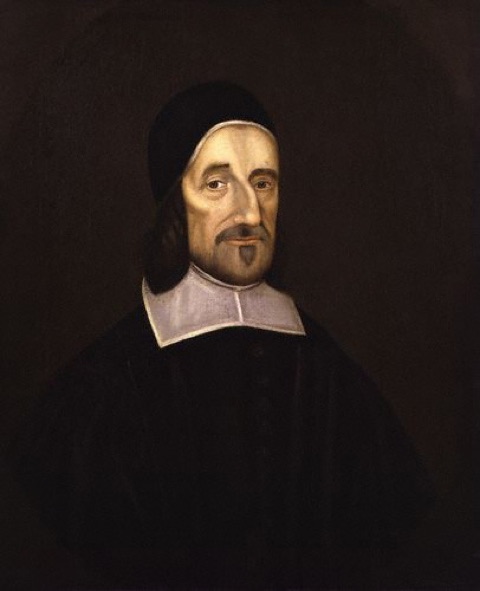
About the author
Richard Baxter
Richard Baxter (1615 to 1691 AD) was born at Rowton in Shropshire and was largely self-educated. He was ordained in 1638 and in 1641 settled at Kidderminster in Worcestershire, where for some nineteen years he preached and catechized household by household. During the Civil War he served as a chaplain in the Parliamentary army. A moderate who sought common ground among Presbyterians, Independents and moderate Episcopalians, he declined the bishopric of Hereford after the Restoration and was ejected from Kidderminster by the Act of Uniformity in 1662. He spent the rest of his life in London, writing and preaching when he could. In 1685 he was tried before Judge Jeffreys and imprisoned for nearly two years. He wrote over 160 books and died in 1691.