The 1886 book that launched Charlotte Mason's educational movement — a direct, unsentimental case that children are born persons, that the Gospels contain a clear code for raising them, and that the ordinary life of a household is where education actually happens.
A free account opens the whole library to read online, on your phone or at your desk. Open a book on one device and it is waiting at the same page on the next. The PDF and EPUB of every book are yours to keep, and audiobooks play in the same app.
250+ modernized editionsNot samples. The whole work, free.
Your place, on every devicePhone, tablet or desktop, same page.
131 audiobooksFrom $4.99 each, or all of them with a $50 gift.
Home Education is the first volume in Charlotte Mason's six-volume series on the philosophy of education. It began as a set of lectures delivered to parents in Bradford, England in 1886 and was published later that same year. Mason was writing at a moment when Victorian certainty about child-rearing was dissolving and parents were being pulled between older methods of strict discipline and a newer, more indulgent approach. She set out to give them something better than either: a deliberate method, grounded in both a theological account of what a child actually is and a practical understanding of how the body and mind work.
Mason's central claim is that children are born persons — not tablets to be written on, not twigs to be bent, not wax to be shaped. From that premise she builds the rest. The Gospels, she argues, contain an explicit code of education summed up in three negative commands: do not offend, do not despise, do not hinder the little ones. The early chapters work through what each of these means in practice. She then moves into the conditions of healthy mental activity — rest, nourishment, fresh air, exercise, change of occupation — and from there into habit formation, the training of the will, and the place of nature study, outdoor life, direct observation, and the reading of real books. Throughout, she pushes back against both the old Victorian sternness and the child-worship she saw replacing it.
For modern parents, the book reads as a direct challenge to most of how children are now raised. Mason's case that ordinary household life — meals, walks, bedtimes, conversations, the daily management of the nursery — is where education actually happens cuts against both the schooled-from-birth approach and the hands-off one. Her insistence that small children deserve the best of their parents' attention rather than the leftovers, that a mother's no must mean no, that habits formed in the nursery shape the adult who eventually emerges, and that the physical organ of the mind has to be fed and rested as carefully as any other organ, all still land. This modernized edition brings her Victorian prose into contemporary English while keeping her voice, her examples, and the unsparing directness that made her movement last over a century.
Free audiobook preview
Listen to the first 9 minutes
Home Education · Audiobook · 13 hr 55 min
0:00 / 9:24
Enjoying it? The full audiobook runs 13 hr 55 min. Listen in the Updated Works app on any device.
The educational outlook is rather uncertain and depressing, both at home and abroad. There are calls to make science a staple of education and to reform the teaching of Latin, modern languages, and mathematics. We hear that nature and handicrafts should be used to train the eye and hand, and that boys and girls must learn to write English and therefore must know something of history and literature. On the other hand, there are demands to make education more technical and utilitarian. These and similar calls for practical expedients are what we bring into the field. But we have no unifying principle, no definite aim; in fact, no philosophy of education. Just as a stream can rise no higher than its source, probably no educational effort can rise above the whole framework of thought that gives it birth. Perhaps this explains all the “fallings from us, vanishings,” failures, and disappointments that mark our educational record.
Those of us who have spent many years pursuing the benevolent and elusive vision of Education perceive that her approaches are governed by a law, and that this law has yet to be brought to light. We can discern its outlines, but no more. We know that it is pervasive: no part of a child’s home life or schoolwork lies beyond its reach. It is illuminating, too, showing the value, or lack of value, of a thousand systems and expedients. It is not only a light but also a measure, providing a standard against which everything, small and great, belonging to educational work must be tested.
The law is liberal, embracing whatever is true, honest, and of good report, and imposing no limitation or obstacle except where excess would cause harm. The path it indicates is continuous and progressive, with no transitional stage from cradle to grave, except that maturity takes up the regular self-direction for which immaturity has been trained. When we understand the law, we will doubtless find that certain German thinkers, Kant, Herbart, Lotze, and Froebel, are justified. As they say, it is “necessary” to believe in God; therefore, the knowledge of God is the principal knowledge and the chief end of education.
One further characteristic will enable us to recognize this perfect law of educational liberty when it becomes evident. It has been said that “The best idea which we can form of absolute truth is that it is able to meet every condition by which it can be tested.” We will expect this of our law: that it will meet every test of experiment and every test of rational investigation.
Since we have not received the tablets of our law, we fall back on Froebel or Herbart, or, if we belong to another school of thought, on Locke or Spencer. But we are not satisfied. A discontent has come over us; is it a divine discontent? Surely we would welcome a workable, effective philosophy of education as a deliverance from much perplexity. Before this great deliverance comes, many tentative efforts will probably be made, possessing more or less of the characteristics of a philosophy. Notably, they will have a central idea: a body of thought whose various members work together in living harmony.
Such a theory of education need not call itself a system of psychology. It must be in harmony with the currents of thought of its age. It must regard education as part of life, just as birth or growth, marriage or work are, rather than as an isolated compartment. It must leave the pupil connected to the world at many points of contact. Educators are already eager to establish such contact in several directions, but their efforts rest on an axiom here and an idea there. No broad, unifying foundation of thought supports the whole.
Fools rush in where angels fear to tread. The hope that there may be many tentative efforts toward a philosophy of education, and that all of them will bring us nearer to the great work, encourages me to launch one such attempt. The central thought, or rather body of thought, on which I build is the somewhat obvious fact that the child is a person, with all the possibilities and powers included in personality. Educational thinkers have developed some of the ideas growing from this nucleus from time to time. These ideas also exist vaguely in ordinary common sense, one notion here, another there.
One thesis, perhaps a new one, is that Education is the Science of Relations. It seems to me to solve the question of a curriculum by showing that education’s purpose is to bring a child into living contact with as much as possible of the life of nature and of thought. Add one or two keys to self-knowledge, and the educated young person goes out into the world with some understanding of self-management, some pursuits, and many vital interests.
My justification for venturing to offer a solution to the problem of education, however tentative and temporary, is twofold. For between thirty and forty years, I have worked without pause to establish a practical and philosophical theory of education. Also, each article of the educational faith I offer has been reached through inductive processes and has, I think, been verified by a long and wide-ranging series of experiments. Yet I offer the results of this long work with sincere hesitation. I know that many people working in this field are far more able and expert than I am: the “angels” who fear to tread, because the footing is so precarious!
But, if only to encourage others, I add a short synopsis of the educational theory advanced in the volumes of the Home Education Series. The treatment is incidental rather than systematic: a little here, a little there, as seemed most likely to meet the needs of parents and teachers as they arose. I should add that the various essays were prepared over a number of years for the use of the Parents’ Educational Union. My hope was that the Society might bear witness to a more or less coherent body of educational thought.
“The consequence of truth is great; therefore the judgment of it must not be negligent.”
Whichcote.
1. Children are born persons.
2. They are not born either good or bad, but with possibilities for good and evil.
3. The principles of authority on the one hand and obedience on the other are natural, necessary, and fundamental. But the following limitation applies.
4. These principles are limited by the respect owed to children’s personality. That personality must not be encroached on through fear or love, suggestion or influence, or excessive appeals to any one natural desire.
5. We are therefore limited to three educational instruments: the atmosphere of environment, the discipline of habit, and the presentation of living ideas.
6. The saying Education is an Atmosphere does not mean that a child should be isolated in a specially adapted and prepared “child environment.” Instead, we should take into account the educational value of the child’s natural home atmosphere, in both its people and its things, and let the child live freely in the conditions proper to that life. Bringing the child’s world down to a “child’s” level stunts the child.
7.Education is a Discipline means the discipline of habits formed deliberately and thoughtfully, whether habits of mind or body. Physiologists tell us that brain structure adapts to habitual lines of thought; that is, to our habits.
8. The saying Education is a Life implies the need for intellectual and moral nourishment as well as physical nourishment. The mind feeds on ideas, so children should have a generous curriculum.
9. But the mind is not a receptacle into which ideas must be dropped, each idea adding to an “apperception mass” of similar ideas. That is the theory on which the Herbartian doctrine of interest rests.
10. On the contrary, a child’s mind is no mere sac for holding ideas. Rather, if the comparison may be allowed, it is a spiritual organism with an appetite for all knowledge. Knowledge is its proper diet. The mind is equipped to deal with it and can digest and assimilate it as the body does food.
11. This difference is no quibble over words. The Herbartian doctrine places the burden of education on the teacher: preparing knowledge in enticing morsels and presenting them in the proper order. Children taught on this principle are in danger of receiving much teaching with little knowledge. The teacher’s axiom is, “What a child learns matters less than how the child learns it.”
12. But we believe that the normal child has mental powers suited to dealing with all knowledge appropriate to that child. We must therefore provide a full and generous curriculum, taking care only that the knowledge offered is vital: facts must not be presented without the ideas that give them meaning. From this conception comes the following principle.
13.Education is the Science of Relations. A child has natural relations with a vast number of things and thoughts. We must therefore provide training through physical exercises, nature, handicrafts, science and art, and many living books. We know that our business is not to teach the child everything about anything, but to help the child give full effect to as many as possible of
“Those first-born affinities That fit our new existence to existing things.”
14. Children should also be given two secrets of moral and intellectual self-management. We may call these the Way of the Will and the Way of the Reason.
15.The Way of the Will. Children should be taught:
(1) To distinguish between “I want” and “I will.”
(2) That the way to will effectively is to turn our thoughts away from what we desire but do not will.
(3) That the best way to turn our thoughts is to think of or do something quite different that is entertaining or interesting.
(4) That after a little rest in this way, the will returns to its work with renewed vigor.
(This aid to the will is familiar to us as diversion. Its function is to relieve us for a time from the effort of willing, so that we may “will” again with greater power. The use of suggestion, even self-suggestion, as an aid to the will should be discouraged, because it tends to stifle character and fix it in a mold. It seems that spontaneity is a condition of development, and that human nature needs the discipline of failure as well as success.)
16.The Way of the Reason. We should also teach children not to “lean” (too confidently) “unto their own understanding,” because reason’s function is to provide logical demonstration (a) of mathematical truth and (b) of an initial idea accepted by the will. In the first case, reason is perhaps an infallible guide. In the second, it is not always safe, because whether the initial idea is right or wrong, reason will confirm it with irrefutable proofs.
17. Therefore, as children become mature enough to understand this teaching, they should be taught that their chief responsibility as persons is to accept or reject initial ideas. To help them make this choice, we should give them principles of conduct and a wide range of knowledge appropriate to them.
These three principles (15, 16, and 17) should save children from some of the loose thinking and heedless action that cause most of us to live at a lower level than we need to.
18. We should allow no separation to develop between children’s intellectual and “spiritual” lives. We should teach them that the divine Spirit has constant access to their spirits and is their continual helper in all the interests, duties, and joys of life.
The Home Education Series takes its name from the title of the first volume. The name does not mean that the series deals wholly or principally with home education as opposed to school education.
Preface to the Fourth Edition
In this volume, I attempt to suggest to parents and teachers a method of education based on natural law and, in connection with it, to touch on a mother’s duties to her children. I venture to speak on this latter subject with the sincerest respect for mothers. I believe, in the words of a wise teacher of people, the Reverend Maurice, that “the woman receives from the Spirit of God Himself the intuitions into the child’s character, the capacity of appreciating its strength and its weakness, the faculty of calling forth the one and sustaining the other, in which lies the mystery of education, apart from which all its rules and measures are utterly vain and ineffectual.”
But I think that the more a mother possesses this special insight into her own children, the more she will feel her need for knowledge of the general principles of education, founded on the nature and needs of all children. Even the best of mothers will not receive this knowledge of the science of education from above. We do not often receive as a gift what we have the means to acquire through our own efforts.
I also venture to hope that teachers of young children may find this volume useful. The period between a child’s sixth and ninth years should be used to lay the foundation of a liberal education and the habit of reading for instruction. During these years, the child should enter the domain of knowledge in a good many directions, in a calm, sequential way. This cannot be achieved through the somewhat exciting medium of oral lessons. I hope teachers will at least find the approach from a new standpoint to the overfamiliar “subjects of instruction” appropriate for little children interesting and stimulating. Perhaps the methods indicated by this fresh standpoint will also offer helpful suggestions.
The particular purpose of this volume, as a member of the Home Education Series, is to show how the physiology of habit bears on education: why certain physical, intellectual, and moral habits are valuable assets to a child, and what can be done to form them. I acknowledge my debt to Dr. Carpenter’s Mental Physiology for the valuable teaching on habits contained in some two or three chapters of that work. I also renew my grateful thanks to the medical friends who have carefully and skillfully revised the parts of this work that rest on a physiological basis.
I should add that some twenty years ago, in 1885, most of this volume was delivered as “Lectures to Ladies.” The papers were originally published in that form in 1886, under the title still retained.
Lectures 7 and 8 and the appendix of the original volume have been transferred to other volumes of the series. The whole work has been very carefully revised, and much new material has been introduced, especially in Part 5, “Lessons as Instruments of Education.” That part now offers a fairly complete introduction to methods of teaching subjects suitable for children between the ages of six and nine.
The rest of the volume attempts to address the whole of education from infancy until the ninth year of life.
Charlotte Mason.
Scale How, Ambleside, 1905.
Part 1: Some Preliminary Considerations
One significant sign of the higher status educated women have gained is their growing desire to work. The world needs these women’s work. As education becomes more widespread, we will soon see all women who have the capacity to work joining the ranks of working women, with definite tasks and fixed hours. Their reward will be wages or, if they do not need to earn money, the pleasure and honor of doing useful work.
Children Are a Public Trust. The work that matters most to society is raising and teaching children. This certainly happens at school, but far more at home, because home influences do more than anything else to determine the future man’s or woman’s character and course in life. Being a parent is a great thing: no promotion or distinction compares with it. Parents with just one child may be nurturing someone who will become a blessing to the world.
But parents entrusted with such a responsibility are not free to say, “I can do whatever I please with what belongs to me.” Children should, in truth, be regarded less as personal property than as public trusts placed in their parents’ hands, so that parents may develop their potential to the fullest for society’s good. This responsibility is not divided equally between parents. The world’s future depends even more on today’s mothers than on its fathers, because mothers alone direct children’s early years, when they are most impressionable. This is why we so often hear of great men who had good mothers: mothers who raised their children themselves rather than handing their most serious duty over to people who were indifferent to it.
Mothers Owe Their Children “a Thinking Love.” “The mother is qualified,” says Pestalozzi, “and qualified by the Creator Himself, to become the principal agent in the development of her child; . . . and what is demanded of her is a thinking love. . . . God has given to your child all the faculties of our nature, but the grand point remains undecided: how shall this heart, this head, these hands, be employed? To whose service shall they be dedicated? A question the answer to which involves a future of happiness or misery to a life so dear to you. Maternal love is the first agent in education.”
We are becoming aware of our duties. As mothers become more highly educated and capable, they will doubtless feel more strongly that educating their children during the first six years of life is a task they can hardly entrust to anyone else. They will take it up as their profession, with the diligence, regularity, and punctuality that men bring to their professional work.
To understand what she is doing and come fully prepared to her work, a mother needs more than secondhand knowledge of educational theory. She also needs to understand the conditions of a child’s nature on which that theory rests.
Children’s Training Is “Dreadfully Defective.” “The training of children,” says Herbert Spencer in Education, “physical, moral, and intellectual, is dreadfully defective. And in great measure it is so, because parents are devoid of that knowledge by which this training can alone be rightly guided. What is to be expected when one of the most intricate of problems is undertaken by those who have given scarcely a thought to the principle on which its solution depends? For shoemaking or house-building, for the management of a ship or of a locomotive engine, a long apprenticeship is needful. Is it, then, that the unfolding of a human being in body and mind is so comparatively simple a process that anyone may superintend and regulate it with no preparation whatever?
“If not, if the process is, with one exception, more complex than any in nature, and the task of ministering to it one of surpassing difficulty, is it not madness to make no provision for such a task? Better sacrifice accomplishments than omit this all-essential instruction. . . . Some acquaintance with the first principles of physiology and the elementary truths of psychology is indispensable for the right bringing-up of children. . . . Here are the indisputable facts: that the development of children in mind and body follows certain laws; that unless these laws are in some degree conformed to by parents, death is inevitable; that unless they are in a great degree conformed to, there must result serious physical and mental defects; and that only when they are completely conformed to, can a perfect maturity be reached. Judge, then, whether all who may one day be parents should not strive with some anxiety to learn what these laws are.” Details of some books referred to in this volume appear in Appendix A.
How Parents Usually Proceed. A parent instinctively begins by thinking of his child as a blank tablet and making great resolutions about what he will write on it. Before long, traits of temperament appear, and the child develops little ways of his own. At first, every new expression of personality is a delightful surprise. We must always find it wonderful that an infant shows pleasure at the sight of his father, or that his face clouds in sympathy with his mother.
But the wonder wears off. By the time the child reveals himself as a complete human being like his parents, with affections, desires, and abilities, they have grown used to the fact. Perhaps he takes to his books as a duck takes to water, or to the games that will make a man of him. The parents’ original idea of doing everything for the child gradually fades. As soon as he shows that he has a way of his own, they encourage him to follow it. Father and mother find no greater delight than watching their child’s individuality unfold like a flower.
But, like Othello, the parents find their occupation gone. The more the child shapes his own course, the less they find to do beyond providing suitable nourishment, whether love, thought, or food and drink for his body. Here, we may observe, parents need only provide; the child knows well enough how to make use of what they give. Their chief concern is that everything they supply should be wholesome and nourishing, whether picture books, lessons, playmates, bread and milk, or a mother’s love. This is education as most parents understand it, with more food, more love, or more culture according to the parents’ character and circumstances. They leave their children alone, allowing human nature to develop along its own lines, modified by environment and heredity.
As far as it goes, nothing could be better for the child than this “masterly inactivity.” It is good to let him grow and help him grow according to his nature. As long as his parents do not interfere and spoil him, leaving him alone does much good and no very obvious harm. But this philosophy of “let him be” covers only part of the parents’ calling, and leaves its serious part untouched. It does not address the strenuous, unceasing efforts, guided by laws, that go into developing a human being to his fullest potential.
Nothing concerning a child is trivial. His seemingly foolish words and ways are full of meaning to those who understand them. We must study the infinitely great in the infinitely small. The open book of a little child’s thoughts reveals education’s vast possibilities and its proper direction.
A generation ago, a great teacher among us never tired of repeating that, in the Divine plan, “the family is the unit of the nation”: the family rather than the individual. The phrase has much to teach us, but this much is immediately apparent: the whole is greater than the part; it contains, owns, and governs the part. If this is so, children are the nation’s property. They are to be raised for the nation, in the way that best serves the nation, rather than according to individual parents’ whims. The law exists to punish evildoers and praise those who do well, so in practice parents have considerable freedom. Still, we should remember that children are a national trust. Their upbringing concerns everyone, including unmarried and childless people, whose part in the game is the rather dreary one of “watching.”
1. A Method of Education
Traditional Methods of Education. Parents have never needed more urgently to consider for themselves every aspect of education. Until now, children have mainly been raised according to traditional methods. Our ancestors’ experience is embodied in a vast number of educational maxims, passed from person to person. A few or many of these maxims make up each household’s educational code.
Yet we hardly grasp how completely advancing science is revolutionizing educational theory. The elders’ traditions have been tested and found inadequate. It will take a long time for the new school’s principles to become common knowledge. Meanwhile, parents must rely on their own resources. They absolutely must weigh principles and adopt a method of education for themselves.
For example, under the former code, a mother might occasionally use her slipper to good effect and without blame. Now, rightly or wrongly, the child’s person is held sacred, and inflicting pain for moral purposes is generally disapproved of.
Again, the old rule for children’s meals was, “The plainer the better, and let hunger supply the sauce.” Now, children’s food must be at least as nourishing and varied as their elders’. Appetite, the craving for particular kinds of food, was formerly treated as a vicious tendency to suppress. Within certain limits, it is now parents’ most trustworthy guide in planning their children’s diet.
The old order held that children should be trained to endure hardship. “I shall never make a sailor if I can’t face the wind and rain,” said a little fellow of five who had been taken out on a bitter night to see a torchlight procession. Though shaking with cold, he refused the shelter of a shed. Nowadays, the shed is everything: children must not be allowed to suffer from fatigue or exposure.
The old theory can be summed up this way: children should do as they are told, attend to their books, and enjoy pleasures as they come, when nothing stands in the way. Now, children’s pleasures tend to be given more importance than their duties.
Formerly, children were raised to submit to their elders. Now, their elders give way, and the world is arranged for children.
English people seldom go as far as the parents in the story in French Home Life. They arrived an hour late to a dinner party because their three-year-old daughter had asked them to undress and go to bed when she did. They could slip away only after she fell asleep. We do not go that far, but we are moving in that direction. How far are the new educational theories wise and humane, arising from more widespread knowledge of physiology and psychology? How far do they simply indulge the child worship to which we are all giving way? These questions cannot be settled hastily.
At any rate, it is fair to say that a parent who does not reasonably follow a thoroughly considered method of education fails, now more than ever, to meet his children’s rightful claims on him.
Method Is a Way to an End. Method implies two things: a way to an end, and step-by-step progress along that way. Following a method also implies an idea, a mental picture, of the end or goal to be reached. What do you intend education to accomplish in and for your child?
A method is also natural: easy, flexible, unobtrusive, and as simple as nature’s own ways, yet watchful, careful, present everywhere, and directing everything. With education’s end in view, method puts the most unlikely things to work toward that end. Yet it uses no more tedious machinery than the sun, which makes winds blow and waters flow simply by shining. A parent who sees his way to educating his child, which is precisely what method means, will use every circumstance of the child’s life almost without conscious intention. A method of education based on natural law is that easy and spontaneous. Whether the child eats or drinks, comes or goes, or plays, he is being educated all the time, though he is as unaware of it as he is of breathing.
There is always a danger that a method, a bonâ fide method, may degenerate into a mere system. The Kindergarten Method, for example, deserves its name. Generous-hearted educators conceived and perfected it to help the many-sided development of a living, growing, immensely complex human being. But what a miserable, rigid system it becomes in the hands of practitioners who do not understand it!
A System Is Easier Than a Method. A “system of education” is an attractive idea. In some respects, it is more attractive than a method, because it promises more definite, measurable results. A system can bring about certain developments by following specified rules. Shorthand, dancing, passing examinations, becoming a good accountant, or becoming a society woman can all be learned through systems.
A system consists of following rules until the habit of doing certain things or behaving in certain ways is established, and the skill is therefore acquired. This works so well in achieving precise results that it is no wonder people endlessly try to confine the whole field of education within a system’s limits.
If a human being were a machine, education could do no more than set him operating in prescribed ways. The educator’s work would simply be to adopt a sound working system or set of systems.
But the educator deals with a being who acts and develops for himself. The educator’s task is to guide and assist the development of that being’s latent good and the dispersal of his latent evil. It is to prepare the child to take his place in the world at his best, with every capacity for good within him developed into a power.
Although a system is highly useful as an instrument of education, a “system of education” is harmful. It produces only mechanical action instead of a living being’s vital growth and movement.
The different characteristics of a system and a method need to be pointed out because parents often let themselves be carried away by some plausible “system.” Its purpose is to produce development in one direction, whether in the muscles, memory, or reasoning ability. Parents then remain satisfied, as though that single development were a complete, well-rounded education. This ready satisfaction comes from human nature’s sluggishness. We find any definite scheme more agreeable than the constant watchfulness and unanticipated action required when a child’s entire existence is to serve as the means of his education.
But who is equal to an education so comprehensive and unceasing? A parent may be willing to undertake any definite work for his child’s sake. But always to provide for his benefit, always to arrange for circumstances to act on him for his good, is a god’s task, not a human being’s!
That objection is reasonable enough if we regard education as an endless series of separate efforts, each to be thought through and carried out on the spur of the moment. In fact, however, a few broad, essential principles cover the whole field. Once we fully grasp them, acting on them is as easy and natural as acting on our knowledge that fire burns and water flows. In this and the following chapters, I will try to present these few fundamental principles in their practical application. Meanwhile, let us consider one or two preliminary questions.
2. The Child’s Standing
The Child in Our Midst. First, let us consider the standing and nature of the little being entrusted to human parents. A tablet to write on? A twig to bend? Wax to mold? Very possibly, but he is much more: a being whose standing is altogether higher than ours, like a prince entrusted to the care of peasants. Listen to Wordsworth’s assessment of the child’s standing:
“Our birth is but a sleep and a forgetting: The soul that rises with us, our life’s star, Hath had elsewhere its setting, And cometh from afar; Not in entire forgetfulness, And not in utter nakedness, But trailing clouds of glory do we come From God, who is our home: Heaven lies about us in our infancy!
. . . . .
Thou, whose exterior semblance doth belie Thy soul’s immensity; Thou best philosopher, who yet dost keep Thy heritage; thou eye among the blind, That, deaf and silent, read’st the eternal deep, Haunted for ever by the eternal mind; Mighty Prophet! Seer blest! On whom those truths do rest, Which we are toiling all our lives to find; Thou, over whom thy immortality Broods like the day, a master o’er a slave, A presence which is not to be put by; Thou little child, yet glorious in the might Of heaven-born freedom, on thy being’s height”
And so it continues throughout that great ode, which, after the Bible, offers the deepest insight into the distinctive nature and standing of children. “Of such is the kingdom of heaven.” “Except ye become as little children ye shall in no case enter the kingdom of heaven.” “Who is the greatest in the kingdom of heaven?” “And He called a little child, and set him in the midst.” Here is the divine assessment of the child’s standing. Parents should ponder every statement about children in the Gospels, setting aside the idea that these sayings refer, first of all, to adults who have become like little children. We cannot discuss these profound sayings here, or all they may mean. But they seem to embrace far more than Wordsworth claims for children at his most sublime:
“Trailing clouds of glory do we come From God, who is our home.”
A Code of Education in the Gospels. Parents who have given little attention to this subject may also be surprised to find a code of education expressly laid down by Christ in the Gospels. It is summed up in three commandments. All three are negative, as though the chief requirement of adults is to do children no kind of harm: “Take heed that yeoffendnot,despisenot,hindernot, one of these little ones.”
These are the three educational laws of the New Testament. Examined separately, they seem to me to cover all the help we can give children and all the harm we can protect them from. In other words, they cover everything involved in training up a child in the way he should go. Let us consider these three great laws as prohibitions, to prepare the ground for considering a method of education. Once we establish what we may not do, we are much better able to see what we may do and must do. In fact, however, the positive is included in the negative: what we must do for a child is included in what we are forbidden to do to his harm.
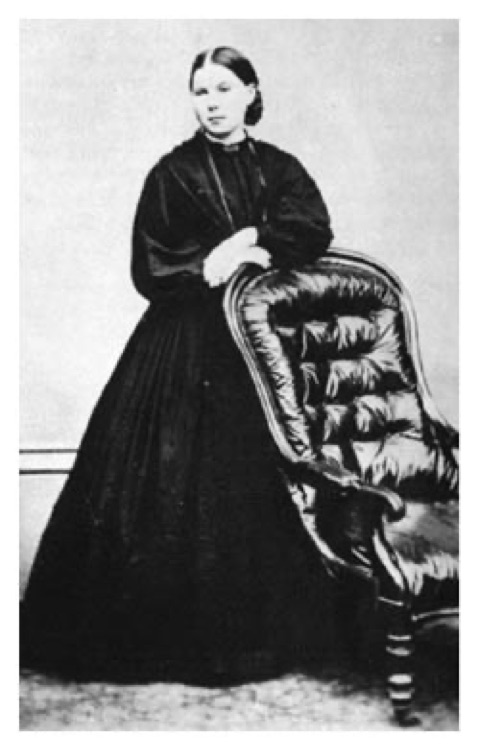
Charlotte Mason (1842–1923) was an English teacher and writer who founded the educational movement that still bears her name. Orphaned in her teens, she trained as a teacher in London and spent years in village schools before beginning to lecture to parents on the philosophy of child-rearing. Her lectures in Bradford were published in 1886 as Home Education, which launched what became the Parents' National Educational Union and, in 1892, her teacher-training college in Ambleside. Mason developed her philosophy across six volumes over nearly forty years. Her core conviction — that children are born persons, not blank slates or little animals to be trained — continues to shape home-schooling and classical education today.
“Updated Works has been an incredible blessing to my Christian life and ministry… remarkably faithful to the original authors while making these timeless treasures understandable for modern readers.”