Modernized edition · Full text · Free PDF/EPUB
Sermons on Various Important Subjects in Modern English
Summary
- Published
- 1780 AD as a collection; the dated sermons in it run from 1734 to 1752
- Public occasions
- Installation of Samuel Buel (1746), funeral of David Brainerd (1747), death of John Stoddard (1748), Synod of New York (1752)
- Length
- 170,000 words · 11 hours
- Collection
- Puritan
- Topics
- TheologyConversionPrayerSin
What is Sermons on Various Important Subjects about?
Sermons on Various Important Subjects is a collection of twenty-eight sermons by Jonathan Edwards, issued in 1780. Preached at Northampton and on public occasions, they treat dependence on God, spiritual light, true and false grace, seeking salvation, prayer, the eternity of hell, the Christian Sabbath, God's sovereignty, free pardon and church discipline.
Read the full summary (9 points, quotes, key themes)Show less
How the argument unfolds
- 01
Dependence and light (Sermons 1 and 2). The redeemed have all their good of God, through God and in God; saving light is a God-given sense of the excellence of revealed truth.
- 02
Three public occasions (Sermons 3 to 5). Ministers woo the church for Christ, Brainerd's soul goes to be with Christ, and Stoddard is mourned as a strong rod broken.
- 03
Grace and the devils (Sermon 6). Knowledge, orthodoxy, terror and conviction are found in devils too; only a sight of God's holy beauty marks true grace.
- 04
Seeking and deciding (Sermons 7 and 8). Noah's costly work on the ark models the work of seeking salvation, and the waverers at Carmel are told to choose.
- 05
Unbelief and backsliding (Sermons 9 to 12). Unbelievers count Christ's glory as nothing, the flight from Sodom allows no backward look, and Scripture outweighs a visitor from the dead.
- 06
Prayer and judgment (Sermons 13 to 17). Hypocrites slowly abandon secret prayer, and the wicked can neither escape, relieve nor endure a punishment that never ends.
- 07
Peace and the Sabbath (Sermons 18 to 21). Christ's legacy of peace outshines worldly inheritances, and the first day of the week is the Christian Sabbath.
- 08
God above all (Sermons 22 to 25). The godly prefer God above all, submit to his sovereignty, plead great guilt for pardon and pray to the God who hears.
- 09
Discipline and the end of the wicked (Sermons 26 to 28). Excommunication guards the church and seeks the offender's recovery; the fruitless are useful only in their destruction.
Notable images & quotes
- The taste of honey. Spiritual light is like taste: one may judge honey sweet by report, but only tasting gives the sense of its sweetness.
- The door of the ark. Noah's neighbors beat on the shut door of the ark as the rain began, pleading old acquaintance, until the water swept them away.
- Abraham's servant. The faithful minister is like the servant who won and adorned Rebekah for his master's son, never for himself.
- The spider in the fire. To show how vain it is to brace against God's wrath: “You have often seen a spider or some other loathsome insect dropped into the middle of a hot fire, and you have watched how instantly it gives way to the flames.”
- The barren vine. Vine wood is useless for building, so a fruitless vine is worth less than any forest tree and fit only for fuel.
Key themes
- Dependence on God. In redemption God is giver, means and gift together: “Indeed, God is both the purchaser and the price.”
- The beauty of holiness. The devil knows every attribute of God yet is blind to his loveliness: “He sees no more of it than a person born totally blind sees of colors.”
- Prayer and practice. Secret prayer and willful sin cannot live together for long: “Sinning and praying do not get along together.”
- God's sovereignty. The mystery in God's ways is no ground for complaint, since “If we could comprehend him, he would not be God.”
Why read it today
Read it to hear Edwards in his own pulpit. Each sermon is built on a text, a doctrine and an application, and together they show how he pressed his theology on farmers, young people, ministers and magistrates.
It also records his ministry: a charge to a young pastor, Brainerd's dying words, a tribute to a magistrate in wartime, and warnings preached while an awakening spread through his town and the towns around it.
Reader questions (9)Hide the questions
Questions about Sermons on Various Important Subjects
Is there a modern English version of Sermons on Various Important Subjects?
Yes. This is Sermons on Various Important Subjects by Jonathan Edwards in modern English. The language is modernized and the author's order and argument are kept. The full modernized text is free to read on this page.
Can I read Sermons on Various Important Subjects online for free?
Yes. The complete text of this modern English edition is on this page, with no sign-up or paywall.
Is there a free PDF of Sermons on Various Important Subjects?
Yes. The PDF and EPUB of this edition are free with an Updated Works account. Sign in with Google or an email link; no card is needed.
What is Sermons on Various Important Subjects by Jonathan Edwards about?
It sets out how a sinner is saved and how a saint lives, moving from grace and true religion, through warnings to the unconverted and the doctrine of hell, to prayer, the Sabbath, God's sovereignty, pardon and church discipline.
When were these sermons preached and published?
The collection appeared in 1780, after Edwards's death. Its dated sermons run from 1734, when A Divine and Supernatural Light was printed at hearers' request, to 1752, when he addressed the Synod of New York.
Who were David Brainerd and John Stoddard?
Brainerd was a missionary to the Indians who died at Northampton in 1747 in his thirtieth year. Stoddard was a Northampton judge and colonel, son of Edwards's predecessor Solomon Stoddard, who died at Boston in 1748.
Does Edwards think strong feelings or terrors prove conversion?
No. Devils feel terror, longing and a sense of God's majesty, so none of these is a sure sign. He praises Brainerd for rejecting impulses and imagined sights.
Why does Edwards defend Sunday rather than Saturday?
The fourth commandment requires one day in seven without fixing which. Christ rose, appeared and sent the Spirit on the first day, the apostles' churches met on it, and the church has always kept it as the Lord's day.
Should the unconverted pray, according to Edwards?
Yes. Lack of faith does not cancel a plain command, and God sometimes hears even the wicked, as he heard Nineveh and Ahab, and uses such prayers to prepare sinners for mercy.
Sermons on Various Important Subjects in Modern English · Full text
Sermon 1: God Glorified in Man’s Dependence
“That no flesh should glory in his presence. But of him are ye in Christ Jesus, who of God is made unto us wisdom, and righteousness, and sanctification, and redemption: that, according as it is written, He that glorieth, let him glory in the Lord” (1 Cor 1:29-31).
The Christians to whom the apostle Paul addressed this letter lived in a part of the world where human wisdom enjoyed a high reputation. As the apostle observes in verse 22 of this chapter, “The Greeks seek after wisdom.” Corinth was not far from Athens, which had been for many ages the most famous seat of philosophy and learning in the world.
Paul therefore reminds them how God, through the gospel, destroyed their wisdom and brought it to nothing. With all their learning, the Greek scholars and great philosophers did not know God. They could not discover the truth in divine things. After they had done their utmost without success, it pleased God at last to reveal himself through the gospel, which they regarded as foolishness. He “chose the foolish things of the world to confound the wise, and the weak things of the world to confound the things which are mighty, and the base things of the world, and things that are despised, yea, and things which are not, to bring to naught the things that are.” In our text, the apostle tells them why he did this: “That no flesh should glory in his presence,” etc.
In these words we may observe two things.
1. We see what God aims at in ordering the work of redemption: that man should never boast in himself, but in God alone. “That no flesh should glory in his presence … that, according as it is written, He that glorieth, let him glory in the Lord” (1 Cor 1:29, 31).
2. We see how this goal is achieved in the work of redemption, namely, through the absolute and immediate dependence that people have on God for all their good in that work.
(1) All the good they have is in and through Christ: “He is made unto us wisdom, righteousness, sanctification, and redemption” (1 Cor 1:30). All the good of a fallen and redeemed creature is included in these four blessings, and it could not be better divided than into them. Yet Christ is each of them to us, and we have none of them in any other way than in him.
He is made of God unto us wisdom. In him are all the proper good and true excellence of the understanding. Wisdom was something the Greeks highly prized, yet Christ is the true light of the world. Through him alone true wisdom is imparted to the mind.
It is in and by Christ that we have righteousness. By being in him we are justified, our sins are pardoned, and we are received as righteous into God’s favor.
It is by Christ that we have sanctification. In him we possess true excellence of heart as well as of understanding, and he is made to us both inherent and imputed righteousness.
It is by Christ that we have redemption, that is, actual deliverance from all misery and the gift of all happiness and glory. Thus we have all our good by Christ, who is God.
(2) Our dependence on God for all our good also appears in this: God is the one who has given us Christ so that we might receive these benefits through him. “He of God is made unto us wisdom, righteousness,” etc.
(3) It is of God that we are in Christ Jesus, come to have a share in him, and so receive the blessings he is made to us. God is the one who gives us the faith by which we embrace Christ.
Thus this verse reveals our dependence on each person of the Trinity for all our good. We depend on Christ, the Son of God, since he is our wisdom, righteousness, sanctification, and redemption. We depend on the Father, who has given us Christ and made him to be these things for us. And we depend on the Holy Spirit, for it is of him that we are in Christ Jesus. It is the Spirit of God who gives us faith in Christ, by which we receive him and embrace him.
Doctrine
God is glorified in the work of redemption because the redeemed have so absolute and universal a dependence on him.
Here I intend to show two things: first, that the redeemed have an absolute and universal dependence on God for all their good; and second, that God is thereby exalted and glorified in the work of redemption.
1. The Absolute and Universal Dependence of the Redeemed on God
There is an absolute and universal dependence of the redeemed on God. The very nature and design of our redemption make the redeemed directly, immediately, and entirely dependent on God in everything. They depend on him for all things, and they depend on him in every way.
There are three ways one being can depend on another for its good, and the redeemed of Jesus Christ depend on God in all three. They have all their good of him, they have all through him, and they have all in him. Because he is the cause and source from which all their good comes, it is of him. Because he is the medium by which it is obtained and conveyed, they have it through him. And because he is the good itself that is given and conveyed, it is in him. In all these respects, those redeemed by Jesus Christ depend directly and entirely on God for everything.
1. The redeemed have all their good of God. God is the great author of it. He is not only its first cause, but its only proper cause.
It is of God that we have our Redeemer, for God has provided a Savior for us. Jesus Christ is of God not only in his person, as the only-begotten Son of God, but also in his relation to us and in his office as Mediator. He is God’s gift to us. God chose and anointed him, appointed him his work, and sent him into the world. Just as God is the one who gives the Savior, so God is the one who accepts him. He provides the purchaser, and he supplies the thing purchased.
It is of God that Christ becomes ours, and that we are brought to him and united with him. It is of God that we receive faith to embrace him and gain a share in him. “For by grace ye are saved, through faith; and that not of yourselves, it is the gift of God” (Eph 2:8).
It is of God that we actually receive all the benefits Christ has purchased. God is the one who pardons, justifies, and delivers us from going down to hell. When the redeemed are justified, they are received into his favor. In the same way, God delivers us from the dominion of sin, cleanses us from our filthiness, and transforms us from our deformity.
It is of God that the redeemed receive all their true excellence, wisdom, and holiness. This is true in two ways. First, the Holy Spirit, by whom these things are immediately worked in us, comes from God, proceeds from him, and is sent by him. Second, the Holy Spirit himself is God, and by his operation and indwelling, the knowledge of God and divine things, a holy disposition, and every grace are given and sustained.
Even though God uses means in giving grace to human souls, it is still of God that we have these means of grace, and he alone makes them effective. It is of God that we have the Holy Scriptures, for they are his word. It is of God that we have gospel ordinances, and their effectiveness depends on the immediate influence of his Spirit. Ministers of the gospel are sent by God, and all their sufficiency comes from him. “We have this treasure in earthen vessels, that the excellency of the power may be of God, and not of us” (2 Cor 4:7). Their success depends entirely and absolutely on God’s immediate blessing and influence.
(1) The redeemed have all from the grace of God. It was out of pure grace that God gave us his only-begotten Son.
This grace is great in proportion to the excellence of what is given. The gift was infinitely precious because it was a person infinitely worthy, a person of infinite glory, and a person infinitely near and dear to God.
This grace is great in proportion to the benefit given to us in him. The benefit is doubly infinite: in him we are delivered from an infinite misery, because it is eternal, and we also receive eternal joy and glory.
This grace in giving this gift is great in proportion to the unworthiness of those who receive it. Instead of deserving such a gift, we deserved infinite wrath at God’s hands.
This grace is also great according to the manner of giving, that is, in proportion to the humiliation and cost of the method and means by which a way was made for us to receive the gift. God gave him to live among us. He gave him to us incarnate, in our own nature, and sharing our weaknesses, though without sin. He gave him to us in a lowly and afflicted condition, and not only that, but slain, so that he might be a feast for our souls.
The grace of God in giving this gift is completely free. God was under no obligation to give it. He could have rejected fallen humanity, just as he rejected the fallen angels. We never did anything to merit it. It was given while we were still enemies, before we had even repented. It sprang from the love of God, who saw no excellence in us to attract his favor, and it was given with no expectation of ever being repaid.
It is also from pure grace that the benefits of Christ are applied to particular individuals. Those who are called and sanctified must attribute it solely to the good pleasure of God’s goodness, by which they are set apart. He is sovereign and has mercy on whom he will have mercy.
Man now has a greater dependence on the grace of God than he had before the fall. He depends on God’s free goodness for far more than he did then. Before the fall, man depended on God’s goodness to grant the reward of perfect obedience, for God was not obligated to promise and bestow that reward. Now, however, we depend on the grace of God for much more. We need grace not only to grant us glory, but to deliver us from hell and eternal wrath. Under the first covenant we depended on God’s goodness to give us the reward of righteousness, and we still do. Yet now we also need God’s free and sovereign grace to give us that righteousness, to pardon our sin, and to release us from its guilt and infinite ill desert.
Just as we depend on God’s goodness for more now than under the first covenant, so we depend on a much greater, freer, and more wonderful goodness. We now depend more fully on God’s sovereign, uncompelled good pleasure.
In our first state we depended on God for holiness, since we received our original righteousness from him. Yet holiness was not then given in the same way of sovereign good pleasure as it is now. Man was created holy because it was fitting for God to create all his rational creatures holy. It would have dishonored the holiness of God’s nature to make an intelligent creature unholy. Now, however, when a fallen person is made holy, it comes from pure grace resting solely on God’s sovereign will. God could withhold holiness from fallen creatures forever if he chose, without dishonoring any of his perfections.
Moreover, we are not only genuinely more dependent on the grace of God, but our dependence is far more visible. Our own inadequacy and helplessness are far more obvious in our fallen, ruined condition than they were before we became sinful or miserable. We are more visibly dependent on God for holiness because we are first sinful and utterly polluted, and afterward made holy. The production of the effect is unmistakable, and its origin in God is more evident. If man had always been holy, it would not be so obvious that holiness did not belong to him by necessity, as an inseparable quality of human nature.
In the same way, we are more visibly dependent on free grace for God’s favor, because we are first justly the objects of his displeasure and afterward received into favor. We are more visibly dependent on God for happiness, because we are first miserable and afterward happy. Grace is more clearly free and unmerited because we have no excellence at all to merit anything, even if merit could exist in creaturely excellence. Not only do we lack any true excellence, we are full of and completely defiled by what is infinitely hateful. All our good is more plainly from God because we are first naked and completely destitute of any good, and afterward enriched with every good.
(2) We receive all from the power of God. Scripture often speaks of man’s redemption as a work of wonderful power as well as grace. God’s great power shines in lifting a sinner out of his low condition, from the depths of sin and misery, to such an exalted state of holiness and happiness. “And what is the exceeding greatness of his power to us-ward who believe, according to the working of his mighty power” (Eph 1:19).
We depend on God’s power at every step of our redemption. We depend on his power to convert us, to give us faith in Jesus Christ, and to impart the new nature. This is a work of creation. “If any man be in Christ, he is a new creature” (2 Cor 5:17). “We are created in Christ Jesus” (Eph 2:10). A fallen creature cannot attain true holiness except by being created anew. “And that ye put on the new man, which after God is created in righteousness and true holiness” (Eph 4:24).
It is also a raising from the dead. “Wherein also ye are risen with him through the faith of the operation of God, who hath raised him from the dead” (Col 2:12-13). Indeed, it is a more glorious work of power than mere creation or raising a dead body to life, because the result achieved is greater and more excellent. The holy, happy existence and spiritual life produced in conversion are far greater and more glorious than mere physical existence and life. Furthermore, the condition from which the change takes place (a death in sin, a total corruption of nature, and depths of misery) is far more distant from the state attained than mere physical death or nonexistence.
It is by God’s power as well that we are preserved in a state of grace. “Who are kept by the power of God through faith unto salvation” (1 Pet 1:5). Just as grace comes from God at the beginning, so it comes from him continually and is maintained by him, just as light in the atmosphere comes from the sun all day long, and not merely at the first dawn or sunrise.
People depend on God’s power for every exercise of grace and for carrying that work forward in the heart: for subduing sin and corruption, strengthening holy principles, and enabling them to bear fruit in good works. We depend on divine power to bring grace to perfection, making the soul completely lovely in Christ’s glorious likeness and filling it with satisfying joy and blessedness. We also depend on that power to raise the body to life in a perfected state, making it a fitting home and instrument for a soul so perfected and blessed. These are the most glorious works of God’s power seen in the whole series of his acts toward his creatures.
Man depended on God’s power in his original state, yet he depends on his power even more now. He needs God’s power to do more for him, and he relies on a more wonderful exercise of that power. Making man holy at the first was an effect of God’s power, yet it is far more remarkable now because so much opposition and difficulty stand in the way. It is a more glorious display of power to make holy what was so depraved and enslaved to sin than to give holiness where nothing contrary existed before. It is a more glorious work of power to rescue a soul from the devil and the powers of darkness, bringing it into a state of salvation, than to bestow holiness where there was no prior grip or resistance. “When a strong man armed keepeth his palace, his goods are in peace; but when a stronger than he shall come upon him, and overcome him, he taketh from him all his armor, wherein he trusted, and divideth his spoils” (Luke 11:21-22).
In the same way, upholding a soul in grace and holiness and carrying it forward to glory is a far more glorious work of power than keeping man from falling at first. Back then, Satan had no foothold in man; now, so much remaining sin resists inside the heart, and Satan opposes with all his might. Thus we have seen how the redeemed depend on God for all their good, in that they have all of him.
2. The redeemed also depend on God for everything because they have all through him. God is the medium of our good as well as its author and fountain. Everything we receive (wisdom, the pardon of sin, deliverance from hell, acceptance into God’s favor, grace and holiness, true comfort and happiness, eternal life and glory) comes from God through a Mediator. And this Mediator is God himself. We depend absolutely on this Mediator as the one through whom we receive everything.
Here, then, is another way we depend on God for all good. God not only gives us the Mediator, accepts his mediation, and out of his power and grace grants the blessings the Mediator purchased, but the Mediator himself is God.
Our blessings come to us by purchase. That purchase is made from God, the blessings are bought from him, and God gives the purchaser. Yet not only that: God himself is the purchaser. Indeed, God is both the purchaser and the price. Christ, who is God, purchased these blessings for us by offering up himself as the price of our salvation. He purchased eternal life by the sacrifice of himself. “He offered up himself” (Heb 7:27). And again, “He hath appeared to take away sin by the sacrifice of himself” (Heb 9:26). True, it was his human nature that was offered, yet it belonged to the same person as the divine nature, and therefore the price was infinite.
Because we have our good through God in this way, we depend on him in a respect that man did not in his original state. Back then, man was to obtain eternal life through his own righteousness, so he depended partly on something within himself. After all, we depend on the channel through which we receive good as well as on the source from which it comes. Even though the righteousness man relied on then came from God, it was still his own, inherent in himself, so his dependence was not so immediately on God.
Now, however, the righteousness we depend on is not in ourselves, but in God. We are saved through the righteousness of Christ. He is made unto us righteousness. Therefore he is prophesied of in Jeremiah 23:6 under the name “the Lord our righteousness.” Because the righteousness by which we are justified is the righteousness of Christ, it is the righteousness of God. “That we might be made the righteousness of God in him” (2 Cor 5:21). Thus in redemption we have all things not only of God, but by and through him. “But to us there is but one God, the Father, of whom are all things, and we in him; and one Lord Jesus Christ, by whom are all things, and we by him” (1 Cor 8:6).
3. The redeemed have all their good in God. We not only receive it of him and through him, but it consists in him. He himself is all our good.
The good of the redeemed is either objective or inherent. By their objective good, I mean the external object in whose possession and enjoyment they are happy. Their inherent good is the excellence or pleasure within the soul itself. In both respects, the redeemed have all their good in God. In other words, God himself is all their good.
(1) The redeemed have all their objective good in God. God himself is the great good that redemption brings them to possess and enjoy. He is the highest good and the sum of all the good Christ purchased.
God is the inheritance of the saints and the portion of their souls. He is their wealth and treasure, their food, their life, their dwelling place, their ornament and crown, and their everlasting honor and glory. They have no one in heaven but God. He is the great good to which the redeemed are received at death and to which they will rise at the end of the world.
The Lord God is the light of the heavenly Jerusalem. He is the “river of the water of life” that flows, and “the tree of life that grows, in the midst of the paradise of God.” The glorious perfections and beauty of God will forever delight and occupy the minds of the saints, and the love of God will be their everlasting feast. The redeemed will indeed enjoy other things, including the angels and one another. Yet whatever gives them delight and happiness in the angels, in one another, or in anything else will be what they see of God in them.
(2) The redeemed have all their inherent good in God. Inherent good is twofold: it is either excellence or pleasure. The redeemed not only derive these from God as their cause, but possess them in him.
They have spiritual excellence and joy by a kind of participation in God. They are made excellent by a sharing of God’s own excellence, as God places his own beauty (his lovely likeness) upon their souls. They are made partakers of the divine nature, that is, the moral image of God (2 Pet 1:4). They are holy because they are made partakers of God’s holiness (Heb 12:10). The saints are beautiful and blessed through the imparting of God’s holiness and joy, just as the moon and planets shine with the light of the sun. The believer has spiritual joy and pleasure by a kind of outpouring of God upon the soul. In these things the redeemed have communion with God: they share both with him and in him.
The saints receive both their spiritual excellence and their blessedness through the gift of the Holy Spirit and his indwelling. These blessings are not merely caused by the Holy Spirit; they exist in him as their living principle. When the Holy Spirit comes to dwell in the soul, he becomes a vital principle within it. Acting in, upon, and with the soul, he becomes a fountain of true holiness and joy, just as a spring produces water by pouring itself forth. “But whosoever drinketh of the water that I shall give him, shall never thirst; but the water that I shall give him, shall be in him a well of water springing up into everlasting life” (John 4:14). Compare this with John 7:38-39: “He that believeth on me, as the Scripture hath said, out of his belly shall flow rivers of living water; but this spake he of the Spirit, which they that believe on him should receive.”
The sum of what Christ has purchased for us is that spring of water described in the first passage and those rivers of living water described in the second. Likewise, the sum of the blessings the redeemed will receive in heaven is the river of the water of life flowing from the throne of God and of the Lamb (Rev 22:1). No doubt this signifies the very same thing as the rivers of living water explained in John 7:38-39, which is elsewhere called the “river of God’s pleasures.”
Here lies the fullness of good that the saints receive from Christ. By partaking of the Holy Spirit, they share in Christ’s fullness. God has given him the Spirit without measure, and from his fullness we receive grace upon grace. This is the sum of the saints’ inheritance. For that reason, the small portion of the Holy Spirit that believers possess in this world is called the pledge, or earnest, of their inheritance. “Who hath also sealed us, and given us the earnest of the Spirit in our hearts” (2 Cor 1:22). And again, “Now he that hath wrought us for the self-same thing, is God, who also hath given unto us the earnest of the Spirit” (2 Cor 5:5). And elsewhere, “Ye were sealed with that holy Spirit of promise, which is the earnest of our inheritance, until the redemption of the purchased possession” (Eph 1:13-14).
Scripture speaks of the Holy Spirit and “good things” as one and the same, as though the Spirit of God imparted to the soul contained every good thing. “How much more shall your heavenly Father give good things to them that ask him?” (Matt 7:11). In Luke 11:13 it reads, “How much more shall your heavenly Father give the Holy Spirit to them that ask him?”
This is the sum of the blessings Christ died to secure and the great subject of the gospel promises. “He was made a curse for us, that we might receive the promise of the Spirit through faith” (Gal 3:13-14). The Spirit of God is the great promise of the Father. “Behold, I send the promise of my Father upon you” (Luke 24:49). Therefore the Spirit of God is called “the Spirit of promise” (Eph 1:13). As soon as Christ finished the work of our redemption, he received this promised gift into his hands to bestow on all whom he had redeemed. “Therefore being by the right hand of God exalted, and having received of the Father the promise of the Holy Ghost, he hath shed forth this, which ye both see and hear” (Acts 2:33).
Thus all the holiness and happiness of the redeemed are in God. They consist in the imparting, indwelling, and working of the Spirit of God. Holiness and happiness are the fruit, both now and forever, because God dwells in them and they dwell in God.
In this way God has given us the Redeemer, and through him our good is purchased. God is the Redeemer and the price, and he is also the good that was purchased. Everything we have is of God, through him, and in him. “For of him, and through him, and to him” (or “in him”) “are all things” (Rom 11:36). The very same Greek word translated to him here is translated in him in 1 Corinthians 8:6.
2. How This Dependence Glorifies God
God is glorified in the work of redemption by this very means: by giving the redeemed so great and universal a dependence on him.
1. People have all the greater reason and obligation to notice and acknowledge God’s perfections and all-sufficiency. The more a creature depends on God’s perfections and deals directly with them, the greater reason he has to pay attention to them. The more anyone depends on God’s power and grace, the greater occasion he has to recognize that power and grace. The greater and more immediate our dependence on divine holiness, the more reason we have to notice and acknowledge it. And the more absolute our dependence on the divine perfections belonging to each person of the Trinity, the more occasion we have to behold and acknowledge the divine glory of each one.
Whatever we are most deeply involved with naturally commands our notice. Dependence is the kind of involvement that especially compels attention and reflection. We easily overlook things we do not greatly depend on, yet we can hardly fail to pay attention to what we depend on heavily. Because we depend so greatly on God and his perfections in so many respects, he and his glory are placed directly before our eyes, whichever way we turn.
We have all the more reason to recognize God’s all-sufficiency when all our sufficiency comes from him in every way. We have greater occasion to contemplate him as an infinite good and the fountain of all good. Such dependence on God demonstrates his all-sufficiency. The greater the creature’s dependence on God, the more clearly the creature’s own emptiness appears. And the greater the creature’s emptiness, the greater must be the fullness of the Being who supplies him.
Having everything of God displays the fullness of his power and grace. Having everything through him displays the fullness of his merit and worthiness. Having everything in him demonstrates his fullness of beauty, love, and happiness. Because the redeemed depend so completely on God, they have not only greater reason, but also greater obligation, to contemplate and acknowledge his glory and fullness. How unreasonable and ungrateful we would be if we failed to acknowledge the sufficiency and glory on which we depend absolutely, immediately, and universally!
2. This dependence demonstrates how great God’s glory is when compared with the creature’s. Because the creature depends wholly and universally on God, it becomes clear that the creature is nothing and God is everything. It becomes clear that God is infinitely above us, and that his strength, wisdom, and holiness are infinitely greater than ours.
No matter how great and glorious a creature perceives God to be, if he does not feel the vast difference between God and himself, so as to see how great God’s glory is compared with his own, he will not be inclined to give God the glory due to his name. If a creature puts himself on a level with God in any respect, or lifts himself up as any kind of rival to him, he may still think that those at a greater distance owe God high honor and deep reverence, yet he will not feel that such honor is owed by him. The more people exalt themselves, the less inclined they will be to exalt God.
If we accept the Scriptures as a revelation of God’s mind, it is surely God’s aim in ordering redemption that God should appear full and man empty in himself, that God should appear as everything and man as nothing. God’s declared purpose is that no one should “glory in his presence,” which implies that his purpose is to advance his own comparative glory. The more man “glories in God’s presence,” the less glory is given to God.
3. By arranging that the creature should have such an absolute and universal dependence on God, God ensures that he has our whole souls and becomes the object of our undivided devotion.
If we depended partly on God and partly on something else, our devotion would be divided among the different things we relied on. That would happen if we depended on God for only part of our good, and on ourselves or some other being for the rest. It would also happen if we received our good from God, yet through someone who was not God, and if that good consisted in something distinct from both. Then our hearts would be divided between the good itself, the one from whom we received it, and the one through whom it came.
Now, however, there is no occasion for such division. God is not only the one from whom we have all good, he is also the one through whom we have it, and he is the very good itself that we receive from him and through him. Therefore, whatever draws our love and devotion points directly to God, and everything unites in him as its center.
Application
1. We may observe here the marvelous wisdom of God in the work of redemption. God has turned humanity’s emptiness and misery, the low, lost, and ruined condition into which we sank through the fall, into an occasion for advancing his own glory all the more. He has done this in many ways, and especially by bringing about a far more universal and visible dependence of man on God.
Even though God is pleased to lift us out of that dismal abyss of sin and sorrow into which we fell, and to exalt us exceedingly in excellence, honor, glory, and blessedness, the creature still has nothing of its own to boast in. All the glory clearly belongs to God. Everything rests in a pure, absolute, and divine dependence on the Father, Son, and Holy Spirit. Each person of the Trinity is equally glorified in this work, for the creature depends absolutely on each one for everything: all is of the Father, all is through the Son, and all is in the Holy Spirit. Thus God appears in the work of redemption as all in all. It is fitting that the one who alone is God, besides whom there is no other, should be the Alpha and Omega, the first and the last, the all and the only one, in this work.
2. From this it follows that any doctrines and theological systems that oppose this absolute and universal dependence on God detract from his glory and cut across the design of our redemption.
Such are all systems that put the creature in God’s place in any of the respects we have considered, lifting man into the place of the Father, the Son, or the Holy Spirit in anything belonging to our redemption. They may allow that the redeemed depend on God in some way, yet they deny a dependence that is truly absolute and universal. They admit an entire dependence on God for some things, but not for others.
They admit that we depend on God for giving and accepting a Redeemer, yet they deny an absolute dependence on him for gaining a share in that Redeemer. They admit an absolute dependence on the Father for giving his Son and on the Son for accomplishing redemption, yet not an equally complete dependence on the Holy Spirit for conversion, for being united to Christ, and thus for gaining a title to his benefits.
They admit a dependence on God for the means of grace, yet not an absolute dependence on him for the fruit and success of those means. They admit a partial dependence on God’s power for obtaining and practicing holiness, yet not a pure dependence on God’s sovereign, uncompelled grace. They admit a dependence on free grace for acceptance into God’s favor so far as it is without strict merit, yet not as being completely unmoved and unattracted by any excellence in us. They admit a partial dependence on Christ as the one through whom we have life, as having purchased new terms of life, yet they still claim that the righteousness through which we obtain life is inherent in ourselves, just as under the first covenant.
Whatever system contradicts our complete dependence on God for everything, and our having everything of him, through him, and in him, clashes with the design and whole character of the gospel. It robs the gospel of what God counts as its greatest brightness and glory.
3. From this we can also see why faith is the means by which we come to have a share in this redemption. By its very nature, faith includes a deeply felt acknowledgment of absolute dependence on God in this matter.
It is completely fitting that God should require all who receive the benefits of redemption to feel and acknowledge their dependence on him for it. This is the very way God has designed to glorify himself in redemption, and it is right that he should receive at least this glory from those who are the subjects of redemption and enjoy its benefits.
Faith is a living awareness of what is actually true in the work of redemption. The believing soul depends entirely on God for all salvation, both in its inward perception and in its deliberate act. Faith humbles man and exalts God, giving all the glory of redemption to him alone.
Saving faith requires that a person be emptied of self and feel that he is “wretched, and miserable, and poor, and blind, and naked.” Humility is an essential ingredient of true faith. Anyone who truly receives redemption receives it like a little child: “Whosoever shall not receive the kingdom of heaven as a little child, he shall not enter therein” (Mark 10:15). A believing soul delights to humble itself and exalt God alone. Its true language is, “Not unto us, O Lord, not unto us, but to thy name give glory” (Ps 115:1).
4. Let us be urged, then, to exalt God alone and give him all the glory of redemption. Let us strive to gain and grow in a deep awareness of our utter dependence on God, to keep our eyes on him alone, and to put to death every self-dependent and self-righteous attitude.
By nature, man is exceedingly prone to exalt himself and rely on his own strength or goodness, as though he could expect happiness from himself. He is prone to look for happiness in pleasures apart from God and his Spirit. Yet this doctrine should teach us to exalt God alone, both by trust and reliance and by praise. “Let him that glorieth, glory in the Lord.”
Does anyone have hope that he is converted and sanctified, and that his mind is adorned with true excellence and spiritual beauty? Does he hope that his sins are forgiven, that he is received into God’s favor, and that he is raised to the honor and blessedness of being God’s child and an heir of eternal life? Then let him give God all the glory. God alone has made him differ from the worst people in this world or the most miserable of the damned in hell.
Does anyone enjoy great comfort and a strong hope of eternal life? Let that hope never puff him up, but rather move him to humble himself all the more, reflect on his utter unworthiness of such favor, and exalt God alone.
Is anyone outstanding in holiness and abundant in good works? Let him take none of the glory to himself, but give it all to him whose “workmanship we are, created in Christ Jesus unto good works.”
Sermon 2: A Divine and Supernatural Light
Preached at Northampton and published at the request of some of the hearers in 1734.
“And Jesus answered and said unto him, Blessed art thou, Simon Bar-jona: for flesh and blood hath not revealed it unto thee, but my Father which is in heaven” (Matt 16:17).
Christ speaks these words to Peter when Peter professes his faith in him as the Son of God. Our Lord had asked his disciples who people said he was, not because he needed to be informed, but simply to introduce and give occasion for what followed. They answered that some said he was John the Baptist, some Elijah, and others Jeremiah or one of the prophets.
After they reported what others said about him, Christ asked them who they said he was. Simon Peter, whom we always find zealous and eager, was the first to answer. He immediately replied, “Thou art Christ, the Son of the living God.”
On this occasion, Christ speaks to him and about him in the words of our text, in which we may observe two things.
1. Peter is pronounced blessed because of this confession. Blessed art thou. It is as though Christ said, “You are a happy man because you are not ignorant of the truth that I am Christ, the Son of the living God. You are uniquely happy. Others are blinded and hold dark, deluded views, just as you have reported: some think I am Elijah, some think I am Jeremiah, and others think one thing or another. None of them thinks rightly; all of them are misled. Happy are you to be so singled out as to know the truth in this matter.”
2. Christ declares the evidence of Peter’s blessedness, namely, that God, and God alone, had revealed this truth to him. This proves Peter’s blessedness in two ways.
(1) It shows how uniquely favored he was by God above others, as if to say, “How highly favored you are! Others, including wise and great men, the scribes, Pharisees, rulers, and the nation in general, are left in darkness to follow their own misguided opinions. Yet you have been singled out, as it were, by name, so that my heavenly Father has set his love on you, Simon Bar-jona. This proves you are blessed, that you should be the object of God’s distinguishing love.”
(2) It also proves his blessedness because it indicates that this knowledge is above anything flesh and blood can reveal. “This is knowledge that only my Father which is in heaven can give. It is too high and excellent to be imparted by the means through which other knowledge comes. You are blessed because you know what God alone can teach you.”
The source of this knowledge is stated here both negatively and positively. Positively, God is declared to be its author. Negatively, it is declared that flesh and blood had not revealed it.
God is the author of all knowledge and understanding of every kind. He is the author of all moral prudence and of all the skill people possess in everyday affairs. Thus Scripture says of all in Israel who were wise-hearted and skilled in embroidering that God had filled them with the spirit of wisdom (Exod 28:3).
Yet God is the author of that kind of knowledge in such a way that flesh and blood reveals it. Mortal people can impart knowledge of human arts and sciences and skill in earthly business. God is the author of such knowledge through those means: flesh and blood serves as the mediate or second cause, and God conveys it by the power and working of natural means.
The spiritual knowledge spoken of in our text, however, has God as its author and no one else. He reveals it, and flesh and blood reveals it not. He imparts this knowledge immediately, without using any intermediate natural causes as he does in other kinds of knowledge.
What had just passed in their conversation naturally led Christ to point this out. The disciples had been telling him how others did not know him, but were widely mistaken, divided, and confused in their opinions about him. Yet Peter had declared his assured faith that Jesus was the Son of God. It was natural, then, to observe that flesh and blood had not revealed this to him, but God. If this knowledge depended on natural causes or means, how did a group of poor fishermen, uneducated men of humble background, come to know the truth, while the scribes and Pharisees, men of vastly greater advantages, learning, and sharpness in other matters, remained in ignorance? This could come only from the gracious, distinguishing influence and revelation of the Spirit of God.
From these words, then, I make the following doctrine the subject of this sermon.
Doctrine
There is such a thing as a spiritual and divine light, immediately imparted to the soul by God, of a different nature from any that is obtained by natural means.
On this subject I will show, first, what this divine light is; second, how it is given immediately by God and not obtained by natural means; and third, the truth of the doctrine. Then I will conclude with a brief application.
1. What This Spiritual and Divine Light Is
I will first show what this spiritual and divine light is. To make this clear, I will show in a few points what it is not, and then positively what it is.
What This Light Is Not
1. The convictions of sin and misery that natural people may have are not this spiritual and divine light. People in an unregenerate state may be convinced of the guilt resting on them, of God’s anger, and of their danger of divine judgment. Such convictions come from the light of truth. Some sinners have a deeper conviction of their guilt and misery than others simply because they have more light, or a clearer grasp of the truth.
This light and conviction may even come from the Spirit of God, for the Spirit convinces people of sin. Yet nature has far more to do with it than with the imparting of the spiritual and divine light spoken of in our doctrine. Here the Spirit of God works only by assisting natural principles, not by infusing any new principle.
Common grace differs from special grace in that it works only by assisting nature, not by imparting saving grace or bestowing anything above nature. The light gained is wholly natural, no higher in kind than what mere nature can reach, even though more of that kind is gained than people would reach if left entirely to themselves. In other words, common grace only helps the faculties of the soul do more fully what they already do by nature. Natural conscience or reason will, by mere nature, make a person aware of guilt and accuse and condemn him when he has done wrong.
Conscience is a principle natural to humanity. Its natural work is to give a perception of right and wrong and to remind the mind of the connection between right and wrong and a coming reckoning. In the convictions unregenerate people sometimes experience, the Spirit of God helps conscience carry out this work to a greater degree than it would if they were left to themselves. He helps it overcome the things that tend to stupefy it and hinder its working.
In the renewing and sanctifying work of the Holy Spirit, however, things are worked in the soul that are above nature, things of which nothing similar exists in the soul by nature. They are caused to dwell in the soul habitually, according to a settled constitution or law that lays the foundation for a continual course of actions, just as a principle of nature does. Not only are remaining faculties assisted to act more freely and fully, but principles that were utterly destroyed by the fall are restored. From then on, the mind habitually puts forth spiritual acts that the dominion of sin had left it as completely unable to perform as a dead body is unable to perform living actions.
The Spirit of God acts in a very different way in one case than in the other. He may act upon the mind of a natural person, yet he acts in the mind of a saint as an indwelling vital principle. He acts upon an unregenerate person as an outside, occasional agent, because in acting upon such people he does not unite himself to them. Despite all the influences they may experience, they remain “sensual, having not the Spirit” (Jude 19).
With a saint, however, the Spirit unites himself to the mind, takes the believer as his temple, and moves and guides him as a new supernatural principle of life and action. There is this crucial difference: when the Spirit of God acts in the soul of a godly person, he exerts and imparts himself there in his own proper nature. Holiness is the proper nature of the Spirit of God. The Holy Spirit works in the minds of the godly by uniting himself to them, living in them, and expressing his own nature through the exercise of their faculties.
The Spirit of God can act upon a creature without imparting himself in that action. He can act upon inanimate creation, as when the Spirit moved upon the face of the waters at the beginning of creation. In the same way, the Spirit of God can act upon human minds in many ways without imparting himself any more than when he acts upon inanimate things. For example, he may stir up thoughts in them, assist their natural reason and understanding, or help other natural faculties without any union with the soul, acting as it were upon an external object. When he acts in his holy influences and spiritual operations, however, he acts by a special imparting of himself, so that the person is then truly called spiritual.
2. This spiritual and divine light does not consist in any impression made on the imagination. It is not an impression on the mind as though someone saw something with his physical eyes. It is not an imagined picture of outward light or brightness, nor of any beauty of form or face, nor of a visible radiance shining around any object. The imagination may be strongly struck with such things, yet that is not spiritual light.
Indeed, when the mind receives a vivid sight of spiritual things and is deeply moved by the power of divine light, that experience may, and probably very often does, strongly affect the imagination. Impressions of outward beauty or brightness may accompany those spiritual sights. Yet spiritual light is not that impression on the imagination; it is something exceedingly different. Natural people can have vivid impressions on their imaginations. Moreover, we cannot deny that the devil, who transforms himself into an angel of light, may produce imagined sights of outward beauty or visible glory, or imagined sounds and voices, and other things like them. All such impressions are vastly inferior in nature to spiritual light.
3. This spiritual light is not the suggesting of any new truths or doctrines not contained in the word of God. Suggesting new truths or doctrines to the mind, independent of any previous revelation in speech or writing, is inspiration. That is what the prophets and apostles had, and what some religious fanatics claim to have.
The spiritual light I am speaking of is completely different from inspiration. It reveals no new doctrine, suggests no new proposition to the mind, and teaches nothing about God, Christ, or the world to come that is not already taught in the Bible. It simply gives a proper grasp of the truths already taught in the word of God.
4. Not every moving view people have of religious things is this spiritual and divine light. By mere natural principles, people can be stirred by things connected with religion just as they are by other things.
For instance, a person by mere nature can be moved by the story of Jesus Christ and the sufferings he endured, just as he would be moved by any other tragic story. He may be moved even more because of the stake he thinks humanity has in it. Indeed, he may be moved by it without even believing it, just as someone can be moved by what he reads in a romance or sees performed in a stage play. He may be stirred by a vivid, eloquent description of the pleasant things belonging to the blessed in heaven, just as his imagination can be delighted by a romantic description of fairyland or the like. And a common belief in the truth of these things, learned through upbringing or otherwise, may stir those feelings even further.
We read in Scripture of many who were deeply moved by religious things, yet Scripture portrays them as completely without grace, and many of them as very wicked people. A person may therefore have moving views of religious matters and still be utterly destitute of spiritual light. Flesh and blood can produce such feelings. One person can give another a moving view of divine things with only common assistance, yet God alone can grant a spiritual revelation of them.
What This Light Positively Is
I now proceed to show positively what this spiritual and divine light is.
It may be described like this: a true sense of the divine excellence of the things revealed in the word of God, and a conviction of their truth and reality arising from that sense.
This spiritual light consists primarily in the first of these, namely, a real sense and perception of the divine excellence of the things revealed in the word of God. A spiritual and saving conviction of their truth and reality flows from that sight of their divine excellence and glory. Thus the conviction of their truth is an effect and natural consequence of seeing their divine glory.
Two elements, therefore, make up this spiritual light.
1. There is a true sense of the divine and supreme excellence of the things of religion: a real sense of the excellence of God and Jesus Christ, of the work of redemption, and of the ways and works of God revealed in the gospel. There is a divine and supreme glory in these things, an excellence vastly higher in kind and more sublime in nature than anything else, a glory that sets them completely apart from everything earthly and temporary.
A spiritually enlightened person truly perceives and sees this glory, and has a sense of it. He does not merely believe rationally that God is glorious; he has a sense of God’s gloriousness in his heart. He does not merely hold a rational belief that God is holy and that holiness is good; he has a sense of the loveliness of God’s holiness. He does not merely judge in theory that God is gracious; he feels how lovely God is because of the beauty of that divine attribute.
God has made the human mind capable of a twofold knowledge of good. The first is merely notional, as when a person judges in theory that something is what humanity agrees to call good or excellent, namely, what serves the general advantage, what fits a reward, and the like. The second consists in the sense of the heart, as when the heart feels pleasure and delight in the presence of the idea of that good. The first exercises only the speculative faculty, or understanding, apart from the will or disposition of the soul. In the second, the will, inclination, or heart is mainly engaged.
There is therefore a vast difference between holding an opinion that God is holy and gracious and having a sense of the loveliness and beauty of that holiness and grace. There is a difference between making a rational judgment that honey is sweet and having a sense of its sweetness. A man who has never tasted honey can hold the first judgment, yet no one can have the second without an idea of the taste of honey in his mind.
In the same way, there is a difference between believing a person is beautiful and having a sense of his beauty. The first can be learned by hearsay, yet the second comes only by seeing the person’s face. When the heart feels the beauty and loveliness of something, it necessarily feels pleasure in perceiving it. To be deeply aware in one’s heart of the loveliness of something implies that the very thought of it is pleasant to the soul, which is altogether different from holding a rational opinion that it is excellent.
2. From this sense of the divine excellence of the things contained in the word of God arises a conviction of their truth and reality. This conviction arises both indirectly and directly.
(1) Indirectly, and in two ways.
[1] The prejudices of the heart against the truth of divine things are removed, so that the mind becomes open to the proper force of rational arguments for their truth. By nature, the human mind is full of prejudice against divine truth and full of hostility toward the doctrines of the gospel. That hostility handicaps the arguments proving their truth and causes them to lose their force on the mind. When a person has the divine excellence of Christian doctrines revealed to him, however, it destroys that hostility, removes those prejudices, sanctifies his reason, and opens it to the force of arguments for their truth.
This explains why Christ’s miracles had a different effect in convincing the disciples than they had on the scribes and Pharisees. It was not that the disciples had stronger reason or more cultivated minds. Rather, their reason was sanctified, and the blinding prejudices that held the scribes and Pharisees were removed by the sense the disciples had of the excellence of Christ and his teaching.
[2] Not only does this sense remove the hindrances to reason, it also positively assists reason. It makes even speculative ideas more vivid. It engages the mind’s attention with greater focus and intensity on divine subjects, giving it a clearer view of them, enabling it to see their connections more plainly, and leading it to reflect on them more closely. Ideas that otherwise stay dim and obscure are impressed with greater strength and have light cast upon them, so that the mind can judge them far better. It is just like someone looking at objects on the earth when sunlight falls on them: he is in a far better position to discern their true shapes and natural relationships than someone looking at them in dim twilight.
When the mind feels the excellence of divine things, it dwells on them with delight. The powers of the soul are awakened and enlivened to devote themselves to contemplating those truths, working more fully and effectively. The beauty of the objects draws the faculties in and calls forth their best efforts. As a result, reason itself enjoys far greater advantages for acting freely and properly and reaching its true goal, free from darkness and delusion.
(2) More directly and immediately, a true sense of the divine excellence of the truths in God’s word convinces us of their truth because their excellence is so supreme. They carry a beauty so divine and God-like that it clearly and unmistakably sets them apart from anything merely human or invented by people. Their glory is so high and great that, when clearly seen, it commands our assent to their divine reality.
When there is a real and vivid sight of this beauty and excellence, it leaves no room for thinking that these truths are the product of human invention. This is a kind of intuitive and immediate evidence. Believers know the doctrines of God’s word are divine because they see a divine, transcendent, and unmistakably distinctive glory in them. When clearly seen, such glory leaves no room to doubt that they come from God and not from men.
This kind of conviction of the truths of religion, arising from a sense of their divine excellence, is part of saving faith. Its origin in this spiritual sight is what most essentially distinguishes saving faith from the common assent that unregenerate people can have.
2. How This Light Is Given Immediately by God
I now move to the second main point, namely, to show how this light is given immediately by God and not obtained by natural means. Here three points need to be made clear.
1. This does not mean that our natural faculties are not used. They are the subject of this light, and in such a way that they are not merely passive, but active in it. When God lets this light into the soul, he deals with people according to their nature and makes use of their rational faculties. Yet the light is no less immediately from God on that account. Our faculties are used as the subject, not as the cause. In the same way, using our eyes to look at objects when the sun rises does not cause the light that reveals those objects to us.
2. This does not mean that outward means have no part in the matter. It is not like inspiration, where new truths are suggested directly to the mind. This light gives only a proper perception of the very truths revealed in the word of God, and therefore it is not given without the word. The gospel is used in this work. This light is the “light of the glorious gospel of Christ” (2 Cor 4:4). The gospel is like a glass through which this light is conveyed to us: “Now we see through a glass” (1 Cor 13:12).
3. When we say this light is given immediately by God and not obtained by natural means, we mean that God gives it without using any means that produce it by their own power or natural force. God makes use of means, yet not as intermediate causes to produce this effect. There are truly no second causes of it; God produces it immediately.
The word of God is not the proper cause of this effect. It is used only to convey to the mind the subject matter of this saving instruction, and that it does convey by its natural force and influence. It brings these doctrines into our minds. It causes a notion of them in our heads, yet not a sense of their divine excellence in our hearts.
True, a person cannot have spiritual light without the word, yet that does not prove the word properly causes that light. The mind cannot see the excellence of a doctrine unless that doctrine is first present in the mind. Still, seeing the doctrine’s excellence comes immediately from the Spirit of God, even though the doctrine or proposition itself is conveyed by the word. Thus the ideas that form the subject matter of this light are brought to the mind by the word of God, while the true sense of the heart, in which this light formally consists, comes immediately from the Spirit of God.
For example, the idea that there is a Christ, and that Christ is holy and gracious, is conveyed to the mind by the word of God. Yet the sense of Christ’s excellence because of that holiness and grace is nevertheless immediately the work of the Holy Spirit.
3. The Truth of the Doctrine
I come now to show the truth of the doctrine, that is, to prove that there really is such a spiritual light as I have described, immediately imparted to the mind by God. Here I will show briefly that this doctrine is both scriptural and rational.
This Doctrine Is Scriptural
First, this doctrine is scriptural. Not only is our text completely clear on this point, but the whole Scripture abounds with it. Scripture repeatedly teaches that saints differ from the ungodly in having the knowledge of God and a sight of God and Jesus Christ. I will mention only a few passages out of many.
“Whosoever sinneth, hath not seen him, nor known him” (1 John 3:6). “He that doth good, is of God: but he that doth evil, hath not seen God” (3 John 11). “The world seeth me no more; but ye see me” (John 14:19). “And this is eternal life, that they might know thee, the only true God, and Jesus Christ whom thou hast sent” (John 17:3).
This knowledge or sight of God and Christ cannot be a merely speculative knowledge, because Scripture presents it as the very thing that separates believers from the ungodly. By these Scriptures, it cannot differ merely in degree, circumstances, or effects. It must be entirely different in nature and kind.
Moreover, Scripture always speaks of this light and knowledge as given immediately by God. “At that time Jesus answered and said, I thank thee, O Father, Lord of heaven and earth, because thou hast hid these things from the wise and prudent, and hast revealed them unto babes. Even so, Father, for so it seemed good in thy sight. All things are delivered unto me of my Father: and no man knoweth the Father, save the Son, and he to whomsoever the Son will reveal him” (Matt 11:25-27). Here this result is attributed exclusively to God’s sovereign work and gift, bestowing this knowledge on whomever he wills and granting it to those with the least natural advantage or means for learning, even babes, while withholding it from the wise and prudent. Imparting this knowledge is claimed here by the Son of God as his sole prerogative.
Again, Paul writes, “For God who commanded the light to shine out of darkness, hath shined in our hearts, to give the light of the knowledge of the glory of God, in the face of Jesus Christ” (2 Cor 4:6). This plainly shows that there is a revelation of the divine, supreme glory and excellence of God and Christ that belongs uniquely to the saints. It also shows that this light comes as immediately from God as light comes from the sun, and that it is the immediate result of his power and will. Paul compares it to God creating light by his powerful word at the beginning of creation, and in verse 18 of the preceding chapter he says it comes by the Spirit of the Lord.
Scripture speaks of God giving the knowledge of Christ in conversion as revealing what had previously been hidden and unseen: “But when it pleased God, who separated me from my mother’s womb, and called me by his grace, to reveal his Son in me” (Gal 1:15-16).
Scripture also speaks plainly of this kind of knowledge of God’s word as God’s immediate gift: “Open thou mine eyes, that I may behold wondrous things out of thy law” (Ps 119:18). What could the psalmist mean when he begged God to open his eyes? Was he physically blind? Could he not turn to the law and read every word and sentence whenever he wished? And what did he mean by those wondrous things? Did he mean the amazing stories of creation, the flood, Israel crossing the Red Sea, and the like? Were his eyes not open to read those remarkable accounts whenever he chose?
No doubt, by wondrous things in God’s law, he meant the distinctive, wonderful excellences and marvelous displays of God’s perfections and glory contained in the commands and doctrines of the word, and in the works and counsels of God revealed there. In the same way, Scripture speaks of a knowledge of God’s dispensation, his covenant of mercy, and his way of grace toward his people as unique to the saints and given only by God: “The secret of the Lord is with them that fear him; and he will show them his covenant” (Ps 25:14).
Scripture also teaches that true, saving belief in the truth of religion arises from such a sight. Jesus says, “And this is the will of him that sent me, that every one who seeth the Son, and believeth on him, may have everlasting life” (John 6:40). Here it is clear that true faith arises from a spiritual sight of Christ.
Again, in John 17:6-8, Jesus prays, “I have manifested thy name unto the men which thou gavest me out of the world … Now they have known that all things whatsoever thou hast given me, are of thee. For I have given unto them the words which thou gavest me, and they have received them, and have known surely that I came out from thee, and they have believed that thou didst send me.” Here Christ’s revealing God’s name to the disciples, or giving them the knowledge of God, was the very means by which they knew that Christ’s teaching was from God and that Christ himself came from God and was sent by him.
And again, “Jesus cried and said, He that believeth on me, believeth not on me, but on him that sent me. And he that seeth me, seeth him that sent me. I am come a light into the world, that whosoever believeth on me, should not abide in darkness” (John 12:44-46). In these words, believing in Christ and spiritually seeing him stand side by side.
In Luke 12:56-57, Christ condemns the Jews because they did not recognize that he was the Messiah and that his teaching was true through an inward, discerning taste and relish for what is divine. After rebuking them because they could read the appearance of the sky and earth and forecast the weather, yet could not discern those times (or, as Matthew puts it, the signs of the times), he adds, “yea, and why even of your own selves, judge ye not what is right?” That is, why can you not judge without external signs? Why do you lack that sense of true excellence by which you can recognize what is holy and divine? Why do you lack that spiritual taste for the things of God by which you could see the distinctive glory and unmistakable divinity of me and my teaching?
The apostle Peter mentions having seen the divine glory of Christ as what gave him and his companions solid, well-grounded assurance of the truth of the gospel: “For we have not followed cunningly devised fables, when we made known unto you the power and coming of our Lord Jesus Christ, but were eye-witnesses of his majesty” (2 Pet 1:16).
Peter is referring to the visible glory of Christ that they saw at his transfiguration. That glory was so divine, carrying such an indescribable appearance and likeness of divine holiness, majesty, and grace, that it unmistakably marked him as a divine person. Yet if a sight of Christ’s outward glory could give a rational assurance of his divinity, why should a perception of his spiritual glory not do the same? Surely Christ’s spiritual glory is in itself just as distinctive and just as plainly demonstrates his divinity as his outward glory, and in fact far more so. After all, the outward glory of his transfiguration showed him to be divine only because it was a remarkable image and reflection of that spiritual glory.
Surely, then, anyone who has had a clear sight of the spiritual glory of Christ can say, “I have not followed cunningly devised fables, but have been an eyewitness of his majesty,” on grounds just as solid as the apostle had when referring to the outward glory of Christ he had seen. This brings me to the next point, namely, to show that this doctrine is rational.
This Doctrine Is Rational
1. It is rational to suppose that there really is an excellence in divine things, so transcendent and exceedingly different from anything else, that if it is seen it will unmistakably distinguish them. We cannot rationally doubt that divine things, belonging as they do to the Supreme Being, differ vastly from human things. They must have a high, glorious, God-like excellence that sets them remarkably apart from anything produced by men, so that once the difference is seen, it will convincingly satisfy anyone that they are from God. What argument can be raised against this, unless someone wants to claim that God is not remarkably distinguished in glory from human beings?
Suppose Christ were to appear right now to anyone as he did on the mount of transfiguration, or appear to the world in his heavenly glory as he will on judgment day. His glory and majesty would without doubt satisfy everyone that he is a divine person and that true religion is real. And that conviction would be thoroughly reasonable and well grounded. Why, then, may there not be a similar stamp of divinity and divine glory on the word of God and on the design and doctrine of the gospel, equally distinctive and rationally convincing once it is seen?
It is completely rational to expect that when God speaks to the world, his word will carry something vastly different from human words. Suppose God had never spoken to the world before, and we received word that he was about to reveal himself from heaven and speak directly to us, or give us a book of his own authoring. How would we expect him to speak? Would it not be reasonable to expect his speech to differ vastly from human speech, marked by such excellence, sublimity, wisdom, holiness, majesty, and other divine perfections that human words, even those of the wisest people, would look lowly and inferior beside it?
No doubt everyone would think it rational to expect this, and unreasonable to think otherwise. When a wise person speaks out of his wisdom, something in everything he says clearly distinguishes it from the chatter of a small child. Without doubt, and to an infinitely greater degree, God’s speech must stand apart from the speech of the wisest human beings. This agrees with Jeremiah 23:28-29, where God rebukes the false prophets who prophesied in his name and claimed their own words were his: “The prophet that hath a dream, let him tell a dream; and he that hath my word, let him speak my word faithfully: ‘what is the chaff to the wheat?’ saith the Lord. ‘Is not my word like as a fire?’ saith the Lord: and like a hammer that breaketh the rock in pieces.”
2. If there is such a distinctive excellence in divine things, it is rational to suppose that it can actually be seen. What could prevent it from being seen?
The fact that some people do not see it, even though they are sharp and discerning in worldly affairs, is no argument that this distinctive excellence does not exist or cannot be seen. It is not rational to suppose that wicked people would see such excellence in divine things. Is it reasonable to expect people whose minds are full of spiritual filth and ruled by corrupt desires to have any taste or sense for divine beauty and excellence, or to be receptive to a light so pure and heavenly in its own nature? It should not seem strange at all that sin blinds the mind, since people’s ordinary natural temperaments blind them even in worldly matters, as when someone is naturally melancholy, jealous, fearful, proud, or the like.
3. It is rational to suppose that this knowledge would be given immediately by God rather than obtained through natural means. Why should immediate communication between God and his creatures seem unreasonable? It is strange that people make any difficulty over this. Why should the one who made all things not still act directly upon what he has made? Once we acknowledge that God exists and created all things out of nothing, where is the great difficulty in allowing that God still exercises direct influence upon his creation?
If it is reasonable to suppose this of any part of creation, it is especially reasonable for rational, intelligent creatures, who stand closest to God in the scale of created beings and whose deepest business is directly with God. Reason itself teaches that humanity was made to serve and glorify its Creator. And if it is rational to expect God to impart himself directly to humanity in any matter, it is surely in this one.
It is rational to suppose that God would reserve knowledge and wisdom of such a divine and excellent nature to be bestowed directly by himself, rather than leaving it within the power of second causes. Spiritual wisdom and grace are the highest and most excellent gifts God ever bestows on any creature, for in them lies the supreme perfection of a rational being. They are also by far the most important of all divine gifts, because human happiness consists in them and our eternal welfare depends on them. Even though God has left lower gifts to second causes and placed them in some measure within their reach, how reasonable it is that he should keep this most excellent, divine, and vital communication in his own hands to bestow directly, as something too great for second causes to produce!
It is also rational that this blessing should come immediately from God because no other gift is so closely related to the divine nature itself. Nothing a creature receives is so truly a participation in God. It is a kind of outpouring of God’s own beauty, related to God as light is to the sun. It is therefore completely fitting that whenever God gives it, it should come directly from himself and by himself, according to his own sovereign will.
Finally, it is rational that obtaining this light should lie beyond the mere power of natural reason. Seeing the beauty and loveliness of spiritual things does not belong to reason; it is not a speculative matter, but depends on the sense of the heart.
Reason is indeed necessary for it, because only through reason can we receive the means of it, and I have already shown that those means are necessary even though they have no proper causal power here. Through reason we form an understanding of the doctrines that make up the subject matter of this divine light, and reason can indirectly and remotely assist it in many ways. Reason is also active in the steps that immediately follow this sight, for recognizing the truth of religion from this glory involves reason, even though it takes only a single step and the inference is immediate. Reason is likewise involved in accepting and trusting Christ as a result of this light.
Yet let us take reason strictly, not as the general faculty of mental perception, but as logical reasoning, the power of drawing inferences by argument. Taken that way, perceiving spiritual beauty and excellence no more belongs to reason than perceiving colors belongs to touch, or perceiving the sweetness of food belongs to sight. Perceiving the beauty or loveliness of anything lies outside reason’s province; that perception simply does not belong to that faculty. Reason’s work is to perceive truth, not excellence.
Logical reasoning does not give anyone a perception of the beauty and loveliness of a human face. Although reasoning can indirectly help in many ways, reason no more directly perceives beauty than it perceives the sweetness of honey. That perception depends on the sense of the heart. Reason may conclude that a face appears beautiful to others, or that honey tastes sweet to others, yet reason can never give me a perception of its sweetness.
Application
I will conclude with a brief application of what has been said.
1. This doctrine should lead us to reflect on the goodness of God, who has ordered things so that saving evidence of the truth of the gospel is within reach of people of humble abilities and limited advantages, just as much as those of the greatest talent and learning.
If the evidence of the gospel depended solely on history and on complex chains of reasoning that only scholars can master, it would lie beyond the reach of by far the greatest part of humanity. Yet people of ordinary knowledge, without long and intricate arguments, can see the divine excellence of the things of religion. They can be taught by the Spirit of God just as well as scholars.
Indeed, the evidence gained in this way is vastly better and more satisfying than anything produced by the arguments of the most learned minds and greatest masters of reason. Babes are just as capable of knowing these things as the wise and prudent, and these truths are often hidden from the learned while revealed to the humble. “For ye see your calling, brethren, how that not many wise men after the flesh, not many mighty, not many noble, are called. But God hath chosen the foolish things of the world” (1 Cor 1:26-27).
2. This doctrine should move us to examine ourselves closely to see whether this divine light has ever shone into our souls. If such a light exists, it is surely of the utmost importance to know whether we have been taught by the Spirit of God. Has the light of the glorious gospel of Christ, who is the image of God, shone into us, giving us the light of the knowledge of the glory of God in the face of Jesus Christ? Have we seen the Son and believed in him? Do we possess the faith in gospel doctrines that springs from a spiritual sight of Christ?
3. Everyone should be urged by this doctrine to seek this spiritual light earnestly. To stir and motivate us to seek it, consider four things.
(1) This is the most excellent and divine wisdom any creature can possess. It is far more excellent than any human learning, surpassing all the knowledge of the greatest philosophers or statesmen. Indeed, the smallest glimpse of the glory of God in the face of Christ exalts and ennobles the soul more than all the learning of those who have the deepest speculative grasp of theology without grace. This knowledge has the noblest possible object: the divine glory and excellence of God and Christ. Knowing these objects constitutes the highest knowledge of the angels, and indeed of God himself.
(2) Above all other knowledge, this knowledge is sweet and joyful. People take great pleasure in human learning and in studying the natural world, yet all of that is nothing compared with the joy that springs from this divine light shining into the soul. This light opens to view objects that are immeasurably the most exquisitely beautiful and capable of delighting the eye of the understanding. This spiritual light is the dawning of the light of glory in the heart. Nothing else is so powerful to sustain us in affliction and give the mind peace and brightness in this dark and stormy world.
(3) This light powerfully shapes our inclinations and transforms the very nature of the soul. It makes our nature like the divine nature and changes the soul into an image of the glory it beholds: “But we all with open face, beholding as in a glass the glory of the Lord, are changed into the same image, from glory to glory, even as by the Spirit of the Lord” (2 Cor 3:18).
This knowledge weans us from the world and lifts our desires toward heavenly things. It turns the heart to God as the fountain of all good, leading us to choose him as our sole portion. This light, and this alone, brings the soul into a saving embrace of Christ. It conforms the heart to the gospel and puts to death its hostility and resistance to the plan of salvation revealed there. It moves the heart to welcome the joyful news and fully hold fast to and rest in the revelation of Christ as our Savior. It brings the whole soul into harmony with the gospel, receiving it with complete trust and reverence, clinging to it with full desire and affection, and effectively inclining the soul to yield itself entirely to Christ.
(4) This light, and this alone, bears fruit in universal holiness of life. No merely notional or speculative grasp of religious doctrines will ever produce that. Because this light reaches the very bottom of the heart and changes our nature, it effectively inclines us to universal obedience. It shows us that God is worthy to be obeyed and served. It draws out the heart in sincere love to God, which is the only true source of genuine, gracious, and universal obedience. And it convinces us of the reality of the glorious rewards God has promised to those who obey him.
Sermon 3: The Church’s Marriage to Her Sons and to Her God
Preached at the installation of the Rev. Samuel Buel as pastor of the church and congregation at East Hampton, Long Island, September 19, 1746.
“Thy land shall be married. For as a young man marrieth a virgin, so shall thy sons marry thee; and as the bridegroom rejoiceth over the bride, so shall thy God rejoice over thee” (Isa 62:4-5).
In the midst of many blessed promises that God makes to his church in this chapter and in the chapters before and after it, promising to raise her to great peace, comfort, honor, and joy after long affliction, we find the sum of them all in these two verses.
In verse 4, God says to his church, “Thou shalt no more be termed, Forsaken; neither shall thy land any more be termed Desolate: but thou shalt be called Hephzi-bah, and thy land, Beulah: for the Lord delighteth in thee, and thy land shall be married” (Isa 62:4). When he says, “Thy land shall be married,” we are to understand “the body of thy people, thy whole race.” Using a figure of speech very common in Scripture, the land stands for the people who inhabit it. Verse 5 then explains how this will be fulfilled in two ways: the church will be married to her sons, and she will be married to her God.
1. It is promised that she will be married to her sons, or that her sons will marry her: “For as a young man marrieth a virgin, so shall thy sons marry thee” (Isa 62:5). More literally translated from the original, the words read, “As a young man is married to a virgin, so shall thy sons be married to thee.”
Some interpret this as a promise that the descendants of the exiled Jews would return from Babylon to the land of Canaan and be wedded, as it were, to their own land again, reunited with it and finding great comfort and joy in it, like a young man rejoicing in the virgin he marries. Yet when God says, “So shall thy sons marry thee,” he is not speaking to the land itself, but to the church whose land it was. The pronoun thee refers to the very same spiritual person in the first half of the verse as in the words immediately following in the second half: “And as the bridegroom rejoiceth over the bride, so shall thy God rejoice over thee” (Isa 62:5). It is the church, not the hills and valleys of Canaan, that is God’s bride and the Lamb’s wife.
It is also clear that when God says, “So shall thy sons marry thee,” he continues speaking to the same one he addressed in the previous three verses. There he is clearly speaking to the church, not to the land of Canaan: “The Gentiles shall see thy righteousness, and all kings thy glory: and thou shalt be called by a new name, which the mouth of the Lord shall name. Thou shalt also be a crown of glory in the hand of the Lord, and a royal diadem in the hand of thy God. Thou shalt no more be termed Forsaken,” etc. (Isa 62:2-4).
Portraying the land itself as a bride entering into betrothal and marriage would be a very unnatural figure of speech, unknown in Scripture. Portraying the church of God in this way, however, is common from the beginning of the Bible to the end.
Furthermore, the return of the Jews from Babylonian captivity to Canaan is clearly not the main event intended by the prophecy of which these words are part. That return did not fulfill verse 2 of this chapter: “And the Gentiles shall see thy righteousness, and all kings thy glory: and thou shalt be called by a new name, which the mouth of the Lord shall name” (Isa 62:2). Nor was that the era described in the preceding chapters, which form one continuous prophecy with this chapter.
It was not the time spoken of at the close of the previous chapter, when the Lord would cause righteousness and praise to spring forth before all nations. Nor was it the time spoken of in verses 5, 6, and 9 of that chapter, when “strangers should stand and feed the flocks of God’s people, and the sons of the alien should be their plowmen, and vine-dressers; but they should be named the priests of the Lord, and men should call them the ministers of God; when they should eat the riches of the Gentiles, and in their glory boast themselves, and their seed should be known among the Gentiles, and their offspring among the people; and all that should see them should acknowledge them, that they are the seed which the Lord hath blessed” (Isa 61:5-6, 9).
Nor was it the time spoken of in the chapter before that, “when the abundance of the sea should be converted unto the church; when the isles should wait for God, and the ships of Tarshish to bring her sons from far, and their silver and gold with them; when the forces of the Gentiles and their kings should be brought; when the church should suck the milk of the Gentiles, and suck the breast of kings; and when that nation and kingdom that would not serve her should perish and be utterly wasted: and when the sun should be no more her light by day, neither for brightness should the moon give light unto her, but the Lord should be unto her an everlasting light, and her God her glory; and her sun should no more go down, nor her moon withdraw itself, because the Lord should be her everlasting light, and the days of her mourning should be ended” (Isa 60:5-20).
These prophecies clearly point to the Christian church in her purest and most glorious state on earth in the final ages of the world, when the church will be so far from being confined to the land of Canaan that she will fill the whole earth, and all lands will be equally holy.
With other interpreters, therefore, I prefer to understand these words, “As a young man marrieth a virgin, so shall thy sons marry thee” (Isa 62:5), as expressing the church’s union with her faithful pastors and the great benefits she receives from them. Even though God’s ministers are appointed to be the instructors, guides, and fathers of God’s people, they are also the sons of the church: “I raised up of your sons for prophets, and of your young men for Nazarites” (Amos 2:11). When faithful, such ministers are those precious sons of Zion comparable to fine gold spoken of in Lamentations 4:2, 7: “Her Nazarites were purer than snow, they were whiter than milk.”
Just as a man who marries a young virgin becomes the guide of her youth, so these sons of Zion are portrayed as taking her by the hand to guide her: “There is none to guide her among all the sons whom she hath brought forth; neither is there any that taketh her by the hand of all the sons that she hath brought up” (Isa 51:18). That these sons of the church mean ministers of the gospel is confirmed by the very next verse after our text: “I have set watchmen upon thy walls, O Jerusalem” (Isa 62:6).
That the church’s sons should be married to her like a young man to a virgin is a mystery much like many others in Scripture describing the relationship between Christ and his people, and their relationships to him and to one another. Christ is David’s Lord and yet his Son, both the Root and the Offspring of David. He is a Son born and a Child given, and yet the everlasting Father. The church is Christ’s mother, and yet his sister and brother. Ministers are the sons of the church, and yet her fathers. The apostle Paul calls himself the father of the Corinthian believers, and also the mother of the Galatians, laboring in birth pains for them (Gal 4:19).
2. The second and chief fulfillment of the promise is the church’s marriage to Christ: “And as the bridegroom rejoiceth over the bride, so shall thy God rejoice over thee” (Isa 62:5).
We must not imagine that the church has many husbands, as if Christ were one husband and ministers were others. Though ministers are spoken of here as married to the church, they are not Christ’s rivals, nor do they stand in any marital relationship to his bride parallel to his. The church truly has only one husband. She is not an adulteress, but a virgin devoted wholly to the Lamb, following him wherever he goes.
Ministers espouse the church solely as Christ’s ambassadors, representing him and standing in his place. He sends them out to be married to her in his name so that through them she may be married to him. It is like a prince who marries a foreign noblewoman by proxy: the prince’s ambassador marries her not in his own name, but in the name of his master, acting as the instrument to bring her into a true marriage with the prince.
This agrees with what Paul writes in 2 Corinthians 11:2: “I am jealous over you with a godly jealousy; for I have espoused you to one husband, that I may present you as a chaste virgin to Christ.” Here the apostle speaks of himself as though he were the husband of the Corinthian church, since it is a husband who feels jealousy when his wife is unfaithful. Yet he makes clear that he has betrothed them not in his own name, but in the name of Christ, for Christ and Christ alone, as his ambassador sent to bring them home as a chaste virgin to him.
Ministers are pictured here as married to the church in the same sense in which Scripture elsewhere calls them fathers of the church. The church has only one Father, God himself, yet ministers are fathers as his ambassadors. Likewise, the church has only one Shepherd, as Jesus says, “There shall be one fold and one shepherd” (John 10:16), yet ministers, as Christ’s ambassadors, are often called the church’s shepherds or pastors. The church has only one Savior, yet ministers, as his ambassadors and instruments, are called her saviors: “In doing this thou shalt both save thyself and them that hear thee” (1 Tim 4:16); and “And saviors shall come upon mount Zion” (Obad 21). The church has only one Priest, yet speaking of ministers from the Gentile nations, God says, “I will take of them for priests and Levites” (Isa 66:21). The church has only one Judge, because the Father has committed all judgment to the Son, yet Christ tells his apostles that they will sit on twelve thrones judging the twelve tribes of Israel.
When our text speaks first of ministers marrying the church and then of Christ rejoicing over her as a bridegroom rejoices over his bride, the first is clearly meant to lead to the second: to the joy and happiness the church will have in her true Bridegroom. In this passage, the preaching of the gospel is mentioned three times in a row as the great means of bringing about the church’s prosperity and joy. First, in verse 1: “For Zion’s sake will I not hold my peace, and for Jerusalem’s sake I will not rest, until the righteousness thereof go forth as brightness, and the salvation thereof as a lamp that burneth.” Next, in our text. And finally, in the two following verses: “I have set watchmen upon thy walls, O Jerusalem, which shall never hold their peace day nor night. Ye that make mention of the Lord, keep not silence; and give him no rest, until he establish, and until he make Jerusalem a praise in the earth.”
Opened in this way, our text gives us two propositions fitting for our consideration on this solemn occasion today. First, uniting faithful ministers with Christ’s people in the pastoral office, when done in a proper manner, is like a young man marrying a virgin. Second, this union of ministers with Christ’s people has as its goal bringing them into the blessedness of a far more glorious union, in which Christ will rejoice over them as a bridegroom rejoices over his bride.
Proposition 1: The Union of Faithful Ministers with Christ’s People
The uniting of faithful ministers with Christ’s people in the ministerial office, when done in a proper manner, is like a young man marrying a virgin.
I emphasize a faithful minister uniting with Christ’s people in a proper manner. God’s promise in our text clearly refers to such ministers and such a union, because it is promised to the church as part of her latter-day glory. It is a gift granted out of God’s great love for her, and a mark of her spiritual prosperity and happiness in her purest and most excellent condition on earth. Having unfaithful ministers enter the office improperly would be no sign of God’s favor or the church’s joy.
The very next verse, which clearly speaks of the same men, shows they are faithful ministers: “I have set watchmen on thy walls, O Jerusalem, which shall never hold their peace day nor night” (Isa 62:6). They enter the ministry in a season of extraordinary purity, order, and beauty, when, as verses 1 through 3 declare, her “righteousness should go forth as brightness, and the Gentiles should see her righteousness, and all kings her glory, and she should be a crown of glory in the hand of the Lord, and a royal diadem in the hand of her God.”
When I speak of uniting a faithful minister with Christ’s people in a proper manner, I do not mean only proper outward order. I mean that it is done in a truly holy way, with sincere, upright motives, a right disposition, and godly frames of mind in everyone involved, especially in the minister taking office and in the people of God to whom he is united, each acting with a true regard for God and for one another. Such a union between a faithful minister and God’s people in the pastoral office resembles a young man marrying a virgin in several ways.
1. When a duly qualified man is properly set apart to the ministry and rightly takes up the sacred work and office of a gospel minister, he espouses, in a real sense, the church of Christ as a whole.
He does not stand in a direct pastoral relationship to the entire church across the earth, and he certainly does not become a universal pastor. From that point on, however, he has a different relationship to the church of Christ at large, and to her interests and welfare, than laypeople have. All members of the Christian church should regard him accordingly. Wherever Providence calls him to preach God’s word or minister in holy things, he should be welcomed as a minister of Christ and a messenger of the Lord of hosts.
Everyone who takes up this office rightly espouses the church of Christ by embracing the church’s cause in a unique way. As a minister of the Christian church, he is bound beyond other people to love the church as Christ her true Bridegroom has loved her and to prize Jerusalem above his highest joy. He must imitate Christ, the great Shepherd, Bishop of souls, and Husband of the church, in tender care for her welfare and earnest, constant labor whenever he has opportunity.
When he takes office, he devotes himself to Christ’s service in his church. In doing so, he gives himself to the church to be hers in love, tender care, steady effort, and earnest labor for her provision, comfort, and welfare as a minister of Providence for life, just as a young man gives himself to a virgin when he marries her.
In return, the church of Christ as a whole, made up of true saints throughout the world, clings to and welcomes the ministry of the church with deep affection, high honor, and esteem for Christ’s sake, even though believers do not surrender themselves to any single minister as a universal pastor. They gladly commit and submit themselves to faithful ministers, resolving to honor and assist them, to be guided by them, and to obey them as long as they live in this world, just as a bride gives herself to her husband in marriage.
Indeed, the ministry as a whole, the entire body of faithful ministers united in the same work as fellow laborers and working together toward the same goal as fellow helpers of God’s grace, may be viewed as one spiritual person espousing the church like a young man espousing a virgin. In Revelation 2:1, the many elders of the church at Ephesus are represented as one spiritual person called the angel of the church of Ephesus. Likewise, faithful ministers of Christ throughout the world seem to be pictured as one spiritual person called an angel in Revelation 14:6: “And I saw another angel fly in the midst of heaven, having the everlasting gospel to preach unto them that dwell upon the earth, and to every nation, and kindred, and tongue, and people.”
2. Even more especially, uniting a faithful minister with a particular Christian congregation as their pastor, when done rightly, is like a young man marrying a virgin. This is true in the union itself, in its accompanying features, and in its fruits.
(1) The union itself resembles marriage between a young man and a virgin in several respects.
First, it resembles marriage in mutual regard and affection. A faithful minister united in a Christian way to a Christian congregation as their pastor has his heart bound to them in the most ardent and tender affection. They, in turn, have their hearts bound to him, esteeming him very highly in love for his work’s sake, receiving him with honor and reverence, and gladly submitting to him and entrusting themselves to his care as their head and guide under Christ.
Second, such a pastor and people resemble a young man and a virgin united in marriage in the purity of their regard for one another. The young man gives himself to his bride in purity, uncorrupted by unfaithful embraces, and she presents herself to him as a chaste virgin. In the same way, in a true union of minister and congregation, both sides are pure and holy in their affection and esteem.
The minister’s heart is bound to the people not for dishonest gain or worldly advantage, but with pure goodwill toward them, a longing for their spiritual welfare and growth, and affectionate delight in them as God’s children and followers of Jesus Christ. The people, on their side, love and honor him with holy affection and respect. They do not value him merely because his flowery eloquence, clever speech, or human wisdom stirs their admiration, satisfies their curiosity, or appeals to fleshly impulses. Instead, they welcome him as the messenger of the Lord of hosts, coming to them on a divine and infinitely important errand, marked by holy qualities that reflect the virtues of the Lamb of God.
Third, just as bridegroom and bride give themselves to each other in covenant, so do a faithful pastor and a Christian congregation. By solemn vows, the minister devotes himself to the people, pledging to use his time and strength for their good and to spend and be spent for them for as long as God in his providence continues their union. The people, in return, enter into a holy covenant to entrust the care of their souls to him and submit to his spiritual leadership.
(2) The union between a faithful minister and a Christian congregation also resembles marriage in its accompanying features.
When such a minister and such a people are united, the union is marked by great joy. The minister gladly devotes himself to serving his Lord in the work of the ministry as a calling he delights in. He joyfully joins himself to the fellowship of saints placed under his care, taking affectionate delight in them for the sake of his dear Lord, whose people they are. At Christ’s call, he willingly and cheerfully takes up the labors and hardships of serving their souls. The people, on their side, joyfully welcome him as a precious gift from their ascended Redeemer. Thus a faithful minister and a Christian people become each other’s joy: “That I may come unto you with joy by the will of God, and may with you be refreshed” (Rom 15:32); and “As you have acknowledged us in part, that we are your rejoicing, even as ye are ours” (2 Cor 1:14).
Another accompanying feature, mirroring what belongs to a young man and a virgin united in marriage, is mutual helpfulness and constant care to promote each other’s good and comfort. The minister earnestly and continually seeks the spiritual profit and comfort of his people, watching to guard and defend them from everything that might harm them, and studying and laboring to advance their spiritual peace and growth.
The people, on their side, make it their steady care to promote his comfort, lighten the burden of his demanding work, and avoid anything that would make it harder or bring justifiable grief to his heart. They do everything in their power to encourage him and strengthen his hands in his work. When he is called to face the hardest parts of his calling, they are ready to say to him what the people of old said to Ezra the priest when they saw him weighed down under a heavy task: “Arise, for this matter belongeth to thee: we also will be with thee: be of good courage, and do it” (Ezra 10:4). They spare no effort or expense to keep their pastor’s outward circumstances comfortable and secure, free from pinching hardship and distracting worries, placing him in the best position to carry out his great work fully and effectively.
Such a pastor and people, like a happily married couple, also share mutual sympathy: a fellow-feeling in each other’s burdens and troubles, and a shared joy in each other’s prosperity. When the people suffer spiritually, the pastor suffers with them. He is pained when he sees their souls in trouble and darkness, and he feels their wounds (2 Cor 11:29). He counts their growth and comfort as his own: “We were comforted in your comfort” (2 Cor 7:13). On the other side, the people feel their pastor’s burdens and rejoice in his prosperity and encouragements (Phil 4:14; 2 Cor 2:3).
(3) This union also resembles marriage between a young man and a virgin in its fruits.
One fruit is mutual benefit: they become fitting helpers for one another. The people gain great benefit from their minister, who serves as their teacher to impart spiritual instruction and counsel, and stands watch to guard them from the enemies and dangers they face. Under Christ, he is both their guide and their protector, just as a husband is for his wife. As a husband provides food and clothing for his wife, so the pastor, as Christ’s steward, provides for his people, bringing out of his storeroom things new and old, giving each one a portion of food at the proper time, and serving as God’s instrument to clothe and adorn their souls spiritually.
On the other hand, the minister also gains great benefit from his people. They contribute deeply to his spiritual growth through the holy fellowship to which their union as pastor and flock leads them. Just as marriage brings husband and wife into the closest acquaintance and conversation, so the bond between a faithful pastor and a Christian people leads to intimate conversation about spiritual things. It encourages the people to open the state of their souls freely and fully to their pastor, and enables him to deal openly, closely, and thoroughly with them in spiritual matters. That fellowship brings rich benefit not only to them, but to him as well. The pastor also benefits outwardly from the people, as they provide for his material needs and comfort, spreading and serving his table, as it were.
Another fruit of this union, again resembling marriage, is spiritual offspring. From the union of such a pastor and congregation, a spiritual family of children normally springs up. Scripture portrays these newborn children of God both as the children of ministers, who have fathered them through the gospel, and as the children of the church, who is pictured as the mother who gave birth to them and nourishes them at her breasts (Isa 54:1; Isa 66:11; Gal 4:26; 1 Pet 2:2).
Proposition 2: The Goal of This Union in Christ’s Joy Over His Church
I have now briefly shown how uniting faithful ministers with Christ’s people in the pastoral office, when done rightly, is like a young man marrying a virgin. I turn next to the second proposition: this union of ministers with Christ’s people has as its goal bringing them into the blessedness of a more glorious union, in which Christ will rejoice over them as a bridegroom rejoices over his bride.
1. The saints are, and will forever be, the subjects of this blessedness.
Of all the kinds of earthly and visible union used in Scripture to picture this spiritual union, the relationship between bridegroom and bride, or husband and wife, is used by far the most frequently in both the Old and New Testaments. The Holy Spirit seems to take special delight in this image as a fitting picture of the close, intimate, and blessed union between Christ and his saints.
The apostle Paul indicates that one reason God instituted marriage and created so close a bond between husband and wife was for it to serve as a type of the union between Christ and his church: “For we are members of his body, of his flesh, and of his bones. For this cause shall a man leave his father and mother, and shall be joined to his wife; and they two shall be one flesh” (Eph 5:30-31). For this cause, that is, because we are members of Christ’s body, of his flesh, and of his bones, God ordained that husband and wife should be joined together as one flesh to represent this lofty and blessed union between Christ and his church.
Paul explains himself in the very next words: “This is a great mystery, but I speak concerning Christ and the church” (Eph 5:32). The institution of marriage, making man and wife one flesh, is a great mystery, meaning that a grand and glorious hidden design lies within it. And the apostle tells us what that glorious mystery is: “I speak concerning Christ and the church.” In other words, the mystery he means is that blessed union between Christ and his church that he had just described.
This is a blessed union indeed, compared with which the bond between a faithful minister and a Christian people is only a shadow. Ministers are not the true husbands of the church, even though their bond with God’s people, as Christ’s ambassadors, resembles marriage in several ways. Christ alone is the true husband of the church. To him the souls of believers are truly betrothed, and to him they are joined as his flesh and bones, indeed, as one spirit. To him they have given themselves in an everlasting covenant. To him alone they cling, loving, honoring, obeying, and trusting him as their spiritual husband. For him alone they keep themselves as chaste virgins, following him wherever he goes.
There are many ministers in Christ’s church, and a single congregation may have several pastors, yet the church has only one husband. Everyone else is set aside and counted as nothing compared with him. He is among the sons like an apple tree among the trees of the forest. All other trees are barren and worthless; he alone is the fruitful tree. Leaving all others, therefore, the church runs to him alone, sits under his shade with great delight, and finds his fruit sweet to her taste. She finds her full and complete rest in him, desiring no other.
The bond between a minister and his congregation will eventually end, and may even be dissolved before death. The union between Christ and his church, however, will never be broken, neither before death nor by death, but will endure through all eternity. “The mountains shall depart, and the hills be removed; but Christ’s conjugal love and kindness shall not depart from his church; neither shall the covenant of his peace, the marriage-covenant, be removed” (Isa 54:10).
The bond between a faithful minister and a Christian congregation only partially resembles earthly marriage; it is like marriage in certain respects. Compared with the union between Christ and his church, however, even earthly marriage is only a partial likeness, indeed, a faint shadow. Everything desirable and wonderful in the union between an earthly bridegroom and bride is found in the union between Christ and his church in infinitely greater perfection and glory. Infinitely more exists in this union than was ever found between the happiest married couple on earth, or ever could be found even if a bride and bridegroom possessed not only the innocence of Adam and Eve, but the perfection of angels.
Standing in such a relationship with Christ, the saints must be unspeakably happy. Their mutual joy matches the closeness of their relationship and the depth of their union. Christ rejoices over the church as a bridegroom rejoices over his bride, and she rejoices in him as a bride rejoices in her bridegroom. Our text points to this mutual joy between Christ and his church. Even though it explicitly mentions only Christ’s joy over his church, that joy is promised here as the church’s great happiness, which clearly presupposes her joy in him.
First, the mutual joy of Christ and his church resembles that of bridegroom and bride because they rejoice in each other as the ones they have chosen above all others to be their closest, most intimate, and everlasting companions. The church is Christ’s chosen one: “I have chosen thee, and not cast thee away” (Isa 41:9); and “I have chosen thee in the furnace of affliction” (Isa 48:10). How often Scripture calls God’s saints his elect, his chosen ones! He has chosen them not to be mere servants, but friends: “I call you not servants … but I have called you friends” (John 15:15).
Though Christ is the Lord of glory, infinitely exalted above humans and angels, he has chosen the elect as his companions. He took their nature upon himself, lowering himself, as it were, to their level so that he might be their brother and companion. Like David, Christ calls the saints his brothers and companions: “For my brethren and companions’ sake I will now say, Peace be within thee” (Ps 122:8). So too, in the Song of Solomon, he calls his church his sister and spouse. Christ has loved and chosen his church as his treasured friend above all others: “The Lord hath chosen Jacob unto himself, and Israel for his peculiar treasure” (Ps 135:4).
A bridegroom chooses his bride as his special companion above everyone else in the world. In the same way, Christ has chosen his church for special nearness to himself, as his own flesh and bone, granting her the high honor and dignity of marriage above all others, passing by not only the fallen angels, but even the elect angels. As the original wording puts it, “he taketh not hold of angels, but he taketh hold of the seed of Abraham” (Heb 2:16). He has chosen his church above the rest of humanity, above all pagan nations and those outside the visible church, and above all merely nominal Christians: “My dove, my undefiled is but one; she is the only one of her mother, she is the choice of her that bare her” (Song 6:9). Thus Christ rejoices over his church as having gained the one he chose above all the rest of creation, resting sweetly in his choice: “The Lord hath chosen Zion: he hath desired it … This is my rest for ever” (Ps 132:13-14).
On her side, the church chooses Christ above all others. In her eyes he is the chief among ten thousand, fairer than the sons of men. For his sake she rejects every rival suitor. Her heart lets go of the whole world. He is her pearl of great price, for which she parts with everything, rejoicing in him as the choice and rest of her soul.
Second, Christ and his church, like bridegroom and bride, rejoice in each other as having a special ownership in one another. All things belong to Christ, yet he has a special ownership in his church. Nothing else in heaven or on earth belongs to him in the high and wonderful way the church belongs to him. Believers are often called his portion and inheritance, and Revelation 14:4 calls them “the first-fruits to God and the Lamb.” Just as under the Old Testament the firstfruits were the portion of the harvest that belonged strictly to God and had to be offered to him, so the saints are the firstfruits of God’s creatures, the part that is uniquely Christ’s portion above all the rest of creation: “Of his own will begat he us by the word of truth, that we should be a kind of first-fruits of his creatures” (Jas 1:18). And Christ rejoices in his church as what belongs uniquely to him: “I will rejoice in Jerusalem, and joy in my people” (Isa 65:19).
The church also has a unique ownership in Christ. Although other things belong to her, nothing else is hers in the way her spiritual Bridegroom is hers. Great and glorious as he is, he gives himself wholly to her, with all his dignity and glory, to be fully possessed and enjoyed by her to the utmost measure of her capacity. That is why we hear her declaring so often in triumphant joy, “My beloved is mine, and I am his” (Song 2:16; Song 6:3; Song 7:10).
Third, Christ and his church, like bridegroom and bride, rejoice in each other as the objects of one another’s most tender and ardent love. Christ’s love for his church has no equal. Its height, depth, length, and breadth surpass all knowledge. He loved the church and gave himself for her, and his love for her proved stronger than death.
In return, she loves him with supreme affection. Nothing competes with him in her heart; she loves him with all her heart, offering her whole soul up to him in a flame of love. Christ rejoices and finds sweet rest and delight in his love for his church: “The Lord thy God in the midst of thee is mighty; he will save, he will rejoice over thee with joy: he will rest in his love, he will joy over thee with singing” (Zeph 3:17). And the church, expressing her love for Christ, rejoices with unspeakable joy: “Jesus Christ: whom having not seen, ye love; in whom, though now ye see him not, yet believing, ye rejoice with joy unspeakable, and full of glory” (1 Pet 1:7-8).
Fourth, Christ and his church rejoice in each other’s beauty. The church delights in Christ’s divine beauty and glory. She warms and comforts herself in the shining light of the Sun of Righteousness, and the saints call out to one another, “O house of Jacob, come ye, let us walk in the light of the Lord” (Isa 2:5). Christ’s perfections and virtues are like fragrant perfume to the church, making his very name like poured-out ointment: “Because of the savor of thy good ointments thy name is as ointment poured forth, therefore do the virgins love thee” (Song 1:3).
Christ likewise delights and rejoices in the beauty of his church, the very beauty he has placed upon her. Her Christian graces are ornaments of great price in his sight (1 Pet 3:4). Scripture speaks of him as greatly desiring her beauty (Ps 45:11). Indeed, he himself speaks of his heart as captivated by her beauty: “Thou hast ravished my heart, my sister, my spouse; thou hast ravished my heart with one of thine eyes, with one chain of thy neck” (Song 4:9).
Fifth, Christ and his church, like bridegroom and bride, rejoice in each other’s love. Psalm 104:15 speaks of wine as what gladdens the human heart, yet the church rejoices in Christ’s love as something far sweeter and more refreshing than wine: “The king hath brought me into his chambers: we will be glad and rejoice in thee, we will remember thy love more than wine” (Song 1:4). And Christ, in turn, speaks of the church’s love as far better to him than wine: “How fair is thy love, my sister, my spouse! How much better is thy love than wine!” (Song 4:10).
Sixth, Christ and his church rejoice in fellowship with each other, united in their happiness and sharing together in each other’s good. Just as a bridegroom and bride rejoice together at their wedding banquet and from then on share all each other’s comforts and joys, Christ promises, “If any man hear my voice, and open the door, I will come in to him, and sup with him, and he with me” (Rev 3:20).
The church shares with Christ in his own happiness and divine feasts, and his joy is made complete in her (John 15:11; John 17:13). She sees light in his light and drinks from the river of his own pleasures (Ps 36:8-9). Christ invites her to eat and drink at his own table and take her fill of his hospitality: “Eat, O friends, drink, yea, drink abundantly, O beloved” (Song 5:1).
On the other hand, Christ also shares fellowship with her and feasts with her. Her joys are his, and he delights in the hospitality she prepares for him. Thus Christ is said to feed among the lilies (Song 2:16). In Song of Solomon 7:13, she speaks of all kinds of choice fruits, both new and old, that she has stored up, and in Song of Solomon 4:16 she says to him, “Let my beloved come into his garden, and eat his pleasant fruits.” He answers in the very next verse, “I am come into my garden, my sister, my spouse; I have gathered my myrrh with my spice, I have eaten my honey-comb with my honey, I have drunk my wine with my milk.”
Finally, Christ and his church, like bridegroom and bride, rejoice in talking together. The words Christ speaks in fellowship with his church are infinitely sweet to her, so she says of him, “His mouth is most sweet” (Song 5:16). In turn, he says to her in Song of Solomon 2:14, “Let me hear thy voice: for sweet is thy voice.” And in Song of Solomon 4:11 he says, “Thy lips, O my spouse, drop as the honey-comb: honey and milk are under thy tongue.”
Christ rejoices over his saints as a bridegroom over his bride at all times, yet there are special seasons when he does so even more richly. One such season is the moment of a soul’s conversion. When the Good Shepherd finds his lost sheep, he carries it home rejoicing and calls his friends and neighbors together, saying, “Rejoice with me.” The day of a sinner’s conversion is the day of Christ’s betrothal, and therefore preeminently a day of his joy: “Go forth, O ye daughters of Zion, and behold king Solomon with the crown wherewith his mother crowned him in the day of his espousals, and in the day of the gladness of his heart” (Song 3:11).
It is also often a remarkable day of joy for the saints in Christ. Then God ends the captivity of his elect people and fills their mouths with laughter and their tongues with singing, as at the beginning of Psalm 126. We read that when the Philippian jailer was converted, “he rejoiced, believing in God, with all his house” (Acts 16:34). There are other special seasons of communion as well, when Christ uniquely rejoices over his saints and, as their Bridegroom, brings them into his chambers so that they too may be glad and rejoice in him (Song 1:4).
Yet this mutual joy between Christ and his saints will reach its perfection when the saints are glorified with Christ in heaven. That is the true moment when they enter with the Bridegroom into the marriage feast (Matt 25:10). Conversion is more like the betrothal of the bride to her bridegroom before they come together, whereas glorification fulfills Psalm 45:15: “With gladness and rejoicing they shall be brought; they shall enter into the king’s palace.”
That is the day when those whom Christ loved and gave himself for, so that he might sanctify and cleanse them as with the washing of water by the word, will be presented to him in glory without spot or wrinkle or any blemish. Then the church will be brought into the full enjoyment of her Bridegroom, with every tear wiped from her eyes and no more distance or absence forever. She will enter into the delights of an eternal wedding banquet to dwell forever with her Bridegroom, indeed, to rest eternally in his embrace. Then Christ will pour out his love on her, and she will drink her fill; indeed, she will swim in the ocean of his love.
Just as there are special seasons when Christ and individual believers rejoice deeply in one another, there are also special seasons when Christ rejoices over his church collectively. One such season is a remarkable outpouring of the Spirit of God. It is a time when many souls are betrothed to Christ, bringing all the joy of betrothal. In such times Christ visits his saints with special loving-kindness, draws them close to himself, and refreshes their hearts with divine blessings, making it a season of great gladness for his church.
When the Spirit of God was wonderfully poured out on the city of Samaria through Philip’s preaching, we read that “there was great joy in that city” (Acts 8:8). Likewise, that marvelous outpouring of the Spirit in Jerusalem beginning at Pentecost was a season of holy feasting and gladness, a kind of wedding day for Christ’s church, when “they continuing daily, with one accord, in the temple, and breaking bread from house to house, did eat their meat with gladness, and singleness of heart” (Acts 2:46).
Even more especially, the great outpouring of God’s Spirit in the latter days, so often foretold in Scripture, is pictured as the marriage of the Lamb and the mutual rejoicing of Christ and his church as bridegroom and bride. This is the era prophesied in our text and context, and foretold in Isaiah 65:19: “I will rejoice in Jerusalem, and joy in my people; and the voice of weeping shall no more be heard in her, nor the voice of crying.”
It is also the time described in Revelation 19:6-9, where the apostle John says he “heard as it were the voice of a great multitude, and as the voice of many waters, and as the voice of mighty thunderings, saying Alleluia: for the Lord God omnipotent reigneth. Let us be glad and rejoice, and give honor to him: for the marriage of the Lamb is come, and his wife hath made herself ready.” He adds, “To her was granted, that she should be arrayed in fine linen, clean and white: for the fine linen is the righteousness of saints. And he saith unto me, Write, Blessed are they which are called unto the marriage-supper of the Lamb.”
Above all, however, the time of Christ’s final return will be the consummation of the church’s marriage to the Lamb and the fullest, most perfect joy of the wedding. On that resurrection morning, when the Sun of Righteousness appears in our skies shining in all his brightness and glory, he will come forth as a bridegroom, coming in the glory of his Father with all his holy angels.
At that glorious appearing of our great God and Savior Jesus Christ, the entire elect church, complete in every single member, and every member complete in body and soul, both perfected in glory, will rise to meet the Lord in the air and be forever with the Lord. What a joyful meeting that will be between this glorious Bridegroom and his bride! Then the Bridegroom will appear in full glory with no veil between them, the saints will shine like the sun in their Father’s kingdom at their Redeemer’s right hand, and the church will stand forth as the bride, the Lamb’s wife.
It is the church’s state after the resurrection that Revelation 21:2 describes: “And I, John, saw the holy city, new Jerusalem, coming down from God out of heaven, prepared as a bride adorned for her husband.” And again in verse 9: “Come hither, I will show thee the bride, the Lamb’s wife.”
Then the moment will arrive when Christ sweetly invites his bride to enter with him into the palace of glory he has been preparing for her from the foundation of the world. He will take her by the hand, as it were, and lead her in with him. Wearing all their shining ornaments, this glorious Bridegroom and bride will ascend together into the heaven of heavens, attended by the whole host of glorious angels. In their united glory and joy, this Son and daughter of God will present themselves together before the Father, and Christ will say, “Here am I, and the children which thou hast given me.” Together in that union, they will receive the Father’s blessing, and from that moment on they will rejoice together in consummate, unbroken, unchanging, and everlasting glory, in each other’s love and embrace, and in the shared enjoyment of the Father’s love.
2. The union of faithful ministers with Christ’s people that we have already described exists specifically to lead to this blessedness.
(1) It is only in relation to Christ, the true Bridegroom of his church, that any bond between a faithful minister and a Christian congregation resembles the bond between a bridegroom and a bride.
As I observed earlier, a faithful minister espouses a Christian congregation not in his own name, but as Christ’s ambassador, so that through this bond they may be espoused to Christ. He loves the church with tender, husband-like affection because she is Christ’s spouse and because his own heart, as Christ’s minister, is guided by Christ’s Spirit.
Think of Abraham’s faithful servant who was sent to find a wife for his master’s son. He was delighted by Rebekah’s beauty and virtue, yet not for a marriage with himself, but for his master Isaac. He loved her for Isaac’s sake and sought her for Isaac. He set his heart on her becoming Isaac’s wife. For that reason he rejoiced greatly over her, wooed her, and won her consent. For a time she was joined to him as a fellow traveler, solely so that he might bring her to Isaac in the land of Canaan. For that reason he adorned her with gold ornaments, to prepare her for Isaac’s embrace. In the very same way, all the tender care a faithful minister gives his people as a kind of spiritual husband (providing for them, leading them, feeding them, and comforting them) is given not as to his own bride, but to his Master’s bride.
On the other hand, the people welcome him, unite with him in covenant, honor him, submit to him, and obey him solely for Christ’s sake, as one who represents Christ and acts in his name toward them. All their love, honor, and submission point ultimately to Christ. As Paul wrote, “Ye received me as an angel” (or messenger) “of God, even as Christ Jesus” (Gal 4:14). And the spiritual children born through the union of pastor and people are not truly the minister’s children, but Christ’s children, born not of man, but of God.
(2) Everything belonging to this union between a faithful minister and a Christian congregation is the chief means God has appointed to bring the church to the blessedness we have described.
Abraham’s servant and the role he played as Isaac’s agent toward Rebekah were the main means of bringing her to enjoy the blessings of marriage to Isaac. Ministers are sent to woo human souls for Christ: “We are then ambassadors for Christ, as though God did beseech you by us: we pray you in Christ’s stead, be ye reconciled to God” (2 Cor 5:20). In Matthew 22 we read of a king who prepared a wedding banquet for his son and sent out his servants to invite and bring in the guests; those servants represent ministers.
The labors of faithful ministers are the primary means God ordinarily uses to convert the children of the church and betroth them to Christ. “I have espoused you to one husband,” Paul says (2 Cor 11:2). The preaching of the gospel by faithful ministers is the chief means God uses to hold forth Christ, his love, and his benefits to his elect people, and the principal means of sanctifying them and making them ready to enjoy their spiritual Bridegroom. Christ loved the church and gave himself for her to sanctify and cleanse her as by the washing of water by the word (that is, through the preaching of the gospel), so that he might present her to himself as a glorious church.
The labors of faithful ministers are also ordinarily the main means of the saints’ joy in Christ Jesus in their fellowship with their spiritual Bridegroom in this world: “We are helpers of your joy” (2 Cor 1:24). They are God’s instruments to raise the church, as it were, from her childhood until she is ready for her marriage to the Lord of glory, just as Mordecai raised Hadassah, or Esther, preparing her to become queen in Ahasuerus’s court.
God purifies the church under their care, just as Esther, to prepare her for marriage to the king, was placed under the care of Hegai, the keeper of the women, to be purified six months with oil of myrrh and six months with sweet spices. Ministers are made God’s instruments to clothe the church in her wedding garments, that fine linen clean and white, and to adorn her for her husband, just as Abraham’s servant adorned Rebekah with gold earrings and bracelets. Faithful ministers serve as God’s instruments to guide his people along the road to heaven and bring them into the glorious presence of the Bridegroom, to the consummate joys of their marriage to the Lamb, just as Abraham’s servant led Rebekah from Padan-aram to Canaan, presented her to Isaac, and placed her in his arms. For the calling of ministers is not only to betroth the church to her husband, but to present her as a chaste virgin to Christ.
Application
I will now conclude this sermon with some exhortations fitting what has been said.
1. The first exhortation is for all of us who are called to the work of the gospel ministry. Since the glorious Bridegroom of the church has honored us by employing us as his ministers for so lofty a purpose, let everything we have considered move and stir us to faithfulness in our great calling. Let us act toward the people of Christ entrusted to our care as men joined to them in holy espousals for Christ’s sake, working to bring them into the unspeakable blessedness of that far more glorious union with the Lamb of God, when he will rejoice over them as a bridegroom rejoices over his bride.
Let us make sure our hearts are bound to our people, like a young man to the virgin he marries, in the most ardent and tender affection. Let our regard for them be pure and uncorrupted, aimed at them rather than at what they possess or any worldly advantage we hope to gain from them. Let us conduct ourselves as men wholly devoted to their good, willing to spend and be spent for them, cheerfully taking up and enduring all the labor and self-denial needed to fulfill our ministry completely.
Let us continually and earnestly strive for the spiritual prosperity and salvation of the souls placed in our care. Let us treat their troubles and their joys as our own, feeling their spiritual wounds and griefs and drawing refreshment from their encouragements. Let us spend our entire lives in diligent care to provide for, nourish, and instruct our people as Christ’s intended bride while she is still growing toward maturity. Let us shape her mind and conduct, raise her for him, cleanse her as with the washing of water by the word, purify her as with fragrant spices, and clothe her in garments worthy of Christ’s bride.
Let this be our aim: when the appointed wedding day arrives, may we have completed our work as Christ’s messengers and stand ready to present his bride to him as a chaste virgin, rightly trained, shaped, and adorned for her marriage to the Lamb. Then he may present her to himself as a glorious church without spot or wrinkle or any blemish, welcoming her into his eternal embrace in perfect purity, beauty, and glory.
Here I will mention three or four considerations to stir us up to such faithfulness.
(1) We should consider how much Christ has done to gain that joy in which he rejoices over his church as a bridegroom rejoices over his bride.
The very creation of the world seems to have had this special goal: that the eternal Son of God might gain a bride on whom he could pour out the infinite goodness of his nature. To her he could unlock the vast fountain of condescension, love, and grace in his heart, glorifying God in that very way. No doubt the work of creation serves the work of redemption. Scripture portrays the creation of the new heavens and new earth as so far superior to the old that, by comparison, the old is not even worth remembering or bringing to mind.
Yet Christ did far greater things than creating the world in order to win his bride and gain the joy of his marriage to her. For this goal he became a man, which was greater than creating the world. For the Creator to make a creature was a great thing; for him to become a creature was greater still.
And he did something greater even than that to win this joy: he laid down his life and endured even the death of the cross. For this he poured out his soul to death. The Lord of the universe, God over all, blessed forever, offered up himself as a sacrifice in both body and soul in the flames of divine wrath.
Christ won his elect bride by conquest. She was held captive in the hands of terrifying enemies, and her Redeemer entered the world to defeat those enemies and rescue her from their grip so that she might become his bride. He met those enemies in the greatest battle ever witnessed by humans or angels. He fought against principalities and powers; he fought alone against the powers of darkness and all the armies of hell. Even more, he contended with the infinitely more dreadful wrath of God, triumphed in that tremendous battle, and won his bride.
Consider the staggering price Christ paid to buy this bride. He did not redeem her with perishable things like silver or gold, but with his own precious blood; indeed, he gave himself for her. When he offered himself to God in those extreme labors and sufferings, this was the very joy set before him that moved him to endure the cross willingly and despise its pain and shame. It was the joy of rejoicing over his church as a bridegroom rejoices over his bride, which the Father had promised him and which he looked forward to when he would present her to himself in perfect beauty and blessedness.
The prospect of this joy sustained him even in the dark shadow of his coming sufferings, when his soul was deeply troubled: “Now is my soul troubled; and what shall I say? Father, save me from this hour: but for this cause came I unto this hour” (John 12:27). These words reveal the struggle and distress of Christ’s holy soul as he faced his approaching suffering. Yet in the middle of his anguish, he was refreshed by the joyful prospect of what those sufferings would accomplish in bringing his elect church home to himself, confirmed by a voice from heaven and promised by the Father. At that, he cried out in triumph in John 12:31-32, “Now is the judgment of this world: now shall the prince of this world be cast out. And I, if I be lifted up, will draw all men unto me.”
And gospel ministers are appointed to be the instruments of bringing all this about: the instruments of bringing Christ’s elect spouse home to him to become his bride, and of sanctifying and cleansing her by the word so that she may be fit to be presented to him on that coming glorious wedding day. What a powerful motive this is for us who are called as these instruments to be faithful in our work, willingly laboring and suffering so that Christ may see the fruit of his soul’s anguish and be satisfied! Did Christ accomplish such mighty deeds and endure such immense labors and sufferings to win his joy, and then honor sinful worms like us by employing us as his ministers and instruments to bring that joy to pass? And shall we be reluctant to labor or slow to deny ourselves for that goal?
(2) Let us consider how deeply the way Christ employs us in this great work should bind us to carry it out faithfully.
We are sent out as his servants, yet as highly honored servants: as stewards of his household, like Abraham’s servant, and as his ambassadors, standing in his place, acting in his name, and representing his very person in so grand an undertaking as his marriage to the eternally beloved of his soul. Christ employs us not as ordinary servants, but as friends of the bridegroom. This echoes the way John the Baptist spoke of himself in John 3:29, likely alluding to an ancient Jewish wedding custom in which the most honored guest, standing next in dignity to the bridegroom, was called the friend of the bridegroom.
Not a single angel in heaven, no matter how high his rank, would fail to count himself honored by the Son of God and Lord of glory to be employed as his minister in the lofty matter of his marriage to his blessed bride. Yet Christ has placed such honor on us that his spouse becomes, in a sense, ours. We marry, like a young man marrying a virgin, the very spiritual person over whom he himself will rejoice as a bridegroom rejoices over his bride.
He has honored us to act as his ministers, negotiating and dealing on his behalf with his dear spouse so that he may gain this joy, being married to her in his name and bearing an image of his own tender relationship to her. He has ordained that she should welcome us, in a sense, as himself, uniting her heart to us in esteem, honor, and affection as his representatives. Even Christ’s and the church’s children become ours as well, the fruit of our own soul’s labor, just as Paul spoke of laboring in birth pains for his hearers (Gal 4:19).
Why does Christ place such honor on faithful ministers, even above the angels themselves? It is because they belong to his beloved church; they are chosen members of his dear bride, and Christ considers no honor too great for her. Therefore Jesus Christ, the King of angels and men, causes it to be proclaimed regarding faithful ministers, as Ahasuerus did concerning the man who raised Esther, his beloved queen: “Thus shall it be done to the man that the king delights to honor” (Esth 6:9).
Since Christ has honored us so greatly that our relationship to his people mirrors his own, our affection for them should surely imitate his as we seek their salvation, spiritual peace, and happiness. Our tender care, hard work, self-denial, and readiness to suffer for their good should imitate what shone forth in him who purchased them with his own blood.
(3) Consider also that if we faithfully carry out our office in the way that has been described, we will certainly share in that joy hereafter, when the Bridegroom and bride rejoice in one another in perfect and eternal glory.
God once gave a special command, with great solemnity, that it should be written for the notice of all professing Christians in every age that those who are called to the marriage supper of the Lamb are truly happy and blessed. As we read in Revelation 19:9, “And he saith unto me, Write, blessed are they which are called unto the marriage-supper of the Lamb. And he saith unto me, These are the true sayings of God.”
If we are faithful in our work, we will surely share in that blessedness. We will partake of the joy of both the Bridegroom and the bride, not merely as friends and neighbors invited as occasional guests, but as members of both. We will share with the church, the blessed bride, in her joy in the Bridegroom. We will do so not only as friends and ministers to the church, but as members of principal dignity, just as the eye, the ear, and the hand are principal members of the body.
Faithful ministers in the church will hereafter be part of the church that receives distinguished glory at the resurrection of the righteous. Above all other times, that day may be viewed as the church’s wedding day: “Many of them that sleep in the dust of the earth shall awake, some to everlasting life. And they that be wise shall shine as the brightness of the firmament, and they that turn many to righteousness, as the stars for ever and ever” (Dan 12:2-3). Elders are represented as the part of the church triumphant that sits nearest to the throne of God: “And round about the throne were four-and-twenty seats: and upon the seats I saw four-and-twenty elders sitting, clothed in white raiment; and they had on their heads crowns of gold” (Rev 4:4).
We will also share in the joy of the Bridegroom as he rejoices over his bride. As the special friends of the Bridegroom, we will stand by and hear him express his joy on that day. We will rejoice greatly because of the Bridegroom’s voice, just as John the Baptist said of himself: “He that hath the bride, is the bridegroom: but the friend of the bridegroom, which standeth and heareth him, rejoiceth greatly because of the bridegroom’s voice” (John 3:29).
In reward for our faithful service in winning and betrothing his bride to him, raising her up from her childhood, and adorning her for him, Christ will then call us to share with him in the joy of his marriage. And she who will then be his joy will also be our crown of rejoicing: “What is our hope, or joy, or crown of rejoicing? Are not ye in the presence of our Lord Jesus Christ at his coming?” (1 Thess 2:19).
Think of the joyful meeting Christ and his disciples had when the disciples returned to their Master after faithfully and successfully carrying out the service he had appointed them when he sent them out to preach the gospel. “And the seventy returned with joy, saying, Lord, even the devils are subject unto us through thy name” (Luke 10:17). Here we see how they rejoiced. The next words show how Christ also rejoiced on that occasion: “And he said unto them, I beheld Satan as lightning fall from heaven” (Luke 10:18). Three verses later we are told that “in that hour Jesus rejoiced in spirit, and said, I thank thee, O Father, Lord of heaven and earth, that thou hast hid these things from the wise and prudent, and hast revealed them unto babes” (Luke 10:21).
In the same way, if we carry out our ministry faithfully, we will one day return to him with joy, and we will rejoice with him and he with us. That will be the day when Christ, who has sown in tears and in blood, and we, who have reaped the fruits of his labors and sufferings, will rejoice together (John 4:35-37). What a happy meeting that will be, when Christ, his lovely and blessed bride, and faithful ministers who have served as instruments in wooing and winning her heart to him, adorning her for him, and presenting her to him, all rejoice together!
(4) To stir us up even further to faithfulness in this great work appointed for the mutual joy of the Bridegroom and bride, let us consider what reason we have to hope that the time is approaching when this joy will be gloriously fulfilled on earth, far beyond anything that has ever yet occurred. I mean the time of the church’s latter-day glory. This is what the words of our text point to most directly. It is what is prophesied in Hosea 2:19-20: “And I will betroth thee unto me for ever, yea, I will betroth thee unto me in righteousness, and in judgment, and in loving-kindness, and in mercies. I will even betroth thee unto me in faithfulness, and thou shalt know the Lord.” And this is what is especially meant by the marriage of the Lamb in Revelation 19.
We are certain this day will come, and we have many reasons to think that it is drawing near. Almost everything the prophecies speak of as preceding it has been fulfilled, and has now been fulfilled for a long time. We see the widespread, earnest expectations of the church of God and the best of her ministers and members. We also see the recent extraordinary events that have appeared in the church of God and in the state of religion, along with the present signs of divine providence, though time will not allow me to dwell on these at length.
The happiness of that day will closely resemble the glory and joy of the church’s eternal wedding day after the resurrection of the righteous. Likewise, the privileges of faithful ministers at that time will closely resemble the honor and happiness they will enjoy with the Bridegroom and bride in eternal glory. This is the era especially meant in our text, where it is said, “as a young man marrieth a virgin, so shall thy sons marry thee” (Isa 62:5).
It is often spoken of in the prophecies as a great part of the glory of that time that the church will then be well supplied with faithful ministers. So in the verse immediately following our text: “I have set watchmen on thy walls, O Jerusalem, that shall never hold their peace, day nor night” (Isa 62:6). Again, “Thy teachers shall not be removed into a corner any more, but thine eyes shall see thy teachers: and thine ears shall hear a word behind thee, saying, This is the way, walk ye in it, when ye turn to the right hand, and when ye turn to the left” (Isa 30:20-21).
The prophets repeat the same promise elsewhere: “And I will give you pastors according to mine heart, which shall feed you with knowledge and understanding” (Jer 3:15). And again, “And I will set up shepherds over them, which shall feed them” (Jer 23:4). The great privilege and joy of faithful ministers in that day is foretold in Isaiah 52:8: “Thy watchmen shall lift up the voice, with the voice together shall they sing: for they shall see eye to eye, when the Lord shall bring again Zion.”
Since that day must surely be approaching, and we ourselves have recently seen things we have reason to hope are forerunners of it, this ought strongly to stir us up to strive to be the kind of pastors God has promised to bless his church with at that time. Then, if any of us should live to see the dawning of that glorious day, we may share in its blessedness. We will be called as friends of the Bridegroom to the marriage supper of the Lamb, sharing in that joy in which heaven and earth, angels and saints, and Christ and his church will be united.
Now I would like to apply this exhortation in a few words to the minister of Christ who, above all others, is concerned in the solemnity of this day, as he is now to be united to and set over this people as their pastor.
Reverend Sir, you have now heard an imperfect account of the great importance and high aims of the office of a gospel pastor, and of the glorious privileges belonging to those who are faithful in it. May God grant that your union with this people today as their pastor may be such that God’s people here see the great promise of our text fulfilled to them.
May you now, as one of the precious sons of Zion, take this part of Christ’s church by the hand in the name of your great Master, the glorious Bridegroom. Take them with a heart devoted to him in true adoration and supreme affection, and for his sake bound to this people in a pure, spiritual love and, as it were, a husband’s tenderness. Long ardently for that great happiness for them which you have now heard Christ chose his church to inherit and shed his blood to secure. Be ready yourself to spend and be spent for them.
Remember the great errand on which Christ sends you to them: to woo and win their hearts, to betroth their souls to him, and to raise up his elect spouse and adorn her for his embrace. He sends you so that in due time you may present her as a chaste virgin to him, for him to rejoice over as the bridegroom rejoices over the bride. How honorable is this work in which Christ employs you! And how joyfully you should carry it out!
When Abraham’s faithful servant was sent to find a wife for his master’s son, how deeply engaged he was in the task, and how joyful he was when he succeeded! With what joy he bowed his head and worshiped, blessing the Lord God of his master for his mercy and truth in making his journey prosper! And what a joyful meeting we may conclude he had with Isaac when he met him in the field by the well of Lahai-roi, presented his lovely Rebekah to him, and told him everything he had done! Yet all of that was only a shadow of the joy you will know, if you imitate his faithfulness, on the day when you meet your glorious Master and present Christ’s church in this place as a chaste and beautiful virgin to him.
We trust, dear Sir, that you will count it a most blessed calling to spend your time and skill in adorning Christ’s bride for her marriage to the Lamb. We trust you will do this work with delight, taking care that the ornaments you place upon her are of the right kind, truly beautiful and precious in the eyes of the Bridegroom. Then she will be all glorious within, her clothing of wrought gold, so that on the wedding day she may stand at the King’s right hand in gold of Ophir.
The joyful day is coming when the spouse of Christ will be led to the King in embroidered robes, and angels and faithful ministers will be the attendants who lead her in. If you are faithful to the charge now committed to you, Sir, you will be joined with glorious angels in that honorable and joyful service. Yet there will be this difference. You will be with them in bringing Christ’s bride into his palace and presenting her to him, but faithful ministers will have a far higher share in the joy of that occasion.
They will have a greater and more immediate share with the bride in her joy, because they are not merely ministers to the church as the angels are, but parts of the church, principal members of the bride. As such, at the very same time that angels act as ministering spirits to the bride in conducting her to the Bridegroom, they will also act as ministering spirits to faithful ministers. Faithful ministers will also share more deeply with the Bridegroom than the angels do in his rejoicing at that time, because they will be closer to him than the angels are. They are his own members, honored as the principal instruments in betrothing the saints to him and preparing them for his enjoyment. Therefore the saints will be the crown of rejoicing of faithful ministers even more than of the angels of heaven.
So great, dear Sir, is the honor and joy set before you to inspire faithfulness in your pastoral care of this people. So glorious is the prize Christ has held out to urge you to run the race set before you.
I would now conclude with a few words to the people of this congregation, whose souls are now to be committed to the care of the minister of Christ whom they have chosen as their pastor.
Dear brothers and sisters, let me take this occasion, in light of what has been said, to urge you to fulfill the duties belonging to your part of the relationship and union now being established between you and your chosen pastor. In saying this, I do not forget the respect, honor, and reverence that will always be due from you to your former pastor. He served you long in this work, and only because of age, growing infirmities, and the prospect of seeing his place so happily filled by a successor has he seen fit to lay down the burden of the pastoral charge over you.
Receive your new pastor as the messenger of the Lord of hosts, one who in his office represents the glorious Bridegroom of the church. Love and honor him, and willingly submit yourselves to him, as a bride submits to her husband. Surely the feet of a messenger should be beautiful when he comes to you on such a blessed errand as you have heard today: to betroth you to the eternal Son of God, and to prepare you for him and lead you to him as your Bridegroom. Your chosen pastor comes to you on this very errand. He comes in the name of the Bridegroom, empowered by him and representing him in such a way that in receiving him you receive Christ, and in rejecting him you reject Christ.
Be encouraged to treat your pastor as the beautiful and virtuous Rebekah treated Abraham’s servant. She warmly and hospitably welcomed him, provided lodging and food for him and his company, and saw to it that he was comfortably cared for and supplied in every way while his mission lasted. That was the very mark of distinction God himself gave him by which to recognize the true bride. So show yourselves to be the true spouse of Christ by warmly caring for your minister, who comes to betroth you to the antitype of Isaac. Provide for his material needs and comfort with the same cheerfulness Rebekah showed to Abraham’s servant. You can read of her eagerness and generosity in supplying him beginning at Genesis 24:18. Say to him, as her brother did, “Come in, thou blessed of the Lord” (Gen 24:31).
In this way you should welcome your pastor. Yet this is not where your duty toward him chiefly lies. The main thing is to comply with him in his great errand, and to yield to the suit he makes to you in Christ’s name to become his bride. In this, too, you should imitate Rebekah. From what she heard from the mouth of Abraham’s servant about Isaac, God’s covenant with him, and God’s blessing upon him, she was willing to leave her own country and her father’s house forever. She willingly set out for a land she had never seen to become the wife of Isaac, whom she had never seen either.
After she had heard what the servant had to say, her family wanted her to delay the matter for the present. When they asked whether she would go with this man, she answered, “I will go” (Gen 24:58). She left her relatives and followed the man through all that long journey until he brought her to Isaac, and the three of them had that joyful meeting in Canaan.
If you receive your pastor today in this union now established between him and you, it will be a joyful day in this place. The joy will be like the joy of a wedding, as when a young man marries a virgin. It will not only be a joyful day in East Hampton, but surely a joyful day in heaven on your account. Your joy will be a faint likeness and a forerunner of that future joy, when Christ will rejoice over you as the bridegroom rejoices over the bride in heavenly glory.
And if your pastor is faithful in his office, and you listen and yield to him in the great errand on which Christ sends him to you, the time will come when you and your pastor will be each other’s crown of rejoicing. Then Christ, your pastor, and you will all meet together at the glorious marriage of the Lamb, rejoicing in and over one another with perfect, uninterrupted, never-ending, and never-fading joy.
Sermon 4: True Saints Present with the Lord
Preached on the day of the funeral of the Rev. Mr. David Brainerd, Missionary to the Indians from the Honorable Society in Scotland for the Propagation of Christian Knowledge, and Pastor of a Church of Christian Indians in New Jersey, who died at Northampton in New England, October 9, 1747, in the thirtieth year of his age, and was buried on the twelfth.
“We are confident, I say, and willing rather to be absent from the body, and to be present with the Lord” (2 Cor 5:8).
In this passage the apostle is giving the reason why he pressed on with such boldness and immovable steadfastness through so many labors, sufferings, and dangers to his life in the service of his Lord. For this, his enemies, the false teachers among the Corinthians, sometimes mocked him as being out of his mind and driven by a kind of madness.
In the latter part of the preceding chapter, the apostle tells the Corinthian Christians why he acted this way. He firmly believed the promises Christ had made to his faithful servants of a glorious, eternal reward to come, and he knew that these present afflictions were light and lasted only a moment compared with that far greater and eternal weight of glory. He continues the same line of thought in this chapter, dwelling further on the reason for his constancy in suffering and risking death in the work of the ministry: the far happier state he expected after death. This is the subject of my text, in which four things may be observed.
1. The great future privilege the apostle hoped for: being present with Christ. In the original language, the words properly mean dwelling with Christ as in the same country or city, or making one’s home with Christ.
2. When the apostle expected this privilege: as soon as he was absent from the body. He did not expect to wait for it until the resurrection, when soul and body are reunited. He indicates the same thing in his letter to the Philippians: “But if I live in the flesh, this is the fruit of my labor. Yet what I shall choose, I know not. For I am in a strait between two; having a desire to depart, and to be with Christ” (Phil 1:22-23).
3. The value the apostle placed on this privilege. It was so great that, for its sake, he chose to be absent from the body. He was willing rather, or (as the word properly means) it was more pleasing to him, to part with this present life and all its enjoyments in order to possess this great blessing than to remain here.
4. The present benefit the apostle gained from his faith and hope in this future privilege and his high valuation of it. From it he drew courage, assurance, and steadiness of mind, which is the proper sense of the words rendered we are confident. The apostle is explaining the fortitude and unshakable stability of mind with which he endured the extreme labors, hardships, and dangers mentioned in this passage. In the midst of them all, he did not lose heart or grow discouraged, but enjoyed constant light, inward support, strength, and comfort.
This agrees with the sixteenth verse of the preceding chapter: “For which cause, we faint not; but though our outward man perish, yet the inward man is renewed day by day” (2 Cor 4:16). The same truth is stated in greater detail in verses 8 through 10 of that chapter: “We are troubled on every side, yet not distressed; we are perplexed, but not in despair; persecuted, but not forsaken; cast down, but not destroyed; always bearing about in the body, the dying of the Lord Jesus, that the life also of Jesus might be made manifest in our mortal flesh” (2 Cor 4:8-10).
In the next chapter he writes: “In all things approving ourselves as the ministers of God, in much patience, in afflictions, in necessities, in distresses, in stripes, in imprisonments, in tumults, in labors, in watchings, in fastings, by pureness, by knowledge, by long-suffering, by kindness, by the Holy Ghost, by love unfeigned, by the word of truth, by the power of God, by the armor of righteousness on the right hand and on the left, by honor and dishonor, by evil report and good report: as deceivers, and yet true; as unknown, and yet well known; as dying, and behold, we live; as chastened, and not killed; as sorrowful, yet alway rejoicing; as poor, yet making many rich; as having nothing, and yet possessing all things” (2 Cor 6:4-10).
Doctrine
Among the many useful observations that might be drawn from this text, I will dwell at this time only on the one that lies most plainly before us in the words: The souls of true saints, when they leave their bodies at death, go to be with Christ.
They go to be with Christ in the following respects.
1. Dwelling in the Same Blessed Abode with Christ
They go to dwell in the same blessed abode with the glorified human nature of Christ. The human nature of Christ still exists. He continues, and will continue to all eternity, to be both God and man. His whole human nature remains, not only his human soul, but also his human body. His dead body rose from the dead, and the very same body that was raised is now exalted and glorified at God’s right hand. He who was dead is now alive and lives forevermore.
Therefore, there is a real place, a specific part of the physical creation, to which Christ has gone and where he remains. This place is what we call the highest heaven, or the heaven of heavens, a place beyond all the visible skies: “Now that he ascended, what is it but that he also descended first into the lower parts of the earth? He that descended, is the same also that ascended up far above all heavens” (Eph 4:9-10). This is the same place the apostle calls the third heaven (2 Cor 12:2), counting the atmospheric sky as the first, the starry sky as the second, and the highest heaven as the third.
This is the abode of the holy angels. They are called “the angels of heaven” (Matt 24:36), “the angels which are in heaven” (Mark 13:32), and “the angels of God in heaven” (Matt 22:30; Mark 12:25). They are said “always to behold the face of the Father which is in heaven” (Matt 18:10). Elsewhere they are often pictured as standing before the throne of God, or surrounding his throne in heaven, and being sent from there and descending from there on errands to this world.
It is to that very place that the souls of departed saints are brought when they die. They are not held in some separate abode outside the highest heaven, a waiting place of rest where they are kept until the day of judgment, as some imagine when they speak of a hades of the blessed. Instead, they go directly to heaven itself.
Heaven is the saints’ home, their Father’s house. On earth they are pilgrims and strangers, and heaven is that other and better country toward which they are traveling (Heb 11:13-16). It is the city to which they belong: “Our conversation” (or, as the word properly means, citizenship) “is in heaven” (Phil 3:20). Therefore, this is undoubtedly the place the apostle has in view in my text, when he means, “We are willing to leave our former house, the body, and to dwell in the same house, city, or country where Christ dwells,” which is the true sense of the original words. What else can this house, city, or country be except the one Scripture everywhere calls their true home and their Father’s house? It is the city and country to which they belong, toward which they travel all their days in this world, and where we know the human nature of Christ now is.
This is the saints’ rest. Here their hearts are while they live, and here their treasure is. “The inheritance incorruptible, and undefiled, and that fadeth not away, that is designed for them, is reserved in heaven” (1 Pet 1:4). Consequently, they can never enter their proper and full rest until they arrive there. So when their souls are absent from their bodies (a state Scripture represents as perfect rest), they undoubtedly arrive in heaven.
The two saints who left this world to enter their rest in the next without dying, Enoch and Elijah, went to heaven. Elijah was seen ascending into heaven, just as Christ was. There is every reason to conclude that the saints who leave the world for their rest by death go to that same resting place. When Moses died on the mountaintop, he ascended to the same glorious abode as Elijah, who ascended without dying. They are companions in the other world, as we see when they appeared together at Christ’s transfiguration. They stood together with Christ on the mountain, where a sample and preview of his heavenly glory was displayed. Surely they were also together with him afterward, when he was actually and fully glorified in heaven.
It was to heaven, without doubt, that the soul of Stephen ascended when he died. The circumstances of his death prove it, as recorded beginning in Acts 7:55: “He, being full of the Holy Ghost, looked up steadfastly into heaven, and saw the glory of God, and Jesus standing on the right hand of God, and said, Behold, I see the heavens opened, and the Son of man” (that is, Jesus in his human nature) “standing on the right hand of God. Then they cried out with a loud voice, and stopped their ears, and ran upon him with one accord, and cast him out of the city, and stoned him. And they stoned Stephen, calling upon God, and saying, Lord Jesus, receive my spirit.”
Before his death, Stephen was given an extraordinary vision of the glory his Savior had received in heaven, not only for himself, but for Stephen and all his faithful followers, so that he might be encouraged by the hope of that glory to lay down his life cheerfully for his sake. Accordingly, he died in that hope, praying, “Lord Jesus, receive my spirit.” By this he surely meant, “Receive my spirit to be with you in that glory where I have just seen you in heaven, at the right hand of God.”
It was to that same place that the soul of the repentant thief on the cross ascended. Christ said to him, “Today shalt thou be with me in paradise” (Luke 23:43). Paradise is the same place as the third heaven, as is clear from 2 Corinthians 12:2-4: what is called the third heaven in the second verse is called paradise in the fourth. The departed souls of the apostles and prophets are likewise in heaven, as is plain from Revelation 18:20: “Rejoice over her, thou heaven, and ye holy apostles and prophets.”
Scripture repeatedly divides the church of God into two parts: the part that is in heaven and the part that is on earth. We read of “Jesus Christ, of whom the whole family in heaven and earth is named” (Eph 3:14-15). And again: “And having made peace through the blood of his cross, by him to reconcile all things to himself, by him, I say, whether they be things in earth or things in heaven” (Col 1:20). Who are the “things in heaven” for whom peace has been made through the blood of Christ’s cross, and who have been reconciled to God through him, if not the saints in heaven?
In the same way we read in Ephesians 1:10 of God’s “gathering together in one all things in Christ, both which are in heaven, and which are on earth, even in him.” The spirits of righteous people made perfect dwell in the same city of the living God and heavenly Jerusalem as the innumerable company of angels and Jesus, the Mediator of the new covenant (Heb 12:22-24). Scripture often calls the church of God by the name Jerusalem, and the apostle calls the Jerusalem above, which is in heaven, the mother of us all. Yet if no part of the church were in heaven, or none except Enoch and Elijah, it is hardly likely that the church would be called the Jerusalem that is in heaven.
2. Dwelling in the Immediate, Full, and Constant Sight of Christ
The souls of true saints, when they leave their bodies at death, go to be with Christ in that they go to dwell in the immediate, full, and constant sight of him.
When we are separated from our dear friends, they are out of sight; when we are with them, we have the opportunity and joy of seeing them. So while saints remain in the body and are absent from the Lord, he is in several respects out of sight: “Whom having not seen, ye love: in whom, though now ye see him not, yet believing,” and so on (1 Pet 1:8). In this world they do have a spiritual sight of Christ, yet they see in a mirror dimly and with frequent interruptions. In heaven, however, they see him face to face (1 Cor 13:12). “The pure in heart are blessed; for they shall see God” (Matt 5:8).
Their beatific vision of God is in Christ. He is the brightness and radiance of God’s glory by which his glory shines out to saints and angels in heaven, as well as to believers here on earth. He is the Sun of Righteousness, not only the light of this world, but also the sun that lights up the heavenly Jerusalem. Through his bright beams the glory of God shines there, illuminating and gladdening all its glorious inhabitants: “The Lamb is the light thereof; and so the glory of God doth lighten it” (Rev 21:23).
No one sees God the Father directly, for he is the King eternal, immortal, and invisible. Christ is the image of that invisible God, through whom he is seen by all elect creatures. The only begotten Son, who is in the bosom of the Father, has made him known and revealed him. No one has ever directly seen the Father except the Son, and no one else sees the Father in any way except as the Son reveals him.
In heaven, the spirits of righteous people made perfect see Christ as he is. They behold his glory. They see the glory of his divine nature, consisting in all the glory of the Godhead and the beauty of all his perfections: his great majesty, almighty power, infinite wisdom, holiness, and grace. They also see the beauty of his glorified human nature, and the glory the Father has given him as God-man and Mediator. For this very end Christ prayed that his saints might “be with him, that they might behold his glory” (John 17:24).
When the souls of the saints leave their bodies to be with Christ, they also behold the marvelous glory of his great work of redemption and the glorious way of salvation through him. They have the clearest view of the unfathomable depths of God’s manifold wisdom and knowledge, and the brightest displays of God’s infinite purity and holiness that shine in that work. Far more clearly than saints ever do here, they see the breadth, length, depth, and height of the grace and love of Christ displayed in his redemption.
As they behold the unspeakable riches and glory of God’s grace, they also clearly see and understand Christ’s eternal, immeasurable dying love for them personally. In short, they see everything in Christ that kindles and inflames love, everything that satisfies love, and everything that fulfills their souls. They see it all in the clearest, most glorious way, without any darkness or deception, without any obstacle or interruption.
While still in the body, saints see something of Christ’s glory and love, just as at the break of dawn we see some of the sun’s reflected light mingled with darkness. When separated from the body, however, they see their glorious and loving Redeemer as we see the sun when it has risen, showing its full orb above the horizon with direct beams in a clear sky and perfect day.
3. Perfect Conformity to and Union with Christ
The souls of true saints, when absent from the body, go to be with Jesus Christ in that they are brought into the most perfect likeness to him and union with him.
Their spiritual likeness to Christ begins while they are still in the body. Here, beholding as in a mirror the glory of the Lord, they are transformed into the same image. Yet when they come to see him as he is in heaven, they become like him in a far higher way. That perfect sight sweeps away every trace of deformity, disharmony, and sinful unlikeness, just as all darkness vanishes before the full blaze of the noonday sun.
Just as it is impossible for the least shadow of dimness to survive in such light, so it is impossible for the least degree of sin or spiritual deformity to survive in such a sight of Christ’s spiritual beauty and glory as the saints enjoy in heaven. When they behold that Sun of Righteousness without a cloud, they themselves shine like the sun, becoming like little suns without a single spot. For then the time has come when Christ presents his saints to himself in glorious beauty, “not having spot, or wrinkle, or any such thing,” possessing holiness without blemish (Eph 5:27).
Then, too, the saints’ union with Christ is perfected. This union also begins in this world. Their legal or relational union both begins and is completed at once, the moment the soul first embraces Christ by faith. Their real union, consisting in the union of hearts and affections and in vital union, begins in this world and is perfected in the next.
The union of a believer’s heart with Christ begins when his heart is drawn to Christ by the first revelation of divine excellence at conversion. Following this drawing and uniting of the heart with Christ, a vital union is established. Through it, the believer becomes a living branch of the true vine, living by the flow of sap and life from the trunk and root, and a member of Christ’s spiritual body, living by spiritual and life-giving influences imparted from the head and sharing, as it were, in Christ’s own life.
Yet while saints remain in the body, much distance still separates them from Christ. Remnants of alienation persist, and the vital union remains very imperfect, and so does the flow of spiritual life and strength. Much stands between Christ and believers to keep them apart: much indwelling sin, much temptation, and a whole world of earthly objects that pull the soul away from Christ and hinder a complete union.
When the soul leaves the body, however, all these weights and hindrances are removed. Every dividing wall is torn down, every obstacle is cleared from the way, and all distance ends. The heart is wholly and forever bound to him by a perfect sight of his glory. The vital union is then brought to perfection. The soul lives completely in and upon Christ, completely filled with his Spirit and animated by his life-giving power, living, as it were, solely by Christ’s life, with no remnant of spiritual death or fleshly life remaining.
4. Immediate Fellowship and Communion with Christ
The departed souls of saints are with Christ in that they enjoy glorious, direct fellowship and communion with him.
When we are present with our friends, we have the opportunity for the free, direct conversation we cannot have while separated from them. In the same way, because the saints enjoy vastly freer, more complete, and more direct fellowship with Christ when absent from the body, they are rightly described as present with him.
The closest intimacy befits the relationship in which saints stand to Jesus Christ, and especially the complete and glorious union into which they are brought with him in heaven. They are not merely Christ’s servants, but his friends (John 15:15). They are his brothers and companions (Ps 122:8). Indeed, they are the spouse of Christ. While in the body, they are betrothed to Christ; when they go to heaven, they enter the king’s palace, their marriage with him has come, and the king truly brings them into his chambers. They go to dwell with Christ continually and enjoy the fullest communion with him.
Christ spoke in the warmest, most friendly way with his disciples on earth, even allowing one of them to lean against his chest. Yet in heaven they are admitted to converse with him far more fully and freely. Although Christ reigns there in glorious exaltation, in all the majesty and glory of the sovereign Lord and God of heaven and earth, of angels and men, this does not hinder intimacy or freedom of fellowship. On the contrary, it promotes them.
Christ is exalted not only for himself, but for his people. He is installed in this glory as head over all things for their sakes, so that they might be exalted and glorified. When they go to heaven where he is, they are exalted and glorified with him. Rather than being kept at a more solemn and intimidating distance from Christ, they are welcomed closer into a deeper intimacy. They are unspeakably better fitted for it, and Christ is in the very state to bestow this blessing on them.
Seeing the great glory of their friend and Redeemer will not awe them into keeping their distance or make them afraid to draw near. Instead, it will powerfully draw them closer, encouraging and inviting them to holy freedom. They will know that he is their own Redeemer, their beloved friend and bridegroom, the very one who loved them with a dying love and redeemed them to God by his blood: “It is I; be not afraid” (Matt 14:27), and “Fear not … I am he that liveth, and was dead” (Rev 1:17-18).
The very nature of the glory they see in Christ will draw and encourage them. They will behold not only infinite majesty and greatness, but also infinite grace, humility, mildness, gentleness, and sweetness equal to his majesty. He appears in heaven not only as “the Lion of the tribe of Judah,” but also as “the Lamb,” and “the Lamb in the midst of the throne” (Rev 5:5-6). That Lamb in the midst of the throne will be their shepherd, “to feed them, and lead them to living fountains of water” (Rev 7:17). Therefore the sight of Christ’s great royal majesty will bring no terror to them, but will only heighten their delight and wonder.
When Mary was about to embrace Christ, overflowing with joy at seeing him alive again after his crucifixion, Christ kept her from doing so at that moment because he had not yet ascended: “Jesus saith unto her, Mary. She turned herself, and saith unto him, Rabboni, which is to say, Master. Jesus saith unto her, Touch me not; for I am not yet ascended to my Father: but go to my brethren, and say unto them, I ascend unto my Father, and your Father, and to my God and your God” (John 20:16-17).
It was as if he had said, “This is not the time and place for the freedom your love for me desires. That is appointed in heaven after my ascension. I am going there now, and you who are my true disciples will soon be there with me in my glory as my brothers and companions. Then there will be no restraint. That is the place appointed for the fullest expressions of delight and affection, and the complete enjoyment of mutual love.”
Accordingly, the souls of departed saints with Christ in heaven will have Christ, as it were, unbosomed to them, revealing the infinite riches of love toward them that have existed from eternity. They will be enabled to express their love to him in an infinitely better way than they ever could while in the body. Thus they will eat and drink abundantly, swim in the ocean of love, and be eternally swallowed up in the infinitely bright, mild, and sweet beams of divine love, forever receiving that light, forever filled with it, forever surrounded by it, and forever reflecting it back to its fountain.
5. Glorious Fellowship with Christ in His Blessedness
The souls of the saints, when they leave their bodies at death, go to be with Christ in that they are received into a glorious fellowship with Christ in his blessedness.
Just as a wife is received into joint possession of her husband’s estate, and a prince’s wife shares in his royal possessions and honors, so the church, the spouse of Christ, shares with him in his glory when the marriage arrives and she is brought to dwell with him in heaven. When Christ rose from the dead and took possession of eternal life, he did not act merely as a private individual, but as the public head of all his redeemed people. He took possession of eternal life for them as well as for himself, so that “they are quickened together with him, and raised up together.”
Likewise, when he ascended into heaven and was exalted to great glory there, he acted as a public representative. He took possession of heaven not only for himself, but for his people as their forerunner and head, so that they might ascend as well “and sit together in heavenly places with him” (Eph 2:5-6). “Christ writes upon them his new name” (Rev 3:12), meaning he makes them sharers in his own glory and exaltation in heaven. His new name is that new honor and glory with which the Father invested him when he seated him at his own right hand, just as a king gives a new title when he raises someone to a new rank in his kingdom. Christ and his saints will be glorified together (Rom 8:17).
The saints in heaven enjoy communion, or joint participation, with Christ in his heavenly glory and blessedness in three special respects.
1. They share with him in the unspeakable delights he enjoys in heaven in the presence of his Father.
When Christ ascended into heaven, he was received into a glorious and special joy and blessedness in the enjoyment of his Father, who had hidden his face from him during his suffering. It was an enjoyment worthy of his relationship to the Father and a fitting reward for the great, hard service he had carried out on earth. Then “God showed him the path of life, and brought him into his presence, where is fullness of joy, and to sit on his right hand, where there are pleasures for evermore,” as is said of Christ (Ps 16:11). Then the Father “made him most blessed forever. He made him exceeding glad with his countenance” (Ps 21:6).
Because of their union with Christ as his members, the saints share in some measure in his childlike relationship to the Father, and thus become heirs with him of his happiness in enjoying the Father, as the apostle intimates in Galatians 4:4-7. Through her marriage to the only begotten Son of God, Christ’s spouse shares, as it were, in his filial relationship to God and becomes the king’s daughter (Ps 45:13). Thus she shares with her divine husband in enjoying his Father and her Father, his God and her God. A promise of this seems implied in Christ’s words to Mary (John 20:17). In this way Christ’s faithful servants “enter into the joy of their Lord” (Matt 25:21, 23), and “Christ’s joy remains in them” (John 15:11).
From eternity, Christ has been, as it were, in the bosom of the Father as the object of his infinite delight. In him lies the Father’s eternal happiness. Before the world existed, he was with the Father, enjoying his infinite love and possessing infinite delight and blessedness in that enjoyment. As he declares of himself in Proverbs 8:30: “Then I was by him as one brought up with him. And I was daily his delight, rejoicing always before him.”
When Christ ascended to the Father after his suffering, he returned to enjoy that same glory and blessedness in his Father’s love, in fulfillment of his prayer the evening before his crucifixion: “And now, O Father, glorify me with thine own self, with the glory I had with thee before the world was” (John 17:5). In that very same prayer he made known his will that his true disciples should be with him in the enjoyment of the joy and glory he asked for himself: “That my joy might be fulfilled in themselves” (John 17:13), and “And the glory which thou gavest me, I have given them” (John 17:22). That this glory of Christ, which the saints are to share with him, is the glory he has in enjoying the Father’s infinite love is clear from the closing words of our Lord’s prayer: “That the love wherewith thou hast loved me, may be in them, and I in them” (John 17:26).
The Father’s love for his Son is great indeed. The Deity, as it were, wholly and entirely pours forth in a stream of love to Christ, and Christ’s joy and pleasure are correspondingly great. This is the stream of Christ’s delights, the river of his infinite pleasure, from which he will give his saints to drink with him: “They shall be abundantly satisfied with the fatness of thy house. Thou shalt make them drink of the river of thy pleasures. For with thee is the fountain of life. In thy light shall we see light” (Ps 36:8-9).
The saints will find pleasure in sharing Christ’s pleasure, and will see light in his light. They will share with Christ in the same river of pleasure, drink of the same water of life, and drink of the same new wine in Christ’s Father’s kingdom (Matt 26:29). That new wine is above all the joy and happiness Christ and his true disciples will share together in glory, the purchase of Christ’s blood and the reward of his obedience even to death. At his ascension into heaven, Christ received everlasting pleasures at his Father’s right hand and in the enjoyment of his Father’s love as the reward of his death and obedience. Because the same righteousness is credited to both head and members, both will share in the same reward, each according to his capacity.
That the saints in heaven have such communion with Christ in his joy, sharing with him in his own enjoyment of the Father, vividly displays the surpassing greatness of their happiness and shows that they are admitted to a far higher privilege in glory than the angels.
2. The saints in heaven are received into fellowship and participation with Christ in the glory of the dominion to which the Father has exalted him.
When the saints ascend to heaven as Christ ascended, are seated with him in heavenly places, and share in the glory of his exaltation, they are exalted to reign with him. Through him they are made kings and priests, reigning with him and in him over the same kingdom. Just as the Father has appointed a kingdom to him, so he has appointed one to them. The Father has appointed the Son to reign over his kingdom, and the Son appoints his saints to reign in his. The Father has granted Christ to sit with him on his throne, and Christ grants his saints to sit with him on his throne, according to his promise (Rev 3:21).
As God’s Son, Christ is heir of his kingdom, and the saints are joint heirs with Christ. This means they inherit the same inheritance and possess the same kingdom in and with him, according to their capacity. In his kingdom Christ reigns over heaven and earth; he is appointed heir of all things. Therefore all things belong to the saints, “whether Paul, or Apollos, or Cephas, or the world, or life, or death, or things present, or things to come,” all are theirs, because they belong to Christ and are united to him (1 Cor 3:21-23).
The angels are given to Christ as part of his dominion, all appointed to wait on him as ministering spirits. So also all of them, even the highest and most exalted, are ministering spirits sent to serve those who are heirs of salvation. They are Christ’s angels, and they are also the saints’ angels.
Such is the saints’ union with Christ, and their share in him, that whatever he possesses, they possess, in a far more complete and blessed way than if everything were handed over to them separately to manage by their own judgment. Everything is ordered for their highest blessedness by an infinitely better wisdom than their own. Everything is governed by their head and husband, between whom and them there is the most complete union of hearts and wills, and who belong completely to each other.
Just as the glorified spouse of this great King reigns with him and in him in his dominion over the universe, so she shares even more closely with him in the joy and glory of his reign in his kingdom of grace. That kingdom belongs uniquely to him as Head of the church, and it is the kingdom in which she has the deepest stake. It was above all to reign in this kingdom that God the Father exalted him to his throne in heaven. He set his King on his holy hill of Zion especially so that he might reign over Zion, his church, in his kingdom of grace, and have the fullest power to carry out the designs of his love in this lower world.
Therefore the saints in heaven undoubtedly share with Christ in the joy and glory of the advance and prosperity of his kingdom of grace on earth and the success of his gospel here, which he regards as the special glory of his reign. The good shepherd rejoices when he finds even one lost sheep, and his friends and neighbors in heaven rejoice with him. The part of the family that is in heaven is surely not left ignorant of the affairs of the part of the same family still on earth. Those who live with the King and stand next to him, the royal family dwelling in his palace, are not kept in the dark about the affairs of his kingdom.
The saints in heaven are with the angels, the King’s ministers through whom he governs the affairs of his kingdom, who are continually ascending and descending between heaven and earth, with one or another of them daily serving as ministering spirits to every individual member of the church below. Added to this is the continual arrival of the souls of departed saints from every part of the church on earth. For these reasons, the saints in heaven must have a thousand times greater vantage point than we do here for a full view of the state of the church on earth, and for swift, direct, and certain knowledge of all its affairs everywhere.
What gives them a far greater advantage for such knowledge than all of these, however, is that they live continually in the immediate presence of Christ, enjoying perfect communion with the King who directs all these affairs and knows them with absolute perfection. Christ is the head of the whole glorified assembly; they are spiritually his glorified body. What the head sees, it sees for the knowledge of the whole body according to its capacity; what the head enjoys, it enjoys for the joy of the whole body.
When the saints leave this world and ascend to heaven, they do not pass out of sight of what concerns Christ’s kingdom on earth. On the contrary, they leave a state of dimness and rise above the mists and clouds into the clearest light, to a summit at the very center of light where everything lies in plain view. A man who climbs to the peak of a high mountain has a far wider view of the landscape than he had in a deep valley or thick forest below, hemmed in on every side by obstacles that blocked his sight. In the same way, the saints in heaven gain a vastly greater vantage point for viewing Christ’s kingdom and the works of the new creation here than they had while in this world.
Nor do they look on as indifferent or unconcerned spectators, any more than Christ himself is an unconcerned spectator. The happiness of the saints in heaven consists largely in beholding the glory of God shining in the work of redemption, because it is chiefly through this work that God displays his glory, his wisdom, holiness, grace, and other perfections to both saints and angels, as many passages of Scripture show. Therefore their happiness undoubtedly consists largely in watching the progress of this work in its application and triumph, and the steps by which infinite power and wisdom carry it to completion.
The saints in heaven have an unspeakably greater opportunity to delight in watching the advance of this work on earth than we do. They are far better able to see and understand the marvelous steps God in his wisdom takes in everything that happens, the glorious ends he achieves, the opposition Satan raises, and how Satan is outwitted and overthrown. They can see how one event connects to another, and perceive the beautiful order in all the events occurring in the church across different ages that to us look like confusion.
Nor do they merely view these things and rejoice in them as a glorious and beautiful spectacle. They rejoice as people personally invested in them, just as Christ is, possessing these things in Christ and reigning with him in this kingdom. Christ’s triumph in the work of redemption, bringing souls home to himself, applying his saving benefits by his Spirit, and advancing his kingdom of grace in the world, is the reward his Father promised him in the covenant of redemption. He earned it through the hard, costly service he performed in the form of a servant (Isa 53:10-12).
Yet the saints will be rewarded with him. They will share with him in the joy of this reward, because the obedience thus rewarded is credited to them as his members. This above all was the joy set before Christ, for the sake of which he endured the cross and despised the shame. His joy is the joy of all heaven. Those who are with him in heaven have the greatest possible advantage for sharing with him in this joy, because they enjoy perfect communion with him through whom and in fellowship with whom they possess their whole inheritance and all their heavenly happiness. Just as the whole body receives all its pleasure of music through the ear, all the pleasure of food through the mouth and stomach, and all the refreshment of air through the lungs, so the saints receive their joy through Christ.
While on earth, the saints pray and labor for the very same goal Christ labored for: the advance of God’s kingdom among men, the prosperity of Zion, and the flourishing of true religion in this world. Most of them have also shared with their Head in his sufferings and, as the apostle puts it, “filled up … that which is behind of the sufferings of Christ.” Therefore they will share with him in the glory and joy of the goal achieved: “We are joint-heirs with Christ; if so be that we suffer with him, that we may be also glorified together” (Rom 8:17); and “If we suffer with him, we shall also reign with him” (2 Tim 2:12).
When Christ’s sufferings were over and he left the earth and ascended into heaven, he was so far from being finished with his kingdom in this world that his reign had, as it were, only just begun. He ascended for that very purpose, so that he might more fully possess and enjoy this kingdom, reign over it, and hold the fullest power to advance it. In the same way, the saints are not finished with Christ’s kingdom on earth when they ascend into heaven.
“Christ came” (that is, ascended) “with clouds of heaven, and came to the Ancient of days, and was brought near before him, to the very end, that he might receive dominion, and glory, and a kingdom, that all people, nations and languages, should serve him” (Dan 7:13-14). This will be preeminently fulfilled after the downfall of Antichrist, which is in a special sense the era of Christ’s kingdom. That is also the time when “the kingdom and dominion, and greatness of the kingdom under the whole heaven, shall be given to the people of the saints of the Most High God” (Dan 7:27). This is because they will reign in and with Christ, the Most High, as the following words suggest: “whose kingdom is an everlasting kingdom, and all dominions shall serve and obey him.”
This holds true not only of the saints on earth, but also of the saints in heaven. That is why the saints in heaven, looking ahead to this time, sing in Revelation 5:10, “We shall reign on the earth.” In keeping with this, it is later shown that when that appointed time arrives, the souls of those who suffered with Christ in earlier ages reign with him, receiving as it were new life and joy in that blessed spiritual resurrection of God’s church on earth.
Thus, “The meek” (those who meekly and patiently suffer with Christ and for his sake) “shall inherit the earth” (Matt 5:5). They will inherit it and reign on earth with Christ. Christ is the heir of the world; when the appointed time of his kingdom comes, his inheritance will be given to him, and then the meek, who are joint heirs, will inherit the earth.
The Old Testament passage from which these words are taken points to their true meaning: “The meek shall inherit the earth, and shall delight themselves in the abundance of peace” (Ps 37:11). We can be sure that the closing words, “the abundance of peace,” refer to the peace and blessedness of the latter days by comparing them with Psalm 72:7, “In his days shall be abundance of peace, so long as the moon endureth,” and Jeremiah 33:6, “I will reveal to them the abundance of peace and truth,” as well as many parallel prophecies (Isa 2:4; Mic 4:3; Isa 11:6-9).
The saints in heaven will be just as fully with Christ in reigning over the nations and sharing the glory of his dominion at that time as they will be with him in the honor of judging the world at the last day. Christ’s promise to his disciples in Matthew 19:28-29 seems to point especially to the former. In verse 28, Christ promises the disciples that hereafter, “when the Son of Man shall sit on the throne of his glory, they shall sit on twelve thrones, judging the twelve tribes of Israel.” The reign of the saints in heaven over the earth in the glorious latter day is described in language echoing this promise: “And I saw thrones, and they that sat upon them; and judgment was given them. And they reigned with Christ” (Rev 20:4).
The promise in Matthew 19:29 appears to find its fulfillment at that same time: “And every one that hath forsaken houses, or brethren, or sisters, or fathers, or wife, or children, or lands, for my name’s sake shall receive a hundred fold, and shall inherit everlasting life.” That is, when the saints inherit the earth and reign on earth, the earth with all its blessings and good things will be given in great abundance to the church to be possessed by the saints. This they will receive in the present world, and in the age to come, everlasting life.
The saints in heaven will also share with Christ in the triumph and glory of the victories he will win in that coming glorious era over the kings and nations of the world, victories sometimes pictured as ruling them with a rod of iron and dashing them in pieces like a potter’s vessel. This is surely what is meant in Revelation 2:26-27: “He that overcometh, and keepeth my words unto the end, to him will I give power over the nations; (and he shall rule them with a rod of iron: as the vessel of a potter shall they be broken to shivers) even as I received of my Father.”
So also in Psalm 149:5-9: “Let the saints be joyful in glory: let them sing aloud upon their beds” (that is, in their disembodied state after death; compare Isa 57:1-2). “Let the high praises of God be in their mouth, and a two-edged sword in their hand; to execute vengeance upon the heathen, and punishments upon the people; to bind their kings with chains, and their nobles with fetters of iron, to execute upon them the judgment written: this honor have all the saints.”
Accordingly, when Christ rides forth to his victory over Antichrist in Revelation 19, the armies of heaven go out with him in robes of triumph (Rev 19:14). When Antichrist is destroyed, the inhabitants of heaven and the holy apostles and prophets are summoned to rejoice (Rev 18:20). The whole multitude of heaven’s inhabitants exult and praise God with overflowing joy on that occasion (Rev 19:1-8; Rev 11:15). They are likewise pictured rejoicing greatly at the downfall of the pagan Roman empire in the days of Constantine (Rev 12:10).
Indeed, throughout the visions of Revelation, it is striking that the hosts of heaven appear just as deeply concerned and engaged in the events affecting Christ’s kingdom here below as the saints on earth are. The dawn of the church’s latter-day glory is preeminently “the day of Christ’s espousals; the day of the gladness of his heart, when as the bridegroom rejoiceth over the bride, so he will rejoice over his church.” Then all heaven will rejoice exceedingly with him: “Let us be glad, and rejoice, and give glory to him; for the marriage of the Lamb is come” (Rev 19:7).
In this way Abraham enjoys these blessings when they come to pass, the very things promised to him long ago, which he saw in advance and rejoiced in. He will enjoy the fulfillment of the promise that all the families of the earth would be blessed in his offspring when it is accomplished. All the ancient patriarchs who died in faith of glorious promises to be fulfilled in this world, “who had not received the promises, but saw them afar off, and were persuaded of them, and embraced them,” actually enjoy them when they are fulfilled.
David actually saw and enjoyed in its appointed time the fulfillment of the promise made to him many centuries earlier, which was all his salvation and all his desire. So Daniel will stand in his allotted place at the end of the days pointed out by his own prophecy. And so the saints of old who died in faith without having received the promises are made perfect, their faith crowned by the better things accomplished in these latter days of the gospel, which they see and enjoy (Heb 11:39-40).
3. The departed souls of saints have fellowship with Christ in his blessed and eternal work of glorifying the Father.
Heaven’s happiness does not consist merely in contemplation and passive enjoyment. It consists largely in action, and especially in actively serving and glorifying God. This is explicitly named as a major part of the saints’ blessedness in their perfected state: “And there shall be no more curse; but the throne of God and of the Lamb shall be in it; and his servants shall serve him” (Rev 22:3).
The angels are like a flame of fire in their ardor and energy in God’s service. The four living creatures in Revelation 4 (generally understood to represent the angels) are shown continually giving praise and glory to God, never resting day or night (Rev 4:8). The souls of departed saints surely become like the angels of God in heaven in this respect.
Jesus Christ is the head of the entire glorious assembly, in praising and glorifying the Father just as in every other aspect of their blessed state. On the night before his crucifixion, when Christ prayed to be exalted to glory, it was so that he might glorify the Father: “These words spake Jesus, and lift up his eyes to heaven, and said, Father, the hour is come, glorify thy Son, that thy Son also may glorify thee” (John 17:1).
This he surely does now that he is in heaven. He glorifies the Father not only by fulfilling the Father’s will in all he does as Head of the church and Ruler of the universe, but also by leading the heavenly assembly in their praises. When Christ instituted the Lord’s Supper and ate and drank with his disciples at his table (giving them a picture and pledge of their future feasting with him and drinking new wine in his heavenly Father’s kingdom), he led them in praising God in the hymn they sang. In the same way, he surely leads his glorified disciples in heaven.
David was the sweet psalmist of Israel, leading the great congregation of God’s people in their songs of praise. In this, as in countless other ways, he was a type of Christ, who is often called by the name of David in Scripture. Many of the psalms David wrote were songs of praise uttered by the spirit of prophecy in the name of Christ, as Head of the church leading the saints in praise.
In heaven, Christ leads the glorious assembly in their praises to God just as Moses led the congregation of Israel at the Red Sea. This is implied when Scripture says that “they sing the song of Moses and the Lamb” (Rev 15:2-3). In Revelation 19:5, John tells us that he heard a voice come from the throne, saying, “Praise our God, all ye his servants, and ye that fear him, both small and great.” Who could utter that voice from the throne except the Lamb in the midst of the throne, calling on the glorious assembly of saints to praise his Father and their Father, his God and their God? The response to that voice is described in the next verse: “And I heard as it were the voice of a great multitude, and as the voice of many waters, and as the voice of mighty thunderings, saying, Alleluia; for the Lord God omnipotent reigneth” (Rev 19:6).
Application
The application I wish to make of what has been said on this subject is one of exhortation. Let us all be urged from these truths to seek earnestly after this great privilege, so that when “we are absent from the body, we may be present with the Lord.”
We cannot remain forever in these earthly tents. They are very frail, will soon decay and collapse, and are constantly exposed to destruction from countless causes. Our souls must soon leave them and enter the eternal world. Oh, how infinitely great will be the privilege and happiness of those who at that moment go to be with Christ in his glory in the way we have just described!
The twelve disciples had a great privilege in living constantly with Christ as his household during his humiliation. The three disciples had a great privilege when they were with him on the mount of transfiguration, where a small preview of his coming heavenly glory was shown to them, as much as they could bear in their frail, feeble, sinful state. They were so delighted and transported by what they saw that they wanted to build shelters and stay there, never going back down the mountain. Great, too, was the privilege of Moses when he met with Christ on Mount Sinai, begged him to show him his glory, and saw his back as he passed by and proclaimed his name.
Yet how infinitely greater is the privilege of being with Christ in heaven! There he sits at the right hand of God in the glory of the King and God of angels and of the whole universe, shining as the great light and bright sun of that world of glory. What a privilege to dwell there in the full, constant, and everlasting sight of his beauty and brightness, to commune with him freely and intimately, to enjoy his love completely as his friends and spouse, and to share in the infinite pleasure he has in enjoying his Father!
How transcendent the privilege to sit with him on his throne and reign with him in possession of all things! What a joy to share in the glory of his victory over his enemies and the advance of his kingdom in the world, and to join him in joyful songs of praise to his Father and our Father, to his God and our God, forever and ever! Is not such a privilege worth seeking?
To press this exhortation home with special force, I want to make good use of the solemn providence of God that has brought us together in sorrow today. I refer to the death of that eminent servant of Jesus Christ in the work of the gospel ministry whose funeral we are attending, together with what was seen in him both in life and in death.
In this act of providence, God reminds us of our mortality. He warns us that the time is approaching when we must be absent from the body, and, as the apostle notes in our text’s context, “must all appear before the judgment seat of Christ, that every one of us may receive the things done in the body, according to what we have done, whether it be good or bad” (2 Cor 5:10).
In him whose death we are now called to reflect on and learn from, we have not only an example of mortality, but an example of one who, being absent from the body, is present with the Lord. We have every possible reason to be confident of this. We see it in the work of God in him around the time of his conversion, and in the character and course of his inward spiritual exercises from then on. We see it equally in his outward conduct and life, and in his frame of mind and behavior throughout the long season in which he looked death in the face.
His convictions of sin before his first consolations in Christ, as seen in the written account he left of his inward exercises and experiences, were exceedingly deep and thorough. His distress and turmoil of mind under a sense of guilt and misery were very great and long-lasting, yet sound and solid. They did not consist in unstable, violent, unaccountable panics, frights, or strange disturbances of mind, but arose from the most serious reflection and a genuine illumination of conscience to see and weigh the true state of things.
The light that entered his mind at conversion, along with the spiritual influences and exercises he experienced then, proved fully consistent with reason and the gospel of Jesus Christ. The change was great and remarkable, free from any trace of vivid impressions on the imagination, sudden flights or spasms of emotion, or violent physical excitement. Instead, it was accompanied by clear, thoughtful perceptions of the supreme glory of God, seen in the infinite dignity and beauty of his nature’s perfections, and of the surpassing excellence of salvation through Christ. This occurred about eight years ago, when he was about twenty-one years old.
Thus God sanctified and made fit for his service a vessel he intended for eminent honor in his house, a vessel he had formed with large capacity and endowed with very uncommon natural gifts. He was a rare example of ready inventiveness, natural eloquence, easy and flowing speech, nimble grasp of ideas, quick discernment, and a very strong memory, joined with a penetrating intellect, disciplined and clear thought, and piercing judgment. He had refined taste, and an understanding that was quick, strong, and discerning.
His learning was very considerable, and he had a great love for it. Indeed, he devoted himself to his studies so intensely at college that he seriously damaged his health and was forced for a time to leave his studies and return home. He was respected as one who excelled in scholarship in that community.
He had an extraordinary knowledge of people as well as of subjects. He possessed deep insight into human nature and surpassed almost everyone I have ever known in the ability to communicate. He had a special gift for adapting himself to the capacities, temperaments, and circumstances of those he wished to teach or counsel.
He had extraordinary gifts for the pulpit. I never had the opportunity to hear him preach, but I often heard him pray, and I think his way of addressing God and expressing himself before him in prayer was nearly matchless, such as (so far as I can judge) I have rarely known equaled. He spoke with exact fittingness and relevance, in weighty, searching, and meaningful expressions, with such unmistakable sincerity, reverence, and solemnity, and so far from any showiness, as though he had forgotten the presence of people and stood directly before a great and holy God, that I have scarcely ever seen his parallel.
From what I have often heard from good judges, his preaching was no less excellent: clear, instructive, natural, vigorous, forcible, moving, and deeply searching and convincing. He rejected with disgust any forced noisiness or violent bluster in the pulpit, yet he equally disliked a flat, cold delivery when the subject and message called for warmth and earnestness.
He had fine gifts not only for the study and the pulpit, but for conversation as well. He was sociable by nature, remarkably open, engaging, and helpful in ordinary talk, and very skilled in reasoned debate, defending truth, and refuting error.
Just as he excelled in judgment and knowledge in general, so he excelled especially in theology. For someone of his age and experience, he was truly an extraordinary theologian, above all in matters of experiential religion. In this judgment, I know I share the opinion of some widely recognized as men of the finest discernment. So far as I am able to judge such matters, and given my own very extensive opportunities for observation in recent years, I have never known his equal for his age and standing in clear, accurate understanding of the nature and essence of true religion and its distinctions from its various counterfeits. I believe this came from three things meeting together in him: the strength of his natural intellect, his wide opportunities to observe others in various places (both white settlers and Indians), and his own deep spiritual experience.
His experiences of the holy work of God’s Spirit were great not only at his first conversion, but in a steady, ongoing course from that time forward. This appears in a private journal he kept of his daily inward exercises from his conversion until failing strength forced him to stop a few days before his death. The change he regarded as his conversion was not merely a great shift in his present views, affections, and frame of mind; it was plainly the beginning of a work of God in his heart that God carried on from that time until his dying day.
This appears even more abundantly from a closer acquaintance with his diary since this sermon was preached. Grace in him seems to have been in almost continual, deeply felt, vigorous, and powerful exercise in one way or another, scarcely missing a single day.
His heart appears to have been steadily exercised in ardent, pure love to God, deep weariness with the world, and a vivid sense of its emptiness. It was marked by deep humility, a most humbling sense of his own vileness, and a profound awareness of indwelling sin, which was clearly by far the heaviest burden of his life, heavier than all his other afflictions put together. He showed deep brokenness of heart before God over his small attainments in grace, grieving that he loved God so little and was so unprofitable.
He was filled with intense longings and reachings of soul after holiness, earnest desires that God might be glorified and that Christ’s kingdom might advance in the world, and wrestlings with God in prayer for these things. He delighted in the gospel of Jesus Christ and the way of salvation through him, and took sweet delight in those whose lives bore the fragrance of true holiness. He felt deep compassion for human souls and offered earnest private intercession for them.
His diary also shows deep submission to the will of God, along with frequent, deeply felt renewed surrender of all things for Christ, giving himself wholly to God in soul and body. He lived with deep distrust of his own heart and total dependence on God, longing for full deliverance from the body of sin and death, for complete likeness to God, and for glorifying him perfectly in heaven. He had clear views of eternity, almost as though he were already out of the body with his eyes open in another world. Joined to all this was constant watchfulness over his own heart, continual earnestness in his inward battle against sin, and great care to make the utmost use of time for God, in his service, and for his glory.
He strongly rejected the pattern of those who live off their first conversion experience, as though their work were now finished, and who from then on gradually settle into a cold, lifeless, careless, worldly state of mind. He had a low opinion of such people’s religion.
His spiritual experiences differed sharply from many things that have lately won a reputation among crowds as the very peak of Christian experience. When the counterfeit religion that springs mainly from impressions on the imagination first made a great stir in the land, he was briefly misled by it and thought highly of it. Although he knew he had never had the kinds of experiences others talked about, he assumed that was because others had reached higher attainments than he had, so he coveted them.
He told me that he had never in his life had what is called an impulse, or a vivid impression on his imagination, in religious matters. He admitted, however, that during the brief period when he thought well of such things, he was touched by the spirit of false zeal that usually accompanies them. Yet he said that even then he was not in his element, but felt like a fish out of water.
When, after a short time, he came to see clearly the emptiness and harm of such things, it caused him great sorrow and distress of mind. To my own knowledge, he afterward freely and openly confessed the mistakes in conduct he had fallen into and humbled himself before those he had offended. Ever since coming to see his error in those matters, he held a deep abhorrence of that kind of bitter zeal and the delusive experiences that are its main source.
He detested religious fanaticism in all its forms and workings, and abhorred anything in doctrine or experience that leaned toward antinomianism. He rejected the experiences of those whose first act of faith consists in believing that Christ died for them personally, and whose first love consists in loving God simply because they suppose they are the objects of his love. He rejected assurance of one’s spiritual standing built on some immediate inner voice or suggestion, whether with or without a Scripture verse, declaring that one’s sins are forgiven or that God loves one. He rejected the joys of those who delight more in their supposed superiority over others in honor, privileges, and dramatic experiences than in God’s excellence and Christ’s beauty, as well as the spiritual pride of laymen who set themselves up as public teachers and run down human learning and an educated ministry.
He strongly disliked a fondness for noise and display in religion, and an eagerness to broadcast and advertise one’s own experiences, although he did not condemn, and in fact approved of, Christians speaking of their experiences on fitting occasions and to suitable people with modesty, discretion, and reserve. He utterly rejected the spirit and practices of the Separatists in this land as a whole. I heard him say more than once that he had spent much time among them and knew many of them in various places. From that firsthand knowledge, he was sure that what was most widely prized among them as the power of godliness was an altogether different thing from the vital piety commended in Scripture, having nothing of its true nature.
He was never fuller in condemning these errors than during his final illness, after he no longer had any expectation of living. This was especially true when he had the clearest, nearest views of approaching eternity, including several times when he believed he was actually dying and expected within minutes to enter the eternal world, as he himself told me.
Since this sermon was preached, I have found the following entry in his diary from last summer:
“Thursday, June 18. I was this day taken exceedingly ill, and brought to the gates of death. In this extremely weak state I continued for several weeks, and was frequently reduced so low as to be utterly speechless, and not able so much as to whisper a word. And even after I had so far revived as to walk about the house and to step out of doors, I was exercised every day with a faint turn, which continued usually four or five hours. At which times, though I was not so utterly speechless but that I could say yes or no, yet I could not converse at all, nor speak one sentence without making stops for breath. And several times, in this season, my friends gathered round my bed to see me breathe my last, which they looked for every moment, as I myself also did.
“How I was the first day or two of my illness, with regard to the exercise of reason, I scarcely know; but I believe I was somewhat shattered with the violence of the fever at times. But the third day of my illness, and constantly afterward, for four or five weeks together, I enjoyed as much serenity of mind and clearness of thought as perhaps I ever did in my life. And I think my mind never penetrated with so much ease and freedom into divine things as at this time; and I never felt so capable of demonstrating the truth of many important doctrines of the gospel as now.
“And as I saw clearly the truth of those great doctrines which are justly styled the doctrines of grace, so I saw with no less clearness that the essence of true religion consisted in the soul’s conformity to God, and acting above all selfish views, for his glory. It consisted in longing to be for him, to live to him, and to please and honor him in all things, and that from a clear view of his infinite excellence and worthiness in himself to be beloved, adored, worshiped, and served by all intelligent creatures.
“Thus I saw that when a soul loves God with a supreme love, in this he acts like the blessed God himself, who most justly loves himself in that manner. So when God’s interest and his have become one, and he longs that God should be glorified, and rejoices to think that he is unchangeably possessed of the highest glory and blessedness, in this also he acts in conformity to God. In like manner, when the soul is fully resigned to, and rests satisfied and contented with, the divine will, here he is also conformed to God.
“I saw further that as this divine temper, by which the soul exalts God and treads itself in the dust, is worked in the soul by God’s revealing his own glorious perfections in the face of Jesus Christ to it by the special influences of his Holy Spirit, so he could not but have regard to it as his own work. And as it is his image in the soul, he could not but take delight in it.
“Then I saw again that if God should slight and reject his own moral image, he must necessarily deny himself, which he cannot do. And thus I saw the stability and infallibility of this religion, and that those who were truly possessed of it had the most complete and satisfying evidence of having a share in all the benefits of Christ’s redemption, having their hearts conformed to him. These, and these only, were qualified for the employments and enjoyments of God’s kingdom of glory, as none but these would have any relish of the business of heaven, which is to ascribe glory to God and not to themselves. And God (though I would speak it with great reverence of his name and perfections) could not, without denying himself, finally cast such away.
“The next thing I had then to do was to inquire whether this was my religion. And here God was pleased to help me to the most easy remembrance and critical review of what had passed in course, of a religious nature, through several of the latter years of my life. I could discern much corruption attending my best duties, many selfish views and carnal ends, much spiritual pride and self-exaltation, and innumerable other evils which compassed me about. Yet although I now discerned the sins of my holy things as well as other actions, God was pleased, as I was reviewing, quickly to put this question out of doubt. He showed me that I had, from time to time, acted above the utmost influence of mere self-love, that I had longed to please and glorify him as my highest happiness, and the like.
“And this review was through grace attended with a present feeling of the same divine temper of mind. I felt now pleased to think of the glory of God, and longed for heaven as a state in which I might glorify God perfectly, rather than a place of happiness for myself. And this feeling of the love of God in my heart, which I trust the Spirit of God excited in me afresh, was sufficient to give me full satisfaction, and make me long, as I had many times before done, to be with Christ.
“I did not now need any of the sudden suggestions that many are so pleased with (that Christ and his benefits are mine, that God loves me) in order to give me satisfaction about my state. No, my soul now abhorred those delusions of Satan, which are thought to be the immediate witness of the Spirit, while there is nothing but an empty suggestion of a certain fact, without any gracious revelation of the divine glory or of the Spirit’s work in their own hearts.
“I saw the dreadful delusion of this kind of confidences, as well as of the whole of that religion which they usually spring from, or at least are the attendants of, the false religion of the late day, though a day of wondrous grace: the imaginations and impressions made only on the natural emotions, together with the sudden suggestions made to the mind by Satan, transformed into an angel of light, of certain facts not revealed in Scripture. These, I say, and many like things, I fear have made up the greater part of the religious appearances in many places.
“These things I saw with great clearness when I was thought to be dying. God gave me great concern for his church and cause in the world at this time, not so much because the late remarkable influence upon the minds of people had abated and was almost wholly gone, as because the false religion, the heats of imagination, and wild and selfish commotions of the natural emotions which attended the work of grace had prevailed so far. This was that which my mind dwelt upon almost day and night, and this to me was the darkest appearance respecting religion in the land. For it was this chiefly that had prejudiced the world against inward religion. And this I saw was the great misery of all, that so few saw any manner of difference between those exercises that were spiritual and holy, and those which have self-love only for their beginning, center, and end.”
Just as his inward experiences appear to have been of the right kind and remarkable in their degree, so his outward conduct and practice matched them. Throughout his whole course, he lived as one who had truly sold all for Christ, devoted himself entirely to God, made God’s glory his highest aim, and resolved to spend all his time and strength in God’s service.
He was active and vigorous in religion in the right way: not merely, or even mainly, with his tongue in professing and talking, but active in the real work and business of religion. He was not one of those who scheme to avoid the cross and reach heaven in ease and laziness. Instead, he was such an example of a life of labor and self-denial, pouring out his strength and means to pursue that great end and the glory of his Redeemer, as can scarcely be matched in our age in this part of the world. Much of this is evident to anyone who reads his published journal, and much more has been learned through long, close acquaintance with him and by reading his diary since his death, which he deliberately withheld from what he published.
As his desires and labors for the advance of Christ’s kingdom were great, so was his success. God was pleased to make him the instrument of bringing about some of the most remarkable changes among the poor savages (in enlightening, awakening, reforming, changing their character and ways, and wonderfully transforming them) that can perhaps be found in these latter ages of the world. A public account of this has been given in his journals, prepared by order of the Honorable Society in Scotland that employed him. I recommend them to everyone who delights in the wonderful works of God’s grace and wishes to read what will uniquely both engage and profit a Christian mind.
No less extraordinary than what we saw in his life was his steady calmness, peace, assurance, and joy in God during the long period in which he looked death in the face without the slightest hope of recovery. This continued without interruption to the very end, even while his disease visibly consumed his vital strength day by day and often brought him to the point where both he and others thought he was dying.
The thought of approaching death never seemed in the least to dampen his spirits; rather, it encouraged and lifted his mind. The closer death came, the more he seemed to desire it. Not long before he died, he said that thinking of the day of death and the day of judgment had long been uniquely sweet to him. At another time he said he could not help reflecting on how fitting it was to lay such a decaying carcass as his in the grave; it seemed to him the right way to dispose of it. When speaking of the day of his death, he often called it glorious, referring to it as that glorious day.
On a Sunday morning, September 27, noticing an unusual appetite for food and taking it as a sign of approaching death, he said he would consider it a favor if that might be his dying day, and that he longed for the time. Earlier he had expressed a desire to see his brother again, whose return from New Jersey was expected; yet then, speaking of him, he said, “I am willing to go, and never see him again: I care not what I part with, to be forever with the Lord.” When asked that morning how he was doing, he answered, “I am almost in eternity: God knows, I long to be there. My work is done; I have done with all my friends: all the world is nothing to me.”
On the evening of the next day, when he thought he was dying and others believed so too, and he could speak only in broken whispers, he repeatedly whispered the word Eternity, and said, “I shall soon be with the holy angels. He will come; he will not tarry.” One night as he went to bed, he told me he expected to die that night, adding, “I am not at all afraid; I am willing to go this night, if it be the will of God. Death is what I long for.” At times he said he had nothing left to do but die, and was willing to go that very minute if it were God’s will. Sometimes he used the words, “Oh, why is his chariot so long in coming?”
He showed remarkable submission to the will of God. He once told me that he had longed for the outpouring of the Holy Spirit of God and the glorious days of the church, hoping they were near, and would have been willing to live to promote religion at that time if God had willed it. “But,” he said, “I am willing it should be as it is: I would not have the choice to make myself for ten thousand worlds.”
In his diary he wrote on this subject: “August 23, 1747. In the week past, I had various turns of inward refreshing. Though my body was inexpressibly weak, followed continually with agues and fevers, sometimes my soul centered in God as my only portion; and I felt I should be forever unhappy if he did not reign. I saw the sweetness and happiness of being his subject, at his disposal. This made all my difficulties quickly vanish.”
He spoke several times about the different kinds of willingness to die. He called it a base, ignoble kind to be willing to die merely to escape pain, or to go to heaven merely to gain honor and promotion there. His own longings for death were clearly of a very different sort and aimed at nobler ends.
When he was first seized with a bowel disorder recognized as one of the final, most fatal symptoms of consumption, he said, “Oh, now the glorious time is coming! I have longed to serve God perfectly, and God will gratify these desires.” At various times during the latter part of his illness, he spoke these words:
“My heaven is to please God, and glorify him, and give all to him, and to be wholly devoted to his glory. That is the heaven I long for; that is my religion; and that is my happiness, and always was, ever since I supposed I had any true religion; and all those that are of that religion shall meet me in heaven. I do not go to heaven to be advanced, but to give honor to God. It is no matter where I shall be stationed in heaven, whether I have a high or low seat there, so long as I love, and please, and glorify God. If I had a thousand souls, if they were worth anything, I would give them all to God: but I have nothing to give when all is done. It is impossible for any rational creature to be happy without acting all for God. God himself could not make me happy any other way.
“I long to be in heaven, praising and glorifying God with the holy angels; all my desire is to glorify God. My heart goes out to the burying-place; it seems to me a desirable place. But oh, to glorify God! That is it! That is above all! It is a great comfort to me to think that I have done a little for God in the world. It is but a very small matter, yet I have done a little; and I lament that I have not done more for him. There is nothing in the world worth living for, but doing good and finishing God’s work, doing the work that Christ did. I see nothing else in the world that can yield any satisfaction, besides living to God, pleasing him, and doing his whole will. My greatest joy and comfort has been to do something for promoting the interest of religion and the souls of particular persons.”
In his diary he writes in the same vein:
“September 7, 1747. When I was in great distress of body, my soul desired that God should be glorified. I saw there was no heaven but this. I could not but speak to the bystanders then of the only happiness, namely, pleasing God. Oh, that I could forever live to God! The day, I trust, is at hand, the perfect day! Oh, the day of deliverance from all sin!
“September 19. Near night, while I attempted to walk a little, my thoughts turned thus: How infinitely sweet it is to love God, and be all for him! Upon which it was suggested to me, ‘You are not an angel, not lively and active.’ To which my whole soul immediately replied, ‘I as sincerely desire to love and glorify God as any angel in heaven.’ Upon which it was suggested again, ‘But you are filthy, not fit for heaven.’ At this, the blessed robe of Christ’s righteousness instantly appeared, which I could not but exult and triumph in. I viewed the infinite excellence of God, and my soul even broke with longings that God should be glorified. I thought of dignity in heaven, but instantly the thought returned: I do not go to heaven to get honor, but to give all possible glory and praise.
“Oh, how I longed that God should be glorified on earth also! Oh, I was made for eternity, if God might be glorified! Bodily pains I cared not for; though I was then in extremity, I never felt easier. I felt willing to glorify God in that state of bodily distress as long as he pleased I should continue so. The grave appeared really sweet, and I longed to lodge my weary bones in it; but oh, that God might be glorified! This was the burden of all my cry. Oh, I knew I should be active as an angel in heaven, and that I should be stripped of my filthy garments! So that there was no objection.
“But oh, to love and praise God more, to please him forever! This my soul panted after, and even now pants for, while I write. Oh, that God may be glorified in the whole earth! Lord, let your kingdom come. I longed for a spirit of preaching to descend and rest on ministers, that they might address the consciences of men with closeness and power. I saw God had the residue of the Spirit, and my soul longed it should be poured out from on high. I could not but plead with God for my dear congregation, that he would preserve it and not allow his great name to lose its glory in that work, my soul still longing that God might be glorified.”
After he grew so weak that he gave up the slightest hope of recovery, his mind was drawn out with special earnestness for the prosperity of God’s church on earth. This clearly sprang from a pure, selfless love for Christ and desire for his glory. The prosperity of Zion was a theme he dwelt on and spoke of constantly, and all the more as death drew nearer. Near his end, he told me that never in his whole life had his mind been so drawn out in longings and earnest prayers for the flourishing of Christ’s kingdom on earth as since he had been brought so exceedingly low in Boston.
He seemed amazed that ministers and people showed no greater readiness to pray for the flourishing of religion throughout the world. In particular, he expressed surprise several times that there was no greater eagerness to join in the recent proposal from Scotland for united, extraordinary prayer among God’s people for the coming of Christ’s kingdom. As his dying counsel to his own congregation, he urged them to practice according to that proposal.
Shortly before his death, as I entered the room, he said to me, “My thoughts have been employed on the old dear theme, the prosperity of God’s church on earth. As I woke out of sleep,” he said, “I was led to cry for the pouring out of God’s Spirit, and the advancement of Christ’s kingdom, which the dear Redeemer did and suffered so much for: it is that especially makes me long for it.”
Only a few days before he died, he asked us to sing a psalm about the prosperity of Zion, saying his mind was wrapped up in that above all else. At his request we sang part of Psalm 102. When we finished, even though he was so weak he could barely speak, he exerted himself to pray very audibly. Besides praying for those present and for his own congregation, he prayed earnestly for the revival and flourishing of religion throughout the world. His own congregation lay especially heavy on his heart. He spoke of them often, and usually with such deep tenderness that his voice broke and was overcome with weeping.
Thus I have tried to present something of the character and conduct of this excellent servant of Christ whose funeral we now attend. Although I have done so very imperfectly, I have tried to do it faithfully, in the presence and fear of God, without flattery, which gospel ministers must surely abhor when speaking as messengers of the Lord of hosts. Such strong reason we have to be satisfied that the man we speak of, now that he is absent from the body, is present with the Lord, wearing a crown of glory of rare brightness.
How much there is in reflecting on such an example and such a blessed end to stir up those of us still living to make the most diligent and earnest use of our time in life, so that we too may go to be with Christ when we leave the body! The time is coming, and will soon come, we do not know how soon, when we must leave everything here below to enter a fixed, unchanging state in the eternal world.
Oh, how worthwhile it is to labor, suffer, and deny ourselves in order to lay up a firm foundation of support and supply for that hour! How precious is such a peace as we have heard of at a time like that! And how bleak it would be to face such circumstances, enduring the outward distress of a wasting, failing body and staring death in the face day after day, with an uncleansed heart and unpardoned sin under a dreadful load of guilt and divine wrath! How dreadful to face sickness filled with sorrow and wrath, with nothing to comfort or uphold our minds, and nothing ahead except a swift appearance before the judgment seat of an almighty, infinitely holy, and angry God, followed by an endless eternity suffering his wrath without mercy!
The man we have been speaking of felt this deeply. Not long before he died, he said, “It is sweet to me to think of eternity: the endlessness of it makes it sweet. But, oh, what shall I say to the eternity of the wicked! I cannot mention it, nor think of it! The thought is too dreadful!” At another time, speaking of a heart devoted to God and his glory, he said, “Oh, of what importance is it to have such a frame of mind, such a heart as this, when we come to die! It is this now that gives me peace.”
There is much in particular in what we have seen of this eminent minister of Christ to stir up those of us called to the same great work of the gospel ministry. It should move us to earnest care and effort to be faithful in our work as he was. May we be filled with the same spirit, animated by the same pure, fervent flame of love to God, and driven by the same earnest concern to advance the kingdom and glory of our Lord and Master and the prosperity of Zion! How lovely these principles made this servant of Christ in life, and how blessed in death!
The time will soon come when we too must leave our earthly tents and go to the Lord who sent us to labor in his harvest, to give an account of ourselves to him. Oh, how urgently it concerns us to run not aimlessly, and to fight not as those who beat the air! Should not what we have heard move us to depend on God for help in our great work, and to seek the influences of his Spirit and success in our labors through much fasting and prayer, in which our departed brother abounded?
On his deathbed, from his own experience of its great value, he earnestly commended this practice to several candidates for the ministry who stood by his bedside. He spoke often of how deeply ministers need an abundance of the Spirit of Christ in their work, and how little good they are likely to accomplish without him. He noted that when ministers were under the special influences of the Spirit of God, it enabled them to reach people’s consciences and, as he put it, handle them as it were with hands; “whereas, without the Spirit of God,” he said, “whatever reason and oratory we make use of, we do but make use of stumps instead of hands.”
Oh, that what was seen and heard in this extraordinary man may deeply move us all, both ministers and people! Think of his holiness, heavenliness, labor, and self-denial in life, his remarkable devotion of himself and all he had in heart and practice to God’s glory, and the wonderful steadiness of mind he showed under the expectation of death and the pains and agonies that brought it on. May his example awaken in us a right sense of the greatness of the work we have to do in this world! May it awaken in us a sense of the excellence and beauty of thorough religion in experience and practice, and of the blessedness of the end of such a life. May it impress on us the infinite value of that eternal reward when absent from the body and present with the Lord, and effectively stir us to live such a holy life that we may at last reach so blessed an end. Amen.
Sermon 5: God’s Solemn Judgment in Breaking Strong Rods
Preached at Northampton on the Lord’s Day, June 26, 1748, on the death of the Honorable John Stoddard, Esq., often a member of His Majesty’s Council, for many years chief justice of the Court of Common Pleas for the county of Hampshire, judge of the probate of wills, and chief colonel of the regiment, who died at Boston, June 19, 1748, in the sixty-seventh year of his age.
“Her strong rods were broken and withered” (Ezek 19:12).
To understand and make good use of these words, four things must be observed about them.
1. Who is pictured here as having strong rods: the Jewish commonwealth, which here, as often elsewhere, is called the people’s mother. She is compared to a vine planted in very fertile soil (Ezek 19:10). The Jewish church and nation are frequently compared to a vine elsewhere in Scripture (beginning at Ps 80:8; Isa 5:2; Jer 2:21; Ezek 15; Ezek 17:6).
2. What is meant by her strong rods: her wise, able, and well-qualified magistrates and rulers. That rulers and magistrates are meant is clear from verse 11: “And she had strong rods for the scepters of them that bear rule” (Ezek 19:11). By rods that were strong must be meant rulers well qualified for public office, endowed with great abilities and other qualities fitting them for the work of governing. In ancient times, people chose a rod or staff of the strongest, hardest wood available for a prince’s mace or scepter, counting only such wood fit for that use, and usually overlaid it with gold.
It is remarkable that such a strong rod should grow out of a weak vine, yet so it had been in Israel through God’s extraordinary blessing in past ages. Although the nation is spoken of here and often elsewhere as weak and helpless in itself, completely dependent like a vine (the weakest of all woody plants, unable to stand on its own and leaning only on something stronger), God had nonetheless made many of her sons strong rods fit for scepters. He had raised up in Israel many able and excellent princes and magistrates who served worthily in their day.
3. What is meant by these strong rods being broken and withered: these able and excellent rulers being removed by death. Scripture often compares human death to the withering of plants growing from the earth.
4. How the breaking and withering of these strong rods is described here: as a great and dreadful calamity that God had brought upon that people. It is spoken of as one of the chief effects of God’s terrible displeasure against them: “But she was plucked up in fury, she was cast down to the ground, and the east wind dried up her fruit: her strong rods were broken and withered, the fire had consumed them” (Ezek 19:12).
The great blessings she enjoyed while her strong rods remained are described in the preceding verse: “And she had strong rods for the scepters of them that bear rule, and her stature was exalted among the thick branches; and she appeared in her height with the multitude of her branches” (Ezek 19:11). The terrible calamities that followed the breaking and withering of her strong rods are pictured in the next two verses: “And now she is planted in the wilderness, in a dry and thirsty ground. And fire is gone out of her branches, which hath devoured her fruit” (Ezek 19:13-14). And the closing words emphatically declare how deeply such a judgment deserves to be mourned: “So that she hath no strong rod to be a scepter to rule: this is a lamentation, and shall be for a lamentation” (Ezek 19:14).
Doctrine
The truth I therefore draw from these words as the subject of our discourse today is this: When God by death removes from a people those in public authority and rule who have been like strong rods, it is a solemn judgment of God on that people, and worthy of great lamentation.
In opening up this proposition, I will do two things:
1. Show what kind of rulers may rightly be called strong rods.
2. Show why the removal of such rulers from a people by death must be viewed as a solemn judgment of God on that people and deeply lamented.
1. What Kind of Rulers Are Properly Called Strong Rods
First, let us consider what qualities in those who hold public authority and rule properly earn them the name of strong rods.
1. One qualification by which rulers may rightly be called strong rods is great ability for managing public affairs. This is true when those who stand in public office are men of great natural abilities, uncommon strength of reason, and breadth of understanding, especially when they have a remarkable aptitude for government, a particular cast of mind fitting them to acquire extraordinary insight in public matters.
Such rulers have a special capacity to grasp the inner workings of government, to discern what makes for public welfare or public ruin, and to identify the right means to prevent the one and promote the other. They have an unusual talent for distinguishing what is right and just from what is wrong and unfair, seeing through the false disguises of injustice, and untangling the subtle arguments and clever sophistry often used to defend wrongdoing.
They do not merely possess great natural gifts in these areas; they have also sharpened their abilities through study, learning, observation, and experience, gaining substantial practical knowledge. They have acquired genuine skill in public affairs and in everything needed to manage them wisely, prudently, and effectively. They have gained a deep grasp of people and events, a wide knowledge of human nature, and skill in adapting themselves to it so as to guide others toward wise ends.
They know well the people with whom they deal in public life, both those who share in governing and those who are governed. They also have a thorough, detailed understanding of the condition and needs of the country or people entrusted to their care, knowing their laws, constitution, and present circumstances well. Likewise, they possess extensive knowledge of neighboring nations, states, or provinces with which they must deal in public affairs. All these qualities help fit those in authority to be called “strong rods.”
2. A second qualification belonging to the character of a “strong rod” is not only great understanding, but also largeness of heart and a great, noble disposition.
Those whom divine providence places in public authority and rule are called “gods, and sons of the Most High” (Ps 82:6). Therefore it is especially unfitting for them to have a small, base spirit capable of sordid and shameful conduct, such as a narrow, self-seeking spirit that stoops to petty schemes and intrigues for private gain. Men of that stamp will shamefully dirty their hands for a few pounds, feel no shame in grinding the faces of the poor and squeezing their neighbors, and exploit their office or commission to line their own pockets with what is fraudulently taken or withheld from others. When a man in authority has such a base spirit, it undermines his authority, makes him rightly despised by the public, and is completely incompatible with being a strong rod.
On the contrary, nothing establishes a ruler’s authority more firmly or inspires deeper respect and awe than seeing him to be a man of noble mind, one who despises everything base and sordid and is incapable of stooping to it. He is a man of public spirit, not of a narrow, self-serving temper; a man of honor, not of petty craft and secret schemes for dishonest gain. He despises triviality and folly, refusing to waste in empty amusements, diversions, and sensual indulgence the time that ought to be spent serving God, his king, and his country.
God charges the rulers of Israel, who claimed to be great and mighty men, with being mighty to drink wine and men of strength to mix strong drink. This does not mean they had strong heads able to hold a great deal of liquor, as some have supposed. There is biting sarcasm in the words. The prophet is speaking of the leading men, princes, and judges of Israel (as the very next verse shows), who ought to have been mighty men, strong rods, men of distinguished ability excelling in nobility of spirit and strength of mind. Instead, they were mighty and notable for nothing except gluttony and drunkenness.
3. A third quality that entitles those in authority to the name of “strong rods” is being richly endowed with a spirit of government. They are not only men of deep understanding and wisdom in public affairs; they also possess a special talent for putting their knowledge to work and exerting themselves effectively in this vital calling.
They are men of high courage who do not fear the faces of men. They are not afraid to do the duty that belongs to them as rulers, even when they face fierce opposition and provoke strong hostility. They have a resolute, active spirit that keeps the wheels of government turning properly and causes justice and righteousness to roll down like a mighty stream. They do not merely understand government in theory; it comes almost naturally to them to apply the gifts God has given them, along with the knowledge gained by study and observation, so as to carry out their office with the greatest effectiveness.
4. Firmness and constancy in integrity, faithfulness, and piety in exercising authority is another essential trait of a “strong rod.”
Such a ruler is not only a man of strong reason and keen discernment to know what is just, but a man of strict integrity and righteousness, steady and unmovable in carrying out justice and judgment. He is not only capable of restraining vice and immorality, but has a heart that matches his ability. He feels a strong hatred for wickedness, is ready to use the authority God has placed in his hands to suppress it, and opposes vice by his personal example as well as by his office.
He is a man of unbending faithfulness: faithful to God, whose minister he is for the people’s good, immovable in his regard for God’s supreme authority, commands, and glory, and faithful as well to his king and country. The many temptations surrounding public office will never persuade him basely to betray his trust. He will never consent to do what he believes harms the public good for his own profit, promotion, or private advantage.
He is a man of settled principles who acts firmly by them. He will not be swayed from his duty by fear or favor, by the pressure of a crowd, or by a desire to stay in the good graces of anyone on whom the honor or income of his office depends, whether prince or people. He also possesses the inward strength of mind by which he governs his own spirit. All these qualities give a ruler a clear right to the name of a “strong rod.”
5. Finally, it also adds to the strength by which a man in authority may be called a “strong rod” when his outward circumstances give him extra leverage to use his strength for the public good. Such advantages include honorable family background, a distinguished education, material means, maturity of years, and long tenure in public office, so that it has become almost second nature for the people to respect him, honor him, be guided by him, and submit to his authority. To these may be added a wide reputation and high respect abroad, a dignified bearing and commanding presence, conduct fitting someone in authority, and forceful speech. All these add to his strength and increase his power to serve his generation as a ruler, making him all the more rightly and eminently called a “strong rod.”
2. Why the Death of Such Rulers Is a Solemn Judgment Worthy of Great Lamentation
I now proceed to show that when such strong rods are broken and withered by death, it is a solemn judgment of God on the people who lose them, and worthy of deep lamentation. This is true for two reasons.
1. First, because of the many positive benefits and blessings such rulers bring to a people.
Almost the entire prosperity of a society and civil community depends, under God, on its rulers. They are like the mainsprings or chief wheels of a machine that keep every part moving properly. In the body politic, they are like the vital organs in a human body, and like the pillars and foundation of a building. Civil rulers are called “the foundations of the earth” (Ps 82; Ps 11:3).
A people’s prosperity depends far more on their rulers than is commonly realized. Because rulers hold the public society under their care and power, they are in a position to advance the public good in every way. When they are the kind of rulers just described, they are among the greatest blessings a community can enjoy. Their influence tends to promote prosperity and foster civic virtue among the people, uniting them in peace and mutual goodwill and making them happy in society, each person contributing to his neighbor’s quietness, comfort, and welfare. By these means they raise a people’s reputation and honor in the world, and, far more importantly, promote their spiritual and eternal happiness. That is why the wise man says, “Blessed art thou, O land, when thy king is the son of nobles” (Eccl 10:17).
We have a striking example and proof of the immense, happy influence of such a strong rod in promoting a people’s general prosperity in the history of Solomon’s reign, even though many of the people grew restless under his rule and thought his administration too strict (1 Kgs 12:4). “Judah and Israel dwelt safely, every man under his vine and under his fig tree, from Dan even to Beersheba, all the days of Solomon” (1 Kgs 4:25). “And he made silver to be among them as stones for abundance” (1 Kgs 10:27). “And Judah and Israel were many, eating and drinking and making merry.”
The queen of Sheba marveled and was deeply moved by the happiness of the people under the rule of such a strong rod: “Happy are thy men,” she said, “happy are these thy servants which stand continually before thee, and that hear thy wisdom. Blessed be the Lord thy God which delighted in thee, to set thee on the throne of Israel for ever, therefore made he thee king, to do judgment and justice” (1 Kgs 10:8-9).
The flourishing state of the kingdom of Judah while she still had strong rods for the scepters of her rulers is noted in our own passage: “her stature was exalted among the thick branches, and she appeared in her height with the multitude of her branches.”
Such rulers are preeminently God’s ministers to his people for good. They are great gifts of the Most High to a people, blessed tokens of his favor, and channels of his goodness to them. In this they are images of his own Son, the great channel of all God’s goodness to fallen humanity, and for that reason all of them are called sons of the Most High. All civil rulers, if they are what they ought to be, such strong rods as we have described, will be like the Son of the Most High, channels of good to mankind. Like him, they will be like the morning light when the sun rises, a cloudless morning, and like tender grass springing from the earth under clear sunshine after rain. Therefore, when a people are deprived of them, they suffer an unspeakable loss and experience a judgment of God that ought to be deeply mourned.
2. Second, because of the great calamities from which such rulers protect a people. Countless grievous and deadly disasters threaten civil communities in this evil world, from which they have no defense without government. Without it they are like a city with broken-down walls, surrounded on every side by enemies and inevitably exposed to every form of chaos and misery.
Government is essential to protect communities from internal ruin: from widespread civil strife, mutual injustice, and violence, where members of society continually prey on one another with no protection. Rulers are the centers of unity in public societies that hold the parts together. Without them, nothing can be expected except that members of society will constantly turn against one another, every person acting as an enemy to his neighbor, every man’s hand against everyone else and everyone’s hand against him. They would go on in endless, incurable quarrels and clashes until society is utterly torn to pieces and life among our fellow creatures becomes miserable and unbearable.
We can see society’s need for government from what is visible in families, those smaller communities out of which all public societies are built. How miserable those little communities would be if everyone were left to himself, with no authority or headship in one over another and no center of unity and guidance among them! We are easily convinced of this when we see the sad results of a lack of proper authority and order in families, even though they are never completely without authority. Public societies need government no less, and indeed far more, because they are so much larger. A very small group might possibly act in harmony without government to seek the common good, but that can never be expected among a crowd of many thousands with widely differing temperaments and competing interests.
Since government is absolutely necessary, strong rods are equally necessary to carry it out. The work demands people with those qualifications; no one else is adequate or truly capable of governing public societies. Therefore communities without such strong rods to hold the scepter are in a wretched state: “Woe to thee, O land, when thy king is a child” (Eccl 10:16).
Just as government and strong rods to exercise it are necessary to protect communities from deadly disasters arising from within, they are equally essential to defend the community from foreign enemies. As rulers are the pillars of a building, so they are also the walls and fortresses of a city. Under God, they are a people’s main strength in wartime and the chief instruments of their preservation, safety, and peace.
This is vividly expressed in the words of the Jewish nation in her lamentations, describing the hope she had placed in her princes: “The breath of our nostrils, the anointed of the Lord, was taken in their pits, of whom we said, Under his shadow we shall live among the heathen” (Lam 4:20). In this way, too, they resemble the Son of God, namely, as saviors of their people from their enemies, just as the judges God raised up of old in Israel are called: “Therefore thou deliveredst them into the hand of their enemies, who vexed them: and in the time of their trouble when they cried unto thee, thou heardest them from heaven; and according to thy manifold mercies, thou gavest them saviors, who saved them out of the hand of their enemies” (Neh 9:27).
Thus both the prosperity and the safety of a people depend, under God, on rulers who are strong rods. While they enjoy such blessings, they flourish like a vine planted in fertile soil, towering among thick branches and standing tall with abundant foliage. When they have no strong rod to serve as a ruling scepter, however, they are like a vine planted in a wilderness, exposed to being uprooted and thrown to the ground, its fruit parched by the east wind, and fire breaking out from its own branches to devour its fruit.
For these reasons, when a people’s strong rods are broken and withered, it is a solemn judgment of God on that people, worthy of deep lamentation. So when King Josiah (who was surely one of the strong rods meant in our text) died, the people mourned deeply for him: “And they brought him to Jerusalem, and he died, and was buried in one of the sepulchers of his fathers: and all Judah and Jerusalem mourned for Josiah. And Jeremiah lamented for Josiah: and all the singing-men and the singing-women spake of Josiah in their lamentations to this day, and made them an ordinance in Israel: and, behold, they are written in the lamentations” (2 Chr 35:24-25).
Application
I now come to apply these truths to our own situation under the recent solemn frown of divine providence upon us, in removing by death that honorable man in public authority and rule, a resident of this town and member of this church and congregation, who died in Boston last Lord’s Day.
He was preeminently a strong rod in every respect we have described. In natural ability, strength of reason, clarity and breadth of discernment, and depth of insight, he stood in the very first rank. It may well be doubted whether he has left behind anyone superior to him in these gifts in this part of the world. He was a man of truly great intellect, and his intellect was uniquely suited for understanding and managing public affairs.
As great as his natural capacity was, the knowledge he acquired matched it. He sharpened his understanding through intense mental application to the matters entrusted to him, exact observation, and long experience. He had deep insight into the nature of civil societies, the inner workings of government, and the affairs of peace and war. Very few possessed his grasp of what secures the public welfare, what threatens civil societies, and the proper means to guard against the one and advance the other.
He was quick to discern; in most cases, especially those belonging to his own duties, he saw further at first glance than most men do after their best efforts. Yet he also had a remarkable capacity to deepen his thoughts by reflection, pushing his insight further and further through sustained, concentrated study. He possessed an extraordinary ability to distinguish right from wrong amid tangles of circumstances that tended to confuse and obscure a case.
He could weigh issues as if on a scale, separating what was solid and weighty from what had only a fair appearance without substance. He showed this clearly in his accurate, lucid, and plain way of summing up cases and handing them to a jury from the bench, as others have remarked. He distinguished truth from falsehood remarkably well. Even the most intricate cases seemed always to lie clear and well-ordered in his mind, and he had a rare gift for making them plain to everyone’s understanding. If anyone was misled, it was never because truth and falsehood, or right and wrong, had not been clearly separated.
He was probably one of the ablest statesmen New England ever produced. He had a rare insight into human nature and a marvelous ability to read the particular temperaments and characters of those he dealt with, recognizing the best way to approach them so as to guide them effectively toward wise and good ends. Perhaps no one ever had a wider or more thorough knowledge of the state of this land, its public affairs, and the people who shared in managing them. He knew this people, their circumstances, and what those circumstances called for. Like a skilled, masterly physician, he diagnosed the ailments of the public body and knew the proper remedies.
He was thoroughly acquainted with the neighboring colonies and with the other peoples on this continent with whom our public affairs bring us into contact. He knew far more than anyone else in the land about the various Indian nations in these northern parts of America, their temperaments, customs, and the right way of dealing with them, and he was more widely known among them than any other man in the country. Nor did any other man in authority in this province know the people and country of Canada, the land of our enemies, as thoroughly as he did.
He was far from any itch or eagerness to meddle in other people’s business. Yet in everything belonging to his own duties, the offices he held, and the weighty affairs under his care, he had a masterful grasp. I was often amazed at the range of his foresight, watching him anticipate and calculate the consequences of events far into the future, well beyond the reach of other men.
He was never wavering or unsteady in his views. His habit was never to judge rashly, but first to weigh and think through a matter thoroughly. Despite his great abilities, he was always glad to sharpen his judgment through conversation and discussion with others, and often spoke of how much benefit he gained from it. Once he had reached a settled judgment after mature reflection, however, he was not easily turned aside by false appearances or plausible pretexts.
Besides his mastery of what belonged to his specific calling as a ruler, he also had a deep understanding of what belonged to his general calling as a Christian. He was no small theologian. He was a wise casuist, as I know from the great help I often received from his judgment and advice in cases of conscience when I consulted him. Indeed, I scarcely knew any minister more able to help and shed light on the mind in such cases than he was. He also had no small knowledge of experiential religion, and would speak on such subjects not only with accurate doctrinal precision, but as one intimately and deeply acquainted with them firsthand.
His knowledge was not merely theoretical; it was practical, guiding wise conduct in the affairs, business, and duties of life. It truly deserved the name of wisdom and stamped him unmistakably as a wise man. He was not only deeply wise and prudent in his own conduct, but one of the ablest and wisest counselors others could turn to in any difficult situation.
The greatness and honor of his character matched the breadth of his understanding. He had a naturally noble mind; in this sense he was truly a son of nobles. He deeply despised everything base and sordid, and seemed incapable of stooping to it. How far he was from triviality and foolishness in his conversation! How far from a busy, meddling temper! How far from any sly, secret scheming to fill his pockets with money fraudulently withheld or forcefully squeezed from a laborer, soldier, or junior officer!
How far he was from using his commission, his authority, his superior power, or the ignorance, dependence, or need of others to enrich himself with what rightfully belonged to them and what they had fairly earned by their service! How far from secretly taking bribes to favor someone’s lawsuit, or using his power and influence to advance someone to a position of public trust, honor, or profit! How intensely he hated lying and evasion, and how unshakably faithful he was to exact truth! His hatred of everything base and sordid was so obvious and well known that men visibly dreaded letting anything of that sort appear in his presence.
He was a man of remarkable public spirit, a true lover of his country who utterly despised sacrificing the public welfare to private gain. He was richly endowed with a spirit of government. The God of nature seemed to have shaped him for ruling, as if he had been formed on purpose and cast in a mold fitting him in every way for the duties of public office. A manner and bearing came naturally to him that upheld his authority, inspired awe and respect in others, and gave weight and force to everything he said and did in office.
He did not bear the sword in vain; he was truly a terror to wrongdoers. What I saw in him often reminded me of the wise man’s saying: “The king that sitteth in the throne of judgment scattereth away all evil with his eyes” (Prov 20:8). He was not afraid of the faces of men, and everyone knew it was useless to try to frighten him away from doing what, after mature thought, he had decided he ought to do. Everything about him was dignified and worthy of his public station. Perhaps there has never been a man in New England to whom the title of a great man more fittingly belonged.
Yet though he was great among men, raised above others in ability, nobility of mind, and governing authority, and though he feared no human face, he feared God. He was strictly conscientious in his conduct, both in public and in private. I never knew a man who seemed more steadily and unshakably governed by principle, acting by rules and convictions settled in his mind by judgment and conscience.
He was a man of strict justice and faithfulness. Faithfulness stood out as his defining trait. Even some of his strongest opponents from the opposing party in public affairs openly acknowledged this of him: that he was a faithful man. He was remarkably faithful in his public trusts. Neither fear nor favor could induce him basely to betray his trust; it was pointless to expect it, no matter how strongly men opposed or slighted him, or how powerful they were. Nor would he neglect the public interest entrusted to him for the sake of his own comfort; instead, he watched and labored over it diligently and tirelessly night and day. He was just as faithful in private life as in public: a most loyal friend, faithful to anyone who sought his advice on any matter, and completely dependable in whatever business he undertook for a neighbor.
He was a notable example of the virtue of self-control, unwavering in it in every place, in every company, and amid every temptation. Although he was a man of strong spirit, he exercised remarkable mastery over his spirit and excelled in controlling his tongue. Amid all the provocations from the crowds he dealt with, the great tangle of trying affairs in which he was involved, and all the opposition and criticism directed at him from time to time, what ever came out of his mouth that his enemies could seize upon? No profanity, no idle, rash, improper, or unchristian speech. Whenever he spoke with great warmth and force, it clearly sprang from settled principle and deliberate judgment rather than unruly passion. Those who knew him well and observed him over time could see plainly that even his strongest, most forceful words grew out of careful thought, weighing the facts and consequences of the matter.
The calmness and steadiness of his behavior in private life, especially within his own family, struck those who knew him best as remarkable and exemplary. He was firmly grounded in the religious principles and doctrines of the founders of New England, commonly called the doctrines of grace, and he strongly rejected the opposing errors of today’s fashionable theology as contrary both to the word of God and to the experience of every true Christian. Just as he was a friend to truth, so he was a friend to vital piety and the power of godliness, always encouraging and supporting it on every occasion.
He hated profanity, had a serious and dignified spirit, and always treated sacred things with reverence. He set a fine example in his respectful attendance at the public worship of God. Who ever saw him irreverently lounging, resting his head to sleep, or staring around the meetinghouse during worship? And just as he could speak with deep understanding about experiential religion, so to several people with whom he was closely intimate he made it plain enough, in conversing on these matters, that they were realities of his own experience. Even several serious men in public office who normally differed from him on political matters expressed a high regard for his genuine experiential piety after occasional close conversations with him on spiritual things.
Because he was known to be a serious man and an enemy to profane or empty talk and conduct, he was respected and feared on that account by great and small alike. Whenever he entered a room, his presence alone was enough to preserve decency, even when men of high standing were present who otherwise would have allowed themselves far greater liberties in speech and behavior than they dared take before him. He was neither unmindful of death nor unaware of his own frailty, and death did not catch him by surprise. For several years past, he had spoken often to some people about dying and entering the eternal world, indicating that he did not expect to remain here much longer.
Added to all these inward qualities that made him so preeminently a strong rod were many outward circumstances that gave him special leverage to exert his strength for the public good. He came from an honorable family, was a man of considerable means, had held office for many years, and was widely known and respected abroad. He stood higher in the esteem of the many Indian tribes bordering the British colonies than any other man in New England, giving him great influence with them. God had also given him a dignified presence and commanding bearing well suited to the greatness of his mind and the station in which God had placed him.
Exercising these gifts and abilities under these advantages, he served as a father to this part of the land. The entire county depended on him, under God, in all its public affairs, especially since the start of the present war. I do not need to tell this congregation how heavily the burden of all the county’s military affairs rested on his shoulders, in a region more exposed to the enemy than any other part of the land. Nor do I need to remind you how he was the driving spring of every action and the organizer of all that was done, or how wisely and faithfully he directed it all. You well know that he cared for the county like a father caring for his children, never treating men’s lives lightly or being careless with their blood, but applying himself constantly with great diligence, vigilance, and prudence to the right measures for our safety and welfare.
Above all, this his native town, where he lived from childhood, reaped the fruit of his happy influence. Under God, his wisdom was largely our guide and his authority our strength and support. He was a great honor to Northampton and an ornament to our church. He remained in full capacity for usefulness as long as he lived. Although he was well advanced in years, his mental powers had not noticeably weakened, and his physical strength remained unbroken enough that he could still make long journeys in extreme heat or cold within a short space of time.
Now, however, this “strong rod is broken and withered.” Surely God’s judgment in this is solemn and dreadful, and this providence rightly calls for deep lamentation. Very likely we will feel the true worth and importance of such a strong rod even more sharply now that we lack it. The solemn voice of God in this event deserves the close attention of this entire province, especially the people of this county, and most uniquely of all, us in this town.
We now have this further sign of divine displeasure added to all the other dark clouds God has recently brought over us and his stern frowns upon us. On many counts, this providence strongly calls us to humility and fear before God. It is a fearful display of his supreme, universal, and absolute sovereignty, summoning us to adore his rule and tremble in the presence of this great God. It is also a vivid reminder of human frailty and mortality. We see that no one lies beyond the reach of death: no greatness, no authority, no wisdom or insight, no honor of person or office, and no measure of usefulness or importance can exempt anyone from the stroke of death. This is therefore a loud, solemn warning to people of every station to prepare for their departure from this world.
Finally, the memory of this man who is now gone, who was made so great a blessing while he lived, should move us to show respect and kindness to his family. We owe this out of respect both for him and for his father, your former eminent pastor, who in his day was remarkably a father to this region in spiritual matters, and especially to this town, just as this his son has been in civil affairs. God was deeply displeased when the children of Israel failed to show kindness to the house of Jerubbaal, who had been the instrument of so much good to them: “Neither showed they kindness to the house of Jerubbaal, according to all the good which he had showed unto Israel” (Judg 8:35).
Sermon 6: True Grace Distinguished from the Experience of Devils
Preached before the Synod of New York, convened at Newark, in New Jersey, on September 28, 1752.
“Thou believest that there is one God; thou dost well: the devils also believe, and tremble” (Jas 2:19).
Observe four things in these words.
1. Something on which certain people relied as evidence of their good spiritual standing and acceptance as objects of God’s favor: a purely intellectual faith, or belief in the doctrines of religion. The great doctrine of the existence of one only God is singled out here, probably because it marked a clear, visible distinction between professing Christians and the pagans among whom Christians were then scattered. Many therefore trusted in this belief as something that commended them to God, or at least proved their share in the great spiritual and eternal privileges that set true Christians apart from the rest of the world.
2. How much James grants regarding this faith: that it is a good attainment (“Thou dost well”). It was good because it was necessary. This doctrine was one of the foundational doctrines of Christianity, and in some ways foundational above all others. Believing it was necessary for salvation. To lack belief in this doctrine, especially for people with such advantages for knowing the truth as those to whom the apostle wrote, would be a great sin and would vastly deepen their condemnation. This belief was also good because it had a beneficial influence in many ways.
3. What is implicitly denied about it: that it is any proof of a person’s being in a state of salvation. The whole surrounding passage shows that this is the apostle’s point, and it becomes unmistakable in the closing words of the verse.
4. The argument by which the apostle proves that such faith is no sign of a state of grace: it is found in the devils. They believe there is one God, that he is a holy, sin-hating God, that he is a God of truth who will fulfill his threats of coming judgment and a great increase of misery upon them, and that he is an almighty God able to carry out his threatened vengeance against them.
Doctrine
The doctrine I therefore draw from these words as the subject of my present discourse is this: Nothing in the human mind that is of the same nature as what the devils experience or possess is any sure sign of saving grace.
If anything the devils possess or experience in themselves were evidence of the saving grace of God’s Spirit, then the apostle’s argument would fail. His reasoning is plainly this: “What is found in the devils, or what they do, is no certain evidence of grace. The devils believe there is one God. Therefore, your believing there is one God is no sure proof that you are in a state of grace.” Thus the entire foundation of the apostle’s argument rests on this proposition: “What is found in the devils is no certain sign of grace.” Nevertheless, I will offer two or three further reasons to confirm the truth of this doctrine.
1. The Devils Have No Degree of Holiness
The devils have no degree of holiness; therefore, experiences that go no further than what they possess cannot be holy experiences.
The devil was once holy, but when he fell he lost all his holiness and became completely wicked. He is the greatest sinner and, in a real sense, the father of all sin: “Ye are of your father the devil, and the lusts of your father ye will do: he was a murderer from the beginning, and abode not in the truth, because there was no truth in him. When he speaketh a lie, he speaketh of his own: for he is a liar, and the father of it” (John 8:44). And again: “He that committeth sin is of the devil; for the devil sinneth from the beginning” (1 John 3:8).
He is often called, by way of distinction, “the wicked one.” Thus: “Then cometh the wicked one, and catcheth away that which was sown in his heart” (Matt 13:19), and “The tares are the children of the wicked one” (Matt 13:38). So also: “I write unto you, young men, because ye have overcome the wicked one” (1 John 2:13), “Not as Cain, who was of that wicked one” (1 John 3:12), and “Whosoever is born of God … keepeth himself, and that wicked one toucheth him not” (1 John 5:18). In the same way, devils are called evil spirits, unclean spirits, powers of darkness, rulers of the darkness of this world, and wickedness itself: “For we wrestle not against flesh and blood, but against principalities, against powers, against the rulers of the darkness of this world, against spiritual wickedness in high places” (Eph 6:12).
Therefore, whatever the minds of devils experience can surely contain nothing of the nature of true holiness. Their knowledge and understanding of God and religion cannot be divine and holy light, nor can any knowledge that is merely of the same kind. No impressions made on their hearts can be spiritual in nature. Whatever awareness of divine things they possess, however vivid, cannot be a holy awareness. Whatever affections stir their hearts, however powerful, cannot be holy affections.
If there is no holiness in these things as they exist in the devil, there can be no holiness in them as they exist in a human being, unless something is added beyond what is in the devil. And if something is added, then they are no longer the same things, but something going beyond what devils experience. That would contradict our premise, because the proposition I am establishing is that experiences of the same nature as what devils possess, with nothing going beyond them, cannot be holy experiences. It is not the person who makes an affection, experience, or quality holy; rather, it is the quality that makes the person holy.
And if the qualities and experiences that devils possess contain nothing of the nature of holiness, then they cannot be certain signs that those who have them are holy or in a state of grace. There is no sure sign of true grace except what is itself spiritual and gracious. It is God’s image that is his seal and mark, the stamp by which those that are his are known. Yet whatever has nothing of the nature of holiness has nothing of this image. A sure sign of grace must either possess the nature and essence of grace itself, or flow from its essence, or belong to it in some way. After all, what distinguishes one thing from another is its essence, or something pertaining to its essence. Therefore, whatever is sometimes found completely apart from the essence of holiness or grace cannot be an essential, sure, or distinguishing mark of grace.
2. The Devils Have No Common Grace
The devils are not only completely without all true holiness, they do not even receive any common grace.
Suppose someone imagines that certain things might be signs of grace even though they are not grace itself and have nothing of the nature and essence of grace and holiness in them. Even then, they would certainly have to grant that qualities serving as sure evidences of grace must be closely akin to grace, or share some notable affinity with it. Yet the devils are not merely wholly destitute of true holiness. They stand at the greatest possible distance from it, with nothing in them akin to it in any way.
Many people in this world who are wholly destitute of saving grace still possess common grace. They have no true holiness, yet they do have something of what is called moral virtue, and they experience some measure of the common influences of the Spirit of God. That is generally true of those who live under the light of the gospel and have not been given over to judicial blindness and hardness. Indeed, even those who are given over in that way still receive some measure of restraining grace while they live in this world. Without it, the earth could not bear them, and they would be utterly intolerable members of human society.
When any are damned or cast into hell, however, as the devils are, God completely withdraws his restraining grace and every merciful influence of his Spirit. They have neither saving grace nor common grace, neither the grace of the Spirit nor any of the common gifts of the Spirit, neither true holiness nor moral virtue of any kind. This accounts for the vast increase in the exercise of wickedness in human hearts once they are damned.
Here lies the chief difference between the damned in hell and unregenerate, graceless people in this world. It is not that wicked people in this world have any more holiness or true virtue than the damned, nor that new principles of wickedness are infused into them when they leave this world. Rather, when people are cast into hell, God completely takes his Spirit from them in all his merciful common influences, and he withdraws every restraint of his Spirit and good providence.
3. Likeness to the Devil Cannot Prove Opposition to Him
It is unreasonable to suppose that being like the devil in some respect could be a sure sign that a person is utterly unlike and opposed to him, and will not share his fate hereafter.
True saints are utterly unlike and contrary to the devil, both in their standing and in their actual nature. First, they differ in their standing. The devil is the grand rebel, the chief enemy of God and Christ, and the object of God’s greatest wrath. He is a condemned criminal, utterly rejected and cast off by God, forever shut out of his presence, the prisoner of his justice, and an everlasting inhabitant of the infernal world. The saints, on the contrary, are citizens of the heavenly Jerusalem and members of the family of the glorious King of heaven. They are the children of God, the brothers and spouse of his dear Son, heirs of God, joint heirs with Christ, and kings and priests to God.
Second, they differ completely in their actual nature. Because of his hateful nature and the accursed dispositions that reign in him, the devil is called Satan, the adversary, Abaddon and Apollyon, the great destroyer, the wolf, the roaring lion, the great dragon, and the old serpent. The saints, by contrast, are pictured as God’s holy ones, his anointed ones, the excellent of the earth, and the meek of the earth. They are called lambs and doves, Christ’s little children, those who bear the image of God and are pure in heart, God’s jewels, lilies in Christ’s garden, plants of paradise, stars of heaven, and temples of the living God. So far as saints are saints, they are as different from the devil as heaven is from hell, and far more opposite than light is to darkness. The eternal state appointed for them is correspondingly different and opposite.
Now, think about whether being like Satan in some respect, or sharing any of the same qualities, affections, or actions found in him, could serve as sure evidence that a person is utterly different from him. Could it really prove that someone stands in opposite circumstances and is appointed to an eternal state completely contrary to his? Scripture calls wicked people the children of the devil. Can being like the devil in some respect really be a sure sign that someone is not his child, but a child of the infinitely holy and blessed God?
We are also told that wicked people will hereafter share their portion with devils, sentenced to the same everlasting fire prepared for the devil and his angels. Can resembling the devil in some respect be a sure token that a person will not share his fate, but will instead dwell with glorious angels and with Jesus Christ, to behold and share in his glory?
Application
1. Instruction
The first application consists of several inferences for our instruction.
1. From what has been said, we may infer by equal reasoning that nothing damned people do, or ever will experience, can be a sure sign of grace.
Damned people are like the devils, conformed to them in both nature and state. They have nothing better in them than the devils, and no higher principles in their hearts. They experience nothing and do nothing of a more excellent kind. Because they are the children and servants of the devil, they will dwell with him and share the same misery. As Christ says concerning the saints in their future state, “That they shall be as the angels of God in heaven” (Matt 22:30), so it may be said of ungodly people in their future state that they will be like the fallen, wicked angels in hell.
Each of the reasons already given to prove this doctrine regarding devils holds equally true regarding damned people. Damned people have no degree of holiness, so experiences that go no further than theirs cannot be holy experiences. Damned people are not only completely destitute of true holiness, they do not even possess common grace. Finally, it is unreasonable to suppose that being like the damned in hell in any respect could be a sure sign that a person is utterly unlike and opposed to them, and will not share their portion hereafter.
2. We may also infer that no amount of theoretical knowledge about religious things is a sure sign of saving grace.
Before his fall, the devil belonged to those bright and glorious angels of heaven who are depicted as morning stars and flames of fire excelling in strength and wisdom. Though he has now become sinful, his sin has not abolished the natural faculties of his angelic nature, just as man’s fall did not destroy the natural faculties of human nature. Sin destroys spiritual principles, not natural faculties.
It is true that when sin holds full dominion, it completely prevents the natural faculties from operating in holy and spiritual understanding, and it places many obstacles in the way of their proper exercise in other areas as well. It puts human reason at a great disadvantage through many strong prejudices. In fallen humans, the soul’s faculties are no doubt also greatly hindered by the severe weakness and disorder of the physical body to which the soul is closely united, a disorder that is itself a consequence of sin.
Yet nothing in the nature of sin or moral corruption appears to have any tendency to destroy natural capacity, or even properly speaking to diminish it. If sin necessarily tended to produce that effect, we would expect wicked people in the next life to suffer a vast shrinking of their mental capacities, since there they are abandoned entirely to the unrestrained exercise of their corruptions and lusts, and sin reaches its full maturity in them. We have no reason to think that happens. On the contrary, we have every reason to expect that their capacities are greatly enlarged and their actual knowledge vastly increased. Even concerning the Divine Being, the truths of religion, and the great concerns of immortal souls, the eyes of the wicked are opened when they enter the next world.
The greatness of the devils’ abilities may be argued from Paul’s description: “We wrestle not against flesh and blood, but against principalities, against powers,” and so on (Eph 6:12). The same follows from what Scripture says about Satan’s subtlety (Gen 3:1; 2 Cor 11:3; Acts 13:10). Because the devil possesses an intellect of immense capacity, he is capable of vast theoretical knowledge about the things of God, the invisible and eternal world, and everything else. In fact, he must actually have a great grasp of these matters, because they have always stood chiefly before his mind, and his circumstances from his first existence have constantly compelled him to pay close attention to them. Before his fall, he was one of those angels who continually beheld the face of the Father in heaven. Sin does not destroy memory, so it does not erase any theoretical knowledge that was already stored there.
Just as the devil’s subtlety proves his great mental capacity, the way he exercises and displays that subtlety proves his vast actual knowledge. He applies his cunning chiefly to religious matters, through his skillful maneuvers and his remarkably subtle portrayals, insinuations, reasonings, and temptations. To be a truly skillful debater in any field, even if only to confuse and deceive those who know it well, a person must have a deep and wide acquaintance with everything belonging to that field.
Thus the devil undoubtedly possesses a vast theoretical knowledge of theology. He was educated, so to speak, in the best school of divinity in the universe, namely, the heaven of heavens. He must have a more thorough and accurate knowledge of God’s nature and attributes than we, worms of the dust, are capable of in our present state. He must also have a far wider knowledge of God’s works, especially the work of creation. He was an eyewitness when this visible world was made. He was one of those morning stars “who sang together, and of those sons of God, that shouted for joy, when God laid the foundations of the earth, and laid the measures thereof, and stretched the line upon it” (Job 38:4-7).
He must likewise have an immense knowledge of God’s works of providence. He has watched the whole sequence of those works from the beginning, seeing how God has governed the world in every age and observing the entire course of God’s wonderful dispensations toward his church from generation to generation. Nor has he been a detached spectator. The fierce conflict between God and him throughout those dispensations has forced him to watch every step with the closest attention.
He must also know a great deal about Jesus Christ as the Savior of mankind, the nature and method of redemption, and the marvelous wisdom of God in planning it. Above all other works, this is the work in which God has acted directly against him, and in which he has chiefly opposed God. Around this great work the mighty warfare between Michael and his angels and the devil and his angels has been waged through every age since the world began, and especially since Christ appeared. The devil has had ample reason to study every move of divine wisdom in redemption, for he has pitted his subtlety against that very wisdom. To his bitter disappointment and unspeakable torment, he has seen and felt how divine wisdom in this work has baffled and overthrown his schemes.
He has vast knowledge of the other world, because the realities of that world are right before his eyes. He knows heaven well, for he once lived in that world of glory. He knows hell and the nature of its misery, for he is hell’s first inhabitant. More than any other inhabitant, he knows its torments by experience, having felt them continuously for more than fifty-seven hundred years.
He must have an extensive knowledge of the Holy Scriptures. His use of Scripture when tempting our Savior proves that nothing prevents him from knowing what is written there. Since he is able to know it, has ample opportunity to know it, and must be eager to know it with the utmost precision, he studies it carefully so that he can more effectively twist and distort Scripture and keep God’s word from producing any effect in human hearts that would overthrow his kingdom.
He must also possess a deep knowledge of human nature, including people’s capacities, dispositions, and inner corruptions, gained through long and careful observation and experience. The human heart has been his chief field of operation, the target of his subtle devices, mighty efforts, and restless, tireless labor since the beginning of the world. Finally, his ability to imitate experiential religion so skillfully, transforming himself into an angel of light, proves that he has a vast theoretical knowledge of it as well.
From my text and doctrine, then, it is clear that no degree of theoretical religious knowledge is a sure sign of true piety. A man may hold crystal-clear concepts of God’s attributes, the doctrine of the Trinity, the nature of the two covenants, the order of the persons in the Trinity, and the part each person plays in human redemption. He may speak brilliantly about the offices of Christ, the way of salvation through him, the marvelous methods of divine wisdom, and the harmony of God’s attributes in that plan.
He may also talk with total clarity and precision about how a sinner is justified, the nature of conversion, and how the Spirit of God applies Christ’s redemption. He may draw sharp distinctions, resolve hard questions, and answer objections in ways that greatly enlighten the ignorant, build up God’s church, silence opponents, and spread great light in the world. He may possess more knowledge of this kind than hundreds of ordinary true saints and most theologians. Yet all of it is no sure evidence of even the smallest degree of saving grace in his heart.
It is true that Scripture often speaks of the knowledge of divine things as something unique to true saints. “This is life eternal, that they might know thee the only true God, and Jesus Christ whom thou hast sent” (John 17:3). “No man knoweth the Son, but the Father: neither knoweth any man the Father, save the Son, and he to whomsoever the Son will reveal him” (Matt 11:27). “They that know thy name will put their trust in thee” (Ps 9:10). And Paul writes, “I count all things but loss, for the excellency of the knowledge of Christ Jesus my Lord” (Phil 3:8).
In all such passages, however, we must understand a different kind of knowledge from the theoretical understanding that the devil possesses so abundantly. We may readily grant that spiritual, saving knowledge of God and divine things strongly promotes theoretical knowledge, because it draws the mind eagerly to search into these truths and helps it understand them clearly. Other things being equal, therefore, those who have spiritual knowledge are much more likely than others to gain a solid doctrinal understanding. Yet such doctrinal acquaintance is no distinguishing mark of true saints.
3. We may also infer from what has been observed that merely giving mental assent to religious doctrines as true is no sure evidence of a state of grace.
My text tells us that the devils believe. Just as they believe there is one God, they also believe the truth of religious doctrines in general. The devil is orthodox in his faith. He believes the true system of doctrine. He is no Deist, Socinian, Arian, Pelagian, or antinomian. Every article of his creed is sound, and he is thoroughly convinced of them all.
Therefore, believing the doctrines of Christianity merely because of the force of rational arguments, grasped only by the intellect, is no evidence of grace. It is probably very rare for unregenerate people to hold a strong conviction of the truth of religious doctrines, especially those that are deeply mysterious and far above human reason. Even so, if a person is fully confident that Christianity and its doctrines are true, and can argue powerfully to prove them, he still goes no further than the devil. No doubt the devil thoroughly knows all the rational arguments that prove the Christian religion and its core truths.
Accordingly, when Scripture speaks of believing that Jesus is the Son of God as a sure evidence of grace (1 John 5:1, and other places), it cannot mean mere intellectual assent. It refers to a different kind and manner of believing, called the faith of God’s elect (Titus 1:1). There is a spiritual conviction of truth, a believing with the whole heart, that belongs uniquely to true saints, of which I will speak more fully later.
4. From the doctrine we have examined, we may infer that experiencing great mental distress and terror, caused by a sense of God’s wrath and the fear of damnation, is no sure sign that a person has been savingly converted.
My text implies that devils experience great terror through their grasp of God’s wrath and their dread of what it will bring, for it speaks not only of their believing, but of their trembling. It takes no small measure of terror to make those principalities and powers, those mighty, proud, and stubborn beings, tremble.
Many terrors experienced by people concerned about their salvation do not even arise from genuine awakenings of conscience or real grasp of truth. Instead, they spring from melancholy, frightening impressions on the imagination, groundless fears, or the delusions and false suggestions of Satan. Yet even if someone has suffered the deepest, longest-lasting terrors from real awakenings, genuine convictions of truth, and seeing things as they truly are, that still goes no further than what exists in the devils and will exist in all wicked people in the next world.
However dull and unfeeling most ungodly people are now, every one of them will be thoroughly awakened at last. There will be no sleeping in hell. Many cannot be awakened now by the most solemn warnings and dreadful threats of God’s word, by the most alarming sermons from the pulpit, or by the most awakening and solemn acts of providence. Yet all will be completely awakened by the sound of the last trumpet and the appearing of Christ to judge the world.
Every class of people will then be filled with overwhelming terror as they grasp the truth and see things as they really are. Even “the kings of the earth, and the great men” (those who were the proudest and most stubborn, most ready to treat the things of religion with contempt) “shall hide themselves in the dens, and in the rocks of the mountains; and say to the mountains and rocks, Fall on us, and hide us from the face of him that sitteth on the throne, and from the wrath of the Lamb: for the great day of his wrath is come; and who shall be able to stand?” (Rev 6:15-17). Therefore, when people are first awakened and afterward experience comfort and joy, the sheer intensity of their earlier terrors is no sure sign that their comforts are of the right kind.
5. We may further infer from this doctrine that no work of the law upon the human heart, convicting people of guilt and of how justly they deserve punishment, is a sure proof that someone has been savingly converted.
Not only are awakenings and terrors no sure evidence of conversion, no mere legal work of any kind is either, even if carried to the farthest extreme. Nothing that lacks grace and spiritual light, arising solely from the conviction of natural conscience and the mental responses it produces, can serve as a sure sign of God’s saving grace or genuine conversion. Such responses are merely forced by the clear light of conscience, without any consent of the heart and will to that light.
The proof of this from my text and doctrine is decisive, because devils experience all of these things, and every wicked person who finally perishes will experience them too. Natural conscience is not extinguished in the damned in hell. On the contrary, it remains there in its full strength and reaches its sharpest exercise. There it fully performs its office as God’s appointed deputy in the soul, condemning those rebels against the King of heaven and earth, displaying God’s just wrath and vengeance, tormenting them, and acting as an undying worm within them.
Wretched people find ways in this world to blind the eyes and silence the mouth of this deputy of a sin-avenging God, but they will not be able to do so forever. In the next world, the eyes and mouth of conscience will be thrown wide open. God will then make wicked people see and know the very truths from which they now work so hard to hide their eyes: “Let favor be showed to the wicked, yet will he not learn righteousness: in the land of uprightness will he deal unjustly, and will not behold the majesty of the Lord. Lord, when thy hand is lifted up, they will not see: but they shall see, and be ashamed for their envy at the people, yea, the fire of thine enemies shall devour them” (Isa 26:10-11).
Scripture often attaches this statement to God’s threats of wrath against his enemies: “And they shall know that I am the Lord.” That declaration will be fulfilled through their bitter experience and the unmistakable light of their own consciences. Whether they want to or not, they will be made to know how great, terrible, holy, and righteous a God Jehovah is, whose authority they despised, and they will know that he is righteous and holy in their destruction.
All the ungodly will be convinced of this on the day of judgment, when all the wickedness of their hearts and lives is brought to light and all their sins, with every aggravating circumstance, are laid out in order before the whole world and before their own consciences. God threatens this very thing: “These things thou hast done, and I kept silence: thou thoughtest that I was altogether such a one as thyself: but I will reprove thee, and set them in order before thine eyes” (Ps 50:21). Compare this with the first four verses of that psalm.
The purpose of the day of judgment is not to discover what is just, as happens in human courts, but to make plain what is just. It will display God’s justice in the sentence he executes, both to men’s own consciences and to the watching universe. That is why it is called “the day of wrath, and revelation of the righteous judgment of God” (Rom 2:5).
Today, sinners frequently quibble against the justice of God’s ways, especially the punishment he threatens for their sins, excusing themselves and blaming him. Yet when God exposes their wickedness in the light of that day and calls them to account, they will be speechless: “And when the king came in to see the guests, he saw there a man which had not on a wedding-garment. And he saith unto him, Friend, how camest thou in hither, not having a wedding-garment? And he was speechless” (Matt 22:11-12). When the King of heaven and earth comes to judge, the all-searching light in which they stand will so thoroughly enlighten and convince their consciences that their mouths will be completely stopped. All their excuses, all appeals to their own righteousness to defend or justify themselves, and all objections to the justice of their Judge will vanish, so that their own consciences will condemn only themselves, and never God.
It follows from our doctrine, therefore, that deep convictions of sin are no sure sign of grace. Suppose people have seen the sins of their lives, with all their aggravating circumstances, set vividly before them, deeply moving and terrifying them. Suppose they have also gained a penetrating view of the wickedness of their own hearts, the enormity of their unbelief, and the inexcusable ugliness of their most hidden spiritual sins. Perhaps they have become convinced that their own righteousness is completely worthless and have given up all hope of commending themselves to God by it. They may be convinced that they have no excuse before God, that they deserve damnation, and that God would be completely just in carrying out that dreadful punishment upon them. Every one of these convictions will exist in the ungodly on the day of judgment, when they stand with devils on the left hand and are sentenced as accursed to everlasting fire with them.
There will, of course, be no submission in them. Their consciences will be convinced that God is just in condemning them, yet their wills will never bow to God’s justice. Their minds will not consent to that divine attribute, nor will their souls yield to God’s sovereignty. Instead, they will feel the highest degree of hostility and opposition. True submission of heart and will to God’s justice and sovereignty is therefore rightly recognized as unique to true converts. Devils and damned souls are forever far from it, and no mere work of the law or conviction of conscience, however intense and clear, can ever bring anyone to it.
When sinners experience deep convictions of conscience and a striking work of the law, it is simply the business of the day of judgment being carried out in their consciences ahead of time. God sits enthroned in the clouds of heaven, and the sinner is summoned, as it were, before God’s bar. God appears in his awe-inspiring greatness as a just, holy, sin-hating, and sin-avenging God, just as he will on that day. The sinner’s iniquities are dragged into the light and set in order before him. The hidden things of darkness and the secret motives of the heart are exposed, just as they will be then.
Many witnesses rise up, as it were, against the sinner under conviction of conscience, just as they will against the wicked on the day of judgment. The books are opened, especially the book of God’s strict and holy law, and its standards are applied in the conscience to condemn the sinner. That is the very book that will be opened on the day of judgment as the grand standard for all wicked people who lived under it. The sentence of the law is pronounced against the sinner, and the justice of that sentence is made unmistakable, just as it will be at the final judgment.
The conviction of a sinner on the day of judgment will be a work of the law, just as conviction of conscience is in this world. And when the work is merely legal, it never goes further in sinners’ consciences now than it will on that day, when it completes its task by thoroughly stopping every sinner’s mouth: “Now we know that what things soever the law saith, it saith to them who are under the law; that every mouth may be stopped, and all the world may become guilty before God” (Rom 3:19). Every mouth will be stopped by the law, either now or hereafter, and the whole world will become deeply aware of its guilt before God, guilty of death and deserving damnation. Therefore, when sinners undergo a powerful work of the law, feel their guilt, and have their mouths stopped, that is still no sure sign that they have ever been converted.
Certainly, the lack of a thorough sense of guilt, of deserving punishment, and of God’s justice in threatening damnation is a sign that a person has never been converted and truly brought with the whole soul to embrace Christ as a Savior from that punishment. It is easy to show that no one can wholeheartedly accept the offer of a Savior from a punishment he does not believe he deserves. Yet having such a conviction is no sure sign that someone has true faith or has ever truly received Christ as Savior. Nor is a sudden flood of comfort, joy, and confidence following deep convictions an infallible proof that those comforts rest on a solid foundation.
Clearly, then, many people have placed far too much weight on a powerful work of the law preceding their comforts. They have treated it not merely as a necessary preparation for faith, but as the chief proof that the faith and comfort that follow are genuine. Sadly, it is to be feared that great numbers have been deceived in this way and settled into a false hope. What actually turns out in the end, in multitudes of cases, confirms this.
We may safely admit that deep convictions of conscience are less likely to come to nothing and fail to reach a good outcome than shallower convictions. More commonly, saving conversion does follow when the Spirit of God goes so far with sinners in the work of the law as to give them a penetrating sight of their hearts and the heinousness of their spiritual sins, convincing them that they are without excuse, that all their righteousness can do nothing to earn God’s favor, and that they lie justly exposed to God’s eternal vengeance without mercy.
Still, we have no biblical warrant to claim that this is universally true, or to lay it down as an infallible rule that saving faith and repentance will always follow once convictions reach that point. Some may think they have grounds for such a certainty because they cannot imagine what purpose God could have in carrying conviction so far, preparing the heart for faith, and yet never giving saving faith to the soul. Yet think where our doubts and difficulties would end if we considered ourselves competent to determine God’s exact purposes and designs in everything he does. We might just as well ask such an objector what God’s purpose is in giving a sinner any measure of the Spirit’s strivings and conviction of conscience, when he later allows it to come to nothing.
If God may give some degree of conviction that ultimately proves fruitless, who has the right to draw a line and decide how high that degree may go? Who can say on solid grounds that once a sinner has a certain share of the same conviction that devils and the damned in hell possess, true faith and eternal salvation must inevitably follow? One thing we can determine with certainty: if the apostle’s argument in our text is sound, then nothing the devils have is infallibly connected with salvation.
Since sinners, while still unconverted, are capable of the most thorough convictions and will certainly have them at the day of judgment and in hell, who can say that God will never cause the reprobate to experience a foretaste of future judgment and damnation in this way? And if he does, who can say to him, “What are you doing?” or call him to account for his reasons? Not that many wise purposes could not easily be suggested if it were necessary or if I had space for them here.
People often quench the Spirit of God through the wickedness of their own hearts even after he has gone far in a work of conviction, so that their convictions never reach a good outcome. Even the strongest legal convictions never put to death the hostility and enmity against God, either in the damned in hell or in sinners on earth. Who can say, then, that sinners might not through that very hostility provoke God to withdraw his Spirit even after he has carried conviction to its greatest length? Who can say that God is never provoked to destroy some people even after bringing them, as it were, all the way through the wilderness to the very border of the land of rest, just as he struck down some of the Israelites on the very plains of Moab?
Consider also: where is our warrant in Scripture to treat legal convictions, or any particular sequence of steps in a work of the law and subsequent comforts, as a sure sign of regeneration? Scripture speaks abundantly and explicitly about the evidences of grace and of a state of favor with God, identifying the marks of true saints. Yet where do we ever find such things listed among those evidences? Where does Scripture insist on any signs other than grace itself, its nature, its exercises, and its fruits?
Those were the evidences Job relied upon. Those are the marks the psalmist emphasizes everywhere as proofs of sincerity, especially throughout Psalm 119 from beginning to end. Those were the signs Hezekiah appealed to in his sickness. Those are the traits of the truly blessed that our Savior gave at the opening of the Sermon on the Mount. Those are the marks Christ gave as the true evidence of being his real disciples in his farewell discourse in chapters 14, 15, and 16 of John, and in his intercessory prayer in chapter 17.
Those are the same signs the apostle Paul repeatedly points to as proofs of his own sincerity and his sure title to a crown of glory. They are what he continually sets before others in his letters as the proper evidence of genuine Christianity, a justified state, and a title to glory. He emphasizes the fruit of the Spirit: love, joy, peace, patience, gentleness, goodness, faith, meekness, and self-control as the proper evidence of belonging to Christ and living in the Spirit (Gal 5:22-25). He insists on divine love, which is pure, peaceable, gentle, approachable, full of mercy, and the like, as the most essential evidence of true godliness, without which everything else is nothing.
The apostle James sets forth the very same marks as the proper evidence of a truly wise and godly person: “The wisdom that is from above is first pure, then peaceable, gentle, and easy to be entreated, full of mercy and good fruits, without partiality, and without hypocrisy” (Jas 3:17). The apostle John insists on the same signs of true Christianity throughout his letters. Nowhere in the Bible, from beginning to end, are any other signs of godliness given than these.
When these qualities are plainly present in people, we ought to conclude that they are truly converted, without needing first to trace the exact method the Spirit of God used to bring those qualities into their souls. That process is often completely untraceable. All of God’s works are unsearchable in some respects, yet Scripture portrays the works of God’s Spirit as uniquely so: “Who hath directed the Spirit of the Lord, or being his counselor, hath taught him?” (Isa 40:13). Again, “As thou knowest not what is the way of the Spirit, nor how the bones do grow in the womb of her that is with child: so thou knowest not the works of God, who maketh all” (Eccl 11:5). And Christ says, “The wind bloweth where it listeth, and thou hearest the sound thereof, but canst not tell whence it cometh, and whither it goeth: so is every one that is born of the Spirit” (John 3:8).
6. It follows from my text and doctrine that earnest desires and longings for salvation are no sure sign of grace.
The devils undoubtedly long for deliverance from the misery they now suffer and from the greater misery they dread. If they tremble in fear of it, they must necessarily long with intense earnestness to be freed from it. Likewise, Scripture depicts wicked people as longing for the privileges of the righteous once the door is shut and they are locked outside, coming to the door and crying, “Lord, Lord, open to us.”
We must not, therefore, treat every earnest and intense desire as sure evidence of a godly heart. True saints do have earnest religious desires that are the genuine breathings of a new nature and distinguishing marks of real believers. Yet unregenerate people can also feel intense longings that are frequently mistaken for signs of godliness. They think they hunger and thirst for righteousness, earnestly desire God and Christ, and long for heaven. In reality, however, the whole thing reduces to self-love, springing from no higher principle than the earnest desires of devils.
7. From what has been observed, we may infer that people without grace can have a vivid impression of external glory in heavenly and divine things, and in whatever is outward in religion.
Suppose people receive powerful impressions on their minds through the outward senses. Through the ear, they might imagine some sound, sweet music, or noble spoken words, or words of Scripture fitting their situation or matching their meditations. Through the eye, they might picture visible beauty and glory, such as a dazzling light, golden streets, gates of precious stone, or a magnificent throne surrounded by shining ranks of angels and saints. They might picture something outward about Jesus Christ, whether in his humbled state hanging on the cross with his crown of thorns, open wounds, and trickling blood, or in his glorified state with solemn majesty or ravishing beauty and sweetness in his face, shining brighter than the sun, and the like. None of these things is a sure sign of grace.
Multitudes who are now in hell will behold an external heavenly glory far beyond anything anyone experiences in this world. They will see all the outward glory and splendor in which Christ will appear on the day of judgment, when the sun turns to darkness before him. That sight will no doubt be ten thousand times greater than anything ever impressed upon the imagination of saints or sinners in this present life, or ever conceived by any mortal mind.
8. We may also infer from this doctrine that people without grace can have a very deep and moving sense of many divine realities in their hearts.
The devil does not merely possess vast theoretical knowledge; he also has a sense of many divine truths that moves him deeply and presses forcefully upon his heart. Consider three examples.
(1) Devils and damned souls have a deep sense of the vast importance of the next world.
They live in the invisible world, and they see and know how momentous its realities are. Their own experience teaches them in the most piercing way. They have a deep sense of the value of salvation, the worth of immortal souls, and the vast weight of everything that concerns eternal welfare. The parable at the end of Luke 16 illustrates this, portraying the rich man in hell pleading for Lazarus to be sent to his five brothers to warn them, so that they would not come to that place of torment.
Those who endure the torments of hell no doubt have a vivid, deeply moving sense of the vastness of endless eternity, the comparative brevity of this life, and the emptiness of earthly pursuits and pleasures. They are thoroughly convinced that everything in this world, even what seems grandest and most important to people on earth, is a worthless trifle compared to the realities of eternity.
They deeply feel the preciousness of time, the value of the means of grace, and the priceless worth of the privileges enjoyed by those who live under the gospel. They are fully aware of the folly of people who go on sinning, waste their opportunities, and shrug off God’s warnings and counsel. They bitterly lament their own extreme folly in the sins that brought such massive, incurable misery upon them. When sinners learn through bitter experience the dreadful outcome of their evil ways, they will mourn at the end, saying, “How have I hated instruction, and my heart despised reproof, and have not obeyed the voices of my teachers, nor inclined mine ear to them that instructed me!” (Prov 5:11-13).
Therefore, even though true godliness always brings a deep sense of the importance of divine things, and people without grace rarely maintain such a sense steadily over time, it is still clear that these impressions are no sure evidence of grace. Unregenerate people can feel the weight of eternity, the fleetingness of time, the value of immortal souls, the preciousness of time and the means of grace, and the folly of persisting in sin. Such a sense may move them deeply, making them grieve over their own sins and feel great concern for others. Yet they still do not hold these views in the same manner, or from the same inner principles and spiritual sight, as godly people do.
(2) Devils and damned people have a strong, deeply moving sense of the awe-inspiring greatness and majesty of God.
This majesty shines forth powerfully in the execution of divine vengeance on his enemies: “What if God, willing to show his wrath, and to make his power known, endured with much long-suffering the vessels of wrath fitted to destruction?” (Rom 9:22). The devils tremble before this great and terrible God, overwhelmed by a strong sense of his dread majesty. That majesty is already displayed vividly to them and to damned souls now, yet it will be revealed even more fully on the day when the Lord Jesus is revealed from heaven in flaming fire to take vengeance on them. Then they will desperately try to flee and hide from the face of him who sits on the throne, “because of the glory of his majesty” (Isa 2:10), and they will be punished with everlasting destruction away from the presence of the Lord and from the glory of his power.
When Christ comes at the last day in the glory of his Father, every eye will see him in that glory, witnessing his terrible majesty, including those who pierced him (Rev 1:7). Both the devils and the wicked people who tormented and insulted him when he appeared in lowliness and disgrace will then behold him in the glory of his Father.
Clearly, then, a sense of God’s terrible majesty is no sure evidence of saving grace. Wicked people and devils are capable of it, and indeed many wicked people in this world have actually felt it. God gave just such a display of himself before that wicked assembly at Mount Sinai; they saw it and were so deeply struck by it that everyone in the camp trembled.
(3) Devils and damned people have some kind of strong and deeply moving conviction and sense of all of God’s attributes, both natural and moral.
The devils know God’s almighty power. They witnessed a mighty display of it when they watched God lay the foundations of the earth and were deeply struck by it. They have witnessed countless other great displays of his power, including the worldwide flood, the destruction of Sodom, the wonders in Egypt, at the Red Sea, and in the wilderness, the sun standing still in Joshua’s day, and many more. They felt a deeply moving demonstration of God’s mighty power on themselves when he hurled all their hosts down from heaven into hell. They feel it continually now as God holds them in strong chains of darkness and as they endure fierce torment. They will feel it even more intensely hereafter, when they are punished from the glory of God’s power with that mighty destruction whose coming makes them tremble even now.
Likewise, the devils have vast knowledge of God’s wisdom. They have had incomparably more opportunity and reason to observe it in creation and providence than any mortal human ever has. They themselves have experienced countless piercing displays of that wisdom whenever God has frustrated and overthrown their subtlest plots in such marvelous, astonishing ways.
They also see and experience the infinite purity and holiness of the divine nature in the sharpest possible way, as it shows itself in God’s infinite hatred of sin through the dreadful effects they feel. Already from what they suffer, and far more vividly hereafter, they know that God’s nature opposes sin like a consuming fire burning with infinite intensity against it. They will also behold God’s holiness expressed in his love for righteousness and holiness, displayed in the glory of Christ and his church, and that sight too will strike devils and wicked people deeply.
God’s exact justice will also be displayed before them in the clearest, strongest, most convincing, and most moving light on the day of judgment. At that same time, they will witness mighty, piercing displays of the riches of his grace in the marvelous fruits of his love toward the vessels of mercy. They will see the righteous standing at Christ’s right hand, shining like the sun in the kingdom of their Father, and hear the blessed sentence pronounced over them, and the sight will cut them deeply, as seems naturally implied in Luke 13:28-29.
The devils know God’s truthfulness, which is why they believe his threats and tremble as they wait for them to be fulfilled. Wicked people who now doubt his word and refuse to trust it will hereafter find, in the most convincing and piercing way, that his word is completely true in all he threatened, and they will see his faithfulness to his promises in the rewards given to his saints. Devils and damned people also know that God is eternal and unchanging, which is why they despair of any end to their misery. Plainly, therefore, simply having a deeply moving sense of some, or even all, of God’s attributes is no sure sign that the true grace of God is in a person’s heart.
Objection: Some may object to the force of this whole line of reasoning by pointing out that ungodly people in this world live in very different circumstances from devils, and from wicked people on the day of judgment. What is visible and present to devils and the damned is still future and invisible to sinners here. Besides, wicked people in this world live in physical bodies that weigh down and hinder the soul, surrounded by earthly objects that blind and stupefy them. Therefore, it does not follow that just because the wicked in the next world can have a vivid perception and deep sense of these things without grace, ungodly people in this present life can experience the same.
Answer: I am not claiming that anyone in this life ever experiences all these things to the same degree that devils and damned people do. No one supposes that anyone in this life feels terrors of conscience equal to theirs. No mortal human, whether godly or ungodly, possesses theoretical knowledge equal to the devil’s. As I noted earlier, the wicked on the day of judgment will see Christ’s external glory far more vividly than anyone ever does in this world. No doubt they will also have a far greater sense of God’s awe-inspiring greatness and terrible majesty than anyone could survive in this frail mortal state. Likewise, we may well conclude that devils and wicked people in hell feel the vastness of eternity and, in some respects, the importance of the next world more deeply than anyone here does, and they also long for salvation more intensely than any wicked person in this world.
Even so, it is plain that people in this world can experience things of the very same kind as devils and damned people: the same sort of light in the mind, the same perceptions and affections, the same sense of things, and the same kind of impressions on the mind and heart.
In fact, this objection really challenges the apostle’s reasoning more than mine. When some people thought their belief in one God proved they had grace, the apostle considered it a decisive refutation that the devils believed the exact same thing. The argument is identical against those who think they have grace because they believe God is holy, or because they feel a sense of God’s dread majesty, and the same applies to all the other points I have mentioned. My text refers not only to the intellectual act of devils in believing, but also to the affection of heart accompanying what they perceive, for trembling is an effect of heart-affection. This proves that even if people share both the mental perceptions and the heart-affections of devils, those are still no sign of grace.
As for the exact degree to which God might carry these experiences in graceless people in this world, it is completely unsafe to treat degree as an infallible rule for judging anyone’s spiritual state. I know of no biblical rule that fixes how far God, through his providence or his common influences on the mind, may stir up in wicked people here the same perceptions and affections that the wicked have in the next world. Sinners in this world are clearly capable of them just like those in the next, because they have the very same mental faculties and inner principles, and we see every day that they actually experience them in varying degrees, some more and some less.
The infallible evidences of grace set down in Scripture are of a wholly different kind. They are all of a holy and spiritual nature, things that a wholly carnal and corrupt heart cannot receive or experience (1 Cor 2:14). I might add that observation and pastoral experience, in countless cases, confirm what Scripture and reason teach on this point.
2. Self-Examination
The second application is self-examination.
Let everything we have observed move every one of us to examine ourselves and ask whether we possess any better evidences of saving grace than those just described. We see how the infallible Spirit of God in our text plainly declares that nothing devils experience is a sure sign of grace. We have traced how far devils and damned people go, and will go, in their experience. They have knowledge of divine truth, belief of sound doctrine, awakenings and terrors of conscience, and conviction of guilt and of God’s justice in their dreadful eternal damnation. They also have longings for salvation, a sight of the external glory of Christ and heavenly things, a sense of the vast weight of religion and eternity, and a sense of God’s awe-inspiring greatness, terrible majesty, and every divine attribute.
All of this should press us to serious self-examination, asking whether we have any proof of our spiritual state that goes beyond what devils have. Christ told his disciples, “Except your righteousness exceed the righteousness of the scribes and Pharisees, ye shall in no case enter into the kingdom of heaven.” In the same way, the Spirit of Christ through his apostle James says, in effect, in our text: unless what you experience in your soul goes beyond the experiences of devils, you will in no case enter into the kingdom of God.
At this point, some may be ready to reply, “I have something besides all those things, something the devils do not have: love and joy.”
I answer that you may have something besides the experiences of devils and still have nothing beyond them. Even when an experience looks different, it may not arise from any different inner principle, but only from the same principles acting under different circumstances.
All the experiences of devils and damned people mentioned earlier spring from two principles: natural understanding and self-love. From natural understanding and self-love, reflecting on their own character and actions and on God as their Judge, arise natural conscience and all those convictions of conscience we discussed. From these same two principles come their sense of the importance of religion and eternity, and their longings for salvation. From the combined operation of these two principles comes their sharp awareness of God’s dread majesty and all his divine attributes, and how deeply they are moved by them. And from these same principles, joined with outward sensation, the wicked on the day of judgment will be overwhelmed by the external glory of Christ and his saints.
Now, the fact that you feel a kind of love, gratitude, and joy that devils and damned people do not feel may still come from no higher source than those very same two principles acting under different circumstances, such as your being under God’s restraining grace and living in circumstances of hope. The natural understanding and self-love of devils would likely move them in the very same way if they were placed in the same circumstances.
If your love for God has its primary root in nothing more than a supposed direct inward witness, or some other supposed assurance, that Christ died for you in particular and that God loves you, then it rises no higher than self-love, a principle that reigns in the hearts of devils. Self-love alone, without any grace, is enough to make people love those who love them: “For if ye love them which love you, what thank have you? For sinners also love those that love them” (Luke 6:32).
Would not the hearts of devils burst with great joy if, by some means, they became firmly convinced that God had pardoned them, become their friend, and freed them from the wrath they now dread in trembling expectation? Think about it. Even in their present state, devils are utterly cast off, abandoned to unrestrained wickedness, hopeless, knowing God is and always will be their enemy, and suffering his wrath without mercy, yet they still go as far as you have heard. How far, then, might we reasonably suppose they would go in imitating grace and godly experience if they kept the same knowledge, clear views, and strong conviction under conditions of hope and offers of mercy, while receiving common grace to restrain their corruption and stir their natural reason, conscience, and the like?
Now imagine such impressions occurring in the heart of a sinner in this world. Suppose that after intense terrors, through some vivid impression on his imagination, he suddenly absorbs the confidence that this great God is now his Friend and Father, has freed him from all the misery he dreaded, and has promised him eternal happiness. Surely that would send his joy soaring into ecstasy, stir up his natural gratitude (the very principle by which sinners love those who love them), and produce a striking imitation of many graces in vigorous motion. Is it any wonder, then, that multitudes are deceived by this sort of affection, especially when devils themselves help push the delusion along, beings whose great subtlety has been devoted chiefly to deceiving mankind through every past generation?
Inquiry: Some may now ask, “If people can experience so many things from principles no higher than those in the minds and hearts of devils, what exercises and affections are of a truly higher nature? What must I find in my heart that I may rightly regard as a sure sign of the saving grace of God’s Spirit?”
Answer: The experiences and affections that serve as reliable evidences of grace differ from everything devils have, and from everything that can grow out of the principles in their hearts, in two ways: their foundation and their tendency.
1. They differ in their foundation, meaning the root on which everything else in them rests, namely, a perception or sense of the supreme holy beauty and loveliness of divine things as they are in themselves, in their own nature.
Of this, devils and the damned in hell are, and forever will be, completely destitute. The devils once possessed it while they stood in their original uprightness, but they lost it completely when they fell. Remarkably, this is the only aspect of knowing and perceiving God that the devil lost. You cannot name anything else belonging to the knowledge of God that he lacks. As we have seen, there is not a single attribute of the divine nature that he does not know with a strong, deeply moving conviction. That much is clear and undeniable.
Yet to the supreme beauty of the divine nature, he is completely blind. He sees no more of it than a person born totally blind sees of colors. His vast sight of God’s attributes gives him a powerful grasp of God’s dread majesty, yet no glimpse at all of his beauty and loveliness. Even though he has watched God’s marvelous works of power, wisdom, holiness, justice, and truth, along with his wonderful works of grace toward mankind for so many thousand years, and has observed them with the closest attention, none of it gives him the slightest taste of divine beauty. Even if devils keep straining their mighty intellects with the utmost focus, viewing things from every angle and in every possible arrangement, they will never see it. So little akin to this sight of divine beauty is the knowledge they have of God; indeed, the more of that kind of knowledge they have, the more they hate God.
What constitutes the very essence of divine beauty, namely God’s holiness or moral excellence, appears to their eyes the farthest thing from beauty. In fact, that is the main reason he looks hateful to them. The more holiness they see in him, the more hateful he appears, and the clearer their view of his holiness grows, the higher their hatred rises. Because they hate his holiness, seeing more of his other attributes only makes them hate him worse. They would hate a holy Being regardless of his other attributes, yet they hate such a holy Being all the more for being infinitely wise, infinitely powerful, and the like, far more than if they saw him with less power and less wisdom.
On the day of judgment, the wicked will see everything else in Christ except his beauty and loveliness. Not a single quality or feature of his person will be hidden from them in the blazing light of that day, except what consists in his holy beauty. They will see him coming in the clouds of heaven, “in power, and great glory, in the glory of his Father.” They will behold his external glory to a degree far beyond our imagination, and they will witness the strongest, most unmistakable displays of all his attributes and perfections. They will feel a sense of his vast majesty that will overwhelm them beyond measure. They will be made to know unmistakably “that he is the Lord.” They will see who he is and what he does, with his nature and works displayed in the brightest light. Yet his infinite beauty and loveliness, which is all in all and without which every other quality is nothing and worse than nothing, they will never see.
Here, then, in a sight or sense of this divine beauty, lies the fundamental difference between the saving grace of God’s Spirit and the experiences of devils and damned souls. This is the foundation of everything else that distinguishes true Christian experience.
It is the foundation of the faith of God’s elect, giving the mind a saving conviction that divine truths are real. Seeing the excellence of the gospel, or sensing the divine beauty and loveliness of the truth it sets forth, is what savingly convinces the mind that it truly comes from God. Paul clearly implies this: “But if our gospel be hid, it is hid to them that are lost, in whom the god of this world hath blinded the minds of them that believe not, lest the light of the glorious gospel of Christ, who is the image of God, should shine into them” (2 Cor 4:3-4). And he adds, “For God, who commanded the light to shine out of darkness, hath shined in our hearts, to give the light of the knowledge of the glory of God in the face of Jesus Christ” (2 Cor 4:6).
Clearly, the apostle describes a saving belief of the gospel as growing out of a sight of the divine glory or beauty of what it reveals. Through this sight, a true convert is enabled savingly to see Christ’s sufficiency for his salvation. When a sinner’s eyes are opened to behold the supreme, divine beauty and loveliness of Jesus Christ, he becomes convinced that Christ is fully sufficient to stand as Mediator between a guilty, hell-deserving wretch like himself and an infinitely holy God. That conviction works in a completely different way from anything the finest arguments of authors or preachers could ever produce.
Once he sees Christ’s divine loveliness, he no longer wonders how God the Father can regard Christ as worthy to be accepted on behalf of the vilest sinner. Now he has no trouble understanding how God can prize Christ’s blood as so precious that it serves as a full satisfaction for the greatest sins. The soul now genuinely sees Christ’s preciousness, and thus genuinely understands the very basis and reason why Christ is acceptable to God, and why God places such infinite value on his blood, obedience, and intercession. This satisfies the poor guilty soul and gives it rest, when the most polished and elaborate sermons on Christ’s sufficiency and the fitness of the way of salvation never could.
When a person sees with his own eyes the true foundation of faith and trust, then he believes savingly: “He that seeth the Son, and believeth on him, hath everlasting life” (John 6:40). When Christ thus reveals God’s name to people, they believe that everything God has given to Christ truly comes from him, and they believe that Christ was sent by God (John 17:6, 8). And “they that thus know Christ’s name will trust in him” (Ps 9:10). For true faith in Jesus Christ to arise, the Son of God is revealed within a person (Gal 1:15-16).
It is also this sight of Christ’s divine beauty that bends human wills and draws human hearts. A sight of God’s greatness in his attributes may crush people and be more than they can bear, while leaving the heart’s hostility at full strength and the will completely unyielding. Yet a single glimpse of God’s moral and spiritual glory, and of the supreme loveliness of Jesus Christ shining into the heart, conquers and dissolves that hostility, inclining the soul to Christ as if by almighty power. Now not only the intellect, but the will and the whole soul welcome and embrace the Savior.
This revelation is most certainly the first inner foundation of saving faith in Christ within a true convert. It is not some sudden outward or inward assurance that Christ loves him or died for him personally and is his Savior, which then triggers confidence, joy, and apparent love to Christ merely because Christ loves him. Countless people have been deluded by that demonstrably hollow and counterfeit kind of faith and conversion.
Beholding the glory of God in the face of Jesus Christ produces true, supreme love to God. It reveals the true reason to love God supremely, namely, the supreme loveliness of his own nature. Love built on this ground rises genuinely above anything that mere self-love, which rules in devils as well as humans, can ever produce. This sight also generates true spiritual, holy joy in the soul, which is genuine joy in God and glorying in him, rather than rejoicing in ourselves.
Furthermore, this sight of the beauty of divine things awakens genuine desires and longings of the soul for those realities. These are not like the desperate longings of devils, but natural, free desires, the desires of a new appetite and the thirstings of a new nature. They are like a newborn baby longing for its mother’s breast, a hungry person craving pleasant food, or a thirsty deer panting for a cool, clear stream.
This sense of divine beauty is the very first element in the real transformation wrought in the soul at true conversion, and it is the foundation of everything else in that change. Paul states this plainly: “But we all with open face, beholding, as in a glass, the glory of the Lord, are changed into the same image, from glory to glory, even as the Spirit of the Lord” (2 Cor 3:18).
2. Truly gracious affections and spiritual exercises also differ in their tendency from counterfeit ones that spring from no higher principles than those in the hearts of devils. They differ in two respects.
(1) Their tendency and influence run directly counter to the sin that belonged uniquely to the devil, namely pride.
That pride was in a special way the devil’s own sin is plain from Paul’s warning: “Not a novice, lest, being lifted up with pride, he fall into the condemnation of the devil” (1 Tim 3:6). False, delusive experiences always push in this direction, often wearing the disguise of deep, extraordinary humility. Spiritual pride is the dominant spirit and general mark of hypocrites deluded by counterfeit sights and affections.
Their whole disposition runs directly against two traits of the Christian character that the apostle commands: “Be not wise in your own conceit” (Rom 12:16), and “Let each esteem others better than themselves” (Phil 2:3). Counterfeit experience is infatuated with itself and deeply impressed with itself. A person with false humility feels deeply moved thinking about how low he has humbled himself before God. A person with false love is deeply impressed when he thinks about how great his love is. The very food and nourishment of false experience is staring at itself and admiring itself, and its very breath and life is finding some way to put itself on display.
Truly gracious sights and affections have the exact opposite effect. They feed no self-conceit, no inflated view of one’s own righteousness, experiences, or privileges, and no proud opinion of one’s own humiliations. They never incline a person toward showing off or self-exaltation under any disguise. Instead, that sense of the supreme holy beauty and glory of God and Christ, which lies at their root, puts pride to death and genuinely humbles the soul. It does not merely trim a few outer branches; it strikes at the very root of pride, changing the core nature and bent of the heart. The light of God’s beauty, and that light alone, truly reveals the soul’s own ugliness and powerfully moves it to exalt God and abase itself.
(2) Truly gracious exercises and affections differ from counterfeit ones in their tendency to destroy Satan’s cause, and they do so in two ways.
[1] In the believer himself. They cause the soul to hate every evil and false way and produce thorough holiness of heart and life, moving the person to make the service of God, the advancement of his glory, and the good of mankind the central business of his life. Counterfeit revelations and affections never produce this result. There may indeed be intense zeal and a great deal of what passes for religion, yet it is not true Christian zeal, not being zealous for good works. Such people’s religion is not the service of God; they are not seeking and serving God, but really seeking and serving themselves. Even when there is some outward change of behavior, it is not a turning away from every wicked path to a consistent Christian life, but merely diverting the stream of corruption from one channel into another.
That is precisely how the apostle James distinguishes true faith from the faith of devils in our passage: “Thou believest that there is one God. The devils also believe, and tremble. But wilt thou know, O vain man, that faith without works is dead?” (Jas 2:19-20). The apostle John draws the same line to distinguish true fellowship with God: “If we say that we have fellowship with him, and walk in darkness, we lie, and do not the truth: but if we walk in the light, as he is in the light, we have fellowship with one another, and the blood of Christ cleanseth us from all sin” (1 John 1:6-7).
By the same test, John distinguishes true spiritual knowledge: “Hereby we do know that we know him, if we keep his commandments. He that saith, I know him, and keepeth not his commandments, is a liar, and the truth is not in him” (1 John 2:3-4). And by this same test he distinguishes genuine love: “Let us not love in word, neither in tongue, but in deed” (that is, in work, as the word means) “and in truth. And hereby we know that we are of the truth, and shall assure our hearts before him” (1 John 3:18-19).
[2] Truly gracious experiences also tend to destroy Satan’s cause in the world.
When false religion prevails among a people, built on counterfeits of the Spirit’s work, lofty claims, and flashy displays of inward experiential religion, it may at first startle many and even be the occasion of alarming and awakening some sinners. Yet in the end it deeply wounds and weakens the cause of vital religion and strengthens Satan’s cause. It desperately hardens sinners’ hearts, fills the world with deep prejudice against the power of godliness, spreads unbelief and lawless principles and practices, and builds up the devil’s kingdom in the world far more than open vice, profaneness, professed atheism, or public persecution, and perhaps more than anything else whatever.
It is altogether different with true religion in its genuine beauty. When it spreads in great power, it will no doubt stir up the rage of the devil and many other enemies of the faith. Yet it gives tremendous strength to its friends, powerfully advances their cause, and tends either to win over or to silence its enemies. True religion is a divine light within the souls of the saints. As it shines out through their conduct before others, it moves people to glorify God. As an instrument, nothing compares to it for awakening consciences, convincing unbelievers, and stopping the mouths of critics.
Although people naturally hate the power of godliness, when they see its genuine fruits, a witness inside their own consciences speaks in its favor: “He that serveth Christ in righteousness, and peace, and joy in the Holy Ghost, is acceptable to God, and approved of men” (Rom 14:17-18). The spread of genuine religion always brings honor to it in the world, even though it commonly sparks fierce persecution. One thing is certain: the more it appears and is lived out in public view, the more both its honor and the honor of its Author will advance, “Being filled with the fruits of righteousness, which are by Jesus Christ unto the glory and praise of God” (Phil 1:11).
3. Exhortation
The third application is an exhortation to seek those distinguishing qualities and affections of soul that neither the devil nor any unholy being possesses or ever can possess.
How excellent is the inward virtue and religion made up of these graces! In them consist the highest experiences of saints and angels in heaven. In them consists the noblest experience of the man Christ Jesus, both in his humbled state and in his glorified state. In them consists the very image of God.
Indeed, Scripture speaks of this grace as an imparting of something of God’s own beauty and excellence: a participation in the divine nature (2 Pet 1:4), a partaking of his holiness (Heb 12:10), and a partaking of Christ’s fullness (John 1:16). Through it the saints are filled with all the fullness of God (Eph 3:18-19). Through it they enjoy fellowship with both the Father and the Son (1 John 1:3), meaning they share with them in their very happiness. Indeed, through this divine virtue, God and the saints mutually dwell in one another: “God is love; and he that dwelleth in love, dwelleth in God, and God in him” (1 John 4:16).
Such a quality must make the person who possesses it truly noble and blessed; surely it is the highest dignity and happiness any creature can know. This is God’s special gift, bestowed only on his beloved favorites. Silver, gold, diamonds, and earthly crowns and kingdoms he often tosses to those he regards as dogs and swine, but this grace is the special blessing reserved for his dear children. Flesh and blood cannot impart it; God alone can give it. This was the supreme benefit Christ died to secure for his elect, the highest token of his everlasting love, the chief fruit of his great labors, and the most precious purchase of his blood.
Above all else, it is by this grace that people glorify God. Above all else, it is by this that saints shine as lights in the world and become blessings to mankind. Above all else, this produces their own deepest comfort, yielding that “peace which passeth all understanding” and that “joy which is unspeakable and full of glory.”
Finally, this grace will most certainly culminate in the eternal salvation of everyone who possesses it. The soul that holds it can never sink and perish. It is an immortal seed, eternal life already begun, so those who have it can never die. It is the first dawn of the light of glory, the morning star risen in the heart, a sure herald of that rising sun that ushers in an everlasting day. It is the living water Christ gives, becoming in the one who drinks it “a well of water springing up into everlasting life” (John 4:14). It comes from heaven, shares a heavenly nature, and leads to heaven. However much those who possess it may now wander through a wilderness or be tossed back and forth on a stormy sea, they will certainly reach heaven at last. There this heavenly spark will grow and reach perfection, the souls of the saints will all be transformed into a bright and pure flame, and they will shine forth like the sun in the kingdom of their Father. Amen.
Sermon 7: The Manner of Seeking the Salvation of the Soul
“Thus did Noah; according to all that God commanded him, so did he” (Gen 6:22).
Concerning these words, I want to point out three things.
1. Notice what God commanded Noah, to which these words refer. God commanded him to build an ark according to his exact instructions before the flood of waters came, and to store up food for himself, his family, and the animals that were to be preserved inside it. God’s specific commands about this work begin at verse 14: “Make thee an ark of gopher wood,” and so on (Gen 6:14).
2. Notice the special purpose of the work God assigned to Noah. It was to save himself and his family when the rest of the world would be drowned (Gen 6:17-18).
3. Notice Noah’s obedience. He obeyed God: Thus did Noah. Furthermore, his obedience was thorough and complete: According to all that God commanded him, so did he. He did not merely begin the work God had commanded him to undertake for his salvation from the flood; he carried it all the way through. The apostle refers to this obedience when he writes, “By faith Noah being warned of God of things not seen as yet, moved with fear, prepared an ark to the saving of his house” (Heb 11:7).
Doctrine
We should be willing to enter upon and carry through great undertakings for the sake of our own salvation.
Building the ark, which God assigned to Noah so that he and his family might be saved, was a massive undertaking. The ark was a vessel of immense size: three hundred cubits long, fifty cubits wide, and thirty cubits high. Until recently, scholars reckoned a cubit to be equal to a foot and a half of our measure. Lately, however, certain scholars of our nation have traveled to Egypt and other ancient lands and measured several ancient structures that have stood for thousands of years, whose dimensions ancient histories record in cubits, especially the pyramids of Egypt, which still stand intact today. By measuring those buildings in feet and comparing them with the ancient measurements in cubits, they found that a cubit is nearly twenty-two inches. Scholars now reckon a cubit much larger than before. With every dimension enlarged accordingly, the ark appears to have had almost double the volume formerly ascribed to it. By this calculation, it was more than five hundred and fifty feet long, about ninety feet wide, and about fifty feet high.
Building such a structure, with all its necessary rooms and compartments, and making it seaworthy enough to float on the waters for so long, was then a truly vast undertaking. It took Noah and all the workmen he hired roughly one hundred and twenty years to build it. That was how long God’s Spirit strove and the long-suffering God waited on the ancient world, as we read in Genesis 6:3: “My Spirit shall not always strive with man; yet his days shall be an hundred and twenty years.” Throughout all that time the ark was being built, as Peter confirms: “When once the long-suffering of God waited in the days of Noah, while the ark was a preparing” (1 Pet 3:20).
That was an extraordinarily long time for Noah to devote himself steadily to one enterprise. People would regard an undertaking as enormous if it kept them constantly occupied for even half that length of time. For those entire one hundred and twenty years, Noah must have carried a heavy, constant burden of care, overseeing the project and making sure every detail followed God’s exact instructions.
Not only was Noah himself continually occupied, the project also required a large workforce employed steadily throughout all those years, gathering, hauling, and shaping the materials and fitting them together properly. What a vast enterprise it was for Noah to take on! Beyond the ceaseless care and labor, the expense was enormous. It is unlikely that anyone from that wicked generation would have lifted a finger to help a project they surely considered sheer folly without receiving full wages.
Noah must have been a very wealthy man to afford such an undertaking and pay so many workmen for so long. Even a prince would have felt the weight of that expense, and Noah was no doubt very rich, just as Abraham and Job were later. Even so, he probably spent his entire earthly fortune on the ark. By doing so, he displayed his faith in God’s word, selling all he had because he believed a flood was certainly coming to sweep everything away, leaving whatever he kept completely useless. In this he set us an example of how we ought to sell all for our own salvation.
Noah’s undertaking was also terribly difficult because it exposed him to the relentless mockery of all his neighbors for the entire one hundred and twenty years. None of them believed his warning about a flood coming to drown the world. For a man to launch so huge a project on the claim that it would save him when the world was destroyed made him the constant laughingstock of mankind. When he went to hire laborers, everyone no doubt laughed at him. Even the workmen who agreed to work for wages probably laughed behind his back at the foolishness of the man paying them. Once the ark began to rise, we may imagine that everyone who passed by and saw that massive wooden hull mocked it, calling it Noah’s folly.
In our own day, people find it hard enough to do or endure anything that earns the scorn of all their neighbors. If some people mock them while others stand beside them and honor them, that support helps carry them through. It is far harder to press on in a course that makes a person the laughingstock of the whole world, with not a single soul left who does not despise him. Where can you find a man who could bear the strain of such a trial for even twenty years?
Yet at God’s command, Noah entered upon just such an undertaking and carried it all the way through so that he and his family might be saved from the general destruction soon to fall upon the world. He began it, and he finished it: “According to all that God commanded him, so did he” (Gen 6:22). The sheer length of time did not exhaust him, nor did he grow tired of the massive expense. Year after year, he withstood the relentless mockery of his neighbors and of the whole world. He never grew so weary of being their laughingstock that he abandoned his enterprise, but persevered until the ark stood complete. Even after that, he bore the trouble and cost of gathering provisions to sustain his family and every kind of living creature for so long a stay.
Noah undertook and finished all of this for a temporal salvation. How great an undertaking, then, should we be willing to enter upon and carry through for our eternal salvation! It is salvation from an eternal deluge, from being buried beneath the waves of God’s wrath, of which Noah’s flood was only a faint shadow.
I will develop this doctrine under three propositions.
1. There is a work or business that people must undertake and accomplish if they are to be saved.
2. This business is a great undertaking.
3. People should be willing to enter upon and carry through this undertaking, however great it is, because it is for their own salvation.
1. The Work Required for Salvation
There is a work or business that people must enter upon and accomplish in order to be saved. No one has any reason to expect to be saved in idleness or to drift into heaven doing nothing. On the contrary, there is a great work that must not only be begun, but finished. I will explain this proposition by answering two inquiries.
Inquiry 1: What is this work or business that must be undertaken and accomplished for our salvation?
Answer: It is the work of seeking salvation through the steady observance of every duty God commands in his word. If we want to be saved, we must seek salvation. Although people never win heaven by their own power, neither do they wander into heaven by accident, without intention or effort of their own. God in his word has directed people to seek their salvation if they hope to obtain it. A race is set before them that they must run, and in that race they must finish as victors in order to win the prize.
Scripture tells us clearly what specific duties we must carry out in seeking salvation. It is not enough to seek salvation by observing some of those duties; we must observe them all. Our work is not partial obedience to a few commands, but obedience to all of God’s commands: honoring every ordinance of worship, diligently using all the appointed means of grace, and fulfilling every duty toward God and toward our fellow human beings.
Nor is it enough to show a passing regard for all of God’s commands, seeking salvation in some loose, casual observance of them. We must be wholly devoted to this work. We must never treat it as a side business, something handled lazily or carelessly or with a slack hand. It must be our great business, pursued as our supreme concern. We must not merely seek, we must strive, doing with all our might whatever our hand finds to do, like people wholly engaged in mind and driven forward by deep desire and firm resolve.
We must act as people who see religion to be so overwhelmingly more important than everything else that all other concerns become secondary, and nothing is allowed to compete with its duties. This must be the one thing we do: “This one thing I do” (Phil 3:13). Every other affair must give way to it, and we must stand ready to sacrifice everything else for it. We must be willing to part with pleasure and honor, wealth and even life itself, selling all so that we may carry this business to success.
God requires of every person not merely that he do something in this work, but that he devote himself to it, surrendering himself, all his affairs, and all his earthly enjoyments. That is what it means to take up the cross, take Christ’s yoke upon us, and deny ourselves to follow him. The rich young man who knelt before Christ asking what he must do to be saved (Mark 10:17) sought salvation in a sense, yet he did not obtain it. In an outward way he had kept all the commandments from his youth, yet he was not wholeheartedly devoted to this work. He had not surrendered all his earthly enjoyments to it, as became clear the moment Christ put him to the test: he refused to part with his wealth for Christ’s sake.
Furthermore, it is not enough to appear deeply engaged and devoted to duty for a little while. There must be constant, persevering devotion, just as Noah persisted in building the ark, pressing on with that vast, hard, costly project until it was finished and the flood arrived. People must not only use the means of grace diligently and labor earnestly to escape eternal ruin until they gain some hope and comfort; afterward they must persevere in the duties of religion until the flood comes, the flood of death. We must devote not only our abilities, our strength, and our possessions to this work, but our entire time and our whole lives, right up to the very day when God brings on the storms and floods. This is the work or business we must carry out for our salvation.
Inquiry 2: Why is it necessary for people to undertake and carry through such a work in order to be saved?
Answer:
1. It is not to merit salvation, or to commend ourselves to God’s saving mercy. People are never saved on account of any work of theirs, and yet they are never saved without works. If we consider strictly the ground or meritorious cause of salvation, no human work of any kind is needed. In that sense, sinners are saved entirely apart from their own works: “Not by works of righteousness which we have done, but according to his mercy he saved us, by the washing of regeneration, and renewing of the Holy Ghost” (Titus 3:5).
We must indeed be saved on account of works, yet not our own works. We are saved solely on account of the works Christ has accomplished for us. Works are the fixed price of eternal life, established by an eternal, unchangeable rule of righteousness. Since the fall, however, there is no hope of our performing those works, and therefore no hope for us unless salvation is offered freely, without money and without price.
2. Even though we need not do anything to merit salvation, which Christ has already fully earned for everyone who believes in him, God for wise and holy reasons has appointed that we reach final salvation in no other way than along the path of our own good works.
God did not save Noah because of the labor and money he spent building the ark. Noah’s deliverance from the flood was an act of God’s free, distinguishing mercy. Nor did God need Noah’s care, money, or labor to produce an ark. The same almighty power that created the world and brought the floodwaters over the earth could have spoken an ark into existence in an instant, without costing Noah a penny or a day of toil from all those workmen. Still, it pleased God to appoint that Noah be saved in this way.
In the same way, God has appointed that we should not be saved without undertaking and carrying out the work I have described. That is why Scripture commands us “to work out our own salvation with fear and trembling” (Phil 2:12).
Establishing such a work as the appointed path to salvation serves many wise purposes. First, God’s own glory requires it. Although God needs nothing from us to merit his saving mercy, it would dishonor his wisdom and holiness to grant salvation in a way that encouraged laziness and sin rather than diligence and holiness. God made human beings for action, equipping both body and mind with many faculties suited to active work. We were created for purposeful labor, not idleness, and the chief business for which we were created is religion. It therefore fits God’s wisdom to bestow salvation and happiness in the way that best fulfills our created purpose and rouses us to use our faculties and talents diligently.
It also fits God’s wisdom to order things so that treasures of great worth are not won without great labor and diligence. Deep learning and high moral character cannot be gained without sustained care and effort. God wisely arranges this to preserve in us a proper sense of how precious truly great things are. If great blessings were ordinarily obtained with ease, people would soon take them lightly and undervalue them. People routinely despise what comes cheap and costs no trouble.
Finally, although our obedience is not necessary to merit salvation, it is necessary to prepare us for it. No one can be made ready for salvation without seeking it in the manner described. This process is needed to give sinners a right sense of their own helplessness and unworthiness, and to prepare their hearts to treasure salvation when God grants it and to thank him rightly for it.
Requiring so great a work along the way to salvation in no way contradicts the freeness of the gospel offer. After all, salvation is still both offered and given with zero regard to our work as its price or meritorious cause, as I have already explained. Moreover, salvation received in this way is far better for us, bringing us greater benefit and happiness both in this world and in the world to come, than if it were handed out without any such requirement.
2. Why This Work Is a Great Undertaking
This work or business that must be carried out for human salvation is a great undertaking. It certainly looks that way to people when it is urged upon them. Completely breaking off from every sin, devoting themselves forever to the business of religion without sparing a single favorite lust, submitting to and obeying every command of God in every situation, and persevering in it all seems so daunting to many that urging them to begin feels hopeless. In their eyes, doing so means signing themselves over to lifelong slavery. Most people therefore choose to put it off and keep it as far away as they can. They cannot bear the thought of stepping immediately into such demanding service, and rather than do it, they gamble with eternal damnation by postponing it to some uncertain future day.
Of course, the business of religion is nothing like the dark picture such people imagine, for the devil always tries to paint it in false colors and make it look as grim and terrifying as possible. Even so, it truly is a great business and a great undertaking. Everyone urged to enter upon it ought to count the cost beforehand and be fully aware of the difficulties involved. While the devil scares many away by making it look harder than it really is, he uses the opposite strategy with others, flattering them that religion is an easy, trivial matter they can attend to whenever they please, and thus emboldening them to keep putting it off. Let no one hold any other view of the religion absolutely necessary for salvation than that it is a great undertaking. It is so for the following six reasons.
1. It is a business of great labor and care. There are many commands to obey and many duties to perform: duties to God, duties to our neighbor, and duties to ourselves.
Great opposition stands in the way of these duties from without. A subtle, powerful adversary constantly throws every kind of obstacle across our path, and countless temptations of Satan must be resisted and driven back. Fierce opposition comes from the world as well: countless traps laid on every side, steep rocks and mountains to climb over, deep streams to cross, and endless flatteries and enticements from a vain world to refuse.
Great opposition also rises from within: a dull, sluggish heart stubbornly resistant to the spiritual energy religion demands; a carnal heart naturally hostile to religion and spiritual exercises, constantly pulling in the opposite direction; and a proud, deceitful heart in which inner corruption keeps asserting itself in every imaginable way. Consequently, nothing of lasting effect can be accomplished without strict, watchful care, hard labor, and strenuous struggle.
2. It is a constant business. In ordinary demanding work, people like to take breaks now and then to rest from heavy exertion. This business, however, must be pursued every single day: “If any man will come after me, let him deny himself, and take up his cross daily and follow me” (Luke 9:23). We must never grant ourselves a vacation from this work; it must be carried forward steadily day after day. If we occasionally make a great stir and flurry about religion, only to drop everything and relax again, going back and forth like that from time to time, it will accomplish nothing. We might just as well do nothing at all. Religion pursued in fits and starts is never likely to reach a good outcome, nor will the work ever be completed to any lasting purpose.
3. It is a great undertaking because it involves great expense. In this work we must sell all. We must pursue it at the cost of all our sinful pleasures and delights, at the cost of our worldly comfort, and often at the cost of our property, our reputation among others, the goodwill of our neighbors, all our earthly friends, and even life itself. In this respect it closely resembles Noah’s building of the ark. As we saw, his project was enormously costly: it cost him his reputation, making him the constant laughingstock of his neighbors and the entire world, and it drained his estate, probably costing him everything he owned.
4. Sometimes the fear, anguish, and mental struggle endured in seeking the salvation of the soul are intense and long-lasting before any comfort arrives. People in this condition sometimes toil long in the dark, and at times almost in the fire itself, bearing heavy distress of conscience, gripping fears, and bewildering temptations before light and comfort arrive to ease their burden.
Sometimes they search earnestly and long for comfort without finding it, because they seek it in the wrong way or in the wrong places. God hides his face. They cry out, yet God does not answer their prayers. They strive hard, yet everything seems useless. Instead of feeling closer to deliverance from sin, they feel as though they are slipping backward rather than moving forward. Not a single ray of light breaks through; everything seems to grow darker and darker. As a result, they are often on the verge of giving up, ready to collapse under the weight of their present misery and the dread of future ruin. Caught in that darkness, some are driven nearly to despair.
Even after people receive genuine saving comfort, many fall back into seasons of darkness and distress. Their experience mirrors that of the Hebrew Christians: “After ye were illuminated ye endured a great fight of afflictions” (Heb 10:32). Some believers, through a tendency to melancholy and physical ailments combined with Satan’s temptations, spend a large portion of their lives in darkness and distress even after tasting real saving comfort.
5. Because so many difficulties, traps, and dangers surround this work, it requires much instruction, careful thought, and counsel. There is no enterprise in which people need wise guidance more urgently than in this one. It is a hard undertaking, and finding the right path is no easy matter. Ten thousand wrong roads lie open on every side. Countless labyrinths trap poor souls who never find their way back out, and countless hidden rocks have shipwrecked thousands who failed to steer a true course.
Left to themselves, people have no more idea how to move forward in this work than the Israelites in the wilderness knew where to travel without the pillar of cloud and fire. They urgently need to search the Scriptures and pay close attention to its instructions and directions as to a light shining in a dark place, and to seek advice from those experienced in spiritual matters. Above all, there is no business in which people need so desperately to go to God in prayer, asking for his counsel, begging him to lead them in the right path and show them the narrow gate. “For strait is the gate and narrow is the way which leadeth unto life, and few there be that find it” (Matt 7:14). Indeed, no one finds it without guidance from heaven.
Building the ark was extraordinarily hard for this very reason. Noah’s own ingenuity could never have figured out how to design a vessel strong enough to survive such a flood while providing a livable shelter for himself, his family, and all the kinds of beasts, birds, and creeping things. He could never have known how to build it unless God himself had given him the plan.
6. This business never ends until life ends. Those who take up this demanding, careful, costly, self-denying work must not expect to lay down their labors until death brings them to a close. What made Noah’s project especially monumental was how long it lasted. The same sheer duration was what made the wilderness journey look so overwhelming to the Israelites: their spirits failed, they lost heart, and they lacked the courage to see so long an undertaking through.
This spiritual business runs side by side with life itself, whether life is long or short. Even if we live to a very old age, our race and our warfare will not end until death arrives. We must never assume that gaining hope of a good spiritual state puts an end to our labor, care, and struggle. Past progress and past victories never excuse us from what still lies ahead, nor do they make continued, steady labor and watchfulness unnecessary for our salvation.
3. Why We Should Willingly Undertake This Work
People should be willing to enter upon and carry through this business, however vast and hard it looks, because it is for their own salvation. Four compelling reasons prove this.
1. A deluge of wrath will surely come. The people of the ancient world refused to believe that such a flood of waters would ever cover the earth, even though Noah warned them repeatedly, and they took no steps to escape the disaster. Yet the deluge came. Not a single word of everything Noah had warned them about failed to happen.
In the very same way, a far more dreadful deluge of divine wrath will surely sweep over this wicked world. Scripture warns us of it over and over, and today’s world, just like Noah’s, refuses to believe any of it. Yet God’s threat will be carried out just as certainly as the judgment pronounced against the ancient world. A day of wrath is coming. It will arrive at its appointed hour; it will not linger or be delayed a single moment past its fixed time.
2. Everyone who does not undertake and carry through this great work in time will surely be swallowed up in that deluge. When the floods of wrath break loose, they will overwhelm the entire wicked world. Everyone who has failed to prepare an ark will certainly be engulfed, with no other way of escape left. It will be useless to look for safety to the hills or the mountain ranges, for the flood will surge above the highest peaks. Even if sinners try to hide in caves and mountain dens, the floodwaters will find them there and destroy them miserably.
Just as everyone in the ancient world outside the ark perished (Gen 7:21-23), so everyone who fails to secure a place in the spiritual ark of the gospel will perish far more miserably than the ancient world did. No doubt the people of Noah’s day tried every scheme imaginable to save themselves. Some, we may imagine, climbed to the rooftops of their houses, driven upward floor by floor until the waters took them. Others scrambled to the tops of tall towers, only to be swept away by the raging waves of the rising flood. Some climbed into the highest trees, and others fled up the mountainsides, even to the tallest summits. Yet every effort failed. Sooner or later the flood swallowed them all. Only Noah and his family, who had taken care to build an ark, survived.
No doubt the same scene will unfold at the end of the world, when Christ returns to judge the earth in righteousness. When sinners look up and see him coming in the clouds of heaven, some will run to hide in inner rooms and secret corners of their houses. Others will flee into caves and dens in the earth to hide themselves there. Still others will cry out to the rocks and mountains to fall on them and shield them from the face of him who sits on the throne and from the wrath of the Lamb.
The same terror will strike after the final sentence is pronounced, when the wicked see the terrifying fire approaching that will burn this world forever. It will be a deluge of fire scorching the earth down to the roots of the mountains and to its very center: “For a fire is kindled in mine anger, and shall burn to the lowest hell, and shall consume the earth with her increase, and set on fire the foundations of the mountains” (Deut 32:22). When the wicked see that vast fire kindling and seizing hold of the earth, they will try countless schemes to escape, some diving into caves and holes, some scrambling for shelter in one spot and some in another. Yet wherever they hide and whatever they do, it will be completely futile. Every cave will blaze like an oven, the rocks and mountains will melt with intense heat, and even if they could burrow down to the very center of the earth, the fire would follow them and rage just as fiercely there as on the surface.
We see a smaller picture of this when wicked people who neglected their great work throughout life, unwilling to face its difficulty and labor, finally come near to death. Suddenly they try everything to escape dying and stretch their lives out even a little longer. They send for doctors, perhaps consulting several, and follow every prescription to the letter. They also make frantic efforts to save their souls from hell. They cry out to God, confess their past sins, and promise to reform their lives. Oh, what would they not give for a brief extension of life or a sliver of hope for future happiness! Yet all of it comes too late. God has numbered and ended their days. Having sinned away their day of grace, they must bear the consequence and lie down forever in sorrow.
3. When that destruction comes, it will be infinitely terrible. The destruction of the ancient world by water was terrifying, yet the eternal destruction coming upon the wicked is infinitely worse. That flood of water was merely a picture of this dreadful flood of divine vengeance. When the waters crashed down from the sky more like waterspouts, waterfalls, or plunging rivers than like ordinary rain, what a fearful display of God’s wrath that must have been! Yet even that was only a faint image of the terrible outpouring of God’s wrath that will fall forever, yes, forever and ever, upon wicked people.
When the springs of the great deep broke open and waters burst up out of the earth as though rushing from a womb (Job 38:8), that too pictured the mighty eruptions of God’s wrath when the floodgates of vengeance are thrown wide open. Imagine how bitterly the wicked of the ancient world regretted ignoring Noah’s warnings when they saw those horrors unfolding and realized they were doomed! How much more bitterly will you regret refusing to listen to the gracious warnings of the gospel when you see the fire of God’s wrath pouring down from heaven and bursting up on every side from the depths of the earth!
4. Even though the work necessary for salvation is a great work, it is not impossible. What God required of Noah must have looked like an enormous, daunting project, yet he took it up with firm resolve and was carried safely through it. Likewise, if we enter upon this work with the same willingness and determination, we will undoubtedly succeed. Hard as it is, multitudes have gone through it and obtained salvation by these appointed means. It is neither beyond our natural faculties nor beyond the opportunities God provides. If people will only take warning and listen to wise counsel, if they will be sincere and truly in earnest, begin in time, seize their opportunities, use their advantages, and remain steadfast without wavering, they will not fail.
Application
The application I want to press from this doctrine is an urgent call for every one of you to enter upon and carry through this great work for your salvation, no matter how vast and hard it appears. Even if your nature shrinks back from it, and terrifying obstacles seem to block the road so that your heart nearly fails at the sight, think seriously about what you have heard and act wisely. This is for yourselves, for your own salvation, for so great a salvation, for rescue from eternal ruin. Moreover, it is absolutely necessary for your salvation, because the deluge of divine wrath is certainly coming and there is no escape without preparing an ark. Is it not clearly best, then, for you to take up the work, throw yourself into it with all your might, and see it through, even at the price of great labor, care, hardship, and cost?
I will not flatter you about this work or try to persuade you that you will find it light and easy. No, I do not want you to expect any such thing. I want you to sit down and count the cost. If you cannot find it in your heart to enter upon a great, hard, laborious, costly undertaking and persevere in it to the end of life, then stop claiming to be religious. Go indulge your ease, chase your pleasures, eat, drink, and be merry. Make up your mind to go to hell on that road, and stop making empty pretenses of seeking salvation. To move you to decide wisely, consider five specific points.
1. Consider how often you have been warned of the approaching flood of God’s wrath. Think how many times you have heard of hell, listened to the warnings of God’s word laid plainly before you, and been urged to flee from the wrath to come. Your situation matches that of the ancient world. Noah warned them over and over about the coming flood and urged them to seek safety (1 Pet 3:19-20). He warned them in words by preaching to them, and he warned them in deeds. Building the ark, which took so many years and employed so many hands, stood as a permanent sermon before their eyes. Every strike of a hammer and swing of an axe as that vessel rose was another call warning the ancient world to prepare for the coming disaster. Every knock of the workmen’s tools was a knock of Jesus Christ at the door of their hearts, yet they refused to listen. All those warnings, repeated day after day for so many years, accomplished nothing.
Is it not much the same with you as it was with them? How often have you been warned! Sabbath after Sabbath, for all these years, you have heard the warning knocks of the gospel! Yet some of you have paid no more attention to them than the people of the ancient world paid to the sound of the workmen’s tools building Noah’s ark!
Objection: Some may object here that although they have often been told about hell, they have never seen anything of it, and therefore cannot make it feel real to themselves that such a place exists. They frequently hear about hell, and they are told that wicked people go to a dreadful place of torment when they die, that a day of judgment is coming, and that the world will be burned with fire. Yet how can they know it is really true? How do they know what happens to wicked people after death? None of them ever comes back to tell the tale. They have nothing to rely on except the word they hear. How do they know the whole thing is not a cleverly invented myth?
Answer: The sinners of the ancient world had the exact same objection against Noah’s warning of a flood that would drown the earth. Yet the bare word of God proved to be completely reliable evidence that it was coming. Why did not a single soul among the many millions then alive believe what Noah said? Simply because it sounded strange and nothing like it had ever happened before. What a bizarre story Noah’s must have seemed to them, talking about a flood rising above the mountaintops! That is why Scripture says that “Noah was warned of God of things not seen as yet” (Heb 11:7).
Probably no one could imagine how the entire earth could be drowned under water. Everyone asked where enough water could possibly come from and how it could ever cover the globe. Noah did not explain the mechanics of how it would happen; he simply told them that God had said it would, and that proved to be enough. The outcome exposed their folly in refusing to trust the bare word of God, who was able to do it, knew how to bring it about, and could not lie.
In the very same way, God’s word will prove true in warning of a flood of eternal wrath coming to overwhelm all the wicked. You will believe it once the outcome proves it, when it is far too late to benefit from believing. God’s word will never fail; nothing in the universe is more certain. Heaven and earth will pass away, but the word of God will never pass away. It stands firmer than mountains of bronze. At the appointed end, the vision will speak and will not lie. God’s decree will take effect, and every wicked person will know that God is the Lord, that he is a God of truth, and that anyone who refuses to rely on his word is a fool. The wicked of the ancient world thought Noah a fool for trusting God’s word enough to endure all the exhaustion and expense of building the ark. The outcome proved that they were the fools, and he was the wise one.
2. Consider that the Spirit of God will not always strive with you, nor will his patience wait on you forever. That is what God declared about the ancient world: “My spirit shall not always strive with man, for that he also is flesh; yet his days shall be one hundred and twenty years” (Gen 6:3). Throughout all those years God strove with them. It was their day of grace, and God’s patience waited on them: “Which sometime were disobedient, when once the long-suffering of God waited in the days of Noah, while the ark was a preparing” (1 Pet 3:20). All that time, they had a real opportunity to escape if they would only listen and believe God.
Even after the ark stood finished, which seems to have been shortly before the flood began, an opportunity still remained. The door of the ark stood open for a while. Noah spent some time loading supplies into the ark, and even then it was not too late; the door still stood open. About a week before the flood broke, God commanded Noah to begin gathering the beasts and birds inside. Throughout that final week, the door of the ark remained open.
Then, on the very day the flood began, while the rain was still held back, Noah and his wife, his three sons, and their wives stepped inside the ark, and Scripture tells us that “God shut him in” (Gen 7:16). At that moment the day of God’s patience ended. The door of the ark stood shut. God himself, who shuts and no one can open, closed that door. Every hope of escaping the flood vanished. It was now too late to regret ignoring Noah’s warnings and failing to enter the ark while the door stood open.
Once Noah and his family were safely inside, God had shut them in, the floodgates of heaven tore open, and people saw torrents pouring from the sky, we can well imagine how many who lived nearby came sprinting to the door of the ark, pounding on it and pleading piteously to get in. Yet it was too late. God himself had locked the door, and Noah had neither permission nor likely the power to open it. We may picture them standing there, beating on the timber and crying out, “Open to us, open to us! Oh, let us in! We beg you to let us in!” Probably some of them pleaded their old acquaintance with Noah, reminding him that they had always been his neighbors, or had even helped him build the ark. None of it helped. There they stood until the rising floodwaters arrived and swept them mercilessly away from the very door of the ark.
It will be exactly the same with you if you keep refusing to listen to the warnings given to you. Right now God is striving with you, warning you of the approaching flood, and calling to you Sabbath after Sabbath. Right now the door of the ark stands wide open. Yet God’s Spirit will not always strive with you, and his patience will not wait forever. God has fixed a limit to his patience with you, just as surely as he did with the ancient world. He has set your boundary, and you cannot cross it. Though warnings pour in abundantly today, there will come last knocks and last calls, the final ones you will ever hear. Once that appointed time runs out, God will shut the door, and you will never see it open again, for God shuts and no one opens.
If you do not make good use of your opportunity before that hour arrives, you will cry out in vain, “Lord, Lord, open to us” (Matt 25:11; Luke 13:25, and following). While you stand outside the door pleading piteously, the flood of God’s wrath will surge over you and swallow you up with no escape. The storm will sweep you away without mercy, and you will be engulfed and lost forever.
3. Consider how mighty the waves of divine wrath will be when they arrive. The waters of Noah’s flood were immense. The deluge was vast and deep, its waves rising fifteen cubits above the tallest mountain peaks, forming a shoreless ocean. That flood signifies the magnitude of the wrath coming upon wicked people in the next world. It will strike like an overwhelming flood towering far above their heads, with waves reaching to the very heavens, waves higher and heavier than mountains crushing down upon their poor souls. Like Noah’s flood, God’s wrath will be an ocean without a shore: misery that has no end.
Nothing portrays the torment of the damned in hell better than a deluge of misery, a mighty deluge of wrath ten thousand times worse than a flood of water. For it will be a flood of liquid fire, which Scripture calls a lake of fire and brimstone. At the end of the world, all the wicked will be engulfed in a massive flood of fire, as vast and mighty as Noah’s flood of water (2 Pet 3:5-7). From then on, colossal waves of fire and brimstone will roll endlessly over their poor souls and their tormented bodies. Those waves may truly be called vast liquid mountains of fire and brimstone. No sooner will one wave roll over their heads than another will crash after it without pause, giving them no rest day or night for all eternity.
4. This flood of wrath will likely strike you suddenly, when you least expect it and think it far away. That is exactly how the flood caught the ancient world (Matt 24:36, and following). Many of them were probably caught off guard in the middle of the night as waters burst suddenly through their doors or surged up beneath the foundations of their houses, sweeping over them right in their beds. When the springs of the great deep broke open, as I noted earlier, waters erupted in raging torrents. Job probably alludes to that sudden nighttime surprise of the ancient wicked when he writes, “Terrors take hold on him as waters; a tempest stealeth him away in the night” (Job 27:20).
Destruction customarily strikes wicked people in the very same way when they hear repeated warnings of coming ruin and refuse to act on them. For “he that is often reproved, and hardeneth his neck, shall suddenly be destroyed, and that without remedy” (Prov 29:1). And again, “when they shall say, Peace and safety; then sudden destruction cometh upon them, as travail upon a woman with child, and they shall not escape” (1 Thess 5:3).
5. If you refuse to listen to the many warnings of coming destruction, you will be guilty of worse than brutish madness. “The ox knoweth his owner, and the ass his master’s crib” (Isa 1:3). They recognize whom they depend on and whom they must obey, and they act accordingly. Yet as long as you neglect your own salvation, you act as though you did not even know God, your Creator and Owner, or your dependence on him.
Even wild animals, when they sense an approaching storm, run to their dens for shelter. Yet you, though warned repeatedly of the coming storm of divine vengeance, refuse to flee to the hiding-place from the storm, and the covert from the tempest. Sparrows, swallows, and other birds, sensing winter on the way, migrate to a warmer climate. Yet you, warned again and again of the freezing blasts of divine wrath, refuse to escape them by entering the New Jerusalem, with its mild and healing air, even though its gate stands wide open to welcome you. Even ants work diligently all summer to store up food for winter, yet you do nothing to lay up a solid foundation for the age to come.
Balaam’s donkey refused to walk into a drawn sword, even though his master, out of greed, would have marched straight into the sword of God’s wrath. So God used the mute donkey, both in words and actions, to rebuke the madness of the prophet (2 Pet 2:16). In the very same way, even though you have been warned repeatedly that the sword of God’s wrath is drawn against you and will certainly pierce you through if you keep going as you are, you march right ahead, paying no attention to the outcome.
In Noah’s day, God used the very beasts and birds of the ancient world to rebuke human madness. Every kind of creature fled into the ark while the door stood open, which the people of that generation refused to do. By this God showed that their folly was worse than that of dumb animals. You are guilty of the very same folly and madness when you ignore the warnings given to you about the approaching flood of God’s wrath.
Today you have been warned once again while the door of the ark still stands open. You have heard, as it were, one more round of hammer and axe blows on the ark, reminding you that a flood is coming. Take care, therefore, that you do not go on plugging your ears, shrugging off these warnings with a careless heart, and neglecting the great work before you, so that the flood of wrath does not strike you suddenly and sweep you away beyond all remedy.
Sermon 8: The Unreasonableness of Indetermination in Religion
“And Elijah came unto all the people, and said, How long halt ye between two opinions? If the Lord be God, follow him; but if Baal, then follow him. And the people answered him not a word” (1 Kgs 18:21).
Before God bestows any remarkable mercy on his people, his regular way is to prepare them for it. Likewise, before he lifts any fearful judgments brought upon them for their sins, he first leads them to forsake the sins that brought those judgments on. We see an example of this in the surrounding passage.
A severe famine gripped Israel; neither rain nor dew had fallen for three years and six months. God had brought that famine upon the land because of their idolatry. Now, however, he was ready to lift the judgment, so to prepare them for mercy he sent Elijah to expose the folly of idolatry and call them to repentance.
At the Lord’s command, Elijah went and presented himself to Ahab. He told Ahab to summon all Israel to Mount Carmel, along with the four hundred and fifty prophets of Baal and the four hundred prophets of the sacred groves who ate at Jezebel’s table, so they could settle the controversy once and for all: whether Jehovah or Baal was truly God. To decide the question, Elijah proposed that each side take a bull, cut it in pieces, lay it on wood without putting any fire beneath it, and agree that whichever God answered by fire would be acknowledged as the true God.
Our text records what Elijah said to all the people when they first assembled, together with their silence: “And Elijah came unto all the people, and said, How long halt ye between two opinions? If the Lord be God, follow him; but if Baal, then follow him” (1 Kgs 18:21). To this, it seems, the people made no answer. In these words we may observe two things.
1. Notice how Elijah confronts the people for wavering so long between two opinions. Two elements stand out in his challenge.
(1) Notice what the two opinions were between which they wavered, namely, whether the Lord was God or whether Baal was God. The situation in Israel seems to have been this. Some people were wholly for Baal and completely rejected the true God; Jezebel and the prophets of Baal certainly belonged to that group. Others were wholly for the God of Israel and completely rejected Baal, as God later told Elijah when he said that “he had yet left in Israel seven thousand that had not bowed the knee to Baal, and whose mouths had not kissed him” (1 Kgs 19:18).
The rest of the people, however, wavered between two opinions. Seeing some people take one side and others take the opposite side, they did not know which to choose. As usually happens when conflicting opinions spread, many ended up with no settled religion at all. They stood firm in nothing; the competing beliefs across Israel confused and unsettled them. Many who professed to believe in the true God grew very cold and indifferent, and many remained wavering and undecided. They saw that the king and queen favored Baal and that Baal’s party held the upper hand, yet their ancestors had worshiped the Lord, and they did not know which side was right. So they limped back and forth between two opinions.
(2) Notice that Elijah’s challenge implies how unreasonable it was for them to waver between two opinions: “How long halt ye between two opinions? If the Lord be God, follow him; but if Baal, then follow him” (1 Kgs 18:21). His point is clear: they ought to decide one way or the other.
2. Notice their silence on this occasion: “And the people answered him not a word” (1 Kgs 18:21). Convicted in their own consciences of how unreasonable it was to remain wavering and undecided for so long, they had not a single excuse to offer in reply.
Doctrine
Indecision in religion is deeply unreasonable.
1. Many People Remain Deeply Undecided About Religion
Many people remain deeply undecided about religion. They are thoroughly unsettled within themselves about whether to embrace religion or reject it. Many who have been baptized, profess faith, and look like Christians are still inwardly wavering between two opinions; they have never fully settled whether to be Christians or not. They are taught the Christian faith in childhood and have the Bible, the preached word, and the means of grace all their days. Still, they grow up, and many grow old, undecided about whether to embrace Christianity or reject it, and many remain unresolved as long as they live.
1. Some people have never reached a settled conclusion in their own minds about whether there is any truth in religion. They hear about religious truths from childhood throughout their lives, yet they never decide whether those things are real or invented. In particular, some never settle in their own minds whether there is any such thing as conversion. They hear a great deal of talk about it and know that many people claim to have experienced it, yet they never decide whether the whole thing is merely deliberate hypocrisy and fraud.
Some never reach a decision on whether the Scriptures are the word of God or a human invention, or whether the story of Jesus Christ is anything more than a myth. They fear it might be true, yet at times they seriously doubt it. Sometimes, when they hear solid arguments for it, they agree it is true. Then, at the slightest objection or temptation, they question it all over again, always wavering and never settled.
Many of the Jews in Christ’s day seem to have been in that very condition. They never knew what to make of him, whether he was truly the Christ, or Elijah, or one of the ancient prophets, or a mere deceiver: “Then came the Jews round about him, and said unto him, How long dost thou make us to doubt? If thou be the Christ, tell us plainly. Jesus answered them, I told you, and ye believed not” (John 10:24-25). Some people have never even settled in their own minds whether there is a God or not. They do not know that he exists, and often strongly doubt it.
2. Others have never reached a settled decision in their own minds about whether to embrace religion in practice. Religion does not consist merely, or even chiefly, in theory and ideas, but in lived practice. It is a practical matter whose purpose is to govern and shape how we live. Viewed in this light, vast numbers have never decided whether to embrace religion or not.
Most people probably intend to become religious at some point before they die, since nobody plans to go to hell. Yet they keep pushing it into the distance, postponing it time after time, and never reach a decision that actually changes how they live today. Some never even pick a target date. They mean to become religious sometime before they die, though they have no idea when.
Many remain permanently undecided about whether it is really necessary to strive and throw themselves earnestly into seeking salvation. They flatter themselves that they can gain salvation without being so deeply committed, even while caring more about the world and their earthly affairs than about their souls. They are told repeatedly how vital it is to hurry without delay, to do with all their might whatever their hand finds to do, and that a sluggish, halfhearted pursuit of salvation will never succeed. Yet they are never truly convinced of this. Some seem to resolve to get serious and start out with real energy, only to drop out quickly because they were never thoroughly persuaded of how necessary it is.
Many people also never decide what to choose as their lifelong portion. God sets only two portions before mankind. One is this world, with the pleasures and profits of sin, followed by eternal misery. The other is heaven and eternal glory, joined to a life of self-denial and obedience to all of God’s commands. Throughout their whole lives, many never reach a settled decision on which of the two to choose. They must take one or the other; they cannot have both. Yet they stay suspended in the middle and never make their choice.
They would gladly take heaven and this world together. They want salvation and the pleasures and profits of sin at the same time. Taking heaven and the world as God actually offers them, however, they want neither. God offers heaven only along with the self-denial and hardship on the road that leads there, and they are unwilling to accept heaven on those terms. God offers the world and the pleasures of sin not by themselves, but bound inseparably to eternal misery, so they do not want the world on those terms either. They would gladly separate heaven from the holiness and self-denial that lead to it, and from the holiness that reigns inside it; then they would eagerly choose heaven. They would gladly separate sin from hell; then they would firmly resolve to cling to sin forever.
God, however, will never split those apart for them. They must choose one or the other as God offers them, and so they never make a deliberate choice at all. In practice, of course, they actually do choose sin and hell. Yet in their own minds they never come to a settled resolve on which portion they will take, whether heaven and holiness or the world and hell. They remain forever wavering and limping between two opinions.
Sometimes they appear to lean one way, and sometimes the other. Whenever they face no hardship or temptation, and can perform their duty without costing themselves much or crossing their sinful inclinations, they seem to choose heaven and holiness. At other times, when duty grows hard and enticing worldly profits or pleasures tempt them, they choose the world and leave heaven and holiness behind. Vast multitudes among us have had these two choices laid before them hundreds of times and still have not decided to this very day which one they will take.
In the same way, they have never yet decided who will be their master, whether God or money. Only a few have genuinely entered God’s service with a settled determination and readiness to serve God and follow Christ at all times, regardless of whatever hardships it brings. At the same time, neither are the rest determined in their own minds to go on serving Satan; they are afraid to draw such a conclusion. So many spend their entire lives refusing to make a decision, even though in actual practice they choose the service of Satan every day. These are the people James describes when he writes, “The double-minded man is unstable in all his ways” (Jas 1:8).
2. Continuing Undecided in Religion Is Very Unreasonable
Continuing undecided and unresolved about religious matters is profoundly unreasonable, for the following eight reasons.
1. We have the highest possible stake in the things of religion. Whether the doctrines of religion are true or false matters to us more than anything else imaginable. It is no trivial question or matter of indifference whether there is a God, whether the Scriptures are God’s word, whether Christ is the Son of God, or whether conversion is real. Whether these things are true or false makes an infinite difference to us. For the sake of our own deepest welfare, therefore, we are under the strongest obligation to settle in our minds whether they are true or false.
Those who remain unsure whether there is any truth in religion, and stay content to remain unsure, neither investigating nor seriously using the means to find out, act completely unreasonably. They linger in doubt over whether heaven or hell even exists, stay calm and comfortable in their ignorance, make no earnest effort to reach a conclusion, never search out the evidence proving these truths, and never weigh its force carefully. Instead, they fill their minds with matters of infinitely less consequence, acting as if it hardly mattered to them whether an eternal future awaits them.
Even if they suspect there is no life to come, the issue is far too momentous for any wise person to rest until he has made certain. If the future state Scripture declares is real, we will inevitably share in it, either in eternal reward or in eternal punishment. Likewise, it is no matter of indifference what portion we choose, whether this world with hell or a life of holiness and self-denial with heaven. Those two opposite destinies concern not merely a few short days on earth, but all eternity. Failing to reach a settled decision is therefore sheer madness.
Nor is it a matter of indifference which master we serve, whether God or money, which welfare we pursue, whether temporal or eternal, or which we put first, God’s commands or our own pleasure, ease, and convenience. We must come to a clear decision about which one we will choose.
2. God has made us rational creatures, capable of thinking clearly and deciding wisely for ourselves. Surely God created human beings with the ability to recognize truth in religious matters and reach a sound conclusion on whether the Scriptures are God’s word, whether there is a future state, and similar questions. Resolving questions that matter so desperately to us does not lie beyond our mental capacities; God has not placed these truths outside the reach of our faculties.
God has also made us capable of choosing wisely what kind of life to lead. He has given us plenty of understanding to decide which is better: to live a life of self-denial and enjoy eternal happiness, or to indulge freely in sinful pleasures and burn in hell forever. That is hardly a difficult question to settle. Far from being too complex for human reason, even a child has enough sense to decide it. By staying undecided on such matters, people fail to act like rational beings and reduce themselves to “the horse and the mule, which have no understanding” (Ps 32:9).
3. God places in our hands a wonderful opportunity to decide for ourselves. What better opportunity could anyone ask for to secure his own well-being than the freedom to choose his own destiny? God sets life and death directly before us: “I call heaven and earth to record this day against you, that I have set before you life and death, blessing and cursing; therefore choose life, that thou and thy seed after thee may live” (Deut 30:19; see also Ezek 18:31-32; Ezek 33:11). What finer chance could we desire to secure the greatest possible good than having eternal life and unchanging happiness set openly before us and offered to our choice? Those who refuse to come to a decision act thoroughly unreasonably, because they work against their own best interest and throw away so glorious an opportunity.
4. The choices set before us are very few. Only two portions stand before us, and one of them must be ours: either life or death, either blessing or cursing, either a life of wholehearted, persevering obedience with eternal glory, or a worldly, carnal, wicked life with eternal misery. If many options were offered to us, many alternatives of nearly equal value from which we had to pick one, remaining long in suspense and undecided would be far more understandable, since careful comparison would take time. Here, however, there are only two options. There are only two states in the next world, and we must be fixed in one or the other for all eternity.
There are likewise only two states in this world: a state of sin and a state of holiness, an unconverted state and a converted state. There is only one road that leads to life, which makes a rational decision that much simpler. There are only two masters, one of whom we must serve: Baal and Jehovah, God and money. There are only two rivals competing to possess us: Christ and the devil. There are only two paths along which you can travel: the narrow way that leads to life, or the broad road that leads to destruction.
This exposes how completely unreasonable it is for people who live under gospel light and receive gospel offers to stay unsettled and undecided year after year, wavering between two opinions.
5. God has given us every help we need to make our decision. We have every necessary aid to settle our minds about the truth of religion, such as whether there is a God, whether the Scriptures are God’s word, whether there is a life to come, and the like. We are not left groping in the dark like poor pagans, who face severe disadvantages in discovering the truth, though not an absolute impossibility, for “they may haply feel after God and find him” (Acts 17:27). We, by contrast, walk in bright sunshine. We possess a clear account of the truths set before us and abundant opportunity to examine them. Scripture lies wide open in our hands, presenting every doctrine of the gospel along with the reasons supporting its truth. We are free to investigate and test their force and sufficiency as thoroughly as we wish.
We also have abundant help for making a wise, rational choice between a life of sin and a life of holiness, between serving God and serving Baal. The outcomes of both sides are laid out with complete clarity, with every gain and every loss stated openly. Christ has dealt honestly with us, telling us plainly what we will gain and what we will lose by following him, and equally plainly what we will gain and what we will lose by a life of sin. He has never deceived us. He has never claimed greater advantages for godliness than truly exist, nor exaggerated the drawbacks and dangers of sin: “In my Father’s house are many mansions. If it were not so, I would have told you” (John 14:2).
He has told us plainly that we must take up our cross daily and follow him. He has told us that we must hate father and mother, wife and children, brothers and sisters, and even our own life to become his disciples, and that we must cut off our right hands and pluck out our right eyes to enter heaven. In this way we have a completely fair opportunity to count the cost on both sides, and Christ expressly instructs us to do so (Luke 14:28). How unreasonable it is, then, for people possessing all these helps and advantages to linger in suspense without deciding whether to be Christians or pagans, for God or for the devil, even after sitting under the preaching and offers of the gospel for many years!
6. We have no reason to expect better conditions for deciding in the future than we have right now. We will never receive a clearer revelation of gospel truth. The gains and losses of both sides will never be laid out more plainly than they already are in God’s word. Nor are we ever likely to stand in a better position to see what is truly best for us and serves our highest welfare. People who keep delaying gain nothing by waiting; they simply hand Satan more time to darken their minds, deceive them, and steer their choice astray. Putting off a decision is therefore utterly unreasonable.
7. If sinners refuse to decide in this life, God will decide for them and assign their portion with the wicked. If people could avoid both life and death, both heaven and hell, simply by refusing to choose, or if the matter stayed suspended indefinitely until they felt ready to decide, then postponing the choice would not be quite so foolish. That, however, is not how things work. If they keep wavering between two opinions, God will decide for them, and quickly. He will fix their portion among unbelievers in the lake that burns with fire and brimstone forever. God will not wait around endlessly to see what they feel like choosing; he will settle the matter permanently by his unchangeable sentence. Anyone who dreads having his lot assigned in hell ought therefore to reach a decision without delay.
8. Delaying is also unreasonable because people who postpone their choice never know how soon the opportunity to choose will end. That opportunity lasts no longer than this life. Once life ends, the offer will never be repeated; the sentence will be passed and the case closed forever.
Those who postpone their choice in this world will desperately wish to choose afterward. Then they will have no confusion about which side to pick; they will settle the question instantly. After this life, sinners’ minds clear up very quickly on whether religion is true. They will immediately see which option was preferable: a life of obedience and self-denial rewarded with heaven, or a life of irreligion and sin punished with hell. They will stop wavering between two opinions at once, yet it will be too late, because their chance will be gone. They would give the whole world for one more opportunity to choose, and they would decide without a second’s hesitation. Yet no such chance will ever be granted.
Application
1. Self-Examination
Let this doctrine lead every person to examine himself closely, asking whether he has ever yet reached a firm decision about religion.
1. Ask yourself whether you have yet come to a settled decision regarding the truth of religious realities. Have you ever been thoroughly convinced? Is the question of a future state truly answered and settled in your mind, or does it still hang unresolved? Are you still at a loss about whether an afterlife exists, and whether the message about Jesus Christ is anything more than a myth? On this point, I ask you to notice two things.
(1) If the main reason you agree that religion is true is simply that other people believe it and you were raised that way from childhood, then you are among those for whom the truth of religion still remains unsettled. Tradition and upbringing alone will never anchor the mind in a solid, effective belief of the truth. People who take religion purely on secondhand trust may appear to accept it fully and never openly question it, yet such a faith cannot withstand a real shock; temptation topples it easily. In an hour of severe trial, human reason will never hold steady on such flimsy evidence.
Multitudes seem to accept the truth of religion while resting their faith mainly on the tradition of their parents or the profession of their neighbors. Sadly, it is to be feared that this is true of many who consider themselves good Christians. Yet anyone who has never seen any deeper evidence to satisfy his own mind about the truth or falsehood of religion is still merely wavering between two opinions. The same holds true for everyone who remains unstable in mind regarding Christ and what he taught.
(2) If you have truly reached a settled decision that the truths of religion are real, they will carry more weight with you than everything else in the world. Once you are genuinely convinced that these realities are no myth, it is impossible for them not to govern you above all earthly things, because they are so immense and infinitely outweigh every temporary concern.
Consider someone who is truly convinced that heaven, hell, and eternal judgment are real, and that the soul appears before God’s judgment seat the moment it leaves the body. Suppose he has settled it in his own mind that the joy and misery of the next life are just as vast as Scripture declares, and that God is every bit as holy, just, and jealous as he reveals himself in his word. Such a person will inevitably be ruled by those truths above everything else in this world. He will care far more about how to escape eternal damnation and obtain God’s favor and eternal life than about winning the world, indulging the flesh, pleasing his neighbors, gaining honor, or securing any earthly advantage whatsoever. His chief question will not be, “What shall I eat, and what shall I drink?” and so on (Matt 6:31); instead, he will “seek first the kingdom of God and his righteousness” (Matt 6:33).
Examine yourselves, therefore, by this test. Are your hearts not chiefly set on this world and the things in it? Are your concern, care, and effort not directed more toward advancing your outward advantage than toward securing a share in heaven? And is that not the very reason you have never seen the reality of eternal things?
2. Next, ask whether you have ever come to a settled decision about the practice of religion. Have you chosen heaven and the road that leads to it, namely, the path of obedience and self-denial, over this world and the ways of sin? Have you decided that devoting yourselves to the service of God is the best and wisest choice? Here I will mention four signs that people are still wavering between two opinions in this matter.
(1) Putting off duty until later is one clear sign. Some people love to keep their duty at a distance. They do not engage in it now, but plan to take it up when circumstances are more convenient. They are very good intenders about what they will do tomorrow, but very poor performers today. Like Felix, they say, “Go thy way for this time, when I have a convenient season I will call for thee” (Acts 24:25). This proves they are wavering between two opinions and have never reached a full decision about practicing religion. Those who have truly decided that religion is both necessary and worth choosing will not want to put it off. They will make it their present and immediate business.
(2) Partial obedience is another sign of the same indecision. Some people are strict and conscientious in certain matters, yet not thorough in their obedience. They perform some duties while living in the neglect of others, and they avoid some sins while indulging in others. They may be careful about public and private worship, yet careless in how they treat their neighbors. They are not fair in their business dealings, nor conscientious about paying their debts. Instead of treating others as they would want to be treated, they follow crooked and perverse practices among their fellow human beings.
The same holds true when people are honest in trade and business, yet careless in other areas. They may indulge sensual appetites, drink to excess, or give way to lewd behavior. Or they may be honest and sober, yet unrestrained with their tongues, backbiting and slandering their neighbors (2 Tim 3:6-7).
(3) Being unsteady and inconsistent in religion is a third sign that you are wavering between two opinions. Perhaps at some times you are deeply engaged in religion, while at other times you neglect it. You form a resolution to be truly earnest, and then you drop it again. At one moment you seem genuinely committed to seeking salvation and very earnest in religious duties; at another, you are completely absorbed in worldly affairs, neglecting religion and leaving its duties undone.
Such behavior shows that you are still unsettled. You have never come to a firm decision about religion, so you waver between two opinions, remain unstable in all your ways, and move by fits and starts. As Scripture warns, “But let him ask in faith, nothing wavering: for he that wavereth is like a wave of the sea, driven with the wind and tossed. For let not that man think that he shall receive any thing of the Lord. A double-minded man is unstable in all his ways” (Jas 1:6-8). If your resolve in religion were truly settled, your practice would be far steadier.
(4) Shrinking from duty whenever a serious difficulty arises is a fourth sign that you are wavering between two opinions. Perhaps you turn aside whenever obedience cuts across your advantage, or clashes sharply with your ease, convenience, or worldly honor. Whatever zeal you may appear to have, whatever concern for religion you show, and however strict you are in ordinary times, this habit proves you have never reached a full decision. You have never fully chosen religion and its blessings as your sole portion. At best, you have gone no further than King Agrippa, who was almost persuaded to be a Christian (Acts 26:28). You are like the stony-ground hearers who have no root in themselves, and like a rootless tree, you are easily blown down by every wind.
2. Exhortation to Decide Without Delay
I will close with an earnest appeal to everyone: stop wavering between two opinions, and decide at once whether to be a Christian or not. Let me urge you to make your choice right now. Decide whether you will take heaven, along with a life of complete and persevering obedience, as your portion, or hell, along with a life spent chasing this world. Weigh all that has been said to show how unreasonable it is to stay undecided about a matter of infinite importance, when you have so brief an opportunity to choose. Consider two further points in addition to what has already been said.
1. Those who live under the gospel and remain undecided about religion are more detestable to God than the heathen. He hates it when people stay year after year under the calls, warnings, instructions, and pleadings of his word, yet cannot be moved to act. They refuse to come to any decision at all, and will be neither Christians nor heathens. These are the ones described in Revelation 3:15-16: “I know thy works, that thou art neither cold nor hot: I would thou wert cold or hot. So then because thou art lukewarm, and neither cold nor hot, I will spew thee out of my mouth.”
God speaks in the same way in Ezekiel 20:39: “As for you, O house of Israel, thus saith the Lord God, Go ye, serve ye every one his idols, and hereafter also, if ye will not hearken unto me: but pollute ye my holy name no more with your gifts, and with your idols.” Such people are “ever learning, and never coming to the knowledge of the truth” (2 Tim 3:7).
2. If you still refuse to decide whether to be a Christian or not, how just it will be if God grants you no further opportunity! After all he has done to bring you to a decision, setting life and death before you again and again, calling and warning you, how just it will be if he waits on you no longer! By his unchangeable sentence, he may settle the case himself and fix your destiny with unbelievers. Then he will teach you the truth and worth of religion through bitter, fatal experience, when it is far too late for you to choose your portion.
Sermon 9: Unbelievers Despise the Glory of Christ
“This is the stone which was set at nought of you builders” (Acts 4:11).
In the preceding chapters of Acts, we read of the outpouring of the Holy Spirit on the apostles and its extraordinary results. They spoke boldly in the name of Jesus and spoke in many foreign languages, becoming God’s instruments in the sudden conversion of vast multitudes. In the chapter immediately before this one, we read how Peter and John miraculously healed a man who had been crippled from birth. That miracle, together with the message they preached to the crowd that gathered, brought a great new addition to the church. As the fourth verse of this chapter tells us, the number of those who heard the word and believed reached about five thousand.
This sudden and extraordinary advance of the gospel greatly alarmed the priests, the scribes, and the other Jewish leaders. They arrested Peter and John, put them in custody, brought them out the next day to appear before the council, and demanded an explanation for what they had done. Specifically, they asked by what power or in what name the apostles had healed the disabled man. Peter, filled with the Holy Spirit, answered them: “Ye rulers of the people, and elders of Israel, … Be it known unto you all, and to all the people of Israel, that by the name of Jesus Christ of Nazareth, whom ye crucified, whom God raised from the dead, even by him doth this man stand here before you whole. This is the stone which was set at nought by you builders, which is become the head of the corner.”
Here the apostle quotes Psalm 118:22 as now fulfilled: “The stone which the builders refused is become the head-stone of the corner.” Peter applies this verse to them in four ways.
1. He declares that this is the stone. That is, the stone is the very person he had just named in the previous verse: Jesus Christ of Nazareth, whom they had crucified and whom God had raised from the dead.
2. He declares that they are the builders spoken of in the psalm. The men before whom Peter stood were the rulers, elders, and scribes of the people, along with the high priest and the other priests. By their office as rulers and teachers among God’s people, they were called to be builders of God’s church.
3. He charges that they set this stone at nought, treating it as worthless. They did this by refusing to accept him. Christ came to his own, and his own did not receive him. Worse still, they openly displayed the deepest contempt for him. They mocked him, scourged him, spat on him, crowned him in mockery with thorns, dressed him in a mock robe, and then put him to a most shameful death.
4. He proclaims that despite all this, Christ has become the head of the corner. In spite of everything they could do, he has taken the chief place in the building. God made him its main foundation by raising him from the dead and placing great honor upon him, by pouring out his Spirit and endowing his disciples with extraordinary gifts, and by suddenly converting so many thousands into followers of Christ.
The Jewish leaders had put Jesus to death so that he would have no followers, assuming that would completely end his cause in Judea. Yet they were bitterly disappointed, for the gospel met with incomparably greater success after Christ’s death than before it. God accomplished the very thing they had tried to prevent by crucifying him: Christ was believed in and submitted to as God’s great prophet and the prince of his people.
Doctrine
Unbelievers treat the glory and excellence in Christ as nothing.
1. They treat the excellence of his person as nothing. Christ is a great and glorious person of infinite worth. For this reason, the Father infinitely loves and esteems him, and the angels continually adore him. Yet unbelievers have no regard for him on that account. They place no value on his being the Son of God, nor does his near and honorable relationship to God the Father raise him at all in their esteem.
His divine nature does not make him any more precious to them. By possessing the divine nature, Christ is infinitely exalted above every created being, yet he is not exalted in the least in their eyes. They think nothing of his infinite majesty. His glorious brightness and greatness stir no genuine respect or reverence in them.
Christ is the Holy One of God, so holy that even the heavens are not pure in his sight. He possesses all the holiness that makes up the infinite beauty and loveliness of the divine nature. Yet an unbeliever thinks nothing of Christ’s holiness. Christ is the wisdom of God and the power of God (1 Cor 1:24), but an unbeliever thinks nothing of his power and wisdom. The Lord Jesus Christ is full of grace and mercy. Nowhere else do the mercy and love of God shine so brightly and gloriously as in the face of Jesus Christ. Still, an unbeliever places no value at all on Christ’s infinite grace.
Nor do unbelievers care anything for the noble virtues that shone in Christ’s human nature while he lived on earth. He was holy, harmless, undefiled, and separate from sinners. He was gentle and lowly in heart, patient under suffering and injury, and when reviled, he did not revile in return. Yet unbelievers regard none of these qualities in Jesus Christ. They hear again and again how excellent and glorious he is. His holiness, grace, condescension, and meekness are clearly set before them, and still they treat it all as nothing.
2. They treat his excellence in his work and office as nothing. They are told what a glorious and complete mediator he is, fully able to meet all our needs and save sinners to the uttermost. Yet they make light of it all. In fact, they make nothing of it. They hear of God’s marvelous wisdom in devising such a way of salvation through Christ, and the manifold wisdom of God is laid out before them. Still, they attach no worth to the excellence of this way of salvation.
The unbeliever hears what an astonishing thing it was that he who was in the form of God, and counted it no robbery to be equal with God, took on human nature and came to live in this world in a humble, lowly condition. Yet the unbeliever makes nothing of it. He hears much of Christ’s dying love for sinners. He hears how wondrous it was that so glorious a person, infinitely higher than the angels, set his love on worms of the dust, came to be made a curse for them, and died a cruel, shameful death in their place. Yet he counts all of this as nothing. The dying love of Christ means nothing to him, and the great things Christ has done and suffered are light matters in his eyes.
Unbelievers do not merely think little of the glory and excellence of Christ; they think nothing of it. Many natural people make outward shows and professions of respect for Christ. They speak honorably of him in their prayers and ordinary conversation, come to the sacraments, and attend his other ordinances. Even so, they do not value all the glory and excellence of Christ, whether in his person or in his work as a Savior, as much as they value the smallest earthly enjoyment.
Evidences of This Doctrine
I now proceed to mention some evidences of the truth of this doctrine.
1. Unbelievers never give Christ any true honor because of his glory and excellence. They may often pay him an outward and apparent respect, yet they do not honor him in their hearts. They have no high thoughts of Christ, and no inward respect or reverence toward him. All their outward worship is merely put on. None of it springs from genuine honor or regard for Christ in their hearts. They worship either out of habit and social custom, or out of compulsion and fear. As we read in Psalm 66:3, “Through the greatness of thy power shall thine enemies submit themselves unto thee.” In the original Hebrew, it reads, shall thine enemies lie unto thee, meaning they will render a feigned obedience. Because of Christ’s great power and out of dread of his wrath, his enemies, who hold no real honor for him in their hearts, lie to him and put on a show of respect they do not feel.
An unbeliever does not recognize that Christ is worthy of any glory, so he never seeks Christ’s glory in anything he does. Nothing in his religious life is done out of regard for Christ’s glory. He acts entirely for other ends. This proves he sees no glory in Christ worth honoring. Christ stands last and lowest in the unbeliever’s heart. He holds high thoughts of created things and earthly enjoyments, but low and unworthy thoughts of Christ.
The unbeliever also shows his low, contemptuous view of Christ by refusing to receive him and shutting the door of his heart against him. Christ stands at the door and knocks, sometimes for many years, yet the sinner refuses to open to him. Shutting someone out of your doors plainly proves how little you think of that person.
Unbelievers further show their low, dishonorable thoughts of Christ by refusing to trust him. They do not believe that what he says is true. They will not trust Christ’s word as far as they would trust an honest neighbor or a servant they have found faithful. Their lack of inward honor for Christ is just as plain in their refusal to obey his commands. They do nothing from a spirit of true obedience. Whatever outward obedience they offer is forced and feigned, never flowing from respect for Christ’s authority or his worthiness to be obeyed.
2. Unbelievers have no love for Christ because of his glory and excellence. If they saw any excellence in him, they would have some measure of love for him. In truth, however, they see no form or beauty in Christ, and therefore they have no love for him at all. An unbeliever never exercises a single act of true love toward Christ. Everything he is told of Christ’s divine perfections, his holiness, his meekness, and his grace has no power to draw forth any love. Displaying these glories draws no more love from an unbeliever’s heart than it draws from stones and rocks.
A natural person has no love of benevolence toward Christ. Despite all that is declared to him about Christ’s excellence, he bears no goodwill toward him. He takes no joy in Christ’s glory and happiness. As long as he could escape hell, he would not care what became of Christ. If Christ were dethroned or ceased to exist, the unbeliever does not have enough goodwill toward him to feel troubled by it. If Christ’s kingdom and cause in the world went completely to ruin, it would not grieve the unbeliever at all, provided his own well-being stayed safe.
Likewise, an unbeliever has no love of delight in Jesus Christ for his excellence. He finds no delight in thinking about the excellence of Christ that he hears described. He is told that it is surpassingly beautiful and glorious, yet thoughts of Christ’s glory hold no pleasure for him. He takes no joy in dwelling on it or contemplating it. He delights in thinking about earthly things, but whenever he turns his mind toward Jesus Christ, if he ever does, the subject feels dry and barren to him. He finds nothing there to feed and delight his soul, and no beauty or loveliness to please or satisfy him.
3. Unbelievers have no desires to enjoy Christ. If they valued the excellence of Christ at all, they would feel some longing for him because of that excellence, especially since he is offered to them and repeatedly set before them as the rightful object of their choice and desire. People naturally desire what they prize, especially when it is shown to be within reach and suited to them. Yet unbelievers desire only to be rescued from hell, not to enjoy Christ himself.
They cannot imagine what happiness there could be in beholding Christ and being with him, in seeing his holiness, and in contemplating his wonderful grace and divine glory. They have no taste for anything of the kind, and no appetite for it.
4. Unbelievers prove they treat Christ’s glory and excellence as nothing by not seeking to be conformed to it. A natural person may try to become holy, yet not for holiness’s sake, only to escape wrath. He has no true desire for holiness, nor is it real holiness that he seeks, because all the while he remains an enemy to holiness. A natural person has no desire to have his soul shaped into the glorious beauty and excellence of Christ, or to bear his image.
If he prized or delighted in Christ’s excellences, he would necessarily want to resemble him as much as possible. We see this principle in ourselves and in everyone else. Whenever we notice traits in others that please us, we naturally try to imitate those people and grow like them. That is why people readily learn from those they deeply admire, falling naturally into their ways and habits of conduct. Natural people, however, feel no inner bent or inclination to learn from Christ or imitate him. Their tempers and dispositions remain directly opposed to Christ’s. Rather than growing better or more like him, they grow worse: “Evil men and seducers shall wax worse and worse” (2 Tim 3:13).
Application
1. This doctrine teaches us the heinousness of the sin of unbelief, because this sin treats all the glory and excellence of Christ as nothing. Natural people often find it strange that unbelief should be spoken of as such a dreadful and crying sin. They cannot see great evil in it. Other sins frequently trouble their consciences while unbelief does not trouble them at all, even though it brings far heavier guilt upon them than the sins that distress them most.
What has been said explains why Scripture treats unbelief as so heinous a sin (John 3:18; John 16:9; 1 John 5:10). Through unbelief, all the glory of Christ is treated as nothing, though that glory is infinite, though it is the glory of the Godhead itself, and though it has shone so brightly in all that Christ has done and suffered. In their unbelief, natural people pour contempt on all this glory and trample it underfoot as worthless. Their unbelief treats the excellence of Christ as worth less than the lowest earthly enjoyments.
2. This doctrine should bring conviction to natural people in four specific ways.
(1) By this truth you may be convinced of the greatness of your guilt. Consider how great and excellent the person is whom you treat as nothing. Contempt for anyone is heinous in direct proportion to the worth and dignity of the person despised. Even though we are mere worms of the dust, vile and sinful creatures, we feel deeply wounded when others despise us. Think how quick you are to resent it when a neighbor slights you, dismisses what you say and do, makes nothing of it, and treats you as good for nothing or not worth noticing. Do you take that lightly from your neighbors and equals? Are you not quick to feel resentment, to think harshly of it, and to judge that you have strong grounds to be offended?
If it is such an offense to despise you and treat you as nothing, what is it to treat the eternal, infinitely glorious Son of God as nothing, when compared to him you and all the nations are nothing, less than nothing, and emptiness? You strongly dislike being despised by your equals, and you would resent it far more to be despised by your inferiors, by those you surpass in every respect. What a crime it is, then, for a vile, sinful worm to treat as nothing the one who is the very brightness of the glory of the King of kings!
It would be an unspeakably heinous crime to think little of the glory and excellence of such a person. It is worse still to think nothing of it at all, as you do. As has been shown, you place no value on it whatsoever. Your guilt is even heavier because Christ is the very person you desperately need, and because out of infinite grace to sinners he came into this world to lay down his life, rescue them from hell, and purchase eternal glory for them.
How much Christ has done and suffered so that you might have the opportunity to be saved! Yet you count the blood of Christ as nothing, even though that blood was shed for poor sinners like you and is offered to you for your salvation. Instead, you trample underfoot the blood of the Son of God. If Christ had come into the world merely to teach us, trampling his words and instructions underfoot would have been a heinous sin. Since he came to die for us, how much more heinous is it to trample underfoot his blood!
People find it hard to bear when others despise any quality or deed they think praiseworthy. They resent it even more sharply when others slight their kindness. Above all, when people go out of their way, deny themselves, and suffer greatly to do someone a kindness, having that kindness despised and treated as nothing stirs the deepest resentment. How heinous, then, and how intensely provoking to God it must be, to treat such great kindness and love from Christ as nothing, when out of love for sinners he suffered so much!
Consider how highly the angels, who stand so far above you, treasure the glory and excellence of Christ. They marvel at and adore his glory, praising it day and night without ceasing in the highest strains: “And I beheld, and I heard the voice of many angels round about the throne, and the beasts, and the elders: and the number of them was ten thousand times ten thousand, and thousands of thousands; saying with a loud voice, Worthy is the Lamb that was slain, to receive power, and riches, and wisdom, and strength, and honor, and glory, and blessing” (Rev 5:11-12). The saints marvel at Christ’s excellence, the glorious angels marvel at it, and every creature in heaven and earth honors it, except you unbelieving children of humanity.
Consider not only how highly the angels value the glory of Christ, but how highly God himself values it. Christ is the darling of heaven, God’s eternal delight. Because of his glory, God judged him worthy to be appointed heir of all things and ordained that all people should honor the Son even as they honor the Father. Is he worthy of the infinite esteem and love of God himself, yet worthy of no esteem from you?
(2) By this truth you may be convinced of your danger. You must surely see that such guilt will bring terrible wrath. Scripture pronounces dreadful destruction on those who despise even the disciples of Christ (Matt 18:6). What destruction, then, will fall on those who despise all the glorious excellence of Christ himself?
Consider that you not only place no value on all Christ’s glory and excellence; you are his enemies on that very account. The real root of the hostility and opposition between your hearts and Jesus Christ is the glorious perfection and excellence that belong to him. Because he is so holy and excellent a Savior, he stands directly against your lusts and corruptions. If a Savior were offered to you who suited your corrupt nature, you would gladly accept him. Because Christ is a Savior of such purity, holiness, and divine perfection, you have no inclination toward him and take offense at him.
Instead of being a precious stone in your eyes, he is a stone of stumbling and a rock of offense to you. The very fact that he has displayed such divine perfections in what he did and suffered is one main reason you treat him as nothing. Think how provoking this must be to God the Father, who gave his only-begotten Son for your salvation, and what wrath it deserves from the Son whom you treat in this way. Think too how you will ever endure that wrath hereafter.
Remember also that however much you treat Christ as nothing, he will still be the head of the corner. Though you set him low, he will be exalted even over you. It is completely futile for you to make light of Christ and treat him with contempt. No matter how much you despise him, you cannot break his bands apart or throw off his cords. You will remain in his hands. While you despise Christ, God will despise you, and the Lord will hold you in derision. God will set his King on his holy hill of Zion in spite of all his enemies (Ps 2:1-6).
Even if you say, “We will not have this man to reign over us,” Christ will still rule over you: “Rule thou in the midst of thine enemies” (Ps 110:2). If you refuse to submit to the scepter of his grace, you will be crushed under the rod of his wrath, and he will rule you with a rod of iron (Ps 2:9-12).
(3) From this truth you can see how worthless many things in yourselves are that you have been ready to make much of. Specifically, if you treat all the glory of Christ as nothing, what good are your supposed desires for Christ, or the willingness you think you feel to come to him? Sinners often excuse themselves in their unbelief by claiming they are willing to come to Christ and would gladly come if they could. They make a great deal of these desires, as though God were unfair to punish them for not coming to Christ when they would gladly come if they were able.
This doctrine exposes the emptiness of that excuse. Your supposed willingness and desires to come to Christ do not deserve to be offered as any excuse, because they do not spring from any regard for Christ. They are purely forced, while at the very same moment you treat all his excellence and glory as nothing.
In the same way, you can see the worthlessness of all your efforts and struggles to come to Christ. When sinners have taken great pains to gain a share in Christ, they tend to turn those efforts into a righteousness of their own. They rarely stop to realize that at the very moment they are working so hard, they place zero value on Christ for any glory or excellence in himself. They still treat him as nothing and seek him only out of self-interest.
(4) Finally, see from this how justly God could refuse forever to give you a share in Christ. Why should God grant you any part or share in the one you treat as nothing, whose glory and excellence you do not value in the least, and whom you trample under your feet?
Since you despise him so deeply, how justly you might be left without any share in him! How justly you might be denied any part in that precious stone whose worth you rate no higher than the stones in the street! Is God required to throw such a pearl before swine who will trample it under their feet? Is God obligated to give you his infinitely glorious and beloved Son when you consider him not worth having for any excellence in himself, but want him solely because you cannot escape hell without him?
Sermon 10: The Folly of Looking Back in Fleeing Sodom (Part 1)
“Remember Lot’s wife” (Luke 17:32).
In this passage, Christ foretells his coming in his kingdom, answering the question the Pharisees had asked him: when the kingdom of God should come. In speaking of his coming, he clearly has two events in view: his coming in the destruction of Jerusalem, and his coming at the end of the world. He compares his coming at those times to two remarkable judgments of God from the past. First, he compares it to the flood: “and as it was in the days of Noah, so shall it be also in the days of the Son of man” (Luke 17:26). Next, he compares it to the destruction of Sodom and Gomorrah: “likewise also, as it was in the days of Lot, even thus shall it be in the day when the Son of man is revealed.”
Christ immediately goes on to instruct his people how to act when the signal of that day’s approach appears, referring especially to the destruction of Jerusalem. “In that day, he which shall be upon the house-top, and his stuff in the house, let him not come down to take it away: and he that is in the field, let him likewise not return back” (Luke 17:31). By these words Christ teaches that they must flee with the utmost haste out of the city to the mountains, just as he commands in Matthew 24:15-18: “When ye therefore shall see the abomination of desolation spoken of by Daniel the prophet stand in the holy place, then let them which be in Judea flee to the mountains; let him which is in the house-top not come down to take any thing out of the house, neither let him which is in the field turn back to take his clothes.”
Jerusalem resembled Sodom because it was marked out for destruction by God’s special wrath, and in fact for a destruction even more terrible than Sodom’s. Therefore Christ gives the same command to flee with all possible haste and without looking behind, just as the angel commanded Lot when urging him out of Sodom: “Escape for thy life; look not behind thee, neither stay thou in all the plain” (Gen 19:17). In our text, Christ drives home his counsel with the example of Lot’s wife. He tells them to remember her and take warning from her, because she looked back while fleeing from Sodom and became a pillar of salt.
If someone asks why Christ directed his people to flee from Jerusalem in such extreme haste at the first sign of its coming ruin, the answer seems clear: fleeing from Jerusalem was a type of fleeing from a state of sin. Escaping from that unbelieving city pictured escaping from a state of unbelief. They were told to flee without pausing to take anything from their houses to show with what urgency and earnestness we must flee from our natural condition. No attachment to any worldly enjoyment should hold us back for a single moment. We must flee to Jesus Christ, the refuge of souls, our strong rock, and the mountain of our defense, willingly leaving and forsaking all earthly things behind.
This also seems to be the main reason Lot was instructed to hurry and never look back. His flight from Sodom was deliberately designed to serve as a type of our flight from the state of sin and misery in which we naturally live.
Doctrine
We must not look back when we are fleeing out of Sodom. The following reasons are sufficient to establish this doctrine.
1. Sodom is a city full of filthiness and abominations. It is filled with impurities that everyone ought to loathe and detest. Its inhabitants are a polluted company, all under the power and reign of hateful lusts. Every faculty and affection within them is defiled with vile dispositions unworthy of human nature, dispositions that deeply degrade humanity, are intensely hateful to God, and fiercely provoke his anger. Every form of spiritual abomination thrives there. Nothing is so vile and detestable that it cannot be found abounding in Sodom.
Sodom is a city full of devils and unclean spirits. There they gather and hold dominion, and there they play and wallow in filthiness, just as Scripture says of mystical Babylon: “Babylon is become the habitation of devils, and the hold of every foul spirit, and the cage of every unclean and hateful bird” (Rev 18:2). Who would want to belong to such a society? Who would not flee from such a city with the utmost speed, never looking back and never feeling the slightest urge to return?
Some in Sodom may wear a pleasant face and keep up a fair outward appearance. Yet if we could look inside their hearts, every single one of them is utterly filthy and abominable. We should flee from such a city with complete abhorrence for both the place and its company. We should have no desire to stay there a moment longer and never show the faintest inclination to go back. Instead, we should long to put the greatest possible distance between ourselves and Sodom, so that we have no share in its abominations.
2. We must not look back when fleeing from Sodom because Sodom is a city appointed to destruction. The outcry against the city has reached up to heaven. The earth cannot endure such a burden as its inhabitants, so it will throw them off and vomit them out. God will not allow such a city to stand. He will consume it. God is holy, and his nature is infinitely opposed to all such uncleanness, so he will be a consuming fire to it.
God’s holiness will not permit it to remain, and his majesty and justice demand that inhabitants who so deeply offend and provoke him be destroyed. God will certainly destroy them, for it is his unchanging, irreversible decree. He has spoken it, and he will carry it out. The decree has gone forth, and as surely as there is a God, and as surely as he is almighty and able to fulfill his decrees and warnings, so surely will he destroy Sodom. As the angels told Lot, “Whatsoever thou hast in this city, bring them out of this place; for we will destroy this place, because the cry of them is waxen great before the face of the Lord, and the Lord hath sent us to destroy it” (Gen 19:12-13). And again, “Up, get ye out of this place, for the Lord will destroy this city” (Gen 19:14).
This city is an accursed city, marked out for ruin. Therefore, if we do not want to share in its curse and be destroyed with it, we must flee out of it and never look back: “Come out of her, my people, that ye be not partakers of her sins, and that ye receive not of her plagues” (Rev 18:4).
3. We must not look back when fleeing from Sodom because the destruction appointed for it is exceedingly dreadful. It is doomed to utter destruction, to be wholly and completely consumed. It is appointed to suffer the wrath of the great God, poured down from heaven like a terrifying storm of fire and brimstone. This city will be filled to the brim with God’s wrath. Everyone who stays in it will have the fire of divine wrath fall upon his head and pour into his soul. He will be filled with fire and filled with the wrath of the Almighty. Surrounded by fire on the outside and full of fire within, his head, his heart, his inward parts, and all his limbs will burn with fire, without a single drop of water to cool him.
Nor will he have anywhere to flee for relief. Wherever he turns, the fire of God’s wrath meets him, making his destruction and torment inescapable. He will be destroyed without pity. He will cry out aloud, yet no one will help him, no one will pay attention to his cries, and no one will bring relief. The decree has gone out, and the day is coming when Sodom will burn like a furnace and all its inhabitants will be like stubble.
So it was in literal Sodom, where the entire city was engulfed in fire. There was no safety inside their houses, for the houses were ablaze. If they ran out into the streets, the streets were ablaze as well. Fire kept pouring down from heaven everywhere. What a dreadful time that was! What a cry rose up from every corner of that city! Yet there was no one to help them, nowhere to hide their heads from the flames, and no one to pity or rescue them. Even if they ran to their friends, their friends could do nothing to save them.
With what haste, then, should we flee from a city doomed to such destruction! How resolutely we should run without looking back! Our entire aim should be to put the greatest possible distance between ourselves and a city in such peril. How far we should be from even thinking of returning to a city with such wrath hanging over it!
4. The destruction appointed for Sodom is universal. No one who stays in it will escape. No one will be lucky enough to hide in some tucked-away corner where the fire will not find him out. All kinds of people, old and young, great and small, will perish. No exception will be made for age, sex, or rank. All will be destroyed together. As Scripture records, “Then the Lord rained upon Sodom and upon Gomorrah brimstone and fire from the Lord out of heaven, and he overthrew those cities and all the plain, and all the inhabitants of the cities, and that which grew upon the ground” (Gen 19:24-25). We must therefore never delay or look back, for there is no safe spot in Sodom or anywhere on the plain where Sodom stands. The mountain of safety lies ahead of us, not behind us.
5. The destruction appointed for Sodom is everlasting. Scripture says of literal Sodom that it suffered the vengeance of eternal fire: “Even as Sodom and Gomorrah, and the cities about them, in like manner, giving themselves over to fornication, and going after strange flesh, are set forth for an example, suffering the vengeance of eternal fire” (Jude 7).
The ruin Sodom and Gomorrah suffered was permanent. Those cities were destroyed, have never been rebuilt since, and cannot be rebuilt. At the time of their overthrow, the land they stood on sank and has ever since been covered by the lake of Sodom, the Dead Sea, or as Scripture calls it, the Salt Sea. God seems to have arranged this on purpose to serve as a type of the eternal destruction of ungodly people. Thus the fire that destroyed them is called eternal fire in a typical sense, because it pictured the everlasting ruin of the ungodly. That seems to be part of what Jude means when he says they were set forth as an example, a type and representation of the eternal fire that will consume all the ungodly.
For all ages since, Sodom has lain beneath a lake first brought upon it by fire and brimstone, standing as a picture of the lake of fire and brimstone in which ungodly people will have their portion forever and ever (Rev 20:15). We must therefore not look back when fleeing from Sodom, because the ruin appointed for it is eternal, and eternity makes that destruction infinitely dreadful.
6. Sodom is a city appointed to swift and sudden destruction. Its ruin is not only certain, inescapable, and infinitely dreadful; it will also arrive speedily. “Their judgment lingereth not, and their damnation slumbereth not” (2 Pet 2:3). And again, “The day of their calamity is at hand, and the things that shall come upon them make haste” (Deut 32:35). Even now, at every moment, the storm of wrath and the dark clouds of divine vengeance hang directly over them, poised to break and crash down upon them. God has already sharpened his sword, bent his bow, and fitted his arrow to the string (Ps 7:12). We must therefore hurry and not look back. If we linger, stop to glance behind us, and fail to flee for our lives, we stand in grave danger of being caught in the general ruin.
Sodom’s destruction is not only swift; it will also strike suddenly and without warning. The morning before Sodom was destroyed appears to have been clear and bright (Gen 19:23). Apparently there were no clouds in the sky and no sign of any storm, let alone a storm of fire and brimstone. Sodom’s inhabitants expected nothing of the kind. Even when Lot warned his sons-in-law, they refused to believe him (Gen 19:14). They went on making merry, their hearts at ease, never dreaming such disaster was at the door.
Then it struck all at once, like labor pains coming on a pregnant woman, with no way to escape. As Christ says, “They did eat, they drank; they bought, they sold; they planted, they builded: but the same day that Lot went out of Sodom, it rained fire and brimstone from heaven, and destroyed them all” (Luke 17:28-29). So it happens to wicked people: “How are they brought into desolation in a moment! they are utterly consumed with terrors” (Ps 73:19). If we linger and look back, destruction may overtake and seize us in an instant.
7. There is nothing in Sodom worth looking back upon. All of Sodom’s enjoyments will soon perish in the common ruin. Every bit of it will burn to ashes. Surely it is not worth looking back on things already perishing and being consumed in the flames. Yet that is the true condition of all sinful enjoyments: they are all destined for the fire. How foolish it is for anyone fleeing Sodom to crave them any longer! Once they are burned up, what good can they do? Is it worth turning back for a brief moment’s taste of them before they burn, only to expose ourselves to being burned up along with them?
Lot’s wife looked back because she remembered the pleasant things she had left behind in Sodom. She longed for them and could not help casting a wistful glance toward the city where she had lived in such ease and pleasure. Sodom was a place of great outward abundance, where people ate rich food and drank sweet wine. The soil around Sodom was remarkably fertile. Scripture describes it as the garden of God (Gen 13:10). In fact, fullness of bread was one of the sins of the place (Ezek 16:49).
There Lot and his wife had lived in plenty, in a city where the inhabitants wallowed in carnal pleasures and delights. Yet however richly Sodom abounded in those things, what were they worth now that the city was on fire? Lot’s wife was utterly foolish to linger in her flight for the sake of things already engulfed in flames. In the same way, the enjoyments, profits, and pleasures of sin carry God’s wrath and curse upon them. Brimstone is already scattered across them, and hellfire is ready to ignite them. It is never worth looking back after such things.
8. Messengers sent to us from God warn us to hurry in our flight from Sodom and not to look behind us. God sends his ministers, the angels of the churches, on this vital errand, just as he sent the angels to urge Lot and his wife to flee for their lives (Gen 19:15-16). If we delay or look back after receiving such clear warning, we will be utterly without excuse and monstrously foolish.
Application
My purpose in applying this doctrine is to warn everyone who is still in a natural condition to flee out of it, and never to look back. As long as you are outside of Christ, you are living in Sodom. The whole biblical account of Sodom’s destruction, with all its details, appears to be recorded in Scripture for our warning and set forth as an example, just as the apostle Jude says. It vividly pictures the state of natural people, the ruin awaiting those who stay in a natural condition, and the way of escape for those who flee to Christ. When the psalmist describes the appointed punishment of ungodly people, he clearly echoes the destruction of Sodom: “Upon the wicked God shall rain snares, fire, and brimstone, and an horrible tempest: this shall be the portion of their cup” (Ps 11:6).
Consider this carefully, you who are seeking a share in Christ: you must flee out of Sodom. Sodom is the place of your birth and the place where you have spent your life. You are citizens of that city full of filthiness and abomination before God, that polluted and accursed city. You belong to that impure society. You do not merely live alongside them. You are one of them. You have committed those abominations and provoked God in the very ways you have just heard described. You are the people I have been speaking of throughout this doctrine. You are the inhabitants of Sodom. Perhaps your circumstances do not seem very alarming to you, yet you live in Sodom. Even if you have reformed your outward life and show a clean exterior and a respectable face to the world, as long as you remain in a natural condition, you are still an impure inhabitant of Sodom.
All humanity is divided into two companies, or, so to speak, two cities. There is the city of Zion, the church of God, the holy and beloved city; and there is Sodom, that polluted and accursed city marked for destruction. You belong to Sodom. No matter how much better you think you are than certain other people, you belong to the same city and the same company as fornicators, drunkards, adulterers, profane swearers, highway robbers, pirates, and Sodomites.
No matter how distinct you think you are from them, as long as you are outside of Christ you belong to that exact same society. You are part of their company, you side with them, and you are no better than they are except that you have lived under stronger restraints. In God’s sight, you deserve to be ranked right alongside them. You and they alike are objects of loathing and abhorrence, with the wrath of God resting upon you. You will go with them and perish with them unless you escape from your present state. In fact, you belong to the same society and company as the devils, for Sodom is not only the city of wicked people, but also the stronghold of every foul spirit.
You belong to a city doomed to a dreadful, inescapable, universal, swift, and sudden destruction, a city with a storm of fire and wrath hanging over its head. Many of you are already convinced of the terrible state you are in while you remain in Sodom, and you are making efforts to escape the coming wrath. Let everything you have heard warn you to run for your lives and never look back. Do not look back, unless you want a share in the burning storm about to crash down on that city. Do not look back fondly at the enjoyments you once had in Sodom, craving the pleasant things, the ease, the false sense of safety, and the pleasures you enjoyed there.
Remember Lot’s wife. She looked back because she was unwilling to part completely and forever with the ease, pleasure, and plenty she had enjoyed in Sodom, and her heart was bent on returning to them. Remember what became of her. Remember also the children of Israel in the wilderness, who longed to go back to Egypt: “We remember the flesh which we did eat in Egypt freely, the cucumbers, and the melons, and the leeks and onions, and the garlic” (Num 11:5). Remember how that ended for them. You must be willing to leave forever all the ease, pleasure, and profit of sin, forsaking everything for salvation, just as Lot forsook everything and left all he owned to escape out of Sodom.
Sermon 11: The Folly of Looking Back in Fleeing Sodom (Part 2)
“Remember Lot’s wife” (Luke 17:32).
The doctrine drawn from these words was that we ought not to look back when we are fleeing out of Sodom. After confirming this doctrine with several reasons, we turned to its application: a warning to sinners in a natural state, and especially to those who are awakened, convinced of the dreadful condition they are in, and eager to escape the coming wrath. To drive this warning home even further, let me plead with all of you in this state to consider the following eight points.
1. The destruction threatening you is infinitely more dreadful than the destruction of literal Sodom from which Lot fled. The overthrow of Sodom and Gomorrah in a storm of fire and brimstone was merely a shadow of the destruction of ungodly people in hell. It compares to hell no more than a shadow or painting compares to reality, or painted fire to real fire. Scripture depicts the misery of hell with many images and shadows: the blackness of darkness, an undying worm, a furnace of fire, a lake of fire and brimstone, the torments of the valley of the son of Hinnom, and a storm of fire and brimstone. God uses so many comparisons because no single one is enough. Any one image conveys the reality only partly and very imperfectly, so God employs many.
You therefore have far greater reason to hurry in your escape and never look back than Lot and his wife had when they fled from Sodom. Every day and every moment, you stand in danger of a storm a thousand times more terrible falling on your head than the one that struck Sodom when the Lord rained fire and brimstone from heaven upon them. For you to look back will be far more senseless and foolish than it was for Lot’s wife.
2. The destruction threatening you is not only greater than the earthly destruction of Sodom; it is greater than the eternal destruction of Sodom’s inhabitants. No matter how decently you think you have lived, you who remain unrepentant under the glorious gospel have sinned more, provoked God far more deeply, and heaped greater guilt upon yourselves than the people of Sodom did. You may look to yourselves, and perhaps to others, like very harmless creatures. Yet Christ declares, “Verily I say unto you, it shall be more tolerable for Sodom and Gomorrah in the day of judgment, than for that city” (Matt 10:15).
3. Multitudes have been suddenly overtaken and seized by the storm of wrath in the very act of looking back. God’s wrath did not wait while they delayed. It did not pause for them to turn around and run, but seized them at once, leaving them beyond all hope. When Lot’s wife looked back, she was destroyed on the spot. God had been patient with her before. When she lingered at the start, the angels urged her, along with her husband and children, to hurry. More than that, when they still delayed, the angels took her out and set her safely outside the city, because the Lord was merciful to her. Yet when she looked back despite all that mercy and every warning she had received, God showed her no more patience and put her to death immediately.
God has been just as merciful to you. In the past you lingered. You were warned by God’s messenger of your danger and urged to hurry and flee, yet you still delayed. Now at last God has, in a manner of speaking, taken hold of you through the convictions of his Spirit to draw you out of Sodom. Therefore, remember Lot’s wife. If you look back now, after God has shown you such mercy, you have every reason to fear he will destroy you suddenly. Multitudes who looked back and put off salvation to another time never received another chance. They were destroyed suddenly, and without remedy.
4. If you look back and live long afterward, you run a terrible risk of never getting any further. The only way to seek salvation is to press forward with all your might, keeping your eyes ahead and never standing still or slowing your pace. When Lot’s wife stopped in her flight and stood still to look back, her punishment was to stand right there forever. She never took another step and never got past that spot. There she stood as a pillar of salt, a lasting monument of divine wrath against her folly and wickedness.
The same thing happens very often to backsliders, even when they live a long time afterward. When they look back after taking pains to seek salvation, they lose everything and put themselves at a terrible disadvantage. By quenching God’s Spirit and losing their convictions, they dreadfully harden their own hearts and numb their souls. They open the door to discouragement, deeply strengthen sin’s grip on their hearts, give Satan many powerful openings to ruin them, and often provoke God to abandon them entirely to hardness of heart.
The moment they look back, their souls turn dead and hard like the body of Lot’s wife. Even though they live for years afterward, they never advance a step further. In fact, their condition is worse than if they had been condemned at once. When people look back while fleeing from Sodom, their final state is far worse than the first (Matt 12:43-45). Experience confirms that ordinarily no one is harder to bring to repentance than a backslider.
5. It should strongly motivate you to flee for your lives without looking back when you think of how many have recently fled to the mountain while you still stay in Sodom. To what great numbers has God given wisdom to run to Christ, the mountain of safety! They have fled to the little city of Zoar, which God will spare and never destroy. How many people of every sort have you watched streaming out of Sodom to that refuge, believing God’s word through his messengers that he will surely destroy this place! They are safe now, completely out of reach of the storm, where the fire and brimstone can never harm them.
Yet you still remain in that cursed city among that accursed company. You are still in Sodom, which God is about to destroy so terribly, where every minute you are in danger of snares, fire, and brimstone crashing down on your head. Although so many have found deliverance, you have not. Blessing has arrived, yet you have seen none of it. Others are happy, while no one knows what will become of you. You have no part or share in that glorious salvation of souls that has lately taken place among us.
Thinking about this ought to stir you up to make a decisive escape. As you flee, press forward, keep pressing forward, and resolve to press forward forever no matter what stands in your way. Refuse to listen to any temptation, never look back, and never slacken or ease up in your efforts as long as you live. Instead, if possible, press on with greater earnestness than ever.
6. Backsliding after a season like this is far more likely to seal a person’s damnation than at any other time. The greater the means people enjoy, the louder the calls they hear, and the richer the advantages they possess, the more dangerous backsliding becomes. It multiplies guilt, provokes God more deeply, and hardens the heart all the faster.
Here in this land of gospel light, we have long enjoyed greater advantages than most of the world. Yet the opportunities people now have for salvation are perhaps ten times greater than in ordinary times. Backsliding now will be proportionately a greater sin and far deadlier to the soul. You have witnessed God’s glory and his marvelous wonders right in our midst.
If you look back after this, you stand in grave danger that God will swear in his wrath that you will never enter his rest, just as he swore against those who wanted to return to Egypt after seeing the wonders he worked for Israel: “Because all those men that have seen my glory and my miracles that I did in Egypt, and in the wilderness, and have tempted me now these ten times, and have not hearkened to my voice; surely they shall not see the land which I sware unto their fathers, neither shall any of them that provoked me see it” (Num 14:22-23). The wonders we have recently seen among us are of an even more glorious kind than those the children of Israel saw in Egypt and the wilderness.
7. For all we know, a great part of the wicked world today stands in the exact situation Sodom was in when Lot fled, with some outward, temporal destruction hanging over its head. Everything looks as if some great event is approaching. The state of the world seems ripe for a major upheaval. Human wickedness has climbed to such an appalling height that its outcry has very likely reached heaven, and it seems unlikely that God will allow things to go on as they now do much longer. Before long, God may well appear in solemn majesty to vindicate his own cause, and then no one outside of Christ will be safe. Every person should therefore flee for his life right now and escape to the mountain, or else be consumed. We cannot say for certain what God is about to do, but this much we know: anyone outside of Christ is in a most unsafe condition.
8. To reinforce this warning against looking back, let me urge you to consider how strongly the human heart leans toward it. The human heart is a backsliding heart. Deep inside it lies a powerful love and craving for the ease, pleasure, and enjoyments of Sodom, just as there was in Lot’s wife, leaving people constantly open to temptations to look back. The heart leans so heavily toward Sodom that it is hard work to keep the eyes from turning back that way and the feet from drifting toward it. When people under conviction start to flee, it is only by an outside force, because God takes them by the hand as he did Lot and his wife and pulls them along. The heart’s own natural pull is always back toward Sodom.
People are also very prone to backslide through discouragement. The heart is unsteady, easily tired, and quick to listen to discouraging temptations. Even a small difficulty or delay soon overwhelms its weak resolutions. Discouragement directly feeds backsliding: it weakens a person’s hands, sits like a dead weight on the heart, makes every step feel heavy, and if it lasts long, very often ends in complacency and spiritual numbness. Convictions are frequently shaken off in just this way. They begin to fade through discouragement.
Backsliding is a disease that works with extraordinary stealth. It is a deceptive illness that acts like a wasting consumption, where patients keep flattering themselves that they are no worse, or even slightly better and on the road to recovery, until just a few days before they die. In the same way, backsliding usually creeps in gradually and steals over people without their noticing, while they keep assuring themselves they have not backslidden. They insist they are still seeking and hope they have not lost their convictions. By the time they realize the truth and can no longer claim otherwise, they are usually so far gone that they hardly care whether their convictions are lost. Once it reaches that point, those convictions are generally past recovery. In this way they blind themselves, stay unaware of their own disease, and feel neither alarm nor urgency to seek a cure until it is too late.
This is how backsliding ordinarily overtakes people who have been under serious convictions for a time and afterward lose them. Let the awareness of this danger rouse you to the utmost care and diligence in guarding your hearts, and to constant watchfulness and prayer against backsliding. Let it move you to strengthen your resolve against everything that pulls you backward, so that you truly endure to the end: for then shall you know, if you follow on to know the Lord.
Sermon 12: Scripture Warnings Adapted to Awaken Sinners
“And he said unto him, If they hear not Moses and the prophets, neither will they be persuaded, though one rose from the dead” (Luke 16:31).
In this passage we read how the rich man in hell, after begging Abraham in vain to send Lazarus to relieve his torment, pleads that Lazarus be sent to warn his brothers so that they might care for their salvation and escape that place of torment. In passing, it is worth noting that we cannot conclude from this that the damned will feel any natural affection for their close relatives on earth or any real concern for their salvation.
Christ’s purpose was simply to use a parable to illustrate how differently worldly, wicked people think once they are in hell compared to how they thought on earth. While on earth, the rich man cared only for his honor, ease, and pleasure, never thinking it worth his trouble to care for his soul or work hard to escape hell. Now he thinks very differently, and realizes that if his five brothers, who live in the same careless neglect of their souls as he did, truly knew what hell is, they would take far greater care.
Yet this request seems placed in the parable mainly to introduce Abraham’s reply: “They have Moses and the prophets, let them hear them” (Luke 16:29). That is as much as to say, “They already have abundant warning and instruction that God himself has provided for them; let them make use of that.”
The rich man answers, “Nay, Father Abraham, but if one went unto them from the dead, they will repent” (Luke 16:30). Then come the words of our text: “And he said unto him, If they hear not Moses and the prophets, neither will they be persuaded, though one rose from the dead” (Luke 16:31). By “Moses and the prophets” is meant the entire Old Testament, which was the complete canon of Scripture they possessed at that time. Hearing them means paying attention to what they say, believing them, and obeying them. “Neither will they be persuaded” means they would not be moved to take thorough care of their souls, forsake their sins, and turn to God so as to escape this place of torment. “Though one rose from the dead” means even if someone came from the unseen world, either from heaven where the redeemed see the torments of the damned, or from hell where the wicked feel them.
Doctrine
The warnings of God’s word are better suited to awaken sinners and bring them to repentance than if someone rose from the dead to warn them.
In this passage, Moses and the prophets are not merely placed on an equal footing with warnings from the unseen world. They are ranked above them. “They have Moses and the prophets, let them hear them.” They already possess the very means that God in his infinite wisdom has judged best for them, and better suited to their nature and circumstances than someone rising from the dead. Even if only equality could be strictly proved from those words, consider what follows. Suppose the warnings of the Old Testament alone were at least as powerful to bring people to repentance as someone rising from the dead. Then surely those writings, joined with the far clearer revelation of the gospel dispensation through Christ and his apostles, where the next world is declared far more plainly and life and immortality are brought to light, must be far more fitted and effective for that purpose.
Sinners love to find fault with the means of grace they already have. They say to themselves, “If I had ever seen hell, or heard the cries of the damned, or met someone who had felt hell’s torments or seen them from afar, that would awaken me. Then I would give up all my sins and do anything to escape hell. As it is, I only hear about hell in the Bible and from ministers, and nobody in this world has ever seen or felt it. So I am tempted to think it is all imagination and delusion. How do I know there really is a hell? How do I know I will not simply cease to exist when I die?”
What makes sinners criticize their means and advantages is really their own unwillingness to undertake the great work set before them. The lazy and negligent, who hate to stir themselves, are the ones who raise objections: “The way of the slothful is as a hedge of thorns” (Prov 15:19). Sinners do not even know what they want. They are stubbornly opposed to breaking off their sins through righteousness, so to make their refusal look more excusable, they complain that their means are not enough and declare they will not believe unless they see hell or meet someone who has seen it.
Yet God, who knows our nature and circumstances, knows what is best suited to us. The one who created every faculty of our souls knows what has the greatest power to move and influence them. As he strives with us to bring us to repentance and salvation, he uses the wisest and best means. In designing and appointing the means of our salvation, he chooses far better for us than we would ever choose for ourselves.
Suppose someone did rise from the dead to warn sinners, coming either from heaven where the saints see the misery of the damned or from hell where the wicked feel it. Suppose he told how horrifying those torments are from firsthand experience. Suppose he backed up his words by declaring that he had seen the smoke of their torments, the raging flames, and the dreadful crowd of devils and damned souls together, and had heard their terrifying cries and shrieks. Or suppose he said he had felt those torments himself, expressing through his words and gestures the tragic state of the damned and the agony of their suffering. That would probably frighten and terrify many sinners who were never alarmed by reading the Bible or listening to sermons about hell.
Yet that terror would come largely from how strange and unusual the event was. People are always deeply startled by unusual occurrences and terrified by specters in the dark simply because they are rare. If such appearances happened as often as preaching does, they would soon lose their shock value.
On such an extraordinary occasion as someone rising from the dead, some people might reform their lives for a time, and a few might be shaken enough never to forget it. What we need to ask, however, is which would have the greater power to awaken us if both were equally new and unfamiliar. Would it be more powerful to be warned about the misery of hell by the great God himself, speaking as it were directly from heaven to declare how dreadful hell is and warning us repeatedly, or to be warned merely by a human being returning from the unseen world who had seen or felt those miseries? It is from this perspective that we will examine the question and show why the warnings of God’s word have clear advantages over the warning of someone raised from the dead.
1. In many ways, God knows far more about the punishment of sinners than departed souls do. Departed souls certainly know what hell’s torments are much better than anyone on earth. The souls of the wicked feel them, and the souls of the saints see them from afar. God glorifies his justice in punishing ungodly people before the eyes of saints and angels, moving them to marvel all the more at the riches of his goodness in choosing them for life. Just as the rich man saw Lazarus in heaven from afar, Lazarus saw the rich man in hell and witnessed hell’s torments, which is why the rich man asked for Lazarus to be sent to warn his brothers. If someone rising from the dead awakened wicked people at all, it would be because he knew hell’s torments firsthand and could describe what he had seen or felt.
Surely, however, the all-seeing God knows the present sufferings of the damned every bit as well as any of the dead. He is present everywhere with his all-seeing eye: in heaven, in hell, and throughout every part of creation. He is present wherever every devil is, and wherever every damned soul is, both by his knowledge and by his essence. He does not merely know those sufferings as the saints in heaven do who watch from a distance; he knows them as completely as those who endure them. He looks straight into the deepest recesses of those miserable spirits and sees every ounce of sorrow and anguish there, for he is the one who sustains them in existence. They and every capacity of their souls by which they can feel happiness or misery are completely in his hands.
Besides, it is his own wrath they endure. He measures out each person’s portion of punishment. He causes his wrath to enter into them. He himself is a consuming fire to them, and his anger is the very flame in which they are tormented. Surely, then, he can give us just as clear, distinct, and true an account of hell as the damned themselves could if they rose from the dead. He needs no one to inform him.
Even more, God understands the eternity of those torments far better than any creature can. He can tell us far better how dreadful a thing eternity is. He knows far better what the future judgment of sinners will be when the Lord Jesus comes in flaming fire to take vengeance on those who do not know God and do not obey the gospel. He knows far better than departed souls how greatly the torment of the wicked will be increased on that day.
2. We stand on far surer ground when we hear the truth from God’s testimony than we ever could from someone rising from the dead. Suppose a person rose from the dead and told us how terrible hell’s torments are. What a shaky foundation that would be to build on in a matter of such infinite importance, unless it were confirmed by divine testimony! We could never be sure there was no deception involved. We know it is impossible for God to lie, so we can be certain that things are exactly as he tells us. If someone came back from the dead, however, we could never be completely sure we were not being tricked. We could not be sure the witness himself was not under some delusion, or that the account was not exaggerated and painted darker than the reality.
Someone returning from the dead could never, by the bare weight of his own word, give us certainty that we would end up in that place of torment if we failed to repent and change our lives. Even if several witnesses came back from the dead, no matter how many appeared, none of them could carry authority equal to God’s. No testimony of spirits from the unseen world could ever be as indisputable and beyond question as God’s own word. Apart from divine revelation, how could we know that visitors from the dead had not come to deceive us? How could we know how wicked or how good they were, or what motives drove them?
By contrast, we have the strongest possible grounds for certainty that the First Being, the fountain of all existence and perfection, is pure light and truth itself, and therefore cannot possibly deceive or be deceived.
3. The warnings of God’s word hold a vast advantage because of the greatness and majesty of the one who speaks. Words spoken by people who are great, noble, and honorable carry far more weight to stir the affections than the exact same words spoken by someone of lower rank. A statement from a king makes a much deeper impression than the same statement from an ordinary person.
Yet God is infinitely greater than any king. He is the universal King of heaven and earth, the absolute Sovereign over all things. What could possibly strike the mind and stir the heart more powerfully than being warned by this great and glorious Being? Will we sit unmoved when the one who made heaven and earth by the word of his power speaks to us? If his direct words, declarations, and warnings will not move us, what ever will? “Hear, O heavens, and give ear, O earth, for the Lord hath spoken” (Isa 1:2).
The parable in Matthew 21:37 makes this exact point: “But last of all he sent his son, saying, They will reverence my son.” Earlier he had sent his servants, and the people paid them no attention. So he sent his son, a far greater and more honorable messenger, saying, “Surely they will respect him.”
Imagine that God sent messengers back from the dead, even many in a row, and people still rejected them. We would rightly say that it would be far more persuasive if God sent his own Son, or came himself. Yet God has sent his Son, and in his Son he has come himself! He came down from heaven, took on our human nature, and lived among us, teaching and warning us about hell and damnation.
In the Bible we do not merely have warnings delivered by inspired prophets; we have God’s own words, spoken as it were from his own mouth. In the Old Testament we hear his voice speaking out of the fire and darkness on Mount Sinai. In the New Testament we hear God speaking to us while dwelling right among us. He came down from heaven, taught us plainly and intimately for a long period, and left his instructions recorded in our Bibles. Now ask yourself: which has greater power to move human hearts, sending a departed spirit back into its body to warn people, or having God himself take on a human body and warn them?
4. The fact that God involves himself directly in this matter proves its vast importance far more clearly than someone returning from the dead ever could. Kings personally handle affairs of the highest importance, leaving lesser matters to their officials. Surely, then, any matter in which God takes so deep and direct an interest as he does in our salvation must be of supreme importance. Throughout every age of history, God has shown how deeply concerned he is about this. How abundantly he has warned us in his holy word! How earnest he has shown himself! How many arguments and heartfelt appeals he has used to turn us off the road to hell! All of this proves that the danger he warns us of is of the utmost urgency, far more convincingly than a warning from someone raised from the dead.
5. God’s warning about our danger of damnation carries far greater weight because he himself is our Judge. Damnation is the sentence he passes and the punishment he carries out. What he warns us of is his own wrath and vengeance. In his word, his warnings against sin are pronounced by his own mouth. He tells us plainly that if we persist in sin, he will destroy us, cast us out of his sight, pour out his wrath on us, and hold us under eternal misery. Hearing this directly from him has far greater power to move us than hearing it from someone else who is not our judge and holds no power to make us miserable. When a king personally threatens his own displeasure, it strikes far deeper dread into people than when another citizen warns them of the king’s anger.
6. God is infinitely wise, and he knows far better how to speak to persuade us than someone risen from the dead. He knows our human nature and condition completely, and he knows how to fit his instructions and warnings to our makeup and circumstances in this world. No doubt the method God has chosen matches his infinite wisdom and fits our nature best.
If someone came back from hell to warn sinners, he might easily describe hell in a way that would drive people into despair and make them blaspheme just as they do in hell, rather than moving them to strive for salvation and diligently use the means God has appointed. God, however, knows exactly what disclosure of hell we can bear and what is best suited to do us good in our weak, darkened, and sinful state. The report of someone returning from hell might be more likely to drive us away from God than to draw us near to him. It is far better for us to be warned and taught by God himself, who knows best how to reach us.
These are some of the reasons why the warnings of God’s word have greater power to bring us to repentance than the warning of someone raised from the dead.
Application
1. A natural conclusion follows from this doctrine: if the means God has appointed do not succeed in bringing people to repentance and a changed life, no other means would. Although this does not follow with absolute logical necessity from the wording of the doctrine alone, it is clearly Christ’s aim to teach us that if God’s appointed means fail, nothing else will work. The methods we dream up may look more impressive from a distance, yet put to the test they would prove no better. The rich man assumed that if someone rose from the dead to warn his brothers, they would surely repent. Abraham told him he was mistaken.
If someone rising from the dead would not accomplish the goal, we may reasonably conclude that no other kind of method different from God’s appointed means would either. Apart from the means we already enjoy, what can we even imagine that would seem more powerful to awaken people and lead them to repentance than someone returning from the dead? People can invent plenty of schemes that they fancy would make them believe and repent if only they had them, yet they are deceiving themselves.
Perhaps they think that if they could see a prophet and watch him perform miracles, that would awaken them. Yet what actually happened back when there were prophets? There has scarcely ever been a more corrupt age than the days of Elijah and Elisha, who performed so many miracles. The people ignored both their prophecies and their miracles, went their own ways, and served their own gods, until Elijah thought no true worshiper of God was left. How did the people treat the prophet Jeremiah when he solemnly warned them from God of their coming destruction? And how often do the prophets lament that all their prophecies and warnings were ignored and despised!
Would it be enough if you could hear God speak directly from heaven? Look at what happened in Moses’s day. The people heard God speak from the midst of the fire, heard a voice of words extraordinarily loud and full of majesty until they trembled violently, and watched Mount Sinai shrouded in smoke and shaking terribly. How did they behave afterward? Did they all turn from their sins and walk faithfully in God’s ways? Certainly they were deeply moved at first while the event was new and startling, yet how hard-hearted and rebellious they proved soon afterward! They did not hesitate to rebel against that very same great and glorious God. In fact, they built a golden calf while Moses was still up on the mountain speaking with God, right after witnessing those terrifying displays of divine majesty.
They went on rebelling against the Lord even after seeing all his miracles and wonders in Egypt, at the Red Sea, and in the wilderness. They constantly saw the pillar of cloud and fire leading them, were fed miraculously every day with manna, and drank water brought miraculously from a rock.
People also like to imagine that if they had lived in Christ’s day, heard him preach, and watched his miracles, that would have thoroughly convinced them and turned them from sin. Yet what actually happened? How few were brought to repentance by all his sermons and miracles! How hard-hearted the people remained! Some were stirred for a little while, yet how few steady, faithful followers he had! In spite of all his miracles, he was rejected, despised, and finally murdered by the very people among whom he lived. And those people had the exact same human nature as sinners today.
Scripture is filled with examples strong enough to convince us that if the word of God will not awaken and convert sinners, nothing will. We see plenty of proof in our own day as well. People occasionally go through experiences that, if we did not see it happen so often, we would assume must thoroughly awaken and change them. Sometimes they hear the warnings of dying people who expect to go to hell. You would think that would be enough to jolt them awake, and perhaps it does shake them for the moment. Yet it only skims the surface. It soon fades away and vanishes like a puff of wind.
Sometimes sinners themselves are laid on a sickbed with their lives hanging in the balance. Brought right to the edge of the grave and the very mouth of hell, their hearts fill with terror and dismay. Yet once they recover, they quickly forget it all and go straight back to their foolish, wicked ways. Sometimes this happens more than once: they fall gravely ill again, face deadly danger again, are filled with dread again, and make countless promises and vows. Yet the moment they get well, they forget everything once more and return to sin and folly. Experiences like these prove beyond question that if God’s word is not enough to convince people and make them break off their sins, no external method ever will be.
Some may still think that if sinners could actually see hell and hear the cries of the damned, that at least would work when nothing else would. Yet if we weigh the matter carefully, we will see good reason to conclude that even this would not have as great a power to turn people from sin as God’s word does. Such a sight would certainly terrify people, very likely to death. That kind of method does not fit our human nature or our present state in this world at all.
Even if it did not frighten people to death, it would not lead them to use the means of salvation diligently as the warnings of Scripture do. More likely, it would crush them into despair or strip away all courage so they had no heart left to seek God. Instead of drawing them to God, it would probably make them hate him all the more, turning them more like devils and making them blaspheme as the damned do. As long as human hearts are filled with natural spiritual darkness, they cannot see the glory of divine justice shining in such extreme torments.
Clearly, then, the means God has appointed for us are the very best and the most suited to lead people to repentance and salvation. They are far superior to anything else we could ever devise.
2. From this truth we learn the appalling hardness of human hearts, since God’s word has so little impact on them and they remain unmoved by the very means infinite wisdom has provided. As you have heard, the warnings of Scripture are better and more powerful than if someone rose from the dead to warn us of our danger and the dreadfulness of God’s wrath. You have also heard that if these means fail to awaken sinners and bring them to repentance, nothing else will, neither miracles nor an audible voice of God from heaven nor anything else. Yet how few people are truly changed by the word of God! They are very thinly sown. There is only one here and there.
When we read how the children of Israel acted in the wilderness, constantly grumbling and provoking God, we marvel at how hard their hearts were. When we read the story of Christ and see how the Jews hated and rejected him despite all his miracles, we wonder how anyone could be so hard-hearted. Yet we have just as much reason to be astonished at ourselves, for by nature we have the exact same hearts they had. Sinners today display a hardness of heart just as astonishing whenever they remain unmoved by God’s word. Those who refuse to listen to Moses and the prophets, and to Jesus Christ and his apostles, would not be persuaded even if someone rose from the dead or an angel came down from heaven.
Moreover, we enjoy these best means of awakening and conversion far more abundantly, in several ways, than those who had only Moses and the prophets. First, divine truth is revealed far more fully in our Bible than it was to them. Today the light shines with abundant clarity. Gospel truth is revealed plainly, not wrapped in types and shadows. Heaven and hell are declared far more clearly and explicitly. Scripture tells us that the glory of that earlier revelation had no glory at all compared to the surpassing glory of the gospel revelation.
Second, we have a far greater abundance of Bibles than people had under the dispensation of Moses and the prophets. Back then there was no printing, so copies of Scripture were rare and seldom found anywhere outside the synagogues. Today we have Bibles right in our homes and can open them whenever we please. On top of that, Christ has appointed the gospel ministry, through which God’s word is explained and applied to us every single week. Yet how little effect God’s word has in bringing people to repentance!
Let this sink deep into the consciences of everyone who has never yet felt that transforming effect from God’s word. Even if you are convinced of nothing else, you have overwhelming reason to be convinced that your heart is as hard as stone, and that you are exceedingly dull and senseless.
3. This doctrine also shows how fairly and justly God deals with us. He gives us the best possible means to awaken us and turn us back from our sins, better than if he sent someone back from the dead to warn us. He gives us the exact means best suited to our nature and circumstances, and he warns sinners richly and repeatedly before punishing them. What more could he possibly have done than he has already done? We cannot invent or imagine any form of warning better than what God has given us. How just, then, is the punishment of ungodly people, and how completely without excuse they will stand!
4. Let all of us make full use of the means God has appointed. They are both the best and the only means through which we can expect to obtain salvation, so we will be utterly inexcusable if we neglect them. Let us give close attention to God’s word: read and listen to it carefully, reflect on it thoroughly, and walk by it every day. Let us be diligent in this work. God’s word is a priceless treasure placed in our hands to gain wisdom and eternal salvation. Let us make good use of it while we still have it, since we do not know how soon it may be taken from us, or else Christ may say to us as he said in Luke 19:42: “If thou hadst known, even thou, at least in this thy day, the things which belong unto thy peace! But now they are hid from thine eyes.”
Sermon 13: Hypocrites Deficient in the Duty of Prayer (Part 1)
“Will he always call upon God?” (Job 27:10).
Concerning these words, I would make four observations.
1. Notice who is being spoken of here: the hypocrite. You can see this clearly by reading the two preceding verses alongside our text: “For what is the hope of the hypocrite, though he hath gained, when God taketh away his soul? Will God hear his cry when trouble cometh upon him? Will he delight himself in the Almighty? Will he always call upon God?” (Job 27:8-10). Throughout their speeches to Job, his three friends had insisted that he was a hypocrite. In this chapter, however, Job maintains his sincerity and integrity, showing how different his own conduct had been from that of hypocrites. In particular, he declares his steadfast, immovable resolve to persevere in religion and righteousness to the very end, as you can see in the first six verses. Then, in our text, he contrasts that steadfast perseverance with the character of the hypocrite, who does not hold out in religion.
2. Notice which religious duty is used to mark out the hypocrite in our text: the duty of prayer, or calling upon God.
3. Notice what is granted about the hypocrite in relation to this duty: he may continue in it for a while. He may call upon God for a season.
4. Notice what is asserted about him: it is not the habit of hypocrites to continue always in this duty. Will he always call upon God? Although phrased as a question, the words carry the force of a strong assertion: however earnestly a hypocrite may call upon God for a season, he will not always keep it up.
Doctrine
Although hypocrites may continue in the duty of prayer for a season, it is their habit, after a while, largely to give it up.
In opening this doctrine, I will show three things: first, how hypocrites often continue calling upon God for a season; second, how it is their habit, after a while, largely to stop practicing this duty; and third, several reasons why hypocrites act this way.
1. How Hypocrites Continue for a Season in Prayer
I will first show how hypocrites often continue calling upon God for a season.
1. They do so for a while after experiencing common spiritual impressions and affections. While they are under awakening, fear of hell may drive them to call upon God and keep up secret prayer very steadily. Even afterward, when they have experienced melting affections, their hearts deeply stirred by the goodness of God or by moving encouragements and false joy and comfort, they continue calling upon God in secret prayer for as long as those impressions last.
2. After they gain a hope of salvation and make a profession of their good spiritual standing, they still often continue in secret prayer for a time. For a while they are deeply moved by their newfound hope. They believe God has rescued them from their natural condition, given them a share in Christ, and brought them into safety from the eternal misery they so recently feared. Deeply touched by this supposed kindness of God toward them, they often feel for a time a kind of love for God sparked by his supposed love for them. While this affection lasts, religious duties feel pleasant. They even draw near to God in their private rooms with some delight, and for the moment they expect nothing other than to go on calling upon God for the rest of their lives.
In fact, they may keep up secret prayer for a while even after the warmth of their affections has faded, simply through the momentum of their earlier intentions. They had intended to keep seeking God always, and quitting suddenly would be too jarring to their own minds. Their own preconceived conviction that truly godly people persevere in religion also carries some weight. Consequently, even when they have no love for prayer and begin growing weary of it, their attachment to their own hope makes them reluctant to take a step that would expose it as a false hope and strip it away from them.
If they suddenly displayed the clear mark of a false hope, they would frighten themselves. Their hope is precious to them, and it would alarm them to see plain proof that it is counterfeit. Therefore, for a considerable stretch of time after the force of their impressions and affections has worn off, and even after they dislike prayer and would gladly drop it if they could do so without looking like hypocrites, they maintain an outward routine of secret prayer. This can preserve the exterior shell of religion in them for quite a while, making their drift into neglect somewhat gradual. They cannot quit abruptly, because that would deal too sharp a shock to their false peace. Instead, they ease into neglect little by little, as much as their consciences can bear, inventing excuses and rationalizations to cover the drift and keep it looking compatible, in their own eyes, with a genuine hope.
2. How Hypocrites Gradually Leave Off Secret Prayer
Second, it is the habit of hypocrites, after a while, largely to leave off the practice of this duty. Scripture repeatedly teaches that the apparent goodness and piety of hypocrites do not last or endure. This holds true especially for prayer, and above all for secret prayer. They can neglect secret prayer without anyone who knows their profession noticing it. Concern for their reputation does not force them to keep it up. If others saw how they neglected it, it would badly shake their charitable opinion of them. Because their neglect stays hidden from view, or at least hidden from most eyes, they can drop this duty and still keep their reputation as converted Christians.
People of this sort manage to slide into neglecting secret prayer by degrees without disturbing their false peace. Living largely without secret prayer is indeed a far cry from the picture they once held of a true convert. Yet over time they find ways to reshape their beliefs and bend their principles to match their desires, until at last they convince themselves that a person can be truly converted and still live in heavy neglect of prayer. Given enough time, they can make completely incompatible things sit comfortably side by side: a hope of heaven, an indulgence of laziness, the gratification of carnal appetites, and a largely prayerless life. They cannot reconcile all these things overnight. It takes time, and time accomplishes it. Little by little, they discover ways to shield and numb their consciences against those powerful accusations, until those sins and a quiet, complacent conscience can live together under the same roof.
When our doctrine says that hypocrites, after a while, largely give up this duty, I want to clarify two points.
1. This does not mean they stop attending prayer outwardly with others. They may keep doing that to the end of their lives. They may regularly be present at public prayers in the congregation and at family prayer as well. In a place of gospel light like ours, people normally do that even before they are awakened. Many immoral people who make no claim to serious religion still regularly attend public prayers in church and family prayers at home. They skip family prayer only when worldly schemes interfere, or when youthful pleasures, amusements, and vain companions pull them away, feeling no twinge of conscience at such times.
Apart from such interruptions, hypocrites may attend group prayers as long as they live and still truly be said not to call upon God. Such prayer, as far as they are concerned, is not really their own. They show up merely for the sake of their reputation or to go along with others. They can sit through all these prayers without offering any genuine prayer of their own. Many of those about whom Scripture says that they cast off fear and restrain prayer before God (Job 15:4) are nevertheless frequently present at family and public prayers.
2. What they largely give up is the practice of secret prayer. They arrive at this state gradually. At first they grow careless about it under some specific temptation. Having been out with young companions or heavily tied up in worldly business, they skip it once. After that, skipping it a second time comes much easier. Soon omitting it becomes a regular occurrence, and after a while they reach the point where they rarely engage in it at all.
Perhaps they still pray on the Sabbath and occasionally on other days, yet they have stopped making it their daily, steady habit to withdraw alone to worship God and seek his face in secret. Now and then they offer a brief prayer just to soothe their conscience and keep their old hope alive, since even after all their clever maneuvering with conscience, it would still jolt them to call themselves converts while living without any prayer whatsoever. For all practical purposes, however, they have largely given up secret prayer.
3. Why Hypocrites Leave Off Prayer
I come now to the reasons why hypocrites act this way.
1. Hypocrites have never possessed the spirit of prayer. They may have been stirred to perform the outward act of prayer with considerable earnestness and emotion, yet they have always been completely devoid of the true spirit of prayer. The spirit of prayer is a holy spirit, a gracious spirit. Scripture calls it the spirit of grace and supplication: “I will pour out on the house of David and the inhabitants of Jerusalem, the spirit of grace and supplications” (Zech 12:10). Wherever there is a true spirit of supplication, there is also the spirit of grace. The true spirit of prayer is nothing other than God’s own Spirit dwelling in the hearts of the saints. Because this Spirit comes from God, it naturally rises back toward God in holy yearnings and longings, drawing the believer to commune with him in prayer. For that reason, Scripture says the Spirit makes intercession for the saints with groanings that cannot be put into words (Rom 8:26).
The Spirit of God intercedes for believers by prompting their prayers and leading them to pour out their souls before God. That is why the saints are described as worshiping God in the Spirit: “We are the circumcision, who worship God in the Spirit” (Phil 3:3), and “The true worshipers worship the Father in spirit and in truth” (John 4:23). The truly godly possess the spirit of adoption, the spirit of a child, for whom it is completely natural to run to God, call upon him, and cry out to him as a Father.
Hypocrites have nothing of this spirit of adoption. They do not have the spirit of children, because that is a holy and gracious spirit given only in genuine regeneration. That is why calling upon God is so often listed as a defining mark of the godly: “The Lord is nigh to them that call upon him, to all that call upon him in truth. He will fulfill the desire of them that fear him; he will also hear their cry, and will save them” (Ps 145:18-19). And again: “It shall come to pass, that whosoever calleth on the name of the Lord shall be saved” (Joel 2:32).
For someone truly born from above, praying to God and pouring out his soul in holy petitions before his heavenly Father is completely natural. It is as natural to the new nature and spiritual life as breathing is to the physical body. Hypocrites, however, lack this new nature. The impressions and affections they once felt faded away without leaving any real change of heart behind. Consequently, prayer naturally dies out in them because it has no root planted in the nature of their soul. For a while it is kept going only by an external pressure forced upon their nature. External force does not last forever, and once it weakens, their true nature reasserts itself.
The spirit of a true convert is a spirit of genuine love for God, which naturally draws the soul toward the duties that bring it close to God and makes it delight in approaching him. A hypocrite has no such spirit. He remains under the ruling power of hostility against God, which naturally drives him to avoid God’s presence.
The spirit of a true convert is also a spirit of faith and reliance on the power, wisdom, and mercy of God, and that spirit naturally expresses itself in prayer. True prayer is simply faith spoken aloud, which is why Scripture calls it the prayer of faith (Jas 5:15). True Christian prayer is the soul’s faith and dependence breathed out in words. A hypocrite, however, has no spirit of faith. He has no real trust or dependence on God, but relies entirely on himself.
As for the common convictions and affections that kept the hypocrite praying for a time, because they never reached the bottom of his heart and were never accompanied by a change of nature, it takes very little to snuff them out. Worldly cares usually choke and suffocate them, and the pleasures and vanities of youth often finish them off altogether, ending the steady practice of prayer along with them.
2. Once a hypocrite has had his false conversion, his needs feel completely met in his own eyes, his desires are satisfied, and he sees no further business at the throne of grace. He never felt any need other than the need to be safe from hell. Now that he thinks he is converted, that single need is taken care of. Why, then, should he keep coming to the throne of grace with urgent petitions? He feels out of danger. Everything he feared has been removed. He has secured enough to get into heaven, so what more could he want?
While he was under awakening, constant terror of hell drove him to God in prayer and made him cry out for mercy. Once he considers himself converted, he has no remaining errand to bring him before God. He may keep up the outward shell of prayer for a short while to avoid ruining his hope, yet without any felt need he soon finds it a dull chore and gradually drops the habit. In the hypocrite’s mind, his work is finished the moment he is converted, so he needs no further help.
It is completely different with a true convert. His work is not finished. He still sees a great work ahead of him and great needs to be supplied. He still sees himself as a poor, empty, helpless creature in constant, urgent need of God’s help. He knows deeply that without God he can do nothing. A false conversion makes a person self-sufficient in his own eyes. He tells himself he is rich, has prospered, and needs nothing, never realizing that he is wretched, pitiful, poor, blind, and naked.
After a true conversion, by contrast, the soul stays deeply aware of its own weakness and emptiness in itself, and that awareness actually grows rather than shrinks. It remains conscious of its total dependence on God for everything. A true convert knows his grace is still very imperfect and falls far short of what he longs for. Rather than ending his desires, conversion awakens brand-new desires he never knew before: holy appetites, a hunger and thirst for righteousness, and a deep longing for closer knowledge of and communion with God. Far from running out of business at the throne of grace, his business there only increases.
3. The hypocrite’s confidence in his good spiritual standing removes the pressure God’s command once exerted on his conscience, so now he dares to neglect even the plainest duty. Scripture’s command to pray could not be clearer: “Watch and pray, that ye enter not into temptation” (Matt 26:41); “Praying always with all prayer and supplication in the spirit, and watching thereunto with all perseverance, and supplication for all saints” (Eph 6:18); and “When thou prayest, enter into thy closet, and when thou hast shut thy door, pray to thy Father which is in secret” (Matt 6:6). As long as the hypocrite believed himself in constant danger of hell, he did not dare disobey those commands. Now that he thinks he is safe from hell, he grows bold and dares to live in open neglect of the clearest commands in the Bible.
4. Hypocrites typically return after a while to sinful habits, and sin inevitably pushes them away from prayer. While under conviction, they reformed their conduct and lived very carefully. That outward reformation lasted after their supposed conversion as long as their hope and false comfort remained fresh. Once those feelings fade, however, their old lusts revive, and little by little they return like a dog to its vomit and a washed pig to wallowing in the mud. They slip back into their former sensual, worldly, proud, and quarrelsome habits.
No wonder this drives them out of their private places of prayer! Sinning and praying do not get along together. If someone stays faithful in secret prayer, prayer will restrain him from willful sin. Conversely, if he indulges himself in sinful habits, sin will restrain him from praying. It turns his mind in the exact opposite direction, stripping away any desire for prayer and making it distasteful to him. Someone who knows he is living in sin against God will have no appetite to come daily into God’s presence. Instead, he will want to run from God’s presence, just as Adam ran away and hid among the trees of the garden after eating the forbidden fruit.
Trying to keep up prayer while giving free rein to his lusts would badly unsettle his conscience, giving conscience a prime opportunity to testify loudly against him. Coming straight from his wickedness into God’s presence to speak directly to him would make his conscience fly right in his face. Therefore, as hypocrites gradually let their wicked habits back in, they shut prayer out.
5. Hypocrites never counted the cost of persevering in seeking God and following him to the end of life. Continuing earnestly in prayer with full perseverance until death takes great care, watchfulness, and hard work. The flesh, the world, and the devil put up fierce resistance, and Christians face endless temptations to abandon the practice. Anyone who intends to persevere in prayer must be diligent in the whole Christian life. Hypocrites never count the cost of such labor; that is, they were never truly willing in their hearts to devote their entire lives to serving God and keeping up religious duties. It is no surprise, then, that they grow tired and quit after a short run, once their emotions cool and prayer begins to feel tiresome and burdensome.
6. Hypocrites have no share in the gracious promises God has given his people to supply the spiritual strength needed to keep them faithful to the end. God has promised true saints that they will never forsake him: “I will put my fear into their hearts, that they shall not depart from me” (Jer 32:40). He has promised to keep them in the path of duty: “And the God of peace sanctify you wholly. And I pray God your spirit, soul, and body, be preserved blameless unto the coming of our Lord Jesus Christ. Faithful is he that calleth you, who also will do it” (1 Thess 5:23-24). Hypocrites have no claim on promises like these, so they are completely vulnerable to falling away. Unless God upholds people, their own steadfastness cannot be relied on. Once the Spirit of God withdraws from them, they quickly turn careless and profane, and all their outward devotion and piety come to an end.
Application
This application takes the form of an exhortation in two branches.
1. First, I urge everyone who has held on to a hope of being a true convert, yet since that supposed conversion has stopped practicing secret prayer and routinely allows himself to neglect it, to throw away that hope. If you have stopped calling upon God, it is high time to stop hoping and flattering yourself with the illusion that you are a child of God. Doing this will probably feel very hard. It is deeply difficult for anyone to let go of a hope of heaven once he has laid hold of it and clung to it for a long time. True conversion is rare enough, yet seeing someone persuaded to give up a false hope of conversion after settling firmly into it for some time is rarer still.
The very facts that, if publicly known, would easily convince others that someone is a hypocrite fail to convince the person himself. The exact evidence that would satisfy him about someone else will not satisfy him about himself. People make far bigger allowances for themselves than they ever make for others, and they invent ways to explain away objections against their own hope when they could find none for a neighbor in the exact same condition.
Still, if this doctrine describes your case, it is unmistakably time to seek a better hope and a far deeper, more thorough, and more effectual work of God’s Spirit than anything you have ever known. When you see from your own experience that the seed sown in your heart, though it sprang up quickly and looked green at first, is now scorching under the sun or being choked out by thorns, that proves what kind of soil it fell on. Your heart is either stony or thorny ground, so you need another, genuine change to turn your heart into good soil that brings forth fruit with perseverance.
Do not insist on keeping your hope merely because other people judged your change to be genuine. Being judged by human judgment is a tiny thing, whether you are approved or condemned, and whether that judgment comes from ministers or laypeople, wise or unwise: “It is a very small thing that I should be judged of you or of man’s judgment” (1 Cor 4:3). If your goodness has vanished like a morning cloud and the early dew, if you are one of those who have forsaken God and stopped calling upon his name, then God’s own verdict and sentence in Scripture stand directly against you. That carries a thousand times more weight than having the favorable opinion of every wise and godly person and minister in the world.
Based on what you told them, others may have been bound in Christian charity to assume that, provided you were not mistaken and did not misrepresent your experience or describe it with misleading words, you were genuinely converted. What a flimsy foundation that is on which to rest your hope for eternity!
Here I ask you to pay close attention to several specific points I want to press upon you regarding your hope.
(1) Why will you cling to a hope that your own plain experience shows is poisoning you? Is it reasonable to imagine that a holy hope sent down from heaven would produce such an effect? Surely not! Nothing with such a deadly influence comes from that world of purity and glory. No poison grows in the paradise of God. The very same hope that encourages people to sin in this world will carry them straight to hell in the next. Why, then, will you hold on to a hope whose own fruit proves its evil tendency by emboldening you to live a wicked life? Make no mistake: a life spent neglecting so well-known a duty as secret prayer and disobeying so plain a command of God is a wicked life. And is a road of disobedience to God not a road straight to hell?
If your own firsthand experience of what your hope produces will not convince you that it is false, what ever will? Are you determined to keep your hope no matter how rotten and destructive it proves to be? Will you grip it tightly all the way into hell? Many people hug a false hope so tightly that they never let go until the flames of hell force their fingers open and break their grip. Think about how you will answer on the day of judgment when God calls you to account for the folly of resting on such a hope. Will it be an adequate excuse to say that others thought charitably of you and believed your conversion was real?
Surely it is utter folly to imagine that God lacked the wisdom to give comfort and the hope of eternal life in any better way than one that encourages people to forsake him.
Sermon 14: Hypocrites Deficient in the Duty of Prayer (Part 2)
“Will he always call upon God?” (Job 27:10).
From these words, our doctrine was that although hypocrites may continue in the duty of prayer for a season, it is their habit, after a while, largely to give it up. That was our subject in the preceding sermon. After showing how hypocrites often keep calling upon God for a season, how they gradually leave off this duty, and why they act this way, I turned to the application, which I proposed as an exhortation in two branches. First, I began urging those who hold on to a hope of their good spiritual standing while living in neglect of secret prayer to cast away that hope. Having already set one specific consideration before them, I now continue by asking them the following questions.
(2) How does your conduct fit with loving God above everything else? Scripture states clearly and repeatedly that if you do not have a heart that loves God above your dearest earthly friends and your sweetest earthly pleasures, you are not a true Christian. If you truly had such a heart, would you grow weary of drawing near to him and become so chronically unwilling to approach him that you largely abandon a duty that is the very breath of a child of God? Love by its very nature hates separation and longs for close access to the one it loves. We want to be with those we love. We delight in visiting them often and talking with them freely. When someone who used to talk openly with a friend gradually pulls away, grows distant, and scarcely speaks with him anymore, even while that friend keeps inviting him to continue their closeness, it unmistakably reveals how cold his heart has grown.
Neglecting prayer also clashes with supreme love for God for a second reason: it directly contradicts God’s plainly revealed will. True love for God longs to please him in everything and to align completely with his will.
(3) Restraining prayer before God contradicts not only the love of God, but the fear of God as well. It proves you have thrown off reverent fear, as Scripture plainly declares: “Yea, thou castest off fear, and restrainest prayer before God” (Job 15:4). By living in open violation of so clear a command from God, you show unmistakably that there is no fear of God before your eyes: “The transgression of the wicked saith within my heart, that there is no fear of God before his eyes” (Ps 36:1).
(4) Ask yourself how living in such neglect can square with living a holy life. Scripture teaches us abundantly that true Christians lead holy lives: without holiness no one will see the Lord (Heb 12:14), and everyone who has this hope in him purifies himself, just as Christ is pure (1 John 3:3). Proverbs 16:17 says that the highway of the upright is to depart from evil, meaning the well-traveled main road on which all godly people walk. Isaiah 35:8 says much the same thing: “A highway shall be there, and a way, and it shall be called the way of holiness; the unclean shall not pass over it, but it shall be for those,” referring to the redeemed people mentioned in the preceding verses. And Romans 8:1 describes all believers as those who walk not according to the flesh, but according to the Spirit.
How can a largely prayerless life possibly be a holy life? Living a holy life means living a life devoted to God, a life of worshiping and serving him, consecrated entirely to his service. How can someone be living that kind of life when he does not even keep up the duty of prayer? How can such a person be said to walk by the Spirit or serve the Most High God?
A holy life is a life of faith. The life true Christians live in this world, they live by faith in the Son of God. Who can believe a person is living by faith when he lives without prayer, the natural voice of faith? Prayer is as natural an expression of faith as breathing is of life. Claiming that a person lives a life of faith while living a prayerless life is every bit as absurd and unbelievable as claiming that a person lives without breathing. Far from being holy, a prayerless life is a profane life. Someone who lives that way lives like a heathen who never calls on God’s name. A prayerless life is a life lived without God in the world.
(5) By neglecting secret prayer, you show that at heart you would gladly neglect all worship of God. Someone who prays only when others are watching would never pray at all if human eyes were not upon him. Someone who refuses to pray where nobody sees him except God obviously does not pray out of regard for God or reverence for his all-seeing eye. In effect, therefore, he rejects all prayer. And anyone who rejects prayer effectively rejects all worship of God, since prayer is its central act. What a sorry saint someone is who does not even worship God! Anyone who casts off God’s worship effectively casts off God himself, refusing to acknowledge him or walk in fellowship with him as his God, because worshiping God is the very way people acknowledge him and commune with him as their God.
(6) How can you expect to live with God forever if you neglect and forsake him so completely here? Your behavior proves you do not find your happiness in God, in being near him, or in fellowship with him. Someone who refuses to visit and talk with a friend, and largely walks away from him despite repeated, earnest invitations to come, clearly proves he takes no joy in that friend’s company and conversation. If that is how you treat God, how can you possibly expect your eternal happiness to consist in being with God and enjoying holy communion with him forever?
Let everyone who hopes he is converted, yet has largely given up secret prayer and routinely neglects it, weigh these truths seriously for his own sake. What good will it do to comfort yourself during this life with that false hope, when it will fail you at last and plunge you into fearful, dismaying ruin?
Very likely some of you hold a high opinion of your spiritual state and count yourselves converts, even though you have lately neglected this duty. After hearing this sermon, you may pray in secret tonight and keep it up for a few days just to silence this objection against your hope. Yet it will not last. Just as has happened before in similar cases, what you hear today will hold sway over you only briefly. As soon as worldly business and cares press in again, or the next time you go out with young companions, you will probably skip prayer once more. After the next frolic you attend, you will very likely neglect not only secret prayer, but family prayer too. At the very least, before long you will slide right back to where you were, casting off fear and restraining prayer before God.
It is very unlikely that you will ever become constant and persevering in this duty until a better principle is planted in your heart. Streams with no spring to feed them soon run dry. Drought and heat swallow up snowmelt. Though the water rushes down abundantly in spring, once the sun climbs higher with scorching heat, it vanishes. Seed sown on rocky soil may look lush for a time, yet as soon as the sun rises and beats down, it withers away. Nobody bears fruit with perseverance except those whose hearts have been made good soil.
Even without any heavenly seed remaining in them, people can go on talking like saints their entire lives whenever they fall into godly company. For the sake of their reputation, they can recount all the spiritual experiences they once had, yet their deeds will not hold up. They can keep telling stories of their inward feelings while living in steady neglect of secret prayer and other duties.
2. Second, I want to use this doctrine to urge everyone to persevere in the duty of prayer. God’s word stresses this duty again and again. The Old Testament insists on it: “Seek the Lord and his strength, seek his face continually” (1 Chr 16:11). Again, “Ye that make mention of the Lord, keep not silence,” meaning do not fall silent in prayer, as the rest of the verse makes clear: “and give him no rest till he establish, and till he make Jerusalem a praise in the earth” (Isa 62:7). Ancient Israel was rebuked specifically for growing weary of prayer: “But thou hast not called upon me, O Jacob, thou hast been weary of me, O Israel” (Isa 43:22).
The New Testament insists on persevering prayer just as strongly. At the start of Luke 18, Christ teaches that “A man ought always to pray and not to faint” (Luke 18:1), meaning we must never lose heart or grow tired of praying, but keep at it always. Again he says, “Watch ye therefore, and pray always” (Luke 21:36). Scripture holds up the example of the prophetess Anna (Luke 2:36), who even after living to be more than a hundred years old had not grown weary of prayer: “She departed not from the temple, but served God with fastings and prayers night and day” (Luke 2:37). Cornelius is likewise commended for his steady devotion, for it is recorded that he prayed to God continually (Acts 10:2).
In his letters, the apostle Paul urges constancy in prayer repeatedly: “Continuing instant in prayer” (Rom 12:12); “Praying always with all prayer and supplication in the Spirit, and watching thereunto with all perseverance” (Eph 6:18-19); “Continue in prayer, and watch in the same” (Col 4:2); and “Pray without ceasing” (1 Thess 5:17). The apostle Peter gives the same charge: “Watch unto prayer” (1 Pet 4:7). Scripture’s repeated insistence on persevering in prayer shows how vital it is. If quitting prayer is the hallmark of hypocrites, as our doctrine has shown, then we must surely guard against that leaven.
Consider four specific motives to help you persevere in this duty.
(1) Perseverance in the path of duty is necessary for salvation, as Scripture declares again and again. “Thou meetest him that rejoiceth and worketh righteousness, those that remember thee in thy ways: behold, thou art wroth, for we have sinned: in those is continuance, and we shall be saved” (Isa 64:5). “Now the just shall live by faith: but if any man draw back, my soul hath no pleasure in him. But we are not of them who draw back unto perdition; but of them that believe to the saving of the soul” (Heb 10:38-39). “Behold therefore the goodness and severity of God: on them which fell, severity; but towards thee, goodness, if thou continue in his goodness; otherwise thou also shalt be cut off” (Rom 11:22). Many other passages teach the same truth.
Many people, once they believe they are converted, seem to assume their work is done and nothing further is required for them to enter heaven. Now, perseverance in a holy life is certainly not necessary for salvation in the same way as the righteousness by which our legal title to salvation is earned. Nor is completed perseverance required before we gain a share in the righteousness that justifies us. The very instant a soul believes in Christ and puts forth one genuine act of faith in him, it receives a share in his righteousness and in all the promises his righteousness has purchased.
Yet persevering in the path of duty is necessary for salvation as the inseparable companion and proof of a title to salvation. Nobody ever has a valid title to salvation without it, even though perseverance is not the righteousness that earns that title. It is necessary for salvation because it is the inevitable fruit of true faith. It is the universal mark of an upright heart, and its absence is infallible proof that uprightness is missing.
Psalm 125:4-5 draws this exact line between those whose hearts are good and upright and those who turn aside: “Do good, O Lord, to those that are good, and to them that are upright in their hearts. As for such as turn aside to their crooked ways, the Lord shall lead them forth with the workers of iniquity. But peace shall be upon Israel.” Likewise, Israel’s failure to persevere in holiness is cited as proof that their hearts were not right with God: “A generation that set not their hearts aright, and whose spirit was not steadfast with God” (Ps 78:8).
Christ himself makes persevering obedience to his word the defining mark of true disciples and saving faith: “Then said Jesus to those Jews which believed on him, If ye continue in my word, then are ye my disciples indeed” (John 8:31). Scripture also presents perseverance as essential evidence of having a share in Christ: “We are made partakers of Christ, if we hold the beginning of our confidence steadfast to the end” (Heb 3:14).
Perseverance is not only an inseparable companion and proof of our title to salvation; it is also a necessary prerequisite to actually entering eternal life. It is the only road to heaven, the narrow way that leads to life. That is why Christ urges the church in Philadelphia to persevere in holiness, reminding them it is essential to receiving the crown: “Hold fast that which thou hast, that no man take thy crown” (Rev 3:11). It is not enough to have walked in the path of duty at some point in the past; we must still be walking in it when Christ returns: “Blessed is that servant whom his Lord, when he cometh, shall find so doing” (Luke 12:43). Enduring to the end is repeatedly stated as the condition of final salvation: “He that endureth to the end, the same shall be saved” (Matt 10:22), and “Be thou faithful unto death, and I will give thee a crown of life” (Rev 2:10).
(2) Your own care and watchfulness are essential to your perseverance in the path of duty. Although God promises that true saints will persevere, that never means their own care and watchfulness are unnecessary, because their careful obedience to God’s commands is the very thing God promises! If the saints failed to exercise care, watchfulness, and diligence in pursuing holiness, that very failure would itself be a failure in holiness. Anyone who does not persevere in watchfulness and diligence does not persevere in a holy life, because a holy life largely consists in watchful diligence to keep God’s commands.
One promise of the covenant of grace is that the saints will keep God’s commandments (Ezek 11:19-20). Yet nobody argues from that promise that believers do not need to take care to obey those commandments or do their duty. In the exact same way, God’s promise that the saints will persevere in holiness never removes the need to watch carefully so that they do not fall away.
That is why Scripture warns believers again and again to watch over themselves diligently and guard against falling away. “Watch ye, stand fast in the faith, quit you like men, be strong” (1 Cor 16:13). “Let him that thinketh he standeth, take heed lest he fall” (1 Cor 10:12). “Take heed, brethren, lest there be in any of you an evil heart of unbelief in departing from the living God; but exhort one another daily, while it is called today, lest any of you be hardened through the deceitfulness of sin. For we are made partakers of Christ, if we hold the beginning of our confidence steadfast unto the end” (Heb 3:12-14).
Again Scripture warns: “Let us therefore fear, lest a promise being left us of entering into his rest, any of you should seem to come short of it” (Heb 4:1). “Ye therefore, beloved, seeing ye know these things before, beware lest ye also being led away with the error of the wicked, fall from your own steadfastness” (2 Pet 3:17). “Look to yourselves, that we lose not those things which we have wrought, but that we receive a full reward” (2 John 8). You can see how urgently Scripture presses Christians to watch carefully over themselves so they do not fall away, and those warnings are certainly not given without good reason.
Scripture stresses watchfulness especially when it comes to persevering in prayer. “Watch and pray,” says Christ, which means we must “watch unto prayer,” as the apostle Peter puts it (1 Pet 4:7). That includes watching against neglecting prayer just as much as watching against any other sin. In the verses already quoted, Paul directs us to pray with all prayer, watching for it with all perseverance, and to continue in prayer and watch in it. It is no surprise that the apostles insisted so strongly on watchfulness as the key to steady prayer, because temptations to neglect prayer surround us on every side. First we become irregular in praying, skipping it now and then, and soon we largely neglect it. The devil watches constantly for opportunities to tempt us away from God and keep us from approaching him in prayer. We are surrounded by tempting objects, busy affairs, and diversions, many of which pose serious temptations to drop this duty.
(3) To move you to persevere in prayer, consider how deeply and constantly you need God’s help. When people who once prayed give up the practice, their actions declare that they no longer need God’s help and have no further reason to come to him with petitions and requests. In truth, however, it is in God that we live, move, and have our being. We cannot draw a single breath without his help. You need his help every day to supply your outward needs, and you need him even more urgently every moment to guard and sustain your soul. Without his protection, your soul would immediately fall into the clutches of the devil, who prowls constantly like a roaring lion, ready the moment he is allowed to pounce on human souls and devour them. Even if God kept you physically alive, if he otherwise abandoned you and left you to yourself, you would be utterly miserable and your very life would become a curse to you.
Even true converts, if God forsook them, would immediately fall away completely from grace into a state far more wretched than before their conversion. They have no strength of their own to stand against the powerful enemies surrounding them. If God abandoned them, sin and Satan would sweep them away in an instant like a mighty flood. You need fresh supplies from God every single day. Apart from God you can receive no spiritual light or comfort, exercise no grace, and bear no fruit. Without God your soul will wither, waste away, and sink into utter ruin. You constantly need God’s guidance and instruction. What can a small child do alone in a vast, howling wilderness without someone to guide it along the right path? Without God you will quickly tumble into traps, pits, and fatal disasters.
Since you stand in such constant need of God’s help, how reasonable it is to seek it from him continually! How fitting it is to acknowledge your dependence on him steadfastly by coming before him, spreading your needs out to him, and lifting up your requests in prayer! Think how miserable we would be if we stopped praying and God at the same moment stopped caring for us or supplying us with his grace. Our faithfulness in prayer adds no profit to God, and if we quit praying, God suffers no loss. He does not need our prayers (Job 35:6-7). Yet if God stops caring for us and helping us, we sink immediately. We can do nothing and receive nothing without him.
(4) Consider the tremendous benefit of steady, diligent, persevering prayer. It is one of the greatest and finest means of nourishing the new nature and making the soul flourish and thrive. It is an extraordinary means of keeping up our fellowship with God and growing in the knowledge of him, opening the way to a life of deep communion with him. It powerfully detaches the heart from worldly vanities and makes the mind feel at home in heaven. It acts as a strong safeguard against sin and the devil’s schemes, and a potent antidote to the old serpent’s poison. Through prayer we draw strength directly from God against the lusts and corruptions of our own hearts and the traps of the world.
Constant prayer also keeps the soul in a wakeful state of mind. It leads us to walk closely with God and live lives rich in good works that adorn the teaching of Christ and let our light shine before others so that they see our good deeds and glorify our Father in heaven. Moreover, when prayer is practiced steadily and diligently, it becomes a deeply pleasant duty. What makes prayer feel like such a heavy burden to some people is their own slack, lazy, hit-or-miss approach to it. Laziness in prayer naturally breeds a distaste for it and a strong reluctance to engage in it. When practiced faithfully and earnestly, however, prayer is one of the surest means of living not only a godly and lovely life, but a truly joyful life filled with sweet fellowship with Christ and the rich enjoyment of the light of his face.
Beyond all this, do not overlook the mighty power that faithful prayer carries with God. Through prayer, believers become like Jacob, who as a prince had power with God and prevailed when he wrestled for the blessing. Look at how James 5:16-18 portrays the power of prayer. All these considerations should open your eyes to how much you stand to lose by neglecting this great duty of calling upon God, and how foolishly you act against your own best interest when you neglect it.
Concluding Directions
I will close my sermon with two practical directions to help you stay steady and persevering in the duty of prayer.
1. Guard carefully against the very first beginnings of neglect. People who practice secret prayer for a time and later abandon it almost always drop it by degrees. While their convictions and religious affections are strong, they stay faithful in their private rooms, letting no business, company, or amusement stand in their way. Once their convictions and affections start to cool, however, they begin finding excuses to skip prayer now and then. Today they are too rushed, or they have this or that urgent task to handle, or some inconvenience gets in the way, so they convince themselves they have a perfectly valid reason to skip it just this once.
Soon enough, something happens to get in the way fairly often, something they label a legitimate excuse. Before long, a much smaller obstacle counts as a good enough excuse than would have passed at first. Gradually the person builds a stronger and stronger habit of skipping prayer and grows increasingly unwilling to pray. Even when he does pray, he goes through it in such a poor, dull, heartless, miserable way that he tells himself he might as well not pray at all as pray like this. In that way he turns his own dullness and reluctance into an excuse to quit altogether, or at least to live in steady neglect. That is exactly how Satan and human corruption lure people to their ruin.
Therefore watch fiercely against the very first steps of neglect. Stay alert against every temptation to skip prayer, and be careful how you start accepting excuses. Guard the duty while it is still at its strongest. Do not let it even begin to slip. Giving ground in prayer, even a tiny step, is like giving ground to an enemy on a battlefield: the first sign of retreat emboldens the enemy and breaks the morale of the retreating soldiers.
2. Forsake every practice that your own experience shows leaves you disinclined to secret prayer. Examine the habits you allow in your life and ask honestly whether they have had that effect. You are fully able to look back over your past conduct and, on an impartial review, judge the practices and habits you have permitted yourself.
In particular, let young people examine the company they keep and the cycle of amusements they indulge in with their friends. I ask only that you consult your own consciences honestly about what effect those things have had on your faithfulness in secret prayer. Have you not discovered that such habits pull you toward neglecting prayer? Have you not found that afterward you feel less inclined to pray and less conscientious and careful about keeping it up? Indeed, have they not repeatedly been the very occasion that caused you to skip prayer altogether?
If you cannot deny that this is true, then for the sake of your own soul, give those practices up. Whatever defense you may offer for them, whether claiming there is no harm in them, or saying there is a time for everything, and the like, if experience proves they produce this harmful result, it is time to abandon them. And if you value heaven more than a little worldly diversion, if you set a higher price on eternal glory than on a dance or a song, you will forsake them.
Even if these things are lawful in themselves, your experience showing that they produce the consequence I have just mentioned is enough. It is lawful in itself for you to enjoy your right hand and your right eye. Yet if you find by experience that they cause you to sin, it is time to cut off the one and pluck out the other. Surely you would rather enter heaven without them than go to hell with them, into that place of torment where the worm does not die and the fire is not quenched.
Sermon 15: The Future Punishment of the Wicked (Part 1)
“Can thine heart endure, or can thine hands be strong, in the days that I shall deal with thee? I the Lord have spoken it, and will do it” (Ezek 22:14).
In the earlier part of this chapter, we have a dreadful catalog of the sins of Jerusalem, from the first verse through the thirteenth. In the thirteenth verse, immediately before our text, God declares his great displeasure and fearful wrath against them for their iniquities: “Behold, I have smitten mine hand at thy dishonest gain which thou hast made, and at thy blood which hath been in the midst of thee” (Ezek 22:13). God’s smiting his hand signifies the greatness of his anger and his preparing himself, as it were, to execute wrath matching their heinous crimes.
The image alludes to what we sometimes see in people who are shocked by seeing or hearing of some horrific offense or intolerable injury. Their spirits are deeply stirred and fired with fierce indignation. On such an occasion, they rise up in anger and strike their hands together to express the heat of their wrath and their firm resolve to take vengeance on the offender. So God says in Ezekiel 21:17, “I will also smite mine hands together, and I will cause my fury to rest: I the Lord have said it.” Then, in our text, the punishment of that people is set before us.
1. The nature of their punishment is described more generally in this: God himself will undertake to deal with them. The prophets could do nothing with them. God sent them one after another, yet those sinners proved too strong for them, beating one and killing another. Therefore, God himself now undertakes to deal with them.
2. Their punishment is described more specifically in three respects: its intolerableness, its helplessness, and its unavoidableness. Its intolerableness appears in the question, “Can thine heart endure?” Its helplessness, or the impossibility of doing anything for their own relief, appears in the question, “Can thine hands be strong?” Its unavoidableness appears in the declaration, “I the Lord have spoken it, and will do it.”
Doctrine
Since God has undertaken to deal with impenitent sinners, they will neither escape the threatened misery, nor deliver themselves from it, nor be able to bear it.
In opening this doctrine, I will show five things. First, I will explain what is implied in God’s undertaking to deal with impenitent sinners. Second, I will show that they therefore cannot avoid punishment. Third, I will show that they cannot in any measure deliver themselves from it or do anything for their own relief under it. Fourth, I will show that they cannot bear it. Fifth, I will answer an inquiry, and then proceed to the application.
1. What Is Implied in God’s Undertaking to Deal with Impenitent Sinners
Others are not able to deal with them. They defeat all the means used by those appointed to teach and rule over them. They will not yield to parents or to the counsels, warnings, or reproofs of ministers. They prove obstinate and hard-hearted. Therefore God undertakes to deal with them, which implies the following things.
1. God will settle accounts with them and take from them full satisfaction for his justice. In this world, God asserts his authority to command them and require their subjection. His commands are clear and direct, strictly requiring them to perform their duties and just as plainly forbidding everything contrary to duty. Yet they pay no regard to these commands. God keeps commanding, and they keep rebelling. They treat God’s authority as nothing. God threatens, and they despise his threats. They think nothing of dishonoring God and do not care how greatly their behavior disgraces him. He offers them mercy if they will repent and return, yet they despise his mercy as well as his wrath. God calls, and they refuse. In this way, they plunge themselves deeper and deeper into debt while imagining they will escape payment and intending to rob God entirely of what is due to him.
Yet God has undertaken to right himself. He will settle accounts with them and see that every debt owed to him is paid. All their sins are written in his book. Not one of them is forgotten, and every single one must be paid. If God is wise enough and strong enough, he will have full satisfaction. He will exact the very last penny. He takes it upon himself, as what belongs to him, to see himself righted wherever he has been wronged. “To me belongeth vengeance” (Deut 32:35). Again, in Deuteronomy 7:10: “He will not be slack to him that hateth him; he will repay him to his face.”
2. He has undertaken to vindicate the honor of his majesty. Sinners despise his majesty. They hear that he is a great God, yet they scorn his greatness, view him as worthy of contempt, and treat him accordingly. They hear of him as a great King, yet they ignore his authority and sometimes trample upon it for years at a time.
God has not left the honor of his majesty entirely in their hands. Although they trample it in the dust today, that is no sign it will be lost in the end. If God had left his honor wholly to their care, it would indeed be lost. Instead, God does not leave his honor and glory with his enemies. It is too precious in his eyes to be neglected like that. He has reserved the care of it to himself and will see to it that his injured majesty is vindicated. If the honor of God, on which sinners trample, finally lies in the dust, it will only be because he lacks the strength to vindicate himself. He has sworn in Numbers 14:21, “As truly as I live, all the earth shall be filled with the glory of the Lord.”
Sinners despise his Son and trample him under their feet. Yet God will see whether he cannot make the glory of his Son shine forth in dealing with them, so that all the earth may know how evil it is to despise the Son of God. God intends for all people and angels, all heaven and all earth, to see whether he has power enough to magnify himself upon sinners who now despise him. He intends for the final outcome with them to be open, so that everyone may see it.
3. He has undertaken to subdue impenitent sinners. While they are in this world, their hearts are completely unsubdued. They lift up their heads, carry themselves with pride and contempt, and often sin boldly and defiantly. They set their mouths against the heavens, and their tongues roam through the earth. In practice, they speak just as Pharaoh did: “Who is the Lord? I know not the Lord, neither will I obey his voice” (Exod 5:2). “They say to God, Depart from us, for we desire not the knowledge of thy ways.”
Even some who hide their sin behind a plausible exterior, putting on a show of religion and a demure manner and behavior, still have this spirit secretly reigning in their breasts. Despite all their outward polish and respectable conduct, they despise God in their hearts. They carry weapons of war about them, hiding their swords beneath their cloaks. Their hearts are thoroughly proud, stubborn, and rebellious, always ready to rise in opposition, argue with God, and find fault with his providence. Their hearts are full of pride, enmity, stubbornness, and blasphemy. These corruptions work within them in many ways even while they sit under the preaching of the word and while the Spirit of God strives with them. They keep opposing and resisting God as long as they live in this world, never laying down the weapons of their rebellion.
Yet God has undertaken to deal with them and subdue them. Those proud and stubborn hearts that refuse to yield to the power of God’s word will be broken by the power of his hand. If they will not become willing subjects of the golden scepter and will not yield to the drawing of his love, they will be forced under the iron rod, whether they want to be or not.
God has undertaken to bring down those who proudly set up their own righteousness and their own wills, and without a doubt it will be done. He has undertaken to make those who now disregard him pay attention to him. They will know that he is Jehovah. Today they will not acknowledge that he is the Lord, yet then they will know it. As Isaiah 26:11 says, “Lord, when thine hand is lifted up, they will not see: but they shall see.”
Right now, wicked people not only hate God, they also make light of him and feel no fear of him. He will crush their contempt. When he takes them in hand, they will still hate him, yet they will no longer make light of him. They will not dismiss his power as they do now, because they will see and feel too much of his infinite power to treat it lightly. Today they habitually dismiss his wrath, yet then they will dismiss it no more. They will discover through bitter experience that his wrath is not to be trifled with. They will learn this lesson at terrible cost, and they will never forget it.
4. God has undertaken to correct their judgments. Now they refuse to be convinced of what God tells them in his word. Ministers take great pains to convince them, yet all is in vain. Therefore God will undertake to convince them, and he will do so effectively. Today they refuse to be convinced of the truth of divine things. Convincing arguments are placed before them. They hear and see more than enough to persuade them. Still, they are so prone to unbelief and atheism that divine realities never seem real to them. Hereafter, God will make them seem real to them.
Now they constantly doubt the truth of the Scriptures, questioning whether they are the word of God and whether Scripture’s warnings are true. Yet God has undertaken to convince them that those warnings are true. He will make them know their truth so thoroughly that they will never doubt again forever. They will be convinced by costly experience. Today they always question whether there really is such a place as hell. They hear much about it, yet it always feels to them like a dream. God will make it feel like anything but a dream. Today they are often told of the emptiness of the world, yet we might as well preach to the beasts to persuade them of the vanity of earthly things. God will undertake to convince them of this too. Hereafter he will give them such thorough conviction that they will feel intensely how empty all these earthly things are.
Today ministers often tell sinners how vital it is to have a share in Christ, and that this is the one thing needful. They are also told the folly of delaying the care of their souls and how urgently they must make good use of their opportunity. Because the instruction of ministers does not convince them, God himself will undertake to convince them.
While in this world, impenitent sinners hear how dreadful hell is, yet they will not believe it is as dreadful as ministers describe. They cannot imagine that they will suffer such exquisite, horrible torments to all eternity. Yet they will be taught and thoroughly convinced that what ministers say about those torments, in agreement with the word of God, is every bit as dreadful as they declare. Because God has undertaken to deal with sinners and correct their judgments on these matters, he will do it completely. His work is perfect. When he undertakes something, he never does it by halves. Before he is finished with sinners, he will convince them so thoroughly that they will never be in danger of slipping back into their old errors. He will convince them of their folly and spiritual numbness in holding the notions they hold today.
In this way, God has undertaken to deal with obstinate unbelievers. They carry things on in great confusion now, yet we need not be dismayed. Let us wait, and we will see God set everything straight. Sinners will not keep rebelling and despising him forever without penalty. In due time, God’s honor will be vindicated. They will be subdued, convicted, and brought to account. There is no sin, not even an idle word they speak, for which they will not have to give an account (Matt 12:36). Their sins must be fully balanced, repaid, and justice satisfied. Because sentence against their evil works is not executed swiftly, their hearts are fully set in them to do evil. Even so, God is a righteous judge, and he will see that judgment is executed at the appointed time.
2. Impenitent Sinners Cannot Avoid Their Due Punishment
I come now to show that because God has undertaken to deal with them, impenitent sinners will not avoid their due punishment. God has undertaken to inflict it. He has pledged himself to do it, treats it as what properly belongs to him, and gives us every reason to expect it from him. If he has sworn by his own life that he will do it, if he has power enough, and if he is the living God, we will surely see it done. That God has declared he will punish impenitent sinners is clear from many Scriptures. In Deuteronomy 32:41 he says, “I will render vengeance to mine enemies, and will reward them that hate me.” In Deuteronomy 7:10: “He will not be slack to him that hateth him: he will repay him to his face.” In Exodus 34:7: “That will by no means clear the guilty.” And in Nahum 1:3: “The Lord is slow to anger, and great in power, and will not at all acquit the wicked.”
In our text God says, “and will do it,” leaving no room to doubt the actual fulfillment of his warning to the fullest extent. Some have flattered themselves that although God has threatened dreadful things against wicked people for their sins, he never intends in his heart to carry them out, using them only to frighten people while they live. The infinitely holy God is not a man that he should lie, and he speaks no empty words. Could he declare in this manner, “I the Lord have spoken it, and will do it,” meaning, I have not only threatened, I will also fulfill my threats, while knowing secretly in his heart that he had no intention of doing what he spoke? Who dares harbor such horrific blasphemy in his heart?
No! Let no impenitent sinner flatter himself so vainly and foolishly. If it were merely a human being who had undertaken to deal with them, someone just as weak and changeable as themselves, they might have some reason to hope they could find a way to dodge the threatened punishment. Because an omniscient, omnipotent, unchanging God has undertaken it, all such hopes are empty.
There is no hope that they might somehow slip into heaven even though they die unconverted. There is no hope that they can fool God with a false show of repentance and faith and enter heaven by mistake. God’s eyes are like a flame of fire. They see completely through every person, and the inmost chamber of the heart lies wide open before him.
There is no hope of escaping the threatened punishment by sinking into nothing at death like brute beasts. Many wicked people on their deathbeds certainly wish for this. If it were true, death would be nothing to them compared with what it actually is. Yet all such wishes are in vain.
There is no hope of slipping away unnoticed when they leave the body. There is no hope that God, busy with a multitude of affairs, might happen to overlook them when they die, letting their souls sneak away privately into some hidden corner to escape divine vengeance.
There is no hope that they will be lost in the crowd on the day of judgment, finding a chance to hide in some mountain cave or den or secret hole in the earth while going unnoticed amid all the events of that day. Neither is there any hope that they can press into the crowd of saints at the right hand of the Judge and enter heaven undetected. Nor is there any hope that God will change his mind or go back on what he has said. He is not a mortal that he should change his mind. Has he said it, and will he not do it? Has he spoken, and will he not make it good? When did God ever undertake to do anything and fail?
3. Impenitent Sinners Cannot Deliver or Relieve Themselves
I come now to show that just as impenitent sinners cannot escape the threatened punishment, neither can they do anything to deliver themselves from it or find relief under it. This is implied in the words of our text, “Can thine hands be strong?” It is with our hands that we make and accomplish things for ourselves. Yet the wicked in hell will have no strength of hand to accomplish anything at all for themselves, nor to bring about any deliverance or any degree of relief.
1. They will not be able in that conflict to overcome their enemy and so deliver themselves. God, who will then undertake to deal with them and arm himself with might to execute wrath, will be their enemy and will act the part of an enemy in full earnest. They will have no strength to stand against him. Those who live carelessly about their souls under the light of the gospel act as though they expect to hold their own against God hereafter. “Do we provoke the Lord to jealousy? Are we stronger than he?” (1 Cor 10:22). Yet they will have no power and no might to resist the omnipotence arrayed against them.
2. They will have no strength in their hands to appease God or reduce the fierceness of his wrath in the slightest. They will be able to offer no satisfaction and win no pity from God. Even though they cry out, God will not hear them. They will find no price to offer him to purchase favor or pay off even the smallest part of their debt.
3. They will not be able to find anyone to befriend them and intercede with God on their behalf. In this world, a Mediator was often offered to them, yet no such offer will exist in hell. No one will befriend them there. Everyone in hell will be their enemy. They will have no friend in heaven either. None of the saints or angels will take their side, and even if they tried, it would do no good. No creature will have any power to deliver them, nor will anyone ever pity them.
4. Nor will they ever be able to escape. They will find no way to break out of prison and flee. In hell they will be held in chains of darkness forever and ever. Criminals have often found ways to escape human justice, yet no one has ever escaped the prison of hell, which is God’s prison. It is a mighty prison. No finite power, not even the combined strength of all wicked people and devils together, can unlock or break open its door. Christ holds the key of hell: “he shuts and no man opens.”
5. Nor will they ever be able to find anything to relieve them in hell. They will never find a resting place there, no hidden corner cooler than the rest where they might catch a moment’s respite or a slight easing of their extreme torment. They will never find a cooling stream or spring anywhere in that world of torment, not even a single drop of water to cool their tongues. They will find no companions to comfort them or do them the slightest good. They will find no spot where they can pause, rest, and catch their breath for a single minute. They will be tormented with fire and brimstone and will have no rest day or night forever and ever.
Thus impenitent sinners will be able neither to escape the threatened punishment, nor to deliver themselves from it, nor to find any relief under it.
Sermon 16: The Future Punishment of the Wicked (Part 2)
“Can thine heart endure, or can thine hands be strong, in the days that I shall deal with thee? I the Lord have spoken it, and will do it” (Ezek 22:14).
Having shown that impenitent sinners will hereafter be able neither to avoid the threatened punishment, nor to deliver themselves from it, nor to find any relief under it, I come now to the fourth point.
4. Impenitent Sinners Will Not Be Able to Bear Their Punishment
Neither will their hands be strong to deliver them from it, nor will their hearts be able to endure it. When people face calamities in this world, they first try to avoid them. If they find they cannot avoid them, once the trouble arrives they try to get free from it as soon as they can, or at least free in some degree. If they find they cannot escape at all and realize they must endure it, they brace their spirits and resolve to hold up under it as best they can.
Yet it will be completely useless for impenitent sinners to imagine doing that with the torments of hell. They will not be able to endure them or support themselves under them in the slightest, because the torment will be infinitely beyond their strength. What good would it do a worm, about to be crushed beneath the full weight of a massive boulder, to summon its strength and brace itself to hold up the rock and keep from being flattened? It is far more futile for a doomed soul to try to brace itself beneath the weight of the wrath of Almighty God. What is the strength of a human being, who is merely a worm, to hold up against the power of Jehovah and the fierceness of his wrath? What is human strength set against the full force of infinite power? “Whosoever shall fall on this stone shall be broken; but on whomsoever it shall fall, it will grind him to powder” (Matt 21:44).
When sinners hear of the torments of hell, they sometimes think to themselves, Well, if it comes to that and I must go to hell, I will bear it as well as I can. They imagine that by arming themselves with determination and strength of mind, they can somehow hold up under it. Alas, they will have no determination and no courage at all!
No matter how they prepare themselves or gather their strength, the moment they begin to feel that wrath, their hearts will melt like water. No matter how much they harden their hearts to brace themselves, the very first instant they feel it, their hearts will turn like wax before a furnace. Their courage and resolve will be gone in a flash, vanishing like a shadow in the twinkling of an eye. The toughest and sturdiest will have no more courage than the weakest infant. Whether a person is a baby or a giant, it will make no difference. They will not be able to keep alive a shred of courage, strength, comfort, or hope.
5. An Inquiry Answered
I come now, as I proposed, to answer an inquiry that naturally arises from these truths.
Inquiry: Some may be ready to ask, If this is true, if impenitent sinners can neither escape future punishment, nor deliver themselves from it, nor bear it, what will become of them?
Answer: They will sink completely down into eternal death. There will be a sinking of heart unlike anything we can now imagine. We can see how the body behaves under extreme pain. For a good while, our physical nature holds itself up under severe pain so as not to sink completely. There are fierce struggles, pitiful groans, gasping, and perhaps convulsions. These are nature’s efforts to hold up under the intensity of the pain. Nature is deeply reluctant to give way and cannot bear to sink altogether.
Yet sometimes bodily pain is so agonizing that the body can no longer hold itself up. Reluctant as it is to sink, it cannot bear the pain. After a few struggles, spasms, gasps, and perhaps a shriek or two, nature gives way to the violence of the agony, collapses, and the body dies. That is bodily death. So it will be with the soul in hell. It will have no strength or power to deliver itself. Its torment and horror will be so vast and so utterly out of proportion to its strength that, having no power to support itself, it will sink completely. Even though sinking is infinitely contrary to the soul’s nature and desire, it will sink wholly and totally, without the least remaining comfort, strength, courage, or hope. Although it will never be annihilated, and its existence and awareness will never end, the depth of gloom into which it sinks will be so bottomless that it will exist in a state of death, eternal death.
Human nature craves happiness. The soul naturally longs and thirsts for well-being. Under misery, it pants eagerly for relief, and the greater the misery, the more desperately it struggles for help. Yet when all relief is withheld, all strength overwhelmed, and every support completely gone, the soul sinks into the darkness of death.
We can grasp very little of this, yet to help your mind picture it, imagine being thrown into a fiery oven or a massive furnace. Your pain there would exceed the pain of accidentally touching a glowing coal by as much as the furnace’s heat exceeds that single coal. Imagine further that your body had to lie inside for fifteen minutes, filled with fire and fully alive to every sensation. What terror would grip you at the mouth of such a furnace! How endless those fifteen minutes would seem! And after enduring it for just one minute, how crushing it would be to realize you still had fourteen minutes left to endure!
Now imagine what it would do to your soul to know you had to lie there in full torment for twenty-four hours. How much worse if you knew you had to endure it for an entire year! How vastly worse still if you knew you had to endure it for a thousand years! Oh, how your heart would sink if you knew you had to bear it forever and ever, with no end! After millions upon millions of ages, your torment would be no closer to finishing, and you would never, ever be set free!
Yet your torment in hell will be immeasurably greater than this illustration can convey. How then will a poor creature’s heart sink beneath it! How completely beyond words and beyond thought must the sinking of the soul be in such a state!
This is the death threatened in the law. This is dying in the fullest sense of the word. This is to die consciously, to die and know it, to feel the full gloom of death. This is to be undone. This truly deserves the name of destruction. This sinking of the soul under an infinite weight it cannot bear is the gloom of hell. Scripture speaks of the blackness of darkness. This is it; this is the very thing. Scripture speaks of sinners being lost and losing their souls. This is what it means. This is what it is to lose your soul. Those who undergo this are utterly lost.
Application
This subject may be applied to awaken impenitent sinners. What has been said under this doctrine is meant for you, impenitent sinner, poor wretched soul. You remain in the same miserable state in which you came into the world, except that you are now loaded down with far greater guilt from your actual sins. These dreadful truths you have heard are for you, who are still unconverted, still an alien and a stranger, without Christ and without God in the world. They are for you, who to this very day remain an enemy of God and a child of the devil, even during this remarkable season when others both here and elsewhere, far and near, are flocking to Christ. They are for you, who hear the reports of these things yet know nothing of the power of godliness in your own heart.
Whoever you are, young or old, obscure or prominent, if you are in a Christless, unconverted state, this is the wrath and this is the death to which you stand condemned. This is the wrath that remains on you. This is the hell over which you hang, ready to drop into it every day and every night.
If you stay blind, hard, and dead in sin just a little longer, this destruction will fall upon you. God has spoken, and he will do it. It is useless to flatter yourself with the hope of escaping, or to tell yourself in your heart, Perhaps it will not happen; perhaps things have been painted worse than they really are. If you refuse to be convinced by the word preached to you by human messengers in God’s name, God himself will undertake to convince you (Ezek 14:4, 7, 8).
Does it seem unreal to you that you will suffer such a dreadful destruction, because you do not think you deserve it and do not see anything so horrific in yourself as to warrant such punishment? Why does your wickedness not seem bad enough to deserve this? The reason is that you love your wickedness. Your sin looks good to you, even appealing, so you see nothing hateful enough in it to merit such misery.
Know this, you numb, blind, hardened soul: God does not see with your polluted eyes. In his sight, your sins are infinitely detestable. You know you have treated God’s majesty lightly thousands upon thousands of times. Why should that majesty you have despised not be displayed in the greatness of your punishment? You have often heard what a great and awesome God Jehovah is, yet you have made so light of it that you have not feared him. You have not been afraid to sin against him, to provoke him to wrath day after day, or to throw his commands underfoot and trample them. Why should God not justly vindicate and display the greatness of his despised majesty through the greatness of your destruction?
You have despised God’s mighty power and refused to fear it. Why is it not fitting that God should display the greatness of his power in your ruin? What king fails to assert his authority by punishing subjects who despise it, or fails to vindicate his royal majesty by taking vengeance on rebels? Are you foolish enough to think that the great King of heaven and earth, before whom all earthly kings are like grasshoppers, will fail to vindicate his kingly majesty on contemptuous rebels like you? You are badly mistaken if you think so. Even if you have no regard for God’s majesty, know this: God does not disregard his own majesty. He guards its honor, and he will vindicate it.
Do not think it strange that God should deal so severely with you, or that the wrath you suffer should be so great. Great as it is, it is no greater than the love of God that you have despised. The love of God, his grace, his condescension, and his pity for sinners in sending his Son into the world to die for them are every bit as vast and wonderful as this indescribable wrath. This mercy has been held out to you and described in its astonishing greatness hundreds of times. Just as often, it has been offered to you, yet you would not accept Christ. You would not have this great love of God. You despised God’s dying love and trampled its blessings underfoot.
Now why should you not receive wrath as great as the love and mercy you despise and reject? Does it seem unbelievable to you that God should harden his heart against a poor sinner, destroy him, and crush him with infinite power and merciless wrath? Is that any more unbelievable than your hardening your own heart, as you have done, against infinite mercy and the dying love of God?
Does it seem incredible to you that God could be so completely unconcerned for a sinner’s welfare as to sink him into a bottomless abyss of misery? Does that shock you? Then why does it not shock you at all that you have been so completely unconcerned for the honor and glory of the infinite God?
It is your spiritual numbness and your heart of stone that make you so blind to your own wickedness that you imagine you do not deserve such punishment and cannot believe it will ever fall on you. Yet if, after all that has been said, you remain unconvinced, wait just a little while and you will be convinced. God will take up the work that ministers cannot accomplish. Although judgment against your evil deeds has not yet been carried out and God leaves you alone for now, he will soon come upon you with his great power, and then you will know what God is and what you are.
Do not flatter yourself that if these things turn out to be true and the worst happens, you will brace yourself to endure it as best you can. What good will it do to brace yourself and gather your strength when you fall into the hands of that omnipotent King, Jehovah? He who made you can bring his sword near to you. His sword is not a human sword, nor is his wrath human wrath. If it were, some toughness might hold up under it.
Instead, it is the fierce wrath of the great God, who can shatter and scatter all your strength in an instant. He can fill your poor soul with an ocean of wrath, a flood of fire and brimstone. He can make your soul ten thousand times fuller of torment than any oven was ever full of fire, while filling it at the same time with despair of ever seeing an end to its torment or any rest from its misery. Where will your strength be then? What will become of your courage? What will all your efforts to endure amount to?
What are you in the hands of the great God who made heaven and earth by speaking a word? What are you when dealt with by the strength that governs this vast universe, holds the globe of the earth, directs every motion of the heavenly bodies from age to age, and at the appointed time will shake the whole creation to pieces?
There are other wicked beings a thousand times stronger than you, powerful and proud spirits of gigantic strength and endurance. Yet how small they are in the hands of the great God! They are less than helpless infants. They are nothing, and less than nothing, in the hands of an angry God, as will be plain on the day of judgment. Their hearts will break, they will collapse, and they will have no strength or courage left. They will turn as weak as water, and their souls will sink into endless gloom, an abyss of death and despair. What then will become of you, a poor worm, when you fall into the hands of that God as he comes to display his wrath and make his power known upon you?
Even if the strength of all wicked people on earth and all the devils in hell were combined into one and given to you, and even if the courage, daring, and toughness of all their hearts were fused into your single heart, you would still be nothing in the hands of Jehovah. Even if you gathered it all together and braced yourself as hard as you could, everything would collapse beneath his great wrath in an instant and vanish completely. Your hands would drop limp at once, and your heart would melt like wax. The towering mountains and solid rocks cannot stand before the power of God. He can tear the earth apart in a moment. Indeed, he can shatter the entire universe and dash it to pieces with a single blow. How then will your hands be strong, or how will your heart endure?
You cannot stand before a lion of the forest. An angry wild beast, once provoked, would easily tear someone like you to pieces. More than that, you are crushed as easily as a moth. A tiny thing, a small worm or spider or similar creature, can kill you. What then can you do in the hands of God? It is pointless to line up briers and thorns for battle against roaring flames. Sharp as the thorns are, they do nothing to hold back the fire.
Some of you have seen buildings on fire. Imagine what a poor job you would do fighting the flames if you were trapped in the middle of so fierce a blaze. You have often seen a spider or some other loathsome insect dropped into the middle of a hot fire, and you have watched how instantly it gives way to the flames. There is no long struggle, no fighting back against the fire, no strength put forth to resist the heat or flee from it. Instantly it stretches out and yields, and the fire takes hold of it so that in a moment it is full of fire. There is a small picture of what you will be in hell unless you repent and flee to Christ. Telling yourself that you will brace yourself to endure hell’s torments as best you can is like a worm, about to be thrown into a glowing furnace, puffing itself up and preparing to fight the flames.
What can you do against lightning? What point is there in fighting it? What an absurd sight a weak man would make during a thunderstorm if, expecting a bolt of lightning on his head or chest, he marched out sword in hand to fight it, when a single flash would in an instant drink up his life and spirit and melt his sword!
Consider these things, all you enemies of God and rejecters of Christ, whether you are older men and women, Christless heads of households, or young people and wicked children. Be assured that if you do not listen and repent, God intends to display his wrath and make his power known on you. He intends to magnify himself exceedingly by sinking you down in hell. He intends to display his great majesty at the day of judgment in your misery before a vast assembly, thousands of times larger than any that ever met on earth.
You will stand before a vast assembly of saints, a vast assembly of wicked people, a vast assembly of holy angels, and the whole host of devils. Before all of them, God will win honor for himself in your destruction, and you will be tormented in the sight of them all. Then everyone will see that God is indeed a great God. Then everyone will see how dreadful it is to sin against such a God and to reject such a Savior, such love, and such grace as you have rejected and despised. All will be filled with awe at the tremendous sight. All the saints and angels will look upon you and adore the majesty, the mighty power, and the holiness and justice of God displayed in your indescribable destruction and misery.
Very likely, some who hear me right now remain unawakened and deeply careless about their souls. I fear there are some among us who are terribly hardened, whose hearts are harder than solid rock. It is easier to leave a mark on a diamond than on their hearts. I suppose some of you have heard everything I have said with calm indifference. It sounds to you like grand rhetoric, yet it never touches your heart. You have heard such warnings many times. You have grown too accustomed to the roar of heaven’s cannon to be frightened by it. It is probably useless, then, for me to say anything more to you. I will simply remind you that before long God himself will deal with you. I cannot deal with you, for you despise what I say. I have no power to make you feel your danger and misery or the dreadfulness of God’s wrath. Human efforts along these lines have often come to nothing.
Still, God has undertaken to deal with people like you. His usual way is first to let human instruments try their utmost, especially ministers, so that he may show ministers their own weakness and helplessness. Then, when they have done all they can and everything fails, God takes the matter into his own hands. From your stubbornness, it looks as if God intends to take you in hand himself. He will undertake to subdue you and see whether he cannot cure your numbness and disregard for his warnings. And you will be convinced. You will be effectively subdued. Your strength will be shattered, and your courage and hope will collapse. God will surely break those who refuse to bow. Having armed himself with his power and wrath, he has undertaken in the past to deal with many hard, stubborn, numb, and obstinate hearts. He has never failed, and he has always done his work thoroughly.
It will not be long before you undergo an astonishing change. You who hear of hell and the wrath of the great God today, sitting here so calm and unmoved and walking away so careless, will soon shake and tremble, cry out, shriek, and gnash your teeth. Then you will be thoroughly convinced of the vast weight and urgency of the very truths you despise today.
Sermon 17: The Eternity of Hell Torments
“These shall go away into everlasting punishment” (Matt 25:46).
In this chapter we have the fullest description of the day of judgment anywhere in the entire Bible. Christ declares that when he sits hereafter on the throne of his glory, the righteous and the wicked will be gathered before him and separated from one another, just as a shepherd divides his sheep from the goats. We are then told how both will be judged according to their works, how the good works of the one and the evil works of the other will be reviewed, and how the sentence will be pronounced accordingly. After we are told what the sentence will be on each group, we are given an account of how that sentence will be carried out on both. Our text records the execution of the sentence on the wicked, or ungodly. Concerning it, I want to point out two things.
1. The duration of the punishment on which they are said to enter: it is called everlasting punishment.
2. The time when they enter upon this everlasting punishment: namely, after the day of judgment, when all temporary things have come to an end. Even the most enduring of earthly things will be gone, including the fabric of the world itself, the earth that is said to abide forever, the ancient mountains and everlasting hills, and the sun, moon, and stars. When the heavens have grown old like a garment and been changed like a cloak, that is the moment when the wicked will enter upon their punishment.
Doctrine
The misery of the wicked in hell will be absolutely eternal.
In presenting this doctrine, I mean to oppose two views. The first is that the eternal death threatened against the wicked in Scripture means nothing more than eternal annihilation, that God will punish their wickedness simply by permanently ending their existence.
The second view I mean to oppose is that although the punishment of the wicked consists in conscious misery, it will not be absolutely eternal, only of very long duration.
To establish this doctrine against both opinions, I will undertake to show four things:
1. It is not contrary to the divine perfections to inflict an absolutely eternal punishment on wicked people.
2. The eternal death that God threatens is not annihilation, but an abiding, conscious punishment and misery.
3. This misery will not merely last for a very long time, but will be absolutely without end.
4. Various good ends will be accomplished by the eternal punishment of the wicked.
1. Eternal Punishment Is Not Contrary to the Divine Perfections
I am first to show that it is not contrary to the divine perfections to inflict an absolutely eternal punishment on wicked people.
This is the sum of the objections usually raised against this doctrine: that it conflicts with God’s justice and especially with his mercy. Some say that even if it were strictly just, how could we imagine a merciful God bearing to torment his creatures forever?
1. I will briefly show that inflicting an eternal punishment is not inconsistent with the justice of God. To prove this, I will use only one argument: sin is heinous enough to deserve such a punishment, and such a punishment is no more than proportionate to the evil and demerit of sin. If the evil of sin is infinite, just as the punishment is infinite, then clearly the punishment is proportionate to the sin punished and is no more than sin deserves. If our obligation to love, honor, and obey God is infinite, then sin, which violates that obligation, violates an infinite obligation and is therefore an infinite evil. Again, if God is infinitely worthy of love, honor, and obedience, then our obligation to love, honor, and obey him is infinitely great.
Follow the steps of this reasoning. Because God is infinitely glorious, or infinitely worthy of our love, honor, and obedience, our obligation to love, honor, and obey him, and thus to avoid all sin, is infinitely great. Because our obligation to love, honor, and obey God is infinitely great, sin violates an infinite obligation and is therefore an infinite evil. Finally, because sin is an infinite evil, it deserves an infinite punishment, and an infinite punishment is no more than it deserves. Therefore, such a punishment is just, which is what was to be proved. There is no way to escape the force of this argument except by denying that God, the Sovereign of the universe, is infinitely glorious, which I assume none of my hearers will venture to do.
2. I am next to show that inflicting an eternal punishment on wicked people is not inconsistent with the mercy of God. It is an unreasonable and unscriptural notion of God’s mercy to think he is merciful in such a sense that he cannot bear to see penal justice carried out. That is to picture God’s mercy as an unruly impulse to which his nature is so vulnerable that seeing a creature in misery moves, overwhelms, and overcomes him until he cannot bear to see justice done. That is a deeply unworthy and absurd notion of divine mercy. If it were true, it would point to serious weakness. It would be a grave flaw, not a perfection, in the sovereign and supreme Judge of the world to be merciful in such a way that he could not bear to let penal justice run its course.
It is also a thoroughly unscriptural notion of God’s mercy. Everywhere, Scripture portrays God’s mercy as free and sovereign, never as a compulsion that prevents him from letting justice take place. Scripture repeatedly speaks of it as the very glory of God’s mercy that he exercises it freely and sovereignly, not because he is unable to refrain from rescuing sinners from misery. That is a lowly and deeply unworthy view of divine mercy.
This objection is also absurd because it contradicts plain fact. If the objection means anything at all, it assumes that any misery of a creature, whether just or unjust, is in itself contrary to God’s nature. For if God’s mercy were of such a kind that a very great degree of misery, even when just, is contrary to his nature, then adding more mercy would make a smaller degree of misery contrary to his nature, and adding still more would make an even smaller degree contrary to his nature. Since God’s mercy is infinite, all misery of any kind would have to be contrary to his nature. Yet we see plainly that this contradicts reality, because in his providence God does in fact inflict very great calamities on mankind even in this life.
Strong as these objections against the eternal misery of the wicked may appear to our carnal, unfeeling hearts, as though eternal punishment contradicted God’s justice and mercy, their apparent force comes from our lack of any real sense of the infinite evil, loathsomeness, and provocation of sin. It seems unfitting to us that any poor creature should endure such misery only because we have no sense of anything in a creature so detestable and provoking as to match it. If we did, this infinite calamity would no longer seem unfitting. One would appear perfectly suited and proportionate to the other, and the mind would rest in it as right and proper, no more than what ought to be ordered by the just, holy, and good Governor of the world.
We can see that this is true from a familiar example. When we hear or read of horrific acts of cruelty, perhaps done to a helpless innocent child or a holy martyr, where cruel persecutors ignore their shrieks and cries, amuse themselves with their agony, and refuse even to end their lives, we feel the evil of those deeds deeply. They leave a powerful impression on our minds. As a result, it seems entirely just, right, and fitting for God to inflict a terrible punishment on people who commit such atrocities. It does not seem inconsistent with any perfection of the Judge of the world, and we can think of it without being shocked at all. Why? Because we sense the evil of their conduct and see the proportion between their guilt and the punishment.
In the very same way, if we saw the true proportion between the evil of sin and eternal punishment, every objection against this doctrine would vanish at once. If we saw something in wicked people as hateful to us as eternal misery is terrifying, something that stirred our indignation and loathing as strongly as eternal misery stirs our terror, we would no longer stumble at it. Today it may seem unbelievable. Even when we hear it often, we struggle to make it feel real. When we hear of the intensity and endless duration of torments set forth in this doctrine and think about what eternity means, it easily seems impossible that a Creator of infinite mercy would inflict such torments on feeble creatures. Yet this reaction comes primarily from two causes. First, this truth goes so directly against humanity’s depraved inclinations that people hate to believe it and cannot bear for it to be true. Second, they do not see how fitting eternal punishment is to the evil of sin, nor that it is no more than sin truly deserves.
Having shown that the eternal punishment of the wicked is not inconsistent with the divine perfections, I will now go further and show that God’s perfections clearly require it. That is, they require that sin receive this great punishment either in the person who committed it or in a surety. Therefore, for those who do not believe in a surety and have no share in him, God’s perfections require that this punishment be inflicted on them.
This is clear because punishing sin in this way is not merely acceptable; it is positively fitting, right, and proper. If it can be shown that punishing sin eternally is positively fitting, then it follows that God’s perfections require it, because his perfections certainly require what is proper to be done. God’s perfection and excellence require that what is perfect, excellent, and proper in its own nature should take place. That sin should be punished eternally is just such a thing, as the following two considerations show.
1. It is fitting that God should infinitely hate sin and be an infinite enemy to it. As I have already shown, sin is an infinite evil and is therefore infinitely odious and detestable. It is proper for God to hate every evil and to hate it in proportion to its hateful, detestable nature. Since sin is infinitely evil and odious, it is proper for God to hate it infinitely.
2. If infinite hatred of sin fits God’s character, then the expressions of that hatred fit his character as well. What is fitting to exist is fitting to be expressed; what is lovely in itself is lovely when it shines forth. If it is fitting for God to be an infinite enemy to sin and to hate it infinitely, then it is fitting for him to act as such an enemy. If it is fitting for him to hate sin and hold enmity against it, then it is fitting for him to express that hatred and enmity in the way hatred and enmity naturally move. By its very nature, hatred opposes what it hates, sets itself against it, and brings evil rather than good upon its object, in direct proportion to the hatred. Great hatred naturally tends toward great evil for its object, and infinite hatred naturally tends toward infinite evil for its object.
From this it follows that if infinite hatred of sin is fitting in God, as I have shown it is, then executing an infinite punishment upon sin is also fitting. Thus God’s perfections require him to punish sin with an infinite, which is to say an eternal, punishment.
So we see not only that the main objection against this doctrine is answered, but that the doctrine itself is established by reason. I now move on to establish it further by examining the remaining points under the doctrine.
2. Eternal Death Is Not Annihilation, but Abiding Conscious Misery
The eternal death or punishment that God threatens against the wicked is not annihilation, but an abiding, conscious punishment and misery. The truth of this proposition is plain from the following considerations.
1. Scripture everywhere describes the punishment of the wicked as involving extreme pain and suffering. A state of annihilation, however, is no state of suffering at all. People who are annihilated have no awareness or feeling of pain or pleasure, much less do they feel a punishment that involves extreme pain and suffering. They would no more suffer to eternity than they suffered from eternity before they existed.
2. Both Scripture and reason lead us to expect that the wicked will be punished in such a way that they are fully aware of the punishment they are under. They ought to realize that God has now carried out what he threatened, the very thing they ignored and refused to believe. They themselves should know that justice has overtaken them, that God is vindicating the majesty they despised, and that God is not the contemptible being they imagined him to be. While under the threatened punishment, they should know why they are being punished. It is reasonable that they should feel their own guilt, remember their former opportunities and obligations, and recognize both their own folly and God’s justice.
If the threatened punishment were eternal annihilation, they would never know it had been inflicted. They would never know that God is just in punishing them or that they received what they deserved. How could that possibly fit the Scriptures where God threatens to repay the wicked to his face (Deut 7:10)? Or Job 21:19-20: “God rewardeth him, and he shall know it; his eyes shall see his destruction, and he shall drink of the wrath of the Almighty.” Or Ezekiel 22:21-22: “Yea, I will gather you, and blow upon you in the fire of my wrath, and ye shall be melted in the midst thereof. As silver is melted in the midst of the furnace, so shall ye be melted in the midst thereof; and ye shall know that I the Lord have poured out my fury upon you.” And how could annihilation fit that refrain so often attached to God’s threats of wrath against the wicked: “And ye shall know that I am the Lord”?
3. Scripture teaches that the wicked will suffer different degrees of torment, according to the differing gravity of their sins. “Whosoever is angry with his brother without a cause, shall be in danger of the judgment: and whosoever shall say to his brother, Raca, shall be in danger of the council: but whosoever shall say, Thou fool, shall be in danger of hell-fire” (Matt 5:22). Here Christ teaches us that the torments of wicked people will vary from person to person according to their degrees of guilt.
It will be more tolerable for Sodom and Gomorrah, and for Tyre and Sidon, than for the cities where most of Christ’s mighty works were done. Again, our Lord assures us that the servant who knew his master’s will and did not prepare himself or act according to his will shall be beaten with many stripes, while the one who did not know and did things worthy of stripes shall be beaten with few stripes. These passages prove beyond doubt that there will be different degrees of punishment in hell. That is completely impossible if the punishment consists in annihilation, in which there can be no degrees.
4. Scripture is explicit and abundant on this point: the eternal punishment of the wicked consists in conscious misery and torment, not annihilation. Notice what is said of Judas: “It had been good for that man if he had not been born” (Matt 26:24). This plainly teaches that the punishment of the wicked makes their existence, on the whole, worse than nonexistence. If their punishment were merely annihilation, that statement would not be true.
Again, the wicked in their punishment are said to weep, and wail, and gnash their teeth. That implies not only continued existence, but life, awareness, and activity, and that they feel their punishment in an acutely painful way. In Isaiah 33:14, sinners in their punishment are pictured as dwelling with everlasting burnings. If they were merely reduced to nothing, what basis would there be for that picture? It is absurd to speak of sinners dwelling with annihilation, because there is no dwelling in nonexistence. It is equally absurd to call annihilation a burning, since burning implies existence, feeling, and extreme pain, none of which exists in annihilation.
Scripture says they will be cast into a lake of fire and brimstone. How could anyone rightly take that expression to mean annihilation? In fact, Scripture expressly says they have no rest day or night, but are tormented with fire and brimstone forever and ever (Rev 20:10). Annihilation, by contrast, is a state of complete rest in which not the slightest torment can be felt. The rich man in hell lifted up his eyes in torment, saw Abraham far off with Lazarus in his bosom, and carried on a detailed conversation with Abraham. All of this proves he was not annihilated.
Even before the resurrection, the spirits of the ungodly are not annihilated, but exist in a state of misery. They are spirits in prison, as the apostle says of those drowned in the flood (1 Pet 3:19). This also appears clearly in the account of the rich man just mentioned, if we take him as representing the wicked in their disembodied state between death and the resurrection. If the wicked are in torment even then, how much more will they be when they enter the full, proper punishment of their sins!
Annihilation is not even so great a calamity that some people have not genuinely preferred it over suffering in this life. That was true of Job, a good man. If a godly person in this world can suffer something worse than annihilation, surely the proper punishment of the wicked, in which God intends to display his special abhorrence of their wickedness, must be a far greater calamity still, and therefore cannot be annihilation. What a petty and feeble display of God’s wrath it would be against those who rebelled against his crown and dignity, broke his laws, and despised both his vengeance and his grace, if it were a smaller calamity than some of his own true children have endured in this life!
The eternal punishment of the wicked is called the second death (Rev 20:14; Rev 21:8). It is surely called the second death by comparison with the death of the body. Just as bodily death is usually accompanied by great pain and distress, something similar, only vastly greater, is implied in calling the eternal punishment of the wicked the second death. There would be no sense in calling it that if it meant mere annihilation. Moreover, wicked human beings will suffer this second death, for it cannot be called a second death for any creatures other than humans. It cannot be called a second death for devils, since they do not die a temporal first death. In Revelation 2:11 we read, “He that overcometh, shall not be hurt of the second death,” which implies that all who do not overcome their lusts, but live in sin, will suffer the second death.
Again, wicked people will suffer the same kind of death as the devils. As Christ says in Matthew 25:41, “Depart, ye cursed, into everlasting fire, prepared for the devil and his angels.” Now the devil’s punishment is not annihilation, but torment. That is why he trembles in fear of it, not in fear of being annihilated, which he would welcome. What he dreads is torment, as we see in Luke 8:28, where he cries out and begs Christ not to torment him before the time. And Revelation 20:10 states, “The devil that deceived them was cast into the lake of fire and brimstone, where the beast and the false prophet are, and shall be tormented day and night, for ever and ever.”
How strange it is that people can go directly against such plain, full revelations of Scripture and still suppose, despite all this evidence, that the eternal punishment threatened against the wicked means nothing more than annihilation.
3. Future Punishment Will Be Absolutely Without End
Just as the future punishment of the wicked consists in conscious misery, so it will not merely last for a very long time, but will be absolutely without end.
Those who have claimed that the torments of hell are not strictly eternal fall into two groups. Some argue that in the threats of everlasting punishment, the words used do not necessarily mean true eternity, only a very long period of time. Others argue that even if the words do mean true eternity, we cannot be sure that God will actually carry out his threats. I will address both arguments in turn.
First: The Threats Clearly Mean Absolute Eternity
I will show first that the threats of eternal punishment plainly and fully signify a true, absolute eternity, not merely a long duration. This appears from five proofs.
1. When Scripture speaks of the wicked being sentenced to their punishment at the very time when all temporary things have ended, it still calls that punishment everlasting, as in our text and elsewhere. Admittedly, the phrase forever is not always used in Scripture to mean strict eternity. Sometimes it means as long as a person lives. In that sense, the Hebrew servant who chose to stay with his master had his ear pierced and served his master forever. Sometimes it means for as long as the Jewish nation and church endured. In that sense, several laws unique to that covenant community, which were meant to stay in force only while that system lasted, are called statutes forever (Exod 27:21; Exod 28:43, and so on). Sometimes it means as long as the world lasts, as in Ecclesiastes 1:4: “One generation passeth away, and another generation cometh; but the earth abideth forever.”
That last usage is the longest temporary span such a term ever signifies, because the duration of the world is the longest of all temporary things, just as its beginning was the earliest. Therefore, when Scripture speaks of things existing before the foundation of the world, it means they existed before time began. Likewise, the things that continue after the end of the world are eternal things. When heaven and earth are shaken and removed, the things that remain are those that cannot be shaken, which remain forever (Heb 12:26-27).
The punishment of the wicked will not only remain after the end of the world; it is called everlasting even after that point, as in our text: “These shall go away into everlasting punishment.” So also in 2 Thessalonians 1:9-10: “Who shall be punished with everlasting destruction from the presence of the Lord, and from the glory of his power; when he shall come to be glorified in his saints,” and so on. What can it possibly mean for something to be everlasting after all temporary things have come to an end, except that it is absolutely without end?
2. Scripture uses expressions to describe the duration of the wicked’s punishment that are never used in the New Testament to mean anything other than true eternity. It says not merely that their punishment will be forever, but forever and ever. “The smoke of their torment ascendeth up for ever and ever” (Rev 14:11). Again, they “shall be tormented day and night, for ever and ever” (Rev 20:10). Surely the New Testament has some phrase to express true eternity, since it has occasion to speak of it so often. Yet it has no stronger expression than this. If forever and ever does not signify absolute eternity, then no expression in the New Testament does.
3. Scripture uses the exact same language to express the eternity of punishment, the eternity of happiness, and even the eternity of God himself. “These shall go away into everlasting punishment: but the righteous into life eternal” (Matt 25:46). In the original language, the words translated everlasting and eternal are the exact same word. Again, in Revelation 22:5: “And they,” meaning the saints, “shall reign for ever and ever.” Scripture has no higher way of expressing the eternity of God himself than saying he lives forever and ever, as in Revelation 4:9: “To him who sat on the throne, who liveth for ever and ever,” and again in Revelation 4:10, Revelation 5:14, Revelation 10:6, and Revelation 15:7.
Moreover, Scripture expresses God’s own eternity by saying he endures forever after the world has come to an end: “They shall perish, but thou shalt endure: yea, all of them shall wax old like a garment; as a vesture shalt thou change them, and they shall be changed. But thou art the same, and thy years shall have no end” (Ps 102:26-27).
4. Scripture says that the wicked will not be released until they have paid the very last penny of their debt (Matt 5:26), the very last mite (Luke 12:59). That means the full amount they deserve, excluding all mercy. And we have already shown that they deserve an infinite, endless punishment.
5. Scripture declares unconditionally that their punishment will never end: “Where their worm dieth not, and the fire is not quenched” (Mark 9:44). It will not do to say this merely means their worm will live a great while, or that it will be a long time before their fire is put out. If the time ever comes when their worm dies, or if the fire is ever quenched at all, then it is simply not true that their worm dieth not and that the fire is not quenched. If the worm ever dies or the fire is ever quenched, whether sooner or later, that directly contradicts the flat denial: it dieth not, it is not quenched.
Second: God’s Positive Declarations Make Eternal Punishment Certain
There are others who grant that the wording of Scripture’s threats denotes true eternity, yet claim it does not necessarily follow that the punishment will actually be eternal. God may threaten, they say, and still not fulfill his threats. Even though they admit the threats are absolute and unqualified, with no stated exception, they argue that God is not bound to fulfill unconditional threats the way he is bound to fulfill unconditional promises. In a promise, they say, a right is granted that the creature can claim, whereas no creature is going to claim a right under a threat.
I must therefore show that what God has explicitly declared on this matter makes it completely certain that it will happen just as he has declared. To prove this, I will present two arguments.
1. It plainly contradicts divine truth to declare unconditionally that anything is real, whether past, present, or future, when God knows at the same time that it is not so. Threatening unconditionally that something will be is the same as unconditionally declaring that it will be. For anyone to suppose that God unconditionally declares something will be, while knowing at the same time that it will not be, is blasphemy, if there is any such thing as blasphemy.
It is quite true that no obligation rests on God from any claim of the creature, as happens with promises. Those who think the necessity of executing a threat depends on an obligation God owes the creature after making the threat are looking at the matter backward. The certainty of execution runs the other way: the omniscient God was under an obligation, when issuing the threat, to make his threat match what he knew would actually happen. Strictly speaking, God is not obliged to the creature to carry out a sentence merely because he threatened it. Yet he was obliged not to threaten unconditionally if he knew at that very moment that he would not carry it out, because doing so would violate his truthfulness. Because of God’s truth, therefore, there is an unbreakable connection between unconditional threats and their execution.
Those who suppose God positively declared he would do something contrary to what he knew would actually happen are claiming he threatened unconditionally against what he knew to be truth. How anyone can speak contrary to what he knows to be true, whether in a declaration, a promise, a threat, or any other statement, and still maintain unbreakable truthfulness is impossible to conceive.
Threats signify something. If they are spoken truthfully, they are true signs, pointing to what is true, that which shall be. If unconditional threats signify anything at all, they signify the future reality of the things threatened. If the future reality of those things is not genuine, how can the threat be a truthful sign? And if God speaks in his threats contrary to what he knows and contrary to what he intends, it is inconceivable how he can be speaking truthfully.
Unconditional threats are a kind of prediction. Although God is not obliged by any claim of ours to fulfill predictions unless they are also promises, it would clearly contradict truth to predict that something will happen when he knows all along it will not happen. Threats declare something future, and if they are truthful declarations, they must declare future truth. The fact that the event is future changes nothing compared to its being present. Speaking contrary to what one knows to be true violates truthfulness just as much regarding the future as regarding the past or present, for all times are alike to God.
Besides, Scripture often states the future eternal punishment of the wicked in the plain form of predictions, not merely as threats. So in our text: “These shall go away into everlasting punishment” (Matt 25:46). So also in the repeated statements of eternal punishment in Revelation, some of which I have already quoted. Revelation is a prophecy, and calls itself one. Therefore those statements of eternal punishment are prophecies as well. We find similar declarations throughout many other parts of Scripture.
2. The teaching that God’s unconditional threats may not be carried out is blasphemous in a second way: it implies that God had to resort to a deception in order to govern the world. Those who hold this view admit that people need to think themselves exposed to eternal punishment so they will be restrained from sin, and that God threatened such punishment for the very purpose of making them believe they are exposed to it. What a degrading view this gives of God and his government, of his infinite majesty, wisdom, and all-sufficiency!
Even worse, they imagine that although God resorted to such a trick, it was not clever enough to keep them from catching him in it. Although God intended for people to believe it was certain that sinners face eternal punishment, they suppose they have been shrewd enough to figure out it is not certain. In their view, God did not lay his plan deep enough to stop clever men like themselves from seeing through the trick and spoiling his design by discovering that there is no necessary link between threatening eternal punishment and carrying it out.
When we consider these things, is it not astonishing that Archbishop Tillotson, who has cut so large a figure among the new-fashioned theologians, would put forward such an opinion as this?
Before I leave this point, it is fitting to answer one or two objections that may arise in some minds.
Objection 1: Someone may say that we have clear instances where God did not carry out his threats, such as his threat to Adam, and in him to all mankind, that they would surely die if they ate the forbidden fruit.
Answer: It is not true that God failed to fulfill that threat. He fulfilled it, and will fulfill it, down to the smallest detail. When God said, “Thou shalt surely die” (Gen 2:17), if we look at spiritual death, it was fulfilled in Adam himself on the very day he ate. At once God’s image, his Holy Spirit, and original righteousness, which were the highest and best life of our first parents, were lost, and they instantly fell into a wretched state of spiritual death.
If we look at physical death, that was fulfilled too. Adam brought death upon himself and all his descendants, and he came under the power of that death on the very day he ate. His body entered a decaying, mortal, dying state and remained so until it returned to dust. Finally, if we look at the full scope of death included in the threat, it was fulfilled, in the strictest sense, in Christ. When God told Adam, If you eat, you will die, he spoke not only to Adam and about Adam personally. His words applied to mankind, Adam and his whole race, and Adam no doubt understood them that way. His descendants were counted as sinning in him and therefore as dying with him. The terms of the threat allow the imputation of death just as fairly as the imputation of sin. They fit dying in a surety just as well as sinning in one. Therefore, the threat is completely fulfilled in the death of Christ, our surety.
Objection 2: Another objection may be raised from God’s threat against Nineveh. He threatened that in forty days Nineveh would be destroyed, yet he did not carry it out.
Answer: That threat could rightly be understood only as conditional. It was a warning, not an unconditional sentence. Why was Jonah sent to the Ninevites except to warn them so they might have a chance to repent, reform, and turn away the coming destruction? God had no other purpose in sending the prophet to them than to warn and test them, just as he warned the Israelites, Judah, and Jerusalem before their downfall. That is why the prophets always paired their announcements of coming disaster with urgent calls to repent and reform so that it might be turned aside.
No more could rightly be understood as threatened than that Nineveh would be destroyed in forty days if it continued as it was. Destruction was threatened because of their wickedness, and the Ninevites understood it that way. Therefore, when the cause was removed, the effect ceased. It went against God’s well-known way of dealing to threaten temporal disaster for sin in this world so unconditionally that it would fall unavoidably no matter how thoroughly people repented and reformed. As Jeremiah 18:7-8 states, “At what instant I shall speak concerning a nation, and concerning a kingdom, to pluck up, and to pull down, and to destroy it; if that nation against whom I have pronounced turn from their evil, I will repent of the evil that I thought to do unto them.” All threats of that kind carried an implied condition, in keeping with God’s declared manner of governing. And the Ninevites did not take it as an unconditional doom. If they had, they would have despaired of gaining any good from fasting and reform.
The threats of eternal wrath, by contrast, are positive and unconditional. Nothing in the word of God implies any condition once this life is over. Our only opportunity to escape is in this world. This life is the only time of testing, the only place where mercy is offered or repentance has room.
4. Good and Important Ends Obtained by Eternal Punishment
I will now mention several good and important ends that will be achieved by the eternal punishment of the wicked.
1. Through it, God vindicates his injured majesty. Where sinners poured contempt on his majesty and trampled it in the dust, God vindicates and honors it. He shows it to be what it truly is, infinite, by showing how infinitely dreadful it is to despise or offend it.
2. God glorifies his justice. The glory of God is the highest good. It is the supreme goal of creation and matters more than anything else. One way God will glorify himself is by glorifying his justice in the eternal destruction of the ungodly. In this he will shine forth as the righteous Governor of the world. God’s avenging justice will appear strict, exact, solemn, and awesome, and therefore glorious.
3. Through it, God indirectly glorifies his grace on the vessels of mercy. The saints in heaven will witness the torments of the damned: “the smoke of their torment ascendeth up for ever and ever” (Rev 14:11). In Isaiah 66:24 we read, “And they shall go forth and look upon the carcasses of the men that have transgressed against me: for their worm shall not die, neither shall their fire be quenched, and they shall be an abhorring unto all flesh.” And Revelation 14:10 says they will be tormented in the presence of the holy angels and in the presence of the Lamb. So they will also be tormented in the presence of the glorified saints.
This sight will make the saints feel far more deeply how great their salvation is. They will see how immense the misery is from which God saved them. They will also see how vast a difference he made between their state and the state of others who by nature, and perhaps for a time in practice, were no more sinful or deserving of wrath than anyone else. All of this will deepen their awe at the wonder of God’s grace toward them.
Every time they look upon the damned, it will stir within them a vivid, wondering sense of God’s grace in making them differ so greatly. The apostle tells us this is one purpose of the damnation of the ungodly: “What if God willing to show his wrath, and to make his power known, endured with much long-suffering the vessels of wrath fitted to destruction: and that he might make known the riches of his glory on the vessels of mercy, which he had afore prepared unto glory?” (Rom 9:22-23). Seeing the misery of the damned will double the fervor of the love and gratitude of the saints in heaven.
4. The sight of hell’s torments will heighten the happiness of the saints forever. It will not only make them more aware of the greatness and freeness of God’s grace in giving them happiness; it will actually make their happiness greater. It will sharpen their awareness of their own joy, give them a keener relish for it, and make them treasure it more deeply. When they see others of the very same human nature, born in the very same circumstances, plunged into such misery while they themselves have been so graciously set apart, oh, how deeply they will feel their own blessedness! In every case, awareness of the opposite misery greatly intensifies the enjoyment of any joy or pleasure.
Moreover, beholding the awesome power, the great and solemn majesty, and the dreadful justice and holiness of God displayed in the eternal punishment of the ungodly will make the saints prize his favor and love vastly more, and they will be all the happier in enjoying it.
Application
1. From all that has been said, we can see the folly and madness of most of mankind. For the sake of a brief, passing pleasure, they risk enduring all these eternal torments. They choose a small pleasure, a bit of wealth, or a sliver of earthly honor and prominence, things that can last only a moment, over escaping this punishment. If the torments of hell really are eternal, what will it profit a person to gain the whole world and lose his own soul? What will anyone give in exchange for his soul? What is there in this world that is not a trifle, lighter than vanity, compared with these eternal realities?
How mad people are who hear these truths so often and claim to believe them! They know they can live only a short while, a few years, and do not even expect to live longer than other mortals. Yet they stay careless about what will become of them in another world where there is no change and no end. How mad they are when they hear that continuing in sin will make them eternally miserable, yet remain completely unmoved! They listen as coldly and casually as if it did not concern them at all, even though for all they know they may be suffering those torments before this week is over.
How can people be so careless about something as weighty as their own eternal, hopeless destruction and torment? What a strange stupor and numbness grips the human heart! How ordinary it is to see people who hear about eternal misery Sabbath after Sabbath, and who are just as mortal as everyone else, remain so unconcerned that it does not hold them back in the least from whatever their hearts crave!
Escaping eternal misery does not occupy half as much of their concern as earning money, acquiring land, becoming important in the world, or pleasing their senses. Their thoughts run far more on these earthly goals, and far more of their energy goes into them. Eternal misery, though they stand exposed to it every single day, goes neglected. It crosses their minds only now and then, and even then with great dullness, never with enough concern to stir them to do anything serious to escape it. They do not feel it is worth taking real trouble to avoid it. And if they do make an effort for a little while, they soon quit, and something else takes over their thoughts and attention.
You see this among both young and old. Crowds of young people live carelessly, giving little thought to their salvation. You see the same among middle-aged adults, and even among many advanced in years who are clearly drawing close to the grave. These very people will readily admit that most people go to hell and suffer eternal misery simply because they are careless about it, yet they go right on doing the same thing themselves.
How astonishing it is that people can relax and enjoy themselves while hanging over eternal flames! They hold no lease on their lives. They do not know, and do not even claim to know, how soon the thread holding them up will snap. If it snaps, they are gone, lost forever, with no remedy! Still, they barely trouble themselves about it. They will not listen to those who call out and plead with them to care for their souls and work hard to get out of such danger. They are unwilling to put forth that much effort. They would rather not be interrupted from amusing themselves with toys and empty trifles. Well did the wise man say in Ecclesiastes 9:3, “The heart of the sons of men is full of evil. Madness is in their heart while they live; and after that they go to the dead.” How much wiser are those few who make it their chief business to lay a solid foundation for eternity and secure their salvation!
2. Let me apply this subject as an urgent plea to sinners: take care to escape these eternal torments. If they are eternal, one would think that single fact would be enough to awaken your concern and stir up your diligence. Because the punishment is eternal, it is infinite, as I showed earlier. Therefore, no other evil, no death, no temporary torment you have ever heard of or can imagine amounts to anything beside it. Any temporary suffering is smaller in comparison than a single grain of sand beside the entire universe, indeed smaller than a grain of sand beside the boundless space surrounding the universe. Therefore, consider three things.
(1) Let me urge you to think carefully about how vast and solemn a thing eternity is. Even though thinking about it will not let you fully grasp it, it can make you feel more deeply that it is nothing to brush aside. Just consider what it means to suffer extreme torment forever and ever, day and night, from one year to the next, from one age to the next, and from one thousand ages to another, piling age upon age and thousands upon thousands. Picture yourself in unending pain, wailing, lamenting, groaning, shrieking, and gnashing your teeth, your soul filled with dreadful grief and horror, your body and every limb racked with torture. There will be no possibility of finding ease, no possibility of moving God to pity by your cries, no possibility of hiding from him, no possibility of distracting your mind from your pain, and no possibility of gaining the slightest relief, help, or change for the better.
(2) Consider how dreadful despair will be in the midst of such torment. How bleak it will be, while racked with agony, to know for certain that you will never, ever be set free, to have no hope at all. You will long to be turned into nothing, yet have no hope of it. You will long to be turned into a toad or a snake, yet have no hope of it. You would rejoice if you could expect even a tiny bit of relief after enduring those torments for millions of ages, yet you will have no hope of it.
After you have outlasted the entire lifespan of the sun, moon, and stars in bitter groans and cries, without rest day or night or a single minute’s ease, you will still have no hope of deliverance. After you have worn out a thousand more such spans of ages, you will still have no hope. Instead, you will know you are not one fraction closer to the end of your torments. The very same groans, the same shrieks, the same mournful cries will go on without pause, and the smoke of your torment will still rise forever and ever. Your soul, tossed about by God’s wrath through all that time, will still exist to bear more wrath. Your body, burning through all those ages in fierce flames, will not be consumed, but will remain to burn through an eternity not shortened by a single second by all that has already passed.
By reflecting on this, you can feel it more keenly than you normally do, yet you can still grasp only a tiny fraction of what it means to have no hope in such agony. How crushing it would be even to bear the kind of pain you have already felt in this life if you knew you had no hope of ever being delivered from it or getting a single minute of rest! You can barely imagine how bleak that would be. How much more crushing to bear the immense weight of God’s wrath without hope!
The more the damned in hell think about the eternity of their torments, the more overwhelming it will appear to them, and sadly they will never be able to put it out of their minds. Their agonies will not distract them from it. Instead, their pain will lock their attention onto it. Oh, how horrifying eternity will look to them after they have pondered it for ages on end and lived through such long experience of their pain! Two infinites will forever overwhelm and swallow up the damned in hell. One is an infinite God, whose wrath they bear and in whom they see their absolute, irreconcilable enemy. The other is the infinite duration of their torment.
If the damned in hell could grasp eternity all at once in a single comprehensive view, their grief and anguish would be infinite in degree. Taking in all at once the whole weight of sorrow they must endure would produce infinite anguish in the present moment. Although they will not have a comprehensive grasp of it, they will surely have a vastly more vivid and powerful perception of eternity than we can have in this world, because their torments will press it home to them. Even in this life, without any expansion of his mental powers, a person would have a far sharper sense of eternity than usual if he were suffering a sharp pain in one part of his body while knowing for certain that he would endure that pain forever. His pain would make eternity feel far more real to him than it does to other people. How much more will the excruciating torments of hell produce that effect!
In addition, their capacities will likely be enlarged, and their minds will be sharper and stronger in the future state. God can also give them as deep a sense and as vivid an impression of eternity as he pleases to heighten their grief and torment. Oh, I plead with you who are without Christ, walking the road to hell and exposed to damnation every day, consider these things! If you do not, it will surely be only a short while before you experience them yourself, and then you will know how dreadful it is to despair in hell. It may happen before this year, this month, or this week ends, before another Sabbath comes, or before you ever have a chance to hear another sermon.
(3) That you may genuinely escape these dreadful, eternal torments, I urge you to flee to and embrace the one who came into the world for the very purpose of saving sinners from them, who paid the entire debt owed to God’s law and exhausted eternal punishment in his temporal sufferings. What tremendous encouragement it is for those of you who feel your danger of eternal punishment that a Savior has been provided! He is able and freely offers to rescue you from that punishment, and in a way that completely honors God’s glory, indeed brings even greater glory to God than if you suffered eternal punishment in hell.
If you suffered that punishment yourself, you would never finish paying the debt. Those sent to hell will never pay off the full debt they owe to God, nor even a share bearing any real proportion to the whole. They will never pay off a fraction as large as one penny compared to ten thousand talents. Justice, therefore, can never be finally satisfied by your damnation, whereas it is fully satisfied in Christ. Because of that, Christ is accepted by the Father, and everyone who believes is accepted and justified in him. Believe in him, then! Come to him, and entrust your soul to him to be saved by him. In him you will be safe from the eternal torments of hell. Nor is that all: through him you will inherit indescribable blessedness and glory that will last just as long as the torments of hell. For just as on the last day the wicked will go away into everlasting punishment, so the righteous, those who trust in Christ, will enter into eternal life.
Sermon 18: The Peace Which Christ Gives His True Followers
“Peace I leave with you, my peace I give unto you: not as the world giveth, give I unto you” (John 14:27).
These words come from a deeply tender and moving discourse that Christ spoke to his disciples on the very evening he was betrayed, knowing he would be crucified the next day. The discourse begins at John 13:31 and continues through the end of chapter 16. Christ began speaking after eating the Passover with them, after instituting and administering the Lord’s Supper, and after Judas had gone out, leaving none but his true and faithful disciples, whom he now addresses as his dear children. This was Christ’s final conversation with them before his death. As his parting and, in a sense, his dying discourse, it is in many ways the most remarkable discourse recorded in our Bibles.
Clearly this discourse left a deep impression on the disciples’ minds, and we may suppose it did so in a special way on John, the beloved disciple, whose heart overflowed with love for Christ and who had just been leaning on his breast. In the course of speaking, Christ had told his dear disciples that he was going away, filling them with sorrow and heaviness. The words of our text are spoken to comfort them and lift their grief. He strengthens them with the promise of the peace he would leave with them, a peace they would have in him and with him even after he was gone.
He delivers this promise in three emphatic expressions that shed light on one another.
“Peace I leave with you.” It is as if he were saying: Although I am going away, I will not take all comfort away with me. While I have been with you, I have been your support and comfort, and you have enjoyed peace in me despite all the losses you have endured and all the troubles you have faced from this evil generation. I will not take this peace from you; instead, I leave it with you in even fuller possession.
“My peace I give unto you.” By calling it his peace, Christ signifies two things.
1. It was his own, something he possessed to give. It was the special blessing he had to bestow on his children now that he was about to leave the world in his bodily presence. Silver and gold he had none, because in his state of humiliation he was poor. The foxes had holes and the birds of the air had nests, yet the Son of Man had nowhere to lay his head (Luke 9:58). He had no earthly estate to leave his disciples, who were like his family, yet he had peace to give them.
2. It was his peace that he gave them, meaning the same kind of peace that he himself enjoyed. It was the same rich, divine peace he had always possessed in God and was about to receive in his exalted state in vastly greater perfection and fullness. The happiness Christ gives his people is a sharing in his own happiness, as he says in John 15:11: “These things have I said unto you, that my joy might remain in you.” Likewise, in his prayer with his disciples at the close of this discourse, he says in John 17:13, “And now come I to thee, and these things I speak in the world, that they might have my joy fulfilled in themselves,” and in John 17:22, “And the glory which thou gavest me, I have given them.”
Christ here draws on the practice of people making their wills before they die. When parents are about to leave their children through death, they normally bequeath their estate in their last will and testament, passing on the very estate they themselves owned and enjoyed. So it was with Christ when he was about to leave the world, regarding the peace he gave his disciples. There is one great difference, however. When earthly parents die, even though they leave to their children the very estate they once enjoyed, once the children enter full possession of it, the parents no longer enjoy it with them. Parents and children do not share the time of full possession together. With Christ’s peace, on the other hand, he not only possessed it himself before his death when he bequeathed it to his disciples, he also possessed it afterward even more fully, so that they were brought to share it with him.
The third and final expression is, “not as the world giveth, give I unto you.” This is as much as to say: Now that I am leaving the world, my gifts and legacies are nothing like what the rich and powerful of this world leave their heirs when they die. They pass down worldly estates, perhaps vast treasures of silver and gold, and sometimes an earthly kingdom. What I give you is my peace, something wholly different from anything they ever give, something that cannot be bought with all they can bestow or all their children can inherit.
Doctrine
The peace that Christ left at his death as a legacy to all his true saints is very different from everything the people of this world bequeath to their children when they die.
I will unpack this doctrine under three main points:
1. At his death, Christ conveyed the blessings of the new covenant to believers, as it were, in a will or testament.
2. A great blessing that Christ conveyed to believers in this testament was his peace.
3. This legacy of Christ is vastly different from everything the people of this world ever leave their children when they die.
1. Christ Conveyed the Blessings of the New Covenant as a Will or Testament
At his death, Christ made over the blessings of the new covenant to believers, as it were, in a will or testament.
The apostle presents the new covenant as Christ’s last will and testament: “And for this cause he is the Mediator of the New Testament, that by means of death, for the redemption of the transgressions that were under the first testament, they which are called might receive the promise of eternal inheritance. For where a testament is, there must also of necessity be the death of the testator” (Heb 9:15-16).
What people pass down in a will is their own estate. In the same way, Christ conveys his own inheritance to believers in the new covenant, as far as they are capable of receiving and enjoying it. They are given in their measure the very eternal life Christ himself possesses. They live in him, with him, and by sharing in his life: because he lives, they live also. They inherit his kingdom, the very kingdom the Father appointed to him: “And I appoint unto you a kingdom, as my Father hath appointed unto me” (Luke 22:29). They will reign with him on his throne (Rev 3:21). His glory is given to them (John 17). And because all things belong to Christ, in Christ all things belong to the saints (1 Cor 3:21-22).
People usually leave their estates in their wills to their children, and Scripture likewise calls believers Christ’s children: “Behold, I, and the children which God hath given me” (Heb 2:13). People also usually make their wills shortly before they die. Just so, Christ solemnly conveyed and confirmed the blessings of the new covenant to his disciples on the evening before his crucifixion, in the very discourse from which our text is taken. Never during his entire earthly ministry did Christ spell out and solemnly bestow the promises of the new covenant as fully as in this discourse.
Here he promises them mansions in his Father’s house (John 14:1-3). Here he promises them whatever blessings they need and ask for in his name (John 15:7; John 16:23-24). Here, more solemnly and fully than anywhere else, he gives and confirms the promise of the Holy Spirit, who is the sum of all the blessings of the covenant of grace (John 14:16; John 14:26; John 15:26; John 16:7). Here he promises them his own and his Father’s gracious presence and favor (John 14:18-21). Here he promises them peace, as in our text. Here he promises them his joy (John 15:11), grace to bear holy fruit (John 15:16), and victory over the world (John 16:33). Indeed, nowhere else in the entire Bible do we find so full and complete a setting forth of the covenant of grace as in this dying discourse of Christ with his eleven true disciples.
This covenant between Christ and his children resembles a will or testament in another respect as well: it takes effect and opens the way for execution solely through his death. As the apostle observes of a human will, “For a testament is of force after men are dead” (Heb 9:17). Although the covenant of grace was indeed in force even before Christ’s death, it took effect only on the basis of his death, which stood already pledged and undertaken on their behalf. Just as a person’s heirs receive their legacies only through the death of the testator, people receive their spiritual and eternal inheritance solely through the death of Christ. Without the death of Christ, they could never have obtained it.
2. A Great Blessing Bequeathed in Christ’s Testament Is His Peace
A great blessing that Christ bequeathed to his true followers in his testament is his peace. I want to highlight two points here: first, that Christ has bequeathed true peace to believers; and second, that the peace he has given them is his peace.
1. Our Lord Jesus Christ has bequeathed true peace and comfort to his followers. Christ is called the Prince of Peace (Isa 9:6). When he was born into the world, the angels on that joyful, wondrous occasion sang, Glory to God in the highest, on earth peace, because of the peace he would win for and bestow on the children of men: peace with God, peace with one another, and inward peace and tranquility within themselves.
That inward peace is especially the blessing meant in our text. Christ won it for his followers and laid a sure foundation for their enjoyment of it by securing the other two, namely peace with God and peace with one another. He secured peace, reconciliation, favor, and friendship with God for them by making full satisfaction for their sins, laying the ground for the complete removal of guilt and the forgiveness of all their offenses. He also worked out for them a perfect, glorious righteousness wholly acceptable to God, sufficient to win God’s full acceptance, adoption as his children, and the eternal fruits of his fatherly kindness.
Through these means, true saints are brought into a state of freedom from condemnation and from every curse of God’s law. “Who is he that condemneth?” (Rom 8:34). Through these means, they are safe from the dreadful eternal misery to which they are exposed by nature, lifted high beyond the reach of all their enemies. Neither the gates of hell nor the powers of darkness can ever destroy them, and wicked people, though they may persecute them, can never truly harm them. “If God be for us, who can be against us?” (Rom 8:31). “How shall I curse whom God hath not cursed?” (Num 23:8). “There is no enchantment against Jacob, neither is there any divination against Israel” (Num 23:23).
Through these means, they stand beyond the reach of death: “This is the bread which cometh down from heaven, that a man may eat thereof and not die” (John 6:49-51). For them, death has lost its sting and no longer deserves the name of death: “O death, where is thy sting?” (1 Cor 15:55). They have no reason to fear the day of judgment, when heaven and earth are dissolved: “God is our refuge and strength, a very present help in trouble. Therefore will not we fear, though the earth be removed: and though the mountains be carried into the midst of the sea” (Ps 46:1-2). Indeed, a true saint can rest in the certainty that nothing can separate him from the love of God (Rom 8:38-39).
Thus everyone who is in Christ stands in a safe shelter from everything that could disturb him: “And a man shall be as an hiding place from the wind, and a covert from the tempest: as rivers of water in a dry place, as the shadow of a great rock in a weary land” (Isa 32:2). Consequently, those who dwell in Christ experience the fulfillment of the promise in Isaiah 32:18: “And my people shall dwell in a peaceable habitation, and in sure dwellings, and in quiet resting-places.”
Christ’s true followers have ground for deep rest and peace of soul not only because they are safe from evil, but also because they hold a sure title to and certain enjoyment of every good they need in life, in death, and throughout eternity. Their happiness rests on a solid foundation. They are built on a rock that can never be moved, and they drink from a fountain that is full and can never run dry. The covenant is ordered in all things and sure, and God has given both his word and his oath, “That by two immutable things, in which it was impossible for God to lie, we might have strong consolation, who have fled for refuge to lay hold on the hope set before us” (Heb 6:18).
The infinite Jehovah has become their God, able to do all things for them. He who holds an infinite fullness of good within himself is their portion, their shield, and their exceedingly great reward (Gen 15:1). As great a good as they can desire or imagine has been deeded over to them, and made as certain as they could ever wish. They therefore have every reason to set their hearts at rest and live in peace of mind.
Besides this, Christ has bequeathed peace to his people’s souls by securing and imparting to them the spirit of grace and true holiness, which naturally produces inward peace and quietness. Grace involves seeing and relishing a good that truly satisfies. It opens a person’s eyes to divine beauty and gives a taste for the good that is humanity’s true happiness, bringing the soul home to its proper center. By this means the soul comes to rest. It stops asking restlessly, as others do, Who will show us any good? and stops wandering back and forth like a lost sheep searching for rest and finding none. The soul has found him who is like an apple tree among the trees of the forest. It sits down in his shade with great delight, and his fruit is sweet to its taste (Song 2:3). In this way Christ’s words are fulfilled: “Whoever drinketh of the water that I shall give him, shall never thirst” (John 4:14).
True grace also promotes peace and quietness because it puts the soul back in its proper order, seating reason on the throne and bringing the senses and affections, which used to rule, under its government. Grace produces tranquility by putting to death restless desires and unruly passions, subduing the greedy, insatiable appetites of our lower nature and our craving for worldly vanities. It puts to death traits like hatred, strife, rivalry, anger, envy, and similar sins that constantly stir up inward restlessness and turmoil, and supplies in their place the sweet, calming, quieting graces of humility, meekness, submission to God, patience, gentleness, forgiveness, and peaceful trust in God.
Grace promotes peace as well by fixing the soul’s aim on one settled goal. The soul is no longer torn apart by competing goals, rival treasures, and clashing masters with opposite demands. Instead, the heart is settled in choosing one certain, sufficient, unfailing good. Aiming at this good and hoping in it acts like an anchor that holds the soul steadfast, keeping it from being tossed back and forth by every passing wind.
2. This peace that Christ left as a legacy to his true followers is his peace, the very peace he himself enjoys. That, I believe, is the primary meaning of his words. It is the peace he enjoyed while on earth in his state of humiliation. Although he was a man of sorrows, acquainted with grief, hated and persecuted everywhere by men and devils, with no resting place in this world, still in God his Father he had peace. We read of his rejoicing in spirit (Luke 10:21). In the same way, Christ’s true disciples have tribulation in the world, yet in God they have peace.
When Christ finished his labors and sufferings, rose from the dead, and ascended into heaven, he entered into his rest, a state of wholly blessed, perfect, everlasting peace. Delivered by his own sufferings from our imputed guilt, he was acquitted and vindicated by the Father in his resurrection. Having won a complete victory over all his enemies, he was welcomed by his Father into heaven, the rest prepared for him, there to enjoy his heart’s desire fully and perfectly forever. Then the words of the first six verses of Psalm 21, which point to Christ, were fulfilled. This peace and rest of the Messiah is exceedingly glorious: “And his rest shall be glorious” (Isa 11:10). By his death Christ won this rest not only for himself, but also for his people, and he bequeathed it to them so they might share it with him, imperfectly in this world and perfectly and eternally in the world to come.
The peace I have described, which believers enjoy, is a direct sharing in the peace their glorious Lord and Master himself enjoys, by virtue of the very same blood through which Christ entered into rest. It comes from sharing in the same justification, because believers are justified with Christ. Just as he was justified when he rose from the dead and was freed from our guilt, which he bore as our surety, so believers are justified in him and through him, accepted by God in that same righteousness.
They enjoy peace in the favor of the same God and heavenly Father: “I ascend to my Father and your Father, to my God and your God.” It comes from sharing in the same Spirit, because believers possess the Spirit of Christ. The Spirit was given to him without measure, and from his fullness all believers receive, grace upon grace. Just as the anointing oil poured on Aaron’s head ran down to the collar and hem of his robes, the Spirit poured on Christ, the head, flows down to all his members. It is by sharing in the same grace of the Spirit that believers enjoy this peace (John 1:16).
They enjoy it by being united to Christ and living through his life, just as a branch lives by the life of the vine. They enjoy it by sharing in the same love of God: “That the love wherewith thou hast loved me may be in them” (John 17:26). They enjoy it by sharing in his victory over the same enemies, and by holding a share in the same eternal rest and peace: “Even when we were dead in sins, hath quickened us together with Christ … and hath raised us up together, and hath made us sit together in heavenly places” (Eph 2:5-6).
3. Christ’s Legacy Is Exceedingly Different from Worldly Inheritances
This legacy that Christ gives his true disciples differs vastly from everything the people of this world ever leave their children when they die. Many worldly people leave great estates to their children when they die: an abundance of earthly goods, vast tracts of rich land covered with flocks and herds. Sometimes they leave stately mansions and huge stores of silver, gold, jewels, and treasures brought from both the Indies and every corner of the globe. They leave them the means to live in pomp and splendor, make a grand impression among others, dine sumptuously, and swim in worldly pleasures. Some leave crowns, scepters, palaces, and great kingdoms to their heirs.
Yet none of these things can even be compared with the blessed peace Christ has bequeathed to his true followers. Earthly riches are things God routinely gives in his providence to his worst enemies, those he hates and despises most. Christ’s peace, by contrast, is a precious gift reserved for his special favorites. Even the finest earthly treasures that rich men and princes leave their children are crumbs God tosses out in his providence to those he regards as dogs, whereas Christ’s peace is the bread of his children. All earthly possessions are empty shadows. No matter how tightly people set their hearts on them, they are not real bread and can never satisfy the soul. Christ’s peace is solid, truly satisfying food (Isa 55:2).
None of those worldly possessions, even enjoyed under the best conditions and in endless abundance, can give true peace and rest to the soul. Both reason and experience make this plain, for in every age those who possess the most of them usually enjoy the least quietness of mind. Admittedly, there can be a kind of quietness, a counterfeit peace, in enjoying worldly things. People can congratulate themselves, think they are the only truly happy ones, look down on others, and say to themselves what the rich man said in Luke 12:19: “Soul, thou hast much goods laid up for many years, take thine ease, eat, drink, and be merry.” Yet the peace Christ gives his true disciples differs from any peace people find in worldly enjoyments in four key respects.
1. Christ’s peace is a reasonable peace and rest of soul. It stands on light and knowledge, on the right use of reason, and on seeing things as they truly are. The peace of the world, by contrast, is built on blindness and delusion. The peace Christ’s people enjoy springs from having their eyes wide open and facing reality. The more they reflect, the more they know the truth about themselves and their real condition, and the more they know of God and what kind of being he is, the more firmly their peace stands. The surer they are of another world, a coming judgment, and the certainty of God’s threats and promises, and the more their consciences are awakened and flooded with searching light, the more deeply their peace is established.
On the other hand, the peace worldly people find in earthly enjoyments survives only by keeping them in the dark. They must stay blindfolded and deceived, or they can have no peace at all. Let light shine into their consciences so they look around and see what they really are and what danger they stand in, and all their ease and comfort vanish in an instant. Their peace can survive nowhere except in the dark. Light turns their comfort into torment. The more they learn the truth about God and themselves, the more clearly they see the truth about the possessions they cling to, and the more they grasp what things are right now and what they are about to become, the faster their calm turns into a storm.
A worldly person’s peace can be maintained only by avoiding serious thought and reflection. If he lets himself think and actually use his reason, it ruins his quietness and comfort. To protect his carnal peace, he has to put out the light of his mind and turn himself into a brute beast as fast as he can. Reason, left free, becomes a mortal enemy to his peace. To keep his peace alive, he must dull his mind, deceive himself, and pretend things are other than they really are.
With the peace Christ gives, reason is its closest friend. The more fully reason is exercised, the more firmly that peace stands. The more closely and honestly believers examine reality, the stronger their comfort grows and the higher their joy rises. What a gulf lies between the peace of a Christian and the peace of a worldly person! How pitiful are those who can feel peaceful only by shutting their eyes to the light and locking themselves in darkness! Their peace is mere numbness. It is like the ease of someone who has swallowed a dose of numbing poison, or the pleasure of a drunkard in a house burning down over his head, or the joy of a deranged man imagining himself a king while locked inside an asylum! The peace Christ gives his true disciples, by contrast, is the light of life, a foretaste of heaven’s tranquility, the peace of the celestial paradise lit by the glory of God.
2. Christ’s peace is a virtuous and holy peace. The peace worldly people enjoy is corrupt. It is base, degrades and debases the mind, and makes people brutish. The peace the saints enjoy in Christ is not only their comfort, it is part of their beauty and dignity. The Christian tranquility, rest, and joy of true saints are not merely indescribable privileges. They are virtues and graces of God’s Spirit in which God’s own image partly consists. This peace springs from the most virtuous and lovely principles: poverty of spirit, holy submission, trust in God, divine love, meekness, and charity, the active exercise of the blessed fruits of the Spirit (Gal 5:22-23).
3. This peace differs vastly from worldly peace in its exquisite sweetness. It stands so far above anything natural people enjoy in earthly things that it surpasses their understanding and imagination (Phil 4:7). It is exquisitely sweet and secure because it rests on an unshakable foundation, the everlasting Rock that can never be moved. It is sweet because it harmonizes completely with reason. It is sweet because it rises from holy, divine dispositions that constitute both human virtue and true human happiness. And it is sweet because the objective good the saints enjoy is nothing less than the infinite goodness and fullness of God himself, the fountain of all good.
The rich, complete provision made in Christ and the new covenant lays the foundation for the saints’ perfect peace, which they will fully enjoy hereafter. If their peace is not yet complete today, that is not due to any flaw in the provision made for them, but to their own imperfection, sin, and spiritual dimness. They still cling partly to the world and look for peace there, rather than clinging wholly to Christ. Yet the more they cling to him, the more clearly they see the provision made for them, accept it, and lean on it alone, the closer they come to perfect tranquility (Isa 26:3).
4. The Christian’s peace differs infinitely from the worldly person’s peace because it is unfailing and eternal. The peace carnal people draw from earthly things lasts no longer than the foundation it rests on. It is brief, like the comfort of a passing dream (1 John 2; 1 Cor 7:31). Even the finest and most durable of earthly things are like bubbles on the surface of water that pop and vanish in an instant (Hos 10:7).
The foundation of the Christian’s peace, however, is everlasting. Neither time nor change can ever destroy it. It will endure when the body dies. It will endure when the mountains depart, the hills are removed, and the heavens are rolled up like a scroll. The fountain of the believer’s comfort will never run low, and its stream will never dry up. His comfort and joy are a living spring inside his soul, a well of water springing up into everlasting life.
Application
I would apply this doctrine as a strong appeal to all of you: forsake the world, stop searching for peace and rest in its empty vanities, and cling to Christ and follow him. Everyone pursues happiness and rest. Yet the things of this world, where most people look for it, can never deliver it. They wear themselves out laboring in vain. Christ invites you to come to him and offers you this very peace that he gives his true followers, a peace that surpasses everything the world can offer (Isa 55:2-3).
You who have spent your life until now chasing satisfaction in worldly profit or status, or in the pleasures and vanities of youth, have set before you today the offer of this rich, everlasting peace and blessedness, purchased by Christ at the cost of his own blood. As long as you keep rejecting Christ’s offers and invitations and remain without Christ, you will never know true peace or comfort. You will be like the prodigal son, trying in vain to fill his stomach with the husks the pigs ate. God’s wrath will remain on you, and misery will follow you wherever you go, impossible to escape.
Christ gives peace to the most sinful and wretched who come to him. He heals the brokenhearted and binds up their wounds. Yet it is impossible for people to have peace while they remain in their sins (Isa 57:19-21). There is no peace between God and them. Because the guilt of sin stays on their souls and sin still rules over them, God’s indignation burns continually against them, and they writhe in pain all their days. As long as you remain in that condition, you live in dreadful uncertainty about what will happen to you and in constant danger. Even when you are enjoying the things you love most, when everything suits your heart and your spirits are highest, you still stand in a state of condemnation. You hang over the pit of hell with the sword of divine vengeance suspended over your head, without a single moment’s safety from total, hopeless ruin.
What reasonable peace can anyone enjoy in a condition like that? Suppose you dress such a man in magnificent robes, seat him on a throne or at a prince’s banquet table, and feed him the rarest delicacies on earth. How miserable is the ease and cheerfulness of people like that! What a pitiful sort of comfort and joy it is to revel in wealth and pleasure for a fleeting moment while standing as prisoners of divine justice and wretched captives of the devil! They have no one to stand for them, being without Christ, alienated from the commonwealth of Israel, strangers to the covenants of promise, having no hope and without God in the world.
I invite you today to a far better portion. Better things have been prepared for sinful, miserable human beings. There is a surer comfort and a more lasting peace, a comfort you can enjoy in genuine safety on an unshakable foundation, a peace and rest you can enjoy with sound reason and with your eyes wide open. You can have all your sins forgiven, your greatest and most grievous offenses blotted out like a cloud and buried in the depths of the sea, never to be found again. Not only forgiven, you can be welcomed into favor and become the objects of God’s loving approval and delight. Adopted into God’s family and made his children, you can have solid evidence that your names were written on Christ’s heart before the world was made. You can know you have a share in the covenant of grace, well ordered in all things and sure, which promises nothing less than life and immortality, an inheritance imperishable and undefiled, and a crown of glory that never fades away.
Standing in that position, nothing can ever keep you from being happy to all eternity. Your hope rests on the love of God that runs from eternity to eternity, on his promise and oath, and on his almighty power, things infinitely firmer than mountains of bronze. The mountains will depart and the hills be removed. Indeed, the heavens will vanish like smoke and the earth grow old like a garment, yet these foundations will never be swept away.
In such a state, you will possess a foundation of peace and rest through every upheaval. In times of the greatest turmoil and outward disaster, you will be shielded from every storm and dwell safely above the rising floods (Ps 32:6-7). You will be at peace with all creation, and God will cause all his creatures throughout his dominion to befriend you (Job 5:19-24). You will have no need to fear anything your enemies can do to you (Ps 3:5-6). The very realities that terrify you most today, namely death, judgment, and eternity, will become most comforting, the sweetest and most welcome subjects of your thoughts, or at least you will have every reason for them to be so.
Listen, then, to the friendly counsel offered to you today. Turn your feet into the way of peace. Forsake foolishness and live. Turn away from things that are nothing but the devil’s bait, and seek this matchless peace and rest of Jesus Christ, the peace of God that surpasses all understanding. Taste and see: no one who has ever tested it has been disappointed (Prov 24:13-14). Not only will you find the spiritual comforts Christ offers surpassingly sweet right now, they will shine in your soul like the dawning light that grows brighter and brighter until full day. And the outcome of it all will be your arrival in heaven, that land of rest and those realms of everlasting joy, where your peace and happiness will be complete, untouched by the slightest trace of trouble or sorrow, never interrupted and never ending.
Sermon 19: The Perpetuity and Change of the Sabbath (Part 1)
“Now concerning the collection for the saints, as I have given order to the churches of Galatia, even so do ye. Upon the first day of the week, let every one of you lay by him in store, as God hath prospered him, that there be no gatherings when I come” (1 Cor 16:1-2).
The New Testament often mentions a particular collection gathered by the Greek churches for the believers in Judea, who had been reduced to severe poverty by a prevailing famine. Their hardship weighed even more heavily on them because from the beginning they had been oppressed and persecuted by the unbelieving Jews. This collection or contribution is mentioned twice in Acts (Acts 11:28-30; Acts 24:17). It is also noted in several of the epistles, such as Romans 15:26 and Galatians 2:10. It is treated most fully, however, in the two letters to the Corinthians: here in 1 Corinthians 16 and in 2 Corinthians 8 and 2 Corinthians 9. The apostle opens his instructions on this subject with the words of our text, in which we may observe three things.
1. We see what the apostle directs them to do: to practice and show their charity toward their fellow believers by sharing with them to meet their needs. Christ and his apostles frequently emphasized this as a central duty of the Christian faith, and the apostle James explicitly declares it to be so: “Pure religion and undefiled before God and the Father is this, to visit the fatherless and widows in their affliction” (Jas 1:27).
2. We may observe the time when the apostle directs this to be done, namely “on the first day of the week.” Under the inspiration of the Holy Spirit, he insists that it be done on this specific day of the week, as though no other day would serve as well or be as fitting for such a work. Although the inspired apostle opposed keeping up the Jewish distinctions of days in gospel times, as seen in Galatians 4:10, “Ye observe days, and months,” and so on, here he still gives preference to one day of the week over every other for carrying out a major Christian duty.
3. We may observe that the apostle had instructed other churches involved in the same duty to do it on the first day of the week as well: “As I have given order to the churches of Galatia, even so do ye” (1 Cor 16:1). From this we learn that the Holy Spirit did not insist on this day because of anything unique to the circumstances of the Christians at Corinth. The apostle had issued the exact same instructions to the churches of Galatia.
Now Galatia lay far from Corinth. The sea separated them, along with several other lands between them. We cannot suppose, therefore, that the Holy Spirit appointed this day for some secular reason tied to local conditions in Corinth. He appointed it on a religious ground. In preferring this day over every other for such a work, he had in view a principle applying to all Christians everywhere in the world.
Other passages of the New Testament show that the same held true for other acts of worship, and that in churches directly under apostolic oversight, the first day of the week was preferred above every other day for religious gatherings in general. “Upon the first day of the week, when the disciples came together to break bread, Paul preached unto them” (Acts 20:7). From these passages, it appears that the first day of the week held the same place among the early Christians in the apostles’ days that the seventh day had held among the Jews.
Christ teaches us that giving alms and showing mercy are especially fitting works for the Sabbath day. When the Pharisees criticized him for allowing his disciples to pluck heads of grain and eat them on the Sabbath, Christ corrected them with the words, “I will have mercy and not sacrifice” (Matt 12:7). He likewise teaches that works of mercy are proper for the Sabbath in Luke 13:15-16 and Luke 14:5. Under the Old Testament, such works of charity were practiced on sacred festivals and days of rejoicing, as in the days of Nehemiah and Esther (Neh 8:10; Esth 9:19, 22). Furthermore, Josephus and Philo, two renowned Jewish writers who lived not long after Christ’s time, report that it was customary among the Jews to take up collections on the Sabbath for sacred and charitable uses.
Doctrine
It is the mind and will of God that the first day of the week should be especially set apart among Christians for religious worship and duties.
I hope the rest of this discourse will make it clear that this is the doctrine the Holy Spirit meant to teach us through this and other New Testament passages. Most of us were raised in this belief by the teaching and example of our ancestors, and the Christian world at large has professed that this day ought to be observed religiously and set apart from the other days of the week.
Some people, however, deny it. Some refuse to treat the day as different from any other day. Others agree it is a praiseworthy custom of the Christian church, adopted by mutual consent and appointed by its ordinary leaders to set this day apart for public worship, yet they deny it has any higher origin than wise human arrangement. Still others observe the Jewish Sabbath as permanently binding, claiming we lack any solid ground for concluding that the seventh-day Sabbath has been set aside and another day of the week put in its place.
All these groups claim there is no clear revelation that God wills the first day of the week to be set apart for religious worship in place of the ancient Sabbath, whereas such a clear revelation is needed if the Christian church is to observe it as a divine institution. They argue that we should not rely on the tradition of past ages, on strained and uncertain inferences from New Testament history, or on faint hints in the apostolic letters. Instead, they insist we have a right to expect an explicit command, which they conclude God would have given if he had intended the whole Christian church across all ages to observe a different Sabbath day from the one established long ago by plain, explicit command.
To this extent they are certainly right: if this is God’s mind and will, he has not left the matter to human tradition, but has revealed his mind in his word clearly enough that we can find solid, substantial evidence of it. Surely the revelation is plain enough for those who have ears to hear, that is, for those who will honestly use their minds on what God says to them. No Christian, therefore, should rest until he has genuinely discovered God’s mind on this matter. If the Christian Sabbath is a divine institution, keeping it well is surely of great importance to true religion, and every Christian ought to understand its foundation clearly.
If people accept it purely on trust, keeping the first day of the week only because their parents taught them to or because they see others doing it, they will never keep it as conscientiously and carefully as they would if they saw for themselves solid grounds for it in the word of God. Unless they see this for themselves, whenever they grow careless in keeping the Sabbath holy or profane it, their consciences will not be able to convict them as sharply as they otherwise would. On the other hand, those who sincerely desire to obey God in everything will keep the Sabbath far more carefully and cheerfully once they are convinced that in doing so they follow God’s will and command and please him. They will also feel far deeper comfort as they look back on having kept the Sabbath carefully and painstakingly.
With God’s help, therefore, I intend now to show that Scripture sufficiently reveals it to be God’s mind and will that the first day of the week should be distinguished in the Christian church from all other days as a Sabbath devoted to religious worship and duties.
To prepare the way, I must first state a basic principle: God’s mind and will regarding any duty required of us can be sufficiently revealed in his word without a specific command stating it in so many direct words. Human understanding is the ear to which the word of God speaks. If God speaks in such a way that our understanding can clearly hear it, that is enough. God is sovereign in how he speaks his mind, whether he speaks it in express terms, or whether he will speak it by saying several other things that imply it, and from which we may plainly perceive it by comparing them together. If the mind of God is revealed, and if there are sufficient means to communicate his mind to our minds, that is enough. It makes no difference whether we hear so many express words with our ears, see them in writing with our eyes, or perceive what he signifies to us through the eye of reason and understanding.
Who can positively say that if God intended us to keep the first day of the week, he would have commanded it in express terms, as he did the observance of the seventh day of old? Indeed, if God had made our faculties incapable of receiving a revelation of his mind in any other way, there would be some reason to say so. Yet God has given us understandings capable of receiving a revelation delivered in another manner. If God deals with us agreeably to our natures and in a way suited to our capacities, that is enough. Whenever God makes his mind known in any way suited to our faculties, we are obliged to obey. God may then expect us to notice and observe his revelation just as much as if he had declared it in express terms.
I shall speak on this subject under these two general propositions:
1. It is sufficiently clear that it is the mind of God that one day of the week should be devoted to rest and religious exercises throughout all ages and nations.
2. It is sufficiently clear that under the gospel dispensation, this day is the first day of the week.
Proposition 1: One Day of the Week for Rest and Worship in All Ages
It is sufficiently clear that it is the mind of God that one day of the week should be devoted to rest and religious exercises throughout all ages and nations. This holds not only among the ancient Israelites until Christ came, but even in these gospel times and among all nations professing Christianity.
1. When we consider the nature and condition of mankind in this world, it agrees completely with human reason that certain fixed periods of time should be set apart for the church to spend wholly in religious exercises and the duties of divine worship. It is a duty resting on all mankind, in all ages alike, to worship and serve God. His service should be our great business. It becomes us to worship him with the greatest devotion and engagement of mind. Therefore, at proper times, we should put ourselves in circumstances that best help our minds remain entirely devoted to this work, without diversion or interruption from other things.
The condition of mankind in this world requires us to attend to secular business and affairs. These concerns necessarily take up our thoughts and engage our mental attention to a considerable degree. Some particular individuals may enjoy freer and more disengaged circumstances. Even so, the vast majority of mankind, in all ages and nations, are ordinarily called to occupy their thoughts with secular affairs and follow worldly business, which by its very nature is far removed from the solemn duties of religion.
It is therefore completely fitting and suitable that certain times should be set apart, when people are required to lay aside all other concerns. Then their minds may be more freely and entirely engaged in spiritual exercises, in the duties of religion, and in the direct worship of God. Freed from common concerns, their religion will not be mixed with them.
It is also suitable that these times should be fixed and settled, so that the church may agree on them. They should be the same for everyone, so that people do not interrupt one another, but instead assist one another through mutual example. Example carries great influence in such cases. When a time is set apart for public rejoicing and there is a general display of joy, the shared example inspires people with a spirit of joy, and one kindles another. In the same way, when there is a time of mourning with widespread signs and expressions of sorrow, it naturally affects the mind, inclines it to heaviness, casts a gloom over it, and dulls and deadens the spirits. So too, when a certain time is set apart as holy time for general devotion and solemn religious exercises, a shared example tends to make the spirit serious and solemn.
2. Without doubt, one proportion of time is better and more fitting for this purpose than another. One proportion suits the condition of mankind better and will more effectively accomplish the goals of such times than another. The intervals can be too far apart. Human reason itself can see that holding such solemn times only once a year would be too infrequent for their purpose. Likewise, I conclude that no one will deny such times could come too close together to fit the condition and necessary affairs of mankind.
Therefore, there is no difficulty in granting that some specific proportion of time is truly fittest and best, whether or not we can determine it exactly. Considering the purpose for which such times are kept, along with the condition, circumstances, and necessary affairs of humanity across all ages and nations, one proportion is more convenient and suitable than any other. God can know and determine it with precision, even though we, because of the limits of our understanding, cannot.
Just as one frequency of these recurring times is more suitable than another, so one length or duration of the times themselves is more fitting to answer their purpose. If these times lasted only an hour when they arrived, they would not serve their end well. Worldly affairs would crowd too closely upon sacred exercises, leaving no real opportunity to free and disengage the mind thoroughly from other things, as a longer period allows. If those times were so brief, sacred and common things would practically be blended together. Therefore, a certain interval between these times and a certain duration when they come are more proper than any others. God knows and is able to determine them, even if we perhaps cannot.
3. It is unreasonable to suppose anything other than that God’s working six days, resting the seventh, and blessing and hallowing it was meant for general use in settling this matter. It was written so that the practice of mankind in general might somehow be regulated by it. What else could God’s resting on the seventh day, and hallowing and blessing it before the giving of the fourth commandment, possibly mean, unless he hallowed and blessed it with regard to mankind? He certainly did not bless and sanctify it for himself, as though he needed to observe it within himself, for that is absurd. It is equally unreasonable to suppose that he hallowed it only for the Jews, a single nation that did not arise until more than two thousand years later.
So much, then, must be intended by it: it was God’s will that mankind should follow his example, work six days, and then rest and hallow or sanctify the day that follows. They were to sanctify every seventh day, so that the space between one rest and the next, one hallowed time and another, among his creatures on earth would be six days. From this it appears to be the mind and will of God that not only the Jews, but people in all nations and ages, should sanctify one day in seven. That is the very point we are seeking to prove.
4. The mind of God on this matter is clearly revealed in the fourth commandment. There God reveals his will that not only the nation of Israel, but all nations, should keep every seventh day holy, or, which is the same thing, one day after every six. This command, like the rest, is surely everlasting and of perpetual obligation, at least in its substance, as is indicated by its being engraved on the tablets of stone. Nor should we think that Christ ever abolished any one of the ten commands. Rather, the full number of ten still stands, and will stand to the end of the world.
Some argue that the fourth commandment is perpetual, yet not in its literal sense, not as appointing any particular proportion of time to be set apart and devoted to literal rest and religious exercises. They claim it remains in force only in a mystical sense, namely, that the weekly rest of the Jews foreshadowed spiritual rest in the Christian church. On their view, under the gospel we are to make no distinction between one day and another, but keep all time holy by doing everything in a spiritual manner.
Yet this is an absurd way to interpret the command as it applies to Christians. If the command is abolished to that extent, it is abolished entirely. The very purpose of the fourth commandment is to fix the time of worship. The first command fixes the object of worship, the second the means, the third the manner, and the fourth the time. If the fourth now stands in force only as signifying a spiritual Christian rest and holy behavior at all times, it no longer remains as one of the ten commandments, but becomes a summary of all the commandments.
The main objection against the perpetuity of this command is that the duty it requires is not moral. Laws whose obligation arises from the nature of things and from the general state and nature of mankind, as well as from God’s positive revealed will, are called moral laws. Other laws, whose obligation depends solely on God’s positive and sovereign institution, are not moral, such as the ceremonial laws and the gospel precepts concerning the two sacraments. Now the objectors say they will grant that everything moral in the Decalogue is of perpetual obligation, but they claim this command is not moral.
This objection is weak and insufficient for the purpose it is brought to serve. It fails to prove that the fourth commandment, in its substance, is not perpetually binding, for three reasons:
(1) Even if we granted that there is nothing moral in the command and that the duty rests solely on sovereign institution, we still could not reliably conclude that the command is not perpetual. We know there are commands in force under the gospel, and until the end of the world, that are not moral, such as the institutions of the two sacraments. Why then could there not be positive commands in force in every age of the church? If positive, sovereign institutions remain in force in gospel times, what proves that no positive precept given before the times of the gospel can still continue in force?
(2) As we have already observed, the general principle that certain fixed periods of time should be set apart for religious exercises rests on the fittingness of the thing itself. It arises from the nature of things and the universal condition of mankind. Therefore, there is just as much reason for a command of perpetual and universal obligation on this point as on any other duty whatever. If the general principle of having a fixed time is grounded in the nature of things, it follows by necessity that the time must be specified by a command. Some proportion of time must be fixed, or else the general moral duty cannot be observed.
(3) The particular proportion of time fixed in the fourth commandment is also grounded in the nature of things, except that our understandings are not able to determine it on their own with certainty. As we have already observed, without doubt one proportion of time is intrinsically more fitting than another, and one length of time is more fitting than any other, given the universal condition and nature of mankind. God can see what that proportion is, even though our understandings are too limited to determine it definitively. Thus the difference between this command and the others does not lie in this, that other commands are rooted in the fittingness of things arising from the universal state of mankind while this one is not. The only difference is that the fittingness of the other commands is more obvious to human understanding, so people might have seen it on their own, whereas this one could not be precisely discovered and settled without the help of revelation.
Thus God’s command that every seventh day be devoted to religious exercises is grounded in the universal state and nature of mankind, just as other commands are. Human reason alone simply cannot determine it so precisely without divine direction, though perhaps human reason can see that it ought not to be much less frequent, nor much more frequent, than once in seven days.
5. God clearly lays far greater weight in his word on this precept concerning the Sabbath than on any precept of the ceremonial law. It stands in the Decalogue, one of the ten commands delivered by God with an audible voice. It was written with his own finger on the tablets of stone on the mountain, and afterward appointed to be written on the tablets that Moses made.
The prophets speak of keeping the weekly Sabbath as a major part of a holy life, placing it directly among moral duties: “If thou turn away thy foot from the sabbath, from doing thy pleasure on my holy day; and call the sabbath a delight, the holy of the Lord, honorable; and shalt honor him, not doing thine own ways, nor finding thine own pleasure, nor speaking thine own words: then shalt thou delight thyself in the Lord; and I will cause thee to ride upon the high places of the earth, and feed thee with the heritage of Jacob thy father: for the mouth of the Lord hath spoken it” (Isa 58:13-14).
6. Scripture foretells that this command would be observed in gospel times. We see this at the beginning of Isaiah 56, where the faithful observance of the Sabbath is spoken of as a great part of holiness of life and placed among moral duties. It is also mentioned as a duty most acceptable to God from his people, right in a passage where the prophet is speaking of gospel times, as he does in the preceding chapter and in the first verse of this chapter.
In the third and fourth verses, the prophet speaks of the abolition of the ceremonial law in gospel times, and specifically of the law forbidding eunuchs to enter the congregation of the Lord. Yet even here the man is pronounced blessed who keeps the Sabbath from polluting it (Isa 56:2). Indeed, in the very sentence declaring that eunuchs are freed from the ceremonial law, they are still spoken of as bound to keep the Sabbath, and as actually keeping it, as something on which God lays great weight: “For thus saith the Lord, unto the eunuchs that keep my sabbaths, and choose the things that please me, and take hold of my covenant; Even unto them will I give in mine house, and within my walls, a place and a name better than of sons and of daughters: I will give them an everlasting name, that shall not be cut off” (Isa 56:4-5).
Besides this, the strangers mentioned in the sixth and seventh verses are the Gentiles who would be called in gospel times. This is plain from the final clause of the seventh verse and from the eighth verse: “For mine house shall be called an house of prayer for all people. The Lord God, which gathereth the outcasts of Israel, saith, Yet will I gather others to him, besides those that are gathered unto him” (Isa 56:7-8). Yet keeping the Sabbath is presented here as their duty as well: “Also the sons of the stranger, that join themselves to the Lord, to serve him, and to love the name of the Lord, to be his servants, every one that keepeth the sabbath from polluting it, and taketh hold of my covenant; even them will I bring to my holy mountain, and make them joyful in my house of prayer” (Isa 56:6-7).
7. We have a further argument for the perpetuity of the Sabbath in Matthew 24:20: “Pray ye that your flight be not in the winter, neither on the sabbath-day.” Christ is speaking here of the flight of the apostles and other Christians out of Jerusalem and Judea just before their final destruction. That is evident from the whole context, and especially from verse 16: “Then let them which be in Judea flee into the mountains” (Matt 24:16). Yet this final destruction of Jerusalem took place after the dissolution of the Jewish polity and after the Christian dispensation was fully established. Even then, our Lord’s words plainly imply that Christians were bound to a strict observance of the Sabbath.
Thus I have shown that it is the will of God that every seventh day be devoted to rest and to religious exercises.
Sermon 20: The Perpetuity and Change of the Sabbath (Part 2)
“Now concerning the collection for the saints, as I have given order to the churches of Galatia, even so do ye. Upon the first day of the week, let every one of you lay by him in store, as God hath prospered him, that there be no gatherings when I come” (1 Cor 16:1-2).
The doctrine founded on these words was this: it is the mind and will of God that the first day of the week should be especially set apart among Christians for religious exercises and duties.
I proposed to address this doctrine under two propositions. Under the first, I have already sought to prove that one day of the week is to be devoted to religious exercises throughout all ages. I now proceed to the second.
Proposition 2: The First Day of the Week Under the Gospel
It is the will of God that under the gospel dispensation, or in the Christian church, this day should be the first day of the week.
To confirm this, let us consider the following points.
1. The words of the fourth commandment offer no more objection against this day being the Sabbath than against any other day. Keeping the first day of the week (according to the Jewish reckoning) as a Sabbath contradicts no sentence or word of the fourth commandment any more than keeping the seventh day of the week does. The words of the fourth commandment do not determine which day of the week we must keep as a Sabbath. They simply require us to rest and keep every seventh day as a Sabbath, that is, one day after every six.
The command says, “Six days thou shalt labor, and the seventh thou shalt rest.” That implies nothing more than that after six days of labor, we shall rest and keep holy the day immediately following the sixth. This we are bound to do forever. Yet the words in no way determine where those six days must begin, and thus where the rest or Sabbath must fall. There is no direction in the fourth commandment on how to reckon the time, that is, where to begin and end it. That is assumed to be determined elsewhere.
The Jews did not learn from the fourth commandment where to begin their six days or on which particular day to rest. That was settled by another command. The fourth commandment assumes a particular day has been appointed, but it does not appoint one itself. It requires us to rest and keep holy a seventh day, one after every six days of labor, whichever particular day God had appointed or would appoint.
For the nation of Israel, that particular day was determined in another passage, namely in Exodus 16:23, 25-26: “And he said unto them, This is that which the Lord hath said, Tomorrow is the rest of the holy sabbath unto the Lord: bake that which ye will bake, today, and seethe that ye will seethe; and that which remaineth over, lay up for you to be kept until the morning. And Moses said, Eat that today; for today is a sabbath unto the Lord: today ye shall not find it in the field. Six days ye shall gather it; but on the seventh day, which is the sabbath, in it there shall be none.” This is the first mention of the Sabbath since the original Sabbath on which God rested.
It appears that during their bondage in Egypt, the Israelites had lost the true weekly reckoning of time counted from the first day of creation. They were slaves in cruel bondage and had largely forgotten the true religion, for we are told that they served the gods of Egypt. Nor can we suppose that the Egyptians would have allowed their slaves to rest from their work every seventh day. Having remained in bondage for so long, they had likely lost track of the weekly cycle. Therefore, when God brought them out of Egypt into the wilderness, he made the Sabbath known to them on the occasion and in the manner recorded in the passage just quoted.
For this reason we read in Nehemiah that when God led the children of Israel out of Egypt, he made known his holy Sabbath to them: “And madest known unto them thy holy sabbath” (Neh 9:14). To the same effect we read in Ezekiel 20:10, 12: “Wherefore I caused them to go forth out of the land of Egypt, and brought them into the wilderness. Moreover also, I gave them my sabbaths.”
They never could have known from the fourth commandment alone where that particular day fell. Indeed, as spoken to the Jews, the fourth commandment did refer to their Jewish Sabbath. Yet that does not prove the day was determined and appointed by it. The precept in the fourth commandment must be taken generally, as referring to whatever seventh day God had appointed or would appoint. Because a particular day had already been appointed for the Jewish church, the command referred to that particular day when spoken to them. Yet that does not prevent the very same words from referring to another appointed seventh day now in the Christian church. The words of the fourth commandment can bind the church under different dispensations to observe different appointed seventh days, just as the fifth commandment binds different individuals to honor different fathers and mothers.
In the sense of the fourth commandment, the Christian Sabbath is just as much the seventh day as the Jewish Sabbath was, because it is kept after six days of labor just as that one was. It is the seventh day reckoned from the start of our first working day, just as theirs was the seventh from the start of their first working day. The only difference is that the seven days formerly began the day after God’s rest from creation, whereas now they begin the day after that. The names we give the days do not matter at all. If our nation had called Wednesday the first day of the week, for example, it would make no difference to this argument.
Therefore, the institution of the Christian Sabbath makes no change in the fourth commandment. The change belongs to another law, the one that fixed the beginning and ending of the working days. So the words of the fourth commandment, “Six days shalt thou labor and do all thy work; but the seventh day is the sabbath of the Lord thy God” (Deut 5:13-14), pose no objection to what is called the Christian Sabbath, for these words remain in full force.
Neither does any valid objection arise from the words that follow: “For in six days the Lord made heaven and earth, the sea, and all that in them is, and rested the seventh day; wherefore the Lord blessed the sabbath-day, and hallowed it” (Exod 20:11). The institution of the Christian Sabbath does not make these words meaningless to Christians. They still remain in full force with respect to their primary purpose. They were designed to give us a reason why we are to work only six days at a time and rest on the seventh: because God has set us the example. Taken in that way, they carry as much force as ever. This is still the reason why we may work only six days at a time. Why do Christians rest every seventh day, rather than every eighth, ninth, or tenth day? Because God worked six days and rested the seventh.
It is true that as these words were spoken to the Jews and to the church before Christ’s coming, they carried something further in their meaning. They also signified that the seventh day was to be kept in commemoration of the work of creation. Yet this creates no objection to saying that these words, as they relate to us, do not carry every meaning they carried for the Jews. Other words written on those same tablets of stone with the Ten Commandments are universally recognized not to have the exact same import for us as they had for the Jews.
Consider the preface to the Ten Commandments: “I am the Lord thy God, which brought thee out of the land of Egypt, out of the house of bondage.” Those words were written on the tablets of stone with the rest and are spoken to us as well as to the Jews. They are addressed to everyone to whom the commandments themselves are given, to enforce the commandments. Yet they do not retain for us the literal meaning they had for the Jews, for we were never brought out of Egypt or out of the house of bondage except in a spiritual sense.
The same holds for the words inserted into the commandments themselves: “And remember that thou wast a servant in the land of Egypt, and that the Lord thy God brought thee out thence, through a mighty hand and by a stretched-out arm: therefore the Lord thy God commanded thee to keep the sabbath-day.”
Thus all the arguments against the Christian Sabbath drawn from the fourth commandment, which form the whole strength of its opponents, come to nothing.
2. The fact that the ancient church was commanded to keep a seventh day in commemoration of the work of creation is actually an argument for keeping a weekly Sabbath in commemoration of the work of redemption, not a reason against it.
Scripture speaks of two creations, the old and the new. These words of the fourth commandment apply with the same force to those who belong to the new creation, regarding that new creation, as they did to those who belonged to the old creation, regarding the old. We read that “in the beginning God created the heaven and the earth,” and the church of old was to commemorate that work. When God creates a new heaven and a new earth, those who belong to this new heaven and new earth have the same reason to commemorate the creation of their heaven and earth.
The Scriptures teach us to view the old creation as ruined and virtually annihilated by sin, reduced back to chaos, without form and void, as it was at first: “They are wise to do evil, but to do good they have no knowledge. I beheld the earth, and lo, it was without form and void: and the heavens, and they had no light!” That is, they were reduced to their original state: the earth was without form and void, and there was no light, but darkness was upon the face of the deep.
The Scriptures further teach us to call gospel restoration and redemption a creation of a new heaven and a new earth: “For behold, I create new heavens, and a new earth; and the former shall not be remembered, nor come into mind. But be you glad and rejoice for ever in that which I create: for behold, I create Jerusalem a rejoicing, and her people a joy.” Again, in Isaiah 51:16: “And I have put my words in thy mouth, and have covered thee in the shadow of mine hand, that I may plant the heavens, and lay the foundations of the earth, and say unto Zion, Thou art my people.” And in Isaiah 66:22: “For as the new heavens and the new earth which I will make,” and so on.
In these passages we are not only told of a new creation, of new heavens and a new earth, but we are also told what it means: the gospel renovation, making Jerusalem a rejoicing and her people a joy, and saying to Zion, “Thou art my people,” and so on. In all these places the prophet is foretelling gospel redemption.
The gospel state is spoken of everywhere as a renewed order in which old things have passed away and all things have become new. We are said to be created in Christ Jesus for good works. All things are restored and reconciled, whether in heaven or on earth, and God has caused light to shine out of darkness just as he did at the beginning. Moreover, the dissolution of the Jewish state was often spoken of in the Old Testament as the end of the world. We who belong to the gospel church belong to this new creation. There seems, therefore, to be at least as much reason for us to commemorate the work of this creation as there was for members of the ancient Jewish church to commemorate the work of the old creation.
3. Another point confirms that the fourth commandment teaches God’s resting from the new creation as well as from the old. The Scriptures expressly speak of the one as parallel with the other. That is, Christ’s resting from the work of redemption is expressly spoken of as parallel with God’s resting from the work of creation: “For he that is entered into his rest, he also hath ceased from his own works, as God did from his.”
Now Christ rested from his works when he rose from the dead on the first day of the week. When he rose from the dead, he finished his work of redemption. His humiliation was then over, and he rested and was refreshed. When Scripture says, “There remaineth a rest to the people of God,” the word in the original is a sabbatism, or the keeping of a Sabbath. And this reason is given for it: “For he that entered into his rest, he also hath ceased from his own works, as God did from his.” These words teach us at least three things:
(1) We are taught to regard Christ’s rest from his work of redemption as parallel with God’s rest from the work of creation, for they are expressly compared as parallels to each other.
(2) They are spoken of as parallel specifically in the relation both bear to the keeping of a Sabbath among God’s people, or in the influence these two rests have upon Sabbath-keeping in the church of God. It is expressly in this respect that they are compared. There is an unmistakable reference here to God’s blessing and hallowing the day of his rest from creation to be a Sabbath, and appointing a Sabbath of rest in imitation of him. The apostle is speaking of this in Hebrews 4:4: “For he spake in a certain place of the seventh day on this wise, And God did rest the seventh day from all his works.” This much is clear, whatever the apostle has in view by this keeping of a Sabbath by the people of God, whether a weekly Sabbath-keeping on earth or a Sabbath-keeping in heaven.
(3) These words clearly give preference to the latter rest, namely our Savior’s rest from his works, in the influence it should have and the relation it bears to the Sabbath-keeping of God’s people now under the gospel. This is plainly implied in the words, “There remaineth therefore a sabbatism to the people of God. For he that entered into his rest,” and so on. The phrase There remaineth indicates that the old Sabbath-keeping appointed in remembrance of God’s rest from creation does not remain, but ceases, and that this new rest in commemoration of Christ’s resting from his works remains in its place.
4. The Holy Spirit has implicitly told us that the Sabbath instituted in commemoration of the old creation should not be kept in gospel times (Isa 65:17-18). There we are told that when God creates new heavens and a new earth, the former will not be remembered or come to mind. If that is so, we cannot suppose we are to keep a seventh part of our time specifically to remember it and call it to mind.
However we understand this passage, it does not fit well with keeping one day in seven in the gospel church primarily to remember and call to mind the old creation. Even if the passage means only that the old creation will not be remembered or come to mind in comparison with the new, nothing could serve our point better. That would mean the new creation is so much more remarkable and glorious, concerns us so much more closely, draws so much more attention, and is so much more worthy to be remembered and commemorated, that the old will not even be remembered or come to mind beside it. By this the Holy Spirit teaches us that the Christian church has far greater reason to commemorate the new creation than the old, so much so that the old deserves to be forgotten in comparison with it.
And just as the old creation was no longer to be remembered or come to mind, so in the very next verse the church is directed to commemorate the new creation forever: “But be you glad, and rejoice for ever in that which I create; for behold, I create Jerusalem a rejoicing, and her people a joy.” That is, though you forget the old, keep a remembrance of the new creation forever, to the end of the world.
5. It is a further argument against the perpetuity of the Jewish Sabbath that the Jews were commanded to keep it in remembrance of their deliverance from Egypt. One reason it was instituted was that God had delivered them in that way, as we are expressly told: “And remember that thou wast a servant in the land of Egypt, and that the Lord thy God brought thee out thence, through a mighty hand, and by a stretched-out arm: therefore the Lord thy God commanded thee to keep the sabbath-day.” Now, can anyone think that God would want all nations under the gospel, until the end of the world, to keep a day every week that was instituted in remembrance of the deliverance of the Jews out of Egypt?
6. The Holy Spirit has implicitly told us that instituted memorials of the Jews’ deliverance from Egypt should no longer be maintained in gospel times (Jer 16:14-15). Speaking of gospel times, the Holy Spirit says, “Therefore, behold the days come, saith the Lord, that it shall no more be said, The Lord liveth that brought up the children of Israel out of Egypt; but the Lord liveth that brought up the children of Israel from the land of the north, and from all the lands whither he had driven them; and I will bring them again into their own land.” They shall no longer say, “The Lord liveth that brought,” and so on. At the very least, this means they shall no longer maintain public memorials of it.
If a Sabbath is to be maintained in gospel times, as we have shown it must be, these words make it far more fitting that it serve as a memorial of what is described in the latter verse: the bringing up of the children of Israel from the land of the north. That is the redemption of Christ, his gathering home of the elect not only from Judea, but from the north and from every quarter of the world (see Isa 43:16-20).
7. It is entirely reasonable to suppose that God intended to indicate that Christians should keep the Sabbath in commemoration of Christ’s redemption, since the Israelites were commanded to keep it in remembrance of their deliverance from Egypt. That deliverance from Egypt is a clear, well-known, and universally recognized type of Christ’s redemption. God arranged it specifically to represent that redemption. Everything about the exodus pointed forward to this redemption, and Scripture makes so much of it mainly because it is such a remarkable type of Christ’s saving work.
Yet it was only a shadow; the event itself was nothing compared with the work of redemption. What is the small deliverance of one nation from temporal bondage compared with the eternal salvation of the whole church of the elect across all ages and nations? Christ rescues them from eternal damnation and brings them not into an earthly Canaan, but into heaven, into eternal glory and blessedness. If that shadow was to be commemorated so greatly that a day was kept every week on its account, should we not much more commemorate the great and glorious work of which it was expressly designed to be a shadow?
Besides, the words in the fourth commandment that mention the deliverance from Egypt can have no real significance for us unless they are interpreted of gospel redemption. Yet the words of the Decalogue are spoken to all nations and ages. Therefore, as spoken to the Jews, those words referred to the type or shadow; as spoken to us, they must be interpreted of the antitype and substance. The Egypt from which we under the gospel are redeemed is spiritual Egypt, and the house of bondage from which we are delivered is spiritual bondage. Therefore, as spoken to us, the words mean this: Remember that you were a slave to sin and Satan, and the Lord your God delivered you from that bondage with a mighty hand and an outstretched arm; therefore the Lord your God commanded you to keep the Sabbath day.
Our catechism interprets the words in the preface to the Ten Commandments about bringing the children of Israel out of Egypt as referring to our spiritual redemption, and that is how they must be understood for us. By the exact same reasoning, these words in Deuteronomy attached to the fourth commandment must be interpreted of that same gospel redemption.
The Jewish Sabbath was kept on the day the children of Israel came up out of the Red Sea. We are told in Deuteronomy 5:15 that this holy rest of the Sabbath was appointed in commemoration of their coming up out of Egypt. The day they passed through the Red Sea was the very day they came up out of Egypt, for until then they were still in the land of Egypt. The Red Sea was the boundary of Egypt. Scripture itself confirms that the day they sang the song of Moses was the day they came up out of the land of Egypt: “And she shall sing there, as in the days of her youth, as in the day when she came up out of the land of Egypt.” That plainly refers to the triumphant song Moses and the children of Israel sang when they came up out of the Red Sea.
Scripture tells us that God appointed the Jewish Sabbath to commemorate the Israelites’ deliverance from their Egyptian taskmasters and their rest from hard bondage and slavery under them: “That thy man-servant and thy maid-servant may rest as well as thou. And remember that thou wast a servant in the land of Egypt, and that the Lord thy God brought thee out thence, through a mighty hand, and by a stretched-out arm: therefore the Lord thy God commanded thee to keep the sabbath-day.”
The day they were delivered from their taskmasters and gained rest from them was the day they came up out of the Red Sea. They had no rest from them until then. Although they had already set out on their journey from Egypt, the Egyptians pursued them, leaving them deeply perplexed and distressed. On the morning they came up out of the Red Sea, however, they received complete and final deliverance and full rest from their taskmasters. Then God spoke to them (Exod 14:13). Then they enjoyed a joyful day of rest and refreshment. Then they sang the song of Moses, and on that day was their Sabbath of rest.
Yet this coming up of the children of Israel out of the Red Sea was only a type of Christ’s resurrection. That people was the mystical body of Christ, and Moses was a great type of Christ himself. Moreover, on that day Christ went before the children of Israel in the pillar of cloud and fire as their Savior and Redeemer. On that morning Christ, in that pillar of cloud and fire, rose out of the Red Sea as out of great waters, foreshadowing Christ’s rising from the state of death and from the deep humiliation he suffered in death.
Scripture represents Christ’s resurrection from the dead as his coming up out of deep waters. It is pictured that way in Jonah’s emerging from the sea (Matt 12:40). It is also compared to deliverance out of deep waters in Psalm 69:1-3, 14-15. These words are spoken of Christ, as is clear because many things in this psalm are expressly applied to Christ in the New Testament (compare Ps 69:4 with John 15:25; Ps 69:9 with John 2:17; Ps 69:21 with Matt 27:34, 48, Mark 15:23, and John 19:29; Ps 69:22 with Rom 11:9-10; and Ps 69:25 with Acts 1:20).
The Jewish Sabbath, then, was appointed on the day the pillar of cloud and fire rose out of the Red Sea, and Moses and the church, Christ’s mystical body, came up out of that sea as a type of Christ’s resurrection. This strongly confirms that the Christian Sabbath should be kept on the day Christ’s actual body rose from the grave, which is the antitype. Surely Scripture teaches us that the type must give way to the antitype, and the shadow to the substance.
8. I argue the same point from Psalm 118:22-24. There we are taught that the day of Christ’s resurrection is to be celebrated with holy joy by the church: “The stone which the builders refused is become the head-stone of the corner. This is the Lord’s doing, it is marvelous in our eyes. This is the day which the Lord hath made, we will rejoice and be glad in it.”
The stone spoken of is Christ. He was refused and rejected by the builders, especially when he was put to death. Making him the head of the corner, which is the Lord’s doing and so marvelous in our eyes, is Christ’s exaltation, which began with his resurrection. While Christ lay in the grave, he lay like a stone cast aside by the builders. When God raised him from the dead, he became the head of the corner. The apostle clearly interprets it this way in Acts 4:10-11: “Be it known unto you all, and to all the people of Israel, that by the name of Jesus of Nazareth, whom ye crucified, whom God raised from the dead,” and so on. “This is the stone which was set at nought by you builders, which is become the head of the corner.” And here we are taught that God has made the day on which this happened to be the church’s day of rejoicing.
9. The abolition of the Jewish Sabbath is also intimated by the fact that Christ, the Lord of the Sabbath, lay buried on that day. Christ, the creator of the world, was the author of the work of creation that the Jewish Sabbath commemorated. It was he who worked six days, rested the seventh day from all his works, and was refreshed. Yet he was held in the chains of death on that day. God, who created the world, did not follow his own earlier example in his second work of creation, if I may put it that way. He remained imprisoned in the grave on that day and took another day in which to rest.
The Sabbath was a day of rejoicing, kept in commemoration of God’s glorious and gracious works of creation and deliverance from Egypt. That is why we are instructed to call the Sabbath a delight. Yet it is not a fitting day for the church, Christ’s bride, to rejoice while Christ the bridegroom lies buried in the grave. Christ says in Matthew 9:15 that the children of the bride-chamber cannot mourn while the bridegroom is with them, but the time will come when the bridegroom shall be taken from them, and then shall they mourn. While Christ was held in the chains of death, the bridegroom was taken from them. That was a fitting time for the bride to mourn, not rejoice. When Christ rose again, however, it became a day of joy, because we are born again to a living hope through the resurrection of Jesus Christ from the dead.
10. Christ has plainly, by deliberate purpose and design, given special honor to the first day of the week, the day he rose from the dead. He repeatedly chose that day to appear to the apostles. He chose that day to pour out the Holy Spirit on the apostles, as we read in Acts 2, for that took place on Pentecost, which fell on the first day of the week (Lev 23:15-16). He honored this day again by pouring out his Spirit on the apostle John and giving him his visions: “I was in the Spirit on the Lord’s day,” and so on (Rev 1:10). Surely Christ had a clear purpose in honoring this day in such a distinctive way.
11. The New Testament makes clear that this was specifically the day of public worship in the early church, under the apostles’ direction. We are told this was the day they regularly gathered to break bread. They clearly did so with the apostles’ approval, since the apostles preached to them on that day, and therefore they surely met together by apostolic direction: “And upon the first day of the week, when the disciples came together to break bread, Paul preached unto them” (Acts 20:7). In the same way, the Holy Spirit saw to it that public collections were made on this day across all the churches rather than on any other day, as our text shows.
12. In the New Testament, this first day of the week is called the Lord’s day (Rev 1:10). Some ask, “How do we know this was the first day of the week? Every day is the Lord’s day.” Yet John’s purpose here is to tell us when he received those visions. If “the Lord’s day” simply meant any day, how would that tell us when the event took place?
We know what this phrase means in the exact same way we know the meaning of any word in the original New Testament or any expression in an ancient language: by its universal usage in ancient times. All the surviving writings of the ancient Christian church, reaching all the way back to the apostles’ days, show that the Lord’s day signified the first day of the week.
The title itself also implies the holiness of the day. Surely this day is called the Lord’s day just as the sacred supper is called the Lord’s Supper. The supper bears that name because it is a holy supper, celebrated in remembrance of the Lord Christ and his redemption. In the same way, this is a holy day, kept in remembrance of the Lord Christ and his redemption.
Because Scripture calls the first day of the week the Lord’s day, that alone sufficiently establishes it as the day of the week to be kept holy to God, since God has been pleased to call it by his own name. Whenever anything in Scripture is called by God’s name, it signifies that it is set apart for God. Thus God placed his name on his people Israel of old: “And they shall put my name upon the children of Israel” (Num 6:27). They were called by God’s name: “If my people which are called by my name,” and so on (2 Chr 7:14). That is, they were called God’s people, or the Lord’s people, signifying that they were a holy, special people above all others: “Thou art a holy people unto the Lord” (Deut 7:6; see also Deut 14:2 and many other places).
In the same way, the city of Jerusalem was called by God’s name: “Upon the city which is called by my name” (Jer 25:29), and “And the city which is called by thy name,” and so on (Dan 9:18-19). This signified that it was a holy city, chosen by God above all other cities for holy purposes, which is why it is often called the holy city: “To dwell in Jerusalem, the holy city” (Neh 11:1), and in many other places.
Likewise, the temple is called a house called by God’s name: “This house that is called by my name” (1 Kgs 8:43), and often elsewhere. That means it was called God’s house, or the Lord’s house, signifying that it was a holy place, a house devoted to holy uses above all others.
So too, we find the first day of the week called by God’s name. Scripture calls it God’s day, or the Lord’s day, signifying that it is a holy day, set apart for holy uses above every other day of the week.
13. The tradition of the church from age to age, though it is not a rule of faith, provides strong confirmation of the truth in a case like this. Every historical record shows that it has been the universal practice of the Christian church in every age, even from the days of the apostles, to observe the first day of the week. In the surviving writings of the first, second, and third centuries, and in every succeeding age, we read of Christians keeping the Lord’s day, and no accounts contradict them. Christians have consistently kept this day in every country across the world, including nearly all who have borne the name of Christians across every denomination, however widely they differed in their views on other matters.
Although tradition alone is not enough without a foundation in Scripture, it genuinely confirms Scripture because it gives compelling evidence to our reason. Reason can strongly confirm truths revealed in Scripture. The universality of this practice across all Christian lands and all ages, according to every record we have, is a strong argument that the church received it from the apostles. It is hard to imagine how Christians of so many different sects and opinions throughout the world could have agreed to establish such a practice on their own, leaving no historical record of any such change.
14. Nothing in these arguments is weakened by the fact that the New Testament says nothing more explicit about it until John wrote Revelation, because there is a clear reason for that. In all likelihood, the Holy Spirit purposely avoided stating it more abruptly during the initial planting of Christian churches among both Gentiles and Jews, especially for the sake of the Jews and out of tenderness toward Jewish Christians. Christ and the apostles clearly revealed one truth after another to them gradually, as they were able to bear it.
The Jews valued their Sabbath above almost everything else in the laws of Moses. There was far more in the Old Testament tending to keep them attached to this observance than to almost any other Jewish ordinance. God had made so much of it, commanded it so solemnly, frequently, and carefully, and often punished violations of it so severely, that they had more basis for holding on to this custom than almost any other.
Christ therefore dealt very gently with them on this point. We see other truths of this kind revealed very gradually as well. As we are told, Christ had many things to say to his disciples that he did not say yet because they could not bear them, comparing it to putting new wine into old wineskins. Because these truths ran so strongly against their old customs, Christ revealed them step by step, a little here and a little there, as they could bear it. It was a long time before he spoke plainly to them about the central doctrines of the kingdom of heaven. He chose the most favorable moments to tell them of his sufferings and death, especially when they were filled with amazement at some remarkable miracle and were confirmed in their conviction that he was the Messiah.
He told them many things much more plainly after his resurrection than before. Even then he did not reveal everything, leaving more to be revealed by the Holy Spirit at Pentecost. They became far more enlightened after Pentecost than before, yet even then not everything was revealed at once. The abolition of the ceremonial law regarding foods and drinks was not fully understood until later.
The apostles showed the same care and tenderness toward those to whom they preached and wrote. Only very gradually did they venture to teach the end of the ceremonial laws of circumcision and abstaining from unclean foods. How gentle the apostle Paul is in Romans 14 with those who had doubts of conscience! He instructs those who had knowledge to keep it to themselves for the sake of their weak brothers (Rom 14:22). I need say no more to prove this point.
I will add, however, that the apostles themselves may not at first have had this change of the Sabbath day fully revealed to them. When the Holy Spirit descended, he revealed much to them, yet afterward they still remained ignorant of much gospel doctrine. They remained so for a long time even while serving as apostles, preaching, baptizing, and governing the church. Peter was astonished when commanded to eat foods legally unclean, and the apostles in general were equally surprised when Peter was sent to preach to the Gentiles.
So gentle was Christ with the church during its infancy. He did not feed them strong food right away, but carefully introduced the observance of the Lord’s day by degrees. He took every occasion to honor it. He chose to appear repeatedly on that day, poured out his Spirit in such a remarkable way at Pentecost on that day, directed Christians to gather to break bread on that day, and ordered their collections and other acts of worship to be held on it. In this way he brought in its observance gradually. Although the Holy Spirit did not speak with full bluntness about it at the start, God took special care to leave clear evidence of his will for the Christian church to discern once it became more established and settled and grew to mature strength.
I leave it to every listener to judge whether there is not sufficient evidence that it is the mind and will of God for the Christian church to keep the first day of the week as a Sabbath.
Sermon 21: The Perpetuity and Change of the Sabbath (Part 3)
“Now concerning the collection for the saints, as I have given order to the churches of Galatia, even so do ye. Upon the first day of the week, let every one of you lay by him in store, as God hath prospered him, that there be no gatherings when I come” (1 Cor 16:1-2).
It is the mind and will of God that the first day of the week should be especially set apart among Christians for religious exercises and duties.
I have already addressed this doctrine under two propositions. First, I showed that it is the will of God that one day of the week be set apart in all ages for religious duties. Second, I showed that under the gospel, this day ought to be the first day of the week. I now proceed to the application.
Application
This will take the form of exhortation.
1. Let us be thankful for the institution of the Christian Sabbath. In it God has shown his mercy to us and his care for our souls. He demonstrates that by his infinite wisdom he is planning for our good, just as Christ teaches us: “The sabbath was made for man, and not man for the sabbath” (Mark 2:27). It was made for the profit and comfort of our souls.
The Sabbath is a day of rest. God has appointed that every seventh day we rest from all our worldly labors. Instead of this, he might have assigned us the hardest labors to endure or severe hardships to bear. It is a day of outward rest, and especially of spiritual rest. God appointed it so that his people might find rest for their souls, and so that believers’ souls might rest and be refreshed in their Savior.
It is also a day of rejoicing. God made it a joyful day for the church: “This is the day which the Lord hath made, we will rejoice and be glad in it” (Ps 118:24). Those who rightly receive and make good use of the Sabbath call it a delight and honorable. To them it is a pleasant and joyful day, an image of the church’s future heavenly rest: “There remaineth therefore a rest” (or sabbatism, as it is in the original) “to the people of God. For he that hath entered into his rest, he also hath ceased from his own works, as God did from his. Let us labor therefore to enter into that rest” (Heb 4:9-11).
The Christian Sabbath is one of the most precious blessings of the visible church. Christ showed his love for his church in instituting it, and it is fitting for the Christian church to thank her Lord for it. The very name of this day, the Lord’s day, or Jesus’s day, should endear it to Christians. It points to its special relation to Christ and to its purpose: commemorating our dear Savior and his love for his church in redeeming it.
2. Be exhorted to keep this day holy. God has given such clear evidence that this is his will that he will surely hold you accountable if you fail to observe it strictly and conscientiously. On the other hand, if you do observe it carefully, you can take comfort when you reflect on your conduct. You have not acted out of superstition, but have done what God revealed in his word to be his mind and will, and in doing so you are in the path of God’s acceptance and reward.
Let me set before you the following motives to stir you up to this duty.
(1) Strict observance of the Sabbath honors the name of God in a way very acceptable to him: “If thou call the sabbath a delight, the holy of the Lord, and shalt honor him” (Isa 58:13). It honors God as a visible display of respect for his holy law and reverence for what stands in a special relation to God himself, in some respects even more visibly than observing many other commands. A man may be just and generous without so plainly displaying regard for God’s revealed will, for many pagans have been just and generous. When a person observes the Sabbath with clear strictness and care, however, it is a visible demonstration of conscientious regard for God’s declared will, and thus a visible honor paid to his authority.
Strict observance of the Sabbath also upholds the outward witness of religion in the world. Without the Sabbath, there would be very little public, visible sign of serving, worshiping, and revering the supreme and invisible Being. The Sabbath seems to have been appointed largely for this purpose: to maintain the visibility of religion in public and among professing communities. The greater the strictness with which a people observe the Sabbath, and the greater the solemnity with which they perform its duties, the greater is their public display of reverence for the Divine Being.
This should be a powerful motive for us to observe the Sabbath. Above all else, our aim should be to honor and glorify God. That should be the central concern of everyone who bears the name of Christian, and I hope it is the central concern of many hearing me today. If your inquiry and desire is to honor God, this subject points you to one major way you can do so: by honoring the Sabbath and observing it carefully and strictly.
(2) The business of the Sabbath is the greatest business of our lives, namely religion. Serving and worshiping God is the very purpose for which we were created and given existence. All our secular business on weekdays is secondary and should serve the higher purposes and ends of religion. Surely, then, we should not begrudge devoting one-seventh of our time to be wholly spent in this great work, set apart to engage in the direct duties of religion.
(3) Consider that all our time belongs to God. Therefore, when he claims one day in seven from us, he claims his own. He does not go beyond his right. He would not have exceeded his right even if he had claimed a far larger share of our time for his immediate service. Yet he has mercifully considered our condition and needs here. Just as he provided for the good of our souls by appointing a seventh day for the direct duties of religion, he also considered our outward needs and granted us six days to attend to our outward affairs. What unworthy treatment of God it would be if we refused to give him even the seventh day!
(4) Because the Sabbath is a day specially set apart for religious exercises, it is also a day on which God specially bestows his grace and blessing. Just as God has commanded us to set it apart for fellowship with him, he has set it apart for himself to hold fellowship with us. As God has commanded us to observe the Sabbath, God observes the Sabbath too. It is with the Sabbath as Solomon prayed it would be with the temple (2 Chr 6:20): his eyes are open upon it. On this day he stands especially ready to hear prayers, accept religious worship, meet his people, manifest himself to them, and give his Holy Spirit and blessing to all who diligently and conscientiously keep it holy.
As we have seen, sanctifying the Sabbath is God’s own institution. In a real sense, God honors his own institutions by attending them with a blessing. God’s institutions are his appointed means of grace, and he has promised his blessing to them: “In all places where I record my name, I will come unto thee, and I will bless thee” (Exod 20:24). By the same reasoning, we may conclude that God will meet and bless his people when they wait on him not only in appointed places, but at appointed times and in all appointed ways. Christ has promised that where two or three are gathered together in his name, he will be in the midst of them (Matt 18:20). Part of what is included in the phrase in his name is that the gathering is by his appointment and according to his institution.
By his institution, God has made it our duty to set apart this day for specially seeking his grace and blessing. From this we may infer that he will be especially ready to bestow his grace on those who seek it in this way. If this is the day on which God requires us especially to seek him, we may conclude it is a day on which he will especially be found. God’s readiness to bless those who keep this day rightly is directly implied in the statement that God blessed the Sabbath day. God did not merely hallow the Sabbath day; he also blessed it. He placed his blessing upon it and will pour out his blessing on everyone who faithfully keeps it. To hallow it means he appointed us to keep it holy; to bless it means he determined to bestow his blessing upon it.
Here, then, is strong encouragement to keep the Sabbath holy as we seek God’s grace and our own spiritual good. The Sabbath day is an accepted time, a day of salvation, a time when God especially loves to be sought and loves to be found. The Lord Jesus Christ delights in his own day. He delights to honor it and to meet with and reveal himself to his disciples on it, as he showed before his ascension by appearing to them again and again on this day. On this day he delights to give his Holy Spirit, as he indicated by choosing it to pour out the Spirit so remarkably on the early church and to grant his Spirit to the apostle John.
Of old, God blessed the seventh day, appointing it as a day on which he would specially bestow blessings on his people, expressing his own joyful remembrance of that day and the rest and refreshment he enjoyed on it: “Wherefore the children of Israel shall keep the sabbath-day. For in six days the Lord made heaven and earth, and on the seventh day he rested and was refreshed” (Exod 31:16-17). Just as princes distribute gifts on their birthdays, wedding days, and similar occasions, so God regularly dispensed spiritual gifts on the seventh day.
How much greater reason, then, does Christ have to bless the day of his resurrection, to delight in honoring it, and to confer his grace and precious gifts on his people on this day! On this day Christ rested and was refreshed in a literal sense. It was the day of his deliverance from the chains of death, the day he finished the great and arduous work of redemption that had been on his heart from all eternity. It was the day of his justification by the Father, the beginning of his exaltation, the fulfillment of the Father’s promises, and the day eternal life, which he had purchased, was placed in his hands. On this day Christ truly delights to distribute gifts, blessings, joy, and happiness, and he will delight to do so until the end of the world.
Oh, how worthwhile it is, then, to make good use of this day to call on God and seek Jesus Christ! Let awakened sinners be stirred by these truths to make full use of the Sabbath, placing themselves directly in the path of God’s Spirit. Use this day to call on God, for then he is near. Use it to read the Holy Scriptures and attend diligently to his preached word, for then is the likeliest time for the Spirit to accompany it. And let believers who long to grow in grace and enjoy communion with Christ make full use of the Sabbath for that very purpose.
(5) The last motive I shall mention is what experience teaches about the influence of strict Sabbath observance on religion as a whole. You will observe that wherever the Sabbath is well kept, religion in general flourishes most. Conversely, in places where the Sabbath is little regarded and lightly treated, there is very little genuine religion of any kind.
Question: How ought we to keep the Sabbath?
Answer:
1. We ought to be exceedingly careful to abstain from sin on this day. Of course, every violation of the Sabbath is itself sinful, yet I am speaking now of things that are sinful in themselves, quite apart from being done on the Sabbath. Because the Sabbath is holy time, sin especially defiles it. Sin committed on this day becomes all the more exceedingly sinful. We are commanded to abstain from sin at all times, but especially during holy time. Committing immoral acts on the Sabbath is the worst way to profane it, the way that provokes God most and brings the heaviest guilt upon human souls.
How deeply provoking it must be to God when people do things on the day he has sanctified for the immediate exercises of religion that are unfit to be done even on ordinary days, things impure and wicked whenever they are committed!
If anyone is guilty of wickedness such as intemperance or unclean conduct, they profane the Sabbath in a horrifying way. If they are guilty of wicked speech, talking profanely, speaking in an unclean and lewd manner, or slandering their neighbors, they profane the Sabbath dreadfully. Yet very commonly, those accustomed to such sins on weekdays have no conscience to restrain them on the Sabbath.
It is rare for those who indulge the lust of impurity during the week to stay free from impurity on the Sabbath. They indulge the very same lusts then, feeding their impure desires in their imaginations at least, and it is rare if they keep clear even while in the house of God, professing to worship him. The impure young man gives this account of himself: “I was almost in all evil in the midst of the congregation and the assembly” (Prov 5:14). Likewise, those addicted to foul talk during the week have nothing to stop them from the same talk on the Sabbath when they gather together. Yet God is dreadfully provoked by such things.
We must watch carefully over our own hearts and avoid all sinful thoughts on the Sabbath. We should maintain such deep reverence for the Sabbath that a special dread of sin awes us into keeping careful watch over ourselves.
2. We ought to be careful to abstain from all worldly concerns. As we have shown, the reason it is necessary and fitting to set apart fixed periods of time for religious exercises is that our condition in this world forces us to occupy our minds and thoughts with secular matters. It is therefore fitting that there should be appointed times when everyone is required to lay aside all other concerns, so that our minds can engage more freely and with less entanglement in religious and spiritual exercises.
We must do this, or else we defeat the very purpose of the Sabbath institution. We must strictly refrain from outward involvement in any worldly affair, whether worldly business or recreation. We are to rest in remembrance of God’s rest from the work of creation and Christ’s rest from the work of redemption. We must be careful not to encroach on the Sabbath at its beginning by busying ourselves with worldly matters after it has started.
We should avoid talking about worldly matters and even thinking about them. Whether we occupy ourselves outwardly with the world or not, if our minds remain fixed on it, we defeat the purpose of the Sabbath. The whole point of separating it from other days is to disengage our minds from worldly things. We are required to abstain from outward worldly business only because that cannot be done without occupying our minds. Therefore, we must give the world no place in our thoughts on the Sabbath, withdraw from all worldly concerns, and keep watch over ourselves so that the world does not creep in, as it is very quick to do (Isa 58:13-14).
3. We ought to spend the time in religious exercises. This is the higher, ultimate purpose of the Sabbath. We keep our minds separate from the world primarily so that we may be free for religious exercises. Although it is a day of rest, it was never meant to be a day of idleness. Resting from worldly occupations while doing nothing at all only leaves us all the more exposed to the devil’s temptations. The mind will always be occupied with something. Surely, then, the reason we call our minds away from worldly things on the Sabbath is to employ them on better things.
We are to engage in spiritual exercises with the greatest diligence. The fact that it is a day of rest does not conflict with this, for we should view spiritual exercises as the true rest and refreshment of the soul. In heaven, where God’s people enjoy the most perfect rest, they are not idle; they are constantly engaged in spiritual and heavenly activities. We should take care, therefore, to direct our minds on the Sabbath toward spiritual things through holy meditation, making good use of the Holy Scriptures and other books faithful to the word of God. We should also occupy ourselves outwardly on this day in the duties of divine worship, both public and private. As time and opportunity allow, it is fitting to be more frequent and abundant in private devotions on this day than on other days, alongside attending public ordinances.
It is also fitting on this day not only to cultivate religion in ourselves, but to promote it in others, helping them and advancing their spiritual good through religious conversation. Those who have the care of others ought especially to seek their spiritual good on this day. Heads of families should instruct and counsel their children, stirring them up in the ways of religion, and see to it that the Sabbath is strictly kept in their homes. A special blessing may be expected on families where real care is taken to observe the Sabbath strictly and devoutly.
4. On this day we are especially to meditate on and celebrate the work of redemption. We are to remember the resurrection of Christ with special joy, because it completed that work. This is the day Christ rested and was refreshed after enduring those extreme labors for our perishing souls. This was the day of the gladness of Christ’s heart, the day of his deliverance from the chains of death, and the day of our deliverance as well, since we are delivered in him who is our head. He rose, as it were, with his elect. He is the firstfruits, and those who belong to Christ will follow. When Christ rose, he was justified as a public representative, and we are justified in him. This is the day of our deliverance out of Egypt.
We should therefore meditate on this with joy and share in Christ’s own joy. As he was refreshed on this day, so we should be refreshed, as people whose hearts are united with his. When Christ rejoices, it is fitting for his whole church everywhere to rejoice. We should say of this day, “This is the day that the Lord hath made; we will rejoice and be glad in it” (Ps 118:24).
We are not only to commemorate Christ’s resurrection, however, but the entire work of redemption that his resurrection completed. We keep the day the work was finished in order to remember the whole work. On this day we should contemplate the wonderful love of God and of Christ displayed in redemption, and our remembrance should be joined with fitting responses of soul. When we recall Christ’s love, it should be with a return of love from our hearts. When we commemorate this work, it should be with faith in the Savior. We should praise God and the Lamb for this work, and for the divine glory and love revealed in it, in our private and public prayers, in speaking of the wonderful works of God, and in singing spiritual songs.
Accordingly, it is fitting for Christ’s disciples to choose this day to gather to break bread and celebrate the ordinance of the Lord’s Supper (Acts 20:7), because it is an ordinance instituted in remembrance of the work of redemption.
5. Works of mercy and charity are highly fitting and acceptable to Christ on this day. They were proper on the ancient Sabbath, and Christ regularly performed such works on the Sabbath day. They are even more fitting on the Christian Sabbath, because it commemorates the greatest work of mercy and love toward us that was ever wrought. What could be more appropriate on such a day than expressing our love and mercy toward our fellow creatures, and especially toward our fellow Christians? Christ delights to see us express our gratitude to him in ways like these. For this reason we find the Holy Spirit took special care that such works should be carried out on the first day of the week in the early church, as we learn from our text.
Sermon 22: Preferring God Above All Things
“Whom have I in heaven but thee? and there is none upon earth that I desire besides thee” (Ps 73:25).
In this psalm, the psalmist (Asaph) describes the deep struggle in his own mind as he thought about the wicked. He observes, “As for me, my feet were almost gone; my steps had well nigh slipped. For I was envious at the foolish, when I saw the prosperity of the wicked” (Ps 73:2-3). From verse 4 onward, he explains what it was about the wicked that tempted him. First, he noticed that they were prosperous and that everything went well for them. Next, he observed how they behaved in their prosperity, how they misused it, and how God nevertheless let their prosperity continue.
Then he tells us what rescued him from this struggle: going into the sanctuary (Ps 73:16-17). He goes on to explain the considerations that helped him there.
1. He considered the miserable end of the wicked. However much they prosper for the present, they come to a terrible end at last (Ps 73:18-20).
2. He considered the blessed end of the saints. Although the saints may be afflicted while they live, they come to a happy end at last (Ps 73:21-24).
3. He considered that the godly have a far better portion than the wicked, even if they have no other portion than God himself, as in our text and the following verse. Although the wicked prosper and are not in trouble like other people, the godly, even in affliction, are in an infinitely better state because they have God as their portion. They need desire nothing else. Whoever has God has all. Thus the psalmist expresses the perception and conviction he had of things: “Whom have I in heaven but thee? and there is none upon earth that I desire besides thee” (Ps 73:25).
In the immediately preceding verse (Ps 73:24), the psalmist notes how happy the saints are in God, both while in this world and when taken to the next. They are blessed in God in this world because he guides them by his counsel; and when he takes them out of it, they are still happy because then he receives them to glory. This probably led him, in our text, to declare that he desired no other portion, either in this world or the world to come, either in heaven or on earth. From this we learn: It is the spirit of a truly godly man to prefer God above all other things, either in heaven or on earth.
1. A Godly Man Prefers God Above Anything Else in Heaven
1. He prefers God above anything else that actually is in heaven. Every godly man has his heart in heaven, and his affections are fixed chiefly on what is found there. Heaven is his chosen country and inheritance. He looks toward heaven the way a traveler in a distant land looks toward his own country. A traveler may be content in a foreign land for a little while, yet he prefers his native land above all others: “These all died in faith, not having received the promises, but were persuaded of them, and embraced them, and confessed that they were strangers and pilgrims on the earth. For they that say such things, declare plainly that they seek a country. And truly if they had been mindful of that country from whence they came out, they might have had opportunity to have returned: but now they desire a better country, that is, a heavenly” (Heb 11:13-16).
A godly person’s regard for heaven is like that of a child away from home toward his father’s house. He can be content away for a short time, yet the place he longs to return to and live in is his own home. Heaven is the true saint’s Father’s house: “In my Father’s house are many mansions” (John 14:2), and “I ascend to my Father and your Father” (John 20:17).
Now the main reason the godly man sets his heart on heaven is that God is there. Heaven is the palace of the Most High. It is the place where God is gloriously present, where his love is gloriously revealed, and where the godly may be with him, see him as he is, and love, serve, praise, and enjoy him perfectly. If God and Christ were not in heaven, he would not seek it so earnestly, nor would he take such pains in a weary journey through this wilderness. Nor would the prospect of going to heaven at death bring him such comfort amid toils and afflictions.
The martyrs would never have endured cruel sufferings from their persecutors with a cheerful hope of heaven if they did not expect to be with Christ and enjoy God there. Thousands upon thousands of them would never have joyfully abandoned all their earthly possessions and earthly friends, wandering in poverty and exile, destitute, afflicted, and tormented, in hope of exchanging an earthly inheritance for a heavenly one, unless they hoped to be with their glorious Redeemer and heavenly Father. The believer’s heart is in heaven because his treasure is there.
2. A godly man prefers God above anything else that might be in heaven. Not only is there nothing actually in heaven that equals God in his esteem, there is nothing he can even imagine as possible to be there that he esteems and desires equally with God. Some imagine very different pleasures in heaven from those Scripture teaches. Muslims, for instance, suppose that heaven holds every sort of sensual delight and pleasure. Many things Muhammad invented were crafted to appeal to human lusts and fleshly appetites, flattering his followers with them. Yet a true saint could never invent a heaven more suited to his desires and inclinations than the one revealed in the word of God: a heaven of enjoying the glorious God and the Lord Jesus Christ. There all sin will be removed, he will be perfectly conformed to God, and he will spend eternity in exalted love for God and in the enjoyment of his love.
If God were not to be enjoyed in heaven, and there were only vast wealth, boundless stores of silver and gold, great worldly honor, and a fullness of the highest sensual pleasures, none of it could make up for the lack of God and Christ and the joy of their presence. If heaven were empty of God, it would be an empty, desolate place indeed. The godly have been made deeply aware that no created enjoyment can satisfy the soul, and so nothing can content them except God. Offer a saint whatever you will; if you withhold God, he will count himself miserable. God is the center of his desires, and as long as you keep his soul from its true center, it will never find rest.
2. A Godly Man Prefers God Above All Other Things on Earth
It is the disposition of a godly man to prefer God above all other things on earth.
1. The saint prefers the enjoyment of God for which he hopes hereafter above anything in this world. He does not look so much at the things that are seen and temporary as at the things that are unseen and eternal (2 Cor 4:18). It is only a little of God that the saint enjoys in this world. He has only a small acquaintance with God and experiences only a small measure of the displays of divine glory and love. Yet God has promised to give himself fully to the saint hereafter. Those promises are more precious to the saint than the rarest earthly jewels. In his eyes, the gospel holds greater treasures than the vaults of princes or the mines of the Indies.
2. The saints prefer what may be obtained of God in this life above everything in the world. Believers differ greatly in their present spiritual attainments. Some reach far deeper acquaintance and communion with God, and greater likeness to him, than others. Yet even the highest attainments here are very small compared with what lies ahead.
The saints are able to grow in spiritual attainments, and they earnestly long to do so. Not satisfied with the measure they have already reached, they hunger and thirst after righteousness and, like newborn infants, crave the pure milk of the word so that they may grow by it. Their desire is to know more of God, to bear more of his image, and to imitate God and Christ more closely in their walk and conduct. “One thing have I desired of the Lord, that will I seek after, that I may dwell in the house of the Lord all the days of my life, to behold the beauty of the Lord, and to inquire in his temple” (Ps 27:4).
“As the hart panteth after the water-brooks, so panteth my soul after thee, O God. My soul thirsteth for God, for the living God: when shall I come and appear before God?” (Ps 42:1-2). “O God, thou art my God, early will I seek thee: my soul thirsteth for thee, my flesh longeth for thee in a dry and thirsty land, where no water is; to see thy power and thy glory, so as I have seen thee in the sanctuary” (Ps 63:1-2). See also Psalm 84:1-3 and Psalm 130:6: “My soul waiteth for the Lord, more than they that watch for the morning; I say, more than they that watch for the morning.”
Although not every saint feels this longing for God to the same intense degree as the psalmist, they all share the same spirit and earnestly desire more of his presence in their hearts. That this is the disposition of the godly in general, and not merely of a few exceptional saints, is clear from Isaiah 26:8-9, where not one individual believer, but the church as a whole speaks: “Yea, in the way of thy judgments, O Lord, have we waited for thee; the desire of our soul is to thy name, and to the remembrance of thee. With my soul have I desired thee in the night, and with my spirit within me will I seek thee early” (see also Song 3:1-2; Song 5:6, 8).
Believers are not always in the vigorous exercise of grace, yet they have such a spirit, and at times they feel its active working. They desire God and spiritual growth more than all earthly things, seeking to be rich in grace more than to gain earthly wealth. They desire the honor that comes from God more than the honor that comes from men (John 5:44), and communion with him more than any earthly pleasure. They share the same spirit the apostle expresses in Philippians 3:8: “Yea, doubtless, and I count all things but loss, for the excellency of the knowledge of Christ Jesus, my Lord, and do count them but dung that I may win Christ.”
3. The saint prefers what he has already of God above anything in this world. What was infused into his heart at conversion is more precious to him than anything the world can offer. The glimpses he is sometimes given of the beauty and excellence of God mean more to him than all the treasures of the wicked. He values his relationship as a child of God and the union between his soul and Jesus Christ above the highest earthly rank. He prizes the image of God stamped on his soul above all earthly ornaments.
In his esteem, it is far better to be adorned with the graces of God’s Holy Spirit than to shine in gold jewelry and priceless pearls or be admired for the greatest outward beauty. He treasures the robe of Christ’s righteousness covering his soul above the robes of princes. And he prefers the spiritual delights he sometimes tastes in God far above all the pleasures of sin: “A day in thy courts is better than a thousand: I had rather be a doorkeeper in the house of God, than to dwell in the tents of wickedness” (Ps 84:10).
A saint prefers God above all other things in this world in three ways:
1. He prefers God above anything else he possesses in the world. Whatever earthly blessings he owns, he values God above them all: “The Lord is the portion of mine inheritance, and of my cup: thou maintainest my lot. The lines are fallen to me in pleasant places; yea, I have a goodly heritage” (Ps 16:5-6). If he is wealthy, he still sets his heart chiefly on his heavenly riches. He prefers God above any earthly friend, and divine favor above any approval from his fellow creatures. Even if these things inadvertently gain room in his heart, and sometimes too much room, he still reserves the throne for God: “If any man come to me, and hate not his father and mother, and wife, and children, and brethren, and sisters, yea, and his own life also, he cannot be my disciple” (Luke 14:26).
2. He prefers God above any earthly enjoyment of which he has a prospect. People commonly set their hearts even more on some future earthly happiness they hope for and pursue than on what they already hold. A godly man, however, prefers God to anything he looks forward to in this world. Through the pull of remaining corruption, he may for a season be carried away by some earthly pleasure. Yet he will come to himself again, because that is not his settled disposition; he is of another spirit.
3. It is the spirit of a godly man to prefer God above any earthly enjoyments he can conceive. Not only does he prefer God to everything he currently owns, he sees nothing possessed by any fellow creature as comparable. Even if he could enjoy as much worldly prosperity as he wished, arranged exactly to his liking and suited to his every inclination, he values his portion in God incomparably more. He prefers Christ to earthly kingdoms.
Application
1. From this we learn that whatever changes a godly man passes through, he is happy, because God, who never changes, is his chosen portion. Even if he suffers temporal losses and is stripped of many, or indeed all, of his earthly comforts, God, whom he prefers above all, still remains and can never be lost. While he lives in this changing, troubled world, he is happy because the chosen portion on which he builds his happiness stands above the world and beyond all change. When he passes into the next world, he is still happy because that portion remains. Whatever is taken from him, his chief portion can never be taken away; his inheritance remains secure.
If worldly-minded people could somehow guarantee that the earthly things on which they set their hearts could never be lost or diminished as long as they lived, how great a privilege they would consider that, even if lesser things remained as uncertain as they are now! In reality, the earthly things on which people set their hearts most are often the fastest to fade. How great, then, is the happiness of those who have chosen the Fountain of all good, who prefer him above everything in heaven or on earth, and who can never be deprived of him for all eternity!
2. Let everyone examine and test themselves by these truths to see whether they are truly saints or not. Just as this spirit characterizes the saints, it belongs to them alone. No one can honestly use the words of our text and say, “Whom have I in heaven but thee? there is none upon earth that I desire besides thee” (Ps 73:25), except the saints. A person’s supreme choice determines his spiritual state. Whoever chooses God as his portion and prefers him above all other things is a godly man, because he chooses and worships him as God. To regard him as God is to prize him above all else. Whoever truly regards him as his God, his God he is; a real union and covenant bond exists between that person and the true God.
Every person is what his god is. If you want to know what a person truly is, whether godly or not, ask what his god is. If the true God holds his supreme regard above everything else, he is surely a servant of the true God. If something else commands higher regard in his heart than Jehovah, he is not a godly man.
Examine yourself, therefore, on whether you prefer God above all other things. Sometimes it can be hard for people to settle this to their satisfaction. The ungodly can be deceived by counterfeit affections, and the godly in dull spiritual states may be at a loss about themselves. You can test yourself in several ways, so that if you cannot answer one point clearly, you may still discern the truth through others.
(1) What chiefly makes you want to go to heaven when you die? Some people, of course, have no real desire for heaven at all. They do not want to go to hell, yet if they could simply stay safe from hell, they would care very little about heaven. If that is not your case, and you find that you do desire heaven, ask yourself why. Is your primary reason that you may be with God, have communion with him, be conformed to him, see him, and enjoy him there? Is that the prospect that draws your heart, desires, and hopes toward heaven?
(2) If you could escape death and choose freely, would you choose to live always in this world without God rather than leave the world in his time to be with him? Suppose you could live here in earthly prosperity forever, yet without God’s presence and communion, with no spiritual fellowship between him and your soul, you and God remaining strangers forever. Would you choose that over leaving this world to dwell in heaven as one of God’s children, enjoying the glorious privileges of his children in holy, perfect love for God and eternal enjoyment of him?
(3) Do you prefer Christ above all others as the way to heaven? Whoever truly chooses God chooses him in each person of the Trinity, Father, Son, and Holy Spirit: the Father as his Father, the Son as his Savior, and the Holy Spirit as his Sanctifier. Ask yourself, then, not only whether you choose enjoying God in heaven as your highest portion and happiness, but also whether you choose Jesus Christ above all else as your way to heaven. Do you choose him out of a real sense of Christ’s excellence and the excellence of salvation through him, as the way that magnifies Christ and sovereign grace? Is the way of free grace, through the blood and righteousness of the blessed and glorious Redeemer, the finest way to life in your eyes? Does it make the heavenly inheritance even more precious to you that it is given in this way? Is this far better to you than being saved by your own righteousness, your own achievements, or any other mediator?
(4) If you could reach heaven by whatever path you chose, would you prefer the path of a strict walk with God above every other? Those who prefer God as we have described choose him not only as their destination, but also along the road. They would rather be with God than with anyone else, not just at the end of the journey, but during their pilgrimage too. They choose walking with God, even though it requires labor, watchfulness, and self-denial, over a life of sin, even though sin offers ease and the indulgence of their lusts.
(5) If you were to spend eternity in this world, would you rather live in humble and lowly circumstances with the gracious presence of God than live forever in earthly prosperity without him? Would you rather spend eternity in holy living, serving and walking with God, enjoying the privileges of his children, with God often revealing himself as your Father, disclosing his glory, showing his love, and shining the light of his countenance upon you? Would you choose those blessings even in poverty, rather than overflowing with worldly wealth, ease, and prosperity while remaining an alien from the commonwealth of Israel? Could you be content having no childlike relationship to God, no gracious fellowship with him, and no right to be owned as his child? Or would such a life, even amid the greatest earthly prosperity, seem miserable to you?
If doubts still remain after all this, and you find it hard to determine whether you truly and sincerely prefer God above all other things, let me mention two things that provide the surest way to settle the question and the soundest grounds of assurance.
(1) The first is experiencing a distinct, strong, and vital exercise of this spirit. A person may possess the spirit described in our doctrine and exercise it in a low degree, yet remain in doubt whether he has it at all and be unable to reach a settled conclusion. At times, however, God pleases to grant such clear views of his glory and Christ’s excellence that the heart is drawn out powerfully. Then believers know beyond doubt that they share the spirit Paul spoke of when he said he counted all things as loss for the excellency of Christ Jesus his Lord. They can boldly say, as in our text, “Whom have I in heaven but thee? and there is none upon earth that I desire besides thee” (Ps 73:25). At such moments God’s people need no minister to convince them they truly love God. They plainly see and feel it, and the Spirit of God bears witness with their spirits that they are children of God.
Therefore, if you want assurance on this point, earnestly seek such growth and such clear, vital exercises of this spirit. To reach that end, you must strive to grow in grace. Even if past experiences satisfied you once, doubts may return. Seek, therefore, to enjoy them more often by pressing forward earnestly to know God better and to have the principles of grace strengthened within you. That is the way to experience stronger, livelier, and more frequent exercises of grace, and thus be assured that you have a spirit of supreme love for God.
(2) The second way is to ask whether you prefer God above all other things in practice. When real situations require you to show by your actions which one you prefer, when you must cling to one and let go of the other, forsaking either earthly things or God, is it your habitual practice to choose God above everything else, even above the earthly things to which your heart clings most? Is your life marked by steadfast devotion to God and faithful service to him in this way?
Anyone who sincerely prefers God above all other things in his heart will do so in his conduct. When God and other things come into direct competition, that is the decisive test of what a person truly chooses. How we act in those moments unmistakably reveals our choice as free agents who act by choice. That is why no mark of sincerity is stressed more strongly in the Bible than denying ourselves, selling all, forsaking the world, taking up the cross, and following Christ wherever he goes.
Run, therefore, not aimlessly; fight, not like one beating the air, but discipline your body and bring it under control. Do not act as though you had already attained the goal, but do this one thing: “forgetting those things which are behind, and reaching forth unto those things which are before, press toward the mark, for the prize of the high calling of God in Christ Jesus” (Phil 3:13-14). And remember 2 Peter 1:5-8: “And besides this, giving diligence, add to your faith, virtue; and to virtue, knowledge; and to knowledge, temperance; and to temperance, patience; and to patience, godliness; and to godliness, brotherly kindness; and to brotherly kindness, charity. For if these things be in you, and abound, they make you that ye shall neither be barren nor unfruitful in the knowledge of our Lord Jesus Christ.”
Sermon 23: God’s Sovereignty Stills All Objections
“Be still, and know that I am God” (Ps 46:10).
This psalm appears to be a song of the church during a time of massive upheavals and desolations in the world. The church therefore glories in God as her refuge, strength, and immediate help even amid the worst troubles and convulsions: “God is our refuge and strength, a very present help in trouble. Therefore will we not fear, though the earth be removed, and though the mountains be carried into the midst of the sea; though the waters thereof roar and be troubled, though the mountains shake with the swelling thereof” (Ps 46:1-3).
The church boasts in God not only as her defender, shielding her from the desolations engulfing the rest of the world, but also as a never-failing river supplying her with refreshment, comfort, and joy during public calamities: “There is a river, the streams whereof shall make glad the city of God, the holy place of the tabernacles of the Most High. God is in the midst of her; she shall not be moved: God shall help her, and that right early” (Ps 46:4-5).
In Psalm 46:6, 8, the psalmist depicts the terrifying upheavals and calamities sweeping the earth: “The heathen raged, the kingdoms were moved: he uttered his voice, the earth melted. Come, behold the works of God, what desolations he hath made in the earth.” In the verse just before our text, he vividly portrays how God rescues his church from these calamities, and especially from the devastation of war and the fury of her foes: “He maketh wars to cease unto the end of the earth; he breaketh the bow, and cutteth the spear in sunder; he burneth the chariot in the fire” (Ps 46:9). That is, he puts an end to wars waged against his people and shatters the bow bent against his saints.
Then come the words of our text: “Be still, and know that I am God” (Ps 46:10). The preceding verses had described God’s mighty works displaying his sovereignty. Through the dreadful desolations he brought and the awesome deeds by which he delivered his people, he showed his greatness and dominion. Having displayed his power and sovereignty, he commands everyone to be still and know that he is God, declaring, “I will be exalted among the heathen; I will be exalted in the earth” (Ps 46:10).
Three things may be observed in these words:
1. A duty is stated: to be still before God and under the dispensations of his providence. This means we must be still in our words, not speaking against the sovereign ways of Providence or complaining about them, not darkening counsel with words without knowledge, and not justifying ourselves or uttering proud, empty boasts. We must be still in our actions and outward conduct, never resisting God in his dealings. And we must be still in the inward disposition of our hearts, cultivating a calm, quiet submission of soul to God’s sovereign will, whatever it may be.
2. We see the foundation of this duty, namely the divinity of God. The simple fact that he is God is reason enough for us to be still before him, never murmuring, objecting, or resisting, but submitting to him calmly and humbly.
3. We see how we are to fulfill this duty of being still before God: with a living sense of his divinity, recognizing the reason for our duty because we know him to be God. Our submission is to be the submission fitting for rational creatures. God does not ask us to submit blindly against reason, but to submit because we see the reason and foundation for submission.
Doctrine
Therefore, the bare consideration that God is God is fully sufficient to silence all objections and opposition against God’s sovereign dispensations.
This becomes clear from the following considerations.
1. Because he is God, he is an absolutely and infinitely perfect being, and it is impossible for him to do wrong. Because he is eternal and receives his existence from no one else, neither his being nor any of his attributes can be confined to a fixed measure. Wherever a boundary is set, there must be some cause or reason why the boundary falls just there. Consequently, every limited being must have a cause, and the being who has no cause must be unlimited.
God’s works clearly demonstrate that his understanding and power are infinite. The one who made all things out of nothing, and upholds, governs, and directs all things every moment across all ages without ever growing weary, must possess infinite power. He must also possess infinite knowledge. If he created all things and continuously sustains and governs them, he necessarily knows and perfectly sees every single thing, great and small, in heaven and on earth, all at once in a single view. That is impossible without infinite understanding.
Being thus infinite in understanding and power, he must also be perfectly holy, because unholiness always betrays some defect or blindness. Where there is no darkness or delusion, there can be no unholiness. Wickedness cannot possibly coexist with infinite light. Moreover, since God is infinite in power and knowledge, he is completely self-sufficient and all-sufficient. He can therefore never face any temptation to do wrong, because he could have no motive for it. Whenever anyone is tempted to do wrong, it is for selfish ends. How could an all-sufficient Being, who lacks nothing, ever be tempted to do evil for selfish gain? God is therefore essentially holy, and nothing is more impossible than for God to do wrong.
2. Because he is God, he is so great that he stands infinitely above all human comprehension. It is therefore unreasonable for us to quarrel with his dispensations just because they are mysterious. If we could comprehend him, he would not be God. It is unreasonable to expect anything other than that many things in God’s nature, works, and government will remain mysterious to us, things we can never fully fathom.
What are we, and what do we imagine ourselves to be, when we expect God and his ways to stand on the level of our understanding? We are infinitely incapable of comprehending God. We might with less absurdity expect a nutshell to hold the ocean: “Canst thou by searching find out God? canst thou find out the Almighty unto perfection? It is as high as heaven, what canst thou do? deeper than hell, what canst thou know? The measure thereof is longer than the earth, and broader than the sea” (Job 11:7-9). If we truly grasped the distance between God and us, we would immediately see the justice of the apostle’s question: “Who art thou, O man, that repliest against God?” (Rom 9:20).
Whenever we find fault with God’s government, we effectively claim we are qualified to be God’s counselors. Instead, it becomes us to cry out in deep humility and adoration with the apostle: “O the depth of the riches, both of the wisdom and knowledge of God! How unsearchable are his judgments, and his ways past finding out! For who hath known the mind of the Lord? or who hath been his counselor? or who hath first given to him, and it shall be recompensed unto him again? For of him, and through him, and to him are all things: to whom be glory for ever” (Rom 11:33-36).
If small children stood up to criticize the supreme legislature of a nation or argue against the complex policies of a ruler, would everyone not say they were meddling with matters too high for them? And what are we but infants? Compared with God’s wisdom, our understandings are infinitely smaller than an infant’s. We ought to recognize this and conduct ourselves accordingly: “Lord, my heart is not haughty, nor mine eyes lofty; neither do I exercise myself in great matters, or in things too high for me. Surely I have behaved and quieted myself as a child” (Ps 131:1-2).
This single truth, the infinite distance between God and us, between his understanding and ours, should be enough to hush and calm us regarding everything God does, however mysterious and unintelligible it looks to us. Nor have we any right to demand that God explain the specific reasons for his dealings. It is fitting that God gives no account of his ways to us, worms of the dust, so that we feel our distance from him and adore and submit to him in humble reverence.
That is why, when Job was so troubled over God’s dealings, God did not answer him by laying out the specific reasons for his mysterious providence. Instead, God showed Job what a lowly worm and nothing he was, and how infinitely God towered above him. That suited God far better than entering into a detailed debate with him or unraveling every mystery. It was right for Job to submit to God in matters he could not fathom, and God’s reply led him straight to that submission. It is fitting that God dwells in thick darkness, or in unapproachable light that no one has seen or can see. No wonder a God of infinite glory shines with a brightness too intense and overwhelming for mortal eyes! Even the angels themselves, those mighty spirits, are pictured covering their faces before this light (Isa 6).
3. Because he is God, all things belong to him, and he has every right to dispose of them according to his own pleasure. Everything in this lower world is his: “Whatsoever is under the whole heaven is mine” (Job 41:11). Indeed, the entire universe is God’s: “Behold the heaven, and the heaven of heavens is the Lord’s; the earth also with all that is therein” (Deut 10:14). All things are his because all things come from him, wholly from him, and from him alone. Things made by human hands do not come wholly from us. When a man builds a house, it does not come entirely from him, since none of the materials derived their existence from him. Every creature, however, is wholly and entirely the product of God’s power, and therefore it is fitting that all creatures be subject to him and exist for his pleasure (Prov 16:4).
Just as all things come from God, they are also upheld in existence by him and would sink back into nothingness in an instant if he stopped sustaining them. All things exist for him as well: “For by him, and through him, and to him are all things” (Rom 11:36). And again: “For by him were all things created that are in heaven, and that are in earth, visible and invisible, whether they be thrones or dominions, principalities or powers: all things were created by him and for him: and he is before all things, and by him all things consist” (Col 1:16-17). All mankind belongs to him, our lives, our breath, and our very being, “for in him we live, and move, and have our being” (Acts 17:28). Our souls and all our faculties come from him: “All souls are mine: as the soul of the father, so also the soul of the son, is mine” (Ezek 18:4).
4. Because he is God, he is worthy to be sovereign over all things. Sometimes people own more than they are worthy of. God, however, is not only the owner of the entire universe because everything comes from him and depends on him; the perfection, excellence, and dignity of his nature also make him completely worthy of sovereignty over all. No one should resist in spirit God’s exercise of universal sovereignty as though he were unworthy of it. Absolute sovereignty over the universe is not a glory or dignity too high for him. Everything in heaven and on earth, angels and humans alike, is nothing compared with him; all are like a drop from a bucket and the fine dust on the scales. It is therefore wholly fitting that everything lie in his hands, to be disposed of according to his pleasure.
His will and pleasure are infinitely more important than the will of any creature. It is fitting that his will prevail, even when it runs contrary to the will of all other beings, that he make himself his own ultimate end, and that he order all things for himself. God possesses every perfection and excellence needed to qualify him as the absolute sovereign of the world. Surely it is far better for all things to be guided by perfect, unerring wisdom than to be left to themselves to fall into chaos or be governed by blind forces. Indeed, no affair within God’s government should be left without the direction of his wise providence, least of all matters of the highest importance.
It is absurd to suppose that God is obligated to keep every creature from sinning and exposing itself to fitting punishment. If that were so, there could be no such thing as God’s moral government over rational creatures. It would be absurd for God to issue commands, since he himself would be the party bound to guarantee obedience, and promises or warnings would have no purpose.
Yet if God may rightly leave a creature to sin and expose itself to punishment, it is far better and more fitting that wisdom decide who is justly left exposed by sin to punishment and who is not, rather than leaving it to blind chance. It is beneath the Governor of the world to leave things to chance; it belongs to him to govern all things by wisdom. Just as God has the wisdom that qualifies him to be sovereign, he also has the power to carry out the determinations of wisdom. Moreover, he is essentially and unchangeably holy, righteous, and infinitely good, qualifying him to govern the world in the best possible way.
Therefore, when God acts as sovereign of the world, it is fitting that we be still, submit willingly, and never oppose his receiving the glory of his sovereignty. Instead, recognizing his worthiness, we should gladly ascribe it to him and say, “Thine is the kingdom and the power and the glory for ever” (Matt 6:13), joining with those in Revelation 5:13: “Blessing, and honor, and glory, and power, be to him that sitteth upon the throne.”
5. Because he is God, he will be sovereign, and he will act as sovereign. He sits on the throne of his sovereignty, and his kingdom rules over all. He will be exalted in his sovereign power and dominion, as he himself declares: “I will be exalted among the heathen, I will be exalted in the earth” (Ps 46:10). He will make everyone know that he is the Most High over all the earth. He acts according to his will among the armies of heaven and the inhabitants of the earth, and no one can hold back his hand.
There is no frustrating, baffling, or undermining his designs, for he is great in counsel and mighty in deed. His counsel will stand, and he will accomplish all his pleasure. There is no wisdom, understanding, or counsel against the Lord. Whatever God does endures forever; nothing can be added to it and nothing taken from it. He will work, and who can hinder it? He is able to dash his enemies to pieces. Even if people join hands together against him to block or oppose his plans, he breaks the bow, shatters the spear, and burns the chariot in the fire. He kills and makes alive, brings low and lifts up, just as he pleases: “That they may know from the rising of the sun, and from the west, that there is none besides me. I am the Lord, and there is none else: I form the light and create darkness; I make peace and create evil; I the Lord do all these things” (Isa 45:6-7).
Great men, rich men, and wise men cannot stop God from doing his pleasure. He leads counselors away stripped, shows no partiality to princes, and does not favor the rich over the poor. There are many plans in a human heart, yet the counsel of the Lord will stand, and the purposes of his heart through all generations. When he grants quietness, who can make trouble? When he hides his face, who can behold him? When he tears down, it cannot be rebuilt; when he shuts someone in, no one can open. When he purposes something, who can annul it? When his hand is stretched out, who can turn it back?
Thus nothing can keep God from being sovereign and acting as sovereign. “He hath mercy on whom he will have mercy, and whom he will he hardeneth” (Rom 9:18). “He hath the keys of hell and of death: he openeth, and no man shutteth: he shutteth, and no man openeth” (Rev 1:18; Rev 3:7). This reveals the folly of setting ourselves against God’s sovereign dispensations, and how much more wisely those act who quietly and gladly submit to his sovereign will.
6. Because he is God, he is able to avenge himself on those who oppose his sovereignty. He is wise in heart and mighty in strength; who has hardened himself against God and prospered? Whoever contends with God must answer for it. What a weak creature man is to fight against God! Can he hold his own against him? Whenever God’s enemies act proudly, he will prove he is above them. They will be like chaff before the whirlwind and like the fat of lambs; they will vanish into smoke, they will waste away: “Who would set the briers and thorns against him in battle? He would go through them, he would burn them together” (Isa 27:4).
Application
A wide variety of applications might be drawn from this doctrine, which a little reflection will suggest to each of us. At this time, however, I will apply it solely in a word of reproof to those under conviction of sin and fear of hell who are not still, but resist God’s sovereignty in the bestowal of his grace.
This doctrine exposes the unreasonableness and dreadful wickedness of refusing to acknowledge God’s sovereignty heartily in this matter. It proves you do not know that God is God. If you knew this, you would be inwardly still and quiet. You would lie humbly and calmly in the dust before a sovereign God, seeing ample reason to do so.
By objecting to and quarreling over the justice of God’s laws, warnings, and sovereign dealings toward you and others, you oppose his divinity. You display your ignorance of his divine greatness and excellence, and you show that you cannot bear for him to receive divine honor. It is because you hold low, small thoughts of God that you resist his sovereignty in your mind, fail to see how dangerous your conduct is, and do not realize what an audacious thing it is for a creature like man to contend with his Maker.
What poor creatures you are to set yourselves up as judges over the Most High, taking it upon yourselves to call God to account, saying to the great Jehovah, “What are you doing?” and passing sentence against him! If you knew that he is God, you would never act this way. That knowledge alone would hush and calm you under all of God’s dealings, leading you to say with Eli in 1 Samuel 3:18, “It is the Lord, let him do what seemeth good in his sight.” Let me address this more specifically under several points.
1. It is from low thoughts of God that you are not convinced your sins have deserved his eternal wrath and curse. If you had any true grasp of God’s infinite majesty, greatness, and holiness, you would see that being cast into the lake of fire and sulfur, with no rest day or night, is a punishment no greater than what sin deserves. You would not think so highly of yourselves or appear so clean and pure in your own eyes. You would see what vile, unworthy, hell-deserving creatures you really are.
Suppose you did not have small thoughts of God, and truly considered how you have set yourselves against him. Think of how you have slighted him, his commands, and his warnings, how you have despised his goodness and mercy, how often you have disobeyed, how stubborn you have been, and how your whole lives have been filled with sin against God. Then you would not marvel that God threatens to destroy you forever. Instead, you would marvel that he has not already done so before now.
If you did not hold low thoughts of God, you would not fault him for not setting his love on you when you have never shown any love to him. You would not think it unjust of God not to seek your welfare and eternal good when you would never be persuaded to seek his glory at all. You would not think it unjust of him to disregard you when you have so often and so long made light of God. If you did not have low thoughts of God, you would never think him obligated to grant eternal salvation to you when you have never once been truly thankful for a single mercy you have already received from him.
What do you think of yourselves? What inflated ideas do you have of yourselves, and what thoughts do you have of God, to imagine he is bound to do so much for you even while you repay him with such ingratitude for the kindness he has shown you all the days of your life? Surely it springs from small thoughts of God to think it unjust when he does not answer your call, after he has called earnestly to you so long and so often while you refused to listen to him. What thoughts of God must you hold to imagine he is more obligated to listen to what you say to him than you are to heed what he says to you?
It comes from shrinking God down in your mind that you think he is obligated to show you mercy the moment you seek it, even though you spent a long time willfully sinning against him, provoking him to anger, and presuming he would show mercy whenever you chose to ask. What view of God is that, to think he is bound to let people abuse him, and then, once they are done, his mercy and pardoning grace are no longer in his own hands, but he must hand them out on demand?
2. It is from small thoughts of God that you quarrel with his justice in the condemnation of sinners under the doctrine of original sin. This happens because you do not know him to be God and refuse to let him be sovereign. Because you lack any real sense of how infinitely God stands above you, the things in him that exceed your comprehension become stumbling blocks and grievances to you. You lack a sense of how far God’s wisdom and understanding tower above yours, and what poor, shortsighted, blind creatures you are beside him.
If you truly grasped who God is, you would see it as completely reasonable that his ways should stand far above human reason, and that he dwells in unapproachable light that no one has seen or can see. If people truly realized how excellent and perfect a Being he is, they would not be so quick to distrust him and grow suspicious of him in matters beyond their understanding. They would have no trouble trusting God out of sight. What appalling arrogance in worms of the dust to suppose they have enough wisdom to cross-examine God’s actions and pronounce them unjust! If you truly perceived how great and glorious a Being God is, you would find it no difficulty to grant him the dignity of absolute sovereignty, letting him decide as he pleases whether each individual should stand for himself or whether a common father should stand for all.
3. It is from low thoughts of God that you trust in your own righteousness and think God ought to favor you for it. If you knew how great a Being he is, if you saw that he is God indeed, you would realize what an unworthy, miserable offering that is to bring before such a Being. You make so much of your own righteousness only because you are blind and do not know what kind of Being you are dealing with. If your eyes were opened to see that he is God indeed, you would marvel that you ever imagined commending yourselves to so great a Being with your offerings, with such feeble affections and broken prayers filled with so much hypocrisy and selfishness.
If you did not hold very low thoughts of God, you would be amazed that you ever thought of buying the favor and love of so great a God with your services. You would see it would be beneath God to grant such a mercy as peace with him, his everlasting love, and the enjoyment of himself for the paltry price you have to offer, and that he would deeply dishonor himself by doing so. If you truly saw who God is, you would cry out as Job did: “Now mine eye seeth thee; wherefore I abhor myself, and repent in dust and ashes” (Job 42:5-6). And you would cry out with Isaiah: “Woe is me, for I am undone, because I am a man of unclean lips; for mine eyes have seen the King, the Lord of hosts” (Isa 6:5).
4. It is from low thoughts of God that you contend with him because he bestows grace on some and not on others. God does indeed act this way: he has mercy on whom he wills to have mercy, taking one and leaving another among people in the exact same condition, as Scripture says of Jacob and Esau before they were born and before they had done either good or evil (Rom 9:10-13). Sinners often quarrel with this.
Yet anyone who quarrels with God on this ground assumes God is bound to bestow grace on sinners. If he is bound to none, then he may make his own choice and give it to whom he pleases, and bestowing it on some puts him under no obligation to bestow it on others. Does God have no right to his own grace? Is it not at his own disposal? Is God unable to make a free gift of it to anyone? No one can make a free gift of what is not his own by right; it is impossible to give a debt.
What a low view of God this reveals! Consider what you are trying to make of God. Must he be so tied down that he cannot exercise his own pleasure in giving his own gifts? Is he forced to give them to one person simply because he chose to give them to another? Does God not deserve the same right to dispose of his gifts that a man has with his money? Or is God so much smaller than men that he must be more restricted and hemmed in than they are? Does God not deserve as absolute an ownership over his own goods as a man has over his?
On that assumption, God cannot make a gift of anything; he owns nothing of his own to give. If he wishes to show special favor to some and place them under special obligation, he cannot do it, because his favor is not at his own disposal! The truth is that people hold low thoughts of God, or else they would gladly ascribe sovereignty to him in this matter: “Is it not lawful for me to do what I will with mine own? Is thine eye evil, because I am good?” (Matt 20:15).
God is pleased to show mercy to his enemies according to his own sovereign pleasure, and surely it is right that he should. How absurd it is to think God stands obligated to his enemies! Consider carefully, then, what you are doing when you quarrel with God and resist his sovereignty. Consider who it is you are fighting against.
Let all of you who feel your misery and fear the wrath of God weigh these truths. Those of you who have long been seeking salvation, yet live in deep terror that God will destroy you, consider what you have heard: be still, and know that he is God. When God seems to turn a deaf ear to your cries, when he seems to frown on you, when he shows mercy to others who are your equals or even worse than you and who have sought him for less time than you, be still. Consider who it is that orders and disposes all these things. You will consider it; you will know it. He will make every person know that he is God. You will either know it for your good here through humble submission, or learn it to your ruin hereafter.
Sermon 24: Great Guilt No Obstacle to Pardon
“For thy name’s sake, O Lord, pardon my iniquity; for it is great” (Ps 25:11).
Several passages in this psalm make clear that David wrote it during a season of affliction and danger. This shows especially in Psalm 25:15 and the verses that follow: “Mine eyes are ever toward the Lord; for he shall pluck my feet out of the net,” and so on. His distress brings his sins to mind and moves him to confess them and cry out to God for pardon, as is fitting in a time of trouble. Notice Psalm 25:7, “Remember not the sins of my youth, nor my transgressions,” and Psalm 25:18, “Look upon mine affliction, and my pain, and forgive all my sins.”
Notice the two arguments the psalmist uses in our text when pleading for pardon.
1. He pleads for pardon for God’s name’s sake. He does not expect forgiveness because of any righteousness or worthiness of his own, any good deeds he has done, or any payment he has made for his sins, even though if human righteousness could ever be a valid plea, David would have had as much to plead as most. Instead, he begs God to act for his own name’s sake, for his own glory, for the glory of his free grace, and for the honor of his covenant faithfulness.
2. The psalmist pleads the greatness of his sins as an argument for mercy. Not only does he refrain from pleading his own righteousness or the smallness of his sins, he does not say, “Pardon my iniquity, for I have done much good to outweigh it.” Nor does he say, “Pardon my iniquity, for it is small, and you have no strong reason to be angry with me; my guilt is not so great that you need to hold it against me; my offense is minor enough for you to overlook.” Quite the opposite: he prays, “Pardon mine iniquity, for it is great.” He pleads the greatness of his sin, not its smallness, reinforcing his prayer with the fact that his sins are deeply heinous.
How could he make that a plea for pardon? I answer: because the greater his iniquity was, the greater his need of pardon. It is as if he had said, “Pardon my iniquity, for it is so great that I cannot bear its punishment. My sin is so immense that I desperately need forgiveness. My condition will be utterly miserable unless you are pleased to pardon me.” He uses the greatness of his sin to press his plea for pardon the way someone uses the severity of his calamity when begging for relief. When a beggar pleads for bread, he points to the depth of his poverty and need. When someone in distress cries out for pity, what stronger plea can he urge than the extremity of his plight? And God welcomes such a plea, because nothing in us moves him to mercy except the misery of our condition. He does not pity sinners because they are worthy, but because they need his pity.
Doctrine
If we truly come to God for mercy, the greatness of our sin will be no obstacle to pardon.
If it were an obstacle, David would never have used it as a plea for pardon, as he does in our text. For us to truly come to God for mercy, three things are necessary:
1. We must see our misery and be deeply aware of our need for mercy. Those who do not feel their misery cannot truly look to God for mercy, because the very nature of divine mercy is God’s goodness and grace toward the miserable. Without misery in the object, there can be no exercise of mercy. To imagine mercy without misery, or pity without calamity, is a contradiction. People therefore cannot see themselves as proper objects of mercy until they first know themselves to be miserable, and without that awareness they cannot come to God for mercy.
They must realize they are children of wrath, that the law stands against them, that they lie exposed to its curse, that God’s wrath abides on them, and that he is angry with them every day while they remain under the guilt of sin. They must feel what a dreadful thing it is to be the object of God’s wrath, what a terrifying thing it is to have him as their enemy, and that they cannot bear his wrath. They must recognize that the guilt of sin makes them miserable creatures no matter what earthly comforts they enjoy, that they remain ruined and undone as long as God is angry with them, and that they are helpless and must perish eternally unless God saves them. They must see that their condition is utterly hopeless as far as anyone else can help them, that they hang over the pit of eternal misery, and that they will inevitably drop into it if God does not show them mercy.
2. They must recognize they are not worthy for God to show them mercy. Those who truly come to God for mercy come as beggars, not as creditors. They come for sheer mercy and sovereign grace, not for anything owed to them. They must therefore see that the misery resting on them was justly brought upon themselves, that the wrath hanging over them is justly threatened against them, and that they have deserved for God to be their enemy and to continue to be their enemy. They must acknowledge that God would be completely just in carrying out what his holy law threatens, making them objects of his wrath and curse in hell forever. Those who come to God for mercy rightly do not complain about his severity. Instead, they come deeply aware of their own utter unworthiness, as with ropes around their necks, lying in the dust at the foot of mercy.
3. They must come to God for mercy in and through Jesus Christ alone. All their hope of mercy must rest on who he is, what he has done, and what he has suffered. They must rely on the truth that there is no other name given under heaven among men by which we can be saved except the name of Christ. They must trust that he is the Son of God and the Savior of the world, that his blood cleanses from all sin, and that he is so worthy that every sinner united to him may rightly be pardoned and accepted. It is impossible for anyone to come to God for mercy while having no hope of mercy. Coming to God for mercy implies some hope of receiving it, or else they would not think it worthwhile to come. Those who come rightly place all their hope in Christ, resting entirely on his redemption and its complete sufficiency.
Reasons the Greatness of Sin Does Not Prevent Pardon
If people come to God for mercy in this way, the greatness of their sins will be no obstacle to pardon. No matter how numerous, heinous, and aggravated their sins may be, they will not make God even slightly more reluctant to forgive them. This becomes clear from the following considerations:
1. The mercy of God is just as sufficient to pardon the greatest sins as the smallest, because his mercy is infinite. Whatever is infinite rises just as far above what is great as above what is small. Because God is infinitely great, he is as far above kings as above beggars, and as far above the highest angel as above the lowest worm. One finite measure comes no nearer to the extent of what is infinite than another. In the same way, because God’s mercy is infinite, it is just as sufficient to pardon all sin as to pardon a single sin. If the smallest sin is not beyond God’s mercy, neither are the greatest sins, nor ten thousand of them.
We must acknowledge, however, that this point alone does not prove our doctrine. Even though God’s mercy is as sufficient to pardon great sins as small ones, other obstacles might still stand in the way besides any lack of mercy. God’s mercy could be sufficient, yet his other attributes might oppose the granting of mercy in such cases. Therefore I observe next:
2. The satisfaction of Christ is just as sufficient to remove the greatest guilt as the smallest. “The blood of Christ cleanseth from all sin” (1 John 1:7). “By him all that believe are justified from all things from which ye could not be justified by the law of Moses” (Acts 13:39). Every sin of those who truly come to God for mercy, whatever it may be, has been fully satisfied for, if God who tells us so is true. And if those sins have been fully satisfied for, it is certainly not hard to believe that God is ready to pardon them. Since Christ has made full satisfaction for all sin, providing a satisfaction sufficient for every sin, pardoning the greatest sins of those who come to God rightly in no way conflicts with the glory of any divine attribute.
God can now pardon the greatest sinners without harming the honor of his holiness. God’s holiness will never allow him to give the least approval to sin; rather, it moves him to give unmistakable proof of his hatred of it. Yet because Christ has satisfied for sin, God can now love the sinner while giving no approval whatsoever to sin, no matter how great a sinner that person has been. Pouring out his wrath on his own dear Son when he took our guilt upon himself was ample proof of God’s abhorrence of sin. Nothing could demonstrate God’s hatred of sin more clearly than that. Even if all mankind had been eternally damned, it would not have been as great a demonstration of it.
Through Christ, God can also pardon the greatest sinner without harming the honor of his majesty. The honor of divine majesty certainly demands satisfaction, yet Christ’s sufferings fully repair the offense. No matter how great the contempt shown to God, when so glorious a person as Christ steps forward as Mediator for the offender and suffers so deeply on his behalf, it fully repairs the injury done to the Majesty of heaven and earth.
Christ’s sufferings also satisfy justice completely. God’s justice, as the supreme Governor and Judge of the world, requires that sin be punished, for the supreme Judge must judge the world by a rule of justice. God does not show mercy as a judge, but as a sovereign. His exercise of mercy as a sovereign and his justice as a judge must therefore be harmonized, and this is accomplished through Christ’s sufferings, in which sin is punished in full and justice is satisfied: “Whom God hath set forth to be a propitiation through faith in his blood, to declare his righteousness for the remission of sins that are past, through the forbearance of God; to declare, I say, at this time, his righteousness; that he might be just, and the justifier of him which believeth in Jesus” (Rom 3:25-26).
Nor is the law any obstacle to pardoning the greatest sin when someone truly comes to God for mercy, because Christ fulfilled the law and bore its curse in his sufferings: “Christ hath redeemed us from the curse of the law, being made a curse for us; for it is written, Cursed is every one that hangeth on a tree” (Gal 3:13).
3. Christ will not refuse to save the greatest sinners who come rightly to God for mercy, because saving sinners is his very work. Being a Savior of sinners is his calling, the exact mission for which he came into the world, so he will not object to it. He did not come to call the righteous, but sinners to repentance (Matt 9:13). Sin is the very evil he entered the world to cure, so he will never turn anyone away because that person is very sinful. The more sinful a person is, the more he needs Christ.
Human sinfulness was the very reason Christ came into the world, the exact misery from which he came to rescue people. The deeper their sin, the greater their need for deliverance: “They that are whole need not a physician, but they that are sick” (Matt 9:12). A physician does not turn away someone seeking treatment because the patient desperately needs his help. If a compassionate physician walks among the sick and wounded, he will certainly not refuse to heal those who need healing most, provided he is able to heal them.
4. The glory of grace in Christ’s redemption consists largely in its sufficiency to pardon the greatest sinners. The entire plan of salvation was designed for this end: to glorify the free grace of God. From all eternity God had it on his heart to glorify this attribute, which is why the way of saving sinners through Christ was conceived. The greatness of divine grace shines brightest when God saves the worst offenders through Christ. The heavier a sinner’s guilt, the more glorious and astonishing is the grace revealed in his pardon: “Where sin abounded, grace did much more abound” (Rom 5:20). When the apostle recounts what a terrible sinner he had been, he highlights the overflowing grace shown in his forgiveness, for which his great guilt provided the occasion: “Who was before a blasphemer, and a persecutor, and injurious. But I obtained mercy; and the grace of our Lord was exceeding abundant, with faith and love which is in Christ Jesus” (1 Tim 1:13-14).
The Redeemer is glorified when he proves able to redeem those who are deeply sinful, when his blood proves powerful enough to wash away the darkest guilt, when he is able to save people to the uttermost, and when he rescues them even from the deepest misery. It brings honor to Christ to save the greatest sinners who come to him, just as it brings honor to a physician to cure the most desperate diseases or wounds. Without question, then, Christ is willing to save the greatest sinners if they come to him. He will not hesitate to glorify himself and display the value and power of his own blood. Having given himself so fully to redeem sinners, he will not be reluctant to show that he is able to redeem to the uttermost.
5. Pardon is just as freely offered and promised to the greatest sinners as to anyone else, if they come rightly to God for mercy. The invitations of the gospel are always issued in universal terms: “Ho, every one that thirsteth,” “Come unto me, all ye that labor and are heavy laden,” and “Whosoever will, let him come.” Wisdom’s voice calls out to humanity in general: “Unto you, O men, I call, and my voice is to the sons of men” (Prov 8:4). Not merely to moral people or religious people, but “to you, O men.” Christ himself promises, “Him that cometh to me, I will in no wise cast out” (John 6:37). After his resurrection, Christ commanded his apostles: “Go ye into all the world, and preach the gospel to every creature: he that believeth, and is baptized, shall be saved” (Mark 16:15-16). This agrees with the apostle’s words that “the gospel was preached to every creature which is under heaven” (Col 1:23).
Application
The proper application of this subject is to encourage sinners whose consciences are weighed down by guilt to go immediately to God through Christ for mercy. If you go in the way we have described, the arms of mercy stand wide open to welcome you. You have no reason to hesitate in coming because of your sins, no matter how black they are. Imagine you carried on your own soul as much guilt as all the wicked people in the world and all the damned souls in hell combined. Even then, if you came to God for mercy, aware of your own vileness and seeking pardon solely through God’s free mercy in Christ, you would have no reason to fear. The greatness of your sins would be no obstacle to your pardon. Therefore, if your souls are burdened and you are distressed for fear of hell, you need not bear that burden and distress any longer. If you are only willing, you may freely come, unload yourselves, cast all your burdens on Christ, and rest in him.
Here, however, I will address a few objections that some awakened sinners may be ready to raise against this exhortation.
1. Some may be ready to object: “I have spent my youth and all the best of my life in sin, and I am afraid God will not accept me when I offer him only my old age.” To this I answer:
(1) Has God said anywhere that he will not accept old sinners who come to him? God has often made offers and promises in universal terms, and has he put in any such exception? Does Christ say, “All who thirst, come to me and drink, except old sinners”? Does he say, “Come to me, all ye that labor and are heavy laden,” except old sinners, “and I will give you rest”? Does he say, “Him that cometh to me, I will in no wise cast out,” provided he is not an old sinner?
Have you ever read any such exception anywhere in the Bible? Why, then, should you give way to exceptions you invent out of your own head, or rather that the devil puts into your head, which have no foundation in the word of God? It is indeed rarer for old sinners to be willing to come than for others. Yet if they do come, they are accepted just as readily as anyone else.
(2) When God accepts young people, it is not for the sake of the service they are likely to render him afterward, nor because youth is more worth accepting than old age. You completely misunderstand the matter if you think God will not accept you because you are old, as if he readily accepted people in their youth because their youth was worthier of his acceptance. In truth, God is willing to accept anyone only for the sake of Jesus Christ.
You say your life is almost spent, and you fear the best time for serving God has passed, so God will not accept you now. That assumes God accepts people for the sake of the service they are likely to do for him after they are converted. A self-righteous spirit lies at the root of such objections. People cannot let go of the notion that God accepts them and receives them into favor because of some goodness or service of their own, either already done or expected in the future.
Those who deny God their youth, the best part of their lives, and spend it in Satan’s service do sin dreadfully and provoke God. Very often he leaves them to hardness of heart when they grow old. Yet if they are willing to accept Christ in old age, he is just as ready to receive them as anyone else, because in this matter God looks only to Christ and his worthiness.
2. Others may object: “I am afraid I have committed sins unique to the reprobate. I have sinned against light and strong convictions of conscience. I have sinned presumptuously and have so resisted the strivings of the Spirit of God that I fear I have committed sins none of God’s elect ever commit. I cannot believe God would ever leave someone he intends to save to go on sinning against so much light and conviction, and with such horrid presumption.”
Still others may say: “I have had risings of heart against God, blasphemous thoughts, and a spiteful, malicious spirit. I have abused mercy and the strivings of the Spirit, and I have trampled on the Savior. Surely my sins are the kind unique to those reprobated to eternal damnation.” To all this I answer:
(1) There is no sin unique to the reprobate except the sin against the Holy Spirit. Do you read of any other in the word of God? If you do not read of any other there, what ground do you have for thinking any such thing? What other rule do we have by which to judge such matters besides the divine word? If we venture beyond Scripture, we will be miserably in the dark. When we presume to go further in our conclusions than the word of God allows, Satan takes hold of us and leads us astray.
It seems to you that such sins are exclusive to the reprobate and that God never forgives them. Yet what reason can you give for that if you have no word of God revealing it? Is it because you cannot see how God’s mercy is sufficient to pardon, or Christ’s blood sufficient to cleanse, such presumptuous sins? If so, it is because you have never yet seen how great the mercy of God is. You have never seen the sufficiency of Christ’s blood, and you do not know how far its power extends. Some of the elect have been guilty of every kind of sin except the sin against the Holy Spirit. Unless you have committed that sin, you have not committed any sin unique to the reprobate.
(2) People may be less likely to believe because of the sins they have committed, without being any less readily pardoned once they do believe. We must acknowledge that some sinners are in greater danger of hell than others. Though all are in great danger, some are less likely to be saved. Some are less likely ever to be converted and come to Christ, yet all who do come to him are accepted with equal readiness. There is as much encouragement for one person to come to Christ as for another.
The sins you mention are indeed exceedingly heinous and provoking to God. They bring the soul into special danger of damnation and into danger of being given over to final hardness of heart. God more commonly gives people up to the judgment of final hardness for such sins than for others. Even so, they are not exclusive to the reprobate. There is only one sin of that kind, namely the sin against the Holy Spirit. Despite the sins you have committed, if you can find it in your hearts to come to Christ and embrace him, you will not be accepted any less readily because of them.
God does more rarely bring some sorts of sinners to Christ than others. That is not because his mercy or Christ’s redemption is less sufficient for them than for others. Rather, in wisdom he sees fit to dispense his grace this way to restrain human wickedness, and because it is his will to give converting grace through the use of means, one of which is living a moral and religious life consistent with our light and the convictions of our conscience. Yet once any sinner is willing to come to Christ, mercy is just as ready for that person as for anyone else. His sins are not taken into account at all. No matter how sinful he has been, his sins are not remembered, and God does not reproach him for them.
3. Still another may object: “Had I not better wait until I have made myself better before I presume to come to Christ? I have been very wicked, and I see myself to be very wicked now, yet I hope to mend my ways and make myself at least not so wicked. Then I will have more courage to come to God for mercy.” In answer to this:
(1) Consider how unreasonably you are acting. You are striving to set yourselves up as your own saviors. You are striving to acquire something of your own on account of which you might be accepted more readily. This shows that you are not seeking to be accepted on Christ’s account alone. Is this not to rob Christ of the glory of being your only Savior? Yet this is the very way you are hoping to make Christ willing to save you.
(2) You can never come to Christ at all unless you first see that he will not accept you any more readily for anything you can do. You must first realize it is completely futile to try to make yourselves better for that purpose. You must see that you can never make yourselves any more worthy, or any less unworthy, by anything you perform.
(3) If you ever truly come to Christ, you must see that there is enough in him for your pardon even though you are no better than you are right now. If you do not see Christ’s sufficiency to pardon you without any righteousness of your own to recommend you, you will never come in a way he accepts. The way to be accepted is to come, not on the encouragement that you have made yourselves better, worthier, or less unworthy, but solely on the encouragement of Christ’s worthiness and God’s mercy.
(4) If you ever truly come to Christ, you must come to him to make you better. Come as a patient comes to a physician, bringing your diseases and wounds to be healed. Spread all your wickedness before him. Do not plead your goodness; plead your badness and your desperate need on that account. Say with the psalmist in our text, not “Pardon my iniquity, for it is not as great as it was,” but “Pardon mine iniquity, for it is great” (Ps 25:11).
Sermon 25: The Most High a Prayer-Hearing God
“O thou that hearest prayer” (Ps 65:2).
This psalm appears to have been written either as a song of praise to God for some remarkable answer to prayer in the bestowal of a public mercy, or on the occasion of special faith and confidence David had that his prayer would be answered. Probably this mercy, whether already given or expected, was a great public blessing for which David had prayed very earnestly and persistently. He had attached a vow to his prayer, promising God that if he granted his request, David would render him praise and glory.
This seems to be why he speaks as he does in the first verse of the psalm: “Praise waiteth for thee, O God, in Sion; and unto thee shall the vow be performed” (Ps 65:1). In other words, the praise I vowed to give you upon the answer to my prayer is waiting for you, ready to be offered as soon as you answer me, and the vow I made to you will be fulfilled.
In the verse of our text, we find a prophecy of the glorious times of the gospel, when “all flesh shall come” (Ps 65:2) to the true God as the God who hears prayer. This quality is singled out to distinguish the true God from the gods to whom the nations prayed and looked, those gods who cannot hear and cannot answer their prayers. The time was coming when all flesh would come to the God who does hear prayer.
Doctrine
It is the character of the Most High that he is a God who hears prayer.
I will treat this subject in the following order:
1. Show that the Most High is a God who hears prayer.
2. Show that he is eminently such a God.
3. Show that in this respect he is distinguished from all false gods.
4. Give the reasons for this doctrine.
1. The Most High Is a God Who Hears Prayer
Although God is infinitely above all things and stands in no need of his creatures, he is graciously pleased to take merciful notice of poor worms of the dust. He reveals and presents himself as the object of prayer, appearing as seated on a mercy seat so that people may come to him in prayer. Whenever they need anything, he allows them to come and ask it of him, and he habitually hears their prayers. In his word, God has given many promises that he will hear their prayers. Scripture is full of such examples, and in his dealings with his church he continually shows himself to be a God who hears prayer.
Here we may ask what is meant by God’s hearing prayer. Two things are implied in it.
1. His accepting the supplications of those who pray to him. Their approach to him is well received, and he is pleased with it. He approves of their asking for the mercies they request, and he approves of the manner in which they ask. He receives their prayers as an offering to himself and accepts the honor they pay him in prayer.
2. He acts in accordance with his acceptance. Sometimes he manifests his acceptance of their prayers through special revelations of his mercy and sufficiency, given to them during prayer or immediately afterward. While they are praying, he gives them sweet views of his glorious grace, purity, sufficiency, and sovereignty. He enables them with great quietness to rest in him, leave themselves and their prayers with him, submit to his will, and trust in his grace and faithfulness.
God appears to have granted such a manifestation of himself to Hannah in prayer, which quieted and composed her mind and took away her sadness. We read in 1 Samuel 1 how earnest she was, how deeply troubled in mind, and that she was a woman of a sorrowful spirit. Yet she came and poured out her soul before God, speaking out of the abundance of her complaint and grief. Then we read that she went away, ate, and her face was no longer sad (1 Sam 1:18). This seems to have come from refreshing revelations God made of himself to her, enabling her quietly to submit to his will and trust in his mercy, by which he assured her of his acceptance.
I do not mean that people can conclude from such an experience that the exact thing they asked for will certainly be given them, or that they can foretell precisely what God will do in answer to their prayers beyond what he has promised in his word. Yet God can, and no doubt does, testify in this way to his acceptance of their prayers. From this they may confidently rest in his providence, trusting his merciful ordering and disposal regarding the matter they asked about.
Again, God shows his acceptance of their prayers by acting for them in keeping with their needs and requests. He does not only reveal his mercy inwardly and spiritually to their souls by his Spirit. He also acts outwardly, dealing mercifully with them in his providence as a result of their prayers, bringing his providence into harmony with their petitions.
2. The Most High Is Eminently a God Who Hears Prayer
This truth appears in several ways.
1. It appears in his giving such free access to him by prayer. In his word, God shows himself ready at all times to grant us this privilege. He sits on a throne of grace, and there is no veil to hide that throne or keep us from it. The veil is torn from top to bottom. The way is open at every hour, and we may go to God as often as we please. Though God is infinitely above us, we may come with boldness: “Let us therefore come boldly unto the throne of grace, that we may obtain mercy, and find grace to help in time of need” (Heb 4:14, 16). How wonderful it is that such worms as we are should be allowed to come boldly at all times to so great a God!
God extends this privilege to all kinds of people from every nation: “Unto all that in every place call on the name of Jesus Christ our Lord, both theirs and ours; grace be unto you” (1 Cor 1:2-3), and so on. Indeed, God allows even the most vile and unworthy, the greatest of sinners, to come through Christ. He does not merely permit them; he encourages and frequently invites them. More than that, he reveals himself as delighting to be sought in prayer: “The prayer of the upright is his delight” (Prov 15:8). In Song of Songs 2:14, Christ says to his bride, “O my dove, let me hear thy voice; for sweet is thy voice.” The voice of the saints in prayer is sweet to Christ, and he delights to hear it.
He allows them to be earnest and persistent, even to the point of taking no denial and giving him no rest, and he even encourages them to do so: “Ye that make mention of the Lord, keep not silence, and give him no rest” (Isa 62:6-7). Christ encourages us in the same way in the parable of the persistent widow and the unjust judge (Luke 18), and in the parable of the man who went to his friend at midnight (Luke 11:5 and following).
Thus God allowed Jacob to wrestle with him and even to be resolute in doing so: “I will not let thee go, except thou bless me” (Gen 32:26). Scripture notes with approval when people press violently for the kingdom of heaven and take it by force. So too Christ allowed the blind man to be completely persistent and unceasing in his cries to him (Luke 18:38-39). He kept crying out, “Jesus, thou Son of David, have mercy on me.” Others standing by rebuked him and told him to be quiet, regarding it as excessive boldness and improper behavior toward Christ to shout after him as he passed by. Yet Christ did not rebuke him. Instead, he stopped, commanded him to be brought over, and asked, “What wilt thou that I should do to thee?” (Luke 18:41). When the blind man told him, Christ graciously granted his request.
The freedom of access God grants also appears in his allowing us to come to him in prayer for everything we need, both temporal and spiritual, whatever evil we need deliverance from or whatever good we seek to obtain: “Be careful for nothing, but in every thing by prayer and supplication, with thanksgiving, let your requests be made known to God” (Phil 4:6).
2. God’s eminent character as a prayer-hearing God appears in his hearing prayer so readily. He often displays his readiness by answering with remarkable speed, sometimes while his people are still speaking, and sometimes even before they pray, when they only have the intention of praying. God is so ready to hear prayer that he takes notice of the first purpose to pray and sometimes bestows mercy on that basis: “And it shall come to pass, that before they call, I will answer; and while they are yet speaking, I will hear” (Isa 65:24). We read that while Daniel was offering humble and earnest supplication, God sent an angel to comfort him and assure him of an answer (Dan 9:20-24).
When God delays answering the prayer of faith for the present, it is not out of any reluctance to answer. Rather, it is sometimes for his people’s good, so that they may be better prepared for the mercy before receiving it, or because another time is best and most fitting for some other reason. Even when God appears to delay an answer, the answer is actually being hastened: “And shall not God avenge his own elect, which cry day and night unto him, though he bear long with them? I tell you, that he will avenge them speedily” (Luke 18:7-8). Sometimes, when the blessing seems slow in coming, God is already at work to bring it about at the best time and in the best manner: “Though it tarry, wait for it; it will come, it will not tarry” (Hab 2:3).
3. The Most High is eminently a God who hears prayer because he gives so liberally in answer to prayer: “If any of you lack wisdom, let him ask of God, who giveth to all liberally, and upbraideth not” (Jas 1:5-6). People often betray their reluctance to give both by the stinginess of their gifts and by scolding those who ask. They make sure to remind petitioners of some fault whenever they give anything. God, by contrast, both gives generously and never reproaches us for our undeserving condition.
He is abundant and rich in his blessings to those who call upon him: “For thou art good and ready to forgive, and plenteous in mercy unto all that call upon thee” (Ps 86:5). Paul writes the same thing: “For there is no difference between the Jew and the Greek; for the same Lord over all is rich unto all that call upon him” (Rom 10:12).
Sometimes God not only gives what is asked, he gives far more than was asked. That is what he did for Solomon: “Behold, I have done according to thy words: lo, I have given thee a wise and an understanding heart, so that there was none like thee before thee, neither after thee shall any arise like unto thee. And I have also given thee that which thou hast not asked, both riches and honor; so that there shall not be any among the kings like unto thee, all thy days” (1 Kgs 3:12-13). Indeed, God will give his people more than they can either ask or imagine, as Paul implies: “Now unto him that is able to do exceeding abundantly above all that we ask or think” (Eph 3:20).
4. That God is eminently of this character appears from the greatness of the things he has often done in answer to prayer. When Esau was marching against his brother Jacob with four hundred men, no doubt fully determined to destroy him, Jacob prayed, and God turned Esau’s heart so that he met Jacob in a very friendly manner (Gen 32). In Egypt, at Moses’s prayer, God sent those dreadful plagues, and at his prayer he removed them again. When Samson was about to die of thirst, he prayed to God, and God brought water out of a dry jawbone to sustain him (Judg 15:18-19). When Samson prayed after his strength had left him, God strengthened him again to pull down the temple of Dagon on the Philistines, so that those he killed at his death were more than all he had killed in his life.
Joshua prayed to God and said, “Sun, stand thou still upon Gibeon, and thou, Moon, in the valley of Ajalon” (Josh 10:12). God heard his prayer and caused the sun and moon to stand still accordingly. As the apostle James observes, the prophet “Elijah was a man of like passion” with us, “and he prayed earnestly that it might not rain; and it rained not on the earth by the space of three years and six months. And he prayed again, and the heaven gave rain, and the earth brought forth her fruit” (Jas 5:17-18).
In the same way, God defeated the million-man army of Zerah the Ethiopian in answer to Asa’s prayer (2 Chr 14:9 and following). And God sent an angel who struck down one hundred and eighty-five thousand men of Sennacherib’s army in a single night in answer to Hezekiah’s prayer (2 Kgs 19:14-16, 19, 35).
5. This truth appears in that God is, so to speak, overcome by prayer. When God is displeased by sin, he shows his displeasure, comes out against us in his providence, and seems to oppose and resist us. In such cases, speaking in human terms, God is overcome by humble and fervent prayer: “The effectual fervent prayer of a righteous man availeth much” (Jas 5:16). Prayer carries great power. Such a prayer-hearing God is the Most High that he graciously shows himself conquered by it.
Thus God appeared to oppose Jacob in what he sought from him, yet Jacob stayed resolute and overcame. For that reason God changed his name from Jacob to Israel, saying, “as a prince thou hast power with God and with men, and hast prevailed” (Gen 32:28). A mighty prince indeed! As Hosea says, “Yea, he had power over the angel, and prevailed: he wept and made supplication unto him” (Hos 12:4). Likewise, when God’s anger was provoked against Israel and he seemed ready to consume them in his hot displeasure, Moses stood in the gap and by his humble, earnest prayer and supplication turned away the stroke of divine vengeance (Exod 32:9 and following; Num 14:11 and following).
3. How the True God Is Distinguished from All False Gods
In this respect, the Most High God is distinguished from all false gods. The true God is the only one with this character; of no other can it be said that he hears prayer.
Many of the things worshiped as gods are idols made by their worshipers, mere blocks of wood and stone that know nothing. They are carved with ears, yet they do not hear the prayers of those who cry to them. They have eyes, yet they do not see, and so on (Ps 115:5-6). Others, though not made by human hands, are lifeless things. Many worship the sun, moon, and stars. Glorious creatures though they are, they are incapable of knowing anything about the needs and desires of those who pray to them.
Some worship certain kinds of animals, as the Egyptians used to worship bulls. Though not lifeless, animals lack the reason needed to understand the requests of their worshipers. Others worship devils instead of the true God: “But I say, that the things which the Gentiles sacrifice, they sacrifice to devils” (1 Cor 10:20). Even though demons are beings of great power, they do not have the knowledge required to understand fully the condition, circumstances, needs, and desires of those who pray to them.
The true God, however, knows the exact circumstances of every person who prays to him throughout the world. Even if millions pray to him at once from different parts of the earth, it is no harder for him, who is infinite in knowledge, to attend to all of them than to a single person. God is so perfect in knowledge that he does not need to be informed by us in order to know our needs, for he knows what we need before we ask him. The worshipers of false gods used to lift their voices and shout aloud for fear their gods might fail to hear them, as Elijah tauntingly urged the worshipers of Baal to do (1 Kgs 18:27). The true God, by contrast, hears the silent petitions of his people. He has no need for us to shout aloud. He knows and understands perfectly even when we pray only in our hearts, as Hannah did (1 Sam 1:13).
Idols are nothing but emptiness and lies; there is no help in them. As for power or knowledge, they are nothing, as the apostle says: “An idol is nothing in the world” (1 Cor 8:4). Carved images are so far from having power to answer prayer that they cannot act at all: “They have hands, and handle not; feet have they, but they walk not; neither speak they through their throat” (Ps 115:7). Those who make them and pray to them are therefore senseless and foolish, making themselves like blocks of wood and stone just like their idols (Ps 115:7-8). Jeremiah says the same: “They are upright as the palm tree, but speak not: they must needs be borne, because they cannot go. Be not afraid of them; for they cannot do evil; neither also is it in them to do good” (Jer 10:5).
As for the hosts of heaven, the sun, moon, and stars, although humanity benefits from them, they act solely by necessity of nature and have no power to do anything in answer to prayer. And demons, though worshiped as gods, could not make their worshipers happy even if they wanted to. They can do nothing at all except by divine permission and under the control of divine providence.
When the children of Israel turned away from the true God to idols and still cried to him in their distress, he rebuked their folly by telling them to cry to the gods they had served for deliverance in their time of trouble (Judg 10:14). In the same way, God challenges those gods directly: “Show the things that are to come hereafter, that we may know that ye are gods; yea, do good, or do evil, that we may be dismayed and behold it together. Behold, ye are of nothing, and your work of nought; an abomination is he that chooseth you” (Isa 41:23-24).
Far from helping those who pray to them, these false gods cannot even help themselves. Demons are miserable, tormented spirits, bound in chains of darkness for their rebellion against the true God, completely unable to deliver themselves. Nor do they have any more inclination to help humanity than a pack of hungry wolves or lions would have to protect and care for a flock of lambs. Those who worship and pray to them gain none of their goodwill by serving them. The only reward Satan will ever give them for their service is to devour them.
4. Reasons for the Doctrine
I now proceed to give the reasons for this doctrine by answering two inquiries: first, why God requires prayer before bestowing mercies; and second, why God is so ready to hear human prayers.
Inquiry 1: Why Does God Require Prayer Before Bestowing Mercies?
It is not so that God may be informed of our needs or desires. He is omniscient, and his knowledge never changes. God never gains knowledge by receiving information. He knows what we need a thousand times more completely than we do ourselves, even before we ask him.
Likewise, although Scripture sometimes speaks in human terms as if God were moved and persuaded by the prayers of his people, we must not imagine that God is literally moved or made willing by our prayers. It is no more possible for a new inclination or act of will to arise in God than for new knowledge to arise in him. God’s mercy is not stirred or drawn out by anything in the creature. The spring of God’s goodness lies within himself alone. He is self-moved, and whatever mercy he bestows has its reason and foundation not in the creature, but in God’s own good pleasure.
It is simply God’s will to bestow mercy in this way, in answer to prayer, even when he has already determined beforehand to bestow it and even when he has promised it: “I the Lord have spoken it, and will do it. Thus saith the Lord, I will yet for this be inquired of by the house of Israel, to do it for them” (Ezek 36:36-37). God has been pleased to appoint prayer to come before the bestowal of mercy, and he is pleased to grant mercy in response to prayer, as though he were prevailed upon by it. When God’s people are stirred up to pray, that very stirring is the effect of his intention to show mercy, which is why he pours out the spirit of grace and supplication.
Two specific reasons may be given why God requires prayer before bestowing mercy: one relates especially to God, and the other relates to ourselves.
1. With respect to God, prayer is a conscious, felt acknowledgment of our dependence on him, to his glory. Just as he made all things for his own glory, so he wills to be glorified and acknowledged by his creatures, and it is fitting that he require this from those who would receive his mercy. When we desire any blessing from him, humbly asking the Divine Being for it is simply a proper acknowledgment of our dependence on his power and mercy for what we need, and a fitting honor paid to the great Author and Fountain of all good.
2. With respect to ourselves, God requires prayer before bestowing mercy because it prepares us to receive it. Fervent prayer prepares the heart in many ways. It awakens a sense of our need and of the value of the mercy we seek, along with earnest desires for it. In this way our minds become better prepared to prize the blessing, rejoice in it when it is given, and thank God for it.
Prayer accompanied by proper confession also awakens a sense of our unworthiness of the mercy we seek. Placing ourselves in the immediate presence of God makes us deeply aware of his majesty and in a sense prepares us to receive mercy from him. Praying to God stirs up a right sense and consideration of our dependence on him for what we ask, along with a fitting exercise of faith in his sufficiency, so that we may be ready to glorify his name when the mercy arrives.
Inquiry 2: Why Is God So Ready to Hear Human Prayers?
To this I give two answers.
1. Because he is a God of infinite grace and mercy. It is truly astonishing that so great a God should be so ready to hear our prayers when we are so lowly and unworthy. How amazing that he gives free access at all times to everyone, allows us to be persistent without counting it an improper boldness, and shows himself so rich in mercy to those who call upon him! How wonderful that worms of the dust should have such power with God through prayer, that he should do such mighty works in answer to their prayers, and that he should show himself, so to speak, overcome by them!
This is deeply wondrous when we consider the infinite distance between God and us, how we have provoked him by our sins, and how unworthy we are of the slightest gracious notice. His readiness cannot arise from any need he has of us, for our goodness does not extend to him. Nor can it come from anything in us that inclines God’s heart toward us, or from any worthiness in our prayers, which in themselves are polluted things. Rather, it is because God delights in mercy and condescension. In this he is infinitely distinguished from all other gods: he is the great fountain of all good, from whom goodness flows as light flows from the sun.
2. We have a glorious Mediator who has prepared the way so that our prayers may be heard in full harmony with the honor of God’s justice and majesty. Not only does God have sufficient mercy in himself for this, but the Mediator has provided a way for that mercy to be exercised consistently with divine honor. Through him we may come to God for mercy. He is the way, the truth, and the life, and no one can come to the Father except through him. This Mediator has done three things to open the way for our prayers to be heard.
(1) By his blood he has made atonement for sin, so that our guilt need not stand as a dividing wall between God and us, and our sins need not form a cloud through which our prayers cannot pass. Through his atonement he has opened the way to the throne of grace. God would have been infinitely gracious even without a Mediator, yet the way to the mercy seat would have been blocked. Christ has removed every obstacle. The veil before the mercy seat “is rent from the top to the bottom” by the death of Christ. Without this, our guilt would have remained like a wall of bronze blocking our approach. All of it, however, has been removed by his blood (Heb 10:17 and following).
(2) By his obedience, Christ has purchased this privilege, namely that the prayers of those who believe in him should be heard. He did not merely clear away the obstacles to our prayers; he positively earned a hearing for them. His merits are the incense offered with the prayers of the saints, making them a sweet fragrance to God and acceptable in his sight. This is why the prayers of the saints carry such power with God. This is why, at the prayer of a poor worm of the dust, God stopped the sun in its course for nearly a whole day, and why Jacob had power with God as a prince and prevailed. Apart from the merits of Christ, our prayers would count for nothing and accomplish nothing with God.
(3) Christ reinforces the prayers of his people through his intercession at the right hand of God in heaven. He has entered the Holy of Holies on our behalf with the incense he provided, and there he continually intercedes for all who come to God in his name. Their prayers come to God the Father through his hands, so to speak, as pictured in Revelation 8:3-4: “And another angel came and stood at the altar, having a golden censer; and there was given unto him much incense, that he should offer it with the prayers of all the saints upon the golden altar, which is before the throne. And the smoke of the incense which came with the prayers of the saints, ascended up before God, out of the angel’s hand.” This was foreshadowed of old by the priest offering incense in the temple at the very hour when the people were offering their prayers to God: “And the whole multitude of the people were praying without at the time of incense” (Luke 1:10).
Application
From this doctrine we may learn how highly privileged we are to have the Most High revealed to us as a God who hears prayer. The greater part of humanity lacks this privilege. Whatever their needs, calamities, or sorrows may be, they have no prayer-hearing God to whom they can go. If they turn to the gods they worship and cry to them ever so earnestly, it is completely in vain. They worship either lifeless objects that can neither help them nor know they need help, or wicked, cruel spirits who are their enemies, wish nothing but their misery, work day after day for their ruin, and watch over them as a hungry lion watches over its prey.
How greatly are we set apart from them in having the true God made known to us! He is a God of infinite grace and mercy, full of compassion toward the miserable, ready to pity us in all our troubles and sorrows, ready to hear our cries, and ready to give us all the relief we need. He is a God who delights in mercy and is rich toward all who call upon him. How highly privileged we are to have the holy word of this very God to guide us in seeking mercy! Whatever difficulties or distress we face, we may go to him with confidence and great encouragement. What comfort this should bring us! What reason we have to rejoice in our privileges, prize them deeply, and bless God for his mercy in giving us his word, revealing himself to us, and not leaving us to cry for help to wood, stone, and demons, as he has left countless thousands of others!
Objection: “I have often prayed to God for certain mercies, and he has not heard my prayers.” To this I answer:
1. It is no proof that God is not a prayer-hearing God if he refuses to give people what they ask only to spend it on their lusts. Often when people pray for temporal blessings, they want them for no good purpose, only to gratify their pride or sensuality. If they pray for worldly goods primarily from a worldly spirit and make an idol of the world, it is no surprise that God does not hear them: “Ye ask, and receive not, because ye ask amiss, to consume it upon your lusts” (Jas 4:3). If you ask him to give you something you will turn into an idol and set up against him, or use as a weapon of warfare against him, or employ as an instrument to serve his enemies, no wonder he will not hear you. If God answered such prayers, he would be acting as his own enemy by giving gifts to serve his enemies.
2. It is no proof that God is not a prayer-hearing God that he does not hear insincere and unbelieving prayers. How can we expect him to pay regard to what lacks all sincerity? God does not look at mere words, but at the heart, and it is right that he should. If people pray only with their lips and not from their hearts, what good are their prayers? Why should the God who searches the heart and tests the innermost thoughts have any regard for them?
Sometimes people do nothing but act hypocritically in their prayers. When they do, God’s refusal to hear them shows no lack of mercy and does not make him any less a prayer-hearing God. Sometimes they pray in words for what they do not truly desire in their hearts. They ask him to cleanse them from sin, while their conduct shows they do not want to be cleansed from sin at all, because they love it, choose it, and hate the thought of parting with it.
In the same way, people often act hypocritically in the outward claim and show they make in prayer of depending on God for mercies and recognizing his sufficiency to supply them. Coming to God and asking him for various blessings implies that we feel dependent on him and believe he is able to grant them. Yet people sometimes appear to pray while feeling no real dependence on God and no confidence in his sufficiency, because all the while they trust in themselves and have no faith in God.
In words they present themselves as beggars, yet in their hearts they come as creditors who treat God as their debtor. In words they seem to ask for blessings as gifts of free grace, yet in their hearts they think it would be harsh, unjust, and cruel if God denied them. In words they sound humble and submissive, yet in their hearts they are proud and quarrelsome. Their prayer exists nowhere but in their words.
It does not make God any less a prayer-hearing God that, as an all-seeing God, he distinguishes real prayers from counterfeit ones. Prayers like those I have just described are not worthy of the name in the eyes of him who searches the heart and sees things as they really are. Any prayer that is not offered in faith is insincere, because prayer is an expression of dependence on God and trust in his sufficiency and mercy. Where that trust or faith is lacking, there is no real prayer in God’s sight. Even though God is sometimes pleased to grant the requests of those who have no faith, he has never bound himself to do so, nor does his refusal argue that he is not a prayer-hearing God.
3. It is no proof that God is not a prayer-hearing God that he exercises his own wisdom regarding the time and manner of answering prayer. Some of God’s people are occasionally tempted to think he does not hear their prayers because he does not answer them at the time they expected, when in fact he does hear them and will answer at the time and in the way his own wisdom chooses. The purpose of prayer is not to give instructions to God, who is infinitely wise and needs none of our directions. He knows what is best for us ten thousand times better than we do, and he knows what timing and method are best. It is fitting that he should answer prayer as an infinitely wise God, using his own wisdom rather than ours.
God deals with us as a father in answering our requests. A child should not expect his father’s wisdom to submit to his own, nor should he even want that; instead, he should count it a privilege that his parent provides for him according to his own wisdom.
With respect to specific temporal blessings we pray for, God’s withholding them is no proof that he does not hear prayer, because he may see that the things we ask for are not best for us. If so, granting them would not be a mercy from him, but a judgment. Such requests should always be made in submission to the divine will.
God can answer prayer even without giving the exact thing we asked for. Sometimes he can better fulfill the lawful desires and good purpose behind our prayer in another way. If our aim is our own true good and happiness, God may better accomplish that aim by giving us something else instead of the specific thing we sought. When the main good we aimed at in prayer is achieved, our prayer is truly answered, even if we do not receive the particular item we requested.
Thus what was asserted earlier remains completely true: God always hears the prayer of faith. God has never once failed to hear a sincere and believing prayer, and those promises hold good forever: “Ask, and ye shall receive; seek, and ye shall find; knock, and it shall be opened to you: for every one that asketh, receiveth; and he that seeketh, findeth; and to him that knocketh, it shall be opened” (Matt 7:7-8).
Another application of this doctrine is to reprove those who neglect the duty of prayer. If we enjoy so great a privilege as having the prayer-hearing God revealed to us, how great is our folly and how inexcusable our conduct if we neglect this privilege, make no use of it, and rob ourselves of its benefit by failing to seek him in prayer! This especially reproves those who neglect the great duty of private prayer, which is commanded more explicitly in God’s word than any other kind. What account can people give of themselves who neglect such a well-known duty? None of us can possibly plead ignorance of this command of God. How daring, then, is the wickedness of those who live in neglect of it, and what answer will they give their Judge when he calls them to account?
Here I will briefly respond to an excuse some may be ready to make for themselves. Some may say, “If I do pray, my prayer will not be the prayer of faith, because I am in an unconverted condition and have no faith.”
This does not excuse you from obeying a plain command of God. The command applies to everyone it reaches. God directs not only godly people to pray, but others as well. At the beginning of Proverbs 2, God directs all people to cry out for wisdom and lift up their voices for understanding so that they may obtain the fear and knowledge of God. In James 1:5, the apostle writes, “If any man lack wisdom, let him ask of God.” And Peter directed Simon Magus to repent and pray to God, that perhaps the thought of his heart might be forgiven him (Acts 8:22). Therefore, when God commands us to do something, it is not our place to make excuses; we must do what he requires.
Furthermore, God is sometimes pleased to answer the prayers of unbelievers. He certainly does not hear their prayers because of any goodness or acceptability in them, or because of any genuine regard for him expressed in them, since there is none. Nor has he obligated himself to answer such prayers. Yet in his sovereign mercy he is sometimes pleased to pity wicked people and hear their cries. Thus he heard the cries of the Ninevites (Jonah 3) and the prayer of Ahab (1 Kgs 21:27-29). Even though there is no true regard for God in their prayers, in his infinite grace he is pleased to take notice of their desire for their own well-being and grant their requests. He can, and sometimes does, hear the cries of wicked people just as he hears the hungry ravens when they cry (Ps 147:9), and as he opens his bountiful hand to satisfy the desire of every living thing (Ps 145:16). In addition, although the prayers of sinners have no moral goodness in them, God often uses them as a means of preparing them for mercy.
Finally, since we have such a prayer-hearing God as we have heard described, let us devote ourselves diligently to the duty of prayer. Let us pray with all prayer and supplication. Let us live prayerful lives, continuing steadfastly in prayer and keeping watch with all perseverance. Let us pray always, without ceasing, earnestly, and without losing heart.
Sermon 26: The Nature and End of Excommunication
“But now I have written unto you not to keep company, if any man that is called a brother be a fornicator, or covetous, or an idolater, or a railer, or a drunkard, or an extortioner; with such an one no not to eat” (1 Cor 5:11).
The apostle rebukes the church at Corinth for failing to excommunicate an offending member and directs them to cast him out from among them quickly, delivering him to Satan. He instructs them to purge out such scandalous people just as the Jews purged leaven from their houses when observing the Passover.
In our text and the two verses preceding it, he explains more specifically their duty regarding such immoral people and commands them not to keep company with them. At the same time, he distinguishes between how they should conduct themselves toward immoral outsiders who had never joined the church and how they should treat people of the same immoral character who had been their professed brothers: “I wrote unto you, not to company with fornicators. Yet not altogether with the fornicators of this world, or with the covetous, or extortioners, or with idolaters, for then must ye needs go out of the world. But now I have written unto you, not to keep company, if any man that is called a brother be a fornicator, or covetous, or an idolater, or a railer, or a drunkard, or an extortioner; with such an one no not to eat” (1 Cor 5:9-11).
In the words of our text we may observe two things:
1. The duty enjoined. This includes the required conduct, stated negatively, not to keep company, and the manner or degree of it, no not to eat.
2. The object of this duty: a fornicator, or covetous person, or idolater, or railer, or drunkard, or extortioner. We are not to understand only these particular vices, but also any other gross sin or visible wickedness. Both here and in the surrounding context, the apostle clearly intends for us to exclude from our company all visibly wicked people. In the preceding verses he expresses this meaning by telling them to purge out the old leaven, and when he explains what he means by leaven, he includes all visible wickedness: “Therefore let us keep the feast, not with old leaven, neither with the leaven of malice and wickedness, but with the unleavened bread of sincerity and truth” (1 Cor 5:8).
Another mark identifying the object of this discipline is that he is one who is called a brother, meaning someone who has been a professed Christian and a member of the church.
Doctrine
Those members of the visible Christian church who become visibly wicked ought not to be tolerated in the church, but should be excommunicated.
In handling this subject, I will speak of (1) the nature of excommunication, (2) the proper subjects of it, and (3) the ends of it.
1. The Nature of Excommunication
I will first explain the nature of excommunication. It is a punishment executed in the name and according to the will of Christ, by which a person who previously enjoyed the privileges of a member of the visible church of Christ is cast out of the church and delivered to Satan. It is a punishment inflicted, and the apostle explicitly calls it a punishment when speaking of the excommunicated Corinthian: “Sufficient to such a man is this punishment” (2 Cor 2:6).
As far as human action goes, it is not intended for the person’s destruction, but for his correction, making it a corrective punishment. Even so, it is in itself a great and dreadful calamity and the most severe penalty Christ has appointed in the visible church. Although the church must seek only the offender’s good and recovery from sin after proper efforts leave no reason to hope for his restoration by gentler means, it remains at God’s sovereign disposal whether it results in his humiliation and repentance or in his dreadful, eternal destruction. It always results in one or the other.
In the definition of excommunication just given, two points deserve special attention: what this punishment consists of, and by whom it is inflicted.
What Excommunication Consists Of
First, let me show what this punishment consists of. Notice that it contains something privative and something positive.
First, there is a privative element in excommunication, which consists in being deprived of benefits previously enjoyed. In the Jewish church, this part of the punishment was called putting out of the synagogue (John 16:2), and the word synagogue has the same meaning as the word church. In the Christian church, it is likewise called casting out of the church. Blaming Diotrephes for inflicting this punishment without cause, the apostle John writes, “He casteth them out of the church” (3 John 10). Elsewhere it is described as the church withdrawing from a member: “Now we command you, brethren, in the name of the Lord Jesus Christ, that ye withdraw yourselves from every brother that walketh disorderly” (2 Thess 3:6).
The privative part of excommunication consists in being cut off from enjoying the privileges of God’s visible people. All of humanity is divided into two groups: those who belong to God’s visible people, and those who belong to the visible kingdom of Satan. It is a great privilege to be inside the visible church of Christ. On the other hand, it is a very sorrowful thing to be outside this visible kingdom, cut off from its privileges, and treated as belonging to the visible kingdom of Satan. Specifically:
1. Excommunicated persons are cut off from being objects of that brotherly love of God’s people which is due to Christian brothers and sisters. They are not cut off from all Christian love, for all people ought to be objects of our love. Rather, I am speaking of the brotherly love owed to visible saints. Christian love, which the apostle calls “charity,” is the bond that unites the members of Christ’s church together, which is why he calls it the bond of perfectness: “Put on charity, which is the bond of perfectness” (Col 3:14). When someone is justly excommunicated, it is like a physician cutting off a diseased limb from the body, severing the bond that previously united it to the body.
A scandal is literally a stumbling block. While a scandal remains, it obstructs the loving regard of others. If it still remains after proper efforts to remove it, it breaks that loving esteem, and the offender is cut off from the church’s loving judgment and esteem. The church can no longer look upon him as a Christian and therefore rejects him. For this reason excommunication is called a rejection: “A man that is an heretic, after the first and second admonition, reject” (Titus 3:10). This means the church disapproves of the person as a Christian. It can no longer lovingly regard him as a saint or fellow worshiper of God, and instead can only esteem him an enemy of God. It openly withdraws its brotherly approval from him and stops acknowledging him as a fellow Christian any more than it would a pagan.
He is also cut off from the honor owed to brothers and fellow Christians. Being a visible Christian is an honorable standing, and excommunicated people forfeit that honor. Christians should not show them the honor and respect they show to others, but should treat them as unworthy of such honor so that they may feel ashamed. Christ tells us they should “be unto us as heathen men and publicans” (Matt 18:17), which implies withdrawing the ordinary respect we show to others. We should treat them in a way that lets them plainly see we do not count them worthy of it, in order to bring them to shame.
Much love and approving delight are owed to those whom we are bound in Christian love to receive as saints, because they are visible Christians. Excommunicated persons forfeit that approving delight. We should still wish them well and seek their good. Excommunication itself must be carried out as an act of goodwill. We should seek their benefit through it and use it as a means toward their eternal salvation. Yet delight and approval in them as visible Christians must be withdrawn. Instead, as visibly and openly wicked, they become objects of displeasure, and we must cast them out as an unclean thing that defiles the church of God.
In this sense the psalmist professes hatred toward the visible enemies of God: “Do I not hate them, O Lord, that hate thee? And am I not grieved with those that rise up against thee? I hate them with perfect hatred” (Ps 139:21-22). He did not hate them with malice or ill will, but with displeasure and abhorrence of their wickedness. In this respect we should be like our Father in heaven, who loves many wicked people with a love of goodwill yet cannot love them with a love of approving delight. In this way excommunicated people are cut off from the brotherly love of the church.
2. They are also cut off from the company Christians share together as brothers and sisters. Scripture commands us to withdraw from such people (2 Thess 3:6), to avoid them (Rom 16:17), to have no company with them (2 Thess 3:14), and to treat them as heathens and publicans (Matt 18:17). As far as possible, God’s people are to withdraw from the ordinary social fellowship that properly exists among Christians.
This does not mean they must avoid speaking to them on every occasion. Not every kind or degree of interaction is forbidden, only unnecessary socializing and the kind of companionship shared by those who delight in one another’s company. We should not associate with them as our close companions. Indeed, our avoidance of their company should clearly express strong disapproval.
In particular, we are forbidden that level of social intimacy involved in inviting them as our guests at our tables or being their guests at theirs. This is clear from our text, which commands us to have no company with them, no not to eat. That this refers to ordinary meals rather than eating together at the Lord’s Supper is evident from the wording itself, because the eating forbidden here represents one of the lowest degrees of keeping company. Keep no company with such a person, says the apostle, no not to eat, meaning not even in so low a degree as sharing a meal with him.
Eating with someone at the Lord’s Supper, by contrast, is the very highest degree of visible Christian communion. Who could suppose the apostle meant, “Be careful not to keep company with a man, not even in the highest degree of communion you can possibly have”? Besides, the apostle describes this eating as a kind of association they might rightly have with unbelievers outside the church. He tells them not to keep company with fornicators, then clarifies that he does not mean the fornicators of this world, that is, the Gentiles. Instead, he says, “if any man that is called a brother be a fornicator,” and so on, “with such an one keep no company, no not to eat” (1 Cor 5:11). This makes it unmistakable that the apostle does not mean eating at the Lord’s table, since they could not share the Lord’s Supper with unbelievers any more than with an excommunicated person.
Two questions naturally arise here.
Question 1: How far should the church treat excommunicated people the same way they treat those who have never belonged to the visible church? I answer that they are to treat them like unbelievers outside the church, with two important differences.
(1) They must still have a greater concern for their welfare than if they had never been brothers and sisters. Therefore, they should make greater efforts, through admonitions and other means, to reclaim and save them than they are obligated to make toward those who have always been outsiders. Paul makes this clear: “And if any man obey not our word by this epistle, note that man, and have no company with him, that he may be ashamed. Yet count him not as an enemy, but admonish him as a brother” (2 Thess 3:14-15). Remembering that he was formerly a brother and that we have not finally cast him off from that relationship, since we are still hoping and using means for his recovery, obligates us to care more for the good of his soul than for those with whom we never had such a connection. Consequently, we must pray for him and take care to admonish him.
The very logic of the ordinance proves the same point. Excommunication itself is practiced for this purpose, to secure the good of the excommunicated person. Surely we ought to care more deeply for the welfare of those who were once our brothers and sisters, and who are now under the means we have used for their good, than for those with whom we never had any special tie. Thus we should exercise more of the love of goodwill toward excommunicated persons than toward those who were never members of the church.
(2) On the other hand, with respect to the love of approving delight, they ought to be treated with greater displeasure and less social honor than unbelievers outside the church. This is clear from our text and its context. The apostle plainly does not require us to avoid the company of unbelievers or the fornicators of this world, yet he explicitly commands us to avoid the company of any brother guilty of the vices named in our text or any others like them.
The nature of the offense confirms this as well. People who were once visible Christians and have apostatized, casting off that standing, deserve greater abhorrence than those who never professed Christianity. Their sin in apostatizing from their profession is far more aggravated than the sin of those who never made such a profession. They bring far greater dishonor on religion and are far more abhorrent to God.
Therefore, when Christ says, “Let him be unto thee as an heathen man and a publican” (Matt 18:17), he does not mean we should treat an excommunicated brother the way Christians may treat Gentiles and tax collectors. Christians could eat with them, as Christ himself did, and Paul gives permission to eat with unbelievers (1 Cor 10:27) and in our context allows keeping company with them, yet he forbids eating with an excommunicated person. Christ’s meaning must be that we should treat an excommunicated person the way the Jews customarily treated Gentiles and tax collectors, just as the disciples had always been taught, raised, and accustomed to treat them. They would under no circumstances eat with tax collectors and sinners, nor would they eat with Gentiles or Samaritans. That is why Peter did not dare eat with the Gentiles when Jews were present (Gal 2:12).
Question 2: What kindness and respect may and ought to be shown to such people? I answer that there are certain ways church members are obligated to show kindness to them, chiefly by praying for them and admonishing them. The ordinary duties and acts of humanity must also still be performed toward them, such as caring for them when they are sick or in any other distress, and allowing them the basic benefits and assistance of human society necessary to support and defend their lives and property.
The duties of natural and civil relationships also remain in full force. Excommunication does not release children from their duty to their parents, nor parents from parental affection and care for their children. Neither are husbands and wives released from the duties proper to marriage. The same holds true for all other lesser relationships, whether natural, domestic, or civil.
3. Excommunicated persons are cut off from the fellowship of the Christian church. The true concept of Christ’s visible church is that part of humanity united as his people in upholding his appointed worship. A particular visible church of Christ is a specific society of worshipers, or visible saints, united for the corporate worship of God according to his ordinances. One central privilege enjoyed by the members of such a church is fellowship in the worship God has appointed. Those who are excommunicated, however, are cut off from this privilege. They have no fellowship and no communion with God’s people in any part of their worship.
The minister who serves as the voice of the worshiping congregation in offering public prayer speaks only for the worshiping society, and the excommunicated have been cast out of that society. The church may and should pray for them, yet it cannot have fellowship with them in prayer. When the minister leads in prayer, he does not speak in their name; he speaks only in the name of the united society of visible saints and worshipers. If God’s people offered prayers in their name, that would imply receiving them in Christian love and regarding them as true servants and worshipers of God. As noted earlier, however, excommunicated people have been put outside the church’s loving approval, and the church regards and treats them as wicked people and enemies of God.
Likewise, when a congregation of visible saints joins in singing God’s praises, as the psalmist says, “Let us extol his name together” (Ps 34:3), they do so only as joining with those whom they lovingly esteem as fellow servants and fellow worshipers of God. They do not sing in fellowship with unbelievers, nor do God’s people say to God’s open enemies, while they remain such, “Let us extol his name together” (Ps 34:3). They say that to their brothers and sisters in God’s service. If we may not join with excommunicated people in ordinary social fellowship, much less may we hold fellowship with them in solemn worship, even if they happen to be present.
4. Members of the visible church enjoy privileges of a more internal nature from which excommunicated persons are also cut off. Because they are God’s covenant people, church members stand in the path of covenant blessings and have greater encouragement to come to God in prayer for any mercy they need. The visible church is the people among whom God has set his dwelling and among whom he habitually bestows his blessings. The excommunicated, however, are in a sense cast out of God’s sight into a land of banishment, as Cain was, though not barred from ordinary means of grace (Gen 4:14, 16). They do not stand in the path of those smiles of providence, tokens of God’s favor, and light of God’s countenance enjoyed by those inside the church. Cast out from among God’s covenant people, they no longer have the divine covenant to plead as church members do.
That completes my account of the privative part of excommunication.
Second, I turn to the positive part, expressed as being delivered to Satan in 1 Corinthians 5:5. Two things appear to be meant by this.
1. It means being handed over to the calamities suffered by those who belong to the visible kingdom of the devil. Since excommunicated persons are thrust out from among God’s visible people, they are to be viewed, in most respects at least, as placed in the same miserable, tragic circumstances as those living under the devil’s visible tyranny, like the nations outside the church. In many ways they no doubt experience the devil’s cruel tyranny in keeping with their condition, having been cast out into his visible kingdom.
2. It is reasonable to conclude that God habitually uses the devil as the instrument of those special, severe chastisements their apostasy deserves. They deserve harsher discipline than unbelievers and are delivered to Satan for the destruction of the flesh. Consequently, we may well conclude that God either lets Satan loose to afflict them severely, outwardly or inwardly, using those harsh means to destroy the flesh and humble them, or else allows the devil to take hold of them to harden them dreadfully and destroy them forever. Although the only goal human beings may aim at is the destruction of the flesh, whether it actually proves to be the destruction of the flesh or their own dreadful eternal destruction remains entirely in God’s sovereign hands.
So much for the nature of excommunication.
By Whom Excommunication Is Inflicted
Second, I will show by whom this punishment is inflicted.
1. When it is properly and faithfully administered, it is to be regarded as done by Christ himself. That is implied in the definition, since it is carried out according to his will and the directions of his word. Therefore, Christ is to be regarded as the principal agent in it, and we should consider it just as truly and really from him as if he were physically present on earth pronouncing it himself.
2. As carried out by human beings, it is done only ministerially. They no more act on their own authority in this than they do in preaching the word. When the word is preached, it is Christ’s word that is spoken, because the preacher speaks in Christ’s name as his ambassador. In the same way, when a church excommunicates a member, it acts in Christ’s name and by his authority, not its own. It is governed by his will, not its own. Indeed, excommunication is simply a specific application of the word of Christ.
For this reason Christ promises that when it is faithfully carried out, it will be confirmed in heaven. That is, Christ will ratify it by acknowledging it as his own act, and in his future providence he will treat what was done as done by himself. He will regard and treat the person as cast out and delivered to Satan by himself, and if the person does not repent, Christ will reject him forever: “Verily I say unto you, Whatsoever ye shall bind on earth, shall be bound in heaven” (Matt 18:18). And again: “Whose soever sins ye retain, they are retained” (John 20:23).
2. The Proper Subjects of Excommunication
I now turn to show who are the proper subjects of excommunication. They are those church members who have become visibly wicked. The very name and nature of the visible church show that it is a society of visible saints, or visibly holy people. When any of these visible saints become visibly wicked, they ought to be cast out of the church.
Church members become visibly wicked in two ways:
1. By gross sin. True saints can fall into other sins, and very often do, without placing any legitimate stumbling block in the way of public Christian love or the loving esteem of their brothers and sisters. The common failings of human nature and the daily shortcomings of even the best people do not ordinarily hinder the loving trust of their fellow Christians. When someone falls into a gross sin, however, it has exactly that effect. We naturally reason that someone who has committed a gross sin has no doubt engaged even more in smaller and more secret sins, which leads us to doubt the soundness and sincerity of his heart. Consequently, everyone who commits a gross sin obstructs the loving trust of his brothers and sisters and becomes a proper subject of church discipline. Unless such people confess their sin and show genuine repentance, they are proper subjects of excommunication.
2. This leads me to say that church members especially become visibly wicked when they remain impenitent in their sins after proper means have been used to reclaim them. Simply committing a gross sin is a stumbling block to Christian love unless repentance immediately follows, yet this is especially true when the guilty person remains obstinate and defiantly rebellious. In that case he is unmistakably a visibly wicked person and must be dealt with accordingly, cast out into the wicked world, the kingdom of Satan, where he appears to belong.
Nor is stubborn refusal to repent in gross sins the only sufficient ground for excommunication. In our text, the apostle commands us to inflict this censure not only on those guilty of the gross sins of fornication, idolatry, and drunkenness, but also on those guilty of covetousness, verbal abuse, and extortion, which, at least in some degrees, are too commonly viewed as minor offenses. In Romans 16:17, the same apostle commands the church to excommunicate “them who cause divisions and offenses, contrary to the doctrine they had learned.” In 2 Thessalonians 3:14, he commands them to excommunicate anyone who does “not obey his word by that epistle.” According to these commands, anyone who refuses to obey the apostles’ doctrine and instructions in their letters, and by the same reasoning the divine instructions in the rest of Scripture, must be excommunicated if he continues impenitent and defiant. Thus defiance and impenitence in any real and open sin whatsoever deserve excommunication.
3. The Ends of Excommunication
I now come to speak of the ends of this church censure. Its specific purposes are three.
1. That the church may be kept pure and God’s ordinances not be defiled. This purpose is stated in our context: “Know ye not that a little leaven leaveneth the whole lump? Purge out therefore the old leaven, that ye may be a new lump, as ye are unleavened. Therefore let us keep the feast, not with old leaven, neither with the leaven of malice and wickedness, but with the unleavened bread of sincerity and truth” (1 Cor 5:6-8). When God’s ordinances are defiled by tolerating wicked people in the church, God the Father, Jesus Christ the head and founder of the church, the religion of the gospel, and the church itself are all dishonored and exposed to contempt.
Furthermore, so that the other members themselves may not be defiled, they must bear witness against sin by censuring it whenever it appears among them, especially in grosser acts of wickedness. If they neglect to do so, they contract guilt by that very neglect. Not only that, they expose themselves to picking up the very vices they tolerate in others, for “a little leaven leaveneth the whole lump” (1 Cor 5:6). Hence the apostle’s earnest warning: “Looking diligently lest any man fail of the grace of God; lest any root of bitterness springing up, trouble you, and thereby many be defiled” (Heb 12:15).
2. That others may be deterred from wickedness. Just as neglecting proper censure toward visibly wicked church members tends to lead and encourage others to commit the same sins, so administering proper censure tends to restrain others, not only from those particular sins, but from sin in general. For this reason, deterrence is repeatedly mentioned as one goal of the punishments appointed under the law of Moses: “And all Israel shall hear, and fear, and shall do no more such wickedness as this is among you” (Deut 13:11).
3. That the offending persons themselves may be reclaimed and their souls saved. When gentler measures have been tried in vain, it becomes the church’s duty to use this more severe measure to bring them to conviction, shame, and humiliation. By being rejected, avoided, and denied ordinary respect by the church, they may become convinced that they deserve to be disowned by God forever. By being delivered to Satan, they may learn that they deserve to be handed over to him forever. By having him made the instrument of their chastisement, they may realize how they deserve to be tormented by him without rest day or night forever and ever. Together with the counsel and admonitions that must follow it, this is the final means the church can use to reclaim members who have become visibly wicked. If this proves ineffective, what remains to be expected next is destruction without remedy.
Application
I will apply this subject in a brief exhortation to this church to maintain strictly the proper discipline of the gospel in general, and especially the part that consists in excommunication. To that end, I offer you the following motives.
1. If you tolerate visible wickedness in your members, you will greatly dishonor God, our Lord Jesus Christ, the religion you profess, the church at large, and yourselves in particular. Just as members who practice wickedness bring dishonor on the entire body, so do those who tolerate them in it. Tolerating them declares by your actions that God does not require holiness in his servants and that Christ does not require it in his disciples. It proclaims that the gospel is not a holy religion, that the church is not a body of holy servants of God, and that this church in particular has no regard for holiness or true virtue.
2. Your own good loudly calls you to the same duty. From what has already been said, you can see how vulnerable you are as individuals to catching the contagion, which spreads easily because of the natural depravity that remains, at least in some measure, even in the best of people.
Besides, maintaining strict discipline among you will not only help prevent the spread of wickedness; it will also make you more fruitful in holiness. Knowing that the eyes of your brothers and sisters watch your conduct will not only make you more guarded against sin, but also more diligent “to maintain good works” (Titus 3:8) and abound in “the fruits of the Spirit” (Gal 5:22). In this way you will enjoy more abundant joy and peace in believing.
3. The good of those outside the church should be another motive. What the apostle says in another context applies completely to our subject: “But if all prophesy, and there come in one that believeth not, or one unlearned, he is convinced of all, he is judged of all; and thus are the secrets of his heart made manifest; and so falling down on his face, he will worship God, and report that God is in you of a truth” (1 Cor 14:24-25). If strict discipline, and consequently strict morality, were maintained in the church, it would in all likelihood be one of the most powerful means of bringing outsiders to conviction and conversion.
4. Benevolence toward your offending brothers and sisters themselves calls you to maintain discipline in every respect. Surely, if we love our brothers and sisters, it will grieve us to see them wandering from the path of truth and duty. In proportion to our compassion, we will be moved to use every proper means to reclaim them and bring them back to the right way. The rules of discipline in the gospel are the most fitting and effective means for this goal that infinite wisdom itself could devise. Even excommunication is instituted for this very purpose, the destruction of the flesh and the salvation of the spirit. Therefore, if we have any benevolent love for our offending and erring brothers and sisters, we should show it by faithfully carrying out the rules of gospel discipline, including excommunication itself whenever necessary.
5. Finally, the absolute authority of Christ ought to be enough by itself, even if there were no other motive. Our text is only one of many passages of Scripture in which strict discipline is explicitly commanded and firmly enjoined. How can you be true disciples of Christ if you live in neglect of such plain, positive commands? “If ye love me,” says Christ, “keep my commandments” (John 14:15). Again, “Ye are my friends, if ye do whatsoever I have commanded you” (John 15:14). On the other hand, “he that loveth me not, keepeth not my sayings” (John 14:24). And “why call ye me Lord, Lord, and do not the things which I say?” (Luke 6:46). If you faithfully follow the rules of discipline Christ instituted, you have every reason to hope for his blessing, because he habitually blesses his own institutions and smiles upon the means of grace he has appointed.
Sermon 27: When the Wicked Fill Up the Measure of Their Sin
“To fill up their sins alway; for the wrath is come upon them to the uttermost” (1 Thess 2:16).
In verse 14, the apostle commends the Thessalonian Christians for becoming followers of the churches of God in Judea, both in faith and in sufferings. They followed them in faith by receiving the word not as a human message, but as what it truly is, the word of God. They followed them in sufferings by enduring the same persecution from their own countrymen that the Judean believers had suffered from the Jews. This leads the apostle to describe the cruel, persecuting, and perverse wickedness of that people, “who both killed the Lord Jesus and their own prophets, and have,” he says, “persecuted us; and they please not God, and are contrary to all men, forbidding us to speak to the Gentiles, that they might be saved” (1 Thess 2:15). Then come the words of our text: “To fill up their sins alway; for the wrath is come upon them to the uttermost” (1 Thess 2:16).
In these words we may observe two things:
1. What the heinous wickedness and stubbornness of the Jews resulted in, namely, filling up their sins. God has set bounds to every person’s wickedness. He allows people to live and go on in sin until they have filled up their measure, and then he cuts them off. That was the outcome of the wickedness and stubbornness of the Jews. They were exceedingly wicked and rapidly filled up the measure of their sins. The reason they were permitted to remain so obstinate under the preaching and miracles of Christ and the apostles, and under all the means used with them, was so that they might fill up the measure of their sins. This agrees with what Christ said: “Wherefore ye be witnesses unto yourselves, that ye are the children of them which killed the prophets. Fill ye up then the measure of your fathers” (Matt 23:31-32).
2. The punishment of their wickedness: “The wrath is come upon them to the uttermost” (1 Thess 2:16). There is a direct connection between the measure of people’s sin and the measure of their punishment. Once they have filled up the measure of their sin, the measure of God’s wrath is filled up as well.
The degree of their punishment is the uttermost degree. This can refer to both a national and a personal punishment. Taken as a national punishment, shortly after this letter was written wrath came upon the Jewish nation to the uttermost in their terrible destruction by the Romans, when, as Christ said, there “was great tribulation, such as never was since the beginning of the world to that time” (Matt 24:21). That nation had already endured many blows of divine wrath for its sins, yet this went beyond them all; this was their highest degree of punishment as a nation. Taken as a personal punishment, it refers to their punishment in hell. God often punishes people very dreadfully in this world, yet in hell “wrath comes on them to the uttermost” (1 Thess 2:16).
This expression also highlights the certainty of that punishment. Although the punishment was still future, Paul speaks of it as present: “The wrath is come upon them to the uttermost.” It was as certain as if it had already occurred. God, who knows all things, speaks of things that do not yet exist as though they already did, because present and future events are equally certain with him. The phrase also indicates its near approach. “The wrath is come” means it is right at hand, standing at the door. So it proved for that nation, whose terrible destruction by the Romans came soon after the apostle wrote this letter.
Doctrine
When those who continue in sin have filled up the measure of their sin, wrath will come upon them to the uttermost.
Proposition 1: God Has Set a Certain Measure to the Sin of Every Wicked Person
There is a certain measure God has set for the sin of every wicked person. God says concerning human sin what he says to the raging waves of the sea: “This far you shall come, and no further.” The measure for some is much larger than for others. Some reprobates commit comparatively little sin and will therefore endure a proportionately smaller punishment. There are many vessels of wrath, some smaller and others larger; some will hold comparatively little wrath, while others will hold a greater measure.
Sometimes, when we see people go to dreadful lengths and become outrageously wicked, we are tempted to wonder why God leaves them alone. He sees them continuing in such audacious sin, yet he keeps silent and does nothing to stop them. They move smoothly along and suffer no harm. Often the reason God leaves them alone is that they have not yet filled up the measure of their sins. While they live in dreadful wickedness, they are simply filling up the measure God has limited for them.
Sometimes this is why God allows very wicked people to live so long: their iniquity is not yet full, as Scripture says, “The iniquity of the Amorites is not yet full” (Gen 15:16). For the same reason, God sometimes lets them live in prosperity. Their prosperity becomes a snare to them and an occasion for sinning far more, so God lets them have that snare because he permits them to fill up a larger measure. For the same cause, he sometimes allows them to live under great spiritual light, privileges, and opportunities while neglecting and misusing them all. Every person will live until he has filled up his measure.
Proposition 2: While People Continue in Sin, They Are Filling Up the Measure Set for Them
While people continue in sin, they are constantly filling up the measure set for them. This is the business in which they spend their entire lives. They begin in childhood, and if they live to grow old in sin, they still carry on the same work. It is the work that fills up every single day. They may change their occupation in other respects, busy with one thing today and another tomorrow, yet they never leave off this work of filling up the measure of their sins. Whatever they set their hands to, they are still engaged in it. It is the first thing they take up when they wake in the morning and the last thing they do at night. All the while, they are storing up wrath against the day of wrath and the revelation of God’s righteous judgment.
It is a gross mistake of some unconverted people to think that when they read the Bible and pray, they do not add to their sins, and even to imagine they reduce their guilt by such exercises. They suppose that instead of adding to their sins, they are doing something to make up for past offenses. In reality, they only add to the measure by their very best prayers and by the religious performances that please them most.
Proposition 3: Once the Measure of Their Sins Is Filled Up, Wrath Will Come Upon Them to the Uttermost
Once the measure of their sins is filled up, wrath will come upon them to the uttermost. God will then wait for them no longer. Wicked people imagine that God is just like themselves because he stays silent when they commit such wickedness: “Because judgment against an evil work is not executed speedily, therefore the heart of the children of men is fully set in them to do evil” (Eccl 8:11). Yet once they have filled up the measure of their sins, judgment will be executed, and God will bear with them no longer. Now is the day of grace and the day of patience, which they spend filling up their sins. When their sins are full, the day of wrath will arrive, the day of God’s fierce anger.
God often executes his wrath on ungodly people to a lesser degree in this world. Sometimes he brings afflictions upon them in wrath. Sometimes he displays his wrath in severe judgments, appearing in a terrifying way not only outwardly, but also inwardly on their consciences. Before death, some have endured God’s wrath on their souls to an intolerable degree. Yet all these are only forerunners of their punishment, mere slight foretastes of wrath. God never stirs up all his wrath against wicked people in this world. Once they have filled up the measure of their sins, however, wrath will come upon them to the uttermost in the following respects:
1. Wrath will come upon them without any restraint or moderation in its intensity. In this life, God always lays a restraint on himself, so to speak. He does not stir up all his wrath; he holds back his rough wind in the day of his east wind, and he does not let his arm come down on wicked people with its full weight. Once sinners have filled up the measure of their sins, however, there will be no caution and no restraint. His rough wind will neither be stayed nor softened.
The wrath of God will be poured out like fire. He will come forth not merely in anger, but in the fierceness of his anger. He will execute wrath with power, displaying what his wrath truly is and making his power known. Nothing will lighten or soften it. His heavy wrath will rest on them with nothing to ease the burden or shield the soul in any degree from its full crushing weight. His eye will not spare, nor will he pay regard to the sinner’s cries and laments, no matter how loud and bitter.
Then wicked people will know that God is the Lord. They will know how great that majesty is which they despised, and how dreadful that threatened wrath is which they regarded so lightly. Then the punishment they deserve will fall upon them, and God will demand payment to the very last cent. Their iniquities are recorded before him, all written in his book, and in the next world he will settle accounts with them, and they must pay the entire debt. Their sins are laid up in store with God, sealed among his treasures, and he will repay them in full into their own laps.
The final, complete degree of punishment will not be executed until the day of judgment, yet the wicked are sealed over to it immediately after death. They are cast into hell and bound in chains of darkness until the judgment of the great day, knowing all the while that the highest degree of punishment is coming upon them. Final wrath will be executed without any mixture at all; every mercy and every enjoyment will be stripped away. God sometimes reveals his wrath in this world, yet here good and evil are mingled together. In the world to come, there will be only evil.
2. Wrath will then be executed without any merciful circumstances. The judgments God brings on ungodly people in this world are accompanied by many merciful circumstances. Much patience and long-suffering mingle with judgment, and judgments are joined with continued opportunity to seek mercy. In hell, however, there will be no further display of divine patience.
The judgments God inflicts on ungodly people in this world serve as warnings to help them escape greater punishment. The wrath that falls once they have filled up the measure of their sin will not be of the nature of a warning. They will indeed be thoroughly awakened and made acutely aware by what they suffer, yet being awakened and aware will do them no good. Many wicked people have suffered dreadful things from God in this world that became the means of their saving good. The wrath sinners suffer after death will in no way be for their good. God will have no merciful design in it, nor will it be possible for them to gain any good from it or from anything else.
3. Wrath will be executed so as to complete the work toward which wrath aims, namely utterly to ruin its object. In this life, wrath often distresses people deeply and brings them into heavy calamity without finishing their ruin. In the next world, it will be executed so as to complete their destruction and leave them totally and utterly undone, stripping away all comfort, all hope, and all support. The soul will be, as it were, completely crushed under wrath that is altogether intolerable. It must sink, and it will sink completely, with no more strength to hold itself up than a worm would have to keep from being crushed under the weight of a mountain. That wrath will be so vast, mighty, and overpowering as to abolish every trace of well-being: “But on whomsoever it shall fall, it will grind him to powder” (Matt 21:44).
4. When people have filled up the measure of their sin, the wrath that comes upon them will be eternal. Although people may suffer terrible and solemn judgments in this world, those judgments have an end. They may last a long time, yet they ordinarily allow some relief. Earthly distresses and sorrows have pauses and breathing spaces, and usually they gradually ease and wear away. The wrath executed once the measure of sin is filled up, however, will have no end. Thus it will be to the uttermost in duration as well; it will last so long that it could not possibly last longer. Nothing can be longer than eternity.
5. When people have filled up the measure of their sin, wrath will come upon them to the uttermost of everything God has threatened. Sin is an infinite evil, and the punishment God has threatened against it is exceedingly dreadful. God’s threats against workers of iniquity are solemn and terrifying, yet they are never fully carried out in this world. No matter how dreadful the sufferings some endure in this life, God never executes the full threat for even a single sin until they have filled up their whole measure.
Nothing anyone suffers here fulfills the threats of the law. Even the most dreadful judgment in this life does not match God’s threats in degree, in circumstances, or in duration. Even if the greatest sufferings ever endured in this life lasted forever, they would not equal the threat. Temporal judgments do indeed belong to the threats of the law, yet they do not fulfill them; they are only foretastes of the punishment. “The wages of sin is death” (Rom 6:23). No expression of wrath suffered before people fill up the measure of their sin is sin’s full wage. Then, however, God will settle accounts with them and pay back into their laps the full sum they have earned.
Application
The use I wish to make of this doctrine is to warn unconverted people to rest in sin no longer, and to hurry and flee from it. What has been presented under this doctrine should be deeply awakening and solemn thoughts for you. It is a dreadful thing to consider whose wrath hangs over you and what kind of wrath you stand in danger of. No words can describe the misery of an unconverted state. It is like living in Sodom while a terrible storm of fire and brimstone hangs overhead, poised to break forth and pour down upon it. The clouds of divine vengeance are full and ready to burst.
Let those in this town who still continue in sin consider three things in particular.
1. Consider under what great means and advantages you continue in sin. God is now favoring us with extraordinary means and advantages, giving us remarkable tokens of his presence among us. His Spirit is poured out in an astonishing way, and multitudes of every age and background are being converted and brought home to Christ. God is appearing among us in the most extraordinary manner, perhaps, that he has ever done in New England. The children of Israel witnessed many mighty works of God when he brought them out of Egypt, yet today we witness works mightier still and of a far more glorious kind.
We who live under such bright light have received loud calls before, yet now above all. Now is a day of salvation. The fountain has been opened wide among us in an extraordinary way and has stood open for a considerable time. Still you continue in sin, and none of the calls you have received so far have brought you to be washed in it. What extraordinary advantages you have enjoyed lately to stir you up! How everything in this town recently has worked toward that very end!
The things that used to be your greatest hindrances have been removed. You no longer face the bad examples of immoral people tempting you. You no longer have the vain worldly chatter and bad company that used to distract and hinder you. Instead, you have multitudes of good examples all around you. Many right beside you, far from distracting or hindering you, earnestly long for your salvation and are eager to do everything they can to move you to flee to Christ; they have a thirsting desire for it. Lately the main topic of conversation throughout the town has been the things of religion, conversation that promotes rather than hinders the good of your souls. Everything around you has worked to stir you up. Will you still continue in sin?
Some of you have gone on in sin until you are far along in life. You were warned as children, and some of you experienced awakenings even then, yet the time slipped by. You grew into men and women, and you were stirred up again and felt the strivings of God’s Spirit. Some of you even set dates when you would get thoroughly serious about seeking salvation. Perhaps you resolved to do so once you were married and settled in life, or once you finished a particular piece of business, or when your circumstances changed in some specific way. Those times have come and gone, yet you still continue in sin.
Many of you have received striking warnings of providence. Some of you have been warned by the deaths of close relatives. You stood by and watched others die and pass into eternity, yet even that had no lasting effect. Some of you have come close to death yourselves, brought to the edge of the grave by severe illness, full of promises about how you would live if God spared your lives. Some of you narrowly escaped death in dangerous accidents. God spared you to give you more room to repent, yet you still continue in sin.
Some of you have seen seasons of remarkable outpourings of God’s Spirit in this town in years past, yet they produced no saving effect in you. You felt the strivings of the Spirit of God just as others did. God did not pass by your door without knocking, yet you held out against him. Now God has come again in a more remarkable way than ever before, pouring out his Spirit for several months in its most gracious influence, yet you remain in sin to this very hour. At the start of this awakening you were warned to flee from wrath and forsake your sins. You were told what a wide door stood open and what a favorable time it was, and you were urged to press into the kingdom of God. Many did press in; they forsook their sins and believed in Christ, yet you, even after seeing it, did not repent so that you might believe him.
Then you were warned again, and still more people have been pressing and crowding into the kingdom of God. Many have fled for refuge and laid hold of Christ, yet you continue in sin and unbelief. You have watched crowds of every sort and every age, young and old, flocking to Christ, including many of your own age and circumstances, yet you remain in the same miserable condition you have always been in. You have watched people flocking daily to Christ like doves flying to their windows. God has poured out his Spirit not only on this town, but on surrounding towns as well, and people are flocking in there just as they are here. This blessing is spreading farther and farther. Many, both near and far, are setting their faces toward Zion. Yet you who live right here, where this work first began, are still left behind and have no share or portion in the matter.
2. Consider how dreadful the wrath of God is when executed to the uttermost. To help you feel some sense of it, consider whose wrath it is. The wrath of a king is like the roaring of a lion, yet this is the wrath of Jehovah, the Lord God Omnipotent. Think soberly about what that means. How terrifying must the wrath of such a Being be when it falls on someone to the uttermost, with no pity, no moderation, and no merciful circumstances!
What must the uttermost wrath be of him who created heaven and earth by the word of his power, who spoke and it came to be, who commanded and it stood fast? What must his wrath be who commands the sun and it does not rise, and who seals up the stars? What must his wrath be who shakes the earth out of its place and makes the pillars of heaven tremble? What must his wrath be who rebukes the sea and dries it up, who moves mountains from their places and overturns them in his anger? What must his wrath be whose majesty is so overwhelming that no human being can look upon it and live?
What must the wrath of such a Being be when it comes to the uttermost, when he makes his majesty blaze forth in the misery of wicked people? What is a worm of the dust before the fury and crushing weight of a wrath that even the strongest demons cannot endure, under which they utterly sink and are crushed?
Consider how dreadful God’s wrath can be even in this world, when felt in just a tiny taste or glimpse. Sometimes, when God merely enlightens a person’s conscience to sense a little of his wrath, it makes the strongest-hearted cry out, and human nature threatens to collapse under a mere glimpse of divine anger. This has been witnessed in many cases. If a slight taste and sense of wrath is so dreadful and unbearable, what will it be when it falls on people to the uttermost? When a few drops or a light sprinkling of wrath so overwhelms and crushes the soul, what will happen when God throws open the floodgates, pours the mighty deluge of his wrath down on guilty heads, and brings all his waves and breakers crashing over their souls? How little of God’s wrath it takes to sink them! “When his wrath is kindled but a little, blessed are all they that put their trust in him” (Ps 2:12).
3. Consider that you do not know what wrath God may be about to execute on wicked people in this world. For all we know, wrath may in some sense be coming upon them to the uttermost even in this present life. When Scripture says of the Jews, “The wrath is come upon them to the uttermost” (1 Thess 2:16), it refers not only to divine wrath in hell, but also to that terrible destruction of Judea and Jerusalem by the Romans, which was then close at hand.
We do not know whether wrath is now coming in some unusually dreadful way on a wicked world. By what God is doing among us, he seems to be stepping forth for some great work. What has been happening among us lately is no ordinary thing. He is not working in his usual way, but in a very extraordinary manner, and it is likely the forerunner of some great upheaval. We must not presume to declare what lies hidden in the womb of providence or in the book of God’s secret decrees, yet we can and should discern the signs of these times.
Even though God may now be about to do glorious things for his church and people, they will likely be accompanied by dreadful judgments on his enemies. It is God’s pattern, whenever he brings about a glorious deliverance for his people, to execute terrifying judgments on his enemies at the same time: “Rejoice, O ye nations, with his people: for he will avenge the blood of his servants, and will render vengeance to his adversaries, and will be merciful unto his land, and to his people” (Deut 32:43).
Isaiah declares the same contrast: “Say ye to the righteous, It shall be well with him: for they shall eat the fruit of their doings. Woe unto the wicked, it shall be ill with him: for the reward of his hands shall be given him” (Isa 3:10-11). And again: “Therefore thus saith the Lord God, Behold, my servants shall eat, but ye shall be hungry: behold, my servants shall drink, but ye shall be thirsty: behold, my servants shall rejoice, but ye shall be ashamed: behold, my servants shall sing for joy of heart, but ye shall cry for sorrow of heart, and shall howl for vexation of spirit” (Isa 65:13-14).
Throughout Scripture, whenever glorious times are prophesied for God’s people, terrifying judgments are foretold at the same time for his enemies. What God is about to do right now we do not know. Yet this much we can be sure of: there will be safety for no one except those inside the ark. Therefore, it is urgent for all of you to hurry and flee for your lives, get into a safe condition, and get into Christ. Then you need not fear, even though the earth gives way and the mountains are hurled into the heart of the sea, though its waters roar and foam, and though the mountains quake with its surging. For God will be your refuge and strength. You will have no reason to fear bad news; your heart will be steadfast, trusting in the Lord.
Sermon 28: Wicked Men Useful in Their Destruction Only
“Son of man, What is the vine-tree more than any tree? or than a branch which is among the trees of the forest? Shall wood be taken thereof to do any work? or will men take a pin of it to hang any vessel thereon? Behold, it is cast into the fire for fuel; the fire devoureth both the ends of it, and the midst of it is burned. Is it meet for any work?” (Ezek 15:2-4).
The visible church of God is here compared to a vine, as is clear from God’s own explanation of the allegory in verses 6 through 8: “Therefore thus saith the Lord God, As the vine-tree among the trees of the forest, which I have given to the fire for fuel, so will I give the inhabitants of Jerusalem” (Ezek 15:6-8), and so on. It can also be applied to humanity in general, as in Deuteronomy 32:32, “Their vine is the vine of Sodom, and of the fields of Gomorrah. Their grapes are grapes of gall.”
Above all, however, it applies to God’s professing people. The psalmist says, “Thou hast brought a vine out of Egypt” (Ps 80:8), and again, “Look down from heaven, behold, and visit this vine” (Ps 80:14). In Song of Songs 2:15 we read of “The foxes that spoil the vines; for our vines have tender grapes.” Isaiah says, “My beloved hath a vineyard, and he planted it with the choicest vine” (Isa 5). Jeremiah writes, “I had planted thee a noble vine” (Jer 2:21). Hosea declares, “Israel is an empty vine” (Hos 10:1). Likewise, in John 15, visible Christians are compared to the branches of a vine.
Human beings are very fittingly represented by a vine. The vine’s weakness and dependence on other things to support it accurately picture what a poor, feeble, dependent creature man is, and how, if left to himself, he falls into trouble and cannot help himself. God’s visible people are also fittingly compared to a vine because of the care and cultivation of the farmer, or vinedresser. Farming in the land of Israel revolved heavily around vineyards. The care vinedressers took to wall them in, defend them, prune them, prop them up, and cultivate them vividly represented the merciful care God exercises toward his visible people.
Our text illustrates how completely useless and unprofitable a vine is, even more so than other trees, when it bears no fruit: “What is a vine-tree more than any tree, or than a branch which is among the trees of the forest?” (Ezek 15:2), meaning if it produces no fruit. People prize a vine far more than ordinary trees. They take great pains to build a wall around it, dig around it, prune it, and care for it. It is far more highly valued than a tree of the forest, which looks plain by comparison. When a vine bears fruit, it is indeed far superior to other trees, because its fruit produces a noble wine. As Jotham’s parable puts it, “And the vine said unto them, Should I leave my wine, which cheereth God and man?” (Judg 9:13).
If a vine bears no fruit, however, it is even more useless than forest trees. Forest trees are good for timber, whereas vine wood is unfit for any carpentry, as our text asks: “Shall wood be taken thereof to do any work? or will men take a pin of it to hang any vessel thereon?” (Ezek 15:3). When a vine is barren, the only thing it is good for is fuel: “Behold, it is cast into the fire for fuel” (Ezek 15:4). It is completely burned up; no part of it is worth saving to make any tool or piece of work.
Doctrine
If people bring forth no fruit to God, they are wholly useless except in their destruction.
To prove this doctrine, I will show four things:
1. There are only two ways a person can be useful, namely either in acting or in being acted upon.
2. A person can be useful actively only by bringing forth fruit to God.
3. If a person does not bring forth fruit to God, there is no other way he can be passively useful except by being destroyed.
4. In that way, a person can be useful even without bearing fruit.
1. There Are Only Two Ways a Person Can Be Useful
There are only two ways a person can be useful: either in acting or in being acted upon. If a person is useful at all, he must be so either actively or passively; there is no middle ground. What could be more obvious than this: if a person does nothing himself, and no one else does anything with him or upon him, he cannot be useful in any way? If a man does nothing himself to advance the purpose of his existence, and no other being does anything with him to advance that purpose, then nothing is done toward that end, and the man is completely useless. Thus there are only two ways anyone can be useful for any purpose: either actively or passively, either by doing something himself or by being the subject of something done to him.
2. A Person Can Be Actively Useful Only by Bearing Fruit to God
A person cannot be actively useful in any other way than by bringing forth fruit to God, serving him and living to his glory. This is the only way anyone can be useful by what he does, and for this reason: the glory of God is the very purpose for which humanity was created, and to which every other purpose is subordinate.
Man is not an independent being. He derives his existence from another and therefore receives his purpose from that other. The one who gave him existence created him for this specific end. This was the deliberate design and aim of man’s Maker, the work for which he formed him: to serve and glorify his Creator.
Lower creatures were made for lower purposes. Humanity, however, is the highest creature in this lower world and stands closest to God, so our primary business is with God even though other creatures were made for lesser ends. We can observe a gradual ascent in the order of creation, rising from the lowliest clod of earth up to man, who possesses a rational and immortal soul. A plant, herb, or tree stands higher in nature than a stone or clod of earth because it has plant life. Animals stand a degree higher still because they possess sensory life. Yet man, endowed with a rational soul, stands at the summit of this lower creation, right next to God. Therefore, his business is with God.
Lifeless things, such as earth and water, serve the order above them, namely grass, herbs, and trees. Plants serve the order next above them, the animal creation, providing them food. Animals in turn were made for the use and service of the order above them, humanity. Since man stands at the top of this lower creation, the very next step above him is God. Man is therefore made for the service and glory of God. This is humanity’s whole work and calling, the highest end to which every other purpose is subordinate.
Were it not for this purpose, there would never have been such a creature as man; there would have been no reason to make him. Lower purposes could be met just as well without any creature like man. There would have been no reason whatsoever to create so noble a being and endow him with such remarkable faculties merely to enjoy earthly pleasures, eat, drink, and satisfy bodily appetites. Irrational animals are just as capable of those things as humans are.
In fact, if no higher purpose is pursued than sensory pleasure, reason is more of a hindrance than a help. It only makes a person more capable of tormenting himself with worry, fear of death, and dread of future evils, vexing himself with countless anxieties from which animals are completely free, allowing them to satisfy their senses with far less disturbance. Besides, reason only makes people more capable of interfering with and troubling one another in pursuing their pleasures. If humanity has no higher end than gratifying the senses, reason is nothing but an obstacle.
Therefore, if man were not created to serve and glorify his Creator, creating such a being would serve no purpose at all. No doubt, then, the all-wise God, who does everything in infinite wisdom, made humanity for this very end. This matches what he has taught us throughout the Scriptures. This is the supreme end for which man was made, and why he was given both bodily senses and rational powers. For this purpose he is placed in his circumstances and given the earth as a possession. For this he is given dominion over the rest of earthly creatures. For this the sun shines and the rain falls on him, the moon and stars mark his signs and seasons, and the earth yields its harvest.
All other human purposes are subordinate to this one. There are indeed lesser ends for which people were made. We were made for one another, for our friends and neighbors, and for the public good. Yet all these lesser ends are meant to serve the higher end of glorifying God. Therefore, a person cannot be actively useful except by actively bringing forth fruit to God. Whatever does not actively fulfill its purpose is not actively useful. What fails to fulfill its purpose is in vain, because that is what “in vain” means. Consequently, whatever does not actively achieve its purpose is, as far as its own activity goes, completely in vain.
In its own activity, anything that achieves only subordinate ends without achieving its ultimate end is completely useless, because the ultimate end is the whole point of the subordinate ones. Subordinate ends have value only in relation to the highest end. Even when lesser goals are reached, they accomplish nothing unless they also reach their goal. Lesser ends are never sought for their own sake, only for the sake of what is ultimate. Therefore, anyone who misses the ultimate end is just as much in vain as if he had failed to reach his subordinate end as well.
Let me illustrate this with three examples. First, the subordinate purpose of a house’s foundation is to support the building, and the subordinate purpose of its windows is to let in light. The ultimate purpose of the whole house, however, is the benefit of the people who live in it. If the house is never inhabited, the entire structure is in vain. The foundation is in vain, no matter how strong it is or how well it supports the walls. The windows are equally in vain, no matter how large and clear they are or how well they let in light; they are just as useless as if they let in no light at all.
Second, the farmer’s subordinate goal in plowing, sowing, and fertilizing his field is to raise a crop. His ultimate goal is to provide food for himself and his family. Even if he achieves his lesser goal and his field produces a splendid crop, if it is afterward consumed by fire or destroyed in some other way, he plowed and sowed his field just as much in vain as if the seed had never sprouted.
So it is with human life. Even if a person achieves all his subordinate goals to the fullest, if he completely misses his ultimate goal, he is an altogether useless creature. People may be very helpful in earthly matters to their families, or greatly advance the temporal welfare of their neighborhood or the public, yet if no glory is brought to God by it, they are wholly useless. If people actually bring no glory to God, then as far as their own activity goes they are completely useless, no matter how much they benefit one another. No matter how well one part of humanity serves another, if the purpose of the whole is not fulfilled, every part is useless.
Consider a third illustration: a clock. Its parts may work together seamlessly, one gear turning another with flawless regularity, yet if that motion never reaches the hands or the striking hammer, the whole mechanism is completely in vain, just as useless as if it stood dead still. In the same way, one person was made to be useful to another, and one part of humanity to another, yet the purpose of the whole is to bring glory to God the Maker. Without that, everything is in vain.
A wicked person may indeed help godly people in ways that put them in a better position to bear fruit to God, yet that usefulness is not what he aims at; he never looks that far toward an ultimate end. Even when that good result happens, no credit belongs to him, because he is merely the occasion of it, not its designing cause.
Because such usefulness is unintended, it cannot be credited to him as his fruit. He is not useful as a man, or as a rational creature, since he does not act with that intention. He is useful only the way lifeless objects are. Lifeless things can help godly people bear fruit, like the timber and stones that build their house or the wool and flax that clothe them. Yet the fruit borne to God’s glory cannot be called the fruit of those lifeless materials; it belongs to the godly person who uses them. The same is true when wicked people give the godly advantages for glorifying God, as Cyrus, Artaxerxes, and others have done.
3. Unfruitful People Can Be Passively Useful Only by Being Destroyed
If people bring forth no fruit to God, there is no other way they can be useful passively except by being destroyed. They are fit for nothing else.
1. They are not fit to be allowed to remain forever in this world. It is not fitting that this world should be the permanent home of those who bear no fruit to God, nor that a barren tree should be left standing in the vineyard forever. The vinedresser lets it stand for a while until he digs around it, fertilizes it, and proves it incurable, or until the proper time arrives to cut it down. It is not fitting, however, that those who bear no fruit to God should be allowed to live forever in a world so full of divine goodness, or that God’s goodness should be spent on them without end.
Although this world is fallen and under a curse, it still flows with many streams of divine goodness. It is not right that those who bring forth no fruit to God should go on drinking from those streams forever. There are three distinct states of existence: one containing nothing but good, which is heaven; another containing a mixture of good and evil, which is life on earth; and a third containing nothing but evil, which is eternal destruction. Those who bear no fruit to God are unfit for either of the first two.
It is not fitting that an unprofitable, unfruitful creature who refuses to glorify his Creator should live here forever consuming the fruits of divine generosity and wasting the good things of this life. While a person lives on earth, other creatures are subjected to him. Animals serve him with their labor and their lives. The sun, moon, and stars, along with the clouds, fields, and trees, all serve him. Why should God keep his creation forever in subjection to someone who refuses to be subject to him? Why should the creation be kept perpetually in bondage to serve wicked people?
The created world has indeed been subjected to futility; God has placed it under wicked people for their use. Yet he did so only because it is temporary, and creation can endure it in hope of coming deliverance; otherwise it would be unbearable: “For the creature was made subject to vanity, not willingly, but by reason of him who hath subjected the same in hope” (Rom 8:20). Creation, so to speak, groans under this subjection to wicked people even though it lasts only for a time: “For we know that the whole creation groaneth, and travaileth in pain together until now” (Rom 8:22). Surely, then, it would be utterly unfitting for wicked people who do no good and bear no fruit to God to live here forever, keeping every creature subservient to them as they do now. The earth can barely stand wicked people during the brief time they stay here; it is completely unfitting that it should be forced to carry them forever.
People who bear no fruit to God are useless burdens on the ground (Luke 13:7), and it is not right that they should be allowed to burden the ground forever. God cannot be glorified by leaving unfruitful people here permanently. If such people were permitted to live forever in this earthly state, far from bringing glory to God, it would reflect poorly on his wisdom to leave them in a condition so unsuited to them. It would also reflect poorly on his justice, because in this world “all things come alike to all, and there is one event to the righteous and to the wicked” (Eccl 9:2). If there were no other state for wicked people besides this one, justice could never be carried out. Finally, it would cast a shadow on God’s holiness. To preserve this world forever as a dwelling for such people, endlessly pouring out his generosity and goodness on them, would make it look as though God approved of and encouraged wickedness.
2. If people do not bring forth fruit to God, they are not fit to be placed in heaven. Of all places, heaven is the most unsuitable for them. Everything belonging to that world is incompatible with them.
Its company is completely unsuitable. The original inhabitants of heaven are the holy angels, and what an incompatible union it would be to place wicked people and angels in the same society! Its employments are unsuitable. Heaven’s work is serving and glorifying God. How absurd it would be to plant barren trees in that heavenly paradise, trees that would bear no fruit to divine glory!
Its enjoyments are unsuitable. Heaven’s joys are holy and spiritual, consisting in beholding the glory of God, praising his name, and the like. Such joys could not be more foreign to the carnal, earthly minds of wicked people. They would not be joys to them at all; instead, they would be thoroughly unpleasant, something they could never savor and would find utterly repulsive.
The design of heaven is equally unsuitable for them. God’s design in creating heaven was to make a holy dwelling place as the reward of the righteous, not a home for the wicked. Placing wicked people there would severely undermine God’s wisdom by introducing total disorder, yet God is not the author of confusion (1 Cor 14:33). It would also contradict God’s holiness to bring wicked people so close to himself, into his glorious presence, to dwell forever in that part of creation that is, so to speak, his own palace, and to sit at his table. Scripture declares, “Thou art not a God that hath pleasure in wickedness, neither shall evil dwell with thee” (Ps 5:4). It is therefore impossible for the purpose of wicked people’s existence to be fulfilled by placing them in heaven.
4. How Unfruitful People Are Useful in Their Destruction
People who bear no fruit to God can still be useful in suffering destruction. Even though they are not useful by anything they do, they can be useful in what they suffer, just as a barren tree that serves no purpose standing in the vineyard still makes good firewood. God can find a use even for the most wicked people; he has his use for vessels of wrath just as he does for vessels of mercy: “In a great house there are not only vessels of gold and of silver, but also of wood and of earth, and some to honor, and some to dishonor” (2 Tim 2:20). And Proverbs declares, “The Lord hath made all things for himself; yea, even the wicked for the day of evil” (Prov 16:4).
Let me briefly highlight three purposes God accomplishes through their destruction.
1. Unfruitful people are useful in their destruction for displaying the glory of God’s justice. The retributive justice of God is a glorious attribute, just as his mercy is, and its glory shines forth in the everlasting destruction and ruin of the barren and unfruitful. The glory of divine justice in the ruin of ungodly people appears wonderful and radiant in the eyes of the saints and angels in heaven. Scripture tells us that they sing praises to God and extol his justice as they witness the solemn judgments he inflicts on the wicked: “Thou art righteous, O Lord, which art, and wast, and shalt be, because thou hast judged thus: for they have shed the blood of saints and prophets, and thou hast given them blood to drink; for they are worthy” (Rev 16:5-6).
Again we read: “And after these things I heard a great voice, saying, Alleluia; salvation, and glory, and honor, and power, unto the Lord our God: for true and righteous are his judgments; for he hath judged the great whore, which did corrupt the earth with her fornication, and hath avenged the blood of his servants at her hand” (Rev 19:1-2).
2. Unfruitful people in their destruction serve to let God glorify his majesty upon them. The solemn majesty of God shines unmistakably in the dreadful and staggering punishments he inflicts on those who rebel against him. Even among earthly rulers, respect for a prince’s majesty is largely upheld by the awareness that it is a fearful thing to insult him. God glorifies his own majesty in the destruction of wicked people, showing himself infinitely great by making it plain that offending him is an infinitely dreadful thing.
How awe-inspiring God’s majesty appears in the terror of his anger! Paul tells us that this is one purpose of the damnation of the wicked: “What if God, willing to show his wrath, and to make his power known, endured with much long-suffering the vessels of wrath fitted to destruction?” (Rom 9:22). That belongs to his majesty and glory. God told Pharaoh that he raised him up for this very reason, to display his power in him and have his name proclaimed throughout the earth in his destruction (Exod 9:15-16). Again he declared, “I will get me honor upon Pharaoh, and upon all his host, upon his chariots, and upon his horsemen” (Exod 14:17).
3. The destruction of the unfruitful serves to give the saints a greater sense of their happiness and of God’s grace toward them. The wicked will be destroyed and tormented in full view of the saints and the other inhabitants of heaven. Scripture teaches this clearly: “The same shall drink of the wine of the wrath of God, which is poured out without mixture, into the cup of his indignation; and he shall be tormented with fire and brimstone, in the presence of his holy angels, and in the presence of the Lamb” (Rev 14:10). Isaiah likewise writes, “And they shall go forth, and look upon the carcasses of the men that have transgressed against me: for their worm shall not die, neither shall their fire be quenched, and they shall be an abhorring unto all flesh” (Isa 66:24).
When the saints in heaven look upon the damned in hell, it will give them a far deeper sense of their own happiness. Seeing how dreadful God’s anger is will make them prize his love all the more. They will rejoice all the more that they are not objects of God’s anger, but of his favor, not subjects of his terrifying wrath, but treated as his children, dwelling forever in the embrace of his love. The misery of the damned will deepen their grasp of God’s distinguishing grace and love toward them, that from all eternity he set his love on them and made such a vast difference between them and others of the exact same human race who deserved no worse from God than they did.
What a profound sense this will give them of God’s wonderful grace! How it will heighten their praises! With what far greater wonder and exultation of soul will they sing of God’s free and sovereign grace! As they look upon the damned and behold their misery, how heaven will ring with praises of God’s justice toward the wicked and his grace toward the saints! With what deep overflow of heart will they praise Jesus Christ their Redeemer that he ever set his dying love on them, distinguishing them by shedding his blood and offering his soul to redeem them from such misery and bring them to such joy! With what love and ecstasy they will sing that song: “Thou art worthy: for thou wast slain, and hast redeemed us to God by thy blood, out of every tongue, and kindred, and people, and nation; and hast made us unto our God kings and priests” (Rev 5:9-10).
The apostle explicitly names this as one reason God appointed vessels of wrath: to display even more vividly the wonder of his mercy toward the saints. In Romans 9:22-23, two purposes are stated side by side. First: “What if God, willing to show his wrath, and to make his power known, endured with much long-suffering the vessels of wrath fitted to destruction?” Immediately after, a second purpose follows: “And that he might make known the riches of his glory on the vessels of mercy, which he had afore prepared unto glory?”
Application
1. God’s Justice in Destroying the Unfruitful
From this doctrine we learn how just and righteous God is in destroying those who bear no fruit to him. Since there is no other way the purpose of their existence can be achieved, it is surely most just for God to dispose of them in this way. Why should he allow his purpose to be thwarted by their perverseness? If people refuse to do the work for which he created and equipped them, resisting out of a spirit of opposition and rebellion, why should God let himself be frustrated in his design for making them?
It does not befit his infinite greatness and majesty to let himself be defeated by the wickedness and stubbornness of sinful worms of the dust. If God allowed that, it would appear to suggest either a lack of wisdom to choose a good purpose or a lack of power to carry it out. God created all people to be useful, and if they refuse to be useful in their conduct and actions, how just it is that he make them useful in their sufferings! He made all people for his own glory. If, contrary to his revealed will, they refuse to glorify him actively and willingly, how just it is that he glorify himself upon them!
People are under no natural necessity of being put to this use of glorifying God in their sufferings. God gives them every opportunity to glorify him by bearing fruit, surrounds them with advantages for it, and uses many means to bring them to it. Yet if they will not be useful in that way, it is completely just for God to make them useful in the only remaining way possible, namely in their destruction.
God is not eager to put them to this use. He tells us that he has “no pleasure in the death of the wicked; but that the wicked turn from his way, and live” (Ezek 33:11). He portrays the destruction of sinners as a work he is reluctant to perform. Even so, it is far more fitting that they be destroyed than allowed to defeat the purpose of their existence. Who can blame a farmer for cutting down and burning a barren tree after he has dug around it, fertilized it, and used every proper means to make it bear fruit?
Let those among us who have lived unprofitably all their lives so far, never bearing any fruit to God’s glory despite all the means used with them, take this to heart. Consider how just it would be if God utterly destroyed you and glorified himself upon you that way, and what astonishing patience it is that he has not done so already.
2. Self-Examination: Are You Bearing Fruit to God?
This subject should lead you to examine yourselves to see whether you are wholly useless creatures. You have heard that those who bear no fruit to God are, in everything they do, completely useless. Ask yourself, then, whether you have ever done anything out of genuine regard for God or out of love for him.
Pursuing only your worldly interests does not bring forth fruit to God. Coming to public worship on the Sabbath, praying in your family, and doing similar things merely to follow social custom does not bring forth fruit to God. Living a sober, moral, and religious life merely to be seen by others or to protect your own reputation and honor is not bearing fruit to God. How can anything count as done for God when it is done only for custom, human approval, or bare fear of hell? What thanks do you deserve for not loving your own misery and for taking some trouble to avoid burning in hell for eternity? Not a devil in hell would fail to do the same: “Israel is an empty vine; he bringeth forth fruit unto himself” (Hos 10:1).
No fruit is borne to God where nothing is done out of love or genuine regard for him. God looks at the heart. He does not need our services, nor does anything we do benefit him. He receives nothing from us except as a fitting expression of our love and devotion to him. That is the fruit he looks for. Even human beings reject shows of friendship they believe are hypocritical and insincere. How much less will God accept them, who searches the heart and examines the innermost thoughts of humanity! “God is a Spirit, and they that worship him must worship him in spirit and in truth” (John 4:24).
Ask yourself honestly whether you have ever done even the smallest thing out of love for God. Have you not done everything for yourself? “When ye fasted and mourned in the fifth and seventh month, even those seventy years, did ye at all fast unto me, even unto me? And when ye did eat, and when ye did drink, did ye not eat for yourselves, and drink for yourselves?” (Zech 7:5-6).
3. Conviction and Humiliation for the Unfruitful
Another application of this subject is to bring conviction and humiliation to those who have never borne any fruit to God. If, upon honest examination, you find that you have never in your entire life done anything out of true regard for God, then it has been proven that in everything you do, you are a completely useless creature.
Think how shameful it is for rational beings like you, placed under such great advantages for usefulness, to remain wholly useless and live in the world to no purpose! We consider it a pitiful mark against anyone to be called worthless and insignificant, and people take such a label as a deep insult. Seriously ask yourself whether you can clear yourself of that charge. Put your reason to work: can you honestly claim that you fulfill, in any measure, the purpose for which God gave you life and placed your nature above the beasts?
So that you may deeply feel what cause you have to be ashamed of your unprofitableness, consider five things:
1. Consider how much God has bestowed on you in the endowments of your nature. God made you rational, intelligent creatures and endowed you with noble faculties, the very powers in which the natural image of God consists. Your nature is vastly elevated above every other creature on earth. You are capable of a thousand times more than any animal.
He has given you an understanding able to stretch backward to the beginning of time, ponder what existed before the world began, and look forward beyond the end of time. It can reach past the farthest boundaries of the universe. Through it you are akin to the angels and capable even of knowing and contemplating the Divine Being and his glorious perfections as revealed in his works and his word. You possess souls capable of becoming the dwelling place of God’s Holy Spirit and his divine grace, capable of sharing the noble callings of angels.
How tragic and shameful it is that such a creature should be utterly useless and live in vain! How tragic that so noble and excellent a masterpiece of divine workmanship should miss its purpose and amount to nothing! Was it ever worth God’s while to make you such a being, with so exalted a nature raised far above other creatures, merely to eat, drink, and satisfy your bodily appetites? How tragic and shameful that so noble a vine should prove more useless than any tree of the forest, and that man, whom God crowned with honor, should make himself more worthless than the beasts that perish!
2. Consider how much God has done for you in the creation of the world. He made the earth, the seas, and all their fullness for human use: “The earth hath he given to the children of men” (Ps 115:16). He created the vast variety of living creatures for humanity’s use and service: “Have dominion over the fish of the sea, and over the fowl of the air, and over every living thing that moveth upon the earth” (Gen 1:28). For the same purpose he made all the plants, herbs, and trees of the field: “I have given you every herb bearing seed, which is upon the face of all the earth, and every tree, in the which is the fruit of a tree, yielding seed; to you it shall be for meat” (Gen 1:29).
He created the sun in the heavens, that glorious luminary and wonderful globe of light, to shine upon humanity and divide day from night. He also made the moon and the countless multitudes of stars to serve as signs and seasons. What abundant provision God has made for humanity! What a vast store of good things for food and comfort he has supplied to place you in a position to be useful! How tragic, then, that after all this you should remain a useless creature!
3. Consider how much is done for you in the ongoing course of God’s common providence. Look at how nature is constantly laboring on your behalf. The sun is, as it were, in ceaseless fiery activity for humanity, pouring out its rays upon you to equip you for usefulness. The winds and clouds labor for you continually. The waters move in an unbroken cycle, rising into the air from the seas, falling in rain, gathering into streams and rivers, returning to the ocean, and rising and falling again for your sake. The earth labors unceasingly to yield its produce for your support. The trees of the field and countless poor animals continually toil and spend their strength for you.
How much of the earth’s fullness is spent on you! How many of God’s creatures are consumed by you! How many lives of God’s living creatures are sacrificed for your sake, for your nourishment and comfort! How tragic it will be if, after all this, you remain completely useless and live to no purpose! What mere burdens on the ground you will be (Luke 13:7)! Nature itself, which labors so tirelessly for you, is weighed down by you. That appears to be what the apostle means in Romans 8:20-22, where he tells us that the creation was subjected to futility and brought into the bondage of corruption, and that the whole creation groans and travails in pain under that bondage.
4. Consider how much has been done for you through the means of grace. How much God has done to supply you with fitting means and advantages for usefulness! How many prophets he sent into the world across the ages, inspiring them with his Holy Spirit and enabling them to work numerous miracles to confirm their message, so that you now hold his written word to instruct you!
How stupendous a thing God did to give you opportunity and advantage to be useful when he sent his own Son into the world! He who is truly and fully God united himself to human nature and became man to serve as a prophet and teacher to you and other sinners. More than that, he laid down his life to make atonement for sin so that you might have encouragement to serve God with hope of acceptance. How many church ordinances have been established for you! How much of the labor of God’s ministers has been spent on you! Is not what Isaiah 5 says of the vineyard true of you: planted on a very fertile hill, walled in, and cultivated with special care and effort, yet proving unfruitful? How much the keeper of the vineyard has dug around the barren tree and fertilized it, and still it stays barren!
5. Consider what a shame it is for you to live in vain when all the other creatures beneath you glorify their Creator according to their nature. You, who stand so highly exalted in the world, are more useless than the animals, indeed more useless than the lowliest worms or lifeless things like soil and stones. All of them fulfill their purpose; not one of them fails. Every one is useful in its place and renders its proper tribute of praise to its Creator, while you remain a mere nuisance in creation and a burden on the earth, just as any tree of the forest is more useful than a vine that bears no fruit.
4. An Exhortation to Bear Fruit to God
In a final application of this doctrine, let me exhort you by all means to bring forth fruit to God. Make it your steady endeavor to be actively useful in the world in this way. Consider three motives.
1. Think what an honor it is for poor creatures like you to bring forth fruit to the glory of God. What is a poor worm like man that he should be enabled to bear any fruit to God? It is the highest honor of human nature that God has given us the capacity to glorify our great Creator. No other creature in the visible world is capable of actively glorifying God except man.
2. By bringing forth fruit to God, you will benefit no one as profitably as yourselves. You cannot add any profit to God: “Can a man be profitable to God?” (Job 22:2). And although you will benefit your fellow human beings, the fruit you bear to God will bring greater benefit to yourself than to anyone else alive.
Even though you are under a natural obligation to bring forth fruit to God, he will richly reward you for it. In commanding you to bear fruit to him, he is simply commanding you to bear fruit for your own happiness. You will taste the sweetness of your own fruit. It will prove most rewarding even in this world, where the joy far outweighs the labor. Beyond that, God has promised such a life everlasting rewards and unspeakable, infinite blessings. Thus by living to his glory you will infinitely advance your own true good.
3. If you remain unprofitable and refuse to be actively useful, God will surely achieve his purpose in you through your destruction. Of the barren tree he will say, “Cut it down, why cumbereth it the ground?” (Luke 13:7). Christ tells us, “If a man abide not in me, he is cast forth as a branch, and is withered; and men gather them, and cast them into the fire, and they are burned” (John 15:6). That refers to the barren branches of the vine. What would you do yourself with a barren tree in an orchard, or with weeds and tares in your fields? No doubt, if it were in your power, you would destroy them completely.
God will have his purpose; he will not be thwarted. Even if all people and demons joined forces together, they could not frustrate God in anything: “though hand join in hand, the wicked shall not be unpunished” (Prov 11:21). God has sworn by his great name that he will get glory from humanity, whether they actively glorify him or not: “But as truly as I live, all the earth shall be filled with the glory of the Lord. Because all those men which have seen my glory, and my miracles which I did in Egypt and in the wilderness, and have tempted me now these ten times, and have not hearkened to my voice; surely they shall not see the land which I sware unto their fathers, neither shall any of them that provoked me, see it” (Num 14:21-23).
John the Baptist warns, “The axe lieth at the root of the trees; and every tree which bringeth not forth good fruit, is hewn down, and cast into the fire” (Matt 3:10). The end of those who produce nothing but thorns and briers is to be burned: “For the earth which drinketh in the rain that cometh oft upon it, and bringeth forth herbs meet for them by whom it is dressed, receiveth blessing from God: but that which beareth thorns and briers, is rejected, and is nigh unto cursing; whose end is to be burned” (Heb 6:7-8).
We read the same of the tares: “Let both grow together until the harvest; and in the time of harvest I will say to the reapers, Gather ye together first the tares, and bind them in bundles to burn them” (Matt 13:30). And Christ explains the parable: “As therefore the tares are gathered and burned in the fire, so shall it be at the end of the world. The Son of man shall send forth his angels, and they shall gather out of his kingdom all things that offend, and them which do iniquity, and shall cast them into a furnace of fire: there shall be wailing and gnashing of teeth” (Matt 13:40-42). The same is said of the chaff: “Whose fan is in his hand, and he will thoroughly purge his floor, and gather his wheat into the garner: but he will burn up the chaff with unquenchable fire” (Matt 3:12).
If you go on bearing no fruit to the glory of God, hell will be the only fitting place for you. It is a place prepared specifically as a receptacle for such people. In hell, nature stops laboring any longer for sinners. There they will have no opportunity to waste the fruits of divine goodness on their lusts. There they can harm or encumber nothing on which God places any value. There no faithful servants or ministers of God will ever again spend their strength in vain upon them. Once the barren tree is in the fire, the farmer’s servants are freed from all further labor over it.
In hell, the fruitless will no longer have any chance to hinder and discourage the flourishing of true religion or destroy much good, as they so often do in this world. They will no longer be able to corrupt others by their bad example, nor will they have any power left to offend the godly. They may hurt and torment one another, yet the godly will be safely out of their reach. In hell there will be no ordinances, no Sabbaths, no sacraments, and no sacred things left for them to profane and defile by careless and hypocritical attendance, nothing but unceasing woe for their abuse.
Finis
Keep this book
Free PDF/EPUB
It stays free to read here. Choose how you would like to take it with you.
One free account opens 550+ books and saves your place on every device. Google sign-in or an email link. No card.
Theme
Typeface
Size
Save your place
A free account remembers where you stopped, on your phone or at your desk, and adds the PDF/EPUB to your library.
Create a free accountAlready have one? Log in
Readers like you keep these books free
Every edition takes real work to modernize and record. One gift funds the next classic, with no subscription.
Supporters receive
All 153 audiobooks, now and future
The whole ebook library as one download
Support the work Copied words
Take the whole book with you
Your passage is on your clipboard. If you want the full text to quote, print or read offline, the PDF/EPUB is free with an account.
Get the free PDF/EPUBGoogle sign-in or an email link. No card.

You are reading Sermons on Various Important Subjects, free
Readers like you keep these books free
Every edition takes real work to modernize and record. One gift funds the next classic. No subscription.
- All 153 audiobooks, now and future
- The whole ebook library as one download
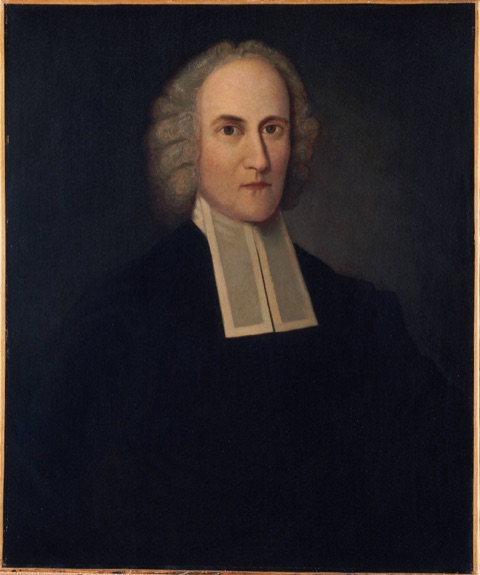
About the author
Jonathan Edwards
Jonathan Edwards (1703 to 1758 AD) was born in East Windsor, Connecticut, the only son of the Congregational minister Timothy Edwards, and graduated from Yale College in 1720. In 1727 he became assistant to his grandfather Solomon Stoddard at Northampton, Massachusetts, and succeeded him as pastor in 1729. His preaching sparked a revival there in the mid-1730s, and during the Great Awakening he preached Sinners in the Hands of an Angry God at Enfield in 1741. He published Religious Affections in 1746. Dismissed from Northampton in 1750, he served the frontier mission at Stockbridge, where he wrote Freedom of the Will. He was elected president of the College of New Jersey in 1758 and died that March after a smallpox inoculation.