The founding text of modern conservatism. Burke's passionate critique of the French Revolution defends tradition, prescriptive rights, and gradual reform against the dangers of radical ideology.
One free account opens 250+ books and saves your place on every device. Google sign-in or an email link. No card.
You’re on the list — we’ll email you if this goes to print.
Included with your free account
This book, and 250+ more, free to read
A free account opens the whole library to read online, on your phone or at your desk. Open a book on one device and it is waiting at the same page on the next. The PDF and EPUB of every book are yours to keep, and audiobooks play in the same app.
250+ modernized editionsNot samples. The whole work, free.
Your place, on every devicePhone, tablet or desktop, same page.
131 audiobooksFrom $4.99 each, or all of them with a $50 gift.
Reflections on the Revolution in France, published in 1790, stands as one of the most influential works of political philosophy ever written. Edmund Burke composed it as an extended letter responding to a young Frenchman's inquiry about the Revolution. What emerged was a comprehensive defense of tradition, inherited rights, and prudent reform against the abstract rationalism and radical change Burke saw destroying France. The work effectively founded modern conservatism as a political philosophy.
Burke wrote while the Revolution was still in its relatively moderate phase, yet he prophetically predicted the terror and tyranny that would follow. He argued that the revolutionaries' attempt to rebuild society from scratch according to abstract principles would inevitably lead to chaos and despotism. Human society is too complex to be redesigned by theoretical reason; the accumulated wisdom of tradition, embodied in inherited institutions, must guide political life.
Central to Burke's critique is his distinction between the rights of man in the abstract and the concrete rights of Englishmen. While the revolutionaries appealed to universal natural rights, Burke defended prescriptive rights—those established by custom, tradition, and the inherited constitution. These rights are real because they have been tested by time and experience, whereas abstract rights exist only in theory.
Burke defends prejudice—not in the modern pejorative sense but as the inherited wisdom embedded in traditional beliefs and practices. This collective wisdom, accumulated over generations, provides a more reliable guide to human affairs than individual reason. The reformer who dismisses tradition as mere prejudice throws away the wisdom of ages in favor of his own limited understanding.
The work offers a sophisticated defense of gradual reform over revolutionary change. Burke was not opposed to all change—he had supported American independence and reform in India—but insisted that reform should work with rather than against the grain of established institutions. Change should be organic growth, not violent rupture.
Burke's Reflections provoked immediate controversy, most famously Thomas Paine's Rights of Man in response. But Burke's warnings proved prophetic as the Revolution descended into the Terror, and his work has remained essential reading ever since. Whatever one's political orientation, engaging with Burke's arguments about tradition, reason, and political change remains indispensable for understanding modern political thought.
The Spark: How a Private Letter Became Public Debate
Readers should know that these Reflections began as correspondence between the author and a young gentleman in Paris who asked for his opinion on the momentous events that were then, and have since remained, the focus of universal attention. A response was written in October 1789 but held back for practical reasons. That letter is mentioned at the beginning of what follows. It has since been sent to its intended recipient. The reasons for delaying its dispatch were explained in a brief note to the same gentleman. This prompted him to request the author's views again, more urgently this time.
The author then began a second, more thorough treatment of the subject. He considered publishing it early last spring, but as the topic expanded, he realized that what he had undertaken far exceeded the scope of a letter and that its significance demanded more detailed consideration than he could then afford to give it. Nevertheless, having initially drafted his thoughts as a letter—indeed, having sat down intending to write a private letter—he found it hard to change his approach once his ideas had developed into something more substantial and taken a different direction. He recognizes that a different structure might have allowed for a more convenient organization and presentation of his material.
Reflections on the Revolution in France
Dear Sir,
You have asked again, and with some insistence, for my thoughts on the recent events in France. I would not want you to think that I consider my views so valuable that I need to be coaxed into sharing them. They are too unimportant to worry about sharing or keeping private. It was out of respect for you, and you alone, that I hesitated when you first asked for them. In the first letter I had the honor to write to you, which I now finally send, I wrote neither for nor on behalf of any particular group, and I will not do so here either. Whatever mistakes I make are my own. My reputation alone will answer for them.
You will see, Sir, from the long letter I have sent you, that while I sincerely hope France will be inspired by a spirit of rational liberty, and while I believe you are obligated by sound policy to establish a permanent institution where that spirit can reside and an effective mechanism through which it can operate, I unfortunately have serious doubts about several fundamental aspects of your recent actions.
London's Echo Chambers: Clubs Meddling in French Politics
When you last wrote, you apparently thought I might be counted among those who approve of certain events in France, given the formal public endorsement they have received from two London clubs of gentlemen called the Constitutional Society and the Revolution Society.
I belong to more than one club where members hold the Constitution of this kingdom and the principles of the Glorious Revolution in high regard, and I consider myself among the most enthusiastic in maintaining that Constitution and those principles in their purest and most vigorous form. Precisely because I care so deeply about these things, I believe it is essential to avoid any confusion. Those who honor the memory of our Revolution and those who support the Constitution of this kingdom must be careful not to associate themselves with people who, while claiming devotion to the Revolution and Constitution, too often stray from their true principles and stand ready at every opportunity to abandon the firm yet cautious and deliberate spirit that created the one and governs the other. Before I address the more important points in your letter, let me share what I have learned about the two clubs that have decided, as organizations, to involve themselves in French affairs. First, let me assure you that I am not, and have never been, a member of either society.
The first group, which calls itself the Constitutional Society or the Society for Constitutional Information or something similar, has been around for about seven or eight years, I believe. The organization appears to have charitable goals, and in that respect at least, praiseworthy ones: it was designed to distribute books at the members' expense that few others would pay to buy, books that might otherwise sit unsold in bookshops, causing serious losses for a useful profession. Whether anyone actually read these charitably distributed books as charitably as they were circulated is beyond my knowledge. Perhaps several of them were shipped to France, where—like products that find no buyers here—they may have found a market with you. I have heard plenty of talk about the enlightenment to be gained from books sent from our country. What enhancements they underwent during their journey (as some wines are said to improve by crossing the ocean) I cannot say. But I have never heard anyone with common sense or even minimal education say anything positive about most of the publications this society has circulated. Nor have their activities been considered consequential by anyone except some of their own members.
Your National Assembly appears to share my view of this modest charitable club. As a nation, you saved all your eloquent praise for the Revolution Society, even though their counterparts in the Constitutional Society had an equal claim to recognition. Since you have singled out the Revolution Society as the primary object of your national gratitude and admiration, you will understand why I am making their recent conduct the focus of my analysis. The National Assembly of France has elevated these gentlemen by embracing them, and they reciprocate by serving as a sort of English committee dedicated to promoting the principles of the National Assembly. From now on we must regard them as something like privileged persons, as significant members of the diplomatic community. This is one of those reversals that has brought fame to obscurity and recognition to previously unnoticed merit. Until very recently I cannot recall having heard of this club. I am quite certain it never crossed my mind for a moment, nor, I believe, did it cross the minds of anyone outside their own circle.
Fake Authority: Why Club Pronouncements Are Political Smoke and Mirrors
I believe I value a manly, moral, and well-regulated liberty as much as any member of that society, whoever he may be. Perhaps I have demonstrated my commitment to that cause throughout my entire public career. I think I begrudge liberty to other nations as little as they do. But I cannot step forward and praise or condemn anything related to human actions and human affairs based purely on the object itself, stripped of all context and viewed in the bare isolation of metaphysical abstraction. Circumstances—which some gentlemen dismiss as irrelevant—actually give every political principle its distinctive character and practical effect. These circumstances determine whether any civil and political system benefits or harms humanity. In the abstract, government is as beneficial as liberty. Yet would it have made any sense for me, ten years ago, to have congratulated France on enjoying a government (for she did have one then) without asking what kind of government it was or how it functioned? Can I now congratulate the same nation on its freedom? Simply because liberty in the abstract can be counted among humanity's blessings, am I really supposed to congratulate a madman who has escaped from the protective restraint and therapeutic darkness of his cell and been restored to light and liberty? Should I congratulate a highwayman and murderer who has broken out of prison on recovering his natural rights? That would be like reenacting the scene of the criminals condemned to the galleys and their heroic liberator, the metaphysical Knight of the Sorrowful Countenance.
When I witness liberty in action, I see a powerful force at work—and for a time, that is all I can truly know about it. The volatile gas has clearly escaped the flask, but we should withhold judgment until the initial ferment subsides, until the liquid settles, and until we can see something deeper than the churning of a turbulent, frothy surface. Before I publicly celebrate what people have gained, I need to be reasonably certain they have actually received a blessing. Flattery corrupts both those who receive it and those who give it, and fawning praise serves the people no better than it serves kings. I will therefore hold back my congratulations on France's new liberty until I understand how it has been reconciled with government, with public authority, with military discipline and obedience, with the collection of effective and well-distributed revenue, with morality and religion, with property rights and stability, with peace and order, with civil and social customs. All of these are valuable in their own right, and without them, liberty is no benefit while it exists and is unlikely to endure. The effect of liberty on individuals is that they may do as they wish—but we should observe what they actually choose to do before offering congratulations that may soon turn into complaints. Common sense would suggest this caution even when dealing with separate, isolated private citizens. But when people act collectively, liberty becomes power. Thoughtful observers, before committing themselves, will watch how this power is used—particularly when it is new power in new hands, held by people whose principles, temperaments, and characters remain largely unknown to us, and in circumstances where those who appear most active on the surface may not be the true forces behind events.
The Revolution Society, however, considered all these concerns beneath its lofty ideals. While I remained in the countryside, from where I had the privilege of writing to you, I understood their activities only vaguely. After arriving in town, I requested a copy of their proceedings, which they had published officially. It contained a sermon by Dr. Price, letters from the Duke de Rochefoucault and the Archbishop of Aix, and several other attached documents. The entire publication had an obvious purpose: to link the situation in France with that of England by encouraging us to imitate the National Assembly. This disturbed me considerably. Each day made clearer the impact of that body's actions on France's power, credibility, prosperity, and stability. The shape of the constitution they intended to establish for France's future governance grew increasingly distinct. We can now see with reasonable accuracy the true nature of what they want us to copy.
Pulpit Politics: The Dangers of Mixing Faith and Revolution
That sermon represents a style of preaching I believe has not been heard in this kingdom—from any of the pulpits that are tolerated or encouraged here—since 1648, when a predecessor of Dr. Price, the Reverend Hugh Peters, made the vault of the king's own chapel at St. James's ring with proclamations about the honor and privilege of the saints, who, with "the high praises of God in their mouths, and a two-edged sword in their hands, were to execute judgment on the heathen, and punishments upon the people; to bind their kings with chains, and their nobles with fetters of iron." Few sermons from the pulpit, except during the days of your League in France or the days of our Solemn League and Covenant in England, have ever breathed less of the spirit of moderation than this lecture in the Old Jewry. Even if we were to suppose that something resembling moderation appeared in this political sermon, politics and the pulpit remain fundamentally incompatible. The only sound that ought to be heard in church is the healing voice of Christian charity. The cause of civil liberty and civil government gains as little as religion does from this confusion of duties. Those who abandon their proper role to assume one that does not belong to them are, for the most part, ignorant of both the role they leave behind and the role they presume to adopt. Completely unacquainted with the world in which they are so eager to meddle, and inexperienced in all its affairs on which they pronounce with such confidence, they bring nothing to politics except the passions they stir up. Surely the church should be a place where at least one day's truce is granted to the dissensions and animosities of mankind.
This preaching style, revived after such a long absence, struck me as novel and potentially dangerous. I do not attribute this danger equally to every part of the sermon. The suggestion directed at a distinguished lay preacher—supposedly holding high office at one of our universities—and other lay preachers "of rank and education" may be appropriate and timely, though somewhat unconventional. If these noble seekers cannot find anything to satisfy their religious sensibilities in the established National Church, or in the abundant variety available in the well-stocked offerings of the Dissenting congregations, Dr. Price recommends they go beyond Nonconformity and establish their own separate meeting houses based on their individual principles. It is quite striking that this reverend divine shows such enthusiasm for founding new churches while remaining completely indifferent to the doctrines that might be taught in them. His zeal has a peculiar quality. It aims not at spreading his own beliefs, but at spreading any beliefs whatsoever. It promotes not the spread of truth, but the multiplication of contradictions. Let these noble teachers simply dissent—it does not matter from whom or from what. Once this great objective is achieved, their religion is assumed to be rational and enlightened.
Rights Gone Wrong: Abstract Ideals vs. Real-World Traditions
When we apply this doctrine to the current British monarch, it becomes either meaningless—and therefore neither true nor false—or it asserts a position that is utterly baseless, dangerous, illegal, and unconstitutional. According to this political theorist's reasoning, if His Majesty does not owe his crown to the choice of his people, he is not a lawful king. But nothing could be further from the truth than the claim that the crown of this kingdom is held by His Majesty on such terms. If we follow their logic, then the King of Great Britain, who certainly does not owe his high office to any form of popular election, is no better than all the other usurpers who reign—or rather plunder—across our miserable world, without any legitimate right or claim to their people's allegiance. The strategy behind this doctrine, presented in this qualified form, is obvious enough. Those spreading this political gospel hope that their abstract principle—that popular choice is necessary for the legal existence of sovereign authority—will be overlooked as long as the King of Great Britain remains unaffected by it. Meanwhile, their audiences will gradually grow accustomed to hearing it, as though it were an accepted first principle beyond dispute. For now, it operates merely as theory, preserved in the rhetorical flourishes of pulpit eloquence and stored away for future use.
These politicians operate freely as long as nobody scrutinizes their ideas too closely. But when someone examines the plain meaning of their words and the logical consequences of their doctrines, they immediately resort to equivocation and evasive language. When they claim that the king owes his crown to the choice of his people and is therefore the only legitimate sovereign in the world, they may tell you they simply mean that some of the king's predecessors were called to the throne through some form of selection, and therefore he owes his crown to popular choice. Through this pathetic dodge, they hope to make their argument safe by making it meaningless.
No amount of evasion can explain away the fundamental error embedded in the claim that His Majesty owes his crown to the choice of his people—even if we accept that he holds it in accordance with their wishes. Nothing can obscure their full and explicit declaration concerning the principle that the people possess a right to choose their sovereign. This right is directly asserted and stubbornly defended. All the indirect suggestions about election rest on this proposition and refer back to it. To prevent the foundation of the king's exclusive legal title from appearing as mere sycophantic rhetoric, this political preacher proceeds to assert dogmatically that the Revolution granted the people of England three fundamental rights. According to him, these rights form a single system and can be stated in one brief sentence: we have acquired the right
1. "To choose our own governors."
2. "To remove them for misconduct."
3. "To create a government for ourselves."
This new and previously unknown bill of rights, though proclaimed in the name of all the people, belongs exclusively to these gentlemen and their faction. The people of England as a whole have no part in it. They utterly reject it. They will resist any practical assertion of it with their lives and fortunes. They are bound to do so by the laws of their country—laws made at the very time of that Revolution which is now being invoked to support the fictitious rights claimed by the society that abuses its name.
These gentlemen from the Old Jewry consistently blur together three distinct events in all their arguments about the Revolution of 1688: an earlier English revolution from forty years before that one, and the recent French Revolution. These events occupy so much space in their thinking that they cannot keep them separate. We need to distinguish what they have confused. We must redirect their misguided thinking back to the actual acts of the Revolution we honor, so we can discover its true principles. If the principles of the Revolution of 1688 can be found anywhere, it is in the statute known as the Declaration of Right. In that supremely wise, sober, and carefully considered declaration—drafted by accomplished lawyers and experienced statesmen, not by passionate and inexperienced enthusiasts—not a single word appears, nor any suggestion is made, of a general right "to choose our own governors, to remove them for misconduct, and to create a government for ourselves."
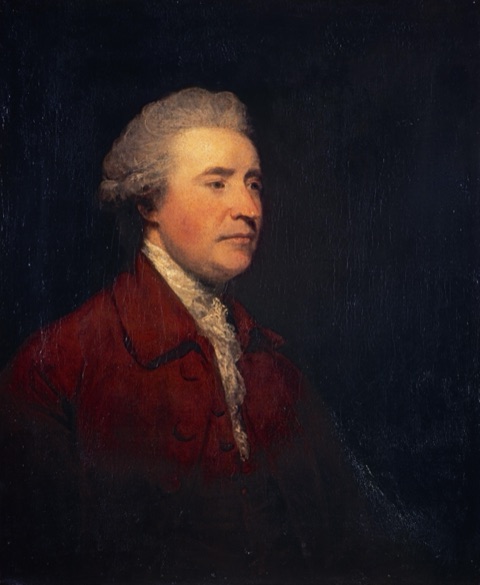
Edmund Burke (1729-1797) was an Irish-born British statesman, philosopher, and political theorist widely regarded as the founder of modern conservatism. After education at Trinity College Dublin, he moved to London where he became a prominent Whig politician, serving in Parliament for nearly three decades. Burke championed various causes including American colonial rights, Irish Catholic emancipation, and the impeachment of Warren Hastings for abuses in India. His Reflections on the Revolution in France (1790) became his most influential work, offering a philosophical defense of tradition and gradual reform against radical revolution. Burke's eloquent prose style and his synthesis of philosophical reflection with practical political wisdom made him one of the most quoted political thinkers in the English language. His influence extends across the political spectrum, shaping both conservative and liberal traditions.