Modernized edition · Full text · Free PDF/EPUB
On the Trinity in Modern English
Want the file? The PDF/EPUB is free with an account.
Summary
- Author
- Hilary of Poitiers (around 310 to 367 AD), bishop of Poitiers in Gaul
- Written
- 356 to 360 AD, during his exile in Phrygia
- Source edition
- All twelve books of On the Trinity (De Trinitate) in modern English
- Type
- Doctrinal treatise on the Trinity and the person of Christ
- Length
- 167,000 words · 11 hours
What is On the Trinity about?
On the Trinity is Hilary of Poitiers' twelve-book defense of the Nicene faith, written in exile between 356 and 360 AD. Against the Arian claim that the Son is a creature made from nothing, Hilary argues from the whole of Scripture that the Son is born of the Father, true God, and one with him in nature.
Read the full summary (9 points, key themes)Show less
How the argument unfolds
- 01
Book 1. Hilary tells how he passed from pagan philosophy to the God of Moses and John, and lays out the plan of the work.
- 02
Book 2. The baptismal names of Father, Son, and Holy Spirit carry their own truth, and the fisherman John answers each objection.
- 03
Book 3. Cana, the loaves, and the shut room show God working beyond human explanation.
- 04
Books 4 and 5. Against the Arian creed, Moses and the prophets reveal God and God, and the Son as true God.
- 05
Book 6. The Father, the Son, the apostles, believers, demons, the Jews, and a Roman soldier testify that Christ is Son by birth.
- 06
Book 7. His name, birth, nature, power, and words show the Son to be God, while rival heresies refute one another.
- 07
Book 8. Father and Son are one in nature, not merely in will, as the unity of believers in baptism and the sacrament shows.
- 08
Books 9 and 10. Each hard saying belongs either to Christ's divinity or to the servant's form, and his grief and cry on the cross were for our sake.
- 09
Books 11 and 12. The Son's subjection raises his humanity into glory, and his birth before eternal times leaves no time when he was not.
Key themes
- Birth, not creation. A painting is not the son of the painter; the Son is born of the Father's nature, not made from nothing.
- One God, yet not solitary. Hilary refuses both two Gods and a lonely God. Father and Son are distinct as Begetter and Begotten, one in nature and honor.
- Scripture read by its setting. Each proof text is answered by asking who spoke, to whom, and on what occasion.
- Faith and the limits of reason. Analogies and arguments help human weakness, but Hilary warns that they never measure God, whose greatness exceeds understanding though not faith.
Reader questions (10)Hide the questions
Questions about On the Trinity
Is there a modern English version of On the Trinity?
Yes. This is On the Trinity by Hilary of Poitiers in modern English. The language is modernized and the author's order and argument are kept. The full modernized text is free to read on this page.
Can I read On the Trinity online for free?
Yes. The complete text of this modern English edition is on this page, with no sign-up or paywall.
Is there a free PDF of On the Trinity?
Yes. The PDF and EPUB of this edition are free with an Updated Works account. Sign in with Google or an email link; no card is needed.
What is On the Trinity by Hilary of Poitiers about?
It defends the full deity of the Son of God against the Arian teaching that he is a creature, and answers each text the Arians cited.
When and where did Hilary write it?
Between 356 and 360 AD, while exiled to Phrygia for resisting the emperor's Arian policy.
Whom is Hilary arguing against?
Mainly the Arians, whose creed he quotes twice. He also answers Sabellius, who merged Father and Son into one person, and Ebion and Photinus, who said the Son began at his birth from Mary.
Does Hilary say that Christ felt pain in his Passion?
Christ's body truly suffered nails and death, he holds, but his nature, conceived by the Holy Spirit, did not feel pain as ours does. He cites the Hebrew youths in the furnace and singing martyrs.
How does Hilary explain that the Son does not know the day or the hour?
As a purposeful silence that keeps believers watchful, like God's words to Abraham before Sodom.
How does Hilary read Proverbs 8:22, where Wisdom says the Lord created her?
Wisdom is begotten before the ages. The creation refers to the forms in which the Son appeared to the patriarchs and to the flesh he took from the Virgin.
What does Hilary teach about the Holy Spirit?
The Spirit is God's gift, from the Father through the Son, searching the deep things of God. Hilary refuses to call him a creature.
On the Trinity in Modern English · Full text
Book 1
The Search for God and the Plan of This Work
1. I once searched for a pursuit worthy of human life and righteous in itself. Whether guided by nature or by the inquiries of the wise, I hoped to reach a goal worthy of our divine gift of understanding. Many pursuits came to mind that people commonly think make life useful and desirable. Above all, I considered what has always been prized most highly: leisure combined with wealth. Either one without the other seemed more a source of evil than an opportunity for good. Leisure in poverty feels almost like exile from life itself. Wealth held in anxiety is its own affliction. That misery grows even worse through the humiliation suffered by anyone who loses the very things most people crave and chase.
Yet even though wealth and leisure represent the finest luxuries of life, they barely rise above the ordinary pleasures of beasts. Animals roam through shady meadows rich with grass, enjoying both freedom from labor and an abundance of food. If that were the best and most perfect way for a human being to live, we would share a single aim with the entire unreasoning animal world. Our range of feelings may be wider than theirs, yet the goal would be the same. In the generous provision and total leisure that nature gives them, animals have full room for enjoyment without the anxiety of ownership.
2. I believe most people have rejected this thoughtless, animal life in themselves and criticized it in others for one plain reason. Nature herself has taught them that it is beneath humanity to think we were born solely to feed our greed and sloth. We were not brought into the world without a noble aim of great deeds or honorable achievement. Nor were we granted a life lacking any power to advance toward immortality. If that were all life offered, we could rightly say it did not deserve to be called a gift of God. Racked by pain and loaded with trouble, it would merely wear itself out from the blank mind of infancy to the wandering thoughts of old age.
Prompted by nature herself, people have raised themselves through teaching and practice to the virtues we call patience, temperance, and forbearance. They acted on the conviction that right living means right action and right thought. They also trusted that the immortal God did not give us life simply to end in death. No one can believe that the Giver of good bestowed the pleasant awareness of life only to darken it with the gloomy fear of dying.
3. Still, I could not dismiss their advice as foolish or useless. They urged us to keep the soul blameless, avoid life’s troubles through foresight, elude them through skill, or bear them with patience. Even so, I could not accept these teachers as qualified guides to the good and happy life. Their maxims were platitudes on the mere level of human impulse. Even animal instinct could scarcely fail to grasp them. Anyone who understood them yet disobeyed would sink into a madness baser than brute unreason.
Besides, my soul longed for much more than merely doing what keeps away shame and suffering. It yearned to know the God and Father who had given this great gift. It knew it owed him its entire self, and that serving him was its true honor. All its hopes rested on him. In his lovingkindness, as in a safe home and harbor, it could rest amid all the troubles of this anxious life. My soul burned with a passionate desire to reach him and know him.
4. Some of these teachers paraded large households of doubtful deities. Assuming that divine beings engage in sexual activity, they told stories of births and lineages passing from god to god. Others claimed there were greater and lesser gods, ranked according to their power. Some denied that any gods exist at all. They gave their reverence solely to a nature that, in their view, owes its being to chance vibrations and random collisions. Many followed common belief in affirming that a God exists, yet declared him careless and indifferent to human affairs. Still others worshiped the visible, bodily forms of created things in earth and air. Finally, some made their gods dwell inside images of men, tame or wild beasts, birds, or snakes. They locked the Lord of the universe and Father of infinity inside narrow prisons of metal, stone, or wood.
I was sure none of these teachers could be spokesmen for the truth. They agreed in the absurdity, filth, and impiety of their practices, yet they contradicted one another on the core claims of their senseless beliefs. My soul felt pulled in every direction amid these competing voices, yet it pressed steadily along the fruitful road leading to the true knowledge of God. It refused to believe that God would neglect a world he himself created. Nor could deities marked by sex and lines of parents and offspring fit the pure, mighty nature of deity. Instead, my soul knew that what is divine and eternal must be one, without distinction of sex. Whatever is self-existent cannot leave anything superior outside itself. Therefore, omnipotence and eternity belong to one alone. Omnipotence admits no degrees of strength or weakness, and eternity admits no before or after. In God, we must worship absolute eternity and absolute power.
5. While my mind dwelt on these thoughts and many like them, I came upon the books that, by the tradition of the Hebrew faith, were written by Moses and the prophets. In them I found words spoken by God the Creator testifying about himself: “I Am that I Am,” and again, “He that is hath sent me unto you” (Exodus 3:14). I confess I was amazed to find an indication about God so exact. In the terms best fitted to human understanding, it expressed an unreachable insight into the mystery of the divine nature.
No attribute of God that the mind can grasp is more uniquely his than existence itself. Absolute existence cannot belong to anything that will end or anything that began. He who joins unbroken continuity of being with perfect blessedness could never be nonexistent in the past, nor can he ever be nonexistent in the future. Whatever is divine can neither originate nor be destroyed. Because God’s eternity is inseparable from himself, it was wholly worthy of him to reveal this one fact, that he is, as the sure guarantee of his absolute eternity.
6. To indicate God’s infinity, the words “I Am that I Am” were clearly enough. Yet we also needed to grasp the working of his majesty and power. Absolute existence belongs uniquely to him who abides forever without a beginning in even the remotest past. Now we hear another declaration worthy of himself from the eternal and holy God: “Who holdeth the heaven in his palm and the earth in his hand” (Isaiah 40:12). And again: “The heaven is my throne and the earth is the footstool of my feet. What house will ye build me or what shall be the place of my rest?” (Isaiah 66:1-2). The entire heaven is held in the palm of God, and the entire earth is grasped in his hand.
God’s word helps even the passing thought of a devout mind, yet it opens a deeper sense to the patient student than to the casual listener. The same heaven held in God’s palm is also his throne. The same earth grasped in his hand is also the footstool beneath his feet. Scripture did not use throne and footstool, images of a seated posture, to make us think God extends through space like a body. After all, that same infinite Omnipotence holds both throne and footstool in his hand and palm. Instead, it was written so that in all born and created things, God might be known both within and without, overshadowing and indwelling, surrounding all and permeating all. Palm and hand hold everything, revealing the power of his outward control. Throne and footstool support one seated, showing how outward things obey one who is within. Himself outside all things, he encloses everything in his grasp, yet he dwells within the outward world that belongs to him.
In this way God governs and relates to the universe from within and from without. Because he is infinite, he is present in all things. In him who is infinite, all things are contained. My soul, engrossed in seeking truth, took deep delight in such devout thoughts. God’s greatness so far surpassed the mental powers of his handiwork that no matter how far a finite human mind strained in the bold effort to define him, the gap never shrank. The distance remained unchanged between struggling finite nature and the boundless infinity beyond its reach.
I had reached this insight through reverent reflection on my own, and then I found it confirmed by the prophet’s words: “Whither shall I go from thy Spirit? Or whither shall I flee from thy face? If I ascend up into heaven, thou art there; if I go down into hell, thou art there also; if I have taken my wings before dawn and made my dwelling in the uttermost parts of the sea, thou art there. For thither thy hand shall guide me and thy right hand shall hold me” (Psalm 139:7-10). There is no space where God is not, for space does not exist apart from him. He is in heaven, in hell, and beyond the seas, dwelling in all things and enveloping all. Thus he both embraces and is embraced by the universe, confined to no part of it yet pervading every part.
7. My soul took deep joy in knowing this majestic and unfathomable Mind, because it could worship so limitless an Infinity as its own Father and Creator. Yet it longed even more eagerly to know the true form of its infinite and eternal Lord. It wanted to believe that this immeasurable Deity was clothed in a splendor matching the beauty of his wisdom. While my devout soul stood baffled and lost in its own weakness, it caught from the prophet’s voice an admirable scale of comparison for God. He says, “By the greatness of his works and the beauty of the things that he hath made the Creator of worlds is rightly discerned” (Wisdom 13:5).
The Creator of great things is supreme in greatness, and the Creator of beautiful things is supreme in beauty. Because his work rises above our thoughts, the Maker himself must transcend all thought. Heaven, air, earth, and seas are beautiful, and so is the entire universe. Even the Greeks agree, calling it kosmos, which means order, from its beautiful arrangement. Our minds can sense this universal beauty by a natural instinct. It is like certain birds and animals whose voices fall below our understanding yet carry a clear sense to themselves. Every utterance expresses some thought, holding a meaning plain to them even when they cannot speak it to us. If we perceive universal beauty so naturally, must not the Lord of that beauty be recognized as himself most beautiful amid all the beauty around him? Though the splendor of his eternal glory overtaxes our mind’s highest powers, we cannot fail to see that he is beautiful. We must truly confess that God is most beautiful, with a beauty that surpasses our comprehension yet forces itself upon our perception.
8. Full of these conclusions, gained through both its own reflection and the teaching of Scripture, my mind rested securely as though on a peaceful watchtower. There it settled on that glorious conviction. It recognized that its true nature fitted it for one homage to its Creator, neither greater nor less. That homage is the assurance that his greatness is too vast for our comprehension, yet not too vast for our faith. Reasonable faith is akin to reason and welcomes its help, even when reason cannot cope with the vastness of eternal Omnipotence.
9. Beneath all these thoughts lay an instinctive hope that strengthened my hold on the faith. I hoped for some perfect blessedness hereafter, earned by devout thoughts about God and an upright life, like the reward awaiting a victorious soldier. True faith in God would go unrewarded if death destroyed the soul and snuffed it out with bodily life. Even unaided reason argued that it is unworthy of God to bring a human being into an existence sharing his thought and wisdom, only to wait for a sentence of withdrawn life and eternal death. Why create us out of nothing to take our place in the world, only to let us perish once we take it? On the only rational view of creation, its goal was that things that did not exist should come into being, not that things that exist should cease to be.
10. Still, my soul was weighed down with fear both for itself and for the body. It held a firm conviction and devout loyalty to the true faith about God. Yet it harbored deep dread for itself and for the bodily house that it thought must share its ruin. While in this state, alongside what it had learned from the Law and the Prophets, it encountered the truths taught by the Apostle in the Gospel:
“In the beginning was the Word, and the Word was with God, and the Word was God. The same was in the beginning with God. All things were made through him, and without him was not anything made. That which was made in him is life, and the life was the light of men, and the light shineth in darkness, and the darkness apprehended it not.
“There was a man sent from God, whose name was John. He came for witness, that he might bear witness of the light. That was the true light, which lighteneth every man that cometh into this world. He was in the world, and the world was made through him, and the world knew him not. He came unto his own things, and they that were his own received him not. But to as many as received him he gave power to become sons of God, even to them that believe on his name; which were born, not of blood, nor of the will of man, nor of the will of the flesh, but of God. And the Word became flesh and dwelt among us, and we beheld his glory, glory as of the Only-begotten from the Father, full of grace and truth” (John 1:1-14).
Here the soul moves far beyond what its natural capacities could reach. It is taught more about God than it had ever dreamed. It learns that its Creator is God from God. It hears that the Word is God and was with God in the beginning. It understands that the Light of the world remained in the world and the world did not know him, and that he came to his own possession and his own people did not receive him. Yet those who do receive him through faith rise to become sons of God, born not of fleshly embrace, nor of conception in blood, nor of bodily desire, but of God. Finally, it learns that the Word became flesh and dwelt among us, and that his glory was seen, a glory that, as the glory of the Only-Begotten from the Father, is complete through grace and truth.
11. In these words my trembling, troubled soul found a wider hope than it had imagined. First came its introduction to the knowledge of God the Father. Then it learned that the eternity, infinity, and beauty which natural reason had attributed to its Creator belonged equally to God the Only-Begotten. It did not scatter its faith among many deities, for it heard that he is God from God. Nor did it fall into the mistake of assigning a different nature to this God from God, for it learned that he is full of grace and truth. Nor did my soul see anything contrary to reason in “God from God,” since he was revealed as having been God with God in the beginning.
My soul saw that very few attain this saving faith, great as its reward is. Even his own people did not receive him, though those who do receive him are raised to be sons of God through a birth not of flesh, but of faith. It also learned that this sonship to God is not forced upon us, but offered as a possibility. Although the divine gift is offered to all, it is not an unavoidable inheritance stamped on us by birth, but a prize awarded to willing choice.
Yet the very truth that whoever wills may become a son of God might stagger our weak faith. What we desire most, we expect least when its very greatness makes it hard to hope for. Therefore God the Word became flesh, so that through his incarnation our flesh might reach union with God the Word. And he dwelt among us so that we would not think this incarnate Word was someone other than God the Word, or that his flesh came from a body different from ours. By his dwelling, he is known as the indwelling God; by his dwelling among us, he is known as God incarnate in no flesh other than our own. Furthermore, though he stooped to take our flesh, he was not stripped of his own attributes. As the Only-Begotten of the Father, full of grace and truth, he fully possesses his own attributes and is truly endowed with ours.
12. My soul gladly welcomed this lesson in the divine mysteries. Now it drew near to God through the flesh, called to new birth through faith and given liberty and power to win heavenly rebirth. It knew the love of its Father and Creator, sure he would not annihilate a creature he had called out of nothing into life. It also saw how high these truths rise above human mental vision. Ordinary reason, dealing with everyday objects of thought, can conceive of nothing as real beyond what it senses within itself or creates from itself. My soul measured the mighty works of God, done on the scale of his eternal omnipotence, not by its own perception, but by boundless faith. It refused to disbelieve simply because it could not comprehend that God was in the beginning with God and that the Word became flesh and dwelt among us. Instead, it remembered that with the will to believe comes the power to understand.
13. To keep the soul from straying into some delusion of pagan philosophy, it receives a further lesson in complete loyalty to the holy faith. The Apostle teaches it in inspired words:
“Beware lest any man spoil you through philosophy and vain deceit, after the tradition of men, after the rudiments of the world, and not after Christ; for in him dwelleth all the fullness of the Godhead bodily, and ye are made full in him, which is the Head of all principality and power; in whom ye were also circumcised with a circumcision not made with hands, in putting off the body of the flesh, but with the circumcision of Christ; buried with him in baptism, wherein also ye have risen again through faith in the working of God, who raised him from the dead.
“And you, when ye were dead in sins and in the uncircumcision of your flesh, he hath quickened with him, having forgiven you all your sins, blotting out the bond which was against us by its ordinances, which was contrary to us; and he hath taken it out of the way, nailing it to the cross; and having put off the flesh he made a show of powers openly, triumphing over them through confidence in himself” (Colossians 2:8-15).
Steadfast faith rejects the empty subtleties of philosophical inquiry. Truth refuses to be conquered by these treacherous schemes of human folly or enslaved by falsehood. Faith will not confine God within the limits that hedge in our ordinary reason, nor judge Christ by the elemental principles of the world. In him all the fullness of deity dwells bodily, so that the greatest efforts of the earthly mind to comprehend him are baffled by his immeasurable eternity and omnipotence.
My soul saw him as the one who draws us up to share his own divine nature and has loosened the bond of bodily observances. Unlike the symbolic Law, he has initiated us into no rites that mutilate the flesh. His purpose is that our spirit, circumcised from vice, should purify all the natural faculties of the body by abstaining from sin. Buried with his death in baptism, we return to eternal life, since rebirth to life is death to our former life. Dying to our sins, we are born again to immortality. Just as he laid aside his immortality to die for us, so we awaken from death to immortality with him.
He took on the flesh in which we sinned so that by wearing our flesh he might forgive sins, sharing it with us by wearing it, not by sinning in it. Through death he blotted out the sentence of death, sweeping away the penalty appointed by the former Law through a new creation of our race in himself. He let them nail him to the cross so that he might nail to the cross’s curse, and abolish, all the curses condemning the world. He suffered as a man to the utmost so that he might put hostile powers to shame.
Scripture had foretold that he who is God would die. The victory and triumph of those who trust him lay in this very truth: he who is immortal and cannot be overcome by death died so that mortals might gain eternity. I repeat, these deeds of God, performed in a way beyond our grasp, cannot be understood by our natural faculties. Only an infinite intelligence can grasp the work of the Infinite and Eternal.
That God became man, that the Immortal died, and that the Eternal was buried do not belong to the rational order. They are a singular work of power. In the same way, it is an effect not of intellect but of omnipotence that he who is man is also God, that he who died is immortal, and that he who was buried is eternal. We are raised together by God in Christ through his death. Since the fullness of deity dwells in Christ, this reveals God the Father joining to raise us in the one who died. We must therefore confess that Christ Jesus is none other than God in all the fullness of deity.
14. In this calm assurance of safety, my soul rested gladly and hopefully. It feared the interruption of death so little that death seemed only another name for eternal life. Life in this present body no longer felt like a burden or affliction. I regarded it as children regard their alphabet, sick people their medicine, shipwrecked sailors their swim, young people their training for a profession, or future commanders their first campaign. It was an endurable submission to present necessities, bearing the promise of blissful immortality. Furthermore, I began proclaiming these truths of my own faith as a duty of the bishop’s office laid upon me, using my ministry to promote the salvation of all.
15. While I was engaged in this work, certain fallacies of rash and wicked men came to light. Hopeless for themselves and merciless toward others, they made their own weak nature the measure of the might of God’s nature. They did not claim they had risen to an infinite knowledge of infinite things. Instead, they claimed they had shrunk all knowledge, previously beyond bounds, down to the scope of ordinary reason and fixed the limits of faith. Yet the true work of religion is a service of obedience. Heedless of their own weakness and reckless with divine realities, these men undertook to improve upon the teaching of God.
16. I pass over for now the empty inquiries of other heretics, though I will not stay silent about them when my argument reaches them. First, some tamper with the faith of the Gospel under the cloak of loyalty to the one God by denying the birth of God the Only-Begotten. They claim there was an extension of God into man, not a descent. In their view, the one who was Son of Man while wearing our flesh had not previously been Son of God, nor was he Son of God then. They deny any divine birth, asserting instead an identity of Begetter and Begotten. To guard what they think is strict loyalty to God’s unity, they claim an unbroken continuity in the incarnation: the Father extending himself into the Virgin and being born as his own Son.
Others take the opposite path. They too are heretics, because there is no salvation apart from Christ, who in the beginning was God the Word with God. They deny that he was born and declare that he was merely created. Birth, they hold, would confess him as true God, whereas creation proves his deity unreal. Even though this claim is a fraud against faith in the unity of God when taken as a strict definition, they think it can pass muster as figurative language. Both in name and in belief, they degrade his true birth to the level of creation in order to sever him from the divine unity. Treated as a creature brought into being, he can no longer claim the fullness of deity, which is not his without a true birth.
17. My soul has burned to answer these insane attacks. I remember that the very center of saving faith is belief not merely in God, but in God as Father. It is belief not merely in Christ, but in Christ as the Son of God: not as a creature, but as God the Creator, born of God. My prime goal is to use the clear assertions of prophets and evangelists to refute this madness and ignorance. These people use the unity of God, a pious and profitable confession in itself, as a cloak. Beneath it they deny either that in Christ God was born, or that he is true God.
Their purpose is to isolate a solitary God at the heart of faith by making Christ, however mighty, only a creature. They allege that a birth of God widens a believer’s faith into trust in more than one God. We, however, have been divinely taught to confess neither two Gods nor a solitary God. We will bring forward the witness of the Gospels and the prophets to confess God the Father and God the Son, united yet not confused in our faith. We will neither admit their identity nor allow, as a compromise, that Christ is God in some imperfect sense. God born of God cannot be the same as his Father, because he is his Son; nor can he differ in nature.
18. And you, whose warm faith and passion for a truth unknown to the world and its philosophers lead you to read this book, must leave behind the feeble, baseless guesses of earthly minds. With a devout willingness to learn, break down the barriers of prejudice and half-knowledge. The new faculties of a reborn intellect are needed. Each reader must have his understanding enlightened by the heavenly gift imparted to the soul. First, you must take your stand in the sure substance of God, as holy Jeremiah says (Jeremiah 23:22). Since you are about to hear of that substance, expand your thoughts until they are worthy of the theme, setting no arbitrary standard of your own, but judging on the scale of infinity.
Again, though you know you are a partaker of the divine nature, as the holy apostle Peter writes in his second letter (2 Peter 1:4), you must not measure the divine nature by the limits of your own. Gauge God’s words about himself by the scale of his own glorious self-revelation. The best student does not read his own thoughts into a book, but lets it reveal its own. He draws its meaning out of it rather than importing his own, and never forces onto its words a meaning he decided on before opening its pages. Since we are about to speak of the things of God, let us assume that God has full knowledge of himself, and bow with humble reverence to his words. He whom we can know only through his own utterances is the fitting witness concerning himself.
19. If we bring forward certain analogies while discussing the nature and birth of God, let no one suppose those comparisons are perfect and complete. There can be no exact comparison between God and earthly things. Yet the weakness of our understanding forces us to borrow illustrations from a lower sphere to explain our meaning about loftier themes. Daily life shows how experience in ordinary matters helps us form conclusions on unfamiliar subjects.
We must therefore treat any comparison as helpful to humanity rather than descriptive of God. It suggests the sense we seek rather than exhausting it. Nor should such a comparison seem too bold when it sets side by side physical and spiritual natures, invisible and tangible things. It openly admits that it is a necessary aid to the weakness of the human mind, asking not to be condemned as an imperfect analogy. On this principle I proceed with my task. I intend to use the terms supplied by God while coloring my argument with illustrations drawn from human life.
20. First, I have arranged the plan of the whole work to serve the reader’s advantage through the logical order of its books. I resolved not to publish a half-finished, hasty treatise whose disorderly array would resemble the confused clamor of a crowd of peasants. No one can climb a sheer cliff unless jutting ledges help him reach the summit. Therefore, I have set down here in order the main stages of our ascent, leading our difficult argument up the easiest path. Rather than cutting steps into the rock face, I have leveled it into a gentle slope so the traveler can reach the heights almost without feeling the effort.
21. After this first book, the second expounds the mystery of the divine birth. Its aim is that those baptized in the name of the Father, and of the Son, and of the Holy Spirit may know the true names. Rather than being perplexed about their meaning, they will be accurately informed about both fact and sense. They will thus receive full assurance that the words used give them the true names, and that those names involve the truth itself.
22. After this short and simple discourse on the Trinity, the third book makes further progress, slow yet sure. Citing the greatest instances of his power, it brings within faith’s understanding that saying, beyond our unaided comprehension, which Christ speaks about himself: “I in the Father and the Father in me” (John 10:38). Thus truth beyond dull human wit becomes the prize of faith equipped with reason and knowledge. We can neither doubt God’s word about himself nor suppose that devout reason is incapable of grasping his might.
23. The fourth book begins with the doctrines of the heretics and disowns any complicity in the fallacies they use to slander the faith of the Church. It publishes the unbelieving creed that several of them have recently circulated. It then exposes the dishonesty, and therefore the wickedness, of their arguments from the Law for what they call the unity of God. It lays out the whole testimony of the Law and the Prophets to prove the impiety of asserting God’s unity to the exclusion of Christ’s deity. It exposes the treason of alleging that if Christ is God the Only-Begotten, then God is not one.
24. The fifth book follows the sequence of heretical claims in reply. They falsely declared that they followed the Law in their view of God’s unity and had proved from it that the true God is one Person. Their aim was to rob the Lord Christ of his birth by that conclusion about the one true God, since birth is proof of origin. In reply, I affirm step by step what they deny. From the Law and the Prophets I prove that there are neither two gods nor one isolated true God. I neither pervert faith in the divine unity nor deny the birth of Christ. Since they claim the Lord Jesus Christ was created rather than born, bearing the divine name by gift and not by right, I prove his true deity from the Prophets. In this way, once he is acknowledged as true God, the assurance of his inherent deity holds us fast to the certainty that God is one.
25. The sixth book reveals the full deceit of this heretical teaching. To win credit for their claims, they denounce the impious doctrines of past heretics, namely Valentinus, Sabellius, Manichaeus, and Hieracas. At the same time, they borrow the devout language of the Church as a cover for their blasphemy. They rebuke and alter those heretics’ wording, adjusting it into a vague resemblance to orthodoxy so they can suppress the holy faith while appearing to condemn heresy.
We state plainly the language and doctrine of each of those men and clear the Church of any complicity or fellowship with condemned heretics. Their words that deserve condemnation we condemn; those that call for humble acceptance we accept. Thus we prove the divine Sonship of Jesus Christ, the truth they fight hardest to deny. We establish it by the Father’s witness, Christ’s own claim, the preaching of the Apostles, the faith of believers, the cries of demons, the opposition of the Jews (itself a confession), and the recognition of pagans who had not known God. We do all this to rescue from dispute a truth about which Christ left us no excuse for ignorance.
26. Next, the seventh book starts from the foundation of true faith now attained and delivers its verdict in the great debate. Armed with sound, unanswerable proof of an impregnable faith, it enters the conflict raging among Sabellius, Ebion, and these present opponents of true deity. It confronts Sabellius on his denial of Christ’s pre-existence, and his critics on their claim that he is a creature. Sabellius overlooked the Son’s eternity, yet believed that true God worked in a human body. Our present adversaries deny his birth, assert he was created, and fail to see the works of true God in his deeds.
What both sides dispute, we believe. Sabellius wrongly denies that the Son was working, yet he proves his case triumphantly when he alleges the work done was that of true God. The Church shares his victory over those who deny that true God was in Christ. Yet when Sabellius denies that Christ existed before the ages, his opponents prove beyond doubt that Christ’s activity is from everlasting. Here we stand with them in refuting Sabellius, who recognizes true God in that work, but not God the Son. Both earlier adversaries then join forces to refute Ebion: the second proves Christ’s eternal existence, while the first proves his work is that of true God. Thus the heretics overthrow one another. Meanwhile, the Church testifies against Sabellius, against those who call Christ a creature, and against Ebion that the Lord Jesus Christ is true God from true God, born before the ages and born in later times as man.
27. No one can doubt that we have taken the path of true reverence and sound doctrine. After proving from the Law and the Prophets first that Christ is the Son of God and next that he is true God, without breaking the mysterious unity, we support the Law and the Prophets with the Gospels. From them too we prove that he is the Son of God and true God himself. Once we establish his right to the name of Son, showing that the name truly describes his relation to the Father is the easiest of tasks. Common usage itself treats granting the name of son as convincing proof of sonship.
Still, to leave no loophole for the trickery and deceit of those who slander the true birth of God the Only-Begotten, we used his true deity as proof of his true Sonship. Everyone admits he bears the name Son of God. To show he is actually God, we brought forward his name, his birth, his nature, his power, and his claims. We proved that his name accurately describes him, and that the title of Son is proof of birth. In his birth he kept his divine nature, with his nature he kept his power, and that power showed itself in conscious, deliberate self-revelation.
I have set down the Gospel proofs for each separate point. They show how his self-revelation displays his power, how his power reveals his nature, how his nature is his by birthright, and how his birth gives his title to the name of Son. Every whisper of blasphemy is thus silenced. The Lord Jesus Christ himself, by the witness of his own mouth, has taught us that he is, just as his name, birth, nature, and power declare, true God from true God in the genuine sense of deity.
28. While its two predecessors confirm faith in Christ as Son of God and true God, the eighth book proves the unity of God. It shows that this unity agrees with the birth of the Son, and that his birth brings no duality into the Godhead. First it exposes the sophistry by which these heretics tried to evade what they could not deny: the real existence of God, Father and Son. It demolishes their helpless and absurd plea that certain texts express only unity of will and mind, not of divinity. They appeal to passages such as “And the multitude of them that believed were one soul and heart” (Acts 4:32), and “He that planteth and he that watereth are one” (1 Corinthians 3:8). They also cite Christ’s prayer: “Neither for these only do I pray, but for them also that shall believe on me through their word, that they may all be one, even as thou, Father, art in me, and I in thee, that they also may be in us” (John 17:20-21).
Examining the true sense of these texts shows that they involve the reality of the divine birth. Then, laying out the whole series of our Lord’s self-revelations, we display in the language of the Apostles and the very words of the Holy Spirit the complete, perfect mystery of the glory of God as Father and Only-Begotten Son. Because there is a Father, we know there is a Son. In that Son the Father is revealed to us, giving us certainty that he is born the Only-Begotten and is true God.
29. In matters essential to salvation, it is not enough to offer proofs that faith supplies and finds sufficient. Untested arguments may mislead us about the meaning of our own words unless we go on the offensive. We must expose the hollowness of the enemy’s proofs and build our faith on the demonstrated absurdity of his. The ninth book therefore refutes the arguments heretics use to undermine the birth of God the Only-Begotten. These heretics ignore the mystery of the revelation hidden from the beginning of the world and forget that the Gospel proclaims the union of God and man.
They deny that our Lord Jesus Christ is God, like God and equal with God as Son with Father, born of God and subsisting by right of birth as true Spirit. To argue this, they appeal to words of our Lord like “Why callest thou me good? None is good save One, even God” (Luke 18:19). By rebuking the man who called him good and affirming the goodness of God alone, they claim, he excludes himself from the goodness of that one good God and from true divinity belonging solely to one. With this text their blasphemous logic links another: “And this is life eternal that they should know thee the only true God, and him whom thou didst send, Jesus Christ” (John 17:3). Here, they say, he confesses that the Father is the only true God, while he himself is neither true nor God, because recognizing an only true God limits those attributes to their sole possessor.
They claim to be quite sure of his meaning here because he also says, “The Son can do nothing of himself, but what he hath seen the Father doing” (John 5:19). Being able only to copy, they argue, proves a limited nature. There can be no comparison between Omnipotence and one whose action depends on another’s prior work. Reason itself draws an absolute line between power and lack of power. That line is so clear, they say, that he himself confessed concerning God the Father, “The Father is greater than I” (John 14:28). So frank a confession silences all objection; it is blasphemy and madness to give divine dignity and nature to one who disclaims them.
So completely does he lack the qualities of true God, they add, that he even testifies of himself, “But of that day and hour knoweth no one, neither the angels in heaven nor the Son, but God only” (Mark 13:32). A son who does not know his father’s secret must, by his ignorance, be alien from the father who knows. A nature limited in knowledge cannot share that majesty and might which alone stand free from the tyranny of ignorance.
30. We therefore expose the blasphemous misunderstanding they reach by twisting and distorting Christ’s words. We account for those words by stating what kinds of questions he was answering, at what times he was speaking, and what partial knowledge he chose to impart. We let the circumstances explain the words instead of forcing the circumstances into agreement with the words.
Thus every apparent variance finds its explanation. We compare “The Father is greater than I” (John 14:28) with “I and the Father are one” (John 10:30), and “None is good save One, even God” (Luke 18:19) with “He that hath seen me hath seen the Father also” (John 14:9). We compare a difference as wide as “Father, all things that are mine are thine, and thine are mine” (John 17:10) with “That they may know thee, the only true God” (John 17:3). We likewise compare “I in the Father and the Father in me” (John 14:11) with “But of the day and hour knoweth no one, neither the angels in heaven nor the Son, but the Father only” (Mark 13:32). Each contrast is resolved by distinguishing between gradual revelation and the full expression of his nature and power. Both groups are utterances of the same Speaker. Explaining the real force of each shows that Christ’s true deity is not diminished at all. To form the mystery of Gospel faith, his birth and name were revealed gradually under the conditions of time and occasion he chose.
31. The purpose of the tenth book stands in harmony with the faith. In the folly that passes with them for wisdom, the heretics have twisted some events and utterances of the Passion into an insolent contradiction of the divine nature and power of the Lord Jesus Christ. I am therefore compelled to prove this is a blasphemous misinterpretation. In truth, the Lord himself put these things on record as evidence of his true and absolute majesty.
In their parody of faith, they deceive themselves with words like “My soul is sorrowful even unto death” (Matthew 26:38). Someone whose soul is shadowed by crushing fear of coming woe, they think, must be far removed from God’s blissful life, untouched by suffering. Under the weight of suffering, he even humbled himself to pray, “Father, if it be possible, let this cup pass away from me” (Matthew 26:39). Surely, they say, he looked afraid to endure the trials from which he prayed for release. In their view, his whole nature was so overwhelmed by agony on the cross that he cried, “My God, my God, why hast thou forsaken me?” (Matthew 27:46), forced by bitter pain, they claim, to complain of abandonment. Destitute of the Father’s help, as they suppose, he breathed his last with the words, “Father, into thy hands I commend my Spirit” (Luke 23:46). The fear gripping him as he died, they argue, made him entrust his spirit to God the Father; the very hopelessness of his own condition forced him to commit his soul to another’s keeping.
32. Their folly is as great as their blasphemy. They fail to note that Christ’s words, spoken under similar circumstances, are always consistent. Clinging to the letter, they ignore the purpose of his words. There is the widest difference between “My soul is sorrowful even unto death” (Matthew 26:38) and “Henceforth ye shall see the Son of Man sitting at the right hand of power” (Matthew 26:64). So too between “Father, if it be possible, let this cup pass away from me” (Matthew 26:39) and “The cup which the Father hath given me, shall I not drink it?” (John 18:11). The same holds between “My God, my God, why hast thou forsaken me?” (Matthew 27:46) and “Verily I say unto thee, Today shalt thou be with me in Paradise” (Luke 23:43), and between “Father, into thy hands I commend my Spirit” (Luke 23:46) and “Father, forgive them, for they know not what they do” (Luke 23:34). Unable to grasp the divine meaning, their narrow minds plunge into blasphemy whenever they try to explain.
There is a broad gulf between anxiety and a mind at ease, between eagerness and a prayer for delay, between words of anguish and words of encouragement, and between despair for oneself and confident prayer for others. The heretics display their impiety by ignoring the declarations of deity and divine nature that explain one class of his sayings. Instead, they fix their attention solely on the deeds and words belonging to his earthly ministry.
I have therefore set out every element in the mystery of the soul and body of the Lord Jesus Christ. Every detail has been sought out, and none suppressed. Turning the calm light of reason on the question, I have assigned each saying to the class to which its meaning belongs. I have thus shown that he also had a confidence that never wavered, a will that never faltered, and an assurance that never murmured. Even when he commended his own soul to the Father, that act carried within it a prayer for the pardon of others. A complete presentation of the Gospel’s teaching interprets and confirms all of Christ’s words, not just some.
33. Not even the glory of the resurrection has opened the eyes of these lost people or kept them within the plain bounds of faith. Out of a pretended reverence they have forged a weapon for blasphemy, twisting the revelation of a mystery into an insult to God. They appeal to the words, “I ascend unto my Father and your Father, to my God and your God” (John 20:17). Since that Father is ours as much as his, and that God is ours and his alike, they claim his own admission excludes him from true divinity. It subordinates him, they claim, to God the Creator, whose creature and inferior he is like us, even though he has received adoption as a son.
Even worse, they insist he possesses none of the attributes of the divine nature, since the Apostle writes: “But when he saith, all things are put in subjection, this is except him who did subject all things unto him, for when all things shall have been subjected unto him, then shall also he himself be subjected to him that did subject all things unto him, that God may be all in all” (1 Corinthians 15:27-28). Subjection, they say, proves lack of power in the subject and its possession by the sovereign.
The eleventh book examines this argument with reverence. From these very words of the Apostle, it proves that subjection is not only no evidence of weakness in Christ, but actually a sign of his true divinity as God the Son. That his Father and God is also our Father and God is an infinite gain for us and no lowering of him. He who was born as man and suffered all the afflictions of our flesh has ascended on high to our God and Father to receive his glory as man, our representative.
34. In this treatise we have followed the course pursued in every branch of education. First come easy lessons and a familiarity with the groundwork slowly gained through practice. Then the student tests his training in the business of life. Once a soldier is skilled in his drills, he can march to battle. The advocate enters courtroom clashes once trained in the exercises of the rhetoric school. The sailor who learned to handle his ship in his home’s landlocked harbor can be trusted amid the storms of open seas and distant climes.
Such has been our method in this most serious and difficult science that teaches the whole faith. First came simple instruction for the untaught believer in Christ’s birth, name, divinity, and true divinity. From there we advanced quietly and steadily until our readers could demolish every plea of the heretics. Now at last we pit them against the adversary in this great and glorious conflict. With only the ordinary resources of unaided reason, the human mind is powerless to grasp an eternal birth. Yet by studying divine things, people attain an apprehension of mysteries beyond common thought. They can shatter that paradox about the Lord Jesus, which draws all its apparent force from dim-sighted pagan philosophy. It claims that “there was a time when he was not,” “he did not exist before he was born,” and “he was made out of nothing.”
Those claims treat his birth as proof that he once did not exist and came into being at a given moment. They subject God the Only-Begotten to the concept of time, as if faith itself and the very nature of birth proved there was a time when he did not exist. Accordingly, they argue he was born out of nothing, on the ground that birth grants being to what previously had none. On the evidence of Apostles and Evangelists, we answer by proclaiming that the Father is eternal and the Son is eternal. We prove that the Son is God over all with an absolute, not a limited, pre-existence. Those bold assaults of blasphemous logic, “he was born out of nothing” and “he did not exist before he was born,” are powerless against him. His eternity agrees with sonship, and his sonship agrees with eternity. He had no unique exemption from birth, but a birth from everlasting; while birth implies a Father, deity is inseparable from eternity.
35. Ignorance of prophetic style and lack of skill in interpreting Scripture led them to pervert the point and meaning of the verse, “The Lord created me for a beginning of his ways for his works” (Proverbs 8:22). From this they labor to prove that Christ was created rather than born as God. They claim he shares the nature of created beings, even if he excels them in how he was created, lacking the glory of divine birth and holding only the powers of a transcendent creature.
In reply, without importing outside ideas or preconceived opinions, we will let this very passage of Wisdom display its own true sense and aim. We will show that being created for the beginning of God’s ways and for his works cannot be twisted into evidence about the divine and eternal birth. Creation for those purposes and birth from everlasting are two completely different things. Where birth is meant, birth and nothing else is spoken of; where creation is mentioned, the reason for that creation is named first. There is a Wisdom born before all things, and there is a wisdom created for particular purposes. The Wisdom from everlasting is one; the wisdom that came into existence during the course of time is another.
36. Having thus concluded that we must reject the word “creation” from our confession of faith in God the Only-Begotten, we proceed to set out what reason and piety teach about the Holy Spirit. In this way the reader, whose convictions have been firmly established by patient, earnest study of the earlier books, receives a complete presentation of the faith. We reach this end once the blasphemies of heretical teaching on this theme too have been swept away. Then the pure, undefiled mystery of the Trinity that regenerates us stands fixed with saving precision on the authority of Apostles and Evangelists. People will no longer dare, on the strength of mere human reasoning, to rank among creatures that divine Spirit whom we receive as the pledge of immortality and the source of fellowship with the sinless nature of God.
37. I know, O Lord God Almighty, that I owe you, as the chief duty of my life, the devotion of all my words and thoughts. The gift of speech you have bestowed can bring me no higher reward than serving you by preaching you. I wish to display you as you truly are: as Father, and as the Father of God the Only-Begotten, before a blind world and rebellious heretics. Yet this is only the expression of my own desire. I must also pray for the gift of your help and compassion. May the breath of your Spirit fill the sails of faith and confession I have spread, sending a favorable wind to speed me on my voyage of instruction.
We can trust the promise of the one who said, “Ask, and it shall be given you, seek, and ye shall find, knock, and it shall be opened unto you” (Luke 11:9). In our need we will pray for what we lack. We will bring tireless energy to studying your Prophets and Apostles, and we will knock for entrance at every gate of hidden knowledge. Yet it belongs to you to answer prayer, to grant what we seek, and to open the door on which we beat. Our minds are born with dull, clouded vision, and our feeble intellect is penned behind impassable barriers of ignorance about divine things. Still, studying your revelation elevates our soul to grasp sacred truth, and submission to faith is the path to certainty beyond unaided reason.
38. Therefore we look to your support for the first trembling steps of this undertaking, and to your help so it may gain strength and prosper. We look to you to grant us the fellowship of that Spirit who guided the Prophets and the Apostles. Then we may receive their words in the sense they spoke and assign the right shade of meaning to every utterance. For we will speak of things they preached in a mystery: of you, O eternal God, Father of the eternal and Only-Begotten God, you who alone are unborn, and of the one Lord Jesus Christ, born of you from everlasting.
We must not sever him from you, or make him one of many gods on any plea of a different nature. We must not say he is not begotten of you because you are one. We must not fail to confess him as true God, seeing that he is born of you, true God, his Father. Grant us, therefore, precision of language, soundness of argument, grace of style, and loyalty to truth. Enable us to speak what we believe, so that we may confess, as Prophets and Apostles have taught us, you, one God our Father, and one Lord Jesus Christ. Let us silence the objections of heretics, proclaiming you as God, yet not solitary, and him as God, in no unreal sense.
Book 2
The Baptismal Name of Father, Son, and Holy Spirit
1. Believers have always found their satisfaction in a single divine utterance. Our ears heard it recited from the Gospel at the very moment when the power attesting it was bestowed upon us: “Go now and teach all nations, baptizing them in the name of the Father, and of the Son, and of the Holy Ghost, teaching them to observe all things whatsoever I command you; and, lo, I am with you alway, even unto the end of the world” (Matthew 28:19-20). What element in the mystery of human salvation is missing from those words? What is forgotten, or what is left in darkness? All is full, coming from divine fullness; all is perfect, coming from divine perfection.
The passage holds the exact words to be used, the essential acts, the sequence of events, and an insight into the divine nature. He commanded them to baptize in the name of the Father, and of the Son, and of the Holy Spirit. That is, they are to baptize with confession of the Creator, of the Only-Begotten, and of the Gift. For God the Father is one, from whom are all things. Our Lord Jesus Christ the Only-Begotten, through whom are all things, is one. And the Spirit, God’s gift to us, who pervades all things, is also one. Thus all are ordered according to powers possessed and benefits given: the one Power from whom all things come, the one Offspring through whom all things come, and the one Gift who gives us perfect hope. Nothing can be found lacking in that supreme union. It embraces in Father, Son, and Holy Spirit infinity in the Eternal, his likeness in his express Image, and our enjoyment of him in the Gift.
2. Yet the errors of heretics and blasphemers force us to handle unlawful matters, scale perilous heights, speak unutterable words, and trespass on forbidden ground. Faith ought in silence to fulfill the commandments, worshiping the Father, honoring the Son alongside him, and abounding in the Holy Spirit. Instead, we must strain the poor resources of our language to express thoughts too great for words. The error of others compels us to risk error ourselves by daring to put into human terms truths that ought to remain hidden in the silent veneration of the heart.
3. Many have arisen who impose arbitrary interpretations of their own on the plain words of Holy Scripture instead of its true and only sense, defying the clear meaning of words. Heresy lies in the sense assigned, not in the written word; the guilt is the interpreter’s, not the text’s. Is not truth indestructible? When we hear the name Father, is not sonship involved in that name? The Holy Spirit is named; must he not exist? We can no more separate fatherhood from the Father or sonship from the Son than deny that the gift we receive exists in the Holy Spirit. Yet people of twisted minds plunge the whole matter into doubt and difficulty. They foolishly invert the clear meaning of words, depriving the Father of his fatherhood because they want to strip the Son of his sonship. They strip away his fatherhood by claiming that the Son is not a Son by nature. For a son does not share his father’s nature when begetter and begotten do not share the same properties, and no one is a true son whose being differs from his father’s and does not resemble it. Yet in what sense is God a Father, as he truly is, if he has not begotten in his Son that very substance and nature which belong to him?
4. Since heretics cannot change the facts recorded in Scripture, they bring novel principles and human theories to bear on them. Sabellius, for instance, makes the Son a mere extension of the Father. He turns faith in this truth into a matter of words rather than reality, making one and the same person both Son to himself and Father.
Ebion allows the Son of God no beginning before Mary, portraying him not as first God and then man, but as first man and then God. He claims that the Virgin did not receive into herself one who already existed, who had been in the beginning God the Word dwelling with God. Instead, he claims that through the agency of the Word she bore flesh, understanding the “Word” not as the nature of the pre-existent only-begotten God, but merely as the sound of a spoken voice.
In the same way, certain teachers of our own day assert that the Image, Wisdom, and Power of God was produced out of nothing and in time. They do this to save God, as Father of the Son, from being lowered to the Son’s level. Fearing that the Son’s birth from him might strip him of his glory, they rush to God’s rescue by calling his Son a creature made out of nothing. That way, they suppose, God can live on in solitary perfection without a Son born from himself and sharing his nature.
What wonder is it that their teaching about the Holy Spirit differs from ours, when they dare to subject the very Giver of that Holy Spirit to creation, change, and nonexistence? In this way they shatter the consistency and wholeness of the mystery of faith. They fracture the absolute unity of God by assigning differences of nature where everything is clearly shared by each. They deny the Father by robbing the Son of his true sonship, and they deny the Holy Spirit in their blindness to the fact that we possess him and that Christ gave him.
They betray poorly trained souls to ruin by boasting of the logical neatness of their doctrine. They deceive their hearers by emptying the words of their meaning, even though the Names themselves remain to bear witness to the truth. I pass over the traps of other heresies, Valentinian, Marcionite, Manichaean, and the rest. From time to time they catch the attention of foolish souls and prove fatal through the very contagion of contact. One plague is as deadly as another once the poison of its teaching works its way into the hearer’s mind.
5. Their betrayal forces us into a hard and dangerous position. We have to make a clear statement, going beyond the bare words of Scripture, on this weighty and deep subject. The Lord commanded that the nations be baptized “in the Name of the Father, and of the Son, and of the Holy Ghost” (Matthew 28:19). The words of the faith are plain, yet heretics do everything they can to cloud their meaning in doubt.
We may not add to the appointed form on that account, yet we must set a boundary against their reckless interpretations. Because their malice, driven by the devil’s cunning, empties the doctrine of its substance while keeping the Names that convey the truth, we must highlight the truth those Names hold. We must proclaim, exactly as we find them in the words of Scripture, the majesty and roles of Father, Son, and Holy Spirit. In this way we will stop heretics from stripping these Names of their divine meaning and compel them, through these very Names, to use the terms in their true sense.
I cannot imagine what kind of mind our opponents have. They twist the truth, darken the light, divide the indivisible, tear what cannot be harmed, and dissolve perfect unity. To them it may seem a small thing to pull perfection apart, lay down laws for omnipotence, and set limits on infinity. As for me, the task of answering them fills me with dread. My mind reels, my intellect is stunned, and my very words must confess not merely that my speech is weak, but that I am struck dumb.
Yet a compulsion to take up this task presses upon me. It means standing against the proud, guiding the straying, and warning the ignorant. Still, the subject has no end, and I can see no limit to my daring attempt to speak of God in more exact terms than he himself has used. He has given us the Names, Father, Son, and Holy Spirit, to inform us of the divine nature. When inquiry pushes any further, words cannot express it, feeling cannot embrace it, and reason cannot grasp it. Everything beyond is beyond speech, beyond reach, and beyond comprehension.
Language collapses under the sheer weight of the theme. The brilliance of its radiance blinds the gazing eye, and the intellect cannot measure its boundless reach. Even so, under the necessity laid upon us, we pray for pardon to the one whose attributes these are. We will venture forward, inquire, and speak. And we make the only promise we dare to make in so grave a matter: we will accept whatever conclusion he reveals.
6. The Father is the one to whom all existence owes its origin. In Christ and through Christ, he is the source of all things. Unlike everything else, he is self-existent. He does not draw his being from outside himself, but possesses it from himself and in himself.
He is infinite, because nothing contains him and he contains all things. He is eternally unbound by space, because he has no limits. He is eternally prior to time, because time is his creation. Let your imagination range to what you think is God’s farthest boundary, and you will find him already there. Strain as hard as you can, and a further horizon always stretches ahead of you. Infinity belongs to his nature, just as the power to make that mental effort belongs to yours. Words will fail you, yet his being will never be boxed in.
Or turn back the pages of history, and you will find him always present. Even if numbers fail to measure the distant ages you have reached, God’s eternity is not reduced by a hair. Brace your intellect to grasp him as a whole, and he slips past you. God as a whole has placed something within your reach, yet that something is woven inseparably into his entirety. So you have missed the whole, since only a part seems to remain in your hands. No, not even a part, for you are dealing with a whole that you have failed to divide. A part implies division, while a whole is undivided, and God is everywhere and wholly present wherever he is.
Reason, therefore, cannot keep pace with him, since no vantage point can be found outside him and eternity is eternally his. This is a true statement of the mystery of that unfathomable nature expressed by the Name “Father”: God invisible, beyond speech, and infinite. Let us confess by our silence that words cannot describe him. Let our senses admit they fail to grasp him, and let reason admit it fails to define him.
Yet, as we have said, he has in “Father” a name that points to his nature. He is an unconditioned Father. He does not receive the power of fatherhood from any outside source, as human beings do. He is unbegotten, everlasting, and inherently eternal. To the Son alone is he known, for “no one knoweth the Father save the Son and him to whom the Son willeth to reveal him, nor yet the Son save the Father” (Matthew 11:27). Each has full and complete knowledge of the other. Since “no one knoweth the Father save the Son,” let our thoughts about the Father agree with the thoughts of the Son, the only faithful Witness who reveals him to us.
7. It is easier for me to sense this truth about the Father than to put it into words. I know well that no language can adequately describe his attributes. We must sense in our hearts that he is invisible, incomprehensible, and eternal. Saying that he is self-existent, self-originating, and self-sustained, or that he is invisible, incomprehensible, and immortal, is an acknowledgment of his glory, a hint of our meaning, and a rough sketch of our thoughts. Yet speech has no power to tell us what God is, and words cannot capture the reality.
You hear that he is self-existent, yet human reason cannot explain such independence. In our world we see things that uphold and things that are upheld, and what exists is clearly distinct from the cause of its existence. Again, you hear that he is self-originating, yet we know no example where the giver of life is identical with the life that is given.
If you hear that he is immortal, that implies there is something that does not spring from him and with which, by his very nature, he has no contact. Indeed, death is not the only thing that the word “immortal” treats as independent of God. If you hear that he is incomprehensible, human logic hears that as almost the same as nonexistent, since no contact with him is possible. If you say he is invisible, a being that does not visibly exist cannot be sure of its own existence.
Thus our confession of God falls short through the poverty of human language. The best combination of words we can craft cannot convey the reality and greatness of God. The highest knowledge of God is to know him in such a way that we are certain we must not remain ignorant of him, yet know we cannot describe him. We must believe, we must take hold of him in faith, and we must worship. These acts of devotion must stand in place of a definition.
8. We have now left the dangers of a harborless coast for the storms of the open sea. We can neither safely push forward nor safely turn back, yet the waters ahead hold greater hardships than those behind us. The Father is what he is, and just as he is revealed, so we must believe. Now my mind shrinks back in awe from speaking of the Son. At every word I tremble for fear of stumbling into betrayal.
For he is the Offspring of the Unbegotten, one from one, true from true, living from living, perfect from perfect. He is Power from Power, Wisdom from Wisdom, Glory from Glory, the Likeness of the invisible God, and the Image of the unbegotten Father. Yet in what sense can we understand that the Only-Begotten is the Offspring of the Unbegotten?
Repeatedly the Father cries out from heaven, “This is my beloved Son, in whom I am well pleased” (Matthew 3:17; Matthew 17:5). This birth involves no tearing or splitting, for the one who begot him is free from passions, and the one born is the Image of the invisible God and testifies, “The Father is in me and I in the Father” (John 10:38). It is no mere adoption, for he is the true Son of God and declares, “He that hath seen me hath seen the Father also” (John 14:9).
Nor did he come into being in obedience to a command, as created things did, for he is the Only-Begotten of the one God. He has life in himself just as the one who begot him has life, for he says, “As the Father hath life in himself, even so gave he to the Son to have life in himself” (John 5:26). Nor does merely a portion of the Father dwell in the Son. The Son testifies, “All things that the Father hath are mine” (John 16:15), and again, “And all things that are mine are thine, and thine are mine” (John 17:10). The apostle likewise bears witness, “For in him dwelleth all the fullness of the Godhead bodily” (Colossians 2:9), and by the very nature of things a portion cannot possess the whole.
He is the perfect Son of the perfect Father, because the one who possesses everything has given everything to him. Yet we must not suppose that the Father failed to give simply because he still possesses it, or that he lost anything simply because he gave it to the Son.
9. The manner of this birth is therefore a secret kept between the two of them. If anyone blames his own inability for failing to solve this mystery, despite knowing for certain that Father and Son stand in this relation to each other, he will be even more pained by the ignorance I openly confess. I, too, am in the dark, yet I ask no questions. I find comfort in the fact that archangels share my ignorance, that angels have never heard the explanation, and that whole worlds cannot contain it. No prophet has uncovered it, no apostle has tried to pry into it, and the Son himself has not revealed it.
Let such pitiful complaints stop. Whoever you are who probes into these mysteries, I do not invite you to resume your exploration of height, breadth, and depth. Instead, I ask you to accept with patience your ignorance of how divine generation happens, seeing that you do not even know how God’s creatures come into being.
Answer me this one question. Do your senses give you any evidence of how you yourself were conceived? Can you explain the process by which you became a father? I am not asking where you got your perception, how you received life, where your reason comes from, or what the nature of your senses of smell, touch, sight, and hearing is. The fact that we use all of these proves they exist. What I am asking is this: how do you pass them on to your children? How do you implant the senses, light up their eyes, and place a mind within them? Tell me, if you can.
You hold powers you do not understand, and you pass on gifts you cannot comprehend. Yet you remain calmly unbothered by the mysteries of your own being, while growing irreverently impatient with your ignorance of the mysteries of God’s.
10. Listen, then, to the unbegotten Father, and listen to the only-begotten Son. Hear his words: “The Father is greater than I” (John 14:28), and “I and the Father are one” (John 10:30), and “He that hath seen me hath seen the Father also” (John 14:9), and “The Father is in me and I in the Father” (John 10:38). Hear also: “I went out from the Father” (John 16:28), and “who is in the bosom of the Father” (John 1:18), and “Whatsoever the Father hath he hath delivered to the Son” (Matthew 11:27), and “The Son hath life in himself, even as the Father hath in himself” (John 5:26).
In these words, hear the Son, the Image, the Wisdom, the Power, and the Glory of God. Next, mark the Holy Spirit proclaiming, “Who shall declare his generation?” (Isaiah 53:8). Note the Lord’s assurance: “No one knoweth the Son save the Father, neither doth any know the Father save the Son and he to whom the Son willeth to reveal him” (Matthew 11:27).
Press into the mystery. Plunge into the darkness that veils that birth, where you will stand alone with God the Unbegotten and God the Only-Begotten. Begin, keep going, and persevere. I know you will never reach the finish line, yet I will rejoice at your progress. Whoever devoutly walks an endless road profits from the journey, even without reaching the end. Reason will stop short for lack of words, yet when it comes to a halt, it will be the stronger for the effort it made.
11. The Son draws his life from the Father who truly has life: the Only-Begotten from the Unbegotten, Offspring from Parent, Living from Living. “As the Father hath life in himself, even so gave he to the Son also to have life in himself” (John 5:26). The Son is perfect from the one who is perfect, because he is whole from the one who is whole. There is no division or splitting here, for each is in the other, and the fullness of the Godhead is in the Son.
Incomprehensible is begotten from Incomprehensible, for no one else knows them, while each knows the other. Invisible is begotten from Invisible, for the Son is the Image of the invisible God, and whoever has seen the Son has seen the Father also. There is a real distinction, because they are Father and Son. Yet their divinity does not differ in kind, for both are one, God from God, one only-begotten God from one unbegotten God. They are not two Gods, but one from one. They are not two unbegotten beings, for the Son is born from the Unborn. There is no gap or diversity of nature, for the life of the living God is in the living Christ.
This much I have chosen to say about the nature of their divinity. I do not imagine I have produced a complete summary of the faith, for I know the theme is inexhaustible. Perhaps you object that faith then serves no purpose, since it can comprehend nothing. Not at all. The proper service of faith is to grasp and confess the truth that it is unable to comprehend its Object.
12. It remains to say something further about the mysterious generation of the Son, or rather, this “something further” is everything. I tremble, I hesitate, my strength fails, and I do not know where to begin. I cannot name a time for the Son’s birth, yet it would be impious to doubt the fact of it. To whom shall I appeal? Whom shall I call to my aid? From what books shall I borrow the terms needed to express so hard a truth?
Shall I search the philosophy of Greece? No! I have read, “Where is the wise? Where is the inquirer of this world?” (1 Corinthians 1:20). On this subject the world’s philosophers, the wise men of paganism, have nothing to say, because they have rejected the wisdom of God. Shall I turn to the scribe of the law? He stands in darkness, because the cross of Christ is an offense to him.
Shall I perhaps tell you to shut your eyes to heresy and pass over it in silence? Some might claim we show enough reverence to the one we preach if we simply believe that lepers were cleansed, the deaf heard, the lame ran, the paralyzed stood, the blind received sight, the man born blind was given eyes, demons were driven out, the sick recovered, and the dead lived. Heretics confess all of that, and still they perish.
13. Look now at something no less miraculous than lame people running, blind people seeing, demons fleeing, or the dead rising to life. Standing right beside me, ready to guide me through the difficulties I have laid out, is a poor fisherman. He is unlearned and uneducated, fishing lines in hand, clothes dripping, feet muddy, every inch a sailor. Stop and weigh which is the greater feat: to raise the dead, or to impart to an untrained mind the knowledge of mysteries so deep that he declares, “In the beginning was the Word” (John 1:1)?
What does this “In the beginning was” mean? He sweeps backward across the spans of time. Centuries fall behind him, and ages vanish. Pick any date you like for this “beginning,” and you miss the mark, because even then the one we are speaking of already was.
Survey the universe and note carefully what is written about it: “In the beginning God made the heaven and the earth” (Genesis 1:1). That phrase “in the beginning” pins down the moment of creation. You can assign a starting point to an event explicitly said to have happened in the beginning. Yet this fisherman of mine, unlettered and unread, is untrammeled by time and undaunted by its vastness. He pierces right beyond the beginning. His was has no limit of time and no starting point: the uncreated Word was in the beginning.
14. Yet perhaps someone will think our fisherman has strayed from the very problem we set out to solve. He has set the Word free from the limits of time, and what is wholly free lives its own life and answers to no one. Let us therefore pay close attention to what follows: “And the Word was with God” (John 1:1).
Here we learn that it is with God that the Word, who existed before the beginning, dwells unbound by time. The Word who was is with God. The one who cannot be found when we search for his origin in time is present all along with the Creator of time. For this round our fisherman has escaped the trap. Perhaps he will stumble over the difficulties still waiting ahead.
15. For you will argue that a word is just the sound of a voice, a naming of things, an utterance of thoughts. This Word was with God and was in the beginning, so you claim the expression of the eternal Thinker’s thoughts must also be eternal. For the moment, let me offer a brief reply of my own on the fisherman’s behalf, before we see how he defends his own simplicity.
The nature of a spoken word is to be first a mere possibility and afterward a past event. It exists only while it is being heard. How could we say, “In the beginning was the Word” (John 1:1), when a spoken word neither exists before nor survives after a single point in time? Can we even claim there is a fixed moment when a spoken word exists? Not only are words in a speaker’s mouth nonexistent until spoken and gone the instant they are uttered, but even during the act of speaking the opening sound shifts into the closing sound.
That is the reply that occurs to me as a bystander. Yet your opponent, the Fisherman, has a sharper answer of his own. He begins by scolding you for not listening. Even if your unpracticed ear missed the opening clause, “In the beginning was the Word,” why twist the next one, “And the Word was with God”? Did you hear, “And the Word was in God,” as though it were the slogan of some lofty philosophy? Or does your local dialect fail to tell the difference between in and with?
His statement is that the one who was in the beginning was with another, not in another. Yet I will not rest the case on the opening of the sentence; what follows takes care of itself. Hear now the rank and the name of the Word: “And the Word was God” (John 1:1). Your claim that the Word is merely the sound of a voice or the voicing of a thought collapses on the spot. The Word is a reality, not a sound; a Being, not a speech; God, not a nonentity.
16. Yet I tremble to repeat it; the boldness of it staggers me. I hear, “And the Word was God” (John 1:1), I whom the prophets have taught that God is one. To calm my fears, friend Fisherman, open this great mystery more fully to me. Show me that these words harmonize with the unity of God, that there is no blasphemy in them, no explaining away, and no denial of eternity.
He goes on: “He was in the beginning with God” (John 1:2). Saying “He was in the beginning” removes every limit of time. The name “God” proves he is far more than a spoken voice. Saying that he is “with God” proves that he neither swallows up another nor is swallowed up by another. His identity does not vanish into another’s, and he is clearly declared to be present with the one unbegotten God as God, his one and only-begotten Son.
17. We are still waiting, Fisherman, for your full account of the Word. Someone may say, “He was in the beginning, yes, but perhaps he did not exist before the beginning.” To this objection too I will offer an answer on my Fisherman’s behalf. The Word could not be other than what he was; that was stands unconditional and unlimited.
Yet what does the Fisherman say for himself? “All things were made through him” (John 1:3). Since nothing exists apart from the one through whom the universe came into being, he, the Author of all things, must have an existence beyond all measure. Time is a measurable, divisible stretch of duration rather than space. Since all things come from him without exception, time itself is his creature.
18. Wait, my Fisherman, someone will object that your language is reckless and sweeping. They will say that “All things were made through him” (John 1:3) needs a qualification. After all, there is the Unbegotten, made by no one, and there is also the Son, begotten from the unborn Father. That phrase “all things” sounds unguarded, leaving room for no exceptions.
While we stand silent, not daring to answer or scrambling for a reply, you break in: “And without him was nothing made” (John 1:3). At a stroke you have restored the Author of the Godhead to his proper place, while declaring that he has a Companion. From your statement that nothing was made without him, I learn that he was not alone. The one through whom the work was done is one; the one without whom it was not done is another. A clear distinction is drawn between Creator and Companion.
19. Reverence for the one unbegotten Creator worried me, for fear your sweeping claim that all things were made through the Word had swept him into creation too. You calmed my fears with “Without him was nothing made” (John 1:3). Yet that very phrase, “Without him was nothing made,” brings a fresh puzzle and distraction.
If that other made something, even if he did not make it without the Word, a difficulty arises. If the other made anything, even with the Word standing beside him at the making, then it would not be true that through him all things were made. It is one thing to be the Creator’s companion, and quite another to be the Creator himself. I could supply answers of my own to the earlier objections, Fisherman, but here I can only turn straight back to your own words: “All things were made through him” (John 1:3). And now I understand, because the apostle has opened my eyes: “Things visible and things invisible, whether thrones or dominions or principalities or powers, all are through him and in him” (Colossians 1:16).
20. Since all things were made through him, come to our help and tell us what was made not without him. “That which was made in him is life” (John 1:3-4). Whatever was made in him was certainly not made without him, because what was made in him was also made through him. All things were created in him and through him (Colossians 1:16). They were created in him because he was born as God the Creator.
Again, nothing made in him was made without him, because God the Begotten was life. He was born as Life itself, not turned into life after his birth. There are not two layers in him, one inborn and another added later. In his case, no interval separates birth from maturity. None of the things created in him was made without him, for he is the very Life that made their creation possible.
Furthermore, God the Son of God became God by virtue of his birth, not after he was born. Born Living from Living, True from True, Perfect from Perfect, he was born in full possession of all his powers. He did not need to discover later what his birth meant; he knew his own deity by the very fact that he was born as God from God.
“I and the Father are one” (John 10:30) are the words of the only-begotten Son of the Unbegotten. It is the voice of the one God proclaiming himself to be Father and Son, the Father speaking in the Son and the Son in the Father. From this follow all the rest: “He that hath seen me hath seen the Father also” (John 14:9); “All that the Father hath, he hath given to the Son” (John 16:15); “As the Father hath life in himself, so hath he given to the Son to have life in himself” (John 5:26); “No one knoweth the Father save the Son, nor the Son save the Father” (Matthew 11:27); and “In him dwelleth all the fullness of the Godhead bodily” (Colossians 2:9).
21. This Life is the Light of humanity, the Light that shines in the darkness (John 1:4-5). To comfort us in that powerlessness to describe his generation of which the prophet speaks (Isaiah 53:8), the Fisherman adds, “And the darkness comprehended him not” (John 1:5). The language of unaided human reason stood baffled and silenced. The Fisherman who leaned on the Lord’s breast was taught to utter the mystery.
His language is not the world’s language, because he speaks of realities that do not belong to this world. Tell us if there is any deeper teaching you can squeeze from his words beyond their plain sense. If you can translate the truth we have drawn out into better terms, publish them to the world. If no such terms exist, and indeed none do, let us accept this fisherman’s teaching with reverence and recognize in his words the oracles of God. Let us cling in worship to the true confession of Father and Son, Unbegotten and Only-Begotten beyond all speech, whose majesty defies every word and every thought. Let us, like John, lean on the breast of the Lord Jesus, so that we too may understand and proclaim the mystery.
22. This faith, and every part of it, is stamped upon us by the witness of the Gospels, the teaching of the apostles, and the failure of the treacherous attacks heretics launch from every side. Its foundation stands firm and unshaken against winds, rain, and rushing torrents. Storms cannot topple it, dripping water cannot hollow it out, and floods cannot sweep it away. Its strength is proved by the sheer number of assaults that have failed to scratch it.
Certain medicines are blended to cure not just one disease, but every ailment; they work universally. So it is with the catholic faith. It is not a remedy for one special malady, but for every illness of the soul. Virulence cannot overpower it, numbers cannot defeat it, and complexity cannot baffle it. One and unchanging, it faces and conquers all its enemies.
How marvelous that a single confession holds a cure for every disease, a statement of truth ready to meet every scheme of falsehood! Let heresy gather its armies, and let every sect march out to battle. Our answer to their challenge is this: there is one unbegotten God the Father and one only-begotten Son of God, perfect Offspring of a perfect Parent. The Son was begotten with no lessening of the Father and no subtraction from his substance. Rather, the one who possesses all things begot a Son who possesses all things. He is a Son who does not trickle out or break away from the Father, but is wholly formed from and inherent in the entire divinity of the one who, wherever he is present, is present eternally. He is free from time and unlimited in duration, because all things were made through him (John 1:3), and he could never be confined within a boundary he himself created. This is the catholic and apostolic faith that the Gospel has taught us and that we confess.
23. Let Sabellius, if he dares, blur Father and Son into two names with one meaning, making them not a unity but a single person. He gets a swift answer from the Gospels, spoken not once or twice, but repeatedly: “This is my beloved Son, in whom I am well pleased” (Matthew 17:5). He must hear these words too: “The Father is greater than I” (John 14:28), “I go to the Father” (John 14:12), “Father, I thank thee” (John 11:41), “Glorify me, Father” (John 17:5), and “Thou art the Son of the living God” (Matthew 16:16).
Let Ebion try to undermine the faith, denying the Son of God any life before the Virgin’s womb and calling him the Word only after his bodily life began. We will tell him to read again: “Father, glorify me with thine own self with that glory which I had with thee before the world was” (John 17:5); “In the beginning was the Word, and the Word was with God, and the Word was God” (John 1:1); “All things were made through him” (John 1:3); and “He was in the world, and the world was made through him, and the world knew him not” (John 1:10).
Let the preachers of the latest brand of apostleship, an apostleship of Antichrist, step forward and pour their mockery and insults on the Son of God. They must hear: “I came out from the Father” (John 16:28), “the Son in the Father’s bosom” (John 1:18), “I and the Father are one” (John 10:30), and “I in the Father, and the Father in me” (John 14:11). Finally, if they are angry, as the Jews were, that Christ claims God as his own Father and makes himself equal with God, they must take the answer he gave the Jews: “Believe my works, that the Father is in me and I in the Father” (John 10:38).
So our one unshakable foundation, our one blessed rock of faith, is the confession from Peter’s lips: “Thou art the Son of the living God” (Matthew 16:16). Standing on it, we can answer every objection that twisted cleverness or bitter treachery hurls against the truth.
24. What remains to consider is the plan appointed by the Father’s will. The Virgin, the birth, the body, then the cross, the death, and the descent to the realm of the dead: these are our salvation. For the sake of humanity, the Son of God was born of the Virgin and the Holy Spirit.
In this work he ministered to himself. By his own power, the power of God that overshadowed her, he sowed the beginning of his body and entered the first stage of life in the flesh. He did this so that through his Incarnation he might take human fleshly nature to himself from the Virgin. Through that union, a hallowed body of all humanity came into being, so that through the body he chose to assume, all humanity might be hidden in him, and he in turn, through his unseen existence, might be formed in all. Thus the invisible Image of God did not despise the lowliness that marks the beginning of human life. He passed through every stage: conception, birth, infant crying, the cradle, and each humiliation that followed.
25. What worthy return can we offer for such humble love? The one only-begotten God, born of God beyond all speech, entered the Virgin’s womb, grew there, and took the form of poor humanity. The one who upholds the universe, in whom and through whom all things exist, was brought into the world by ordinary childbirth. The one at whose voice archangels and angels tremble, and heaven, earth, and all the elements of this world melt away, was heard in a baby’s wailing. The Invisible and Incomprehensible, whom sight, feeling, and touch cannot measure, was wrapped up in a cradle.
If anyone thinks all of this is beneath God, then the less such humility seems to fit God’s majesty, the greater the debt he must admit for the gift given to us. The one who created humanity had nothing to gain by becoming human. The gain was ours: God took flesh and lived among us, making all flesh his home by taking on the flesh of one person. We were lifted up because he stooped low; what looked like shame for him became glory for us. Being God, he made flesh his dwelling, and we in return are lifted up anew from the flesh to God.
26. Some overly delicate minds may still be troubled by the cradle and crying, the birth and conception. To prevent that, we must give God the glory hidden inside each of these events, approaching his self-humbling with hearts fully alive to his right to reign, never forgetting his majesty in his lowliness.
Notice, then, who attended his conception. An angel speaks to Zechariah, and fertility is granted to a barren woman. The priest comes out mute from the altar of incense, while John bursts forth into speech while still shut inside his mother’s womb. An angel blesses Mary and promises that she, a virgin, will be the mother of the Son of God.
Aware of her virginity, she is troubled at so impossible a thing, and the angel explains the mighty work of God to her: “The Holy Ghost shall come from above into thee, and the power of the Most High shall overshadow thee” (Luke 1:35). Descending from above, the Holy Spirit made the Virgin’s womb holy. Breathing within it, for “The Spirit bloweth where it listeth” (John 3:8), he joined himself with human fleshly nature and claimed that foreign territory by divine power and might. And so that human frailty would not fail under the weight, the power of the Most High overshadowed the Virgin. Like a cloud wrapped around her, that shadow of God’s might strengthened her weakness and braced her physical body to receive the life-giving power of the Spirit. Such is the glory of the conception.
27. Now let us look at the glory that attends his birth, his crying, and his cradle. An angel tells Joseph that the Virgin will bear a Son, and that this Son will be called “Emmanuel,” which means “God with us” (Matthew 1:23). The Spirit foretells it through the prophet, and the angel confirms it: the child born is God with us.
The light of a new star shines out for the Magi; a sign in the sky escorts the Lord of heaven. An angel brings the shepherds news that Christ the Lord is born, the Savior of the world. A vast company of the heavenly host gathers to sing the praise of that birth, and the joy of heaven’s armies announces that the mighty work is complete. Then “glory to God in heaven, and peace on earth to men of good will” is proclaimed (Luke 2:14).
Next the Magi arrive and worship him wrapped in swaddling cloths. After lifetimes spent in the secret rituals of empty philosophy, they bend the knee before a baby lying in a cradle. Look at the scene: the Magi stoop to honor the weakness of infancy; a baby’s cries are answered by the heavenly joy of angels; the Spirit who inspired the prophet, the announcing angel, and the light of the new star all serve around him. In this way the descent of the Holy Spirit and the overshadowing power of the Most High brought him to birth.
The inward reality differs worlds from the outward look; the eye sees one thing, and the soul sees another. A virgin gives birth, and her child is from God. A baby cries, and angels are heard singing praise. There are rough swaddling cloths, and God is being worshiped. He does not lose the glory of his majesty when he takes on the lowliness of flesh.
28. It was the same throughout the rest of his life on earth. The entire time he spent in human form was devoted to the works of God. I do not have space to list the details. It is enough to say that in all the varied deeds of power and healing he performed, one truth shines unmistakably: he was human by virtue of the flesh he had assumed, and God by the witness of the works he did.
29. About the Holy Spirit, I ought not to stay silent, and yet I have no real need to speak. Still, for the sake of those who remain in ignorance, I cannot hold back. There is no need to argue the point, because we are bound to confess him, proceeding as he does from the Father and the Son. For my part, I think it wrong even to debate whether he exists. He does exist, because he is given, received, and kept. He is joined with the Father and the Son in our confession of faith and cannot be left out of a true confession of Father and Son. Remove one part, and the whole faith is ruined.
If anyone asks what grounds we have for this conclusion, he has read the apostle’s words just as we have: “Because ye are sons of God, God hath sent the Spirit of his Son into our hearts, crying, ‘Abba, Father’” (Galatians 4:6); “Grieve not the Holy Spirit of God, in whom ye have been sealed” (Ephesians 4:30); and again, “But we have received not the spirit of this world, but the Spirit which is of God, that we may know the things that are given unto us by God” (1 Corinthians 2:12).
Read further: “But ye are not in the flesh but in the Spirit, if so be that the Spirit of God is in you. But if any man hath not the Spirit of Christ, he is not his” (Romans 8:9); and again, “But if the Spirit of him that raised up Jesus from the dead dwelleth in you, he that raised up Christ from the dead shall quicken also your mortal bodies for the sake of his Spirit which dwelleth in you” (Romans 8:11).
Therefore, since he exists, is given, is possessed, and is from God, let his critics take refuge in silence. When they ask, “Through whom does he exist? For what purpose does he exist? Of what nature is he?” we answer that he is the one through whom all things exist and from whom all things come, and that he is the Spirit of God, God’s gift to the faithful. If our answer displeases them, their displeasure must fall on the apostles and prophets as well, who spoke of him in the exact same way. More than that, Father and Son themselves must incur the same displeasure.
30. I believe the reason some people remain in ignorance or doubt is that they often see this third Name, “Holy Spirit,” used in Scripture to signify the Father or the Son. No objection needs to be raised against that usage. Whether we speak of the Father or the Son, he is Spirit, and he is holy.
31. Yet the Gospel statement, “For God is Spirit” (John 4:24), requires careful study of its meaning and purpose. Every saying has a prior occasion and a goal that we must uncover by examining its sense. We must keep this in mind so that we do not use the words “God is Spirit” to deny not only the Name, but also the work and gift of the Holy Spirit.
The Lord was speaking with a woman of Samaria, because he had come to be the Redeemer of all humanity. After he spoke at length about living water, about her five husbands, and about the man she was living with who was not her husband, the woman answered, “Lord, I perceive that thou art a prophet. Our fathers worshiped in this mountain; and ye say that in Jerusalem is the place where men ought to worship” (John 4:19-20).
The Lord replied, “Woman, believe me, the hour cometh when neither in this mountain, nor in Jerusalem, shall ye worship the Father. Ye worship that which ye know not; we worship that which we know; for salvation is from the Jews. But the hour cometh, and now is, when the true worshipers shall worship the Father in the Spirit and in truth; for the Father seeketh such to worship him. For God is Spirit, and they that worship him must worship in the Spirit and in truth, for God is Spirit” (John 4:21-24).
Notice how the woman, her mind packed with inherited tradition, thought God had to be worshiped either on a mountain, as in Samaria, or in a temple, as in Jerusalem. In disobedience to the Law, Samaria had picked a mountaintop for worship, while the Jews treated the temple Solomon built as the home of their religion. Both sides, in their narrow assumptions, tried to confine the all-embracing, boundless God to a hilltop or the roof of a building.
God is invisible, incomprehensible, and beyond all measure. The Lord declared that the hour had arrived when God would be worshiped neither on a mountain nor in a temple. Spirit cannot be boxed in or confined; it is present everywhere in space and time, always present in its full reality. That is why he said the true worshipers are those who worship in the Spirit and in truth.
Those who worship God the Spirit in the Spirit have the one as the means and the other as the object of their reverence, because each of the two stands in a different relation to the worshiper. Saying “God is Spirit” does not erase the fact that the Holy Spirit has his own Name and is God’s Gift to us. The woman who tried to lock God inside a hill or a temple was told that God contains all things and is contained only by himself, and that he, the Invisible and Incomprehensible, must be worshiped by invisible and incomprehensible means. Both the bestowed Gift and the Object of worship stood out clearly when Christ taught that God, being Spirit, must be worshiped in the Spirit, unveiling the freedom, knowledge, and boundless room for adoration found in worshiping God the Spirit in the Spirit.
32. The apostle’s words carry the exact same sense: “For the Lord is Spirit, and where the Spirit of the Lord is, there is liberty” (2 Corinthians 3:17). To make his meaning unmistakable, he distinguishes between the Spirit who exists and the one whose Spirit he is. Owner and possession, he and his, differ in meaning.
When Paul says, “The Lord is Spirit,” he reveals the infinity of God. When he adds, “Where the Spirit of the Lord is, there is liberty,” he points to the one who belongs to God. He is the Spirit of the Lord, and “where the Spirit of the Lord is, there is liberty.” Paul adds this not because his argument forced him to, but for the sake of clarity. For the Holy Spirit is everywhere one and the same. He enlightened all the patriarchs, the prophets, and the whole company under the Law, inspired John even inside his mother’s womb, and was given in due time to the apostles and other believers so that they might recognize the truth granted to them.
33. Let us hear from our Lord’s own lips what the Holy Spirit does within us. He says, “I have yet many things to say unto you, but ye cannot bear them now” (John 16:12). “For it is expedient for you that I go: if I go I will send you the Advocate” (John 16:7). And again, “I will ask the Father and he shall send you another Advocate, that he may be with you forever, even the Spirit of truth” (John 14:16-17). “He shall guide you into all truth, for he shall not speak from himself, but whatsoever things he shall hear he shall speak, and he shall declare unto you the things that are to come. He shall glorify me, for he shall take of mine” (John 16:13-14).
These words were spoken to show how multitudes would enter the kingdom of heaven. They assure us of the Giver’s goodwill and explain the manner and terms of the Gift. They show that because our weak minds cannot comprehend the Father or the Son, our faith, which struggles to take in God’s Incarnation, will be lit up by the gift of the Holy Spirit, our Bond of union and Source of light.
34. The natural next step is to listen to the apostle’s description of the powers and roles of this Gift. He writes, “As many as are led by the Spirit of God, these are the children of God. For ye received not the Spirit of bondage again unto fear, but ye received the Spirit of adoption whereby we cry, ‘Abba, Father’” (Romans 8:14-15). Again he says, “For no man by the Spirit of God saith anathema to Jesus, and no man can say, ‘Jesus is Lord,’ but in the Holy Spirit” (1 Corinthians 12:3).
He adds, “Now there are diversities of gifts, but the same Spirit, and diversities of ministrations, but the same Lord, and diversities of workings, but the same God, who worketh all things in all. But to each one is given the enlightenment of the Spirit, to profit withal. Now to one is given through the Spirit the word of wisdom, to another the word of knowledge according to the same Spirit, to another faith in the same Spirit, to another gifts of healings in the one Spirit, to another workings of miracles, to another prophecy, to another discerning of spirits, to another kinds of tongues, to another interpretation of tongues. But all these worketh the one and same Spirit” (1 Corinthians 12:4-11).
Here we have a full statement of the purpose and fruits of the Gift. I cannot imagine what doubt could possibly remain after so clear a witness to his origin, his action, and his powers.
35. Let us therefore make use of this immense benefit and seek personal experience of this most needed Gift. As the apostle says in the words I already quoted, “But we have not received the spirit of this world, but the Spirit which is of God, that we may know the things that are given unto us by God” (1 Corinthians 2:12). We receive him, then, so that we may know.
The faculties of the human body lie dormant when denied their proper use. Without natural or artificial light, the eye cannot carry out its task. The ear never discovers its role unless some voice or sound reaches it. The nostrils remain unaware of their purpose unless some scent is breathed in. The faculty is not missing simply because it is never put to use, yet without use there is no awareness that it exists.
In the same way, unless the human soul takes hold of the gift of the Spirit through faith, it still possesses the inborn capacity to know God, yet remains starved of the light of knowledge. That Gift, which is in Christ, is one, yet it is offered, and offered in fullness, to all. It is denied to no one and given to each according to his willingness to receive; its riches grow fuller the more earnestly we long to earn them. This Gift stays with us to the end of the age: the comfort of our waiting, the guarantee through his blessings of the hope that awaits us, the light of our minds, and the sun of our souls. This Holy Spirit we must seek, must earn, and then hold fast through faith and obedience to God’s commands.
Book 3
The Father in the Son and the Son in the Father
1. The Lord’s words, “I in the Father, and the Father in me” (John 14:11), confuse many minds, and understandably so. Human reason on its own cannot supply them with any clear meaning. It seems impossible for one thing to be both inside and outside another. Since we affirm that the two beings we are discussing do not dwell apart yet keep their own distinct existence and identity, it seems impossible that they can mutually contain each other, so that one permanently surrounds and is permanently surrounded by the other whom he surrounds.
Human cleverness will never solve this problem, nor will human investigation ever uncover a comparison in nature for this mode of divine existence. Yet what human beings cannot understand, God can be. I do not mean that simply knowing God spoke these words makes them instantly clear to us. We must think for ourselves and come to understand what “I in the Father, and the Father in me” means. Yet our understanding depends on grasping one vital truth: reasoning grounded in divine realities can reach solid conclusions, even when those conclusions appear to defy the laws of the physical universe.
2. To tackle this hardest of problems as clearly as we can, we must first master what the divine Scriptures teach about the Father and the Son. Then we will speak with greater accuracy, as people handling familiar and well-known truths.
The eternity of the Father, as we established after full discussion in the last book, rises above space, time, outward appearance, and every category of human thought. He is outside all things and inside all things. He contains everything and can be contained by nothing. He cannot change by growing larger or smaller. He is invisible, incomprehensible, full, perfect, and eternal. He draws nothing he possesses from anyone else, and even when anything comes from him, he remains completely full and self-sufficient.
3. Before time existed, this unbegotten Father begot a Son from himself. He did not form him from pre-existing matter, because all things came into being through the Son. He did not make him out of nothing, because the Son comes from the Father’s own self. He did not produce him through physical childbirth, because in God there is neither change nor emptiness. Nor did he cut, tear off, or stretch out a piece of himself, because God cannot suffer and has no body. Only a bodily being capable of suffering could be treated that way, and as the apostle says, “in Christ dwelleth all the fullness of the Godhead bodily” (Colossians 2:9).
Beyond our comprehension and beyond words, before time or ages, he begot the Only-Begotten from his own unbegotten substance, pouring his entire divinity into that birth through love and power. Thus the Son is the only-begotten, perfect, eternal Son of the unbegotten, perfect, eternal Father.
As for the traits he possesses because of the body he assumed, those spring from his goodwill toward our salvation. Being invisible, bodiless, and incomprehensible as the Son of God, he took on just enough physical matter and lowliness to bring himself within the reach of our understanding, perception, and gaze. It was a gracious stooping to our weakness, not a surrender of his own divine attributes.
4. Therefore, as the perfect Son of the perfect Father, the only-begotten Offspring of the unbegotten God who has received everything from the one who possesses everything, being God from God, Spirit from Spirit, and Light from Light, he declares boldly, “The Father in me, and I in the Father” (John 10:38). Just as the Father is Spirit, so the Son is Spirit. Just as the Father is God, so the Son is God. Just as the Father is Light, so the Son is Light.
The very properties that exist in the Father are the source of those that fill the Son. He is wholly Son of the one who is wholly Father. He was not brought in from outside, because nothing existed before the Son. He was not made out of nothing, because the Son is from God. He is not partially a Son, because the fullness of the Godhead dwells in him. He is not a Son in a few respects, but in every respect: a Son according to the will of the one who had the power, in a manner known only to him.
Everything in the Father is in the Son as well; everything in the Unbegotten is in the Only-Begotten as well. The one comes from the other, and the two are a unity. They are not two merged into one, yet each is in the other, because what exists in both is the exact same reality. The Father is in the Son, because the Son comes from him. The Son is in the Father, because the Father is his sole origin. The Only-Begotten is in the Unbegotten, because he is the Only-Begotten from the Unbegotten.
So each dwells mutually in the other, because just as everything is perfect in the unbegotten Father, everything is perfect in the only-begotten Son. This is the unity shared by Son and Father; this is the power, and this is the love. Our hope, faith, truth, way, and life do not lie in questioning the Father’s power or belittling the Son. They lie in honoring the mystery and majesty of his birth, setting the unbegotten Father above all rivalry, counting the only-begotten Son his equal in eternity and might, and confessing of God the Son that he is from God.
5. Such powers belong to God, powers that the methods of human reason cannot fathom, yet of which our faith is convinced by the solid proof of his deeds. We find displays of this power in the physical world as well as the spiritual. They do not serve as comparisons to explain the Son’s birth, but as wondrous yet comprehensible actions.
On the wedding day in Galilee, water became wine. Do we have words to explain, or senses to trace, how the bland taste of water vanished and gave way to the full flavor of wine? It was not a blending; it was a creation, not from nothing, but by transformation. A weaker drink was not spiked with a stronger one; an existing substance passed away, and a new substance came into being.
The bridegroom was anxious, the household was in turmoil, and the joy of the wedding feast hung in the balance. Jesus is asked for help. He does not even get up or bustle about; he accomplishes the work without effort. Water is poured into the jars, and wine is drawn out into the cups. What the pourers’ senses tell them directly contradicts what the servers’ senses tell them. Those who poured expect water to come out; those who draw assume wine must have been poured in. The brief moment in between cannot explain any gain or loss of quality in the liquid. How it happened baffles both sight and sense, yet the power of God shines unmistakably in the result.
6. The miracle of the five loaves stirs our wonder in the exact same way. By their increase, five thousand men along with countless women and children are saved from hunger, yet the method escapes our observation. Five loaves are offered and broken. While the apostles divide them, a steady stream of newly created pieces passes through their hands, though they cannot tell how.
The loaf they are breaking grows no smaller, yet their hands stay continually full of portions. The speed of the miracle outruns the eye. You watch one hand filled with pieces, and in the same glance you see that the contents of the other hand have not shrunk, while all the time the pile of fragments keeps rising. Those distributing are busy at their work, and the crowd is busy eating. The hungry are satisfied, and the leftover scraps fill twelve baskets. Neither sight nor sense can uncover the mechanism of so remarkable a miracle. What did not exist is brought into being, and what we witness passes beyond our grasp. Our only recourse is faith in God’s omnipotence.
7. There is no trickery in these miracles of God, no clever illusion staged to impress or deceive. The Son of God did not perform these works out of a craving for display; the one whom countless myriads of angels serve never misled humanity. What could we possibly own that he needed, when everything we have was created through him?
Did he hunger for praise from us, who are by turns heavy with sleep, gorged with lust, weighed down with the guilt of violence and bloodshed, and drunk from carousing? He is the one whom archangels, dominions, principalities, and powers praise in heaven with endless, untiring voices, without sleep, pause, or sin. They praise him because he, the Image of the invisible God, created all their ranks in himself, made the worlds, set the heavens in place, appointed the stars, anchored the earth, and laid the foundations of the deep. They praise him because afterward he was born, conquered death, shattered the gates of hell, won for himself a people to be his fellow heirs, and raised human flesh from decay to the glory of eternity.
So there was nothing he hoped to gain from us that moved him to display the splendor of these mysterious, unexplainable works, as though he needed our applause. Rather, God foresaw how human sin and folly would go astray. He knew that unbelief would dare to sit in judgment even on the realities of God, and so he overcame human arrogance with tokens of his power strong enough to stop our boldest critics in their tracks.
8. For there are many among those wise people of the world, whose wisdom is folly with God, who contradict our confession of God from God, True from True, Perfect from Perfect, and One from One, as though we were teaching impossibilities. They pin their trust to certain rules they have worked out by human logic: “Nothing can be born of one, because every birth requires two parents,” and “If this Son is born of one, he has received a part of his begetter.” If he is a part, then neither of the two is perfect. Something is missing from the one from whom the Son issued, and there cannot be fullness in one who consists of a portion of another. Thus neither is perfect, for the Begetter has lost his fullness, and the Begotten has not acquired it.
This is the wisdom of the world that God foresaw even in the prophet’s days and condemned through him in these words: “I will destroy the wisdom of the wise, and reject the understanding of the prudent” (Isaiah 29:14). And the apostle says: “Where is the wise? Where is the scribe? Where is the inquirer of this world? Hath not God made foolish the wisdom of this world? For because in the wisdom of God the world through wisdom knew not God, it pleased God through the foolishness of preaching to save them that believe. For the Jews seek signs, and the Greeks seek wisdom, but we preach Christ crucified, to the Jews indeed a stumbling-block and to the Gentiles foolishness, but unto them that are called, both Jews and Greeks, Christ the power of God and the wisdom of God. Because the foolishness of God is wiser than men, and the weakness of God is stronger than men” (1 Corinthians 1:20-25).
9. Because the Son of God had charge of humanity, he was first made man so that people might believe in him. He came to be a witness for us, sprung from ourselves, of divine things. Weak and fleshly as we are, he preached to us concerning God the Father through the weakness of the flesh. In doing so he fulfilled the Father’s will, just as he says: “I came not to do mine own will, but the will of him that sent me” (John 6:38). He was not reluctant himself. Rather, he wished to show his obedience as the fruit of his Father’s will, because his own will is to do his Father’s will.
He testifies to this very desire to carry out the Father’s will in these words: “Father, the hour is come; glorify thy Son, that thy Son may glorify thee; even as thou hast given him power over all flesh, that whatsoever thou hast given him, he should give it eternal life. And this is life eternal, that they should know thee the only true God, and him whom thou didst send, Jesus Christ. I have glorified thee upon earth, having accomplished the work which thou gavest me to do. And now, O Father, glorify me with thine own self with the glory which I had with thee before the world was. I have manifested thy name unto the men whom thou hast given me” (John 17:1-6).
In these brief and few words, he has revealed the entire task to which he was appointed and assigned. Yet brief as they are, those words serve as the true faith’s safeguard against every suggestion of the devil’s cunning. Let us briefly consider the force of each separate phrase.
10. He says: “Father, the hour is come; glorify thy Son, that thy Son may glorify thee” (John 17:1). Notice that he says the hour, not the day or the time, has come. An hour is a fraction of a day. What hour must this be? Clearly it is the hour of which he speaks to strengthen his disciples at the time of his passion: “Lo, the hour is come that the Son of Man should be glorified” (John 12:23).
This, then, is the hour in which he prays to be glorified by the Father so that he himself may glorify the Father. What does he mean? Does one who is about to give glory look to receive it? Does one who is about to confer honor make a request for himself? Is he lacking the very thing he is about to repay? Here let the world’s philosophers, the wise men of Greece, block our path and spread their logical nets to entangle the truth. Let them ask how, from where, and why. When they find no answer, let us tell them it is because “God has chosen the foolish things of the world to confound the wise” (1 Corinthians 1:27). That is why we, in our foolishness, understand things incomprehensible to the world’s philosophers.
The Lord had said, “Father, the hour is come.” He had revealed the hour of his passion, for he spoke these words at that very moment. Then he added, “Glorify thy Son.” How was the Son to be glorified? He had been born of a virgin. From cradle and childhood he had grown to manhood. Through sleep, hunger, thirst, weariness, and tears he had lived a human life. Even now he was about to be spat on, scourged, and crucified. Why? These things were ordained to assure us that Christ is truly and fully man. Yet the shame of the cross is not ours; we are not sentenced to the scourge or defiled by spitting.
How, then, does the Father glorify the Son? Next he is nailed to the cross. What followed? Instead of setting, the sun fled. How so? It did not retreat behind a cloud, but abandoned its appointed orbit, and all the elements of the world felt the shock of Christ’s death. To avoid complicity in the crime, the stars in their courses extinguished themselves so they would not look upon the scene. What did the earth do? It trembled beneath the weight of the Lord hanging on the tree, protesting that it was powerless to confine the one who was dying. Surely rock and stone would not refuse him a resting place. Yet even they were split and torn apart, and their strength failed. They had to confess that a rock-cut tomb could not imprison the body awaiting burial.
11. What happened next? The centurion of the cohort, the guard of the cross, cries out: “Truly this was the Son of God” (Matthew 27:54). Creation is set free through the mediation of this sin offering, and the very rocks lose their solidity and strength. The very men who had nailed him to the cross confess that he is truly the Son of God. The outcome justifies his claim.
The Lord had said, “Glorify thy Son.” By that word thy, he asserted that he was God’s Son not merely in name, but in nature. Multitudes of us are sons of God, yet he is Son in a different sense. He is God’s true and own Son, by origin and not by adoption, in truth and not merely in name, born and not created. After he was glorified, that confession reached the truth. The centurion confessed him as the true Son of God so that no believer might doubt a fact that even the servant of his persecutors could not deny.
12. Perhaps some may suppose that he lacked the glory for which he prayed, and that looking to be glorified by a greater one proves a lack of power. Who, indeed, would deny that the Father is greater? The Unbegotten is greater than the Begotten, the Father greater than the Son, the Sender greater than the Sent, the one who wills greater than the one who obeys. Christ himself is his own witness: “The Father is greater than I” (John 14:28). We must recognize this fact, but we must take care that untrained thinkers do not let the Father’s majesty obscure the Son’s glory.
The very glory for which the Son prays forbids any such obscuring. The prayer, “Father, glorify thy Son,” is completed by “that the Son may glorify thee” (John 17:1). There is no lack of power in the Son, who will return glory for the glory he receives. Yet why, if he were not in need, did he offer this prayer? No one asks except for something he needs. Could the Father also be in need? Or has the Father given his glory away so recklessly that he needs the Son to return it to him?
Not at all. The one has never been in need, nor did the other need to ask, and yet each gives to the other. The prayer for glory to be given and repaid is neither a robbery of the Father nor a diminishing of the Son. Instead, it demonstrates the power of one Godhead dwelling in both. The Son prays to be glorified by the Father, and the Father counts it no humiliation to be glorified by the Son. This exchange of glory given and received proclaims the unity of power in the Father and the Son.
13. Next we must determine what this glorifying is and where it comes from. God, I am sure, is subject to no change. His eternity allows no defect or improvement, no gain or loss. It belongs to him alone that what he is, he is from everlasting. By his very nature, it is impossible for him ever to cease being what he is from everlasting. How, then, can he receive glory when he already possesses it fully and his store never diminishes? There is no fresh glory he can acquire, and none he has lost and could recover.
We reach a standstill. Yet the Evangelist does not fail us, even though our reason has shown its helplessness. To explain what return of glory the Son would make to the Father, he gives these words: “Even as thou hast given him power over all flesh, that whatsoever thou hast given him he may give it eternal life. And this is life eternal that they should know thee, the only true God, and Jesus Christ whom thou hast sent” (John 17:2-3). The Father is glorified through the Son by being made known to us. The glory was this: the Son, made flesh, received from him power over all flesh and the charge of restoring eternal life to us, fleeting beings weighed down by the body.
For us, eternal life was the result not of a work done, but of innate power. The glory of that eternity was to be gained not by a new creation, but simply by knowing God. Nothing was added to God’s glory, for it had never decreased and could not be replenished. Instead, he is glorified through the Son before our eyes, ignorant, exiled, defiled, and dwelling in hopeless death and lawless darkness. He is glorified because the Son, by the power over all flesh that the Father gave him, bestows eternal life on us.
Through this work of the Son, the Father is glorified. When the Son received all things from the Father, the Father glorified him. Conversely, when all things were made through the Son, he glorified the Father. The return of glory lies here: all the glory the Son has is the glory of the Father, since everything he has is the Father’s gift. The glory of the one who fulfills a commission redounds to the glory of the one who gave it, and the glory of the Begotten to the glory of the Begetter.
14. What, then, does eternal life consist of? His own words tell us: “That they may know thee the only true God, and Jesus Christ whom thou hast sent” (John 17:3). Is there any doubt, difficulty, or inconsistency here? It is life to know the true God, yet bare knowledge of him alone does not give it. What else does he add? “And Jesus Christ whom thou hast sent.”
In saying “thee, the only true God,” the Son pays the honor due to his Father. By adding “and Jesus Christ whom thou hast sent,” he joins himself to the true Godhead. In his confession, the believer draws no dividing line between the two, for his hope of life rests in both. Indeed, the true God is inseparable from the one whose name follows in the creed. Therefore, consider what we read: “That they may know thee, the only true God, and Jesus Christ whom thou hast sent.” These terms of Sender and Sent are not meant to create any distinction or separation between the true Godhead of the Father and of the Son. Rather, they guide us to a devout confession of them as Begetter and Begotten.
15. The Son glorifies the Father fully and finally in the words that follow: “I have glorified thee on the earth, having accomplished the work which thou hast given me to do” (John 17:4). All the Father’s praise comes from the Son. Every praise offered to the Son is praise of the Father, since everything he accomplished is what the Father had willed.
The Son of God is born as man, yet the power of God is in the virgin birth. The Son of God is seen as man, yet God is present in his human actions. The Son of God is nailed to the cross, yet on the cross God conquers human death. Christ, the Son of God, dies, yet all flesh is made alive in Christ. The Son of God descends into hell, yet humanity is carried back to heaven. In proportion to our praise of Christ for these works, we bring praise to the one from whom Christ’s Godhead comes.
In these ways the Father glorifies the Son on earth. In return, through works of power, the Son reveals the one from whom he comes to the ignorance of the Gentiles and the foolishness of the world. This exchange of glory given and received implies no increase in the Godhead. It means the praises offered for the knowledge granted to those who had lived in ignorance of God. Indeed, what could the Father, from whom are all things, fail to possess richly? What could the Son lack, in whom all the fullness of the Godhead was pleased to dwell? The Father is glorified on earth because the work he commanded is finished.
16. Next let us see what glory the Son expects to receive from the Father, and then our explanation will be complete. The passage continues: “I have glorified thee on the earth, having accomplished the work which thou hast given me to do. And now, O Father, glorify thou me with thine own self with the glory which I had with thee before the world was. I have manifested thy name unto men” (John 17:4-6).
By the Son’s works, then, the Father is glorified, because he is recognized as God and as Father of God the Only-Begotten. For our salvation, he willed that his Son should be born as man, even of a virgin. That Son’s entire life, completed in the passion, matched the humility of the virgin birth. The Son of God, all-perfect and born from everlasting in the fullness of the Godhead, had now become man through the incarnation and stood ready for death. He therefore prays to be glorified with God even as he was glorifying his Father on earth. At that very moment, the powers of God were being glorified in the flesh before the eyes of a world that did not know him.
What is this glory with the Father for which he looks? Clearly, it is the glory he had with him before the world existed. He had the fullness of the Godhead, and he has it still, because he is God’s Son. Yet the one who was the Son of God had also become the Son of Man, for “the Word was made flesh” (John 1:14). He had not lost his former being, but he had become what he was not before. He had not surrendered his own position, yet he had taken ours. He prays that the nature he assumed may be raised to the glory he never renounced.
The Son is the Word, and the Word was made flesh. The Word was God, was in the beginning with God (John 1:1-2), and was Son before the foundation of the world. Now incarnate, this Son prayed that flesh might become to the Father what the Son had always been. He prayed that flesh, born in time, might receive the splendor of everlasting glory. He asked that the corruption of flesh might be swallowed up and transformed into the power of God and the purity of the Spirit. This is his prayer to God and the Son’s confession of the Father. It is the plea of that flesh in which all will see him on Judgment Day, pierced and bearing the marks of the cross. Its glory was revealed beforehand on the mountain. In that same flesh he ascended to heaven, sat down at the right hand of God, appeared to Paul, and received Stephen’s worship.
17. The name Father has thus been revealed to humanity. This raises a question: what is this Father’s own name? Surely the name of God has never been unknown. Moses heard it from the burning bush. Genesis proclaims it at the very beginning of creation’s history. The Law has declared it, the prophets have extolled it, and the history of the world has made humanity familiar with it. Even the Gentiles have worshiped it under a veil of falsehood. People have never been left ignorant of the name of God.
And yet, in very truth, they were ignorant of it. No one truly knows God unless he confesses him as Father, the Father of the only-begotten Son. He must also confess the Son as Son through no division, extension, or outflow, but born of him as Son of the Father, beyond speech and comprehension, and retaining the fullness of that Godhead from which and in which he was born as true, infinite, and perfect God. This is what the fullness of the Godhead means. If any of these truths is missing, that fullness which was pleased to dwell in him is gone. This is the Son’s message and his revelation to humanity in its ignorance. The Father is glorified through the Son when people recognize that he is the Father of so divine a Son.
18. Wishing to assure us of the truth of his divine birth, the Son appointed his works to serve as an illustration. From the inexpressible power displayed in his inexpressible deeds, we are to learn the lesson of his inexpressible birth. Consider when water became wine, or when five loaves satisfied five thousand men, besides women and children, and twelve baskets were filled with the leftovers. We see the fact, though we cannot understand it. A deed is done, though it baffles our reason. The process cannot be traced, though the result is unmistakable.
It is foolish to intrude in a faultfinding spirit when the subject we investigate cannot be fathomed to the bottom. Just as the Father is beyond words because he is unbegotten, so the Son is beyond words because he is the only-begotten, for the Begotten is the Image of the Unbegotten. Now we must use our senses and language to form our concept of an image, and we must use those same means to form our idea of what the image represents. Yet here we are, with faculties equipped only for visible and tangible things, straining after the invisible and trying to grasp what cannot be touched.
Even so, we feel no shame and accuse ourselves of no irreverence when we doubt and criticize the mysteries and powers of God. How is he the Son? Where does he come from? What did the Father lose by his birth? From what part of the Father was he born? So we ask. Yet all the while, the evidence of his works stands before us to assure us that God’s action is not bounded by our ability to understand his methods.
19. You ask in what manner, as the Spirit teaches, the Son was born? Let me ask you a question about bodily things. I do not ask how he was born of a virgin. I ask only whether her flesh suffered any loss while bringing his flesh to readiness for birth. Certainly she did not conceive him in the ordinary way or undergo the shame of human intercourse to bear him. Yet she bore him, complete in his human body, without losing her own completeness. Surely reverence requires us to regard as possible with God something we see became possible through his power in a human being.
20. Whoever you are that pries into the unsearchable and solemnly passes judgment on the mysteries and powers of God, I turn to you for advice. I ask you to enlighten me, an unskilled and simple believer in all that God says, about an event I am about to mention. I listen to the Lord’s words, and because I believe what is recorded, I am certain that after his resurrection he appeared repeatedly in the body to multitudes of unbelievers. At any rate, he did so to Thomas, who had insisted that he would not believe unless he handled his wounds. His words are: “Unless I shall see in his hands the print of the nails, and put my finger into the place of the nails, and thrust my hand into his side, I will not believe” (John 20:25).
The Lord stoops even to the level of our feeble understanding. To satisfy the doubts of unbelieving minds, he performs a miracle of his invisible power. You who critique the ways of heaven, explain his action if you can. The disciples were inside a closed room, where they had gathered in secret since the Lord’s passion. The Lord appears to strengthen Thomas’s faith by meeting his challenge. He offers him his body to feel and his wounds to touch. After all, anyone who wants to be recognized as having suffered wounds must present the body that received them.
I ask you: through what point in the walls of that closed house did the Lord enter in the body? The apostle recorded the circumstances with careful precision: “Jesus came when the doors were shut, and stood in the midst” (John 20:26). Did he pass through bricks and mortar, or through heavy timber, materials whose very nature is to block passage? For there he stood in bodily presence, with no trace of deception. Let your mind’s eye follow his path as he enters. Let your intellect accompany him as he passes into that shut dwelling. There is no break in the walls, and no door has been unbarred. Yet there he stands in the midst, whose power no barrier can resist.
You pass judgment on invisible things; I ask you to explain a visible event. Everything remains solid as before. No physical body can slip through the tiny gaps of wood and stone. Nor did the Lord’s body scatter itself and reassemble after disappearing. Yet how did the one standing in the midst get there? Your senses and your words cannot account for it. The fact is certain, yet it lies beyond human explanation.
If, as you claim, our account of the divine birth is a lie, then prove that this account of the Lord’s entrance is fiction. If we assume an event never happened simply because we cannot discover how it happened, we turn the limits of our understanding into the limits of reality. Yet the certainty of the evidence proves our denial false. The Lord did stand in a closed house in the midst of the disciples, and the Son was born of the Father. Do not deny that he stood there just because your small mind cannot figure out how he arrived. Likewise, abandon your disbelief in God the only-begotten and perfect Son of God the unbegotten and perfect Father, a disbelief rooted solely in the inability of human sense and speech to grasp the transcendent miracle of that birth.
21. Even more, the entire order of nature testifies against the impiety of doubting God’s works and powers. Yet our unbelief attacks even obvious truth, and in our fury we try to pull God himself from his throne. If we could, we would climb by bodily strength to heaven and throw the ordered courses of sun and stars into chaos. We would disrupt the ebb and flow of the tides, stop rivers at their source or force their waters backward, and shake the foundations of the world in the utter irreverence of our rage against God’s fatherly work. It is a mercy that our bodily limits keep us within more modest bounds. We make no secret of the mischief we would commit if we had the power. In one area we are free, and so with blasphemous arrogance we twist the truth and turn our weapons against the words of God.
22. The Son has said: “Father, I have manifested thy name unto men” (John 17:6). What reason is there for outrage or fury here? Do you deny the Father? Why, the Son’s primary purpose was to enable us to know the Father. Yet in reality you do deny him when you claim the Son was not born of him. Why should he bear the name of Son if, like others, he were merely an arbitrary creation of God? I could feel awe toward God as the Creator of Christ as well as the Founder of the universe. It would be an act of power worthy of him to be the Maker of the one who made archangels and angels, things visible and invisible, heaven and earth, and the entire creation around us.
Yet the work the Lord came to do was not to make you recognize God’s omnipotence as Creator of all things. He came to make you know God as the Father of the Son who speaks to you. In heaven there are other powers besides him, mighty and eternal powers. Yet there is only one only-begotten Son. The difference between him and them is not merely a matter of greater might; rather, they were all made through him. Since he is the true and only Son, let us not treat him as an illegitimate son by claiming he was made out of nothing.
You hear the name Son; believe that he is the Son. You hear the name Father; fix it in your mind that he is the Father. Why surround these names with doubt, ill will, and hostility? The things of God are given names that faithfully signify the realities. Why force an arbitrary meaning onto their plain sense? Father and Son are spoken of; do not doubt that the words mean what they say.
The goal and purpose of the Son’s revelation is that you should know the Father. Why frustrate the labors of the prophets, the incarnation of the Word, the Virgin’s birth pangs, the force of miracles, and the cross of Christ? All of it was spent on you and offered to you so that Father and Son might be revealed to you. Yet you replace that truth with a theory of arbitrary willpower, creation, or adoption.
Turn your thoughts to the struggle and conflict Christ waged. He sums it up this way: “Father, I have manifested thy name unto men” (John 17:6). He does not say, “You have created the Creator of all the heavens,” or “You have made the Maker of the whole earth.” He says, “Father, I have manifested thy name unto men.” Accept your Savior’s gift of knowledge. Be sure that there is a Father who begot and a Son who was born, born in the truth of his nature from the Father who is. Remember that the revelation is not of the Father revealed as God, but of God revealed as the Father.
23. You hear the words: “I and the Father are one” (John 10:30). Why do you tear and rip the Son away from the Father? They are a unity: an absolute Existence sharing all things in perfect communion with that absolute Existence from whom he comes. When you hear the Son say, “I and the Father are one,” align your view of reality with the Persons. Accept the testimony that Begetter and Begotten give concerning themselves. Believe that they are one, just as they are Begetter and Begotten. Why deny their shared nature? Why attack his true divinity?
Again you hear: “The Father in me, and I in the Father” (John 10:38). The Son’s works prove that this is true of Father and Son. Our science cannot enclose one physical body inside another or blend them like water poured into wine. Yet we confess that in both there is equality of power and the fullness of the Godhead. For the Son has received all things from the Father; he is the Likeness of God and the “image of his substance” (Hebrews 1:3). Those words, “image of his substance,” distinguish Christ from the one from whom he comes, yet only to establish their distinct existence, not to teach a difference of nature. The meaning of Father in Son and Son in Father is that the perfect fullness of the Godhead dwells in both.
The Father is not diminished by the Son’s existence, nor is the Son a broken fragment of the Father. An image implies its original, and likeness is a relational term. Nothing can be like God unless it has its source in him. A perfect likeness can be reflected only from what it represents, and an exact resemblance rules out any element of difference. Do not disturb this likeness or introduce separation where truth shows no variation. The one who said, “Let us make man after our image and likeness” (Genesis 1:26), revealed by those words “our likeness” the existence of Persons each like the other. Do not touch, do not tamper, do not twist it. Hold fast to the names that teach the truth, and hold fast to the Son’s own declaration of himself. I do not want you to flatter the Son with praises of your own invention; it will go well with you if you are satisfied with the written word.
24. Again, we must not place blind confidence in human intellect. We cannot imagine that we fully know everything we think about, or that the ultimate problem is solved once we build a neat, consistent theory. Finite minds cannot comprehend the Infinite. A being dependent on another for its existence cannot achieve perfect knowledge either of its Creator or of itself. Its self-awareness is shaped by its circumstances, and fixed boundaries limit its perception. Its activity is not self-caused, but comes from the Creator. Because its origin lies outside itself, a being dependent on a Creator lacks complete mastery over any of its faculties.
By an unbreakable law, then, it is folly for such a being to claim perfect knowledge of any subject. Its powers have limits it cannot alter. Only under the delusion that its tiny boundaries match infinity can it make the empty boast of possessing wisdom. It is incapable of true wisdom, because its knowledge is confined to the range of its perception and shares the weakness of its dependent existence.
Therefore, this masquerade of a finite nature boasting that it possesses wisdom springing only from infinite knowledge earns the apostle’s scorn and ridicule. He calls its wisdom folly. He writes: “For Christ sent me not to baptize, but to preach the Gospel, not in the language of wisdom, lest the cross of Christ should be made void. For the word of the cross is foolishness to them that are perishing, but unto them that are being saved it is the power of God. For it is written, I will destroy the wisdom of the wise and the understanding of the prudent I will reject. Where is the wise? Where is the scribe? Where is the inquirer of this world? Hath not God made foolish the wisdom of this world? For seeing that in the wisdom of God the world through its wisdom knew not God, God decreed through the foolishness of preaching to save them that believe. For the Jews ask for signs and the Greeks seek after wisdom, but we preach Christ crucified, unto Jews indeed a stumbling-block and to Gentiles foolishness, but unto them that are called, both Jews and Greeks, Christ the power of God and the wisdom of God. Because the weakness of God is stronger than men, and the foolishness of God is wiser than men” (1 Corinthians 1:17-25).
All unbelief, therefore, is foolishness. It takes whatever wisdom its own finite perception can reach, measures infinity by that petty scale, and concludes that what it cannot understand must be impossible. Unbelief is simply weakness trying to argue. People are convinced an event never happened because they have already decided it could not happen.
25. Because the apostle knew human thought’s narrow assumption that whatever it does not know cannot be true, he says he does not speak in the language of human knowledge, so that his preaching will not be in vain. To keep himself from being dismissed as a preacher of nonsense, he adds that the word of the cross is foolishness to those who perish. He knew that unbelievers counted as true knowledge only what fit inside their own wisdom. Because their wisdom recognized only what lay within their narrow horizon, the other wisdom, which alone is divine and perfect, looked like foolishness to them. Their real foolishness lay in the feeble imagination they mistook for wisdom.
That is why the very things that seem foolish to those who perish are the power of God to those who are saved. Believers never use their own inadequate faculties as a measuring rod; instead, they credit divine actions to the omnipotence of heaven. God rejects the wisdom of the wise and the understanding of the prudent in this sense: salvation is granted to believers precisely because they recognize their own foolishness. Unbelievers brand everything beyond their grasp as foolishness, while believers leave to God’s power and majesty the choice of the mysteries through which salvation is given.
There is no foolishness in the things of God. The foolishness lies in human wisdom that demands signs and philosophy from God as the price of belief. It is the foolishness of the Jews to demand signs; they have some knowledge of God’s name through long familiarity with the Law, yet the offense of the cross repels them. It is the foolishness of the Greeks to demand wisdom; with Gentile folly and human philosophy, they search for a rational explanation of why God was lifted up on the cross. Because these truths have been hidden in a mystery out of consideration for our weak minds, this foolishness of Jews and Greeks turns into unbelief. They dismiss as unworthy of reasonable trust truths their minds are inherently unable to grasp.
The world’s wisdom proved utterly foolish. Even through God’s wisdom it failed to know God, for the splendor of the universe and the wonderful order he planned for his handiwork taught it no reverence for its Creator. Therefore God was pleased to save believers through the preaching of foolishness. Through faith in the cross he chose to grant everlasting life to mortals. In this way he put the self-confidence of human wisdom to shame and placed salvation where people thought only foolishness lived. Christ, who is foolishness to Gentiles and an offense to Jews, is the Power of God and the Wisdom of God. What seems weak and foolish to human judgment in the things of God surpasses all earthly thoughts and powers in true wisdom and might.
26. Therefore, God’s action must not be put on trial by human faculties, and the Creator must not be judged by the work of his hands. We must clothe ourselves in foolishness to gain wisdom. I do not mean the foolishness of reckless conclusions, but the foolishness of a humble awareness of our own weakness, so that the evidence of God’s power may teach us truths earthly philosophy cannot reach. When we are fully aware of our own foolishness and have felt the helplessness and poverty of our reason, then through the counsels of divine Wisdom we will be led into the wisdom of God. We will set no boundaries on boundless majesty and power, nor tie the Lord of nature down to nature’s laws. We will be certain that the one true faith concerning God is the faith of which he himself is both Author and Witness.
Book 4
Refuting Arian Objections and Misuse of Scripture
1. The earlier books of this treatise, written some time ago, provide, I believe, an unshakable proof that we hold and confess the faith in Father, Son, and Holy Spirit taught by the Evangelists and Apostles. They also show that no fellowship is possible between us and the heretics, since they unconditionally, irrationally, and recklessly deny the divinity of our Lord Jesus Christ. Yet certain points remained that I felt bound to include in this and the following books, so that by exposing every one of their falsehoods and blasphemies we may make our assurance of the faith even firmer.
Accordingly, we will examine four matters. First, we will consider the dangers of their teaching and the risks posed by such irreverence. Second, we will examine what principles they hold and what arguments they raise against the apostolic faith we uphold. Third, we will expose the verbal sleight of hand by which they deceive candid listeners. Finally, we will show the method of interpretation they use to strip the words of Scripture of their true force and meaning.
2. We know well that neither human speech nor any analogy from human nature can give us full insight into the things of God. What is beyond words cannot be forced into the boundaries and limits of definition, and what is spiritual stands apart from every category or example of bodily things. Still, because our subject concerns heavenly natures, we must use ordinary realities and ordinary speech to express what our minds grasp. No doubt this medium is unworthy of God’s majesty, yet the weakness of our intellect forces it on us, since we can use only our own circumstances and our own words to share our perceptions and conclusions with others.
This truth was already established in the first book, yet I repeat it now for an important reason. Whenever we draw analogies from human affairs, no one should suppose that we think of God as resembling embodied natures, or that we compare spiritual beings with our own nature that is subject to suffering. Rather, we offer the outward appearance of visible things only as a clue to the inward meaning of things invisible.
3. The heretics claim that Christ is not from God, meaning that the Son is not born from the Father, and that he is God not by nature but by appointment. In other words, they say he received an adoption consisting merely in a title, making him God’s Son in the same sense that many are called sons of God. Likewise, they say Christ’s majesty is merely evidence of God’s broad generosity, making him a god in the sense in which there are many gods.
They do admit that God showed a more generous affection in adopting and naming him God than in other cases. They grant that his adoption came first in time, that he is greater than other adopted sons, and that he holds first rank among creatures because of the greater splendor accompanying his creation. Some add, as a way of confessing God’s omnipotence, that he was created in God’s likeness and raised out of nothing, like other creatures, to be the Image of the eternal Creator. At a word, they say, he sprang from nonexistence into being by the power of God, who can fashion out of nothing a likeness of himself.
4. Moreover, they know as a historical fact that earlier bishops taught that Father and Son are of one substance, and they exploit that fact to undermine the truth by cleverly claiming it is a heretical idea. They assert that this term “of one substance,” in Greek homoousion, means that the Father is the exact same person as the Son. According to them, it means the Father extended himself out of infinity into the Virgin, took a body from her, and gave himself the name of Son inside the body he had taken. That is their first lie concerning homoousion.
Their second lie is that homoousion implies Father and Son share in something that existed before either of them and is distinct from both. They pretend it refers to some imaginary substance, or ousia, existing prior to all matter, which was then divided and wholly distributed between the two. That would prove, they claim, that each of the two derives from a nature pre-existing himself, and that both share the same material stuff. On that pretext they claim to condemn the confession of homoousion, arguing that it fails to distinguish Father from Son and makes the Father come after the matter he shares with the Son.
They have also invented a third objection to homoousion. As they explain it, the word means the Son originated from a splitting of the Father’s substance, as if one object had been cut in two and the Son were the severed piece. To be “of one substance,” they argue, means that the piece cut off from the whole continues to share the nature of what it was cut from. Yet God cannot suffer and cannot be divided. If he had to be diminished by division, he would be subject to change and rendered imperfect, since his perfect substance would leave him to dwell in the severed piece.
5. They also think they hold a sweeping refutation of prophets, evangelists, and apostles alike in their claim that the Son was born within time. They call us illogical for saying the Son has existed from everlasting. Because they reject the possibility of his eternity, they are forced to believe he was born at a point in time. If he has not always existed, they argue, there was a time when he was not; and if there was a time when he was not, time existed before him. Whoever has not existed everlastingly began to exist within time, whereas only one free from the limits of time is truly eternal. The reason they give for rejecting the Son’s eternity is that everlasting existence contradicts faith in his birth, as though confessing his eternal existence made his birth impossible.
6. What foolish and godless fears! What irreverent anxiety on God’s behalf! The church detests, rejects, and denounces the meanings they claim to find in the word homoousion and in our confession of the Son’s eternity. The church confesses one God from whom are all things, and one Jesus Christ our Lord through whom are all things. There is one from whom and one through whom: one the Source of all, and one the Agent through whom all things were created. In the one from whom are all things, the church recognizes the Majesty without beginning. In the one through whom are all things, she recognizes a power coequal with his Source, for both are jointly supreme in creating and ruling all created things.
In the Spirit, the church recognizes God as Spirit, incapable of suffering and indivisible. She has learned from the Lord that a spirit has neither flesh nor bones (Luke 24:39), a warning that keeps her from imagining God, who is Spirit, could be weighed down by bodily suffering or loss. She recognizes one God, unborn from everlasting, and one only-begotten Son of God. She confesses the Father eternal and without beginning, and she confesses that the Son’s beginning is from eternity. Not that he has no beginning, but that he is the Son of the Father who has none; not that he is self-originated, but that he comes from the one who is unbegotten from everlasting. He is born from eternity, meaning he receives his birth from the Father’s eternity.
Thus our faith is free from the guesswork of heretical distortion. It stands expressed in fixed and published terms, though no reasoned defense of our confession has yet been put forward. Still, so that no suspicion may linger around how the Fathers used the word homoousion or around our confession of the Son’s eternity, I have set down these proofs. They assure us that the Son abides forever in the substance in which he was begotten from the Father, and that the Son’s birth diminished nothing of the substance in which the Father abides. When holy men, guided by God’s teaching, said the Son is homoousios with the Father, they intended none of the flaws or defects I mentioned earlier. My aim has been to overturn the false impression that this ousia, this confession that he is homoousios with the Father, denies the birth of the only-begotten Son.
7. To confirm how necessary these two expressions are, adopted and used as the strongest safeguards against the heretical crowd of that day, I think it best to answer the stubborn unbelief of our present heretics and refute their empty, destructive teaching with the witness of the Evangelists and Apostles. They flatter themselves that they can supply a proof for every one of their claims. In fact, they have attached passages from Holy Scripture to each claim, passages so grossly twisted that they trap only the uninformed with the disguise of truth that perverse cleverness has laid over their explanations.
8. First, they try to strip the Son of his divinity by praising the Godhead of the Father alone. They plead that it is written, “Hear, O Israel, the Lord thy God is one” (Deuteronomy 6:4), and that the Lord repeats this when answering the teacher of the Law who asked him which was the greatest commandment: “Hear, O Israel, the Lord thy God is one” (Mark 12:29). Again, they cite Paul’s declaration: “For there is one God, and one Mediator between God and men” (1 Timothy 2:5).
Furthermore, they insist that God alone is wise, leaving no wisdom for the Son. They rely on the apostle’s words: “Now to him that is able to stablish you according to my gospel and the preaching of Jesus Christ, according to the revelation of the mystery which hath been kept in silence through age-long times, but now is manifested through the scriptures of the prophets according to the commandment of the eternal God who is made known unto all nations unto obedience of faith; to the only wise God, through Jesus Christ, to whom be glory for ever and ever” (Romans 16:25-27). They argue also that he alone is true. They cite Isaiah, “They shall bless thee, the true God” (Isaiah 65:16). They add the Lord’s own testimony in the Gospel: “And this is life eternal that they should know thee, the only true God, and Jesus Christ whom thou hast sent” (John 17:3).
Again, they reason that he alone is good, leaving no goodness for the Son, because it was said through him: “There is none good save one, even God” (Mark 10:18). They claim he alone has power because Paul wrote: “Which in his own times he shall show to us, who is the blessed and only Potentate, the King of kings and Lord of lords” (1 Timothy 6:15). They also insist that in the Father there is no change or turning. They appeal to his word through the prophet: “I am the Lord your God, and I am not changed” (Malachi 3:6). They cite the apostle James as well: “With whom there is no change” (James 1:17).
They emphasize that he is the righteous Judge, for it is written: “God is the righteous Judge, strong and patient” (Psalm 7:11). They note that he cares for all, because the Lord said of the birds, “And your heavenly Father feedeth them” (Matthew 6:26). He also said, “Are not two sparrows sold for a farthing? And not one of them falleth upon the ground without the will of your Father; but the very hairs of your head are numbered” (Matthew 10:29-30). They say the Father has foreknowledge of all things, as the blessed Susanna says: “O eternal God, that knowest secrets, and knowest all things before they be” (Daniel 13:42). They add that he is beyond comprehension, as it is written: “The heaven is my throne, and the earth is the footstool of my feet. What house will ye build me, or what is the place of my rest? For these things hath my hand made, and all these things are mine” (Isaiah 66:1-2).
They say he contains all things, as Paul testifies: “For in him we live and move and have our being” (Acts 17:28). The psalmist writes the same: “Whither shall I go from thy Spirit, and whither shall I fly from thy face? If I climb up into heaven, thou art there; if I go down to hell, thou art present. If I take my wings before the light and dwell in the uttermost parts of the sea, even thither thy hand shall lead me and thy right hand shall hold me” (Psalm 139:7-10). They add that he is without body, since it is written: “For God is Spirit, and they that worship him must worship in spirit and in truth” (John 4:24).
Finally, they say he is immortal and invisible. Paul writes: “Who only hath immortality, and dwelleth in light unapproachable, whom no man hath seen nor can see” (1 Timothy 6:16). The Evangelist adds: “No one hath seen God at any time, except the only-begotten Son, which is in the bosom of the Father” (John 1:18). They also claim he alone abides eternally unborn. It is written, “I Am That I Am,” and “Thus shalt thou say to the children of Israel, I Am hath sent me unto you” (Exodus 3:14). Jeremiah likewise cries, “O Lord, who art Lord” (Jeremiah 1:6).
9. Who can fail to see that these claims are full of fraud and fallacy? Cleverly as issues have been muddled and texts stitched together, malice and folly are stamped unmistakably on this labored work of cunning and clumsiness. For instance, among their articles of faith they confess that the Father alone is unborn. Yet no one on our side ever supposed that the one who begot him through whom all things exist received his being from some outside source. The very name Father reveals him as the cause of his Son’s existence. That name gives no hint that the one who bears it is descended from another, while telling us plainly from whom the Son is begotten. Let us therefore leave to the Father his own unique and incommunicable property, confessing that the eternal powers of an omnipotence without beginning dwell in him.
No one, I am sure, can doubt why their confession of God the Father highlights certain attributes as uniquely and exclusively his own: they want to leave him in isolated possession of them. They say he alone is true, alone is righteous, alone is wise, alone is invisible, alone is good, alone is mighty, and alone is immortal. They erect this word alone as a wall to cut the Son off from sharing in these attributes. Whoever is alone, they argue, has no partner in his properties. Yet if we suppose these attributes reside in the Father alone and not in the Son as well, then we must believe God the Son has neither truth nor wisdom. We would have to think he is a bodily being made of visible, material elements, wicked, weak, and lacking immortality, since we exclude him from every attribute we reserve exclusively for the Father.
10. We, however, intend to speak of the most perfect majesty and fullest divinity belonging to the only-begotten Son of God. We have no fear that readers will think generous language about the Son takes anything away from God the Father’s glory, as if every praise given to the Son had first been subtracted from him. On the contrary, the Son’s majesty is the Father’s glory. The Source must be glorious from which one worthy of such glory comes. The Son has nothing except by virtue of his birth, and the Father shares in all the honor received by that birthright. This silences any claim that we diminish the Father’s honor. All the glory we will teach as inherent in the Son reflects back to increase the glory of the one who begot so great a Son.
11. We have now exposed their tactic of belittling the Son under the cover of magnifying the Father. Next, we must hear the exact terms in which they state their own belief about the Son. We have to answer each of their charges in turn and show the impiety of their doctrines from Holy Scripture. Therefore, we must set their recorded statements about the Son alongside what they say of the Father. Comparing their confession of the Father with their confession of the Son will allow us to follow a consistent order in resolving each question as it arises.
Their verdict is that the Son does not come from any pre-existing matter, since all things were created through him. Nor is he begotten from God, they say, since nothing can be taken out of God. Instead, they claim he was made out of nonexistence, meaning he is a perfect creature of God, though different from God’s other creatures. They argue he is a creature because it is written: “The Lord hath created me for a beginning of his ways” (Proverbs 8:22). They also claim he is God’s perfect handiwork, though unlike his other works. To prove the first point, they appeal to what Paul writes to the Hebrews: “Being made so much better than the angels, as he possesseth a more excellent name than they” (Hebrews 1:4). They also quote: “Wherefore, holy brethren, partakers of the heavenly calling, consider the Apostle and High Priest of our confession, Jesus Christ, who is faithful to him that made him” (Hebrews 3:1-2).
To diminish the might, majesty, and Godhead of the Son, they lean mainly on his own words: “The Father is greater than I” (John 14:28). Yet they grant he is not one of the ordinary crowd of creatures on the evidence of the words: “All things were made through him” (John 1:3). They sum up their entire blasphemous teaching in the words that follow.
12. We confess one God, alone unmade, alone eternal, alone without origin, alone true, alone possessing immortality, alone good, alone mighty, Creator, Ordainer, and Disposer of all things, unchangeable and unalterable, righteous and good, God of the Law, the Prophets, and the New Testament. We believe that this God gave birth to the only-begotten Son before all ages, through whom he made the ages and all things. We believe he gave birth to him not in appearance, but in truth, by his own will, so that he is unchangeable and unalterable, God’s perfect creature, yet not as one of his other creatures, and his handiwork, yet not as his other works.
We do not hold, as Valentinus maintained, that the Son is an outflow of the Father, nor, as Manichaeus declared of the Son, a consubstantial part of the Father. Nor do we agree with Sabellius, who makes two out of one, Son and Father at once, nor with Hieracas, who speaks of a light from a light or a lamp with two flames. Nor do we say he existed previously and was afterward born or created anew to be a Son, a notion you yourself, blessed pope, have often condemned publicly in the church and in the assembly of the brothers. Rather, as we have affirmed, we believe he was created by the will of God before times and ages, and has his life and existence from the Father, who gave him to share his own glorious perfections. When the Father gave him the inheritance of all things, he did not deprive himself of attributes that belong to him without origin, since he is the source of all things.
13. So there are three Persons: Father, Son, and Holy Spirit. God, for his part, is the cause of all things, completely without origin and separate from all. Meanwhile the Son, brought forth by the Father outside time, and created and established before the ages, did not exist before he was born. Yet being born outside time before the ages, he came into being as the only Son of the only Father. He is neither eternal, nor co-eternal, nor co-uncreated with the Father, nor does he have an existence parallel with the Father, as some say who posit two unborn principles. Rather, God is before all things, as being indivisible and the beginning of all. Therefore he is before the Son as well, as indeed we learned from you in your public preaching.
Because he has his being from God, along with his glorious perfections and his life, and is entrusted with all things, God is his source and rules over him as his God, since he is before him. As for such phrases as “from him,” “from the womb,” and “I went out from the Father and am come,” if they are taken to mean that the Father extends a part and, as it were, an outflow of that one substance, then according to them the Father will be of a compound nature, divisible, changeable, and bodily. Thus, as far as their words go, the bodiless God will be subjected to the properties of matter.
14. Such is their error, and such is their destructive teaching. To support it they borrow the words of Scripture, twisting its meaning and using human ignorance as their opportunity to win credit for their lies. Yet it is certainly through these very words of God that we must come to understand the things of God. Human weakness cannot reach the knowledge of heavenly things by any strength of its own, for faculties built to handle bodily matters can form no concept of the unseen world. Neither our created bodily nature nor the reason God gave us for ordinary life is able to investigate and pass judgment on the nature and work of God. Our minds cannot climb to the level of heavenly knowledge, and our powers of perception lack the strength to grasp that limitless might.
We must believe God’s word about himself and humbly accept whatever insight he grants us. We face a choice: either reject his witness, as the Gentiles do, or believe in him as he truly is. There is only one way to do that, by thinking of him in the way he reveals himself to us. Therefore let private opinion stop, and let human reason refrain from crossing boundaries divinely set. In that spirit we reject all blasphemous and reckless claims about God and hold fast to the exact letter of revelation.
Every point in our inquiry will be examined in the light of his teaching who is our theme. We will not string together isolated phrases stripped of their context to trick and mislead unpracticed listeners. The meaning of words must be discovered by examining the circumstances under which they were spoken. Words must be explained by their context, not context forced to match isolated words. We, at least, will treat our subject thoroughly. We will state both the circumstances in which the words were spoken and their true intent, examining each point in orderly sequence.
15. Their starting point is this: we confess, they say, only one God, because Moses says, “Hear, O Israel, the Lord thy God is one” (Deuteronomy 6:4). Has anyone ever dared to doubt this truth? Was any believer ever known to confess anything other than that there is one God from whom are all things, one Majesty without birth, and that he is that unoriginated Power? Yet this truth of God’s unity offers no ground for denying the divinity of his Son. Moses, or rather God through Moses, gave this as his first commandment to a people devoted in both Egypt and the desert to idols and the worship of imaginary gods, commanding them to believe in one God. There was truth and reason in the commandment, for God, from whom are all things, is one. Yet let us see whether this same Moses has not also confessed that the one through whom are all things is God. God is not robbed of anything, and he is still God, if his Son shares the Godhead. For the case is that of God from God, of one from one, of God who is one because God is from him. Conversely, the Son is no less God because God the Father is one. He is the only-begotten Son of God. He is neither eternally unborn, so as to deprive the Father of his oneness, nor different from God, for he is born from him.
We must not doubt that he is God by virtue of that birth from God, which proves to us who believe that God is one. Even so, let us examine whether Moses, who announced to Israel, “The Lord thy God is one” (Deuteronomy 6:4), has also proclaimed the Godhead of the Son. To establish our confession of the divinity of our Lord Jesus Christ, we must use the testimony of the very witness on whom the heretics rely. They appeal to him for the confession of one only God, imagining that this confession requires them to deny the Godhead of the Son.
16. The apostle’s words form an accurate and complete confession concerning God: “one God the Father, from whom are all things, and one Jesus Christ, our Lord, through whom are all things” (1 Corinthians 8:6). Let us see, then, what Moses says about the beginning of the world. His words are: “And God said, ‘Let there be a firmament in the midst of the water, and let it divide the water from the water.’ And it was so, and God made the firmament, and God divided the water through the midst” (Genesis 1:6-7).
Here you have both the God from whom and the God through whom. If you deny this, you must tell us through whom God’s work of creation was carried out. Otherwise, you must explain it by claiming that things not yet created possessed some obedience that drove the firmament to establish itself when God said, “Let there be a firmament.” Such ideas contradict the plain sense of Scripture. For as the prophet says, all things were made out of nothing (2 Maccabees 7:28). Creation was not the reshaping of existing material, but the bringing of what did not exist into a perfect form.
Through whom was this done? Listen to the evangelist: “All things were made through him.” If you ask who this is, the same evangelist will tell you: “In the beginning was the Word, and the Word was with God, and the Word was God. He was in the beginning with God. All things were made through him” (John 1:1-3). If you are inclined to dispute that it was the Father who said, “Let there be a firmament,” the prophet will answer you: “He spake, and they were made; he commanded, and they were created” (Psalm 148:5).
The recorded words, “Let there be a firmament,” reveal to us that the Father spoke. Yet in the words that follow, “And it was so,” and in the statement that God did this work, we must recognize the Person of the Agent. “He spake, and they were made.” Scripture does not say that he willed it and did it. “He commanded, and they were created.” Notice that it does not say they came into existence simply because it pleased him. If that were so, there would be no office for a Mediator between God and the world awaiting its creation. God, from whom are all things, gives the command for creation, and God, through whom are all things, carries it out. Under one and the same Name, we confess both the one who gave the command and the one who fulfilled it.
If you dare to deny that “God made” refers to the Son, how do you explain “All things were made through him”? How do you explain the apostle’s words, “one Jesus Christ, our Lord, through whom are all things,” or “He spake, and they were made”? If these inspired words succeed in convincing your stubborn mind, you will stop using the text “Hear, O Israel, the Lord thy God is one” as a refusal of divinity to the Son of God, for at the very foundation of the world, the one who spoke it proclaimed that his Son is also God.
Let us see what further benefit we can gain from this distinction between the God who commands and the God who executes. Even our natural reason rejects the idea that a single, isolated Person is intended in the words, “He commanded, and they were made.” Yet to remove every doubt, we must also examine the events that followed the creation of the world.
17. When the world was complete and its inhabitant was about to be created, these words were spoken concerning him: “Let us make man after our image and likeness” (Genesis 1:26). I ask you: do you suppose that God spoke those words to himself? Is it not obvious that he was addressing not himself, but another? If you reply that he was alone, he refutes you out of his own mouth, for he says, “Let us make man after our image and likeness.”
God has spoken to us through the Lawgiver in a way we can understand. That is, he makes his actions known to us through language, the faculty with which he has been pleased to endow us. The Son of God, through whom all things were made, is already indicated in the words “And God said, ‘Let there be a firmament,’” and in the words that follow, “And God made the firmament.” Yet God wanted to prevent us from thinking those words were wasted and meaningless, as if he had issued the command of creation to himself and then obeyed it himself. What could be further from the concept of a solitary God than giving a spoken order to himself, when a simple act of his will would have been enough?
Therefore, he chose to give us a fuller assurance that these words refer to another beside himself. When he said, “Let us make man after our image and likeness,” his indication of a partner demolishes the theory of his isolation. An isolated being cannot be a partner to himself. Again, the words “Let us make” are incompatible with solitude, and “our” can only be spoken to a companion. Both words, “us” and “our,” are incompatible with a solitary God speaking to himself, and equally incompatible with speaking to a stranger who shares nothing in common with the Speaker.
If you interpret this passage to mean that God is isolated, I ask whether you believe he was speaking with himself. If you do not think he was speaking with himself, how can you assume he was isolated? If he were isolated, Scripture would describe him as isolated. If he had a companion, it would show him as not isolated. “I” and “mine” would express the first state; the second is shown by “us” and “our.”
18. When we read, “Let us make man after our image and likeness,” the two words “us” and “our” reveal that there is neither one isolated God nor one God in two dissimilar Persons. Our confession must harmonize with the second truth as well as with the first. For the words “our image,” not “our images,” prove that both possess one nature.
Still, an argument from words alone is not enough unless the evidence of facts confirms it. Accordingly, Scripture writes, “And God made man; after the image of God made he him” (Genesis 1:27). If the words God spoke were merely the soliloquy of an isolated God, what meaning can we give to this statement? In it I see a threefold reference: to the Maker, to the creature being made, and to the image. The creature made is man. God made him, and made him in the image of God.
If Genesis were speaking of an isolated God, it would certainly have said, “And he made him after his own image.” Instead, because the book was foreshadowing the mystery of the Gospel, it spoke not of two Gods, but of God and God. It speaks of man made through God in the image of God. Thus we learn that God fashioned man after an image and likeness common to himself and to God. The mention of an Agent forbids us to assume that he was isolated. And the work, done after an image and likeness shared by both, proves that there is no difference in kind between the Godhead of the one and of the other.
19. It might seem a waste of time to offer further arguments, since truths concerning God gain no added strength by repetition. A single statement is enough to establish them. Yet it is good for us to know everything revealed on the subject. Although we are not responsible for choosing the words of Scripture, we will have to give an account for the meaning we assign to them.
One of the many commandments God gave to Noah is this: “Whoso sheddeth man’s blood, for his blood shall his life be shed, for after the image of God made I man” (Genesis 9:6). Here again we see the distinction between likeness, creature, and Creator. God testifies that he made man after the image of God. When he was about to make man, because he was speaking of himself yet not to himself, God said, “After our image.” Then, after man was made, Scripture says, “God made man after the image of God.” It would have been no inaccuracy of language if he had said, referring to himself, “I have made man after my image.” After all, he had already shown that the Persons are one in nature by saying, “Let us make man after our image.” Yet to remove every lingering doubt about whether God is a solitary being, we are told that when he made man, he made him “after the image of God.”
20. Suppose you still wish to insist that God the Father spoke these words to himself in solitude. I can go so far with you as to grant the possibility that in solitude he might have spoken to himself as if conversing with a companion. I could even grant as conceivable that he meant “I have made man after the image of God” to be equivalent to “I have made man after my own image.”
Even so, your own confession of faith refutes you. You have already confessed that all things are from the Father, and all things through the Son. The words “Let us make man” show that the Source from whom are all things is the one who spoke. Meanwhile, the words “God made him after the image of God” clearly point to the one through whom the work was done.
21. Furthermore, to make all self-deception impossible, that Wisdom whom you yourself have confessed to be Christ confronts you with these words: “When he was establishing the fountains under the heaven, when he was making strong the foundations of the earth, I was with him, setting them in order. It was I over whom he rejoiced. Moreover, I was daily rejoicing in his sight, all the while that he was rejoicing in the world that he had made, and in the sons of men” (Proverbs 8:28-31).
Every difficulty disappears. Error itself must recognize the truth. With God is Wisdom, begotten before the ages, and not merely present with him, but setting things in order. For she was with him, setting them in order. Notice this work of setting in order, or arranging. The Father, by his commands, is the Cause; the Son, by carrying out what is commanded, sets things in order. The distinction between the Persons is marked by the work assigned to each. When Scripture says, “Let us make,” creation is linked to the word of command. When it is written, “I was with him, setting them in order,” God reveals that he did not carry out the work in isolation.
For the Son was rejoicing before him who, as he tells us, rejoiced in return: “Moreover, I was daily rejoicing in his sight, all the while that he was rejoicing in the world that he had made, and in the sons of men.” Wisdom has taught us the reason for her joy. She rejoiced because of the Father’s joy, who rejoices over the completion of the world and over the sons of men. For it is written, “And God saw that they were good.” She rejoices that God is well pleased with his work, which was made through her at his command. She declares that her joy springs from the Father’s gladness over the finished world and over the sons of men, because in the one man Adam the whole human race had begun its course. Thus, in the creation of the world, there is no mere soliloquy of an isolated Father. His Wisdom is his partner in the work and rejoices with him when their shared labor ends.
22. I know that a full explanation of these words involves discussing many weighty questions. I am not avoiding them, but I will postpone them for now and reserve them for later stages of this inquiry. At present, I will focus on that article of the blasphemers’ faith, or rather faithlessness, which claims that Moses proclaims the solitude of God. We do not forget that this claim is true in the sense that there is one God, from whom are all things. Yet neither do we forget that this truth gives no excuse for denying the Godhead of the Son. Throughout his writings, Moses clearly indicates the existence of God and God. We must now examine how the history of God’s choice and of the giving of the Law proclaims God coordinate with God.
23. After God had often spoken with Abraham, Sarah became angry with Hagar. She was jealous that she, the mistress, was barren, while her maidservant had conceived a son. Then, when Hagar fled from her sight, the Spirit speaks of her in these words: “And the angel of the Lord said unto Hagar, ‘Return to thy mistress, and submit thyself under her hands.’ And the angel of the Lord said unto her, ‘I will multiply thy seed exceedingly, and it shall not be numbered for multitude’” (Genesis 16:9-10). Scripture adds, “And she called the Name of the Lord that spake with her, ‘Thou art God, who hast seen me’” (Genesis 16:13).
It is the Angel of God who speaks here, and he speaks of works far beyond any power a mere messenger, for that is what the word “angel” means, could possess. He says, “I will multiply thy seed exceedingly, and it shall not be numbered for multitude.” The power to multiply nations lies outside an angel’s ministry. Yet what does Scripture say about this one who is called the Angel of God while speaking words that belong to God alone? “And she called the Name of the Lord that spake with her, ‘Thou art God, who hast seen me.’”
First he is the Angel of God. Then he is the Lord, for “she called the Name of the Lord.” Thirdly, he is God, for she says, “Thou art God, who hast seen me.” The one who is called the Angel of God is also Lord and God. According to the prophet, the Son of God is also the “Angel of great counsel” (Isaiah 9:6). To distinguish clearly between the Persons, he is called the Angel of God. He who is God from God is also the Angel of God, yet so that he may receive the honor due to him, he is also titled Lord and God.
24. In that passage, the one Deity is called first the Angel of God, and then successively Lord and God. To Abraham, however, he is called God alone. Once the distinction of Persons had been established as a safeguard against the delusion that God is a solitary being, his true and unqualified name could safely be spoken. So it is written: “And God said to Abraham, ‘Behold, Sarah thy wife shall bear thee a son, and thou shalt call his name Isaac; and I will establish my covenant with him for an everlasting covenant, and with his seed after him. And as for Ishmael, behold, I have heard thee and have blessed him, and will multiply him exceedingly; twelve nations shall he beget, and I will make him a great nation’” (Genesis 17:19-20).
Can anyone doubt that the one previously called the Angel of God is here, in the sequel, called God? In both passages he speaks of Ishmael; in both, it is the same Person who will multiply him. To keep us from thinking this was a different Speaker from the one who had addressed Hagar, the divine words explicitly confirm their identity: “And I have blessed him, and will multiply him.” The blessing recalls an earlier occasion, because Hagar had already been addressed. The multiplication is promised for a future day, because this is God’s first word to Abraham concerning Ishmael.
Now it is God who speaks to Abraham, whereas to Hagar the Angel of God had spoken. Thus God and the Angel of God are one. The one who is the Angel of God is also God, the Son of God. He is called the Angel because he is the “Angel of great counsel,” yet afterward he is called God so that we will not suppose that he who is God is merely an angel. Let us review the facts in order. The Angel of the Lord spoke to Hagar, and he spoke also to Abraham as God. One Speaker addressed both. The blessing was given to Ishmael, along with the promise that he would grow into a great people.
25. In another episode, Scripture again reveals through Abraham that it was God who spoke. Abraham receives the further promise of a son, Isaac. Afterward, three men appear to him. Though Abraham sees three, he worships one and acknowledges him as Lord. Three were standing before him, Scripture says, yet he knew well which one he must worship and confess. Nothing in outward appearance distinguished them, yet by the eye of faith, the vision of the soul, he recognized his Lord.
Scripture then continues: “And he said unto him, ‘I will certainly return unto thee at this time hereafter, and Sarah thy wife shall have a son’” (Genesis 18:10). Afterward, the Lord said to him, “I will not conceal from Abraham my servant the things that I will do” (Genesis 18:17). And again, “Moreover, the Lord said, ‘The cry of Sodom and Gomorrah is filled up, and their sins are exceeding great’” (Genesis 18:20).
After a long conversation, which I will omit for the sake of brevity, Abraham was distressed at the destruction awaiting the innocent alongside the guilty. He said, “In no wise wilt thou, who judgest the earth, execute this judgment.” And the Lord said, “If I find in Sodom fifty righteous within the city, then I will spare all the place for their sakes” (Genesis 18:25-26).
Afterward, when the warning to Lot, Abraham’s brother, was finished, Scripture says, “And the Lord rained upon Sodom and upon Gomorrah brimstone and fire from the Lord out of heaven” (Genesis 19:24). After a while it continues, “And the Lord visited Sarah as he had said, and did unto Sarah as he had spoken, and Sarah conceived and bare Abraham a son in his old age, at the set time of which God had spoken to him” (Genesis 21:1-2).
Later still, the maidservant and her son were driven from Abraham’s house, and she feared her child would die in the wilderness for lack of water. Then the same Scripture says, “And the Lord God heard the voice of the lad, where he was, and the Angel of God called to Hagar out of heaven, and said unto her, ‘What is it, Hagar? Fear not, for God hath heard the voice of the lad from the place where he is. Arise, and take the lad and hold his hand, for I will make him a great nation’” (Genesis 21:17-18).
26. What blind faithlessness it is, what dullness of an unbelieving heart, what stubborn impiety, either to remain ignorant of all this or to know it and still disregard it! Surely this was written for the very purpose that error or forgetfulness might not prevent us from recognizing the truth. If, as we shall prove, no one can escape knowing these facts, then denying them can be nothing less than blasphemy.
The record begins with the Angel’s speech to Hagar, promising to multiply Ishmael into a great nation and give him countless descendants. She listens, and by her confession she reveals that he is Lord and God. The story opens with his appearance as the Angel of God; by its close, he stands confessed as God himself. Thus the one who is God’s Angel while carrying out the ministry of declaring the great counsel is himself God in both name and nature. The name matches the nature; the nature is not distorted to fit the name.
Again, God speaks to Abraham about this very same matter. Abraham is told that Ishmael has already received a blessing and will be increased into a nation. “I have blessed him,” God says. There is no change from the Person indicated before. He shows that he is the same one who had already given the blessing. Scripture is clearly consistent throughout in its movement from mystery to clear revelation. It began with the Angel of God, and it goes on to reveal that God himself had spoken in this very matter.
27. The course of the divine narrative moves forward alongside a progressive unfolding of doctrine. In the passage we just examined, God speaks to Abraham and promises that Sarah will bear a son. Afterward, three men stand beside him; he worships one and acknowledges him as Lord. Following Abraham’s worship and confession, that one promises he will return at the same season, and that Sarah will then have her son.
Once again, this one is seen by Abraham in the appearance of a man and greets him with the same promise. The change is in title only; Abraham’s confession in each instance is the same. It was a Man whom he saw, yet Abraham worshiped him as Lord. Without doubt, he beheld in a mystery the coming Incarnation. Faith so strong did not go unrecognized. As the Lord says in the Gospel, “Your father Abraham rejoiced to see my day; and he saw it, and was glad” (John 8:56).
To continue the narrative: the Man whom Abraham saw promised to return at the same season. Watch the fulfillment of that promise, keeping in mind that it was a Man who made it. What does Scripture say? “And the Lord visited Sarah.” This Man, then, is the Lord, fulfilling his own promise. What follows next? “And God did unto Sarah as he had said.” The narrative presents his words as those of a Man, reports that Sarah was visited by the Lord, and proclaims that the outcome was the work of God.
You are certain that a Man spoke, because Abraham not only heard him but saw him. Can you be any less certain that he was God, when the very same Scripture that called him Man confesses him as God? Its words are: “And Sarah conceived, and bare Abraham a son in his old age, and at the set time of which God had spoken to him.” Yet it was the Man who had promised to come. Go ahead and believe he was nothing more than a man, unless, in fact, the one who came was God and Lord.
Connect the events. By common admission, it was the Man who promised to come so that Sarah would conceive and bear a son. Now accept the lesson and confess the faith: it was the Lord God who came so that she would conceive and bear. The Man made the promise in the power of God, and by that same power God fulfilled the promise. Thus God reveals himself in both word and deed.
Next, two of the three men whom Abraham saw depart, while the one who remains behind is Lord and God. Nor is he only Lord and God, but also Judge. For Abraham stood before the Lord and said, “In no wise shalt thou do this thing, to slay the righteous with the wicked, for then the righteous shall be as the wicked. In no wise wilt thou, who judgest the whole earth, execute this judgment” (Genesis 18:25). By all his words, Abraham instructs us in the faith by which he was justified. He recognizes the Lord among the three, worships him alone, and confesses that he is Lord and Judge.
28. To keep you from falling into the error of thinking that this acknowledgment of the one was an honor paid to all three whom Abraham saw together, notice Lot’s words when he saw the two who had departed. “And when Lot saw them, he rose up to meet them, and he bowed himself with his face toward the ground, and he said, ‘Behold, my lords, turn in to your servant’s house’” (Genesis 19:1-2). Here the plural “lords” shows that this was nothing more than an appearance of angels. In the earlier scene, the faithful patriarch pays the honor due to one alone.
The sacred narrative thus makes clear that two of the three were simply angels, whereas it had already proclaimed the one as Lord and God with these words: “And the Lord said unto Abraham, ‘Wherefore did Sarah laugh, saying, “Shall I then bear a child? But I am grown old.” Is anything from God impossible? At this season I will return to thee hereafter, and Sarah shall have a son’” (Genesis 18:13-14). Scripture is accurate and consistent. We find no confusion such as applying the plural to the one God and Lord, nor any divine honors paid to the two angels. Lot indeed addresses them as “lords,” while Scripture calls them angels. The first is human courtesy; the second is literal truth.
29. Now the vengeance of a righteous judgment falls on Sodom and Gomorrah. What can we learn from it for our inquiry? “The Lord rained brimstone and fire from the Lord.” It is “the Lord from the Lord.” Scripture does not divide their natures by using different names, yet it distinguishes between their Persons. For we read in the Gospel, “The Father judgeth no man, but hath given all judgment to the Son” (John 5:22). Thus what the Lord executed, the Lord had received from the Lord.
30. You have now seen evidence of God the Judge presented as Lord and Lord. Learn next that the same shared ownership of name holds in the case of God and God. When Jacob fled in fear of his brother, he saw in his dream a ladder resting on the earth and reaching to heaven, with the angels of God ascending and descending on it. Above it stood the Lord, who gave him all the blessings he had bestowed on Abraham and Isaac.
At a later time, God spoke to him in these words: “And God said unto Jacob, ‘Arise, go up to the place Bethel, and dwell there, and make there an altar unto God, that appeared unto thee when thou fleddest from the face of thy brother’” (Genesis 35:1). God demands honor for God, making clear that this demand is on behalf of another besides himself. “He who appeared to thee when thou fleddest” are his exact words. He guards carefully against any confusion of the Persons. It is God who speaks, and God of whom he speaks. Combining both under their true Name of God asserts their majesty, while the wording plainly declares their distinct existence.
31. Here again, further considerations come to mind that belong in a complete treatment of this subject. Yet the order of defense must adapt itself to the order of attack, so I reserve these remaining questions for discussion in the next book. For now, regarding God who demanded honor for God, it is enough for me to point out these facts. The one who was the Angel of God when he spoke with Hagar was God and Lord when he spoke of the same matter with Abraham. The Man who spoke with Abraham was also God and Lord. Meanwhile, the two angels who were seen with the Lord and sent by him to Lot are described by the prophet as angels, and nothing more.
Nor did God appear in human guise to Abraham alone; he appeared as a Man to Jacob as well. Not only did he appear, but we are told he wrestled. Not only did he wrestle, but he was overcome by his adversary. Neither the time available to me nor my present topic allows me to discuss the typological meaning of this wrestling. Yet it was certainly God who wrestled, for Jacob prevailed against God, and Israel saw God.
32. Let us now ask whether anywhere besides Hagar’s story the Angel of God is revealed to be God himself. He is indeed revealed to be not only God, but the God of Abraham, of Isaac, and of Jacob. For the Angel of the Lord appeared to Moses from the bush. Whose voice, do you think, are we to suppose was heard? The voice of the one who was seen, or of another?
There is no room for deception; the words of Scripture are unmistakable. “And the Angel of the Lord appeared unto him in a flame of fire from a bush” (Exodus 3:2). And again: “The Lord called unto him from the bush, ‘Moses, Moses,’ and he answered, ‘What is it?’ And the Lord said, ‘Draw not nigh hither, put off thy shoes from off thy feet, for the place whereon thou standest is holy ground.’ And he said unto him, ‘I am the God of Abraham, and the God of Isaac, and the God of Jacob’” (Exodus 3:4-6).
The one who appeared in the bush speaks from the bush. The place of the vision and the place of the voice are one. He who speaks is none other than he who was seen. The one who is the Angel of God when the eye beholds him is the Lord when the ear hears him. And the Lord whose voice is heard is recognized as the God of Abraham, of Isaac, and of Jacob. Calling him the Angel of God reveals that he is no self-contained, solitary being, for he is the Angel of God. Calling him Lord and God gives him the full title due to his nature and his name. In the Angel who appeared from the bush, then, you have the one who is Lord and God.
33. Continue studying the witness borne by Moses, and notice how diligently he seizes every opportunity to proclaim the Lord and God. You pay attention to the passage, “Hear, O Israel, the Lord thy God is one” (Deuteronomy 6:4). Pay attention also to the words of his divine song: “See, see, that I am the Lord, and there is no God beside me” (Deuteronomy 32:39). Even though God has been the Speaker throughout the song, Moses ends with these words: “Rejoice, ye heavens, together with him, and let all the sons of God praise him. Rejoice, O ye nations, with his people, and let all the angels of God do him honor” (Deuteronomy 32:43).
God is to be glorified by the angels of God, and he says, “For I am the Lord, and there is no God beside me.” For he is God the only-begotten. The title “only-begotten” excludes every rival share in that identity, just as the title “unoriginate” denies that anyone else shares the identity of the unoriginate Father. The Son is one from one. There is no one unoriginate except God the Unoriginate, and likewise there is no one only-begotten except God the only-begotten. Each stands single and alone, being respectively the one Unoriginate and the one only-begotten. And so the two are one God, because between the one and the one who is his offspring there lies no gulf of differing nature within the eternal Godhead.
Therefore he must be worshiped by the sons of God and glorified by the angels of God. Honor and reverence are demanded for God from the sons and angels of God. Notice who is to receive this honor, and who is to pay it: it is God, and they are the sons and angels of God.
Do not imagine that this honor is not demanded for God who shares our nature, or that Moses is thinking here only of reverence due to God the Father. Although, indeed, it is in the Son that the Father must be honored, examine the words of the blessing bestowed by God on Joseph at the end of the same book: “And let the things that are well-pleasing to him that appeared in the bush come upon the head and crown of Joseph” (Deuteronomy 33:16).
Thus God is to be worshiped by the sons of God, yet it is God who is himself the Son of God. And God is to be revered by the angels of God, yet it is God who is himself the Angel of God. For God appeared from the bush as the Angel of God, and the prayer for Joseph is that he may receive whatever blessings he is pleased to give. He is no less God because he is the Angel of God, and no less the Angel of God because he is God. The divine Persons are clearly indicated, and the line is sharply drawn between the Unbegotten and the Begotten. A revelation of the mysteries of heaven is given to us, teaching us not to dream of God dwelling in solitude when angels and sons of God worship him who is God’s Angel and his Son.
34. Let this stand as our answer from the books of Moses, or rather as the answer of Moses himself. The heretics imagine they can use his assertion of the unity of God to disprove the divinity of God the Son. That is a blasphemy in open defiance of their own witness, for whenever Moses confesses that God is one, he never fails to teach the Son’s divinity. Our next step is to bring forward the rich testimony of the prophets concerning the same Son.
35. You know the words, “Hear, O Israel, the Lord thy God is one.” If only you understood them rightly! In the way you interpret them, I look in vain for their meaning. It is written in the Psalms, “God, thy God, hath anointed thee” (Psalm 45:7). Fix firmly in the reader’s mind the distinction between the Anointer and the Anointed. Distinguish between the “thee” and the “thy,” and make clear to whom and of whom these words are spoken.
This clear confession concludes the passage immediately preceding it: “Thy throne, O God, is for ever and ever; the scepter of thy kingdom is a right scepter. Thou hast loved righteousness and hated iniquity.” Then the psalmist continues, “Therefore God, thy God, hath anointed thee” (Psalm 45:6-7). Thus the God of the eternal kingdom, in reward for his love of righteousness and hatred of iniquity, is anointed by his God.
Is some vast divide set between these names, some gulf too wide for our minds to span? No. The distinction of Persons is marked by “thee” and “thy,” yet nothing suggests a difference of nature. “Thy” points to the Author; “thee” points to the one who is the Author’s offspring. For he is God from God, as these very words of the prophet declare: “God, thy God, hath anointed thee.”
His own words also bear witness that no God exists prior to God the Unoriginate: “Be ye my witnesses, and I am witness, saith the Lord God, and my Servant whom I have chosen, that ye may know and believe and understand that I am, and before me there is no other God, nor shall be after me” (Isaiah 43:10). In this way, the majesty of him who has no beginning is declared, while the glory of him who comes from the Unoriginate is safeguarded. For “God, thy God, hath anointed thee.” That word “thy” declares his birth, yet does not contradict his nature. “Thy God” means that the Son was born from him to share the Godhead. The fact that the Father is God does not prevent the Son from being God as well, for “God, thy God, hath anointed thee.” Both Father and Son are named, and the single title of God assures us that in character and majesty they are one.
36. These words, “For I am, and before me there is no other God, nor shall be after me,” must not be turned into a pretext for blasphemous presumption. Some claim they prove that the Son is not God, arguing that after the God whom no God precedes, no other God can follow. To answer this, we must consider the purpose of the passage.
God is his own best interpreter, yet his chosen Servant joins with him to assure us that there is no God before him, nor shall there be after him. God’s own witness concerning himself is certainly sufficient, yet he has added the testimony of the Servant whom he has chosen. We therefore have the united witness of the two that there is no God before him, and we accept that truth because all things are from him. We also have their witness that there shall be no God after him, yet they do not deny that God was born from him in the past.
Already the Servant was present, speaking and bearing witness to the Father, the Servant born in that tribe from which God’s chosen people were to spring. He presents the same truth in the Gospels: “Behold, my Servant whom I have chosen, my Beloved in whom my soul is well pleased” (Matthew 12:18). This, then, is the sense in which God says, “There is no other God before me, nor shall be after me.” By asserting that there is no God before or after himself, he reveals the infinity of his eternal and unchanging majesty. At the same time, he grants his Servant a share both in bearing witness and in possessing the Name of God.
37. This fact is plain from his own words. For he says to Hosea the prophet, “I will no more have mercy upon the house of Israel, but will altogether be their enemy. But I will have mercy upon the children of Judah, and will save them in the Lord their God” (Hosea 1:6-7). Here God the Father gives the name of God, without any ambiguity, to the Son, in whom he also chose us before countless ages.
He calls him “their God,” because while the Father, being unoriginate, is independent of all, he has given us as an inheritance to his Son. In the same way we read, “Ask of me, and I will give thee the Gentiles for thine inheritance” (Psalm 2:8). No one can be God to the one from whom are all things, because he is eternal and has no beginning. The Son, however, has God, from whom he was born, as his Father. Yet to us both the Father is God and the Son is God. The Father reveals to us that the Son is our God, and the Son teaches that the Father is God over us. What we must remember is that in this passage the Father gives to the Son the name of God, the title of his own unoriginate majesty. Still, I have commented enough on these words of Hosea.
38. How clear as well is the declaration made by God the Father through Isaiah concerning our Lord! He says, “For thus saith the Lord, the holy God of Israel, who made the things to come: ‘Ask me concerning your sons and your daughters, and concerning the works of my hands command ye me. I have made the earth and man upon it, I have commanded all the stars, I have raised up a King with righteousness, and all his ways are straight. He shall build my city, and shall turn back the captivity of my people, not for price nor reward,’ saith the Lord of Sabaoth.”
He continues, “‘Egypt shall labor, and the merchandise of the Ethiopians and Sabeans. Men of stature shall come over unto thee and shall be thy servants, and shall follow after thee, bound in chains, and shall worship thee and make supplication unto thee, for God is in thee and there is no God beside thee. For thou art God, and we knew it not, O God of Israel, the Savior. All that resist him shall be ashamed and confounded, and shall walk in confusion’” (Isaiah 45:11-16).
Is any room left for contradiction or any excuse for ignorance? If blasphemy continues, does it not survive only through brazen defiance? God, from whom are all things and who made all things by his command, declares himself the Author of the universe, for unless he had spoken, nothing would have been created. He declares that he has raised up a righteous King, who builds a city for himself, that is, for God, and brings back his people from captivity without gift or reward, since we are all saved freely.
Next, he tells how after the labors of Egypt and after the trade of the Ethiopians and Sabeans, men of stature will come over to him. How should we understand these labors of Egypt and this trade of the Ethiopians and Sabeans? Let us recall how the Magi of the East worshiped and brought tribute to the Lord, and consider the weariness of that long pilgrimage to Bethlehem of Judah. In the exhausting journey of those Magian princes, we see the labors of Egypt to which the prophet alludes. When the Magi carried out, in their flawed and material way, the duty ordained for them by the power of God, the entire pagan world was offering in their persons the deepest reverence its worship could render.
These same Magi presented gifts of gold, frankincense, and myrrh from the merchandise of the Ethiopians and Sabeans. Another prophet foretold this very event: “The Ethiopians shall fall down before his face, and his enemies shall lick the dust. The kings of Tharsis shall offer presents, the kings of the Arabians and Sabeans shall bring gifts, and there shall be given to him of the gold of Arabia” (Psalm 72:9-10, 15). The Magi and their offerings represent the labor of Egypt and the merchandise of the Ethiopians and Sabeans. As they worship, the Magi stand for the pagan world, offering the choicest gifts of the Gentiles to the Lord whom they adore.
39. As for the men of stature who will come over to him and follow him in chains, there is no doubt who they are. Turn to the Gospels: Peter, when he is about to follow his Lord, is bound. Read the Apostles: Paul, the servant of Christ, boasts of his chains. Let us see whether this “prisoner of Jesus Christ” aligns his teaching with the prophecies spoken by God concerning God his Son.
God had said, “They shall make supplication, for God is in thee.” Now note and take to heart these words of the apostle: “God was in Christ, reconciling the world to himself” (2 Corinthians 5:19). The prophecy then continues, “And there is no God beside thee.” The apostle promptly matches this with “For there is one Jesus Christ our Lord, through whom are all things” (1 Corinthians 8:6). Clearly there can be no other besides him, for he is one. The third prophetic statement is, “Thou art God, and we knew it not.” And Paul, once the persecutor of the Church, says, “Whose are the fathers, from whom is Christ, who is God over all” (Romans 9:5). Such is the message of these men in chains. Men of stature indeed they will be, sitting on twelve thrones to judge the tribes of Israel and following their Lord as witnesses to him in both teaching and martyrdom.
40. Thus God is in God, and it is God in whom God dwells. Yet how is “There is no God beside thee” true, if God is within him? Heretic! To defend your confession of a solitary Father, you appeal to the words, “There is no God beside me.” What sense can you give to God the Father’s solemn declaration, “There is no God beside thee,” if your explanation of “There is no God beside me” denies the Godhead of the Son?
To whom, in that case, could God have said, “There is no God beside thee”? You cannot claim that this solitary being spoke it to himself. It was to the King whom he summoned that the Lord said, through the mouths of the men of stature who worshiped and made supplication, “For God is in thee.” The facts cannot be squared with solitude. “In thee” implies that someone was present within range, if I may put it that way, of the Speaker’s voice.
The complete sentence, “God is in thee,” reveals not only that God is present, but also that God abides in the one who is present. The words distinguish the Indweller from the one in whom he dwells, yet this is a distinction of Person only, not of character. God is in him, and the one in whom God dwells is God. God cannot make his dwelling within a nature strange and alien to his own. He abides in one who is his own, born from himself. God is in God, because God is from God. “For thou art God, and we knew it not, O God of Israel, the Savior.”
41. My next book is devoted to refuting your denial that God is in God. For the prophet continues, “All that resist him shall be ashamed and confounded, and shall walk in confusion.” This is God’s sentence passed upon your unbelief. You set yourself against Christ, and it is on his account that the Father’s voice is raised in solemn rebuke, for the one whose Godhead you deny is God.
You deny it under the cloak of reverence for God, because he says, “There is no other God beside me.” Accept shame and confusion, then! The unoriginate God has no need of the dignity you offer him; he has never asked for this majesty of isolation that you attribute to him. He rejects your meddlesome interpretation that twists his words, “There is no other God beside me,” into a denial of the Godhead of the Son whom he begot from himself. You try to demolish the Son’s divinity by reserving the Godhead in some exclusive sense for the Father alone. To defeat that purpose, the Father crowns the glories of the only-begotten with the attribution of absolute divinity: “And there is no God beside thee.”
Why draw distinctions between exact equivalents? Why separate what matches so perfectly? It is the distinctive characteristic of the Son of God that there is no God beside him, and the distinctive characteristic of God the Father that there is no God apart from him. Use his own words concerning himself. Confess him in his own terms and appeal to him as King: “For God is in thee, and there is no God beside thee. For thou art God, and we knew it not, O God of Israel, the Savior.”
A confession framed in words so reverent is free from any taint of presumption, and its terms can provoke no offense. Above all, we must remember that refusing it brings shame and disgrace. Reflect deeply on these words of God, use them in your confession of him, and escape the threatened shame. If you deny the divinity of the Son of God, you will not increase God’s glory by adoring him in lonely majesty; you will insult the Father by refusing to revere the Son. In faith and veneration, confess of the unoriginate God that there is no God beside him, and affirm of God the only-begotten that apart from him there is no God.
42. Just as you have listened to Moses and Isaiah, listen now to Jeremiah teaching the very same truth: “This is our God, and there shall be none other likened unto him, who hath found out all the way of knowledge, and hath given it unto Jacob his servant and to Israel his beloved. Afterward did he show himself upon earth and dwelt among men” (Baruch 3:35-37). Earlier he had also said, “And he is man, and who shall know him?” (Jeremiah 17:9).
Here you have God seen on earth and dwelling among men. Now I ask you: what meaning will you give to “No one hath seen God at any time, save the only-begotten Son, which is in the bosom of the Father” (John 1:18), when Jeremiah proclaims God seen on earth and dwelling among men? By common admission, the Father cannot be seen except by the Son. Who, then, is this one who was seen and dwelt among men? He must be our God, for he is God visible in human form, whom people can touch.
Take to heart the prophet’s words, “There shall be none other likened to him.” If you ask how this can be, listen to the rest of the sentence, so that you are not tempted to deny the Father his share in our confession: “Hear, O Israel, the Lord thy God is one.” The full passage says, “There shall be none likened unto him, who hath found out all the way of knowledge, and hath given it unto Jacob his servant and to Israel his beloved. Afterward did he show himself upon earth and dwelt among men.”
For there is one Mediator between God and humanity, who is both God and man, Mediator both in the giving of the Law and in the taking of our body. Therefore no other can be likened to him, for he is one, born from God into God. It was through him that all things were created in heaven and on earth, and through him that times and ages were made. In short, everything that exists owes its existence to his work. He is the one who instructs Abraham, speaks with Moses, testifies to Israel, abides in the prophets, and was born through the Virgin from the Holy Spirit. He nails to the cross of his suffering the powers that oppose us, slays death in hell, strengthens the assurance of our hope by his Resurrection, and destroys the corruption of human flesh by the glory of his body.
Therefore none shall be likened to him. These are the unique powers of God the only-begotten; he alone was born from God, the blessed Possessor of such great prerogatives. No second god can be likened to him, for he is God from God, not born from any alien being. Nothing new, strange, or recent was created in him. Israel hears that its God is one, and that no second god is likened to God who is God’s Son in such a way that people might regard that other as God. This revelation means that God the Father and God the Son are altogether one, not by confusion of Person, but by unity of substance. Because God the Son is God, the prophet forbids us to liken him to some second deity.
Book 5
The Son Is True God and One with the Father
1. Our reply in the previous books to the mad, blasphemous doctrines of the heretics has brought us face to face with a serious difficulty. Our readers face an equal danger whether we refute our opponents or hold back. Unbelief kept thrusting the unity of God upon us with loud irreverence, a unity that devout and reasonable faith cannot deny. As a result, a conscientious soul found itself caught in a dilemma. Whether it affirmed or denied their claim, it seemed to risk blasphemy either way.
To human logic, it sounds absurd and irrational to say that affirming a doctrine and denying it can both be impious. What is godly to maintain must surely be godless to dispute. If demolishing a statement serves a good purpose, it seems foolish to imagine that supporting it could do any good. Yet human logic proves false before the counsels of God, and it becomes folly when it tries to match the wisdom of heaven. Its thoughts are bound by its limits, and its philosophy is hemmed in by the weakness of natural reason. It must become foolish in its own eyes before it can become wise toward God. That is, it must learn the poverty of its own powers and seek divine wisdom. It must grow wise not by the standard of human philosophy, but by the wisdom that rises to God. Only then can it enter into his wisdom and have its eyes opened to the folly of the world.
The heretics have cleverly turned this worldly folly, which passes for wisdom, into their weapon. They make use of the confession of one God, appealing to the witness of the Law and the Gospels in the words, “Hear, O Israel, the Lord thy God is one” (Deuteronomy 6:4; Mark 12:29). They know full well the risks involved, whether their claim is contradicted or passed over in silence. Either outcome gives them an opening to advance their heresy. If sacred truth, pressed with blasphemous intent, is met with silence, they treat that silence as consent. They take it as an admission that because God is one, his Son is not God, and God lives in eternal solitude.
On the other hand, if we contradict the heresy hidden inside their bold claim, they brand our opposition as a departure from the true Gospel faith, which states the unity of God in clear terms. Otherwise, they throw in our teeth the charge that we have fallen into the opposite heresy, which allows only one person of the Father and the Son. Such is the deadly trap, dressed in an appealing show of innocence, that the world’s wisdom, which is folly with God, has forged to deceive us.
In this first article of their faith, we can neither affirm nor deny their claim without risking blasphemy. We walk between dangers on both sides. The unity of God might push us into denying the deity of his Son. Yet if we confess that the Father is God and the Son is God, we might be forced into the Sabellian heresy, which treats the unity of Father and Son as a single person. By insisting on the one God, their scheme either shuts the second person out of deity, destroys God’s unity by admitting him as a second God, or reduces that unity to a mere name. Unity, they argue, excludes a second; the existence of a second destroys unity, and two cannot be one.
2. Yet we have attained that wisdom of God which is folly to the world. Through the sound and saving profession of true faith in the Lord, we intend to expose the snakelike treachery of their teaching. We have therefore laid out the plan of our work to secure a clear vantage point for displaying the truth without getting tangled in the snares of heretical claims. We carefully avoid both extremes. We do not deny that God is one, yet we set forth distinctly, on the authority of the Lawgiver who proclaims God’s unity, the truth that there is God and God.
We teach that God is one through no confusion of the two. We do not tear him apart by preaching a plurality of gods, nor do we profess a distinction in name alone. Instead, we present him as God and God, reserving a fuller discussion of the divine unity for later. The Gospels tell us that Moses spoke the truth when he proclaimed that God is one. In turn, Moses, by proclaiming one God, confirms the teaching of the Gospels, which speak of God and God. We do not contradict our authorities, but build our teaching directly on them. We prove that the revelation of God’s unity to Israel gives no warrant to deny deity to the Son of God. The very same authority who teaches us to affirm one God also teaches us to confess the deity of his Son.
3. The structure of our treatise closely follows the order of the objections raised against us. The next article of the heretics’ blasphemous and dishonest creed is, “We confess one true God.” Therefore, the whole of this second book is devoted to a single question: whether the Son of God is true God. Clearly, the heretics have cleverly arranged their creed by naming first “one God” and then “one true God” so they can strip the Son of both the name and the nature of God. The thought naturally suggests itself that if truth belongs inherently to the one God, it must belong exclusively to him.
Since Moses unquestionably meant to affirm the deity of the Son when he proclaimed the unity of God, let us return to the main passages where his teaching appears. Let us ask whether he wants us to believe that the Son, whom he has already shown to be God, is also true God. Clearly, whether a thing is true and genuine depends on its nature and its powers.
For example, true wheat is grain that grows into a head surrounded by a bristling beard, gets separated from the chaff, is ground into flour, is shaped into a loaf, is eaten as food, and delivers the nature and nourishment of bread. Natural powers are the proof of truth. Let us apply this test to see whether the one whom Moses calls God is true God. For now, we will postpone our full treatment of the one God who is also true God. Otherwise, if I fail to take up their challenge immediately and uphold the one true God in the two persons of Father and Son, eager and anxious souls might be weighed down by dangerous doubts.
4. Since we accept as common ground that God recognizes his Son as God, I ask you a direct question. How does the creation of the world disprove our claim that the Son is true God? There is no doubt that all things exist through the Son. As the Apostle writes, “All things are through him and in him” (Colossians 1:16). If all things are through him, if all were made out of nothing, and if nothing was made apart from him, what element of true deity does he lack? He possesses both the nature and the power of God. He had the powers of the divine nature at his command to call what did not exist into being and to create as he pleased. For God saw that they were good (Genesis 1:31).
5. When the Law says, “And God said, ‘Let there be a firmament,’” and then adds, “And God made the firmament” (Genesis 1:6-7), it introduces no distinction other than that of person. It indicates no difference of power or nature, and it makes no change of name. Under the single title of God, it reveals first the thought of the one who spoke, and then the action of the one who created. The narrator’s language does nothing to deprive the Son of divine nature and power. On the contrary, it teaches his true deity with remarkable precision. The power to carry out the word of creation belongs only to that nature for which speaking is the same as fulfilling.
How can the one who creates fail to be true God, if the one who commands is true God? If the spoken word was truly divine, the finished deed was truly divine as well. God spoke, and God created. If it was true God who spoke, then the one who created was true God too. Otherwise, you would have to say that true deity appeared in the speech of the one, while its absence was exposed in the action of the other. In the Son of God, then, we see the true divine nature. He is God, he is Creator, he is Son of God, and he is omnipotent. It is not merely that he can do whatever he wills, for will always accompanies power. He can also do whatever is commanded him. Absolute power means that its possessor can execute as agent whatever his words as speaker can express. When unlimited power of expression joins unlimited power of execution, that creative power, fully equal to the commanding word, possesses the true nature of God.
Thus the Son of God is not a false God, not God by adoption, and not God by a borrowed title. He is true God. Nothing would be gained by repeating the arguments used against his true deity. His possession of both the name and the nature of God settles the question. The one through whom all things were made is God. That much the creation of the world tells me about him. He is God, equal with God in name, and true God, equal with true God in power. The might of God is revealed to us in the creative word, and the might of God is displayed just as clearly in the creative act. Once again I ask you: by what authority do you confess Father and Son, yet deny the true divine nature of him whose name reveals his power, and whose power proves his right to that name?
6. My readers must remember that I pass over the usual objections neither from forgetfulness nor from any doubt about my case. I know that constantly cited verse, “The Father is greater than I” (John 14:28), along with every related passage. I already have my explanation of them ready, showing that they bear witness to the Son’s true divine nature. Still, my purpose is best served by following the exact order of our opponents’ attack. That way, our faithful work can stay right on the heels of their impious scheme, erasing the trail of error the moment they veer into godless heresy.
To that end, we reserve the testimony of the Evangelists and Apostles for the later part of our work. For now, we meet the blasphemers on the ground of the Law and the Prophets. We will silence their twisted arguments, built on misinterpretation and deceit, using the very texts with which they try to mislead us. The surest way to prove a truth is to expose the fallacy in the objections raised against it. A deceiver’s disgrace is complete when his own lie is turned into evidence for the truth. Indeed, universal human experience has taught us that falsehood and truth cannot coexist, reconcile, or hold together. By their very nature, they are eternal opposites that can never combine or agree.
7. That being the case, I ask how anyone can draw a line between a true God and a false one in the words, “Let us make man after our own image and likeness” (Genesis 1:26). Words express a meaning, meaning flows from thought, and thought is set in motion by truth. Let us trace the words back to their meaning, learn the thought from the meaning, and reach the underlying truth from the thought. Your question is whether the speaker viewed the one to whom he said, “Let us make man after our own image and likeness,” as truly God. Those words unquestionably reveal the mind and intent of the speaker. By saying, “Let us make,” he clearly addresses one who is in complete harmony with himself, no alien or powerless being, but one endowed with the power to carry out what he speaks. His own words assure us that we must understand them in this sense.
8. To convince us even more completely of the true deity revealed in the Son’s nature and work, the speaker shows that his very thought rested on the true divinity of the one he addressed. He said, “After our own image and likeness.” How could he be falsely called God when the true God says to him, “After our own image and likeness”? The word our rules out isolation, as well as any division in purpose or nature. Taking the words in their plain sense, man is created in their shared image. Now, the true and the false have nothing in common. God the speaker is addressing God, and man is being created in the image of both Father and Son.
The two are one in name and one in nature. There is only one image after which man is made. The time has not yet come for me to examine this point in full. Later I will explain what this image of God the Father and God the Son is, into which man was created. For now, we will stick to our question. Was the one to whom the true God said, “Let us make man after our own image and likeness,” true God or not? Separate the true elements from the false in this shared image, if you can. In your heretical madness, divide the indivisible. For the two are one, and man is the single copy of their one image and likeness.
9. Now let us read further in this passage to see how the steady consistency of truth stands untouched by dishonest objections. The next words are, “And God made man; after the image of God made he him” (Genesis 1:27). The image belongs to both in common: God made man in the image of God. I ask the one who denies that God’s Son is true God: in which God’s image does he think God made man? He must keep firmly in mind that all things are made through the Son. Heretical cleverness must not twist this passage for its own ends into an action carried out by the Father alone.
If man is created through God the Son in the image of God the Father, he is also created in the image of the Son. Everyone agrees that the words, “After our image and likeness,” were spoken to the Son. His true deity is therefore stated just as clearly in the divine words as it is displayed in the divine act. The God who shapes man into the image of God reveals himself as God, and more than that, as true God. His shared possession of the divine image proves him true God, while his creative work displays him as God the Son.
10. What wild insanity of reckless souls! What blind audacity of shameless blasphemy! You hear of God and God, and you hear of “our image.” Why suggest that one is true God and the other is not? Why invent a split between God by nature and God in name? Why destroy the faith while pretending to defend it? Why twist the revelation of one God, one true God, into a denial that God is both one and true?
I will not yet crush your mad efforts with the plain words of the Evangelists and Prophets, where Father and Son appear not as one person, but as one in nature, each of them true God. For now, the Law alone demolishes your position. Does the Law ever speak of one true God and another who is not true? Does it ever speak of either except by the name of God, the exact expression of their nature? It speaks of God and God, and it speaks of God as one. Even more than that, it reveals them as true God and true God through the unmistakable proof of their shared image. First it names them both by their proper title of God, and then it assigns true deity to both alike. When man, their creature, is fashioned in the image of both, sound reason forces us to conclude that each of them is true God.
11. Let us travel once more through the lessons taught in God’s holy Law. The Angel of God speaks to Hagar, and this same Angel is God. Perhaps someone will object that being called the Angel of God means he is not true God. That title seems to suggest a lower nature, and wherever a name points to a difference in kind, people assume true equality must be missing. The previous book already exposed how hollow this objection is. The title Angel tells us his office, not his nature.
I have prophetic proof for this explanation: “Who maketh his angels spirits, and his ministers a flaming fire” (Psalm 104:4). That flaming fire is his ministers, and that spirit which comes forth is his angels. These figures show the nature and power of his messengers, or angels, and of his ministers. That spirit is an angel of God, and that flaming fire is a minister of God. Their nature fits them for their role as messenger or minister. In the same way, the Law, or rather God speaking through the Law, wants to identify God the Son as a distinct person who bears the same name as the Father. It therefore calls him the Angel, that is, the Messenger, of God.
The title Messenger proves that he holds an office of his own. That his nature is truly divine is proved when he is called God. This sequence, first Angel and then God, belongs to the order in which he reveals himself, not to his own being. We confess them as Father and Son in the strictest sense, in such equality that the only-begotten Son, by virtue of his birth, possesses true divinity from the unbegotten Father. Revealing them as sender and sent is simply another way of speaking of Father and Son. It neither contradicts the Son’s true divine nature nor cancels his birthright to deity. No one can doubt that the Son, by his birth, shares naturally in the being of his source. From the one comes an indivisible unity, because one is from one.
12. Faith burns with passionate ardor. The weight of silence becomes unbearable, and my thoughts press urgently for expression. Already in the previous book I stepped ahead of my planned order of proof. While denouncing the heretics’ blasphemous use of “one God” and explaining the passages where Moses speaks of God and God, I rushed forward with eager, devout zeal to state the true sense in which we hold God’s unity. Now once again, absorbed in a fresh inquiry, I have let myself stray from my sequence. While arguing for the true divinity of the Son, the fire in my soul has carried me ahead of schedule into confessing true God as Father and Son. Yet our full statement of faith must wait for its proper place in this treatise. I have offered this early summary to guard the reader, and later I will unfold and explain it fully to defeat the schemes of our critics.
13. Returning to the argument, this title of office implies no difference in nature, because the one who is the Angel of God is God. Let us test his true deity by asking whether his words and deeds were those of God. He multiplies Ishmael into a great people and promises that many nations will bear his name. I ask you: does an angel hold that power? If not, and if that belongs to the power of God alone, why do you deny true divinity to one who, by your own admission, wields the true power of God? He clearly possesses the true and complete powers of the divine nature. In all the types through which he reveals himself for the world’s salvation, true God is never, and can never be, anything other than true God.
14. First, I ask what these phrases even mean: “true God” and “not true God.” If someone says to me, “This is fire, but not true fire; this is water, but not true water,” I cannot make any sense of his words. What difference in kind can exist between one true example of a class and another true example of the same class? If something is fire, it must be true fire. As long as its nature stays the same, it cannot lose its character as true fire. Strip water of its watery nature, and you stop it from being true water. Let it remain water, and it will inevitably remain true water.
The only way anything can lose its nature is by losing its existence. As long as it continues to exist, it must be truly itself. If the Son of God is God, then he is true God. If he is not true God, then he is not God in any sense at all. If he lacks the nature, he has no right to the name. On the other hand, if the name that expresses the nature belongs to him by inherent right, he cannot lack that nature in its truest sense.
15. Perhaps our opponents will argue that when the Angel of God is called God, he receives the name as a favor, by adoption, and therefore holds only a nominal deity rather than a true one. If his revelation as the Angel of God seems too slight to prove his divine nature, then judge whether he has not displayed his true deity fully under a title lower than the angelic. For a man spoke to Abraham, and Abraham worshiped him as God.
Pestilent heretic! Abraham confessed him to be God, while you deny him. What hope do you have, in your blasphemy, of sharing the blessings promised to Abraham? He is the father of the Gentiles, yet not for you. You cannot come forth from your new birth to join the household of his descendants through the blessings given to his faith. You are no child raised up to Abraham from the stones. You are a brood of vipers, an enemy of his belief. You are neither the Israel of God nor the heir of Abraham justified by faith. You have disbelieved God, whereas Abraham was justified and appointed father of the Gentiles through the very faith in which he worshiped the God whose word he trusted. It was God whom that blessed and faithful Patriarch worshiped then. Notice how truly he was God, for in his own words, all things are possible to him. Is there anyone besides God alone to whom nothing is impossible? And can the one to whom all things are possible fall short of true divinity?
16. I ask further: who is this God who overthrew Sodom and Gomorrah? “For the Lord rained from the Lord” (Genesis 19:24). Was it not the true Lord raining from the true Lord? Can you find any alternative to this “Lord” and “Lord”? Can the words mean anything else except that in “Lord” and “Lord,” their persons are distinct? Keep in mind that the one whom you confessed as alone true, you also confessed as alone the righteous Judge. Notice that the Lord who rains from the Lord, who refuses to slay the righteous with the wicked and who judges the whole earth, is at once Lord, righteous Judge, and the one who rains from the Lord.
Confronted with all this, I ask you which of the two you describe as alone the righteous Judge. The Lord rains from the Lord. You cannot deny that the one who rains from the Lord is the righteous Judge. Abraham, the father of the Gentiles, though not of unbelieving Gentiles, speaks to him directly: “In no wise shalt thou do this thing, to slay the righteous with the wicked, for then shall the righteous be as the wicked. In no wise shalt thou, who judgest the earth, execute this judgment” (Genesis 18:25). This God, then, the righteous Judge, is undeniably also the true God. Blasphemer, your own falsehood refutes you!
I have not yet brought forward the witness of the Gospels concerning God the Judge; the Law itself has told me that he is the Judge. You must strip the Son of his office as Judge before you can strip him of his true divinity. You solemnly confessed that the only righteous Judge is also the only true God. Your own words bind you to admit that the one who is the righteous Judge is true God as well. This Judge is the Lord to whom all things are possible, the promiser of eternal blessings, the Judge of the righteous and the wicked. He is the God of Abraham, whom Abraham worshiped. Fool and blasphemer that you are, your shameless tongue will have to invent some fresh fallacy if you hope to prove that he is not true God.
17. His merciful and mysterious self-revelations never conflict with his true heavenly nature. His faithful saints always see through the guise he assumes so that faith may behold him. The types of the Law foreshadow the mysteries of the Gospel. They allow the Patriarch to see and believe what the Apostle will later gaze upon and proclaim. Since the Law is a shadow of things to come, the shadow that appeared was a true outline of the reality casting it. God was seen, believed, and worshiped as a man, the very one who would truly be born as a man in the fullness of time.
To meet the Patriarch’s eye, he took on an appearance that foreshadowed the coming truth. In that ancient day, God was only seen as a man, not born as one. In due time, he was both born and seen. Becoming familiar with the human form he took so people could behold him prepared humanity for the day when he would genuinely be born as a man. Then the shadow took substance, the appearance became reality, and the vision took on life. Yet God remained unchanged, whether he was seen in the appearance of manhood or born in its full reality. The match was complete between himself after his birth and himself as seen in vision. Just as he was born, so he had appeared; and just as he had appeared, so he was born.
Since the time has not yet come to compare the Gospel record with the prophet Moses, let us keep to our chosen path through the Law. Later we will prove from the Gospels that it was the true Son of God who was born as a man. For now, we are showing from the Law that it was true God, the Son of God, who appeared to the Patriarchs in human form. When one appeared to Abraham as a man, he was worshiped as God and confessed as Judge. When the Lord rained from the Lord, the Law unquestionably spoke that way to reveal the Father and the Son. No one can imagine that when the Patriarch knowingly worshiped the Son as God, he failed to recognize that the one he worshiped was true God.
18. Godless unbelief finds it deeply difficult to grasp the true faith. Its capacity for devotion has never been enlarged by belief, so it stays too narrow to take in the full truth. For that reason, the unbelieving soul cannot comprehend God’s great work in being born as a man to accomplish human salvation. In the very work that saves it, it fails to recognize the power of God. Unbelievers dwell on the pangs of his birth, the helplessness of infancy, the growth of childhood, the arrival of maturity, bodily suffering, the cross that ended it, and death upon that cross. All of this hides his true deity from their eyes.
Yet he called all these human capacities into being for himself as additions to his nature, capacities he did not possess in his true divine nature. He took them on without losing his true divinity. He did not stop being God when he became man, when he who is eternally God became man at a moment in time. Unbelievers cannot see the power of the true God at work when he becomes what he was not before while never ceasing to be who he always was. Yet he could never have taken on our weak nature unless, by the strength of his own omnipotent nature, he remained what he was while becoming what he had not been. What blindness in heresy! What foolish wisdom of the world, unable to see that the reproach of Christ is the power of God, and the folly of faith is the wisdom of God!
In your eyes, Christ is not God because the eternal one was born, the unchangeable grew in years, the impassible suffered, the living died, the dead lives, and his whole story overturns the ordinary course of nature! Does not all of that simply show that, being God, he was omnipotent? Not yet, holy and venerable Gospels, do I open your pages to prove from them that Christ Jesus, amid all these changes and sufferings, is God. The Law is the forerunner of the Gospels. First the Law must teach us that when God clothed himself in weakness, he never lost his deity. The types of the Law give us sure proof of the mysteries of the Gospel faith.
19. Stand with me now in your faithful spirit, holy and blessed Patriarch Jacob, to confront the poisonous hissing of the serpent of unbelief. Prevail once more in your wrestling with the man, and though you are the stronger, plead once more for his blessing. Why ask in prayer for what you could demand from a weaker opponent? Your strong arm has overpowered the very one whose blessing you beg. Your bodily victory stands in sharp contrast to your soul’s humility, and your actions to your thoughts. It is a man you hold helpless in your firm grip, yet to your eyes this man is true God, God not in name alone, but in nature.
You are not claiming the blessing of an adopted God, but the blessing of the true God. You wrestle with a man, yet you see God face to face. What you see with your bodily eyes is far different from what you behold with the eyes of faith. You have felt him to be a weak man, yet your soul has been saved because it saw God in him. While you wrestled, you were Jacob. Now you are Israel, through faith in the blessing you claimed. According to the flesh, this man is weaker than you, foreshadowing his suffering in the flesh. Yet you recognize God in that weak flesh, signifying his blessing in the Spirit. What your eyes see does not shake your faith, and his weakness does not trick you into neglecting his blessing. Though he is a man, his humanity does not prevent him from being God, and his deity cannot stop short of being true God. Because he is God, he must indeed be true God.
20. As the Law moves forward, it keeps tracing the exact pattern of the Gospel mystery of which it is the shadow. Its types faithfully anticipate the truths later taught by the Apostles. In the vision of his dream, blessed Jacob saw God. This was the revelation of a mystery, not a bodily appearance. He was shown angels descending and ascending a ladder to heaven, with God resting above the ladder. The interpreted vision foretold that his dream would one day become a revealed reality. The Patriarch’s words, “the house of God and the gate of heaven,” show us the scene of his vision. Then, after a long account of his deeds, the narrative continues: “And God said unto Jacob, ‘Arise, and go up to the place Bethel, and dwell there: and make there a sacrifice unto God, that appeared unto thee when thou fleddest from the face of Esau’” (Genesis 35:1).
If Gospel faith reaches God the Father through God the Son, and if God can be known only through God, then show us how the one who commands reverence for the God resting above the heavenly ladder can fail to be true God. What difference of nature could separate the two, when both share the single name that signifies one nature? It is God who was seen, and it is God who speaks about the God who was seen.
God cannot be known except through God, just as God accepts no worship from us except through God. We could never have known that the one must be revered unless the other had taught us to revere him. We could never have known that the one is God unless we had known the deity of the other. The revelation of mysteries follows its appointed path: it is through God that we are brought into the worship of God. When one name, pointing to one nature, unites the Father and the Son, how can the Son fall so far beneath himself as to be anything less than true God?
21. Human judgment must never sit in verdict over God. Our nature cannot lift itself by its own strength to the contemplation of heavenly things. We must learn from God what to think about God, for we have no other source of knowledge besides him. You may train as thoroughly as you like in secular philosophy, and you may live an upright life. All of that may satisfy your mind, yet it will not bring you to know God.
Moses was adopted as the queen’s son and educated in all the wisdom of Egypt. Out of loyalty to his people, he even avenged a wronged Hebrew by killing an Egyptian. Still, he did not know the God who had blessed his fathers. Only after he fled Egypt fearing discovery and lived as a shepherd in Midian did he see a fire burning in a bush that was not consumed. Then he heard the voice of God, asked his name, and learned his nature. He could have known none of this except through God himself. In the same way, whatever we say about God must stay within the terms in which he has spoken to our understanding about himself.
22. It was the Angel of God who appeared in the fire from the bush, and it was God who spoke from the bush amid the fire. He is revealed as Angel, which tells us his office, not his nature. The name that expresses his nature is given to you as God, because the Angel of God is God. Perhaps you still suggest he is not true God. Is the God of Abraham, the God of Isaac, and the God of Jacob not true God? The Angel speaking from the bush is their God forever.
So that you cannot hint that the name belongs to him only by adoption, the absolute God himself speaks to Moses: “And the Lord said unto Moses, ‘I Am that I Am’; and he said, ‘Thus shalt thou say unto the children of Israel, He that is hath sent me unto you’” (Exodus 3:14). God’s speech began as the voice of the Angel to reveal the mystery of human salvation in the Son. Next he appears as the God of Abraham, the God of Isaac, and the God of Jacob so we may know the name that belongs to him by nature. Finally, it is the God who is that sends Moses to Israel, giving us complete assurance that in the absolute sense he is God.
23. What further fictions can the futile folly of mad blasphemy invent? Do you still keep sowing weeds by night, destined for the fire, among the pure wheat, when the witness of every Patriarch stands against you? Even more, if you believed Moses, you would believe in God the Son of God as well, unless perhaps you deny that Moses spoke of him. If you try to deny that, listen to the words of God himself: “For had ye believed Moses, ye would have believed me also, for he wrote of me” (John 5:46).
Moses will refute you with the entire volume of the Law, ordained through angels and received by the hand of the Mediator. Ask yourself whether the one who gave the Law was not true God, for the Mediator was the Giver. Was it not to meet God that Moses led the people out to the mountain? Was it not God who came down onto the mountain? Or did the one who did all this bear the name of God merely by fiction or adoption, rather than by natural right?
Consider the blare of the trumpets, the flashing torches, and the clouds of smoke rolling over the mountain as if from a furnace. Consider the terror of human helplessness in the presence of God, and the people’s confession when they begged Moses to speak for them because the voice of God would strike them dead. In your judgment, is he not true God when the sheer dread that he might speak filled Israel with the fear of death? He whose voice human frailty could not endure, is he not God in your eyes simply because he spoke to you through a man’s weak voice so that you might hear and live?
Moses climbed the mountain. For forty days and nights he learned the mysteries of heaven, arranging everything according to the vision of truth revealed to him there. From speaking face to face with God, he bore the reflected splendor of that glory on which no one may gaze. His mortal face was transfigured into the likeness of the unapproachable light of the one with whom he dwelled. To this God he bears witness, and of this God he speaks. He summons the angels of God to come and worship him amid the joy of the Gentiles, and he prays that the blessings pleasing to him may rest on the head of Joseph. Faced with evidence like this, does anyone dare say he holds only the name of God and deny his true divinity?
24. This extended review has, I believe, made one truth clear. No sound argument has ever been offered to distinguish between one who is true God and one who is not in the passages where the Law speaks of God and God, or Lord and Lord. I have proved that these titles leave no room for a difference in name or nature between them. We can use the name to test the nature, and the nature as a clue to the name. I have shown that the character, power, attributes, and name of God belong inherently to the one whom the Law calls God.
I have also shown how the Law, unfolding the Gospel mystery step by step, reveals the Son as a distinct person. In creating the world, it displays God obeying the word of God. In forming humanity, it shows him fashioning the shared image of God and God. In judging Sodom, it presents the Lord acting as Judge from the Lord. In giving blessings and establishing the mysteries of the Law, it shows that the Angel of God is God. To support our saving confession of God as always revealed in the persons of Father and Son, we have shown how the Law teaches true deity through the exact name of God. While the Law states plainly that they are two, it casts not the slightest shadow of doubt over the true deity of either.
25. Now the time has come to stop the heretics’ clever trick of twisting the devout teachings of the Law into support for their own godless delusion. They open their denial of the Son of God with the words, “Hear, O Israel, the Lord thy God is one.” Then, realizing that the shared name refutes their blasphemy because the Law speaks of God and God, they appeal to the prophet’s words, “They shall bless thee, the true God,” to claim that the name is not used in its true sense. They argue that these words teach that God is one, that God the Son possesses only his name and not his nature, and that the true God must therefore be a single person.
Perhaps you imagine, fool, that we will contradict your texts and deny that there is one true God. We certainly do not contradict them by offering a confession shaped in your sense. Our faith receives them, our reason accepts them, and our words proclaim them. We recognize one God, and him as true God. The name of God poses no danger to our confession, which declares that the one true God is in the nature of the Son. Learn the real meaning of your own words, recognize the one true God, and then you will be able to make a faithful confession of God, one and true.
You are turning the very words of our faith into a weapon for your blasphemy, keeping the sound while twisting the sense. Parading in a foolish costume of imaginary wisdom, you destroy the truth while pretending to defend it. You confess that God is one and true for the sole purpose of denying the truth you confess. Your speech claims a reputation for piety built on impiety, and for truth built on falsehood. Your preaching of one true God leads straight to denying him.
You admit that the Son is God, yet you deny that he is true God, calling him God in name only and not in nature. If his birth were in name rather than in nature, you would have a reason to deny his true right to the name. Yet if he is truly born as God, how can he fail to be true God by virtue of his birth? Deny the fact, and you may deny the consequence. Once you admit the fact, how can he be anything other than himself? No being can alter its own essential nature. I will speak about his birth soon. Meanwhile, I will refute your blasphemous falsehoods against his true divine nature using the words of the Prophets. Even as I uphold the one true God, I will take care to leave no shelter for the Sabellian heresy that merges Father and Son into one person, and none for your slander against the Son’s true deity, which you spin out of the unity of the one true God.
26. Blasphemy and wisdom cannot live together. Where the fear of God, which is the beginning of wisdom, is missing, not a spark of true understanding remains. We see an example of this in the way heretics cite the prophet’s words, “And they shall bless thee, the true God,” as evidence against the Son’s deity. First, we see the folly that blinds unbelief when they either misunderstand or deliberately suppress the earlier part of the prophecy. Second, we see their dishonest insertion of one little word that does not appear in the book at all.
That trick is as foolish as it is fraudulent, because no one would trust them enough to accept their wording without checking the prophetic text. The text does not read, “They shall bless thee, the true God.” It reads, “They shall bless the true God” (Isaiah 65:16). There is no small difference between thee, the true God and the true God. If thee is kept, the second-person pronoun implies that another person is being addressed. If thee is left out, the true God, as the object of the sentence, is the speaker himself.
27. To make sure our explanation of this passage is complete and airtight, I will quote the words in full: “Therefore thus saith the Lord, Behold, they that serve me shall eat, but ye shall be hungry, behold, they that serve me shall drink, but ye shall be thirsty, behold, they that serve me shall rejoice with gladness, but ye shall cry for sorrow of your heart, and shall howl for vexation of spirit. For ye shall leave your name for a rejoicing unto my chosen, but the Lord shall slay you. But my servants shall be called by a new name, which shall be blessed upon earth; and they shall bless the true God, and they that swear upon the earth shall swear by the true God” (Isaiah 65:13-16).
There is always a sound reason whenever Scripture departs from its usual way of speaking, though unusual wording also gives people an opening to misread it. Here is the question we must ask. In so many earlier prophecies about God, the simple name God, with no added title, sufficed to express the divine majesty and nature. Why, then, does the Spirit of prophecy now foretell through Isaiah that the true God will be blessed, and that people on earth will swear by the true God? First, we must keep in mind that this message speaks of times yet to come.
Now I ask: in the minds of the Jews, was the one they used to bless and swear by not true God? Unaware of the prophetic meaning behind their own shadows and therefore ignorant of God the Son, the Jews worshiped God simply as God and not as Father. Had they worshiped him as Father, they would have worshiped the Son as well. It was God, then, whom they blessed and by whom they swore. Yet the prophet testifies that in the future it is true God who will be blessed. He calls him true God because the mystery of his Incarnation would blind some people to his true deity. When falsehood was going to spread abroad, the truth needed to be stated plainly. Now let us examine this passage clause by clause.
28. “Therefore thus saith the Lord, Behold, they that serve me shall eat, but ye shall be hungry; behold, they that serve me shall drink, but ye shall be thirsty.” Notice that a single clause holds two different tenses in order to teach a truth about two different times: “They that serve me shall eat.” Present devotion receives a future reward, and in the same way present godlessness suffers the penalty of future hunger and thirst. Then he adds, “Behold, they that serve me shall rejoice with gladness, but ye shall cry for sorrow of your heart, and shall howl for vexation of spirit.” Once again, the words look to both the present and the future. Those who serve now will rejoice with gladness, while those who refuse to serve will remain crying and howling in sorrow of heart and anguish of spirit.
He continues, “For ye shall leave your name for a rejoicing unto my chosen, but the Lord shall slay you.” These words, pointing to a future time, are addressed to fleshly Israel, warning them that they will have to surrender their name to God’s chosen people. What is that name? Israel, of course, since the prophecy was spoken to Israel. Now I ask: who is Israel today? The Apostle gives the answer: “Those who are in the spirit, not in the letter, who walk in the law of Christ, are the Israel of God” (Romans 2:29).
29. Next, we must determine why the opening words, “Therefore thus saith the Lord,” are followed by “But the Lord shall slay you,” and what the next sentence means: “But my servants shall be called by a new name, which shall be blessed upon earth.” Clearly, both “Therefore thus saith the Lord” and later “But the Lord shall slay you” prove that it was the Lord himself who spoke, who purposed to slay, and who intended to reward his servants with that new name. This was the Lord well known to have spoken through the prophets and destined to judge the righteous and the wicked.
The rest of this Gospel mystery removes any lingering doubt about the Lord who speaks and slays. It goes on: “But my servants shall be called by a new name, which shall be blessed upon earth.” Everything here points to the future. What, then, is this new name of a religion, a name to be blessed throughout the earth? If a blessing had ever rested on the name Christian in past ages, it would not be a new name. Because this hallowed title of our devotion to God is new, this new name of Christian, granted to our faith, is that heavenly blessing given as our reward on earth.
30. Now come words in complete harmony with the inward certainty of our faith. He says, “And they shall bless the true God, and they that swear upon earth shall swear by the true God.” Indeed, those who have received the new name in God’s service bless God, and the God by whom they swear is the true God. What doubt remains about who this true God is, the one whom people bless, by whom they swear, and through whom a new and blessed name is given to his servants? Against the blasphemous distortions of heresy, I hold on my side the clear, unmistakable witness of the church’s faith. It is the witness of the new name you, O Christ, have given, the blessed title you have bestowed as the reward of loyal service. That faith swears that you are true God. Every believing mouth, O Christ, declares that you are God. The faith of all believers swears that you are God, and confesses, proclaims, and rests inwardly assured that you are true God.
31. Taken in its full context, this prophecy clearly describes as God both the one we serve for the sake of the new name and the one through whom that new name is blessed on earth. It tells us who is blessed as true God and who is sworn by as true God. This is the very confession of faith that the church makes in the fullness of time in loyal devotion to Christ her Lord. We can see how accurately the prophet’s words match the truth by leaving out that second-person pronoun. Had the text said, “thee, the true God,” it might have been read as spoken to someone else. Saying “the true God” can refer to no one except the speaker.
The passage by itself shows to whom it refers, and the preceding verses, read alongside it, declare who the speaker is who makes this confession of God. They read: “I have appeared openly to them that asked not for me, and I have been found of them that sought me not. I said, ‘Here am I,’ unto a nation that called not on my name. I have spread out my hands all the day to an unbelieving and gainsaying people” (Isaiah 65:1-2). Could a dishonest attempt to suppress the truth be exposed more thoroughly, or could the speaker be revealed more plainly as true God? Who, I ask, appeared to people who never asked for him and was found by those who never sought him? What nation formerly did not call on his name? Who spread out his hands all day long to an unbelieving and defiant people?
Compare these words with the holy and divine Song of Deuteronomy (Deuteronomy 32:21), where God, provoked by what are no gods, moves unbelievers to jealousy through those who are no people and through a foolish nation. Judge for yourself who reveals himself to those who did not know him, who belongs to one people yet becomes the possession of strangers, and who spreads out his hands before an unbelieving and defiant people, nailing to the cross the record of the former sentence against us (Colossians 2:14). The very same Spirit in this prophet continues, in one unbroken argument and utterance: “But my servants shall be called by a new name, which shall be blessed upon earth, and they shall bless the true God, and they that swear upon the earth shall swear by the true God” (Isaiah 65:15-16).
32. Suppose heresy, in its folly and wickedness, tries to lure simple and uninstructed believers away from knowing that these words speak of God the Son, pretending instead that God the Father spoke them about himself. Then let it hear the sentence passed on that lie by the Apostle and Teacher of the Gentiles. Rebuking Israel’s unbelief for refusing to recognize that the Lord has come in the flesh, Paul interprets all these prophecies as pointing to the Lord’s passion and the era of Gospel faith.
His words are: “For whosoever shall have called upon the name of the Lord shall be saved. How shall they call on him in whom they have not believed? But how shall they believe in him of whom they have not heard? And how shall they hear without a preacher? And how shall they preach, except they have been sent? As it is written, ‘How beautiful are the feet of them that proclaim peace, of them that proclaim good things.’ But all do not obey the Gospel. For Esaias saith, ‘Lord, who hath believed our report?’ So then faith cometh by hearing and hearing through the word. But I say, have they not heard? Yes verily, ‘their sound went into all the earth, and their words unto the ends of the world.’ But I say, did not Israel know? First Moses saith, ‘I will provoke you to jealousy against them that are no people, and against a foolish nation I will anger you.’ Moreover Esaias is bold, and saith, ‘I appeared unto them that seek me not, I was found by them that asked not after me.’ But to Israel what saith he? ‘All day long I have stretched forth my hands to a people that hearken not’” (Romans 10:13-21).
Who are you to claim you can explain the prophet’s words more faithfully than he? Did you ascend through the successive heavens, not knowing whether you were in the body or out of the body? Did you hear the inexpressible mysteries of heaven’s secrets, which no one may utter, and proclaim with surer authority the knowledge God granted for revelation? Were you appointed to share fully in the Lord’s suffering on the cross, caught up first to Paradise, so that you drew nobler teaching from God’s Scriptures than this chosen vessel? Even if such a person existed, could he be blind to the truth that these are the deeds and words of the true God, proclaimed to us by his own true and chosen Apostle so we might recognize their Author in him?
33. Someone may still object that the Apostle was not inspired by the Spirit of prophecy when he borrowed these words, claiming he interpreted another man’s book at random. They might concede that everything Paul says of himself came by revelation from Christ, yet argue that his grasp of Isaiah came merely from reading the scroll. I answer by pointing to the opening of that very utterance where the servants of the true God are said to bless him and swear by him. There we read the prophet’s own adoration: “From everlasting we have not heard, nor have our eyes seen God, except thee, and thy works which thou wilt do for them that await thy mercy” (Isaiah 64:4).
Isaiah declares that he saw no God except him. Indeed, he truly saw the glory of God, the very one whose taking flesh from the Virgin he foretold. If you, in your heresy, do not know that it was God the only-begotten whom the prophet saw in that glory, listen to the Evangelist: “These things said Esaias, when he saw his glory, and spake of him” (John 12:41). The Apostle, the Evangelist, and the Prophet unite to silence your objections. Isaiah did see God. Even though Scripture says, “No one hath seen God at any time, save the only-begotten Son who is in the bosom of the Father; he hath declared him” (John 1:18), it was God whom the prophet saw. He gazed upon the divine glory, and people burned with envy at such an honor granted to his prophetic greatness. That was the very reason the Jews sentenced him to death.
34. Thus the only-begotten Son, who is in the bosom of the Father, has declared to us the God whom no one has seen. Either disprove the fact that the Son has declared him, or believe the one who was seen. Believe the one who appeared to those who did not know him, became the God of the Gentiles who did not call on him, and spread out his hands before a defiant people. Believe this about him as well: those who serve him are called by a new name, and people on earth bless him and swear by him as true God. Prophecy tells it, the Gospel confirms it, the Apostle explains it, and the church confesses it: the one who was seen is true God. No one dares claim that God the Father was seen.
Yet the madness of heresy has gone so far that while they pretend to acknowledge this truth, they actually deny it. They deny it through a newfangled, godless trick of dodging the truth while putting on a studied show of loyalty to it. They confess one God who is alone true, alone righteous, alone wise, alone unchangeable, alone immortal, and alone mighty. Then they attach to him a Son different in substance, not born from God to be God, but adopted through creation to be a Son, bearing the name of God not by nature, but as an adopted title. Inevitably, they strip the Son of every single attribute they pile onto the Father in his lonely majesty.
35. The twisted mind of heresy cannot know or confess the one true God. The sound faith and reason needed for that confession cannot coexist with unbelief. We must confess Father and Son before we can grasp God as one and true. Once we know the mysteries of human salvation, accomplished in us through the power of new birth to life in the Father and the Son, we may hope to enter into the mysteries of the Law and the Prophets. Godless ignorance of the Evangelists and Apostles can never form the true thought of one true God. From the teaching of the Evangelists and Apostles, we will present sound doctrine about him, in exact agreement with the faith of true believers. We will show that the only-begotten, who is of the substance of the Father, is indivisible and inseparable in nature, though not in person. We will set forth God as one because God is from the nature of God.
Yet we will also establish this doctrine of God’s perfect unity on the words of the Prophets, laying them as the foundation for the Gospel structure. We will prove that there is one God with one divine nature by showing that God the only-begotten is never set apart as a second God. Throughout this book, we have followed the same path as in the previous one. The same methods that proved there that the Son is God have proved here that he is true God. I trust our explanation of each passage has been so convincing that we have now displayed him as true God just as decisively as we previously proved his deity. The remainder of this book will prove that the one now recognized as true God must never be treated as a second God. Refuting the idea of a second God will strengthen the doctrine of unity even further. We will show that this unity does not conflict with the personal existence of the Son, while still upholding the unity of nature in God and God.
36. The right order of our inquiry requires us to begin with Moses, through whom God first revealed himself to the world. Through Moses’s mouth, God the only-begotten declared himself in these words: “See, see that I am God, and there is no God beside me” (Deuteronomy 32:39). Godless heresy must not assign these words to God the unbegotten Father. Both the meaning of the passage and the Apostle’s witness make that clear. As we noted earlier, Paul teaches us to understand this entire discourse as spoken by God the only-begotten.
The Apostle also identifies the words, “Rejoice, O ye nations, with his people” (Deuteronomy 32:43; Romans 15:10), as belonging to the Son. To confirm this, he cites another verse: “And there shall be a root of Jesse, and one that shall arise to rule the nations; in him shall the nations trust” (Isaiah 11:10; Romans 15:12). Through the words, “Rejoice, O ye nations, with his people,” Moses points to the same one who said, “There is no God beside me.” And the Apostle applies those exact words to our Lord Jesus Christ, God the only-begotten, in whose rising as king from the root of Jesse according to the flesh the hope of the Gentiles rests. Knowing that he spoke these words, we must now ask in what sense he spoke them.
37. The true, absolute, and complete doctrine that forms our faith is the confession of God from God and God in God. This comes about by no bodily process, but by divine power. It happens through no transfusion from one nature into another, but through the hidden and mighty working of the one nature. It is God from God, not by division, extension, or emanation, but through the action of a nature that brings into existence, by birth, a nature one with itself. We will treat these truths more fully in the next book, which examines the teaching of the Evangelists and Apostles. For now, we must uphold our claim and faith from the Law and the Prophets.
The nature with which God is born is necessarily the same as that of his source. He cannot come into being as anything other than God, since his origin is from none other than God. His nature is the same, not in the sense that the one who begets was also begotten, for then the Unbegotten would have been begotten and would no longer be himself. Rather, the substance of the begotten holds every element summed up in the substance of the one who begets, who is his sole origin. No external cause makes him come from the one or share in the unity. There is nothing novel in him, because his life comes from the living one. There is nothing lacking in him, because the living one begot him to share his own life.
Therefore, in the generation of the Son, the incorporeal and unchangeable God begets, according to his own nature, God incorporeal and unchangeable. In the light of God revealed from God, this perfect birth of incorporeal and unchangeable God from incorporeal and unchangeable God causes no lessening of the Father’s substance. Thus God the only-begotten testifies through holy Moses: “See, see that I am God, and there is no God beside me” (Deuteronomy 32:39). There is no second divine nature, so there can be no God beside him. He is God, and by the powers of his nature God is also in him. Because he is God and God is in him, there is no God beside him. God, apart from whom there is no source of deity, dwells in him. Within him, therefore, resides not only his own existence, but the Author of that existence.
38. This saving faith we profess is upheld by the Spirit of prophecy, who speaks with one voice through many mouths and never, across long and changing ages, wavers in bearing witness to revealed truth. For example, the words spoken by God the only-begotten through Moses are confirmed for our clearer instruction by the prophetic Spirit speaking through those men of stature: “For God is in thee, and there is no God beside thee. Thou art God, and we knew it not, O God of Israel, the Savior” (Isaiah 45:14-15). Let heresy throw all its rage and despair against this declaration of a name and nature inseparably joined. Let its furious struggles try to tear in two a union that is complete both in title and in reality. God is in God, and beside him there is no God. Let heresy try, if it can, to separate the God within from the God in whom he dwells, and sort each into a different class within that mystical union.
When the prophet says, “God is in thee,” he teaches that the true nature of God the Father is present in God the Son. We must understand that it is the God who is (Exodus 3:14) who dwells in him. When he adds, “and there is no God beside thee,” he shows that outside him there is no God, because God’s dwelling is within him.
And the third statement, “Thou art God and we knew it not,” sets forth the exact confession required of every devout and believing soul. Once the soul learns the mysteries of the divine birth and the name Emmanuel announced by the angel to Joseph, it must cry out, “Thou art God, and we knew it not, O God of Israel, the Savior.” It must recognize that the divine nature subsists in him, because God is in God, and that no other God exists besides the true one. Since he is God and God is in him, the delusion of another God of any kind must be abandoned. Such is the message of the prophet Isaiah, testifying to the indivisible and inseparable deity of Father and Son.
39. Jeremiah, an equally inspired prophet, also taught that God the only-begotten shares one nature with God the Father. His words are: “This is our God, and there shall be none other likened unto him, who hath found out all the way of knowledge, and hath given it unto Jacob his servant, and to Israel his beloved. Afterward he was seen upon earth, and dwelt among men” (Baruch 3:35-37). Why try to turn the Son of God into a second God? Learn to recognize and confess the one true God. No second God is likened to Christ so as to claim deity. He is God from God by nature and by birth, because the source of his deity is God. Again, he is not a second God, because no other is likened to him. The truth in him is nothing other than the truth of God.
Why yoke together, under a pretense of defending God’s unity, true and false, counterfeit and genuine, unlike and unlike? The Father is God, and the Son is God. God is in God. Beside him there is no God, and no other is likened to him as God. If you recognize in these two the unity of God rather than his solitude, you will share the church’s faith, which confesses the Father in the Son. Yet if, blind to the heavenly mystery, you insist that God is one in order to enforce his isolation, then you are a stranger to the knowledge of God, because you deny that God is in God.
Book 6
The Gospel Witness to the True Sonship of Christ
1. I have ventured to attack this wild and godless heresy with full knowledge of the dangers and passions of our time. It asserts that the Son of God is a creature. Multitudes of churches, in almost every province of the Roman Empire, have already caught the plague of this deadly doctrine. Error has been persistently drilled into people under the false claim of truth. Now it has become ingrained in minds that vainly imagine they are loyal to the faith.
I know how hard it is to move the human will to a thorough recantation. That is especially true when zeal for a mistaken cause is bolstered by large numbers and confirmed by general approval. Approaching a deluded crowd is both difficult and dangerous. Once a crowd has gone astray, it is ashamed to turn back, even when it knows it is wrong. It demands respect for its numbers and has the nerve to insist that its folly be counted as wisdom. It treats its own size as proof that its opinions are right. In this way, a falsehood that has won wide acceptance is boldly declared to be established truth.
2. For my part, I am not driven solely by the duty of my office, though as a bishop I owe the church the faithful preaching of the Gospel. My eagerness to write has grown as the number of people endangered and ensnared by this heretical theory has grown. There is a rich prospect of joy in thinking of the multitudes who might be saved. They could come to know the mysteries of true faith in God and abandon the blasphemous principles of human folly. They could desert the heretics and surrender themselves to God.
If they would only forsake the bait with which the bird-catcher traps his prey, they could soar aloft in freedom and safety. They would follow Christ as their Leader, the prophets as their instructors, and the apostles as their guides. They would accept the perfect faith and sure salvation found in confessing the Father and the Son. The Lord himself said, “He that honoreth not the Son honoreth not the Father which hath sent him” (John 5:23). Obeying his words, they would set themselves to honor the Father through the honor they pay to the Son.
3. In recent times, the infection of a deadly evil has spread abroad among humanity, dealing destruction and death on every side. Cities have been suddenly ruined, struck to the ground by earthquakes with all their people inside them. Recurring wars have brought terrible slaughter, and unstoppable plagues have caused widespread death. Yet none of these has ever inflicted such fatal harm as the advance of this heresy across the world.
God, to whom all the dead are alive, destroys only those who destroy themselves. He will be the Judge of all. In his majesty, he will temper with mercy the punishment given for mistakes of ignorance. Yet those who deny him cannot expect even judgment, only denial.
4. This mad heresy truly does deny God. It denies the mystery of the true faith by borrowing statements from our own confession and twisting them to its own godless ends. I have already cited the confession of their misbelief in an earlier book. It begins like this: “We confess one God, alone unmade, alone eternal, alone unoriginate, alone true, alone possessing immortality, alone good, alone mighty.”
In this way, they parade the opening words of our own confession: “One God, alone unmade and alone unoriginate.” They use this appearance of truth as a doorway to their blasphemous additions. After a flood of words expressing an equally insincere devotion to the Son, they continue: “God’s perfect creature, but not as one of his other creatures; his handiwork, but not as his other works.”
Next, they sprinkle true statements here and there to hide their impious aim of arguing by sophistry that he came into existence out of nothing. Then they add: “He, created and established before the worlds, did not exist before he was born.” Finally, they act as though they had fortified every point of their false doctrine against attack, claiming he is neither Son nor God. They write: “As to such phrases as from him, and from the womb, and I went out from the Father and am come, if they are understood to mean that the Father extends a part and, as it were, a development of that one substance, then according to them the Father will be of a compound nature, divisible, changeable, and corporeal. Thus, as far as their words go, the incorporeal God will be subjected to the properties of matter.”
We are now about to cover this whole ground once more, using the language of the Gospels as our weapon against this most godless heresy. We already gave a full copy of this heretical document in the fourth book. Still, it seems best to repeat it here in the sixth book. That way, our opponents can read it again and compare it point by point with our reply. However reluctant and argumentative they may be, the clear teaching of the evangelists and apostles will force them to recognize the truth. Here is the heretical confession.
5. “We confess one God, alone unmade, alone eternal, alone unoriginate, alone possessing immortality, alone good, alone mighty. He is Creator, Ordainer, and Disposer of all things, unchangeable and unalterable, righteous and good, God of the Law, the Prophets, and the New Testament. We believe that this God gave birth to the Only-begotten Son before all worlds, through whom he made the world and all things. We believe he gave birth to him not in appearance, but in truth, following his own will. Thus he is unchangeable and unalterable, God’s perfect creature, though not as one of his other creatures, and his handiwork, though not as his other works.
“We do not hold, as Valentinus maintained, that the Son is a development of the Father. Nor do we say, as Manichaeus declared of the Son, that he is a consubstantial part of the Father. Nor do we agree with Sabellius, who makes two out of one, Son and Father at once. Nor do we follow Hieracas, who speaks of a light from a light, or a lamp with two flames. Nor do we suppose he previously existed and was afterward born, or created afresh, to be a Son. You yourself, blessed Pope, have often condemned that notion publicly in the church and in the assembly of the brothers.
“Rather, as we have affirmed, we believe he was created by the will of God before times and worlds. He has his life and existence from the Father, who gave him to share his own glorious perfections. When the Father gave him the inheritance of all things, he did not deprive himself of the attributes that belong to him without origination. For he is the source of all things.
6. “So there are three Persons: Father, Son, and Holy Spirit. God, for his part, is the Cause of all things, utterly unoriginate and separate from all. Meanwhile the Son, put forth by the Father outside time, and created and established before the worlds, did not exist before he was born. Instead, being born outside time before the worlds, he came into being as the Only Son of the Only Father. He is neither eternal, nor co-eternal, nor co-uncreate with the Father. Nor does he have an existence parallel with the Father, as some say who posit two unborn principles.
“Instead, God is before all things, as being indivisible and the beginning of all. Therefore he is before the Son also, as indeed we have learned from you in your public preaching. Since the Son has his being from God, along with his glorious perfections and his life, and is entrusted with all things, God is his Source. God rules over him as his God, since he is before him.
“As to such phrases as from him, and from the womb, and I went out from the Father and am come, if they are understood to mean that the Father extends a part and, as it were, a development of that one substance, then according to them the Father will be of a compound nature, divisible, changeable, and corporeal. Thus, as far as their words go, the incorporeal God will be subjected to the properties of matter.”
7. Who can fail to see here the slimy windings of the serpent’s track? It is the coiled viper, gathering its strength to strike while hiding the deadly weapon of its venomous fangs within its folds. Soon we will stretch it out, examine it, and expose the poison of its hidden head.
Their strategy is first to impress us with a few sound statements, and then to inject the poison of their heresy. They speak smoothly to us so they can inflict secret harm. Yet amid all their plausible claims, I nowhere hear God’s Son called God. I never hear true sonship attributed to the Son. They say plenty about his having the name of Son, but nothing about his having the nature. They keep that out of sight so that he may seem to have no right even to the name. They make a show of unmasking other heresies to hide the fact that they are heretics themselves. They strenuously insist that there is one only, one true God, with the sole aim of stripping the Son of God of his true and personal divinity.
8. In the last two books, I proved from the Law and the Prophets that God and God, true God and true God, true God the Father and true God the Son, must be confessed as one true God. This is by unity of nature, not by confusion of Persons. Yet to present the faith completely, I must also bring forward the teaching of the evangelists and apostles. From them I must show that true God, the Son of God, does not have a different or alien nature from the Father. Rather, he shares the same divinity while having a distinct existence through a true birth.
I cannot imagine any soul so foolish as to think that, though we know God’s self-revelations, we cannot understand them. Nor can I imagine anyone who, knowing they can be understood, would refuse to understand them, or would dream that human reason can improve on them. Before I begin discussing the truths in these saving mysteries, however, I must first humble the pride with which these heretics rebuke other heresies. I will hold up to the light this clever cloak for their own impiety. The very device they use to hide their deadly teaching actually exposes it. It stands as a clear warning of the true character of this honeyed poison.
9. First, these heretics want to claim that the Son of God is not from God. They deny that God was born from God out of, and within, the divine nature. For this reason, after solemnly bearing witness to “one God, alone true,” they hold back from adding “the Father.” Then, to avoid confessing one true Godhead of Father and Son by denying the true birth, they continue: “Not, as Valentinus maintained, that the Son is a development of the Father.” They hope to discredit the birth of God from God by calling it a “development,” as if it were a form of the Valentinian heresy.
Valentinus was the author of foul and foolish fantasies. Alongside the supreme God, he invented an entire household of deities and countless powers called aeons. He taught that our Lord Jesus Christ was a development mysteriously produced by a secret act of will. The faith of the church, the faith of the evangelists and apostles, knows nothing of this imaginary development sprung from the mind of a reckless and senseless dreamer. It knows nothing of the “Depth” and “Silence” and the thirty aeons of Valentinus. It knows only one God the Father, from whom are all things, and one Jesus Christ, our Lord, through whom are all things, who is God born from God.
It occurred to these heretics, however, that in being born as God from God, the Son took nothing away from his Source’s divinity. Nor was he born as anything other than God. He became God not through a new beginning of deity, but through birth from the existing God. They also saw that to human judgment, every birth looks like a development, so even that divine birth might be labeled a development. That is why they attack the Valentinian heresy of development. Their real goal is to destroy faith in the true birth of the Son.
Everyday experience leads worldly wisdom to suppose there is little difference between a birth and a development. The human mind, dull and slow to grasp the things of God, constantly needs reminding of a principle I have stated more than once. Analogies drawn from human experience never apply perfectly to the mysteries of divine power. Their only value is to give the spirit a starting notion through material comparisons. In that way, we may climb, as by a ladder of nature, toward grasping the majesty of God.
Therefore, the birth of God must not be judged by the kind of development that occurs in human births. When one is born from one, God born from God, the facts of human birth help us grasp the reality of the birth itself. Yet a birth that requires intercourse, conception, time, and labor pains gives us no clue to the divine manner of begetting. When we are told that God was born from God, we must accept as true that he was born, and be content with that. In the proper place, we will discuss the truth of the divine birth as the Gospels and apostles set it forth. Our present task is simply to expose this trick of heretical ingenuity: their attack on the true birth of Christ disguised as an attack on a so-called development.
10. Continuing this same deceitful assault on the faith, their confession goes on: “Nor, as Manichaeus has declared of the Son, a consubstantial part of the Father.” They have already denied that he is a development to avoid admitting his birth. Now they bring up the doctrine that the Son is a portion of the one divine substance. They pin the name of Manichaeus on it and reject it, hoping to overturn belief in God from God.
Manichaeus was a furious enemy of the Law and Prophets, a vigorous champion of the devil’s cause, and a blind worshiper of the sun. He taught that what lay in the Virgin’s womb was a portion of the one divine substance. According to him, the Son is simply a piece of God’s substance cut off and appearing in the flesh. Our opponents seize on this heresy, which claims the Son’s birth divided the one substance. They use it to evade both the birth of the Only-begotten and the very phrase “unity of substance.” Because it is sheer blasphemy to speak of a birth caused by dividing the one substance, they deny any birth at all. Every form of birth gets swept into their condemnation of the Manichaean idea of birth by severance. Likewise, they abolish unity of substance, both the name and the reality, because those heretics treat that unity as divisible. Thus they deny that the Son is God from God by refusing to believe he truly possesses the divine nature.
Why does this mad heresy put on such a fake reverence and senseless anxiety? As these deranged teachers of error remind us, the church’s faith does condemn Manichaeus, for she knows nothing of the Son as a severed portion. She knows him as whole God from whole God, one from one, not cut off but born. She is certain that the birth of God causes neither loss to the Begetter nor inferiority in the Begotten.
If the church invented this on her own, go ahead and mock her for claiming a false wisdom. Yet if she learned it from her Lord, confess that the Begotten knows the manner of his own begetting. She has learned from God the Only-begotten that Father and Son are one, and that in the Son the fullness of the Godhead dwells. For that very reason, she loathes calling the Son a mere portion of the one substance. Because she knows he was truly born of God, she worships the Son as the rightful possessor of true divinity. For now, however, let us postpone our full answer to each of these charges and move quickly through the rest of their denunciations.
11. Next comes this clause: “Nor, as Sabellius, who makes two out of one, Son and Father at once.” Sabellius holds that error in willful blindness to the revelation of the evangelists and apostles. Yet what we see here is not one heretic honestly refuting another. What drives them to reproach Sabellius for dividing an indivisible Person is their desire to leave no bond of union between Father and Son. Sabellius’s division does not yield the birth of a second Person. Instead, it slices the one Person into two parts, one of which enters the Virgin’s womb.
We, by contrast, confess a true birth. We reject this confusion of two Persons into one, yet we hold fast to the divine unity. For us, God from God means unity of nature. The one who became God through a true birth from God can draw his substance from no source other than the divine. Because he continues to draw his being from God, just as he drew it from the first, he must remain true God forever. Therefore the two are one. For he who is God from God has no nature other than the divine, and no origin other than God.
Why do these heretics condemn the blasphemous Sabellian confusion of two Persons into one? Their real motive is to rob the church of her true faith in two Persons in one God. Still, I must examine the remaining examples of this twisted cleverness. I do not want anyone to think I am a harsh judge of sincere inquirers, driven by personal dislike rather than genuine concern. By looking at the terms that close their confession, I will expose the deadly conclusion they have skillfully engineered as its inevitable outcome.
12. Their next clause reads: “Nor, as Hieracas, a light from a light, or a lamp with two flames, nor as if he was previously in being, and afterward born, or created afresh, to be a Son.” Hieracas ignores the birth of the Only-begotten. Completely blind to the meaning of the Gospel revelations, he talks about two flames coming from a single lamp. This matching pair of flames, fed by oil stored in one bowl, is his picture of the substance of Father and Son. In his image, that substance is something separate from both Persons. It is like oil in a lamp, distinct from the two flames even though they depend on it to exist. Or it is like a single wick made of one material and burning at both ends, distinct from the flames yet supplying and connecting them. All of this is sheer delusion born of human folly, trusting in itself rather than in God for knowledge.
The true faith, however, declares that God is born from God as light from light. It pours itself forth without diminishing itself, giving what it has while still keeping what it gave. It declares that by his birth he was what he is, for just as he is, so was he born. His birth was the gift of the existing Life, a gift that never reduced the store from which it came. The two are one, because the one from whom he is born is just like himself. The one who was born has neither another source nor another nature, for he is Light from Light.
It is specifically to turn people’s faith away from this true doctrine that they throw the lantern or lamp of Hieracas in the face of those who confess Light from Light. Because the phrase was once used in a heretical sense and condemned both now and in earlier days, they want to convince us that it has no true meaning at all. Let heresy drop these baseless fears at once. Let it stop pretending to guard the church’s faith on the strength of a zeal so dishonestly earned.
We allow nothing bodily and nothing lifeless to have any place among the attributes of God. Whatever is God is perfect God. In him there is nothing but power, life, light, blessedness, and Spirit. That nature contains no dull, material parts. Because it is unchangeable, it holds no inner contradictions. God, simply because he is God, is unchangeable, and the unchangeable God begot God. Their bond of union is not something outside themselves, like two flames or two wicks in a single lamp. The birth of the Only-begotten Son from God is not an extension through space, but a begetting. It is not a stretching out, but Light from Light. For the unity of light with light is a unity of nature, not an unbroken physical line.
13. What a remarkable display of heretical cleverness we find in their next clause: “Nor as if he were previously in being, and afterward born or created afresh, to be a Son.” Since God was born from God, he was certainly not born from nothing, nor from things that do not exist. His birth was the birth of the eternally living nature. Yet even though he is God, he is not identical with the pre-existing God. God was born from God who existed before him, and in and through his birth he shared the nature of his Source.
If we are inventing these words ourselves, all of this is sheer irreverence. Yet if, as we will prove, God himself has taught us how to speak, then we are bound to confess the divine birth in the sense God revealed. This unity of nature in Father and Son is the unspeakable mystery of the living birth. That is the very truth the madness of heresy tries to banish when it says, “Nor as if he were previously in being, and afterward born, or created afresh, to be a Son.”
Who is senseless enough to imagine that the Father stopped being himself, and that the very same Person who previously existed was later born or newly created to become the Son? Who supposes that God vanished, only to reappear through birth, when in truth that birth proves the continuous existence of its Author? Who is crazy enough to think a Son can come into existence in any way other than by birth? Who is so void of reason as to say the birth of God resulted in anything other than God being born?
The abiding God was not born; rather, God was born from the abiding God. The nature given in that birth was the very nature of the Begetter. Because his birth was true, being from God into God, God did not receive newly created things in his birth. Instead, he received the things that always were and remain the permanent possession of God. So it was not the pre-existent God who was born. Yet God was born and began to exist out of, and with, the very properties of God. Now we see where heresy has been treacherously leading throughout this long introduction. Its goal is to deny God the Only-begotten. It opens with what looks like a defense of truth, only to end by claiming Christ was born out of nothing through a divine decision to create him from nonexistence.
14. Next, after a pause meant to soften us up for what is coming, their heresy launches a direct assault. They declare: “While the Son, put forth outside time, and created and established before the worlds, did not exist before he was born.” With this slogan, “he did not exist before he was born,” heresy flatters itself that it achieves two goals. It provides a prop for its blasphemy and a shield if its doctrine is put on trial.
It serves as a prop for its blasphemy because, if he did not exist before he was born, he cannot share one nature with his eternal Origin. He must have started out of nothing if he possesses no powers older than his birth. And it serves as a shield for its heresy because, if anyone condemns the slogan, it gives them a ready comeback. Anyone who already existed, they will say, could not be born. Being in existence already, he could not enter existence by passing through birth, since birth means that a being enters existence.
Fool and blasphemer! Who ever dreams of birth in the case of the one who is unborn and eternal? How could we think of God, who is (Exodus 3:14), being born, when being born implies passing through birth? What you are really trying to disprove is the birth of God the Only-begotten from God his Father. Your real purpose in saying “he did not exist before he was born” was to evade that confession. You wanted to avoid confessing that the God from whom the Son was born existed eternally, and that God the Son draws his existence through birth from that abiding nature. If the Son is born from God, you must confess that his birth is a birth of that abiding nature. It is not a birth of the pre-existing God, but a birth of God from the pre-existing God.
15. Yet the fiery zeal of this heresy cannot hold itself back from passionate outburst. In line with its claim that he did not exist before he was born, it tries to prove that the Son came from nonexistence rather than from God the Father by a true and perfect birth. So it closes its confession by rising in rage and hatred to the highest peak of blasphemy. It writes: “As to such phrases as from him, and from the womb, and I went out from the Father and am come, if they are understood to mean that the Father extends a part and, as it were, a development of that one substance, then according to them the Father will be of a compound nature, divisible, changeable, and corporeal. Thus, as far as their words go, the incorporeal God will be subjected to the properties of matter.”
Defending the true faith against the lies of heresy would be an exhausting and difficult task if we had to trace their thought as deep as they have plunged into godlessness. Fortunately for us, it is shallowness of thought that has bred their eagerness to blaspheme. That is why it is easy to refute the folly, even though it is hard to reform the fool. A fool will neither think through right conclusions on his own nor accept them when someone else offers them. Still, I trust that those who are trapped in error through devout ignorance, rather than willful folly born of conceit, will welcome correction. Our demonstration of the truth will prove beyond doubt that heresy is nothing but folly.
16. In your unreason you said, and you keep repeating today, unaware that your wisdom defies God: “As to such phrases as from him, and from the womb, and I went out from the Father and am come.” I ask you: are these phrases God’s words, or are they not? They certainly are his. And because God spoke them about himself, we are bound to accept them exactly as they were spoken. We will discuss the phrases themselves and the exact force of each in the proper place. For now, I put one simple question to the intelligence of every reader.
When we read from himself, should we take it to mean “from someone else,” or “from nothing,” or should we accept it as the truth? It cannot mean “from someone else,” because it says from himself. His Godhead has no source other than God. It cannot mean “from nothing,” because it says from himself, naming the very nature from which his birth comes. Nor does it say “himself,” but from himself, showing that they are related as Father and Son.
Next, Scripture reveals the phrase from the womb. Can we possibly believe he was born from nothing when the truth of his birth is clearly expressed in terms drawn from bodily life? God does not record the generation of the Son in the words, “I bore thee from the womb before the morning star” (Psalm 110:3), because he has bodily organs. He uses language that helps our understanding, assuring us that his Only-begotten Son was ineffably born of his own true Godhead. His goal is to train human minds up to the knowledge of faith by clothing divine truths in words familiar from human life. So when he says from the womb, he teaches us that his Only-begotten was born in the divine sense, and did not come into being through creation out of nothing.
Finally, when the Son said, “I went forth from the Father and am come,” did he leave any doubt about whether his divinity came from the Father? He went out from the Father. That means he had a birth, and the Father, and no one else, gave him that birth. He testifies that the one from whom he declares he came forth is the Author of his being. The full proof and explanation of all this will follow soon.
17. Meanwhile, let us examine what grounds these men have for so boldly forbidding us to accept God’s own statements about himself. They do not even deny that those statements are authentic. What worse insult could human folly and insolence hurl at God’s self-revelation than to condemn it by trying to correct it? Mere doubt and criticism will not even satisfy them. What could be more outrageous than this profane dissecting and disputing of God’s nature and power? What could be more presumptuous than claiming that if the Son is from God, then God must be changeable and bodily, having stretched out or developed a part of himself to be his Son?
Why this sudden anxiety to prove that God is unchangeable? We confess the birth, and we proclaim the Only-begotten, because God has taught us to do so. You, in order to drive the birth and the Only-begotten out of the church’s faith, confront us with an unchangeable God who by nature is incapable of extension or development.
Even within the natural world around us, I could point to examples of birth that would shatter your miserable illusion that every birth must be a physical extension. I could also rescue you from thinking that a being can come into existence only at the cost of loss to its begetter. There are many examples of life passing from one living thing to another without bodily union. Yet it would be irreverent to argue from earthly proofs when God himself has spoken. It is the height of madness to deny his authority to give us a faith when our very worship confesses that he alone can give us life. If life comes through him alone, must he not also be the Author of the faith on which that life depends? And if we treat him as an untrustworthy witness about himself, how can we trust him for the life that is his gift?
18. You, most godless of heretics, credit the birth of the Son to an act of creative will. You say he was not born from God, but was created and brought into being by the Creator’s choice. As you interpret the unity of the Godhead, it will not permit him to be God. Since God remains one, you claim the Son cannot keep that original nature in the state into which he was born. Through creation, you say, he was given a substance different from the divine. Even though he is in some sense the Only-begotten, you say he merely outranks God’s other creatures and works.
You claim he was raised up so that he, in turn, could carry out the task of raising up the created world. Yet you say his birth did not grant him the divine nature. According to you, he was “born” only in the sense that he came into existence out of nothing. You call him a Son not because he was born from God, but because he was created by God.
You point out that God has judged even holy men worthy of this title. You think it applies to the Son in the exact same sense as the words, “I have said, Ye are gods, and all of you sons of the Most High” (Psalm 82:6). That is, you claim he bears the name through the Giver’s kindness, not by right of nature. In your eyes, then, he is Son by adoption, God only as an honorary title, Only-begotten by favor, and Firstborn only in date. He is in every sense a creature, and in no sense God. For you hold that his generation was not a natural birth from God, but merely the beginning of a created substance’s life.
19. Now, Almighty God, I must first pray that you forgive my burst of indignation and permit me to address you. Next, grant me freedom of speech in this debate, dust and ashes though I am, yet bound to you in loyal devotion. There was a time when I, poor wretch, did not exist, before my life, consciousness, and personality began. I owe my life to your mercy. I have no doubt that in your goodness you gave me birth for my good. You have no need of me and would never have made the beginning of my life the beginning of evil.
Once you had breathed into me the breath of life and given me the power of thought, you taught me to know you. You did this through the sacred books handed down by your servants Moses and the prophets. From them I learned your revelation that we must not worship you as a solitary God. Their pages taught me of God, not different from you in nature, but one with you in a mysterious unity of substance. I learned that you are God in God, not by any mingling or confusion, but by your very nature, since the divinity that is yourself dwells in him who is from you.
At the same time, the true doctrine of the perfect birth revealed that you who are indwelt and you who indwell are not one single Person. Yet you truly dwell in him who is from you. The voices of the evangelists and apostles echo that lesson. The very words that fell from the holy mouth of your Only-begotten are preserved for us. They tell how your Son, God the Only-begotten from you, the Unbegotten God, was born of the Virgin as man to fulfill the mystery of my salvation. They tell how you dwell in him because of his true generation from you, and how he dwells in you because of the nature given him in his abiding birth from you.
20. What hopeless quagmire of error have you plunged me into? I have learned all this and come to believe it. This faith is so deeply rooted in my mind that I have neither the power nor the desire to change it. Why deceive an unhappy man? Why ruin a poor wretch in body and soul by misleading him with lies about yourself?
After the Red Sea was parted, the splendor on Moses’s face as he came down from the mountain deceived me. In your presence he had looked upon all the mysteries of heaven, and I believed the words you dictated to him about yourself. David, the man found after your own heart, has betrayed me to destruction. So has Solomon, judged worthy of the gift of divine wisdom. So has Isaiah, who saw the Lord of hosts and prophesied. So has Jeremiah, consecrated in the womb before he was formed to be a prophet over nations to root out and to plant.
Ezekiel, witness to the mystery of the resurrection, and Daniel, the beloved man who knew the times, and the whole hallowed company of the prophets have all deceived me. So has Matthew, first a tax collector and then an apostle, chosen to proclaim the whole mystery of the Gospel. So has John, the Lord’s close friend and therefore worthy to unveil heaven’s deepest secrets. So has blessed Simon, who after confessing the mystery was set as the foundation stone of the church and given the keys of the kingdom of heaven, along with all his companions who spoke by the Holy Spirit. And so has Paul, the chosen vessel turned from persecutor into apostle. While alive he spent time in the deep sea (2 Corinthians 11:25) and rose to the third heaven. He entered paradise before his martyrdom, and his martyrdom was the perfect offering of a flawless faith. Every single one of them has deceived me.
21. These are the men who taught me the doctrines I hold. I am so deeply steeped in their teaching that no antidote can free me from their influence. Forgive me, Almighty God, my inability to change and my willingness to die in this belief. These spreaders of blasphemy, for so they appear to me, are a product of these recent days, far too modern to help me. They have arrived too late to correct the faith I received from you. Before I ever heard their names, I had put my trust in you, received new birth from you, and become yours, as I remain today.
I know that you are almighty. I do not expect you to explain to me the mystery of that ineffable birth, which remains a secret between you and your Only-begotten. Nothing is impossible with you, and I have no doubt that in begetting your Son you exercised your full omnipotence. To doubt that would be to deny that you are almighty. My own birth teaches me that you are good, so I am certain that in the birth of your Only-begotten you withheld no good gift from him. I believe that everything that is yours is his, and everything that is his is yours.
The creation of the world gives me ample proof that you are wise, so I am sure that your Wisdom, who is like you, must have been begotten from yourself. To me, you are one God in very truth. I will never believe that in him who is God from you there is anything that is not yours. Judge me in him, if it is a sin for me to have trusted too completely, through your Son, in the Law, the Prophets, and the Apostles.
22. Now this impassioned outcry must stop. The rhetoric of exposing heretical folly must give way to the steady work of building arguments. I trust that those among our opponents who can be saved will turn their faces toward the true faith taught by the evangelists and apostles. They will recognize the one who is the true Son of God not by adoption, but by nature.
Our reply must follow a clear plan. First, we will prove that he is truly the Son of God, and therefore fully endowed with the divine nature in which his sonship consists. The main goal of this heresy is to deny that our Lord Jesus Christ is true God and truly the Son of God. Yet abundant witnesses assure us that our Lord Jesus Christ is, and is revealed to be, God the Only-begotten, truly the Son of God. His Father testifies to it. He himself asserts it. The apostles proclaim it. Believers accept it. Demons confess it. The Jews deny it. Even the Gentiles recognized it at his passion.
The name of God belongs to him by right of absolute ownership, not because he was allowed to share a common title with others. Every work and word of Christ surpasses the power of those who merely bear the title of sons. The foremost lesson from all the greatest moments of his life is that he is the Son of God. He does not hold the name of Son as a badge shared with a wide circle of friends.
23. I will not weaken the evidence for this truth by mixing in words of my own. Let us listen to the Father when the baptism of Jesus Christ was complete. Just as he did at other times, he spoke about his Only-begotten to keep us from being misled by his visible body and failing to recognize him as the Son. His words are: “This is my beloved Son, in whom I am well pleased” (Matthew 3:17).
Is the truth presented here in dim outlines? Is the proclamation made in uncertain tones? Look at all the witnesses that came before: the angel’s promise of the virgin birth from the Holy Spirit, the star guiding the Magi, the reverence offered him in his cradle, and the majesty attested by the Baptist when Jesus humbled himself to be baptized. All of these were still treated as not enough witness to his glory. So the Father himself speaks from heaven, saying, “This is my Son.”
What is the force of this evidence, resting not merely on titles, but on pronouns? Titles can be attached to names at will, but pronouns point unmistakably to the specific persons they denote. Here, in this and my, we have the clearest possible markers. Notice the true meaning and purpose of those words. You have read, “I have begotten sons, and have raised them up” (Isaiah 1:2). Yet you did not read my sons there, because he had acquired those sons by separating them from the Gentiles as the people of his inheritance. We must never think the name Son was added to God the Only-begotten as an extra title marking an adopted share in some common heritage. Instead, his true nature is declared by the pronoun that conveys unmistakable ownership.
You may interpret the word Son as meaning Christ is merely one among many, if you can produce a single passage where it is said of anyone else in that group, “This is my Son.” If, on the other hand, “This is my Son” is his unique designation, why accuse the Father of making an unfounded claim when he asserts his own relationship? When he says, “This is my Son,” we might well paraphrase his meaning like this: “He has given others the title of sons, but he himself is my own Son. I have given the name to multitudes by adoption, but this Son is my very own. Do not look for another, or you will lose your faith that this is he. By pointing and by speaking, through this, and my, and Son, I declare him to you.”
What reasonable excuse remains for unbelief? This, and nothing less than this, is what the Father’s voice proclaimed. He wanted to make sure we were not left ignorant of the nature of the one who came to be baptized to fulfill all righteousness. Through the voice of God, he ensured we would recognize as the Son of God the one who stood visible as man to accomplish the mystery of our salvation.
24. The very life of believers depends on confessing this faith. There is no other path to eternal life than knowing for certain that Jesus Christ, God the Only-begotten, is the Son of God. That is why the apostles heard the voice from heaven repeat the exact same message. God spoke again to strengthen this life-giving belief, whose denial brings death.
The Lord stood clothed in splendor on the mountain, with Moses and Elijah at his side. With him were the three pillars of the churches, chosen as witnesses to the vision and the voice. Then the Father spoke from heaven: “This is my beloved Son, in whom I am well pleased; hear him” (Matthew 17:5). Even the glory they saw with their eyes was not considered enough proof of his majesty. The voice declares, “This is my Son.” The apostles cannot bear the glory of God, and mortal eyes grow dim before it. The confidence of Peter, James, and John fails them, and they fall face down in terror. Yet this solemn declaration, spoken from the Father’s own knowledge, brings them relief: Jesus is revealed as the Father’s own true Son.
Over and above the witness of this and my to his true sonship, the Father adds the command: “Hear him.” This is the Father’s testimony from heaven confirming the testimony the Son bears on earth, for we are commanded to hear him. Although the Father’s recognition of the Son already removes all doubt, we are also ordered to accept the Son’s witness to himself. When the Father’s voice tells us to show our obedience by listening to him, it commands us to place complete confidence in the Son’s words. Since the Father has made his will clear by telling us to listen to the Son, let us now hear what the Son has told us about himself.
25. In every Gospel, the Son confesses the lowliness he accepted in taking a human body. I cannot imagine anyone so lacking in basic reason as to see all those confessions and still accuse him of arrogance for calling God his Father. Again and again he says, “Father, glorify me” (John 17:5; see also John 13:32; John 16:14; John 17:1), “Ye shall see the Son of Man” (Matthew 26:64), and “The Father is greater than I” (John 14:28). Even more intensely, he says, “Now is my soul troubled exceedingly” (John 12:27), and even “My God, my God, why hast thou forsaken me?” (Matthew 27:46), along with many similar sayings I will discuss in due course. In the face of such constant humility, who would charge him with presumption when he calls God his Father? Yet he speaks plainly: “Every plant, which my heavenly Father hath not planted, shall be rooted up” (Matthew 15:13), and “Ye have made my Father’s house an house of merchandise” (John 2:16).
No one could be foolish enough to treat his consistent claim that God is his Father as a bold, groundless boast rather than simple truth spoken from certain knowledge. We cannot denounce his steady humility as an insolent grab for someone else’s rights. He is not laying hands on what does not belong to him or stealing powers only God can wield. Nor can we accuse him of equal presumption when he calls himself the Son. Listen to his words: “For God sent not his Son into this world to condemn the world, but that the world through him might be saved” (John 3:17). And again: “Dost thou believe on the Son of God?” (John 9:35).
Yet what else are we doing but bringing that very accusation if we grant Jesus Christ the name of Son by adoption alone? Do we not charge him with making a groundless claim whenever he calls God his Father? The Father’s voice from heaven says, “Hear him.” I listen, and I hear him say, “Father, I thank thee” (John 11:41), and “Say ye that I blasphemed, because I said, ‘I am the Son of God’?” (John 10:36). If I am not allowed to trust these names and take them to mean what they say, how can I believe or understand anything?
Scripture gives no hint of an alternate meaning. The Father testifies from heaven, “This is my Son.” The Son in turn speaks of “my Father’s house” and “my Father.” Confessing that name brings salvation when faith is asked for in the question, “Dost thou believe on the Son of God?” The pronoun my shows that the noun following it belongs personally to the speaker. What right, I demand, do you heretics have to twist it into something else? You contradict the Father’s word and the Son’s declaration. You drain language of its meaning and wrench God’s words into a sense they cannot bear. On your heads alone falls the guilt of this shameless blasphemy: claiming that God has lied about himself.
26. Nothing but a sincere belief that these names mean what they say can make them intelligible. When we read “This is my Son” and “my Father,” the words truly identify the Persons of whom and to whom they are spoken. Still, no one should suppose that Son is merely a title of adoption and Father merely a title of honor. Let us examine what attributes the Son himself attaches to his name of Son. He declares: “All things are delivered me of my Father, and no one knoweth the Son but the Father, neither knoweth any the Father save the Son, and he to whom the Son will reveal him” (Matthew 11:27).
Ask yourself whether the words we have been examining, “This is my Son” and “my Father,” fit together with “No one knoweth the Son but the Father, neither knoweth any the Father save the Son.” Only through their mutual witness can the Son be known through the Father and the Father through the Son. We hear the voice from heaven, and we also hear the words of the Son. We have just as little excuse for failing to know the Son as for failing to know the Father.
All things have been handed over to him, and from that “all” nothing is excluded. They possess equal power. They share an equal mutual knowledge hidden from us. These names of Father and Son express the real bond between them. Therefore I demand an answer: are they not in reality what they are in name, bearers of the same omnipotence and veiled in the same impenetrable mystery? God does not speak to deceive us. The fatherhood of the Father and the sonship of the Son are literal truths. Now see how the Son’s works confirm the realities revealed by these names.
27. The Son speaks in this way: “For the works which the Father hath given me to finish, the same works which I do, bear witness of me that the Father hath sent me; and the Father himself which hath sent me hath borne witness of me” (John 5:36-37). God the Only-begotten proves his sonship by appealing not just to the name, but to the power. The works he performs prove that he has been sent by the Father. What, I ask, do these works establish? That he was sent. Being sent demonstrates both his filial obedience and his Father’s authority, because no one other than the one sent by the Father could possibly perform the works he does.
Yet even the proof of his works fails to convince unbelievers that the Father sent him. So he goes on: “And the Father himself which hath sent me hath borne witness of me; and ye have neither heard his voice nor seen his shape” (John 5:37). What was this testimony of the Father about him? Turn the pages of the Gospels and review what is written there. Show us any other testimonies from the Father besides the ones we have already heard: “This is my beloved Son, in whom I am well pleased,” and “Thou art my Son.” John, who heard those words, did not need them, for he already knew the truth. The Father spoke them for our instruction.
Nor did it end there. John was honored with this revelation in the wilderness, and the apostles were not denied the same assurance. It came to them in the very same words, with one addition John did not receive. John had been a prophet from the womb and did not need the command, “Hear him.” Yes, I will listen to him, and I will listen to no one else except him and his apostle, who heard those words for my instruction. Even if Scripture held no further testimony from the Father beyond calling him the Son, I would still have confirmation. The Father’s own works that he performs prove the truth.
What is this modern slander claiming that his name is a gift of adoption, his Godhead a lie, and his titles a pretense? We have the Father’s witness to his sonship, and through works equal to the Father’s, the Son testifies to his own equality with the Father. Why such blindness to his clear possession of the true sonship he both claims and displays? Christ does not bear the name of Son through the gracious kindness of God the Father. Nor did he earn the title by holiness, as many have won it by enduring hardship in confessing the faith. That kind of sonship is not held by right; God grants that title as a generous favor worthy of himself. Yet what is marked out by this, and my, and hear him is altogether different in kind. It is the true, real, and genuine sonship.
28. The Son never makes a lower claim for himself than what is contained in this title given by his Father. The Father’s words, “This is my Son,” reveal his nature. The words that follow, “Hear him,” summon us to hear the mystery and faith he came down from heaven to bring. They teach us that if we want to be saved, our confession must mirror his teaching. In the same way, the Son himself teaches us in his own words that he was truly born and truly came: “Ye neither know me, nor know ye whence I am, for I am not come of myself, but he that sent me is true, whom ye know not, but I know him, for I am from him, and he hath sent me” (John 7:28-29).
No human being knows the Father; the Son assures us of this again and again. The reason he says no one knows the Father except himself is that he is from the Father. Now I ask: is he from the Father as the result of an act of creation, or through a genuine birth? If it is through creation, then all created things are from God. How, then, does none of them know the Father, when the Son says the very reason he has this knowledge is that he is from him?
If he were created rather than born, we would see him standing on the same footing as all other beings that come from God. Since on that view all of them are from God, why is he not just as ignorant of the Father as the rest? If, however, this knowledge of the Father belongs uniquely to him who is from the Father, must not this fact of being from the Father also belong uniquely to him? That is, must he not be the true Son born from the very nature of God? The reason he alone knows God is that he alone is from God. You see, then, a knowledge unique to himself flowing from a birth unique to himself. You recognize that he is from the Father not by an act of creative power, but through a true birth. That is why he alone knows the Father, who remains unknown to every other being that comes from him.
29. He immediately adds, “For I am from him, and he hath sent me,” cutting off heresy from its reckless claim that his being from God began only at his coming into the world. The Gospel unfolds this mystery in logical order: first he is born, and then he is sent. In the same way, in his earlier statement, he spoke of their ignorance first as to who he is, and then as to where he is from. The words “I am from him, and he hath sent me” make two distinct assertions, just as “Ye neither know me, nor know ye whence I am” do.
Every person is born in the flesh, yet does not universal human awareness recognize that every person springs from God? How then can Christ declare that both he and the source of his being are unknown? He can do so only by tracing his immediate parentage directly to the ultimate Author of all existence. Once he does that, he exposes their ignorance of God through their ignorance of the fact that he is the Son of God.
Let the victims of this wretched delusion reflect on the words, “Ye neither know me, nor know ye whence I am.” All things, they argue, come from nothing; they allow no exceptions. They even dare to misrepresent God the Only-begotten as springing from nothing. Yet how can we explain this ignorance of Christ and of Christ’s origin on the part of the blasphemers? The very fact that, as Scripture says, they do not know where he is from points to that unknowable origin from which he springs.
If we can say of something that it came into existence out of nothing, then we are not ignorant of its origin. We know it was made out of nothing, and that is a definite piece of knowledge. Now the one who came is not the Author of his own being. Rather, the one who sent him is true, and the blasphemers do not know him. He is the one who sent Christ, and they do not know him as the Sender. Thus the Sent is from the Sender, from the one whom they do not know as his Author. The reason they do not know who Christ is, is that they do not know from whom he is. No one can confess the Son while denying he was born, and no one can understand he was born while believing he came from nothing. Indeed, he is so far from being made out of nothing that the heretics cannot even tell where he is from.
30. Those who tear apart the divine name from the divine nature are completely ignorant, and content to stay ignorant. Let them hear the rebuke the Son delivers to unbelievers for lacking this knowledge. When the Jews claimed God as their Father, he said: “If God were your Father, ye would surely love me; for I went forth from God, and am come; neither am I come of myself, but he sent me” (John 8:42).
Here the Son of God does not blame the devout confidence of true believers. They combine the confession that he is true God, the Son of God, with their own claim to be God’s children. What he rebukes is the arrogance of the Jews in daring to claim God as their Father while refusing to love him, the Son. That is why he says, “If God were your Father, ye would surely love me; for I went forth from God.” Everyone who has God as Father through faith has him as Father through that exact same faith by which we confess that Jesus Christ is the Son of God.
What kind of faith would it be to confess him as Son only in a sense that covers the whole company of saints? That amounts to saying he is merely one among God’s sons. Are not all the rest, frail creatures though they are, sons in that sense? Where is the greatness of confessing Jesus Christ as the Son of God if he is just one in a crowd of sons, with the name of Son but not the nature? Such unbelief holds no love for Christ. It mocks the faith when these corrupters of truth claim God as their Father. If God were truly their Father, they would love Christ because he went forth from God.
Now I must inquire into the meaning of this going forth from God. His going forth is clearly distinct from his coming, for both stand side by side in this verse: “I went forth from God and am come.” To clarify the distinct meanings of “I went forth from God” and “I am come,” he immediately adds, “Neither am I come of myself, but he sent me.” By saying “Neither am I come of myself,” he shows he is not the source of his own existence. He tells us he has proceeded forth a second time from God and been sent by him.
Yet when he says that those who call God their Father must love him because he went forth from God, he makes his birth the reason for their love. Went forth turns our minds back to his incorporeal birth. Only by loving Christ, who was born from God, do we gain the right to devoutly call God our Father. When the Son says, “He that hateth me hateth my Father also” (John 15:23), that word my asserts a relationship to the Father shared by no one else.
On the other hand, he condemns anyone who claims God as Father without loving the Son for taking an unlawful liberty with the Father’s name. Whoever hates the Son must hate the Father as well, and no one can be devoted to the Father without loving the Son. The single reason he gives for loving the Son is his origin from the Father. Therefore the Son is from the Father not by his coming into the world, but by his birth. Love for the Father is possible only for those who believe the Son is from him.
31. The Lord’s own words confirm this. He says: “I will not say unto you that I will pray the Father for you, for the Father himself loveth you, because ye have loved me, and believe that I went forth from God, and am come from the Father into this world” (John 16:26-28). A complete faith in the Son, accepting and loving the truth that he went forth from God, gains direct access to the Father without needing his intervention. Confessing that the Son was born from God and sent by him wins direct audience and love from the Father.
This account of his birth and his coming must therefore be taken in the strictest and most literal sense. “I went forth from God,” he says, showing that his nature is precisely what his birth gave him. What being other than God could go forth from God, entering into existence by birth from him? Then he adds, “and am come from the Father into this world.” To assure us that going forth from God means birth from the Father, he distinguishes it by saying he came from the Father into this world. The second statement refers to his incarnation; the first refers to his nature.
Moreover, by placing his going forth from God first and his coming from the Father second, he forbids us to collapse the going forth into the coming. Coming from the Father and going forth from God are not synonyms. They could be paraphrased as “Birth” and “Presence,” and they differ in meaning just as much as those two words do. It is one thing to have gone forth from God and entered by birth into substantial existence. It is quite another to have come from the Father into this world to accomplish the mysteries of our salvation.
32. According to the order of defense I have mapped out, this is the right place for our third proof. We must show that the apostles believed our Lord Jesus Christ to be the Son of God not merely in name, but in nature, not by adoption, but by birth. Many more weighty words of God the Only-begotten about himself remain unmentioned. Those passages set forth the truth of his divine birth so plainly as to silence every whisper of objection. Yet it would be unwise to overload the reader’s mind with piled-up proofs when ample evidence has already established the genuineness of his birth. I will save the rest of his sayings for later stages of our inquiry.
We have arranged our argument in clear steps. After hearing the Father’s testimony and the Son’s self-revelation, we will now learn from the apostles’ faith in the true and truly born Son of God. Let us see whether they could find in the Lord’s words, “I went forth from God,” any meaning other than that there was in him a true birth of the divine nature.
33. He had spoken many veiled sayings in parables. They already knew him as the Christ foretold by Moses and the prophets. Nathanael had already confessed him as the Son of God and King of Israel. Jesus himself had rebuked Philip, when Philip asked about the Father, for failing to see from his works that the Father was in him and he in the Father. He had already told them many times that he was sent from the Father. Yet they did not make their confession until they heard him declare that he had gone forth from God. Then the Gospel immediately records: “His disciples say unto him, ‘Now speakest thou plainly, and speakest no proverb. Now therefore we are sure that thou knowest all things, and needest not that any man should ask thee; by this we believe that thou wentest forth from God’” (John 16:29-30).
What was so marvelous about this phrase he used, went forth from God? Holy and blessed men, as the reward of your faith you received the keys of the kingdom of heaven and power to bind and loose in heaven and on earth. You had seen such mighty, truly divine works done by our Lord Jesus Christ, the Son of God. Do you really say you did not reach knowledge of the truth until he first told you he had gone forth from God?
You had watched water at a wedding turn into wedding wine, one nature becoming another nature, whether by transformation, development, or creation. Your own hands had broken five loaves into a meal for that vast crowd. Once everyone was full, you needed twelve baskets to gather the leftover pieces. A tiny amount of food, in satisfying their hunger, had multiplied into a vast amount of the same substance. You had seen withered hands grow supple again, and the tongues of the mute freed to speak. You had seen the feet of the lame made swift to run, the eyes of the blind given sight, and life restored to the dead. Lazarus, who already stank, had stood up at a single word. Called from the tomb, he came out at once, with no delay between the command and its fulfillment. He stood before you as a living man while the air still carried the odor of death to your nostrils.
I pass over the other displays of his mighty, divine power. After all of that, did you understand who had been sent from heaven only when you heard him say, “I went forth from God”? Was this the first time the truth had been told to you without a parable? Was this the first time the powers of his nature made plain to you that he went forth from God? Did you not see it in his silent reading of your innermost intentions, his needing to ask you nothing as though he were ignorant, and his universal knowledge? Every one of those acts, performed in the power and nature of God, already proved that he must have gone forth from God.
34. By this confession, the holy apostles did not mean that he had gone forth from God simply in the sense of being sent. In his earlier discourses, they had often heard him declare that he was sent. What they hear now is the explicit statement that he went forth from God. That opens their eyes to recognize his divine nature from his works. The truth that he went forth from God makes his true divinity clear to them. So they say: “Now therefore we are sure that thou knowest all things, and needest not that any man should ask thee; by this we believe that thou wentest forth from God.”
The reason they believe he went forth from God is that he both can perform and actually does perform the works of God. Their full certainty about his divine nature comes not from knowing he has come from God, but from knowing he went forth from God. That is why we see that this truth, heard here for the first time, clinches their faith.
The Lord had made two statements: “I went forth from God,” and “I am come from the Father into this world.” The second one, “I am come from the Father into this world,” they had heard often, and it causes no surprise. Their reply makes it plain that they now believe and understand the other one, namely, “I went forth from God.” Their answer, “By this we believe that thou wentest forth from God,” responds to that statement and to it alone. They do not add, “And art come from the Father into this world.” One statement is greeted with a declaration of faith; the other is passed over in silence. This confession was drawn from them by the sudden revelation of a new truth, which convinced their reason and compelled them to declare their certainty. They knew already that he, like God, could do all things, yet his birth, which accounted for that omnipotence, had not been revealed. They knew that he had been sent from God, but they did not know that he had gone forth from God. Now at last, taught by this saying to understand the ineffable and perfect birth of the Son, they confess that he has spoken to them plainly, without a figure of speech.
35. God is not born from God by the ordinary process of human childbirth. This is no case of one being issuing from another through the exertion of natural forces. That birth is pure, perfect, and stainless. Indeed, we should call it a going forth rather than a birth. It is One from One: no partition, withdrawal, lessening, outflow, extension, or change, but the birth of living nature from living nature.
He is God going forth from God, not a creature singled out to bear the name of God. His existence did not take its beginning out of nothing, but went forth from the Eternal. This going forth is rightly called a birth, though it would be false to call it a beginning. The going forth of God from God is entirely different from a new substance coming into existence. Though our grasp of this ineffable truth cannot be captured in words, the Son’s own teaching, revealing that he went forth from God, gives it the certainty of assured faith.
36. To believe that the Son of God is Son in name only, and not in nature, is not the faith of the Gospels and the Apostles. If this is merely a title claimed only by adoption, and if he is not the Son because he proceeded forth from God, then why did blessed Simon Bar-Jonah confess to him, “Thou art the Christ, the Son of the living God” (Matthew 16:16)? Was it because he shared with all humanity the power to be born as one of the sons of God through the sacrament of rebirth?
If Christ were the Son of God only in this titular sense, what was the revelation made to Peter, not by flesh and blood, but by the Father in heaven? What praise could Peter deserve for making a statement that applied to everyone? What credit would he earn for repeating a matter of common knowledge? If Christ is a Son only by adoption, what made Peter’s confession blessed, since it would have offered the Son no greater honor than any saint could claim?
The Apostle’s faith pierces a realm closed to human reason. He had no doubt often heard, “He that receiveth you receiveth me, and he that receiveth me receiveth him that sent me” (Matthew 10:40). So he knew well that Christ had been sent. He had also heard the one he knew was sent declare, “All things are delivered unto me of the Father, and no one knoweth the Son but the Father, neither knoweth any one the Father save the Son” (Matthew 11:27). What, then, is this truth that the Father now reveals to Peter, earning the praise of a blessed confession?
It could not be that the names “Father” and “Son” were new to him, for he had heard them often. Yet he speaks words that no human tongue had ever formed before: “Thou art the Christ, the Son of the living God.” Although Christ, while living in the body, had openly declared himself the Son of God, now for the first time the Apostle’s faith recognized the presence of the divine nature in him. Peter is praised not merely for his act of adoration, but for discerning this mysterious truth: he confessed not Christ alone, but Christ the Son of God.
Had Peter simply meant to offer reverence, saying “Thou art the Christ” would have been enough. Yet his confession would have been hollow if he had hailed him only as Christ without confessing him as the Son of God. Therefore his words, “Thou art,” declare that what is affirmed of him is strictly and exactly true of his nature. Furthermore, the Father’s declaration, “This is my Son” (Matthew 3:17), had revealed to Peter that he must confess, “Thou art the Son of God.” In the words “This is,” God the Revealer points him out, and the response “Thou art” is the believer’s welcome to the truth.
This is the rock of confession on which the church is built. The perceptive powers of flesh and blood cannot reach the recognition and confession of this truth. It is a divinely revealed mystery that Christ must not only be named, but believed to be, the Son of God. Was it merely the divine name that was revealed to Peter, or was it the divine nature? If it had been only the name, he had heard it repeatedly from the Lord, who openly proclaimed himself the Son of God. What honor, then, would Peter have deserved for announcing a name? No, it was not the name. It was the nature, for the name had already been proclaimed many times.
37. This faith is the foundation of the church. Through this faith, the gates of hell cannot prevail against her. This is the faith that holds the keys of the kingdom of heaven. Whatever this faith looses or binds on earth shall be loosed or bound in heaven. This faith is the Father’s gift by revelation. It teaches us not to invent a false Christ, a creature made out of nothing, but to confess him as the Son of God, truly possessing the divine nature.
What blasphemous madness and pitiful folly refuse to heed the venerable age and faith of that blessed martyr, Peter himself! For him, prayer was offered to the Father that his faith might not fail in temptation. Twice he repeated the pledge of love for God demanded of him, and he grieved when tested by a third question as though his devotion wavered. Then, cleansed of his weaknesses by that third trial, he received the reward of hearing the Lord’s commission, “Feed my sheep,” repeated a third time. When all the Apostles fell silent, he alone recognized the Son of God by the Father’s revelation, winning a preeminent glory beyond human frailty through his confession of that blessed faith.
What conclusions do his words force upon us? Peter confessed that Christ is the Son of God. Yet you, lying bishop of the new apostolate, thrust upon us your modern notion that Christ is a creature made out of nothing. What violence twists such glorious words! The very reason Peter is blessed is that he confessed the Son of God. This is the Father’s revelation, the foundation of the church, and the guarantee of her permanence. From this she holds the keys of the kingdom of heaven, along with judgment in heaven and on earth.
Through revelation, Peter learned the mystery hidden since the beginning of the world. He proclaimed the faith, declared the divine nature, and confessed the Son of God. Anyone who would deny all this truth and call Christ a creature must first deny Peter’s apostleship, his faith, his blessedness, his episcopate, and his martyrdom. And once he has done all that, he must learn that he has severed himself from Christ, for it was by confessing him that Peter won these glories.
38. Do you think, wretched heretic of today, that Peter would have been even more blessed if he had said, “You are Christ, God’s perfect creature, his handiwork, though excelling all his other works. Your beginning was from nothing, and through the goodness of God, who alone is good, the name of Son has been given to you by adoption, even though you were not actually born from God”?
What answer, do you suppose, would such words have received? Remember how this same Peter responded to the announcement of the Passion: “Be it far from thee, Lord; this shall not be.” He was immediately rebuked: “Get thee behind me, Satan, thou art an offense unto me” (Matthew 16:22-23). Yet Peter could plead human ignorance to lessen his fault, since the Father had not yet revealed the full mystery of the Passion. Even so, a mere lack of faith met with that stern condemnation.
Why, then, did the Father not reveal to Peter your supposedly true confession, this faith in an adopted creature? I suppose God must have grudged him knowledge of the truth, preferring to postpone it to a later age and reserve it as a novelty for your modern preachers! Yes, you may have a new faith, if the keys of heaven are changed. You may have a new faith, if there is a change in the church against which the gates of hell shall not prevail. You may have a new faith, if a fresh apostolate arises, binding and loosing in heaven what it binds and looses on earth. You may have a new faith, if another Christ, the Son of God, is preached beside the true Christ.
If, however, the faith that confesses Christ as the Son of God, and that faith alone, received in Peter’s person every accumulated blessing, then the conclusion is unavoidable. The faith that calls him a creature made out of nothing does not hold the keys of the church and is a stranger to apostolic faith and power. It is neither the church’s faith nor Christ’s.
39. Let us cite every apostolic statement of the faith. Whenever the Apostles confess the Son of God, they confess him not as a nominal and adopted Son, but as Son through his possession of the divine nature. They never degrade him to the level of a creature, but attribute to him the splendor of a true birth from God.
Let John speak to us, as he waits just as he is for the coming of the Lord. He was left behind and appointed to a destiny hidden in God’s counsel, for he was not told that he would never die, only that he would remain. Let him speak to us in his own familiar voice: “No one hath seen God at any time, except the only-begotten Son, which is in the bosom of the Father” (John 1:18). It seemed to John that the name “Son” alone did not set forth his true divinity with enough clarity unless he reinforced Christ’s unique majesty by marking the difference between him and all others. So he does not merely call him the Son. He adds the further title “only-begotten,” knocking away the last prop beneath this imaginary adoption. The fact that he is only-begotten is decisive proof of his right to the name of Son.
40. I will postpone examining the words “which is in the bosom of the Father” until a more fitting place. My present inquiry concerns the meaning of “only-begotten” and the claim it makes upon us. First, let us see whether the word means, as you assert, a perfect creature of God, making “only-begotten” equivalent to “perfect” and “Son” a synonym for “creature.”
John, however, described the only-begotten Son as God, not as a perfect creature. His words, “which is in the bosom of the Father,” show that he anticipated these blasphemous labels. Indeed, he had heard his Lord say, “For God so loved the world that he gave his only-begotten Son, that whosoever believeth in him should not perish but have everlasting life” (John 3:16). God, who loved the world, gave his only-begotten Son as a clear token of his love.
Suppose the proof of God’s love were merely that he bestowed a creature upon creatures, gave a worldly being for the world’s sake, and surrendered one raised up from nothing to redeem others equally raised up from nothing. That cheap and petty sacrifice would be a poor pledge of his favor toward us. Costly gifts prove genuine affection. The greatness of the surrender measures the greatness of the love. God, who loved the world, gave not an adopted Son, but his own, his only-begotten Son. Here is a true personal bond, real Sonship, and sincerity, not creation, adoption, or pretense. This is the proof of his love and affection: he gave his own, his only-begotten Son.
41. I will not appeal right now to all the other titles given to the Son. Delay costs us nothing when it comes from an overwhelming abundance of evidence. My present point is simple: an effective outcome implies a sufficient cause, and a clear, compelling motive underlies every purposeful work. Thus the Evangelist has told us his exact motive for writing.
Let us look at the purpose he states: “But these things are written that ye may believe that Jesus is the Christ, the Son of God” (John 20:31). The sole reason he gives for writing his Gospel is that everyone may believe that Jesus is the Christ, the Son of God. If believing that he is the Christ were enough for salvation, why does John add “the Son of God”?
If true faith requires nothing less than believing that Christ is not merely Christ, but Christ the Son of God, then the name “Son” is certainly no conventional label added by adoption, since it is essential to salvation. If salvation consists in confessing this name, must the name not express the truth? And if the name expresses the truth, by what authority can anyone call him a creature? It is not confessing a creature, but confessing the Son, that brings us salvation.
42. To believe that Jesus Christ is the Son of God is therefore true salvation and the acceptable service of unfeigned faith. We have no love within us for God the Father except through faith in the Son. Let us hear John speak to us in his Epistle: “Every one that loveth the Father loveth him that is born from him” (1 John 5:1). What, I ask, does “born from him” mean? Could it somehow mean “created by him”? Does the Evangelist lie by saying he was born from God, while the heretic speaks more accurately by teaching that he was created?
Let us all listen to the true character of this teacher of heresy. It is written, “He is antichrist, that denieth the Father and the Son” (1 John 2:22). What will you do now, champion of the creature, conjurer of a brand-new Christ out of nothing? Hear the title waiting for you if you persist in your claim. Or do you imagine that you can still treat the Father and the Son as Creator and creature, yet escape being recognized as antichrist through clever ambiguity of language?
If your confession embraces a Father in the true sense and a Son in the true sense, then I am a slanderer, attacking you with a disgraceful title you do not deserve. Yet if in your confession all of Christ’s attributes are counterfeit and nominal, rather than truly his own, then learn from the Apostle the right name for a faith like yours. Hear what true faith in the Son really is. The next words are these: “He that denieth the Son, the same hath not the Father: he that confesseth the Son hath both the Son and the Father” (1 John 2:23). Whoever denies the Son is destitute of the Father. Whoever confesses and possesses the Son has the Father as well. What room is left here for adoptive names? Does not every word proclaim the divine nature? Learn now how completely that nature is present.
43. John speaks in these words: “For we know that the Son of God is come, and was incarnate for us, and suffered, and rose again from the dead and took us for himself, and gave us a good understanding that we may know him that is true, and may be in his true Son Jesus Christ. He is true and is life eternal and our resurrection” (1 John 5:20).
Oh, wisdom doomed to ruin! Void of the Spirit of God, destined to bear the spirit and name of Antichrist, blind to the truth that the Son of God came to fulfill the mystery of our salvation, and unworthy in that blindness to perceive the light of sovereign knowledge! For this false wisdom claims that Jesus Christ is no true Son of God, but a creature who holds the divine name only by adoption.
In what dark oracle of hidden lore did you learn this secret? To whose research do we owe this grand modern discovery? Were you the one who reclined on the Lord’s bosom? Were you the one to whom he disclosed the mystery in the closeness of love? Were you the one who alone followed him to the foot of the cross? While he charged you to receive Mary as your mother, did he whisper this secret as the token of his special love for you? Or did you race to the sepulcher, arriving even before Peter, and discover this knowledge there? Or was it amid the throngs of angels, the sealed books whose clasps no one can open, the manifold influences of the signs of heaven, and the unknown songs of the eternal choirs? Did the Lamb, as your guide, reveal to you this “godly” doctrine: that the Father is no Father, the Son is no Son, and neither nature nor truth is real?
You turn all these realities into lies. The Apostle, through the surpassing knowledge granted to him, calls the Son of God true. You assert his creation, preach his adoption, and deny his birth. While the true Son of God is eternal life and resurrection for us, for anyone in whose eyes he is not true there is neither eternal life nor resurrection. This is the lesson taught by John, the disciple beloved of the Lord.
44. The former persecutor, converted into an Apostle and a chosen vessel, delivers the very same message. Which of his discourses does not rest on the confession of the Son? Which of his Epistles does not open with a confession of that mysterious truth? He writes, “We were reconciled to God by the death of his Son” (Romans 5:10), and, “God sent his Son to be the likeness of the flesh of sin” (Romans 8:3), and again, “God is faithful, by whom ye were called unto the fellowship of his Son” (1 Corinthians 1:9). Is any loophole left here for heretical distortion? “His Son,” “Son of God”: that is what we read, with not a word about adoption or about a creature of God.
The name expresses the nature. He is God’s Son, and therefore his Sonship is real. The Apostle’s confession affirms the genuineness of the relationship. I do not see how the divine nature of the Son could have been stated more fully. That chosen vessel has proclaimed, in no weak or wavering voice, that Christ is the Son of him whom we believe to be the Father.
The Teacher of the Gentiles, the Apostle of Christ, has left us no uncertainty and no opening for error in his doctrine. He speaks with complete clarity when addressing children by adoption, those who by faith become and are called God’s children. In his own words: “For as many as are led by the Spirit of God, they are the sons of God. For ye have not received the spirit of bondage again unto fear, but ye have received the Spirit of adoption, whereby we cry, ‘Abba, Father’” (Romans 8:14-15).
This is the name granted to us who believe through the sacrament of rebirth. Our confession of faith wins us this adoption. Our work done in obedience to the Spirit of God gives us the title of sons of God. “Abba, Father” is the cry we raise, not the expression of our essential nature. Our essential nature remains untouched by that vocal tribute. It is one thing for God to be addressed as Father, and quite another for him to be the Father of his Son.
45. Now let us learn what faith concerning the Son of God the Apostle holds. Among all his teachings on the church’s doctrine, there is not a single discourse in which he mentions the Father without also confessing the Son. Yet to express the truth of the relationship conveyed by that name with the utmost precision human language allows, he writes: “What then? If God be for us, who can be against us? Who spared not his own Son, but delivered him up for us” (Romans 8:31-32).
Can “Son” possibly remain a title received by adoption when he is expressly called God’s own Son? Wishing to show the depth of God’s love for us, the Apostle uses a comparison to help us measure how great that love is, saying that God did not spare his own Son. He points out that this was no sacrifice of an adopted son for those he planned to adopt, nor of a creature for creatures. It was the sacrifice of his Son for strangers, his own Son for those to whom he wished to grant a share in the name of sons.
Weigh the full force of that word “own,” so that you may grasp the greatness of this love. Consider what “own” means, and mark the genuine Sonship it implies. Here the Apostle calls him God’s own Son, whereas earlier he had often spoken of him simply as God’s Son or the Son of God. Many Latin manuscripts, through translators’ lack of perception, read “his Son” in this passage instead of “his own Son.” Yet the original Greek, the language in which the Apostle wrote, is rendered far more accurately by “his own” than by “his.”
A casual reader might see little difference between “his own” and “his.” Yet the Apostle, who in all his other statements wrote “his Son” (in Greek, ton heautou huion), here uses the words hos ge tou idiou huiou ouk epheisato, meaning “Who spared not his own Son.” He does so to point expressly and emphatically to Christ’s true divine nature. Earlier he had stated that through the Spirit of adoption there are many sons. Now his aim is to point to God’s own Son, God the only-begotten.
46. This error is neither universal nor unavoidable. Those who deny the Son cannot blame their ignorance, because ignorance of the truth they deny is impossible. They describe the Son of God as a creature who came into being out of nothing. If the Father has never asserted this, the Son has never confirmed it, and the Apostles have never proclaimed it, then the daring behind their claim is born not of ignorance, but of hatred for Christ.
The Father says of his Son, “This is” (Matthew 3:17). The Son says of himself, “It is he that talketh with thee” (John 9:37). Peter confesses, “Thou art” (Matthew 16:16). John assures us, “This is the true God” (1 John 5:20). Paul never tires of proclaiming him as God’s own Son. Faced with all this, I can imagine no motive for this denial except hatred. They cannot excuse their guilt by claiming unfamiliarity with the subject.
This denial is the prompting of the Evil One, spoken now through these prophets and forerunners of his coming, just as he will speak it himself when he comes as Antichrist. He uses this new weapon of assault to shake us from our saving confession of faith. His first goal is to tear from our hearts the confident assurance of the Son’s divine nature. Next, he aims to fill our minds with the idea of Christ’s adoption, leaving no room for the memory of his other claims. Those who hold that Christ is merely a creature must regard Christ as Antichrist, since a creature cannot be God’s own Son, and he would therefore be lying when he calls himself the Son of God. Consequently, those who deny that Christ is the Son of God must take Antichrist for their Christ.
47. What hope is this futile passion of yours pursuing? What assurance of salvation emboldens you, with blasphemous license of speech, to insist that Christ is a creature and not a Son? It was your duty to learn this mystery from the Gospels and to hold that knowledge fast. Although the Lord can do all things, he determined that everyone who prays for his effective help must earn it through a true confession of himself. Not that a petitioner’s confession could add power to him who is the Power of God. Rather, this earning was to be the reward of faith.
Thus, when Martha pleaded with him for Lazarus, Jesus asked whether she believed that those who believe in him will never die eternally. Her reply voiced the deep trust of her soul: “Yea, Lord, I believe that thou art the Christ, the Son of God, who art come into this world” (John 11:27). This confession is eternal life. This faith holds immortality. Praying for her brother’s life, Martha was asked whether she believed this, and she did believe. What life can the denier expect, and from whom does he hope to receive it, when this belief, and this alone, is eternal life? Great indeed is the mystery of this faith, and perfect is the blessedness born of this confession.
48. The Lord had given sight to a man blind from birth. The Lord of nature had removed a defect of nature. Because this blind man had been born for the glory of God, so that God’s work might be displayed in the work of Christ, the Lord did not wait for the man to prove his faith by confessing it. Yet even though the man did not know at the time who had given him the great gift of sight, he later gained knowledge of the faith, for dispelling his blindness did not by itself win him eternal life.
So, after the man was already healed and had been expelled from the synagogue, the Lord asked him, “Dost thou believe on the Son of God?” (John 9:35). He did this to keep the man from feeling devastated by his exclusion from the synagogue, giving him the certainty that confessing the true faith had restored him to immortality. When the man, his soul still unenlightened, answered, “Who is he, Lord, that I may believe on him?” (John 9:36), the Lord replied, “Thou hast both seen him, and it is he that talketh with thee” (John 9:37). He intended to clear away the ignorance of the man whose sight he had restored, enriching him now with the knowledge of so glorious a faith.
Did the Lord demand a confession of faith from this man as the price of healing, as he did from others who begged him to cure them? Certainly not. The blind man could already see when Jesus spoke to him. The Lord asked that question in order to draw out the reply, “Lord, I believe” (John 9:38). The faith spoken in that answer was to receive not sight, but life.
Now let us weigh the force of those words carefully. The Lord asks the man, “Dost thou believe on the Son of God?” Surely, if a bare confession of Christ, leaving his nature obscure, were a complete expression of faith, the question would have been, “Do you believe in Christ?” Yet in days to come almost every heretic would parade that name, confessing Christ while denying that he is the Son. Therefore, as the condition of faith, he demands that we believe in what belongs uniquely to him: his divine Sonship. What profit is there in believing in the Son of God if it is only faith in a creature, when he requires faith in Christ, not as the creature, but as the Son of God?
49. Did even demons fail to grasp the full meaning of this name “Son”? We measure the heretics at their true worth when we refute them no longer from the teaching of the Apostles, but from the mouths of demons. They cry out, and cry out often, “What have I to do with thee, Jesus, thou Son of God Most High?” (Luke 8:28). Truth wrung this confession from them against their will. Their reluctant obedience bears witness to the power of the divine nature within him.
When they flee from the bodies they have long possessed, his might conquers them, and their confession of his nature is an act of reverence. These encounters display Christ as the Son of God in both power and name. Amid all these cries of demons confessing him, do you ever once hear Christ called a creature, or hear any mention of God’s gracious favor in adopting him?
50. If you refuse to learn who Christ is from those who know him, learn it at least from those who did not know him. Let the confession wrung from their ignorance rebuke your blasphemy. The Jews did not recognize Christ when he came in the body, yet they knew that the true Christ must be the Son of God. Even while bringing false witnesses against him, without a single word of truth in their testimony, their high priest asked him, “Art thou the Christ, the Son of the Blessed?” (Mark 14:61).
They did not know that the mystery was fulfilled in him, yet they knew the divine nature was essential to its fulfillment. They did not ask whether the Christ is the Son of God. They asked whether he was the Christ, the Son of God. They erred about the person of Christ, not about his Sonship. Because they never doubted that the Christ is the Son of God, asking whether he was the Christ implied no denial that the Christ is God’s Son.
What, then, shall we say of your faith, which leads you to deny what even they, in their blindness, confessed? Perfect knowledge is the assurance that Christ, the Son of God, who existed before the ages, was also born of the Virgin. Even those who knew nothing of his birth from Mary knew that he is the Son of God.
See what fellowship with Jewish wickedness your denial of the divine Sonship has drawn you into! They put on record the exact reason for their condemnation: “And by our law he ought to die, because he made himself the Son of God” (John 19:7). Is this not the very charge you blasphemously level against him, declaring him a creature while he calls himself the Son? He confesses himself the Son, and they declare him worthy of death. You too deny that he is the Son of God. What sentence do you pass on him? You feel the same hostility toward his claim as they did. You agree with their verdict. I want to know whether you will quarrel over the sentence.
Your offense in denying that he is the Son of God is identical to theirs, though their guilt is smaller because they sinned in ignorance. They did not know that Christ was born of Mary, yet they never doubted that Christ must be the Son of God. You know very well that Christ was born of Mary, yet you refuse him the name of Son of God. If they turn to the faith, an unimperiled salvation awaits them because of their past ignorance. For you, every gate of safety is closed, because you persist in denying a truth plainly visible to you.
You are not ignorant that he is the Son of God. You know it so well that you allow him the name as an adoptive title, pretending he is a creature graced like others with the right to call himself a son. You rob him, as far as you can, of the divine nature. If you could, you would rob him of the divine name as well. Since you cannot, you divorce the name from the nature: he may be called a son, so long as he is not the true Son of God.
51. The confession of the Apostles, for whom a single word of command calmed the raging wind and troubled sea, offered you an opportunity. You might have confessed, as they did, that he is God’s true Son. You might have borrowed their very words: “Of a truth, this is the Son of God” (Matthew 14:33). Instead, an evil spirit of madness drives you toward the shipwreck of your life. Your reason is overwhelmed and tossed about, like the sea tormented by the fury of the storm.
52. If the testimony of those voyagers seems inconclusive to you because they were Apostles, even though to me it carries all the more weight for that reason and surprises me less, accept at least the corroboration of the Gentiles. Hear how a soldier of the Roman cohort, one of the stern guard around the cross, was humbled into faith.
Seeing the mighty workings of Christ’s power, the centurion bears this witness: “Truly this was the Son of God” (Matthew 27:54). After Christ had yielded up his spirit, the truth was forced upon this man by the torn veil of the temple, the shaking earth, the split rocks, the opened tombs, and the dead who rose. This was the confession of an unbeliever. Those deeds convinced him that Christ’s nature was omnipotent. Convinced of his true divinity, he named him the Son of God. So compelling was the proof, and so strong his conviction, that the force of truth conquered his will. Even the man who had nailed Christ to the cross was driven to confess that he is the Lord of eternal glory, truly the Son of God.
Book 7
The True Deity of the Son
1. This is the seventh book of our treatise against the wild extravagance of modern heresy. In sequence it must follow the earlier books, yet in importance, as an exposition of the mysteries of the true faith, it stands first and surpasses them all. I know well how hard and steep is the path of Gospel instruction we are climbing. Fear born of my own inadequacy pulls me back, yet the warmth of faith urges me forward. The assaults of heresy fire my spirit, and the peril of the uninformed moves my compassion. I dread speaking, yet I cannot stay silent. A double fear weighs upon me, for either speech or silence might make me guilty of abandoning the truth.
This cunning heresy has fortified itself with remarkable devices of twisted ingenuity. First comes a show of devotion. Next comes language carefully chosen to lull the suspicions of an honest listener. Then comes the tailoring of their views to secular philosophy. Finally, they draw attention away from plain truth by offering pretended explanations of divine methods.
Their loud profession of the unity of God is a fraudulent imitation of the faith. Their claim that Christ is the Son of God is a play on words meant to deceive their hearers. Their assertion that he did not exist before he was born is a bid for the backing of worldly philosophers. And their confession that God is incorporeal and unchanging leads, by deceptive logic, to denying the birth of God from God. They turn our own arguments against us, making the church’s faith the engine of its own ruin. They have contrived to trap us in equal danger whether we argue with them or refrain, since they take any premise we leave unchallenged as proof for the very errors we reject.
2. Remember that in the preceding books we urged the reader to examine that entire blasphemous manifesto and observe its single driving purpose: spreading the belief that our Lord Jesus Christ is neither God nor the Son of God. Its authors claim he is allowed to use the names of God and Son only through a form of adoption, possessing neither Godhead nor Sonship by nature.
They take the truth that God is unchanging and incorporeal and turn it against the Son’s birth from him. They prize the truth that God the Father is one only as a weapon against our faith in Christ’s deity. They argue that an incorporeal nature cannot rationally be thought to generate another, and that faith in one God conflicts with confessing God from God.
Our earlier books have already refuted and dismantled this argument using the Law and the Prophets. Our defense has matched their attack step by step. We have set forth God from God while confessing one true God. We have shown that this confession neither falls short of the truth by reducing the one true God to a solitary person, nor adds to the faith by introducing a second deity. We confess neither an isolated God nor two Gods. Without denying that God is one or claiming that he is alone, we hold the straight path of truth. Each divine Person dwells in the unity, yet no single Person is by himself the one God.
Next, aiming to prove the unshakable truth of this mystery from the Evangelists and Apostles, our first duty was to acquaint readers with the truly subsisting, truly born nature of the Son of God. We set out to demonstrate that he has no origin outside God and was not created from nothing, but is the Son born from God. The evidence gathered in the last book placed that truth beyond all doubt. The claim that he bears the name of Son by adoption has been silenced, and he stands revealed as a true Son by a true birth. Our present task is to prove from the Gospels that because he is true Son, he is also true God. He cannot be true God unless he is true Son, nor true Son unless he is true God.
3. Nothing torments human nature more than the dread of impending danger. When unforeseen calamities strike us, we may deserve pity, yet beforehand we were free from worry and bore no burden of anxiety. By contrast, a mind filled with possible disasters suffers torment already through its fear. As I now put out to sea, I am a sailor well acquainted with shipwreck, a traveler who knows from experience how bandits lurk in the forests, and an explorer of African deserts alert to scorpions, asps, and basilisks. I get no moment of relief from knowing and fearing present danger. Every heretic watches closely, weighing every word that leaves my lips. My entire argument must pass through ambushes, pitfalls, and snares.
I do not complain about the road itself, hard and steep though it is, for I follow the Apostles’ footsteps rather than choosing my own path. My distress is the constant peril and dread of stumbling into an ambush, falling into a pit, or getting tangled in a net. My goal is to proclaim the unity of God in the sense taught by the Law, the Prophets, and the Apostles. Immediately Sabellius stands ready, eager with cruel kindness to welcome me on the basis of that unity and drag me into his own ruin. If I resist him and deny that God is one in the Sabellian sense, a new heresy waits to seize on my words and charge me with teaching two Gods. Again, if I speak of how the Son of God was born of Mary, Photinus, the Ebion of our day, quickly twists that truth into support for his lie.
I need mention no other heresies except one. The whole world already knows the rest are alien to the church. That one has often been condemned and rejected, yet it still preys upon our vitals. Galatia has bred a host of godless champions of a bare unity in God. Alexandria has scattered almost across the globe her denial, which amounts to affirming two Gods. Pannonia defends her pestilent claim that Jesus Christ’s only birth was from the Virgin.
Torn between these rival creeds, the church risks being led through truth into rejecting truth. Doctrines are forced upon her for godless ends that, depending on how they are used, either uphold or overturn the faith. As true believers, we cannot say God is one if we mean he is alone, for belief in a solitary God denies the Son’s deity. On the other hand, when we rightly affirm that the Son is God, they foolishly imagine we abandon the truth that God is one. Peril threatens on either side: we might deny the unity or assert solitude. Yet this peril holds no terror for “the foolish things of the world” (1 Corinthians 1:27). Our opponents fail to see that God’s statement that he is not alone agrees fully with unity: though he is one, he is not solitary.
4. I trust that the church, by the light of her teaching, will so illuminate the world’s empty wisdom that even if it rejects the mystery of faith, it will recognize that in our struggle with heretics, we, and not they, truly represent that mystery. Great is the force of truth. Not only is it its own sufficient witness, but the harder it is attacked, the clearer it shines. The daily blows it endures only deepen its inner stability.
It is the distinctive trait of the church that when she is struck she triumphs, when she is challenged in debate she proves right, and when her followers desert her she still holds the field. She longs for everyone to remain at her side and in her bosom. If it rested with her, no one would prove unworthy of the shelter of that noble mother, and no one would be cast out or allowed to leave her peaceful refuge. Yet when heretics abandon her or she expels them, the grief she feels at not saving them is balanced by a stronger assurance that she alone offers blessedness.
The fierce zeal of rival heresies brings this truth into the clearest light. The church, ordained by the Lord and established by his Apostles, is one for all, whereas the frantic folly of quarreling sects has cut them off from her. Clearly these divisions over faith spring from distorted minds that twist Scripture to match their opinions, instead of shaping their opinions to match Scripture.
Amid this clash of mutually destructive errors, the church stands revealed not only by her own teaching, but by the teaching of her rivals. Every one of them lines up against her, and the very fact that she stands single and undivided is her sufficient answer to their godless delusions. The armies of heresy gather against her. Each sect can defeat all the others, yet not one can secure victory for itself. The only victory is the church’s triumph over them all. Each heresy swings against its rival a weapon the church has already shattered elsewhere. They share no common ground, and the outcome of their mutual warfare is the confirmation of the faith.
5. Sabellius sweeps away the birth of the Son in order to preach the unity of God, yet he never doubts that the mighty nature acting in the human Christ was God. He shuts his eyes to the revealed mystery of Sonship. The works Christ performed strike him as so marvelous that he cannot believe the one who did them could undergo a true generation.
When he hears the words, “He that hath seen me hath seen the Father also” (John 14:9), he leaps to the blasphemous conclusion that Father and Son share an inseparable and indistinguishable identity. He fails to see that the revelation of the birth is the very way their unity of nature is shown to us. The fact that the Father is seen in the Son proves the Son’s divinity. It does not disprove his birth. Our knowledge of each is bound up with our knowledge of the other, because no difference of nature divides them. Since they are one in nature, a reverent study of either gives us true insight into the nature of both. Indeed, it is certain that the one who was in the form of God must, in revealing himself, present himself in the exact aspect of the form of God (Philippians 2:6).
This perverse and reckless delusion draws further encouragement from the words, “I and the Father are one” (John 10:30). From unity in the same nature, they have impiously deduced a confusion of Persons, claiming the words signify a single Power. That reading contradicts the plain sense of the passage. “I and the Father are one” does not point to a solitary God. The conjunction “and” shows clearly that more than one Person is meant, and the verb “are” requires a plural subject. Moreover, “one” is completely compatible with a birth, for it means that the two Persons hold one nature in common. “One” rules out difference. “Are” rules out identity.
6. Now set our modern heresy face to face with the equally wild delusion of Sabellius, and let both make their strongest case. The new heretics will bring forward the passage, “The Father is greater than I” (John 14:28). Ignoring both the mystery of the divine birth and the mystery of God emptying himself and taking flesh, they argue that the Son’s nature is inferior because he calls the Father greater. Against Sabellius they contend that Christ is a Son, at least so far as someone can be a Son who is inferior to the Father, must ask to be restored to his glory, fears death, and actually dies.
In reply, Sabellius appeals to Christ’s deeds as proof of his divine nature. While our new heresy eagerly agrees with him that God is one in order to evade admitting Christ’s true Sonship, Sabellius insists on that same article of faith to mean that no Son exists at all. One side stresses the action of the Son, while the other stresses that God is manifest in that action. One proves the unity. The other disproves the identity.
Sabellius defends his position like this: “The works that were done could have been done by no nature except the divine. Sins were forgiven, the sick were healed, the lame ran, the blind saw, and the dead lived. God alone has power for this. The words ‘I and the Father are one’ could only have been spoken from self-knowledge. No nature outside the Father’s could have uttered them. Why, then, suggest a second substance and urge me to believe in a second God? These works belong to God alone. The one God performed them.”
His adversaries, driven by an equally venomous hatred for the faith, argue that the Son is unlike God the Father in nature: “You do not understand the mystery of your salvation. You must believe in a Son through whom the worlds were made, through whom humanity was fashioned, and who gave the Law through angels. He was born of Mary, sent by the Father, crucified, dead, and buried. He rose again from the dead, sits at the right hand of God, and is the Judge of the living and the dead. To him we must rise again, him we must confess, and in his kingdom we must earn our place.”
Each of these two enemies of the church ends up fighting the church’s battle. Sabellius displays Christ as God through the divine nature revealed in his works, while Sabellius’s opponents confess Christ, on the evidence of revealed faith, to be the Son of God.
7. How glorious a victory for our faith it is, too, when Ebion, that is, Photinus, both wins the day and loses it! He rebukes Sabellius for denying that the Son of God is man, yet in turn must endure the attacks of Arian fanatics for failing to see that this man is the Son of God. Against Sabellius he calls the Gospels to his side with their testimony about the son of Mary. Arius strips away that ally by proving that the Gospels present Christ as far more than the son of Mary. Sabellius denies that a Son of God exists, and against him Photinus raises man to the place of Son. Photinus refuses to hear of a Son born before the ages, and against him Arius denies that the Son of God’s only birth was his human birth.
Let them defeat one another to their hearts’ content, for every victory each one wins is matched by a defeat. Our present adversaries are routed on the divine nature of the Son. Sabellius is routed on the Son’s revealed existence. Photinus is convicted of ignorance or falsehood for denying the Son’s birth before the ages.
Meanwhile the church, basing her faith on the teaching of the Evangelists and Apostles, holds firm against Sabellius that the Son exists, against Arius that he is God by nature, and against Photinus that he created the universe. She is all the more certain of her faith because they cannot unite to oppose it. Sabellius points to Christ’s works to prove the divinity of the one who did them, though he does not know that the Son was their author. The Arians grant him the name of Son, though they refuse to confess that God’s true nature dwelt in him. Photinus upholds his humanity, though in doing so he forgets that Christ was born as God before the ages. Thus, in their various claims and denials, each heresy hits on a truth in defense or attack, and the result of their battles is that the truth of our confession shines all the more clearly.
8. I felt compelled to spend a little space pointing this out, not from any fondness for digression, but as a warning. First, I wanted to expose the vague and muddled character of this crowd of heresies, whose mutual feuds work, as we have seen, to our advantage. Second, I am waging war against the blasphemous teachings of modern heresy, proclaiming that both God the Father and God the Son are God: one in name, one in nature, and one in the kind of divinity they possess. In doing so, I wanted to guard myself against any charge of teaching either two Gods or one lonely and isolated deity.
In God the Father and God the Son, as I have presented them, no confusion of Persons can be found. Nor can any difference between the Godhead of the one and the other be detected in my account of their common nature. In the previous book, I sufficiently refuted, from the testimony of the Gospels, those who deny that God the Son subsists through a true birth from God. My task now is to show that the one who is Son of God in the truth of his nature is also God in the truth of his nature. Yet this proof must never slip into the fatal error of confessing either a solitary God or a second God. It will reveal God as one yet not alone, and in avoiding the mistake of making him solitary, it will never fall into the mistake of denying his unity.
9. We possess all these distinct assurances of the divinity of our Lord Jesus Christ: his name, his birth, his nature, his power, and his own assertion. Regarding his name, I believe no doubt is possible. It is written, “In the beginning was the Word, and the Word was with God, and the Word was God” (John 1:1). What reason could anyone have to suspect that he is not what his name indicates? Does this name not clearly describe his nature?
Anyone who contradicts a plain statement must give a reason. What reason, I ask, exists here for denying that he is God? The name is given to him plainly and directly, without any qualifying phrase that might raise doubt. The Word who became flesh, we read, was none other than God. This leaves no loophole for guessing that he received this name as a favor or claimed it for himself, possessing merely a titular Godhead that does not belong to his nature.
10. Consider the other recorded passages where this name was given as a favor or assumed as a title. To Moses it was said, “I have made thee a god to Pharaoh” (Exodus 7:1). Does that added phrase, “to Pharaoh,” not explain the title? Did God impart the divine nature to Moses? Rather, he made Moses a god in Pharaoh’s eyes. Pharaoh was struck with terror when Moses’s serpent swallowed the magicians’ serpents and turned back into a staff, and when Moses drove away the venomous flies he had summoned. He stopped the hail by the same power that had called it down, and dismissed the locusts by the same might that had brought them. In all these wonders, the magicians saw the finger of God.
That was the sense in which Moses was appointed a god to Pharaoh: he was feared and entreated, he punished and healed. It is one thing to be appointed a god, and another thing to be God. Moses was made a god to Pharaoh. He did not possess the nature and name in which God consists.
I recall another instance where the name is given as a title, where it is written, “I have said, ‘Ye are gods’” (Psalm 82:6). Plainly this is the granting of a favor. The words “I have said” prove that this is no definition, only a description given by one who chooses to speak that way. A definition gives us knowledge of the thing defined, whereas a description depends on the speaker’s free choice. When a speaker clearly confers a title, that title arises solely from the speaker’s words, not from the object itself. A conferred title is not the name that expresses a thing’s nature and kind.
11. In Christ’s case, however, the Word is God in very truth. The essence of the Godhead exists in the Word and is expressed by the Word’s name. The name “Word” belongs inherently to the Son of God as a result of his mysterious birth, just as the names “Wisdom” and “Power” do. Together with the substance that is his by a true birth, these were brought into subsistence to be the Son of God. Yet because they are elements of God’s nature, they remain undiminished in the Father even though they were born from him to be his Son.
As we have said so often, the mystery we preach is that of a Son who owes his existence not to division, but to birth. He is not a piece cut off and therefore incomplete, but an offspring born and therefore perfect. Birth causes no loss to the Begetter and makes perfection possible for the Begotten. Thus the titles of those substantive properties apply to God the only-begotten, because when he came into existence by birth they constituted his perfection. Yet they never left the Father, in whom they dwell eternally by the immutability of his nature.
For example, the Word is God the only-begotten, yet the unbegotten Father is never without his Word. Not that the Son’s nature is like a spoken sound. He is God from God, subsisting through a true birth, God’s own Son born from the Father, indistinguishable from him in nature and therefore inseparable. That is the lesson his title of “Word” is meant to teach us.
In the same way, Christ is the Wisdom and Power of God. He is not, as many suppose, merely an inward activity of the Father’s thought or might. Rather, his nature, possessing a true substantial existence through birth, is revealed under these names of inward forces. A being that has its own existence through birth cannot be reduced to a mere property, for a property necessarily resides in some subject and has no independent existence.
God wanted to keep us from thinking that the Son is alien to the divine nature of his Father. Therefore the only-begotten from the eternal God his Father, born as God into a substantial existence of his own, revealed himself to us under the names of properties from which the Father suffered no loss. Being God, he is therefore nothing else than God. When I hear the words, “and the Word was God,” they do not merely tell me that the Son was called God. They reveal to my understanding that he is God. In those earlier examples, where Moses was called a god and others were called gods, a name was simply attached as a title. Here a solid, essential truth is declared: “the Word was God.” That word “was” indicates no accidental title, but an eternal reality, a permanent fact of his existence, and an inherent mark of his nature.
12. Now let us see whether the confession of the Apostle Thomas, when he cried out, “My Lord and my God” (John 20:28), agrees with the Evangelist’s statement. Notice that he addresses the one he confesses as God with the words “my God.” Thomas certainly knew those words of the Lord, “Hear, O Israel, the Lord thy God is one” (Mark 12:29). How could an Apostle’s faith forget that foundational command and confess Christ as God, when eternal life depends on confessing the divine unity?
It was because, in the light of the Resurrection, the entire mystery of faith had become clear to the Apostle. He had often heard words such as, “I and the Father are one” (John 10:30), “All things that the Father hath are mine” (John 16:15), and “I in the Father and the Father in me” (John 14:11). Now he could confess that the name of God expresses Christ’s nature without endangering the faith. Without any breach of loyalty to the one God, the Father, his devotion could acknowledge the Son of God as God, since he believed that everything in the Son’s nature was truly of the same nature as the Father.
No longer did he need to fear that his confession proclaimed a second God or betrayed the unity of the divine nature. That perfect birth of the Godhead did not bring a second God into being. With full insight into the mystery of the Gospel, Thomas confessed his Lord and his God. This was no honorary title. It was a confession of nature. He believed that Christ was God in substance and in power.
The Lord, in turn, shows that this act of worship expressed genuine faith, not mere reverence, when he says, “Because thou hast seen, thou hast believed; blessed are they which have not seen, and have believed” (John 20:29). Thomas had seen before he believed. What, you ask, did Thomas believe? Beyond all doubt, what he expressed in the words, “My Lord and my God.” No nature except God’s could have risen from death to life by its own power. That Christ is God is the very truth Thomas confessed with the confidence of assured faith.
Shall we still imagine that his name of God is not a substantial reality, when a faith resting on unmistakable evidence proclaimed it? Consider a Son devoted to his Father, one who did not do his own will, but the will of him who sent him, and who did not seek his own glory but the glory of him from whom he came. Surely he would have rejected the adoration bound up in that name if it destroyed the unity of God that formed the heart of his teaching. Instead, he confirms the believing Apostle’s proclamation of this mysterious truth. He accepts as his own the name belonging to the Father’s nature. And he teaches that those are blessed who, without seeing him rise from the dead, believe on the assurance of the Resurrection that he is God.
13. Thus the name that expresses his nature proves the truth of our confession of faith. A name indicating one substance also designates any other substance of the same kind, and in this case there are not two substances, but one substance of the one kind. The Son of God is God. That is the truth expressed by his name. The single name does not encompass two Gods, for the one name “God” names one indivisible nature.
Since the Father is God and the Son is God, and the name unique to the divine nature belongs inherently to each, the two are one. Although the Son subsists through a birth from the divine nature, he preserves the unity in his name. This birth of the Son does not force faithful believers to acknowledge two Gods, because our confession declares that Father and Son are one in both nature and name.
Thus the Son of God possesses the divine name as a result of his birth. The second step in our demonstration is to show that by virtue of his birth he is God. I still need to bring forward the Apostles’ evidence that the divine name is applied to him in its exact sense, yet for now I intend to continue examining the language of the Gospels.
14. First, I ask what new element, destructive of his Godhead, could possibly have been introduced by birth into the Son’s nature? Universal reason rejects the idea that any being can become different in nature, through birth, from the being that gave it birth. True, we recognize that parents of different kinds can produce an offspring sharing traits of both yet differing from either, a familiar fact among both tame and wild animals. Even there, however, nothing genuinely new arises. Those qualities already existed, hidden within the two parental natures, and simply emerged through their union. The birth of their joint offspring does not cause its difference from its parents. That difference is a transmission of distinct traits received and combined in one body.
When even bodily differences are transmitted and received this way, is it not sheer madness to claim that the birth of God the only-begotten brought forth from God a nature inferior to himself? Giving birth is an act of the life-giver’s true nature, and without the presence and action of that true nature there can be no birth. All the heat and passion of our opponents aim to prove that there was no birth of the Son of God, only a creation. They claim that the divine nature is not his origin, that he does not possess that nature in his personal subsistence, and that he draws from nonexistence a nature different in kind from the divine.
They grow angry because he says, “That which is born of the flesh is flesh, and that which is born of the Spirit is Spirit” (John 3:6). Since God is Spirit, clearly nothing in one born from him can be alien or different from the Spirit from whom he was born. Thus the birth of God constitutes him perfect God.
From this it is also clear that we must not say he began to exist, only that he was born. Beginning differs from birth. Whatever begins to exist either comes into being out of nothing or changes from one state into another, ceasing to be what it was before. So, for instance, gold forms from earth, solids melt into liquids, cold turns to warmth, white shifts to red, water brings forth moving creatures, and lifeless matter turns into living things. By contrast, the Son of God did not begin out of nothing to be God, but was born as God. Nor did he possess some other kind of existence before the divine. Therefore, the one who was born to be God had neither a beginning of his Godhead nor a progression up to it. His birth preserved for him the nature from which he came. In his distinct existence, the Son of God is what God is, and nothing else.
15. Again, anyone still in doubt on this point can gain an accurate grasp of Christ’s nature from the Jews, or rather learn from the Gospel that he was truly born. There it is written, “Therefore the Jews sought the more to kill him because he not only broke the Sabbath, but said also that God was his own Father, making himself equal with God” (John 5:18). Unlike most passages, this one gives us not the words spoken by the Jews, but the Apostle’s explanation of their motive for wanting to kill the Lord.
We see that no plea of misunderstanding can excuse the wickedness of these blasphemers, for we have the Apostle’s testimony that Christ’s true nature was fully revealed to them. They could recognize his birth: “He said that God was his Father, making himself equal with God.” Was this not clearly a birth of nature from nature, when he declared the equality of his nature by naming God as his own Father?
Equality manifestly consists in the absence of difference between those who are equal. Is it not equally clear that birth must produce a nature without difference between Son and Father? This is the only possible origin of true equality, for birth can bring into existence only a nature equal to its source. Yet we can no more speak of equality where there is confusion than where there is difference. Thus equality, like that of the image (Hebrews 1:3), is incompatible with isolation and with diversity, for equality can dwell neither with difference nor in solitude.
16. We have already seen that the meaning of Scripture agrees with ordinary human reason. Both confirm that equality cannot coexist with difference or with isolation. Even so, we must seek fresh support for our argument from the Lord’s own words. Only in this way can we restrain the reckless, arbitrary interpretation by which bold slanderers of the faith dare to quibble even with the Lord’s solemn self-revelation.
His answer to the Jews was this: “The Son can do nothing of himself but what he seeth the Father do; for what things soever he doeth, these also doeth the Son likewise. For the Father loveth the Son, and showeth him all things that himself doeth; and he will show him greater works than these, that ye may marvel. For as the Father raiseth up the dead and quickeneth them, even so the Son quickeneth whom he will. For the Father judgeth no man, but hath given all judgment to the Son, that all may honor the Son even as they honor the Father. He that honoreth not the Son honoreth not the Father which hath sent him” (John 5:19-23).
As I first mapped out this argument, I intended to handle each point of the debate separately. We have been taught that our Lord Jesus Christ, the Son of God, is God in name, birth, nature, power, and self-revelation. I hoped to prove each of those points in order. Yet his birth keeps us from dividing the subject so neatly.
To consider his birth is already to consider his name, nature, power, and self-revelation. His birth embraces them all, and they belong to him precisely because he is born. Our discussion of his birth has therefore taken such a course that we cannot hold these other truths back for separate treatment later.
17. The main reason the Jews wanted to kill the Lord was that he called God his Father and so made himself equal with God. He therefore shaped his reply, which rebuked their malicious anger, into a full exposition of the mystery of our faith. Just before this, he had healed the paralyzed man. They had judged him worthy of death for breaking the Sabbath, and he had answered, “My Father worketh hitherto, and I work” (John 5:17). Calling God his Father raised him to the level of God, inflaming their jealousy to the utmost. Now, intending to affirm his birth and reveal the powers of his nature, he says, “I say unto you, the Son can do nothing of himself, but what he seeth the Father do.”
These opening words target the wicked zeal of the Jews, which drove them even to desire his death. He said, “My Father worketh hitherto, and I work,” specifically to answer the charge of breaking the Sabbath. He wanted them to see that divine authority justified his action. By those same words, he taught them to recognize his work as the Father’s work, since the Father was working within him in everything he did.
Again, he spoke his next words to calm the jealousy stirred up by calling God his Father: “Verily, verily, I say unto you, the Son can do nothing of himself, but what he seeth the Father do.” Making himself equal to God, as one with the name and nature of God’s Son, might have pulled people’s faith away from the truth that he was born. To prevent that, he states that the Son can do nothing except what he sees the Father doing.
Next, he displays the nature that belongs to him by birth, confirming the saving harmony of our confession of Father and Son. This nature does not draw its power to act from repeated infusions of strength for individual deeds. It draws its power from knowledge. He shows that this knowledge does not come from watching the Father perform some bodily action as a pattern to imitate afterward. Rather, through the working of the divine nature, he came to share the real existence of that divine nature. In other words, he was born as Son from the Father.
Because God’s power and nature dwelt consciously within him, he could not do anything he had not seen the Father doing. God the Only-begotten performs his works in the might of the Father. Thus the range of his free action matches his knowledge of the powers of the Father’s divine nature. That nature is inseparable from himself, and it is rightfully his own by virtue of his birth. For God does not see in a bodily manner; by his very nature, he possesses the vision of omnipotence.
18. The Lord’s next words are, “For what things soever he” (the Father) “doeth, these also doeth the Son likewise.” The word likewise points to his birth. The words whatsoever and same point to the true deity of his nature. Together, whatsoever and same make it impossible for any of the Son’s actions to differ from or fall outside the Father’s actions. Thus the one whose nature has power to do all the same things as the Father belongs to the very same nature as the Father.
On the other hand, we also read that the Son does all these same things likewise. Because his works match the works of another, he cannot be working in solitary isolation. The very same things the Father does are all done likewise by the Son.
Here we have clear proof of his true birth. At the same time, we have a convincing witness to the mystery of our faith. Grounded in the unity of God’s nature, that faith confesses that an indivisible deity dwells in Father and Son. The Son does the same things as the Father, and he does them likewise. While acting in like manner, he does the very same things. Two truths stand united in a single statement: that he does his works likewise proves his birth, and that they are the same works proves his nature.
19. The unfolding revelation in our Lord’s reply matches the unfolding confession of the church’s faith. Neither divides the nature, and both proclaim the birth. Christ’s next words are, “For the Father loveth the Son, and showeth him all things that himself doeth; and he will show him greater works than these, that ye may marvel. For as the Father raiseth up the dead, and quickeneth them, even so the Son quickeneth whom he will.”
What purpose could this revelation of God’s manner of working have, except to teach the true birth? It builds faith in a really existing Son born from the really existing God, his Father. The only other explanation would be that God the Only-begotten was so ignorant that he needed the instruction conveyed by this showing. The sheer blasphemy of that idea rules it out at once. Because he already knows everything he is shown, he has no need of being taught.
Accordingly, right after saying, “The Father loveth the Son, and showeth him all things that himself doeth,” Christ shows that all this showing is meant to instruct us in the faith. Its purpose is that Father and Son may share equally in our confession. It also protects us from imagining that the Son’s knowledge is incomplete. With that aim he adds, “And he will show him greater works than these, that ye may marvel. For as the Father raiseth up the dead and quickeneth them, even so the Son quickeneth whom he will.”
We see here that the Son already knows the future works the Father will show him. He knows he will be shown how, following his Father’s pattern, he is to give life to the dead. He announces that the Father will show the Son things at which they will marvel, and he immediately names those very works: “For as the Father raiseth up the dead and quickeneth them, even so the Son quickeneth whom he will.” Their power is equal because their nature is one and the same.
This showing of works does not cure ignorance in him. It builds faith in us. It brings the Son no knowledge of things previously unknown. Yet it gives us confidence to proclaim his birth by assuring us that the Father has shown him every work he himself can do. Every word of this divine discourse was chosen with utmost care so that no vague language could suggest a difference of nature between the two.
Christ says the Father’s works were shown to him, rather than saying a mighty nature was given to him so he could perform them. By speaking this way, he reveals that this showing was an integral part of his birth. At the very moment of his birth, the Father’s love imparted to him the knowledge of all the works the Father willed him to do. At the same time, he makes clear that he already knows what will be shown to him. That keeps us from thinking this showing implies an ignorant, and therefore different, nature. Far from needing the authority of a precedent in order to act, he will give life to whom he wills. To will implies a free nature, existing with the power to choose in the blessed exercise of omnipotence.
20. Someone might next suppose that giving life to whom one wills cannot belong to one who was truly born, but only to unbegotten omnipotence. To guard against that error, Christ immediately adds, “For the Father judgeth no man, but hath given all judgment to the Son.” Saying that all judgment is given teaches both his birth and his sonship. Only a nature wholly one with the Father’s could possess all things, and a son possesses nothing except by gift. Yet all judgment has been given to him, for he gives life to whom he wills.
We must not imagine that judgment is stripped away from the Father simply because he does not exercise it directly. The Son’s entire power of judgment proceeds from the Father’s, because it is his gift. Nor is the reason for giving judgment to the Son left hidden. The very next words explain it: “But he hath given all judgment to the Son, that all men may honor the Son even as they honor the Father. He that honoreth not the Son honoreth not the Father which hath sent him.”
What possible excuse remains for doubt, or for the irreverence of denial? Judgment was given to the Son so that he might receive honor equal to the Father’s. Anyone who dishonors the Son is therefore guilty of dishonoring the Father as well. After such proof, how could anyone think that the nature given to him by birth differs from the Father’s? He equals the Father in work, in power, in honor, and in the punishment awaiting his opponents. This entire divine reply simply unfolds the mystery of his birth. The only distinction we may rightly draw between Father and Son is that the Son was born, yet born in such a way as to be one with his Father.
21. Thus the Father works until now, and the Son works. The names Father and Son express their nature in relation to each other. Notice too that it is the one divine nature, through which God acts, that is at work here. Do not fall into the error of imagining two unlike natures at work. Remember what Christ said about the blind man: “But that the works of God may be made manifest in him, I must work the works of him that sent me” (John 9:3-4). In that miracle, the work done by the Son is the Father’s work, and the Son’s work is God’s work.
The rest of the discourse we are examining also deals with works. My defense here focuses simply on assigning the whole work to both and showing their unity in working. The Son is engaged in the very work the Father has been doing until now. By virtue of the Son’s divine birth, the Father works with him in everything he does. That divine sanction keeps us from imagining that the Lord of the Sabbath did wrong by working on the Sabbath.
Notice what remains completely intact here. His sonship is untouched, for his deity is neither confused with the Father’s nor denied. His Godhead is untouched, for his divine nature remains whole. Their unity is untouched, for no difference appears to divide them. And their unity is never framed in a way that cancels their distinct existence.
First, recognize the sonship of the Son: “The Son can do nothing of himself, but what he seeth the Father do.” Here his birth stands in plain view. He can do nothing by himself until he sees it done. He cannot be unbegotten, because he can do nothing from himself; he is not the unoriginated source of action, and so he must have been born. Yet his ability to see the Father’s works proves he possesses the comprehension that belongs to the conscious possessor of deity.
Next, note that he truly possesses this divine nature: “For what things soever he doeth, these also doeth the Son likewise.” Having seen him endowed with the powers of that nature, observe how this yields unity and how one nature dwells in both: “That all men may honor the Son, even as they honor the Father.” Finally, reflection on this unity must not trap you in the delusion of a solitary, self-contained God. Take to heart the mystery of faith revealed in these words: “He that honoreth not the Son honoreth not the Father which hath sent him.”
Let the rage and cunning of heresy do their worst; our position is unshakable. He is the Son, because he can do nothing by himself. He is God, because whatever the Father does, he does the same. The two are one, because he is equal in honor to the Father and performs the very same works. He is not the Father, because he is sent.
How vast is the wealth of mysterious truth contained in this single doctrine of his birth! It gathers up his name, nature, power, and self-revelation. Everything conveyed to him in birth must belong to the nature from which he is born. No element of any substance different in kind from his source enters his nature, because a nature born from one nature alone must be wholly one with its parent nature. Unity contains no discordant elements and is wholly one in kind with itself. Yet a unity constituted through birth cannot be solitary. Solitude holds only a single occupant, while unity through birth implies the union of two.
22. Let the Lord’s own divine words bear further witness to himself. He says, “They that are of my sheep hear my voice, and I know them, and they follow me; and I give unto them eternal life, and they shall never perish, neither shall any man pluck them out of my hand. That which my Father hath given me is greater than all, and no man shall be able to pluck them out of my Father’s hand. I and the Father are one” (John 10:27-30).
What dullness of mind could so completely blunt our understanding as to make so clear a statement seem obscure even for a moment? What proud sophistry could play such tricks on human teachability? How could it persuade people who learned what God is from these very words not to recognize God in the one whose deity was revealed right here? Heresy must either produce other Gospels to support its teaching, or else accept what our existing Gospels teach. If these books are the only source of knowledge about God, why not draw faith as well as knowledge from them? Instead, heretics hold their belief in open defiance of what they know. Such a faith is rooted not in knowledge, but in sin. It is a faith of reckless irreverence rather than humble awe before admitted truth.
God the Only-begotten, fully assured of his own nature, reveals the mystery of his birth with exact precision. Ineffable though it is, he unveils it so that we can believe and confess it. He enables us to understand that he was born, to believe he has God’s nature, and to confess he is one with the Father. He is one with the Father not in the sense that God is alone or that “Son” is merely another name for “Father.” He is one with him while truly being the Son.
First, he assures us of the power of his divine nature when he says of his sheep, “And no man shall pluck them out of my hand.” This is the voice of conscious power. It is the declaration of a free, irresistible might that allows no one to tear his sheep from his grasp. Yet he goes further. Not only does he possess the nature of God, he wants us to know that this nature belongs to him by birth from God. So he adds, “That which the Father has given me is greater than all.” He makes no secret of his birth from the Father, declaring that what he received from the Father is greater than all. He received it in his birth, not after his birth; yet it came to him from another, because he received it.
At the same time, he who received this gift from another forbids us to think he differs in kind from that other. He does not let us imagine that he fails to exist eternally with the same nature as the giver. He blocks that error by adding, “No man shall be able to pluck them out of my Father’s hand.” No one can snatch them from his own hand, because he received from his Father what is greater than all things. What, then, is the meaning of this seemingly paradoxical claim that no one can snatch them from his Father’s hand? The Son’s hand received them from the Father, and the Father’s hand gave them to the Son. How, then, is what cannot be snatched from the Son’s hand equally unable to be snatched from the Father’s hand?
Listen, if you want to know: “I and the Father are one.” The Son’s hand is the Father’s hand. The divine nature neither deteriorates nor stops being the same in passing through birth. Nor does this sameness stand in the way of our faith in his birth, for no alien element entered his nature in that birth. He speaks of the Son’s hand, which is the Father’s hand, so that a bodily comparison may teach you the power of the single divine nature in both. The nature and power of the Father are in the Son. Finally, he spoke the words, “I and the Father are one,” so that you might discern the true, indistinguishable unity of God’s nature within this mystery of birth. In this unity we see neither difference nor solitude. They are two, yet no second nature came into being through that true birth and generation.
23. If I read these maddened souls rightly, the same malice still burns within them, though their chance to carry it out is gone. Their bitter hearts still nurse a craving for violence they can no longer satisfy. The Lord sits on his throne in heaven, and the furious hatred of heresy cannot drag him to the cross as the Jews once did. Yet the spirit of unbelief remains the same, though now it takes the form of rejecting his deity. Heretics defy his words even though they cannot deny he spoke them. They vent their hatred in blasphemy, hurling insults in place of stones. If they could, they would pull him down from his throne for a second crucifixion.
When the Jews were provoked to fury by the unfamiliar sound of Christ’s teaching, we read: “The Jews therefore took up stones to stone him. He answered them, ‘Many good works have I showed you from the Father; for which of those works do ye stone me?’ The Jews answered him, ‘For a good work we stone thee not, but for blasphemy; and because thou, being a man, makest thyself God’” (John 10:31-33).
Look closely, heretic, and recognize your own deeds and words in this scene. You are surely their partner, for you have modeled yourself on their unbelief. It was at the words, “I and the Father are one,” that the Jews picked up stones. Their godless rage at that saving mystery drove them even to attempt murder. You have no one within reach to stone, yet is your guilt in denying him any smaller than theirs? The will is the same, even though his heavenly throne frustrates it.
In fact, you are more impious than the Jew. He lifted his stone against the body; you lift yours against the Spirit. He struck, as he supposed, against a man; you strike against God. He attacked a traveler on earth; you attack the one seated on the throne of majesty. He opposed one whom he did not know; you oppose the one whom you confess. He moved against the mortal Christ; you move against the Judge of the universe.
The Jew says, “Being man”; you say, “Being a creature.” Together you join in the same insolent cry of blasphemy: “Makest thyself God.” You deny that he is God begotten from God. You deny that he is the Son by a true birth. You deny that his words, “I and the Father are one,” declare one and the same nature in both. In his place, you impose upon us a novel, strange, and alien god. You make him a god of another kind than the Father, or else not God at all, because you deny that he exists through a birth from God.
24. The mystery contained in the words, “I and the Father are one,” moves you to anger. The Jew answered, “Thou, being a man, makest thyself God.” Your blasphemy matches his: “You, being a creature, make yourself God.” In effect you say, “You are not a Son by birth, and you are not truly God. You are a creature, surpassing all other creatures. You were not born to be God, because I refuse to believe the incorporeal God gave birth to your nature. You and the Father are not one. Worse still, you are not the Son, you are not like God, and you are not God.”
The Lord had an answer for the Jews, and it refutes your blasphemy even better than it refuted theirs: “Is it not written in the Law, ‘I said, Ye are gods’? If, therefore, he called them gods, unto whom the word of God came, and the Scripture cannot be broken, say ye of me, whom the Father hath sanctified and sent into this world, that I have blasphemed, because I said, ‘I am the Son of God’? If I do not the works of the Father, believe me not; but if I do, and ye will not believe me, believe the works, that ye may know and be sure that the Father is in me, and I in him” (John 10:34-38).
The shape of this reply was set by the blasphemous charge brought against him. They accused him of making himself God while being a man. Their evidence was his own declaration, “I and the Father are one.” He therefore sets out to prove that the divine nature he has by birth gives him every right to say he and the Father are one.
He begins by exposing both the absurdity and the insolence of charging him with making himself God while being a man. The Law itself had conferred the title of gods upon holy people. The word of God, from which there is no appeal, had authorized its public use. What blasphemy could there be, then, when the one whom the Father sanctified and sent into the world claims the title Son of God? The unbreakable record of God’s word confirmed that name for those to whom the Law gave it. That ends the charge that he, being a man, makes himself God, since the Law already gives the name of gods to admitted human beings.
Furthermore, if other human beings may bear this name without blasphemy, there can plainly be no blasphemy when it is used by the Man whom the Father sanctified. Note that throughout this argument he calls himself Man, because the Son of God is also the Son of Man. Yet he surpasses all the others who commit no irreverence in being called gods. He surpasses them because he was hallowed to be the Son.
The blessed Paul teaches us about this sanctification: “Which he had promised afore by his prophets in the Holy Scriptures, concerning his Son, which was made of the seed of David according to the flesh, and was appointed to be the Son of God with power, according to the spirit of sanctification” (Romans 1:2-4). Thus the accusation that he blasphemed by making himself God collapses entirely. The word of God gave that name to many human beings, and the one sanctified and sent by the Father simply proclaimed himself the Son of God.
25. No room for doubt remains, I think, that the words, “I and the Father are one,” refer to the nature Christ possesses by birth. The Jews had condemned him because, by speaking those words, he made himself God while being a man. The course of his reply proves that in saying, “I and the Father are one,” he confessed himself to be the Son of God first in name, then in nature, and finally by birth.
Look at each term carefully. I and Father are the names of really existing beings. One declares their nature, showing that it is essentially the same in both. Are forbids us to merge them into a single person. And are one, while forbidding any confusion of persons, teaches that the unity of the two comes from a birth. All of this truth flows from the title “the Son of God,” which he, sanctified by the Father, claims for himself. His right to that title is confirmed by his declaration, “I and the Father are one.” For birth cannot give an offspring any nature other than the nature of the parent from whom it is born.
26. Once again, God the Only-begotten has summed up for us in his own words the whole revealed mystery of our faith. After answering the charge that he, being a man, made himself God, he showed that his words, “I and the Father are one,” follow as a clear and necessary conclusion. He therefore pressed his argument further: “Ye say that I have blasphemed, because I said, ‘I am the Son of God.’ If I do not the works of the Father, believe me not; but if I do, and ye will not believe me, believe the works, that ye may know and be sure that the Father is in me, and I in the Father.”
After such words, any heresy that keeps on its course commits a willful outrage in conscious despair. Its insistence on unbelief is deliberate shamelessness. Those who hold to it take pride in folly and are dead to the faith. Contradicting this saying is not ignorance, but madness. The Lord had declared, “I and the Father are one,” revealing through the mystery of his birth the unity of nature between Father and Son. When accused of claiming the divine nature, he backed his claim with a test: “If I do not the works of the Father, believe me not.”
We are not asked to believe his claim to be the Son of God unless he performs his Father’s works. This shows that his birth gave him no new or alien nature. Doing the Father’s works is the very reason we must believe he is the Son. What room is left here for mere adoption, an honorary title, or a denial that he was born from God’s nature? The proof of his sonship is that he performs works belonging to the Father’s nature.
No creature is equal or like to God, and no nature outside God can match his might. Only the Son, born from God himself, can be likened and equated to him without blasphemy. Comparing anything external to God with him insults his supreme majesty. Suppose some being not born from God himself were found equal and similar to him in power. By admitting a partner to his throne, God would forfeit his supremacy. God would no longer be one, because a second being indistinguishable from him would have arisen.
By contrast, there is no insult to God in making his own true Son his equal. What resembles him is his own. What is compared with him is born from himself. The power that performs his own works is not external to him. Indeed, it heightens his glory that he has begotten omnipotence without severing that omnipotent nature from himself.
The Son performs the Father’s works and on that basis asks us to believe he is God’s Son. This is no arrogant claim, for he grounds it in his works and invites us to inspect them. He also testifies that these works are his Father’s, not his own in isolation. He does not want the splendor of his deeds to distract our minds from the evidence of his birth.
The Jews could not see past the mystery of the body he had taken, the humanity born of Mary, to recognize the Son of God. He therefore appeals to his deeds to confirm his right to the name: “But if I do them, and ye will not believe me, believe the works.” First, he does not ask them to believe he is God’s Son apart from the divine works he performs. Next, if he does perform those works yet seems, in his bodily humility, unworthy of the divine name, he demands that they believe the works themselves.
Why should the mystery of his human birth block us from recognizing his divine birth? The one who is divinely born carries out every divine task through the humanity he assumed. If we hesitate to believe the Man when he tells us he is the Son of God, let us believe the works for their own sake. Those deeds are unmistakably the works of God, and they are openly performed by the Son of God. By virtue of his birth, the Son of God possesses everything that belongs to God. The Son’s work is therefore the Father’s work. His birth has never excluded him from the nature that is his source and in which he abides, and he holds within himself the very nature by which he exists eternally.
27. Having done the Father’s works, the Son asks that if we do not believe him, we at least believe the works. He must therefore tell us what truth those works prove. He does so in his very next words: “But if I do, and ye will not believe me, believe the works, that ye may know and be sure that the Father is in me, and I in him.” This conveys the exact same truth as “I am the Son of God” and “I and the Father are one.”
Here is the nature that belongs to him by birth, and here is the mystery of saving faith. We must neither divide the unity nor separate the nature from the birth. Instead, we must confess that the living God was truly born from the living God. God, who is life, is not a composite being assembled from assorted, lifeless parts. He is power, not a mixture of weak elements. He is light, unmixed with any shade of darkness. He is spirit, incompatible with anything discordant. Everything within him is one. What is spirit is also light, power, and life; what is life is also light, power, and spirit.
He who says, “I am, and I change not” (Malachi 3:6), can undergo neither alteration in detail nor transformation in kind. The attributes I have named are not attached to separate parts of him. They meet and unite wholly and perfectly in the entire being of the living God. He is the living God, the eternal power of the living divine nature. What is born from him, according to the mystery he reveals, can only be living.
When Christ said, “As the living Father hath sent me, and I live through the Father” (John 6:57), he taught that he has life in himself through the living Father. Moreover, when he said, “For as the Father hath life in himself, so hath he given to the Son also to have life in himself” (John 5:26), he testified that life in all its fullness is his gift from the living God.
If the living Son was born from the living Father, that birth brought no new nature into existence. Nothing new in kind comes into being when the living is begotten by the living. Life was not fetched out of nonexistence in order to be born. Rather, life born from life must inevitably live forever in the one who lives and possess the life of the living one within himself. That follows both from their unity of nature and from the mystery of that perfect, ineffable birth.
28. I remember warning at the beginning of this treatise that human analogies correspond only imperfectly to divine realities. Even so, comparing divine things with visible examples gives our minds real, if incomplete, help. With that caution in mind, I now appeal to human experience of birth. Does the source of a child’s being not remain within the parents? Even though the lifeless, humble matter that starts a new life passes from one parent to the other, both parents keep their own natural powers intact. They have brought into being a nature one with their own. Thus the parent stays bound up with the existence of the child. Meanwhile the child, receiving birth through a power transmitted without being lost, abides in that parent.
That is enough to describe human birth, though it falls far short as a parallel to the perfect birth of God the Only-begotten. Humanity is born in weakness from the union of two unlike natures. It is kept alive by combining lifeless substances. Furthermore, human beings do not enter at once into the full exercise of their life. In fact they never live it completely, burdened as they are with many bodily parts that decay and quietly fall away.
In God, by contrast, divine life is lived in the fullest possible sense. God is life, and nothing that is not truly living can be born from life. Nor does the Son’s birth happen by emanation; it comes through an act of power. God’s life is perfect in its fullness, and the one born from him is perfect in power. Thus God has the power to give birth without undergoing change. His nature admits of increase, never of loss. He continues in and shares the life of the Son to whom he gave, in birth, a nature like and inseparable from his own. And that Son, the living born from the living, is never severed by his birth from the nature that begot him.
29. Another analogy that sheds light on the meaning of our faith is fire containing fire within itself and abiding in fire. Fire holds the brightness of light, the heat that forms its essential nature, the power to consume by burning, and the flickering motion of flame. Yet throughout all these displays it remains fire, with one single nature. Its weakness is that it depends on flammable fuel to exist and perishes once the fuel it feeds on is gone. Still, comparing divine truth with fire gives us some insight into the incomparable nature of God. Seeing certain traits present in an earthly element helps us believe them of God.
I ask, then: when fire is kindled from fire, is there any cutting apart or separation? When one flame lights another, is the original nature cut off from the derived flame so that it no longer abides in it? Does it not rather continue on, dwelling in the second flame through a kind of increase, as if by birth? Nothing has been sliced away from the first flame’s nature, and yet there is light from light. Does the first flame not live on in the second, which owes its existence to the first without any division? Does the second not still dwell in the first, from which it was never cut off? It went forth while keeping its unity with the substance to which its nature belongs. Are the two not one, when it is physically impossible to draw light from light by dividing it, and logically impossible to distinguish them in nature?
30. I repeat that these illustrations must serve only as aids to grasping the faith, never as measures of the divine majesty. Our method is to use bodily examples as clues to the invisible. Both reverence and reason justify this kind of help. We find God himself using it in his witness to himself, even though we never pretend to find a match for God’s nature.
Yet the minds of simple believers have been troubled by a reckless heretical objection. Heretics claim it is wrong to accept any doctrine about God that needs bodily analogies to become understandable. Earlier we cited our Lord’s words, “That which is born of the flesh is flesh, but that which is born of the Spirit is Spirit” (John 3:6). In keeping with that truth, and knowing that God is Spirit, we have judged it helpful to give these comparisons a measured place in our argument. By doing so, we clear God of the charge of misleading us when he uses such analogies. We have shown that examples drawn from his creatures help us grasp the meaning of his self-revelation.
31. We see, then, how the living Son of the living Father, who is God from God, reveals both the indissoluble unity of the one divine nature and the mystery of his birth. He does so in the words, “I and the Father are one.” Because the apparent boldness of those words aroused hostility against him, he made even clearer that he spoke out of conscious possession of deity. He said, “Ye say that I have blasphemed because I said, ‘I am the Son of God.’” In that way he showed that his oneness of nature with God came from birth out of God. Finally, to anchor their faith in his birth with a positive statement, he crowned his argument with these words: “Believe the works, that the Father is in me, and I in the Father.” At the same time, those words guard them from imagining that birth brings a different nature.
Does his birth, as revealed here, display his deity as not his by nature, or not his own by right? Each is in the other. The Son’s birth is from the Father alone. No alien or unlike nature has been raised to Godhead to exist as God. God from God, abiding eternally, owes his deity to none other than God.
Try, if you see any opening, to smuggle two Gods into the church’s faith. Separate Son from Father as far as you can while still admitting his birth. Even then, the Father remains in the Son and the Son in the Father. This happens not through an exchange of emanations, but through the perfect birth of the living nature. You cannot add God the Father and God the Son together and count them as two Gods, for the two are one God. Yet neither can you blur them together, for the two are not one person.
Accordingly, the apostolic faith rejects two Gods, for it knows nothing of two Fathers or two Sons. In confessing the Father, it confesses the Son. In believing in the Son, it believes in the Father. The very name of Father implies a Son, since no one can be a father without having a son. Likewise, the existence of a son proves there has been a father, for a son cannot exist except from a father.
When we confess that God is one, we deny that he is single. The Son is the complement of the Father, and the Son owes his existence to the Father. Birth works no change in the divine nature; in both Father and Son that nature remains true to its kind. Our right expression of this unity of nature is therefore the confession that they, being two through birth and generation, are one God, not one person.
32. Let someone preach two Gods if he can preach one God without confessing their unity. Let someone proclaim a solitary God if he can deny there are two persons, each dwelling in the other by the power of their nature and the mystery of birth given and received. And let someone assign a different nature to each of the two if he is ignorant that the unity of Father and Son is a revealed truth. Let the heretics first erase the record of the Son’s own revelation: “I in the Father and the Father in me.” Only then, and never before, may they assert two Gods or one lonely God.
What we are taught about their possession of the one divine nature leaves no hint of more than one nature. The truth that God is from God does not multiply God by two. The truth of his birth destroys the idea of a lonely God. Moreover, because they are interdependent, they form a unity, and their interdependence is proved by their being one from one. The one, in begetting the one, gave him nothing that was not his own. The one, in being begotten, received from the one only what belongs to one.
Thus the apostolic faith, in proclaiming the Father, proclaims him as one God, and in confessing the Son, confesses him as one God. One and the same divine nature exists in both. Because the Father is God and the Son is God, and because the single name of God expresses the nature of both, the phrase “one God” signifies the two. God from God, or God in God, does not mean two Gods. God abides eternally, one from one, with one divine nature and one divine name. Nor does God shrink down to a single person, for one and one can never dwell in solitude.
33. The Lord has not left the teaching of this great mystery in doubt or shadow. He has not abandoned us to lose our way in dim uncertainty. Listen to him as he unveils the full knowledge of this faith to his apostles:
“I am the Way and the Truth and the Life; no man cometh unto the Father but through me. If ye know me, ye know my Father also; and from henceforth ye shall know him, and have seen him. Philip saith unto him, ‘Lord, show us the Father, and it sufficeth us.’ Jesus saith unto him, ‘Have I been so long time with you, and ye have not known me, Philip? He that hath seen me hath seen the Father also. How sayest thou, “Show us the Father”? Dost thou not believe me, that I am in the Father, and the Father is in me? The words that I speak unto you I speak not of myself, but the Father that dwelleth in me, he doeth his works. Believe me, that I am in the Father, and the Father in me; or else believe for the very works’ sake’” (John 14:6-11).
He who is the way does not lead us down side trails or into trackless wastes. He who is the truth does not mock us with lies. He who is the life does not betray us into deadly delusions. He himself chose these winning names to mark the path he has appointed for our salvation. As the way, he guides us to the truth, and the truth establishes us in the life.
It is therefore crucial for us to know the mysterious means he reveals for reaching this life: “No man cometh to the Father but through me.” The way to the Father is through the Son. We must now ask whether this happens through obeying his teaching, or through faith in his deity. Someone might suppose that our way to the Father consists in following the Son’s instruction, rather than believing that the Father’s deity dwells in the Son. Let us therefore search out the true sense of the instruction given here. We will enter into possession of this faith not by clinging to preconceived ideas, but by studying the exact force of Christ’s words.
34. The very next words after those just cited are, “If ye know me, ye know my Father also.” Yet the one the apostles are looking at is the Man, Jesus Christ. How can knowing him be the same as knowing the Father? The apostles see him wearing the appearance of his human nature. God, however, is not encumbered with body and flesh, and he lies beyond the grasp of those who live in weak, mortal bodies.
The Lord himself gives the answer. He declares that beneath the flesh he mysteriously assumed, his Father’s nature dwells within him. He sets the realities in their proper order: “If ye know me, ye know my Father also; and from henceforth ye shall know him, and have seen him.” Here he distinguishes between the time of seeing and the time of knowing. He tells them that from this moment onward they will know the one they have already seen. From the time of this revelation forward, they will possess the knowledge of that nature on which they had long been gazing in him.
35. The unfamiliar sound of these words troubled the apostle Philip. A man stands before their eyes. This man claims to be the Son of God and declares that once they know him they will know the Father. He tells them they have already seen the Father, and that because they have seen him, they will know him from now on. This truth is too broad for weak human minds to grasp. Their faith falters before such paradoxes.
Christ says the Father has already been seen and will now be known, even though seeing itself brings knowledge. He says that if the Son has been known, the Father has been known too. Yet the Son had imparted knowledge of himself through the bodily senses of sight and hearing. The Father’s nature, wholly different from the visible human form they knew, could not be learned simply from knowing the nature of the man they saw. Besides, Christ had often testified that no one has seen the Father.
So Philip spoke up with the loyalty and confidence of an apostle: “Lord, show us the Father, and it sufficeth us.” He was not tampering with the faith. He was simply making a mistake out of ignorance. The Lord had said the Father had already been seen and would now be known, yet Philip had not understood how he had been seen. He did not deny that the Father had been seen; instead, he asked to see him. He was not asking for the Father to be unveiled to his physical gaze, but for some indication that would enlighten him about the Father who had been seen. He had seen the Son under the aspect of a man, yet he could not understand how he had thereby seen the Father.
Philip added “and it sufficeth us” to his prayer, “Lord, show us the Father.” That shows clearly that he longed for a vision of the mind, not of the body. He did not refuse faith to the Lord’s words. Instead, he asked for the mental clarity needed to believe them. The mere fact that the Lord had spoken was conclusive proof to the apostle that faith was his duty. What moved him to ask that the Father be shown was the Son’s declaration that the Father had been seen and would be known because he had been seen. There was no presumption in praying that the one who had already been seen might now be made clear.
36. The Lord therefore answered Philip in these words: “Have I been so long time with you, and ye have not known me, Philip?” He rebukes the apostle for knowing him so imperfectly, since he had already said that knowing him means knowing the Father as well.
What does he mean by complaining that they have not known him after so long a time? He means that if they had truly known him, they would have recognized in him the deity belonging to his Father’s nature. His works were the unique works of God. He walked on the waves and commanded the winds. Openly, though no one could tell how, he changed water into wine and multiplied the loaves. He put demons to flight, healed diseases, restored injured limbs, and repaired the defects of nature. He forgave sins and raised the dead to life.
He did all of this while wearing flesh. Alongside those works, he declared that he was the Son of God. He therefore had every right to complain that, in his mysterious human birth and earthly life, they failed to recognize the divine nature acting through the humanity he had assumed.
37. After reproaching them for failing to know him despite doing such works for so long, the Lord answered their request to be shown the Father: “He that hath seen me hath seen the Father also.” He was not speaking of a bodily appearance perceived by eyes of flesh. He meant seeing with the eye he had once spoken of before: “Say not ye, ‘There are yet four months, and then cometh harvest’? Behold, I say unto you, Lift up your eyes and look on the fields; for they are white to harvest” (John 4:35). Both the time of year and the fields white for harvest rule out any earthly, visible scene. He was urging them to lift the eyes of their understanding to behold the joy of the final harvest.
The same holds true for his words here: “He that hath seen me hath seen the Father also.” The physical body he received by birth from the Virgin could not display the image and likeness of God. His human appearance could be no aid toward a mental vision of the incorporeal God. Instead, God was recognized in Christ by those who recognized Christ as the Son through the evidence of his divine powers. Recognizing God the Son produces recognition of God the Father.
The Son is the Image in such a way that he is one in kind with the Father while still pointing to the Father as his origin. Humanly made images, crafted from metal, paint, or other materials by various arts, reproduce the outward look of what they represent. Yet can lifeless copies ever stand on a level with their living originals? Can painted, carved, or molten figures compare with the living nature they imitate?
The Son is not the Image of the Father in any such way. He is the living Image of the living God. Born from the Father, the Son has a nature in no way different from his. Because his nature does not differ, he possesses the full power of that very same nature. Calling him the Image proves that God the Father is the source of the Only-begotten’s birth, who himself stands revealed as the likeness and image of the invisible God. Therefore this likeness, united inseparably with the divine nature, belongs to him indelibly, because the powers of that nature are inalienably his own.
38. This, then, is the meaning of the passage: “Have I been so long time with you, and ye have not known me, Philip? He that hath seen me hath seen the Father also. How sayest thou, ‘Show us the Father’? Dost thou not believe me, that I am in the Father, and the Father is in me?”
In speaking about divine things, human beings can reason soundly only from the word of God. Everything else regarding the Godhead is dark, difficult, dangerous, and obscure. Anyone who tries to express revealed truth in words other than those God has supplied will inevitably expose his own ignorance or leave his readers in total confusion. When asked to show the Father, the Lord replied, “He that hath seen me hath seen the Father also.” Whoever alters this saying is an antichrist; whoever denies it is a Jew; whoever remains ignorant of it is a pagan. If we run into difficulty, let us blame our own reason. If God’s declaration seems obscure, let us recognize that our lack of faith is the cause.
These words declare with total precision that God is not solitary, and yet that no differences divide the divine nature. The Father is seen in the Son. That would be impossible either if the Father were a lonely being or if he were unlike the Son. It is through the Son that the Father is seen. The mystery the Son reveals is that they are one God, yet not one person.
What other meaning can you give to the Lord’s saying, “He that hath seen me hath seen the Father also”? This is no statement of personal identity. The word also shows that the Father is named in addition to the Son. The phrase “the Father also” is incompatible with the notion of a single, isolated person. Only one conclusion is possible: the Father was made visible through the Son because the two are one and alike in nature. To leave no shadow of doubt in our faith, the Lord continued, “How sayest thou, ‘Show us the Father’?” The Father had already been seen in the Son. How could anyone still be ignorant of the Father, and what need could there be for him to be shown?
39. Once again, the unity of begetter and begotten, shown in sameness of nature and true oneness of kind, proves that the Father was seen in his genuine nature. The Lord’s next words confirm this: “Believe ye not that I am in the Father, and the Father in me?” No other words besides those the Son himself chose can state that Father and Son, alike in nature, are inseparable.
The Son, who is the way, the truth, and the life, is not deceiving us with some theatrical switch of names and roles when, wearing humanity, he calls himself the Son of God. He is not falsely disguising the fact that he is God the Father. He is not a single person hiding his face behind a mask to make us think two are present. He is not a solitary being who poses as his own Son one moment and calls himself the Father the next, dressing up one unchanging nature with shifting names.
Far removed from any such trickery is the plain honesty of his words. The Father is the Father, and the Son is the Son. Yet these names, and the realities they represent, bring no novelty into the divine nature, nothing inconsistent, nothing alien. The divine nature stays true to itself and continues to be itself: what comes from God is God. The divine birth imports neither loss nor difference into the Godhead. The Son is born into, and exists with, a nature that lies within the divine nature and matches it. The Father did not seek out any alien element to mingle in the nature of his Only-begotten Son. Instead, he endowed him with everything that is his own, without any loss to the giver.
Thus the Son is not lacking in the divine nature. Being God, he is from God and from no other. Nor does he differ from God; he is truly nothing other than God. What is begotten from God is the Son, and the Son alone. In receiving birth as a Son, the divine nature has not forfeited its deity.
Therefore the Father is in the Son, the Son is in the Father, and God is in God. This does not come from combining two harmonious yet different kinds of being. Nor does it come from a larger substance absorbing a smaller one. The laws of matter make it impossible for one object to enclose another while also being enclosed by it. Rather, it comes from the birth of living nature from living nature. The substance stays the same, and birth causes no decline in the divine nature. God is not born from God to become anything other than God. Here there is no innovation, no estrangement, and no division. It is sin to believe that Father and Son are two Gods. It is sacrilege to claim that Father and Son are one solitary God. And it is blasphemy to deny the unity, grounded in sameness of kind, of God from God.
40. Believers whose faith conforms to the Gospel must not regard this mystery as vague or obscure. The Lord therefore laid it out in exact order: “Dost thou not believe me, that I am in the Father, and the Father is in me? The words that I speak unto you I speak not of myself, but the Father that dwelleth in me, he doeth his works.” What other words could ever declare that Father and Son share the divine nature while keeping the Son’s birth in full view?
When Christ says, “The words that I speak unto you I speak not of myself,” he does not suppress his distinct person. Neither does he deny his sonship or hide the presence of his Father’s divine nature within him. Because he speaks of himself, as the pronoun I proves, he speaks as one abiding in the divine substance. Because he does not speak from himself, he bears witness to his birth as God from God his Father. Yet he remains inseparable and indistinguishable from the Father in unity of nature, for he speaks even though he does not speak from himself.
He who speaks, even though he does not speak from himself, necessarily exists because he speaks. And because he does not speak from himself, he shows that his words do not originate in isolation. That is why he adds, “But the Father that dwelleth in me, he doeth his works.” That the Father dwells in the Son proves the Father is not isolated and alone. That the Father works through the Son proves the Son is neither an alien nor a stranger.
There cannot be only one person, since he does not speak from himself. Conversely, they cannot be separated and divided when the one speaks through the voice of the other. These words unveil the mystery of their unity. The two are not different from each other, since by their inherent nature each is in the other. And they are one, because the one who speaks does not speak from himself, and the one who does not speak from himself truly speaks.
Having taught that the Father both spoke and worked in him, the Son sets this perfect unity before us as the rule of our faith: “But the Father that dwelleth in me, he doeth his works. Believe me, that I am in the Father, and the Father in me; or else believe for the very works’ sake.” The Father works in the Son, and the Son also works the works of his Father.
41. Someone might still suppose that the Father works in the Son merely through his own almighty energy, rather than because the Son possesses the divine nature as his birthright. To forestall that error, Christ says, “Believe me, that I am in the Father, and the Father in me.” What does this command, “Believe me,” mean? Clearly it points back to Philip’s earlier plea, “Show us the Father.” The faith that had asked to be shown the Father is now strengthened by this call to believe.
Christ was not satisfied with saying, “He that hath seen me hath seen the Father also.” He goes further and expands our knowledge. He enables us to behold the Father in the Son while always remembering that the Son is in the Father. By teaching their unity in the one nature through birth given and received, he saves us from imagining a mutual outflow of one into the other.
The Lord wants us to take him at his word, so that our hold on faith will not be shaken by his humility in taking on humanity. If his flesh, his body, and his suffering seem to make his deity doubtful, let us at least believe on the evidence of his works that God is in God, that God is from God, and that they are one. By the power of their nature, each is in the other. The Father loses nothing of what is his because it is in the Son. And the Son receives his entire sonship from the Father.
Bodily natures are not created so that they can mutually contain each other or share the perfect unity of one abiding nature. In the realm of bodies, an only-begotten son could never exist eternally, inseparable from the true divine nature of his father. Yet this is the unique mark of God the Only-begotten, the faith revealed in the mystery of his true birth, and the work of the Spirit’s power. For Christ, to exist and to exist in God are one and the same thing. His being in God is not like one physical body placed inside another. Rather, Christ’s life and real existence are such that he exists within the subsisting God while still having a distinct existence of his own.
Each exists in such a way that neither exists apart from the other. They are two through birth given and received, and therefore only one divine nature exists. This is the full meaning of the words, “I and the Father are one,” “He that hath seen me hath seen the Father also,” and “I in the Father and the Father in me.” They assure us that the Son who is born is neither different from nor inferior to the Father. His possession of the divine nature by right of birth as Son of God, making him nothing other than God, is the supreme truth conveyed in the mysterious revelation of the one Godhead in Father and Son. Therefore the doctrine of the generation of the Only-begotten is guiltless of teaching two Gods, for in being born into the Godhead, the Son of God revealed in himself the nature of God his begetter.
Book 8
The Natural Unity of the Father and the Son
1. When the blessed Apostle Paul laid out the pattern for appointing a bishop, he shaped an entirely new kind of member within the church. He taught us the sum of every perfected virtue required in him: “Holding fast the word according to the doctrine of faith that he may be able to exhort to sound doctrine and to convict gainsayers. For there are many unruly men, vain talkers and deceivers” (Titus 1:9-10).
By these words Paul shows that good order and moral uprightness serve the priesthood well only when paired with the skill to teach and guard the faith. Neither a blameless life alone nor bare preaching ability immediately makes a man a good and useful priest. An innocent minister benefits only himself unless he is also instructed. Likewise, an instructed minister has nothing to back up his teaching unless he is innocent.
The Apostle’s words do not merely train a man for life in this world through rules of honesty and uprightness. Neither do they merely educate a synagogue scribe to expound the Law with technical skill. Instead, Paul is forming a leader of the church, perfected by the full achievement of the highest virtues. His life must adorn his teaching, and his teaching must adorn his life. That is why Paul gave Titus this charge on the perfect practice of religion: “In all things showing thyself an ensample of good works, teaching with gravity sound words that cannot be condemned, that the adversary may be ashamed, having nothing disgraceful or evil to say of us” (Titus 2:7-8).
As teacher of the Gentiles and chosen instructor of the church, Paul knew from Christ speaking and dwelling within him that tainted speech would spread widely. He knew that deadly doctrine would rage furiously against the sound pattern of faithful words. It pours the poison of its evil tenets into the inmost soul and creeps onward with deep-seated ruin. It is of such people that Paul says, “Whose word spreadeth like a cancer” (2 Timothy 2:17), tainting the health of any mind it invades with a quiet, stealthy contagion.
For this reason Paul wanted a bishop to have sound teaching, a good conscience in the faith, and skill in exhortation. Only then can he withstand wicked, false, and wild contradictions. Many pretend to hold the faith yet refuse to submit to it. They would rather invent a faith for themselves than receive the one handed down. Puffed up with human vanity, they know only what they want to know and refuse to know what is true. Yet true wisdom sometimes requires knowing what we dislike.
Such self-chosen wisdom produces foolish preaching, for what is foolishly learned must be foolishly preached. How grave an evil foolish preaching brings to listeners when conceit of wisdom misleads them into foolish opinions! That is why the Apostle described them this way: “There are many unruly, vain talkers and deceivers” (Titus 1:10). We must raise our voice against arrogant wickedness, boastful arrogance, and seductive boastfulness. Yes, we must speak out against them through the soundness of our doctrine, the truth of our faith, and the sincerity of our preaching. In this way we will preserve the purity of truth and the truth of sound doctrine.
2. I have recalled this saying of the Apostle because people of crooked minds, false professions, hopeless hearts, and venomous speech force me to confront them. Under the disguise of religion, they instill deadly doctrines, infectious thoughts, and corrupt desires into the simple minds of their hearers. They utterly disregard the true meaning of apostolic teaching. Under their hands, the Father is no longer a Father, the Son is no longer a Son, and the faith is no longer the faith.
In resisting their wild falsehoods, our reply has now progressed step by step. First, we proved from the Law that God and God are distinct, and that true God is in true God. Next, we showed from the evangelists and apostles the perfect and true birth of the only-begotten God. Finally, we demonstrated in due order that the Son of God is true God, identical in nature with the Father. Thus the church’s faith confesses neither a solitary God nor two Gods. The birth of God does not allow God to be solitary, and a perfect birth does not allow two Gods of different natures.
In refuting their empty talk, we have a twofold purpose. First, we want to teach what is holy, perfect, and sound directly. Our argument must not wander down side paths and crooked lanes, or struggle out of winding tunnels, as if we were still hunting for the truth rather than declaring it. Second, we want to expose to everyone’s conviction the folly and absurdity of their crafty arguments. They dress up empty, deceitful ideas in a plausible show of seductive truth. Yet pointing out what is good is not enough. What is good is understood to be unconditionally good only when we refute its opposites.
3. Good and wise people naturally prepare themselves completely to secure either the reality or the opportunity of a precious hope. They take care that their readiness never falls short of what they expect. In the same way, those filled with heretical frenzy make it their chief concern to toil with all their impious ingenuity against devout faith. They want to establish their own irreligion against the religious. They strive to outdo the hope of our life with their own hopelessness, spending more thought on falsehood than we spend on truth.
Against the devout confessions of our faith, they have carefully crafted objections out of their impious unbelief. First they ask whether we believe in one God. Next they ask whether Christ is also God. Finally they ask whether the Father is greater than the Son. Once they hear us confess that God is one, they use our answer to argue that Christ cannot be God. They do not ask about the Son in order to learn whether he is God. All they want in questioning us about Christ is to prove that he is not a Son. By trapping people of simple faith, they use belief in one God to pull them away from belief in Christ as God. God is no longer one, they claim, if Christ must also be acknowledged as God.
With what cleverness of worldly wisdom they argue! “If God is one,” they say, “whoever that other is shown to be, he cannot be God. For if there is another God, he can no longer be one. Nature does not allow there to be only one where there is another, or another where there is only one.” Once they have misled eager listeners with this subtle snare, they introduce a claim they think they can now prove more easily. Christ, they say, is God in name rather than in nature, since a shared title cannot harm belief in the one true God.
From this they argue that the Father is greater than the Son by the essential character of his nature, since their natures differ and God is one. The other, they claim, is called Son only while actually being a creature existing by the Father’s will, because he is lesser than the Father. They also claim he is not God, because the one God admits no other God. Whoever is lesser, they insist, must have a nature alien to the one who is greater.
How foolish they also are when they try to lay down a law for God! No birth, they claim, can come from a single being, because throughout the universe birth arises from the union of two. Moreover, the unchangeable God cannot grant birth from himself to one who is born, because what is changeless cannot admit addition. In their view, the nature of a solitary, single being cannot contain within itself the power of generation.
4. By contrast, we have arrived through spiritual teaching at the faith of the evangelists and apostles. We pursue the hope of eternal blessedness by confessing the Father and the Son. Having proved from the Law the mystery of God and God, we neither overstep faith in one God nor fail to proclaim Christ as God. Instead, we answer from the Gospels by declaring the true birth of the only-begotten God from God the Father. Through this birth he is both true God and not alien from the nature of the one true God. Thus his deity cannot be denied, nor can he be called another God. His birth makes him God, and the nature within him of one God from God keeps him from being separated off as another God.
Human reason alone already led us to see that names of distinct natures cannot meet in the same nature without being one when their essence does not differ in kind. Even so, it seemed right to prove this from the explicit sayings of our Lord himself. He repeatedly made known that the God of our faith and hope is one. Then, to affirm the mystery of the one God while declaring and proving his own deity, he said, “I and the Father are one” (John 10:30). He also said, “If ye had known me, ye would have known my Father also” (John 14:7). Again he declared, “He that hath seen me hath seen the Father also” (John 14:9). And he added, “Believe me, that the Father is in me, and I in the Father: or else believe for the very works’ sake” (John 14:10-11).
He signified his own birth in the name “Father.” He declares that the Father is known in knowing him. He confesses unity of nature when those who see him see the Father. He bears witness that he is indivisible from the Father when he dwells in the Father who dwells in him. He displays the confidence of self-knowledge when he asks for trust in his words on the evidence of the works of his power. Thus, in this most blessed faith of the perfect birth, every error is abolished, both that of two Gods and that of a solitary God. Those who are one in essence are not one person. Yet he who is not one person with the one who is remains so free from any difference from him that the two are one God.
5. Heretics cannot deny these statements because they are so clearly spoken and understood. Yet they twist them with foolish and wicked lies so that they can deny them afterward. They try to reduce Christ’s words, “I and the Father are one” (John 10:30), to a mere harmony of agreement. In their view, the Father and the Son share a unity of will rather than of nature. They would be one not by essence of being, but only by identical will.
To support their case, they appeal to the passage in the Acts of the Apostles: “Now of the multitude of them that believed the heart and soul were one” (Acts 4:32). They use this to argue that diverse hearts and souls can become one heart and soul through simple agreement of will. Or they quote the words to the Corinthians: “Now he that planteth and he that watereth are one” (1 Corinthians 3:8). Because the Father and the Son are one in working for our salvation and revealing one mystery, they argue, their unity is merely a unity of wills.
Again, they cite our Lord’s prayer for the salvation of the nations who would believe in him: “Neither for these only do I pray, but for them also that shall believe on me through their word; that they all may be one; even as thou, Father, art in me, and I in thee, that they also may be in us” (John 17:20-21). Human beings cannot, so to speak, be melted back into God or merge into a single undifferentiated mass. Therefore, they claim, this oneness must come from unity of will. As all do what pleases God and unite in harmonious thoughts, it is will, they say, and not nature that makes them one.
6. Whoever does not know God clearly does not know wisdom. Since Christ is Wisdom, anyone who does not know Christ or hates him stands outside the bounds of wisdom. That is true of those who insist that the Lord of Glory, King of the Universe, and only-begotten God is a creature of God rather than his Son. Worse still, they add even more foolish cleverness to defend their falsehood. Even if we set aside for a moment the essential unity between God the Father and God the Son, we can refute them from the very passages they cite.
7. Consider those whose heart and soul were one. Were they one through faith in God? Assuredly, through faith, for through faith the heart and soul of them all were one. Again I ask: Is the faith one, or is there a second faith? Undoubtedly one, on the authority of the Apostle himself. He proclaims one faith just as he proclaims one Lord, one baptism, one hope, and one God (Ephesians 4:4-6).
If all are one through faith, that is, through the nature of one faith, how do you fail to see a natural unity in them? All were reborn to innocence, to immortality, to the knowledge of God, and to the faith of hope. These realities cannot differ within themselves. There is one hope and one God, just as there is one Lord and one baptism of rebirth. If those realities are one by agreement rather than by nature, then go ahead and ascribe a unity of will to those reborn into them. If, however, believers have been reborn into the nature of one life and eternity, then unity of will cannot explain why their heart and soul are one. They are one by rebirth into the same nature.
8. We are not offering our own guesses here. Nor are we piecing things together falsely to deceive our listeners by twisting words. Holding fast to the pattern of sound teaching, we know and preach what is true. The Apostle shows that this unity of believers springs from the nature of the sacraments when he writes to the Galatians: “For as many of you as were baptized into Christ did put on Christ. There is neither Jew nor Greek, there is neither bond nor free, there is neither male nor female; for ye are all one in Christ Jesus” (Galatians 3:27-28).
Amid such vast differences of race, social standing, and sex, why are they one? Is it from an agreement of will, or from the unity of the sacrament, since they share one baptism and have all put on one Christ? What good is a mere harmony of minds here, when they are one because they have put on one Christ through the nature of one baptism?
9. Again, why are the one who plants and the one who waters one? Having themselves been reborn in one baptism, do they not exercise a ministry of one regenerating baptism? Do they not perform the same work? Are they not one in One? Therefore, those who are one through the same reality are one by nature as well, not only by will. They themselves have been made the same thing, and they serve as ministers of the same reality and the same power.
10. The contradictions of fools always expose their own folly. Truth remains unshaken and immovable. Whatever opposes it through the schemes of an unwise or crooked mind must therefore prove itself false and foolish. Heretics try to deceive others about the words “I and the Father are one” (John 10:30). They refuse to acknowledge unity and likeness of divine essence, allowing only a oneness of mutual love and agreeing wills. As we showed above, they even appeal to our Lord’s own words as an example of that unity: “That they all may be one, as thou, Father, art in me, and I in thee, that they also may be in us” (John 17:21).
Every person who stands outside faith in the Gospel’s promises stands outside those promises. By the guilt of a wicked understanding, such a person forfeits all simple hope. Not knowing what you believe deserves a reward rather than an excuse, for the greatest service of faith is to hope for what you do not know. Yet it is the madness of utter wickedness either to refuse to believe what is understood or to corrupt the meaning of what one believes.
11. Human wickedness can twist its own intellectual powers, yet the words themselves keep their meaning. Our Lord prays to his Father that those who will believe in him may be one. Just as he is in the Father and the Father is in him, he prays that all may be one in them. Why do you drag in likeness of mind, or unity of heart and soul through agreement of will? If will were what made them one, our Lord had no shortage of suitable words. He could have prayed, “Father, as we are one in will, so may they also be one in will, that we may all be one through agreement.”
Could it be that he who is the Word did not know the meaning of words? Did he who is Truth not know how to speak the truth? Did he who is Wisdom stray into foolish talk? Was he who is Power hemmed in by such weakness that he could not say what he wanted understood? No. He spoke the true and genuine mysteries of the Gospel’s faith with complete clarity.
He spoke not only so that we might understand, but also taught so that we might believe. He said, “That they all may be one, as thou, Father, art in me, and I in thee, that they also may be in us.” First comes the prayer for believers: “That they all may be one.” Then the advancement of unity is set forth through a pattern of unity: “as thou, Father, art in me, and I in thee, that they also may be in us.” Just as the Father is in the Son and the Son is in the Father, through this pattern of unity all might be one in the Father and the Son.
12. It belongs uniquely to the Father and the Son to be one by nature, because God is from God. The Only-begotten from the Unbegotten can exist in no nature other than that of his origin. Thus the one begotten exists in the substance of his birth, and the birth possesses no other or different reality of deity than the source from which it came. Our Lord left us in no doubt about our faith. He asserted the nature of this complete unity throughout the rest of his prayer.
His next words are these: “That the world may believe that thou didst send me” (John 17:21). The world is to believe that the Son has been sent by the Father because all who believe in him will be one in the Father and the Son. We are immediately told how they will be one: “And the glory which thou hast given me I have given unto them” (John 17:22). Now I ask whether glory is the same thing as will. Will is a movement of the mind, while glory is an ornament and splendor of nature. So it is the glory received from the Father that the Son has given to all who believe in him, and certainly not will. If will had been given, faith would carry no reward. An imposed necessity of will would also force faith upon us.
He then shows what giving this received glory accomplishes: “That they may be one, even as we are one” (John 17:22). That is why the received glory was given, so that all might be one. Now all are one in glory, because the glory given is none other than the glory received. Nor was it given for any other reason than that all should be one. Since all are one through the glory given to the Son and bestowed by the Son upon believers, how can the Son’s glory differ from the Father’s? After all, the Son’s glory brings all who believe into the unity of the Father’s glory.
Perhaps human hope sounds overly bold when speaking of this, yet it is not contrary to faith. Even if hoping for such a thing seemed presumptuous, refusing to believe it would be sinful, because we have one and the same Author of both our hope and our faith. We will discuss this matter more clearly and at greater length in its proper place. Meanwhile, our present argument easily shows that this hope is neither empty nor presumptuous. Through the glory received and given, all are one. I hold the faith and recognize the cause of this unity, yet I still do not understand how the glory given makes all one.
13. Our Lord has not left the minds of his faithful followers in doubt. He explained how his nature operates when he said, “That they may be one, as we are one: I in them and thou in me, that they may be perfected in one” (John 17:22-23). Now I ask those who argue for a unity of will between Father and Son: Is Christ in us today through reality of nature or through agreement of will?
If the Word truly became flesh, and we truly receive the Word made flesh as food from the Lord, must we not believe that he abides in us naturally? Born as a man, he assumed the nature of our flesh, now inseparable from himself. In the sacrament by which his flesh is imparted to us, he joined the nature of his own flesh to the nature of the eternal Godhead. That is how we are all one, because the Father is in Christ and Christ is in us.
Anyone who denies that the Father is in Christ naturally must first deny that he himself is in Christ naturally, or that Christ is in him. For it is the Father in Christ and Christ in us that make us one in them. Therefore, if Christ indeed truly took the flesh of our body, if the man born of Mary was truly Christ, and if we truly receive the flesh of his body in a mystery, then for this very reason we will be one, because the Father is in him and he is in us. How, then, can anyone maintain a mere unity of will, since the distinctive property of nature received through the sacrament is the sacrament of a perfect unity?
14. We must never use words about the things of God in a merely human and worldly sense. Nor may any violent, headstrong preaching twist an alien and impious meaning out of sound heavenly words. Let us read what is written, understand what we read, and then fulfill the demands of a perfect faith. What we say about the reality of Christ’s nature within us would be foolish and impious unless he himself had taught us.
He says himself, “My flesh is meat indeed, and my blood is drink indeed. He that eateth my flesh and drinketh my blood abideth in me, and I in him” (John 6:55-56). No room is left for doubt about the reality of his flesh and blood. Both from the Lord’s own declaration and from our own faith, it is truly flesh and truly blood. When eaten and drunk, they bring it about that we are in Christ and Christ is in us. Is this not true? Those who claim Christ Jesus is not truly God are welcome to call it false. He himself, therefore, is in us through the flesh, and we are in him. Together with him, our own selves are in God.
15. He himself testifies how we are in him through the sacrament of the flesh and blood given to us. He says, “And the world will no longer see me, but ye shall see me; because I live ye shall live also; because I am in my Father, and ye in me, and I in you” (John 14:19-20).
If he meant to indicate only a unity of will, why did he lay out a progression and sequence in completing this unity? He did so because he is in the Father through the nature of deity, and we are in him through his bodily birth. Therefore he wants us to believe that he is in us through the mystery of the sacraments. In this way he teaches a perfect unity through a Mediator. While we abide in him, he abides in the Father, and as abiding in the Father he abides in us as well. Thus we arrive at unity with the Father. We dwell naturally in him who dwells naturally in the Father by birth, while he himself abides naturally in us too.
16. He testified again how natural this unity in us is: “He who eateth my flesh and drinketh my blood abideth in me, and I in him” (John 6:56). No one will dwell in him except the one in whom he himself dwells. For the only flesh he has taken to himself is the flesh of those who have received his. Earlier he had already taught the sacrament of this perfect unity, saying, “As the living Father sent me, and I live through the Father, so he that eateth my flesh shall himself also live through me” (John 6:57).
So he lives through the Father, and just as he lives through the Father, we live through his flesh. Every comparison is chosen to shape our understanding so that we may grasp the subject through the analogy set before us. The cause of our life is that Christ dwells within our fleshly selves through the flesh. We will live through him in the same way he lives through the Father.
If, then, we live naturally through him according to the flesh, meaning that we have shared in the nature of his flesh, must he not naturally have the Father within himself according to the Spirit, since he lives through the Father? He lives through the Father because his birth has not planted an alien or different nature in him. His very being comes from the Father. Yet no barrier of unlike nature divides him from the Father, for through his birth he has the Father within himself in the power of that nature.
17. I have dwelt on these facts because heretics falsely claim that the union between Father and Son is one of will alone. They appeal to our own union with God as if we were united to the Son, and through the Son to the Father, solely by obedience and devout will. They speak as though no natural reality of communion were granted to us through the sacrament of his body and blood. Yet the glory of the Son is bestowed on us as the Son abides in us in the flesh, while we are united in him bodily and inseparably. That glory bids us preach the mystery of this true and natural unity.
18. We have answered the folly of our aggressive opponents simply to prove the emptiness of their falsehoods. We wanted to prevent them from misleading the unwary with empty, foolish claims. Yet the Gospel’s faith did not strictly require our reply. The Lord prayed on our behalf for our union with God, while God already keeps his own unity and abides in it. They are one not through some mysterious divine arrangement, but through a birth of nature. For God loses nothing in begetting him from himself.
They are one because what cannot be snatched from his hand cannot be snatched from the Father’s hand (John 10:28-29). When he is known, the Father is known. When he is seen, the Father is seen. What he speaks, the Father speaks as abiding in him. In his works, the Father works, for he is in the Father and the Father is in him (John 14:7; John 14:9-10; John 14:12). This springs not from creation, but from birth. It is brought about not by will, but by power. It is not agreement of mind that speaks here, but nature. For being created and being born are not the same thing, any more than willing and being able, or agreeing and abiding.
19. Thus we do not deny agreement between the Father and the Son. Heretics routinely spread the lie that because we reject mere concord by itself as the bond of unity, we declare them to be at odds. Let them hear how we do not deny such agreement. The Father and the Son are one in nature, honor, and power, and the same nature cannot will contrary things.
Moreover, let them hear the Son’s testimony regarding the unity of nature between himself and the Father. He says, “When that advocate is come, whom I shall send to you from the Father, the Spirit of truth who proceedeth from the Father, he shall testify of me” (John 15:26). The Advocate will come. The Son will send him from the Father. And he is the Spirit of truth who proceeds from the Father. Let the entire following of heretics rouse the sharpest powers of their wit. Let them hunt for lies to tell the unlearned, and explain what it is that the Son sends from the Father.
Whoever sends reveals his power in what he sends. As for what he sends from the Father, how should we regard it: as received, sent forth, or begotten? His words that he “will send from the Father” must imply one of those ways of sending. And he will send from the Father that Spirit of truth who proceeds from the Father. He therefore cannot be the recipient, since he is revealed as the sender. All that remains is to settle our conviction on whether we are to believe in the going forth of a coexistent Being or the procession of a begotten Being.
20. For now I hold back from exposing their reckless speculation, as some of them claim that the Paraclete Spirit comes from the Father or from the Son. Our Lord has not left this uncertain. Immediately after those words he spoke as follows: “I have yet many things to say unto you, but ye cannot bear them now. When he, the Spirit of truth, is come, he shall guide you into all truth: for he shall not speak from himself: but what things soever he shall hear, these shall he speak; and he shall declare unto you the things that are to come. He shall glorify me: for he shall receive of mine and shall declare it unto you. All things whatsoever the Father hath are mine: therefore said I, he shall receive of mine and shall declare it unto you” (John 16:12-15).
Accordingly, the one who is sent by the Son and proceeds from the Father receives from the Son. Now I ask: Is receiving from the Son the same thing as proceeding from the Father? Even if someone believes that receiving from the Son differs from proceeding from the Father, surely receiving from the Son and receiving from the Father must be regarded as one and the same thing. Our Lord himself says, “Because he shall receive of mine and shall declare it unto you. All things whatsoever the Father hath are mine: therefore said I, he shall receive of mine and shall declare it unto you.”
Whatever he will receive, whether power, excellence, or teaching, the Son says must be received from him. At the same time, he indicates that this very thing must be received from the Father. He says everything the Father has is his, and for that reason he declared it must be received from what is his. He thereby teaches that what is received from the Father is received from himself, because everything the Father has is his. Such a unity allows no difference. It makes no difference from whom something is received when what the Father gives is described as given by the Son.
Will they appeal to a mere unity of will here too? Everything the Father has belongs to the Son, and everything the Son has belongs to the Father. For he himself says, “And all mine are thine, and thine are mine” (John 17:10). This is not yet the place to explain why he said, “For he shall receive of mine,” since that points to a later time when his receiving is revealed. For now, at any rate, he says the Spirit will receive from him because everything the Father had was his.
Tear apart the unity of nature if you can! Introduce some necessary unlikeness that would keep the Son from existing in unity of nature! The Spirit of truth proceeds from the Father and is sent from the Father by the Son. Everything the Father has is the Son’s. For this reason, whatever the one to be sent receives, he receives from the Son, because everything the Father has is the Son’s. In every respect the nature upholds its own law. Because both are one, that same deity is shown to exist in both through generation and birth, since the Son affirms that what the Spirit of truth will receive from the Father is given by himself. Heretical stubbornness must not be allowed unchecked license for impious beliefs by refusing to acknowledge what this saying of the Lord means. When he says that the Spirit of truth will receive from him because everything the Father has is his, he refers directly to unity of nature.
21. Let us listen to that chosen vessel and teacher of the Gentiles, after he had commended the faith of the people of Rome for their understanding of the truth. Wishing to teach the unity of nature in the Father and the Son, he writes: “But ye are not in the flesh but in the Spirit, if indeed the Spirit of God is in you. But if any have not the Spirit of Christ, he is none of his. But if Christ is in you, the body indeed is dead through sin, but the Spirit is life through righteousness. But if the Spirit of him who raised up Christ from the dead dwelleth in you; he who raised up Christ from the dead shall also quicken your mortal bodies, because of his Spirit who dwelleth in you” (Romans 8:9-11).
We are all spiritual if the Spirit of God dwells in us. Yet this Spirit of God is also the Spirit of Christ. Although the Spirit of Christ is in us, the Spirit of him who raised Christ from the dead is also in us. And he who raised Christ from the dead will give life to our mortal bodies because of his Spirit who dwells in us. We are given life, therefore, because of the Spirit of Christ dwelling in us, through him who raised Christ from the dead.
Since the Spirit of him who raised Christ from the dead dwells in us, and yet the Spirit of Christ is in us, the Spirit who is in us cannot be anything other than the Spirit of God. Separate, then, heretic, the Spirit of Christ from the Spirit of God! Separate the Spirit of Christ who was raised from the dead from the Spirit of God who raises Christ from the dead! You cannot, for the Spirit of Christ dwelling in us is the Spirit of God, and the Spirit of Christ who was raised from the dead is the Spirit of God who raises Christ from the dead.
22. Now I ask whether you think “the Spirit of God” signifies a nature or a property belonging to a nature. A nature is not identical with something belonging to it, just as a human being is not identical with what belongs to a human being, nor fire with what belongs to fire. In the same way, God is not the same as what belongs to God.
23. I am well aware that the Son of God is revealed under the title “Spirit of God” so that we may understand the Father’s presence in him. The phrase “Spirit of God” can be used to indicate either one. This is shown on the authority of both prophets and evangelists, when it is said, “The Spirit of the Lord is upon me; therefore he hath anointed me” (Luke 4:18). And again: “Behold my Servant whom I have chosen, my beloved in whom my soul is well pleased, I will put my Spirit upon him” (Matthew 12:18). The Lord himself also testifies of himself: “But if I in the Spirit of God cast out devils, then has the kingdom of God come upon you” (Matthew 12:28). Without doubt these passages denote either the Father or the Son, while also revealing the excellence of their nature.
24. I think the expression “Spirit of God” was used of each so that we would not imagine the Son is present in the Father, or the Father in the Son, in a merely bodily way. Otherwise we might think God stays in one place and exists nowhere else outside himself. When a human being, or anything like him, is in one place, he cannot be in another. Whatever occupies a single place is confined there. His nature does not allow him to be everywhere while standing in one spot.
God, however, is a living Force of infinite power, present everywhere and absent nowhere. He manifests his whole self through what is his, and shows that what is his is nothing other than himself. Wherever his own things are, he himself is understood to be there. We must not think in a bodily way that when he is in one place he stops being everywhere. Through what belongs to him he remains present in all places, while what belongs to him is none other than his own self. All of this has been said to make clear what is meant by “nature.”
25. It should be clearly understood that God the Father is denoted by “the Spirit of God.” Our Lord Jesus Christ declared that the Spirit of the Lord was upon him because he anoints him and sends him to preach the Gospel. In him is revealed the excellence of the Father’s nature. Even when born in the flesh, the Son shares in his nature through the mystery of this spiritual anointing. After the birth confirmed in his baptism, this declaration of his inherent Sonship was heard as a voice bore witness from heaven: “Thou art my Son; this day have I begotten thee” (Psalm 2:7). Not even he himself can be understood as resting upon himself, coming to himself from heaven, or granting himself the title of Son. All of this demonstration was for our faith. Under the mystery of a complete and true birth, we were meant to recognize that unity of nature dwells in the Son who had also become man.
We have thus found that “the Spirit of God” designates the Father. We understand that it indicates the Son in the same way when he says, “But if I in the Spirit of God cast out devils, then has the kingdom of God come upon you.” He shows clearly that by the power of his own nature he casts out demons, which cannot be cast out except by the Spirit of God. The phrase “Spirit of God” also denotes the Paraclete Spirit, testified by prophets and apostles alike: “This is that which was spoken through the prophet, ‘It shall come to pass on the last day, saith the Lord, I will pour out of my Spirit upon all flesh, and their sons and their daughters shall prophesy’” (Acts 2:16-17). We learn that this entire prophecy was fulfilled in the apostles when, after the sending of the Holy Spirit, they all spoke in the languages of the Gentiles.
26. We had to lay all this out so that no matter which way heretical deception turns, the boundaries and limits of Gospel truth keep it in check. Christ dwells in us, and where Christ dwells, God dwells. When the Spirit of Christ dwells in us, this does not mean some other Spirit dwells in us besides the Spirit of God. Even if we understand that Christ dwells in us through the Holy Spirit, we must still recognize this Spirit of God as also the Spirit of Christ. Because that nature dwells in us as the nature of one substantive Being, we must regard the Son’s nature as identical with the Father’s. For the Holy Spirit, who is both the Spirit of Christ and the Spirit of God, is proved to be a Being of one nature.
How, then, can they fail to be one by nature? The Spirit of truth proceeds from the Father, is sent by the Son, and receives from the Son. Everything the Father has belongs to the Son. For this reason the one who receives from him is the Spirit of God and at the same time the Spirit of Christ. The Spirit is a Being of the Son’s nature, yet that same Being is of the Father’s nature. He is the Spirit of him who raised Christ from the dead, yet he is none other than the Spirit of the Christ who was raised. The nature of Christ and the nature of God must differ in some way, so as not to be the same, if anyone can show that the Spirit who is of God is not also the Spirit of Christ.
27. Yet as you rage wildly, heretic, driven about by the spirit of your deadly doctrine, the Apostle seizes and checks you, establishing Christ as the foundation of our faith. He knew well our Lord’s saying: “If a man love me, he will also keep my word; and my Father will love him, and we will come unto him, and make our abode with him” (John 14:23). By this the Lord testified that while the Spirit of Christ abides in us, the Spirit of God abides in us. The Spirit of the one raised from the dead does not differ from the Spirit of the one who raised him.
They come and dwell in us. Do they come as strangers associated together to make their home, or in unity of nature? No. The teacher of the Gentiles insists that not two Spirits, the Spirit of God and the Spirit of Christ, are present in believers, but the Spirit of Christ, who is also the Spirit of God. This is not a joint indwelling. It is one indwelling, yet under the mysterious appearance of a joint indwelling. Two Spirits do not dwell in us, nor is the one who dwells in us different from the other. The Spirit of God is in us, and the Spirit of Christ is in us. Whenever the Spirit of Christ is in us, the Spirit of God is in us too. Since what belongs to God also belongs to Christ, and what belongs to Christ also belongs to God, Christ cannot be anything different from what God is. Christ, therefore, is God, one Spirit with God.
28. The Apostle also affirms that the Gospel words “I and the Father are one” (John 10:30) mean unity of nature and not a solitary single Being. He writes to the Corinthians: “Wherefore I give you to understand, that no man in the Spirit of God calleth Jesus anathema” (1 Corinthians 12:3). Do you see now, heretic, in what spirit you call Christ a creature? Those who serve the creature rather than the Creator are under a curse. In claiming Christ is a creature, learn what you are, since you know full well that worshiping a creature is accursed.
Notice what follows: “And no one can call Jesus Lord, but in the Holy Spirit” (1 Corinthians 12:3). Do you see what you lack when you deny Christ what is rightfully his? If you hold that Christ is Lord through his divine nature, you have the Holy Spirit. If he is Lord merely by a title of adoption, you lack the Holy Spirit and are driven by a spirit of error, because no one can call Jesus Lord except in the Holy Spirit. When you call him a creature rather than God, even though you address him as Lord, you still do not say that he is the Lord. To you, he is lord only as one of a common class and by a familiar label, rather than by nature. Learn his true nature from Paul.
29. The Apostle goes on to say: “Now there are diversities of gifts, but there is the same Spirit; and there are diversities of ministrations but one and the same Lord; and there are diversities of workings but the same God, who worketh all things in all. But to each one is given the manifestation of the Spirit for that which profiteth” (1 Corinthians 12:4-7).
In this passage we see a fourfold statement. In the variety of gifts, it is the same Spirit. In the variety of ministries, it is the very same Lord. In the variety of workings, it is the same God. And in the bestowal of what is profitable, there is a manifestation of the Spirit. So that this profitable bestowal might be recognized in the manifestation of the Spirit, he continues: “To one indeed is given through the Spirit the word of wisdom; and to another the word of knowledge according to the same Spirit; to another faith in the same Spirit; to another the gift of healing in the same Spirit; to another the working of miracles; to another prophecy; to another discerning of spirits; to another kinds of tongues; to another the interpretation of tongues” (1 Corinthians 12:8-10).
30. What we called the fourth statement, the manifestation of the Spirit in bestowing what is profitable, has a clear meaning. The Apostle listed the profitable gifts through which this manifestation of the Spirit took place. These varied activities clearly display that Gift our Lord spoke of to the apostles when he taught them not to leave Jerusalem. “Wait,” he said, “for the promise of the Father which ye heard from my lips: for John indeed baptized with water, but ye shall be baptized with the Holy Ghost, which ye shall also receive not many days hence” (Acts 1:4-5). And again: “But ye shall receive power when the Holy Ghost cometh upon you; and ye shall be my witnesses in Jerusalem, and in all Judea, and in Samaria, and unto the uttermost part of the earth” (Acts 1:8). He bids them wait for the Father’s promise they had heard from his lips. We can be sure Paul refers here to that same promise of the Father.
Hence the manifestation of the Spirit takes place through these miraculous workings. The gift of the Spirit is visible when wisdom speaks and words of life are heard. It appears when knowledge springs from God-given insight, so that we do not live like beasts in ignorance of the Author of our life. It is seen through faith in God, so that we do not stand outside God’s Gospel by failing to believe it. It shines through the gift of healings, so that by curing diseases we bear witness to the grace of him who grants them.
It is displayed through the working of miracles, so that what we do is understood to be God’s power. It is shown through prophecy, so that through understanding doctrine we are known to be taught by God. It operates through discerning of spirits, so that we can tell whether someone speaks by a holy or a perverted spirit. It is manifested through kinds of tongues, given as a sign of the gift of the Holy Spirit, and through the interpretation of tongues, so that listeners’ faith is not imperiled by ignorance when the interpreter explains the language to those who do not know it. Thus in all these gifts distributed to each person for what is profitable, the Spirit is manifested, his gift becoming visible through these marvelous benefits bestowed on each.
31. In revealing the secret of these heavenly mysteries, which are so hard for human minds to grasp, the blessed Apostle Paul speaks with clear precision and careful caution. He shows that these varied gifts are given through the Spirit and in the Spirit. Being given through the Spirit and being given in the Spirit are not the same thing. The granting of a gift exercised in the Spirit is bestowed through the Spirit.
He sums up these varieties of gifts in this way: “Now all these things worketh one and the same Spirit, dividing to each one as he will” (1 Corinthians 12:11). Now I ask: Which Spirit works these things, distributing to each one as he wills? Is it he by whom, or he in whom, this distribution of gifts takes place? If anyone dares claim it is the same Person, the Apostle refutes that faulty view when he said above, “And there are diversities of workings, but the same God who worketh all things in all” (1 Corinthians 12:6). So there is one who distributes and another in whom the distribution is granted. Yet know that it is always God who works all these things. He works in such a way that Christ works, and the Son in his working performs the Father’s work.
If you confess Jesus as Lord in the Holy Spirit, grasp the force of that threefold statement in the Apostle’s letter. In varieties of gifts, it is the same Spirit. In varieties of ministries, it is the same Lord. In varieties of workings, it is the same God. And again, one Spirit works all things, distributing to each as he wills. Grasp this if you can: the Lord in distributing ministries, and God in distributing workings, are this one and the same Spirit who both works and distributes as he wills. For in distributing gifts there is one Spirit, and the same Spirit works and distributes.
32. If this one Spirit of one deity, one in both God and Lord through the mystery of the birth, does not please you, then point out to me which Spirit works and distributes these varied gifts to us, and in which Spirit he does so. Yet you must show me nothing contrary to our faith, because the Apostle tells us who is to be understood: “For as the body is one, and hath many members, and all the members of the body, being many, are one body, so also is Christ” (1 Corinthians 12:12). He affirms that the varieties of gifts come from one Lord Jesus Christ, who is the body of all. After making known the Lord in ministry and God in workings, he still shows that one Spirit both works and distributes all these things, distributing these varieties of his gracious gifts for the perfecting of one body.
33. Perhaps someone thinks the Apostle failed to keep to the principle of unity when he said, “And there are diversities of ministrations, and the same Lord, and there are diversities of workings, but the same God” (1 Corinthians 12:5-6). Because he assigned ministries to the Lord and workings to God, someone might imagine he did not mean one and the same Being in both ministries and operations. Learn how the members who minister are also the members who work. Paul writes: “Ye are the body of Christ, and of him members indeed. For God hath set some in the Church, first apostles,” in whom is the word of wisdom; “secondly prophets,” in whom is the gift of knowledge; “thirdly teachers,” in whom is the doctrine of faith; “next mighty works,” among which are the “healing of diseases, the power to help, governments” by the prophets, and gifts of either speaking or interpreting “divers kinds of tongues” (1 Corinthians 12:27-28).
Clearly these are the church’s agents of ministry and work who make up the body of Christ, and God has appointed them. Perhaps you claim Christ did not appoint them because it was God who appointed them. Listen to what the Apostle himself says: “Now to each one of us was the grace given according to the measure of the gift of Christ” (Ephesians 4:7). And again: “He that descended is the same also that ascended far above all the heavens that he might fill all things. And he gave some to be apostles; and some, prophets; and some, evangelists; and some, pastors and teachers; for the perfecting of the saints, for the work of ministering” (Ephesians 4:10-12). Are not the gifts of ministry Christ’s gifts, while at the same time being the gifts of God?
34. If impiety assumes that because Paul says “the same Lord” and “the same God” (1 Corinthians 12:5-6) they do not exist in unity of nature, I will support that reading with what you consider even stronger arguments. The same Apostle says, “But for us there is one God, the Father, of whom are all things, and we in him, and one Lord Jesus Christ, through whom are all things, and we through him” (1 Corinthians 8:6). And again: “One Lord, one faith, one baptism, one God and Father of all, who is both through all and in us all” (Ephesians 4:5-6). From these words, “one God” and “one Lord,” it might seem that being God belongs to God alone as one God, since the property of oneness admits no partner.
Truly, how rare and hard to attain are such spiritual gifts! How genuinely is the manifestation of the Spirit seen in granting such useful gifts! With good reason this order was appointed in the distribution of graces. Foremost stands the word of wisdom. For it is true: “And no one can call Jesus Lord but in the Holy Spirit” (1 Corinthians 12:3), because apart from this word of wisdom Christ could not be understood to be Lord. Next follows the word of understanding, so that we may speak with understanding what we know and may understand the word of wisdom. The third gift is faith, since those leading and higher graces would be useless gifts if we did not believe that he is God.
In the true meaning of this greatest and noblest utterance of the Apostle, no heretics possess the word of wisdom, the word of knowledge, or the faith of religion. Willful wickedness is incapable of understanding. It lacks both knowledge of the word and genuineness of faith. No one speaks what he does not know, nor can he believe what he cannot speak. When the Apostle preached one God, as a convert from the Law called to the Gospel of Christ, he attained the confession of a perfect faith.
So that the simplicity of an apparently unguarded statement would not give heretics an opening to deny the birth of the Son through the preaching of one God, Paul set forth one God while naming his distinctive attribute. He wrote, “One God the Father, of whom are all things, and we in him” (1 Corinthians 8:6), so that he who is God would also be acknowledged as Father. Next, because bare belief in one God the Father would not suffice for salvation, he added, “and one, our Lord Jesus Christ, through whom are all things, and we through him.”
He thus showed that the purity of saving faith consists in preaching one God and one Lord, so that we may believe in one God the Father and one Lord Jesus Christ. He knew full well our Lord’s words: “For this is the will of my Father, that every one that seeth the Son and believeth on him should have eternal life” (John 6:40). In fixing the order of the church’s faith and basing it on the Father and the Son, he spoke the mystery of that indivisible, unbreakable unity and faith in the words “one God” and “one Lord.”
35. First of all, then, heretic, you who have no part in the Spirit who spoke through the Apostle, learn your folly. You wrongly use the confession of one God to deny Christ’s deity. You claim that where one God exists he must be solitary, and that being one belongs uniquely to him who is one. What meaning, then, will you assign to the statement that Jesus Christ is one Lord?
If, as you assert, the Father alone being God leaves Christ no possibility of deity, then by your own logic Christ being one Lord leaves God no possibility of being Lord. After all, you insist that being one is the exclusive property of the one called one. Therefore, if you deny that the one Lord Christ is also God, you must also deny that the one God the Father is also Lord. What would the greatness of God amount to if he were not Lord, and what would the power of the Lord amount to if he were not God? For it is that very greatness and power that makes the Lord God and makes God Lord.
36. Preserving the true meaning of the Lord’s saying, “I and the Father are one” (John 10:30), the Apostle affirms that both are one. They are one not as the aloneness of a single being, but in the unity of the Spirit. Because each is both Lord and God, one God the Father and one Christ the Lord still admit neither two Gods nor two Lords in our creed. Each is one, yet though one, neither is solitary.
We cannot express the mystery of faith except in the Apostle’s words. There is one God and one Lord. That very fact proves there is at once lordship in God and deity in the Lord. You cannot maintain a union of person that makes God solitary. Nor can you divide the Spirit so as to prevent the two from being one. Nor in the one God and one Lord can you separate the power, as if he who is Lord were not also God, and he who is God were not also Lord. In naming them, the Apostle took care not to preach either two Gods or two Lords. For this reason he taught in such a way as to set forth one God in the one Lord Christ, and one Lord in the one God the Father. And so as not to mislead us into the blasphemy that God is solitary, which would destroy the birth of the only-begotten God, he confessed both Father and Christ.
37. Perhaps the frenzy of utter desperation dares to go so far as to claim that, because the Apostle called Christ Lord, no one should acknowledge him as anything other than Lord, and that because he possesses the property of Lord, he does not have the true Godhead. Yet Paul knows full well that Christ is God. He says, “Whose are the fathers, and of whom is Christ, who is God over all” (Romans 9:5). No creature is counted as God here. Rather, it is the God of all created things who is God over all.
38. Now learn from the very same words of the apostle that the one who is God over all is also Spirit, inseparable from the Father. Paul confessed one God the Father, from whom are all things, and one Lord Jesus Christ, through whom are all things. What difference, I ask, did he intend by saying that all things are from God and that all things are through Christ? Can the one from whom and through whom all things exist possibly have a nature and spirit separable from himself? All things came into being through the Son out of nothing. The apostle refers them to God the Father, “from whom are all things,” and also to the Son, “through whom are all things.” I find no difference here, since both exercise the same power.
Suppose it were a complete and sufficient account of the universe’s existence to say that created things are from God. Why, then, add that the things from God are also through Christ? There was no need, unless being through Christ and being from God are one and the same thing. Just as each is called Lord and God so that each title belongs to both, so too “from whom” and “through whom” belong to both. This shows the unity of both, not a solitary God.
The apostle’s language leaves no opening for wicked error, nor is his faith too lofty for careful precision. With these carefully chosen words, he guards against being read to teach either two Gods or one solitary God. While rejecting singleness of person, he does not divide the unity of the Godhead. Saying “from whom are all things” and “through whom are all things” does not posit a solitary deity in sole possession of majesty. Yet it certainly sets forth one who does not differ in active power. After all, “from whom are all things” and “through whom are all things” must signify an Author of the same nature engaged in the same work.
Paul affirms, moreover, that each properly shares the same nature. He declares the depth of the riches, wisdom, and knowledge of God. He asserts the mystery of God’s unsearchable judgments and acknowledges our ignorance of his ways past finding out. Yet he still exercises human faith and offers praise to heaven’s unsearchable, inscrutable mysteries: “For of him and through him and in him are all things: to him be glory forever. Amen” (Romans 11:36). To signify the one nature, he cites what can only be the work of one nature.
39. Paul specifically attributes to God that all things are from him. He assigns as a distinct property to Christ that all things are through him. Now, however, it is the glory of God that from him and through him and in him are all things. Likewise, the Spirit of God is the same as the Spirit of Christ. In the ministry of the Lord and in the working of God, one Spirit both works and distributes. Those whose properties are the properties of one cannot fail to be one. In the same Lord the Son and in the same God the Father, one and the same Spirit, distributing in the same Holy Spirit, accomplishes all things.
How worthy is this saint to know exalted and heavenly mysteries! Adopted and chosen to share in the secrets of God, keeping due silence over things that may not be spoken, he is a true apostle of Christ. How clearly his teaching restrains the inventions of human willfulness! By confessing one God the Father and one Lord Jesus Christ, he leaves no one able to preach either two Gods or one solitary God. The one who is not a single person cannot multiply into two Gods. Nor can the two who are not two Gods be understood as one single person. At the same time, revealing God as Father demonstrates the true birth of Christ.
40. Thrust out now your quivering, hissing tongues, you vipers of heresy! I speak to you, Sabellius, and to you, Photinus, and to all who now preach that the only-begotten God is a creature. Whoever denies the Son must hear of “one God the Father.” Because a father becomes a father only by having a son, the name Father necessarily implies the Son’s existence. Again, let anyone who strips the Son of unity in an identical nature acknowledge “one Lord Jesus Christ.” Unless he is one Lord through unity of the Spirit, no room is left for God the Father to be Lord.
Again, let anyone who claims the Son became Son in time through the incarnation learn that “through him are all things, and we through him.” Let him learn that Christ’s timeless infinity was creating all things before time began. Meanwhile, let him read again that there is one hope of our calling, one baptism, and one faith. If he still opposes the apostle’s preaching, he stands accursed for inventing strange doctrines of his own. He is neither called, nor baptized, nor a believer. In one God the Father and in one Lord Jesus Christ lies the one faith of one hope and one baptism. No foreign doctrine can boast a place among the truths belonging to one God, one Lord, one hope, one baptism, and one faith.
41. The one faith, then, is to confess the Father in the Son and the Son in the Father through the unity of an indivisible nature. They are not confused, yet inseparable; not intermingled, yet identical; not joined together, yet coexisting; not incomplete, yet perfect. There is birth, not separation. There is a Son, not an adoption. He is God, not a creature. Nor is he a God of a different kind, for the Father and the Son are one. The birth did not alter the nature or alienate it from the properties of its source.
So the apostle maintains the faith of the Son abiding in the Father and the Father in the Son. He does this by proclaiming one God the Father and one Lord Christ. In Christ the Lord there is also God, and in God the Father there is also Lord. The two are that unity which is God, and the two are also that unity which is the Lord. Reason itself shows that something would be lacking in God if he were not Lord, and in the Lord if he were not God. Therefore, because both are one, both are implied under either title, and neither exists apart from that unity, the apostle has not gone beyond the preaching of the gospel. Christ speaking through Paul does not differ from the words he spoke while living in the world in bodily form.
42. The Lord spoke these words in the Gospels: “Work not for the meat which perisheth, but for the meat which abideth unto life eternal, which the Son of Man shall give unto you: for him the Father, even God, hath sealed. They said therefore unto him, ‘What must we do that we may work the works of God?’ And he said unto them, ‘This is the work of God, that ye believe on him whom he hath sent’” (John 6:27-29). Here our Lord sets forth the mystery of his incarnation and his Godhead, along with the teaching of our faith and hope. We are to work for food that does not perish, food that endures forever. We must remember that the Son of Man gives us this food of eternity. We must know the Son of Man as sealed by God the Father, and we must know that the work of God is faith in the one whom he has sent.
Who is it whom the Father has sent? The very one whom the Father has sealed. Who is the one whom the Father has sealed? Truly, the Son of Man, who gives the food of eternal life. And who are those to whom he gives it? Those who work for the food that does not perish. Working for this food, then, is also the work of God: namely, believing in the one whom he has sent. Yet the Son of Man speaks these words. How will the Son of Man give the food of eternal life? Anyone who does not know that the Son of Man has been sealed by God the Father to give eternal food does not know the mystery of his own salvation. At this point I ask: in what sense should we understand that the Son of Man has been sealed by God the Father?
43. First of all, we ought to recognize that God spoke not for himself, but for us. He adapted his speech so that the weakness of our nature could grasp and understand it. The Jews had rebuked him for making himself equal to God by calling himself the Son of God. He answered that he himself does everything the Father does. He had received all judgment from the Father, and he must be honored just as the Father is honored. Having already declared himself Son, he thus made himself equal to the Father in honor, power, and nature.
Afterward he said that just as the Father has life in himself, so he has granted the Son to have life in himself. By this he signified that through the mystery of his birth he possessed the unity of the same nature. When he says he has what the Father has, he means he has the Father’s very self. God is not a composite being after the human pattern, where the possessor differs in kind from what is possessed. Rather, all that he is is life. His is a complete, absolute, and infinite nature, not composed of unlike parts, but permeated throughout by one life. This life was given just as it was possessed. That it was given clearly reveals the birth of the recipient. Yet it involves no difference of kind, because the life given is the very same life that was possessed.
44. After this full and precise revelation that the Father’s nature is present in him, Jesus adds, “For him hath the Father sealed, even God” (John 6:27). It is the nature of a seal to display the entire form of the figure engraved upon it. An impression taken from it reproduces that figure in every detail. Because it receives everything impressed upon it, it displays in itself the whole image of whatever stamped it.
Yet this comparison cannot fully capture the divine birth. Earthly seals involve physical material, a difference of nature, and an act of stamping, where a harder substance presses its likeness into something softer. Nevertheless, the only-begotten God, who also became the Son of Man through the mystery of our salvation, wanted to show us the likeness of his Father’s true nature in himself. That is why he said he was sealed by God. Because the Son of Man was about to give the food of eternal life, he wanted us to recognize his power to grant eternal food. He held within himself all the fullness of his Father’s form, the form of the God who sealed him. Thus what God sealed displays in itself nothing other than the form of the God who sealed it. The Lord spoke these words to the Jews, who could not receive them because of unbelief.
45. In us, however, the preacher of the gospel instills knowledge of this true nature through the Spirit of Christ speaking in him. Paul writes, “Who, being in the form of God, thought it not a thing to grasp at that he was equal with God, but emptied himself, taking the form of a servant” (Philippians 2:6-7). The one whom God sealed could be nothing other than the form of God. Whatever is sealed in the form of God must necessarily present within itself the exact image of all that God possesses. For this reason, the apostle taught that the one whom God sealed is God abiding in the form of God.
Paul is about to speak of the mystery of the body assumed and born in Christ. So he says, “He thought it not a thing to grasp at that he was equal with God, but emptied himself, taking the form of a servant” (Philippians 2:6-7). Because he was in the form of God by virtue of God’s seal upon him, he still remained God. Yet he was going to take the form of a servant and become obedient to death. Therefore, not grasping at his equality with God, he emptied himself through obedience to take the form of a slave. He emptied himself of the form of God, that is, of that in which he was equal with God, even though he was in the form of God, equal with God, and sealed by God as God. This does not mean he regarded his equality with God as an encroachment.
46. At this point I ask whether the one who abides as God in the form of God is a God of another kind. That is what we see with seals when we compare the stamp with what is stamped. A steel die pressed into lead, or a gem pressed into wax, shapes the carved figure or imprints what stands in relief upon it.
Is anyone so foolish and senseless as to think that what God produces from himself to be God is anything other than God? Could the one in the form of God be anything else than God after the mystery of his incarnation and humility, perfected through obedience even to death on a cross? Whoever thinks so will hear the confession of things in heaven, things on earth, things under the earth, and every tongue: Jesus is in the glory of God the Father. If he abides in such glory even after taking the form of a slave, how, I ask, did he abide when in the form of God? Surely Christ the Spirit must have been in the nature of God (for that is what “in the glory of God” means), when Christ as Jesus, born as man, exists in the glory of God the Father.
47. In every point the blessed apostle preserves the unchangeable teaching of the gospel faith. He proclaims the Lord Jesus Christ as God without slipping into confessing two Gods by calling him a God of a different order. Nor does making God the Son inseparable from the Father leave any opening for the unholy doctrine of a single, solitary God.
When Paul says “in the form of God” and “in the glory of the Father,” he neither teaches that they differ from one another nor lets us think of the Son as nonexistent. The one who is in the form of God neither becomes another God nor loses his own Godhead. He cannot be severed from the form of God because he exists in it, nor can the one in the form of God fail to be God. Likewise, the one who is in the glory of God can be nothing other than God. Because he is God in the glory of God, he cannot be proclaimed as another God different from the true God. By the very fact that he is in the glory of God, he possesses by nature the property of divinity from the one in whose glory he exists.
48. There is no danger that the one faith will cease to be one because of variety in how it is preached. The evangelist taught that our Lord said, “He that hath seen me, hath seen the Father also” (John 14:9). Did Paul, the teacher of the Gentiles, forget or withhold the meaning of those words when he wrote, “Who is the image of the invisible God” (Colossians 1:15)?
I ask whether the Son is a visible likeness of the invisible God, and whether the infinite God can appear under a finite form. A likeness must necessarily reproduce the form of what it represents. Let those who insist on a different kind of nature in the Son decide what sort of likeness they want him to be. Is he a bodily likeness open to physical sight, moving from place to place with human step and motion? No! Let them remember that according to the Gospels and the Prophets, both Christ is Spirit and God is Spirit. If they confine Christ the Spirit within the boundaries of shape and body, such a bodily Christ will not be the likeness of the invisible God. Nor can a finite boundary represent what is infinite.
49. In reality, the Lord did not leave us in doubt when he said, “He who hath seen me, hath seen the Father also.” Nor was the apostle silent about his nature when he wrote, “Who is the image of the invisible God.” The Lord had said, “If I do not the works of my Father, believe me not” (John 10:37). He taught them to see the Father in him because he did the Father’s works. By recognizing the power of his nature, they could understand the nature of the power they saw.
Therefore the apostle proclaims what it means to be the image of God: “Who is the image of the invisible God, the firstborn of all creation; for in him were all things made in the heavens and upon the earth, things visible and things invisible, whether thrones or dominions or principalities or powers; all things have been created through him and in him, and he is before all, and for him all things consist. And he is the head of the body, the church, who is the beginning, the firstborn from the dead, that in all things he might have the preeminence. For it was the good pleasure of the Father that in him should all the fullness dwell, and through him all things should be reconciled to him” (Colossians 1:15-20).
Through the power of these works, he is the image of God. Certainly the Creator of invisible things is not forced by any necessity in his nature to be a visible image of the invisible God. To keep him from being viewed as a likeness of outward form rather than of nature, he is called the likeness of the invisible God. Thus we understand, through his exercise of the powers (not the invisible attributes) of the divine nature, that this nature is in him.
50. He is accordingly the firstborn of every creature because all things were created in him. No one should dare assign the creation of all things in him to anyone else. So Paul writes, “All things have been created through him and in him, and he is before all, and for him all things consist.” All things hold together for the one who is before all things and in whom all things exist. This describes the origin of created things.
Turning to the divine plan by which he took on our body, Paul adds another truth. “And he is the head of the body, the church: who is the beginning, the firstborn from the dead: that in all things he might have the preeminence. For it was the good pleasure of the Father that in him should all the fullness dwell, and that through him all things should be reconciled to him.” Here the apostle connects the spiritual mysteries to their tangible effects. The image of the invisible God is himself the head of his body, the church. The firstborn of every creature is simultaneously the beginning, the firstborn from the dead, so that in all things he might have preeminence.
He is the body for us while also being the image of God. Because the firstborn of created things is at the same time the firstborn for eternity, spiritual things owe their enduring existence to being created in the Firstborn. Likewise, human beings owe to him their rebirth into eternity in the Firstborn from the dead. He is himself the beginning. As Son, he is therefore the image, and because he is the image, he is of God. He is the firstborn of every created thing, holding in himself the origin of the universe. Again, he is the head of his body, the church, and the firstborn from the dead, holding preeminence in all things. Because all things hold together for him, the fullness of the Godhead is pleased to dwell in him. In him all things are reconciled through him to him, through whom all things were created in himself.
51. Do you now see what it means to be the image of God? It means that all things are created in him and through him. Because all things are created in him, understand that the one whose image he is also creates all things in him. And because all things created in him are also created through him, recognize that the nature of the one whose image he is dwells in him. Through himself he creates the things created in him, just as through himself all things are reconciled in him.
Because they are reconciled in him, recognize in him the nature of the Father’s unity, reconciling all things to himself in him. Because all things are reconciled through him, see him reconciling to the Father in himself all things that he reconciled through himself. The same apostle writes, “But all things are from God, who reconciled us to himself through Christ, and gave unto us the ministry of reconciliation: to wit, that God was in Christ reconciling the world unto himself” (2 Corinthians 5:18-19). Compare this with the entire mystery of the gospel faith. The one seen when Jesus is seen, who works in his works and speaks in his words, also reconciles in his reconciliation. Reconciliation takes place in him and through him because the Father, abiding in him through an identical nature, restored the world to himself through him and in him.
52. Thus God, out of regard for human weakness, has not delivered the faith in bare, uncertain assertions. The authority of our Lord’s words alone compelled belief. Even so, he instructed our reason through a revelation explaining their meaning. In this way we can understand his words, “I and the Father are one” (John 10:30), through the very cause of that unity.
He told us that the Father speaks in his words, works through his working, judges through his judgment, and is seen in his appearing. The Father reconciles through his reconciliation and abides in him while he abides in the Father. What more fitting words, I ask, could he have used to suit our human reason and lead us to believe in their unity? Through the truth of his birth and the unity of their nature, these words declare that whatever the Son did and said, the Father said and did in the Son. This implies nothing of a foreign nature, nothing added to God by creation, and nothing born into Godhead by dividing God. Instead, it signifies the divinity of one begotten as perfect God by a perfect birth. With sure confidence in his nature, he says, “I in the Father and the Father in me” (John 14:11), and again, “All things whatsoever the Father hath are mine” (John 16:15).
Nothing of the Godhead is missing in the one through whose works, words, and appearing God works, speaks, and is seen. They are not two Gods putting on a mere appearance of unity in their works, words, and manifestation. Nor is he a solitary God, who in the works, words, and sight of God himself worked, spoke, and was seen as God. The church understands this, though the synagogue does not believe it and philosophy does not know it. Being one from one, whole from whole, God and Son, he neither deprived the Father of completeness by his birth nor failed to possess that same completeness himself by right of his birth. Whoever is caught in this folly of unbelief is a disciple either of the Jews or of the pagans.
53. Do you wish to understand the Lord’s saying, “All things whatsoever the Father hath are mine” (John 16:15)? Learn the teaching and faith of the apostle who wrote, “Take heed lest any lead you astray through philosophy and vain deceit, after the tradition of men, after the elements of the world and not after Christ; for in him dwelleth the fullness of Godhead bodily” (Colossians 2:8-9). Anyone who does not know Christ as the true God, and does not recognize in him the fullness of Godhead, belongs to the world. Such a person smacks of human teaching and falls victim to philosophy.
The human mind knows only what it can comprehend, and the world’s capacity for belief is limited. Judging by the laws of material elements, the world assumes that only what it can see or do is possible. Look at the contrast. The elements of the world came into being out of nothing, but Christ’s unbroken existence did not start from nonexistence. He never began to exist; rather, he received from the beginning a beginning that is eternal. The elements of the world are either lifeless or emerged from lifelessness into life. Christ, however, is life, born to be living God from the living God.
The elements of the world were established by God, yet they are not God. Christ, as God from God, is wholly all that God is. The elements of the world exist within the world and cannot rise above their condition to leave it. Christ, while holding God within himself through the mystery, is himself in God. Finally, the elements of the universe generate creatures with a life like their own. Through bodily functions they impart the beginnings of life from their own bodies, yet they are not themselves present as living beings in their offspring. In Christ, by contrast, all the fullness of the Godhead is present in bodily form.
54. Now I ask: whose Godhead is it whose fullness dwells in him? If it is not the Father’s, what other God do you, misleading preacher of one God, thrust upon me as the one whose Godhead dwells fully in Christ? If it is the Father’s, tell me how this fullness dwells in him in a bodily way. If you claim that the Father himself abides in the Son in a bodily way, then the Father, while dwelling in the Son, will no longer exist in himself.
Consider, on the other hand, the truer account. The Godhead abiding in him in bodily form reveals within him the true nature of God from God. God dwells in him neither through gracious favor nor through mere will, but by birth, truly and wholly in bodily fullness just as he is. In the entire scope of his being, he was born by his divine birth to be God. Within the Godhead there is no difference or unlikeness, except that in Christ God dwells in bodily form. Everything dwelling in him bodily conforms to the fullness of Godhead. Why, then, follow human doctrines? Why cling to empty falsehoods? Why talk of “agreement,” “harmony of will,” or “a creature”? The fullness of Godhead dwells in Christ bodily.
55. Here the apostle holds fast to the rule of his faith by teaching that the fullness of the Godhead dwelt in Christ bodily. He wrote this so that the faith would not slide into an unholy confession of a single person. Nor did he want sinful madness to break out into belief in two different natures. The fullness of Godhead dwelling bodily in Christ is neither solitary nor separable. Fullness in bodily form admits no division from the other bodily fullness, and the indwelling Godhead cannot also be regarded as the dwelling place of the Godhead.
Christ is so constituted that the fullness of Godhead dwells bodily in him, and this fullness must be held to be one in nature with Christ. Seize every opportunity for your quibbles; sharpen the edge of your blasphemous wit. Name, at least, the imaginary being whose fullness of Godhead dwells bodily in Christ. For he is Christ, and in him dwells bodily the fullness of Godhead.
56. Do you want to know what it means to “dwell in bodily fashion”? Understand what it means to speak in one who speaks, to be seen in one who is seen, and to work in one who works. Understand what it means to be God in God, whole from whole, one from one. That is how you learn what the fullness of God in bodily form means.
Remember, too, that the apostle does not stay silent about whose Godhead dwells fully and bodily in Christ. He writes, “For the invisible things of him since the creation of the world are clearly seen, being perceived through the things that are made, even his everlasting power and divinity” (Romans 1:20). It is his Godhead, then, that dwells bodily in Christ, not partially but wholly, not piecemeal but in fullness. It dwells in him so that the two are one. They are so one that the one who is God does not differ from the other who is God. Both are equally divine, just as a perfect birth produced perfect God. And that birth exists in its perfection because the fullness of the Godhead dwells bodily in God born of God.
Book 9
Christ’s Two Natures and the Refutation of Arian Objections
1. In the previous book we examined the undivided nature of God the Father and God the Son. We demonstrated that the words “I and the Father are one” (John 10:30) prove not a solitary God, but a unity of the Godhead unbroken by the birth of the Son. God can be born only of God, and whoever is born God of God must be all that God is. We reviewed, though not exhaustively, enough sayings of our Lord and the apostles to make our meaning clear regarding the inseparable nature and power of the Father and the Son.
This brought us to the apostle’s teaching: “Take heed lest there shall be anyone that leadeth you astray through philosophy and vain deceit, after the tradition of men, after the rudiments of the world, and not after Christ; for in him dwelleth all the fullness of the Godhead bodily” (Colossians 2:8-9). We showed that these words prove Christ to be true and perfect God of his Father’s nature. They neither separate him from the Father nor collapse him into the Father. Because the incorporeal God dwelt in him bodily, we learn that the Son, as God begotten of God, shares a natural unity with the Father. At the same time, the fact that God dwelt in Christ proves the birth of the distinct person of Christ in whom he dwelt.
In this way, it seems to me, we have more than answered the irreverence of those who reduce our Lord’s words to a mere agreement of will. They distort such sayings as “He that hath seen me hath seen the Father” (John 14:9) and “The Father is in me and I in the Father” (John 10:38). They do the same to “I and the Father are one” (John 10:30) and “All things whatsoever the Father hath are mine” (John 16:15). Not daring to deny the words themselves, these false teachers wear a mask of religion while corrupting their meaning. Certainly, where unity of nature is proclaimed, agreement of will cannot be denied. Yet to set aside the unity that comes from his birth, they acknowledge only a relationship of mutual harmony.
After many unmistakable declarations of the real truth, the blessed apostle cuts short their rash, profane claims. He declares, “In Christ dwelleth all the fullness of the Godhead bodily.” The bodily indwelling of the incorporeal God in Christ teaches the strict unity of their nature. It is not a figure of speech, therefore, but a real truth that the Son was not alone, for the Father dwelled in him. The Father not only dwelled in him, but worked and spoke in him; not only worked and spoke, but manifested himself in him. Through the mystery of his birth, the Son’s power is the Father’s power, his authority is the Father’s authority, and his nature is the Father’s nature. By birth the Son possesses the Father’s nature. As the Father’s image, he reproduces from the Father all that is in the Father, because he is both the reality and the image of the Father. A perfect birth produces a perfect image, and the fullness of the Godhead dwelling bodily in him proves the truth of his nature.
2. All of this stands firm. The one who is by nature God from God must possess the nature of his origin, the nature God possesses. The undivided unity of a living nature cannot be split by the birth of a living nature. Nevertheless, under the cover of the saving confession of the gospel faith, the heretics are creeping in to overthrow the truth. By forcing their own interpretations onto words spoken with different meanings and aims, they rob the Son of his natural unity.
To deny the Son of God, they appeal to his own words: “Why callest thou me good? None is good, save one, God” (Mark 10:18). These words, they claim, proclaim the oneness of God. Therefore, anything else sharing the name of God cannot share the nature of God, because God is one. From his words “This is life eternal, that they should know thee the only true God” (John 17:3), they try to argue that Christ is called God as a mere title, not as true God. Next, to exclude him from the true God’s own nature, they cite, “The Son can do nothing of himself except that which he hath seen the Father do” (John 5:19). They also use the text, “The Father is greater than I” (John 14:28).
Finally, they repeat the words, “Of that day and that hour knoweth no one, neither the angels in heaven, nor the Son, but the Father only” (Mark 13:32). Treating this as a total renunciation of his claim to divinity, they boast that they have overthrown the faith of the church. Birth, they say, cannot lift to equality a nature degraded by the limit of ignorance. The Father’s omniscience and the Son’s ignorance prove unlikeness within the divinity. After all, God must be ignorant of nothing, and an ignorant being cannot compare with an omniscient one.
None of these passages do they understand rationally, distinguish by their occasions, grasp in light of the gospel mysteries, or take in the strict sense of the words. Instead, they attack Christ’s divine nature with crude, senseless rashness. They quote isolated sayings to snare the ears of the unwary. They hold back both the sequel that explains them and the events that prompted them, even though the meaning of words must be sought in the context before and after them.
3. We will soon explain these texts using the words of the Gospels and Epistles themselves. First, however, we should remind the members of our common faith that knowledge of the Eternal is set forth in the same confession that grants eternal life. Anyone who does not know that Christ Jesus was true God, just as he was true man, does not and cannot know his own life.
It is equally dangerous to deny that Christ Jesus was God the Spirit or to deny that he was flesh of our body. As he said, “Everyone therefore who shall confess me before men, him will I also confess before my Father which is in heaven. But whosoever shall deny me before men, him will I also deny before my Father which is in heaven” (Matthew 10:32-33). So spoke the Word made flesh. So taught the man Jesus Christ, the Lord of majesty, established as Mediator in his own person for the salvation of the church. In that very mystery of mediation between humanity and God, he is one person, both man and God.
Uniting two natures for this mediation, he is the full reality of each nature. Abiding in each, he lacks neither. He does not cease to be God because he becomes man, nor does he fail to be man because he remains forever God. This is the true faith that brings human blessedness. We must preach both the Godhead and the manhood at once, confessing both the Word and the flesh. We must neither forget God because he is man nor ignore the flesh because he is the Word.
4. It runs against our experience of nature that he should be born man and still remain God. Yet it agrees with the direction of our hope that, being born man, he still remained God. When the higher nature is born into the lower, it becomes credible that the lower can also be born into the higher. Even according to the laws and habits of nature, our expectation anticipates this divine mystery.
In everything that is born, nature has the capacity to increase, but no power to decrease. Look at trees, crops, and cattle. Consider humanity itself, endowed with reason. A human being always expands through growth, never contracting by decrease, and never losing the self into which he has grown. He may waste away with age or be cut off by death. He changes with the passage of time and reaches the appointed end of life. Yet it is not in his power to cease being what he is. By this I mean he cannot make a new self by shrinking back from his old self, turning from an old man back into a child.
This necessity of continuous increase, built into our nature by natural law, gives us good reason to expect humanity’s elevation into a higher nature. Increase agrees with nature, while decrease contradicts it. Only God could become something other than before without ceasing to be what he had always been. Only God could contract himself within the bounds of womb, cradle, and infancy without departing from divine power. This is a mystery not for his own sake, but for ours. Taking on our nature was no gain for God, but his willingness to lower himself is our elevation. He did not give up his divinity; rather, he bestowed divinity on humanity.
5. When the only-begotten God was born man of the Virgin and, in the fullness of time, was about to raise humanity to divinity in his own person, he always maintained this pattern of gospel teaching. He taught people to believe him to be the Son of God, and he urged them to preach him as the Son of Man. As man, he said and did everything that belongs to God. As God, he said and did everything that belongs to man. Yet he never spoke without signaling both his manhood and his divinity through the twofold aspect of those very words.
Although he proclaimed one God the Father, he declared himself to share the nature of the one God through the truth of his birth. At the same time, in his office as Son and his condition as man, he subjected himself to God the Father. Everything that is born must refer itself back to its author, and all flesh must confess its weakness before God. Here the heretics find their opening to deceive the simple and unlearned. Words he spoke in his human character they falsely attribute to weakness in his divine nature. Because he was one and the same person in all his sayings, they argue that he always spoke of his entire self.
6. We do not deny that all of Christ’s recorded sayings refer to his nature. Yet consider who Jesus Christ is. He is both man and God. He did not become God for the first time when he became man, nor did he cease to be God then. Nor, after he became man in God, was he anything less than perfect man and perfect God. Therefore, the mystery of his words must match the mystery of his nature.
When, according to the time indicated, we consider his divinity apart from his humanity, we must likewise distinguish his divine speech from human speech. When we confess him as God and man together, we must at the same time distinguish his words as God from his words as man. And when, after his manhood and Godhead, we recognize the time when his whole manhood is wholly God, we must refer to that time everything revealed about it. It is one thing that he was God before he was man; another that he was man and God; and another that, after being man and God, he was perfect man and perfect God. Do not confuse the times and natures in the mystery of the divine plan. According to the attributes of his different natures, he speaks of himself in relation to the mystery of his humanity in one way before his birth, in another while he was still to die, and in another as eternal.
7. For our sake, therefore, Jesus Christ retained all these attributes. Born man in our body, he spoke after the manner of our nature without hiding that divinity belonged to his own nature. In his birth, his Passion, and his death, he passed through all the conditions of our nature, yet he endured them all by the power of his own nature. He was himself the cause of his birth. He willed to suffer what he could not naturally suffer. He died, even though he lives forever.
God did all this not merely through a human being, for he was born by his own power, suffered of his own free will, and died by his own choice. Yet he also did it as man, for he was truly born, truly suffered, and truly died. These were the mysteries of heaven’s hidden counsel, decided before the world was made. The only-begotten God was to become man of his own will, so that humanity might abide eternally in God. God was to suffer of his own will, so that the devil’s malice, working through human weakness, could not confirm the law of sin in us once God had assumed our weakness. God was to die of his own will, so that no power could lift its head against him once the immortal God had entered the law of death, nor exert the natural strength he had created within it.
Thus God was born to take us into himself, suffered to justify us, and died to avenge us. Our manhood now abides forever in him. The weakness of our frailty is united with his strength, and the spiritual powers of wickedness and evil are conquered in the triumph of our flesh, because God died through the flesh.
8. The apostle knew this mystery, having received knowledge of the faith directly from the Lord. He was well aware that neither the world, nor humanity, nor philosophy could contain Christ. Therefore he writes these words: “Take heed, lest there shall be anyone that leadeth you astray through philosophy and vain deceit, after the tradition of men, after the rudiments of the world, and not after Jesus Christ, for in him dwelleth all the fullness of the Godhead bodily, and in him ye are made full, who is the head of all principalities and powers” (Colossians 2:8-10).
Right after announcing that in Christ dwells all the fullness of the Godhead bodily, Paul introduces the mystery of our assumption: “in him ye are made full.” Just as the fullness of the Godhead is in him, so we are made full in him. The apostle does not simply say “ye are made full,” but “in him ye are made full.” All who are, or will be, reborn through the hope of faith to eternal life abide even now in the body of Christ. Afterward they will be made full no longer merely in him, but in themselves. That will happen at the time of which Paul writes, “Who shall fashion anew the body of our humiliation, that it may be conformed to the body of his glory” (Philippians 3:21).
Now, therefore, we are made full in him through his assumption of our flesh, because in him dwells the fullness of the Godhead bodily. Nor does this hope of ours rest on slight authority in him. Our fullness in him establishes his headship and rule over every power. As it is written, “That in his name every knee should bow, of things in heaven, and things on earth, and things below, and every tongue confess that Jesus is Lord in the glory of God the Father” (Philippians 2:10-11).
Jesus will be confessed in the glory of God the Father. Born in humanity, he no longer abides in the weakness of our body, but in the glory of God. Every tongue will confess this. Everything in heaven and on earth will bow the knee to him. Yet he is head of all principalities and powers precisely in this: the entire universe will bow the knee in submission to him in whom we are made full. Through the fullness of the Godhead dwelling bodily in him, he will be confessed in the glory of God the Father.
9. Paul has now declared the mystery of Christ’s nature and our assumption: the fullness of Godhead abiding in Christ, and ourselves made full in him through his birth as man. Next, he continues unfolding the plan of human salvation: “In whom ye were also circumcised with a circumcision not made with hands, in the stripping off of the body of the flesh, but with the circumcision of Christ, having been buried with him in baptism, wherein ye were also raised with him through faith in the working of God, who raised him from the dead” (Colossians 2:11-12).
We are circumcised not with a physical circumcision, but with the circumcision of Christ, which means we are born again into a new humanity. Being buried with him in his baptism, we must die to our old self, because the rebirth of baptism carries the power of resurrection. The circumcision of Christ does not mean cutting away foreskins. Rather, it means dying completely with him, and through that death living from then on completely for him. We rise again in him through faith in God, who raised him from the dead. Therefore we must believe in God, by whose working Christ was raised from the dead, because our faith rises again in and with Christ.
10. Then the entire mystery of his assumed manhood reaches completion: “And you being dead through your trespasses and the uncircumcision of your flesh, you I say, did he quicken together with him, having forgiven you all your trespasses, blotting out the bond written in ordinances, that was against us, which was contrary to us; and he hath taken it out of the way, nailing it to the cross, and having put off from himself his flesh, he hath made a show of powers, triumphing over them in himself” (Colossians 2:13-15). The worldly person cannot receive the apostle’s faith, and no words but the apostle’s own can explain his meaning.
God raised Christ from the dead, the Christ in whom the fullness of the Godhead dwelt bodily. He also made us alive together with him, forgiving our sins. He blotted out the bond of the law of sin that stood against us through earlier ordinances, removed it, and nailed it to his cross. He stripped himself of his flesh by the law of death, put the powers on public display, and triumphed over them in himself.
We have already spoken about those powers, how he triumphed over them in himself and put them on display, the bond he blotted out, and the life he gave us. Yet who can fully grasp or express this mystery? The working of God raises Christ from the dead. That same working of God makes us alive with Christ, forgives our sins, blots out the bond, and nails it to the cross. He strips off his flesh, puts the powers on public show, and triumphs over them in himself.
We see the working of God raising Christ from the dead, and we see Christ accomplishing in himself the very things God accomplishes in him. After all, it was Christ who died by stripping off his flesh. Hold fast, then, to Christ the man, raised from the dead by God. Hold fast also to Christ the God, working out our salvation while he was still to die. God works in Christ, yet it is Christ who strips off his flesh and dies. It was Christ who died, and Christ who worked with the power of God before his death. Still, the working of God raised the dead Christ. And the one who raised Christ from the dead was none other than Christ himself, who worked before his death and stripped off his flesh in order to die.
11. Do you already grasp the mysteries of the apostle’s faith? Do you think you already know Christ? Tell me, then: who strips off his flesh, and what is that flesh stripped off? I see two realities named by the apostle: the flesh stripped off, and the one who strips it off. Next I hear of Christ raised from the dead by the working of God. If Christ is the one raised from the dead, and God is the one who raises him, then who, please tell me, strips off the flesh? Who raises Christ from the dead and makes us alive with him?
If the dead Christ is not the same as the flesh stripped off, tell me the name of the flesh stripped off, and explain to me the nature of the one who strips it off. I find that Christ the God, who was raised from the dead, is the same as the one who stripped off his flesh. That flesh, in turn, is the same as the Christ raised from the dead. Then I see him putting principalities and powers on public show and triumphing in himself. Do you understand this “triumphing in himself”? Do you see that the flesh stripped off and the one who strips it off are not different from one another? He triumphs in himself, that is, in the very flesh he stripped off from himself.
Do you see how both his humanity and his divinity are proclaimed here? Death is attributed to the man, and making the flesh alive is attributed to God. Yet the one who dies and the one who raises the dead to life are not two persons, but one person. The flesh stripped off is the dead Christ. The one who raises Christ from the dead is the same Christ who stripped off his flesh. See his divine nature in the power to raise again, and recognize in his death the dispensation of his manhood. Although each work is carried out by its own proper nature, remember that the one who died and the one who raised to life were one: Christ Jesus.
12. I recall that the apostle often speaks of God the Father raising Christ from the dead. Yet Paul does not contradict himself or depart from the gospel faith. The Lord himself says, “Therefore doth the Father love me, because I lay down my life, that I may take it again. No one shall take it from me, but I lay it down of myself. I have power to lay it down, and I have power to take it again. This command have I received from the Father” (John 10:17-18). Again, when asked for a sign concerning himself so that they might believe in him, he spoke of the temple of his body: “Destroy this temple, and in three days I will raise it up” (John 2:19).
By his power to take up his soul again and raise the temple, he declares himself to be God and the resurrection to be his own work. Yet he refers everything to the authority of his Father’s command. This agrees completely with the apostle’s meaning when he proclaims Christ as “the power of God and the wisdom of God” (1 Corinthians 1:24), referring all the greatness of Christ’s work to the Father’s glory. Whatever Christ does, the power and wisdom of God does. Whatever the power and wisdom of God does, God himself undoubtedly does, since Christ is his power and wisdom. So Christ was raised from the dead by the working of God, because he himself performed the works of God the Father with a nature indistinguishable from God’s. And our faith in the resurrection rests on the God who raised Christ from the dead.
13. The blessed apostle emphasizes this very proclamation of the double aspect of Christ’s person. He points out both Christ’s human weakness and his divine power and nature. Writing to the Corinthians, he says, “For though he was crucified through weakness, yet he liveth through the power of God” (2 Corinthians 13:4). Thus he attributes Christ’s death to human weakness and his life to divine power.
Again, writing to the Romans, he says, “For the death, that he died unto sin, he died once: but the life, that he liveth, he liveth unto God. Even so reckon ye yourselves also to be dead unto sin, but alive unto God in Christ Jesus” (Romans 6:10-11). Here Paul attributes his death to sin, that is, to our body, and his life to God, whose nature it is to live. Therefore, he says, we ought to die to our body so that we may live to God in Christ Jesus. Having taken on our body of sin, Christ now lives wholly to God, uniting the nature he shared with us with a share in divine immortality.
14. I have had to dwell briefly on this so that we do not forget that our Lord Jesus Christ is being discussed as a person of two natures. The one who was abiding in the form of God took the form of a servant, in which he became obedient even to death. The obedience of death has nothing to do with the form of God, just as the form of God is not inherent in the form of a servant. Yet through the mystery of the gospel plan, the same person is in the form of a servant and in the form of God. Taking the form of a servant is certainly not the same thing as abiding in the form of God. Nor could the one abiding in the form of God take the form of a servant without emptying himself, because combining the two forms would be incompatible.
Yet it was not one person who emptied himself and a different person who took the form of a servant. Taking anything cannot be said of someone who does not exist, for only one who exists can take. Emptying the form, therefore, does not mean abolishing the nature. He emptied himself, but he did not lose himself. He took a new form, yet remained what he was. Whether emptying or taking, he was the same person.
There is a genuine mystery in his emptying himself and taking the form of a servant. Still, he does not come to an end, ceasing to exist in emptying himself and becoming nonexistent when he took that form. The emptying served to bring about his taking the servant’s form, not to stop Christ, who was in the form of God, from continuing to be Christ. It was truly Christ who took the form of a servant. When he emptied himself to become Christ the man, he continued to be Christ the Spirit. Changing his bodily form and assuming another nature in his body did not end the nature of his eternal divinity. He was one and the same Christ when he changed his form and when he assumed our nature.
15. We have now explained the mystery of the divine plan. Through misunderstanding it, the heretics trick certain unlearned people into attributing to weakness in Christ’s divinity what he said and did through his assumed human nature. They attribute to the form of God what belongs only to the form of a servant. Let us now proceed to answer their claims in detail. We can always safely distinguish the two kinds of sayings, because the only true faith lies in confessing Jesus Christ as Word and flesh, that is, God and man.
The heretics think they must deny that our Lord Jesus Christ is divine by nature because he said, “Why callest thou me good? None is good save one, God” (Mark 10:18). A sound answer must connect directly to the subject of the inquiry, for only then does it reply to the question asked. At the outset, then, I ask these misinterpreters: “Do you think the Lord resented being called good?” Would he rather have been called evil, as the question “Why callest thou me good?” might seem to suggest?
No one, I think, is so unreasonable as to attribute a confession of wickedness to him. He is the very one who said: “Come unto me, all ye that labor, and are heavy laden, and I will refresh you. Take my yoke upon you, and learn of me: for I am meek and lowly of heart, and ye shall find rest unto your souls. For my yoke is easy and my burden is light” (Matthew 11:28-30). He says he is meek and lowly. Can we believe he grew angry at being called good? Those two statements contradict each other. One who testifies to his own goodness would never reject the name of good. Plainly, then, he was not angry because he was called good. Since we cannot believe he resented being called good, we must ask what was said of him that he actually did resent.
16. Let us see how the questioner addressed him besides calling him good. He asked, “Good Master, what good thing shall I do?” (Matthew 19:16). Thus he added the title of “master” to that of “good.” If Christ did not rebuke him for calling him good, it must have been for calling him “good Master.” Furthermore, the manner of his reproof shows that he resented the questioner’s unbelief rather than the title of master or of good.
Here was a young man who prided himself on keeping the law, yet did not know “the end of the law” (Romans 10:4), which is Christ. He thought himself justified by works. He failed to see that Christ came to “the lost sheep of the house of Israel” (Matthew 15:24) and to those who believe that the law cannot save through the faith that justifies. He questioned the Lord of the law, the only-begotten God, as though he were merely an instructor in the ordinary precepts and writings of the law. Abhorring this display of irreverent unbelief that addressed him simply as a teacher of the law, the Lord replied, “Why callest thou me good?” To show how we ought to know and call him good, he added, “None is good, save one, God.” He did not reject the title of good, provided it is given to him as God.
17. Then he proved that he resented the title “good master” because of the unbelief that addressed him merely as a man. To the boastful young man and his claim to have kept the law, he replied, “One thing thou lackest; go, sell whatsoever thou hast, and give to the poor, and thou shalt have treasure in heaven; and come, follow me” (Mark 10:21). There is no shrinking from the title of “good” in promising heavenly treasure. Nor is there any reluctance to be called “master” in offering to guide the way to perfect blessedness.
Instead, there is a rebuke of the unbelief that draws an earthly view of him from the teaching that goodness belongs to God alone. To signify that he is both good and God, he performs the works of goodness, opening heavenly treasures and offering himself as guide to them. He rejects all homage offered to him merely as a man, but he does not disown the homage paid to God. At the very moment he confesses that the one God is good, his words and actions display the power, the goodness, and the nature of the one God.
18. He did not shrink from the title of good or decline the office of master, but resented the unbelief that saw nothing more in him than body and flesh. We can prove this from the difference in his language when the apostles confessed him as their master: “Ye call me Master, and Lord, and ye say well, for so I am” (John 13:13). On another occasion he said, “Be ye not called masters, for Christ is your Master” (Matthew 23:10). From the faithful, to whom he is truly master, he accepts the title with praise. Here, however, he rejects the name “good master” because he is not acknowledged as the Lord and the Christ. He declares that the one God alone is good, yet without separating himself from God. After all, he calls himself Lord, Christ, and the guide to heavenly treasures.
19. The Lord always upheld this rule of the church’s faith. It teaches that there is one God the Father, without separating the Son from the mystery of that one God. By the nature that belongs to him through his birth, Christ declared himself to be neither a second God nor the solitary God. Because the nature of the one God is in him, he cannot be a God of a different kind. His birth requires that, as Son, he possess a perfect sonship. Therefore, he can neither be separated from God nor absorbed into God.
For this reason, he chooses his words carefully. Whatever he claims for the Father, he indicates with modest language belongs to himself as well. Consider his command: “Believe in God, and believe also in me” (John 14:1). He is united with God in honor. How, then, can he be separated from God’s nature? He says, “Believe in me also,” just as he says, “Believe in God.” Do the words “in me” not signify his nature? If you separate the two natures, you must also separate the two beliefs.
If believing in God without Christ brings life, then strip Christ of the name and qualities of God. Yet perfect life is given to those who believe in God only when they believe in Christ as well. Let the careful reader consider the meaning of those words: “Believe in God, and believe in me also.” By uniting faith in himself with faith in God, he unites his nature to God’s nature. First he commands belief in God, and then he adds the command to believe in himself. That implies he is God, since those who believe in God must also believe in him. At the same time, he rules out any unity contrary to true religion. The exhortation, “Believe in God, believe in me also,” forbids us to think of God as solitary and alone.
20. In many of his discourses, indeed in almost all of them, Christ explains this mystery. When he confesses God the Father, he never separates himself from the divine unity. When he places himself in unity with God, he never portrays God as single and solitary. Nowhere does he teach the mystery of his unity and his birth more plainly than in these words: “But the witness which I have is greater than that of John, for the works which the Father hath given me to accomplish, the very works that I do, bear witness of me, that the Father hath sent me, and the Father which sent me, he hath borne witness of me. Ye have neither heard his voice at any time nor seen his form. And ye have not his word abiding in you, for whom he sent, him ye believe not” (John 5:36-38).
How can the Father truly be said to have borne witness about the Son when he was never seen and his voice was never heard? Yet I remember that a voice was heard from heaven, saying, “This is my beloved Son, in whom I have been well pleased; hear ye him” (Matthew 17:5). How can Jesus say they did not hear God’s voice when the voice they heard declared itself to be the Father’s voice? Perhaps the residents of Jerusalem had not heard what John heard in the solitude of the desert. We must ask, then, how the Father bore witness in Jerusalem.
This is no longer the witness given to John, who heard the voice from heaven, but a witness greater than John’s. Christ goes on to explain what that witness is: “The works which the Father hath given me to accomplish, the very works which I do, bear witness of me, that the Father hath sent me.” We must recognize the authority of this testimony. No one except the Son sent by the Father could perform such works. His works are therefore his testimony.
Yet what follows? “And the Father, which sent me, he hath borne witness of me. Ye have neither heard his voice at any time, nor seen his form, and ye have not his word abiding in you.” Are they blameless for missing the testimony of a Father who was never heard or seen among them, and whose word did not abide in them? No, because they cannot claim that his testimony was hidden from them. As Christ says, the testimony of his works is the Father’s own testimony about him. His works testify that the Father sent him, and that testimony belongs to the Father. Because the working of the Son is the Father’s testimony, the very same nature through which the Father testifies must be at work in Christ. Thus Christ, who performs the works, and the Father, who testifies through them, are revealed through the Son’s birth as possessing one inseparable nature. Christ’s action itself is shown to be God’s testimony concerning him.
21. Therefore, they are not acquitted of blame for failing to recognize this testimony, since the works of Christ are the Father’s testimony about him. Nor can they plead ignorance on the ground that they had not heard the Testifier’s voice, seen his form, or kept his word abiding in them. Right after saying, “Ye have neither heard his voice at any time, nor seen his form, and ye have not his word abiding in you,” Christ explains why. Even though the Father had testified about him, they missed it “for whom he sent, him ye believe not.”
In other words, if they had believed him, they would have heard God’s voice, seen God’s form, and possessed his word within them. Through the unity of their nature, the Father is heard, revealed, and possessed in the Son. Is he not also the expression of the Father, since he was sent from him? He says the testifying Father was neither heard, nor seen, nor understood because they refused to believe the one the Father sent. Does that distinguish him from the Father by any difference of nature? Not at all. The only-begotten God does not separate himself from God when he confesses God the Father. Instead, by using the word “Father” to proclaim his relationship to God, he includes himself in the honor due to God.
22. In this very same discourse, Christ declares that his works prove the Father sent him, and he asserts that the Father himself bears witness to his sending. Then he adds, “The honor of him, who alone is God, ye seek not” (John 5:44). This is not an isolated remark, offered without preparing them to believe in his unity with the Father. Listen to what comes right before it: “Ye will not come to me that ye may have life. I receive not glory from men. But I know you, that ye have not the love of God in yourselves. I am come in my Father’s name, and ye receive me not: if another shall come in his name, him ye will receive. How can ye believe, which receive glory from men, and the glory of him, who alone is God, ye seek not?” (John 5:40-44).
He rejects human glory, because glory should be sought from God instead. Receiving glory from one another is the mark of unbelievers. What glory, after all, can one human being give to another? Christ says he knows the love of God is not in them, and he names the reason: they do not receive him when he comes in his Father’s name. What does “coming in his Father’s name” mean except “coming in the name of God”? Is the love of God absent from them precisely because they rejected the one who came in God’s name?
Does he not also imply that he possesses God’s nature when he says, “Ye will not come to me that ye may have life”? Hear what he said about himself earlier in the same discourse: “Verily, verily, I say unto you, the hour cometh, and now is, when the dead shall hear the voice of the Son of God; and they that hear shall live” (John 5:25). He comes in the name of the Father. That means he is not himself the Father, yet he shares the same divine nature as the Father. As Son and God, it is natural for him to come in the Father’s name.
Later, they will receive another who comes in that same name. From him people will expect glory, and to him they will give glory in return, even though he will pretend to have come in the Father’s name. Without doubt, this points to the Antichrist, who boasts in his false use of the Father’s name. They will glorify him and be glorified by him, while refusing to seek the glory of him who alone is God.
23. Christ says they do not have the love of God in them because they rejected him when he came in the Father’s name. Yet they welcomed another who came in that same name, accepting glory from one another while neglecting the glory of him who is the only true God. Could anyone imagine that Christ separates himself from the glory of the only God? After all, he proves they do not seek God’s glory by pointing out that they receive the Antichrist and reject himself. Rejecting Christ means neglecting the glory of the only God. If steadfastly receiving him meant seeking the glory of the only God, is his glory not the glory of the only God?
This very discourse confirms the point. At its beginning we read, “That all may honor the Son, even as they honor the Father. He that honoreth not the Son, honoreth not the Father which sent him” (John 5:23). Only beings of the same nature share equal honor. Equality of honor proves there is no separation between those who are honored. Here the revelation of the Son’s birth is joined directly to the demand for equal honor.
The Son must be honored just as the Father is honored, yet these unbelievers do not seek the honor of the only God. Christ is therefore not excluded from the honor of the only God. His honor is one and the same as God’s honor. Just as anyone who fails to honor the Son also fails to honor the Father, so anyone who fails to seek the honor of the only God fails to seek the honor of Christ. Christ’s honor is inseparable from God’s honor.
Christ illustrates this complete unity of Father and Son in honor when news of Lazarus’s illness reaches him. He says, “This sickness is not unto death, but for the glory of God, that the Son of Man may be glorified through him” (John 11:4). Lazarus dies for the glory of God so that the Son of God may be glorified through him. Can anyone doubt that the glory of the Son of God is the glory of God? Lazarus’s death brings glory to God and thereby glorifies the Son of God. Through his birth, Christ is declared one in nature with God the Father, since Lazarus’s illness serves the glory of God. At the same time, the mystery of the faith remains intact, because the Son of God is glorified through Lazarus. We must regard the Son of God as God, yet still confess him as Son of God. By glorifying God through Lazarus, the Son of God is glorified.
24. The mystery of the divine nature forbids us to separate the birth of the living Son from his living Father. The Son of God undergoes no change of kind that would prevent the reality of his Father’s nature from abiding in him. Even when he confesses one God alone and seems to disclaim divine nature for himself by using the word “only,” he still places himself within the unity of the Father’s nature without undermining faith in one God.
Thus, when the scribe asked him which commandment of the law is the greatest, he answered, “Hear, O Israel, the Lord our God is one Lord: thou shalt love the Lord thy God with all thy heart, and with all thy soul, and with all thy spirit, and with all thy strength. This is the first commandment. And the second is like unto it, Thou shalt love thy neighbor as thyself. There is none other commandment greater than these” (Mark 12:29-31). Our opponents think Christ cuts himself off from the nature and worship of the one God when he announces as the chief commandment, “Hear, O Israel, the Lord our God is one Lord.” They argue that he does not even make himself an object of worship in the second commandment, since the law commands us to love our neighbor just as it commands us to believe in one God.
We must not overlook the scribe’s reply: “Of a truth thou hast well said, that God is one, and there is none other but he: and to love him with all the heart, and all the strength and all the soul, and to love his neighbor as himself, this is greater than all whole burnt offerings and sacrifices” (Mark 12:32-33). The scribe’s answer appears to agree with the Lord’s words. He too proclaims the deepest, most inward love of the one God. He affirms a love for one’s neighbor as genuine as love for oneself, and he places love of God and neighbor above all burnt offerings and sacrifices. Yet let us see what follows.
25. “And when Jesus saw that he answered discreetly, he said unto him, ‘Thou art not far from the kingdom of God’” (Mark 12:34). What is the meaning of such measured praise? Believe in one God, love him with all your soul, strength, and heart, and love your neighbor as yourself. If this alone were the faith that makes a person ready for the kingdom of God, why is the scribe not already inside it instead of merely “not far” from the kingdom of heaven?
Notice the very different tone Christ uses for those who clothe the naked, feed the hungry, give drink to the thirsty, and visit the sick and imprisoned. To them he grants the kingdom of heaven outright: “Come, ye blessed of my Father, inherit the kingdom prepared for you from the foundation of the world” (Matthew 25:34). Look also at how he rewards the poor in spirit: “Blessed are the poor in spirit, for theirs is the kingdom of heaven” (Matthew 5:3). Their reward is complete, their possession secure, and their inheritance of the prepared kingdom assured.
Yet did this young man’s confession fall short of theirs? His standard of duty elevates love of neighbor to the level of love of self. What more did he lack to achieve perfect conduct? Occasional charity and willingness to help fall short of perfect love. Perfect love fulfills the whole duty of love when a person leaves no debt to a neighbor unpaid, giving to others as much as to oneself.
Still, the scribe was barred from perfection because he did not know the mystery that had been accomplished. The Lord praised him for his confession of faith. He told him he was not far from the kingdom, yet did not place him in actual possession of that blessed hope. Though ignorant, he was headed in a favorable direction. He put the love of God before everything else and placed love for his neighbor on the same level as love for himself. By ranking love of God even higher than love for his neighbor, he broke past the law of burnt offerings and sacrifices. That brought him close to the mystery of the gospel.
26. We can also learn from our Lord’s own words why he said, “Thou art not far from the kingdom of heaven,” rather than, “Thou shalt be in the kingdom of heaven.” Here is what follows: “And no man after that durst ask him any question. And Jesus answered and said, as he taught in the temple, ‘How say the scribes that the Christ is the Son of David? David himself saith in the Holy Spirit, “The Lord said unto my Lord, Sit thou on my right hand, till I make thine enemies the footstool of thy feet” (Psalm 110:1). David himself calleth him Lord, and whence is he his son?’” (Mark 12:34-37).
The scribe is not far from the kingdom of God when he confesses one God who must be loved above all things. Yet his own statement of the law convicts him of missing the law’s hidden mystery. He does not recognize that Christ the Lord, the Son of God, is included by the nature of his birth in the confession of the one God. Confessing one God according to the law seemed to leave no room for the Son of God within the mystery of the one Lord. So Jesus asks the scribe how he can call Christ the son of David when David calls him his Lord. After all, it goes against the order of nature for the son of so great a patriarch to be his father’s Lord.
Jesus wants the scribe, who looks at him only according to his flesh and his birth from Mary, the daughter of David, to remember another truth. According to his Spirit, he is David’s Lord rather than his son. The words, “Hear, O Israel, the Lord our God is one Lord,” do not sever Christ from the mystery of the one Lord. After all, this great patriarch and prophet calls him his Lord, the Son begotten of the Lord before the morning star. Christ does not bypass the law or forget that no other may be confessed as Lord. Without violating the faith of the law, he teaches that he is Lord. He received his being through the mystery of a natural birth from the substance of the incorporeal God. He is one, born of one, and the nature of the one Lord has made him Lord by nature.
27. What room is left for doubt? The Lord himself proclaims that the greatest commandment of the law is to confess and love the one Lord. Then he proves himself to be Lord, not by his own bare assertion, but by the prophet’s testimony, while always showing that he is Lord because he is the Son of God. Through his birth he abides in the mystery of the one God. A birth that transmits God’s own nature does not produce another God of a different nature.
Because the generation is genuine, the Father is not lowered from being Lord, nor is the Son born as anything less than Lord. The Father retains his authority, and the Son receives his nature. God the Father is one Lord, yet the only-begotten God, who is Lord, is not separated from the One, because he derives his nature as Lord from the one Lord. Thus, by the law Christ teaches that there is one Lord, and by the witness of the prophets he proves that he himself is Lord as well.
28. May the faith of the gospel always profit in this way from the reckless disputes of the ungodly! May it defend itself with the very weapons of their attack, conquer with the arms forged for its destruction, and prove that the words of the one Spirit form the teaching of the one faith. Christ is nothing other than what is preached about him: the true God, abiding in the glory of the one true God. Just as he proclaims himself Lord from the law even when he seems to deny it, so in the Gospels he proves himself true God even when he appears to say the opposite.
To avoid acknowledging him as true God, the heretics appeal to his words: “And this is life eternal, that they should know thee, the only true God, and him whom thou didst send, even Jesus Christ” (John 17:3). Because he says, “thee, the only true God,” they suppose he excludes himself from true divinity by making God solitary. To them, the only true God can only mean a solitary God.
It is true that the apostolic faith forbids us to believe in two true Gods. Nothing foreign to the nature of the one God can be placed on equal footing with the truth of that nature. There would indeed be more than one God within the reality of the one God if another kind of true God existed outside the nature of the only true God, without sharing his nature by birth.
29. Yet by these very words Christ plainly proclaims himself true God within the nature of the only true God. To see this clearly, let us begin with what he said earlier, since the connection runs unbroken right down to this sentence. In that way we can build the faith step by step and rest our confident freedom at the summit of our argument: the true deity of Christ.
First comes the mystery of his words: “He that hath seen me, hath seen the Father.” He continues, “Do ye not believe me that I am in the Father and the Father in me? The words that I say unto you, I speak not from myself; but the Father abiding in me, himself doeth his works. Believe me that I am in the Father and the Father in me: or else believe me for the very works’ sake” (John 14:9-11).
At the end of this discourse, rich with deep mysteries, the disciples reply: “Now know we that thou knowest all things, and needest not that any man should ask thee: by this we believe that thou camest forth from God” (John 16:30). They recognized God’s nature in him through the divine powers he exercised. Knowing all things and reading the thoughts of the heart belong to the Son, not to a mere messenger of God. They confessed, therefore, that he had come from God because the power of the divine nature dwelled within him.
30. The Lord praised their understanding. He did not answer that he was merely sent from God, but that he had come out from God. By the words “come out from,” he pointed to the great truth of his birth from the incorporeal God. He had already proclaimed this birth in the same terms when he said, “Ye love me, and believe that I came out from the Father, and came from the Father into this world” (John 16:27-28). He came from the Father into this world because he had come out from God. To show that “coming out” refers to his birth, he adds that he came from the Father. Since he came out from God because he came from the Father, that “coming out,” paired as it is with confessing the Father’s name, means simply and solely his birth.
Addressing the apostles, who now understood this mystery of his coming out, he continues: “Ye believe now, Behold the hour cometh, yea is come, that ye shall be scattered, every man to his own, and shall leave me alone: yet I am not alone, because the Father is with me” (John 16:31-32). He wants to show that his “coming out” is not a separation from God the Father, but a birth that preserves the nature of God the Father within him. That is why he adds that he is not alone, because the Father is with him in power and unity of nature. The Father was abiding in him, speaking in his words, and working in his works.
Finally, to reveal the purpose of this whole discourse, he adds: “These things I have spoken to you, that in me ye may have peace. In this world ye shall have tribulation: but be of good cheer, for I have overcome the world” (John 16:33). He spoke these words so they might abide in peace within him, not torn apart by heated arguments over the faith. He was left alone, yet not alone, because he had come out from God, and the God from whom he came still remained in him. Therefore, when they faced harassment in the world, he told them to wait for his promises. Since he had come out from God, and God remained in him, he had already conquered the world.
31. Finally, to put the entire mystery into words, he lifted his eyes to heaven and said: “Father, the hour is come: glorify thy Son, that thy Son may glorify thee. Even as thou gavest him authority over all flesh, that, whatsoever thou hast given him, to them he should give eternal life” (John 17:1-2). Do you call him weak because he asks to be glorified? That claim might stand if he did not ask to be glorified precisely so that he might glorify the one who glorifies him. We have already discussed this giving and receiving of glory in an earlier book, so there is no need to repeat that argument. One thing is certain: he prays for glory so that the Father will be glorified by granting it.
Perhaps you think he is weak because he receives power over all flesh. Receiving power might indeed look like weakness if he could not give eternal life to those whom he receives. Yet opponents treat the bare fact of receiving as proof of an inferior nature. That would hold only if Christ were not as truly God by birth as the Unbegotten is God. If receiving power simply signifies the birth by which he received all that he has, then that gift does not demean the Begotten, because it makes him completely and perfectly what God is.
God Unbegotten brought God Only-Begotten into a perfect birth of divine blessedness. It belongs to the mystery of the Father to be the source of that birth, and it is no degradation for the Son to become the perfect image of his source through a genuine birth. Giving authority over all flesh so that eternal life may be granted to all flesh implies the Fatherhood of the giver and the deity of the receiver. The act of giving shows that the one is the Father, while receiving the power to bestow eternal life shows that the other remains God the Son.
All power is therefore natural and inherent by birth to the Son of God. The fact that it is given does not separate him from his source, because what is given belongs properly to that source: the power to grant eternal life and transform the corruptible into the incorruptible. The Father gave all, and the Son received all, as his own words make clear: “All things, whatsoever the Father hath, are mine” (John 16:15).
Here he is not speaking of categories of created things or processes of material change. Rather, he unfolds the glory of the blessed and perfect deity. He teaches that God is manifested here as the sum of his attributes: his power, eternity, providence, and authority. We must not think God holds these as possessions outside himself. Rather, through these qualities he expresses himself in terms our minds can partly grasp. The Only-Begotten therefore taught that he possesses everything the Father possesses, and that the Holy Spirit would receive from him. As he says, “All things, whatsoever the Father hath, are mine; therefore I said, he shall take of mine” (John 16:15). Everything the Father has is his, handed over and received. Far from degrading his deity, these gifts bestow on him the very same attributes as the Father.
32. Look at the steps by which Christ advances the knowledge of himself. He teaches that he came out from the Father, proclaims that the Father is with him, and testifies that he has conquered the world. He is glorified by the Father and will glorify him in return. He will exercise the authority he has received to give eternal life to all flesh. Now hear the crowning statement that concludes the whole progression: “And this is life eternal, that they should know thee, the only true God, and him whom thou didst send, even Jesus Christ” (John 17:3).
Learn, heretic, to confess the faith that gives eternal life, even if you cannot yet believe it. Separate Christ from God if you can. Separate the Son from the Father, God over all from the true God, and the One from the Only. Do so if eternal life really consists, as you claim, in believing in one only true God without Jesus Christ. Yet there is no eternal life in confessing the only true God while separating Christ from him. How, then, can Christ be separated from the true God in our faith when he cannot be separated from him in our salvation?
33. I know that labored solutions to difficult questions rarely please the reader. Even so, it may serve the faith if I briefly postpone the full positive exposition of the truth and wrestle with the heretics using these very words of the Gospel. You hear the Lord’s declaration: “This is life eternal, that they should know thee, the only true God, and him whom thou didst send, even Jesus Christ.” What in these words suggests to you that Christ is not true God?
No extra description is added to steer what you should think about Christ. Nothing stands here except “Jesus Christ.” He does not say “Son of Man,” as he usually called himself. He does not say “Son of God,” as he often declared himself. He does not say “the living bread which cometh down from heaven” (John 6:51), which he repeated to the offense of many. He says simply, “thee, the only true God, and him whom thou didst send, even Jesus Christ,” omitting all his customary names and titles, both natural and assumed. Therefore, if confessing the only true God and Jesus Christ gives us eternal life, the name “Jesus Christ” here undoubtedly carries the full meaning of the name “God.”
34. Perhaps you will argue that by saying “thee the only,” Christ cuts himself off from fellowship and unity with God. Yet right after the words “thee the only true God,” does he not immediately add, “and him whom thou didst send, even Jesus Christ”? I appeal to the reader’s good sense: what must we believe Christ to be when we are commanded to believe in him alongside the Father, the only true God?
Or perhaps you claim that if the Father is the only true God, there is no room for Christ to be God. That might follow if the fact that there is one God the Father prevented Christ from being the one Lord (1 Corinthians 8:6). Yet the Father’s being the one God leaves Christ no less the one Lord. In the same way, the Father’s being the one true God makes Christ no less true God, because we can obtain eternal life only by believing in Christ as well as in the only true God.
35. Come, heretic, what does your foolish doctrine tell us to believe about Christ? He bestows eternal life. He is glorified by the Father and glorifies him in return. He overcame the world. Even when deserted, he is not alone because the Father is with him. He came out from God and came from the Father. He is born with such divine powers. What share in the nature and reality of God will you allow him?
It is useless to believe in the only true God the Father unless we also believe in him whom he sent, Jesus Christ. Why do you hesitate? Tell us what Christ is to be confessed as! You deny what is written; what remains except to believe what has never been written? What miserable willfulness! What falsehood straining against the truth!
Christ is joined in faith and confession with the only true God the Father. What kind of faith is it to deny that he is true God and call him a creature? Believing in the only true God without Christ is not faith at all. Yet you are narrow-minded, heretic, and unable to receive the Holy Spirit. The meaning of these heavenly words escapes you. Stung by the viper’s poison of error, you forget that to gain eternal life we must confess Christ as true God within our faith in the only true God.
36. The faith of the church, however, confesses Christ at the same time it confesses the only true God the Father. It does not confess Christ as true God apart from the Father, the only true God, nor does it confess the Father, the only true God, apart from Christ. It confesses Christ as true God precisely because it confesses the Father as the only true God. Thus, the very fact that God the Father is the only true God establishes that Christ is also true God.
The only-begotten God suffered no change of nature through his natural birth. Born as God from the living God according to the nature of his divine origin, he is, by the truth of that nature, inseparable from the only true God. True divine nature necessarily yields its own proper result. The outcome of true divinity must be a true birth, and the one God could not produce from himself a God of a second kind.
The mystery of God consists neither in bare solitude nor in multiplicity. There is no second God springing from God with traits of a different nature. Yet God does not remain a single Person either, since the true birth of the Son teaches us to confess him as Father. The begotten God therefore lost none of the qualities of his nature. Through a natural birth, he retains the nature of the Father within himself and possesses his natural power.
The divinity in him is neither altered nor diminished. If his birth had introduced any defect, the blame would fall even more heavily on the nature that generated him, as though it had failed to pass its own properties on to its offspring. Such a change would not degrade the Son for passing into a new substance at birth. Instead, it would degrade the Father for being unable to preserve the constancy of his own nature in begetting the Son, bringing forth something external and foreign to himself.
37. As we have often said, the limits of human comparisons do not mean there is any such limit in the unity of God the Father and God the Son. We must not imagine extension, sequence, or flow, like a spring pouring a stream from its source, a tree holding a branch on its trunk, or fire radiating heat into the air. Those examples involve expansion without separation. The parts stay attached and have no independent existence of their own: heat stays in the fire, the branch in the tree, and the stream in the spring. In each case, only the single object exists on its own. One thing does not pass into another, for the tree and branch are one and the same thing, just like the fire and heat or the spring and stream.
The only-begotten God, by contrast, is truly God, subsisting through a perfect and ineffable birth. He is the true scion of the Unbegotten God, incorporeal offspring of an incorporeal nature. He is living and true God from living and true God, God of a nature inseparable from God. His birth does not make him a God of a different nature, nor did the generation that produced his substance alter its kind.
38. But in the dispensation of the flesh he took on, and through the obedience by which he emptied himself of the form of God, Christ was born as a man and took a new nature to himself. He did this not by losing his power or his divine nature, but by changing his outward form. When he was born, he emptied himself of the form of God and took the form of a servant. The Father’s nature, with which he stood in natural unity, was unaffected by this assumption of flesh. Christ, meanwhile, remained in the power of his divine nature. Yet with respect to the humanity he assumed in that temporal change, he lost, along with the form of God, unity with the divine nature as well.
The entire goal of the Incarnation is summed up in this: the whole Son, meaning his humanity as well as his deity, was granted by the Father’s gracious favor to abide in the unity of the Father’s nature. Thus he retained not only the powers of the divine nature, but that very nature itself. The goal to be achieved was that man might become God. The assumed humanity could never abide in the unity of God unless, through union with God, it attained unity with the divine nature.
Because God the Word existed in the nature of God, the Word made flesh would in turn also exist in the nature of God. If the flesh were united to the glory of the Word, then the man Jesus Christ could abide in the glory of God the Father. Even with respect to his humanity, the Word made flesh would be restored to the unity of the Father’s nature once the assumed flesh obtained the glory of the Word. Therefore, the Father had to reinstate the Word in his unity so that the offspring of his nature might return to be glorified in himself. The unity had been interrupted by the new dispensation. It could be restored as perfectly as before only when the Father glorified the flesh assumed by the Son together with himself.
39. For this reason, the Lord carefully prepared their minds to understand this faith. He had just said, “And this is eternal life, that they should know thee, the only true God, and him whom thou didst send, even Jesus Christ.” Immediately he follows with the obedience of his Incarnation: “I have glorified thee on the earth, I have accomplished the work which thou gavest me to do” (John 17:3-4). Then he reveals the reward of his obedience and the hidden purpose of the whole divine plan. He prays, “And now, O Father, glorify thou me with thine own self, with the glory which I had with thee before the world was” (John 17:5).
Does anyone deny that Christ remained in the nature of God, or imagine he is separable and distinct from the only true God? Let that person explain the meaning of this prayer: “And now, O Father, glorify thou me with thine own self.” Why should the Father glorify him with his own self? What do these words mean, and what follows from them? The Father neither needed glory nor had emptied himself of the form of his glory. How, then, could he glorify the Son with his own self and with the glory the Son had with him before the world was made?
Look closely at the phrase “which he had with him.” Christ does not say, “The glory which I had before the world was made, when I was with thee,” but “The glory which I had with thee.” Saying “when I was with thee” would merely mean “when I dwelled beside you,” whereas “which I had with thee” teaches the mystery of his nature. Moreover, “glorify me with thyself” is not the same as simply saying “glorify me.” He does not ask merely to be glorified or to receive some private glory of his own. He prays to be glorified by the Father with the Father himself.
The Father was to glorify him with himself so that he might abide in unity with him as before, since unity with the Father’s glory had been set aside through the obedience of the Incarnation. That glorifying meant reinstating him in the nature to which he was united by the mystery of his divine birth. He prayed to be glorified by the Father with himself and to resume everything he had possessed with the Father before. Taking the servant’s form was not to estrange him from the nature of the form of God. Instead, God would glorify the servant’s form in himself so that it might become forever the form of God. After all, the one who had previously existed in the form of God was now in the form of a servant. Because the servant’s form was to be glorified in the form of God, it had to be glorified in him in whose form that servant’s outward condition was to be honored.
40. These words of the Lord are neither new nor attested here for the first time in the Gospels. He bore witness to this exact mystery, God the Father glorifying the Son with himself, through his noble joy over his hope’s fulfillment at the very moment Judas went out to betray him. Overjoyed that his purpose was now about to be completely accomplished, he said: “Now is the Son of Man glorified and God is glorified in him. If God is glorified in him, he hath glorified him in himself, and straightway hath he glorified him” (John 13:31-32).
How can we, whose souls are weighed down by bodies of clay and whose minds are stained with the foul consciousness of sin, grow so arrogant as to sit in judgment on his divine claim? How dare we set ourselves up to criticize his heavenly nature, rebelling against God with profane and blasphemous disputes? The Lord expressed the faith of the gospel in the simplest words possible. He adapted his teaching to our understanding as far as our human weakness allowed, without ever saying anything unworthy of the majesty of his own nature.
The meaning of his opening words seems beyond dispute: “Now is the Son of Man glorified.” All the glory he receives here is not for the Word as such, but for his flesh. It belongs not to the birth of his deity, but to the dispensation of his humanity born into the world. What, then, may I ask, is the meaning of what follows: “And God is glorified in him”? I hear that God is glorified in him, yet I have no idea what that can mean under your interpretation, heretic. God is glorified in him, that is, in the Son of Man. Tell me, then: is the Son of Man the same person as the Son of God? The Son of Man is not one person and the Son of God another; the one who is Son of God is also Son of Man. Who, then, is this God glorified in the Son of Man, who is also Son of God?
41. So God is glorified in the Son of Man, who is also Son of God. Let us examine the third clause that follows: “If God is glorified in him, God hath also glorified him in himself.” What is this hidden mystery? In the glorified Son of Man, God glorifies a glorified God in himself! The glory of God is in the Son of Man, and the glory of God is in the glory of the Son of Man. God glorifies in himself, whereas a human being is not glorified through himself. Again, the God who is glorified in the man, even while receiving glory, is still none other than God.
When the God who glorifies the Son of Man glorifies God in himself, I recognize that the glory of Christ’s nature is taken into the glory of the nature that glorifies it. God does not glorify himself; instead, he glorifies in himself the God who is glorified in man. Even though “glorifies in himself” does not mean glorifying himself, it does mean that he took the nature he glorified into the glory of his own nature. Since the God who glorifies the God glorified in man glorifies him in himself, he proves that the God he glorifies exists within himself, precisely because he glorifies him in himself.
Come, heretic, whoever you are, and bring out the tangled objections of your twisted doctrine! Even though your arguments tie themselves in knots, line them up however you wish; we are in no danger of getting caught in your snares. The Son of Man is glorified. God is glorified in him. And God glorifies in himself the one who is glorified in the man. Saying that the Son of Man is glorified is not the same as saying that God is glorified in the Son of Man, or that God glorifies in himself the one glorified in the man.
Explain in the terms of your unholy creed what you mean by God being glorified in the Son of Man. It must certainly be either Christ who is glorified in the flesh, or the Father who is glorified in Christ. If it is Christ, then Christ is plainly God, glorified in the flesh. If it is the Father, then we stand face to face with the mystery of their unity, since the Father is glorified in the Son. Thus, if you say it is Christ, you confess him as God in spite of yourself. If you apply it to God the Father, you cannot deny that the nature of God the Father is in Christ.
Let that suffice regarding the glorified Son of Man and God glorified in him. Now consider the next clause: God glorifies in himself the God who is glorified in the Son of Man. By what loophole can your profane doctrine escape confessing that Christ is truly God according to the reality of his nature? God glorifies in himself Christ, who was born as a man. Is Christ outside God when God glorifies him in himself?
The Father restores to Christ in himself the glory that Christ had with him. Now that the servant’s form he took on is in turn taken up into the form of God, the God glorified in man is glorified in God himself. He was in God’s own self before the dispensation in which he emptied himself, and now he is united with God’s own self both in the servant’s form and in the nature belonging to his birth. His birth did not make him a God of a new and foreign nature; through generation he became the natural Son of a natural Father. After his human birth, when he is glorified in his humanity, he shines once more with the glory of his own nature. The Father glorifies him in himself when he is taken back into the glory of his Father’s nature, of which he had emptied himself in the dispensation.
42. The apostle’s words of faith raise a barrier against your reckless, frenzied profanity, forbidding you to turn the freedom of inquiry into license and wander into error. “Every tongue,” he says, “shall confess that Jesus is Lord in the glory of God the Father” (Philippians 2:11). Because the Father has glorified him in himself, he must be confessed in the glory of the Father. If he must be confessed in the Father’s glory, and the Father has glorified him in himself, is he not plainly all that his Father is? He is now not merely in the glory of God, but in the glory of God the Father. The Father does not glorify him with some external glory, but in himself. By taking him back into the glory that belongs to himself and that the Son had with him before, the Father glorifies him both with himself and in himself.
Therefore, this confession remains inseparable from Christ even in the humility of his humanity. As he says, “And this is eternal life, that they should know thee, the only true God, him, whom thou didst send, even Jesus Christ” (John 17:3). First, there is no eternal life in confessing God the Father without Jesus Christ. Second, Christ is glorified in the Father. Eternal life is precisely this: knowing the only true God and him whom he sent, Jesus Christ. Deny that Christ is true God if you can have life by believing in God without him.
As for the truth that God the Father is the only true God, let that not apply to Christ as God unless Christ’s glory rests wholly within the only true God the Father. If the Father glorifies him in himself, and the Father is the only true God, then Christ is not outside the only true God. The Father, who is the only true God, glorifies in himself Christ, who is raised into the glory of God. Because he is glorified by the only true God in himself, he is not estranged from the only true God. He is glorified by the true God within himself, the only God.
43. Perhaps the godless unbeliever confronts the faithful believer by claiming that a confession of powerlessness cannot apply to the true God. They cite his words: “Verily, verily, I say unto you, The Son can do nothing of himself, but what he hath seen the Father doing” (John 5:19). That statement would indeed sound like a confession of weakness if the twofold anger of the Jews had not called for a twofold answer.
In that very sentence, Christ was answering a double charge from the Jews. They accused him both of breaking the Sabbath and of making himself equal with God by calling God his own Father (John 5:18). Do you imagine that by fixating on the phrasing of his reply, you can turn attention away from its substance? We have already examined this passage in an earlier book. Still, explaining the faith gains rather than loses by repetition. Let us weigh these words once again, since the occasion calls for it.
44. Listen to how the need for this reply arose: “And for this cause did the Jews persecute Jesus, and sought to kill him, because he did these things on the Sabbath” (John 5:16). Their anger burned so fiercely against him that they wanted to kill him for working on the Sabbath. Now see what the Lord answered: “My Father worketh even until now, and I work” (John 5:17). Tell us, heretic, what work of the Father is this, since all things, visible and invisible, exist through the Son and in the Son? You who claim to be wiser than the Gospels must have discovered the Father’s work from some secret source of learning so you can reveal him to us.
In reality, the Father works in the Son. As the Son himself says, “The words that I say unto you, I speak not from myself, but the Father who abideth in me, he doeth his works” (John 14:10). Do you grasp the meaning of “My Father worketh even until now”? He speaks this way so we may recognize in him the power of the Father’s nature, using the nature that holds that power to work on the Sabbath. The Father works in him while he works. Without doubt, then, he works together with the Father’s working. That is why he says, “My Father worketh even until now.” This present work of his words and deeds must be seen as the working of the Father’s nature within himself.
The phrase “worketh even until now” fixes the action at the exact moment he is speaking. We must therefore understand him to mean that very work of the Father which he himself was performing right then. His words imply that the Father is working at that very moment. To keep faith from being narrowed to the Father alone, which would forfeit the hope of eternal life, he immediately adds, “and I work.” Whatever the Father works even until now, the Son also works. In this way he sets forth the entire faith. The work happening now belongs to the present moment. Because the Father works and the Son works, no union between them merges them into a single Person.
At this, the bystanders’ fury doubles. Hear what follows: “For this cause, therefore, the Jews sought the more to kill him, because he not only broke the Sabbath, but because he called God his own Father, making himself equal with God” (John 5:18). Allow me to repeat here that, by the Evangelist’s judgment and the common consent of humanity, the Son stands in equality with the Father’s nature. Such equality can exist only through identity of nature. What is begotten cannot derive what it is from anything except its source. Nor can what is generated be foreign to what generates it, since from that source alone it came to be what it is. Now let us see how the Lord answered this double outburst of anger. He said, “Verily, verily, I say unto you, the Son can do nothing of himself, but what he hath seen the Father doing: for what things soever he doeth, these the Son also doeth in like manner” (John 5:19).
45. Unless we read these words as an integrated whole, we do them violence by forcing an arbitrary and unbelieving sense upon them. When we connect his answer to the causes of their anger, however, our faith rightly expresses what he intended to teach. The perversity of the ungodly is left with no support for its profane delusion.
Let us see, first, how this reply answers the accusation of working on the Sabbath: “The Son can do nothing of himself, but what he hath seen the Father doing.” Just before this he had said, “My Father worketh even until now, and I work.” Everything he does is done by the authority of the Father’s nature within him, with the Father inside him. Since the Father works even until now on the Sabbath, the Son is cleared of blame when he appeals to the authority of the Father’s working.
The words “can do nothing” refer not to strength, but to authority. He can do nothing of himself except what he has seen. Simply having seen something does not grant the power to do it. Therefore, he is not weak if he can do nothing without having seen; rather, his authority is shown to rest on his seeing. Furthermore, “unless he hath seen” denotes the awareness that comes from seeing. He uses the same sense when he tells the apostles, “Behold I say unto you, Lift up your eyes, and look on the fields, that they are white already unto harvest” (John 4:35).
The Lord of the Sabbath is fully aware that the Father’s nature abides in him and works in him whenever he works. To forestall the charge that he has broken the Sabbath, he declares, “The Son can do nothing of himself, but what he hath seen the Father doing.” He thus shows that his every action flows from his awareness of the nature working within him. When he works on the Sabbath, the Father works even until now on the Sabbath.
In the next clause, however, he addresses the second cause of their outrage: “For what things soever he doeth, the Son doeth in like manner.” Is it false that whatever the Father does, the Son also does in the same way? Does the Son of God allow any distinction between the Father’s power and action and his own? Does he shrink from claiming the equal homage that belongs to an equal in power and nature? If he does, then despise his weakness and strip him of equality of nature with the Father. Yet only a moment later he himself says: “That all may honor the Son, even as they honor the Father. He that honoreth not the Son, honoreth not the Father which sent him” (John 5:23). Find inferiority here if you can, when both share equal honor. Point out weakness if you can, when both work with the exact same power.
46. Why do you distort the occasion of his reply to diminish his deity? To the charge of working on the Sabbath, he answers that he can do nothing of himself except what he has seen the Father doing. To prove his equality, he declares that he does whatever the Father does. Press your charge of weakness from his Sabbath answer if you can disprove that “what things soever the Father doeth, the Son doeth in like manner.”
If “what things soever” covers all things without exception, where is any weakness found when there is nothing the Father does that the Son cannot also do? How is his claim to equality undermined by any hint of weakness when the exact same honor is required for him and for the Father? Both possess the same power in action, and both claim the same reverence in worship. I cannot see what disgrace of inferiority could possibly exist when Father and Son share identical power in working and complete equality of honor.
47. We have already explained this passage from the facts themselves. Still, let us prove even more decisively that the Lord’s words, “The Son can do nothing of himself, but what he hath seen the Father doing,” never support this unholy demotion of his nature. Instead, they testify to his conscious possession of the Father’s nature, by whose authority he worked on the Sabbath. Let us show our opponents that we can bring forward another saying of the Lord on this very question. He says, “I do nothing of myself, but as the Father taught me, I speak these things. And he that sent me is with me: he hath not left me alone, for I do always the things that are pleasing to him” (John 8:28-29).
Do you sense what lies behind the words, “The Son can do nothing, but what he hath seen the Father doing”? Do you see the mystery hidden in the saying, “I can do nothing of myself, and he hath not left me alone, for I do always the things that are pleasing to him”? He does nothing of himself because the Father abides in him. How can you square that with the statement that the Father does not leave him because he does what pleases him?
Heretic, your interpretation creates a flat contradiction between these two claims. On one side, he does nothing of himself unless taught by the Father abiding in him. On the other, the Father abides in him because he always does what pleases him. If the Father’s abiding in him means he does nothing of himself, how could he have merited the Father’s abiding in him by always doing what pleases the Father? There is no merit in doing something when you do not do it of yourself. Conversely, how can the Son’s deeds please the Father if the Father himself, abiding in the Son, is their sole author?
Impiety, you are trapped in a tight corner; the well-armed piety of the faith has hemmed you in! Either the Son is a genuine agent, or he is not. If he is not an agent, how can he please the Father by his deeds? If he is an agent, how can deeds done not of himself still be his own? On one hand, he must have done the things that please; on the other hand, there is no merit in having done what one did not do of oneself.
48. Look, my opponent: the unity of their nature is such that the distinct action of each implies the joint action of both, and their joint activity implies the distinct action of each. Picture the Son acting and the Father acting through him. He does not act of himself, because we must account for the Father abiding in him. Yet he acts in his own Person, because in keeping with his birth as the Son, he himself does what is pleasing.
His acting not of himself would prove him weak if it were not true that he acts in such a way that his deeds please the Father. Conversely, he would not share the unity of the divine nature if the pleasing deeds he performs were not his own, and he were merely moved like an instrument by the Father abiding in him. The Father, abiding in him, teaches him, and the Son, in acting, does not act of himself. At the same time, though not acting of himself, the Son truly acts himself, because what he does is pleasing. Thus the unity of their nature is preserved in their action: the one, though acting himself, does not act of himself, while the other, who abstains from action, is still at work.
49. Connect with this another saying that you seize on to accuse him of weakness: “All that the Father giveth me shall come unto me, and him that cometh to me I will in no wise cast out; for I am come down from heaven not to do mine own will, but the will of the Father that sent me” (John 6:37-38). Perhaps you claim the Son has no freedom of will. You say the weakness of his nature binds him to necessity, denying him free will and compelling him not to reject those given to him who come from the Father.
Yet the Lord was not satisfied merely to demonstrate the mystery of their unity by refusing to reject those given to him and by seeking the will of the one who sent him rather than his own will. When the Jews began to murmur after he repeated the phrase “him that sent me,” he confirmed our understanding by saying: “Every one who heareth from the Father and learneth, cometh unto me. Not that any man hath seen the Father, save he which is from God, he hath seen the Father. Verily, verily, I say unto you, he that believeth in me hath eternal life” (John 6:45-47). Now tell me first: where has the Father been heard, and where has he taught his hearers? No one has seen the Father except the one who is from God. Has anyone ever heard the one whom no one has ever seen? Whoever has heard from the Father comes to the Son. Whoever has heard the teaching of the Son has heard the teaching of the Father’s nature, because its properties are revealed in the Son. When we hear the Son teaching, then, we must understand that we are hearing the teaching of the Father.
No one has seen the Father, yet the one who comes to the Son hears and learns from the Father to come. Clearly, the Father teaches through the words of the Son. Though unseen by all, he speaks to us in the manifestation of the Son. By virtue of his perfect birth, the Son possesses every property of his Father’s nature.
The only-begotten God wants to testify to the Father’s authority while also teaching his own unity with the Father’s nature. Therefore, he does not cast out those given to him by the Father. Nor does he act on his own will instead of the will of the one who sent him. This does not mean he fails to will what he does, or that he himself is not heard when he teaches. Rather, he wants to reveal the Sender and himself as the Sent in one indistinguishable nature. So he shows that everything he wills, says, and does is the will and work of the Father.
50. Yet he proves beyond doubt that his will is free. He says, “As the Father raiseth the dead and quickeneth them, even so the Son also quickeneth whom he will” (John 5:21). When Scripture shows the equality of the Father and the Son in power and honor, it makes clear the freedom of the Son’s will. When it demonstrates their unity, it shows his harmony with the Father’s will. For what the Father wills, the Son does.
Doing someone’s will is more than merely obeying it. Mere obedience would imply outside compulsion. Doing another’s will, by contrast, requires unity with him as a free choice. In doing the Father’s will, the Son teaches that his will shares the very nature of the Father’s, because everything he does is the Father’s will. Plainly, the Son wills everything the Father wills. Wills of the same nature cannot disagree.
The Father’s will is revealed in these words: “For this is the will of my Father, that every one that beholdeth the Son and believeth in him, should have eternal life, and that I should raise him up at the last day” (John 6:40). Listen now to whether the Son’s will conflicts with the Father’s. He prays, “Father, those whom thou hast given me, I will that where I am they also may be with me” (John 17:24). There is no doubt here that the Son exercises his own will. The Father wills that believers in the Son should have eternal life. The Son wills that believers should be where he is. For is it not eternal life to dwell together with Christ?
He also grants the believer every fullness of blessing. As he says, “No one hath known the Son save the Father, neither hath any known the Father save the Son, and he to whomsoever the Son willeth to reveal him” (Matthew 11:27). Does he not have freedom of will when he chooses to share the mystery of the Father with us? Is his will not free enough to bestow knowledge of himself and his Father on whomever he chooses? Thus the Father and the Son plainly share one common nature, common through birth and common through unity. The Son is free in his will, yet what he does willingly is an act of the Father’s will.
51. Anyone who has not grasped the plain truths of the faith obviously cannot understand its mysteries. Lacking the teaching of the Gospel, he is a stranger to the hope of the Gospel. We must confess that the Father is in the Son and the Son is in the Father. They share unity of nature, might of power, and equal honor as Begetter and Begotten.
Perhaps you object that our Lord’s own witness contradicts this confession. After all, he says, “The Father is greater than I” (John 14:28). Is this, heretic, the weapon of your profanity? Are these the arms of your frenzy? Have you overlooked that the church neither admits two Unbegotten beings nor confesses two Fathers? Have you forgotten the Incarnation of the Mediator, with its birth, cradle, childhood, suffering, cross, and death? When you were born again, did you not confess the Son of God, born of Mary?
If the Son of God, of whom all these things are true, says, “The Father is greater than I,” how can you miss the meaning? The Incarnation for your salvation was an emptying of the form of God. Meanwhile, the Father remained untouched by this assumption of human conditions. Without taking our flesh, he remained in the blessed eternity of his own incorruptible nature.
We confess that the only-begotten God remained in the nature of God while he remained in the form of God. Yet we do not immediately collapse his unity back into the divine substance while he bears the form of a servant. Nor do we teach that the Father is in the Son as if he entered him bodily. Rather, the nature begotten by the Father, of the very same kind as his own, possessed by nature the nature that begot it. Remaining in the form of that begetting nature, it took on the form of human nature and weakness.
Christ possessed everything proper to his divine nature, yet the form of God had departed from him. By emptying himself of it, he had taken the form of a servant. Still, his divine nature had not ceased to exist. Abiding in him, it took upon itself the humility of an earthly birth and exercised its own power within that humble state. God born of God was found as a man in the form of a servant, yet acted as God in his miracles. He was truly God, as his deeds proved, and truly man, as his human form showed.
52. Earlier in that same discourse, Christ had already testified to the unity of his nature with the Father’s. He said, “He that hath seen me, hath seen the Father also” (John 14:9). He also declared, “The Father is in me, and I in the Father” (John 10:38; John 14:10-11). These two statements agree completely because both Persons share an equal nature. To behold the Son is the same as to behold the Father. The fact that the one abides in the other proves they are inseparable.
His hearers might have misunderstood him, imagining that looking at his physical body meant seeing the Father inside him. To prevent that error, he added, “Believe me, that I am in the Father and the Father in me: or else believe me for the very works’ sake” (John 14:11). His power belonged to his nature, and his works were the exercise of that power. Through those deeds of power, then, they could recognize his unity with the Father’s nature.
To the degree that anyone recognized him as God through that mighty power, that person came to know God the Father present in that same nature. Equal with the Father, the Son showed by his works that the Father could be seen in him. Seeing in the Son a nature matching the Father’s in power, we come to know that there is no difference of nature between the Father and the Son.
53. Christ was about to finish his work in the flesh and complete the mystery of taking a servant’s form. Just before doing so, the only-begotten God spoke to establish our faith. He said, “Ye heard how I said unto you, I go away, and I came unto you. If ye loved me, ye would rejoice, because I go unto the Father; for the Father is greater than I” (John 14:28). Earlier in this very discourse, he had already unfolded the teaching of his divine nature from every angle. Can we, on the strength of this one saying, strip the Son of the equality that his true birth has perfected in him?
Is it any dishonor to the only-begotten God that the Unbegotten God is his Father? Not at all, for his only-begotten birth from the Unbegotten gives him his only-begotten nature. He is not the source of his own being. Nor did he, while nonexistent, produce his own birth out of nothing. Instead, he exists as a living nature from a living nature. He possesses the power of that nature and declares its authority. He does so by testifying to his Father’s honor, and through that honor to the grace of the birth he received.
He pays the Father the tribute of obedience to the will of the one who sent him. Yet humble obedience does not dissolve the unity of his nature. He becomes obedient to the point of death, yet after death he is exalted above every name (Philippians 2:8-9).
54. Some doubt the Son’s equality because the Name is given to him after he laid aside the form of God. If we doubt him for that reason, we dishonor him by ignoring the mystery of the humility he assumed. His human birth brought him a new nature, and taking a servant’s form changed his outward form in humility. Now, however, the giving of the Name restores equality of form to him.
Ask yourself what is actually given. If the gift belongs to God, granting it to the receiving nature does not weaken the divinity of the giving nature. Moreover, the words “and gave him the Name” involve a mystery in the giving, yet giving the Name does not turn it into a different name. What is given to Jesus is clear. To him “every knee shall bow, of things in heaven, and things on earth, and things under the earth, and every tongue confess that Jesus is Lord in the glory of God the Father” (Philippians 2:10-11). The honor granted him is that he should be confessed in the glory of God the Father.
Do you hear him say, “The Father is greater than I”? Know him also as the one of whom Scripture says, in reward for his obedience, “and gave unto him the Name which is above every name” (Philippians 2:9). Hear him who said, “I and the Father are one,” “He that hath seen me, hath seen the Father also,” and “I am in the Father, and the Father in me.” Consider the honor of the confession granted to him: that Jesus is Lord in the glory of God the Father.
When, then, is the Father greater than the Son? Surely when he gives him the Name above every name. On the other hand, when are the Son and the Father one? Surely when every tongue confesses that Jesus is Lord in the glory of God the Father. If the Father is greater through his authority to give, does that make the Son less through receiving? The giver is greater, yet the receiver is not less, because it is given to him to be one with the giver. If Jesus were not granted to be confessed in the glory of God the Father, he would be less than the Father. Instead, it is given to him to stand in the very glory in which the Father stands. Thus, in the prerogative of giving we see that the giver is greater, and in the confession of the gift we see that the two are one.
The Father is therefore greater than the Son. Clearly he is greater who makes another to be everything he himself is. Through the mystery of the birth, he imparts to the Son the image of his own unbegotten nature. He begets him from himself into his own form, and restores him from the form of a servant back to the form of God. It is the Father’s work that Christ, born God according to the Spirit in the Father’s glory, yet now Jesus Christ dead in the flesh, should once more be God in the glory of the Father. When Christ says he is going to the Father, then, he explains why the disciples should rejoice if they loved him: because the Father is greater than he.
55. Love is the source of this joy, because love rejoices that Jesus will be confessed in the glory of God the Father. After explaining that, Christ states his rightful claim to receive that glory back. He says, “For the prince of this world cometh, and he hath nothing in me” (John 14:30). The prince of this world has nothing in him. Found in human form, Christ dwelt in the likeness of sinful flesh, yet apart from the sin of the flesh. In that flesh he condemned sin by sin (Romans 8:3). Then, giving obedience to the Father’s command as his sole motive, he adds, “But that the world may know that I love the Father, even as the Father gave me commandment, so I do. Arise, let us go hence” (John 14:31). Eager to fulfill the Father’s command, he rises and hurries to complete the mystery of his bodily suffering.
In the very next moment, he unfolds the mystery of his assumption of flesh. Through that assumption, we are in him as branches in the vine (John 15:1-2). Unless he had become the Vine, we could have borne no good fruit. He urges us to remain in him through faith in his assumed body. Since the Word became flesh, we are meant to live in the nature of his flesh just as branches live in the Vine. He also separates the Father’s majesty from the humiliation of his assumed flesh. He calls himself the Vine, the source of unity for all the branches, and calls the Father the watchful Vinedresser, who prunes away useless and barren branches to be burned in the fire.
Notice the progression of his teaching. He says, “He that hath seen me, hath seen the Father also.” He adds, “The words that I say unto you, I speak not of myself, but the Father abiding in me, he doeth his works,” and “Believe me, that I am in the Father, and the Father in me.” Through these words he reveals the truth of his birth and the mystery of his Incarnation. He then follows the thread of his discourse until he arrives at the saying, “The Father is greater than I.” Right after this, to fill out its meaning, he adds the image of the vinedresser, the vine, and the branches. That picture directs our eyes to his submission to bodily humiliation.
Because the Father is greater than he is, Christ says he is going to the Father, and love ought to rejoice at his going. He goes to receive back his glory from the Father. He will be glorified with him and in him, not with some brand-new honor, but with the old one. It is no unfamiliar honor, but the very glory he had with the Father before. If Christ will not enter into the Father with glory to remain in the glory of God, then you may belittle his nature. But if the glory he receives is the proof of his divinity, then recognize that it is as the giver of this proof that the Father is greater.
56. Why do you twist the Incarnation into blasphemy? Why pervert the mystery of salvation into a weapon of destruction? The Father who glorifies the Son is greater. The Son who is glorified in the Father is not less. How could he be less when he stands in the glory of God the Father? And how could the Father not be greater?
The Father is greater simply because he is Father. The Son, because he is Son, is not less. The Son’s birth constitutes the Father as greater, yet the nature the Son possesses by birth does not allow him to be less. The Father is greater because the Son prays to him to grant glory to the humanity he has assumed. The Son is not less because he receives back his glory with the Father. Thus the mystery of the eternal birth and the plan of the Incarnation are fulfilled together. As Father, and as the one who glorifies him who is now Son of Man, the Father is greater. Yet Father and Son are one, because the Son, born of the Father, is taken back into the Father’s glory after assuming an earthly body.
57. His birth, therefore, does not make his nature inferior. He is in the form of God precisely because he is born of God. By their very definitions, “Unbegotten” and “Begotten” seem opposed to one another. Even so, the Begotten cannot be shut out from the nature of the Unbegotten, because there is no other source from which he could receive his substance. He does not share in the supreme prerogative of being unbegotten, yet he has received the divine nature from the Unbegotten God.
Faith thus confesses the eternity of the only-begotten God, even though it cannot fathom his begetting or any beginning in his case. His nature forbids us to say he ever began to exist, because his birth lies beyond the beginnings of time. We confess that he existed before all ages, yet we do not hesitate to declare him born in timeless eternity. We believe in his birth, even while we know it never had a beginning.
58. Seeking to demean his nature, the heretics seize on sayings like “The Father is greater than I.” They also point to his words, “But of that day and hour knoweth no one, not even the angels in heaven, neither the Son, but the Father only” (Matthew 24:36; Mark 13:32). They turn it into a reproach against the only-begotten God that he did not know the day and the hour. They argue that even though he is God born of God, he lacks the perfection of divine nature because he is bound by ignorance. In their view, some outside force stronger than himself triumphs over his weakness and holds him captive to this limitation.
With an apparent right to claim that this conclusion is unavoidable, the heretics in their frenzy try to drive us into a blasphemous reading. After all, these are the Lord’s own words. What, they ask, could be more unholy than to corrupt his plain statement by trying to explain it away?
59. Before we examine the exact meaning and setting of these words, let us first appeal to common sense. Is it believable that the Author of all things, present and future, should fail to know everything? All things exist through Christ and in Christ, and they exist through him in such a way that they are also in him. Must not everything that is in him and through him also lie within his knowledge? By a nature that cannot lack knowledge, he constantly grasps even what is neither in him nor through him. Consider, then, what draws its origin solely from him and finds in him alone the active cause of its present state and future growth. Could that lie beyond the reach of his nature, when all that it is and ever will be is brought about through him and held within him?
Jesus Christ knows the thoughts of the human mind right now, as present motives stir it. He also knows how it will be stirred tomorrow by future desires. Hear the witness of the Evangelist: “For Jesus knew from the beginning who they were that believed not, and who it was that should betray him” (John 6:64). By the power of his nature, he saw the unborn future and foresaw the awakening of passions still asleep in the mind. Do you really believe that this same nature did not know what exists through itself and within itself? He is Lord of everything that belongs to others. Is he not Lord of what is his own?
Remember what is written of him: “All things have been created through him and in him, and he is before all things” (Colossians 1:16-17). Scripture also says, “For it was the good pleasure of the Father, that in him should all the fullness dwell, and through him to reconcile all things unto himself” (Colossians 1:19-20). All fullness dwells in him, all things were made through him, and all things are reconciled in him. We wait eagerly for that day of reconciliation. Did he not know it, when its timing was in his hands and fixed by his mystery? It is the day of his own coming. As the apostle wrote, “When Christ, who is your life, shall be manifested, then shall ye also with him be manifested in glory” (Colossians 3:4).
No one is ignorant of what happens through himself and within himself. Will Christ come without knowing the day of his own coming? It is his own day, for the same apostle says, “The day of the Lord shall come as a thief in the night” (1 Thessalonians 5:2). Can we seriously believe that he did not know it? Even human beings, as far as their ability reaches, foresee what they decide to do. Knowledge of the desired goal accompanies the will to act. Does the one born as God fail to know what exists in himself and through himself?
The ages exist through him, and the day rests in his hand. The future is established through him, and the ordering of his coming lies within his power. Is his mind so dull that a sluggish nature fails to tell him what he himself has decided? Is he like a mindless beast that has neither reason nor foresight? Unaware even of acting, such creatures are driven back and forth by irrational impulses toward a random and uncertain end.
60. Moreover, how could we believe that the Lord of glory possessed a flawed and divided nature? That would be the result if he were bound by the necessity of coming, yet capable of not knowing the day of his own coming. It would make God weaker than the power of ignorance, which supposedly stripped him of his right to knowledge.
Even worse, we double our blasphemy if we blame not only Christ for weakness, but also God the Father for a defect. We would be claiming that the Father cheated the only-begotten God, the Son of his love, out of foreknowledge of that day, and spitefully denied him certainty about the final consummation. We would be saying the Father let him know the day and hour of his suffering, yet hid from him the day of his power and the hour of his glory among his saints. He would have granted him foreknowledge of his death while taking away knowledge of his blessedness. A trembling human conscience dares not think such things of God or stain him with human fickleness. We cannot imagine that the Father withholds anything from the Son, or that the Son, born as God, holds imperfect knowledge.
61. God can never be anything other than love, nor anything other than the Father. The one who loves does not envy. The one who is Father is wholly and entirely Father. That name allows no compromise, for no one can be partly a father and partly not. A father is a father with his entire being, and everything he is appears in his child. Piecemeal fatherhood is impossible. This does not mean fatherhood extends to generating oneself. It means a father is completely a father in all his qualities toward the offspring born of him.
Consider human bodies, which are built from different elements and composed of many parts. Even here, a father must be father of the whole. A complete birth passes on to the child all the various elements and parts present in the father. The father is therefore father of everything that is his. Birth proceeds from his whole being and forms the whole child. God, however, has no physical body, only simple essence. He has no separate parts, only an all-embracing wholeness. Nothing in him is merely given life from outside, because everything in him is life itself.
God is therefore wholly life and wholly one. He is not assembled out of parts, but perfect in his simplicity. As Father, he must be Father to his Begotten in everything he himself is, for the Son’s perfect birth makes him a perfect Father in all that he possesses. If he is truly Father to the Son, then the Son must possess all the properties of the Father. How could that be true if the Son lacked foreknowledge, or if anything belonging to his Author were missing from his birth? To claim he lacks even one property of God is nearly the same as claiming he lacks them all. And what belongs more properly to God than knowledge of the future? His vision embraces the unseen and unborn world, holding within its scope what does not yet exist, but is still to come.
62. Besides, Paul, the teacher of the Gentiles, cuts off the godless lie that the only-begotten God was partly ignorant. Listen to his words: “Being instructed in love, unto all riches of the fullness of understanding, unto knowledge of the mystery of God, even Christ, in whom are all the treasures of wisdom and knowledge hidden” (Colossians 2:2-3). God, even Christ, is the mystery, and all the treasures of wisdom and knowledge are hidden in him.
A portion is one thing, and the whole is another. A part is not the same as all, nor can all be called a part. If the Son does not know the day, then all the treasures of knowledge are not in him. Yet he does have all the treasures of knowledge in him, so he is not ignorant of the day. Notice carefully that those treasures of knowledge were hidden in him. Being hidden does not mean they are missing. As in God, they are in him; as in the mystery, they are hidden. Yet Christ, the mystery of God in whom all the treasures of knowledge lie hidden, is not himself hidden from our eyes and minds.
Since he himself is the mystery, let us examine whether he is truly ignorant when he says he does not know. If elsewhere his profession of ignorance does not mean he lacks knowledge, then here too it is wrong to call him ignorant. In him all the treasures of knowledge are hidden. His professed ignorance is therefore a purposeful arrangement rather than actual ignorance. In this way we can give a clear reason for his words without assuming he failed to know.
63. Whenever God says he does not know, he professes ignorance without actually suffering the defect of ignorance. He does not fail to know out of weakness. Rather, the time has not yet come to speak, or the divine plan has not yet reached the moment to act. Thus he says to Abraham, “The cry of Sodom and Gomorrah is full, and their sin is very grievous. Therefore I will go down now, and see if they have done altogether according to the cry of it: and if not, I will know” (Genesis 18:20-21).
Here we see God speaking as if he does not know what he nonetheless already knows. He knows their sins are very grievous. Yet he comes down to see whether they have acted completely as reported, and to know if they have not. Clearly, he is not ignorant even while he speaks of not knowing. Rather, when the moment for action arrives, he “knows.” This knowledge is not a shift out of ignorance, but the arrival of the appointed time. He waits to know, yet we cannot suppose he was ignorant before. His not knowing what he knows, and his knowing what he supposedly did not know, is simply a divine plan carried out in word and deed.
64. We cannot doubt, then, that God’s stated knowledge depends on the occasion, not on any change within himself. Here “occasion” does not mean the moment of gaining knowledge, but the moment of declaring it. We learn this from his words to Abraham. God tells him, “Lay not thine hand upon the lad, neither do thou anything unto him, for now I know that thou fearest thy God, and hast not withheld thy beloved son, for my sake” (Genesis 22:12).
God says he knows now, and that phrase “now I know” sounds like an admission of earlier ignorance. Yet it is certainly false that God did not know Abraham’s faith until that moment. Scripture already states, “Abraham believed in God, and it was counted to him for righteousness” (Genesis 15:6). Therefore “now I know” marks the moment when Abraham received this public testimony, not the moment when God first learned it. By offering his son, Abraham had proved his love for God, and God knew it at the moment he spoke. Since we cannot imagine God lacked that knowledge earlier, we must understand that he is said to know it then because that was when he spoke it aloud.
We have selected this example out of many Old Testament passages dealing with God’s knowledge. It shows that when God speaks of not knowing, the reason lies not in his ignorance, but in the occasion.
65. In the Gospels, too, we often find our Lord knowing something and yet saying he does not know it. For example, he does not know the workers of iniquity who boast of mighty deeds done in his name. He tells them, “Then will I swear, I never knew you; depart from me, all ye that work iniquity” (Matthew 7:23). He even declares with an oath that he does not know them, yet at the very same time he knows they are workers of iniquity. He refuses to know them not because he lacks knowledge, but because their wicked deeds make them unworthy of his recognition. He even seals that refusal with the solemnity of an oath. By the power of his nature he could not be ignorant; by the mystery of his will he refused to know them.
Likewise, the Unbegotten God does not know the foolish virgins. He treats as unknown those who were too careless to keep their oil ready when he entered the banquet hall of his glorious coming. They arrive and beg him to open the door. Far from failing to recognize who they are, he cries out, “Verily, I say unto you, I know you not” (Matthew 25:12). Their arrival and their pleading put them plainly before him. Yet his profession of ignorance concerns his will, not his nature. They are unworthy to be recognized by the one from whom nothing is hidden.
To keep us from blaming this refusal on weakness, he immediately warns the apostles: “Watch therefore, for ye know not the day nor the hour” (Matthew 25:13). By telling them to stay awake because they do not know the day or the hour, he makes his point clear. He refused to know the virgins because through sleep and neglect they had no oil, making themselves unworthy to enter his chamber.
66. The Lord Jesus Christ, who searches the heart and mind (Revelation 2:23), has no weakness in his nature that would keep him from knowing. As we see, even his professed ignorance flows from the omniscience of his nature. If anyone still attributes ignorance to him, let them tremble. The one who knows their thoughts may say to them, “Wherefore think ye evil in your hearts?” (Matthew 9:4).
Though he knows every thought and deed, the All-Knowing sometimes asks questions as if he did not know. He asks the woman who it was that touched the hem of his garment. He asks the apostles why they quarreled among themselves. He asks the mourners where Lazarus’s tomb is. Yet his ignorance existed only in words. It defies reason to think he knew from a distance about Lazarus’s death and burial, yet did not know the site of his tomb. Could he read human thoughts while failing to recognize the woman’s faith? Could he have no need for anyone to tell him anything (John 16:30), yet remain unaware of the apostles’ dispute?
Rather, the one who knows all things sometimes professes ignorance by a purposeful arrangement, even though he is not ignorant. In Abraham’s case, God concealed his knowledge for a time. In the cases of the foolish virgins and the workers of iniquity, he refused to recognize the unworthy. And in the mystery of the Son of Man, asking questions as if he did not know expressed his true humanity.
He adapted himself to the reality of his birth in the flesh in everything subject to human weakness. Yet he did not become weak in his divine nature. God born as man took on human weaknesses without reducing his unchanging nature to a weak one. It was that very unchanging nature in which he mysteriously assumed flesh. He who was God became man, yet in becoming man he never ceased to remain God. Acting as one born man and proving himself truly human while remaining God the Word, he often uses human speech, just as God speaking as God frequently uses human expressions. Thus he speaks as not knowing what it is not yet time to declare, or what does not deserve his recognition.
67. We can now understand why he said he did not know the day. If we believed he was truly ignorant, we would contradict the apostle, who says, “in whom are all the treasures of wisdom and knowledge hidden” (Colossians 2:3). There is knowledge hidden in him. Precisely because it must remain hidden, it must at times be expressed as ignorance. Once spoken aloud, it would no longer be secret. To keep that knowledge hidden, therefore, he states that he does not know. If he says he does not know solely to keep the knowledge hidden, then this ignorance does not stem from his omniscient nature. He withholds it purely so it may remain concealed.
Nor is it hard to see why knowledge of the day is kept hidden. He urges us to stay watchful with steady faith. He withholds the comfort of exact certainty so our minds remain alert in eager suspense. Hurrying toward the day of his coming and continually looking for it, we always stay awake in hope. Although we know the time must arrive, its very uncertainty makes us careful and vigilant.
Thus the Lord says, “Therefore be ye also ready, for ye know not what hour the Son of Man shall come” (Matthew 24:44). He adds, “Blessed is that servant whom his lord, when he cometh, shall find so doing” (Matthew 24:46). His professed ignorance is meant not to deceive us, but to encourage perseverance. We lose nothing by being denied knowledge that is better for us not to have. The certainty of knowing what is now hidden might breed carelessness in the faith, whereas uncertain expectation keeps us constantly ready. We are like the master of a house who keeps the fear of loss before his eyes. He stays on guard against the dreaded arrival of a thief who chooses the hour of sleep for his work.
68. Clearly, then, God’s professed ignorance is not real ignorance, but a mystery. In the purposeful arrangement of his deeds, words, and revelations, he both does not know and knows at the same time, or knows while professing not to know.
Still, we must examine another objection. Could the Son fail to know what the Father knows because of some weakness in the Son? Perhaps, the heretics argue, he could read human hearts because a stronger nature can penetrate a weaker one in all its movements. By the force of its power, it passes right through that feeble nature. A weaker nature, by contrast, cannot penetrate a stronger one. Heavy objects pass through light ones, dense through thin, and solid through liquid. Yet the heavy resists the light, the dense resists the thin, and the solid resists the liquid. The strong are not laid open to the weak; the weak are penetrated by the strong. Therefore, the heretics conclude, the Son did not know the Father’s thoughts. Being weaker himself, they claim, he could not approach the stronger nature, enter into it, or pass through it.
69. Does anyone dare speak this way about the only-begotten God with a reckless tongue, or even think it in the wickedness of his heart? Let him hear what the apostle thought of the Holy Spirit in his letter to the Corinthians. Paul writes, “But unto us God revealed them through the Spirit: for the Spirit searcheth all things, yea the deep things of God. For who among men knoweth the things of a man, which are in him, save the spirit of the man which is in him? Even so the things which are in God, none knoweth, save the Spirit of God” (1 Corinthians 2:10-11).
Let us throw away these empty comparisons drawn from physical matter. We must measure God born of God, Spirit from Spirit, by his own divine powers rather than earthly limits. Let us measure him not by our own senses, but by his own divine claims. Let us believe the one who said, “He that hath seen me hath seen the Father also” (John 14:9). Let us never forget his words, “Believe, if only by my works, that the Father is in me, and I in the Father” (John 10:38; John 14:11). Remember also his declaration, “I and the Father are one” (John 10:30).
Names that correspond to realities convey true meaning when used intelligibly. If so, the one seen in another by the eye of understanding is not different in nature from that other. He is not different in kind, because he abides in the Father and the Father abides in him. He is not separate, because both are one. Grasp their unity in the indivisibility of their nature. Understand the mystery of that indivisible nature by viewing the one as the mirror of the other. Remember, however, that he is that mirror not like a mere reflection cast by the brightness of an outside nature. Rather, he is a living nature, indistinguishable from the Father’s living nature, drawn wholly from the fullness of his Father’s being. He holds the Father’s nature within himself because he is the Only-Begotten, and he abides in the Father because he is God.
70. The heretics cannot deny that the Lord used these words to signify the mystery of his birth. So they try to evade them by reducing them to a harmony of will. They claim the unity of God the Father and God the Son is not a unity of divinity, but merely an agreement of will. They act as if divine teaching were short on vocabulary, so that the Lord could not say, “I and the Father are one in will.” Or they pretend those words mean the same thing as “I and the Father are one.”
They talk as if he really meant, “He who has seen my will has seen the will of my Father also.” Supposedly, being unskilled in phrasing his point, he tried to express it by saying, “He that hath seen me hath seen the Father also.” They treat divine speech as if it lacked the words, “The will of my Father is in me, and my will is in the Father,” forcing him to say instead, “I in the Father and the Father in me.”
All of this is sickening, irreverent nonsense. Common sense condemns such foolish fantasies, which pretend the Lord could not say what he meant or did not mean what he said. True, we do find him speaking in parables and allegories. Yet it is one thing to reinforce a message with illustrations, match a subject’s dignity with suggestive proverbs, or adapt language to the moment. This passage on unity does not permit us to hunt for a meaning outside the plain sense of the words.
Even on their own terms, their claim collapses. Suppose the Father and the Son are one only in the sense of sharing one will. Separable natures cannot truly be one in will, because differences in kind and nature inevitably pull them into different wills and judgments. Even apart from that, how could they be one in will if they were not one in knowledge? There can be no unity of will between ignorance and knowledge. Omniscience and ignorance are opposites, and opposites cannot share the same will.
71. Some may still argue that the Son’s admission of ignorance is confirmed when he says the Father alone knows. Yet unless he had plainly stated that the Father alone knows, our understanding would have faced grave danger. We might really have thought the Son was ignorant. His professed ignorance belongs to the divine plan of hidden knowledge, not to a nature capable of ignorance. Because he says the Father alone knows, we can no longer believe the Son does not know. As we showed earlier, God’s “knowing” is not the discovery of something he previously did not know, but its declaration.
The fact that the Father alone knows does not prove the Son is ignorant. The Son says he does not know so that others may not know. He says the Father alone knows to show that he himself also knows. We say God “came to know” Abraham’s love (Genesis 22:12) at the moment he stopped concealing his knowledge. In the same way, the Father can be said to know the day only because he did not conceal it from the Son. God does not learn by sudden realization, but declares his knowledge when the occasion arrives. The Son, in this mystery, does not know the day so that he may not reveal it. On the other side, the Father can be proved to know the day only by the fact that he has revealed it to the Son.
72. Far be it from us to picture physical shifts and changes in the Father and the Son, as though the Father sometimes spoke to the Son and sometimes kept silent. Of course, a voice from heaven was sometimes heard for our benefit, so the power of the Father’s words might confirm the mystery of the Son for us. As the Lord says, “This voice hath not come from heaven for my sake but for your sakes” (John 12:30). Yet the divine nature has no need of the physical tools required for human speech: the movement of the tongue, the shaping of the mouth, the push of breath, and the vibration of air.
God is a simple Being. We must understand him through devotion and confess him with reverence. He is to be worshiped, not chased down by our bodily senses. A limited, weak nature cannot capture the mystery of an infinite, all-powerful nature with the guesses of its imagination. In God there is no changeability and no separate parts, as if his divinity were pieced together. In him will does not follow inaction, speech does not follow silence, and work does not follow rest. He does not pass from some other mental state into willing. He does not break silence with a voice in order to speak, or step out into labor in order to act.
He is not bound by the laws of nature, because nature received its laws from him. He never suffers weakness or change when he acts, for his power is limitless. As the Lord prayed, “Father, all things are possible unto thee” (Mark 14:36). He can do far more than human understanding can imagine. Nor does the Lord exclude himself from this omnipotence. He says, “What things soever the Father doeth, these the Son also doeth in like manner” (John 5:19). Nothing is hard where there is no weakness, because only a power too weak to act feels the strain of effort. Weakness in the active force is the sole cause of difficulty. A force of boundless power rises completely above the limits of helplessness.
73. We have established this point to rule out a false picture. We must not think God spoke to the Son after a period of silence, or that the Son began to know after a period of ignorance. To reach our minds, Scripture must use words suited to human experience. We cannot picture communication without spoken words. Nor can we imagine the opposite of not knowing except as acquiring knowledge. Thus the Son says he does not know the day because he does not reveal it. He says the Father alone knows it because the Father reveals it to the Son alone. Yet, as we have said, Christ knows no such natural limits. He has no ignorance that must be cleared away before he can know, and no knowledge absent from him until the Father begins to speak.
He declares the unity of his nature, as the Only-Begotten, with the Father in unmistakable words: “All things whatsoever the Father hath, are mine” (John 16:15). There is no mention here of coming into ownership over time. It is one thing to own external possessions, and quite another to be self-contained and self-existent. The first means possessing heaven, earth, and the universe as subject creations. The second means describing oneself by one’s own essential properties, which belong to him not as outside subjects, but as the very reality of which he subsists.
When he says everything the Father has is his, then, he refers to the divine nature itself, not to shared ownership of bestowed gifts. Referring to his promise that the Holy Spirit would take from what is his (John 16:14), he says, “All things whatsoever the Father hath are mine, therefore said I, he shall take of mine.” That is, the Holy Spirit takes from what belongs to the Son, yet takes equally from what belongs to the Father. If he receives from the Father, he receives equally from the Son. The Holy Spirit is the Spirit of God and does not receive from any creature. Instead, he teaches us that he receives all these gifts because they all belong to God. Everything belonging to the Father belongs to the Spirit. Yet we must never imagine that anything he received from the Son was not received from the Father as well, because everything the Father has belongs equally to the Son.
74. Christ’s nature therefore needed no change, no question, and no answer to move from ignorance to knowledge. He did not have to ask one who had kept silent and wait for a reply. Abiding perfectly in mysterious unity with the Father, he received his whole being from God as he derived his origin from him. Along with that whole being of God, he received everything belonging to it, namely his knowledge and his will. What the Father knows, the Son does not learn by question and answer. What the Father wills, the Son does not will merely on command. Because everything the Father has is his, it belongs to his very nature to will and to know exactly as the Father wills and knows.
Yet to confirm the reality of his birth, he often states the distinction of his Person. For instance, he says, “I came not to do mine own will, but the will of him that sent me” (John 6:38). He does the Father’s will rather than an independent will of his own, and by “the will of him that sent me” he means his Father. Even so, he declares unmistakably that he wills the exact same thing. He prays, “Father, those whom thou hast given me, I will, that, where I am, they also may be with me” (John 17:24). The Father wills that we should be with Christ, in whom, as the apostle says, he chose us before the foundation of the world (Ephesians 1:4). And the Son wills the very same thing, that we should be with him. His will is therefore identical in nature to the Father’s will, even though it is distinguished from the Father’s to make clear the reality of his birth.
75. The Son is therefore ignorant of nothing that the Father knows. Nor does it follow from the Father alone knowing that the Son fails to know. Father and Son abide in unity of nature. The Son’s professed ignorance belongs to the divine plan of silence, seeing that all the treasures of wisdom and knowledge are hidden in him.
The Lord himself confirmed this when he answered the apostles’ question about the times: “It is not yours to know times or moments, which the Father hath set within his own authority” (Acts 1:7). Not only is the knowledge withheld from them, but their eager curiosity is checked, because knowing those times does not belong to them. Notice, however, that now that he is risen, they ask him again. They do so even though their earlier question met the answer that not even the Son knew. They could not possibly have taken that literally to mean the Son did not know, because they come back and ask him as someone who does know. They recognized in the mystery of his professed ignorance a divine plan of silence. Now, after his resurrection, they renew the question, assuming the time to speak has arrived.
And the Son no longer says he does not know. Instead, he tells them it is not theirs to know because the Father has placed it within his own authority. The apostles attributed the Son’s earlier refusal to the divine plan rather than to weakness. Shall we then claim the Son did not know the day simply because he was not God?
Remember that God the Father placed the day within his authority so it would not become known to humanity. When asked earlier, the Son replied that he did not know. Now, no longer denying his knowledge, he replies that it is not for them to know. For the Father has set the times not in his own knowledge, but in his own authority. The day and the moment are both included in the word “times.” Could the one who was going to restore the kingdom to Israel fail to know the day and the moment of that restoration? He teaches us to see evidence of his birth in this exclusive prerogative of the Father, yet he does not deny that he knows. While proclaiming that this knowledge is withheld from us, he affirms that it belongs to the mystery of the Father’s authority.
We must not think, therefore, that the Son failed to know simply because he said he did not know the day and the moment. As man he wept, slept, and felt sorrow, whereas God is incapable of tears, fear, or sleep. In the weakness of his flesh he shed tears, slept, hungered, thirsted, grew weary, and felt fear, all without impairing the reality of his only-begotten nature. In the exact same way, we must refer to his human nature the words that he did not know the day or the hour.
Book 10
Christ’s Incarnation and the Mystery of the Passion
1. Clearly, nothing people have ever said is immune to opposition. When the will disagrees, the mind disagrees as well. Biased by an opposing judgment, the mind enters the fray and rejects every claim it dislikes. Even if every word we speak is unanswerable by the standard of truth, people who think or feel differently will still quibble with it. Misled by error or prejudice, they attack whatever truth they misunderstand or resent.
Once people settle on a position, they cling to it with fierce stubbornness. When the will refuses to submit to reason, the passion for argument cannot be turned from its chosen path. The search for truth gives way to a hunt for proofs of what we already want to believe. Desire overrules truth.
Then the theories we invent rest on words rather than realities. The logic of truth surrenders to the logic of prejudice. Instead of letting reason understand the truth and stir the will, the will bends logic to defend its own fancies. Every clash between rival theories springs from this partisan flaw. A stubborn battle follows. Truth stands its ground, and prejudice digs in to resist.
If desire had not run ahead of reason, the opposite would happen. Understanding the truth would move us to want what is true. Rather than turning our desires into doctrines, we would let sound doctrine shape our desires. Nobody would contradict the truth. Everyone would start by desiring what is true instead of defending the truth of what they already desire.
2. Well aware of this sin of willfulness, the apostle Paul wrote to Timothy. After many solemn charges to testify to the faith and preach the word, he added this warning: “For the time will come when they will not endure sound doctrine, but having itching ears will heap up teachers to themselves after their own lusts, and will turn away their ears from the truth, and turn aside unto fables” (2 Timothy 4:3-4).
When unholy zeal drives people past the point of bearing sound doctrine, they pile up teachers to match their cravings. They build doctrinal systems tailored to their wishes. They do not want to be taught. Instead, they gather teachers who will tell them what they want to hear. That crowd of instructors they have hunted down and assembled serves only to feed their turbulent desires.
Perhaps these fools in their godless madness do not even realize what spirit drives them to reject sound teaching and crave corrupt doctrine. Let them listen to the same apostle writing to the same Timothy: “But the Spirit saith expressly that in the last days some shall fall away from the faith, giving heed to seducing spirits, and doctrines of devils through the hypocrisy of lying talk” (1 Timothy 4:1-2). What doctrinal progress is there in inventing what you fancy instead of learning what you ought to learn? What piety is there in refusing to want what you should be taught, while piling up doctrines to suit your own desires?
Yet this is precisely what deceiving spirits supply. They prop up the falsehoods of pretended godliness, because hollow hypocrisy always follows a departure from the faith. People keep a show of reverence in their words after losing it in their conscience. They even corrupt that show of piety with every kind of lie, violating the sacredness of the faith through schemes of false doctrine. They accumulate teachings to please their own appetites rather than following the faith of the Gospel. With reckless pleasure, they delight in having their itching ears tickled by the novelty of their favorite preachers. They cut themselves off completely from hearing the truth and surrender wholly to myths. Unable either to speak or to understand the truth, they mistake their own talk for the real thing.
3. We have plainly fallen into the evil times the apostle foretold. Today people seek out teachers who preach a creature instead of God. They care far more for what they want than for what the sound faith teaches. Their itching ears have driven them so far toward what they crave that only one message now dominates their crowd of instructors. That message strips the only-begotten God of the power and nature of God the Father. It reduces him in our faith either to a second-tier God or to no God at all.
Either option is a damning confession of impiety. One proclaims two Gods by inventing unequal ranks of deity. The other denies deity altogether to the one who drew his nature by birth from God. Such teachings delight those whose ears have turned away from truth to myths. Meanwhile, our sound faith is no longer tolerated. It is driven bodily into exile along with its preachers.
4. Many may pile up teachers to suit their desires and banish sound doctrine. Yet the preaching of truth can never be exiled from the company of the saints. From our exile we will speak through these writings. The Word of God, which cannot be bound, will run unhindered, warning us about this very age the apostle predicted. When people grow impatient with the true message and gather teachers after their own human desires, we can no longer doubt what times we live in. We know that when the preachers of sound doctrine are banished, the truth is banished with them.
We do not complain about the times. Instead, we rejoice that wickedness has exposed itself through our exile. Unable to tolerate the truth, it drives out the preachers of sound doctrine so it may accumulate teachers to indulge its own desires. We boast in our exile and rejoice in the Lord that the apostle’s prophecy is fulfilled in us.
5. In the earlier books, we maintained what I trust is a sincere confession of faith and an uncorrupted truth. Human language can never be completely immune to objection. Even so, we structured our defense so carefully that no one can contradict us without openly confessing godlessness. We have thoroughly proven the true meaning of the Gospel passages they slyly steal and twist for their own teaching. Anyone who denies it cannot plead ignorance. Their own words condemn them of impiety.
Moreover, by the gift of the Holy Spirit, we have advanced our proof of the faith with such care that no false charge can be invented against us. Their usual tactic is to fill the ears of the unwary with claims that when we preach the unity of the Godhead, we deny the birth of Christ. They allege that by citing “I and the Father are one” (John 10:30), we confess a solitary God. According to their slander, we claim that the unbegotten God descended into the Virgin and was born as a man. They say we hold that he refers the opening word “I” to the dispensation of his flesh, and adds “and the Father” as proof of his deity, as being the Father of himself as man. Then, they claim, consisting of two persons, human and divine, he said of himself, “We are one.”
6. On the contrary, we have always upheld his timeless birth. We have taught that God the Son is God of the very same nature as God the Father. He is not equal with the Unbegotten by being unbegotten himself, for he is not unbegotten. Yet as the Only-Begotten, he is not unequal because he is begotten. The two are one, not because a single person bears a double name, but through a true begetting and being begotten.
In our confession of the mystery of the only-begotten God, we do not believe in two Gods of different kinds. Neither do we reduce God to a solitary being because he is one. Rather, the Son is both implied in the name of the Father and exists in the Father, whose name and nature belong to him. Likewise, the Father by his name implies the Son and abides in the Son. A son cannot be named or exist except as born of a father.
We also confess that the Son is the living image of the living nature, the exact imprint of the divine seal upon the divine nature. He is completely indistinguishable from God in power and kind. Neither his works, his words, nor his form differ from the Father’s. Because the image naturally possesses the nature of its author, the Author himself has worked, spoken, and appeared through his natural image.
7. Alongside this timeless and indescribable generation of the Only-Begotten, which surpasses human comprehension, we also taught the mystery of God born as a man from the Virgin’s womb. We showed how, according to the plan of the Incarnation, he emptied himself of the form of God and took the form of a servant. The weakness of his assumed humanity did not weaken his divine nature. Instead, divine power was imparted to humanity without divine power being lost inside human form.
When God was born as a man, the goal was not to lose the Godhead. Rather, with the Godhead remaining intact, humanity was born to share in God. That is why his name is Emmanuel, which means “God with us” (Matthew 1:23). God was not lowered to the level of humanity. Humanity was lifted to the level of God. Nor, when he asks to be glorified (John 17:5), does he ask for his divine nature to be glorified. He asks for the lower nature he assumed to receive the glory he already had with God before the world was made.
8. Because we are answering every claim they make, even the most senseless, we now turn to the question of the unknown hour (Matthew 24:36; Mark 13:32). Even if, as they argue, the Son really had not known it, that would give no grounds for attacking his deity as the Only-Begotten. By the nature of things, his birth could not push his origin backward until it matched an unbegotten existence with no beginning. To demonstrate his authority as the Unbegotten, the Father reserves to himself the prerogative of fixing that undetermined day.
We cannot conclude from this that there is any defect in the Son’s person. Nor is there any defect in the nature that received, by right of birth, all the fullness a perfect birth can bestow. Ignorance of the day and hour could never imply a lower rank of deity in the only-begotten God. This prerogative of unbegotten authority is withheld from the Son specifically to prove against the Sabellian heretics that the Father’s authority has neither birth nor beginning. Yet as we have already shown, he said he did not know the day not out of ignorance, but in keeping with the divine plan. Every pretext for irreverent claims vanishes. The blasphemous teachings of heresy are defeated, and the truth of the Gospel shines through the very words that seemed to cloud it.
9. Most of these opponents deny him the impassible nature of God because he feared his Passion and showed weakness by submitting to suffering. They insist that anyone who felt fear and pain could not possess confident power above all fear or an incorruptible spirit untouched by suffering. Being of a lower nature than God the Father, they say, he trembled in terror at human suffering and groaned under the violence of bodily pain.
They build these impious claims on his words. They cite “My soul is sorrowful even unto death” (Matthew 26:38) and “Father, if it be possible, let this cup pass away from me” (Matthew 26:39). They add “My God, my God, why hast thou forsaken me?” (Matthew 27:46) and “Father, into thy hands I commend my spirit” (Luke 23:46).
They hijack all these words of our holy faith to serve their unholy blasphemy. They claim he felt fear because he was sorrowful and prayed for the cup to be taken away. They claim he felt pain because he complained that God had abandoned him in suffering. They claim he was weak because he committed his spirit to the Father. His doubts and anxieties, they argue, prevent us from granting him the likeness to God that belongs to a nature equal to God as his Only-Begotten. By praying to remove the cup, crying out in abandonment, and committing his spirit, they say, he confessed his own weakness and inferiority.
10. Before we show from these very passages that he suffered no weakness of fear or sorrow on his own account, let us ask a simple question. What could we possibly find for him to fear that would grip him with dread of unbearable pain? The objects of his fear, I assume, are supposed to be suffering and death.
Let me ask those who hold this view: can we reasonably think he feared death when he drove away the terror of death from his apostles? He urged them toward the glory of martyrdom with these words: “He that doth not take his cross and follow after me is not worthy of me; and, He that findeth his life shall lose it, and he that hath lost his life for my sake shall find it” (Matthew 10:38-39). If dying for him brings life, what pain could the mystery of death hold for the one who rewards those who die for him with life? Could death make him dread what might be done to the body when he told his disciples, “Fear not those which kill the body” (Matthew 10:28)?
11. Furthermore, what terror could the pain of death hold for someone to whom death was an act of his own free will? Among human beings, death arrives in two ways. Either an outside assault strikes the body, such as fever, a wound, an accident, or a fall, or our physical frame is worn down by age and gives way. Yet the only-begotten God had the authority to lay down his life and the authority to take it up again (John 10:18). After drinking the vinegar, he testified that his work of human suffering was complete. Then, to fulfill the mystery of death in himself, he bowed his head and gave up his spirit (John 19:30).
Suppose our mortal nature had the power to breathe its last whenever it chose and seek rest in death. Suppose the battered soul could depart without the body breaking down. Suppose the spirit could burst free without being assaulted in its own home by the breaking, piercing, and crushing of limbs. Even then, fear of death could touch the Lord of life only if yielding up his spirit and dying were not an act of his own free will. But he died voluntarily and gave back his spirit by his own choice. Death held no terror for him, because it lay completely within his power.
12. Perhaps someone will say that, with the timidity of human ignorance, he feared the very power of death he possessed. Even though he died of his own accord, they might suggest, he still felt afraid because he was going to die. If anyone thinks so, let them ask: to which part of him was death terrifying, his spirit or his body?
If they say his body, do they not know that the Holy One would not see decay (Psalm 16:10)? Do they not know that within three days he would raise the temple of his body (John 2:19; Matthew 26:61; Matthew 27:40; Mark 14:58)? If they say death terrified his spirit, would Christ fear the abyss of hell while Lazarus was rejoicing in Abraham’s bosom?
It is foolish and absurd to imagine that he feared death. He could lay down his soul and take it up again, and he was about to die of his own free will to fulfill the mystery of human life. Someone whose power and purpose in dying is to die only for a moment cannot fear death. Willingness to die and the power to live again cannot coexist with fear. Both strip death of its terrors.
13. Could it have been the physical pain of hanging on the cross, the rough cords that bound him, or the cruel wounds where the nails were driven in that frightened him? Let us examine what kind of body the man Jesus had. Then we will see whether pain could lodge in his crucified, bound, and pierced body.
14. By nature, our bodies become more than lifeless, unfeeling matter when they receive life and sensation through union with a sentient soul. They feel a touch, hurt when pricked, shiver in the cold, enjoy warmth, waste away with hunger, and grow plump with food. Through a transfusion of the soul that sustains and pervades them, they experience pleasure or pain according to what happens around them. When the body is pricked or pierced, it is the soul pervading it that feels and suffers pain.
Consider clear examples. A flesh wound hurts all the way to the bone, yet our fingers feel nothing when we trim the nails extending past the flesh. If disease causes a limb to wither, it loses the sensation of living flesh. It can be cut or burned and feel no pain at all, because the soul no longer mingles with it. Likewise, when urgent necessity requires cutting away part of the body, drugs can lull the soul to sleep. Those drugs overcome pain and plunge the mind into a deathlike oblivion of sensation. Limbs can then be amputated without pain. The flesh is dead to every feeling and takes no notice of the deep thrust of the knife because the soul inside it is asleep. Clearly, then, the body suffers the weakness of pain only because it lives in union with a weak soul.
15. Suppose the man Jesus Christ had begun his bodily life the way our body and soul begin. Suppose he had not been, as God, the direct Author of both his own body and his own soul when he was formed in human likeness and born as a man. Then we could suppose he felt pain as our bodies do. From a conception like ours, he would have had a body animated by a soul like ours.
Yet by his own act he took flesh from the Virgin, and by his own act he joined a soul to the body thus conceived. Therefore, the character of his suffering had to match the character of his body and soul. He emptied himself of the form of God and received the form of a servant. Without losing himself or his power, the Son of God was born also as Son of Man, and God the Word formed the perfect living Man. How else could the Son of God be born Son of Man and take the form of a servant while remaining in the form of God? Only because God the Word could of himself take flesh from the Virgin and give that flesh a soul to redeem our soul and body. Thus the man Christ Jesus was born whole and took the form of a servant by assuming the body the Virgin conceived.
What the Virgin conceived, she conceived from the Holy Spirit alone. She supplied from herself what every woman contributes to the seed planted in her. Still, Jesus Christ was not formed by an ordinary human conception. The originating cause of his birth came solely from the Holy Spirit. His mother performed the same natural part as in every human conception, yet by reason of his origin he never ceased to be God.
16. The Lord himself unveils this deep and beautiful mystery of his assumption of humanity. “No man hath ascended into heaven,” he says, “but he that descended from heaven, even the Son of Man which is in heaven” (John 3:13). “Descended from heaven” points to his origin from the Spirit. Although Mary contributed everything natural to motherhood for his growth in the womb and his birth, his body did not owe its origin to her. “The Son of Man” points to the birth of the flesh conceived in the Virgin. “Who is in heaven” reveals the power of his eternal nature. That infinite nature could not confine itself within the limits of the body of which it was itself the source and foundation.
Even while dwelling in the form of a servant, by the power of the Spirit and the might of God the Word, he remained ever present as Lord of all. He filled everything within and beyond the bounds of heaven and earth. He descended from heaven, he is the Son of Man, and yet he is in heaven, because the Word made flesh did not stop being the Word. As the Word, he is in heaven; as flesh, he is the Son of Man. As Word made flesh, he is simultaneously from heaven, Son of Man, and in heaven. The power of the Word, abiding eternally without a body, still filled the heaven he had left. To him alone his flesh owed its origin. Thus the Word made flesh, though truly flesh, never ceased to be the Word.
17. The blessed apostle also captures this mystery of the indescribable birth of Christ’s body. “The first man was from the soil of the ground,” he writes, “the second man from heaven” (1 Corinthians 15:47). By calling him “man,” Paul affirms his birth from the Virgin, who fulfilled her maternal role in conceiving and bearing a human child. By saying “the second man from heaven,” he testifies to his origin from the Holy Spirit, who came upon the Virgin (Luke 1:35). Because he is both man and from heaven, this man was born of the Virgin and conceived by the Holy Spirit. That is the apostle’s clear witness.
18. Again, the Lord himself reveals this mystery of his birth. “I am the living bread who have descended from heaven,” he says; “if anyone shall eat of my bread, he shall live forever” (John 6:51). He calls himself the bread because he is the origin of his own body. Moreover, so no one might think the Word abandoned his own power and nature for the flesh, he repeats that it is “my bread.” Since he is the bread descending from heaven, his body cannot come from ordinary human conception. Its heavenly origin is plain.
At the same time, his words about his bread prove that the Word truly took a body. He adds, “Unless ye eat the flesh of the Son of Man and drink his blood, ye have not life in you” (John 6:53). The one who is the Son of Man also descended as bread from heaven. Both the “bread descending from heaven” and the “flesh and blood of the Son of Man” point to the same truth: his assumption of flesh conceived by the Holy Spirit and born of the Virgin.
19. Being human with this body, Jesus Christ is both the Son of God and the Son of Man, who emptied himself of the form of God and received the form of a servant. There is not one Son of Man and another Son of God. Nor is there one being in the form of God and another born as a complete man in the form of a servant. By the nature God, the Author of our being, established for us, every human being is born with body and soul. In the same way, Jesus Christ, by his own power, is God and man with flesh and soul. He possesses in himself whole and complete humanity along with whole and complete deity.
20. Yet many heretics, using their usual craft to defend their error, mislead the ears of the untaught. Both the body and soul of Adam sinned, they argue. Therefore, they claim, the Lord must have taken both Adam’s soul and Adam’s body from the Virgin, so that she did not conceive the whole man from the Holy Spirit. Had they understood the mystery of the Incarnation, they would also have understood that the Son of Man is the Son of God. They speak as though, in taking flesh from the Virgin, he received his soul from her as well. Yet while flesh is always born of flesh, every soul is the direct work of God.
21. Wanting to strip real, substantial deity from the only-begotten God, who was God the Word with God in the beginning, they reduce him to a mere spoken utterance of God’s voice. The Son relates to God his Father, they claim, only as words relate to a speaker. They try to slip into the view that God the eternal Word, abiding in the form of God, was not the one born as the man Christ. On their view, his life stems from a purely human origin rather than the mystery of a spiritual conception. In their view, he was not God the Word making himself human through birth from the Virgin, but merely the Word of God dwelling in Jesus the way the prophetic spirit dwelt in the prophets.
They accuse us of claiming that Christ was born with a body and soul different from ours. Yet we preach the Word made flesh. We preach Christ emptying himself of the form of God and taking the form of a servant, complete in human form and born as a man in our likeness. Because he is truly Son of God, he is truly Son of Man. He is no less human for being born of God, and no less God for being a man born of God.
22. Just as he assumed a body from the Virgin by his own act, he assumed a soul from himself. Even in ordinary human birth, a soul never comes from the parents. If the Virgin received from God alone the flesh she conceived, it is far more certain that the soul of that body could come from God alone. And the same Christ who is Son of God is also Son of Man, because the whole Son of Man is the whole Son of God. How absurd it is, then, to preach someone else alongside the Son of God, the Word made flesh, as though he were a prophet merely inspired by God the Word! Our Lord Jesus Christ is both Son of Man and Son of God.
Yet his soul was sorrowful to death, and he had power to lay down his soul and take it up again. Because of this, they want to trace his soul to some alien source rather than to the Holy Spirit, the Author of his bodily conception. In truth, God the Word became man without leaving behind the mystery of his own nature. He was not born to exist as two separate beings. He was born to make plain that the one who was God before becoming man is now, having taken humanity, both God and man.
How could Jesus Christ, the Son of God, have been born of Mary except by the Word becoming flesh? That happened because the Son of God, though in the form of God, took the form of a servant. When the one in the form of God took the form of a servant, two opposites were united. It was just as true that he received the form of a servant as that he remained in the form of God. Using the exact same word “form” for both natures compels us to recognize that he genuinely possessed both. The very one in the form of a servant is also in the form of God. He holds the latter by eternal nature and the former by the divine plan of grace. Yet the word carries its full weight in both cases because he is both, just as truly in the form of God as in the form of man.
To take the form of a servant is simply to be born a man, just as to be in the form of God is simply to be God. We confess him as one and the same Person, not by losing his deity, but by assuming humanity. He is in the form of God through his divine nature and in the form of man through his conception by the Holy Spirit, found in appearance as a man. That is why, after his birth as Jesus Christ, his suffering, death, and burial, he also rose again. We cannot divide him from himself across all these distinct mysteries as though he ceased to be Christ. The Christ who took the form of a servant was none other than the one in the form of God. The one who died was the same one who was born. The one who rose again was the same one who died. The one in heaven is the same one who rose again. Finally, the one in heaven is the very same one who first descended from heaven.
23. Thus the man Jesus Christ is the only-begotten God, both flesh and Word, both Son of Man and Son of God. Without ceasing to be himself, that is, God, he took true humanity in the likeness of ours. Yet in that humanity, when he was struck with blows, cut with wounds, bound with ropes, and lifted high on the cross, he endured the impact of suffering without feeling its pain.
Think of a spear passing through water, piercing a flame, or slashing the air. It performs everything its nature equips it to do: it passes through, it pierces, it strikes. Yet none of this produces its usual effect on what it hits. It goes against nature to punch a hole in water, puncture fire, or wound the air, even though a spear’s nature is to puncture, pierce, and wound. In the same way, our Lord Jesus Christ endured blows, hanging, crucifixion, and death. The suffering that attacked the Lord’s body remained genuine suffering, yet it did not produce the natural effect of suffering. Punishment unleashed all its violence against him. Yet Christ’s body, by its own power, bore the violence of that punishment without the sensation of pain.
Admittedly, the Lord’s body would have been capable of feeling pain like ours if our bodies shared his powers. Could we tread on water and walk across waves without weighing them down or parting them with our steps? Could we walk through solid walls so that barred doors posed no obstacle to us? Only our Lord’s body could be held up on the water by the power of his soul, walk over waves, and pass through walls. How, then, can we judge flesh conceived by the Holy Spirit by comparing it to an ordinary human body? That flesh, that bread, is from heaven; that humanity is from God. He had a body capable of suffering, and he suffered, yet he did not have a nature capable of feeling pain. His body had a unique character of its own. It was transformed into heavenly glory on the mountain. It drove away fevers by a touch. It created new eyesight with its saliva.
24. Someone may object: “We see him weeping, hungering, and thirsting. Must we not assume he was subject to every other experience of human nature?” If we miss the deeper mystery of his tears, hunger, and thirst, let us remember the facts. The one who wept also raised the dead to life. He did not weep over Lazarus’s death; he rejoiced (John 11:15). The one who thirsted poured out rivers of living water from himself (John 7:38). How could he be parched with thirst when he could give the thirsty drink? Likewise, the one who hungered condemned the tree that offered no fruit for his hunger (Matthew 21:19; Mark 11:13-14). How could hunger overpower a nature that could wither a green tree with a single word?
Even beyond the mystery of his weeping, hunger, and thirst, the flesh he assumed, his whole humanity, was exposed to our weaknesses without ever being subjected to their indignities. His weeping was not for himself. His thirst needed no water to quench it, and his hunger needed no food to satisfy it. Scripture never says that the Lord ate, drank, or wept when he was hungry, thirsty, or sorrowful. He conformed to the habits of the body to prove the reality of his own body, honoring human customs by acting as our nature acts. When he ate and drank, it was a concession to our habits, not to his own need.
25. Christ truly had a body, yet a unique one suited to his origin. He did not come into existence through the passions involved in human conception. He entered the form of our body by an act of his own power. He bore our collective humanity in the form of a servant while remaining free from the sins and defects of the human body. Thus we can be in him because he was born of the Virgin. Yet our faults are not in him because he is the source of his own humanity, born as a man without the defects of human conception.
The apostle defends and proves this mystery of his birth. “He humbled himself,” Paul writes, “taking the form of a servant, being made in the likeness of a man and being found in fashion as a man” (Philippians 2:7-8). In taking the form of a servant, he was born in human form. In being made in the likeness of a man and found in fashion as a man, the look and reality of his body proved his humanity. Even so, he knew no sin. His conception placed him in the likeness of our nature, not in the grip of our faults.
So that “he took the form of a servant” would not be mistaken for an ordinary human birth, Paul adds “made in the likeness of a man and found in fashion as a man.” That keeps the reality of his birth from implying the defects tied to our weak nature. “The form of a servant” affirms his genuine birth, while “found in fashion as a man” affirms his likeness to our nature. By his own power he was born a man through the Virgin and appeared in the likeness of our fallen body of sin. As Paul testifies to the Romans, “For what the law could not do, in that it was weak through the flesh, God sending his Son in the likeness of flesh of sin, condemned sin of sin” (Romans 8:3).
Notice the precision. He was not found in the fashion of a man, but found in fashion as a man. Nor was his flesh the flesh of sin, but the likeness of the flesh of sin. The fashion of flesh affirms the truth of his birth. The likeness of the flesh of sin sets him apart from the flaws of human weakness. As man, Jesus Christ was truly born; as Christ, he had no sin in his nature. On his human side, he was born and could not be anything other than a man. On his divine side, he could never stop being Christ. Because Jesus Christ was man, he submitted as man to human birth. Yet as Christ, he remained free from the weakness of our fallen race.
26. The apostles’ faith prepares us to grasp this mystery when it testifies that Jesus Christ was found in appearance as a man and sent in the likeness of sinful flesh. Fashioned as a man, he bears the form of a servant without the flaws of a servant’s nature. Sent in the likeness of sinful flesh, the Word truly is flesh, yet in the likeness of sinful flesh rather than sinful flesh itself. Likewise, because Jesus Christ is man, he is genuinely human, yet even so he can never be anything other than Christ. He is human through the birth of his body, but not human in defects, just as he was not human in origin.
The Word made flesh could not fail to be the flesh he became, yet he always remained the Word even while made flesh. Just as the Word made flesh could not abandon the nature of his divine source, so by the power of his origin he could not cease to be the Word. At the same time, we must believe that the Word is the flesh he became. Yet we must always keep one safeguard in mind: when he lived among us, the flesh did not become the Word, but was the flesh of the Word dwelling in it.
Although we have already established this, let us now check whether we can find any trace of bodily pain’s weakness anywhere across all the sufferings our Lord endured. We will set aside for a moment the texts heresy uses to claim our Lord felt fear. First let us look at the facts themselves. His words cannot express fear if his actions display complete confidence.
27. Do you really suppose, heretic, that the Lord of glory was afraid to suffer? When Peter fell into that very mistake out of ignorance, did Christ not call him “Satan” and a “stumbling block” (Matthew 16:22-23)? By that sharp rebuke from the lips of the gentle Christ, whom not flesh and blood but the Father in heaven had revealed to him (Matthew 16:16-17), Peter, who had protested against the mystery of the Passion, was firmly established in the faith.
What empty illusion are you chasing when you deny Christ is God and claim he feared suffering? Could he be afraid when he walked straight out to meet the armed band of his captors? Could weakness dwell in his body when his pursuers reeled, broke ranks, and collapsed to the ground at his approach? They could not withstand his majesty even as he offered himself to their chains. What weakness could master a body whose nature wielded such power?
28. Perhaps you say he feared the pain of wounds. Answer me this, then: what terror could the thrust of a nail hold for someone who restored a severed ear with a single touch? You who insist on the Lord’s weakness, explain that display of power at the very moment his flesh was supposedly weak and suffering.
Peter drew his sword and struck, leaving the high priest’s servant standing there with his ear cut off. How did Christ’s touch restore the flesh of that ear from a bare wound? Amid the flowing blood and the gash left by the slashing blade, where did an ear spring from when none was there? Where did something come from that no longer existed? From where was the missing flesh restored? Did the hand that created an ear feel the pain of the nails? He stopped another man from feeling the pain of a wound; did he feel pain himself? His touch could rebuild severed flesh; was he grieving because he feared the piercing of his own flesh? If Christ’s body possessed such power, how dare we claim weakness in a nature whose innate strength could overcome every natural infirmity of humanity?
29. In their misguided and impious stubbornness, they may still try to argue for his weakness from the fact that his soul was sorrowful even to death (Matthew 26:38). It is not yet time to take you to task, heretic, for misreading that verse. For now, I ask only one thing. Why do you forget that when Judas went out to betray him, Jesus said, “Now is the Son of Man glorified” (John 13:31)? If suffering was about to glorify him, how could fear of it make him sorrowful? Only if he were so senseless as to fear the very suffering that would bring him glory!
30. Perhaps you think he showed fear when he prayed for the cup to be removed: “Abba, Father, all things are possible unto thee; remove this cup from me” (Mark 14:36). Even on the narrowest grounds, could you not have refuted your own dull impiety simply by reading his other words? “Put up thy sword into its sheath,” he said; “the cup which my Father hath given me, shall I not drink it?” (John 18:11). Could fear push him to pray for the removal of the very thing he was hurrying to fulfill out of zeal for the divine plan? Claiming he shrank from the suffering he desired makes no sense. You admit he suffered willingly. Would it not be far more reverent to confess that you misunderstood this passage than to charge ahead in reckless blasphemy? You claim he prayed to escape suffering even while admitting he embraced it willingly.
31. Still, I expect you will also arm your godless argument with the Lord’s cry, “My God, my God, why hast thou forsaken me?” (Mark 15:34; Matthew 27:46). Perhaps you imagine that after the disgrace of the cross, the favor of his Father’s help deserted him. You think that forced him to cry out that he was left alone in weakness. Yet if you treat the scorn, the weakness, and the cross of Christ as a disgrace, remember his own declaration: “Verily I say unto you, From henceforth ye shall see the Son of Man sitting at the right hand of power, and coming with the clouds of heaven” (Matthew 26:64).
32. Tell me, then: where do you see fear in his Passion? Where is the weakness? Where is the pain or dishonor? Do the godless say he was afraid? With his own lips he proclaimed his willingness to suffer. Do they insist he was weak? He displayed his power when his captors panicked and could not face him. Do they argue that he felt the pain of wounds in his flesh? When he healed the severed ear, he proved that though he was flesh, he did not feel the pain of fleshly wounds. The hand that touched the wounded ear belonged to his body, and that hand created a new ear out of a wound. How could that belong to a body ruled by weakness?
33. They say the cross dishonored him. Yet it is precisely because of the cross that we now see the Son of Man sitting at the right hand of power. Because of the cross, the one born man from the Virgin’s womb has returned in majesty on the clouds of heaven. Your irreverence blinds you to the plain link between cause and outcome. The spirit of godlessness and error filling you hides the mystery of faith from your mind. Even worse, the dullness of heresy drags you beneath ordinary human intelligence.
Common sense tells us four plain facts. We avoid what we fear. A weak nature falls prey to terror because of its own feebleness. Whatever feels pain has a nature vulnerable to pain. Whatever truly dishonors always degrades. On what reasonable ground, then, do you claim that our Lord Jesus Christ feared what he pressed forward to meet? How could he strike terror into the brave while trembling with weakness himself? How could he erase another’s wound-pain while feeling the pain of his own? How could he be dishonored by the degradation of the cross, yet through that very cross sit down beside God on high and return to his kingdom?
34. Perhaps you think your impiety still has one opening left in the words, “Father, into thy hands I commend my spirit” (Luke 23:46). You take them as proof that he feared descending into the underworld and facing the necessity of death. When you read those words and could not grasp them, would it not have been wiser to keep quiet or pray devoutly for understanding? Instead, you wander off into brazen claims, too intoxicated by your own folly to see the truth.
Could you really think he feared the depths of the abyss, the scorching flames, or the pit of avenging punishment? Listen to what he told the thief on the cross: “Verily, I say unto thee, Today shalt thou be with me in Paradise” (Luke 23:43). A nature wielding such power could never be locked inside the borders of the underworld or subjected to fear of it. When he descended to Hades, he was never absent from paradise, just as he remained in heaven while preaching on earth as the Son of Man. He promised his martyr a home there and held out to him the joys of complete happiness. Bodily fear cannot touch the one who reaches down to Hades yet by the power of his nature fills all things everywhere.
Just as little can the abyss of hell and the terrors of death grip the nature that governs the universe. That nature is boundless in the freedom of its spiritual power and confident in the bliss of paradise. The Lord who was about to descend to Hades was also to dwell in paradise. Try, if you can, to carve out from his indivisible nature a part that could fear punishment! Send one part of Christ to Hades to suffer pain, and you must leave the other part in paradise to reign. For the thief says, “Remember me when thou comest in thy kingdom” (Luke 23:42).
I suppose it was the groan he heard when the nails pierced our Lord’s hands that sparked this blessed confession of faith! He must have learned of Christ’s kingdom from a weakened, broken body! He begs Christ to remember him when he comes into his kingdom, while you claim Christ was terrified as he hung dying on the cross. The Lord promises him, “Today shalt thou be with me in Paradise,” while you would hand Christ over to Hades and the fear of punishment. Your faith earns the exact opposite outcome. The thief confessed Christ in his kingdom while he hung on the cross and received paradise from the cross. You, who attribute the pain of punishment and the fear of death to Christ, will miss both paradise and his kingdom.
35. We have now seen the power displayed in Christ’s actions and words. We have proved beyond dispute that his body did not share the weakness of an ordinary body, because its power drove out bodily weaknesses. We have proved that when he suffered, suffering laid hold of his body without inflicting on it the nature of pain. Although the form of our body was present in the Lord, by reason of his origin he did not share the body of our weakness and imperfection.
He was conceived by the Holy Spirit and born of the Virgin, who fulfilled her maternal office without receiving the seed of conception from a man. She gave birth to a body, yet one conceived by the Holy Spirit. It was a body possessing real substance without any weakness in its nature. That body was truly and genuinely a body because it was born of the Virgin, yet it stood above the weakness of our body because it began in a spiritual conception.
36. Even after we have proved the apostles’ faith, heretics still think they can overturn it with the text, “My soul is sorrowful even unto death” (Matthew 26:38; Mark 14:34). Those words, they claim, show an awareness of natural weakness that made Christ begin to grieve.
First, I appeal to plain common sense: what does “sorrowful even to death” mean? It cannot mean “sorrowful because of death.” When someone is sorrowful because of death, death is the cause of the sadness. By contrast, sadness “even to death” means that death is the end, not the cause, of the sadness. Since he was sorrowful up to death rather than because of death, we must ask where his sadness came from. He was sorrowful not for some vague stretch of time that human ignorance could not measure, but right up until death. Far from causing his sadness, his death brought it to an end.
37. To understand the cause of his sadness, let us examine what comes before and after this confession of grief. At the Passover supper, our Lord set forth the entire mystery of his Passion and our faith. He told the disciples that all of them would fall away because of him (Matthew 26:31; Mark 14:27), while promising to go ahead of them into Galilee (Matthew 26:32; Mark 14:28). Peter protested that even if everyone else fell away, he would stay faithful and never stumble (Matthew 26:33). Knowing by his divine nature what would happen, the Lord answered that Peter would deny him three times. From Peter’s fall we can see how badly the others stumbled, since even he plunged into such peril to his faith through a threefold denial.
After that, he took Peter, James, and John (the first two chosen to be his martyrs, and John to be strengthened to proclaim the Gospel) and declared that he was sorrowful until death. Then he went a little farther and prayed, “My Father, if it is possible, let this cup pass from me; yet, not as I will, but as thou wilt” (Matthew 26:39; Mark 14:36; Luke 22:42).
He prays for the cup to pass away from him when it is already right before him. Even then, the pouring out of his blood of the New Covenant for the sins of many was already underway. He does not pray that it never reach him, but that it pass away from him. Then he prays that his own wish not be done, willing that what he asks to happen not be granted. By saying, “Yet not as I will, but as thou wilt,” he shows his fellowship with human anxiety in his spontaneous plea to remove the cup. At the same time, he aligns himself with the decree of the will he shares inseparably with the Father.
Moreover, he prefaces this entire request with “My Father, if it is possible,” showing that he is not praying for himself and asks only conditionally for what he desires. Is there anything whose possibility is uncertain to the Father? Since nothing is impossible for the Father, we can easily see what that condition “if it is possible” depends on. Immediately after this prayer come the words: “And he came to his disciples and findeth them sleeping, and saith to Peter, ‘Could ye not watch one hour with me? Watch and pray that ye enter not into temptation; for the spirit indeed is willing, but the flesh is weak’” (Matthew 26:40-41; Mark 14:37-38).
Can anyone still doubt the cause of this sadness and prayer? He urges them to watch and pray with him so that they will not enter into temptation, because the spirit is willing, yet the flesh is weak. In the loyalty of faithful hearts they had promised never to fall away, yet through the weakness of the flesh they were about to stumble. Therefore, he neither grieves nor prays for himself. He grieves and prays for those he urges to stay awake and pray. His concern is that the cup of suffering not fall to their lot, and that the cup he asks to pass away from him not remain with them.
38. Why did he pray that the cup might be removed from him “if it is possible”? With God nothing is impossible, as Christ himself says: “Father, all things are possible to thee” (Mark 14:36). Yet for human beings it is impossible to withstand the fear of suffering on their own, and only trial can test faith. Therefore, as man he prays for humanity that the cup may pass away. As God from God, his will agrees completely with the Father’s effective will.
He explains what he meant by “if it is possible” in his words to Peter. “Lo,” he says, “Satan hath sought you that he might sift you as wheat; but I have prayed for thee that thy faith may not fail” (Luke 22:31-32). The cup of the Lord’s Passion was going to test them all, and he prays to the Father for Peter that his faith will not collapse. Even when Peter denied him out of weakness, he would not lose penitent sorrow, because his repentance proved his faith survived.
39. The Lord was sorrowful until death for a clear reason. At his death, marked by the earthquake, the darkened sky, the torn temple curtain, the opened graves, and the rising of the dead, the disciples’ faith would need to be restored and established. That faith would be badly shaken by the terror of the night arrest, the scourging, the blows, and the spitting. It would be shaken by the crown of thorns, the carrying of the cross, every insult of the Passion, and above all the sentence to the accursed cross.
Knowing that all this would end once his Passion was over, he was sad right up to death. He also knew the cup could not pass away unless he drank it. “My Father,” he said, “this cup cannot pass from me unless I drink it; thy will be done” (Matthew 26:42). Only with the completion of his Passion would the terror of the cup disappear. That fear could end only when his Passion was finished and dread was destroyed. After his death, the glory of his power would remove the stumbling block of the disciples’ weakness.
40. With the words “Thy will be done,” he committed the apostles to his Father’s will concerning the offense of the cup, that is, his Passion. Even so, he repeated his prayer a second and a third time. Afterward he said, “Sleep on now and take your rest” (Matthew 26:45). He did not switch from rebuking them for sleeping to telling them to sleep on without a hidden reason.
Luke appears to give us the key to that command. First he recounts how Satan had demanded to sift the apostles like wheat and how the Lord had been entreated that Peter’s faith not fail. Then Luke adds that the Lord prayed earnestly, and an angel stood beside him comforting him. As the angel stood there, he prayed even more earnestly until sweat poured from his body in drops of blood (Luke 22:43-44).
The angel was sent, then, to watch over the apostles. Once the Lord was comforted by this and no longer grieved for them, he said without fear or sadness, “Sleep on now and take your rest.” Matthew and Mark say nothing about the angel or the devil’s request. Yet after the sorrow of his soul, his rebuke to the sleepers, and his prayer for the cup to be removed, there must be a solid reason for the command to sleep that follows. Otherwise we would have to suppose that, just as he was about to leave them after receiving comfort from the angel, he meant to abandon them in their sleep to sudden arrest and captivity.
41. We must not overlook the fact that many manuscripts, both Latin and Greek, say nothing about the angel’s appearance or the bloody sweat. Because the manuscripts disagree, we suspend judgment on whether this was omitted where it is missing or added where it appears. Even so, let the heretics draw no comfort from it, as if it proved weakness in him because he needed an angel’s help and comfort. Let them remember that the Creator of the angels needs no support from his creatures.
Furthermore, his comfort must be understood in the same way as his sorrow. He was sorrowful for us, on our account; therefore he was also comforted for us, on our account. If he grieved over us, he was comforted over us. The object of his comfort is identical to the object of his sadness. Nor should anyone dare blame the sweat on weakness, because sweating blood goes against nature. That was no infirmity; his power reversed the law of nature. Far from supporting the heresy of Christ’s weakness for a single moment, the bloody sweat refutes the heresy that invents a phantom body, establishing instead the reality of his body. His fear concerned us, and his prayer was on our behalf. We must conclude that all of this happened for our sake, since it was for us he feared and for us he prayed.
42. Moreover, the Gospels fill in what one another leave unsaid. We learn some details from one Gospel and some from another, because all of them are the proclamation of the same Spirit. Thus John, who especially highlights the spiritual causes at work in the Gospel, preserves the Lord’s prayer for the apostles that the others passed over: “Holy Father, keep them in thy name … while I was with them, I kept them in thy name; those whom thou gavest me I have kept” (John 17:11-12).
That prayer was not for himself, but for his apostles. Nor was he sorrowful for himself, since he told them to pray not to fall into temptation. Nor was the angel sent for his own need, since he could have summoned twelve thousand angels from heaven if he had wished (Matthew 26:53). Nor did he fear because of death when he was troubled until death. Again, he does not pray that the cup bypass him, but that it pass away from him, even though he had to drink it before it could pass away.
Besides, “to pass away” does not merely mean “to leave a place,” but “to cease existing altogether.” The language of the Gospels and Epistles proves this. For example: “Heaven and earth shall pass away, but my word shall not perish” (Mark 13:31). The apostle likewise says, “Behold, the old things are passed away; they are become new” (2 Corinthians 5:17). And again, “The fashion of this world shall pass away” (1 Corinthians 7:31).
The cup about which he prays to the Father, therefore, cannot pass away unless it is drunk. When he prays, he prays for those he guarded while he was with them and now entrusts to the Father’s care. On the point of completing the mystery of death, he asks the Father to protect them. If this explanation is right, the presence of the angel sent to him leaves no doubt about its meaning.
Jesus showed his certainty that his prayer had been answered when he ended by telling the disciples to sleep on. John notes the result of this prayer and the assurance behind “Sleep on” during the arrest itself. Just before the apostles escaped their pursuers, he writes, “That the word might be fulfilled which he had spoken: ‘Of those whom thou hast given me, I lost not one of them’” (John 18:9). Christ himself fulfills his own prayer, and all of them go free, while he asks the Father to keep in his own name those he had kept. And they are kept. Peter’s faith does not fail. It faltered for a moment, yet repentance followed immediately.
43. Put together the Lord’s prayer in John, the devil’s demand in Luke, and the sorrow until death, rebuke of sleep, and final command “Sleep on” in Matthew and Mark. Every difficulty disappears. The prayer in John, where he entrusts the apostles to his Father, explains both his sorrow and his prayer that the cup pass away. The Lord is not asking for suffering to be taken away from himself; he is pleading with the Father to protect the disciples during his coming Passion. Likewise, the prayer against Satan in Luke (Luke 22:31-32) explains the quiet confidence with which he permitted the very sleep he had just forbidden.
44. There was, then, no room for human anxiety or dread in a nature that was more than human. It stood above the ills of earthly flesh, in a body not sprung from earthly elements, even though his origin as Son of Man came through the mystery of conception by the Holy Spirit. The power of the Most High imparted its own strength to the body the Virgin bore from that conception by the Holy Spirit.
An ordinary living body gains conscious feeling from its union with a soul that pervades it and awakens it to feel pain inflicted from outside. Yet even then, a soul warmed by the bright glow of its own heavenly faith and hope can soar above its origin in an earthly body. It lifts that body into union with itself in thought and spirit. As a result, the body stops feeling the pain of what it is nevertheless enduring. Why say more, then, about the nature of our Lord’s body, the body of the Son of Man who came down from heaven? Even ordinary earthly bodies can sometimes be lifted beyond the natural compulsion of pain and fear.
45. Did the Hebrew youths fear the flames roaring up from the fuel heaped around them in the fiery furnace at Babylon? Did the terror of that dreadful fire overpower their nature, even though they were conceived just like us (Daniel 3:23)? Did they feel pain when the flames wrapped around them?
Perhaps you will reply that they felt no pain because they were not burned, since the flames were stripped of their burning power. Certainly it is natural for a human body to fear burning and to be consumed by fire. Yet through the spirit of faith, their earthly bodies, which began by ordinary natural birth, could neither be burned nor frightened. What in mere humans was an overturning of nature’s order through faith in God cannot be judged in God’s own case as merely natural, but rather as the work of the Spirit active from the very start of his earthly origin.
The youths stood bound inside the fire. They felt no fear as they entered the blazing furnace, felt no flame as they prayed, and could not be burned even in the heart of the fire. Both the fire and their bodies set aside their normal properties: the fire did not burn, and their bodies were not burned. Yet in every other respect both retained their nature, for the bystanders were consumed and the executioners themselves perished.
Impious heretic, you insist that Christ suffered pain from the piercing nails and felt the bitter agony of wounds when they were driven through his hands. Tell me, then: why did those youths not fear the flames? Why did they feel no pain? What quality in their bodies overcame the nature of fire? In the zeal of their faith and the glory of a blessed martyrdom, they forgot to fear what was terrifying. Should Christ then be sorrowful from dread of the cross? Even if he had been conceived with our sinful origin, he would still have been God upon the cross, destined to judge the world and reign forever and ever. Could he forget such a reward and tremble with shameful fear?
46. Daniel, whose food was a prophet’s modest portion (Daniel 1:8-16), did not fear the lions’ den. The apostles rejoiced to suffer and die for the name of Christ. To Paul, his sacrifice was a crown of righteousness (2 Timothy 4:6, 8). The martyrs sang hymns as they offered their necks to the executioner and climbed the blazing pyres stacked for them with psalms on their lips.
The certainty of faith strips away natural weakness and transforms bodily senses so they feel no pain. Strengthened by the soul’s steadfast resolve, the body feels nothing except the surge of its devotion. As long as the soul invigorates it, the body does not feel the suffering that the mind scorns in its longing for glory. Even in ordinary people, then, a soul glowing with zeal for glory naturally renders a person oblivious to suffering, heedless of wounds, and unafraid of death.
Now look at Jesus Christ, the Lord of glory. The hem of his garment heals; his saliva and his word create. At his command, the man with the withered hand stretched it out whole. The man born blind no longer carried the defect of his birth. The severed ear became as sound as the other. How dare we imagine his pierced body trapped in the pain and weakness from which the spirit of faith in him delivered the glorious and blessed martyrs?
47. The only-begotten God, then, endured in his own person the assaults of every weakness to which we are subject, yet he endured them in the power of his own nature. Just as he was born in the power of his own nature without losing his omnipotence by being born, so too he suffered. Though born under human conditions, he was not conceived under them. Human circumstances surrounded his birth, yet his origin transcended them. He therefore suffered in his body after the manner of our weak body, yet bore the sufferings of our body in the power of his own body.
The prophet confirms this article of our faith. “He beareth our sins and grieveth for us,” he says, “and we esteemed him stricken, smitten, and afflicted; he was wounded for our transgressions and made weak for our sins” (Isaiah 53:4-5). Human judgment errs when it assumes he felt pain simply because he suffered. He bore our sins, meaning he assumed our body of sin while remaining sinless himself. He was sent in the likeness of sinful flesh, truly bearing sin in his flesh, yet our sin. So too he felt pain for us, though not with our senses. He was found in human form, with a body capable of feeling pain, yet his nature could not feel pain. Though his outward form was human, his origin was not human; he was born through conception by the Holy Spirit.
For these reasons, he was regarded as “stricken, smitten, and afflicted” (Isaiah 53:4). He took the form of a servant, and the phrase “a man born of a virgin” suggests to us someone whose nature felt pain when he suffered. Yet even though he was wounded, it was “for our transgressions” (Isaiah 53:5). The wound was not for his own transgressions, nor was the suffering for himself. He was not born as a man for his own sake, and he never transgressed in any action of his own.
The apostle explains the principle of the divine plan when he writes, “We beseech you through Christ to be reconciled to God. Him, who knew no sin, he made to be sin on our behalf” (2 Corinthians 5:20-21). To condemn sin in the flesh through sin, the one who knew no sin was himself made sin. That is, in order to condemn sin in the flesh by means of the flesh, he became flesh for our sake, yet he did not know sinful flesh. Therefore, he was wounded because of our transgressions.
48. Again, the apostle knows nothing of any fear of pain in Christ. When he speaks of the divine plan of the Passion, he places it within the mystery of Christ’s divinity: “Forgiving us all our trespasses, blotting out the bond written in ordinances, that was against us, which was contrary to us: taking it away, and nailing it to the cross; stripping off from himself his flesh, he made a show of principalities and powers openly triumphing over them in himself” (Colossians 2:13-15).
Do you think that such a power would yield to the wound of a nail, flinch under the piercing blow, or transform itself into a nature capable of feeling pain? Yet the apostle, speaking as the mouthpiece of Christ (2 Corinthians 13:3) and recounting the work of our salvation through the Lord, describes Christ’s death as “stripping off his flesh from himself, boldly putting the powers to shame, and triumphing over them in himself.”
Suppose his Passion were a necessity of nature rather than the free gift of your salvation. Suppose the cross were merely the suffering of wounds rather than the fastening upon himself of the decree of death issued against you. Suppose his dying were violence done to him by death rather than the stripping off of the flesh by the power of God. Finally, suppose his death itself were anything other than a shaming of hostile powers, an act of boldness, and a triumph. Then you might indeed ascribe weakness to him, because in all of this he would have been subject to necessity, nature, force, fear, and disgrace.
If, however, the exact opposite is true in the mystery of the Passion preached to us, who could be so senseless as to reject the faith taught by the apostles? Who would reverse every instinct of true religion and twist an act of free will, a mystery, a display of power, boldness, and triumph into a dishonorable charge of natural weakness?
What a triumph it was! He offered himself to those who came to crucify him, and they could not endure his presence. He stood under sentence of death, even though he was about to sit at the right hand of power. He prayed for his persecutors while the nails were being driven through him. He completed the mystery as he drank the vinegar. He was numbered among the transgressors while at the same moment granting paradise. When he was lifted onto the tree, the earth shook. As he hung on the cross, the sun and daylight fled. He left his own body, yet called life back into the bodies of others (Matthew 27:52). He was buried as a corpse and rose again as God. As man he suffered every weakness for our sake, and as God he triumphed in them all.
49. Still, the heretics claim there is another serious and far-reaching confession of weakness, all the more weighty because it comes from the Lord’s own lips: “My God, my God, why hast thou forsaken me?” (Matthew 27:46). They twist this into a bitter complaint that he was abandoned and handed over to weakness.
What a violent distortion by an irreligious mind! How completely it contradicts the whole thrust of our Lord’s words! He hurried toward the death that was to glorify him, after which he would sit at the right hand of power. With all those blessed expectations before him, could he fear death? Could he complain that his God had betrayed him to its necessity, when that death was the very doorway to eternal blessedness?
50. Their heretical cleverness pushes still further along the path laid out by their own godlessness. It ends by absorbing God the Word completely into the human soul, and consequently denying that Jesus Christ, the Son of Man, is the same as the Son of God. On this view, two conclusions follow. Either God the Word ceased to be himself while performing the role of a soul giving life to a body, or the man who was born was not the Christ at all. Instead, the Word merely dwelt in him as the Spirit dwelt in the prophets.
These absurd and perverse errors have grown so bold and godless that they assert Jesus Christ was not Christ until he was born of Mary. They claim the one who was born did not exist beforehand, but began to exist at that very moment. From this follows another error. They imagine that God the Word, like some portion of divine power extending itself in an unbroken stream, dwelt within the man who received the beginning of his existence from Mary. According to them, the Word endowed him with the power of divine works, even while that man lived and moved solely by the nature of his own human soul.
51. Through this subtle and harmful doctrine, they are led into one of two errors. Either God the Word became a soul to the body, altering his own nature through self-humiliation and thus ceasing to be God. Or the man Jesus, in the poverty and distance of his nature from God, was animated only by the life and movement of his own human soul, while the Word of God resided within him merely as the force of an uttered voice.
This opens the door to every kind of irreverent speculation. It comes down to two claims: either God the Word was absorbed into a human soul and ceased to be God, or Christ did not exist before his birth from Mary. On the latter view, Jesus Christ was a mere man with an ordinary body and soul who began to exist only at his human birth. He was raised to the level of the power working inside him only by the external force of the divine Word extending itself into him.
Then, they say, when God the Word withdrew after this extension, he cried out, “My God, my God, why hast thou forsaken me?” (Matthew 27:46). Or at least, they claim, the divine nature of the Word once more gave way inside him to a human soul. Then the one who had previously relied on his Father’s help, now cut off from it and abandoned to death, lamented his loneliness and reproached the one who deserted him. In every way, then, a deadly danger to faith arises. It is fatal whether people imagine that this cry reveals a weakness of nature in God the Word, or claim that God the Word did not exist beforehand because Jesus Christ’s birth from Mary was the beginning of his existence.
52. Amid these irreverent and baseless theories, the faith of the church, inspired by the teaching of the apostles, recognizes a birth of Christ, but no beginning. It knows of the divine plan, but of no division. It refuses to split Jesus Christ apart so that Jesus is one person and Christ another. Nor does it separate the Son of Man from the Son of God, so that the Son of God will not fail to be confessed as Son of Man as well.
This faith does not absorb the Son of God into the Son of Man. Nor does it tear Christ apart with a three-part belief, dividing Jesus Christ into the Word, a body, and a soul, when even his seamless tunic woven from top to bottom was not torn. On the other hand, it does not absorb the Word into body and soul. To the church, he is fully God the Word and fully Christ the man. To this alone we hold fast in the mystery of our confession: the faith that Christ is none other than Jesus, and the doctrine that Jesus is none other than Christ.
53. I am well aware of how deeply the greatness of this divine mystery overwhelms our weak understanding. Language can barely express it, reason cannot define it, and thought cannot even encompass it. The apostle knew that the hardest task for an earthly nature is to grasp God’s manner of acting on its own, for if we could, our judgment would be sharper at discerning than God is mighty at accomplishing. Therefore, he writes to his true son in the faith, who had known the Holy Scriptures from childhood: “As I exhorted thee to tarry at Ephesus, when I was going into Macedonia, that thou mightest charge certain men not to teach a different doctrine, neither to give heed to fables and endless genealogies, the which minister questionings, rather than the edification of God which is in faith” (1 Timothy 1:3-4).
He tells Timothy to stay away from wordy genealogies and fables that breed endless disputes. The edification of God, he says, is in faith. He confines human reverence to the faithful worship of the Almighty and does not allow our weakness to strain after sights that only blind the eye. When we stare at the brightness of the sun, our sight is strained and weakened. Sometimes, when we scrutinize the source of that blazing light too inquisitively, our eyes lose their natural strength and our sense of sight is even ruined. So it happens that by trying to see too much, we end up seeing nothing at all.
What, then, should we expect in the case of God, the Sun of Righteousness? Will not foolishness be the reward of those who try to be overly wise? Will not a dull, mindless stupor take the place of the bright flame of intelligence? A lower nature cannot grasp the principle of a higher one, nor can heaven’s way of thinking be contained within human concepts. Whatever fits inside a limited mind is itself limited. Divine power therefore exceeds the capacity of the human intellect. When a limited mind strains to reach that far, it becomes even weaker than before. It loses whatever certainty it once possessed, and instead of seeing heavenly realities, it is only blinded by them.
No mind can fully comprehend the divine nature. It punishes the stubbornness of the overly curious by stripping them of their own power. If we wish to look at the sun, we must shield ourselves from as much of its brilliance as needed in order to see it. Otherwise, by demanding too much, we miss even what is possible. In the same way, we can only hope to understand heaven’s purposes as far as we are permitted. We must expect only what God grants to our grasp. If we try to press beyond the boundary of his gracious allowance, even that is taken away.
There is something in God that we can perceive, and it is open to all if we are content with what is possible. Just as with the sun we can see something when we are content to see what can be seen, yet lose everything if we strain beyond what is possible, so it is with the nature of God. There is something we can understand if we are content with understanding what lies within our reach. Aim beyond your powers, and you will lose even the power to attain what was already within your grasp.
54. I will not yet touch upon the mystery of that other timeless birth; its treatment requires much more space than this. For now, I will speak only of the Incarnation. Tell me, I ask you, you who pry into heaven’s secrets, what is the mystery of Christ born of a virgin and of his nature? How will you explain that he was conceived and born of a virgin? According to your debates, what was the physical cause of his origin? How was he formed in his mother’s womb? Where did his body and his humanity come from?
Finally, what does it mean that “the Son of Man descended from heaven who remained in heaven” (John 3:13)? By the laws governing physical bodies, the same object cannot both remain in place and descend. One is the movement of coming down; the other is the stillness of staying at rest. The infant cries, yet he is in heaven. The boy grows, yet he remains forever the immeasurable God.
By what power of human reason can we comprehend that he ascended to where he was before, and that the one who descended remained in heaven? The Lord says, “What if ye should behold the Son of Man ascending thither where he was before?” (John 6:62). The Son of Man ascends to where he was before: can the senses grasp this? The Son of Man who is in heaven descends from heaven: can reason cope with this? The Word became flesh: can words express this?
The Word becomes flesh, meaning God becomes man. The man is in heaven, and God comes from heaven. He ascends who descended, yet he descends without leaving. He is what he always was, yet he was not always what he now is. We review the reasons, yet we cannot explain the manner. We observe the manner, yet we cannot understand the reasons. Still, if we understand Christ Jesus even in this way, we will know him. If we try to fathom him further, we will not know him at all.
55. Again, how great a mystery of word and deed it is that Christ wept, and that his eyes filled with tears from the anguish of his mind (Luke 19:41). Where did this vulnerability in his soul come from, that sorrow should wring tears from his body? What bitter fate, what unbearable pain, could move the Son of Man who descended from heaven to a flood of tears?
Again, what was it in him that wept? Was it God the Word, or his human soul? Although weeping is a bodily action, the body is only a servant; tears are, as it were, the sweat of an agonized soul. And what was the cause of his weeping? Did he owe Jerusalem the debt of his tears, Jerusalem the godless killer of her own fathers, whom no suffering could repay for slaughtering apostles and prophets and murdering her own Lord? He might weep for the disasters and death that befall humanity, yet could he grieve over the fall of that doomed and desperate race?
What, I ask, was this mystery of weeping? His soul wept in sorrow; yet was it not that soul which sent forth the prophets and which would so often have gathered the chicks together under the shadow of his wings (Matthew 23:37; Luke 13:34)? Yet God the Word cannot grieve, nor can the Spirit weep, nor could his human soul possibly do anything before his body existed. Yet we cannot doubt that Jesus Christ truly wept.
56. No less real were the tears he shed for Lazarus (John 11:35). The first question here is: what was there to weep over in the case of Lazarus? Not his death, for it did not end in death, but served the glory of God. As the Lord says, “That sickness is not unto death, but for the glory of God, that the Son of God may be honored through him” (John 11:4). A death that brought about God’s glory could not be a cause for sorrow and tears.
Nor was his absence when Lazarus died any reason for tears. He says plainly, “Lazarus is dead, and I rejoice for your sakes that I was not there, to the intent that ye may believe” (John 11:14-15). His absence, which strengthened the apostles’ faith, was not the cause of his grief, for with divine omniscience he announced the sick man’s death from afar.
We find, then, no necessity for tears, and yet he wept. Once again I ask: to whom must we attribute this weeping? To God, to the soul, or to the body? The body by itself has no tears except those it sheds at the command of a grieving soul. Even less could God have wept, for he was about to be glorified in Lazarus. Nor is it reasonable to claim that his human soul called Lazarus back from the tomb. Can a soul joined to a body summon another soul by its own command back into the dead body it has left? Can the one about to be glorified grieve? Can the one about to restore the dead to life weep? Tears do not belong to the giver of life, nor grief to the one about to receive glory. Yet the one who wept and grieved was also the giver of life.
57. If we treat many points briefly, it is not because we have nothing to say or do not know what others have already said. Our aim is to avoid an overly tedious chain of arguments so that the conclusions remain as clear and inviting to the reader as possible. We know our Lord’s deeds and words, and yet we do not know them. We are not ignorant of them, and yet we cannot fully fathom them. The facts are real, but the power behind them is a mystery.
We will prove this from his own words: “For this reason doth the Father love me, because I lay down my life that I may take it up again. No one taketh it from me, but I lay it down of myself. I have power to lay it down and I have power to take it up again. This commandment received I from the Father” (John 10:17-18). He lays down his life of his own accord, yet I ask: who lays it down?
We confess without hesitation that Christ is God the Word. At the same time, we know that the Son of Man was made up of a soul and a body, as the angel’s words to Joseph confirm: “Arise and take the child and his mother, and go into the land of Israel; for they are dead who sought the soul of the child” (Matthew 2:20). Whose soul is this? The body’s, or God’s? If it belongs to the body, what power does a body have to lay down its soul, when it is only brought to life by the working of the soul? And how could a body, which is lifeless and dead without a soul, receive a command from the Father? On the other hand, suppose someone imagines that God the Word laid aside his own soul so that he might take it up again. That person must prove that God the Word died, remaining lifeless and senseless like a corpse, and then took up his soul again to be brought back to life by it.
58. Furthermore, no reasonable person can attribute a soul to God. It is true that Scripture speaks in many places of God’s soul hating Sabbaths and new moons, or delighting in certain things (Isaiah 1:14). Yet this is simply a figure of speech, to be understood in the same way as when God is described as having a body with hands, eyes, fingers, arms, and a heart.
As the Lord said, “A spirit hath not flesh and bones” (Luke 24:39). Therefore, the one who is and does not change (Malachi 3:6) cannot have the limbs and parts of a physical body. He is a simple and blessed nature, a single, complete, all-embracing whole. God is not brought to life like physical bodies by the action of an indwelling soul; he is himself his own life.
59. How, then, does he lay down his soul or take it up again? What is the meaning of the command he received? God could not lay down a soul, meaning die, nor take it up again, meaning come back to life. Neither did the body receive the command to take it up again, for the body could not do so by itself. Speaking of the temple of his body, he said, “Destroy this temple and after three days I will raise it up” (John 2:19). Thus it is God who raises up the temple of his body.
Who, then, lays down his soul to take it up again? The body does not take it up again on its own; it is raised up by God. What is raised up again must have been dead, while what is living does not lay down its soul. God, therefore, was neither dead nor buried. Yet he said, “In that she has poured this ointment upon my body she did it for my burial” (Matthew 26:12). Because it was poured on his body, it was done for his burial, yet his is not the same as him. The pronoun carries a different sense when we say, “It was done for the burial of him,” than when we say, “His body was anointed.” Likewise, “His body was buried” does not mean the same thing as “He was buried.”
60. To grasp this divine mystery, we must see the God in him without ignoring the man, and see the man without ignoring the God. We must not divide Jesus Christ, for the Word became flesh; yet we must not call him buried, even though we know he raised himself again, nor may we doubt his resurrection, even though we dare not deny he was buried.
Jesus Christ was buried because he died. He died, and even cried out at the moment of death, “My God, my God, why hast thou forsaken me?” (Matthew 27:46). Yet the very one who spoke those words also said, “Verily I say unto thee, This day shalt thou be with me in paradise” (Luke 23:43). And the very one who promised paradise to the thief cried aloud, “Father, into thy hands I commend my spirit; and having said this he gave up the ghost” (Luke 23:46).
61. You slice Christ into three parts: the Word, the soul, and the body. Or else you reduce the whole Christ, God the Word himself, to a single member of our human race. Explain to us, then, this mystery of great godliness which was manifested in the flesh (1 Timothy 3:16). What spirit did Christ give up? Who commended his spirit into his Father’s hands? Who was to be in paradise that very day? Who complained that he was forsaken by God?
The cry of the forsaken displays the weakness of someone dying; the promise of paradise displays the sovereign power of the living God. Commending his spirit expressed trust; giving up his spirit meant his departure in death. Who, then, I demand to know, was the one who died? Surely the one who gave up his spirit. And who gave up his spirit? Certainly the one who commended it to his Father.
If the one who commended his spirit is the same one who gave it up and died, then was it the body that commended its soul, or was it God who commended the body’s soul? I say “soul” because “soul” is frequently synonymous with “spirit,” as can be seen from the wording right here: Jesus gave up his “spirit” at the moment of death. Suppose, then, you claim that the body commended the soul, meaning the perishable commended the living, the corruptible commended the eternal, and what was to be raised again commended what abides unchanged. Yet the one who commended his spirit to the Father was also going to be in paradise with the thief that same day. I want to know, then, whether he was abiding in heaven while the tomb received him. Or was he abiding in heaven while he cried out that God had forsaken him?
62. It is one and the same Lord Jesus Christ, the Word made flesh, who speaks in all these utterances. He is man when he says he is abandoned to death. Yet while man, he still reigns in paradise as God. Though reigning in paradise, as Son of God he commends his spirit to his Father, and as Son of Man he yields up to death the spirit he commended to the Father.
Why, then, do we treat a mystery as a disgrace? We see him lamenting that he is left to die because he is man. We see him declaring as he dies that he reigns in paradise because he is God. Why harp on what he said to show us his death in order to prop up irreverence, while hiding what he declared to demonstrate his immortality?
The words and the voice are equally his when he laments abandonment and when he proclaims his reign. By what heretical logic do we split our faith in two and deny that the one who died was at the same time the one who reigns? Did he not testify equally to both about himself when he commended his spirit and when he gave it up? If the one who commended his spirit and the one who gave it up are the same person, then he dies while reigning and reigns while dead. The mystery of the Son of God and Son of Man means this: he is one person, who reigns while dying and dies while reigning.
63. Stand aside, then, all godless unbelievers for whom this divine mystery is too great. Stand aside, you who do not realize that Christ wept not for himself, but for us, proving the reality of his assumed humanity by sharing an emotion common to mankind. Stand aside, you who fail to see that Christ died not for himself, but for our life, renewing human life through the death of the deathless God.
Stand aside, you who cannot reconcile the cry of the forsaken with the confidence of the ruler. Because he reigns as God and laments his dying, you try to tell us that we are looking at a dead man alongside a reigning God. For the one who dies is none other than the one who reigns. The one who commends his spirit is none other than the one who gives it up. The one who was buried rose again. Ascending or descending, he is altogether one.
64. Listen to the apostle’s teaching, and see in it a faith instructed not by fleshly understanding, but by the gift of the Spirit. “The Greeks seek after wisdom,” he says, “and the Jews ask for a sign; but we preach Christ crucified, to the Jews a stumbling block, and unto Gentiles foolishness; but unto them that are called, both Jews and Greeks, Christ Jesus, the power of God, God” (1 Corinthians 1:23-24).
Is Christ divided here, so that the crucified Jesus is one person and Christ, the power and wisdom of God, is another? This message is a stumbling block to Jews and foolishness to Gentiles, yet to us Christ Jesus is the power of God and the wisdom of God. It is a wisdom, however, unknown to the world and ungrasped by secular philosophy.
Hear the same blessed apostle declare that this wisdom has gone unrecognized: “We speak the wisdom of God, which hath been hidden in a mystery, which God foreordained before the world for our glory: which none of the rulers of this world has known: for had they known it, they would not have crucified the Lord of glory” (1 Corinthians 2:7-8). Does the apostle not know that this wisdom of God is hidden in a mystery and lies beyond the grasp of this world’s rulers? Does he split Christ into a Lord of glory and a crucified Jesus? Far from it! He directly refutes that foolish and impious notion when he says, “For I determined to know nothing among you, save Jesus Christ, and him crucified” (1 Corinthians 2:2).
65. The apostle knew nothing else, and he resolved to know nothing else. We, with weaker minds and weaker faith, split, divide, and double Jesus Christ. We set ourselves up as judges of the unknown and blaspheme the hidden mystery. To us, Christ crucified is one person, and Christ the wisdom of God is another. Christ who was buried is different from Christ who descended from heaven. The Son of Man is not at the same time the Son of God.
We teach what we do not understand, and we try to refute what we cannot grasp. Mere mortals that we are, we try to improve on God’s revelation. We are not content to say with the apostle, “Who shall lay anything to the charge of God’s elect? It is God that justifieth, who is he that condemneth? It is Christ Jesus, that died, yea, rather, that was raised from the dead, who is at the right hand of God, who also maketh intercession for us” (Romans 8:33-34).
Is the one who intercedes for us different from the one at the right hand of God? Is the one at the right hand of God not the very same one who rose again? Is the one who rose again different from the one who died? Is the one who died different from the one who condemns us? Finally, is the one who condemns us not also God who justifies us? Separate, if you can, Christ our accuser from God our defender, Christ who died from Christ who condemns, or Christ seated at God’s right hand praying for us from Christ who died.
Whether dead or buried, descended into Hades or ascended into heaven, it is all one and the same Christ. As the apostle says, “Now this ‘he ascended,’ what is it, but that he also descended to the lower parts of the earth? He that descended is the same also that ascended far above all heavens, that he may fill all things” (Ephesians 4:9-10). How far, then, will we push our babbling ignorance and blasphemy by claiming to explain what is hidden in the mystery of God?
“He that descended is the same also that ascended.” Can we still doubt that the man Christ Jesus rose from the dead, ascended above the heavens, and is seated at the right hand of God? We cannot say that his body descended into Hades, because his body lay in the grave. If the one who descended is identical with the one who ascended, and if his body did not go down into Hades yet truly rose from the dead and ascended into heaven, what remains for us?
Nothing remains, except to believe in the secret mystery hidden from the world and the rulers of this age. We must confess that, ascending or descending, he is one: one Jesus Christ for us, Son of God and Son of Man, God the Word and man in the flesh. He suffered, died, was buried, rose again, was taken up into heaven, and sits at the right hand of God. In his single self, according to both the divine plan and his nature, in the form of God and in the form of a servant, he possesses both the human and the divine without separation or division.
66. Shaping our ignorant and careless notions to match the truth, the apostle speaks of this mystery of faith: “For he was crucified through weakness but he liveth through the power of God” (2 Corinthians 13:4). Preaching the Son of Man and Son of God, man through the divine plan and God through his eternal nature, Paul declares that the one who was crucified in weakness is the very same one who lives by the power of God.
His weakness comes from the form of a servant, while his nature remains unchanged because of the form of God. He took the form of a servant while existing in the form of God. Therefore, there can be no doubt about the mystery by which he both suffered and lived. Both the weakness to suffer and the power of God to give life existed in him. Consequently, the one who suffered and lived cannot be more than one person, or anyone other than himself.
67. The only-begotten God truly suffered everything that human beings can suffer, yet let us express this in the words and faith of the apostle. He writes, “For I delivered unto you first of all how that Christ died for our sins, according to the Scriptures, and that he was buried, and that he rose again the third day according to the Scriptures” (1 Corinthians 15:3-4).
This is no unsupported claim of Paul’s own that might lead us astray. It is a warning to confess that Christ died and rose in reality, not merely in name, since the fact is guaranteed by the full weight of Scripture’s authority. It also teaches us to understand his death in the exact sense in which Scripture declares it. Caring for the perplexities and doubts of weak and sensitive believers, Paul adds those solemn concluding words, according to the Scriptures, to his proclamation of Christ’s death and resurrection.
He does not want us to grow weak, tossed about by every wind of empty teaching or troubled by vain subtleties and false doubts. Before faith suffers shipwreck, he calls it back to the safe harbor of reverence, believing and confessing the death and resurrection of Jesus Christ, Son of Man and Son of God, according to the Scriptures. This is the safeguard of piety against every attack of the adversary: to understand the death and resurrection of Jesus Christ just as it was written of him.
There is no danger in faith. Reverent confession of God’s hidden mystery is always safe. Christ was born of the Virgin, yet conceived by the Holy Spirit according to the Scriptures. Christ wept, yet according to the Scriptures, the very event that made him weep was also a cause for joy. Christ was hungry, yet according to the Scriptures, when he found no food, he exercised his divine power against the barren fig tree. Christ suffered, yet according to the Scriptures, he was about to sit at the right hand of power. He lamented that he was abandoned to die, yet according to the Scriptures, at that same moment he welcomed the confessing thief into his kingdom in paradise. He died, yet according to the Scriptures, he rose again and sits at the right hand of God. In believing this mystery lies life, and this confession withstands every assault.
68. The apostle takes care to leave no room for doubt. We cannot say, “Christ was born, suffered, died, was buried, and rose again; yet how, by what power, and by what division of his parts? Who wept? Who rejoiced? Who lamented? Who descended? Who ascended?” Paul rests the entire value of faith on a confession of unquestioning reverence.
“The righteousness,” he says, “which is of faith saith thus: Say not in thy heart, Who hath ascended into heaven, that is, to bring Christ down; or Who hath descended into the abyss, that is, to bring Christ up from the dead? But what saith the Scripture? Thy word is nigh, in thy mouth, and in thy heart; that is, the word of faith which we preach: because if thou shalt confess with thy mouth Jesus as Lord, and shalt believe in thy heart, that God hath raised him up from the dead, thou shalt be saved” (Romans 10:6-9).
Faith makes a person righteous, as it is written: “Abraham believed God and it was reckoned unto him for righteousness” (Genesis 15:6; Romans 4:3). Did Abraham question God’s word when he was promised the inheritance of the nations and enduring descendants as countless as the sand or the stars? For reverent faith, which relies completely on God’s omnipotence, the limits of human weakness pose no obstacle. Looking past all that is weak and earthly in itself, faith believes the divine promise even when it exceeds human possibilities. It knows that the laws governing human nature cannot restrict the power of God, who is as generous in fulfillment as he is gracious in promise.
Nothing is more righteous than faith. Just as fairness and self-restraint earn our approval in human conduct, so toward God, what could be more righteous for human beings than to ascribe omnipotence to the one whose power we recognize to be without limit?
69. Seeking this righteousness of faith in us, the apostle strikes at the very root of skepticism and godless unbelief. He forbids us to harbor anxious, doubting thoughts in our hearts, pointing to the prophet’s authoritative words: “Say not in thy heart, Who hath ascended into heaven?” (Deuteronomy 30:12). Then he completes the prophet’s thought by adding, “That is, to bring Christ down.”
The human mind cannot reach full knowledge of divine things, yet neither can reverent faith doubt the works of God. Christ needed no human help, as though someone had to climb up to heaven to bring him down from his blessed home into an earthly body. No external force drove him down to earth. We must believe that he came just as he did come; true religion confesses Jesus Christ not as brought down, but as descending. The mystery of both the timing and the manner of his coming belongs to him alone. Because he came only recently, we must not suppose that he had to be brought down, nor imagine that his coming in time depended on someone else bringing him down.
Nor does the apostle leave any room for unbelief in the opposite direction. He immediately quotes the prophet’s next words, “Or Who hath descended into the abyss?” (Deuteronomy 30:13), and adds the explanation at once: “That is, to bring Christ back from the dead.” The one who was free to descend to earth is also free to return to heaven. Every hesitation and doubt is thus swept away. Faith reveals what omnipotence planned: history records the outcome, and Almighty God was the cause.
70. What is required of us, however, is unwavering certainty. Unfolding the whole secret of the passage, the apostle continues: “Thy word is nigh, in thy mouth and in thy heart” (Deuteronomy 30:14). The words of our confession must never be hesitant or deliberately vague. There must be no gap between heart and lips, so that what ought to be the confession of true reverence never becomes an evasion of unbelief. The word must be near us and within us, with no delay between heart and mouth, expressing a faith of conviction as well as of speech. Heart and lips must stand in harmony, showing in thought and utterance a devotion that never wavers.
Here too, just as before, the apostle explains the prophet’s words: “That is the word of faith, which we preach; because if thou shalt confess with thy mouth Jesus as Lord, and shalt believe in thy heart that God hath raised him up from the dead, thou shalt be saved” (Romans 10:8-9). Piety consists in rejecting doubt, righteousness in believing, and salvation in confessing. Do not toy with ambiguities, do not stir up empty chatter, do not debate God’s power or place limits on his might, and stop searching over and over for the causes of unsearchable mysteries. Confess instead that Jesus is Lord, and believe that God raised him from the dead. Here lies salvation.
What folly it is to belittle the nature and character of Christ, when salvation itself lies simply in knowing that he is Lord! What a mistake of human pride to quarrel over his resurrection, when believing that God raised him up is enough for eternal life! In simplicity, then, lies faith; in faith lies righteousness; and in confession lies true godliness.
God does not summon us to the blessed life through exhausting inquiries, nor does he entice us with clever displays of rhetoric. The road to eternity is plain and direct: believe that God raised Jesus from the dead, and confess that he is Lord. Let no one, therefore, twist into an excuse for impiety what was spoken for the sake of our ignorance. It had to be proven to us that Jesus Christ truly died, so that we might live in him.
71. He said, “My God, my God, why hast thou forsaken me?” (Mark 15:34), and “Father, into thy hands I commend my spirit” (Luke 23:46), so that we might be certain he truly died. Was this not his care for our faith, dispelling our doubts rather than confessing weakness?
When he was about to raise Lazarus, he prayed to the Father. Yet what need did he have for prayer, when he said, “Father, I thank thee, that thou hast heard me; and I know that thou hearest me always, but because of the multitude I said it, that they may believe that thou didst send me” (John 11:41-42)? He prayed, then, for our sake, so that we might know him to be the Son. The words of prayer added nothing to him; he spoke them to build up our faith. He was not in need of help, but we were in need of instruction.
Again, he prayed to be glorified, and at once the voice of God the Father was heard from heaven glorifying him. When the people marveled at the voice, he said, “This voice hath not come for my sake, but for your sakes” (John 12:30). The Father is entreated for our sake, and he speaks for our sake; may all of this lead us to believe and confess! The glorifying Father’s answer was given not because the Son needed glory, but because of the bystanders’ ignorance. Must we not, then, view Christ’s cry of suffering, spoken even when he found his greatest joy in suffering, as intended to build up our faith?
Christ prayed for his persecutors because they did not know what they were doing. He promised paradise from the cross because he is God the King. He rejoiced on the cross that all was finished when he drank the vinegar, because he had fulfilled every prophecy before he died. He was born for us, suffered for us, died for us, and rose again for us. One thing alone is needed for our salvation: to confess the Son of God risen from the dead. Why, then, should we perish in godless unbelief? Christ, always secure in his divinity and untroubled by death, made his death unmistakable to us, dying to assure us that he had assumed true humanity. Why should we turn this very confession of the Son of God, that for our sake he became Son of Man and died, into our chief weapon for denying his divinity?
Book 11
One Lord, One God, and the Resurrected Son’s Subjection
1. In his letter to the Ephesians, surveying the full and complete mystery of the gospel in all its aspects, the apostle weaves this statement into his teaching on the knowledge of God: “As ye also were called in one hope of your calling; one Lord, one faith, one baptism, one God and Father of all, and through all, and in us all” (Ephesians 4:4-6).
Paul does not leave us wandering along the vague, misleading paths of indefinite teaching, nor does he abandon us to the shifting fancies of human imagination. Instead, he reins in the unchecked freedom of intellect and desire with clear boundaries. He gives us no license to be wiser than what he preached, defining in exact and precise words the faith established for all time, so that no excuse remains for unstable belief.
He proclaims one faith because he preaches one Lord, and he pronounces one baptism because he proclaims one faith in one Lord. Thus, just as there is one faith in one Lord, there is one baptism of one faith in one Lord. Moreover, since the whole mystery of baptism and faith rests not only in one Lord but also in one God, he brings our hope to its fullness with the confession of one God. The one baptism and the one faith belong to one God just as they belong to one Lord.
Lord and God are each one, not by merging their persons, but by the distinctness of their properties. On the one hand, it is proper to each to be one, whether the Father in his fatherhood or the Son in his sonship. On the other hand, that distinct individuality which each possesses forms the very mystery of each one’s union with the other. Therefore, the one Lord Christ cannot strip God the Father of his lordship, nor can the one God the Father deny to the one Lord Christ his deity. If, because God is one, Christ were not also divine by nature, then we could not allow that the one God is Lord either, because there is one Lord Christ. That would follow only if their oneness meant an exclusive solitude rather than a divine mystery. Accordingly, there is one baptism and one faith in one Lord, just as there is in one God.
2. How, though, can there still be one faith if it does not steadfastly and sincerely confess one Lord and one God the Father? And how can a faith that is no longer one faith confess one Lord and one God the Father? Even further, how can the faith be one when its preachers contradict one another so sharply?
One teacher comes proclaiming that the Lord Jesus Christ, sharing the weakness of our nature, groaned in anguish when the nails pierced his hands, lost the strength of his own power and nature, and shrank shuddering from the death facing him. Another denies the foundational doctrine of his eternal generation and declares him a creature. Still another will call him God in name without believing him to be God in reality. That teacher claims religion permits us to speak of more gods than one, yet insists that the one we truly recognize as God must be conscious of sharing the divine nature.
Again, how can Christ the Lord be one when some say that as God he feels no pain, while others depict him as weak and fearful? When to some he is God only in name, and to others God by nature? When to some he is Son by generation, and to others Son merely by title? If that is the case, how can God the Father be one in the faith, when to some he is Father by his authority, and to others Father by generation, in the sense that God is Father of the universe?
Yet who will deny that whatever is not the one faith is not faith at all? In the one faith, there is one Lord Christ, and God the Father is one. Yet the one Lord Jesus Christ is not truly one in confession as well as in name unless he is Son, God, and unchangeable. Both his sonship and his deity must have belonged to him eternally. Whoever preaches Christ as anything other than what he is, namely Son and God, preaches another Christ. Nor does such a person stand within the one faith of the one baptism. In the apostle’s teaching, the one faith belongs to that one baptism in which the one Lord is Christ, the Son of God who is also God.
3. Still, no one can deny that Christ was Christ, nor could he ever be unknowable to humanity. The books of the prophets have set their seal upon him. The fullness of the times, growing fuller day by day, bears witness to him. Through the working of wonders, the tombs of apostles and martyrs proclaim him. The power of his name reveals him. Unclean spirits confess him, and demons howling in their torment cry out his name. In all of these we see the working of his power.
Yet our faith must preach him as he truly is: one Lord not merely in name, but in genuine confession, within the one faith of one baptism. For our confession of one God the Father depends upon our faith in one Lord Christ.
4. These teachers of a new Christ, however, rob him of all that belongs to him, preaching another Lord Christ as well as another God the Father. In their view, the one is not the Begetter, but merely the Creator; the other is not begotten, but created. Christ is therefore not true God, because he is not God by birth, and faith cannot recognize a Father in God, because there is no generation to make him Father.
To be sure, they glorify God the Father, as is entirely his right and due. They ascribe to him a nature that is unapproachable, invisible, inviolable, indescribable, and infinite, endowed with omniscience and omnipotence, filled with love, active in all things and permeating all things, both immanent and transcendent, perceiving in all perceiving existence.
Yet when they go on to reserve for him the sole glory of being alone good, alone omnipotent, and alone immortal, who does not see what this pious-sounding praise is really aiming at? It seeks to shut the Lord Jesus Christ out of the blessedness that the word “alone” restricts exclusively to God’s glory. Does it not leave Christ in sinfulness, weakness, and death while the Father reigns in solitary perfection? Does it not deny Christ a natural origin from God the Father? They fear he might be thought to inherit through his birth a blessedness belonging naturally to God the Father alone, since birth bestows upon the begotten the very same nature and power as the begetter.
5. Untrained in the teaching of the Gospels and the apostles, they extol the glory of God the Father not with the sincerity of devout believers, but with impious cunning, twisting his glory into an argument for their wicked heresy. Nothing, they say, can be compared with his nature; therefore, the only-begotten God must be excluded from any comparison because he possesses a lower and weaker nature.
They say this of God, the living image of the living God, the perfect form of his blessed nature, and the only-begotten offspring of his unbegotten substance! Yet he is not truly the image of God unless he possesses the full glory of the Father’s blessedness and reproduces the exact likeness of his entire nature. If the only-begotten God is indeed the image of the unbegotten God, then the reality of that perfect and supreme nature dwells in him and makes him the image of the true God.
Is the Father omnipotent? A weak Son is no image of omnipotence. Is the Father good? A Son with a lower grade of divinity cannot reflect the image of goodness in a sinful nature. Is the Father incorporeal? A Son whose very spirit is confined within the boundaries of a body is not in the form of the Incorporeal. Is the Father indescribable? A Son whom human language can define and whose nature the tongue can fully describe is not the image of the Indescribable. Is the Father the true God? A Son who holds only a counterfeit divinity cannot be the image of the True, for the false cannot image the true.
The apostle, however, does not assign Christ merely a fraction of the image or a partial form. He declares him without reservation to be “the image of the invisible God” and “the form of God” (Colossians 1:15; Philippians 2:6). How could Paul state the divine nature of the Son of God more explicitly than by calling Christ the image of the invisible God even with respect to his invisibility? If the substance of Christ were visibly perceptible, how could he be the image of an invisible nature?
6. As we pointed out in the earlier books, however, our opponents seize on the saving plan of his assumed humanity as a pretext to dishonor his divinity, twisting the mystery of our salvation into an occasion for blasphemy. Had they held fast to the apostle’s faith, they would not have forgotten that the one who existed in the form of God took the form of a servant. Nor would they have used the servant’s form to dishonor the form of God, which includes the fullness of divinity. Instead, they would have recognized, reasonably and reverently, the distinction of occasions and mysteries, without dishonoring his divinity or being misled by Christ’s incarnation.
Now, however, I am confident that we have proven every point thoroughly and demonstrated the power of the divine nature underlying the birth of his assumed body, leaving no further room for doubt. The one who was at once man and the only-begotten God performed all things by the power of God, and in the power of God accomplished all things through a true human nature. As begotten of God, he possessed the nature of divine omnipotence; as born of the virgin, he had a complete and genuine humanity. Though he had a real body, he subsisted in the nature of God, and though he subsisted in the nature of God, he dwelt in a real body.
7. In our reply, we have followed Christ all the way to the moment of his glorious death, taking up the claims of their unhallowed teaching one by one and refuting them from the Gospels and the apostle. Yet even after his glorious resurrection, there are certain statements that they have dared to interpret as proofs of a weaker, inferior nature. To these we must now respond.
Let us follow our usual method once again: drawing out the true meaning from the words themselves, so that we may uncover the truth in the very places where they hope to overthrow it. For the Lord spoke in plain words for our instruction in the faith, and his words need no backing or commentary imported from foreign and unrelated sayings.
8. Among their other offenses, the heretics frequently use these words of the Lord as an argument: “I ascend unto my Father and your Father, and my God and your God” (John 20:17). His Father is also their Father, they argue, and his God is their God. Therefore, they conclude, he does not exist in the nature of God. Because he names God as the Father of others just as of himself, his unique sonship disappears when he shares with others the nature and origin that make him Son and God.
To this let them add the apostle’s words: “But when he saith, All things are put in subjection, he is excepted who did subject all things unto him. And when all things have been subjected unto him, then shall he himself be subjected unto him that did subject all things unto himself, that God may be all in all” (1 Corinthians 15:27-28). Because they view this subjection as evidence of weakness, they try to strip him of the power of his Father’s nature, claiming that a natural infirmity forced him under the rule of a stronger nature.
Then let them take up their strongest position and their supposedly unbreakable fortress, before which the truth of the divine birth is meant to collapse. If he is subjected, they claim, he is not God. If his God and Father is ours as well, then he shares everything in common with creatures and is therefore a creature himself, created by God rather than begotten. For a creature receives its substance out of nothing, whereas one who is begotten possesses the nature of its begetter.
9. Falsehood is always shameful. Sometimes a liar throws off every restraint of shame and dares to contradict the truth openly; at other times he hides behind some veil of pretext, hoping to give a modest appearance to a shameless intention. In this case, however, when they sacrilegiously misuse the Scriptures to degrade our Lord’s dignity, there is no room for blushing modesty or flimsy excuses. There are times when even the pardon granted to ignorance must be withheld, and willful distortion stands exposed in its bare profanity.
Let us pause for a moment before examining this Gospel passage, and ask them first whether they have forgotten the apostle’s proclamation: “Without controversy great is the mystery of godliness, which was manifested in the flesh, justified in the Spirit, seen of angels, preached among the nations, believed on in the world, received up in glory” (1 Timothy 3:16). Who is so dull as not to grasp that this mystery of godliness is simply the saving plan of the flesh assumed by the Lord? At the very outset, then, anyone who refuses to join in this confession does not stand in the faith of God.
The apostle leaves no doubt that everyone must confess that the hidden secret of our salvation is not the dishonoring of God, but the mystery of great godliness. It is a mystery no longer hidden from our eyes, but manifested in the flesh; no longer weak through the nature of flesh, but justified in the Spirit. Through this justification in the Spirit, every notion of fleshly weakness is cleared away from our faith. Through the manifestation in the flesh, what was secret is revealed, and within the hidden cause of that secret lies our one confession: the confession of the mystery of great godliness.
Here is the entire structure of the faith, laid out by the apostle in its proper sequence. From godliness comes the mystery; from the mystery, the manifestation in the flesh; from the manifestation in the flesh, the justification in the Spirit. To be truly a mystery, the mystery of godliness manifested in the flesh was manifested through justification in the Spirit.
We must also remember what kind of justification in the Spirit this manifestation in the flesh involves. The very same mystery that was manifested in the flesh, justified in the Spirit, seen by angels, preached among the nations, and believed on in this world was also taken up in glory. In every single respect, then, it is a mystery of great godliness: when manifested in the flesh, when justified in the Spirit, when seen by angels, when preached among the nations, when believed on in the world, and when taken up in glory. Preaching follows the seeing, believing follows the preaching, and the crowning goal of all is being taken up in glory.
For being taken up into glory is itself the mystery of great godliness, and through faith in this saving plan we are made ready to be taken up and conformed to the Lord’s glory. Taking on flesh is therefore also the mystery of great godliness, since through taking on flesh the mystery was manifested in the flesh. Yet we must believe that this manifestation in the flesh is that very same mystery of great godliness, because his manifestation in the flesh is also his justification in the Spirit and his being taken up into glory.
What room, then, does our faith leave for anyone to suppose that the secret of this godly plan weakens Christ’s divinity, when through his being taken up into glory we are called to confess the mystery of great godliness? What looked like “weakness” is now “mystery”; what looked like “necessity” becomes “godliness.” Now let us turn to the meaning of the evangelist’s words, so that the secret of our salvation and glory may not be twisted into an occasion for blasphemy.
10. You attach irresistible authority, heretic, to that saying of the Lord: “I ascend to my Father and your Father, and my God and your God” (John 20:17). The same Father, you say, is his Father and ours, and the same God is his God and ours. Therefore, you conclude, he shares our weakness. Because we have the same Father, we are not inferior as sons; because we serve the same God, we are equal as servants. Since we have a created origin and a servant’s nature while sharing a common Father and God with him, he must share our nature as a creature and a servant.
So runs this foolish and unhallowed teaching. It also brings forward the prophet’s words, “Thy God hath anointed thee, O God” (Psalm 45:7), trying to prove that Christ does not share the glorious nature belonging to God, because the God who anoints him stands above him as his God.
11. We do not know Christ as God unless we know him as God the Begotten. Yet to be born as God is to belong to the nature of God. The name “Begotten” indicates the manner of his origin, not a difference in kind from the Begetter. That being so, the Begotten truly owes the source of his existence to his Author, yet he is not deprived of that Author’s nature.
The birth of God can spring from only one source and carry only one nature. If his origin is not from God, it is not a divine birth; if it is anything other than a birth, Christ is not God. Yet he is God from God. Therefore, God the Father stands in relation to God the Son as the God of his birth and the Father of his nature, because the birth of God is from God and within the proper nature of God.
12. Notice in everything the Lord said how carefully he balances the reverent acknowledgment of his debt to the Father, so that confessing his birth can never cast doubt on his divinity, nor can his reverent obedience diminish his sovereign nature. He does not hold back the honor owed by the Begotten to the Author of his existence, yet by his confident bearing he also reveals his conscious share in the divine nature that belongs to him by virtue of his birth as God.
Consider, for example, his words, “He that hath seen me, hath seen the Father also” (John 14:9), and “The words that I say, I speak not from myself” (John 14:10). He does not speak on his own; therefore, he receives what he says from his Author. Yet anyone who has seen him has seen the Father also. Through this proof that God is in him, they know that a nature identical in kind with God was born from God to exist as God.
Consider also the words, “That which the Father hath given unto me, is greater than all” (John 10:29), and “I and the Father are one” (John 10:30). Saying that the Father gave to him confesses that he received his origin, while his unity with the Father is a property of the nature derived from that origin.
Take another example: “He hath given all judgment unto the Son, that all may honor the Son even as they honor the Father” (John 5:22-23). He acknowledges that judgment has been given to him, so he never hides his birth; yet he claims equal honor with the Father, so he never surrenders his divine nature.
Look at still another example: “I am in the Father, and the Father is in me” (John 14:11; compare John 10:38), and “The Father is greater than I” (John 14:28). The one is in the other: recognize, then, the deity of God begotten from God. The Father is greater than he: see, then, his acknowledgment of the Father’s authority.
In the same way he says, “The Son can do nothing of himself but what he hath seen the Father doing: for what things soever he doeth, these the Son also doeth in like manner” (John 5:19). He does nothing on his own; that is, in keeping with his birth, the Father directs his works. Yet whatever the Father does, the Son does in the same way; that is, he exists as nothing less than God, and because the Father’s omnipotent nature dwells in him, he can do everything that God the Father does.
Every word is spoken in harmony with his unity of Spirit with the Father and the properties of the nature he holds by birth. That birth, which brought him into being, constituted him divine, and his being reveals his consciousness of that divine nature. God the Son confesses God as his Father because he was born of him; yet precisely because he was born of him, he inherits the entire nature of God.
13. Thus the saving plan of this great and godly mystery makes the one who was already Father of the divine Son also his Lord in the created form that the Son assumed. For the one who existed in the form of God was found also in the form of a servant. Yet he was not a servant in himself, because according to the Spirit he was God, the Son of God.
Everyone will also agree that there is no servant where there is no lord. God is indeed Father in the generation of the only-begotten God, yet we can call him Lord as well as Father only when the other takes the place of a servant. The Son was not a servant by nature from the beginning, but afterward became by nature something he had not been before. Thus the Father is Lord on the very same basis that the Son is a servant. Through the saving plan concerning his assumed nature, the Son came to have a Lord when he made himself a servant by taking on humanity.
14. Existing, then, in the form of a servant, Jesus Christ, who beforehand existed in the form of God, spoke as a man: “I ascend to my Father and your Father, and my God and your God” (John 20:17). He was speaking as a servant to servants. How, then, can we separate these words from Christ the servant and transfer them to that divine nature which had nothing of the servant in it?
The one who remained in the form of God took upon himself the form of a servant, and that form was the essential condition of his fellowship as a servant with servants. It is in this sense that God is his Father and the Father of human beings, his God and the God of servants. Jesus Christ was speaking as a man in the form of a servant to human beings and servants. What difficulty is there, then, in understanding that in his human condition the Father is his Father just as he is ours, and in his servant’s nature God is his God just as he is the God of all people?
15. Notice, then, the words with which he introduces this message: “Go unto my brethren, and say to them, I ascend unto my Father and your Father, and my God and your God” (John 20:17). I ask you: are they to be understood as his brothers with reference to the form of God, or with reference to the form of a servant? Does our flesh share kinship with him in the fullness of the deity dwelling in him, so that we should be counted as his brothers with respect to his divinity?
No! The Spirit of prophecy clearly recognizes the sense in which we are the brothers of the only-begotten God. It is as “a worm and no man” (Psalm 22:6) that he says, “I will declare thy name unto my brethren” (Psalm 22:22). Like a worm, which comes to life without ordinary conception or emerges living from the depths of the earth, he speaks here to show that he took on flesh and brought it up alive from Hades. Throughout that psalm, he foretells by the Spirit of prophecy the mysteries of his passion. It is therefore with respect to the saving plan in which he suffered that he has brothers.
The apostle also recognizes the mystery of this brotherhood, calling him not only the firstborn from the dead (Colossians 1:18), but also the firstborn among many brothers (Romans 8:29). Christ is the firstborn among many brothers in the very same sense in which he is the firstborn from the dead. Just as the mystery of death pertains to his body, so the mystery of brotherhood pertains to his flesh. Thus God has brothers according to his flesh, because the Word became flesh and dwelt among us (John 1:14). Yet the only-begotten Son, unique as the Only-begotten, has no brothers.
16. By assuming flesh, however, he took on our nature in its entirety and became all that we are, without losing what he was before. Both beforehand through his heavenly origin and now through his earthly constitution, God is his Father. Through his earthly constitution God is his Father because all things come from God the Father, and God is Father to all things since all things exist from him and in him. Yet to the only-begotten God, God is Father not merely because the Word became flesh; his fatherhood also belongs to the one who existed as God the Word with God in the beginning.
Thus, when the Word became flesh, God was his Father both through the eternal birth of God the Word and through the framing of his flesh. For God is the Father of all flesh, though not in the same way that he is Father to God the Word. Yet God the Word truly became flesh without ceasing to be God. While he dwelt in that flesh, he remained truly the Word, just as when the Word became flesh he remained truly God as well as man. To “dwell” can only be said of someone who abides within something, and to “become flesh” can only be said of someone who is born. He dwelt among us; that is, he assumed our flesh. The Word became flesh and dwelt among us; that is, he was God in the reality of our body.
Suppose the man Christ Jesus according to the flesh robbed God the Word of his divine nature, or according to the mystery of godliness were not also God the Word. Then God being his Father and ours, his God and ours, would indeed bring his nature down to our level.
On the other hand, God the Word did not cease to be God the Word when he became the man Christ Jesus. Therefore, God is his Father and ours, his God and ours, solely with respect to the nature by which the Word is our brother. Consequently, the message sent to his brothers, “I ascend unto my Father and your Father, and my God and your God” (John 20:17), does not belong to the only-begotten God the Word apart from the flesh. It belongs to the Word made flesh.
17. The apostle speaks here in carefully guarded terms whose precision gives no opening to the ungodly. We have already seen that the evangelist records the Lord using the word “brothers” to preface his message, signaling that the whole statement, addressed to his brothers, concerns his fellowship in the nature that makes him their brother. In this way he makes clear that the mystery of godliness proclaimed here does not degrade his divinity. The shared bond by which God is our Father and his, our God and his, exists with respect to the saving plan of the flesh. We are counted as his brothers because he was born into a human body.
No one disputes that God the Father is also the God of our Lord Jesus Christ, yet this reverent confession offers no excuse for irreverence. God is his God, not as possessing a different order of divinity from his. He was begotten as God from the Father, and born as a servant through the saving plan. Thus God is his Father because he is God from God, and God is his God because he is flesh from the virgin.
The apostle confirms all of this in one brief, decisive sentence: “Making mention of you in my prayers that the God of our Lord Jesus Christ, the Father of glory, may give unto you a spirit of wisdom and revelation” (Ephesians 1:16-17). When Paul speaks of him as Jesus Christ, he names his God; when his subject is the glory of Christ, he calls God his Father. To Christ in his glory, God is Father; to Christ as Jesus, God is God. For when the angel spoke of Christ the Lord who was to be born of Mary, he called him by the name “Jesus” (Matthew 1:21; Luke 1:31), whereas to the prophets Christ the Lord is “Spirit.” The apostle’s words in this passage seem to many, on account of the Latin, somewhat obscure. Latin lacks definite articles, which Greek uses with beauty and logical precision. The Greek reads, ho Theos tou Kyriou hemon Iesou Christou, ho pater tes doxes. If Latin allowed articles, we might translate this as Ille Deus illius Domini nostri Jesu Christi, ille pater illius claritatis, meaning “The God of our Lord Jesus Christ, the Father of the glory.” Put in this form, “the God of the Jesus Christ” and “the Father of the glory,” the sentence expresses truths of his nature as clearly as we can grasp them. Where the glory of Christ is concerned, God is his Father. Where Christ is Jesus, the Father is his God. In the dispensation by which he is a servant, he has as God the very one whom he has as Father in the glory by which he is God.
18. Time and the passing of ages make no difference to a Spirit. Christ is one and the same Christ, whether in the body or abiding by the Spirit in the prophets. Speaking through the mouth of the holy patriarch David, he says, “Thy God, O God, hath anointed thee with the oil of gladness above thy fellows” (Psalm 45:7). This points to nothing less than the mystery of the dispensation in which he assumed human flesh. The same one who now sends word to his brothers that their Father is his Father and their God is his God announced himself back then as anointed by his God above his companions.
No one is a companion to the only-begotten Christ, God the Word. Yet we know that we became his companions through the assumption that made him flesh. That anointing did not exalt the blessed and incorruptible Begotten who abides in the nature of God. Instead, it established the mystery of his body and sanctified the manhood he assumed. The apostle Peter bears witness to this: “Of a truth in this city were they gathered together against thy holy Son Jesus, whom thou didst anoint” (Acts 4:27). On another occasion Peter declares, “Ye know that the saying was published through all Judea, beginning from Galilee, after the baptism which John preached: even Jesus of Nazareth, how that God anointed him with the Holy Ghost and with power” (Acts 10:37-38).
Jesus was anointed, therefore, so that the mystery of regenerating human flesh might be accomplished. We are not left in doubt about how he was anointed with the Spirit of God and with power. We hear the Father’s voice speaking as Jesus came up out of the Jordan: “Thou art my Son, this day have I begotten thee” (Psalm 2:7). This bears witness to the sanctification of his flesh. In this testimony we must recognize his anointing with the power of the Spirit.
19. Yet the Word was God and was with God in the beginning. Therefore, the anointing could neither be reported nor explained if it referred to that divine nature, of which we are told nothing except that it was in the beginning. In fact, the one who was God had no need to anoint himself with the Spirit and power of God, since he himself was the Spirit and power of God. Thus, being God, he was anointed by his God above his companions. Even though there were many “christs,” that is, anointed ones, under the law before the dispensation of the flesh, Christ himself, who was anointed above his companions, came after them. He was preferred above his anointed companions.
Accordingly, the prophet’s words show that this anointing occurred in time, and comparatively late in time: “Thou hast loved righteousness and hated iniquity: therefore thy God, O God, hath anointed thee with the oil of gladness above thy fellows” (Psalm 45:7). Now, an event that follows other events cannot be dated before them. Earning a reward requires the prior existence of someone able to earn it, for acquired merit implies a person already capable of acquiring it. If we attribute the birth of the only-begotten God to this anointing, which is his reward for loving righteousness and hating wickedness, we deny his true birth. We treat him not as born God, but as promoted by anointing to become the only-begotten God. That implies he advanced step by step to perfect divinity, not born God, but later anointed God for his merit.
In that way we would make Christ as God dependent on conditions, when in reality he is the final cause of all conditions. What then becomes of the apostle’s words, “All things are through him and in him, and he is before all, and in him all things consist” (Colossians 1:16-17)? The Lord Jesus Christ was not made divine because of anything or by means of anything. He was born God. He is God by origin, not promoted to divinity after his birth for some outside reason. He is God as the Son, one in kind with God because he is begotten of him.
His anointing, then, though it follows from a cause, did not enhance what in him could never be made more perfect. It concerned that part of him which was to be perfected through the completion of the mystery. That is, our humanity was sanctified in Christ by anointing. Here the prophet teaches the dispensation of the servant, in which Christ is anointed by his God above his companions because he loved righteousness and hated wickedness. Surely, then, the prophet’s words must refer to that nature in Christ by which he has companions through assuming flesh.
Can we doubt this when we notice how carefully the Spirit of prophecy chooses his words? God is anointed by his God. In his own nature he is God, yet in the dispensation of the anointing God is his God. God is anointed. Tell me, is the Word anointed, who was God in the beginning? Clearly not, because the anointing comes after his divine birth. Therefore, it was not the begotten Word, God with God in the beginning, who was anointed. Rather, it was that nature in God which came to him through the dispensation later than his divinity. When his God anointed him, he anointed in him the entire nature of the servant, which he assumed in the mystery of his flesh.
20. Let no one, then, defile with godless interpretations the great mystery of godliness that was revealed in the flesh. Let no one count himself equal to the Only-begotten in respect to his divine substance. Let him be our brother and our companion inasmuch as the Word became flesh and dwelt among us, and inasmuch as the man Jesus Christ is Mediator between God and humanity. In the condition of servants, let him share a common Father and a common God with us. As one anointed above his companions, let him share the same nature as his anointed companions, even though his anointing holds special privilege. In the mystery of his mediatorship, let him be at once true man and true God, himself God from God, yet sharing a common Father and God with us in that fellowship by which he is our brother.
21. Perhaps, however, someone claims that his subjection, his delivering of the kingdom, and finally the end signal the dissolution of his nature, the loss of his power, or the weakening of his divinity. Many argue this way: Christ is included in the universal subjection of all things to God, and by that condition of subjection he loses his divinity; he hands over his kingdom, so he is no longer King; and the end that overtakes him brings with it the loss of his power.
22. It is fitting here to review the full meaning of the apostle’s teaching on this subject. Let us take each sentence one by one and explain it, so that by grasping it in its fullness we may comprehend the entire mystery.
The apostle’s words are these: “For since by man came death, by man came also the resurrection of the dead. For as in Adam all die, so also in Christ are all made alive. But each in his own order: Christ the firstfruits, then they that are Christ’s at his coming. Then cometh the end, when he shall have delivered the kingdom to God, even the Father, when he shall have emptied all authority and all power. For he must reign until he put all enemies under his feet. The last enemy that shall be conquered is death. But when he saith, ‘All things are put in subjection,’ he is excepted who did subject all things unto him. But when all things have been subjected to him, then shall he also himself be subjected to him, that did subject all things unto him, that God may be all in all” (1 Corinthians 15:21-28).
23. The apostle, chosen not from men nor through man, but through Jesus Christ (Galatians 1:1) to be the teacher of the Gentiles, sets forth the secrets of the heavenly dispensations as plainly as language allows. Having been caught up into the third heaven where he heard inexpressible words (2 Corinthians 12:2, 2 Corinthians 12:4), he discloses to human understanding as much as our nature can receive. Yet he never forgets that some truths cannot be grasped in the very moment of hearing. Human weakness needs time to examine before the true and thorough judgment of the mind what has been poured indiscriminately into the ears.
Comprehension follows spoken words more slowly than hearing. The ear hears, while reason understands, yet God reveals the inner meaning to those who seek it. We learn this from Paul’s exhortations to Timothy. Instructed from infancy in the Holy Scriptures by the noble faith of his grandmother and mother (2 Timothy 1:5; 2 Timothy 3:15), Timothy receives this charge: “Understand what I say, for the Lord shall give thee understanding in all things” (2 Timothy 2:7). The call to understand arises from the difficulty of understanding. Yet God’s gift of understanding is the reward of faith, since faith makes up for weak human perception through revelation. Timothy, that “man of God” (1 Timothy 6:11) and Paul’s true child in the faith (1 Timothy 1:2), is urged to understand because the Lord will give him understanding in all things. Knowing, then, that the Lord will grant us understanding in all things, let us remember that the apostle urges us to understand as well.
24. If, through an error common to human nature, we cling to some preconception of our own, let us not refuse to grow in knowledge through revelation. Even if we have relied only on our own judgment until now, let us not be ashamed to change our conclusions for the better. Guiding this progress wisely and carefully, the same blessed apostle writes to the Philippians: “Let us therefore as many as be perfect, be thus minded: and if in anything ye are otherwise minded, this also shall God reveal unto you. Only, wherein we have hastened, in that same let us walk” (Philippians 3:15-16). Human reason cannot forestall God’s revelation with its own preconceptions. Here the apostle shows where mature wisdom truly lies. For those who think otherwise, he waits for God’s revelation so that they too may attain perfect wisdom.
Perhaps some have understood this profound dispensation of hidden knowledge differently. If what we present is in any way truer or better established, let them not be ashamed to receive perfect wisdom through God’s revelation, as the apostle advises. If they hate remaining in falsehood, let them not love ignorance even more. Once God reveals this to those who held another view, the apostle urges them to press forward on the road they have entered. They should cast off the notions of their former ignorance and gain complete understanding along the path they eagerly began.
Let us stay, then, on the road along which we have hastened. Even if wandering steps of error have slowed our eager pace, let us set out again through God’s revelation toward the goal of our desire. Let us never turn our feet from the path. We have hastened toward Christ Jesus, the Lord of glory and King of the eternal ages. In him all things in heaven and on earth are restored; by him all things hold together; in him and with him we will abide forever. As long as we walk this path, we possess perfect wisdom. If we hold some other view, God will reveal to us what perfect wisdom is. Let us now examine the mystery of the words before us in the light of the apostle’s faith. As always, we will use the plain truth of his confession to refute every profane twist that heretics try to force upon his words.
25. Three points are disputed here. In the order in which the apostle mentions them, they are first the end, then the delivering, and finally the subjection. Our opponents try to prove that Christ ceases to exist at the end, loses his kingdom when he delivers it up, and strips himself of his divine nature when he is subjected to God.
26. Notice at the outset that this is not the order of the apostle’s teaching. In his actual sequence, the delivering of the kingdom comes first, then the subjection, and finally the end. Every cause is itself the result of a prior cause. In any chain of causation, each cause that produces an effect necessarily rests upon an earlier antecedent. Thus the end will come, but only when he has delivered the kingdom to God. He will deliver the kingdom, but only when he has abolished all authority and power. He will abolish all authority and power because he must reign.
He will reign until he has put all enemies under his feet. He will put all enemies under his feet because God has subjected everything under his feet. God has subjected them in such a way that death is the last enemy Christ will conquer. Then, when all things are subjected to God, except the one who subjected all things to him, Christ himself will also be subjected to the one who subjects all things to himself. Yet the cause of this subjection is nothing other than that God may be all in all. Therefore, the end is that God is all in all.
27. Before going further, we must inquire whether the end means dissolution, whether the delivering means forfeiture, and whether the subjection means a weakening of Christ. If we find that these are opposites that cannot be connected as causes and effects, we will be able to grasp the apostle’s words in the true sense in which they were spoken.
28. “Christ is the end of the law” (Romans 10:4). Tell me, did he come to destroy the law or to fulfill it? Since Christ, the end of the law, does not destroy it but fulfills it, as he himself says, “I am come not to destroy the law but fulfill it” (Matthew 5:17), is the end of the law its dissolution? Far from it! It is the very opposite: its final perfection. All things move toward an end, yet that end is not their abolition, but a state of rest in the perfection toward which they advance. Furthermore, all things exist for the sake of their end, while the end itself is not a means to anything beyond it. It is an ultimate, all-embracing whole that rests in itself. Because it is self-contained and serves no further time or purpose beyond itself, the goal is always what our hopes reach toward.
Therefore the Lord urges us to wait with patient and reverent faith until the end arrives: “Blessed is he that endureth to the end” (Matthew 10:22; Mark 13:13). No blessed dissolution awaits us. Nonexistence is not the fruit of faith, nor is annihilation its appointed reward. Rather, the end is the final attainment of promised blessedness. Those are blessed who endure until they reach the goal of perfect happiness, where faithful hope looks for nothing further. Their end is to abide in unbroken rest within the very state toward which they press.
In the same way, as a warning, the apostle speaks of the end of the wicked: “Whose end is perdition, … but our expectation is in heaven” (Philippians 3:19-20). Suppose we interpret the end as dissolution. Then, since there is an end for both the righteous and the wicked, we are forced to admit that the outcome levels the godly with the ungodly, assigning both to a common annihilation. What becomes of our expectation in heaven if the end means ceasing to exist for us just as much as for the wicked? Even if an expectation remained for the saints while a deserved end awaited the wicked, we still could not imagine that end as final dissolution. What punishment would it be for the wicked to escape all feeling of avenging torment because dissolution had removed their capacity to suffer? The end, therefore, is a culminating and irrevocable state that awaits us, reserved for the blessed and prepared for the wicked.
29. We can no longer doubt, then, that the end means an ultimate, final state and not dissolution. We will have more to say about this when we expound the passage as a whole, but this suffices to make our meaning clear for now. Let us turn next to the delivering of the kingdom. Does it mean a surrender of rule, as though by delivering the kingdom to the Father the Son ceases to possess what he delivers?
If the wicked maintain this in their senseless folly, they must admit that the Father also lost everything when he delivered everything to the Son, if delivering means forfeiting what is delivered. For the Lord said, “All things have been delivered unto me of my Father” (Luke 10:22), and again, “All authority hath been given unto me in heaven and earth” (Matthew 28:18). If to deliver is to give up possession, then the Father no longer possessed what he delivered. Yet if the Father did not cease to possess what he delivered, neither does the Son forfeit what he delivers. Therefore, since he does not lose by delivering what he delivers, we must recognize that only the dispensation explains how the Father still possesses what he delivered and the Son does not forfeit what he gives.
30. As for the subjection, other truths also come to the aid of our faith and keep us from casting any dishonor on Christ over this point. Above all, the passage itself supplies its own defense. First, however, I appeal to common reason. Should we still understand this subjection as the subordination of servitude to lordship, weakness to power, or lowliness to honor, qualities directly opposed to one another? Is the Son subjected to the Father in that way, by the divide of a different nature? If we were tempted to think so, the apostle’s own words provide a safeguard against such wild fancies. “When all things are subjected to him,” he says, “then he himself must be subjected to the one who subjects all things to himself.” By that word “then,” he clearly marks a temporal dispensation.
If we read this subjection in any other way, Christ, who is to be subjected then, is not subjected now. We would turn him into an insolent, impious rebel, whose profane and arrogant pride only the pressure of time finally breaks down and forces into a belated obedience! Yet what does Christ himself say? “I am not come to do mine own will, but the will of him that sent me” (John 6:38). And again: “Therefore hath the Father loved me because I do all things that are pleasing unto him” (John 8:29). And again: “Father, thy will be done” (Matthew 26:39, Matthew 26:42; Mark 14:36; Luke 22:42). Or listen to the apostle: “He humbled himself, becoming obedient even unto death” (Philippians 2:8).
Although he humbled himself, his divine nature knew no humiliation. Although he was obedient, his obedience was voluntary, for he became obedient by humbling himself. The only-begotten God humbled himself and obeyed his Father even to death on the cross. In what respect, then, as man or as God, is he to be subjected to the Father once all things have been subjected to him? Truly, this subjection is no mark of a newly learned obedience. It is the dispensation of the mystery. His allegiance is eternal, while the subjection is an event within time. In its real meaning, therefore, the subjection is simply a revelation of the mystery.
31. We must understand what that mystery is in the light of this same hope of our faith. We cannot be unaware that the Lord Jesus Christ rose from the dead and sits at the right hand of God. We also have the apostle’s testimony: “According to the working of the strength of his might, which he wrought in Christ, when he raised him from the dead, and made him to sit at his right hand in the heavenly places above all rule and authority and power and dominion, and every name that is named not only in this world but also in that which is to come, and put all things in subjection under his feet” (Ephesians 1:19-22).
As befits the power of God, the apostle speaks of the future as already past. What will be accomplished at the completion of time already exists in Christ, in whom all fullness dwells. The word “future” refers only to the temporal unfolding of the dispensation, not to some new development in him. Thus God has already put all things under his feet, even though they are still to be subjected. Describing their subjection as already past expresses the unchangeable power of Christ. Describing it as future signifies their consummation at the end of the ages as the fruit of the fullness of time.
32. The meaning of abolishing every power opposed to him is not obscure. The prince of the air, the power of spiritual wickedness, will be handed over to eternal destruction, as Christ says: “Depart from me, ye cursed, into the eternal fire which my Father hath prepared for the devil and his angels” (Matthew 25:41). Abolishing is not the same as subjecting. To abolish an enemy’s power is to strip away his claim to power forever, bringing the rule of his kingdom to an end by destroying his power. The Lord testifies to this when he says, “My kingdom is not of this world” (John 18:36). Earlier he had also testified that the ruler of that kingdom is the prince of this world, whose power will be destroyed when the rule of his kingdom is abolished (John 16:11). Subjection, by contrast, implies obedience and allegiance, proving submission and a capacity for change.
33. So when hostile authorities are abolished, his enemies will be subjected. Christ subjects them to himself, and yet God subjects them to him. Do you think the apostle forgot the force of those words in the Gospel, “No one cometh to me, except the Father draw him to me” (John 6:44)? They stand side by side with those other words, “No one cometh unto the Father but by me” (John 14:6). In the very same way, Christ here subjects his enemies to himself, yet God subjects them to him. Throughout this work of subjection, Christ bears witness that God is working in him.
There is no approach to the Father except through him, yet there is also no approach to him unless the Father draws us. Recognizing him as the Son of God, we perceive in him the true nature of the Father. Hence, when we come to know the Son, God the Father calls us. When we believe in the Son, God the Father receives us. Our knowledge of the Father rests in the Son, who reveals God the Father to us in himself. And if we are devout, the Father draws us by his fatherly love into a mutual bond with his Son. Thus the Father draws us when he is first acknowledged as Father. Yet no one comes to the Father except through the Son, because we cannot know the Father unless faith in the Son is active within us. We cannot approach the Father in worship unless we first adore the Son. Still, once we know the Son, the Father draws us to eternal life and receives us.
Both outcomes are the work of the Son. Through the preaching of the Father, whom the Son proclaims, the Father brings us to the Son, and the Son leads us to the Father. Explaining this mystery was necessary to grasp the present passage fully. It shows that the Father draws and receives us through the Son. That lets us hold both truths together: the Son subjects all things to himself, and the Father subjects all things to him. Through his divine birth, the nature of God abides in the Son and performs whatever he himself performs. What he does, God does; and what God does in him, he himself does. Wherever he acts himself, we must believe that the Son of God acts. Wherever God acts, we must recognize the properties of the Father’s nature existing in him as the Son.
34. Once authorities and powers are abolished, his enemies will be subjected under his feet. The same apostle tells us who these enemies are: “As touching the Gospel they are enemies for your sakes, but as touching the election they are beloved for the fathers’ sake” (Romans 11:28). We remember that they are enemies of the cross of Christ. Let us also remember that because they are beloved for the sake of the fathers, they are reserved for this subjection. As the apostle writes: “I would not, brethren, have you ignorant of this mystery, lest ye be wise in your own conceits, that a hardening in part hath befallen Israel, until the fullness of the Gentiles be come in, and so all Israel shall be saved, even as it is written, ‘There shall come out of Sion a Deliverer, and shall turn away ungodliness from Jacob: and this is the covenant from me to them, when I have taken away their sins’” (Romans 11:25-27). Thus his enemies will be subjected under his feet.
35. We must not overlook what follows this subjection: “Last of all is death conquered by him” (1 Corinthians 15:26). This victory over death is nothing other than the resurrection from the dead. When the corruption of death is stopped, our nature, brought to life and now heavenly, becomes eternal, as it is written: “For this corruptible must put on incorruption, and this mortal must put on immortality. But when this mortal shall have put on immortality, then shall come to pass the saying that is written, ‘Death is swallowed up in strife. O death, where is thy sting? O death, where is thy strife?’” (1 Corinthians 15:53-55). In the subjection of his enemies, death is conquered; and once death is conquered, immortal life follows.
The apostle also reveals the special reward attained through this subjection, which is brought to completion by the subjection of faith: “Who shall fashion anew the body of our humiliation, that it may be conformed to the body of his glory, according to the works of his power, whereby he is able to subject all things to himself” (Philippians 3:21). There is, then, another kind of subjection, consisting in a transition from one nature to another. Our nature ceases in its present condition and is subjected to the one into whose form it passes. Yet “ceasing” here does not mean an end of existence, but a promotion into something higher. By being merged into the image of the higher nature it receives, our nature becomes subjected through taking on a new form.
36. To complete his explanation of this mystery, after declaring that death is the last enemy to be conquered, the apostle adds: “But when he saith, ‘All things are put in subjection’ except him, who did subject all things to him, then must he be subjected to him, that did subject all things to him, that God may be all in all” (1 Corinthians 15:27-28). The first step of the mystery is that all things are subjected to him. Then he himself is subjected to the one who subjects all things to himself. Just as we are subjected to the glory of the reign of his body, so he too, reigning in the glory of his body, is in turn subjected by the same mystery to the one who subjects all things to himself. We are subjected to the glory of his body so that we may share the splendor in which he reigns in the body, because we will be conformed to his body.
37. Nor are the Gospels silent about the glory of his present reigning body. It is written that the Lord said: “Verily, I say unto you, there be some of them that stand here, which shall not taste of death till they see the Son of Man coming in his kingdom. And it came to pass, after six days Jesus taketh with him Peter and James and John his brother, and bringeth them up into a high mountain apart. And Jesus was transfigured before them, and his face did shine as the sun, and his garments became as snow” (Matthew 16:28-17:2). In this way the glory of Christ’s body coming into his kingdom was shown to the apostles. In the form of his glorious Transfiguration, the Lord stood revealed in the splendor of his reigning body.
38. He also promised the apostles a share in this very glory: “So shall it be in the end of the world. The Son of Man shall send forth his angels, and they shall gather together out of his kingdom all things that cause stumbling, and them that do iniquity, and he shall send them into the furnace of fire: there shall be the weeping and gnashing of teeth. Then shall the righteous shine forth as the sun in the kingdom of their Father. He that hath ears to hear, let him hear” (Matthew 13:40-43).
Were their natural, physical ears closed to his voice, so that the Lord had to warn them to listen? No! Hinting at the knowledge of this mystery, the Lord commands them to attend to the doctrine of the faith. At the end of the age, everything that causes stumbling will be cleared from his kingdom. We see the Lord reigning in the splendor of his body until all causes of stumbling are removed. As a result, we see ourselves conformed to the glory of his body in the kingdom of the Father. We will shine with that sun-like splendor in which he revealed the pattern of his kingdom to the apostles when he was transfigured on the mountain.
39. He will deliver the kingdom to God the Father, not by resigning his power, but because we, conformed to the glory of his body, will form the kingdom of God. Scripture does not say, “He shall deliver up his kingdom,” but, “He shall deliver up the kingdom” (1 Corinthians 15:24). That is, he will deliver to God us, who have been made the kingdom through the glorifying of his body. He will deliver us into the kingdom, as the Gospel says: “Come, ye blessed of my Father, inherit the kingdom prepared for you from the foundation of the world” (Matthew 25:34). The righteous will shine like the sun in their Father’s kingdom, and the Son will deliver to the Father, as his kingdom, those whom he has called into his kingdom. To them he also promised the blessedness of this mystery: “Blessed are the pure in heart, for they shall see God” (Matthew 5:8).
While he reigns, he will remove all causes of stumbling, and then the righteous will shine like the sun in the kingdom of the Father. Afterward he will deliver the kingdom to the Father, and those whom he has presented to the Father as the kingdom will see God. He himself testifies to the apostles what kind of kingdom this is: “The kingdom of God is within you” (Luke 17:21). Thus it is as King that he delivers up the kingdom.
And if anyone asks who it is that delivers up the kingdom, let him hear: “Christ is risen from the dead, the firstfruits of them that sleep; since by man came death, by man came also the resurrection of the dead” (1 Corinthians 15:20-21). Everything said on this point concerns the mystery of the body, because Christ is the firstfruits of the dead. Let us also learn from the apostle’s words by what mystery Christ rose from the dead: “Remember that Christ hath risen from the dead, of the seed of David” (2 Timothy 2:8). Here Paul teaches that Christ’s death and resurrection belong solely to the dispensation by which he was flesh.
40. In his body, the same body though now made glorious, he reigns until hostile authorities are abolished, death is conquered, and his enemies are subdued. The apostle carefully preserves this distinction: the authorities and powers are abolished, while the enemies are subjected (1 Corinthians 15:24-25). Then, once they are subjected, “he,” that is, the Lord, “shall be subjected to him that subjecteth all things to himself, that God may be all in all” (1 Corinthians 15:28), as the nature of the Father’s divinity imposes itself upon the nature of our body that he assumed.
This is how God will be all in all. According to the dispensation, Christ becomes Mediator between humanity and God through both his Godhead and his manhood. By the dispensation he acquires the nature of flesh. By the subjection he will attain the nature of God in all respects, so that he is God not in part, but wholly and entirely. The goal of the subjection, then, is simply that God may be all in all, leaving no trace of the earthly condition of his body remaining in him.
Though before this the two were joined within him, he must now become God alone. He does not do so by casting off his body, but by elevating it through subjection. He does not lose it through dissolution, but transfigures it in glory. He adds humanity to his divinity, rather than stripping himself of divinity through his humanity. He is subjected not so that he may cease to exist, but so that God may be all in all. In the mystery of subjection, he continues to be that which he no longer is, rather than being robbed of himself by dissolution and deprived of his very being.
41. We have an ample and sacred guarantee for this faith in the authority of the apostle. Through the dispensation and within time, the Lord Jesus Christ, the firstfruits of those who sleep, is to be subjected so that God may be all in all. This subjection is not a lowering of his divinity, but the promotion of his assumed nature, so that he who is God and man becomes altogether God. Yet some may doubt our claim that he was glorified while reigning in the body and will later be subjected so that God may be all in all. They may think this belief lacks support in the Gospels or the Epistles. We will therefore bring forward testimony not only from the apostle’s words, but also from the Lord’s own lips. We will show that Christ spoke first with his own mouth what he later spoke through the mouth of Paul.
42. Does he not reveal to his apostles the dispensation of this glory in these unmistakable words? “Now is the Son of Man glorified, and God is glorified in him. If God hath been glorified in him, God hath glorified him in himself, and straightway hath he glorified him” (John 13:31-32). In the words, “Now is the Son of Man honored, and God is honored in him,” we have first the glory of the Son of Man, and then the glory of God in the Son of Man. First, then, is signified the glory of the body, borrowed from its union with the divine nature.
Next follows the promotion to a fuller glory, coming from what is added to the glory of the body: “If God hath been honored in him, God hath honored him in himself, and straightway hath God honored him.” God has glorified him in himself because God has already been glorified in him. “God was glorified in him” refers to the glory of the body, because through that glory God’s own glory is displayed in a human body. In the glory of the Son of Man, the divine glory is seen.
“God was glorified in him, and therefore hath God glorified him in himself.” That is, by promoting him to the Godhead whose glory had been increased in him, God has glorified him in himself. Before this, he was already reigning in the glory that flows from the divine glory. From this point on, however, he himself passes into the divine glory. “God hath glorified him in himself” means into that very nature by which God is what he is. “That God may be all in all” means that his whole being, leaving behind the dispensation by which he is man, is eternally transformed into divinity.
Nor is the timing of this hidden from us: “And God hath glorified him in himself, and straightway hath he glorified him.” At the very moment Judas rose to betray him, Christ spoke of the glory he would gain after his passion through the resurrection as already present. At the same time, he assigned to the future the glory with which God would glorify him in himself. The glory of God is seen in him through the power of the resurrection. Then he himself, out of the dispensation of subjection, will be taken eternally into the glory of God, into God who is all in all.
43. What absurd folly it is for the heretics to treat as unattainable for God the very goal humanity hopes to attain! They imply he is powerless to accomplish in himself what he is mighty enough to accomplish in us. Reason and common sense forbid saying that God is bound by some necessity of his nature to secure our happiness, yet cannot confer like blessings upon himself. Of course, God needs no further blessedness, because his nature and power stand firm in eternal perfection. Yet although in the dispensation, that great mystery of godliness, he who is God became man, he is not powerless to make himself wholly God again. After all, he will without doubt transform us into what we are not yet.
The final outcome of human life and death is the resurrection. The assured reward of our struggle is immortality and incorruption, not the endless persistence of everlasting punishment, but the unbroken joy and blessedness of eternal glory. These bodies of earthly origin will be raised to the pattern of a higher nature and conformed to the glory of the Lord’s body. What, then, of God found in the form of a servant? Though already glorified in the body while still in the form of a servant, shall he not also be conformed to God? Will he bestow upon us the form of his glorified body, yet be able to do nothing more for his own body than what he shares in common with us?
For the most part, the heretics interpret the words, “Then shall he be subjected to him that did subject all things to himself, that God may be all in all” (1 Corinthians 15:28), to mean that the Son is subjected to God the Father so that by the Son’s subjection God the Father may become all in all. Is some perfection still missing in God that he must acquire through the subjection of the Son? Can they really believe that God does not already possess that final addition of blessed divinity, simply because Scripture says that at the fullness of time he will be made all in all?
44. For me, convinced that God can be known only through devotion, even answering such objections seems no less irreverent than supporting them. What presumption it is to imagine that human words can adequately describe his nature, when thought itself often runs too deep for words, and his nature rises far above every conception of thought! What blasphemy even to debate whether anything is lacking in God, whether he is truly full, or whether he still waits to become fuller than his own fullness!
If God, who is himself the source of his own eternal divinity, were capable of progress, becoming greater today than he was yesterday, he could never reach a point where nothing was lacking in him. A nature still capable of advancing must always leave some ground ahead untrodden. If it is governed by the law of progress, then even while forever advancing it must always remain open to further advance. For him who abides in perfect fullness, who forever is, no fullness remains by which he could be made fuller. Perfect fullness cannot receive an addition of further fullness. This, then, is the posture in which reverence contemplates God: nothing is lacking in him; he is utterly full.
45. The apostle does not fail to teach us what kind of confession we ought to make concerning God: “O the depth of the riches both of the wisdom and of the knowledge of God! How unsearchable are his judgments, and his ways past tracing out! For who hath known the mind of the Lord? Or who hath been his counselor? Or who hath first given to him, and it shall be recompensed unto him? For of him, and through him, and in him are all things. To him be the glory for ever and ever” (Romans 11:33-36).
No earthly mind can define God. No intellect can pierce deeply enough to sound the abyss of his wisdom. His judgments defy the probing scrutiny of his creatures, and the trackless paths of his knowledge baffle every eager pursuer. His ways plunge into depths of incomprehensibility. Nothing in the things of God can be fathomed or traced to its end. No one has ever been taught to know his mind, and no one besides himself has ever been admitted to share his counsel.
Yet all this applies only to us humans, not to the one through whom all things exist, the Angel of mighty Counsel (Isaiah 9:6). He said: “No one knoweth the Son save the Father: neither doth anyone know the Father save the Son, and him to whom the Son hath willed to reveal him” (Matthew 11:27). We must echo the apostle’s exclamation whenever our feeble minds strain to measure the divine nature with definitions and descriptions. That keeps us from trying by rash conjecture to seize from God more than he has been pleased to reveal.
46. It is an accepted axiom of natural philosophy that nothing falls within the range of our senses unless it stands open to their observation. That means either an object placed before our eyes, or an event occurring after human sense and intelligence came into being. We can see and touch the former, so the mind is qualified to pass judgment on it through sight and touch. The latter, an event in time produced or established since the origin of humanity, falls within the boundaries where discerning reason may rightly judge, since it did not precede our perception and thought in time.
Our sight cannot perceive the invisible, because it distinguishes only what is seen. Our reason cannot reach back into a time when it did not exist, because it can judge only what follows it in time. Even within these limits, the weakness bound up with our nature deprives reason of completely certain knowledge about the chain of cause and effect. How much less, then, can it reach behind the moment of its own origin and grasp with its perception realities that existed before it in the realms of eternity?
47. The apostle recognized, then, that nothing can fall within our knowledge unless it comes later in time than our faculty of perception. Accordingly, after declaring the depth of God’s wisdom, the infinity of his inscrutable judgments, the secret of his unsearchable ways, the mystery of his unfathomable mind, and the incomprehensibility of his unshared counsel, he continued: “For who hath first given to him, and it shall be recompensed unto him again? For of him, and through him, and in him are all things” (Romans 11:35-36).
The eternal God is subject to no limit, nor did human reason and intelligence operate before he had his being. His whole being is therefore a depth we can neither examine nor penetrate. We say “his whole being” not to bound it as something limited, but to conceive it in its unlimited boundlessness. He has received his being from no one, and no earlier giver can claim a return from him for a gift bestowed, because from him and through him and in him are all things. He does not lack things that exist from him, through him, and in him. The Source and Maker of all, who contains all and stands beyond all, does not need what exists within him: the Creator does not need his creatures, nor the Possessor his possessions. Nothing is prior to him, nothing derives from anyone other than him, and nothing lies outside him.
What element of fullness, then, could still be missing in God that time must supply to make him all in all? Where could he receive it from, if nothing exists outside him, and while nothing exists outside him he is eternally himself? If he is eternally himself and nothing exists outside him, by what increase can he be made full, or by what addition can he become something other than what he is? Did he not say, “I am and I change not” (Malachi 3:6)? What room is there for change in him? What scope for progress? What exists before eternity? What is more divine than God? The subjection of the Son, therefore, will not make God become all in all, nor will any cause perfect the one from whom, through whom, and in whom all causes exist. He remains God just as he always was, needing nothing more, because what he is, he is eternally from himself and for himself.
48. Nor is it necessary for the only-begotten God to change. He is God, and that is the name of full and perfect divinity. As we said earlier, the meaning of his repeated glorification and the reason for his subjection is that God may be all in all. Yet God’s becoming all in all is a mystery, not a necessity. Christ remained in the form of God even when he took the form of a servant. He was not subjected to change. Instead, he emptied himself, hiding within himself and remaining master of himself even in his emptying.
He restrained himself to the form and likeness of a man so that the weakness of his assumed humility would not be overwhelmed by the immeasurable power of his divine nature. His boundless might contracted itself until it could carry out the duty of obedience, even to enduring the body to which it was joined. Yet because he remained self-contained even while emptying himself, his authority suffered no lessening. Even in the humiliation of his self-emptying, he exercised within himself the power of that very authority which was emptied.
49. It is therefore for our promotion, for the humanity he assumed, that God will be all in all. The one who was found in the form of a servant, even though he existed in the form of God, is now again to be confessed in the glory of God the Father. Without question, he dwells in the form of God, in whose glory he is to be confessed. All of this, then, is purely a dispensation, not a change in his nature, because he still abides in him in whom he always was. Yet a new nature entered in, beginning in him at his human birth. Everything he attains, therefore, is on behalf of that nature which previously was not God, because after the mystery of the dispensation God is all in all.
We, then, are the ones who gain. We are the ones promoted, because we will be conformed to the glory of the body of God. Moreover, despite his human birth, the only-begotten God is nothing less than God, who is all in all. That subjection of the body, by which everything fleshly in him is swallowed up into the spiritual nature, will make him God and all in all, since he is both man and God. And his humanity, which advances toward this goal, is our humanity as well. We will be raised to a glory conformed to that of him who became man for us, renewed in the knowledge of God and created anew in the image of the Creator. As the apostle says, “Having put off the old man with his doings, and put on the new man, which is being renewed unto the knowledge of God, after the image of him that created him” (Colossians 3:9-10).
In this way humanity becomes the perfect image of God. Conformed to the glory of the body of God, a person is lifted up to the image of the Creator, following the pattern appointed for the first man. Leaving sin and the old self behind, he becomes a new person in the knowledge of God and reaches the perfection of his design, because through knowing his God he becomes the perfect image of God. Through godliness he is promoted to immortality, and through immortality he will live forever as the image of his Creator.
Book 12
The Son Is Begotten, Not Created
1. At last, with the Holy Spirit speeding our course, we are nearing the safe, calm harbor of a firm faith. We are like sailors long tossed by wind and sea. Often, while huge piled-up waves hold them back for a while along the coast near the port, the very surge of those vast, terrifying billows finally drives them into a trusted, familiar anchorage. I hope the same will happen to us as we struggle in this twelfth book against the storm of heresy. As we steer our trusty vessel into the wave of this grave impiety, may that very wave carry us into the harbor of rest for which we long.
While everyone is tossed about by shifting winds of doctrine, panic strikes on one side, danger threatens on another, and shipwreck frequently follows. The cause of it all is the claim, supposedly backed by prophetic authority, that the only-begotten God is a creature. On this view, what belongs to him is not birth, but creation, because Scripture says in the person of Wisdom, “The Lord created me as the beginning of his ways” (Proverbs 8:22). This is the tallest billow in the storm our opponents raise, the great crest of their whirling tempest. Yet once we have met it head-on and it breaks without harming our ship, it will speed us right into the safe harbor of the shore we long to reach.
2. Unlike ordinary sailors, however, we do not rely on uncertain or idle hopes. Because sailors steer by wish rather than sure knowledge, shifting, fickle winds often desert them or blow them off course. We have at our side the unfailing Spirit of faith, dwelling with us by the gift of the only-begotten God and guiding us on a steady course into calm waters. We recognize that the Lord Christ is no creature, for indeed he is none. Neither is he something made, since he himself is the Lord of all things that have been made. Rather, we know him to be God, the true offspring of God the Father.
All of us, as his goodness has seen fit, have been named and adopted as sons of God. He alone is to God the Father the one true Son, the true and perfect birth that rests solely in the knowledge of the Father and the Son. This, and this alone, is our faith: to confess him as the Son who is not adopted but born, not chosen but begotten. We never call him either made or unborn, because we neither put the Creator on the level of his creatures nor speak falsely of a birth without begetting. One who exists through birth does not exist from himself. One who is the Son is not unborn. Nor can one who is the Son come into being in any way other than by being born, precisely because he is the Son.
3. No one doubts, moreover, that the claims of impiety always contradict and resist the confessions of devout faith, and that what has already been condemned as impious cannot now be held piously. Take, for example, the clash and contradiction that these new correctors of the apostolic faith allege between the Spirit of the evangelists and the Spirit of the prophets. They claim that the prophets foretold one thing while the evangelists preached another, as if Solomon commanded us to worship a creature while Paul condemns those who serve a creature.
On their blasphemous theory, these two texts certainly seem to clash. It would mean that the apostle Paul, who was trained in the law, set apart by divine appointment, and spoke with Christ speaking in him, either did not know Solomon’s prophecy or knew it and contradicted it. On their view, he would have failed to know that Christ was a creature when he called him the Creator. Worse still, he forbade the worship of any creature and warned us to serve the Creator alone, writing: “Who changed the truth of God into a lie, and served the creature, passing by the Creator who is blessed for ever and ever” (Romans 1:25).
4. Does Christ, who is God speaking in Paul, fail to refute this impious falsehood? Does he fail to condemn this lying distortion of the truth? All things were created through the Lord Christ, so Creator is his proper name. Do not both the reality and the title of creative power belong to him?
Melchizedek is our witness, declaring God to be the Creator of heaven and earth: “Blessed be Abraham of God Most High, who created heaven and earth” (Genesis 14:19). The prophet Hosea also bears witness, saying: “I am the Lord thy God, that establish the heavens and create the earth, whose hands have created all the host of heaven” (Hosea 13:4). Peter too bears witness when he writes, “Committing your souls as to a faithful Creator” (1 Peter 4:19). Why should we give the Maker of a work the name of the work itself? Why apply the same title to God and to our fellow human beings? He is our Creator; he is the Creator of all the heavenly host.
5. Since the faith of the apostles and evangelists applies these statements to the Son, through whom all things were made, how can he be placed on the same level as the works of his own hands and ranked in the same order of nature as everything else? In the first place, human reason itself rejects the notion that the Creator is a creature, since creation comes into existence through the Creator. Besides, if he is a creature, then he is subject to corruption, caught in the suspense of waiting, and bound to slavery.
The same blessed apostle Paul says: “For the long expectation of the creature waiteth for the revelation of the sons of God. For the creature was subject to vanity, not of its own will, but on account of him who has made it subject in hope. Because also the creature itself shall be freed from the slavery of corruption into the liberty of the glory of the children of God” (Romans 8:19-21).
If Christ is a creature, then he must live in uncertainty, hoping through a weary wait, so that his longing, rather than ours, is what waits. While he waits, he must be subjected to futility, and subjected by compulsion rather than by his own will. Because he is subjected against his will, he must also be a slave. And because he is a slave, he must dwell in a corruptible nature. The apostle teaches that all these conditions belong to the creature, which, once freed from them after long expectation, will shine with a glory belonging to humanity. What a reckless and impious claim about God! It exposes him to all the indignities a creature endures, mocking him as one who must hope and serve, suffer compulsion, and wait for recognition. It even pictures him finally freed into a state that belongs to us rather than to him, when in reality we make our small advances solely by his gift.
6. Yet under the license of this forbidden language, our impiety grows bolder in even deeper unbelief. By claiming the Son is a creature, it is forced to claim that the Father does not differ from a creature either. Christ, remaining in the form of God, took the form of a servant. If the one who exists in the form of God is a creature, then God can never be distinguished from a creature, because a creature exists in the form of God. To be in the form of God can mean only one thing: remaining in the nature of God. Consequently, God himself would be a creature, since a creature shares his nature.
Yet the one who was in the form of God did not cling to equality with God, because from equality with God, that is, from the form of God, he stepped down into the form of a servant. He could not step down from God into man except by emptying himself, as God, of the form of God. Still, when he emptied himself, he was not erased so as to cease to exist, for then he would have become different in kind from what he had been. By emptying himself within himself, he did not stop being himself. The power of his might endures even in his power to empty himself. Stepping into the form of a servant does not mean losing the nature of God, because laying aside the form of God is itself a mighty act of divine power.
7. To exist in this way in the form of God is nothing less than to be equal with God. Therefore, equal honor is owed to the Lord Jesus Christ, who is in the form of God. As he himself says: “That all men may honor the Son, even as they honor the Father. He that honoreth not the Son honoreth not the Father who sent him” (John 5:23). A difference in nature always carries with it a different degree of honor. Equal beings deserve equal reverence. Otherwise, either the highest honor is unworthily paid to an inferior, or the superior is insulted by making an inferior equal to him in honor.
If the Son were treated as a creation rather than a divine birth, yet still given reverence equal to the Father’s, we would offer the Father no distinct tribute of honor at all. We would be giving him only the kind of reverence shown to a creature. Because the Son is equal to God the Father, being born as God from him, he is also equal to him in honor. He is a Son, not a creature.
8. Here is another remarkable saying of the Father about him: “From the womb, before the morning star I begat thee” (Psalm 110:3). As we have often said before, this concession to our weak understanding implies nothing unworthy of God. Saying he begot him from the womb does not mean God consists of inner and outer parts assembled into bodily limbs. Nor does he owe his existence to the temporal causes that produce earthly bodies. Instead, he whose being depends on no natural necessity, the free, perfect, and eternal Lord of all nature, points to the power of his own unchangeable nature to explain the true character of the Only-begotten’s birth.
Even when Spirit is born from Spirit, consistently with the true character of Spirit by which the offspring is also Spirit, its sole cause of birth lies within those perfect and unchangeable divine causes. Because it is born from a perfect and unchangeable cause, it must be born in keeping with the true character of that cause. Now human birth is necessarily shaped by causes operating through a womb. God, however, is not composed of parts. He is unchangeable because he is Spirit, for God is Spirit, and he is bound by no natural necessity working within him.
When he tells us of the birth of Spirit from Spirit, he instructs our minds by borrowing an illustration from causes familiar to us. He does this not to describe the physical manner of birth, but to declare the reality of generation. He uses the example not to prove himself subject to physical necessity, but to enlighten our understanding. If the only-begotten God were merely a created being, what sense could there be in a revelation that uses the familiar language of human birth to declare his divine generation?
9. God frequently uses the parts of our bodies to illustrate how he works, enlightening our minds through everyday terms. He says, “Whose hands created all the host of heaven” (Hosea 13:4); again, “The eyes of the Lord are upon the righteous” (Psalm 34:15); and again, “I have found David, the son of Jesse, a man after my own heart” (Acts 13:22; Psalm 89:20). Here “heart” denotes his desire, which David pleased through the uprightness of his character. Universal knowledge, by which nothing lies beyond God’s sight, is expressed by the term “eyes.” His creative activity, by which nothing exists except from God, is signified by the word “hands.” God wills, foresees, and does everything without needing a physical body, even when he uses bodily language. In the same way, when he says he begot from the womb, he is not presenting a human origin produced by a bodily act. He is declaring a birth that must be understood spiritually, just as other references to bodily members represent other active powers in God.
10. Heart stands for desire, eyes stand for sight, and hands stand for completed work. Without being made of parts in any way, God desires, foresees, and acts, expressing these very operations through the words “heart,” “eyes,” and “hand.” Is not the statement that he begot from the womb, then, an assertion of the reality of Christ’s birth? It does not mean that he begot the Son from a physical womb, any more than he works with a physical hand, sees with physical eyes, or desires with a physical heart. Just as those terms make clear that he truly acts, sees, and wills all things, so the word “womb” makes clear that he truly begot from himself the one whom he begot. He did not make use of a womb; he meant to express reality. He does not will, see, or act through bodily organs. Rather, he borrows the names of bodily members so that through the functions of physical powers we may grasp the reality of powers that are not physical.
11. Neither the order of human society nor the words of our Lord’s own teaching allow a disciple to stand above his master or a slave to rule over his lord. In these paired relationships, submission to knowledge befits ignorance, and unconditional obedience is the appointed place of servitude. Since everyone agrees on this, whose recklessness could persuade us to say or think that God is a creature, or that the Son was made? Nowhere do we find our Master and Lord speaking that way about himself to his servants and disciples, or teaching that his birth was a creation or a making. Moreover, the Father never testified to him as anything other than a Son, and the Son never professed God to be anything other than his own true Father, firmly affirming that he was born, neither made nor created, as he says: “Every one that loveth the Father, loveth also the Son who is born of him” (1 John 5:1).
12. His works in creation, on the other hand, are acts of making, not a birth through generation. Heaven is not a son, earth is not a son, and the world is not a birth. Of them Scripture says, “All things were made through him” (John 1:3). The prophet declares, “The heavens are the works of thy hands” (Psalm 102:25), and the same prophet prays, “Neglect not the works of thy hands” (Psalm 138:8). Is a painting the son of the painter, a sword the son of the smith, or a house the son of the architect? These are works of their making. He alone is the Son of the Father who is born of the Father.
13. We too are indeed sons of God, yet we are sons because the Son has made us so. Once we were children of wrath, but we have been made sons of God through the Spirit of adoption, gaining that title by grace rather than by right of birth. Since everything that is made did not exist before it was made, so we, who were not sons, have been made what we now are. Formerly we were not sons; only after receiving the name did we become sons. We have not been born, but made; not begotten, but purchased. God purchased a people for himself, and by that act brought them forth. Yet we never read that God begot sons in the strict sense of the word. He does not say, “I have begotten and brought up my sons,” but only, “I have begotten and brought up sons” (Isaiah 1:2).
14. Perhaps, however, because God says, “My firstborn son Israel” (Exodus 4:22), someone will twist the words “my firstborn” to rob the Son of the unique property of divine birth. They argue that since God also applied the word “my” to Israel, the adoption of made sons is spoken of just like an actual birth. On that reasoning, the phrase spoken of Christ, “This is my beloved Son” (Matthew 17:5), would not belong uniquely to the birth of God, because the word “my” is allegedly shared with those who clearly were not born sons. Yet Scripture itself proves they were not truly born, even when said to be born, in the passage that says, “A people which shall be born, whom the Lord hath made” (Psalm 22:31).
15. Therefore, the people of Israel is born in such a way that it is made. We do not treat the statement that it is born as contradicting the fact that it is made. Israel is a son by adoption, not by generation; sonship is its title, not its true nature. Even though the words “my firstborn” are written of Israel, a vast difference separates “my beloved Son” from “my firstborn son.” Where there is birth, we read “my beloved Son.” Where there is election from among the nations and adoption by an act of will, we read “my firstborn son.”
In Israel’s case, the people belongs to God in its role as firstborn. In Christ’s case, belonging to God rests in his very nature as Son. Again, in a true birth the father’s ownership comes first, and then his love. In adoption, the primary step is making someone a firstborn, and ownership follows from that. Thus the character of a firstborn properly belonged to Israel, adopted as a son out of all the peoples of the earth. To him alone who is born God properly belongs the character of a Son. Therefore, there is no true and complete birth where sonship is merely assigned rather than real, since there is no doubt that a people born into sonship is also made. It would not otherwise have become what it now is, and its birth is merely another name for being made. Therefore it has no true birth, because it was something else before it was born. For this reason, it did not exist as a son before it was born, that is, before it was made. What becomes a son from among the nations was a nation before it was a son. Accordingly, it is not truly a son, because it was not always a son. By contrast, the only-begotten God was never not a Son, was never anything before he was a Son, and is nothing other than a Son. Because he is always a Son, we cannot possibly think there was ever a time when he was not.
16. Human births always involve prior nonexistence, for two reasons. First, all human beings are born from parents who themselves once did not exist. Even though each newborn comes from someone who already existed, that very parent did not exist before being born. Second, whoever is born is born after not existing, because time existed before his birth. If someone is born today, he did not exist yesterday. He has moved from nonbeing into being, and reason compels us to admit that what is born today did not exist yesterday. Thus his birth, by which he exists, took place after a state of nonexistence. Today necessarily implies yesterday, so it is true of him that there was a time when he was not.
These facts hold true for the origin of everything human. All things receive a beginning before which they did not exist, first in respect of time, as we have explained, and then in respect of cause. As for time, things now beginning to exist clearly did not exist before. The same is true of their cause, since their existence certainly does not come from a cause within themselves. Consider all the causes of beginnings and look back to what preceded them. You will find that nothing began by self-causation. Nothing is born by a parent’s free act; rather, all things are created as they are by the power of God.
Therefore, by actual heredity, every class of created things naturally once did not exist and then began. Each starts after time began and exists within time. While all existing things originate later than time, their causes also once did not exist, born from things that once were not. Even Adam, the first parent of the human race, was formed from the earth, which itself was made out of nothing. He was formed after time began, that is, after heaven and earth, day, sun, moon, and stars. He had no first beginning in birth, and he began to exist when once he had not been.
17. For the only-begotten God, however, no prior time precedes him. That rules out the claim that at some time he was not, because that “some time” would then stand prior to him. Moreover, claiming that he did not exist introduces the notion of time. Time would not begin after him; instead, he would begin after time. If he did not exist before he was born, the very period when he was not would precede him.
Furthermore, the one who is born from him who truly is cannot be understood as born from what is not. He who truly is stands as the cause of his being, so his birth cannot originate in nonbeing. Thus, in respect of time, it is false that he once was not. Equally, in respect of the Father, the Author of his being, he did not come into existence out of nothing. He has left no room to say either that he was born out of nothing or that he did not exist before he was born.
18. I know well that many people whose minds are dulled by impiety refuse the mystery of God. Others, driven by a hostile spirit, are eager to display a mad passion for disparaging God under the cloak of reverence. Such people routinely pour strange claims into the ears of simple folk. They argue that because we say the Son has always existed, and has never been anything he has not always been, we must be calling him unborn. By the rules of human reasoning, they say, whatever has always existed cannot possibly have been born.
On their view, the very reason anything is born is so that something which did not exist may come into being. Common sense, they claim, takes coming into existence from nonbeing to mean nothing other than being born. They add subtle, plausible-sounding arguments: “If he was born, he began to be. When he began to be, he was not. And when he was not, it is impossible that he was.” Using proofs like these, they claim it is the language of reasonable piety to say, “He was not before he was born. In order to come into being, one who was not, rather than one who was, had to be born. One who already existed needed no birth, whereas one who did not exist was born so that he might come to be.”
19. First of all, people who claim a devout knowledge of divine things should have set aside the tangled puzzles of crafty philosophy. Wherever the truth preached by the evangelists and apostles has shown the way, they should have followed the faith that rests in God. The sophistry of a syllogistic question easily strips a weak mind of faith’s protection. A treacherous claim lures an unsuspecting defender into testing his case by human inquiry, until his own inquiry robs him of certainty. In the end, he no longer holds in his conscience the truth he surrendered by his own admission.
Nothing serves the questioner’s trap better than our concession when asked, “Does anything exist before it is born?” We admit that what is born did not previously exist. Both nature and necessary reason forbid an already existing thing from being born. A creature must be born in order to come into being, not because it already existed. Yet once we make that admission, true though it is of creatures, we lose the certainty of our faith. Caught in their snare, we fall right into their impious and unchristian designs.
20. The blessed apostle Paul guarded against this danger, as we have often shown, warning us: “Take heed lest any man spoil you through philosophy and vain deceit, according to the tradition of men, according to the elements of the world, and not according to Christ, in whom dwelleth all the fullness of the Godhead bodily” (Colossians 2:8-9). We must therefore stay on guard against philosophy. Methods built on human traditions are not merely to be avoided; they must be refuted. Any concession we make would expose our confusion, not prove us out-argued. Since we proclaim that Christ is the power of God and the wisdom of God, we should not flee from human doctrines, but overthrow them. We must also restrain and instruct the simple-minded so that these teachers do not plunder them.
God can do all things, and in his wisdom he does all things wisely. His purpose is never unarmed with power, nor is his power unguided by purpose. Therefore, those who proclaim Christ to the world must confront irreverent and faulty worldly doctrines with the knowledge given by that wise Omnipotence. As the blessed apostle says, “For our weapons are not carnal but powerful for God, for the casting down of strongholds, casting down reasonings and every high thing which is exalted against the knowledge of God” (2 Corinthians 10:4-5).
The apostle did not leave us a bare faith devoid of reason. Bare faith may indeed be mighty for salvation. Yet without doctrinal training, it has only a safe retreat among enemies and cannot hold a strong line of resistance. Its stance resembles a camp sheltering a weak force after retreat, rather than the fearless courage of soldiers who have a camp to defend. Therefore we must beat down insolent arguments raised against God, destroy the strongholds of fallacious reasoning, and crush cunning minds that lift themselves up into impiety. We must fight with spiritual weapons rather than fleshly ones, and with heavenly wisdom rather than earthly learning. In this way, the philosophy of heaven will surpass earthly rivalry in the same measure that divine realities surpass human ones.
21. Let unbelief abandon its efforts. Just because it cannot understand, let it not imagine we deny a truth that we alone rightly understand and believe. While we state in plain words that the Son was born, we do not say he was ever not born. Being unborn and being born are not the same thing. Being born expresses an origin from another, while being unborn expresses an origin from none. Existing always as the Eternal without any source of being is one thing. Being coeternal with a Father who is the Source of being is quite another.
Where a father is the source of being, there is also birth. Furthermore, where the Source of being is eternal, the birth must also be eternal, since birth comes from the source of being. Everything that always exists is eternal, yet not everything eternal is unborn. What is born from eternity eternally bears the character of having been born, whereas what is unborn is both unbegotten and eternal. If the one born from the Eternal is not born eternal, it follows that the Father himself is not an eternal Source of being.
Therefore, if any measure of eternity is lacking in the one born of the eternal Father, that exact same measure is lacking in the Author of his being. Whatever belongs infinitely to the one who begets belongs infinitely to the one who is born. Neither reason nor understanding permits any interval between the birth of God the Son and the generation by God the Father. The generation consists in the birth, and the birth consists in the generation. Both coincide completely, and neither occurred unless both occurred. Consequently, what owes its existence to both cannot be eternal unless both are eternal. Neither correlative has any reality apart from the other, because it is impossible for one to exist without the other.
22. Yet someone unable to receive this divine mystery will object: “Everything that has been born once did not exist, because it was born in order to come into existence.”
23. Does anyone doubt that all human beings who have been born once did not exist? Yet it is one thing to be born from someone who once did not exist, and quite another to be born from him who always is. Every human infancy began at a point in time, since previously it had no existence. Infancy grows into childhood, and childhood later leads youth toward fatherhood. A man was not always a father, because he advanced to youth through boyhood, and to boyhood through infancy. Therefore, someone who was not always a father did not always beget.
Where the Father is eternal, however, the Son is also eternal. In our knowledge of God’s mystery, one of his properties is that he is Father. Suppose you claim, by argument or instinct, that God was not always Father of the begotten Son. Then you also claim, in thought and doctrine, that the begotten Son did not always exist. Conversely, if fatherhood is coeternal with the Father, sonship must necessarily be coeternal with the Son. How could our words or our reason say he did not exist before his birth? His very property is that he always was what he has been born.
24. Thus the only-begotten God contains in himself the form and image of the invisible God. Through the fullness of true deity in himself, he is equal to God the Father in all the Father’s properties. As we have shown in earlier books, he is as mighty in power and as worthy of honor as the Father. Likewise, just as the Father is always Father, so the Son possesses the corresponding property of being always the Son.
From the words spoken to Moses, “He who is, hath sent me unto you” (Exodus 3:14), we gain the unmistakable concept that absolute being belongs to God. What truly is cannot be thought or spoken of as not being. Being and nonbeing are contraries, and these mutually exclusive descriptions cannot hold simultaneously of the same subject. Where one is present, the other must be absent. Therefore, wherever something truly is, neither thought nor language can admit of its not being.
When our thoughts turn backward and push further back to understand him who is, this sole fact remains ever prior to our thoughts: he is. That attribute, infinitely present in God, continually withdraws beyond the backward gaze of our minds, even if we stretch back infinitely. As a result, our straining thoughts can never grasp anything prior to God’s absolute existence. Even if we search to eternity, nothing ever presents itself to explain God’s nature except the constant fact that God always is. Moses declared that very quality of God, beyond all further human explanation, and the Gospels testify that it belongs to the only-begotten God. In the beginning was the Word, and the Word was with God (John 1:1). He was the true Light (John 1:9). The only-begotten God is in the bosom of the Father (John 1:18), and Jesus Christ is God over all (Romans 9:5).
25. Therefore he was, and he is, because he comes from him who always is what he is. To be from him, that is, to be from the Father, is birth. Moreover, to be always from him who always is, is eternity. Yet this eternity is derived not from himself, but from the Eternal. Nothing can spring from the Eternal except what is eternal. If the offspring were not eternal, then neither would the Father, the source of generation, be eternal. It is the distinct character of his being that his Father always exists and that he is always his Son. Since eternity is expressed in the name He who is, possessing absolute being means he also possesses eternal being.
No one doubts that generation implies birth. Birth points to someone existing from then on, not to someone who fails to endure. Equally, no one already in existence could be born, for no cause of birth can come upon one who continues eternal of himself. Yet the only-begotten God, who is the Wisdom, Power, and Word of God, bears witness through his birth that the Father is the source of his being. Born of him who eternally exists, he was not born out of nothing. Born before eternal times, his birth necessarily stands prior to all thought.
There is no room here for the verbal quibble, “He was not before he was born.” If he fell within the reach of our thought in the sense of not existing before his birth, then both our thought and time would precede his birth. Everything that once did not exist lies within the compass of thought and time. Saying it once was not carves out a period in time when it did not exist. He, however, is from the Eternal and yet has always existed. He is not unbegotten, yet he never was nonexistent. Having always existed transcends time, and having been born is birth.
26. Accordingly, we confess that the only-begotten God was born, and born before eternal times. We must keep our confession within the bounds set by the clear preaching of the apostles and prophets. Yet human thought cannot grasp any intelligible concept of birth outside time. After all, it goes against the nature of earthly beings for any of them to be born before all time.
Once we make this confession, however, how can we reconcile with it the contradictory claim that he did not exist before his birth? According to the apostle, he is the only-begotten God before eternal times. Believing he was born before eternal times is not only a sound conclusion of reason, but the confession of thoughtful faith. Birth implies an author of being, what surpasses all time is eternal, and what is born before eternal times transcends earthly perception. Therefore, we impiously exalt a notion of human reason if we insist in an earthly, fleshly sense that he did not exist before his birth. He is born eternal, beyond human perception and earthly intelligence, and whatever transcends time is eternal.
27. We can encompass all time in imagination or knowledge. What exists today did not exist yesterday, because what belonged to yesterday is no longer now. Conversely, what exists now exists only now and did not also exist yesterday. Through imagination we can span the past and know without doubt that before some city was founded, there was a time when it did not yet exist. Because all time falls within knowledge or imagination, we judge it by human reason. Thus we rightly say of any creature, “It did not exist before it was born,” because prior time precedes the origin of every single thing.
In the things of God, however, specifically regarding the birth of God, nothing fails to stand before eternal time. It is therefore illogical to apply to him the phrase “before he was born,” or to say that once he did not exist. Equally illogical is supposing that he who possesses the eternal promise before eternal times merely stands, in the blessed apostle’s words, “in hope of eternal life, which God, who cannot lie, has promised before times eternal” (2 Timothy 1:9; Titus 1:2). Reason itself rejects the claim that he began to exist after anything, when we must confess that he existed before eternal times.
28. We freely grant that being born before eternal times is not the way of human nature and exceeds what we can understand. Even so, in this we believe God’s declarations about himself. How then can the unbelief of our own day appeal to human concepts to claim he did not exist before his birth? Apostolic faith tells us that, in a way inconceivable to the human mind, he was always born, or in other words existed before eternal times.
What is born before time is always born, because whatever exists before eternal time always exists. What has always been born cannot at any time have been nonexistent, since nonexistence at a given time directly contradicts eternal existence. Moreover, always existing rules out not having always existed. Once the truth that he has always been born excludes not having always existed, we cannot entertain the notion that he did not exist before he was born.
Clearly, the one born before eternal times has always been born, even though we can form no positive image of a birth before all time. We must confess, as is plainly necessary, that he was born before every invisible or bodily creature, before all ages and eternal times, and before all perception. By the very fact of being so born, he always exists. No form of thought can therefore conceive that he did not exist before his birth. Because he was born before eternal times, he stands prior to all thought. We can never think he once did not exist when we are bound to confess that he always exists.
29. Yet our opponent cunningly anticipates us with a carping objection. “If it is inconceivable that he did not exist before he was born,” he urges, “then it must be conceivable that someone who already existed was born.”
30. In reply, I ask this objector whether he remembers my calling the Son anything other than born. Does he not recall that for him who was, existence before eternal times and birth mean the same thing? For someone who already exists to be born is not really a birth at all, but a self-wrought change through birth. By contrast, the eternal existence of one who is born means that his birth precedes any concept of time. That leaves the mind no room to suppose he was ever unborn. Thus an eternal birth before eternal times is not the same as existing before being born. Rather, having always been born before eternal times rules out having been nonexistent before birth.
31. This same truth also rules out saying that he existed before he was born, because he who transcends perception transcends it in every respect. If being born while always existing transcends thought, then the claim that he did not exist before he was born is equally beyond thought. Confessing that he was always born means nothing more to us than the fact of birth. Therefore, whether he did or did not exist before his birth cannot be settled under our conditions of thought. The single fact that he was born before eternal times forever eludes our mental grasp.
So he was born and yet has always existed, permitting nothing else to be understood or said of him than that he was born. Thought operates within time, while eternal time itself precedes thought. Because he stands prior to time, he bars thought from deciding whether he was or was not before his birth. Existence before birth contradicts the very meaning of birth, while prior nonexistence presupposes time. Thus the infinity of eternal times destroys any explanation grounded in time, namely the notion that he did not exist. His birth equally forbids any claim incompatible with birth, namely the notion that he existed before he was born. If our thought could settle his prior existence or nonexistence, his birth would have to occur after time. Whatever does not always exist must necessarily begin to exist after some specific point in time.
32. Faith, argument, and reason therefore reach one conclusion: the Lord Jesus both was born and always existed. When the mind surveys the past searching for knowledge of the Son, this single truth and nothing else constantly meets the inquirer: he was born and always existed. Just as existing without birth is the property of God the Father, existing always through birth must belong to the Son.
Birth declares nothing except that there is a Father, and the title Father declares nothing except that there is a birth. Neither the names nor the reality itself allow any middle ground. Either he was not always a Father unless there was always a Son, or if he was always a Father, there was always a Son. Whatever stretch of time is denied to the Son to make his sonship non-eternal, the Father lacks that exact same stretch of having always been Father. On that view, even though he was always God, he could not have been Father for the same infinity during which he is God.
33. Yet impious teaching even goes so far as to ascribe not only birth in time to the Son, but also generation in time to the Father. After all, the act of generating and the birth occur within the same period.
34. Heretic, do you really consider it pious and devout to confess that God always existed, yet was not always Father? If you think that is pious, you must condemn Paul for impiety when he says the Son existed before eternal times (Titus 1:2). You must also accuse Wisdom itself when it testifies that it was founded before the ages, for it was present with the Father when he prepared heaven. Before assigning God a starting point for becoming Father, first determine when time itself had to begin. If the times had a beginning, the apostle is a liar for calling them eternal.
You all habitually measure time from the creation of the sun and moon, since it is written of them, “And let them be for signs and for times and for years” (Genesis 1:14). Yet he who is before heaven, which even in your view precedes time, is also before the ages. He is not merely before the ages, but before the generations of generations that precede the ages. Why confine divine and infinite realities within what is perishable, earthly, and narrow? Concerning Christ, Paul knows nothing except an eternity of times. Wisdom never says it came after anything, but before everything.
In your judgment, times were fixed by the sun and moon. Yet David shows that Christ endures before the sun, saying, “His name is before the sun” (Psalm 72:17). And so you will not think divine realities began with the formation of this universe, he says again, “And for generations of generations before the moon” (Psalm 72:5). These great men, counted worthy of prophetic inspiration, look down upon time. Every opening is barred through which human perception might slip behind a birth that transcends eternal times. Let devout faith accept this boundary for its reflection. Remember that the Lord Jesus Christ, the only-begotten God, was born in a way that must be acknowledged as a perfect birth, and in reverencing his deity, never forget that he is eternal.
35. Yet we are accused of lying, and the doctrine preached by the apostle is attacked alongside us. Why? Because while confessing the birth, it affirms the eternity of that birth. Birth testifies to an Author of being, yet asserting eternity in the mystery of divine birth crosses the boundaries of human thought. Against us, our opponents bring forward Wisdom’s own statement about itself, where it taught that it was created: “The Lord created me for the beginning of his ways” (Proverbs 8:22).
36. Wretched heretic! You turn the very weapons given to the Church against the Synagogue back against the Church’s own faith, twisting the sure meaning of saving truth against the common salvation of all. From these words you argue that Christ is a creature. Instead, you should have used the words of living Wisdom to silence the Jew who denies that Christ was God before eternal ages and active in all God’s work and teaching.
In this passage, Wisdom declared that it had been created for the beginning of God’s ways and for his works from the start of the ages. It spoke this way so no one would suppose it did not exist before Mary. It did not use the word “created” to imply that its birth was a creation, for it was created specifically for the beginning of God’s ways and for his works. Even more, Wisdom declared itself established before the ages. It did so to keep anyone from imagining that this beginning of ways, the starting point for human knowledge of divine things, subjected an infinite birth to time. Being created for the beginning of God’s ways and works is one thing. Being established before the ages is another. The establishing must be understood as prior to the creation, and being established for God’s works before the ages points to the mystery of creation. The establishing precedes the ages, whereas the creation for the beginning of God’s ways and works comes after the ages begin.
37. Next, so that the words “creation” and “establishing” will not become an obstacle to belief in the divine birth, these words follow: “Before he made the earth, before he made firm the mountains, before all the hills he begat me” (Proverbs 8:24-25). Thus the one established before the ages is begotten before the earth, and not only before the earth, but before the mountains and hills as well. Because Wisdom speaks of itself here, these expressions mean more than they literally state.
Anything used to convey the idea of infinity must follow no single thing and no class of things in time. Things existing within time cannot properly indicate eternity. Because they come after other things, they cannot point to infinity as a beginning, since they have their own beginning in time. After all, what wonder would it be for God to have begotten the Lord Christ before the earth, when the angels themselves originated before the earth’s creation? Why should one already declared begotten before the earth also be called born before the mountains, and even before the hills? Hills are listed as an afterthought after mountains, and reason already requires a world to exist before mountains can. Obviously these words were not used merely to show he existed prior to hills, mountains, and earth. By the eternity of his own infinity, he surpasses realities that themselves precede earth, mountains, and hills.
38. This divine discourse does not leave our minds unenlightened, for it explains its meaning in what follows: “God made the regions, both the uninhabitable parts and the heights which are inhabited under the heaven. When he was preparing the heaven, I was with him; and when he was setting apart his own seat. When above the winds he made the clouds huge in the upper air, and when he placed securely the springs under the heaven, and when he made firm the foundations of the earth, I was by him, joining all things together” (Proverbs 8:26-30).
What period of time is here? How far can human concepts reach beyond the infinite birth of the only-begotten God? We cannot comprehend his generation through things whose creation our minds can picture, since he precedes them all. Hence we cannot claim that he merely came first in time without being infinite, as though his sole privilege were a birth preceding temporal things. If that were so, because created things are by nature subject to time, he too, though preceding them all, would remain subject to time. Their creation within time would define the time of his birth as “born before then.” Whatever stands antecedent to temporal things remains in the same relation to time as they do.
39. God’s voice, our teacher in true wisdom, speaks perfectly and states absolute truth when it teaches that Wisdom precedes not only temporal things, but even infinite ones. When heaven was being prepared, Wisdom was present with God. Is the preparation of heaven a temporal act of God? Did a sudden thought surprise a previously dull and idle mind, so that like a human builder he went searching for materials and tools to fashion heaven? No! The prophet holds a far different view of God’s work: “By the word of the Lord were the heavens established, and all their power by the breath of his mouth” (Psalm 33:6). Heaven needed only God’s command to be established. Its order and excellence in that firm, unshaken frame came not from blending raw matter, but from the breath of God’s mouth.
What then does it mean that Wisdom begotten of God was present with him when he was preparing heaven? Creating heaven does not consist in gathering materials, nor does it fit God’s nature to linger over preliminary plans for his work. Everything found in creation was always with God. Though created things have a beginning in their actual creation, they have no beginning in God’s knowledge and power. The prophet confirms this: “O God, who hast made all things which shall be” (Isaiah 45:11). Although future things still remain to be made in time, to God, with whom nothing in creation is new or sudden, they have already been made. There is an appointed order of times for their creation, yet in the foreknowing action of divine power they are already made.
Here, therefore, by teaching it was born before the ages, Wisdom shows it is not merely prior to created things. It is coeternal with what is eternal, namely the preparation of heaven and the setting apart of God’s abode. That abode was not set apart at the moment it was actually built, for setting apart and fashioning differ. Nor was heaven physically formed when it was prepared in God’s eternal plan. Wisdom was with God both when he prepared heaven and when he set it apart, and afterward it fashioned heaven alongside God who formed it. Wisdom proves its eternity by being present with him as he prepares, and reveals its office when it fashions beside God who forms. In this passage, then, Wisdom said it was begotten before earth, mountains, and hills to teach that it was present at heaven’s preparation. Even then, the work was already finished in God’s counsel, for nothing is new to him.
40. The preparation for creation is perpetual and eternal. The frame of this universe was not made by isolated acts of thought, as though God first thought of heaven and only afterward conceived a plan for the earth. He did not think of each part one by one, first spreading earth out as a plain, then through better deliberation raising it into mountains, next varying it with hills, and fourthly making even the heights habitable. Nor did he next prepare heaven and set apart his abode, then have huge clouds in the upper air hold vapors lifted by the winds. Nor did he afterward set sure springs running under heaven, and last of all anchor the earth on strong foundations.
Wisdom declares that it precedes all these things. Everything under heaven was made through God. Christ was present at heaven’s fashioning and preceded even the eternity of heaven’s preparation. That forbids us from imagining God having disconnected thoughts about details, because the entire preparation of creation is coeternal with God. As Moses teaches, each act of creation unfolded in its proper sequence: making the firmament solid, uncovering dry land, gathering the sea, ordering the stars, and having waters and earth bring forth living creatures. Yet in God’s working, the creation of heaven, earth, and all elements is not separated by the slightest interval. Their preparation had already been completed in equal infinity of eternity within God’s counsel.
41. Thus, though Christ was present in God with these infinite and eternal decrees, he has granted us nothing beyond knowing the fact of his birth. Just as apprehending his birth leads us to faith in God, so knowing the eternity of his birth sustains our piety. Neither reason nor experience allows us to speak of anything other than an eternal Son proceeding from an eternal Father.
42. Perhaps the word “creation” and its application to Christ still disturb us. The word “creation” certainly would disturb us if both birth before the ages and creation for the beginning of God’s ways and works were not affirmed of him. Birth cannot mean creation, because birth precedes causation, whereas creation takes place through causation. Before heaven’s preparation and before the start of the ages, the very one who was created for the beginning of God’s ways and works was already established. Could being created for the beginning of God’s ways and works possibly mean the same as being born before all things? No. One idea concerns time spent in action, while the other bears a sense completely unrelated to time.
43. Or perhaps you want the claim that he was created for the works to mean he was created on account of the works, that is, for the sake of performing them. In that case, he would exist as a servant and cosmic builder, rather than being born the Lord of glory. He would have been created for the task of forming the ages, rather than always being the beloved Son and King of the ages.
The common understanding of Christians rejects this impious notion. Believers recognize that being created for the beginning of God’s ways and works differs from being born before the ages. Yet this very passage also defeats your false claim that the Lord Christ was created to form the universe. It shows convincingly that God the Father is the Maker and Former of the universe, since Christ himself stood beside him fashioning as the Father formed all things.
All Scripture presents the Lord Jesus Christ as the Creator of the universe. Here, however, Wisdom removes every pretext for impiety by declaring that though God the Father constructed the universe, Wisdom was never absent during its construction. It was present with him even when he prepared it beforehand. When the Father formed the universe, Wisdom fashioned it alongside him. Thus Wisdom teaches that it was not created on account of God’s works, since it was present at the eternal preparation of works yet to be. At the same time, it confirms Scripture’s truth by fashioning the universe beside God when he formed it.
44. Learn at last, heretic, from the revelation of catholic teaching what it means that Christ was created for the beginning of God’s ways and for his works. Let Wisdom’s own words show you the folly of your impious dullness. For thus Wisdom begins: “If I shall declare unto you the things which are done every day, I will remember to recount those things which are from of old” (Proverbs 8:21). Earlier Wisdom had said, “You, O men, I entreat, and I utter my voice to the sons of men. O ye simple, understand subtlety, moreover ye unlearned, apply your heart” (Proverbs 8:4-5). Again it says, “Through me kings reign, and mighty men decree justice. Through me princes are magnified, and through me despots possess the earth” (Proverbs 8:15-16). And again, “I walk in the ways of equity, and move in the midst of the paths of justice; that I may divide substance to those that love me, and fill their treasures with good things” (Proverbs 8:20-21).
Wisdom is not silent about its daily work. First addressing all people, it advises the simple to understand subtlety and the unlearned to apply their hearts, so that a zealous and diligent reader may weigh the distinct meanings of its words. It teaches that by its ways and ordinances all success, and every attainment of knowledge, honor, or wealth, is achieved. It shows that within itself lie the reigns of kings, the prudence of the mighty, the renowned works of princes, and the justice of rulers who hold the earth. It adds that it never mingles with wicked deeds and has no part in injustice. Wisdom does all this, sharing in every work of equity and justice, in order to supply those who love it with a wealth of eternal goods and incorruptible treasures.
Therefore, after declaring it will relate the things done every day, Wisdom promises to remember and recount the things that are from of old. What blindness it is, then, to think things happened before the beginning of the ages when they are expressly stated to date only from the beginning of the ages! Every work dating from the beginning of the ages comes after that beginning. By contrast, things before the beginning of the ages precede the ordering of the ages, which come later than they. So Wisdom, after saying it will speak of things dating from the beginning of the ages, says, “The Lord created me for the beginning of his ways, for his works” (Proverbs 8:22). Those words denote things performed from the start of the ages. Thus Wisdom’s teaching concerns not a generation declared to precede the ages, but a plan of action that began with the ages themselves.
45. We must also ask what it means that God, born before the ages, was created again for the beginning of God’s ways and for his works. Surely it means this: birth before the start of the ages signifies the eternity of an endless generation. Presenting that same birth as a creation from the start of the ages for God’s ways and works applies it as the creative cause to those ways and works.
First, since Christ is Wisdom, we must check whether he himself is the beginning of the way of God’s works. Of that there is no doubt, for he says, “I am the way,” and, “No man cometh to the Father except through me” (John 14:6). A way is the guide of travelers, the marked course for those who hurry on, the safeguard of the ignorant, and a teacher, so to speak, of things unknown and longed for. Therefore he is created for the beginning of the ways, for the works of God, because he is the Way and leads people to the Father.
Yet we must look deeper into the purpose of this creation from the start of the ages. It also points to the mystery of the final plan of salvation, when Christ was created anew in bodily form and declared himself the way of God’s works. Moreover, he was created for God’s ways from the beginning of the ages whenever, subjecting himself to the visible form of a creature, he assumed the appearance of a created being.
46. Let us see, then, for what ways and works of God Wisdom was created from the start of the ages, even though born of God before all ages. Adam heard the voice of one walking in Paradise. Do you think his approach could have been heard if he had not taken the guise of a creature? The very fact that he was heard walking proves he appeared in a created form. I do not even ask in what guise he spoke to Cain, Abel, and Noah, or drew near to bless Enoch.
An angel speaks to Hagar, and he is certainly also God. Does he have the same form when appearing as an angel as he has in the nature by which he is God? Clearly the form of an angel is shown where God’s nature is afterward named. Why stop with an angel? He comes as a man to Abraham. Under that human guise, in a creature’s shape, is not Christ present in the nature he possesses as God? A man speaks, appears in a body, and eats food, yet God is worshiped. Surely he who appeared as an angel now appears as a man to keep us from assuming that any of these varied creaturely forms is his natural form as God.
Again, he comes to Jacob in human shape and even grapples with him to wrestle. He grips with hands, strives with limbs, bends his sides, and takes on every movement and gesture of ours. Then he reveals himself once more, this time to Moses as fire. He does this so you might learn that created nature gave him an outward guise rather than embodying the reality of his essence. At that moment he displayed the power of burning without taking on fire’s destructive property, for the fire clearly burned yet the bush remained unharmed.
47. Survey the whole course of history and see in what guise he appeared to God’s servants. He appeared to Joshua son of Nun, a prophet bearing his own name, and to Isaiah, who reports that he saw him, as the Gospel also testifies (John 12:41). He appeared to Ezekiel, who was admitted even to knowledge of the resurrection, and to Daniel, who confesses the Son of Man in the eternal kingdom of the ages. To all the others as well, he presented himself in various created forms for God’s ways and works, that is, to teach us to know God and benefit our eternal state.
Why does this gracious method, expressly designed for human salvation, now fuel such an impious attack on his eternal birth? The creation you speak of dates from the start of the ages, whereas his birth is endless and before the ages. Claim by all means that we are forcing the meaning of words, if any prophet, the Lord, an apostle, or any oracle whatever has ever called the birth of his eternal deity a creation. In all these manifestations, God, who is a consuming fire, appeared in created form yet remained able to lay that form aside by the same power with which he assumed it. He could dissolve again what had come into existence solely to be seen.
48. By contrast, that blessed and true birth of the flesh conceived in the virgin is named by the apostle both a creating and a making, because then both the nature and form of our created being were born. Without doubt, Paul applies this name to Christ’s true birth as a man when he says: “But when the fullness of the time came, God sent his Son, made of a woman, made under the law, in order that he might redeem those who are under the law, that we might obtain the adoption of sons” (Galatians 4:4-5).
Thus God’s own Son is made in human form and of human origin. He is not only made, but also created, as Paul says: “Even as the truth is in Jesus, that ye put away according to your former manner of life, that old man, which becomes corrupt according to the lusts of deceit. However, be ye renewed in the spirit of your mind, and put ye on that new man, which is created according to God” (Ephesians 4:21-24).
So we are to put on the new man who has been created according to God. For he who was Son of God was also born Son of Man. This was not the birth of the deity, but the creating of the flesh. The new man took the title of our race and was created according to God, who was born before the ages. Paul explains how this new man was created according to God by adding, “in righteousness, and in holiness, and in truth” (Ephesians 4:24). There was no deceit in him. He has been made righteousness and sanctification for us, and is himself the Truth. This, then, is the Christ, created a new man according to God, whom we put on.
49. Wisdom declared itself mindful of the things done since the beginning of the ages and said it was created for God’s works and ways. Yet while speaking of being created, it taught that it was established before the ages. It did this so we would not suppose that those varied, frequently assumed created forms changed its nature. Its firm establishment would never allow any disturbance capable of overturning it. And yet, so that establishment would not seem to mean less than birth, Wisdom declared itself begotten before all things.
If all this is so, why is the term “creation” now applied to the birth of one who was both begotten before all things and established before the ages? Only because he who was established before the ages was created anew from the start of the ages for the beginning of God’s ways and works. This is how we must distinguish creation from the start of the ages from the birth that precedes the ages and all things. At the very least, impiety cannot plead honest error as an excuse for its profanity.
50. Suppose weakness of mind still hindered a devout person from grasping the meaning of “creation” after this explanation. Even then, the plain letter of the apostle’s words, applying “making” to a true birth, should have sufficed for a sincere, if simple, faith. It shows that “creation” was meant to support belief in generation. Paul wanted to affirm the birth of one from a single parent, namely the Lord’s birth from a virgin without conception through human passion. For that reason, he called him “made of a woman,” even though he knew and often affirmed that Christ was born. He wanted “birth” to point to the reality of generation, and “making” to testify to the birth of one from a single parent. The word “making” rules out conception through human intercourse. It states expressly that he was made of a virgin, though it is equally certain he was born and not made.
Look, heretic, at how impious you are! No sentence of any prophet, evangelist, or apostle ever said that Jesus Christ was created from God rather than born from him. Yet you deny the birth and assert creation. You do not follow the apostle’s sense when he said Christ was made to remove doubt that he was born as one from one parent. Instead, you make your claim in a thoroughly impious sense. You imply that God did not receive his being through a birth conveying his nature, whereas a creature comes into being out of nothing. That is the chief poison in your unhappy mind: not merely calling birth a creating, but reshaping your faith around creation instead of birth. Calling Christ created would show a weak intellect, yet not a wholly irreverent man, if you used it only so people might recognize his impassible birth from God as one from one.
51. Firm apostolic faith, however, allows none of those distorted phrases. It knows in which period of history Christ was created, and in which eternity of times he was born. He was born God from God, and the deity of his true birth and perfect generation is beyond doubt. In relation to God we acknowledge only two modes of being: birth and eternity. That birth is not after anything, but before all things. Thus birth bears witness solely to a Source of being, without implying any unlikeness between the offspring and the Source.
Still, by common admission, because this birth is from God, it implies a second place in relation to the Source of being, yet without ever separating him from that Source. Any attempt of thought to move past accepting the fact of birth would necessarily have to penetrate the mystery of generation itself. This alone, then, is pious speech about God: to know him as Father, and with him to know the Son born of him. Assuredly we are taught nothing concerning God except that he is the Father of the only-begotten God and the Creator. So let human weakness not overreach itself. Let it make this single saving confession: before the mystery of the incarnation, it remains forever assured of this one truth concerning the Lord Jesus Christ, that he was born.
52. For my part, as long as I have strength through this Spirit whom you have given me, Holy Father, Almighty God, I will confess you to be not only eternally God, but eternally Father. Never will I break out into such folly and impiety as to make myself the judge of your omnipotence and mysteries. Never shall this weak mind arrogantly seek more than that devout belief in your infinity and faith in your eternity which I have been taught. I will never assert that you were once without your Wisdom, your Power, and your Word, without the only-begotten God, my Lord Jesus Christ.
The weak and imperfect language that limits our nature does not govern my thoughts about you, nor shall my poverty of speech choke faith into silence. We indeed have a word, wisdom, and power of our own, the product of our free inward activity. Yours, however, is the absolute generation of perfect God, who is your Word, Wisdom, and Power. He can never be separated from you, since in these names of your eternal attributes he is shown to be born of you. His birth is revealed only far enough to make clear that you are the Source of his being. Yet it is revealed clearly enough to confirm our faith in his infinity, since we are told he was born before eternal times.
53. In human affairs you have placed many things before us whose cause we do not know, yet whose effect is unmistakable. Reverence nurtures faith where ignorance belongs to our nature. When I lift these feeble eyes of mine to your heaven, my certainty about it goes no further than knowing it is yours. I see there the orbits where the stars are fixed, their yearly cycles, and the Pleiades, the Great Bear, and the Morning Star, each carrying out its varied appointed service. In these realities I cannot clearly understand, I recognize your presence, O God. When I gaze on the marvelous surges of your sea, I know I fail to grasp not only the origin of the waters, but even the motions of that restless expanse. Yet I hold fast to faith in a rational cause I cannot see, and I still recognize you in these things I do not know.
I turn my thoughts to the earth, which by hidden powers causes every seed it receives to decay. Once the seed has decayed, the earth brings it to life; once it is alive, the earth multiplies it; once it is multiplied, the earth makes it strong. In all these changes I find nothing my mind can fathom. Yet my ignorance helps me recognize you; knowing nothing of the nature that serves me, I recognize you through the actual benefits I enjoy.
Even though I do not know myself, I perceive enough to marvel at you all the more because of my own ignorance. Without understanding it, I sense a certain motion, order, and life in my mind as it acts. I owe that very perception to you. Though you deny me the power to understand my own natural beginning, you give me the gift of perceiving nature with all its beauty. Since I recognize you even in what concerns myself, ignorant as I am, I will not hold a weaker faith in your omnipotence concerning yourself merely because I do not understand. My thoughts shall never attempt to grasp and master the origin of your only-begotten Son, nor shall my faculties strain beyond the truth that he is my Creator and my God.
54. His birth is before eternal times. If anything exists that precedes eternity, it will still elude comprehension even when eternity itself is understood. And this reality is yours; it is your Only-begotten. He is no portion, no extension, and no empty name invented to fit some theory of how you act. He is the Son, a Son born of you, God the Father, himself true God, begotten by you in the unity of your nature. He is worthy to be acknowledged after you and yet with you, since you are the eternal Author of his eternal origin.
Because he is from you, he is second to you; yet because he is yours, you cannot be separated from him. We must never claim that you once existed without your Son. Otherwise we would accuse you either of imperfection, as once unable to beget, or of superfluity after begetting him. Therefore, the exact meaning of eternal generation for us is that we know you to be the eternal Father of your only-begotten Son, who was born of you before eternal times.
55. For my part, I cannot rest content in the service of my faith and voice merely with denying that my Lord and my God, your Only-begotten, Jesus Christ, is a creature. So great is my reverence for everything that is yours that I must also deny that the name “creature” belongs to your Holy Spirit, since he proceeds from you and is sent through him. Even though I know that you alone are unborn and that the Only-begotten is born of you, and therefore will not say that the Holy Spirit was begotten, I will never claim that he was ever created. I fear the blasphemies that would be insinuated against you by applying this title “creature,” which I share with every other being you brought into existence.
As the apostle says, your Holy Spirit searches and knows your deep things, and as my Intercessor speaks to you words I could never utter. Shall I describe, or rather dishonor, by the title “creature” the power of his nature, which exists eternally, derived from you through your Only-begotten? Nothing penetrates into you except what belongs to you, nor can a power foreign and alien to you measure the depth of your boundless majesty. Whatever enters into you belongs to you, and nothing that dwells in you by its searching power is alien to you.
56. Yet I cannot describe him whose pleas for me I cannot describe. In the revelation that your Only-begotten was born of you before eternal times, once we stop wrestling with ambiguities of speech and difficulties of thought, the single certainty of his birth remains. Just so, I hold fast in my conscience to the truth that your Holy Spirit is from you and through him, though my intellect cannot comprehend it. In your spiritual things I am dull, as your Only-begotten says: “Marvel not that I said unto thee, ye must be born anew. The Spirit breathes where it will, and thou hearest the voice of it; but dost not know whence it comes or whither it goes. So is every one who is born of water and of the Holy Spirit” (John 3:7-8).
Though I believe in my rebirth, I hold that faith in ignorance; I possess the reality without comprehending it. My own consciousness had no part in causing this new birth, which shows itself in its effects. Moreover, the Spirit has no limits: he speaks when he wills, what he wills, and where he wills. Since the cause of his coming and going is unknown even while the observer knows the fact, shall I count the Spirit’s nature among created things and limit him by fixing a time for his origin?
Your servant John says that all things were made through the Son (John 1:3), who as God the Word was in the beginning, O God, with you (John 1:1). Paul likewise recounts all things as created in him, in heaven and on earth, visible and invisible (Colossians 1:16). Yet while Paul declared that everything was created in Christ and through Christ, for the Holy Spirit he judged it enough to call him your Spirit. With these men, your specially chosen ones, I will take my stand on these matters. Following their example, I will say nothing beyond my grasp about your Only-begotten, but simply declare that he was born. Following their example as well, I will not trespass beyond what the human mind can know about your Holy Spirit, but simply declare that he is your Spirit. Let my portion be no useless war of words, but the unwavering confession of an unhesitating faith!
57. Keep this devout faith of mine undefiled, I pray you, and until my spirit departs, grant that this may remain the utterance of my convictions. Let me always hold fast to what I professed in the creed of my rebirth, when I was baptized in the Father, and the Son, and the Holy Spirit. In short, let me adore you, our Father, and your Son together with you, and let me win the favor of your Holy Spirit, who is from you through your Only-begotten. For I have a convincing witness to my faith, who says, “Father, all mine are thine, and thine are mine” (John 17:10). He is my Lord Jesus Christ, abiding in you, and from you, and with you, forever God, who is blessed forever and ever. Amen.
Finis
Keep this book
Free PDF/EPUB
It stays free to read here. Choose how you would like to take it with you.
One free account opens 500+ books and saves your place on every device. Google sign-in or an email link. No card.
Theme
Typeface
Size
Save your place
A free account remembers where you stopped, on your phone or at your desk, and adds the PDF/EPUB to your library.
Create a free accountAlready have one? Log in
Readers like you keep these books free
Every edition takes real work to modernize and record. One gift funds the next classic, with no subscription.
Supporters receive
All 153 audiobooks, now and future
The whole ebook library as one download
Support the work Copied words
Take the whole book with you
Your passage is on your clipboard. If you want the full text to quote, print or read offline, the PDF/EPUB is free with an account.
Get the free PDF/EPUBGoogle sign-in or an email link. No card.
You are reading On the Trinity, free
Readers like you keep these books free
Every edition takes real work to modernize and record. One gift funds the next classic. No subscription.
- All 153 audiobooks, now and future
- The whole ebook library as one download
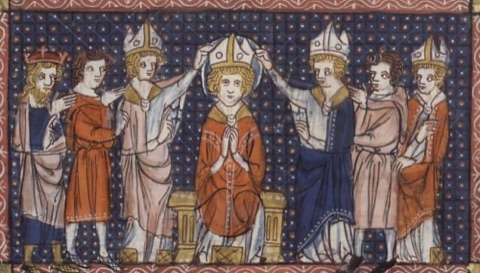
About the author
Hilary of Poitiers
Hilary of Poitiers (around 310 to 367 AD) was born at Pictavium, the Roman town in western Gaul that became Poitiers, and was raised a pagan. On the Trinity opens with his search, which led him from the philosophers to the Scriptures. Around 350 AD, while still a married layman, he was elected bishop of Poitiers. He resisted the Arian policy of the emperor Constantius II, and in 356 AD he was exiled to Phrygia, where he wrote this work and On the Councils. He attended the Council of Seleucia in 359 AD, returned to Gaul around 360 AD, and opposed Auxentius of Milan in 364 AD. He also wrote a Commentary on Matthew and Homilies on the Psalms, and died at Poitiers in 367 AD.