Full text in modern English · Free PDF/EPUB
A Glimpse of Glory and Other Sermons
Want the file? The PDF/EPUB is free with an account.
Summary
- Author
- Richard Sibbes (1577 to 1635 AD), English Puritan preacher
- Published
- Separately, 1629 to 1640 AD, most after Sibbes's death
- Source edition
- Grosart's Works of Richard Sibbes, vols. 5 and 7 (1862)
- Type
- Sermon collection
- Length
- 72,000 words · 5 hours
What is A Glimpse of Glory and Other Sermons about?
A Glimpse of Glory and Other Sermons collects ten Richard Sibbes sermons on what awaits body and soul: the resurrection, heaven and Christ's return. The title sermon, on 2 Peter 1:3, argues that God's call gives no one a title to glory until they know it names them. The last two are the final sermons he preached.
Read the full summary (9 points, key themes)Show less
How the argument unfolds
- 01
The Christian's Watch (Luke 12:37). Life is a night spent waiting for the master. Sibbes sets a routine from waking to a bedtime review. After the Lord's Supper, "it is forty to one that Satan will set upon us."
- 02
The Coming of Christ (Revelation 16:15). The garments to keep close are Christ himself, and England should not feel safe: "Go to Bohemia, go to the Palatinate, and see what God has done there."
- 03
The General Resurrection (John 11:23-24). We rise in the same bodies, on the last day, by Christ's power. Deformities vanish for the godly and stay on the wicked.
- 04
The Redemption of Bodies (Philippians 3:21). The body is changed "in regard of quality," not replaced. So honor the old and the disfigured: "Do not look on them as they are, but as they shall be."
- 05
The Power of Christ's Resurrection (Colossians 3:1). No one who is risen can plead busyness, since "We need not teach a bird to fly." Removing "the stone of custom" takes the power that raised Christ.
- 06
A Glimpse of Glory (2 Peter 1:3). Some have good title and dare not claim it. Tears and temptation blur it, but a dim seal holds: it is "good, sufficient evidence in law."
- 07
The Pattern of Purity (1 John 3:3). False comfort is "a hope that they will carry with them to hell." Christ is the writing copy a child never matches, and still "the copy must be fair."
- 08
The Church's Echo (Revelation 22:17). Christ "married our nature that he might marry our persons," and the bride is still only betrothed. The test is whether you can say Come.
- 09
Sibbes's Last Two Sermons (John 14:1). Christ's own distress was "like the shaking of clear water in a crystal glass," and ours is not. Thomas Goodwin and Philip Nye dedicated these to the Earl of Warwick as Sibbes's swan songs.
Key themes
- The body's service counts. "The very same eyes that have been lifted up to God in prayer" are the ones that will shine.
- Glory at second hand. Christ is both cause and pattern: "whatever excellence is in us, it is ours at second hand." His body will stay greater than ours.
- Hope with a job to do. Hope is as sure as faith, and its sureness shows in labor: "Though it is principally God, yet there is a concurrence between God and you."
Reader questions (7)Hide the questions
Questions about A Glimpse of Glory and Other Sermons
Can I read A Glimpse of Glory and Other Sermons online for free?
Yes. The complete text of this modern English edition is on this page, with no sign-up or paywall.
Is there a free PDF of A Glimpse of Glory and Other Sermons?
Yes. The PDF and EPUB of this edition are free with an Updated Works account. Sign in with Google or an email link; no card is needed.
Will we know each other in heaven, according to Sibbes?
Yes. Since we rise with the same bodies, "we will therefore know one another in heaven."
What age will we be at the resurrection?
Sibbes rejects a fixed age of thirty-three as unwarranted. Those Christ raised kept their stature, and children can praise God as they are.
What were Richard Sibbes's last sermons?
Two on John 14:1, preached at Gray's Inn on the two Sundays before the Sunday he died. They reached a fourth edition by 1638 AD, the edition this text follows.
Where did these sermons first appear?
The General Resurrection, A Glimpse of Glory and The Pattern of Purity were in the 1629 AD Saint's Cordials and were dropped from later editions. The Christian's Watch and The Coming of Christ followed the Philippians 3 exposition of 1639 AD. The Church's Echo was in Beams of Divine Light (1639 AD), The Redemption of Bodies in Evangelical Sacrifices (1640 AD).
Is this the complete text?
All ten sermons are complete. Grosart's notes and prefaces by other hands are left out. The earlier sermons in the 2 Peter series, which A Glimpse of Glory presupposes, have not been preserved.
A Glimpse of Glory and Other Sermons · Full text
The Christian’s Watch
Blessed are those servants, whom the Lord, when he cometh, shall find watching (Luke 12:37).
These words are part of a sermon that Christ made to his disciples concerning worldly cares, and concerning mercy to those who stand in need. Now in the last place he gives directions concerning watching: “Blessed are those servants that shall be found watching when their master cometh.”
It was the custom of servants in those times to stand at night to watch for their master’s coming.
Here Christ compares himself to a man lately married, delighting himself and preparing a place for his spouse, and leaving a servant at home to wait for his return. Christ has gone into heaven to delight himself and to prepare a place for us, and he will come again to receive us into heaven. In the meantime we are to watch: “Blessed are those servants that are found watching when their master cometh.”
In these words we are to consider, first, our relation, that we are “servants.”
And then our condition: we are servants appointed to watch for our master’s coming, for our Lord has not yet come.
This life is a condition of waiting. We are always waiting for something, till we are taken up to Christ.
“Blessed are those servants that their lord shall find watching.” And then there is their relation and condition also: they wait for the return of their master. And their conduct is suitable, namely, watching.
And then the encouragement: “Blessed are those servants, that their Lord, when he cometh, shall find so doing.”
1. Concerning the relation of servants, in a word: some are servants by office, such as magistrates and ministers, but all are servants as Christians. It was the best flower in David’s garland to be a servant to the Lord; and so it is for everyone, however great in dignity, to serve God. For to serve him is to enter the most noble service of all, since all God’s servants shall be kings; indeed, they are kings.
And then it is a rich and most profitable service, for we serve a Lord who will reward us down to a cup of cold water. It is not such a service as Pharaoh’s was, to gather stubble ourselves. He will enable us to do the work, and where we fail he will pardon, and when we do anything he will reward, and when our enemies oppress us he will take our part.
Notice here how the Scripture speaks when we are servants but do not do our duty, and how it speaks when we do it. When David had committed that sin in numbering the people, God said to Gad, “Go tell David” (2 Sam 24:12); but when David intended to build a temple to the glory of God, then God said, “Go tell my servant David” (2 Sam 7:5). When we are doing our duty toward God, then we are his “servants,” but when we are about other service, God will not own us. Israel was the people of God when they were good, but when they committed idolatry, then, “Go tell thy people,” says God to Moses, “that thou hast brought up out of the land of Egypt” (Deut 9:12). Let us therefore remember that we are God’s servants; and if we are servants, then God will own us.
2. Now to go on: “Blessed are those servants whom their Lord, when he cometh, shall find watching.”
We see here that there must be a constant waiting and watching for the coming of the Lord. From this we may learn that it is the duty and office of every Christian constantly to watch and wait for the master’s coming.
Watching, you know, presupposes life; and so first comes waking and then watching.
Sense springs from spiritual life, and then comes waking. Not all who have spiritual life are watchers, and not all who wake are watching. Waking is when the spirits return into the senses and are in exercise. You know that sleep binds up the senses; but when the spirits return, the obstruction is dissolved.
And then there is waking when all the powers are in readiness, and when the vapors that stopped the senses before have gone away.
So then, waking is the return of the spirits, either by some motion, such as stirring up the body, or by some great shining light. So it is in the spiritual life. The vapors cause sleep, but the Spirit of God, scattering a light, awakens us. By this light is meant either the light of his judgments, or the light of his mercies, or the light of divine truth; for by all these we are sometimes awakened.
There is first a waking condition, and then we watch. I intend to speak of watching. Now waking is a preparation for this.
“Watching” is when, upon waking, all the powers and graces are in exercise, preparing for good and avoiding evil.
Now as for bodily watching, we have nothing to do with that here, because here it is meant spiritually. Yet the body is included so far as it is an instrument of the soul in actions of both soul and body. For when the body is overtaken by any inordinate affection for the blessings of God, then the soul is unfit for watching. And therefore it is meant especially of spiritual watching.
In the primitive church they had watchings both bodily and spiritual; for being under the tyranny of the heathen emperor, they did not have liberty to serve God in the day. But afterward they had their watching times, called vigils, preparations, which came before the word and sacraments, or when there was any great business in hand. And when superstition grew, they had their vigils too; but they made laws to bind the people to observe them three times in a night, and yet their prayers were in Latin. It was a perverse imitation of David, who rose at midnight to praise God. That was when he was stirred up on some extraordinary occasion, when there was some danger or some other occasion near, not that he did it ordinarily.
But we have fallen into a course contrary to that of the ancient church, which spent whole nights in prayer; for we have those who spend whole days in sleep. We cannot watch one hour with Christ, but we can spend whole nights in vanity.
Doctrine. What I mean to dwell on at this time is this: that the conduct of a Christian in this world is a state of watching till Christ comes home.
I will show this by some reasons why it should be so, and give some directions how we must be in a waking condition.
Reason 1. Because we are in danger of sin, and in danger by sin. This calls for watching, especially since we are always in danger of sin; and, besides many other sins, of that sin of drowsiness, deadness, and heaviness of spirit. For every man finds by experience this spiritual drowsiness hanging on him, at some times more than at others. Therefore we ought to have the soul in a better condition.
And then we are in danger by sin, and that is more than I can express. For by drowsiness we often fall into sins by which we offend God and the good angels, and give Satan advantage, and grieve the good Spirit of God, and put a sting into all other troubles. Yes, sin makes the blessings of God which we enjoy no blessings, and hinders us from praising God as we ought for his blessings. So in this way we may see that we are in danger of sin and by sin. Therefore we need to keep a spiritual watch.
Reason 2. Again, consider in what relation we are in this world, and what the life of a Christian is compared to. We are travelers through our enemies’ country. This is Satan’s place where he reigns, being “god of this world” (2 Cor 4:4); therefore we need to have our wits and senses about us.
And then again, the worst enemy is within us, our own hearts, which join with Satan to betray us to the world, he being the god of this world.
Now since we carry an enemy in our own bosom, we need to watch, for that is the condition of travelers through their enemies’ country. We also carry a jewel, a soul, a precious jewel in a brittle glass. If once the vessel breaks, all is lost.
Reason 3. And then again, we run in a race. Now those who run need to have the goal in their eye, the prize of their high calling; they need to look at what may encourage them. And of all men runners need to be watchful. We are all runners; therefore you see the necessity of a watch.
Reason 4. Again, our whole life is not only a race but a warfare. And of all conditions a warfare needs watching, for we have enemies to fight against who never sleep. Satan our enemy never sleeps, “but goes about like a roaring lion seeking whom he may devour” (1 Pet 5:8). We sleep, but Satan does not sleep, nor do those who are his instruments. The poor disciples slept, but Judas did not sleep. The traitors of the church do not sleep; the poor disciples fall asleep, and leave Christ to manage his own cause. The traitors have a time, and they will be sure to take it. Therefore, since we are not only runners in a race but born fighters, for every Christian is born so, we must of necessity strive.
Now the strongest enemy is in our own bosom. Satan is said to have departed from Christ for a time, but he never departs from us. We have an enemy, that is, corruption, which hinders us from good and taints the good we do. We carry corruption in us that seeks to betray us, and will give us no rest at all.
Reason 5. Again, not only this, but we are all also stewards, and all of us have “talents,” of which we are to give an account. Now a state of account ought to be a watchful state.
We are all subject to giving an exact account of what we have done in the flesh. Since we are therefore to give a strict account, we ought to be watchful.
Reason 6. Again, men who are under observation need to be watchful. Now there is no Christian who is not under perpetual observation, for there is a conscience in him. Though it is asleep for a time, that conscience will awake and stare him in the face. You know what is said of Cain in Genesis 4:7: “Sin lieth at the door.” Conscience, like a sleepy dog, lies at the door, and will fly in our face when we are going out of this world, and then it will be a heavy time. Thus we are under the observation of conscience within us.
We are likewise under the observation of Satan, who watches everything we speak or do.
And then God observes all that we do. All our sins are written with a “pen of iron” (Jer 17:1), so that they can never be gotten out of the soul without repentance.
If conscience fails, yet God will not fail. Therefore, being under observation, we need to be watchful.
I hope there is no one who will deny this, that they ought to watch.
Now, beloved, since our life is a vigil, a watching time, a warring time, and a race, we are therefore to stand in perpetual watch.
Let us now consider how we may be stirred up to watch. I will not speak all that may be said, but will only give you a few things to show you how we may keep the Lord’s watch.
(1) And so that we may keep it the better, let us labor to have waking considerations, so that we may preserve our souls, because consideration is a help to watchfulness. Know and believe that there is a God who watches, and an enemy who watches, and that conscience will do its office sooner or later. Know and believe also that there is a day of judgment in which we must answer for all that we have done.
(2) Again, consider the end for which we live here; and let us also consider how suitable our actions are to that end, and whether they are for our good and the salvation of our souls.
(3) And then let us have a waking consideration of the presence of God, as Job had: Shall not God see if I do thus and thus? (Job 31:4). And so Joseph: “How shall I do this great wickedness and sin against God?” (Gen 39:9). The eyes of the Lord go through the world, seeing the good and the bad. He has an eye that never sleeps. His eyes see into the dark thoughts of our hearts and see our inward thoughts. All is naked to his eyes.
Now the consideration of this may make us watch over our secret sins. What does the heathen say by the light of nature? What if you have nobody to accuse you? You have a conscience and a God who sees you. So when you are in secret, think that you are in the presence of God, who is a judge. Consider this, that we must all appear before the judgment seat of Christ. St. Paul was kept in a watching condition by the consideration of this: “Knowing the terror of the Lord, we persuade men” (2 Cor 5:11); knowing also that it will be a terrible day. And when Solomon wanted to study out an argument to startle young men, he said, “Go to, young man, take thy pleasure; but for all this, remember God will bring thee to judgment” (Eccl 11:9).
To this waking consideration add some further considerations.
(4) The fearful condition of being found in a state in which we are not fit to die. A man is not in a good condition who is not fit to die. Add this also, that our life is short and uncertain. Now for us to live in a state that we are not fit to die in is a fearful condition. Let us therefore take heed of promising mirth and jollity to ourselves tomorrow, for that may be the time of God’s striking you. And what he has done to some may be done to you. Ananias and Sapphira were struck suddenly. The same may befall you, and that resolution of yours in vain and sinful courses may be the time that God will take you.
I might add many more; I only give you a taste of things. In a word:
(5) Labor for such an inward disposition as may dispose us to watchfulness.
Now there are two affections which, when they are raised, will greatly help us, namely, fear and love. See Jacob: when he was afraid of his brother Esau, he spent the night before in prayer and watching. Let us therefore labor to preserve the affection of fear, and in fear, the fear of reverence, afraid to offend so gracious a God. And let us watch over our hearts and lives, and labor for the fear of jealousy over ourselves, because we have hearts apt to betray us. “Blessed is the man that feareth always” (Prov 28:14); and “make an end of your salvation with fear and trembling” (Phil 2:12). What fear? The fear of jealousy and reverence; for there is great use for this fear.
Now if these will not prevail, then fear the day of judgment, and fear hell, if we will fear nothing else.
It is the atheism of these times to stand in awe of nothing; but he who has a fear of reverence and jealousy is fit for all things. Besides, fear stirs up care, and care stirs up duty; for he who is afraid to offend will be careful to avoid offense and also to please.
So also the affection of love; for as the soul is raised to the love of God and Christ, so it will be watchful.
This is a sweet affection, and keeps the soul watchful over anything that may displease the person whom we love.
And then it is full of invention, how it may give content to the person who is loved, and how to keep the soul in the presence of God. We never sin till the soul is drawn away from this, and we never have the soul in better tune than when we are like this. We need therefore to wind up our affections every day. An instrument, however well in tune it may be, if you just let it alone, will go out of tune; therefore it must be tuned every day. So we should deal with our souls, and when we find our affections to be down, wind them up with waking considerations. And let us do this daily, because they are ready to sink to present things, we are so pampered in them. Those, therefore, who wish their souls well need to wind them up, because they are meant for another world.
And in addition, labor to be wise and foresee; that is, to know ourselves both in good and evil, to know what we are naturally prone to, and in what we are subject to be overtaken, and then what has done us good, and in what we have been overcome. There is no creature that will be taken in a snare if it sees it. The dull ass: you cannot drive him through the fire. But man, since his fall, though he has been caught, yet such is the pleasure of sin that he will fall into it again, whereas he should be wiser than a dull beast.
Add to this having a soul fit for all opportunities of doing good. Let us labor for this, by which we may know how to judge everything at its own worth, so that we may set our love on it accordingly. Oh, that by this the soul may be raised up; otherwise it will fall. To know God in his greatness, Christ in his goodness, the world in its vanity, and sin in its danger, will be means to stir up the soul to watchfulness. So long as the judgment is in a good frame, so long the soul will be fit for anything.
And when we have opportunities for anything, let us study how we may turn it to God’s glory. And let us redeem those opportunities, for this is one exercise of watching, to observe all opportunities tending to the glory of God. It will grieve us one day when we see that at such a time we lost such an opportunity of doing good, and at such a time neglected such a duty. Let us therefore labor to have such a disposition fit for all opportunities, considering that this is our seedtime. But, alas! how many opportunities we lose in not receiving good and doing good!
And let us be wise to see what hinders us from doing good. One thing is too much business about the things of this world, as if we were born for them, whereas the Scripture limits our care for earthly things, telling us that we “should use this world as though we used it not” (1 Cor 7:31). We may enjoy these things here, but we must use them in such a way that we may be wise unto salvation. Take heed “of surfeiting, and drunkenness, and the cares of this world,” says Christ (Luke 21:34). For when men are plunged in the cares of this world, they have their hearts eaten up, and in this way they lose many opportunities of doing good and receiving good. We should therefore labor to be in such a disposition that we may take heed of all hindrances. And we ought to do this because our life is a warfare. We should therefore divide the day, and keep a daily watch.
First, in the morning, begin to awake with God before the world or the flesh thrusts in, and think of all that may befall us that day, of all the dangers, of all the troubles. And we should likewise think with what armor we need to meet those accidents that may befall us. And then get provision, so that whatever happens to us, all may be for our good. And then let us consider how we stand prepared, and where we are likely to be surprised most strongly, there to prepare.
And in addition, before we set about any good thing, let God have the firstfruits of our time and the firstfruits of our hearts. Let him have the first of the day by prayer, so that when at any time we fall into any sin or affliction, we may not have cause to say, “We have not commended ourselves to God, and therefore this evil has befallen us.”
And this will be a comfort to us in all the actions of the day, with this resolution: “This is my comfort, I have commended myself and my prayers to God, and have set about the day with this resolution, to do nothing that may offend God or a good conscience, and to regard no iniquity in my heart, but to pass the day under the shadow of the wings of the Almighty.” We should labor to be in such a disposition as this. And afterward in the day let us do nothing in which we think God will not protect us, as in any evil way; for it is a fearful condition to be in any such way, God not being in that place.
And then, as occasion comes, be sure that we carry a heavenly mind in earthly business, by which we may serve God better and fear him more. For nothing falls out in this life but a gracious heart may draw something from it to make itself more religious. And let us think to ourselves, God has set us in this place, and therefore we do this work.
Many other things might be given, but I name only some. So for recreations: in those whettings of ourselves be watchful, especially, above all things, where we are ready to be surprised, as in prosperity. Therefore the Lord commands his people: Take heed when you are in the good land that flows with milk and honey, that you do not forget the Lord your God (Deut 8:10-11). Job knew this; therefore when his children were feasting, he offered sacrifice for them, lest they should dishonor God in their hearts (Job 1:5). It was a gracious heart in holy Job to do so.
We should in like manner be watchful over ourselves, especially in what we are most prone to be overtaken in. And we should be watchful over ourselves when we are alone, for not every man can use privacy well. Therefore we should use our withdrawal from company in holy meditations. We should be watchful in that, because the devil is ever busy. Oh, when we are withdrawn from others, our thoughts are a fit shop for the devil. Take heed, therefore, of privacy and idleness.
And so for company, by which we may either do good or receive good; for company is a great help to our watch, since one strengthens another, as stones do in an arch. God has sanctified the communion of those who are good for the strengthening of others. And therefore the Scripture says, “Stir up one another, and exhort one another” (Heb 3:13).
If we could account religion a serious thing, as it is, we would not hear these things as strange things, but we would think of them seriously and practice them affectionately.
And so likewise, when we are to pass from the occasions of the day, we should make use of the time we have spent, and go over all that we have done that day again, as God did when he created the world: he viewed all that he had done again. And let us not allow our bodies to rest till our consciences are assured that our sins are forgiven. Oh, it is dangerous to go to bed with a guilty conscience; for what do we know whether we shall see the world again or not? Let us therefore be sure to watch over this, and let us renew our resolution for the time to come. And if we find God’s assistance and blessing on our labors, then let us watch unto prayer, together with praising our good God, observing all opportunities for prayer and praises.
Now when we have observed in some measure that God has been with us, then it is good to watch that God may have the honor of it.
3. Beloved, if it is so that we must take this course, to watch continually, then mark what Christ says: “Blessed is he that is found watching”; so that blessing goes along with watching. And by this blessedness Christ encourages us to watchfulness. Those who keep their souls in a watching frame are blessed. Who says this? Christ. He speaks and says, “Blessed are those servants that he shall find watching when he cometh.” They shall be blessed in their life, and blessed at their death especially. Then we should give our souls to watching, because there is a meeting of all when he comes to us in death; for then we give ourselves to him.
Besides, let us look to our former course of life, and to the glory that remains for us, and to Christ, who is in heaven ready to receive us, and then commit our souls to him. And let us take heed of Satan’s temptations, so that we do not despair because of them. And then let us watch, for then Satan must have all or lose all; and so let us end our days. Christ came to some in the first hour of the watch, to some in the second, and to some in the third hour of the watch; but happy is he whom Christ, when he comes, shall find watching. It is therefore good for young men to watch, but especially when men are in a declining age. It is good for them to watch for Christ’s coming, because it cannot be long before he comes to them. Christ may come to the young and to the middle-aged, but those who are in the declining part of life should watch especially.
Beloved, Christ has come to us, and we go to him every day, for every day takes away part of our life. We should therefore fit ourselves every day for going to him by death. Our life should be nothing but a fitting of ourselves for him; and what is good at the hour of death is good now. We have no security of our life. Even the worst man will then wish he had abstained from such and such courses. Do it now.
Beloved, I exhort you to nothing but what is fit for us, namely, watchfulness; and what is watchfulness but a frame of soul fit to meet Christ? When our faith and hope, and our love exercised about its object, and all the graces of the soul are fit, a man is as he should be.
It is the happiness of a man to be in a state of well-doing; for what is the state of heaven? Nothing but that. And to be watchful is the most excellent of all. Therefore as we ought to be watchful at that time, so we ought to be now.
Now for preparation for the sacrament, let us consider with whom we are to deal. We are to receive Christ; we are to feast with Christ. Natural wisdom teaches us, when we have to deal with great persons, to labor to have a suitable bearing, not only to speak what is good, but to do it exactly and becomingly in all the circumstances. Let us so labor to come as we should, by preparing our hearts, hungering and thirsting after this blessed means; to come with hearts kindled with the love of God and Christ, because he gave himself for us; to come with hearts enlarged with thankfulness, and with holy resolutions for the time to come; and to look better to our walking in the strength of that receiving.
Now it is forty to one that Satan will set upon us; let us therefore especially watch afterward. For when the devil knows we have gained anything in the word and sacraments, he seeks to overthrow us by base thoughts, by base company and loose conduct. Let us therefore watch not only before, but after we have received, so that we do not lose the fruit. It is not the action that saves us, but the well-doing. “Let a man therefore examine himself, and so let him eat” (1 Cor 11:28); for as blessed is that servant whom his Master, when he comes, shall find so doing, so blessed is that receiver whom the Lord shall find holy in preparation, holy in person, and holy in conduct.
The Coming of Christ
Behold, I come as a thief. Blessed is he that watcheth, and keepeth his garments close, lest he walk naked, and they see his shame (Rev 16:15).
Last time we spoke about watching from Luke 12:37: “Blessed are those servants whom their Master, when he shall come, shall find watching.” Now we will go on a little further in the argument, to add something to what has been said, from Revelation 16:15, which is my present text: “Behold, I come as a thief in the night. Blessed is he that watcheth, and keepeth his garments close, lest he walk naked, and be ashamed.”
After the sixth vial was poured out upon the enemies of the church, these words are brought in somewhat abruptly, out of Christ’s care and love for his poor church in times of danger: “Behold, I come as a thief in the night.”
In these words you have a prophetic forewarning about watching and keeping our garments close, lest people walk naked: “Behold, I come as a thief.”
Beloved, Christ’s coming is compared to the coming of a thief. How does a thief come? He comes secretly and unexpectedly: secretly, lest he be discovered, and then with every advantage of surprise, so that he may not be taken himself while he is taking others. In this way Christ is said to come to judgment. He comes suddenly and unexpectedly, and with a purpose to surprise. When people will take no warning, he watches for the time of their destruction. So here you have “the goodness and the severity of God” (Rom 11:22). First, his goodness is shown in that he will give warning in all dangers; but here is his severity also: when warning will not be taken, then he comes with judgment. The Scripture runs this way: “Prepare to meet thy God, O Israel” (Amos 4:12); but when nothing will do, neither judgments nor mercies, then it is just for God to come with every advantage to overthrow us, as a thief in the night.
Comparisons are usually to be taken from what is usually done, whether good or evil, for the goodness or badness of a thing is not regarded in comparisons.
The Spirit of God makes use of all things, ill things and good things. You see the diligence of the devil and the Jesuits, those old Jews and Pharisees who go about sea and land to make a proselyte. Why should we not be as diligent as they are? A gracious heart will draw good from them, from their industry.
Christ says here that he will come “as a thief in the night,” and this coming of his is because of our unfaithfulness. And his coming is sudden, except to some of his children whom he prepares by warning.
When he came into the world at his first coming, there were only a few who “waited for the consolation of Israel” (Luke 2:25); the rest did not. So it will be when he converts the Jews and judges the world: “Shall he find faith upon the earth?” (Luke 18:8). When he comes in his judgments to any person or nation, does he find faith? No; he finds them congratulating themselves that tomorrow will be as today.
Beloved, let us take heed, for there are various degrees of Christ’s coming. He comes to a person, and he comes to a nation. We here in this nation congratulate ourselves when all the world is in flames and we are safe, like the three children in the fiery furnace. We congratulate ourselves and cry, “The temple of the Lord! Oh the temple of the Lord!” (Jer 7:4). But “go to Shiloh, and see what the Lord hath done there” (Jer 7:12). Go to Bohemia, go to the Palatinate, and see what God has done there. Oh, how our hearts should be awakened by considering this, when we have such fair warning, and when the judgments of God are abroad!
But notice the prophecy spoken by Enoch, who was the seventh from Adam, concerning a thing still to come: “Behold, he comes in the clouds, with thousands of his saints” (Jude 14; Rev 1:7). This prophecy was five thousand years ago, yet “Behold, he cometh in the clouds.”
It is the nature of faith to answer to every report of God’s dealings. What God prophesies is as sure as if it were already past, and so faith is moved by it. In matters of judgment, faith is moved with sorrow and with a waking heart; in matters of joy, it is moved with delight. Alas! What is the difference in time between us and the last coming of all? What is this little distance? It is nothing. Therefore, “Behold, I come as a thief in the night; blessed is he that watcheth, and keepeth his garments close.”
The Holy Spirit, the Spirit of Christ, here makes use of this coming of his to stir us up to watch.
All you who have spiritual life, labor to be waking Christians and then watching Christians. What usually wakes people is the noise of a trumpet or some shining light. Now, we live in the light of the gospel and under its sound, and this should awaken us; if not this, the noise of the judgments round about us should. If ever we will be waking Christians, now is the time. And it is not enough that we be waking; we must be watchful Christians.
What is the difference between people, except that carnal people are sleepers and spiritual people are awake? And what is the difference between Christians who are good and those who are not? The one is a watchful Christian, and the other is not. In what way is one better than another? Insofar as one is more careful to avoid sin than another. A weak Christian who is watchful is better than a strong one who is not. See the difference between David and Joseph. Joseph was a servant tempted to folly, yet in the midst of his youth he avoided the temptation. David was a grown man, a holy man, a man of many experiences of God’s mercies; yet you see by how small a temptation he was overtaken, because he was not watchful. So in this way Christians differ both from themselves and from others, according as they are more or less watchful.
To come, then, to some directions on how to conduct ourselves, among others remember this: we should have this waking and watchful consideration, that we have an immortal soul and that we are bound for eternity; that whatever we do in the flesh will be with us forever; and that we are shortly going to the judgment seat. In all these respects we should labor to be watchful at all times, because the very time in which we take liberty for ourselves may be the time of our surprise. We should therefore watch at all times, in prosperity and in adversity. We should watch against all the sins of our persons, and the sins of the state we are in.
Moreover, we are Christians indeed only when we are waking and watchful Christians, and we never truly live except when we are watchful; nor can we otherwise give so good an account of our time.
Besides, if we use this course, we will bring our souls to such awe that they will not dare to offend God, because they must come to be examined. And how will our souls be willing to be judged before Christ, when we are unwilling to set ourselves before ourselves? If we use this course, it will bring a holy awe upon our souls, because they know they must come to examination for every sin.
But notice what follows: “Blessed is he that watches and keeps his garments close, lest he walk naked.”
Watchfulness is for action, as in “Watch unto prayer” (1 Pet 4:7) and “Watch unto thanksgiving” (Col 4:2); and as he says here, watch to the keeping of your garments close. Now, this keeping of our garments close alludes somewhat to the ceremonial law, as when their garments were spotted, or when they had touched some unclean body.
By garments here is meant, first, keeping Christ close to the soul, and together with Christ all that is in him; for as a Christian is clothed with Christ, so also with his satisfaction, obedience, and righteousness, for Christ is given by God.
Let us therefore keep our garments close; and not only that, but apply Christ for our sanctification. Put on the Spirit of Christ, and keep the soul in a holy frame. And keep not only the righteousness of Christ, but the holiness of Christ; and put on Christ, with the expression of his life in our life and conduct, as we are said to put on a man when we express him in our life and conduct. And then keep Christ with his obedience, and keep him with his Spirit, with a holy desire to express him; keep all things close, and with Christ all the good we have by him, by using all means. Keep the truth and our profession; keep the obedience of Christ and the graces of Christ; keep the Spirit of Christ and the truth of God, by which all good is conveyed; and keep the profession of that truth unspotted. The danger is that you may walk naked and be ashamed.
You know that sin and shame came in together. Adam was not ashamed of his nakedness until he saw it, and then he was loathsome to himself when his conscience was awakened. So it is sin that makes us ashamed. Therefore keep your garments close.
To come to what I mean to speak on, since the words are clear:
1. Know that we have no garments of our own. No one is born clothed; but God gives us wisdom to make use of all creatures for our ornament, even though we are born naked.
Now, it is this way in spiritual things. Since the fall we have no garments of our own, though before it we did. We have none now but original corruption, which spreads over the soul. Besides that, those who live on to mature years have another nature worse than leprosy: custom. That is all the clothing we have of ourselves; for any spiritual good, we must fetch it from Christ. Since the fall we must have all our garments out of another wardrobe. This is assumed here, that we have no garments of ourselves; and therefore “Buy of me,” says Christ (Rev 3:18).
2. Now, the second thing is this: having none of ourselves, we must therefore have garments; and when we have them, we must keep them clean and close: “Blessed is he that keeps his garments close.”
For the first: being born naked, we need garments for modesty’s sake, to cover our shame. When God saw Adam naked, he would make him garments himself rather than let him be naked. There must be garments for defense; so in spiritual things there must be garments to defend us from the wrath of God. Otherwise we lie as naked to God’s wrath as a naked man in a storm lies open to the storm.
We must have garments of amity and friendship now. Since we are to maintain friendship with God, we must have something applied to us and worked in us by the Spirit of God; for whatever is of Christ is lovely, because he is the only beloved.
Again, we must have garments for distinction. Now, garments distinguish Christians at the day of judgment, for then God looks upon us to see what we have of his image; and if he finds us in ourselves and not in Christ, then we are condemned with the world.
Garments that are coverings must be of equal extent all over. They cover the whole person. So head, hands, and heart must all be sanctified as well as justified. So those who look at a Christian should see nothing in him but something of Christ, in his words, his callings, his thoughts. And as one man sees nothing of another man outwardly but his apparel, so the whole conduct of a Christian should be nothing but the expressing of Christ. He should speak by the Spirit of Christ, and do all that he does by the Spirit of Christ. We must labor to be “wholly sanctified,” as the Scripture phrase is (1 Thess 5:23).
There is an illustration of this in 2 Chronicles 18:33: “A certain man drew a bow, and smote the king of Israel between the joints of the harness.” There was some small place open, and that cost him his life. Let a man’s profession be ever so great, and let him have good expressions of it, yet if there is any place for Satan’s entrance, Satan will be sure to wound him in that place. So by this you may see that there must be a universal clothing.
And we must be clothed not only with garments but with armor, because we live in the midst of our enemies; by this we may perceive the necessity of putting on the one as well as the other.
Now, as we must have garments and must keep them close, so also we must keep them from stains. The persons in whom these graces are may be defiled, but the graces are pure. We should therefore labor to keep our actions unspotted. The reason why we should do so, among many others, is this: we live in a soiling age. The holy prophet could say, “I am a man of polluted lips, and live among men of polluted lips” (Isa 6:5). We are defiled with corruption, and that soils all our actions; and therefore we ought, as much as lies in us, to keep our nature unspotted. We are polluted ourselves, and we live among people who are polluted. We live in an infected air; therefore we ought to keep our garment close, unspotted, and safe.
Beloved, nothing will do us good but the application of things. All the power of things outside us is conveyed to us by application. Therefore, as the garments of a Christian are precious, so they must be applied. We must keep them close, and we must labor for the spirit of faith and of all graces. The truth must be engrafted into our spirits, so that the word may be an engrafted word; for since these things come from outside us, we never have them to do us any good without the application. Therefore watchfulness is put first: “Blessed is he that watcheth, and keepeth his garments close.”
The righteousness of Christ is an excellent garment, but it must be put on; and if we have Christ we have all. We will speak a little to show you the reason people are tempted to despair: it is because they do not keep the garment of Christ clean, and close to their souls by the spirit of faith, for then the devil gets in between them and Christ. When garments are not close, the wind gets in between, or else perhaps they fall off. So here we must labor to keep our garments close and to renew our right in Christ every day, so that we may not fall away utterly. That is the reason we so often take the sacrament to strengthen our faith, by which we are ready against all despair and against all the temptations that Satan can administer; and so we have all necessary graces ready. We have our hope ready to quiet our souls; our preparation to endure is ready; our meekness and our love are ready.
“Put on love,” says the apostle (Col 3:14), because it is the uppermost, the largest, and the richest garment; and set all other graces to work, such as meekness, patience, and the rest. We should therefore labor to have these graces ready, that is, by watching; for watchfulness is nothing but having grace in readiness. And we have opportunity every day for one grace or another; but when we have them, we must keep them close by watching.
And so it is with truth, by which all comfort is conveyed to us. When that is ready we are able to withstand temptations, but when that is not at hand, mischief is ready to surprise us. Now if the word were engrafted in our hearts, then we would have some divine truths for every occasion, and we would be ready against every sin, as Joseph was. We should therefore labor for this spiritual leaven, to season all other truths, so that we may savor of them in all our thoughts and actions; and so our garments will be close about us.
There is another thing intended in this Scripture. These are dangerous times, and there are spiritual cheaters abroad in the world. Therefore we should keep our profession close, and keep our truth and our judgments close, and get love into our affections; for we will be set upon, and if we walk loosely, then heretics and seducers will come between us and salvation, because our garments are not close. What a great deal of loose profession we have! Were it not for the authority that establishes it, how many thousands among us would fall away? And all because they do not keep their garments close. They do not fasten truth to their souls. Their garments are loose about them, and so by this the Jesuits have some points ready to fall upon, because Christians are unready; for that is how they are taken. Therefore, “Blessed is he that watcheth, and keepeth his garments close.”
So it is in life and conduct; for in all people sin and corruption are ready, and where truth is not put on, grace is not in the heart, but only in the brain. Some have some knowledge of things, but it is not ready, and so they yield to any temptation.
Now you have many in religion who go limping between God and Baal, between Christ and Belial. Our religion, beloved, must be our house. It is that with which we must cover our souls. We must build upon a rock, and our profession is our building, and the soul must not be so unsettled or loose as not to know whether it should serve God or Baal.
If a man will have any good from religion, he must hold fast to religion. No loose profession will ever come to heaven; for with the mouth we must confess, but we must believe with the heart to salvation. There is a company of people who think they may be saved in any religion, but the Scripture is directly on the side of those who follow the best. Therefore we must beware of unsettledness in religion.
And so in conduct, people think they may be ambitious and unjust, and good Christians too. This loose profession never does a man any good, for we cannot join Christ and Mammon together. God will not be served with others. He will be served alone. He must be set up in our hearts and souls, and nothing with him. “O Timothy, keep that which is committed to thee safe” (1 Tim 6:20). Even so, let us keep safe and close that truth that is committed to us, that sacred deposit; for if we keep truth, truth will keep us: “Because thou hast kept the word of my patience I will keep thee” (Rev 3:10). Oh, but some say, “If I keep the truth, I will fall into this danger and that danger.” No; as Christ says, because you kept the word of my patience, you of all others will be safe. Therefore keep it as a jewel.
“Lest they walk naked, and men see their shame.” All shame arises from this, that we do not keep our garments close. So long as truth, and Christ by truth, have a place in the soul, so long we are safe. You see that Adam could not be prevailed over until Satan wrung the truth from him. Then he stripped him of all God’s image. When the children of Israel had cast their earrings into a calf, it is said that the people were naked (Exod 32:25). So people are naked when they do not keep their garments close. What makes men loathsome to themselves? Such a man has his sin and his base ways in the eye of his soul. He has not kept grace close in his heart, and that makes him naked. A man who has grace in exercise is a lovely object to himself. When he thinks over his ways, how he has abstained from such temptations, he is refreshed in the remembrance of them, as good Hezekiah said, “Remember, Lord, how I walked before thee in truth of heart” (Isa 38:2-3).
A gracious man is lovely to himself, and sin makes him loathsome to his soul and afraid of his own condition.
Now let me give some directions for keeping our garments close.
1. Labor for convincing knowledge, because all grace comes into the soul by its light. Grow, therefore, in grace and in the knowledge of our Lord Jesus Christ, and let us often put questions to our judgments about the word and sacraments: “Am I able to maintain this truth I have been brought up in? And do I find these things true to my soul?” and so on.
There is scarcely any point of religion that does not have this savor in it. And who does not find this, that our nature is prone to the contrary? But when a man finds that he can justify things from experience, he concludes to himself, “I know this, not because I have been taught it, but from experience I know it.”
So too with the peace and joy that arise from judgment: “I know I have found peace and joy in believing. When I was in a time of desertion, and when my conscience was awakened, I found this a comforting point by experience.” By this means a man will not easily fall from this truth. Take for example, “All things work together for the best to them that love God” (Rom 8:28). Few can speak this by experience: “I have found God at such a time making this good to me.” But a Christian man can say absolutely that this is true by experience. Therefore we should beg God to engraft his truth into our soul; for this is the promise of grace, that he will teach our hearts, not our brains.
Christians are taught of God to love one another, so we should beg this of God. If we want to keep our garments close, we must labor every day more and more to grow in all grace, and then we will have graces ready on every occasion. We must ask God to bless the word and sacraments for this end. And we must use our profession as it should be used: not to have an upper garment to cover a wicked heart, but to labor more and more to put off the old man, and not to make religion a cloak and veil of hypocrisy. For besides all the sins we have, to make religion serve our own turn makes our sin the greater.
When a man’s religion is a cover for his sinful ways, that increases his sin and makes his sins abominable. “What hast thou to do to take my word into thy mouth, and hatest to be reformed?” (Ps 50:16-17). “Take him, bind him hand and foot, and cast him into utter darkness” (Matt 22:13).
It is a good phrase that is used in Romans 6:17: “Let us be cast into the mold.” We must fit ourselves for the word. That is the mold we must be cast into. If we hear of any duty, let us say, “Lord, fasten my soul to this duty.” And when we are fastened to divine truths, then who will come between truth and us, when truth is engrafted in us? While it lies loose in the brain it may be removed, but when it has gotten into the affections, who will get Christ out of them?
A good conscience is a casket to keep divine truths in, and when we have gotten soul-saving truths, let us keep them by a good conscience.
Do nothing against the truth. Keep it in love. The affection of love must keep it.
If we have religion only in the brain, and not in love, we will be stripped of all. Satan will rob us of any truth. Therefore it would be a great advantage for the putting on of Christ if those who are young would labor to know all the points of religion early, so that they may get them rooted in the soul, and so that these may overpower our lusts and strengthen the soul against temptations.
What is the reason many do not begin to be religious until they are old? They do not have divine truths engrafted into their hearts. Those who are seasoned from the beginning have a great advantage, for that strengthens the soul against temptations. And if they fall into any sin they can recover themselves, because they have truth within them. And they are the readier to give way to any good counsel, because there is something in them that will answer it.
We must earnestly labor that the soul may be open to all divine truths, and then our hearts must embrace them, so that by them we may have comfort in all temptations, and so that when sickness, Satan, and the hour of death approach, our knowledge may not fail us, being rooted in our hearts.
And then we will keep it in our affections, of which love is the seat. In Thessalonians, because they kept not the truth in the love of the truth (2 Thess 2:10), they fell into gross errors. Whatever, therefore, we know to be good, we should get it into our affections. Love all that is supernatural, keep all graces, and be in love with every one of them, as you have it in 2 Peter 1:5-7. There is an outfit of graces, so that if a man has one he must have another. We must keep all our graces; we must not lose one. Every part must be clothed. We must be clothed in our understanding with knowledge, in our will with obedience, and in our affections with love. Our tongue must not only be clothed with good words, but we must labor that our hearts may be clothed also.
2. Those who want good gardens will have flowers of every kind; so a Christian must have graces of every kind. When Ahab was killed, a weapon happened to strike through the joints of his armor, and it killed him. What was the use of his having armor with loose joints? He should have had it complete. So we must have complete armor, and not have any grace only in part. We must not be right in opinion and loose in action, not hot in affection and weak in judgment. We must put on the whole Christ for justification and sanctification, and we must add grace to grace; and when we have put on every grace we must keep them clean, and not defile our profession. Beloved, Christian religion is a pure religion. We must therefore keep our judgments pure, and we must take heed that we are not tainted with errors.
And as we judge, so we must feel and practice. If our judgments are worthless, all is worthless.
A Christian owes a debt to truth; his understanding is a spouse to truth. He must not, therefore, cleave to this opinion and that opinion, but he must keep all graces close. In our place we must stand for the truth; and as Jacob’s sons strove for the wells, so we should strive for the truth, and not incline to any schismatic or heretical opinion. What a poor thing it would be for a man to drag an excellent garment through some cesspool! Surely everyone would say he was mad. Now, we have an excellent profession, and will we allow it to be stained? What is religion, but to keep ourselves unspotted of the world? We should therefore hate the garments spotted with the flesh (Jude 23). We should do with religion as we do with our clothes; a neat man will not endure a spot on his clothes. Beloved, will we have such a garment, and care no more for it? Will we care for our outward garments, and yet endure spots in our profession and in our understanding?
We live in a leprous time, in which men are spoiled in their affections and are of a devilish disposition, hating God; whereas we ought to be of holy profession and conduct. A Christian should be glorious, for he has a dignity above angels. Now, for a man who is a Christian to be failing in justice, what a shame it is! The very heathens abhorred this; and will a Christian be no better than a pagan? Let us take heed to this profession of ours. And when we do anything, let us reason like this: “Is this becoming to my religion?” And let us say to ourselves, “I should walk worthy of Christ, and as befits the gospel.” For what is the ornament of a Christian but the graces he has? All the beauty we have is to be religious.
You know that if a man is clothed we can see no deformity underneath. So a Christian should be pure, that we may see no deformity in him, but all things that are pure; we should see Christ in his conduct. Indeed, we should all labor that the Spirit of Christ may speak and act; for every Christian has the same Spirit that Christ has, to clothe his soul with. Therefore nothing should appear in him but Christ; the Spirit should so shine in him that all might appear glorious.
Will that man look to have benefit by religion who is a deceiver, a liar, a loose speaker? Is this to be clothed with the Spirit of Christ? Some men are of malicious minds, hating God and goodness; and yet they will take it as a great indignity to them if they should not have the title of Christians. But you see what they aim at. They know that they should keep all their garments close, and that they should labor to fasten them on their souls, so that they may say of themselves as the church does in the Song of Solomon, “My beloved is all fair” (Song 5:16); and that as the mold gives the true impression of the print, so a man may be all fair, not only having the righteousness of Christ, but also having some grace in all the parts of his soul.
We are clothed when we have the love of all grace and a desire for some of every grace; when we complain that we are no better; and when we strive after all that is good, so that where we fail we may comfort ourselves with this, that though our sanctification is imperfect, yet we are clothed with the perfect righteousness of Christ, which is the clothing of the gospel.
This is a point of great consequence, that we have some evidences. We have put on Christ for our clothing, or else there is no grace. Where there is faith to lay hold on the righteousness of Christ, there is likewise suitable grace; and as our souls desire both, so he gives both: he gives the righteousness of Christ and the Spirit of Christ. And then we may know we are clothed, if we have the righteousness of Christ.
And again, we may know it if we have a high esteem of that above all, as Paul had in Philippians 3:8, “I account all things dung and dross in comparison of Christ,” for all our righteousness is but as a “polluted cloth” (Isa 64:6).
A Christian has put on Christ when he admires the righteousness of the God-man. It is a righteousness of his own appointing and sending; what a high esteem, therefore, we should have of this!
And then we may know we are clothed when we love Christ because our sins are forgiven. In Luke 7:47 it is known that Mary put on Christ, her love for him being such because her sins were forgiven by him.
And then we may know it when we have faith to believe this, that Christ is ours; when we have boldness to go to God in our Mediator’s name, and can triumph over all our enemies: “Who shall lay anything to the charge of God’s people?” (Rom 8:33). Out of the knowledge of this, that Christ died for me and is now in heaven making intercession for me, I can triumph over all enemies. Alas! Satan will pick a thousand holes in our righteousness; but when we can look upon death and the day of judgment and not be discouraged, it is a sign we are clothed. Let us therefore keep our garments close.
And let us make this use of our daily sins. Every day let us renew our right in Christ by repentance, saying, “This day I have forfeited all, but now I will regain my right; there is a fountain open for sin and for uncleanness” (Zech 13:1).
The second Adam takes away all sin; and therefore when we can make daily use of our justification, it is a sign that we live by faith. This is to feed upon Christ, when we feed upon his obedience.
The life of a Christian should be to live by faith. This is the use we should make of our daily infirmities, afflictions, and sins, to keep our garments close.
How does Satan draw the souls of many to hell? When Christ is loose in their understanding, then the devil comes between them and their garments; and when conscience feels the weight of sin and has nothing to support it, then Satan robs them, because they lack the spirit of faith.
Those who walk in white here will walk in white in heaven; those who go on constantly here will at length walk in heaven with more white, eternally with Christ.
Now let us see our danger. If, on the contrary, we do not keep our garments close, we shall be found naked. Now, nakedness is a woeful condition; it is a curse. Therefore, when we are to appear before God, let us labor for the Spirit of Christ, that when Christ comes to judge us, he may see his own stamp on us.
And let us consider what a shame it will be to us at that time if he finds us naked.
What a shame it is to be a worldling! What a shame that when Christ is not on our affections we should turn into Demases, as Demas followed Paul but afterward embraced the world (2 Tim 4:10). Or at the hour of death, what a shame it is that many who passed for religious men, for want of keeping their garments close, then lack comfort, and at the day of judgment will be ashamed before God, angels, and men.
Let us therefore labor to make Christ ours, so that then we may live clothed and die clothed; and then we will be blessed. For blessed is he who has Christ upon him here; he will be blessed forever hereafter.
The General Resurrection
Jesus saith to her, Thy brother shall rise again. Martha saith unto him, I know that my brother shall rise again in the resurrection at the last day (John 11:23-24).
Having formerly spoken of the communion of saints, we now come to speak of the other two blessings and benefits which the Lord gives and grants to the church in the life to come. One of these is “the raising of our bodies at the last day,” the other “life everlasting.” These are the blessings he has reserved till the day of judgment. With them he closes up and makes an end of all, and yet not a final end with them, because they shall have no end, for the Lord will bestow eternal happiness on them. Though that day shall prove a doleful day to some, yet it shall be joyful to the church of God, a day they have many a time looked for and desired.
In handling this, we are first to consider the order of God’s distribution, for he gives us first the blessings and benefits of this life, and then those of eternal life. Now what is the order of God’s distribution must be the order of our striving. We must labor to have communion with the saints here in this life and to have our sins pardoned, and then the Lord will raise up our bodies at the last day and give us life everlasting. If we omit this, we can have no hope of rising to everlasting life, but only to perpetual shame and contempt. Therefore we must labor to maintain the communion of saints here.
It is said, “Blessed and holy is he that hath his part in the first resurrection, for on such the second death shall have no power” (Rev 20:6). Thus he is a blessed man who in this life rises out of his corruptions and sins, for on such a one “the second death hath no power.” Otherwise one must be held captive by the second death. For if someone makes a bargain and something is given in hand, then, having received that pledge, he looks for the bargain to be kept. Even so the Lord has made a bargain with us, to give us heaven and happiness. If he gives us the pledge of it in this life, the communion of saints and the forgiveness of sins, then we may look to have our bodies raised to life everlasting; otherwise, they will be raised to the second death.
Now in this great point of faith we are to consider several particulars, the first of which is this:
Point 1. That we believe that although we shall be laid in the grave and dissolved into dust, yet one day we shall rise again by the power of Christ and by virtue of his resurrection. This is the proper faith of a Christian only; for heathens believe that they shall die and turn to dust. The Christian goes further, and believes in rising again. This is clear and manifest, first by Scripture and second by reason.
1. We will prove it by Scripture. In John 5:28, Christ, having spoken of that great work of raising up dead souls from the grave of sin to the life of grace by his quickening and powerful word in the ministry, draws a comparison from the resurrection of the body to life everlasting, lest it should seem strange to them: “Marvel not at this, for the hour is coming, in which all that are in the graves shall hear his voice, and shall come forth, they that have done good unto the resurrection of life; and they that have done evil unto the resurrection of condemnation.” So also: “And many of them who sleep in the dust shall awake, some to everlasting life, and some to shame and perpetual contempt” (Dan 12:2).
So St. Paul says, “If in this life only we have hope in Christ, we are of all men the most miserable” (1 Cor 15:19), and then he adds a strong reason: “For since by man came death, by man came also the resurrection from the dead. For as in Adam all die, so in Christ shall all be made alive. But every man in his own order…” (1 Cor 15:21). And he shows why all men are commanded to repent everywhere: “Because,” he says, “he hath appointed a day in which he will judge the world in righteousness by that man whom he hath ordained; whereof he hath given assurance unto all men, in that he hath raised him from the dead” (Acts 17:31). In another place he says, making it the outcome of his believing all things in the law and prophets, “And have hope towards God, which they themselves also allow, that there shall be a resurrection of the dead, both of the just and unjust” (Acts 24:15).
Christ’s threatenings to Chorazin and Bethsaida (Matt 11:22) show that there shall be a day of judgment. So he threatens, “But I say unto you, That every idle word that men shall speak, they shall give account thereof in the day of judgment” (Matt 12:36). And he proves the resurrection from the instance of Abraham, Isaac, and Jacob, he being their God, “who is not a God of the dead, but the living” (Matt 22:32). It was this that also made the prophet Isaiah comfort the people, in that desperate condition of theirs when they appeared as dead men without hope of recovery, from the comparison of the resurrection: “Thy dead men shall live, together with my body shall they rise. Awake and sing, ye that dwell in the dust: for thy dew is as the dew of herbs, and the earth shall cast out the dead” (Isa 26:19).
There are many other strong proofs, both direct and by comparisons, besides the proof of it in Christ, Enoch, Elijah, and others. But I will pass them over and end only with that one from St. John’s vision: “And I saw the dead, both small and great, stand before God: and the books were opened; and another book was opened, which is the book of life: and the dead were judged out of those things which were written in the books, according to their works. And the sea gave up the dead which were in it; and death and hell delivered up the dead which were in them: and they were judged every man according to their works” (Rev 20:12).
And therefore, seeing that all things which the Scripture has foretold have come to pass, and shall come, and seeing that God is true, faithful, and almighty in power to do whatever he will, we may also be sure of this, that God will raise again the dead at the last day.
2. This much is proved by reasons of various sorts, five in number: first, from the power of God; second, from the justice of God; third, from the mercy of God; fourth, from the purpose of Christ’s coming; fifth, from the resurrection of Christ.
(1) For the first, the power of God, Tertullian says well, “It was a harder matter for God to make a man, being nothing, out of the dust of the earth, than now, being something, to raise him up and repair him again.” And he who spoke the word and made this great frame of heaven and earth is able also, by his power, to raise up the dead at the resurrection. This is what made Christ, in that disputation with the Sadducees, reprove their ignorance on this point: “Ye do err, not knowing the Scriptures, nor the power of God” (Matt 22:29). Now when we are once soundly convinced of this, then we can believe, and say with Job, “I know thou canst do everything, that no thought can be withholden from thee; who is he that hideth counsel without knowledge?” (Job 42:2-3).
(2) The second is drawn from his justice. For it agrees with his justice that those who have been partakers in good and evil actions should share in suitable rewards and punishments. But the bodies of men are partners with the soul in good and evil actions; therefore the Lord will raise up both, to reward and punish them according as they have done good or evil. Tertullian says, “We must not think that God is slothful or unjust. First, we may not think that God is unjust, to reward the soul and destroy the body, or punish the one and not the other; but he will raise up both, to reward both together, according to their sufferings and misdeeds. Again, we must not think him slothful, that he will not take pains to raise up dead bodies; no, he is indefatigable, not subject to any weariness. It is but for him to speak the word, think the thought, will it to be, and all shall be done.” So, in regard of his justice, the body must rise also.
(3) The third is drawn from the mercy of God, which is infinitely greater in him than in us, extending itself in a large measure to all. Now there is this much mercy in people, that if they could raise all the dead bodies of their friends, they would do it. But the mercy of God, being infinitely more than all our compassion can be, therefore extends itself to all the souls and bodies of men, to raise them up again and perpetuate them. In this, if the wicked had not forsaken their own mercy, they might have had joy and comfort with the rest. For this reason Christ tells us that he is “the God of Abraham, Isaac, and Jacob” (Matt 22:32), not the God of the dead. For if that were so, he would be the God of only one part of Abraham, and not of the other. But he is the God of both; therefore he will raise both soul and body at the last day, and the dead shall rise.
(4) From the purpose of Christ’s coming, as it is written: “For this purpose appeared the Son of God, that he might loose the works of the devil” (1 John 3:8). For the devil first brought in sin, and sin brought death. This was the great work the devil aimed at, to bring in sin and death; and therefore Christ came to dissolve this great work, among the rest. That is not done unless there is a resurrection of the dead. Therefore the dead shall rise again.
(5) The fifth is drawn from the resurrection of Christ. For Christ did not rise as a private person, like the widow’s son and as Lazarus did, but he rose as the public head of the church. St. Paul says that he was “the first fruits of them that slept” (1 Cor 15:20). So in the rising of Christ all the people of God rise, and what went before in the head shall follow in the members, as Augustine speaks. And Cyril says well that “Christ entered into heaven by the narrow passage of his sufferings and death; by his death and resurrection to make a wide passage for us unto heaven.” So in Christ’s rising we rise.
Here someone may object, “Oh, it was an easy matter for Christ to rise, because he was God.” I answer: True; but as God-man, sustaining the burden and weight of all our sins, it was not so easy. For when we are laid in the grave, we have only the weight of our own sins to keep us down. Christ had the sins of all the elect people of God upon him, and therefore it was a harder matter for Christ to rise again than we suppose. And yet he broke through all and rose again; therefore do not doubt that he will at length raise you again.
So Christ’s promise is, “When I am lifted up, I will draw all men after me” (John 12:32). Only our care must be to have communion with Christ in our life and death: to live as he lived, die with him, lie in the grave with him, be as near him in life, and lay our dead bodies as near his as may be. And then, when Christ, who is our life, shall appear, “then shall we likewise be raised up, and appear with him in glory” (Col 3:4). Otherwise we shall be raised, but to all sorrow and misery in eternal torments, not as to a head, but to a terrible judge. There, when someone has lived a thousand years, they are as new to begin again, and so they will be tormented world without end.
Now various objections are made by atheistic people against this main point of faith.
Objection 1. The first is a common one. “How is it possible,” they say, “that a body which has lain rotting a thousand years in the grave, so turned into dust, should rise again?”
Answer. I answer: Though it is above reason, yet it is not against reason. For we see that the flies that are dead all the winter, when the summer comes, with the heat of the sun, live again. So the grain rots in the ground and revives again. Now if the one may be done with the heat of the sun, much more is the power of God able to raise up those who have lain in the grave a thousand years, to live again.
Objection 2. “It is impossible,” they say, “for men to rise again, because their dust is so mingled with one another’s, and with the dust of other creatures. As in a churchyard, where dust is mingled, one cannot well say, ‘This is the dust of my father,’ or ‘This is the dust of my mother,’ things being so mixed. Take a quantity of milk and put it into the sea: both remain there in substance, but so mingled that they cannot be parted from one another. And so,” they say, “it is with dead men, whose dust is so mingled together that it is impossible to part them.”
Answer. To this I answer:
In general, though it is an impossible work for man to do, yet it is not impossible for an Almighty God, to whom all things are possible. It is an easy matter for him to give every man his dust again and to separate it, one from another, even as a man who has a handful of various seeds in his hand can easily distinguish them and take one from another, putting each sort by itself again. We see that there are some men so clever and skillful that they can draw out of an herb or flower the four elements, fire, earth, air, and water. Now if so much cleverness and skill may be in a man, how much more able is the Creator of men, who alone is wise and who has an all-seeing eye, to separate every man’s dust and to bring them together again?
Objection 3. “Oh, but,” they say, “what do you say to this? When one man eats another, then that man’s flesh becomes one with the other man’s flesh; in which case, if the one rises, the other cannot.” To this I answer:
Answer. It is true indeed that when one man eats another, the one becomes a part of the other for the time. But he was a complete man before he ate of the other, and the other was a complete man before he was eaten. Now it is a truth in theology that every man shall rise with his own flesh, but a man shall not rise with everything that was once a part of him. For instance, if a man has a tooth beaten out and another comes in its place, he shall not rise with both of these. So likewise, if a man has a piece of flesh struck off with a sword and new flesh comes in its place, he shall not rise with both, but with so much as shall make him a complete man. Even so, though one man eats another man’s flesh, he shall not rise with that, but with so much as shall make him a complete man. Neither shall he who was eaten lack anything of his completeness at the resurrection.
Objection 4. Lastly, they bring one Scripture that appears to be against us, and only one, which is this: “That flesh and blood,” as the apostle speaks, “cannot enter the kingdom of heaven” (1 Cor 15:50). To this I answer:
Answer. The meaning is figuratively spoken. That is, flesh, as it is corrupted and sinful, clothed with infirmities, and subject to mortality and death, shall not enter in. So this is expounded: “Forasmuch, then, as the children were partakers of flesh and blood, he also himself likewise took part of the same, that through death he might destroy him that had the power of death, that is, the devil; and deliver them who, through the fear of death, were all their lifetime subject to bondage” (Heb 2:14). Therefore it is meant of flesh and blood in this transitory life, subject to infirmities; in this sense it shall not enter into heaven. And thus we have dealt with the quibbles of the atheists, against all of which this point stands sure and firm, that the dead shall rise again.
Use 1. Seeing the dead shall rise again, then though we die as others do and are dissolved into dust, yet we are to be comforted, because this is the worst our sins and the world can do to us, to take from us a frail natural life. And when they have done that, it shall be restored to us again in a far more excellent manner.
This, in all distresses and troubles, must comfort us, as it did Job: “I know that my Redeemer liveth, and that he shall stand at the latter day upon the earth; and though after my skin worms destroy this body, yet in my flesh shall I see God” (Job 19:25-26). This also supported David: “Wherefore my heart is glad, and my tongue rejoices; and my flesh also resteth in hope: for thou wilt not leave my soul in the grave: neither wilt thou suffer thy Holy One to see corruption” (Ps 16:9). And so Christ himself says to his disciples: “The Son of man shall be delivered unto the chief priests, and unto the scribes, and they shall condemn him to death, and deliver him to the Gentiles to scourge and to crucify: but the third day he shall rise again” (Matt 20:19).
Now what comforted Christ, Job, and David must also comfort and support us in all the crosses and troubles that befall us; for death, which seems the worst of things, shall prove an advantage to us. It was a comfort to old Jacob that the Lord said to him, “Fear not, go down into Egypt; behold I will be with thee…” (Gen 46:3). So faith in death hears this comforting voice of God: “Do not fear to go into the ground, to sleep in the grave a while; for behold, I will go down with you, keep your ashes there, and raise you up again.” For death deals with us no otherwise than David did with Saul when he was asleep: he took away his spear and his water pot, which he restored to him when he was awake. Even so death takes away our spear and our water pot, our strength and a weak, frail life, and when we awake again it is restored at the day of refreshing in a more excellent and more abundant manner.
Use 2. Seeing the dead shall rise again, this must comfort us in regard of our dead friends departed, that although death has separated us for a time, yet we shall all meet together again. So Martha here: “I know that my brother shall rise in the resurrection of the just”; and the apostle says, “For if we believe that Jesus died and rose again, even so those who sleep in Jesus will God bring with him” (1 Thess 4:14); and then he adds, “Wherefore comfort one another with these words” (1 Thess 4:18). Chrysostom says well, “If a man takes a long journey, his wife and children do not usually weep, because they expect his return home again before long.” Even so it is: our friends who die in Christ are gone only on a long journey, and we must comfort ourselves that we shall meet again.
Use 3. Seeing the dead shall rise again, this must make us careful, therefore, to spend our time well while we are here. For if a man did not rise again, he might live as he pleased. But because we shall rise again with these bodies which have sinned, we should therefore be careful to pass our time here in holiness and righteousness. This is the use St. Paul makes of it: because there shall be a resurrection both of the just and the unjust, “herein,” he says, “I endeavour myself to have a clear conscience towards God, and towards man” (Acts 24:16). So should we do in this case.
When Peter heard it was the Lord who was near him on the water, he girded his coat about him, for he was naked. One would have thought he should rather have taken off his garment and laid it aside. But Peter had this consideration, that when he came to the other side he would stand before his Master, and therefore he girded himself, that he might stand before him in a seemly and becoming manner. Even so, seeing that when we have passed the glassy sea of this world we are to stand before God, we are therefore to have this consideration, that we gird ourselves and make everything ready, that we may come before God at the last day in a seemly and holy manner.
Point 2. The second main point is that we believe that we shall rise again at the last day with the same bodies. So Job: “I know that my Redeemer liveth, and he shall stand at the last on the earth: and though after my skin worms destroy this body, yet in my flesh shall I see God: whom I shall see for myself, and mine eyes shall behold, and not another; though my reins be consumed within me” (Job 19:25). And in Ezekiel 37 it is shown that life and sinews came into the same dry bones, and flesh grew upon them. Though that is a parable, yet it establishes that what falls dead shall rise again, because the strength of the comfort set forth in it to his people is taken from the comparison of the resurrection.
So John says, “And I saw the dead both great and small stand before God…” (Rev 20:12). Thus Tertullian says that “he will pray that the same body may rise again; for the resurrection is not of another body, but of the same that falls: not a new creation, but a raising up.” St. Jerome says that “it cannot stand with equity and right that one body should sin and another body be punished.” Neither will a just judge allow a victorious person to die and another to receive the crown he deserved. Therefore the same body that sinned will be punished, the same body that has won the victory will be crowned, and that same body will rise again.
We see this in Christ’s resurrection: the same body that was wounded, that same body rose again. If he had pleased, he could have cured his wounds in three days, since he could heal all sicknesses and diseases with a word or a touch. But he let them alone to confirm his disciples, and to show that he had the very same body that was crucified. So Thomas was told to reach out his finger and behold Christ’s hands, and to reach out his hand and put it into Christ’s side (John 20:27), by which it appeared that the same body and wounds remained. Therefore, as in the head the same body that died rose again, so it will be with all his members.
Against this doctrine there are some objections.
Objection 1. The first comes from 1 Corinthians 15:44, where it is said “that it is sown a natural body, but is raised a spiritual body.” So, they say, it is not the same body that rises again. To this I answer:
Answer. It is not spiritual in regard of substance, but in regard of the state and condition in which our bodies will be. A natural life is upheld by the use of food and drink, sleep, medicine, and rest, but then our bodies will be upheld by the power of God, without the use of these means. Now our bodies are heavy, but then our bodies will be full of agility and nimbleness, able to move upward or downward swiftly at pleasure. So it is a spiritual body, not in regard of substance, but in regard of quality and operation.
Objection 2. Some say that if the same bodies rise again, then they rise with a number of needless parts. For why, they ask, would a man need teeth, since they will eat no food? Why would they need a stomach, since there will be no breaking down or digesting of food? And why would a man need bowels, since there will be no excess to fill them?
Answer. Augustine will answer for me. He says, “Concerning the teeth, they shall be needful and useful then, for we have a double use of them: they serve to eat with, and they are to further our speech. And therefore, though we shall have no need of teeth in regard of eating, yet we shall have need of them to speak with, for in heaven we shall praise God, and sing the song of Moses and of the Lamb. And as for the other parts of the body, they are,” he says, “for sight and comeliness; for though there be no need of the stomach to digest, nor of the bowels because there is no excess, yet these shall be as ornaments to the body, to adorn and beautify it. For as there are some things not needful now save for ornament, as a man’s beard and his breasts, which have no other use save this, even so, though we shall not need a stomach to digest, nor bowels for excess then, yet shall they be for an ornament to man.”
Objection 3. It is objected that the same bodies do not rise, because they are heavy and ponderous. For how, some say, could heavy and weighty bodies stay above the clouds in the pure heaven, which is purer and thinner than the air? To this I answer:
Answer (1). If a man can fill a great vessel of lead and make it float on the water by drawing air into it, why then may not God draw his Spirit into us, and so fill us with it as to make our heavy bodies stay above the clouds, just as a man can make a vessel of lead float on the water?
Answer (2). Again I answer that everything abides in its own proper place by God’s appointment. For example, the clouds are heavy and wet, and would therefore fall to the ground, except that God has appointed the air to be their proper place, and so there they abide. So likewise the water would be above the land, except that God has confined the proud waves within a limit, where the water must rest and advance no further.
So it is God’s appointment that makes anything remain where it does, even when that is contrary to its nature. Therefore, because heaven is the proper place of a glorified body, and earth of a mortal body, the same bodies will remain here until the day of judgment. After that, being made glorified bodies, they will remain forever in heaven, the proper place of their assignment.
The uses are these:
1. Since we will rise with the same bodies, we must be careful to keep them well, so that they may be pure and unspotted, without sin. This is Paul’s conclusion: “Fly fornication. Every sin that a man doth is without the body: but he who committeth fornication sinneth against the body” (1 Cor 6:18). So, because our bodies will rise again, let us flee every sin and corruption and keep our bodies unspotted, so that they may be presented before Christ holy and pure on that day.
For what a shame it will be to stand before God in judgment when we have wronged and grieved God by our sins, when our heavenly judge will say to us, “Are not these the eyes through which you let in lust and looked after vanity? Are not these the tongues with which you told so many lies? Are not these the mouths with which you swore and blasphemed my name? Are not these the hands with which you worked wickedness? Are not these the feet that carried you to sin, vanity, and disorder?” And then how will we be able to answer the Lord! Therefore let us be careful to live well and keep our bodies unspotted, so that we may have comfort on that day.
We read that when Jehoiakim was dead, the characters, marks, and prints of his sorcery were found (2 Chr 36:8). Although during his life, being a king, he carried it off and kept it hidden, yet once he was dead the prints of his abominations remained, found on his body. So, however sinners may hide and conceal their sins here and deceive the world, yet when they are dead the marks and prints of the foul sins they have committed will be found. Therefore let us keep our bodies pure and unspotted for that day.
2. Since the same bodies will rise again, we should put them away and lay them down well on the day of death, dying in faith and repentance. We see that if a man takes off his garment and means to put it on again, he will not rip and tear it off his back, but will pull it off gently, brush it, and lay it away safely, so that it may serve him again and grace him before his friends. So, since our bodies are like a garment for our souls, when we take them off let us labor to put them away and lay them down well on the day of death, so that they may do us credit on the day of judgment.
We read what Peter says: “I think it meet, so long as I am in this tabernacle, to stir you up, by putting you in mind; seeing I know that the time is at hand that I must lay down this my tabernacle, even as the Lord Jesus hath showed me” (2 Pet 1:14). So St. Paul says, “For we know, that if the earthly house of this tabernacle be dissolved, we have a building given us of God” (2 Cor 5:1). Thus he is careful for a better building in the pulling down of the old.
There is a great difference between a soldier destroying a house and one who only dissolves it. He who destroys a house pulls down the timber and stones and flings everything without caring where, because he does not intend to use them again. But a man who dissolves a house will take it down piece by piece, carefully laying up every single part, because he intends to build with it again. Even so, because we know our bodies will rise again at the last day, we must not destroy them, but labor to set them in order and lay them down well on the day of death.
3. Since the same bodies will rise again, this should make us live with fear, so as to lay them down well on the day of death.
Here this great question may be answered: may we know one another on the day of judgment? But this need not be a question at all. Since we will rise again with the same bodies that we lay down here, we will therefore know one another in heaven. The reasons are these:
(1) Because our knowledge will at that time be more perfect than Adam’s ever was in the time of innocence, in which state he knew his wife as soon as she was brought to him, though he had never seen her before. Therefore much more will we then know one another, since our knowledge, rising with the same bodies, will be more perfect.
(2) Again, the disciples on the mount, at Christ’s transfiguration, had only a glimpse or taste of the heavenly glory, and yet Peter knew Moses and Elijah, though they had been dead many hundreds of years before. Therefore, if he knew them, having only a taste of heavenly glory and being himself unglorified, much more will we know one another when we have the fullness of glory.
(3) Because our happiness will be greatly increased by means of our mutual fellowship with one another. As Christ says, “But I say unto you, that many shall come from the east, and from the west, and shall sit down with Abraham, Isaac, and Jacob in the kingdom of God” (Matt 8:11). And therefore, since our happiness will be greatly increased by mutual fellowship, we are not to think that we will go to a people of strangers, where we will know nobody. We will go to all our godly friends and acquaintances, and to those whom we know.
(4) We will hear the indictment of the wicked on the day of judgment. If we hear it, we will know the wicked men who are indicted, those who oppressed the people of God: Cain, Pharaoh, Judas, Nero, and the like. And as we will know the wicked, so we will know the godly too, when they are rewarded. This, it seems to me, may be a motive to quicken us in our care to live holy and Christian lives, since we are not going to a foreign country or to a people of strangers, but to our friends and acquaintances, and to those whom we know.
The third general point is the time when we will rise.
Point 3. On the day of judgment, then, and never until then, as Martha confesses: “I know my brother shall rise again in the resurrection at the last day” (John 11:24). So Saint Paul says, “We shall not all sleep, but we shall all be changed, in a moment, in the twinkling of an eye, at the last trumpet (for the trumpet shall blow), and the dead shall be raised up” (1 Cor 15:51). There are four reasons for this.
1. So that there might be a proportion between Christ and his members. For when he died, he did not rise again immediately, but lay a while trampled and trodden underfoot by death. So must we. Irenaeus closes his book with this, saying, “Even as our heavenly master did not fly to heaven immediately, but did remain under death and in the grave for a time, even so all his servants must be contented to lie in the grave, and to be trampled under foot of death for a time before we go to heaven.”
2. So that the saints might meet the bodies of all the faithful who have gone before them, together. They will not rise to go ahead of one another in glory, but will all go together (1 Thess 4:14). This is an excellent comfort to us who live in the last age of the world: the saints who departed before us will not rise to heavenly glory until we also are ready with them. Until this time they wait in their graves for our completion. When Samuel called all Jesse’s sons before him and one of them was still missing, he said, “Fetch him, we will not sit down till he be come” (1 Sam 16:11). So all the people of God lie in their graves, and cannot rise until our time also is fulfilled.
3. For the further declaration of the power of Christ. For it seems a greater thing for Christ to raise men who have been lying rotting in their graves a thousand years than to raise men when they are newly dead. Therefore, when Christ was about to raise Lazarus from death, Martha said to Jesus, “My brother stinketh already, for he hath been dead these four days” (John 11:39). From this she inferred that it was not so easy a matter to raise him then as it would have been at first, when he was newly dead, and as it was to raise Jairus’s daughter and the widow’s son. So when the Lord demanded this question of the prophet, “Can these dead bones live?” he answered, “Lord, thou knowest” (Ezek 37:3), as though he had said, “It is not impossible for you, but it is a hard thing to do or bring to pass.”
4. For the further confirmation of our faith. For as many dead bodies of the saints as there are among us, so many pledges and pawns are there for our redemption. Although in ourselves we might doubt that our own bodies will rise, because of our sins and the badness of our lives, yet because there are so many bodies of the dead saints among us, we need not doubt that he will raise them up one day to glory.
There are three bodies already ascended into heaven: Enoch before the law, Elijah in the time of the law, and Christ in the time of the gospel. And for these three bodies he has left many thousands of the dead saints’ bodies remaining in the grave, to be pledges and pawns to us of our resurrection. To this purpose Saint Paul says that God provided “better things for us, that they without us should not be made perfect” (Heb 11:40).
The uses are these:
1. Since the bodies of the saints do not rise until the day of judgment, we must be content to be under affliction and trouble until God delivers us, just as the saints’ bodies are trampled on, and rest quietly until the day of deliverance.
2. Since the bodies of the saints do not rise until then, we should therefore desire and long for it, yes, and wait. As it is said, both the rational and the irrational creatures groan and travail in pain toward that day of redemption and glorious liberty of the sons of God (Rom 8:21). We see that if a man has broken an arm or put a leg out of joint, and someone has promised him to come and set it at a certain hour, he will keep looking and longing for that person’s coming. Even so, since on the day of judgment the Lord will restore us again to our former wholeness, we should long for that day and be looking for it.
3. This should moderate the delicate and excessive pampering of our bodies, which must before long lie so trodden under and rotting in the grave. We should not be so careful about them, but take care for our soul’s good, and then both body and soul will be raised up to glory forever.
Question. Now here a question arises: Since our bodies must lie so many years and ages rotting in the grave, what may be our comfort to uphold and sustain us in the meantime?
Answer 1. God will be present with us. He will not fail us or forsake us, but will go to the grave with our dead bodies and watch over our ashes with the eye of his providence, to keep them and raise up all again. As God encouraged Jacob, “Fear not to go down into Egypt, for I will go with thee, and I will bring thee up again” (Gen 46:4), so God will go down into the grave with our dead bodies, watch over them, and bring them up again.
2. Though our bodies lie rotting in the grave, yet our souls will be happy and blessed. This was Paul’s comfort: “For we know that if this earthly house of our tabernacle be dissolved, we have a building given us of God, not made with hands, but eternal in the heavens” (2 Cor 5:1). So the souls that lay under the altar, crying, “How long, Lord?” were comforted with the long white robes given to them (Rev 6:11), the present blessed state of their souls.
3. This may comfort us: although we lie in the grave a long time, yet Christ has sanctified and sweetened it for us by lying in it himself, so that the grave has now become a sweet bed in which to rest in peace. As Isaiah speaks of such people, “Peace shall be upon them, they shall rest in their beds, every one that walketh before me” (Isa 57:2). So Christ has now made this the plain way to heaven. Therefore, as the children of Israel marched through the wilderness, where there were fiery serpents, enemies, and many discouragements, overcoming all because it was their way to Canaan, so, since the grave is our way to heaven, let us overcome all doubts and not fear to march that way to it.
4. Although we lie a long time in the grave, we have assured hope that we will rise again. As David says, “Wherefore my heart is glad, and my tongue rejoiceth; my flesh also rests in hope: for thou wilt not leave my soul in the grave; neither wilt thou suffer thy Holy One to see corruption” (Ps 16:9). As this was true of Christ, so it is true of all the members: when they are laid in the grave they are not gone and past hope. Though the grave receives them, as Jonah was for a time swallowed up by a whale, yet the Lord will in due time speak to the grave to cast them out again. Therefore this should teach us to live with comfort in this life, to encourage others, and when the time of our death comes, to depart in peace, since God will be with us and our bodies will rise again, while heavenly glory is appointed for our souls in the meantime.
The fourth point is the consideration of by whose power we will rise.
Point 4. That is, by the power of Christ; no other power can do it. It cannot be done by the power of nature, as Job says: “If a man die, shall he live again?” (Job 14:14), meaning that if a man dies he cannot rise by himself. So David says, “Yet a man can by no means redeem his brother, he cannot give his ransom to God” (Ps 49:7). So also, “But God shall deliver my soul from the grave; for he will receive me” (Ps 49:15). So all will rise by the power of Christ, but with great difference: the godly with boldness, joy, and rapture; the wicked with fear, shame, and astonishment.
The uses of this are these:
1. To magnify and rely on this mighty power of Christ, by which we will rise again out of the grave and from the belly of rottenness.
2. Therefore to labor to feel the power of Christ here in this life, to your conversion and the quieting of your conscience, or else you will feel the power of Christ to your terror on the day of judgment.
3. Since all will rise again at last through the power of Christ, let us not doubt that the Lord will raise us out of all troubles whatsoever at the best time. We see this where the Lord asks the prophet, “Son of man, can these dead bones live?” (Ezek 37:3). Then he told him to prophesy over those bones, and bone ran to its bone, and the flesh and sinews grew on them again, so that a great army stood up.
Now God applies this: “Son of man,” he says, “these bones are the whole house of Israel” (Ezek 37:11), which did lie in captivity and bondage. So God showed the prophet that as he was able to raise these dead bones, so he was able to bring his people out of captivity and bondage again. Therefore do not doubt that your God will raise you out of your troubles, whatever they may be. So David confesses, “Great is thy mercy towards me, and thou hast delivered my soul out of the lowest grave” (Ps 86:13). This the saints have found, and this you will find to your comfort. Therefore make a right use of the power of Christ.
The fifth point is the state in which our bodies will rise again.
Point 5. That is, into a state of glory. Now our bodies are mortal and changeable, subject to a number of infirmities: hunger, cold, nakedness, sickness, and pains. Now they are lumpish, dull, and heavy in the service of God. But at the resurrection our bodies will be made immortal, with no subjection to any infirmities of nature, having strength to perform our own actions. In this goodly state our bodies will rise.
If a physician, out of his art and skill, should give us such a potion that after taking it we would never hunger or thirst, and would also be freed by it from all griefs, pains, infirmities, and diseases, how a man would strain to his utmost to buy such a potion! Yet such a potion the Lord has freely provided for us at the last day, when he will give us such a cup to drink that we will never hunger, thirst, or feel any more pain. How we should therefore long and yearn for the coming of Christ! We see what our Savior says: it would be better for a man to enter heaven hurt and maimed than to be cast into hell, however great the perfection of his parts (Matt 18:8). But thanks be to God, we may enter into heaven and have all things in the state of perfection. How this should therefore make us strive to be God’s people, so that we may attain to so excellent a state!
But this question that Saint Paul raises, in what state our bodies will rise at the last day (1 Cor 15), cannot be answered without a distinction. The bodies of the godly rise in a state of glory, the bodies of the wicked in a state of shame and disgrace. So both rise, but in different states. As we read, Pharaoh’s two servants were both delivered out of prison, but in different ways: the one to stand before the king and give the cup into his hand, as he had formerly done, the other to be executed and hanged (Gen 40:20). Even so it is with the godly and the wicked at the last day. Both will be raised out of the grave, but the one to honor, to stand in the presence of God, the other to shame and perpetual contempt.
So the bodies of the saints, though now weak, will be glorious then. As Paul shows of grain, when it is sown it is only bare grain, but God gives it a body at his pleasure (1 Cor 15:37). So also, he says, is the resurrection of the dead. Our bodies are sown in corruption, but raised in honor; it is sown in weakness, and is raised in power; it is sown a natural body, and is raised a spiritual body. So Saint Paul shows: “Christ shall change our vile bodies, that it may be fashioned like unto his glorious body” (Phil 3:21). For in whatever state Christ’s body rose again, in that same state all the bodies of the saints will rise, for the members must be conformed to the head. But Christ’s body rose in a far more glorious state than ours are in now. Therefore, when we look at our bodies and see them weak and poor, contemptible, crooked, and deformed, we should live well, and then comfort ourselves with this, that in the kingdom of God our bodies will be made glorious and beautiful, and all deformities taken from them. Someone has well said that as the goldsmith melts his gold and so frames a cup to serve the king, so the Lord only melts and refines us by death, to fit us to be vessels of glory hereafter. Therefore it is an excellent meditation to think often of the glory to come, to strengthen us against the terrors of death, as Job does (Job 19) when he was covered with griefs and sores. “I am sure,” he says, “that my Redeemer lives, and he shall stand at the last on the earth; and though after my skin worms destroy this body, yet shall I see God with my flesh.” So we must comfort ourselves in like extremities.
Now this glory will not come only from the overflowing of the spirit. It will also be in regard of the blessed and happy state that the body will be in at that time. This appears in six things, in which the glory and excellence of the body will consist after the resurrection.
1. All the parts of the body will then be perfect and entire, and will lack nothing. However maimed and deformed a man may be now, lacking a hand, eye, leg, arm, finger, or the like, yet all will be supplied to him at that day, and that for two reasons.
(1) Because all things will then be brought back to their former state, as Peter shows, speaking of Christ: “Whom,” he says, “the heavens must contain until the time cometh that all things shall be restored” (Acts 3:21). But in the beginning man’s body was made perfect and entire, lacking nothing either for beauty or comeliness. Therefore it will be restored to this state again.
(2) Tertullian draws it from another ground, where it is said, “There shall be no more death then” (Rev 21:4). “Always,” he says, “in the greater is inferred the lesser. Now the lameness or deformity of any member is the death of that member. Now if death be expelled from the whole man, so also must it be from every particular member; therefore the bodies of the saints shall rise again perfect and entire at the last day.”
Use 1. Therefore, in any of the lacks and imperfections of ourselves or our friends, we must labor to live a holy life, draw them on in goodness too, and then be comforted. Whatever our imperfections are, God will remedy them all at the last day.
Use 2. Again, since at the day of judgment all parts will be perfected and restored, we should not now be afraid to give any of them for the name of Christ. For he who restored the ear of Malchus, who was his enemy, will much more restore any part which his friends lose for his name’s sake. Therefore we read in Hebrews 11:35 how those holy men mentioned there endured, and would not be delivered from the pains and torments they suffered from wicked men, that they might receive a better resurrection.
2. The glory of the body consists in this, that it will be beautiful and lovely, though it is now deformed and unsightly, especially when dead, which made Abraham desire to buy a place to bury his dead out of his sight (Gen 23:4). This is so for these reasons:
Reason 1. Look at the state Adam was in during the time of his innocence; the bodies of the saints will be in that same state at the resurrection. But in the beginning the body of man was so beautiful, so glorious, so full of the brightness and splendor that came from it, that all the beasts of the field came gazing and stood looking on him. Therefore the bodies of the saints will be in the same state at the resurrection.
Reason 2. All deformities, blackness, and unsightliness are punishments and penalties for sin; but when our sins and our corruptions cease, then their penalty and punishment will cease also. Oh, how this should stir up our care to repent of our sins, to get faith in Christ, and to walk in holiness before him, that we may have our portion with the saints at last! Men cannot cure deformity, but God can. Both the temples were built and defaced again, the last not so glorious as the first; but God will raise up all who are his, and make them more glorious than ever.
3. The glory of the body will then consist in this, that it will be filled with brightness and splendor. Now our bodies are dark and obscure, but then the bodies of the saints will be like so many bright stars and shining lamps, when the wicked will look dark and ugly to behold. We read, “That they who be wise, shall shine as the brightness of the firmament; and they that turn many to righteousness, shall shine as the stars for ever and ever” (Dan 12:3). So Christ enlarges this same shining of theirs, where he says “that the just shall then shine like the sun in the kingdom of their Father” (Matt 13:43).
Therefore the glory they will have is inconceivable to us. We see that when Moses had talked with God forty days, his face so shone by the reflection of God’s glory on him that the children of Israel were not able to behold it. How much more glorious, then, will the saints be to behold, when they stay with God, not forty days only, but forever and ever? If in this case a spark was such, what will the flame be? And what will be the inward glory of the soul?
Use 1. The use of this is that we should much and often solace ourselves with the meditation of it, drawing our minds away from this world. When the Lord had made a promise to Abraham of the land of Canaan, he told him to arise and walk through the land in the length and breadth of it (Gen 13:17). In the same way, since God has promised us heaven, though we are not yet in actual possession as we will be, we should arise often and walk through this land in the length and breadth of it; that is, meditate on and think of the surpassing glory and excellence of the place.
Use 2. Let us then be careful to live well, and spend our time in holiness and righteousness while we live here. For how can we expect God to honor us then, when we are not careful to honor him with our bodies now? It is a rule in art that those who would finish their colors in brightness must lay light grounds. Even so, if you would have Christ finish your life in glory, never lay the dark grounds and black colors of sin and corruption. Instead, repent of your sins, purify your heart by faith in Christ, and wash yourself often in the blood of Christ, so that he may present you pure and unspotted on that day.
4. The body will then be immutable and immortal. Now our bodies are subject to many alterations and changes, as it is in Job 14:2: “Man shooteth forth as a flower, and is cut down: he vanisheth away as a shadow…” Now our bodies are subject to hunger and thirst and many diseases, but then they will be brought to such a state of preeminence that they will never hunger or thirst any more, nor have any alteration. So it is said, “They shall hunger no more, neither thirst any more, neither shall the sun light on them, neither any heat” (Rev 7:16). The same book shows that “God shall wipe away all tears from their eyes, and there shall be no more death, neither sorrow, neither crying, neither shall there be any more pain” (Rev 21:4), and so they will have rest.
And as this is clear by the Scripture, so it is also by reason. For it is a principle in nature that all things labor to attain their final perfection, and so to rest in it. We see in nature that if the sailor’s compass needle is touched with a lodestone, it turns and shakes and is never at rest until it stands against the north pole. If anything hinders it, it stands trembling as if discontented, and it rests only once it comes there. So it is with the bodies of the saints that are touched with the lodestone, that is, those who have touched Christ by faith. They are not in rest and quiet here, but are subject to many sorrows and infirmities of nature, until they are brought to Christ, where they rest securely and are immutable and unchangeable.
Therefore, when we feel these diseases and decays of nature, let us take Peter’s counsel: “Repent and turn to the Lord, that our sins may be put away, when the time of refreshing shall come out from the presence of the Lord” (Acts 3:19). It is a wonder to see what means men use to keep their bodies from decay: they embalm them, keep them in lead with sweet spices, lay them in marble. Yet none of these will serve, for all must stoop and yield to the grave and to rottenness. But if we live a holy life and get faith in the Lord Jesus, then at the last day the body will be brought to such a state as will be immortal and immutable.
5. They will be spiritual bodies. Now they are natural bodies, but then they will be spiritual, as it is in 1 Corinthians 15:44: “It is sown a natural, and is raised a spiritual body.” Now, it will not be a spiritual body in regard of substance, for it will have breadth and length and thickness, parts and dimensions, as our bodies have now. So Christ told the disciples when, as he entered the house, they supposed they had seen a spirit. He says, “Behold my hands and my feet, and handle me, for a spirit hath not flesh and bones” (Luke 24:39). Now, in two respects our bodies are said to be made spiritual then.
(1) Because then they will be upheld and maintained by the Spirit. Now our bodies are upheld by food and drink, sleep and medicine; but then the Spirit of God will give them life, and they will have no need of these helps. We know that Moses was forty days on the mount, where he was so filled with the glory of God that he was neither thirsty nor hungry, nor desired to rest or sleep. Now if Moses was thus upheld by the glory of God in the state of mortality, without the use of food and drink, much more will the bodies of the saints be upheld in the state of glory, where God will be all in all to them.
(2) Because the body will attend the spirit in all good duties, and will be subject to it. As Augustine says, “It is not called a spiritual body because, as some think, the substance of the body is turned into a spirit, but,” he says, “it is called a spiritual body because it shall be subject to the spirit, and attend it.” The Schoolmen, such as Thomas Aquinas, admit as much. It is a plain case that in glory the spirit will not depend on the body, but the body will be led by the spirit and attend it.
For now, even in the best, there is such a struggle between the flesh and the spirit that, the two being contrary to one another, we cannot do the things that we would (Gal 5:17). So when the disciples should have watched and prayed, Christ found them asleep (Matt 26:40). So we read, “For I delight in the law of God as touching my inward man: but I see another law in my members rebelling against the law of my mind, and leading me captive unto the law of sin which is in my members” (Rom 7:22-23). So too, “I went,” says Ezekiel, “but it was in the bitterness of my spirit” (Ezek 3:14). Thus the wrestling in us between the flesh and the spirit is great, but it is our comfort that one day the spirit will have a final victory, and we will be led by the spirit.
When Rebekah had conceived (Gen 25:22), she felt so great a striving and struggling in her that she was much perplexed, until she went to God and had this answer: that two nations were in her, and that the elder should serve the younger. So this must be our comfort: though we are troubled now by the flesh, which is the elder, yet the time will shortly come when the flesh will submit, attend, and be subject in all things to the younger, which is the spirit, last bred in us. If someone brings a little spark of fire to a great heap of gunpowder, the fire will dissolve it and bring it to nothing. So, although there is a great heap of sin and corruption in us, yet if we get only a little spark of the Spirit of God into us, it will dissolve our sins and bring those purposes to nothing. Therefore we must comfort ourselves now with this: though our bodies are not ruled by the spirit now, yet one day they will be subject to it.
6. It will be a powerful body (1 Cor 15:43). Now this power of the body appears in two things.
(1) It will have power to perform the actions of the body without exhaustion or weariness. Now we cannot do any action without growing weary of it in time, weary of walking, sitting, standing. So it is said of Christ that, being weary, he sat down on the well (John 4:6); and Moses’s hands grew weary in holding them up for Israel (Exod 17:12). So the best Christians are weary in the best duties, but at that day all duties will be performed without any show of weariness. This should comfort us now amid our imperfections, making us long for that day when we will be enabled to serve God without ceasing.
(2) The body will then move in any direction with ease, being able to walk in the air and on the water, even as we can now walk on the ground. Though our bodies are heavy now, yet then they will have such strength that they will be able to mount upward, downward, forward, or backward with as much ease as a man lifts up his hand. This should stir us up to live a holy life, that we may one day be partakers of these excellent privileges. Pliny reports of the little bees that in a great wind or tempest they fetch up little stones in their claws to ballast themselves against the wind, so that they are not carried away in it. So we should do in the time of temptation or trouble: ballast ourselves with the promises of God and the hope of blessedness, so that we are not carried away with the wind of temptation and trouble. So much for the godly.
Now for the wicked, and the state in which they will rise. It consists in two things.
1. They will rise in a state of shame and disgrace. “And they shall go forth, and look upon the carcasses of the men that have transgressed against me: for their worm shall not die, neither shall their fire be quenched; and they shall be an abhorring unto all flesh” (Isa 66:24). We see in sickness and pain, or in a great fear, how our countenances alter and change. Much more will theirs change then, in such great vexation and anguish of spirit.
2. As the godly will be free from hunger, cold, thirst, and all diseases and pains, so the wicked will be subject to all these in great extremity forever, so much so that if, like the rich glutton, they should desire only a drop of comfort to refresh them, they will not have it. Therefore, since all the necessities and pains of nature, yes, and all the vengeance that the anger of an angry, incensed God can inflict on them, will torment them forever, let us now stir ourselves up to strive more than ever to shun this woeful, miserable condition which the wicked will then be in. Let us listen to the good counsel and advice of God’s word, of the ministers, and of our godly friends, to help us on in the good ways of God, which lead to heaven and happiness.
Thus I have finished with the doctrine of the resurrection of the body. Yet some questions remain to be answered, which for my own part I could be content to pass over, because, as David says, “I have not walked in great matters and hid from me” (Ps 131:1). And in the law the priests as well as the people had their bounds set for them, which they might not pass beyond (Exod 19:23). Yet, notwithstanding, because some are desirous to hear what more may be said, I will answer your desires and supply them further, as far as the light of God’s truth will lead me.
1. The first question is: Will those who were born monsters and misshapen rise so at the last day?
Augustine answers that they will not rise monstrous, deformed bodies at the last day, but corrected and amended in all parts. The reason he gives in another place is this: “Because if a workman cast an ill-favored piece of work at first, he takes it and melts it again, until he make it an excellent piece; therefore much more God can and will melt these deformed bodies by death, and make them glorious, entire, and perfect.” Now I assent to this judgment thus far: all the deformed bodies of the godly will rise, melted by death, glorious and perfect in all parts. But I hold that those who are wicked will have the same deformities on them at the day of judgment.
My reason is that deformity and misshapenness are a punishment of sin, but at the day of judgment the punishment of sin will not be repealed for the wicked, but will be further increased. But the Schoolmen say, and to this I assent, that if a wicked man loses an eye or a hand for his offense by the command of the magistrate, it will be restored to him at the day of judgment, to the further increase of his torment. See, then, the way to shun deformity. If you are misshapen in any way, live in the fear of God, believe in Christ, and repent of your sins, and then at that day all your deformities will be done away, and your body made like Christ’s glorious body forever.
2. The second question is: In what sex will we rise? Will men rise men, and women women, or not?
I answer that they will rise in the same sex, as we see by the Sadducees’ question put to Christ, about a woman who had seven husbands, whose wife she should be in the resurrection (Matt 22:28). Christ does not say there will be no women in the resurrection, but he says they will not marry; so the sexes will not cease, but they will be as the angels of God in heaven. And St. Jerome on that place affirms that “Christ gives us thereby to understand, where he says they shall not then marry, nor give in marriage, that both shall rise again in their proper sex, men shall rise men, and women shall rise women”; and the Greek text bears this out, though the Latin does not. So the apostle exhorts both men and women to live together as heirs of the grace of life (1 Pet 3:7). And it is said that “the queen of the south shall rise up in judgment against this generation, and shall condemn it…” (Matt 12:42). So it is clear that both sexes will rise again.
3. The third question is: At what age will we rise? Will children rise children, and old men rise old men?
Augustine, with whom the Schoolmen agree, answers, “That all shall rise at the age of Christ, of thirty-three years of age.” But I dare not assent to this opinion, because there is no warrant for it in the Scriptures. For “whatsoever is not of faith is sin” (Rom 14:23), and that which does not have its warrant from the word cannot be of faith, which must be grounded on the Scripture.
There is one place which seems to confirm the former opinion, that of Ephesians 4:13: “Till we all meet together in the unity of the faith, and knowledge of the Son of God, into a perfect man, and into the age of the fullness of Christ.” Now by the consent of most of the fathers, this place is understood in another sense. Chrysostom says that in this place “by the fullness of the age of Christ” is meant not the full age of Christ, but the gifts and graces of Christ. Some others speak to the same effect. St. Jerome says that “by the age of Christ is not meant the grounds of the bodies of the godly, but the inward man, of the gifts and graces of the soul.” Again, Tertullian differs from Augustine’s judgment in another way. He says, “Let Christians remember that our souls shall receive the same bodies from the which they departed; and therefore look in what stature and in what age they departed, in the same they shall rise again.” And in my judgment there are some reasons to prove the contrary of Augustine’s opinion.
(1) There is nothing in a child, more than in a man, to hinder him from the kingdom of God. For Christ says, “Suffer little children to come unto me, and forbid them not; for of such is the kingdom of God” (Luke 18:16). And I make no question that if Adam had had children in innocence, they would have been blessed; much more are they capable of blessedness in heaven.
(2) Children may perform the chief act of our work in heaven, namely, to praise God, as in Psalm 8:2: “Out of the mouths of babes and sucklings thou hast ordained praise.”
(3) Again, all those whom Christ raised while he was on earth were raised in the same stature they were in when they died, as the maid, the widow’s son, and Lazarus. And as for those who were raised at the resurrection of Christ, how else could they have been known by their friends, if they had not risen the same as they were? So the imperfection of children is only in regard of labor and toil, not in regard of capacity to live a spiritual life.
Thus I have satisfied your desires by delivering my judgment on these weighty points, which I bind no man to believe further than the Spirit of God directs him. We must not be too curious in this great point. Only stir yourselves up to the love and fear of God, to walk with him according to the prescription of his word, and then let it suffice us that we will be raised up in a wonderful manner to everlasting glory and happiness, beyond all that we are able to think or speak. To this may God of his mercy bring us all in due time. Amen.
The Redemption of Bodies
Who shall change our vile body, that it may be fashioned like unto his glorious body, according to the working whereby he is able to subdue all things to himself (Phil 3:21).
The apostle was now in prison, yet he had a spirit of glory resting on him, for he speaks as if he had entered heaven, as if he were there before his time. That is why he says in Philippians 1:23, “I desire to be dissolved, and to be with Christ, which is best of all.” And he accounts all but dung in comparison of Christ, as he says in this chapter (Phil 3:8). And here in the former verse, “Our conversation is in heaven; from whence we look for the Savior, Jesus Christ: who shall change our vile bodies …” (Phil 3:20-21). God reserves abundance of comforts for the fittest times, as we see here in St. Paul in this place.
Now he brings in his own example to good purpose, in opposition to the false Christians and false teachers he had mentioned before. “There are many walk, of whom I have told you oft … They are enemies to the cross of Christ: that mind earthly things …” (Phil 3:18-19). But, he says, “Our conversation is in heaven.” He paid no regard to which way they went. He took a course opposite to the world, and swam against the stream. The stars, as we see, have a motion of their own, opposite to the motion they are carried along with. So St. Paul had a motion of his own, opposite to the course of the world. “Their end is damnation,” but “our conversation is in heaven” (Phil 3:19-20). A Christian has his conversation, his way of life, in heaven. While he is on earth, he rules his life by the laws of heaven.
There are always in the visible church some who walk in contrary ways, who make “their belly their god, whose end is damnation” (Phil 3:19). There were some who were Christians, yes, and many of them teachers of Christians, yet he says, “Their end is damnation, their god is their belly.” Carnal Christians say, “We have all received the sacrament.” Alas! We may all partake of this common privilege, and yet our end may be damnation. St. Paul looked on them with a spirit of compassion: “I tell you weeping” (Phil 3:18). So it may be with us in our Goshen here. There may be a spirit of castaways in many, and amid the abundance of the means of grace there may be many dead souls. But St. Paul does not regard what their course was, for, he says, “Our conversation is in heaven.”
“From whence we look for the Saviour …” (Phil 3:20).
That shows why his way of life was in heaven: because his Savior was in heaven, and therefore his hope was in heaven. “Where the treasure is, the heart will be” (Matt 6:21). Having entered into this blessed discourse, he still goes on: “Who shall change our vile bodies, and fashion them like his glorious body.”
He brings this in by way of answering an objection. If our way of life is in heaven, someone may ask, why are our bodies still subject to such afflictions and baseness in this world? It is true that they are, but the time shall come when Christ shall change these vile bodies of ours, and “fashion them like to his glorious body.” But, the objector says, this requires a great deal of power and strength, and we do not see how it can be. Therefore, says the apostle, Christ shall do it by that almighty power “whereby he is able to subdue all things to himself” (Phil 3:21). Therefore he shall subdue death, the last enemy. Perhaps he will not do it according to your fancy and notions, but “according to the working whereby he is able to subdue all things to himself.” We must not regard our weak notions in great matters, but God’s power. “Ye err,” says Christ to the Sadducees, “not knowing the Scriptures, nor the power of God” (Matt 22:29).
St. Paul then, in these words and in the verse before, sets down three reasons why his course is opposite to the course of wicked men in his time.
1. My city is in heaven, and my way of life answers to it. I take a contrary course, for I am a citizen of another city.
2. And then another reason is his hope and expectation of a Savior from heaven, the Lord Jesus. Hope, and faith, which is the ground of hope, carry the soul up to where the thing hoped for is. “Our conversation is in heaven” (Phil 3:20): we hope for a Savior from there.
3. The third reason comes from the condition of the body. However it was for the present, “he shall change our vile body, that it may be like his glorious body.”
“Who shall change our vile body” (Phil 3:21).
You see here that the apostle, having set himself to a holy and heavenly meditation, could not be satisfied, but goes from point to point, setting down his present holy way of life, grounded on his future hope of a blessed state to come. Christ “shall change our vile body.” Our bodies are vile, even our bodies. Here, then, is the point:
The best men’s bodies in this world are vile.
They are vile in regard of the matter from which they are taken: the earth, the dust. The fairest body is but well-colored dust: base and vile from the beginning, from the womb; base in the whole of life, base in death; most base after death. They are base, I say, in the beginning.
But especially they are base in our life. Our bodies are base in regard of labor. “Man is born to labor,” in this world, “as the sparks fly upward” (Job 5:7). God would humble the body of every man with labor; otherwise those who do not have the labor of men here shall have the labor of devils hereafter. The best body of the best saints is condemned to labor.
They are vile likewise in regard of sickness and diseases, which grow out of the body. However warmly and tenderly it is kept, yet as worms grow out of the very wood and consume the wood that breeds them, so diseases grow out of and come from the body. There is a fight and conflict between moisture and heat, till the one preys on the other and consumes it. In regard of sickness, therefore, they are vile bodies.
They are vile likewise in regard of disposing the soul in the worst way; for take all the temperaments of the body, they incline the soul to some sin or other, to some ill disposition or other. Choler inclines it to intemperate anger, melancholy to distrust and darkness of spirit. The sanguine inclines it to liberty and looseness and the like, phlegm to deadness and dullness of spirit. So our base bodies make the soul dull. The body becomes an unfit instrument, through which the soul cannot work as it would; an unfit house. The body is often a dark house; sometimes a house that leaks with moist diseases, a house that lets in water, which consumes it to rottenness. Sometimes it is a house set on fire by hot diseases. It is thus indisposed, and therefore a vile body.
It is a vile body likewise in that when it is thus indisposed, there is no comfort on earth that can comfort it; for the whole foundation of comfort in this world is the health of this poor body. A kingdom, nay, all the kingdoms in the world, will not comfort a man if his body is not in tune; and, alas, how soon this body is out of tune! An instrument that has many strings is soon liable to go out of tune, and there are many strings in the body. How many turnings, how many instruments, the soul uses! If any is out of tune, the music is hindered. The body becomes an unfit instrument. In this regard it is a vile body.
In regard likewise of the necessities of nature, this body is vile in this world. I do not speak of what comes from the body, in which respect it is base and vile. But how many things this vile body stands in need of! In that respect man is the basest creature in the world. He is indebted to the worms; he is indebted to nature to feed him in health, and in sickness the body needs patching up and piecing together by this creature and by that. So it is a vile body in regard of its necessities, in health, in sickness, in youth, in age. It is vile in life. I need not dwell on this.
It is more vile in death. In the hour of death, then it is base and vile indeed. Can we endure the sight of our dearest friends? How loathsome their presence is after death! And the most exquisitely tempered body is the most vile and loathsome of all. Those who are most delicately fed and most beautifully faced are most offensive; and this is the condition of all. That head that wore a crown, those hands that swayed a scepter, those brains and that understanding that ruled many kingdoms, all are subject to death, yes, and to baseness after death, as well as those who are poorer.
And then they are vile bodies because they are subject to all manner of deaths. The bodies of God’s saints have been cast out to the fowls of the air. The poor martyrs, how many ways they have tasted of death! These bodies are subject to all manner of deaths, to a variety of deaths; therefore they are vile bodies.
And then they are vile after death. As we were taken out of dust at the first, so we return to dust again; and if these bodies are not transformed to be like the glorious body of Christ, they are most vile of all. The spirit of despair, the spirit of anger, that is in reprobate persons, how it disfigures their faces! One may see their shame, their grief, their despair in their very looks. So their bodies are most vile and dishonorable.
But I speak of God’s children. I say that here in this world they are vile in that they come of parents who are miserable and sinful. “Man that is born of a woman hath but a short time to live, and is full of misery” (Job 14:1); man that is born of a woman, of a weak, miserable, sinful woman. In this respect it is a vile body. And it is vile in all the passages of our life, in respect of labor and pain and sicknesses and diseases, and likewise for indisposing the soul, so that it is an instrument of evil. And in death itself it is more vile than in life, and after death most vile of all. So you see they are vile bodies every way. Let us make some use of this.
Use 1. If this is so, considering what the condition of our body is here, let this abate the pride of the greatest. When they look on their fine apparel, let them consider, What do these garments hide? When great magistrates and others have their purple on, let them consider, What does this glorious garment cover? Nothing but dust; a vile body. Why should we be proud, then, of our bodies, or of any ornament of our body, seeing it is a vile body?
Use 2. Again, if our bodies are vile and base, why should we spend the strength of our souls in seeking to satisfy the lusts of so vile a body, and so make our souls almost nothing but stewards who prowl about for how to content, how to clothe, and how to feed this body? Yet it is the study of many idle, vain persons, almost all the day long, to give contentment to the craving lusts of this vile body. They make an idol even of this poor, base piece of flesh, and sacrifice the best of their thoughts, and the best of their studies and endeavors and labors, to its contentment. Certainly what the apostle says here is forgotten, that it is a vile and base body.
Use 3. Again, is our body a vile body, a base body, as we have it here? Then let us not make it more vile by intemperate courses, as wicked persons do. They dishonor their bodies. Our bodies are vile indeed; make the best of them we can, and they will end in dust. But we ought not sinfully to make them more vile and base, as many wretched persons do by their loose and licentious courses of life.
Use 4. Again, if our bodies are vile, base bodies while we live here, let us not offend God for anything to gratify our vile bodies. Let us do as Joseph did when his mistress tempted him; he left his garment behind him rather. So when we are tempted to any sin, let us rather leave our garments behind us; let us leave our bodies. They are but vile bodies; let us be stripped of them rather than offend God.
It is pitiful to consider how this vile body, as vile as it is and shall be in death, tyrannizes over the poor soul, and how men wound their souls for their bodies. How many are there who justify errors that they condemn in their hearts, in order to live a lazy, idle, a full, a plentiful life? And how many condemn those things, those courses, and those truths which they justify in their very souls, to please others and to live a large and idle life, and all to please the flesh? The body is but a bad counselor, a bad solicitor, I say; it tyrannizes over the poor soul. Let us not offend God or conscience, breaking the peace of conscience for anything, to gratify this vile flesh. This I thought good to touch on concerning that.
“Who shall change our vile bodies.”
“Change.” The action that Christ shall exercise on them is “change.” Christ will “change” our vile bodies. They are vile now. They shall not always be so, but Christ will “change” our vile bodies. He will not give us other bodies for them, but he will change them in regard of quality.
For even as the great world was the same after the flood as it was before the flood, and shall be when it is consumed by fire (it shall be a new world in quality, but the same in substance), so this body of ours shall be the same in substance after the resurrection that it is now. It shall be altered in quality; it shall not be changed in substance. Therefore he shall “change,” he shall not abolish, our vile bodies. This is the action our blessed Savior will exercise on these vile bodies; they shall be changed. Man is the most changeable creature in the world, in soul and in body too.
Take him in his soul: how many states is he in? There is first the state of nature in perfection; then the state of corruption in original sin; then the state of grace in the new creature; and then the state of glory. So likewise he is changeable in his body. He was first taken out of the dust. Out of the dust God made this glorious creature, man’s body. He is a creature of pain, in labor, in sickness; then from strength he is changed to old age, and from there to death and dust; and from dust he is then changed again to a more glorious state than he was ever in. The body is made like the glorious body of Christ. He is changeable in soul and in body.
But this is our comfort: we shall change for the best. All the changes of our body serve the last change, after which there shall never be any more change. When they are once changed to be glorious, they shall be glorious forever. A blessed change, a blessed state of a Christian; all his changes tend to a state that shall never change. For after these bodies are once changed from base to glorious, they shall be glorious forever.
“Who.” The person who shall change them is Christ: “who shall change our vile bodies.” In the person, we may consider the object and the action. Christ shall change our vile bodies. He who made us will make us again. He who is the image of God will refine us. He will renew us in body and soul to be like God, to be like himself; and he who changes our souls in this world will change our bodies in the world to come. His first coming was to change our souls, to deliver them from the bondage of Satan. His second coming shall be to deliver our bodies from the bondage of corruption, that is, the day of “the redemption of our bodies,” as the apostle calls it in Romans 8:23. So it is he who shall change. But of this I shall speak more afterward.
What is the pattern according to which this body shall be changed by this author of it, Christ Jesus? His own body. “He shall change our vile bodies, that it may be made like, or fashioned like, his glorious body” (Phil 3:21).
He is both the cause and the pattern, the efficient and the exemplary cause. He is the pattern. Our bodies shall be like his glorious body, even as our souls are like Christ’s soul. For this is certain: we are renewed in grace, not to the image of the first Adam, but to the image of the second Adam. We are conformed in soul to the image of Christ in holiness and righteousness. So likewise in the body, we shall be conformed to the body of Christ, the second Adam. As we bore the image of the first Adam in our first creation, so we must bear the image of the second in our restoration, at the day of the resurrection. The glorious body of Christ is the pattern of this transmutation and change.
But we must understand this, as I said, in regard of quality and not in regard of equality: our body shall be like his glorious body, not equal to his glorious body. There must therefore be a difference reserved in heaven between the head and the members, the husband and his spouse. Our bodies shall be like his glorious body, not equal to it. According to our capacity we shall have full satisfaction and contentment for body and soul too, and they shall have security to remain in that state forever. Therefore, though there is a difference of glory, yet that difference is no prejudice to the glory we shall have. We shall have what is fit for us. “Our body shall be made like unto his glorious body.” Christ is our pattern.
From this we see this point of divinity clear to us:
Whatever is in us, both for soul and body (though here we speak of the body), whatever excellence is in us, it is ours at second hand.
It is first in our head, first in Christ, and then in us. He is first the Son of God by nature; we are the sons of God by adoption. He is the predestinated Son of God to save us, to be our head; we are predestined to be his members. He is the Son of God’s love; we are beloved in him. He is full of grace: “Of his fulness we receive grace for grace” (John 1:16). He rose, and we shall rise, because he rose first. He ascended into heaven; by virtue of his ascension we shall ascend into heaven too. He sits at the right hand of God in glory, and by virtue of his sitting we sit there together with him in heavenly places. Whatever is graciously or gloriously good in us is first in our blessed and glorious Savior.
Therefore let us look to him, and be thankful to God for him. When we thank God for ourselves, let us first thank God for giving Christ, who is the pattern to whom we are conformed. Let us give thanks for him, as St. Peter does: “Blessed be God, the Father of our Lord Jesus Christ” (1 Pet 1:3). If he had not been Christ’s Father, he would not have been ours. We cannot stand before God of ourselves, but only in one who is perfect in himself, the God-man. Therefore when we bless God for grace and glory that belong to us, let us bless him for giving Christ, that in him we are happy. He conforms us in grace here and in glory hereafter, in body and soul, to our glorious Savior.
And as it is a ground of thankfulness to God for Christ, so it yields us a rule for meditation. When we would think of anything in ourselves, let us go to our head, to Christ, in whom we have all we have and all we hope to have. “Of his fulness we receive,” not only “grace for grace,” but glory for glory. Of all the glory he has, we have what answers to him; and surely it is a transforming meditation to think of Christ’s glory and to see ourselves in him, to think of grace in Christ and of our share in the grace that is in him. We must not think of him as an abstracted head severed from us, but think of his glory, and our glory in him and by him. He is glorious, and we shall be glorious likewise.
Again, you see here that however vile our bodies are for the present, yet they shall not be so forever. They shall be “glorious bodies,” like Christ’s body. The point, then, is this:
As Christ is the pattern of the glory of our body, so our body undoubtedly shall be glorious as his body is.
This vile body shall be glorious, even like Christ’s glorious body. I need not stay to prove it; I proved it before. What should this yield us? Let us use our bodies, then, for a glorious end; let us not use these base bodies for base purposes. Let every member of this vile body, while we live here, be a weapon of a sanctified soul, a weapon of righteousness ready to do good. Let us put honor on these bodies that shall be so honored; let us use them for honorable purposes. Let us lift up our eyes to heaven; let us reach out our hands to good works. Let our feet, which have carried us to evil before now, carry us to the service of God, for these very vile bodies shall be glorious bodies.
The very same eyes that have been lifted up to God in prayer; those very hands that are now instruments of good works; those very knees that are humbled to God in prayer; and those feet that have carried us to holy exercises; and those spirits that are wasted and spent in holy meditation: even these, this vile body that is thus holily used, shall be a glorious body. Therefore let us use it accordingly.
And let us labor to lay it down with honor in the dust, to leave it with a good report to the world, considering it shall be so glorious afterward. Do those think of this who use their bodies for base purposes, whose eyes are full of adultery, whose hands are full of plunder, whose feet carry them to base places where they defile themselves, every member of whose bodies is a weapon and instrument of sinning against God? How can these dare to think of that glorious day in which our vile bodies shall be made like the glorious body of Christ? Can they hope that those hands and those feet of that body shall be made glorious which have been defiled, which have been instruments to make others sin likewise? Can such a body look for glory? Let us not deceive ourselves. This vile body indeed shall be a glorious body. Yes, but it must be used accordingly, unless we have a presumptuous hope.
This body shall be glorious, this very vile body: “this corruptible shall put on incorruption” (1 Cor 15:54), the same body, as the apostle says. I believe in the resurrection of this body, as we say in the creed. St. Paul pointed to his own body: this body, “this mortal shall put on immortality.”
If this body shall be glorious, however base it is in this world, then again let us honor poor Christians, though we see them vile and base, and honor aged and deformed Christians. Alas! Do not look on them as they are, but as they shall be: as they are in the decree of Christ, and as they shall be before long by the power of Christ. He will make them like his glorious body. Let us not despise weak or old or deformed persons. These vile bodies shall be glorious. The bodies of those who died in martyrdom, which were cast into the fire and cast to wild beasts and the like, shall be glorious bodies. The Emperor Constantine would kiss the very holes of the eyes of those who had their eyes pulled out, who had suffered as martyrs. So even our vile bodies, when they are used in the service of God in suffering, shall be glorious bodies. Let us honor our bodies, or the bodies of those who suffer for Christ.
St. Paul made it his plea, and a ground of his confidence, that his body was vile for Christ: “I Paul, a prisoner of Jesus Christ” (Eph 3:1), and “I bear in my body the marks of the Lord Jesus” (Gal 6:17), “the dying of Christ, that the life of Christ might be made manifest” (2 Cor 4:10). He carried Christ’s marks in his body, making this a claim to respect, that he was a prisoner. So when any are abased for Christ’s sake, let us think that these are such as shall have glorious bodies, however the world esteems them. But to enlarge the point a little further. These bodies shall be made like the body of Christ.
Question. In what shall this glory of our bodies consist?
Answer. Especially in these six endowments. Our bodies are now vile and perhaps imperfect. They lack a member, a sense, or a limb. Our bodies then shall be perfect, even as Christ’s body is. Those martyrs who have been dismembered shall then have perfect bodies. Let us not be afraid to lose a limb or a joint for Christ or a good cause. If our bodies are made vile for Christ, they shall be made perfect afterward.
Then again, our bodies shall then be beautiful. Adam in his innocence had such a beauty in his body that the very creatures reverenced him. He inspired awe in the very creatures. So the body of our blessed Savior, now in heaven, is wondrously beautiful; and so shall our bodies be, however deformed they are now. Let us not dwell, therefore, on any present deformity of our bodies now, through years, or sickness, or other means. They shall not always be so. We shall have beautiful bodies.
No, more than that: the third endowment is that we shall have glorious bodies. We see Christ on the mount, when he was transfigured and Moses and Elijah were with him; his body was glorious, and they could hardly behold him. And Christ, in Revelation 1:16, appears “as the sun in his full strength.” His body is wondrously glorious now in heaven, and so he is represented there. If the very representation of him while he was on earth was so glorious on the mount, what is it in heaven? St. Paul could not endure the light that shone on him (Acts 9:3 and following). So shall our bodies be like the glorious body of Christ.
What a glorious time it will be when the glorious body of Christ shall appear, and all the saints shall appear in glory! What a reflection of beauty and glory there will be, one shining upon another, when Christ shall come “to be glorious in his saints” (2 Thess 1:10)! Oh, the glory of the body of God’s children; it shall eclipse all created glory. All the glory of the sun and moon, and all the glory of these lower bodies, are nothing compared with the glory of the body of a Christian who abases his body here for Christ’s sake and the church’s. You see, then, that these bodies shall be perfect, and beautiful, and glorious bodies in regard of their luster.
And likewise, in the fourth place, they shall be immortal bodies: bodies that shall never die, unchangeable bodies. There shall be no alteration, no death, no sickness. “All tears shall be wiped from our eyes” (Rev 7:17). They shall be immortal bodies that shall never die; as St. Peter says, we shall have an inheritance undefiled, immortal (1 Pet 1:4). This is clear; therefore I will not stay to enlarge on it.
In the next place, our bodies shall be powerful and vigorous. Now they are weak, as St. Paul says in 1 Corinthians 15:43: our bodies are “sown in weakness,” but then they shall be able to ascend and descend. They shall be strong, even as the body of Christ. We shall have strong bodies; as all imperfections, so all weakness shall be taken away.
In the sixth place, they shall be spiritual bodies. That is, they shall not stand in need of food, and drink, and sleep, and refreshment as they do now, but Christ will be all in all to them. He will be instead of food, and drink, and clothes. Yes, and instead of the ordinances that we stand in need of here, the word and sacraments, he will be all in all.
And our bodies shall be spiritual in another regard, because they shall be subject to the spirit. Now, by contrast, our very spirits are flesh, because the flesh rules and tyrannizes over them, and so our souls follow our bodies. The soul of a carnal man is flesh, but then our flesh, our bodies, shall be spiritual. Not that they shall be turned into spirits; that is not the meaning. They shall be spiritual bodies, obedient and submissive to the very guidance of the soul, of a sanctified and glorious soul.
These shall be the endowments of our bodies. They shall be perfect bodies; beautiful, glorious, shining bodies; immortal, unchangeable bodies; powerful, strong, and vigorous bodies, ready to move from place to place; and spiritual bodies. They shall stand in need of no other help, and they shall be altogether obedient to the spirit. You see now how these vile bodies draw away our souls. Then all imperfections shall be taken away. We shall have purged bodies and purged souls. Thus you see in what the glory of the body shall consist.
Let us therefore often seriously think of these things; and let me renew my former exhortation: let us be content to make our bodies here vile for Christ’s sake, that they may be thus glorious. Let us abase them in labor and pains in our calling; in suffering, we do no more than he did for us first. Was not his body first vile and then glorious? And do we think that our bodies must not be vile before they are glorious? And not only vile whether we will or not; we must willingly make them vile. We must be willing to be disgraced for Christ’s sake, to carry his death about with us, to “die daily” in the resolution of our souls.
How he was abased before he was glorious! He took on him our bodies at their worst, not in the perfection in which the body was created; he took the body of man as now fallen. Again, what pains he took in this body! And how he was disgraced in this body! That sacred face was spat upon; those blessed hands and feet were nailed to the cross; that blessed head, which is reverenced by the angels, was crowned with thorns. How his body was in every way, in all its parts, abased and made vile for us! He neglected his own refreshment for us: it was meat and drink to him to do good. If he became vile for us, if he abased his body for us, certainly we should be ashamed if we are not content that our bodies should be made vile for him, that afterward they may be made like his glorious body.
Away with these fastidious Christians who are afraid of the wind blowing on them or the sun shining on them, who are afraid to do anything or to suffer anything, and so, in sparing their bodies, destroy both body and soul. Consider, whoever you are: this is not a life for your body. This present life is a life for the soul. We come now to have the image of God in our souls in this life especially, and to have in our souls the life of grace here, but the life and happiness of our body is for this second coming of Christ, the glory of the body.
This life is not a time for the body. Do what we can, it will be a vile body. Cherish it, adorn it however you can; those painted sepulchers that would outface age and outface death, and by colors and cosmetics and the like hide the furrows that age makes in the face, are only vile; and age and death will prove too strong for them. To dust they will go. Why should we make so much of our bodies? This life is not for them, however tender of them we may be. Let us use this body here in such a way that it may be glorious in the world to come. We should allow our souls to rule our bodies, and to do all things here, that both body and soul may be glorious afterward.
For indeed, all that the body has here it owes to the soul. Why, then, should it not be an instrument for the soul in holy things? Does not the soul give it life? Does it not have its beauty from the soul? When the soul has gone out of the body, where is the life? Where is the beauty? Where is anything? The body is a loathsome carcass.
Now, therefore, while the soul is in this body, look to the soul especially, that when the soul goes to heaven, it may be mindful of the body and speak a good word for it, as Pharaoh’s butler did for Joseph; that the soul there may think of the body, that it may think of the labor, of the suffering. For so the soul does: it has an appetite in heaven, a desire to be joined again to the body in which it used to labor, in which it used to pray to God, in which it used to fast, which it used as an instrument for good actions. Let us use it so here that the soul may desire to meet it again, that Christ at that day may bring body and soul together to be glorious forever.
“That it may be fashioned like unto his glorious body.”
We see here, then, that the best is to come. The best change, after which there shall be no change, is to come. The weakest is the first, and the second is better. The second Adam is better than the first; and the second life shall be better than the first. Our bodies, as they shall be glorious, shall be better than they were in the first creation. They shall be glorious bodies, like Christ’s. Oh, the comfort of a Christian! There is nothing still remaining, nothing to come, but it is for the better. There shall be a change, but it shall be a change for the better. A Christian is a person full of hope. He is under a glorious hope, under a hope of glory of soul and body. He is always under hope, the “hope of glory.” Therefore he joys under this hope (Rom 5:2).
“That it may be fashioned like unto his glorious body.”
Question. But how shall any Christian know that his body shall be like the glorious body of Christ?
Answer 1. I answer, he may know it from this: the change of a Christian begins in his soul. Christ begins the change of our souls to be like his: full of love and obedience to God; full of pity and compassion to men; full of industry to do good. Our souls will be like Christ’s soul. First look to your soul, to see what stamp it bears. Is the image of Christ on your soul? Certainly he who has transformed this soul to be gracious will transform the body to be glorious, like his glorious body.
Look to your soul, then. If you are the child of God by adoption, if you have the spirit of adoption and grace, and find peace of conscience and joy in the Holy Spirit, you may know that you shall have the adoption of your body. You have the first adoption in your soul; you are the child of God. Know that you shall have the second adoption, spoken of in Romans 8:23: “We wait for the adoption of our bodies.” If you partake of “the first resurrection,” so that your soul is raised from sin, you shall partake of the second resurrection at the day of judgment.
For Christ is a perfect Savior. He saves not only the soul, but the body. Though he begins with the soul, he ends with the body. He took our bodies as well as our souls; and he will glorify our bodies as well as our souls. And if we find the work of grace, a “spirit of glory,” in our souls, undoubtedly we may know that our bodies shall be glorious.
Answer 2. Again, you may know that you shall partake of this glorious state, that your body shall be like the glorious body of Christ, by the use that this body is put to. How do you use this vile body for the time you live now? Do you use it for the base services of sin? Do you rack your brain, and your breast, and your spirits? Do you take up your time and everything else in providing for the flesh? Where do your feet carry you? What do you busy yourself with in the world? Are all your members weapons of an unsanctified soul, to offend God and to “fight against thy soul” (1 Pet 2:11), to cherish lusts that fight against your soul and against your Maker and Redeemer? Then know this, that you have no hope of glory: “He that hath this hope purgeth himself, and is pure as he is pure” (1 John 3:3).
This hope, where it is found, is a purging, a cleansing hope; and all the members of the body will be used for a sanctified purpose. A man will not sacrilegiously use those members that are dedicated to Christ; that are temples of the Holy Spirit; that are fellow heirs, as St. Peter says concerning the wife and the husband (1 Pet 3:7). The body is a fellow heir of glory with the soul. He will not use it for the base services of sin. He who shall have a glorious body will esteem it accordingly here: “What! Shall I so use the temple of the Holy Spirit? That which is a fellow heir of heaven with my soul! That which is the spouse of Christ, a member of Christ, as well as my soul! Shall I use it for these and these base services? It cannot be.”
If a man has the new nature in him, he cannot. It will not allow him to sin in this manner. He cannot prostitute his body to base services. Those who do so, how can they hope that their bodies should be glorious, like Christ’s?
St. Paul gives three evidences in one place by which to know our interest in this glory of our bodies, in 2 Corinthians 5:1. He says, “We know that when this earthly house or tabernacle shall be dissolved, we have a building …” We know we have a glorious building, a double building, heaven and our bodies. We have two glorious houses. Heaven and these bodies shall be a glorious house. But how do we know this?
He says, in 2 Corinthians 5:2, “We groan earnestly, desiring to be clothed upon.” There is a wondrous desire after this clothing (Rom 8:23): “The creature groaneth, much more we that have the first fruits of the Spirit.” There will be a sighing for this glory, a waiting for the blessed coming of Christ, for Christ to redeem soul and body perfectly. That is the first sign, a desire and groaning earnestly.
In 2 Corinthians 5:5 there is another evidence: “He that hath wrought us for the same things is God.” He who has wrought us for the blessed state to come is God. So whoever hopes for a house in heaven, when this tabernacle is dissolved, is “wrought” for it; that is, he is a new creature for it. God has wrought his soul and body for it. God fits our souls here to possess a glorious body afterward; and he will fit the body for a glorious soul. So both shall be glorious, a glorious soul and a glorious body. He has “wrought us” for the same. If a man therefore finds the beginning of the new creature, that it has begun to be wrought in him, he may know that he shall partake of this glory of the body, because he is “wrought” for it.
The third is this: “Who hath also given us the earnest of the Spirit.” Whoever finds in themselves the Spirit of God, sanctifying their souls and bodies, stirring them up to holy duties, guiding, and leading, and moving them to holy actions, may know, from the sanctifying Spirit that is an earnest to them, what shall become of their bodies: “He hath given us the earnest of the Spirit.”
To confirm this, there is an excellent place in Romans 8:9-11: “If any man have not the Spirit of Christ, he is none of his.” “If Christ be in you, the body is dead …” It is a vile body; it is as good as dead; it has the sentence of death already. It is dead in that it is sentenced to death for sin, as a criminal who has received his sentence. “But the Spirit is life in regard of righteousness.” What then? If the sanctifying Spirit of Christ dwells in you, “he that raised Jesus from the dead shall also quicken your mortal bodies.”
The same Spirit that sanctifies these souls of ours, and enlivens them for holy duties, the same Spirit shall raise our bodies. As the same Spirit sanctified the blessed mass of the body of Christ that he carried, and raised his body, so the same Spirit that sanctifies our souls shall raise our bodies. The Spirit of God, when he has begun to sanctify us, never leaves us. He goes along in all changes, in life, in death, to the grave, as God said to Jacob, “I will be with thee there” (Gen 46:4). The Spirit of God will mold our dead bodies, and make them like the glorious body of Christ. The Spirit of God never leaves our souls or bodies.
Therefore, if we find the earnest of the Spirit, if we find the work of the Spirit, or the comfort of the Spirit, which is the term Scripture gives, “joy in the Holy Ghost, and peace of conscience,” together with the Spirit sanctifying us, especially in the time of trouble, when God sees that his children have most need, then such people have the earnest of the Spirit, the beginnings of grace and joy, the beginnings of heaven upon earth. By this they may know that as the first fruit is, so likewise is the harvest; as the earnest payment is, even so is the bargain; as we have it now in our souls, so we shall also have it in our bodies and souls hereafter.
These are the three grounds St. Paul has for why his hope of heaven was a good hope. We groan for it, and we are wrought for it, we are fitted for it. No man can hope to be glorious in his body unless his soul is fitted for it. It must be a fit jewel for so glorious a casket, a fit inhabitant for so glorious a temple as the body shall be. The body shall be fitted for the soul, and the soul for the body: they are “wrought” for it. And then he has given us “the earnest of the Spirit.” What need have I to quote further evidences, when the Scripture is so full on this?
I beseech you, often consider your desires: whether you are content to live here always or not, to satisfy the vile lusts of your body; or whether you desire “to be dissolved and to be with Christ,” when you have done the work that God sent you into the world for. If we are content to abase ourselves here for God, who has provided so much glory for us hereafter, and when the time comes we can desire to be dissolved and to be with Christ, it is a good sign (if we have the beginnings of the new creature, “ye are wrought for it”) that our souls are fitted for a glorious body. We have “the earnest of the Spirit”: the same Spirit that sanctifies our souls, and that enlivens our souls with joy and peace, the same Spirit shall raise our bodies. Comfort yourselves, you who are Christians, though you are weak, with this: that if you have but the earnest of the Spirit, undoubtedly you shall have a glorious house, instead of this tabernacle of dust.
Christ “will change these vile bodies, that they shall be fashioned like his glorious body.” I beseech you, therefore, often think of this; think of the time to come, comfort yourselves with things to come. In 1 Thessalonians 4:18, St. Paul would have us talk to one another often of this. This should be the matter of our conversation: not only the state of the church, and our own condition here, but how it shall be with us when we are gone from here; how it shall be with us world without end hereafter. We should confer and speak, and often meditate and think of these things.
What can be grievous, what can be overburdensome, to that soul that knows it has the pledge and earnest of glory hereafter? How it stirs the soul to any endeavor, when once we know that however we abase ourselves here, yet we shall have glorious bodies hereafter! It will stir us to any endeavor, to anything for Christ. Therefore let us often think of our state to come. Let us set our thoughts forward to the time to come; let faith make the times to come present, and that will make us heavenly-minded. What made St. Paul live as if he were in heaven? Faith made the state to come present; and hope, which is grounded on faith, looks to Christ’s coming to change our vile bodies. So faith and hope make the soul look upward; they make it heavenly-minded.
Our souls are dull, and our bodies are dull in this world, but as iron, if it is touched with a lodestone, up it will go; so it is if we get faith and hope to look forward to what shall be done to us in the time to come! The Spirit of faith and hope, if it touches the soul, will carry our dull bodies and our dead souls upward.
Therefore let us cherish our faith and hope by often meditating on the blessed state to come, and think of these two things, of the excellent state of our bodies and souls then. For if our bodies shall then be glorious like the body of Christ, our souls much more; the inhabitant, which is the special part, the soul, shall be much more glorious. Let us often think of this glory as it is described in the word. It transcends our thoughts. We cannot think high enough of it, and of our interest in it and assurance of it. And let us daily search ourselves whether our hope is good or not, whether we have found evidence that our title to glory is good.
Let us examine ourselves by those signs I named before. Where are our desires? What work has the Spirit of God in us? How do we use these bodies of ours? As we use them now, we must expect they shall be used hereafter. Let our tongues be our glory now, and they shall be glorious tongues afterward, to praise God in heaven. The bodies of those who have been glorious here shall be glorious in heaven. We may read our state to come by what we are here. Those who carry themselves basely, and filthily, and dishonorably here, we may know what will become of them hereafter.
Let us often think of the state to come, and of our interest in it; and these two together, the excellency of the state and our interest in it, without deceiving our souls, what life they will put into all our conduct! What will be grievous to us in this world when our souls are thus settled? Oh, let us spend a few days fruitfully and laboriously here among men, and do all the good we can, and use these bodies of ours for all the happy and blessed services we can! Why? We shall have glory more than we can imagine.
Let it comfort us in the hour of death, whatever death we die or are appointed to. You know that the sickness is abroad now; and alas! those bodies especially are vile bodies that are under the visitation, so that their dearest friends dare not come near them. Yet let this comfort us. They are vile bodies for a time. Suppose we die the death that may hinder the comforts of this life. Those who die in much honor and pomp, and have their bodies embalmed, let them do all they can with the body, and it will come to dust and rottenness. It will be vile in death or after death, at one time or another. And those who die a death however vile and violent for God’s sake, those who die this base death, so that they are deprived of much comfort, yet let it comfort them: Christ will transform their vile bodies to be glorious.
They talk much of the philosopher’s stone, that it will change metals into gold. Here is the true stone that will change our vile bodies to be glorious, however base or violent a death we die. Let us comfort ourselves in our own death, if it is thus with us, and in the death of our friends: these vile bodies, when they are most vile in death, shall be made like the glorious body of Christ. Let us often think of these things.
The Power of Christ’s Resurrection
If ye be risen with Christ, seek those things which are above, where Christ sitteth at the right hand of God (Col 3:1).
This verse depends on the second chapter, and particularly on Colossians 2:12-13, where the apostle tells the Colossians that they were risen with Christ from the dead by faith and made alive by his Spirit. From this follows the inference: “If therefore ye be risen with Christ,” show it by seeking after those things that are in heaven and are heavenly.
The apostle has a great deal of trouble rooting out those dangerous notions that false teachers had settled in the hearts of the Colossians concerning certain legal ceremonies, such as “touch not, taste not, handle not” (Col 2:21). These dead things, he tells them, are of no more use now; and therefore, “if you be risen with Christ, seek those things that are above.” These ceremonies were indeed appointed by God at the first, but now they are ended and brought to their grave. They are therefore not to be revived anymore, because they were not only dead, but deadly.
Now the apostle, finding their hearts tainted with this false doctrine, first sought to purge it out of their hearts, and then begins to season them with heavenly doctrine. He begins with general instructions, and so proceeds to particular callings, such as those of husbands and wives, and children and servants. Since the good management of the particular duties of these particular callings depends on a good general calling, he begins first by seasoning their hearts with grace. He knows that it is so much the easier to be good in their particular callings when they are first good in their general calling.
But if they are not good in the general, they will never be good in the particular. If a man is a good man, then he is a good husband, a good father, a good master, fit for any good service; but if he is not a good man, then he is good for nothing. So with a woman: if she is a good woman, then she is a good wife, or good in any calling. So with children and servants: if they are good in the general, then they are good in every particular.
These words contain a ground, and an inference drawn from the ground: “If you be risen with Christ.” There is the ground. “Then seek the things that are above.” There is the inference. From the ground observe two things: first, that Christ is risen himself; second, that we shall rise.
Doctrine 1. As for the first, it is an article of our faith, and the Holy Spirit has taken a great deal of pains to prove it. As Tertullian says, it is the confidence of Christians. It is the main freehold we have, for we hold everything by the resurrection of Christ. Therefore we had sixteen appearances of Christ to make it firm and evident. It was impossible that he should be held by the bonds of death (Acts 2:24). It was impossible, first, because he was invested with these three offices: a king, a priest, and a prophet. Impossible, first, because he was a king; for how then could he have triumphed over his enemies? Second, impossible because he was a priest; for if he had not risen, how could he have made daily intercession for his people? Third, impossible because he was a prophet; for otherwise how could he have instructed his people?
Use. Now as Christ rose the third day (showing by this that he was dead) to his greater glory, so it is with his members. Help is never nearer than when they are at their worst. Then, so that it may appear to be God’s work, he will raise them openly, that he may be glorified. So likewise when we are in any distress in the world, without the help of man, then God comes in and raises us up, whether in our reputation, our estate, or the like, as he will raise our bodies at the last day. Let us therefore have patience for a while.
Doctrine 2. As Christ is risen, so shall we rise. He is the meritorious cause of our resurrection: he has deserved that we should rise. He is the worker of it. By the same power by which he rose again, he will raise us up at the last day. He is in every way the cause; and, what is something more, we are risen with him. He was a public person. On the cross he stood in the place of all the world, and all their sins, committed or foreseen to be committed, lay upon him. He bore the iniquity of us all (Isa 53:6). And then he freed himself, and so us, by his resurrection. He first freed himself of his suretyship, and we are freed in him; and as he rises, we also rise with him.
This resurrection is twofold, spiritual and bodily. It is spiritual when we take life from Christ; and being made alive by him, we then begin to rise with him when we believe that Christ has died for our sins. Christ is then crucified to you, when you begin to believe in him.
Use 1. And every true Christian may draw water of life from this to comfort him in all distresses; for Christ has conquered all our spiritual enemies, and his resurrection is an evidence of his conquest. For if he had not conquered, he could not have risen. Therefore when he rose again he told his disciples not to fear (Matt 28:10). Do not fear death, he says, for I have overcome death, and have witnessed the same by my resurrection. Do not fear sin, for I have made satisfaction for it. Do not fear the devil: by my resurrection I have bruised his head. Do not fear the world, for I have overcome it. He has trodden on the necks of all our spiritual enemies and conquered them all. Do not fear, for if once you are risen with Christ, you are begotten to a living hope. Where spiritual resurrection is, there is hope of life, as the apostle soundly reasons (1 Pet 1:3). This is a ground of precious comfort to every true Christian.
Use 2. Now since we are raised to a spiritual life by the same power by which Christ rose from the grave, this teaches us how to conceive of the work of the new birth, of the image of God, of the new creature. The work of grace in a Christian is not a slight work, a word and away, as many think. It is a powerful work, as appears in this, that there are more hindrances to keep a man dead in sin from rising out of it than there were to keep Christ from rising out of the grave. Yet in his resurrection the power of God mightily appeared (Eph 1:19-20).
As Christ was killed and had a stone rolled on his tomb, so he who is dead in sin has the stone of custom rolled upon him, which is as great a work of God’s power to remove as it was to raise Christ. Therefore let those who find a change in their hearts break forth into hearty thanksgiving to God for his inestimable favor, especially for this powerful work, more powerful than the making of the whole world, because there is much that opposes it.
Use 3. Consider this rightly, partly for thanksgiving, if God has worked on you, and partly for prayer, if he has not, seeking God in the use of the means, for he alone is able to work this change in you.
To cut many things short, we shall now speak of the inference: “If you be risen,” and risen “with Christ” by his power, “then seek those things which are above.” The reason runs like this. Those who are risen have a new life, for every resurrection signifies a new life: if spiritual, then a spiritual life; if bodily, then a glorious life (Rom 6:5 and following). Life is suitable to our resurrection. You are risen with Christ from the death of sin. Therefore show your resurrection by actions proportionate and suitable to your state. From this we note the following doctrine:
Doctrine 3. Every life and state requires actions that answer to it. “If you be risen with Christ,” and so have a spiritual life, as you profess of yourselves, then carry yourselves accordingly, and “seek those things that are above,” which may maintain that life of yours. This is the apostle’s reasoning in this place. This is so in nature. It is so in corrupt nature. It is so in grace, and shall be so in glory.
For the first, those creatures that are in the water delight in it, because it is their proper element, and they cannot live out of it. Second, it is so in corrupt nature. As for the covetous man, the very thought he has of his riches, as it were, feeds him, and he cannot live without them. For he who lives a carnal, brutish life dies if he is taken from it. He is like a fish on dry ground. Take him out of his element and he cannot live.
It is so in grace, and shall be so in glory. When the body is risen to glory, there is a forsaking of all communion with sinful men here, and we have communion with God and Christ. Christ shall be all in all to us (Col 3:11). Then what all creatures supply to us here, Christ supplies to us there. Then our songs are holy and our actions holy, fitting such a glorious state. Now heaven is begun here, or else it is never begun. Grace is called heaven for this reason, because heaven is begun here. Glory must begin in grace.
Use 1. So then a Christian who is risen with Christ must have nothing to do with carnal men, no further than he is thrust upon them, or so that he may convert them. Christians must not keep company with men of a contrary spirit; they must seek by all means to express the love of piety. Thus the life of a Christian should be suitable to the state he is in and is called to.
Use 2. If we should test everyone by this rule, how few then would be found to be risen with Christ! How few delight in heavenly company and in heavenly actions, such as praising God, or communing or partaking with God in prayer! To have such company, or to exercise themselves in such actions, is a death to most men.
Explanation 1. The apostle says here that we must seek those things which are above with Christ. Seeking implies, first, lack; for a man will never seek what he already has. Second, it implies a valuing and esteem of the excellency of the thing that is sought. Third, it implies hope of getting it; otherwise no one would seek it, but would leave it as a thing past hope. Fourth, it implies means and the use of means to attain what we lack, esteem, and hope to attain. Last, he who lacks a thing that he highly esteems and hopes to attain in the use of the means will by all means avoid everything contrary that may hinder him from attaining it.
Explanation 2. Now consider what this thing is that we must seek. Briefly, this is what is meant here: Christ Jesus, the joy of our hearts, in whom are hid all the treasures of knowledge and wisdom (Col 2:3), together with all those things that are above, or whatever tends to them. And indeed all the excellency we have or can hope for is from above. Our full happiness and glorious inheritance is kept for us in the heavens. All our privileges are from above. Our kingdom is in heaven; our fitness for this happy state is from above. Our holiness and heavenly-mindedness are from above, fullness of grace is from above, and all the graces to lead us to that perfection are from above. Power to enable us for any holy duty is from above; yes, the means, such as the ordinances, the word and the sacraments, are from above.
Here then is the sense of the words: Seek a nearer communion with Christ, a further assurance of heaven, a further fitness for heaven, that you may be more and more in heaven while you are here, by enjoying through faith your heavenly privileges, prerogatives, and excellencies. Seek further actions of holiness, fullness of grace, and grace to bring you to the enjoyment of all from above. Therefore attend on the word of God, on the sacraments, on holy conversation, where Christ will be present in a special manner; and by holy actions seek glory in the use of the means. Do not reach for things above your reach. That is arrogance. But seek heavenly things, such as those named before.
From this we see something further to be observed:
Doctrine 4. Heavenly duties have their spring in the articles and grounds of religion. “Seek those things which are above.” Why? Because you are risen with Christ.
The ground of our faith is the cause of holy duties. Whoever is corrupt in faith is corrupt in obedience to that degree. Evil opinions breed an evil life, and a sound understanding breeds a holy life.
Use. Understand therefore the main grounds of religion. Labor to digest them and to see the truth of them, and labor with God by prayer that he would write them in your hearts by his Holy Spirit.
Again, since the apostle tells them to seek heavenly graces, and that because they are risen with Christ, note this further inference.
Doctrine 5. As a Christian ought to be heavenly-minded, to seek heavenly graces, so he must do it for this reason: because he is in a state fitting for it.
Use. Therefore let no one say that he cannot, because of outward troubles or business, unless you would at the same time deny that you are a Christian. Whoever would be a Christian must plead no impossibilities here. Are you risen with Christ? Then you have power to seek those things that are above, to be heavenly-minded. A Christian or no Christian! God does not do as Pharaoh did, bidding us do our work while we must gather straw ourselves. But he bids us do, and makes us alive by his Spirit, and enables us to do. He fits us for such actions; he gives us power to do them.
Doctrine 6. Again, so far as a Christian is raised by Christ, so far he cannot help but seek those things that are above. We need not teach a bird to fly, for she will learn it of herself; it is natural to her. So a Christian cannot help but do the things that answer to his nature. He is of a new nature, and therefore cannot help but be heavenly-minded. He cannot profane the Lord’s day; he cannot swear; he cannot lie; he cannot blaspheme; he cannot delight in carnal courses. He cannot do these things, so far as he is a Christian. In the hour of temptation he is not himself. It is in this sense that the apostle says, “He that is born of God sinneth not” (1 John 5:18). So far as he is born again he cannot sin; he can do no evil.
Again, as a Christian may do it, and ought to do it, and cannot help but do it:
Doctrine 7. So I add further that he glories in it. To be heavenly-minded, and exercised in spiritual duties, is his happiness and his joy. He is never so well, never so much himself, as when he is most possessed with heavenly-mindedness, and most frequent or exercised in spiritual duties. So far as he is a Christian, and enlarged by the Spirit of Christ, so far he glories in holy actions, in heavenly-mindedness.
Use. Is this so in all true Christians? What then may we think of the greater part of the world, who profess religion only from the teeth outward? They are not risen with Christ: the ambitious man, the covetous man, the voluptuous man. They do not savor the things that are above. They have no new nature; for if they had, it would lead them higher than these things. Those who live in defilements of the flesh show that they have no new natures; for if they had, they would gain strength against them, or at least they would have a continual conflict and wrestling within themselves to overcome them.
For a test of your state, see what power of the Spirit of God is in you to make you heavenly-minded, to rejoice in things that are above more than in all the world besides. If you find this power in you, then you are a Christian indeed. You can then speak by experience of what the work of the Spirit is, and you know well what the power of the resurrection of Christ is. Then you can say with St. Paul that you are still striving to find the power of Christ more and more in you, to make you more fully assured of your part in Christ, and to find the power of his Spirit subduing corruption in you more and more (Phil 3:9-10).
Let us therefore labor for this power. This is to “seek the things that are above.” Labor to find a lack of them, that we do not have as much of them as we need. Labor then to know the excellency of them, esteeming them to be more excellent than all other things. When all other things leave us, then they will comfort us. Labor also to see a hope of growing in them. You have hope of attaining them, because the same Spirit that raised up Christ from the dead is promised to you.
Use then all sanctified means for attaining these spiritual good things. Use heavenly means for heavenly things. Attend on the ordinances of God; labor with him in prayer that he would make us such as he may delight in, and fit us for that state he has provided for us. Labor to increase in all holy actions. Take heed of all contrary courses, of worldly-mindedness, of the pleasures of the world, that they do not draw your heart away from an earnest seeking of heavenly things, as we should be seeking them. We are all seekers. We are a generation of seekers. As the psalmist says, we are seeking while we are here (Ps 24:6); our possessing is hereafter.
Labor, therefore, to see the lack of heavenly graces and to esteem them rightly, and to see hope of attaining them and hope of increasing them; and use the means, and avoid all contrary courses. So you will find the power of Christ’s resurrection raising you up more and more to seek after heaven and heavenly things, “those things that are above.”
A Glimpse of Glory
According to his divine power, who hath given unto us all things that pertain to life and godliness, through the knowledge of him who hath called us unto glory and virtue (2 Pet 1:3).
You have often heard in these two verses how the apostle lays down the groundwork of that prayer of his which he had made in the second verse, where he wishes the multiplication of grace and peace to them, “through the knowledge of God, and our Lord Jesus Christ.” And further, in these verses he makes it plain that we have a grant and gift given us of all things pertaining to life and godliness, by that same way by which he had earlier wished them the multiplication of grace and peace, “through the knowledge of him who hath called us unto glory and virtue.” This he clears up in the fourth verse, and shows that by the power of God’s calling on his part, and our acknowledgment on our part, he has given us those precious promises by which we may be, and are, made partakers of the divine nature. A sure sign and evidence of this is that such “do fly the corruption which is in the world through lust.”
Something of the third verse still remains untouched, and then, God assisting us, we shall come to the fourth. In the third verse, the sum of which you have heard, we have considered:
1. A gift: “he hath given us.”
2. The fountain from which it comes: “his divine power.”
3. The kind of gift: “things pertaining to life and godliness.”
4. The extent of it: “all things.”
5. The means of conveyance by which this great gift is made ours: “by the knowledge of him who hath called us to glory and virtue.”
Knowledge, then, is the means by which we lay claim to, and make use of, this great charter, grant, and gift of God. It is not by every divine knowledge of God, nor by a general knowledge of every branch of divinity, but by the knowledge of him only who “calleth us to glory and virtue.” Then, I say, it is the calling of God and Christ that deserves consideration, whether immediate or mediate, or both if you will. This is what we must take knowledge of, if we mean to lay claim either to piety in this world or to life in the world to come. If once we come to have this calling, and to be assured of it, then with it all things pertaining to life and godliness are also given us. And the reasons for this are:
1. Such is the efficacy of this calling: “not of men, but of God.”
2. Such is the fidelity of him who calls us.
3. Such is the continual supply he will make of all things to us.
If he has called us, he will supply us with all things, with piety here, and crown us hereafter in glory.
Thus far we went. Now let us go on. Something still remains to be handled of the conveyance, where he says, “He hath called us.” This word us has its proper weight and must not be slightly passed over. For although we have already spoken of calling in general and of its necessity, it is also fitting now to consider it in particular, for our own personal interest in it.
It is not sufficient to have a general knowledge of God in his power, justice, mercy, goodness, or his other attributes, or of Christ in his person and office. I must know how he is merciful and good to me, how he justifies me and conveys life to me. For unless we know God in Christ in particular, the general will not serve. As for knowing only that there is a covenant, a gospel, and life in it, that there is a Mediator: you may know all this and more, and yet it may be unprofitable to you. In the same way, it will not be enough for us to know that there is a calling to glory and virtue; in particular we must know him calling us to glory and virtue. For if we cannot say, “He hath called us,” we have little reason to rejoice or to be content with our condition.
I enlarged on this last time by the comparison of a rich inventory and a will. A man may have a rich inventory, and read of many fine things and movable goods in it, and know them too; but unless by the gift of the testator he can lay claim to something given him by name in the will, he is a poor man for all his rich inventory. So it is with calling. A man may have a general calling, but he must have it by name: “Who hath called us to glory and virtue.”
The point, then, is this:
Doctrine 1. That by which a Christian may have title, interest, and comfort in life and glory is not a knowledge of calling in general, but of that particular calling of ourselves to glory and virtue. This is what gives us an interest in the promises of God. See Acts 2:39, where, after they had been pricked by the apostle’s sermon, he says, to comfort them and to invite all to hope and seek, “For the promise is made to you and to your children”; and then he adds the condition, “Even to as many as the Lord our God shall call.” No calling, no promise.
Further still, without this there is no encouragement to holiness. In 1 Timothy 6:12 Paul charges Timothy “to fight the good fight of faith, to lay hold upon eternal life.” But on what ground is this? “Whereunto thou art also called.” This is the reason why he is encouraged to lay hold: God had sanctified him and made a change in him, and therefore he had good reason to lay hold of eternal life. So I would have every one of you know that it is a command of God that every man should make “his calling and election sure,” as is shown in 2 Peter 1:10, in this same chapter where my text is. And so that we may be stirred up to it, see both reason and example.
The reason is that by this knowledge of our calling we make our way home to our election. See Romans 8:30 for this: “Whom he called, them also he justified; and whom he justified, them also he glorified,” and so elected and predestinated.
By our calling, therefore, which is by an eternal purpose and grace of God worked out in time, changing and renewing us to holiness of life, we come to know the eternal decree of God, which otherwise it would be presumption to search, and which may not be looked into. For a prince’s secret mind is made known by edicts and proclamations, though before we did not dare search into it and could not know it. So also, when God’s secret counsel is brought to execution and made manifest, by changing our hearts, by calling us from the world to a holy calling in a sanctified life, then it is no presumption but our duty to judge of our election by our calling, and so of our calling to glory and virtue.
If you look for an example of this, see that of St. Paul in Galatians 2:20, where Paul, giving proof of his hope of life and of his calling, says, “Nevertheless I live; yet not I, but Christ liveth in me: and the life which I now live in the flesh, I live by the faith of the Son of God, who loved me, and gave himself for me.” What does Paul mean here? Does he mean to corner Christ for himself alone and make a monopoly of him? No; but he invests himself and puts himself into the common inheritance of the saints, because Christ loved him and had given himself for him, because Christ dwelt in him, and because he had attained to lead a holy life. This was the ground of his assurance of eternal life, and of his calling to glory and virtue.
Objection. But some may object and say, “Why do you speak of St. Paul? This was peculiar to him. He was a chosen vessel; others cannot attain the like.” It is chiefly the papists who object most against this, who would have no assurance of calling except by special revelation.
But the apostle says far otherwise in 1 John 4:16. There he does not say we hope, for he knew so weak a word could not express so great a matter and such assurance as he was about to declare to them, but “we have known and believe the love wherewith God hath loved us.” To know God’s calling, and not our own interest in it, is a punishment rather than any comfort to us. As Christ says of the Jews in Matthew 8:11, “For I say unto you, That many shall come from the east and west, and shall sit down with Abraham, and Isaac, and Jacob in the kingdom of heaven. But the children of the kingdom shall be cast out into utter darkness.” It is a small comfort to the children of the kingdom to know much, and yet to be thrust into utter darkness. But we must labor to know and believe this love of God to us, as the apostle did.
Not that I exclude hope from faith. For though there is a distinction between them, yet there can be no separation. Faith always has hope with it: a strong faith, a strong hope; a weak faith, a weak hope; a staggering faith, a staggering hope; a pale faith, a pale hope. But this we must do: make it our own, know it, believe it, lay hold of it as our own. Many may know Christ after a fashion, but not lay hold of him. What is my knowledge but so much the more misery to me, if I do not lay hold of Christ?
For this I must ask leave to tell you a story that will make good what I am saying. Not long ago, overseas, there was an apostate wretch, one Francis Spira, who in the midst of his torments and despair, being told of the mediation of Christ’s justification, the power of his blood, and its merits, burst out in this strange, unexpected speech: “I know all this, and more than any of you, and yet I cannot lay hold of it for myself.”
Then further, let us by the way add one point more, which I touched on in part before.
Doctrine 2. This knowledge of our particular calling is one of the strongest motives to all goodness. This stands against that opinion of the papists who say that this doctrine opens a door to all licentiousness. No, it is so far from opening a door to all licentiousness that, like that angel of paradise who was set with a flaming sword to keep the tree of life, it shuts all such liberty and licentiousness out of doors. So we see that the apostles in their teaching always urge holiness and sanctification from this ground of the assurance of calling and election.
In Galatians 5:13 the apostle charges them not to use their liberty as an occasion to the flesh. But on what grounds does he press this? “Ye have been called unto liberty.” In Ephesians 4:2 he asks them to forbear one another in lowliness and meekness, “endeavouring to keep the unity of the Spirit in the bond of peace.” But on what ground? “That ye walk worthy of the vocation wherewith you are called.” In Colossians 3:12 he exhorts them “to put on bowels of mercies, kindness, humbleness of mind, meekness, and long-suffering, forbearing and forgiving one another.” But on what ground? “As the elect of God, holy and beloved.”
I might mention many places to this purpose; take this one more, from 1 Thessalonians 5:9. After he has exhorted them to watchfulness and sobriety, to “be sober, putting on the breastplate of faith and love, and for an helmet, the hope of salvation,” what is his ground? “For God hath not appointed us to wrath, but to obtain salvation through our Lord Jesus Christ.” He who has no assurance of this calling can have little comfort in performing holy duties. A fearful, doubting soul lives in much vexation.
Now I come to the uses, which are three: (1) confutation; (2) trial; (3) instruction.
Use 1. The first is against all who oppose this doctrine, chiefly the papists, who hold that a man should not inquire after the assurance of his salvation. What, I ask you, do men of this kind do but all that lies in their power to overthrow and pluck up the root of faith, and of all obedience to God?
Oh, what should water my heart and make it melt in obedience to my God, but the assurance and knowledge of the power of this most precious blood of my Redeemer, applied to my sick soul in the full and free remission of all my sins and the appeasing of the justice of God? What should bow and break my rebellious, hard heart and soften it, but the apprehension of that dear love of my Savior, who loved me before I loved him, and has now blotted out that handwriting that was against me? What should enable my weak knees, hold up my weary hands, and strengthen my fainting and enfeebled spirit in constant obedience against so many crosses and afflictions, temptations and impediments, which would stop up my way, but the hope of this precious calling to glory and virtue? Down, then, with this false opinion and perverse doctrine, which overthrows all the comfort of godliness, faith, and obedience to God.
Use 2. The second is that every man must then test his title, what calling he has. The trumpet of God has come and sounded loud in our ears. I mean, as it is in Titus 2:11, “The grace of God, that bringeth salvation unto all men, hath appeared, teaching us to deny all ungodliness and worldly lusts…” Not that it brings salvation to all men, but to all nations, to some of every sort. Now inquire whether this grace has come home to your heart, what power you have against your corruptions, what sanctification and calling you have.
Exception. There is no man, I hope, who needs to gather any matter of despair or discomfort from this, for what has not been may yet be. God may have a time for you; for who knows but that even now, while we are speaking of calling, the Lord may call you and touch your heart with a sense of his love. I say to you, do not be discouraged, for there may be a time for you.
But to those who think they are called I say: Are you called? Have you had comfort from your calling? Do not deceive yourself; look at where you have been called from. If he has called you, as it is in 1 Peter 2:9, out of darkness, he has called you to light, yes, “out of darkness into his marvellous light.” Have you seen a rare light in the gospel? Have you seen what palpable darkness you have been in? Has he enlightened you now from darkness into holiness, so that you now delight to do the works of God?
If you are called in this way, then he has called you to a fellowship in his Son (1 Cor 1:9). Show me, what conformity do you have with him? Do you believe in him? At least, do you receive him when he is offered to you? If you receive him when he is offered to you, then cheer up your heart: you are called. So says John 1:12: “But as many as received him, to them gave he power to become the sons of God…” Whatever apprehension and feeling of this may be lacking, if you have received Christ, power is still given you to be a son of God; you may have it.
Further, I say to such people: what peace have you obtained through him? Having him, you have peace; “he is our peace” (Eph 2:14). Look at what you once were; look now at what remission of sins, what dominion you have over them, what peace of conscience you have obtained! His blood has a purging and cleansing power to wash us from all sin, as to our delight in it, love of it, and approval of it. As the apostle shows in Hebrews 9:13, “that if the blood of bulls and goats, and the ashes of an heifer, sprinkling the unclean, sanctified them, as to the purifying of the flesh, how much more shall the blood of Christ, who through the eternal Spirit offered himself without spot to God, purge your consciences from dead works, to serve the living God!”
Do you have peace, then, and a clean conscience with God and man? Has he made it clean? Have you seen your sin and your impiety? And has he cleansed you from it by means of life? Have you been dead in your body, and are you now alive, and quickened from the dead? Have you found yourself to be alive? If you are called in this way, you are also certainly justified. There is a calling and an election begun that will lead you to life and glory. Be of good cheer, then: you may rejoice in peace; you are certainly called to glory and virtue.
Yet to go on: he says, “called us.” This needed to be dwelt on in particular, so that a man might not be deceived about his condition. For just as there are some who presume on false titles, or on none at all, having no right, so there are some who have a good title to glory and yet dare not lay claim to it, and have no comfort from it. On the other hand, we see that some will boast of faith and yet not know what it means. A liking of godliness in others, a seeming show of it in themselves, frequenting good company for reasons of their own, and the like, make a show of faith; while those others who cannot see their calling and election, or their title, are in fact more happy.
For where does their discomfort come from? Not from lacking a title, but from not seeing it. For either affliction and crosses have so slurred and dimmed the print that they cannot read it for the present; or by temptations Satan has cast a blot on their evidence, so that they do not know it; or their eyes are so full of tears, and their mind so carried away, that they cannot duly consider it, though in fact their title is still good.
It is even as with the print of a seal. Though the print is dimmed and not apparent, yet it is good, sufficient evidence in law, though it is not so fairly stamped, and the seal not so evident, as that of other seals. So I say to you, do not be discouraged though your seal is smooth and small. Only look whether any measure of faith is in you in truth, or any light of God has shined in your heart, though faith and doubting still remain in you. This dims the print, but does not utterly mar the evidence.
Though your legs and knees are not as strong as those of others, you will not deny that, having weak legs and knees, you have such members as well as others and are able to walk. You have them in truth, though not in such strength as they do. So I say, your weak and dim evidence may be as true as the strongest. When we desire more, wish for more, strive for more, and are not content with what we have, in this case the evidence is only blotted; we do not lack the title.
Use 3. The third is for instruction. If this is so, then let no man dare to confuse the external calling of men with the internal calling of God. At times you will see some men, when a word of God falls suddenly upon them, struck as with a clap of thunder, and they go away bleeding, like one struck on a raw wound. This affects them much for the present, but it does not last.
So again, the calling of God by the ministry breeds in some a certain amazement, when the majesty and glory of the word, overcoming our senses, for the present ravishes us with a marvelous idea of its excellency. So it is with those in the Gospel who, having heard of the excellency of the kingdom of God, thereupon send out this confession, “Blessed are they that eat bread in the kingdom of heaven” (Luke 14:15). And yet in neither of these is there a true calling. If a man has no more than this, he may have little comfort in either, except that by the one he may be convicted, and by the other condemned.
The market, indeed, is set open by the preaching of the gospel, the banquet is provided, and the guests are invited to it. But where is your warrant to come? Where is your invitation? Where is your wedding garment? What answer can you make to the Lord of the feast? Where are the fruits of your faith? Where is your sanctity? Where is the sense of your poverty and wretched misery? Where is your hunger and thirst, and desire of Christ? Look well to this.
Again, we must not think that the particular calling of men, either to magistracy or to ministry, is this calling to glory and virtue. The first of these is a calling (1) to execution and (2) to action. For if an outward calling to the ministry were sufficient, then Judas, who had such a calling to assist Christ in his ministry, and had with the others power to cast out devils (Luke 9:1), would have had this calling. But he was not thus called. He did not know it, for if he had known it, he would have been saved and lived.
Further, how precious this calling should be to us we may see in Luke 10:20, where the seventy disciples returned rejoicing that the spirits were subject to them. Christ reproves them, saying, “Notwithstanding, in this rejoice not, that the spirits are subject unto you; but rather rejoice, because your names are written in heaven.”
Here alone is cause of true joy. We know this was a great and excellent work, to subdue spirits and devils, to relieve poor souls, and in this to show forth the exceeding power of him who had sent them; and yet all this is nothing compared to this calling. Christ directs them to look to their election and rejoice in that, as though all other joys were in vain until a man could rejoice in this.
Therefore let no man rejoice in any outward calling only; no, not even in this, that he is called to be a minister in the church of God, without this particular calling.
By this, then, be sure to take your warrant for rejoicing. Fetch it out of this calling, that God has called you to glory and virtue, which is the next thing to consider: our calling to glory and virtue. I mean a consideration of these things to which we are called, glory and virtue.
1. Glory. Glory is the end of all. The glory of God is the furthest reach and end of all things, and virtue is the way leading to glory. Glory, the extent of glory, is set before virtue, the means and way to it. Why it says to virtue and not by virtue I have shown already, and I will not dwell on it now. The liberty of Scripture is manifold in such things.
Glory: what is glory? Glory among men is nothing else but a position in the world that draws amazement and admiration after it. That is what it is, and it is not what we are looking after. We read of such a kind of glory in Genesis 45:13, concerning Joseph, who speaks of it to his brothers: “And you shall tell my father of all my glory in Egypt.” This was a glory, and a glory, I confess, not to be despised, when God gives it as a favor and pledge of future glory, as it was to him.
Further, we read of another glory, which was put from Moses upon Joshua, in Numbers 27:20, where God said to Moses that he should bring Joshua before the priest and put some of his glory upon him, and his Spirit, that he might be honorable before the people. This was the glory of endowments, but it is not the glory we are inquiring after. We read of another glory in Proverbs 22:4: the reward of humility and the fear of the Lord is riches, glory, and life. Neither is this the glory we are inquiring for; ours is of a higher strain.
This glory, then, that we speak of is the reward of goodness and is always attended by virtue. For as shame and sin always go together, so do glory and virtue, even by the testimony of the consciences of all men, good and evil. The glory, then, that we speak of is an eternal glory.
“Called to glory and virtue.”
When he says “called to glory,” it is not meant that a Christian is called only to that and to nothing else along the way. Along the way he is called to virtue, and, as occasion arises, to afflictions. When God will give medicine, to humble, purge, and fit us along the way, then afflictions and crosses come incidentally, so that if there is anything in us that hinders us and makes us unfit for glory, these afflictions and crosses scour us and purge it away.
But God’s end in calling us is glory. So in 1 Thessalonians 2:12 they are exhorted to “walk worthy of God, who hath called you unto his kingdom and glory.” In Romans 9:23 the children of God are called the “vessels of mercy, which he had afore prepared to glory.” This glory is only of his mercy, from which glory flows to us; mercy is the ground of it.
What shall I say of glory? See what is written in Revelation 19:9, when a voice came to him and commanded, “Write.” What does he write? “Blessed are they which are called unto the marriage supper of the Lamb.” There was a glorious feast, full of glory; and then it follows, “These are the true sayings of God,” to comfort and assure the faithful of the excellency and truth of this happiness, and to stir them up to pursue it. Why are they thus blessed? Because by this marriage supper is meant that great, general wedding feast in heaven after the resurrection, where the King of glory and the angels are, where the Lamb’s wife, as she is called in the verse before, and all shall meet. At this feast all the creatures in their greatest glory, heaven and earth and all, shall put on new garments; for like a garment they shall all be changed (Heb 1:12), and they shall be renewed (2 Pet 3:13). Here there shall be glory, and surpassing glory, as it is written: then to be called unto fellowship with Christ (1 Cor 1:9); yet more, to be heirs (Rom 8:17); no, yet a step more, to be co-heirs with him together in glory. Men cannot reward their servants in this way, but it is the excellence of our great Master alone that he can make all his servants heirs and all his sons kings.
Thus it is upon this strong tower that we now stand and rejoice in the hope of the glory of God. As it is called the glory of God, so in 2 Thessalonians 2:14 we are stirred up to thankfulness for it, as being called by the gospel to the obtaining of the glory of the Lord Jesus Christ; and in 1 Peter 5:4 it is called “a crown of glory that fadeth not away.”
And finally, what use and advantage the faithful make of this glory against all the crosses, afflictions, storms, and tempests of this life, the apostle shows in 2 Corinthians 4:17, where he says, “For our light affliction, which is but for a moment, worketh for us a far more exceeding and eternal weight of glory.” The more affliction, the more glory. Our thoughts can neither bear nor reach that exceeding depth of the apostle’s conception of glory.
But perhaps, like some great glory of a prince, it may last only a day, though even a day in this great glory would be a wonderful thing, surpassing all the glory of this world. No, says the apostle, it shall be eternal. What more? It shall be a load, a weight, an exceeding weight of glory. Oh, how the apostle grows full, and lifts himself higher and higher, striving to express a thing inexpressible! Why does he do this, except to move our hearts and to ravish us also with exceeding wonder at the greatness of this glory?
What more can be said? If you still desire to hear more of glory, let us consider, if you will: 1. the place, where; 2. the company, with whom; 3. the title, what; 4. the time, how long.
1. For the place. It is heaven, the proper seat and mansion of all glory, where Christ is. So Christ speaks in that prayer of his: “Father, I will that they also whom thou hast given me be with me where I am, that they may behold my glory” (John 17:24). This does not need much proof. So also: “Then we which are alive and remain shall be caught up together with them in the clouds, to meet the Lord in the air: and so shall we ever be with the Lord” (1 Thess 4:17).
Oh, if the outside, skirts, and suburbs of this great King’s palace (the stars and planets, chiefly those two great lights, the sun and moon) are so glorious that our eyes cannot look upon their splendor, what brightness of glory is in the presence chamber, the innermost court, and the holy of holies itself! And if now, in the state of corruption, where sin has taken away such a great deal of their glory, these creatures are still so glorious, what shall they be when they are changed and renewed in that state of incorruption? And if they are then glorious, how much more the glory of the Creator!
Yes, a time is coming when all the creatures shall put on their new garments, gloriously arrayed for this marriage feast, when the general kinds of all creatures shall be changed, renewed, and delivered from the estate of corruption and vanity into the glorious liberty of the sons of God. For that they shall be delivered is clear (Rom 8:21). So the apostle Peter speaks of a new heaven and a new earth (2 Pet 3:13), not new in substance or quality, but renewed and purged. I say, when the glory of all these creatures shall meet, renewed in exceeding glory, what a great deal of glory there shall be, both in heaven and on earth! And if the servants at that day shall be glorious, judge for yourselves what the glory of the bride and bridegroom shall be.
2. The second thing is the company, with whom. No chaff shall be mingled with the wheat there, no darnel shall be among the grain, no unclean thing shall enter there or be among them (Rev 21:27). But there we shall be with innumerable millions of God’s holy angels; and not only so, but with Jesus Christ the Mediator of the new covenant, and God the Judge of all, and so on, as the apostle shows (Heb 12:22). He shows that we have already come to these in this life, and have entered with them; but then will be the full time, when we shall find the full comfort and perfection of it in that meeting.
And therefore the spirit of the Queen of the South failed her when she had seen all Solomon’s magnificence, his wisdom, the glory of his house, his food, his table, the attendance of his ministers, their apparel, and the rest, and she pronounced those men and servants happy who might stand continually before him to hear his wisdom (2 Chr 9:7). Blessed Lord, how great shall our happiness be, to be continually with our God, who is the fountain of all wisdom, and to behold his face continually in so wonderful a light!
3. The title, what. Not of creatures or of servants, not only so, but of sons and heirs, and co-heirs with Christ. This, one would think, would be sufficient; and yet the Scripture gives us other titles to the same effect, such as that we shall be kings and priests unto God. What can be more?
But what shall our condition be then, in so excellent an estate? Oh, who can tell? Surely I cannot. But as those spies who went to view the land of Canaan judged the fertility of the land by some of the grapes and fruits they brought back, so, I say, by the word of God, and by those first-fruits of the Spirit, we may think of the same: by the love of God shed abroad in our hearts, those beginnings of grace, the diverse working and operation of the same Spirit, those feelings and joys of the faithful raised by it, peace of conscience, and all that shines in the glory of the gospel. If by these grapes, these fruits of our celestial Canaan, we may judge of our condition then, I will speak my mind to you.
This we know for certain: the image of God shall then be perfectly renewed in us, so that we shall know and feel no more labor, no more heaviness of heart, no more sin, sorrow, or temptations, which shall all then cease. And then again we shall be holy as God is holy; I do not mean with that very quality of holiness with which he is holy, but in that manner. And so here we shall have a happiness beyond that estate of Adam’s innocence; for at best all he received was only a possibility to stand if he would, but we shall receive an impossibility of ever falling again.
So again, as for our bodies, they shall have no kind of disturbance or subjection to corruption. Then they shall know nothing but glory, glory within and glory without, all glorious. So the apostle Paul sets down the same of the body under four heads (1 Cor 15:42):
(1) He says the body is sown in corruption, but raised in incorruption. Then there shall be no more mortality, nor tribulation, nor any sense of sorrow. Some interpreters have thought it good to express this by the word impassible, signifying an impossibility of feeling any more hunger, cold, thirst, sorrow, and the like; in brief, not capable of suffering any more. For at first sin brought in corruption, but then, all sin being abolished, corruption and all things belonging to it must of necessity cease.
(2) He says it is sown in dishonor and is raised in glory. We see how loathsome a dead body generally is to all, yes, even that of our dearest friends; we cannot then endure to see it. Some may say that it is only strong feeling for our friends that causes this. I grant that, but still there is generally a natural hatred in all of looking upon a dead body. Yes, but then it shall be a glorious body, a bright, shining body: “Then shall the righteous shine forth as the sun in the kingdom of their Father” (Matt 13:43).
We see here how things of great splendor affect and move us, such as the heat and light of the sun, and the glory of the heavens, the moon and stars, and the like. Consider, then, how glorious you shall be, to shine as the sun in the firmament, yes, as the sun when he rises in his might.
(3) So again, these bodies, though lame, dismembered, disfigured, untimely born, or whatever you will of that kind, shall rise again without any deformities, whether caused by want and defect of nature or by time. And therefore the apostle, though he says, “it is sown in weakness,” yet adds, “it is raised in power,” strong with the qualities and necessities belonging to it.
(4) So also, lastly, to the power the apostle adds agility, nimbleness, spiritualness. It is sown “a natural body, it is raised a spiritual body”: refined, as it were, like a spirit, not unable to move upward through lumpish heaviness, but incapable of anything pressing it downward; a glorious body, not clogged with mortality. And the soul, no longer imprisoned, is then swift, nimble, and spiritual. I do not say that the body shall not then keep its bodily dimensions, to be truly a body, for it shall still do so; but by reason of the alteration of its qualities, swiftness and agility, it shall in this way be a spiritual body. And if the glory of the body shall be such, what do you think that exceeding glory of the soul shall be?
A taste of this we have set forth in 1 John 3:2: “For we know that, when he shall appear, we shall be like him; for we shall see him as he is.” What can be more? And the apostle says in Philippians 3:20, “But our conversation is in heaven; from whence also we look for the Saviour, the Lord Jesus Christ, who shall change our vile body, that it may be fashioned like unto his glorious body.” Someone may say, “This is soon said; how shall it be done?” He answers: by that mighty power by which he is able to subdue all things to himself. If he has power over all things, then he has power to bring this to pass also.
4. Now we lack only the time, how long. What can be said of eternity? Think what we can, this is ever beyond the reach of all our thoughts. Only I may say of it what is said in Psalm 84:10. If the prophet David made so great an account of one day in the sanctuary on earth, that he would rather be one day in God’s court as a doorkeeper than be a thousand elsewhere, or dwell in the tents of wickedness, what shall it be to be in the court of heaven, not for one day (for even one day there would be a great happiness), but forever, out of all time! For then, as the angel says in the Revelation, time shall cease, and be no more (Rev 10:6).
What is time but the measure of motion? When motion once ceases, time shall cease also, and we shall have eternal rest. As no minute of time shall ever come that shall give any release to the torments of the damned, so there shall never again be any time that shall give the least intermission to the joys of the elect. Oh, where are our hearts? How should they be lifted up to hear of these things! What should we leave undone that may be done, to have eternal life at last?
Now I come to the uses.
1. If this, then, as has been proved, is the only calling that we are called to, to glory and virtue, let us labor to acknowledge the excellence of the calling of God, and set a due price upon it. Why do we stagger at this? We are full of false fears and discouragements because we hear that “all that will live godly in this world shall suffer persecution” (2 Tim 3:12). So we draw back and are shamefully dismayed. And yet what do we lose by this suffering? For, says the apostle, “If we suffer with him, we shall reign with him” (2 Tim 2:12). Is not, then, the reigning beyond the suffering?
“Oh, but,” you say, “if it were only to suffer, that would be something! But here we must war and fight.” Oh, but it is for a kingdom. Would we be crowned and not fight? And in a fight, would we have no enemies? “Yes, but we may be overcome in the fight.” No, we are sure to overcome. Who then would not fight? God, when he calls us to conquer, conquers for us, and he conquers in us; and, as it is in Romans 8:37, “We are more than conquerors in him.”
There is no man, we know, however base, even the greatest coward that may be, who would not fight if he were sure to overcome. What cowards we are, then! Every one of us would be reputed stout and valiant. Where, then, is our valor, when every barking of a dog, as I may call them, or every touch of a fly, makes us deny our Master? Oh, the shame of our profession of faith! What is this temporizing but a drawing toward lukewarmness, and so to denial, when we are ashamed of our profession in this or that company, for these and those causes! Well, remember: if we deny him, he will deny us; if we are ashamed of him, he will be ashamed of us (Matt 10:33). In this case, what shall we, what can we answer him at that great day?
But if nothing in the excellence of this great calling will encourage us to war in this way, yet let glory do it. “Called to glory,” as it is in 2 Peter 1:3. Set glory before your eyes; this or nothing will make you go on. Look at Christ Jesus, “who, for the joy that was set before him, endured the cross, and despised the shame, and is now set down at the right hand of God” (Heb 12:2). This will encourage you to go on; and if you so run that you may obtain, so you shall in time.
This is what we have already been taught out of the chapter before. What made all those famous champions hold out so in all their troubles and crosses but this, that they looked at “a better city, which hath foundations, whose builder and maker is God” (Heb 11:10)? Here, therefore, stir up your fainting spirits to despise these base things you so delight in here, and look at glory. And to stir you up a little to this, give me leave to tell you a story which may help you to see what base delights we so rejoice in.
It is written of Caesar that, traveling on his journey through a certain city, he saw as he passed along that the women for the most part were playing with monkeys and parrots. Thinking this a strange sight, he said, “What, have they no children to play with?” So, I say, it is a base thing for us to be so toying with these worldly delights, as though we had no better things to look to, when we are carried away with fine buildings, rich household goods, riches, high birth, and the like. What are all these but monkeys and parrots compared to this glory?
I confess that in themselves they are good things, but when these put Christ out of doors and take up your heart, so that you think most of them, then all is not well. Indeed, even in the church, how are our hearts carried away from better things? When we see someone with a better-fashioned gown than ours, someone with a better plume, oh, our hearts run on this all through the sermon, never resting until we have the like. If it is still so with us, O God, where is our calling to glory and virtue? Where is that kingdom we aspire after, when we hunt so eagerly after these things, in themselves so vain, gotten with so much ado, kept with so many fears, and parted from with such a great deal of sorrow, and so forget that calling of him who calls us to glory and virtue?
It would be good, I think, for every man, when he is going to these idle sports, to reason thus with himself: “O my soul, where are you going now? To see such a show, to see such a fine house, to see this masque and that play, and this and that company? If these seem to delight you, yet what are they compared to glory? Are they not all vanity? Why are you so eager for vain things?”
Oh, why are we told here of a calling to glory and virtue, except to stir and lift our hearts to the search of such a calling, which we are called to, and in regard of it to set a low price on all the things of this earth? There are many of you, I know, who do not dare in your hearts to speak against what I am now saying, and yet you do not labor for it. Well, I hope you are not deceiving yourselves. Never think that you have learned anything until your hearts are warmed and affected at these things. Oh, you worldly-minded men, so taken up with the things of this life, with the base drudgery of this world!
2. The next is to value the children of God highly for the graces of God in them, so judging of them. Not that I take it upon myself, as some have foolishly done, to judge and know for certain that such a one will go to heaven or not. I determine nothing of such people. I mean only that those in whom we see God’s graces shine in a holy life, we must judge to be called. And to what are they called? To glory, and eternal glory.
You see how much ado we make here of great heirs, though we shall never be the better for them. How we prize them, embrace them, dandle them in our arms, who when they come of age never thank us for it! If we delight so much in these great heirs, why do we not prize the heirs of heaven? Why do we not delight in God’s children, who are greater heirs? Perhaps they are in their minority and not yet of age, yet they are heirs of heaven, kings and priests of God. But perhaps they are wronged and abused by some in this world; yet they are great heirs still. How dare you despise or abuse any of these little ones? Do you say that you are called to glory and virtue? Do you have any portion in Christ, and yet despise such? If you were called to glory, you would highly esteem such.
3. The last is for consolation. A man who has this calling to glory, oh, how marvelously may such a one be joyful in all tribulations, sorrows, and crosses!
“Oh, but,” says one, “I am in poverty; what shall I do?” Wait a while, and glory will come, and you shall be as rich as the best.
“Oh,” some other may say, “but I am tormented with sorrow and sickness; yes, I am so loathsome that I stink in my own sight and am a burden to myself and others.” This is a thing which may befall even God’s dear children. Oh, but think then that even this loathsome, vile body is appointed to glory, and glory will come before long.
And so it is with my children and friends, in whose death, as a heathen said, we die often. Yet I will rest in this, that God has taken them into perpetual rest, that they are laid up in the bosom of my Savior and are heirs of glory. I will think them all most safe.
Oh, but grisly death comes; what of all this? This shall cheer me most of all. There may well be a little struggling, but I shall overcome; this shall be to me the door of life and rest. Then I will think and expect that the bright morning shall come, and I will look for a glorious awakening.
So it is with all Satan’s temptations, however many, mighty, or great they may be. Though they vex me sorely for a time, yet I shall gain double strength by them, having once overcome, for he who wrestles most in this way has the most strength at last. All of them shall only make me so much the stronger to contend for this glory. Yes, all the sufferings of this life shall not be able to rob me of it; for strong is my Redeemer to confirm me to the end.
What shall I say more? If we were not novices, and unacquainted with this our calling to glory, we could not be so disordered at our own crosses and losses, and those of others. What will the hope of glory not go through? Lord, so work upon our hearts that we may know what the excellence of this our calling to glory is, that so we may contend for it.
The Pattern of Purity
And every one that hath this hope in him purifieth himself, even as he is pure (1 John 3:3).
I will not need to dwell on any elaborate division of these words. If you please, observe briefly, for your memory’s sake, these three things: first, the workman; second, the work; third, the pattern to be imitated.
1. The workman is “every one that hath hope in him.” Everyone who looks to be like the Lord Jesus in the kingdom of glory is the man who must set about this task.
2. The work is a work to be carried out by himself. He is a part of the Lord’s farm, and he must take pains, as it were, to plow his own ground and to weed his own grain. He must purify himself; this is the work.
3. The pattern by which he must be directed is the pattern of the purity of the Lord Jesus. Take him as your pattern and example. Look to him who is the author and finisher of our faith. As you have seen him do, so do you; as he is pure, so labor to express in your lives the virtue of him who has redeemed you. These are the three particulars.
Not to dwell on fine distinctions, but to get to the work in hand: the work is purity, to purify ourselves. However much this task is now laughed out of all respect (purity has become a mocking nickname, and those who will be so are counted the scorn of the world, a reproach to men), yet it is so absolutely necessary to salvation that if you despise it you despise yourself. If you have a hope to be saved, you must do this. So if a man does not purify himself, and take pains in this way, and rise above the scorns of the world, but cannot get the mastery and will be kept out of heaven for a laugh of the world, he deserves to go to his own place; he deserves damnation.
But as for the workman on whom God puts this task, it is “every one that hath this hope.” What hope that is, you see in the verse before: “Now we are the sons of God; it doth not yet appear what we shall be: but we know that when he appears, we shall be like him as he is” (1 John 3:2). That is, those who look to be like the Lord Jesus in glory must be conformed to him in grace. Will you be glorious as he is in heaven? You must have the image of his grace on earth. So if we will be glorious, we must be pure.
You must not go on with a common heart, as foul hands are called common hands in the Scripture. We must wash ourselves and make ourselves clean. Now from this I observed in another place this doctrine:
Doctrine 1. A man who is careless of purifying himself, that man must have no hope.
This is a harsh point, to bring the matter to so desperate an issue. But what shall we do? Shall we encourage men in a hope that they will carry with them to hell? May we say, “You may hope to be like Christ in glory, though you do not labor to be like him in purity in this world”? We would betray souls. And do you know, this is the beginning of salvation.
When a man has run until now in a wicked course, and now comes to be convinced in his conscience that if he continues thus and thus, and does not alter his course, he will perish, I say that this turning of his conscience that way is the beginning of his conversion. When a man sees no hope unless he alters and turns, this will make him good or nothing. I proved it from many places of Scripture, so that he who does not purify himself has no true hope.
The point I then chiefly insisted on was to take away all the objections that the devil, and flesh and blood, could make to keep a man from purifying himself, by a false hope that surely men may come to heaven in spite of this hard task. I set before you the infiniteness of God’s mercy, the mediation of Jesus Christ, the intercession of all saints, all the prayers you can make, all your cries to God in extremity, all you can say, and I proved that they would not help you one whit.
No; the more infinite God’s mercy is, the heavier his wrath will burn against you who do not prepare yourself to receive that mercy. You have counted the blood of the covenant an unclean thing. He has washed us with his blood, but you will not be washed. You reject that blood and delight in uncleanness, so that it would have been better for you if Christ had never been incarnate. He is so far from helping you that he will pronounce the sentence of damnation against you: “Go, thou cursed, I know thee not.”
If all the saints in the world should lift up their hands to God for you, all this will do no good as long as a man resolves to continue in iniquity: “If I regard iniquity in my heart, the Lord will not hear my prayer” (Ps 66:18). If you continue in the course of the world, and will not take pains to cleanse your heart, there is no hope of your salvation. This is harsh, but I say it is true; it is a thing that cannot possibly be altered. Heaven and earth shall pass before the truth of what I have delivered shall pass. The man who does not take pains to purify himself, that man must have no hope to be saved.
Objection. But suppose a man objects, “How does this stand true, that as soon as men have this hope they purify themselves?”
Answer. Where the Scripture speaks of hope it is a divine hope, a work of grace that will never disappoint a man. For hope is upheld and sustained by faith, as in Hebrews 11:1. For what is faith? “It is the substance of things hoped for.” It is what sustains and bears up the thing hoped for, so that hope is a pillar grounded on faith. Nothing is hoped for but what is first believed, on grounds taken from the word of God.
As in faith, there is a dead faith and a living faith. Now it is not every faith that saves, but only that faith which is living and shows itself by good works. As James says, “What profiteth it, my brethren, if a man say he hath faith, and not works? can that faith save him?” (Jas 2:14). No. Therefore the Scripture speaks of a living hope as well as of a living faith: “Blessed be the Lord, that hath regenerated us to a lively hope” (1 Pet 1:3).
So here is the difference between this hope and the other. The one has faith for its foundation, laying hold firmly on the mercies of God, and it is every whit as sure. Christian hope, that divine grace, is as certain and infallible as faith is. For all that is hoped is gathered from faith; faith is the ground of the thing hoped for. So if faith cannot be shaken, neither can hope, which is settled on and sustained by it.
Now on the other side, take an impure man who walks on in iniquity: what sustains his hope? Faith in God’s promises? No; search God’s book and see if there is any promise made to such a one. “The mercies of God are from everlasting to everlasting towards them that fear him” (Ps 103:17). And in the second commandment, “The Lord will show mercy to thousands of them that love him” (Exod 20:6). There are promises of that kind. But where is the least promise, the least syllable in all God’s book, that if you do not continue in his fear he will show you mercy? No, if a man says, “I shall be delivered, even though I do thus and thus,” the Lord will not show mercy to that man (Deut 29:19-20).
You who think you have a promise of God’s mercy, and have no word to put you in hope but only to put you out of hope, know that the hope of the godly is a work of God’s Spirit in their heart, and it is sustained by a promise. Faith in the promise makes it God’s word, and it cannot fail. But the hope of a wicked man is not upheld by faith in the promises, but by a foolish, a presumptuous notion that he fancies in his own brain.
Indeed, beloved, it is a mad notion he has, that he may do thus and thus, a strong presumption clean contrary to all that God has set down in his word. It is as impossible as for God to swear falsely. So it is in the song of Zechariah: “The oath that he swore unto our fathers, that we being delivered out of the hands of our enemies, we might serve him without fear, in holiness and righteousness before him, all the days of our life” (Luke 1:70-75).
It is an old oath. God swore: if you are delivered out of the hands of your enemies, if you are freed and rescued from everlasting damnation, God has taken an oath that you shall serve him. Now for a man who will not serve him in holiness and righteousness, and yet persuades himself that he shall be delivered from his enemy, what hope is this?
But you will say, “If hope is so certain, what difference is there between faith and hope, if one is as sure as the other?” Many will grant that we may hope for salvation, but doubt whether they may believe it; they think many things come between this and that. But I say it is a foolish distinction in respect of the point of certainty. The certainty must of necessity be the same, for nothing is hoped for unless it is first believed.
“Faith is the substance of things hoped for” (Heb 11:1), giving strength and support to it. Therefore it is called “the hope which we have, as an anchor of the soul, both sure and steadfast, and which entereth into that which is within the veil” (Heb 6:19). For certainty and infallibility it gives as great a firmness as the anchor gives to a ship, keeping it from wavering. And the reason is that hope is not like the anchor cast downward, but upward; entering into that within the veil, it is pitched on Jesus Christ, the rock of our salvation. Therefore, if we go by sea while we are in the sea of this world, this is what bears us up against all surges and billows.
But to the point proposed, that I may not forget to show what the difference is between faith and hope, if one is as sure as the other. The difference is not in certainty, but in another respect, which is this: faith is a thing that has neither time nor place, but makes anything present. It puts a man, as it were, in real possession of eternal life. When he believes he has it, he is in heaven already. But hope carries us in expectation of it.
There is a difference between them, for we must wait in the meantime; for now “it doth not appear what we shall be” (1 John 3:2). “Now are we the sons of God,” and faith apprehends that with certainty: being an heir, I shall have a kingdom in heaven. Faith puts me in real and actual possession of that great inheritance. But wait a while; you are not there yet: “it doth not appear what we shall be.” Then hope comes and tempers that. “Oh, that I should be born here to so great an estate, and yet be scorned and despised in the world, and kept so long from it!” Here hope comes and quiets it. It is a patient expectation of that which is firmly believed by faith; that is the difference between hope and faith.
Read Romans 8:24; there the apostle points to that difference: “Hope that is seen is not hope: for what a man sees, why doth he yet hope for it? But if we hope for that we see not, then do we with patience wait for it.” Like faith, hope is of things unseen; hope is certain it will enjoy the thing unseen. Where is the difference, then? Faith puts me, as it were, in real possession of it; the other makes me patiently expect the full performance of it. If we hope, we certainly expect. This distinguishes these two virtues, which are so near.
And then this patience is a thing described by hope: “Remembering without ceasing your work of faith, and labour of love, and patience of hope in our Lord Jesus Christ, in the sight of God and our Father” (1 Thess 1:3). So this patience, this expectation, this waiting, as it were, on God’s leisure, is the thing that stays our hunger in the meantime, and that distinguishes this divine hope from faith. It is not the certainty, for they are equally certain; but hope always brings with it a settling of the heart, with a patient expectation of the full enjoyment of the thing hoped for.
Then what follows? Nothing is so certain as the accomplishment of God’s promise. As for him who builds his hope on faith in God’s promises, nothing is so sure as that he will attain his desire. On the other side, as for him who builds his hope on the presumptuous notion of his own brain, nothing is so certain as that man’s hope shall be vain, as in Romans 5:1-5: “We,” he says, “have peace with God”; and not only so, “we glory in tribulations: knowing that tribulation worketh patience; and patience, experience; and experience, hope: and hope maketh not ashamed.” What is the meaning of that?
Beloved, it is as much as if he had said that there is a difference between divine and human hope. The one hope is when I put my confidence in the promise of a man, and when I look for the thing hoped for, the man fails, so that my hope cannot be firmer than what I grounded it on. It fails, and I am ashamed and confounded that I put my hope and confidence that way.
For this, see Job 6:15. In the winter time floods come over the land. “My brethren,” he says, “have dealt deceitfully as a brook, and as the stream of brooks they pass away; which are black by reason of the ice, and wherein the snow is hid: what time they wax warm, they vanish away: when it is hot, they are consumed out of their place. The paths of their ways are turned aside; they go to nothing, and perish. The troops of Tema looked, the companies of Sheba waited for them. They were confounded, because they hoped; they came thither, and were ashamed.” In the winter time, when waters abound and there is no need of water, there will be a mighty stream. But in summer a man, parched with heat, turns there, and there is no water to be found, and he is ashamed. When a man’s hope is disappointed, it makes him ashamed.
Here, then, is the difference between the hope of God’s child, who purifies himself, and the hope of an impure person. When the time comes that the impure person needs hope, his hope is gone, as this hope will be, that he shall be saved though he does not purify himself. The devil may keep it going as long as he lives, but come to death, and there is the difference: he is ashamed and disappointed.
You see in Proverbs 10:28, which is cited there, “The hope of the righteous shall be gladness, but the expectation of the wicked shall perish.” That is, you may hope for salvation as well as God’s children, but what is the difference? “The hope of the righteous shall be gladness, but the expectation of the wicked shall perish.” Again, “When the wicked dies, his expectation shall perish, and the hope of unjust men perisheth” (Prov 11:7). So they have a hope, but a hope that will perish as well as themselves, that will be quite gone at the time of their death.
Therefore he says, “What is the hope of the hypocrite, though he hath gained, when God taketh away his soul?” (Job 27:8). Give me that hope which I shall have the comfort of when God takes away my soul. Now, while you are in this world, you have a hope as strong as God’s child has, and you will not be beaten from it. But when the Lord takes away your soul, what will you get by it? It will stick to you, world without end; it will vex and gnaw your soul that you should have clung to a hope that deceived you.
So you see what a case a man is in who takes no pains to purify himself. We can speak nothing more to a man’s discomfort than to tell him, “You can have no hope.” It is said of the Gentiles, before they knew Christ, “they were strangers from the commonwealth of Israel, being without hope in the world” (Eph 2:12); and that is your case. Do not let the devil feed you with a false hope, and say you will be like Christ in glory though you are not like Christ in purity in this world. It is false; it cannot be. You are in the same case as an outright Turk, even though you hear much of the Lord Jesus. You have received baptism, yet as yet there is no hope for you unless you repent.
I beseech you, as you value your own salvation, yield to the truth of God’s word. Do not let Satan lead you on and lure you to destruction, to think that things may be otherwise than this preacher says, speaking as the oracles of God. If we say that a man who does not purify himself cannot have hope, this is confirmed in heaven; whoever has this vain hope shall be ashamed. Therefore everyone who has this divine hope, who looks to be saved, to be like Christ in glory, must without delay purify himself. So much for the workman.
Now, to come to the work. What, then, is the work? “To purify himself.” “Every one that hath this hope…”
Doctrine 2. Whoever hopes to be saved must set himself to this work, to purify himself.
But here is as great a difficulty as the other. Does it lie in the power of a man to purify himself? That is the work of God, and David knew that well enough, as in Psalm 51:10: “Create in me a clean heart, O God, and renew a right spirit within me.” And we know it is the great purchase of Christ; those who are purchased by him are purified.
You must not make one truth of God destroy another. Therefore, for the clearing of it, consider what the apostle writes to the Philippians: “Work out your salvation with fear and trembling. For it is God that worketh in you, both to will and to do of his good pleasure” (Phil 2:12). Mark how one depends on the other, and then you will see that these things may stand very well together: “work out your own salvation with fear and trembling.” We must go about the work; but why so? “For it is God that worketh in you both to will and to do of his good pleasure.”
The meaning is that God does not work things in us or with us as we do with a spade or a shovel, as though we were merely passive; but he works with us suitably to the rational soul he has bestowed on us. He has given us understanding and will. So, though the Lord is the first mover and worker, and we are not able to do anything, yet notwithstanding, as soon as God’s grace has seized on us, it immediately puts us to doing. What God works in you, you must work yourself.
Therefore know that when God finds a man at the first, when he is without grace, he is not able to stir or to do anything. Talk of his purifying himself, and you may as well talk to a dead man. When God first visits with grace, we are not able to work or to do anything; why, we are stark dead. As it is said, “And you that were dead in trespasses and sins hath he quickened” (Eph 2:1). So God comes first, and finds a man stark dead. He may do natural works, civil works, moral works; but to do works he will find in heaven, to lay a foundation for the time to come, he is able to do nothing of that. For the things of heaven, he is utterly dead in sins and trespasses.
Therefore it is said, “The hour is coming, and now is, that the dead shall hear the voice of the Son of God: and as many as hear his voice shall live” (John 5:25). That is, the force of God’s quickening Spirit, the voice of Jesus Christ coming to a dead man, the powerful word of God seconded by the living Spirit of Jesus Christ, finding a dead man, conveys life into him, so that he immediately begins to hear and see.
Though there is first an influence of life coming to us from Christ Jesus, yet immediately, as soon as life is infused, in which we are merely passive, immediately, I say, as soon as the life of grace has come, we hear, and do, and work, though God works the first act of a man’s conversion. “Behold, I stand at the door and knock,” God says; “if any man opens, I will come in” (Rev 3:20). As soon as grace is infused, “Let me come in.” Christ is there, and you were not aware of him.
But as soon as a stock of grace is given, immediately your will must work, and you must say, “Lord, come in.” He knocks as soon as you have grace; he enables you to give a will, that you may open. Though it is principally God, yet there is a concurrence between God and you. And this is grace: when your will is made active and able to do things, so that now the things done by God’s grace are attributed to men.
In Ezekiel 18:31 God says, “Cast away from you all your transgressions, and make you a new heart and a new spirit: for why will ye die, O house of Israel?” Make you a new heart! So in 2 Corinthians 7:1 God says, “Having therefore these promises, let us cleanse ourselves from all filthiness of the flesh and spirit, perfecting holiness in the fear of God.” So here is grace indeed, when your will is enabled to open to Christ, to repent, to believe, to pray to Christ yourself.
This needs to be insisted on, because many will be very willing to hear the part that is on God’s side. Oh, if God will send grace, so that they need not be put to taking pains, then all is well; they like that well. But if you have hope, you must work yourself, not as if you did it of yourself, no, God has given you ability, he has given you life, and he would have you go about your business. He gives a stock by which your will is freed to do as much as God will accept; you will have power to do what God will accept just as he accepts the best service. I always remember that place, Revelation 3:8: “I know thy works: behold, I have set before thee an open door, and no man can shut it: for thou hast a little strength, and hast kept my word, and hast not denied my name.” Notice this. “Oh, if I had as much grace as others, I would purify myself.” No; but do you have any strength, a little grace? Do not be a dastard, a coward, but be resolved in the work God has called you to, and then you will do it.
“Thou hast kept my word”: a little strength and a good heart will do it. You idle servant, what you count little is a talent; it is a gift fit for the great King of heaven and earth, and it will carry you far, if you do not have a deceitful heart. If you have an upright heart, God gives you strength, so that you may purify yourself, as he is pure. But what purpose does grace serve?
If the Lord has given grace, he will not have you idle; rather, this grace frees the will, so that you must go about the work with success. Therefore, I beg you, do not be deluded by this, and so make one truth oppose another. When the Son visits with grace, you are free. Why does the Son come? To make you free. Your will was bound up, and you could not choose the ways of God; the Son of God has freed this will, and now requires you to use it, to purify yourself as he is pure. So much for that point; it is clear.
Now for this, that a man should purify himself, what need is there for me to bring many arguments? If the first will not do it, nothing will do it. If you do not do it, you are lost; there is no hope.
First, this must be done; and then, second, it may be done.
Therefore God gives his Spirit and grace. Though the work comes originally from him, “For except the Lord build the house, they labour in vain that build it” (Ps 127:1), yet suppose a man says, “I will do nothing unless the Lord builds the house; let him build it if he wants it built.” No; the Lord will have it built, but you must be a workman.
“The foundation of God standeth sure. The Lord knoweth who are his. And let every one that nameth the name of Christ depart from iniquity” (2 Tim 2:19). “The foundation of God standeth sure”: the Lord knows who will believe in him. There is a privy seal set to this: “the Lord knoweth who are his.” But there is no seal except this purging, and that is for letters patent, which are open. This is not a closed rule; you may view it and read it for yourself: “and let every one that nameth the name of Christ depart from iniquity.” There is the broad seal, by which I may know that I am one of the number, that I will appear in glory when Christ appears. Therefore “if a man purge himself from these, he shall be a vessel to honour, sanctified and meet for the Master’s use, and prepared for every good work” (2 Tim 2:21).
Notice how a man works actively and passively. He is “prepared and sanctified for the Master’s use,” but is he merely acted upon? No; he must purge himself from these things. So there must be both an active and a passive working. When the Lord has done the first work, the Lord expects you to put your hand to it and be doing. But I say, there is no hope if I do not take pains, and therefore I must of necessity purify myself. The whole matter now, seeing that it cannot be avoided, that it must be done, and that it is feasible, is this:
How may it be done?
Resolve on the thing, that it must be done, and then I will give directions for how to do it. The examples of the world are like a stream that carries a man clean out of the way of purity. But seeing there is no way but that I must do it, through good report and bad report, what must I do then?
1. Remember that we come to do service to a Father; that is for encouragement. God, of his own free accord and not for any goodness in us, cast his love on us. He has adopted you as his son; he sets you about his work; he will spare you, as a man spares his own son. This is your case: you are not like a mercenary servant, who has only to earn his wages. You have it by inheritance, because you are a son, and the Lord looks for filial and not servile service from you.
If a servant does not do his work, the master dismisses him and takes a better one. But God does not hold you to the strict observance of the law, as if he were settling accounts with you for wages. The Lord requires that you do your best, and the Lord will spare you. Go truly and painstakingly about your work with the strength God has given you. The Lord will spare you, and will not dismiss you and take another, but will deal with you as with his son. He takes it in good part when you do your best. That is for your encouragement. Keeping God’s word, in the way he will accept, can be done with a little strength. Then how shall I do it?
(1) Go to the fountain; let the tap run. What is the fountain of all cleanness? The blood of Christ; as in Revelation 1:5, “Unto him that loved us, and washed us from our sins in his blood.” There is the first thing: begin with faith. It is the blood of Jesus Christ that must wash me from sin. You must not go like a moral man, laboring by a multitude of acts to get a new habit. You must work from another principle: all this cleansing must come from the blood of Jesus Christ. And how may I apply this? By faith.
So you must go every morning, and present your soul before the Lord, and look on him crucified, and say, “Lord, you shed your blood to cleanse my soul from the spots of sin.” Have faith; rinse your soul, as it were, in the blood of this immaculate Lamb. Apply the blood of Jesus Christ not only for justification, to free you from the guilt of sin, but let faith work, as it may be applied for sanctification, to wash away the spots and pollutions of sin.
This is certainly the most effectual means that can be imagined. Go to the wellhead; look to that main and principal beginning, like a Christian and not like a moral man: that though you are polluted and defiled, yet the blood of the Lord Jesus will purge you from all sin, spot as well as guilt. We see this written in Hebrews 9:13-14: “For if the blood of bulls and goats, and the ashes of an heifer sprinkling the unclean, sanctifieth to the purifying of the flesh; how much more shall the blood of Christ, who through the eternal Spirit offered himself without spot to God, purge your consciences from dead works to serve the living God.”
Notice that. You talk of a purgatory: there is the purgatory. That true purgatory is the fountain that is laid open for the house of Judah to wash in. It serves not only for the expiation of your sin, so that it will not be laid to your charge, but also to purge your conscience from dead works to serve the living God. It is as effectual for sanctification, being applied by faith, as it is for justification.
Therefore, if I may speak with reverence, make your breakfast, as I may say, every morning of the flesh and blood of Jesus Christ. This will give you more life, more ability, and strength: the multiplying and continual repetition every day of the act of faith, laying hold on Christ’s body broken, his blood shed. It is a most effectual means; try it, and you will find it by experience.
(2) There is no means in the world so effectual, when a man would go to Christ, as to look to his ordinances. What are they? His word and his sacraments. Come like a Christian, and not like a moral man. Go to the fountain for justification and sanctification where it may be had, and you will then find greater effects than ordinary.
Then as for the word, it is an effectual means by which we may purify ourselves. We may read in Ephesians 5:25-26, “Even as Christ loved his church, and gave himself for it, that he might sanctify and cleanse it, with the washing of water by the word.” The blood of Jesus Christ washes you; there is the main washing. But even so, there are certain conduits and pipes by which the power of this is conveyed. Christ sanctifies and purifies you by washing, by water, by the word; so that when a man comes with faith in his word, in his promises, this is a special means.
Note one more place, John 15:2: “Every branch in me that beareth not fruit, he taketh away, and every branch that beareth fruit, he purgeth it, that it may bring forth more fruit.” And again, “Now you are clean through the word that I have spoken unto you” (John 15:3). Nothing is plainer. The word of God taken with faith is a special ordinance by which you may come to purify your heart. But how is that? How may I apply the word this way?
[1] Consider that the word of God is a word of power. When you come to the ministry of the word, remember that God has made its ministers able ministers of the Spirit, not only of the letter. Christ is with them to the end of the world. They are not merely men who prescribe this and that and give no strength. No; we are ministers sealed. The Lord accompanies the external ministry of the word with the internal power of his Spirit, so that when you come to church, you come simply for the sake of the ordinance, which the Lord has been pleased to make an effectual door of grace. And the minister will not barely command, but will be a minister of the Spirit, and will enable me to do the things God requires.
Oh, if a man would come as to a market of grace, and say, “Lord, you, you have commanded me to come, and to expect from their mouth the gift of the Spirit; you have touched their tongue with the fire of your blessed Spirit, to show that this will be a means to convey grace.” Now if a man could come in this way, the word would go far and be very effectual, whereas now we come to hear a lecture of moral philosophy rather than for God’s Spirit.
[2] Again, the promises in the word of God, when you grasp them spiritually, are a wonderful means to purge. Many think that they should grasp only the promises of justification. No; faith extends further. Wherever God has a tongue in his word, there faith has an ear to hear and a hand to lay hold. The oath that he swore to our forefathers, that we should serve him “in holiness and righteousness before him all the days of our life” (Luke 1:73-75): there is a word God has sworn, that I will serve the Lord Jesus. And, beloved, suppose this is a word of truth, and my faith can grasp and apply it, notwithstanding many difficulties. There may be oppositions of men and angels, and I have yet to wrestle with principalities and powers. But look to the Lord; the Lord has sworn that you will serve him, and all your enemies will not hinder it.
Where is your faith now? Bring faith to this promise, this oath of God. And what will it make a man do? It will make us go out against all oppositions, though we have walls of brass and chariots of iron against us. But has God said they will go out? Lay hold on that; believe that as firmly as you will believe the promise of justification. So the word of God will be made a wonderfully effectual means. Only let us come like believers, like true Christians, and the Lord will do wonders, above all we can imagine and think, if we can come in the right way. Well, that is the word.
[3] But the Lord has appointed his sacraments. It is a strange thing that so little use should be made of the first sacrament, the sacrament of regeneration. It is a popish error, and it cannot yet be weeded out of men’s hearts. They think, “What is in baptism? It washes away what is there for the present, but it serves for nothing more, to purify afterward.” A gross and popish error! You must know that it has power and effect which must be made useful for cleansing yourself even at this hour, as in Romans 6:1-4: “What shall we say then? Shall we continue in sin, that grace may abound? God forbid. How shall we that are dead to sin, live any longer therein? Know you not that as many of us as were baptized into Jesus Christ were baptized unto his death? Therefore we are buried with him in baptism into death; that like as Christ was raised up from the dead by the glory of the Father, even so we should also walk in newness of life.”
Notice how the apostle draws his ground and foundation from baptism, not as past, but as having present operation and force. If you have faith to overcome your corruptions now, the force and effect of baptism is in you. It has regard for the time to come as well as for the time past. Therefore say, “Lord, you have appointed your blessed sacraments to be a seal for the confirmation of your promises which you have made, that I should be washed. Lord, I present your word, your own seal; I beg you, make it good to my soul.” So if a man looks to his baptism and presents it to the Lord, I say, it will be a more effectual means of cleansing you than if you look back and apply it only to your condition as it stood at the time of baptism. And so also with the Lord’s Supper. But I cannot go into particulars; these are the main things.
First, remember to whom you go: to a Father. Then go to Jesus Christ, then to his word and promises, then make use of his seals and his blessed sacraments. Sue God on his word and deed, claim them; and when you are thus prepared:
2. Then go and read a lecture to yourself on watchfulness. To watch implies that a man is in great danger of being surprised, that all is untrustworthy within him and false outside him. Then reason this way: “I need a strong watch on every side. I have a false nature, and this flesh of mine is ready to betray me into the hands of the world and of the devil. Therefore there must be a marvelously strong guard. I must not allow my affections to rove; that is the way to bring in the devil, even seven devils, whereas if I keep a watch all will be well.”
It is said in James 1:14 that when a man is tempted, he is tempted by his own lust. But is he not sometimes tempted by the world and the devil? No; all the temptations of the world and the devil will do no harm. Look to what is within; there is a concupiscence there. The world and the devil cannot tempt you except by working on your own lusts. Therefore look to yourself within, so that there may be no parley, no dealings between them.
Make a covenant with your eyes, with your tongue. Perhaps you will go to a place where there is nothing but filthiness; is this watchfulness? Do you know the corruption of your own nature? “Be not deceived, evil words corrupt good manners” (1 Cor 15:33). Put what gloss you will on them, evil words show an evil heart, and evil words and an evil heart, hidden before in the cinders, now make a great flame. Therefore, seeing that this corruption will not be wholly weeded out, it must still be kept under, so that the forces without may not join with those within.
Oh, what a struggle we have to keep ourselves from being surprised within! Then suppose the devil comes not as he came to Eve, but as to Adam, for Adam’s temptation was more dangerous than Eve’s. If the devil comes in his own colors, then it is nothing; everyone will flee from him. But he comes as he did to Adam, by the woman, perhaps by a friend, by a great man. Let us know, when there is any temptation, any stirring this way, that this is a way to let in such and such enemies, as in 2 Kings 6:32: “Elisha sat in his house, and the elders sat with him, and the king sent a man before him; he said to the elders, see how this son of a murderer hath sent to take away my head, look when the messenger comes, shut the door, and hold him fast at the door: Is not the sound of his master’s feet behind him?”
Notice, and let this be your case: within, you have a false heart; there is danger without; someone comes and entices you to do this and that. What will you do? Will you entertain and listen to this treacherous stirring, and allow it to enter your soul? Do not let your lust lay hold on it within, and then care nothing for a thousand devils, for ten thousand worlds; for “the feet of his master” follow; his master, the devil, will be there immediately, on the first stirring.
A man who has this resolution to suppress sin at the first stirring, as soon as it is born, resolving, “I will shut the door; there are the feet of the devil behind, who will murder my soul,” will find comfort. And so again with a man who is resolved not to live in any known sin. Perhaps there are some sins of infirmity that will stick to a man’s soul; but there are sins that waste the soul: uncleanness, swearing, extortion, and especially such sins as we are subject to by our calling and the course we follow, utterly unlawful and unwarrantable, and known by the word of God to be so. As if a man makes a trade of living on usury: “This is a sin that goes with me all the days of my life; it is with me waking and sleeping, a main sin that surrounds me on every side.”
If you mean to purge yourself, you must not live in any one known sin, for that wastes grace. When a man multiplies sin, he increases the stock of original corruption. There is nothing surer than what we say, that original corruption is equal in all. It is true by nature. Every man’s face answers to his neighbor’s, as face to face in water; none is better than the other. But though there is an equality that way, I may add weight myself. Two men are weighed, and they are exactly the same weight; but if one of them gathers in his spirits, he outweighs the other. If he adds his will to his natural weight, he is heavier than the other.
So, although the wickedness of sin is perhaps as much in one as in another, yet when I use my will, and multiply and repeat, that is a sign that the custom of sin hardens the heart and makes the stain and spot grow deeper, so that now you cannot wash it out. Therefore be sure, if you would go to heaven, that you do not continue one hour in any known sin, for the more you do, the more you strengthen yourself in sin.
I should now go to the third point, the pattern to which we should conform ourselves. The mirror we should imitate is our Savior Jesus Christ, as he is pure. It is not meant that you should ever hope to be as pure in quantity. As is not a note of quantity, but of quality; it shows a likeness. “Thy will be done in earth, as it is in heaven” (Matt 6:10); that is, as by the angels in heaven, cheerfully, readily, and willingly, though not in the same quantity. So the life of our Savior Jesus Christ and the word of God must be our pattern. But you will say, “How am I able to attain to this?” I answer, the law of God prescribes to us a perfect form of obedience, though it is not possible for me to fulfill it; and so with the life of our Savior Christ: we are not able to express the virtues in him and his purity. Yet there cannot be a better pattern than the law and the life of our Savior Christ.
A man who wants his child to write a fair hand will not give him a poor copy to write from, but as fair a one as can be, though there is no possibility that the child will write as well as the copy. So we cannot possibly attain to that purity in Christ, yet the copy must be fair. Students, if they would have an elegant style, set the best orators before them. Thus, though the law of God is perfect, though it is such a thing as a man is not able to fulfill, yet it is a fit pattern. The copy must be fair, so that I may improve my hand by it.
And so, if we go on following our pattern, as the student’s hand improves every day by practice, though it never comes near the copy, so we will grow in grace; for, as the prophet speaks, “then shall we know if we go on in knowing” (Hos 6:3). A Christian must improve his pace every day, as he learns his Master’s will, so as to be transformed into its image, that the virtues of God may shine forth in him, that his path may be brighter and brighter unto the perfect day (Prov 4:18), and toward that measure of the age of the fullness of Christ Jesus. But I cannot now press the point further, because of the time.
The Church’s Echo
And the Spirit and the bride say, Come (Rev 22:17).
This book of the Revelation is a history of the state of the church, from the first coming of Christ to his second coming.
These last two chapters set down the glorious condition of the church in the latter end of the world, and as it shall be in the consummation of all things, when the present state of things shall end in the second coming of Christ. For although, no doubt, the glorious condition of the church in this world is set down in part, yet the desire of the church does not rest in any condition here; therefore it is carried on to the consummation and perfection of all. There shall be a kind of new world at the conversion of the Jews; but even when the church is under that blessed condition, it is still under desires for further perfection, till an end is made of all things.
Therefore this saying here, “Come,” has reference to the future state of the church. All the desires of the church are restless till the consummation of all things in the latter coming of Christ. The church carries all before it in a desire: “Come, Lord,” therefore, to call the Jews; “Come, Lord,” to confound antichrist, which must happen before that. For the Jews will never come in till the stumbling block of idolatry is removed. And when all this is fulfilled, then “Come, Lord,” to make an end of this sinful world.
As it is with a river, which carries all before it till it discharges itself into the ocean, where it is swallowed up, so it is with the desires of a Christian. They carry all in the meantime, between heaven and them, in a stream, and never rest till they are swallowed up in heaven itself and the second coming of Christ to finish all things. And then comes the completion of all happiness, and the fulfillment of all promises, “when Christ shall come to be glorious in his saints” (2 Thess 1:10).
These words are, as it were, an echo, an answer back from the bride, the spouse of Christ, to his promise of his coming, which he makes twice in this chapter: “Behold, I come quickly” (Rev 22:7); and again, “Behold, I come quickly,” and he does not come empty-handed, “My reward is with me” (Rev 22:12). Now the church here echoes back again: Christ says, “I come,” and the Spirit and the bride say, “Come.”
The words contain the most heavenly desire that can be, from the most excellent personage in this world, the queen, the bride of Christ. It is a desire toward the most excellent person absolutely, Christ himself, a desire for his coming. And it is stirred up by the most excellent Spirit, the Holy Spirit of God.
For the meaning of the words is this: “The Spirit and the bride say, Come,” not as distinct and separate, but the bride by the Spirit says, “Come,” the Holy Spirit in the bride. So it is written, “We know not what to pray, but the Spirit makes intercession” (Rom 8:26). How is that? The Spirit makes intercession by making us make intercession; for what Christ does, the Spirit causes us to do, for there is one Spirit in Christ and us. So the bride, by the moving of the holy and blessed Spirit, says, “Come.”
The order of our discourse upon these words shall be this:
First, to speak of the person wishing, and her condition, the bride.
And then of the desire of this excellent personage, the bride.
And then of the moving cause that stirs up the bride to desire the coming of Christ.
First, the person: the bride.
The church is sometimes compared to a woman, for weakness; sometimes to a wife, for faithfulness to her husband Christ; sometimes to a bride, because she is betrothed to Christ in this world; sometimes to a mother, for her fruitfulness; sometimes to a virgin, for her chastity. Here she is compared to a bride, because this life is only the time of betrothal, and the consummation of the marriage shall be in heaven.
Now this betrothal is between the church and Christ, and between every individual soul and Christ; for both are the bride of Christ. Even as it is the same soul that is in the little finger and in the whole body, the same soul enlivening both, so it is the same Spirit in the bride in general and in every individual Christian. Therefore the name of bride belongs both to every individual Christian and to the whole church.
Now the betrothal made between the soul and Christ, and between the church and Christ, is by the Spirit of God, who knits the soul to Christ and Christ to the soul. And for this end, that Christ might be a husband and betroth this bride to himself in our nature, he married our nature that he might marry our persons.
There is a threefold degree of union:
A union of nature, grace, and glory.
The union of nature was when Christ took our nature upon him. The union of grace is when we take his nature, when we partake of the divine nature. The union of glory is when we shall all be in heaven. The first is for the second, and the second for the third. Christ became bone of our bone in nature, that we might be “bone of his bone” with him in grace, and so perfectly one with him in glory.
We see the bride, then; that is the person. Here I might take occasion to speak of the sweet comfort that issues from this, that the second person in the Trinity should dignify us so much as to take us into unity with himself and betroth us to himself. But I will not speak much of this point, having spoken of it more at length from the Song of Solomon.
If marriage is honorable, what must this marriage and betrothal be, which is indeed the pattern of all others? Others are only shadows compared to this.
Use 1. Hence comes the sweet security and peace of the church, from this betrothal between Christ and it; for all our debts are discharged by this. He took our sins upon himself. And then the church has an interest in him and in all that is his, in this betrothal and marriage which is to be consummated; all that he is and has is the church’s. All is yours, because you are Christ’s (1 Cor 3:21-23). What a large comfort this is, if we had hearts to consider it and to make use of it! His grace serves for the church: “of his fullness we receive grace for grace” (John 1:16). So we may say of all the privileges that Christ has: they are first in him and then in the church. The church shines in his beams.
And as it is a matter of wondrous comfort, so it is likewise a matter of more special comfort in case of infirmities. The church is a woman, therefore the weaker vessel. Now God bids us bear with the woman, as the weaker vessel (1 Pet 3:7), to honor her with the honor of gentle treatment, for that is the honor meant. He who teaches man his duty, will he not perform it himself, and bear with his church as the weaker vessel? Especially when it is the condition of the marriage: “I will marry thee to me in mercy” (Hos 2:19). We may claim mercy as a part of our dowry through Christ: pardoning mercy, forbearing, pitying mercy. We do not make use of this comfort when we are discouraged.
Use 2. But this likewise teaches us how to carry ourselves toward Christ as we should: chastely. We are to take heed how we judge of things; we must keep our judgments chaste. A Christian does not have liberty to riot in his opinion, to run at random, to see what carnal reason says. No; he must think what Christ thinks, and submit his judgment to him. And he must have no will of his own; he must give it up to his betrothed husband, Christ, and be content to be ruled by him in all things. He must forget his father’s house and his former condition, and not make this marriage, as carnal professing Christians do, a cover for their adulterous unfaithfulness.
What is the course of many Christians? They make the profession of religion a cover for their ill dealing, for their unfaithful courses. What a shame this is! It is abominable. What makes the faults of wives worse than the faults of single persons? It is that they are contrary to covenants, besides many other harms, the confusion of offspring and the like. This is one grand difference that heightens the fault: it is contrary to a former covenant.
Those who are swearers and filthy persons, who disgrace religion, and yet cover themselves under the pretense that they are betrothed to Christ, that they are baptized and come to the sacrament, and so on, such wretched persons shall know before long what it is to dally with religion. What aggravates the faults of such persons? They deal as filthy adulteresses do: they make religion a cover for their wretched courses. They say, “God is merciful, Christ died, we are Christians, we are baptized.” But this is an obligation to a stricter life. It gives people no liberty, but is a stricter bond to a holy life, the renewing of the new covenant again and again.
Therefore there is no comfort for any such wretched persons, who shelter themselves under the profession of religion. It adds a greater degree to their offense. “O ye adulterers and adulteresses,” says St. James, “know ye not that the love of the world is enmity with God?” (Jas 4:4). When we let our hearts loose to vain things, and yet pretend that we are betrothed to Christ, we are adulterers and adulteresses.
I beseech you therefore, in the name of Christ, for it is the office of us who are ministers to bring Christ and his spouse together; we are friends of the bridegroom, as it is in the New Testament. Let me entreat you in good earnest, you who have not seriously given up your names to Christ, to be betrothed to him, to join with him in good earnest, and to resign all to him in your inward self, in your judgments and wills and affections. Then you shall find it the most comforting condition in this world. Indeed, all is nothing compared to the comfort of this condition: to be in deed, and not in outward profession only, in covenant with Christ, to be betrothed to him.
If not, if you will take liberty under the profession of religion to live loosely, to be swearers and filthy persons, to use your tongues as you please, as if you had made no promise to Christ, as indeed we all have, what will be the confusion of your souls before long! Oh, that we should have dallied with religion! That we should have been entreated by all sweet bonds to be as we ought to be, and yet have preferred our own lusts and base affections! This will make hell and damnation itself the heavier: this entreaty of Christ, and the excellent prerogatives and privileges that we have in Christ. And in the meantime we hold more to our own base courses, and will not leave anything in order to give ourselves up to Christ.
But I do not mean to dwell on this point. This is the person, “the bride.” She is called “the bride,” and not the wife, because she is only betrothed here on earth; and she is called “the bride” in opposition to the whore of Babylon in this book, that is, the filthy adulteress, the false church. The true church of Christ is a bride and a virgin; in heaven she shall be a wife. The false church is a whore. She defiles herself with idolatry and abominations. So, partly to distinguish her from herself in heaven, where she shall be a wife, and partly in opposition to the false church, she is here called a bride.
To come, in the next place, to the desire of the church. How should the church know she is a bride? This is one way: the desire for the marriage. Where there is a true betrothal, there is a desire for the marriage, for its consummation, a desire for the coming of Christ. In this there are two things to consider.
First, that Christ will come.
And then, that the church has a desire for this coming. That Christ will come, I need spend no time to prove, for it is an article of faith: “He shall come to judge the quick and the dead.” And he will come to make an end of what he has begun here. He came to redeem our souls. He must, and he will, come to redeem our bodies from corruption. He came to be judged and to die for us. He must come to be judge of the living and the dead. He came to betroth us; he will come again to marry us and to take us where he is. He loved us so much that he came from heaven to earth, where we are, to take our nature, that he might be a fit husband; but he will come to take us to himself. We shall enter into his chamber, to the palace of the great King (Ps 45:15). He will come; there is no question of that.
The uneven course of things in this world, to the eyes of men, proves as much. You see how it is here with mighty persons who shake off Christ’s yoke, how they bear sway, how Satan plays his wild pranks in opposing Christ; he rules in the children of pride. This must not always be so. There must and will be a time when Christ will “be glorious in his saints” (2 Thess 1:10). Now the life of Christ in the saints is a “hidden” life; there must be a day of revelation.
And even as it was in Christ’s first coming, there were all kinds of arguments and witnesses to prove that he was to come in the flesh: a choir of angels from heaven to witness it; and on earth, the wise men among the Gentiles; and among the Jews, old Simeon. There were men and women, all kinds of witnesses. So in his second coming there are all kinds of witnesses. In this chapter here are Christ, and the angel, and John, and the Spirit, and the spouse, the church in general and every individual soul.
Their desire for his coming shows that he will come; for the desires stirred up in the heart by the Holy Spirit will not be in vain. The desires for his coming show that he will come; for spiritual desires must have their accomplishment. There will be a coming of Christ; there is no question of that.
And the church here desires it. It is the disposition of the church to be carried in her desires toward it; and here we will show the ground of this desire, and then the use that we are to make of it.
The grounds why the church desires the coming of Christ are many.
1. First of all, just look at the present condition of things in this world, the state of things, the stumbling blocks that are in the church. There will be a desire in the church that all stumbling blocks and offenses may be removed, as it is in the gospel, Christ will come and take away all that offend.
2. Look again at the state of the church here: it is only a persecuted, afflicted estate. Indeed, those who should support the poor church, how roughly is the poor church often treated by them! Those who should encourage the church, their rugged and rough treatment stirs up this desire in the church, when those who should be the greatest encouragement are often the greatest discouragement.
3. Then again, the church has antichrist to oppose it, and false brethren in it, false persons who hang in their affections to the world. And however they make a show, yet their minds are carried to pomp and to a false religion, because they are besotted with a proud carnal disposition, which they prefer before the simplicity of the gospel. They are vain persons in the bosom of the church, who do not know what the glory of the church is.
4. Then again, if we regard even the weakness of the church itself, it breeds a desire for Christ’s coming. For, alas! there is only a weak sight in people; and variety of sight, where there is weakness, breeds variety of judgment; and where there is variety of judgment, there will be suspicions even among good persons. And these are irksome to the Spirit of God in any who love the sweet peace and concord of Christians who are betrothed to Christ. This will not be avoided in this world. Only those who are wise and strongest in grace will be the greatest peacemakers, and bear with the weak in this respect.
5. Then again, while we are in this world, there is nothing so good but Satan will put his foot and claw in, unless grace overpowers him. The magistracy and ministry, alas! how many times are they profaned and abused by Satan and corrupt-hearted men, who do not know how to manage them graciously and fruitfully? The magistracy, which is for good, is often turned into a grievance, as if all the world were made for them, and they were to do nothing but have others idolize them.
And then for the ministry, those who should be teachers of others many times discourage those they should cherish. As the prophet complains in his time of the false prophets, they discourage those they should encourage, and strengthen the hands of the wicked, and grieve those whom God does not grieve, by their false conduct, taking ways contrary to God’s Spirit. They grieve those they should cherish and comfort, and strengthen the hearts of those they should take down, by flattery and false applications.
This will be so to the end of the world, notwithstanding the excellent ordinance of God, by which God works his own good ends. While the world stands, there will be a taint upon God’s ordinance till Christ comes, and then all that grieve and offend shall be taken away. There shall be no sun nor moon then, for the Lamb will do all. There shall be no magistracy nor ministry then: “God will be all in all” (1 Cor 15:28).
And so for all conditions. There is no condition, nor anything that is good in the world, but Satan labors to bring a vanity upon it, and the corrupt heart of man is prone to yield to him; this will be so to the end of the world. Therefore we should not be overmuch offended to see things carried otherwise than we would have them. Why should we wish for that condition which will never be in this world? Wish we may, but we must wish it in its own time. It will be hereafter. Let us labor that it may be so then, and bear with all here as patiently as we can.
6. Again, take the best Christians of all, in themselves, in their own personal condition. Alas! what a conflicting life a Christian has with his own heart! Sometimes, in general, he can see truths very clearly, but in a particular case some passion or other, of anger or revenge and the like, clouds his judgment, so that he cannot see what is to be done, what is best. The reason is that the imperfection of the work of mortification hinders him in his dealings and business, so that he cannot clearly decide what is best at this time. St. Paul complains of this, that he could not do the good that he would, and that he did the ill that he would not (Rom 7:19).
There are none but carry some of these dregs with them in this world, which hinder them in their designs and determinations. Only those who have the power of God’s Spirit in a greater portion than the rest get more victory over these things, and can see anything more clearly than others. Yet notwithstanding, all have some impediment in this way, even the best.
7. The necessities of this life force a great deal of trouble upon us: the supplying of the necessities of nature and of the condition that God has set us in, all of which shall have an end then.
8. Then again, the relation between Christ and this betrothed spouse, and every faithful soul, compels a desire for his coming. It is the time of the church’s betrothal; she is a bride now, she is betrothed. Now all the time between the betrothal and the marriage is a time of longing and desire; therefore the church cannot but desire the second coming of Christ.
It is the nature of imperfection, where there is truth in imperfection, to desire perfection. You see the little seed that is sown in the ground: it breaks through the thick clods, because it is not in its perfection till it is in the ear. Nature has given it an instinct to break out. So where the seed of grace is, it will break out and shoot forward to desire on and on, till it comes to perfection. Grace being an imperfect state here, it puts forward in desiring that perfection which it cannot attain in this world, but in the world to come. Therefore the Spirit and the spouse say, “Come.”
9. And then, from the nature of the affection of love itself, where it is planted. It is an affection of perfect union. Betrothal will not serve; marriage must come after. Love will not satisfy itself with imperfect union, but it cries, “Come, come,” still. It is carried on in a restless desire till it comes to perfection.
Therefore suppose the Jews were called and converted, and antichrist subdued: has the church then reached the full end of her desires, so as to say “Come” no more? Oh no! Christ has not yet come as he will. There is not a perfect consummation of all; until the consummation of time itself, there will be a desire in the bride and spouse to say, “Come.” Thus we see what grounds there are for this desire.
Question. But is this true only of the church militant here below? Does not the church in heaven say “Come” too?
Answer. Yes, the church in heaven says “Come” too. The church in heaven and the church on earth are but one family. They are, as it were, but one parliament. There is the upper house in heaven and the lower house on earth, and both say “Come.” What is the reason that the church in heaven says “Come”? Because the church in heaven has bodies that are rotting in the earth. Those bodies helped them to serve God on earth; they fasted with them and prayed with them, and endured pains and toil with them. The soul counts itself imperfect until it is joined again to its old companion the body. Therefore it desires, “Come, Lord, that my body may be united to me again, so that we may both perfectly praise you in heaven.”
Then again, they do not have all their company. Not all the saints are gathered, and they will not be truly merry until they all meet in heaven. Therefore, that all may meet, even the church in heaven has a desire, “Come, Lord.” So both heaven and earth agree in this; they meet in this desire.
Use 1. This may be a ground for testing whether we are truly the bride of Christ or not. The ground of the test may be gathered from this. Which way is the bent of our desire carried? Is our condition here such that we desire to stay as we are? Then all is wrong with us. The church, we see, says “Come.” Nothing will content her in this world. So it is with those hearts that are worked upon by the Spirit of God: nothing here will content them, but still they say, “Come.”
The disposition in carnal persons is clean contrary. They say, as it is in Job, “Depart from us, we will none of thy ways” (Job 21:14). They are of the mind of the devil in the Gospel, “Why dost thou come to torment us before our time?” (Matt 8:29). Do not come, they say. If it were in the power of most men in the church to decide whether Christ should come to judge the world or not, do you think they would give their voice that way, that Christ should come? They would never do it, for they know how unfit a condition they are in for the second coming of Christ. If thieves and criminals were at liberty to choose whether there should be sessions of the court or not, surely they would never have any.
So it is with the men of the world, who live in sinful, wretched courses and abuse their tongues and their bodies. Are they of the disposition of the bride, to say “Come”? Oh no! They know they have not done their duty. Therefore let us enter deeply into our own souls, and test whether we can cordially yield this desire of our hearts, to say “Come.”
(1) Therefore, to spend a little time in further search: if we can truly say “Come,” we will desire Christ to come into our souls now, to rule our souls now, to come and make way for himself in our hearts. Is it possible for a soul to desire to go to Christ when it will not allow him to come to it? If Christ does not rule in us, we will never reign with Christ. If Christ’s kingdom does not come to us, we will never enter into Christ’s kingdom. Therefore the soul that truly has this desire, to say “Come,” will give Christ entrance into it and let him “come” by his ordinances: “Come, Lord, by your word! Come by your Spirit into my heart! Join yourself to my heart! Drive out whatever is there that will not give you liberty to reign as you will!” These desires will be in a true heart. It will not willfully cherish desires that are contrary to this.
Shall we think that the Christian who says these words in good earnest will put Christ away in his ordinances, and not care to hear his word, nor care to meet Christ here on earth, and yet claim a desire to meet him in heaven? Where is Christ here? Is he not in his congregations and the assemblies of his saints? Those, therefore, who despise the ordinances of God, and yet claim that they desire Christ to come, do they not profane the Lord’s Prayer when they say, “Hallowed be thy name,” “Thy kingdom come”? They rattle it off; they do not mean it in good earnest.
When they despise the ministry and the ministers and whatever is Christ’s, despise the promptings of his Spirit, and will not allow him to rule in their hearts, but are ruled by rules of expediency and reason and the flesh, can they say “Come”? No! They abominably profane the Lord’s Prayer. What kind of service is that, when their desires are clean contrary? It is a declaration contrary to their faith, and therefore it is null and void. They profess in their prayers that they would have Christ come, and yet their course of life is contrary; they would not have him come.
(2) Again, those who truly desire Christ to come will be subordinate helpers under Christ, to promote those things that tend to his coming. Before Christ comes, antichrist must be abolished and consumed, the Jews must be converted, and the number of the elect must be completed and finished. Therefore what shall we say when those who claim to desire the coming of Christ countenance heresies that must have an end first? And those who are against wholesome laws being made in that regard, those who countenance idolatry and false worship, establishing what Christ must abolish before he comes, can they say “Come” in good earnest? Their course is contrary to what they pray.
Therefore we pray “Thy kingdom come” in deed and in good earnest, and say with our souls as the church does here, “Come,” when we set ourselves to abolish heresy and the false worship of God, which is adulterous, and to promote the true service of God. We pray it when we labor in our places that the number of the elect may be completed; when we labor that our children may be God’s children, and our servants may be God’s servants; and when every one of us in our places labors that the kingdom of Christ may be enlarged. If we do not put our helping hand to what we pray for, it is a contradiction.
Those, therefore, who live scandalous lives, in scandalous courses and speech, who hinder the conversion of people’s souls and labor to draw them into wicked, hellish courses, who hasten to hell themselves and labor to draw others into cursed society with themselves, cannot truly say, as the church does here, “Come.” Let us take it to heart that we do not mock and dally with religion. It is a greater matter than we take it for. It is impossible that a Christian who says his prayers in earnest should not be affected in this way, unless we make a mockery of religion.
(3) Again, if we can indeed say “Come,” there will be a fitting for this coming, a preparing of ourselves for it, for our going to Christ. Is it not so in civil life? And does not grace work, in a higher degree, what nature works? If we desire a great person to come to us, will there not be a fitting of our houses, of our clothing, and of entertainment suitable to the worth of the person? Otherwise someone may say, “Surely you are expecting nobody today; nothing is made ready and prepared.” So if we claim to desire Christ to “come,” and yet are careless about getting knowledge and purging our souls and growing in grace, careless of being such as Christ may delight to come to, this carelessness in fitting and preparing ourselves shows that we only speak the words in hypocrisy, when we have no such thing in our hearts.
Those who desire the kingdom of Christ, and the happy condition of Christians in another world, desire the way to it here, that is, by fitting and preparing themselves for that estate. And indeed it will work those effects, as in Titus 2:12 and other places. What is the motive there to live a holy and righteous and sober life? “Looking and waiting for the glorious appearing of our Lord and Savior Jesus Christ.” There he inserts a holy life between the two comings of Christ, showing that believing the end of both will work this effect in the change of our lives: to be sober toward ourselves, just toward others, and holy toward God.
“The grace of God hath appeared,” that is, in the first coming of Christ, “teaching us to deny all ungodliness and worldly lusts …” and then looking forward still for the second coming of Christ (Titus 2:13). So the one who believes that the grace of God has appeared in saving our souls by the death of Christ in his first coming, and who believes that he will come to be glorious afterward in his second coming, will certainly live justly and soberly and righteously in this present world. He will fit himself for that estate that he professes to desire. Let us test ourselves by these evidences in some measure, and not think our state good until we can say from our hearts, “Come.”
Question. But are Christians always in this state of soul, that they can say “Come”?
Answer. They are always in some degree fitting themselves for Christ. Nevertheless they are not always so exact and watchful that they could wish him to come at this very time. Take the comparison from a wife, a spouse. She heartily desires her husband’s coming home; yet perhaps sometimes things may not be in such good order that she could wish he were here now. “No,” she may say, “I have not yet prepared.” This is the state of careless Christians, who have soundness of grace and yet are careless. They desire the coming of Christ, they love the glory of the life to come, and they endeavor weakly for it; yet they are so careless. Some corruption hangs on them that they have not mortified and subdued as they should; they are not yet as fitted as they should be.
Therefore God often rouses such people by afflictions and other courses in this world, to wean them more from the love of the world and to prepare us, because we are slothful and careless in preparing ourselves. So I say that sometimes the best Christians may be more indisposed than at other times, because complacency grows on our souls, so weak are we and so beset with temptations. Therefore let no one be overly discouraged by that, but let us strive, as the church does here, to be in such a state that we may always say, “Come.”
Well, if upon testing we find ourselves not so disposed as we should be, how shall we carry ourselves so that we may say “Come”?
Use 1. Let us labor to purge ourselves by mortification more and more. “He that hath this hope purgeth himself” (1 John 3:3). And let us endure God’s purging of us, and justify God’s purging of us by afflictions, and think that God has this aim: “Certainly this is to make me more heavenly-minded, to raise my affections up. I will therefore bear the anger of God. I have deserved it, and he has holy ends in it, to make me a partaker of his righteousness.” Let us purge ourselves by grace, and endure the course that God takes to purge us by daily crosses, for by it God aims to wean us more and more from the world.
Use 2. And let us labor daily more and more to unloose our hearts from the things below. Those who would remove a tree loosen it from its root. So our affections are rooted in earthly things, and therefore we should labor to loosen them daily more and more, by considering the uncertainty and vanity of all things. They are not things that will stick to us and give us content when we stand in most need of them. We must leave the things of the world here, as we find them here; we must part with them. Therefore we should labor to unloose our hearts, and to plant and set and pitch them where they may be safe, and swallowed up in better things.
Use 3. And to this end, often meditate on the excellency that will be in the second coming of Christ. Oh, the glorious time then! See the means by which the church comes to be stirred up here to say “Come.” Christ said before that he was “the root of David,” the “bright morning star” (Rev 22:16). He sets himself out gloriously, and the gloriousness of that time. Then the church, hearing what the excellency of that state will be, and the excellency of Christ, has desires suitable to those manifestations.
Therefore let us meditate on the state of the church, what it will be, and on the excellency and glory of Christ when he comes to be glorious in his saints. What a happy condition it will be! And to feed our meditations, let us often be hearing and reading of these things. It is so with anything we hope for in this world. A young heir who will have great possessions, the nearer he comes to full age, the more he thinks, “I will have this manor and that”; he thinks of the possessions he has. So a Christian, the nearer he comes to heaven, the more he thinks on and talks of and is willing to hear of that condition that he will have.
The more we are in meditation, and, to help meditation, the more we are in thinking and speaking and conferring of these things, of what will befall us before long if we are God’s, the more our affections will be raised up, as we see in the spouse here. Upon the manifestation of the excellency of Christ comes this desire for the coming of Christ. This is one reason for the deadness of our hearts: we do not awaken them with such holy thoughts as we should, and we are not under those means as often as we might be. There cannot be anything more sweet and powerful to draw up our souls than meditation of this kind.
Use 4. Again, that we may be able to say “Come,” let us labor to be more and more spiritual, that the Holy Spirit may rule our spirits; and then the Spirit is always for “Come.” Nature does not say “Come,” because this is above nature. I mean, nature not corrupted does not say “Come.” It is a hidden secret to nature. Nature says, “Stay still.” It has no desire for it. The flesh is altogether contrary. But the Spirit in the spouse says, “Come.”
The Spirit does all. As the soul does all in the body (it acts it, and leads it, and comforts it, and gives beauty to it), so the Spirit first knits Christ and us together. There is the same Spirit in Christ the head and in the church; there is one common Spirit in head and members. And when he has done so, he acts and leads and sanctifies and purifies the church. He acquaints the church with the good things that God has given her, and acquaints her with the deep meaning of God, the love of God in Christ. He acquaints God with our desires. God knows our meaning in our prayers, and we know his meaning. He acquaints us with the state we will have afterward, and assures us of it. He is the “earnest” of the inheritance. The Spirit and his graces are not only the earnest but a part of that inheritance, a part of heaven, where our bodies will be spiritual; not that they will turn into spirits, but they will be ruled wholly by the Spirit, as the soul rules the body.
As it is with a river, where it is impossible for the stream to run higher than the spring-head from which it comes, so it is impossible for our desires to rise higher than the spring from which they come. The desires of nature cannot go higher than nature. The desires of the flesh are fleshly. But spiritual desires, as they spring from heaven and have a noble origin and head, so they carry us to heaven again. Therefore, as the Spirit comes from God the Father and the Son, so he carries us back again to the Father and the Son; as he comes from heaven, so he carries us back again to heaven.
That is one way to know whether our desires are spiritual or not. As for our desire for death and for the coming of Christ, if it comes from weariness of life and from afflictions in the world, nature may desire that much. “I would be better off dead than to live like this,” as Jonah wished for death, and the children of Israel, and Elijah in a passion: Oh that I were dead. But if those desires spring from the Spirit, then they come from heaven, from considering the excellency of the state we will have there, that it will be better with us, and that death is but a dark passage to a glorious condition. We may know our desires are spiritual from where they rise, if they come from spiritual and holy and heavenly considerations. The Spirit does all in the spouse that is holy and spiritual.
Therefore let us welcome the Spirit of God, and be where we may have further and further communion with the Spirit in spiritual ordinances. The preaching of God’s holy word, though it is lightly esteemed by the world, is the ministry of the Spirit. In the hearing of it the Spirit is given. If we would have the Spirit, let us attend upon the ministry of the Spirit. And let us study Christ, and make him all in all. St. Paul questions the Galatians; he says, “I would know of you, how came ye by the Spirit? by hearing of Christ’s gospel or of the law preached?” (Gal 3:2). No; it was by the gospel.
So it is not only the ministry in general, but the gospel ministry that unfolds Christ, and the infinite love of God in Christ, and the excellent condition we have in this world and look for in the world to come. The Spirit is effectual with these thoughts to make us holy and heavenly. The law beats down, but the gospel, and especially these gospel truths, make us spiritual.
Therefore we should be willing to hear spiritual points. There are a company of men who love to hear curious and overly subtle points, and if a minister is clever and biting, and unfolds points suited to their understanding, they can digest this. But come to speak of things above nature, of Christ and the benefits we have by him, and these are spiritual; they are so remote and transcendent above their nature that they cannot relish them. But to the one who has the Spirit of Christ, of all points there are none like those that unfold Christ and the benefits we have by him, and the glory that we hope for by him in another world.
And let us not grieve the Spirit, but give way to his promptings. The Spirit is now among us in his ordinance, knocking at our hearts and desiring to be welcomed. Let us give way, and not quench the good promptings that he stirs up, and the Spirit will be given to us more and more: “The Holy Ghost is given to them that obey him” (Acts 5:32). And let us beg for the Spirit. God “will give his Holy Spirit to those that ask him” (Luke 11:13). It is as if he were saying that the Spirit is the best thing God can give. You who are evil can give “good things to your children”; but your heavenly Father has one good thing instead of all: he will give his Spirit.
Therefore, when we find our hearts dead and dull and earthly and base-minded, let us think this way: “Alas, I am a lump of flesh now. Where is the Spirit of God? Certainly if I had the Spirit in me, I could not be as I am.” If we love our souls, we will take this course; otherwise we trifle with religion.
God does all by the Spirit. The Spirit is Christ’s vicar. There is no need here of a ministerial head between the spouse and Christ, so near together are the Spirit and the spouse. There is such a conjunction between Christ and his church that where the Spirit is, he stirs up desires for Christ’s coming. Only let us attend upon the means and ordinances that he has left in his church, and let us consider that we are not for this life; we are not to live here always. The child in the womb is not for that life, and when it is in the world, it is not for this life. There is a third life that we are for. An imperfect state does not rest until it comes to perfection. Our best is yet to come.
Let those who are wicked fear the second coming of Christ. Let Herod and Judas and the beast of Rome fear, who will be cast into the burning lake. Let Felix tremble, the corrupt judge, and all who live in corrupt courses. But we who profess ourselves to be Christians, and hope for better things in another world, let us labor to banish base fears. And to this end let us labor to be spiritual and not to be led by the flesh. Whoever is Christ’s has the Spirit of Christ, or else he is none of his, as is sweetly and largely and heavenly proved in Rom 8:14 and the verses that follow. We have nothing to do with Christ unless we have his Spirit, to stir up promptings and desires for better things than this world can afford.
Sibbes’s Last Two Sermons
Sermon 1
Let not your hearts be troubled: ye believe in God, believe also in me (John 14:1).
Holy men are “trees of righteousness” (Isa 61:3), and as they desire to be fruitful at all times, so they desire it most especially toward their end. Having only a short time to live in the world, they are willing to leave the world with a good fragrance. So it was with Jacob. So it was with Moses, as appears in his excellent Song made before his death. You may see it in King Solomon and David before their deaths. But you see it especially in our Savior. The nearer to heaven, the more heavenly-minded. When grace and glory are ready to join, the one to be swallowed up by the other, then grace is most glorious.
All that Christ said and did is comforting, but nothing more so than those sermons of his that were delivered a little before his death. Of all words that come from loving men to those they love, the most remarkable are those spoken when they are ready to die; because then men are most serious, being about the most serious business. Then they are wisest and best able to judge, for the consideration of their end makes them wise. And therefore God says, “O that my people were wise to consider their latter end!” (Deut 32:29). And Moses says, “teach me to number my days, that I may apply my heart to wisdom” (Ps 90:12). And indeed there is no wisdom like that, for it teaches men to pass a right judgment on all things in the world. They are no longer drunk with the prosperity of the world; they are no longer swayed by opinion, but they value things as they are.
Besides, love at that time is especially set to work. Therefore our blessed Savior, being now about to offer himself as a sacrifice on the cross, sweetly delivers these words before his departure: “Let not your hearts be troubled.” Let us therefore hear them as the dying words of our Savior to his disciples, and in his disciples to us all, as in John 17:20: “I pray not for them only, but for all such as shall believe in me, through their word.” For his comforts concern us all, as his prayers did.
This chapter is sweetly mixed with comforts, counsels, and gracious promises, but above all it supplies matter for comfort. Notice who it is that gives this comfort: our blessed Savior. And at what time: when he was about to sacrifice himself.
What admirable love, and care, and pity are in this merciful High Priest of ours, that he should so think of comforting his disciples as to forget himself and his own approaching death! It is the nature of love to do so, and we should imitate our blessed Savior in it. You see how he labors to strengthen them, especially toward his end. He knew they would need it most then, and therefore he endeavors by all means to strengthen them: by counsel, as here; by the Passover; and by a newly instituted sacrament (1 Cor 11:23).
But why need we wonder at this in our blessed Savior, who so regarded us that he left heaven, took our nature, became man, put himself under the law, became sin?
The words contain a dissuasion from overmuch trouble, and then a direction to believe in God, and Christ. Comforts must be founded on strong reasons. For we are reasonable and understanding creatures, and God works on us in keeping with the principles of our nature. He steadies our spirits by reasons stronger than the grievance. For what is comfort but that which establishes and upholds the soul against the evil that is feared or felt, by a greater strength of reason that overmasters the evil? If the grievance is only even with the comfort, then the consolation does not work. But Christ’s comforts are of a higher nature than any trouble can be. For he not only dissuades from trouble but also persuades to confidence: “Be of good comfort, I have overcome the world” (John 16:33).
The occasion of his comforting them and removing their discouragements was this. In the former chapter he had told them that he would leave them and that they would leave him; that the best of them all, even Peter, would take offense at him and deny him, and that all the rest would leave him. From this they might gather that the approaching trouble would be great, since it would cause Peter to deny him and all of them to forsake him. And from this great offenses must necessarily arise. Our Savior saw into their hearts by the power of his Godhead, and very likely in their looks too he saw a spirit of discouragement seizing them because of his departure, and Peter’s fall, their forsaking of him, and the persecutions that would follow. And therefore Christ, discerning this dejection of their spirits, raises them up by this: “Let not your hearts be troubled.” The heavenly Physician of our souls applies the remedy just when the season is fittest.
There was some good in their trouble, something naturally good and something spiritually good. There was ground for natural trouble at the departure of such a friend and at the hearing of such persecutions. For we are flesh, not steel; and in that sense Christ himself was troubled, to show the truth of his manhood. Indeed, trouble is the seasoning of all heavenly comforts, so that if there were no trouble there would be no comforts. Therefore this natural trouble was not disallowed by Christ.
There was likewise something spiritually good in this trouble. They loved their Master, who they saw was going away, and they knew it was a shameful thing for them to forsake him. There was love in them toward him all this while. Christ could discern gold in ore, some good in a great deal of ill; and therefore he loved them in return, and showed it by comforting them: “Let not your hearts be troubled.”
They were right in this principle, that all comfort depends on the presence of Christ. And so the main ground of the sorrow was good. For as all heavenly light and heat and influence comes from the sun (all of it being gathered into that body), so all heavenly comforts are gathered into Christ, and therefore must come to us from Christ’s presence, bodily or spiritual. Their error was in tying all comfort to a bodily, a corporal presence, as if it were necessary for the sun to come down and abide on the earth to bestow its heat and influence. And therefore he tells them that though he was to go away, yet he would send another Comforter, the Holy Spirit.
Then too they were overcome by the opinion that it would go worse with them when Christ was gone. Therefore Christ tells them that it would be better for them, and indeed it was better. Christ did not take away his blessed presence for their disadvantage but for their good. God never takes anything from his children without making it up in a better kind. If Christ takes away his bodily presence, he leaves his spiritual presence, and more abundantly.
So, though they were led by things they could sense, and could hardly believe what they did not see, yet Christ looks to what is good in them and accepts it. He saw what was bad in them, with a purpose to purge it, and what was naturally weak in them, to strengthen it; and therefore he counsels them, “Let not your hearts be troubled.”
The first thing I will observe from the words is this: that the best Christians are subject to be troubled, to be heavy-hearted, and dejected more than they should be.
Indeed, our Savior Christ himself was troubled, but his trouble was like the shaking of clear water in a crystal glass. There was no mud at the bottom. But our trouble is of another kind, and apt to be inordinate.
We may carry this truth through the whole of Scripture, and show how Hannah was in bitterness of spirit, so excessive that Eli, a good man, mistook her, supposing that she was overcome with drink (1 Sam 1:13).
Hezekiah, a good king, was in such bitterness that, like a crane or swallow, he chattered (Isa 38:14). And David complained that his spirit was overwhelmed within him (Ps 77:3); and Jonah cries out that he was “in the belly of hell” (Jonah 2:2).
And God will have it so, partly for conformity to our Head, and partly that we may be known to ourselves, that we may discern where our weakness lies, and so be better instructed to seek him in whom our strength lies.
He allows us, likewise, to be troubled for the prevention of spiritual sins, pride and false security and the like.
And partly it is in regard to others, that we may be compassionate. Christ was man for this end, that he might be a merciful High Priest; and we have much more need to know and feel the infirmities that are in ourselves, that we may be merciful to others, and may not be harsh and censorious over the troubles of others. From the lack of this consideration came Eli’s rashness in passing that censure on Hannah.
But how shall we know that our hearts are more troubled than they should be? For I lay this down as a ground: that we may sin in being overmuch troubled at things for which it is a sin not to be troubled. If they had not been at all affected by the absence of Christ, it would have been a sin, and no less than dull insensibility; yet it was their sin to be overmuch troubled. In a word, then, for answer: a trouble is sinful when it hinders us in duty or from duty. That is, when it hinders us in duties to God or to others; or from duty, when the soul is disturbed by it and, like an instrument out of tune, is made fit for nothing, or like a limb out of joint, which moves not only unbecomingly but painfully, and becomes unfit for action. When we find this in our trouble, we may know it is not as it should be.
There are some affections especially that cause overmuch trouble: fear of evils to come, and sorrow for evils that seize on us at present. Now when these hinder us from duty, or trouble us in duty, they are excessive and disordered.
By nature the affections should be helps to duty, being the winds that carry the soul along and the spiritual wings of the soul. So a man without affections is like the Dead Sea, which does not move at all. But then they must be regulated and ordered; they must be raised up and laid down at the command of a spiritual understanding. When they are raised up of themselves, by shallow and false notions and opinions, they are disordered. When they are raised up by a right judgment of things, and laid down again when they ought to be, then they are right and orderly.
Now, besides the harm that is in such affections themselves, Satan loves to fish in these troubled waters. The affections are never stirred and raised up in a disordered and excessive way without Satan joining with them. And therefore we need to keep our affections of grief and fear within their due bounds. Satan is a careful observer of any excess in our passions; and in just correction, to put it at its mildest, God lets Satan loose to join with that excess. And therefore the apostle wisely says, “Let not the sun go down upon your wrath, neither give place to the devil” (Eph 4:26-27), because as soon as ever we give way to any excess of affection, Satan fishes in these waters and joins with that excess. Being a spirit of darkness, he loves to dwell in the soul when it is in darkness. And therefore, when it is clouded by passion (as all passions beyond their due measure are clouds that darken the soul), Satan, who works in darkness, seizes on the soul at once.
That was Saul’s case. He was envious of David, being of a proud and haughty spirit that could not endure competition; and Satan took his time to work on him. And therefore it is said that he was troubled with an evil spirit (1 Sam 16:23).
But trouble of spirit is too large a subject. I will not dwell on it now; I will only show that we should not yield to excess of trouble in any way. And the reasons are these:
1. We wrong ourselves when we give way to grief and sorrow that is immoderate and inordinate. The soul is, as it were, put out of joint by it. We make actions difficult for ourselves. The wheels of the soul are thereby taken off. Joy and comfort are, as it were, oil to the soul. And therefore Nehemiah says, “the joy of the Lord is your strength” (Neh 8:10).
So when we give way to fear and grief and such passions, it weakens the soul in action. And then again, they are, as it were, a cloud between God’s love and us, and so the soul is hindered from much comfort and enlargement. Joy enlarges the soul, but grief constricts it. Comfort raises up the soul; grief and sorrow weigh down the soul. A Christian should be of a straight, upright, and enlarged spirit. So when the spirit is constricted, when it is pressed down and dejected, a Christian is not in his right mind, in his due and proper frame.
2. Besides, if we regard God himself, we should take heed that the soul is not thus disordered; for what a great deal of dishonor we do to God by overmuch sorrow and grief, since it proceeds from a mistake about his goodness and providence! And with overmuch fear and sorrow there is always joined murmuring and discontent, and a spirit unsubdued to God and his Spirit. There is a wronging both of his care in providence and of his graciousness in his promises. There is a grieving of his good Spirit, a questioning of his government, as if he did not dispose of things as he should, when we will have it one way and God will have it another way.
There is likewise a great deal of pride in dejection and discontent. The most discontented spirit in the world is the devil, and none is prouder. It shows a great deal of pride and sullenness to cultivate sadness and dejection, as if it were outrageous that such worthy and excellent persons as we should be so afflicted, or as if there were greater cause for us to be dejected than raised up. Whereas if we balance our grounds of comfort, being Christians, as we should do, they would appear incomparably above the grounds of our discouragements. So it is a wrong to God, and his truth, and his gracious sweet government, to yield to a dejected, sullen disposition.
It is likewise a wrong to others. For it makes us unfit for any office of love to them, when we plod and pore so much over our discontents, and drink up our spirits, and eat up our hearts. It disables the soul, taking away not only the strength but also the willingness of the soul; besides the scandal that it brings on religion and the best ways, as if there were not enough in religion to comfort the soul.
But you will say that religion breeds a great deal of trouble and heaviness. It is indeed the speech of the shallow people of the world: “religion makes men sad.”
And it is true that just as our Savior Christ here had made his disciples sad, by telling them that he would leave them and that great offense would be taken at his cross and shameful suffering, yet at the same time bids them not be troubled and gives them grounds of comfort, so religion will make men sad; for it reveals truths, and sad truths. Yes, but the same religion will cheer them up again. Indeed, it casts them down so that it may raise them up. The sun in the morning raises clouds, but when it has strength it scatters them.
God, intending solid and substantial comfort, first begets troubles and reveals true grounds of trouble; he lets us see that all is not well. But always, as religion brings any trouble, so it brings with it great remedies against these troubles; and the God who raises a soul to see just matter for grief will by his Spirit show it its due and right portion in comfort. Thus, to be sorrowful and sad in some measure is from religion; but what will prevent the excess and overmeasure of it is from religion likewise.
So it is a scandal to religion to be overmuch dejected.
3. Besides, though we should be troubled for sin, yet to be overmuch troubled for sin is a dishonor to Christ, and to the love of God in Christ; for it is as if we did not have in him a sufficient remedy for that great malady.
So too with grief for the troubles of the church. Just as not to be troubled at the affliction of Joseph is branded as a sin, so there is sin in being too much cast down, as if Christ had cast off the government from his shoulders, or did not have the name of the church on his breast in heaven (as the high priest had the names of the twelve tribes in his breastplate). To be so cast down as to be drawn away from prayer, and from the use of all good means to help the church, this is sinful. So also when grief for sin makes us forget the mercies of God in Christ, forget the healing power of him who is our brazen serpent, neglect to search our grounds of comfort, and yield to Satan, to temptation. Overmuch sadness, even though it is for sin or for the church, is harmful and scandalous.
Joshua was much cast down when he saw it was not going well with Israel; but “Get thee up, Joshua,” says God, “what dost thou lying here?” (Josh 7:10). Up, and do your duty; consider what is amiss! There is an Achan in the camp. And so when things do not go well, do not let your thoughts dwell on the matters of trouble so much as on your duty. So we see it is common to God’s people to be overmuch troubled, and we see also the reasons why it should not be so, because it is injurious to God, to ourselves, and to others in every way.
And after all this, there is much reason in this: that Christ has forbidden it, “Let not your hearts be troubled.”
Objection. But being God, Christ could have cured it as easily as forbidden it.
Answer. That is true, but he cures it by forbidding it. With the words there went forth a spirit of comfort into their hearts; an influence of grace accompanied his commands, for the word and Spirit go together. Christ deals with men through men. The Spirit of comfort is a spirit of truth, and therefore God comforts by truths. He gives us sanctified understandings and affections, and then works on them by sanctified truths.
And sometimes Christ cures it by real comforts. For comforts are either rational, drawn from grounds that faith supplies, or real, from the presence of something that comforts, such as the sight of friends, or being provided for in anything in which we see the love of God conveyed. How many real comforts God bestows, when he fits us with conveniences on our way to heaven, so that we may read the love of God in them! God comforts us not only by his gracious promise, by his word and sacraments, administering heavenly comforts by them, but also by conveying himself and his love through the outward comforts we enjoy in the world. However carnal men abuse them (making all things work for the worst), yet that love which intends heaven sweetens all things for his children on the way to heaven, because they see the love of God in the least comfort.
Again, observe from this, “let not your hearts be troubled,” what the seat of comfort is: the heart. The seat of comfort is the seat of grief. There must be an application of comfort suitable to the grief, and the heart must be comforted.
And therefore it is said in Isa 40:1-2, “Comfort ye, comfort ye my people, speak to the heart.” As the grief sinks and soaks to the root of the heart, so do Christ’s comforts, like true heart medicines indeed, which go as deep as the grievance. If the grief goes to the heart, the comfort must go just as deep. Now God, the Father of spirits, and the Holy Spirit, the Comforter, know and search our spirits. They know all the corners of the heart. They can banish fear and sorrow from every cranny, and bring light, heat, and influence into every part of the soul. And therefore Christ says, “Let not your hearts be troubled.”
Now for the ways by which we must labor to comfort our hearts (among many that I might speak of), I will name a few.
1. There must be a due search into the heart, of the grounds of our trouble; for often Christians are troubled and cannot tell why, like children who complain and do not know why. I do not speak of hypocrites, who complain of what is not a true grief to them, like some birds that make the greatest noise when they are farthest from their nests. I speak of some poor Christians who are troubled but do not distinctly know the ground of it. But search the heart honestly and truly to the bottom, and see if there is not some Achan in the camp, some sin in the heart (for sin is like wind: when it gets into the veins it will have a vent, and a troublesome one; and so will sin, if it gets into the soul). It is that indeed which causes all trouble. And therefore search your hearts thoroughly; what sin lies there unrepented of, and for which you have not been humbled.
2. And when you have found out your sin, give it vent by confession of it to God, and in some cases to others.
3. And when we have done so, consider what promises and comforts in that word of God are fitted to that condition. For we can be in no condition for which there are not comforts, and there are promises fitted to yield comfort for every malady. And it will be the wisdom of a Christian to fit the remedy to the sore of his heart.
And therefore we ought to be skillful and well versed in the word of God, so that we may store up comforts beforehand. Our Savior Christ tells them beforehand of the stumbling block of the cross and of Peter’s denial, that they might lay up strength and spiritual armor against the day of trial. Those comforts that were not procured in the day of prosperity do not, for the most part, hold out in the day of adversity. It is no wisdom to have religion still to learn when we should be using it. And therefore let us be good spiritual stewards for our souls, by storing up comforts out of the word of God; and then we shall have no more to do than to remember the comforts that we knew beforehand.
And there are some promises of more general use, which are universal, fitted for all sorts of grievances. We must make use of these when we cannot think of particular ones, as the promises that concern forgiveness of sin. Think of God’s mercy in pardoning sin with wonder, because sin will be presented to us in such terrible colors that if God is not presented in as gracious colors, we shall sink. And therefore set out Christ in his mercies and all-sufficiency when sin is magnified in its heinousness and its sinfulness beyond measure, as the prophet Micah does: “Who is a God like our God, that pardoneth iniquity, transgression and sin?” (Mic 7:18).
Likewise, how many promises and comforts there are in that one promise, “He will give his Spirit to them that ask him” (Luke 11:13). And here our Savior promises to send the Comforter. All graces and all comforts are included in the Spirit of grace and comfort. His Spirit is a Spirit of all grace; and therefore our Savior thought that he promised enough when he said he would send them the Comforter.
And so what a world of comfort is in that promise! “All things shall work together for the best, to them that love God” (Rom 8:28). Yes, even those things that are worst shall work together. Though they are hostile and opposed to one another, yet they come together in this: they are all for the good of God’s people. As in a clock the wheels go different ways, but all join to make the clock strike, so in the carrying on and ordering of things, one event crosses another, but in the outcome we shall be able to say, “All things work together for the best,” and, “I found God turning all things for my good; I could not have done without such a cross, such an affliction.”
And so for present help in your callings or straits, remember that promise made to Joshua, which is repeated in Heb 13:5, “I will not fail thee, nor forsake thee”: a promise that is renewed five times in Scripture. And how much comfort is in that, that he will grant by his Spirit a gracious presence in all conditions whatsoever! And likewise that saying of David: “Though I walk in the valley of the shadow of death, yet will I fear no ill, for thou art with me” (Ps 23:4). It was a terrible supposition he made, that though he should walk in the valley of the shadow of death, yet he would fear no evil.
These promises, well digested, will arm the soul with confidence, so that it will be able to suppose any case of trouble, as David supposes cases in Ps 27:1-3: The Lord is my strength, the Lord is the light of my countenance, of whom shall I be afraid? Though thousands shall rise against me, yet in this I will be confident. If our hearts are established by the word of God, settled in the truth of such promises by the Spirit of God, we may set God and his truth against all troubles that can arise from Satan, and hell, and the instruments of Satan, or our own hearts. And therefore it is a great wrong to God and his truth if we do not know our portion of comfort and use it as occasion serves. More particulars I omit, leaving them to your own diligence, the Scripture being full of them.
4. When we have these promises, let us labor to understand them thoroughly: to understand the grounds of our comfort in them, and to believe the truth of them, for they are as true as God, who is truth itself. And then let us labor to love them and digest them in our affections, and so make them our own, and then to walk in the strength and comfort of them.
5. Labor likewise to have them fresh in memory. It is a great defect in Christians that they forget their consolation, as it is in Heb 12:5. Though we know many things, yet we have the benefit of our comfort from no more than we remember.
6. But above all, if we would keep our hearts from trouble, let us labor to keep unspotted consciences. Innocence and diligence are marvelous preservers of comfort. And therefore, if the conscience is spotted and unclean, wash it in the blood of Christ, which is first purging and then pacifying. It first purges the soul, which is set to work to search out our sins and confess them, and this makes us see our need of Christ, who died to satisfy divine justice. Then God sprinkles our heart with his blood, which was shed for all penitent sinners; and when the heart is purged by it, the conscience will soon be satisfied also by Christ’s blood. And when it is purged and pacified, then keep it clean; for a foul soul is always a troubled soul, and though it may be quiet, yet it is sure to break out afterward.
7. And because there can be no more comfort than there is care for duty, therefore, together with innocence, let us be careful of all duties in all our various relationships. Let us consider in what relationships we stand and what duties we owe, and be careful to satisfy them all. Neglect of duty is a debt, and debts are troublesome. When the soul reflects on the omission of a necessary duty (“I owe such a duty to such a person; I should have done such a thing in such a relationship, but I have omitted it”), it is disquieted, and that on good grounds.
And if you have been negligent, there must be an actual renewing of the covenant and a setting about the duty, with fresh endeavors to make amends for former negligences; or else the soul shall have no comfort, nor will God allow it to admit comfort. And therefore, “work out your salvation with fear and trembling” (Phil 2:12). The reason that men still tremble, and are troubled with this doubt and that fear, is that their salvation is not worked out; something is left undone, and their consciences tell them so.
8. But above all, that we may receive comfort, let us labor for a spirit of faith. Therefore it is said here, “Ye believe in God, believe also in me.” Christ brings them to faith for comfort. And he sets down a double object of faith: God, that is, the Father, Son, and Holy Ghost; and Christ, considered as Mediator. And Christ brings them to himself, “Believe also in me” (John 14:1), because he wanted to fence them against the future stumbling block of his suffering. It is as if he said, “Hereafter, when you see me so handled, and on the cross, you will doubt and call in question whether I am God and the Messiah of the world or not. But if you believe in God, ‘believe in me.’ For though, in love to you and mankind, I took man’s nature on me and am abased, yet in my greatest abasement remember this, that I am God.”
And surely nothing can stay the soul more, especially when it is deeply humbled, than to consider God in the second person incarnate, and abased and crucified, and made a curse and sin for us; to see the great God of heaven and earth, whose excellencies we cannot comprehend, take our nature, and in our nature suffer for us those things that he endured. This will establish the soul indeed. Can the soul think that this was done for any small purpose, or to little purpose? Or can there be any grief or sin that should hinder comfort, or persuasion of the possibility of pardon, when the great God became man on purpose to die for sin? We may set this against all discouragements whatsoever. And therefore, “believe in God, believe also in me.” However abased you see me, he is saying, yet you may have comfort in my abasement, for it is for you.
And therefore Paul says, I rejoice to know nothing but Jesus Christ, and him crucified (1 Cor 2:2). What proud and atheistic heathens took offense at, he rejoices in: God forbid that I should glory in anything but in the cross of Christ (Gal 6:14). Peace of conscience, joy in the Holy Ghost, reconciliation, and title to happiness are all founded on Christ crucified.
And then, again, you see he joins both together, “Ye believe in God, believe also in me,” to show the distinction of persons in the Trinity, God the Father, Son, and Holy Ghost. All our faith is resolved at last into one God, but yet also into three persons in that divine nature, because, as there is God the Father offended, so there must be a God to satisfy that God, and there must be a God to reveal and apply that satisfaction. The soul is so full of doubtings that nothing can settle it but that which is above the soul and above the devil. And therefore, for our salvation and to give us comfort, there is a necessity of three persons in the Godhead. The Father is offended, God in the second person must satisfy offended justice, and God in the third person must reveal and apply that satisfaction for comfort. And therefore he names them distinctly, “Ye believe in God …”
And because we cannot believe in God the Father except by believing in Christ, therefore he joins them together, “Ye believe in God, believe also in me.” No man comes to the Father but by the Son (John 14:6). God the Father dwells in the light that no mortal eye can approach; but he has manifested himself in his Son, who is the engraved image of his person. God shines in the face of Christ, and as he comes down and makes himself known to us in his Son, so we must go up to him in his Son, as Christ says afterward, “I am the way, the truth, and the life” (John 14:6). There is no going to the Father, he says, but by me. Nothing is more terrible than to think of God apart from Christ, for so he is a “consuming fire” (Heb 12:29). Therefore think of God as ours in Christ. Carry Christ our elder brother with us, and desire God to look upon us in his Son.
Question. Now, how does faith in Christ ease the soul in trouble?
Answer. In many ways. I will name a few.
1. Faith in Christ banishes troubles and brings in comfort, because it is an emptying grace. It empties us of ourselves, and so makes us cleave to another, and thereby it becomes a grace of union. It is such a grace as brings the soul and Christ together. Now Christ is the fountain of comfort, God having treasured all comfort in him, for the fulness of the Godhead dwells in Christ (Col 2:9), and faith causes Christ to dwell in us. So faith brings the soul and Christ together, and so must make way for comfort. For it makes us one with the fountain of comfort, and by its repeated acts draws fresh comfort.
2. Again, faith establishes the heart. Now, to establish the soul there must be a solid basis, as in building there must be a foundation, and something planted on that foundation. Now here is a foundation, God and Christ; and there must be a grace to found and ground the soul on it, and that is faith. And so the soul is established. The chain and connection of causes here is this. God the Father in Christ, and by the Holy Ghost, conveys comforts through the word laid hold of by faith. It is not the word alone, for that is only like the veins and arteries that convey the blood and spirits. So the Spirit, being conveyed by the promises, helps the soul to lay itself on Christ by faith, which is a grace of union, and by this union with him the soul is established.
3. And then, again, faith stirs up such graces as comfort the soul, such as hope in all good things promised. And therefore in the next verse he adds, to comfort them, “In my Father’s house are many mansions.” Faith is the grace that apprehends the joys of that house; and hope expects what faith believes, and that hope becomes an anchor to the soul, and stays the soul in all the waves and troubles of the world. And what is the ground of that hope but faith? Faith stirs up hope, and hope fixes on the promise, especially of life everlasting.
And thus faith becomes a quieting and a stilling grace, because it raises the soul by representing and making real to it better things than the world can give or take, as it also at other times presents heavier things than the world can threaten. Faith makes things present to the soul; and because it lays hold of divine things, greater than anything here below, therefore it overcomes the world, and all things in the world, yes, hell itself, because it lays hold of heaven and happiness, of the power of God and the mercy of God in Christ, and of those rich promises.
What is there in the world, or in the rank of good things, that faith does not outbid by setting heaven against it! And what evil is there whose fear faith does not overcome by setting hell against it! “I shall have such a good if I yield to such a lust.” “Yes, but what is that to heaven?” says faith. For faith, being the substance of things to come, makes them substantial and evident to the soul, as if they already existed, being looked upon in the certainty of the word. And so it affects the soul deeply and upholds it strongly, even as if the things themselves were present, and so it banishes and dispels all discomforts.
Heb 11 is a commentary on this truth in the example of Moses and many others. What greater object of fear could be presented to a man than the angry face and countenance of a terrible tyrant? Yet when Moses by the eye of faith saw him that was invisible, and then looked at Pharaoh, what was Pharaoh to God? When Micaiah had seen God sitting on his throne, what was Ahab to him? And when the soul has entered within the veil and sees the glorious things of heaven and happiness, what are all things below? Faith sets the soul on a rock, above the reach of waves, on the love of God in Christ. And therefore set the grace of faith to work, keep it on the wing, preserve it in exercise; and faith exercised will be able to comfort the most dejected soul in the world, and to raise it above all the troubles that can be imagined or befall us.
Sermon 2
Let not your hearts be troubled: ye believe in God, believe also in me (John 14:1).
The words of dying men departing out of the world, as being the most serious and weighty, are most to be regarded. The nearer the children of God are to heaven, the more suited they are to their heavenly condition. So it was with our Savior Christ; and therefore he labors to furnish his disciples, and in them us, with good counsel to establish their hearts against the troubles and stumbling blocks to come. This will appear if you consider the time when he spoke these words. It was when he himself was to be troubled more than any creature ever was. Yet he forgets himself and his future troubles, and thinks how to raise up and comfort them. He foresaw that Peter would deny him, that the rest would leave him; he foresaw that they would be dejected when he was gone. Yet “let not your hearts be troubled.”
Oh, what a blessed and sweet Savior we have, who thinks more of us than of himself, who forgets his own troubles and sufferings and extremities, and thinks of the supporting and upholding of his disciples!
This came from the same love that drew him from heaven to earth, which moved him to take our nature, and in that nature to die for us. And what may we not expect from that sweet and large love? It was out of the same heart of pity and compassion, that they should not be overly dejected, that he says, “Let not your hearts be troubled.”
He knew his disciples were in the state of grace already, yet he foresaw that they were such as would sin; indeed, that Peter would deny him. Yet the foresight of Peter’s and their unkindness did not take away his love and pity and compassion toward them. In spite of it all he gives them sweet counsel; indeed, after they had dealt unkindly with him, and had actually denied and forsaken him, he took no advantage of their weakness. He knew they had a secret love for him, that they had in them a root of affection; and he was so far from taking advantage of their weakness that immediately afterward he says, Tell my brethren that I ascend to my God and their God (John 20:17), yes, and tell Peter so too (Mark 16:7), who has dealt most unkindly of all with me.
What a gracious and merciful Savior we have, who foresees what ill we will do, and when we have done it, takes no advantage against us, but is careful to keep us from too much dejection, though he knew we would deal so unkindly with him! And indeed, he took our nature on purpose, that he might be a merciful High Priest.
Christians must distinguish between dejection and grief. It would have been a sin for them not to have grieved, just as it was a sin for them to be overly troubled. None feel more keenly than a Christian. He feels troubles even while he overcomes them.
Christ speaks to the heart, because the heart is the seat of trouble: “Let not your hearts be troubled.”
Christ could speak to the ears and the heart at once. His words were operative, and conveyed comfort with them. Together with his words he let in his Holy Spirit, who comforted them. God’s commands in the ministry of his word do not suppose that we have any ability to carry them out, but together with his word there comes forth a power. As when Christ said, Lazarus, arise! there went forth a power that caused Lazarus to arise; as in the creation he said, “Let there be light”; for the word and the Spirit go together.
Having taken them off from trouble, he shows a way to raise them, which is by faith: “Ye believe in God, believe also in me.”
The object in believing is God, and Christ the Mediator. We must have both to found our faith upon. We cannot believe in God unless we believe in Christ. For God must be satisfied by God, and that satisfaction must be applied by him who is God, the Spirit of God, by working faith in the heart and by raising it up when it is dejected. All is supernatural in faith. The things we believe are above nature; the promises are above nature; the worker of it, the Holy Ghost, is above nature; and everything in faith is above nature. There must be a God in whom we believe, and a God through whom. If God had not satisfied God, the conscience would never have been satisfied; there would still have been misgivings. And yet if the Holy Ghost does not settle the heart and convince it thoroughly of the all-sufficiency of that satisfaction, it would never believe either. And therefore, as “ye believe in God, believe also in me,” for, he says, I am God too.
We may know that Christ is God, not only by what Christ has done, the miracles, which none could do but God, but also by what is done to him. And two things are done to him that show that he is God: faith and prayer. We must believe only in God, and pray only to God. But Christ is the object of both these. Here he is set forth as the object of faith, and he is set forth as the object of prayer in that saying of St. Stephen: “Lord Jesus, receive my spirit” (Acts 7:59). And therefore he is God; for that is done to him which is proper and peculiar only to God.
That which I shall now touch on is this: We must remember what a strong foundation, what a ground and basis, our faith has. There is God the Father, Son, and Holy Ghost, and Christ the Mediator. So that our faith may be supported, we have him to believe on who supports heaven and earth (Heb 1:2-3; Col 1:16-17). He created all things as well as the Father. He is honored by all as well as the Father. He who supports the pillars of heaven and earth is able to support the pillars of your soul.
But how does faith in Christ ease the soul of trouble?
In a word, as it carries the soul out of itself to God in Christ, and to Christ, uniting and making us one with him, and so sets the soul above all trouble whatsoever. For, being one with Christ, we are already with him in heaven. And again, faith is a grace that presents things to come, as present, and so establishes the soul. It is the substance of things; it gives subsistence to them in the promise, and it never stops doing so until the things subsist indeed. It is a grace that accompanies the soul to heaven, looking upon things in the word of him who is truth itself, and so giving a kind of being to them, throughout all the way to heaven, until they have a being indeed. And then faith is out of office, yielding it up to sight and the full enjoyment of all.
Question. But did not the disciples believe already?
Answer. Yes, they did. But they needed to renew their faith as occasions were renewed and as troubles were about to increase. “Believe in me.” It is as though he had said, “Now there is occasion for you to use your faith. I must be taken out of your sight. You must see me suffer. And you need an extraordinary measure of faith to see me in such abasement and still to believe that I am God.”
We must grow from faith to faith, that we may live by it continually; and we must increase with the increase of God, so that as our difficulties increase, our strength to go through them may increase also; as they prayed, “Lord, increase our faith” (Luke 17:5).
I give some directions for how we may keep from being troubled.
And first, we must labor to have our part and portion in Christ; otherwise nothing belongs to us but trouble. There are two sorts of people in the church. There are some who usurp a peace and exemption from trouble, as if joy and comfort were their portion. Satan is wise enough not to trouble them, and they come to an arrangement with their consciences that their consciences will not trouble them until they must, until the hour of death or some dismal event. The only way for such people is to be troubled, that their trouble may be a foundation of their comfort.
For those who live in their sins against conscience, so openly that everyone may see it, and yet are not troubled, have no claim to comfort. Nothing but woe and misery belongs to them. Indeed, Christ came to save sinners, but it is broken-hearted sinners, penitent sinners, who are weary and heavy laden under the burden of sin. And therefore, though they speak peace to themselves, we dare not speak any comfort to them from Christ. As Jehu said to Joram, “What hast thou to do with peace, as long as the whoredoms of thy mother Jezebel are so many?” (2 Kgs 9:22). Do you talk of peace as long as you are a swearer, a profane liver, a person malicious against all who are truly good? What have you to do with peace?
Now, in the visible church there is another sort that Satan labors to trouble. Since he cannot keep them in the state of nature, but they break from him, Christ pulling them out of Satan’s kingdom by the power of his ordinances and Holy Spirit, he labors to trouble them in their peace all he can. Because they are in the world yet above the world, he envies their condition, that they should enjoy that paradise which he left, the comforts that he once had; and therefore he labors to disturb them in their comforts.
The state of such people is mixed here in this world. They have that in them and outside them which will always be a cause and occasion of trouble. They have corruption in them not altogether subdued; and outside them they have Satan taking advantage against them, and the world opposing them. Although these have something in them that must be subdued, yet they also have something that must be cherished and strengthened. And therefore these are the persons to whom comfort properly belongs.
In heaven we will have no need of being comforted, for there our peace will be to have no enemies at all. Our peace here is to have comfort in the midst of discomfort, and a heart enlarged in troubles.
He speaks this here to those who were believers already (“Ye believe in God”), who, he knew, should not be troubled (“Let not your hearts be troubled”). So then, in order that we may be subjects capable of comfort, we must be such as by faith are one with Christ, and so reconciled to God. All motion ends in rest, and all the rest of the soul ends in God, the center of the soul. And therefore before the soul can settle itself, it must be brought to God through Christ. That must be laid as a ground.
Now there is a threefold malady that troubles us, and there must be a threefold peace and ground of comfort against them.
First, it is a trouble to the soul (when once it is awakened) that God and it should be on bad terms, when the soul looks upon God as angry and displeased with it.
Secondly, again, the soul is troubled when it looks upon itself and sees nothing but turmoil and sedition there.
Thirdly, when it looks upon the affairs of the world and events here below, it is full of confusion for the present, and it is full of fears for the time to come, that things will get worse and worse. Thus the soul, while it is in the world, is troubled about its peace with God, and with itself, and about this evil world.
Now before the soul can yield to any quiet, all these quarrels must be settled.
First, a peace must be made between God and us, by the great Peacemaker, who is also called “our peace” (Eph 2:14); and when we are justified and acquitted from our sins by the blood of Christ, sprinkled on our souls by faith, that blood of Christ speaks peace to the soul in the pardon of sin: “being justified by faith, we have peace with God, through Jesus Christ our Lord” (Rom 5:1).
Then secondly, there must be another peace settled in some degree, and that is the peace of government in the soul: grace must be above corruption. They will be together in the soul while we are here, but sin must not have the dominion. This is not a peace that admits of no conflict, but a peace in which grace may get the better; and where grace gets the better, it will keep corruption under. And God gives his Spirit to those to whom he gives his Son, so that as we are on good terms with God, our natures may be like his; that we may love and delight in what he loves and delights in, and so may be as friends, enjoying acquaintance and communion together.
Yes, but thirdly, there is confusion in the world, and many things may happen that may disquiet us for the time to come. Now before the soul can be at peace in that respect, it must know that, being once in Christ, reconciled to God, and having the Spirit of God, it is under a gracious government and providence, which disposes all things to good and makes everything peaceable. When God is at peace, all is at peace; yes, so far at peace that these things have a blessing in them. The curse and venom are taken out of them by Christ, who took the curse on himself and satisfied the wrath of God; and now they are not only harmless but medicinal and helpful, so that they are all ours, and made in some sort serviceable to further our spiritual good.
When our husband has all things committed to him in heaven or earth, will he allow anything to befall his dearly beloved spouse that would be to her disadvantage and harm her in what matters most? No, no; he will not allow anything to befall her which he will not rule and order and overrule for the good of the church; and so there comes to be that third peace.
And for the time to come, a Christian knows that whom “Christ loves, he loves to the end” (John 13:1), and “the good work begun shall be perfected to the day of the Lord” (Phil 1:6). He knows that he is already in heaven in Christ, his Head. “He that believes in Christ hath everlasting life” (John 3:36), and is triumphing in glory in his Head.
And therefore nothing can dismay a Christian who is truly in Christ. Grant the first, grant all. Stand on good terms with Christ; be reconciled to God, and nothing can do you harm.
But when at any time we come to comfort those who have comfort for their portion, it sticks here: “If I were a child of God indeed, or if I did believe, it would be something. These are good comforts indeed, and certain and true, for they are the word of God; but what is this to me?” I find universally that comfort sticks there, and therefore we must labor to remove that objection.
First of all, therefore, labor to have a good judgment of main truths: that these comforts are the comforts of the Holy Ghost, and that the word is the word of God. By a general knowledge of the truth of the promises, you will be better able to apply them. If you stick at the principles, so as neither to know them nor to believe them, there is no talking of applying faith to them. We must make that our own in particular which we believe first in general. And therefore Christians must first be well versed in the Scriptures, and in the promises there, that they may know what belongs to them and apply them to themselves.
“Yes, but my faith is weak.”
1. I answer: the office of faith is to knit us to Christ, and the weakest faith will do that as well as the strongest; and when we are once one with Christ, then our perfection is to be found in him. It is the office of faith to bring us to Christ, and then to look to him for all perfections and for your title to heaven, and not to faith; and true faith is faith even in the least degree of it. As we say of the elements, every drop of water is water, and every spark of fire is fire. And therefore the argument will not hold that if we do not have much faith we have no faith, or that if we have no feeling we have no faith.
There are many common errors which we must remove, so that they may not hinder us in the application of Christ, by distinguishing between strong grace and true grace; and above all, labor to know and understand the covenant of grace, the tenor of which requires no set measures of grace, but “if we believe, we shall not perish, but have everlasting life” (John 3:16). Under so gracious and merciful a covenant are we.
2. But this is not sufficient to satisfy the soul. The very cleaving to Christ is indeed a sufficient ground of comfort, but still, to obtain actual comfort, there must be a knowledge that we do cleave to Christ, and believe. There may be adherence without evidence, and there must be an act of reflection to bring about the faith of evidence. It must appear to ourselves that we do believe before we can have comfort, though we may be true Christians and go to heaven without it. Therefore let us labor “to make our calling and election sure” (2 Pet 1:10), that is, in ourselves and in our own apprehension. Though it is ever so sure in itself and in God’s breast, yet we must labor to make it sure in our own breasts; that sin may be pardoned in our own consciences; that all may be reconciled in our own hearts; that what is done in heaven may be done in our own hearts also, being cleared to our own assurance.
You see what advice the apostle gives: “Give all diligence.” It is not obtained without diligence, nor without “all diligence, to make our calling and election sure,” that is, to make our election sure by our calling, and to that end to add grace to grace (2 Pet 1:5). It is the growing Christian who is the assured Christian. While we are still adding to every heap, we shall get more abundant entrance (2 Pet 1:11), and further into the kingdom of Jesus Christ, as the apostle speaks there.
3. And when we have attained any evidence of true faith, labor to keep that evidence of ours clear. Let it not be spotted or defiled by any sinful acts. You will find many a good evidence so blurred with negligences and daily errors in speech and conduct that, when such people reflect upon themselves, they conclude, “Can such a wretch as I, with so loose a tongue, with no more watchfulness over my heart, have any faith at all?” And thus God suspends their comforts, so that though they may be in a good state as to what matters most, yet they will not know it; and all because they are not careful to keep their evidence, which we should preserve clear and bright, that it may be seen and read on all occasions.
And we should keep our evidences so bright that our consciences may witness with us, and that the Spirit and the word may join their witness with our consciences. The word says that he that loves the brethren is translated to life (1 John 3:14), and he who hears the word, as the word, is Christ’s sheep. Now, does your conscience tell you, “Though in weak measure, yet I do so”? Then here is the word and your conscience for you. And does the Spirit witness with your conscience that it is so indeed? Then it is well. You are keeping your evidence to good purpose.
4. And when we have done this, let us make it a matter of conscience not to yield to any base doubts and fears and objections of Satan and our own hearts. When we find any work of grace, let us not deny the work of God, lest we grieve the Spirit of God; as some melancholy Christians do, who, though everyone may see the work of God in them, yet yield so slavishly to the misgivings of their hearts and the temptations of Satan that they conclude they have no faith, no love, though other Christians who can read their evidence better see that they have these in them. What dishonor is this to God and his Spirit, when a dark mood prevails more than the word, the truth itself?
This is a great bondage which Satan brings the soul into: that when there is evidence of faith in the fruits of it, people will still believe a peevish mood before the word and the testimony of conscience enlightened by the Spirit. Beware of it as a great pride in the heart, when we yield more to a stubborn, dark, unsubdued mood than to evidence itself.
Therefore in such cases do not listen to what fear says, or mood says, or Satan says, or what the world says, but listen to what truth itself says, and what conscience says when it is enlightened by the Spirit, as in good times when we are at our best. True Christians, though more remiss, will have so much comfort as will keep them from falling into despair, yet not so much as will strengthen them and carry them into a vigorous life, fit for Christians.
5. When we have found any work of grace, and from it that our faith is true, we ought to comfort ourselves, and to maintain our comfort by all means. Every grace is only faith exercised. When our Savior says, “Ye believe in God, believe also in me” (John 14:1), he might also have said in particular, “Be patient, be contented, be comforted.” But he names the root of all, faith, in which all graces exist as in their root, and which is therefore discerned in its fruits. So if any grace is found, such as love for the brethren, hope of life everlasting, or the like, there is faith. For the root and branches are together, though the root is not always discerned. And therefore when we discover any true faith in the fruit of it, let us support and comfort ourselves with it.
For when a man is in Christ, and by Christ an heir of heaven and a child of God, what in the world can befall him that should deject him overmuch and cast him down? What loss, what cross, what want of friends? Does he not have all in God, and in Christ, and in the promise? Do not the promises weigh down all discouragements whatsoever? Surely they do.
And therefore we must strive against dejection. For besides what I said last time, it is a dishonor to the profession of religion, which is in itself so glorious, and a dishonor to God and to Christ, that when we have such glorious prerogatives and privileges, which the angels themselves admire, every petty cross and loss that we meet with in the world should cast us down. We should take exceeding care about this, and should labor every day to have a more and more clear sight of the promises that belong to us, and to know the privileges of Christianity, and to renew our faith in them continually, so that they may be fresh to us in all temptations and occasions whatsoever.
I beseech you, only consider any one grand promise, how, if it is rooted in the soul, it is able to support the soul against all troubles whatsoever. Take that one, “Fear not, little flock, for it is your Father’s good pleasure to give you the kingdom” (Luke 12:32). Or that other, “If God spared not his Son for us, how will he not with him give us all things else?” (Rom 8:32).
Labor to have these things fresh in memory, together with the privileges belonging to Christians. Think what it is to be a child of God and an heir of heaven!
We must not look only to the blind and dark side of our condition. Christians have two sides. One is toward heaven and toward God, and that is full of glory, certain and immovable. Another is toward the world, and that is often full of abasement, full of disgrace and dejection. That side is movable, sometimes better, sometimes worse, as God pleases to dispense his government in the church. Let us look to the grace, to the comforts that belong to that grace, to the promises, the best side, and not be carried away with the darkness of the other.
It is a terrible sight to look upon sin and misery and hell and judgment to come; but what are these to a Christian who is in Christ, who sees them all subdued and overcome for him? The afflictions of the world and the crosses of the world, what are they to a soul that is already in heaven by faith, and sees them all overcome in its Head, Christ? “Be of good comfort, I have overcome the world” (John 16:33). And therefore we must not be so malignant as to look entirely at one part of a Christian, and that the worse part, which is the object of sense. For shame, do not live by sense! But if we are Christians, let us live by faith, look to the best part; look upward and forward to that which is eternal.
6. And along with this, labor to keep the graces of the Spirit in continual exercise on all occasions. For grace exercised brings certain comfort. It may be with a Christian in his feelings as with the worst man living; but he may thank his own negligence, his own dullness, his not stirring up the graces of God in him. For that is why he hangs the wing at every petty cross, on every occasion. Labor to have a heart ready to exercise grace suitable to that occasion. For then grace will reflect sweetly, where there is sincerity and grace in exercise. Sincerity alone will not comfort a man unless it grows up to fruitfulness; and fruitfulness which springs from the exercise of grace has a sweet reflection upon the soul.
“Remember, Lord, how I walked before thee, in truth, and with a perfect heart,” says Hezekiah (2 Kgs 20:3). He stood most in need of comfort then, and this comforted him, this reflection of his upon his former sincerity. So it is when a man can appeal to God, as Peter did, “Lord, thou knowest I love thee” (John 21:17). So much sincerity, so much boldness with God. And therefore let us keep grace in exercise, that we may be fruitful in our lives and conduct, and then we will always have comfort.
And to add a little, there is no grace in a Christian that does not, if it is exercised, have a suitable comfort upon it even here in this world. There is a reward before a reward. Indeed, as for the heathen, Socrates and the best of them, so far as they exercised the natural goodness that was in them, their consciences reflected peace; so far as they were good and did good, they had peace, much more peace than bad men had. God gave even them some rewards upon the discharge of their duties. He will not be beholden to any man who exercises any degree of goodness that is in him.
Much more therefore will a child of God enjoy it, when he exercises his graces in any temptation. When he overcomes any unclean, earthly, vainglorious, vindictive, or any other base lust, he will find peace of conscience suitable to it. And the more he grows in strength and resolution for the time to come, the more he grows in inward peace. Righteousness and peace go together: not only the righteousness of Christ and our reconciliation before God, but also the righteousness of a holy life and peace in our own consciences.
The righteousness of Christ entitles us to heaven, and the righteousness of a holy life shows my title to comfort. As faith in Christ’s righteousness brings peace, so does sanctification also. Christ is first “King of righteousness,” and then “King of peace” (Heb 7:2). And therefore where there is no righteousness, there is no peace. But on the contrary, as heat follows the fire, and as the beams are an emanation from the sun, so comfort arises from grace, especially from grace exercised.
Therefore let those who would have inward peace labor to be full of grace, and that not only in the inward frame of the heart but in the exercise of grace on all occasions. “For they that walk according to this rule,” that is, of the new creature, “peace be to them, and the whole Israel of God” (Gal 6:16). An exact and careful life will bring constant peace.
Therefore let us labor first for an interest in Christ’s righteousness, and then for the righteousness of a holy life; for a conscience to justify us, that we have no purpose to live in any sin; and a conscience that does not accuse us will be a justifying conscience.
What a blessed condition we will be in, to be in Christ and to know that we are so! O the heaven on earth of such a man as is in that condition! For whichever way he looks, he finds matter of comfort. If he looks backward, to the government of the Spirit that has ruled him in the former part of his life, he may say with St. Paul, “I have fought a good fight, I have run the race that God hath set before me” (2 Tim 4:7). And what a sweet reflection this is! He is not afraid to look back at his past life, as other men are. If he looks forward, he sees a place prepared for him in heaven, and there he sees himself already in Christ. Henceforth “there is laid up for me a crown of righteousness, which the righteous Judge shall give me at that day” (2 Tim 4:8); and he says there that it is for all who love his appearing.
When ill tidings come of the church abroad and at home, they do not much dismay him. His heart is fixed; he believes in God and in Christ, and that keeps him from being like a reed shaken with every wind. As for the reproaches and disgraces that he meets with in the world, he wears them as his crown, if they are for religion and goodness’ sake. For his witness is in heaven and in his own conscience. And God in heaven and his conscience within acquit him; and if he suffers as he deserves, yet in all afflictions God deals with him as a correcting Father. He knows he has deserved them, but he looks on them as coming from a Father in covenant with him. And what can come from a father but what is sweet? He sees it moderated and sweetened, and in the end tending to make him more holy. The sting is taken out, and a blessing is upon it to make him better. And therefore what can leave a Christian without comfort, when he has the Spirit of Christ, and faith, the root of grace?
These comforts, being warmed with meditation, will stick close to the heart. Comforts that are digested are the ones that work. Let them therefore not only enter into the brain and flit there, but let them sink into the heart, by frequent consideration of God’s love in Christ, and the privileges of Christians here and in heaven, where our Head is and where we will be before long. Warm the heart with these, and see if any petty thing can cast you down!
Finis
Keep this book
Free PDF/EPUB
It stays free to read here. Choose how you would like to take it with you.
One free account opens 400+ books and saves your place on every device. Google sign-in or an email link. No card.
Theme
Typeface
Size
Save your place
A free account remembers where you stopped, on your phone or at your desk, and adds the PDF/EPUB to your library.
Create a free accountAlready have one? Log in
Readers like you keep these books free
Every edition takes months to modernize and record. One gift funds the next classic, with no subscription.
Supporters receive
All 153 audiobooks, now and future
The whole ebook library as one download
Support the work Copied words
Take the whole book with you
Your passage is on your clipboard. If you want the full text to quote, print or read offline, the PDF/EPUB is free with an account.
Get the free PDF/EPUBGoogle sign-in or an email link. No card.
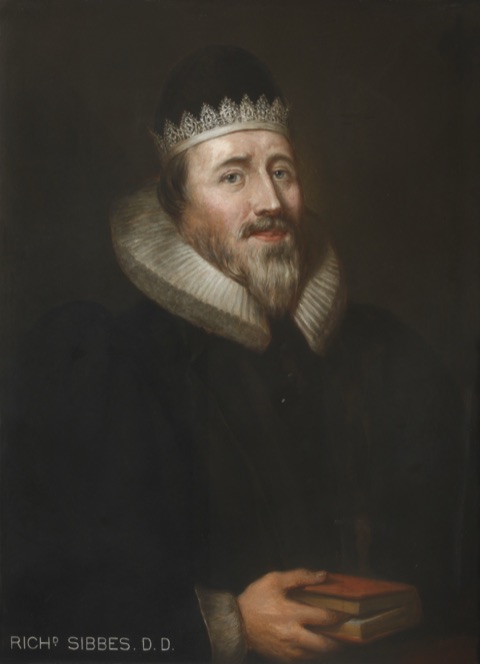
About the author
Richard Sibbes
Richard Sibbes (1577 to 1635 AD) preached the two closing sermons of this book to the Society of Gray's Inn, London, on June 21 and 28, 1635, and died at Gray's Inn on July 5. He had been preacher there since 1617 and, from 1626, was also Master of Catharine Hall, Cambridge. A wheelwright's son from Tostock, Suffolk, he was educated at St John's College, Cambridge.