Full text in modern English · Free PDF/EPUB
The Work of Jesus Christ as an Advocate
Want the file? The PDF/EPUB is free with an account.
Summary
- Author
- John Bunyan (1628 to 1688 AD), English Puritan preacher and author of The Pilgrim's Progress
- Published
- London, 1688 AD, the year of Bunyan's death
- Source edition
- George Offor's The Works of John Bunyan, vol. 1 (1855)
- Type
- Treatise on a single verse, 1 John 2:1
- Length
- 51,000 words · 3 hours
What is The Work of Jesus Christ as an Advocate about?
The Work of Jesus Christ as an Advocate is John Bunyan's treatise on 1 John 2:1. It pictures Christ standing at God's bar for Christians who have fallen into serious sin, pleading his own sacrifice against Satan's accusations, and argues that he takes bad causes, works without a fee, and never loses a client.
Read the full summary (9 points, key themes)Show less
How the argument unfolds
- 01
To the Reader: a neglected office. Christ as sacrifice, priest and king has been well preached, Bunyan says, “But as he is an Advocate with the Father, an Advocate for us, I fear the excellence of that still lies too much hidden.”
- 02
The text opened: what the verse assumes. A judge on the throne, saints with business at his bar, an accuser, and clients who dare not plead for themselves. An advocate provided for God's people is like crutches a father buys for a child he expects to stay weak.
- 03
The office: a reserve for great falls. The priest's work is constant; the advocate stands up when a sin makes a believer's salvation look doubtful, as David's did over Uriah. “As a Priest, he sits; as an Advocate, he stands.”
- 04
How he pleads with the Father. Christ owns the sins as his own, offers his whole worth for them, and calls for a just verdict, because before a righteous God “he must plead law, and nothing but law.”
- 05
How he pleads against Satan. He urges God's choice of his people, his own purchase of them, his right to give heaven, the accuser's malice, and even their weakness: each one is “a brand plucked out of the fire.”
- 06
Who has this advocate. The children of God only, little and great, unlike the priesthood, which reaches all the elect. Four tests follow: have you retained him, revealed your cause, committed it to him, and waited?
- 07
Eleven privileges. A price already paid, an accusation with no legal ground under the new covenant, a Judge who counts the accuser his enemy, an advocate always in court, and that advocate made umpire of the whole case.
- 08
Why the office is needed. To vindicate God's justice before the fallen angels, to answer Satan's use of the law, the promises and the threatenings, to keep chastening within measure, and to preserve the believer's title to heaven.
- 09
Objections and uses. Four objections, including the fee and the client who is “summoned ten times a day,” then eight uses ending with a warning to those who have no one to plead their cause.
Key themes
- Bad causes, not good ones. The whole book rests on one claim about Christ: “For he never yet took in hand a cause that was good, perfectly good in itself.”
- Two laws in one court. Satan sues by the covenant of works, which the believer has been moved out from under. “Satan pleads the law of works, but Christ pleads the law of grace.”
- Free help that makes people careful. Because the advocate charges nothing, Bunyan says we should trouble him as little as we can: “It is the most ungrateful, mean-spirited thing in the world not to care how much expense we put that friend to who bestows everything on us free.”
Reader questions (7)Hide the questions
Questions about The Work of Jesus Christ as an Advocate
Can I read The Work of Jesus Christ as an Advocate online for free?
Yes. The complete text of this modern English edition is on this page, with no sign-up or paywall.
Is there a free PDF of The Work of Jesus Christ as an Advocate?
Yes. The PDF and EPUB of this edition are free with an Updated Works account. Sign in with Google or an email link; no card is needed.
What does “we have an advocate with the Father” mean in 1 John 2:1?
Bunyan reads it as courtroom language: “An advocate is one who pleads for another at any bar, or before any court of justice.” When a believer sins and Satan accuses him before God, Christ stands up to plead his own sacrifice for that believer.
What is the difference between Christ as advocate and Christ as priest?
“Christ as Priest goes before, and Christ as Advocate comes after.” The priest intercedes continually for all the elect and covers everyday weakness; the advocate pleads for the children of God in cases of great transgression and faces the devil as an opponent.
Is Satan really accusing Christians before God?
Bunyan takes Revelation 12:10 and Zechariah 3 at their word. Once Satan has made a believer guilty, “he hurries off to the court, to God the judge of all,” and pleads the law broken against him.
If Christ is my advocate, will I escape all punishment for sin?
No. “By this office he does not prevent temporal punishment; but by it he chiefly preserves the soul from hell.” What the advocate does is keep the chastening within the measure the law of grace allows.
Does this teaching make it safe to keep sinning?
Bunyan says the opposite conclusion is the Christian one: “Because God will pardon, we will not sin; because Christ will plead for us as Advocate, we will not commit iniquity.” Carelessness drawn from grace is to him a sign of no love to Christ at all.
The Work of Jesus Christ as an Advocate · Full text
To the Reader
Courteous reader,
Of all the excellent offices that God the Father has conferred on Jesus Christ our Lord, this one, his being an Advocate with the Father for us, is not the least. And yet, to the shame of the saints it may be said, its blessed benefits have not been inquired into with the diligence and fervent desire they ought to have been.
Christ as sacrifice, priest, and king, with the glories that are in him and that flow from him as such, has, thank God, been much brought to light in our day by our seers. And he has been just as much rejoiced in by those who have believed their words. But as he is an Advocate with the Father, an Advocate for us, I fear the excellence of that still lies too much hidden. Yet I am truly of the opinion that God’s people in this age have as much need of the knowledge of it as their brothers who have gone before them had, if not more need.
These words, “if not more need,” may perhaps seem to some a little out of joint. But let the godly and wise consider how the power of godliness has decayed among us, and what an abundance of foul failings most of those who profess religion now stand guilty of. Let them consider as well how diligent their great enemy is to accuse them for these at the bar of God. Then I think they will conclude that in saying this I have indeed spoken some truth. So when I thought about this, and had also given some thought to the surpassing excellence of this office of our Lord as Advocate, and again, to how little of its glory has been communicated to the church in writing in our day, I ventured to write what I have seen of it. And by what follows I present it to her for her good.
I do not count myself sufficient for this, or for any other truth as it is in Jesus. But still, I say, I have told you something of it, according to the proportion of faith. And I believe that some will thank God for what I have said about it here. But it will chiefly be those whose right and title to the kingdom of heaven and glory seems to them to be called into question by their enemy at the bar of the Judge of all.
These, I say, will read, and will be glad to hear that they have an Advocate at court who will stand up to plead for them, and who will yet secure for them a right to the heavenly kingdom. So it is more particularly for those who are in this dreadful plight now, or who may be in it hereafter, that this book of mine is now made public. For it is for such people, as I have shown, that Jesus Christ is Advocate with the Father.
Of the many remarkable advantages, then, that such people have through this Advocate of theirs as he pleads for them, this book gives some account: where he pleads, how he pleads, what he pleads, when he pleads, with whom he pleads, for whom he pleads, and how the enemy is put to shame and silence before their God and all the holy angels.
Here, too, those who are concerned are shown how they may indeed know that Jesus is their Advocate. Yes, and they are shown how their matters go before their God, the Judge, and in particular that they will come off well at last. Yes, they will, even though their cause, considered as theirs, is such that they themselves do not dare to show their faces to defend it.
Nor have I left dejected souls without directions on how to engage this Advocate to plead their cause. Yes, I have also shown that he is easily prevailed on to stand up and plead for those whom, one would think, the very heavens would blush to hear him name. Their comfort is also this: he never lost a cause, nor a soul, for whom he undertook to be an Advocate with God.
But, reader, I will keep you no longer from reading the discourse. Read and think; read, and compare what you read with the Word of God. If you find any benefit in what you read, give the Father and his Son the glory, and also pray for me. If you find me falling short in this, or going too far in that, put all such things down to my weakness, of which I am always full. Farewell.
I am yours, to serve you as far as I can,
John Bunyan
The Text Opened: What the Apostle Supposes
And if any man sin, we have an Advocate with the Father, Jesus Christ the righteous (1 John 2:1).
So that the apostle might gain due regard from those he wrote to, concerning the things he wrote about, he tells them that he did not receive his message to them secondhand or thirdhand, but was himself an eyewitness and an earwitness of it: “That which was from the beginning, which we have heard, which we have seen with our eyes, which we have looked upon, and our hands have handled, of the word of life, (for the life was manifested, and we have seen it, and bear witness and show unto you that eternal life, which was with the Father, and was manifested unto us;) that which we have seen and heard, declare we unto you” (1 John 1:1-3).
Having told them the ground for what he said, he goes on to tell them also the substance of his errand. That is, he brought them news of eternal life, as freely offered to them in the word of the gospel; or rather, he told them that the gospel they had received would certainly usher them in at the gates of the kingdom of heaven, if their reception of it was sincere and in truth. For then, he says, “the blood of Jesus Christ the Son of God cleanseth you from all sin” (1 John 1:7).
Having told them this far what his errand was, he sets about explaining what he had said, especially concerning our being cleansed from all sin. “Not,” he says, “from the very being of sin; for if we said that, we would deceive ourselves, and would prove that we have no truth of God in us. By cleansing I mean being delivered from all sin, so that none at all will have dominion over you to bring you down to hell, because for the sake of the blood of Christ all your trespasses are forgiven you.”
This done, he urges them to shun or flee sin, and not to consent to its motions, workings, enticements, or allurements, saying, “I write unto you that ye sin not.” Do not let forgiveness have so bad an effect on you as to make you careless in Christian duties, or to tempt you to give way to evil. Shall we sin because we are forgiven? Or shall we not much care what kind of lives we live, because we are set free from the law of sin and death? God forbid! Let grace teach us another lesson, and lay other obligations on our spirits. “My little children,” he says, “these things write I unto you, that ye sin not” (1 John 2:1). What things? Why, tidings of pardon and salvation, and of that nearness to God to which you are brought by the precious blood of Christ.
Now, lest he should still be misunderstood, even by this last exhortation, he adds, “And if any man sin, we have an Advocate with the Father, Jesus Christ the righteous.” I say, he adds this to keep from despondency those weak and sensitive Christians who are so quick to feel and discern the corruptions of their natures; for these cry out continually that there is nothing they do that is not attended with sinful weaknesses.
Therefore, in these words we are presented with two great truths. The first is a supposition that those in Christ, while in this world, may sin: “If any man sin.” Any man; none are excluded. For all those whom Christ has redeemed and forgiven, or any one of them all, are liable to sin. By “may” I mean, not a permission, but a possibility; “For there is not a man, not a just man upon earth, that doeth good, and sinneth not” (Eccl 7:20; 1 Kgs 8:46). The second thing we are presented with is an Advocate: “If any man sin, we have an Advocate with the Father, Jesus Christ the righteous.”
Now in these two truths lie two things to be inquired into. First, what the apostle means here by sin. Second, what he means here by an advocate: “If any man sin, we have an Advocate.” There is reason to inquire into the first of these because, though he says here that those who sin have an advocate, yet in the very next chapter he says that such are of the devil, have not seen God, do not know him, and are not of him. There is reason also to inquire into the second, because the text supposes an advocate to be of use to those who sin: “If any man sin, we have an Advocate.”
First, as to the first of these, namely, what the apostle means here by sin: “If any man sin.”
I answer: since there is a difference in the persons, there must be a difference in the sin. That there is a difference in the persons has been shown already: one is called a child of God, the other is said to be of the wicked one. Their sins differ also, in their degree at least. For no child of God sins to such a degree as to make himself incapable of forgiveness; for “he that is begotten of God keepeth himself, and that wicked one toucheth him not” (1 John 5:18). Hence the apostle says, “There is a sin unto death” (1 John 5:16; see also Matt 12:32). This is the sin from which the one who is born of God is kept. The sins, then, are distinguished this way: the sins of the people of God are said to be sins that men commit; the others are counted the sins of devils.
1. The sins of God’s people are said to be sins which men commit, and for these they have an Advocate, though those who sin after the example of the wicked one have none. “When a man or woman,” says Moses, “shall commit any sin that men commit … they shall confess their sin … and an atonement shall be made for him” (Num 5:6-8). Notice, it is when they commit a sin which men commit; or, as Hosea has it, when they transgress the commandment like Adam (Hos 6:7). Now, these are the sins the apostle has in view, and to deliver us from these “we have an Advocate with the Father.”
2. But as for the sins mentioned in the third chapter: since the persons sinning there go under another character, their sins also must be of another stamp. That is, they are a rising up in open opposition against the person, merits, and grace of Jesus Christ. These are the sins of devils in the world, and for these there is no forgiveness. These are what those who are of the wicked one commit; therefore they sin after the likeness of Satan, and so fall into the condemnation of the devil.
Second, but what does it mean for Jesus to be an Advocate for these? “If any man sin, we have an Advocate.”
An advocate is one who pleads for another at any bar, or before any court of justice; but more of this in its place. So then, we have in the text a Christian supposed to be committing sin, and a declaration of an Advocate ready to plead for him: “If any man sin, we have an Advocate with the Father.”
And this leads me first to inquire what the apostle must of necessity presuppose by these words. For since he here makes use of the image, or office, of an advocate, to show the preservation of the sinning Christian, he must:
1. Suppose that God, as judge, is now on the throne of his judgment; for an advocate is to plead at a bar, before a court of justice. That is how it is among men; and since our Lord Jesus is said to be an “Advocate with the Father,” it is clear that there is a throne of judgment also. The prophet Micaiah affirms this, saying, “I saw the Lord sitting on his throne, and all the host of heaven standing by him on his right hand and on his left” (1 Kgs 22:19). He was sitting on a throne for judgment; for from the Lord, as he then sat on that throne, came the sentence against King Ahab that he should go and fall at Ramoth-gilead. And he did go, and did fall there, as the award or fruit of that judgment. That is the first.
2. The text also supposes that the saints as well as sinners have business at that bar; for the apostle says plainly that there “we have an Advocate.” And the saints have business at that bar because they transgress as well as others, and because the law is against the sin of saints as well as against the sins of other men. If the saints were not capable of committing sin (1 Chr 21:3-6; 2 Sam 12:13-14), what need would they have of an advocate? Yes, even though they did sin, yet if Christ had so set them free from the law that it could by no means take notice of their sins, what need would they have of an advocate? None at all. If there are twenty places in this land where the assize courts are held, yet if I have broken no law, what need do I have of an advocate? Especially if the judge is just, and knows me through and through, as the God of heaven does? But here is a Judge who is just; and here is an Advocate also, an Advocate for the children, an Advocate to plead. For an advocate as such is of no use except to plead before a bar. Therefore here is an offense, and so a law broken by the saints as well as others. That is the second thing.
3. As the text supposes that there is a judge, and crimes committed by saints, so it supposes that there is an accuser, one who will carefully gather up the faults of good men and plead them against them at this bar. Hence we read of “the accuser of our brethren, that accused them before our God day and night” (Rev 12:10-12). For Satan does not only tempt the godly man to sin; once he has prevailed with him and made him guilty, he hurries off to the court, to God the judge of all. There he presents himself to accuse that man, and to lay to his charge the heinousness of his offense, pleading against him the law he has broken, the light against which he did it, and the like. But now, for the relief and support of such poor people, the apostle by this text presents them with an advocate; that is, with one to plead for them while Satan pleads against them, with one who pleads for pardon while Satan, by accusing, seeks to pull judgment and vengeance down on our heads. “If any man sin, we have an Advocate with the Father, Jesus Christ the righteous.” That is the third thing.
4. As the apostle supposes a judge, crimes, and an accuser, so he also supposes that those concerned here, namely, the sinning children, neither can nor dare attempt to appear at this bar themselves, to plead their own cause before this Judge and against this accuser. For if they could or dared do this, why would they need an advocate? An advocate is of use to those who neither can nor dare appear to plead their cause themselves. So Job prayed for an advocate to plead his cause with God (Job 16:21); and David cries out, “Enter not into judgment with thy servant,” O God, “for in thy sight shall no man living be justified” (Ps 143:2). It is evident, then, that the saints neither can nor dare venture to plead their own cause.
Alas! The Judge is the almighty and eternal God. The law that is broken is the holy and perfect rule of God, in itself a consuming fire. The sin is so odious, so abominable a thing, that it is enough to make all the angels blush to hear it so much as once mentioned in so holy a place as that where this great God sits to judge. This sin now hangs about the neck of the one who has committed it; yes, it covers him like a cloak. The adversary is bold, cunning, and audacious, and can talk a thousand of us into utter silence in less than half a quarter of an hour. What, then, could the sinner do to plead at this bar, if he could come there? Nothing; nothing to his own advantage. But now his mercy comes in: he has an Advocate to plead his cause. “If any man sin, we have an Advocate with the Father, Jesus Christ the righteous.” That is the fourth thing. But again:
5. The apostle also supposes by the text that Christians, when they have sinned, are apt to forget that they “have an Advocate with the Father.” Therefore this is written to remind them: “If any man sin” (let him remember), “we have an Advocate.” We can think of all other things well enough: that God is a just judge, that the law is perfectly holy, that my sin is a horrible and abominable thing, and that I am certainly accused of it before God by Satan.
These things, I say, we readily think of, and do not forget. Our conscience reminds us of these, our guilt reminds us of these, the devil reminds us of these, and our reason and senses hold the knowledge and remembrance of these close to us. All we forget is that we have an Advocate, “an Advocate with the Father”; that is, one who is appointed to take my cause in hand in open court, before all the angels of heaven, and to plead it by such law and arguments as will certainly get me off, though I am clothed with filthy garments. But this, I say, we are apt to forget, as Job did when he said, “O that one might plead for a man with God, as a man pleadeth for his neighbor!” (Job 16:21). Job had such a one, but at this time he had almost forgotten it, as he also seems to hint where he wishes for an umpire who might lay his hand upon them both (Job 9:33). But our mercy is that we have one to plead our cause, “an Advocate with the Father, Jesus Christ the righteous,” who will not allow our soul to be spilled and spoiled before the throne, but will surely plead our cause.
6. Another thing the apostle would have us learn from the words is this: to remember and to believe that Jesus Christ is an Advocate for us when we have sinned is the most direct way to support and strengthen our faith and hope. Faith and hope are very apt to faint when our sins return upon us in their guilt; and there is no more fitting way to relieve our souls than to understand that the Son of God is our Advocate in heaven.
True, Christ died for our sins as a sacrifice, and as a priest he sprinkles the mercy seat with his blood. Ah, but here is one who has sinned after making a profession of faith, who has sinned grievously, so grievously that his sins have come up before God; yes, they are pleaded against him at God’s bar by the accuser of the brethren, by the enemy of the godly. What shall he do now? Why, let him believe in Christ. Believe, that is true; but how must he now think of Christ in his mind, to encourage him to do so? Why, let him call to mind that Jesus Christ is an Advocate with the Father, and that as such he meets the accuser at the bar of God, pleads for this man who has sinned against this accuser, and prevails against him forever. Now here, though Satan has turned lawyer, though he accuses, yes, though his charge against us is true (for suppose that we have sinned), yet our Advocate is with the Father, Jesus Christ the righteous. This is how faith is encouraged, how hope is strengthened, how the spirit of the sinking Christian is revived and made to wait for a good deliverance from a bad cause and a cunning adversary; especially if you consider:
7. That the apostle further supposes by the text that Jesus Christ, as Advocate, if he will only plead our cause, however black it may be, is able to get us off, even before God’s judgment seat, to our joy and the confounding of our adversary. For when he says, “We have an Advocate,” he says nothing if he does not mean this. But he does mean this; he must mean this, because he is seeking here to comfort and support the fallen. “Has any man sinned? We have an Advocate.” But what good is that, if he is still unable to get us off when we are charged with sin at the bar, before the face of a righteous judge?
But he is able to do this. The apostle says so, in that he supposes a man has sinned as grievously as any among the godly ever did; for so we may understand it. And if he does not give us leave to understand it that way, he says nothing to the purpose either. For some will object, “But can he get me off, though I have done as David did, as Solomon, as Peter, or the like?” It must be answered, Yes. The openness of the terms any man, and the indefiniteness of the word sin, naturally allow us to take him in the widest sense. Besides, he brings in this saying as the chief, most apt, and fittest word to relieve one who is crushed down to death and hell by the guilt of sin and a wounded conscience.
Further, I think the apostle seems by these words to triumph in his Christ, saying, “My brothers, I would have you study to be holy. But if your adversary the devil should get the advantage of you, and smear you with the filth of sin, you still have, besides all that you have heard already, ‘an Advocate with the Father, Jesus Christ the righteous,’ who, in his person, his interest with God, his wisdom and his worth, is able to bring you off, to the comfort of your souls.”
Let me, therefore, by way of conclusion on this point, urge you to believe, to hope, and to expect that, though you have sinned (for now I am speaking to the fallen saint), Jesus Christ will make a good end of it with you. “Trust,” I say, “in him, and he shall bring it to pass” (Ps 37:5). I know I am setting you a hard and difficult task. To believe and expect good, when my guilty conscience does nothing but clog, burden, and terrify me with the justice of God, the greatness of my sins, and the burning torments, is hard and sweating work. But it must be done. The text calls for it, your case calls for it, and you must do it if you would glorify Christ. And this is the way to hasten the outcome of the cause you have in hand; for believing daunts the devil, pleases Christ, and will help you to sing beforehand that song of the church, “O Lord, thou hast pleaded the causes of my soul; thou hast redeemed my life” (Lam 3:58). Yes, believe, and hear your pleading Lord say to you, “Thus saith thy Lord the Lord, and thy God that pleadeth the cause of his people, Behold, I have taken out of thine hand the cup of trembling, even the dregs of the cup of my fury; thou shalt no more drink it again” (Isa 51:22).
I am not discoursing here on the sweetness of Christ’s nature, but on the excellence of his offices, and of his office as advocate in particular, which he is to carry out for us in the presence of God, as a lawyer does for his client. Love may exist where there is no office, and so where there is no power to do us good; but now, when love and office meet, they will surely both combine in Christ to do the fallen Christian good. But we have treated his love elsewhere; here we will discuss the office of this loving one. And for your further information, let me tell you that God your Father reckons that, compared with his law, you will be but a poor one all your days. Yes, the apostle tells you so, in that he says there is an Advocate provided for you. When a father provides crutches for his child, he is as good as saying, “I expect my child will still be weak.” And when God provides an Advocate, he is as good as saying, “My people are subject to infirmities.”
Do not, therefore, think of yourself more highly than plain texts, and fair inferences drawn from Christ’s offices, bind you to think. What does it say about you that Christ is always a priest in heaven, and ever lives there to make intercession for you (Heb 7:24-25), but this: that in yourself you are at best, yes, even in your best exercise of all your graces, only a poor, pitiful, sorry, sinful man? A man who, even when most holy, would certainly be cast away, if your high priest did not take away for you the iniquity of your holy things. The age we live in is a wanton age. The godly are not as humble, and lowly, and base in their own eyes as they should be, though their daily experience calls for it, and the priesthood of Jesus Christ does too.
But above all, Jesus Christ’s office as Advocate declares us to be wretched creatures; for that office does, as it were, foretell that at some time or other we will basely fall, and by falling be undone, if the Lord Jesus does not stand up to plead. And as it shows this about us, so it shows about God that he will not lightly or easily lose his people. He has provided well for us: blood to wash us in; a priest to pray for us, that we may be made to persevere; and, in case we fall foully, an advocate to plead our cause, and to recover us from under, and out of, all the danger that sin and Satan may at any time bring us into.
But having thus briefly gone through what I think the apostle must necessarily presuppose in the text, I will now try to enter into the very heart of it, and see what may be found in it in a more particular way. And to do this work more profitably, I will choose to follow this method in my discourse.
First, I will show you more particularly about this Advocate’s office, or what Christ’s office as Advocate is and what it consists in. Second, after that, I will show you how Jesus Christ carries out this office of an Advocate. Third, I will then show you who they are that have Jesus Christ for their Advocate. Fourth, I will show you what excellent privileges those have who have Jesus Christ for their Advocate. Fifth, to silence faultfinders, I will show the necessity of this office of Jesus Christ. Sixth, I will come to answer some objections; and lastly, to the use and application.
The Nature, Place, and Occasion of the Advocate’s Office
To begin, then, with the first of these heads: I am to show you more particularly what Christ’s office as an Advocate is, and what it consists in. I shall do this in three ways. First, I will touch again on the nature of this office. Second, I will treat the order and place it holds among the rest of his offices. And third, I will treat the occasion on which this office is carried out.
1. To touch on the nature of this office. It is the office that empowers one person to plead for another; not in ordinary talk and on ordinary occasions, as anyone may do, but at a bar, before a court of justice, where someone is accused or sued by his enemy. This, I say, is what an advocate’s office is, both here and in the kingdom of heaven. An advocate is like one of our attorneys, at least in general terms. He pleads according to law and justice for someone who is in trouble, either because of some misconduct of his own or because of the wicked disposition of some people around him, who trouble and harass him and work to bring him into danger of the law. This, as I said, is the nature of this office on earth, and this is the office that Christ carries out in heaven. That is why the apostle says, “If any man sin, we have an Advocate”: someone to stand up for him and to plead for his deliverance before the bar of God.
For it is true that in some places of Scripture Christ is said to plead for his own with men, and that with terrible arguments, such as fire, and sword, and famine, and pestilence (Joel 3:2; Isa 66:16; Ezek 38:22; Jer 2). Yet that is not what this text intends. For the apostle says here that he is an Advocate with the Father, or before the Father, to plead for those who are accused there, to the Father’s face, for their transgressions: “If any man sin, we have an Advocate with the Father, Jesus Christ the righteous.” So this, then, is the work of Jesus Christ as he is an Advocate for us. He has undertaken to stand up for his people at God’s bar, before that great court, and there to plead for their deliverance by the law and justice of heaven, when they are accused, indicted, or sued by their adversary for their faults.
2. Now to treat the order or place that this office of Christ holds among the rest of the offices he carries out for us while we are here in a state of imperfection. I think it is an office that comes behind, as a reserve, or as a help at the last, when all other means seem to fail. People do not usually go to law over every matter; or if they do, the wisdom of the judge, the jury, and the court will not allow every squabble and foolish quarrel to come before them. An advocate comes into his place, and into the exercise of his office, when a cause is counted worthy of the notice of the judge and the court. So, I say, he comes in last, as a reserve or a help at the last, to plead; and by pleading to set right by law what would otherwise have bred more doubts and further dangers.
Christ as Priest is always doing works of service for us, because faults and spots may be found even in our most spiritual things, and he takes these away as a matter of course by exercising that office. For he always wears that plate of gold on his forehead before the Father, on which is written, “Holiness to the Lord.” But besides these common infirmities, there are faults, highly gross and foul, that are often found in the skirts of God’s children. These are the ones Satan takes hold of; these are the ones for which Satan draws up a charge against us; and it is to save us from these that the Lord Jesus is made an Advocate. When Joshua was clothed with filthy garments, then Satan stood at his right hand to resist him; and then the angel of the covenant, the Lord Jesus, pleaded for his help (Zech 3). By all this it appears that this office comes behind. It is provided as a reserve, so that we may have help in a pinch, and be lifted out when we sink in the mire where there is no standing.
This is hinted at further by the different postures in which Christ is said to be as he exercises his priestly office and his advocate’s office. As a Priest, he sits; as an Advocate, he stands (Isa 3:13). The Lord stands up when he pleads. His sitting is more constant and a matter of course, as in “Sit thou” (Ps 110:1, 4); but his standing is occasional: when Joshua is indicted, or when hell and earth have broken loose against his servant Stephen. For as Joshua was accused by the devil, and the angel of the Lord then stood by, so when Stephen was accused by men on earth, and that charge was seconded by the fallen angels before the face of God, it is said that “the Lord Jesus stood on the right hand of God” (Acts 7:55), that is, to plead. For so I take it, because standing is his posture as an Advocate, not as a Priest. As a Priest he must sit down (Heb 10:12); but as an Advocate he stands, as has been shown before.
3. The occasion for his exercising this office of Advocate is, as has already been hinted, when a child of God is found guilty before God of some heinous sin, some grievous thing in his life and conduct. As for those infirmities that cling to the best of us in our most spiritual sacrifices, if a child of God were guilty of ten thousand of them, they are purged as a matter of course through the much incense that is always mixed with those sacrifices in the golden censer in Christ’s hand. And so he is kept clean and counted upright in spite of those infirmities. That is why you will find that, in spite of those common faults, the children of God are counted good and upright in their conduct, and are not charged as offenders. “David,” says the text, “did that which was right in the eyes of the Lord, and turned not aside from any thing that he commanded him, all the days of his life, save only in the matter of Uriah the Hittite” (1 Kgs 15:5). But was David, strictly speaking, without fault in everything else? No, truly. But that sin was foul in a higher degree than the rest, and therefore God sets a blot there. Yes, and no doubt Satan accused him for it before the throne of God. For here is adultery, and murder, and hypocrisy in David’s doings. Here is notorious matter, a great sin, and so great grounds for Satan to draw up an indictment against the king; and a thundering one, you may be sure, will be brought against him.
This, then, is the time for Christ to stand up and plead. For now there is room for such questions as these: Can David’s sin stand with grace? Is it possible that a man who has done what he has done should still be found a saint, and so in a state of salvation? Can God count him so and still be holy and just? Can the merits of the Lord Jesus reach a man in this condition, according to the law of heaven? Here is a doubtful case. Here is a man whose salvation has been made doubtful by his foul offenses. Now we must go to law and judgment; so now let Christ stand up and plead! I say, David’s case was doubtful then. He was afraid that God would cast him away, and the devil hoped he would, and to that end charged him before God’s face, hoping he might perhaps get the sentence of damnation passed on his soul (Ps 51). But this was David’s mercy: he had an Advocate to plead his cause. By that Advocate’s wisdom and skill in matters of law and judgment, David was brought off from those heavy charges and from those gross sins, and delivered from the eternal condemnation that was due to them by the law of sin and death.
This, then, is the occasion Christ takes to plead as Advocate for the salvation of his people, namely, the cause. He “pleadeth the cause of his people” (Isa 51:22). Not every cause, but this or that particular cause: the cause that is very bad, and by which they are involved not only in guilt and shame but also in danger of death and hell. I say the cause is bad, if the text is true, if sin can make it bad, yes, if sin itself is bad: “If any man sin, we have an Advocate”; an Advocate to plead for him; for him considered as guilty, and so, consequently, considered as in a bad condition. It is true that we must distinguish between the person and the sin, and Christ pleads for the person, not the sin. Yet he cannot be concerned with the person without being concerned with the sin; for though the person and the sin may be distinguished, they cannot be separated. He must plead, then, not for a person only, but for a guilty person, for a person in the worst of circumstances: “If any man sin, we have an Advocate” for him, considered as such.
When a man’s cause is good, it will plead well enough for itself, yes, and for its master too, especially when it is made to appear so before a just and righteous judge. In that case no advocate is needed; the judge himself will pronounce him righteous. This is plainly seen in Job. “Thou movedst me against him,” God said to Satan, “to destroy him without cause” (Job 2:3). So far, Job’s cause was good, and so he did not need an advocate; his cause pleaded for itself and for its owner as well. But if Christ were appointed Advocate to plead good causes, then the apostle should have written like this: “If any man be righteous, we have an Advocate with the Father.” Indeed, I have only ever heard one man in all my life preach on this text. When he came to handle the cause for which Christ was to plead, he claimed it must be good, and so he said to the people, “See that your cause is good, or Christ will not take it on.” But when I heard it, I thought, “Lord, if this is true, what shall I do? And what will become of all these people, yes, and of this preacher too?” Besides, I saw by the text that the apostle supposes another cause: a bad cause, an exceedingly bad one, if sin can make it so. And this was one reason why I undertook this work.
When we speak of a cause, we are not speaking of a person simply considered as such; for, as I said before, person and cause must be distinguished. Nor can the person make the cause good except as he governs his actions by the Word of God. If, then, a good and righteous man does what the law condemns, that thing is bad; and if he is indicted for doing it, he is indicted for a bad cause. And whoever will be his advocate must be concerned in and about a bad matter. How he will get his client off in such a case: there lies the mystery.
I know that a bad man may have a good cause pending before the judge, and so may good men (Job 31). But then they are bold in their own cause. They are not afraid to mention it, and in Christ to plead their innocence before the God of heaven as well as before men (Ps 7:3-5; 2 Cor 1:23; Gal 1:20; Phil 1:8). But in the text we have a cause that everyone is afraid of: a cause that the apostle concludes is so bad that no one but Jesus Christ himself can save a Christian from it. It is not only sinful; it is sin itself: “If any man sin, we have an Advocate with the Father.”
So in this place the apostle handles one of the greatest mysteries under heaven: that an innocent and holy Jesus should take it in hand to plead, before a just and righteous God, for someone who has defiled himself with sin. Yes, that he should take it in hand to plead for such a person against the fallen angels, and should also by his plea effectually rescue them and bring them off from the crimes and the curse of which they were truly guilty by the verdict of the law and the judgment of the Judge.
This, I say, is a great mystery, and it deserves to be searched into by all the godly, both because much of the wisdom of heaven is revealed in it, and because the best saint is, or may be, concerned with it. Nor must we by any means let this truth be lost, because it is the truth. The text has declared it so, and to say otherwise is to give the lie to the Word of God, to thwart the apostle, to flatter hypocrites (Luke 18:11-12), to rob Christians of their privilege, and to take the glory from the head of Jesus Christ.
The best saints are the most aware of their sins, and the most apt to make mountains of their molehills. Satan also, as has already been hinted, works hard to prevail on them to sin, and to provoke their God against them, by pleading what is true or by surmising evil of them, so that they may be accused by him (Job 2:9). Great is his malice toward them, and great is his diligence in seeking their destruction. That is why he so greatly desires to sift them, to try them, and to winnow them, hoping he may perhaps work on their flesh to serve his design: that is, to break out in sinful acts, so that he may have grounds in law to accuse them to their God and Father. So it is for their sakes that this text remains, that they may see that when they have sinned, “they have an Advocate with the Father, Jesus Christ the righteous.” And so I have shown you the nature, the order, and the occasion of this office of our blessed Lord Jesus.
How Christ Carries Out His Work as Advocate
I come now to show you how Jesus Christ carries out this office of his as Advocate for us. So that I may do this to your edification, I shall take this method in opening it. First, I will show you how he manages this office with his Father. Second, I will show you how he manages it before his Father against our adversary.
How He Pleads with the Father
1. He does it by himself, and by no other as a deputy under him: no angel, no saint. No work has any place here but the work of Jesus, and of Jesus only. The text implies this when it says, “We have an Advocate.” It speaks of one, only one, one alone, without an equal or an inferior. We have only one, and he is Jesus Christ. Nor would it be for Christ’s honor, nor for the honor of the law or of the justice of God, that anyone but Jesus Christ should be an Advocate for a sinning saint. Besides, what does asserting the contrary do but lessen sin and make the advocateship of Jesus Christ superfluous? It would lessen sin if sin could be removed by a saint or an angel. And it would make the advocateship of Jesus Christ superfluous, yes, needless, if it were possible for sin to be removed from us by either saint or angel.
Again, suppose God admitted more advocates than one, and yet never mentioned any but Jesus Christ. Or suppose John allowed another, and yet spoke of none but Jesus only. Yes, suppose an advocate under that title were mentioned only once, only once in the whole book of God, and yet several advocates were admitted. None of this would stand with the wisdom or the love of God, nor with the faithfulness of the apostle. But saints have only one Advocate. If they will use him, and put their faith in that office to work for their help, well and good; if not, they must take what follows. I thought it good to touch on this because the times are corrupt, and because ignorance and superstition are always waiting for encouragement among us. These things naturally tend to darken all truth, and this truth especially, which brings Jesus Christ so much glory and gives the godly so much help and relief.
2. As Jesus Christ alone is Advocate, so God’s bar, and that alone, is the one before which he pleads, for God is judge himself (Deut 32:36; Heb 12:23). Nor can the cause that he now has to plead be moved into any other court, whether by appeal or by any other means.
If Satan could move us out of heaven into another court, he would certainly be too hard for us, because there we would be without our Jesus, our Advocate, to plead our cause. Indeed, he sometimes brings charges against us before men, and they are glad of the occasion, for they and he are often one. But then we have leave to move our cause and to pray for a trial in the highest court, saying, “Let my sentence come forth from thy presence; let thine eyes behold the things that are equal” (Ps 17:2). This wicked world sentences us for our good deeds; how, then, would it sentence us for our bad ones? But we will never appeal from heaven to earth for justice, for here we have no Advocate. “Our Advocate is with the Father, Jesus Christ the righteous.”
3. As he pleads by himself alone, and nowhere else but in the court of heaven with the Father, so, as he pleads with the Father for us, he observes this rule:
(1) He grants and confesses whatever can rightly be charged against us, but in such a way that he takes the whole charge upon himself and acknowledges the crimes to be his own. “O God,” he says, “thou knowest my foolishness, and my sins”; my guiltiness “is not hid from thee” (Ps 69:5). And this he must do, or else he can do nothing. If he hides the sin or lessens it, he is at fault; if he leaves it still upon us, we die. He must, then, take our iniquity to himself, make it his own, and so deliver us. For he has taken the sin upon himself in this way, as he lawfully may and lovingly does, “for we are members of his body” (Eph 5:30). It is his hand, it is his foot, it is his ear that has sinned. And so it follows that we live if he lives; and who can desire more? This, then, must be thoroughly considered, if we are ever to have comfort in a day of trouble and distress over sin.
And thus far there is, in a certain sense, a harmony between his being a sacrifice, a priest, and an Advocate. As a sacrifice, he had our sins laid upon him (Isa 53). As a priest, he bears them (Exod 28:38). And as an Advocate, he acknowledges them to be his own (Ps 69:5). Now, once he has acknowledged them to be his own, the quarrel is no longer between us and Satan, for the Lord Jesus has taken up our quarrel and made it his. All that we have to do in this matter, then, is to stand at the bar by faith among the angels and see how the business goes. O blessed God, what a lover of mankind you are! And how gracious our Lord Jesus is in managing matters for us like this!
(2) Having thus taken our sins upon himself, the Lord Jesus next pleads his own goodness to God on our behalf, saying, “Let not them that wait on thee, O Lord God of hosts, be ashamed for my sake: let not those that seek thee be confounded for my sake, O God of Israel: because for thy sake I have borne reproach; shame hath covered my face” (Ps 69:6-7). Mark it: let them not be ashamed for my sake; let them not be confounded for my sake. Shame and confusion are the fruits of guilt, or of a charge for sin (Jer 3:25), and they are only the entrance into condemnation (Dan 12:2; John 5:29). But see how Christ pleads, saying, “Let that not happen, for my sake: for the merit of my blood, for the perfection of my righteousness, for the prevailing power of my intercession. Let them not be ashamed for my sake, O Lord God of hosts.” And let no one object that, because this text is in the Psalms, the prophet did not speak it of Christ. For both John and Paul, yes, and Christ himself, make this psalm a prophecy of him. Compare Psalm 69:9 with John 2:17 and with Romans 15:3, and Psalm 69:21 with Matthew 27:48 and Mark 15:36. But is it not a wonderful thing that Christ should first take our sins and count them his own, and then plead the value and worth of his whole self for our deliverance? For by these words, “for my sake,” he pleads his own self, his whole self, and all that he is and has. And so he puts us in a good state again, though our cause was very bad.
To bring this down to weaker understandings: suppose a man owed twenty thousand pounds but did not have twenty thousand farthings to pay with. And suppose also that this man was arrested for this debt, and that the law under which he is sued will not allow a penny’s reduction. This man may still come off well enough, if his advocate or attorney will make the debt his own, and will, in the presence of the judges, pull out his moneybags and pay down every farthing. Why, this is the way of our Advocate. Our sins are called debts (Matt 6:12). We are sued for them at the law (Luke 12:59). And the devil is our accuser. But see, the Lord Jesus comes out with his worthiness and pleads it at the bar, making the debt his own (Mark 10:45; 2 Cor 3:5). And he says, “Now let them not be ashamed for my sake, O Lord God of hosts; let them not be confounded for my sake, O God of Israel.” And so, just as he is said to be an Advocate, he is also said to be a propitiation, or amends-maker, one who appeases the justice of God for our sins: “If any man sin, we have an Advocate with the Father, Jesus Christ the righteous; and he is the propitiation for our sins” (1 John 2:1-2).
And who can object now against the deliverance of the child of God? God cannot, for he, for Christ’s sake, just as Christ pleaded, has forgiven us all trespasses (Col 2:13; Eph 4:32). The devil cannot: his mouth is stopped, as is plain in the case of Joshua (Zech 3). The law cannot, for it approves what Christ has done. This, then, is the way Christ pleads. You must understand that when Christ pleads with God, he pleads with a just and righteous God, and therefore he must plead law, and nothing but law. And he pleaded law in both these pleas. First, in confessing the sin, he justified the sentence of the law in pronouncing it evil. Then, in laying himself, his whole self, before God for that sin, he vindicated the sanction and perfection of the law. In this way, therefore, he magnifies the law and makes it honorable, and yet brings his client off safe and sound in the sight of all the angels of God.
(3) Having thus taken our sins upon himself, and presented God with all the worthiness of his whole self for them, the Lord Jesus next calls for justice, or a just verdict upon the satisfaction he has made to God and to his law. Then proclamation is made in open court: “Take away the filthy garments from him,” from him who has offended, and clothe him with a change of garments (Zech 3).
So the soul that has sinned is preserved; so the God of heaven is content that he should be saved; so Satan is put to confusion, and Jesus is applauded and cried up by the angels of heaven and by the saints on earth. Thus I have shown you how Christ pleads as Advocate for us with God his Father. And I have been the more particular in this, because the glory of Christ and the comfort of the dejected are greatly concerned and wrapped up in it. Look, then, to Jesus, if you have sinned; to Jesus, as an Advocate pleading with the Father for you. Look to nothing else, for he knows how, and that by himself, to deliver you. Yes, and he will do it in a way of justice, which is a wonder; and to the shame of Satan, which will be Christ’s glory; and also to your complete deliverance, which will be your comfort and salvation.
How He Pleads Against the Adversary
But to pass on from this, I come to the second thing, which is to show you how the Lord Jesus manages this office of Advocate before his Father against the adversary. For he pleads with the Father, but he pleads against the devil. With the Father he pleads law and justice, but against the adversary he gives himself free rein. I mean that, as he pleads against the adversary, he enlarges himself with arguments over and above those that he pleads with God his Father.
Nor is it fitting or necessary that our Advocate, when he pleads against Satan, should limit himself to matters of law as strictly as when he pleads with his Father. By sinning, the saint owes Satan nothing; no law of Satan’s is broken by it. Why, then, should Christ, in pleading for the saving of his people, plead justifying righteousness to him?
When Christ died, he died not to satisfy Satan but his Father; not to appease the devil but to answer the demands of the justice of God. Nor did he design, when he hung on the tree, to triumph over his Father, but over Satan. “He redeemed us,” therefore, “from the curse of the law,” by his blood (Gal 3:13); and from the power of Satan by his resurrection (Heb 2:14). He delivered us from righteous judgment by price and purchase, but from the rage of hell by fight and conquest.
And as he acted in these different ways in the work of our redemption, so he does also in carrying out his office as Advocate. When he pleads with God, he pleads in one way; and when he pleads against Satan, he pleads in another. How he pleads with God, when he deals with law and justice, I have shown you. And now I will show you how he pleads before him against the “accuser of the brethren” (Rev 12:10).
1. He pleads against him the well-pleasedness that his Father has in his merits, saying that this shall please the Lord, or that this does or will please the Lord, better than anything else that can be proposed (Ps 69:31). Now since this plea is true, as it is, and is established on the liking of God Almighty, whatever Satan can say to obtain our everlasting destruction is without ground, and so unreasonable. “I am well pleased,” says God (Matt 3:17); and again, “The Lord is well pleased for his (Christ’s) righteousness’ sake” (Isa 42:21).
All who bring lawsuits against others claim that a wrong has been done, either against themselves or against the king. Now Satan will never bring an action against us in the court above on the ground that we have wronged him. He must claim, then, that he sues us because we have done wrong to our King. But see: “We have an Advocate with the Father,” and he has made compensation for our offenses. He gave himself for our offenses. But still Satan keeps up his suit. “Our God,” says Christ, “is well pleased with us for the sake of this compensation”; yet Satan will not leave off his clamor. “Come, then,” says the Lord Jesus, “the contention now is not against my people but against me, and about whether the amends I have made for the transgressions of my people are sufficient. But he is near that justifieth me, that approves and accepts what I have done; therefore I shall not be confounded. Who is mine adversary? let him come near me! Behold, ‘the Lord God will help me’ (Isa 50:7-9). Who is he that condemneth me? Lo, they all shall wax old as a garment, were there ten thousand times as many more of them; the moth shall eat them up.”
If the Father, then, says Amen to all this (as I have already shown that he has and does, and as further appears from the fact that the Lord God has called Christ the Savior, the Deliverer, and the Amen), what follows but that a rebuke should go out from the throne against Satan? And this is indeed what our Advocate calls for from the hand of his Father, saying, “O enemy, ‘the Lord rebuke thee.’” Yes, he doubles this request to the judge, to show how earnestly he desires such a conclusion, or to show that the enemy shall surely have it, both from our Advocate and from him before whom Satan has so grievously accused us (Zech 3).
For what can be expected to follow from such an issue at law as this, but sound and severe rebukes from the judge upon the one who has troubled his neighbor in this way, and who has, in the face of the whole country, cast contempt upon the highest act of mercy, justice, and righteousness that the heavens ever beheld? And all this is true of the case in hand. Therefore “The Lord rebuke thee” is what Satan must have in the end as the reward of his works of malice against the children, and for his contempt of the works of the Son of God. Now, since our Advocate has thus established by the law of heaven his plea with God for us against our accuser, the way is made for him to proceed on a foundation that cannot be shaken. So he goes on with his plea, and further urges against this accuser of the brethren the following.
2. God’s interest in this people. And he prays that God would remember it: “The Lord rebuke thee, O Satan; the Lord that hath chosen Jerusalem, rebuke thee” (Zech 3:2). True, the church, the saints, are despised in the world, and so men think to tread them down. The saints are also weak in grace and have strong corruptions, and so Satan, the god of this world, thinks to tread them down. But the saints have a God, the living, the eternal God, and therefore they shall not be trodden down. Yes, they “shall be holden up, for God is able to make them stand” (Rom 14:4).
It was Haman’s misfortune to be engaged against the queen and the queen’s kindred. That was what made it impossible for him to prosper; that brought him to contempt and the gallows. Had he sought to ruin some other people, he might probably have brought his design to the conclusion he desired; but his plotting the death of the queen spoiled everything. So too Satan, when he fights against the church, is sure to come off worst, for God has a concern in it. Therefore it is said, “The gates of hell shall not prevail against it” (Matt 16:18). But this does not prevent his being permitted to make almost whatever spoil he likes of those who do not belong to God. Oh, how many he accuses, and soon gets a license from God against them to destroy them! So he served Ahab, and many more. But this, I say, is a very great block in his way when he meddles with the children: God has an interest in them. “Hath God cast away his people? God forbid!” (Rom 11:1-2). The text implies that they had deserved it for their sin, and that Satan would gladly have had it so; but God’s interest in them preserved them: “God hath not cast away his people, which he foreknew.” So when Satan accuses them before God, Christ, as he pleads his own worth and merit, also pleads against Satan the interest that God has in them.
Now to some this may seem only a poor plea. “For what obligation,” they may say, “lies upon God to be so much concerned with them? They sin against him and often provoke him most bitterly. Besides, even in their best state they are altogether vanity, a mere thing of nothing: ‘What is man (sorry man), that thou art mindful of him’ (Ps 8:4), or that you should be so?”
I answer: though no obligation lies upon God because of any worthiness in man, yet a great deal lies upon God because of the worthiness that is in himself. God has bound himself by having chosen them to be a people for himself. And by this means they are so secured from all that anyone can do against them that the apostle, on this very account, is bold to challenge all spite to do its worst against them, saying, “Who shall lay anything to the charge of God’s elect?” (Rom 8:33). “Who?” says Satan. “Why, I will.” “Yes,” says the apostle, “but who can do it and prevail? ‘It is God that justifieth, who is he that condemneth?’” (Rom 8:34). By these words the apostle clearly declares that charges against the elect, though they may be brought against them, must prove ineffectual as to their condemnation, because their Lord God will still justify them, since Christ has died for them. Besides, to enlarge a little, the elect are bound to God by a sevenfold cord, and a threefold one is not quickly broken.
(1) Election is as eternal as God himself, and so without variableness or shadow of change. Hence it is called “an eternal purpose” (Eph 3:11), and a “purpose of God” that must stand (Rom 9:11).
(2) Election is absolute, not conditional, and therefore it cannot be overthrown by the sin of the man who is wrapped up in it. No works foreseen in us were the cause of God’s choosing us; no sin in us shall frustrate election or make it void. “Who shall lay anything to the charge of God’s elect? It is God that justifieth” (Rom 8:33; Rom 9:11).
(3) By the act of election the children are involved, wrapped up, and covered in Christ. “He hath chosen us in him”: not in ourselves, not in our virtues, no, not for or because of anything, but of his own will (Eph 1:4-11).
(4) Election includes in it a permanent resolve of God to glorify his mercy on the vessels of mercy, who are thus foreordained to glory (Rom 9:15, 18, 23).
(5) By the act of electing love it is settled that all things whatsoever shall work together for the good of those whose call to God is the fruit of this purpose, this eternal purpose of God (Rom 8:28-30).
(6) The eternal inheritance is made over, by a covenant of free and unchangeable grace, to those who are thus chosen. And to secure them from the fruits of sin and from the malice of Satan, it is sealed by the blood of this our Advocate, since he is Mediator of this covenant. He has also become surety to God for them: that is, to see that they are produced at the great day, and then to set them safe and sound before his Father’s face after the judgment is over (Rom 9:23; Heb 7:22; Heb 9:15, 17-24; Heb 13:20; John 10:28-29).
(7) By this choice, purpose, and decree, the elect, those who are concerned in it, have had allotted to them by God, and laid up for them in Christ, a sufficiency of grace to bring them through all difficulties to glory. Yes, and every one of them, after the first act of faith (which they shall also certainly attain, because it is wrapped up in the promise made for them), is to receive the pledge and firstfruits of it into their souls (2 Tim 1:9; Acts 14:22; Eph 1:4-5, 13-14).
Now put all these things together, and then feel whether there is not weight in this plea of Christ against the devil. He pleads against him God’s choice of his saints and his interest in them. It is an interest secured by the wisdom of heaven, by the grace of heaven, by the power, will, and mercy of God in Christ. It is an interest that all three Persons in the Godhead have engaged themselves, by mutual agreement and operation, to make good when Satan has done his all. I know there are some who object against this doctrine as false; but such people are perhaps ignorant of some other things as well as of this. In any case, they object against the wisdom of God, whose truth it is, and against Christ our Advocate, whose argument it is in his role as Advocate. Yes, they labor, as far as lies in them, to wrest out of his hand that weapon with which he so cudgels the enemy when, as Advocate, he pleads so effectively against him to rescue us from the danger of judgment, saying, “The Lord rebuke thee, O Satan, even the Lord that hath chosen Jerusalem, rebuke thee.”
3. As Christ, as Advocate, pleads against Satan the interest that his Father has in his chosen, so he also pleads against him by no less an authority: his own interest in them. “Holy Father,” he says, “keep through thine own name those whom thou hast given me” (John 17:11). Keep them while they are in the world from the evil, the soul-damning evil, of it. These words are directed to the Father, but they are aimed at the accusations of the enemy. They were spoken here to show what Christ will do for his own against our foe when he is above; how, I say, he will urge his own interest in us before his Father against Satan and against all his accusations, when Satan brings them to the bar of God’s tribunal with the design of working our utter ruin. And is there not a great deal in this? It is as if Christ should say, “Father, my people have an adversary who will accuse them before you for their faults; but I will be their Advocate, and since I have bought them from you, I will plead my right against him” (John 10:28).
Our English proverb says, “Interest will not lie”; interest will make a man do what he otherwise would not. How many thousands are there for whom Christ does not so much as once open his mouth, but leaves them to the accusations of Satan and to Ahab’s judgment, no, to a worse one, because there is no one to plead their cause? And why does he not concern himself with them? Only because he has no interest in them. “I pray not for the world, but for them which thou hast given me, for they are thine; and all mine are thine, and I am glorified in them” (John 17:9-10).
Suppose there are a number of cattle in a certain pound, and a man goes by whose cattle they are not. Does he concern himself? No; he looks at them and goes on his way. But suppose that on his return he should find his own cattle in that pound: would he now behave toward them as he did toward the others? No, no; he has an interest here; the cattle in the pound are his. Now he is concerned; now he must know who put them there, and for what cause, too, they are being treated as they are. And if he finds them rightfully there, he will fetch them out by ransom; but if wrongfully, he will sue to recover them, and stand a trial at law with the one who has thus illegally impounded his cattle.
And so it is between Jesus Christ and his own. He has an interest in them; the cattle are his own, “his own sheep” (John 10:3-4), but impounded by someone else, by the law or by the devil. If they are impounded by the law, he delivers them by ransom; if they are impounded by the devil, he will sue to recover them, stand a trial at law for them, and himself be their Advocate against their accuser. Nor can Satan withstand his plea, even if he should join argument with the law against them. For, as has been proved before, Christ can and will, by what he has of his own to produce and plead, save his own from all trespasses, charges, and accusations. Besides, everyone knows that a man’s own goods are not forfeited just because they commit many trespasses, and great ones too: “And if any man sin, we have an Advocate with the Father, Jesus Christ the righteous.” Now, the strength of this plea thus grounded on Christ’s interest in his people is great, and has many weighty reasons on its side, such as these:
(1) They are mine; therefore it stands to reason that they are mine to dispose of, not an adversary’s. For while a thing can properly be called mine, no one has any business with it but me. Nor does a man, nor does Christ, lose his right to what he has because of the weakness of the thing that is rightly his. Therefore, as an Advocate, he pleads interest, his own interest, in his people; and with the Judge of all the earth, right must prevail: “Shall not the Judge of all the earth do right?” (Gen 18:25).
(2) They cost him dear, and what is dearly bought is not easily parted with (1 Cor 6:20). They were bought with “his blood” (Eph 1:7; 1 Pet 1:18-19). They were given to him for his blood, and therefore they are “dear children” (Eph 5:1), for they are his at the highest price. And this price he, as Advocate, pleads against the enemy of our salvation. Yes, I will add, they are his because he gave his all for them (2 Cor 8:9). When a man gives his all for this or that, then what he has purchased in that way has become his all. Now Christ has given his all for us; he made himself poor for us; therefore we have become his all, his fullness, and so the church is called (Eph 1:23). Indeed, further, Christ is well pleased with his purchase, though it has cost him his all: “The lines,” he says, “are fallen to me in pleasant places; I have a goodly heritage” (Ps 16). Now put all these things together, and there is a strong plea in them. Interest, such an interest as this, will not be easily parted with. But this is not all; for,
(3) As they cost him dear, so he has made them near to himself, near by way of relation. Now a man will plead heartily for what has not only cost him dear but has also been made near to him by relation. David said to Abner, “Thou shalt not see my face except thou first bring Michal, Saul’s daughter, when thou comest to see my face” (2 Sam 3:13-14). It was as if he said, “Saul’s daughter cost me dear; I bought her at the risk of my life. Saul’s daughter is near to me; she is my beloved wife.” He pleaded hard for her, because she was dear and near to him. Now, I say, the same is true in Christ. His people cost him dear, and he has made them near to him. Therefore, to plead his interest in them is to hold to a strong argument.
(a) They are his spouse, and he has made them so; they are his love, his dove, his darling, and he counts them so. Now, if some wretch tried in open court to take a man’s wife away from him, how this would make the man plead! Yes, and what judge who is just, and who knows that the man has this interest in the woman being pleaded for, would yield to the wretch, or give a verdict for him against the man whose wife she is? So Christ, in pleading interest, in pleading “thou gavest them me” (John 17:6), pleads by a strong argument, an argument the enemy cannot invalidate. True, if Christ were to plead this before a Saul (1 Sam 25:44), or before Samson’s wife’s father, the Philistine (Judg 14:20), perhaps such treacherous judges would give it against all right. But, as I have told you, the court in which Christ pleads is the highest and the justest, and one from which there can be no appeal. Therefore Christ’s cause, and so the cause of the children of God, must be tried before their Father, and from his face, you may be sure, just judgment shall come. But,
(b) As they are called his spouse, so they are called his flesh, and members of his body (Eph 5:30). Now, Paul said to the church, “Ye are the body of Christ, and members in particular” (1 Cor 12:27). This relation also makes a man plead hard. If a man had to plead for a limb, a member of his own body, how would he plead? What arguments would he use? And from what sympathy and feeling would his arguments flow? “I cannot lose a hand; I cannot lose a foot; I cannot lose a finger!” Why, the saints are Christ’s members, and his members are of himself.
With what strength of argument a man would plead how necessary his members are to him, and how unnatural his adversary is in seeking the destruction of his members and the deformity of his body! Yes, a man would squirm and cringe, and weep, and beg, and raise objection after objection, and stall, and delay, for a thousand years if possible, before he would lose his members, or any one of them.
But, I say, how would he plead and argue for his members if judge, and law, and reason, and equity were all on his side, and if the adversary could urge nothing except what the Advocate had long before made provision to overthrow effectually? And all this is true of the case before us. So we see what strength lies in this second argument that our Advocate brings for us against the enemy. They are his flesh and bones, his members; he cannot spare them. He cannot spare this one, he cannot spare that one, he cannot spare any one, because they are his members. As such, they are lovely to him; as such, they are useful to him; as such, they are an ornament to him; yes, even though in themselves they are feeble, and weak through infirmity, and much disabled from doing as they should. So, “If any man sin, we have an Advocate with the Father, Jesus Christ the righteous.” But,
4. As Christ, as Advocate, pleads for us against Satan his Father’s interest in us and his own, so he pleads against him the right and ownership he has in heaven, to give it to whom he will. He has a right to heaven as Priest and King; it is his also by inheritance. He will be so good a benefactor as to bestow this house on somebody, not for their deserts, not for their goodness. Again, he has to that end shed his blood, and taken a generation into covenant relation with himself, so that it might be bestowed on them. Since this is so, it shall be bestowed on them. And he will plead this if there is need: if his people sin, and if their accuser seeks their ruin and destruction by their sin. “Father,” he says, “I will that they also, whom thou hast given me, be with me where I am; that they may behold my glory, which thou hast given me” (John 17:24). Christ’s will is the will of heaven, the will of God. Shall not Christ, then, prevail?
“I will,” says Christ; “I will,” says Satan; but whose will shall stand? It is true that in this text Christ speaks more like an arbitrator than an Advocate, more like a judge than one pleading at a bar: I will have it so; I judge that this is how it ought to be, and how it must be. But there is also something of a plea in the words, both before his Father and against our enemy. And therefore he speaks like one who can both plead and decide; yes, like one who has power to do so. But shall the will of heaven stoop to the will of hell? Or the will of Christ to the will of Satan? Or the will of righteousness to the will of sin? Satan is God’s enemy, and the charge he brings against us for sin is grounded not on love for righteousness but on malice against God’s designs of mercy, against the blood of Christ, and against the salvation of his people. Shall this enemy, I say, and this charge prevail with God against the well-grounded plea of Christ and against the salvation of God’s elect, and so keep us out of heaven? No, no; Christ will have it otherwise. He is the great giver, and his eye is good. True, Satan was turned out of heaven because he sinned there, and we must be taken into heaven though we have sinned here. This is the will of Christ, and as Advocate he pleads it against the face and accusation of our adversary. So, “If any man sin, we have an Advocate with the Father, Jesus Christ the righteous.” But,
5. As Christ, as Advocate, pleads for us against Satan his Father’s interest in us and his own, and pleads also the right he has to dispose of the kingdom of heaven, so he pleads against this enemy, to the confusion of his face, the malice and enmity that is in him, on which his charge against us is chiefly grounded. This is evident from the title our Advocate gives him while he pleads for us against him: “The Lord rebuke thee, O Satan” (Zech 3:2); that is, “O enemy,” he says. For Satan is an enemy, and the name given him means just that. And lawyers in their pleas can make a great deal of such a circumstance as this, saying, “My lord, we can prove that what is now pleaded against the prisoner at the bar comes from mere malice and hatred, which has also long lain burning and raging in his enemy’s breast against him.” This, I say, will greatly weaken the plea and accusation of an enemy.
But Jesus Christ says, “Father, here is a plea brought in against my Joshua that clothes him with filthy garments. But it is brought in against him by an enemy, by an enemy in the superlative or highest degree: one who hates goodness worse than the accused does, and who loves wickedness more than the man against whom he has at this time brought such a heinous charge.” Then, leaving with the Father the value of his blood for the accused, he turns to the accuser and pleads against him as an enemy: “O Satan, you who accuse my spouse, my love, my members, you are Satan, an enemy.”
But it will be objected that the things charged are true. Grant it; yet what law takes notice of the plea of one who openly acts as an enemy? For it is not done out of love for truth, and justice, and righteousness, nor intended for the honor of the king, nor for the good of the one prosecuted, but to gratify malice and rage, and merely to kill and destroy. There is, therefore, a great deal of force and strength in an Advocate’s pleading such a circumstance against an accuser, especially when the crimes now charged are those, and only those, for which the law, in its due execution, has already been satisfied. So now a lawyer has double and triple ground or matter to plead for his client against his enemy. And Jesus Christ has this advantage against him.
Besides, it is well known that Satan, as far as we are concerned, is the original cause of those very crimes for which he accuses us at the bar of God’s tribunal. I say nothing of how he comes to us, solicits us, tempts us, flatters us, and is almost always at us to do those wicked things for which he so hotly pursues us to the bar of God’s judgment. For though it is not fitting for us to plead this way (that is, to lay the fault on Satan rather than on ourselves), yet our Advocate will do it, and make much of it too, before God. “Simon, Simon, behold, Satan hath desired to have you, that he might sift you as wheat; but I have prayed for thee, that thy faith fail not” (Luke 22:31-32). Here he mentions Satan’s desires as a point of advantage against him; and doubtless he did the same in his prayer to God for Peter’s preservation. And what he did here, while on earth, as a Savior in general, he does now in heaven as a Priest and an Advocate in particular.
I will further suppose something that may well be supposed, and that suits our purpose. Suppose, then, that a father has a child whom he loves, but the child has not half the wit that some of the family have (and I am sure that we have less wit than angels). And suppose, also, that some bad-minded neighbor, by tampering with the child, tempting him, and pestering him tirelessly, should prevail with this child to steal something out of his father’s house or grounds and give it to him; and suppose he does this on purpose to set the father against the child. And suppose, again, that it comes to the father’s knowledge that the child, through the enticements of such a man, has done this and that against his father: will he therefore disinherit this child?
Yes, suppose, again, that the very one who tempted this child to steal should be the first to come and accuse the child to its father for doing it: would the father take any notice of the accusation of such a man? No, truly; we who are evil can do better than that. How then should we think that the God of heaven would do such a thing, especially since we also have a Brother who is wise, and who will and can plead against our enemy, to our advantage, the very malice with which he does all these things to us?
This, I say, is the sum of this fifth plea of Christ our Advocate against Satan. “O Satan,” he says, “you are an enemy to my people. You do not plead out of love for righteousness, nor to reform them, but to destroy my beloved and my inheritance. The charge with which you charge my people is your own (Job 8:4-6). It is yours not only because you bring it as a charge; the very things you accuse them of are yours, yours in their nature. Also, you have tempted, allured, flattered, and labored daily with them to do the very thing for which you now would so willingly have them destroyed. Yes, all this you have done out of envy toward my Father and toward godliness, out of hatred for me and my people, and so that you might destroy others besides” (1 Chr 21:1).
And now, what can this accuser say? Can he excuse himself? Can he contradict our Advocate? He cannot. He knows that he is a Satan, an enemy, and as an adversary he has sown his tares among the wheat so that it might be rooted up. But he shall not have his end; his own malice has forestalled him, and so have the care and grace of our Advocate. The tares, therefore, he shall have returned to him again; but the wheat, for all this, shall be gathered into God’s barn (Matt 13:25-30).
So, then, our Advocate makes use, in his plea against Satan, of the rage and malice that give rise to the charge with which the enemy accuses the children of God. Therefore, when you read these words, “O Satan,” say to yourself, “This is how Christ our Advocate accuses our adversary of malice and envy against God and goodness, while the adversary accuses us of the sins we commit, sins for which we are sorry, and for which Christ has paid a price of redemption.” And so, “If any man sin, we have an Advocate with the Father, Jesus Christ the righteous.” But,
6. When Christ pleads as an Advocate for his people in the presence of God against Satan, he can plead, for their relief and advantage, those very weaknesses of his people for which Satan would have them damned. “Is not this a brand plucked out of the fire?” This is part of our Advocate’s plea against Satan for his servant Joshua, when he said, “The Lord rebuke thee, O Satan” (Zech 3:2). Now, to be a brand plucked out of the fire is to be a saint impaired, weakened, defiled, and made imperfect by sin. For the apostle means the same when he says, “And others save with fear, pulling them out of the fire; hating even the garment spotted by the flesh” (Jude 23). By fire, in both these places, we are to understand sin, because it burns and consumes like fire (Rom 1:27). That is why a man is said to burn when his lusts are strong upon him, and to burn in lust toward others when his wicked heart runs wickedly after them (1 Cor 7:9).
Also, when Abraham said, “I am but dust and ashes” (Gen 18:27), he meant that he was only what sin had left; yes, he still had something of the smudges and smears of sin upon him. That is why it was a custom with Israel in days of old, when they set days apart for confession of sin and for humbling themselves over it, to sprinkle themselves with dust and ashes, or to wallow in them. This was a token that they confessed they were only what sin had left, and that they also were defiled, weakened, and polluted by it (Esth 4:1, 3; Jer 6:26; Job 30:19; Job 42:6).
This, then, is the next plea of our good Advocate for us: “O Satan, this is ‘a brand plucked out of the fire.’” It is as if he said, “You object against my servant Joshua that he is black like a coal, or that the fire of sin is at times still burning in him. And what of it? The reason he is not totally burned up, like tow, is not your pity but my Father’s mercy to him. I have plucked him out of the fire, yet not so far out that the smell of it is not still upon him. And my Father and I consider his weakness and pity him. For since he is like a brand pulled out, can my Father or I expect that he should appear before us as clean, and do our bidding as well, as if he had never been there? This is ‘a brand plucked out of the fire,’ and must be considered as such, and must be borne with as such.”
So, as Mephibosheth pleaded his lameness as his excuse (2 Sam 19:24-26), Christ pleads the infirm and needy condition of his people against Satan, for their advantage. Therefore Christ, by such pleas as these for his people, shows still further the malice of Satan (for all this burning comes through him). Yes, and by it he moves the heart of God to pity us, and still to be gentle, and long-suffering, and merciful to us. For pity and compassion are the fruits of the yearning of God’s heart toward us, as he considers us infirm and weak, and subject to slips, and stumbles, and falls, because of weakness.
And to see that Christ our Advocate, by pleading this way, turns things to our advantage, consider these things:
(1) God takes care that through our weakness our spirits do not fail before him when he chides (Isa 57:16-18).
(2) “He stayeth his rough wind in the day of the east wind,” and weighs the measure of affliction when we must be chastened for sin, lest we sink under it (Isa 27:7-9).
(3) He will not strictly mark what is done amiss, because if he did, we could not stand (Ps 130:3).
(4) When he threatens to strike, his heart is troubled within him, and his compassions are kindled together (Hos 11:8-9).
(5) He will spin out his patience to its utmost length, because he knows we are such bunglers at doing (Jer 9:24).
(6) He will accept the will for the deed, because he knows that sin will make our best performances imperfect (2 Cor 8:12).
(7) He will count our little as a very great deal, because he knows we are so unable to do anything at all (Job 1:21).
(8) He will excuse the souls of his people and lay the fault on their flesh, which has the greatest affinity with Satan, if through weakness and infirmity we do not do as we should (Matt 26:41; Rom 7).
Now, as I said, all these things happen to us, both the infirmities and the pity, because we were once in the fire, and because the weakness of sin remains upon us to this day. But none of this favor could come to us, nor could we by any means make our infirmities work for us so much to our advantage, if Christ our Advocate did not stand our friend and plead for us as he does.
But again, before I pass on from this, I will, to make it clearer, present you with a few more considerations of another kind, which show that Christ our Advocate, as such, so mentions our weaknesses against Satan and before his Father as to turn everything to our advantage.
(1) We are therefore to be saved by grace, because by reason of sin we are disabled from keeping the law (Deut 9:5; Isa 64:6).
(2) We have been given the Spirit of grace to help us, because we can do nothing good without it (Eph 2:5; Rom 8:26).
(3) God has put Christ’s righteousness upon us to cover our nakedness, because we have none of our own to cover it with (Phil 3:7-8; Ezek 16:8).
(4) God allows us to ride in the bosom of Christ to the grave, and from there in the bosom of angels to heaven, because our own legs are not able to carry us there (Isa 40:11; Isa 46:4; Ps 48:14; Luke 16:22).
(5) God has made his Son our Head, our Priest, our Advocate, our Savior, our Captain, so that we may be delivered from all the infirmities and all the fiends that attend us and plot to do us harm (Eph 1:22; Col 1:18; Heb 7:21).
(6) God has put the fallen angels into chains (2 Pet 2:4; Rev 20:1-2) so that they may not follow us too fast. He has enlarged us (Ps 4:1) and directed our feet in the way of his steps, so that we may hurry to the strong tower and city of refuge for help and safety. And he has given good angels a charge to look after us (Heb 1:14; Ps 34:7).
(7) God has promised that on our days of reckoning we shall be spared, “as a man spareth his own son that serveth him” (Mal 3:17).
Now, from all these things it appears that we have indulgence at God’s hand. It appears too that our weaknesses, as our Christ manages the matter for us, are so far from laying a block or bar in the way of our enjoying his favor that they even work for our good. Yes, and God’s foresight of them has so kindled his heart and compassion toward us as to set him devising such things for our relief as could by no means have existed, had sin not been with us in the world, and had not the best of saints been “as a brand plucked out of the burning.”
I have seen men (and yet they are worse than God) take the most care of, and also provide best for, those of their children who have been most infirm and helpless. And our Advocate “shall gather his lambs with his arms, and carry them in his bosom” (Isa 40:11). Yes, and I know that there is such an art in showing and mentioning weaknesses as will make the tears stand in a parent’s eyes, and make him search to the bottom of his purse to find what may do his weakling good. Christ also has that excellent art, as he is an Advocate with the Father for us. While he pleads before God against the devil for us, he can so mention us and our infirmities that he can make the heart of the Almighty yearn toward us and wrap us up in its compassions. You read much of the pity and compassion of the mighty God, and of the yearning of his heart toward his people; and all of it, I think, is kindled and made to burn toward us by the pleading of our Advocate.
I have seen fathers offended with their children; but when a brother has turned skillful advocate, the anger has been appeased, and the means have been kept hidden. We read but little of this office of Jesus Christ as Advocate, yet much of its fruit reaches the churches. But as the cause of the smiles that follow offenses is made known afterward, so on the day when God will open all things, we shall see how many times our Lord, as an Advocate, pleaded for us. We shall see how, by his pleading, he redeemed us into the enjoyment of smiles and embraces, when only a little while before we were under frowns and chastisements for sin. And so much for showing how Christ manages his office of being an Advocate for us with the Father: “If any man sin, we have an Advocate with the Father, Jesus Christ the righteous.”
Who Have Christ for Their Advocate
And now I come to the third head: to show you more particularly who they are that have Jesus Christ for their Advocate.
In handling this head I will show, first, that this office of an advocate differs from that of a priest, and how. Second, I will show you how far Christ extends this office of his as Advocate; I mean, in matters concerning the people of God. And then, third, I will come more directly to show who they are that have Christ for their Advocate.
How the Advocate Differs from the Priest
First, then, I will show that this office of Christ as an Advocate differs from his office as a Priest. That he is a Priest, a Priest forever, I heartily acknowledge. But that his priesthood and his advocateship should be one and the very same office, I cannot believe.
1. Because they differ in name. We might as well say that a father, as a father, is a son, or that father and son are one and the same relation, as say that a priest and an advocate, as offices, are only one and the same thing. They differ in name as much as priest and sacrifice do. A priest is one thing, and a sacrifice is another. And though Christ is both Priest and Sacrifice, yet as a Priest he is not a Sacrifice, nor as a Sacrifice is he a Priest.
2. As they differ in name, so they differ in the nature of the office. A priest is to slay a sacrifice; an advocate is to plead a cause. A priest is to offer his sacrifice so that by its merit he may appease; an advocate is to plead, and to plead according to law. A priest is to make intercession by virtue of his sacrifice; an advocate is to plead law, because amends have been made.
3. As they differ in name and nature, so they also differ in their extent. The priesthood of Christ extends to the whole of God’s elect, whether they are called or still in their sins; but Christ as Advocate pleads only for the children.
4. As they differ in name, in nature, and in extent, so they differ in the persons they have to deal with. We do not read anywhere that Christ as Priest has to deal with the devil as an opponent; but as an Advocate he does.
5. As they differ in these things, so they differ in the matters they are employed about. Christ as Priest concerns himself with every crooked thought, and also with the least imperfection or weakness that clings to our holiest things. But Christ as Advocate does not do so, as I have already shown.
6. So then, Christ as Priest goes before, and Christ as Advocate comes after. Christ as Priest continually intercedes; Christ as Advocate pleads in cases of great transgression. Christ as Priest needs to act always, but Christ as Advocate only sometimes. Christ as Priest acts in times of peace, but Christ as Advocate in times of quarrels, turmoil, and sharp contention. Christ as Advocate is therefore, as I may call him, a reserve. His time to arise, to stand up and plead, is when his people are clothed with some filthy sin they have lately fallen into, as David, Joshua, or Peter were. It is when they have committed something that gives the enemy some show of grounds to question whether their grace is real; or when it has become a question, to be debated, whether it can stand with the laws of heaven, with the merits of Christ, and with the honor of God that such a person should be saved. Now let an advocate come forward! Now let him have time to plead! For this is a fit occasion for the saints’ Advocate to stand up and plead for the salvation of his people.
How Far the Advocate’s Office Extends
Second, I come next to show you how far this office of an Advocate extends. I touched on this before, so I will be the more brief now.
1. By this office he offers no sacrifice; he only pleads, as a matter of justice, the sacrifice already offered.
2. By this office he obtains the conversion of no one. By it he only secures those who are converted from the damnation their adversary tries to bring them to for sins committed after they have received light and made profession.
3. By this office he does not prevent temporal punishment; but by it he chiefly preserves the soul from hell.
4. By this office he brings in no justifying righteousness for us. By it he only prevails to have the disposal of the righteousness he himself brought in as Priest, so that, by a new and fresh act, it may justify those who had made their justification doubtful by new falls into sin. This is plain in the history of our Joshua, so often mentioned before (Zech 3).
5. As Priest he has obtained eternal redemption for us; and as Advocate he maintains our right to it by law against the devil and his angels.
Who Has This Advocate
Third, I come now to show you who they are that have Jesus Christ for their Advocate. I will do this first more generally, and then I will be more particular and distinct about it.
1. More generally. They are all the truly gracious, those who are the children by adoption. The text affirms this: “My little children, these things write I unto you, that ye sin not. And if any man sin, we have an Advocate with the Father, Jesus Christ the righteous” (1 John 2:1). It is the children by adoption, then, who are the persons concerned in the advocateship of Jesus Christ. The priesthood of Christ extends to the whole body of the elect, but the advocateship of Christ does not.
This apostle makes it still clearer in this very text, if you consider what immediately follows. “We have an Advocate,” he says, “and he is the propitiation for our sins” (1 John 2:2). He is our Advocate, and also our Priest. As an Advocate, he is ours only; but as a propitiation, he is not for ours only, but also for the sins of the whole world. That is certainly for the elect throughout the world, and those who want to extend it further may do so.
And I say again: if he had not intended that a stricter limit should be put on the advocateship of Christ than he would have us put on his priestly office, why did he need to add, when he speaks of the propitiation (which relates to Christ as Priest), “And not for ours only”? As an Advocate, then, he takes up the cause of us who are children; and as a Priest he has also appeased God’s wrath for our sins. But as an Advocate his offices are confined to the children only, while as a Priest they are not. He is the propitiation for our sins, and not for ours only.
The apostle’s meaning, then, I think, is this: Christ as a Priest has offered a propitiatory sacrifice for all, but as an Advocate he pleads only for the children. It is as if he said: Children, we have an Advocate of our own, and he is also our Priest; but as a Priest he is not ours only, but as such makes amends for all who will be saved. The elect, therefore, have the Lord Jesus for their Advocate then, and only then, when they are placed among the children by calling. For as Advocate he belongs especially to the children: “My little children, we have an Advocate.”
Objection. But he also says, “If any man sin, we have an Advocate.” So, by the text, any man who sins seems, in spite of what you say, “to have an Advocate with the Father.”
Answer. By “any man” we must not understand anyone of the world, nor any of the elect, but any man who is in faith and grace. For the apostle still limits this general term “any man” with this restriction, “we”: Children, “if any man sin, we have an Advocate.” We: any man of us. This is made still clearer by the fact that he says it is to them he writes, not only here but further on in this chapter: “I write unto you, little children; I write unto you, fathers; I write unto you, young men” (1 John 2:12-13). These are the persons intended in the text, for all men are included under these three heads. They are either children, and so men in nature; or young men, and so men in strength; or else they are fathers, and so aged and experienced.
Add to this that by “any man” the apostle does not intend to reach beyond the persons who are in grace, but to supply what was lacking in the term “little children.” For since the strongest saint may need an Advocate as well as the most feeble of the flock, why should the apostle leave it to be understood as if the children, and the children only, had an interest in that office? Therefore, after he had said, “My little children, I write unto you, that ye sin not,” he then adds, enlarging it, “If any man sin, we have an Advocate with the Father.” Yet the little children may well be mentioned first, since they most lack the knowledge of it. They are the most feeble, and so their sin may force them most often to exercise faith in Christ as Advocate. Besides, they are the most ready, through temptation, to question whether they have as good a right to Christ in all his offices as better and more well-grown saints have. That is why, in the apostle’s greeting, they are set down first in the list of names: “My little children, I write unto you, that ye sin not. If any man sin, we have an Advocate with the Father, Jesus Christ the righteous.”
So, then, the children of God are those who have the Lord Jesus as an Advocate for them with the Father. The least and the biggest, the oldest and the youngest, the feeblest and the strongest: all the children have an Advocate with the Father, Jesus Christ the righteous.
(1) Since, then, the children have Christ for their Advocate, are you a child? Have you been begotten of God by his Word (Jas 1:18)? Do you have the Spirit of adoption within you (Gal 4:6)? Can you say to God in faith, “Father, Father”? Then Christ is your Advocate, your Advocate, “now to appear in the presence of God for thee” (Heb 9:24). He is to appear there and to plead there for you, in the face of the court of heaven. He is to plead there against your adversary, whose accusations are dreadful, whose cunning is great, whose malice is beyond imagining, and whose rage is unbearable. He is to plead there before a just God, a righteous God, a God who avenges sin, before whose face you would die if you had to show yourself and plead your own cause at his bar.
(2) But there is a difference among children. Some are bigger than others; there are children and there are little children: “My little children, I write unto you.” Little children! Some of the little children can neither say “Father” nor even know that they themselves are children.
This is true in nature, and so it is in grace. Therefore, in spite of what was said under the first head, it does not follow that if I am a child I must certainly know it, and also be able to call God “Father.” Let the first point, then, serve to steady and balance the confident ones, and let this one be for the relief of those who are more feeble. For those who are children, whether they know it or not, have Jesus Christ for their Advocate. Christ is appointed to be our Advocate by the Judge, by the King, by our God and Father, even though we have not known it. It is true that, for the present, little comfort can come from this to those who are concerned in the advocateship of Christ in this way. Yet it gives them great security: they have “an Advocate with the Father, Jesus Christ the righteous.” God knows this, the devil feels this, and the children will have the comfort of it afterward. I say, the time is coming when they will know that even then, when they did not know it, they had an Advocate with the Father; an Advocate who was neither unwilling, nor afraid, nor ashamed to plead in their defense against their proudest foe. And when they know it, will this not give them comfort? Without doubt it will. Yes, it will give them more comfort, and of a better kind, than flows from knowing that one is born to crowns and kingdoms.
Again, as he is an Advocate for the children, so he is also, as I hinted before, an Advocate for the strong and experienced. For no strength in this world secures anyone from the rage of hell, nor can any experience fortify us against Satan’s assaults while we are here. There is also a liability to sin in the best of us; and the bigger the man, the bigger the fall, and so the more hurt and the greater damage. It is therefore absolutely necessary that an advocate be provided for the strong as well as for the weak. “Any man”: the one who is most holy, most reformed, most refined, and most purified may land in the dirt as soon as the weakest Christian. And, as far as I can see, Satan’s design is aimed most against such people. I am sure the greatest sins have been committed by the biggest saints. This wayfaring man came to David’s house (2 Sam 12:4, 7); and when he stood up against Israel, he provoked David to number the people (1 Chr 21:1). So the strong have as much need of an advocate as the youngest and most feeble of the flock have.
How eager Satan was to wrestle Peter to the ground! And how quickly he broke the neck of Judas! Without doubt he would have done the same to Peter, if Jesus had not stepped in and prevented it. As long as sin is in our flesh, there is danger. True, the apostle says of the young men that they are strong and that they have overcome the wicked one; but he does not say they have killed him. As long as the devil is alive, there is danger. And though a strong Christian may be too much for him and may overcome him in one thing, the devil may be too much for that Christian afterward, yes, and may overcome him two for one. This is how he served David, this is how he served Peter, and this is how he has served many more in our own day. The strongest are weak and the wisest are fools when they are allowed to be sifted like wheat in Satan’s sieve. Yes, and they have often been proved so, to the wounding of their great hearts and the dishonor of religion.
To conclude this point: God in his mercy has sufficiently declared the truth of what I say by preparing an Advocate for the best, the strongest, and the most sanctified saint, as well as for the least, the weakest, and the most feeble: “My little children, I write unto you, that ye sin not. And if any man sin, we have an Advocate with the Father, Jesus Christ the righteous.”
2. But some may object that what I have said to show for whom Christ is an Advocate has been too general. They would have me come more to particulars, or else they can get no comfort. Well, inquiring soul, I will do so; so listen to what I say.
(1) Would you know whether or not Christ is your Advocate? I ask, Have you retained him to be so? When men have lawsuits pending in any of the king’s higher courts, they retain their attorney or advocate to plead their cause, and so he pleads for them. I say, have you retained Jesus Christ as your lawyer to plead your cause? “Plead my cause, O Lord,” said David (Ps 35:1); and again, “Judge me, O God, and plead my cause” (Ps 43:1). This, then, is the first thing I would put to you. Have you, with David, retained him as your lawyer? Or have you, with good Hezekiah, cried out, “O Lord, I am oppressed; undertake for me” (Isa 38:14)? What do you say, soul? Have you been with him and begged him to plead your cause, and cried to him to take up your case? This is what I call retaining him to be your advocate. I choose to follow this comparison both because the Scripture seems to smile on this way of speaking, and because your question naturally leads me to it. So I ask again: Have you been with him? Have you retained him? Have you asked him to plead your cause?
Question. You will say to me, “How can I know that I have done so?”
Answer. I answer: Are you aware that an action has been brought against you in that high court of justice above? I say, are you aware of this? For defendants (and all God’s people are defendants) do not usually retain their lawyers except when they know that an action has been, or may be, brought against them before the God of heaven. If you say yes, then I ask: Who told you that you stand accused of transgression before the judgment seat of God? I say, who told you so? Was it the Holy Spirit, the world, or your conscience? For nothing else that I know of can bring such news to your soul.
Again, have you found that all others who might have been retained to plead your cause have failed you? Some make their sighs, their tears, their prayers, and their reformations their advocates. Have you tried these and found them wanting? Have you seen that your state is desperate if the Lord Jesus does not undertake to plead your cause? For Jesus is not retained as long as people can make do without him. But when it comes to this point, “I perish forever, in spite of all other help, if the Lord Jesus does not step in,” then it is, “Lord Jesus, Lord Jesus, good Lord Jesus! Take up my cause!” Have you, then, gone to Jesus Christ deeply concerned in your soul, heartily concerned about the action you see has been brought against you?
Question. You will say, “How can I know that?”
Answer. I answer: Have you carefully considered the nature of the crime you stand charged with at the bar of God? Have you also considered the justice of the Judge? Again I ask: Have you considered how much truth, as a matter of fact, there is in the things you stand accused of? Have you also considered the cunning, the malice, and the diligence of your adversary, along with the greatness of the loss you are likely to suffer if, like Ahab in the book of Kings (1 Kgs 22:17-23) or the hypocrites in Isaiah (Isa 6:5-10), you should have the verdict of the Lord God go out against you from the throne?
I ask you these questions for this reason. Suppose you are still lacking in the knowledge of these things, or you are not deeply concerned about the greatness of the damage that will certainly overtake you, and that forever, if you are indeed accused before God and have no one to plead your cause. Then, whatever may come upon you, you have not been, and cannot have been, with Jesus Christ to plead your cause. And so, however desperate your case may be, you stand alone and have no helper (Job 30:13; Job 9:13). Or if you do have helpers, they are not the advocate of God’s appointing, and so they must fall with you and with your burden. Therefore consider this seriously, and return your answer to God. He can tell far better than anyone whether truth will be found in your answers, for it is he who tests the heart and the inmost being; and so to him I refer you.
(2) Would you know whether Jesus Christ is your Advocate? Then I ask again, Have you revealed your cause to him? I say, have you revealed your cause to him? For someone who goes to law for his right must not only go to a lawyer and say, “Sir, I am in trouble. I am to have a trial at law with my enemy; please take up my case.” He must also reveal his cause to his lawyer. He must go to him and tell him what the matter is, how things stand, where the shoe pinches, and so on. This is what the church did of old, and this is what every true Christian does now. For though nothing can be hidden from him, yet he will have things out of your own mouth; he will have you reveal your matters to him (Matt 20:32). “O Lord of hosts,” said Jeremiah, “that judgest righteously, that triest the reins and the heart, let me see thy vengeance on them: for unto thee have I revealed my cause” (Jer 11:20). And again, “But, O Lord of hosts, that triest the righteous, and seest the reins and the heart, let me see thy vengeance on them; for unto thee have I opened my cause” (Jer 20:12). Do you see here what the saints of old used to do? They did not only entreat Christ in a general way to plead their cause, but went to him in a particular way and revealed, or opened, their cause to him.
Oh, it is a wonderful thing to see how some sinners do this when they get Christ and themselves alone in a private room! There, on their bare knees, they pour out their souls before him; or, like the woman in the gospel, they tell him all the truth (Mark 5). “Oh,” says the soul, “Lord, I have come to you on urgent business. I have been arrested by Satan; the bailiff was my own conscience, and I am likely to be accused before the judgment seat of God. My salvation is at stake. My right to heaven is being called into question. I am afraid of the Judge; my heart condemns me (1 John 3:20). My enemy is subtle, and he does not lack the malice to prosecute me to death, and then to hell. Also, Lord, I know that the law is against me, for indeed I have sinned horribly; this and this is what I have done. Here I lie open to the law, and there I lie open to the law. Here I have given the adversary an advantage, and there he will surely have a hold on me. Lord, I am in distress; take up my cause!”
And there are some things you must know about your Advocate before you will venture to go this far with him. For example:
[1] You must know that the one to whom you open your heart is a friend and not an enemy. Until you come to know that Christ is a friend to you, or to souls in your condition, you will never reveal your cause to him; not your whole cause, at least. And this is why so many who have cases concerning their souls pending hourly before the throne of God, and who are in danger of eternal damnation every day, hold back from retaining Jesus Christ as their Advocate, and so wickedly hide their matters from him. But “he that hideth his sins shall not prosper” (Prov 28:13). This, then, you must believe first, before you will reveal your cause to him.
[2] When a man’s estate is called into question (I mean his right and title to it), he will be very careful whom he reveals that affair to, especially if he himself also questions his title to it. He must know that the one he reveals such a secret to is not only friendly but faithful. Well, so it is between Christ and the soul. If the soul is not in some measure persuaded of the faithfulness of Christ (that is, that if Christ can do him no good, he will do him no harm), he will never reveal his cause to Christ, but will try to hide his counsel from the Lord. This, then, is another thing by which you may know that you have Christ for your Advocate: if you have heartily and in very deed revealed your cause to him. Now, those who honestly reveal their cause to their lawyer will try to fill his mind, as I hinted before, with the worst. They will make it out in words to be as bad as they can, for they think, “By this means I shall prepare him for the worst that my enemy can do.” And this is how souls deal with Jesus Christ. Look at Psalm 51 and Psalm 38, along with several others that might be named, and see whether God’s people have not done so. “I said,” says David, “I will confess my transgressions unto the Lord; and thou forgavest the iniquity of my sin” (Ps 32:5).
(3) But further: do you have Jesus Christ for your Advocate? Or would you like to know whether you have? Then I ask again, Have you committed your cause to him? When a man retains his lawyer to stand for him and to plead his cause, he does not only reveal his cause to him, but commits it to him. “I would seek unto God,” says Eliphaz to Job, “and unto God would I commit my cause” (Job 5:8). Now there is a difference between revealing my cause to a man and committing it to him. To reveal my cause is to open it to someone; to commit it to him is to trust it into his hand. Many a man will reveal his cause to someone to whom he would still be afraid to commit it. But the man who retains a lawyer to plead his cause does not only reveal his cause to him but commits it to him. For example, suppose his right to his estate is called into question. Why, then he not only reveals his cause to his lawyer, but puts into his hands his evidences, deeds, leases, mortgages, bonds, or whatever else he has to show his title to his estate.
And this is how Christians deal with Christ. They deliver everything up to him, that is, all their signs, evidences, promises, and assurances which they have thought they had for heaven and the salvation of their souls, and they have asked him to read them over, to search them, and to try them, every one. “And see if there be any wicked way in me, and lead me in the way everlasting” (Ps 139:23-24). This is committing your cause to Christ, and this is the hardest task of all. For the man who does this trusts Christ with everything, and it implies that he will live and die, stand and fall, lose and win, according as Christ manages his business. Paul did this (2 Tim 1:12), and Peter urges us to do the same. Now the one who does this must be convinced of these things:
(a) Of the ability of Jesus Christ to defend him. For a man will not commit so great a concern as his all to his friend. No, not to his friend, however faithful he may be, if he does not see in him the ability to save him and to preserve what he has against all the quibbles of an enemy. And this is why the ability of Jesus Christ to save his people is insisted on so much in the Scripture. For example: “I have laid help upon one that is mighty” (Ps 89:19). “I that speak in righteousness, mighty to save” (Isa 63:1). And again, “He shall send them a Saviour, and a great one” (Isa 19:20).
(b) As they must be convinced of his ability to help them, so they must be convinced of his courage. A man who has ability enough may still fail his friend for lack of courage. Therefore the courage and greatness of Christ’s spirit in undertaking the cause of his people is also amply set out in Scripture: “He shall not fail nor be discouraged, till he have set judgment in the earth” (Isa 42:4); “till he send forth judgment unto victory” (Matt 12:20).
(c) They must also be convinced of his willingness to do this for them. For though someone has ability and courage enough, yet if he is not willing to undertake your cause, what are you the better for it? Therefore he declares his willingness too, and how ready he is to stand up and plead the cause of the poor and of those who are in want: “The Lord will plead their cause, and spoil the soul of those that spoiled them” (Prov 22:23).
(d) They must also be convinced of this: that Christ is tender, and will not be offended at the dullness of his client. Some people can reveal their cause to their lawyers better than others can, and are more useful and handy in that business than others. “But,” says the Christian, “I am dull and stupid in that way. Won’t Christ brush me off and be shy of me because of it?” Honest heart! He has in himself a supply for all your defects. He knows what you lack and where the shoe pinches, even though you are not able to lay matters out distinctly before him. The child is pricked with a pin and lies crying in its mother’s lap, but cannot show its mother where the pin is. But there is pity enough in the mother to make up for this defect in the child. So she undresses it, opens its clothes, searches every piece of cloth from the child’s head to its foot, and so finds where the pin is. This is what your lawyer will do. He will search out and find your difficulties, and where Satan is seeking an advantage over you, and he will provide his remedy accordingly.
(e) “Oh, but won’t he grow weary? The prophet complains of some that they weary God (Isa 7:13). And mine is a very tangled and intricate cause. I have wearied many a good man while I was telling him my story, and I am afraid that I will weary Jesus Christ too.”
Answer. Soul, he endured and bore with the ways of Israel forty years in the wilderness (Acts 13:18); and have you tried him half that long? The good souls who have gone before you have found him “a tried stone,” a sure one to be trusted in this matter (Isa 28:16). And the prophet says positively that “he fainteth not, neither is weary;” and that “there is no searching of his understanding” (Isa 40:28). Let all these things persuade you to believe that if you have committed your cause to him, he will bring it through, and bring it to a good end, to so good an end that it will glorify God, honor Christ, save you, and shame the devil.
(4) But further: would you know whether Jesus Christ is your Advocate, whether he has taken it in hand to plead your cause? Then I ask, together with what has been mentioned before, do you wait upon him according to his counsel, until things come to a legal issue? This is what clients must do. There are a great many turnings and windings in lawsuits and trials at law. The enemy, too, with his writs to stay proceedings, his quibbles, and his motions, often puts off a speedy outcome. So the man whose concern it is must wait. As the prophet said, “I will look,” he said, “unto the Lord; I will wait for the God of my salvation.” But how long, prophet, will you wait? Why, he says, “until he plead my cause, and execute judgment for me” (Mic 7:7-10).
Perhaps, when your cause is tried, things for the present come to this issue: your adversary has indeed lost his case, but whether you will have an absolute discharge, as Peter had, or a conditional one, as David had (2 Sam 12:10-14), and as the Corinthians had, that is the question. True, you will be completely saved at last. But still the question is whether it is not best to leave you a reminder of God’s displeasure against your sin. He may award that the sword shall never depart from your house, or that some sore sickness or other distresses shall haunt you as long as you live, or perhaps that you shall walk without the light of God’s countenance for several years and a day. Now, if any of these three things happens to you, you must exercise patience and wait. This is what David did: “I waited patiently” (Ps 40:1). And again he exercises his soul in this virtue, saying, “My soul, wait thou only upon God; for my expectation is from him” (Ps 62:5). For now we are judged by the Lord so that we may not be condemned with the world. And though this judgment sets us free from their damnation, yet by it we are involved in many troubles, and perhaps must wait many a day before we can know that, as to the main thing, the verdict has gone on our side.
So then, if you are to wait upon him without fainting, it is fitting that you should know the methods of the one who manages your cause for you in heaven. And do not let mistrust break in and take control of your soul, for “he will” at length “bring thee forth to the light, and thou shalt behold his righteousness. She also, that is thine enemy shall see it, and shame shall cover her which said unto thee, Where is the Lord thy God?” (Mic 7:9-10).
Question. But what is it to wait upon him according to his counsel?
Answer. (a) To wait is to be of good courage, to live in expectation, and to look for deliverance, even though you have sinned against your God. “Wait on the Lord, be of good courage, and he shall strengthen thine heart; wait, I say, on the Lord” (Ps 27:14).
(b) To wait upon him is to keep his way, to walk humbly in what he has appointed. “Wait on the Lord, and keep his way, and he shall exalt thee to inherit the land” (Ps 37:34).
(c) To wait upon him is to observe and keep the directions he gives you, and to observe them even while he stands up to plead your cause. For without this, if you do not do it, a man may spoil his cause in the hands of the one who is to plead it. Therefore keep yourself far from an evil matter. Have no dealings with your enemy. Walk humbly because of the wickedness you have committed, and loathe and abhor yourself for it in dust and ashes. The Scripture everywhere directs us to these things.
(d) To wait is also to incline your ear, to listen to whatever further directions you may receive from the mouth of your Advocate concerning any fresh matters that may advance and hasten a good outcome of your affair in the court of heaven. The lack of this was the reason the deliverance of Israel lingered so long in former times. “O,” says the Lord, “that my people had hearkened unto me, and Israel had walked in my ways! I should soon have subdued their enemies, and turned my hand against their adversaries. The haters of the Lord should have submitted themselves unto him; but their time should have endured for ever” (Ps 81:13-15).
(e) Also, if it tarries long, wait for it. Do not conclude that your cause is lost because at present you hear nothing from the court. Cry, if you will, “O, when wilt thou come unto me?” (Ps 101:2). But never let such a wicked thought pass through your heart as this: “This evil is of the Lord; what should I wait for the Lord any longer?” (2 Kgs 6:33).
(f) But take care that you do not turn your waiting into sleeping. Wait you must, and wait patiently too; but still wait with much longing and earnestness of spirit to see or hear how matters are going above. You may observe how it is with a man who lives far out in the country and has some business at the term in one or another of the king’s courts. Though he will wait for his lawyer’s time and convenience, he will still wait in such a way that he keeps inquiring for letters or any other news. He asks at the post house, or at the carrier’s, or, if a neighbor comes back from the term, from the neighbor’s own mouth, to see whether he may possibly come to know how his cause is going, and whether his adversary or he has won the day. This, I say, is how you must wait upon your Advocate. His ordinances are his post house, and his ministers are his carriers. There tidings from heaven are to be had, and there those who are sued in that court by the devil may, at one time or another, hear from their lawyer, their Advocate, how things are likely to go. Therefore, I say, wait at the posts of wisdom’s house. Go to the ordinances expecting to hear from your Advocate there, for he will send in due time: “though it tarry, wait for it; because it will surely come, it will not tarry” (Hab 2:1-3). And now, soul, I have answered your request; let me hear what you say to me.
Soul. Truly, says the soul, it seems to me, by what you have said, that I may have this blessed Jesus as my Advocate. For I truly think I have retained him to be my Advocate. I have also revealed my cause to him; yes, I have committed both it and myself to him. And, as you say, I wait. Oh, I wait! And my eyes fail with looking upward. How gladly would I hear how my soul stands in the sight of God! I long to know whether my sins, which I have committed since light and grace were given to me, have been taken out of the devil’s hand by my Advocate, and removed by my Advocate as far from me as the ends of the earth are apart; whether the verdict has gone on my side, and what a shout there was among the angels when they saw that it went well with me! But alas! I have waited, and that a long time. As you advise, I have run from ordinance to minister and from minister to ordinance, or, as you put it, from the post house to the carrier and from the carrier to the post house, to see if I could hear anything from heaven about how matters were going concerning my soul there. I have also asked those who pass by the way “if they saw him whom my soul loveth” (Song 3:3), and whether they had anything to tell me. But I can get or find nothing but generalities: that I have an Advocate there, that he pleads the cause of his people, and that he will thoroughly plead their cause. But what he has done for me, of that I am still ignorant.
I fear that, even if my soul is effectually secured by him, a conditional verdict will still be awarded concerning me. I fear that much bitter will be mixed with my sweet, and that I must drink gall and wormwood for my folly. For if David, and Asa, and Hezekiah, and such good men were dealt with this way for their sins (2 Chr 16:7, 12), why should I look for any other dealing at the hand of God? But as to this, I will try to “bear the indignation of the Lord, because I have sinned against him” (Mic 7:9). And I will count it an infinite mercy if this judgment comes to me from him so that I may “not be condemned with the world” (1 Cor 11:32). I know it is a dreadful thing to walk in darkness. But if that also is to be the lot the Lord lays on me, I pray God I may have faith enough to rest myself on him until death. Then the clouds will blow over, and I will see him in the light of the living.
My enemy, the devil, as you see, has an enticing way about him. Though he has accused me before the judgment seat of God, yet whenever he comes to me, he wheedles and flatters as if he never meant me any harm. But I think he does it so that he may get a further advantage against me. But I now keep at a greater distance from him than I used to. And oh, that I were at the farthest distance, not only from him, but also from that self of mine that works with him for my undoing!
But although I say these things now, and to you, yet I have my solitary hours, and in them I have other strange thoughts. For this is how I think: my cause is bad; I have sinned, and I have been vile. I am ashamed myself of my own doings, and I have given my enemy the better end of the staff. The law, and reason, and my conscience plead for him against me, and all of it is true. He puts into his charge against me that I have sinned more times than there are hairs on my head. I do not know of anything I ever did in my life that did not have a flaw, or wrinkle, or spot, or some such thing in it. My own eyes have seen vileness in the best of my doings; what, then, do you think God must see in them? Nor can I yet do anything better than what is already imperfect, even though I know I am accused by my enemy before the judgment seat of God. “I lie down in my shame, and my confusion covers my face” (Jer 3:25). “I have sinned, what shall I do unto thee, O thou preserver of men?” (Job 7:20).
Reply. Well, soul, I have heard what you have said. If all that you have said is true, it is good, and it gives me ground for hope that Jesus Christ has become your Advocate. And if that is so, there is no doubt that your trial will come to a good conclusion. Do not be afraid because of the holiness of God, for your Advocate has this to his advantage: he pleads before a judge who is just, and against an enemy who is unholy and rejected. Nor let the thought of the badness of your cause terrify you too much. You have cause indeed to be humble, and you do well to cover your face with shame. And it does not matter how base and vile you are in your own eyes, provided that this comes not from renewed acts of rebellion but from a spiritual sight of your imperfections. Only let me advise you to stop here. Do not let your shame, or your self-abasing view of yourself, drive you from the firm and permanent ground of hope, which is the promise, and the doctrine of an Advocate with the Father. No, do not let your sense of the badness of your cause do it. For he never yet took in hand a cause that was good, perfectly good in itself. His excellence is to make a man stand who has a bad cause; yes, he can make a bad cause good, in a way of justice and righteousness.
The Privileges of Those Who Have Christ as Advocate
Fourth, for your further encouragement in this matter, I will now bring in the fourth chief head: namely, to show what excellent privilege they have who are made partakers of the benefit of this office (I mean over and above what has already been spoken of): “If any man sin, we have an Advocate with the Father, Jesus Christ the righteous” (1 John 2:1).
First Privilege. Your Advocate pleads a price paid, a propitiation made, and this is a great advantage. Yes, he pleads a satisfaction made for all wrongs done, or yet to be done, by his elect: “For by one offering he hath perfected for ever them that are sanctified” (Heb 10:10, 14; Heb 9:26). “By one offering”: that is, by the offering of himself, by one offering once offered, once offered in the end of the world. This, I say, is what your Advocate pleads. When Satan brings in fresh accusations for more transgressions against the law of God, he does not force Christ to shift from his first plea. I say, he does not drive him to shifts at all. For the price once paid has value enough in it, if God would impute it to that end, to take away the sin of the whole world.
Here is a man who has brothers. He is rich and they are poor (and this is the case between Christ and us). The rich brother goes to his father and says, “You are related to my brothers as you are to me. Out of my store, I beg you, let them have enough. And for your satisfaction I will put into your hand the whole of what I have, which is worth perhaps a hundred thousand pounds a year. And this other sum I also give, so that they will not be disinherited.” Now, will this not last his poor brothers a great while to spend from? But Christ’s worth can never be drawn dry.
Now suppose again that some ill-natured man should notice that these poor men live wholly by spending (and saints do so). Suppose he should come to the good man’s house and complain to him about the spending of his sons, and do it while their elder brother stands by. What do you think the elder brother would reply, if he were as good-natured as Christ? Why, he would say, “I still have a store with my father for my brothers. Why, then, do you try to stop his hand? As he is just, he must give them what is fitting for them. Yes, and as for their extravagances, I have made satisfaction for them so well that, however he may afflict them, he will not disinherit them.”
I hope you will read and hear this, not like those who say, “Let us do evil that good may come,” but like those whom the love of Christ constrains to be better. Be that as it may, this is the children’s bread, what they need and cannot live without; and they must have it, even though Satan should put pins into it to choke the dogs with. And to clear this further, I will present you with these few considerations:
1. Those who are most sanctified still have a body of sin and death in them, and so it will be as long as they continue in this world (Rom 7:24).
2. This body of sin strives to break out, and will break out to the defiling of their conduct, if saints are not all the more watchful (Rom 6:12). Yes, it has broken out in a most sad manner, and that in the strongest saints (Gal 5:17).
3. Christ offers no new sacrifice for the salvation of these his people: “For, being raised from the dead, he dieth no more” (Rom 6:9). So then, if saints sin, they must be saved, if saved at all, by virtue of the offering already offered. And if so, then all Christ’s pleas as an Advocate are grounded on that one offering which he earlier, as a Priest, presented to God for the taking away of sin. So then, Christians live on this old stock. Their transgressions are forgiven for the sake of the worth that God still finds in the offering Christ has offered. And all Christ’s pleadings as an Advocate are grounded on the sufficiency and worth of that one sacrifice; I mean all his pleadings with his Father concerning the charge the accuser brings against them.
For though you are a man of infirmity, and so prone to nothing so much as to stumble and fall if grace does not prevent it (and it does not always prevent it), yet the value and worth of the price once paid for you is not yet worn out. And Christ as an Advocate still pleads it as occasion is given, and pleads it with success, to your salvation. This privilege they have who indeed have Christ for their Advocate; and I put it here in the first place because all the others depend on it.
Second Privilege. As your Advocate pleads a price already paid, so, and for that very reason, he pleads for himself as well as for you. We are all in the same boat: if he sinks, we sink; if we sink, he sinks. Give me leave to explain my meaning.
1. Christ pleads the value and virtue of the price of his blood and sacrifice for us. Now allow, for a moment and for argument’s sake, this horrible supposition: that though Christ pleads the worth of what he offered as Priest, yet the soul for whom he so pleads perishes eternally. Where, then, does the fault lie? “In sin,” you say. True; but then it would be because there was more power in sin to damn than there was in the blood Christ pleaded to save. For he pleaded his merit; he put it into the balance against sin. Yet on this supposition sin weighed the sinner’s soul down to hell, in spite of the weight of merit he put in against it. Now, what is the result, but that the Advocate goes down as well as we: we to hell, and he in esteem? Therefore I say he is concerned along with us. His credit, his honor, his glory and renown all fly away if those for whom he pleads as an Advocate perish for want of worth in the sacrifice he pleaded. But shall this ever be said of Christ? Or will it be found that any for whom Christ pleads as Advocate still perish, for want of worth in the price, or through neglect in the Advocate to plead it? No, no. He himself is concerned, both as to his own reputation and honor and as to the value and virtue of his blood. Nor will he lose these for want of pleading for those who are concerned in this office.
2. I argue again: Christ as Advocate must be concerned in his plea, because every one whose salvation he advocates is his own. So then, if he loses, he loses his own: his substance and inheritance. Thus, if he loses the whole, or if he loses a part, one, any one of his own, he loses part of his all and of his fullness. Therefore we may well think that Christ as Advocate is concerned, truly concerned, with his people, and so will thoroughly plead their cause.
Suppose a man has a horse, though lame, and a piece of ground, though somewhat barren. Yet if anyone tried to take these away, he would not sit still and so lose his own. “No,” he says, “since they are my own, they shall cost me five times more than they are worth, but I will maintain my right.” I have sometimes seen men strongly engaged in lawsuits over something that, considered by itself, one would think was not worth regarding. But when I have asked them why they were so concerned over a thing of so little value, they have answered, “Oh, it is part of what I hold a title of honor by, or my right to a greater income, and therefore I will not lose it.”
Why, this is how Christ is engaged. What he pleads for is his own, his all, his fullness (John 6:37-39; Ps 16:5-6). Yes, it is that by which he holds his royalty, for he is “King of saints” (Rev 15:3). It is part of his estate, and that by which he holds some of his titles of honor (Eph 5:23; Jer 50:34; Rom 11:26; Heb 2:10). Savior, Redeemer, Deliverer, and Captain are some of his titles of honor. But if he loses any of those on whose account he wears those titles, for want of power in his plea or for want of worth in his blood, he loses his own. And not only that, but he loses part of his royalty, and also diminishes and blots his glorious titles of honor. And he is jealous of his honor; his honor he will not give to another.
Therefore he will not (do not be afraid), he never will leave or forsake those who have given themselves to him, and for whom he has become an Advocate with the Father to plead their cause; and this precisely because you are one, one of his own, one by whom he holds his glorious titles of honor.
Objection. “Oh, but I am only one, and a very sorry one too. And what is one, especially such a one as I am? Would the loss of such a one even be missed?”
Answer. One and one make two, and so on without end. If Christ could lose one, he could lose more, and so in the end lose all. But of all that God has given him he will lose nothing (John 6:38-39). Besides, to lose one would encourage Satan and disparage Christ’s own wisdom, and it would make him unable to give God, at the day of account, the full count of those God has given him. Further, it would dishearten sinners and make them afraid to venture their cause and their souls into his hand. And, as I said before, it would either prove his propitiation in some sense ineffectual or else prove him defective in pleading it. But none of these things may be supposed. He will thoroughly plead the cause of his people, execute judgment for them, bring them out to the light, and cause them to behold his righteousness (Mic 7:9).
Third Privilege. Satan’s plea is groundless, and that is another privilege. For although you have sinned, yet since Christ has already paid your debt, and paid for more besides, and since you have not yet run beyond the price of your redemption, it must be concluded that Satan lacks a good foundation to ground his plea on, and therefore must in the end fail in his design. True, there is sin committed; there is a law transgressed. But there is also a satisfaction for this transgression, and one that superabounds. So, though there is sin, there is no foundation for a plea. Joshua was clothed with filthy garments, but Christ had other garments provided for him, change of raiment; therefore iniquity, as to Satan’s charge, vanishes. “And the angel answered and said, Take away the filthy garments from him.” (This shows that there was no ground, no sufficient ground, for Satan’s charge.) “And unto him he said, Behold I have caused thine iniquity to pass from thee, and I will clothe thee with change of raiment” (Zech 3:4).
Now, if there is no ground, no sound and sufficient ground, on which to build a charge against the child (I mean as to eternal condemnation, for that is the thing being contended for), then, as I said, Satan must fall like lightning to the ground and be cast over the bar as a corrupt and illegal pleader. And this is so, as is partly proved already, and as will be further shown by what follows.
Those who indeed have Christ as their Advocate are themselves secured from the charge Satan brings against them, by virtue of another law than the one against which they have sinned. I granted before that the child of God has sinned, and that there is a law that condemns for this sin. But here is the point: this child is removed by an act of grace into and under another law. “For we are not under the law,” and so, consequently, “there is now no condemnation for them” (Rom 6:14; Rom 8:1). Therefore, when God speaks of his dealing with his own, he says it shall “not be by their covenant,” that is, not by the covenant of the law, since they are then no longer under the law (Ezek 16:61).
What if a suit is brought against them, a suit for sin, and they have committed sin? What if it is a suit grounded on the law, and the law takes notice of their sin? Still, I say, the plea lacks a sound foundation, because the person so accused has been put under another law. Hence he says, “Sin shall not have dominion over you, for ye are not under the law” (Rom 6:14). If the child were under the law, Satan’s charge would be good, because it would have a substantial ground of support. But the child is dead to the law (Gal 2:19), and the law is also dead to him, for both are true as far as condemnation is concerned (Rom 7:6). How, then, can Satan have sufficient ground for his charge, even though he should have matter of fact, sufficient matter of fact, that is, sin? For by his change of relation the child is put out of the reach of that law.
There is a woman, a widow, who owes a sum of money, and she is threatened with a suit for the debt. Now what does she do but marry? So when the action is brought against her as a widow, the law finds her a married woman. What can be done now? Nothing to her; she is not who she was. She is delivered from that state by her marriage. If anything is done, it must be done to her husband. But if Satan will sue Christ for my debt, Christ owes him nothing. And as for what the law can claim of me while I was under it, Christ has delivered me from that curse by redemption, “being made a curse for me” (Gal 3:13).
Now the covenant into which I am brought by grace, and by which I am also secured from the law, is not a law of sin and death, like the one from under which I have been brought (Rom 8:2), but a law of grace and life. So Satan cannot get at me by that law. And by grace I am also secured by it from the hand, and mouth, and sting of every other; I mean still, as to an eternal concern. Therefore God says that if we break his law, the law of works, he will visit our sin with a rod and our iniquity with stripes; but his covenant, his new covenant, he will not break, but will still keep close to it, and so secure us from eternal condemnation (Ps 89:30-37).
Christ also is made the mediator of that covenant, and is therefore an Advocate by it; for his priestly office and his advocacy are included in his mediation. Therefore, when Satan pleads by the old covenant, Christ pleads by the new, for the sake of which the old one is removed. “In that he saith, A new covenant, he hath made the first old. Now that which decayeth and waxeth old is ready to vanish away” (Heb 8:13). So then, the ground of plea is with Jesus Christ, and not with our accuser.
Now, what does Christ plead, and what is the ground of his plea? Why, he pleads for exemption and freedom from condemnation, though by the law of works his children have deserved it. And the ground for this plea of his, as to law, is the substance of the covenant itself, for this is how it runs: “For I will be merciful to their unrighteousness, and their sins and their iniquities will I remember no more” (Heb 8:12). Now here is a foundation, a foundation in law, for our Advocate to build his plea on: a foundation in a law that cannot be moved, or removed, or made to give way, as the law on which Satan grounds his plea against us is forced to do.
Men who plead before a judge are accustomed to plead matters of law. Now suppose there is an old law in the realm by which men deserve to be condemned to death, and there is a new law in this realm that secures men from the condemnation that belongs to them by the old. And suppose also that I am completely included in all the provisions of the new law, and not excluded by any tittle of it from a share in it. And suppose again that I have a quarrelsome adversary who pursues me by the old law, which yet cannot rightly touch me, because I have an interest in the new. My advocate, too, is one who pleads by the new law, where alone there is ground for a plea. Shall not my adversary now feel the power of my advocate’s plea, to my deliverance and to his own shame? Yes, truly; especially since the plea is good and the judge just. Nor can the enemy find any ground for a legal objection to be entered against my present discharge in open court, and that by proclamation; especially since my Advocate has also fully satisfied the old law by his blood, that he might establish the new (Heb 10:9, 11-12).
Fourth Privilege. Since what goes before is true, it follows that whoever enters his plea against the children must be overthrown; for before just judges it is always the right that prevails. David prayed that the Lord would judge the right, or, “let my sentence come forth from thy presence” (Ps 17:1-2), according to the law of grace. And whoever knows what strong ground, what firm foundation, our Advocate has for his pleadings, and how Satan’s accusations are without sound foundation, will not be afraid, speaking in Christ, to say, “I appeal to God Almighty, since Christ is my Advocate by the new law, whether I ought to be condemned to death and hell for what Satan pleads against me by the old.”
Satan urges that we have sinned, but Christ pleads his propitiatory sacrifice; and so Satan is overthrown. Satan pleads the law of works, but Christ pleads the law of grace. Further, Satan pleads the justice and holiness of God against us; and there the accuser is overthrown again. For Christ appeals to them, and his appeal is good, since the law testifies to the sufficiency of the satisfaction Christ has made to it by his obedience (Rom 3:22-23), and also since by another covenant God himself has given us to Jesus Christ and so delivered us from the old. Therefore you read of nothing as an effect of Satan’s pleading against us except that his mouth is stopped, as appears in Zechariah 3, and that he loses his case, yes, is cast down, as you have it in Revelation 12.
Indeed, when God does not allow it, when Christ will not be an Advocate, and when Satan is told to stand at the right hand of one accused, to enforce by pleading against him the things the law charges on him, then Satan can prevail, prevail forever, against such a wretched one (Ps 109:6-7). But when Christ stands up to plead, when Christ takes up this or that man’s cause, then Satan must retreat; then he must go down. And this flows necessarily from the text, “We have an Advocate”: a prevailing one, one who never lost a cause, one who always puts the children’s enemy to rout before the judgment seat of God. This, therefore, is another privilege of those who have Jesus Christ for their Advocate: their enemy must be overthrown, because both law and justice are on their side.
Fifth Privilege. Your Advocate has pity for you and great indignation against your accuser, and these are two excellent things. When a lawyer has pity for a man whose cause he pleads, it will engage him much; but when he also has indignation against the man’s accuser, this will engage him still more. Now Christ has both of these, and not from mere whim, but by grace and justice: grace toward us, and justice toward our accuser. He came down from heaven that he might be a Priest, and returned there again to be a Priest and Advocate for his own; and in both these offices he aims his whole force and power against your accuser. “For this purpose the Son of God was manifested, that he might destroy the works of the devil” (1 John 3:8).
Shrewd men, if they can, will retain as their Advocate someone who has a particular quarrel with their adversary. For this is how they think: such a man will plead not only for me but for himself, and to right his own wrongs as well; and if that is so (and here it is so), my concerns and my Advocate’s are interwoven, and I am likely to fare much the better for the anger conceived in his heart against my adversary. And this, I say, is the children’s case. Their Advocate counts their accuser his greatest enemy and waits for a time to take vengeance; and he usually takes the opportunity when he has something to do for his people against him. Hence he says, “The day of vengeance is in mine heart, and the year of my redeemed is come” (Isa 63:3-4).
I do not say that this revenge of Christ comes, as a man’s so often does, from spite, prejudice, or some other unruly outburst of passion. Rather, it arises from righteousness and truth. Nor can it be otherwise than that Jesus must desire to take vengeance on his enemy and ours, since holiness is in him to the utmost bounds of perfection. And I say again that in all his pleading as an Advocate, as well as in his offering as a Priest, he has a hot and flaming desire and design to right himself on his foe and ours. Hence he triumphed over him when he died for us on the cross, and designed the spoiling of his principality while he poured out his blood for us before God. So we have this further advantage in having Christ as our Advocate: our enemy is also his, and the Lord Jesus counts him so (Col 2:14-15).
Sixth Privilege. As your Advocate does, so your Judge also holds your accuser to be his enemy. For it is not out of love for righteousness and justice that Satan accuses us to God, but so that he may destroy God’s workmanship. Therefore he also fights against God when he accuses the children, and your Father knows this very well. He must therefore distinguish between the charge and the mind that brings it, especially when what is charged against us is under the gracious promise of a pardon, as I have shown it is. Shall not the Judge, then, hear his Son (for our Advocate is his Son) in the cause of one whom he favors, and that he justly can, against an enemy who seeks his dishonor and the destruction of his eternal designs of grace?
A mention of the judge’s son goes a long way with country people. Those who have great enemies and bad cases strive hard to get the judge’s son to plead for them, promising themselves that the judge is as likely to hear him, and to give a verdict for his plea, as for any other lawyer’s. But what shall we say now about our Judge’s Son, who takes the side not only of his children but of the Judge himself, and of law and justice, in pleading against our accuser? Yes, what shall we say when Judge, Advocate, and law are all bent on making us stand and escape, whatever the charge and accusation the devil assaults us with, and however true it may be? And yet all this is true. So here is another privilege of those who have Jesus for their Advocate.
Seventh Privilege. Another privilege of those who have Jesus Christ for their Advocate is that he is undaunted and of good courage in the cause he undertakes. That is a necessary qualification in a lawyer: to be bold and undaunted in a client’s cause. Such a lawyer is much sought after, especially by someone who knows he has a brazen-faced opponent. That is why he says that he will set his face like a flint (Isa 50:5-7) when he stands up to plead the cause of his people. Lawyers, of all people, need this courage, and need above others to be men of hard foreheads, because of the affronts they sometimes meet with, however good their cause, sometimes to their faces from the highest in the kingdom. Now Christ is our lawyer, and he stands up to plead for his people, not only sometimes but always, before the God of gods. And he does it not in a corner but while all the host of heaven stands by, on the right hand and on the left. Nor is there any doubt that our accuser brings many a heavy charge against us into the court. But however that may be, we have an Advocate who is valiant and courageous, one who will not fail nor be discouraged till he has brought judgment to victory. Hence John declares his name, saying, “If any man sin, we have an Advocate with the Father, Jesus Christ.”
People like to understand a man before they commit their cause to him, that is, to know whether he is fit and qualified for their business. Well, here is an Advocate put forward, an Advocate to plead our cause against our foe. But who is he? What is his name? Is he qualified for my business? The answer is, It is Jesus Christ. What? Jesus Christ? What, that old friend of tax collectors and sinners? Jesus Christ! He never used to fail. He used to set his face like a flint against Satan when he pleaded the cause of his people. “Is it Jesus Christ?” says the soul who knows him. “Then he shall be my Advocate.”
For my part, I have often wondered when I have considered what sad causes Jesus Christ sometimes takes in hand, and for what sad souls he sometimes pleads with God his Father. He needs a face as hard as flint; otherwise how could he hold up in the work he is sometimes employed in for us, a work enough to make angels blush? Some, indeed, will lightly brush this aside and say, “It is his office.” But I say, office or no office, the work in itself is hard, exceedingly hard. When he went to die, had he not despised the shame, he would have turned his back on the cross and left us in our blood. And now that it is his turn to plead, the case would be the same, except that he can make an argument out of what seems to us to yield no argument at all, and so take courage to plead for a Joshua, for a Joshua clothed, clothed with filthy garments.
He says that he who “shall be ashamed of me and of my words in this adulterous and sinful generation: of him shall the Son of man be ashamed …” (Mark 8:38). It follows that Christ will be ashamed of some. But why is he not ashamed of others? It is not because their cause is good, but because they are kept from openly denying him. So for these he will force himself. He will set his face like a flint, and without shame he will own them, plead for them, and use his interest with God for them, even for those whose cause is so horribly bad and gross that they themselves blush when they think of it. But what will love not do? What will love not bear with? And what will love not suffer?
Of all the offices of Jesus Christ, I think this one tries him as much as any! True, offering himself in sacrifice tried him greatly, but that was only for a while. His grappling as a captain with the curse, death, and hell tried him much, but that also was only for a while. But this office of being an Advocate, though it does not meet with such sudden depths of trouble, may make up in length of time for what it lacks in shortness. I know that Christ, being raised from the dead, dies no more. Yet even in heaven he has not stopped doing some works of service for his saints on earth, for there he pleads as an Advocate or lawyer for his people (Heb 8:1-2). And grant that he has no cause for shame when he stands up like this to plead for so vile a wretch as I, who have sinned so vilely. Still, I have cause to think that he well might, and to hold my hands before my face for shame, and to be confounded with shame, while he, to get me off from condemnation for my transgressions, sets his face like a flint to plead for me with God and against my accuser. But this is enough about the seventh privilege that those have by Christ who have him for their Advocate.
Eighth Privilege. Another privilege of those who have Jesus Christ to be their Advocate is this: he is always ready, always in court, always with the judge, there on the spot to oppose our accuser if he comes, and to plead against him whatever can be pleaded for his children. The text implies this where it says, “We have an Advocate with the Father”: always with the Father. Some lawyers, though otherwise able and shrewd, are not always in court and ready, and so they let their poor clients be foiled by their adversary and have their suits thrown out. Yes, because of this neglect it happens that a judgment is obtained against the very people they undertook to plead for, to their great perplexity and loss. But Satan can have no such opportunity against our Advocate, for he is with the Father, always with the Father, to be an Advocate just as much as to be a Priest: “We have an Advocate with the Father.”
It is said of the priests that they wait at the altar and give attendance there (1 Cor 9:13). It is said also of the magistrate that in his office he should attend “continually on this very thing” (Rom 13:6). And as with these, so with Christ: in his office as Advocate, he attends continually on that office with his Father. “We have an Advocate with the Father”: always with the Father. And truly such an Advocate is fitting for the children of God, because of the vigilance of their enemy. For it is said of him that “he accuseth us day and night” (Rev 12:10), so tirelessly does he seek and pursue our destruction. But see how we are provided against him: “We have an Advocate with the Father.” If he comes by day, our Advocate is with the Father; if he comes by night, our Advocate is with the Father. So our Advocate is ready to check Satan, whenever he will or can come to accuse us to the Father. These two texts, then, deserve close attention: the one because it shows us the restlessness of our enemy, the other because it shows us the diligence of our Advocate.
That text in Hebrews also shows us the carefulness of our Advocate, where it says he has gone “into heaven itself, now to appear in the presence of God for us” (Heb 9:24). Now: just the present time. Now: the time always present. Now: let Satan come when he will! Nor should we overlook that this word, which specifies the time, the present time, also marks it out as the time in which we are imperfect in grace, in which we have many failings, in which we are tempted and accused by the devil to God. This is the time, and in it, in every bit of it, he now appears in the presence of God for us. Oh, the diligence of our enemy! Oh, the diligence of our friend! The one is against us, the other for us, and that continually: “If any man sin, we have an Advocate with the Father, Jesus Christ the righteous.” This, then, is another of the privileges of those who have Jesus Christ for their Advocate: that Jesus Christ is always an Advocate with the Father for us, and so is continually ready to check every accusation that Satan brings into the presence of God against us.
Ninth Privilege. Another privilege of those who have Jesus Christ to be their Advocate is this: he is one who will not be turned aside from pursuing his client’s business by bribes, by flattery, or by fair pretenses. This was the fault of lawyers in times past: they would twist judgment for a bribe. Hence the Holy One complained that a bribe used to blind the eyes of the wise and pervert the judgment of the righteous (1 Sam 12:3; Amos 5:12; Deut 16:19).
There are three things in judgment that a lawyer must take heed of. One is the nature of the offense; another is the meaning and intention of the lawmakers; and a third is to plead for those in danger without regard to affection or reward. And this is the excellence of our Advocate: he will not, he cannot, be swayed to turn aside from right judgment. This is what the apostle means when he calls our Advocate “Jesus Christ the righteous”: “We have an Advocate with the Father, Jesus Christ the righteous.” Or, as another prophet calls him, “The just Lord … one that will not do iniquity” (Zeph 3:5), that is, no unrighteousness in judgment. He will not be provoked to do it, either by the continual solicitations of your enemy or by the continual provocations with which, because of your weak condition, you often tempt him to do it. And remember that your Advocate pleads by the new covenant, and your adversary accuses by the old. And remember again that the new covenant is better and more richly furnished with grounds for pleading for our pardon and salvation than the old can be with grounds for a charge the devil may bring against us, however heinous our sin may be. It is a better covenant, established upon better promises.
Now put these two together: that Jesus Christ is righteous and will not swerve in judgment, and also that he pleads for us by the new law. Satan has nothing to do with that law. And even if he had, he could not bring a plea against us by it, because that law, in its very body, consists of free promises to give us grace and an everlasting forgiveness of our sin (Jer 31:31-34; Ezek 36:25-30; Heb 8:8-13). O children, your Advocate will stick to the law, to the new law, to the new and everlasting covenant, and he will not allow anything to be pleaded by our foe that is inconsistent with the promise of the gift of grace and of the remission of all sin. This, therefore, is another privilege shared by those who have Jesus Christ to be their Advocate. He is just; he is righteous; he is “Jesus Christ the righteous.” He will not be turned aside to judge wrongly, either about the crime or about the law, out of favor or affection. Nor do those who have chosen Jesus Christ to be their Advocate commit any sin that is not pardonable.
Tenth Privilege. Another privilege of those who have Jesus Christ to be their Advocate is this: the Father has made him, yes, him who is your Advocate, the umpire and judge in all matters that have arisen, do arise, or shall arise between the Father and us. Mark this well. The judge himself, before whom I am accused, makes my Advocate the judge of the nature of the crime I am accused of, and of the point of law by which I am accused: that is, whether that law is in force against me to condemnation, or whether I am set free by the law of grace. What is more, my Advocate has taken up my cause, promised me deliverance, and pleaded my right to the state of eternal life. When this is so, must it not go well with me? Yes, truly. The judge, then, in making your Advocate the judge (for he “hath committed all judgment unto the Son,” John 5:22), has done it also for your sake, you who have chosen him to be your Advocate.
It was a great thing that happened to Israel when Joseph had become their advocate and Pharaoh had made him a judge. “Thou,” says he, “shalt be over my house, and according unto thy word shall all my people be ruled. See, I have set thee over all the land of Egypt … and without thee shall no man lift up his hand or foot in all the land of Egypt … only in the throne will I be greater than thou” (Gen 41:40, 44). In this Joseph was a type of Christ, and his government here a type of the government of Christ for his church. Kings seldom make a man’s judge his advocate; they seldom leave the outcome of the whole affair to the arbitration of the poor man’s lawyer. But when they do, I think it should turn out just as the client could wish, the client whose advocate he is. This is especially so when, as I said before, the client’s cause has become the advocate’s concern, and they are both wrapped up in the very same interest; yes, when the judge himself is also concerned in it. And yet this is how it is with the soul who has Jesus Christ for his Advocate.
What do you say to this, poor heart? The judge, that is, the God of heaven, has made your Advocate arbitrator in your business. He is to judge. God has referred the matter to him, and he has a concern in your concern, an interest in your success. Christian man, do you hear? You have put your cause into the hand of Jesus Christ and have chosen him to be your Advocate, to plead for you before God and against your adversary. And God has referred the judgment of that matter to your Advocate, so that he has power to settle it. I know Satan is not pleased with this. He would rather things had been referred to himself, and then it would have been woe to the child of God. But, I say, God has referred the business to Jesus Christ and has made him umpire and judge in your affair. Are you also willing that he should decide the matter? Can you say to him, as David did, “Judge me, O God, and plead my cause” (Ps 43:1)? Oh, the care of God toward his people, and his desire for their welfare! He has provided them an Advocate, and he has referred all causes and things that Satan may object and bring in against us to the judgment and sentence of Christ our Advocate. But I must come to a conclusion on this, and therefore:
Eleventh Privilege. The advantage of the one who has the Lord Jesus for his Advocate is very great. Your Advocate has the cause, has the law, has the judge, has the purse, and so has everything an Advocate needs to have. For along with these he has heart, he has wisdom, he has courage, and he loves to make the best use of his advantages for the benefit of his client. And what adds to all this is that he can prove the debt paid that Satan makes such a fuss about: a price given for the ransom of my soul and for the pardon of my sins. Lawyers make a great deal of it when they can prove that the very debt their client is sued for has been paid. Now Christ Jesus himself is witness to this. Yes, he himself has paid it, and that out of his own purse, for us, with his own hands, before and upon the mercy seat, as the law requires (Lev 16:13-15; Heb 9:11-24). What then can our enemy gain? Or what advantage can he get by vexing and troubling the children of the Most High in this way? Certainly nothing, except, as has already been said, to be cast down. For the kingdom of our God, which is a kingdom of grace, and the power of his Christ will prevail. Samson’s power lay in his hair, but Christ’s power, his power to deliver us from the accusation and charge of Satan, lies in the worth of his undertakings. And hence it is said again, “And they overcame him by the blood of the Lamb,” and he was cast out and down (Rev 12:10-12). And this is enough about the privileges shared by those who have Jesus Christ to be their Advocate.
Why We Need Christ as Our Advocate
I come now to the fifth thing, which is to show you what necessity there is that Christ should be our Advocate.
That Christ should be a Priest to offer sacrifice, a King to rule, and a Prophet to teach, all thinking people acknowledge to be necessary. But few see the reason why he should be an Advocate, a pleader for his people. Yet he is an Advocate, and as an Advocate he has a work and an employment distinct from his priestly, kingly, and prophetic offices. John says he is our Advocate, and in the very place where he asserts this office he also shows the nature of his work as Advocate, as I have also shown you in what went before. But having already shown you the nature of this office, I will now show you its necessity.
1. It is necessary for the fuller and more ample vindication of the justice of God against all the carping objections of the spirits of hell. Christ died on earth to declare to men the justice of God in his justifying the ungodly. God insists on the vindication of his justice as well as on the act of it. That is why the Holy Spirit, by the prophets and apostles, argues so largely for its vindication, while asserting the reality of the pardon of sin, the justification of the unworthy, and their glorification with God (Rom 3:24; Isaiah; Jeremiah; Malachi; Rom 3; Rom 4; Rom 8; Gal 3; Gal 4). I say, the Holy Spirit argues for the justness of this high act of God against the objections of implacable sinners.
Now the prophets and apostles, in those arguments by which they seek to vindicate the justice of God in the salvation of sinners, are not only God’s ministers to us but advocates for him. For, as Elihu puts it, they “speak on God’s behalf,” or, as the margin has it, “I will shew thee that there are yet words for God” (Job 36:2): words to be spoken and pleaded against his enemies to justify his actions. Now, just as it is necessary that there should be advocates for God on earth to plead for his justice and holiness against the objections of an ungodly people while he saves sinners, so it is necessary that there should also be an Advocate in heaven. There he may vindicate the same justice and holiness of God from all the charges the fallen angels are apt to bring against it, while it consents that we, though ungodly, should be saved.
That the fallen angels are bold enough to charge God to his face with injustice in his words is evident in the first two chapters of Job (Job 1-2). And nothing can be shown to prove that they would not be just as bold to charge him with injustice in his actions. Further, it is just as plain that God seeks to clear himself of this unjust charge of Satan, for all the troubles of his servant Job were chiefly for that purpose. And it appears just as necessary that God should also have one in heaven to plead for the justness of what he does in forgiving and saving sinners, because there is indeed such a one: an Advocate with the Father, or on the Father’s side, who seeks to vindicate his justice while he pleads with him for us against the devil and his objections. God is wonderfully pleased with his design in saving sinners; it pleases him to the heart. And since he is also infinitely just, there is need for an Advocate to be appointed to show how a sinner may be saved in a way of justice as well as of mercy.
The good angels did not at first see so far into the mysteries of the gospel of the grace of God as to need no further light on them for the vindication of their Lord, as his servants. That is why they still pried and looked closely into it (1 Pet 1:12), and also bowed their heads and hearts to learn yet more, by the church, of “the manifold wisdom of God” (Eph 3:9-10). And if the angels who stood were not yet perfect to the utmost in the knowledge of this mystery (and surely they must know more of it than those who fell could), no wonder those devils, whose enmity could only inflame their ignorance, have raised and still raise their objections against justice. They insinuate that it is not impartial and exact, because, while it is just, it justifies the ungodly.
I have shown you that Satan will quarrel with God. And the apostle Jude more than hints that he will also dispute against God’s works with the holy angels (Jude 9). Why, then, would he not quarrel with the justice of God and accuse it of unrighteousness for consenting to the salvation of sinners, since his best qualities are the most profound and monstrous attempts to dethrone the Lord God of his power and glory?
Indeed, all this is evident, since “we have an Advocate with the Father, Jesus Christ the righteous” (1 John 2:1). And again I say, it is evident that one part of his work as an Advocate is to vindicate the justice of God while he pleads for our salvation, because he pleads a propitiation. For a propitiation concerns God as well as us: the appeasing of his wrath and the reconciling of his justice to us, as well as the redeeming of us from death and hell. Yes, it does the one precisely because it does the other. Now, if Christ as an Advocate pleads a propitiation with God, whose conviction is he pleading it for? Not God’s, for God has ordained it, allows it, and gloriously rests content in it, because he knows its whole virtue. It is therefore for the conviction of the fallen angels, and for confounding all the objections that those most subtle and envious ones can invent and raise against our salvation.
2. There is matter of law to be objected, both against God and against us. At least there seems to be, because of the sanction God has put on the law, and also because we have sinned against it.
God has said, “In the day thou eatest thereof thou shalt surely die” (Gen 2:17), and, “The soul that sinneth, it shall die” (Ezek 18:4). God still insists on the vindication of his justice, and he also saves sinners. Now in comes our accuser and charges us with sin, with being guilty of sin, because we have transgressed the law. God, for his part, will not be turned out of his way, his steps of grace, in saving us; and he will also say that he is still just and righteous. Yes, but these are only say-so’s. How shall this be proved? Why, here is room for an advocate who can plead to matter of law, who can preserve the sanction of the law in the salvation of the sinner: “He will magnify the law, and make it honorable” (Isa 42:21). The margin says, “and make him honorable”; that is, he shall save the sinner, and preserve the holiness of the law and the honor of his God.
But who is this who can do this? The prophet tells us it is the servant of God, the Lord, “a man of war” (Isa 42:1, 13). But how can he do it? The answer is, it shall be done, for God is “well pleased for his righteousness’ sake,” since it is by that righteousness that he magnifies the law and makes his Father honorable. That is, as a public person he comes into the world under the law and fulfills it. Having done so, he gives that righteousness away, for as to his own person he never needed it. I say, he gives that righteousness to those who need it, to those who have none of their own, so that righteousness might be imputed to them. This righteousness, then, he presents to God for us. And for this righteousness’ sake God is well pleased that we should be saved; for its sake he can save us, secure his honor, and preserve the law in its sanction. And this is what Christ pleads against Satan as an Advocate with the Father for us. By it he vindicates his Father’s justice, keeps the child of God in a state of justification notwithstanding his sins, and utterly overthrows and confounds the devil.
For in pleading this way Christ appeals to the law itself whether he has not done it justice, saying, “Most mighty law, what command of yours have I not fulfilled? What demand of yours have I not fully answered? Where is that jot or tittle of the law that can object to my doings for lack of satisfaction?” Here the law is mute. It does not speak one word by way of the least complaint, but rather testifies of this righteousness that it is good and holy (Rom 3:22-23; Rom 5:15-19). Now, then, since Christ did this as a public person, it follows that others must be justified by it, for that was the end and reason of Christ’s taking it on himself to do the righteousness of the law. Nor can the law object to the fairness of this arrangement of heaven. For why may not God, who gave the law its being and its sanction, dispose as he pleases of the righteousness the law commends? Besides, if people are made righteous, they are righteous; and if they are made so by a righteousness the law commends, how can the law find fault with them? Indeed, it is “witnessed by the law and the prophets,” who agree that it should be to all and upon all who believe, for their justification (Rom 3:20-21).
And as for the mighty God’s allowing the prince of devils to do what he can with the law against this most wholesome and godly doctrine, it is to show its truth, goodness, and permanence. For this is as if he should say, “Devil, do your worst!”
When the law is in the hands of a weak pleader, a crafty opponent may overthrow the right, even though the cause he pleads is good. But here the salvation of the children is under debate: whether it can stand with law and justice. The one who opposes it is the devil, and his argument against it is the law. The one who defends the doctrine is Christ the Advocate. In his plea he must justify the justice of God, defend the holiness of the law, and save the sinner from all the arguments, pleas, bars, and demurrers that Satan is able to put in against it. And he must do this fairly, righteously, and plainly, pleading, for the justification of what he stands for, the voice of the very same law that Satan pleads against it. For though our salvation comes by the new law, yet the old law approves the new law and consents to the way of salvation by it.
This shows, therefore, that Christ is not ashamed to own the way of our justification and salvation, no, not before men and devils. It also shows that he is resolved to argue and plead for it, though the devil himself oppose it. And since our adversary claims to have a plea in law against it, it is fitting that there should be an open hearing about it before the Judge of all. But since we neither can nor dare appear to plead for ourselves, our good God has thought fit that we should do it by an advocate: “We have an Advocate with the Father, Jesus Christ the righteous.” This, then, is the second thing that shows the need we have of an Advocate: our adversary claims that he has a plea in law against us, and that by law we should be dealt with otherwise than by being made possessors of the heavenly kingdom.
3. There are many things relating to the promise, to our life, and to the threatenings that supply matter for question and doubt. They give an opening for objections to him who so eagerly desires to be putting in his objections against our salvation. All of these it has pleased God to repel by Jesus Christ our Advocate.
(1) There are many things relating to the promises that we are not able to understand very well: the breadth and narrowness of their words, and their freeness and conditionality. And therefore, when Satan deals with us about them, we quickly fall to the ground before him. We often conclude that the words of the promise are too narrow and strait to take us in. We also truly think that the conditions of some promises utterly shut us out from hope of justification and life. But our Advocate, who is for us with the Father, is better acquainted with this law, and more learned in it, than to be beaten off by a bold word or two, or by a subtle piece of hellish sophistry (Isa 50:4). He knows the true purport, intent, meaning, and sense of every promise, and every piece of a promise, in the whole Bible. He knows how to plead it to advantage against our accuser, and he does so.
And I gather this not only from his contest with Satan over Joshua (Zech 3), from his conflict with him in the wilderness (Matt 4), and from his conflict with him in heaven (Rev 12:7-9), but also from the practice of Satan’s emissaries here; for what his angels do, he does. Now nothing is more obvious here than that the instruments of Satan plead against the church from the alleged intricacy, ambiguity, and difficulty of the promise. From this I gather that Satan does the same before the tribunal of God. But there we have one to match him: “we have an Advocate with the Father,” who knows law and judgment better than Satan, and statute and commandment better than all his angels. And by the verdict of our Advocate all the words, and the limits and extensions of words, together with all the conditions of the promises, are expounded and applied! That is why it sometimes happens that the very promise we thought could not possibly reach us to comfort us has at another time swallowed us up with joy unspeakable. Christ, the true Prophet, who as Advocate has the right understanding of the Word, has pleaded it before God against Satan. And having overcome him at the common law, he has sent by his good Spirit to let us know it, to our comfort and the confusion of our enemy.
(2) Again, there are many things relating to our lives that give our accuser occasion for many objections against our salvation. For besides our daily infirmities, there are gross sins in our lives, many horrible backslidings. We also often suck in and drink down many abominable errors and deceitful opinions. Satan accuses us of all these before the judgment seat of God, and pleads hard that we may be damned forever for them. Besides, some of these things are done after light has been received: against present convictions and warnings to the contrary, and against solemn promises to amend, when the bonds of love were upon us (Jer 2:20). These are crying sins. They have a loud voice in themselves against us, and they give Satan great advantage and boldness to sue for our destruction before the bar of God.
Nor does he lack skill to aggravate them, and to comment profoundly on all the occasions and circumstances that attended us in these failures of ours: that we did it without cause, and that we had many things that could have helped us against such sins and kept us clean and upright, if only we had had grace to use them. There is, besides, “a sin unto death” (1 John 5:16), and he knows how to labor, by argument and sleight of speech, to make our transgressions not only border on that sin but appear in its very hue, shape, and figure, and on that ground to make his objection against our salvation. He often argues with us this way, and fastens the weight of his reasons on our consciences, almost to our utter destruction, bringing us down to the gates of despair and utter ruin. These same sins, with their aggravating circumstances, as I said, he pleads against us at the bar of God.
But there he meets with Jesus Christ, our Lord and Advocate, who enters his plea against him, unravels all his reasons and arguments against us, and shows their guile and falsehood. He also pleads as to the nature of sin, and as to all those high aggravations. He proves that neither the sin in itself, nor the sin joined with all the circumstances that give Satan his advantage, can be the sin unto death, because we hold the Head (Col 2:19) and have not “made shipwreck” of faith (1 Tim 1:19), but still, like David and Solomon, confess our sins and are sorry for them. Thus, though through our falls we seem, with Peter, to come short of the promise (Heb 4:1), and, with Solomon, leave our transgressions as stumbling blocks to the world, and give occasion for the godly to question our salvation, yet our Advocate gets us off before God. And at last, in the next world, those who were afraid they had lost us in this one will find us safe in heaven.
But all these points must be managed for us by Christ against Satan, as a lawyer, an advocate, who for that very purpose now appears in the presence of God for us. He wisely handles the very crux of the Word, and of his people’s failings, together with all those fine and subtle tricks by which our adversary labors to bring us down, to our adversary’s own confusion.
(3) There are also the threatenings that are attached to the gospel, and these now come under our consideration. They are of two sorts: those that concern people who altogether neglect and reject the gospel, and those that concern people who profess it, yet fall in or from their profession of it.
The first sort of threatening cannot be pleaded against those who profess the gospel as it can against those who never professed it. Therefore Satan sets himself to wield against us those threatenings that belong to those who have professed it and have fallen from it. Joshua fell in it (Zech 3:1-2). Judas fell from it. And the accuser stands at their right hand before the judgment of God to resist them (Ps 109:6), by pleading the threatenings against them: namely, that God’s soul should have no pleasure in them. “If any man draw back, my soul shall have no pleasure in him” (Heb 10:38). Here is a plea for Satan against both the one and the other: both have apostatized, both have drawn back, and he is subtle enough to manage the case.
Yes, but, Satan, here also is matter enough for our Advocate to plead against you. For the very next words distinguish between drawing back and drawing back “unto perdition”; not everyone who draws back draws back unto perdition (Heb 10:38-39). Some draw back from the profession of the gospel, and some in it. Judas drew back from the profession of his faith, and Peter in it. That is why Judas perishes but Peter turns again: because Judas drew back unto perdition, but Peter still believed to the saving of the soul. Nor does Jesus Christ ever step in to try to save the soul when he sees it is no use. So, as for Judas, Christ turns him over to Satan for his backsliding from the faith and leaves him in Satan’s hand, saying, “When he shall be judged, let him be condemned: and let his prayer become sin” (Ps 109:7). But he will not treat Peter that way: “The Lord will not leave him in his hand, nor condemn him when he is judged” (Ps 37:33). He will pray for him before he has been in the temptation and plead for him after it, and so, by virtue of his advocacy, secure him from the sting and lash of the threatening that is made against final apostasy.
4. Moreover, the necessity of the Advocate’s office in Jesus Christ plainly appears in this: he is needed to plead concerning the judgments, distresses, afflictions, and troubles that we meet with in this life for our sins. By virtue of this office Christ fully frees us from the condemnation that unbelievers go down to for their sins. Yet he does not thereby exempt us from temporal punishments, for we see and feel them overtake us every day. But as for the proportioning of the punishment or affliction for a transgression, since that comes under the sentence of the law, it is fitting that we should have an Advocate who understands both law and judgment, to plead for a fair distribution of chastisement, according, I say, to the law of grace. And this the Lord Jesus does.
Suppose a man is indicted at the county court for some transgression. His adversary is full of malice and wants him punished severely, beyond what the law provides for such an offense, and he pleads with the judge to afflict and punish him as he in his malicious mind desires. But the man has an advocate there, and the advocate enters his plea against the cruelty of his client’s accuser, saying, “My lord, it cannot be as our enemy would have it. The punishment for these transgressions is prescribed by the very law on which we here ground our plea, and it may not be departed from to satisfy his spite. We stand here on matters of law, and we appeal to the law.”
And this is the work of our Advocate in heaven. Punishments for the sin of the children do not come headlong or without measure, as our accuser would have them, nor as they fall on those who have no one to plead their cause. Has he struck the children with the stroke with which he has struck others? No: “in measure when it shooteth forth,” or seeks to exceed due bounds, “thou wilt debate with it: he stayeth his rough wind in the day of the east wind” (Isa 27:8). “Thou wilt debate with it,” that is, he inquires and reasons by the law whether the shootings forth of the affliction (now going out for the offense committed) are too strong, too heavy, too hot, and permitted too long a time to distress and break the spirit of this Christian. And if they are, he applies himself to the rule to measure it by. He brings out his plumb line and sets it in the midst of his people (Amos 7:8; Isa 28:17), and lays righteousness to that line, and will not allow the affliction to go any further. As the quality of the transgression is, and as the terms, bounds, limits, and measures are which the law of grace admits, so shall the punishment be.
When we have sinned, Satan often says of us what Abishai said of Shimei after he had cursed David: “Shall not this man die for this?” (2 Sam 19:21). But Jesus, our Advocate, answers as David did: “What have I to do with you, Satan? This day you are an enemy to me. You are seeking a punishment for the transgressions of my people beyond what is allotted to them by the law of grace, under which they stand, and beyond what their relationship to my Father and to me will allow.” So, as Advocate, he pleads against Satan when Satan brings a charge against us for sins committed, in order to regulate our punishments in their nature, their degree, and their continuance. And this is the reason why, when we are judged, we are not condemned but chastened, “that we should not be condemned with the world” (1 Cor 11:32).
This is why King David says the Lord has not given him over to the will of his enemy (Ps 27:12). And again, “The Lord hath chastened me sore; but he hath not given me over unto death” (Ps 118:18). Satan’s plea was that the Lord would give David over to his will and to the tyranny of death. “No,” says our Advocate, “that must not be. To do so would be an affront to the covenant under which grace has put them; it would be dealing with them by a covenant of works, and they are not under that covenant. There is a rod for children, and stripes for those of them who transgress. But this rod is in the hand of a Father, and it must be used according to the law of that relationship: not for the destruction of the children but for their correction; not to satisfy the rage of Satan but to vindicate the holiness of my Father; not to drive them further from their God but to bring them nearer to him.”
5. Further, the necessity of the advocateship of Jesus Christ is also plain in this: there is need of someone to plead the force of our old titles to our eternal inheritance when our interest in it seems questionable because of new transgressions. That God’s people may, by their new and repeated sins, endanger their interest in the eternal inheritance, at least as far as reason can judge, is clear from groanings of theirs such as these: “Why dost thou cast me off?” (Ps 43:2); “Cast me not away from thy presence” (Ps 51:11); and, “O God, why hast thou cast us off for ever?” (Ps 74:1).
Yet I find in the book of Leviticus that if any of the children of Israel had sold, mortgaged, or otherwise parted with their inheritance, they did not thereby make their title to it completely void. It was to return to them again, and they were to enjoy possession of it again, in the year of jubilee. In the year of jubilee, says God, you shall return every man to his possession. “The land shall not be sold for ever,” nor be wholly cut off, “for the land is mine; for ye are strangers and sojourners with me. And in all the land of your possession, ye shall grant a redemption for the land” (Lev 25:23-24).
The man in Israel who grew poor and sold his land in Canaan was surely a type of the Christian who, by sin and decays in grace, has forfeited his place and inheritance in heaven. But as the ceremonial law provided that the poor man in Canaan should not lose his portion in Canaan for ever through his poverty, but that it should return to him in the year of jubilee, so the law of grace has provided that the children shall not lose their inheritance in heaven for ever through their sin, but that it shall return to them in the world to come (1 Cor 11:32). All that happens in this case, then, is this: they may live without the comfort of it here, just as the man who had sold his house in Canaan might live without the enjoyment of it until the jubilee. They may also seem to come short of it when they die, as the man in Canaan did who died before the year of jubilee. But as surely as the man who died in Canaan before the jubilee still received his inheritance back, by the hand of his surviving relative, when the jubilee came, so surely shall the one who dies, and who seems in his dying to come short of the heavenly inheritance now, still be admitted at his rising again to repossess his old inheritance on the day of judgment.
But here there is room for a quibbler to object and to plead against the children, saying, “They have forfeited their part of paradise by their sin. What right, then, will they have to the kingdom of heaven?” Now let the Lord stand up to plead, for he is Advocate for the children. Yes, let them plead the sufficiency of their first title to the kingdom, and that it is not their doings that can sell the land for ever. The reason the children of Israel could not sell the land for ever was that the Lord, their head, reserved a right in it for himself: “The land shall not be sold for ever, for the land is mine.”
Suppose two or three children have a lawful title to an estate, but they are all wasteful and prodigal. And suppose there is also a brother who by law has the chief right to the same estate. This brother may prevent the estate from being sold for ever, because it is his inheritance; and when the limited time for which his brothers sold their share in it has run out, he may, if he will, restore it to them again. And in the meantime, if any unjust person should attempt to deprive his brothers of it utterly and for ever, he may stand up and plead for them that in law the land cannot be sold for ever, since it is his as well as theirs, and he is resolved not to part with his right.
O my brothers! Christ will not part with his right in the inheritance into which you also are born. Your wastefulness and prodigality will not make him let go the hold on heaven that he keeps for you. Nor can you, according to law, sell the land for ever, since it is his, and he has the principal and chief title to it. This also gives him ground to stand up and plead for you against all who would keep the kingdom from you for ever. For let Satan say what he can against you, Christ can still say, “The land is mine,” and consequently that his brothers could not sell it.
“Yes,” says Satan, “if the inheritance is divided.”
“Oh, but,” says Christ, “the land is undivided. No one has had his part set out and turned over to himself. Besides, my brothers are still under age, and I have been made their guardian; they do not have power to sell the land for ever. The land is mine. Also, my Father has made me trustee for my brothers, so that they may have what is allotted to them when they have all come to a perfect man, ‘unto the measure of the stature of the fulness of Christ’ (Eph 4:13), and not before. I will reserve it for them until then. And to do this is the will of my Father, the law of the Judge, and also my unchangeable resolution.”
And what can Satan say against this plea? Can he prove that Christ has no interest in the saints’ inheritance? Can he prove that we are of age, or that our several parts of the heavenly house have already been delivered into our own power? And if he attempts to do this, is not the law of the land against him? Does it not say that our Advocate is “Lord of all” (Acts 10:36), that the kingdom is Christ’s (Eph 5:5), and that it is laid up in heaven for us (Col 1:5)? Yes, it says that the “inheritance which is incorruptible, undefiled, and that fadeth not away, is reserved in heaven for us, who are kept by the power of God, through faith unto salvation” (1 Pet 1:4-5).
So in this way our heavenly inheritance is made good by our Advocate against the obstructions and wranglings of the devil. Nor can our new sins make it invalid; it stays safe for us at last, in spite of our weaknesses. Though if we sin, we may have little comfort from it, or little of its present profits, while we live in this present world. A spendthrift, though he does not lose his title, may still lose the present benefit; but the principal will come back to him at last. For “we have an Advocate with the Father, Jesus Christ the righteous” (1 John 2:1).
6. The necessity of the advocateship of Jesus Christ for us further appears in this: our evidences, which declare that we have a right to the eternal inheritance, are often out of our own hands. Yes, and sometimes they are kept from us a long time, and we never come to see them or take comfort from them again except through our Advocate. This is especially so when our evidences are taken from us because this or that most foul offense has, for the present, forfeited this inheritance to God. When evidences are taken away like this, as they were in David’s case (Ps 51:12), they are then in our God’s hand. They are laid up, I say, out of the sight of those to whom they belong, until they even forget what they contain (2 Pet 1:5-9).
Now when deeds and evidences are out of the owners’ hands and laid up in the court, where in justice they ought to be kept, they are not ordinarily recovered from there except with the help of a lawyer, that is, an Advocate. So it is with the children of God. We often forfeit our interest in eternal life. But the mercy is that the forfeit falls into the hand of God, not into the hand of the law or of Satan. So God also takes away our evidences, if not all of them, then some of them, as he says: “I have taken away my peace from this people, even loving-kindness and mercies” (Jer 16:5). This he took from David (1 Chr 17:13), and David pleads for it to be restored, saying, “Restore unto me the joy of thy salvation, and uphold me with thy free Spirit” (Ps 51:12). And, “Lord, turn us again, cause thy face to shine, and we shall be saved” (Ps 80:3, 7, 19).
Satan now also has an opportunity to plead against us and to help the affliction forward, as his servants did of old when God was only a little angry (Zech 1:15). But Jesus Christ our Advocate is ready to appear against him, and to send us our old evidences again from heaven, or to signify to us that they are still good and authentic and cannot be contradicted. “Gabriel,” he says, “make this man to understand the vision” (Dan 8:16). And again he says to another, “Run, speak to this young man, saying, Jerusalem shall be inhabited as towns without walls” (Zech 2:4). Jerusalem had been in captivity and had lost many evidences of God’s favor and love because of her sin, and her enemy stepped in to increase her sin and sorrow. But there was a man (the angel of the Lord) “among the myrtle trees” in the hollow who prevailed with God to say, “I am returned to Jerusalem with mercies.” And then God commanded it to be proclaimed that his “cities through prosperity shall yet be spread abroad” (Zech 1:11-17).
So, by virtue of our Advocate, either we are made to receive our old evidences for heaven again, or else we are made to understand that they are still good and stand valid in the court of heaven. Nor can they be made ineffective; they will stand the test at last, because our Advocate also has a stake in the inheritance of the saints in light. Christians know what it is to lose their evidences for heaven and to receive them again, or to hear that they still hold their title by them. But perhaps they do not know how they come by this privilege. Therefore the apostle tells them “they have an Advocate.” And it is clear that they enjoy all these advantages through him as Advocate, because his office as Advocate is appointed for our help when we sin, that is, when we commit sins that are great and heinous: “If any man sin, we have an Advocate” (1 John 2:1).
By him the justice of God is vindicated, the law answered, the threatenings taken off, the measure of affliction we undergo for sin determined, our titles to eternal life preserved, and our comfort in them restored, in spite of all the cunning and rage and malice of hell. So then, Christ gave himself for us as a Priest and died for us as a sacrifice; but as an Advocate he pleads justice and righteousness, in a way of justice and righteousness (for such is his sacrifice), for our salvation from the death that is due to our foul or high transgressions. So far, then, I have given you an account of the nature, end, and necessity of the advocateship of Jesus Christ. I should now come to the use and application; only I must first remove an objection or two.
Objections Answered
Sixth, I now come to answer some objections.
First Objection. “But what need is there for all these offices of Jesus Christ? Or why do you trouble us with these fine distinctions? It is enough for us to believe in Christ in general, without considering him under this office and that.”
Answer. The wisdom of God is not to be charged with doing needless things when it gives Jesus Christ such a variety of offices and calls him to so many different employments for us. They are all thought necessary by heaven, and therefore they should not be counted superfluous by earth. And to answer your objection with a question: What is a sacrifice without a priest, and what is a priest without a sacrifice? I say the same of his office as Advocate. What is an advocate without the exercise of his office? And what need would there be for the Advocate’s office to be exercised, if God thought Christ, as sacrifice and Priest, sufficient? Each of these offices is sufficient to perfect the work for which it is designed; but they are not all designed for the very same particular thing. Christ as sacrifice does not offer himself; it is Christ as Priest who does that. Christ as Priest does not die for our sins; it is Christ as sacrifice who does so. Again, Christ as a sacrifice and a Priest limits himself to those two employments, but as an Advocate he launches out into a third. And since these are not confused in heaven, nor by the Scriptures, they should not be confused in our understanding, nor counted useless.
It is not enough for us, therefore, to exercise our thoughts on Christ in a vague and general way. We must learn to know him in all his offices, and to know the nature of his offices too. Our condition requires this. It requires it, I say, because we are guilty of sin, and because we have to deal with God, and with our enemy the devil. Because we are guilty of sin, we need a sacrifice; and because we are also sinners, we need one who is perfect to present our sacrifice to God for us. We also need him as Priest to present our persons and our services to God. And since God is just, and sits on the judgment seat, and since we are subject to sin grievously, and again, since we have an accuser who will plead our sins against us by law at this bar of God, so that we may be condemned, we need, and we also “have an Advocate with the Father, Jesus Christ the righteous.”
Alas! How many of God’s precious people, for lack of a distinct knowledge of Christ in all his offices, are sadly baffled at this day by the devil’s sophistries! To mention only this one thing: when they have committed some heinous sin after receiving light, how they are tossed and tumbled, I say, and distressed with many perplexities! They cannot find any anchor in this troubled sea of theirs. They go from promise to promise, from providence to providence, from this office of Jesus Christ to that one, but they forget that he is their Advocate, or else they do not understand what it means for this Lord Jesus to be an Advocate for them. That is why they so often sink under the fear that their sin is unpardonable, and that their condition is therefore desperate. But if they could only consider that Christ is their Advocate, and that he was made an Advocate for this very purpose, to save them from those high transgressions they commit, and that he waits on this office continually before the judgment seat of God, they would find relief and be made to hold up their heads. They would twist themselves free, more strongly than they commonly have done or do, from under that guilt and burden, those ropes and cords with which they have so strongly bound themselves by their folly.
Second Objection. “But in spite of what you have said, this sin is a deadly stick in my way. It will not leave my mind. My cause is bad, and Christ will desert me.”
Answer. It is true that sin is, and will be, a deadly stick and stop to faith, whichever of his offices or relations you consider Christ under when you try to exercise faith on him. And above all, the sin of unbelief is “the sin that doth so,” or most “easily beset us” (Heb 12:1-2). And no wonder, for it never acts alone. It is backed not only by guilt and ignorance, but also by fleshly sense and reason. Whoever is ignorant of this knows little of himself, or of what believing is. Whoever undertakes to believe sets about the hardest task that was ever put to man. That is not because the things laid on us are unreasonable or cannot be accounted for, but because the more true anything is, the more the heart of man sticks and stumbles at it. As Christ says, “Because I tell you the truth, ye believe me not” (John 8:45). That is why believing is called laboring (Heb 4:11). At times it is the hardest labor any man can take in hand, because it is assaulted with the greatest opposition. But believe you must, however hard the labor; and not only in Christ in a general way, but in him according to his several offices, and in this office of his as Advocate in particular. Otherwise some sins and some temptations will not easily leave your conscience, either in their guilt or in their vexing trouble; no, not by the promise, nor by your attempts to apply it by faith. And the text hints at this by setting forth Christ as Advocate, as the only, or the best and quickest, way of relief to the soul in certain cases.
There is, then, an order you must observe in exercising your soul in believing.
1. You must believe unto justification in general. For this you must direct your soul to the Lord Christ as he is a sacrifice for sin, and as a Priest offering that sacrifice. As a sacrifice, you will see him appeasing God’s displeasure for your sin; and as a Priest, you will see him spreading the skirt of his garment over you to cover your nakedness. Clothed like this, you will not be found naked.
2. When you have done this as well as you can, you must next keep your eye on the Lord Christ as he, as Priest in heaven, puts to use the sacrifice he offered on earth, to keep you in a state of justification all your life, despite the common weaknesses that cling to you and to which you are liable in all your holy services or best performances (Rom 5:10; Exod 28:31-38). For this is why he is a Priest in heaven, interceding for you by his sacrifices.
3. But if your foot slips, if it slips badly, then know that it will not be long before the accuser of the brethren files a charge against you in heaven. So then you must turn to Christ as Advocate, to plead for you before God your judge, against the devil your adversary.
4. And as for the badness of your cause, let nothing about it move you, except to humility and self-abasement. For Christ is glorified by being concerned for you; yes, the angels will shout aloud to see him get you off. For what greater glory can we imagine Christ gaining as Advocate than to get his people off when they have sinned, even though Satan charges them with it as he does?
He gloried when he was going to the cross to die. He went up with a shout and the sound of a trumpet to make intercession for us. And shall we think that he receives no added glory by being an Advocate? It is doubtless a glory to him to bear the title of an Advocate, and much more to plead and prevail for us against our adversary, as he does.
5. And I say again, for you to think that Christ will reject you because your cause is bad is a kind of blasphemous thinking against this office of his and against his Word. For what does such a man do but take Satan’s side while Christ is pleading against him? I say, it is just as the devil would have it, for it puts strength into his plea against us by adding to our sin and wickedness. But shall Christ take our cause in hand, and shall we doubt that it will succeed? This is to count Satan stronger than Christ, and to think that Satan can hold out longer in opposing than Christ can in pleading for us. Away with it, then, not only as a notion, but also at its heart and root. Oh, when will Jesus Christ our Lord be honored by us as he ought to be? This cowardly heart of ours, when will it be more subdued and trodden underfoot by faith? When will Christ ride as Lord, and King, and Advocate upon the faith of his people, as he should? He is exalted before God, before the angels, and above all the power of the enemy. Nothing lags behind but the faith of his people.
Third Objection. “But since you follow the metaphor so closely, I will suppose that if an advocate is hired, he must be given some payment. His fee: who will pay him his fee? I have nothing. If I could do anything to repay this advocate in part, I could think I might have some benefit from him; but I have nothing. What do you say to this?”
Answer. Comparisons must not be pushed too far, but I still have an answer for this objection. In some cases there is law for those who have no money; yes, law and lawyers too. This is called suing as a pauper, and such lawyers are appointed by authority for that purpose. I do not know whether it is like this in every nation, but it is sometimes so with us in England; and this is altogether the way in the kingdom of heaven, before the bar of God. Everything there is done for us as for paupers, at no cost, for our Advocate, or lawyer, is designed and appointed for this by his Father.
That is why Christ is said to plead the cause, not of the rich and wealthy, but of the poor and needy; not of those who have many friends, but of the fatherless and the widow; not of those who are fat and strong, but of those under heavy afflictions (Prov 22:22-23; Prov 23:10-11; Prov 31:9). “He shall stand at the right hand of the poor, to save him from those that condemn his soul,” or, as it is in the margin, “from the judges of his soul” (Ps 109:31). This, then, is the way of Jesus Christ with men: what he does, he does freely, not for price or reward. Of Cyrus, who was a type of Christ, God says, “I have raised him up, and I will direct all his ways; he shall build my city, and he shall let go my captives, not for a price nor reward” (Isa 45:13).
This, I say, is the way of Jesus Christ with men. He pleads, he sues for us as for paupers, free of charge, and out of pure compassion. And that is why you find his clients giving him thanks, for that is all the poor can give. “I will greatly praise the Lord with my mouth; yea, I will praise him among the multitude. For he shall stand at the right hand of the poor, to save him from those that condemn his soul” (Ps 109:30-31).
Those who talk of giving to Christ know little, unless they mean that they would give him blessing and praise. He bids us come freely and take freely, and he tells us that he will give and act freely (Rev 22:17; Rev 21:6). Let him have what is his own, that is, yourself, for you are what his blood paid for. David speaks very strangely of giving to God for the mercy shown him. I call it strange, because to reason it really is strange. “What,” he says, “shall I render to the Lord for all his benefits? I will take the cup of salvation, and call upon the name of the Lord” for more (Ps 116:12-13). God has no need of your gift, nor Christ of your bribe, to plead your cause. Take thankfully what is offered, and call for more; that is the best giving to God. God is rich enough. Do not talk, then, of giving, but of receiving, for you are poor. Do not be too proud, or think yourself too good to live on the alms of heaven. And since the Lord Jesus is willing to serve you freely, and to maintain your right to heaven against your enemy, to the saving of your soul, without price or reward, “let the peace of God rule in your hearts, to the which also ye are called,” as is the rest of “the body, and be ye thankful” (Col 3:15). This, then, is the privilege of a Christian: “We have an Advocate with the Father, Jesus Christ the righteous”; one who pleads the cause of his people against those who rise up against them, out of his love, pity, and pure goodwill. Lord, open the eyes of readers in the dark, of disconsolate saints, so that they may see who is for them, and on what terms!
Fourth Objection. “But if Christ once begins to plead for me and becomes my Advocate, he will always be troubled with me, unless I forsake him of my own accord. For I am always in quarrels and lawsuits. Action after action is brought against me, and sometimes I am summoned ten times a day to answer for my doings before God.”
Answer. Christ is not an Advocate to plead a cause or two, nor to deliver the godly from an accusation or two. “He delivereth Israel out of all his troubles” (Ps 25:22; 2 Sam 22:28), and he chooses to be an Advocate for such people. That is why the godly of old used to make the greatness of their troubles, and the multitude of their troublers, into an argument with the Lord Christ to send and lend them help. “Have mercy upon me,” says David; “consider my trouble which I suffer of them that hate me” (Ps 9:13). And again, “Many are they that rise up against me; many there be which say of my soul, There is no help for him in God” (Ps 3:1-2). Yes, this man’s troubles were so many and so great that his enemies began to triumph over him, saying, “There is no help for him in God.” But could the Lord not deliver him, or did he forsake him? No, no. “Thou hast smitten,” he says, “all mine enemies upon the cheek bone; thou hast broken the teeth of the ungodly” (Ps 3:7).
And as he delivers them from their troublers, so he also pleads all their causes. “O Lord,” says the church, “thou hast pleaded the causes of my soul; thou hast redeemed my life” (Lam 3:58). Notice this, troubled Christian. You say that you have been arrested many times in a day, and as often summoned to appear at God’s bar, there to answer whatever is laid to your charge. And here, for your encouragement, you read that the church has an Advocate who pleads the causes of her soul; that is, all her causes, to deliver her. He knows that as long as we are in this world we are subject to temptation and weakness, and through them are made guilty of many bad things. So he has prepared himself for our service, and to remain with the Father as an Advocate for us. What Solomon says of a man of great wrath may also be said of a man of great weakness (and the best of saints are such): he must be delivered again and again (Prov 19:19). Yes, “many a time,” says David, “did he deliver them” (Ps 106:43), that is, more than once or twice. And he will do so for you, if you take him on as your Advocate. You talk of leaving him, but then where will you go? Everything else is vain, things that cannot profit; and he will not forsake his people (1 Sam 12:20-23), “though their land be filled with sin against the Holy One of Israel” (Jer 51:5). I know the modest saint is apt to be ashamed when he thinks what a troublesome one he is, and how much work he has made in God’s house all his days. Let him be filled with holy blushing; but let him not forsake his Advocate.
Uses and Application
Seventh, now that I have spoken to these objections, let us come to make some use of the whole. And so:
Use 1. I would urge the children to consider the dignity God has put upon Jesus Christ their Savior. For as far as God has called his Son to offices and places of trust, so far he has heaped honors upon him. It is said of Mordecai that he was next to King Ahasuerus. And what of it? Why, then the greatness of Mordecai and his high advancement had to be written in the book of the chronicles of the kings of Media and Persia, so that his fame would not be buried or forgotten, but remembered and talked about in generations to come (Esth 10). Why, my brothers, God has exalted Jesus of Nazareth and made him the only great one, having given him a name above every name. A name, did I say? A name and glory beyond all names and above all names! His being set above all bears witness to this, and so do the many offices he carries out for God on behalf of his people.
It is counted no small addition to a man’s honor when he is not only brought near to the king but also entrusted with most, if not almost all, of the weightiest affairs of the kingdom. Why, this is the dignity of Christ. True, he is the natural Son of God, and so is high, and one who abounds with honor. But that is not all. God has conferred on him, as man, all the mightiest honors of heaven. He has made him Lord Mediator between himself and the world. That is the general statement. In particular, he has called him to be his High Priest forever, and has sworn that he will not be replaced by another (Heb 7:21-24). He has accepted his offering once for all (Heb 9:25, 28), counting that there is entirely enough in what he did once “to perfect for ever them that are sanctified,” that is, set apart for glory (Heb 10:11-14).
He is Captain General of all the forces God has in heaven and earth, the King and Commander of his people. He is Lord of all, and is made “head over all things to the church” (Eph 1:22), and is our Advocate with the Father. Oh, the exaltation of Jesus Christ! Let Christians, then, consider this first of all. And it cannot help but profit them if they also consider that all this trust and honor is put upon him and conferred on him for the advantage and advancement of Christians. If Christians will only consider the nearness between Christ and themselves, and also consider how he is exalted, it must be a matter of comfort to them. It is my own flesh and bone that is exalted; it is my friend and brother who is set up and promoted like this.
It meant something to the Jews when Mordecai was raised to honor. It gave them grounds to rejoice and be glad, because one of their own had been made chief lord by the king and the great governor of the land, for the good of his people. True, when a man thinks of Christ as cut off from him, he sees little comfort for himself in Christ’s exaltation. But when he looks to Christ and can say, “My Savior, my Priest,” or “the chief Bishop of my soul,” then he will see much in Christ’s being promoted to such honor. Consider, then, the glories to which God has exalted our Savior in making him so high.
It is fitting, too, when you speak of him, to name his name with some added title, to call your mind to remember him and so to hold the person of your Jesus in greater reverence: for example, our Lord Jesus, or our Lord and Savior Jesus Christ (2 Pet 2:20), or “the Apostle and High Priest of our profession, Christ Jesus” (Heb 3:1), and the like. Men sign themselves by their titles, such as John, Earl of such a place; Anthony, Earl of such a place; Thomas, Lord So-and-so; and so on. It is common, too, to call men in high places by their titles rather than their names, and such great people like it well: “My Lord High Chancellor of England,” “My Lord Privy Seal,” “My Lord High Admiral,” and so on. In the same way Christians should speak of Jesus Christ our Lord, adding to his name some of his titles of honor, especially since every place of trust and title of honor conferred on him is a special favor to us.
I used to be much taken with one sect of Christians, because it was their usual way, when they mentioned the name of Jesus, to call him “The blessed King of Glory.” Christians should do this; it would do them good. For why, do you think, does the Holy Spirit give him all these titles, except so that we should call him by them and so speak of him to one another? For the very act of calling him by this or that title or name, belonging to this or that office of his, gives us occasion not only to think of him as exercising that office, but to inquire, by the Word, by meditation, and of one another, what there is in that office, and how the Lord Jesus profits his church by exercising it.
How men will stand up for the honor their superiors have given them, expecting and using everything, that is, their actions and bearing, to keep up their grandeur! And Christ says, “Ye call me Master and Lord: and ye say well; for so I am” (John 13:13). Christ Jesus our Lord wants us to exercise ourselves in the knowledge of his glorious offices and of the titles that express his relationship to us, because of the advantage we gain from knowing them, and the reverence for him and love to him that they produce in our hearts. “That disciple,” says the text, “whom Jesus loved saith unto Peter, It is the Lord. Now when Simon Peter heard that it was the Lord, he girt his fisher’s coat unto him (for he was naked), and did cast himself into the sea. And the other disciples came in a little ship” (John 21), that is, to shore, to wait on their Lord. The very naming of him under the title of Lord bowed their hearts at once to come with united readiness to wait on him. Let this also teach us to distinguish Christ’s offices and titles and not to confuse them, for he exercises those offices and bears those titles for great reasons and for our benefit.
Every circumstance relating to both Christ’s humiliation and his exaltation ought to be duly weighed by us, because of the mystery of God and of man’s redemption that is wrapped up in it. For just as there was not a pin, a loop, or a tack in the tabernacle that did not carry some lesson for the children of Israel, so there is no part, whether nearer to or further from Christ’s suffering and exaltation, that is not full of spiritual advantage to us, if we could only get into it.
To take one instance: the water that came out of Christ’s side (John 19:34). It is a thing little noticed by either preachers or hearers, and yet John makes it one of the witnesses to the truth of our redemption, and a confirmation of the certainty of the record God has given to the world of the sufficiency there is in his Son to save (1 John 5:5-9).
When I have considered that the very timing of Scripture’s expressions, and the season when ordinances were administered, have served as arguments for promoting the faith and the way of justification by Christ (Rom 4:9-12), it has made me think that both I and most of God’s people look over the Scriptures too lightly, and take too little notice of that, or of the many honors God has conferred on Christ for our good. Shall he be called a King, a Priest, a Prophet, a Sacrifice, an Altar, a Captain, a Head, a Husband, a Father, a Fountain, a Door, a Rock, a Lion, a Savior, and so on, and shall we not consider these things? And shall God add to all these that he is an Advocate as well, and shall we take no notice of it? Or shall we jumble things together so that we lose some of his titles and offices, or be so taken up with one that we do not think we need the benefit of the rest? Let us be ashamed to do or think this, and let us give to him who is so exalted the glory due to his name.
Use 2. As we should consider the titles and offices of Christ in general, so we should consider this one in particular: his being an Advocate. For this is one of the reasons that moved the apostle to present him to us here under that very description, namely, that we should have faith about it and consider it for our comfort: “If any man sin, we have an Advocate with the Father, Jesus Christ the righteous” (1 John 2:1). “An advocate”: an advocate, as I said, is one who has power to plead for another in this court or that, or in any court of justice. So be much in meditating on Christ as exercising this office of his for you, for many advantages will come to you by it. For example:
1. It will let you see that you are not forsaken when you have sinned. That brings not just a little relief; it yields consolation in time of need. There is nothing we are more prone to than thinking we are forsaken when we have sinned, when the Lord Jesus has become our Advocate for this very purpose, to keep us from thinking so: “If any man sin, we have an Advocate.” Christian, you who have sinned, and are driven by the guilt of your sin to the brink of hell, I bring you news from God: you will not die, but live, for you have “an Advocate with the Father.” So consider this, because it yields this fruit.
2. Studying this truth will give you grounds to take courage and contend with the devil about the largeness of grace by faith, since your Advocate is contending for you against him at the bar of God. It is a great encouragement for a man to hold up his head in the country when he knows he has a special friend at court. Why, our Advocate is a friend at court, a friend there ready to take Satan on, come when he will. “We have an Advocate with the Father”: an Advocate, that is, one to plead against Satan for us.
3. This consideration will bring relief when your faith is discouraged and made afraid by Satan’s abuse of some of Christ’s other offices. Christ as a prophet pronounces many a dreadful sentence against sin, and Christ as a king has power to carry them out. And Satan as an enemy is cunning enough to abuse both of these, almost to the utter overthrow of the faith of God’s children. But what will he do with Christ as an Advocate? Will he insist that Christ will plead against us? He cannot; Christ has no such office. “Will he plead against me with his great power? no, but he would put strength into me” (Job 23:6). That is why Satan does all he can to keep you ignorant of this office. For he knows that when Christ is understood as Advocate, the saints are greatly relieved by him, even by one believing thought of that office.
4. This consideration, that is, considering Christ as exercising this office, will help you put aside the mask with which Satan misrepresents Christ to you, to weaken and frighten you. Nothing is more common among saints than to be wronged by Satan in this way. For as he will labor to fetch fire out of Christ’s offices to burn us, so he will labor to present Christ to us with such a dreadful and angry face that a man under temptation and guilt will hardly be able to lift up his face to God. But now, to think in earnest that he is my Advocate heals everything! Put a mask on a father’s face, and perhaps it may frighten the child for a while. But let the father speak, let him speak to the child in his own fatherly language, and the mask is gone, if not from the father’s face, then from the child’s mind. Yes, the child, mask and all, will venture to creep into its father’s arms. Why, that is how it is with the saints when Satan deludes and abuses them by disfiguring Christ’s face before their eyes. Let them only hear their Lord speak in his own natural language (and he truly does so when we hear him speak as an Advocate), and their minds are calmed, their thoughts settled, their guilt made to vanish, and their faith revives.
Indeed, the advocateship of Jesus Christ is not mentioned much in the Word. And perhaps it is because it is mentioned so seldom that some Christians pass over it so lightly, when, on the contrary, the rarity of the thing should make it all the more wonderful. And perhaps it is mentioned so little in the Bible so that the common sort would not abuse it; it is, as it were, dropped privately in a corner, to be found by those who are set on finding relief for their souls by diligently searching the Scriptures. For Christ in this office of advocateship is designed only for the child of God; the world has nothing to do with it.
I think that what belongs to saints alone, and what God has designed especially for them, should take their hearts mightily. The special treasure of kings, the special privilege of saints: oh, this should move us! Why, Christ as an Advocate is just such a thing. “Remember me, O Lord,” said the psalmist, “with the favour that thou bearest unto thy people: O visit me with thy salvation; that I may see the good of thy chosen, that I may rejoice in the gladness of thy nation, that I may glory with thine inheritance” (Ps 106:4-5). You see the psalmist here crying out for a share in, and the knowledge of, the special treasure of saints. And Christ as Advocate is such a treasure. So study it, and prize it all the more, because this Advocate is ours.
(1) Study it with regard to how special it is. It is for the children and nobody else; for the children, little and great. This is children’s bread; this is Benjamin’s portion; this is to be eaten in the holy place. Children tend to make much of what their family has bestowed on them as a special gift: “And Naboth said to Ahab, The Lord forbid it me, that I should give the inheritance of my fathers to thee” (1 Kgs 21:3). That is, No, I truly will not. Why not? Because it was my father’s gift, not common to all, but given to me in particular.
(2) Study this office in its nature, for that is where the excellence of anything lies: in its nature. Wrong thoughts about this or that thing abuse it and take away its natural glory. So take care not to misunderstand Christ as your Advocate while you are seeking to understand him. Men judge Christ’s offices while they stand too far away from them. But “let them come near,” says God, “then let them speak” (Isa 41:1). Or, as Elihu said to his friends when he had seen them judge wrongly, “Let us choose to us judgment, let us know among ourselves what is good” (Job 34:4). So I say: study to know, rightly to know, the advocate office of Jesus Christ. It is one of the easiest things in the world to miss their nature while we talk about the name and offices of Jesus Christ. So see to it that you study the nature of the office of his advocateship, of his advocateship as an advocateship for us, for that is how you ought to consider it. There is an Advocate for, not against, the children of God: “Jesus Christ the righteous.”
(3) Study this office with regard to its power and success. Job says, “After my words, they spake not again” (Job 29:22). And when Christ stands up to plead, all must keep silent before him. True, Satan had the first word, but Christ had the last, in the business of Joshua, and such a last word as brought the poor man off well, though he was “clothed with filthy garments” (Zech 3). Satan must be speechless after a plea from our Advocate, however rampant he was before; or, as Elihu has it, “They were amazed; they answered no more; they left off speaking” (Job 32:15). Shall he who speaks in righteousness give way, and he who has nothing but envy and deceit be allowed to stand his ground? Look, the angels cover their faces when they speak of his glory; how then shall Satan not bend before him? In the days of his humiliation Christ made him cringe and creep; how much more, then, now that he is exalted to glory, to glory to be an Advocate, an Advocate for his people! “If any man sin, we have an Advocate with the Father, Jesus Christ the righteous.”
(4) Study Christ’s faithfulness in carrying out this office, for he will not fail or forsake those who have engaged him as their Advocate: “He will thoroughly plead their cause” (Jer 50:34). Faithful and True is one of his titles, and you will be faithfully served by him. You may boldly commit your cause to him, and the badness of it will not make him fail or discourage him in his work. For the badness of a cause cannot hinder him from prevailing, because he has the means to answer for all your sins, and a new law to plead by, through which he will make you a conqueror. He also sticks to a man to the end, if he once takes up his case (John 13:1-2). He will threaten and love, he will chastise and love, he will kill and love, and you will find it so. And he will make this plain at the last. Satan knows it is so even now, for he feels the force of Christ’s rebuffs while Christ pleads for the man at the bar against him. And all this is in very faithfulness.
(5) Study also your need of a share in Jesus Christ’s work as Advocate. Christians find that they need washing in the blood of Christ, and that they need to be clothed with the righteousness of Christ. They also find that they need Christ to make intercession for them, and that they must of necessity approach God by him, and by him present their prayers and services to God. But they do not see so well that they need Christ to be their Advocate as well. And the reason is this: they forget that their adversary makes it his business to accuse them before the throne of God. They do not consider the long scrolls and the many crimes he charges them with in the presence of the angels of God. I say, this is the reason the advocateship of Christ is so little considered in the churches. Yes, many who have been relieved by that office of his have not understood what he has done for them by it.
But perhaps this is to be kept from many until they come to see his face, and until all things are revealed, so that Christ may receive glory in the next world for doing for them what they thought so little about in this one. But do not you be content with this ignorance, because knowing that he pleads as Advocate for you will give you present relief. So study your own weakness, the holiness of the Judge, the badness of your cause, and the cunning, malice, and rage of your enemy. And be assured that whenever you sin, you are immediately accused for it before God at his judgment seat. These things will, as it were, of necessity instill into your heart your need of an advocate. They will make you look to the blood and righteousness of Jesus Christ to justify you, and also to Christ as an Advocate to plead your cause, as holy Job did in his distresses (Job 16:21).
Use 3. Is Christ Jesus not only a priest of his people and a King over them, but also an Advocate for them? Let this make us stand and wonder, and be amazed at his humiliation and condescension. We read of his humiliation on earth, when he put himself into our flesh, took our sins upon himself, and made them as his own, to the point of condemnation and death. And to be an advocate for those who are base and unworthy, if anyone takes on such a role, is an office the malicious hold in contempt. Yes, and the higher and more honorable the person who pleads for such people, the more he humbles himself. The Word often in effect treats him, now in heaven, as a servant for us, and acts of service are acts of condescension. I am sure some acts of service have more of that in them than others. And I think, when all things are considered, that Christ neither does nor can do anything for us there of a more condescending nature than to become our Advocate. True, he glories in it; but that does not show that the work is excellent in itself. It is also one of his titles of honor; but that is to show how highly God esteems and dignifies all his acts. And though this will tend at last to the increase of his honor and glory in his kingdom, yet the work itself is amazingly lowly.
I speak after the manner of men. It is counted so in this world. How ignoble and contemptible a man makes himself, especially to his enemy, when he undertakes to plead a bad cause, if it happens to be the cause of the base and unworthy! And I am sure that every one of us for whom he has become an Advocate with the Father is such in ourselves. True, we are made worthy in him, but that is no thanks to us; as for ourselves and our cause, both are bad enough. So let us now stop disputing, and stand amazed at the condescension of him “Who humbleth himself to behold the things that are in heaven” (Ps 113:6). People of old used to wonder that God should stoop so low as to open his eyes to look upon man, or even so much as to give him a thought (Job 7:17; Job 14:1-3; Ps 8:4; Ps 144:3-4). And if these are acts that speak of condescension, what will you make of Christ’s standing up as an Advocate to plead the cause of his people? Must not that be counted much more so? Oh, the condescension of Christ in heaven! While cavilers quarrel with this kind of language, let the saints stop and wonder at it, and be all the more moved by his grace. The persons are base, and the crimes with which the persons are charged are base. So anyone with reason enough to think at all would think it a great condescension of Christ, now in heaven, to take it on himself to be an Advocate for such a people. This is especially so if you consider how open this work of Christ is; for this thing is not done in a corner. It is done in open court.
1. It is done with a holy and just God; for he is the judge of all, and his eyes are purer than to behold iniquity. Yes, his very essence and presence is a consuming fire. Yet before this God and with him, and for such a people, Jesus Christ the King will be an Advocate. For one lowly man to be an advocate for the base before another man of no great consequence is not much. But for Christ to be an Advocate for the base, and for the base considered in their very basest light, this is something to wonder at. When Bathsheba the queen became an advocate for Adonijah to King Solomon, you see how he flared up at her, because his cause was bad. “And why,” he said, “dost thou ask Abishag for Adonijah? ask for him the kingdom also” (1 Kgs 2:16-23). I told you before that being an advocate exposes a person to the hazard of reproach. We may easily suppose that the queen blushed when she received such a rebuff from the king, her son. Nor do we hear any more of her being an advocate; I believe she had had enough of it. But oh, this Christ of God, who is himself greater than Solomon, has become an Advocate, “an Advocate with the Father,” who is the eternally just and holy and righteous God! And he has done it for a people who, in relation to God, are far worse than Adonijah could be in the eyes of his brother Solomon. Majesty and justice are dreadful in themselves, and much more so when anyone approaches them. This is especially so when the cause is bad as to the facts, and the man whose friend has taken up his case as advocate is guilty. And yet Jesus Christ is still an Advocate for us, “an Advocate with the Father.”
2. Consider also before whom Jesus Christ pleads as an Advocate. He pleads before all the heavenly host, in their presence and under their observation. For while Christ pleads with God for his people, all the host of heaven stand by on the right hand and on the left (Matt 10:32). And though there may seem as yet to be little in this consideration, Christ would have us know, and count it an infinite kindness of his to us, that he will confess us and not be ashamed of us before the angels of his Father (Mark 8:38). Angels are holy and glorious creatures, and in some respects they may have a greater knowledge of the nature and baseness of sin than we are capable of while we are here. So they may be made to stand and wonder while the Advocate pleads with God for a people clothed with sin from head to foot. But Christ will not be ashamed to stand up for us before them, though they know how bad we are, and what vile things we have done. Let this, therefore, make us wonder.
3. Add to these how unconcerned those for whom Christ labors as an Advocate in heaven with God often are about themselves and their own desolate condition. Alas, the soul is as far from knowing what the devil is doing against it at God’s bar as David was when Saul was threatening to have his blood while he was hiding in the field (1 Sam 20:26-34). But, O true Jonathan, how you pleaded for David! Only here you had the advantage over our Advocate: you had a good cause to plead. For when Saul your father said, “David shall surely die,” your reply was, “Wherefore shall he be slain? What hath he done?” But Christ cannot say this when he pleads for us at God’s bar. And our present senselessness and unconcern about his pleading only make our sin worse. Perhaps David was praying while Jonathan was playing the advocate for him before the king his father; but perhaps the saint is sleeping, yes, sinning more, while Christ is pleading for him in heaven. Oh, this should greatly affect us! This should make us wonder. We should consider it in such a way that it lifts our souls to admiration of the grace and kindness of Christ.
4. Join to these the greatness and gravity, the loftiness and glorious majesty, of the Man who has become our Advocate. The text says it is Jesus Christ: “We have an Advocate with the Father, Jesus Christ.” Now, that he should become an Advocate, that he should take up such an employment as this of his advocateship, let this be a wonder to us, and let it be counted one. But let us come to the fourth use.
Use 4. Is it so? Has Jesus Christ the Savior also become our Advocate? Then let us work to make such improvement of this doctrine as tends to strengthen our graces, and to strengthen us in exercising them. Indeed, this should be the use we make of all the offices of Christ; but at this time let us concern ourselves with this one. Let the poor Christian, I say, reason with himself like this:
1. Is Christ Jesus the Lord my Advocate with the Father? Then wake up, my faith, and shake yourself like a giant; stir yourself up, and do not faint. Christ is the Advocate of his people, and pleads the cause of the poor and needy. And as for sin, which is one great stumbling block to your workings, O my faith, Christ has not only died for it as a sacrifice, nor only carried his sacrifice to the Father into the holiest of all. He is there to manage that offering as an Advocate, pleading its power and worth before God, against the devil, for us. This, I say, is how we should strengthen our faith; for faith has to do not only with the Word, but also with the offices of Christ. Besides, considering how many assaults are made on our faith, we find everything little enough to hold it up against all the schemes of the devil.
Christians, as I have said, concern themselves too little with the offices of Jesus Christ, and that is why their knowledge of him is so small and their faith in him so weak. We are told to have our way of life in heaven, and a man has it so when he is there in his spirit by faith, watching how the Lord Jesus exercises his offices there for him. Let us often go by faith to the bar of God, to hear our Advocate plead our cause there. We should often bring our faith to God’s judgment seat, because we are concerned there. There we are accused by the devil, there our crimes are laid open, and there we have our Advocate to plead. And this is suggested in the text, for it says, “We have an Advocate with the Father.” So that is where our faith should go for help and relief in the day of our troubles. I say, we should bring our faith to God’s judgment seat, and there, through the glass of our text, show it what Satan is doing against our souls and what the Lord Jesus is doing for them. We should also show it how the Lord Jesus carries every case away from the devil and from before the judgment seat, to the comfort of the children, the joy of angels, and the shame of the enemy. This would strengthen and support our faith indeed. It would make us more able than we usually are to apply the grace of God to ourselves, and to give Satan stronger rebuffs from now on. When a man knows that his advocate has overthrown his enemy at the bar of the King’s Bench or the Court of Common Pleas, it is easy for him to fear that enemy less the next time he sees him, and to answer him more boldly when he renews his threats against him. Let faith, then, be strengthened by being exercised about the advocateship of Jesus Christ.
2. As we should make use of Christ’s advocateship to strengthen our faith, so we should also make use of it to encourage us to pray. As our faith is, so is our prayer: cold, weak, and doubtful, if our faith is so. When faith cannot grasp that we have access to the Father by Christ, or that we have an Advocate when we are charged by the devil before God for our sins, then we flag and faint in our prayer. But when we begin to take courage to believe (and we do so when we grasp Christ most clearly), then we rise up in prayer. And a man will wrestle with God and make supplication to him according to how he grasps Christ in his undertakings and offices. For example, suppose a man believes that Christ died for his sins; why, then he will plead that with God in prayer. Suppose also that a man understands that Christ rose again for his justification; why, then he will also plead that in prayer. But if he knows no more, he will go no further. But when he comes to know that there is also an Advocate with the Father for him, and that that Advocate is Jesus Christ, and when the glory of this office of Christ shines in the face of this man’s soul, oh, then he takes courage to pray with a courage he did not have before! Yes, then his faith is so supported and made strong that his prayer is more fervent and abundantly more importunate. So, I say, the knowledge of the advocateship of Christ is very useful to strengthen our graces; and as with graces in general, so with faith and prayer in particular. Therefore our wisdom is to improve this doctrine in such a way that prayer may be strengthened by it.
3. As we should make use of this doctrine to strengthen faith and prayer, so we should make use of it to keep us humble. For the more offices Christ carries out for us with the Father, the greater the sign that we are bad; and the more we see our badness, the more humble we should be. Christ gave the price of blood for us, but that is not all. Christ as a Captain has conquered death and the grave for us, but that is not all. Christ as a Priest intercedes for us in heaven, but that is not all. Sin is still in us and with us, and mixes itself with whatever we do, whether what we do is religious or ordinary. For not only our prayers and our sermons, our hearing and preaching and so on, but our houses, our shops, our trades, and our beds are all polluted with sin. Nor does the devil, our adversary night and day, hold back from telling our Father about our bad deeds, urging that we should be disinherited forever for them. But what would we do now if we did not have an Advocate? Yes, if we did not have one who would plead for us as paupers, without fee? Yes, if we did not have one who could prevail, and who would faithfully carry out that office for us? Why, we would have to die. But since we are rescued by him, let us, as far as we ourselves are concerned, lay our hand on our mouth and be silent, and say, “Not unto us, O Lord, not unto us, but unto thy name give glory” (Ps 115:1). And I say again, since the Lord Jesus has to go through so many offices for us before he can bring us to glory, oh, how low, how little, how vile and base we should be in our own eyes!
It is a shame for a Christian to think highly of himself, since Christ has to do so much for him and he for his part is not at all able to repay him. But some whose riches consist of nothing but scabs and lice will still have lofty looks. Are they not much to blame who sit in the house lifting up lofty eyes, and yet do not know how to turn their hand to anything without someone else, their betters, having to come and mend their work? I say, is it not more fitting that people like this should look and speak and act as those who show that they feel their clumsiness, and their shame and the like, for being so unprofitable? Yes, is it not fitting that they should confess to everyone what sorry creatures they are? I am sure it should be like this with Christians, and God is angry when it is otherwise. Nor is it fitting for these helpless ones to lift themselves up on high. Let Christ’s advocateship, therefore, teach us to be humble.
4. As we should improve this doctrine to strengthen faith, to encourage prayer, and to keep us humble, so we should make use of it to encourage perseverance; that is, to hold on and hold out to the end. For it is for all these reasons that the apostle sets Christ before us as an Advocate. Nothing discourages the truly godly more than the sense of their own weaknesses, as has been hinted all along. So nothing can encourage them more to go on than to think that Christ is an Advocate for them. The services, too, that Christ has for us to do in this world are full of difficulty, and so apt to discourage us. But a Christian may come to understand that, if we do what we can, no failing in either matter or manner will make our service wholly useless, or give the devil such an advantage that he can plead it and prevail for our condemnation and rejection; rather, Christ, by being our Advocate, saves us from falling short, and also from the rage of hell. This will encourage us to hold on, though we only hobble in all our going and fumble in all our doing. For we have Christ as an Advocate in case we sin in carrying out any duty: “If any man sin, we have an Advocate with the Father, Jesus Christ the righteous.” Let us, therefore, go on in all God’s ways as well as we possibly can; and when our foot slips, let us tell God about it, and his mercy in Christ will hold us up (Ps 84:9-12).
Darkness, and being shut up in prison, is also a great discouragement to us; but our Advocate is for giving us light, and for bringing us out of our prison. True, the man Joseph chose to be his advocate with Pharaoh did not remember Joseph, but forgot him (Gen 40:14, 23). But the one who has Jesus Christ as his Advocate will be remembered before God (Mic 7:8-10): “He remembered us in our low estate; for his mercy endureth for ever” (Ps 136:23). Yes, he will say to the prisoners, “Show yourselves,” and to those who are in the prison house, “Go forth” (Isa 49:9). Satan sometimes gets the saints into prison when he has taken them captive by their lusts (Rom 7:23). But they will not always be there; and this should encourage us to go on in godly ways, for “we must through much tribulation enter into the kingdom of God” (Acts 14:22).
Objection. “But I cannot pray,” someone says, “so how can I persevere? When I go to prayer, instead of praying, I find my mouth stopped. What would you have me do?”
Answer. Well, soul, though Satan may baffle you, he cannot treat your Advocate that way. If you must stay silent yourself, Christ your Advocate can speak for you. Lemuel was to open his mouth for the mute, that is, for the sons of destruction, and to plead the cause of the poor and needy (Prov 31:8-9). If we knew the grace of our Lord Jesus Christ as the Word reveals it, we would believe, we would hope, and we would wait for the salvation of the Lord in spite of all discouragements. But there are many things that hinder us, and so faith, prayer, and perseverance are made difficult things for us: “But if any man sin, we have an Advocate with the Father, Jesus Christ the righteous.” And the word that God “shall fight for you, and you shall hold your peace” (Exod 14:14) was once a good word to me when I could not pray.
5. As we should improve this doctrine for the improvement and encouragement of these graces, so we should put it to use in driving difficulties down before us and gaining ground on the enemy. “Resist the devil” (1 Pet 5:9; Heb 12:4): drive him back. This is what your Lord Jesus is an Advocate with God in heaven for, and this is why you are made a believer on earth. Why has God put this sword, We have an Advocate, into your hand, except so that you may fight your way through the world? “Fight the good fight of faith, lay hold on eternal life” (1 Tim 6:12), and say, “I will go in the strength of the Lord God” (Ps 71:16). And since I have an Advocate with the Father, Jesus Christ the righteous, I will not despair, though “the iniquity of my heels shall compass me about” (Ps 49:5).
Use 5. Does Jesus Christ stand up to plead for us with God, to plead with him for us against the devil? Let this teach us to stand up and plead for him before men, to plead for him against the enemies of his person and gospel. This is only reasonable; for if Christ stands up to plead for us, why should we not stand up to plead for him? He also expects this at our hands, saying, “Who will rise up for me against the evil doers? Who will stand up for me against the workers of iniquity?” (Ps 94:16). The apostle did it, and counted himself bound to do it, where he says he preached “the gospel of God with much contention” (1 Thess 2:2). Nor is this the duty of apostles or preachers only; every child of God should “earnestly contend for the faith which was once delivered unto the saints” (Jude 3).
And, as I said, there is good reason why we should do this: he stands up for us. And it will seem far more reasonable still if we (1) consider the difference between those before whom each of us pleads. He stands up to plead with God; we stand up to plead with men. The dread of God is great, yes, greater than the dread of men. (2) Consider, too, the persons pleaded for. He pleads for sinners, for the insignificant, the vile, and the base; we plead for Jesus, for the great, the holy, and the honorable. It is an honor for the poor to stand up for the great and mighty, but what honor is it for the great to plead for the base? Reason, therefore, requires that we stand up to plead for him, though little reason can be given why he should stand up to plead for us.
(3) He stands up to plead for us in the most holy place, though we are vile; and why should we not stand up for him in this vile world, since he is holy? (4) He pleads for us, though our cause is bad; why should we not plead for him, since his cause is good? (5) He pleads for us against fallen angels; why should we not plead for him against sinful vanities? (6) He pleads for us to save our souls; why should we not plead for him to sanctify his name? (7) He pleads for us before the holy angels; why should we not plead for him before princes? (8) He is not ashamed of us, though he is now in heaven; why should we be ashamed of him before this adulterous and sinful generation? (9) He never wearies of pleading for us; why should we faint and be dismayed while we plead for him?
My brothers, is it not reasonable that we should stand up for him in this world? Yes, is it not right that in all things we should make it our study to exalt him here, since in all things he is planning our honor and glory in heaven? A child of God should seek, in every one of his relationships, to serve the Lord Christ in this world, because Christ, by carrying out every one of his offices, seeks our promotion hereafter. If these are not sufficient arguments to bow us to yield up our members, ourselves, our whole selves to God, so that we may be servants of righteousness to him; yes, if by these and similar arguments we are not made willing to stand up for him before men, it is a sign that there is little, if any, of the grace of God in our hearts.
Further still, consider that we now have Christ held at last in reserve, authorized to be our Advocate and to plead for us. For this is the last of his offices for us while we are here, and it is to be put into practice for us when more than ordinary occasions arise. It is there to help, as we say, at a dead lift: when a Christian is taken captive, or when he sinks in the mire where there is no standing, or when he is clothed with filthy garments, or when the devil desperately pleads our evil deeds against us, or when by our lives we have made our salvation questionable and have forfeited our evidences for heaven. Why, then, should we not also have something in reserve for Christ? When profession and confession will not do, when loss of goods and a prison will not do, when loss of country and of friends will not do, then let us bring it in, bring it in as the reserve and as that which will do: namely, willingly to lay down our lives for his name. And since he does his part for us without grudging, let us do ours for him with rejoicing (Isa 24:15; John 21:19).
Use 6. Does Jesus Christ stand up to plead for us, and that out of his mere grace and love? Then this should teach Christians to be watchful and wary of how they sin against God. This inference may seem to run backward, but whoever duly considers it will find it fairly drawn from the premises. Christianity teaches a generous and candid spirit that is quick to feel a kindness, and it trains us to be loath to impose too heavily on him from whom we have everything free of cost. “Shall we … sin that grace may abound? God forbid. Shall we do evil that good may come? God forbid. Shall we sin because we are not under the law, but under grace? God forbid” (Rom 6:1-2, 15).
It is the most ungrateful, mean-spirited thing in the world not to care how much expense we put that friend to who bestows everything on us free. When Mephibosheth had an opportunity to be still more of a charge to David, he would not, because he had his life and his all from the mere grace of the king (2 Sam 19:24-30). David also thought it too much for all his household to go to Absalom’s feast, because it was provided free of cost. Why, Christ is our Advocate free of cost; we pay him neither fee nor payment for what he does. Nor does he desire anything from us except that we thankfully accept what he freely does for us. Therefore let us put him to this work as little as we can, and by doing so we shall show ourselves Christians of the right make and stamp. We count a man a fellow of a very gross spirit who will be lavish with what is his friend’s just because it was provided for him out of pure kindness. Esau himself was loath to do this; and shall Christians be so mean-spirited?
I dare say that if Christians were sober, watchful, and of a more self-denying temper, they would not need to put the Lord Jesus to what, for want of these things, they so often put him to. I know he is not unwilling to serve us; but I know also that the love of Christ should constrain us to live not to ourselves, but to him who loved us, who died for us, and rose again (2 Cor 5:14-15). We shall do what is wrong too much even when we watch and take what care we can to prevent it. Even when we use our utmost diligence to resist our flesh, it will defile both us and our best performances. There is no need for us to throw the reins on its neck and say, “What do we care? The more sin, the more grace, and the more we shall see the kindness of Christ and what power there is in his office as Advocate to save us.” And should there be any such people here, I would present them with a scripture or two. The first is this: “Do ye thus requite the Lord, O foolish people and unwise?” (Deut 32:6). And if this gentle check will not do, then read the other: Shall we say, “Let us do evil, that good may come”? Their damnation is just (Rom 3:8).
Besides, as nothing sways us like love, so nothing is so well pleasing to God as love. Let a man love, though he has opportunity to do nothing, and it is accepted by the God of heaven. But where there is no love, let a man do whatever he will, it is not regarded at all (1 Cor 13:1-3). Now to be careless and negligent, and that from a supposed understanding of the grace of Christ in exercising his advocacy for us in heaven, is as clear a sign as can be that there is no love to Christ in your heart, and that consequently you are a mere nothing instead of a Christian. Talk, then, as you will, and profess as largely as you like: Christ is no Advocate of yours, nor shall you, while you continue so, ever be the better for any of those pleas that Christ puts in for his people against the devil at God’s bar.
Christians, Christ Jesus is not unwilling to spend himself for you in heaven, nor to be an Advocate for you in the presence of his Father. But he is unwilling that you should repay him evil for good; I mean, that you should do so through your slackness and carelessness, for want of thinking about these things in such a way as may move your hearts. It would be more fitting in you, would please him better, would agree better with your profession, and would also better prove you gracious, to be found in the power and nature of these conclusions: “How shall we that are dead to sin, live any longer therein?” (Rom 6:2). “If ye be risen with Christ, seek those things which are above, where Christ sitteth on the right hand of God; for ye are dead, and your life is hid with Christ in God. Mortify therefore your members which are upon the earth, fornication, uncleanness, inordinate affection, evil concupiscence, and covetousness, which is idolatry; for which things’ sake the wrath of God cometh on the children of disobedience” (Col 3:1-6).
I say, it would be more fitting for Christians to say, “Because God will pardon, we will not sin; because Christ will plead for us as Advocate, we will not commit iniquity.” “I write unto you that ye sin not; though if any man sin, we have an Advocate with the Father.” Why, even the brute would conclude, “I will not do this, because my master will beat me; I will do that, for then my master will love me.” And Christians should rise above such men, brutish men.
And to conclude this point, let me present you with three considerations. (1) Know that it is the nature of grace to draw holy arguments from the love and goodness of God to move us to goodness of life, but not to draw from them a reason to be slack (2 Cor 5:14). (2) Know, therefore, that those who do not find these effects from the discoveries of the love and goodness of God have no grace. (3) Know also that among all the swarms of those who profess religion, who from age to age make mention of the name of Christ, only those who depart from iniquity and are zealous of good works shall dwell with him in heaven (2 Tim 2:19). He gave himself for these (Titus 2:11-14). Not that they were like this before he gave himself for them; but those whom he has redeemed to himself are sanctified in this way by faith in him (Acts 26:18).
Use 7. Is it so? Is Jesus Christ an Advocate with the Father for us? Then this should encourage strong Christians to tell the weak ones where they may find one to plead their cause when they are in their temptations and fears through sin. The apostle does this in the text, and so we should do for one another. Notice, he tells the weak of an Advocate: “My little children, I write unto you …”
When Christians want to comfort their downcast brothers, they talk too much at random or in generalities; they should aim more at the mark: “A word spoken in season, how good is it?” (Prov 15:23). I say, Christians should observe and inquire so that they may discover the cause or ground of their brother’s trouble. Having first taken notice of that, they should next consider under which of the offices of Jesus Christ this sin or trouble has cast this man, and so labor to apply Christ to him in the word of the gospel. Sometimes we are told to consider him as an Apostle and High Priest, and sometimes as a forerunner and an Advocate. And he has, as was said before, these various offices, along with others, so that by considering him we might be relieved under our many temptations. This, as I said, is what I perceive John teaches us here, as he does a little before concerning his being a sacrifice for us; for he presents those who sin after conversion with Christ as an Advocate with the Father. It is as if he should say, “My brothers, are you tempted? Are you accused? Have you sinned? Has Satan prevailed against you? ‘We have an Advocate with the Father, Jesus Christ the righteous.’”
This is what we should do, and so deliver our brother from death. There is nothing Satan desires more than to get good men into his sieve and sift them as wheat, so that, if possible, he may leave them nothing but bran: no grace, only the very husk and shell of religion. And when a Christian comes to know this, if Christ as Advocate were hidden from him, what could bear him up? But let him now remember and believe that “we have an Advocate with the Father, Jesus Christ the righteous,” and he at once takes comfort. For an advocate is to plead for me, as has been shown before, so that I may be delivered from the wrath and accusation of my adversary and still be kept safe under grace.
Further, by telling my brother that he has an Advocate, I put things into his mind that he has not known, or bring back to his remembrance things he has forgotten: namely, that though he has sinned, he shall be saved in a way of justice. For an advocate is to plead justice and law, and Christ is to plead these for a saint who has sinned; yes, to plead them so that he may be saved. This being so, the man is made to see that by law he must have his sins forgiven him, and that by justice he must be justified. For Christ as an Advocate pleads for justice, justice to himself; and this saint is part of himself, a member of his body, of his flesh, and of his bones.
Nor does Satan have as good a right to plead justice against us so that we might be damned, though we have sinned, as Christ has to plead it so that we might be saved, though we have sinned. For sin cannot cry as loud to justice as the blood of Christ can; and as Advocate he pleads his blood, by which he has answered the law. Therefore the law, having nothing to object, must necessarily acquit the man for whom the Lord Jesus pleads. I close this with the words of the Psalmist: “Surely his salvation is nigh them that fear him; that glory may dwell in our land. Mercy and truth are met together; righteousness and peace have kissed each other. Truth shall spring out of the earth; and righteousness shall look down from heaven. Yea, the Lord shall give that which is good; and our land shall yield her increase. Righteousness shall go before him; and shall set us in the way of his steps” (Ps 85:9-13).
Use 8. But what is all this to you who have no part in this privilege? The children indeed have the advantage of an advocate; but what is this to those who have no one to plead their cause (Jer 30:12-13)? They are, as we say, left to the wide world, or left to be ground to powder between the justice of God and the sins they have committed. This is the man whom no one but the devil seeks after; who is pursued by the law, and sin, and death, and has no one to plead his cause. It is sad to consider the plight such a person is in. His accuser is appointed, yes, ordered to bring in a charge against him: “Let Satan stand at his right hand,” in the place where accusers stand. “And when he shall be judged, let him be condemned”: let there be no one to plead for his deliverance. If he cries, or offers to cry out for mercy or forgiveness, “let his prayer become sin” (Ps 109:6-7).
This is the portion of a wicked man: “terrors take hold on him as waters, a tempest stealeth him away in the night, the east wind carrieth him away, and he departeth, and as a storm hurleth him out of his place; for God shall cast upon him, and not spare; he would fain flee out of his hand. Men shall clap their hands at him, and shall hiss him out of his place” (Job 27:20-23). And what shall this man do? Can he withstand the charge, the accusation, the sentence, and the condemnation? No, he has no one to plead his cause.
I remember reading somewhere, as I think, about a man who, while he was being carried on men’s shoulders to the grave, cried out as he lay on the bier, “I am accused before the just judgment of God”; and a while after, “I am condemned before the just judgment of God.” Yet this man was nothing if not strict in the religion that was then current in the world. But all the religion of the world amounts to no more than nothing, I mean as to eternal salvation, if men are denied an Advocate to plead their cause with God. Nor can any advocate except Jesus Christ the righteous avail anything at all, because no one but him is appointed to that work; and therefore no other may be admitted to enter a plea for their client at the bar of God.
Objection. But some may say, “There is God’s grace, the promise, Christ’s blood, and the second part of his priesthood now in heaven. Can none of these separately, nor all of them together, save a man from hell, unless Christ also becomes our Advocate?”
Answer. All these, his office as Advocate not excluded, are few enough and little enough to save the saints from hell; for the righteous shall scarcely be saved (1 Pet 4:18). There must, then, be the promise, God’s grace, Christ’s blood, and him to plead as Advocate too, or we cannot be saved. What is the promise without God’s grace, and what is that grace without a promise to bestow it on us? I say, what benefit do we have by it? Besides, if the promise and God’s grace, without Christ’s blood, would have saved us, why then did Christ die? Yes, and again I say, if all these, without his being an Advocate, would have delivered us from all the disadvantages that our sins and weaknesses would bring us to and into, then surely Jesus was made an Advocate in vain and to no purpose.
But, soul, there is need of all; and therefore do not be offended that the Father has made the Lord Jesus so much to his own, but rather admire and wonder that the Father and the Son should be so concerned with so sorry a lump of dust and ashes as you are. And I say again, be confounded to think that sin should be so horrible a thing, with such power to pollute, to take captive, and to keep us from God, that without all this ado (I would speak with reverence of God and his wisdom) we cannot be delivered from the everlasting destruction it has brought upon the children of men.
But, I say, what is this to those who are not admitted to a share in the advocate’s office of Christ? Whether he is an Advocate or not, the case is the same for them. True, Christ as a Savior is not divided: whoever does not have him in all his offices shall have him in none of them at all in a saving way. Therefore, the one for whom he is not an Advocate is nothing as to eternal life.
Indeed, Christ is concerned for the elect by some of his offices before he is by others; but they shall have the blessing of them all before they come to glory. Nor does a man have ground to say that Christ is his in this respect or that, until he has ground to say that Christ is also his Advocate; though that office of his, as has already been shown, stands in the last place and comes in as a reserve. But can anyone imagine that Christ will pray as Priest for those for whom he will not plead as Advocate? Or that he will speak to God for those for whom he will not plead against the devil? No, no; they are his own, whom he loves to the end (John 13:1): to the end of their lives, to the end of their sins, to the end of their temptations, to the end of their fears, and of the exercise of Satan’s rage and malice against them. “To the end” may also be understood as meaning until he has given them the profit and benefit of all his offices in their proper exercise and administration. But, I say, what is all this to those who do not have him for their Advocate?
You may remember that I have already told you that there are several sorts who do not have the Lord Jesus for their Advocate: namely, those who are still in their sins, pursuing their lusts; those who are ashamed of him before men; and those who are never anything but lukewarm in their profession. And now, to conclude, let us inquire further into this matter.
Is it likely that those should have the Lord Jesus as their Advocate to plead their cause who despise and reject his person, his Word, and his ways? Or those, either, who are so far from any sense of sin, and shame for it, that sin is the only thing they hug and embrace? True, he pleads the cause of his people both with the Father and against the devil and all the world besides. But open profaneness, shame of what is good, and a religion without heart or warmth are no marks of his people. It is unreasonable to think that Christ is an Advocate for such people, or that he pleads their cause, when in the very same hour, and before his enemies, they are throwing dirt in his face by their profane mouths and unsanctified lives and conduct.
If he pleads as an Advocate for anyone, he must plead against Satan for them, and so must have some special footing on which to ground his plea; I say, a footing better than the one the carnal man stands on. That footing is either some special relationship in which this man stands to God, or some special law by which he is privileged, so that there may be some ground for an appeal, if need be, to the justice and righteousness of God. But none of these things belong to those who are dead in trespasses and sins: they stand in no special relationship to God; they are not privileged by the law of grace.
Objection. But does not Christ as Advocate plead for his elect, even though they are not yet called?
Answer. He died for all his elect, and as a Priest he prays for all his elect; but as an Advocate he pleads only for the children, the called only. Satan does not object against God’s election, for he does not know it; but he objects against the called: namely, whether they are truly godly or not, or whether they ought not to die for their transgressions (Job 1:9-10; Zech 3). And in these things he has some show of reason on which to frame an accusation against us, and then it is time enough for Christ to stand up and plead. I say, in these things he has some show of reason on which to frame a plea against us; for there is sin, and a law of works, and a judge too who shows no partiality. Now it is to overthrow this plea of Satan that Jesus Christ is our Advocate; yes, to overthrow it by pleading law and justice. And this must be done with respect to the children only: “My little children, these things write I unto you, that ye sin not. And if any man sin, we have an Advocate with the Father, Jesus Christ the righteous” (1 John 2:1).
Finis
Keep this book
Free PDF/EPUB
It stays free to read here. Choose how you would like to take it with you.
One free account opens 400+ books and saves your place on every device. Google sign-in or an email link. No card.
Theme
Typeface
Size
Save your place
A free account remembers where you stopped, on your phone or at your desk, and adds the PDF/EPUB to your library.
Create a free accountAlready have one? Log in
Readers like you keep these books free
Every edition takes months to modernize and record. One gift funds the next classic, with no subscription.
Supporters receive
All 153 audiobooks, now and future
The whole ebook library as one download
Support the work Copied words
Take the whole book with you
Your passage is on your clipboard. If you want the full text to quote, print or read offline, the PDF/EPUB is free with an account.
Get the free PDF/EPUBGoogle sign-in or an email link. No card.
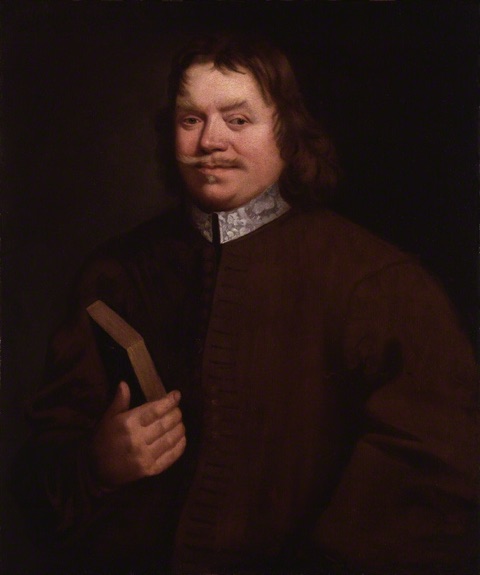
About the author
John Bunyan
John Bunyan (1628 to 1688 AD) was a tinker's son from Elstow near Bedford who spent twelve years in Bedford jail from 1660 for his preaching and went on to serve as pastor of the Bedford congregation. This treatise comes from the very end of his life: it was printed in 1688 AD, the same year he died in London.