Modernized edition · Full text · Free PDF/EPUB
Lectures to My Students in Modern English
Want the file? The PDF/EPUB is free with an account.
Summary
- Author
- Charles Spurgeon (1834 to 1892 AD), pastor of the Metropolitan Tabernacle, London
- Published
- 1875 AD (First Series); the Second Series followed some three years later
- Source edition
- Both series in modern English: the Introduction and Apology with thirteen lectures, and the Second Series Introduction, a College note and ten lectures
- First hearers
- Students of the Pastors' College, men already preaching before they entered
- Length
- 166,000 words · 11 hours
What is Lectures to My Students about?
Lectures to My Students is Charles Spurgeon's collection of talks to the men of his Pastors' College, first published in 1875. This edition holds the First and Second Series, twenty-three lectures in all, on the minister's soul and call, prayer, sermons, voice and gesture, open-air preaching, earnestness and conversion as the preacher's aim.
Read the full summary (8 points, key themes)Show less
How the argument unfolds
- 01
Introduction and Apology. Spurgeon explains the familiar style of his talks and describes a College meant to train preachers rather than scholars.
- 02
The man and his call. The minister must be converted, strong in piety and consistent; his call is tested by desire, gifts, conversions and the church's judgment.
- 03
Prayer and the sermon. Private and public prayer, doctrinal sermons that preach Christ, the text found by prayer, and spiritualizing within bounds.
- 04
Delivery and daily life. The voice, attention, impromptu speech, depression, conversation, and study with few books.
- 05
The Spirit and progress. Where the preacher needs the Holy Spirit and how that help is lost, then a call to advance in every part of the work, including foreign missions.
- 06
Decision for the truth. The settled doctrines to be preached without apology in a doubting age.
- 07
Open air and gesture. The history and practice of field and street preaching, then the faults of posture and action to be removed.
- 08
Earnestness, discretion and conversion. Keeping zeal alive, the blind eye and deaf ear, and the winning of souls as the aim of preaching.
Key themes
- Holiness before skill. The preacher is his own instrument, so his piety and conduct decide his usefulness more than learning or eloquence.
- Settled truth. The gospel is preached as the mind of God, not as one opinion among many: “we are resolved to buy the truth at any price and sell it at none.”
- A natural manner. Voice, gesture and conversation should be a man's own, free of pulpit tones, clerical airs and imitation.
- The Spirit and the soul-winner. All method rests on the Holy Spirit and aims at conversions: “The best way to preach sinners to Christ is to preach Christ to sinners.”
Reader questions (9)Hide the questions
Questions about Lectures to My Students
Is there a modern English version of Lectures to My Students?
Yes. This is Lectures to My Students by Charles Spurgeon in modern English. The language is modernized and the author's order and argument are kept. The full modernized text is free to read on this page.
Can I read Lectures to My Students online for free?
Yes. The complete text of this modern English edition is on this page, with no sign-up or paywall.
Is there a free PDF of Lectures to My Students?
Yes. The PDF and EPUB of this edition are free with an Updated Works account. Sign in with Google or an email link; no card is needed.
What is Lectures to My Students by Charles Spurgeon about?
Practical counsel for young ministers on their own spiritual life, their call, prayer, the making and delivery of sermons, and a pastor's daily work. Spurgeon keeps returning to two points: the preacher must be holy, and his aim is the conversion of souls.
Which series of the lectures does this edition contain?
The First Series and the Second Series. In the Second Series introduction Spurgeon names Commenting and Commentaries as his second book for students and plans one on The Art of Illustration; neither is part of this edition.
Who first heard these lectures?
Students of the Pastors' College, which admitted men who had already preached for at least two years. Spurgeon met them at the end of the week, and one Second Series lecture was also addressed to former students.
Why does Spurgeon give two lectures to posture and gesture?
He grants that action is minor, but awkward habits draw attention from the message. He uses ridicule, he says, not to mock good men but to keep their hearers from laughing at them.
Should a preacher read, memorize or improvise his sermons?
None of these as a habit. He advises thorough preparation of the thought with the words left to come in delivery, and writing sermons out at times as a discipline while leaving the manuscript at home.
How long should prayers and sermons be?
About ten minutes for the main public prayer and about forty for the sermon, with the whole service kept within an hour and a half.
Lectures to My Students in Modern English · Full text
Part 1: First Series
Introduction and Apology
In reply to many requests from ministers who listened to my lectures in their student days, I am sending a selection to the press. I cannot do this, however, without an apology. These addresses were never prepared for the public eye and are hardly presentable for formal criticism.
My College lectures are colloquial, familiar, full of anecdote, and often humorous. They are purposely made that way to fit the occasion. At the end of the week I meet the students and find them weary from sterner studies, so I judge it best to make my talks as lively and interesting as I can. They have had their fill of classics, mathematics, and theology. They are only ready to receive something that will catch and hold their attention and fire their hearts. Our esteemed tutor, Mr. Rogers, compares my Friday work to sharpening a pin. Shaping the head, straightening the shaft, coating the metal, and polishing have all been done during the week, and then the process concludes with an effort to give it point and sharpness. To succeed at this, the lecturer must not be dull himself, nor demand too heavy an effort from his audience.
I am as much at home with my young brothers as in the bosom of my own family, and therefore I speak without restraint. Generous minds will take this into account in reading these lectures. I hope that all who favor me with their criticisms will belong to that noble order.
Sharp remarks may possibly be made about my frequent references to myself, my own methods of working, and my personal memories. These too were intentional. I have purposely given an almost autobiographical flavor to the whole volume. My own experience, such as it is, is the most original contribution I can offer, and with my own students it carries quite as much weight as anything else within my reach. It would have been impossible for me to quote the experiences of other men if they had not been bold enough to record them. I make an honest attempt to acknowledge my debt to my greater predecessors by writing down my own.
Whether this springs from egotism or not, each reader will decide according to the sweetness or acidity of his own disposition. A father is excused when he tells his sons his own life story and finds it the readiest way to enforce his maxims. The old soldier is forgiven when he “shoulders his crutch, and shows how fields were won.” I ask that the license which tolerates them may, on this occasion, be extended to me.
It would have saved me much labor had I reserved these lectures for redelivery to new classes of freshmen. I am aware of no motive in printing them except the desire to keep my counsels alive in the memories of those who heard them years ago, and to impress them upon others who live beyond the walls of our classroom. Our age has become intensely practical. It needs a ministry not only orthodox and spiritual, but also natural in utterance and practically shrewd. Officialism is sick to death. Life is the true heir to success and is coming into its inheritance. Mannerisms, pomposities, and stiff proprieties, once so potent in the religious world, are becoming as obsolete in people’s respect as those gods of high Olympus for whom poets in past ages tuned their lyres and sculptors brought marble to life in beauty.
Truth and life must conquer, and their victory is nearest when they cease to be weighed down by the grave-clothes of convention and pretense. It is delightful to put one’s foot through the lath and plaster of old affectations to make room for the granite walls of reality. That has been a main design with me, and may God send success to the effort.
The solemn work of the Christian ministry demands a man’s all, and that all at its best. To engage in it half-heartedly is an insult to God and humanity. Slumber must leave our eyelids sooner than people should be allowed to perish. Yet we are all prone to sleep as others do, and students among the rest are apt to play the part of the foolish virgins. Therefore I have sought to speak out my whole soul, hoping I might neither create nor foster dullness in others. May he in whose hand are the churches and their pastors bless these words to younger brothers in the ministry. If so, I will count it more than a full reward and gratefully praise the Lord.
Should this publication succeed, I hope very soon to issue in similar form a book on commenting, containing a full catalog of commentaries, along with a second set of lectures. I will be grateful for any help given to its sale. The price brings no profit, and people interested in our subjects are not numerous enough to guarantee a very large circulation. Only through the kind aid of appreciative friends will I be able to publish the rest of the planned series.
The Pastors’ College began on a very small scale in 1856. Since that date it has educated and sent into the ministry at least 350 men. After losses through death and other causes, about 300 remain in the Baptist denomination, preaching the gospel of Jesus Christ. In addition, a far larger number of men receive free education in the evening, fitting them to serve as city missionaries, gospel book-sellers, or useful private Christians.
The institution accepts no man simply to make him a preacher. Rather, it is established to help further the education of brothers who have already been preaching with some measure of success for at least two years. Many men of earnest spirit and established Christian character are hindered in their efforts to do good by the slenderness of their knowledge. Aware of their own gaps, they strive to improve themselves, yet the absence of a guide, their need for books, and their scarce time all hold back their progress. These are the men whom the Pastors’ College welcomes. Men in whom piety, zeal, and the indwelling Spirit are found need not fear refusal at our doors because of poverty, provided they possess the gifts of utterance essential to the preacher.
The College aims to train preachers rather than scholars. Developing the ability to speak readily, helping students understand the word of God, and fostering a spirit of consecration, courage, and confidence in God are goals so important that we place all other matters second. If a student learns a thousand things and yet fails to preach the gospel acceptably, his College course has missed its true design. Should the pursuit of literary prizes and the ambition for classical honors so occupy his mind as to divert him from his life’s work, they are perilous rather than beneficial. To be wise to win souls is the wisdom ministers ought to possess.
In the Pastors’ College, definite doctrines are held and taught. We hold the doctrines of grace and the old orthodox faith. We have no sympathy with the countless theological novelties of the present day, which are new only in outward form. In substance they are repetitions of errors refuted long ago. Our standing in doctrinal matters is well known, and we make no claim to loose, indiscriminate tolerance. Yet we find no shortage of earnest spirits rallying to our standard, believing that in truth alone can true freedom be found.
The support of the College comes from the freewill offerings of the Lord’s people. We have no roll of subscribers, though many friends send us aid at regular intervals. Our confidence is that God will supply all our needs, and he has always done so up to now. The President has never drawn a single penny from the work for himself in any form. On the contrary, he delights to give the work all he can, in both money and unpaid service, and therefore he appeals all the more confidently to others to help him maintain the institution. No work can confer a greater benefit upon mankind than training ministers whom God has chosen, for around them spring up churches, schools, and all the agencies of religion and philanthropy. Since we are commanded to pray for laborers in the Lord’s harvest, we are bound to prove the honesty of our prayers by our actions.
At least £100 is required every week to carry on the work.
C. H. Spurgeon Nightingale Lane, Clapham, Surrey
Lecture 1: The Minister’s Self-Watch
“Take heed unto thyself, and unto the doctrine” (1 Timothy 4:16).
Every workman knows the need to keep his tools in good repair, for “if the iron be blunt, and he do not whet the edge, then must he put to more strength.” If a workman loses the edge on his adze, he knows it will make a heavier drain on his energy, or his work will be badly done. Michelangelo, the elect of the fine arts, understood the importance of his tools so well that he always made his own brushes with his own hands. In this he gives us an illustration of the God of grace, who with special care fashions all true ministers for himself.
It is true that the Lord, like Quintin Matsys in the story of the Antwerp well-cover, can work with the faultiest kind of instrument, as he does when he occasionally uses very foolish preaching to convert souls. He can even work without human agents, saving people without a preacher at all by applying the word directly through his Holy Spirit. Yet we cannot take God’s absolute sovereign acts as the rule for our conduct. In his sovereignty he may do whatever pleases him best, but we must act as his plainer ways instruct us. One clear fact is that the Lord usually adapts means to ends. The plain lesson is that we are likely to accomplish the most when we are in our best spiritual condition. Put another way, we will usually do our Lord’s work best when our gifts and graces are in good order, and worst when they are most out of trim. This is a practical truth for our guidance. When the Lord makes exceptions, they only prove the rule.
We are, in a real sense, our own tools, and therefore we must keep ourselves in order. If I want to preach the gospel, I can only use my own voice, so I must train my vocal powers. I can only think with my own brain and feel with my own heart, so I must cultivate my intellectual and emotional faculties. I can only weep and agonize for souls in my own renewed nature, so I must watchfully maintain the tenderness that was in Christ Jesus. It will be useless for me to stock my library, organize societies, or launch schemes if I neglect the cultivation of myself. Books, agencies, and systems are only indirect instruments of my holy calling. My own spirit, soul, and body are my nearest equipment for sacred service. My spiritual faculties and inner life are my battle-ax and weapons of war.
M’Cheyne, writing to a ministerial friend who was traveling to master the German language, used words just like ours: “I know you will apply hard to German, but do not forget the culture of the inner man (I mean of the heart). How diligently the cavalry officer keeps his saber clean and sharp. Every stain he rubs off with the greatest care. Remember you are God’s sword, his instrument, and I trust a chosen vessel to him to bear his name. In great measure, according to the purity and perfection of the instrument will be the success. It is not great talents God blesses so much as likeness to Jesus. A holy minister is an awesome weapon in the hand of God.”
For the herald of the gospel to be spiritually out of order in his own person is a grave calamity for both himself and his work. Yet, my brothers, how easily such a failure happens, and with what watchfulness we must guard against it! Traveling one day by express train from Perth to Edinburgh, we suddenly came to a dead stop. A small screw in one of the engines had broken, for every railway locomotive consists virtually of two engines. When we started again, we had to crawl along with one piston-rod working instead of two. Only a small screw was missing. Had that been right, the train would have rushed along its iron road. Instead, the loss of that tiny piece of iron threw the whole machine out of gear.
A train on one of the United States’ railways is said to have been stopped by flies getting into the grease-boxes of the carriage wheels. The analogy is exact. A man fitted in every other respect to be useful may be severely hindered, or even rendered completely useless, by some small defect.
Such a result is all the more grievous because it touches the gospel, which in the highest sense is designed to produce the grandest results. It is a terrible thing when healing balm loses its power through the blunderer who applies it. You all know the harmful effects often produced on water flowing through lead pipes. In the same way, the gospel itself, flowing through spiritually unhealthy men, may be corrupted until it harms their hearers. Calvinistic doctrine becomes deeply evil teaching when set forth by men of ungodly lives and presented as a cloak for sin. Arminianism, on the other hand, with its wide sweep of the offer of mercy, can do serious harm to human souls if the preacher’s careless tone leads his hearers to think they can repent whenever they please, and that no urgency surrounds the gospel message.
Moreover, when a preacher is poor in grace, any lasting good coming from his ministry will usually be weak and wildly out of proportion to what might have been expected. Much sowing will be followed by little reaping, and the return on the talents will be barely noticeable. In two or three battles lost during the recent American war, defeat is said to have resulted from bad gunpowder supplied to the army by “shoddy” contractors, so that the cannonade failed to produce its proper effect. So it may be with us. We may miss our mark, lose our goal and aim, and waste our time because we lack true spiritual force within ourselves, or lack it in such a degree that God could consistently bless us. Beware of being “shoddy” preachers.
Be Truly Saved Yourself
It should be one of our first concerns that we ourselves are saved men. That a teacher of the gospel must first be a partaker of it is a simple truth, yet a rule of the greatest weight. We are not among those who accept the apostolic succession of young men merely because they claim it. If their college life has been lively rather than spiritual, and their honors have been won in athletics rather than in labors for Christ, we ask for different evidence than they can offer. No amount of tuition paid to learned doctors, and no quantity of classical learning received in return, proves to us a call from above. True, genuine piety is the first indispensable requirement. Whatever “call” a man may claim, if he has not been called to holiness, he certainly has not been called to the ministry.
“First trim yourself, and then adorn your brother,” say the rabbis. “The hand,” says Gregory, “that means to make another clean must not itself be dirty.” If your salt has lost its flavor, how can you season others? Conversion is an absolute necessity in a minister. You who aspire to our pulpits, “ye must be born again.” Nor should any man take this first qualification for granted, for it is very easy to be mistaken about whether we are truly converted. Believe me, it is no child’s play to “make your calling and election sure.” The world is full of counterfeits and swarms with flatterers of fleshly self-conceit, who gather around a minister like vultures around a carcass. Our own hearts are deceitful, so the truth does not lie on the surface. It must be drawn up from the deepest well. We must examine ourselves anxiously and thoroughly, so that after preaching to others we ourselves do not become castaways.
How horrible it is to be a preacher of the gospel and yet remain unconverted! Let every man here whisper to his own inmost soul, “What a dreadful thing it will be for me if I am ignorant of the power of the truth I am preparing to proclaim!” An unconverted ministry creates the most unnatural relationships. A graceless pastor is a blind man elected to a professorship of optics, lecturing on light and vision and describing the fine shades and delicate blendings of prismatic colors while he himself sits in total darkness! He is a mute man raised to the chair of music, a deaf man fluent on symphonies and harmonies! He is a mole claiming to train eaglets, a limpet chosen to preside over angels. One could apply the most absurd and grotesque comparisons to such a position, except that the subject is too solemn.
It is a dreadful place for a man to stand. He has taken on a work for which he is totally, wholly, and altogether unqualified, yet his unfitness will not shield him from its responsibilities, because he willfully assumed them. Whatever his natural gifts or mental powers may be, he is completely disqualified for spiritual work if he has no spiritual life. It is his duty to leave the ministerial office until he has received this first and simplest qualification for it.
An unconverted ministry must be equally dreadful in another way. If a man has no true commission, what a deeply unhappy position he occupies! What can he see in the spiritual experience of his people to bring him comfort? How must he feel when he hears the cry of penitents or listens to their anxious doubts and solemn fears? He must be amazed that his words should ever be used to that end! God may indeed bless an unconverted man’s words to the conversion of souls, for while the Lord disowns the man, he still honors his own truth. How perplexed such a pastor must be when consulted about the struggles of mature Christians! Along the path of spiritual experience where his regenerated hearers walk, he must feel completely lost. How can he listen to their deathbed joys or join their joyful fellowship around the Lord’s table?
Many young men placed in a trade they cannot endure have run away to sea rather than continue in an irksome business. Where, then, can that man flee who is bound for life to this holy calling while remaining a total stranger to the power of godliness? How can he invite people daily to come to Christ while he himself knows nothing of his dying love? Oh, sirs, surely this must be lifelong slavery. Such a man must hate the sight of a pulpit as much as a galley-slave hates the oar.
And how unfit for service such a man must be. He has to guide travelers along a road he has never walked and steer a ship along a coast whose landmarks he does not know! He is called to instruct others while remaining a fool himself. What can he be but a cloud without rain, a tree with leaves only? Picture a caravan in the desert, parched and ready to die under the blazing sun, reaching the long-awaited well and, horror of horrors, finding not a single drop of water. Just so, when souls thirsting for God come to a graceless ministry, they are ready to perish because the water of life is nowhere to be found. Better to abolish pulpits altogether than to fill them with men who have no firsthand, experiential knowledge of what they teach.
Alas, the unregenerate pastor becomes terribly destructive as well. Among all the causes that breed unbelief, ungodly ministers must be ranked near the top. I read the other day that no form of evil shows so great a power for destruction as the unconverted minister of a parish with a £1,200 organ, a choir of ungodly singers, and an aristocratic congregation. In that writer’s judgment, there could be no greater engine for damnation outside of hell. People go to their place of worship, sit down comfortably, and assume they must be Christians. All the while, their entire religion consists of listening to an orator, having their ears tickled by music, and perhaps having their eyes entertained by graceful gestures and fashionable manners. The whole performance is no better than what they hear and see at the opera, perhaps inferior in aesthetic beauty and not a bit more spiritual.
Thousands congratulate themselves and even thank God that they are devout worshipers, while at the same time they live in an unregenerate, Christless state, keeping the outward form of godliness while denying its power. Whoever presides over a system aiming at nothing higher than empty ritual is far more a servant of the devil than a minister of God. A formal preacher does grave harm even while keeping his outward balance. Because he lacks the preserving weight of true godliness, sooner or later he is almost certain to stumble in his moral character, and what a position he is in then! How God is blasphemed and the gospel disgraced!
It is terrible to consider what a death must await such a man, and what must be his condition afterward! The prophet pictures the king of Babylon going down to hell, and all the kings and princes he had destroyed, whose capitals he had laid waste, rising from their seats in Pandemonium to greet the fallen tyrant with cutting sarcasm: “Art thou become like unto us?” Can you not imagine a man who served as a minister, yet lived without Christ in his heart, going down to hell, while all the imprisoned spirits who once heard him and all the ungodly of his parish rise up to say in bitter tones, “Have you also become like us? Physician, did you not heal yourself? Are you, who claimed to be a shining light, cast down into darkness forever?” Oh, if one must be lost, let it not be in this way! To be lost under the shadow of a pulpit is dreadful, but how much worse to perish from the pulpit itself!
There is a terrifying passage in John Bunyan’s treatise Sighs from Hell that often rings in my ears: “How many souls have blind priests been the means of destroying by their ignorance, with preaching that was no better for their souls than rat poison to the body? Many of them, it is to be feared, have whole towns to answer for. Ah, friend, I tell you, you who have taken in hand to preach to the people, it may be you have taken in hand you cannot tell what. Will it not grieve you to see your whole parish come bellowing after you into hell, crying out, ‘This we have to thank you for: you were afraid to tell us of our sins, for fear we would not put food fast enough into your mouth. O cursed wretch, who were not content, blind guide as you were, to fall into the ditch yourself, but have also led us there with you’?”
Richard Baxter, in his Reformed Pastor, amid much other solemn counsel, writes as follows: “Take heed to yourselves so that you are not devoid of that saving grace of God which you offer to others, and strangers to the effectual working of that gospel which you preach. Watch that while you proclaim the necessity of a Savior to the world, your own hearts do not neglect him, and you do not miss having a share in him and his saving benefits. Take heed to yourselves, or else you may perish while calling on others to beware of perishing, and starve yourselves while preparing their food. Though there is a promise of shining as stars to those who turn many to righteousness (Daniel 12:3), this assumes that they are first turned to it themselves. Such promises are made with all other things being equal and the necessary conditions assumed. Their own sincerity in the faith is the condition of their glory simply considered, though their great ministerial labors may be a condition of the promise of their greater glory.
“Many men have warned others not to come to that place of torment, toward which they themselves were hastening. Many a preacher is now in hell who has a hundred times called upon his hearers to use the utmost care and diligence to escape it. Can any reasonable man imagine that God would save men for offering salvation to others while refusing it themselves, and for telling others truths they themselves neglected and abused? Many a tailor goes in rags while making costly clothes for others, and many a cook scarcely licks his fingers after preparing the most costly dishes for others.
“Believe it, brothers, God never saved any man for being a preacher, nor for being an able preacher, but because he was a justified, sanctified man, and consequently faithful in his Master’s work. Take heed, therefore, to yourselves first, that you truly are what you urge others to be, that you believe what you daily urge them to believe, and that you have heartily welcomed the Christ and Spirit whom you offer to others. He who told you to love your neighbors as yourselves implied that you should love yourselves, and not hate and destroy both yourselves and them.”
My brothers, let these weighty sentences have their due effect on you. Surely there is no need to add more. Let me urge you to examine yourselves and put to good use what has been spoken to you.
Cultivate Vigorous Piety
Once this first matter of true religion is settled, it is of the next importance to the minister that his piety be vigorous. He must not settle for merely keeping pace with the rank and file of Christians; he must be a mature and advanced believer. The ministry of Christ has truly been called “the choicest of his choice, the elect of his election, a church picked out of the church.” If a man were called to an ordinary post and common work, ordinary grace might perhaps content him, though even then that would be a lazy satisfaction. Being chosen for extraordinary labors and called to a post of unusual peril, he ought to long for the superior strength that alone fits his station. His pulse of living godliness must beat strongly and steadily. His eye of faith must be bright, his foot of resolution firm, and his hand of action quick. His whole inner life must be in the highest state of spiritual health.
It is said of the Egyptians that they chose their priests from the most learned of their philosophers, and then esteemed their priests so highly that they chose their kings from among them. We need for God’s ministers the pick of the entire Christian host, men of such caliber that if a nation wanted kings, it could do no better than raise them to the throne. Our weakest-minded, most timid, most fleshly, and most ill-balanced men are not suitable candidates for the pulpit.
There are some tasks we would never assign to the weak or disabled. A man may be unfit to climb high scaffolding because his head grows dizzy, and elevated work would put him in serious danger. By all means let him stay on the ground and find useful work where steady nerves matter less. In the same way, some brothers have spiritual weaknesses that unfit them for conspicuous, elevated service because their heads are too easily turned. Given a little success, they would grow drunk with vanity, a vice all too common among ministers, least becoming to them, and surest to bring about their fall.
If we as a nation were called to defend our homes and hearths, we would not send out boys and girls with swords and guns to meet the enemy. Neither may the church send out every fluent novice or inexperienced zealot to plead for the faith. The fear of the Lord must teach a young man wisdom, or he is barred from the pastorate. The grace of God must mature his spirit, or he had better wait until power is given him from on high.
The highest moral character must be diligently maintained. Many are disqualified for church office who do well enough as ordinary members. I hold very stern views regarding Christian men who have fallen into gross sin. I rejoice that they may be truly converted and received back into the church with mingled hope and caution. Yet I gravely question whether a man who has sinned grievously should be readily restored to the pulpit. As John Angell James remarks, “When a preacher of righteousness has stood in the way of sinners, he should never again open his lips in the great congregation until his repentance is as publicly known as his sin.” Let those who have been shorn by the sons of Ammon stay at Jericho until their beards grow back. That verse has often been used as a taunt against beardless boys, to whom it clearly does not apply, yet it is an accurate metaphor for dishonored men who have forfeited their character, whatever their age.
Alas, the beard of reputation, once shaved off, is hard to grow back. In most cases, open immorality, however deep the repentance, is a fatal sign that true ministerial graces were never in the man’s character. Caesar’s wife must be above suspicion, and there must be no ugly rumors of ministerial misconduct in the past, or the hope of usefulness will be slim. Fallen men are to be received into the church as penitents, and into the ministry they may be received if God places them there. My doubt is not about that, but about whether God ever put them there in the first place. My conviction is that we should be very slow to help back into the pulpit men who, once tested, proved to have too little grace to withstand the crucial test of ministerial life.
For some tasks we choose none but the strong. When God calls us to ministerial labor, we should seek grace so that we may be strengthened into fitness for our post, rather than being mere novices swept away by Satan’s temptations to the injury of the church and our own ruin. We are to stand equipped with the whole armor of God, ready for feats of courage not expected of others. For us, self-denial, self-forgetfulness, patience, perseverance, and long-suffering must be everyday virtues. Who is sufficient for these things? We need to live very close to God if we are to prove faithful in our calling.
Remember, as ministers, that your whole life, and especially your pastoral life, will be shaped by the vigor of your piety. If your zeal grows dull, you will not pray well in the pulpit; you will pray worse in the family, and worst of all alone in the study. When your soul grows lean, your hearers, without knowing how or why, will sense that your public prayers have lost their warmth and savor. They will feel your barrenness, perhaps, before you notice it yourself. Your sermons will next betray your decline. You may still speak well-chosen words and neatly ordered sentences as before, yet there will be a noticeable loss of spiritual force. You will shake yourselves as at other times, just as Samson did, only to discover that your great strength has departed.
In your daily fellowship with your people, they will be quick to spot the all-pervading decline of your graces. Sharp eyes will notice the gray hairs here and there long before you do. Let a man suffer from heart disease, and every trouble is wrapped up in that one: stomach, lungs, internal organs, muscles, and nerves will all suffer. In the same way, let a man’s heart grow weak in spiritual things, and very soon his entire life will feel the withering effect.
Moreover, as a result of your decline, every one of your hearers will suffer more or less. The stronger among them may overcome the depressing influence, but the weaker ones will be seriously harmed. It is with us and our hearers as it is with pocket watches and the public clock. If our watch is wrong, few besides ourselves are misled by it. If the Horse Guards clock or Greenwich Observatory should go wrong, half of London would lose its reckoning. So it is with the minister. He is the parish clock; many set their time by him. If he is off, they all go astray to some degree, and he is largely accountable for the sin he causes. We cannot bear to think of this, my brothers. It allows not a moment of comfortable reflection, yet we must face it squarely so that we can guard against it.
You must remember, too, that we need very vigorous piety because our danger is so much greater than that of others. On the whole, no position is assaulted with temptation like the ministry. Despite the popular notion that ours is a snug retreat from temptation, it is no less true that our dangers are more numerous and more subtle than those of ordinary Christians. Ours may be a high vantage point, yet that height is perilous, and for many the ministry has proved a Tarpeian rock. If you ask what these temptations are, time would fail to list them all, for they include both the coarser and the more refined. The coarser include self-indulgence at the table, where enticements abound among a hospitable people, and temptations of the flesh, which press incessantly on young unmarried men placed on high among an admiring crowd of young women. Enough of that; your own observation will soon show you a thousand snares, unless your eyes are blinded.
There are more secret snares than these, from which we escape with far greater difficulty. Worst of all is the temptation to ministerialism: the tendency to read our Bibles as ministers, to pray as ministers, and to carry out our whole religion not as people personally involved, but merely in an official capacity. To lose the personal reality of repentance and faith is a loss indeed. “No man,” says John Owen, “preaches his sermon well to others if he does not first preach it to his own heart.”
Brothers, it is exceedingly hard to keep to this. Our office, instead of helping our piety as some claim, is turned by the evil of our own natures into one of its greatest hindrances. At least, I find it so. How one kicks and struggles against officialism, and yet how easily it entangles us, like a long garment twisting around a runner’s feet and slowing his pace! Beware, dear brothers, of this and every other seduction of your calling. If you have watched against them until now, keep watching until life’s final hour.
We have noted only one of these perils, yet in truth they are legion. The great enemy of souls leaves no stone unturned in seeking the preacher’s ruin. “Take heed to yourselves,” says Baxter, “because the tempter will make his first and sharpest attack upon you. If you are leaders against him, he will spare you no further than God restrains him. He bears the greatest malice toward you who are engaged to do him the greatest harm.
“Just as he hates Christ more than any of us, because Christ is the General of the field and the ‘Captain of our salvation,’ and does more than all the world besides against the kingdom of darkness, so he targets the leaders under him more than the common soldiers, for the same reason and in proportion to their place. He knows what a rout he may cause among the rest if the leaders fall before their eyes. He has long practiced that way of fighting, ‘neither with small nor great,’ comparatively, but these, and of ‘smiting the shepherds, that he may scatter the flock.’ So great has been his success in this way that he will pursue it as far as he is able.
“Take heed, therefore, brothers, for the enemy has a special eye on you. You will face his subtlest insinuations, his relentless solicitations, and his violent assaults. Wise and learned as you may be, watch yourselves so that he does not outwit you. The devil is a greater scholar than you and a nimbler debater; he can ‘transform himself into an angel of light’ to deceive. He will get inside your guard and trip your heels before you realize it. He will play the juggler with you unseen and cheat you of your faith or innocence without your knowing you have lost it. In fact, he will convince you that it has multiplied and grown when it is gone. You will see neither hook nor line, much less the subtle angler himself, while he offers you his bait. His baits will be so suited to your temper and disposition that he is sure to find leverage within you, making your own principles and inclinations betray you. Whenever he ruins you, he will make you the instrument of your own ruin.
“Oh, what a conquest he will think he has won if he can make a minister lazy and unfaithful, or tempt a minister into greed or scandal! He will boast against the church and say, ‘These are your holy preachers! You see what their strictness amounts to, and where it leads them.’ He will boast against Jesus Christ himself and say, ‘These are your champions! I can make your chief servants abuse you. I can make the stewards of your house unfaithful.’
“If he dared insult God on a false guess and tell him he could make Job curse him to his face (Job 1:11), what would he do if he truly prevailed against us? At the last he will gloat over you just as fiercely for drawing you to betray your great trust, stain your holy profession, and render such service to your enemy. Oh, do not gratify Satan so far! Do not make him such sport. Do not let him treat you as the Philistines treated Samson: first stripping you of your strength, then putting out your eyes, and making you the object of his triumph and mockery.”
Once more, we must cultivate the highest degree of godliness because our work imperatively requires it. The labor of the Christian ministry is performed well in exact proportion to the vigor of our renewed nature. Our work is well done only when all is well within ourselves. As the workman is, so the work will be. To face the enemies of truth, defend the bulwarks of the faith, rule well in the house of God, comfort all who mourn, build up the saints, guide the perplexed, bear with the stubborn, and win and nurture souls: all these and a thousand other tasks besides are not for a Feeble-mind or a Ready-to-halt. They are reserved for a Great-heart whom the Lord has made strong for himself. Seek, then, strength from the Strong One, wisdom from the Wise One, and indeed everything from the God of all.
Match Your Personal Character to Your Ministry
Thirdly, let the minister take care that his personal character agrees in all respects with his ministry. We have all heard the story of the man who preached so well and lived so badly that when he was in the pulpit everyone said he ought never to come out again, and when he was out of it they all declared he ought never to enter it again. From imitating such a two-faced Janus may the Lord deliver us. May we never be priests of God at the altar and sons of Belial outside the tabernacle door. On the contrary, as Nazianzen says of Basil, may we “thunder in our doctrine, and flash like lightning in our conduct.”
We do not trust two-faced people, nor will anyone believe those whose spoken and lived testimonies contradict each other. Just as actions, according to the proverb, speak louder than words, an ungodly life will effectively drown out the voice of the most eloquent ministry. After all, our truest building must be done with our hands. Our character must be more persuasive than our speech. Here I would warn you not only against sins of commission, but also against sins of omission. Too many preachers forget to serve God once they step out of the pulpit, so their lives are negatively inconsistent.
Abhor, dear brothers, the thought of being clockwork ministers who are not alive through abiding grace within, but are merely wound up by temporary influences. Such men are ministers only for the moment, under the pressure of the preaching hour, and stop being ministers the instant they walk down the pulpit stairs. True ministers are always ministers. Too many preachers resemble those sand-toys we buy for our children. You turn the box upside down, and the little acrobat spins and spins until the sand runs out, and then he hangs motionless. Just so, some persevere in ministering the truth only while official duty requires it, and after that it is no pay, no prayer; no salary, no sermon.
It is a horrible thing to be an inconsistent minister. Our Lord is said to have been like Moses for this reason, that he was “a prophet mighty in word and in deed.” The man of God should imitate his Master in this. He should be mighty both in the word of his doctrine and in the deed of his example, and mightiest, if possible, in the second.
It is remarkable that the only church history we have in Scripture is “The Acts of the apostles.” The Holy Spirit has not preserved their sermons. They were very fine sermons, better than we will ever preach, yet the Holy Spirit has taken care only of their “acts.” We have no books of the resolutions of the apostles. When we hold our church meetings we record our minutes and resolutions, but the Holy Spirit puts down only the “acts.” Our acts ought to be fit for recording, for recorded they certainly will be. We must live as under the immediate eye of God and in the blaze of the great all-revealing day.
Holiness in a minister is at once his chief necessity and his finest ornament. Mere moral respectability is not enough. There must be the higher virtue. A consistent character there must be, yet it must be anointed with the sacred oil of consecration, or what makes us most fragrant to God and humanity will be lacking. Old John Stoughton, in his treatise The Preacher’s Dignity and Duty, insists on ministerial holiness in sentences full of weight:
“If Uzzah must die merely for touching the ark of God, even to steady it when it was about to fall; if the men of Beth-shemesh for looking into it; if even the animals that come near the holy mountain are threatened; then what kind of people ought they to be who are admitted to talk with God familiarly, to ‘stand before him,’ as the angels do, and ‘behold his face continually,’ ‘to bear the ark upon their shoulders,’ ‘to bear his name before the Gentiles’; in a word, to be his ambassadors? ‘Holiness becometh thy house, O Lord’; and would it not be absurd to imagine that the vessels must be holy, the vestments must be holy, everything must be holy, except the very man upon whose garments must be written ‘holiness to the Lord’? Could the bells of the horses bear an inscription of holiness in Zechariah, while the saints’ bells, the bells of Aaron, remain unhallowed?
“No, they must be ‘burning and shining lights,’ or else their influence will send forth some malignant quality. They must ‘chew the cud and divide the hoof,’ or else they are unclean. They must ‘divide the word aright’ and walk uprightly in life, joining life to learning. If holiness is lacking, the ambassadors dishonor both the country from which they come and the prince who sent them. This dead Amasa, this dead doctrine not brought to life by a good life, lying in the road, halts the people of the Lord so that they cannot march forward cheerfully in their spiritual warfare.”
The preacher’s life should be a magnet drawing people to Christ, and it is sad indeed when it drives them away. Holiness in ministers is a loud call to sinners to repent, and when paired with holy cheerfulness it becomes wonderfully attractive. Jeremy Taylor, in his own rich style, tells us:
“Herod’s doves could never have invited so many strangers to their dovecotes had they not been anointed with sweet balsam. As Didymus said, ‘Make your pigeons smell sweet, and they will attract whole flocks.’ If your life is excellent, and your virtues are like precious ointment, you will soon invite those in your care to run ‘after your precious fragrances.’ You must be excellent, not like one of the common crowd, but like a man of God, not after the common manner of men, but ‘after God’s own heart.’ People will strive to be like you if you are like God. When you only stand at the door of virtue for nothing more than keeping sin out, you will draw into the fold of Christ none but those whom fear drives in.
“‘To do what will most glorify God,’ that is the line you must walk by. Doing no more than everyone is forced to do is mere servility, falling short even of the affection of sons. Much less can you be fathers to the people when you do not even go as far as the sons of God. A dark lantern, though it shows a faint glow on one side, will barely light the way for one person, much less guide a multitude or attract many followers by the brightness of its flame.”
Another equally admirable Anglican divine, Bishop Reynolds, has put this well and pithily: “The star that led the wise men to Christ, and the pillar of fire that led the children of Israel to Canaan, did not only shine, but went before them (Matthew 2:9; Exodus 13:21). The voice of Jacob will do little good if the hands are the hands of Esau. Under the law, no person with any blemish was permitted to offer the offerings of the Lord (Leviticus 21:17-20), the Lord thereby teaching us what graces ought to be in his ministers. The priest was to wear bells and pomegranates on his robes, the one a picture of sound doctrine and the other of a fruitful life (Exodus 28:33-34).
“The Lord will be sanctified in all who draw near to him (Isaiah 52:11), for the sins of the priests make the people despise the offering of the Lord (1 Samuel 2:17). Their wicked lives put their doctrine to shame. As St. Augustine says, they proclaim the suffering of Christ by their profession, yet dishonor it by their wicked deeds. With their doctrine they build, and with their lives they tear down.
“I conclude this point with that wholesome passage from Jerome’s letter to Nepotian. ‘Do not,’ he says, ‘let your works shame your doctrine, so that those who hear you in church do not silently answer, “Why do you not practice yourself what you teach others?” He is too soft a teacher who urges others to fast while his own belly is full. Even a robber can denounce greed. A minister of Christ should have his tongue, his heart, and his hand in full agreement.’”
Very quaint as well is the language of Thomas Playfere in his Say Well, Do Well: “There was a ridiculous actor in the city of Smyrna who, crying out ‘O heaven!’ pointed his finger toward the ground. When Polemo, the leading man in that place, saw this, he could bear to stay no longer, but walked out of the assembly in great irritation, saying, ‘This fool has committed a blunder with his hand; he has spoken false Latin with his finger.’ Such are those who teach well and do ill, who have heaven on the tip of their tongue while earth is at the tip of their finger. They speak not only false Latin with their tongue, but false theology with their hands, failing to live according to their preaching. Yet he who sits in heaven will laugh them to scorn and hiss them off the stage if they do not mend their performance.”
Even in little things, the minister must make sure his life matches his ministry. He should be especially careful never to fall short of his word. This should be carried to scrupulous precision. We cannot be too careful. Truth must not only dwell in us, it must shine out from us. A well-known doctor of divinity in London, who I have no doubt is now in heaven, a very excellent and godly man, announced one Sunday that he intended to visit all his people. To get around to them and their families once a year, he said he would take all the seat-holders in order. A man well known to me, who was poor at the time, was thrilled at the thought of the minister coming to his home. A week or two before he expected his turn, his wife took great care to sweep the hearth and keep the house spotless, and the husband hurried home early from work each evening, hoping to find the doctor there.
This went on for a long time. The minister either forgot his promise, grew tired of carrying it out, or for some other reason never visited that poor man’s home. The result was that the man lost trust in all preachers and said, “They care for the rich, but they do not care for us who are poor.” He never settled down at any single place of worship for many years, until at last he wandered into Exeter Hall and remained one of my hearers for years until providence moved him elsewhere. It was no small task to convince him that any minister could be an honest man and love rich and poor impartially. Let us avoid doing such harm by being deeply careful to keep our word.
We must remember that we are closely watched. People rarely have the nerve to break the law in plain sight of their neighbors, yet we live and move in just such publicity. We are watched by a thousand eagle eyes. Let us act in such a way that we would never need to worry even if all heaven, earth, and hell joined the crowd of spectators. Our public position is a great asset if we are enabled to display the fruit of the Spirit in our lives. Take care, brothers, that you do not throw away that advantage.
When we tell you, my dear brothers, to guard your life, we mean to watch even the smallest details of your character. Avoid petty debts, lateness, gossip, nicknaming, small quarrels, and all those minor vices that fill the ointment with flies. Self-indulgences that have damaged the reputation of many must not be tolerated by us. Familiarities that have brought suspicion on others we must chastely avoid. Rough habits that have made some offensive, and affected airs that have made others ridiculous, we must put away. We cannot afford to run great risks over small things. Our aim must be to live by the rule, “giving no offense in anything, that the ministry be not blamed.”
This does not mean we must let ourselves be bound by every whim or fashion of the society we move in. As a general rule, I hate the fashions of society and detest empty conventions. If I thought it right to put my foot through a rule of etiquette, I would feel genuine satisfaction in doing so. No, we are men, not slaves, and we must not surrender our manly freedom to become lackeys of those who put on airs or boast of refinement. Yet, brothers, anything bordering on the coarseness akin to sin we must shun as we would a viper. The rules of Chesterfield are ridiculous to us, but the example of Christ is not, and he was never coarse, crude, discourteous, or indelicate.
Even in your leisure, remember that you are ministers. When you are off parade, you are still officers in the army of Christ, and you must conduct yourselves accordingly. If the smaller things require such care, how vigilant ought you to be in the great matters of morality, honesty, and integrity! Here the minister must never fail. His private life must always stay in harmony with his ministry, or his sun will soon set. The sooner such a man steps down, the better, for staying in office will only dishonor the cause of God and ruin himself.
Brothers, the limits of a lecture have been reached, and we must adjourn.
Lecture 2: The Call to the Ministry
Any Christian who has the ability to spread the gospel has the right to do so. More than that, it is his duty to do so as long as he lives (Revelation 22:17). Spreading the gospel is not left to a few; it belongs to all the disciples of the Lord Jesus Christ. According to the measure of grace entrusted to him by the Holy Spirit, each man is bound to serve in his own generation, both in the church and among unbelievers.
Indeed, this responsibility reaches beyond men and includes women as well. Whether believers are male or female, all are bound, when enabled by divine grace, to exert themselves to the utmost to spread the knowledge of the Lord Jesus Christ. Our service, however, need not take the specific form of preaching. In some cases it must not, as with women, whose public teaching is expressly prohibited (1 Timothy 2:12; 1 Corinthians 14:34). Still, if we have the ability to preach, we are bound to use it.
In this lecture, however, I am not speaking of occasional preaching or any other form of ministry common to all believers. I am speaking of the work and office of an overseer, or bishop, which includes both teaching and leading the church. This calling demands the dedication of a man’s entire life to spiritual work and separation from every secular occupation (2 Timothy 2:4). Because he gives all his time, energy, and effort to the good of those he leads, he is entitled to rely on the church of God for his material support (1 Corinthians 9:11; 1 Timothy 5:18).
Peter addresses such a man in these words: “Feed the flock of God which is among you, taking the oversight thereof” (1 Peter 5:2). Clearly, not everyone in a church can oversee or lead; there must be some to be overseen and led. We believe the Holy Spirit appoints some in the church of God to act as overseers, while others are made willing to be watched over for their good.
Not all are called to labor in word and doctrine, to serve as elders, or to hold the office of an overseer. Nor should all aspire to such work, since the necessary gifts are nowhere promised to everyone. Rather, those should devote themselves to these weighty duties who sense, like the apostle, that they have “received this ministry” (2 Corinthians 4:1). No man may intrude into the sheepfold as an under-shepherd. He must keep his eye on the Chief Shepherd and wait for his signal and command. Before a man stands up as God’s ambassador, he must wait for the call from above. If he ignores this and rushes into the sacred office, the Lord will say of him and others like him, “I sent them not, neither commanded them; therefore they shall not profit this people at all, saith the Lord” (Jeremiah 23:32).
Turn to the Old Testament, and you will see God’s messengers under the old covenant claiming commissions directly from the Lord. Isaiah tells us that one of the seraphim touched his lips with a live coal from the altar, and the voice of the Lord said, “Whom shall I send, and who will go for us?” (Isaiah 6:8). Then the prophet answered, “Here am I, send me.” He did not run before the Lord had specially visited him and qualified him for his mission. The words “How shall they preach, except they be sent?” had not yet been written, yet their solemn meaning was already well understood.
Jeremiah describes his call in his first chapter:
“Then the word of the Lord came unto me, saying, Before I formed thee in the belly I knew thee; and before thou camest forth out of the womb, I sanctified thee, and I ordained thee a prophet unto the nations. Then said I, Ah, Lord God! behold, I cannot speak; for I am a child. But the Lord said unto me, Say not, I am a child: for thou shalt go to all that I shall send thee, and whatsoever I command thee thou shalt speak. Be not afraid of their faces: for I am with thee to deliver thee, saith the Lord. Then the Lord put forth his hand, and touched my mouth; and the Lord said unto me, Behold, I have put my words in thy mouth. See, I have this day set thee over the nations and over the kingdoms, to root out, and to pull down, and to destroy, and to throw down, and to build, and to plant.” (Jeremiah 1:4-10)
Different in outward form, yet carrying the same weight, was the commission of Ezekiel. It runs like this in his own words:
“And he said unto me, Son of man, stand upon thy feet, and I will speak unto thee. And the Spirit entered into me when he spoke unto me, and set me upon my feet, that I heard him that spake unto me. And he said unto me, Son of man, I send thee to the children of Israel, to a rebellious nation that hath rebelled against me: they and their fathers have transgressed against me, even unto this very day.” (Ezekiel 2:1-3)“Moreover he said unto me, Son of man, eat that thou findest; eat this roll, and go speak unto the house of Israel. So I opened my mouth, and he caused me to eat that roll. And he said unto me, Son of man, cause thy belly to eat, and fill thy bowels with this roll that I give thee. Then did I eat it; and it was in my mouth as honey for sweetness. And he said unto me, Son of man, go, get thee unto the house of Israel, and speak with my words unto them.” (Ezekiel 3:1-4)
Daniel’s call to prophesy, though not directly recorded, is abundantly confirmed by the visions granted to him and the extraordinary favor he enjoyed with the Lord, both in private meditation and in public action. We need not review all the other prophets, for every one of them claimed to speak with “thus saith the Lord.” Under the new covenant, priesthood belongs to all believers. Yet prophesying, or its modern counterpart of being moved by the Holy Spirit to devote oneself wholly to proclaiming the gospel, is in fact the gift and calling of a comparatively small number. Surely these men need to be just as certain of their rightful calling as the prophets were. How else can they justify their office except by a similar call?
Nor should anyone imagine that such calls are a delusion, or that no one in our age is set apart for the distinct work of teaching and overseeing the church. The very titles given to ministers in the New Testament imply a prior call to their work. The apostle says, “Now then we are ambassadors for God.” Does not the very essence of an ambassador’s office lie in being appointed by the monarch he represents? An unsent ambassador would be a laughingstock. Men who dare to call themselves ambassadors for Christ must feel most solemnly that the Lord has “committed” to them the word of reconciliation (2 Corinthians 5:18-19). If anyone objects that this applies only to the apostles, I answer that the letter was written not in Paul’s name alone, but in Timothy’s as well, so it includes ministry beyond apostleship.
In First Corinthians we read, “Let a man so account of us” (the us here meaning Paul and Sosthenes, 1 Corinthians 1:1), “as of the ministers of Christ, and stewards of the mysteries of God” (1 Corinthians 4:1). Surely a steward must receive his office from the Master. He cannot become a steward simply because he wants to be one, or because others think of him as one. If any of us appointed ourselves stewards to the Marquis of Westminster and started managing his estate, our mistake would be pointed out very quickly and convincingly. Authority must clearly come first before a man can legitimately become an overseer, “the steward of God” (Titus 1:7).
The apocalyptic title of Angel (Revelation 2:1) means a messenger. How can men serve as Christ’s heralds except by his choosing and appointing them? If anyone doubts that the word Angel refers to the minister, I would be glad to see it proved that it can refer to anyone else. To whom in the church would the Spirit write as its representative, if not to someone in a role like that of the presiding elder?
Titus was instructed to make full proof of his ministry, which certainly meant there was something real to prove. Some are “vessels unto honor, sanctified and meet for the Master’s use, and prepared unto every good work” (2 Timothy 2:21). The Master cannot be denied the right to choose the vessels he uses. He still says of certain men, as he did of Saul of Tarsus, “He is a chosen vessel unto me, to bear my name before the Gentiles” (Acts 9:15). When our Lord ascended on high, he gave gifts to men, and it is striking that these gifts were men set apart for specific tasks: “He gave some, apostles; and some, prophets; and some, evangelists; and some, pastors and teachers” (Ephesians 4:11). Clearly, then, certain men are given to the churches as pastors as a fruit of our Lord’s ascension. They are gifts from God, not men who have elevated themselves to office.
Brothers, I trust you will one day speak of the flock over which “the Holy Ghost has made you overseers” (Acts 20:28). I pray that every one of you will be able to say, with the apostle to the Gentiles, that your ministry does not come from men or through men, but directly from the Lord (Galatians 1:1). May that ancient promise be fulfilled in you: “I will give them pastors according to mine heart” (Jeremiah 3:15), and “I will set up shepherds over them, which shall feed them” (Jeremiah 23:4). May the Lord himself fulfill in your own lives his declaration: “I have set watchmen upon thy walls, O Jerusalem, which shall never hold their peace day nor night.”
May you separate the precious from the worthless and so stand as God’s mouthpiece (Jeremiah 15:19). May the Lord spread the fragrance of the knowledge of Jesus through you everywhere, making you “unto God a sweet savor of Christ, in them that are saved, and in them that perish” (2 Corinthians 2:15). Carrying a priceless treasure in clay jars, may the surpassing greatness of God’s power rest on you, so that you glorify God and remain innocent of the blood of all people. Just as the Lord Jesus went up on the mountain, called to himself those he desired, and sent them out to preach (Mark 3:13), so may he choose you. May he call you upward into fellowship with himself, and send you out as his chosen servants to bless both the church and the world.
Four Signs of a True Call
How may a young man know whether he is called or not? That is a weighty question, and I want to treat it with the utmost seriousness. O for divine guidance as I do so! That hundreds have lost their way and stumbled into a pulpit is sadly obvious from the fruitless ministries and decaying churches all around us. Missing one’s calling is a terrible calamity for the man himself, and for the church on which he imposes himself, his mistake brings a grievous affliction. It is both strange and painful to see how often rational human beings mistake the purpose of their lives and pursue goals they were never meant to seek. The poet who wrote these lines surely had his eye on many poorly occupied pulpits:
Declare, ye sages, if ye find
’Mongst animals of every kind,
Of each condition, sort, and size,
From whales and elephants to flies,
A creature that mistakes his plan,
And errs so constantly as man!
Each kind pursues its proper good,
And seeks enjoyment, rest, and food,
As nature points, and never errs
In what it chooses or prefers;
Man only blunders, though possessed
Of reason far above the rest.
Descend to instances and try:
An ox will not attempt to fly,
Or leave his pasture in the wood
With fishes to explore the flood.
Man only acts, of every creature,
In opposition to his nature.
When I consider the almost infinite harm that can come from mistaking our calling to the Christian pastorate, I am overwhelmed with fear that any of us might grow careless in examining our credentials. I would far rather see us hesitate too much and examine ourselves too often than become useless cumberers of the ground. There is no shortage of sound ways for a man to test his call to the ministry, if he genuinely wants to know. He must never enter the ministry until he has seriously questioned and tested himself on this point. Once his personal salvation is settled, he must next examine his call to office. The first is vital to him as a Christian; the second is equally vital to him as a pastor. A pastor without a calling is no better than a professing Christian without conversion. In both cases, there is a title and nothing more.
1. The first sign of a heavenly call is an intense, all-absorbing desire for the work. For a true call to the ministry, there must be an irresistible, overwhelming craving and burning thirst to tell others what God has done for our own souls. What if I call it a kind of instinctive parental affection, like the drive birds have to raise their young when the season comes, when a mother bird would rather die than abandon her nest? Someone who knew Joseph Alleine closely said that “he was infinitely and insatiably greedy of the conversion of souls.” When he could have taken a university fellowship, he chose a chaplaincy instead, because he was “inspired with an impatience to be occupied in direct ministerial work.”
“Do not enter the ministry if you can help it,” was the deeply wise advice of a seasoned minister to a man who asked his counsel. If any student in this room could be content as a newspaper editor, grocer, farmer, doctor, lawyer, senator, or king, then in the name of heaven and earth let him go his way. He is not a man filled with the fullness of God’s Spirit, for a man so filled with God grows completely weary of every pursuit except the one his inmost soul longs for. On the other hand, perhaps you can honestly say that for all the wealth of both the Indies, you could not and dare not choose any other calling that would keep you from preaching the gospel of Jesus Christ. If so, depend on it: provided the other signs agree, you carry the marks of this calling.
We must feel that woe is upon us if we do not preach the gospel. The word of God must be like fire in our bones. Otherwise, if we enter the ministry, we will be miserable in it, unable to bear its self-denials, and of little use to the people we serve. I speak of self-denials with good reason, for a true pastor’s work is full of them. Without love for his calling, he will soon break down and either abandon the drudgery or trudge along in discontent, trapped in a monotony as tiresome as that of a blind horse turning a mill.
There is a comfort in the strength of love;
’Twill make a thing endurable which else
Would break the heart.
Clothed in that love, you will stand undaunted. Stripped of that irresistible sense of calling, stronger than any magic belt, you will waste away in misery.
This desire must be a thoughtful one. It should not be a sudden impulse taken up without careful, earnest reflection. It should rise out of our hearts in our best moments, forming the goal of our deepest aspirations and the theme of our most fervent prayers. It must endure when tempting offers of wealth and comfort compete against it, standing firm as a calm, clearheaded resolve after every factor has been weighed and the cost thoroughly counted.
When I lived as a child at my grandfather’s house in the country, I once saw a group of huntsmen in red coats riding across his fields after a fox. I was thrilled! My little heart raced, and I was ready to follow the hounds over hedge and ditch. I always had a natural liking for that sort of thing. Whenever people asked me as a boy what I wanted to be, I usually said I was going to be a huntsman. A fine profession, indeed!
Many young men have the exact same idea of being ministers that I had of being a huntsman. They entertain a childish notion that they would enjoy the coat and the horn-blowing: the honor, the respect, and the ease. Perhaps they are even foolish enough to imagine the wealth of the ministry. (How ignorant they must be if they expect to get rich in the Baptist ministry!) The glamour of the preacher’s office holds strong appeal for weak minds. I earnestly warn every young man not to mistake a passing whim for inspiration, or a childish preference for a call from the Holy Spirit.
Notice carefully that the desire I am describing must be thoroughly unselfish. If, after the most honest self-examination, a man detects any motive in seeking the pastoral office other than the glory of God and the good of souls, he should turn away from it at once. The Lord abhors bringing buyers and sellers into his temple. Even the smallest trace of mercenary motive will act like a dead fly in a jar of perfume and spoil the whole thing.
This desire should also be one that stays with us, a passion that survives testing and a longing we cannot shake off, even if we try. In fact, it should grow stronger as the years pass, until it becomes a yearning, a pining, a hunger to proclaim the Word. This intense desire is so noble and beautiful that whenever I see it glowing in a young man’s heart, I am always slow to discourage him, even when I have doubts about his abilities. For reasons I will explain later, it may sometimes be necessary to dampen the flame, yet it must be done reluctantly and wisely. I hold such deep respect for this “fire in the bones” that if I did not feel it myself, I would leave the ministry today. If you do not feel that consecrated glow, I urge you to go home and serve God in your proper sphere. Yet if the juniper coals truly blaze within you, do not smother them, unless other weighty evidence proves that the fire did not come from heaven.
2. Alongside an earnest desire to become a pastor, there must be aptness to teach, and some measure of the other qualities needed for the office of a public instructor. To prove his call, a man must put these abilities to a successful test. I do not demand that the very first time a man stands up to speak he must preach as well as Robert Hall did in his prime. If he preaches no worse than that great man did at the start, he must not be written off. As you know, Robert Hall broke down completely three times and cried out, “If this does not humble me, nothing will.” Some of the finest speakers were not the most fluent in their early days. Even Cicero struggled at first with a weak voice and poor delivery.
Still, a man must not assume he is called to preach until he has proved that he can actually speak. God certainly did not create behemoth to fly. If leviathan felt a strong urge to soar with the lark, that would plainly be an unwise ambition, since he has no wings. If a man is called to preach, God will give him a real measure of speaking ability, which he can cultivate and strengthen. If the gift of speech is not there to some degree at the start, it is unlikely ever to develop.
I once heard of a gentleman who had an intense desire to preach and pressed his minister relentlessly until, after many refusals, he was granted leave to deliver a trial sermon. That opportunity ended his persistence for good. Once he announced his text, his mind went blank of every thought except one, which he delivered with deep feeling before climbing down from the pulpit. “My brethren,” he said, “if any of you think it an easy thing to preach, I advise you to come up here and have all the conceit taken out of you.” Putting your abilities to the test will go a long way toward exposing any lack of needed gifts. I know of no better method. We must give ourselves a fair trial, or we cannot know with certainty whether God has called us. During that trial period, we must keep asking ourselves whether, on the whole, we can genuinely hope to build others up with our sermons.
We must do far more, however, than rely on our own conscience and judgment, because we are poor judges of ourselves. A certain class of men have an extraordinary knack for convincing themselves that they were wonderfully and divinely helped in their speeches. I would envy their glorious freedom and self-satisfaction if there were any basis for it. Alas, I very often have to grieve and groan over my failures and shortcomings as a speaker. We cannot put much stock in our own opinion, yet we can learn a great deal from wise, spiritually minded people. Though it is by no means a universal rule, many of our country churches maintain the good old custom of having a young man who aspires to the ministry preach before the congregation. It is rarely a pleasant ordeal for the young candidate, and often not a very edifying experience for the listeners. Still, it can be healthy discipline and prevent the public display of glaring ignorance.
The church record book at Arnsby contains this entry:
A short account of the Call of Robert Hall, Junior, to the work of the Ministry, by the Church at Arnsby, August 13, 1780.The said Robert Hall was born at Arnsby, May 2, 1764, and was even from his childhood not only serious, and given to secret prayer before he could speak plain, but was wholly inclined to the work of the ministry. He began to compose hymns before he was quite seven years old, and therein showed marks of piety, deep thought, and genius. Between eight and nine years of age he wrote several hymns, which were much admired by many, one of which was printed in the Gospel Magazine about that time. He wrote his thoughts on various religious subjects and select portions of Scripture. He also possessed an intense inclination for learning, and made such progress that the country schoolmaster under whom he studied could instruct him no further.He was then sent to Northampton boarding school, under the care of Rev. John Ryland, where he remained about a year and a half and made great progress in Latin and Greek. In October 1778, he went to the Academy at Bristol, under the care of the Rev. Mr. Evans; and on August 13, 1780, he was sent out to the ministry by this church, being sixteen years and three months old. The way the church became satisfied with his abilities for the great work was through his speaking in turn at conference meetings from various portions of Scripture, in which, along with prayer, he had taken part for more than four years, and by preaching on Sunday mornings when at home, at their request, to their great satisfaction.They therefore earnestly and unanimously requested that he be solemnly set apart for public ministry. Accordingly, on the day mentioned above, he was examined by his father before the church regarding his inclination, motives, and purpose concerning the ministry, and was also asked to state his religious convictions. When all of this had been done to the complete satisfaction of the church, they set him apart by lifting up their right hands and by solemn prayer. His father then preached a sermon from 2 Timothy 2:1: “Thou therefore, my son, be strong in the grace that is in Christ Jesus.” Having been sent out in this way, he preached that afternoon from 2 Thessalonians 1:7-8. “May the Lord bless him, and grant him great success!”
We should give serious weight to the judgment of men and women who walk closely with God; in most cases, their verdict will not be wrong. Yet even their judgment is neither final nor infallible. It must be weighed according to the wisdom and godliness of the people we consult. I well remember how earnestly I was discouraged from preaching by as godly a Christian woman as ever lived. I tried to weigh her opinion with fairness and patience, yet it was outweighed by the judgment of people with broader experience. Young men who feel uncertain will do well to bring their wisest friends along the next time they go to a country chapel or village meeting room to preach the Word.
I have noticed, and our respected friend Mr. Rogers has observed the same thing, that you students as a body are rarely, if ever, wrong in your judgment of one another. Across the whole college, there has scarcely ever been a case where the shared verdict of the entire student body about a fellow student proved mistaken. Men are not nearly as poor at assessing one another as people sometimes assume. Meeting together in class, in prayer meetings, in conversation, and in various spiritual activities, you take each other’s measure, and a wise man will be slow to dismiss the verdict of the house.
This point would be incomplete if I did not add that mere ability to edify and aptness to teach are not enough. Other gifts are needed to round out pastoral character. Sound judgment and solid experience must guide you. Gentle manners and warm affection must shape you. Firmness and courage must be evident, and tenderness and sympathy must never be absent. Administrative gifts for leading well are just as necessary as teaching gifts for instructing well. You must be fitted to lead, ready to endure, and able to persevere. In grace, you should stand head and shoulders above the rest of the congregation, capable of being their spiritual father and counselor. Read carefully the qualifications of an overseer in 1 Timothy 3:2-7 and Titus 1:6-9. If those gifts and graces are not present and growing in you, you might succeed as an evangelist, yet as a pastor you will be ineffective.
3. To confirm a man’s call even further, after he has exercised his gifts for a time as I have described, he must see some measure of conversion work taking place under his efforts. Otherwise, he may conclude that he has made a mistake and turn back as gracefully as he can. We should not expect news of success after our first public effort, or even our twentieth. A man may even keep preaching throughout his life on an informal basis if he feels led to do so. Yet for a man to be set apart to the pastoral ministry, his commission lacks its seal until souls are actually won to the knowledge of Jesus through his service. As a Christian worker, he should labor on whether he sees results or not; as a minister, however, he cannot be sure of his calling until the fruit appears.
How my heart leaped for joy when I heard news of my first convert! A full congregation and the kind compliments of friends could never satisfy me. I longed to hear that hearts had been broken and that tears had streamed down the cheeks of repentant sinners. How I rejoiced, like someone discovering great treasure, over one poor laborer’s wife who confessed that she felt the guilt of her sin and had found the Savior under my Sunday afternoon sermon!
I can still picture the cottage where she lived; believe me, it always looks beautiful in my memory. I clearly remember her being welcomed into the church, her dying, and her going home to heaven. She was the first seal on my ministry, and I assure you, a deeply precious one. No mother was ever happier at the sight of her firstborn son. I could have sung Mary’s song that day, for my soul magnified the Lord for noticing my humble estate and granting me the honor of doing a work for which all generations would call me blessed. That is how precious I counted the conversion of a single soul.
You must see some real measure of conversions in your informal ministry before you can believe that preaching is meant to be your lifework. Remember the Lord’s words through the prophet Jeremiah. They strike straight to the heart and should alarm every fruitless preacher: “I have not sent these prophets, yet they ran; I have not spoken to them, yet they prophesied. But if they had stood in my counsel, and had caused my people to hear my words, then they should have turned them from their evil way, and from the evil of their doings” (Jeremiah 23:21-22).
It amazes me how men can go on preaching calmly year after year without seeing a single conversion. Have they no deep compassion for others? No sense of responsibility weighing on themselves? Do they dare blame their Master through a shallow distortion of divine sovereignty? Do they imagine that Paul plants and Apollos waters while God gives no growth? All their talent, philosophy, eloquence, and even orthodoxy are worthless without confirming fruit. How can men be sent by God if they bring no one to God? Prophets whose words have no power, sowers whose seed all withers, fishermen who catch no fish, soldiers who land no blows: are these God’s men?
Surely it would be better to be a mud-raker or a chimney sweep than to stand in the ministry like a completely barren tree. Even the humblest trade offers some benefit to humanity. By contrast, the wretched man who occupies a pulpit and never glorifies God through conversions is a blank, a blot, an eyesore, and a nuisance. He is not worth the salt he eats, much less his bread. If he writes to the newspapers complaining about his small salary, his conscience, if he has one, might well reply, “And even what you get is undeserved.” Seasons of drought may come, yes, and lean years may swallow up earlier years of fruitfulness. Even so, over the long run there will be fruit to the glory of God, and in the meantime any temporary barrenness will fill the pastor’s soul with indescribable anguish. Brothers, if the Lord gives you no zeal for souls, stick to the shoemaker’s lapstone or the mason’s trowel. Stay out of the pulpit as you value your peace of heart and your eternal salvation.
4. One further step is essential in our inquiry. The Lord’s will concerning pastors is revealed through the prayerful judgment of his church. As proof of your calling, your preaching must be acceptable to the people of God. God normally opens doors of opportunity for those he calls to speak in his name. Impatience wants to force or break down the door, while faith waits on the Lord and receives its opportunity in due time. When the opportunity arrives, our real test begins. As we stand up to preach, the congregation evaluates our spirit and message. If they reject it, or if as a general rule the church is not built up, the verdict is unmistakable: we are not sent by God. Scripture sets forth the marks of a true overseer to guide the church. If the congregation follows that guidance, sees none of those qualifications in us, and declines to call us to office, then no matter how effectively we may evangelize, the pastoral office is clearly not for us.
Not all churches are wise, nor do they all judge in the power of the Holy Spirit; many judge by fleshly standards. Even so, I would rather trust the judgment of a gathering of the Lord’s people than my own opinion on a matter as personal as my own gifts and graces. In any case, whether you respect the church’s verdict or not, one fact remains certain: none of you can serve as a pastor without the willing, loving consent of a flock. That alone makes the church’s judgment a practical indicator, even when it is imperfect.
If your call from the Lord is genuine, you will not remain silent for long. As surely as the man needs his hour, so surely the hour needs its man. The church of God always urgently needs living ministers; to her, a true man of God is more precious than the gold of Ophir. Lifeless officials may go lacking and hungry, yet the Lord’s anointed servants never remain without a charge for long. Quick ears recognize them by their message, and ready hearts welcome them to their appointed post. Make yourself fit for the work, and you will never lack work to do. Do not run around inviting yourself to preach here and there. Care more about your readiness than your opportunity, and care more about your walk with God than about either. The sheep will recognize the God-sent shepherd. The gatekeeper of the fold will open to you, and the flock will know your voice.
John Newton’s Counsel on the Call
When I first delivered this lecture, I had not read John Newton’s admirable letter to a friend on this very subject. It agrees so closely with my own thoughts that, even at the risk of being accused of copying, which I certainly did not do here, I will read the letter to you:
Your case reminds me of my own. My first desires toward the ministry were accompanied by great uncertainties and difficulties, and the perplexity of my mind was heightened by the conflicting opinions of my friends. The advice I offer comes out of painful experience and spiritual struggle, and for that reason may perhaps be welcome to you. I pray our gracious Lord to make it useful.I was long distressed, as you are, over what constituted a proper call to the ministry. It now seems to me an easy question to settle, though perhaps it will not be so for you until the Lord makes it clear in your own case. I do not have space to say all that I could. In brief, I think it chiefly includes three things:1. A warm and earnest desire to be employed in this service. I believe that the man who is truly moved by the Spirit of God toward this work will prefer it, if he can attain it, to thousands of gold and silver. Even though he is sometimes intimidated by its weight and difficulty compared with his own deep inadequacy (for a genuine call from God will surely be accompanied by humility and self-abasement), he still cannot give it up. I consider it a sound rule to ask whether this desire to preach burns brightest during our most spiritually alive and vibrant seasons, when we lie lowest in the dust before the Lord. If so, that is a good sign. Yet if, as sometimes happens, a man is eager to preach to others while feeling little hunger and thirst for grace in his own soul, then there is reason to fear his zeal springs from selfishness rather than from the Spirit of God.2. Alongside this warm desire and readiness to preach, there must appear in due season a competent measure of gifts, knowledge, and utterance. Surely, if the Lord sends a man to teach others, he will equip him for the task. I believe many have meant well in setting themselves up as preachers, yet went ahead of or beyond their call in doing so. The main difference between a minister and a private Christian seems to lie in those ministerial gifts that are given to him, not for his own sake, but to build up others.I say these must appear in due season. They are not to be expected overnight, but gradually, through the use of proper means. They are necessary to carry out the ministry, though not necessary beforehand to justify our desire for it. Since you are young and have time ahead of you, I do not think you need to trouble yourself yet over whether you already possess these gifts. It is enough if your desire is settled and you are willing, through prayer and diligence, to wait on the Lord for them. You do not need them just yet.3. What finally confirms a true call is a matching opening in providence, through a gradual sequence of circumstances pointing out the means, the time, and the place for actually entering the work. Until these align, you should not expect to be wholly free from hesitation in your own mind. The chief warning here is not to grasp too hastily at first appearances. If it is the Lord’s will to bring you into his ministry, he has already appointed your place and service. Even though you do not know it now, you will at the right time. If you had the talents of an angel, you could do no good with them until his hour arrives and he leads you to the people he has chosen to bless through you.It is very hard to keep ourselves within the bounds of wisdom here when our zeal is warm. A sense of Christ’s love in our hearts and tender compassion for poor sinners quickly tempt us to rush out too soon; yet “he that believeth shall not make haste.” I remained under that restraint for about five years. At times I felt I had to preach, even if it was in the streets. I listened to every opportunity that looked plausible, and to many that did not. Yet the Lord graciously, and almost imperceptibly, hedged my path with thorns. Otherwise, had I been left to my own impulse, I would have ruined all chance of entering the sphere of usefulness to which he has kindly led me in his own time. Now I can see clearly that when I first wanted to go out, although my intention was, I hope, mostly good, I still overrated myself and lacked the spiritual judgment and experience required for so great a service.
On Mr. Newton’s second point, we would hesitate to speak in quite those exact terms. Some measure of gifts must be visible before the desire should be encouraged. Still, on the whole, we agree with Mr. Newton.
Lessons from Examining Candidates
That much might be enough, yet the same principles will become even clearer if I share a little of my own experience in dealing with applicants for the ministry. I continually have to carry out the kind of duty that once fell to Cromwell’s Triers: deciding whether to assist certain men in their efforts to become pastors. This is a heavy responsibility requiring unusual care. Of course, I do not set myself up as the judge of whether a man may enter the ministry. My examination simply answers whether this college should support him or leave him to his own resources.
Some of our charitable neighbors accuse us of running “a parson manufactory” here, though that charge is completely false. We have never tried to manufacture a minister, and we would fail if we tried. We accept no one into the college except men who already profess to be ministers. It would be closer to the truth to call me a parson killer. A fair number of beginners have received their final dismissal from me, and my conscience is completely at ease when I look back on what I have done.
It has always been painful for me to discourage a hopeful young brother applying to the college. My heart naturally leans toward the kinder verdict, yet my duty to the churches has forced me to judge with strict discernment. After listening to a candidate, reading his references, and reviewing his written answers, whenever I have felt convinced the Lord had not called him, I have had to tell him so plainly. Certain cases represent whole categories.
Some young men apply who genuinely want to enter the ministry, yet it is painfully obvious that their driving motive is ambition to shine in front of others. From an ordinary worldly standpoint, ambition is admirable enough. Still, the pulpit must never become a ladder for personal ambition. Had these men joined the army, they would never have rested until they reached the front rank, because they are determined to push their way to the top. That is all fine and proper in its place.
Their mistake is imagining that the ministry will win them fame. Sensing sparks of talent and thinking themselves superior to ordinary folks, they treat the ministry as a stage on which to showcase their supposed brilliance. Whenever I spot this spirit, I feel obliged to leave the man “to gang his ain gate,” as the Scots say, and go his own way. I am convinced such spirits always come to nothing in the Lord’s service. We have nothing of our own to boast about. Even if we did, the pulpit would be the worst possible place to put it on display, for there we are brought daily to feel our own smallness and nothingness.
Men who since their conversion have shown great weakness of character, easily swept into strange doctrines or drawn into bad company and gross sin, are men I can never bring myself to encourage toward the ministry, no matter what they profess. If they are truly repentant, let them serve quietly in the rear ranks. Unstable as water, they will not excel. Likewise, those who cannot endure hardship, men of the kid-glove variety, I send elsewhere. We need soldiers, not dandies; earnest laborers, not refined loungers. As for men who have done no Christian service at all before applying to the college, we tell them to earn their spurs before asking to be publicly knighted. Passionate lovers of souls do not wait for formal training; they serve their Lord immediately.
Some good men appeal to me who possess enormous energy and zeal paired with a glaring lack of brains. They are brothers who could talk forever about nothing, pounding and thumping the Bible without drawing a single truth out of it. They are earnest, terribly earnest, like mountains in the most painful labor, yet nothing emerges from it all, not even the proverbial ridiculous little mouse. Zealots are walking about who cannot form or speak five connected thoughts, men whose mental capacity is painfully narrow while their conceit is remarkably broad. They can hammer, bawl, rave, tear, and rage, yet all the noise comes from the hollowness of the drum. I believe these brothers will do just as well without an education as with one, so I have usually declined their applications.
Another remarkably large class of men seek the pulpit without knowing why. They cannot teach and will not learn, yet they are determined to be ministers. Like the man who fell asleep on Mount Parnassus and ever after imagined himself a poet, they had the nerve to force a sermon on an audience once, and now nothing will satisfy them except preaching. They are in such a rush to quit sewing garments that they will tear a rent in their own church to get their way. They grow tired of the shop counter and covet a pulpit cushion; weary of shop scales and weights, they insist on trying their hands at the balances of the sanctuary. Like raging waves of the sea, such men usually foam out their own shame, and we are relieved to bid them farewell.
Physical limitations also raise serious questions about the calling of some very fine men. I would not, like Eusthenes, judge character by facial features, yet a man’s general physical build is no small clue. A narrow chest does not point to a man designed for public speaking. You may think this odd, yet I feel quite certain that when a man has a sunken chest with little breadth between his shoulders, the all-wise Creator did not intend him to preach regularly.
Had God meant him to be a public speaker, he would have given him enough chest breadth to supply decent lung power. When the Lord designs a creature to run, he gives it nimble legs; when he designs a man to preach, he gives him adequate lungs. A brother who has to stop mid-sentence to work his air pump ought to ask whether he is better suited for another occupation. A man who can scarcely finish a sentence without pain is hardly called to “Cry aloud and spare not.” Exceptions may exist, yet does not the general rule carry real weight?
Men with serious speech defects or poor articulation are not normally called to preach the gospel, and the same holds for those with a missing or malformed palate. Not long ago I received an application from a young man whose jaw moved with a strange rotating motion that was painful to watch. His pastor recommended him as a very godly young man who had led several people to Christ and hoped I would admit him. Still, I could not see how it would be right.
I could not have watched him preach without bursting into laughter, not for all the gold of Tarshish, and nine out of ten listeners would likely have been even less restrained than I. A man with an oversized tongue that filled his mouth and blurred his speech, another with no teeth, another who stammered, and another who could not pronounce all the alphabet: all of these I have had the painful duty of declining. God had simply not given them the physical equipment that is, as the prayer book puts it, “generally necessary.”
Then there is another brother I have met. One, did I say? I have met ten, twenty, a hundred men who insisted they were sure, completely sure, that they were called to the ministry, because they had failed at everything else! Here is the typical story:
“Sir, I was placed in a lawyer’s office, but I could never stand being cooped up, and I never felt at home studying law. Providence clearly blocked my path, because I lost my position.”
“And what did you do next?”
“Why, sir, I was persuaded to open a grocery shop.”
“And did you prosper?”
“Well, sir, I do not think I was ever meant for business. The Lord seemed to shut that door completely, for I failed and fell into serious trouble. Since then I have done a little work as a life-insurance agent, tried to start a school, and sold tea. Now every road is hedged up, and something inside me makes me feel I ought to be a minister.”
My usual reply is this: “Yes, I see. You have failed at everything else, and therefore you suppose the Lord has specially gifted you for his service. I am afraid you have forgotten that the ministry demands the very best men, not those who cannot manage anything else.” A man who will succeed as a preacher would probably do very well as a grocer, a lawyer, or anything else. A truly valuable minister would have excelled in almost any field. Very little is impossible for a man who can hold a congregation together for years and feed them spiritually for hundreds of consecutive Sabbaths. He must possess genuine ability and be neither a fool nor a ne’er-do-well. Jesus Christ deserves the ablest men to preach his cross, not the empty-headed and the shiftless.
One young gentleman who once graced me with his presence left an unforgettable snapshot of his exquisite self in my memory. His very face looked like the title page to a whole volume of conceit and deceit. One Sabbath morning he sent word into my vestry insisting he had to see me immediately. His sheer nerve got him through the door. Standing before me, he announced, “Sir, I want to enter your college, and I would like to enter at once.”
“Well, sir,” I replied, “I am afraid we have no room for you at present, though your case will be considered.”
“But mine is a very remarkable case, sir. You have probably never received an application like mine before.”
“Very good, we will look into it. The secretary will give you one of our application forms, and you may see me on Monday.”
He arrived on Monday bringing his written answers, which were extraordinary indeed. Under books read, he claimed to have mastered all ancient and modern literature, and after listing an enormous catalog he added, “This is only a selection; I have read extensively in every department.” As for his preaching, he said he could supply the highest testimonials, though he scarcely thought them necessary, since a brief personal interview would immediately convince me of his ability.
Imagine his shock when I told him, “Sir, I am obliged to inform you that I cannot accept you.”
“Why not, sir?”
“I will tell you plainly. You are so dreadfully clever that I could not insult you by admitting you to our college, where we have only rather ordinary men. The president, tutors, and students are all men of modest attainments, and you would have to stoop far too low to join us.”
He fixed me with a stern look and replied with great dignity, “Do you mean to say that because I possess unusual genius, and have cultivated in myself a gigantic intellect such as is rarely seen, I am refused admission to your college?”
“Yes,” I answered as calmly as I could under the overwhelming awe his genius inspired, “for that very reason.”
“Then, sir, you ought at least to grant me a trial of my preaching abilities. Pick any text you like or name any subject you please, and right here in this room I will speak or preach on it without a moment’s preparation, and you will be amazed.”
“No, thank you. I would rather not go to the trouble of listening to you.”
“Trouble, sir! I assure you it would be the greatest pleasure you could possibly enjoy.”
I told him that might well be true, yet I felt completely unworthy of the privilege, and so I wished him a long farewell. The gentleman was a stranger to me at the time, though he has since appeared in police court for being a bit too clever for his own good.
Occasionally we also receive applications that would astonish you, from men who speak fluently enough and answer every question well except those about their doctrinal beliefs. More than once we have received this answer: “Mr. So-and-so is prepared to accept the doctrines of the college, whatever they may be!” In every such case we do not deliberate for a second; the rejection is instant. I mention this because it highlights our firm conviction that men with no biblical knowledge and no settled beliefs are not called to the ministry.
When young men say they have not yet made up their minds on theology, they belong back in Sunday school until they have. It strikes me as an outright absurdity for a man to shuffle into a college claiming he keeps an open, receptive mind, while remaining undecided on whether God has an election of grace or loves his people to the end. “Not a novice,” says the apostle. Yet a man who has not settled basic points like these is openly and glaringly “a novice,” and ought to be sent back to the catechism class until he learns the first principles of the gospel.
The Final Test of Experience
In the end, gentlemen, we must prove our call by the practical evidence of our ministry in later life. Starting out without careful self-examination is tragic, because it may end with us leaving the work in disgrace. On the whole, experience is our surest test. If God sustains us year after year and grants us his blessing, we need no other proof of our calling. Our moral and spiritual fitness will be tested by the actual work of ministry, and that is the most reliable test of all.
Someone once told me in conversation about a test Matthew Wilks used to examine a young man who wanted to be a missionary. While the method itself does not appeal to my taste, the underlying point commends itself to my judgment. The young man wanted to go to India with the London Missionary Society, and Mr. Wilks was asked to assess his fitness. He wrote to the candidate and instructed him to call at his house at six o’clock the next morning. Though the young man lived many miles away, he arrived promptly at six. Mr. Wilks, however, did not come into the room until hours later. The candidate waited, puzzled yet patient.
At last Mr. Wilks walked in and addressed him in his trademark nasal drawl: “Well, young man, so you want to be a missionary?”
“Yes, sir.”
“Do you love the Lord Jesus Christ?”
“Yes, sir, I hope I do.”
“And have you had any education?”
“Yes, sir, a little.”
“Well then, let us test you. Can you spell ‘cat’?”
The young man looked bewildered, unsure how to respond to such an absurd question. Clearly torn between indignation and submission, he paused a moment and then answered steadily, “C, a, t, cat.”
“Very good,” said Mr. Wilks. “Now, can you spell ‘dog’?”
Our young martyr hesitated, yet Mr. Wilks added in his coolest tone, “Oh, never mind, do not be bashful. You spelled the last word so well that I expect you can manage this one. High as the accomplishment is, it is not so lofty that you need to blush.”
The youthful Job replied, “D, o, g, dog.”
“Well, that is right. I see you will pass in spelling. Now for arithmetic: how much is twice two?”
It is a wonder Mr. Wilks did not receive “twice two” in the style of muscular Christianity, yet the patient young man gave the right answer and was dismissed. At the committee meeting, Matthew Wilks reported, “I warmly recommend that young man. I have duly reviewed his references and character, and besides that, I put him through a rare personal test that few could endure. I tested his self-denial, and he got up early in the morning. I tested his temper, and I tested his humility. He can spell ‘cat’ and ‘dog’ and knows that ‘twice two make four,’ and he will make an outstanding missionary.”
What that older minister supposedly did in exceedingly poor taste, we can very properly do to ourselves. We must test whether we can endure browbeating, exhaustion, slander, mockery, and hardship. We must ask whether we are willing to be treated as the offscouring of all things and counted as nothing for Christ’s sake. If we can bear all this, we show some of the rare qualities that belong in a true servant of the Lord Jesus Christ.
I seriously wonder whether some of us will find our ships as seaworthy out in the deep ocean as we imagine them to be now. O my brothers, make thoroughly sure of your calling while you are still in this quiet harbor, and work diligently to prepare for your high vocation. You will face trials enough, and woe to you if you do not go out equipped from head to foot in battle-tested armor. You will have to race against horses, so do not let the footmen wear you out during your preliminary studies. The devil is on the prowl, and many serve alongside him. Test yourselves, and may the Lord ready you for the crucible and the furnace that surely lie ahead. Your hardships may not match those of Paul and his companions in every respect, yet you must be prepared for a similar ordeal. Let me read you his unforgettable words, and let me urge you to pray as you listen that the Holy Spirit will strengthen you for everything that lies before you:
“Giving no offense in anything, that the ministry be not blamed: but in all things approving ourselves as the ministers of God, in much patience, in affliction, in necessities, in distresses, in stripes, in imprisonments, in tumults, in labors, in watchings, in fastings; by pureness, by knowledge, by long-suffering, by kindness, by the Holy Ghost, by love unfeigned, by the word of truth, by the power of God, by the armor of righteousness on the right hand and on the left, by honor and dishonor, by evil report and good report: as deceivers, and yet true; as unknown, and yet well known; as dying, and, behold, we live; as chastened, and not killed; as sorrowful, yet always rejoicing; as poor, yet making many rich; as having nothing, and yet possessing all things.”
Lecture 3: The Preacher’s Private Prayer
Of course, the preacher is distinguished above all others as a man of prayer. He prays as an ordinary Christian, or else he would be a hypocrite. He prays more than ordinary Christians, or else he would be disqualified for the office he has undertaken. “It would be wholly monstrous,” says Bernard, “for a man to be highest in office and lowest in soul; first in station and last in life.” Over all his other relationships, the weight of the pastor’s calling casts a halo. If he is true to his Master, he becomes known for his prayerfulness in every one of them.
As a citizen, his country has the advantage of his intercession. As a neighbor, those who live near him are remembered in his prayers. He prays as a husband and a father, striving to make his family devotions a model for his flock. If the fire on God’s altar burns low anywhere else, it is well tended in the home of the Lord’s chosen servant, for he takes care that the morning and evening sacrifice sanctifies his house.
Yet some of his prayers concern his office in particular, and our plan in these lectures leads us to focus on those. He offers special petitions as a minister, drawing near to God in this role over and above all his other relationships.
I take it that, as a minister, he is always praying. Whenever his mind turns to his work, whether he is in the middle of it or away from it, he shoots up a quick petition, sending his holy desires like well-aimed arrows to the skies. He is not always in the formal act of prayer, yet he lives in the spirit of it. If his heart is in his work, he cannot eat or drink, take recreation, go to bed, or rise in the morning without feeling a steady fervor of desire, a weight of concern, and a simple dependence on God. In one form or another, he continues in prayer.
If any person under heaven is bound to obey the command, “Pray without ceasing” (1 Thessalonians 5:17), surely it is the Christian minister. He faces unique temptations, special trials, unusual difficulties, and extraordinary duties. He must deal with God in solemn relationships and with people in deep spiritual concerns. Because he needs far more grace than ordinary believers, and knows it, he constantly cries to the Strong for strength and says, “I will lift up mine eyes unto the hills, from whence cometh my help” (Psalm 121:1).
Joseph Alleine once wrote to a dear friend: “Though I am apt to be unsettled and quickly set off the hinges, yet, it seems to me, I am like a bird out of the nest. I am never quiet till I am in my old way of communion with God, like the needle in the compass that is restless till it is turned toward the pole. I can say, through grace, with the church, ‘With my soul have I desired thee in the night, and with my spirit within me have I sought thee early.’ My heart is early and late with God; it is the business and delight of my life to seek him.”
That must be the steady tenor of your life, O men of God. If you as ministers are not deeply prayerful, you are much to be pitied. If in the future you are called to lead pastorates, large or small, and grow slack in private devotion, not only will you need to be pitied, but your people as well. Worse still, you will bear the blame, and the day is coming when you will be ashamed and confounded.
It may hardly seem necessary to commend to you the sweet benefits of private devotion, yet I cannot hold back. To you, as ambassadors of God, the mercy seat has a value beyond all calculation. The more familiar you are with the court of heaven, the better you will discharge your heavenly trust. Among all the shaping influences that form a man honored by God in the ministry, I know of none more powerful than his own familiarity with the mercy seat. Everything a college course can do for a student is rough and external compared with the delicate spiritual refinement gained through communion with God. While the unformed minister turns on the potter’s wheel of preparation, prayer is the great Potter’s tool for shaping the vessel. All our libraries and studies are mere emptiness beside our prayer closets. We grow, we become mighty, and we prevail in private prayer.
Prayer in Sermon Preparation
Your prayers will be your ablest assistants while your sermons are still on the anvil. While other men, like Esau, are out hunting for their portion, you will find savory meat close to home through prayer. Then you may say truthfully what Jacob said falsely: “The Lord brought it to me.” If you dip your pens into your hearts, appealing earnestly to the Lord, you will write well. If you gather your material on your knees at the gate of heaven, you will not fail to speak well.
Even as a mental exercise, prayer brings many subjects before the mind and helps you choose a topic. As a high spiritual engagement, it clears your inner eye so you may see truth in the light of God. Texts will often refuse to yield their treasures until you unlock them with the key of prayer. How wonderfully the books were opened to Daniel while he prayed! How much Peter learned on the housetop! The prayer closet is the best study. Commentators are good teachers, but the Author himself is far better. Prayer makes a direct appeal to him and enlists him in our cause.
It is a great thing to pray yourself into the spirit and marrow of a text, working your way into it by sacred meditation just as a worm bores into the kernel of a nut. Prayer provides leverage for lifting weighty truths. People marvel at how the stones of Stonehenge were set in their places. It is even more worth asking how certain men gained such remarkable insight into deep doctrines. Was not prayer the mighty machinery that worked the wonder? Waiting on God often turns darkness into light. Persistent inquiry at the sacred oracle lifts the veil and grants grace to look into the deep things of God.
During a debate, a certain Puritan minister was noticed writing repeatedly on the paper in front of him. When others curiously tried to read his notes, they found nothing on the page except the words, “More light, Lord,” “More light, Lord,” repeated dozens of times. That is a fitting prayer for every student of the Word while preparing a sermon.
You will often find fresh streams of thought springing up from the passage before you, as if the rock had been struck by Moses’s rod. New veins of precious ore will open to your astonished gaze as you quarry God’s Word and wield the hammer of prayer with diligence. At times you will feel completely hemmed in, and then suddenly a new road opens before you. He who holds the key of David opens, and no one shuts.
If you have ever sailed down the Rhine, the scenery along that majestic river probably struck you as looking like a chain of lakes. Ahead and behind, the boat seems walled in by massive cliffs or circles of vine-clad terraces. Then suddenly you round a bend, and before you the glad, full river rolls onward in its strength. The hardworking student often has that very experience with a text. It seems sealed shut against you, until prayer drives your vessel forward, turns its bow into open waters, and reveals the broad, deep stream of sacred truth flowing in its fullness and carrying you along.
Is that not a convincing reason to stay steadfast in prayer? Use prayer as a drilling rod, and wells of living water will spring up from the depths of the Word. Who would be content to go thirsty when living waters are so close at hand?
The best and holiest men have always made prayer the chief part of pulpit preparation. It is said of Robert Murray M’Cheyne (in his Memoir and Remains, one of the best and most profitable volumes ever published, which every minister should read often): “Anxious to give his people on the Sabbath what had cost him somewhat, he never, without an urgent reason, went before them without much previous meditation and prayer. His principle on this subject was embodied in a remark he made to some of us who were conversing on the matter. Being asked his view of diligent preparation for the pulpit, he reminded us of Exodus 27:20, ‘Beaten oil, beaten oil for the lamps of the sanctuary.’
“And yet his prayerfulness was greater still. Indeed, he could not neglect fellowship with God before entering the congregation. He needed to be bathed in the love of God. His ministry was so much a bringing out of views that had first sanctified his own soul, that the healthiness of his soul was absolutely needful to the vigor and power of his ministrations.”
The memoir adds: “With him the commencement of all labor invariably consisted in the preparation of his own soul. The walls of his chamber were witnesses of his prayerfulness and of his tears, as well as of his cries.”
Prayer in Preaching and After the Sermon
Prayer will also assist you in a remarkable way while you deliver your sermon. In fact, nothing fits you so gloriously to preach as coming down fresh from the mount of communion with God to speak with people. No one can plead with men as effectively as someone who has been wrestling with God on their behalf.
It is said of Alleine: “He poured out his very heart in prayer and preaching. His supplications and his exhortations were so affectionate, so full of holy zeal, life, and vigor, that they quite overcame his hearers; he melted over them, so that he thawed and mollified, and sometimes dissolved the hardest hearts.” None of that sacred melting of heart could have existed if his mind had not first been exposed to the warm tropical rays of the Sun of Righteousness in private fellowship with the risen Lord.
A truly moving delivery, free of affectation and full of genuine affection, can only be born of prayer. There is no rhetoric like the rhetoric of the heart, and no school for learning it except the foot of the cross. Better never to learn a single rule of human oratory while overflowing with heaven-born love than to master Quintilian, Cicero, and Aristotle while lacking the apostolic anointing. Prayer may not make you eloquent by human standards, yet it will make you truly eloquent, for you will speak from the heart. Is that not the very essence of eloquence? Prayer will bring fire from heaven upon your sacrifice, proving that the Lord accepts it.
Just as fresh springs of thought break open during preparation in answer to prayer, the same happens during delivery. Most preachers who rely on God’s Spirit will tell you that their freshest, finest thoughts were not premeditated. Instead, they arrived as if carried on angels’ wings: unexpected treasures delivered on the spot by heavenly hands, seeds of paradise flowers wafted from the mountains of myrrh. Time and again, when I have felt boxed in both in thought and expression, a silent inward groan to God has brought relief and given me unusual freedom.
Yet how dare we pray in the middle of battle if we never cried to the Lord while buckling on our armor? Remembering his private wrestlings at home comforts the struggling preacher in the pulpit. God will not desert us unless we have deserted him. You will find, brothers, that prayer ensures you strength equal to your day. Just as tongues of fire rested on the apostles while they watched and prayed, so they will come upon you. When you might have started to flag, you will suddenly feel lifted as if by a seraph’s power. Wheels of fire will be fitted to the chariot that had begun to drag heavily, and angelic steeds will be harnessed to it in an instant, carrying you skyward like Elijah in a burst of flaming inspiration.
After the sermon, how could a conscientious preacher release his emotions and find solace for his soul if access to the mercy seat were denied him? Lifted to the highest pitch of intensity, how can we unburden our souls except in urgent pleading? Or weighed down by fear of failure, how can we find comfort except by pouring out our sorrow before God? How often some of us have tossed and turned half the night because we felt our witness fell short! How often we have longed to run back to the pulpit and say with greater fire what we delivered so coldly! Where else can we find rest for our spirits except in confessing our sin and pleading passionately that our weakness or folly might never hinder the Spirit of God?
We cannot pour out all our heart’s love for our flock in a public assembly. Like Joseph, the affectionate pastor must look for a private place to weep. No matter how freely he expresses himself, much of his emotion stays pent up in the pulpit. Only in private prayer can he open the floodgates and let it flow. If we cannot prevail with people for God, we will at least strive to prevail with God for people. We cannot save them or even persuade them to be saved, yet we can grieve over their madness and plead for the Lord to intervene. Like Jeremiah, we can resolve: “If ye will not hear it, my soul shall weep in secret places for your pride, and mine eye shall weep sore and run down with tears” (Jeremiah 13:17).
The Lord’s heart can never stay indifferent to such heartfelt appeals. In due time, the weeping intercessor becomes the rejoicing winner of souls. There is a clear bond between urgent, agonizing prayer and true fruitfulness, just as between labor pains and birth, or sowing in tears and reaping in joy. “How is it that your seed comes up so soon?” one gardener asked another. “Because I steep it,” came the reply. We must steep all our teaching in tears, “when none but God is nigh,” and its growth will surprise and delight us.
Could anyone wonder at David Brainerd’s fruitfulness when his diary holds entries like this? “Lord’s Day, April 25: This morning spent about two hours in sacred duties, and was enabled, more than ordinarily, to agonize for immortal souls; though it was early in the morning, and the sun scarcely shone at all, yet my body was quite wet with sweat.” The secret of Martin Luther’s power lay in the same place. Theodorus said of him: “I overheard him in prayer, but, good God, with what life and spirit did he pray! It was with so much reverence, as if he were speaking to God, yet with so much confidence as if he were speaking to his friend.”
My brothers, let me plead with you to be men of prayer. You may never possess great talents, yet you will do well enough without them if you abound in intercession. If you do not pray over the seed you sow, God in his sovereignty may still choose to send a blessing, yet you have no right to expect it. Even if it comes, it will bring no comfort to your own heart.
Yesterday I was reading a book by Father Faber, formerly of the Brompton Oratory, a marvelous mixture of truth and error. In it he tells a legend to this effect. A certain preacher whose sermons converted people by the dozens received a revelation from heaven that not one of those conversions came from his talents or eloquence. Every single one came through the prayers of an illiterate lay brother who sat on the pulpit steps, pleading the whole time for the sermon to bear fruit. On the great day that reveals all things, it may turn out the same for us. After working long and hard at preaching, we may discover that all the honor belongs to another builder whose prayers were gold, silver, and precious stones, while our prayerless sermons were only hay and stubble.
Even when we have finished preaching, if we are true ministers of God, we have not finished praying. The whole church, with many voices, will keep calling to us in the Macedonian’s words, “Come over and help us” (Acts 16:9) in prayer. If you learn to prevail with God, people will flock to you asking for a share in your intercessions. You will find yourself commissioned with errands to the mercy seat for friends and listeners alike. That is always my own lot, and I count it a joy to lay those requests before my Lord.
Even if no one ever brought you a request, you could never run short of subjects for prayer. Look at your congregation. There are always physically sick people among them, and far more who are soul-sick. Some are unsaved; others are seeking and cannot find. Many are discouraged, and not a few believers are drifting or mourning. There are widows’ tears and orphans’ sighs to gather and pour out before the Lord. If you are a genuine minister of God, you will stand before the Lord like a priest, spiritually wearing the ephod and breastplate inscribed with the names of Israel’s children, pleading for them within the veil. I have known brothers who kept a written list of people they felt bound to pray for regularly, and I have no doubt such a record often reminded them of needs that might otherwise have slipped their minds.
Nor will your congregation take up all your prayers. Your nation and the world will claim their share. A man mighty in prayer can be a wall of fire around his country, its guardian angel and shield. We have all heard how the enemies of the Protestant cause dreaded John Knox’s prayers more than armies of ten thousand men. The famous Scottish pastor Welsh was another great intercessor for his country. He used to say that he wondered how a Christian could lie in bed all night without getting up to pray. Once, when his wife followed him into another room for fear he would catch cold, she heard him pleading in broken sentences: “Lord, will you not grant me Scotland?” Oh, that we were wrestling at midnight like that, crying, “Lord, will you not grant us the souls of our hearers?”
A minister who does not pray earnestly over his work must be a vain and conceited man. He acts as if he were self-sufficient and had no need to appeal to God. What groundless pride to imagine that our preaching has power in itself to turn people from sin and bring them to God without the work of the Holy Spirit! If we are truly humble, we will not march down to the battle until the Lord of hosts has clothed us with power and told us, “Go in this thy might” (Judges 6:14).
A preacher who neglects prayer must be terribly careless about his ministry. He has never grasped his calling. He has never weighed the worth of a soul or measured the meaning of eternity. He must be a mere officeholder drawn into a pulpit for the piece of bread attached to the priest’s office, or a detestable hypocrite who craves human applause and cares nothing for the praise of God. He will inevitably become a shallow talker, most admired where grace is least valued and empty show is prized most. He can never be one who plows deep and reaps rich harvests. He is a loiterer, not a laborer. As a preacher, he has a name that he is alive, yet he is dead. He limps through life like the lame man in Proverbs whose legs are unequal, because his praying is shorter than his preaching.
Self-Examination and the Secret of Unction
I am afraid that, to some degree, most of us need to examine ourselves on this point. If any student here ventured to say he prays as much as he ought, I would seriously doubt his claim. If any minister, deacon, or elder present could honestly say he meets with God in prayer as fully as he could, I would love to meet him. If he can claim that excellence, he leaves me far behind, because I can make no such claim. I wish I could. I admit this with real shame and embarrassment, yet I have to admit it. Taking comfort in being no more negligent than others helps us nothing; other people’s failures do not excuse ours.
How few of us can compare ourselves with Joseph Alleine, whom I mentioned earlier? “At the time of his health,” his wife writes, “he did rise constantly at or before four of the clock, and would be much troubled if he heard smiths or other craftsmen at their trades before he was at communion with God, saying to me often, ‘How this noise shames me. Does not my Master deserve more than theirs?’ From four till eight he spent in prayer, holy contemplation, and singing of psalms, in which he much delighted and did daily practice alone, as well as in the family. Sometimes he would suspend the routine of parochial engagements, and devote whole days to these secret exercises, in order to which, he would contrive to be alone in some empty house, or else in some sequestered spot in the open valley. Here there would be much prayer and meditation on God and heaven.” (That account comes from Charles Stanford’s Joseph Alleine: His Companions and Times, an admirable biography.)
Can we read Jonathan Edwards’s description of David Brainerd without blushing? “His life,” says Edwards, “shows the right way to success in the works of the ministry. He sought it as the resolute soldier seeks victory in a siege or battle, or as a man that runs a race for a great prize. Animated with love to Christ and souls, how did he labor always fervently, not only in word and doctrine, in public and private, but in prayers day and night, ‘wrestling with God’ in secret, and ‘travailing in birth,’ with unutterable groans and agonies, ‘until Christ were formed’ in the hearts of the people to whom he was sent!
“How did he thirst for a blessing upon his ministry, ‘and watch for souls as one that must give account!’ How did he ‘go forth in the strength of the Lord God,’ seeking and depending on the special influence of the Spirit to assist and succeed him! And what was the happy fruit at last, after long waiting and many dark and discouraging appearances? Like a true son of Jacob, he persevered in wrestling through all the darkness of the night, until the breaking of the day.”
Might not Henry Martyn’s journal put us to shame as well, with entries such as this? “September 24: The determination with which I went to bed last night, of devoting this day to prayer and fasting, I was enabled to put into execution. In my first prayer for deliverance from worldly thoughts, depending on the power and promises of God for fixing my soul while I prayed, I was helped to enjoy much abstinence from the world for nearly an hour. Then read the history of Abraham, to see how familiarly God had revealed himself to mortal men of old. Afterward, in prayer for my own sanctification, my soul breathed freely and ardently after the holiness of God, and this was the best season of the day.” Most of us could more honestly join him in his regret after his first year of ministry, when he judged that he had given too much time to public duties and too little to private communion with God.
We can hardly guess how much blessing we have missed through carelessness in prayer. None of us knows how spiritually poor we are compared with what we might have been had we lived habitually closer to God. Empty regrets and guesses accomplish nothing, while a firm resolve to change will do great good. We not only ought to pray more; we must. The simple truth is that the secret of all ministerial fruitfulness lies in prevailing at the mercy seat.
One bright blessing that private prayer brings down on ministry is an indescribable, inimitable quality, better felt than defined. It is a dew from the Lord, a divine presence you will recognize at once when I call it “an unction from the holy One” (1 John 2:20). What is it? I wonder how long we could rack our brains before putting into plain words what preaching with unction means. Yet the preacher knows when it is present, and the listener soon detects when it is missing. Samaria in famine pictures a sermon without it; Jerusalem with its feast of rich food full of marrow pictures a sermon enriched by it. Everyone knows the freshness of morning when pearls of dew gleam on every blade of grass, yet who can fully describe it, let alone manufacture it?
Such is the mystery of spiritual anointing. We recognize it, though we cannot explain it to others. Counterfeiting it is as easy as it is foolish. Some try by using expressions meant to signal fervent love that more often betray sickly sentimentality or empty religious jargon. “Dear Lord!” “Sweet Jesus!” “Precious Christ!” They pour these phrases out wholesale until listeners feel sickened. Those tender expressions may have been not only tolerable but beautiful when they first fell from a mature saint speaking, as it were, out of the presence of glory. Repeated flippantly, however, they are not merely intolerable; they are indecent, if not profane.
Others try to imitate unction through unnatural tones and whines, rolling their eyes upward and lifting their hands in ridiculous fashion. One constantly hears Scottish preachers copying M’Cheyne’s cadence and tone. We far prefer his spirit to his mannerisms. Mere mannerism without power is like rotting carrion stripped of all life: offensive and harmful. Certain brothers try to reach inspiration by straining and shouting at the top of their lungs, yet it never comes. I have known some to break off mid-sermon and exclaim, “God bless you,” while others wave their arms wildly and dig their fingernails into their palms as if seized by spasms of heavenly passion.
Nonsense! The whole performance reeks of the dressing room and the stage. Trying to stir up feeling in listeners by faking feeling in the preacher is a loathsome fraud that honest people scorn. “To affect feeling,” says Richard Cecil, “is nauseous and soon detected, but to feel is the readiest way to the hearts of others.”
Unction cannot be manufactured, and its counterfeits are worse than worthless. Yet the real thing is priceless and utterly essential if you want to build up believers and bring sinners to Jesus. This secret belongs to the one who pleads with God in private. On him rests the dew of the Lord; around him lingers the fragrance that gladdens the heart. If our anointing does not come from the Lord of hosts, we are frauds. Since we can obtain it only through prayer, let us stay steady, constant, and fervent in prayer. Leave your fleece on the threshing floor of supplication until it is soaked with heaven’s dew. Do not step up to minister in the temple until you have washed at the laver. Never imagine you can be a messenger of grace to others until you have seen the God of grace for yourself and received the word from his mouth.
Sacred Silence and Extraordinary Seasons of Devotion
Time spent in quiet humility of soul before the Lord is deeply invigorating. David “sat before the Lord” (2 Samuel 7:18). Holding those sacred sittings is a wonderful habit. The mind becomes receptive, like an open flower drinking in sunbeams or a sensitive photographic plate receiving the image set before it. Quietness, which some people cannot stand because it exposes their inner emptiness, is like a cedar palace to the wise, for along its hallowed halls the King in his beauty graciously walks. As Flecknoe wrote:
“Sacred silence! thou that art
Floodgate of the deeper heart,
Offspring of a heavenly kind;
Frost o’ the mouth, and thaw o’ the mind.”
Priceless as the gift of speech is, the practice of silence in some ways far surpasses it. Do you think I sound like a Quaker? Well, let it be so. On this point I gladly follow George Fox, for I am convinced that most of us make too much of words, which after all are only the shell of thought. Quiet contemplation, still worship, and unspoken awe are mine when my richest spiritual jewels lie before me. Brothers, do not rob your hearts of deep-sea joys. Do not miss the hidden life below by babbling forever among the broken shells and foaming surf along the shore.
Once you are settled in ministry, I seriously recommend setting aside extraordinary seasons of devotion. When your daily prayers stop keeping your soul fresh and vigorous and you feel yourself flagging, get alone for a week, or even a month if possible. We take occasional holidays; why not frequent holy days? We hear of wealthier brothers finding time for a trip to Jerusalem. Could we not spare time for the less difficult and far more rewarding journey to the heavenly city?
Isaac Ambrose, once pastor at Preston and author of the famous book Looking unto Jesus, set apart one month every year to seclude himself in a hut in a wood at Garstang. No wonder he was such a mighty theologian when he regularly spent so long on the mount with God. I notice that Roman Catholics schedule what they call retreats, where a group of priests withdraw into complete quiet to spend the entire time fasting and praying so as to rekindle their spiritual ardor. We can learn even from our opponents.
It would be a wonderful thing every now and then for a band of truly spiritual brothers to spend a day or two together in real, burning urgency of prayer. Pastors meeting by themselves can pray with far greater freedom than in a mixed crowd. Churchwide seasons of humbling ourselves and seeking God also strengthen us when we enter into them wholeheartedly. Our seasons of fasting and prayer at the Tabernacle have been high days indeed. Heaven’s gate has never stood wider, nor have our hearts come closer to the central glory. I look forward to our month of special devotion the way sailors count the days until they reach land.
Even laying aside public ministry for a time to make room for special prayer can bring rich gain to our churches. A voyage up the golden rivers of fellowship and meditation will repay us with a full cargo of sanctified affection and lifted thought. Our silence may serve better than our voices when our solitude is spent with God.
Old Jerome did a noble thing when he set aside all his pressing duties to fulfill a task he believed heaven had laid on him. He had a large congregation, as large as any of us could want, yet he told his people: “Now that the New Testament must be translated, you must find another preacher; the translation must be made. I am bound for the wilderness, and shall not return till my task is finished.” Off he went with his manuscripts, prayed and labored, and produced a work, the Latin Vulgate, that will endure as long as the world stands, on the whole a remarkable translation of Holy Scripture.
If scholarship and prayerful solitude together could produce an immortal work like that, then when we feel led to tell our people, “Dear friends, we really must step away for a little while to refresh our souls in solitude,” our growth will soon be obvious. We may not produce Latin Vulgates, yet we will accomplish enduring work that survives the fire.
Lecture 4: Our Public Prayer
Episcopalians have sometimes boasted that Anglicans go to church to pray and worship God, while Dissenters gather merely to hear sermons. Our answer is simple. While some professing Christians may be guilty of that fault, it is not true of God’s true people among us, and they are the only ones in any church who ever genuinely delight in devotion. Our congregations assemble to worship God. We state without hesitation that just as much true, acceptable prayer rises from our ordinary Nonconformist services as from the finest and most elaborate ceremonies of the Church of England.
Moreover, if that remark implies that listening to sermons is not worshiping God, it rests on a huge mistake. Rightly listening to the gospel is one of the noblest acts of adoring the Most High. Done properly, it engages every faculty of the spiritual person in active worship. Reverently hearing the Word exercises our humility, instructs our faith, brightens us with joy, kindles our love, stirs our zeal, and lifts us toward heaven.
Many times a sermon has been a kind of Jacob’s ladder on which we saw the angels of God ascending and descending, with our covenant God himself standing at the top. Often, when God has spoken into our souls through his servants, we have felt, “This is none other than the house of God, and the very gate of heaven.” We have magnified the Lord’s name and praised him with all our hearts while he spoke to us through his Spirit.
Therefore, we should not draw the sharp divide between preaching and prayer that some insist on. One part of the service blends smoothly into the other, and the sermon often inspires both the prayer and the hymn. True preaching is acceptable adoration of God because it displays his gracious character. Proclaiming his gospel glorifies him above all, and obediently hearing revealed truth is an acceptable act of worship, perhaps one of the most spiritual acts the human mind can perform.
Still, as the old Roman poet tells us, it is wise to learn from our opponents. Those who favor set liturgies may have put their finger on a genuine weak spot in some of our public services. I fear our public prayers are not always shaped in the best form or offered in the most fitting manner. There are meetinghouses where the prayers are neither as devout nor as earnest as we would wish. In other places, earnestness is paired with ignorance, and devotion is marred by ranting, so that no thoughtful believer can join in with joy. Praying in the Holy Spirit is not universal among us, nor does everyone pray with the mind as well as the heart. There is room for improvement, and in some places an urgent need for it. Let me therefore caution you earnestly, dear brothers, against spoiling your services by your prayers. Make it your solemn resolve that every part of sanctuary worship will be of the highest order.
Be assured that free prayer is the most scriptural form of public worship and ought to be the finest. If you lose confidence in what you are doing, you will never do it well. Settle it in your minds, then, that you are worshiping in a way warranted by God’s Word and accepted by the Lord.
The phrase “reading prayers,” so familiar today, appears nowhere in Holy Scripture, rich as the Bible is in religious language. The phrase is absent because the practice did not exist. Where in the writings of the apostles do we find even the faintest idea of a fixed liturgy? Prayer in the early Christian assemblies was never tied to a written script. Tertullian writes, “we pray without a prompter because from the heart.” Justin Martyr describes the presiding minister as praying “according to his ability.”
It is hard to pinpoint exactly when and where fixed liturgies began. Their entry was gradual and, we believe, matched the decline of purity in the church. Bringing them into Nonconformist churches would mark the era of our own decline and fall. The topic tempts me to linger, but it is not my main subject today. I will only add that you will find the whole question of liturgies ably treated by Dr. John Owen in A Discourse Concerning Liturgies and Their Imposition, which you would do well to consult.
Let it be our goal to prove the superiority of extemporaneous prayer by making it more spiritual and earnest than liturgical devotion. It is a great pity when listeners are forced to remark that their minister preaches far better than he prays. That is not our Lord’s pattern. He spoke as no one ever spoke, and his prayers so deeply impressed his disciples that they asked, “Lord, teach us to pray” (Luke 11:1).
Every faculty should focus its energy, and the whole person should rise to his highest vigor during public prayer, while the Holy Spirit bathes soul and spirit in his sacred power. Slovenly, careless, lifeless talk disguised as prayer, offered merely to fill a slot in the service, is a weariness to people and an abomination to God. Had free prayer always remained at a high level, no one would ever have invented a liturgy. Even today, set prayer books have no stronger excuse than the feebleness of extemporaneous prayers.
The real issue is that our hearts are not as devout as they ought to be. We must maintain habitual communion with God, or our public prayers will turn flat and formal. If no glacier melts high in the mountain ravines, no fresh streams will flow down to water the plain. Private prayer is the training ground for public devotion. We cannot neglect it for long without falling out of order when we stand before the people.
Reverence and Sincerity Before God
Our prayers must never grovel; they must soar and rise. We need a heavenly mindset. Our approach to the throne of grace must be solemn and humble, never flippant and loud, nor stiff and careless. Casual, everyday chatter is out of place before the Lord; we must bow reverently with deep awe. We may speak boldly with God, yet he is in heaven and we are on earth, so we must avoid presumption. In prayer we stand uniquely before the throne of the Infinite. Just as a courtier in the king’s palace adopts a different bearing and manner before the monarch than he uses with fellow courtiers, so should we.
I have noticed in the churches of Holland that as soon as the minister starts to preach, every man puts his hat on, and the moment he turns to pray, everyone takes his hat off. That was once the custom in older Puritan congregations in England, and it lingered long among Baptists. They wore their caps during parts of the service they considered indirect worship, then removed them for direct approach to God in song or prayer. I think that custom unseemly and its reasoning mistaken. As I have argued, the distinction between praying and hearing the Word is not that wide, and I am sure no one wants to revive either the habit or the view behind it. Yet a distinction does exist. Because in prayer we are speaking directly to God rather than seeking to instruct our fellow human beings, we must take our sandals off our feet, for the place where we stand is holy ground.
Let the Lord alone be the object of your prayers. Guard against keeping an eye on your listeners or growing rhetorical to impress the congregation. Prayer must never be turned into “an oblique sermon.” Making devotion an occasion for showing off is little short of blasphemy. Fancy prayers are usually very wicked prayers. In the presence of the Lord of hosts, it is shameful for a sinner to parade the feathers and finery of flashy speech to win applause from fellow mortals. Hypocrites who dare to do this get their reward, and it is a dreadful one.
A heavy sentence of condemnation was passed on a minister when someone flatteringly remarked that his prayer was the most eloquent ever offered to a Boston congregation. We may certainly aim to lift the longings and aspirations of those listening to us. Still, every word and thought must be aimed Godward, touching on the people only as needed to bring them and their needs before the Lord. Remember the people in your prayers, but never shape your prayers to win their admiration. Look up, and look up with both eyes.
Avoid all vulgarity in prayer. I must admit I have heard some, though repeating examples would do no good, especially since they grow rarer every day. We seldom hear now the crude prayers once said to be common in Methodist prayer meetings, probably far more common in rumor than in reality. Uneducated people in earnest naturally pray in their own way, and their language may startle the refined, if not the devout. We should make allowance for that. When the spirit is clearly sincere, we can overlook awkward wording.
Once in a prayer meeting I heard a poor man pray, “Lord, watch over these young people during the festival, for you know, Lord, how their enemies watch for them like a cat watches for mice.” Some mocked the expression, yet to me it seemed natural and vivid coming from him. A little gentle guidance and a hint or two will usually keep anything genuinely objectionable from being repeated in such cases. Those of us who stand in the pulpit, however, must keep ourselves completely clear of crudeness.
The biographer of that remarkable American Methodist preacher, Jacob Gruber, tells a story to illustrate his quick wit. After hearing a young Calvinist minister fiercely attack his theology, Gruber was asked to close in prayer. Among other petitions, he prayed that the Lord would bless the young man who had just preached and give him much grace, “that his heart might become as soft as his head.” Leaving aside the poor taste of publicly jabbing a fellow minister, every right-minded person can see that the throne of the Most High is no place for crude jokes. The young preacher probably deserved a rebuke for his lack of charity, yet the older man sinned ten times worse in his lack of reverence. Choice words belong to the King of kings, not language stained by mocking tongues.
Another fault just as important to avoid is an unholy, sickening flood of terms of endearment. When “Dear Lord,” “Blessed Lord,” and “Sweet Lord” pour out over and over as empty filler, they are among the ugliest stains on public prayer. I confess I would feel no disgust at the words “Dear Jesus” falling from the lips of a Rutherford, a Hawker, or a Herbert. Yet when I hear cozy, overly familiar phrases worn threadbare by people not especially known for deep spirituality, I wish they could somehow gain a truer sense of the relationship between human beings and God. Daily use has made the word “dear” so commonplace, small, and at times silly and affected that peppering your prayers with it does nothing to build anyone up.
An even stronger objection applies to the constant repetition of the word “Lord,” so common in the early prayers of new converts and even among students. Hearing “O Lord! O Lord! O Lord!” repeated endlessly grieves us. “Thou shalt not take the name of the Lord thy God in vain” (Exodus 20:7) is a solemn commandment. Even when broken unintentionally, breaking it remains a serious sin. God’s name is not a verbal crutch to cover a shortage of words. Take care to use the name of the infinite Jehovah with deep reverence. In their sacred manuscripts, the Jews either leave a blank space for “Jehovah” or substitute “Adonai,” believing the holy name too sacred for casual use. We do not need to share their superstition, yet we would do well to be scrupulously reverent. A steady stream of “ohs!” and other exclamations can easily be dropped as well; young speakers often slip into this habit.
Avoid the kind of prayer that might be called (though English lacks many exact terms for it) a peremptory demanding of God. It is wonderful to hear a person wrestle with God and say, “I will not let thee go, except thou bless me” (Genesis 32:26), yet that must be spoken humbly, not in a bullying tone as though we could order blessings from the Lord of all. Remember, it is still a mortal wrestling, though graciously permitted to wrestle, with the eternal I AM. Jacob walked with a limp after that night’s holy struggle so he would see how awesome God is and know that his prevailing strength did not come from himself.
We are taught to say “Our Father,” yet it remains “Our Father who art in heaven.” There may be closeness, but let it be holy closeness; boldness, but the boldness born of grace and worked by the Spirit. It is never the brazen cheek of a rebel facing his offended king, but the confidence of a child who fears because he loves and loves because he fears. Never slide into a boastful, pushy style of addressing God. He is not an opponent to be browbeaten, but our Lord and God to be entreated. Let us be humble and lowly in spirit, and pray in that frame of heart.
Directness and Leading Prayer Yourself
Pray when you claim to pray, and do not talk about praying. Businesspeople say, “A place for everything, and everything in its place.” Preach during the sermon, and pray during the prayer. Mini-lectures on our need for help in prayer are not prayer. Why do men not get straight to praying instead of beating around the bush? Instead of telling God what they ought to do and want to do, why not get to work in God’s name and do it?
Give yourself earnestly to intercession and set your face toward the Lord. Plead for the great, ongoing needs of the church, and make sure to press with devout fervor the specific needs of the present hour and congregation. Bring the sick, the poor, the dying, the unreached nations, the Jewish people, and all forgotten groups before God as they weigh on your heart. Pray for your congregation as both saints and sinners, not as if everyone present were already saved. Remember the young and the elderly, the convicted and the indifferent, the devout and the backsliding. Never veer off to the right or the left; plow straight ahead in the furrow of genuine prayer.
Let your confessions of sin and your thanksgivings be honest and direct. Offer your petitions as someone who truly believes in God and has no doubt that prayer works. I say this because so many pray in such a stiff, mechanical way that observers might think they regard prayer as a respectable custom, yet a very doubtful business when it comes to practical results. Pray as someone who has tested and proven his God and therefore comes back with steady confidence to plead again. Above all, remember to speak to God from start to finish. Never slip into lecturing or preaching, and much less, as some do, into scolding and complaining.
As a rule, when you are invited to preach, lead the prayer yourself. If you become widely respected in ministry, as I hope you will, make it a rule, with great courtesy yet equal firmness, to resist the habit of picking men to pray merely as a polite way to honor them with a role. Public worship must never be degraded into a stage for compliments. Every now and then I hear prayer and singing called “the preliminary services,” as if they were only a warm-up act for the sermon. I hope that is rare among us; if it were common, it would be our deep disgrace.
I try as a rule to lead the entire service myself, for my own sake and, I believe, for the people’s as well. I reject the notion that “anybody will do for the praying.” No, sirs, it is my solemn conviction that prayer is one of the weightiest, most useful, and most honorable parts of the service, deserving even more care than the sermon. Never put up random nobodies to pray and save the abler man for preaching. Through physical weakness or on a special occasion, a minister may welcome the relief of having someone else lead in prayer. Yet if the Lord has made you love your work, you will not often or lightly hand this duty over by proxy. When you do delegate it, choose someone whose spirituality and present readiness you trust completely. Grabbing an ungifted brother off guard and pushing him forward just to get through the prayers is shameful.
“Shall we serve heaven with less respect
Than we do minister to our gross selves?”
Appoint the ablest man to pray, and let the sermon be slighted sooner than our approach to heaven. Let the infinite Jehovah be served with our very best. Let prayer addressed to the Divine Majesty be carefully weighed and offered with all the strength of an awakened heart and a spiritual mind.
Usually, the person who has prepared through communion with God to preach to the people is the one most fitted to lead them in prayer. Setting up a program that puts another brother in his place breaks the unity of the service, robs the preacher of an exercise that braces him for his sermon, and often invites comparisons between parts of the service that should never arise. If unprepared brothers are to be sent into the pulpit to do my praying for me when I am scheduled to preach, I do not see why I should not lead the prayer and then step aside to let them do the sermonizing. I see no good reason to give up the holiest, sweetest, and most rewarding duty my Lord has entrusted to me. If I had to choose, I would give up the sermon before the prayer. I say all this to impress on you how deeply you should value public prayer and how earnestly you should seek the gifts and graces needed to lead it well.
Critics who despise extemporaneous prayer may seize on my remarks and use them against free prayer. I can assure them, however, that the faults I have mentioned are uncommon among us and nearly extinct. Even at their worst, the embarrassment they caused never matched the scandal caused by how liturgical services are often performed. Far too often, the church liturgy is rushed through as irreverently as a street singer’s ditty. The words are parroted without the slightest feel for their meaning. Not merely occasionally, but very frequently in Episcopal churches, you can see the eyes of the congregation, the choir, and the minister himself wandering in every direction, while the very tone of the reading shows zero sympathy with the words being read. (It is only fair to admit, and I do so gladly, that in recent years this fault has grown rarer.)
Still, I have attended funerals where the Church of England burial service was galloped through so indecently that it took every ounce of grace I had to keep from throwing a kneeling cushion at the man’s head. I have felt almost beside myself with indignation, standing among grieving mourners with bleeding hearts while a clergyman rattled through the words as if he were paid by the piece, had another job waiting, and wanted to finish as fast as possible. What effect he imagined he was producing, or what good could come from words barked out and hurled at people with harsh haste, I cannot fathom. It is truly shocking to see that magnificent burial service butchered and turned into an abomination by the way it is so often read. I mention this only so that if critics attack our prayers too harshly, we have a strong countercharge to quiet them. Still, it is far better for us to fix our own mistakes than to point out theirs.
Earnestness, Appropriateness, and Brevity
To make public prayer what it should be, the first essential is that it must be a matter of the heart. A man must be genuinely in earnest when he prays. It must be real prayer; if it is, it will cover a multitude of sins, just like love. You can forgive a man’s bluntness and awkward phrasing when you clearly see his inmost heart speaking to his Maker and realize that only gaps in his education, not moral or spiritual flaws, caused his blunders.
The public leader in prayer must be deeply earnest. What could be a worse preparation for a sermon than a sleepy prayer? What could make people dislike coming to God’s house more than a sleepy prayer? Throw your whole soul into it. If your full strength was ever engaged in anything, let it be in drawing near to God in public. Pray so that, by a divine pull, you draw the entire congregation with you up to God’s throne. Pray so that, by the Holy Spirit’s power resting on you, you give voice to the desires and thoughts of everyone present, standing as one voice for hundreds of glowing, beating hearts before the throne of God.
Next, our prayers must be appropriate. I do not mean you should list every tiny detail of church news. As I said earlier, there is no need to turn public prayer into a weekly newspaper or a register of births, deaths, and marriages. Yet the broad currents of life in the congregation should rest on the pastor’s attentive heart. He should bring both the joys and the sorrows of his people before the throne of grace, asking God’s blessing on their callings, ministries, and holy endeavors, and seeking his forgiveness for their shortcomings and countless sins.
Then, as a negative rule, I would say: do not let your prayer be long. I believe it was John Macdonald who used to say, “If you are in the spirit of prayer, do not be long, because other people will not be able to keep pace with you in such unusual spirituality; and if you are not in the spirit of prayer, do not be long, because you will then be sure to weary the listeners.”
Livingstone says of Robert Bruce of Edinburgh, the famous contemporary of Andrew Melville: “No man in his time spoke with such evidence and power of the Spirit. No man had so many seals of conversion; yea, many of his hearers thought no man, since the apostles, spoke with such power. … He was very short in prayer when others were present, but every sentence was like a strong bolt shot up to heaven. I heard him say that he wearied when others were long in prayer; but, being alone, he spent much time in wrestling and prayer.”
On rare occasions, if a minister is unusually stirred and carried out of himself, he might pray for twenty minutes in the main morning prayer, yet this should happen seldom. My friend Dr. Charles Brown of Edinburgh states as his considered judgment that ten minutes is the outer limit for public prayer. Our Puritan forefathers sometimes prayed for forty-five minutes or more, yet remember that they never knew if they would get another chance to pray before a congregation, so they took their fill. Besides, people in those days were far less impatient with long prayers and sermons than people are today.
You can never pray too long in private. We set no limit there: ten minutes, ten hours, or ten weeks if you like. The more time you spend alone on your knees, the better. Here we are speaking of the public prayers before or after the sermon, and for those, ten minutes is a far better limit than fifteen. Only one person in a thousand will ever complain that your prayer was too short, while dozens will grumble if you drag on and wear them out. “He prayed me into a good frame of mind,” George Whitefield once said of a certain preacher, “and if he had stopped there, it would have been very well; but he prayed me out of it again by keeping on.”
God’s remarkable patience has been shown in sparing preachers who sin grievously in this way. They have done real harm to the devotion of God’s people with their long-winded speeches, yet God in his mercy has still let them minister in the sanctuary. Pity the poor congregations who must sit through pastors praying publicly for twenty-five minutes and then asking God to forgive their “shortcomings”!
Keep your prayers brief for several reasons. First, you exhaust both yourself and the people. Second, dragging out the prayer drains the congregation’s energy before the sermon even begins. All those dry, dull, wordy talkifications blunt their attention and clog up their ears. Nobody would block Ear-gate with mud and stones right before trying to storm it. Keep the entryway clear so the battering ram of the gospel can strike with full force when the moment comes.
Long prayers consist either of repetitions, unnecessary explanations that God hardly needs, or outright preaching, so that the only difference between praying and preaching is that the minister’s eyes are shut during one and open during the other. You do not need to recite the Westminster Catechism in prayer. You do not need to narrate the spiritual history of everyone in the room, or even your own. You do not need to string together a chain of Bible verses, quoting David, Daniel, Job, Paul, Peter, and everyone else as “thy servant of old.” It is necessary in prayer to draw near to God, yet no one requires you to keep talking until every soul in the building is aching to hear the word “Amen.”
Here is one more quick hint: never sound as if you are wrapping up and then launch into another five minutes. Once people sense you are closing, they cannot snap back into a devout frame of mind with a sudden jolt. I have known speakers who teased us with the hope of an ending and then caught a second wind two or three times. That is both unwise and deeply frustrating.
Avoiding Cant Phrases and Misquoted Scripture
Another firm rule is this: do not use cant phrases. My brothers, be done with those wretched clichés altogether. They have had their day; let them die. These scraps of pious jargon cannot be condemned too strongly. Some are pure inventions, others come from the Apocrypha, and still others are Bible verses so badly mangled since leaving the Bible’s Author that you can scarcely recognize them.
In the Baptist Magazine for 1861, I wrote these remarks about the common vulgarities of prayer meetings: “Cant phrases are a great evil. Who can justify such expressions as the following? ‘We would not rush into thy presence as the unthinking (!!) horse into the battle.’ As if horses ever did think, and as if it were not better to exhibit the spirit and energy of the horse than the sluggishness and stupidity of the ass! As the verse from which we imagine this fine sentence to be derived has more to do with sinning than with praying, we are glad that the phrase is on its last legs.
“‘Go from heart to heart, as oil from vessel to vessel,’ is probably a quotation from the nursery romance of ‘Ali Baba and the Forty Thieves,’ but as destitute of sense, Scripture, and poetry as any sentence could be conceived to be. We are not aware that oil runs from one vessel to another in any very mysterious or wonderful manner. It is true it is rather slow in coming out, and is therefore an apt symbol of some people’s earnestness. But surely it would be better to have the grace direct from heaven than to have it out of another vessel, a Popish idea which the metaphor seems to insinuate, if indeed it has any meaning at all.
“‘Thy poor unworthy dust,’ an epithet generally applied to themselves by the proudest men in the congregation, and not seldom by the most moneyed and groveling, in which case the last two words are not so very inappropriate. We have heard of a good man who, in pleading for his children and grandchildren, was so completely beclouded in the blinding influence of this expression that he exclaimed, ‘O Lord, save thy dust, and thy dust’s dust, and thy dust’s dust’s dust.’ When Abraham said, ‘I have taken upon me to speak unto the Lord, which am but dust and ashes’ (Genesis 18:27), the utterance was forcible and expressive; but in its misquoted, perverted, and abused form, the sooner it is consigned to its own element the better. A miserable conglomeration of perversions of Scripture, uncouth similes, and ridiculous metaphors constitutes a sort of spiritual slang, the offspring of unholy ignorance, unmanly imitation, or graceless hypocrisy; they are at once a dishonor to those who constantly repeat them, and an intolerable nuisance to those whose ears are jaded with them.”
Dr. Charles Brown of Edinburgh, in an admirable address to the New College Missionary Association, gives examples of popular misquotations common in Scotland that sometimes cross the border into England as well. With his permission, I will quote him at length:
“There is what might be called an unhappy, sometimes quite grotesque, mingling of Scripture texts. Who is not familiar with the following words addressed to God in prayer, ‘Thou art the high and lofty One that inhabiteth eternity, and the praises thereof’! This is but a jumble of two glorious texts, each glorious taken by itself, both marred, and one altogether lost indeed, when thus combined and mingled. The one is Isaiah 57:15, ‘Thus saith the high and lofty One, that inhabiteth eternity, whose name is Holy.’ The other is Psalm 22:3, ‘Thou art holy, O thou that inhabitest the praises of Israel.’ The inhabiting of the praises of eternity, to say the least, is meager; there were no praises in the past eternity to inhabit. But what a glory there is in God’s condescending to inhabit, take up his very abode, in the praises of Israel, of the ransomed church.
“Then there is an example nothing less than grotesque under this head, and yet one in such frequent use that I suspect it is very generally regarded as having the sanction of Scripture. Here it is: ‘We would put our hand on our mouth, and our mouth in the dust, and cry out, Unclean, unclean; God be merciful to us sinners.’ This is no fewer than four texts joined, each beautiful by itself. First, Job 40:4, ‘Behold, I am vile; what shall I answer thee? I will lay my hand upon my mouth.’ Second, Lamentations 3:29, ‘He putteth his mouth in the dust; if so be there may be hope.’ Third, Leviticus 13:45, where the leper is directed to put a covering upon his upper lip, and to cry, Unclean, unclean. And fourth, the publican’s prayer. But how incongruous a man’s first putting his hand on his mouth, then putting his mouth in the dust, and, last of all, crying out, etc.!
“The only other example I give is an expression nearly universal among us, and, I suspect, almost universally thought to be in Scripture: ‘In thy favor is life, and thy lovingkindness is better than life.’ The fact is that this also is just an unhappy combination of two passages, in which the term life is used in altogether different, and even incompatible, senses, namely, Psalm 63:3, ‘Thy lovingkindness is better than life,’ where, evidently, life means the present temporal life.
“A second class may be described as unhappy alterations of Scripture language. Need I say that Psalm 130, ‘Out of the depths,’ etc., is one of the most precious in the whole book of the Psalms? Why must we have the words of David and of the Holy Spirit thus given in public prayer, and so constantly that our pious people come all to adopt it into their social and family prayers, ‘There is forgiveness with thee, that thou mayest be feared, and plenteous redemption that thou mayest be sought after,’ or ‘unto’? How precious the simple words as they stand in the psalm (verse 4), ‘There is forgiveness with thee, that thou mayest be feared’; (verses 7–8), ‘With the Lord there is mercy, and with him is plenteous redemption; and he shall redeem Israel from all his iniquities!’
“Again in this blessed psalm, the words of the third verse, ‘If thou, Lord, shouldest mark iniquities, O Lord, who shall stand?’ too seldom are left us in their naked simplicity, but must undergo the following change: ‘If thou wert strict to mark iniquity,’ etc. I remember in my old college days, we used to have it in a much more offensive shape, ‘If thou wert strict to mark and rigorous to punish!’
“Another favorite change is the following: ‘Thou art in heaven, and we upon earth; therefore let our words be few and well ordered.’ Solomon’s simple and sublime utterance (full of instruction, surely, on the whole theme I am dealing with) is, ‘God is in heaven, and thou upon earth; therefore let thy words be few’ (Ecclesiastes 5:2). For another example under this class, see how Habakkuk’s sublime words are tortured: ‘Thou art of purer eyes than to behold evil, and canst not look on sin without abhorrence.’ The words of the Holy Spirit are, ‘Thou art of purer eyes than to behold evil, and canst not look on iniquity’ (Habakkuk 1:13). Need I say that the power of the figure, ‘canst not look on iniquity,’ is nearly lost when you add that God can look on it, only not without abhorrence?
“A third class is made up of meaningless pleonasms, vulgar, commonplace redundancies of expression in quoting from the Scriptures. One of these has become so universal that I venture to say you seldom miss it when the passage referred to comes up at all: ‘Be in the midst of us’ (or, as some prefer to express it, somewhat unfortunately, as I think, ‘in our midst’), ‘to bless us, and to do us good.’ What additional idea is there in the last expression, ‘and to do us good’? The passage referred to is Exodus 20:24, ‘In all places where I record my name, I will come unto you, and I will bless you.’ Such is the simplicity of Scripture. Our addition is, ‘Bless us, and do us good.’
“In Daniel 4:35, we read the noble words, ‘None can stay his hand, or say unto him, What doest thou?’ The favorite change is, ‘None can stay thy hand from working.’ ‘Eye hath not seen, nor ear heard, neither have entered into the heart of man the things which God hath prepared for them that love him!’ This is changed to ‘Neither hath it entered into the heart of man to conceive the things.’ Constantly we hear God addressed as ‘the hearer and answerer of prayer,’ a mere vulgar and useless pleonasm, for the Scripture idea of God’s hearing prayer is just his answering it: ‘O thou that hearest prayer, unto thee shall all flesh come’; ‘Hear my prayer, O Lord’; ‘I love the Lord because he hath heard my voice and my supplications.’
“Where, again, does that commonplace of public prayer come from, ‘The consolations are neither few nor small’? The reference, I suppose, is to those words of Job, ‘Are the consolations of God small with thee?’ So one scarcely ever hears that prayer of Psalm 74, ‘Have respect to the covenant, for the dark places of the earth are full of the habitations of cruelty,’ without the addition, ‘horrid cruelty’; nor the call to prayer in Isaiah, ‘Keep not silence, and give him no rest, till he establish, and till he make Jerusalem a praise in the earth,’ without the addition, ‘the whole earth’; nor that appeal of the psalmist, ‘Whom have I in heaven but thee, and there is none upon earth that I desire beside thee,’ without the addition, ‘none in all the earth.’
“These last may seem small matters, indeed. And so they are, nor were they worth finding fault with, did they occur but occasionally. But viewed as stereotyped commonplaces, weak enough in themselves, and occurring so often as to give an impression of their having Scripture authority, I humbly think they ought to be discountenanced and discarded, banished wholly from our Presbyterian worship. It will, perhaps, surprise you to learn that the only Scripture authority for that favorite and somewhat peculiar expression about the ‘wicked rolling sin as a sweet morsel under their tongue’ is the following words in Job 20:12: ‘Though wickedness be sweet in his mouth, though he hide it under his tongue.’”
Enough on that point. I am sorry to have felt bound in conscience to linger so long on such an unhappy topic. Still, I cannot leave it without urging you to practice literal accuracy whenever you quote God’s Word. Quoting Scripture accurately ought to be a point of honor among ministers. Because it is hard to get it right every time, it deserves all the more of our care.
In the halls of Oxford or Cambridge, a university fellow misquoting Tacitus, Virgil, or Homer would be treated as committing near treason or a felony. For a preacher to misquote Paul, Moses, or David is far more serious and deserves just as sharp a rebuke. Notice I said a “fellow,” not a freshman. From a pastor we expect at least the same accuracy in his own field that a university expects from a fellow. You who hold firmly to verbal inspiration (to my deep satisfaction) should never quote a verse until you know its exact words. By your own conviction, altering a single word can miss God’s intended meaning altogether. If you cannot quote Scripture accurately, why quote it in your prayers at all? Use fresh words from your own mind; they will be just as acceptable to God as a clipped or defaced Bible verse. Fight relentlessly against mangled Scripture, and swear off cant phrases forever, for they disfigure free prayer.
Posture, Variety, and Preparation of Heart
I have noticed a habit among some men (I hope you have not picked it up) of praying with their eyes open. It is unnatural, unseemly, and offensive. Occasionally, lifting opened eyes toward heaven may feel fitting and impressive. Looking around the room while claiming to speak to the unseen God, however, is detestable. From the earliest centuries of the church, the church fathers condemned this unbecoming habit.
Physical gesturing should be used very sparingly in prayer, if at all. Waving and gesturing with your arm as if preaching is hardly fitting. Outstretched arms or clasped hands, on the other hand, are natural and expressive during moments of deep spiritual fervor. Your voice should match what you are saying and never sound loud, harsh, or pushy. Let the tones in which a mortal talks with his God be humble and reverent. Does not nature itself teach you that? If grace does not teach it, I despair.
A few practical points about your prayers during Sunday services may also prove helpful. To keep habit and routine from sitting on the throne among us, it is wise to vary the order of service as much as possible. Whatever the free Spirit prompts us to do, let us do it at once.
Until recently, I had no idea how far deacons have been allowed to intrude on ministers in some backward churches. I have always conducted worship in the way I judged most fitting and edifying, and I have never heard a word of objection, while enjoying, I trust, the warmest closeness with my church officers. Yet a fellow minister told me this very morning that he once began the morning service with prayer instead of announcing a hymn. When he stepped into the vestry afterward, the deacons informed him they would tolerate no innovations.
Until now we thought Baptist churches were free from bondage to fixed traditions and rigid rules of worship. Yet these petty would-be lords, who shout loudly enough against written liturgies, would tie their minister down with rules invented by habit. It is high time such nonsense was silenced forever. We claim the freedom to lead worship as the Holy Spirit directs us and as we judge best. We refuse to be locked into singing here and praying there; we will vary the order of service to prevent monotony. I have heard that Mr. Hinton once preached the sermon at the very start of the service so that latecomers would at least still get a chance to pray. And why not? Breaking routine can do real good, while monotony breeds weariness.
It can often be deeply profitable to let the congregation sit completely still in quiet silence for two to five minutes. Solemn silence makes noble worship:
True prayer is not the noisy sound
That clamorous lips repeat,
But the deep silence of a soul
That clasps Jehovah’s feet.
Vary the order of your prayers, then, to keep attention fresh and prevent people from running through worship like a clock ticking down until its weights hit bottom.
Vary the length of your public prayers. Would it not be much better if sometimes, instead of giving three minutes to the first prayer and fifteen to the second, you gave nine minutes to each? Might it not help to make the first prayer longer and the second shorter on occasion? Are not two prayers of reasonable length better than one overly long prayer and one overly short one?
Why not sing a hymn after reading the Scripture chapter, or sing a verse or two right before prayer? Why not sing four times on occasion, or settle for two hymns, or even just one? Why always sing after the sermon, or, on the flip side, why do some churches never sing at the close? Is a prayer after the sermon always wise, or even usually wise? Yet is it not deeply moving at times? Would not the Holy Spirit’s leading give us a fresh variety we scarcely know right now? Let us try anything that keeps our people from treating one fixed routine as sacred law and slipping back into the superstition they escaped.
Vary the focus of your prayers in intercession. Many topics deserve your attention: the church in its weakness, wanderings, sorrows, and comforts; the outside world; the local neighborhood; unconverted listeners; young people; and the nation. Do not try to cover all of them in every service, or your prayers will grow long and dull. Whatever burden lies heaviest on your heart that day, let that take center stage in your intercession.
When the Holy Spirit guides you, you can choose a line of prayer that holds the entire service together, harmonizing with both the hymns and the sermon. Maintaining unity across a service is very helpful whenever you can manage it, not rigidly, yet wisely, so the whole gathering leaves one unified impression. Some brothers cannot even maintain unity within a single sermon; they wander from Britain to Japan and drag in every subject imaginable. Those of you who have learned to keep your sermons unified can take one step further and bring unity to the whole service, letting the hymn, the prayer, and the Scripture reading keep the same central theme in view.
One common habit is hardly worth copying: recapping the entire sermon in the closing prayer. It may instruct the congregation, yet teaching the audience is completely foreign to prayer. It feels stiff, academic, and out of place. Do not imitate it.
As you would flee from a viper, stay away from every attempt to manufacture false fervor in public worship. Never strain to look earnest. Pray honestly as your heart moves under the leading of God’s Spirit. If you feel dull and heavy, tell the Lord so. Confessing your spiritual deadness, grieving over it, and crying out for renewal is no bad thing; it is real, acceptable prayer. Faking passion, by contrast, is a shameful kind of lying. Never copy the outward habits of earnest men. You may know one good man who groans and another whose voice turns shrill when carried away with zeal. Do not moan or squeak to make yourself look as zealous as they are. Simply stay natural from beginning to end, and ask God to guide you through it all.
Finally, and I share this word privately with you: prepare your prayer. You look astonished and ask, “Whatever do you mean by that?” Well, I mean something very different from what some assume.
A group of ministers once debated the question, “Is it right for a minister to prepare his prayer beforehand?” Some argued passionately that it was wrong, and they were right. Others argued just as passionately that it was right, and they could not be refuted either. I believe both sides were right. The first group thought preparing a prayer meant scripting phrases and outlining a logical sequence beforehand. They rightly said that kills spiritual worship, where we should place ourselves in the hands of God’s Spirit to guide both our thoughts and our words. I agree completely. If a man writes out his prayers and studies his lines, he might as well use a prayer book right away.
The other group meant something entirely different: not preparation of the head, but preparation of the heart. That means solemnly reflecting beforehand on the weight of prayer, meditating on the needs of people’s souls, and calling to mind the promises we intend to plead. Then we come before the Lord with a petition written on the tablets of our hearts. Surely that is far better than walking up to God at random, rushing before his throne haphazardly with no clear errand or desire. “I never am tired of praying,” one man said, “because I always have a definite errand when I pray.” Brothers, are your prayers like that? Do you work to enter the pulpit in a fit state of heart to lead your people’s prayers? Do you set your case in order before coming to the Lord?
I believe, my brothers, that we must prepare ourselves for public prayer through private prayer. By living close to God, we keep a prayerful spirit alive, and then we will not fail when we pray aloud. If any further preparation is to be permitted, it is memorizing the Psalms and other portions of Scripture rich in promises, petitions, praises, and confessions that aid us in prayer.
It is said of Chrysostom that he learned the Bible by heart so thoroughly he could quote it at will; no wonder people called him golden-mouthed. In our conversation with God, no language fits better than the words of the Holy Spirit. “Do as thou hast said” (2 Samuel 7:25) will always prevail with the Most High. I advise you, therefore, to store the inspired prayers of Scripture in your memory. Your continual reading of the Bible will keep you supplied with fresh petitions that pour out like fragrant ointment, filling the whole house of God with its perfume as you lead the congregation before the Lord. Seeds of prayer planted in the memory yield a steady golden harvest whenever the Spirit warms your soul with holy fire in public worship. Just as David reused Goliath’s sword for later victories, we may sometimes take up a prayer already answered and say with the son of Jesse, “There is none like unto it,” as God fulfills it for us once again.
Let your prayers be earnest, fiery, urgent, and prevailing. I pray the Holy Spirit will teach every student in this College to lead public prayer so well that God always receives our best. Let your petitions be plain and heartfelt. Even on days when your people feel the sermon fell below the mark, may they also feel that the prayer made up for it all. Much more could be said, and perhaps should be said, yet both time and strength fail us, so here we draw to a close.
Lecture 5: Sermons and Their Matter
Sermons should have real teaching in them. Their doctrine should be solid, substantial, and abundant. We do not enter the pulpit to talk for the sake of talking. We have instruction to convey that matters to the highest degree, and we cannot afford to utter pretty nothings. Our range of subjects is all but boundless, so we have no excuse if our sermons are threadbare and empty of substance. If we speak as ambassadors for God, we need never complain of lacking material, for our message is full to overflowing.
We must present the entire gospel from the pulpit and proclaim the whole faith once delivered to the saints. We must declare the truth as it is in Jesus with clear instruction, so that people do not merely hear, but know, the joyful sound. We do not serve at the altar of “the unknown God” (Acts 17:23). Instead, we speak to the worshipers of the God of whom it is written, “they that know thy name will put their trust in thee” (Psalm 9:10).
Dividing a sermon well can be a very useful art, but what if there is nothing to divide? A mere outline maker is like an expert carver standing over an empty dish. Delivering an attractive opening, speaking smoothly for the allotted time, and closing with a respectable flourish may look like everything needed to mere religious performers. Yet the true minister of Christ knows that the real value of a sermon lies not in its style and manner, but in the truth it contains.
Nothing can make up for the absence of teaching. All the rhetoric in the world is chaff beside wheat when compared with the gospel of our salvation. No matter how ornate the sower’s basket may be, it is a miserable mockery if it holds no seed. The grandest sermon ever preached is a showy failure if the doctrine of the grace of God is missing from it. It sweeps over people’s heads like a cloud that drops no rain on thirsty ground. To souls made wise by pressing need, the memory of such a sermon brings only disappointment, or worse.
A preacher’s style may be as charming as that of the woman author of whom someone said she should “write with a crystal pen dipped in dew upon silver paper, and use for blotting powder the dust of a butterfly’s wing.” Yet to an audience whose souls stand in immediate danger, what is mere elegance except “altogether lighter than vanity” (Psalm 62:9)?
We do not judge horses by their bells or trappings, but by limb, bone, and blood. In the same way, thoughtful hearers measure sermons largely by the amount of gospel truth and the force of gospel spirit they contain. Brothers, weigh your sermons. Do not sell them by the yard, but deal them out by the pound. Put no stock in the sheer quantity of words you speak, and strive instead to be valued for the quality of your content. It is foolish to be lavish with words and stingy with truth. A man would have to be dull indeed to enjoy being described in the words of the world’s great poet: “Gratiano speaks an infinite deal of nothing, more than any man in all Venice. His reasons are as two grains of wheat hidden in two bushels of chaff; you shall seek all day before you find them, and when you have them they are not worth the search.”
Rousing appeals to the emotions are excellent, yet without solid teaching behind them they are a mere flash in the pan, burning powder without sending a shot home. Rest assured that the most intense revivalism will burn itself out in smoke unless it is fed by the fuel of instruction. God’s own method is to put his law in the mind and then write it on the heart. He enlightens the judgment first, and then subdues the passions. Read Hebrews 8:10, and follow the pattern of the covenant of grace.
William Gouge’s note on that passage fits well here: “Ministers are herein to imitate God, and, to their best endeavor, to instruct people in the mysteries of godliness, and to teach them what to believe and practice, and then to stir them up in act and deed, to do what they are instructed to do. Their labor otherwise is likely to be in vain. Neglect of this course is a main cause that men fall into many errors as they do in these days.” I may add that his last remark carries even greater force in our own time. It is among untaught flocks that the wolves of Romanism make havoc. Sound teaching is the best defense against the heresies tearing through the church on every side.
Your hearers crave sound teaching on scriptural subjects, and they must have it. They have a right to accurate explanations of Holy Scripture. If you are “an interpreter, one of a thousand” (Job 33:23), a true messenger of heaven, you will give them that instruction in abundance. Whatever else a sermon may have, the lack of edifying, instructive truth is as fatal as the lack of flour in bread.
Measured by solid content rather than surface spread, many sermons are very poor specimens of godly preaching. I fear the observation is all too true that if you attend a short series of lectures on astronomy or geology, you will gain a fairly clear grasp of the lecturer’s system. Yet if you listen to the average run of preachers not just for twelve months, but for twelve years, you will still have little idea of their system of theology. If that is true, it is a grievous fault that we cannot lament too deeply. Sadly, the vague statements of many preachers about the greatest eternal realities, and the hazy thinking of others on foundational truths, have given far too much ground for that criticism.
Brothers, if you are not theologians, you are nothing at all in your pastorates. You may be polished speakers with elegant sentences, yet without a firm grasp of the gospel and the ability to teach it, you are only sounding brass and a clanging cymbal. Mere verbiage too often serves as a fig leaf to hide theological ignorance. Rolling phrases are offered in place of sound doctrine, and rhetorical flourishes in place of sturdy thought.
Such things ought not to be. An overflow of empty declamation, paired with a famine of soul food, turns a pulpit into a box of bombast and breeds contempt instead of reverence. Unless we are instructive preachers who genuinely feed the people, we may quote graceful poetry and retail secondhand windbags, yet we will be like Nero of old. We will be fiddling while Rome burns, and sending ships to Alexandria for arena sand while the crowds starve for lack of grain.
Stay Faithful to the Text
We insist that sermons must contain abundant substance, and next, this substance must fit the text. As a rule, the sermon should grow directly out of the text, and the more clearly it does so, the better. At the very least, it should always have a close connection to the passage. We may allow generous freedom in spiritualizing and applying Scripture, yet liberty must never decay into license. There must always be more than a distant link. There must be a genuine relationship between the sermon and its text.
I heard the other day of a remarkable text, which you may judge appropriate or inappropriate as you please. A parish squire had given out flaming scarlet cloaks to the oldest matrons in the parish. These resplendent ladies were required to attend the parish church the next Sunday and sit directly in front of the pulpit. From that pulpit, one of the professed successors of the apostles edified the saints from the words, “Solomon in all his glory was not arrayed like one of these” (Matthew 6:29). It is reported that on a later occasion, when the same parish benefactor gave a bushel of potatoes to every family man, the next Sunday’s text was, “And they said, It is manna” (Exodus 16:15). I cannot say whether the sermon’s content matched the choice of text, though I suppose it did, for the whole performance was probably foolish from start to finish.
Some preachers are finished with their text the moment they finish reading it. Having paid it proper respect by announcing it, they see no need to mention it again. They tip their hats to that verse of Scripture and gallop off to fresh fields and pastures new. Why do such men take a text at all? Why restrict their glorious freedom? Why use Scripture as a mounting block to leap onto their unbridled Pegasus? Surely the words of inspiration were never meant to serve as boot hooks, helping some Talkative pull on his seven-league boots to bound from pole to pole.
The surest way to keep your preaching fresh is to stay close to the mind of the Holy Spirit in the exact passage before you. No two texts are truly identical. Something in the context or drift of each passage gives even seemingly parallel verses their own distinct shade of meaning. Stay on the Spirit’s track, and you will never repeat yourself or run dry. His paths overflow with richness.
Furthermore, a sermon strikes the hearer’s conscience with far greater power when it is unmistakably the very Word of God. It should not be a lecture about Scripture, but Scripture itself opened up and pressed home. We owe it to the majesty of inspiration not to push a verse out of sight once we claim to preach from it, just to make room for our own ideas.
Brothers, if you already make a habit of holding to the exact sense of the passage before you, let me urge you to go one step further. Hold to the very words of the Holy Spirit. Topical sermons are often not only permissible, but entirely proper. Even so, sermons that expound the exact wording of the Holy Spirit are the most useful and welcome to the majority of our congregations.
Ordinary hearers love having the words themselves opened up and explained. Most people cannot easily grasp truth detached from its wording, as if gazing on truth without a body. When they hear the exact words of the text repeated again and again, and each phrase thoughtfully unfolded in the manner of preachers like Mr. Jay of Bath, they are far more edified, and the truth lodges more firmly in their memories. Let your material, then, be abundant, and let it spring naturally from the inspired Word, like violets and primroses rising from the sod, or virgin honey dripping from the comb.
Preach Weighty, Vital Truth
Take care that your messages are always weighty and packed with truly important teaching. Do not build with wood, hay, and stubble, but with gold, silver, and precious stones. I hardly need to warn you against the crudest abuses of pulpit speech, or I might point to the notorious Orator Henley. That talkative adventurer, whom Alexander Pope immortalized in The Dunciad, turned the news of the week into buffoonery on weekdays and gave theological topics the same treatment on Sundays. His talent lay in cheap humor, theatrical vocal tricks, and showy hand gestures. As the satirist wrote of him, “How fluent nonsense trickles from his tongue.” Gentlemen, it would be better never to have been born than to have those words truthfully spoken of us. At the peril of our souls, we are bound to deal with the solemn realities of eternity, not with earthbound trivia.
There are, however, subtler and more tempting ways to build with wood and hay, and you must not let them fool you. This warning is especially needed by men who mistake lofty sentences for eloquence and Latinized vocabulary for deep thought. Certain preaching instructors, by their example if not their rules, encourage pompous bluster and grand swelling words, making them a real hazard to young preachers.
Imagine a sermon opening with an astonishing, stupendous announcement whose sheer majesty instantly fills you with a sense of the sublime and beautiful: “Man is moral.” This genius might as well have added, “A cat has four feet.” One statement carries just as much fresh news as the other.
I recall a sermon by a would-be profound writer that stunned the reader with six-foot grenadier words. Yet when boiled down to its actual meat, the whole piece amounted to this: man has a soul, his soul will live in another world, and therefore he should make sure it reaches a happy place. Nobody objects to that truth, but it is hardly so novel that it needs a blast of trumpets and a parade of gaudily dressed phrases to introduce it to the public.
The art of saying ordinary things elegantly, pompously, grandly, and bombastically is still alive among us, though its utter extinction would be “a consummation devoutly to be wished.” Sermons like that have been held up as models. In reality, they are tiny scraps of rubber no bigger than your fingernail, blown up until they look like the colored balloons street peddlers sell for a halfpenny apiece to delight very young children. Sadly, the comparison goes even further, for some of these discourses contain a trace of poison mixed in for color, as weaker hearers have learned to their cost.
It is disgraceful to climb into a pulpit and pour rivers of words and waterfalls of language over your people, dissolving mere platitudes like tiny homeopathic grains in an Atlantic Ocean of talk. Far better to hand people rough chunks of solid truth, like meat chopped straight off a butcher’s block, bone and all, even if it fell in the sawdust. That beats pompously serving them on a china platter a delicate slice of nothing at all, garnished with poetic parsley and flavored with the sauce of affectation.
Declare the Whole Counsel of God
It will be a happy thing if the Holy Spirit guides you to bear a clear witness to every doctrine that forms or surrounds the gospel. Hold no truth back. The doctrine of reserve, so hateful on the lips of Jesuits, is not one bit less wicked when adopted by Protestants. It is false to claim that some doctrines belong only to an inner circle. Nothing in the Bible is ashamed of the light.
The highest truths of divine sovereignty have direct practical power and are not, as some imagine, dry metaphysical subtleties. The distinctive doctrines of Calvinism bear directly on everyday life and ordinary Christian experience. Whether you hold those convictions or the opposite, you have no license to conceal what you believe. Cautious silence is, nine times out of ten, cowardly betrayal. The wisest policy is never to be calculating, but to proclaim every atom of truth as far as God has taught it to you.
Harmony demands that the voice of one doctrine never drown out the rest. It equally demands that the gentler notes never be left out simply because other sounds carry more volume. Every note set down by the great Musician must be heard in its proper strength and emphasis. Passages marked forte must not be toned down, and those marked piano must not be thundered out. Each must receive its due place. All revealed truth, in balanced proportion, must be your theme.
Keep the Main Gospel in the Foreground
Brothers, if you resolve to address weighty realities in your preaching, you must not linger forever around the mere edges of truth. Doctrines that are neither vital to a soul’s salvation nor essential to practical Christian living should not occupy every worship service. Present every feature of truth in proper proportion, for all Scripture is profitable, and you are called to preach not only the truth, but the whole truth.
Do not harp endlessly on one single truth. A nose is an important feature of the human face, but painting nothing except a man’s nose is a poor way to capture his likeness. A doctrine may be very important, yet exaggerating it can ruin a balanced, well-rounded ministry. Do not turn minor doctrines into main pillars, and do not paint the background details of the gospel picture with the same heavy brush you use for the great figures in the foreground.
Consider the complex debates over sublapsarianism and supralapsarianism, the sharp disputes over eternal filiation, the earnest arguments over the double procession of the Spirit, or the premillennial and postmillennial schemes. Important as some may consider them, they mean very little in practice to that godly widow supporting seven children with her needle. She needs far more to hear of the lovingkindness of the God of providence than to wrestle with those deep theological puzzles. Preach to her about God’s faithfulness to his people, and she will go home cheered and strengthened for the battle of life. Difficult controversies will only confuse her or put her to sleep. Yet she represents hundreds of those who most need your pastoral care.
Our supreme theme is the good news from heaven: the tidings of mercy through the atoning death of Jesus, mercy for the chief of sinners when they trust in him. We must pour all our strength of judgment, memory, imagination, and eloquence into preaching the gospel. We must never hand the preaching of the cross our leftover thoughts while side issues absorb our deepest study. Depend on it: if we brought the intellect of a Locke or a Newton and the eloquence of a Cicero to bear on the simple message of “believe and live,” we would have no strength left to spare.
Brothers, first and above all else, stick to plain evangelical doctrines. Whatever else you preach or leave unpreached, make certain you continually lift up the soul-saving truth of Christ and him crucified.
I know a minister whose sandal strap I am unworthy to untie, yet his preaching is often little better than sacred miniature painting, almost a kind of holy trifling. He excels on the ten toes of the beast, the four faces of the cherubim, the mystical meaning of badgers’ skins, and the symbolic significance of the poles of the ark and the windows of Solomon’s temple. Meanwhile, he scarcely ever touches on the sins of businesspeople, the temptations of our era, or the real needs of our age. Such preaching reminds me of a lion hunting mice, or a warship cruising the seas in search of a lost water barrel. Microscopic theologians turn topics scarcely worth more than what Peter calls “old wives’ fables” into grand concerns, because a subtle fine point fascinates them more than saving souls.
You may have read in Todd’s Student’s Manual that Harcatius, king of Persia, was a famous mole-catcher, and Briantes, king of Lydia, was equally skilled at filing needles. Those trivial pastimes hardly proved them great kings. It is much the same in the ministry: there is a pettiness of mental focus that is altogether beneath the dignity of an ambassador of heaven.
Among a certain type of mind today, the old Athenian appetite for telling or hearing something new seems to rule everything. They boast of fresh light and claim a kind of inspiration that entitles them to condemn everyone outside their circle. Yet their grand revelation turns out to be a minor detail of worship or an obscure guess about prophecy. Watching them raise such a loud storm over so little brings to mind the lines:
“Ocean into tempest tossed
To waft a feather or to drown a fly.”
Worse still are preachers who waste precious time planting doubts about the authenticity of biblical texts or the accuracy of Scripture’s statements on nature. I painfully recall hearing a Sunday evening address called a sermon whose entire subject was a clever inquiry into whether an angel truly came down to stir the pool of Bethesda, or whether it was merely an intermittent spring around which Jewish superstition had spun a legend. Dying men and women had gathered to hear the way of salvation, and they were fobbed off with empty speculation like that! They came asking for bread and received a stone. The sheep looked up to their shepherd and went unfed.
I seldom have the chance to hear another man preach, and when I do, I am sadly unlucky. One of the last sermons I sat through tried to justify Joshua for destroying the Canaanites, and another set out to prove that it is not good for man to be alone. How many souls were converted in answer to the prayers offered before those sermons I have never discovered, though I strongly suspect no unusual burst of rejoicing disturbed the calm of the golden streets.
Do Not Overload a Sermon
Believing my next point is almost never needed, I offer it with some hesitation: do not overload a sermon with too much material. You do not have to pack all truth into one message. Sermons are not meant to be complete systems of theology. It is quite possible to have too much to say and to keep talking until your hearers go home sick of it rather than hungry for more.
An older minister, walking with a young preacher, pointed to a wheat field and said, “Your last sermon had too much in it, and it was not clear enough, or sufficiently well arranged; it was like that field of wheat, it contained much crude food, but none fit for use. You should make your sermons like a loaf of bread, fit for eating, and in convenient form.”
I fear human heads, speaking phrenologically, do not hold as much theology as they once did. Our ancestors delighted in sixteen ounces of divinity, undiluted and unadorned, and could take it in for three or four hours at a stretch. Our weaker, or perhaps busier, generation can handle about an ounce of doctrine at a time, and it needs to be the concentrated extract or essential oil rather than the raw bulk of theology. Today we must say a great deal in a few words, without cramming too much in or stretching things out too far. One truth firmly lodged in the mind beats fifty thoughts flitting past the ear. One tenpenny nail driven home and clinched does far more good than twenty tacks loosely tapped in, only to pull right back out within an hour.
Arrange Your Matter Clearly
Our material should be well arranged according to the sound principles of mental architecture. Do not place practical applications at the foundation and doctrines at the roofline. Do not put metaphors in the basement and key propositions in the attic. Do not preach the weightiest truths first and leave minor teachings for last, ending in an anticlimax.
Instead, thought should climb step by step. One stair of instruction should lead up to the next, and one door of reasoning should open into another, lifting the hearer to an upper chamber where truth shines clearly in the light of God. In preaching, keep a place for everything and put everything in its place. Never let truths tumble out of you pell-mell. Do not let your thoughts charge out like a mob; make them march like a disciplined troop of soldiers. Order is heaven’s first law, and heaven’s ambassadors must never neglect it.
Make Your Teaching Plain and Unmistakable
Your doctrinal teaching should be clear and unmistakable. To make it clear to others, it must first be clear to you. Some men think in smoke and preach in a fog. Your people do not want a glowing haze; they want the solid ground of truth.
Philosophical speculation leaves some minds half-drunk, seeing either double or nothing at all. Years ago, a stranger asked the head of an Oxford college what the university’s motto was. The scholar told him it was “The Lord is my light.” Then he added candidly that, in his private opinion, a truer motto might be “Aristotle is my darkness.”
Sensational writers have half-crazed many honest ministers who dutifully read their labored productions because they think they must stay abreast of the age. By that logic, we would have to visit theaters to evaluate the latest plays, or frequent the racetrack so we would not seem narrow-minded about racing and gambling. For my part, I believe ministers are the main readers of heterodox books, and if preachers simply ignored them, those books would fall stillborn from the press.
Let a minister stop confusing himself, and he will be well on his way to making himself clear to his people. No preacher can hope to move hearts if he cannot make himself understood. When we give our congregations refined truth and pure scriptural doctrine, spoken plainly without needless fog, we prove ourselves true shepherds, and our people’s spiritual growth will soon show it.
Keep Your Teaching Fresh and Growing
Strive to keep the substance of your preaching as fresh as you can. Do not recycle five or six doctrines with dreary monotony. Buy yourself a theological barrel organ, brothers, tuned accurately to five melodies, and you will be fully qualified to preach as an ultra-Calvinist at Zoar and Jireh, provided you also buy from some vinegar factory a generous supply of bitter, sour abuse against Arminians and duty-faith men. Brains and grace are optional, but the barrel organ and the wormwood are indispensable.
It is our privilege to see and rejoice in a far wider sweep of truth. We hold everything those good men believe about grace and divine sovereignty just as firmly and boldly as they do. Yet we dare not close our eyes to the rest of Scripture’s teaching. We feel bound to fulfill our ministry completely by declaring the whole counsel of God. With a rich variety of themes, illustrated diligently through fresh metaphors and real-life experience, we will never bore our hearers. By God’s hand, we will win both their ears and their hearts.
Let your teaching grow and advance. Let it deepen with your experience and rise with your own spiritual maturity. I do not mean you should invent new truths. On the contrary, I count that man blessed who is so soundly taught from the beginning that after fifty years of ministry he has never had to recant a doctrine or regret a major omission. What I mean is that our depth and spiritual insight should steadily increase, and where inner spiritual growth is real, it will.
Timothy could not preach like Paul. Our later sermons must surpass our early efforts. We must never treat our youthful sermons as our permanent standard; they are better burned, or kept only to humble us for how shallow they were. It would be a sad thing to know no more after many years in Christ’s school. Our growth may be gradual, yet grow we must, or we have reason to suspect that our inner life is absent or seriously unhealthy. Take it as settled that you have not yet arrived, and may God grant you grace to press forward toward all that still lies ahead. May every one of you become an able minister of the new covenant, not a bit behind the foremost preachers, even while remaining nothing in yourselves.
Aim for the Heart and Preach Christ
The word sermon is said to mean a thrust. In preaching, then, we must aim to wield our subject with energy and force, and choose a subject capable of that kind of power. Choosing merely moral topics is like fighting with a wooden dagger, whereas the great truths of revelation are sharp swords. Stick to doctrines that pierce the conscience and stir the heart. Stand unwaveringly as champions of a soul-winning gospel.
God’s truth is tailored to human nature, and God’s grace tailors human nature to God’s truth. There is a key that, under God, can wind up the music box of the human soul; find it and use it every day. For this reason, I urge you to hold fast to the old-fashioned gospel and to nothing else, for it truly is the power of God for salvation.
Here is the sum of everything I want to say: my brothers, preach Christ, always and forever. He is the whole gospel. His person, his offices, and his work must be our one great, all-encompassing theme. The world still needs to be told of its Savior and the way to come to him. Justification by faith should be the daily testimony of Protestant pulpits far more than it currently is. And the more widely the other great doctrines of grace are joined with that master truth, the better it will be for our churches and our age. If we can preach Puritan doctrine with Methodist zeal, a glorious future lies ahead. Wesley’s fire paired with Whitefield’s fuel will kindle a blaze that sweeps away the forests of error and warms the very soul of this cold earth.
We are not called to proclaim philosophy and metaphysics, but the simple gospel. Human fallenness, the need for the new birth, forgiveness through Christ’s atonement, and salvation through faith: these are our battle-ax and weapons of war. Learning and teaching these great truths is work enough for a lifetime. Cursed be any scholarship that pulls us off our mission, and cursed be any willful ignorance that cripples us in carrying it out.
More and more, I am deeply concerned that no pet views on prophecy, church government, politics, or even systematic theology should ever pull any of us away from glorying in the cross of Christ. Salvation is a theme for which I would gladly enlist every holy tongue. I am greedy for witnesses to the glorious gospel of the blessed God. Oh, that Christ crucified were the universal burning message of every servant of God!
Your guesses about the number of the beast, your Napoleonic speculations, your theories about a personal Antichrist: forgive me, but I count them as mere bones for dogs. While people are dying and hell is filling, it strikes me as utter nonsense to mutter about an Armageddon at Sebastopol, Sadowa, or Sedan, or to peep between the folded pages of destiny trying to predict the fate of Germany. Blessed are those who read and hear the words of the prophecy of Revelation, yet that blessing has plainly missed those who pretend to decode it. Generation after generation of them has been proved wrong simply by the passing of time, and the current crop will march down to the same inglorious grave.
I would rather snatch one single brand from the burning than explain every mystery. Winning one soul from going down into the pit is a far nobler triumph than being crowned in the arena of theological debate as “Most Sufficient Doctor.” At the final judgment, having faithfully unveiled the glory of God in the face of Jesus Christ will count as far worthier service than solving the riddles of the religious Sphinx or cutting the Gordian knot of apocalyptic puzzles. Blessed is the ministry in which Christ is all.
Lecture 6: On the Choice of a Text
I trust, my brothers, that we all feel deeply how vital it is to conduct every part of public worship with the greatest care and excellence. When we remember that a person’s salvation may hinge, under God, on the choice of a hymn, we will never treat selecting the psalms and hymns as a minor detail. An unbelieving stranger once stepped into one of our services at Exeter Hall and was brought to the cross by the opening line of Wesley’s hymn, “Jesus, lover of my soul.” “Does Jesus love me?” he asked himself. “Then why should I live as his enemy?”
When we consider too that God may specially use a single phrase in our public prayer to convert a wanderer, and that prayer offered in the anointing of the Holy Spirit can richly build up God’s people and bring countless blessings upon them, we will strive to pray with the best gifts and highest grace within our reach. Likewise, since reading Scripture aloud can distribute rich comfort and instruction, we will pause over our open Bibles and devoutly seek guidance toward the passage most likely to do lasting good.
When it comes to the sermon, our very first concern will be choosing the text. None of us takes preaching so lightly as to think a verse picked at random will suit every occasion, or indeed any occasion. We do not share Sydney Smith’s attitude when he advised a struggling clergyman to preach from “Parthians, and Medes, and Elamites, and the dwellers in Mesopotamia” (Acts 2:9), as if any line would do for a sermon. I trust we all give earnest, prayerful thought every week to the subjects we will bring to our people on Sunday morning and evening. Although all Scripture is good and profitable, not every passage is equally fitting for every occasion.
As Daniel P. Kidder writes in A Treatise on Homiletics, Designed to Illustrate the True Theory and Practice of Preaching the Gospel:
“A moment’s reflection upon the eternal consequences that may issue from the preaching of a single sermon in the name of the great Author and Finisher of faith should be sufficient to effectually rebuke the haphazard carelessness and the reckless self-conceit with which texts are sometimes taken and treated, and to impress every true minister of the gospel with the duty of choosing his texts in such a frame of mind as may harmonize with the divine guidance as often as he may perform that important task.”
To everything there is a season, and everything is better for being timely. A wise household steward works to give each member of the family their portion of food at the right time. He does not dish out rations blindly, but matches the meal to the needs of the guests. Only a mere officeholder, a slave of routine and lifeless machine of formalism, settles for grabbing the first topic that crosses his path.
A man who plucks sermon subjects the way children in a meadow pick buttercups and daisies, just as they happen to grow, may fit nicely into a parish where a wealthy patron placed him and the congregation cannot remove him. Those of us, however, who claim to be called by God and chosen by the free consent of believers must give far stronger proof of our ministry than such carelessness allows. Among many gems, we must choose the exact jewel that fits the setting of the day. We dare not burst into the King’s banquet hall with a jumbled pile of food, as if the feast were a clumsy scramble. Like well-trained servants, we pause and ask the great Master of the feast, “Lord, what would you have us set on your table today?”
Avoid Unfitting and Cleverly Misused Texts
Some texts strike us as painfully ill-chosen. We wonder what Mr. Disraeli’s rector did with the words “In my flesh shall I see God” (Job 19:26) when he recently preached at a village harvest festival! Exceedingly unfortunate, too, was the funeral text for a murdered clergyman, Mr. Plow: “So he giveth his beloved sleep” (Psalm 127:2). And blatantly foolish was the preacher who chose “Judge not, that ye be not judged” (Matthew 7:1) for a sermon before the judges at a court session.
Do not be misled by the mere sound or surface cleverness of scriptural words. Athanase Coquerel admits that on his third visit to Amsterdam, he preached from the text “This is the third time I am coming to you” (2 Corinthians 13:1). Well may he add that he “found great difficulty in afterward putting into this discourse what was fitting to the occasion.” A similar misstep happened in a memorial sermon for Princess Charlotte, taken from “She was sick and died” (Acts 9:37).
Worse still is picking a verse out of wretched flippancy, as in a recent sermon on the death of Abraham Lincoln from the words “Abraham is dead” (John 8:52). Story has it that a certain student, who one hopes never made it out of the shell, preached publicly in front of his tutor, Dr. Philip Doddridge. The good doctor habitually sat directly facing the student and looked him straight in the eye. Imagine his shock, if not outrage, when the student announced his text: “Have I been so long time with you, and yet hast thou not known me, Philip?” (John 14:9). Gentlemen, fools do occasionally become students; let us hope none of that breed ever disgraces our alma mater.
I can forgive the preacher who addressed that drunken Solomon, James the First of England and the Sixth of Scotland, from James 1:6; the temptation was simply too strong to resist. Yet may the wretch be forever condemned, if such a man ever existed, who marked a deacon’s death with a tirade from “It came to pass that the beggar died” (Luke 16:22). I forgive the liar who pinned that outrage on me, though I hope he will not try his dirty tricks on anyone else.
Avoid Monotonous Routine
Just as we want to avoid carelessly stumbling onto topics by accident, we must equally avoid monotonous routine. I have heard of a minister who owned fifty-two Sunday sermons and a few extras for holy days, and preached straight through them in the same order, year after year. In his parish, nobody ever begged to hear the same things again the next Sunday, nor would it surprise anyone if imitators of Eutychus nodded off in places besides the third-story window.
Not long ago, a clergyman told a farmer friend of mine, “Do you know, Mr. D., I was turning over my sermons the other day, and really the parsonage is so damp, especially in my study, that my sermons have become quite musty.” My friend, though he served as churchwarden, worshiped at a Dissenting chapel and was too polite to say that he thought it very likely. Since the older villagers had already heard those sermons many times over, they may well have been musty in more ways than one.
Some ministers build up a small stockpile of sermons and repeat them with grim regularity until everyone is sick of them. Traveling preachers face this temptation far more than pastors who stay for years in one church. Once a man falls into this habit, his usefulness is finished. It sends an unbearable chill of death into his own heart, and his hearers soon sense it as he parrots his worn-out manuscripts. The surest formula for spiritual laziness is collecting a two- or three-year stock of sermons and cycling through them over and over. Since we, my brothers, hope to stay for many years, if not for life, in one congregation, anchored there by growing mutual love with our people, we need a very different approach from one that suits a sluggard or a wandering evangelist.
I imagine it feels burdensome to some, and very convenient to others, to pick texts the way ministers do in the Established Episcopal Church. There the preacher normally turns to the Gospel, Epistle, or Scripture lesson appointed for the day, feeling bound not by any law, but by a sort of precedent, to preach from one of those verses. When Advent, Epiphany, Lent, and Whitsuntide roll around on their fixed schedule, no one needs to agonize in his heart over the question, “What shall I say to this people?” The voice of the church speaks clearly: “Master, say on; there is your task, give yourself completely to it.”
That prearranged calendar may offer certain advantages, yet the Episcopalian public does not seem to be enjoying them. Their own writers continually groan over the dreariness of sermons and pity the long-suffering laity forced to sit through them. Slavishly following the turning of the seasons and the calendar months instead of waiting on the Holy Spirit easily explains why, by their own writers’ admission, so many church sermons amount to little more than “that decent debility which alike guards their authors from ludicrous errors, and precludes them from striking beauties.”
Let us take it as settled, then, that we all recognize the vital need not merely to preach truth, but to preach the right truth for each particular gathering. Our aim must be to dwell on the subjects best suited to our people’s needs and most likely to serve as a channel of grace to their hearts.
Recognizing the Right Text by the Spirit’s Guidance
Is it difficult to find the right text? Earlier in life, I read a statement in a book of lectures on preaching that alarmed me greatly. It ran something like this: “If any man shall find a difficulty in selecting a text, he had better at once go back to the grocer’s shop, or to the plow, for he evidently has not the capacity required for a minister.” Because selecting texts had frequently been my own heavy burden, I wondered whether I ought to return to secular work and leave the ministry. I did not do so, for despite that lecturer’s sweeping verdict, I remained convinced that I was following a call to which God had clearly set his seal.
Still, that harsh sentence troubled my conscience so deeply that I asked my grandfather, who had served in the ministry for about fifty years, whether he ever struggled to choose a subject. He told me frankly that it had always been his greatest struggle, compared with which preaching itself caused him no anxiety at all. I remember the old man’s exact words: “The difficulty is not because there are not enough texts, but because there are so many that I am hard pressed between them.”
Brothers, we are often like a flower lover standing amid all the treasures of a garden with permission to pick only one. How long he hesitates between the rose and the lily! How hard it is to choose just one bloom out of ten thousand beauties!
To this day, I must confess, choosing a text remains a real dilemma for me, an embarrassment of riches quite different from the helplessness of poverty. It is the pressure of deciding which is most urgent among so many truths clamoring to be heard, so many duties needing reinforcement, and so many spiritual needs in the congregation waiting to be met. I admit that I often sit hour after hour praying and waiting for a subject, and that this makes up the hardest part of my study. I have spent endless labor turning over topics, chewing on points of doctrine, building sermon skeletons out of verses only to bury every bone of them in the catacombs of oblivion, and sailing across leagues of choppy water until I spot the harbor lights and steer straight for the desired haven.
Almost every Saturday of my life, I draft enough sermon outlines to last me a month if I felt free to preach them. Yet I no more dare use them than an honest sailor would smuggle contraband ashore. Subjects flash through the mind one after another like images crossing a photographer’s lens, yet until the mind acts like the sensitized plate that captures and holds the image, those topics are useless to us.
What is the right text? How do you recognize it? We know it the way we recognize a true friend. When a verse seizes your mind with a firm grip that will not let you go, you need no further sign about your theme. Like a fish, you nibble at many baits, but once the hook fairly catches you, your wandering is over. When the text gets hold of us, we can be sure we have hold of it, and we may safely pour out our souls upon it.
To use another image: you pick up several texts and try to crack them open. You hammer away with all your strength, yet your effort gets nowhere. At last you strike one that breaks open at the first blow, sparkling as it splits apart, and you see rare, brilliant jewels flashing inside. It springs up before your eyes like the fabled seed that grew into a full tree while the watcher looked on. It captivates and thrills you, or else it presses you to your knees and lays the burden of the Lord upon your heart. Know then that this is the message the Lord wants you to bring. Once you feel that conviction, that verse binds you so tightly that you will find no rest until you yield your whole mind to its power and speak on it as the Lord gives you words.
Wait for that chosen word, even if you have to wait until an hour before the service. Cool, calculating men who never feel such promptings may not understand this, yet for some of us these convictions are an inward law we dare not break. We wait in Jerusalem until power comes from on high.
“I believe in the Holy Ghost.” That is an article of the historic creed, yet few professing Christians truly believe it enough to act on it. Many ministers seem to assume that they must choose the text, they must dig out its meaning, and they must construct a sermon from it. We do not think so. Of course we must use our wills, our minds, and our affections, for we do not claim the Holy Spirit forces us to preach from a text against our will. He does not treat us like wind-up music boxes set to play a fixed tune. The glorious Inspirer of all truth deals with us as rational beings moved by spiritual influences suited to our nature.
Even so, devout preachers always long for the choice of the text to rest with the all-wise Spirit of God rather than their own fallible judgment. They place themselves humbly in his hands, asking him to guide them to the portion of food at the right time that he has appointed for his people. As William Gurnall says: “Ministers have no ability of their own for their work. Oh, how long may they sit tumbling their books over and puzzling their brains until God comes to their help, and then, like Jacob’s venison, it is brought to their hand. If God does not send down his assistance, we write with a pen that has no ink. If anyone needs to walk dependently upon God more than another, the minister is he.”
Cry to God in Prayer
If anyone asks me, “How shall I find the right text?” my answer is, “Cry to God for it.” In his Rules for Sermons, Harrington Evans sets this down as rule number one: “Seek God in prayer for choice of a passage. Inquire why such a passage is decided upon. Let the question be fairly answered. Sometimes the answer may be such as ought to decide the mind against the choice.” Even if prayer alone does not immediately hand you the treasure you seek, praying will still have done you lasting good. If struggling to settle on a topic drives you to pray more earnestly than usual, that struggle will prove a great blessing.
Praying is the best studying. Luther said so long ago: “To have prayed well is to have studied well,” and that well-worn proverb bears repeating. Pray over Scripture. Prayer is like treading grapes in the winepress, threshing grain on the barn floor, and refining gold from the ore. Prayer carries a double blessing: it blesses the pleading preacher and the people he serves. When your text comes in answer to prayer, it becomes far dearer to you. It arrives with a divine fragrance and spiritual power utterly unknown to the mechanical speaker for whom one subject is as good as another.
Consider Your Hearers and Your Past Sermons
After prayer, we must earnestly use wise means to focus our thoughts and guide them into the best channel. Consider the condition of your congregation. Reflect on their spiritual state both as a whole and as individuals, then prescribe the medicine that matches the current illness or prepare the nourishment that meets the pressing need.
Let me warn you, however, not to cater to your hearers’ whims or the eccentricities of the rich and influential. Do not give undue weight to the gentleman and lady sitting in the green pew, if you are unfortunate enough to have such a shameful mark of status in a house where all stand on level ground. Certainly care for the generous donor just as much as anyone else, and do not neglect his spiritual weaknesses. Yet he is not the whole church, and you will grieve the Holy Spirit if you treat him as if he were. Look with equal care on the poor sitting in the aisles, and choose topics within their grasp that will cheer them in their many hardships.
Do not let your head be turned by one-sided church members who have a sweet tooth for one slice of the gospel and turn a deaf ear to every other part of truth. Never go out of your way either to indulge them or to scold them. If they are genuine believers, it is pleasant when they are satisfied, and we naturally respect their preferences. Yet faithfulness forbids us from becoming hired pipers who play whatever tune the audience requests. We must remain the Lord’s mouthpiece, declaring his whole counsel.
I come back to my point: think carefully about what your people truly need for their spiritual growth, and make that your theme. Dr. John Macdonald, the famous apostle of northern Scotland, offers a clear example in his Diary of Work in St. Kilda: “Friday, May 27. In our morning exercise this day, I read and gave some illustrations of Romans 12, which afforded me an opportunity of stating the connection between faith and practice, and that the doctrines of grace are according to godliness, and lead to holiness in heart and life. This I deemed necessary, as from the high ground I had occupied for some days past, I was afraid the people might veer toward Antinomianism, an extreme as dangerous as Arminianism, if not more so.”
Consider what sins seem most widespread in the church and congregation: worldliness, greed, prayerlessness, anger, pride, lack of brotherly love, slander, and similar evils. Remember your people’s trials with warm affection, and look for balm to heal their wounds. You do not need to mention every private detail of your congregation’s struggles in your prayers or sermons. That was the habit of a beloved older minister who once served as a great leader in this neighborhood and has now gone to heaven. Out of overflowing love for his flock, he dropped such broad hints about births, deaths, and marriages that half the Sunday afternoon entertainment for regular attenders must have been guessing whom the pastor meant in his prayer and sermon. People tolerated and even admired that from him, whereas from us it would look absurd. A gray-haired patriarch may safely do what a young man must strictly avoid.
That respected minister had picked up this habit of naming specifics from his father. Growing up, whenever the children noticed that something unusual had happened during the day, they used to whisper to one another, “We must wait till family prayer, when we shall know all about it.” I am digressing, of course. That story merely shows how a good instinct can slide into a quirk, without weakening the principle itself. At certain seasons, shared trials strike many people in a church at once. Those afflictions will invite your mind into fresh fields of thought, and you would do wrong to ignore their call.
We must also watch the spiritual temperature of our flock. If we see them sliding backward, or fear they are catching some harmful heresy or twisted notion, or notice anything troubling in the overall health of the church body, we must hurry to prepare a sermon that, by God’s grace, may stop the plague. These are the signals among his hearers that the Spirit of God uses to guide a watchful, attentive pastor. A careful shepherd regularly inspects his flock and adjusts his care to what he finds. He feeds one kind of food sparingly, gives another more generously, and administers medicine in the right dose, just as his seasoned judgment sees fit. We will be guided rightly if we stay closely joined to “that great Shepherd of the sheep” (Hebrews 13:20).
Never let direct, pointed preaching degenerate into scolding your people. Critics call the pulpit “Cowards’ Castle,” and in some ways the label fits, especially when fools step up to the platform and rudely insult their hearers by holding their faults or weaknesses up to public ridicule. There is an offensive, reckless, inexcusable way of getting personal that we must shun completely. It is earthly and carnal, and deserves outright condemnation. Yet there is another kind of personal application, wise, spiritual, and heavenly, that we should pursue constantly.
The Word of God is sharper than any two-edged sword, so leave it to the Word to wound and pierce, without adding sarcastic barbs of your own. God’s truth searches hearts on its own; let it do its searching work without rude extras from you. It takes a clumsy portrait painter to have to write the person’s name under the painting when it hangs in the family parlor right where the subject is sitting. Make your hearers realize you are speaking straight to them, even though you never remotely named them or pointed a finger.
Rare occasions may arise when you must speak as boldly as Hugh Latimer did against bribery: “He that took the silver basin and pitcher for a bribe thinks that it will never come out. But he may know that I know it, and I do not know it alone; there are more besides me that know it. Oh, briber and bribery! He was never a good man that will so take bribes; nor can I believe that he that is a briber will be a good justice.” There you see prudent restraint combined with fearless exposure. If you go no further than that, no one will dare, for sheer shame, accuse you of being unfairly personal.
Next, as a minister searches for his text, he should review what his recent topics have been. It is unwise to hammer constantly on one doctrine while neglecting others. Some of our deeper brothers can treat a single theme through a whole series of sermons, turning the kaleidoscope to reveal fresh beauty without changing the subject. Most of us, however, with more ordinary gifts, do far better to pursue variety and preach across the wide range of biblical truth.
I find it very helpful to look back frequently over my list of sermons and ask whether I have overlooked some doctrine or neglected some Christian grace. It is good to ask whether I have been too doctrinal lately, too narrowly practical, or too exclusively experiential. We have no wish to drift into Antinomianism, nor to sink into preaching a cold moralism. Our ambition is to fulfill every part of our ministry. We want to give every portion of Scripture its rightful place in our hearts and minds. Doctrine, command, history, type, psalm, proverb, Christian experience, warning, promise, invitation, threat, and rebuke: we want the whole scope of inspired truth within the circle of our preaching. Let us hate all one-sidedness, every exaggeration of one truth at the expense of another. Let us paint the portrait of truth with balanced features and blended colors, so that we do not dishonor her by offering distortion instead of symmetry and a caricature in place of a faithful likeness.
Trust Providence When a Text Does Not Come
Suppose, however, that you have prayed in your quiet room, wrestled hard, pleaded long, and carefully considered your people’s needs, and still you cannot find the text. Well, do not panic or sink into despair. If you were going to war at your own expense, running low on gunpowder right before the battle would be miserable indeed. Because your Captain supplies the provisions, you can be sure he will issue the ammunition right on time. If you trust in God, he will not, he cannot, fail you. Keep praying and watching, for heavenly help is guaranteed to the diligent student. If you wasted the week idling about and ignored honest preparation, you have no right to expect divine aid. Yet if you have done your best and now wait for your Lord’s message, you will never be put to shame.
Two or three incidents have happened to me that may sound unusual to you, though I admit I am an unusual man. While living in Cambridge, I had to walk out one evening, as usual, to preach in a nearby village. After reading and meditating all day, I still could not settle on the right text. Try as I might, no answer came from the sacred oracle, and no light flashed from the Urim and Thummim. I prayed, meditated, and turned from verse to verse, yet nothing gripped my mind. As Bunyan would say, I was “much tumbled up and down in my thoughts.”
Just then I walked to the window and looked outside. Across the narrow street where I lived, I spotted a lone canary perched on the slate roof, surrounded by a mob of sparrows all pecking at it as if they meant to tear it apart. Immediately the verse flashed into my mind: “My heritage is unto me as a speckled bird, the birds round about are against her” (Jeremiah 12:9). I set off in complete peace, meditated on the text along my long, quiet walk, and preached on God’s treasured people and the persecution of their enemies with great freedom for myself and, I believe, real comfort for my rural congregation. That text was sent to me; if the ravens did not bring it, the sparrows certainly did.
On another occasion, while ministering at Waterbeach, I preached on Sunday morning and went home for midday dinner, as was my custom, with a member of the congregation. Unfortunately, there were three services each Sunday, and the afternoon service followed so hard on the heels of the morning that it was difficult to prepare the soul, especially when dinner is a necessary yet heavy burden for someone who needs a clear head. Alas for those afternoon services in our English villages! They are usually a dismal waste of effort. Roast beef and pudding sit heavily on the hearers’ souls, and the preacher’s own mind grows sluggish while digestion rules the hour.
By watching my portion carefully, I kept myself alert and energetic that afternoon, only to discover to my dismay that my prepared outline had vanished from my memory. I could not pick up the trail of my planned sermon. Press my forehead as hard as I would, the missing subject refused to return. Time was running out, the hour was striking, and with some alarm I told the honest farmer that I could not for the life of me remember what I had meant to preach on. “Oh!” he replied, “never mind; you will be sure to have a good word for us.”
Right at that moment, a blazing chunk of wood tumbled out of the fireplace onto the hearth at my feet, sending smoke pouring into our eyes and noses. “There,” said the farmer, “there’s a text for you, sir: ‘Is not this a brand plucked out of the fire?’” (Zechariah 3:2). No, I thought, it was not plucked out; it fell out on its own. Right there I had a text, an illustration, and a central thought to hatch more ideas. Fresh light poured in, and the sermon was certainly no worse than my carefully prepared efforts. In the best sense, it was far better, for one or two hearers came forward afterward declaring that they had been awakened and converted through that afternoon’s message. I have always considered it a happy providence that I forgot the text I had planned to preach.
At New Park Street, I once went through a remarkable experience to which witnesses right here in this room can testify. On a Sunday evening, I had come happily through all the opening parts of the service and was announcing the hymn before the sermon. I opened the Bible to the text I had carefully studied for the evening, when another passage on the facing page sprang out at me like a lion from a thicket, seizing me with far greater force than the text I had prepared. The congregation was singing while I was sighing. I was torn between the two, my mind hanging in the balance.
Naturally, I wanted to stay on the track I had carefully mapped out, yet the other text refused to be dismissed. It seemed to tug at my coattails, crying, “No, no, you must preach from me. God wants you to follow me.” I weighed my duty carefully, wanting neither to be fanatical nor unbelieving. At last I concluded, “Well, I would like to preach the sermon I prepared, and launching out on a fresh line of thought is a great risk. Still, since this verse compels me so strongly, it may be from the Lord, so I will step out on it, come what may.”
I almost always announce my main headings right after the introduction, yet that evening, contrary to my usual habit, I did not, for a reason you can probably guess. I moved through the first main point with real freedom, speaking completely extemporaneously in both thought and wording. I worked through the second point with an unusual sense of quiet, effective power. Yet I had no idea what the third point could possibly be, because the text gave me nothing further at that moment. Even today, I cannot imagine what I would have done if an event I had never foreseen had not intervened.
I had landed myself in a tight spot by following what I took to be a divine prompting, though I remained fairly calm, trusting God to help me and knowing I could always close the service if nothing more came. As it turned out, I did not have to decide, for in an instant the chapel plunged into total darkness. The gaslights had gone out. With the aisles packed solid and every corner crowded, it was a moment of real danger, yet it proved a great blessing.
What was I to do? The people were somewhat frightened, so I calmed them immediately. I told them not to be alarmed, since the gas would soon be relit, and added that since I had no manuscript, I could preach just as easily in the dark as in the light if they would kindly stay seated and listen. Even if I had prepared the most elaborate discourse, continuing it in pitch darkness would have been absurd, so my dilemma actually worked in my favor.
My mind turned immediately to the familiar Scripture about the child of light walking in darkness and the child of darkness walking in the light. Fitting thoughts and illustrations poured into my mind. When the lamps were finally relit, I looked out over as rapt and hushed a congregation as a man ever saw. The most remarkable part came a few church meetings later, when two people came forward to profess their faith after being converted that very night. The first traced her conversion to the opening half of the sermon, preached on the unexpected text that had gripped me, and the second traced his awakening to the second half, prompted by the sudden darkness.
So you see, Providence stepped in to help me. I threw myself on God, and his timing put out the lights at the exact moment I needed it. Some may mock, yet I adore; others may criticize, yet I rejoice. Anything is better than mechanical preaching that practically ignores the Spirit’s direction. Every Spirit-led preacher, I have no doubt, carries memories like these clustered around his ministry.
I tell you, therefore, watch the workings of Providence and cast yourself on the Lord’s guidance and help. Once you have honestly done your utmost to find a text and nothing has opened up, walk into the pulpit firmly convinced that you will receive a message when the hour arrives, even if you do not yet have a single word.
In the biography of Samuel Drew, the famous Methodist preacher, we read: “While stopping at a friend’s house in Cornwall, after preaching, a person who had attended the service observed to him that he had on that occasion surpassed his usual ability; and other individuals concurring in the opinion, Mr. Drew said, ‘If it is true, it is the more singular, because my sermon was entirely unpremeditated. I went into the pulpit designing to address you from another text, but looking upon the Bible, which lay open, that passage from which you heard me speak just now, “Prepare to meet thy God, O Israel” (Amos 4:12), arrested my attention so forcibly as to put to flight my former ideas. And though I had never considered the passage before, I resolved instantly to make it the subject of my discourse.’” Mr. Drew did well to obey that heavenly prompting.
In certain situations, you will be forced to set aside a carefully studied sermon and depend entirely on the immediate help of the Holy Spirit, speaking wholly off the cuff. You may find yourself in the shoes of the late Kingman Knott when he preached at the National Theater in New York. In one of his letters, he writes: “The building was filled full, and mostly with young men and boys of the roughest type. I went with a sermon in my mind, but as soon as I came upon the stage, greeted with a ‘Hi! hi!’ and saw the motley and uproarious crowd I had to do with, I let all thoughts of the sermon go, and catching up the parable of the Prodigal Son, tried to interest them in that, and succeeded in keeping most of them inside the house, and tolerably attentive.” What a fool he would have been to plow ahead with his mismatched prepared sermon! Brothers, I urge you: believe in the Holy Spirit, and put that faith into action.
Stay Always in Training
As another help for a stranded preacher who cannot launch his mind for lack of a wave of thought, I recommend that he turn again and again to the Word of God itself. Read a chapter and weigh its verses one by one, or pick a single verse and exercise your mind thoroughly on it. You may not end up preaching from the exact chapter or verse you read, yet the right word will come because your mind is actively engaged with holy things. Because thoughts connect naturally to one another, one idea sparks the next, and then another, until a whole procession passes through your mind, and out of it emerges your appointed theme.
Read good, thought-provoking books as well, and let them stir your mind awake. When people want water from a pump that has sat idle, they pour a little water down first to prime it, and then the pump draws freely. Pull down one of the Puritans and study the book thoroughly; before long you will feel like a bird on the wing, mentally alert and in full motion.
By way of safeguard, however, let me remind you that we must always stay in training for finding texts and preparing sermons. We must keep our minds constantly active in holy work. Woe to the minister who dares to waste an hour! Read John Foster’s Essay on the Improvement of Time, and resolve never to throw away a single second. A preacher who wanders aimlessly from Monday morning to Saturday night, lazily daydreaming that an angel will drop his text from the sky in the final hour or two of the week, tests God and deserves to stand speechless on Sunday.
As ministers, we have no off-duty hours. We stand on our watchtowers day and night. Students, I tell you solemnly that nothing will excuse you from the strictest stewardship of your time; you trifle with it at your peril. The leaf of your ministry will quickly wither unless, like the blessed man in Psalm 1:2, you meditate on the law of the Lord day and night.
I am deeply anxious that you never squander your hours in religious busyness, gossip, or empty chatter. Beware of darting from one meeting to the next, listening to trivial nonsense and adding your own breath to the general puffing up of windbags. A minister who shines at tea parties, evening socials, and Sunday school outings usually turns out small everywhere else. Your pulpit preparation is your primary calling, and if you neglect it, you will bring disgrace on yourself and your office. Bees gather honey from dawn to dusk, and we should always be laying up stores for our people.
I have zero confidence in any ministry that neglects hard preparation. While traveling in northern Italy, our coach driver slept in the carriage overnight. When I woke him in the morning, he hopped out, cracked his whip three times, and announced he was ready to roll. I hardly appreciated such a hasty morning routine, and wished either that he had slept somewhere else or that I had a different seat. Those of you who can dash into the pulpit at a hop, skip, and jump will forgive me if I choose a pew somewhere else.
Keep your mind habitually exercised toward your calling. Ministers should always be making hay, especially while the sun shines. Do you not find yourself unusually sharp and ready for sermon planning on certain days? Mr. Jay said that whenever he felt in that frame of mind, he pulled out his paper and jotted down texts and sermon outlines, storing them up for days when his mind ran slower. The lamented Thomas Spencer wrote: “I keep a little book, in which I enter every text of Scripture which comes into my mind with power and sweetness. Were I to dream of a passage of Scripture I should enter it, and when I sit down to compose I look over the book, and have never found myself at a loss for a subject.”
Watch for sermon ideas as you walk through the city or the countryside. Andrew Fuller recorded in his Diary: “I was led into a profitable strain of meditation on our good Shepherd’s care of his flock by seeing some lambs exposed to the cold, and a poor sheep perishing for want of care.” Always keep your eyes and ears wide open, and you will see and hear angels. The world is brimming with sermons; catch them on the wing.
Whenever a sculptor looks at a rough block of marble, he believes a noble statue lies hidden inside, waiting only for him to chip away the excess stone and reveal it. In the same way, believe that inside the outer husk of everything lies the kernel of a sermon for the wise observer. Be wise, and recognize the heavenly pattern inside earthly things. Listen for voices from the skies and translate them into human speech. Be always a preacher, O servant of God, foraging for your pulpit across every field of nature and art, gathering and preparing in every season and hour.
Announced Sermon Series and Requested Texts
People often ask me whether it is wise to announce plans ahead of time and publish lists of upcoming sermons. My answer is, let each man follow his own order. I do not judge others, yet I would never dare attempt it myself, and I would fail miserably if I tried. Great precedents stand against my view, led by famous sermon series from Matthew Henry, John Newton, and many others. Still, I can only share my personal conviction and leave every preacher to decide for himself.
Many eminent theologians have preached valuable series on prearranged themes, yet we are not eminent, and we must advise ordinary men like ourselves to tread carefully. I dare not announce what I will preach tomorrow, let alone what I will preach in six weeks or six months. Partly, I know I lack the rare gifts needed to hold a congregation’s interest in a single subject or set of subjects for a long stretch. Men of extraordinary scholarship and deep learning can pull it off, and men with neither learning nor common sense may pretend to pull it off, but I cannot. I have to owe much of my strength to variety rather than profundity.
I suspect most schedule-bound preachers would do far better to burn their printed programs if they hope to succeed. I still carry a vivid, or rather deadly, memory of a certain series of sermons on Hebrews that left a deep and thoroughly unpleasant mark on my mind. Many times I wished the Hebrews had kept the epistle to themselves, for it wore out one poor Gentile boy. By the seventh or eighth sermon, only the most saintly people could endure it. Naturally, they insisted they had never heard richer expositions, yet to less spiritual judges each sermon seemed duller than the last. Paul urges us in that letter to suffer the word of exhortation (Hebrews 13:22), and suffer it we certainly did.
Are all sermon series like that? Perhaps not, yet I fear exceptions are rare. Even of that magnificent expositor Joseph Caryl, people say he began his famous lectures on Job with eight hundred hearers and finished the book with only eight! One prophecy preacher spent so long expanding on “the little horn” of Daniel that one Sunday morning he had just seven listeners left. No doubt they thought it
“Strange that a harp of thousand strings,
Should play one tune so long.”
As a general rule, for ordinary preachers, prearranged sermon series are a mistake. They offer at best an apparent advantage and usually do real harm. Working straight through a long epistle demands rare genius in the preacher and enormous patience in the congregation.
An even deeper reason shapes my view: a truly vibrant, earnest preacher will often feel a fixed schedule to be a set of chains. Suppose you announce for next Sunday a joyful topic calling for high spirits and warmth of heart, and then, for various reasons, you arrive in a heavy, sorrowful mood. Still, you must pour new wine into an old wineskin and walk into the wedding feast wearing sackcloth and ashes. Worse yet, you may be trapped repeating that mismatch for a whole month.
Is that really how preaching should work? The speaker needs to be in tune with his message, yet how can that happen unless choosing the subject stays open to the Spirit’s work in the moment? A preacher is not a steam locomotive built to run on iron rails, and locking him into one track is unwise. Much of a preacher’s power comes from having his whole soul in harmony with his message. I would be afraid to assign a topic to a fixed date, for fear that when the day arrived, I would not be in the right key for it.
Besides, it is hard to see how a man displays daily dependence on the guidance of the Holy Spirit when he has already mapped out his own route in advance. Perhaps you reply, “That is an odd objection. Why not trust him for twenty weeks just as easily as for one?” True enough, except God has given us no promise authorizing that kind of faith. God promises strength for each day as it comes, yet he says nothing about handing us a reserve fund stored up for the future.
“Day by day the manna fell;
Oh, to learn this lesson well!”
In just that way our sermons will come to us, fresh from heaven, right when we need them. I guard jealously against anything that might weaken our daily dependence on the Holy Spirit, and for that reason I stand by the counsel I have given. To you, my younger brothers, I feel safe saying firmly: leave ambitious, elaborate sermon series to older and abler men. We have only a modest share of mental gold and silver. Let us invest our small capital in everyday, useful goods that find a ready market, and leave wealthier merchants to trade in costlier, bulkier wares. We do not know what a single day may bring. Let us wait for daily teaching and avoid anything that keeps us from using the materials Providence may place in our path today or tomorrow.
Perhaps you will ask whether you should preach from texts that other people choose for you and ask you to preach on. My answer is, as a rule, never, and if exceptions must be made, keep them rare. Remember that you do not run a shop where customers walk in and place their orders. When a friend suggests a topic, think it over, consider whether it fits, and see whether it comes home to you with power. Receive the request graciously, as you are bound to do as a gentleman and a Christian. Yet if the Lord whom you serve does not shine his light on that text, do not preach from it, no matter who urges you.
I am completely certain that if we wait on God for our subjects and make right direction a matter of earnest prayer, he will lead us along a straight path. If, however, we grow proud and imagine we can easily pick texts on our own, we will discover that even in choosing a sermon subject, apart from Christ we can do nothing. Wait on the Lord, listen for what he will speak, receive the word straight from God’s mouth, and then step out as an ambassador fresh from the court of heaven. “Wait, I say, on the Lord” (Psalm 27:14).
Lecture 7: On Spiritualizing
Many writers on homiletics condemn in unmeasured terms even the occasional spiritualizing of a text. Adam Clarke declares, “Allegorical preaching debases the taste, and fetters the understanding both of preacher and hearers.” John Wesley’s rule is better: “Be sparing in allegorizing or spiritualizing.”
“Select texts,” say these critics, “give a plain, literal sense. Never travel beyond the obvious meaning of the passage, and never allow yourself to accommodate or adapt. It is an artifice of men of artificial culture, a trick of mountebanks, a miserable display of bad taste and impudence.” Honor to whom honor is due, but I humbly beg leave to dissent from this learned opinion. I believe it to be more fastidious than correct, more plausible than true.
What, for instance, but mere fastidiousness or worse could make M. Athanase Coquerel write such criticisms as these? “For us Christians the universal and supreme priesthood of the Son is not at all commended by likening it to the pontificate of Melchizedek; and our pilgrimage toward the heavenly country under the leadership of Jesus very little resembles that of Israel toward the promised land under that of Joshua, notwithstanding the identity of the names.”
He goes on to say, “A great number of texts lend themselves with a marvelous facility to this interpretation, which is not one. ‘Lord, save us, we perish!’ (Matthew 8:25) cried the apostles, when the tempest upon the lake of Galilee threatened to engulf their boat. ‘Wilt thou be made whole?’ (John 5:6) said Christ to the paralytic of Bethesda. We feel how easy it is to allegorize these words. They have been so a thousand times; and perhaps no preacher, especially in a day of poverty of studied texts, of matured plans, refuses himself permission to employ this resource, so much the more seducing as it is extremely easy.
“I composed a long sermon upon the invitation of Moses to his father-in-law, Hobab, or Jethro, in Numbers 10:29: ‘We are journeying unto the place of which the Lord said, I will give it you; come thou with us.’ The division was already made, by commencing with a historical introduction. This place, it is heaven. The Lord alone gives it to us for our country. The true believer says to each of his brethren, ‘Come with us,’ … And I have still to forgive myself for having written and learned by heart thirty pages in quarto upon this theme.” If M. Coquerel were responsible for no greater fault than this, he would be a far better theologian than he is at present.
A great deal of real good may be done by occasionally taking forgotten, quaint, remarkable, out-of-the-way texts. I feel persuaded that if we appeal to a jury of practical, successful preachers, not mere theorizers, but men actually in the field, we shall have a majority in our favor. The learned rabbis of this generation may be too sublime and celestial to condescend to people of low estate. Yet we who have no high culture, profound learning, or enchanting eloquence to boast of have judged it wise to use the very method the grandees have forbidden. We find it one of the best ways to stay out of the rut of dull formality, and it gives us a sort of salt to season unpalatable truth.
Many great soul-winners have thought it wise to give a lively spark to their ministry and arrest their people’s attention by now and then striking out along an untrodden path. Experience has not taught them that they were wrong, but the very opposite. Within proper limits, my brothers, do not be afraid to spiritualize or to take unusual texts. Continue to search out passages of Scripture, and not only give their plain meaning, as you are bound to do, but also draw from them meanings that may not lie upon the surface. Take the advice for what it is worth, but I seriously recommend that you show the superfine critics that not everyone worships the golden image they have set up.
I counsel you to use spiritualizing within clear limits and boundaries. Yet I plead with you not to use this advice as cover to rush headlong into incessant and unwise “imaginings,” as George Fox would call them. Do not drown yourselves because you are recommended to bathe, or hang yourselves on an oak because tannin is described as a valuable astringent. An allowable thing carried to excess becomes a vice, just as fire is a good servant in the grate, but a bad master when raging through a burning house. Too much even of a good thing clogs the appetite and causes disgust, and nowhere is that truer than in the matter before us.
Guardrails Against Abusive Spiritualizing
The first rule to observe is this: do not violently strain a text by illegitimate spiritualizing. That is a sin against common sense. How dreadfully the Word of God has been mauled and mangled by a certain band of preachers who have put texts on the rack to force out of them what they never would have spoken otherwise! Mr. Slopdash, whom Rowland Hill describes in his Village Dialogues, is only one representative of a large clan. That worthy preacher is portrayed delivering a discourse on “I had three white baskets on my head” (Genesis 40:16), from the dream of Pharaoh’s baker. Upon this text the “thrice-anointed ninny-hammer,” as a friend of mine would call him, preached on the doctrine of the Trinity!
A dear minister of Christ, a venerable and excellent brother, and one of the most instructive pastors in his county, told me that he missed a working man and his wife from his chapel one day. He missed them again and again, Sunday after Sunday. One Monday he met the husband in the street and said to him, “Well, John, I have not seen you lately.”
“No, sir,” was the reply, “we did not seem to profit under your ministry as we used to do.”
“Indeed, John, I am very sorry to hear it.”
“Well, me and my missis likes the doctrines of grace, and therefore we’ve gone to hear Mr. Bawler lately.”
“Oh! You mean the good man at the High Calvinist Meeting?”
“Yes, sir, and we are so happy. We get right good food there, sixteen ounces to the pound. We were getting half starved under your ministry, though I always shall respect you as a man, sir.”
“All right, my friend. Of course you ought to go where you get good for your soul, and I only hope it is good. But what did you get last Sunday?”
“Oh! We had a most refreshing time, sir. In the morning we had… I don’t seem to like to tell you… however, we had really a most precious time.”
“Yes, but what was it, John?”
“Well, sir, Mr. Bawler led us blessedly into that passage, ‘Art thou a man given to appetite? Put a knife to thy throat when thou sittest before a ruler.’”
“Whatever did he make out of that?”
“Well, sir, I can tell you what he made out of it, but I should like to know first what you would have said upon it.”
“I don’t know, John. I don’t think I should have taken it at all. Still, if I had to speak about it, I would have said that a person given to eating and drinking should watch himself in the presence of great men, or he will ruin himself. Gluttony is ruinous even in this life.”
“Ah!” said the man, “that is your dead-letter way of rendering it. As I told my missis the other day, ever since we have been to hear Mr. Bawler, the Bible has been opened up to us so that we can see a great deal more in it than we used to do.”
“Yes, but what did Mr. Bawler tell you about his text?”
“Well, he said a man given to appetite was a young convert, who is sure to have a tremendous appetite for preaching and always wants food, though he ain’t always picky about what sort of food it is.”
“What next, John?”
“He said that if the young convert went to sit before a ruler, that is to say, a legal preacher or a duty-faith man, it would be the worse for him.”
“But how about the knife, John?”
“Well, sir, Mr. Bawler said it was a very dangerous thing to hear legal preachers. It would be sure to ruin the man, and he might just as well cut his throat at once, sir!”
The subject was, I suppose, the mischievous effect of young Christians listening to any preachers outside the hyper-Calvinist school. The moral drawn from it was that rather than go hear his former minister, this brother had better cut his throat! That was accommodating a text considerably! You critics, we hand over such dead horses to your doggish teeth. Tear and devour as you please; we will not scold you.
We have heard of another performer who delivered his mind on Proverbs 21:17: “He that loveth pleasure shall be a poor man: he that loveth wine and oil shall not be rich.” The Proverbs are a favorite playground for spiritualizers to cavort in. Our worthy disposed of the proverb in this fashion: “‘He that loveth pleasure,’ that is, the Christian who enjoys the means of grace, ‘shall be a poor man,’ that is, he shall be poor in spirit; ‘and he that loveth wine and oil,’ that is to say, rejoices in covenant provisions and enjoys the oil and wine of the gospel, ‘shall not be rich,’ that is, he shall not be rich in his own esteem.” Thus he showed the excellence of those who are poor in spirit and how they shall enjoy the pleasures of the gospel. It is a very proper sentiment, yet my carnal eyes fail to see it in the text.
You have all heard of William Huntingdon’s famous rendering of Isaiah 11:8: “The sucking child shall play on the hole of the asp, and the weaned child shall put his hand on the cockatrice’ den.” He explained it thus: “‘The sucking child,’ that is, the babe in grace, ‘shall play on the hole of the asp’; ‘the asp,’ that is, the Arminian; ‘the hole of the asp,’ that is, the Arminian’s mouth.” Then follows an account of the games in which simple minds prove more than a match for Arminian wisdom. Representatives of the other theological school have usually had the good sense not to return the compliment. Otherwise, the Antinomians might have found themselves ranked with cockatrices, with their opponents boastfully defying them at the mouths of their dens. Such abuse only harms those who use it. Theological differences are far better expounded and argued than treated with such buffoonery.
Ludicrous results sometimes arise from sheer stupidity inflated with conceit. One instance will suffice. A worthy minister told me the other day that he had lately been preaching to his people on the twenty-nine knives of Ezra. I am sure he handled those edged tools discreetly. Still, I could not refrain from saying that I hoped he had not imitated the sage interpreter who saw in that odd number of knives a reference to the twenty-four elders of the Apocalypse.
A passage in the Proverbs reads: “For three things the earth is disquieted, and for four which it cannot bear: for a servant when he reigneth; and a fool when he is filled with meat: for an odious woman when she is married; and an handmaid that is heir to her mistress” (Proverbs 30:21-23). A raving spiritualizer declares that this is a sweet picture of the work of grace in the soul, showing what disquiets Arminians and sets them quarreling.
“‘A servant when he reigneth,’” he explains, “that is, poor servants like ourselves, when we are made to reign with Christ; ‘a fool when he is filled with meat,’ that is, poor foolish men like us, when we are fed with the finest of the wheat of gospel truth; ‘an odious woman when she is married,’ that is, a sinner when he is united to Christ; ‘an handmaid that is heir to her mistress,’ that is, when we poor handmaids that were under the law, bond-slaves, come into the privileges of Sarah, and become heirs to our own mistress.” As for “a fool when he is filled with meat,” might not that be accurately applied to hearers filled with such nonsense?
These are a few specimens of ecclesiastical curiosities. They are about as numerous and valuable as the relics gathered so plentifully every day on the battlefield of Waterloo and bought by the gullible as priceless treasures. Yet we have already tired you with them, and we have no wish to waste more of your time. Surely you need no warning to turn away from all such rank absurdity! Such maunderings dishonor the Bible, insult the common sense of the hearers, and deplorably lower the minister. This is no more the spiritualizing we recommend to you than the thistle in Lebanon is the cedar of Lebanon. Avoid that childish trifling and outrageous twisting of texts that will make you a wise man among fools, but a fool among wise men.
Our second rule is, never spiritualize upon indelicate subjects. It is necessary to say this, because the Slopdash family are never more at home than when speaking in a way that makes modesty blush. There is a kind of beetle that breeds in filth, and this creature has its counterpart among men. Do I not right now recall a supposedly “savory” preacher who elaborated with wonderful gusto and sensuous unction on the concubine cut into ten pieces? Greenacre himself could not have done it better.
What abominable things have been said about some of the sterner and more horrifying similes of Jeremiah and Ezekiel! Where the Holy Spirit is veiled and chaste, these men have torn away the veil and spoken as only foul tongues would dare to speak. I am not squeamish, far from it. Yet explanations of the new birth through analogies suggested by a maternity nurse, expositions of the rite of circumcision, and minute descriptions of married life arouse my temper. They make me feel inclined to command with Jehu that the shameless one be thrown down from the high place disgraced by such brazen impudence. Even South is not always decent, and had he been a Dissenter he would have been howled down for vulgarity. His genius is indisputable, but he might have washed his mouth.
I know people say, “Shame on him who thinks evil of it,” yet I insist that no pure mind should be subjected to the slightest breath of indelicacy from the pulpit. Caesar’s wife must be above suspicion, and Christ’s ministers must be without speck in their lives or stain in their speech. Gentlemen, the kissing and hugging that some preachers delight in is disgusting. The Song of Solomon had better be left alone than dragged through the mire as it often is. Young men especially must be scrupulously, jealously modest and pure in speech. An old man is pardoned, I hardly know why, but a young man has no excuse at all if he oversteps the strict line of delicacy.
Next, and thirdly, never spiritualize just to show what an uncommonly clever fellow you are. That motive is wicked, and the method is foolish. Only a glaring simpleton seeks fame for doing what nine men out of ten could do just as well. A certain candidate for a pastorate once preached a sermon on the word “but,” hoping to ingratiate himself with the congregation. He imagined they would be enraptured by the skill of a brother who could expound so marvelously upon a mere conjunction.
His subject seems to have been that whatever good lies in a person’s character, or whatever is admirable in a person’s position, there is always some difficulty or trial mixed with it: “Naaman was a great man with his master, but…” (2 Kings 5:1). When the orator came down from the pulpit, the deacons said, “Well, sir, you have given us a remarkable sermon, but… you are not the man for this place. That we can see very clearly.” Alas for wit when it becomes so cheap and puts a weapon straight into the hands of its own adversaries!
Remember that spiritualizing is no great display of ingenuity, even when done well, and without discretion it is the quickest way to advertise your glaring folly. Gentlemen, if you aspire to imitate Origen in wild, daring interpretations, you would do well to read his life. Note carefully the follies into which even his marvelous mind fell when he let a wild imagination seize absolute authority over his judgment. And if you set out to rival the vulgar declaimers of a past generation, let me remind you that the jester’s cap and bells no longer draw the applause they received a few years ago.
Our fourth caution is, never pervert Scripture to give it a novel, so-called spiritual meaning, or you may fall under that solemn curse with which the scroll of inspiration is guarded and closed. Mr. Cook, of Maidenhead, felt compelled to separate from William Huntingdon because Huntingdon made the seventh commandment mean the Lord speaking to his Son and saying, “Thou shalt not covet the devil’s wife, that is, the non-elect.” One can only say, horrible! It would insult both your reason and your faith to tell you to loathe such profanity. You instinctively shrink from it.
Once more, in no case allow your audience to forget that the narratives you spiritualize are facts, not mere myths or parables. The primary sense of the passage must never be drowned in the overflow of your imagination. It must be stated plainly and allowed to hold first place. Your adaptation of it must never push out the original, native meaning or even shove it into the background. The Bible is not a collection of clever allegories or instructive poetic traditions. It teaches literal facts and reveals tremendous realities, and your full conviction of that truth must be unmistakable to everyone who sits under your ministry. It will be a dark day for the church if the pulpit ever seems to endorse the skeptical theory that Holy Scripture is merely refined mythology, with tiny drops of truth dissolved in oceans of poetic and imaginary detail.
Legitimate Fields for Spiritualizing
However, there is a legitimate range for spiritualizing, or rather for the particular gift that leads men to spiritualize. Men destitute of imagination and humor will deny this, just as eagles might dispute the lawfulness of hawking for flies. Yet swallows are created for that very purpose, and in the same way the exercise of a godly imagination is a main design of some men’s constitution.
For instance, you have often been shown that the types give ample scope for sanctified ingenuity. Why go hunting for “odious women” to preach on when you have the tabernacle in the wilderness before you, with all its sacred furniture, the burnt offering, the peace offering, and all the sacrifices offered before God? Why strain for novelties when the temple and all its glories stand right in front of you? Samuel Mather still remains an authority in this lore, and we commend his work to the student. The largest capacity for typological interpretation will find abundant work in the undoubted symbols of the Word of God. It is safe ground to walk on, because those symbols are of divine appointment.
When you have exhausted all the Old Testament types, you still possess an heirloom of a thousand metaphors. Benjamin Keach, in his painstaking treatise, proves most practically what mines of truth lie hidden in the metaphors of Scripture. His work, by the way, is open to plenty of criticism for making metaphors run not only on all fours, but on as many legs as a centipede. Even so, it does not deserve Dr. Adam Clarke’s condemnation when he claims it has done more to debase the taste of preachers and people than any other work of its kind. A discreet explanation of the poetic allusions of Holy Scripture will be very welcome to your people and, with God’s blessing, deeply profitable.
Suppose, however, that you have expounded all the commonly accepted types and shed light on the emblems and figurative expressions. Must your imagination and delight in comparisons then go to sleep? By no means. When the apostle Paul finds a mystery in Melchizedek, and when he speaks of Hagar and Sarah and says, “Which things are an allegory” (Galatians 4:24), he gives us a precedent for discovering scriptural allegories in other places besides those two.
Indeed, the historical books not only yield an allegory here and there, but as a whole seem arranged with a view to symbolic teaching. A passage from Mr. Andrew Jukes’s preface to his work on the types of Genesis shows how a devout mind can construct an elaborate framework without doing violence to the text:
“As a base or ground for what is to follow, we first are shown what springs from man, and all the different forms of life, which either by nature or grace can grow out of the root of old Adam. This is the book of Genesis. Then we see, that be it bad or good which has come out of Adam, there must be redemption; so an elect people by the blood of the Lamb are saved from Egypt. This is Exodus. After redemption is known, we come to the experience of the elect as needing access, and learning the way of it, to God the Redeemer in the sanctuary. This we get in Leviticus.
“Then in the wilderness of this world, as pilgrims from Egypt, the house of bondage, to the promised land beyond Jordan, the trials of the journey are learned, from that land of wonders and man’s wisdom to the land flowing with milk and honey. This is the book of Numbers. Then comes the desire to exchange the wilderness for the better land, from entering which for a season after redemption is known the elect yet shrink; answering to the desire of the elect at a certain stage to know the power of the resurrection, to live even now as in heavenly places. The rules and precepts which must be obeyed, if this is to be done, come next. Deuteronomy, a second giving of the law, a second cleansing, tells the way of progress.
“After which Canaan is indeed reached. We go over Jordan: we know practically the death of the flesh, and what it is to be circumcised, and to roll away the reproach of Egypt. We know now what it is to be risen with Christ, and to wrestle, not with flesh and blood, but with principalities and powers in heavenly places. This is Joshua. Then comes the failure of the elect in heavenly places, failure arising from making leagues with Canaanites instead of overcoming them. This is Judges.
“After which the different forms of rule, which the church may know, pass in review in the books of Kings, from the first setting up of rule in Israel down to its extinction, when for their sin the rule of Babylon supersedes that of the elect. When this is known with all its shame, we see the remnants of the elect, each according to its measure, doing what may be done, if possible, to restore Israel; some, like Ezra, returning to build the temple, that is, to restore the forms of true worship; and some coming up, like Nehemiah, to build the wall, that is, to reestablish, by Gentile permission, a feeble imitation of the ancient polity; while a third remnant in Esther is seen in bonds, but faithful, providentially saved, though God’s name (and this is characteristic of their state) never appears throughout the whole record.”
I would be far from advising you to become as fanciful as the ingenious author I have just quoted sometimes grows, by giving free rein to his bent toward mysticism. Nevertheless, you will read the Word with far greater interest if you are careful enough to notice the overall sweep of the books of the Bible and their consecutive order as a system of types.
Then, too, the faculty that inclines toward spiritualizing is well employed in generalizing the great universal principles unfolded by small, separate incidents. This is an ingenious, instructive, and legitimate pursuit. Perhaps you would not choose to preach on “Take it by the tail” (Exodus 4:4), yet the observation that grows out of it is natural enough: “There is a way of taking everything.” Moses took the serpent by the tail, and in the same way there is a way of grasping our afflictions and watching them stiffen in our hands into a wonder-working rod. There is a right way of holding the doctrines of grace, a right way of encountering ungodly people, and so on.
In hundreds of scriptural incidents you can find great general principles that may nowhere be stated in so many words. Take these examples from Mr. Jay. From Psalm 74:14, “Thou brakest the heads of leviathan in pieces, and gavest him to be meat to the people inhabiting the wilderness,” he teaches the doctrine that the greatest foes of God’s pilgrim people shall be slain, and the memory of that mercy shall refresh the saints. From Genesis 35:8, “But Deborah, Rebekah’s nurse, died, and she was buried beneath Beth-el, under an oak: and the name of it was called Allon-bachuth,” he discourses on faithful servants and the certainty of death. From 2 Samuel 15:15, “And the king’s servants said unto the king, Behold, thy servants are ready to do whatsoever my lord the king shall appoint,” he shows that Christians may fittingly adopt such language and address it to Christ.
If anyone objects to the kind of spiritualizing that Mr. Jay practiced so skillfully and judiciously, his opinion need not sway you in the slightest. According to my own ability, I have taken the liberty of doing the same. Outlines of many such sermons can be found in my little book Evening by Evening, with a lighter sprinkling in its companion, Morning by Morning.
A notable example of a good sermon built on a strained and unjustifiable foundation is that of Everard in his Gospel Treasury. In his discourse on Joshua 15:16-17, the words are: “And Caleb said, He that smiteth Kirjath-sepher, and taketh it, to him will I give Achsah my daughter to wife. And Othniel the son of Kenaz, the brother of Caleb, took it: and he gave him Achsah his daughter to wife.”
Here the whole drift of the preacher’s argument rests on translating the Hebrew proper names, so that he makes it read: “A good heart said, Whosoever smites and takes the city of the letter, to him will I give the rending of the veil; and Othniel took it as being God’s fit time or opportunity, and he married Achsah, that is, enjoyed the rending of the veil, and thereby had the blessing both of the upper and lower springs.” Was there really no better way to show that we should search for the inner sense of Scripture rather than rest in the bare words or letter of the Book?
The parables of our Lord, in their exposition and application, offer the widest room for a mature and disciplined imagination. And when you have gone through all of them, the miracles still remain, rich in symbolic teaching. There can be no doubt that the miracles are the acted sermons of our Lord Jesus Christ. You have his “word sermons” in his matchless teaching, and his “deed sermons” in his peerless acts. Despite many doctrinal defects, you will find Trench on the miracles very helpful in this direction.
All our Lord’s mighty works are full of instruction. Take the story of the healing of the deaf and dumb man (Mark 7:33-34). The poor creature’s afflictions vividly picture humanity’s lost condition, and our Lord’s method of healing instructively illustrates the plan of salvation. “Jesus took him aside from the multitude”: the soul must be made to feel its own personal, individual need and must be led into solitude. He “put his finger into his ears”: the seat of the trouble is pointed out, and sinners are convinced of their state. “And spat”: the gospel is a simple and despised means, and the sinner must humble himself to receive it in order to be saved.
He “touched his tongue,” pointing further to where the trouble lay, as our sense of need deepens. He “looked up to heaven,” reminding his patient that all strength must come from above, a lesson every seeker must learn. “He sighed,” showing that the sorrows of the Healer are the means of our healing. And when he said, “Ephphatha, Be opened,” that was the effectual word of grace that produced an immediate, perfect, and lasting cure. From this one exposition learn them all, and never doubt that the miracles of Christ form a grand picture gallery illustrating his work among the children of men.
Let every preacher who handles either the parables or the metaphors take care to be discreet. Dr. Gill is a man whose name must always be spoken with honor and respect in this house, where his pulpit still stands. Yet his exposition of the parable of the Prodigal Son strikes me as sadly absurd at several points. That learned commentator tells us that “the fatted calf” was the Lord Jesus Christ! Truly, one shudders to see spiritualizing come to that. Then there is his exposition of the Good Samaritan. The beast on which the wounded man was placed is again our Lord Jesus, and the two pence the Good Samaritan gave the innkeeper are the Old and New Testaments, or the ordinances of baptism and the Lord’s Supper.
Despite this caution, you may grant wide latitude in spiritualizing to men of rare poetic temperament, such as John Bunyan. Gentlemen, have you ever read John Bunyan’s spiritualizing of Solomon’s Temple? It is a remarkable work, and even where it stretches a bit, it overflows with consecrated ingenuity. Take, as a specimen, one of his most far-fetched explanations, and see whether it could possibly be improved. It is on “the Leaves of the Gate of the Temple”:
“The leaves of this gate or door, as I told you before, were folding, and so, as was hinted, have something of signification in them. For by this means a man, especially a young disciple, may easily be mistaken, thinking that the whole passage, when yet but a part, was open, whereas three parts might still be kept undiscovered to him. For these doors, as I said before, were never yet set wide open, I mean in the antitype; never man yet saw all the riches and fullness which is in Christ. So that I say, a newcomer, if he judged by present sight, especially if he saw but little, might easily be mistaken; therefore such for the most part are most horribly afraid that they shall never get in there.
“How do you say, young comer, is not this the case with your soul? So it seems to you that you are too big, being so great, so tun-bellied a sinner! But, O you sinner, fear not, the doors are folding-doors, and may be opened wider, and wider again after that; therefore when you come to this gate, and imagine that there is not space enough for you to enter, knock, and it shall be wider opened to you, and you shall be received (Luke 11:9; John 6:37). So then, whoever you are, you who have come to the door of which the temple door was a type, do not trust to your first conceptions of things, but believe there is grace abundant. You do not know yet what Christ can do; the doors are folding-doors. He can ‘do exceeding abundantly above all we can ask or think’ (Ephesians 3:20).
“The hinges on which these doors hang were, as I told you, gold, to signify that they both turned upon motives and motions of love, and also that the openings of them were rich. Golden hinges the gate to God turns upon.
“The posts on which these doors hung were of the olive tree, that fat and oily tree, to show that they never open with reluctance or sluggishness, as doors do whose hinges lack oil. They are always oily, and so open easily and quickly to those who knock at them. Hence you read that he who dwells in this house gives freely, loves freely, and does us good with all his heart. ‘Yea,’ says he, ‘I will rejoice over them to do them good, and I will plant them in this land assuredly, with my whole heart, and with my whole soul’ (Jeremiah 3:12, 14, 22; Jeremiah 32:41; Revelation 21:6; Revelation 22:17). Therefore, the oil of grace, signified by this oily tree, or these olive-posts on which these doors hang, causes them to open smoothly or freely to the soul.”
When Bunyan opens up the meaning of the doors being made of fir wood, who else would have said this? “The fir tree is also the house of the stork, that unclean bird, even as Christ is a harbor and shelter for sinners. As for the stork, says the text, the fir tree is her house; and Christ says to the sinners who see their need of shelter, ‘Come unto me, and I will give you rest.’ He is a refuge for the oppressed, a refuge in time of trouble (Deuteronomy 14:18; Leviticus 11:19; Psalm 104:17; Psalm 74:2-3; Matthew 11:27-28; Hebrews 6:17-20).”
In his House of the Forest of Lebanon, Bunyan is even more puzzled, yet he works his way out as no other man could have done. He finds the three rows of pillars of fifteen each to be a riddle rather too deep for him and gives it up, though not before making some brave attempts at it. Mr. Bunyan is the chief, head, and lord of all allegorists, and we must not try to follow him into the deep waters of typical and symbolic speech. He was a swimmer; we are only waders, and we must not venture beyond our depth.
Two Memorable Examples from an Old Country Preacher
Before I close this address, I am tempted to give a sketch or two of spiritualizings that were familiar to me in my earliest days. I shall never forget a sermon preached by an uneducated but remarkable man who was my close neighbor in the county. I got the notes of the discourse from his own lips, and I trust they will remain notes and never be preached from again in this world.
The text was, “The night-hawk, the owl, and the cuckoo.” That may not strike you as overflowing with material. It did not strike me that way either, so I innocently asked, “And what were the heads?”
He replied with a sly twinkle, “Heads? Why, wring the birds’ necks, and you have three right away: ‘the night-hawk, the owl, and the cuckoo.’”
He showed that these birds were all unclean under the law and were plain types of unclean sinners. Night-hawks were people who pilfered on the sly, along with merchants who adulterated their goods and cheated their neighbors in underhanded ways without being suspected as rogues. As for the owls, they typified drunkards, who are always liveliest at night, while by day they almost knock their heads against a post because they are so sleepy. There were owls among professing Christians too. The owl is a very small bird once you pluck it; it only looks big because it wears so many feathers. In the same way, many professing Christians are all feathers, and if you stripped away their boastful claims, very little would be left of them.
Then the cuckoos were the state-church clergy, who always utter the same note whenever they open their mouths in church, and live on other birds’ eggs with their church rates and tithes. The cuckoos were also, I believe, the free-willers, who were always crying, “Do, do, do, do.” Was that not rather too much of a good thing? Yet coming from the man who preached it, the sermon did not seem remarkable or odd at all.
The same venerable brother preached another sermon just as unusual, yet far more original and useful. Those who heard it will remember it to their dying day. His text was Proverbs 12:27: “The slothful man roasteth not that which he took in hunting.” The good old man leaned over the top of the pulpit and said, “Then, my brothers, he was a lazy fellow!” That was the opening. Then he went on: “He went out hunting, and after much trouble he caught his hare, and then he was too idle to roast it. He was a lazy fellow indeed!”
The good man made us all feel how ridiculous such laziness was, and then he turned on us. “Yet very likely you are just as much to blame as this man, because you do the exact same thing. You hear of a popular minister coming down from London, and you hitch the horse to the cart and drive ten or twenty miles to hear him. Then, once you have heard the sermon, you forget to profit by it. You catch the hare and do not roast it. You go hunting after the truth, and then you never take it in.”
He then showed that just as meat needs cooking to prepare it for assimilation into the body, though I do not think he used that word, so truth must pass through a process before the mind can absorb it, feed on it, and grow. He announced he would show us how to cook a sermon, and he did so most instructively.
He began as the cookbooks do: “First catch your hare.” “So,” he said, “first get a gospel sermon.” He declared that a great many sermons were not worth hunting for, that good sermons were mournfully scarce, and that it was worth traveling any distance to hear a solid, old-fashioned, Calvinistic discourse. Next, once the sermon was caught, there would be plenty about it arising from the preacher’s own weakness that was unprofitable and had to be trimmed away. On that point he spoke at length on discerning and testing what we hear, rather than swallowing every word any man utters.
Then came directions for roasting a sermon: run the spit of memory through it from end to end, turn it on the roasting-jack of meditation before the fire of a truly warm and earnest heart, and in that way the sermon will be cooked and ready to give real spiritual nourishment. I give you only the bare outline, and though it may look somewhat amusing on paper, his hearers did not take it lightly. It was rich with allegory and held the people’s attention from start to finish.
“Well, my dear sir, how are you?” I greeted him one morning. “I’m pleased to see you looking so well at your age.”
“Yes, I am in fine shape for an old man, and I hardly feel myself failing at all.”
“I hope your good health continues for years to come, and that like Moses you will go down to your grave with your eye undimmed and your natural strength unabated.”
“All very fine,” said the old gentleman, “but in the first place, Moses never went down to his grave at all. He went up to it. And in the next place, what is the meaning of what you have been talking about? Why did the eye of Moses not grow dim?”
“I suppose, sir,” I answered very meekly, “that his simple way of life and quiet spirit helped preserve his faculties and kept him a vigorous old man.”
“Very likely,” said he, “but that is not what I am driving at. What is the meaning, the spiritual teaching of the whole matter? Is it not simply this? Moses represents the law, and what a glorious end of the law the Lord gave it on the mount of his finished work! How sweetly all its terrors are laid to sleep with a kiss from God’s mouth! And mark you, the reason the law no longer condemns us is not because its eye has grown dim, so that it cannot see our sins, or because its power to curse and punish has weakened. No, Christ has taken it up to the mount and gloriously made an end of it.”
Such was his everyday talk, and such was his ministry. Peace to his ashes! He fed sheep in the early years of his life and shepherded people in the later years, and as he used to tell me, he “found men by far the more sheepish of the two.” The converts who found the road to heaven under his ministry were so many that when we recall them, we are like those who saw the lame man leaping at the word of Peter and John. They were eager to criticize, yet “beholding the man that was healed standing with Peter and John, they could say nothing against it” (Acts 4:14).
With this I close, reasserting my conviction that, guided by discretion and judgment, we may occasionally use spiritualizing to great advantage for our people. One thing is certain: we will hold their interest and keep them awake.
Lecture 8: On the Voice
Our first rule regarding the voice is this: do not think too much about it. Remember that the sweetest voice is nothing without something to say. No matter how skillfully you manage it, a fine voice without weighty and timely truth is like a well-driven cart with nothing inside. Demosthenes was no doubt right to give first, second, and third place to good delivery, yet what good is delivery if a man has nothing to deliver?
A speaker with a surpassingly fine voice, who lacks a well-informed head and an earnest heart, is merely “a voice crying in the wilderness,” or, as Plutarch puts it, “a voice and nothing more.” Such a man may shine in the choir, but he is useless in the pulpit. Whitefield’s voice, without his heart-power, would have left no more lasting impression on his hearers than Paganini’s fiddle. You are preachers, not singers. Your voice is a secondary matter, so do not become fops about it or whining invalids over it, as so many do. A trumpet does not need to be made of silver; a ram’s horn will do. Still, it must be able to endure rough use, because trumpets are made for the conflicts of war, not for fashionable drawing rooms.
On the other hand, do not think too little of your voice, because its quality can contribute greatly to the result you hope to produce. When Plato confessed the power of eloquence, he singled out the tone of the speaker. “So strongly,” he says, “does the speech and the tone of the orator ring in my ears, that scarcely in the third or fourth day do I recollect myself, and perceive where on the earth I am; and for a while I am willing to believe myself living in the isles of the blessed.” Exceedingly precious truths can be badly spoiled when delivered in monotonous tones. I once heard a highly esteemed minister, who mumbled badly, compared to a “bumblebee in a pitcher.” It is a blunt metaphor, no doubt, yet so accurate that it recalls his droning sound vividly even now, and reminds me of the parody on Gray’s Elegy:
“Now fades the glimmering subject from the sight,
And all the air a sleepy stillness holds,
Save where the parson hums his droning flight,
And drowsy tinklings lull the slumb’ring folds.”
What a pity when a man who speaks genuine doctrines from the heart, and in fitting language, commits ministerial suicide by harping on one string, when the Lord gave him an instrument of many strings to play upon! Alas for that dreary voice! It hummed and hummed like a mill-wheel to the same unmusical tune whether its owner spoke of heaven or hell, eternal life or everlasting wrath. By accident it might grow a little louder or softer depending on the length of the sentence, yet its tone never changed. It was a dreary waste of sound, a howling wilderness of speech with no relief, no variety, no music, nothing but horrible sameness.
When the wind blows through an Aeolian harp, it swells across all the chords. Yet when the heavenly wind passes through some men, it spends itself on a single string, and usually the one most out of tune. Grace alone could enable hearers to be edified under the drum, drum, drum of certain preachers. An impartial jury would bring in a verdict of justifiable slumbering in many cases where the preacher’s repeated note lulls the congregation to sleep. Dr. Guthrie charitably blamed the drowsiness of a certain Scottish congregation on poor ventilation in the meetinghouse. That plays a part, certainly, yet a poor condition in the valves of the preacher’s throat may be a far stronger cause. Brothers, in the name of everything sacred, ring the whole chime in your steeple, and do not hammer your people with the ding-dong of one poor cracked bell.
Avoid Pulpit Affectations and Unnatural Tones
When you do attend to your voice, take care not to fall into the habitual and common affectations of the present day. Scarcely one man in a dozen talks like a human being in the pulpit. Nor is this affectation confined to Protestants. The Abbé Mullois remarks, “Everywhere else, men speak; they speak at the bar and the tribune; but they no longer speak in the pulpit, for there we only meet with a factitious and artificial language, and a false tone. This style of speaking is only tolerated in the church, because, unfortunately, it is so general there; elsewhere it would not be endured. What would be thought of a man who should converse in a similar way in a drawing room? He would certainly provoke many a smile.
“Some time ago there was a warder at the Pantheon, a good sort of fellow in his way, who, in enumerating the beauties of the monument, adopted precisely the tone of many of our preachers, and never failed thereby to excite the hilarity of the visitors, who were as much amused with his style of address as with the objects of interest which he pointed out to them.
“A man who has not a natural and true delivery should not be allowed to occupy the pulpit; from there, at least, everything that is false should be summarily banished. … In these days of mistrust everything that is false should be set aside; and the best way of correcting oneself in that respect, as regards preaching, is frequently to listen to certain monotonous and vehement preachers. We shall come away in such disgust, and with such a horror of their delivery, that we shall prefer condemning ourselves to silence rather than imitate them. The instant you abandon the natural and the true, you forgo the right to be believed, as well as the right of being listened to.”
You may go everywhere, to church and chapel alike, and you will find that the vast majority of our preachers keep a special holy tone for Sundays. They have one voice for the parlor and the bedroom, and quite another tone for the pulpit. If they are not double-tongued sinfully, they certainly are literally. The moment some men shut the pulpit door, they leave their own manhood behind and turn as official as the parish beadle. There they might almost boast with the Pharisee that they are not as other men are, though it would be blasphemy to thank God for it. No longer do they stoop to speak as ordinary men. Instead they adopt a whine, a broken hum-haw, a round-mouthed grandiloquence, or some other graceless mode of noise-making, just to remove all suspicion of being natural and speaking out of the abundance of the heart. Once that gown goes on, how often it becomes the shroud of the man’s true self and the effeminate emblem of officialism!
There are two or three styles of speech that I dare say you will recognize as having heard often. That dignified, doctorial, inflated, bombastic style, which I just called round-mouthed grandiloquence, is not quite as common now as it used to be, yet some still admire it. (Unfortunately, the Lecturer could not be captured here by any known form of print, as he proceeded to read a hymn in a round, rolling, swelling voice.)
When a reverend gentleman was once blowing off steam in this manner, a man in the aisle said he thought the preacher “had swallowed a dumpling.” Another whispered back, “No, Jack, he ain’t swaller’d un; he’s got un in his mouth a-wobblin.” I can imagine Dr. Johnson speaking like that at Bolt Court, and from men to whom it is natural it rolls with Olympian grandeur. In the pulpit, however, away forever with every imitation of it! If it comes naturally, well and good, but to mimic it is treason against common decency. Indeed, all mimicry in the pulpit comes very close to an unpardonable sin.
There is another style, and I beg you not to laugh. (Another illustration was given here.) It is a way of speaking that is supposedly very ladylike, mincing, delicate, servant-girlified, dawdling, Dundrearyish; I scarcely know how else to describe it. Most of us have had the privilege of hearing these, or others from the wide family of falsettos, high stilts, and affectations. I have heard every variety, from the booming fullness of the Johnsonian style down to the thinness of a genteel whisper, from the roaring of the bulls of Bashan up to the chip, chip, chip of a chaffinch.
I have even been able to trace some of our brothers back to their forefathers, I mean their ministerial forefathers, from whom they first picked up these heavenly, melodious, sanctified, altogether lovely, yet, I must honestly add, detestable modes of speech. The unmistakable line of their oratorical pedigree runs like this: Chip, who was the son of Lisp, who was the son of Simper, who was the son of Dandy, who was the son of Affectation; or Wobbler, who was the son of Grandiose, who was the son of Pomposity, who was the father of many sons.
Understand that where even these horrors of sound are natural, I do not condemn them; let every creature speak in its own tongue. The truth is, however, that nine times out of ten these sacred brogues, which I hope will soon become dead languages, are unnatural and strained. I am convinced that these tones, semitones, and monotones are Babylonian, not the Jerusalem dialect at all. The Jerusalem dialect has one unmistakable mark: it is a man’s own way of speaking, the same outside the pulpit as inside it.
Our friend of the affected, round-mouthed school was never known to talk out of the pulpit as he does in it. He would never say in the parlor, using his pulpit tone, “Will you be so good as to give me another cup of tea; I take sugar, if you please.” He would look ridiculous if he did, yet the pulpit is treated to the dregs of his voice that the parlor would never tolerate.
I maintain that the very best notes a man’s voice can produce belong to the proclamation of the gospel, and those are the notes nature teaches him to use in earnest conversation. Ezekiel served his Master with his finest musical and melodious gifts, so that the Lord said, “Thou art unto them as a very lovely song of one that hath a pleasant voice, and can play well on an instrument” (Ezekiel 33:32). Alas, even this could not melt Israel’s hard heart, as nothing can except the Spirit of God. Yet it was entirely fitting for the prophet to deliver the Word of the Lord with the best voice and manner he had.
Correct Disagreeable Habits of Speech
In the next place, if you have any idiosyncrasies of speech that are disagreeable to the ear, correct them if possible. As John Wesley counsels, “Take care of anything awkward or affected either in your gesture, phrase, or pronunciation.” Admittedly, this is far easier for the teacher to urge than for you to practice. Yet for young men in the morning of their ministry, the difficulty is not insurmountable.
Brothers from the country carry a flavor of their rustic diet in their mouths, irresistibly recalling the calves of Essex, the swine of Berkshire, or the runts of Suffolk. Who could miss the Yorkshire or Somersetshire dialects, which carry not only regional pronunciations but distinct tones as well? It is hard to explain why, yet it is a clear fact that in some counties of England men’s throats seem furred up like well-used teakettles, while in others they ring like brass instruments with a harsh metallic clang. Those variations of nature may have their own beauty in their proper place, though my ear has never learned to appreciate them.
A sharp, discordant squeak, like a rusty pair of scissors, must be eliminated at all costs. So too must a thick, blurred utterance in which no word comes out whole, and nouns, adjectives, and verbs are chopped into a sort of hash. Just as objectionable is that ghostly delivery where a man talks without moving his lips, ventriloquizing horribly. Sepulchral tones may qualify a man to be an undertaker, but Lazarus is not called out of his grave by hollow moans. One of the surest ways to ruin your health is to speak from the throat rather than the mouth. Nature will take terrible vengeance for that misuse, so escape the penalty by avoiding the offense.
Let me also urge you that the moment you catch yourself dropping “hum-haw” generously through your sermon, purge yourself of that creeping, ruinous habit at once. There is no reason for it at all. Those already caught in its grip may never break the chain, but you who are beginners in preaching should refuse to wear that galling yoke. It is even necessary to say: open your mouths when you speak. Much indistinct mumbling comes simply from keeping the mouth half shut. It is not for nothing that the gospel writers say of our Lord, “He opened his mouth and taught them” (Matthew 5:2). Open wide the doors through which such noble truth is to march out.
Moreover, brothers, avoid using your nose as an organ of speech, since the best authorities agree it was designed to smell with. There was a time when a nasal twang was considered proper, yet in this age you had better follow nature’s plain hint and let the mouth do its own work without interference from the nose. If an American student is present, he must pardon me for pressing this point on his attention. Detest also the habit of some men who refuse to pronounce the letter “r”; such a habit is “vewy wuinous and wediculous, vewy wetched and wepwehensible.”
Now and then a brother happens to have a charming, pleasant lisp. That is perhaps among the mildest of faults where the brother himself is slight and charming, yet it would ruin anyone aiming at manliness and force. I can scarcely picture Elijah lisping to Ahab, or Paul daintily mincing his words on Mars’ Hill. There may be a certain pathos in a weak, watery eye and a faltering delivery. I will go further and admit that when those come from intense emotion, they can be sublime. Yet some men possess them from birth and use them rather too freely; to say the least, you have no need to imitate them.
Speak as educated nature prompts you, and you will do well. Just make sure it is educated nature, not raw, rough, uncultivated nature. Demosthenes took immense pains with his voice, and Cicero, who was naturally weak, traveled all the way to Greece to improve his speaking. With far nobler themes before us, let us be no less eager to excel. “Deprive me of everything else,” says Gregory of Nazianzus, “but leave me eloquence, and I shall never regret the voyages which I have made in order to study it.”
Speak Clearly, Distinctly, and Within Your Measure
Always speak so as to be heard. I know a man who weighs sixteen stone and ought to be audible half a mile away, yet he is so graciously lazy that in his small chapel you can barely hear him from the front of the balcony. What use is a preacher whom people cannot hear? Modesty ought to persuade a voiceless man to step aside for others better suited to proclaim the messages of the King.
Some men are loud enough, yet they are not clear. Their words overlap, play leapfrog, or trip over one another. Distinct articulation matters far more than lung power. Give every word a fair chance; do not break its back in your vehemence or run it off its legs in your haste. It is infuriating to hear a big fellow mutter and whisper when his lungs are quite strong enough for vigorous speech. At the same time, a man may shout as loudly as he likes and still not be heard well unless he learns to send his words forward with proper space between them.
Speaking too slowly is miserable work and inflicts on active-minded listeners the affliction known as “the horrors.” It is impossible to listen to a man crawling along at a mile an hour. One word today and another tomorrow is a slow torment that only martyrs could relish. Excessively rapid speaking, tearing and raving into sheer rant, is just as inexcusable. It is not powerful, and never can be except among fools, because it turns what should be an army of words into a mob and drowns the meaning in a flood of noise. Now and then one hears a frantic, indistinct speaker whose rush sweeps him into such a jumble of sound that from a short distance you think of Lucan’s lines:
“Her gabbling tongue a muttering tone confounds,
Discordant and unlike to human sounds;
It seemed of dogs the bark, of wolves the howl,
The doleful screeching of the midnight owl;
The hiss of snakes, the hungry lion’s roar,
The bound of billows beating on the shore;
The groan of winds among the leafy wood,
And burst of thunder from the rending cloud!
’Twas these, all these in one.”
It is an ordeal no one wants to endure twice to listen to a brother who mistakes perspiration for inspiration, tearing along like a wild horse with a hornet in its ear until he runs out of wind and has to stop and pump his lungs full again. Repeating that awkward display several times in one sermon is common enough, yet deeply painful. Pause early enough to avoid that “hough, hough” gasp, which stirs pity for the breathless speaker rather than sympathy with his message. Your audience should never even notice that you are breathing; respiration ought to be as unseen as the circulation of the blood. It is unseemly to let the basic animal function of breathing cut gaps in your sermon.
As a rule, do not push your voice to its utmost in ordinary preaching. Two or three earnest men sitting here right now are tearing themselves to pieces by needless bawling. Their poor lungs are irritated and their throats inflamed by boisterous shouting they seem unable to restrain. It is all very well to “Cry aloud and spare not” (Isaiah 58:1), yet “Do thyself no harm” (Acts 16:28) is apostolic counsel too. When people can hear you with half the volume, it makes sense to save the spare force for times when you truly need it. “Waste not, want not” applies here as well as anywhere else. Be a little thrifty with that massive volume of sound. Do not give your hearers headaches when you intend to give them heartaches. You want to keep them awake in the pews, of course, but you do not need to burst their eardrums.
“The Lord is not in the wind” (1 Kings 19:11). Thunder is not lightning. People do not hear in direct proportion to the racket you make. In fact, too much noise stuns the ear, sets off reverberations and echoes, and genuinely weakens the force of your sermons. Adapt your voice to your audience. When twenty thousand stand before you, pull out all the stops and let the full organ peal, but not in a room holding only twenty or forty people.
Whenever I enter a building to preach, I instinctively gauge how much sound it takes to fill the space, and after a few sentences my pitch is set. If you can make the person at the back of the chapel hear you, and you can see that he is catching your thought, then everyone closer can hear you too. No extra volume is required; perhaps even a little less will do. Watch and see. Why speak loudly enough to be heard in the street when nobody out there is listening? Indoors or outdoors, make sure the farthest listener can follow you, and that is plenty.
By the way, out of mercy to the weak, brothers should always watch the volume of their voices in sickrooms and in congregations where some listeners are known to be frail. It is cruel to sit beside a sick man’s bed and bellow, “THE LORD IS MY SHEPHERD” (Psalm 23:1). If you behave so thoughtlessly, the poor invalid will say the moment you are downstairs, “Dear me, how my head aches! I am glad the good man is gone, Mary. That is such a precious psalm and so quiet, yet he read it like thunder and lightning and nearly stunned me!” Remember, you younger and unmarried men, that gentle whispers suit a sickbed far better than the roll of drums and cannon.
Vary Your Force and Modulate Your Tones
Observe carefully the rule to vary the force of your voice. The old textbook rule was to begin very softly, rise gradually higher, and bring out your loudest notes at the close. Let all such rules be blown to bits at the cannon’s mouth; they are meddlesome and misleading. Speak softly or loudly as the emotion of the moment prompts you, and obey no artificial or contrived regulations. Artificial rules are an utter abomination. As M. de Cormorin puts it satirically, “Be impassioned, thunder, rage, weep, up to the fifth word of the third sentence of the tenth paragraph of the tenth leaf. How easy that would be! Above all, how very natural!”
In imitation of a famous preacher who could not help himself, a certain minister made a habit of starting his sermons in such a low key that no one could possibly hear him. Everyone leaned forward, worried they were missing something valuable, yet they strained in vain; a holy mutter was all they caught. If the brother could not have spoken up, no one would have blamed him. It was completely absurd, however, to whisper when minutes later he proved the strength of his lungs by filling the entire building with booming sentences. If the first half of his sermon did not matter, why not leave it out? And if it had any value at all, why not speak it clearly?
Effect, gentlemen, was what he was chasing. He knew that a preacher who spoke that way had produced great impressions, and he hoped to match him. If any of you dare to commit such folly for such a detestable motive, I heartily wish you had never entered this college. I tell you in all seriousness that this thing called “effect” is hateful, because it is untrue, artificial, tricky, and therefore despicable. Never do anything for effect. Scorn the little tricks of small minds chasing the applause of sermon connoisseurs, a tribe as harmful to a true minister as locusts to an Eastern farmer.
Still, I am digressing. Be clear and distinct right from the start. Your opening remarks are too good to be whispered into thin air. Speak them out boldly, and win attention from the very first sentence with strong, manly tones. Do not normally begin at your highest pitch, or you will have nowhere to climb when you warm to your theme; yet still speak out cleanly from the opening word. Drop your voice when the subject calls for it, even down to a whisper. Soft, deliberate, solemn tones not only rest the ear, they have a remarkable power to reach the heart. Do not be afraid of the lower keys, because when you put real energy behind them, they carry just as well as shouts.
You do not need a loud voice to be heard clearly. Macaulay writes of William Pitt, “His voice, even when it sank to a whisper, was heard to the remotest benches of the House of Commons.” It has been well said that the noisiest gun is not the one that sends a bullet farthest; the crack of a rifle is anything but loud. What carries is not the sheer volume of your voice, but the force you put into it. I am sure I could whisper so as to be heard in every corner of our great Tabernacle, and I am equally sure I could holler and shout so that nobody could make out a word. I could demonstrate that right here, though an example is probably unnecessary, since I fear some of you already pull off the shouting trick with remarkable success.
Waves of air can crash against the ear so rapidly that they leave no clear impression on the auditory nerve. Ink is needed for writing, yet if you tip the ink bottle across the page you convey no message. Sound works the same way. Sound is the ink, and skillful control, not sheer quantity, writes intelligible words on the ear. If your sole ambition is to compete with
“Stentor the strong, endued with brazen lungs,
Whose throat surpassed the force of fifty tongues,”
then bawl yourselves into Elysium as fast as you can. If, however, you want to be understood and useful, flee the reproach of being “impotent and loud.” You know that high, clear sounds travel farthest. The distinctive call used by travelers in the Australian outback owes its carrying power to its clear pitch. A bell carries much farther than a drum, and remarkably enough, the more musical a sound is, the farther it travels. What is needed is not pounding on the piano, but touching the best keys with skill. Feel free, then, to ease back on sheer loudness often; you will greatly relieve both your listeners’ ears and your own lungs. Use every range, from the sledgehammer to the puffball. Be as gentle as a breeze and as fierce as a tornado. In short, be just what every sensible person is in real life when he speaks naturally, pleads earnestly, whispers confidentially, appeals tenderly, or announces boldly.
Next to moderating your lung power, I place this rule: modulate your tones. Change your key frequently and vary your cadence continually. Let the bass, the treble, and the tenor each take a turn. I urge you to do this out of pity for both yourself and your listeners. God is merciful to us and orders all creation to satisfy our craving for variety; let us show mercy to our fellow creatures and not torture them with the dullness of sameness. It is barbarous to subject a poor listener’s eardrum to being bored and drilled with the exact same note for half an hour. What quicker way to drive a mind foolish or frantic could exist than the endless droning of a beetle or buzzing of a bluebottle fly right in the ear? By what special privilege are you allowed to inflict such cruelty on the helpless victims sitting under your drum-drum preaching?
Kind nature often spares a droner’s victims the full force of his torment by wrapping them in sweet sleep. You do not want that, however, so speak with a varied voice. How few ministers remember that monotony puts people to sleep! I fear the charge made by a writer in the Imperial Review holds true to the letter for many of my brothers:
“We all know how the noise of running water, or the murmur of the sea, or the sighing of the south wind among the pines, or the moaning of wood-doves, induces a delicious dreamy languor. Far be it from us to say that the voice of a modern divine resembles, in the slightest degree, any of these sweet sounds, yet the effect is the same, and few can resist the drowsy influences of a lengthy dissertation, delivered without the slightest variation of tone or alteration of expression. Indeed, the very exceptional use of the phrase ‘an awakening discourse,’ even by those most familiar with such matters, conveys the implication that the great majority of pulpit harangues are of a decidedly soporific tendency. It is an ill case when the preacher
Leaves his hearers perplexed,
’Twixt the two to determine;
‘Watch and pray,’ says the text,
‘Go to sleep,’ says the sermon.”
No matter how musical your voice may be in itself, if you keep striking the exact same chord forever, your listeners will conclude that its notes sound sweeter from a distance. In the name of humanity, stop intoning and take up sensible speech. If that appeal fails to move you, I care so deeply about this that if you will not follow my advice out of mercy to your hearers, do it out of mercy to yourselves. God in his infinite wisdom attaches a penalty to every violation of his natural laws just as he does to his moral laws. Thus the sin of monotony is often punished by that dangerous ailment called dysphonia clericorum, or “Clergyman’s sore throat.”
When certain of our brothers are so dearly loved by their congregations that the people gladly pay a handsome sum to send them away for a few months, with a trip to Jerusalem kindly prescribed and financed, a mild bout of bronchitis is so remarkably overruled for good that my warning will hardly trouble their peace of mind. That is not our lot, however. For us, bronchitis means sheer misery, so we will gladly follow any sensible advice to avoid it. If you want to wreck your throats, you can manage it quickly enough. If you want to preserve them, pay close attention to what follows.
In this room I have often compared the voice to a drum. If a drummer always strikes the exact same spot on the drumhead, the skin soon wears through into a hole. How much longer it would last if he varied his strokes and used the whole surface of the drumhead! The human voice works the same way. If a speaker always uses the same tone, he wears a hole in the part of his throat most strained by that monotone, and before long he comes down with bronchitis.
I have heard surgeons say that Dissenting bronchitis differs from the Church of England variety. There is a clerical twang much admired in the established church, a sort of steeple-in-the-throat grandeur, an aristocratic, theological, parsonic, unearthly mouthing and rolling of words. Take this specimen: “He that hath yaws to yaw let him yaw,” a remarkable, if hardly impressive, rendering of Scripture. Who has not heard that hallowed pronunciation, “Dearly beloved brethren, the Scripture moveth us in divers places”? It booms in my ears even now like Big Ben, mixed with boyhood memories of monotonous peals of “The Prince Albert, Albert Prince of Wales, and all the Royal Family… Amen.” If a man who talks that unnaturally does not get bronchitis or some similar complaint, I can only conclude that throat ailments are dispensed very selectively. I have already taken a swing at our Nonconformist vocal habits, and I am convinced they are what leave lungs and larynx delicate and send good men early into silence and the grave.
If you want expert backing for the warning I have just given, listen to Mr. Macready, the celebrated tragic actor. Because he looks at the question from an impartial viewpoint backed by real experience, he deserves a respectful hearing. “Relaxed throat is usually caused, not so much by exercising the organ, as by the kind of exercise; that is, not so much by long or loud speaking, as by speaking in a feigned voice. I am not sure that I shall be understood in this statement, but there is not one person in, I may say, ten thousand, who in addressing a body of people does so in his natural voice; and this habit is most especially observable in the pulpit.
“I believe that relaxation of the throat results from violent efforts in these affected tones, and that severe irritation, and often ulceration, is the consequence. The labor of a whole day’s duty in a church is nothing, in point of labor, compared with the performance of one of Shakespeare’s leading characters, nor, I should suppose, with any of the very great displays made by our leading statesmen in the Houses of Parliament; and I feel very certain that the disorder, which you designate as ‘Clergyman’s sore throat,’ is attributable generally to the mode of speaking, and not to the length of time or violence of effort that may be employed. I have known several of my former contemporaries on the stage suffer from sore throat, but I do not think, among those eminent in their art, that it could be regarded as a prevalent disease.”
Actors and trial lawyers have plenty of occasion to strain their voices, yet nobody talks about a “lawyer’s sore throat” or a “tragedian’s bronchitis.” Why? Simply because those men dare not serve the public as sloppily as some preachers serve their God. Samuel Fenwick, M.D., in his popular treatise on Causes and Prevention of Diseases, volume 1, Diseases of the Throat and Lungs, states the matter wisely: “From what was stated respecting the physiology of the vocal cords, it will be evident that continued speaking in one tone is much more fatiguing than frequent alterations in the pitch of the voice, because by the former, one muscle or set of muscles alone is strained, while by the latter, different muscles are brought into action, and thus relieve one another.
“In the same way, a man raising his arm at right angles to his body becomes fatigued in five or ten minutes, because only one set of muscles has to bear the weight; but these same muscles can work the whole day if their action is alternated with that of others. Whenever, therefore, we hear a clergyman droning through the church service, and in the same manner and tone of voice reading, praying, and exhorting, we may be perfectly sure that he is giving ten times more labor to his vocal cords than is absolutely necessary.”
This is a good point to repeat an opinion I have often voiced in this room, brought back to mind by the physician I just quoted. If ministers spoke more often, their throats and lungs would be far less prone to disease. Of that I am thoroughly convinced; it rests on both personal experience and wide observation, and I am confident I am not mistaken. Gentlemen, preaching only twice a week is very dangerous. I have found five or six times a week healthy, and even twelve or fourteen not excessive. A street costermonger who shouted cauliflowers and potatoes only one day a week would find the strain exhausting. Yet when he fills streets, lanes, and alleys with his booming cry six days in a row, no dysphonia pomariorum, or “Costermonger’s sore throat,” ever sidelines him from his humble work.
I was delighted to see my own conviction, that infrequent preaching lies at the root of many throat troubles, stated plainly by Dr. Fenwick: “All the directions which have been here laid down will, I believe, be ineffectual without regular daily practice of the voice. Nothing seems to have such a tendency to produce this disease as the occasional prolonged speaking, alternating with long intervals of rest, to which clergymen are more particularly subject. Anyone giving the subject a moment’s consideration will readily understand this. If a man, or any other animal, be intended for any unusual muscular exertion, he is regularly exercised in it, day by day, and labor is thus rendered easy which otherwise it would be almost impossible to execute.
“But the generality of the clerical profession undergo a great amount of muscular exertion in the way of speaking only on one day of the week, while in the remaining six days they scarcely ever raise their voice above the usual pitch. Were a smith or a carpenter thus occasionally to undergo the fatigue connected with the exercise of his trade, he would not only be quite unfitted for it, but he would lose the skill he had acquired. The example of the most celebrated orators the world has seen proves the advantages of regular and constant practice of speaking; and I would on this account most strongly recommend all persons subject to this complaint to read aloud once or twice a day, using the same pitch of voice as in the pulpit, and paying especial attention to the position of the chest and throat, and to clear and proper articulation of the words.”
Mr. Beecher shares the exact same view, remarking, “Newsboys show what out-of-door practice will do for a man’s lungs. What would the pale and feeble-speaking minister do who can scarcely make his voice reach two hundred auditors if he were set to cry newspapers? Those New York newsboys stand at the head of a street, and send down their voices through it, as an athlete would roll a ball down an alley. We advise men training for speaking professions to peddle wares in the streets for a little time. Young ministers might go into partnership with newsboys awhile, till they got their mouths open and their larynx nerved and toughened.”
Match Your Voice to Your Subject and Be Natural
Gentlemen, here is another vital rule: always suit your voice to your matter. Do not sound jubilant over a solemn subject, and on the other hand, do not drag heavily where your tones ought to dance along lightly as though keeping step with the angels in heaven. I will not dwell on this rule, but rest assured it is of the utmost importance. Follow it faithfully and it will always hold attention, provided your message deserves it.
Suit your voice to your subject always, and above all, in everything be natural. When Johnson was asked whether Burke resembled Tullius Cicero, “No, sir,” was the reply, “he resembled Edmund Burke.” Away forever with slavish devotion to rigid rules and models! Do not imitate other people’s voices. Or if an unconquerable habit forces you to copy someone, copy every good speaker’s strengths so that the harm is diluted. I myself have a strange, almost irresistible pull toward imitation, so that a trip to Scotland or Wales noticeably affects my pronunciation and cadence for a week or two afterward. I fight against it, yet there it is, and the only cure I know is to let the habit die a natural death.
Gentlemen, I come back to my rule: use your own natural voice. Be men, not monkeys; be originals in everything, not parrots. People say the most becoming way for a man to wear his beard is the way it naturally grows, since both its color and shape will suit his face. In the same way, your own manner of speaking will harmonize best with your cast of mind and your personality. The mimic belongs in the theater; the disciplined man, in his sanctified individuality, belongs in the sanctuary. I would repeat this rule until you grew tired of it if I thought you might forget it: be natural, be natural, be natural forever! Affecting a voice, or copying the style of Dr. Silvertongue, the famous preacher, or even of a beloved tutor or college president, will inevitably ruin you. I charge you to throw off the slavery of imitation and rise to the manliness of being yourself.
Train Your Voice and Care for Your Throat
We must also add: endeavor to educate your voice. Spare no pains or labor in doing this. As someone has rightly observed, “However prodigious may be the gifts of nature to her elect, they can only be developed and brought to their extreme perfection by labor and study.” Think of Michelangelo working for a whole week without taking off his clothes, and Handel hollowing out every key of his harpsichord like a spoon through relentless practice. After hearing that, gentlemen, never talk of difficulty or fatigue.
It is hard to see much use in Demosthenes’s habit of speaking with pebbles in his mouth, yet anyone can grasp the sense of his pleading against the roaring waves so he could command a hearing in the uproarious assemblies of his countrymen. And when he practiced speaking while running uphill so his lungs would grow strong through hard use, the purpose is as plain as the self-discipline is admirable. We are bound to use every available means to perfect the voice with which we proclaim the glorious gospel of the blessed God.
Take great care with your consonants, and pronounce every single one clearly, because consonants give words their features and expression. Practice tirelessly until every consonant gets its due; the vowels have a voice of their own and can speak for themselves. Exercise strict discipline in every other detail until you have mastered your voice and hold it in hand like a well-trained horse.
Gentlemen with narrow chests are advised to use dumbbells every morning, or better still, the exercise clubs the college has provided for you. You need broad chests and must do your best to develop them. Do not speak with your hands in your vest pockets, which cramps your lungs; throw your shoulders back as public singers do. Do not lean over a desk while speaking, and never let your chin drop onto your chest while preaching. Let your posture lift upward rather than sag downward. Off with all tight cravats and buttoned-up vests; leave plenty of room for the full play of the bellows and pipes. Study the statues of Roman and Greek orators, look at Raphael’s painting of Paul, and without affectation fall naturally into the graceful, open postures shown there, because they serve the voice best.
Ask a friend to point out your faults, or better yet, welcome an enemy who will watch you sharply and sting you mercilessly. What a blessing such an irritating critic is to a wise man, and what an unbearable nuisance to a fool! Correct yourself diligently and often, or you will slip into faults without realizing it. False tones creep in and sloppy habits form quietly, so critique yourself with unceasing care. Never treat anything as trivial if it can make you even slightly more useful.
At the same time, gentlemen, never degenerate in this work into pulpit fops who treat voice and gesture as everything. I grow sick at heart when I hear of men spending an entire week preparing a sermon, with much of the preparation spent rehearsing their precious performances in front of a mirror! Alas for this age if graceless hearts are excused for the sake of graceful manners! Give us all the rough edges of the wildest backwoods itinerant rather than the perfumed prettiness of effeminate gentility. I would no more tell you to become fussy over your voices than I would urge you to copy Rowland Hill’s Mr. Taplash, with his diamond ring, his richly scented handkerchief, and his eyeglass. Dandies have no place in the pulpit. They belong in a tailor’s shop window with a price tag reading, “This style complete, including MSS., £10 10s.”
Perhaps this is the right place to remark that all parents would do well to pay closer attention to their children’s teeth, since faulty teeth can seriously hinder a speaker. Some men whose articulation is poor ought to see a dentist at once, meaning of course a thoroughly skilled and experienced one, because a few false teeth or some other simple remedy would be a lasting blessing to them. My own dentist puts it very sensibly in his leaflet: “When a portion or the whole of the teeth are lost, a contraction of the muscles of the face and throat follows; the other organs of the voice which have been accustomed to teeth are impaired, and put out of their common play, producing a break, languor, or depression, as in a musical instrument which is deficient in a note.
“It is vain to expect perfect symphony, and proportional and consistent accent on the key, tone, and pitch of the voice, with deficiencies in its organs, and of course the articulation becomes defective. Such defect adds much to the labor of speaking, to say the least, and in most cases lisping, a too hasty or sudden drop, or a faint delivery is the result; from more serious deficiencies a mumbling and clattering is almost sure to follow.” Where that is the problem and a remedy is within reach, we owe it to our work to use it. Teeth may look like a small matter, yet remember that nothing is small in a calling as great as ours. In my final remarks I will bring up even smaller details, deeply convinced that hints on seemingly minor points can prove priceless in saving you from serious neglect or glaring mistakes.
Lastly, with regard to your throats, take care of them. Always clear your throat well before you begin to speak, but do not keep clearing it while you preach. A very esteemed brother of mine always talks like this: “My dear friends… hem, hem… this is a most… hem… important subject which I have now… hem, hem… to bring before you, and… hem, hem… I have to call upon you to give me… hem, hem… your most serious… hem… attention.” Avoid that habit with all your might.
A young preacher who wanted to improve his style once wrote to Jacob Gruber for advice. He had picked up the habit of drawing out his words, especially when excited. The old gentleman sent him this terse reply: “Dear-ah! brother-ah! When-ah you-ah go-ah to-ah preach-ah, take-ah care-ah you-ah do not-ah say-ah ah-ah! Yours-ah, Jacob-ah Gruber-ah.”
Other speakers, from failing to clear their throats, sound as if they are choked up and about to spit. It would be far better to clear the throat once and be done with it than to sicken listeners with repeated unpleasant sounds. Snuffling and sniffing are excusable enough when a man has a cold, yet they are very disagreeable, and when they turn habitual they deserve prosecution under the “Nuisances Act.” Please forgive me if mentioning such matters seems blunt, but heeding plain, candid counsel in this classroom may spare you plenty of unflattering remarks later on.
When you finish preaching, care for your throat by never wrapping it up tightly. Speaking from personal experience, I offer this piece of advice with some hesitation. If any of you own wonderfully warm woolen scarves linked to the fondest memories of your mother or sister, treasure them; treasure them safely at the bottom of your trunk, and never degrade them by wrapping them around your necks. If any brother wants to die of influenza, let him wear a warm scarf around his neck, and then one night forget it; he will catch a cold that lasts the rest of his natural life.
You rarely see a sailor bundling up his neck. No, he keeps it bare and exposed with a turn-down collar, and if he wears a tie at all, it is a small one tied loosely so the wind can blow freely around his throat. I am a firm believer in this practice. I have never departed from it for fourteen years; before that I caught colds constantly, and very rarely since. If you feel you need extra protection, then grow a beard! It is a habit altogether natural, scriptural, manly, and healthful. One of our brothers sitting here today has found it immensely helpful for years. He was once forced to leave England because he lost his voice, yet he has grown as strong as Samson now that his hair goes unshorn.
If your throats do get troubled, consult a good physician. Or if you cannot do that, take the following hint for whatever it is worth. Never buy “Marsh-mallow Rock,” “Cough-no-more Lozenges,” “Pulmonic Wafers,” horehound, ipecac, or any of the ten thousand soothing compounds. They may bring brief relief by easing present discomfort, yet they ruin the throat by their relaxing qualities. If you want to strengthen your throat, take a good share of pepper, good cayenne pepper, and other astringents, as much as your stomach can handle. Do not go past that limit, because you have to look after your stomach as well as your throat, and if your digestive system goes out of order, nothing can stay right.
Common sense tells you that astringents must help. Did you ever hear of a tanner turning hide into leather by soaking it in sugar? Neither would tolu, ipecac, or molasses serve his purpose; they would do the exact opposite. When he wants to firm and strengthen the hide, he places it in a solution of oak bark or some other astringent that draws the fibers together and strengthens them.
When I began preaching at Exeter Hall, my voice was too weak for such a venue, no stronger than the average voice, and it had often given out completely in street preaching. At Exeter Hall, an unusually hard room to preach in because of its great width compared with its length, I always kept a small glass of chili vinegar and water right in front of me. A sip of it seemed to put fresh tone into my throat whenever it grew tired and my voice threatened to fail. When my throat gets a little slack, I usually ask the cook to make me a bowl of beef broth as hot with pepper as I can stand, and so far that has been an unfailing remedy. Since I hold no medical license, however, you will probably pay no more attention to me in medicine than to any other quack.
My own belief is that half our early vocal struggles disappear as we gain years and practice turns into second nature. I want to encourage every truly earnest student to press on. If you feel the Word of the Lord like fire in your bones, even stammering can be overcome, and fear with all its paralyzing effects can be driven away. Take heart, young brother! Persevere, and God, nature, and practice will come to your aid. I will not keep you any longer, except to express the hope that your chest, lungs, windpipe, larynx, and all your vocal organs may last you until you have nothing left to say.
Lecture 9: Attention
Our subject is one I scarcely ever find noticed in any book on homiletics. That is a curious fact, because it is a vital matter and worthy of more than one chapter. I suppose the experts in homiletics assume their whole volumes are seasoned with this topic. Like sugar in tea, they think it flavors everything, so they see no need to give it to us in lumps.
That overlooked topic is how to obtain and retain the attention of our hearers. We must gain their attention, or we can do nothing with them. We must also keep it, or we may go on spinning words with no good coming of it.
At the top of military notices, our English officers always print the word “ATTENTION!” in large capitals. We need some such word over all our sermons. We need the earnest, open, wakeful, continued attention of everyone in the congregation. If people’s minds are wandering far away, they cannot receive the truth. It is much the same if their minds are asleep. Sin cannot be taken out of people, as Eve was taken from Adam’s side, while they are fast asleep. They must be awake, understanding what we say and feeling its force, or we might as well go to sleep too.
Some preachers care very little whether anyone listens to them or not. As long as they hold out through their allotted time, it matters little to them whether their people hear for eternity or hear in vain. The sooner such ministers sleep in the churchyard and preach through the verse on their gravestones, the better. Some brothers speak up into the ventilator, as if seeking the attention of the angels. Others stare down at their book as if absorbed in thought, or as if they had themselves for an audience and felt deeply honored by it. Why do such men not preach on the prairie and edify the stars? If their preaching has no connection to their hearers, they might do so with obvious fitness. If a sermon is a soliloquy, the lonelier the performer, the better.
To any rational preacher (and not all are rational), it must seem essential to interest the entire audience, from the oldest to the youngest. We ought not to make even children inattentive. “Make them inattentive,” you say, “who does that?” I say that most preachers do. When children are restless in a meeting, it is often as much our fault as theirs. Can you not slip in a little story or parable on purpose for the little ones? Can you not catch the eye of the boy in the balcony and the little girl downstairs who have begun to fidget, and smile them back into order? I often talk with my eyes to the orphan boys at the foot of my pulpit. We want every eye fixed on us and every ear open to us.
It even annoys me if a blind man does not turn his face toward me. If I see anyone turning around, whispering, nodding off, or glancing at his watch, I judge that I am not up to the mark and must find some way to win those minds. Very seldom do I have to complain. When I do, my usual rule is to complain of myself and admit that I have no right to attention unless I know how to command it.
Now, some congregations do not readily give you their attention, because they do not care to be interested. Scolding them is useless. That is like throwing a bush at a bird to catch it. In most cases, there is another person you ought to scold, and that is yourself. It may be their duty to pay attention, but it is far more your duty to make them do so. You must draw the fish to your hook. If they do not bite, blame the fisherman and not the fish. Compel them to stand still for a while and hear what God the Lord would speak to their souls.
A minister who advised an old lady to take snuff to keep from dozing was justly rebuked by her reply. She told him that if he would put more snuff into the sermon, she would stay awake well enough. We must put plenty of snuff into our sermons, or something even more awakening.
Remember that for some of our people, paying attention is no easy matter. Many are not interested in the subject, and they have not felt enough of any gracious work in their hearts to see any special value in the gospel. Concerning the Savior you preach, you may say to them:
“Is it nothing to you, all ye that pass by,
Is it nothing to you that Jesus should die?”
Many of them have been weighed down all week by the pressure of business cares. They ought to cast their burden on the Lord, of course. Still, do you always do so? Do you always find it easy to escape from anxieties? Are you able to forget the sick wife and the ailing children at home?
Without a doubt, many enter the house of God heavily loaded with thoughts of their daily work. The farmer remembers the fields that need to be plowed or sown. It is a wet Sunday, and he broods over the yellow look of the young wheat. The merchant sees an unpaid bill fluttering before his eyes, and the shopkeeper counts up his bad debts. I would not be surprised if the colors of the ladies’ ribbons and the creak of the gentlemen’s boots distract many more.
Troublesome flies are always buzzing around, you know. Beelzebub, the god of flies, makes sure that wherever there is a gospel feast, the guests are pestered with petty annoyances. Often mental mosquitoes sting a man while you preach to him, so he thinks more of trivial distractions than of your sermon. Is it really so surprising that he does? You must drive those mosquitoes away and win your people’s undivided thoughts. Turn their minds out of the channel where they have run for six days and into one suited to the Lord’s Day. Your message and its subject must have enough leverage to lift them right off the earth they cling to and raise them a little nearer heaven.
Clearing Physical and Practical Distractions
Frequently it is very difficult for congregations to pay attention because of the building and the atmosphere. Suppose a room is like this one right now, sealed against fresh air with every window shut. People have enough trouble just breathing and cannot think of anything else. When listeners inhale air over and over that has already been in other people’s lungs, the whole machinery of life falls out of gear. They are far more likely to feel an aching head than a broken heart.
Next to the grace of God, the best thing for a preacher is oxygen. Pray that the windows of heaven may be opened, but begin by opening the windows of your meetinghouse. Look at many of our country chapels, and I fear our city chapels too, and you will find that the windows were never built to open. Our modern, barbarous style of building gives us no more ceiling than a barn and no more ventilation than an Eastern dungeon where a tyrant expects his prisoner to die by inches. What would we think of a house whose windows could not be opened? Would any of you rent such a dwelling? Yet Gothic architecture and silly pride make many people trade wholesome sash windows for tiny ceiling holes or bird traps in the glass. As a result, their chapels are far less comfortable than Nebuchadnezzar’s furnace was for Shadrach, Meshach, and Abednego. Provided all such chapels were properly insured, I could hardly pray to keep them from burning down.
Even where the windows do open, they are often kept shut for months at a time, leaving the stale air unchanged from Sunday to Sunday. That should never be tolerated. Some people, I know, never notice such things, and I have heard it said that foxes are not killed by the stench of their own dens. Still, I am not a fox. Bad air makes me dull, and it makes my hearers dull too. A gust of fresh air through the building can be the next best thing to the gospel itself. At least it puts people in the right frame of mind to receive the truth.
Take trouble during the week to remove the hindrance of foul air. At my former chapel on Park Street, the iron-framed windows did not open. I told my deacons several times that the upper panes ought to be taken out. I mentioned it repeatedly, and nothing came of it. Then one Monday, it providentially happened that someone removed most of those panes in a masterly way, almost as neatly as a glazier could have done it. There was considerable dismay and much speculation about who had committed the crime. I proposed offering a reward of five pounds to discover the offender, who when found would receive the sum as a gift. The reward was never put up, so I have not felt it my duty to inform against the culprit. I trust none of you will suspect me. If you do, I shall have to confess that I have walked with the very stick that let the oxygen into that stifling building.
Sometimes the manners of our people work against attention. They are not in the habit of listening. They attend the chapel, but they do not attend to the preacher. They turn around to inspect everyone who walks in, and people arrive at all hours, sometimes with heavy stamping, squeaking boots, and banging doors.
I once preached to a congregation that kept turning around like this, so I tried a direct remedy. I said, “Now, friends, since it interests you so much to know who comes in, and it disturbs me so much when you turn around, I will gladly describe each person as he enters. That way you can sit facing me and keep up at least a show of decency.” I then described one gentleman who came in, who happened to be a friend I could portray without offense, as “a very respectable gentleman who has just taken off his hat,” and so on. After that single attempt, I never had to describe anyone else. They felt shocked at what I was doing, and I assured them I was far more shocked that they had forced me to expose their conduct as so absurd. It cured them for that service, and I hope forever, much to their pastor’s joy.
Preparing Worthwhile, Orderly, and Plain Sermons
Let us suppose all this is set right. You have let the foul air out of the room and reformed the people’s manners. What comes next? To win attention, the first golden rule is always to say something worth hearing. Most people have an instinct that makes them want to hear a good thing. They also have a matching instinct you had better remember: they see no point in listening carefully to empty words.
It is no harsh criticism to say that some ministers use words far out of proportion to their thoughts. In fact, their words conceal their thoughts, if they have any. They pour out heaps of chaff. Somewhere in the pile there may be an oat or two, though it would be hard to say where. Congregations will not listen long to words, words, words, words, and nothing else.
Among the Ten Commandments, I do not recall one that reads, “Thou shalt not be verbose.” Yet it falls squarely under the command, “Thou shalt not steal” (Exodus 20:15). Giving your hearers empty words instead of spiritual food is a fraud against them. “In the multitude of words there wanteth not sin” (Proverbs 10:19), even in the best preacher. Give your listeners something they can treasure up and remember, something genuinely useful, the finest truth from the finest source, solid doctrine from God’s Word. Give them manna fresh from heaven, not the same thing repeated over and over until it makes people sick, like workhouse bread cut into the same shape all year round. Give them something striking, something a person would get up in the middle of the night to hear and walk fifty miles to listen to. You are quite capable of doing that. Do it, brothers. Do it continually, and you will have all the attention you could wish for.
Make sure the good material you give them is very clearly arranged. Much depends on that. It is easy to pile up a heap of good things in a complete muddle. I learned this lesson as a boy when I was sent to the store with a basket. I bought a pound of tea, a quarter-pound of mustard, and three pounds of rice. On the way home, I spotted a pack of hounds and felt obliged to follow them over hedge and ditch, as I always did when I was a boy. When I reached home, all the groceries (tea, mustard, and rice) had merged into one dreadful mess.
Ever since that day, I have understood the need to wrap my subjects in stout parcels tied firmly with the thread of my discourse. That is why I stick to firstly, secondly, and thirdly, however unfashionable that method may now be. People will not drink your mustardy tea. Neither will they enjoy muddled sermons where you cannot tell head from tail because they have neither, like Mr. Bright’s Skye terrier, whose head and tail looked just the same. Present truth in a logical, orderly way so people can easily remember it, and they will receive it far more readily.
Be sure, moreover, to speak plainly. However excellent your message, if a listener cannot understand it, it does him no good. You might as well speak to him in the language of Kamchatka as in your own tongue if you use phrases completely outside his world and expressions unsuited to his mind. Go up to his level if he is a poor man; come down to his understanding if he is an educated person. You smile at my twisting those terms around, yet I think there is more “going up” in being plain to the unlettered than in being polished for the refined. At any rate, being plain is the harder of the two and the most like our Savior’s way of speaking.
Walk along a path where your listeners can walk beside you, instead of mounting a high horse and riding over their heads. Our Lord and Master was the King of preachers, and he was never above anyone’s grasp, except in the grandeur and glory of his truth itself. His words and manner were such that he spoke like “the holy child Jesus.” Let your hearts overflow with rich truth, clearly arranged and plainly put, and you are almost certain to win the ear, and through it the heart.
Delivering with Variety, Brevity, and Focus
Pay attention also to your manner of delivery, aiming in every way to promote attention. Here I would say, as a rule, do not read your sermons. A few readers have wielded great power, such as Dr. Chalmers, who could not have held a more attentive audience if he had spoken without notes. Still, I do not suppose we are equal to Dr. Chalmers. Men of such rare stature may read if they choose, but for us there is “a more excellent way” (1 Corinthians 12:31). The finest sermon-reading I have ever heard tasted of paper and stuck in my throat. I could not relish it, because my digestion is not strong enough to dissolve foolscap paper. Better to do without the manuscript, even if you have to recite from memory. Best of all is needing neither to recite nor to read. If you must read, make sure you do it to perfection. Be the very best of readers, and you will need to be if you hope to hold attention.
Here let me add: if you want to be listened to, do not extemporize in the strict sense. That is as bad as reading, or perhaps worse, unless the manuscript itself was thrown together without prior study. Never step into the pulpit to say the first thing that pops into your head, for what sits on top in most minds is mere froth. Your people need sermons that have been prayed over and carefully prepared. People do not want raw food; it must be cooked and made ready for them.
We must pour out from our very souls, in the words that rise naturally at the moment, material as thoroughly prepared as any written sermon could be. Indeed, it should be even better prepared if we intend to speak well. In my judgment, the best method is not to extemporize the material, but to extemporize the words. The phrasing comes in the moment, while the subject has been thoroughly thought through. Then, like a teacher in Israel, the preacher speaks of what he knows and testifies to what he has seen.
To hold attention, make your manner as engaging as possible. Do not fall into a monotone. Vary your voice continually. Vary your pace as well: dash forward like a lightning flash, and then move along in quiet majesty. Shift your cadence, move your emphasis, and avoid a sing-song rhythm. Vary your pitch. Use your deeper bass tones at times and let the thunder roll within. At other times, speak as you generally should, lightly from the lips in a conversational tone. Anything for variety! Human nature craves variety, and God provides it in nature, providence, and grace. Let us have it in our sermons too.
I will not linger too long on delivery, however, because some preachers have awakened and held attention by their content alone, even with very flawed speech. If Richard Sibbes, the Puritan, were here this afternoon, I would guarantee him riveted attention for anything he said, even though he stammered badly. One of his contemporaries said that he Sib-ilated, because he lisped and hissed so much. We need not look far for similar cases in modern pulpits, for there are plenty of them. Yet we may remember that Moses was slow of speech, and still every ear hung on his words. Paul probably had a similar weakness, since his speech was called contemptible, though we cannot be sure because that was only the criticism of his enemies. Paul’s influence in the churches was immense, yet even he could not always hold attention when his sermon ran long, for at least one listener fell asleep under him with serious consequences.
Delivery is not everything. Even so, once you have gathered rich truth, it is a shame to carry it shabbily. A king should not ride in a garbage cart, and the glorious doctrines of grace should not be delivered sloppily. Truly royal truths should ride in a chariot of gold. Bring out your finest milk-white steeds, and let silver trumpets sound clear and sweet as truth rides through the streets. If people fail to listen, never let them find an excuse in our careless delivery. And where we cannot mend our speech, let us work all the harder to make up for it with the richness of our message, always giving our very best.
As a rule, do not make your introduction too long. It is always a pity to build a huge porch onto a tiny house. A fine Christian woman once heard John Howe preach. After he spent a full hour on his preface, she remarked that the dear good man took so long setting the table that she lost her appetite and doubted there would be any dinner at all. Set your table quickly, and be done with the clatter of knives and plates. You may have seen a certain edition of Doddridge’s Rise and Progress of Religion in the Soul with an introductory essay by John Foster. The essay is both bigger and better than the book, robbing Doddridge of any chance of being read. Is that not absurd? Avoid that blunder in your own sermons.
I like to make my introduction much like the town crier, who rings his bell and shouts, “Oh, yes! Oh, yes! This is to give notice,” simply to tell people he has news and wants them to listen. For that purpose, your opening should have something striking in it. Fire a startling shot as the signal gun to clear the decks for action. Do not start at the peak pitch and full tension of your mind, yet begin in a way that leads everyone to expect a good feast ahead. Never let your opening be a grand entrance into nothing; make it a step toward something better still. Be alive from the very first sentence.
In preaching, do not repeat yourselves. I used to listen to a minister who made a habit, every dozen sentences or so, of saying, “As I have already observed,” or, “I repeat what I remarked before.” Well, good soul, since there was nothing remarkable in what he had said, repeating it only exposed the barrenness of the land more clearly. If a point was strong and you stated it forcefully, why go over it again? And if it was weak, why put it on display a second time? Now and then, of course, repeating a few sentences can be very powerful. Almost anything can work occasionally and still be a bad habit. Who can blame people for tuning out the first time when they know it is all coming around again?
Even further, do not repeat the same idea over and over in different words. Put something fresh into every sentence. Do not keep hammering endlessly on the same nail. Yours is a large Bible; let your people enjoy its length and breadth.
Brothers, do not think it necessary or helpful to give a complete summary of theology or a formal digest of doctrine every time you preach, after the manner of Dr. Gill. I would not say a word against Dr. Gill; his method is admirable for a systematic theology or a commentary, but it does not fit the pulpit. I know a minister whose printed sermons read like theological outlines, better suited to a classroom than a pulpit. They fall flat on the public ear. Our hearers do not want the bare bones of technical definition; they want meat and flavor. Definitions and distinctions have their place, but when they form the whole meal of a sermon, they remind me of a young man whose discourse consisted of various important distinctions. Afterward, an old deacon remarked that the preacher had missed one distinction: the distinction between meat and bones. If preachers fail to make that distinction, all their other distinctions will never bring them much distinction.
To keep attention, avoid being too long. An old preacher once said to a young man who had preached for an hour, “My dear friend, I do not care what else you preach about, but I wish you would always preach about forty minutes.” We should rarely go much past that: forty minutes, or at most three-quarters of an hour. If a man cannot say what he has to say in that time, when will he ever say it? Someone protests that he likes “to do justice to his subject.” Well, ought he not also to do justice to his people, or at least show them a little mercy and not detain them too long? The subject will not complain about you, but the people certainly will.
In country districts, especially in the afternoon, farmers have to milk their cows. One farmer complained bitterly to me about a young preacher, I believe from this very college: “Sir, he should have finished at four o’clock, yet he went on until half-past, with all my cows waiting to be milked! How would he have liked it if he had been a cow?” There was plenty of common sense in that question. The Society for the Prevention of Cruelty to Animals ought to have prosecuted that young offender. How can farmers listen profitably when they have cows on the brain?
In the same way, during that extra ten minutes of your sermon, a mother feels morally certain that the baby is crying or the fire has gone out. She cannot and will not give her heart to your preaching. You are keeping her ten minutes longer than she bargained for, and she views it as an injustice. There is a kind of moral contract between you and your congregation that you will not keep them beyond an hour and a half for the whole service. Stretching past that breaks the treaty and amounts to a form of practical dishonesty you ought to avoid. Brevity is a virtue within everyone’s reach; do not throw away the goodwill it earns.
If you ask how to shorten your sermons, my answer is simple: study them better. Spend more time in the study so you need less time in the pulpit. We are usually longest when we have the least to say. A preacher with plenty of well-prepared truth will likely finish within forty minutes. When he has less to say, he runs to fifty minutes. When he has nothing at all to say, he needs a full hour to say it. Attend to these practical details, and they will go a long way toward holding attention.
Cultivating Devout Expectancy and Earnestness
If you want the full, steady attention of your people, it can only be won as the Spirit of God leads them into an elevated and devout frame of mind. When your people are teachable, prayerful, active, earnest, and devout, they come to the house of God expecting a blessing. They take their seats praying that God will speak to them through you. They watch for every word and do not grow weary. Having tasted the sweetness of heavenly manna, they bring an appetite for the gospel and eagerly gather their appointed portions.
No preacher will ever address a congregation that surpasses my own in this respect. In truth, the people with whom a pastor is most at home are usually his best hearers. Preaching at the Tabernacle is comparatively easy for me. My people arrive expecting to hear something worthwhile, and that very expectation helps fulfill itself. If they listened to another preacher with the same expectancy, I believe they would generally be well fed, though there are exceptions.
When a pastor first settles in a church, he cannot expect the deep, solemn attention given to ministers who stand like fathers among their own children, endeared by a thousand memories and honored for age and experience. Our entire life must add weight to our words. Then, in coming years, we will wield the invincible eloquence of a long-proven character and win not only the attention, but the affectionate respect of our flock. If our prayers, tears, and labors help our people grow spiritually healthy, we need never fear losing their ear. A people hungering for righteousness and a pastor longing to feed their souls will move in the sweetest harmony whenever their shared theme is the Word of the Lord.
If you want another rule for winning attention, here it is: be interested yourself, and you will interest others. There is more weight in that line than meets the eye, so I will break my own rule against repetition and say it again: be interested yourself, and you will interest other people. Your subject must press so heavily on your own mind that you devote all your finest powers to pouring out your soul concerning it. Once your hearers see that the theme has gripped you, it will gradually grip them too.
Is it any wonder that people tune out a speaker who does not feel he has anything vital to say? Is it any wonder they do not listen with all their ears when a preacher does not speak with all his heart? Why be surprised if their thoughts wander to real-life concerns when the preacher wastes time on eternal truths as if they were fairy tales? William Romaine used to say it is good to understand the art of preaching, but infinitely better to know the heart of preaching. That saying carries great weight. The heart of preaching, pouring your whole soul into the task with the earnestness that pleads as if for life itself, is half the battle in winning attention.
At the same time, earnestness alone cannot hold minds in rapt attention if you have nothing to say. People will not stand at their front doors forever just to watch a fellow beat a drum. They may step out to see what the noise is about, but once they discover it is much ado about nothing, they will slam the door and go back inside, as if to say, “You have taken us in, and we do not like it.” Have something solid to say, say it in earnest, and the congregation will be at your feet.
It may hardly need saying that for the majority of our listeners, our sermons should contain a generous number of illustrations. We have our Lord’s own example for that, and most of the greatest preachers have abounded in similes, metaphors, allegories, and anecdotes. Still, beware of overdoing it. The other day I read the diary of a German woman who had been converted from Lutheranism to our faith. Writing about a village where she lives, she said: “There is a mission station here, and young men come down to preach to us. I do not wish to find fault with these young gentlemen, but they tell us a great many very pretty little stories, and I do not think there is much else in what they say. Also I have heard some of their little stories before, so they do not interest me nearly as much as they would if they told us some good doctrine out of the Scriptures.”
No doubt many other listeners have thought the exact same thing. “Pretty stories” are fine in their place, but you can never rely on them as the main attraction of a sermon. Worse yet, take warning about certain worn-out “pretty little stories” whose day is long gone. The poor things are threadbare and belong in the rag-bag. I have heard some of them so often that I could recite them myself, though there is no need. May both we and our hearers be mercifully delivered from stock anecdotes! Stale jokes sicken us when would-be wits pass them off as their own bright ideas, and stories our great-grandfathers heard have the same dulling effect.
Beware of those wildly popular collections of illustrations sitting in every Sunday-school teacher’s hand. Nobody will thank you for repeating what everyone already knows by heart. If you tell anecdotes, give them some freshness and originality. Keep your eyes open and pick flowers from the garden and the field with your own hands. They will be far more welcome than withered stems borrowed from other men’s bouquets, however lovely those once were. Illustrate richly and aptly, drawing less from borrowed parables than from fitting comparisons that spring naturally out of your subject. Never treat the illustration as everything. It is the window, yes, but what good is letting in light if the room holds nothing worth revealing? Garnish your dishes by all means, yet remember that the roast is the main thing, not the garnish. You must deliver real instruction and solid doctrine, or your imagery will soon cloy on your hearers and leave them starving for spiritual food.
Using Surprise, Pauses, and Personal Relevance
In your sermons, cultivate what Father Taylor calls “the surprise power.” That carries tremendous force for capturing attention. Do not always say what everyone expects you to say. Keep your sentences out of predictable ruts. When you have said, “Salvation is all of grace,” do not automatically add, “and not by human merit.” Vary it and say, “Salvation is all of grace; self-righteousness has not a corner left to hide its head in.”
I doubt I can recall one of Father Taylor’s sentences closely enough to do it justice, yet it went something like this: “Some of you make no advance in the divine life, because you go forward a little way and then you float back again, just like a vessel on a tidal river which goes down with the stream just far enough to be carried back again on the return tide. So you make good progress for a while, and then all of a sudden” (what did he say?) “you hitch up in some muddy creek.” Did he not also tell us of a speech to this effect: “He felt sure that if they were converted they would walk uprightly and keep their bullocks out of their neighbor’s corn”?
Occasional touches of this surprise power keep an audience alert and expectant. About this time last year, I was sitting on the beach at Mentone beside the Mediterranean Sea. The waves were rising and falling very gently, since there is little or no tide and the wind was calm. One sluggish wave crept up after another, and I paid them scant attention even though they lapped right at my feet. Suddenly, as if seized by a fresh burst of energy, the sea sent up one long-reaching breaker that soaked me thoroughly. Quiet as I had been a moment before, you can imagine how fast I sprang to my feet and how abruptly my daydreaming ended. I remarked to a fellow minister beside me, “This shows us how to preach. To wake people up, we must astonish them with something they were not expecting.” Brothers, catch them off guard. Let your thunderbolt drop out of a clear sky. When all seems calm and bright, let the tempest rush in so that the contrast heightens its force.
Remember, however, that none of this will help if you fall asleep yourself while preaching. Is that possible? Oh, quite possible! It happens every Sunday. Many ministers are more than half asleep from start to finish. In fact, they have never been awake at any point, and probably never will be unless a cannon goes off near their ear. Tame phrases, stale expressions, and dreary monotones make up the bulk of their sermons, and then they wonder why the people grow drowsy. I confess I do not wonder at all.
Another valuable tool for winning attention is a pause. Pull up short now and then, and the passengers on your coach will jolt awake. The miller sleeps peacefully while his mill wheels turn, yet the moment the grinding stops, the good man starts up and cries, “What now?” On a sultry summer day, if nothing can shake off the drowsiness, keep your sermon very short, sing more hymns than usual, or call on a brother or two to pray. One minister, seeing his people determined to sleep, simply sat down and remarked, “I saw you were all resting, and I thought I would rest too.”
Andrew Fuller had scarcely begun a sermon when he noticed the congregation nodding off. He stopped and said, “Friends, friends, friends, this won’t do. I have thought sometimes when you were asleep that it was my fault, but now you are asleep before I begin, and it must be your fault. Please wake up and give me an opportunity of doing you some good.” Just so! Learn how to pause. Make a habit of inserting awakening intervals of silence. Speech is silver, but silence is golden when hearers grow inattentive. Drone on, on, on, on, on with commonplace thoughts in a flat tone, and you are rocking the cradle into deeper slumber. Give the cradle a sharp jolt, and sleep will flee.
I suggest further that to keep attention throughout a sermon, we must make the people feel that they have a personal stake in what we are saying. This is truly essential, because nobody falls asleep while expecting to hear something to his own advantage. I have heard some strange stories in my life, yet I have never heard of anyone nodding off while a will was being read in which he expected a legacy. Nor have I heard of a prisoner falling asleep while the judge summed up the case with his life hanging in the balance. Self-interest sharpens attention. Preach on practical themes, pressing, present, personal realities, and you will command an earnest hearing.
It is also wise to stop attendants from walking up and down the aisles to adjust gaslights or candles, pass collection plates, or open windows during the sermon. Deacons and sextons trotting across the sanctuary are a torture no preacher should endure quietly. They should be kindly but firmly asked to suspend their roaming.
Late arrival also needs correcting, and our gentlest reasoning and appeals should be brought to bear on it. I feel sure the devil has a hand in many congregational disturbances that grate on our nerves and scatter our thoughts. The slamming of a pew door, the sharp clatter of a walking stick on the floor, or the sudden cry of a child are all handy tools for the evil one to hinder our work. We have every right, therefore, to ask our people to protect our ministry from this kind of disruption.
The Diamond Rule: Clothed with the Spirit
At the start I gave you a golden rule for winning attention: always say something worth hearing. Now I will give you a diamond rule, and conclude. Be clothed yourself with the Spirit of God, and the question of attention or inattention will never even arise. Come fresh from your prayer closet and from fellowship with God to speak to people for God with all your heart and soul, and you will hold real power over them. You will have golden chains on your lips that bind them fast.
When God speaks, people must listen. Even when he speaks through a weak, ordinary person like themselves, the majesty of truth compels them to heed his voice. Your reliance must rest on supernatural power. By all means, perfect your speaking, widen your learning, and make your sermon mentally and rhetorically all it ought to be, for you owe no less to such a calling. Yet never forget that “it is not by might, nor by power,” that souls are reborn or sanctified, but “by my Spirit, saith the Lord” (Zechariah 4:6).
Do you not sometimes sense yourself wrapped in zeal as with a cloak and filled to overflowing with the Spirit of God? At such moments you have had a listening people, and before long, a believing people. Without that power from on high, you are no more to them than a musician playing a fine instrument or singing a pleasant song in a clear voice, reaching the ear without touching the heart. If you fail to touch the heart, you will soon tire the ear.
Clothe yourself, then, with the power of the Spirit of God. Preach to people as those who must soon give an account, longing that your account may not bring grief to them or sorrow to yourself, but glory to God. Brothers, may the Lord be with you as you go out in his name and cry, “He that hath ears to hear, let him hear” (Matthew 11:15).
Lecture 10: The Faculty of Impromptu Speech
We are not here to debate whether sermons should be written out and read, written out and memorized, preached from full notes, or preached with no notes at all. None of those is our subject today, though we may touch on each in passing. Our topic is extemporaneous speaking in its purest, truest form: impromptu speech, delivered without special preparation, without notes, and without immediate forethought.
Our first observation is that we would not advise anyone to preach this way as a regular habit. Anyone who does will almost certainly succeed in creating a vacuum in his chapel, displaying remarkable gifts for scattering a crowd. Unstudied thoughts poured out without prior research or careful investigation are bound to be inferior, even from the most gifted minds. Since none of us has the nerve to claim we are geniuses or marvels of learning, I fear our unpremeditated thoughts on most themes would scarcely deserve a hearing.
Churches can only be held together by an instructive ministry. Merely filling up the clock with oratory will never do. Everywhere, people ask to be fed, genuinely fed. Those trendy religious groups whose public worship consists of lectures from whichever brother chooses to jump up and talk usually dwindle and die out, despite their flattering appeal to the ignorant and talkative. Even people with the most fiercely eccentric notions, who imagine the Spirit wants every member of the body to be a mouth, soon grow impatient listening to other people’s nonsense, delighted though they are to dispense their own. Meanwhile, the great mass of sincere believers tire of dull ignorance and drift back to the churches they left, or would return if those pulpits offered solid teaching. Even Quakerism, with all its virtues, has barely survived the poverty of thought and doctrine displayed in many of its meetings by impromptu speakers.
Unprepared ministry is a failure in practice and unsound in theory. The Holy Spirit has never promised to feed the saints through an impromptu pulpit. He will never do for us what we can do for ourselves. If we can study and refuse to, if we can maintain a studious ministry and will not, we have no right to summon divine aid to cover the gaps left by our laziness or eccentricity. The God of providence promises to supply his people with daily food. Yet if we gathered for a banquet where nobody had cooked a single dish because everyone trusted the Lord to supply dinner in that very hour, the feast would hardly succeed. Folly would be rebuked by hunger. The same thing happens at impromptu spiritual banquets, except that people’s souls rarely protest as loudly as their stomachs.
Gentlemen, never adopt as a rule a practice so generally barren that the few exceptions only prove the rule. Every sermon should be thoughtfully studied and prepared. As far as possible, every minister should pray earnestly for heavenly guidance, enter deeply into his subject, stretch all his mental powers in original thought, and gather every helpful resource within reach. Examining the matter from every angle, he should think it through, chew it well, and digest it. Having fed on the Word himself first, he can then serve nourishing food to others. Our sermons should be our mental lifeblood, the outflow of our intellectual and spiritual vigor. Or, to change the image, they should be well-cut, well-set diamonds, intrinsically precious and marked by honest labor. God forbid that we should offer the Lord what costs us nothing.
I warn all of you strongly against reading your sermons. At the same time, I strongly recommend writing sermons frequently as a healthy mental discipline and a major aid toward extemporaneous fluency. Those of us who write constantly in other ways, for the press and so on, may need that drill less. If you do not use your pen elsewhere, however, you will be wise to write out at least some of your sermons and revise them with great care. Leave the manuscripts at home afterward, yet write them out all the same so you guard against a sloppy style.
M. Bautain, in his fine book on extempore speaking, observes: “You will never be capable of speaking properly in public unless you acquire such mastery of your own thought as to be able to decompose it into its parts, to analyze it into its elements, and then, at need, to recompose, regather, and consecrate it again by a synthetical process. Now this analysis of the idea, which displays it, as it were, before the eyes of the mind, is well executed only by writing. The pen is the scalpel which dissects the thoughts, and never, except when you write down what you behold internally, can you succeed in clearly discerning all that is contained in a conception, or in obtaining its well-marked scope. You then understand yourself, and make others understand you.”
We do not recommend memorizing sermons word for word and reciting them from memory. That is both a tiring drill for a lower mental faculty and a lazy neglect of higher powers. The hardest and best plan is to fill your mind thoroughly with the subject, and then speak in whatever fitting words come at the moment. That is not impromptu preaching. The words are spontaneous, as I believe they always should be, while the thoughts come from honest research and study. Only shallow thinkers imagine this is easy. It is at once the most demanding and the most effective way to preach, carrying strengths of its own that I cannot explore now without straying from our topic.
Examples and Proper Uses of Impromptu Speech
Let us return, then, to pure, unmixed, genuinely impromptu speaking. This ability is enormously useful, and with some diligence most people can acquire it. Many possess it, yet few enough that I can still truthfully call it rare.
Italy’s improvising poets developed impromptu speech to such a pitch that their offhand verses, composed on subjects called out on the spot by the crowd, often ran to hundreds or even thousands of lines. They produced entire tragedies as effortlessly as springs bubble up water, rhyming away for half an hour or a full hour on the spur of the moment, aided perhaps by a little Italian wine. Their printed poems rarely rise above mediocrity, yet one of them, Perfetti, won the laurel crown previously awarded only to Petrarch and Tasso. Even today, many of them spin offhand verses well matched to their hearers and hold them in breathless silence.
Why should we not develop a similar skill in prose? We will not be producing poetry, of course, nor need we wish to. No doubt many of you have dabbled in verse (which of us has not in some weak moment?), but we have put away childish things now that the sober prose of life and death, heaven and hell, and perishing sinners claims all our thought. John Wesley even found it necessary to warn his preachers, “Sing no hymns of your own composing.” The habit of giving out rhymes of their own invention was widespread among ministers in his day; let us hope it is now completely extinct.
Many lawyers possess impromptu speaking skill in a high degree. They ought to have some virtues! Some weeks ago, a wretched soul was charged with the dreadful crime of libeling a lawyer. It is lucky for him I was not his judge. Had so difficult and atrocious an offense been proven against him, I would have sentenced him to be cross-examined for the rest of his natural life, hoping out of mercy that it might be a short one. Seriously, though, many members of the bar are remarkably ready speakers.
As you can easily see, they must speak extemporaneously to a large extent, because no lawyer can always predict what turn the evidence, the judge’s mood, or the opposing counsel’s argument will take. No matter how thoroughly a case is prepared, unexpected points always arise that demand an agile mind and a ready tongue. I have often marveled at the sharp, witty, spot-on replies barristers toss off without a moment’s warning in our courts. What a lawyer can do pleading for a client, you and I ought surely to be able to do in the cause of God. The courtroom must not outshine the pulpit. With God’s help, we will be as skilled in intellectual weapons as any men alive.
Certain members of the House of Commons have also used impromptu speech to great effect. Ordinarily, of all listening chores, the most miserable is sitting through the ordinary run of speakers in the House of Lords and the House of Commons. When capital punishment is abolished, someone ought to propose sentencing convicted murderers to listen to a selection of our dreariest parliamentary orators. May the members of the Royal Humane Society forbid it!
Yet some members of Parliament can speak off the cuff and speak brilliantly. I imagine some of the finest lines uttered by John Bright, Gladstone, and Disraeli were what Southey called jets from the great geyser when the spring is in full play. Naturally, their major addresses on the Budget, the Reform Bill, and similar measures were polished beforehand with extreme care. Many of their shorter speeches, however, were clearly born in the heat of the hour and carried astonishing force. Shall representatives of the nation achieve a skill in speech beyond that of ambassadors from the court of heaven? Brothers, earnestly desire this good gift and set about winning it.
By now you are convinced that this faculty is a priceless asset for a minister. Did I hear a single heart whisper, “I wish I had it, because then I would not have to study so hard”? Ah, then you must not have it! You are unworthy of the gift and unfit to be trusted with it. If you chase this ability as a pillow for a lazy head, you are badly mistaken. Possessing this noble power will cost you tremendous effort simply to sharpen and keep it. It is like the magic lamp in the fable, which would only shine when rubbed hard and turned into a dull globe the instant the rubbing stopped. Yet what a sluggard craves for ease, we may rightly seek for the highest reasons.
Now and then we hear or read of preachers who boastingly agree to preach on texts handed to them in the vestry or right in the pulpit. Such vainglorious stunts are disgusting and border on profanity. We might as well stage juggling acts on Sunday as tolerate such cheap pulpit showmanship. Our gifts were given for far higher ends. I trust you will never stoop to such a misuse of talent. Oratorical stunts may belong in a debating club, but in the ministry they are detestable, even when a great preacher like Bossuet stoops to them.
Impromptu speech is priceless because it equips a minister to speak fittingly on the spur of the moment in an emergency. Emergencies will happen. Unexpected incidents occur even in the best-ordered congregations. Unusual events can push your planned train of thought completely off course. You will see at once that your chosen topic no longer fits the hour, and as a wise pastor you will pivot smoothly to something else without hesitation. When the usual road is blocked and you must blaze a new track for the chariot, you will be thrown from the driver’s seat and endanger the passengers unless you can drive your horses across a plowed field as smoothly as down a paved highway.
It is also a great asset at a public meeting, after listening to fellow speakers who have been too frivolous or, on the other hand, too dull, to counteract the harm quietly without even mentioning them and steer the crowd into healthier thought. The gift is even more valuable in a church business meeting, where unforeseen issues constantly arise. All the troublers of Israel are not dead yet. Achan was stoned along with his wife and children, yet other relatives must have escaped, for his clan has certainly multiplied and must be handled both tactfully and firmly.
In some churches, noisy individuals will stand up and hold forth. Once they finish, it is vital that the pastor reply promptly and persuasively so that bad impressions do not linger. A pastor who enters a church meeting in the spirit of his Master, confident in the Holy Spirit’s help to answer any unruly voice, stays calm, keeps his temper, grows in respect each time, and preserves a peaceful church. An unready brother, by contrast, gets flustered, probably loses his temper, says something he regrets, and reaps a harvest of sorrow.
Beyond all this, you may be asked to preach at a moment’s notice because the scheduled speaker failed to arrive or fell suddenly ill. At a public gathering you may feel compelled to speak when you had planned to remain silent. In every kind of religious service, emergencies can arise that make impromptu speech as precious as the gold of Ophir.
Natural Aptitude and Diligent Preparation
The gift is clearly valuable. How, then, do we gain it? That question forces us to admit that some men will never obtain it. Impromptu speaking requires a natural aptitude, just like poetry: a poet is born, not made. “Art may develop and perfect the talent of a speaker, but cannot produce it.” All the rules of rhetoric and tricks of oratory cannot make a man eloquent. It is a gift from heaven, and where God withholds it, no one can manufacture it. This “gift of utterance,” as we call it, comes at birth to some, likely inherited from the mother’s side. As M. Bautain notes, “There are men organized to speak well, as there are birds organized to sing well, bees to make honey, and beavers to build.”
To others this gift is denied. The shape of their jaw, and still more the make of their brain, will never permit them to become fluent, ready speakers. They may become modest stammerers and steady conveyors of solid truth, yet they will never be impromptu orators. Perhaps if they lived as long as Methuselah, Darwin’s theory (which evolves an Archbishop of Canterbury out of an oyster) might eventually turn them into speakers! Without a natural bent for speaking, a brother may still serve admirably in other areas, though he is unlikely to shine as a bright particular star in off-the-cuff speech.
If a man wants to speak without present study, he must usually study hard beforehand. That may sound like a paradox, yet the explanation lies right on the surface. Suppose I am a miller. Someone brings a sack to my door and asks me to fill it with fine flour in the next five minutes. The only way I can manage it is by keeping my flour bin full at all times, so I can open the sack, pour it full, and hand it over on the spot. I am not grinding at that exact moment, so the delivery is impromptu. Yet I was grinding earlier, which is why I have flour ready for the customer.
In the same way, brothers, you must have been grinding, or you will have no flour. You cannot improvise solid thought unless you have made a habit of thinking and feeding your mind with rich, nourishing truth. Work hard in every spare hour. Stock your mind generously. Then, like merchants with full warehouses, you will have goods ready for your customers. Because your wares are neatly arranged on the shelves of your mind, you can reach up and hand them down at any moment without the slow labor of going to market, sorting, folding, and preparing. I do not believe anyone can sustain the gift of impromptu speech over time without putting in far more steady labor than those who write out and memorize their sermons. Take it as a rule without exception: to overflow spontaneously, you must first be full.
Building a rich reserve of both ideas and expressions is enormously helpful. A speaker can be rich or poor in either one. The man who possesses wide knowledge, well ordered and thoroughly grasped, can scatter gold right and left among the crowd like a fabulously wealthy prince. For you, gentlemen, an intimate familiarity with God’s Word, with the inner spiritual life, and with the great questions of time and eternity is indispensable. Out of the abundance of the heart the mouth speaks. Train yourselves in heavenly meditation, search the Scriptures, and delight in the law of the Lord. Then you need never fear speaking about the good Word of God that you have personally tasted and handled.
People are understandably slow of speech when tackling subjects outside their own experience. You, however, warmed by love for the King and enjoying fellowship with him, will find your hearts overflowing with good things and your tongues moving like the pens of ready writers. Get down to the roots of spiritual truth through personal, firsthand knowledge of them, and you will expound them readily to others. Ignorance of theology is common enough in our pulpits. The real wonder is not that so few preachers speak extempore, but that so many try to when true theologians are so scarce. We will never have great preachers until we have great theologians. You cannot build a warship out of a currant bush, and you cannot fashion soul-moving preachers out of shallow students. If you want to be fluent, which literally means flowing, be filled with all sound knowledge, and above all with the knowledge of Christ Jesus your Lord.
I also noted that a rich stock of expressions greatly aids the impromptu speaker. Second only to a storehouse of ideas is a strong vocabulary. Select, remember, and imitate fine phrasing, graceful wording, and above all forceful sentences. You are not supposed to carry a gold pencil case around jotting down every multi-syllable word you encounter just to wedge it into next Sunday’s sermon. Rather, learn what words truly mean, gauge the exact shade of a synonym, feel the rhythm of a sentence, and weigh the force of an emphatic word. Master your words until they serve you as attendant spirits, angels, thunderbolts, or drops of honey. Mere word-collectors only hoard oyster shells, bean husks, and apple peelings. To a person of wide knowledge and deep thought, however, words are baskets of silver for serving up apples of gold. Make sure you have a strong team of words ready to pull the wagon of your thoughts.
Choosing Familiar Themes and Practicing Regularly
A person who wants to speak well offhand must also take care to choose a subject he genuinely understands. That is the heart of the matter. Ever since I came to London, to keep myself practiced in impromptu speaking, I have never studied or prepared in advance for the Monday evening prayer meeting. I have always reserved that gathering for offhand exhortation. Notice, however, that I do not pick intricate expository passages or knotty themes on those nights. I stick to plain, down-to-earth talk on the core truths of our faith.
As I stand up on such occasions, my mind runs through a quick review: “What subject has already occupied my thoughts today? What struck me in my reading this past week? What lies heaviest on my heart right now? What have the hymns or prayers brought to mind?” It is pointless to stand before a crowd hoping for sudden inspiration on a topic you know nothing about. If you are that foolish, knowing nothing, you will likely say nothing, and no one will be helped.
On the other hand, I see no reason a man cannot speak offhand on a subject he knows inside out. Any tradesman well versed in his craft can explain it clearly without retreating to a quiet room to meditate. Surely we ought to be just as familiar with the basic truths of our holy faith. We should never be tongue-tied when asked to speak on the very truths that form the daily bread of our souls. I see little gained in such a case by the physical labor of writing before speaking. In doing so, a man would merely write extemporaneously, and extemporaneous writing tends to be even weaker than extemporaneous speech. The real advantage of writing lies in careful revision. Yet just as skilled writers can express their thoughts cleanly on the first draft, skilled speakers can do the same on their feet.
When a speaker rises to expand on a theme he knows deeply, his words are far from being raw first thoughts. They may be the very cream of years of reflection, warmed by the glow of his heart. Because he has studied the subject thoroughly before, even if not in that exact hour, he can speak with remarkable power. Meanwhile, another man sitting down at a desk may only be jotting down his first vague, flat impressions. Never attempt to speak impromptu, then, unless you have already mastered the theme. That paradox is sound, practical wisdom.
I remember being put to a rather sharp test once. Had I not been practiced in impromptu speaking, I do not know how I would have managed. I was scheduled to preach in a certain chapel before a packed crowd, but a holdup on the railroad made me late. Another minister went ahead with the service. When I finally arrived, breathless from running, he was already partway through the sermon. Spotting me at the front door walking up the aisle, he stopped, said, “There he is,” and looking straight at me added, “I’ll make way for you; come up and finish the sermon.”
I asked him what the text was and how far he had gotten. He told me the text and said he had just finished the first point. Without hesitation, I picked up the sermon right there and finished it. Honestly, I would be ashamed of any student here who could not have done the same, since the circumstances made the task remarkably easy. First, the minister was my grandfather. Second, the text was: “By grace are ye saved, through faith, and that not of yourselves, it is the gift of God” (Ephesians 2:8). Anyone who could not find his tongue at a moment like that would be a bigger fool than Balaam’s donkey!
He had already preached on “By grace are ye saved” as the source of salvation. Who could not follow that by taking the next clause, “through faith,” as the channel? One hardly needed fresh study to show that salvation is received through faith. Yet I still faced another test that day. Once I had gone on a little and was warming to my work, a hand patted my back approvingly and a voice spoke up: “That’s right, that’s right; tell them that again, for fear they should forget it.” So I repeated the point.
A little later, as I was speaking more deeply about Christian experience, a gentle tug pulled at my coattail. The old gentleman stepped forward and told the congregation, “Now, my grandson can tell you this as a theory, but I am here to bear witness to it as a matter of practical experience; I am older than he is, and I must give you my testimony as an old man.” After sharing his personal testimony, he added, “There, now, my grandson can preach the gospel a great deal better than I can, but he cannot preach a better gospel, can he?” Well, gentlemen, I can easily imagine that without some skill in impromptu speech I might have been flustered. As it was, the whole thing flowed as naturally as if we had planned it beforehand.
Learning another language also gives splendid training for impromptu speaking. Working closely with word roots and grammar, and constantly noting the subtle differences between two languages, a student gradually becomes completely at home with parts of speech, moods, tenses, and inflections. Like a seasoned craftsman, he knows his tools and handles them as daily companions. I know no better drill than translating a passage of Virgil or Tacitus as rapidly as possible, and then carefully going back to fix your mistakes. People who know no better consider time spent on the classics wasted. Even if those studies served no other purpose than training the preacher, they would still deserve a place in every college.
Who cannot see that constantly comparing the words and idioms of two languages builds ease of expression? Who cannot see, too, that this exercise trains the mind to spot fine shades of meaning and distinguish things that differ, a skill vital for any expositor of God’s Word and any impromptu herald of his truth? Learn, gentlemen, to take apart and reassemble the entire machinery of language. Know every cog, wheel, bolt, and rod, and you will feel all the freer to drive the engine at express speed when emergencies call for it.
Everyone who wants to acquire this art must practice it. As Edmund Burke noted, it was step by step that Charles James Fox became the most brilliant and powerful debater who ever lived. Fox credited his skill to a vow he made while very young: to speak, well or poorly, at least once every night. “During five whole seasons,” he used to say, “I spoke every night but one, and I regret only that I did not speak on that night too.”
At first, a student may practice with no audience other than the chairs and books in his study. He can follow the example of a man who, when applying to this college, assured me he had practiced extempore preaching in his own room for two years. Students living together can help each other greatly by taking turns as speaker and audience, offering a bit of friendly critique after each attempt. Everyday conversation helps enormously too, if you make it a principle to keep your talk solid and edifying.
The core challenge is linking thought directly to speech, and it helps a great deal to think aloud when you are alone. This has become so habitual for me that I find it helpful in private devotions to pray out loud. Reading aloud benefits me more than silent reading. When I am working out a sermon in my mind, it relieves me to speak aloud to myself as the ideas take shape. Of course, that solves only half the problem. You still have to practice in public to overcome the nervousness stirred up by facing a crowd. Still, halfway is a large slice of the journey. Good impromptu speech is simply the voice of a practiced thinker, a well-informed person meditating on his feet and letting his thoughts march out through his mouth into the open air. Think aloud whenever you are by yourself, and you will soon be on the highway to success.
Discussions and debates in the classroom are a vital next step, and I urge our quieter brothers to join in. We have also introduced the exercise of calling on you to speak on a topic drawn at random from a bowl containing a wide mix of subjects, and we ought to use it more often. What I condemned during public worship is perfectly fair as a classroom drill among ourselves. It tests a student’s quickness and self-control. Those who stumble probably gain just as much as those who succeed, because self-knowledge helps one man as much as practice helps another. If discovering that you are still clumsy in speech drives you to harder study and stronger resolve, that very failure may be your true road to eventual success.
Keeping Your Composure and Relying on the Spirit
Alongside steady practice, I must urge you to stay cool and confident. As Sydney Smith observed, “A great deal of talent is lost to the world for want of a little courage.” Young speakers do not come by that calm easily. Can you young preachers not sympathize with Blondin, the tightrope walker? When preaching, do you not sometimes feel as if you are inching along a high wire, trembling and wondering whether you will ever reach the far end safely? While flourishing that handsome balancing pole and watching your glittering metaphors scatter poetry over the crowd, have you never half wished you had never risked such a sudden fall? Or, to drop the figure, have you never wondered halfway through a sentence whether you could finish it, find a verb for your subject, or locate an object for your verb?
Everything hinges on staying cool and unruffled. Dread of failure and fear of people will ruin you. Keep moving forward, trusting God, and all will be well. If you slip in your grammar and feel tempted to double back and fix it, you will soon make another mistake, and your stammering will tangle you like a net. Let me whisper a secret meant for your ears alone: it is always a mistake to go back. When you make a verbal slip, press right on and pay it no mind.
My father gave me a great rule when I was learning to write, and it works just as well for speaking. He used to say, “When you are writing, if you make a mistake by misspelling a word, or by writing a wrong word, do not cross it out and make a mess of it, but see how you can in the readiest way alter what you were going to say so as to bring in what you have written, and leave no trace of mistake.” In speaking, too, if a sentence will not end the way you planned, finish it another way. Doubling back to patch it rarely helps. You only draw attention to a flaw few people noticed, pulling their minds away from your message to your wording, which is the last thing a preacher wants. Even if someone does catch your slip of the tongue, sensible listeners gladly forgive a young beginner. In fact, they will admire you all the more for brushing off small slips and pressing wholeheartedly toward your main point.
A beginner in public speaking resembles a novice on horseback. If his horse stumbles, he is certain it will throw him over its head. If the horse feels a bit spirited, he is sure it will bolt. A friend’s glance or a small boy’s remark makes him as miserable as if he were strapped to the back of the great red dragon. Once a rider grows comfortable in the saddle, however, he expects no mishaps and meets with none, because his own calm prevents them. When a speaker feels, “I am in command of the situation,” he usually is. His poise prevents the very blunders that trembling would surely cause.
My brothers, if the Lord has truly called you to the ministry, you have the best reasons in the world to be bold and steady. Whom do you have to fear? You are simply delivering your Lord’s message as he enables you. Once you have done that, you answer to no one except your heavenly Master, and he is no harsh judge. You do not step into the pulpit to sparkle as an orator or cater to the tastes of your audience. You are heaven’s messenger, not the servant of people.
John Newton put this well in his Letters to a Student in Divinity: “At first my chief solicitude used to be what I should find to say; I hope it is now rather that I may not speak in vain. For the Lord has not sent me here to acquire the character of a ready speaker, but to win souls to Christ and to edify his people. Often when I begin I am at a loss how I shall proceed, but one thing insensibly offers after another, and in general the best and most useful parts of my sermon occur freshly while I am preaching.”
Remember the Lord’s words to Jeremiah, and be afraid to be afraid: “Thou therefore gird up thy loins, and arise, and speak unto them all that I command thee: be not dismayed at their faces, lest I confound thee before them” (Jeremiah 1:17). Trust the Holy Spirit’s present help, and the fear of man that brings a snare will vanish. Once you feel at home in the pulpit and can look around speaking to the congregation like a brother talking to brothers and sisters, you will be able to extemporize, and not before. The shyness and timidity that look so becoming in younger brothers will give way to a truer modesty that forgets itself and stops worrying about its own reputation, as long as Christ is preached as powerfully as possible.
To use impromptu speech in a holy and fruitful way, a Christian minister must also cultivate a childlike reliance on the immediate help of the Holy Spirit. “I believe in the Holy Ghost,” says the Creed. Sadly, many people do not treat that as a living conviction. Idling through the whole week and then expecting the Spirit to bail us out is wicked presumption, an attempt to make the Lord serve our laziness and self-indulgence. In a genuine emergency, however, the situation is completely different.
When a minister is unavoidably called to speak without preparation, he may throw himself on the Spirit of God with complete confidence. Without a doubt, the divine mind touches the human intellect, lifts it out of weakness and distraction, makes it strong and soaring, and enables it both to grasp and to express divine truth far beyond its own unaided reach. Like miracles, such interventions are never meant to replace our effort or excuse slackness, yet they are real divine help we can count on in a crisis. His Spirit is always with us, and especially under heavy pressure of service. Much as I urge you not to try purely impromptu preaching more than necessity requires until you have some maturity in ministry, I still encourage you to step up whenever circumstances demand it, trusting that in that very hour it will be given to you what you should speak.
Maintaining the Gift and Avoiding Empty Fluency
If you are fortunate enough to gain the power of impromptu speech, please remember that you can very easily lose it. I have noticed this sharply in my own experience, and I cite that because it is the clearest evidence I can offer. If for two Sundays in a row I make my notes a bit longer and fuller than usual, by the third Sunday I find myself needing them longer still. Likewise, whenever I lean slightly more on recalling my prepared thoughts instead of speaking as extemporaneously as usual, I immediately feel a growing pull and even a stronger need for advance composition.
If someone starts walking with a cane on a whim, he will soon come to require a cane. Indulge your eyes with glasses before they need them, and they will quickly demand glasses permanently. Walk on crutches for a month, and by the end you will feel almost unable to move without them, even though your legs are as sound and healthy as anyone’s. Bad habits create a weak nature. You must keep practicing impromptu speech. If you want good opportunities, speak the Word often in cottages, in village schoolrooms, or to two or three people along the road, and your progress will be evident to all.
It may spare you much surprise and discouragement to know in advance that your fluency will vary widely. Today your tongue may glide like the pen of a ready writer; tomorrow both your thoughts and your words may feel frozen solid. Living things are sensitive and respond to many influences; only mechanical contraptions run with total predictability. Do not be surprised if you often feel you have failed, nor amazed if those very occasions turn out to be your greatest successes. You must never expect to become self-sufficient. No habit or drill can make you independent of divine help. Even if you have preached well forty-nine times without notice, that gives you zero license for self-confidence on the fiftieth. If the Lord withdraws his hand, you will grind to a complete standstill. Your shifting seasons of ease and struggle will, by God’s grace, keep you humbly looking up to the Strong One for strength.
Above all, beware of letting your tongue outrun your brains. Guard against a shallow fluency, a talkative dullness, a knack for saying nothing. What a relief it is to hear of a brother breaking down after presuming on his gift to ramble on when he truly had nothing to say! May that happy end overtake everyone who strays down that path. My brothers, being able to say nothing at extreme length is a hideous gift.
Stretched-out nonsense, wordy platitudes, thin commonplaces, and pious bombast are common enough, and they are the scandal and disgrace of extempore preaching. Even when worthless notions are polished and neatly phrased, what good are they? Out of nothing comes nothing. Impromptu speech without study is a cloud without rain, a well without water, a fatal gift that harms both the speaker and his flock.
Men have applied to me whom I had to turn away from this college. Completely lacking both education and any awareness of their own ignorance, their boundless conceit and torrential talkativeness made them dangerous candidates to train. Some even reminded me of the serpent in Revelation, which poured water out of its mouth like a flood so huge that the woman was almost swept away by it. Wound up like clocks, they rattle on, and on, and on until they run down, and blessed is the person who knows least of them. Sermons from such preachers resemble Snug the joiner’s role when he played the lion: “You may do it extempore, for it is nothing but roaring.” Better to lose the gift of ready speech, or never possess it at all, than degrade ourselves into mere noisemakers, living specimens of Paul’s sounding brass and clanging cymbal.
I could have said much more had I widened our subject to what is usually called extempore preaching, meaning preparing the thoughts of a sermon thoroughly while leaving the words to form during delivery. That, however, is quite another matter. Though some treat it as a lofty achievement, I regard it as an indispensable requirement for the pulpit and by no means a luxury of rare talent. Of that, however, we will speak on another occasion.
Lecture 11: The Minister’s Fainting Fits
Just as Scripture records that David grew faint in the heat of battle, the same could be written of all the Lord’s servants. Fits of depression come over most of us. Cheerful as we may usually be, we must at times be cast down. The strong are not always vigorous, the wise are not always ready, the brave are not always courageous, and the joyful are not always happy. Here and there you may find men of iron whom wear and tear do not seem to harm, yet rust eats away even at them. As for ordinary men, the Lord knows, and makes them know, that they are only dust.
I know from painful personal experience what deep depression of spirit means, for it visits me at intervals that are neither few nor far between. I thought it might comfort some of my brothers if I shared my reflections on the subject, so that younger men might not imagine that something strange has happened to them when melancholy takes hold of them for a season. In this way, sadder men might also know that someone upon whom the sun has shone brightly has not always walked in the light.
I do not need to quote from the biographies of great ministers to prove that seasons of terrible prostration fall to the lot of most, if not all, of them. The life of Luther alone supplies a thousand examples, and he was by no means of the weaker sort. His great spirit was often in the seventh heaven of exultation, and just as often on the borders of despair. Even his deathbed was not free from storms, and he sobbed himself into his final sleep like a great, exhausted child. Instead of multiplying cases, let us dwell on why these things are permitted. Why do the children of light sometimes walk in thick darkness? Why do the heralds of daybreak sometimes find themselves in tenfold night?
Why Ministers Experience Depression
First, is it not because they are men? Being men, they are surrounded by weakness and are heirs of sorrow. The wise writer in the Apocrypha (Ecclesiasticus 40:1-8) put it well: “Great labor is created for all men, and a heavy yoke rests on the sons of Adam, from the day they go out of their mother’s womb to the day they return to the mother of all things: their thoughts and the fear of their hearts, their imagination of things they wait for, and the day of death. From him who sits on a glorious throne to him who sits beneath in earth and ashes, from him who is clothed in blue silk and wears a crown to him who is clothed in simple linen, wrath, envy, trouble, restlessness, fear of death, hardship, and such things come to both man and beast, but sevenfold to the ungodly.”
Grace shields us from much of this, yet because we do not have more grace, we still suffer even from preventable ills. Even under the economy of redemption, it is clear that we must endure weaknesses, or else we would have no need of the promised Spirit to help us in them. It is necessary that we are sometimes in heaviness. Good men are promised tribulation in this world, and ministers may expect a larger share than others. In this way they learn sympathy with the Lord’s suffering people and become fitting shepherds of an ailing flock.
Disembodied spirits might have been sent to proclaim the word, yet they could never have entered into the feelings of those who groan under the burden of this body. Angels might have been ordained as evangelists, yet their heavenly attributes would have disqualified them from having compassion on the ignorant. Men of marble might have been carved, yet their unfeeling natures would have been a sarcasm upon our frailty and a mockery of our needs. The all-wise God has chosen men, men subject to human passions, to be his vessels of grace. That is why we shed these tears, face these perplexities, and suffer these castings down.
Moreover, most of us are in some way or other physically unsound. Here and there we meet an old man who cannot remember being laid aside for a single day, yet the great mass of us labor under some form of infirmity, either in body or in mind. Certain bodily ailments, especially those connected with the digestive organs, the liver, and the spleen, are fruitful fountains of despondency. Struggle as a man may against their influence, there will be hours and circumstances when they overcome him for a while.
As for mental maladies, is any man altogether sane? Are we not all a little off balance? Some minds seem to carry a gloomy tinge woven into their very individuality. Of them it may be said, “Melancholy marked them for her own.” They are fine minds, governed by the noblest principles, yet prone to forget the silver lining and remember only the cloud. Such men may sing with the old poet Thomas Washbourne:
“Our hearts are broke, our harps unstringèd be,
Our only music’s sighs and groans,
Our songs are to the tune of Lachrymae,
We’re fretted all to skin and bones.”
These infirmities need not harm a man’s career of special usefulness. Divine wisdom may even have placed them upon him as necessary qualifications for his particular path of service. Some plants owe their medicinal qualities to the marsh in which they grow, and others to the shade in which alone they flourish. Precious fruits are brought forth by the moon as well as by the sun. Boats need ballast as well as sail, and a drag on the carriage wheel is no hindrance when the road runs downhill.
Pain has probably developed genius in some cases, driving out the soul that might otherwise have slept like a lion in its den. Had it not been for a broken wing, some might have lost themselves in the clouds, including some of those choice doves who now carry the olive branch in their mouths and point the way to the ark. Still, when body and mind predispose a man to low spirits, it is no wonder if his heart gives way in dark moments. In many cases, if inner lives could be written, the true wonder would be how some ministers keep working at all while still wearing a smile.
Grace still has its triumphs, and patience still has its martyrs. Those martyrs deserve no less honor because the flames kindle around their spirits rather than their bodies, burning unseen by human eyes. The ministries of Jeremiahs are just as acceptable as those of Isaiahs, and even the sullen Jonah is a true prophet of the Lord, as Nineveh felt full well. Do not despise the lame, for Scripture says they take the prey. Honor those who are faint yet still pursuing. Tender-eyed Leah was more fruitful than beautiful Rachel, and Hannah’s griefs were more divine than Peninnah’s boasts. “Blessed are they that mourn,” said the Man of Sorrows, and let no one judge them otherwise when their tears are salted with grace. We hold the treasure of the gospel in earthen vessels. If there is a flaw in the vessel here and there, let no one be surprised.
Our work, when earnestly undertaken, leaves us open to attacks of depression. Who can carry the weight of souls without sinking to the dust? Passionate longings for the conversion of men, when not fully satisfied (and when are they?), consume the soul with anxiety and disappointment. To see promising hearers turn aside, godly people grow cold, professing Christians abuse their privileges, and sinners grow bolder in sin: are not these sights enough to crush us to the ground? The kingdom does not come as we wish, and God’s revered name is not hallowed as we desire, so we must weep. How can we be anything but sorrowful when people do not believe our message and the Lord’s arm is not revealed?
All mental work tends to weary and depress, for much study is a weariness of the flesh. Yet ours is more than mental work. It is heart work, the labor of our inmost soul. How often on Lord’s Day evenings do we feel as if all life has been completely drained out of us! After pouring out our souls over our congregations, we feel like empty clay pitchers that a child could shatter. Probably if we were more like Paul and watched over souls with nobler devotion, we would know even more of what it means to be consumed by zeal for the Lord’s house.
It is our duty and our privilege to exhaust our lives for Jesus. We are not meant to be well-preserved specimens on display, but living sacrifices whose lot is to be consumed. We are called to spend and be spent, not to pack ourselves away in lavender and pamper our flesh. Such soul-labor in a faithful minister will inevitably bring seasons of exhaustion, when heart and flesh fail. Moses’s hands grew heavy in intercession, and Paul cried out, “Who is sufficient for these things?” Even John the Baptist is thought to have had his fainting fits, and the apostles were once amazed and deeply afraid.
Our position in the church also contributes to this. A minister fully equipped for his work will usually be a spirit standing by himself, above, beyond, and apart from others. Even the most loving of his people cannot fully enter into his unique thoughts, cares, and temptations. In the ranks, soldiers march shoulder to shoulder with many comrades, but as an officer rises in rank, peers of his standing grow fewer. There are many soldiers, few captains, fewer colonels, and only one commander in chief. So in our churches, the more a man rises as a leader whom the Lord has raised up, the more solitary he becomes. Mountaintops stand solemnly apart and talk only with God as he visits their awesome solitudes.
Men of God who rise above their fellows into closer communion with heavenly things feel the lack of human sympathy in their weaker moments. Like their Lord in Gethsemane, they look in vain for comfort to the disciples sleeping around them. They are shocked by the apathy of their little band of brothers and return to their secret agony with an even heavier burden, because their dearest companions are slumbering. No one knows, except the man who has endured it, the loneliness of a soul that has outstripped its fellows in zeal for the Lord of hosts. It dares not reveal itself for fear men will call it mad, yet it cannot hide itself because a fire burns in its bones. Only before the Lord does it find rest.
When our Lord sent out his disciples two by two, he showed that he knew what was in human nature. Yet for a man like Paul, it seems to me that no equal partner was found. Barnabas, Silas, and Luke were hills too low to hold high conversation with such a Himalayan summit as the apostle to the Gentiles. This loneliness, which I believe many of my brothers feel, is a fertile source of depression. Our fraternal meetings for ministers, along with the cultivation of holy fellowship with kindred minds, will with God’s blessing help us greatly to escape this snare.
There can be little doubt that sedentary habits tend to breed despondency in certain constitutions. Robert Burton, in The Anatomy of Melancholy, has a whole chapter on this cause of sadness. Quoting one of the countless authors he draws upon, he writes: “Students are negligent of their bodies. Other men look to their tools. A painter will wash his brushes. A smith will look to his hammer, anvil, and forge. A farmer will mend his plow-irons and grind his hatchet if it is dull. A falconer or huntsman will take special care of his hawks, hounds, horses, dogs, and so on. A musician will string and unstring his lute. Only scholars neglect that instrument (their brain and spirits, I mean) which they use daily. Well says Lucan, ‘See that you do not twist the rope so hard that it breaks.’”
Sitting long in one posture, poring over a book or driving a pen, already taxes nature. Add to this a poorly ventilated room, a body long deprived of muscular exercise, and a heart loaded with many cares, and you have every ingredient for a seething cauldron of despair, especially in the dim months of fog:
“When a blanket wraps the day,
When the rotten woodland drips,
And the leaf is stamped in clay.”
A man may be naturally as cheerful as a bird, yet he will scarcely hold up year after year against such a suicidal routine. He turns his study into a prison and his books into jailers, while nature waits outside his window, calling him to health and beckoning him to joy. The man who forgets the humming of bees among the heather, the cooing of wood pigeons in the forest, the song of birds in the woods, the rippling of brooks among the rushes, and the sighing of the wind through the pines need not wonder if his heart forgets to sing and his soul grows heavy.
A day of breathing fresh air on the hills, or a few hours rambling in the shady calm of the beech woods, would sweep the cobwebs out of the brains of scores of toiling ministers who are now only half alive. A lungful of sea air, or a brisk walk into the teeth of the wind, will not give grace to the soul, yet it will give oxygen to the body, which is the next best thing.
“Heaviest the heart is in a heavy air,
Ev’ry wind that rises blows away despair.”
The ferns and the rabbits, the streams and the trout, the fir trees and the squirrels, the primroses and the violets, the farmyard, the new-mown hay, and the fragrant hops: these are the best medicines for the gloomy, the surest tonics for the run-down, and the finest refreshments for the weary. For lack of opportunity or inclination, these great remedies are neglected, and the student becomes a self-immolated victim.
Seasons When Depression Most Often Strikes
The seasons most favorable to fits of depression, so far as I have experienced them, can be summed up in a brief list.
First among them I must mention the hour of great success. When a long-cherished desire is finally fulfilled, when God has been greatly glorified through us and a great triumph has been won, then we are prone to faint. You might imagine that amid special favors our souls would soar to heights of ecstasy and rejoice with unspeakable joy, yet the reverse is usually true. The Lord rarely exposes his warriors to the dangers of gloating over victory. He knows how few of them can withstand such a test, so he mingles bitterness in their cup.
Look at Elijah after fire has fallen from heaven, Baal’s priests have been slain, and rain has drenched the barren land! There is no smug music for him, no strutting like a conqueror in triumphal robes. Instead, he flees from Jezebel, and in the recoil from his intense excitement he prays to die. The man who would never see death yearns for the rest of the grave, just as Caesar, the monarch of the world, cried like a sick girl in his moments of pain.
Poor human nature cannot bear the strain that heavenly triumphs put upon it. A reaction must follow. Excess of joy or excitement has to be paid for by subsequent depression. While the trial lasts, our strength matches the emergency; once it passes, natural weakness asserts its right to appear. Secretly sustained, Jacob can wrestle all night, yet he must limp in the morning when the contest ends so that he will not boast beyond measure. Paul may be caught up to the third heaven and hear unspeakable things, yet a thorn in the flesh, a messenger of Satan to beat him down, must inevitably follow.
Men cannot handle unmixed happiness. Even good men are not yet fit to have “their brows with laurel and myrtle bound” without secret humiliation to keep them in their proper place. Swept off our feet by a revival, lifted high by popularity, and elated by success in winning souls, we would become like chaff driven away by the wind, were it not for the gracious discipline of mercy. God shatters the ships of our vainglory with a strong east wind and casts us shipwrecked, naked, and forlorn upon the Rock of Ages.
Before any great achievement, some measure of the same depression is also very common. Surveying the difficulties ahead, our hearts sink within us. The sons of Anak stalk before us, and we look like grasshoppers in our own sight. The cities of Canaan are walled up to heaven, and who are we to hope we can capture them? We are ready to throw down our weapons and run. Nineveh is a great city, and we would rather flee to Tarshish than face its noisy crowds. Already we are hunting for a ship to carry us quietly away from the terrifying scene, and only the dread of a storm holds back our cowardly footsteps.
That was my exact experience when I first became a pastor in London. My success appalled me. Far from elating me, the thought of the career opening before me plunged me into the lowest depths, where I cried out for mercy and had no room for a song of highest praise. Who was I to go on leading so great a multitude? I longed to retreat to my village obscurity, or emigrate to America and find a solitary nest in the backwoods where I might be equal to what was asked of me. The curtain was just rising on my life’s work, and I dreaded what it might reveal. I hope I was not faithless, yet I was fearful and overwhelmed by my own unfitness. I shrank from the work a gracious providence had prepared for me. I felt like a mere child and trembled as I heard the voice saying, “Arise, and thresh the mountains, and make them as chaff.”
This depression comes over me whenever the Lord is preparing a larger blessing for my ministry. The cloud turns black before it breaks and casts a heavy shadow before it pours down its deluge of mercy. Depression has now become to me like a prophet in rough clothing, a John the Baptist announcing the nearer coming of my Lord’s richer blessing.
Far better men have found the same thing. Scouring the vessel fits it for the Master’s use. Immersion in suffering has preceded the baptism of the Holy Spirit. Fasting sharpens the appetite for the banquet. The Lord reveals himself on the far side of the desert while his servant tends the sheep and waits in solitary awe. The wilderness is the road to Canaan. The low valley leads to the towering mountain. Defeat prepares the way for victory. The raven flies out before the dove. The darkest hour of the night comes just before dawn. The sailors plunge to the depths, and the next wave lifts them to the sky. Their soul melts because of trouble before he brings them to their desired haven.
In the midst of a long stretch of unbroken labor, the same affliction may be expected. The bow cannot stay bent forever without risking a snap. Rest is as essential to the mind as sleep is to the body. Our Sundays are our days of toil, so if we do not rest on some other day, we will break down. Even the earth must lie fallow and keep its Sabbaths, and so must we.
Notice the wisdom and compassion of our Lord when he said to his disciples, “Let us go into the desert and rest awhile.” What! When the people are fainting? When the crowds are like sheep on the mountains without a shepherd? Does Jesus talk of rest? While scribes and Pharisees are tearing at the flock like fierce wolves, does he take his followers away to a quiet resting place? If some hot-headed zealot condemns such supposed neglect of pressing needs, let him rave in his folly. The Master knows better than to burn out his servants and quench the light of Israel.
Rest time is not waste time. Gathering fresh strength is sound economy. Watch the mower on a summer’s day, with so much grass to cut before the sun goes down. He pauses in his labor. Is he a sluggard? He reaches for his whetstone and draws it up and down his scythe with a “rink-a-tink, rink-a-tink, rink-a-tink.” Is that idle music? Is he wasting precious minutes? Think how much he could have mowed while ringing out those notes on his blade! Yet he is sharpening his tool, and he will accomplish far more once he puts his strength back into those long sweeps that lay the grass flat in rows before him. In the same way, a short pause equips the mind for greater service in the good cause. Fishermen must mend their nets, and every now and then we must repair our mental wear and put our machinery back in order for future work.
Tugging at the oar day after day, like a galley slave who never gets a holiday, does not fit mortal men. Millstreams can run on and on forever, yet we need our pauses and intervals. Who can avoid running out of breath in a race with no intermission? Even beasts of burden must be turned out to pasture now and then. The sea itself pauses at ebb and flood, and the earth keeps the Sabbath of the winter months. Man, even when exalted to be God’s ambassador, must rest or faint, must trim his lamp or let it burn dim, must restore his vigor or grow old before his time.
It is wisdom to take an occasional furlough. In the long run, we will do more by sometimes doing less. Pressing on forever without recreation may suit spirits freed from this “heavy clay,” yet while we live in this earthly tent, we must call a halt from time to time and serve the Lord through holy inaction and consecrated leisure. Let no tender conscience doubt the rightness of stepping out of harness for a while. Learn from the experience of others that taking timely rest is both a necessity and a duty.
One crushing stroke has sometimes laid the minister very low. The brother we relied on most turns traitor. Judas lifts his heel against the man who trusted him, and for the moment the preacher’s heart fails him. We are all too prone to lean on human strength, and many of our sorrows spring from that habit. Equally devastating is the blow when an honored and beloved church member gives in to temptation and disgraces the holy name he bears. Anything is better than that. It makes the preacher long for a lodge in some vast wilderness where he could hide his head forever and never again hear the blasphemous jeers of the ungodly. Ten years of hard work do not drain as much life from us as we lose in a few hours through Ahithophel the traitor or Demas the apostate.
Strife, division, slander, and foolish criticism have also laid holy men flat, making them walk “as with a sword in their bones.” Harsh words cut delicate minds very deeply. Because of the very spirituality of their character, many of the finest ministers are exceedingly sensitive, almost too sensitive for a world like this. “A kick that scarce would move a horse would kill a sound divine.” Experience eventually toughens the soul to the rough blows inevitable in our warfare, yet at first these things stagger us completely and send us home wrapped in a horror of great darkness. The trials of a true minister are many, and those inflicted by ungrateful professing Christians are harder to bear than the crudest attacks of open enemies. Let no man enter the ministry looking for ease of mind and a quiet life. If he does, he will soon flee from it in disgust.
Few men are called to pass through such a horror of great darkness as fell upon me after the tragic accident at the Surrey Music Hall. I was crushed beyond measure and beyond bounds by an enormous weight of misery. The tumult, the panic, and the deaths stood before me day and night, turning life into a burden. Then I sang in my sorrow:
“The tumult of my thoughts
Doth but increase my woe,
My spirit languisheth, my heart
Is desolate and low.”
From that nightmare of horror I was awakened in a single instant when the text was graciously applied to my soul: “Him hath God the Father exalted.” The truth that Jesus is still great, no matter what his servants suffer, steered me back to calm reason and peace. If so terrible a calamity ever overtakes any of my brothers, let them both patiently hope and quietly wait for the salvation of God.
When troubles multiply and discouragements arrive one after another like Job’s messengers, the shock of repeated bad news strips the heart of all its peace. Constant dripping wears away stone, and even the bravest minds feel the erosion of repeated afflictions. When a nearly empty pantry is compounded by a wife’s illness or a child’s death, troubles press hard. Add unkind remarks from listeners, opposition from deacons, and coldness from church members, and like Jacob we are tempted to cry, “All these things are against me.” When David returned to Ziklag, he found the city burned, his goods plundered, his wives carried off, and his own troops ready to stone him. Yet we read that “he encouraged himself in his God.” It was well for him that he could. Otherwise he would have fainted if he had not believed he would see the goodness of the Lord in the land of the living.
Piled-up distresses multiply each other’s weight. They work together like bands of robbers to strip away our comfort. Wave crashing upon wave is exhausting work even for the strongest swimmer, and the place where two seas collide strains the stoutest keel. If there were a steady pause between the blows of adversity, the spirit could brace itself. When they strike suddenly and heavily, like a barrage of great hailstones, the pilgrim may well be stunned. The final ounce breaks the camel’s back, and when that final ounce lands on us, what wonder if for a while we feel ready to give up and die!
This evil will also come upon us when we do not know why, and then it is all the harder to drive away. Causeless depression cannot be reasoned with, nor can David’s harp charm it away with sweet melodies. You might as well wrestle with a fog as fight this shapeless, undefinable, all-clouding hopelessness. A man has no pity for himself in this state, because it feels so irrational and even sinful to be troubled without an obvious cause. Yet troubled he is, down to the very depths of his spirit. If those who laugh at such melancholy felt its pain for just one hour, their laughter would turn sober with compassion.
Determination might shake it off, perhaps, yet where do you find determination when the whole man is unstrung? The doctor and the pastor may combine their skills in such cases and both find their hands more than full. The iron bolt that so mysteriously locks the door of hope and traps our spirits in a gloomy prison needs a heavenly hand to slide it back. When that hand appears, we cry out with the apostle, “Blessed be God, even the Father of our Lord Jesus Christ, the Father of mercies, and the God of all comfort; who comforteth us in all our tribulation, that we may be able to comfort them which are in any trouble, by the comfort wherewith we ourselves are comforted of God” (2 Corinthians 1:3-4). Only the God of all consolation can:
“With sweet oblivious antidote
Cleanse our poor bosoms of that perilous stuff
Which weighs upon the heart.”
Simon Peter sinks until Jesus takes him by the hand. The demon within tears and convulses the poor child until the word of authority commands it to come out. When we are ridden by horrible fears and crushed under an unbearable weight, we need only for the Sun of Righteousness to rise, and the evils bred by our darkness flee away. Nothing short of that will scatter the nightmare of the soul. Timothy Rogers, author of a treatise on melancholy, and Simon Browne, writer of some remarkably sweet hymns, proved in their own lives how helpless human aid is when the Lord withdraws light from the soul.
God’s Purpose and Pastoral Counsel
If anyone asks why the servants of King Jesus must so often walk through the Valley of the Shadow of Death, the answer is not far to seek. All of it serves the Lord’s chosen way of working, summed up in these words: “Not by might nor by power, but my Spirit, saith the Lord.” Human instruments will be used, yet their built-in weakness will be made unmistakable. There will be no sharing of the glory, no shrinking of the honor due to the Great Worker. The man must be emptied of self and then filled with the Holy Spirit. In his own estimation he will be like a dry leaf blown by the gale, and then he will be strengthened into a bronze wall against the enemies of truth.
Hiding pride from the worker is the hardest task of all. Unbroken success and unfading joy in it would be more than our weak heads could handle. Our wine must be mixed with water so it will not go to our heads. My own testimony is that those whom the Lord honors in public usually endure a secret chastening or carry a private cross, so that they will never exalt themselves and fall into the devil’s snare. Notice how constantly the Lord calls Ezekiel “Son of man”! Right in the middle of his soaring visions, when his eyes are strengthened to gaze unblinking into surpassing glory, the phrase “Son of man” falls on his ears, sobering a heart that might otherwise grow dizzy with the honor given to it. Our depressions whisper those same humbling, healthy reminders into our ears. They tell us in unmistakable terms that we are only men: frail, feeble, and prone to faint.
God is glorified in all the castings down of his servants. They are moved to magnify him when he sets them back on their feet, and even while flat in the dust their faith offers him praise. They speak all the more sweetly of his faithfulness and grow more firmly rooted in his love. The ripened maturity we see in some elderly preachers could scarcely have been formed if they had not been poured from vessel to vessel and shown both their own emptiness and the hollowness of everything around them. Glory be to God for the furnace, the hammer, and the file. Heaven will overflow with greater bliss because we have known anguish here below, and the earth will be better tilled because we were trained in the school of adversity.
The lesson of wisdom is simple: do not be dismayed by soul-trouble. Do not treat it as something strange, but as part of ordinary ministerial experience. Even if the grip of depression feels unusually fierce, do not think your usefulness is over. Do not throw away your confidence, for it carries a great reward. Even if the enemy’s foot is on your neck, expect to rise and overthrow him. Cast the burden of the present, along with the sin of the past and the fear of the future, upon the Lord, who never forsakes his saints.
Live by the day, yes, by the hour. Put no trust in moods and feelings. Value a grain of faith more than a ton of excitement. Trust in God alone, and do not lean on the broken reeds of human help. Do not be surprised when friends fail you; this is a failing world. Never count on unchanging constancy in human beings, though you may safely count on their inconstancy without fear of disappointment. Jesus’s own disciples deserted him, so do not be astonished if your followers drift away to other teachers. Since they were not your all while they stayed with you, all is not lost when they leave.
Serve God with all your might while the candle burns, so that when it goes out for a season you will have less to regret. Be content to be nothing, because that is what you are. When your emptiness is painfully forced upon your awareness, scold yourself for ever dreaming you could be full apart from the Lord. Place little value on immediate rewards. Be grateful for foretastes along the way, yet look ahead to the compensating joy to come.
Keep serving your Lord with double earnestness when no visible fruit lies before you. Any simpleton can follow the narrow path in broad daylight. Faith’s rare wisdom lets us march through the dark with unerring step, because she places her hand in the hand of her Great Guide. Between here and heaven rougher weather may still lie ahead, yet our covenant Head has provided for it all. Let nothing turn us aside from the path to which the divine call has summoned us. Come fair weather or foul, the pulpit is our watchtower and the ministry is our warfare. When we cannot see the face of our God, let it be ours to trust under the shadow of his wings.
Lecture 12: The Minister’s Ordinary Conversation
Our subject today is the minister’s ordinary conversation when he mingles with people in general and is supposed to be completely at his ease. How should he conduct his speech among his fellow men?
Authenticity and Constant Readiness
First and foremost, let him put on no ministerial airs, and let him avoid everything stilted, official, fussy, and pretentious. “The Son of Man” is a noble title. It was given to Ezekiel, and to one far greater than Ezekiel. Let the ambassador of heaven be nothing other than a true son of man. In fact, let him remember that the simpler and more unaffected he is, the more closely he will resemble that child-man, the holy child Jesus. You can try so hard to be a minister that you become too little of a man. Yet the more of a true man you are, the more truly you will be what a servant of the Lord ought to be.
Schoolmasters and ministers often develop a look all their own; in the worst sense, they “are not as other men are.” Too often they are speckled birds, looking awkward, odd, and out of place among the rest of the country’s inhabitants. Whenever I see a flamingo stalking solemnly along, an owl blinking in the shade, or a stork standing demurely lost in thought, I cannot help thinking of certain dignified brothers in the teaching and preaching fraternity. They are so marvelously proper at every moment that they become mildly comical. Their ultra-respectable, stiff, self-important, tightly restrained manner is easy enough to acquire, yet is it worth acquiring?
Theodore Hook once walked up to a gentleman strutting down the street with immense pomposity and asked him, “Sir, are you not a person of great importance?” One feels half tempted to do the same with certain brothers of the cloth. I know ministers who, from head to foot, in dress, tone, manner, necktie, and boots, are so utterly parsonic that not a trace of genuine manhood shows through. One young sprout of divinity insists on walking through the streets in an academic gown. Another of the High Church sort announced in the newspapers with great self-satisfaction that he had traveled across Switzerland and Italy wearing his biretta everywhere. Few schoolboys would be so proud of a dunce cap.
None of us are likely to go that far in our clothing, yet we can easily do the same in our mannerisms. Some men seem to have a white clerical collar wrapped tightly around their souls, choking their humanity with that starched strip of cloth. Certain brothers keep up an air of superiority that they suppose looks impressive, though it is simply offensive and flatly contradicts their claim to follow the lowly Jesus. The proud Duke of Somerset gave orders to his servants by hand signals, refusing to stoop so low as to speak to such inferior beings. His children never sat down in his presence, and when he napped in the afternoon, one of his daughters stood on each side of him during his majestic slumbers. When proud Somersets enter the ministry, they put on airs of dignity in ways almost as absurd. “Stand by, I am holier than thou” is written right across their foreheads.
A well-known minister was once scolded by an overly solemn brother for indulging in a certain luxury, with the expense held up as a serious objection. “Well, well,” he answered, “there may be something in that, yet remember I do not spend half as much on my weakness as you spend on starch.” That is the exact commodity I am condemning: that dreadful ministerial starch. If you have indulged in it, I earnestly urge you to “go and wash in Jordan seven times” and scrub every particle of it out of yourself.
I am convinced that one reason workingmen so widely steer clear of ministers is that they detest artificial, unmanly ways. If they saw us acting like real men in the pulpit and out of it, speaking naturally like honest men, they would gather around us. Richard Baxter’s remark still rings true: “The lack of a familiar tone and expression is a great fault in most of our deliveries, and something we should be very careful to amend.” The vice of the ministry is that ministers insist on parsonificating the gospel. We need humanity alongside our divinity if we hope to win the crowds. Everyone sees right through affectation, and nobody is taken in by it. Throw away your stilts, brothers, and walk on your own two feet. Strip off your ecclesiasticism and clothe yourselves in truth.
Still, a minister is a minister wherever he goes, and he must remember that he is always on duty. A police officer or a soldier may go off duty, yet a minister never does. Even in our recreation we should keep pursuing the great purpose of our lives, for we are called to be diligent “in season and out of season.” There is no place we can enter where the Lord may not ask, “What doest thou here, Elijah?” We ought to be able to answer at once, “I have something to do for you even here, and I am trying to do it.” The bow must certainly be unstrung at times or it will lose its spring, yet there is no reason to cut the string.
I am speaking here about the minister in hours of relaxation. Even then he should carry himself as God’s ambassador and seize chances to do good. That will not spoil his rest; it will sanctify it. A minister should be like a certain room I saw at Beaulieu in the New Forest where a cobweb is never found. It is a large storage room that is never swept, yet no spider ever mars it with those emblems of neglect. The ceiling is built of chestnut wood, and for some reason I do not know, spiders stay away from that timber all year round. I was told the same thing in the corridors of Winchester School: “No spiders ever come here.” Our minds should be just as free of idle habits.
On the public resting posts for porters in the City of London you can read the motto, “Rest, but do not loiter.” That advice deserves our attention. I do not call the “sweet doing of nothing” laziness. There is a restful doing of nothing that is the finest medicine in the world for a worn-out mind. When your mind grows tired and dull, resting it is no more idleness than sleep is idleness, and no one calls a man lazy for getting proper sleep. It is far better to be industriously asleep than lazily awake. Stay ready to do good even in your resting times and leisure hours. Be genuinely a minister in that way, and you will never need to announce that you are one.
Warmth, Cheerfulness, and Balance in Company
Out of the pulpit, the Christian minister should be a sociable man. He was not sent into the world to live as a hermit or a monk of La Trappe. His calling is not to stand on top of a pillar all day above his fellow men like that eccentric Simeon Stylites of ancient times. You are not meant to warble unseen from a treetop like an invisible nightingale. You are meant to be a man among men, saying to them, “I am just like you in everything that belongs to humanity.” Salt does no good sitting in the box; it must be rubbed into the meat. In the same way, our personal influence must penetrate and season society.
If you hold yourself aloof from others, how can you possibly bless them? Our Master attended a wedding and ate with tax collectors and sinners, yet he remained far purer than the self-righteous Pharisees whose whole pride lay in keeping separate from their fellow men. Some ministers need to be reminded that they belong to the same species as their listeners. It may sound like a startling fact, yet we might as well state it plainly: bishops, canons, archdeacons, prebendaries, rural deans, rectors, vicars, and even archbishops are only men after all. God has not fenced off a sacred corner of the earth to serve as a private chancel where they can live apart by themselves.
It would be a fine thing to revive holy conversation in the churchyard and outside the meetinghouse. I love seeing the great yew trees beside our old churches with benches built all around them. They seem to invite you: “Sit down here, neighbor, and talk over the sermon. Here comes the pastor; he will join us, and we will have a pleasant, godly chat.” Not every preacher is someone we would care to talk with, yet there are some you would pay a fortune to sit and converse with for an hour. I love a minister whose face invites me to make him my friend, a man whose doorstep reads “Welcome” and needs none of that old Pompeian warning, “Beware of the dog.”
Give me the man whom children flock around like flies around a honeypot. Children are first-rate judges of a good man. When the Queen of Sheba tested Solomon’s wisdom, the rabbis say she brought him artificial flowers so skillfully crafted and delicately scented that they were exact replicas of real blooms. She challenged Solomon to tell which were artificial and which were real. The wise king ordered his servants to open the window. In flew the bees, and they went straight to the natural flowers, ignoring the fake ones completely. You will find that children have that same instinct. They spot very quickly who their true friend is, and you may depend upon it that the children’s friend is a man worth knowing.
Have a kind word for every member of the family: the big boys, the young ladies, the little girls, and everyone else. No one can measure what a warm smile and a hearty sentence may accomplish. A man who hopes to accomplish much with people must love them and feel at home with them. Anyone with no warmth in him should become an undertaker and bury the dead, because he will never succeed in winning the living.
I have read somewhere that to be a popular preacher a man must have “bowels.” I suspect that remark was intended as a gentle jab at the girth certain brothers have attained, yet there is real truth in it. A man must have a large heart if he hopes to have a large congregation. His heart should be as wide as those great harbors along our coast that offer room for a whole fleet. When a man has a big, loving heart, people come to him like ships entering a safe haven and feel at peace once they drop anchor under the shelter of his friendship. Such a man is warm in private as well as in public. His blood is not cold and fishy; he is as welcoming as your own fireside. No pride or selfishness chills you when you step near him. All his doors stand open to receive you, and you feel at home at once. That is the kind of man I want every single one of you to become.
The Christian minister should also be thoroughly cheerful. I do not believe in going around like certain monks I saw in Rome, who greet one another in tomb-like voices with the pleasant reminder, “Brother, we must die.” To that cheerful greeting, each cheerful brother of the order answers, “Yes, brother, we must die.” I was glad to have it on such reliable authority that all those lazy fellows are going to die; on the whole, it is about the best thing they can do. Until that event takes place, however, they might find a more comforting way to say hello.
No doubt some people are impressed by a minister’s grim, solemn look. I heard of one man who was convinced there must be something special in the Roman Catholic religion simply because of the starved, pinched face of a certain priest. “Look,” he said, “how the man is worn down to a skeleton by his daily fasts and nightly vigils! How strictly he must subdue his flesh!” Most likely the gaunt priest was suffering from an internal ailment he would gladly have been rid of. It was not mastery over appetite that shrank him, but bad digestion, or perhaps a guilty conscience fretting him down to featherweight.
I have certainly never come across a Bible verse that lists protruding bones as an evidence of grace. If that were true, “The Living Skeleton” should have been put on display not merely as a curiosity, but as the very model of saintliness. Some of the biggest rogues in history have looked as thin and austere as if they lived on locusts and wild honey. It is a very common error to imagine that a gloomy face proves a gracious heart. I urge cheerfulness on everyone who wants to win souls, not silliness or froth, but a warm, happy spirit. You catch more flies with honey than with vinegar, and far more souls will be led to heaven by a man who wears heaven on his face than by one who carries Tartarus in his expression.
Young ministers, and indeed all ministers, should take care not to monopolize the conversation in company. They are certainly capable of doing so, given their ability to teach and their fluency of speech. Yet they must remember that people do not enjoy being lectured nonstop. People like to take a turn in the conversation themselves. Nothing pleases some folks more than letting them talk, and letting them be pleased may turn out for their good. One evening I spent an hour with a gentleman who paid me the compliment of saying he found me a charming companion and a most instructive conversationalist. Yet I freely confess I said almost nothing and simply let him do all the talking. By practicing patience, I won his goodwill and gained an opening to speak to him on future occasions.
A man has no more right to do all the talking at the table than to eat all the food. We are not to picture ourselves as Sir Oracle, before whom no dog is allowed to bark. Let everyone in the room contribute from his own store, and they will welcome all the more warmly the godly words with which you season the talk.
Now and then, especially when you first settle in a pastorate, you will walk into gatherings where everyone is awestruck by your august presence. Guests will have been invited purely because the new minister is coming. That situation reminds me of the prized sculpture gallery in the Vatican: a small alcove is screened off, a curtain is drawn back, and behold, there stands the great Apollo! If it ever falls to your awkward lot to be cast as the Apollo of a small gathering, put an end to the nonsense immediately. If I were that Apollo, I would step straight off the pedestal and shake hands all around, and you should do the same.
Sooner or later the fuss people make over you will end anyway, and the wisest move is to end it yourself. Hero worship is a form of idolatry and must never be encouraged. True heroes act like the apostles at Lystra, who were horrified at the honors offered to them and rushed into the crowd crying, “Sirs, why do ye these things? We also are men of like passions with you.” Ministers will not have to refuse such flattery for long, because foolish admirers are quick to turn on their idols. If they do not nearly stone them to death, they will go as far as they dare in unkindness and contempt.
While I tell you not to hog the conversation or put on fake self-importance, do not be a dummy either. People will judge you and your ministry by how you behave in private just as much as by your public preaching. Many young men have ruined their pulpit usefulness through indiscretion in the parlor, throwing away every chance of doing good through foolishness or frivolity in company. Do not sit there like a lifeless log. At the Antwerp Fair, among many curiosities advertised by huge banners and booming drums, I noticed a booth promising “a great wonder” for a penny a head: it was a petrified man. I did not pay the admission fee, because I had already seen plenty of petrified men for free, both inside and outside the pulpit: lifeless, careless, devoid of common sense, and utterly inert, even while engaged in the weightiest calling on earth.
Purposeful Talk and Independence from Wealth
Try to steer the conversation to profitable use. Be sociable and cheerful by all means, yet aim to accomplish something. Why sow the wind or plow a rock? Remember that you bear real responsibility for the talk that goes on wherever you are. Because of the respect you usually receive, you hold the helm of the conversation. Steer it into a good channel. Do this smoothly, without force or abrasiveness. Keep the switches on the track in good order, and the train will glide onto your rails without a jolt. Stay alert to seize openings skillfully and guide the talk almost unnoticed along the path you desire. If your heart is in it and your wits are awake, this will come easily enough, especially if you breathe a quiet prayer for guidance.
I will never forget how neatly a thirsty man once begged from me on Clapham Common. I saw him pushing a huge handcart carrying a tiny parcel, and I wondered why he had not simply slipped the parcel into his pocket and left the cart at home. I remarked, “It looks odd to see such a big cart for such a small load.” He stopped, looked me dead in the face, and said, “Yes, sir, it is a very odd thing; but do you know, I have met with an odder thing than that this very day. I’ve been about, working and sweating all this ’ere blessed day, and till now I haven’t met a single gentleman that looked as if he’d give me a pint of beer, till I saw you.”
I thought that turn in the conversation was brilliantly handled. We, who carry a far nobler subject on our hearts, ought to be just as skilled at introducing the topic we care about most. I envied the ease of that man’s approach, for I did not find it nearly so simple to steer him toward my own subject. Yet if I had been thinking as intently about how to do him good as he was about getting a drink, I am sure I would have reached my goal. If by any means we may save some, we must imitate our Lord and speak to good purpose at the dinner table, yes, and beside the well, along the road, on the seashore, in the house, and in the field. Becoming a godly talker for Jesus can be nearly as fruitful a calling as being a faithful preacher. Aim at excellence in both, and with the Holy Spirit’s help you will reach your desire.
Here I might add a rule that I trust is quite unnecessary for the honorable brothers before me. Do not frequent rich men’s tables to win their favor, and never turn yourself into a regular hanger-on at tea parties and social entertainments. Who are you to dance attendance on this wealthy patron and that one while the Lord’s poor, his sick people, and his wandering sheep need you? Sacrificing the study for the parlor is a crime. Acting as a recruiter for your church, cornering people in their homes to coax them into filling your pews, is a degradation no man should stoop to. Watching ministers of different denominations hover around a wealthy man like vultures circling a dead camel is sickening.
Deliciously sarcastic was that famous letter “from an old and beloved minister to his dear son” upon entering the ministry. The following excerpt hits our point squarely. It is supposedly reprinted from the Smellfungus Gazette, though I suspect our friend Paxton Hood knows everything about its real authorship:
“Keep also a watchful eye on all promising persons, especially wealthy or influential ones, who may move to your town. Call on them and try to win them over to your cause through the devotions of the drawing room. That is how you may most effectively serve the Master’s interests. People need looking after, and long experience confirms my cherished conviction that the power of the pulpit is trifling compared with the power of the parlor. We must imitate and sanctify, by the word of God and prayer, the methods of the Jesuits. They succeeded not so much by the pulpit as by the parlor.
“In the parlor you can whisper and meet people on all their little private notions. The pulpit is a very unpleasant place. Of course it is the great power of God and all that, yet it is the parlor that counts. A minister does not have nearly the same chance of success if he is a good preacher as if he is a perfect gentleman. Nor in cultured society does any man have a real prospect of success unless, whatever else he may be, he is a gentleman.
“I have always admired Lord Shaftesbury’s description of St. Paul in his Characteristics: that he was a fine gentleman. So I say to you, be a gentleman. Not that I need to tell you so, yet I am convinced this is the only way we can hope to convert our growing, wealthy middle classes. We must show that our religion is a religion of good sense and good taste, and that we disapprove of strong excitements and strong stimulants. Oh, my dear boy, if you want to be useful, often make it a matter of earnest prayer in your private room that you may be proper. If someone asked me your first duty, be proper; your second, be proper; and your third, be proper.”
Anyone who remembers a certain breed of preachers flourishing fifty years ago will appreciate the sharp edge of that satire. That particular flaw has largely faded now; in fact, I fear we may be drifting toward the opposite extreme.
Gentleness in Argument and Boldness for Truth
In all likelihood, serious conversation will sometimes turn into controversy, and that is where many a good man runs aground. The sensible minister will be especially gentle in argument. Above all men, he must never imagine that there is strength in losing his temper or power in angry speech. A non-Christian standing in a crowd in Calcutta, listening to a missionary dispute with a Brahmin, remarked that he knew which man was right even though he did not understand their language. He knew the one who lost his temper first was in the wrong. Most of the time, that is a remarkably accurate way to judge.
Try to avoid getting dragged into debates. State your conviction calmly and let others state theirs. If a stick is crooked and you want people to see how crooked it is, simply lay a straight rod beside it; that is quite enough. If you are pulled into controversy, use very hard arguments and very soft words. Often you cannot win a man by tugging at his intellect, yet you can persuade him by winning his heart.
The other day I had the misery of needing a pair of new boots. Even though I told the shoemaker to make them as big as canoes, I had to struggle fearfully to pull them on. With a pair of boot hooks I rowed and strained like the sailors on Jonah’s ship, all in vain. Just then my friend handed me a little French chalk, and the boots slid right on in a second. That French chalk was wonderfully persuasive. Gentlemen, always carry a little French chalk with you into company, a neat packet of Christian persuasiveness, and you will soon discover its power.
Finally, for all his warmth and gentleness, the minister must stand firm for his principles and be bold to state and defend them in every company. When a fair opening comes, or when he has skillfully created one, let him not hesitate to use it. Strong in his convictions, earnest in his tone, and affectionate in heart, let him speak out like a man and thank God for the privilege. There is no need for shyness, and there should be none. The wildest fantasies of Spiritualists, the craziest dreams of Utopian reformers, the silliest town gossip, and the emptiest chatter of a frivolous world all demand a hearing and get one. Shall Christ alone go unheard? Shall his message of love stay unspoken for fear someone will accuse us of intrusion or pious cant?
Is religion to be declared taboo, the best and noblest of all subjects forbidden? If any social circle makes that its rule, we will refuse to comply. If we cannot break that rule down, we will walk away from that company the way people abandon a house infected with leprosy. We cannot agree to be gagged, and there is no reason we should. We will go nowhere we cannot take our Master with us. As long as others claim the freedom to sin, we will never surrender our freedom to rebuke and warn them.
Wisely used, our ordinary conversation can become a mighty instrument for good. A single sentence can spark a train of thought that leads to the conversion of people our sermons have never reached. Personal one-on-one evangelism, taking someone aside to lay the truth before him individually, has borne great fruit, though that is a separate topic beyond ordinary conversation. Let us close by saying we should pray that neither in everyday talk nor in the pulpit will we ever be viewed as harmlessly pleasant people whose job is to keep everyone comfortable, never disturbing anyone no matter how ungodly his life may be.
Such ministers visit their hearers’ homes and laugh along with them when they ought to be weeping over them. They sit at their tables and feast at ease when they ought to be warning them to flee from the coming wrath. They are like that American alarm clock I have heard about, guaranteed not to wake you if you would rather stay asleep. Let it be ours to scatter seed not only on good, receptive soil, but also on the rocky ground and along the highway, so that on the last great day we may reap a joyful harvest. May the bread we cast upon the waters at odd moments and in unexpected places be found again after many days.
Lecture 13: To Workers with Slender Apparatus
What are those ministers to do who work with a slender apparatus? By a slender apparatus I mean they own few books and have little or no money to buy more. This situation ought never to exist anywhere, and churches should make sure it becomes impossible. To the utmost of their ability, congregations should provide their minister not only with food to sustain his body, but also with mental nourishment so that his soul is not starved. A good library should be viewed as an essential piece of church furniture. Deacons, whose calling is “to serve tables,” would be wise to look beyond the Lord’s table and the table of the poor. Without neglecting either, and without trimming the minister’s dinner table, they should keep an eye on his study table and stock it with a fair supply of new works and classic volumes.
That would be money well invested, returning yields far beyond expectation. Instead of making eloquent speeches about the declining power of the pulpit, church leaders should take the practical step to strengthen it by giving the preacher food for thought. Put the whip in the feed trough: that is my advice to every grumbler.
Some years ago I tried to persuade our churches to maintain ministers’ libraries as a matter of course. A few thoughtful congregations saw the value of the idea and began putting it into practice. With real delight I have seen bookshelves installed here and there with a handful of good volumes resting on them. I deeply wish that start had been made everywhere. Sadly, I fear it will take a long line of half-starved ministers to convince stingy churches that penny-pinching with a pastor is false economy. Churches that cannot pay a generous salary ought to compensate in part by establishing a permanent library as part of the church’s property. By adding a few books each year, it would soon grow very valuable.
My venerable grandfather’s parsonage housed a splendid collection of old Puritan volumes passed down from minister to minister. I still remember certain hefty tomes whose main fascination for me as a boy lay in their decorative initial letters, adorned with pelicans, griffins, little boys at play, or patriarchs at work. Someone may object that books might get lost when pastors change, yet I would gladly take that risk. Trustees who keep an eye on the catalog can guard a library just as safely as they guard the pews and the pulpit.
If that plan is not adopted, try an even simpler one. Let every contributor to the preacher’s salary add ten percent or more to his giving, earmarked specifically as food for the minister’s brain. They would receive their gift right back in the richer sermons they hear. Securing a modest annual book fund for poor ministers, set aside strictly for buying books, would be a godsend to them and an incalculable blessing to the community. Sensible people do not expect a garden to keep yielding crops year after year without enriching the soil. They do not expect a locomotive to run without fuel, or an ox or a donkey to work without feed. Let them stop expecting instructive sermons from men locked out of the storehouse of knowledge because they cannot afford books.
Still, our question remains: what are men to do who have no resources of their own, no church library, and no book allowance? Let us say right away that if such men succeed, they deserve greater honor than those equipped with vast resources. Quintin Matsys is said to have had every tool except his hammer and file taken away by his fellow workmen, yet he still produced his famous well cover without them. All the more honor to him! Great credit belongs to servants of God who accomplish mighty things without helpful tools. Their work would have been much easier with them, yet what they achieve without them is all the more remarkable.
At the current International Exhibition in Kensington, Mr. Buckmaster’s School of Cookery draws admiration chiefly because he turns unpromising scraps into savory dishes. Out of a handful of bones and a little macaroni he serves up meals fit for royalty. If he used all the lavish ingredients of French cuisine, everyone would shrug and say, “Well, anybody could do that.” Instead, he holds up scraps of meat and bones bought at the butcher’s for a few pennies and announces he can turn them into dinner for a family of five or six. Every housewife opens her eyes wide and wonders how on earth it can be done. Then he passes the dish around, they taste how delicious it is, and they burst into praise. Keep working hard, then, my poor brother. You can still do great things in your ministry, and your Master’s welcome, “Well done, good and faithful servant,” will ring all the louder because you labored under serious handicaps.
Making the Most of Few Books
If a man can buy only a few books, my first rule is this: let him buy the very best. If he cannot spend much, let him spend wisely. The best books are always the cheapest in the end. Leave watered-down dilutions to people who can afford such luxuries. Do not buy watered milk; buy condensed milk and add whatever water you please yourself. Our era swarms with word-spinners, professional bookmakers who hammer a single grain of thought so thin that it covers a five-acre sheet of paper. Such men have their niche, just as gold-beaters do, yet they are no use to you.
Farmers along our coast used to haul wagonloads of wet seaweed onto their fields, where the heaviest part of the load was water. Now they dry the seaweed first and save a mountain of labor and expense. Do not buy thin broth; buy meat extract. Pack much into little. Choose books brimming with what James Hamilton called “Bibline,” the concentrated essence of books. You need accurate, condensed, dependable standard works, and you must make sure you get them.
While writing his Horae Biblicae Quotidianae, an admirable commentary on the Bible, Dr. Thomas Chalmers used only a Concordance, the Pictorial Bible, Poole’s Synopsis, Matthew Henry’s Commentary, and Robinson’s Researches in Palestine. “These are the books I use,” he told a friend. “Everything biblical is here; I need nothing else for my Bible study.” That proves even scholars with unlimited libraries at their fingertips find a handful of standard works enough. If Dr. Chalmers were alive today, he would probably swap Robinson’s Researches for Thomson’s The Land and the Book, and trade the Pictorial Bible for Kitto’s Daily Bible Illustrations. At least I would recommend that change to most men.
Here is clear proof that some of our greatest preachers worked better with a few books than with many when studying Scripture, and Scripture is our main business. Forgo without a single regret the pile of books that, like poor Hodge’s famous razors, “are made to sell,” and end up selling the buyers along with themselves. Since Matthew Henry’s Commentary has come up, let me venture to say that no minister can make a better investment than that peerless exposition. Get it, even if you have to sell your coat to buy it.
My next rule is this: master the books you have. Read them thoroughly. Soak in them until they saturate you. Read and reread them, chew on them, and digest them. Let them become part of your very being. Go through a good book several times, making notes and outlines as you go. A student will find his mind far more deeply shaped by one book thoroughly mastered than by twenty books hastily skimmed, lapping at them as the old proverb puts it, “As the dogs drink from the Nile.”
Shallow learning and swollen pride come from hurried reading. You can pile books on top of the brain until it can no longer function. Some men cripple their ability to think by pushing meditation aside in favor of nonstop reading. They gorge themselves on book-matter and come down with mental indigestion. Books on the brain cause disease. Get the book into the brain, and you will grow.
In Isaac D’Israeli’s Curiosities of Literature, there is a sharp attack by Lucian on men who brag about huge libraries they either never read or never profit from. He starts by comparing such a man to a ship’s pilot who never learned navigation, or a lame man wearing embroidered slippers he cannot stand up in. Then he exclaims, “Why do you buy so many books? You have no hair, yet you buy a comb! You are blind, yet you must have a fine mirror! You are deaf, yet you insist on owning the finest musical instrument!” That is a well-earned rebuke for anyone who imagines that owning books guarantees learning.
All of us feel a touch of that temptation. Do we not feel a little smarter just from spending an hour or two browsing in a bookshop? A man might as well imagine himself wealthier for having toured the vaults of the Bank of England. In your reading, make this your motto: “Much, not many.” Think as well as read, keep your thinking in proportion to your reading, and a small library will be no great handicap.
There is great wisdom in the words of a writer in the Quarterly Review many years ago: “Give us the one dear book, cheaply picked from the stall for the price of a dinner, thumbed and dog-eared, cracked in the spine and broken at the corner, noted on the flyleaf and scrawled in the margin, sullied and scorched, torn and worn, smoothed in the pocket and grimed on the hearth, dampened by the grass and dusted among the cinders, over which you have dreamed in the grove and dozed before the embers, yet read again, again, and again from cover to cover. It is through this one book, and its three or four single successors, that more genuine cultivation has been imparted than by all the myriads weighing down the mile-long, bulging, bending shelves of the Bodleian.”
Still, if you feel you truly need more books, I recommend a little judicious borrowing. You will almost certainly have friends with libraries who will gladly let you use their volumes for a while. If you want to be able to borrow again, I urge you especially to return whatever you borrow promptly and in good condition. Perhaps I do not need to lecture as heavily on returning books as I would have a few months ago. I recently read a statement by a clergyman that lifted my opinion of human nature considerably: he claims to know three gentlemen personally who actually returned borrowed umbrellas!
I am sorry to say he travels in more honorable circles than I do, because I personally know several young men who borrowed books and never brought them back. Not long ago, a minister who had lent me five books, which I had kept for two years or more, sent a note asking for three of them back. To his amazement, the next “Parcels’ Delivery” brought all three back, plus the two others he had forgotten. Because I had kept a careful list of every borrowed book, I could return the whole lot to its owner. Clearly he never expected such promptness, for he wrote back in mingled astonishment and gratitude. Next time I visit his study, I am quite sure I will be welcome to another loan. You all know the rhyme inscribed inside so many men’s books:
“If thou art borrowed by a friend,
Right welcome shall he be
To read, to study, not to lend,
But to return to me.
Not that imparted knowledge doth
Diminish learning’s store,
But books I find when once they’re lent,
Return to me no more.”
Sir Walter Scott used to joke that his friends might be poor accountants, yet he was certain they were excellent “bookkeepers.” Some owners have even gone as far as the scholar who, when asked to lend a book, sent word by his servant that he never let books leave his room, though the gentleman was welcome to come sit there and read as long as he liked. The reply was unexpected yet complete. Later, when the scholar’s fire refused to burn, he sent to the same neighbor to borrow a pair of bellows. The neighbor sent back word that he never let his bellows leave his own room, though the gentleman was welcome to come blow there as long as he liked. Wise borrowing can open up plenty of reading for you, yet remember the borrowed ax head in Scripture and guard carefully whatever is lent to you. “The wicked borroweth and payeth not again.”
Mastering the One Book
Even if the famine of books grows severe in the land, there is one book you all possess, and that is your Bible. A minister with his Bible is like David with his sling and stone, fully armed for battle. No man can complain that he has no well to draw from while Scripture lies within reach. In the Bible we have a complete library, and the man who studies it thoroughly will be a better scholar than if he had devoured the entire Alexandrian Library.
Understanding the Bible ought to be our great ambition. We should know it as intimately as a seamstress knows her needle, a merchant his ledger, and a sailor his ship. We should grasp its overall sweep, the contents of each book, the details of its histories, its doctrines, its commands, and everything in it. Speaking of Jerome, Erasmus asks: “Who except him ever learned the whole Scripture by heart, or drank it in and meditated on it as he did?” Herman Witsius, the learned Dutch author of the classic work on The Covenants, was said to be able not only to recite every word of Scripture in the original languages, but also to give the context and the comments of the best scholars.
I have also heard of an old Lancashire minister called “a walking Concordance.” He could give chapter and verse for any text quoted, or the other way around, recite the exact words when given a reference. That may have been a remarkable feat of memory, yet the study behind it must have been richly rewarding. I do not say you must reach that height, though if you could, it would be well worth the effort. One of the strengths of that eccentric genius William Huntington (whom I will neither endorse nor condemn here) was that he quoted Scripture constantly in his preaching, giving chapter and verse every time. To display his independence from the printed page, he even had the unseemly habit of lifting the Bible right off the pulpit desk.
A man who has absorbed not merely the letter of the Bible, but its inner spirit, will be no small figure, no matter what handicaps he carries. You know the old proverb, “Beware of the man of one book.” He is a formidable opponent. A preacher who has his Bible at his fingertips and in the core of his heart is a champion in our Israel. You cannot match him. You may own a whole armory of weapons, yet his knowledge of Scripture will overpower you, for it is a sword like Goliath’s, of which David said, “There is none like it.”
I believe the gracious William Romaine put away all his other books in his later years and read nothing except his Bible. He was a learned scholar, yet he became wholly absorbed in that one Book and grew mighty through it. If necessity forces us into the same path, let us remember that some great men chose it freely. Let us never bemoan our lot, for the Scriptures will prove sweeter than honey to our taste and make us “wiser than the ancients.”
We will never run short of rich material while we study the inspired volume continually. In fact, we will find not only substance there, but illustration too, because the Bible is its own finest illustrator. If you need an anecdote, a simile, an allegory, or a parable, open the sacred page. Scriptural truth never shines lovelier than when adorned with jewels from its own treasury. Lately I have been reading the books of Kings and Chronicles and have fallen in love with them. Read with open eyes, they overflow with divine instruction just as richly as the Psalms or the Prophets.
I think it was Ambrose who used to say, “I adore the infinity of Scripture.” I hear that same voice sounding over the Book of God that once rang in Augustine’s ears: “Take, read.” Perhaps you will live quietly in some remote village where you meet no one above your own level and find scarcely any books worth reading. Then read and meditate in the law of the Lord day and night, and you will be “as a tree planted by the rivers of water.” Make the Bible your right-hand companion every hour, and you will have little cause to mourn your slim supply of lesser tools.
Learning from Thought, Nature, and Self
I want to press this truth firmly upon you: a man short on books can make up for it by deep thought. Thinking is better than owning books. Thinking is a discipline of the soul that both develops and educates it. A little girl was once asked if she knew what her soul was, and to everyone’s surprise she answered, “Sir, my soul is my think.” If she is right, some people have very little soul.
Without thinking, reading does the mind no good; it can even trick a man into imagining he is growing wise. Books turn into a kind of idol for some people. Just as a Catholic statue is meant to make a worshiper think of Christ yet actually stands between him and Christ, books are meant to make men think yet often block real thought. When George Fox took a sharp knife, cut himself a pair of leather breeches, walked away from polite fashion, and hid inside a hollow tree to think for months at a time, he was growing into a thinker before whom professional thinkers quickly beat a retreat. What a stir he raised, not only among the Poperies, Prelacies, and Presbyteries of his era, but also among the well-read respectabilities of Dissent! He swept countless cobwebs out of the sky and gave the bookworms a hard time of it.
Thought is the backbone of study. What a blessing it would be if more ministers actually thought! Of course, we want men who think hard about the revealed will of God, not dreamers who spin religions out of their own imagination. Nowadays we are plagued by a crowd of fellows who insist on standing on their heads and thinking with their feet. Daydreaming is their idea of meditation. Instead of reflecting on revealed truth, they concoct a stew of their own where error, nonsense, and conceit appear in roughly equal portions, and they label this broth “modern thought.”
We need men who strive to think straight and think deep because they think God’s thoughts. Far be it from me to tell you to copy the boastful thinkers of our day who empty their churches and then brag that they preach to the cultured and intellectual. That is miserable cant. Serious reflection on the truths firmly believed among us is another matter altogether, and to that I urge you.
Personally, I owe a great deal to hours and even whole days spent alone beneath an old oak tree beside the river Medway. Because I was slightly unwell when leaving school, I was granted generous leisure. Armed with a fine fishing rod, I caught a few small fish and enjoyed many quiet reflections mixed with heart-searching and thorough chewing over of what I had already learned. If we want boys to think, we should give them less classroom cramming and more space for reflection. All stuffing and no digestion produces flesh without muscle, and that is even worse mentally than physically. If your congregation is too small to buy you a library, it will also make fewer demands on your schedule. With that extra time for meditation, you may end up better off than brothers who own plenty of books but have no room to think.
Even without books, a man can learn much simply by keeping his eyes open. Current history, events unfolding right under his nose, news in the daily paper, and ordinary talk around him can all teach him. The gap between eyes open and eyes shut is astonishing. If you have no books to strain your eyes, keep them wide open wherever you go, and you will spot something worth seeing.
Can you not learn from nature? Every flower stands ready to teach you. “Consider the lilies,” and learn from the roses too. You need not stop at the ant; every living creature offers itself as your instructor. There is a voice in every gale and a lesson in every grain of dust it carries. Sermons sparkle at dawn on every blade of grass, and homilies drift past you as withered leaves drop from the trees. A forest is a library, a grain field is a volume of philosophy, the cliff is a history book, and the river at its foot is a poem. Go, you whose eyes have been opened, and gather lessons of wisdom everywhere: in heaven above, on the earth beneath, and in the waters under the earth. Mere books are pale things compared with these.
Moreover, however sparse your shelves may be, you can always study yourself. Here is a mysterious volume whose greater part you have never read. Any man who thinks he knows himself completely is fooling himself, for the hardest book you will ever decipher is your own heart. The other day I told a doubter who seemed lost in a maze, “Well, I truly cannot understand you, yet I am not frustrated, because I have never been able to understand myself.” I meant every word of it.
Study the twists, turns, and quirks of your own mind and the strangeness of your own experience. Watch both the depravity of your heart and the work of divine grace, your pull toward sin and your capacity for holiness, how close you can come to a devil and yet how near you are allied to God himself! Notice how wisely you act when taught by God, and how foolishly you behave when left to yourself. Studying your own heart will prove priceless as you watch over the souls of others. A pastor’s own experience should serve as the laboratory where he tests the medicines he prescribes for his flock. Even your faults and failures will educate you if you bring them to the Lord. Perfectly sinless men could never sympathize with flawed men and women. Study the Lord’s dealings with your own soul, and you will understand far more of his ways with others.
Reading Other Men and Visiting the Dying
Read other men; they are every bit as instructive as books. Suppose a young medical student came to one of our great hospitals so poor that he could not afford surgical textbooks. That would certainly be a serious drawback. Yet if he had the run of the wards, watched operations performed, and followed patients day after day, I would not be surprised if he turned out just as skillful a surgeon as his better-funded classmates. Direct observation would teach him things books alone never could. Standing beside the table to watch a limb removed, a wound bound, or an artery tied, he would pick up enough hands-on surgery to serve him enormously well.
In the same way, much of what a minister must know can be learned only by firsthand observation. Every wise pastor has walked the spiritual hospital wards and dealt face to face with seekers, hypocrites, backsliders, the despairing, and the presumptuous. All else being equal, a man who has solid personal experience of God and has closely observed human hearts will be far more useful than someone who knows only what he read in print. What a pity it is when a man turns out to be a college Jack-a-dandy, stepping out of the classroom as if fresh from a bandbox into a world he has never seen, to deal with people he has never observed and handle realities he has never touched. “Not a novice,” says the apostle. Yet a man can remain a novice while being an accomplished scholar, a classical expert, a mathematician, and a theoretical theologian. We need practical familiarity with human souls. If we possess plenty of that, having few books will be a light burden.
“But,” asks an inquiring brother, “how do you read a man?” I once heard of a gentleman so sharp that you could not stop with him under an archway for five minutes without learning something from him. He was a wise man indeed. Yet an even wiser man is the one who never pauses five minutes under an archway without learning something from everyone else. Wise men learn just as much from a fool as from a philosopher. In fact, a fool is a splendid book to read, because every page lies wide open before you. There is a touch of comedy in his style that keeps you reading, and if you gain nothing else, you at least get a clear warning not to advertise your own folly.
Learn from seasoned saints. What deep truths some of them can teach us younger men! What remarkable stories God’s poor people can tell of the Lord’s timely providence on their behalf! Listen to how they glory in his upholding grace and his faithfulness to his covenant. What fresh light they shed on the promises, uncovering meanings hidden from the worldly-wise yet plain to simple hearts! Do you not know that many of God’s promises are written in invisible ink and must be held to the fire of affliction before the letters appear? Tested spirits are magnificent teachers for ministers.
As for the seeker, how much can be learned from him! I have discovered plenty of my own dullness while talking with anxious souls. I have been completely stumped by a poor boy while trying to lead him to the Savior. Time after time I thought I had him cornered, only for him to slip away through the stubborn cleverness of unbelief. Genuinely anxious inquirers often astonish me with their uncanny skill at fighting against hope. Their objections seem endless and their tangles countless. They bring us to a complete standstill again and again. By God’s grace we finally guide them into the light, yet never until we have first seen our own helplessness. In the odd twists of unbelief, and in the strange readings and misreadings that despondent hearts impose on their feelings and on Scripture, you will uncover a world of instruction. For practical pastoral training, I would rather give a young man one hour with anxious seekers and the deeply depressed than a full week in our very best classes.
One final word: spend much time at deathbeds, for they are illuminated books. There you will read the very poetry of our faith and learn its deepest secrets. What radiant gems wash up along the waves of Jordan! What lovely flowers bloom upon its banks! The everlasting fountains in the land of glory toss their spray high in the air, and the dewdrops fall right here on this side of the narrow river!
I have heard humble men and women in their dying hours speak as if inspired, uttering remarkable words aglow with heavenly glory. They never learned those sayings from any lips beneath the moon; they must have overheard them while sitting in the suburbs of the New Jerusalem. God whispers them into their ears amid pain and weakness, and then they pass on to us a glimpse of what the Spirit has revealed. I would gladly give up all my books if I could watch the Lord’s Elijahs climb into their chariots of fire.
Have I not said enough on our subject? If you still want more, it is time for me to remember the wise saying that it is better to send an audience away longing than loathing. And therefore, adieu!
Part 2: Second Series
Introduction
The first series of my lectures met with a welcome I never anticipated. Everyone has received the book kindly, and some have grown enthusiastic over it. I am deeply indebted to the gentlemen of the press for their cordial reviews, to the general public for buying it so widely, and especially to the many individuals who have written private letters of approval. I am neither ungrateful enough to forget those words nor vain enough to repeat them.
A man may rightly feel glad when he is thanked for serving his fellow men, especially when those men are ministers of the Lord. It is comforting to know that you aimed at usefulness. It is pleasant to believe that you succeeded. Most encouraging of all is to hear it confirmed by the very people who benefited. I submitted the earlier lectures to the public eye with no little fear and trembling, yet now I look back on the result with unusual contentment. Out of duty and gratitude, I earnestly record my thanks to God, and I express my debt to the kind hearts who gave my addresses such a warm reception.
One result of my critics’ unanimous generosity is this second series of lectures. Time alone will show whether it proves to be a fresh test of patience or another source of satisfaction to my readers. I hope these lectures are no worse than their predecessors. In some respects they ought to be better, since I now have three more years of experience. Yet there is one valid reason not to expect this volume to equal the first. The available subjects are limited, and a first choice naturally skims off the cream, leaving minor topics for the next gathering.
Still, I hope the quality has not seriously fallen off, and that my readers’ goodwill will not fail. At any rate, I am not offering something that cost me nothing. I have done my best and taken great pains. With a clear conscience, then, I place this work at the service of my brothers. I especially hope for a careful reading from young preachers, whose growth has been my chief aim. I prepared these addresses entirely for students and beginners in preaching, and I ask that they always be read from that viewpoint. Many remarks that are proper enough for raw recruits would be sheer impertinence if directed to masters in Israel. Every fair-minded reader will keep that aim in mind.
I take this opportunity to call attention to the second of my three books for students, since this volume is properly the third. I mean the book titled Commenting and Commentaries. It embodies a lifetime of experience and study. Because it consists largely of a catalog of commentaries, it cannot appeal to popular taste, and its circulation must remain limited to readers seeking guidance on expository works. To my surprise it has reached its tenth thousand, yet many who would find it useful have not seen it. Since nearly all the reviewers speak highly of it, any young man would do well to buy it before going far in building his library.
It is on my heart, if life is spared, to publish six half-crown books for preachers. The fourth, already largely prepared, will deal with The Art of Illustration. I am anxious never to waste time and labor on books that will go unread. That is my reason for mentioning the commenting volume here. Life is short, and time is precious to a busy man. Whatever we do, we want to make the most of it.
One more word of explanation and defense. Some will probably judge that the lectures on Posture, Gesture, Action, and so on make too much of a secondary matter. I wish I could think so myself. My own observation convinced me that they were needed. Scores of times I have lamented seeing speakers neglect these minor points until they ruin their own effectiveness. It matters little how a man moves his body and hands, so long as he does not draw attention to himself by becoming awkward and grotesque. Few would deny that many preachers do just that. My motive is not to poke fun at good men, but to keep their hearers from doing so.
It is sad to see the Lord’s message spoiled by poor delivery, or to have attention drawn away from it by the messenger’s odd habits. If those who think I am trifling could only see the effects of bad delivery as clearly as people who wish they did not have to watch it, they would recognize a serious purpose beneath my somewhat sarcastic humor. And if they believed, as I do, that such faults can only be cured by exposing them to ridicule, they would acquit me of trifling, even if they did not approve of my method.
Hoping that some benefit may come to the rising generation of preachers, and through them to the church of God, I offer this book to the Lord’s service, trusting that he will use it for his own glory.
The Pastors’ College
The lectures in this volume were delivered at the Pastors’ College, behind the Metropolitan Tabernacle, so we take the liberty of saying a word about that institution here. To make the college known and win willing friends for it is openly one goal of our books on the ministry. Indeed, these publications simply extend to a wider circle the instruction carried on within the college walls.
The institution exists to help useful preachers gain a better education. It takes no man in order to make him a minister. As a rule, it requires its students to have already exercised their gifts for at least two years and to have won souls to Jesus. Such men we welcome, however poor or undereducated they may be. All our endeavors aim at one goal: that they be instructed in the things of God, equipped for their work, and practiced in the gift of preaching.
Much prayer rises from the church at the Tabernacle that this goal may be met, and those prayers have not been in vain. Some 365 men trained in this way are now preaching the gospel of Jesus. Beyond our students for the regular ministry, several hundred street preachers, city missionaries, teachers, and workers of every kind have passed through our evening classes. More than 200 men are with us now, working at their trades by day and studying in the evening. We ask for earnest prayer from all our brothers, that the supply of the Spirit may sanctify the teaching and anoint every worker for the Lord’s service.
It would be quite unwarranted for us to interfere with the arrangements of other Christian bodies, which have their own ways of training ministers. Obviously, we could not place men in denominations with which we have no church connection. For that reason we confine our college to Baptists. And to avoid being worn down by endless controversies, we invite only those who hold the views of divine truth popularly called Calvinistic. We do not care for labels and phrases, yet because we want to be understood, we use a term that conveys our meaning as closely as any descriptive word can.
We believe the grand doctrines of grace are the natural companions of the foundational evangelical truth of redemption by the blood of Jesus. We hold and teach them both in our ministry to the crowds and in the focused instruction of the classroom. Doctrinal laxity with its unbelief, and aggressive non-sectarianism with its intolerance, are no friends of ours. We delight in the man who believes and therefore speaks. Our Lord has given us no permission to be liberal with what does not belong to us. We must give an account for every truth entrusted to our care.
Our means for carrying on this work rest with the Most High God, possessor of heaven and earth. We have no list of subscribers and no roll of endowments. Our trust is in the One we seek to serve. He has sustained this work for many years by moving his stewards to send us help, and we are confident he will keep doing so as long as he wants us to continue this labor of love.
We need at least £120 every week of the year. We have 113 men to board, lodge, and educate, besides preaching stations to rent and new churches to assist. Because our service is completely unpaid in every sense, we appeal all the more freely to those who agree with us that helping an earnest young minister equip himself for his lifework is a worthy cause. No money yields so great a return, no work is so important, and right now none is so urgently needed.
Nightingale Lane, Clapham, Surrey
C. H. Spurgeon
Lecture 1: The Holy Spirit in Our Ministry
I have chosen a subject on which it would be hard to say anything that has not often been said before. Yet because the theme is of the highest importance, it is good to dwell on it frequently. Even if we bring out only old truths and nothing new, it is wise to remind you of them. Our subject is “The Holy Spirit in Connection with Our Ministry,” meaning the work of the Holy Spirit in relation to us as ministers of the gospel of Jesus Christ.
“I believe in the Holy Ghost.” Having spoken that sentence as a matter of creed, I hope we can also repeat it as a devout confession drawn from personal experience. To us, the presence and work of the Holy Spirit are the very ground of our confidence that our lifework is wise and hopeful. If we had not believed in the Holy Spirit, we would have laid down our ministry long ago, for “who is sufficient for these things?” (2 Corinthians 2:16). Our hope of success and our strength to keep serving lie in our conviction that the Spirit of the Lord rests upon us.
For now, I will assume that every one of us is conscious of the Holy Spirit’s existence. We have said that we believe in him, yet in reality we have moved beyond mere belief into the realm of direct consciousness. Once we only believed in the existence of our present friends, because we had heard of them by report. Now we have seen one another, exchanged a brotherly handshake, and enjoyed warm companionship, so we do not merely believe; we know.
In the same way, we have felt the Spirit of God working on our hearts. We have known and perceived the power he wields over human spirits, and we know him through frequent, conscious, personal contact. By the sensitivity of our spirits, we are just as aware of the Spirit’s presence as we are aware of the souls of our fellow men through their influence on us, or of physical matter through its action on our senses. We have been lifted from the dull sphere of mere mind and matter into the heavenly radiance of the spiritual world. Now, as spiritual men, we discern spiritual realities, we feel the ruling forces of the spiritual realm, and we know there is a Holy Spirit because we feel him working on our spirits.
If this were not true of us, we would have no right to stand in the ministry of Christ’s church. Would we even dare to remain in its membership? Yet, my brothers, we have been made spiritually alive. We are distinctly conscious of a new life and all that flows from it. We are new creatures in Christ Jesus, living in a new world. We have been illuminated and enabled to behold things that eye has not seen, and we have been guided into truth that flesh and blood could never reveal. We have been comforted by the Spirit, lifted time and again from the depths of sorrow to the heights of joy by the sacred Comforter. We have also been sanctified by him in some measure, and we are aware of his sanctifying work continuing in us in various ways. Because of all these personal experiences, we know that there is a Holy Spirit as surely as we know that we ourselves exist.
I am tempted to linger here, for the point deserves closer attention. Unbelievers ask for observable phenomena. The old business creed of Gradgrind has invaded religion, and the skeptic cries, “What I want is facts.” These are our facts. Let us not forget to use them.
A skeptic challenges me and says, “I cannot pin my faith to a book or a history. I want to see present facts.” My reply is, “You cannot see them, because your eyes are blinded, yet the facts are there nonetheless. Those of us who have eyes see marvelous things, even though you do not.” If he laughs at my claim, I am not surprised in the least. I expected him to, and I would have been astonished if he had not.
Still, I demand respect for my standing as a witness to facts, and I turn on the objector with this question: “What right do you have to dismiss my testimony? If I were blind and you told me you possessed a faculty called sight, I would be unreasonable to mock you as a conceited fanatic. All you have a right to say is that you know nothing about it. You have no authority to call us all liars or dupes. You may join the mockers of old and declare that the spiritual man is mad, yet that does not disprove his statements.” Brothers, to me the realities produced by the Spirit of God demonstrate the truth of the Christian faith as clearly as the destruction of Pharaoh at the Red Sea, the fall of manna in the wilderness, or water gushing from the struck rock ever proved to Israel that God dwelt among her tribes.
Now let us come to the heart of our subject. To us as ministers, the Holy Spirit is absolutely essential. Without him our office is an empty name. We claim no priesthood above what belongs to every child of God, yet we stand in the line of those who in old times were moved by God to declare his word, testify against sin, and plead his cause. Unless the spirit of the prophets rests upon us, the cloak we wear is nothing but a rough garment meant to deceive. We ought to be driven in disgust from the company of honest men if we dare to speak in the name of the Lord while the Spirit of God does not rest upon us.
We believe we are spokesmen for Jesus Christ, appointed to continue his witness on earth. Yet the Spirit of God always rested on him and on his testimony. If that Spirit does not rest on us, we are plainly not sent into the world as he was. At Pentecost, the great work of converting the world began with tongues of fire and a rushing mighty wind, the symbols of the Spirit’s presence. If we expect to succeed without the Spirit, we are not working after the Pentecostal pattern. Without the Spirit whom Jesus promised, we cannot carry out the commission Jesus gave.
I scarcely need to warn any brother here against the delusion that having the Spirit makes us inspired. Yet the members of a certain quarrelsome modern sect badly need that warning. They claim their meetings are held under “the presidency of the Holy Spirit.” Of that notion I can only say that I have found neither the phrase nor the idea anywhere in Scripture. I do find in the New Testament a group of Corinthians who were highly gifted, fond of talking, and prone to party strife, making them true representatives of the people I mean. Yet just as Paul said to them, “I thank God I baptized none of you” (1 Corinthians 1:14), so I thank the Lord that few of that school have ever appeared among us.
It would seem their assemblies claim a special gift of inspiration, perhaps not quite amounting to infallibility, yet coming close to it. If you have ever visited their gatherings, I seriously doubt you were more edified by the discourses produced under celestial presidency than by those of ordinary preachers of the Word. Ordinary preachers simply see themselves as being under the Holy Spirit’s influence, as one spirit acts upon another spirit or one mind upon another mind.
We are not passive channels of infallibility. We are honest teachers of the truths we have learned, so far as we have been able to grasp them. Because our own minds remain active and personal while the Spirit’s mind acts on them, our weaknesses show through alongside his wisdom. While we share what he has taught us, we are deeply humbled by the fear that our own ignorance and error mingle with it because we are not more fully yielded to his divine power. I do not expect you to wander into the folly I have mentioned. Certainly the track record of past experiments is unlikely to tempt wise men down that path.
Where to Look for the Spirit’s Aid
Here is our first question: Where may we look for the aid of the Holy Spirit? Once we have considered this, we will very solemnly examine a second question: How may we lose that assistance? Let us pray that, by God’s blessing, thinking through both will help us keep it.
Where may we look for the aid of the Holy Spirit? I answer: in seven or eight ways.
1. First, he is the Spirit of knowledge. “He shall guide you into all truth” (John 16:13). In this role we deeply need his teaching.
We have an urgent duty to study, for the teacher of others must first be taught himself. To step into the pulpit habitually unprepared is unpardonable presumption. Nothing lowers us and our office more effectively. After the Bishop of Lichfield delivered a visitation address on the need to study the Word earnestly, a certain vicar told him he could not accept that doctrine. “For,” he said, “often when I am in the vestry I do not know what I am going to talk about, yet I go into the pulpit and preach, and think nothing of it.” His lordship replied, “And you are quite right in thinking nothing of it, for your churchwardens have told me that they share your opinion.”
If we have not been taught, how can we teach? If we have not thought, how can we lead others to think? It is in our study, during that blessed labor when we sit alone with the open Bible before us, that we need the Holy Spirit’s help. He holds the key to the heavenly treasury and can enrich us beyond imagination. He holds the thread through the most tangled doctrine and can lead us safely along the path of truth. He can shatter gates of bronze, cut through bars of iron, and give us the treasures of darkness and hidden riches of secret places. Even if you study the original languages, consult the commentaries, and meditate deeply, your study will bring no profit if you neglect to cry out earnestly to the Spirit of God. On the other hand, even if you are cut off from study helps (which I trust you never will be), waiting on the Holy Spirit in simple dependence on his teaching will bring you to grasp much of the divine meaning.
The Spirit of God is especially precious to us because he instructs us concerning the person and work of our Lord Jesus Christ, which is the heart of our preaching. He takes what belongs to Christ and reveals it to us. Even if he only taught us general doctrine or moral commands, we would gladly welcome his gracious help. Yet because he delights above all in the things of Christ and focuses his sacred light upon the cross, we rejoice to see the center of our message so divinely illuminated. We are sure that this light will spread across the whole of our ministry. Let us wait on the Spirit of God with this prayer: “O Holy Spirit, reveal to us the Son of God, and in him show us the Father.”
As the Spirit of knowledge, he does more than instruct us in the gospel. He also teaches us to see the Lord in everything else. We must not close our eyes to God in nature, in general history, in the daily events of providence, or in our own experience. The blessed Spirit interprets the mind of God to us in all of these. If we cry, “Teach me what you would have me do,” or “Show me why you contend with me,” or “Reveal your purpose in this sweet mercy, or in this trial of mingled judgment and grace,” we will be well taught in every case. The Spirit is the seven-branched lampstand of the sanctuary, and in his light all things are seen rightly.
As Thomas Goodwin well observes, “There must be light to accompany the truth if we are to know it. The experience of all gracious men proves this. What is the reason that you shall see some things in a chapter at one time, and not at another; some grace in your hearts at one time, and not at another; have a sight of spiritual things at one time, and not at another? The eye is the same, but it is the Holy Spirit who opens and shuts this dark lantern, as I may so call it. As he opens it wider, or contracts it, or shuts it narrower, so we see more or less; and sometimes he shuts it wholly, and then the soul is in darkness, though it has ever so good an eye.”
Beloved brothers, wait on him for this light, or you will remain in darkness and become blind leaders of the blind.
2. Second, the Spirit is called the Spirit of wisdom, and we greatly need him in that role. Knowledge can be dangerous without wisdom, which is the art of using what we know rightly. Rightly dividing the Word of God is just as important as understanding it thoroughly. Some men who clearly grasped one part of the gospel gave that single part undue prominence. As a result, they presented a distorted Christianity, harming those who received it and producing distorted Christian character in turn.
A man’s nose is a prominent feature of his face, yet an artist can draw it so large that the eyes, mouth, and everything else shrink into insignificance. Then the drawing is a caricature, not a portrait. In the same way, certain vital doctrines of the gospel can be preached so excessively that they throw the rest of truth into the shade. The preaching is no longer the gospel in its natural beauty, but a caricature of truth, though I must admit some people seem remarkably fond of that caricature. The Spirit of God will teach you how to use the sacrificial knife to divide the offerings, and how to use the scales of the sanctuary to weigh and blend the precious spices in proper proportions.
Every experienced preacher feels the vital importance of this balance, and he does well if he resists every temptation to neglect it. Sadly, some hearers do not want the whole counsel of God. They have their favorite doctrines and would prefer us to stay silent on everything else. Many are like the Scottish woman who, after hearing a sermon, remarked, “It was very well, if it hadn’t been for the trash of duties at the hinder end.” Some brothers are just like her. They relish the comforting parts, the promises and doctrines, yet practical holiness may hardly be touched. Faithfulness demands that we give them a four-square gospel, omitting nothing and exaggerating nothing, and that takes great wisdom.
I seriously doubt that any of us has as much of this wisdom as we need. We are probably troubled by inexcusable partialities and unjustified leanings. Let us search them out and get rid of them. Perhaps we know we have skipped over certain texts, not because we failed to understand them (which might be excusable), but because we understood them all too well and disliked saying what they taught. Or perhaps those texts would expose some flaw in ourselves or some prejudice among our hearers too sharply for our comfort. Such sinful silence must stop at once. To be wise stewards who bring out the right portions of food for our Master’s household, we need your teaching, O Spirit of the Lord!
Nor is that all. Even when we know how to divide the Word of God rightly, we still need wisdom to choose the exact truth best suited to the season and the congregation before us. We need equal discretion in the tone and spirit with which we present it. Many brothers who preach human responsibility speak in so legalistic a way that they repel everyone who loves the doctrines of grace. On the other hand, I fear many have preached the sovereignty of God in a way that drives everyone who believes in human free agency far from the Calvinistic view. We must never hide truth for a single moment. Yet we need wisdom to preach it without needless friction or offense, gradually enlightening those who cannot yet see it and leading weaker brothers into the full circle of gospel truth.
Brothers, we also need wisdom in how we speak to different individuals. You can crush a man with the very truth meant to build him up. You can sicken him with the honey you meant to sweeten his mouth. God’s great mercy has sometimes been preached so carelessly that it led hundreds into moral recklessness. Conversely, the terrors of the Lord have occasionally been thundered out with such harshness that they drove people into despair and settled defiance of the Most High. Wisdom gives sure direction, and the man who possesses it brings out each truth in its proper season, dressed in its most fitting garments. Who can give us this wisdom except the blessed Spirit? O my brothers, see to it that you wait on his guidance in the humblest reverence.
3. Third, we need the Spirit as the live coal from the altar touching our lips. Once we have knowledge and wisdom to choose the right portion of truth, we need freedom of utterance when we stand up to deliver it. “Lo, this hath touched thy lips” (Isaiah 6:7). Oh, how gloriously a man speaks when his lips are blistered by that live coal from the altar! He feels the burning power of the truth not only deep in his soul, but right on the lips that speak it. Notice how his very voice quivers at such times. Did you not observe in our prayer meeting just now how two of the brothers who prayed had trembling voices and quivering bodies? Not only were their hearts touched, as I trust all our hearts were, but their lips were touched as well, and their speech showed it. Brothers, we need the Spirit of God to open our mouths to declare the Lord’s praise, or we will never speak with power.
We also need his divine influence to hold us back from saying many things that would spoil our message if they ever left our tongues. Those of us endowed with the dangerous gift of humor sometimes need to pause, pull a word back out of our mouths, examine it, and ask whether it truly builds people up. And those whose earlier lives placed them among coarse and rough company need to watch with lynx eyes against anything crude. Brothers, far be it from us to utter a single syllable that might plant an impure thought or stir a questionable memory. We need the Spirit of God to put bit and bridle on us, keeping us from saying anything that turns our hearers away from Christ and eternal realities toward the groveling things of earth.
We also need the Holy Spirit to stir and empower our delivery. No doubt you all recognize how your state of mind shifts in preaching. Some shifts simply come from the body’s condition. A bad cold not only dulls the clarity of your voice, it freezes the flow of your thoughts. Speaking for myself, if I cannot speak clearly, I cannot think clearly; my matter grows hoarse along with my voice. The stomach and every other bodily organ affect the mind as well.
Yet those are not the changes I mean. Are you not aware of shifts completely independent of the body? Even in robust health, do you not feel one day as heavy as Pharaoh’s chariots with their wheels knocked off, and another day as free as “a hind let loose” (Genesis 49:21)? Today your branch sparkles with dew; yesterday it was parched by drought. Who does not recognize the Spirit of God in all this?
At times the divine Spirit works on us so powerfully that he lifts us completely out of ourselves. From the beginning of the sermon to the end we could say, “Whether in the body or out of the body I cannot tell: God knoweth” (2 Corinthians 12:3). Everything vanishes except the one all-absorbing theme before us. If I were forbidden to enter heaven yet allowed to choose my condition for all eternity, I would choose to be just as I sometimes feel while preaching the gospel. Heaven itself is foreshadowed in that state. Every distraction is shut out. The mind adores the majestic, consciously present God. Every faculty is awakened and joyfully stretched to its utmost capacity. Every thought and power of the soul delights in beholding the Lord’s glory and exalting the Beloved of our souls before listening crowds. Meanwhile, the purest imaginable love for our fellow human beings moves our hearts to plead with them on God’s behalf. What state of mind on earth can rival that?
Sadly, though we have tasted that ideal, we cannot always keep it. We also know what it feels like to preach in chains or beat the air. We must not credit those holy, happy seasons in our ministry to anything less than the Holy Spirit’s work in our souls. I am certain the Spirit works in this way. Again and again, when doubts planted by unbelievers have assailed me, I have been able to fling them to the winds with utter scorn. Why? Because I am distinctly conscious of a power working on me when I speak in the Lord’s name. It infinitely surpasses any personal gift of fluency, and it rises far above the energy or excitement I have ever felt when giving a secular lecture or a public speech. It is so utterly different from natural eloquence that I am certain it belongs to a wholly different order from the politician’s enthusiasm or the orator’s glow. May we often feel that divine energy and speak with power.
4. Fourth, the Spirit of God also acts as an anointing oil, and this governs the entire delivery. It reaches beyond mere words from the mouth to shape the whole presentation of the sermon. He can make you feel your subject until it thrills you through and through, either weighing you down to the dust or lifting you high on eagle’s wings. Alongside your subject, he makes you feel your goal, until you ache for the conversion of sinners and long to lift believers to something nobler than they have yet known. At the very same moment, another deep desire burns within you: that God may be glorified through the truth you proclaim.
You also feel a deep sympathy with the people listening to you. You grieve over some because they know so little, and over others because they have known much and rejected it. You look into certain faces and your heart quietly says, “The dew is falling there.” Turning to others, you see with sorrow that they are like Gilboa’s dewless mountain. All of this unfolds while the sermon is going on.
We cannot begin to count how many thoughts can cross the mind at once. I once counted eight distinct trains of thought running through my brain simultaneously, or at least within the same second. I was preaching the gospel with all my might, yet I could not help feeling for a lady who was clearly about to faint, while scanning the room for the brother who opens the windows to give us fresh air. At the same time, I remembered an illustration I had skipped under my first point, shaped the wording of my second division, wondered whether A felt my rebuke, prayed that B might find comfort in a consoling remark, and praised God for my own personal joy in the truth I was proclaiming.
Some interpreters regard the four-faced cherubim as emblems of ministers, and I see no difficulty in that fourfold image. The sacred Spirit can multiply our mental capacities and make us many times the men we are by nature. How much he can make of us and how grandly he can lift us, I dare not guess. Surely he can do far more abundantly than all we ask or even think.
Above all, it is the Holy Spirit’s work to sustain a devotional spirit in us while we preach. That condition is deeply to be prized: to keep praying while you are busy preaching, to obey the Lord’s commands while listening to the voice of his word, to keep your eye fixed on the throne while your wing stays in constant motion. I hope we know what this feels like. I am sure we know, or may soon discover, its opposite, which is the misery of preaching in an undevotional spirit. What could be worse than speaking under the sway of pride or anger? What could be more draining than preaching in a spirit of unbelief? Oh, to burn inside our secret hearts while we blaze before the eyes of others! That is the work of God’s Spirit. Work it in us, O adorable Comforter!
In our pulpits we need a spirit of dependence blended with devotion, so that from the first word to the last syllable we look up to the Mighty One for strength. It is good to feel that even though you have managed well so far, you would make a fool of yourself before the sermon ended if the Holy Spirit withdrew from you. Lifting your eyes to the hills from which your help comes throughout the entire sermon, resting in total dependence on God, you will preach in a brave, confident spirit from start to finish.
Perhaps “brave” was the wrong word, for trusting God is not an act of bravery. To true believers it is simply a sweet necessity. How can they help trusting him? Why would they ever doubt their ever-faithful Friend? I told my people the other morning, while preaching from the text “My grace is sufficient for thee” (2 Corinthians 12:9), that for the first time in my life I understood what Abraham felt when he fell on his face and laughed. I was riding home, exhausted from a long week’s work, when that text came to mind: “My grace is sufficient for thee.” Yet it came with special emphasis on two words: “My grace is sufficient for thee.”
My soul replied, “Of course it is! Surely the grace of the infinite God is more than enough for a mere insect like me.” I laughed, and laughed again, at how vastly the supply exceeded all my needs. I felt like a tiny fish in the sea saying in its thirst, “Alas, I am going to drink up the ocean.” Then the Father of the waters lifted his majestic head and smiled, saying, “Little fish, the boundless ocean is sufficient for you.” That thought made unbelief look utterly ridiculous, as indeed it is.
Oh, brothers, we ought to preach expecting God to bless his word, because we have his promise for it. And when we finish preaching, we should watch for the people who have received a blessing. Do you ever say, “I am overwhelmed with astonishment to find that the Lord has converted souls through my poor ministry”? Mock humility! Your ministry is poor enough. Everybody knows that, and you ought to know it best of all. Yet is it any wonder that the God who declared, “My word shall not return unto me void” (Isaiah 55:11), has kept his promise? Does good food lose its nourishment because it is served on a plain platter? Can divine grace be defeated by our weakness? Never! We hold this treasure in earthen vessels so that the surpassing greatness of the power may belong to God and not to us.
We need the Spirit of God, then, throughout the entire sermon to keep our hearts and minds in the right condition. Without the right spirit, we lose the tone that persuades and prevails, and our people soon realize that Samson’s strength has left him. Some preachers scold from the pulpit and expose their bad temper. Others preach themselves and display their pride. Some speak as though stepping into the pulpit were a gracious favor on their part, while others preach as though apologizing for their own existence. To avoid such errors of manner and tone, we must be led by the Holy Spirit, who alone teaches us how to profit.
5. Fifth, we depend completely on the Spirit of God to produce actual effect from the gospel, and that effect must always be our aim.
We do not step into the pulpit to show off our skill in spiritual swordplay. We come to fight a real battle. Our goal is to drive the sword of the Spirit straight through human hearts. If preaching can ever be compared to a public exhibition, it should be like a plowing match, where the contest consists in actual plowing. The judges do not score the shiny look of the plows, but the work accomplished. So let ministers be judged by how they drive the gospel plow and cut a straight furrow from one end of the field to the other.
Always aim at effect. “Oh,” someone objects, “I thought you would have told us, ‘Never do that.’” I do also say: never aim at effect in the cheap sense of the phrase. Never aim at effect like the climax makers, poetry quoters, handkerchief wavers, and windbags of bombast. Better for a man never to have been born than to turn a pulpit into a showbox for displaying himself. Aim at the right kind of effect: inspiring saints toward nobler living, drawing Christians closer to their Master, comforting doubters until they rise above their fears, leading sinners to repentance, and urging them to immediate faith in Christ.
Without these signs following, what good are our sermons? It would be a tragic thing to have to echo the lament of a certain archbishop: “I have passed through many places of honor and trust, both in Church and State, more than any of my order in England, for seventy years before; but were I assured that by my preaching I had but converted one soul to God, I should herein take more comfort than in all the honored offices that have been bestowed upon me.”
Miracles of grace must be the seals of our ministry, and who can grant them except the Spirit of God? Convert a soul without the Holy Spirit? Why, you cannot even create a fly, much less create a new heart and a right spirit! Lead God’s children into a higher life without the Holy Spirit? You are infinitely more likely to lead them into fleshly complacency if you try to elevate them by methods of your own. We can never achieve our true goals without the cooperation of the Spirit of the Lord. Therefore, with earnest crying and tears, wait on him day after day.
Failure to clearly recognize the Holy Spirit’s power lies at the root of countless fruitless ministries. Robert Hall’s scorching words remain as true today as when he poured them like molten lava on a semi-Socinian generation:
“On the one hand it deserves attention, that the most eminent and successful preachers of the gospel in different communities, a Brainerd, a Baxter, and a Schwartz, have been the most conspicuous for simple dependence on spiritual aid; and on the other that no success whatever has attended the ministrations of those by whom this doctrine has been either neglected or denied. They have met with such a rebuke of their presumption, in the total failure of their efforts, that none will contend for the reality of divine interposition, as far as they are concerned; for when has the arm of the Lord been revealed to those pretended teachers of Christianity, who believe there is no such arm?
“We must leave them to labor in a field respecting which God has commanded the clouds not to rain upon it. As if conscious of this, of late they have turned their efforts into a new channel, and despairing of the conversion of sinners, have confined themselves to the seduction of the faithful; in which, it must be confessed, they have acted in a manner perfectly consistent with their principles; the propagation of heresy requiring, at least, no divine assistance.”
6. Next, we need the Spirit of God as the Spirit of supplications, who intercedes for the saints according to the will of God. A vital part of our lives consists in praying in the Holy Spirit, and any minister who disagrees had better leave the ministry. Abundant prayer must accompany earnest preaching. Our bodies cannot always remain on our knees, yet our souls should never leave the posture of devotion. The habit of prayer is good, but the spirit of prayer is better. Regular times alone with God must be kept, yet continual communion with God should be our constant aim.
As a rule, we ministers ought never to go many minutes without genuinely lifting our hearts in prayer. Some of us could honestly say we rarely go a quarter of an hour without speaking to God. We do not do it merely out of duty, but by instinct, as a habit of our new nature, claiming no more credit for it than an infant claims for crying after its mother. How could we live any other way? Now, if we are to abide deeply in the spirit of prayer, we need hidden oil poured continually on the sacred fire of our devotion. We need the Spirit of grace and supplication to visit us again and again.
As for our public prayers, may it never be truthfully said that they are stiff, formal, and cold. Yet they will become exactly that if our supply of the Spirit runs low. I pass no judgment on those who use a liturgy. Still, to those accustomed to free prayer I say this: you cannot pray acceptably in public year after year without the Spirit of God. Dead praying will become offensive to the congregation long before then. What then? Where will our help come from?
Certain weaklings have cried, “Let us have a liturgy!” Rather than seek divine aid, they run down to Egypt for help. Rather than depend on the Spirit of God, they pray from a book! For my own part, if I cannot pray, I would rather know it and groan over my soul’s barrenness until the Lord visits me again with fruitful devotion. When you are filled with the Spirit, you will gladly cast off all formal fetters and launch yourself into the sacred current, carried along until you reach waters deep enough to swim in.
At times you will enjoy closer fellowship with God while praying in the pulpit than anywhere else. My deepest secrecy in prayer has often come in public; my truest solitude with God has met me while pleading before thousands. I have opened my eyes at the end of a prayer and returned to the congregation with a kind of jolt, surprised to find myself back on earth among men. Such seasons are not at our command, nor can we manufacture them by effort or preparation. No tongue can express how rich a blessing they bring to both minister and congregation. Nor can I pause here to describe the power and blessing of a prayerful life. For all of it we must look to the Holy Spirit, and thank God we will not look in vain, because Scripture tells us specifically that he helps our weaknesses in prayer.
7. Furthermore, we must live under the influence of the Holy Spirit as the Spirit of holiness, because a huge and essential part of Christian ministry is personal example. Our people pay close attention to what we say outside the pulpit and how we behave in social gatherings and everywhere else. Do you find it easy, my brothers, to be saints, and such saints that others can safely imitate you? We ought to be the kind of husbands every husband in the congregation could safely model himself after. Are we? We ought to be the very best of fathers. Sadly, some ministers I know fall far short here. Where their families are concerned, they have tended other people’s vineyards while neglecting their own. Their children grow up neglected rather than as a godly seed. Is that true of yours?
In our dealings with our fellow men, are we blameless and innocent, children of God without reproach? We ought to be. I admire Mr. Whitefield’s reason for always keeping his linen scrupulously clean. “No, no,” he would say, “these are not trifles; a minister must be without spot, even in his garments, if he can.” Purity can never be carried too far in a minister. You may have seen a careless brother stain his reputation, and you may have lovingly helped him wash out the spots, yet you felt in your heart how much better it would have been if his garments had stayed spotless all along. Oh, to keep ourselves unstained by the world! How can that ever happen amid so many temptations and besetting sins, unless a higher power preserves us? If you are to walk in all holiness and purity, as ministers of the gospel must, you need to be baptized daily in the Spirit of God.
8. Once more, we need the Spirit as a Spirit of discernment. He knows human minds as thoroughly as he knows the mind of God, and we badly need his discernment when dealing with difficult people. Some men in this world might perhaps be permitted to preach, yet they should never be allowed to serve as pastors. They suffer from a mental or spiritual disqualification. In the church of San Zeno at Verona, I saw a seated statue of that saint whose sculptor gave him knees so short that he had no lap at all, making it impossible for him to be a nursing father. I fear many ministers labor under a similar handicap: they simply cannot bring themselves to enter warmly into pastoral care.
They can dogmatize about a doctrine and argue over an ordinance, yet sympathizing with a person’s spiritual struggle is wholly foreign to them. Such men offer cold comfort to troubled consciences. Their counsel is about as helpful as that of the Highlander who reportedly saw an Englishman sinking into a bog on Ben Nevis. “I am sinking!” cried the traveler. “Can you tell me how to get out?” The Highlander calmly replied, “I think it is likely you never will,” and walked away. We have met ministers just like him, bewildered and almost irritated by sinners floundering in the Slough of Despond. If you and I, untrained in shepherding, were turned loose among the ewes and newborn lambs in early spring, what on earth would we do with them? Just as helpless are those whom the Holy Spirit has never taught how to care for human souls. May his instruction save us from such miserable incompetence.
Moreover, brothers, no matter how tender our hearts or loving our concern, we will never know how to handle the immense variety of human cases without the Spirit’s direction. No two people are alike, and even the same person requires different treatment at different times. One day it may be best to console, and another day to rebuke. The very person with whom you wept in sympathy today may need a firm frown tomorrow for trifling with the comfort you offered. Those who bind up the brokenhearted and set captives free must have the Spirit of the Lord upon them.
We also need the Spirit’s help in overseeing and guiding a church. At bottom, the main reason some men leave our denomination is the challenge of our church government. Critics say it “tends to the unrest of the ministry.” No doubt it is very trying for men who crave official prestige and insist on being Sir Oracles, before whom no dog may bark. Those least fit to govern, no more capable of leadership than infants, are always the ones who thirst most for authority. Finding little of it handed to them among us, they move on to other pastures. If you cannot govern yourself, if you lack strength and independence of character, if you carry no greater moral weight, gift, and grace than your ordinary hearers, you may certainly put on a clerical gown and claim to rule the church, but it will not be in a church of the Baptist or New Testament pattern.
Personally, I would hate to pastor a people who have no voice, or whose voice counts for nothing because the pastor plays Lord Paramount while they remain mere laymen and nobodies. I would far rather lead six free men whose wholehearted love is my only hold over them than act as dictator over twenty enslaved nations. What position could be nobler than that of a spiritual father who claims no authority yet enjoys universal esteem, whose words are offered only as tender counsel yet carry the weight of law? Because he consults others’ wishes, they first ask what he recommends. Because he constantly defers to them, they gladly defer to him. Lovingly firm and graciously gentle, he is chief of all because he is servant of all.
Does that not require wisdom from above? What could demand it more? When David was established on his throne, he declared, “It is he that subdueth my people under me” (Psalm 144:2). Every happy pastor may echo those words when he sees brothers of widely different temperaments cheerfully welcoming discipline and embracing his leadership in the Lord’s work. How quickly confusion would erupt if the Lord were not among us! Ministers, deacons, and elders may all be wise men, yet if the sacred Dove departs and a spirit of strife enters, it is all over with us.
Brothers, our church system will not work without the Spirit of God, and I am glad it will not. Its breakdowns and stalls force us to notice his absence. Our system was never designed to glorify priests and pastors. It is built to train sturdy Christians who will not take their faith secondhand. Who am I, and who are you, to lord it over God’s heritage? Dare any of us say with the French king, “I am the state,” claiming to be the most important person in the church? If so, the Holy Spirit is not likely to use such unfit instruments. Yet if we know our place and keep it in genuine humility, he will help us, and the churches will flourish under our care.
How We May Lose the Spirit’s Aid
I have given you a lengthy list of ways in which the Holy Spirit is indispensable to us, yet it is far from complete. I left it unfinished on purpose. Had I tried to exhaust it, our time would have run out before we could answer our second question: How may we lose this essential assistance?
May none of us ever test this by experience, yet it is a sobering certainty that ministers can lose the Holy Spirit’s aid. Every man in this room can lose it. You will not perish as believers, for everlasting life is in you, yet you can perish as ministers and never again be heard as witnesses for the Lord. Should that happen, it will not happen without a cause.
The Spirit claims a sovereignty like the wind that blows where it wishes, yet never confuse sovereignty with whim. The blessed Spirit acts as he wills, but he always acts justly, wisely, and with clear reason. At times he grants or withholds his blessing for reasons bound up with ourselves. Look at a river like the Thames, winding and twisting as if by its own free choice. Yet there is a cause for every bend and curve. The geologist who examines the soil and rock formations sees exactly why the riverbed turns right or left. Similarly, although the Spirit of God blesses one preacher more than another, and never for a reason that lets any man boast of his own goodness, there are still traits in Christian ministers that God blesses and others that hinder usefulness.
The Spirit falls like dew, in mystery and power, yet the spiritual world mirrors the natural world: some surfaces glisten with heavenly moisture while others stay bone-dry. Is there not a reason? The wind blows where it wishes, yet if you want to feel a brisk breeze, you must put out to sea or climb the hills. The Spirit has his favored places for displaying his might. He is pictured as a dove, and a dove has its chosen haunts. It settles beside streams of water and in quiet, peaceful places. We never find it on a battlefield, nor does it land on carrion. Some things harmonize with the Spirit, and others repulse his mind. Again, the Spirit is compared to light. Light shines wherever it pleases, yet some objects are opaque while others are transparent. Just so, there are men through whom God the Holy Spirit can shine brightly, and others through whom his radiance never appears. Clearly, then, although the Holy Spirit is the “free Spirit” (Psalm 51:12) of God, his work is never random or capricious.
Dear brothers, the Spirit of God can be grieved, vexed, and even resisted. To deny that is to contradict the constant witness of Scripture. Worst of all, we can treat him with contempt and so insult him that he speaks through us no more, leaving us as he left King Saul of old. Sadly, I fear there are men in the Christian ministry to whom that very thing has happened.
Brothers, what are the evils that grieve the Spirit? Anything that would disqualify you as an ordinary Christian from fellowship with God will also disqualify you from knowing the Spirit’s special power as a minister. Beyond that, there are particular hindrances we must watch against.
First among them is a lack of sensitivity, that callous state that comes from disobeying the Spirit’s promptings. We ought to be finely attuned to his faintest touch; then we may expect his abiding presence. Yet if we behave like the horse and the mule, which have no understanding, we will feel the whip instead of enjoying the gentle ministry of the Comforter.
Another grieving fault is a lack of truthfulness. When a master musician picks up a guitar or touches a harp and hears false notes, he stops playing. Some men’s souls are not honest. They are evasive and double-minded. Christ’s Spirit will never partner with men in the wretched trade of dodging and deceiving. Has it really come to this, that you preach certain doctrines not because you believe them, but because your congregation expects them? Are you biding your time until you can safely abandon your stated creed and reveal what your cowardly mind truly believes? If so, you have fallen low indeed, baser than the meanest slave. God deliver us from treacherous men! If any slip into our ranks, may they quickly be drummed out to the tune of the Rogue’s March. If we ourselves despise such men, how much more must the Spirit of truth detest them!
You can also deeply grieve the Holy Spirit through a general scantiness of grace. The phrase is clumsy, yet it fits certain men better than any other I can think of. The Scanty-grace family usually has one of its brothers in the ministry. I know the man well. He is neither dishonest nor immoral, neither bad-tempered nor self-indulgent. Still, something vital is missing. You could not easily prove its absence by pointing to an obvious offense, yet it is missing from the whole man, and its absence ruins everything. He lacks the one thing needful. He is not spiritual, he carries no savor of Christ, his heart never burns within him, his soul is not alive; he lacks grace. We cannot expect the Spirit of God to bless a ministry that should never have existed in the first place, and a graceless ministry is exactly that.
Another evil that drives away the divine Spirit is pride. The path to true greatness is to become very small. To loom large in your own eyes is to go unnoticed by God. If you insist on living on the world’s high places, you will find those mountaintops cold and barren. The Lord dwells with the lowly, while he knows the proud from afar.
The Holy Spirit is also vexed by laziness. I cannot picture the Spirit standing at a sluggard’s door, patching up the gaps left by his idleness. Laziness in the Redeemer’s cause is a vice without excuse. Even our own flesh crawls when we watch the sluggish movements of lazy men. You may be certain the active Spirit is just as vexed with those who trifle in the Lord’s work.
Neglect of private prayer and many other faults bring the same sad result. I need not expand the list, for your own consciences will tell you, brothers, what grieves the Holy One of Israel.
What Happens When the Spirit Departs
Now let me urge you to hear this solemn word: Do you know what may happen if the Spirit of God is deeply grieved and departs from us? There are two possibilities.
The first is that we were never God’s true servants at all, only temporary instruments he used, as he used Balaam and even the donkey Balaam rode. Suppose you and I go on preaching comfortably for a while, neither ourselves nor anyone else suspecting that we are devoid of the Spirit of God. Our ministry may end in an instant, and our lives along with it. We may be struck down in our prime, like Nadab and Abihu, never again to minister before the Lord. Or we may be removed in later years, like Hophni and Phinehas, barred forever from serving at the tabernacle of the congregation.
We have no inspired historian today to record why promising men are suddenly cut off. If we did, we might read with terror of pulpit zeal fueled by strong drink, of public Phariseeism paired with secret sin, of professed orthodoxy hiding utter unbelief, or of some other strange fire laid on the altar until the Lord could endure it no longer and struck the offenders down in a moment. Could that terrible doom overtake any one of us?
Alas, I have seen men deserted by the Holy Spirit just as Saul was. Scripture tells us the Spirit of God came upon Saul, yet he proved unfaithful to that divine influence. The Spirit departed, and an evil spirit took his place. Watch how the forsaken preacher turns into a moody cynic, criticizes every other minister, and hurls the spear of slander at better men than himself. Saul was once among the prophets, yet he grew far more at home among the persecutors. The bitter preacher hounds the true evangelist, turns to the witchcraft of speculative philosophy, and seeks help from dead heresies. Yet his power is gone, and the Philistines will soon find him among the slain. “Tell it not in Gath, publish it not in the streets of Askelon! ye daughters of Israel weep over Saul! How are the mighty fallen in the midst of the battle!” (2 Samuel 1:20, 24-25).
Others, deserted by the Spirit of God, have ended up like the sons of Sceva, a Jew. Those pretenders tried to cast out demons in the name of Jesus whom Paul preached, yet the demons leaped on them and overpowered them. In just the same way, while certain preachers have thundered against sin, the very vices they denounced have conquered them. The sons of Sceva have walked among us right here in England. The demon of drunkenness has mastered the very man who condemned the tempting cup, and the demon of impurity has pounced on the preacher who praised chastity. Without the Holy Spirit, our position is the most perilous on earth. Therefore let us beware.
Sadly, some ministers even become like Balaam. He was a prophet, was he not? Did he not speak in the name of the Lord? Is he not called “the man whose eyes are opened, which saw the vision of the Almighty” (Numbers 24:3-4)? Yet Balaam fought against Israel and hatched a cunning plot to bring down God’s chosen people. Ministers of the gospel have turned into Papists, unbelievers, and freethinkers, plotting to destroy the very faith they once claimed to treasure. We may stand among the apostles and yet, like Judas, prove to be sons of destruction. Woe to us if that should ever be our case!
Now, brothers, let me take the second possibility and assume we truly are God’s children. What then? Even then, if the Spirit of God departs from us, we may be taken away suddenly like the deceived prophet who disobeyed the Lord’s command in the days of Jeroboam. No doubt he was a genuine man of God, and his bodily death did not mean the loss of his soul. Yet he turned aside from a command he knew God had given directly to him, and his ministry ended on the spot when a lion met him on the road and killed him. May the Holy Spirit guard us from deceivers and keep us faithful to the voice of God.
Worse still, we may repeat the tragedy of Samson. The Spirit of God stirred him in the camp of Dan, yet in Delilah’s lap he lost his strength, and in the dungeon he lost his eyes. Blind as he was, he bravely finished his lifework, yet who among us wants to invite such a fate?
Or, and this last thought saddens me beyond words because it is far more likely than any of the others, the Spirit of God may withdraw from us in a painful measure, leaving us to mar the close of our lifework as Moses did. We would not lose our souls, no, nor even our crowns in heaven or our reputations on earth. Still, we could finish our last days under a cloud because we once spoke rashly with our lips.
I have recently been studying the closing days of that great prophet of Horeb, and I have not yet shaken off the deep gloom it cast over my spirit. What was the sin of Moses? You hardly need to ask. It was not gross like David’s sin, nor shocking like Peter’s failure, nor weak and foolish like the grave fault of his brother Aaron. Weighed on the scales of ordinary human judgment, it looks almost trivial. Yet remember: it was the sin of Moses, a man favored by God above all others, a leader of the people, a representative of the divine King. The Lord might have overlooked it in anyone else, but not in Moses. Moses had to be disciplined by being forbidden to lead Israel into the Promised Land. True, he received a glorious view from the summit of Pisgah and every mercy that could soften the rigor of the sentence. Even so, it was a bitter disappointment never to set foot in Israel’s inheritance, and all for once speaking rashly.
I would not shrink from my Master’s service, yet I tremble in his presence. Who can stand faultless when even Moses stumbled? It is a fearful thing to be loved by God. “Who among us shall dwell with devouring fire? Who among us shall dwell with everlasting burnings? He that walketh righteously and speaketh uprightly” (Isaiah 33:14-15). He alone can face that sin-consuming flame of love.
Brothers, I plead with you: long for Moses’s place, yet tremble as you step into it. Fear and tremble before all the goodness God will make to pass before you. When you bear the fullest harvest of the Spirit’s fruit, bow lowest before the throne and serve the Lord with reverence. “The Lord our God is a jealous God” (Deuteronomy 4:24). Remember that God has come to us not to exalt us, but to exalt himself. We must make sure his glory is the single, sole aim of everything we do. “He must increase, and I must decrease” (John 3:30). Oh, may God bring us to that posture and keep us walking carefully and humbly before him.
God will search us and test us, for judgment begins at his own house, and in that house it begins with his ministers. Will any one of us be found lacking? Will the pit of hell draw part of its wretched population from our own band of pastors? Terrible beyond words will be the doom of a fallen preacher; his condemnation will stun ordinary sinners. “Hell from beneath is moved for thee to meet thee at thy coming” (Isaiah 14:9). “All they shall speak and say unto thee, ‘Art thou also become weak as we? Art thou become like unto us?’” (Isaiah 14:10).
Oh, for the Spirit of God to make us and keep us alive to God, faithful to our calling, useful to our generation, and free from the blood of human souls. Amen.
Lecture 2: Ministerial Progress
This lecture was delivered to ministers who had been educated at the Pastors’ College as well as to students, which accounts for certain differences of expression.
Dear fellow soldiers! We are few, and we have a desperate fight before us. Because of that, every man must be made the most of and strengthened to his highest capacity. The Lord’s ministers should be the finest men in the church, indeed in the entire universe, for this age demands no less. Regarding yourselves and your personal qualifications, I give you the motto, “Go forward.” Go forward in personal attainments, forward in gifts and in grace, forward in fitness for the work, and forward in likeness to Jesus. The points I will address begin at the base and ascend.
1. Mental Attainments
First, dear brothers, I must tell myself and you that we must go forward in our mental attainments. It will never do to present ourselves continually to God at our worst. We are not worth his having even at our best, but at least let us not offer him something maimed and blemished by laziness. “Thou shalt love the Lord thy God with all thy heart” (Matthew 22:37) is perhaps easier to obey than loving him with all our mind. Yet we must give him our minds as well as our affections, and our minds should be well furnished so we do not offer him an empty chest.
Our ministry demands mental strength. I will not harp on “the enlightenment of the age,” yet educational standards are clearly rising across every class of society, and they will rise much further. The days when ungrammatical speech would do for a preacher are over. Even in a country village where, by tradition, “nobody knows nothing,” education is now widespread. A lack of education will hinder usefulness far more than it once did. When a speaker wants his listeners to remember the gospel, they will instead remember his grammatical blunders and repeat them as jokes, when we wished they had repeated divine truth to one another in solemn earnestness.
Dear brothers, we must cultivate ourselves to the highest point possible. We should do this first by gathering knowledge to fill the barn, then by developing discernment to winnow the heap, and finally by building a firm retention of mind so we can store the winnowed grain in the granary. These three qualities may not be equally important, but all three are necessary to make a complete man.
We must make strenuous efforts to acquire information, especially biblical knowledge. We should not confine ourselves to a single subject, or we will fail to exercise our full mental strength. God made the world for humanity, and he gave us minds meant to occupy and use the whole world. We are tenants, and nature is for a time our house. Why shut ourselves out of any of its rooms? Why refuse to taste any of the cleansed foods our great Father has set upon the table?
Still, our main business is to study the Scriptures. A blacksmith’s main job is shoeing horses, and he had better know how to do it. Even if he could forge a belt of gold for an angel, he fails as a blacksmith if he cannot make and fit a horseshoe. It means little that you could write brilliant poetry if you cannot preach a sound, effective sermon that comforts saints and convicts sinners. Study the Bible through and through, dear brothers, using every help you can obtain. Remember that the study tools now within reach of ordinary Christians are far more extensive than in our fathers’ days. You must therefore become stronger biblical scholars if you hope to stay ahead of your hearers. Engage with every branch of knowledge, but above all, meditate day and night in the law of the Lord.
Become well grounded in theology, and ignore the sneers of people who mock it out of ignorance. Many preachers are not theologians, and their mistakes show it. Sound theology will never harm the most energetic evangelist, and it will often rescue him from serious blunders. Nowadays we hear men rip a single sentence of Scripture out of its context and shout, “Eureka! Eureka!” as if they had uncovered a brand-new truth. They have not found a diamond, only a piece of broken glass. If they knew how to compare spiritual things with spiritual, understood the harmony of the faith, and knew the godly learning of great Bible students of past ages, they would not be so quick to boast of their wonderful discoveries.
Let us master the great doctrines of God’s Word and become mighty in expounding Scripture. I am sure that no preaching lasts as long or builds up a church as solidly as expository preaching. Giving up exhortation altogether in favor of exposition would be a foolish extreme. Still, I cannot assure you too earnestly that if your ministries are to be lastingly useful, you must be expositors. To do that, you must understand the Word yourselves and explain it so clearly that your people are built up by it. Be masters of your Bibles, brothers. Whatever other books you leave unread, be thoroughly at home in the writings of the prophets and apostles. “Let the word of God dwell in you richly” (Colossians 3:16).
Once you give first place to the inspired Scriptures, neglect no field of knowledge. The presence of Jesus on earth has sanctified the natural world, and what he has cleansed you must not call common. Everything your Father has made belongs to you, and you should learn from it. You can read a naturalist’s journal or a traveler’s account of a voyage and profit from it. Even an old book of herbs or a manual of alchemy may, like Samson’s dead lion, yield you honey. Pearls lie inside oyster shells, and fruit grows on thorny branches.
The paths of true science, especially natural history and botany, overflow with rich insight. Geology, where it sticks to fact rather than fiction, is full of treasure. History (and how wondrous are the scenes it unfolds before us!) is deeply instructive. Indeed, every corner of God’s dominion in nature teems with precious lessons. Follow the trails of knowledge according to your time, opportunity, and particular bent. Never hold back out of fear that you might become too educated. When grace abounds, learning will neither puff you up nor spoil your simplicity in the gospel. Serve God with whatever education you have, and thank him for blowing through you if you are a ram’s horn. Yet if you have the chance to become a silver trumpet, choose that instead.
I said that we must also learn to discriminate, and right now that point urgently needs emphasis. Many chase after novelties, charmed by every new invention. Learn to distinguish truth from its counterfeits, and you will not be led astray. Others cling like barnacles to old teachings, even though they may be nothing more than ancient errors. Test all things, and hold fast to what is good. The sieve and the winnowing fan deserve steady use.
Dear brothers, a man who asks the Lord for clear eyes to see truth in all its bearings, and who trains his faculties until he gains sound judgment, is fit to lead the Lord’s army. Not everyone has that gift. It is painful to see how many swallow anything presented with enough earnestness. They gulp down the medicine of every spiritual quack who has enough brazen nerve to look sincere. Do not be children in understanding; test carefully before you accept. Ask the Holy Spirit for discernment so you can guide your flocks far away from poisonous meadows and into safe pasture.
Once you have gained the habit of gathering knowledge and the power of discernment, seek the ability to retain and hold firmly what you have learned. Today some men actually boast of being weathervanes. They hold fast to nothing because they have nothing worth holding. They believed one thing yesterday, something else today, and they will believe another thing tomorrow. It would take a greater prophet than Isaiah to predict what they will believe by the next full moon, for they shift constantly, as if born under the moon and governed by its changing phases.
Such men may be as honest as they claim, yet what good are they? Like fine trees transplanted over and over, they may have noble qualities, but they bear no fruit. All their strength goes into taking root and re-rooting, leaving no sap for a harvest. Make sure you have the truth, and then make sure you hold it. Stay open to fresh truth, if it is truth, but be slow to believe that anyone has discovered a brighter light than the sun. Men who hawk “new truth” through the streets like newsboys shouting a late edition are usually no better than they ought to be. The fair maiden of truth does not paint her cheeks and dress her hair like Jezebel to chase every philosophical fad. She is content with her native beauty, and her face remains essentially the same yesterday, today, and forever.
When men change their beliefs constantly, they usually need to be changed themselves in the deepest sense. Our “modern thought” gentlemen are inflicting untold harm on human souls. They are like Nero fiddling on a tower while Rome burns beneath him. Souls are perishing, yet these men sit spinning theories. Hell gapes wide and swallows millions, while those who should spread the good news of salvation are “pursuing fresh lines of thought.” Highly cultured murderers of souls will find their boasted “culture” offers no excuse on the day of judgment.
For God’s sake, let us know how sinners are saved and get to work! Debating forever about the proper recipe for bread while a nation starves to death is contemptible trifling. It is time we knew what to teach or else stepped out of the pulpit. “For ever learning and never coming to the truth” (2 Timothy 3:7) is the motto of the worst of men, not the best. In Rome I saw a statue of a boy pulling a thorn from his foot. I went away and returned a year later, and there sat the very same boy, still pulling out that thorn. Is that our model? “I shape my creed every week,” one of these ministers confessed to me.
What can I compare such unsettled men to? They are like the birds along the Golden Horn near Constantinople, which are said to stay always on the wing and never rest. Nobody ever sees them land on water or earth; they hover endlessly in midair. The locals call them “lost souls,” seeking rest and finding none. Men who have no personal rest in the truth, even if they are not lost themselves, are very unlikely to save anyone else. A preacher with no settled message should not be surprised when hearers think little of him. We must know the truth, understand it, and grip it firmly if we hope to lead others to believe it. Brothers, I urge you: seek to know, learn to discern, and then strive to stay rooted and grounded in the truth. Keep filling the barn, winnowing the grain, and storing it in the granary. That is how you will mentally “Go forward.”
2. Oratorical Skills
We also need to go forward in oratorical qualifications. I am still working near the base, yet even this matters, for it is a pity when even the feet of the statue are clay. Nothing that serves our grand purpose is trivial. For want of a single nail, a horse lost its shoe and became useless in battle. That shoe was only a small rim of iron striking the ground, yet the warhorse’s neck clothed with thunder counted for nothing once the shoe was gone. A man can be permanently ruined for spiritual usefulness, not through a breakdown in character or spirit, but through a breakdown in mind or speech. That is why I started here, and I repeat that we must improve in delivery.
Not all of us can speak as well as some, and even the best speakers fall short of their own ideal. If any brother here thinks he already preaches as well as he should, I advise him to quit altogether. He would act as wisely as the great painter who broke his palette, turned to his wife, and said, “My painting days are over. I have satisfied myself, so I am sure my power is gone.” Whatever other perfection may exist, the man who thinks he has perfected his oratory mistakes talkativeness for eloquence and mere verbiage for argument.
No matter how much you know, you cannot be truly effective ministers unless you are “apt to teach” (1 Timothy 3:2). You know ministers who mistook their calling and clearly have no gift for it; make sure no one thinks the same of you. Some preachers speak so intolerably that they either provoke you to anger or put you to sleep. No chloral can rival certain sermons as a sedative. No human being without infinite patience could endure them for long, and nature kindly rescues the victim through sleep. The other day I heard someone say that a certain preacher had no more gift for ministry than an oyster. In my judgment, that slandered the oyster, for that worthy shellfish shows great discretion in opening and knows exactly when to close. If some men were sentenced to listen to their own sermons, it would be a fitting punishment, and they would soon cry out with Cain, “My punishment is greater than I can bear” (Genesis 4:13). Let us never fall under that judgment.
Brothers, cultivate a clear style. When a speaker fails to make me understand what he means, it is because he does not know what he means himself. An average listener who cannot follow a preacher’s train of thought should not blame himself; he should blame the preacher, whose job is to make things plain. An empty well looks very deep when you peer into it, whereas a well full of water reflects the light and looks bright. I suspect many “deep” preachers seem deep only because they are dry wells holding nothing but rotting leaves, a few stones, and maybe a dead cat or two. If living water flows in your preaching, it may indeed be deep, yet the light of truth will make it clear. It is not enough to speak so plainly that people can understand you; you must speak so plainly that they cannot misunderstand you.
We must also cultivate a cogent style; our speech must carry force. Some imagine force means speaking loudly, but they are mistaken. Nonsense does not improve by being bellowed. God does not ask us to shout as if addressing ten thousand people when only three hundred sit before us. Let our force come from the excellence of our message and the energy of spirit we pour into delivering it. In short, let our speaking be natural and alive. I hope we have renounced the tricks of stage orators: straining for effect, rehearsed climaxes, calculated pauses, theatrical strutting, pretentious enunciation, and all the other affectations still seen in a few pompous preachers. May that species soon go extinct! May all of us learn a living, natural, straightforward way of speaking the gospel, for I am convinced that God loves to bless that kind of preaching.
Among other qualities, we must cultivate persuasiveness. Some brothers carry deep influence over people, while others with greater natural talent have none. Those gifted men never seem to get close to their hearers; they cannot take hold of them and make them feel. Certain preachers seem to buttonhole their listeners one by one and press truth straight into their souls. Others speak in such chilly generalities that you would think they were lecturing residents of a distant planet whose affairs barely concerned them.
Learn the art of pleading with people. You will master it if you often look upon the Lord. If I remember correctly, an ancient story tells of a soldier about to strike down Darius, when the king’s son, mute since childhood, suddenly cried out in alarm, “Do you not know that he is the king?” Love for his father loosened his silent tongue. Surely our tongues will find earnest speech when we behold our Lord crucified for sin. If any power of speech lives in us, that sight will awaken it. Knowing the terror of the Lord should also stir us to persuade men; we cannot help pleading with them to be reconciled to God.
Brothers, watch the preachers who win sinners to Jesus, discover their secret, and never rest until you share that power. Even if they seem plain and unpolished, if God truly uses them, tell yourself, “That is my model.” On the other hand, if you hear a widely admired preacher and learn that no souls are actually converted under him, say to yourself, “That is not for me. I am not aiming to look great; I am aiming to be truly useful.”
Let your speaking continually grow in clarity, force, naturalness, and persuasiveness. Above all, dear brothers, learn to suit yourselves to your audiences. A great deal hangs on this. A preacher who addresses an educated congregation in the rough speech he would use among street peddlers proves himself a fool. Equally, a preacher who walks in among miners and coal workers using technical theology and parlor phrases acts like an idiot. The confusion of languages at Babel went deeper than we realize. It did not merely divide nations; it gave each social class its own way of speaking. A fishmonger from Billingsgate cannot understand a scholar from Brasenose College. Since the street peddler cannot learn the language of the university, let the university learn the language of the street peddler.
“We use the language of the marketplace,” said George Whitefield, much to his honor. Yet when he stood in the drawing room of the Countess of Huntingdon and held skeptical noblemen spellbound, he spoke in another register. His language was equally plain in both settings because it was equally familiar to each audience. He did not use the exact same words in both places, or his speech would have lost its plainness, sounding like slang to the aristocracy or foreign jargon to the crowd. In our manner of speaking, we should strive to become “all things to all men” (1 Corinthians 9:22). The greatest master of speech is the man who can address any group in a way that fits their condition and reaches their hearts.
Brothers, let no one surpass us in power of speech or mastery of our native tongue. Beloved fellow soldiers, our tongues are the swords God has given us to use for him, just as it is said of our Lord, “Out of his mouth went a two-edged sword” (Revelation 1:16). Keep those swords razor-sharp. Train your powers of speech until you stand among the ablest speakers in the land. I do not urge this because you are unusually weak in it. Quite the opposite: everyone tells me, “We recognize the college men by their plain, bold speech.” That convinces me the gift is already strong in you, and I urge you to take pains to perfect it.
3. Moral Qualities
Brothers, we must be even more determined to go forward in moral qualities. Let each point I mention hit home where it is needed, though I assure you I have no particular individuals in mind. We want to rise to the highest level of ministry. Even if we acquire every mental and oratorical gift, we will still fail unless we possess strong moral character. There are evils we must shake off as Paul shook the viper from his hand, and there are virtues we must gain at any cost.
Self-indulgence has slain its thousands. Let us stay deeply on guard so we do not fall by the hands of that Delilah. Keep every appetite and habit under firm restraint. If we cannot master ourselves, we are unfit to lead the church.
We must also get rid of every trace of self-importance. God will not bless a man who thinks himself great. Even boasting in what God the Holy Spirit has done in you comes perilously close to self-worship. “Let another praise thee, and not thine own lips” (Proverbs 27:2), and be very glad when that other person has the good sense to stay quiet.
Keep your temper firmly in check too. A strong temper is not wholly evil; men who are as limp as an old shoe are usually worth about as little. I will not tell you, “Dear brothers, have a temper,” but I do say, “If you have one, control it carefully.” I thank God when a minister has enough fire to feel righteous anger at wrong and stand firm for the right. Even so, temper is a sharp blade that often cuts the hand wielding it. “Gentle, easy to be entreated” (James 3:17), choosing to suffer wrong rather than inflict it: that must be our spirit. If any brother here naturally boils over too quickly, let him make sure he scalds no one except the devil, and then he can boil away.
Some of us especially must overcome a tendency toward levity. There is a vast difference between holy cheerfulness, which is a virtue, and chronic levity, which is a vice. There is a shallow flippancy that lacks the heart for a genuine laugh and instead trifles with everything; it is hollow and unreal. A hearty laugh is no more levity than a hearty cry. What I warn against is that pretentious religious veneer, thin and insincere, that treats the weightiest matters lightly. Godliness is neither a joke nor a hollow performance. Never become stage actors. Never give earnest listeners the impression that you do not mean what you say and are merely playing a professional role. Burning on the lips while freezing in the soul is the mark of a lost man. May God save us from becoming slick and superficial; may we never be mere butterflies fluttering through God’s garden.
At the same time, avoid every trace of fierce bigotry. I know certain religious people who were no doubt born of a woman, yet seem to have been nursed by a wolf. That is no insult to them; were not Romulus and Remus, the founders of Rome, raised the same way? Some combative men of that breed have had enough brainpower to found whole empires of thought, yet human kindness and brotherly love fit Christ’s kingdom far better. We are not called to prowl the world sniffing out heresies like terriers hunting rats. Nor should we feel so sure of our own infallibility that we build ecclesiastical stakes to roast everyone who differs from us, not with bundles of firewood, it is true, but with the juniper coals of fierce prejudice and cruel suspicion.
Beyond all these, there are personal mannerisms, moods, and habits I cannot list here that we must fight against. Small faults often cause defeat, and conquering them may be the key to usefulness. Never call anything small if it hinders your ministry even slightly. Drive out of the temple of your soul not only the dealers in sheep and oxen, but also the benches of those who sell doves.
Dear brothers, we must also cultivate positive moral habits as well as root out their opposites. No man will accomplish much for God without integrity of spirit. If we rely on crafty scheming or take any path other than the straightforward one, we will soon suffer shipwreck. Make up your mind that you can endure poverty, scorn, and even the loss of life itself, but you will never do a crooked thing. For you, let honesty be the only policy.
May you also possess the noble moral virtue of courage. By courage I do not mean rudeness, brazenness, or conceit. I mean the calm resolve to speak and do what is right, pressing straight ahead at any risk even when no one cheers you on. It amazes me how many Christians are afraid to speak the truth plainly to their fellow believers. Thank God I can say there is no member of my church, no church officer, and no person alive to whom I am afraid to say to his face whatever I would say behind his back. Under God, I owe my standing in my own church to having no hidden agenda and always saying what I mean.
Trying to keep everyone pleased is both dangerous and wicked. If you say one thing to one person and the opposite to another, they will eventually compare notes, expose you, and despise you. A two-faced man sooner or later earns everyone’s contempt, and rightly so. Above all, reject cowardice, because cowardice turns men into liars. Whenever you feel you must say something about someone, measure your words by this rule: “How much dare I say to his face?” Never allow yourself a single word of criticism beyond that. Follow that standard, and your courage will spare you a thousand troubles while winning lasting respect.
Along with integrity and courage, dear brothers, may God grant you indomitable zeal. What is zeal? How can I describe it? Possess it, and you will know. Be consumed with love for Christ, and keep that flame burning steadily, not flaring up at big public meetings only to die down in everyday routine. We need unyielding perseverance, dogged resolve, and a blend of holy stubbornness, self-denial, Christlike gentleness, and invincible courage.
Excel as well in one quality that is both mental and moral: the power to concentrate every faculty on the work to which you are called. Gather your thoughts, marshal your powers, focus your energy. Channel every spring of your soul into one deep, undivided river. Some men lack this concentration; they scatter themselves in ten directions and fail. Mass your troops and hurl them at the enemy. Do not try to shine at everything, becoming “everything by turns, and nothing long.” Let Jesus Christ take your entire nature captive, and lay everything at the dear feet of the one who bled and died for you.
4. Spiritual Qualifications
Above all these, we need spiritual qualifications, graces that only the Lord himself can produce in us. This is the heart of the matter, I am certain. Other gifts are valuable, but this is priceless: we must be rich toward God.
First, we need to know ourselves. A preacher should be well schooled in the science of the heart and the reality of inward spiritual experience. Two schools of Christian experience exist, and neither likes learning from the other; let us be humble enough to learn from both. The first school describes a child of God as someone who knows the deep corruption of his own heart, sees the ugliness of his fallen nature, and feels every day that nothing good dwells in his flesh. “Anyone who does not know and feel this through bitter daily experience,” they insist, “does not have the life of God in his soul.” Mention spiritual liberty or joy in the Holy Spirit to them, and they will have none of it. Still, let us learn from these one-sided brothers. They know vital truths, and woe to the minister who ignores their side of reality. Martin Luther used to say that temptation is the best teacher for a minister, and there is real truth in that.
Another school of believers dwells rightly and joyfully on the glorious work of the Holy Spirit. They believe in the Spirit as a cleansing power who sweeps out the Augean stable of the soul and turns it into a temple for God. Yet they often speak as if they had stopped sinning or no longer felt temptation, boasting as though the battle were already over and the victory won. Let us learn from these brothers too, taking in every genuine truth they can teach us. Let us get to know the mountaintops and the glory shining there, the Hermons and Tabors where we are transfigured with our Lord. Never fear becoming too holy. Never fear being too full of the Holy Spirit.
I want you to be wise on every side, able to help people in both their conflicts and their joys because you know both firsthand. Know where Adam left you, and know where the Spirit of God has placed you. Never focus so exclusively on one that you forget the other. If anyone is likely to cry out, “O wretched man that I am! Who shall deliver me from the body of this death?” (Romans 7:24), it will always be ministers, because we must be tested at every point so we can comfort others.
Last week in a train compartment, I saw a poor man resting his leg up on the cushioned seat. A railway official spotted him and snapped, “Those cushions were not made for you to put your dirty boots on.” As soon as the guard left, the man lifted his leg back onto the seat and said to me, “I am sure he has never broken his leg in two places, or he would not be so sharp with me.” Whenever I hear comfortable brothers with healthy incomes scolding deeply afflicted believers for not rejoicing the way they do, I realize they know nothing of the broken bones others must carry through their whole pilgrimage.
Brothers, know humanity both in Christ and outside of Christ. Study people at their best and at their worst; learn the human heart, its hidden motives, and its passions. Books alone cannot teach you this. You need firsthand spiritual experience, and only God can give you that.
Among all spiritual attainments, the most urgent is knowing him who is the sure cure for every human disease. Know Jesus. Sit at his feet. Meditate on his person, his work, his sufferings, and his glory. Rejoice in his presence and walk in fellowship with him every day. Knowing Christ is the highest of all sciences. You cannot fail to grow wise when you commune with wisdom itself, nor can you lack strength when you walk with the mighty Son of God.
Recently, in an Italian grotto, I noticed a little fern growing where its leaves constantly glistened and danced in the spray of a fountain. It stayed green all year; neither summer drought nor winter cold could harm it. In the same way, let us live perpetually under the refreshing spray of the love of Jesus. Live in God, brothers; do not merely pay him occasional visits, but abide in him. An Italian proverb says that where the sun never enters, the doctor soon must. Where Jesus does not shine, the soul grows sick. Bask in his light, and you will serve the Lord with vigor.
Last Sunday night I preached on a text that completely overwhelmed me: “No man knoweth the Son but the Father” (Matthew 11:27). I told the congregation that poor sinners who come to Jesus and trust him think they know him, yet they know only a tiny fraction of him. Saints who have walked with him daily for sixty years think they know him, yet they are still only beginners. Even the perfected spirits before the throne, who have adored him nonstop for five thousand years, may think they know him, yet they do not know him completely. “No man knoweth the Son but the Father” (Matthew 11:27). He is so glorious that only the infinite God comprehends him fully. Our study will never run dry, and our thinking will never grow narrow, if we make our Lord the supreme focus of all our meditation.
As the fruit of this communion, brothers, if we are to become strong men, we must be conformed to our Lord. Oh, to be like him! Blessed is any cross we carry if suffering makes us more like the Lord Jesus. When we grow into likeness to Christ, a wonderful anointing will rest upon our ministry. Without that, what is any ministry worth?
In short, we must strive for holiness of character. What is holiness? Is it not wholeness of character, a healthy balance with neither lack nor excess? It is not mere morality, which is only a cold, lifeless statue; holiness is living reality. You must have holiness. Dear brothers, even if you fall short in mental gifts (which I hope you will not) and even if your speaking ability is modest (which I trust it will not be), depend on it: a holy life carries immense power on its own and covers many limitations. It is the finest sermon even the ablest preacher can deliver. Let us resolve that every measure of purity available to us we will pursue, every height of godliness reachable we will attain, and every degree of Christlikeness possible in this sinful world will be formed in us by the Spirit of God. May the Lord lift us all as a college onto higher ground, and he shall have all the glory!
5. Actual Work
Still I am not finished, dear brothers. I must urge you to go forward in actual work, because in the end we will be known by what we have done. We should be mighty in deed as well as in word. Some good Christians are hopelessly impractical. Even the grand doctrine of Christ’s second coming leaves them standing open-mouthed and staring at the clouds, until I feel like saying, “Ye men of Plymouth, why stand ye here gazing up into heaven?” The promise that Jesus Christ is coming back is not an excuse for stargazing; it is a summons to work in the power of the Holy Spirit. Never get so absorbed in speculation that you prefer debating an obscure passage in Revelation over teaching in a ragged school or telling the poor about Jesus.
We must put aside daydreams and get to work. I believe in eggs, but we have to hatch chickens out of them. I do not care how big your egg is; it can be an ostrich egg if you like, but if nothing comes out of it, please sweep away the shells. If real results follow, God bless your theories! Even if you venture a little further than I think wise, if it makes you more useful, praise God for it. What we need are facts: work accomplished, souls saved. Writing essays is fine, but how many souls have you rescued from hell? Your smooth administration of your Sunday school interests me, but how many children has it brought into the church? We are glad to hear about your special meetings, yet how many people were truly born again in them? Are believers being built up? Are sinners being converted?
Swinging back and forth on a five-barred gate is not progress, though some people seem to think it is. I see them lounging in perpetual Elysium, humming to themselves and their friends, “We are very comfortable.” God save us from living in comfort while sinners are sinking into hell! As you travel along the mountain roads of Switzerland, you constantly spot the scars of the boring-rod in the rock. Every minister’s life should bear the marks of hard, determined labor.
Brothers, do something! Do something! Do something! While committees waste hours drafting resolutions, do something. While societies and unions argue over constitutions, let us win souls. Too often we talk, and talk, and talk, while Satan laughs up his sleeve. It is high time we stopped endlessly planning and started doing something worth planning. I plead with you, be men of action, every one of you. Get to work and act like men. Old General Suvorov’s philosophy of war is mine: “Forward and strike! No theory! Attack! Form column! Charge bayonets! Plunge into the center of the enemy.” Our one goal is saving sinners. We are not here merely to talk about it, but to do it in the power of God.
6. Choosing Your Field of Service
Finally, and here I bring a burden that weighs heavily on my heart, go forward in the choice of your sphere of action. Today I plead for those who cannot plead for themselves: the vast unreached multitudes of the non-Christian world. Our pulpits at home are fairly well supplied, yet we desperately need men willing to build on new foundations. Who will step forward? As a band of faithful ministers, are our consciences clear regarding the nations without Christ? Millions have never once heard the name of Jesus. Hundreds of millions have seen a missionary only once in their lives and know nothing of our King.
Will we leave them to perish? Can we climb into our beds and sleep peacefully while China, India, Japan, and other nations go down to destruction? Are we innocent of their blood? Do they have no claim on us? We should frame the question this way: not “Can I prove that I ought to go?” but “Can I prove that I ought not to go?” When a man can honestly prove before God that he should stay home, he is clear, and not until then. What is your answer, brothers? I put this to you one by one.
I am not laying a question on you that I have not honestly put to myself. I have thought that if a few prominent ministers went abroad, it would powerfully stir the churches, and I have seriously asked myself whether I ought to go. After weighing everything carefully, I feel bound to remain at my post, and I believe most Christians would judge the same. Yet I trust I would go cheerfully if duty called me there. Brothers, put yourselves through the exact same examination.
The nations must be won for Christ. God has multitudes of his chosen people among them, and we must go search until we find them. Many old barriers have fallen. Almost every land stands open, and modern travel has erased distance. True, we do not have the Pentecostal gift of tongues, yet languages can now be learned readily, and the printing press serves as a strong equivalent for that lost gift. Even if missionary service carried severe dangers, peril should never hold back a true servant of Christ, and in fact those dangers have now been greatly reduced. Hundreds of places where the cross of Christ is unknown can be entered safely. Who will go? The men who should step forward are young brothers of solid ability who have not yet taken on family responsibilities.
Every student entering this college should face this call honestly and offer himself for foreign service unless compelling reasons forbid it. The truth is, we struggle to find men even for the colonies; I have had to turn down openings in Australia for lack of volunteers. That ought not to be. Surely some spirit of self-sacrifice still lives among us, and some are willing to accept exile for Jesus. Mission work is languishing for lack of men. If volunteers stepped forward, the church’s generosity would supply their needs. In fact, the churches have already provided the funds, yet the men are missing. I will never feel we have done our duty as a fellowship until we see our brothers fighting for Jesus on the front lines in every land. If God moves you to go, I believe you will make some of the finest missionaries, because you will keep preaching the gospel at the center of your work, and that is God’s appointed channel of power.
I wish our churches would imitate Pastor Harms’s congregation in Germany, where every member was truly consecrated to God. Farmers gave the produce of their fields, and laborers gave their work. One person donated a large house to serve as a missionary college. Pastor Harms raised money to build and outfit a ship for voyages to Africa, and he sent out missionaries alongside small teams of his own church members to establish Christian communities among the Bushmen. When will our churches show that same self-denial and energy?
Look at the Moravians! Every man and woman becomes a missionary, and see how much they accomplish as a result. Let us catch their spirit. Is it the right spirit? Then it is right for us to have it. Saying “Those Moravians are remarkable people!” is not enough; we ought to be remarkable people too. Christ did not pay a higher price to redeem the Moravians than he paid for us. They owe him no greater sacrifice than we do. Why then are we so sluggish? When we read of heroic believers who gave up everything for Jesus, we are meant to imitate them, not merely admire them. Who will imitate them now? Come to the point. Are there not some among you ready to offer yourselves wholly to the Lord? “Forward” is our watchword today! Are there no bold spirits willing to lead the advance? Pray, all of you, that during this Pentecost the Spirit may say, “Separate me Barnabas and Saul for the work” (Acts 13:2). Forward! In God’s name, forward!
Lecture 3: Decision for the Truth
Some things are true and some things are false. I treat that as self-evident, though plenty of people obviously reject it. The reigning creed of our age sounds like this: “Things are true or false depending on your point of view. Black is white and white is black according to circumstances, and it hardly matters which you call it. Truth is true, of course, yet calling its opposite a lie would be rude. We must not be narrow-minded; remember the motto, ‘So many men, so many minds.’”
Our forefathers cared deeply about protecting landmarks. They held firm convictions about revealed doctrine and gripped what they believed to be scriptural. Their fields were bordered by hedges and ditches. Their sons have ripped out the hedges, filled in the ditches, leveled the ground, and played leapfrog over the boundary stones. The school of modern thought mocks the sturdy certainty of the Reformers and Puritans. Advancing in its grand broad-mindedness, it will soon announce an alliance between heaven and hell, or better yet, a merger of the two institutions on terms of mutual compromise, letting falsehood and truth lie down side by side like the lion and the lamb.
Despite all that, my stubborn, old-fashioned conviction remains: some doctrines are true, and statements directly contradicting them are false. When “No” is the fact, “Yes” has no standing in court; and when “Yes” is established, “No” must be thrown out. I believe the man who has puzzled our courts for so long is either Sir Roger Tichborne or someone else. I cannot yet imagine how he could be both the rightful heir and an impostor at the same time. Yet in religion, fashionable opinion hovers somewhere in that impossible territory.
We have a settled faith to preach, my brothers, and God sends us out with a definite message. We are not free to invent that message as we go. Our Master did not hand us an open-ended commission saying, “Preach whatever you feel in your heart or dream up in your head. Stay in step with the times. Tell people whatever they want to hear, and they will be saved.” Truly, we read no such thing.
The Bible teaches something definite. It is not a lump of wax to mold however we please, nor a bolt of cloth to cut according to the latest fashion. Today’s “great thinkers” treat Scripture like a box of alphabet blocks they can rearrange into anything they fancy, or a magician’s bottle from which they can pour anything from atheism to spiritualism. I am far too old-fashioned to bow down to that notion. Something is told to me in the Bible, told to me for certain. It is not handed over wrapped in a “but,” a “perhaps,” an “if,” a “maybe,” and fifty thousand doubts behind it until nothing solid remains. It is revealed to me as infallible fact that must be believed, whose opposite is deadly error coming straight from the father of lies.
Because truth and falsehood both exist, and because the Bible reveals definite gospel truths that people must believe, we must be decisive about what we teach and decisive in how we teach it. We are dealing with men and women who will either be saved or lost, and false doctrine will never save them. We are also dealing with God, whose servants we are. Delivering falsehoods does not honor him, and he will never reward us by saying, “Well done, good and faithful servant; you have mangled the gospel as skillfully as anyone who ever lived before you.”
We stand in a solemn position, and we need the spirit of old Micaiah, who declared, “As the Lord my God liveth, before whom I stand, whatsoever the Lord saith unto me that will I speak” (1 Kings 22:14). We are called to speak neither less nor more than God’s Word. We are bound to proclaim it in a way that convinces listeners that, whatever they make of it, we believe God and nothing can shake our confidence in him.
What We Must Be Positive About
Brothers, what should we be positive about? Some people alive today imagine there are no fixed principles left. “Perhaps a few doctrines,” one man told me, “perhaps a few doctrines may be considered settled. It is perhaps established that there is a God, yet one should not speak dogmatically about his personality; a good deal can be said for pantheism.” Men like that slip into the ministry, usually clever enough to disguise their broad-minded unbelief behind Christian vocabulary. In doing so they stay consistent with their own creed, whose chief rule is that truth does not matter.
As for us, and certainly as for me, I am sure there is a God, and I intend to preach him like a man who is completely sure. He is the Maker of heaven and earth, the Master of providence, and the Lord of grace. Blessed be his name forever and ever! On his existence and character we will entertain no doubts or debates.
We are equally certain that the book called the Bible is his inspired Word. It is not inspired merely as Shakespeare, Milton, and Dryden were inspired, but in an infinitely higher sense, so that wherever we have the exact text, we regard the very words as infallible. Everything God states in this book we receive as his sure testimony, and nothing less. God forbid that we get tangled in theories about the mode of inspiration that end up frittering it away. This book is a divine work, perfect, and our final court of appeal, “the judge which ends the strife.” I would sooner dream of blaspheming my Maker than questioning the infallibility of his Word.
We are just as sure about the doctrine of the blessed Trinity. We cannot explain how the Father, Son, and Spirit are each distinct and fully God, yet these three are one so that there is only one God. Still, we firmly believe it and intend to preach it despite Unitarian, Socinian, Sabellian, or any other error. We will hold fast forever to the Trinity in Unity.
Nor, brothers, will our trumpet give any uncertain sound about the atonement of our Lord Jesus Christ. We cannot leave the blood out of our ministry without draining away its life, for we may say of the gospel, “The blood is the life thereof” (Deuteronomy 12:23). The real substitution of Christ, his sacrificial death in the place of his people so they may live through him: this we must proclaim until the day we die.
Neither can we waver for a moment regarding the great and glorious Spirit of God. We will preach without hesitation the reality of his existence, his personhood, the power of his work, and the necessity of his ministry. No one is born again except by him. We are regenerated by the Spirit of God, who dwells in believers, produces every good thing in them, and sanctifies and preserves them, for without him they can do no good thing at all.
The absolute necessity of the new birth is another settled certainty. We speak with unmistakable force whenever we touch that theme. We will never poison our hearers with the idea that outward moral improvement is enough. Instead, we will tell them over and over again, “Ye must be born again” (John 3:7). We have not sunk to the state of the Scottish minister who, after old John Macdonald preached a searching sermon to sinners in his church, remarked, “Well, Mr. Macdonald, that was a very fine sermon, but quite out of place here, for I do not know a single unregenerate person in my congregation.” Poor man, he was probably unregenerate himself! No, we dare not flatter our listeners. We must keep telling them that they are born sinners and must be born saints, or they will never see God’s face with acceptance.
We will not hesitate either over the terrible evil of sin. We will speak of it both with sorrow and with clarity. Even when clever minds raise thorny objections about hell, we will not shrink from declaring the terror of the Lord and his own words: “These shall go away into everlasting punishment, but the righteous into life eternal” (Matthew 25:46).
Nor will we ever waver on the glorious truth that salvation is entirely by grace. If we ourselves are saved, we know sovereign grace alone accomplished it, and it must be the same for everyone else. Living and dying, we will proclaim, “Grace! Grace! Grace!” with all our strength.
We will be equally firm on justification by faith, for salvation is “Not of works, lest any man should boast” (Ephesians 2:9). “Life in a look at the Crucified One” will be our message. Trust in the Redeemer is the saving grace we will pray for the Lord to plant in every hearer’s heart.
Every other truth we believe Scripture teaches, we will preach with conviction. On debatable or minor questions, we will speak with whatever measure of firmness is fitting. On essential, foundational truths, however, we will speak without stammering and without asking the congregation, “What would you like us to say?” Neither will we apologize by muttering, “Those are my views, though other people’s views may be right.” We must preach the gospel not as our views at all, but as the mind of God, the testimony of the Lord concerning his own Son and the salvation of lost sinners.
Had we been hired to invent the gospel, we might have adjusted it to suit the tastes of this modest century. Because we were never commissioned to create the good news, only to repeat it, we dare not step beyond the written record. What God has taught us, we teach. If we refuse to do that, we do not belong in our post.
Suppose I send a servant to the front door with a message, and she rewrites it on her own authority. She might strip the heart right out of what I meant, and she alone bears the blame. She would not stay in my service long, because I need someone who delivers my message as accurately as possible, word for word. When she does that, I am responsible for the message, not she. If a visitor gets angry at her over what she repeated, that is unfair; their quarrel is with me, not with the person speaking on my behalf. Whoever has God’s Word must speak it faithfully, needing no other answer for opponents than “Thus saith the Lord.” That is the truth about which we stand decided.
How to Show Decision for the Truth
How are we to show this decision? We need not worry about how to manufacture it; real conviction always shows itself naturally. If we truly believe a truth, our decision will be obvious. Certainly we must never express it through that stubborn, snarling, wolfish bigotry that denies everyone else any hope of salvation, new birth, or even basic honesty simply because they disagree with us over the color of a single scale on Leviathan.
Some people seem born cut against the grain; they were made to be rasps, and rasp they will. Rather than miss a fight, they would start an argument over the color of invisibility or the weight of a nonexistent object. They go to war with you not because the issue matters, but because it matters enormously to them that they remain the pope of their own little party. Do not walk through the world with your fists clenched for a brawl, packing a theological revolver in your trouser leg. There is no point in acting like a doctrinal gamecock paraded around to show off its temper, or an orthodox terrier eager to snap at heretical rats by the dozen.
Practice gentleness in manner as well as firmness in action. Stay ready to fight and keep your sword strapped to your side, yet wear a scabbard! There is no wisdom in waving your blade in everyone’s face to pick a fight. That is just like our dear friends from the Emerald Isle at Donnybrook Fair, who are said to pull off their coats, drag them in the dirt, wave their shillelaghs, and shout, “Will any gentleman be so kind as to step on the tail of my coat?” Some theologians have such hot blood that they never feel peaceful until they are knee-deep in war.
If you genuinely believe the gospel, your conviction will show in far healthier ways. Your very tone will reveal your sincerity; you will sound like a man delivering something he knows to be true. Have you ever watched a dishonest person prepare to tell a lie and noticed how awkwardly he has to force the words out? It takes long practice to lie smoothly, because human facial muscles were never designed for comfortable falsehood. When a speaker knows he is telling the truth, everything about him backs up his sincerity. Any skilled trial lawyer can tell almost immediately whether a witness is honest or deceitful. Truth carries its own bearing, its own tone and emphasis. Put a blunt, uneducated countryman on the witness stand; the opposing lawyer tries to rattle and confuse him, yet secretly senses he is honest and thinks, “I wish I could shake this man’s testimony, because it is wrecking my case.”
A Christian minister should always carry that same unmistakable ring of truth. In fact, because he is not merely stating neutral facts that listeners can take or leave without consequence, but pleading with them to feel the truth’s power, his tone should be even more decisive than a courtroom witness’s. Luther was the model of decision. No one ever doubted that he believed what he spoke. He spoke with thunder because lightning blazed in his faith. The man preached with his whole being because his whole being believed. Listening to him, you felt, “He may be mad, or completely mistaken, yet he undeniably believes every word he says. He is faith incarnate; his heart overflows through his lips.”
To show decision for the truth, we must display it not only in our tone and manner, but in our daily actions. A man’s life always speaks louder than his sermon. When people weigh a minister, they count his deeds as pounds and his words as pennies. If his lifestyle contradicts his doctrine, most observers believe his practice and dismiss his preaching. A preacher can know a great deal of truth and still be a terrible witness for it because his life disgraces it. The famous quack who advertised an infallible cure for colds while coughing and sneezing between every sentence of his glowing pitch is a perfect portrait of an unholy minister.
The satyr in Aesop’s fable was furious with the traveler who blew both hot and cold from the same mouth, and rightly so. I can imagine no surer way to prejudice people against the truth than letting it be praised by men of shady character. When a demon turned preacher in our Lord’s day, the Master told it to be quiet; he had no use for satanic endorsements. Hearing pure truth from a corrupt man is absurd, like clean flour poured into a coal sack.
On my last visit to Scotland, I heard about a simple-minded man at an asylum who fancied himself a great historical hero. With immense dignity, the poor fellow struck a grand pose and declared, “I’m Sir William Wallace! Gie me a bit of bacca.” The sudden drop from Sir William Wallace to a pinch of tobacco was too ridiculous to keep a straight face. Yet it was neither as absurd nor as tragic as seeing a professed ambassador of the cross who is greedy, worldly, hot-tempered, or lazy. How bizarre it would sound to hear a preacher say, “I am a servant of the Most High God, and I will go wherever the salary is highest. I am called to labor solely for the glory of Jesus, so I will accept no church unless it has top social standing. For me to live is Christ, though I cannot manage it for under five hundred pounds a year.”
Brother, if the truth lives in you, it will stream from your whole being like fragrance from every branch of a sandalwood tree. It will drive you forward as a trade wind fills a ship’s sails. It will consume your entire nature with its fire, like a forest blaze sweeping through the woods. Truth has not fully become your friend until all your actions bear her seal.
We must also show our decision for the truth through the sacrifices we are willing to make. This is the most convincing test, and the hardest. We must be ready to surrender anything and everything for the principles we hold, ready even to offend our strongest supporters and alienate our warmest friends rather than betray our consciences. We must be willing to become beggars in purse and outcasts in reputation rather than act treacherously. We can die, but we cannot deny the truth. The cost is already counted: we are resolved to buy the truth at any price and sell it at none.
Far too little of that spirit exists nowadays. Men have a “saving faith” that saves their own skins from trouble. They show sharp discernment by knowing which side their bread is buttered on. They are wonderfully broad-minded, becoming all things to all men if by any means they may save a sum! Plenty of stray dogs are ready to trot at the heels of whoever feeds them meat. They are always first to bark at conviction, calling it stubborn dogmatism and ignorant bigotry. Their verdict causes us no grief; it is exactly what we expected.
Above all, we must show our zeal for the truth by standing up for it steadily, in season and out of season, with the tenderest love yet with earnest firmness. Never address your congregations as if you were half asleep. Preaching must never become articulate snoring! There must be power, life, energy, and vigor in it. Throw your whole self into your message, proving that zeal for God’s house has consumed you.
How should we demonstrate our decision? Certainly not by harping on a single string and repeating the same truths endlessly just to announce that we believe them. Only an incompetent preacher would think of doing that. An organ grinder is no model of conviction; he has persistence, which is not the same thing as consistency. I could point to certain brothers who learned four or five doctrines and grind them out over and over with numbing monotony. I am always relieved when they crank their tunes on some street far away from my house. Boring people with endless repetition is no way to prove we are firm in the faith.
How to Strengthen Your Decision
My brothers, you will strengthen your decision by remembering how vital these truths are to your own souls. Are your sins forgiven? Do you have a sure hope of heaven? How do the solemn realities of eternity weigh on you? You know you cannot be saved apart from these truths, so you must cling to them, knowing you are a lost man if they are not true. You are going to die, and knowing that these truths alone can sustain you in your dying hour, you grip them with all your strength. You cannot give them up. How could anyone abandon a truth vital to his own soul? Every day he feels, “I have to live on this, I have to die on this, I am wretched now and lost forever without it; therefore, by God’s help, I will never let it go.”
Your own daily experience will also steady you, beloved brothers. I hope you have already felt, and will feel even more deeply, the living power of the truths you preach. I believe the doctrine of election because I am certain that if God had not chosen me, I would never have chosen him. I am sure he chose me before I was born, or he never would have chosen me afterward. And he must have chosen me for reasons hidden in himself, because I could never find any reason in me why he should set his special love on me. So I am forced to believe that doctrine.
I am equally bound to the doctrine of human depravity, because I find my own heart depraved and see daily proof that nothing good dwells in my flesh. I cannot help insisting that there must be an atonement before there can be forgiveness, because my own conscience demands it and my peace depends on it. The little courtroom inside my own chest cannot rest unless satisfaction is made for the dishonor done to God.
People sometimes tell us these doctrines are untrue. Yet when we can reply that we have tested and proved them in our own lives, what answer can anyone give? Suppose a man announces the grand discovery that honey is not sweet. “I had some for breakfast and found it very sweet,” you reply, and the debate is over. He claims salt is poisonous, so you point to your own good health and tell him you have eaten salt for twenty years. He declares that eating bread is a vulgar error and an outdated superstition, and at every meal you have a good laugh at his protest. If you experience the truth of God’s Word daily, I have no fear that you will be shaken out of it.
Young fellows who never felt deep conviction of sin, who slipped into religion the way they jump into a morning bath, will jump out of it just as easily as they jumped in. People who feel neither the joys nor the sorrows that mark real spiritual life are numb, and a paralyzed hand cannot hold truth tightly. Mere skimmers of the Word, grazing the surface like swallows brushing water with their wings, are the first to migrate from one view to another whenever convenience calls. They believe this today and that tomorrow because they truly believe nothing intensely.
If you have ever been dragged through the mire and clay of spiritual despair, turned upside down and wiped clean like a dish of all your own strength and pride, and then filled with the joy and peace of God through Jesus Christ, I will trust you in a crowd of fifty thousand unbelievers. Whenever I hear a skeptic’s stale attacks on God’s Word, I smile to myself and think, “You poor simpleton! How can you offer such puny objections? I have wrestled through ten times harder battles against my own unbelief.” Those of us who have raced against horses will not be worn out by footmen. Gordon Cumming and other lion hunters are not frightened by wildcats, and men who have fought hand to hand with Satan will not surrender the field to pretentious skeptics or any of the evil one’s minor servants.
If we walk in close fellowship with the Lord Jesus Christ, brothers, no one can make us doubt the essentials of the gospel or leave us wavering. One real look at his thorn-crowned head and pierced hands and feet cures “modern doubt” and all its fancies. Hide inside the “Rock of Ages, cleft for you,” and you will despise shifting sand. When that great American preacher, the seraphic John Summerfield, lay dying, he turned to a friend in the room and said, “I have taken a look into eternity. Oh, if I could go back and preach again, how differently I would preach from the way I preached before!” Take a look into eternity, brothers, if you want to become decisive.
Remember how Atheist met Christian and Hopeful on the road to the New Jerusalem and told them, “There is no Celestial City. I have traveled a long way and could not find it.” Christian turned to Hopeful and asked, “Did we not see it from the top of Mount Clear when we were with the shepherds?” What an answer! So when skeptics tell us, “There is no Christ, and no truth in religion,” we answer them, “Have we not sat under his shade with great delight? Was not his fruit sweet to our taste? Take your doubts to people who do not know whom they have believed. We have tasted and handled the good word of life. What we have seen and heard we testify, and whether people receive our witness or not, we cannot help speaking it, for we speak what we know and testify to what we have seen.” That, my brothers, is the sure way to stay decisive.
Why Decision Is Urgent Today
And now, finally, why should we in this particular age be decisive and bold? First, because ours is an age of doubt. It swarms with doubters the way ancient Egypt swarmed with frogs; you bump into them everywhere. Everybody is questioning everything, not only in religion, but in politics, economics, and every corner of life. This is an era of rapid change, so I suppose everything has to be loosened a bit before society can move forward.
Because the age is doubting, however, wisdom calls us to plant our feet firmly wherever we know solid truth lies beneath us. In an age of rigid bigotry where no one would learn, we might be more eager to hear new voices. Today, though, we must take the conservative side, or rather the radical side, which is the truly conservative side. We must go back to the radix, the very root of truth, standing resolutely by what God has revealed to counter the wavering spirit of the times. Our eloquent neighbor, Mr. Arthur Mursell, has described our age well:
“Have we gone too far in saying that modern thought has grown impatient with the Bible, the gospel, and the cross? Let us see. What part of the Bible has it not assailed? The Pentateuch it has long ago swept from the canon as unauthentic. What we read about the creation and the flood is branded as fable. And the laws about the landmarks, from which Solomon was not ashamed to quote, are buried or laid upon the shelf.
“Different men assail different portions of the book, and various systems level their batteries of prejudice at various points, until by some the Scripture is torn all to pieces and cast to the four winds of heaven, and by even the most forbearing of the cultured Vandals of what is called modern thought, it is condensed into a thin pamphlet of morality, instead of the tome of teaching through which we have eternal life. There is hardly a prophet but has been reviewed by the wiseacres of the day in precisely the same spirit as they would review a work from Mudie’s library. The Temanite and the Shuhite never misconstrued the baited Job with half the prejudice of the acknowledged intellects of our time.
“Isaiah, instead of being sawn asunder, is quartered and hacked in pieces. The weeping prophet is drowned in his own tears. Ezekiel is ground to atoms amid his wheels. Daniel is devoured bodily by the learned lions. And Jonah is swallowed by the deep monsters with a more inexorable voracity than the fish, for they never cast him up again.
“The histories and events of the great chronicle are rudely contradicted and denied, because some schoolmaster with a slate and pencil cannot bring his sums right. And every miracle which the might of the Lord wrought for the favor of his people, or the frustration of their foes, is pooh-poohed as an absurdity, because the professors cannot do the like with their enchantments.
“A few of what are called miracles may be credible, because our leaders think they can do them themselves. A few natural phenomena, which some doctor can show to a company of martinets in a dark room, or with a tableful of apparatus, will account for the miracle of the Red Sea. An aeronaut goes up in a balloon, and then comes down again, and quite explains away the pillar of fire and of cloud, and trifles of that kind. And so our great men are satisfied when they think that their toy wand has swallowed up the wand of Aaron; but when Aaron’s wand threatens to swallow up theirs, they say that part is not authentic, and that miracle never occurred.
“Nor does the New Testament fare any better than the Old at the hands of these invaders. There is no toll of deference levied on their homage as they pass across the line. They recognize no voice of warning with the cry, ‘Take thy shoes from off thy feet, because the place whereon thou standest is holy ground’ (Exodus 3:5). The mind which halts in its career of spiritual rapine on any reverential pretext is denounced as ignorant or slavish. To hesitate to stamp the hoof upon a lily or a spring flower is the sentimental folly of a child, and the vanguard of the thought of the age has only pity and a sneer for such a feeling, as it stalks upon its boasted march of progress.
“We are told that the legends of our nurseries are obsolete, and that broader views are gaining ground with thoughtful minds. We are unwilling to believe it. The truth is that a few, a very few, thoughtful men, whose thinking consists in negation from first to last, and whose minds are tortured with a chronic twist or curve which turns them into intellectual notes of interrogation, have laid the basis of this system. These few honest doubters have been joined by a larger band who are simply restless, and these again by men who are inimical to the spirit and the truths of Scripture. Together they have formed a coterie and called themselves the leaders of the thought of the age.
“They have a following, it is true; but of whom does it consist? Of the mere satellites of fashion. Of the wealth, the pedantry, and the stupidity of our large populations. A string of carriages is seen ‘setting down’ and ‘taking up’ at the door where an advanced professor is to lecture, and because the milliner is advertised from floor to ceiling in the lecture room, these views are said to be gaining ground.
“But in an age of fashion like this, who ever suspects these minions of the mode of having any views at all? It becomes respectable to follow a certain name for a time, and so the vainlings go to follow the name and to display the dress. But as to views, one would no more suspect such people of having any views than they would dream of charging more than a tenth part of the crowds who go to the Royal Academy’s exhibition with understanding the laws of perspective. It is the thing to do; and so everyone who has a dress to show and a lounge to air goes to show it, and all who would be in the fashion (and who would not?) are bound to advance with the times.
“And hence we find the times advancing over the sacred precincts of the New Testament, as though it were the floor of St. Alban’s or of a professor’s lecture room; and ladies drag their trains, and dandies set their dress boots on the authenticity of this, or the authority of that, or the inspiration of the other.
“People who never heard of Strauss, of Bauer, or of Tübingen are quite prepared to say that our Savior was but a well-meaning man, who had a great many faults and made a great many mistakes; that his miracles, as recorded in the New Testament, were in part imaginary and in part accountable by natural theories; that the raising of Lazarus never occurred, since the Gospel of John is a forgery from first to last; that the atonement is a doctrine to be scorned as bloody and unrighteous; that Paul was a fanatic who wrote unthinkingly, and that much of what bears his name was never written by him at all. Thus is the Bible rubbed through the threshing sledge of criticism from Genesis to Revelation, until, in the faith of the age in which we live, as represented by its so-called leaders, there are but a few inspired fragments here and there remaining.”
Yet when all is said and done, this is not even an earnestly doubting age. We live among a careless, frivolous generation. If the doubters were truly serious, there would be far more meeting halls for unbelievers than there are, yet organized unbelief fails to thrive. Open, avowed infidelity in London has shrunk to one old corrugated iron shed opposite St. Luke’s. I believe that is where it stands now; “The Hall of Science,” is it not called? For a long time its publishing business scraped by in half a shop on Fleet Street, all it could afford, and I am not sure it even holds that half shop today. It is a pathetic, doddering, feeble thing.
In Tom Paine’s day, unbelief bullied like a fierce blasphemer, yet at least it was blunt and earnest in its own outspoken way. Back then it could boast names that commanded a measure of intellectual respect: Hume, Bolingbroke, and Voltaire had real talent, if not character. Where today will you find a Hobbes or a Gibbon? Today’s doubters mostly doubt because they do not care about truth at all. They are utterly indifferent. Modern skepticism merely toys with truth, taking up “modern thought” as a fashionable pastime, the way ladies take up croquet or archery. Ours is an age of hats, dolls, and parlor comedy. Even good Christians no longer believe with the wholehearted grit of their fathers. Even among Nonconformists, some are shamefully soft in their convictions; they hold few commanding truths they would go to the stake or even to prison for. Mollusks have replaced men, and men have turned into jellyfish. Far be it from us to imitate them!
Moreover, this age is highly impressionable, which is another reason I want you to be deeply decided so you can leave your mark on it. The remarkable advance of the High Church movement in England proves that earnestness carries power. The Ritualists genuinely believe something, and that conviction has given them influence. To me their distinctive creed is intolerable nonsense and their ceremonies are childish playacting. Yet they dared to face down the mob and won the mob over to their side. Let us credit them for their courage: when riots broke out in their churches and crowds raised the fierce cry of “No Popery,” they stood up to the hostility without flinching.
They pushed straight against what everyone assumed was England’s deep-rooted Protestant spirit. With barely a bishop backing them and very few material perks of patronage, they grew from a tiny handful into the dominant, most energetic party in the Church of England. To our shock and dismay, they have persuaded people to welcome back the very Romanism we thought was dead and buried. Twenty years ago, I would sooner have believed the witch of Endor would become Queen of England than that such a High Church revival would happen. Yet the explanation is simple: those men were earnest and decided, gripped what they believed firmly, and pushed their cause without hesitation.
That proves this age can be moved. It will listen to zealous men, whether they preach truth or error. Someone may object that people swallow falsehood more eagerly than truth. Perhaps so, yet people will respond to almost anything proclaimed with tremendous energy and living conviction. Even when listeners do not receive the message spiritually into their hearts, they still give mental assent and agreement in direct proportion to the vigor with which you preach it. Yes, and God himself will bless our conviction, so that when our earnestness wins the mind and our zeal captures attention, the Spirit of God opens the heart.
We must be decided. What have too many Dissenters been doing lately except trying to sound refined? How many of our ministers strain to become grand orators or clever intellectuals? That is not what is needed. Some of our young ministers have been dazzled by that ambition and gone off braying like wild donkeys, hoping people will imagine they came from Jerusalem or studied in Germany. The public has seen right through them. Nothing, I believe, disgusts genuine Christians more today than the silly pretense of intellectualism.
Listen to a good old deacon talk: “Mr. So-and-so, whom we had here, was a very clever man and preached brilliant sermons, yet the church went downhill under him. We can barely pay the minister now. Next time we mean to call one of the old-fashioned preachers who actually believes something and preaches it, or our church will never grow again.” Will you step into a pulpit and tell people you think you have something to say, though you are scarcely sure what it is, and you are not quite convinced your sermon is true, but the church trust deed requires you to preach it? You might amuse fools and simpletons, and you will certainly spread unbelief, yet you will accomplish nothing more. When a prophet steps forward, he must speak as a messenger from the Lord; if he cannot do that, let him go back to bed.
It is clear, dear friends, that it is now or never for us to stand firm, because this age is unmistakably drifting. You cannot watch for twelve months without seeing how fast it is being swept out with the tide. The anchors have been pulled up, and the ship is floating toward ruin. As best I can judge, she is drifting southeast, closing in on Cape Vatican, and if she drifts much farther she will smash onto the rocks of the Roman reef. We must climb aboard, hitch her to the mighty steam tug of gospel truth, and haul her back. How gladly I would steer her round Cape Calvin, right into the Bay of Calvary, and drop her anchor in the safe harbor right beside Vera Cruz, the cross! God grant us grace to do it. We need a steady hand on the helm and a full head of steam to defy the current. By God’s grace, we will rescue both this generation and the generations yet to come.
Lecture 4: Open-Air Preaching: History
Biblical Precedents and the Early Church
Some customs have nothing to recommend them except their great age. In such cases, antiquity has no more value than rust on a counterfeit coin. Yet it is a happy thing when the practice of ages supports a truly good and scriptural habit, for it clothes that habit in a halo of reverence.
With little fear of refutation, we may argue that open-air preaching is as old as preaching itself. We are quite free to believe that Enoch, the seventh from Adam, asked for no better pulpit than the hillside when he prophesied. We may likewise picture Noah, as a preacher of righteousness, reasoning with his contemporaries in the shipyard where his marvelous ark was built.
Certainly Moses and Joshua found their best place for addressing vast assemblies beneath the unpillared arch of heaven. Samuel closed a sermon in the field at Gilgal amid thunder and rain, by which the Lord rebuked the people and drove them to their knees. Elijah stood on Mount Carmel and challenged the wavering nation: “How long halt ye between two opinions?” (1 Kings 18:21).
Jonah, whose spirit was somewhat similar, lifted his cry of warning in the streets of Nineveh. In all her public squares he sounded the alarm: “Yet forty days and Nineveh shall be overthrown!” (Jonah 3:4). To hear Ezra and Nehemiah, “all the people gathered themselves together as one man into the street that was before the water gate” (Nehemiah 8:1). Everywhere we look in the Old Testament, examples of open-air preaching meet our eyes.
Yet it is enough to go back to the origin of our own holy faith. There we hear the forerunner of the Savior crying in the wilderness and lifting his voice from the riverbank. Our Lord himself, who is even more our pattern, delivered the greater part of his sermons on the mountainside, by the seashore, or in the streets.
To all intents and purposes, our Lord was an open-air preacher. He did not remain silent in the synagogue, but he was equally at home in the field. We have no recorded sermon of his delivered in a royal chapel, yet we have the Sermon on the Mount and the Sermon on the Plain. The earliest and most divine kind of preaching was practiced out of doors by the one who spoke as no man ever spoke.
After his death, his disciples did meet within walls, especially in the upper room. Even then, however, their preaching took place most often in the court of the temple or in whatever open spaces were available. As Christians, the notion of holy places and consecrated meetinghouses had never occurred to them. They preached in the temple because it was the main place where crowds gathered, yet with equal earnestness, “in every house they ceased not to teach and preach Jesus Christ” (Acts 5:42).
The apostles and their immediate successors delivered their message of mercy not only in hired houses and synagogues, but anywhere and everywhere as opportunity served. We can gather this incidentally from the following account by Eusebius:
“The divine and admirable disciples of the apostles built up the superstructure of the churches, whose foundations the apostles had laid, in all places where they came. They everywhere pursued the preaching of the gospel, sowing the seeds of heavenly doctrine throughout the whole world. Many of the disciples then alive distributed their estates to the poor and, leaving their own country, did the work of evangelists to those who had never yet heard the Christian faith, preaching Christ and delivering the evangelical writings to them.
“No sooner had they planted the faith in any foreign countries, and ordained guides and pastors to whom they committed the care of these new plantations, than they went to other nations, assisted by the grace and powerful working of the Holy Spirit. As soon as they began to preach the gospel, the people flocked universally to them and cheerfully worshiped the true God, the Creator of the world, piously and heartily believing in his name.”
As the Dark Ages settled in, the best preachers of the gradually declining church were still preachers in the open air. So were the traveling friars and great founders of religious orders who kept alive what little piety remained. We hear of Berthold of Ratisbon addressing audiences of sixty or a hundred thousand in a field near Glatz in Bohemia. There were also Bernards, Bernardines, Anthonys, and Thomases of great fame as traveling preachers, though we have no time to speak of them in detail.
Dr. Lavington, Bishop of Exeter, being short of better arguments, claimed that the Methodists were identical to the Papists because the early friar preachers excelled at speaking in open fields. Quoting from Ribadeneira, he mentions Peter of Verona, who had “a divine talent in preaching; neither churches, nor streets, nor marketplaces could contain the great crowd that came to hear his sermons.” The learned bishop could easily have multiplied his examples, and so could we, yet they would prove nothing more than that field preaching is a mighty power for good or evil.
When Antichrist had begun its wider sway, the Reformers before the Reformation were very often open-air preachers. Arnold of Brescia, for instance, denounced papal usurpations at the very gates of the Vatican.
The Reformation Under Open Skies
It would be easy to prove that revivals of religion have usually been accompanied, if not caused, by a great deal of preaching out of doors or in unusual places. The first open preaching of Protestant doctrine had to take place almost entirely outdoors or in buildings not set apart for worship, because the churches were in the hands of the papacy.
True, Wycliffe preached the gospel for a while in the church at Lutterworth. Huss, Jerome, and Savonarola also delivered partial gospel messages for a time within the church system around them. Once they came to know and proclaim the gospel more fully, however, they were driven to find other platforms. When the Reformation was still a babe, it was like the newborn Christ and had nowhere to lay its head. Yet a company of men, comparable to the heavenly host, proclaimed it beneath the open skies, where shepherds and common people heard them gladly.
Throughout England, several trees still bear the name “gospel oaks.” One spot across the Thames is known as “Gospel Oak.” I have myself preached at Addlestone, in Surrey, beneath the wide-spreading boughs of an ancient oak where John Knox is said to have proclaimed the gospel during his stay in England. Many a wild moor, lonely hillside, and hidden forest clearing has been consecrated in the same way. Traditions still linger around caves, dells, and hilltops where bands of the faithful met long ago to hear the word of the Lord.
Nor was the preacher’s voice heard only in solitary places in days gone by. Scarcely a market cross exists that has not served as a pulpit for traveling gospel preachers. During Wycliffe’s lifetime, his missionaries roamed the country, preaching the word everywhere. An Act of Parliament under King Richard the Second in 1382 listed it as a grievance of the clergy that men in coarse woolen gowns traveled from town to town without episcopal license, preaching not only in churches, but in churchyards, marketplaces, and fairs.
Country people flocked in large numbers to hear these heralds of the cross, while soldiers mingled with the crowd, ready to defend the preachers with their swords if anyone tried to harm them. After Wycliffe’s death, his followers did not hesitate to use the same methods. It is specially recorded of William Swinderby that, “being excommunicated and forbidden to preach in any church or churchyard, he made a pulpit of two millstones in the High Street of Leicester, and there preached ‘in contempt of the bishop.’ ‘There,’ says Knighton, ‘you might see throngs of people from every part, both from the town and the country, double the number there used to be when they might hear him lawfully.’”
In Germany and across the Continent, the Reformation was greatly advanced by open-air sermons to the common people. We read of Lutheran preachers traveling the countryside to proclaim the new doctrine to crowds in marketplaces, burial grounds, meadows, and mountainsides. At Goslar, a Wittenberg student preached in a meadow planted with lime trees, earning his hearers the name “the Lime-tree Brethren.”
D’Aubigné tells us that at Appenzell, because the churches could not hold the crowds, services moved into the fields and public squares. Despite fierce opposition, the hills, meadows, and mountains echoed with the glad news of salvation. In the life of Farel, we meet striking scenes of outdoor ministry. When he preached his first sermon at Metz in the Dominican churchyard, his enemies had all the bells rung, yet his thunderous voice overpowered the noise. In Neuchâtel, we are told, “the whole town became his church. He preached in the marketplace, in the streets, at the gates, before the houses, and in the squares, and with such persuasion and effect that he won over many to the gospel. The people crowded to hear his sermons and could not be kept back either by threats or persuasions.”
From Dr. Wylie’s History of Protestantism, I borrow this vivid account:
“It is said that the first field preaching in the Netherlands took place on June 14, 1566, and was held in the neighborhood of Ghent. The preacher was Herman Modet, who had formerly been a monk, but was now the Reformed pastor at Oudenard. ‘This man,’ says a Popish chronicler, ‘was the first who ventured to preach in public, and there were 7,000 persons at his first sermon.’ … The second great field preaching took place on July 23 following, the people assembling in a large meadow in the vicinity of Ghent. The ‘Word’ was precious in those days, and the people, eagerly thirsting to hear it, prepared to remain two days consecutively on the ground.
“Their arrangements more resembled an army pitching its camp than a peaceful multitude assembled for worship. Around the worshipers was a wall of barricades in the shape of carts and wagons. Sentinels were placed at all the entrances. A crude pulpit of planks was hastily put up and placed aloft on a cart. Modet was the preacher, and around him were many thousands of persons, who listened with their pikes, hatchets, and guns lying by their sides, ready to be grasped on a signal from the sentinels who kept watch all around the assembly.
“In front of the entrances were erected stalls where peddlers offered prohibited books to all who wished to buy. Along the roads running into the country were stationed certain persons whose office it was to invite the passing traveler to turn in and hear the Gospel. … When the services were finished, the multitude would move on to other districts, where they encamped after the same fashion and remained for the same space of time, and so passed through the whole of West Flanders.
“At these gatherings the Psalms of David, which had been translated into Low Dutch from the version of Clement Marot and Theodore Beza, were always sung. The odes of the Hebrew king, pealed forth by from five to ten thousand voices and carried by the breeze over the woods and meadows, might be heard at great distances, stopping the plowman as he turned the furrow, or the traveler as he pursued his way, and making him pause and wonder where the music came from.”
It is striking to notice how congregational singing always revives at the very moment gospel preaching revives. In every age, a Moody has been accompanied by a Sankey. History repeats itself because like causes are very sure to produce like effects.
Preparing a volume of notable facts about open-air preaching, or better still a connected history of it, would be a fascinating task. I have no time even for a full outline, so I will simply ask you: Where would the Reformation have been if its great preachers had confined themselves to churches and cathedrals? How would the common people ever have learned the gospel without those far-wandering evangelists, book peddlers, and daring pioneers who found a pulpit on every heap of stones and an audience hall in every open space near the homes of men?
Scottish Witnesses: Wishart, Livingstone, and the Covenanters
Among examples from our own highly favored island, I cannot hold back from mentioning the remarkable case of holy George Wishart. I quote from Gillies’s Historical Collections:
“George Wishart was one of the early preachers of the doctrines of the Reformers and suffered martyrdom in the days of Knox. His public exposition of the Epistle to the Romans especially excited the fears and hatred of the Romish clergy, who caused him to be silenced at Dundee. He went to Ayr and began to preach the gospel with great freedom and faithfulness. But Dunbar, then Archbishop of Glasgow, being informed of the great crowd who flocked to his sermons, went to Ayr at the urging of Cardinal Beaton, resolved to arrest him. First, however, he took possession of the church to keep him from preaching in it.
“The news of this brought Alexander, Earl of Glencairn, and several gentlemen of the neighborhood immediately to town. They wished and offered to put Wishart into the church, but he would not consent, saying ‘that the Bishop’s sermon would not do much hurt, and that, if they pleased, he would go to the market cross.’ This he did, and he preached with such success that several of his hearers, formerly enemies to the truth, were converted on that occasion.
“Wishart continued with the gentlemen of Kyle after the archbishop’s departure. Being asked to preach the next Lord’s Day at the church of Mauchline, he went there for that purpose, but the sheriff of Ayr had placed a garrison of soldiers in the church during the night to keep him out. Hugh Campbell of Kinzeancleugh, with others in the parish, was deeply offended at this impiety and would have entered the church by force. Wishart would not permit it, saying, ‘Brethren, it is the word of peace which I preach to you; the blood of no man shall be shed for it this day. Jesus Christ is as mighty in the fields as in the church, and he himself, while he lived in the flesh, preached more often in the desert and by the seaside than in the temple of Jerusalem.’
“At this the people were calmed and went with him to the edge of the moor on the southwest of Mauchline. Standing upon a ditch bank, he preached to a great multitude for more than three hours, God working wondrously through him, so that Laurence Ranken, the Laird of Shield, a very profane man, was converted by his ministry.
“About a month later, he learned that the plague had broken out at Dundee on the fourth day after he left it, and that it still raged so fiercely that great numbers were swept away daily. This moved him so deeply that he resolved to return to them, and he took leave of his friends in the west, who were filled with sorrow at his departure. The day after arriving in Dundee, he sent word that he would preach, choosing his station at the head of the East Gate, with the infected standing outside and the healthy within. His text on this occasion was Psalm 107:20: ‘He sent his word and healed them, and delivered them from their destructions.’ By this sermon he so comforted the people that they counted themselves blessed to have such a preacher and pleaded with him to remain with them while the plague lasted.”
What a scene that must have been! Seldom has a preacher had such an audience, and seldom has an audience had such a preacher. To use the words of an old author: “Old Time stood at the preacher’s side with his scythe, saying with hoarse voice, ‘Work while it is called today, for at night I will mow you down.’ There, too, stood grim Death hard by the pulpit, with his sharp arrows, saying, ‘You shoot God’s arrows, and I will shoot mine.’” Here indeed is a memorable triumph of outdoor preaching.
I wish I could share even more details about that famous sermon by John Livingstone in the yard of the Kirk of Shotts. At least five hundred of his hearers found Christ that day, even though rain fell in torrents during much of the service. It remains one of the great outdoor sermons of history, unsurpassed by any preached indoors. Here is the substance of what we know about it:
“It was not usual, it seems, in those times to have any sermon on the Monday after observing the Lord’s Supper. But God had given so much of his gracious presence, and granted his people so much communion with himself on the preceding days of that solemn gathering, that they did not know how to part without thanksgiving and praise. A vast assembly of devoted Christians, with several eminent ministers, had gathered from nearly every corner of the land. Many of them had been there together for several days before the sacrament, hearing sermons and joining in larger or smaller groups for prayer, praise, and spiritual conversation.
“While their hearts were warm with the love of God, some voiced a desire for a sermon on Monday. Others joined them, and soon the desire became general. Mr. John Livingstone, chaplain to the Countess of Wigtoun (at that time only a licensed preacher, not an ordained minister, and about twenty-seven years old), was with great difficulty persuaded to think of giving the sermon. He had spent the previous night in prayer and spiritual conference. Yet when he was alone in the fields about eight or nine in the morning, such a misgiving came over his heart, under a sense of unworthiness and unfitness to speak before so many aged, worthy ministers and experienced Christians, that he thought of slipping away altogether, and actually walked some distance off.
“Just as he was about to lose sight of the Kirk of Shotts, these words were brought into his heart with overcoming power: ‘Have I been a wilderness unto Israel? a land of darkness?’ (Jeremiah 2:31). They constrained him to see it as his duty to return and obey the call to preach. This he did with strong assistance for about an hour and a half on the points he had prepared from Ezekiel 36:25-26: ‘Then will I sprinkle clean water upon you, and ye shall be clean: from all your filthiness, and from all your idols, will I cleanse you. A new heart also will I give you, and a new spirit will I put within you: and I will take away the stony heart out of your flesh, and I will give you an heart of flesh.’
“Just as he was about to close, a heavy shower came on suddenly, making the people reach hastily for their cloaks and mantles. He began to speak to this effect: ‘If a few drops of rain from the clouds so upset them, how upset would they be, and how full of horror and despair, if God should deal with them as they deserved, as he surely will deal with all the finally impenitent. God might justly rain fire and brimstone upon them, as upon Sodom and Gomorrah and the other cities of the plain.
“‘The Son of God, by dwelling in our human nature and obeying and suffering in it, is the only refuge and shelter from the storm of divine wrath due to us for sin. His merits and mediation are the sole shield from that storm, and none but repentant believers shall enjoy that shelter.’ In words like these, and many more, he was carried on for about another hour after finishing what he had prepared, in a strain of exhortation and warning, with great spiritual enlargement and melting of heart.”
We must not forget the regular outdoor ministry at Paul’s Cross, beneath the eaves of old St. Paul’s Cathedral. That famous institution allowed the notable preachers of the era to be heard by vast crowds of London citizens. Kings and princes did not look down on sitting in the gallery built along the cathedral wall to listen to the preacher of the day. Latimer tells us the graveyard was in such an unhealthy state that many died from attending the sermons, yet there was never any lack of hearers.
Now that the abomination of burial inside city walls has been ended, that danger would no longer exist, and Paul’s Cross could be restored. Perhaps moving into the open air might blow away some of the popery that is slowly creeping back into the cathedral’s services. Restoring the public preaching system centered at Paul’s Cross is greatly to be desired.
I earnestly wish some person of sufficient wealth would buy a central open lot in our great metropolis, erect a pulpit and a number of benches, and set it apart for approved gospel ministers to preach freely to all comers without favor or distinction. It would do far more real good for our ever-growing city than all its cathedrals, abbeys, and grand Gothic structures. Before the rising tide of brick and mortar swallows every open lot, it would be wise to secure Gospel Fields, or God’s-acres-for-the-living, or whatever else you choose to call open spaces reserved for free gospel preaching.
All through Puritan times, believers gathered in out-of-the-way places for fear of persecutors. “We took,” wrote Archbishop Laud in a letter from Fulham in June 1632, “another conventicle of separatists in Newington Woods, in the very thicket where the king’s stag was to be lodged for his hunting the next morning.” A hollow or gravel pit on Hounslow Heath sometimes served as a meeting place, and near Hitchin there is still a dell where John Bunyan used to preach in dangerous times.
All over Scotland, the valleys, dells, glens, and hillsides still echo with Covenanter memories. You can still find rock pulpits where the stern fathers of the Presbyterian church thundered against state control of the church and pleaded the crown rights of the King of kings. Cargill, Cameron, and their companions found fitting settings for their brave ministries among the mountain crags and ravines:
“Long ere the dawn, by devious ways,
O’er hills, through woods, o’er dreary wastes, they sought
The upland moors, where rivers, there but brooks,
Dispart to different seas: fast by such brooks,
A little glen is sometimes scooped, a plot
With greensward gay, and flowers that strangers seem
Amid the heathery wild, that all around
Fatigues the eye: in solitudes like these
Your persecuted children, Scotia, foiled
A tyrant’s and a bigot’s bloody law.
There, leaning on his spear…
The gray-haired veteran heard the word of God
By Cameron thundered, or by Renwick poured
In gentle stream: then rose the song, the loud
Acclaim of praise; the wheeling plover ceased
Her plaint; the solitary place was glad,
And on the distant cairns, the watcher’s ear
Caught doubtfully at times the breeze-borne note.
But years more gloomy followed; and no more
The assembled people dared, in face of day,
To worship God, or even at the dead
Of night, save when the wintry storm raved fierce,
And thunder-peals compelled the men of blood
To couch within their dens; then dauntlessly
The scattered few would meet, in some deep dell
By rocks o’er-canopied, to hear the voice,
Their faithful pastor’s voice: he by the gleam
Of sheeted lightning oped the sacred book,
And words of comfort spoke: over their souls
His accents soothing came, as to her young
The heathfowl’s plumes, when at the close of eve
She gathers in, mournful, her brood dispersed
By murderous sport, and o’er the remnant spreads
Fondly her wings; close nestling ’neath her breast
They cherished cower amid the purple blooms.”
At the risk of running long, I must add the following moving description of one of these gatherings. The prose picture even surpasses the poet’s painting:
“We entered on the administration of the holy ordinance, committing it and ourselves to the invisible protection of the Lord of hosts, in whose name we had met together. Our trust was in the arm of Jehovah, which was better than weapons of war or the strength of the hills. The place where we assembled was convenient in every way and seemed to have been formed on purpose. It was a green and pleasant riverside meadow, right beside the water of the Whitadder. On either hand rose a spacious hillside in the form of a half-circle, covered with rich pasture and rising in a gentle slope to a good height.
“Above us stretched the clear blue sky, for it was a sweet and calm Sabbath morning, promising indeed to be ‘one of the days of the Son of man’ (Luke 17:22). A solemnity rested on the place fitting the occasion and lifting the whole soul to a pure and holy spirit. The communion tables were spread on the green by the water, and around them the people arranged themselves in proper order. Yet the far greater multitude sat on the hillside, which was crowded from top to bottom, as pleasant a sight of its kind as was ever seen.
“Each day, when the congregation dismissed, the ministers with their guards and as many of the people as could retired to their lodgings in three different country towns for supplies. The horsemen drew up in a body until the people left the spot, then marched in good order a little behind until all were safely settled in their quarters. In the morning, when the people returned to the meeting, the horsemen escorted them. All three parties met a mile from the spot and marched together in one body to the consecrated ground. Once the congregation was settled in place, the guards took their posts as before.
“These unexpected volunteers seemed a gift of Providence, and they secured the peace and quiet of the assembly. From Saturday morning, when the work began, until Monday afternoon, we suffered not the slightest insult or disturbance from enemies, which seemed wonderful. At first there was some anxiety, but the people sat undisturbed, and the whole gathering closed as peacefully as in Scotland’s brightest days. Truly, the sight of so many grave, composed, and devout faces must have struck our adversaries with awe, proving more formidable than fierce looks or warlike display.
“We sought no favor from earthly kings. A spiritual and divine majesty shone upon the work, with clear evidence that the great Master of assemblies was present in our midst. It was indeed the doing of the Lord, who spread a table for us in the wilderness in the presence of our foes, and reared a pillar of glory between us and the enemy, like the fiery cloud of old that stood between Israel’s camp and the Egyptians, encouraging to the one, yet dark and terrible to the other. Though our vows were not offered inside the courts of God’s house, they did not lack sincerity of heart, which is better than the reverence of stone sanctuaries.
“Amid the lonely mountains we remembered the words of our Lord, that true worship did not belong exclusively to Jerusalem or Samaria, and that the beauty of holiness did not consist in consecrated buildings or material temples. We remembered the ark of the Israelites, which sojourned for years in the desert with no dwelling place but the tabernacle of the plain. We thought of Abraham and the ancient patriarchs, who laid their offerings on rocks for an altar and burned sweet incense under the shade of the green tree.
“The ordinance of the Lord’s Supper, that memorial of his dying love until his second coming, was remarkably blessed and accompanied with power and refreshing grace from above. Blessed be God, for he has visited and strengthened his heritage when it was weary! On that day Zion put on the beauty of Sharon and Carmel; the mountains broke forth into singing, and the desert blossomed like the rose. Few such days were seen in the desolate Church of Scotland, and few will ever witness the like again. A rich outpouring of the Spirit filled many hearts. Their souls, lifted in heavenly joy, seemed to breathe a diviner air and burn upward with the fire of pure, holy devotion. The ministers were visibly helped to speak straight to the consciences of the hearers. It seemed as if God had touched their lips with a live coal from his altar, for witnesses declared they carried themselves more like ambassadors from heaven’s court than men cast in earthly mold.
“The tables were served by gentlemen and men of the gravest character. None were admitted without tokens, as was customary. These were distributed on Saturday, but only to those known by the ministers or trusted men to be free of public scandal. All the regular forms were observed. Communicants entered at one end and withdrew at the other, with a clear aisle kept open so they could return to their seats on the hillside. Mr. Welsh preached the communion sermon and served the first two tables, as he usually did on such occasions. The other four ministers, Mr. Blackader, Mr. Dickson, Mr. Riddell, and Mr. Rae, exhorted the rest in turn.
“Mr. Welsh closed the table service with solemn thanksgiving, and it was deeply sweet and edifying to see the dignity and composure of everyone present and of every part of the service. The communion ended in peace, with all the people offering heartfelt gratitude and singing joyfully to the Rock of their salvation. As night fell, it was moving to hear their melody swelling in full unison along the hill, the entire congregation joining with one accord to praise God in psalms. There were two long tables and one short one across the head, with seats on each side. About a hundred sat at each table, and there were sixteen tables in all, so about three thousand two hundred took communion that day.”
Perhaps the most unusual spot ever chosen for a sermon was the middle of the frozen river Tweed. During hard winter frosts, Mr. John Welsh often preached there so he could step out of reach of either the Scottish or English authorities, whichever tried to arrest him. Prizefighters have often picked county borders for their matches, yet their shrewdness seems to have been anticipated by the children of light.
It is also amusing to read of Archbishop Sharp ordering the militia to disperse the crowd gathered on a hillside to hear Mr. Blackader, only to be told that the soldiers had all left an hour earlier to attend the sermon themselves.
Whitefield, Wesley, and the Methodist Revival
What the world would have become without preaching outside walls, beneath a more glorious roof than these fir rafters, I cannot even guess. It was a glorious day for England when Whitefield began field preaching. When the parish priest at Epworth barred John Wesley from the supposedly sacred building, Wesley stood and preached on his father’s grave. He later wrote: “I am well assured that I did far more good to my Lincolnshire parishioners by preaching three days on my father’s tomb than I did by preaching three years in his pulpit.”
The same could be said of all the open-air preaching that followed, compared with ordinary indoor sermons. As one biographer writes: “The thought of preaching in the open air was suggested to Whitefield by a crowd of a thousand people unable to get into Bermondsey church, where he preached one Sunday afternoon. He met with no encouragement when he mentioned it to some of his friends; they thought it a ‘mad notion.’ Still, it would have been carried out the next Sunday at Ironmongers’ Almshouses had the preacher not been disappointed in his congregation, which proved small enough to hear him from the pulpit. He had taken two sermons with him, one for inside and the other for outside.”
The idea that had ripened into a resolve did not have to wait long before being put into action. When the Chancellor of the Diocese blocked Whitefield from preaching in Bristol’s churches on behalf of his orphanage, he went out to preach to the coal miners at Kingswood “for the first time on a Saturday afternoon, taking his stand on Hannan Mount. He spoke on Matthew 5:1-3 to as many as came to hear; more than two hundred attended. His only remark in his journal is, ‘Blessed be God that the ice is now broken, and I have now taken the field! Some may censure me. But is there not a cause? Pulpits are denied, and the poor colliers are ready to perish for lack of knowledge.’”
Now he owned a pulpit no man could take from him, and his heart rejoiced in that great gift. On the following day, his journal records: “All the church doors being now shut, and even if open not able to hold half who came to hear, at three in the afternoon I went to Kingswood among the colliers. God highly favored us by sending a fine day, and nearly two thousand people assembled on that occasion. I preached and enlarged on John 3:3 for nearly an hour, and, I hope, to the comfort and edification of those who heard me.”
Two days later he stood on the very same spot and preached with great freedom to a congregation of four or five thousand. The bright sun overhead and the immense throng standing around him in hushed awe formed a scene that filled him with “holy admiration.” On a later Sunday, Bassleton, a village two miles from Bristol, opened its church to him. Because a huge crowd gathered, he first read prayers inside the church and then preached in the churchyard.
At four o’clock he hurried back to Kingswood. Though it was February, the weather was unusually mild and open, and the setting sun shone with its fullest brightness. Trees and hedges were crowded with hearers who wanted to see the preacher as well as hear him. For an hour he spoke loudly enough for every person to hear, and his heart rejoiced in his own message. He wrote in his journal: “Blessed be God, the fire is kindled; may the gates of hell never be able to prevail against it!”
It is well worth knowing what Whitefield felt as those vast field congregations grew from two hundred to twenty thousand, and what effect his preaching had on his hearers. Here are his own words:
“Having no righteousness of their own to renounce, the colliers were glad to hear of Jesus, who was a friend to publicans and came not to call the righteous, but sinners, to repentance. The first sign of their being moved was seeing the white gutters made by their tears, which fell plentifully down their black cheeks as they came straight out of their coal pits. Hundreds and hundreds of them were soon brought under deep conviction, which (as events proved) happily ended in sound and thorough conversion. The change was visible to all, though many chose to credit it to anything rather than the finger of God.
“Because the scene was entirely new and I had only just begun to preach extempore, it often caused many inward conflicts. Sometimes, when twenty thousand people stood before me, I felt I did not have a single word to say, either to God or to them. Yet I was never utterly deserted, and often knew by happy experience what our Lord meant when he said, ‘Out of his belly shall flow rivers of living water’ (John 7:38). The open sky above me, the view of the surrounding fields, and the sight of thousands upon thousands, some in coaches, some on horseback, and some up in the trees, all moved and drenched in tears together, joined at times with the solemnity of approaching evening, was almost too much for me and quite overcame me.”
Wesley wrote in his journal: “Saturday, March 31, 1731. In the evening I reached Bristol and met Mr. Whitefield there. At first I could scarcely reconcile myself to this strange way of preaching in the fields, of which he set me an example on Sunday. All my life, until very recently, I had been so strict about every point of decency and order that I would have thought the saving of souls almost a sin if it had not been done in a church.” Such were the feelings of a man who later became one of the greatest open-air preachers who ever lived!
I will not linger to describe Whitefield on our own Kennington Common before tens of thousands, or at Moorfields early in the morning when lanterns twinkled like glowworms along a grassy bank on a summer night. Nor will I recount the countless glorious scenes from the ministry of Wesley and his most renowned preachers. Instead, one simpler picture, much like something any of you can imitate, has taken deep hold of my memory. I set it before you so that you may never despise the day of small beginnings:
“Wesley reached Newcastle on Friday, May 28. Walking out after tea, he was surprised and shocked at the abounding wickedness. Drunkenness and swearing seemed universal, and even the mouths of little children were full of curses. How he spent Saturday we are not told. On Sunday morning at seven, however, he and John Taylor took their stand near the pump in Sandgate, ‘the poorest and most despised part of the town,’ and began to sing the Old Hundredth Psalm and tune. Three or four people came over to see what was happening. Their numbers quickly grew, and before Wesley finished preaching, his congregation numbered between twelve and fifteen hundred. When the service ended, the people still stood staring in profound astonishment. Wesley then said, ‘If you wish to know who I am, my name is John Wesley. At five this evening, with God’s help, I intend to preach here again.’”
Glorious indeed were those great gatherings in fields and commons throughout the long years when Wesley and Whitefield blessed our nation. Field preaching was the wild note of birds singing in the trees, announcing that the true springtime of religion had arrived. Caged birds may sing more sweetly, perhaps, but their music is neither as natural nor as sure a pledge of coming summer. It was a blessed day when the Methodists and others began proclaiming Jesus in the open air. Then the gates of hell were shaken, and the devil’s captives were set free by hundreds and thousands.
Once restarted, this fruitful practice of field preaching was never allowed to die out. Amid jeering mobs and showers of rotten eggs and filth, the immediate followers of those two great Methodists stormed village after village and town after town. Their adventures varied widely, yet their success was usually great.
One often smiles while reading accounts of their labors. A string of packhorses is driven straight through a congregation to break it up; a fire engine is wheeled out and sprayed over the crowd for the same purpose. Handbells, old kettles, marrowbones and cleavers, trumpets, drums, and whole brass bands were hired to drown out the preachers’ voices. In one place the parish bull was turned loose, and in others dogs were set fighting. Those preachers needed faces set like flint, and indeed they had them.
John Furz relates: “As soon as I began to preach, a man stepped straight forward and aimed a gun at my face, swearing he would blow my brains out if I spoke another word. Still, I kept speaking, and he kept swearing, sometimes pressing the muzzle to my mouth and sometimes against my ear. While we were singing the last hymn, he got behind me, fired the gun, and burned off part of my hair.”
After hearing that, my brothers, we should never complain about minor interruptions or annoyances. Having a blunderbuss shoved in your face by a lawless ruffian is hardly helpful for calm thought and clear speech. Yet Furz’s ordeal was probably no worse than that of John Nelson, who calmly reports: “When I was in the middle of my sermon, someone at the edge of the crowd threw a stone that cut me on the head. However, that made the people pay better attention, especially when they saw the blood running down my face, so everyone stayed quiet until I finished and was singing a hymn.”
Gideon Ouseley and Primitive Methodism
Dr. Arthur’s Life of Gideon Ouseley stands as one of the strongest testimonies to the power of outdoor preaching. During the early part of this century, from 1800 to 1830, Ouseley rode across all of Ireland in full vigor, preaching the gospel of Jesus in every town. His pulpit was usually the back of his horse, and he and his coworkers were known as “the men with the black caps” from their habit of wearing skullcaps. This cavalry ministry sparked a great revival in Ireland and gave real hope of breaking Ireland’s deep-seated curse: the dominance of the priesthood and the superstition of the people.
Ouseley always showed remarkable shrewdness and a touch of down-to-earth humor. He liked to preach right in front of an apothecary’s window so the mob would be less generous with its stones. Failing that, he stationed himself with the house of a respectable Catholic behind his back, for the very same reason. His sermon from the stone stairs of the market house in Enniscorthy illustrates his skillful way of handling an angry Irish mob. I will give it to you in full so you may know how to act if you ever face similar trouble:
“He took his stand, removed his hat, put on his black velvet cap, and after a few moments of silent prayer began to sing. People started gathering around him. During the singing of a few verses they were quiet and seemingly attentive, but soon they grew restless and noisy. He then began to pray, and quiet returned briefly. Soon, however, as the crowd swelled, it turned uneasy and even rowdy. He closed his prayer and began to preach, though his audience clearly had no desire to hear him.
“Before he had spoken many sentences, missiles began to fly. At first they were harmless refuse, such as vegetables, potatoes, and turnips, but soon harder objects came flying: brickbats and stones, some of which hit him and caused slight wounds. He paused, waited a moment, and called out, ‘Boys dear, what’s the matter with you today? Won’t you let an old man talk to you a little?’
“‘We don’t want to hear a word out of your old head,’ came the quick reply from someone in the crowd.
“‘But I want to tell you something I think you would like to hear.’
“‘No, we’ll like nothing you can tell us.’
“‘How do you know? I want to tell you a story about one you all say you respect and love.’
“‘Who’s that?’
“‘The blessed Virgin.’
“‘Och, and what do you know about the blessed Virgin?’
“‘More than you think, and I’m sure you’ll be pleased with what I have to tell you, if you’ll only listen to me.’
“‘Come then,’ called another voice, ‘let us hear what he has to say about the Holy Mother.’
“A hush fell over the crowd, and the missionary began: ‘Once there was a young couple about to be married in a little town called Cana. It is away in that country where our blessed Savior spent much of his life among us. The decent people whose children were getting married thought it right to invite the blessed Virgin to the wedding feast, along with her blessed Son and some of his disciples, and they all thought it right to come. As they sat at table, the Virgin Mother noticed the wine provided for the feast was running short. She was troubled that the decent young couple might be shamed before their neighbors, so she whispered to her blessed Son, “They have no wine.” “Don’t let that trouble you, ma’am,” he said.
“‘A minute or two later, knowing well what was in his good heart, she said to a servant passing behind them, “Whatsoever he saith unto you, do it” (John 2:5). Before long, our blessed Lord said to another servant (I suppose they had passed the word among themselves), “Fill those large waterpots with water.” There were six of them standing in a corner of the room, holding nearly three gallons apiece, since people in those countries use a great deal of water every day. Remembering the words of the Holy Virgin, they obeyed him and came back saying, “Sir, they are full to the brim.”
“‘“Take some, then, to the master at the head of the table,” he said. They did so, and the master tasted it, and lo and behold, it was wine, and the finest wine too! There was plenty for the feast, yes, and maybe some left over to help the young couple start housekeeping. All of that, you see, came from the servants taking the advice of the blessed Virgin and doing what she told them. Now, if she were here among us today, she would give the very same advice to every one of us: “Whatsoever he saith to you, do it.” And with good reason, for well she knows there is nothing but love in his heart for us, and nothing but wisdom comes from his lips. Now I’ll tell you some of the things he says to us. He says, “Strive to enter in at the strait gate; for many, I say unto you, will strive to enter in, and shall not be able”’ (Luke 13:24).
“At once the preacher briefly, clearly, and powerfully explained the nature of the gate of life, its narrowness, and the urgent need to press into it, closing with the Virgin’s counsel, ‘Whatsoever he saith unto you, do it’ (John 2:5). In the same way he explained and pressed home other weighty words of our divine Lord: ‘Except a man be born of water and of the Spirit, he cannot enter into the kingdom of God’ (John 3:5); and, ‘If any man will come after me, let him deny himself, and take up his cross daily and follow me’ (Luke 9:23), reinforcing each appeal with the Virgin’s counsel to the servants at Cana.
“‘But no,’ he broke out at last, ‘no! With all the love and reverence you claim for the blessed Virgin, you won’t take her advice. Instead, you’ll listen gladly to any drunken schoolmaster who wheedles you into a tavern and puts mischief and wickedness into your heads.’
“Here an old man’s voice interrupted him, calling out, ‘True for you, true for ye. If you were tellin’ lies all the days of your life, it’s the truth you’re tellin’ now.’ And so the preacher was allowed to finish his sermon with no small good effect.”
The entire history of Primitive Methodism could be woven straight into our sketch of field preaching, for that remarkable mission movement owed both its birth and its growth to outdoor ministry. In many ways it repeated the events of the earlier Methodist revival eighty or ninety years before. The Wesleyans had grown respectable, and it was time for the old fire to blaze up among another class of people.
Had Wesley been alive, he would have gloried in those poor but fearless preachers who risked their lives to carry the message of eternal love to the outcasts, and he would have led their crusade himself. As it was, other leaders stepped forward. Soon their zeal raised up a host of fervent witnesses who could not be frightened by mobs, squires, or clergymen, nor chilled by polite churchgoers whose sense of propriety they shocked so deeply.
Out came the old weapons in abundance. Farm produce in every stage of decay greeted the zealous apostles. Turnips and potatoes formed the first course, followed by generous volleys of rotten eggs, often goose eggs, chosen no doubt for their size. A tub of coal tar was frequently kept handy, along with filth from horse ponds, all accompanied by the din of tin whistles, horns, and watchmen’s rattles.
Defenders of “Church and king” rolled out barrels of ale to refresh the orthodox attackers, while preachers and converts alike endured brutality so cruel it stirred pity even in opponents’ hearts. Happily, all of this broke the law, yet the unpaid local magistrates winked at the lawbreakers and tried to bully the preachers into silence. For Christ’s sake these men accepted being treated as vagrants and vagabonds, and the Lord put great honor upon them. Disciples were won, and the “Ranters” multiplied. Right down to recent times these devoted brothers have faced violence, yet joyful results have kept them singing through the streets, holding camp meetings, and practicing other blessed irregularities through which hundreds of wanderers have been reached and brought into the fold of Jesus.
I have no time left to illustrate our theme with the work of Christmas Evans and others in Wales, the Haldanes in Scotland, or Rowland Hill and his coworkers in England. If you want to study the subject further, those names will point you to rich material. I would also add The Life of Dr. Guthrie, where he describes memorable open-air assemblies during the Scottish Disruption, before the Free Church had any buildings made with human hands.
I must pause for a moment over Robert Flockhart of Edinburgh. Though a lesser light, he was a steady one, and a worthy model for the rank and file of Christ’s street witnesses. Every evening, in all kinds of weather and amid constant persecution, this brave man preached in the streets for forty-three years. Think of that, and never lose heart. Even when tottering toward the grave, the old soldier stayed at his post.
“Compassion for the souls of men drove me,” he said, “to the streets and lanes of my native city, to plead with sinners and persuade them to come to Jesus. The love of Christ constrained me.” Neither police hostility nor the insults of Papists, Unitarians, and the like could budge him. He rebuked error in the plainest terms and preached salvation by grace with all his strength. He passed away so recently that Edinburgh remembers him still. Every city and town has room for men like him, and this huge nation of London (can I call it anything less?) needs hundreds of his noble breed.
American Street Preachers and Camp Meetings
In America, men like Peter Cartwright, Lorenzo Dow, Jacob Gruber, and others of a past generation waged a glorious campaign beneath the open sky in their own unmistakable style. More recently, Father Taylor has given fresh proof of the immense power of this work in his Seven Years of Street Preaching in San Francisco, California. Sorely tempted as I am, I must refrain for now from quoting that remarkable book.
The camp meeting is a form of organized field preaching that has become an institution in the United States, where everything has to be done on a grand scale. Exploring it fully would take us into a separate topic, so I will offer just one glimpse of that useful method and move on.
The following portrait of early American camp meetings comes from the author of Narrative of a Mission to Nova Scotia:
“The tents are generally pitched in the shape of a crescent, with an elevated stand for the preachers in the center. All around it, in every direction, rows of planks are laid for the people to sit on while hearing the word. Among the trees that spread their branches over this forest church hang lamps that burn all night, lighting the various religious exercises that fill the solemn midnight hours.
“It was nearly eleven o’clock at night when I first reached the edge of the camp. I had left my boat at the border of the woods a mile from the scene. When the campground opened before me, curiosity turned to astonishment at the sight of the hanging lamps among the trees, the tents half-encircling a wide clearing, and four thousand people in the center listening with rapt attention to the preacher. His booming voice and lively manner sent each word echoing far through the deeply shaded forest, where, beyond the twinkling camp lamps, brooding darkness cast a tenfold gloom. Everything amazed me and brought vividly to mind the Hebrews in the wilderness.
“The meetings generally begin on Monday morning and break up the following Friday morning. Each day’s schedule runs like this: At five in the morning the horn sounds through the camp for preaching or prayer. Similar exercises, with a short break, lead up to breakfast at eight. At ten the horn calls everyone to public preaching, after which, until noon, the time is filled by small praying groups scattered throughout the camp, both inside the tents and beneath the trees.
“After dinner the horn sounds at two o’clock for preaching. I should note that a woman or two usually stays behind in each tent to prepare the meal. Fires are kept burning in several parts of the camp to boil water for tea, since the use of ardent spirits is forbidden. After the afternoon sermon things proceed much like the morning, except the prayer groups are larger and give wider scope to lively exhortations and loud prayers. Some who take part soon lose their voices, and by the end of a camp meeting many preachers and listeners alike can only speak in a whisper. At six in the evening the horn summons the camp to preaching. Afterward, without fixed form, all these activities continue into the evening. Indeed, at whatever hour of the night you wake, the wilderness is alive with praise.”
Whether gatherings of this kind could be held under wise management in our own country, I cannot say. Still, it strikes me as well worth considering whether services might be held for a week at a time in spacious summer grounds, with ministers taking turns proclaiming the gospel beneath the trees. Sermons and prayer meetings, addresses and hymns, could follow one another in well-planned order. Thousands might be drawn to worship God, including scores and hundreds who never cross the threshold of our regular churches.
Not only must something be done to evangelize the millions, but everything must be done. Amid a variety of efforts, perhaps the very best approach will come to light. “If by any means I may save some” must be our motto. That conviction must drive us out into the highways and hedges to compel them to come in. Brothers, I speak to you as sensible men: weigh carefully what I say.
Lecture 5: Open-Air Preaching: Practice
Answering Prejudice Against Open-Air Preaching
I fear that in some of our less enlightened country churches there are conservative souls who almost think preaching anywhere outside the chapel is a shocking novelty, a sure sign of heresy, and a mark of zeal without knowledge. Any young pastor who values his comfort among them must never suggest anything so irregular as a sermon outside the walls of their Zion.
In ancient times we are told, “Wisdom crieth without, she uttereth her voice in the streets, she crieth in the chief places of concourse, in the openings of the gates” (Proverbs 1:20-21). Yet these wise men of orthodoxy would keep wisdom gagged unless she stands beneath the roof of a licensed building. They profess to believe a New Testament that commands, “Go out into the highways and hedges and compel them to come in” (Luke 14:23), yet they recoil from obeying it literally.
Do they imagine a special blessing comes from sitting on a particular pine bench with straight-up wooden paneling behind their backs, an instrument of torture that should long ago have driven people outside onto the green grass? Do they suppose grace bounces off sounding boards, or can be beaten out of pulpit cushions like dust? Have they fallen in love with stale air and the stifling stuffiness that makes some of our chapels nearly as foul to the nose and lungs as Catholic churches filled with cheap, nasty incense?
Answering such objectors is a task I have no heart for. We prefer opponents worthy of our steel, and these scarcely deserve a passing glance. One smiles at their prejudice, yet we may have to weep over it if it is allowed to block real usefulness.
Preaching out of doors needs no defense at all. On the contrary, it would take very strong arguments to prove that a minister has done his duty if he has never preached beyond the walls of his meetinghouse. Services inside buildings need defending far more than worship outside them.
Justifications are certainly needed for architects who pile brick and stone toward the clouds when we desperately need simple preaching rooms among poor sinners down below. A defense is sorely needed for forests of stone pillars that hide the preacher from sight and block his voice. It is needed just as much for high-pitched Gothic roofs that swallow every sound and kill ministers by forcing them to shout until they burst blood vessels. Someone must also answer for the willful creation of echoes through hard, sound-reflecting surfaces designed to please artistic tastes while ignoring the comfort of both speaker and congregation.
Some excuse is also badly needed for childish people who waste money perching hobgoblins and stone monsters outside their preaching houses, sticking ridiculous scraps of popery inside and out to deface rather than adorn their churches and chapels. By contrast, no defense whatever is needed for using our heavenly Father’s vast audience chamber, which is perfectly suited for proclaiming a gospel so free, so full, so wide, and so sublime.
Holding worship under a roof may be excused in England because our climate is so miserably bad. Yet it would be wise to leave our walls behind whenever the weather is fine and settled and we can find space and quiet. We are not like the people of Palestine, who can predict their weather and do not face a shower every hour. When we meet under Jove, as the ancient Romans called the open sky, we must expect the Jove of the hour to be Jupiter the rain-bringer. We can always count on a downpour when we do not want one, and if we schedule an outdoor service for next Sunday morning, we have no guarantee we will not all be soaked to the skin.
True, several famous sermons have been preached in the rain, yet as a rule our hearers’ zeal is hardly hot enough to survive much drenching. Besides, our winter cold is too bitter for year-round outdoor services, even though I have heard of sermons preached amid Scottish sleet, and John Nelson writes of speaking to “a crowd too large to get into the house, though it was dark and snowed.” Such things may happen now and then, but exceptions only prove the rule.
It is also fair to grant that when people gladly come indoors, and the building is large enough to hold as many as one voice can easily reach and is always full, there is no need to go outside just to preach to fewer people. All things considered, a comfortable seat sheltered from the weather and shut off from noise and distraction helps a person listen to the gospel with solemnity and quiet thought. A well-ventilated, well-run building is a real advantage when crowds can be seated and persuaded to enter. Since those conditions are rarely met, however, my vote goes to the fields.
Reaching the Unreached and Waking Regular Hearers
The great benefit of open-air preaching is that we bring in so many newcomers to hear the gospel who otherwise would never hear it. The gospel command is, “Go ye into all the world and preach the gospel to every creature” (Mark 16:15). Yet it is so rarely obeyed that you might think it read, “Go into your own place of worship and preach the gospel to the few creatures who will come inside.”
“Go ye into the highways and hedges and compel them to come in” (Luke 14:23), though part of a parable, deserves to be taken very literally; doing so carries out its true intent best. We really ought to go into the streets, lanes, and highways. There are loiterers by the hedges, wanderers on the roads, streetwalkers, and alley dwellers whom we will never reach unless we pursue them into their own territory.
Hunters do not sit at home waiting for birds to come and be shot, nor do fishermen cast their nets inside their own boats hoping for a catch. Merchants go to the markets; they follow their customers and chase business when it will not come to them. We must do the same.
Some of our brothers drone on and on to empty pews and musty kneeling cushions when they could do lasting good for hundreds by leaving the old walls behind for a while and hunting for living stones for Jesus. Let them step out of Rehoboth and find room at the street corner. Let them leave Salem and seek peace for neglected souls. Let them stop dreaming at Bethel and turn an open square into the very house of God. Let them come down from Mount Zion, come up from Aenon, and step away from Trinity, St. Agnes, St. Michael-and-All-Angels, St. Margaret-Pattens, St. Vedast, St. Ethelburga, and all the rest, to seek new saints among sinners who are perishing for lack of knowledge.
I have known street preaching in London to be remarkably blessed to people whose background and circumstances would have kept them far away from any church building. I know a Jewish friend, for instance, who came from Poland without knowing a single word of English. Walking through the streets on Sundays, he noticed numerous crowds listening to earnest speakers. He had never seen anything like it back home, where the Russian police would have panicked at seeing groups gathered in conversation, so his curiosity was thoroughly roused.
As he picked up a little English, he attended street preaching more and more regularly; in fact, he listened at first mainly to learn the language. Judging both from the open-air oratory I have heard and from listening to our Jewish friend himself, I am afraid the English he picked up was not the finest; his theology is far better than his grammar. Still, that “Israelite indeed” (John 1:47) has every reason to bless the street preachers. How many other strangers and foreigners have become fellow citizens with the saints and members of God’s household through the same means, we cannot tell.
Roman Catholics are also reached this way far more often than many suppose. It is seldom wise to publicize conversions among them, yet my own observation convinces me they are much more common than they were ten years ago, and the work of grace often begins with what is heard of the gospel on a street corner. Unbelievers, too, are constantly yielding to the word of the Lord brought straight to them. Moreover, the street evangelist catches the ear of eccentric folk whose beliefs can neither be described nor imagined. Such people hate the very sight of churches and chapels, yet they will stand in a street crowd to listen, and they are often most deeply struck at the very moment they put on their greatest show of scorn.
Besides these, great cities hold vast numbers of people who do not own clothes considered respectable enough for church. Quite a few are so filthy, foul-smelling, and unapproachable in both body and dress that even the warmest philanthropist or the most thoroughgoing egalitarian might wish for a little elbow room between himself and their rather too animated persons.
Others, no matter what clothes they wear, would not enter a chapel under any circumstances because they view attending worship as a form of punishment. Perhaps they remember dreary childhood Sundays and dull sermons from the few times they stepped inside a church. At any rate, they assume churchgoers are working off in this life the punishment owed in the next. The Sunday newspaper, a pipe, and a pint of beer hold far more charm for them than all the sermons of bishops and ministers, whether Anglican or Nonconformist.
The open-air evangelist often wins over these members of the “No Church” party, discovering among them some of the richest gems that will one day adorn the Redeemer’s crown. Because those jewels are still uncut and rough, a more fastidious sort of soul-winner tends to overlook them. Jonah in the streets of Nineveh was heard by multitudes who would never have known he existed if he had merely rented a hall. John the Baptist by the Jordan stirred an interest he would never have sparked by staying in the synagogue. And the first preachers who went from city to city proclaiming the Lord Jesus would never have turned the world upside down if they had confined themselves to tin mission halls decorated with the proper notice: “The gospel of the grace of God will, God willing, be preached here next Lord’s Day evening.”
I am also quite sure that if we could persuade our country churches to step outside several times a year and hold services in a meadow, shady grove, hillside, garden, or village green, it would do a world of good for the regular hearers. The sheer novelty of the setting would freshen their interest and wake them up. A slight change of scene works wonders on the sleepiest congregation.
Watch how mechanically people file into their usual sanctuary and how mechanically they file back out. They slump into their seats as if they had finally found a bed. They heave themselves upright to sing with heroic effort, then plop back down before you can announce a doxology because they never noticed it was coming. What wooden logs some regular hearers become! Many of them are sound asleep with their eyes wide open.
After sitting for years in the very same spot, where pews, pulpit, galleries, and everything else stay eternally the same except for growing a shade dirtier and dingier each week, habit takes over. Everyone occupies the exact same seat forever and ever, and the minister’s face, voice, and tone stay unchanged from January to December. A drowsy hush settles over the whole scene, and you begin to listen as though the message were aimed at “the dull cold ear of death.”
Just as a miller stops hearing his turning wheels, a stoker stops noticing the clatter of his engine, and a Londoner forgets the ceaseless roar of city traffic, so many churchgoers grow numb to the most urgent sermons and treat them as background noise. The preaching and everything around it become so routine they might as well not happen at all.
A change of venue can break that monotony, rattle indifference, spark fresh thought, rouse attention, and awaken new hope of doing good. A great fire that burned some of our chapels to the ground might not be the worst disaster on record, if only it startled awake those rivals of the Seven Sleepers of Ephesus who will never stir as long as the old building and old pews hold together.
Furthermore, fresh air, and plenty of it, is a grand gift for every living man, woman, and child. Once in Scotland I preached twice on a Sunday at Blairmore, on a low bluff beside the sea. Even after preaching with all my strength to crowds numbered in the thousands, I felt less than half as worn out as I often feel after speaking to a few hundred in some suffocating Black Hole of Calcutta posing as a chapel. I credit my freshness and lack of fatigue at Blairmore to the fact that nobody afraid of drafts could slam the windows shut, and the roof stood as high as the heavens above the earth. I am convinced a man can preach three or four times on a Sunday outdoors with less exhaustion than a single sermon delivered in foul indoor air, heated and poisoned by human breath and carefully sealed against every breeze from outside.
Tents, however, are bad, utterly bad, far worse than the worst buildings. A tent is, in my judgment, the most miserable shelter for preaching ever invented. I am glad to see tents used in London only because the worst place is better than none, and because they are cheap and easy to move. Given the choice between nothing at all and a tent, I would pick the open sky by far.
Under canvas, the voice goes dead and the strain of speaking shoots up dramatically. The fabric acts like a wet blanket on your voice, killing its ring and stopping it from carrying. Straining fiercely in the sweltering heat trapped inside a tent, you are far more likely to kill yourself than to be heard. You must have noticed even at our own college gatherings, with barely two hundred present, how hard it is to hear at the back of a tent, even with the sides rolled up and the air fresh. You might blame that partly on the chatter and high spirits of a lively crowd, yet even during prayer, when everything is hushed, I have noticed how poorly the strongest voice carries under a marquee.
Choosing the Right Spot
When you preach outdoors in the country, you may have your choice of a spot to preach. If not, you must take what you can get and accept it in faith as the very best. Hobson’s choice of that spot or none simplifies things and saves debate. Do not be fussy.
If an open meadow lies right beside your chapel, use it. That makes it easy to move indoors if the weather turns bad, or if you want to hold a prayer meeting or inquiry meeting afterward. It is also smart to hold a brief open-air service near your church right before regular worship, so you can lead the crowd straight inside before they realize what they are doing. Half an hour of outdoor singing and preaching beforehand will often fill an empty sanctuary.
At the same time, do not stick only to convenient spots nearby. Pick a location for the exact opposite reason: because it sits far from any church and is totally neglected. Hang up your lamps wherever the corner is darkest; the deeper the gloom, the greater the need for light. Streets named Paradise Row and Pleasant Place are usually the least like paradise and the most unpleasant of all. Direct your steps there, so those dwelling in the valley of the shadow of death may see light dawn for them.
Somewhere I once read the advice always to preach with a wall behind your back, and against that counsel I enter a respectful protest. Beware of what may be lurking on the other side of that wall! One evangelist was greeted with a bucket of scalding water dumped over a wall with the friendly shout, “There’s soup for Protestants!” Another was drenched with foul slops emptied from a window above.
Gideon Ouseley once began preaching in Roscommon with his back against the gable of a tobacco factory, right under a shuttered loft window used for hoisting goods. Would it surprise you to hear that the window suddenly swung open and down poured a bucket of tobacco water, a stinging brew agonizing to the eyes? In later years he knew better than to place himself in such an inviting target zone. Let his experience make you wiser.
If I had my pick of a preaching spot, I would prefer facing rising ground or an open space bounded a short distance away by a wall. Naturally there must be room enough for the crowd to gather between the speaker and the backdrop ahead, yet I like seeing a boundary in front of me instead of shouting into endless space.
I know no lovelier spot for a sermon than the one I used on my friend Mr. Duncan’s estate at Benmore. It was a level sweep of lawn backed by rising terraces lined with fir trees. People could sit on benches below or stretch out on the grassy slopes as they pleased, giving me half my congregation in rising galleries above me and the rest across the flat ground around me. My voice floated upward effortlessly, and I believe people sitting half a mile up the hill could have heard me with ease. Wesley’s favorite spot at Gwennap Pit must be much the same. Natural amphitheaters and hillsides are always favorites among field preachers, and their advantages are obvious at a glance.
My friend Mr. Abraham once prepared a grand cathedral for me in Oxfordshire. Its remains are still called “Spurgeon’s Tabernacle” and can be seen near Minster Lovell as a square of oak trees. Originally it was the very ideal of a preaching place: a clearing deep inside Witchwood Forest reached by paths cut through thick underbrush. I will never forget those “alleys green” and the lush living walls enclosing them.
Once you reached the inner sanctuary, it formed a large square cleared of brush and saplings, while tall young oaks had been left standing to arch their branches overhead. Here stood a truly magnificent cathedral of pillars and arches, a temple not made with hands, of which we could truly say:
“Father, your hand
Has reared these venerable columns; you
Did weave this verdant roof.”
Neither at home nor on the Continent have I ever seen architecture to rival my woodland cathedral. “Lo, we heard of it at Ephratah: we found it in the fields of the wood” (Psalm 132:6). Blue sky shone through our high ceiling of leaves, and toward evening the sun smiled upon us through a great western opening. Oh, sirs, it was grand indeed to worship beneath that vaulted sky, far from the hum of cities, where everything around invited quiet fellowship with God.
That clearing has since been cut back, and our assembly now meets a short distance away. The new spot is much the same, except the surrounding walls of forest have given way to plowed fields. Only the pillars and leafy roof of my temple remain, yet I am still glad, like the ancient Druids, to worship among the oaks. This past year a dove had built her nest directly above my head and kept flying back and forth to feed her chicks throughout the sermon. Why not? Where could she feel more at home than where the Lord of love and Prince of Peace was adored? True, my arched cathedral is not waterproof, and showers other than showers of grace sometimes fall on the congregation. Even that has its uses, making us more thankful for fair weather and stirring up earnest prayer because the skies are so uncertain.
Once I preached outdoors during haying season in a fierce rainstorm. My text was, “He shall come down like rain upon the mown grass, as showers that water the earth” (Psalm 72:6), and we certainly received both the blessing and the soaking. I was wet enough, and my hearers must have been drenched, yet they stayed to the end. I never heard that anyone caught ill, though, thank God, I did hear of souls brought to Jesus through that sermon. Once in a while, when spirits run high, a drenching does no harm. Still, we must not count on miracles or recklessly push people into exposure that might kill the frail and plant disease in the strong.
I vividly remember preaching between Cheddar Cliffs. What a noble setting! What beauty and grandeur! Yet falling stones, dislodged by listeners perched higher up the cliffside, created real danger, so I would not pick that spot again. We must carefully avoid any site where serious injury is possible. A cracked skull prepares no one to enjoy either the beauties of nature or the comforts of grace. At the close of my sermon there, I called on those towering cliffs to stand as witnesses that I had preached the gospel to the people and to testify against them at the last great day if they rejected it. Just the other day I heard of someone to whom the Holy Spirit made that very appeal a means of blessing.
Check the ground carefully to make sure it is not marshy. I never enjoy watching a hearer sink knee-deep in mud while I preach. Rush-covered meadows often look so smooth and green that we choose them without noticing they are boggy and will soak our listeners’ feet. Always put yourself to inconvenience rather than your audience; your Master would have done the same. Even in the streets of London, nothing wins over a crowd faster than showing thoughtfulness for their comfort.
Avoid the neighborhood of Normandy poplars as your worst enemy. Those trees keep up an endless hissing and rustling almost like the roar of the sea. Every leaf on certain poplars trembles nonstop, like the tongue of Talkative. The sound may not seem loud at first, yet it will drown out the finest voice. “The sound of a going in the tops of the mulberry trees” (2 Samuel 5:24) is wonderful in its place, but stay away from poplars and similar noisy trees or you will regret it. I have learned this misery firsthand; it felt as if the old serpent himself were hissing at me from those restless boughs.
Seasoned preachers avoid having the sun glare straight into their eyes if they can help it, and they spare their hearers the same discomfort, factoring the sun’s angle into their plans. In London, of course, we see that bright orb rarely enough that it seldom worries us.
Never try to preach against the wind; it is a wasted effort. By heroic strain you may hurl your voice a few yards, yet even those nearby will scarcely hear you clearly. I do not often advise you to watch which way the wind blows, but here I insist on it, or you will labor in vain. Stand so the wind carries your voice toward the people instead of ramming it back down your throat and forcing you to swallow your own words.
There is no telling how far a voice can travel with the wind. In clear, dry climates like Palestine, a speaker might be heard for several miles. In England, familiar phrases can be recognized at a great distance, though I would seriously doubt anyone who claimed to understand an unfamiliar sentence from more than a mile away. Whitefield was reportedly heard at a mile, and people have assured me I was heard that far myself, though I remain somewhat skeptical. Half a mile is quite far enough, even with the wind behind you, yet you must have the wind in your favor to be heard well at all.
From Chambers’s Book of Days we borrow an interesting note on this subject: “Mrs. Oliphant, in her Life of the Rev. Edward Irving, states that he was sometimes clearly heard at a distance of half a mile. It has been claimed, however, that Black John Russell of Kilmarnock, celebrated by Burns in unflattering terms, was heard, though perhaps not intelligibly, a full mile away. Even this appears not to be the limit of the phenomenon. A correspondent of Jameson’s Journal in 1828 states that while at the west end of Dunfermline he overheard part of a sermon being preached in a tent at Cairneyhill by Dr. Black. He did not miss a word, ‘though the distance must be about two miles.’ The preacher had seldom been surpassed for clear, distinct enunciation, ‘and the wind, which was steady and moderate, blew straight in the direction of the sound.’”
In the countryside, finding a suitable preaching spot should be easy. One of the very first things a young minister should do after leaving college and settling in a country town or village is start preaching outdoors. Location will rarely be an obstacle; the land lies wide before him to choose as he pleases.
The market cross makes a fine starting point, followed by the entrance to a tenement court crowded with the poor, and then the favorite corner where the village loafers hang out. A traveling peddler’s stand makes a splendid pulpit on Sunday night during the village fair, and a farm wagon works well on the green or in a nearby field on weekday evenings during rural festivals. Another fine spot for an open-air sermon is the village green where felled elm trunks lie waiting as ready-made benches for your crowd. So is the churchyard of your chapel, where “the rude forefathers of the hamlet sleep.” Consecrate it to the living and let the people enjoy Meditations among the Tombs. Make no excuses, then, and get straight to work.
In London or any large city, securing a vacant lot with permission to hold services whenever you please is a great prize. If you find an unbuilt plot and the owner lets you use it until construction begins, it is well worth the small cost of putting up a fence. Inside it you are king of the castle, and troublemakers become trespassers. I suppose such spaces are hard to come by, especially if you have no money, yet the idea is worth keeping in mind.
Even a tiny outdoor apron in front of your building, like the yard at Surrey Chapel or the steps of the Metropolitan Tabernacle, is a great asset, placing you beyond police interference or drunken hecklers. Without such spaces, we must make do with street corners, road triangles, quiet nooks, and wide sidewalks to proclaim the gospel.
Years ago I preached to massive throngs on King Edward’s Road in Hackney, which was then open fields, though not a spare yard remains today. On those occasions the crush endangered life and limb, and the crowds seemed endless; half as many would have been safer. That open field has vanished, just like the fields at Brixton where it was once a joy to watch huge crowds listen to the word. Burdened with the rare problem of drawing too many people, I have had to stop holding outdoor services in London, though not from any reduced belief in their value. With the Tabernacle always packed, I have as large a congregation at home as I can wish, so I preach outdoors only in the country. Yet for ministers whose indoor space is small and whose congregations are thin, the open air is the cure, both in London and across the provinces.
In planting a new church and in mission work, outdoor services are a prime tool. Get people to listen outside so that before long they may worship inside. You need no pulpit; a chair or the curb of the street will do. The less formality, the better. Starting by simply chatting with the two or three people nearby, with no pretense of delivering a formal sermon, works wonders. More good may come from personal conversation with one person than from a polished speech to fifty.
Do not deliberately block traffic, yet if a crowd builds up, do not flee in sheer panic; the policeman will let you know soon enough. You are needed most, however, in places where you will never obstruct passersby, though you may face plenty of danger yourself. I mean those inner courts and dead-end alleys in our great cities that lie far off the path of respectability and are known to no one except the police, and to them mostly through bruises and wounds.
People talk of exploring the interior of Africa, yet we need explorers for Frying-pan Alley and Emerald-Island Court. The Arctic regions are nearly as accessible as Dobinson’s Rents and Jack Ketch’s Warren. Heroes of the cross, here is a battlefield more glorious than the Cid ever saw when his strong right arm struck down pagan hosts. “Who will bring me into the strong city? who will lead me into Edom?” (Psalm 60:9). Who will help us win these slums and dens for Jesus? Who can do it but the Lord?
Soldiers of Christ who enter these quarters must expect a revival of the good old days where brickbats are concerned. I have even known a flowerpot to tumble “accidentally” from an upper window at a remarkably sharp angle. Still, if we are born to be drowned, we will not be killed by flowerpots.
Under rough treatment like that, it refreshes the spirit to read what Christopher Hopper wrote in similar circumstances over a century ago: “I did not much mind a little dirt, a few rotten eggs, the blast of a cow’s horn, the clanging of bells, or a few snowballs in season. Sometimes, however, I was greeted with blows, stones, brickbats, and clubs. Those I did not care for; they were not pleasant to flesh and blood. Now and then I lost a little skin, and once a little blood drawn from my forehead by a sharp stone. I wore a bandage for a few days and was not ashamed; I gloried in the cross. When my small sufferings abounded for Christ’s sake, my comfort abounded much more. I was never happier in my own soul or more blessed in my labors.”
I confess I am rather pleased whenever I hear of a brother getting locked up by the police, for it does both him and the people good. What a fine sight to see a minister of the gospel marched off by an officer of the law! It stirs sympathy for him, and the next step is sympathy for his message. Many who had zero interest in him before grow eager to hear him once he is ordered to stop, and all the more when he is hauled to the station. Even the roughest people respect a man who gets into trouble trying to do them good, and when they spot unfair opposition, they turn fiercely zealous in his defense.
Style, Delivery, and Manner in the Streets
I am convinced that the more open-air preaching London gets, the better. Even if it annoys some, it will bless others when properly conducted. If the true gospel is preached in a spirit of love and truth, results are certain; bread cast upon the waters will be found again after many days.
Yet the gospel must be preached in a way worth hearing, because mere noisemaking does more harm than good. I know a family nearly driven out of their minds by the hideous bellowing of monotonous speeches and the howling of “Safe in the Arms of Jesus” right outside their door every Sunday afternoon all year long. They are devoted Christians who would gladly back their tormentors if they saw the slightest chance of good coming from all that bawling. Yet because they rarely see a single listener, and doubt the message would help anyone who did hear it, they understandably resent losing their few quiet hours just because two well-meaning men feel duty-bound to conduct a loud, totally useless service.
Once I saw a man preaching with not a single hearer except a dog, which sat back on its tail gazing up reverently while its master held forth. No one looked out of the windows, and no one passed by, yet the brother and his dog held their post whether people would hear or forbear. Another time I walked past an earnest orator whose hat lay on the ground before him packed with tracts. Not even a dog listened, and nobody stood within earshot, yet he kept on “wasting his sweetness on the desert air.” I hope it eased his mind. Truly, having someone listen ought to be viewed as an essential part of a sermon; the world gains little from sermons preached into a vacuum.
As for style in open-air preaching, it should differ sharply from much of what passes for preaching indoors. In fact, any speaker who masters a style suited to a street crowd would be wise to bring it back inside with him. Much indoor sermonizing could be defined as saying nothing at extreme length. Out in the street, wordiness earns no applause. You must say something, finish saying it, and move straight on to say something else, or your audience will tell you about it.
“Come on now, let’s have it, old fellow,” shouts a street critic. Or another calls out, “Pitch it out! You’d better go home and learn your lesson.” “Cut it short, old boy,” is a very common piece of advice, and I wish the givers of this free counsel could shout it inside Ebenezer, Zoar, and several other chapels dedicated to long-winded speeches. Where street hearers do not offer blunt criticism, they rebuke dullness simply by walking away. Watching your crowd melt away is painful, yet it sends a clear signal that your ideas have melted away too.
Out in the street, a speaker must stay wide awake, pack his talk with illustrations and stories, and sprinkle in a lively remark here and there. Camping on one point will never work. Reasoning must be brief, clear, and quickly finished. The talk must never be tangled or heavy, nor should your second point rely on your first, because the crowd keeps shifting and every point must stand on its own.
Break your chain of argument apart, melt each link down, and cast it into bullets. You need less of Saladin’s slim saber for slicing a muslin handkerchief and more of Richard the Lionheart’s battle-ax for smashing iron bars. Get straight to the point, and hit it with all your might. Short sentences and short bursts of thought fit the open air; save long paragraphs and lengthy arguments for other settings.
Before quiet country crowds, a well-placed silence now and then carries great weight, giving listeners time to breathe and reflect. Do not try that on a London street, however; keep moving, or someone else will steal your crowd. Pauses work powerfully in a full field sermon and help both speaker and hearers, whereas a passing street crowd with no thought of worship needs quick, crisp, sharp speech.
In the streets a preacher must be intense from start to finish, and for that very reason his thought and words must be tightly packed. Imagine starting like this:
“My text, dear friends, is a passage from the inspired word, containing doctrines of the utmost importance and setting before us in the clearest manner the most valuable practical instruction. I invite your careful attention and the exercise of your most candid judgment while we consider it under various aspects and place it in different lights, so that we may perceive its place in the analogy of the faith. In its exegesis we shall find an arena for the cultured intellect and the refined sensibilities. As the babbling brook meanders through the meadows and enriches the pastures, so a stream of sacred truth flows through the remarkable words now lying before us. It will be well for us to channel that crystal current into the reservoir of our meditation, that we may drink the cup of wisdom with the lips of satisfaction.”
There, gentlemen, isn’t that a superior specimen of word-spinning, and isn’t the art quite fashionable today? Try talking like that by the obelisk in Blackfriars Road, and you will be greeted with, “Go on, old fogey,” or “Ain’t he fine? My eye!” Some cheeky lad will yell, “What a mouth for a tater!” while another bellows in mock solemnity, “Amen!”
Feed a street crowd chaff, and they will cheerfully dump it right back in your lap, good measure, pressed down and running over. Pretense and show get no mercy on the street. Yet have something real to say, look them straight in the eye, mean every word, and speak plainly, boldly, earnestly, and courteously, and they will listen.
Never stall for time or talk just to hear your own voice, or you will receive candid reviews of your looks and style that are far truer than they are flattering. “Crikey,” muttered one onlooker, “wouldn’t he make a great undertaker! He’d make ’em weep.” That compliment went to a gloomy brother with an unusually funereal drone. “There, old fellow,” shouted another critic, “go wet your whistle. You must feel terribly dry after jawing away like that about nothing at all.” That comment fit a very dull brother of whom we had once remarked that he would make a splendid martyr, since he was so dry he was sure to burn well.
It is sad, very sad, when rude remarks fly like that. Yet a mischievous streak in some of us cannot help noticing how often those blunt barbs hit the mark and “hold, as it were, the mirror up to nature.” Just as a caricature often captures a man better than a photograph, rough street critics nail a preacher’s faults to the life with their exaggerated jabs.
Even the finest speaker must be ready to take his share of street banter and toss it back when needed. Still, primness, stiffness, formality, sanctimonious long-windedness, and an affectation of superiority actively invite mockery and largely deserve it. A Chadband or Stiggins dressed in rusty black with plastered hair and a massive stiff collar invites laughter as naturally as Guy Fawkes himself. A man who thinks very highly of himself sparks instant hostility, and pretending to supernatural holiness produces the same effect. The less you look and act like a stiff clergyman, the better your chances of a hearing. Even when people know you are a minister, the more you show yourself a real human being, the better.
“What do you get paid for that, boss?” someone is bound to ask if you look like a cleric. Tell them right away that this is extra, that you are working overtime, and that nobody is taking up a collection. “You’d do more good giving us some bread or a drop of beer instead of them tracts,” is another stock complaint. A straightforward, manly manner, along with a frank statement that you seek no reward except their good, will quickly silence that tired objection.
The gesture of a street preacher should be of the highest order: completely natural and relaxed. Never strike a ridiculous pose in the street, or you weaken your message and invite heckling. Do not copy your own pastor, either, or the crowd will spot the imitation in seconds if you are anywhere near home. Nor should you strike a stiff theatrical pose like schoolboys reciting, “My name is Norval.”
That rigid upright stance with an arm pumping steadily up and down is far too common. Even worse is the wild, raving-maniac style some men love, which looks like a cross between Whitefield flinging both arms skyward and St. George frantically stomping on the dragon. Some good men are comical by nature, and others work hard to make themselves so. Cheeky Londoners shout, “What a cure!” I only wish I knew a cure for the habit.
Avoid all affectations and gimmicks. Right now I notice some think nothing can be done without a massive limp-cover Bagster’s Bible. Its sheer size seems to hold some magic charm, though it practically requires a little baby carriage to wheel it around. Armed with such a Bible bursting with bookmark ribbons, pick a spot in Seven Dials like the preacher so vividly sketched by Mr. McCree. Take off your hat, lay your Bible inside it, and set it on the ground. Let the friendly stranger who steps up on your right hold your umbrella. Look how eager the dear fellow is to help! Isn’t it heartwarming? He assures you he is never happier than when helping good men do good. Now shut your eyes in prayer. When your devotions end, somebody will have profited by the occasion. Where is your affectionate helper who held your umbrella and hymnbook? Where is that brushed hat and that orthodox Bagster Bible? Where? Oh, where? Echo answers, “Where?”
That little disaster suggests a practical tip: bring a companion along on your early outings so one can watch while the other prays. If several friends come along and form a ring around you, it is a huge help, especially if they can sing. A friendly circle draws passersby, helps maintain order, and preaches its own sermons in song.
You certainly want to speak clearly enough to be heard, yet constant screaming serves no purpose. The best street preaching is not delivered at the top of your lungs. When you shout at full blast from start to finish, you have no voice left to emphasize your strongest lines. If nobody stands close to you while listeners gather across the street, wouldn’t it make sense to cross over and save the energy you are wasting?
A calm, penetrating, conversational tone usually carries the most punch. People do not roar and bellow when they are pleading from the depths of their hearts. At such moments there is usually less wind and a bit more rain: less rant and a few more tears. Keep grinding on in one monotonous shout, and you will exhaust both your crowd and yourself. Be wise, then, all of you who hope to deliver your Master’s message to the multitude, and use your voices with common sense.
In a tract published by that excellent society, The Open Air Mission, I noticed this list of qualifications for open-air preachers:
1. A good voice.
2. Naturalness of manner.
3. Self-possession.
4. A good knowledge of Scripture and of common things.
5. Ability to adapt himself to any congregation.
6. Good illustrative powers.
7. Zeal, prudence, and common sense.
8. A large, loving heart.
9. Sincere belief in all he says.
10. Entire dependence on the Holy Spirit for success.
11. A close walk with God by prayer.
12. A consistent walk before men by a holy life.
If any man possesses all twelve of those traits, the Queen ought to make him a bishop on the spot, yet not a single one of them can safely be left out.
Handling Interruptions and Critics
Interruptions are almost certain to happen in the streets of London. At some corners everything goes smoothly for months, while at others the battle starts the moment you open your mouth. There are seasons of opposition, as different bands of opponents rise and fade, bringing noise or quiet in turn.
Even the sharpest tact cannot always prevent a disturbance. There is no reasoning with drunks, and much the same holds true for furious Irish Papists. Little can be done with them unless the surrounding crowd steps in, as it often will, to escort the troublemaker away. Certain characters will disrupt preaching by hook or by crook the moment they spot it. They come on purpose, and even when answered again and again, they keep right at it.
One unbreakable rule is to stay courteous and good-tempered at all times. The second you lose your temper or turn sour, you are finished. A second rule is to stick to your subject and refuse to get dragged down side trails. Preach Christ or nothing; never argue or debate without keeping your eye on the cross. If pushed off track for a moment, watch for the first opening to swing back to your one great theme. Tell them the old, old story, and if they refuse to hear that, move on. Still, be resourceful and catch them with gentle tact, aiming at the one great target along many different roads.
A dash of quick mother wit is often your best weapon and works wonders with a crowd. Warm good humor is the next best thing to grace on such occasions. A friend of mine once silenced a rowdy Catholic heckler by offering him his stand and inviting him to preach. The man’s buddies cheered him on for the sheer fun of it, and when he refused, my friend told the fable of the dog in the manger, sending the heckler packing.
When a genuine skeptic challenges you, avoid public debate whenever possible, or answer him with questions of your own, for your job is to proclaim the gospel, not stage an argument. Mr. John McGregor observes:
“Skeptics come in many varieties. Some ask questions to get real answers, while others raise puzzles just to confuse the crowd. An honest skeptic once said to me in a Hyde Park crowd, ‘I have been trying to believe for ten years, but there is one contradiction I cannot get over. We are told printing was invented less than five hundred years ago, yet the Bible is five thousand years old, and for the life of me I cannot see how that can be.’ No, the crowd did not laugh at him. Very few people in a crowd know much more about the Bible than he did. Yet how eagerly they drank in a half-hour explanation of the Scripture manuscripts, their preservation, their translations and versions, their spread and collection, their comparison and transmission, and the overwhelming proof of their genuine truth!”
I remember an infidel on Kennington Common who was shut down neatly. He kept raving about the beauties of nature and the works of nature until the preacher politely asked him to explain what nature actually was. “Everybody knows what nature is,” he replied.
“Well, then,” the preacher shot back, “it will be all the easier for you to tell us.”
“Why, nature… nature,” he stammered, “nature… nature is nature.” Naturally the crowd burst out laughing, and the great philosopher faded away.
When ignorance teams up with a loud, coarse tongue, the best tactic is to give it enough rope to hang itself. One fellow demanded to know “how Jacob knew that Esau hated him.” He had grabbed the wrong end of the stick that time, and the preacher wisely left him in the dark rather than handing him fresh ammunition for future heckling.
Our business is not to arm unbelievers with doubts by broadcasting objections they have never heard. In trying to refute skeptics, ministers have often spread infidel ideas far more widely than the infidels could have managed on their own. Unbelievers merely “gather their blunted arrows and shoot them at the shield of truth again.”
Our goal is not to defeat them in logical duels, but to save their souls. Real difficulties should be met honestly, so a solid grasp of Christian evidences is very valuable. Yet honest doubters are best spoken with privately, where they will not feel too proud to admit they are wrong, something you can rarely expect in front of a crowd.
Christ must be preached whether people believe in him or not. Our own experience of his power to save is our strongest argument, and heartfelt earnestness is our finest eloquence. The moment itself will often suggest the exact right word to say, and we may rely on the Holy Spirit, who will teach us in that very hour what we should speak.
The open-air preacher’s calling is as honorable as it is hard, as useful as it is demanding. God alone can sustain you in it, yet with him at your side you have nothing to fear. Even if ten thousand rebels stood before you with a legion of devils inside every one of them, you need not tremble. Greater is he who is for you than all who are against you.
“By all hell’s host withstood,
We all hell’s host o’erthrow;
And conquering them through Jesus’ blood,
We still to conquer go.”
Lecture 6: Posture, Action, and Gesture
The subjects of this lecture are “Posture, Gesture, and Action in the Delivery of a Sermon.” I will not try to draw any hard and fast line of division between them. It would take a very sharp mind to keep them separate. In fact, it cannot be done at all, because they naturally merge into one another. After a fair trial, I found it impossible to keep even “posture” and “gesture” completely unmingled in my own mind. So I have let them run together, and I hope no confusion will appear in the result.
The sermon itself is the main thing. Its substance, its aim, the spirit in which it is brought before the people, the sacred anointing upon the preacher, and the divine power applying the truth to the hearer are infinitely more important than any details of manner. Posture and action are comparatively small and minor matters. Still, even the sandal in the statue of Minerva should be correctly carved, and in the service of God even the smallest things deserve holy care. Life is made up of little incidents, and success often depends on attention to minor details. Small flies make the perfumer’s ointment stink, and little foxes spoil the vines. Therefore, small flies and little foxes should be kept out of our ministry.
No doubt, faults even in so secondary a matter as posture have prejudiced people’s minds. They have harmed ministries that would otherwise have been deeply effective. A man of more than average ability may, by ridiculous action, be pushed into the rear rank and kept there. That would be a great pity even if there were only one such case. Yet it is to be feared that many suffer from the same cause.
Little oddities and absurdities of manner and gesture that wise people try not to notice are not overlooked by the general public. In fact, most hearers fix their eyes mainly on those very things, while those who come to scoff notice nothing else. People are either disgusted or distracted by the oddities of certain preachers. Others want an excuse for inattention and jump at this convenient one. There is no reason why we should help people resist our own efforts for their good. No minister would willingly cultivate a habit that blunts his arrows or turns them aside from the mark. Since these minor matters of movement, posture, and gesture can have that effect, I ask you to give them your immediate attention.
We readily admit that action in preaching is a matter of secondary importance. Some who have succeeded in the highest sense have been exceedingly faulty from the rhetorician’s point of view. At this moment there is a preacher of the very highest order of power in Boston, U.S.A. A friendly critic writes of him: “In the opening sentences one or the other of his arms shakes at his side in a helpless fashion, as if it were made of caudal vertebrae loosely jointed. He soon exhibits a most engaging awkwardness, waddling about in a way to suggest that each leg is shorter than the other, and shaking his head and shoulders in ungainly emphasis. He raises one eyebrow in a quite impossible fashion. No one else can squint so.”
Here is an instance of mind overcoming matter, where the excellence of the teaching excuses defects in delivery. Still, it would be better if no such drawbacks existed. Are not apples of gold all the more attractive when placed in baskets of silver? Why should powerful teaching be paired with waddling and squinting?
Even so, it is clear that proper action is, to say the least, not essential to success. Homer appears to have viewed the entire absence of gesture as no hindrance to eminent power in speech. He pictures one of his greatest heroes as completely avoiding it, though not without some initial disapproval from his audience:
“But when Ulysses rose, in thought profound,
His modest eyes he fixed upon the ground;
As one unskilled or dumb, he seemed to stand,
Nor raised his head, nor stretched his sceptered hand.
But when he speaks, what elocution flows!
Soft as the fleeces of descending snows,
The copious accents fall, with easy art;
Melting they fall, and sink into the heart!
Wondering we hear, and, fixed in deep surprise,
Our ears refute the censures of our eyes.”
Nor need we go back to the ancients for proof that very quiet action can accompany the highest eloquence. Several instances come to mind among modern preachers. One will suffice: our own supremely gifted Robert Hall had no oratorical action at all. He used scarcely any motion in the pulpit except an occasional lifting or waving of his right hand, and in his most impassioned moments an alternate stepping back and stepping forward.
It is not so much your duty to acquire right pulpit action as it is to get rid of what is wrong. Even if you were reduced to motionless dummies, that would be better than becoming active, vigorous incarnations of the grotesque, as some of our brothers have been. Some men gradually fall into a suicidal style of preaching, and it is rare indeed to see a man escape once he has tangled himself in the net of a bad mannerism. No one likes to tell them of their queer antics, so they remain unaware of them. Yet it is surprising that their wives do not mimic them in private and laugh them out of their awkwardness.
I have heard of a brother who in his earlier days was very well received, but who afterward fell far behind in the race because he gradually slipped into bad habits. He spoke with a discordant whine, took up the strangest postures, and made such extraordinary faces that people could no longer listen to him with pleasure. He became a man to be esteemed and honored, but not to be listened to. Excellent Christian men said they did not know whether to laugh or to cry when hearing him preach. They felt compelled to laugh at the bidding of nature, and then they felt they ought to cry from the impulse of grace when they saw so good a preacher utterly ruined by absurd affectations.
If you do not care to cultivate proper action, at least be wise enough to steer clear of what is grotesque or affected. There is a wide space between the fop who curls and perfumes his locks and the man who lets his hair hang in matted masses like a wild beast’s mane. We would never advise you to practice postures before a mirror, nor to imitate great preachers, nor to ape the fine gentleman. On the other hand, there is no need to be vulgar or absurd. Postures and attitudes are merely a small part of a sermon’s dress, and the substance of the matter does not lie in dress. A man in coarse cloth is “a man for a’ that,” and a sermon oddly delivered may still be a good sermon for all that. Yet none of you would choose to wear a pauper’s suit if you could obtain better clothes. In the same way, you should not be so slovenly as to dress truth like a beggar when you might array her as a prince’s daughter.
Why Awkwardness Happens
Some men are naturally very awkward in their persons and movements. I suppose we must blame what the countryman called their “broughtens up.” The rustic’s gait is heavy, and his walk is slouching. You can tell that his natural habitat is a plowed field. On the pavement or the carpet he is suspicious of his footing, yet down a muddy lane, with a mule’s burden of earth on each boot, he makes progress with ease, if not with elegance. There is a lumpishness and clumsiness built into the very makeup of some men’s constitutions. You could not make them elegant even if you pounded them in a mortar among wheat with a pestle.
The drill sergeant is of the utmost value in our schools, and parents who think drill exercises are a waste of time are very much mistaken. There is a shapeliness and poise, a general propriety of bearing, that the human body gains under proper drill and seldom gains in any other way. Drill brings a man’s shoulders down, keeps his arms from swinging excessively, expands his chest, and shows him what to do with his hands. In a word, it teaches a man how to walk uprightly and carry himself in shipshape order without conscious effort, since conscious effort would only betray his awkwardness. Very spiritual people will think I am dealing with trifles, but indeed I am not. I hope the day will come when teaching a young man how to carry himself and move without clumsiness will be regarded as an essential part of education.
Awkward gestures may also arise from feeble utterance and a nervous awareness of weakness in that area. Certain splendid men of our acquaintance are so modest as to be diffident, and because of that they become hesitant in speech and disorganized in manner. Perhaps no more notable example of this can be mentioned than the late beloved Dr. James Hamilton. He was the most beautiful and refined of speakers, yet his action was painful to the last degree. His biographer writes:
“In mental resources and acquirements he was possessed of great wealth; but in the capacity to utter his thoughts, with all the variation of tone and key which their nature required, yet so as to be thoroughly heard in a great edifice, he was far less gifted. In this department, accordingly, he was always pained by a conscious shortcoming from his own ideal. It is certain that lack of vocal force, and ready control over his intonations, largely detracted from the power and popularity of his preaching. In delicacy of conception, in the happy choice of idioms, in the command of striking and original imagery, and in the glow of evangelical fervor that pervaded all, he had few equals. These rare qualities, however, were shorn of half their strength, in as far as his public preaching was concerned, by the necessity under which he constantly lay of straining to make himself audible, by standing on his tiptoes, and throwing out his words in handfuls, if so be they might reach the far-distant aisles.
“If the muscles of his chest had been such as to enable him to stand solidly at ease, while his lips performed the task of articulation without the aid of auxiliary blasts from over-inflated lungs, James Hamilton would certainly have been followed by greater crowds, and obtained access for his message to a wider and more varied circle. But we do not know what counterbalancing evil might have come in along with such external success. Although with all his prayers and pains this thorn was still left in the flesh, the grand compensation remained: ‘My grace is sufficient for thee; my strength is perfect in thy weakness’ (2 Corinthians 12:9). What talents the Lord saw fit to bestow, he laid out with marvelous skill and diligence in the giver’s service, and if some of the talents were withheld, the Withholder knows why. ‘He hath done all things well’ (Mark 7:37).”
With this sentiment we heartily agree. Yet we would be sorry to see any young man surrender unconditionally to a similar defect and blame it on the hand of the Lord. Dr. Hamilton did not do that. He earnestly tried to overcome his natural disadvantage, and to our knowledge took lessons from more than one professor of elocution. He did not hide behind the sluggard’s excuse. He labored hard to master the difficulty, and failed only because it was a physical defect beyond all remedy.
Whenever we see awkwardness that is clearly unavoidable, let us take little or no notice of it. Instead, let us commend the brother for doing so well under the circumstances. It is no small achievement for a preacher to cover the ungainliness of his outer man with rich thought and fitting language, making the soul triumph over the body. Yet if we ourselves are troubled by any fault of manner, let us resolve to overcome it, for the task is not impossible. Edward Irving is a striking example of a man’s power to improve himself in this respect. At first his manner was awkward, stiff, and unnatural. Through diligent training, however, his posture and action became striking aids to his eloquence.
The Curse of Boxed Pulpits
Pulpits have much to answer for in making men awkward. What horrible inventions they are! If we could abolish them once and for all, we might say of them what Joshua said of Jericho: “Cursed be he that buildeth this Jericho” (Joshua 6:26). The old-fashioned pulpit has been a greater curse to the churches than appears at first sight. No lawyer would ever enter a pulpit to plead a case at the bar. How could he hope to succeed while buried alive almost up to his shoulders? The client would be ruined if the advocate were imprisoned like that. How manly and commanding is the attitude in which Chrysostom is usually pictured! Setting aside his robes for the moment, one cannot help feeling that such a natural posture is far more worthy of sublime truth than that of a man crouching over a sheet of paper, looking up only occasionally, and showing nothing more than his head and shoulders.
Gilbert Austin, in his Chironomia; or, a Treatise on Rhetorical Delivery (London, 1806), very rightly says: “Freedom is also necessary to gracefulness of action. No gestures can be graceful which are either confined by external circumstances, or restrained by the mind. If a man were obliged to address an assembly from a narrow window, through which he could not extend his arms and his head, it would be in vain for him to attempt graceful gesture. Confinement in every lesser degree must be proportionally injurious to grace; thus the crowded bar is injurious to the action of the advocate, and the enclosed and bolstered pulpit, which often cuts off more than half of his figure, is equally injurious to the graceful action of the preacher.”
The late Thomas Binney could not bear a platform. When placed in an open rostrum, he was known to fetch gowns and other drapes to hang over the rails. That must have come solely from the force of habit, for there can be no real advantage in being shut inside a wooden pen. That same habit will no doubt keep the enclosed pulpit in place for a while longer, yet in ages to come people will find a proof of the divinity of our holy faith in the very fact that it survived pulpits.
Ministers cannot be blamed for ungainly postures and attitudes when only a tiny fraction of their bodies can be seen during a sermon. If it were the custom to preach as Paul did at Athens, public speakers would become models of propriety. When the usual method is modeled on our woodcut of “The Very Reverend Dr. Paul Preaching in London,” we cannot wonder that the ungainly and the grotesque abound. By the way, it is interesting to note that Raphael, in his depiction of Paul at Athens, clearly had in mind the apostle’s words: “God dwelleth not in temples made with hands, neither is worshiped with man’s hands” (Acts 17:24-25). That is why he shows him lifting his hands. I owe this insight to George Winfred Hervey, who wrote a very able and comprehensive work, A System of Christian Rhetoric for the Use of Preachers and Other Speakers (Houlston and Sons, 1873).
Remarkable indeed are the shapes pulpits have taken according to the whims of human fancy and folly. Twenty years ago they had probably reached their very worst. What their design and purpose could have been is hard to guess. A deep wooden pulpit of the old sort might well remind a minister of his mortality, since it is nothing but a coffin stood on end. On what rational ground do we bury our pastors alive?
Many of these structures look like barrels, while others are fashioned like egg cups and wine glasses. A third class was clearly modeled after grain bins on four legs. A fourth variety can only be compared to swallows’ nests stuck onto the wall. Some are so high that they make their occupants dizzy whenever they dare peer into the frightening depths below. At the same time, they give anyone who looks up at the elevated preacher a crick in the neck. I have felt like a sailor at the masthead while perched aloft in these “towers of the flock.” These abominations are evils in themselves, and they breed further evils.
While I am on the subject of pulpits, I will make a digression for the benefit of deacons and churchwardens. I frequently notice a most abominable smell of gas in pulpits, clearly caused by leaking gas pipes. It is very apt to make a preacher feel half-intoxicated or sick. We ought to be spared this affliction. Often, too, a large lamp is placed close to each side of the minister’s head, cramping all his movements and putting him between two fires. If anyone complains of the hot-headedness of our ministers, it is easily explained, since the equipment for producing it has been arranged with such care.
Only the other night, when I sat down in a pulpit, I had the privilege of feeling as if someone had struck me on the top of my head. Looking up, I saw an enormous Argand burner with a reflector mounted directly above me to cast light on my Bible. It was a very thoughtful contrivance, no doubt, except that the inventor forgot his burners were pouring down terrible heat onto a sensitive brain. One has no desire to suffer an artificial sunstroke while preaching. If we must endure such a calamity, let it happen during our holidays, and let it come from the sun itself.
No one who builds a pulpit seems to think of the preacher as a man with the same feelings and senses as other people. The seat on which you are to rest at intervals is often a mere ledge, and the door handle pokes into the small of your back. When you stand up and try to move forward, a curious gutta-percha bag is often placed right between you and the desk. This rubbery contraption is charitably intended to assist certain deaf hearers, and I hope it helps them. It ought to, for every evil should have some compensating benefit. You cannot lean forward without forcing the thing shut. For my own part, I usually drop my pocket handkerchief into it, which leads the deaf folks to take the ends of the tubes out of their ears and discover that they can hear me well enough without them.
No one knows the discomfort of pulpits except the man who has stood in many of them and found each one worse than the last. They are usually so deep that a short man like me can scarcely see over the top, and when I ask for something to stand on, they bring me a kneeling cushion. Picture a minister of the gospel balancing himself on a cushion while preaching, a Boanerges and a Blondin rolled into one! It is too much to expect us to keep the balance of our minds and the equilibrium of our bodies at the same time. The tippings and overturnings of stools and cushions that I have endured while preaching rush back to my memory now and revive the most painful sensations.
Surely we ought to be spared such petty annoyances. Their harm does not end with mere discomfort; if it did, it would not matter. Alas, these little troubles often throw the mind out of gear, scatter our thoughts, and disturb our spirit. We ought to rise above such trifles, yet though the spirit truly is willing, the flesh is weak. It is amazing how easily the mind is unsettled by the smallest things, and there is no reason to keep needless causes of discomfort alive.
Sydney Smith’s story shows that we have not been alone in our tribulation:
“I can’t bear,” he said, “to be imprisoned in the true orthodox way in my pulpit, with my head just peeping above the desk. I like to look down upon my congregation, to fire into them. The common people say I am a bould preacher, for I like to have my arms free, and to thump the pulpit. A singular mishap happened to me once, when, to effect this, I had ordered the clerk to pile up some hassocks for me to stand on. My text was, ‘We are perplexed, but not in despair; persecuted, but not forsaken; cast down, but not destroyed’ (2 Corinthians 4:8-9). I had scarcely uttered these words, and was preparing to illustrate them, when I did so practically, and in a way I had not at all anticipated. My fabric of hassocks suddenly gave way; down I fell, and with difficulty prevented myself from being precipitated into the arms of my congregation, who, I must say, behaved very well, and recovered their gravity sooner than I could have expected.”
I must return to my subject, and I do so by repeating my conviction that boxed-up pulpits are largely to blame for the ungainly postures some preachers adopt once they are out of their cages and loose upon a platform. They do not know what to do with their legs and arms. They feel awkward and exposed, and so they slip into ridiculous attitudes. When a man has grown used to thinking of himself as an “animated bust,” he feels as if he has grown too long the moment he appears at full length.
Nervousness, Hunting for Words, and Habit
There can be no doubt that many men are made awkward through fear. It is not the man’s nature, nor his pulpit, but his nervousness that makes a laughingstock of him. For some, merely standing before an audience takes great courage, and speaking is a real ordeal. No wonder their posture is stiff, for they are twitching and trembling all over. Every nerve is on edge, and their whole body shakes with fear. Above all, they are baffled about what to do with their hands, moving them about in a restless, jerky, meaningless way. If they could strap them down to their sides, they would rejoice at the relief.
One clergyman of the Church of England argued in favor of preaching from a manuscript on a remarkable ground. Turning the pages of his sermon, he said, gives a nervous man something to do with his hands, whereas without paper before him he would not know where to put them. It is an ill wind that blows nobody any good. It must be a very bad practice indeed that has no remote, occasional advantage.
For nervousness, however, there must be a more effective remedy. The preacher should work to conquer the evil rather than look for ways to hide its outward signs. Practice is a great cure, and faith in God is a still stronger one. When a minister grows accustomed to his people, he stands at ease because he is at ease. He feels at home, and gives no thought to his hands, his legs, or any other part of his body. He goes to work with all his heart and falls into the postures most natural to an earnest man, which are always the most fitting. Unstudied gestures, to which you never gave a moment’s thought, are the very best. The highest achievement of art is to banish art and leave a man as free to be graceful as a gazelle among the mountains.
Occasional oddities of posture and gesture may arise from the difficulty of finding the next word. An American observer wrote some years ago:
“It is interesting, sometimes, to see the different ways in which different individuals get out of the same dilemma. Mr. Calhoun is not often at a loss for a word, but occasionally one sticks in his throat, in the pronunciation, like Macbeth’s ‘Amen.’ In such a case he gives a petulant twitch or two at his shirt collar, and runs his bony fingers through his long gray hair, till it fairly bristles again. Webster, when bothered for a word, or snarled up in a sentence, almost invariably scratches the inner corner of his left eye carefully with the third finger of his right hand. Failing in this, he rubs his nose quite fiercely with the bent knuckle of his thumb. As a last resort, he springs his knees apart until his legs resemble an ellipsis, then plunging his hands deep into his pockets, he throws the upper section of his body smartly forward, and the word is ‘bound to come.’”
A man ought to be forgiven for what he does in an agony like that. Still, it would be a great gain never to fall into such predicaments and thus escape the contortions that follow.
Habit also frequently leads speakers into very strange movements, and they become so wedded to them that they cannot speak without them. Tugging at a button on the back of the coat, or twiddling the fingers, is often seen not as part of a preacher’s oratory, but as a kind of running accompaniment to it. Addison, in the Spectator, tells an amusing story of this kind:
“I remember, when I was a young man, and used to frequent Westminster Hall, there was a counselor who never pleaded without a piece of packthread in his hand, which he used to twist about a thumb or a finger all the while he was speaking. The wags of those days used to call it the thread of his discourse, for he was not able to utter a word without it. One of his clients, who was more merry than wise, stole it from him one day in the midst of his pleading, but he had better have let it alone, for he lost his cause by his jest.”
Gentlemen who are still free from such little quirks should stay on their guard so they do not gradually yield to them. Yet as long as they remain mere trifles, noticed only by a few and doing no harm to the preacher’s work, no great stress needs to be laid on them.
Natural and Upright Posture
The posture of the minister should be natural, yet his nature must not be coarse. It should be graceful, educated nature. Above all, he should avoid positions that are unnatural to a speaker because they hamper his vocal organs or cramp his lungs. He should use common sense and not make speaking harder by leaning forward over the Bible or the lectern. Bending over as if you were speaking confidentially to the people directly below may be tolerated now and then, but as a regular habit it is both harmful and ungraceful. Who thinks of stooping when he talks in the parlor? What exhausting work it would be to carry on a long conversation while pressing your chest against the edge of a table! Stand upright, take a firm stance, and speak like a man.
A few orators err in the opposite direction, throwing their heads far back as though addressing the angels or spotting handwriting on the ceiling. This also comes from evil, and unless an occasional solemn address to heaven calls for it, it should never be practiced. John Wesley puts it well: “The head ought not to be held up too high, nor clownishly thrust too forward, neither to be cast down and hang, as it were, on the breast; nor to lean always on one or the other side; but to be kept modestly and decently upright, in its natural state and position. Further, it ought neither to be kept immovable, as a statue, nor to be continually moving and throwing itself about. To avoid both extremes, it should be turned gently, as occasion is, sometimes one way, sometimes the other; and at other times remain, looking straight forward, to the middle of the audience.”
Too many men drop into a slouching posture, lolling and sprawling as if they were leaning over the parapet of a bridge and chatting with someone in a boat below. We do not enter the pulpit to slouch about and look casual. We go there on very solemn business, and our posture should fit our mission. A reverent, earnest spirit will never be shown by a lazy lounge or a careless slouch.
It is said that among the Greeks even plowmen and herdsmen fall into graceful attitudes without any thought of doing so. I think the same is true of the Italians. Wherever I have seen a Roman man or woman, they always look like studies for an artist. It does not matter whether they are sleeping on the Spanish Steps, sitting on a ruin of the Baths of Caracalla, carrying a bundle on their head, or riding a mule. Yet looking graceful is the last thing that ever crosses their minds. Those picturesque peasants have never taken lessons in calisthenics, nor do they worry about how they look to foreigners. Pure nature, free from mannerism, stiffness, and affectation, molds their habits into gracefulness.
We would be foolish to imitate Greeks or Italians except in their freedom from all imitation. Still, it would be well if we could match their unconstrained, natural bearing. There is no reason why a Christian should be a clown, and there are a great many reasons why a minister should not be a boor. Rowland Hill said he could not see why Satan should have the best tunes. Neither can I see why he should have the most graceful speakers!
First Rule of Action: Never Be Excessive
Now, leaving posture behind, let us look more closely at action in preaching. This too is a secondary yet important matter. Our first rule is that it should never be excessive. In this matter, bodily exercise profits little.
We cannot easily lay down one rigid rule for what is excessive, because what would be excessive in one man may be completely fitting and proper in another. Different peoples use different degrees of action in speech. Two Englishmen talk very quietly and soberly to one another compared with two Frenchmen. Watch our French neighbors: they talk with their whole bodies, shrugging their shoulders, moving their fingers, and gesturing vehemently. Very well, then, we may allow a French preacher to be more demonstrative in the pulpit than an Englishman, because he is more demonstrative in ordinary conversation. I am not sure that French preachers actually are so, but if they were, national habit would explain it. If you and I conversed in the Parisian fashion, we would provoke laughter. In the same way, if we become violent and vehement in the pulpit, we run the same risk. If Addison is any authority, English orators use fewer gestures than those of other nations.
As it is with nations, so it is with individuals. Some men naturally gesture more than others, and if it is genuinely natural, we have little fault to find. For instance, we cannot criticize John Gough’s marvelous gesticulation and pacing, because he would not be Gough without them. I wonder how many miles he walks in the course of a single lecture! Did we not see him climb the slopes of a volcano in pursuit of a bubble? How we pitied him as we saw him ankle-deep in the hot ashes! The next moment he was away at the far end of the platform at Exeter Hall, addressing a glass of water. He paused there only a second before making another dash over the toes of the temperance brothers in the front row. Now, that was right enough for John Gough. Yet if you, John Smith or John Brown, start pacing like that, you will soon be compared to the Wandering Jew, or to the polar bear at the Zoological Gardens that paces back and forth in its den forever.
Martin Luther used to strike with his fist so forcefully that at Eisenach they still show a board (a three-inch board, I believe) that he broke while hammering home a text. The truth of that legend has been doubted, since people claim that those delicate hands, which played so charmingly on the guitar, could hardly have been used so roughly. Yet if the hand is an index of its owner’s character, we can well believe it, for strength and tenderness were wonderfully combined in Luther. There was great delicacy and sensitivity in Luther’s mind, yet these never lessened its tremendous energy; rather, they increased it. Judging by the way he struck out at the Pope, it is not hard to believe he could smash a plank. Yet we can also easily picture him touching the strings of his guitar with a maiden’s gentleness, just as David could play skillfully on the harp while a bow of steel was broken by his arms.
John Knox is said at one time to have been so frail that before he entered the pulpit you expected to see him collapse in a faint. Once before the congregation, however, he seemed ready to “ding the pulpit in blads,” which in plain English means he would knock it to splinters. That was clearly the style of a period when Protestants were fighting for their very survival, while the Pope and his priests and the devil and his angels were stirred to special fury. Yet I do not suppose Melanchthon thought it necessary to be quite so explosive. Nor did Calvin hammer and slash in that way.
At any rate, you do not need to try breaking three-inch boards, for there might be a nail in one of them. Nor do you need to knock a pulpit into “blads,” or you might find yourself without a pulpit. Come down on consciences with a crash, and aim at breaking hard hearts by the power of the Spirit. Those goals require spiritual power. Physical energy is not the power of God to salvation.
It is very easy to overdo action so much that you make yourself look ridiculous. Perhaps a keen sense of that danger led Dr. Johnson to forbid action altogether and to praise Dr. Watts highly because “he did not endeavor to assist his eloquence by any gesticulations; for as no corporeal actions have any correspondence with theological truth, he did not see how they could enforce it.” The great lexicographer’s remark is nonsense. Still, if it carried enough weight to reduce a preacher to total stillness, even that would be better than overwrought posturing.
When Nathan confronted David, I imagine he told his parable very quietly. When the moment came to say, “Thou art the man” (2 Samuel 12:7), he fixed a deeply earnest look on the king. Younger ministers, however, picture the prophet striding into the center of the room and planting his right foot forward. They imagine him pointing his finger like a pistol between the royal eyes, stamping his foot loudly, and shouting, “THOU ART THE MAN.” Had he done that, the royal culprit would likely have turned his thoughts from his sin to the mad prophet and called his guard to clear the hall. Nathan was too solemnly in earnest to be indecently violent. As a general rule, deep feeling tends to subdue a speaker’s manner rather than make it wildly energetic. The man who beats the air, bawls, raves, and stamps means nothing. The more a man truly means what he says, the less vulgar vehemence there will be.
John Wesley, in his “Directions concerning Pronunciation and Gesture,” cramps the preacher too much when he says, “He must never clap his hands, nor thump the pulpit. The hands should seldom be raised higher than the eyes.” He probably had some glaring case of extravagance in mind. He is quite right, however, when he warns his preachers that “the hands should not be in perpetual motion, for this the ancients called the babbling of the hands.”
William Russell, in his Pulpit Elocution (Andover, 1853, introduced by Edwards A. Park and Edward N. Kirk), puts it very wisely: “True vehemence never degenerates into violence and vociferation. It is the force of inspiration, not of frenzy. It is not manifested in the screaming and foaming, the stamping and the contortions, of vulgar excess. It is ever manly and noble, in its intensest excitement: it elevates, it does not degrade. It never descends to the bawling voice, the guttural coarseness, the shrieking emphasis, the hysteric ecstasy of tone, the bullying attitude, and the clenched fist of extravagant passion.”
When your sermon seems to call for a bit of imitative action, be especially careful not to go too far, for you can easily slip past the line before you realize it. I heard of a young preacher who, while pleading with the unconverted, cried out, “Alas, you shut your eyes to the light (here he closed both eyes); you stop your ears to the truth (here he stuck a finger in each ear); and you turn your backs upon salvation” (here he turned his back on the people). Do you wonder that when the congregation saw a man standing with his back to them and his fingers in his ears, they all burst out laughing? The action fit the words, yet it was overdone and would have been far better left undone.
Violent gesture, even when admired by some, is sure to strike others on its comic side. When Edmund Burke threw down a dagger in the House of Commons to show that Englishmen were making weapons to be used against their own countrymen, his action seems to me to have been striking and much to the point. Yet Sheridan quipped, “The gentleman has brought us the knife, where is the fork?” and Gillray wickedly caricatured him. The risks of too little action are small, whereas the dangers in the other direction are obvious. Therefore, do not carry action too far. If you know you are naturally very energetic in delivery, rein your energy in a little. Wave your hands a bit less, strike the Bible somewhat more mercifully, and in general take things rather more calmly.
Perhaps a man comes nearest to the golden mean in action when his manner draws neither praise nor blame, because it blends so seamlessly with his sermon that no one notices it as a separate thing at all. Action that draws conspicuous attention is probably out of proportion and excessive. Robert Hall once spent an evening with Mrs. Hannah More, and his verdict on her manners makes an excellent standard for the mannerisms of ministers: “Nothing striking, madam, certainly not. Her manners are too perfectly proper to be striking. Striking manners are bad manners, you know, madam. She is a perfect lady, and studiously avoids those eccentricities which constitute striking manners.”
Second Rule of Action: Be Expressive and Appropriate
In the second place, action should be expressive and appropriate. We cannot express as much by action as by language, yet a few things can be expressed by gesture with even greater force. Indignantly throwing open a door and pointing to it is quite as emphatic as saying, “Leave the room!” Refusing a hand when someone offers his own is a sharp declaration of ill will, and will probably create more lasting bitterness than the harshest words. A request for silence on some topic is conveyed clearly by laying a finger across the lips. A shake of the head signals disapproval unmistakably. Raised eyebrows express surprise with great force, and every feature of the face has its own eloquence of joy and grief. What volumes can be packed into a shrug of the shoulders, and what sad mischief that same shrug has caused!
Since gesture and posture can speak so powerfully, we must make sure they speak accurately. It will never do to imitate the famous Greek who cried, “O heaven!” while pointing his finger at the earth, nor to describe dying weakness by pounding on the lectern. Nervous speakers seem to fire their gestures at random. You may see them wringing their hands while dwelling on the joys of faith, or gripping the side of the pulpit convulsively while urging believers to hold earthly things with a loose hand.
Even after losing their timidity, brothers do not always make their gestures match their words. Men may be seen shaking a descending fist at the very people they are trying to comfort. I hope no brother among you would be so foolish as to clasp his hands tight while saying, “The gospel is not meant to be confined to a few. Its spirit is generous and expansive. It opens its arms to people of all ranks and nations.” It would be an equally glaring blunder to fling your arms wide and cry, “Brothers, concentrate your energies! Gather them up, as a commander gathers his troops around the royal standard in the day of battle.” Now put each gesture in its right place, and see how openness is expressed by outstretched arms and concentration by united hands.
Action and tone together can completely contradict the meaning of the words. Abbé Mullois tells of a mischievous wit who heard a preacher pronounce those terrible words, “Depart, ye cursed” (Matthew 25:41), in the mildest, blandest manner. The wag turned to his companion and said, “Come here, my lad, and let me embrace you; that is what the parson has just expressed.” That is a sad business, yet by no means an uncommon one. How much power Scripture can lose through a preacher’s poor delivery! Those words that the French preacher spoke so poorly are truly terrible. I felt their full weight not long ago when I heard them hissed out in chilling earnest by an insane man who imagined himself a prophet sent to curse me and my congregation. “Depart, ye cursed” rolled from his lips like muttering thunder, and the last word seemed to bite into the very soul as, with blazing eye and outstretched hand, the fanatic hurled it at the assembly.
Too many speakers look as though they took lessons from Bendigo or some other professor of the noble art of self-defense. They hold up their fists as if ready for a boxing round. It is not pleasant to watch brothers preaching the gospel of peace in that combative style. Yet it is by no means rare to see an evangelist preaching a free Christ with a clenched fist. It is funny to watch them strike a fighting stance and say, “Come unto me,” and then, with a windmill spin of both fists, “and I will give you… rest” (Matthew 11:28). Better not put such ridiculous ideas into people’s heads. Still, they have been suggested more than once by earnest men who wanted above all things to lift their hearers’ minds to higher thoughts.
Gentlemen, I am not at all surprised at your laughing. It is infinitely better for you to have a hearty laugh at these absurdities here than for your people to laugh at you later. I am not giving you an imaginary caricature; I have seen it myself and fear I may see it again.
Once those awkward hands are brought under control, they become our best allies. We can talk with them almost as well as with our tongues, making a kind of silent music that adds charm to our words. If you have never read Sir Charles Bell’s book The Hand, be sure to do so, and pay close attention to this passage:
“We must not omit to speak of the hand as an instrument of expression. Formal dissertations have been written on this. But were we constrained to seek authorities, we might take the great painters in evidence, since by the position of the hands, in conformity with the figure, they have expressed every sentiment. Who, for example, can deny the eloquence of the hands in the Magdalens of Guido; their expression in the cartoons of Raphael, or in the Last Supper, by Leonardo da Vinci? We see there expressed all that Quintilian says the hand is capable of expressing. ‘For other parts of the body,’ says he, ‘assist the speaker, but these, I may say, speak themselves. By them we ask, we promise, we invoke, we dismiss, we threaten, we entreat, we deprecate, we express fear, joy, grief, our doubts, our assent, our penitence: we show moderation, or profusion; we mark number and time.’”
The face, and especially the eyes, plays a vital role in all fitting action. It is a great misfortune when ministers cannot look at their people. How strange it is to hear them pleading with people they do not even look at! They are begging them to look to Jesus on the cross, and you wonder where the sinners are. The preacher’s eyes are fixed on his book, up at the ceiling, or out into empty space. It seems to me that you must fix your eyes on the people when you come to direct appeal. There are parts of a sermon where the loftiness of a doctrine may call for an upward gaze, and other parts where your eyes may range freely. When pleading time comes, however, it is wrong to look anywhere except at the people you are addressing. Brothers who never do this throw away a great source of power.
When Dr. Wayland was ill, he wrote: “Whether I am to recover my former health I know not. If, however, I should be permitted to preach again, I will certainly do what is in my power to learn to preach directly to men, looking them in their faces, and not looking at the paper on the desk.”
A man who aims at excellence in posture and gesture must govern his whole body. In one moment his best movement will be with his head, in another with his hands, and in a third with his torso alone. Quintilian says: “The sides should bear their part in the gesture. The motion, also, of the whole body contributes much to the effect in delivery: so much so that Cicero is of opinion that more can be done by its gesture than even by the hands themselves. Thus he says in his work On the Orator: ‘There will be no affected motions of the fingers, no fall of the fingers to suit the measured cadence of the language; but he will produce gestures by the movements of his whole body and by the manly inflection of his side.’”
I could multiply examples of what I mean by appropriate action, but these must suffice. Let your gesture match your words and serve as a running commentary and practical exposition of what you are saying. Here I must pause, hoping to continue the subject in my next lecture. Yet I am so aware that many may think this topic too minor to deserve attention that I will close with an example of how great painters care for tiny details. I draw only one lesson from it: if they pay such attention to little things, how much more ought we?
Vigneul-Marville writes: “When I was at Rome I frequently saw Claude, who was then patronized by the most eminent persons in that city; I frequently met him on the banks of the Tiber, or wandering in the neighborhood of Rome, amidst the venerable remains of antiquity. He was then an old man, yet I have seen him returning from his walk with his handkerchief filled with mosses, flowers, stones, and so on, that he might consider them at home with that indefatigable attention which rendered him so exact a copier of nature. I asked him one day by what means he arrived at such an excellence of character among painters, even in Italy. ‘I spare no pains whatever, even in the minutest trifles,’ was the modest reply of this venerable genius.”
Lecture 7: Posture and Gesture Continued
This lecture begins at “thirdly.” If you remember, we first said that gesture should never be excessive, and second that it should be appropriate. Now comes the third rule: action and gesture should never be grotesque. That is plain enough, and I will enforce it simply by giving examples of the grotesque, so that you may avoid not only these exact faults but all others like them.
Absurd gestures seem to have been plentiful in every age. In an old author I find a long list of oddities, some of which have hopefully vanished from the earth, while others are painted in language so vivid that it probably exaggerates the facts. This writer says:
“Some hold their heads immovable, and turned to one side, as if they were made of horn. Others stare with their eyes as horribly as if they intended to frighten everyone. Some are continually twisting their mouths and working their chins while they are speaking, as if, all the time, they were cracking nuts. Some, like the apostate Julian, breathe insult, and express contempt and impudence in their countenances. Others, as if they personated the fictitious heroes in tragedy, gape enormously, and extend their jaws as widely as if they were going to swallow up everybody: above all, when they bellow with fury, they scatter their foam about, and threaten with contracted brow, and eyes like Saturn.
“These, as if they were playing some game, are continually making motions with their fingers, and, by the extraordinary working of their hands, endeavor to form in the air, I may almost say, all the figures of the mathematicians. Those, on the contrary, have hands so ponderous, and so fastened down by terror, that they could more easily move beams of timber. Many labor so with their elbows, that it is evident, either that they had been formerly shoemakers themselves, or had lived in no other society than that of cobblers.
“Some are so unsteady in the motions of their bodies, that they seem to be speaking out of a cock-boat; others again are so unwieldy and uncouth in their motions, that you would think them to be sacks of tow painted to look like men. I have seen some who jumped on the platform and capered nearly in measure; men that exhibited the fuller’s dance, and, as the old poet says, expressed their wit with their feet. But who in a short compass is able to enumerate all the faults of gesture, and all the absurdities of bad delivery?”
This catalog would satisfy the greediest collector for a chamber of horrors, yet it does not cover half of what anyone may still witness today by visiting one assembly after another. Just as children never seem to run out of mischievous tricks, speakers never run out of bizarre gestures. Even the best fall into them from time to time.
The Stiff Style
The first kind of grotesque action may be called the stiff, and it is very common. Men who display this horror seem to have no bend in their bodies and appear completely rigid at the joints. Their arms and legs move as if mounted on iron hinges and forged from extraordinarily hard metal. A wooden artist’s mannequin might capture how straight and stiff their limbs are, though it would fail to show the sudden jerks with which those limbs are flung up and down. There is nothing rounded or smooth in these brothers’ action; everything is angular, sharp, and mechanical.
If I tried to illustrate what I mean by putting myself into their right-angled postures, people might think I was caricaturing more than one remarkably able northern preacher. Since I hold those brothers in the highest respect and fear giving offense, I dare not go into minute details. Still, one might suppose these good men know that their legs should not be planted like a wooden drying rack or a giant pair of tongs, and that their arms should not stick out rigidly like fire pokers. Oil for the joints has been suggested, yet the lack of oil seems to run through the limbs themselves, which rise and fall like parts of a machine rather than a living body. Surely almost any physical exercise would help cure this trouble, which in some living preachers nearly amounts to a deformity.
On the platform of Exeter Hall, gentlemen afflicted with unnatural stiffness not only give material to skilled caricaturists, but also sadly draw their listeners’ attention away from admirable speeches by their dreadful action. On one occasion we heard five or six remarks about the awkwardness of the doctor’s posturing and only one or two compliments on his excellent speech. “People should not notice such trifles,” says our friend Philo. Yet people do notice such trifles, whether they ought to or not, so it is wise not to put them on display.
Very likely this entire lecture will be dismissed by some very good people as beneath their notice and smacking of questionable humor. I cannot help that. I do not rate action as highly as Demosthenes did when he called it the first, second, and third point in oratory. Still, it is certain that much good preaching is stripped of its power by the speaker’s awkward bearing. If I can correct that evil even a little, I will cheerfully accept the criticism of my more somber brothers. I am deeply in earnest, however playful my remarks may sound. Follies like these are best targeted with the light arrows of ridicule, so I use them, not sharing the mind of those:
“Who think all virtue lies in gravity,
And smiles are symptoms of depravity.”
The Regular and Mechanical Style
The second form of the grotesque is much like the first, and is best labeled the regular and mechanical. Men of this type move not like living beings with minds and wills, but like automatons built to execute set motions at exact intervals. Behind the Tabernacle, a cottager has mounted a weathervane on his roof shaped like a little soldier who lifts first one arm and then the other with quite an important air. It has made me smile many a time because it irresistibly reminds me of a certain brother who jerks first one arm and then the other. Or if he leaves one arm still, he chops the other up and down as relentlessly as if driven by wind or clockwork. Up and down, up and down goes the hand, turning neither right nor left, abandoning every other motion in favor of that one monotonous rise and fall. No matter how harmless a gesture may be in itself, it becomes unbearable when repeated without variation.
Ludovicus Cresollius of Brittany (1620), in his treatise on an orator’s action and pronunciation, speaks sharply of a learned, polished Parisian preacher whose monotonous gestures provoked his anger: “When he turned himself to the left he spoke a few words accompanied by a moderate gesture of the hand, then bending to the right he acted the same part over again, then back again to the left, and immediately to the right again. Almost at an equal and measured interval of time he worked himself up to his usual gesture, and went through his one kind of movement. You could compare him only to the blindfolded Babylonian oxen going forward and turning back by the same path. I was so disgusted that I shut my eyes, but even so I could not get over the disagreeable impression of the speaker’s manner.”
The prevailing House of Commons style, so far as I have seen it at public meetings, consists of an up-and-down bobbing of the back and hand. You seem to watch the member of Parliament bowing to Mr. Speaker and the honorable house much like a waiter at an eating-house taking an order for an elaborate dinner: “Yes, sir,” “Yes, sir,” “Yes, sir,” with a quick jerk between each phrase. That amusing little rhyme with its short lines brings many a parliamentary speaker to mind:
“Mr. Tattat
You must not pat
Your arguments flat
On to the crown of another man’s hat.”
Closely related to this is what has been accurately called the pump-handle style. You see it very often. It consists of an endless series of arm jerks, perhaps meant to add emphasis, yet actually accomplishing nothing at all. Speakers of this kind remind us of Thomas Moore’s riddle, “Why is a pump like Lord Castlereagh?”
“Because it is a slender thing of wood,
That up and down its awkward arm doth sway,
And coolly spout, and spout, and spout away
In one weak, washy, everlasting flood.”
Now and then one runs across a saw-like motion, in which the arm extends and pulls back over and over. This reaches perfection when the speaker leans over the rail or pulpit front and slices downward toward the congregation like a top sawyer cutting a beam of timber. You find yourself wondering how many planks he would have sawn in that time if he were actually working on wood instead of sawing the air. We are all thankful for converted sawyers, yet we trust they will feel quite free to leave their saws behind.
Much the same can be said for the many hammer-men active among us, who pound and bang at a furious rate, ruining Bibles and raising clouds of dust from pulpit cushions. Their predecessors were celebrated in Hudibras in the oft-quoted lines:
“And pulpit drum ecclesiastic,
Was beat with fist instead of a stick.”
Their single, unvarying action is to hammer, hammer, hammer without rhyme or reason, whether their subject is joyful or tender. They preach with demonstration and power, yet the demonstration is always the same. We dare not say they strike with the fist of wickedness, but they certainly strike, and with great vigor. They describe the sweet influences of the Pleiades and the gentle wooings of love with blows of the fist, trying to make you feel the beauty and tenderness of their theme by strokes from their nonstop hammer.
Some of them are dull enough in all conscience and do not even hammer with hearty enthusiasm, which makes the spectacle unbearable. One enjoys a good noise and likes to see a man go at his hammering vehemently if it must be done at all. Yet the gentleman I have in mind seldom warms to his work; he simply pounds because that is his habit:
“You can hear him swing his heavy sledge,
With measured beat and slow.”
If a man must strike, let him do it in earnest, though there is no need for constant pounding. There are better ways to become a striking preacher than imitating the minister whose song leader said he had knocked the insides out of one Bible and was well on his way with another. In certain old Latin manuscript sermons with margin notes, the preacher is instructed to wave the crucifix and hammer the pulpit like Satan himself! That was supposed to help him collect his thoughts, though one would not give much for thoughts collected that way. Have some of our friends read those manuscripts and fallen in love with the directions? It would certainly seem so.
Now, jerking, sawing, pumping, and pounding might all be tolerable and even fitting if blended together. It is the endless repetition of any one of them that turns tiresome and meaningless. The nodding mandarin figurines in a tea shop and the wax figures turning in steady circles in a hairdresser’s window are hardly proper models for men entrusted with the earnest work of winning souls to grace and virtue. You should be so genuine, so real, and so deeply in earnest that mechanical motions become impossible for you, and everything about you shows life, energy, focused thought, and intense zeal.
The Laborious and Pompous Styles
Another form of the grotesque may rightly be called the laborious. Certain brothers will never fail in ministry for lack of physical exertion. The moment they step onto the platform, they mean hard labor, and before long they are puffing and blowing like workmen paid by the piece. They launch into a sermon determined to storm their way through it and sweep everything before them. With them, the kingdom of heaven suffers violence in quite another sense than Scripture intends.
“How is your new minister getting on?” an inquiring friend asked a country listener. “Oh,” the man replied, “he’s sure to get on, for he drives at sin as if he were knocking down an ox.” That is an excellent thing to do in spirit, though not meant to be acted out literally. Now and then I hear of a wild brother stripping off his collar and tie on a hot day, and even taking off his coat. He is simply dressing the part of a physical-force orator, since he clearly views a sermon as a battle or a wrestling match.
An Irish thunderer I knew broke a chair during a speech against Popery, and I feared for the table as well. A distinguished stage actor who was converted and became a preacher late in life would pound the table or floor with his cane whenever he grew warm in a speech. When the sharp raps of his stick came faster and harder, I longed to plug my ears. What special purpose the noise served I could not tell, since we were all wide awake and his voice was plenty loud. Still, nobody minded it from that grand old man, because it matched the “fine frenzy” of his wholehearted enthusiasm. Even so, that kind of racket is not something we want widely copied.
Laborious action is often a carryover from the preacher’s former trade. Just as an old hunter cannot quite forget the hounds, the good man cannot shake off the habits of his workshop. One brother who used to be a wheelwright always preaches as if he were making wheels. If you know the craft of wheel-making, you can watch most of its steps demonstrated during one of his liveliest sermons. You can spot the mechanic in another friend, the barrel-maker in a third, and the grocer with his scales in a fourth. A brother who was once a butcher is almost sure to show us how to fell a bullock whenever his argument heats up. As I have watched such a sermon build from strength to strength and the preacher warm to his work, I have thought to myself, “Here comes the poleax, there goes the fat ox, down falls the prize bullock.”
Still, these echoes of former trades are never very blameworthy. They are far less offensive than the inexcusable awkwardness of gentlemen who have spent their whole youth in halls of learning. Such scholars sometimes work just as hard physically, yet with far less resemblance to any useful trade. They beat the air and labor strenuously at doing nothing. University men are often far more ungainly in their action than ordinary people. Perhaps their education has robbed them of natural confidence and left them all the more fidgety and stiff.
It has crossed my mind that some speakers seem to think they are beating carpets, chopping kindling, mincing sausage meat, patting butter, or poking their fingers into people’s eyes. Oh, if only they could see themselves as others see them, they might stop performing like that in public and save their gymnastics for another time!
Yet after all, I prefer these vigorous, strenuous displays to the smooth, stately airs of certain self-satisfied talkers. One man rubs his hands together with overflowing self-contentment:
“Washing his hands with invisible soap
In imperceptible water,”
while delivering the flattest platitudes as if he were outshining Robert Hall or Thomas Chalmers. Another pauses and gazes around with a grand air, as if he had just handed down priceless wisdom to a highly favored audience who might rightly be expected to leap to their feet in excitement and thank him profusely. Nothing has been spoken beyond the shallowest schoolboy chatter, yet his lofty air, his commanding stance, and his very tone reveal how completely delighted he is with himself. This is not laborious preaching, yet I mention it here because it is the exact opposite and deserves far sharper condemnation. A few simpletons are no doubt fooled into thinking a man must be saying something profound when he speaks pompously. Sensible people, however, are amused at first and then disgusted by that grand, lordly manner.
One of the great benefits of our college training is the certainty that an inflated style will be deflated by the cheerful eagerness with which our students rescue a brother from that danger. Many windbags have collapsed in this room under your tender care, never, I trust, to puff up to their old size again. There are men in the ministry across all churches who would benefit immensely from a dose of the candid, even blunt criticism that budding orators endure at your hands. I wish every minister who missed that instructive martyrdom could find a friend honest enough to point out the odd habits he has slipped into without realizing it.
Before we leave this category, we must not overlook one more laborious orator. Let us call him the perpetual-motion preacher. He is all action, lifting a finger, waving a hand, or slapping his palm on every single word. He never rests for a second. So eager is he to be emphatic that he completely defeats his own purpose, because when every word is emphasized by a gesture, nothing at all stands out. This brother pulls people’s minds away from his words to his movements. The eye steals attention from the ear, and once again the preacher misses his aim. That nonstop motion agitates many listeners and gives them the fidgets, and no wonder, for who can bear watching endless patting, pointing, and waving? In action, as in everything else, “let your moderation be known unto all men” (Philippians 4:5).
The Martial and Ill-Timed Styles
So far I have named three kinds of grotesque action: the stiff, the mechanical, and the laborious, and I have also glanced at the lazily dignified. I will finish the list with two more.
First, there is the martial, which borders closely enough on the grotesque to belong here. Some preachers look as if they are fighting the good fight of faith literally every time they face a congregation. They drop into a fencing stance, either guarding against an imaginary foe or lunging at an unseen enemy with grim determination. They could not look fiercer if they were leading a cavalry charge, nor look more triumphant at the end of each sermon point if they had just won a string of Waterloos. They tilt their heads to one side with a victorious air, as if ready to announce, “I have routed that enemy, and we shall hear no more of him.”
The final oddity under this heading is the ill-timed. Here the hands fail to keep pace with the lips. The good brother lags a little behind with his gestures, throwing the whole delivery out of sync. At first you cannot make head or tail of him; he seems to chop and thump without any rhyme or reason. At last you realize that his present gesture fits what he said several seconds ago. The effect is odd in the extreme. It baffles anyone who has not caught the clue, and even once understood it loses none of its strangeness.
Altogether Ugly Postures
Besides these oddities, there is a class of action that, to put it mildly, can only be described as altogether ugly. For these, a platform is “generally necessary,” since a man cannot make himself quite so thoroughly ridiculous when hidden inside a pulpit. Gripping a handrail and crouching lower and lower until you nearly touch the floor is supremely absurd. It might make a fine start to an acrobatic leap, yet as an accompaniment to eloquence it is monstrous. Still, I have seen it more than once. I had a hard time explaining this extraordinary crouch to my artist, though the woodcut may help show what I mean and perhaps make the posture extinct. One or two brothers have performed in this bizarre fashion on my platform. They are quite welcome to do it again if, after seeing themselves sketched like that, they still think the posture looks commanding and impressive.
How much better it would be for such performers if people could say of them what was said of the great Wesleyan preacher Richard Watson: “He stood perfectly erect, and nearly all the action that he used was a slight motion of the right hand, with occasionally a significant shake of the head.”
The habit of shrugging the shoulders has been allowed to rule over some preachers. Many men are round-shouldered by nature, and many more seem determined to look that way, propping themselves up by hunching their backs whenever they have something weighty to say. An excellent Bristol preacher, recently deceased, used to hitch up first one shoulder and then the other as his great thoughts struggled out, looking like a hunchback until the sentence was delivered. What a pity that such a habit grew ingrained, and how wise to prevent it from ever forming!
Quintilian says: “Some people raise up their shoulders in speaking, but this is a fault in gesture. Demosthenes, in order to cure himself of it, used to stand in a narrow pulpit, and practice speaking with a spear hanging over his shoulder, in such a manner that if in the heat of delivery he failed to avoid this fault, he would be corrected by hurting himself against the point.” That is a sharp remedy, yet an occasional prick would be well worth the cost if it cured men who twist the human form out of shape.
At a public meeting once, a gentleman who seemed completely at home and spoke with great familiar superiority tucked his hands behind his back under his coattails. That created a very peculiar silhouette, especially for those watching from the side of the platform. As he grew more animated, he wagged his coattails faster and faster, reminding everyone of a water-wagtail. You had to see it to appreciate it, though one viewing is quite enough to convince any sensible man that however elegant a dress coat may be, sticking its tails out behind the orator adds nothing to the solemnity of the occasion.
You have probably also seen at meetings the speaker who plants both hands on his hips, looking either as if he were defying the whole world or enduring considerable pain. That stance smacks far more of Billingsgate and its fishwives than of sacred eloquence. Arms “akimbo,” I believe they call it, and the very sound of the word suggests the comic rather than the sublime. One may drop into it briefly without harm, yet delivering an entire speech in that posture is preposterous.
Even worse is standing with your hands stuffed in your trouser pockets, like the loungers one sees at French railway stations. They probably push their hands into their pockets because nothing else is in there and nature abhors a vacuum. No one will blame you for slipping a finger into your vest pocket for a moment, but plunging your hands into your trousers is outrageous. A man must feel utter contempt for both his audience and his message to sink to that. Gentlemen, because you are gentlemen, you will never need a warning against this habit, for you will not stoop to it.
Once in a while, before an overly refined and pretentious crowd, a man might be tempted to shock their foolish gentility with an offhand freedom meant as a protest of blunt manliness. Even so, watching a man preach the gospel with his hands in his pockets reminds no one of a prophet or an apostle. There are brothers who do this now and then and get away with it because of their strong character. Those are the very men who ought never to do it. Their example carries weight, and they share the blame for the weak imitators who copy them.
Another unseemly stance is closely related to the last, though not quite as offensive. You see it at ordinary public banquets where white vests need extra display, and at company gatherings where an employer has treated his craftsmen to dinner and is answering the toast to “the firm.” Now and then it shows up at religious meetings when the speaker is a man of local importance who feels himself monarch of all he surveys. Here the thumbs are hooked into the armholes of the vest, throwing back the coat to display the lower front of the waistcoat. I have named this the penguin style, and I cannot think of a better comparison. For a footman or coachman at an evening party, or for a member of the United Order of Queer Fellows, this stance may look suitable and dignified. An aged father at a family reunion may chat with his children that way. For a public speaker, however, and still more for a minister as a regular habit, no posture could be more out of character.
First cousin to this habit is clutching the coat near the collar, as if the speaker felt he needed to keep a tight grip on himself. Some grab firmly and slide their hands up and down as though trying to fold the coat in a new spot or stretch the collar longer. They hang on to their lapels like a man clinging to two ropes, making you wonder why the coat does not rip down the back of the neck. This habit adds nothing to the force or clarity of a speaker’s style. Its most likely message is, “I am quite at ease, and I thoroughly enjoy the sound of my own voice.”
Since we want to stamp out as many ugly habits as we can, I will mention even the rarer ones. I remember an able minister who used to stare into the palm of his left hand while seeming to pluck his ideas out of it with his right. Sermon points, illustrations, and sharp conclusions all seemed to grow in his palm like flowers, and he carefully pulled them up by the roots one by one to show the congregation. It mattered little, because his thinking was of a very high order, yet the gesture was far from graceful.
Another preacher of considerable ability used to raise his fist to his brow and gently tap his forehead, as if knocking on the mind’s door to wake up his thoughts. That too was more odd than forceful.
Poking into the left palm with the right index finger as if drilling tiny holes, or jabbing that same pointed finger as if stabbing the air, is another quirk that has its comic side.
Passing a hand across the brow when thought runs deep and the right word is hard to catch is a very natural motion. Scratching the head, though perhaps just as natural, is nowhere near as advisable. I have seen that gesture carried to great lengths, and I have never grown fond of it.
I cannot pass over an accidental grotesqueness that happens remarkably often. Some brothers always lay down the law with an outspread hand, moving it up and down to the rhythm of every sentence. That gesture is fine in itself if not overdone, yet unfortunately it invites mishaps. If an earnest speaker keeps raising and lowering his open hand near his face, he runs a grave risk of repeatedly striking the pose my artist has drawn. The gesture borders on symbolism, though unhappily that symbol has been vulgarized and described as “putting the thumb of scorn to the nose of contempt.” Some men unknowingly commit that offense twenty times in a single sermon.
You have laughed at these portraits I have sketched for your benefit. Take care that no one has to laugh at you for falling into these or similar absurdities of action.
The Superfine and Affected Style
I must confess, however, that I do not think as badly of any of these faults, or all of them put together, as I do of the superfine style, which is utterly despicable and abominable. It is worse than ordinary vulgarity, because it is the very essence of vulgarity dressed up with affectations and airs of gentility. Rowland Hill captured the very thing I condemn in his sketch of Mr. Taplash. Of course its details matched fifty years ago better than today, yet its main traits remain accurate enough:
“The orator, when he first made his appearance, would be primmed and dressed up in the most finished style; not a hair would be found out of place on his empty pate, on which the barber had been exercising his occupation all the Sunday morning, and powdered till as white as the driven snow. Thus elegantly decorated, and smelling like a civet-cat, through an abundance of perfumery, he would scent the air as he passed. Then, with a most conceited skip, he would step into the pulpit, as though stepping out of a band-box. Here he had not only to display his elegant production, but his elegant self also: his delicate white hand, exhibiting his diamond ring, while his richly-scented white handkerchief was unfurled, and managed with remarkable dexterity and art.
“His smelling-bottle was next occasionally presented to his nose, giving different opportunities to display his sparkling ring. Thus having adjusted the important business of the handkerchief and the smelling-bottle, he had next to take out his glass, that he might reconnoiter the fair part of his audience, with whom he might have been gallanting and entertaining them with his cheap talk the day before. These, as soon as he could catch their eye, he would favor with a simpering look, and a graceful nod.”
This is a sharp prose version of William Cowper’s sketch of certain “messengers of grace” who “relapsed into themselves” the moment the sermon ended. Very small selves they must have been:
“Forth comes the pocket mirror. First we stroke
An eyebrow; next compose a straggling lock;
Then with an air, most gracefully performed,
Fall back into our seat, extend an arm
And lay it at its ease with gentle care,
With handkerchief in hand depending low.
The better hand more busy gives the nose
Its bergamot, or aids the indebted eye
With opera glass, to watch the moving scene,
And recognize the slow retiring fair.
Now this is fulsome, and offends me more
Than in a churchman slovenly neglect
And rustic coarseness would.”
“Rustic coarseness” feels quite refreshing after you have been sickened by silly primness. Cicero rightly urged orators to borrow their gestures from the military camp or the wrestling ring rather than from dancers with their dainty refinements. Manliness must never be sacrificed to polish. Our working classes will never even consider the truth of Christianity when it comes from starched, dainty teachers. The British workingman admires manliness and gladly listens to someone who speaks in a hearty, natural way. Indeed, working people of every nation are far more likely to be won by a bold disregard of appearances than by foppish fussiness over how one looks.
The story told by Abbé Isidore Mullois in The Clergy and the Pulpit in Their Relations to the People is, I suspect, only one example among many:
“A converted Parisian operative, a man of a willful but frank disposition, full of energy and spirit, had often spoken with great success at the clubs composed of men of his own class. He was asked by the preacher who had led him to God to inform him by what instrumentality he, who had once been so far estranged from religion, had eventually been restored to the faith. ‘Your doing so,’ said his interrogator, ‘may be useful to me in my efforts to reclaim others.’
“‘I would rather not,’ replied he, ‘for I must candidly tell you that you do not figure very conspicuously in the case.’
“‘No matter,’ said the other, ‘it will not be the first time that I have heard the same remark.’
“‘Well, if you must hear it, I can tell you in a few words how it took place. A good woman had pestered me to read your little book (pardon the expression; I used to speak in that style in those days). On reading a few pages, I was so impressed that I felt a strong desire to see you.
“‘I was told that you preached in a certain church, and I went to hear you. Your sermon had some further effect upon me; but, to speak frankly, very little; comparatively, indeed, none at all. What did much more for me was your open, and simple, and good-natured manner, and, above all, your ill-combed hair, for I have always detested those priests whose heads remind one of a hairdresser’s assistant. And I said to myself, “That man forgets himself on our behalf; we ought, therefore, to do something for his sake.” Thereupon I determined to pay you a visit, and you bagged me. Such was the beginning and end of the affair.’”
There are silly young ladies who go into raptures over a dear young man whose chief thought is his own precious person, though hopefully they are growing fewer every day. As for sensible men, and especially the sturdy workers of our great cities, they thoroughly detest foppery in a minister. Wherever affectation appears, it immediately puts up a wall between the preacher and the common-sense crowd. Few ears delight in the screech of peacocks.
It is a pity that we cannot persuade all ministers to be men, for it is hard to see how else they will ever be truly men of God. It is just as regrettable that we cannot get preachers to speak and gesture like other sensible people, for they will never reach the masses until they do. Every artificial posture, tone, or costume sets up a barricade between us and the people. We must talk like men if we want to win men.
The recent revival of fancy vestments in the Anglican Church is, for this reason as well as far weightier ones, a step in the wrong direction. A hundred years ago, clerical dressiness was just as glaring as it is today, though it had no doctrinal meaning and was pure foppery, if Lloyd is to be believed in his “Metrical Plea for Curates.” He skewers rectors heartily and describes a clerical dandy among the rest:
“Behold Nugoso! wriggling, shuffling on,
A mere church-puppet, an automaton
In orders: note its tripping, mincing pace,
Religion creams and mantles in its face!
It’s all religion from the top to toe!
But milliners and barbers made it so.
It wears religion in the modish way,
It brushes, starches, combs it every day:
Its orthodoxy lies in outward things,
In beavers, cassocks, gowns, bands, gloves, and rings:
It shows its learning by its doctor’s hood,
And proves its goodness, ’cause its clothes are good.”
That fondness for fine array bred a stiff primness in the pulpit. They called it “dignity” and took pride in it. Propriety and decorum were their supreme concern, mixed with pomposity or silly simpering according to each creature’s quirks, until honest people grew sick of their hollow performances and walked away from such stilted ministries. Preachers cared too much about looking proper to care about being useful. They would not stoop to use gestures that might have made their words a little clearer, for what did they care about common folk? If people of refined taste were pleased, they had all the reward they wanted, while the crowds perished for lack of knowledge. God save us from polished deportment and genteel propriety if they keep ordinary people alienated from the public worship of God.
In our own day, we hope this sickening affectation is much rarer, yet it still survives. We once had the honor of knowing a minister who could not preach without his black kid gloves. Finding himself in a pulpit one day without them, he went back down to the vestry to fetch them. Unfortunately, a deacon had carried the preacher’s hat into his pew by mistake instead of his own. While this was being sorted out, the minister paced in terrible distress, crying, “I never do preach without gloves. I cannot do it. I cannot go into the pulpit till you find them.” I wish he had never found them, for he was far better suited to stand behind a draper’s counter than to occupy the sacred desk.
Slovenliness of any kind should be avoided in a minister. Yet manliness stumbles into slovenliness far more often than into that dainty vice, so shun this worse error with all your heart. Cowper says, “In my soul I loathe all affectation,” and so does every sensible person. All tricks and stage effects are unbearable when delivering the message of the Lord. Better ragged clothes and rugged speech with an honest, artless manner than clerical foppery. Better by far to break every rule of gracefulness than to become a mere performer, a polished actor playing a role on a religious stage.
Twenty years ago, a caricaturist honored me with the name Brimstone, placing beside me a simpering elocutionist whom he named Treacle. I was completely content with my lot, though I could not have said the same had I been the subject of the companion portrait. Molasses and sugary stuff make me sick. A Jack-a-dandy in the pulpit makes me feel as Jehu did when he saw Jezebel’s adorned head and painted face and cried in indignation, “Fling her down” (2 Kings 9:33).
It would trouble me deeply if anything I have said about grotesque action led even one of you to start posturing and performing. That would be jumping from bad to worse. Earlier we noted that Dr. Hamilton took lessons from a teacher to overcome his difficulty, yet the results were obviously not very encouraging. I seriously fear that professional elocution teachers create more faults than they cure. Perhaps my own amateur attempt may produce the same result, so I want to guard against that misfortune as far as possible with earnest warnings. Do not think about how you will gesture while you preach. Instead, learn the art of doing the right thing without giving it any thought at all.
Final Rule: Be Natural and Be Yourself
Our final rule sums up all the others: be natural in your action. Shun even the appearance of rehearsed gesture. Art is cold; only nature is warm. Let grace keep you free from all pretense, and in every action and every place be genuine, even if people consider you rough and unpolished. Your manner must always be your own. It must never be a polished lie, and what else is the aping of gentility, the faking of passion, the pretending of emotion, or the mimicry of another man’s delivery except a living lie?
“Therefore, avaunt all attitude and stare,
And start theatric, practiced at the glass!”
Our goal is to remove the rough overgrowth of uncouth nature, not to manufacture artificiality and affectation. We want to prune the tree, not clip it into a rigid hedge shape. We want our students to think about action while they are here at college so that they will never have to think about it in later years. The subject is too minor to take up your weekly study once you are in the real battle of pastoral ministry. Deal with it now, and be done with it.
You are not sent by God to court smiles, but to win souls. Your teacher is not the dancing master, but the Holy Spirit. Your pulpit manner deserves a moment’s thought only because poor habits can hinder your work by making people talk about the preacher when you want all their thoughts on the message. If the finest action drew attention to itself, I would urge you to abandon it; if the worst gestures prevented that distraction, I would tell you to practice them. All I aim to encourage is quiet, graceful, natural movement, simply because it is the least likely to be noticed. The entire act of delivery should be one. Everything should harmonize. Thought, spirit, language, tone, and action should all be of one piece, aimed not at winning praise for ourselves, but at the glory of God and the good of people. When your aim is set there, you need not fear breaking the rule to be natural, because it will never occur to you to be anything else.
Yet I have one lingering fear: you may slip into a foolish imitation of some admired minister, which will throw you off your true track. Every man’s action should fit himself and grow out of his own personality. The style of Dr. Goliath, who stands six feet tall, will not suit the frame of our friend Short, who is a Zacchaeus among preachers. Nor will the dignified mannerism of an aged, honored pastor fit the youthful Apollos who is barely out of his teens.
I have heard that for a time quite a number of young Congregational ministers imitated the pastor of the Weigh House, so that little Binneys sprang up everywhere, copying the great Thomas in everything except his thoughtful preaching. Rumor has it that there are one or two young Spurgeons going about as well. If so, I hope the reference is to my own sons, who have a right to the name by birth. If any of you turn into mere copyists of me, I will regard you as thorns in the flesh and rank you among those whom Paul says “we suffer gladly” (2 Corinthians 11:19).
Still, it has been wisely observed that every beginner must necessarily be a copyist for a while. The young artist follows his master while he is still learning the basics of his craft. Perhaps all his life he remains a painter of the school he first joined. Yet as he gains skill, he develops his own individuality and grows into a painter with a style all his own. He is all the better for having been content in his earliest days to sit at a master’s feet.
It is necessarily the same in public speaking. So it may go too far to say never copy anyone. Better to urge you to imitate the finest action you can find, so your own style may be rightly shaped while it is forming. Balance the influence of any one man with the good qualities you see in others, yet still build a manner of your own. Slavish imitation is the work of an ape, whereas following another where he leads rightly, and there only, is the mark of a wise man. Never let natural originality be lost by copying either the best models of antiquity or the most respected preachers of our own day.
In conclusion, do not let my criticisms of grotesque postures and movements haunt you in the pulpit. Better to commit every one of them than to preach in fear, which will only make you cramped and awkward. Launch right in, whether you blunder or not. A few mistakes in gesture are not half as bad as being nervous. What would look eccentric in another man may be completely right in you. Therefore, treat no man’s rule as binding on every case or on your own.
Look at how John Knox is pictured in the well-known engraving. Is his posture graceful? Perhaps not. Yet is it not exactly what it ought to be? Can you find any fault with it? Is it not thoroughly Knox-like and full of power? It would not suit one man in fifty; in most preachers it would look forced. In the great Reformer, however, it fits his character and matches his life’s mission. Remember the man, his times, and his surroundings, and his manner becomes completely fitting for a heroic preacher sent to do an Elijah’s work and deliver his rebukes before a Popish court that hated the reforms he demanded.
Be yourself, just as he was himself. Even if you are ungainly and awkward, be yourself. Your own clothes, though made of homespun, will fit you better than another man’s suit of the finest broadcloth. You may follow your tutor’s style of dress if you like, but do not borrow his coat; be content to wear one of your own. Above all, be so full of substance, so fervent, and so gracious that people care little how you hand out the word. When they see that the bread is fresh from heaven and find it sweet and abundant, they will pay scant attention to the basket in which you carry it. Let them say, if they please, that your bodily presence is weak, but pray that they may confess that your testimony is weighty and powerful. Commend yourself to every person’s conscience in the sight of God, and then the mere mint and anise of posture will rarely be noticed at all.
Note on the Illustrations
While preparing this lecture, it occurred to me to copy a plate I found in Austin’s Chironomia, in the hope that it might offer some guidance to young speakers. Because my lecture mainly shows how not to do it, this may provide a little help in the positive direction. Of course I do not recommend using so much action in reciting that one piece, or any other. Rather, I suggest considering each posture by itself. Most of the attitudes are natural, striking, and instructive. I do not admire every single one of them, for here and there they feel a little forced, yet taken as a whole I know no better lesson in so brief a space, and since the text is in verse, the words are all the easier to remember.
Considerable expense went into producing these plates and the wood engravings of the earlier lectures, which is why this volume of lectures is a few pages shorter than its predecessor. Yet an earnest desire to do the work thoroughly for the good of my younger brothers led me to include what I sincerely hope will be of some modest service to them. Often a single hint is enough. Wise men learn the whole from one example, and I trust that the illustrations may suffice to give many beginners the clue to proper and expressive posture and gesture.
Lecture 8: Earnestness in Ministry
If I were asked, “What is the most essential quality in a Christian minister for winning souls to Christ?” I would reply, “Earnestness.” If I were asked a second or third time, I would not change my answer. Personal observation drives me to conclude that, as a rule, real success corresponds to the preacher’s earnestness. Both great men and ordinary men succeed if they are thoroughly alive to God, and they fail if they are not.
We know eminent men who have gained a high reputation, drawn large crowds, and won much admiration, yet rank very low as soul-winners. For all they accomplish in that direction, they might as well have been lecturers on anatomy or political orators. At the same time, we have seen their equals in ability prove so useful in the work of conversion that their learning and gifts were no hindrance at all, but the very opposite. Through the intense, devout use of their powers and the anointing of the Holy Spirit, they have turned many to righteousness.
We have also seen brothers of very modest ability become terrible drags on a church, proving as ineffective in their posts as blind men in an observatory. On the other hand, we know men of equally modest gifts who are mighty hunters before the Lord, whose holy energy has captured many hearts for the Savior. I delight in Robert Murray M’Cheyne’s remark: “It is not so much great talents that God blesses, as great likeness to Christ.” In many cases, ministerial success traces almost entirely to intense zeal, a consuming passion for souls, and eager enthusiasm in the cause of God. Other things being equal, men prosper in God’s service in proportion as their hearts blaze with holy love. “The God that answereth by fire, let him be God” (1 Kings 18:24). And the man who has the tongue of fire, let him be God’s minister.
Earnestness in the Pulpit
Brothers, as preachers, you and I must always be earnest in our pulpit work. Here we must strive to reach the highest level of excellence. I have often told my brothers that the pulpit is the Thermopylae of Christendom: there the battle will be lost or won. Maintaining our power in the pulpit should be our chief concern as ministers. We must occupy that spiritual watchtower with hearts and minds awake and in full vigor.
Being a diligent pastor will not save us if we are not earnest preachers. People will forgive us many shortcomings in pastoral visitation if their souls are truly fed on the Lord’s Day. Fed they must be, and nothing else will make up for it. The failures of most ministers who drift downstream can be traced to inefficiency in the pulpit. A ship captain’s chief business is knowing how to handle his vessel. Nothing can make up for weakness there, and in the same way our pulpits must be our primary care, or everything will go wrong.
Dogs often fight when the supply of bones runs short, and congregations frequently quarrel when they do not receive enough spiritual nourishment to keep them happy and peaceful. The stated cause of dissatisfaction may be something else, yet nine times out of ten, scanty rations lie at the bottom of church mutinies. Men, like all other creatures, know when they have been fed, and they usually feel good-tempered after a meal. When our hearers come to the house of God and receive “food convenient for them” (Proverbs 30:8), they forget many grievances in the joy of the feast. Send them away hungry, however, and they will be as irritable as a bear robbed of her cubs.
To be acceptable, we must be earnest while actually engaged in preaching. Richard Cecil wisely said that a preacher’s spirit and manner often accomplish more than his content. Entering the pulpit with the listless air of gentlemen who lounge about and lean on the cushion, as if they had finally found a quiet resting place, deserves sharp rebuke. Rising before the people to hand out clichés that have cost you nothing, as if anything will do for a sermon, degrades our office and offends God.
We must be earnest in the pulpit for our own sake, because we cannot long hold our position as leaders in God’s church if we are dull. We must also be energetic for the sake of our church members and believers. If we are not zealous, neither will they be. Rivers do not run uphill in the natural order, and zeal rarely rises from the pew to the pulpit. It naturally flows down from us to our hearers. The pulpit must therefore maintain a high level of ardor if we are, under God, to make our people fervent and keep them so.
Those who sit under our ministry have much to occupy them during the week. Many carry family trials and heavy personal burdens. They often walk into the assembly cold and weary, with their thoughts wandering everywhere. Our task is to take those scattered thoughts, thrust them into the furnace of our own earnestness, melt them through holy meditation and intense appeal, and pour them into the mold of truth. A blacksmith can do nothing when his fire is out, and in that respect he pictures a minister. Even if every light in the outside world goes dark, the lamp in the sanctuary must stay bright. No curfew must ever ring for that fire.
We must look on our people as the wood and the sacrifice, drenched a second and third time by the cares of the week. Like the prophet Elijah, we must pray down fire from heaven upon them. A dull minister produces a dull audience. You cannot expect church officers and members to travel by steam if their chosen pastor still drives an old broad-wheeled wagon. Each of us should resemble that Reformer described as having “a face beaming with life, eyes and hands full of life, in short, a vivid preacher, altogether alive.”
“Your soul must overflow, if you
Another’s soul would reach;
It needs the overflow of heart
To give the lips full speech.”
The outside world suffers just as much as the church when we lack fervor. We cannot expect a half-hearted gospel to exert any mighty force on the unconverted around us. Nothing puts an ungodly generation’s conscience to sleep faster than indifference in the preacher. If a sinner sees the preacher nodding off while talking about coming judgment, he concludes the preacher is only dreaming about judgment and decides to treat the whole thing as fiction. The wider world faces grave danger from a cold-hearted preacher, because it draws the very same conclusion. It stays in its apathy, spends its strength on fleeting things, and thinks itself wise for doing so. How could it be otherwise? If the prophet leaves his heart behind when he claims to speak in God’s name, what can he expect except that the ungodly will convince themselves his message is empty and his commission is a farce?
Listen to how George Whitefield preached, and never dare to be sluggish again. Cornelius Winter says of him: “Sometimes he wept deeply and was frequently so overcome that for a few seconds you suspected he would never recover; and when he did, nature required a little time to compose herself. I hardly ever knew him to go through a sermon without weeping more or less. His voice was often interrupted by his emotions, and I have heard him say in the pulpit, ‘You blame me for weeping, but how can I help it when you will not weep for yourselves, although your own immortal souls are on the verge of destruction, and, for all I know, you are hearing your last sermon and may never again have an opportunity to have Christ offered to you?’”
Earnestness in the pulpit must be real. It must never be imitated. We have all seen counterfeit earnestness, and anyone with an ounce of sense spots the fraud immediately. Stamping your foot, pounding the desk, sweating, shouting, bawling, borrowing tearful passages from other people’s sermons, or squeezing out tears on cue will never replace genuine agony of soul and tenderness of spirit. The best acting is still only acting. Those who judge by appearances may enjoy it, but lovers of truth will be disgusted.
What presumption and hypocrisy it is to use vocal tricks to mimic the passion that is the genuine work of the Holy Spirit! Mere actors should beware, or they may find themselves sinning against the Holy Spirit with their theatrical performances. We must be earnest in the pulpit because we are earnest everywhere. We must blaze in our sermons because we are continually on fire. Zeal bottled up to be released only on grand occasions is a gas that will one day destroy its owner. Nothing but truth may appear in the house of the Lord. All affectation is strange fire and provokes the anger of the God of truth.
Be earnest, and you will seem earnest. A burning heart soon finds a flaming tongue. Faking earnestness is one of the most contemptible tricks for courting popularity, and we should loathe the very thought. Go into the pulpit and be listless if your heart is listless. Speak slowly, drawl your words, and use a monotone if that honestly expresses your soul. Even that would be infinitely better than turning your ministry into a masquerade and yourself into an actor.
Watching and Praying After the Sermon
Our zeal during preaching must be followed by intense concern for the results afterward. Otherwise we have good reason to question our sincerity. God will not give a harvest of souls to those who never watch or water the fields they have sown. When the sermon ends, we have only let down the net; afterward we must draw it to shore through prayer and watchfulness. On this point, I cannot do better than let a far abler advocate plead with you, quoting Dr. Isaac Watts:
“Be very concerned about the success of your labors in the pulpit. Water the seed sown not only with public prayer, but with secret prayer. Plead earnestly with God that he would not let you labor in vain. Do not be like that foolish bird the ostrich, which lays her eggs in the dust and leaves them there regardless of whether they come to life or not (Job 39:14-17). God has not given her understanding, but do not let this folly mark your character or practice. Labor, watch, and pray that your sermons and the fruit of your studies may become words of divine life to souls.
“Pious Mr. Baxter observed somewhere in his works that he had never known any considerable success from the brightest and noblest talents, nor from the finest kind of preaching, nor even when the preachers themselves were truly religious, if they lacked an earnest concern for the success of their ministry. Let the solemn and weighty thought of souls being saved by our preaching, or left to perish and be condemned to hell through our neglect, dwell continually on our spirits. We are made watchmen to the house of Israel, as Ezekiel was. If we give no warning of approaching danger, multitudes of souls may perish through our neglect, and the blood of souls will be terribly required at our hands (Ezekiel 3:17-19).”
Thoughts like these should make us ready in season and out of season, clothing us at all times with zeal as with a cloak. We ought to be fully alive and always alive. A pillar of light and fire is the preacher’s proper emblem. Our ministry must be emphatic, or it will never move these careless times. For that, our hearts must be habitually fervent, and our whole nature must burn with an all-consuming passion for the glory of God and the good of men.
What Dampens and Mars Earnestness
Now, my brothers, it is sadly true that holy earnestness, once gained, can easily be dampened. In fact, it is chilled more often in the loneliness of a village pastorate than in the company of warm-hearted Christian brothers. Thomas Adam, author of Private Thoughts, once remarked that “a poor country parson, fighting against the devil in his parish, has nobler ideas than Alexander the Great ever had.” I will add that he needs more than Alexander’s ardor to stay victorious in his holy warfare. Sleepy Hollow and Dormer’s-Land will overpower us unless we pray for daily renewal.
Yet city life carries its own dangers. Zeal easily burns low under a crowd of engagements, like a fire scattered across the hearth instead of raked into a heap. Constant knocks at the door and endless visits from idle people act like buckets of cold water poured over devout zeal. We must somehow secure uninterrupted time for meditation, or we will lose our power. London is a uniquely demanding sphere on this account.
Zeal also cools faster after long years in the same post than when novelty lent a fresh charm to our work. John Wesley wrote in the fifteenth volume of his Journals and Letters: “I know that, were I myself to preach one whole year in one place, I should preach both myself and most of my congregation asleep.” What must it be, then, to stay in the same pulpit for many years! In that situation, it is not the pace that kills, but the length of the race. Our God remains forever the same, enduring without end, and he alone can enable us to endure to the finish. The man who is more alive than ever after twenty years of ministry among the same people owes an immense debt to the life-giving Spirit.
Earnestness is also frequently weakened by neglecting study. If we have not exercised ourselves in the word of God, we will not preach with the fervor and grace of a man who has fed on the truth he delivers and is strong and ardent because of it. Some authorities claim an Englishman’s courage in battle depends on being well fed: he has no stomach for the fight if he is starving. Likewise, when we are well nourished on sound gospel food, we will be vigorous and fervent.
John Selden tells of a blunt old commander at Cadiz who addressed his soldiers this way: “What a shame it will be, you Englishmen, who feed upon good beef and beer, to let these rascally Spaniards beat you, who eat nothing but oranges and lemons!” His philosophy and mine agree: he expected courage and valor from well-fed men. Brothers, never skip your spiritual meals, or your stamina will fail and your spirits will sink. Live on the substantial doctrines of grace, and you will outlive and outwork those who delight in the pastries and froth of “modern thought.”
On the other hand, zeal can be dampened by our studies themselves. It is quite possible to feed the brain at the expense of the heart. Many a man, aiming to be literary, has trained himself to write book reviews rather than preach sermons. A quaint evangelist used to say that Christ hung crucified beneath Greek, Latin, and Hebrew. It should never be so, yet many a college student has gathered plenty of fuel while losing the fire needed to light it. It will be to our lasting disgrace if we smother our flame beneath the very firewood meant to keep it burning. If we degenerate into bookworms, it will delight the old serpent and bring misery upon ourselves.
True earnestness can also be badly dulled by flippant conversation, especially joking with fellow ministers. In their company we often take liberties we would never take among other Christians. There are good reasons to feel relaxed with our brothers, yet if that freedom goes too far, idle talk will soon harm our spirit. Cheerfulness is one thing; frivolity is another. A wise man maintains a serious happiness in conversation, steering cleanly between the dark rocks of gloominess and the quicksands of levity.
We also face constant danger of having our zeal cooled by cold Christian people around us. What dreadful wet blankets some professing Christians are! Their remarks after a sermon are enough to stagger you. You think you have moved the very stones to feeling, only to discover that these people are completely untouched. You have been burning while they were freezing. You have been pleading as if for life and death while they counted the seconds the sermon lasted, begrudging the extra five minutes past the hour that your earnestness compelled you to spend pleading with souls.
If these frostbitten men happen to be church officers, from whom you naturally hope for the warmest sympathy, the effect is chilling in the extreme, especially if you are young and inexperienced. It feels like trapping an angel inside an iceberg. “Thou shalt not yoke the ox and the ass together” (Deuteronomy 22:10) was a merciful command. When a hardworking, ox-like minister is yoked to a deacon who is no ox, plowing becomes miserable work. Some sour professing Christians have much to answer for here. Not long ago, one of them walked up to an earnest young evangelist who had done his best and said, “Young man, do you call that preaching?” He thought himself faithful, yet he was cruel and rude. Even though the good brother survived the blow, it was brutal nonetheless. I hope such offenses against the Lord’s little ones are rare, because they are grievous and can turn away promising young men.
Often the congregation as a whole will dampen your zeal. You can tell from their faces and posture that they do not appreciate your warm-hearted efforts, and discouragement sets in. Empty benches are another severe trial. When the building is large and the crowd is small, the atmosphere weighs heavily on the spirit; not every man can bear being “a voice crying in the wilderness” (Isaiah 40:3).
Disorder in the congregation also distresses sensitive speakers. A woman clattering up the aisle in wooden clogs, the squeak of new boots, umbrellas and walking sticks constantly clattering to the floor, crying babies, and above all the chronic lateness of half the assembly all irritate the mind, pull it off course, and drain its ardor. We dislike admitting that such trifles affect our hearts so easily, yet they do, and it is no surprise. Just as jars of precious ointment are ruined more often by dead flies than by dead camels, small irritations destroy earnestness more readily than major trials. Under a great discouragement, a man pulls himself together, throws himself on God, and receives divine strength. Under smaller annoyances, he tends to fret, and the trifle festers until serious damage follows.
Forgive me for adding that you must watch the condition of your body, especially your eating habits. Any excess can upset your digestion and leave you dull and sluggish when you ought to be fervent. From the memoir of Duncan Matheson, I borrow a fitting anecdote: “In a certain place where evangelistic meetings were being held, the lay preachers, among whom was Mr. Matheson, were lavishly entertained at the home of a Christian gentleman. After dinner they went to the meeting, with some disagreement over the best way to run the evening service. ‘The Spirit is grieved; he is not here at all, I feel it,’ said one of the younger men, in a whine that contrasted strangely with his earlier boundless enjoyment of the luxuries at the table. ‘Nonsense,’ replied Matheson, who despised all whining and morbid spirituality. ‘Nothing of the sort. You have just eaten too much dinner, and you feel heavy.’”
Duncan Matheson was right. A dose of his common sense would greatly benefit ultra-spiritual people who blame every shift in mood on supernatural causes when the real explanation lies much closer to home. How often has indigestion been mistaken for backsliding, and a sour stomach diagnosed as a hard heart? I say no more: a word to the wise is enough.
Many physical and mental factors can create the appearance of sluggishness even when genuine earnestness burns underneath. For some of us, a restless night, a shift in the weather, or an unkind remark produces a dismal effect. Yet those who lament their lack of zeal are often the most zealous people on earth. Confessing a lack of life is itself proof that life exists and still has vigor. Do not go easy on yourselves and grow smug, yet do not slander yourselves and sink into despair either. Your own verdict on your spiritual state is worth very little; ask the Lord to search you.
Long labor without visible fruit is another common damper on zeal, though rightly understood it should spur us to sevenfold diligence. Quaint Thomas Fuller observes that “herein God has humbled many painstaking pastors, making them clouds to rain not over Arabia the Happy, but over Arabia the Desert and Stony.” If lack of results humbles us, that is good. If it discourages us, and especially if it makes us bitter toward more fruitful brothers, we need to examine ourselves seriously. We may be faithful, use wise methods, and stand in our right place, yet still miss the visible mark. We may feel bowed down and scarcely able to go on. Even so, if we take heart and increase our earnestness, we will one day reap a rich harvest that more than repays our waiting. “The husbandman waiteth for the precious fruits of the earth” (James 5:7). With holy patience born of zeal, we must keep waiting and never doubt that the time to favor Zion will yet come.
Nor should we ever forget that the flesh is weak and naturally inclined to sleep. We need a constant renewal of the divine impulse that first set us in motion. We are not like arrows that reach the target by the single push from the bow, nor like birds that carry their own power within themselves. We are like ships at sea that must be driven onward by the steady breath of heaven’s wind, or we make no headway at all. Preachers sent by God are not music boxes wound up once to play through their preset tunes. They are trumpets, utterly silent until living breath blows through them and gives a clear sound. Scripture speaks of dumb dogs that love to slumber, and every one of us would fit that description if God’s grace did not prevent it. We must guard against a careless, indifferent spirit, or we will soon become as lukewarm as Laodicea.
How to Maintain and Renew Earnestness
Remembering, then, dear brothers, that we must be earnest, that we can neither fake earnestness nor replace it, and that we can easily lose it, let us consider how to preserve our fervor and gain more. If it is to last, our earnestness must be kindled at an immortal flame. I know of only one: the flame of Christ’s love, which many waters cannot quench. A spark from that heavenly sun will be as undying as its source. If we can gain it, and indeed if we already have it, we will remain full of enthusiasm no matter how long we live, how severely we are tried, or how many reasons arise to discourage us.
To stay fervent for life, we must begin with the fervor of heavenly life itself. Do we have this fire? The truth must be burned into our souls, or it will never burn on our lips. Do we understand that? The doctrines of grace must become part and parcel of who we are, woven into the very fabric of our being, and only the hand that first wove that fabric can work them in. We will never lose our love for Christ and our love for souls if the Lord has truly planted them in us.
The Holy Spirit makes zeal for God a permanent principle of life rather than a passing emotion. Does the Holy Spirit rest on us, or is our present fervor merely human excitement? We should cross-examine our hearts closely on this point and press home the question: Do we possess the holy fire that springs from a true call to the ministry? If not, why are we here? If a man can live without preaching, let him live without preaching. If a man can stay content without winning souls, I almost said he had better not attempt the work, yet I would rather say: let him ask God to take the stone out of his heart so he can feel for perishing men. Until then, serving as a minister, he may do real harm by occupying the seat of someone who might have succeeded in the blessed work where he must fail.
The fire of our earnestness must burn on the hearth of faith in the truths we preach and in their power to bless humanity when the Spirit applies them to the heart. A man who proclaims what may or may not be true, and what he considers on the whole about as good as any other teaching, will inevitably make a weak preacher. How can he be zealous for something he is not sure of? If he knows nothing of truth’s inward power in his own heart, and has never tasted and handled the good word of life, how can he be enthusiastic?
When the Holy Spirit has taught us in secret, however, and made our souls grasp inwardly the doctrine we proclaim, then we will always speak with a tongue of fire. Brother, do not begin teaching others until the Lord has taught you. It is miserable work to repeat dogmas that mean nothing to your heart and carry no conviction to your mind. I would rather pick oakum or turn a crank for my breakfast, like paupers in a workhouse, than be the slave of a congregation, serving them spiritual food I never taste myself. And how dreadful the end of such a path must be! How terrifying the account to be given at the last day by someone who publicly taught what he did not truly believe, committing such detestable hypocrisy in the name of God!
Brothers, if the fire is brought from the right place to the right place, we have a solid beginning and the core elements of a glorious finish. Kindled by a live coal carried to our lips from the altar by the winged cherub, the fire has begun feeding on our inmost spirit. There it will keep burning even though Satan himself works to stamp it out.
Feeding and Fanning the Flame
Still, the finest flame in the world needs renewal. I do not know whether immortal spirits like angels drink on the wing and feed on some higher heavenly manna, yet probably no created being, even an immortal one, is free from needing outside nourishment to sustain its strength. Certainly the flame of zeal in a renewed heart, however divine its origin, must be fed continually with fresh fuel. Even the lamps of the sanctuary needed oil.
Feed the flame, my brother, feed it often. Feed it with holy thought and meditation, especially about your work, your motives in doing it, its purpose, the help waiting for you, and its grand outcomes if the Lord stands with you. Dwell deeply on God’s love for sinners, Christ’s death on their behalf, and the Spirit’s work on human hearts. Think of what must happen inside men before they can be saved. Remember, you are not sent to whitewash tombs, but to open them. No man can do that work unless, like the Lord Jesus at the grave of Lazarus, he groans in spirit, and even then he is powerless without the Holy Spirit.
Meditate solemnly on the fate of the lost sinner. Like Abraham, when you rise early to meet God in prayer, look toward Sodom and see its smoke rising like the smoke of a furnace. Reject every view of future punishment that makes it seem less terrible and blunts your urgency to rescue immortal souls from unquenchable fire. If human beings are only a nobler kind of ape and perish like animals, you might well let them die unpitied. Yet if their creation in God’s image means immortality, and unbelief threatens to bring endless ruin upon them, rouse yourself to the agony of the moment and feel ashamed at the slightest trace of indifference.
Think much, too, of the joy of a saved sinner. Like holy Richard Baxter, draw rich fuel for earnestness from “the saints’ everlasting rest.” Climb the heavenly hills and gather fuel there. Pile on the glorious logs of Lebanon’s timber, and the fire will burn brightly, releasing sweet fragrance as each piece of choice cedar glows in the flame. You will never grow sluggish while living in close familiarity with eternal realities.
Above all, feed the flame through intimate fellowship with Christ. No man ever stayed cold-hearted who lived with Jesus on the terms John and Mary enjoyed long ago, for he makes hearts burn within us. I have never met a half-hearted preacher who spent much time in communion with the Lord Jesus. Zeal for God’s house consumed our Lord, and when we draw close to him, it begins to consume us too. We feel we cannot help speaking about what we have seen and heard in his company, nor can we help speaking with the fervor that flows from knowing him firsthand.
Those of us who have preached for twenty-five years sometimes feel that the same work, the same message, the same people, and the same pulpit can breed a sense of monotony, and monotony quickly leads to weariness. Yet then we remember another sameness that brings complete deliverance: we have the same Savior, and we can come to him just as we did at first, for he is “Jesus Christ the same yesterday, and to-day, and for ever” (Hebrews 13:8).
In his presence we drink new wine and renew our youth. He is the fountain forever flowing with cool, refreshing water of life, and fellowship with him revives our souls into constant energy. Under his smile, our familiar work stays delightful and carries a brighter charm than novelty could ever give. We gather fresh manna for our people every morning, and as we hand it out, we sense an anointing of fresh oil pouring over us.
“They that wait upon the Lord shall renew their strength; they shall mount up with wings as eagles; they shall run and not be weary; and they shall walk, and not faint” (Isaiah 40:31). Coming fresh from the presence of him who walks among the golden lampstands, we are ready to write or speak to the churches in power that he alone supplies. Soldiers of Christ, you can only prove worthy of your Captain by staying in fellowship with him and listening to his voice, as Joshua did by the Jordan when he asked, “What saith my Lord unto his servant?” (Joshua 5:14).
Fan the flame as well as feed it. Fan it with abundant prayer. We cannot urge one another too strongly on this point; no words can be too passionate when pleading with ministers to pray. Prayer is an absolute necessity for us and our brothers. Necessity! I scarcely like to call it that. Let me speak instead of the delight of prayer, the wondrous sweetness and divine joy that fill the soul living in prayer’s atmosphere. John Fox said, “The time we spend with God in secret is the sweetest time and the best spent. Therefore, if you love your life, fall in love with prayer.” The devout James Hervey resolved on his sickbed, “If God spares my life, I will read less and pray more.” John Cooke of Maidenhead wrote, “The business, the pleasure, the honor, and the advantage of prayer press on my spirit with increasing force every day.” A dying pastor once exclaimed near the end, “I wish I had prayed more!” Many of us could echo that wish.
We should set aside regular times for private devotion and guard them faithfully, yet the spirit of prayer is even better than the habit of prayer. Praying without ceasing is better than praying only at intervals. It is a great blessing when we frequently bow the knee with devout brothers. I think ministers should make it a rule never to part without a word of prayer. Far more intercession would rise to heaven if we made a practice of that, especially those of us who were fellow students. Whenever possible, let prayer and praise sanctify every meeting between friends.
It is a refreshing habit to spend a minute or two in prayer in the vestry before preaching if you can gather three or four warm-hearted deacons or brothers. It always steadies me for the battle. Even beyond that, to fan your earnestness into a blazing flame, pursue a spirit of continual prayer, praying in the Holy Spirit everywhere and always: in the study, in the vestry, and in the pulpit. Keep pleading with God as you sit down in the pulpit, as you rise to announce the hymn, as you read the chapter, and while you deliver the sermon. Hold one empty hand up to God to receive, while using the other hand to pass along to the people whatever the Lord gives.
In preaching, act as a conduit pipe connecting heaven’s boundless supplies with humanity’s nearly boundless needs. To do that, you must reach heaven and keep the line unbroken. Pray for the people while you preach to them. Speak with God on their behalf while speaking with them on God’s behalf. Only then can you expect to stay continually earnest. A man rarely rises from his knees lacking earnestness; if he does, he should drop back to his knees until the sacred flame falls on his soul. Adam Clarke once said, “Study yourself to death, and then pray yourself alive again.” That was a wise saying. Never attempt the first without the second, and never imagine you can honestly do the second without the first. Work and pray, just as you watch and pray, and pray always.
Fresh Service, Close Contact, and Eternal Perspectives
Stir the fire also by regularly taking on fresh service. Break out of routine by stepping beyond familiar paths and breaking new ground. I offer this as a secondary yet very helpful way to keep your heart fresh: regularly add some new undertaking to your normal duties. To brothers soon leaving the College to settle in places where they will meet few strong minds and may stand nearly alone in deeper spiritual fellowship, I say this: watch closely that you do not grow flat, stale, and unprofitable. Keep yourself fresh by maintaining an enterprising spirit. You will carry a heavy load with few helpers, and the years will grind slowly. Guard against growing dull and sleepy, and put into practice what experience leads me to urge on you.
I find it good for myself always to keep some new work underway. Old, established efforts must continue, yet something new should be added alongside them. We should act like squatters on the village commons, rolling our garden fence outward a foot or two and claiming a little more ground each year. Never say “It is enough,” and never adopt the slogan “Rest and be thankful.” Do all you possibly can, and then do a little more. I do not know how the gentleman who advertises that he can make short people taller goes about his work. I imagine if anyone could add a cubit to his height, it would be by stretching up on tiptoe as high as possible every morning, and then trying to reach a fraction higher each day. That is certainly how to grow mentally and spiritually: “reaching forth to that which is before” (Philippians 3:13).
If old work starts feeling a bit stale, add fresh efforts to it, and the whole batch will be leavened again. Try it, and you will soon feel the benefit of breaking fresh soil, invading new enemy territory, and climbing new heights to plant the Lord’s banner there. This is secondary to the deeper remedies we already discussed, yet it is practical and helpful.
In a country town of two thousand people, you may eventually feel, “Well, I have done about all I can here.” What next? There is a hamlet four miles away: set about opening a preaching room there. Once one hamlet is reached, explore another, survey the ground, and make relieving its spiritual poverty your ambition. When the first place is supplied, plan for a second. It is your duty, and it will also be your safeguard. Everyone knows how fresh work sparks interest. A gardener grows tired of his job unless he can introduce new flowers into the greenhouse or cut the lawn beds in a new pattern. Monotonous labor drains the mind, so wisdom calls for variety in your work.
Far weightier is this advice: keep close to God, and keep close to the fellow human beings you seek to bless. Live under the shadow of the Almighty, dwell where Jesus reveals himself, and walk in the power of the Holy Spirit. Your very life depends on this. Whitefield mentions a young boy who was so vividly aware of God’s presence that he usually walked down the road with his hat off. How I wish we always lived in that frame of mind! Keeping our earnestness alive would be no struggle then.
Make sure you also stay on close, familiar terms with the people entrusted to your care. Wade right into the stream to fish. Many preachers have no idea how ordinary people actually live. They feel at home among books, yet completely lost among people. What would you think of a botanist who seldom looked at real flowers, or an astronomer who never spent a night under the stars? Would they deserve to be called scientists? Neither can a gospel minister be anything more than a quack unless he mingles with people and studies human character firsthand. Gentlemen, we need plenty of “studies from life” if we are going to paint true to life in our sermons. Read people as well as books, and love people rather than opinions, or you will be lifeless preachers.
Get close to those who are spiritually anxious. Watch their struggles and the pangs of their awakened conscience. Seeing their eagerness for peace will make you more earnest. On the other hand, seeing how unconcerned most people remain will stir your zeal to wake them up. Rejoice with those who are finding the Savior, for nothing revives your own soul more powerfully. Leading a mourning sinner to Jesus makes you feel young again. It will be like oil to your bones to hear a weeping penitent cry, “I see it all now! I believe, and my burden is gone. I am saved!”
Sometimes the joy of newborn souls will electrify you into apostolic intensity. Who could fail to preach after watching souls come to Christ? Stay on the spot when grace finally catches the lost sheep, so that sharing in the Great Shepherd’s joy renews your youth. Be present at the decisive moment with sinners, and you will feel amply repaid for months or years of weary pursuit. Hold them warmly in Christian love and say, “Yes, by God’s grace, I have truly won these souls,” and your enthusiasm will burst into flame.
If you serve in a large city, wherever your church stands, I urge you to acquaint yourself with the poverty, ignorance, and drunkenness around you. Go with a city missionary into the poorest district if you can. What you see will shock you, and witnessing the disease firsthand will make you eager to offer the cure. There is enough evil on display in the finest avenues of our great cities, yet the slums hold an unspeakable depth of horror. Just as a medical student walks the hospital wards, you should walk the alleys and courtyards to see the havoc sin has made.
Gazing on the devastation sin has caused on earth is enough to make a man weep tears of blood. One day alongside a devoted missionary would make a fitting finale to your college training and proper preparation for your own field. Watch the crowds living in sin, stained with drinking, Sabbath-breaking, rioting, and blasphemy. Watch them dying sodden and hardened, or terrified and despairing. If anything can reignite dying zeal, that will. The world overflows with grinding poverty and crushing sorrow. Shame and death are the lot of thousands, and it takes a great gospel to meet the desperate need of human souls. Truly it does. Do you doubt it? Go see for yourselves. That way you will learn to preach a great salvation and exalt the great Savior, not only with your lips, but with your heart, wedded to your work beyond any thought of deserting it.
Deathbeds are grand classrooms for us, meant to brace us like a tonic for our work. I have walked down from the bedrooms of the dying thinking everyone in the street was mad, and myself most of all. I have begrudged the energy people pour into earthly affairs and half-whispered to myself, “Why is that man driving along in such a rush? Why is that woman parading in such finery?” Since all of them must die so soon, nothing seemed worth doing except preparing to meet God. Spending time where people die helps us teach them both how to die and how to live. M’Cheyne used to visit his sick or dying church members on Saturday afternoons, because, as he told Dr. James Hamilton, “before preaching, he liked to look over the verge.”
I urge you, furthermore, to measure your work in the light of God. Are you God’s servant or not? If you are, how can your heart stay cold? Were you sent by a dying Savior to proclaim his love and win the reward of his wounds, or not? If you were, how can you slacken? Does the Spirit of God rest on you? Has the Lord anointed you to preach good news to the poor? If not, do not pretend to it. If he has, go in this strength of yours, and the Lord will be your might.
Your calling is neither a trade nor an ordinary profession. Measured by a merchant’s yardstick, it is the poorest business on earth. Viewed simply as a career, who would not choose almost any other for financial gain or worldly prestige? Yet if it is a divine calling, and you are a miracle-worker dwelling in the supernatural, laboring not for time but for eternity, then you belong to a nobler guild and a higher brotherhood than any earthly institution bound by time.
See it rightly, and you will agree it is a grand thing to be as poor as your Lord if, like him, you can make many rich. You will feel it is a glorious honor to be as unknown and despised as your Lord’s first followers, because you are making him known, whom to know is eternal life. You will be content to be anything or nothing. Selfish thoughts will either never enter your mind or be chased out at once as a pettiness unworthy of a consecrated man. That is the heart of the matter. Measure your work by its true standard, and I have no fear that your earnestness will fade.
Look at your work in the light of Judgment Day and the eternal rewards of faithfulness. Oh, brothers, the present joy of seeing a soul saved is overwhelmingly sweet; I trust you have felt it and know it now. Rescuing a soul from going down to ruin brings a little taste of heaven on earth. What must it be on Judgment Day to meet redeemed spirits who first heard the news of redemption from our lips! We look forward to a blissful heaven in fellowship with our Master, yet we will also enjoy the added delight of meeting the loved ones we guided to Jesus through our ministry. Let us endure every cross and despise all shame for the joy Jesus sets before us of winning people to him.
One final thought may help sustain our earnestness. Consider the terrible ruin that will certainly fall on us and our hearers if we neglect our work. “They shall perish.” Is that not a dreadful sentence? To me it sounds just as terrifying as the words that follow: “but their blood will I require at the watchman’s hand” (Ezekiel 33:6). How can we describe the doom of an unfaithful minister? And every unearnest minister is unfaithful. I would infinitely rather be sent to Tophet as a murderer of human bodies than as a destroyer of human souls. I know of no way a man can perish so fatally, so utterly, as by preaching a gospel he does not believe and taking the office of pastor over people whose good he does not deeply desire. Let us pray to be found faithful always and forever. May God grant that the Holy Spirit makes us so and keeps us so.
Lecture 9: The Blind Eye and the Deaf Ear
Because I have often said in this room that a minister ought to have one blind eye and one deaf ear, several brothers have grown curious and asked for an explanation. To them, as well as to me, it seems that the sharper our eyes and ears are, the better. Well, gentlemen, since the text sounds somewhat mysterious, let me give you the exposition of it.
Part of my meaning is stated plainly by Solomon in Ecclesiastes 7:21: “Also take no heed unto all words that are spoken; lest thou hear thy servant curse thee.” The margin reads, “Give not thy heart to all words that are spoken.” Do not take them to heart or let them weigh on you; do not notice them or act as if you heard them. You cannot stop people’s tongues, so the wisest course is to stop your own ears and pay no mind to what is said.
A world of idle chatter floats around, and anyone who tracks it will have his hands full. He will discover that even members of his own household are not always singing his praises, and that when he displeases his most loyal servants, they may blurt out sharp words in the heat of the moment that he would be much better off not hearing. Who has never spoken words about someone under momentary irritation that he later regretted? Generous people treat angry remarks as if they had never been uttered. When someone is in a heated mood, it is wise to step away and stop a quarrel before it breaks out. If we are forced to hear rash words, we should try to wipe them from memory and say with David, “But I, as a deaf man, heard not. I was as a man that heareth not, and in whose mouth are no reproofs” (Psalm 38:13-14).
Tacitus tells of a wise man who replied to someone railing at him, “You are lord of your tongue, but I am also master of my ears.” In other words, you may say whatever you please, and I will hear only what I choose. We cannot shut our ears the way we shut our eyes, because we have no earlids. Even so, just as Scripture speaks of one who “stoppeth his ears from hearing of blood” (Isaiah 33:15), we can seal the doorway of the ear so nothing forbidden slips inside.
Regarding village gossip and the careless outbursts of irritated friends, do not listen to them. If you cannot avoid hearing them, do not lay them to heart. After all, you too have spoken idly and angrily in your day, and you would sit in a very awkward spot if called to account for every remark you ever made, even about your dearest friend. Solomon closed that very passage with this reminder: “For oftentimes also thine own heart knoweth that thou thyself likewise hast cursed others” (Ecclesiastes 7:22).
Beginning Your Ministry with a Clean Slate
Expanding on my text, let me say first: when you begin a ministry, resolve to start with a clean slate. Be deaf and blind to longstanding disputes that may linger in the church. As soon as you enter your pastorate, certain people may call on you, eager to recruit you to their side in a family feud or church quarrel. Stay deaf and blind to them. Assure them that bygones are bygones with you, and that since you did not inherit your predecessor’s cupboard, you have no intention of eating his cold leftovers.
If some flagrant injustice has been committed, work diligently to put it right. If it is merely an old feud, tell the quarrelsome person to drop it, and state once and for all that you will have nothing to do with it. Gallio’s answer will almost fit your mouth: “If it were a matter of wrong or wicked lewdness, O ye Jews, reason would that I should bear with you: but if it be a question of words and names, and vain janglings, look ye to it; for I will be no judge of such matters” (Acts 18:14-15).
When I came to New Park Street Chapel as a young man from the country and was elected pastor, a good man who had left the church quickly came to interview me. He claimed he had been “treated shamefully.” He listed half a dozen prominent church members who had acted in a very unchristian way toward him, while he, poor innocent sufferer, had been a model of patience and holiness. I sized up his character immediately from the way he spoke about others, a method of judging that has never misled me, and I decided how to respond.
I told him the church had been in a sadly unsettled condition, and the only way out of the tangle was for everyone to forget the past and start fresh. He replied that the passing of years did not alter facts. I answered that it ought to alter a man’s perspective on them if he had grown wiser and better during those years. I added that the entire past had departed with my predecessors, so he should follow them to their new fields and settle the dispute with them, because I would not touch the affair with a pair of tongs.
He grew rather heated, so I let him steam until he cooled down, and then we shook hands and parted. He was a good man, yet built on an awkward plan, constantly bumping into others in uncomfortable ways. Had I opened his story and investigated his grievances, there would have been no end to the strife. I am certain that for my own usefulness and the church’s prosperity, I took the wisest path by turning my blind eye to every quarrel predating my arrival.
It is sheer folly for a young minister fresh from college, or moving from another charge, to let a clique whisper in his ear and bribe him with kindness and flattery into becoming a partisan, ruining himself with half his congregation. Know nothing of factions and cliques. Be pastor of the whole flock and care for everyone alike. Blessed are the peacemakers, and one sure way to make peace is to leave the fire of contention alone. Never fan it, stir it, or toss fuel on it; let it burn itself out. Begin your ministry with one blind eye and one deaf ear.
Church Finances and Your Salary
I also recommend using that same faculty, or lack of faculty, when it comes to church finances and your own salary. Occasionally, especially when planting a new church, you may have no deacon qualified to manage finances, and you may rightly feel called to handle them yourself. In such cases you deserve no blame, and even deserve praise. Many a work would collapse altogether if the preacher did not act as his own deacon, providing both material and spiritual resources by his own labor. For those exceptional cases, I only admire the struggling worker and sympathize deeply with him, because he is overburdened and risks being a less effective soldier for Christ by getting tangled in everyday affairs.
In well-established churches that provide a decent income, however, a minister does best to oversee everything while meddling in nothing. If deacons cannot be trusted, they should not be deacons; if they are worthy of their office, they are worthy of your trust. I know situations arise where deacons are sadly incompetent yet must be endured, and then a pastor has to open the eye he would otherwise keep shut. Rather than letting the handling of church funds become a scandal, we must step in firmly. Unless an urgent need demands it, though, we do better to respect the division of labor and let deacons do their own job. We have as much right as any officer to deal with finances if we choose, yet wisdom says leave them alone whenever others will handle them faithfully.
When the purse is empty, your wife is ill, and the children are many, a preacher must speak up if the church fails to provide adequately for him. Still, constantly bringing up requests for a raise is unwise. If a minister is poorly paid and believes he is worth more and the church can afford more, he should speak kindly, boldly, and firmly to the deacons first. If they do not act, he should raise the matter with the church in a sensible, straightforward way, not begging for charity, but appealing to their sense of honor that “the laborer is worthy of his hire” (Luke 10:7). Let him speak plainly, for there is nothing shameful in that. There would be far greater shame in dishonoring himself and the cause of God by plunging into debt. Speak directly, in a right spirit, to the right people, and leave it there without resorting to private grumbling.
Faith in God should calm our worry over material things and help us practice what we preach: “Take no thought, saying, What shall we eat? or, What shall we drink; or, Wherewithal shall we be clothed? for your heavenly Father knoweth that ye have need of all these things” (Matthew 6:31-32). Some who claim to live by faith have a remarkably shrewd knack for pulling out donations with an indirect corkscrew. You, however, should either ask plainly like honest men or trust the Christian generosity of your people, turning a blind eye and a deaf ear to the details and routines of church finance.
Handling Village and Church Gossip
The blind eye and the deaf ear will serve you remarkably well when dealing with local gossips. Every church, and for that matter every town and family, suffers from certain Mrs. Grundys who sip tea and talk poison. They never rest, buzzing about to the misery of devout and practical people. Nobody needs to search far for perpetual motion; just watch their tongues. At tea meetings, sewing circles, and other gatherings, they dissect their neighbors’ reputations, and naturally they itch to try their knives on the minister, the minister’s wife, the minister’s children, his wife’s bonnet, his daughter’s dress, how many new ribbons she has worn in the past six months, and so on without end.
There are also people who are never happier than when they are “grieved to the heart” to inform the minister that Mr. A. is a snake in the grass, that he is badly mistaken to think so highly of Mr. B. and Mr. C., and that they happened to hear quite “casually” that Mr. D. and his wife are poorly matched. Next comes a long chain about Mrs. E., who says she and Mrs. F. overheard Mrs. G. tell Mrs. H. that Mrs. J. claimed Mr. K. and Miss L. were leaving the chapel to hear Mr. M., all because of what old N. said to young O. about Miss P.
Never listen to such people. Do what Admiral Nelson did when he raised the telescope to his blind eye, declared he could not see the signal to retreat, and kept fighting the battle. Let the creatures buzz without even listening, unless they buzz so fiercely about one person that real harm threatens. Then call them to account and speak to them in sober earnestness. Tell them you require definite facts, that your memory is not strong, that you carry many responsibilities and fear making a mistake, and that if they would kindly write down their statement, you could review the matter properly. Mrs. Grundy will never do that. She hates making clear, specific statements; she prefers talking loosely at random.
I sincerely wish we had some way to wipe out gossip, yet I suppose it will survive as long as human nature remains what it is. James tells us that “every kind of beasts, and of birds, and of serpents, and of things in the sea, is tamed, and hath been tamed of mankind: but the tongue can no man tame; it is an unruly evil, full of deadly poison” (James 3:7-8). What cannot be cured must be endured, and the best way to endure gossip is to refuse to listen to it. Over one of our old castles, a former owner carved these lines:
They say.
What do they say?
Let them say.
Thin-skinned people should memorize that motto. Village chatter is never worth noticing, and you should pay no attention to it except to grieve over the malice and heartlessness it too often reveals.
Mayow remarks forcefully in Plain Preaching: “If you saw a woman killing a farmer’s ducks and geese just to get a single feather, you would see how we act when we speak evil of anyone for the pleasure of evil-speaking. The pleasure we feel is not worth a single feather, while the pain we cause is often worse than losing one’s property.” Slip a remark like that into a sermon now and then when no particular scandal is circulating. It may help the more sensible hearers; I have quite given up on the rest.
Above all, never engage in tale-bearing yourself, and urge your wife to stay clear of it too. Some men talk twice as much as they should, reminding me of the young man sent to Socrates to study oratory. When introduced to the philosopher, he talked so nonstop that Socrates demanded double tuition. “Why charge me double?” asked the young fellow. “Because,” replied the teacher, “I must teach you two sciences: first, how to hold your tongue, and second, how to speak.” The first science is harder, yet aim to master it, or you will suffer deeply and stir up endless trouble.
Rejecting the Spirit of Suspicion
Shun with your whole soul that spirit of suspicion which sours some men’s lives, and turn a blind eye and a deaf ear to everything from which you might draw a harsh, unkind conclusion. Suspicion turns a man into a torment to himself and a spy on everyone else. Once you begin suspecting, grounds for distrust multiply around you, and your own suspiciousness creates most of them. Many a loyal friend has been turned into an enemy simply by being suspected.
Do not walk about with mistrustful eyes or listen like an eavesdropper with the sharp ear of fear. Hunting through a congregation to sniff out discontent, like a gamekeeper hunting rabbits, is a petty business that almost always pays a bitter wage. Lord Bacon wisely commended “the prudent halt of inquiry into what we would be loath to find.” When an investigation will uncover nothing to help us love others better, we should drop it, or we may drag up something that sparks years of conflict.
Naturally, I do not mean cases requiring church discipline, which must be investigated thoroughly and handled courageously. I mean personal matters where you yourself are the main one hurt. In those cases, it is always best not to know, and not to want to know, what friends or foes are saying about you. Those who praise us are probably just as mistaken as those who attack us, and the two balance each other out, if human judgment is worth weighing at all. If we have God’s approval, confirmed by a peaceful conscience, we can afford to remain indifferent to human opinions, whether they applaud or condemn. Until we reach that point, we are still children and not grown men.
Some ministers are childishly eager to hear their friends’ opinion of them, and if it holds the slightest hint of disagreement or criticism, they immediately treat that friend as an enemy. Surely we are not popes, expecting our congregations to treat us as infallible! I have seen men fly into a rage at a completely fair, reasonable comment and brand an honest friend as a fault-finding opponent. That distortion on one side quickly heats up the other side, and open strife follows. How much better is gentle forbearance!
You must be able to take criticism, or you are unfit to lead a congregation. You must let a critic speak without counting him a mortal enemy, or you prove yourself a weakling. The wisest course is to show double kindness toward someone who dealt with you sharply out of a sense of duty, because he is probably an honest man worth winning over. The person who doubts your fitness for the pastorate early on may become your staunchest defender once he sees you growing in grace and ability. Never treat him as an enemy for voicing honest doubts. Does your own heart not admit his fears were not wholly baseless? Turn your deaf ear to what feels harsh in his critique, and set about preaching better.
People sometimes grow restless under our ministry out of a desire for change, personal offense, shifting tastes, or other causes, and it is best for us to pretend we know nothing about it. Seeing the danger, we should not betray that we noticed; instead, we should work harder to improve our sermons so the people are better fed and forget their discontent. If they are truly gracious believers, the passing irritation will fade and no lasting trouble will develop. Even if it does, never provoke it by showing suspicion.
Whenever I have known someone felt dissatisfied with me, I refused to acknowledge it unless it was forced into the open. Instead, I treated that person with extra courtesy and warmth, and I never heard another word about it. Had I treated the good man as an opponent, he would have done his best to play the part I handed him. Instead, I reminded myself he was a Christian man with every right to dislike me if he chose, and that I had no right to resent him for it. So I treated him as a friend of my Lord, if not of me, gave him a task that showed my trust in him, made him feel welcome, and gradually won him into a loyal friend and co-worker.
Even the best people have bad days and say sharp things. We would be grateful if our friends completely forgot what we blurted out when we were irritable and peevish, and it is Christlike to show others the same mercy we want for ourselves. Never remind a brother of a harsh remark he once made about you. When you meet him in a better mood, do not drag up that painful moment. If he has a right spirit, he will hesitate to grieve a pastor who treated him so generously; if he is simply rude, arguing with him is pointless anyway, so let the past go by default.
Better to be deceived a hundred times than to live a life of suspicion. Suspicion is unbearable. A miser pacing his bedroom at midnight, hearing a burglar in every falling leaf, is no more miserable than a minister convinced plots are hatching against him and damaging rumors are spreading. I remember a brother who believed he was being poisoned, convinced that even his chair and clothes had somehow been soaked in subtle venom. His life was one long panic, and a minister who mistrusts everyone around him lives in the same torment.
Suspicion is not merely a source of anxiety; it is a moral evil that corrupts the character of anyone who harbors it. Suspicion breeds tyranny in kings, jealousy in husbands, and bitterness in ministers, a bitterness that corrodes every tie of pastoral relationship like acid and turns the ministry into a curse instead of a blessing. Once this terrible vice curdles the milk of human kindness in a man’s heart, he belongs in the detective force rather than the pulpit. Like a spider, he spins a web of trembling threads leading straight back to himself, alerting him to the faintest touch of the tiniest gnat. There he sits in the center, a raw bundle of nerves and open wounds, jumpy and agitated, a self-made martyr piling blazing firewood around himself and seemingly eager to burn.
Under those conditions, even the truest friend is never safe. Taking the utmost care to avoid offense earns no trust; it gets twisted into slyness and cowardice. Society is nearly as endangered by a suspicious man as by a rabid dog, snapping blindly in every direction and scattering the foam of his madness left and right. Reasoning with him is useless. With twisted cleverness he turns every argument inside out and treats your plea for trust as fresh proof of treachery. Tragically, he cannot see the sin of his baseless attacks on others, especially his best friends and the firmest pillars of Christ’s cause.
“I would not wrong
Virtue so tried by the least shade of doubt.
Undue suspicion is more abject baseness
Even than the guilt suspected.”
No one should be condemned over a single stray word, yet where suspicion reigns, even silence becomes a crime. Brothers, flee this vice by giving up self-love. Count it a tiny matter what people think or say about you, and care only how they treat your Lord. If you are naturally thin-skinned, never pamper that weakness or let others play on it. Would it not degrade your office to keep a payroll of spies reporting everything your congregation said about you? Yet that is exactly what happens when you invite busybodies to carry you every scrap of local gossip. Chase those people away. Despise those mischief-making, tattling servants of strife.
People who fetch gossip will also carry it, and you can be sure those gossips leave your house repeating every remark that slipped from your lips, heavily garnished with their own additions. Remember that just as the receiver of stolen goods is as guilty as the thief, the listener to scandal shares the guilt of spreading it. If no ears waited to listen, no tongues would bother telling tales. As long as you buy bad goods, demand creates supply, and the factories of falsehood run full tilt. Nobody wants to manufacture lies, yet anyone who gladly hears slanders and readily believes them hatches whole broods of them into active life.
Solomon says, “a whisperer separateth chief friends” (Proverbs 16:28). Insinuations are dropped and jealousies stirred until, as Dr. Wardlaw observes on Proverbs, “mutual coolness follows, and neither can understand why; each wonders what could possibly be the cause. Thus the firmest, the longest, the warmest, and most trusting friendships, the sources of life’s sweetest joys, are broken up, perhaps forever.” That is work worthy of the arch-fiend himself, yet it could never succeed outside an atmosphere of suspicion. As it stands, the world overflows with sorrow from this cause, a sorrow as sharp as it is needless.
This is truly heartbreaking! Thomas Campbell puts it eloquently: “The ruins of old friendships are a more melancholy spectacle to me than those of ruined palaces. They show the heart that was once lit up with joy now damp and deserted, haunted by the birds of ill omen that nest in ruins.” Oh suspicion, what devastation you have spread across the earth!
Learn to disbelieve people who have no trust in their brothers. Suspect anyone trying to make you suspect others. Steadfast unbelief toward scandalmongers goes a long way toward curbing their mischief. Matthew Poole said in his Cripplegate Lecture: “Common rumor lost its reputation long ago, and I know of nothing it has done in our day to earn it back; therefore it should not be credited. How few reports of any kind turn out true once examined! For my part, if I believe one report in twenty, I reckon I make a very generous allowance. Distrust especially criticisms and evil reports, because they spread fastest, being welcome to most people, who imagine their own reputation is never so solid as when built on the ruins of other men’s.” Because the people trying to poison you against your friends are a sorry lot, and suspicion itself is a miserable, tormenting sin, resolve to turn your blind eye and deaf ear to the whole business.
Never Listening to What Was Not Meant for You
Need I add a word about the wisdom of never listening to what was not meant for you? An eavesdropper is a contemptible figure, barely a step above a common informer, and anyone who says he overheard has heard over and above what he had any right to hear.
Jeremy Taylor remarks wisely and justly: “Never listen at the door or window, for besides carrying a danger and a snare, it invades your neighbor’s privacy and lays open what he deliberately closed so it would not be open.” As the well-worn proverb says, eavesdroppers seldom hear anything good about themselves. Eavesdropping is a kind of theft, yet the stolen goods never bring the thief any joy. Except in the rarest emergencies, information gathered by sneaky means harms a cause far more than it helps. A magistrate may think it necessary to collect evidence that way, yet I cannot imagine a case where a minister should do so. Ours is a mission of grace and peace. We are not prosecutors digging for incriminating proof, but friends whose love covers a multitude of sins. We will never hire the prying eyes of Canaan, son of Ham. We prefer the respectful modesty of Shem and Japheth, who walked backward to cover the shame their wicked relative gladly broadcast.
Responding to Criticism and Praise
As a general rule, turn your blind eye and deaf ear to opinions and remarks about yourself. Public figures must expect public criticism, and since the public is hardly infallible, they must expect criticism that is neither fair nor kind. We owe fair attention to honest, just remarks, yet we can safely turn a deaf ear to bitter prejudice, the petty nitpicking of fashionable people, the foolish chatter of the ignorant, and the fierce attacks of opponents. We cannot expect approval from people whose favorite sins our preaching exposes. Their applause would prove we had missed our target.
Naturally we hope for approval from our own people, the members of our churches and regular hearers. When they drop remarks showing they are not great admirers of ours, we face temptation to grow discouraged or angry. Right there lies a trap. When I was leaving my village pastorate for London, one of the old men prayed that I might be “delivered from the bleating of the sheep.” For the life of me I could not imagine what he meant, yet the riddle is plain enough now, and I have learned to pray that prayer myself. Caring too much about what our people say, whether praise or belittling remarks, does us no good. If we live up high with “that great Shepherd of the sheep” (Hebrews 13:20), we will pay little heed to the confused bleating around us. If we grow “carnal, and walk as men” (1 Corinthians 3:3), we will find no peace while straining to hear every stray comment every sheep bleats about us.
Perhaps it is quite true that you were unusually dull last Sunday morning, yet Mrs. Clack does not need to march over and inform you that Deacon Jones thought so. Having spent the previous week out in the country, your sermon probably was watered down like thin milk, yet there is no reason to wander around the congregation checking whether anyone noticed. Is your own uneasy conscience not enough? Resolve to do better next time, without begging to hear what every Jack, Tom, and Mary had to say about it.
On the other hand, maybe you felt on top of your game in your last sermon, finished with a grand flourish of trumpets, and feel itching curiosity to hear what impression you made. Crush that curiosity; asking will do you no good. If people agree with your high opinion, it only feeds your pitiful vanity. If they disagree, fishing for compliments lowers you in their eyes. Either way, the focus is entirely on yourself, a shabby subject to obsess over. Act like a grown man, and do not demean yourself chasing compliments like toddlers in new outfits saying, “Look at my pretty dress!”
Have you not learned by now that flattery is as harmful as it is sweet? It softens the mind and leaves you far more vulnerable to slander. The more praise delights you, the deeper criticism will sting. Besides, letting petty thoughts about your little self pull you away from your grand goal of glorifying the Lord Jesus is a sin; even if no other reason existed, that alone should settle the matter. Pride is a deadly weed that grows vigorously without borrowing the town water cart to help it along. Forget remarks that feed your vanity, and if you catch yourself savoring those unwholesome morsels, confess the sin in deep humility.
Edward Payson showed true spiritual strength when he wrote to his mother: “You must not, certainly, my dear mother, say one word that even hints you think I am advancing in grace. I cannot bear it. Everyone here, whether friend or enemy, conspires to ruin me. Satan and my own heart, of course, lend a hand; and if you join in too, I fear all the cold water Christ can pour on my pride will not keep it from bursting into a destructive flame. As surely as anyone flatters and pets me, my heavenly Father has to whip me, and it is an unspeakable mercy that he stoops to do it. True, I can easily line up a hundred reasons why I should not be proud, yet pride ignores reason and everything else except a good thrashing. Even at this moment I feel it tingling in my fingertips, trying to guide my pen.”
Knowing something myself of those private discipline sessions our good Father gives his servants when they grow puffed up, I add my solemn warning against feeding the flesh on praise from your kindest friends. Their praise is unwise, and you must watch out for it.
A sensible friend who criticizes you candidly from week to week will bless you far more than a thousand uncritical admirers, provided you have the sense to bear his honesty and the grace to thank him for it. When I preached at the Surrey Gardens, an anonymous critic of real ability sent me a weekly list of my mispronunciations and slips of speech. He never signed his name, my only complaint against him, because he left me owing a debt I could not repay. I take this chance to thank him publicly. With good humor and an obvious desire to help me, he ruthlessly noted everything he thought I had said wrongly. On a few points he was mistaken himself, yet mostly he was right, and his notes helped me spot and fix many errors. I looked forward to his weekly memos eagerly and believe I am far better for them.
If I repeated a phrase I had used two or three Sundays earlier, he would write, “See same expression in such-and-such sermon,” citing the exact number and page. Once he pointed out that I quoted the line
“Nothing in my hands I bring,”
far too often, adding, “We are sufficiently informed of the emptiness of your hands.” He demanded my authority for calling a man covechus, and so forth. Some young men might have grown discouraged or angry over such blunt critiques, yet how foolish that would have been! Resenting correction throws away a priceless tool for growth. No amount of money can buy candid, honest feedback, so when we get it free, let us put it to full use. The trouble is that very few people offering opinions are qualified to form them, and foolish, impertinent comments will plague us unless we turn our blind eye and deaf ear to them all.
Enduring False Reports and Slander
When false reports circulate against you, use your deaf ear in almost every case. Sadly, liars have not gone extinct, and like Richard Baxter and John Bunyan, you may be accused of sins your soul loathes. Do not be staggered by it. This trial has struck the very best of men, and even your Lord did not escape the poisoned tongue of falsehood. Almost always, the wisest policy is to let lies die a natural death. A big lie left unanswered is like a big fish out of water: it flops and thrashes and beats itself to death in short order. Answering it simply tosses it back into the water and keeps it alive longer.
Falsehoods usually carry their own contradiction inside them and sting themselves to death. Some lies even give off a distinct stench that alerts every honest nose to their rot. If they visibly upset you, their inventors have partly achieved their goal. Your quiet endurance frustrates malice and wins an immediate victory, which God in his care will soon turn into full vindication. A blameless life is your strongest defense, and those who witness it will not let slanderers convict you as easily as they hoped. Refuse to fight your own battles, and nine times out of ten your accusers will reap nothing from their spite except frustration for themselves and disgust from others.
Suing a slanderer is rarely wise. I recall a dear servant of Christ who was very sensitive in his youth and took a false accuser to court. An apology followed, ample and withdrawing every scrap of the charge. The good man insisted on printing it in the newspapers, and the outcome cured him of that strategy forever. Thousands who had never heard of the libel asked what it was about, discussed it, and usually ended with the sage verdict that he must have done something foolish to provoke such a charge. He declared afterward that as long as he lived he would never try that route again, because the published apology hurt him worse than the original slander.
Standing as we do where we make prime targets for the devil and his allies, our best move is to defend our innocence with silence and leave our reputation with God. Still, there are exceptions to this rule. When clear, specific, public accusations are lodged against a minister, he must answer them plainly and openly. Refusing any investigation in that situation looks like pleading guilty, and no matter how you explain it, the public ordinarily treats silence under formal charges as proof of guilt. Under petty harassment and gossip, staying wholly passive works best; when an accuser escalates to serious public charges and challenges us to answer, we must meet them with honest facts. In every case, seek the Lord’s wisdom on handling slanderous tongues, and in the end innocence will be cleared and falsehood exposed.
Some ministers have been broken in spirit, driven from their posts, and even damaged in reputation simply by reacting to village gossip. I know a fine young man for whom I predicted a fruitful career who fell into deep trouble because he first treated a trifle as a crisis and then worked hard to make it one. He came to me complaining of a terrible grievance. So it had become, yet from start to finish it came down to what half a dozen women had chatted about after his wife’s death. Originally it was far too tiny to notice: a Mrs. Q. remarked she would not be surprised if the minister married the housekeeper living in his home; another repeated it as saying he ought to marry her; a third, with spiteful cleverness, read sinister meaning into the words and spun them into an accusation.
Worst of all, the dear thin-skinned preacher insisted on tracking the rumor down, accusing twenty or thirty people of libel, and even threatening lawsuits. Had he prayed over it in private, or even whistled and walked on, the silly chatter would have vanished harmlessly. Instead, this dear brother could not handle slander wisely because he lacked what I strongly recommend to you: a blind eye and a deaf ear.
Keeping Out of Other Churches’ Disputes
Once more, my brothers, the blind eye and the deaf ear will serve you well in your dealings with other churches and their pastors. I always smile when a minister burns his fingers meddling in someone else’s business. Why did he not tend to his own affairs instead of playing bishop in another man’s diocese? Church members frequently ask me to step into their internal quarrels, yet unless they come with official authority appointing me as umpire, I refuse. Alexander Cruden styled himself “the Corrector,” and I have never envied him that title. Settling every church controversy would require special inspiration, and usually the people least qualified are the most eager to try.
In nearly every case, outside interference, however well meant, fails. Internal church fights resemble quarrels between husband and wife: once matters reach the point where they are determined to fight it out, anyone stepping between them gets hit by both sides’ fury. Only someone as naive as Mr. Verdant Green interferes in a domestic brawl, because the husband naturally resents it, and the wife, even while taking blows, snaps, “Leave my husband alone; he has a right to beat me if he wants!” No matter how fierce their mutual anger, spouses drop it instantly to unite against an intruder. In the same way, among fiercely independent Baptists, any outsider who meddles in a church dispute is guaranteed to get the worst of it.
Never imagine yourself bishop over all the neighboring churches. Stay content watching over Lystra, Derbe, Thessalonica, or whichever congregation God assigned to you, and leave Philippi and Ephesus to their own pastors. Never encourage disgruntled people to criticize their minister or bring you tales about troubles in other churches. When you meet fellow pastors, do not rush to hand out unsolicited advice. They know their duty quite as well as you know yours, and your verdict on their choices probably rests on one-sided stories from biased witnesses. Never grieve your neighbors by being a busybody. We all have plenty to keep us busy at home, and common sense tells us to stay out of disputes that are none of our concern. An old proverb advises us to wash our dirty laundry at home; I will add a second line and advise that we not drop in on our neighbors while their laundry is in the wash. Courtesy to our friends demands it, and peace thrives on it.
“He that passeth by and meddleth with strife belonging not to him, is like one that taketh a dog by the ears” (Proverbs 26:17). He is very likely to get bitten, and few will feel sorry for him. Charles Bridges wisely observes: “Our blessed Master has taught us a lesson of godly wisdom. He healed the disputes in his own family, yet when asked to meddle in strife that did not belong to him, he answered, ‘Who made me a judge or a divider over you?’ (Luke 12:14).” Self-appointed judges earn very little respect; if they were better qualified to criticize, they would be far less eager to do it.
Many a minor disagreement inside a church has been fanned into a roaring blaze by outside ministers who had no clue what damage they were doing. They pronounced judgments based on one-sided accounts and egged on troublemakers, who felt emboldened once they could brag that neighboring pastors fully agreed with them. My advice is to join the “Know-Nothings”: never utter a word on a dispute until you have heard both sides, and better yet, do your utmost to avoid hearing either side if the matter does not concern you.
Is that not a clear enough explanation of my claim that I have one blind eye and one deaf ear, and that they are the best eye and ear I own?
Lecture 10: Conversion as Our Aim
The grand goal of Christian ministry is the glory of God. Whether souls are converted or not, if Jesus Christ is faithfully preached, the minister has not labored in vain, for he is a sweet aroma to God both among those who are perishing and among those who are being saved. Yet as a rule, God sends us to preach so that through the gospel of Jesus Christ, men and women may be reconciled to him. Here and there a preacher of righteousness, like Noah, may labor on and see none beyond his own family enter the ark of salvation, and another, like Jeremiah, may weep in vain over an unrepentant nation. Still, for the most part, preaching is meant to save those who hear it. Our duty is to sow even on rocky soil where no crop rewards our work, yet we must still look for a harvest and mourn if it does not appear in due time.
With the glory of God as our chief goal, we pursue it by seeking both the building up of believers and the salvation of sinners. Instructing God’s people and strengthening them in their most holy faith is noble work we must never neglect. To do this, we must present clear gospel doctrine, living spiritual experience, and Christian duty, never shrinking from declaring the whole counsel of God. Too often sublime truths are shelved under the excuse that they are not practical. Yet the very fact that God revealed them proves the Lord considers them valuable, and woe to us if we pretend to be wiser than he is! We may say of every single doctrine of Scripture:
“To give it then a tongue is wise in man.”
If even one note drops out of the divine harmony of truth, the music is badly spoiled. Your people may fall into serious spiritual illness from lacking a particular kind of nourishment supplied only by the doctrines you hold back. In our physical diet, certain ingredients do not look essential to life at first glance, yet experience proves them vital for health and strength. Phosphorus does not build muscle, yet it is essential for bone; many minerals and salts play the same role in balanced proportion within the human body. In just the same way, doctrines that seem less suited to immediate comfort often give believers backbone and muscle, strengthening every dimension of Christian maturity. We must preach “the whole truth” so that the man of God may be thoroughly equipped for every good work.
Our grand aim of glorifying God, however, is fulfilled chiefly through winning souls. We must see souls born to God. If we do not, our cry should match Rachel’s: “Give me children, or I die” (Genesis 30:1). If we do not win souls, we should grieve like a farmer who sees no harvest, a fisherman returning to his cottage with an empty net, or a hunter who has roamed hill and valley in vain. Isaiah’s lament should rise from our lips with many a sigh and groan: “Who hath believed our report? and to whom is the arm of the Lord revealed?” (Isaiah 53:1). Ambassadors of peace should never stop weeping bitterly until sinners weep over their sins.
If we deeply long to see our hearers trust in the Lord Jesus, how should we act so God may use us to bring that about? That is the theme of this lecture.
Depending Entirely on the Holy Spirit
Since conversion is God’s work, we must make sure we depend entirely on the Spirit of God and look to him for power over human hearts. Often as we repeat this truth, I fear we feel its force far too little. If we truly sensed our need of God’s Spirit, would we not study in deeper dependence on his teaching? Would we not pray more urgently to be anointed with his sacred power? Would we not leave far more room for his working when we preach? Do many of our efforts fail simply because we ignore the Holy Spirit in practice, even while affirming him in doctrine? His rightful place as God is on the throne. In every effort we make, he must be first, middle, and last; we are instruments in his hand and nothing more.
Preaching the Truths That Lead to Conversion
With that foundation firmly settled, what else must we do if we hope to see conversions? Certainly we must preach most prominently the truths most likely to bring sinners to Christ. Which truths are those? First and foremost, we must preach Christ, and him crucified. Wherever Jesus is lifted up, souls are drawn to him: “I, if I be lifted up, will draw all men unto me” (John 12:32). The message of the cross is the wisdom of God and the power of God to those who are being saved.
A Christian minister must proclaim every truth clustered around the person and work of the Lord Jesus. Therefore, he must expose the evil of sin earnestly and sharply, for sin created our need of a Savior. Show that sin breaks God’s law, demands punishment, and stands under God’s revealed wrath. Never treat sin as a minor flaw or mere misfortune; expose it as utterly sinful. Get specific instead of skimming vaguely over evil in general, naming concrete sins, especially those rampant in our day: the devouring monster of drunkenness ravaging our land; lying, which abounds everywhere as slander; and sexual immorality, which calls for holy delicacy yet demands unsparing rebuke.
Confront especially the sins your own hearers have fallen into or are tempted toward. Explain the Ten Commandments and obey the divine charge: “show my people their transgressions, and the house of Jacob their sins” (Isaiah 58:1). Unfold the spiritual depth of the law as our Lord did, showing how evil thoughts, motives, and desires break it. Many sinners will be pierced to the heart by this.
Old Robbie Flockhart used to say, “It is of no use trying to sew with the silken thread of the gospel unless we pierce a way for it with the sharp needle of the law.” The law goes first like the needle and pulls the gospel thread behind it. Therefore preach about sin, righteousness, and coming judgment. Expound passages like Psalm 51 often, showing that God desires truth in our inward parts and that cleansing by sacrificial blood is utterly essential. Aim straight at the heart. Probe the wound and touch the raw quick of the soul. Never skip the sterner truths, for people must be wounded before they can be healed, and slain before they can be made alive. No one will ever put on Christ’s robe of righteousness until stripped of his own fig leaves, nor wash in the fountain of mercy until he sees his own filth. Therefore, brothers, never stop preaching the law, its demands, its warnings, and the sinner’s countless violations of it.
Teach the depravity of human nature. Show people that sin is not an accident, but the natural fruit of corrupt hearts. Preach the doctrine of human depravity, unfashionable though it is. Nowadays plenty of ministers wax eloquent on “the dignity of human nature.” They occasionally mention “the lapsed state of man,” as they phrase it, while carefully dodging the corruption of our nature and related truths. Ethiopians are told they can whiten their skin, and everyone hopes leopards will scrub off their spots. Brothers, never buy into that illusion, or you can expect very few conversions. Speaking soothing words and downplaying the ruin of our lost condition will never lead people to Jesus.
Brothers, the necessity of the Holy Spirit’s divine work follows naturally from this, because desperate helplessness requires divine intervention. People must be told they are spiritually dead and that only the Holy Spirit can give them life. Tell them the Spirit works according to his own sovereign pleasure, and no one can claim his visits or earn his help. Some call this discouraging teaching, and so it is; yet people need to be discouraged when they seek salvation the wrong way. Stripping them of confidence in their own strength helps turn their eyes away from themselves to another, namely the Lord Jesus. The doctrine of election and every great truth declaring salvation to be all of grace, never a human right but the free gift of a sovereign Lord, are designed to humble human pride and prepare the heart to receive God’s mercy.
We must also set before our hearers God’s justice and the certainty that every sin will be punished. Often we must
“Before them place in dread array,
The pomp of that tremendous day
When Christ with clouds shall come.”
Ring the doctrine of the Second Coming in their ears, not as a prophetic curiosity, but as a solemn, practical reality. It is pointless to parade our Lord in all the glittering finery of an earthly kingdom, like brothers who dream of a revived Judaism. We must preach Christ as coming to judge the world in righteousness, summoning the nations before his bar and separating them as a shepherd divides the sheep from the goats. Paul reasoned about righteousness, self-control, and coming judgment, and made Felix tremble. Those themes carry the same power today. We strip the gospel of its force if we leave out its warnings of punishment. Sadly, new theories of annihilation and universal restoration troubling the church lately have made many ministers hesitant to speak of the final judgment and its outcome. As a result, the terror of the Lord has had little influence on either preachers or hearers. If that is true, it is deeply tragic, because one major instrument of conversion lies unused.
Beloved brothers, above all we must be crystal clear on the great soul-saving doctrine of the atonement. We must preach a real, genuine substitutionary sacrifice and proclaim full pardon as its fruit. Foggy teaching about Christ’s atoning blood causes endless harm. Souls remain in needless bondage and believers lose the quiet assurance of faith because they are never plainly told that “God hath made him to be sin for us, who knew no sin, that we might be made the righteousness of God in him” (2 Corinthians 5:21).
We must preach substitution plainly and unmistakably, for if Scripture teaches any truth clearly, it is this: “The chastisement of our peace was upon him, and with his stripes we are healed” (Isaiah 53:5); “He, his own self, bare our sins in his own body on the tree” (1 Peter 2:24). This truth calms the conscience by revealing how God remains just while justifying the one who believes. This is the main net of gospel fishermen: other truths herd or guide the fish toward it, yet this is the net itself.
If people are to be saved, we must preach justification by faith in the plainest terms as the way the atonement takes effect in the soul. Because we are saved by Christ’s substitutionary work, none of our merit is required; all a sinner does is accept by simple faith what Christ has already finished. What joy to dwell on that grand truth: “This man, after he had offered one sacrifice for sins for ever, sat down on the right hand of God” (Hebrews 10:12). What a glorious sight, Christ seated in the place of honor because his work is done! Well may the soul rest in a work so unmistakably complete.
Justification by faith must never be blurred, yet not every preacher keeps it clear. I once heard a sermon on “They that sow in tears shall reap in joy” (Psalm 126:5) whose plain upshot was, “Be good, very good, and though you will suffer for it now, God will reward you in the end.” That preacher no doubt believed in justification by faith, yet he unmistakably preached the exact opposite. Many make the same mistake when speaking to children, always urging little ones to love Jesus rather than to believe in him. That leaves a damaging impression on young minds and steers them off the true road to peace.
Preach the love of God in Christ Jesus earnestly, and exalt the Lord’s overflowing mercy, yet always connect it with his justice. Never isolate the single attribute of love in the shallow way so common today. Treat love in its high theological sense, like a golden circle holding all the divine attributes inside itself, for God would not be love if he were not just and did not hate every unholy thing. Never elevate one attribute at the expense of another. Display boundless mercy in serene harmony with firm justice and absolute sovereignty. God’s true character humbles, sobers, and awes the sinner; take great care never to misrepresent your Lord. All these truths, together with the rest of the evangelical faith, lead people to trust Christ, so make them the steady staple of your preaching.
Methods of Presenting the Truth
Second, if we long deeply to see souls saved, we must not only preach the right truths, but we must also handle those truths in ways that lead toward conversion. Do you ask what those ways are?
First, do substantial work through instruction. Sinners are not saved in darkness, but from darkness: “that the soul be without knowledge, it is not good” (Proverbs 19:2). People must be taught about themselves, their sin, and the Fall, as well as their Savior, redemption, the new birth, and more. Many awakened souls would gladly accept God’s way of salvation if they only understood it. They resemble those to whom the apostle said, “And now, brethren, I wot that through ignorance ye did it” (Acts 3:17). Instruct them, and God will save them; is it not written, “the entrance of thy word giveth light” (Psalm 119:130)? When the Holy Spirit blesses your teaching, they will see how wrong they have been and turn in repentance and faith.
I have no patience with preaching that consists mostly of shouting, “Believe! Believe! Believe!” Basic fairness demands you tell poor people what they are to believe. Without instruction, shouting at people to believe is absurd and bound to miscarry. I fear some sound orthodox brothers have grown biased against free gospel invitations after listening to raw, confused rants by revivalist speakers with scrambled heads. The best way to preach sinners to Christ is to preach Christ to sinners. Appeals, pleas, and urgings without solid teaching are like firing blank powder without a bullet. You may shout, weep, and plead all night, yet you cannot lead people to believe what they have never heard or embrace a truth never placed before them. “Because the preacher was wise, he still taught the people knowledge” (Ecclesiastes 12:9).
Alongside instruction, appeal to the understanding. True religion is just as logical as if it held no emotion at all. I do not admire Charles Finney’s distinctive theology, yet he clearly helped many, and his strength lay in crisp reasoning. Plenty of listeners who knew his fame felt disappointed at first, because he used few ornaments of speech and sounded as calm and dry as a geometry textbook. Yet he suited a certain cast of mind perfectly, convincing and convicting them through forceful logic. Should we not reach analytically minded listeners too? We are called to become all things to all people, so with them we must reason carefully and corner them with plain deductions and inescapable conclusions. We want nothing to do with unbelieving speculation, yet of honest pondering, weighing, judging, and reasoning, the more the better.
Still, the group reached by strict logic is small compared to the crowds who need emotional persuasion. They need less abstract reasoning and more heart-argument, which is logic set on fire. Reason with them the way a mother pleads with her son not to break her heart, or a loving sister begs a brother to come back to their father’s house and be reconciled. Reasoning must be brought to life as persuasion through the living warmth of love. Cool logic has power, yet when heated red-hot with affection, tender appeal carries unimaginable force.
One mind can exert immense influence over others, often most powerfully when the speaker himself is carried away. When passionate zeal sweeps a preacher along, his speech becomes an unstoppable torrent clearing everything before it. A minister known for godliness and devotion, felt to be generous and self-sacrificing, carries weight simply by who he is. When such a man pleads and persuades even to tears, his influence is extraordinary, and God the Holy Spirit harnesses it for his service.
Brothers, we must plead. Warm entreaties and earnest appeals must weave right into our teaching. We must use every appeal that reaches the conscience and moves sinners to flee to Jesus, so that by all means we may save some. I have heard ministers criticized for speaking about themselves while pleading, yet we can ignore that complaint with Paul’s example before us. Speaking to a congregation that loves you, it is completely right to voice your grief that many remain unsaved, along with your deep longing and constant prayer for their conversion. You do well to share your own experience of God’s goodness in Christ Jesus and invite others to come and taste it for themselves. We must never stand before our people as cold abstractions or mere officials; we must plead with them as real flesh and blood if we hope to see them saved. When you can offer yourself as living proof of what grace can do, that plea is far too powerful to hide out of fear of seeming self-centered.
At times we must also shift our tone. Setting aside teaching, reasoning, and gentle persuasion, we must move to warning and declare God’s wrath on unrepentant souls. Pull back the curtain and let them glimpse eternity. Expose their peril and warn them to flee the coming wrath. Once that is done, return to invitation, laying before awakened minds the abundant grace freely offered to all. In our Master’s name, issue the call: “Whosoever will, let him take the water of life freely” (Revelation 22:17).
Never let ultra-Calvinist theologians scare you away from this when they say, “You may teach and warn the ungodly, yet you must never invite or plead with them.” Why not? “Because they are spiritually dead, so inviting them is absurd since they cannot come.” By that logic, why warn or teach them either? If that argument holds at all, it sweeps away every appeal to sinners. The only consistent followers of that view are those who preach exclusively to believers, sit down, and declare, “The election hath obtained it, and the rest were blinded” (Romans 11:7).
On what basis can we address the unconverted at all? If we only urge them to do what they can manage without the Holy Spirit, we shrink into mere moralists. If telling a dead sinner to believe and live is absurd, telling him to weigh his state and ponder his coming doom is equally pointless. In fact, all preaching would be pointless if true preaching were not an act of faith, honored by the Holy Spirit as his tool for working spiritual miracles. If we worked alone and expected no divine intervention, common sense would keep us urging people only toward things already within their power. Then we would tell the living to live, urge the sighted to see, and persuade the willing to be willing. That job would be so effortless it would scarcely need doing, and certainly no special call from the Holy Spirit would be required for so trivial a task.
Brothers, where are the mighty power and victory of faith if our ministry amounts to no more than that? Who would consider it a grand calling to enter a synagogue and tell a completely healthy man, “Rise up and walk” (Luke 5:23), or tell someone with two strong arms, “Stretch out thine hand” (Matthew 12:13)? That is a pathetic Ezekiel whose crowning triumph is shouting, “Ye living souls, live.” Put the two approaches side by side and compare their practical results. Men who never plead with sinners seldom win many souls; instead, they stock their churches with converts won under other ministries. I have even heard them boast, “Yes, the Methodists and revivalists beat the bushes, and we catch plenty of the birds.” If I ever harbored such a shabby thought, I would be ashamed to say it aloud. Any system unable to reach the outside world, forced to leave awakening and conversion to people it considers unsound, signs its own verdict.
Choosing the Right Times to Address the Unconverted
Furthermore, brothers, if we want to see souls saved, we must use wisdom about when we address the unconverted. Very little common sense goes into this. Under certain preachers, the call to sinners arrives on schedule like the stroke of noon. A few crumbs from the feast get tossed to the dogs under the table right at the end of the sermon, and listeners treat your crumbs the way you treat them, with polite indifference.
Why should the warning word always land at the tail end of the sermon when hearers are most tired? Why announce in advance so they have time to strap on their armor and fend off your attack? Strike while their attention is fully engaged and their guard is down. One arrow loosed at the careless in that moment often proves far sharper than a whole volley fired once they have locked themselves inside tested armor. Surprise is a powerful tool for capturing attention and lodging truth in memory, so time your appeals to the careless with that in mind. Generally aiming to build up believers in the morning service makes good sense, yet vary the pattern and sometimes give the unconverted your hardest preparation and the prime service of the day.
Never finish a single sermon without speaking directly to the unsaved. At the same time, set apart special seasons for a sustained, focused campaign for their souls, and throw your whole heart into the battle. On those occasions, aim explicitly for immediate conversions. Work to clear away prejudices, settle doubts, answer objections, and flush sinners out of their hiding places at once. Call church members to focused prayer, urge them to speak personally with both seekers and the unconcerned, and stay doubly alert yourself to speak with individuals. We have seen remarkable fruit from our February meetings at the Tabernacle, dedicating the entire month to special evangelistic effort. Winter is usually the preacher’s harvest season, because long evenings bring people indoors away from outdoor sports and amusements. Be ready for the right season when “kings go forth to battle” (2 Samuel 11:1).
The Preacher’s Tone, Temper, and Spirit
Among the vital factors in seeing conversions are your own tone, temperament, and spirit in preaching. If you deliver truth in a dull, monotonous style, God may bless it, yet most likely he will not. At any rate, that manner hinders attention rather than sparking it. Sinners are rarely awakened by preachers who are half asleep themselves.
A harsh, cold style must also be shunned. Lack of tenderness is a glaring flaw that pushes people away instead of drawing them in. The fiery spirit of Elijah can jolt people awake and prepare ground for the gospel, yet actual conversion calls for more of John’s spirit. Love is the winning power; we must love people to Jesus. Large hearts are the primary qualification for great preachers, and we must cultivate deep affection toward that end.
At the same time, warmth must never melt into the sugary, syrupy talk some men adopt, calling everyone “dear” and fawning over listeners as if hoping to sweet-talk them into godliness. Sensible people feel disgusted and smell hypocrisy when a preacher drips molasses from the pulpit. Be bold and straightforward. Never speak as if begging a favor from your hearers, or as if they would be doing the Redeemer a kindness by letting him save them. Humility becomes us, yet our office as Christ’s ambassadors forbids groveling.
How blessed we are when we preach in faith, fully expecting the Lord to bless his word! That expectation breeds a calm confidence that shuts out irritability, recklessness, and burnout. If we doubt the gospel’s power ourselves, how can we preach it with authority? Feel how honored you are to announce good news whose impact brings eternal blessing to the people sitting before you. Let them see how joyful and confident the gospel has made you, and that alone will make them long to share its blessing.
Preach with deep seriousness, because this is weighty business, yet keep your content fresh and engaging so seriousness never sours into gloom. Be so deeply in earnest that all your powers are awake and consecrated; then an occasional flash of humor only deepens the gravity of the sermon, like lightning making midnight darkness even more dramatic.
Preach to a single target, focusing all your strength on the goal before you. Leave no room for pet hobbies, flowery ornaments, or hints of self-display, or you will fail. Unbelievers are sharp observers and instantly spot the slightest bid for self-glory. Give up everything for the sake of those you long to win. Be a fool for Christ’s sake if that wins them, or a scholar if that reaches them better. Spare no labor in the study, no prayer in private, and no zeal in the pulpit. If people think their own souls are not worth a second thought, force them to see that their pastor thinks otherwise.
Aim for conversions, expect them, and prepare for them. Determine that your hearers will either surrender to your Lord or stand without excuse as the immediate result of the sermon now in hand. Never let the Christians around you act surprised when souls are saved. Urge them to trust the undiminished power of the good news, and teach them to feel amazed whenever Christ’s testimony is preached without saving fruit. Never let unbelievers treat sermons as routine entertainment or toy with the sharp edge of Scripture. Remind them again and again that every true gospel sermon leaves them worse if it does not leave them better. Unbelief is a daily, hourly sin; never let your tone suggest they deserve pity for calling God a liar by rejecting his Son.
Weighed down by their danger, give the ungodly no peace in their sins. Knock again and again at the door of their hearts as if life and death hung on it. God will use your concern, your earnestness, your longing, and your labor pains for their souls to wake them up. He works powerfully through that very channel.
Yet our agony for souls must be genuine, never put on, which means our hearts must beat in true harmony with God. Shallow devotion yields little spiritual power. Men whose hearts are out of tune with the Lord can preach razor-sharp sermons and still see meager fruit. Something in the very voice of a man who has walked closely with Jesus touches hearts more deeply than polished oratory ever could. Remember that, and keep an unbroken walk with God. You will need many quiet nights in secret prayer if you hope to bring home many of your Lord’s lost sheep. Only through prayer and fasting can you gain power to drive out the hardest demons. Say what people will about divine sovereignty, God links special fruitfulness with special heart-postures, and where those are missing, he will not do many mighty works.
Other Practical Means for Winning Souls
Alongside earnest preaching, wisdom calls us to use other practical means. If you want to see fruit from your sermons, make yourself accessible to inquirers. Holding an after-meeting following every service may not always work best, yet you must seek out and intentionally create regular chances for direct contact with your people. It is shocking how many ministers have no system whatever for meeting anxious seekers; if they ever speak with one, it happens only through the seeker’s courage, not the pastor’s earnestness.
From the very start of your ministry, schedule frequent, regular times to meet anyone seeking Christ, and keep inviting them to come talk with you. Hold plenty of inquirers’ meetings too, where every talk helps troubled souls and guides the confused, woven together with warm prayers for individuals present and brief testimonies from recent converts and others. Since openly confessing Christ stands closely linked with saving faith, make it easy for believers who have been following Jesus quietly by night to step forward and declare their loyalty to him. Never pressure anyone into a profession of faith, yet provide every welcoming doorway and clear away needless stumbling blocks from hopeful minds.
Even for those not yet ready to consider baptism, personal conversation can help them tremendously, so seek it out. A few minutes of honest talk can clear away nagging doubts, correct misunderstandings, and scatter deep fears. I have seen lifelong misery lifted by a simple explanation that could have been given years earlier. Go after wandering sheep one by one. Whenever a single person requires your full attention, never begrudge the time, for our Lord’s parable pictures the Good Shepherd bringing home his lost sheep not in a herd, but one at a time on his shoulders, rejoicing as he goes.
Enlisting the Whole Church and Fellow Workers
Even doing all you can, your desires will still outrun your reach, because soul-winning grows on a man. The more conversions reward his labor, the hungrier he grows to see even more born to God. Before long you will discover that you need helpers if many are to be brought in. When a net fills with fish, it grows too heavy for one pair of hands to haul ashore, and you must wave your partners over to help.
The Holy Spirit does mighty things when an entire church wakes up to holy energy. Then hundreds of witnesses speak instead of one, reinforcing each other. Advocates for Christ follow one another up and work hand in hand, while united, persistent prayer rises to heaven. Sinners find themselves surrounded by a circle of warm appeals, and heaven itself enters the field. In some churches it seems almost hard for a sinner to be saved, because any spark kindled by the pulpit gets frozen out by the arctic chill of the pews. Other churches make it hard for anyone to stay unconverted, because holy love presses the careless into serious thought.
Our ambition, in the power of the Holy Spirit, should be to bring the entire church into a vibrant missionary state, charging it like a Leyden jar brimful of heavenly electricity so anyone who touches it feels the shock. What can one man do alone? And what can he not do with an army of eager believers at his side? Aim from the outset to build a church of soul-winners. Refuse the tired assumption that you can recruit only a handful of active workers while the rest inevitably remain dead weight. That may happen if you expect it, so never start out believing it, or your expectation will come true. What is common does not have to be universal. Far greater things are possible than anything seen yet; aim high and spare no effort to reach it.
Work to gather a church alive for Jesus, every member fully engaged and the whole body tirelessly active for the salvation of souls. That requires your finest preaching to feed the army into strength, constant prayer to call down power from above, and heroic personal example to ignite their zeal. Then, under God’s blessing, wise, common-sense leadership of the whole force cannot fail to yield rich results. Who among you will seize that vision and turn it into reality?
Inviting another brother from time to time to lead special evangelistic services is also remarkably wise and fruitful. Some fish will never swim into your net yet will promptly enter another fisherman’s. Fresh voices break through where a familiar tone has grown routine, and they deepen interest among those already listening. Sound, sensible evangelists can assist even the ablest pastor and gather fruit he could not reach; at the very least, they break up routine and keep services from feeling predictable.
Never let jealousy stand in your way here. Suppose another lamp shines brighter than yours: what does it matter so long as it brings light to people whose salvation you seek? Say with Moses, “Would God all the Lord’s servants were prophets” (Numbers 11:29). A man free from selfish jealousy never finds reasons to feel threatened. His congregation may know full well that others surpass their pastor in sheer talent, yet they will declare that no one surpasses him in love for their souls. A loving son does not need to think his father is the most learned man in the parish; he loves him for who he is, not because he outshines everyone else. Invite a warm-hearted neighboring pastor now and then, put the gifts inside your own church to work, and bring in an effective evangelist; in God’s hands, that may break up hard soil for you and usher in brighter days.
In short, beloved brothers, by any means, by all means, labor to glorify God through conversions, and never rest until your heart’s desire is fulfilled.
Finis
Keep this book
Free PDF/EPUB
It stays free to read here. Choose how you would like to take it with you.
One free account opens 400+ books and saves your place on every device. Google sign-in or an email link. No card.
Theme
Typeface
Size
Save your place
A free account remembers where you stopped, on your phone or at your desk, and adds the PDF/EPUB to your library.
Create a free accountAlready have one? Log in
Readers like you keep these books free
Every edition takes real work to modernize and record. One gift funds the next classic, with no subscription.
Supporters receive
All 153 audiobooks, now and future
The whole ebook library as one download
Support the work Copied words
Take the whole book with you
Your passage is on your clipboard. If you want the full text to quote, print or read offline, the PDF/EPUB is free with an account.
Get the free PDF/EPUBGoogle sign-in or an email link. No card.
You are reading Lectures to My Students, free
Readers like you keep these books free
Every edition takes real work to modernize and record. One gift funds the next classic. No subscription.
- All 153 audiobooks, now and future
- The whole ebook library as one download
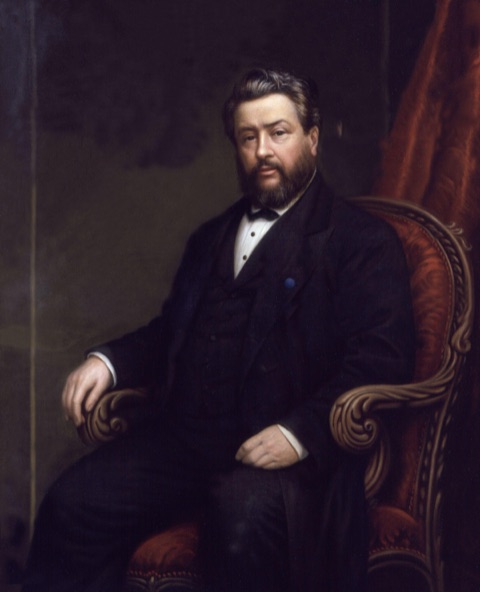
About the author
Charles Spurgeon
Charles Haddon Spurgeon (1834 to 1892 AD) was an English Baptist preacher, born at Kelvedon in Essex and raised partly in the home of his grandfather, an Independent minister at Stambourne. He was converted at Colchester in January 1850, became pastor at Waterbeach in 1851, and was called to New Park Street Chapel in Southwark in 1854. In 1856 he founded the Pastors' College to train men who were already preaching, and these lectures were given to its students. The Metropolitan Tabernacle opened in 1861, and he preached there for the rest of his life. He withdrew from the Baptist Union in the Downgrade Controversy of 1887 and died at Menton, France, in 1892.