Written in 1632 AD and published in 1652 AD as A Priest to the Temple, The Country Parson is George Herbert's portrait of a true pastor, set down, as he says, so that he might have a mark to aim at. In thirty-seven short chapters it follows the parson through his study, his prayers and his preaching, his household and his table, his visits to cottages and sickbeds, his catechizing, his charity and his judgments. Herbert's address to the reader and all thirty-seven chapters, in modern English.
The first 4 chapters are on this page, no sign-up. The full text and PDF/EPUB come with a free account, no card.
You’re on the list — we’ll email you if this goes to print.
Included with your free account
This book, and 300+ more, free to read
A free account opens the whole library to read online, on your phone or at your desk. Open a book on one device and it is waiting at the same page on the next. The PDF and EPUB of every book are yours to keep, and audiobooks play in the same app.
300+ modernized editionsNot samples. The whole work, free.
Your place, on every devicePhone, tablet or desktop, same page.
132 audiobooksOne at a time, or all of them with a supporter gift.
1632 AD · published 1652 AD, after Herbert's death
Original title
A Priest to the Temple, or The Country Parson
Source edition
London printing by T. Maxey for T. Garthwait, 1652
Type
Pastoral manual
Structure
Herbert's address to the reader and thirty-seven chapters
Length
About 22,000 words
"The Country Parson" (A Priest to the Temple) is George Herbert's portrait of a faithful parish pastor, written in 1632 AD and published in 1652 AD. In thirty-seven short chapters it describes how a minister should pray, preach, catechize, visit, give, judge and live, so that his whole life teaches his people.
“the person who aims at the moon shoots higher than the one who aims at a tree.”
From this edition
How the argument unfolds
01
The pastor's charter. "A pastor is Christ’s deputy, appointed to bring humanity back into obedience to God." Its dignity is that a priest may do what Christ did, by his authority; its duty is that he must do what Christ did, and in his manner.
02
Conduct, learning and prayer. The parson avoids greed and drink, keeps his word even at a loss, and draws his nourishment from Scripture, read with a holy life, prayer and comparison of passage with passage. He leads worship with reverence and requires it of every worshiper, gentry included.
03
Preaching. "The pulpit is his joy and his throne." He speaks to particular hearers, uses stories and recent judgments, and seeks holiness above wit or eloquence. He preaches for no more than an hour.
04
Household, table and charity. His house is a school of religion and a pattern for the parish. He invites every parishioner to his table within the year, gives to the poor in fresh and unexpected gifts rather than pensions, and has them say "God be praised, God be glorified" instead of thanking him.
05
Visiting, judging and healing. On weekdays he visits the parish, commends honest work, and always reproves idleness before he leaves. He settles quarrels with the help of the ablest neighbors and treats the sick with remedies from his own garden.
06
Catechism, sacraments and judgment. He catechizes by plain questions that lead the learner to the answer, administers the sacraments with reverence, defines covetousness and gluttony exactly, and teaches the parish to see God's hand in every harvest.
07
Comfort, custom and blessing. He answers atheism with arguments from nature, the law and grace, comforts the despairing with God's love, keeps good old customs such as the boundary walk, and blesses his people as a spiritual father.
Key themes
Life as the parson's sermon. "The country parson’s library is a holy life." Every temptation he has overcome becomes a sermon ready-written, and his household preaches as he does.
Nothing is little. Herbert's parson attends to particulars, from the cleanliness of the church to a borrowed spade, because "nothing is little in God’s service."
Order and authority. He uses the Church Catechism and the Prayer Book, honors his bishop, and has churchwardens report offenders however great: "Do what is good and right, and let the world sink."
George Herbert to the Reader
Through God’s mercy, I desire to please him, for whom I exist and live, and from whom come both my desires and my actions. I have considered that the way to please him is to feed my flock diligently and faithfully, since our Savior has made this the proof of a pastor’s love. I have therefore resolved to set down the form and character of a true pastor, so that I may have a mark to aim at. I will set it as high as I can, since the person who aims at the moon shoots higher than the one who aims at a tree.
I do not mean that a man immediately sins and displeases God if he fails to do everything described here. Rather, it is a worthy struggle to go as far as we can in pleasing him who has done so much for us. May the Lord make this intention fruitful for me and for others who may, instead of despising my poor efforts, add to the points I have observed, until the book grows into a complete guide to pastoral life.
1632. George Herbert.
Chapter 1: The Pastor’s Calling
A pastor is Christ’s deputy, appointed to bring humanity back into obedience to God. This definition is clear and contains the direct steps that establish pastoral duty and authority. First, humanity fell away from God through disobedience. Second, Christ is God’s glorious instrument for calling humanity back. Third, Christ was not to remain on earth, but was to be received into heaven after completing the work of reconciliation. He therefore appointed deputies in his place, and these are priests.
Accordingly, St. Paul declares this at the beginning of his letters. In Colossians 1, he plainly affirms that he fills up that which is behind of the afflictions of Christ in his flesh, for his Body’s sake, which is the Church. This contains the complete definition of a minister.
From this charter of the priesthood, both its dignity and its duty can be plainly gathered. Its dignity is that a priest may do what Christ did, by Christ’s authority and as his representative. Its duty is that a priest must do what Christ did, and in his manner, in both teaching and life.
Chapter 2: Different Pastoral Roles
Among pastors, some live in universities, some in noble households, and some in parishes, residing among the people entrusted to their care. I mean only those of my own nation, and even here I set aside the reverend prelates of the Church, whose office lies beyond the scope of this discussion.
Of those who live in universities, some hold offices there. Their rule is the apostle’s: “Having gifts differing, according to the grace that is given to us, whether prophecy, let us prophecy according to the proportion of faith; or ministry, let us wait on our ministering; or he that teacheth, on teaching,” etc.; “he that ruleth, let him do it with diligence,” etc. (Rom 12:6). Others are there to prepare for ministry. Their aim and labor must be to gain knowledge and also to subdue and put to death all sinful desires and passions. They must not think that reading the Church Fathers or the scholastic theologians makes a minister and finishes the work. The greatest and hardest preparation is within. For “Unto the ungodly, saith God, Why dost thou preach my Laws, and takest my Covenant in thy mouth?” (Ps 50:16).
Those who live in noble households are called chaplains. Their duty and obligation to the households in which they live are the same as a parson’s to his parish. In describing the one, which is indeed the purpose of my discussion, the other will become clear. Chaplains must not think themselves as free of these obligations as many of them do, or suppose that a different name means a different office.
Without question, they are the parsons of the families in which they live, and they are employed for that purpose under an express or implied agreement. Before ordination, they may be received as companions or conversation partners. But once a man is a minister, he cannot agree to enter a household where he will not exercise his ministry without abandoning his plow and looking back.
They must therefore avoid servility and excessive submission. They must maintain their standing with the lord and lady of the house and preserve the courage to speak freely with them and everyone else, even to the point of reproving them to their faces when occasion calls, though at a suitable time and with discretion. Those who fail in this remember their earthly lord while greatly forgetting their heavenly one. They wrong the priesthood and neglect their duty. Far from gaining what they seek through excessive submission and cringing, they will always be despised. Those who neglect a necessary warning or reproof in the hope of promotion sell their Lord and Master, as Judas did.
Chapter 3: The Parson’s Conduct
The country parson is exceptionally careful about his conduct. He is holy, just, prudent, temperate, courageous, and dignified in all his ways. The two highest qualities of life, in which a Christian is most clearly seen, are patience and the putting to death of sinful desires. Patience concerns afflictions; putting sinful desires to death concerns the passions and affections, stilling and deadening all the clamorous powers of the soul. He has therefore studied these thoroughly, so that he may be a complete master of himself for every purpose God has appointed him to fulfill.
In these matters he works hardest on the things most likely to bring scandal to his parish. First, country people live with hardship. They feel the cost of their own sweat and consequently know the value of money. They are deeply offended by anyone whose harsh treatment increases their toil. The country parson is therefore very careful to avoid all greed. He is neither eager to acquire worldly wealth, nor miserly in keeping it, nor troubled to lose it. In all his words and actions he treats it as something of little worth, even wondering that the world should value wealth so highly when it has not a drop of comfort for us in the day of wrath.
Second, because indulgence is a very visible sin, the parson takes great care to avoid every kind of it, especially drunkenness, since it is the most widespread vice. If he falls into it, he gives himself over to both shame and sin. By having fellowship with the unfruitful works of darkness, he deprives himself of the authority to reprove them. Sin makes all those it finds together equal, and those who ought to be best are then the worst. Nor should Christ’s servant frequent inns, taverns, or alehouses, to the dishonor of his person and office. The parson does not do this. He orders his life so that when death takes him, as the Jews and Judas took Christ, he may say as Christ did, “I sat daily with you teaching in the Temple.”
Third, country people, like all honest people, greatly value their word, since it is the lifeblood of buying, selling, and dealing in the world. The parson therefore keeps his word strictly, even at a loss to himself. He knows that if he does not, he will soon be found out and disregarded. People will not believe him in the pulpit if they cannot trust him in his dealings with them.
Abuses involving oaths and clothing are also very plain. The parson’s yes is yes, and his no is no. His clothes are plain but dignified and clean, without spots, dust, or odor. The purity of his mind shows itself and spreads even to his body, clothes, and home.
Questions
Who wrote "The Country Parson"?+
George Herbert (1593 to 1633 AD), the poet of The Temple, wrote it while he was rector of Bemerton near Salisbury. He signed his address to the reader in 1632.
What is A Priest to the Temple?+
It is the original title of the same book: A Priest to the Temple, or The Country Parson. It was first published in 1652 AD, nineteen years after Herbert's death.
What does the book cover?+
The pastor's conduct, learning, prayer and preaching; his Sunday, marriage, household, table and charity; visiting, comforting, catechizing and the sacraments; settling disputes and treating the sick; and his judgment on covetousness, gluttony, providence, idleness, customs, blessing and talk of others' faults.
Is it only for ministers?+
It is written about a minister, but Herbert's chapters on the household, work, charity, temperance and providence speak to any Christian, and many readers use it as a portrait of a holy life in ordinary places.
Is there a free PDF or full text in English?+
Yes. The complete text in modern English, Herbert's address to the reader and all thirty-seven chapters, is free on this page as a PDF and EPUB.
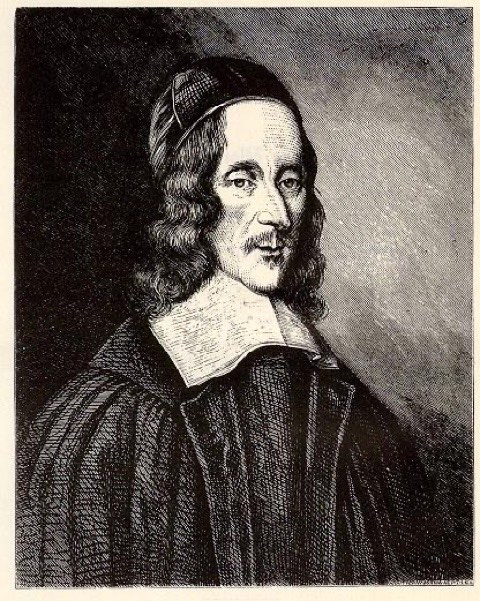
George Herbert (1593 to 1633 AD) was a Welsh-born poet and priest of the Church of England. Born at Montgomery into a noble family, he was educated at Westminster School and Trinity College, Cambridge, where he became a fellow and then Public Orator of the University, and he sat in Parliament for Montgomery in 1624. Turning from a career at court to the ministry, he became rector of Fugglestone with Bemerton near Salisbury in 1630 and was ordained priest that year. He died of consumption in 1633, not yet forty. His poems, The Temple, were published that same year by his friend Nicholas Ferrar, and The Country Parson followed in 1652.
“Updated Works has been an incredible blessing to my Christian life and ministry… remarkably faithful to the original authors while making these timeless treasures understandable for modern readers.”