Full text in modern English · Free PDF/EPUB
Holy Dying
Want the file? The PDF/EPUB is free with an account.
Summary
- Author
- Jeremy Taylor (1613 to 1667 AD), Anglican clergyman, later Bishop of Down and Connor
- Published
- 1651 AD · dedicated to Richard, Earl of Carbery
- Source edition
- Holy Living and Dying, Henry G. Bohn, London, 1850
- Type
- Devotional manual with rules, prayers and offices for the sick
- Length
- 103,000 words · 7 hours
What is Holy Dying about?
"Holy Dying" (The Rule and Exercises of Holy Dying, 1651 AD) is Jeremy Taylor's Anglican manual for facing death. It argues that dying well must be learned in health, because a deathbed is too late to start, then coaches the sick through pain, fear and repentance and shows ministers how to help them.
Read the full summary (8 points, key themes)Show less
How the argument unfolds
- 01
Dedication: war on late repentance. Taylor claims "the first complete body of directions for sick and dying people" in the Church of England, then turns on Rome: unction given to a man past understanding "must amount to nothing."
- 02
Chapter 1: the brief, wretched life. Death enters anywhere, even "by a hair or a raisin." Yet we shorten our own lives: subtract infancy, vice and busyness, and little counts as living. So shrink your plans and seize today.
- 03
Chapter 2: daily rehearsal. Treat your bed as a small grave. A nightly self-examination stops little sins on "their journey into a heap," and forgiving and giving lay up what the deathbed will need.
- 04
Chapter 3: what patience really is. Cries do not count against the sick; only despair, murmuring and peevishness do. His remedy for pain is arithmetic: "No one feels the sickness of a week, or of a whole day, all at once, but only the pain of an instant."
- 05
Chapter 3: the fear of death. Strip away the darkened room and the weepers, and death is "the same harmless thing that a poor shepherd underwent yesterday, or a maidservant today." Treat every illness as your last.
- 06
Chapter 4: the graces of the sick. Rules and prayers for patience, faith and repentance, then justice: reunite the family, reveal useful secrets of medicine, write a plain will. "A man who makes me sue for a legacy has done me no charity; he dies in my debt."
- 07
Chapter 5: the minister. "To dress a soul for its funeral is not a work to be finished at one meeting." He urges confession with twenty-four arguments, warns the careless, and steadies the despairing with twenty-seven considerations.
- 08
The close: mourning and burial. Weep, then stop. Loud grief burns out fastest. The real debt to the dead is to finish what they left undone and defend their names.
Key themes
- Death is learned in health. "a sickbed is only a school of severe exercise": it tests the graces a person already has.
- Mercy without easy assurance. Anyone who asks whether they are saved gets "words of pity and reproof," and an odd comfort: "The fearful man is the safest."
- God's tenderness toward the body. A sick person's cries are prayers in their own right: "there is the voice of the man, and there is the voice of the disease, and God hears both."
Reader questions (6)Hide the questions
Questions about Holy Dying
Can I read Holy Dying online for free?
Yes. The complete text of this modern English edition is on this page, with no sign-up or paywall.
Is there a free PDF of Holy Dying?
Yes. The PDF and EPUB of this edition are free with an Updated Works account. Sign in with Google or an email link; no card is needed.
How is Holy Dying related to Holy Living?
Taylor published The Rule and Exercises of Holy Living in 1650 AD as a guide to everyday Christian conduct, and this book a year later as its companion. He calls death "the great argument and the great instrument of holy living," so the second book supplies the motive for the first. The two have long been printed together.
Who was Holy Dying written for?
It began as a book for Frances, Countess of Carbery, who wanted to learn how to die. After her death Taylor dedicated it to her husband.
Did Jeremy Taylor believe in deathbed repentance?
Not as a way to begin. "God has made no deathbed covenant," he writes. A dying person can only finish a repentance already under way, though he leaves doubtful cases to the judgment of God.
Is it a sin to fear death?
No. "It is not a sin to be afraid, but it is a great happiness to be without fear." Taylor points to Christ's agony in the garden.
Holy Dying · Full text
Dedication
To the Right Honorable and Noblest Lord, Richard, Earl of Carbery
My Lord,
I am treating your Lordship as a Roman gentleman once treated St. Augustine and his mother: I shall entertain you in a charnel house, and carry your meditations for a while into the chambers of death. There you will find the rooms dressed with the arts of melancholy, fit to keep company with your most private thoughts, thoughts that begin with a sigh, proceed in deep consideration, and end in a holy resolution. The sight St. Augustine most noted in that house of sorrow was the body of Caesar, clothed with all the dishonors of corruption that you can imagine after six months in the grave. But I know that, without my pointing to it, your first thoughts will remember the change of a greater beauty. She is now being dressed for the brightest immortality, and from her bed of darkness she calls to you to dress your soul for that change which will mingle your bones with that beloved dust and carry your soul to the same choir, where you may both sit and sing forever.
My Lord, it is your dear Lady’s anniversary. She deserved the greatest honor, the longest memory, the fairest monument and the most solemn mourning; and to that end, my Lord, allow me to cover her hearse with these following sheets. This book was first intended to serve her piety, and she desired that all good people should share in the benefits recorded here. She knew how to live exceptionally well, and she desired to know how to die; and God taught her by experience. But her work is done, and God supplied her with provisions of his own before I could serve her and complete what she desired. So it is necessary for me to present to your Lordship those bundles of cypress which were meant to adorn her private chamber of prayer, but now come to adorn her hearse.
My Lord, both your Lordship and I have lately seen and felt such sorrows of death, and such sad departures of dearest friends, that it is more than high time we should think ourselves closely concerned in these events. Death has come so near to you as to take a portion from your very heart. Now you cannot help but dig your own grave and set your coffin before your eyes, since the angel has dressed your scene of sorrow and meditation with so particular and so near an object. Therefore, as it is my duty, I have come to serve your devout thoughts and to direct your sorrows, so that they may turn into virtues and benefits.
I know your Lordship to be so constant and regular in your devotions, so tender in matters of justice, so ready in expressions of charity, and so responsive to religion. I know you to be a person whose work of grace is well disposed, and must grow every day toward those degrees where, when you arrive, you will triumph over imperfection and choose nothing but what may please God. So I could not, by any shorter course, guide and assist your devout purposes as well as by that which is the great argument and the great instrument of holy living: the consideration and exercises of death.
My Lord, it is a great art to die well, and it must be learned by people in health, by those who can reason and reflect, by those whose understanding and acts of reason are not weakened by fear or pain. As the greatest part of death is passed in the preceding years of our life, so also in those years the greatest preparations for it are made. Whoever does not prepare for death before his last sickness is like someone who begins to study philosophy when he is about to dispute publicly before the faculty. All that a sick and dying man can do is to exercise the virtues he acquired before, and to perfect the repentance that was begun earlier.
Of this, my Lord, my book, I think, is good evidence. It is so not only because it shows the vanity of a late, sickbed repentance, but because it contains so many precepts and meditations, so many propositions and various duties, such forms of exercise, and the degrees and difficulties of so many graces (all of them necessary preparations for a holy death) that merely learning these duties requires study and skill, time and understanding in the ways of godliness. It would be very foolish to say that so much is necessary, and not to suppose more time to learn these things, more skill to practice them, more opportunities to desire them, and more abilities of both body and mind than can be supposed in a sick, bewildered, fearful and weak person. Such a person’s natural acts are disabled, his senses are weak, and his powers of discernment are lessened; his principles have become intricate and entangled; a cloud sits upon his eyes, his heart is broken with sickness, and his liver is pierced through with sorrows and the strokes of death. Therefore, my Lord, the very necessity of things requires that the precepts of dying well be part of the studies of those who live in health, in the days of reasoning and understanding.
In this case that study has a further degree of necessity added to it. In other kinds of knowledge, an imperfect study may be made good by frequent exercise and renewed experience. Here, if we practice imperfectly once, we shall never recover the error, for we die only once. It will therefore be necessary that our skill be more exact, since it cannot be mended by trial; the actions must be left forever imperfect, unless the habit has been formed beforehand by study and contemplation.
And indeed, I would be foolish if I intended this book to be read and studied by dying persons, and they would be more foolish still who needed to be instructed in those graces which they are then to exercise and to finish. For a sickbed is only a school of severe exercise, in which a man’s spirit is tested and his graces are rehearsed. The aids I have given in the following pages to the virtues proper to the state of sickness suppose a man in the state of grace: they confirm a good man, or support the weak, or add degrees, or give comfort, or prevent an evil, or cure the small harms that befall tempted persons in their weakness. That is the sum of the present design as it relates to dying persons.
Therefore I have not included any advice proper to old age, except what is common to it and to the state of sickness; for I take very old age to be a longer sickness. It is labor and sorrow when it goes beyond the common span of nature. But if it is on this side of that span, and healthy, then to the degree that it is healthy I count it in the reckoning of life, and so it can have no separate consideration. Yet I do not think it a position of advantage from which to begin changing an evil life. It is a middle state between life and the deathbed. Although it has more hope than the deathbed and less than life, still, as it shares in either state, so it is to be governed by the advice of that state and judged by its verdicts.
Only this: I wish that all old persons would seriously consider that their advantages in that state are very few, but their disadvantages are not few. Their bodies are without strength; their prejudices are long and mighty; their vices, if they have lived wickedly, are habitual; the occasions for the virtues are not many; and the possibility of some virtues, in the matter of which they stand very guilty, is past and will never return (such are chastity and many parts of self-denial). They have some temptations proper to their age, such as peevishness and pride, covetousness and talkativeness, willfulness and unwillingness to learn. As Horace says of such men, they either count nothing right except what has pleased themselves, or think it shameful to yield to younger men, and in old age to confess that what they learned as beardless boys should be thrown away. They think their age protects them from learning anything new or repenting of the old; and they do not leave their vices, but change them. As Mamertus says, in old age they become boys again, still held by the tender persuasions of their infancy.
After all this, either the day of their repentance is past, as we see is true in very many, or it is expiring and drawing toward sunset, as it is in all. Therefore, although recovery is entirely possible for them, we may also remember that in matters of virtue and repentance, possibility is a long way from performance. How few repent of whom it is merely possible that they may! And many more things are required to turn their possibility into act: great grace, a diligent ministry, an effective calling, mighty help, excellent counsel, great industry, watchful diligence, a well-disposed mind, passionate desires, deep awareness of danger, quick perception of duty, and time, and God’s good blessing, and an effectual impression, and the reinforcing of all this, so that to will and to do may be worked by him to great purposes and with great speed.
Therefore it will not be amiss, indeed it is hugely necessary, that these persons who have lost their time and their blessed opportunities should have the diligence of youth and the zeal of new converts. They should take account of every hour left to them, pray continually, take prudent advice, and study the interest of their souls carefully, with diligence and with fear. Then their old age, which in effect is nothing but a continual deathbed dressed with somewhat more order and advantages, may be a state of hope, and labor, and acceptance, through the infinite mercies of God in Jesus Christ.
But concerning sinners actually under the arrest of death, God has made no deathbed covenant; Scripture has recorded no promises and given no instructions. Therefore I had none to give, except the same that are to be given to all people who are alive, because they are alive, and because it is uncertain when they will be otherwise. But then I must also add this advice: those Christians who can be sorted by the marks of an assured holiness or an open villainy are the smallest number. Between these there are many degrees of latitude, and most are of the middle sort. Concerning these we are bound to make the judgments of charity, and possibly God may do so too. In any case, all of them are people to whom the rules of holy dying are useful and applicable, and therefore no separation is to be made in this world. Where the case is not evident, people are to be left to the unerring judgment of God; where it is evident, we can rejoice or mourn for those who die.
In the Church of Rome they reckon otherwise than I have done concerning sick and dying Christians. For they profess that a man may very certainly be changed from death to life, from sin to grace, even though the work does not begin before his last hour. Half of this they do on his deathbed, and the other half when he is in his grave. They take away the eternal punishment in an instant, by a scholastic distinction or by the hand of the priest; and the temporal punishment is to cling to him longer, even when the man is no longer measured by time and has nothing to do with anything of or under the sun. But that too they claim to take away when the man is dead; and, God knows, for all this the poor man pays both penalties in hell.
The distinction between temporal and eternal is a just measure of pain when it refers to this life and another. But to dream of a temporal punishment when all his time is done, and to think of repentance when the time of grace is past, are great errors: the one in philosophy, and both in divinity. They are a huge folly in what they claim and an infinite danger if they are believed, since they certainly destroy the necessity of holy living when people dare to trust them and live by such doctrines. The secret of these doctrines is soon discovered. By such means, though a holy life is not necessary, a priest is; as if God appointed the priest not to minister to holy living but to excuse it. So they make the holy calling live not only upon the sins of the people but upon their ruin, and make the advantages of its office spring from their eternal dangers. It is an evil craft to serve a temporal end upon the death of souls. That is an interest not to be handled except with nobleness and candor, fear and caution, diligence and prudence, with great skill and great honesty, with reverence, and trembling, and severity. A soul is worth all that, and our need requires all that; and therefore those doctrines that ask less than all this are not friendly, because they are not safe.
I know no other great difference in the visiting and care of sick persons than what depends on the article of late repentance; for all churches agree in the same essential propositions, and assist the sick by the same inward ministries. As for outward ministries, I mean unction as used in the Church of Rome: since it is used when the man is more than half dead and can exercise no act of understanding, it must amount to nothing. For no rational man can think that any ceremony can make a spiritual change without a spiritual act of the one who is to be changed; nor can it work by way of nature or by charm, but only morally, after the manner of reasonable creatures. Therefore I do not think that ministry at all fit to be counted among the advantages of sick persons.
The fathers of the Council of Trent first disputed, and at last, after their manner, agreed, that extreme unction was instituted by Christ. But afterward one of their theologians warned them that the apostles had administered unction to the sick before they were priests (since by their doctrine the priestly order was conferred at the institution of the Last Supper). For fear that it should be thought this unction might be administered by someone who was not a priest, they struck out the word instituted and put insinuated in its place: this sacrament was insinuated, and was published by St. James. So it stands in their doctrine; and yet in their anathemas they curse all who deny it to have been instituted by Christ. I shall lay no more objection against it, or against the weak arts of those who maintain it, but add only this. There are only two places of Scripture claimed for this ceremony, and some leading men of their own side have declared both of them invalid as to its institution. For Suarez says that the unction used by the apostles in Mark 6:13 is not the same as what is used in the Church of Rome; and Cajetan affirms that it cannot be plainly gathered from the Epistle of St. James, and that it belonged to the miraculous gift of healing, not to a sacrament.
The sick man’s exercise of grace acquired earlier, his perfecting of the repentance begun in the days of health, the prayers and counsels of the holy man who ministers to him, the giving of the holy sacrament, the ministry and help of angels, the mercies of God, peace of conscience and the peace of the church: these are all the aids and preparations that can help to trim his lamp. But suppose a man goes to buy oil when the bridegroom comes, and his lamp has not first been furnished and then trimmed, the one in this life and the other on his deathbed. Then his station will be outside the door, and his portion with unbelievers. The unction of the dying man will no more strengthen his soul than it cures his body; and the prayers for him after his death will have the same force as if they prayed that he would return to life the next day and live as long as Lazarus did after his return.
But I consider that it is not right for people to claim that anything will do a man good when he dies, while the same ministries, and ten times more aids, are found ineffectual for forty or fifty years together. Can extreme unction at the last cure what the holy sacrament of the Eucharist could not do in all his lifetime? Can prayers for a dead man do him more good than they did when he was alive? All his days the man may have belonged to death and the dominion of sin, and could not be recovered from it by sermons and counsels and constant precepts and frequent sacraments, by confessions and absolutions, by prayers and intercessions, by outward ministries and inward acts. If so, it is only too certain that his lamp cannot be furnished then. His extreme unction is of use at that time only when it is made with the oil that burned in his lamp through all the days of his expectation and waiting for the coming of the Bridegroom.
Nor can any remedy be supplied in this case by their practice of praying for the dead, though for this they claim the fairest precedents of the church and of the whole world. The heathens, they say, did it, and the Jews did it, and the Christians did it; some were baptized for the dead in the days of the apostles, and very many received communion on behalf of the dead for many ages afterward. It is true that they were and did so. The heathens prayed for an easy grave and a perpetual spring, that saffron would rise from their beds of grass; in Juvenal’s words, “Gods, grant the shades of our ancestors a light earth without weight, fragrant saffron, and an everlasting spring in the urn.” The Jews prayed that the souls of their dead might be in the garden of Eden, that they might have their part in Paradise and in the world to come, and that they might hear the peace of the fathers of their generation sleeping in Hebron. And the Christians prayed for a joyful resurrection, for mercy on the day of judgment, for the hastening of the coming of Christ and of the kingdom of God. They named all sorts of persons in their prayers: all, I mean, except wicked persons, all except those who lived evil lives. They named apostles, saints and martyrs.
All this is so irrelevant to their purpose, or so much against it, that the prayers for the dead used in the Church of Rome are most plainly condemned. They go against the doctrines and practices of all the world, being in other forms, for other purposes, and resting on distinct doctrines, until new opinions began to arise, about St. Augustine’s time, and changed the face of the teaching. Concerning prayer for the dead, the church has received no commandment from the Lord. So concerning it we can have no rules or proportions except from those imperfect revelations of the state of departed souls, and from the measures of charity, which can relate only to the imperfection of their present condition and the terrors of the day of judgment. But to think that any remedy for an evil life can be gained from such devotions after sinners are dead may encourage a presumptuous man to sin, but cannot relieve him once he has.
But of all things in the world, I think, people should be most careful not to abuse dying people. This is not only because their condition is pitiable, but because the abuse will soon be discovered, and in the secret region of souls there will be an evil report about those who deceived them. If we believe we shall go to that place where such reports are made, we may fear the shame and confusion of being counted impostors in the presence of angels and of all the wise and holy people of the world. To err and yet be innocent is hugely pitiable, and incident to mortality; that we cannot help. But to deceive or destroy so great an interest as that of a soul, or to lessen its advantages by giving it trifling and false confidences, is injurious and intolerable.
It would therefore be very good if all the churches of the world would be extremely careful about their offices and ministries for visiting the sick: that the ministers they send be holy and prudent; that their instruction be strict and safe; that their verdicts be merciful and reasonable; that their services be sufficient and devout; that their attendance be frequent and long; that their appointments be special and particular; that the doctrines on which they ground their services be true, weighty and holy; that their ceremonies be few and their advice wary; that their separation be full of caution, their judgments not remiss, and their remissions not loose and dissolute; and that the whole ministration be carried out by persons of experience and charity. For it is a sad thing to see our dead go out of our hands. They live carelessly and die without regard; and the last scene of their life, which should be dressed with every spiritual advantage, is abused by flattery and easy propositions, and let go with carelessness and folly.
My Lord, I have tried to cure some part of this evil as well as I could, being willing to relieve the needs of needy people in such ways as I can. I have therefore described the duties which every sick man may do alone, and those in which he can be assisted by the minister. And I am the more confident that these efforts of mine will be well received, because they are the first complete body of directions for sick and dying people that I remember to have been published in the Church of England. In the Church of Rome there have been many; but they are dressed with doctrines that are sometimes useless and sometimes hurtful. The whole design of help they commonly offer is at best imperfect, and their presentation is too careless and loose for so serious an employment. So in this matter I was almost forced to walk alone; except that I drew the rules and advice from the fountains of Scripture and the purest channels of the primitive church, and was helped by some experience in the cure of souls.
I shall measure the success of my labors not by popular noise or the verdicts of curious persons, but by the benefit good people may receive. My work here is not to please the speculative part of mankind, but to serve practice: to preach to the weary, to comfort the sick, to assist the penitent, to reprove the overconfident, to strengthen weak hands and feeble knees. I have scarcely any other means left me of giving alms, or of exercising that charity by which we shall be judged on doomsday. It is enough for me to be an under-builder in the house of God, and I glory in the employment. I labor in the foundations; and therefore the work needs no apology for being plain, so long as it is strong and well laid.
But, my Lord, humble as it is, I must thank God for the desire and the strength; and next to him, I must thank you for the opportunity and the little portion of leisure I had to do it in. For I must acknowledge it publicly (and besides my prayers, it is all the recompense I can make you): my quiet I owe to your influence, much of my support to your generosity, and many other side comforts I draw from your favor and nobleness. To adapt Martial’s lines:
You give us leisure such as, long ago,
Maecenas gave his Horace and his Virgil.
My Lord, because I greatly honor you, and because I would do honor to myself, I have written your name at the entrance of my book. I am sure you will receive it kindly, because its design related to your dear Lady, and because it may serve your spirit in the day of visitation, when God shall call you to receive your reward for your charity and your noble piety. By these you have not only endeared yourself to very many persons, but in great degrees have obliged me to be,
My noblest Lord,
Your Lordship’s most thankful and most humble servant,
Jeremy Taylor
Chapter 1
Preparing for Death by Consideration
The Vanity and Shortness of Human Life
A man is a bubble, says the Greek proverb, and Lucian develops the image to good effect, with all its proper circumstances. All the world, he says, is a storm, and men rise up in their several generations like bubbles falling from the rainy sky: from God and the dew of heaven, from a tear and drop of man, from nature and Providence. Some of these instantly sink back into the flood of their first parent and are hidden in a sheet of water, having had no other business in the world than to be born so that they might be able to die. Others float up and down two or three turns, then suddenly disappear and give their place to others. And those that live longest on the face of the waters are in perpetual motion, restless and uneasy; and, crushed by the great drop of a cloud, they sink into flatness and froth. The change is not great, since it is hardly possible for the bubble to be more of a nothing than it was before.
So it is with every man. He is born in vanity and sin. He comes into the world like morning mushrooms, which soon thrust their heads up into the air and keep company with their kindred of the same crop, and as soon turn into dust and forgetfulness. Some of them have no other share in the affairs of the world than this: that they made their parents a little glad and very sorrowful. Others ride longer in the storm, perhaps until seven years of vanity have run out; and then perhaps the sun shines hot on their heads, and they fall into the shades below, into the cover of death and the darkness of the grave, to hide them. But if the bubble withstands the shock of a bigger drop, and outlives the hazards of childhood, of a careless nurse, of drowning in a pail of water, of being smothered by a sleepy servant, or other such little accidents, then the young man dances like a bubble, empty and gay. He shines like a dove’s neck or the image of a rainbow, which has no substance, and whose very imagery and colors are fantastical. So he dances out the gaiety of his youth, and all the while he is in a storm. He endures only because he has not been knocked on the head by a drop of bigger rain, or crushed by the pressure of a load of undigested food, or quenched by the disorder of a misplaced humor. To preserve a man alive in the midst of so many chances and hostilities is as great a miracle as to create him. To keep him from rushing into nothing, and to draw him up from nothing in the first place, are equally the work of an almighty power.
This is why the wise men of the world have vied with one another to find the words that best fit man’s condition, words that signify his vanity and his short stay. Homer calls a man “a leaf,” the smallest, the weakest piece of a short-lived, unsteady plant. Pindar calls him “the dream of a shadow”; another calls him “the dream of the shadow of smoke.” But St. James spoke by a more excellent Spirit when he said, “Our life is but a vapor” (Jas 4:14): that is, a vapor drawn up from the earth by a heavenly influence, made of smoke or the lighter parts of water, tossed by every wind, moved by the motion of a higher body, with no power in itself, lifted up on high or left below as it pleases the sun, its foster father. But it is lighter yet. It is only “appearing”: a fantastic vapor, an apparition, nothing real. It is not so much as a mist, not the stuff of a shower, not substantial enough to make a cloud. It is like Cassiopeia’s Chair, or Pelops’ shoulder, or the circles of the heavens, which are mere appearances; and you cannot find a word that signifies a more complete nothing. And yet the expression is made smaller by one degree more: a vapor, and fantastical, or a mere appearance, and even this only for a little while. The very dream, the phantom, disappears in a short time, “like the shadow that departed; or, like a tale that is told; or as a dream when one awaketh.” A man is so vain, so unsettled, so perishing a creature that he cannot last long even on the stage of the imagination; he passes off and is forgotten, like the dream of a man out of his mind. The sum of it all is this: you are a man, and there is no greater instance in the world than you of heights and falls, of lights and shadows, of misery and folly, of laughter and tears, of groans and death.
And because this consideration is so useful, and so necessary for many purposes of wisdom and of the spirit, all the succession of time, all the changes in nature, all the varieties of light and darkness, the thousand thousands of events in the world, and every contingency that befalls every man and every creature preach our funeral sermon. They call us to look and see how the old sexton, Time, throws up the earth and digs a grave, where we must lay our sins or our sorrows, and sow our bodies until they rise again in a fair or an intolerable eternity. Every circuit the sun makes around the world divides between life and death, and by the next morning death possesses both portions. We are dead to all the months we have already lived, and we shall never live them over again. And all along, God marks off little periods in our lifetime. As Seneca says, “No one ought to promise himself anything about the future. Even what we hold slips out through our hands, and chance cuts into the very hour we are grasping. Time rolls on by a fixed law, indeed, but in the dark.”
First we change our world, when we come from the womb to feel the warmth of the sun. Then we sleep and enter into the image of death, a state in which we are untouched by all the changes of the world. If our mothers or our nurses die, or a wild boar destroys our vineyards, or our king is sick, we take no notice; while that state lasts we are as unconcerned as if our eyes were closed with the clay that weeps in the bowels of the earth. At the end of seven years our teeth fall out and die before us, a formal prologue to the tragedy; and from then on, every seven years, the odds are that we shall finish the last scene. And when nature, or chance, or vice takes our body apart, weakening some parts and loosening others, we taste the grave and the ceremonies of our own funeral: first in the parts that served our vices, next in those that served for ornament; and in a short time even those that served our necessities become useless and tangled, like the wheels of a broken clock. Baldness is only a dressing for our funeral, the proper ornament of mourning and of a person who has entered very far into the regions and possession of death. As the verse puts it, “So that you may believe death is coming all the sooner, know that part of your head has perished already.” And we have many more signs with the same meaning: gray hairs, rotten teeth, dim eyes, trembling joints, short breath, stiff limbs, wrinkled skin, short memory, failing appetite.
Every day’s need calls for the repair of that portion which death fed on all night, when we lay in his lap and slept in his outer rooms. The very spirits of a man prey on the daily portion of bread and meat, and every meal is a rescue from one death and lays up provision for another. While we think a thought, we die; the clock strikes and keeps its reckoning of our portion of eternity. We form our words with the breath of our nostrils, and we have that much less to live on for every word we speak.
So nature calls us to meditate on death by the very things that are the instruments of bringing it about. And God, by all the variety of his providence, makes us see death everywhere, in every variety of circumstance, dressed up to suit every fancy and the expectation of every single person. Nature has given us one harvest every year, but death has two: the spring and the autumn send throngs of men and women to the charnel houses. All summer long men are recovering from the illnesses of the spring, until the dog days come, and then the Dog Star makes the summer deadly. The fruits of autumn are laid up as provision for the whole year, and the man who gathers them eats and surfeits, and dies and does not need them, and is himself laid up for eternity. And he who escapes until winter only waits for another opportunity, which the illnesses of that season supply to him in great variety. Thus death reigns in every portion of our time. The autumn with its fruits provides disorders for us, and the winter’s cold turns them into sharp diseases; the spring brings flowers to strew on our hearse, and the summer gives green turf and brambles to bind upon our graves. Burning fevers and surfeit, colds and agues are the four quarters of the year, and all of them serve death. You can go nowhere without treading on a dead man’s bones.
The wild fellow in Petronius who escaped the fury of a shipwreck on a broken plank was sunning himself on the rocky shore when he caught sight of a man rolled along on his floating bed of waves, ballasted with sand in the folds of his garment, and carried by his civil enemy, the sea, toward the shore to find a grave. The sight cast him into sad thoughts, of the kind Seneca describes: “We propose to ourselves long voyages and, after wandering over foreign shores, a late return to our homeland; military service, and the slow-handed rewards of the labors of the camp; governorships, and promotion from office to office; and all the while death is at our side. Because we never think of it except as someone else’s, examples of mortality are thrust upon us again and again, and they stay with us no longer than we wonder at them.” Perhaps, he thought, this man’s wife, somewhere on the mainland, safe and warm, expects her good man home next month; or perhaps his son knows nothing of the storm; or his father is thinking of that affectionate kiss which has stayed warm on the good old man’s cheek ever since his son took a kind farewell, and he weeps for joy to think how blessed he will be when his beloved boy returns into the circle of his father’s arms. These are the thoughts of mortals, and this is the end and sum of all their plans. A dark night and a poor guide, a boisterous sea and a broken cable, a hard rock and a rough wind have dashed to pieces the fortune of a whole family; and those who will weep loudest over the accident have not yet entered the storm, and yet they have suffered shipwreck. Then, looking at the body, he recognized it and found it was the master of the ship, who only the day before had reckoned up the accounts of his estate and his trade and named the day when he expected to be home. See how the man floats who was so angry two days ago! His passions are becalmed with the storm, his accounts are closed, his cares are at an end, his voyage is done. And his gains are the strange outcomes of death; but whether these are good or evil, the living seldom trouble themselves about the concerns of the dead.
But seas are not the only things that break our vessel to pieces; we may be shipwrecked anywhere. A valiant general, just when he is about to reap the harvest of his crowns and triumphs, fights unsuccessfully, or falls into a fever from joy and wine, and exchanges his laurel for cypress and his triumphal chariot for a hearse, dying the night before he was appointed to perish in the drunkenness of his festive joys. It was a sad check to the looseness and wilder feasts of the French court when their king, Henry II, was really killed by the playful imitation of a fight. And many brides have died under the hands of their attendants and maidens, who were dressing them for an uneasy joy, the new and unseen chains of marriage. As Ben Sira, the wise Jew, says, “The bride went into her chamber, and knew not what should befall her there.” Some have been paying their vows and giving thanks for a prosperous return to their own house, and the roof has come down on their heads and turned their loud worship into the deeper silence of a grave. And how many expectant mothers have rejoiced over their swelling wombs and delighted in becoming channels of blessing to a family, and then the midwife has quickly bound their heads and feet and carried them out to burial! Or else the birthday of an heir has seen the coffin of the father brought into the house, and the divided mother has been forced to labor twice, with a painful birth and a sadder death. For, as Prudentius sings in his hymn for the burial of the dead, “the same law awaits us all: to give our groan under one common lot, and in another’s death to mourn funerals akin to our own.”
There is no state, no event, no circumstance of our life that has not been soured by some sad instance of a dying friend. A friendly meeting often ends in some sad mishap and makes an eternal parting. When the poet Aeschylus was sitting under the walls of his house, an eagle hovering over his bald head mistook it for a stone and let its oyster fall, hoping to break the shell there; but it pierced the poor man’s skull.
Death meets us everywhere. It is brought about by every means and in every chance, and it enters by many doors: by violence and by secret influence, by the aspect of a star and the stink of a mist, by the emissions of a cloud and the meeting of a vapor, by the fall of a chariot and stumbling on a stone, by a full meal or an empty stomach, by sitting up late over wine or keeping vigil at prayers, by the sun or the moon, by heat or cold, by sleepless nights or sleeping days, by water frozen into the hardness and sharpness of a dagger (so that Martial asks, “Or where is death not, if you, waters, cut throats?”), or water thawed into the floods of a river, by a hair or a raisin, by violent motion or sitting still, by strictness or dissoluteness, by God’s mercy or God’s anger; by everything in providence and everything in conduct, by everything in nature and everything in chance. As Silius Italicus writes, “Time runs on for mortals, and no one is granted to be born twice; the hour flies, and the torrent of Tartarus sweeps us away, and will not let us carry with us beneath the shades whatever pleased the mind.” We take pains to heap up things useful to our life, and we get our death in the bargain; the person is snatched away, and the goods remain. All this is the law and constitution of nature. It is a punishment for our sins, the unalterable outcome of Providence and the decree of Heaven. The chains that confine us to this condition are as strong as destiny and as unchangeable as the eternal laws of God.
I have known some men who rejoiced in the death or calamity of others and counted it a judgment on them for being on the other side, against them in the conflict. But within the space of a few months one of these same men met with a more painful and unseemly death. When I saw it, I wept and was afraid, for I knew that it must be so with all men. For we also die, and we end our quarrels and contentions by passing to a final sentence; as Achilles says in Homer, “Die! As for my own death, I will accept it whenever Zeus wills to bring it to pass.”
Putting the Consideration into Practice
It will serve our best and noblest purposes very well if we picture this scene of change and sorrow a little more fully, dressed in its circumstances; for then we shall be readier to practice those rules whose teaching follows from this consideration. The death of every person makes a mighty change, and it is visible to us who are alive. Count only from the liveliness of youth, and the fair cheeks and full eyes of childhood, from the vigor and strong bending of the joints at twenty-five, to the hollowness and deathly pallor, to the loathsomeness and horror, of a body three days buried, and we shall see that the distance is very great and very strange. So have I seen a rose newly springing from the clefts of its hood. At first it was as fair as the morning, and as full of the dew of heaven as a lamb’s fleece. But when a rougher wind had forced open its virgin modesty, and stripped away its too youthful and unripe seclusion, it began to put on darkness, and to droop into softness and the symptoms of a sickly age. It bowed its head and broke its stalk; and at night, having lost some of its petals and all its beauty, it fell to the lot of weeds and worn-out faces. The same is the lot of every man and every woman: the inheritance of worms and serpents, rottenness and cold dishonor, and our beauty so changed that our acquaintances soon no longer know us. And that change is mingled with so much horror, or else so meets our fears and weak imaginings, that those who six hours earlier waited on us, whether with charitable or ambitious services, cannot without some distress stay alone in the room where the body lies stripped of its life and honor.
I have read of a handsome young German gentleman who, while he lived, often refused to have his portrait painted. He put off his friends’ insistent requests by agreeing that, after he had been buried a few days, they might send a painter to his vault and, if they saw cause, draw the image of his death to the life. They did so, and found his face half eaten, and his midriff and backbone full of serpents; and so he stands pictured among his armored ancestors. So does the fairest beauty change. As Seneca writes, “Beauty is a doubtful good for mortals, the brief gift of a little time; like the bloom that glows on tender cheeks, it is snatched away in a moment, and there is no day that does not carry off some spoil from a lovely body.” It will be just as bad for you and me. And then what servants shall we have to wait on us in the grave? What friends to visit us? What attentive people to wipe away the damp and unwholesome mist cast back upon our faces from the sides of the weeping vaults, which are the longest mourners at our funeral?
This discourse will be useful if we consider and practice it by the following rules and considerations respectively.
1. All the rich and all the covetous people in the world will see, and all the world will see for them, that it is a poor reward for all their cares that, by this time, all that will be left is this: the neighbors will say, “He died a rich man.” As Martial says, “Grab, heap up, carry off, possess: it must all be left behind.” And yet his wealth will not profit him in the grave, but will hugely swell the sad accounts of doomsday. And the man who kills the Lord’s people in unjust or ambitious wars, for an interest that brings no reward, will have this said of him, as Seneca describes such a man: that he threw away all the days of his life so that one year might be reckoned by his name, and dated by his reign or his consulship. Many men, through great labors and affronts, through many indignities and crimes, toil only for a pompous epitaph and a loud title on their marble. Meanwhile the dead, whose possessions their heirs or kindred have entered into, are forgotten, and lie as unregarded as their ashes, with no more concern or connection than the turf upon the face of their grave. As Gerson says, “Others already possess their benefices, and I do not know whether they give them a thought.”
A man may read a sermon, the best and most moving that anyone ever preached, if he will only enter the tombs of kings. As Casimir writes:
Memphis, crowded with its ancient pyramids, teaches me;
the tear of glory pressed beneath the tomb teaches me;
the tombs of the Romans who lie fallen,
strewn everywhere among the nations, teach me;
and ashes tossed about, the cheap sport of the west wind,
and the pyres of nobles,
and the smoking corpses
of kingdoms, in hushed silence, Rufus,
warn me, saddened, of many things.
In the same Escorial where the Spanish princes live in greatness and power, and decree war or peace, they have wisely placed a burial vault, where their ashes and their glory shall sleep until time shall be no more. And where our kings have been crowned, their ancestors lie buried, and they must walk over their grandfather’s head to take his crown. There is an acre sown with royal seed, the pattern of the greatest change: from rich to naked, from paneled ceilings to arched coffins, from living like gods to dying like men. There is enough there to cool the flames of lust, to bring down the heights of pride, to soothe the itch of covetous desires, to smear and blot out the deceitful colors of a lustful, artificial and imaginary beauty. There the warlike and the peaceful, the fortunate and the miserable, the beloved and the despised princes mingle their dust, and pay down their share of mortality, and tell all the world that when we die our ashes shall be equal to kings’, and our accounts easier, and our pains or our crowns shall be less.
To my mind, it is a sad record that Athenaeus has left concerning Ninus, the great Assyrian monarch, whose life and death are summed up in these words: “Ninus, the Assyrian, had an ocean of gold, and other riches, more than the sand in the Caspian Sea; he never saw the stars, and perhaps he never desired it; he never stirred up the holy fire among the Magi, nor touched his god with the sacred rod according to the laws; he never offered sacrifice, nor worshiped the deity, nor administered justice, nor spoke to his people, nor numbered them; but he was most valiant to eat and drink, and having mingled his wines, he threw the rest upon the stones. This man is dead; behold his sepulcher; and now hear where Ninus is. Once I was Ninus, and drew the breath of a living man; but now am nothing but clay. I have nothing but what I ate, and what I served to myself in lust; that was and is all my portion. The wealth with which I was esteemed blessed, my enemies, meeting together, shall bear away, as the mad Thyades carry a raw goat. I have gone to hell; and when I went there I carried neither gold, nor horse, nor silver chariot. I that wore a miter am now a little heap of dust.” I know of nothing that can better represent the evil condition of a wicked man, or a greatness that changes. As Menander says, “There is no immortality to be had, not even if you gather together those famous talents of Tantalus that men speak of; but when you die, you will leave these things to others.” His nature carries him from the greatest worldly dignity down to dust and ashes; and from there his sins carry him to hell, and there he shall be forever under the dominion of chains and devils, wrath and an unbearable calamity. This is the reward of an unsanctified condition, and of a greatness ill gotten or ill administered.
2. Let no one stretch out his thoughts, or let his hopes wander, toward future and far-distant events and chance contingencies. This day is mine and yours, but you do not know what will happen tomorrow. As Anacreon says, “Today is my concern; who knows tomorrow?” Every morning creeps out of a dark cloud, leaving behind it an ignorance and silence as deep as midnight, and as hidden from us as the fancies that make a newborn infant smile. So we cannot see what comes hereafter, unless we had a light from heaven brighter than the vision of an angel, even the spirit of prophecy. As Horace advises, “Do not ask what tomorrow will bring, and whatever days chance shall give you, count them as gain.” Without revelation we cannot tell whether we shall eat tomorrow, or whether a swelling in the throat will choke us. And it is written in the unrevealed folds of divine predestination that many who are alive this day shall tomorrow be laid upon the cold earth, and the women shall weep over their shroud and dress them for their funeral.
St. James, in his Epistle, notes the folly of some men of his own time who were so impatient to know the outcome of tomorrow, or the events of next year, or the good or evil of old age, that they would consult astrologers and witches, oracles and devils: what would befall them on the first of next month, what the outcome of such a voyage would be, what God had written in his book concerning the success of battles, the election of emperors, the heirs of families, the price of merchandise, the return of the Tyrian fleet, the price of Sidonian carpets. As they were taught by the crafty and lying demons, so they would expect the outcome. Often, by arranging their affairs in readiness for such events, they really did bring about some small occurrences matching their expectation; and that made them trust the oracles in greater things, and in everything.
Against this St. James sets his counsel, that we should not search after forbidden records, much less by uncertain signs. So Horace says, “…and do not try the Babylonian reckonings; how much better it is to bear whatever shall be, whether Jupiter has granted us more winters or this one as our last.” Propertius says, “In vain, mortals, you seek the uncertain hour of death, and the road by which death will come.” And Catullus says, “It is a lesser punishment to suffer a certain ruin all at once; what you fear is heavier to endure for long.” For whatever is disposed to happen by the order of natural causes or civil counsels may be canceled by a particular decree of Providence, or prevented by the death of the persons concerned. While their hopes are full, and their causes joined together, and the work brought forward, and the sickle put into the harvest, and the first fruits offered and ready to be eaten, even then, if they reach out their hand to an event that stands only at the door, at that very door their body may be carried out to burial before their expectation ever enters into fruition. When Richilda, the widow of Albert, Earl of Ebersberg, had feasted the Emperor Henry III, and petitioned on behalf of her nephew Welpho for some lands formerly held by the earl her husband, just as the emperor held out his hand to signal his consent, the chamber floor suddenly gave way beneath them. Richilda fell against the edge of a bathing vessel and was bruised to death. She did not stay to see her nephew sleep in those lands which the emperor was reaching out to her, and had placed at the very door of restitution.
3. As our hopes must be confined, so must our designs. Let us not plan long schemes, crafty plots, and diggings so deep that the intrigues of a design will never be unfolded until our grandchildren have forgotten our virtues or our vices. As Plautus says, “We lose what is certain while we chase what is uncertain; and so it happens, amid our toil and our sorrow, that death creeps up on us in the meantime.” The work of our soul is brief, easy, sweet and plain, and fitted to the small portions of our shorter life. And as we must not burden our inquiry, so neither must we entangle our labor and purposes with what we shall never enjoy. This rule does not forbid us to plant orchards that will feed our descendants with their fruit; for by such provisions people do something toward an imaginary immortality, and do a kindness to their relatives. But those projects are reproved which unsettle our present duty by long and future designs: those which, by casting our labors toward distant events, make us less mindful of our death standing at the door. As Horace asks, “Why do we, so bold in so brief a life, aim at so many things?” And again, “Soon night will press upon you, and the storied shades, and the meager house of Pluto.”
It is fitting for a man to work for his day’s wages, or to plan for a week’s hire, or to lay a plan to make provision for such a time as is within our sight, and within our duty, and within the usual span of human life; for whatever is made necessary is also made prudent. But while we plot and busy ourselves in the labors of an ambitious war, or the gathering of a great estate, night comes in upon us and tells all the world how like fools we lived, and how deceived we were and how miserably we died. Seneca tells of Cornelius Senecio, a man crafty in getting and tenacious in holding a great estate, and one who was as diligent in the care of his body as of his money, as careful of his health as of his possessions. He attended his sick and dying friend all day long; but when he went away he was quickly comforted, ate supper merrily, and went to bed cheerfully. Then, suddenly seized by a swelling in the throat, he barely drew breath until morning, and by that time he was dead, snatched from the torrent of his fortune and the swelling tide of his wealth, and from a likely hope bigger than the needs of ten men. This event was much noted in Rome at the time, because it happened in so great a fortune and in the midst of wealthy designs. At once it made wise men consider how imprudent a person is who disposes of ten years to come, when he is not lord of tomorrow.
4. Though we must not look so far off and pry abroad, yet we must be busy near at hand. With all the arts of the spirit we must seize upon the present, because it passes from us while we speak, and because all our certainty consists in it. As Seneca says, “The man to whom the present is wasted hangs upon the future.” We must take our water as from a torrent and a sudden shower, which will soon stop dropping from above, and soon stop running in our channels here below. This instant will never return again; and yet, it may be, this instant will decide or secure the fortune of a whole eternity. The old Greeks and Romans taught us the prudence of this rule; but Christianity teaches us the religion of it. They so seized upon the present that they would lose nothing of the day’s pleasure. “Enjoy your life,” says Seneca; “it flees on a swift course.” “Let us eat and drink, for tomorrow we shall die”: that was their philosophy. At their solemn feasts they would talk of death to heighten their present drinking, so that they might warm their veins with a fuller cup, knowing that the drink poured upon their graves would be cold and without relish. “Break the beds, drink your wine, crown your head with roses, and besmear your curled locks with nard; for God bids you to remember death”: so the epigrammatist Martial expresses the sense of their drunken principles.
Something toward this meaning is that saying of Solomon: “There is nothing better for a man than that he should eat and drink, and that he should make his soul enjoy good in his labour; for that is his portion; for who shall bring him to see that which shall be after him?” (Eccl 2:24; Eccl 3:22). Although he concludes all this to be vanity, it was nevertheless the best thing then commonly known, that people should seize upon the present with a temperate use of permitted pleasures. So ran the saying, “Friends, while we live, let us live”; and the Greek epigram, “Drink, says the carving, and eat, and wreathe yourself with flowers; such as this we suddenly become.” And so Lucretius writes:
This too men often do, when they have taken their places at table
and hold their cups, and shade their faces with garlands:
they say from the heart, “Brief is this enjoyment for poor little men;
soon it will be over, and never afterward may we call it back.”
Because this was the best that was then known, I had reason to say that Christianity taught us to turn this into religion. For the one who secures the present by a present and constant holiness, and makes it serve his noblest purposes, turns his condition to his best advantage, by making his unavoidable fate become his necessary religion.
To the purpose of this rule is that collection of Tuscan hieroglyphics which we have from Gabriel Simeon: “Our life is very short, beauty is a deception, money is false and fugitive; empire is odious, and hated by those who do not have it, and uneasy to those who have it; victory is always uncertain, and peace, most commonly, is but a fraudulent bargain; old age is miserable, death is the end, and a happy one, if it is not made sorrowful by the sins of our life: but nothing continues but the effects of that wisdom which employs the present time in the acts of a holy religion and a peaceable conscience.” For these make us live even beyond our funerals, embalmed in the spices and fragrances of a good name, and entombed in the grave of the holy Jesus, where we shall be dressed for a blessed resurrection to the state of angels and beatified spirits.
5. Since we do not stay here, being people of only a day’s abode, and our age is like that of a fly and no longer than a gourd’s, we must look somewhere else for an abiding city, a place in another country in which to fix our house, whose walls and foundation are God, where we must find rest, or else be restless forever. For whatever ease we can have or imagine here is soon to be changed into sadness or weariness. As Seneca writes, “What wise man would trust a fragile good? Use it while you may: silent time will undermine you, and each hour that follows comes on worse than the one gone by.” Such ease goes away too soon, like the seasons of our life, or stays too long, like the sorrows of a sinner. Its own weariness, or some contrary disturbance, is its burden; or else it is relieved by turning into vanity and forgetfulness. And where there is either sorrow or an end of joy, there can be no true felicity. Since that felicity must be had by some means and in some period of our existence, we must carry our affections up to the mansions prepared for us above, where eternity is the measure, felicity is the state, angels are the company, the Lamb is the light, and God is the portion and inheritance.
Spiritual Arts of Lengthening Our Days
1. In counting up a man’s life, we do not reckon the portion of days in which we are shut up in the prison of the womb. We count our years from the day of our birth. And the same reason that makes our reckoning wait so long also tells us that even then it begins too soon. For at that point we depend on others to keep the account for us, since for a long time we do not know whether we are alive or not, having only some small approaches and symptoms of a life. To feed, to sleep, and to move a little and imperfectly is the state of an unborn child; and when he is born, he does no more for a good while. What is it, then, that will make him count as living the life of a man? And when shall that account begin? For we would be reluctant to have our age measured by the measures of a beast. Fools and the insane are reckoned as dead in civil law: they are no part of the commonwealth, not subject to the laws but protected by them out of charity, and kept from violence as a man keeps his ox. And a third part of our life is spent before we enter into a higher order, into the state of a man.
2. Nor must we think that a man’s life begins when he can feed himself or walk alone, when he can fight or beget his like; for in that sense he is the contemporary of a camel or a cow. He is first a man when he comes to a certain steady use of reason, in proportion to his capacity. And when that is, all the world of men cannot tell precisely. Some are said to come of age at fourteen, some at twenty-one, some never; but all men come late enough, for the life of a man comes upon him slowly and imperceptibly. But as the sun approaches the gates of the morning, he first opens a little eye of heaven, sends away the spirits of darkness, gives light to a cock, and calls up the lark to matins. By and by he gilds the fringes of a cloud and peeps over the eastern hills, thrusting out his golden horns, like those that adorned the brow of Moses when he was forced to wear a veil because he himself had seen the face of God. And still, while a man is telling the story, the sun climbs higher, until he shows a fair face and a full light. Then he shines one whole day, often under a cloud and sometimes weeping great and little showers, and sets quickly. So it is with a man’s reason and his life.
At first he begins to notice that he sees or tastes, making little reflections on the actions of his senses, and he can talk of flies and dogs, shells and play, horses and liberty. When he is strong enough to enter on the arts and on elementary schooling, he is at first occupied with trifles and irrelevant things, not because he needs them, but because his understanding is no bigger; little images of things are set before him, like a small boat before a whale, only to play with. But before a man comes to be wise, he is half dead with gout and consumption, with catarrh and aches, with sore eyes and a worn-out body. So if we must reckon a man’s life only by the account of his reason, it is a long time before his soul is dressed; and he is not to be called a man without a wise and adorned soul, a soul at least furnished with what is necessary for his well-being. But by the time his soul is so furnished, his body has decayed, and then you can hardly count him alive, when his body is possessed by so many degrees of death.
3. But there is yet another check. At first he lacks strength of body, and then he lacks the use of reason; and when that has come, it is ten to one that he is stopped by the hindrances of vice and lacks the strength of the spirit. And we know that body, soul, and spirit are the constituent parts of every Christian man. Now let us consider what it is that we call the years of discretion. The young man is past his tutors and has arrived at the bondage of a wretched spirit; he has run from discipline and is let loose to passion. By this time the man has wit enough to choose his vice, to act out his lust, to court his mistress, to talk confidently and ignorantly and endlessly, to despise his betters, to deny his appetite nothing, and to do things that, when he is truly a man, he must forever be ashamed of. For this is all the discretion that most men show in the first stage of their manhood: they can tell good from evil, and they prove their skill by leaving all that is good and wallowing in the evils of folly and unbridled appetite. By this time, too, the young man has contracted vicious habits and is a beast in his manners, and so it will not be fitting to reckon this the beginning of his life. He is a fool in his understanding, and that is a sad death; and he is dead in trespasses and sins, and that is sadder. So he has no life but a natural one, the life of a beast or a tree; in every other capacity he is dead. He has neither the intellectual nor the spiritual life, neither the life of a man nor that of a Christian.
And this sad truth lasts too long. For old age seizes most men while they still keep the minds of boys and vicious youths, acting from principles of great folly and mighty ignorance, admiring things useless and hurtful, and filling the whole extent of their stay here with the business of empty affairs, with no leisure to attend to any virtue. They cannot pray because they are busy and because they are passionate. They cannot receive Communion because they have quarrels and intrigues over tangled lawsuits, complicated hostilities, and the things of the world, and therefore they cannot attend to the things of God. They little consider that they must find a time to die in; when death comes, they must be at leisure for that. Such men are like sailors who cast off from a port and are immediately tossed by a perpetual tempest that lasts until their rigging cracks, and then they either sink or return to the same place: they did not make a voyage, though they were long at sea. The business and irrelevant affairs of most men steal all their time, and they are restless in a foolish motion. But this is not the progress of a man. He is no further advanced in the course of a life, though he counts many years, for his soul is still childish and trifling, like an untaught boy’s. As Martial says:
Your sixtieth year now presses upon you,
and your life can scarcely count a few days.
If the parts of this sad complaint find their remedy, then by the same means we have also cured the evils and the emptiness of a short life. Therefore:
1. Be infinitely careful not to set back your life in God’s accounts by mixing in criminal actions or contracting vicious habits. There are some vices that carry a sword in their hand and cut a man off before his time. There is a sword of the Lord, and there is a sword of man, and there is a sword of the devil. Every vice of our own managing in matters of the flesh, whether lust or rage, ambition or revenge, is a sword of Satan put into the hands of a man. These are the destroying angels. Sin is the Apollyon, the destroyer that has gone out, not from the Lord, but from the tempter; and we hug the poison and twist ourselves willingly with the vipers until they bring us into the regions of an irrecoverable sorrow. We are accustomed to count people as good as dead if they have lost their limbs and their teeth, are confined to a hospital, and converse with no one but surgeons and physicians, mourners and clergy, those undertakers who dress bodies and souls for the funeral. But it is worse when the soul, the principle of life, is wholly employed in the offices of death. And that man was worse than dead of whom Seneca tells: a rich fool who, when he was lifted out of the baths and set on a soft couch, asked his slaves, “Am I sitting now?” The beast was so drowned in sensuality and in the death of his soul that he had to take another’s word for whether he was sitting or not.
Idleness and every vice are as much a part of death as a long disease is, or the wearing away of ten years. As the apostle says, “she that lives in pleasure is dead while she liveth” (1 Tim 5:6); and it is the Spirit’s way of speaking about wicked people: “they are dead in trespasses and sins” (Eph 2:1). For just as every sensual pleasure and every day of idleness and useless living lops a little branch off our short life, so every deadly sin and every habitual vice destroys us altogether. But innocence leaves us in our natural portion and our full term. We lose nothing of our life if we lose nothing of our soul’s health. Therefore whoever would live to a full age must avoid a sin as he would shun the regions of death and the dishonors of the grave.
2. If we would have our life lengthened, let us begin early to live by the accounts of reason and sober counsel, of religion and the spirit, and then we shall have no reason to complain that our stay on earth is so short. As Plautus says, “By Pollux, the better a man lives, the longer he lives”; and as Seneca says, “We did not receive a short life, but made it so; we are not poor in it, but wasteful.” Many men find life long enough, and indeed it is so in every sense. But consider what happens when we spend in waste what God has given us in plenty; when we sacrifice our youth to folly, our manhood to lust and rage, our old age to covetousness and irreligion; when we do not begin to live until we are about to die, and assign to virtue that time which is in fact too weak for anything and profitable for nothing. Then we make our lives short. Lust runs away with all the vigorous and healthy part of life, pride and animosity steal the manly portion, and craftiness and self-interest take possession of old age. We squander it as though from a full and overflowing store, spending as if we had too much time and did not know what to do with it. We fear everything, like weak and foolish mortals, and desire strangely and greedily, as if we were immortal. We complain that our life is short, and yet we throw away much of it and are weary of many of its parts. We complain that the day is long and the night is long, and that we lack company; we seek out arts to pass the time, and then weep because it is gone too soon.
Yet it is the same with wealth. The treasure of the Capitol is only a small estate when Caesar comes to finger it and pay all his legions with it; and the revenue of all Egypt and the eastern provinces was only a little sum when it had to support the luxury of Mark Antony and feed the riotous living of Cleopatra. But a thousand crowns is a vast amount to be spent in the cottage of a frugal person, or to feed a hermit. Just so is our life. It is too short to serve the ambition of a haughty prince or a usurping rebel; too little time to purchase great wealth, to satisfy the pride of a vainglorious fool, to trample on all the enemies of our just or unjust interest. But for obtaining virtue, for acquiring sobriety and modesty, for the actions of religion, God gave us time enough, if we let “the outgoings of the morning and evening” (Ps 65:8), that is, our infancy and our old age, be taken into the reckoning of a man’s life. We may see this in the following particulars.
(1) If our childhood, first consecrated by an early baptism, is followed by a holy upbringing and a willing obedience; if our youth is chaste and temperate, modest and hardworking, proceeding through a prudent and sober manhood to a religious old age: then we have lived our whole span, and we shall never die, but be changed in due time to the preparations for a better and an immortal life. As Casimir writes:
But you, Publius, can double your years
with a great fame.
The man whose citizens mourned him when he was snatched away,
he has lived long. Let each man name
fame his heir: the greedy moons
carry off the rest.
(2) If, besides the ordinary round of our prayers, our periodic and festival observances, and our infrequent communions, we would give to religion and the study of wisdom those great shares of time that are trifled away on vain sorrow, foolish mirth, troublesome ambition, busy covetousness, watchful lust, and idle love affairs, and balls, and revels, and banquets (all that was spent viciously, and all the time that lay fallow and unemployed), our life would quickly add up to a great sum. Tostatus Abulensis was a very painstaking man and a great scholar, and in the days of his manhood he wrote so many books, and those not bad ones, that the world calculated a sheet for every day of his life. I suppose they meant after he came to the use of reason and the state of a man. And John Scotus died in about the thirty-second year of his age; and yet, besides his public disputations and his daily lectures in divinity in public and private, the books he wrote, lately collected and printed at Lyon, equal the number of volumes of any two of the most voluminous Fathers of the Latin church.
Not every man is equipped for such work, but every man is called and equipped for the works of a sober and religious life; and there are many saints of God who can count as many volumes of religion and mountains of piety as those others did of good books. St. Ambrose (and, I think, following his example, St. Augustine) divided every day into three thirds of employment. Eight hours he spent on the necessities of nature and on recreation; eight hours on charity and helping others, dispatching their business, reconciling their enmities, reproving their vices, correcting their errors, instructing their ignorance, and transacting the affairs of his diocese; and the other eight hours he spent in study and prayer. If we were this exact and careful in spending our time, our life could not help but seem very long.
For so I have seen a lover count the minutes of his absence from his beloved. While he counted the sands of his hourglass, or the throbs and little beats of his watch, by dividing an hour into so many parts he spun out its length by number, and so turned a day into the tedium of a month. And if we count our days by the canonical hours of prayer, and our weeks by a constant round of fast days or days of special devotion, and over all these draw a black crape, a veil of penitential sorrow and severe mortification, we shall soon answer the slander and objection of a short life. He who governs the day and divides the hours hurries away from the eyes and notice of a merry sinner, but loves to stand still and watch, and count the sighs, and number the groans and sadly delicious accents, of a grieving penitent.
It is a vast work that any man may do if he is never idle; it is a huge distance that a man may go in virtue if he never goes out of his way through a vicious habit or a great crime; and he who constantly reads good books, if his abilities are equal to it, will have a huge stock of knowledge. It is the same in everything else. Strive not to forget your time, and let none of it pass unnoticed; then measure your life, and tell me how long you find its stay to be. In any case, the time we live is worth the price we pay for it, and therefore it is not to be thrown away.
3. When wicked men are dying, terrified by the frightening truths of an evil conscience, they would give the whole world for a year, for a month. Indeed, we read of some who cried out in terror, “A truce, just till the morning!” And if that year or those few months were granted, such men think they could do miracles in it. Let us suppose for a while what Dives would have done if he had been released from the pains of hell and allowed to live on earth for one year. Would all the pleasures of the world have kept him one hour from the temple? Would he not constantly have been under the hands of the priests, or at the feet of the teachers, or by Moses’ seat, or standing as near the altar as he could get, or relieving poor Lazarus, or praying to God and crucifying all his sin?
I have read of a melancholy man who saw hell only in a dream or vision, and the terror of it was such that he would have chosen to die ten times rather than feel so much of that horror again. Such a person cannot be imagined otherwise than spending a year in such holiness that the religion of a few months would equal the devotion of many years, even of a good man. Let us only work out the proportions. If we spent all our years of reason as such a person would spend that one, could the life be thought short and trifling in which he had practiced such religion, served God with so much holiness, mortified sin with such great labor, and purchased virtue at such a price and with such rare industry? Such a man must surely die when he ought to die, and be like ripe and pleasant fruit falling from a fair tree and gathered into baskets for the planter’s use. He who has done all his business, and is begotten to a glorious hope by the seed of an immortal Spirit, can never die too soon, nor live too long. As the verse says of such a man:
To him neither dying nor living seemed the fine thing;
his care was to live rightly, and so to die.
Xerxes wept bitterly when he saw his army of 2,300,000 men, because he considered that within a hundred years all the youth of that army would be dust and ashes. And yet, as Seneca rightly observes of him, he was the man who would bring them to their graves; he consumed in two years that whole army for whose death after a hundred years he feared and wept. Just so do we all. We complain that within thirty or forty years, a little more or a great deal less, we shall descend again into the bowels of our mother, and that our life is too short for any great undertaking. And yet we throw away thirty-five years of our forty, and the remaining five we divide between art and nature, civility and custom, necessity and convenience, prudent counsel and religion. But the portion given to the last is small and contemptible, and yet that little is all that we can prudently count as our life. We ourselves bring near us that fate and that death whose approach we so sadly dread.
4. In keeping the accounts of your life, do not reckon by great distances, by the periods of pleasure, or by the satisfaction of your hopes or the sating of your desires; but let every intermediate day and hour pass under your observation. He who reckons that he has lived only so many harvests thinks they do not come often enough and that they go away too soon. As Seneca says, “For those who live in hope, each moment nearest at hand slips away, and in its place creeps a greed for time, and the fear of death, most wretched itself and making all things most wretched. … From this want fear is born, and a craving for the future that eats away the mind.” Some lose the day by longing for the night, and the night by waiting for the day. Hope and fanciful expectations consume much of our lives. While we passionately look for a coronation, or the death of an enemy, or a day of joy, passing from imagination to possession without noticing anything in between, we throw away a precious year. We treat it merely as the burden of our time, fit to be pared off and thrown away so that we may come at those little pleasures which first steal our hearts and then steal our life.
5. A strict course of piety is the way to prolong our lives in the natural sense and to add good portions to the number of our years; and sin is sometimes by natural causes, and very often by the anger of God and divine judgment, a cause of sudden and untimely death. On this I shall add nothing to what I have said elsewhere on the subject, except the observation of Epiphanius: that for three thousand three hundred and thirty-two years, down to the twentieth generation, there was not one example of a son who died before his father. The course of nature was kept, so that he who was born first in the descending line died first. (I speak of natural death, and therefore Abel cannot be set against this observation.) So it continued until Terah, the father of Abraham, taught the people a new religion, to make images of clay and worship them. Concerning him it was first remarked that “Haran died before his father Terah in the land of his nativity” (Gen 11:28). God, by an unheard-of judgment and a rare event, punished his newly invented crime by the untimely death of his son.
6. But if I describe a living man, a man who has that life which distinguishes him from a fool or a bird, the life that gives him a capacity next to the angels, we shall find that even a good man does not live long, because it is long before he is born to this life, and longer still before he reaches a man’s growth. Seneca describes him in this way: “He that can look upon death, and see its face with the same countenance with which he hears its story; that can endure all the labors of his life with his soul supporting his body; that can equally despise riches when he has them and when he has them not; that is not sadder if they lie in his neighbor’s trunks, nor more boastful if they shine round about his own walls; he that is neither moved with good fortune coming to him nor going from him; that can look upon another man’s lands evenly and with pleasure, as if they were his own, and yet look upon his own, and use them too, just as if they were another man’s; that neither spends his goods prodigally and like a fool, nor yet keeps them avariciously and like a wretch; that weighs benefits not by weight and number, but by the mind and circumstances of him that gives them; that never thinks his charity expensive if a worthy person is the receiver; he that does nothing for opinion’s sake, but everything for conscience, being as careful of his thoughts as of his actions in markets and theaters, and is as much in awe of himself as of a whole assembly; he that knows God looks on, and orders his secret affairs as in the presence of God and his holy angels; that eats and drinks because he needs it, not that he may serve a lust or load his belly; he that is bountiful and cheerful to his friends, and charitable and ready to forgive his enemies; that loves his country, and obeys his prince, and desires and strives for nothing more than that he may do honor to God.”
Such a person may reckon his life to be the life of a man, and count his months not by the course of the sun but by the zodiac and circle of his virtues, because these are things which fools and children, birds and beasts cannot have. These, therefore, are the actions of life, because they are the seeds of immortality. The day in which we have done some excellent thing we may as truly count as added to our life as the fifteen years were added to the days of Hezekiah.
The Miseries of Human Life
As our life is very short, so it is very miserable; and therefore it is good that it is short. God, in pity to mankind, so that our burden should not be unbearable and our nature an intolerable load, has cut our state of misery down to a brief span; and the greater our misery is, the shorter it is likely to last. The sorrows of a man’s spirit are like heavy weights, which by the very greatness of their burden move all the faster, and descend into the grave to rest and ease our weary limbs. For only then shall we sleep quietly, when those fetters are knocked off which not only bound our souls in prison but also ate into the flesh, till the very bones threw open the secret garments of their cartilage, uncovering their nakedness and sorrow.
1. Here there is no place to sit down in, but you must rise as soon as you are seated; for we have gnats in our bedrooms and worms in our gardens, and spiders and flies in the palaces of the greatest kings. How few people in the world are prosperous! What an infinite number of slaves and beggars, of persecuted and oppressed people, fill every corner of the earth with groans, and heaven itself with weeping, prayers and sad remembrances! How many provinces and kingdoms are afflicted by a violent war, or made desolate by epidemic diseases! Some entire countries are marked out by deadly evils or recurring sicknesses. Cairo in Egypt feels the plague every three years, returning like a quartan fever and destroying many thousands of people. All the inhabitants of the Arabian desert live in continual fear of being buried in huge heaps of sand, and therefore they dwell in tents and movable houses, or retire to barren mountains, to drag out an uneasy and wilder life. And all the countries around the Adriatic Sea suffer such violent convulsions from storms and intolerable earthquakes that sometimes whole cities find a tomb, and every man sinks with his own house, which stands ready to become his monument, and his bed is crushed into the disorder of a grave. Was not the whole world drowned in one flood, one outbreak of the divine anger? And shall not the whole world be destroyed again by fire? As the Sibylline Oracles say, “Samos too shall be sand, Delos shall be unseen, and Rome a street.” Are there not many thousands who die every night, and who groan and weep bitterly every day? But what shall we think of that great evil which God, for the sins of men, has allowed to take possession of the greatest part of mankind? Most of the people now alive, or who have lived for many ages, are Jews, pagans or Muslims. God was pleased to permit a base epileptic, a villain and a vicious man, to set up a religion which has filled all the nearer parts of Asia, and much of Africa, and some part of Europe; so that the greater number of men and women born in so many kingdoms and provinces are inevitably made Muslims, strangers and enemies to Christ, by whom alone we can be saved. This consideration is extremely sad, when we remember how universal and how great an evil it is: that so many millions of sons and daughters are born to pass into the possession of devils for eternal ages. These evils are the miseries of great parts of mankind; and we cannot easily consider in more detail the evils that happen to us as the inseparable conditions and accidents of human nature as a whole.
2. We find that all the women in the world are born either for barrenness or for the pains of childbirth; and yet childbirth is one of our greatest blessings. But such, indeed, are the blessings of this world: there are many things we can be well neither with nor without. Perfumes make our heads ache, roses prick our fingers, and our very blood, where our life dwells, is the stage on which nature acts out many sharp fevers and heavy sicknesses. It would be too sad if I were to tell how many people are afflicted with evil spirits, with specters and illusions of the night; and how huge multitudes of men and women live on human flesh, and, worse still, on the sins of men, on the sins of their sons and their daughters. They pay down their souls for the bread they eat, buying this day’s meal with the price of last night’s sin.
3. Or, if you are willing in charity to visit a hospital, which is indeed a map of the whole world, there you will see the effects of Adam’s sin and the ruins of human nature: bodies laid up in heaps like the bones of a destroyed town, men whose souls seem only borrowed and barely clinging on, kept there by art and the force of medicine. Their miseries are so great that few people have charity or humanity enough to visit them, and fewer have the heart to dress their wounds. We pity them out of civility or with a passing prayer, but we do not feel their sorrows with the mercies of a religious pity. And therefore, as we leave their sorrows in many degrees unrelieved and uneased, so by our unmercifulness we contract a guilt by which we ourselves become liable to the same calamities. The many who need pity, and the countless people who refuse to pity, are miserable on separate counts; and yet between them they make up almost all mankind.
4. All wicked people are in love with what entangles them in huge varieties of trouble. They are slaves to the worst of masters: to sin and to the devil, to a passion and to an imperious woman. Good people are forever persecuted, and God chastises every son whom he receives (Heb 12:6). Whatever is easy is trifling and worth nothing, and whatever is excellent cannot be obtained without labor and sorrow. Those conditions and states of life that are free from great cares have nothing rich or orderly in them, and those that do have it are stuck full of thorns and trouble. Kings are full of care; and learned men in every age have been observed to be very poor, and they complain of their honest miseries. As Petronius writes:
The worthless flatterer lies drunk on painted purple,
and he who seduces wives sins for a reward;
eloquence alone shivers in frosty rags
and with a needy tongue calls on the deserted arts.
Hence, too, the joke in Aristophanes’s Birds:
You there, you have a leather jerkin and a tunic:
strip it off and give it to the clever poet.
5. But these evils are well known and acknowledged. Even those whose happiness people stare at and admire, besides their splendor and the piercing sharpness of their light, have attendant sorrows that will wring a tear from the most resolute eye. For not only is the winter quarter full of storms and cold and darkness, but the lovely spring has its blasts and sharp frosts; the fruitful, teeming summer is melted with heat, burned by the kisses of the sun, her friend, and choked with dust; and the rich autumn is full of sickness. We are weary of what we enjoy, because sorrow is its biggest portion. And when we remember that on the fairest face is placed one of the worst drains of the body, the nose, we may use the thought not only to humble the pride of beauty, but as an alloy that debases the fairest outward condition any of the sons and daughters of Adam possess. For look at kings and conquerors. I will not dwell on how many of them fall into the condition of servants, while their subjects rule over them and stand on the ruins of their families, nor on how, for such people, the sorrow is greater than usually comes with smaller fortunes. As Petronius says:
The base slave holds the riches of a kingdom,
and the captive’s cell laughs at the festal hut of Romulus.
And as Seneca says, “All things, believe me, are uncertain, even for the fortunate.”
But let us suppose them still conquerors, and see what a fine bargain they gain for all their pains, their bewildering fears and continual dangers. They carry their arms beyond the Danube, cross the Euphrates, and hem in the Germans within the boundary of the river Rhine. I speak in the style of Roman greatness; for nowadays the biggest fortune swells no further than the limits of a petty province or two, and a hill confines the progress of their prosperity, or a river checks it. But whatever tempts the pride and vanity of ambitious people is not as big as the smallest star that we see scattered in disorder and unregarded on the pavement and floor of heaven. And if we were to suppose that ants had our understanding, they too would follow the pattern of human greatness and divide their little molehills into provinces and governorships; and if they also grew as vicious and as miserable as we are, one of their princes would lead out an army and kill his neighbor ants, so that he might reign over the next handful of turf. But then, if we consider at what price and with what happiness all this is purchased, the sting of the painted snake will quickly appear, and the fairest of their fortunes will properly be entered in this account of human misfortunes.
We may guess at this from the makeup of Augustus’s fortune. He struggled for his power first with the Roman citizens, then with Brutus and Cassius and all the fortune of the republic, then with his colleague Mark Antony, then with his own kindred and nearest relatives. And after he was weary of slaughtering Romans, before he could sit down and rest in his imperial chair, he was forced to carry armies into Macedonia and Galatia, and beyond the Euphrates, the Rhine and the Danube. When he lived at home in greatness, within the circle of a mighty power, he barely escaped the swords of the Egnatii, of Lepidus, Caepio and Murena. And after he had gathered the whole of that happiness and grandeur into his own family, his daughter, his only child, conspired with many of the young nobility. Joined together in adulterous entanglements as though by an impious oath (in Tacitus’s words, “bound by adultery as by a sworn oath”), they terrified and ruined the old man’s fortune, and caused him more sorrow than all the troubles that were hatched in the baths and beds of Egypt between Antony and Cleopatra: here was a woman to be feared even more, and once again, with an Antony. This was the greatest fortune that the world had then or has had since, and therefore we cannot expect fortune to be better in a lesser prosperity.
6. The prosperity of this world is so infinitely soured by the overflow of evils that the happiest man is reckoned to be the one who has the fewest. All conditions are evil and miserable, and they are distinguished only by the number of their calamities. The collector of Roman and foreign examples, after he had counted twenty-two instances of great fortunes, every one of which had been alloyed with a great variety of evils, could name in all his reading or experience only two people who had been famed for an entire prosperity: Quintus Metellus, and Gyges, king of Lydia. And yet of one of them he reports that his happiness was so slight (though it was the greater of the two) that the oracle said Aglaus Sophidius, the poor Arcadian shepherd, was happier than he; that is, he had fewer troubles. For that, indeed, is how we must reckon the pleasures of this life: the limit of our joy is the absence of some degree of sorrow (as the maxim has it, “the limit of the greatness of pleasures is the removal of all that is painful”), and whoever has the least of this sorrow is the most prosperous person. But then we must look for prosperity not in palaces or the courts of princes, not in the tents of conquerors or in the gaieties of fortunate and prevailing sinners, but somewhat more in the cottages of honest, innocent and contented people, whose minds are no bigger than their fortunes, and whose virtue is no less than their security. As for others, whose fortune looks bigger and lures fools to follow it, like the wandering fires of the night, till they run into rivers or are broken on rocks by staring and running after them, they are all in the condition of Marius. Nothing was more constant than his condition, and nothing more changeable: if we count such people among the happy, they are the happiest of men; if we count them among the miserable, they are the most miserable. For as a man’s condition is, great or small, so is the measure of his misery. All have their share; but kings and princes, great generals and consuls, rich and mighty men, as they have the biggest business and the biggest responsibility, and must answer to God for the greatest accounts, so they have the biggest trouble. This is so that the uneasiness attached to their state may divide the good and evil of the world evenly, making the poor man’s fortune as desirable as the greatest, and also restraining the vanity of man’s spirit, which a great fortune is apt to swell from a vapor into a bubble. But God in his mercy has mingled wormwood with their wine, and so has restrained the drunkenness and follies of prosperity.
7. No one ever has a single day to himself of entire peace from the things of the world. Either something troubles him, or nothing satisfies him, or his very fullness swells him and makes him breathe short upon his bed. People’s joys are troublesome. Besides the fact that the fear of losing them takes away the present pleasure (and a man needs a second happiness to preserve the first), they are also wavering and full of trembling, not only from their inconstant nature but from their weak foundation. They arise from vanity, they dwell on ice, they keep company with the wind, they have the wings of a bird, and they are serious only as a child’s resolutions are serious: begun by chance, managed by folly, carried on by carelessness, and ending in vanity and forgetfulness. So, as Livius Drusus said of himself that he never had any holidays or days of quiet even as a boy (for he was a troublesome and busy, a restless and unquiet man), so every man may observe the same to be true of himself. He is always restless and uneasy; he dwells on the waters, leans on thorns, and lays his head on a sharp stone.
Putting the Miseries of Life into Practice
1. The effect of this consideration is that the sorrows of this life help to sweeten the bitter cup of death. Let our life be as long as you like. Suppose our strength were as great as that of oxen and camels, and our sinews as strong as the cordage at the foot of an oak. Suppose we were as warlike and as prosperous as Siccius Dentatus, who was on the winning side in a hundred and twenty battles, who had three hundred and twelve public rewards assigned him by his generals and princes for his courage and leadership in sieges and fierce encounters, and who, besides all this, had his share in nine triumphs. Still the end will be that all this finishes in death. People will talk about us for a while, good or bad, as we deserve or as they please; and at last the day will come when, of every one of us, it will be told in the neighborhood that we are dead.
We are apt to think this a sad story; so let us help it with a sadder one. We need not be much troubled that we shall die, because we are not at ease here, and we do not live in a fair condition. Our days are full of sorrow and anguish. They are dishonored and made unhappy by many sins and by a frail and foolish spirit. We are entangled in difficult cases of conscience, snared by passions, stunned by fears, full of cares, divided by curiosities and conflicting interests, made flighty and trivial by vanities, misled by ignorance and monstrous errors, made ridiculous by a thousand weaknesses, worn away with labors, loaded with diseases, daily vexed by dangers and temptations, and in love with misery. We are weakened by delights and afflicted by want, by our own troubles and those of all our family, by the sorrows of all our friends and of all good people, and even of the whole church. And therefore, it seems to me, we need not be troubled that God is pleased to put an end to all these troubles and to let them come to rest in a natural close, which, if we choose, may be for us the beginning of a better life.
When the prince of Persia wept because his whole army would be dead before an age had run its course, Artabanus told him that they would all meet with evils so many and so great that every one of them would wish himself dead long before then. Indeed, it would be a dreadful thing to be cut for the stone, and those of us who are in health tremble to think of it. But the man who is worn out by the disease looks on that sharp knife as his cure and remedy. No one needs to have a tooth pulled, and no one could well endure it, except the person who has felt its pain in his head. In the same way, our life is so full of evils that death is no evil to those who have felt the sting of this life, or who hope for the joys of a better one.
2. But just as this consideration helps to ease a sorrow that is certain, as one fire draws out another and one nail drives out another, so it also teaches us a present duty. We should not be so fond of a perpetual storm, nor dote on the passing trinkets and gilded thorns of this world. They are not worth a passion, nor worth a sigh or a groan; they are not worth the price of one sleepless night. And therefore those people are mistaken and miserable who, ever since Adam planted thorns around Paradise, are more in love with that hedge than with all the fruits of the garden. They are foolish admirers of the things that hurt them: of sweet poisons, gilded daggers, and silken nooses.
Tell them they have lost a generous friend, a rich investment, a fine farm, or a handsome gift, and you dissolve their patience. It is an evil bigger than their spirit can bear; it brings sickness and death; they can neither eat nor sleep for such a sorrow. But if you set before them the evils of a vicious habit and the dangers of a state of sin, if you tell them they have displeased God and broken off their hopes of heaven, perhaps they will be polite enough to hear it patiently and treat you kindly, first to commend your story and then to forget it, because they prefer this world, with all its sorrows, to the pure, unmixed joys of heaven.
But it is strange that anyone should be so passionately in love with the thorns that grow on his own ground that he would wear them for armbands, knit them into his shirt, and prefer them to a kingdom and immortality. No one loves this world the more for being poor. But those who love it because they have great possessions love it because it is troublesome and costly, full of noise and temptation, because it is unsafe and ungoverned, flattered and abused. Whoever considers the trouble of an overlong garment and an overstuffed stomach, a trailing gown and a loaded table, may rightly understand that everything men are so passionate about is their harm and their hindrance: something a temperate person would avoid and a wise person cannot love.
If someone who is no fool, and who can consider wisely, is still in love with this world, then we need not despair that a clever person might reconcile him to tortures. Such a man could be made to think charitably of the rack, be brought to live among vipers and dragons, and entertain his guests with the shrieks of mandrakes, cats, and screech owls, with the filing of iron and the harsh sound of ripping silk. He could even be made to admire the harmony of a pack of evening wolves when they miss their draught of blood in their midnight revels. The groans of a man in a fit of the stone are worse than all these; the distractions of a troubled conscience are worse than those groans; and yet a careless, merry sinner is worse than all of that.
But suppose we could look down from one of the battlements of heaven and see how many men and women at this moment lie fainting and dying for lack of bread, how many young men are cut down by the sword of war, and how many poor orphans are now weeping over the graves of their father, whose life gave them their bread. Suppose we could hear how many sailors and passengers are at this very moment caught in a storm, shrieking because their keel is dashing against a rock or their hull is staving in beneath them, and how many people weep with want, are driven mad by oppression, or are brought to despair by too keen a sense of constant unhappiness. Then in all reason we would be glad to be out of the noise of so many evils and to have no share in them. This is a place of sorrows and tears, of great evils and constant calamity. Let us depart from it, at least in our affections and in the preparation of our minds.
Chapter 2
Preparing for Death by Daily Practice
Three Lifelong Precepts for a Holy Death
1. Whoever would die well must always be looking for death, knocking every day at the gates of the grave; and then the gates of the grave will never prevail over him to do him harm. “Make haste to live,” as one of the ancients puts it, “and count each single day a single life; there is no difference between a day and an age.” This was the advice of all the wise and good people of the world. Especially in the days and seasons of their joy, at their festive outings, they chose to throw some ashes into their cups, some sober reminders of their appointed end. As Martial counsels, “If you are wise, Colinus, use every one of your days, and always think your last is close at hand.”
Such reminders were the black shirt of Saladin; the tombstone presented to the emperor of Constantinople on his coronation day; the bishop of Rome’s two reeds with flax and a wax taper; the Egyptian skeleton served up at feasts; and Trimalchio’s banquet in Petronius. At that banquet the image of a dead man’s bones, made of silver, was brought in, its vertebrae so exactly jointed that it turned toward every one of the guests, as if telling each of them that you, and you, must die, and that no one should look at his neighbor, for everyone is equally concerned in this sad display. The verses spoken at that feast ran:
Alas, alas, how wretched we are! How utterly nothing is poor little man!
So shall we all be, once the god of death has carried us off:
Therefore let us live well, while we may.
These examples, in their fanciful shapes, declare a severe counsel and a useful meditation. It is not easy for a man to be merry in his imagination, or drunk with joy or wine, with pride or revenge, if he seriously considers that before long he must dwell in a house of darkness and dishonor, that his body must be the inheritance of worms, and that his soul must be whatever he pleases, just as each person makes it here by living well or badly.
I have read of a young hermit who was passionately in love with a young lady and could not, by all the arts of religion and self-denial, suppress the trouble of that fancy. At last he was told that she was dead and had been buried about fourteen days. He went secretly to her vault and wiped the moisture from the corpse with the skirt of his cloak. From then on, whenever his temptation returned, he laid the cloth before him, saying, “Look, this is the beauty of the woman you desired so much.” And so the man found his cure. If we make death just as present to us (our own death, living with us and dressed in all its imagined pomp and its proper circumstances), then if anything will quench the heat of lust, or the desire for money, or the greedy, passionate attachments of this world, this must do it.
But besides this, the frequent use of this meditation, by curing our present disorders, will make death safe and friendly. By its very habit it will bring it about that the king of terrors comes to us without his frightening costume, and that we lie down in the grave as we settle ourselves to sleep, and do the duties both of nature and of choice. The ancient peoples who lived near the Riphaean Mountains were taught to converse with death, to handle it on all sides, and to talk of it as something that will certainly come, and ought to come. As a result their minds and resolutions became capable of death. They thought it a dishonorable thing to cling greedily to a life that must go from us, to lay aside its thorns and to return again, circled with glory and a crown. Of these northern peoples Lucan writes: “Surely the peoples on whom the northern Bear looks down are happy in their error, for the greatest of fears, the fear of death, does not press on them. Hence their men have minds eager to rush upon the sword, and souls with room for death, and they count it cowardly to spare a life that will return.”
2. “He who would die well must, all the days of his life, lay up against the day of death.” As Seneca says, “Whoever puts the finishing touch to his life every day has no need of more time.” We must lay up this store not only by the general provision of holiness and a godly life at large, but by provisions suited to the needs of that great day of expense, on which a man is to make his last throw for an eternity of joys or sorrows. And we must always remember that a good death alone, however well performed, is not enough to carry us into paradise, but a death foolishly handled is by itself enough to send us to hell; and the lack of either a holy life or a holy death makes a man fall short of the mighty prize of our high calling.
To keep this rule, we must consider what special graces we will need to exercise at that time. Then, by the proper arts of the spirit, by a store of well-fitted arguments, by prayers, and by a great treasure of devotion laid up in heaven, we must provide beforehand a reserve of strength and mercy: “Now graft your pear trees, Meliboeus; set your vines in rows.” In the course of their lives people walk lazily and carelessly, as if they had both feet in one shoe. Then, when they are passively brought to the time of their dissolution, they have no mercies in store: no patience, no faith, no love for God or contempt for the world. They have no taste or appetite for the land of their inheritance, which Christ purchased for them with so much pain and blood.
When we actually come to die, we will be hard put to stand firm on the two feet of a Christian, faith and patience. When we ourselves must put the articles of our faith to use, turn our former discussions into present practice, and feel what we never felt before, we will find it quite another thing to be willing to give up this life at once, with all our present possessions, for the hope of something we were never allowed to see. It is something we may miss in so many ways, and if we miss it in any way, we are miserable forever. Then we will find how greatly we need to have secured the Spirit of God and the grace of faith by a habitual, complete, immovable resolution.
The same is true of patience, which will be assaulted by sharp pains, disturbed imaginings, great fears, the lack of presence of mind, natural weaknesses, the frauds of the devil, and a thousand mishaps and imperfections. It concerns us greatly, therefore, throughout the whole course of our lives, not only to accustom ourselves to suffering patiently injuries and affronts, persecutions and losses, adverse events and needless hardships, but also, by picturing death as present to us, to consider with what arguments we will then fortify our patience. And all our life long, by constant and fervent prayer, we must call on God to give us patience and great help, a strong faith and a confirmed hope, and the Spirit of God and his holy angels to assist us at that time, to resist and subdue the devil’s temptations and assaults; and so to fortify our heart that it does not break into intolerable sorrow and impatience, and end in wretchedness and unbelief.
But this must be the work of our life, not done all at once, but as God gives us time: in succession, by parts and little periods. For it is very remarkable that God, who gives plentifully to all creatures, has scattered the sky with stars as a man sows grain in his fields, in a multitude beyond the capacity of human order. He has made such a variety of creatures, and gives us a great choice of foods and drinks, although any one of each kind would have served our needs; and so in every instance of nature. Yet in the distribution of our time God seems to be tight-fisted. He gives it to us not as nature gives us rivers, enough to drown us, but drop by drop, minute after minute, so that we can never have two minutes together; he takes away one when he gives us another. This should teach us to value our time, since God values it so highly and, by giving it out so sparingly, tells us that it is the most precious thing we have. Since, then, on the day of our death we can still have only the same little portion of this precious time, let us, in every minute of our life (I mean in every discernible portion of it), lay up such a stock of reason and good works that they may lend value to the imperfect and shorter actions of our deathbed, while God rewards the piety of our lives by graciously accepting and blessing the actions that prepare us for our deathbed.
3. Whoever desires to die well and happily must above all take care not to live a soft, pampered, and pleasure-loving life, but a life that is severe, holy, and under the discipline of the cross, under the guidance of prudence and watchful observation: a life of warfare and sober counsel, of labor and watchfulness. No one lacks cause for tears and a daily sorrow. Let every man consider what he feels, and acknowledge his misery; let him confess his sin, and punish it; let him bear his cross patiently, his persecutions nobly, and his repentance willingly and constantly; let him pity the evils of all the world, and bear his share of his brother’s calamities; let him long and sigh for the joys of heaven; let him tremble and fear, because he has deserved the pains of hell; let him exchange his eternal fear for a temporal suffering, forestalling God’s judgment by passing a judgment of his own; let him groan under the labors of his pilgrimage and the dangers of his warfare. By the time he has added up all these labors and duties and contingencies, all the proper causes, instruments and acts of sorrow, he will find that not many empty spaces are left in his life for worldly joy and wantonness of spirit.
It was St. James’s advice: “Be afflicted, and mourn, and weep; let your laughter be turned into mourning, and your joy into weeping” (Jas 4:9). And Bonaventure, in the Life of Christ, reports that the holy Virgin Mother said to St. Elizabeth that grace does not descend into a person’s soul except through prayer and affliction. As Gregory of Nazianzus says, “God is reconciled by nothing so much as by the affliction of the body.” Certainly a mourning spirit and an afflicted body are great means of reconciling God to a sinner, and they always dwell at the gates of atonement and restitution.
But besides this, a pampered and prosperous life is enormously contrary to the hopes of a blessed eternity. “Woe be to them that are at ease in Sion” (Amos 6:1): so it was said of old. And our blessed Lord said, “Woe be to you that laugh, for ye shall weep” (Luke 6:25); “but blessed are they that mourn, for they shall be comforted” (Matt 5:4). Here or hereafter we must have our portion of sorrows. “He that now goeth on his way weeping, and beareth forth good seed with him, shall doubtless come again with joy, and bring his sheaves with him” (Ps 126:6).
And certainly whoever seriously considers the portion of the rich man Dives, and remembers that the reason Abraham gave him for the unavoidableness of his torment was that he had his good things in this life (Luke 16:25), must in all reason run trembling from a course of banquets and faring sumptuously every day. It is a dangerous state, and a consignment to an evil greater than all danger: the pains and torments of unhappy souls. If, whether by patience or repentance, by compassion or persecution, by choice or by conformity, by severity or discipline, we temper the festive follies of a soft life and make our profession under the cross of Christ, we will enter our grave more willingly and more safely. But the deathbed of a pleasure-loving man reproaches his petty and deceiving prosperity, and exacts pains made sharper by the passage from soft beds and a softer mind. As Lucan says, “But fortune exacts from the wretched man the penalty of long favor; she weighs down his adversities with the burden of so great a fame, and presses them hard with his former fortunes.” Whoever would die holily and happily must in this world love tears, humility, solitude, and repentance.
Daily Examination of Our Actions
Whoever wants to die well and happily must prepare his soul by diligent and frequent self-scrutiny. He must thoroughly understand and watch over the state of his soul; he must set his house in order before he is fit to die. There is great reason for this, and great necessity.
Reasons for Daily Examination
1. Consider the disorders of every day: the multitude of idle words, the great portions of time spent on vanity, the daily omissions of duty, the coldness of our prayers, the indifference of our spirit in holy things, the uncertainty of our secret purposes, and our countless deceptions and hypocrisies, sometimes unknown to us and very often unnoticed by us. Consider our lack of charity; our not knowing in how many degrees of action and purpose each virtue is to be exercised; the secret clinging of pride, and our too-ready self-satisfaction in our best actions; our failings in all our relationships; the fine distinctions between some virtues and some vices; the secret, imperceptible passages from lawful to unlawful in the first stages of change; our constant mistaking of permissions for duty, and of license for permission; our daily abuse of the liberty that God gives us; our unsuspected sins in managing a course of life that is certainly lawful; our little greedinesses in eating, our being caught off guard in the amount we drink, our excessive freedoms and fondnesses in lawful loves, our readiness for sensual things, and our deadness and weariness of spirit in spiritual work.
Besides all this, there is an endless variety of cases of conscience that arise in every person’s life and in all the dealings of every life; and the offspring of sin are numerous and ever increasing, like the families of the northern peoples or the genealogies of the first patriarchs of the world. From all this we shall find that the reckonings of a person’s life are as crowded as tables of sines and tangents, and as intricate as the accounts of Eastern merchants. It is only reasonable, therefore, that we should total our accounts at the foot of every page. I mean that we should call ourselves to scrutiny every night, when we lay ourselves down to sleep, that little image of death.
2. If we make only one general account and never reckon until we die, then either we shall reckon only in large sums, remembering nothing but loud and crying sins and never considering particulars, or we shall forget a great many. Or else, if we could consider everything we ought to, we would inevitably be overwhelmed by their number and variety. But if we observe all the small events of our life and arrange them in the order of accounts and accusations, we shall find them multiplying so fast that this practice will not only prove an ease to the accounts of our deathbed, but, through the instrument of shame, will also hold back the flood of evils. For human modesty cannot bear to see sins increase so fast and virtues grow up so slowly, to see every day stained with the spots of leprosy, or sprinkled with the marks of a lesser evil.
3. We are not meant to take account of our lives only so that we may be thought religious, but so that we may see our evil and amend it, dash our sins against the stones, go to God and to a spiritual guide, and seek out remedies and apply them. Indeed, no one can well observe his own growth in grace except by counting rarer returns of sin and more frequent victories over temptations; and each person makes his observations about these according to how far he inquires and searches into himself. It was for this purpose that St. Paul wrote this rule for those about to receive the holy sacrament: “Let a man examine himself, and so let him eat” (1 Cor 11:28). This precept was given in the days when Christians received Communion every day, and therefore a daily examination was also intended.
4. This will appear highly fitting if we remember that on the day of judgment not only the broadest lines of our life, but every branch and circumstance of every action, every word and thought, will be called to scrutiny and severe judgment. So it was a great truth that someone once said: “Woe be to the most innocent life, if God should search into it without mixtures of mercy!” Here, therefore, we are to follow St. Paul’s advice: “Judge yourselves, and you shall not be judged of the Lord” (1 Cor 11:31). The way to prevent God’s anger is to be angry with ourselves. By examining our actions and condemning the guilty party, by sitting with the judges in God’s tribunal, we shall at least win the favor of the court. As every night, then, we must make our bed a reminder of our grave, so let our evening thoughts be an image of the day of judgment.
5. This advice was so reasonable and so fitting a means of virtue that it was taught even to the pupils of Pythagoras by their master: “Let not sleep seize upon the regions of your senses before you have three times recalled the conduct and events of the day.” Examine what you have committed against the divine law, what you have omitted of your duty, and in what ways you have used the divine grace for the purposes of virtue and religion. Join the judge, reason, to the legislative mind, or conscience, so that God may reign there as both lawgiver and judge. Then Christ’s kingdom is set up in our hearts; then we live always in the eye of our Judge, and live by the measures of reason, religion and sober counsel.
The benefits we shall receive by practicing this advice, as a preparation for a blessed death, will also add to the reasons and fair inducements for it.
The Benefits of This Exercise
1. By a daily examination of our actions we shall more easily cure a great sin and keep it from becoming habitual. For we take examination to be a relative duty, a means to something else: we examine ourselves so that we may find our failings and cure them. If, therefore, we apply our remedy while the wound is fresh and bleeding, we shall find the cure more certain and less painful. A taper whose crown of flame has just been blown out keeps a nature so akin to light that it will eagerly rekindle and snatch a ray from a neighboring fire. So it is with a person’s soul when it has newly fallen into sin. Although God is angry with it, and its standing in God’s favor and its own state of grace are interrupted, yet the habit has not naturally changed. God still leaves some roots of virtue standing; the person is modest, or easily made ashamed, and has not grown into a bold sinner. But if he sleeps on it, and returns again to the same sin, and by degrees grows in love with it, and acquires the custom, and its strangeness is taken away, then it is his master. It has swelled into a heap; it is abetted by use and strengthened by newly adopted principles; it has crept into his nature, has taken possession of his affections, and has tainted his will and understanding. By this time he is in the state of a failing merchant, whose accounts are so great, so intricate and so far in arrears that to examine them would only lay out the particulars of his ruin. Therefore such people think it better to pull the blindfold over their eyes than to stare at the circumstances of their death.
2. A daily or frequent examination of the parts of our life will interrupt the progress of little sins and hinder their journey into a heap. For not many days pass, even for the best persons, in which they do not have many idle words or vain thoughts to soil the fair whiteness of their souls: some indiscreet passions or trifling purposes, some needless discontents, or some unseemly treatment of their own persons or of those dearest to them. God is not extreme to mark what is done amiss, and therefore he sets these down to the account of his mercy and under the title of the cross. Yet in two cases these little sins combine and cluster (and we know that grapes once grew in so great a bunch that one cluster was a load for two men): first, when we are in love with small sins; or second, when they proceed from a careless and inattentive spirit into frequency and continuance.
For the smallest atoms that dance in all the little cells of the world are so trifling and insubstantial that they cannot trouble an eye, nor irritate the tenderest part of a wound where a barbed arrow lodged. Yet, as Melissus and Parmenides affirm, by their countless numbers they danced first into order, then into little bodies, and at last they made up the matter of the world. So it is with the little indiscretions of our life. They are always inconsiderable if they are considered, and contemptible if they are not despised; and God does not regard them, if we do. We can easily keep them apart by our daily or nightly thoughts and prayers and severe sentences on ourselves. But even the smallest sand can check the turbulent pride of the sea and become its boundary when it lies in a heap and in united multitudes; if the wind scatters and divides it, the little drops and the idle froth of the water begin to invade the shore. Our sighs can scatter such little offenses; but then be sure to breathe such sighs often, lest the offenses knot together and combine and grow as big as the shore, and we perish in sand, in trifling instances. “He that despiseth little things, shall perish by little and little,” said the son of Sirach (Sir 19:1).
3. A frequent examination of our actions will make our consciences tender and soft, so that they cannot bear any roughness or heavier load. One who is used to flinching when he is pressed by a branch of twining willow will not willingly stand among the ruins of a house when the beam crashes onto the pavement. As Seneca says, “One who is driven off by a light threat need not be attacked with force and arms.” And provided that our delicate and tender spirit is not troubled into scruples, nor the scruples turned into unreasonable fears, nor the fears into superstition, whoever by any means can make his spirit tender and responsive to religious impressions has made the fairest seat for religion in the whole world, and the most unfit and uncomfortable lodging for sin and eternal death.
4. A frequent examination of the smallest parts of our lives is the best means of making our repentance particular, and a fitting remedy for every member of the whole body of sin. For if we put off our examination to our deathbed, it necessarily brings us into this condition: very many thousands of our sins must be washed away by a general repentance, or not washed away at all, and the more general and indefinite that repentance is, the worse it always is. Even the one who repents longest and most often, and over the most instances, is still, throughout his whole life, only an imperfect penitent, and very much remains to be wiped away by God’s mercies, to be eased by secondary aids, or to be groaned over on the terrible day of judgment. If that is so, it will be a sad story to consider that the sins of a whole life, or of very great portions of it, are to be laid on the remedy of one examination, the counsel of one conversation, and the efforts of a decayed body and a weak and bewildered spirit. Let us do the best we can, and we shall find that the mere sins of ignorance and unavoidable forgetfulness will be quite enough to entrust to such a bank, and that if a general repentance will serve toward their expiation, it will be an infinite mercy. But we have nothing to warrant our confidence if we think it enough on our deathbed to confess the notorious actions of our lives and to say, “The Lord be merciful to me for the countless transgressions of my life, which I have willfully or carelessly forgotten.” For very many of those sins, the repentance of a whole life, a distinct, particular and detailed repentance, would have been too little, if we could have done more.
5. After listing these advantages, I need not add that if we decline or refuse to call ourselves frequently to account, and to take daily counsel about the state of our souls, it is a very bad sign that our souls are not right with God, or that they do not dwell in religion. But this I will say: those who practice this exercise frequently will put their conscience much at ease by casting out each day a load of corrupt humors and surfeit, the material of diseases and the instruments of death. “He that does not frequently search his conscience, is a house without a window,” and is like the wild, untaught son of a doting and undiscerning widow.
But if this exercise seems too great a trouble, and such counsels make religion seem a burden, I have two things to set against that objection.
(1) The first is that we had better bear the burden of the Lord than the burden of a base and polluted conscience. Religion cannot be so great a trouble as a guilty soul; and whatever trouble can be imagined in this or any other religious act exists only for inexperienced persons. It may be a trouble at first, just as every change and every new circumstance is. But if you do it frequently and accustom your spirit to it, then as custom will make it easy, so its advantages will make it delightful. Custom will make it as easy as nature itself; the advantages will make it as pleasant and desirable as a reward. As Seneca says, “Choose the best life, and custom will make it most delightful.”
(2) The other thing I have to say is this: examining our lives will be no trouble if we do not entangle it with the business of the world and the labyrinths of care and needless affairs. Whoever sets out to search into all his actions, and to make judgment about his errors and his needs, his remedies and his hopes, needs a quiet and disentangled life. As Seneca observes, those who are caught up in the great intrigues of the world have a yoke on their necks and cannot look back. One who covets many things greedily and snatches ambitiously at high things, who despises his neighbor proudly and bears his crosses peevishly, or his prosperity intemperately and passionately; one who is prodigal with his precious time and holds tenaciously to evil purposes: such a person is not disposed to this exercise. He has reason to be afraid of his own memory and to smash his mirror to pieces, because it must inevitably show his own eyes an intolerable deformity. Therefore whoever resolves to live well, whatever it costs him, whoever will go to heaven at any price, will best attend to this duty by neglecting the affairs of the world in everything where he prudently may. But if we do otherwise, we shall find that the accounts of our deathbed, and an examination made by a disturbed understanding, will be very empty of comfort and full of troubles.
6. This is why people die so fearfully and so comfortlessly, as if they were forced out of their lives by the violence of an executioner. Then, without much examination, they remember how wickedly they have lived: without religion, against the laws of the covenant of grace, without God in the world. Then they see sin go off like a dazed, wounded, terrified man fleeing a lost battle, without honor, without a veil, with nothing but shame and sad memories. Then they can reflect that if they had lived virtuously, all the trouble and hardship of that life would now be past, and all that remained would be peace and joy, and all the good that dwells within the house of God and eternal life. But now they find that they have done wrong and dealt wickedly. They have no bank of good works, only a huge treasure of wrath; they are going to a strange place, and what their lot will be is uncertain (so they say, when they want to comfort and flatter themselves). But in the truth of religion their portion is sad and intolerable, without hope and without refreshment, and they must use silly little devices to help them leave the stage of their sins with some decent trappings of opinion. Out of politeness they will let themselves be deceived, so that they may die quietly and go decently to their execution, and leave their friends tolerably content and ready to be comforted. And by the time they have been gone a little while, they see that they deceived themselves all their days and were deceived by others at the last.
Let us make it our own case. We shall come to that state and final point of our condition in which we shall be infinitely comforted if we have lived well, or else be bewildered and go off trembling because we are guilty of heaps of unrepented and unforsaken sins. It may happen that we shall not then understand it so, because most people in recent ages have been misled by false principles. They are taught (or they are willing to believe) that a little is enough to save them, and that heaven is so cheap a purchase that it will fall to them whether they want it or not. The misery of it is that they will not allow themselves to be refuted until it is too late to retract their error. Meanwhile they are as impatient of being examined as a leper is of a comb; they are as greedy for the world as children for unripe fruit; they hate a severe rebuke as they hate thorns in their bed; and they love to lay religion aside as a drunken man loves to forget his sorrow. All the way they dream of fine things, and their dreams prove the opposite and become the hieroglyphics of an eternal sorrow.
The daughter of Polycrates dreamed that her father was lifted up, and that Jupiter washed him and the sun anointed him. But it proved to be only a sad prosperity for him: after a long life of constant prosperous successes he was taken by surprise by his enemies and hanged up until the dew of heaven wet his cheeks and the sun melted his fat. Such is the condition of those who, living either in contempt or in neglect of religion, lie wallowing in the drunkenness of prosperity or of worldly cares. They think themselves exalted until the evil day overtakes them, and then they can interpret their dream of life as ending in a sad and hopeless death.
I remember that Cleomenes was called a god by the Egyptians because, when he was hanged, a serpent grew out of his body and wrapped itself around his head, until the philosophers of Egypt said it was natural for such growths to arise from the marrow of some bodies. And indeed it represents the condition of some people who, when dead, are esteemed saints and blessed persons, while their head is encircled with dragons and has passed into the possession of the devil, that old serpent and deceiver. For in fact their life was so secretly corrupted that such serpents fed on the ruins of the spirit and the decay of grace and reason. To be deceived in making judgments about our final condition is extremely easy; but if we are deceived, we are infinitely miserable.
Exercising Charity Throughout Our Life
Whoever would die well and happily must exercise charity throughout his lifetime, according to all his capacities, as the verse puts it:
Consider what this present age of time is worth:
All that is, is nothing, except to love God.
And because religion is the life of the soul, and charity is the life of religion, the same charity that gives life to the better part of us, the part that never dies, may obtain from God mercy for our lower part in the day of its dissolution.
1. Charity is the great channel through which God passes all his mercy to mankind. For we receive absolution of our sins in proportion to our forgiving our brother. This is the rule of our hopes and the measure of our desire in this world; and in the day of death and judgment, the great sentence upon mankind will be carried out according to our alms, which are the other part of charity. It is certain that God cannot, will not, and never did reject a charitable man in his greatest needs and in his most passionate prayers. As the old lines say:
What I spent, I had; what I gave, I have;
What I refused, I am punished for; what I kept, I lost.
This is certain because God himself is love, and every degree of charity that dwells in us is a sharing in the divine nature. Therefore, when a cloud covers our head on our deathbed and we are wrapped in sorrow; when we feel the weight of sickness and do not feel the refreshing visits of God’s loving-kindness; when we have many things to trouble us, and looking all around us we see no comforter: then call to mind what injuries you have forgiven, how ready you were to pardon every affront and even real persecutions, how you embraced peace when it was offered to you, and how you pursued peace when it ran from you. And when you are weary of one side, turn to the other, and remember the alms that you have given by the grace of God and his help. Look up to God, and with the eye of faith see him coming in the cloud and pronouncing the sentence of doomsday according to his mercies and your charity.
2. Charity, with its twin daughters, alms and forgiveness, is especially effective in obtaining God’s mercies in the day and manner of our death. “Alms deliver from death,” said old Tobit (Tob 4:10; Tob 12:9); “alms make an atonement for sins,” said the son of Sirach (Sir 3:30); so said Daniel (Dan 4:27), and so say all the wise men of the world. In this sense, too, we should read St. Peter’s saying, “Love covers a multitude of sins” (1 Pet 4:8; Isa 1:17). And St. Clement, in his Constitutions, gives this counsel: “If you have anything in your hands, give it, that it may work to the remission of your sins; for by faith and alms sins are purged.” The same is also the counsel of Salvian, who wonders that people who are guilty of great and many sins will not work out their pardon by alms and mercy.
But this must also be added from the words of Lactantius, who makes the rule complete and useful: “But do not think, because sins are taken away by alms, that by your money you may purchase a license to sin; for sins are abolished if, because you have sinned, you give to God.” That is, you give to God’s poor servants and to his needy and destitute creatures. But if you sin in confidence that you will give, your sins are not abolished. For God desires infinitely that people should be purged from their sins, and therefore he commands us to repent; and to repent is nothing else than to profess and affirm (that is, to resolve, and to make that resolution good) that one will sin no more.
Now, alms are effective for the abolition and pardon of our sins because they prepare the way for the grace of repentance and help to obtain it by prayer, and because they are fruits of repentance. Therefore St. Chrysostom affirms that repentance without alms is dead and without wings, and can never soar upward to the element of love. But because alms are a part of repentance and are greatly pleasing to Almighty God, they deliver us from the evils of an unhappy and accursed death. In this way Christ delivered his disciples from the sea when he calmed the storm, though they were still sailing in the same waters. St. Jerome confirms this from all his reading and experience, saying, “I do not remember ever having read that any charitable person died an evil death.”
Long experience has observed God’s mercies descending upon charitable people like the dew upon Gideon’s fleece when all the world was dry. Yet for this we also have a promise, which is not merely evidence for a certain number of years, as experience is, but a security for eternal ages: “Make ye friends of the mammon of unrighteousness, that when ye fail they may receive you into everlasting habitations” (Luke 16:9). When faith fails, and chastity is useless, and temperance is no more, then charity will carry you on the wings of cherubim to the eternal mountain of the Lord. Cyrus the Persian said on his deathbed, “I have been a lover of mankind, and a friend, and merciful; and now I expect to share in that great kindness which he shows who is the great God and Father of men and mercies.”
I do not mean that this should be only a deathbed charity, any more than we should rely on a deathbed repentance. It ought to be the charity of our life and our healthy years, a parting with portions of our goods at the very time when we could keep them. As the verse advises:
Give while you have time; let your own hand be your heir:
No one will take away what you yourself give to God.
We must not light our lamps for the first time when we are about to go down into our houses of darkness, or suddenly bring a glaring torch into a dark room, where it will dazzle the eye rather than delight it or guide the body. But if our candles have burned down in their steady course to their grave, crowned with light all the way, then let our deathbed charity be doubled, and let the light burn brightest when it is to adorn our bier. But I shall give an account of this later.
Considerations to Urge These Practices
These are the general means of preparing for a holy death. It will concern all of us to use them diligently and quickly, for we must spend a long time doing what can be done only once; as Seneca says, what cannot be done often should be done long. And therefore we must begin early and lose no time, especially since it is so great a venture, and so great an estate depends on it. Seneca said well, “There is no science or art in the world so hard as to live and die well; the professors of other arts are common and many”; but whoever knows how to do this business is certainly instructed for eternity.
But let me also remember this: a wise person will stake the most on what matters most. Common prudence will teach us this. No one will hire a general to cut wood, or toss hay with a scepter, or spend his soul and all his faculties on buying a cockleshell; he will fit his instruments to the dignity and the demands of the design. And therefore, since heaven is so glorious a state, and so certainly intended for us if we are willing, let us spend all that we have on getting there: all our passions and affections, all our study and industry, all our desires and stratagems, all our wit and ingenuity. As Lucretius says, “Now there is no reason, no power, to hold back, since eternal punishments are to be feared in death.” If we do arrive there, every minute will repay infinitely all the troubles of our whole life. If we do not, we shall have the reward of fools, a misery unpitied and reproached, to “see virtue, and pine away for having forsaken it.”
For this purpose I will describe the state of dying and dead people in the devout words of some of the fathers of the church. I will keep their sense exactly but change their order, so that by setting some of their scattered meditations into a chain or continuous discourse, I may join their precious stones together and set them into one jewel. For though the meditation is plain and easy, it is heartfelt and weighty, true and necessary.
The Sorrow and Danger of a Dying Man
When the sentence of death has been passed and begins to be carried out, it is sorrow enough to see, or for the dying to feel, the sad accents of the agony and the last struggles of the soul, and the resistance and unwillingness of the body. The forehead is washed with a new and stranger baptism, smeared with a cold sweat, tenacious and clammy, ready to make it cleave to the roof of the coffin. The nose is cold and undiscerning, no longer pleased with perfumes, nor offended by the assault of a cloud of unwholesome smoke; so Nilus describes it. The eyes are dim like a tarnished mirror, or like the face of heaven when God shows his anger in a portentous storm. The feet are cold, the hands stiff, the physicians despairing, our friends weeping, the rooms hung with darkness and sorrow, and the outward parts betray the violence that the soul and spirit suffer, as St. Basil writes. The nobler part, like the lord of the house, is assaulted by rough violence from outside and driven from all the outworks. At last, faint and weary, with short and frequent breaths broken by the longer accents of sighs, without moisture except what oozes from a spilled humor when the pitcher is broken at the cistern, it retreats to its last fort, the heart. There it is pursued, and stormed, and beaten out, as when the barbarous Thracian sacked the glory of the Greek empire.
Then calamity is great, and sorrow rules in every faculty a person has. Then the mourners weep because it is the decent thing to do, or because they need you, or because they are afraid; but who suffers for you with a compassion as sharp as your pain? Then the noise is like the faint echo of a distant valley. Few hear it, and they will not heed you, for you seem like a person without understanding, whose stake in the world is passing away. Truly, the mystery of death is a fearful thing. But these circumstances are common to all who die. When a special providence sets some apart, they will die amid easy circumstances. But as no piety can guarantee this, so no confidence should expect it; we must wait for the time and accept whatever manner of dissolution comes. What does distinguish the dying is this.
Suppose a man who has lived a wicked life has his conscience alarmed, and does not die like a wolf or a tiger, without sense or remorse for all his wildness and the wrongs he has done, his beastly nature and his barren, untilled manners. If he has even a sense of what he is about to suffer, or of what he may expect as his portion, then we may imagine the terror of such people’s abused imaginations. They see frightening shapes, and because they fear them, they feel the grip of devils. The devils urge their unwilling souls out of the kinder and close embraces of the body, calling them to the grave and hurrying them to judgment. They present great bills of uncanceled crimes, waking and confounding the conscience, breaking all their hope in pieces, and making faith useless and terrible, because the malice was great and the charity none at all. Then, as St. Chrysostom says, they look for someone to have pity on them, but there is no one. No one dares to be their pledge; no one can redeem their soul, which now feels what it never feared. Then the trembling and the sorrow, the memory of past sin, the fear of future pains, the sense of an angry God, and the presence of some devils consign them to the eternal company of all the damned and accursed spirits, as Ephrem the Syrian describes it. Then they lack an angel for their guide, the Holy Spirit for their comforter, a good conscience for their witness, and Christ for their advocate. They die and are left in prisons of earth or air, in secret and unseen regions, to weep and tremble, and to fear infinitely the coming of the day of Christ. At that time they will be brought out to change their condition for a worse one, where they will feel forever more than we can believe or understand.
But consider when a good man dies: one who has lived innocently, or has made joy in heaven by his timely and effective repentance; one for whom the holy Jesus has interceded with success, and on whose behalf the Spirit pleads with unutterable groans and sighs; one in whose defense the angels drive the devils away from his deathbed, because his sins are pardoned, and because he resisted the devil in his lifetime, fought successfully, and persevered to the end. Then joys break out through the clouds of sickness. The conscience stands upright and confesses the glories of God, and can claim so much integrity that it can hope for pardon, and obtain it too. Then the sorrows of sickness, the flames of fever, or the faintness of consumption only untie the soul from its chain and let it go out, first into liberty and then to glory. For it is only for a little while that the face of the sky was black, like the preparations of the night; quickly the cloud was torn and rent, and the violence of thunder broke it into little pieces, so that the sun might look out with a watery eye, and then shine without a tear. And it is an infinite refreshment to remember all the comforts of his prayers, his frequent victories over temptation, the putting to death of his lust, and that noblest sacrifice to God, in which God most delights: that we have given him our wills and killed our appetites for the sake of his service. Then all the trouble of that is gone, and what remains is a portion in the inheritance of Jesus. He no longer speaks of it as something far off, for he is entering into possession of it.
When the veil is torn, and the prison doors open at the presence of God’s angel, the soul goes out full of hope, sometimes with evidence of its state, but always with certainty in the thing itself; so St. Martyrius and St. Eustratius the Martyr describe it. Instantly it passes into the throngs of spirits, where angels meet it singing, and the devils flock together with malicious and vile purposes, wanting to lead it away with them into their houses of sorrow. There the souls see things they never saw and hear voices they never heard. There the devils charge them with many sins, and the angels remember that they themselves rejoiced when those sins were repented of. Then the devils magnify and describe all the circumstances of the sin, and add slanders; and the angels carry the soul onward still, because their Lord answers for them. Then the devils rage and gnash their teeth, as St. Chrysostom says. They see the soul chaste and pure, and they are ashamed; they see it penitent, and they despair; they perceive that the tongue was restrained and sanctified, and then they hold their peace. Then the soul goes on and rejoices, passing by the devils in scorn and triumph, carried securely into the bosom of the Lord. There such souls will rest until their crowns are finished and their mansions are prepared; and then they will feast and sing, rejoice and worship, for ever and ever. As Philo says, “The greatest of the virtues is godliness, through which the soul is made immortal.”
Fearful and terrible to unholy people is their first meeting with spirits once they are separated from the body. But the victory that holy souls receive through the mercies of Jesus Christ and the guidance of angels is a joy we cannot understand until we feel it; and yet it is a joy we may secure by an early and persevering piety. But let us inquire into it no further, because it is secret.
Chapter 3
Sickness and Its Temptations
The State of Sickness
Adam’s sin brought death into the world, and man died on the very day he sinned, as God had threatened. He did not die in the sense in which death means the separation of soul and body. That is not properly death but the close of death’s last act, just as a man is said to be born when he ceases any longer to be carried in his mother’s womb. Man was intended for a long and happy life, without sickness, sorrow, or unhappiness. That life was to be lived either here or in a better place, and the passage from one to the other should have been easy, safe, and pleasant. But now that man had sinned, he fell from that state into its opposite.
If Adam had stood, he would not have lived in this world forever. This world was not a place able to give a home to all the myriads of men and women who would have been born in all the generations of endless and eternal ages, and it would have had to house them all if man had neither died at all nor ever moved away from here. Nor is it likely that man’s innocence would have cost him every possibility of going to that place where existence is better, measured by a better time and subject to fewer changes. That place is now the reward of a virtue that returns after falling, a virtue which in every natural sense is less than innocence, except that Christ raises it to be accepted as equal with the state of innocence. Otherwise his innocence would have been punished with eternal confinement to this state, which by all reason is the less perfect one: the state of a traveler, not of one who possesses his inheritance. It is therefore certain that man would have changed his dwelling place. So Enoch did, and so did Elijah, and so shall all the world that is alive on the day of judgment. They shall not die, but they shall change their place and their dwelling, their duration and their state, and all this without death.
That death, therefore, which God threatened to Adam and which passed on to his descendants, is not the going out of this world but the manner of going. If he had remained innocent, he would have gone from here peacefully and gracefully, without distressing and painful circumstances. He would not have died by sickness, misfortune, failing strength, or unwillingness. But when he fell, he began to die on that same day (so God said), and that must be true. It must therefore mean that on that very day he fell into an evil and dangerous condition, a state of change and affliction. As Seneca says in Hercules Furens, “The first hour that gave us life is already plucking it away”; and as Manilius says, “In being born we die, and our end hangs from our beginning.” Then death began; that is, the man began to die by a natural decline and a readiness for disease and misery. His first state was, and was meant to remain for as long as it lasted, a happy continuance; his second was a daily and miserable change, and this was dying in the proper sense.
This appears in the great example of damnation, which in the language of Scripture is called eternal death. It is called so not because it kills or ends one’s existence (it has not so much good in it as that) but because it is a perpetual misery. Change, or the separation of soul and body, is only incidental to death; death may come with or without either. But the essence, the curse, and the sting of death, namely misery, sorrow, fear, decline, failure, anguish, dishonor, and whatever is miserable and painful in nature, that is death. Death is not a single act but a whole state and condition, and this was first brought in upon us by the offense of one man.
But this went no further than to subject us in this way to temporal unhappiness. If it had gone as far as has been supposed, man would have been much more miserable, for in this sense man had more than one original sin. Though this death first entered upon us by Adam’s fault, it came nearer to us and grew upon us through the sins of more of our forefathers. Adam’s sin left us strength enough to contend with human calamities for almost a thousand years together. But the sins of his children, our forefathers, took away half that strength about the time of the flood; and then it fell from five hundred years to two hundred and fifty, from there to a hundred and twenty, and from there to seventy, being halved so often that it has almost come to nothing. Through the sins of men in the successive generations of the world, death (that is, misery and disease) has been hurried upon us so fast that our lifespan is contemptibly short. And because we must die by suffering evils and by the daily lessening of our strength and health, this death takes so long in the doing that it makes a great part of our short life useless and unserviceable. We do not have time enough to master a single craft; ten or twelve generations of the world must go into the making of one wise man or one excellent art. And in the course of those ages so many changes and interruptions happen, so many wars and violent upheavals, that seven years of fighting sets a whole kingdom back, perhaps by an entire age, in the learning and virtue toward which it was creeping.
And so we too do harm to our descendants, as Adam did to his, and Ham to his, and Eli to his, and all those to theirs who by their sins caused God to shorten the life and multiply the evils of mankind. This is why the world grows worse and worse: so many original sins are multiplied, and so many evils descend from parents upon the following generations of men, that they inherit nothing from us but original misery.
But he who restored the law of nature also restored us to the condition of nature. That condition had been violated by the coming of death, and Christ repaired it when he suffered and overcame death for us. That is, he has taken away the unhappiness of sickness, the sting of death, and the dishonors of the grave, of dissolution and weakness, of decay and change, and has turned them into acts of favor, instances of comfort, and opportunities for virtue. Christ has now woven them into garlands of roses and crowns; he has made them into promises and rewards; he has made them part of the portion of his elect. They are instruments, pledges, securities, and passageways to the greatest perfection of human nature and of the divine promises. So it is now possible for us to be reconciled to sickness. It came in by sin, and therefore it is cured when it is turned into virtue. Although it may carry the discomfort of hard labor, it will not be as uncomfortable as sin, or as the restlessness of a troubled conscience. If, therefore, we can manage our state of sickness well, so that we do not fall through pain as we usually do through pleasure, we need not be afraid, for no evil shall happen to us.
The First Temptation of Sickness: Impatience
People who are in health are severe in demanding patience from those who are sick. They usually judge it not by the terms of the relationship between God and the suffering man, but by the relationship between him and the friends who stand by the bedside. It will therefore be necessary for us to understand truly to what duties and actions the patience of a sick man ought to extend.
1. Sighs and groans, sorrow and prayers, humble complaints and mournful expressions are the sad accents of a sick man’s language. As the verses in Cicero describe the sufferer:
With wailing, with lament, with groan and roar,
Resounding loud, he gives forth tearful cries.
For no one should expect a sick man to act the part of patience with a countenance like an orator’s, or with the gravity of an actor on the stage. It would be well if everyone could maintain an outward decency in their sickness, and regulate their voice, their face, their talk and all their circumstances by the measures and proportions of what is seemly and satisfying to all the bystanders. But this would please them more than it would help him; the sick man would do more good to others than he would receive himself.
2. Therefore silence and calm composure, and not complaining, are no parts of a sick man’s duty; they are not necessary parts of patience. Allowance must be made for one who groans. We find that David roared for the very disquietness of his sickness, that he lay chattering like a swallow, and that his throat was dry with calling upon his God for help (Ps 38:8; Isa 38:14; Ps 69:3). That is the proper voice of sickness. And it is certain that the proper voices of sickness truly speak and make their petition in the ears of God. They call for pity in the same accent in which the cries and oppressions of widows and orphans call for vengeance upon their persecutors, even though they recite no formal prayer against them. For there is the voice of the man, and there is the voice of the disease, and God hears both. The louder the disease speaks, the greater the need of mercy and pity, and therefore the sooner God will hear it. Abel’s blood had a voice and cried to God (Gen 4:10); humility has a voice, and cries so loud to God that it pierces the clouds (Sir 35:17); and so has every sorrow and every sickness. When a man cries out and complains only in proportion to the sorrows of his pain, it cannot be any part of a culpable impatience; it is an argument for pity. As Juvenal says, “A man’s grief ought not to burn more fiercely than is fitting, nor be greater than the wound.”
3. Some people’s senses are so delicate, their perceptions so quick and so keenly felt, and their spirits so active, that the same load weighs twice as heavily on them as it does on another person. Therefore, if we compare the outcries of the one with the silence of the other, we cannot on that account pass a different judgment on their patience. Some natures are querulous and melancholy and soft and sensitive and tender and tearful and expressive; others are sullen, dull, slow to feel, and apt to tolerate and carry burdens. And the crucifixion of our blessed Savior, falling upon a delicate and virgin body of fine temper and of exact and balanced composition, was naturally more full of torment than that of the rougher thieves, whose frames were coarser and uneven.
4. In this case it was no imprudent advice that Cicero gave: nothing in the world is more lovely than an even temper throughout our whole life and in every action; but this evenness cannot be kept unless each person follows his own nature, without striving to imitate the circumstances of another. And what holds true in the thing itself ought to hold true in our judgments about such things. We must not call anyone impatient if he is not silent in a fever, as if he were asleep, or as if he were dull, like the son of Herodes of Athens.
5. In some cases nature has made crying out and exclamation a relief to the spirit, and an easing or diversion of the pain. So did the champions of old when they threw their deadly nets to load their enemy with the snares and weights of death: they groaned aloud, and sent the anguish of their spirit into the eyes and heart of the man who stood against them, for, as Cicero says, “in pouring out the voice the whole body is braced, and the blow comes down more forcefully.” So it is in the endurance of some sharp pains. The complaints and shrieks, the sharp groans and the tender accents, send forth the afflicted spirits and force a way out, so that they may ease their oppression and their load; and when they have spent some of their sorrows in a sally, they may return better able to fortify the heart. None of this is a certain sign of impatience, much less an act or part of it. And when our blessed Savior suffered his last and sharpest pang of sorrow, he cried out with a loud voice, and resolved to die, and did so.
The Essential Parts of Patience
1. If we are to secure our patience, we must take care that our complaints are free from despair. Despair sins against the good name of God’s goodness and against the force of all our past experience. By despair we destroy the greatest comfort of our sorrows and turn our sickness into the state of devils and lost souls. No affliction is greater than despair, for it is despair that makes the fire of hell and turns a natural evil into an intolerable one. It hinders prayer and fills the intervals of sickness with a worse torture. It makes all the spiritual arts useless, and makes the work of spiritual comforters and guides beside the point.
Against despair we must set hope. Its proper acts, as they relate to the virtue and exercise of patience, are these: first, praying to God for help and remedy; second, sending for the guides of souls; third, using all the holy exercises and acts of grace proper to that condition. Whoever does these things does not have the impatience of despair: every man who is patient has hope in God in the day of his sorrows.
2. Our complaints in sickness must be free from murmuring. Murmuring sins against God’s providence and government. By it we grow insolent and, like the angels who fell, become displeased at God’s supremacy. Nothing is more unreasonable: it speaks against God, for whose glory all speech was made. It is proud and full of fancies; it holds a better opinion of a sinner than of divine justice, and the one who murmurs would rather accuse God than himself.
Against murmuring we set that part of patience which resigns the man into the hands of God, saying with old Eli, “It is the Lord, let him do what he will” (1 Sam 3:18), and, “Thy will be done in earth as it is in heaven” (Matt 6:10). And so, by reverently admiring God’s justice and wisdom, it also prepares the sick person to receive God’s mercy, and secures him all the more firmly in the grace of God. The proper acts of this part of patience are these: first, it confesses our sins and our own ill deserving; second, it increases and exercises humility; third, it loves to sing praises to God even from the lowest depths of human misery.
3. Our complaints in sickness must be free from peevishness. Peevishness sins against courtesy and against the decency we must necessarily show toward those who wait on us and assist us. By peevishness we increase our own sorrows and become troublesome to the very people who stand there to ease them. It carries within it harshness of nature and ungentleness, willfulness and fanciful opinions, sullenness and discourtesy.
Against peevishness we set obedience, a teachable spirit, readiness to be persuaded, and willingness to take advice. The acts of this part of patience are these: first, to obey our physicians; second, to manage ourselves as our present needs require; third, not to be harsh and difficult toward the attendants and nurses who wait on us (see chapter 4, on the practice of patience), but to receive their diligent and kind services as sweetly as we can, and to bear their indiscretions or awkward mishaps contentedly, without being disquieted within or using harsh language or angry words without; fourth, not to use unlawful means for our recovery.
If we secure these particulars, we are not to be judged lightly by our cries and postures, by the colors and appearances of things, by our pallor, or by our tossing from side to side. For it would be a hard thing if those who are weighed down with the greatest of human calamities were strictly bound to ceremonies and outward forms. He is patient who calls upon God; who hopes for health or for heaven; who believes that God is wise and just in sending him afflictions; who confesses his sins, accuses himself and justifies God; who expects that God will turn this to good; who is courteous to his physicians and his servants; who talks with the guides of souls, the ministers of religion; and who in all things submits to God’s will, would use no improper means for his recovery, and would rather be sick and die than fall into God’s displeasure at all.
Remedies Against Impatience by Consideration
As it is with death, so it is with sickness, which is death’s handmaid. It has the fate of suffering slander and reproach, and it bears a worse name than its nature deserves.
1. For there is no sickness so great that children do not endure it. They have natural strength enough to carry them all the way through the calamity, however long a span nature has allotted it. It is true that they make no reflections on their sufferings. They complain of sickness with an uneasy sigh or a natural groan, but they do not consider what the sorrows of sickness mean; and so they bear it by simple endurance, as a pillar bears the weight of a roof. But then why cannot we bear it so too? For what we call reflecting on our sickness, or considering it, is nothing but a perfect instrument of trouble, and consequently a temptation to impatience. It serves no purpose of nature. It may be avoided, and we may consider our sickness only as an expression of God’s anger, and as an emissary or agent of repentance. But all other considering of it, except where it serves the purposes of medicine and the physician’s art, is nothing but an unreasonable device, under the color of reason, to heighten the sickness and increase the torment. As Horace says, “I would rather … be thought a fool and a dullard, so long as my ills delight me, or at least deceive me, than be wise and fret.”
But then, just as children lack this act of reflective perception or rational awareness, and so their sickness becomes less sharp and painful to them, they also lack the helps of reason by which they might be able to bear it. For it is certain that reason was given us as much to harden our spirits, and to stiffen them against passions and sad events, as to make us supple and fit for action. And if God has heightened the faculties of perception in men, he has also increased the reinforcements of rational strength, so that God’s rod and God’s staff might go together, and the beam of God’s countenance may refresh us with its light as well as scorch us with its heat.
For poor children who endure so much have no inward supports and refreshments to carry them through it. They never heard the sayings of old men; they have not been taught the principles of severe philosophy; they are not assisted by the results of long experience; they do not know how to turn a sickness into virtue, and a fever into a reward; nor have they any sense of favors received, the remembrance of which might lighten their burden. And yet nature has given them teeth and nails enough to scratch and fight against the sickness, and by such aids as God is pleased to give them they wade through the storm and do not murmur. And besides this, although infants do not have such keen perceptions drawn from the stock of reason, they have a more tender feeling on the side of sense; and their flesh is made as uneasy by their natural softness and weak shoulders as ours is by our overeager apprehensions.
Therefore bear up, as Ulysses in Homer struck his breast and rebuked his heart: “Endure, my heart; you once endured a worse thing than this.” Either you, or I, or some man wiser, and many a woman weaker than us both, or the very children, have endured a worse evil than this which is upon you now.
2. That sorrow is very bearable which inflicts its pain only by instants and in the smallest portions of time. No one feels the sickness of a week, or of a whole day, all at once, but only the pain of an instant; every fraction of a minute feels only its own share; and the last groan ended all the sorrow of its particular burden. And what minute can claim to be intolerable? The next minute is just like the last, and the pain flows like the drops of a river, or the little shreds of time. If we only take care of the present minute, it cannot seem a great charge or a great burden; and that care will secure our duty, if we only keep securing the present minute.
3. If we consider how much men can suffer if they choose, and how much they do suffer for great and little causes, and that no causes are greater than the proper causes of patience in sickness (that is, necessity and religion), then we cannot complain of this tax and levy of nature without great shame to our nature, to our persons and to our manners. This experience added something to the old philosophy. When the gladiators were set naked against each other’s short swords, to cut away each other’s souls in portions of flesh, as if their forms were as divisible as the life of worms, they did not sigh or groan; it was a shame to dodge the blow except by the exact rules of the art. The women who see the wound shriek out, and the man who receives it holds his peace. As Cicero asks, “What ordinary gladiator ever groaned? Who ever so much as changed his expression? Who ever disgraced himself, not only in standing, but even in falling?” The gladiator would not only stand bravely but also fall so; and when he was down, he scorned to shrink his head when the insolent conqueror came to lift it from his shoulders. And yet this man, in his first design, aimed only at liberty and the reputation of a good swordsman; and when he sank down, he saw that he could receive only the honor of a bold man, the noise of which he will never hear when his ashes are crammed into his narrow urn.
And what complaint can we make of the weakness of our strength, or the pressure of diseases, when we see a poor soldier stand in a breach almost starved with cold and hunger, his cold likely to be relieved only by the heat of anger, a fever or a fired musket, and his hunger dulled by a greater pain and a huge fear? This man will stand in his armor and his wounds, enduring the glare and the sun, pale and faint, weary and watchful. At night he will have a bullet pulled out of his flesh and splinters out of his bones, and endure having his mouth sewn up from a violent tear back to its own dimensions. And all this for a man whom he never saw, or who, if he did see him, never noticed him; yet one who will condemn him to the gallows if he runs from all this misery. It is seldom that God sends such calamities on men as men bring on themselves and suffer willingly.
But what is most worth considering is that any passion and violence upon a man’s spirit enables him to suffer huge calamities with a certain constancy and an unwearied patience. Scipio Africanus used to commend that saying in Xenophon, that the same labors of warfare were far easier for a general than for a common soldier, because he was supported by the great appetite for honor, which made his hard marches nothing but stepping forward and reaching for a triumph. Did not the wife of Sabinus, for another’s sake, bear twins in secret and without groaning? Are not the labors and cares, the sparse diet and the sleepless nights, of covetous and adulterous, of ambitious and revengeful people, greater sorrows and sharper pains than a fever, or the short pains of childbirth? What will tender women not suffer to hide their shame! And if vice and passion, lust and lower appetites, can supply the tenderest people with strength more than enough to bear the greatest natural violences, can we suppose that honesty and religion and the grace of God are more fastidious, tender and effeminate?
4. Sickness is the more bearable because it cures very many evils, and takes away the sense of all the adverse fortunes which bewilder the spirits of some men and carry them certainly beyond all the limits of patience. Here all losses and disgraces, domestic cares and public evils, the feelings of pity and of calamity shared with others, the fears of want and the troubles of ambition, lie down and rest upon the sick man’s pillow. One attack of the stone takes away from men’s imaginations all their ties to the world and its worldly interests; at least, these are made dull and flat, without sharpness or edge.
And whoever observes the endless variety of troubles that afflict some busy people, and almost all people in very busy times, will think it no bad thing that those huge numbers should be reduced to certainty, to method and order; and there is no better way of abridging them than reducing them to one. A sick man seems so unconcerned with the things of the world that, although this separation is done with violence, it is done no differently from the way all noble contests are fought, all honors purchased, all virtues acquired, all vices mortified, all appetites chastened and all rewards obtained. To all these a difficulty and a sharpness are infallibly attached, without which there could be no proportion between a work and its reward.
Add to this that sickness does not take away our sense of worldly troubles and cares by occupying all of a man’s perceptions and apprehensions, filling every faculty with sorrow and leaving no room for lesser troubles, as little rivers are swallowed up in the sea. Rather, sickness is a messenger of God, sent with purposes of withdrawal and separation, with a secret power and a particular efficacy to draw us away from unprofitable and useless sorrows. This is accomplished partly because it shows us the uselessness of the things of this world, and that there is a portion of this life in which honors and worldly things cannot serve us for many purposes; and partly by preparing us for death, and telling us that a man must go down to a place from which this world cannot redeem us, and where the goods of this world cannot serve us.
5. And yet, after all this, sickness leaves in us appetites so strong, perceptions so keen, delights so many, and good things in so great a degree, that a broken body and a sad disease seldom make men weary of this world; they would still gladly find an excuse to live. So run the lines that Seneca quotes: “Make me crippled in hand, crippled in foot and hip; shake my loosened teeth: so long as life remains, it is well. Grant me this, and I will bear even the sharp cross.” The gout, the stone and toothache, sciatica, sore eyes and an aching head are evils indeed, but evils which most men are willing to suffer rather than die. And Maecenas even added a wish to be crucified rather than to die; and though his wish was low, timid and base, yet we find the same desires in most men, dressed up in better circumstances.
It was a cruel mercy in Tamerlane, who ordered all the lepers to be put to death, as we knock some animals quickly on the head to put them out of pain, and so that they should not live miserably. The poor men would rather have endured another leprosy, and would more willingly have taken two diseases than one death. So Caesar marveled that the worn-out old soldier begged leave to kill himself, and asked him, “Do you think, then, to be more alive than you are now?” We do not die suddenly; we descend to death by steps and slow passages. And therefore men, so long as they are sick, are unwilling to proceed and go forward in finishing that sad work. Between a disease and death there are many degrees, and all of them are like reserves of evil things; and to be spared each one of them is rightly counted among the good things that lighten the sickness and make it bearable.
Never count a sickness intolerable in which you would rather remain than die. And yet if you would rather die than suffer it, the worst that can be said of it is this: that this sickness is worse than death, that is, worse than the best of all evils and the end of all troubles; and then you have said no great harm against it.
6. Remember that you are under a necessity that has come upon you. Nothing is intolerable that is necessary. And so when men must undergo a sharp incision, or whatever they are pleased to call intolerable, tie the man down to it, and he endures it. Even savage tigers, it is said, “yield patience to the whip,” and a man is “tireless and brave when forced to courage.” Now God has bound this sickness upon you by the condition of nature, for every flower must wither and droop. It is also bound upon you by special providence, with a design to test you, and with purposes to reward and to crown you. These cords you cannot break; therefore lie down gently, and let the hand of God do what he pleases, so that at least you may swallow an advantage which the care and severe mercies of God force down your throat.
7. Remember that all men have passed this way. “I see,” says the poet, “Philippi strewn with a double death, the pyres of Thessaly, and the funerals of the Iberian race.” The bravest, the wisest and the best men have been subject to sickness and sad diseases; and it is thought a prodigy that a man should live to a great age and not be sick. It is recorded as a wonder of Xenophilus the musician that he lived to the age of one hundred and six in perfect and continual health. No history tells the like of a prince, or of a great or wise person (“old age is rare among the nobility”), unless we choose to believe the tales about Nestor and the Euboean sibyl, or to count Cyrus of Persia or Masinissa the Mauritanian as rivals of old age, or to believe that Arganthonius, the Tartessian king, really did surpass that age, as his story tells, reporting that he reigned eighty years and lived one hundred and twenty. Old age and healthy bodies are seldom made the companions of great fortunes. With precedents so great and so universal, and so common a fate of men, “no one refuses to bear the lot that all endure”; and whoever will not suffer his portion deserves to be something other than a man, but nothing that is better.
8. History tells us that many Gentiles, who walked by no light but that of reason, opinion and human example, bore their sickness nobly, with great contempt of pain and with great advantage to their virtue. When Pompey came from Syria and called at Rhodes to see Posidonius the philosopher, he found him severely afflicted with the gout, and expressed his sorrow that he could not hear his lectures, from which this pain must surely keep him. Posidonius told him, “But you may hear me for all this”; and he discoursed excellently in the midst of his tortures, even when the torches were put to his feet, that “nothing was good but what was honorable,” and therefore “nothing could be an evil if it were not blameworthy.” And he summed up his lectures with this saying: “O pain, in vain do you assail me; for I will never confess you to be an evil, as long as I can honorably bear you.”
And when Pompey himself was desperately sick at Naples, the Neapolitans wore crowns and held celebrations, and the men of Puteoli came to congratulate him on his sickness; not because they did not love him, but because it was the custom of their country to have better opinions of sickness than we have. The boys of Sparta would endure whipping at their altars until their very entrails saw the light through their torn flesh, and some of them to death, without crying or complaint. Caesar would drink his potions of rhubarb, crudely mixed and badly tempered, in little sips, tasting the horror of the medicine and spreading the loathsomeness of his dose so that every part of his tongue and palate might have its full share. And when Gaius Marius let the veins of his leg be cut out to cure his gout, and yet did not flinch, he showed not only how crude their medicine was, but also the strength of a man’s spirit when it is gathered and united against a violent disease by the aids of reason or religion, by resolution, or by any chance hardness.
9. All impatience, however expressed, is entirely useless for any purpose of ease, but enormously effective in multiplying the trouble. Impatience and vexation are another disease, and the sharper of the two: it does harm by itself, and harm by means of the disease. For men grieve themselves as much as they please. As St. Augustine says, “They grieved just as much as they gave themselves over to their griefs.” And so the verses run:
As the corn grows green with dew,
so sorrows spring when watered with tears;
tear presses hard on tear,
and grief, fruitful of itself, counts up its own increase.
The man whom Fortune once
has seen unmanned, his eyes all wet,
she strikes again and again.
And when by impatience men enlist themselves in the train of sorrows, they become solemn mourners. For I have seen the rays of the sun or moon strike upon a brass vessel, whose lips kissed the face of the water that lodged within its bosom; but being turned back, and sent off by the water’s smooth surface or its rougher ripples, the light wandered about the room and beat upon the roof, and kept doubling its heat and motion. So it is with a sickness and a sorrow received by a restless and discontented man and turned back either with anger or with excuses. The pain passes from the stomach to the liver, from the liver to the heart, from the heart to the head, from feeling to reflection, from there to sorrow, and at last ends in impatience and useless murmuring. And all the way the man was powerless and weak, but the sickness was doubled, and grew imperious and tyrannical over soul and body.
Masurius Sabinus tells that the image of the goddess Angerona, with a muffler over her mouth, was placed upon the altar of Volupia, to show that those who bear their sicknesses and sorrows without murmuring will certainly pass from sorrow to pleasure, and to the ease and honors of happiness. As Horace says, “Whatever it is forbidden to set right is made lighter by patience.” But those who with spite and indignation bite the burning coal, or shake the yoke upon their necks, gall their spirits and chafe the skin, and hurt nothing but themselves.
10. Remember that this sickness lasts only a short time. If it is sharp, it will not last long; if it is long, it will be easy and very bearable. And although St. Eadsige, archbishop of Canterbury, had twelve years of sickness, yet all that while he governed his church prudently, gave an example of many virtues, and after his death was enrolled in the calendar of saints who had finished their course prosperously. Nothing is more unreasonable than to entangle our spirits in wildness and bewilderment, like a partridge fluttering in a net, which she does not break, though she breaks her wings.
Remedies Against Impatience by Exercise
1. The fittest means of regarding sickness as easy to bear is to remember what in fact makes it so: that God gives fitting aids and supports to every one of his servants whom he visits with his rod. He knows our needs, he pities our sorrows, he relieves our miseries, he supports our weakness, he bids us ask for help, and he promises to give us all of it; and he usually gives us more. Indeed, it is worth observing that no story tells of any godly man who, living in the fear of God, fell into a violent and unpardoned impatience in his natural sickness, if he used the means that God and his holy church have appointed. We see almost everyone bear their last sickness with sorrow indeed, but without violent passions. Unless they fear death violently, they suffer the sickness with some indifference. It is a rare thing to see a man who keeps his reason in his sickness show the proper signs of a direct and deliberate impatience.
For when God lays a sickness upon us, he commonly seizes on a man’s spirits, which are the instruments of action and business; and when these are kept from turmoil, the suffering is much easier. Sickness, therefore, holds in check everything that could do the man harm: it makes him tame and passive, fit for suffering, and confines him to an inactive condition. If we add to this that God then commonly produces fear, and all those passions which naturally tend to humility and poverty of spirit, we shall soon see by what means God fulfills his promise to us (which is the great security for our patience and the ease of our condition): that he will lay no more upon us than he will make us able to bear, but together with the affliction will find a way of escape (1 Cor 10:13). And if anything can be greater than this, we have two or three promises in which we may safely lodge ourselves, roll off our thorns, and find ease and rest. God has promised to be with us in our trouble, to be with us in our prayers, and to be with us in our hope and confidence (Ps 9:9; Matt 7:7; Jas 5:13; Ps 31:19, 24; Ps 34:22).
2. Forestall the violence and trouble of your spirit by an act of thanksgiving. Even in the worst of sicknesses you cannot lack cause for it, especially if you remember that this pain is not an eternal pain. Bless God for that; but take care also that you do not so order your affairs that you pass from here into an eternal sorrow. If the present pain is hard, that sorrow will be intolerable; but as for the present evil, a few days will end it.
3. Remember that you are a man and a Christian. As the covenant of nature has made it necessary for you to be a suffering person, so the covenant of grace has made it something you have chosen. Either you must renounce your religion, or submit to what God imposes and to your portion of sufferings. So here we see our advantages, and let us use them accordingly. The barbarous and warlike nations of old could fight well and willingly, but could not bear sickness bravely. The Greeks were cowardly in their battles, as most wise men are; but because they were learned and well taught, they bore their sickness with patience and firmness. The Cimbri and the Celtiberians rejoice in battle like giants, but in their diseases they weep like women. These peoples, according to their upbringing and their aims, had a courage that was unequal and a fortitude that depended on circumstance. But our religion has made a covenant of sufferings; the great business of our lives is suffering; most of the virtues of a Christian are passive graces; and all the promises of the gospel are passed to us through Christ’s cross. We are therefore under a necessity of having an equal courage in all the variety of our sufferings, for without a universal fortitude we can do nothing of our duty.
4. Resolve to do as much as you can; for it is certain that we can suffer a great deal if we choose. Many people have afflicted themselves unreasonably because they lacked the skill to consider how much their strength and condition could allow. And our flesh is fastidious and domineering, crafty in persuading reason that she has more necessities than really belong to her, and that she demands nothing superfluous. Suffer as much in obedience to God as you can suffer out of necessity or passion, fear or desire. If you can do it for one thing, you can do it for another; nothing is lacking but the mind. Never say, “I can do no more; I cannot endure this.” For God would not have sent it if he had not known you to be strong enough to bear it; only he, who already knows you well, would also take this occasion to make you know yourself. But it will be fitting for you to pray to God to give you a discerning spirit, so that you may rightly distinguish genuine necessity from the flattery and foolish indulgence of flesh and blood.
5. Set before your eyes and heart the example of the holy Jesus on the cross: he endured more for you than you can endure either for yourself or for him. And remember that if we are put to suffer, and do suffer, in a good cause or in a good manner, so that in any sense our sufferings are conformed to his sufferings, or are capable of being united to his, we shall reign together with him. The highway of the cross, which the King of sufferings has trodden before us, is the way to ease, to a kingdom, and to happiness.
6. The very suffering is a title to an excellent inheritance; for God chastens every son whom he receives, and if we are not chastised, we are bastards and not sons (Heb 12:6, 8). And be confident that although God often sends pardon without correction, he never sends correction without pardon, unless it is your own fault. Therefore take every affliction, or any affliction, as a down payment on your pardon; and on condition that there may be peace with God, let anything be welcome that he can send as its instrument or condition. Allow God, then, to choose his own circumstances for adopting you, and be content to be under discipline when its reward is to become God’s son. By such afflictions he hews and breaks your body, first dressing it for the funeral and then preparing it for immortality. And if this is the effect or the design of God’s love to you, let it be the occasion of your love to him; and remember that the truth of love is hardly known except by something that puts us to pain.
7. Use this as a punishment for your sins; that is most commonly how God intends it, and this is certain. If, therefore, you submit to it, you approve of the divine judgment. No one can have cause to complain of anything but himself if he either believes God to be just or himself to be a sinner; if he either thinks he has deserved hell, or thinks that this little may be a means to prevent the greater and bring him to heaven.
8. It may be that this will be the last instance and the last opportunity God will ever give you to exercise any virtue, to do him any service, or to do yourself any good. Be careful not to lose it; for through all the ages of eternity it will never return again.
9. Or if perhaps you are restored to health, take care that on the day of your thanksgiving you need not be ashamed of yourself for having behaved poorly and weakly on your bed. It will be a deeply felt and excellent comfort to you, and a double one to your spirit, if, when you worship God for restoring you, you can also remember that you did him service in your suffering, and can tell how immensely gracious God was to you in giving you the opportunity of a virtue at so cheap a price as a sickness from which you recovered.
10. Few people are so sick that they do not believe they may recover, and we shall seldom see a man lie down with a complete conviction that it is his last hour; for many have been sicker and yet have recovered. But whether you recover or not, you have a virtue to exercise that may be a handmaid to your patience. Epaphroditus was sick, sick even to the point of death, and yet God had mercy on him (Phil 2:27); and he has done the same for thousands, where he found it useful in the great order of things and the workings of universal providence. If, therefore, you desire to recover, here is cause enough for hope; and hope is designed, in the arts of God and of the Spirit, to support patience. But if you do not recover, there is still something that is a matter for joy naturally, and very much so spiritually, if you belong to God; and joy is as certain a support to patience as hope. It is no small cause for being pleased when we remember that, if we do not recover, our sickness will all the sooner settle down into rest and joy. For recovery by death is easier and better than recovery into a sickly health, and it also takes less time. It does not suffer the tediousness of a creeping restoration, nor the inconvenience of surgeons and physicians, watchfulness and care, being kept indoors and enduring trouble, fears of relapse, and the little relics of a storm.
11. While we hear, use, or think of these remedies, part of the sickness has gone away, and all of it is passing. And if by such means we stand armed and dressed for readiness beforehand, we shall avoid the harm of bewilderment and surprise, since the events of sickness will be such as we expected and stood ready against, with our spirits gathered, instructed, and put on the defensive. We can say with Virgil:
No face now rises new or unforeseen to me;
I have foreseen it all, and gone through all of it in my mind before.
12. But our patience will be better secured if we consider that it is not violently tempted by the usual assaults of sickness. For patience is reasonably demanded while the sickness is tolerable, that is, so long as the evil is not too great; but if sickness is also worth choosing, and has in it some degrees of good, our patience will have less difficulty and greater necessity. This, then, will be a new store of consideration: sickness is in many degrees worth choosing, for many people and for many purposes.
The Advantages of Sickness
1. I consider that one of the greatest felicities of heaven lies in freedom from sin. Then we shall love God without any mixture of malice; then we shall enjoy without envy; then we shall see fuller vessels running over with glory and crowned with bigger circles, and we shall behold this without spilling from our eyes (those vessels of joy and grief) any sign of anger, trouble or a repining spirit. Our passions shall be pure, our charity without fear, our desire without lust, our possessions all our own, and all of it in the inheritance of Jesus, in the richest soil of God’s eternal kingdom.
Now half of this cause of heaven’s happiness, its innocence, is found in the state of sickness too. It makes the sorrows of old age smooth, and makes the groans of a sick heart fit to be joined to the music of angels. Though they sound harsh to our untuned ears and disordered organs, those accents must surely be excellent in themselves which God loves to hear, and which he counts as prayers and arguments for pity, as instruments of mercy and grace, and as preparations for glory.
In sickness the soul begins to dress herself for immortality. First she unties the strings of vanity that made her outer garment cling to the world and sit uneasily. First she takes off the light and fanciful summer robe of lust and wanton appetite. As soon as that lascivious girdle is thrown away, our inward parts chasten us and give us warning in the night. What once called us to serve the manliness of the body and the childishness of the soul now keeps us awake, to divide the hours with intervals of prayer and to number the minutes with our penitential groans. Then the flesh sits uneasily and dwells in sorrow. Then the spirit feels itself at ease, freed from the wanton solicitations of those passions which in health were as busy and as restless as motes in the sunlight, always dancing, always busy, never sitting down, until a sad night of grief and discomfort draws the veil and lets them die alone in secret dishonor.
2. Next to this, with the help of sickness, the soul knocks off the fetters of pride and of vainer self-satisfaction. Then she draws the curtains, stops the light from coming in, and takes the pictures down: those fanciful images of self-love, and showy memories of empty reputation and the noise of the crowd. As Lucan says, “Now he feels that his honors came to him too hastily, and condemns the deeds of his laurel-crowned youth under Sulla.” Then the spirit stoops into the sobriety of humble thoughts, and feels corruption rebuking the forwardness of fancy and settling the fumes of conceit and factious opinions. For humility is the soul’s grave, into which she enters not to die, but to meditate and to bury some of her troublesome appendages. There she sees the dust and feels the dishonors of the body, and reads the register of all the sad things that cling to it. Then she lays aside all her vain reflections, which beat upon her pure crystal mirror from fancies of strength and beauty and the little faded prettinesses of the body.
When in sickness we forget all our knotty discourses of philosophy, and a syllogism makes our head ache; when we feel that our many and loud talkings served no lasting end of the soul, no purpose that we must now abide by, and that the body is likely to descend to the land where all things are forgotten; then the soul lays aside all her memories of applause and all her ignorant confidences, and cares only to know “Christ Jesus and him crucified” (1 Cor 2:2), to know him plainly, with great heartiness and simplicity. I cannot think this a contemptible advantage.
For ever since man tempted himself by his impatient desire to know and to be as God, man has thought it the finest thing in the world to know much. He is therefore hugely apt to think himself better than his brothers if he knows a few trifling matters, and those imperfectly, and with infinite uncertainty. But God has been pleased, with rare skill, to prevent the harms likely to arise from this passionate longing for knowledge, namely by giving every man a sufficient opinion of his own understanding. Who is there in the world who thinks himself a fool, or even unfit to govern his brother? There are very few men who do not think they are wise enough, and every man believes his own opinion the soundest. If it were otherwise, men would burst themselves with envy, or else become hopeless slaves to the talking and disputing man.
God intended this allowance to be an antidote to envy, and a satisfaction and check to the troublesome appetite for knowing. By making men in some proportion equal, he arranged that this universal opinion should keep slavery out and be a great restraint on tyranny. But man (for this is his habit) has turned it into bitterness. Nature had made so just a distribution of understanding that every man might think he had enough; yet he is not content with that, but will think he has more than his brother. And whereas it might well have been used to restrain slavery, he has used it to break the bonds of all obedience, and it ends in pride and schisms, in heresies and tyrannies. Since it is a spiritual evil, it grows upon the soul with old age and flattery, with health and the supports of a prosperous fortune.
Now, besides the direct operations of the Spirit and a powerful grace, nature has left us no remedy for this evil except a sharp sickness, or an equal sorrow and abatement of fortune. Then we are humble enough to ask counsel of a despised priest, and to think that even a commonplace saying from the mouth of an appointed comforter streams forth more refreshment than all our own wiser and more admired discourses. Then our understandings and our bodies, peeping through their own breaches, see their shame and their dishonor, their dangerous follies and their huge deceptions; and they go into the clefts of the rock, and every little hand may cover them. As Lucretius says, “When the body has been shaken by the strong forces of age, and the limbs have sunk with their strength blunted, the mind limps, and tongue and mind alike rave.”
3. Next to these, as the soul goes on undressing, she takes off the roughness of her great and little angers and animosities, and receives the oil of mercy and smooth forgiveness: fair interpretations and gentle answers, plans of reconciliation and Christian atonement, each in its place. So did the wrestlers in Olympus. They stripped off all their garments and anointed their naked bodies with oil, smooth and vigorous; then, with braced sinews and raised voices, they contended fiercely until they won their victory or their ease, and a crown of olive, or a huge pity, was the reward of their fierce contests.
Some wise men, Horace among them, have said that anger clings to a man’s nature as inseparably as other vices cling to the manners of fools, and that anger is never quite cured. But God, who has found remedies for all diseases, has so ordered man’s circumstances that in the worse sort of men anger and great indignation burn down and shrivel into little peevishnesses and the fretful accents of sickness, and spend themselves on trifles; and in the better and more sanctified, anger goes off in prayers and alms and solemn reconciliation.
And although the temptations of this state (those, I mean, that are proper to it) are small and inconsiderable, the sick man is apt to scold a servant too bitterly, to be discontented with his nurse or dissatisfied with his physician; he rests uneasily, and (poor man!) nothing can please him. Indeed, these little unseemly faults must be cured and stopped before they grow into real harm. But in this respect sickness is a little image of the state of blessed souls, or of Adam’s early morning in Paradise, free from the troubles of lust and the violence of anger, from the intricacies of ambition or the restlessness of covetousness. For though a man may carry all these with him into his sickness, he will not find them there; and in spite of all his own malice, his soul shall find some rest from laboring in the galleys and baser captivity of sin.
If we value those moments of being in the love of God and in the kingdom of grace, which are certainly the beginnings of happiness, we may also remember that not actually sinning is one step of innocence. Therefore that state is not intolerable which, by a trouble we can feel, makes it impossible in most instances to commit those great sins which bring death, hell and horrible damnation. Then let us only add to this that God sends sicknesses but never causes sin; that God is angry with a sinning person, but never with a man for being sick; that sin causes God to hate us, and sickness causes him to pity us; that all wise men in the world choose trouble rather than dishonor, affliction rather than baseness; and that sickness stops the torrent of sin, interrupts its violence, and even in the worst men makes it retreat many degrees. We may then reckon sickness among good things, as we reckon rhubarb and aloes, childbirth and labor, obedience and discipline. These are unpleasant, and yet safe. They are troubles that lead to blessings, or securities against danger, or the hard choice of a lesser and a more tolerable evil.
4. Sickness is in some sense worth choosing, because it is the opportunity and the proper scene for exercising certain virtues. As Petronius says, “I do not want to hold at once what I desire, and a victory ready won does not please me.” It is that contest in which men are tried for a crown. Remember what glorious things are spoken of the grace of faith: that it is the life of just men, the restoration of those dead in trespasses and sins, the justification of a sinner, the support of the weak, the confidence of the strong, the storehouse of promises, and the title to very glorious rewards. If we remember this, we may easily imagine that faith must contain a work and a difficulty in some proportion answerable to such great effects.
But when we are told to believe strange propositions, we are set to it when we cannot yet judge. Those propositions have taken possession of our discerning faculties, have formed a party there and have become at home in us, before they ever come to be disputed. Then, too, the articles of faith are so few, are made so credible, and in their outcome and their object are so useful and so winning upon the affections, that anyone who, in all our present circumstances, disbelieved any point of faith would be a monster of a man, and would be thought one. And all is well as long as the sun shines and the fair breath of heaven gently wafts us toward our own purposes.
But if you want to test the excellence and feel the work of faith, place the man in a persecution; let him ride in a storm; let his bones be broken with sorrow and his eyelids loosened with sickness; let his bread be dipped in tears, and all the daughters of music be brought low; let God begin a quarrel against him and be bitter in the accents of his anger or his discipline. Then God tries your faith. Can you then trust his goodness, and believe him to be a father, when you groan under his rod? Can you rely on all the strange propositions of Scripture, and be content to perish if they are not true? Can you receive comfort in discourses of death and heaven, of immortality and the resurrection, of the death of Christ and being conformed to his sufferings?
The truth is, there are only two great periods in which faith shows itself to be a powerful and mighty grace: persecution and the approaches of death, for the passive part, and temptation, for the active. In the days of pleasure and the night of pain, faith must fight her contest and strive for mastery. Faith overcomes all alluring and foolish temptations to sin, and faith overcomes all our weaknesses and faintings in our troubles. By faith in the promises we learn to despise the world, choosing the objects that faith reveals; and by expecting the same promises we are comforted in all our sorrows, and enabled to look through the cloud and see beyond it. But the vigor of faith is pressed and called forth when all our fine discourses come to be put into practice.
For in our health and clearer days it is easy to talk of putting trust in God. We readily trust him for life when we are healthy, for provisions when we have fair revenues, and for deliverance when we have newly escaped. But let us come to sit on the edge of our grave; let a tyrant lean hard on our fortunes and dwell upon our wrong; let the storm arise and the keels toss until the rigging cracks, or all our hopes are staved in beneath us and sink into the hollow of sad misfortunes. Then can you believe, when you neither hear nor see nor feel anything but objections? As Prudentius sings, “Death itself is the more blessed for this, that through the torments of dying the steep way is opened to the just, and by sorrows we go to the stars.”
This is the proper work of sickness. Faith is then brought into the theater and so exercised that, if it only holds out to the end of the contest, we may see the work of faith which God will hugely crown. I say the same of hope, of charity or the love of God, and of patience, which is a grace produced from the mixture of all these. They are virtues greedy of danger. No man was ever honored by any wise or discerning person for dining on Persian carpets, nor rewarded with a crown for being at ease. Such virtues, as Seneca says, show how little we regret having valued virtue at so great a price. And as Cicero says, “It is not by cheerfulness, nor by wantonness, nor by laughter or jest, the companion of frivolity, that people are happy; often even in sadness they are happy by firmness and constancy.”
It was the fire that did honor to Mucius Scaevola; poverty made Fabricius famous; Rutilius was made excellent by banishment, Regulus by torments, Socrates by prison, Cato by his death. And God has crowned the memory of Job with a wreath of glory because he sat on his dunghill wisely and temperately, and his potsherd and his groans, mingled with praises and justifications of God, pleased God like an anthem sung by angels in the morning of the resurrection. God could not help being pleased with the delicious accents of martyrs, when in their tortures they cried out nothing but “Holy Jesus” and “Blessed be God.” And those who, with a hearty resignation to the divine pleasure, can delight in God’s severe dealings will themselves have the raptures of cherubim when they enter into the joys of God. If God is delightful to his servants when he strikes them, he will be nothing but ravishment and ecstasy to their spirits when he refreshes them with overflowing joy in the day of recompense.
No man, as Seneca says, is more miserable than he who has no adversity; that man is not tried, whether he is good or bad. And God never crowns those virtues which are only faculties and dispositions; every act of virtue is an ingredient in the reward. We see many children fairly planted whose natural gifts were never cultivated by art, nor called out of the furrows of their first possibilities by discipline and instruction. They dwell forever in ignorance and live among beasts; and yet, if they had been cultivated and exercised, they might have stood at the chairs of princes, or spoken parables among the rulers of cities. Our virtues are only in the seed when the grace of God first comes upon us. This grace must be thrown into broken furrows, and must twice feel the cold and twice feel the heat, and be softened with storms and showers; and then it will rise into fruitfulness and harvests. As Virgil says, “That crop answers the prayers of the greedy farmer which has twice felt the sun, twice the frosts.”
What is there in the world to distinguish virtues from dishonors, or the valor of Caesar from the softness of the Egyptian eunuchs, or that can make anything worthy of reward, except the labor and the danger, the pain and the difficulty? If virtue were the entertainment of our senses and foolish desires, it could be nothing but sensuality; and Apicius would have been the noblest of all the Romans, if feeding a great appetite and despising the severities of temperance had been the work and proper employment of a wise man.
But fathers handle their children one way, and mothers another. Mothers soften them with kisses and baby talk, with the pap and breast milk of soft endearments. They rescue them from tutors and snatch them from discipline; they want to keep them fat and warm, their feet dry and their bellies full. As Seneca says, “Things fattened by idleness grow languid, and fail not only under labor but by their very bulk and their own weight.” And then the children govern and cry, and prove fools and nuisances as long as the feminine republic lasts. But fathers, because they intend their children to be wise and valiant, fit for counsel or for arms, send them to strict schooling, toughening them by hard usage so that their bodies may bear the sunlight and the rain of heaven. They tie them to study, to hard labor and painful hardships. They rejoice when the bold boy strikes a lion with his hunting spear and does not flinch when the beast comes to frighten his early courage.
Softness is for slaves and beasts, for minstrels and useless persons, for those who cannot rise higher than the state of a handsome ox or a servant kept for idle duties. Fathers delight in the modesty of their sons; license belongs to little house slaves and to dogs, not to sons. The man who intends his son for nobler employments, for honors and triumphs, for consular dignities and the presidency of councils, loves to see him pale with study or panting with labor, hardened by endurance or distinguished by dangers.
And so God dresses us for heaven. He loves to see us struggling with a disease, resisting the devil, contending against the weaknesses of nature, and against hope believing in hope; resigning ourselves to God’s will, praying him to choose for us, and dying in all things but faith and its blessed consequences, so that we may be ready for our duty even when it brings danger. And the danger and the resistance shall make the duty all the dearer.
For so I have known the boisterous north wind pass through the yielding air, which opened its bosom and appeased the wind’s violence by entertaining it with easy compliance in every region that received it. As Lucan says, the wind loses its strength, spread through empty space, unless the dense timber of a forest stands in its way. But when the same breath of heaven was checked by the stiffness of a tower or the united strength of a wood, it grew mighty and dwelt there, and made the highest branches stoop and make a smooth path for it over the top of all the wood’s glories.
So it is with sickness, and so with the grace of God. When sickness has made the difficulty, God’s grace has made a triumph, and by doubling its power has created new proportions of reward. Grace shows its greatest glory when it has the greatest difficulty to master, the greatest weaknesses to support, the busiest temptations to contend with, for virtue withers without an adversary. So God loves that his strength should be seen in our weakness and our danger. Happy is that state of life in which our services to God are the dearest and the most costly; for what is honorable is all the more joyful whenever it costs dearly.
5. Sickness has some degree of desirability, at least by a choice made after the fact, because for everyone still within the possibility and state of pardon it becomes a great means of the pardon of sins. For as God seldom rewards both here and hereafter, so it is not very often that he punishes in both states. In great and final sins he does so. But we find this expressed only in the case of the sin against the Holy Spirit, “which shall never be forgiven in this world nor in the world to come” (Matt 12:32). That is, it shall be punished in both worlds, and the miseries of this world shall only usher in the intolerable calamities of the next. But this is a case of extremity, and of sins of unpardonable malice. In those lesser stages of death, which are deviations from the rule and not the destruction of the whole institution of religion and a complete contradiction of it, God very often strikes with his rod of sickness so that he may not be forever slaying the soul with eternal death. “I will visit their offences with the rod, and their sin with scourges; nevertheless my loving-kindness will I not utterly take from him, nor suffer my truth to fail” (Ps 89:32-33).
And there is in the New Testament a delivering over to Satan (1 Cor 5:5; 1 Tim 1:20), with a buffeting that follows: for the mortification of the flesh, indeed, but so that the soul may be saved in the day of the Lord. And for some persons the utmost reach of God’s anger extends only to a sharp sickness, or at most to a temporal death; and then the little momentary anger is spent, and expires in rest and a quiet grave. Origen, St. Augustine, and Cassian say concerning Ananias and Sapphira that they were struck down by a sudden death, so that by such a judgment their sin might be punished, their guilt expiated, and their persons reserved for mercy on the day of judgment. In Origen’s words, “They deserved to bear their sin in this world, so that they might depart from this life the cleaner, cleansed by the chastisement brought upon them through the death common to all, since they were believers in Christ.”
And God cuts off many of his children from the land of the living; and yet, when they are numbered among the dead, he finds them in the book of life, written among those who shall live to him forever. This is what happened to many new Christians in the church at Corinth, for their small improprieties and disorders in the circumstances of receiving the holy sacrament. St. Paul says that “many amongst them were sick, many were weak, and some were fallen asleep” (1 Cor 11:30). He expresses the divine anger against those persons in no louder tones. This agrees with the style of the New Testament, where all the great business of duty and reproof is generally grounded upon heaven, while hell is plainly held in reserve, as the final limit set to the declaration of God’s wrath.
For God knows that the torments of hell are so horrible, so unbearable a calamity, that he is not quick or inclined to cast lightly into the eternal, never-dying flames of hell those souls he has taken so much care, and gone to so much expense, to save: not for smaller sins, nor after a repentance fairly begun, while the sinner is in the midst of holy desires to finish it. Instead, God takes such penalties and exacts such fines from us as we can pay while still keeping the main stake of all, our precious souls. And therefore St. Augustine prayed to God in his penitential sorrows, “Here, O Lord, burn and cut my flesh, that you may spare me forever.” For so our blessed Savior said, “Every sacrifice must be seasoned with salt, and every sacrifice must be burnt with fire” (Mark 9:49). That is, we must remain in the state of grace; and if we have committed sins, we must expect to be put into the state of affliction. Yet the sacrifice will still send up a straight and untroubled cloud and a sweet smell, to join with the incense of the altar where the eternal Priest offers a never-ceasing sacrifice.
And now I have said something to which there can be no objection, and from which no just reason can take anything away. For when sickness, which is the condition of our nature, is called in for purposes of redemption; when we are sent to death to secure eternal life; when God strikes us so that he may spare us, it shows that we have done things which he essentially hates, and therefore we must be struck with the rod of God. But in the midst of judgment God remembers mercy. He makes the rod medicinal, and, like the rod of God in the hand of Aaron, makes it shoot forth buds and leaves and almonds: hopes and mercies and eternal rewards in the day of restoration. This is so great a good to us, if it is well guided through all the channels of its intention and design, that if we had laid aside the objections of the flesh by detachment, contempt, and separation from the world, as we ought to do, it would be as earnestly prayed for as any bright blessing that crowns our cup with joy and our heads with garlands and forgetfulness.
But this is what I said: that sickness may, indeed that it ought to, be chosen, at least by a choice made after the fact. For so St. Paul said, “If we judge ourselves, we shall not be condemned of the Lord” (1 Cor 11:31-32). That is, if we judge ourselves worthy of the sickness, if we acknowledge and confess God’s justice in striking us, if we take the rod of God into our own hands and are willing to imprint it on the flesh, we are fellow workers with God in the infliction. And then the sickness, beginning and being carried on in the strength of repentance and patience and resignation and charity, will end in peace and pardon and justification, and in our being sealed for glory. That I have spoken the truth, I have brought God’s Spirit speaking in Scripture as my witness. But if this is true, there are not many states of life whose advantages can outweigh this great means of securing our final condition. Moses died at the mouth of the Lord, says the story; he died with the kisses of the Lord’s mouth (Deut 34:5), as the Aramaic paraphrase renders it. It was the greatest act of kindness that God did for his servant Moses: he kissed him, and he died. But I have some things to observe for the better completion of this consideration.
1. All these advantages and lessenings of evil in the state of sickness rest only on the foundation of virtue and religion. Nothing can make sickness in any sense desirable, or in many senses bearable, except the grace of God alone; only what turns sickness into virtue turns it into ease and happiness. So it is said, “This gentleness is not produced by art: the lions know whom they serve.” And Horace says, “If your side or your kidneys are attacked by a sharp disease, seek a way to escape the disease. Do you want to live rightly? Who does not? If virtue alone can give this, be resolute: give up your pleasures and pursue it.”
For whoever sets out to comfort a wicked person as he lies sick in bed can speak only of the necessities of nature, the unavoidableness of the suffering, the incidental vexations and the torments increased by impatience, the fellowship of all the sons of Adam, and other such small considerations. If these are seriously reflected on and found to stand alone, they teach him nothing but the degree of his calamity and the evil of his condition. They teach him a kind of patience, and give him a kind of comfort, that can only make him keep a decent bearing in his sickness and speak with his friends and bystanders in a way that may comfort them and ease their mournful and dutiful complaints, but that does him no true good. For all of that might be said to a beast when it is crowned with ribbons and bound with fillets to the altar, to bleed to death to appease the anger of the deity and to ease the burden of those for whom it is offered. And indeed, what comfort can he receive whose sickness, looking backward, is an effect of God’s indignation and fierce vengeance, and, going forward and entering the gates of the grave, is the beginning of a sorrow that shall never have an end? But when the sickness is a messenger sent from a chastening Father; when it turns first into degrees of innocence, then into virtues, and from there into pardon; this is no misery. It is a method of the divine economy and dispensation that resolves to bring us to heaven without imposing anything new, merely at nature’s own cost and charge.
2. Let it be observed that these advantages which spring from sickness do not extend to every kind of virtue, nor to all persons. Sickness is the proper scene for patience and resignation, for all the passive graces of a Christian, for faith and hope, and for some single acts of the love of God. But sickness is not a fit station for a penitent, and it can serve the purposes of the grace of repentance only incidentally. Sickness may begin a repentance, if God continues our life and if we cooperate with divine grace (for, as was once said, “they had not thought it mattered where they began, provided that what they had resolved on was done”). Or sickness may help to soften the wrath of God and make pardon easier, if all the other parts of this duty have been performed in our healthy state. So it may serve at the way in or at the way out. But sickness is by no means a good stage on which to perform all the substantial parts of this duty. What it does is this: (1) it invites us to repentance; (2) it makes repentance appear necessary; (3) it takes away the fancies of vanity; (4) it tempers the spirit; (5) it cures hypocrisy; (6) it tames the fumes of pride; (7) it is the school of patience; (8) and by taking us away from the sharper relishes of the world, it makes us taste the things of the Spirit with keener appetite. And all this happens only when God so fits the circumstances of the sickness that they are consistent with acts of reason, consideration, and choice, and with a mind that is present and able to reflect. God sends such a sickness when he means the sickness of the body to be the cure of the soul. But let no one rely on it so much as deliberately to entrust the beginning, the progress, and the completion of our piety to such a state, which always leaves it imperfect. Though to some persons it adds degrees, supplies opportunities, and exercises single acts of the passive graces with great advantage, it is never an entire or sufficient means for changing our condition from the state of death to the liberty and life of the sons of God.
3. It would be good if we would conduct the affairs of our souls with nobility and generosity of spirit, and by an early and forward religion forestall the necessary arts of divine providence. It is true that God cures some by cutting, by fire and torments; but these are always the more obstinate and unrelenting natures. God’s providence is not so afflictive and full of trouble as to have placed sickness and infirmity among things simply necessary. As has been said, “Providence will never seem so turned against its own work that weakness should be found among the best things.” And in most persons it is only a sickly and effeminate virtue that is imprinted on our spirits by fears and the sorrows of a fever or a fretful consumption. It is a miserable remedy to be indebted to a sickness for our health. And though it is better to suffer the loss of a finger than that the arm and the whole body should rot, yet even then it is a trouble and an evil to lose a finger. He who mends through sickness pares the nails of the beast when they have already torn off part of the flesh. But he who wants his sickness to become a clear and entire blessing, a thing truly to be reckoned among the good things of God and the evil things of the world, must lead a holy life and judge himself by an early sentence. He must so order the affairs of his soul that, in God’s usual method of saving us, nothing may be left to be done but the exercise of those virtues which God intends to crown. And then it will be as it was with the Athenians on a day of battle. Sitting in their common hall with longing and uncertain souls, waiting for the verdict of the day, they at last received a messenger who had only breath enough left to say, “We are conquerors,” and so died. In the same way the sick person who has “fought a good fight, and kept the faith” (2 Tim 4:7), and who waits only for his dissolution and his sentence, shall breathe out his spirit with the accents of a conqueror; and his sickness and his death shall only make the mercy and the virtue more illustrious.
But as for the sickness itself: even if all the slanders cast upon it were true, it is still far to be preferred before the most pleasant sin, and before great worldly business and temporal cares. Some people lie awake as much in the folds of the softest beds as others do on the cross. And sometimes the very weight of sorrow and the weariness of a sickness press the spirit into slumbers and images of rest, while the intemperate or the lustful person rolls upon his uneasy thorns, and sleep has departed from his eyes. It is certain that some sickness is a blessing. Indeed, blindness would be a most accursed thing if no one were ever blind except those whose eyes were pulled out with tortures or red-hot basins. And if sickness were always a testimony of God’s anger and a violence to a person’s whole condition, then it would be a huge calamity. But God sends it to his servants, to his children, to little infants, to apostles and saints, with designs of mercy: to preserve their innocence, to overcome temptation, to try their virtue, to fit them for rewards. So it is certain that sickness is never an evil except through our own faults, and if we will do our duty, we shall be sure to turn it into a blessing. If the sickness is great, it may end in death, and the greater it is, the sooner. If it is very slight, it has long intervals of rest. If it lies between the two, we may be its masters, as Cicero also reminds us. And by serving the ends of Providence, we may also serve the end that perfects human nature, and enter into the possession of everlasting mercies.
The sum is this. Whoever is afraid of pain is afraid of his own nature; and if his fear is violent, it is a sign that he has no patience at all, and an impatient person is not ready dressed for heaven. None but suffering, humble, and patient persons can go to heaven. And when God has given us the whole stage of our life to exercise all the active virtues of religion, it is necessary, in the order of the virtues, that some portion and period of our lives be assigned to the passive graces: to patience, to Christian fortitude, to resignation or conformity to the divine will. But as the violent fear of sickness makes us impatient, so it will make our death without comfort and without religion. We shall go off our stage of actions and sufferings with an ungraceful exit, because we were willing to receive the kindness of God when he expressed it as we pleased, but would not allow him to be kind and gracious to us in his own way, nor were willing to exercise and improve our virtues at the cost of a sharp fever or a lingering consumption. “Woe be to the man that hath lost patience; for what will he do when the Lord shall visit him?” (Sir 2:14).
The Second Temptation: Fear of Death
Nothing can make sickness unsanctified except what will also give us cause to fear death. If, therefore, we so order our affairs and our spirits that we do not fear death, our sickness may easily become our advantage. Then we can receive counsel, and consider, and do those acts of virtue which in that state are the proper services of God: acts which people in bondage and fear are not capable of doing, nor even of taking advice on how to do, when they come to the appointed days of mourning.
And indeed, if people would only place their plan of happiness in nobleness, in courage, and in firm resolutions to do noble things and to pass through our unavoidable necessities; in contempt and scorn of the things of this world; and in holy living and those desires that perfect our nature, our longing for heaven and our pursuit of it; then it is certain they could not be made miserable by chance and change, by sickness and death. But we are so softened and made effeminate by delicate thoughts, by daydreams of ease, and by brutish satisfactions, that if our death comes before we have seized a great fortune, or before we enjoy what the fortune-tellers promised us, we think ourselves robbed of our goods, mocked, and miserable. This is why people are impatient at the very thought of death. This is the source of those arts of prolonging life and of putting off the signs of old age. Thinking to deceive the world, people cheat themselves; and by making themselves look youthful, they only carry on their vanity, until Proserpina pulls the wig from their heads. As Martial says to such a man, “You pretend to be young, Lentinus, with your dyed hair, so suddenly a crow, who just now were a swan. You do not deceive everyone: Proserpina knows you are gray; she will pull the mask from your head.”
We cannot deceive God and nature. A coffin is a coffin, even though it is covered with a splendid veil; and the minutes of our time strike on and are counted by angels, until the moment comes when the passing bell must warn all the neighbors that you are dead, and that they must die too. Nothing can excuse us from this or delay it. And even if our death could be put off a little longer, what advantage would that be in your reckoning of nature or of happiness? Those who died unwillingly three thousand years ago, and held death off for two days, or kept it waiting a week: what have they gained? Where is that week now?
Poor-spirited people use arts of delay, and make their persons pitiable but their condition contemptible. Such a man, in the words of a Latin poet, “hears of the journey, and counts the days, and measures his life by the length of the roads; he is tortured by the death to come.” As Sophocles asks, “For what gain does time bring to a mortal, mingled with evils, who is bound to die?” And Seneca says, “Nothing is more wretched than uncertainty about what is coming: how it will turn out, how much remains, or of what kind it will be.” Such people are like the poor sinners at Noah’s flood. The waters drove them out of their lower rooms; then they crept up to the roof, and when they had lasted half a day longer, they did not know how to get down. Some crept onto the top branch of a tree, and some climbed a mountain and stayed alive, it may be, three days longer. But all that while they endured a worse torment than death: they lived in terror, and were distracted by the ruin of mankind and the horror of a universal deluge.
Remedies Against Fear of Death by Consideration
1. God has placed us in this world as on a sea, and has troubled the sea with a continual storm. He has appointed the church to be a ship, and religion to be the rudder; but there is no haven or port except death. Death is the harbor to which God has directed everyone, so that there each may find rest from the troubles of the world. How many of the noblest Romans have taken death as their sanctuary, and counted it a lesser evil than shame or a base dishonor? And Caesar was cruel to Domitius, the commander of Corfinium: when he had taken the town from him, he refused to grant his request to die. Death would have covered his head with honor, but that cruel mercy kept him for the shame of outliving his disgrace. As Lucan laments, “Alas, how much better fortune might have spared a Roman’s honor, even by his slaughter!”
Holy Scripture, explaining why divine providence takes godly people out of this world and shuts them up in a hasty grave, says that “they are taken away from the evils to come” (Isa 57:1). And as for ourselves, it is certain that if we had taken possession of our portion of dust ten years ago, death would not have taken us from good things, but from infinite evils, such as the sun has seldom seen. Did not Priam weep more often than Troilus? He saw “all these things set aflame, and the altar of Jupiter defiled with blood.” He would have been happy if he had died while his sons were living, his kingdom safe, his houses full, and his city unburned. It was a long life that made him miserable, and only an early death could have secured his fortune.
And it has often happened that people of upright life and clear reputation, of good fortune and honorable name, have been tempted in their old age to folly and vanity. They have fallen into the disgrace of dotage, or into an unfortunate marriage; they have besotted themselves with drinking, or outlived their fortunes, or become tiresome to their friends; or they are afflicted with lingering and vexing diseases, or have lived to see their excellent gifts buried, so that they cannot understand the wise discourses and works of their own younger years. As Lucan says, “So a longer age destroys great spirits, and a life that outlives its power. Unless the last day has come together with the end of good fortune, and forestalled sorrows by a swift death, former fortune becomes a disgrace.” In all these cases, and countless more, does not all the world say that it would have been better if this man had died sooner? Or, as a Latin line puts it, “Death has indeed served him better than you.” And Lucan asks, “Does anyone dare to entrust himself to prosperous fates, unless death is ready at hand?”
In the same way I have known emotional women to shriek aloud when their nearest relatives were dying. That horrid shriek has held back the man’s spirit a while to wonder at the folly and to take in the distress it causes; and the dying person has lived one day longer, full of pain, bewildered, his spirit hanging undecided, twisted with convulsions, and come back only to act one more scene of a new calamity and to die with less dignity. Very many people do the same. With passion and anxious self-interest they strive to prolong their lives; and perhaps they escape this sickness and live to fall into disgrace. They escape the storm and fall into the hands of pirates; and instead of dying in freedom, they live like slaves, miserable and despised, servants to a little time, and foolish admirers of the breath of their own lungs.
Aemilius Paullus fittingly rebuked the cowardice of the king of Macedon, who begged him, for pity’s sake and for humanity, that since he had conquered him and taken his kingdom from him, he would be content with that, and not lead him a prisoner to Rome in triumph. Aemilius told him he did not need to owe him that favor; he could prevent it himself, whatever Aemilius did. But the timid king did not dare to die. Yet surely every wise man will readily believe that it would have been better for the Macedonian kings to have died in battle than to prolong their lives so long that some of them came to be copying clerks and carpenters at Rome. It would have been better, too, for the tyrant of Sicily to have perished in the Adriatic than to be carried safely to Corinth and there turn schoolmaster. It is a sad calamity that the fear of death should so weaken a man’s courage and understanding that he dares not undergo the remedy of all his calamities, but lives to say, as Laberius did, “I have lived this one day longer than I should.”
Therefore, either let us be willing to die when God calls, or let us never again complain of the calamities of our life, which we feel to be so sharp and so many. And when God sends his angel to us with the scroll of death, let us look on it as an act of mercy, to prevent many sins and many calamities of a longer life. Let us lay our heads down softly and go to sleep, without wrangling like babies and peevish children. For, as Gregory of Nazianzus says, a man gains at least this by death: his calamities are not immortal.
But I do not consider death only by the advantages of comparison. If we look at it in itself, it is no such formidable thing, provided we view it from both sides, handle it, and consider all that belongs to it.
2. It is necessary, and therefore not intolerable; and nothing is to be counted evil which God and nature have fixed by eternal decree. It is a law of God, it is a punishment for our sins, and it is the constitution of our nature. Two different substances were joined together by the breath of God; and when that breath is taken away, they part from each other and return to their separate origins, the soul to God our Father, the body to the earth our mother. And what in all this is evil? Surely nothing, except that we are men; nothing, except that we are not born immortal. As Epicharmus put it, “It was joined together, and it is parted, and it returns to where it came from, earth downward, the spirit upward. What in all this is unjust? Nothing.” But by shrinking from this change with great passion, or by receiving it with a huge natural fear, we accuse divine providence of tyranny, cry out against our own natural constitution, and are discontented that we are men.
3. In itself it is no great matter, if we consider that we die daily, that death meets us in every mishap, and that every creature carries a dart with it and can kill us. And so, when Lysimachus threatened to kill Theodorus, Theodorus told him that was no great thing to do: he could do no more than the Spanish fly could; a little fly could do as much.
4. It is something everyone undergoes, even people of the weakest resolution, the meanest virtue, no breeding, and no power of reasoning. As Seneca says, “Nature has given us the use of life as of money, on loan. What reason have you, then, to complain if she asks it back when she wishes? For you received it on that very condition.” Take away only the pomp of death, the disguises and solemn bugbears, the tinsel and the performances by candlelight, the special and fanciful ceremonies, the minstrels and the noisemakers, the women and the weepers, the swoonings and the shriekings, the nurses and the physicians, the darkened room and the ministers, the kindred and the watchers; and then to die is easy, ready, and freed from its troublesome circumstances. It is the same harmless thing that a poor shepherd underwent yesterday, or a maidservant today. And at the same time that you die, in that very night, a thousand creatures die with you, some of them wise men and many of them fools. The wisdom of the first will not exempt him, and the folly of the second does not make him unable to die. As Seneca says, “He is greedy for life who is not willing to die when the whole world perishes along with him.”
5. Of all the evils of the world that bear a bad name, death is the most innocent of the charge. For when it is present, it hurts nobody. As a Greek poet says, “For I do not see the dead grieving”; and Plautus, “It is fitting to die; nothing is better than death in wretched misfortunes.” When it is absent, it is indeed troublesome; but the trouble is owed to our fears, not to the object itself, which frightens us only because we mistake it. And besides this, if it were an evil, it is so brief that it passes like an instant, that unnoticed portion of the present time. Either it is past, or it is not yet; for at the very moment it is, no one has reason to complain of so imperceptible, so sudden, so unnoticed a change. As the Latin verse has it, “Either it has been, or it is yet to come; there is nothing of the present in it; and death holds less punishment than the delay of death.”
6. It is so harmless a thing that no good man was ever thought the more miserable for dying, but much the happier. When people saw the graves of Calatinus, of the Servilii, the Scipios, the Metelli, did any man among the wisest Romans ever think them unhappy? And when St. Paul fell under the sword of Nero, and St. Peter died upon the cross, and St. Stephen was carried from a heap of stones into a gentler grave, those who made great lamentation over them wept for their own loss, and after the manner of men; but the martyrs were counted happy, their days were solemnly kept, and their memorials were preserved in undying honors. When St. Hilary, bishop of Poitiers in France, went into the East to oppose the Arian heresy, he heard that a young nobleman was seeking his daughter Abra in marriage. The bishop wrote to his daughter that she should not give her promise or show any favor to that request, because he had provided a husband for her who was handsome, rich, wise, and noble, far beyond the offer now before her. The outcome was this. She obeyed; and when her father returned from his triumph in the East to his charge in the West, he prayed to God that his daughter might die quickly. God heard his prayers, and Christ took her into his bosom, entertaining her with foretastes and caresses of holy love until the day of the marriage supper of the Lamb shall come. But when the bishop’s wife saw this outcome, and learned from her good husband what had been done and why, she gave him no rest until he obtained the same favor for her; and she too, at the prayers of St. Hilary, went to an earlier grave and a bed of joys.
7. It is a foolish and ignorant thing to count the length of our life, whether short or long, as good or bad fortune. Life in itself is neither good nor bad, but just what we make it; and therefore so is death.
8. But when we consider that death is not only better than a miserable life, and not only an easy and innocent thing in itself, but also a state of advantage, we shall have reason not to double the sharpness of our sickness by our fear of death. It is certain that death has some good of its own. It brings praise and a fair memory, and a reverence and religious regard toward the dead so great that it is counted shameful to speak evil of them. As Horace says, “In our envy we hate virtue while it is safe, and seek it once it is taken from our sight”; and Martial, “You praise no poets but dead ones.” Then, too, the dead rest in peace, are quiet from their labors, and are destined for immortality. Cleobis and Biton, Trophonius and Agamedes, had an early death sent to them as a reward: the first pair for their devotion to their mother, the second for building a temple. To this point all those arguments will contribute which set out the advantages of the soul’s state of separation from the body and of the resurrection.
Practical Remedies for the Fear of Death
1. Whoever wants to be free from the fear of death must learn to despise the world. He must neither love anything passionately nor be proud of any circumstance of his life. “O death, how bitter is the remembrance of thee to a man that liveth at rest in his possessions, to a man that hath nothing to vex him, and that hath prosperity in all things; yea, unto him that is yet able to receive meat!” said the son of Sirach (Sir 41:1). But the parts of this exercise help each other. If a man is not bound up with all his passions in the things of this world, he will be less afraid of being divorced from them by a death that overtakes him. And yet, because he must part with them all in death, it is only reasonable that he should not be passionate about so fleeting and transient an interest. But if anyone thinks well of himself for being handsome, or for being stronger and wiser than his neighbors, he must remember that what he boasts of will decline into weakness and dishonor. As Pindar says, “If anyone who has wealth surpasses others in beauty, and has shown his strength by excelling in the games, let him remember that the limbs he clothes are mortal, and that earth is the last garment of all that he will put on.” And another verse asks, “Tell me, man, you vessel of ashes, what does the bloom of a face bestow? What does abundance of goods? Death is the final goal of our days.” That very boasting and self-satisfaction will make death sharper and more unwelcome, because it comes to take him from the things he trusted and delighted in. It makes such people’s beauty equal to that of ladies who have slept some years in charnel houses, their strength no more stubborn than an infant’s breath, and their wisdom only such as can be looked for in the land where all things are forgotten.
2. Whoever would not fear death must strengthen his spirit with the proper means of Christian fortitude. All people are agreed on this: that to bear grief honorably and with self-control, and to die willingly and nobly, is the duty of a good and valiant man, and that those who do not are vicious, foolish and cowardly. As Cicero says, “Either fortitude must be given up, or grief must be buried.” And as the verse has it, “Ask for a brave mind, free from the terror of death, that counts the last stretch of life among its blessings.” Everyone praises the valiant and honorable, and what even the heathen admired in their noblest examples was above all patience and contempt of death. Zeno of Elea endured torture rather than reveal his friends or betray them to the tyrant’s danger. Calanus, the barbarous and unlearned Indian, willingly allowed himself to be burned alive; and all the women did the same, to do honor to their husbands’ funerals and to show and prove the greatness of their love for their lords. The Christian religion commands fortitude more than any institution ever did. For we are commanded to be willing to die for Christ, to die for our fellow believers, and to die rather than give offense or cause scandal. The effect of this is that whoever is taught to do the necessary parts of his duty is, by the same means, fortified against death. As he who does his duty need not fear death, so neither will he fear it; the parts of his duty are parts of his security. Certainly it is great baseness and faintheartedness of spirit that makes death terrible and something to be avoided at all costs.
3. Christian prudence is a great safeguard against the fear of death. If we are afraid of death, it is only reasonable to use every spiritual art to remove our dread of the evil. But this is why we ought to remove our fear: fear gives death wings, and spurs, and darts. Death hurries toward a fearful man. If, then, you would make death harmless and slow, throwing off fear is the way to do it, and prayer is the way to do that. So if you are afraid of death, consider that the less you fear it, the less you will need to fear it, and cure your direct fear by a second, reflective act of prudence and consideration. Fannius would not have died so soon if he had not feared death; as Martial says, “When he was fleeing from the enemy, Fannius killed himself.” And when Gnaeus Carbo begged Pompey’s soldiers for a little time’s respite for a base errand, he gained nothing except that the baseness of his fear dishonored the dignity of his third consulship, and he chose to die in a place where none but his lowest servants would have seen him. I remember a story of the wrestler Polydamas. He ran into a cave to escape a storm, and at last the water swelled so high that it began to press the hollow toward collapse. When his companions saw this, they chose to enter into the common fate of all men and went outside; but Polydamas thought he could hold up the earth by his strength, until its unbearable weight crushed him flat and into a grave. Many people run to some place for shelter and find a remedy for their fears only by feeling the worst of evils; fear itself finds no sanctuary except in the worst of suffering. Those who flee from a battle are exposed to the mercy and fury of their pursuers. If they turned and faced them, they would be as well placed to give terms of life and death as to receive them, and at worst could only die nobly; but as it is, even at the very best, they live shamefully or die fearfully. Courage is the greatest security. Most commonly it keeps the man safe, and it always rescues his condition from an intolerable evil.
4. If you want to be free from the fear of death, try to fall in love with the happiness of saints and angels. Be persuaded once and for all that there is a better condition of life than this one; that there are creatures nobler than we are; that above there is a country better than ours; and that its inhabitants know more and know better, and live in places of rest and longing. First learn to value it, and then learn to obtain it, and death cannot be a dreadful thing, since it lets us into so much joy and so much happiness. And indeed, who would not think his condition improved if he passed from conversing with dull mortals, with ignorant and foolish people, with tyrants and enemies of learning, to converse with Homer and Plato, with Socrates and Cicero, with Plutarch and Fabricius? So the heathen speculated, but we consider higher things. “The dead that die in the Lord” (Rev 14:13) will converse with St. Paul and the whole college of the apostles, with all the saints and martyrs, with all the good men whose memory we preserve in honor, with excellent kings and holy bishops, and with the great Shepherd and Bishop of our souls, Jesus Christ, and with God himself. For “Christ died for us, that, whether we wake or sleep, we might live together with him” (1 Thess 5:10). Then we shall be free from lust and envy, from fear and rage, from covetousness and sorrow, from tears and cowardice; and these, properly speaking, are the only evils contrary to happiness and wisdom. As Cicero writes in his Tusculan Disputations, “We shall be happy when, having left our bodies behind, we are free from both desires and rivalries, and what we do now, whenever we are released from our cares, wanting to look at something and to see it.” Then we shall see wonderful things, come to know new truths, and know all things in another manner and to higher purposes. Cleombrotus was so taken with this speculation that, having learned from Plato’s Phaedo where the soul dwells, he had no patience to wait for nature’s slow leisure, but leaped from a wall to his share of immortality. And when Pomponius Atticus resolved to starve himself to death to relieve the great pains of his gout, after two days of abstinence he found his foot at ease. But when he began to feel the pleasures of an approaching death, and the delights of the ease he was to inherit below, he would not draw back his foot, but went on and finished his death; and so did Cleanthes. And every wise man will despise the little evils of that state which is indeed the daughter of fear, but the mother of rest, and peace, and happiness.
5. Suppose God should say to us, as Christ did to St. Peter, or as God did concerning Jonah, “Throw yourself into the sea; I have provided for you a dolphin or a whale, or a harbor, a safety or a deliverance, security or a reward.” Would we not be unbelieving and fainthearted people if we trembled to put such happiness into action, and ourselves into possession of it? The very duty of resignation and the love of our own interest are good antidotes against fear. In forty or fifty years we find evils enough, and arguments enough, to make us weary of this life. To a good man there are many more reasons to be afraid of life than of death, since death has less evil in it and more advantage. And it was a rare wish of that Roman, Lucan, that death might come only to wise and excellent people, and not to fools and cowards; that it might not be a refuge for the timid, but the reward of the virtuous. And indeed only they can make good use of it.
6. Make no excuses to make your desire for life seem reasonable. Do not cover your fear with pretexts, but rather suppress it with arts of strictness and ingenuity. Some are not willing to submit to God’s sentence and arrest of death until they have finished some design (“the works hang interrupted, and the huge threatening walls,” as the poet says), or come to the end of a paragraph of their book, or raised such portions for their children, or preached so many sermons, or built their house, or planted their orchard, or ordered their estate to such advantage. It is well for these men’s modesty that the excuse is ready; but if it were not, they would certainly search one out. For an idle man is never ready to die and is glad of any excuse, and a busy man always has something unfinished and is ready for everything but death. I remember that Petronius brings in Eumolpus composing verses in a desperate storm. When he was called on to save himself as the ship dashed against the rock, he cried out to be left alone until he had finished and trimmed his verse, which was lame in the hind leg. The man had either too strong a desire to end his verse or too great a desire not to end his life. But we must know that God’s times are not to be measured by our circumstances. What I value, God does not regard; or if it is valuable in human reckoning, God will still supply it by other events of his providence. If Epaphroditus had died in the great sickness St. Paul speaks of, God would have secured the work of the gospel without him; he could have spared Epaphroditus as well as St. Stephen, and St. Peter as well as St. James. Say no more; but when God calls, lay aside your papers, and first dress your soul, and then dress your hearse.
Blindness is hateful, and widowhood is sad, and destitution is without comfort, and persecution is full of trouble, and famine is unbearable, and tears are the sad relief of a sadder heart; but these are evils of our life, not of our death. For the dead that die in the Lord are so far from lacking the comforts of this life that they do not lack life itself.
After all this, I do not say it is a sin to be afraid of death. We find that the boldest spirit, one that speaks of death with confidence and dares to undertake a danger as great as death, still shrinks at its horror when it comes dressed in its own proper circumstances. Brutus was as bold a Roman for undertaking a noble action as any since they first reckoned years by consuls. Yet when Furius came to cut his throat after his defeat by Antony, he ran from it like a girl; and when he was urged to die steadfastly, he swore by his life that he would soon endure death. But why do I speak of such imperfect people? Our blessed Lord was pleased to make fear legitimate for us by his agony and prayers in the garden. It is not a sin to be afraid, but it is a great happiness to be without fear. Our dearest Savior refused to have that happiness, because it suited his purposes to suffer anything that was contrary to happiness, everything but sin. But when people will avoid death by any means, they are like those who are determined to be rich at any cost. The case may arise in which they will blaspheme and dishonor Providence, or do a base action, or curse God and die; but in every case they die miserable and ensnared, and in no case do they die any the less for it. Nature has left us the key of the churchyard, and custom has brought cemeteries and charnel houses into cities and churches, the most frequented places, so that we might not behave as strangers toward so certain, so expected, so ordinary, so unavoidable an event. As the verse says, “Tears only nourish the lot they would drive away: hard things refuse to yield to soft.” All reluctance or unwillingness to obey the divine decree is only a snare to ourselves and a burden to our spirits, and it is either the entire cause or a great aggravation of the calamity. For, as another line has it, “If it sees dry cheeks, dull fortune will yield to hard patience.” Who did not scorn Xerxes when he had three hundred lashes given to the sea and sent a written challenge of defiance to Mount Athos? Who did not scorn the proud vanity of Cyrus when he took so splendid a revenge on the river Gyndes for his hard crossing of it? Or who did not mock or pity the Thracians for shooting arrows at heaven when it thunders? To be angry with God, to quarrel with divine providence by complaining against an unalterable, a natural, an easy sentence, is a sign of huge folly and the parent of great trouble. As Homer says, “Fools, we who rage against Zeus in our senselessness.” Such a man is base and foolish to no purpose. He spends a vice on his own misery and gains no advantage of ease or pleasure by it. As Seneca says, “And since it lessens our pains not at all, why do we wish to be disgraced for nothing?” Fear keeps men in bondage all their life, as St. Paul says (Heb 2:15); but patience makes a man his own master, and lord of his own interest and person. Therefore possess yourselves in patience, with reason and religion, and you will die with ease; for, as the saying goes, “Grief does not relieve the wretched.”
If all the parts of this discourse are true; if they are better than dreams, and unless virtue is nothing but words, as a grove is a heap of trees; if they are not the fantasies of melancholy people, and schemes against people’s interests, and persuasions to evil purposes; then there is every reason why we should truly desire death, and count it among the good things of God and the sour and laborious blessings of man. St. Paul understood this well when he longed to be dissolved; he knew his own advantages well enough and pursued them accordingly. But it is certain that whoever is afraid of death (I mean with a violent and overpowering fear, a fear apt to disturb his duty or his patience) either loves this world too much or dares not trust God for the next.
Rules for a Safe and Sanctified Sickness
1. Take care that the cause of your sickness is not such as may sour it in its principal and original causes. It is a sad calamity to pass into the house of mourning through the gates of intemperance, by way of a drunken gathering or the surfeits of a loathed and luxurious table. For then a man suffers the pain of his own folly, and he is like a fool smarting under the whip that his own wickedness twisted for his back. Then a man pays the price of his sin and has a pure and unmixed sorrow in his suffering. It cannot be relieved by any circumstances, for the whole affair is nothing but a process of death and sorrow. Sin is at the head, sickness is in the body, and death and an eternity of pains are in the tail. Nothing can make this condition tolerable unless the miracles of divine mercy are pleased to exchange the eternal anger for the temporal. It is true that in all sufferings the cause makes the suffering noble or ignoble, an honor or a shame, tolerable or intolerable. There is comfort in enduring hard things for an honorable cause, and patience looks to the cause (1 Pet 2:19; Heb 11:36; Matt 5:11).
For when patience is assaulted by some rougher violence, by a blow from heaven or earth, from a gracious God or an unjust man, patience looks out toward the doors to see which way she may escape. If innocence or a cause of religion guards the first entrance, then, whether she escapes by the gates of life or of death, there is a good to be received greater than the evils of a sickness. But if sin thrust that sickness in, and hell stands at the door, then patience turns into fury. Seeing that it is impossible to go out in safety, it rolls up and down in a circular and endless revolution, moving not away from its own center but upon it. It doubles the pain, for the cause of suffering torments a man more than the things he suffers, and it increases the sorrow, until by its weight it breaks the spirit and bursts into the agonies of infinite and eternal ages.
If we had seen St. Polycarp burning to death, or St. Lawrence roasted on his gridiron, or St. Ignatius exposed to lions, or St. Sebastian pierced with arrows, or St. Attalus carried around the amphitheater with scorn until his death, for the cause of Jesus, for religion, for God and a holy conscience, we would have fallen in love with flames. We would have thought the gridiron fairer than the frame of a marriage bed. We would have chosen to keep company with those beasts rather than with the men who brought those beasts out. We would have reckoned the arrows to be rays of light brighter than the moon, and that disgrace and misguided pageantry to be a ceremony richer and more magnificent than Mordecai’s procession on the king’s horse and in the robes of majesty. For that is how these holy men regarded them. They kissed their stakes, embraced their deaths and ran headlong to torments. They counted whippings and worldly disgraces to be the enamel of their persons, the ointment of their heads, the embalming of their names and the securing of them for immortality.
But to see Sejanus torn to pieces by the people, or Nero crying or creeping fearfully to his death when he was condemned to die in the ancient Roman manner; to see Judas pale and trembling, full of anguish, sorrow and despair; to observe the groanings and unbearable agonies of Herod and Antiochus: these will tell and demonstrate that the causes of patience and impatience proceed from the causes of the suffering, and that it is sin alone that makes the cup bitter and deadly. When men, as Seneca says, measure back by vomiting the drink they took in, and, sick and sad, taste again their food turned into bile by intemperance, the sin and its punishment are so mingled that shame covers the face and sorrow puts a veil of darkness over the heart. We scarcely pity a vile person who is dragged to execution for murder or for treason; instead we say he deserves it, and that it concerns every man that he should die. If lust brought the sickness or the shame, if we truly suffer the rewards of our evil deeds, we must thank ourselves; that is, we have fallen into an evil condition and are the sacrifice of divine justice. But if we live holy lives, and if we enter well, we are sure to pass on safely and to go out with advantage, if we ourselves choose.
2. To this belongs the rule that we should not counterfeit sickness. For whoever is to be careful about his passage into a sickness will think it his concern not to fall into it through a trapdoor. It has sometimes happened that such counterfeiting, done for frivolous and evil purposes, has ended in real suffering. Appian tells of a Roman gentleman who fled to escape the proscription of the triumvirate and, to keep himself hidden, pretended to be blind in one eye and wore a plaster over it. When he began to be free from the malice of the three ruling princes, he opened his hood but could not open his eye. He lost the use of it forever, and with his eye he paid for his liberty and his hypocrisy. And Caelius counterfeited the gout, with all its circumstances and pains, its dressings and its arts of remedy and complaint, until at last the gout really came in and spoiled the pageant. As Martial says, “So much can care and the art of pain achieve: Caelius has ceased to feign the gout.” His arts of pretense were so clever that they put life and motion into the very image of the disease; he made the very picture sigh and groan.
It is easy to say on behalf of which virtue such counterfeiting is to be reproved. But it will be harder to snatch the shrewd politicians of the world away from following what they call a canonized and authoritative precedent. David’s feigning madness before the king of Gath, to save his life and liberty, will be enough to entice men to serve an end at the cost and expense of so small an irregularity, an irregularity not in matters of morals but in the rules and proprieties of natural or civil conduct. I cannot tell with certainty what degrees of excuse David’s action might claim. This only: besides his immediate necessity, the laws under whose coercive or directive power David lived had less severity and more liberty. Toward enemies they had so little restraint and allowed so great a power that what among them was a direct sin, if done to their brothers the sons of Jacob, was lawful and permitted when done against enemies.
To this I also add a general caution: the actions of holy persons in Scripture are not always good precedents for us Christians, who are to walk by a rule and with greater strictness, with more simplicity and wholeheartedness of pursuit. Even among them, holiness and holy living did, in very many of its instances, grow into new particulars of duty. The prophets reproved many things that the law did not forbid, and taught many duties that Moses did not prescribe. As the time of Christ’s approach came, so the sermons and revelations too grew more evangelical, more like the patterns that were to be fully displayed by the Son of God. Among these it is certain that Christian simplicity and godly sincerity are to be counted, and counterfeiting sickness is a great enemy to them. It is a reproach against divine providence, a jesting with fire, a playing with a thunderbolt, a making of God’s decrees serve the vicious or worldly ends of men. It is a tempting of judgment, a false accusation of God, a forestalling and anticipating of his anger. It is a cheating of men by making God a party to the fraud. Therefore, if the cheat comes back on the man’s own head, he enters his sickness like a fox and finds himself caught in a trap, or run to earth in the unbearable dangers of the grave.
3. Although we must take infinite care to prevent sin from thrusting us into a sickness, yet when we are in the house of sorrow we would do well to take medicine against sin and to suppose that it is the cause of the evil: if not by way of natural causation and direct effect, then by a moral influence and a just deserving. We can easily see when a man has made himself ill by gorging; intemperance is as plain as the handwriting on the wall, and easier to read. But covetousness may cause a fever as well as drunkenness, and pride can produce epilepsy as well as long washings and dilutions of the brain and intemperate lust. We find it recorded in Scripture that the contemptuous and unprepared manner of receiving the holy sacraments caused sickness and death, and that sacrilege and the breaking of a vow made Ananias and Sapphira go down alive into their graves. Therefore, when sickness is upon us, let us search about and, if we can, find out the cause of God’s displeasure, so that, once it is removed, we may return to the health and security of God’s loving-kindness. Thus, in the three years’ famine, David inquired of the Lord what the matter was, and God answered, “It is for Saul and his bloody house” (2 Sam 21:1). Then David atoned for the guilt, and the people were full again of food and blessing. And when Israel was struck down by the Amorites, Joshua searched about, found the accursed thing and cast it out, and after that the people fought successfully. What God said to Joshua in that case he will also make true for us: “I will not be with you any more, unless you destroy the accursed thing from among you” (Josh 7:12).
But in pursuing this we must observe that, although with loud and clamorous sins the discovery is easy and the remedy not difficult, it will often happen that if we set out to inquire into the particular sin we shall never find it. For Christianity is an exacting thing, religion is as pure as the sun, and the soul of man can be troubled from more sources than the intricate and curiously composed body in its innumerable parts. We may suspect drunkenness, when what has brought on the present messenger of death may just as well be a lingering delight in unclean thoughts, or covetousness, or oppression, or a crafty invasion of my neighbor’s rights, or my lack of charity, or my judging unjustly in my own cause, or my censuring of my neighbors, or a secret pride, or a base hypocrisy, or the pursuit of petty ends with violence and passion. Therefore, ask no more after any one of these, but heartily try to reform them all: “Sin no more, lest a worse thing happen” (John 5:14). As Sophocles says, “Take care that, faring badly, we do not gain still greater evils.” For a single search or accusation may be the design of an imperfect repentance; but no one returns to God wholeheartedly except the person who resolves against every irregularity. Only then can we be restored to health or life, when we have taken away the causes of sickness and of a cursed death.
4. Whoever means to have his sickness turn into safety and life, into health and virtue, must make religion the employment of his sickness, and prayer the employment of his religion. For there are certain compendiums, abbreviated forms and shortenings of religion, fitted to various states. Those who first gave their names to Christ and turned from paganism to Christianity had an abbreviated form fitted for them. They were to renounce their false worship, yield up their belief and vow their obedience to Christ, and in the very profession of this they were forgiven in baptism. For God hastens to snatch them from the power of the devil, and so he shortens the passage and secures their condition. In the case of poverty, God has reduced this duty of man to an abbreviated form made up of those few graces that the poor can exercise, such as patience, contentment, truthfulness and diligence; the rest he accepts in good will, in the charities of the soul, in prayers and in the actions of an inexpensive religion. To most people charity is also an abbreviated form. As the love of God shortens the way to acquiring all virtues, so the expression of this love to the poor goes a great way toward the requirements and the completion of an excellent religion. Martyrdom is another abbreviated form, and so is every act of an excellent and heroic virtue.
But when we have fallen into the state of sickness, when our understanding is weak and troubled, our bodies sick and useless, our passions turned into fear and our whole condition into suffering, God, in compliance with human infirmity, has also turned our religion into a duty that a sick man can do most fervently, that a sad and fearful man can perform effectively, and that a dying man can do to many purposes of pardon and mercy. That duty is prayer. For although a sick man is bound to do many acts of virtue of various kinds, most of them are to be done by way of prayer. Prayer is not only the religion proper to a sick man’s condition; it is also the manner of exercising the other graces that are then left in his power. For in this way the sick man is to perform his repentance and his mortifications, his temperance and his chastity, by an act of imagination, presenting the occasions of the virtue to his spirit and making a deliberate choice. So our prayers are a direct act of chastity when they are made on the subject of that grace, just as repentance for our cruelty is an act of the grace of mercy, and repentance for uncleanness is an act of chastity, a means of acquiring it, an act directed toward the habit. And though such acts of virtue, done only by way of prayer, cannot achieve the whole acquisition of the grace and cannot by themselves change the vice into virtue, yet they are good renewals of the grace and the proper exercise of a habit already gained.
The purpose of this discussion is to show the excellence of prayer and the particular advantages it has in time of sickness. Besides moving God to pity, piercing the clouds and making the heavens, like a pricked eye, weep over us and refresh us with showers of pity, prayer also does the work of the soul. It expresses the virtue of a person’s whole life in effigy, in pictures and lively representations, and so prepares the soul for a never-ending crown by renewing its actions in the continuance of a never-ending, never-hindered affection. Prayer speaks to God when the tongue is stiffened by the approach of death. Prayer can dwell in the heart and be signaled by the hand or eye, by a thought or a groan. Of all the actions of religion, prayer is the last alive. It serves God without outward circumstances, and exercises material graces by abstracting and separating them from matter, so making them spiritual. Therefore it best dresses our bodies for burial or recovery, for the mercies of restoration or the mercies of the grave.
5. In every sickness, whether or not it will prove so in nature and in the outcome, resolve on it in your spirit and in your preparations, and treat yourself accordingly, as if it were a sickness unto death. For many people prop up their inadequate courage with flattery and false hopes. Because sicker people have recovered, they believe they will too, and on that account they neglect to adorn their souls or to set their house in order. Besides the temporal inconveniences that often come from such persuasions and from putting off the evil day, such as dying without a will, leaving estates entangled and some relatives unprovided for, they suffer infinitely in the interests and affairs of their souls. They die carelessly and taken by surprise, with their burdens still on them, their scruples unremoved and their cases of conscience unresolved, and, like sheep, with no care taken for their precious souls.
Some men will never believe that a villain will betray them, though they often receive warnings from suspicious persons and telling circumstances, until they have walked into the snare. Then they believe it when they feel it and when they cannot turn back. But that is how the treason entered: the man was betrayed by his own folly, which set the snare where it had every advantage of opportunity. This evil looks like boldness and a confident spirit, but it is the greatest timidity and cowardice in the world. Such people are so afraid to die that they dare not consider death possible. They think that making a will is a sign of death, and that sending for a clergyman means the disease is past recovery. They are so afraid of thinking and believing that they must now die that they will not take care that their death may not be evil in case they should. So the eastern slaves drank wine and wrapped their heads in a veil, so that they might die without sense or sorrow, and shut their eyes tight so that they might sleep more easily.
In pursuing this rule, let a man consider that whatever must be done in sickness ought to be done in health. Only let him observe that his sickness, like a good monitor, punishes his neglect of duty and forces him to live as he always should. Then all these solemnities and preparations for death are nothing but part of a religious life, which he ought to have practiced all his days. If those circumstances can frighten him, let him comfort his imagination with this truth: that then he only begins to live. But it will be a great folly if he thinks that confessing his sins will kill him, or that receiving the holy sacrament will hasten his agony, or that the priest will undo all the hopeful language and promises of his physician. Be assured that you cannot die any sooner for it; but by such approaches you may die much the better.
6. Let the sick person take infinite care not to fall into a state of death on a new account; that is, by no means to commit a deliberate sin or retain any affection for the old ones. For in both cases he falls into the evils of a surprise and the horrors of a sudden death. A sudden death is only a sudden joy if it takes a man in the state and exercise of virtue; it is an evil only when it finds a man unready. Those were sad departures when Tigellinus, Cornelius Gallus the praetor, Lewis the son of Gonzaga duke of Mantua, Ladislaus king of Naples, Speusippus, Giachettus of Geneva and one of the popes died in the forbidden embraces of abused women. So it would have been if Job had cursed God and so died, and so it is when a man sits down in despair, accusing and slandering the divine mercy. Such deaths make their night sad and stormy and eternal.
When Herod began to sink under the shameful torment of his bowels and felt the grave open beneath him, he imprisoned the nobles of his kingdom and commanded his sister to have them made a sacrifice to his departing ghost. This was an exit fit only for those who meant to dwell with devils to eternal ages. And that man is enormously in love with sin who cannot hold back from it even in the week of the assizes, when he himself stands at the bar of scrutiny, prepared for his final sentence that can never be reversed. He dies suddenly, in the worse sense and outcome of sudden death, who so manages his sickness that even that state is not innocent, but he is caught in the guilt of a new account. It is a sign of a reprobate spirit, and of a habitual, prevailing, ruling sin that demands obedience even when judgment looks him in the face. At the least, go to God with innocence and fair conduct of your person in the last scene of your life, so that when your soul breaks into the state of separation, it may carry the savor of religion and sobriety to the places of its abode and sentence. As an inscription on marble in the parish church of Faversham in Kent has it:
Whoso him bethought
Inwardly and oft
How hard it were to flit
From bed unto the pit,
From pit unto pain
That ne’er shall cease again,
He would not do one sin
All the world to win.
7. When these things have been taken care of, let the sick man so order his affairs that he has very little dealing with the world, but attends wholly (as far as he can) to religion, and anticipates his life in heaven: always having communion with God and continually conversing with the holy Jesus, kissing his wounds, admiring his goodness, begging his mercy, feeding on him by faith and drinking his blood. For this purpose it would be very fitting (if all circumstances allow) that the narrative of Christ’s passion be read or recounted to him, at length or in brief, according to the style of the four Gospels. But in all things let his concerns and his company be as little worldly as possible.
Chapter 4
The Graces of the Sick
The Practice of Patience
Now we suppose the man entering upon his scene of sorrows, where the graces he must practice are graces of suffering. Perhaps only yesterday he went to a wedding, cheerful and lively, and there he felt the sentence that he must go home and die. (Men very commonly walk into the snare singing, and do not consider where their fate is leading them.) He had no fear that the angel was about to strike his blow just then, until his knees kissed the earth and his head trembled under the weight of the rod that God had put into the hand of a destroying angel.
But however the sickness came in, when a man feels his blood boil, or his bones grow weary, or his flesh diseased with a load of scattered and disordered humors, or his head aching, or his faculties thrown into confusion, then he must consider this. All the discourses he has heard about patience and resignation and conformity to Christ’s sufferings, and all the somber lectures of the cross, must now be put into practice. They must pass from idle contemplation into an exercise that will really test whether we were true disciples of the cross, or whether we only believed the doctrines of religion while we were at ease, so that they never passed through the ear to the heart and never lived in our spirits.
But every man should consider that God does nothing in vain. He would not send us preachers to no purpose, and give us rules, and furnish us with discourses, and lend us books, and provide sermons, and set examples before us, and promise his Spirit, and describe the blessedness of holy sufferings, and prepare us with daily alarms, unless he really intended to order our affairs so that we would need all of this and use it all. There would be no such thing as the grace of patience if we were never to feel sickness or enter a state of suffering. Once we have entered it, we are to practice patience by the following rules.
Rules for the Practice of Patience
1. At the first approach and presence of sickness, stand still and hold your spirit steady, so that, without bewilderment or fright, it may consider that this is what you were expecting and were always sure would happen. Now you are to enter into the practices of a new kind of religion, the agony of a strange condition. But by no means let your spirits be scattered by fear or by wildness of thought. Check their looseness and scattering by seriously considering the work that lies before you now and the work to come. This is what the Libyan lion does when he spies the fierce huntsman. First he lashes himself with strokes of his tail and gathers in his spirits, making them strong by drawing them together, until, struck by a Mauritanian spear, he rushes out to defend himself in his noblest fight, and either escapes into the hidden places of his own den or else dies the bravest of the forest.
So every man, when he is shot with an arrow from God’s quiver, must call in all the reinforcements of reason. He must know that now is the time to test his strength and to turn the words of his religion into action. And he must consider that if he behaves weakly and timidly, he suffers no less sickness for it; but if he returns to health, he carries with him the mark of a coward and a fool, and if he goes down into his grave, he enters the state of the faithless and unbelieving. Let him set his heart firmly on this resolution: “I cannot avoid bearing it, and by God’s grace I will bear it nobly.”
2. Throughout your sickness, hold the same thoughts, principles and reasonings about yourself, your life and death, your soul and your religion, that you held in the best days of your health, when you reasoned wisely about spiritual things. For it is to be supposed (and if it has not yet been done, let this rule remind you of it and direct you) that in your health you have looked ahead and considered your change and the evil day: that you must be sick and die, that you will need a comforter, and that you were certain to fall into a state in which every cord of your anchor would be strained and the very rock and foundation of faith would be assaulted.
Whatever fancies may disturb you, and whatever weaknesses may invade you, consider that when you were better able to judge and manage the circumstances of your life, you concluded that it was necessary to trust in God and to possess your souls with patience. Think about things as those who stand by your bed think of them, and as you did when you stood by others: that it is a blessed thing to be patient; that a quiet spirit has a sure reward; that there is still infinite truth and reality in the promises of the gospel; that you are still in God’s care, in the condition of a son, working out your salvation with labor and pain, with fear and trembling; that the sun is now under a cloud, but it still sends out the same influence. And be sure not to build new principles on the basis of keen and impatient feelings or an overactive imagination. Keep your old principles, and on that foundation go on reasoning and practicing toward your end.
3. Resolve to bear your sickness like a child: that is, without dwelling on the evils and the pains, the sorrows and the danger. Go straight ahead, and let your thoughts look for nothing except how to turn the sickness to advantage by means of religion. Someone who looks down from a high tower over the drop, measures the space through which he must descend, and considers what a huge fall he will have, will suffer more from the horror of it than from the final dash on the pavement. And someone who counts his groans and numbers his sighs, reckoning one for every cramp in his belly or throb of his disordered pulse, will make an artificial sickness greater than the natural one. If you are ashamed that a child should bear an evil better than you, then take up the child’s instrument and calm your spirit with it. Do not brood over your affliction, but plan as much as you can for your duty, and in everything else, not thinking about it will ease your pain.
4. If you fear that you will need it, observe and gather together everything that is apt to soothe your spirit and ease your imagination in your suffering. This is the counsel of Socrates: “It is,” he said, “a great danger, and you must, by discourse and arts of reasoning, enchant it into slumber and some rest.”
Perhaps you were greatly moved to see a person of honor die an untimely death. Or you loved the religion of that deathbed, and it was clothed in circumstances suited to your needs and struck you where you were most sensitive. Or some little saying in a sermon or passage in a book was chosen and singled out by your own particular way of seeing things, and made your assent settle for a while in your spirit, at the very time when you set death before you in meditation and viewed it in all the dress of imagination. Whatever it was that at any time pleased the most emotional and imaginative part of you, do not let it go, but bring it home to yourself at this time especially. For when you are weak, such little things will move you more easily than a more rigorous discourse and a better reason.
For a sick man is like a scrupulous person: his case has gone beyond the cure of arguments, and his trouble can be helped only by chance or by a lucky saying. So Ludovico Corbinelli was more moved by the death of Henry the Second than if he had read the saddest elegy on all the unfortunate princes in Christendom, or all the sad sayings of Scripture, or the laments of the funeral prophets.
I do not deny that this method is best suited to weak people. But it is a state of weakness for which we are now providing remedies and instruction. A strong man will not need it; but when our sickness has made us weak in every sense, it is not good to refuse a remedy because it assumes that we are sick. And if we add to the list of weak people all those who are ruled by imagination, we shall find that many people in their health, and more in their sickness, are under the rule of imagination. They are apt to be helped by those little things that they themselves have found suited to their own way of seeing things, and that no one else can supply for their needs, except by chance or mixed in a heap of other things. Therefore every man should remember by what means he was at any time deeply moved, and try them on his spirit in the day of his calamity.
5. Do not choose the kind of your sickness or the manner of your death. Let it be whatever God pleases, so long as it is no greater than your spirit or your patience; and for that you are to rely on the promise of God and make yourself secure by prayer and diligence. In everything else let God choose for you, and let it be your work to submit without preference and attend to your duty.
It is lawful to beg God that your sickness may not be severe or loathsome, infectious or unusual, because these are evil circumstances that are also fitting instruments of temptation. You have so often fallen into small temptations that the prudence of your religion may well require you to be wary of yourself and keep yourself from violent ones. Yet even in these things be sure to keep some degree of indifference. That is, if God will not be persuaded to ease you or to change your trial, then plead earnestly that your spirit and its interests be kept secure, and let him do what seems good in his eyes.
But as you are to submit to God in the degree of your sickness, so in its kind (supposing the degrees are equal) you are to be entirely unconcerned whether God calls you by a consumption or an asthma, by a dropsy or a palsy, by a fever in your humors or a fever in your spirits. For all such fastidious choosing is nothing but a disguise to make impatience look legitimate, an excuse to grumble privately and over circumstances when we would not dare to admit impatience about the matter as a whole.
I have known some people wish vehemently that they might die of a consumption. Some of them had a scheme upon heaven and hoped by this means to secure it after a careless life, thinking that a lingering sickness would surely bring with it a lingering and drawn-out repentance, and that in this way they would be safest. Others imagined it would be an easier death, and found themselves deceived. Their patience has been worn out by a weary spirit and a useless body, by constant company with healthy people and vigorous neighbors, by the discomfort of the flesh and the sharpness of their bones, by lack of vital spirits and a dying life; and in the end they have been plainly corrupted by peevishness and a fretful sickness. These people would have done better to leave it to the wisdom and goodness of God, for both are infinite.
6. Be patient in your religious desires. Take care that eagerness for outward acts of devotion does not unsettle your spirit, while you fear that by serving God less in your disability you are falling behind in the accounts of pardon and of God’s favor. Be content that the time formerly spent in prayer is now spent in vomiting, in anxious cares and in being tended. Since God has been pleased that it should be so, it does not become us to think hard thoughts about it.
Do not think that God is to be found only in a great prayer or a solemn service. He is moved by a sigh, by a groan, by an act of love. So when your pain is great and piercing, put all your strength into bearing it patiently. When the evil is somewhat more bearable, let your mind dwell on some devout meditation, even a short one. Do not let it be very busy and demanding of close attention, for that will only be a new temptation to your patience and will make your religion tedious and hateful. Instead, call your desires to mind, and present yourself to God by general acts of will and understanding, by habitually remembering your former vigor, and by affirming that same grace, rather than by its particular exercises. If you can do more, do it; but if you cannot, do not let it become a scruple to you. We must not think that a man is bound to the forms of health, or that someone who swoons and faints is obliged to keep his usual forms and hours of prayer. If we cannot labor, let us still love. Nothing can hinder us from that except our own lack of charity.
7. Obey your physician in the things that belong to his office, if he is a person fit to care for you. God alone needs no help, and God has created the physician for yours. Therefore make use of him moderately, without excessive confidence, and kindly, without rude distrust, and without refusing his prescriptions out of whims or helpless fear.
A man may refuse to have his arm or leg cut off, or to undergo the pains of Marius’s incision. If he believes that dying is the lesser evil, he may compose himself for it without risking his patience or bringing on what he thinks a worse evil. But what is to be rebuked and avoided on this point is that some men will choose to die out of fear of death: they send for physicians and then do as they please, and they call for advice and follow none. When there is reason for them to decline the physician, it is not to be counted as sin; but where there is no just cause, it is plain impatience.
Under this rule also belongs the caution that we must not be too confident in the physician, or draw our hopes of recovery from the fountain through such imperfect channels, leaving the wells of God dry and digging broken cisterns for ourselves. Physicians are the ministers of God’s mercies and providence in matters of health and ease, of recovery or death. When God strengthens their judgment, directs their counsel and prospers their medicines, they will do you good, and for this you must give thanks to God, and give the physician the honor of a blessed instrument.
But this cannot always happen. Lucius Cornelius, the lieutenant in Portugal under the consul Fabius, boasted in the inscription on his monument that he had lived a healthy and vigorous life until his last sickness. But then he complained that his physician had forsaken him, and he railed against Aesculapius for not accepting his vow and his passionate desire to have his life preserved longer. The old inscription, found in Portugal, reads: “I kept a lively nature and a manly spirit until I breathed out my soul; and at last I was deserted by the help of the physicians and of Aesculapius, an ungrateful god, to whom I had vowed to be a companion forever if he had lengthened my thread a little, as I longed.” And all that this impatience and folly achieved was that it is recorded for later ages that he died without reason and without religion.
It was a sad sight, too, to see the favor of all France confined to a physician and a barber, and the king (Louis XI) so much their servant that he acknowledged he owed his life to them, and all his ease to their gentle dressing of his gout and their friendly services. For the king thought himself ruined and robbed if he should die. His portion here was fair, and he was unwilling to exchange what he possessed for a share in a greater hope. In the words of Statius:
Now, anxious, at every altar he weeps,
And marks the doors, and with his breast wipes clean
The thresholds; now in vain he calls upon a god whom prayer can move.
8. Treat your nurses and servants gently, as befits someone who is indebted to them and in need. Remember that you are a great trouble to them, and that they do not trouble you willingly; that they strive to give you ease and benefit, that they wish it and sigh and pray for it, and are glad if you like their care; that whatever is wrong is your disease, the discomfort of your head or your side, your illness or your disordered state. It will be an ugly injustice to be troublesome to them because you are troublesome to yourself: to make them feel a part of your sorrows so that you need not bear them alone, and to repay their care badly with an overly fussy, impatient, quarreling and fretful spirit. That tenderness is faulty and unnatural which shrieks out under the weight of a gentle poultice. He will submit poorly to God’s rod who cannot endure his friend’s greatest kindness; and he who is peevish with the servants who try to ease him would be very angry with God for striking him, if he dared.
9. Do not let the pain of your sickness make you call violently for death. You are not patient unless you are content to live; when death is sought out of impatience, the Greeks marked it with a name of its own. God has wisely ordered things so that we may be the more easily reconciled to death, because it is the end of many calamities. But wherever the general has placed you, do not stir from your post until you are called off. Stay there, so that death may come to you by the design of him who intends it for your advantage. God has made suffering your work. Do not impatiently long for evening, or at night you may find the reward of the man who was weary of his work; for he who is weary before his time is an unprofitable servant, and is either idle or sick.
10. What remains in the practice of this grace is that the sick man should perform acts of patience by way of prayer and short, fervent cries to God. For this he may make use of the following collection.
Acts of Patience in Prayer and Brief Devotions
I will seek unto God, unto God will I commit my cause, which doth great things and unsearchable, marvellous things without number (Job 5:8-9, 11, 16-20).
To set up on high those that be low, that those which mourn may be exalted to safety.
So the poor have hope, and iniquity stoppeth her mouth.
Behold, happy is the man whom God correcteth: therefore despise not thou the chastening of the Almighty.
For he maketh sore, and bindeth up; he woundeth, and his hands make whole.
He shall deliver thee in six troubles; yea, in seven there shall no evil touch thee.
Thou shalt come to thy grave in a just age, like as a shock of corn cometh in his season.
I remember thee upon my bed, and meditate upon thee in the night watches. Because thou hast been my help, therefore under the shadow of thy wings will I rejoice. My soul followeth hard after thee; for thy right hand hath upholden me (Ps 63:6-8).
God restoreth my soul: he leadeth me in the path of righteousness for his name’s sake. Yea, though I walk through the valley of the shadow of death, I will fear no evil; for thou art with me; thy rod and thy staff, they comfort me (Ps 23:3-4).
In the time of trouble he shall hide me in his pavilion; in the secret of his tabernacle shall he hide me; he shall set me up upon a rock (Ps 27:5).
The Lord hath looked down from the height of his sanctuary: from the heaven did the Lord behold the earth: to hear the groaning of his prisoners; to loose those that are appointed to death (Ps 102:19-20).
I cried unto God with my voice, even unto God with my voice, and he gave ear unto me. In the day of my trouble I sought the Lord; my sore ran in the night, and ceased not: my soul refused to be comforted; I remembered God, and was troubled; I complained, and my spirit was overwhelmed. Thou holdest mine eyes waking; I am so troubled that I cannot speak. Will the Lord cast me off for ever? and will he be favourable no more? Is his promise clean gone for ever? Doth his promise fail for evermore? Hath God forgotten to be gracious? Hath he in anger shut up his tender mercies? And I said, This is in my infirmity; but I will remember the years of the right hand of the Most High (Ps 77:1-4, 7-10).
No temptation hath taken me but such as is common to man: but God is faithful, who will not suffer me to be tempted above what I am able; but will, with the temptation, also make a way to escape, that I may be able to bear it (1 Cor 10:13).
Whatsoever things were written aforetime were written for our learning; that we, through patience and comfort of the Scriptures, might have hope. Now the God of peace and consolation grant me to be so minded (Rom 15:4-5).
It is the Lord; let him do what seemeth good in his eyes (1 Sam 3:18).
Surely the word that the Lord hath spoken is very good, but thy servant is weak: O remember mine infirmities; and lift thy servant up that leaneth upon thy right hand.
There is given unto me a thorn in the flesh to buffet me. For this thing I besought the Lord thrice, that it might depart from me. And he said unto me, My grace is sufficient for thee; for my strength is made perfect in weakness. Most gladly, therefore, will I glory in my infirmities, that the power of Christ may rest upon me. For when I am weak, then am I strong (2 Cor 12:7-10).
O Lord, thou hast pleaded the causes of my soul; thou hast redeemed my life. And I said, My strength and my hope is in the Lord; remembering my affliction and my misery, the wormwood and the gall. My soul hath them still in remembrance, and is humbled within me. This I recall to my mind, therefore I have hope.
It is the Lord’s mercies that we are not consumed, because his compassions fail not. They are new every morning; great is thy faithfulness. The Lord is my portion, said my soul; therefore will I hope in him.
The Lord is good to them that wait for him; to the soul that seeketh him. It is good that a man should both hope and quietly wait for the salvation of the Lord. For the Lord will not cast off for ever. But though he cause grief, yet will he have compassion according to the multitude of his mercies. For he doth not afflict willingly, nor grieve the children of men (Lam 3:58, 18-26, 31-33, 39).
Wherefore doth a living man complain, a man for the punishment of his sins? O that thou wouldest hide me in the grave [of Jesus], that thou wouldest keep me secret, until thy wrath be past: that thou wouldest appoint me a set time, and remember me! (Job 14:13)
Shall we receive good at the hand of God, and shall we not receive evil? (Job 2:10)
The sick man may recite, or hear recited, the following psalms in the intervals of his agony.
1. O Lord, rebuke me not in thine anger, neither chasten me in thy hot displeasure (Ps 6).
Have mercy upon me, O Lord, for I am weak: O Lord, heal me, for my bones are vexed.
My soul is also sore vexed; but thou, O Lord, how long?
Return, O Lord, deliver my soul; O save me, for thy mercy’s sake.
For in death no man remembereth thee: in the grave who shall give thee thanks?
I am weary with my groaning; all the night make I my bed to swim: I water my couch with my tears.
Mine eye is consumed because of grief; it waxeth old because of all my [sorrows].
Depart from me, all ye workers of iniquity; for the Lord hath heard the voice of my weeping.
The Lord hath heard my supplication; the Lord will receive my prayer.
Blessed be the Lord, who hath heard my prayer, and hath not turned his mercy from me.
2. In the Lord put I my trust: how say ye to my soul, Flee as a bird to your mountain? (Ps 11)
The Lord is in his holy temple; the Lord’s throne is in heaven; his eyes behold, his eyelids try, the children of men.
Preserve me, O God; for in thee do I put my trust (Ps 16:1).
O my soul, thou hast said unto the Lord, Thou art my Lord; my goodness extendeth not to thee.
The Lord is the portion of mine inheritance and of my cup: thou maintainest my lot.
I will bless the Lord who hath given me counsel; my reins also instruct me in the night seasons.
I have set the Lord always before me; because he is at my right hand I shall not be moved.
Therefore my heart is glad, and my glory rejoiceth: my flesh also shall rest in hope.
Thou wilt show me the path of life; in thy presence is the fulness of joy, at thy right hand there are pleasures for evermore.
As for me, I will behold thy face in righteousness: I shall be satisfied when I awake with thy likeness (Ps 17).
3. Have mercy upon me, O Lord, for I am in trouble: mine eye is consumed with grief; yea, my soul and my belly (Ps 31).
For my life is spent with grief, and my years with sighing; my strength faileth because of mine iniquity, and my bones are consumed.
I am like a broken vessel.
But I trusted in thee, O Lord; I said, Thou art my God.
My times are in thy hand; make thy face to shine upon thy servant: save me, for thy mercy’s sake.
When thou saidst, Seek ye my face, my heart said unto thee, Thy face, Lord, will I seek (Ps 27).
Hide not thy face from me; put not thy servant away in thine anger; thou hast been my help; leave me not, neither forsake me, O God of my salvation.
I had fainted unless I had believed to see the goodness of the Lord in the land of the living.
O how great is thy goodness which thou hast laid up for them that fear thee; which thou hast wrought for them that trust in thee before the sons of men! (Ps 31)
Thou shalt hide them in the secret of thy presence from the pride of man; thou shalt keep them secretly in a pavilion from the strife of tongues, [from the calumnies and aggravation of sins by devils].
I said in my haste, I am cut off from before thine eyes; nevertheless thou heardest the voice of my supplication when I cried unto thee.
O love the Lord, all ye his saints; for the Lord preserveth the faithful, and plenteously rewardeth the proud doer.
Be of good courage, and he shall strengthen your heart, all ye that hope in the Lord.
A Prayer at the Beginning of Sickness
O Almighty God, merciful and gracious, in your justice you sent sorrow and tears, sickness and death, into the world as a punishment for humanity’s sins. You have enclosed all under sin, and under this sad covenant of sufferings, not to destroy us, but so that you might have mercy on all, making your justice minister to mercy, and short afflictions to an eternal weight of glory. As you have turned my sins into sickness, so turn my sickness to the gains of holiness and religion, of mercy and pardon, of faith and hope, of grace and glory. You have now called me into the fellowship of sufferings. Lord, by the means of religion let my present condition be so sanctified that my sufferings may be united to the sufferings of my Lord, so that you may pity me and help me. Relieve my sorrow and support my spirit; direct my thoughts, and sanctify the events of my sickness. Let the punishment of my sin become a school of virtue; and since you have now enrolled me in it, Lord, make me a holy pupil who makes real progress there, so that I may conduct myself as a son under discipline, humbly and obediently, steadily and penitently, and by this means come nearer to you. Then, if I go out of this sickness by the gate of life and health, may I return to the world with great strength of spirit, to run a new race of stricter holiness and more rigorous religion. Or, if I pass from here through the outlet of death, may I enter into the bosom of my Lord, and feel the present joys of a certain hope of that sea of pleasures in which all your saints and servants will be encompassed through eternal ages. Grant this for the sake of Jesus Christ, our dearest Lord and Savior. Amen.
An Act of Resignation in All the Trials of Sickness
O eternal God, you have made me and sustained me; you have blessed me all the days of my life, and have taken care of me through every kind of circumstance. Nothing happens to me in vain, nothing without your providence; and I know that you strike your servants in mercy, and with purposes of the greatest pity in the world. Lord, I humbly lie down under your rod; do with me as you please. Choose for me not only the whole state and condition of my being, but every event in it, little and great. Keep me safe by your grace, and then use whatever means you please to bring me to you. Lord, I am not anxious about the way I pass, so long as I reach you. Only, O Lord, remember my weaknesses, and let your servant rejoice in you always, and feel, and confess, and glory in your goodness. O be as delightful to me in this sickness, which is my medicine, as you ever were in any of the dangers of my prosperity. Do not let me sullenly refuse your pardon because it comes at the price of a severe discipline. I am your servant and your creature, your purchased possession, and your son; I am wholly yours. And because you have mercy in store for all who trust in you, I cover my eyes, and in silence wait for the time of my redemption. Amen.
A Prayer for the Grace of Patience
1. Most merciful and gracious Father, in redeeming lost humanity through the passion of your most holy Son, you have established a covenant of sufferings. I bless and magnify your name that you have adopted me into the inheritance of sons, and have given me a share in the portion of my elder Brother. Lord, the cross falls heavy and sits uneasily on my shoulders; my spirit is willing, but my flesh is weak. I humbly beg you that I may now rejoice in this your dispensation and work of providence. I know and am persuaded that you are just as gracious when you strike us for our correction or our trial as when you relieve our weary bodies in gentle regard for our weakness. I rejoice, O Lord, in your rare and mysterious mercy, by which you have turned our misery, through sufferings, into unspeakable advantages. For in this way you make us like your Son, and give us a gift that the angels never received: they cannot die in conformity to, and imitation of, their Lord and ours. But, blessed be your name, we can; and, dearest Lord, let it be so. Amen.
2. You who are the God of patience and consolation, strengthen me in my inner being, so that I may bear the yoke and burden of the Lord without any restless and useless murmuring and fruitless unwillingness. Lord, I am unable to stand under the cross, unable in myself. But you, O holy Jesus, who felt the burden of it, who sank under it, and were pleased to let a man bear part of the load when you were undergoing everything for him: be pleased to ease this load by fortifying my spirit, so that I may be strongest when I am weakest, and may be able to do and suffer everything you please through Christ, who strengthens me. Lord, if you will support me, I will praise you forever. If you allow the load to press on me yet more heavily, I will cry to you, and pour out my complaint to my God; and at last I will lie down and die, and by the mercies and intercession of the holy Jesus, the guidance of your blessed Spirit, and the ministry of angels, pass into those dwelling places where holy souls rest and weep no more. Lord, pity me; Lord, sanctify this sickness of mine; Lord, strengthen me; holy Jesus, save me and deliver me. You know how shamefully I have fallen through pleasure; in your mercy and true pity, do not let me fall through pain as well. O let me never foolishly accuse God, nor offend you by my impatience and restless spirit, nor weaken the hands and hearts of those who charitably tend to my needs. But let me pass through the valley of tears and the valley of the shadow of death in safety and peace, with a meek spirit and a sense of the divine mercies. And though you break me in pieces, my hope is that you will gather me up in the gatherings of eternity. Grant this, eternal God, gracious Father, for the merits and intercession of our merciful High Priest, who once suffered for me and forever intercedes for me, our most gracious and ever-blessed Savior Jesus.
A Prayer When Taking Medicine
O most blessed and eternal Jesus, you are the great Physician of our souls, and the Sun of righteousness arising with healing in your wings. To you your heavenly Father has given the government of all the world, and you order every event, great and little, to your Father’s honor, and to the good and comfort of those who love and serve you. Be pleased to bless the ministry of your servant the physician for my ease and health; direct his judgment, prosper the medicines, and order the chances of my sickness for good, so that I may feel the blessing and loving-kindness of the Lord in the easing of my pain and the restoring of my health. Then, being restored to the company of the living and to your solemn assemblies, may I praise you and your goodness privately among the faithful, and in the congregation of your redeemed ones, here in the outer courts of the Lord, and hereafter in your eternal temple forever and ever. Amen.
The Practice of Faith in Sickness
Now is the time when faith appears most necessary and most difficult. It is the foundation of a good life and the foundation of all our hopes. Without it we cannot live well, and without it we cannot die well. It is a grace we shall need then to support our spirits, to sustain our hopes, to relieve our sickness, to resist temptation and to prevent despair. By believing the articles of our religion we can do the works of a holy life; but by believing the promises we can bear our sickness patiently and die cheerfully. The sick man may practice faith in the following ways.
1. Let the sick man be careful not to admit any doubt about what he believed and received by common consent in his best health and in his days of free choice and devotion. For if the devil can only succeed so far as to unfix and unrivet his resolution and confidence, the fullness of his assent, it is easy for him to unwind the spirit. From asking “why?” to asking “whether or not,” from “whether or not” to “hardly,” and from “hardly” to “absolutely not at all”: these are the steps of a spirit descending and falling. When a man is made to doubt anything through the weakness of his understanding in sickness, it will be hard to find a means strong or subtle enough to reinforce it and make it secure again. For when the supports by which faith held are gone, and it does not stand firm by the weight of its own bulk and strong constitution, nor yet by the cordage of a tenacious root, then it is ready for a ruin it cannot escape in the storms of sickness and the assaults of the devil.
Discourse and argument, the line of tradition and a never-failing experience, the Spirit of God and the truth of miracles, the word of prophecy and the blood of martyrs, the excellence of the doctrine and the needs of men, the riches of the promises and the wisdom of the revelations, the reasonableness and sublimity, the harmony and usefulness of the articles, and their fitness for all the needs of man and the government of commonwealths: these are like the strings and branches of the roots by which faith stands firm and immovable in a man’s spirit and understanding. But in sickness the understanding is shaken, and the ground is taken away in which the root grappled and held up its trunk. There is therefore no other way now than to leave faith standing on its old confidences and on the firm hold of its own weight. It must be left to stand because it always stood there before. As it stood all its lifetime in the ground of understanding, so now it must be held up by the will and a fixed resolution. As Tacitus says, “It has seemed holier and more reverent to believe the deeds of the gods than to know them.” But disputation tempts faith, and shakes it with trying, and overthrows it with shaking. Above all things in the world, let the sick man fear any proposition his sickness has put into him that is contrary to the reasonings of health and a sober, untroubled reason.
2. Let the sick man mingle the recital of his creed with his devotions, and let him reckon his faith to lie in that, not in curiosity and factions, not in the confessions of parties and interests. For some over-forward zeal is so eager to profess its own small and uncertain articles, and glories so much in dying in a particular and divided communion, that in professing their faith such people lose or disorder their charity.
As Tertullian says, “Your faith will save you, not your practice in the Scriptures. Faith is set down in the rule” (that is, in the creed, which he had just recited); “you have the law, and salvation in keeping the law. But practice consists in curiosity, and its only glory comes from the pursuit of expertise. Let curiosity give way to faith; let glory give way to salvation.” Augustine calls the creed “the summary and perfection of your faith,” and Ambrose calls it “the seal of the heart and the sacred oath of our warfare.” Hilary says, “God does not call us to the blessed life by difficult questions. Our eternity lies in what is plain and easy: to believe that Jesus was raised from the dead by God, and to confess that he himself is Lord.” “This is the catholic faith,” said Athanasius (or whoever its author is) of his creed. And Athanasius, writing of the Nicene faith, says, “The faith confessed there by the fathers according to the divine Scriptures is sufficient to overthrow all ungodliness and to establish godliness in Christ.”
Let it be enough that we secure our share in heaven, without setting out to claim its mansions for our own sect. For every good man hopes to be saved as he is a Christian, not as he is a Lutheran or a member of some other division. In any case, the articles on which the sick man can build the exercise of any virtue in his sickness, or with which he can improve his present condition, are those that concern the greatness and goodness, the truthfulness and mercy of God through Jesus Christ. None of these is touched by the foolish disputes that faction and interest have kept up too long in Christendom.
3. Let the sick man’s faith be especially active about the promises of grace and the excellent things of the gospel: those that can comfort his sorrows and strengthen his patience, those in hope of which he did the duties of his life and for which he is not unwilling to die. Such are the intercession and advocacy of Christ, the forgiveness of sins, the resurrection, the mysterious arts and mercies of man’s redemption, Christ’s triumph over death and all the powers of hell, the covenant of grace, and the blessed outcomes of repentance. Above all is the article of eternal life. On the strength of it eleven thousand virgins went cheerfully together to their martyrdom, and twenty thousand Christians were burned by Diocletian on a Christmas Day, and whole armies of Christians in Asia offered themselves to the tribunals of Arrius Antoninus. On the strength of it whole colleges of strict people were founded who lived on religion: their dinner was the Eucharist, their supper was praise, their nights were vigils and their days were labor. For the hope of it men in those days counted it gain to lose their estates; they gloried in their sufferings, rejoiced in their persecutions and were glad of their disgraces. This is the article that has made all the martyrs of Christ confident and glorious. If it does not more than sufficiently strengthen our spirits for our present suffering, it is because we do not understand it, and have instead the appetites of beasts and fools. But if the sick man fixes his thoughts here and makes his home here, he enlarges his hope, masters his fears, eases his sorrows and overcomes his temptations.
4. Let the sick man try to turn his faith in the articles into love for them. That will be an excellent means not only to refresh his sorrows but to confirm his faith in defiance of all temptations. For a sick man and a disturbed understanding are not competent or fit instruments to judge the reasonableness of a proposition. For that very reason, let him consider the article and love it, because it is useful and necessary, profitable and gracious. Once he is in love with it, and renews his love for it when he feels his need of it, he has a personal stake in it; and for his own sake he will never let it go and slip into the shadows of doubt or the utter darkness of unbelief. An act of love will make him want it. We easily believe what we love, and we part only with great difficulty from a belief we have chosen for so great an interest and embraced with great affection.
5. Let the sick person be infinitely careful that his faith is not tempted by anyone or anything. When it is weakened in any degree, let him lay fast hold on the conclusion, on the article itself, and by earnest prayer beg God to guide him in certainty and safety. For let him consider that the article is better than anything contrary to it or contradicting it. He has a stake in its being true, and a stake also in his believing it. But he can receive no good at all if Christ did not die, if there is no resurrection, if his creed has deceived him. Therefore all he has to do is to secure his hold, and he can do this only by prayer and by his interest in it.
It was by this argument, or this means, that Socrates eased the misery of his condition when he was about to drink his aconite: “If the soul is immortal, and perpetual rewards are laid up for wise souls, then I lose nothing by my death; but if there are not, then I lose nothing by my opinion. For it supports my spirit in my passage, and the evil of being deceived cannot overtake me when I have no being.” So it is with all who are tempted in their faith. If those articles are not true, then believers are nothing; if they are true, then believers are happy. If the articles fail, there can be no punishment for believing them; but if they are true, my not believing destroys my whole portion in them and any possibility of receiving the excellent things they contain. By faith we quench the fiery darts of the devil; but if our faith is quenched, with what shall we be able to withstand the assault?
Therefore seize upon the article, and secure the great object and the great instrument, that is, the hope of pardon and eternal life through Jesus Christ. Do this by every means and with any instrument, artificial or natural, by argument or by stratagem, by firm resolution or by reasoning, by the hand and ears of the premises or by the foot of the conclusion, by right or by wrong. Do it because we understand it, or because we love it, taking the whole matter together; because I will, and because I ought; because it is safe to do so, and because it is not safe to do otherwise; because if I do, I may receive good, and because if I do not, I am miserable, either because I shall have a portion of sorrows, or because without it I can have no portion of good things.
Acts of Faith for the Sick in Temptation
Lord, whither shall I go? Thou hast the words of eternal life (John 6:68).
I believe in God the Father Almighty, and in Jesus Christ, his only Son, our Lord, etc.
And I believe in the Holy Ghost, etc.
Lord, I believe; help thou mine unbelief (Mark 9:24).
I know and am persuaded by the Lord Jesus, that none of us liveth to himself, and no man dieth to himself: for whether we live, we live unto the Lord; and whether we die, we die unto the Lord: whether we live, therefore, or die, we are the Lord’s (Rom 14:14, 7-8).
If God be for us, who can be against us? (Rom 8:31-34)
He that spared not his own Son, but delivered him up for us all, how shall he not with him give us all things?
Who shall lay anything to the charge of God’s elect? It is God that justifieth. Who is he that condemneth? It is Christ that died; yea, rather, that is risen again, who is even at the right hand of God; who also maketh intercession for us.
If any man sin, we have an advocate with the Father, Jesus Christ the righteous; and he is the propitiation for our sins (1 John 2:1-2).
This is a faithful saying, and worthy of all acceptation, that Jesus Christ came into the world to save sinners (1 Tim 1:15).
O grant that I may obtain mercy, that in me Jesus Christ may show forth all long-suffering, that I may believe in him to life everlasting.
I am bound to give thanks unto God alway, because God hath from the beginning chosen me to salvation, through sanctification of the Spirit, and belief of the truth, whereunto he called me by the gospel, to the obtaining of the glory of the Lord Jesus Christ (2 Thess 2:13-14, 16-17).
Now our Lord Jesus Christ himself, and God even our Father, which hath loved us, and hath given us everlasting consolation, and good hope through grace, comfort my heart, and stablish me in every good word and work.
The Lord direct my heart into the love of God, and into the patient waiting for Christ (2 Thess 3:5).
O that our God would count me worthy of this calling, and fulfil all the good pleasure of his goodness, and the work of faith with power; that the name of our Lord Jesus Christ may be glorified in me, and I in him, according to the grace of our God and the Lord Jesus Christ (2 Thess 1:11-12).
Let us who are of the day be sober, putting on the breastplate of faith and love, and for a helmet the hope of salvation. For God hath not appointed us to wrath, but to obtain salvation by our Lord Jesus Christ, who died for us, that whether we wake or sleep we should live together with him. Wherefore comfort yourselves together, and edify one another (1 Thess 5:8-10, 12).
There is no name under heaven whereby we can be saved, but only the name of the Lord Jesus (Acts 4:12). And every soul which will not hear that prophet, shall be destroyed from among the people (Acts 3:23).
God forbid that I should glory save in the cross of Jesus Christ (Gal 6:14). I desire to know nothing but Jesus Christ and him crucified (1 Cor 2:2). For me to live is Christ, and to die is gain (Phil 1:21).
Cease ye from man, whose breath is in his nostrils; for wherein is he to be accounted of? (Isa 2:22) But the just shall live by faith (Hab 2:4).
Lord, I believe that thou art the Christ, the Son of God (John 11:27); the Saviour of the world (John 4:42); the resurrection and the life; and he that believeth in thee, though he were dead, yet shall he live (John 11:25, 40).
Jesus said unto her, Said I not to thee, that if thou wouldest believe, thou shouldest see the glory of God?
O death, where is thy sting? O grave, where is thy victory? The sting of death is sin, and the strength of sin is the law. But thanks be to God, who giveth us the victory through our Lord Jesus Christ. Lord, make me steadfast and unmovable, always abounding in the work of the Lord; for I know that my labour is not in vain in the Lord (1 Cor 15:55-58).
A Prayer for the Grace and Strength of Faith
O holy and eternal Jesus, you died for me and for all mankind, abolishing our sin, reconciling us to God, adopting us into a share of your inheritance, and establishing with us a covenant of faith and obedience. You cause our souls to rely on spiritual strength, upheld by a holy belief, by the expectation of excellent promises, and by the infallible truths of God. Let me dwell forever upon the rock, leaning on your arm, believing your word, trusting in your promises, waiting for your mercies, and doing your commandments. So may the devil not prevail over me, may my own weaknesses not abuse or unsettle my convictions, and may my sins not disturb my rightful confidence in you and your eternal mercies.
Let me always be your servant and your disciple, and die in the communion of your church, the company of all faithful people. Lord, I renounce whatever is against your truth. If I have secretly believed, or still believe, any false proposition, I do so in simplicity of heart and great weakness; and if I could discover it, I would dash it to pieces by solemnly disowning it, for you are the way, the truth, and the life. I know that whatever you have declared is the truth of God. I hold firmly to the religion you have taught, and I glory in nothing so much as that I am a Christian, that I am called by your name. O my God, though I die, yet I will put my trust in you. In you, O Lord, I have trusted; let me never be confounded. Amen.
Repentance in the Time of Sickness
People generally dread sudden death very much and pray passionately against it. And certainly it brings great inconveniences, incidentally, to people’s estates, to the settling of families, and to the cultivation and trimming of souls. It robs a man of the blessings that may follow from sickness, and of the passive graces and holy struggles of a Christian, while he goes down to his grave without an adversary or a trial. Such a man went down to Olympia, but no one was there except himself: he has the crown, but he does not have the victory. And a good man may be taken at such a disadvantage that a sudden death would be a great evil even to the most excellent person, if it strikes him in an unlucky circumstance.
But these considerations are not the only ingredients in the thinking of those who pray violently against sudden deaths. For if this were all, there might perhaps be something in the condition of sudden death to make up for the evils of its over-hasty coming. Certainly it is a lesser temporal evil to fall by the rudeness of a sword than by the violence of a fever, and the axe is a much smaller affliction than a strangury. Though a sickness tests our virtues, a sudden death is free from temptation; a sickness may be more glorious, but a sudden death is safer. The deadest deaths are best, the shortest and least premeditated: so Caesar said. And as Ovid writes:
He dies more gently who goes under in a sudden wave
Than he who wears his arms out in the flowing waters.
And Pliny called a short death the greatest good fortune of a man’s life. For even good men have been forced into unseemly behavior by the violence of pain; pain compels even the innocent to lie. Cicero observes about Hercules that he was broken to pieces with pain even at the moment when he sought immortality by his death, tortured by a plague knit up in the folds of his shirt. Therefore, just as a sudden death certainly loses the rewards of a holy sickness, so it also ensures that a man does not run so great a risk of losing the rewards of a holy life.
But the secret of this affair is something worse. People live at such a rate, either of habitual wickedness or of frequently repeated single acts of fatal and deadly sin, that a sudden death is the ruin of all their hopes and a complete consignment to eternal sorrow. But in this case a lingering sickness is no better. For our sickness may change us from life to health, from health to strength, and from strength to the firmness and confirmation of habitual graces; but it cannot change a man from death to life, and begin and finish that process which comes to rest nowhere but in the bosom of blessedness. Whoever washes in the morning, when the bath is seasonable and healthful, is made not only clean but lively, and his blood is brisk and colored like the first dawning of the morning. But those who wash their dead cleanse the skin, and leave paleness on the cheek and stiffness in all the joints. Tertullian says that he bathed at a decent and healthful hour, one that would preserve both his warmth and his blood; stiff and pale after washing he could be once he was dead.
A repentance on our deathbed is like washing the corpse: it is clean and decent, but it makes no change deeper than the skin. Yet, God knows, it is the custom to wash in this way those who are going to dwell with dust and to be buried in the lap of their kindred earth, though all their lifetime they wallowed in filth without any washing at all. Or if they do wash, it is like the washing of the Dardanians of Illyria, who, as Aelian reports, washed only three times in their whole lives: when they were born, when they married, and when they died. So these wash when they are baptized, or before some solemn occasion, or for the day of their funeral. But these are only ceremonial washings, and they never purify the soul if it is stained and has sullied the whiteness of its baptismal robes.
God intended that we should live a holy life; he contracted with us in Jesus Christ for a holy life. He made no reductions from its strictest sense except those that necessarily accommodated human weakness or human capacity. That is, he understood it in the sense of repentance, which always renews our duty in such a way that it may still be a holy life in the second sense: that is, a great portion of our life spent in living as Christians should. Resolving to repent on our deathbed is the greatest mockery of God in the world, and the most complete contradiction of all his excellent designs of mercy and holiness. For this is why he threatened us with hell if we did not live a holy life, and promised heaven if we did; and a late repentance promises us heaven on other conditions, even when we have lived wickedly. As a voice in Silius Italicus asks:
Who, when the last daylight comes, does not groan
That he let my hours go from him too late?
Such a repentance makes a man useless and intolerable to the world. It takes away the great curb of religion, which is fear and hope, and permits every impiety with the greatest impunity and encouragement in the world. By this means we see so many “long-lived children,” as Philo calls them, or, in the prophets’ phrase, “children of a hundred years”: children almost a hundred years old. So, against the known gifts of nature, the crow brings forth its eggs when the crops are already ripe. On their graves we may write the inscription that, Xiphilinus tells us, was on the tomb of Similis: “Here he lies, who existed so many years, but lived only seven.”
And so the course of nature runs counter to the perfect designs of piety. God, who gave us a life to live to him, is served only at our death, when we die to all the world. We undervalue the great promises made by the holy Jesus (see my discourse on repentance in the Life of Christ; Holy Living, chapter 4, on repentance; and my volume of sermons, sermons 5 and 6). For those promises the piety, the strictest unerring piety, of ten thousand ages would not be a proportionate exchange; yet we think it a hard bargain to get heaven if we are forced to part with one lust, or to live soberly for twenty years. We are like Demetrius Afer. He had lived a slave all his life, yet desiring to go down to his grave in freedom, he begged his master to set him free. As the verses about him say, “Yet so that he should not go down a slave to the Stygian shades, when the cursed disease held him fast and burned him, we took care…” So we have lived in the bondage of our sin all our days, and hope to die the Lord’s freedmen. But above all, this course of delayed repentance must necessarily be ineffective and certainly fatal, because it entirely destroys the very form and essential constituting principle of religion. I demonstrate it this way.
When God made man and set before him an immortal and blessed state as the goal of his hopes and the perfection of his condition, he did not give it to him for nothing, but on certain conditions. Although these conditions could add nothing to God, they were things that man could value, and they were his best. And God had made appetites for pleasure in man, so that the scene of his obedience would lie in them. For when God set tests of man’s obedience, he could command, first, things that man naturally desired; or second, things that contradict his natural desires; or third, things that were indifferent. He chose neither the first nor the last. For it could be no act of love or duty toward God for a man to eat when he was ravenously hungry and could not keep from eating. Nor was it any struggle of obedience or labor of love for a man to look eastward once a day, or to turn his back when the north wind blew fierce and loud. Therefore, to test and display obedience, God made his laws so that they would restrain man’s appetites, so that man might part with something of his own in order to give God his will, denying it to himself for the sake of God’s service.
So chastity is the denial of a violent desire; justice is parting with money that might help to make me rich; meekness is a huge contradiction to pride and revenge; and the wandering of our eyes, the grandness of our fancy, and our imaginative opinions must be lessened so that we may serve God. There is no other way of serving God; we have nothing else to present to him. We give him nothing else, no part of ourselves, except when for his sake we part with what we naturally desire. Difficulty is essential to virtue. Without choice there can be no reward, and in satisfying our natural desires there is no choosing, for we run to them like beasts to the river or the manger. If, therefore, anyone teaches or practices a religion that satisfies all our natural desires in the days of desire and passion, of lust and appetite, and turns to God only when his appetites are gone and his desires have ceased, that man has overthrown the very being of the virtues and the essential constitution of religion. If we are religious only when we cannot choose, if we part with our money only when we cannot keep it, with our lust when we cannot act on it, and with our desires when they have left us, then religion is no religion, virtue is no act of choice, and reward comes by chance and without condition. Death is a sure mortifier, but that mortification is deadly, not useful to the purposes of a spiritual life. When we are compelled to depart from our evil customs, and stop living so that we may begin to live, then we die only to die. That life is the prologue to death, and from then on we die eternally.
St. Cyril speaks of certain people who chose to worship the sun because he was a day god. Believing that he was quenched every night in the sea, or that he had no influence on those who lit candles and lived by firelight, they were confident that they could be atheists all night and live as they pleased. Those who divide their little portion of time between religion and pleasures, between God and God’s enemy, think that God is to rule only in his own set period of time, and that our life is the stage for passion and folly, and the day of death for the work of our life. But as day and night are alike to God, so are the first and last of our days. All are his due, and he will call us to a strict account for the follies of the first and the evil of the last. Great are the evils and the pains reserved for those who put off their restoration to God’s favor until their death. As Virgil writes:
Cretan Rhadamanthus rules this harshest of kingdoms;
He chastens, and hears their deceits, and forces each to confess
The crimes that anyone, glad of his empty concealment among the living,
Put off atoning for until the lateness of death.
And therefore Antisthenes said well, “It is not the happy death, but the happy life, that makes man happy.” It is with piety as with fame and reputation. He secures a good name only loosely who trusts his fame and renown to his ashes alone, for glory comes late to ashes. It is more a courtesy than the basis of a firm reputation when people speak honorably of their departed relatives. But if their life was virtuous, it forces honor out of contempt, snatches it from the hand of envy, and shines through the cracks of detraction; and as it anointed the head of the living, so it embalms the body of the dead. So a poet could write:
You gave me, a rare thing, a lofty name while I still lived,
The name that fame is used to giving after the funeral.
From these premises it follows that when we speak of a sick man’s repentance, we mean not a beginning, but the carrying on and completion of the covenant of repentance that Christ made with us in baptism. We needed it all our life; we began it long before this last arrest; and in it we must now make further progress, so that we may reach that integrity and fullness of duty, “that our sins may be blotted out, when the times of refreshing shall come from the presence of the Lord” (Acts 3:19).
Rules for Practicing Repentance in Sickness
1. Let the sick man consider by what gate this sickness came in. If he can discover the particular cause, let him at once, passionately and with great contrition, dash that crime in pieces, so that he does not go down into his grave in the middle of a sin and pass from there into an ocean of eternal sorrow. But if he only suffers the common fate of man, and does not know the particular way by which it entered, he is to be governed by the following measures.
2. Inquire particularly into the repentance of your former life. Did it come from a great and perfect grief? Did it produce fixed resolutions of holy living, and did it bring those resolutions into action? Consider how many days and nights we have spent in sorrow or care, in the habitual and actual pursuit of virtue; what means we have chosen and used to root out sin; how we have judged ourselves, and how we have punished ourselves. In sum, ask whether by the grace of repentance we have changed our life from criminal to virtuous, from one habit to another. Ask whether we have paid for the pleasure of our sin by pain or sorrow, by pouring out alms, or by whole nights and long hours spent in prayer, so that the spirit has been served in our repentance as earnestly and as greatly as our appetites were provided for in the days of our shame and folly.
3. Supply the imperfections of your repentance by a general or universal sorrow for your sins, not only since your last communion or absolution, but for your whole life. Grieve for all sins, known and unknown, repented and unrepented, sins of ignorance or of weakness, those you know of and those others have accused you of; your clamorous sins and your whispering sins, the sins of scandal and the sins of a secret conscience, sins of the flesh and sins of the spirit. For it would be a sad arrest to your soul, as it wanders in strange and unfamiliar regions, to see a scroll of uncanceled sins presented and charged against you for lack of care and attention, and to find your repentance made invalid because of its imperfections.
4. For this purpose spiritual people usually advise that the sick man make a universal confession, that is, a renewal and repetition of all the particular confessions and self-accusations of his whole life. So that now, at the foot of his account, he may present the sum total to God and to his conscience, and make provision for the remedy and pardon of his sins as far as his present means allow.
5. Now is the time to make reflexive acts of repentance, acts that turn back upon our repentance itself. Just as a general repentance makes up for what our repentance lacked in its proper extent across all its parts, so this may make up for what it lacked in its proper intensity and degree. When we are in health, we can examine our own acts to see whether they are real or hypocritical, substantial or imaginary, sincere or self-interested, whole or imperfect, adequate or defective. It is a good safeguard, after all our care and diligence, still to suspect ourselves and our own self-deceptions, and always to beg God for pardon and acceptance through union with Christ’s passion and intercession. Yet, strictly speaking, reflexive acts of repentance serve as a supplement after the imperfection of the direct acts, and so they are most fitting when we can no longer go on with and carry through the direct acts.
To repent because we cannot repent, and to grieve because we cannot grieve, was a device invented to meet the need of the mother of Peter Gratian; but she used it, and was advised to use it, in her sickness and in her last acts of repentance. For when we are in full health and understanding, if we do not understand our first act, we cannot discern our second; and if we are not sorry for our sins, we cannot be sorry for our lack of sorrow. It is a contradiction to say we can, because the lack of the sorrow we are bound to feel is certainly a great sin. If we can grieve for that, then we can grieve for the rest too; if we cannot grieve for them all, then we cannot grieve for this one either.
But in the days of weakness the case is different. Then our actions are imperfect, our reasoning weak, our inward acts hard to discern, and our fears great; our work must be shortened, and our defects must be made up by spiritual arts. It is therefore fitting, and proportioned to our condition and our need, to beg God for pardon for the imperfections of our repentance, for acceptance of our weaker sorrows, and for supplies from the treasures of grace and mercy. And so, as we repent of the evil and unseemly things that cling to our repentance, it will become, in the whole integrity of the duty, a repentance not to be repented of.
6. Now is the time beyond which the sick man must on no account put off making restitution of all his unjust possessions, or of other people’s rights, and satisfaction for all injuries and acts of violence, according to his obligation and his ability. As the French saying has it, “Either hang, or give it back, or wait for the pains of hell.” Many circumstances might have hindered doing this during our lifetime, and in many cases it was permitted to be deferred, because the delay did not hinder justice, and often piety and equity were served by it. Yet this is the last scene of our life. Whoever does not carry it out as far as he can, or put it into a sure condition and order for being carried out, can never do it again. To defer it then is to omit it, and it leaves repentance defective in one of its integral and constituent parts.
7. Let the sick man be diligent and watchful that the principle of his repentance be contrition, that is, sorrow for sins that begins from the love of God. Sorrow for sins from any motive may lead us to God by many intermediate steps, and it is the threshold for returning sinners. Yet it is not good or effective on our deathbed, because repentance is not to begin then; it must then be finished and completed. It is to supply and repair all the imperfections of that duty, and therefore by that time it must have arrived at contrition: that is, it must have grown from fear to love, from the passions of a servant to the affections of a son.
The reason for this (besides the one already given) is that when our repentance is in this state, it presupposes that the man is also in a state of grace, a well-grown Christian. For to hate sin out of the love of God is not the happy lot of a new convert, or of grace in its infancy (or if it is, that love is also in its infancy). It presupposes good progress, and a man who is habitually virtuous and tending toward perfection. Therefore contrition, or repentance so qualified, avails toward great degrees of pardon, because the man is a person in God’s grace and that virtue is of a high degree. Consequently it is a fit employment for one who will work no more, but is to appear before his Judge to receive the wages of his day. And if his repentance was already contrition even before this sickness, let it be increased by spiritual arts and the proper exercises of charity.
How to Stir Up Contrition from the Love of God
To this end the sick man may consider, and should be reminded if he does not, that in God are all the motives and causes for love in the world; that God is so infinitely good; that there are some of the greatest and most excellent spirits of heaven whose work, whose happiness, whose perfection and whose very nature it is to flame and burn in the brightest and most excellent love; that to love God is the greatest glory of heaven; that in him there are such excellencies that the smallest rays of them, imparted to our weaker understandings, are still enough to cause raptures, transports, satisfactions, and joys unspeakable and full of glory; that all the wise Christians of the world know and feel such reasons to love God; that they all profess themselves ready to die for the love of God, and that the apostles and millions of martyrs did die for him.
He may remember too that although it is harder to live in God’s love than to die for it, yet all the good people who ever gave their names to Christ have, for his love, endured the crucifying of their lusts, the mortification of their appetites, and the thwarting and death of their most passionate natural desires. Kings and queens have given up their crowns, and many married saints have turned their mutual vows into the love of Jesus and married him alone, keeping virgin chastity in married life, so that they might express their love to God more tenderly.
He may consider that all the good we have comes from God’s love to us, and all the good we can hope for is the effect of his love and can come down only on those who love him. It is by his love that we receive the Holy Jesus; by his love we receive the Holy Spirit; by his love we feel peace and joy within our spirits; and by his love we receive the mysterious sacrament. And what can be greater than this: that from the goodness and love of God we receive Jesus Christ, and the Holy Spirit, and adoption, and the inheritance of sons, to be co-heirs with Jesus, to have pardon of our sins, and a divine nature, and restraining grace, and the grace of sanctification, and rest and peace within us, and a sure expectation of glory? Who can help loving him who, when we had provoked him exceedingly, sent his Son to die for us so that we might live with him; who so desires to pardon and save us that he has appointed his holy Son to intercede for us continually?
He may consider that God’s love is so great that he offers us great kindness and pleads with us to be happy. He makes many decrees in heaven concerning the interests of our soul, and even the provision and support of our persons. He sends an angel to attend each one of his servants, to be their guard and their guide in all their dangers and conflicts. For our sakes he restrains the devil, puts his might in fetters and restraints, and curbs his malice with decrees of grace and safety. It is he who makes all the creatures serve us, and takes care of our sleep, and preserves all plants and elements, all minerals and vegetables, all beasts and birds, all fish and insects, for our food and for ornament, for medicine and instruction, for variety and wonder, for delight and for religion.
He may consider that as God is all good in himself and all good to us, so sin is directly contrary to God, to reason, to religion, to safety, and to pleasure and happiness. It is a great dishonor to a man’s spirit to have been made a fool by a weak temptation and an empty lust, and to have rejected God, who is so rich, so wise, so good and so excellent, so delightful and so profitable to us.
He may consider that all the repentance in the world of excellent people ends in contrition, or sorrow for sins arising from the love of God. For those who are in the state of grace do not fear hell violently; and as long as they remain in God’s favor, although they suffer human weaknesses, they are still God’s portion. Therefore all the repentance of just and holy people, which is certainly the best, is a repentance not for lower ends, but because they are the friends of God, and they are full of indignation that they have done something against the honor of their patron, their dearest Lord and Father.
He may consider that it is a huge imperfection, and a state of weakness, to need to be moved by fear or temporal considerations. Those who are in that condition are still immersed in their attachments to the world or to themselves, and people who bear such a character are not yet regarded as praiseworthy, or as people of good disposition, or as the children of virtue.
He may consider that no repentance can last that relies on anything but the love of God. Temporal motives may cease; contrary events may arise; the fear of hell may be driven out by natural or acquired hardness of heart, and it is always weakest when we have most need of it and most cause for it. For the more habitual our sins are, and the more cauterized our conscience is, the less we fear hell, and yet our danger is much the greater.
Finally, he may consider that although fear of hell or other temporal motives may be the first entrance into repentance, yet repentance in that constitution and under those circumstances cannot obtain pardon. In it there is no union with God, no clinging to Christ, no endearment of passion or of spirit, no likeness or conformity to the great means of our peace, our glorious Mediator. For as yet a man has turned from his sin, but has not been converted to God. The first and the last of our returns to God is love, and nothing but love: obedience is the first part of love, and enjoyment is the last; and because whoever does not love God cannot obey him, whoever does not love him cannot enjoy him.
Now, to put this into practice, the sick man may be advised to separate low, temporal, sensual and selfish ends from his thoughts in his acts of repentance, and to repent in such a way that he still reflects honor on God. Let him confess God’s justice in punishing, and acknowledge that he has deserved the worst of evils. Let him heartily believe and profess that if he perishes in the end, God ought still to be glorified by that sad outcome, and that he has truly deserved so intolerable a calamity. Let him also be led to make acts of choice and preference, professing that he would willingly endure all temporal evils rather than be out of God’s favor or in the state of sin. By this last act he will be cleared of the suspicion of leaving sin for temporal reasons. For by an act of imagination, presenting the object to himself as though it were present, he accepts the temporal evil in order to leave the sin; and therefore, unless he is a hypocrite, he does not leave the sin in order to be rid of the temporal evil.
As for the other motive, leaving sin out of fear of hell: that is a gospel motive conveyed to us by the Spirit of God, and it stands next to the love of God. If the schoolmen had pleased, they might therefore have counted it as the handmaid of contrition and one of its retinue. But the higher our considerations are raised above this, the greater the effect of the repentance will be, and the more directly it will lead to pardon.
8. Let sick persons perform frequent acts of repentance by way of prayer for all those sins which are spiritual, for which no material restitution or satisfaction can be made, and whose contrary acts cannot be practiced in kind. For in some cases penitential prayers are the only forms of repentance possible. An envious man who gives God hearty thanks for his brother’s advancement has performed an act that mortifies his envy, as directly as bodily austerities are an act of chastity and an enemy to impurity. If I have led astray a person who is now dead or absent, and I cannot restore him to sober counsels by talking with him and undeceiving him, I can repent of that only by way of prayer. And a dying man has no way to undo or punish intemperance except by hearty prayers. Prayers are a great help in all cases, and in some they are proper acts of virtue and direct enemies to sin. But although by themselves, and long continued, they can cure some one or a few small habits, they can never by themselves change the state of the man. They are therefore intended to supplement the imperfections of other acts, and for that reason they are the proper and most fitting employment of a sickbed or deathbed penitent.
9. In those sins whose proper cure is bodily mortification, the sick man is to supply that part of his repentance by patient submission to the rod of sickness. For sickness does the work of penances, or of sharp afflictions and a meager diet, perfectly well. If we also join our wills to it, and make it our own act by choosing it afterward, by confessing the justice of God, by bearing it sweetly, and by begging that it may be medicinal, then nothing is lacking to the perfection of this part except that God confirm our patience and hear our prayers. When the guilty man runs to punishment, the injured person is forestalled and has nowhere to go but to forgiveness.
10. I have learned of only one further supplement for the perfecting and proper exercise of a sick man’s repentance; but it is one that will go a long way toward abolishing our past sins and making our peace with God, even after a less strict life. It is this: that the sick man perform some heroic actions in matters of charity or religion, of justice or severity.
There is a story of a notorious thief who, having begged his pardon of the Emperor Maurice, was nevertheless put into the hospital of St. Samson. There he bewailed his sins so abundantly in the last agonies of death that the physician attending him found him unexpectedly dead, with a handkerchief bathed in tears over his face. Soon afterward someone or other claimed a revelation of this man’s blessedness. It was a rare grief that was observed in this man, and it bred in that age a confidence that he was saved; and that confidence (as things went then) was quickly called a revelation. But it was a stranger severity that Thomas of Cantimpré relates of a young gentleman condemned for robbery and violence. He had so deep a sense of his sin that he was not content with a single death, but begged to be tormented and cut in pieces joint by joint, with his senses kept alive between the strokes, so that by such pain he might show a greater sorrow.
Some have given great estates to the poor and to religion; some have built colleges for holy persons; many have suffered martyrdom. Those who died under the leadership of the Maccabees, in defense of their country and religion, had pendants on their breasts consecrated to the idols of Jamnia. Yet because they gave their lives in such a cause with so great a sense of duty (the greatest things they could do or give), this was thought to prevail mightily toward the pardon and acceptance of their persons.
A heroic act of virtue is a great shortcut in religion. Suppose it is reached by the usual measures and progress of a Christian: from inclination to act, from act to habit, from habit to abiding, from abiding to reigning, from reigning to perfect possession, from possession to extraordinary outpourings, that is, to heroic actions. Then it must surely do the work of man, since it goes so far toward the work of God. But suppose a man arrives there by a leap, all of a sudden (which is seldom seen). Then it presupposes that the man was always well inclined, but led astray by accident or hope, by overconfidence or ignorance. It presupposes that he is, for the present, in great fear of evil and passionate desire for pardon; it presupposes that his apprehensions are great and his time short. What the outcome of that will be, no one can tell. But it is certain that for some purposes God will reckon our religion on our deathbed not by the measure of our time but by the eminence of our affection. So said Pope Celestine I of true conversion, meaning conversion from unbelief to the faith of Christ through baptism. That is, supposing the man is in the state of grace, or within the revealed possibility of salvation, a heroic act then has the reward of a longer series of good actions in an even and ordinary course of virtue.
11. In whatever remains for the perfecting of a sick man’s repentance, he is to be helped by the ministry of a spiritual guide.
Acts of Repentance for Old Age and Sickness
Let us search and try our ways, and turn again to the Lord. Let us lift up our hearts with our hands unto God in the heavens. We have transgressed and rebelled; and thou hast not pardoned. Thou hast covered with anger and persecuted us; thou hast slain, thou hast not pitied. O cover not thyself with a cloud, but let our prayer pass through (Lam 3:40-44).
I have sinned: what shall I do unto thee, O thou preserver of men? Why hast thou set me as a mark against thee, so that I am a burden to myself? And why dost not thou pardon my transgression, and take away mine iniquity? for now shall I sleep in the dust, and thou shalt seek me in the morning, but I shall not be (Job 7:20-21).
The Lord is righteous; for I have rebelled against his commandments. Hear, I pray, all ye people, behold my sorrow. Behold, O Lord, I am in distress: my bowels are troubled: my heart is turned within me; for I have grievously rebelled (Lam 1:18, 20).
Thou, O Lord, remainest for ever; thy throne from generation to generation. Wherefore dost thou forget us for ever, and forsake us so long time? Turn thou us unto thee, O Lord, and so shall we be turned; renew our days as of old. O reject me not utterly, and be not exceeding wroth against thy servant (Lam 5:19-22).
O remember not the sins of my youth, nor my transgressions; but according to thy mercies remember thou me, for thy goodness’ sake, O Lord (Ps 25:7). Do thou for me, O God the Lord, for thy name’s sake; because thy mercy is good, deliver thou me. For I am poor and needy, and my heart is wounded within me. I am gone like the shadow that declineth; I am tossed up and down as the locust (Ps 109:21-23).
Then Zaccheus stood forth, and said, Behold, Lord, half of my goods I give to the poor; and if I have wronged any man I restore him fourfold (Luke 19:8).
Hear my prayer, O Lord, and consider my desire (Ps 143:1). Let my prayer be set forth in thy sight as the incense, and let the lifting up of my hands be an evening sacrifice (Ps 141:2). And enter not into judgment with thy servant; for in thy sight shall no man living be justified. Teach me to do the thing that pleaseth thee, for thou art my God; let thy loving Spirit lead me forth into the land of righteousness (Ps 143:2, 10).
I will speak of mercy and judgment; unto thee, O Lord, will I make my prayer. I will behave myself wisely in a perfect way: Oh when wilt thou come unto me? I will walk in my house with a perfect heart. I will set no wicked thing before mine eyes: I hate the work of them that turn aside; it shall not cleave to me (Ps 101:1-3).
Hide thy face from my sins, and blot out all mine iniquities. Create in me a clean heart, O God, and renew a right spirit within me. Deliver me from blood-guiltiness, O God, from malice, envy, the follies of lust, and violences of passion, etc., thou God of my salvation; and my tongue shall sing aloud of thy righteousness (Ps 51:9-10, 14).
The sacrifice of God is a broken heart: a broken and a contrite heart, O God, thou wilt not despise (Ps 51:17).
Lord, I have done wrong; I have been deceived. Let so great a wrong as this be removed, and let it be so no more.
A Prayer for the Grace and Perfection of Repentance
1. O Almighty God, you are the great Judge of all the world, the Father of our Lord Jesus Christ, the Father of mercies, the Father of men and angels. You do not love to see a sinner perish, but delight in our conversion and salvation. In our Lord Jesus Christ you have established the covenant of repentance, and you have promised pardon to all who confess their sins and forsake them. O my God, be pleased to work in me what you have commanded should be in me. Lord, I am a dry tree. I have neither brought forth fruit to you and to holiness, nor wept out saving tears, the instrument of life and restoration, but have behaved like someone unconcerned amid the ruins and breaches of my soul. But “O God, thou art my God, early will I seek thee: my soul thirsteth for thee in a barren and thirsty land where no water is” (Ps 63:1). Lord, give me the grace of tears and piercing sorrow. Let my heart be like a land of rivers of waters, and my head a fountain of tears. Turn my sin into repentance, and let my repentance go on to pardon and refreshment.
2. Support me with your graces, strengthen me with your Spirit, soften my heart with the fire of your love and with the dew of heaven, with penitential showers. Make my care prudent, and make the remaining portion of my days like the perpetual watches of the night: full of caution and watchfulness, strong and resolute, patient and severe. I remember, O Lord, that I sinned with greediness and passion, with great desires and an unabated choice. O let me be as great in my repentance as ever I have been in my calamity and shame. Let my hatred of sin be as great as my love for you, and both as near to infinite as my capacity can receive.
3. O Lord, I renounce all affection for sin. I would not buy my health or ransom my life by doing anything against the laws of my God, but would rather die than offend you. O dearest Savior, have pity on your servant. Let me be sentenced by you to perpetual penance for as long as I remain in this life. Let every sigh be the expression of repentance, every groan an accent of spiritual life, and every stroke of my disease a punishment of my sin and an instrument of pardon. Then, when I return to the land of innocence and pleasure, I may eat of the votive sacrifice at the supper of the Lamb, who was slain from the beginning of the world for the sins of every sorrowful and returning sinner. O grant me sorrow here and joy hereafter, through Jesus Christ, who is our hope, the resurrection of the dead, the justifier of a sinner, and the glory of all faithful souls. Amen.
A Prayer for Pardon, for Frequent Use in Sickness and Old Age
1. O eternal and most gracious Father, I humbly throw myself down at the foot of your mercy seat. I come trusting in your essential mercy, and in your commandment that we should come boldly to the throne of grace, so that we may find mercy in time of need. O my God, hear the prayers and cries of a sinner who calls earnestly for mercy. Lord, my needs are greater than all the degrees of my desire can be. Unless you have pity on me, I perish infinitely and unbearably; and then there will be one voice fewer in the choir of singers who will recite your praises to eternal ages. But, O Lord, in mercy deliver my soul. O save me for your mercy’s sake (Ps 6:4-5). For in the second death there is no remembrance of you: in that grave, who will give you thanks?
2. O just and dear God, my sins are innumerable. They lie upon my soul in multitudes; they are a burden too heavy for me to bear. Already they bring sorrow and sickness, shame and displeasure, guilt and a decaying spirit, a sense of your present displeasure, and fear of worse, of infinitely worse. But to show mercy is so essential to you, so delightful, so usual, so desired by you, that although my sin is very great and my fear in proportion to it, your mercy is still infinitely greater than all the world. My hope and my comfort rise up toward it in proportion, so that I trust the devils will never be able to refute it, nor my own weakness unsettle it. Lord, you sent your Son to die for the pardon of my sins. You have given me your Holy Spirit as a seal of adoption, to seal and confirm the article of the forgiveness of sins. In spite of all my sins, you have still continued to invite me to the terms of life by your ministers the prophets. And by a variety of holy acts you have softened my spirit, taken hold of my imagination, instructed my understanding, bent and inclined my will, and directed or overruled my passions, to lead me to repentance and pardon. Why then should your servant not beg passionately, and humbly hope for, the effects of all these wonderful and miraculous acts of your loving-kindness? Lord, I do not deserve it, but I hope you will pardon all my sins. I beg it of you for the sake of Jesus Christ, whom you have made the great pledge of your promises, the foundation of our hopes, and the mighty instrument by which we can obtain from you whatever we need and can receive.
3. O my God, how shall your servant be made ready to receive such a favor? It is so great that the ever-blessed Jesus died to purchase it for us; so great that the fallen angels never could hope for it, and never will obtain it. Lord, from my soul I forgive all who have sinned against me. O forgive me my sins, as I forgive those who have sinned against me. Lord, I confess my sins to you daily through the accusations and secret acts of conscience; and if we confess our sins, you have called it a part of justice to forgive us our sins and to cleanse us from all unrighteousness. Lord, I put my trust in you, and you are always gracious to those who put their trust in you. I call on my God for mercy, and you are always more ready to hear than we are to pray. But all that I can do, and all that I am, and all that I know of myself, is nothing but sin and infirmity and misery. Therefore I go out of myself and throw myself wholly into the arms of your mercy, through Jesus Christ. For the sake of his death and passion, by his resurrection and ascension, by all the parts of our redemption, and by your infinite mercy, in which you take pleasure above all the works of creation, I beg you to be full of pity and compassion toward your servant in abolishing all my sins. So shall I praise your glories with a tongue not defiled with evil language, and with a heart purged by your grace, acquitted by your mercy, and absolved by your sentence, from generation to generation. Amen.
A Holy Resolution to Live Better If I Recover
O most just and most merciful Lord God, you have sent evil diseases, sorrow and fear, trouble and unease, briers and thorns into the world, and planted them in our houses and all around our dwellings, to keep sin from our souls or to drive it out. I humbly beg you that this sickness of mine may serve the purposes of the spirit and be a messenger of spiritual life, an instrument for bringing me back to more devout and sober ways. I acknowledge, O Lord, that I am unready and unprepared in my accounts. I have thrown away great portions of my time in vanity and set myself far behind in the accounts of eternity, and I would need to live my life over again, and live it better. But your counsels are in the great deep, and your footsteps in the water, and I do not know what you will determine for me. If I die, I throw myself into the arms of the holy Jesus, whom I love above all things; and if I perish, I know I have deserved it, but you will not reject one who loves you. But if I recover, I will live, by your grace and help, to do the work of God, to pursue my interest in heaven passionately, and to serve you in the labor of love, with the charities of a holy zeal and the diligence of a firm and humble obedience. Lord, I will dwell in your temple and in your service. Religion shall be my employment, and alms shall be my recreation, and patience shall be my rest, and to do your will shall be my food and drink, and to live shall be Christ, and then to die shall be gain.
“O spare me a little, that I may recover my strength before I go hence, and be no more seen” (Ps 39:13). “Thy will be done on earth as it is in heaven” (Matt 6:10). Amen.
The Commandments and the Gospel Precepts
The First Commandment
“Thou shalt have none other gods but me” (Exod 20:3).
The duties commanded are these:
1. To love God above all things.
2. To obey him and fear him.
3. To worship him with prayers, vows and thanksgivings, presenting to him our souls and bodies, and all such actions and expressions as the consent of nations, or the laws and customs of the place where we live, have set apart for God.
4. To direct everything to God’s glory.
5. To seek out his will.
6. To believe all his word.
7. To submit to his providence.
8. To pursue all our lawful ends by such means as he himself has appointed.
9. To speak and think honorably of God, to recite his praises, and to confess his attributes and perfections.
These sin against this commandment:
1. Those who love themselves, or any of the creatures, inordinately and intemperately.
2. Those who despise or neglect any of the divine precepts.
3. Those who pray to unknown or false gods.
4. Those who disbelieve or deny that there is a God.
5. Those who make vows to creatures.
6. Those who say prayers in honor of men or women or angels, such as Lord’s Prayers said in honor of the Virgin Mary or St. Peter. This takes a part of the honor that is due to God and gives it to the creature. It is religious devotion paid to men and women out of God’s own portion, out of prayers directed immediately to God. And it is an act contrary to that religion which makes God the final end of all things; for through our addresses to God it passes something on to the creatures, as if they stood beyond him. By the intermediate worship paid to God, they ultimately do honor to the man or the angel.
7. Those who make offerings to the creatures that are consumed in the offering, as the Collyridians did, who offered cakes, and those who burned incense or candles to the Virgin Mary.
8. Those who give themselves to the devil, or make contracts with him, and keep up dealings with him through phantoms and illusions.
9. Those who consult witches and fortune-tellers.
10. Those who rely on dreams and superstitious observances.
11. Those who use charms, spells, superstitious words and magical signs, verses of psalms, or the consecrated elements, to cure diseases, to make themselves proof against gunshot, to recover stolen goods, or to pry into secrets.
12. Those who are willfully ignorant of the laws of God, or who love to be deceived in their convictions so that they may sin with confidence.
13. Those who neglect to pray to God.
14. Those who claim for themselves the glory of any action or power and do not give the glory to God, as Herod did.
15. Those who doubt or disbelieve any article of the Creed or any statement of Scripture, or who put false interpretations on them to serve worldly or vicious ends, against their conscience, or by doing violence in any way to their reason.
16. Those who violently or passionately pursue any temporal end with an eagerness greater than the thing is worth by a prudent reckoning.
17. Those who make religion serve evil ends, or do good for evil purposes, or evil for good purposes.
18. Those who accuse God of injustice or unmercifulness, of laxity or cruelty; such are the presumptuous and the despairing.
19. All hypocrites and pretenders to religion, who walk in forms and shadows but deny the power of godliness.
20. All impatient people; all who complain or murmur against the prosperity of the wicked, or the calamities of the godly, or their own afflictions.
21. All who blaspheme God, or speak dishonorable things of so sacred a Majesty.
22. Those who tempt God, or rely on his protection against his rules, entering without his promise, and apart from reason, into danger from which they cannot be rescued without a miracle.
23. Those who are bold in the midst of judgment, and fearless in the midst of the divine vengeance and the accents of his anger.
The Second Commandment
“Thou shalt not make to thyself any graven image, nor worship it” (Exod 20:4-5).
The moral duties of this commandment are these:
1. To worship God with all bodily worship and outward forms of address, according to the custom of the church we live in.
2. To believe God to be a spiritual and pure substance, without any visible form or shape.
3. To worship God in ways of his own appointing, or in ways proportioned to him by the measures of nature and right reason, or by public and holy customs.
These sin against this commandment:
1. Those who make any image or picture of the Godhead, or imagine any likeness of him.
2. Those who use images in their religion, intending or addressing any religious worship to them. For even if this could be tolerable by its own nature, it is still too near to something intolerable for a jealous God to permit.
3. Those who refuse to worship God with lowly reverence of their bodies, as the church expresses her reverence to God outwardly.
4. Those who invent or practice superstitious forms of worship, devised by man against God’s word, or without reason, or apart from the public customs or forms of worship, whether foolishly or ridiculously, without aiming at order, decency, or fitness to a wise or religious end in the pursuit of some virtue or duty.
The Third Commandment
“Thou shalt not take God’s name in vain” (Exod 20:7).
The duties of this commandment are these:
1. To honor and revere the most holy name of God.
2. To call on his name, directly or by implication, in all solemn and permitted adjurations or public oaths.
3. To treat all things and persons on whom his name is called, or in any way imprinted, with a regardful and set-apart manner of use, different from the common and far from contempt and scorn.
4. To swear in truth and judgment.
These sin against this commandment:
1. Those who swear idly and habitually, without just cause and without proper authority.
2. Those who blaspheme or curse God.
3. Those who speak of God without grave cause or solemn occasion.
4. Those who forswear themselves, that is, those who do not perform their vows to God, or who swear, or call God to witness, to a lie.
5. Those who swear rashly or maliciously to commit a sin or an act of revenge.
6. Those who swear by any creature falsely, or in any way except as it relates to God and so invokes his testimony.
7. All curious inquirers into the secrets, and intruders into the mysteries and hidden things, of God.
8. Those who curse God, or curse a creature by God.
9. Those who profane churches, holy vessels, holy persons, holy customs, holy sacraments.
10. Those who provoke others to swear, voluntarily and by design, or carelessly or negligently when they might avoid it.
11. Those who swear to things uncertain and unknown.
The Fourth Commandment
“Remember that thou keep holy the Sabbath day” (Exod 20:8).
The duties of this commandment are these:
1. To set apart some portions of our time for the direct offices of religion and the glorifying of God.
2. This is to be done as God or his holy church has appointed.
3. One day in seven is to be set apart.
4. The Christian day is to be put in the place of the Jews’ day: the resurrection of Christ and the redemption of man was a greater blessing than his creation.
5. On that day God is to be worshiped and acknowledged as our Creator and as our Savior.
6. The day is to be spent in holy offices: in hearing divine service and public prayers, attending the congregations, hearing the word of God read or expounded, reading good books, meditation, almsgiving, reconciling enmities, and remitting burdens and offenses, debts and work; in friendly offices, neighborliness, and stirring one another up to good works. To this end all servile work must be laid aside, except necessary and charitable offices to people or animals, to ourselves or others.
These sin against this commandment:
1. Those who do servile work, or compel or entice others to do it, outside the cases of necessity or charity, which are to be judged by common and prudent reckoning.
2. Those who refuse or neglect to come to the public assemblies of the church, to hear and take part in the divine offices in full.
3. Those who spend the day in idleness, in forbidden or vain recreations, or in acts of sin and folly.
4. Those who buy and sell outside the permitted cases.
5. Those who travel on unnecessary journeys.
6. Those who take part or assist in contentions or lawsuits, markets, fairs and the like.
7. Those who omit their private devotions on that day, unless the whole day is spent in public worship.
8. Those who, by any perverse or contrary actions against the customs of the church, purposely desecrate or unhallow the day and make it common; such as those who, in spite and contempt, fast on the Lord’s day so as not to celebrate the festival after the manner of the Christians.
The Fifth Commandment
“Honour thy father and thy mother” (Exod 20:12).
The duties are these:
1. To honor, reverence and love our natural parents.
2. To obey all their household commands, for that is where the sphere of their authority lies.
3. To give them maintenance and support in their needs.
4. To obey kings and all who are in authority.
5. To pay tribute and honors, customs and reverence.
6. To show reverence to the aged and to all our betters.
7. To obey our masters and our spiritual governors and guides, in those things which concern their several respective interests and authority.
These sin against this commandment:
1. Those who despise their parents’ age or infirmity.
2. Those who are ashamed of their parents’ poverty and descent.
3. Those who publish their parents’ vices, errors and infirmities in order to shame them.
4. Those who refuse and reject all or any of their lawful commands.
5. Children who marry without or against their parents’ consent, when it may reasonably be obtained.
6. Those who curse the very people from whom they receive so many blessings.
7. Those who grieve the souls of their parents by not complying with their wishes and not attending to their circumstances.
8. Those who hate their persons, who mock them or make unseemly jests at them.
9. Those who voluntarily expose their nakedness.
10. Those who murmur against their instructions and obey them unwillingly.
11. All rebels against their kings, or against the supreme power where it is legally and justly vested.
12. Those who refuse to pay tributes and taxes legally imposed.
13. Those who disobey their masters, murmur or complain against their commands, abuse or ridicule their persons, talk rudely to them, and so on.
14. Those who curse the king in their heart, or speak evil of the ruler of their people.
15. All who are uncivil and rude toward aged persons, mocking and scorning them. Of the ancients Juvenal says, “They believed it a great wickedness, and one to be atoned for by death, if a young man had not risen for an old man, or a boy for anyone with a beard.”
The Sixth Commandment
“Thou shalt do no murder” (Exod 20:13).
The duties are these:
1. To preserve our own lives, the lives of our relatives, and of all with whom we have dealings (or who may need us and whom we can help), by prudent, reasonable and careful defenses, by pleading on their behalf, by exposing snares laid for them, and the like.
2. To preserve our own health and the soundness of our bodies and minds, and those of others.
3. To preserve and pursue peace with all people.
These sin against this commandment:
1. Those who destroy the life of a man or woman, whether their own or anyone else’s.
2. Those who do violence to, or maim, or hurt any part of the body with evil intent.
3. Those who fight duels, or begin unjust wars.
4. Those who willingly hasten their own death or the death of others.
5. Those who by oppression or violence embitter anyone’s spirit, so as to make their life sad and their death hasty.
6. Those who conceal their neighbor’s dangers when they could safely reveal them.
7. Those who sow strife and contention among neighbors.
8. Those who refuse to rescue or preserve those whom they can preserve and are obliged to preserve.
9. Those who procure abortion.
10. Those who threaten others, or keep them in fear, or hate them.
The Seventh Commandment
“Thou shalt not commit adultery” (Exod 20:14).
The duties are these:
1. To keep our bodies in the chastity of a single life or of marriage.
2. To keep all the parts of our bodies under the care and strictness of chastity, so that we are restrained in our eyes as well as in our feet.
These sin against this commandment:
1. Those who are adulterous or incestuous, who commit sodomy, or who commit fornication.
2. Those who commit folly alone, dishonoring their own bodies with softness and wantonness.
3. Those who immoderately give free rein to their bolder appetite, even within the protection of marriage.
4. Those who by wanton gestures, wandering eyes, lascivious dress, exposing their own nakedness or that of others, filthy talk, rich diet, amorous songs, balls and revelry, tempt and betray themselves or others into folly.
5. Those who marry a woman divorced for adultery.
6. Those who divorce their wives, except for adultery, and marry another.
The Eighth Commandment
“Thou shalt not steal” (Exod 20:15).
The duties are these:
1. To give everyone their due.
2. To allow everyone to enjoy their own goods and estate in peace.
These sin against this commandment:
1. Those who injure anyone’s estate by open violence or secret robbery, by stealth or cheating, by tricks of bargaining or vexatious lawsuits.
2. Those who refuse or neglect to pay their debts when they are able.
3. Those who are quick to run knowingly into debt beyond their means, without hope or intention of repaying it.
4. Oppressors of the poor.
5. Those who exact usury from needy people, or from anyone beyond what equity permits as determined by the laws.
6. All sacrilegious people, who rob God of his dues or of his possessions.
7. All who gamble, at cards, dice and the like, to the prejudice and damage of other people’s estates.
8. Those who debase coins and metals and pass them off as pure and genuine.
9. Those who break their promises to the harm of a third person.
10. Those who refuse to stand by their bargains.
11. Those who by negligence waste other people’s estates, spoiling or letting perish anything entrusted to them.
12. Those who refuse to return a pledge.
The Ninth Commandment
“Thou shalt not bear false witness” (Exod 20:16).
The duties are these:
1. To bear witness to the truth when we are called to it by competent authority.
2. To preserve the good name of our neighbors.
3. To speak well of those who deserve it.
These sin against this commandment:
1. Those who say false things in court, accusing their neighbor unjustly, or publicly denying his crime when they are asked and can lawfully be commanded to tell it.
2. Flatterers.
3. Slanderers.
4. Backbiters.
5. Detractors.
6. Those who secretly and without cause stir up jealousies and suspicions of their neighbors.
The Tenth Commandment
“Thou shalt not covet” (Exod 20:17).
The duties are these:
1. To be content with the portion God has given us.
2. Not to covet other people’s goods.
These sin against this commandment:
1. Those who envy the prosperity of others.
2. Those who passionately desire to possess what belongs to their neighbor.
3. Those who greedily pursue riches, honors, pleasures and curiosities.
4. Those who are too anxious, troubled, distracted or bewildered, frightened and afflicted, through being overly careful in managing temporal blessings.
These are the general lines of duty by which we may discover our failings, be humbled, and confess accordingly. Only the penitent must remember this. These kinds of sins are described according to the sense of the Jewish church, which lay chiefly in the outward action, the deed done, and placed no restraints on people’s thoughts, except only in the tenth commandment, which was mixed and related as much to action as to thought (as its instances show). Yet upon us Christians there are many circumstances and degrees of obligation which bind our duty with greater strictness and care. The penitent, then, is to take account of himself and number his sins not only by outward actions, the deed done, but by words and by thoughts. He is to reckon whether he has done it directly or indirectly; whether he has caused others to do it, by tempting or encouraging, by assisting or counseling, by not dissuading them when he could and ought to, by strengthening their hands or hearts, or by not weakening their evil purposes; whether he has planned or contrived the act, desired it or loved it, delighted in the thought, or remembered the past sin with pleasure or without sorrow. These are the byways of sin and its crooked lanes, in which a man may wander and be lost as certainly as in the broad highways of wickedness.
But besides this, our blessed Lord and his apostles have added various other precepts. Some of these have been forced, with some violence, under the heads of the Ten Commandments, and others have not been noted at all in the catalogs of confession. I shall therefore set them all down, so that the sick man may discover his failings, and so that, by the mercies of God in Jesus Christ and by the means of repentance, he may be presented pure and spotless before the throne of God.
The Special Precepts of the Gospel
1. Prayer: frequent, fervent, holy and persevering (1 Thess 5:17; Luke 18:1).
2. Faith (Mark 16:16).
3. Repentance (Luke 13:3; Acts 3:19).
4. Poverty of spirit, as opposed to ambition and lofty designs (Matt 5:3).
5. And within it lies humility, or sitting down in the lowest place, and giving honor by letting another go before us (Luke 14:10; John 13:14).
6. Meekness, as it is opposed to waywardness, fretfulness, excessive grieving, disdain and scorn (Matt 5:5; Col 3:12).
7. Contempt of the world.
8. Prudence, or the wise and profitable conduct of our religion (Matt 10:16; 1 Thess 5:8).
9. Simplicity, or sincerity in words and actions, in what we profess and what we are (Matt 10:16; 1 Thess 5:8).
10. Hope (Rom 8:24).
11. Hearing the word (Luke 16:29; Mark 4:24).
12. Reading (1 Tim 4:13).
13. Assembling together (Heb 10:25).
14. Obeying those who have rule over us in spiritual matters (Heb 13:17; Matt 18:17).
15. Refusing to have fellowship with excommunicated persons (2 Thess 3:6; 2 John 10); under which may also be placed the rejecting of heretics (Titus 3:10).
16. Charity (Col 3:14; 1 Tim 1:5; 2 Tim 2:22): that is, love to God above all things (Mark 12:30); and brotherly kindness, or a helpful love to our neighbors as to ourselves, to be expressed in alms, in forgiveness (Matt 6:14), and in dying for our brothers (1 John 3:16).
17. To pluck out the right eye, that is, forcibly to cut off all occasions of sin, though they are as dear to us as an eye (Matt 18:9).
18. To reprove our erring brother (Matt 18:15).
19. To be patient in afflictions (Jas 1:4; Luke 21:19). Long-suffering also belongs here (Heb 12:3; Gal 6:9); it is the perfection and perseverance of patience, and is opposed to hastiness and weariness of spirit.
20. To be thankful to our benefactors, but above all, in all things to give thanks to God (Eph 5:20; 2 Thess 1:3; Luke 6:32; 2 Tim 3:2).
21. To rejoice in the Lord always (1 Thess 5:16; Phil 3:1; Phil 4:4).
22. Not to quench (1 Thess 5:19), not to grieve (Eph 4:30), not to resist the Spirit (Acts 7:51).
23. To love our wives as Christ loved his church, and to reverence our husbands (Eph 5:33).
24. To provide for our families (1 Tim 5:8).
25. Not to be bitter toward our children (Col 3:21).
26. To bring them up in the nurture and admonition of the Lord (Eph 6:4).
27. Not to despise prophesying (1 Thess 5:20).
28. To be gentle, and easily entreated (2 Tim 2:24).
29. To give no scandal or offense (Matt 18:7; 1 Cor 10:32).
30. To follow after peace with everyone, and to make peace (Heb 12:14).
31. Not to go to law before unbelievers (1 Cor 6:1).
32. To do all things that are of good report, the actions that are honorable in public view (Phil 4:8; 2 Cor 8:21), abstaining from every appearance of evil (1 Thess 5:22).
33. To convert souls, or turn sinners from the error of their ways (Jas 5:19-20).
34. To confess Christ before all the world (Matt 10:32).
35. To resist to the point of blood, if God calls us to it (Heb 12:4).
36. To rejoice in tribulation for Christ’s sake (Matt 5:12; Jas 1:2).
37. To remember and show forth the Lord’s death until his second coming (Luke 22:19), by celebrating the Lord’s Supper (1 Cor 11:26).
38. To believe all the New Testament (John 20:30-31; Acts 3:23; Mark 1:1; Luke 10:16).
39. To add nothing to St. John’s last book, that is, to claim no new revelations (Rev 22:18).
40. To keep the customs of the church, her festivals and solemn days, lest we be reproved as the Corinthians were by St. Paul: “We have no such customs, nor the churches of God” (1 Cor 11:16).
41. To contend earnestly for the faith (Jude 3). Not to be contentious in matters that do not concern the eternal interest of our souls, but in matters indifferent to keep our faith to ourselves (Rom 14:13, 22).
42. Not to make schisms or divisions in the body of the church (Rom 16:17).
43. To call no man master on earth, but to acknowledge Christ as our master and lawgiver (Matt 23:8-10).
44. Not to domineer over the Lord’s heritage (1 Pet 5:3).
45. To test all things, and keep what is best (1 John 4:1; 1 Thess 5:21).
46. To be temperate in all things (1 Cor 9:25; Titus 2:2).
47. To deny ourselves (Matt 16:24).
48. To put to death our lusts and their instruments (Col 3:5; Rom 8:13).
49. To lend, hoping for nothing back: nothing by way of interest, nothing by way of repayment (Luke 6:35).
50. To watch and stand ready for the coming of the Lord (Matt 24:42).
51. Not to be angry without cause (Matt 5:22).
52. Not to revile at all (1 Cor 6:10).
53. Not to swear (Matt 5:34).
54. Not to show partiality to persons (Jas 2:1).
55. To lay hands hastily on no one (1 Tim 5:22). (This especially concerns bishops. To them also, and to the whole ecclesiastical order, it is commanded that they preach the word (2 Tim 4:2), that they be urgent in season and out of season, and that they rebuke, reprove and exhort with all long-suffering and teaching.)
56. To keep the Lord’s day (an obligation derived from apostolic practice).
57. To do all things to the glory of God (1 Cor 10:31).
58. To hunger and thirst after righteousness and its rewards (Matt 5:6).
59. To avoid foolish questions (Titus 3:9).
60. To pray for persecutors, and to do good to those who persecute us and spitefully use us (Matt 5:44; Rom 12:14).
61. To pray for all people (1 Tim 2:1).
62. To maintain good works for necessary uses (Titus 3:14).
63. To work with our hands, so that we are not a burden to others, avoiding idleness (Eph 4:28).
64. To be perfect as our heavenly Father is perfect (Matt 5:48).
65. To be generous and frugal; for he who will call us to account for our time will also call us to account for the spending of our money (1 Pet 3:8; 2 Pet 1:6-7; 2 Cor 8:7; 2 Cor 9:5).
66. Not to indulge in unseemly jesting (Eph 5:4).
67. Modesty, as opposed to boldness, to curiosity and to indecency (1 Tim 2:9).
68. To be swift to hear, slow to speak (Jas 1:19).
69. To worship the holy Jesus at the mention of his holy name, as of old God was worshiped at the mention of Jehovah (Phil 2:10).
These are the straight lines of Scripture by which we may also measure our deviations and discover our crooked walking. If the sick man has not done these things, or if he has acted contrary to any of them in any particular, he has cause enough for his sorrow and matter for his confession. For this he needs no other forms, except that he heartily lament and plainly list his follies, as a man tells the sad stories of his own calamity.
Rules of Charity and Justice for the Sick
1. Let the sick man set his house in order before he dies. Let him set out his cases of conscience, mend the fractures in his family, reunite brothers, bring about right understandings and remove suspicions. Let him give good counsel for the future conduct of their persons and estates, and charm them into religion by the authority and advantages of a dying person. For the last words of a dying man are like the tooth of a wounded lion: they make a deeper impression in the agony than in the most vigorous strength, and “death, when it is brought near, shakes out grand words.”
2. Let the sick man disclose every secret of skill or profit, of medicine or of advantage to mankind, if he can do it without harm to a third person. For, as Lucretius says, it is only then that true words are drawn up from the depths of the heart. Some people are so uncharitably envious that they are content for a secret formula to die with them and be buried in their grave, like the treasure in the tomb of David. But because this is a work of charity, it must not be done to anyone’s harm. The mason in Herodotus who built for the king of Egypt kept his knowledge of the king’s treasure secret, and when he was dying told his son; he betrayed his trust then, at the very time when he should have kept it most sacredly for his own interest. In all other cases, let your charity outlive you, so that you may rejoice in the mansion of rest because many living people are relieved or benefited by your means.
3. Let him make his will with great justice and piety. That is, let the rightful heirs not be defrauded out of side considerations, whims or improper fondness, but let inheritances descend in their legal and proper channel. And in matters where we have freedom, let us take the opportunity to act virtuously, that is, to consider how God may best be served by our gifts, or how the cause of any virtue may be promoted. In this we are chiefly to regard the needs of our nearest kindred and relatives, servants and friends.
4. Let the will or testament be made with candor, openness and plain expression, so that he does not leave a lawsuit as an inheritance to his descendants and relatives, making them lose their charity, entangling their estates, or making them poorer by the gift. As Cyrus says in Xenophon, “I must also now leave my kingdom with its succession made clear, so that it may not become a matter of dispute and cause you trouble.” A man who makes me sue for a legacy has done me no charity; he dies in my debt.
5. It is fitting for the state of sickness, and an excellent anointing of us for burial, that we give alms while in this state, so burying treasure in our graves that will not perish but will rise again in the resurrection of the just. Let the distribution of our alms be entrusted to our executors as little as possible, except for the lasting and recurring portions. Rather, let us exercise the charity and secure the stewardship with our own present care (see rule 6 below). It was the custom among the ancient Greeks to bury horses, clothes, arms and whatever was dear to the dead person, supposing that they might need them, and that without clothes they would be found naked by their judges. And all the friends used to bring gifts, thinking by such generosity to advance the interest of their dead. So Nicarchus writes:
But, maidens, as you bring the child its birthing gifts,
pour your warm tears down upon the cold tomb.
But it is best of all that we offer our funeral gifts ourselves, for
Trust often deceives, and wishes left in wills will perish;
if you are wise, you will build your tomb yourself.
Our doles and funeral meals, if they are our own early provision, will then be spent the better. It is good in this way to carry our passing penny in our own hand and, by reaching that hand to the poor, to make a friend in the everlasting dwellings. Whoever gives with his own hand shall be sure to find it, and the poor shall find it. These lines were written on a wall in St. Edmund’s Church in Lombard Street:
Man, it behooves you oft to have this in mind:
What you give with your hand, that shall you find.
For widows are slothful, and children are unkind,
Executors are covetous, and keep all that they find.
If anybody asks what the dead man’s goods became,
They answer,
So help me God and halidom, he died a poor man.
Think on this.
But whoever entrusts his executors with his charity, and with the management and outcome of his virtue, by which he must enter into his hopes of heaven and pardon, will find only a poor account when his executors complain that he died poor. Think on this. To this purpose, wise and pious was the counsel of Salvian: “Let a dying man, who has nothing else of which he may make an effective offering, offer up to God of his substance. Let him offer it with compunction and tears, with grief and mourning, knowing that all our offerings have their value not by the price, but by the affection; and it is our faith that commends the money. For God receives the money by the hands of the poor, but at the same time gives, and does not take, the blessing; because he receives nothing but his own, and man gives what is none of his own, that of which he is only a steward, and for which he shall be accountable to the last shilling. Let it therefore be offered humbly, as a creditor pays his debts; not magnificently, as a prince gives a donation. And let him remember that such doles do not pay for the sin, but they ease the punishment: they are not proper instruments of redemption, but acts of supplication and advantages of prayer. And when we have done well, remember that we have not paid our debt, but shown our willingness to give a little of the vast sum we owe; and he who gives plentifully according to the measure of his estate is still behindhand according to the measure of his sins. Let him pray to God that this late offering may be accepted; and so it will be, if it sails to him in a sea of penitential tears, or sorrows that it is so little, and that it is so late.”
6. Let the sick man’s charity be so ordered that it does not come only to deck the funeral and fill out the pomp, with charity waiting like one of the solemn mourners. Let it be continued, so that, besides the alms given in health and in sickness, there may be rejoicing in God for his charity long after his funeral. In this way it becomes more beneficial and less public, and the poor may pray in private and give God thanks for many days together. This is a matter of prudence; and yet in it we are to observe the same considerations we kept in the charity and alms of our lives, with only this difference: in the funeral alms of rich and able persons, the public customs of the church are also to be observed, along with decency and solemnity, the expectations of the poor, public opinion and the reputation of religion. In all other cases, let your charity take counsel with humility and prudence, so that it never serves vanity at all, but is as full of benefit and usefulness as it can be.
7. Every man will forgive a dying person; “toward the one who has died, everyone becomes a friend then, even one who was a bitter enemy.” Therefore let the sick man be ready, and make sure if he can, to send to those he has wronged, beg their pardon and do them right. In this case he cannot wait for an opportunity of convenient and advantageous reconciliation. He cannot then spin out a negotiation, beat down the price of a settlement, or lay a snare to get free of the obligation and coercion of the laws. He must ask forgiveness outright and make the injured person amends as he can, eager to use this opportunity of doing a duty that must be done, but that can never be done again if not now, until time returns and counts the minutes backward, so that yesterday is reckoned among the portions of the future.
8. In the intervals between sharper pains, when the sick man gathers together all the arguments of comfort and evidences of God’s love for him and care of him, he must find infinite matter for thanksgiving and for glorifying God. It is a proper act of charity and love to God, and of justice too, that he honor God on his deathbed for all the blessings of his life: not only those he has shared in common with others, but those by which he has been set apart and distinguished from others, or supported and blessed in his own person. Such are these: “In all my lifetime I never broke a bone. I never fell into the hands of robbers, never into public shame or into loathsome diseases. I have not begged my bread, nor been tempted by great and disproportionate fortunes. God gave me a good understanding and good friends, or delivered me in such a danger, and heard my prayers in such particular pressures of my spirit.” This or a similar enumeration, and the acts of thanksgiving that follow from it, are apt to produce love to God and confidence in the day of trial. For he who gave me blessings in proportion to the state and capacities of my life will, I hope, also do so in proportion to the needs of my sickness and my deathbed.
We find this practiced, as a most reasonable piece of piety, by the wisest of the heathen. So Antipater of Tarsus gave God thanks for his prosperous voyage into Greece; and Cyrus, when he was warned of his approaching death by a vision, made a fine prayer on the tops of the mountains: “Receive, O God my Father, these holy rites, by which I put an end to many and great affairs. I give you thanks for your heavenly signs and prophetic warnings, by which you have shown me what I ought to do, and what I ought not. I also present very great thanks that I have perceived and acknowledged your care of me, and have never exalted myself above my condition because of any prosperous turn of fortune. And I pray that you will grant happiness to my wife, my children and friends, and to me a death such as my life has been.” The prayer of Philagrius in Gregory of Nazianzus is also one of thanksgiving, but it relates more especially to the blessings and advantages that come incidentally as a consequence of sickness: “I thank you, O Father, and Maker of all your children, that you are pleased to bless and to sanctify us even against our wills, and by the outward man purge the inward, and lead us through crossways to a blessed ending, for reasons best known to you.” However that may be, when we leave our inn, our little resting place along the way on our journey to heaven, it is fitting that we give thanks to the major-domo for our entertainment.
When these parts of religion have been completed, according to each person’s need, no personal duty remains to be done alone, except that the sick man perform these virtues over again through renewed devotion and by way of prayer; and that is to be continued as long as life and voice and reason dwell with us.
Acts of Charity in Prayer, Also for Thanksgiving on Recovery
O my soul, thou hast said unto the Lord, Thou art my Lord; my goodness extendeth not to thee, but to the saints that are in the earth, and to the excellent, in whom is all my delight. The Lord is the portion of my inheritance and of my cup; thou maintainest my lot (Ps 16:2-3, 5).
As for God, his way is perfect: the word of the Lord is tried; he is a buckler to all those that trust in him. For who is God, except the Lord? or who is a rock, save our God? It is God that girdeth me with strength and maketh my way perfect (Ps 18:30-32).
Be not thou far from me, O Lord; O my strength, haste thee to help me (Ps 22:19).
Deliver my soul from the sword, my darling from the power of the dog. Save me from the lion’s mouth; and thou hast heard me, also, from among the horns of the unicorns (Ps 22:20-21).
I will declare thy name unto my brethren; in the midst of the congregation will I praise thee (Ps 22:22).
Ye that fear the Lord, praise the Lord; ye sons of God, glorify him, and fear before him, all ye sons of men. For he hath not despised nor abhorred the affliction of the afflicted, neither hath he hid his face from him; but when he cried unto him, he heard (Ps 22:23-24).
As the hart panteth after the water-brooks, so longeth my soul after thee, O God (Ps 42:1).
My soul thirsteth for God, for the living God; when shall I come and appear before the Lord? (Ps 42:2)
O my God, my soul is cast down within me. All thy waves and billows are gone over me. As with a sword in my bones I am reproached. Yet the Lord will command his lovingkindness in the day-time; and in the night his song shall be with me, and my prayer unto the God of my life (Ps 42:6-8, 10).
Bless ye the Lord in the congregations; even the Lord from the fountains of Israel (Ps 68:26).
My mouth shall show forth thy righteousness and thy salvation all the day; for I know not the numbers thereof (Ps 71:15).
I will go in the strength of the Lord God; I will make mention of thy righteousness, even of thine only. O God, thou hast taught me from my youth; and hitherto have I declared thy wondrous works. But I will hope continually, and will yet praise thee more and more (Ps 71:16-17, 14).
Thy righteousness, O God, is very high, who hast done great things. O God, who is like unto thee? Thou which hast showed me great and sore troubles, shalt quicken me again, and shalt bring me up again from the depths of the earth (Ps 71:19-20).
Thou shalt increase thy goodness towards me, and comfort me on every side (Ps 71:21).
My lips shall greatly rejoice when I sing unto thee; and my soul which thou hast redeemed (Ps 71:23). Blessed be the Lord God, the God of Israel, who only doth wondrous things. And blessed be his glorious name for ever; and let the whole earth be filled with his glory. Amen, Amen (Ps 72:18-19).
I love the Lord because he hath heard my voice and my supplication. The sorrows of death compassed me: I found trouble and sorrow. Then called I upon the name of the Lord; O Lord, I beseech thee, deliver my soul. Gracious is the Lord and righteous; yea, our God is merciful (Ps 116:1, 3-5).
The Lord preserveth the simple; I was brought low and he helped me. Return to thy rest, O my soul: the Lord hath dealt bountifully with me. For thou hast delivered my soul from death, mine eyes from tears, and my feet from falling (Ps 116:6-8).
Precious in the sight of the Lord is the death of his saints. O Lord, truly I am thy servant; I am thy servant, and the son of thine handmaid: thou shalt loose my bonds (Ps 116:15-16).
He that loveth not the Lord Jesus, let him be accursed (1 Cor 16:22).
O that I might love you as well as any creature ever loved you! “He that dwelleth in love dwelleth in God. There is no fear in love” (1 John 4:16, 18).
The Prayer
1. O most gracious and eternal God and loving Father, you have poured out your tenderest compassion upon us. You sent the Son of your love to us, to die for love and to make us dwell in love and in the eternal embrace of your divine mercies. O be pleased to set my heart on fire with a holy love toward you and all the world. Lord, I forgive everyone who has ever offended me, and I beg that both they and I may enter into the possession of your mercies and feel a gracious pardon flowing from the same fountain of grace. And forgive me every act by which I have been a stumbling block to others, whether I have provoked, or tempted, or diminished, or disturbed anyone. Lord, never let me have my portion among those who divide the unity, and disturb the peace, and break the bonds of love of the church and of Christian communion. I have fallen into evil times, in which Christendom is divided by the names of an evil division; yet I am in charity with all Christians, with all who love the Lord Jesus and long for his coming. I would give my life to save the soul of any of my brothers and sisters. And I humbly beg you that the public calamity of the church’s separated communities may not be counted against my soul to any evil end.
2. Lord, preserve me in the unity of your holy church, in the love of God and of my neighbors. Let your grace enlarge my heart to remember, to feel deeply, to use faithfully, to employ wisely, and humbly to thank you for all your favors. With them you have enriched my soul, and sustained my condition in life, and preserved my person, and rescued me from danger, and invited me to goodness in all the days and seasons of my life. You have led me through it with excellent guidance; I have gone astray as human beings do, but my heart is turned toward you. O do for your servant as you are accustomed to do for those who love your name. Let your truth comfort me, your mercy deliver me, your staff support me, your grace sanctify my sorrow and your goodness pardon all my sins. Let your angels guide me safely in this shadow of death, and your most Holy Spirit lead me into the land of righteousness, for the sake of your name, which is so full of comfort, and for the sake of Jesus Christ, our dearest Lord and most gracious Savior. Amen.
Chapter 5
The Ministry of the Clergy to the Sick and Dying
Why the Sick Need the Church’s Ministry
God has made no new covenant with dying persons distinct from the covenant of the living, and he has also appointed no distinct sacraments for them, and no other kinds of practice than those common to all the spiritual needs of living and healthy persons. Through all the days of our religion, from our baptism to the surrender and delivery of our soul, God has appointed his servants to minister to our needs, and to bless souls eternally, and to guide them prudently, and to judge wisely concerning them. The Holy Spirit, that anointing from above, descends upon us in various outpourings, but always through the ministries of the church. Our heads are anointed with that sacred anointing in baptism (not in ceremony, but in real and proper effect), our foreheads in confirmation, our hands in ordination, and all our senses in the visitation of the sick; and all of it by the ministry of persons especially appointed and instructed for the work. We who all our lifetime draw blessings from the fountains of grace through the channels of the church’s ministries must do so then above all, when our needs are most pressing and most present.
1. We cannot give up our names to Christ unless the holy man who ministers in religion enrolls them, presents the persons, and seals the grace. When we beg for God’s Spirit, the minister can best present our prayers, and by his advocacy make our private desires holy and turn them into public and powerful acts of worship.
2. If we desire to be established and confirmed in the grace and religion of our baptism, the holy man whose hands are anointed by a special ordination for that work and its symbolic purposes lays his hands upon the catechumen, and the anointing from above descends through that ministry.
3. If we would eat the body and drink the blood of our Lord, we must come to the Lord’s table, and the one who stands there to bless and to minister can hold it out and feed your soul. Without his ministry you cannot be nourished with that heavenly feast, nor have your body sealed for immortality, nor your soul refreshed with the sacramental bread from heaven, except by spiritual substitutes in cases of necessity, when communion is impossible.
4. If we have committed sins, the spiritual man is appointed to restore us, to pray for us, to receive our confessions, to search into our wounds, to pour in oil and remedy, and to pronounce pardon.
5. If we are cut off from the communion of the faithful by our own deserts, their holy hands must reconcile us and give us peace. They are our appointed comforters, our instructors, our regular judges.
To sum up the whole: the children of Israel begged of Moses that God would no longer speak to them himself, but through his servant Moses, lest they should be consumed (Exod 20:19). What they begged, God, in compliance with our weaknesses, has of his own goodness established as a perpetual law in every age of Christianity: that God will speak to us by his ministers, and our solemn prayers shall be made to him through their advocacy, and his blessings descend from heaven by their hands, and our acts of worship return there under their presiding, and our repentance shall be guided by them, and our pardon, in many degrees, administered by them. God comforts us by their sermons and reproves us by their discipline; he cuts off some by their severity and reconciles others by their gentleness; he relieves us by their prayers, instructs us by their teaching, and heals our sicknesses by their intercession, presented to God and united to Christ’s advocacy. In all this they are not causes, but servants of the will of God, instruments of the divine grace and order, stewards and dispensers of the mysteries, appointed to our souls to serve and lead us, and to help us in all events, dangers and necessities.
Those who received us in our baptism are also to carry us to our grave, and to take care that our end is like our life as it was, or as it should have been, in the spirit of the prayer Xenophon records: “Such a life as you have given, give also such an end.” Therefore it is established as an apostolic rule, “Is any man sick among you? let him send for the elders of the church, and let them pray over him,” etc. (Jas 5:14).
The sum of the respective duties and offices implied in these words is set out in the following rules.
Rules for Visiting the Sick
1. Let the minister of religion be sent for not only when the final agony or death draws near, but let him be consulted throughout the whole course of the sickness. For St. James gives his advice for sickness without limit (Jas 5:14), and therefore for every sickness, and therefore for sicknesses that are not mortal, that end in health, that bring no agony and no final temptations. And the sick man, being bound to send for the elders, is also obliged to do it while he is still able to know them and to know his own need. It is a very great evil, both in point of prudence and of piety, that people fear the priest as they fear the embalmer or the sexton’s spade. They do not like to talk with him unless they can talk with no one else. They think his office relates so much to the other world that he is not to be dealt with while we hope to live in this one, and indeed that our religion is to be taken care of only when we die. And the outcome is this (I have seen some sad experience of it): the man is deadly sick, his reason is useless, he is laid to sleep, and his life is on the borders of the grave, so that he can do nothing toward trimming his lamp. Then the curate will say a few prayers beside him and talk to a dead man; and the man is not in a condition to be helped, though he is in a condition to need help enormously. He cannot be called upon to confess his sins, and he is not able to remember them. He cannot understand advice, or listen to a free and open discussion, or be turned from a passion, or cured of his fear, or comforted on any grounds of reason or religion. No one can tell what his fate is likely to be; or, if anyone can, he cannot prophesy good things concerning him, but only evil. Let the spiritual man come when the sick man can still be talked with and instructed, when he can take medicine and amend, when he understands, or can be taught to understand, the state of his soul and the rules of his conscience. Then the minister’s advice may turn to real advantage; otherwise it cannot be useful.
2. The dealings of the minister with the sick man have so much variety in them that they cannot all be carried out at once. Those people therefore do not do well who send once for the good man, see him with sorrow, hear him pray, thank him, dismiss him politely, and desire to see his face no more. To dress a soul for its funeral is not a work to be finished at one meeting. At first the sick man needs comfort, and soon after something to make him willing to die. By and by he is tempted to impatience, and that needs a special cure. It is a great work to make his confessions well and with real benefit. It may be that the man is careless and indifferent, and then he needs to understand the evil of his sin and the danger he is in. His cases of conscience may be so many and so intricate that he cannot quickly be brought to peace. At one time the holy man must pray, at another time he must exhort, and a third time he must administer the holy sacrament. And the man who ought to watch over all the periods and little portions of his life, lest he should be surprised and overcome, has need to be watched over when he is sick, and to be assisted, called upon and reminded of the several parts of his duty at every moment of his temptation. This point was well provided for among the Christians of the East, for their priests, when they visited a sick person, remained in attendance and ministry for seven days together. The lack of this makes visitations fruitless and the calling of the clergy contemptible, since that calling is not allowed, through a lasting ministry, to impress its proper effects on those who need it.
3. St. James advises that when a man is sick he should send for the elders (Jas 5:14): one sick man for many presbyters. So did the Eastern churches, who sent for seven; and like a college of physicians they ministered spiritual remedies, and sent up prayers like a choir of singing clerks. In cities they might do this while Christians were few and priests were many. But when those who lived in the countryside villages (the pagi) ceased to be pagans and were baptized, it became an impossible blessing, except in a few cases and for some more eminent persons. But because they need it most, God has taken care that they may best have it; and those who can have it are not very prudent if they neglect it.
4. Whether many or few are sent to the sick person, let the curate of his parish, or his own confessor, be among them. That is, let him not be advised wholly by strangers who do not know his particular needs. The one who is his ordinary judge cannot safely be passed over in his extraordinary need, which depends so largely on his whole past life. And it is a cause for suspicion when we decline the judgment of the one who knows us best, and with whom we formerly had dealings, whether by choice or by law, by private selection or by public appointment. At such a time it concerns us to make strict and profitable judgments, and not to conspire against ourselves, or to seek out such helpers as may handle us gently, or indulge our weaknesses more than relieve our needs.
5. When the ministers of religion have come, let them first perform their ordinary offices: that is, let them pray for grace for the sick man, for patience, for resignation, and for health, if it seems good to God in relation to his great purposes. For health is one of the purposes of the apostle’s advice. And therefore the minister is to be sent for not when the case is desperate, but before the sickness has come to its crisis or turning point. Let him speak about the causes of sickness, and by some general means move the sick man to consider his condition. Let him call on him to set his soul in order, to trim his lamp, to dress his soul, to renew acts of grace by way of prayer, to make amends for all the evils he has done, and to make up all the defects of his duty as far as his past condition requires and his present condition can allow.
6. As the state of the sickness or the weakness of the man is observed, so the exhortation is to be less and the prayers more, because the man’s life was his main preparation. And therefore, if his condition is full of pain and infirmity, the brevity and small number of his own acts are to be supplied by the acts of the ministers and those standing by, who in such a case should speak more to God for him than to him. For the prayer of the righteous, when it is fervent, has a promise to prevail much on behalf of the sick person (Jas 5:16). But exhortations must prevail by their own proper weight, not by the passion of the speaker. Yet this assistance by way of prayer is not to be given through long services, but through frequent, fervent and holy ones. If the sick man joins in these services, let them be short and suited to his little strength and great infirmities. If they are said on his behalf without his joining in, those who pray may prudently use their own liberty, and take their measure from nothing but their own devotion and opportunities and the sick man’s needs. When the minister has made this general approach and preparatory entry into a work of many days and stages, he may go on to particulars by means of the following practices and discourses.
The Sick Person’s Confession and Repentance
1. The first need to be served is repentance. Here the ministers can serve the sick man in no way except by first urging him to confess his sins and to declare the state of his soul. For unless they know the manner of his life and the extent of his restitution, either they can do nothing at all, or nothing of advantage and certainty. The minister’s words, like Jonathan’s arrows, may fall short or fly over, but they will not wound where they should, nor open those humors that need a lancet or a cautery. For this purpose the sick man may be reminded of the following.
Arguments and Exhortations to Move the Sick to Confession
(1) God has made a special promise to the confession of sins: “He that confesseth his sins, and forsaketh them, shall have mercy” (Prov 28:13); and, “If we confess our sins, God is righteous to forgive us our sins, and to cleanse us from all unrighteousness” (1 John 1:9).
(2) Confession of sins is a proper act of repentance and the introduction to it.
(3) When the Jews, warned by the sermons of John the Baptist, repented of their sins, they confessed their sins to John as they received baptism (Matt 3:6).
(4) The converts in the days of the apostles, on coming over to Christianity, at once declared their faith and their repentance by confessing and declaring their deeds (Acts 19:18), which they then renounced, abjured, and confessed to the apostles.
(5) Confession is an act of many virtues together.
(6) It is the gate of repentance.
(7) It is an instrument of shame and of the condemnation of our sins.
(8) It is a glorification of God, as Joshua called it, particularly in the case of Achan.
(9) It is an acknowledgment that God is just in punishing. For by confessing our sins we also confess his justice, and sit as fellow judges with God in this condemnation of ourselves.
(10) By such an act of judging ourselves we escape the angrier judgment of God, and St. Paul expressly urges us to it on that very ground (1 Cor 11:31).
(11) Confession of sins is so necessary a duty that throughout the Scriptures it is the immediate preface to pardon, the certain consequence of godly sorrow, and an integral or constituent part of that grace which, together with faith, makes up the whole duty of the gospel.
(12) In every age of the gospel it has been taught and practiced, in their respective ways, that all penitents made confessions proportioned to their repentance, that is, public or private, general or particular.
(13) God has given his approval to this holy duty by testimonies from heaven, that is, by his word and by the rare peace of conscience that follows it.
(14) By this means those whose office it is to apply remedies to every spiritual sickness can best perform their office.
(15) All churches regard it as a duty necessary to be done in cases of a troubled conscience.
(16) What is necessary to be done in one case, and convenient in all cases, is fit to be done by all persons.
(17) Without confession it cannot easily be judged whether the sick person’s conscience ought to be troubled or not; and therefore it cannot be certain that confession is not necessary.
(18) There can be no reason against it except the kind that consults with flesh and blood, with infirmity and sin, and confession of sins is a direct enemy to all of these.
(19) Now is the time when all the imperfections of his repentance and all the breaches of his duty are to be made up. If he lets this opportunity pass, he can never be admitted to a saving and healing confession.
(20) St. James gives an express command that we Christians should confess our sins to one another (Jas 5:16), that is, Christian to Christian, brother to brother, the people to their minister. So St. Jerome says: “If the one who has been struck keeps silent and does not repent, and will not confess his wound to his brother and teacher, then the teacher, who has a tongue to heal, cannot easily help him. For if the sick man is ashamed to confess his wound to the physician, medicine does not cure what it does not know.” And Origen says: “For if we do this, and reveal our sins not only to God but also to those who can heal our wounds and our sins, our sins will be blotted out.” St. James then goes on to specify the duty that a sick man is to do when he has sent for the elders of the church.
(21) In all this no force is laid upon him; but “if he hides his sins he shall not be directed,” as the wise man said (Prov 28:13). Before long, however, he must appear before the great Judge of men and angels. His spirit will be more amazed and confounded to be seen among the angels of light with the shadows of the works of darkness upon him than he could suffer by confessing to God in the presence of the one whom God has sent to heal him. In any case, it is better to be ashamed here than to be confounded hereafter. As Plautus puts it, playing on two Latin words of exactly the same number of letters, pudere and pigere, “Truly, it is better to be ashamed than to be sorry.” And Juvenal observes how “easy and ready a thing it is to despise the gods as witnesses, if no mortal knows the same.”
(22) Since confession is directed toward the pardon of sins, it is very fitting, and in keeping with the nature of the thing, that it be made where the pardon of sins is to be administered; and God has made the minister the publisher and dispenser of the pardon of sins. All this is besides the incidental advantages that come to the conscience, which is made ashamed and fearful, and is restrained by the mortification and the blushing of disclosing to another person the faults committed in secret.
(23) The ministers of the gospel are the ministers of reconciliation, and they are commanded to restore those who are overtaken in a fault. For that purpose they come to offer their ministry, if they may have knowledge of the fault and of the person.
(24) As a matter of prudence, it is not safe for a man to trust himself with the final condition and last security of his soul, since no one is a good judge in his own case.
This duty, then, is so useful in all cases and so necessary in some. It is encouraged by the promises of the gospel, by the precedents of Scripture, and by the example of both Testaments. It is prescribed by apostolic injunctions, by the canon of all churches, and by the example of all ages. It is taught us even by the proportions of duty, by its correspondence with the power of the ministry, and by the very necessities of every man. Consider, then, the one who out of stubbornness, or sinful bashfulness, or prejudice, or any other culpable weakness declines to do it in the days of his danger: when the vanities of the world have worn off, when all affection for sin is wearied, when the sin itself is sharp and grievous, and when we are certain that we shall not escape shame for our sins hereafter unless we are ashamed of them here and use all the proper means of their pardon. As Plautus says, “No man who has let guilt into himself is of so little worth that he is not ashamed and does not clear himself.” The man who declines this duty, I say, is very near death, but very far from the kingdom of heaven.
2. In carrying out this duty the spiritual man will find many cases and varieties of circumstance that will alter his course and his ways of proceeding. Most men are of a crude indifference and apt to excuse themselves, like the man in Horace who “hugs himself on this one thing, this he loves, this he praises: ‘I touch no married woman.’” They are ignorant of their condition, misled by bad principles, and content with a general and vague confession. If you urge them toward confession by the foregoing considerations, they will be apt, so that their spirits may not grow a little uneasy or be shaken in their own opinions, to say that they are sinners. Every man has his infirmity, they will say, and they as well as anyone; but, thank God, they bear no ill will to anyone, or they are no adulterers, or no rebels, or they have fought on the right side; and God be merciful to them, for they are sinners. But you will hardly open their hearts any further, and to inquire beyond this would be to take on the office of an accuser.
3. But what is worse still, very many people have grown so used to a habitual course of constant intemperance, or of dissoluteness in some other form, that the sin has become natural and necessary to them. The conscience has digested all its trouble, and the man thinks himself in a good state, and never counts any sins except those that go out beyond and exceed his ordinary daily drunkenness. This happens in cases of drunkenness, intemperate eating, idleness, uncharitableness, lying, and vain jesting. It happens particularly with those evils which the laws do not punish and public customs do not shame, but which are countenanced by powerful sinners, or evil customs, or good nature and mistaken courtesies.
Considerations to Awaken a Careless Person and a Numbed Conscience
In these and similar cases the spiritual man must rouse the lethargy and prick the conscience by setting before the sick man, first, that Christianity is a holy and a strict religion, and second, that many are called, but few are chosen (Matt 22:14).
The number of those who are to be saved is very few in comparison with those who are to descend into sorrow and everlasting darkness. We have covenanted with God in baptism to live a holy life. The measures of holiness in the Christian religion are not to be taken from the poor standards of the multitude and the common opinion of looser and less strict persons; for the multitude is what does not enter into heaven, but the few, the elect, the holy servants of Jesus. Every habitual sin amounts to a very great guilt in the whole, though it be only in a small instance. If the righteous scarcely be saved, then the unrighteous and the sinner will have no place to appear in except places of horror and amazement (1 Pet 4:18). Confidence has destroyed many souls, and many who reckoned themselves in the calendar of saints have had a sad portion.
The promises of heaven are so great that it is not reasonable to think that every man, and every life, and an easy religion, shall possess such infinite glories. Although heaven is a gift, yet the conditions on our part for receiving that gift are exacted with great severity and strictness. Some persons who lived strictly for forty years together have yet miscarried at last by some one sin, or some secret hypocrisy, or a hidden pride, or a creeping ambition, or a fanciful spirit. Much less, therefore, can those hope to receive so great a portion of happiness whose life has been a continual falling away from those strict practices which might have created confidence of pardon and acceptance through the mercies of God and the merits of Jesus.
Every good man ought to be suspicious of himself, and in judging his own condition to fear the worst, so that he may provide for the better. We are commanded to work out our salvation with fear and trembling (Phil 2:12), and this precept was given with great reason, considering the thousand thousand ways of miscarrying. St. Paul himself, and St. Arsenius, and St. Elzearius, and various other remarkable saints at times had great fears of failing to win the mighty prize of their high calling. The stake to be secured is of so great consequence that all our industry, and all the hardships we can suffer in pursuing it, are not worth considering. This business is to be done only once, and then never again for all eternity.
Those who profess themselves servants of the institution, and servants of the law and discipline of Jesus, will find that they must judge themselves by the measures of that law by which they were to rule themselves. The laws of society and courtesy, and the voices of my companions, are as poor judges as they are guides. We are to stand or fall by the sentence of one who will not consider or value the talk of idle men or the persuasion of willfully misled consciences. We stand or fall by the sentence of him who has felt our infirmity in all things except sin, who knows where our failings are unavoidable, and where and to what degree they are excusable, but who will never endure that a sin should seize upon any part of our love and deliberate choice, or live with us through careless cohabitation.
If our conscience does not accuse us (1 John 3:20), we are not justified by that, for God is greater than our consciences (1 Cor 4:4). Those who are most innocent have the most tender and sensitive consciences. Scrupulous persons are always the most religious; and to feel nothing is not a sign of life, but of death. Nothing can be hidden from the eyes of the Lord, to whom the day and the night, public and private, words and thoughts, actions and designs, are equally visible. A lukewarm person is secure only in his own thoughts, but very unsafe in the outcome, and despised by God.
We live in an age in which what is called and esteemed a holy life would have been esteemed, in the days of the apostles and the holy early Christians, indifferent, sometimes scandalous, and always cold. What was a truth of God then is so now. To whatever strictness they were bound, for the same we too are to be accountable; and heaven is not an easier purchase now than it was then.
If the sick man will cast up his accounts, even with a superficial eye, let him consider how few good works he has done; how insignificant is the relief he gave to the poor; how small are the extraordinary acts of his religion; how inactive and lame, how polluted and disordered, how unwilling and unpleasant were its ordinary parts and periods; and how many and great sins have stained his course of life. Until he enters into a particular scrutiny, let him only turn over in his mind what his general course has been, and, as a matter of prudence, let him say whether it was praiseworthy and holy, or only indifferent and excusable. He may think it only excusable, and so hope for pardon by those supplements of faith and arts of persuasion which he and others are used to calling in as reinforcements for their unreasonable confidence. If so, he cannot but think it very fitting that he search into his own state, and take a guide, and set up a tribunal, or appear before the one that Christ has set up for him on earth, so that he may make his approach more favorable when he is called before the dreadful tribunal of Christ in the clouds. As Seneca writes, “Death lies heavy on the one who, too well known to all, dies unknown to himself.”
For suppose he can be confident on the strength of an unpraiseworthy or a looser life, and dares to venture upon wild accounts: without order, without deductions, without consideration, without guidance, without fear, without scrutinies and confessions and means of amends or pardon. Then he either does not know his danger or does not care about it. He little understands how great a horror it is that a man should rest his head forever upon a cradle of flames, and lie in a bed of sorrows, and never sleep, and never end his groans or the gnashing of his teeth.
This is what some spiritual persons call awakening the sinner by the terrors of the law. It is a good analogy, or figurative expression, for representing the threatenings of the gospel and the dangers of a careless and sinning person; but beyond that we have nothing to do with the terrors of the law, for, blessed be God, they do not concern us. The terrors of the law were the threatening of curses upon all who ever broke any of the least commandments, once or in any instance, and the righteousness of faith is set in opposition to the law. The terrors of the law admitted no repentance, no pardon, no abatement. They were so severe that God never inflicted them at all according to the letter, because he admitted to repentance all who desired it with a timely prayer, except in very few cases, such as Achan, or Korah, or the man who gathered sticks on the Sabbath day, and the like. But the state of threatenings in the gospel is very fearful, because the conditions for avoiding them are easy and ready at hand. They fall upon evil persons after many warnings, second thoughts, and frequent invitations to pardon and repentance, and after one entire pardon sealed in baptism. And in this sense it is necessary that persons such as those we are now dealing with should be instructed concerning their danger.
4. When the sick man, either of himself or by these considerations, has been set forward with purposes of repentance and of confessing his sins, for all its holy purposes and effects, then the minister is to help him understand the number of his sins, that is, their several kinds and the various ways of transgressing the divine commandments. As for the number of particular sins of each kind, he will need less help; and if he did need it, he could have it nowhere but in his own conscience and from the witnesses of his conduct. Let this be done by prudent suggestion, by aids to memory and private hints, and by proposing occasions and means of recalling to his mind those things which either public report accuses him of, or which the temptations of his condition make it likely he has fallen into.
5. If the person is truly penitent, and ready to confess all the sins set before him or shown to him only half-face, then he may be humored in every innocent particular, his conscience may be made calm and willing, and he may be drawn forward by kindness and courtesy. In this way his repentance, in all its parts and in every step of its progress and outflowing, may be as voluntary and freely chosen as possible. For by that means, if the sick person can be invited to do the work of religion, it enters by the door of his will and choice, and will pass on toward completion by the instrument of delight.
6. If the sick man is backward and does not take the hint of this kind and courteous way, let the minister take care that by some means or other the work of God is secured. If he will not understand when he is privately prompted, he must be spoken to aloud and asked in plain questions about the sin of his life. He must be told of the evil things that are said of him in markets and exchanges, of the particular temptations and customary evils of his calling and condition, and of his scandalous actions. In all those actions which were public, or of which any word has gone abroad, let care be taken that the right side of the case of conscience is turned toward him, and that the error by which he was misled is truly represented to him: the injustice of his contracts, his oppressive bargains, his plunder and violence. And if he has persuaded himself to think well of a scandalous action, let him be instructed and warned of his folly and his danger.
7. It concerns the minister of religion to follow this advice without partiality, or fear, or self-interest, with much simplicity and prudence and heartfelt sincerity. He should have no other consideration than that the interest of the man’s soul be preserved, and use no caution except that the matter be presented with fitting circumstances and courtesies, suited to the person with prefaces of honor and regard. Yet this must be done so that nothing of the duty is diminished by it, so that the introduction does not spoil the sermon, and both together ruin two souls, the speaker’s and the hearer’s. For it may soon be considered that if the sick man is poor, or of middling rank in worldly terms, his soul is still equally dear to God, and was redeemed with the same highest price, and is therefore to be highly regarded. In that case nothing tempts the spiritual man not to speak freely, without the dilutions of self-interest, or fear, or mistaken courtesies. But if the sick man is a prince, or a person of eminence or wealth, let it be remembered that it is a poor expression of reverence for his authority, or of regard for his person, to let him perish for want of an honest, and just, and free homily.
8. In the scrutiny of his conscience and the confession of his sins, let the sick man be carefully reminded to consider those sins which are condemned only in the court of conscience, and nowhere else. For there are certain secret places and retreats, places of darkness and artful veils, with which the devil is accustomed to hide our sins from us, and to work them into our affections by constant, uninterrupted practice before they are called into question or discovered.
(1) There are many sins that have a good reputation and are counted honorable, such as fighting a duel, returning a blow with a blow, carrying armies into a neighboring country, robbing with a navy, and violently seizing a kingdom.
(2) Others are permitted by law, as usury is in all countries. Because every excess of it is certainly a sin, the permission of so suspect a matter puts it ready to our hand and equips the temptation.
(3) Some things are not forbidden by laws, such as lying in ordinary conversation, jeering, scoffing, intemperate eating, ingratitude, selling too dear, getting the better of another in contracts, importunate pleading, and tempting persons to many kinds of sin, pride, and ambition.
(4) Some others do not reckon that they sin against God if the laws have laid hold of the person. Many who are imprisoned for debt think themselves released from payment, and when they pay the penalty they think they owe nothing for the scandal and the disobedience.
(5) Some sins are thought not worth considering, but go under the name of sins of infirmity, or inseparable accidents of mortality, such as idle thoughts, foolish talking, looser reveling, impatience, anger, and all the consequences of evil company.
(6) Lastly, many things are thought to be no sins at all, such as misspending one’s time, whole days or months of useless and pointless employment, long gaming, winning men’s money in large amounts, censuring men’s actions, curiosity, equivocating about the prices and secrets of buying and selling, rudeness, speaking truths out of envy, doing good for evil purposes, and the like.
Under the dark shadow of these unhappy and fruitless yew trees the enemy of mankind makes very many people lie hidden from themselves. He sews before their nakedness the fig leaves of popular and idle reputation and impunity, public permission, a temporal penalty, infirmity, prejudice, direct error in judgment, and ignorance. Now in all these cases the ministers are to be inquisitive and observant, lest the fallacy prevail upon the penitent to the evil end of death, or to the lessening of his good. They must see that those things which passed without notice during his life may now be brought out and pass under saws and harrows, that is, under the severity and censure of sorrow and condemnation.
9. To this I add, since the matter is similar, that sins of omission should be considered, for in them lies the bigger half of our failings. Yet in many instances they go undiscerned, because they very often sit down beside the conscience, but never upon it. People usually regard them as poor men regard their not having a coach and horses, or as boys and farmhands miss the knowledge they never had. It will be hard to make them understand their ignorance: it takes knowledge to perceive it, and therefore whoever can perceive the ignorance does not have it. But by pressing the conscience with omissions I do not mean fallings short of, or distances from, states of eminence or perfection. Although the ministers may use these as an instrument of humility and a corrective of too great a confidence, yet what is to be confessed and repented of is the omission of duty in direct instances and matters of commandment, or in collateral and personal obligations. This is especially to be considered by kings and prelates, by governors and rich persons, by guides of souls and heads of learning in public charge, and by all others in their proportion.
10. The ministers of religion must take care that the sick man’s confession is as minute and particular as possible, and that as few sins as may be are left to the general prayer for pardon of all sins. For by being particular, and by listing the variety of evils that have disordered his life, his repentance is made more sharp and afflicting, and therefore more healing and medicinal. It has more sincerity in it, and allows a better judgment of the man’s final condition; and from this it is certain that the sick man’s hopes can be more confident and reasonable.
11. The spiritual man who assists at the repentance of the sick must not inquire into all the circumstances of particular sins. He should be content with those that are direct parts of the sin and aggravations of the sorrow: such as frequency, long continuance, and eager choice in committing them; violent desires, great expense, scandal to others, dishonor to religion, days of devotion, religious solemnities, and holy places; and the degrees of boldness and shamelessness, settled resolution, and habit. If the sick person is reminded or questioned about these, it may prove a good means to increase his contrition, perfect his penitential sorrows, and ease the way to his absolution and the means of his amendment. But the other circumstances are a different matter: the other person who shared in the sin, the measures or circumstances of the impure act, the name of the injured man or woman, their rank or incidental condition. These and all the like are only questions that spring from curiosity, produce scruples, and are apt to turn into many inconveniences.
12. In this duty of repentance the minister must be careful to observe, concerning the person who repents, that he himself is not imposed upon by some one excellent thing that was remarkable in the sick man’s former life. As Juvenal says, “Nowadays, if a friend does not deny a deposit, if he returns the old purse with all its rust, it is a prodigy of faithfulness, worthy of the Etruscan books of portents.” For there are some people of one good thing. Some are charitable to the poor out of kind-heartedness, and the same good nature makes them easy and compliant with drinking companions; they die by their drinking, but cannot live by their charity. Their alms, it may be, will adorn their monument, or give them the reward of loving persons and the poor man’s thanks for alms, and procure many temporal blessings; but it is very sad that the reward should be soon spent in this world. Some are unusually just persons and punctual keepers of their word with men, but break their promises with God and make no scruple of that.
In these and all similar cases the spiritual man must be careful to point out that good proceeds from an entire and whole cause, and evil from any single part. One sickness can make a man die, but he cannot live and be called a sound man without entire health. Therefore, if any confidence arises on that basis, so that it hinders the strictness of repentance, it must be checked by setting before him this sad truth, “that he who reserves one evil in his choice has chosen an evil portion,” and there is bitter gourd and death in the pot. The one who worships the God of Israel with frequent sacrifice, and yet on the anniversary will bow in the house of Venus, and loves to see the follies and the nakedness of Rimmon, may eat part of the flesh of the sacrifice and fill his belly. But he shall not be refreshed by the holy cloud rising from the altar, or the dew of heaven descending upon the mysteries.
13. And yet the minister is to reckon that one or more good things should enter into his judgment concerning the state of the sick man’s soul, the possibilities of his restoration, and his admission to the peace of the church. According to how excellent and useful the grace has been, and according to the degrees and the reasons of its pursuit, abatements are to be made in the injunctions and penances imposed upon the penitent. For every virtue is one degree of approach to God. In respect of acceptance it counts for nothing at all, that is, it is as certain a death if a man dies of one mortal wound as if he had twenty. Yet in persons who have one or more excellences, though not an entire piety, there is naturally a nearer approach to the state of grace than in persons who have done evil and are eminent for nothing that is good.
But in judging such persons, it must be inquired, and noted accordingly, why the sick person was so eminent in that one good thing: whether by choice and an understanding of his duty; or whether it was a virtue from which his state of life offered nothing to dissuade or discourage him; or whether it was only a consequence of his natural temper and constitution. If the first, then it supposes him to be in the neighborhood of the state of grace, and supposes that in other things he was strongly tempted. The second is a blessing of his upbringing and an effect of Providence. The third is a blessing of his nature, and a gift of God for spiritual purposes. Yet advantage is to be made of every one of these. If the conscience of his duty was the principle, then he is already formed to receive all other graces for the same reason, and his repentance must be made sharper and more penal, because he stands convicted of having acted against his conscience in all the other parts of his life. But the judgment concerning his final state ought to be gentler, because it was a huge temptation that hindered the man and took advantage of his infirmity. If, however, either his calling or his nature was the parent of the grace, he is in the state of a moral man (in the just and proper meaning of the word), and is to be handled accordingly. That virtue disposed him unusually well toward many other good things, but was no part of the grace of sanctification. Therefore, for all that, the man’s repentance is to begin anew, and is to be finished when health returns, if God grants it; but if God denies it, it is much, very much, the worse for all that sweet-natured virtue.
14. When the confession is made, the spiritual man is to carry out the office of a restorer and a judge in the following particulars and manner.
Reconciliation Through the Sacrament
“If any man be overtaken in a fault, ye which are spiritual restore such a one in the spirit of meekness” (Gal 6:1): that is the commission. And “Let the elders of the church pray over the sick man; and if he have committed sins they shall be forgiven him” (Jas 5:14-15): that is the effect of the spiritual man’s power and ministry. But a few things must be considered concerning this.
1. It is the office of the presbyters and ministers of religion to declare public criminals and scandalous persons to be such, so that when the leprosy has been declared, the flock may avoid the infection. Then the man is excommunicated: the people are warned to avoid the danger of the man or the reproach of the crime, to withdraw from his company, not to bid him God speed, and not to eat or to celebrate the assemblies and meetings of the church with those who are declared criminal and dangerous. Therefore excommunication is, in a very great part, the act of the congregation and the communities of the faithful. St. Paul told the church of the Corinthians that they had inflicted the punishment on the incestuous man, that is, by excommunicating him (1 Cor 5:5, 12-13; 2 Cor 2:6). All these acts, insofar as they rest in the people, are acts of caution and liberty. They are no more acts of direct and proper power or jurisdiction than it was when the disciples of Simon Magus left his chair and went to hear St. Peter. But as they are actions of the rulers of the church, they are declarative and ministerial, and effective too by moral causality: that is, by persuasion and discourse, by argument and prayer, by preaching and outward representation, by the reasonableness of order and the necessities that have since been laid upon men. Yet they work by no real change of state in the person, nor by any reduction of his rights or violence to his condition.
2. The one who baptizes, the one who administers the holy sacrament and the one who prays all perform holy offices of great benefit. But in these too, just as in the former case, each of them exercises no jurisdiction or preeminence after the manner of secular authority. As St. Ambrose says, “In the remission of sins men exhibit their ministry; they do not exercise the right of any power. For sins are forgiven not in their own name, but in the name of the Father, the Son and the Holy Spirit. Men ask; the Godhead gives.” The same is also true if the minister should refuse these offices. By everyone’s agreement, one who refuses to baptize an unprepared person has no power or jurisdiction over the unbaptized man. And one who, for the same reason, refuses to give him communion preserves the sacredness of the mysteries and does a charity to the unprepared man by denying him what would harm him. This is an act of separation, just as it is when a friend or physician denies water to someone with dropsy, or Italian wines to someone with a wasting fever; or as if Cato should refuse to greet Bibulus, or the censor of morals refuse to show favor to a wanton and vicious person. Though this practice was expressed in words of power, such as separation, abstention, excommunication, and deposition, we understand these words by the thing itself, which was plainly and evidently a matter of prudence, security and free, unconstrained discipline. These things passed into power by consent and voluntary submission, and so came to have the same effect of constraint, fear and authority that we see in secular jurisdiction. This is not because church discipline has a natural and proper coercive force, as lay courts do, but because men have submitted to it, and are bound to do so for the sake of two or three Christian graces.
3. In pursuit of this caution and provision, the church added times and manners of abstention, expressions of sorrow and canonical penalties, which it bound offenders to undergo before it would admit them to the holy table of the Lord. For since the criminal had bound himself by his sin, and the church had declared it once she took notice of it, he is bound to repent in order to make himself capable of pardon with God. To prove that he is penitent, he must do such actions as the church, by virtue of and in pursuit of repentance, will accept as testimony sufficient to inform her. For just as she could not bind him at all (in this sense) until the crime was public, though the man had bound himself in secret, so neither can she set him free until his repentance is as public as the sin, or public enough that she can note it and approve it. The man may be free with respect to God by his inward act. Yet just as the publication of the sin was incidental to it, and the church’s censure a consequence of it, so the publication of repentance and the absolution that follows are external to the pardon, though in the present circumstances they are incidentally necessary. This is the same thing the Jews did (though in other instances and forms) and still do to this day to their transgressing members; and so did the Essenes in their assemblies, and so do private colleges of scholars and public universities. For all these, being assemblies of voluntary members who seek some benefit, are bound to create an artificial authority in their superiors, and so to secure order and government by their own obedience and voluntary subordination. That authority is not essential to the superior or a matter of his proper jurisdiction. Its bond is not any coercive power, but the refusal to share those benefits which the members seek in that communion and fellowship.
4. These practices, I say, were introduced in their particular forms and instances by positive authority, and no divine authority commands them. But there is a divine power that confirms them and makes these separations effective and formidable. Because they are declarative and ministerial on the part of the spiritual man, and presuppose an offense and guilt in the other and a sin against God, our blessed Savior has declared that “what they bind on earth shall be bound in heaven.” In plain terms, the same sins and sinners that the clergy condemn before their assemblies are condemned in heaven before the face of God, and for the same reason too. God’s law has sentenced the sin, and the clergy are the preachers and publishers of his law, by which the sinners stand condemned; and it is these laws that condemn the sin or acquit the penitent, there and here. Whatever they bind here shall be bound there; that is, God’s sentence at the day of judgment will sentence the same people whom the church rightly sentences here. As Tertullian says, “It is the gravest foreshadowing of the judgment to come, if anyone has so offended that he is banished from sharing in prayer, in the assembly and in all holy fellowship.” The Apostle’s severest censure against those guilty of the greatest crime points to the same thing: “let him be Anathema Maranatha” (1 Cor 16:22). That is, let him be excommunicated with the greater excommunication; the Lord will come, namely to judge him. This censure of the church is related and ordered to that judgment. Then at last he will pay the penalty to which, unless he comes to his senses, he is consigned here.
The saying is in the future tense, it shall be bound in heaven. This is not because the sinner is first bound or first absolved there. Rather, because all binding and loosing in the interval is imperfect and relative to the day of judgment, the day of the great sentence, it is set down in the time to come. And it says only this: the clergy are bound by the word and laws of God to condemn such sins and sinners; and so that you may not think the sentence ineffective because the man lives on after it and grows rich, or remains in health and power, you may be sure it will be confirmed at the day of judgment. This agrees closely with our Lord’s words and is certain in reason. For it is demonstrably certain that the minister does nothing by way of sentence toward the final alteration of the state of the man’s soul. He cannot bind anyone except a man who has bound himself, and who is bound in heaven by his sin before his sentence in the church. Again, the binding of the church is merely incidental and comes only upon publication. And when the man repents, he is absolved before God, before the sentence of the church, upon his contrition and his forsaking of sin alone; and if he were not, the church could not absolve him.
The consequence of this evident truth is that whatever impositions the church’s officers lay upon the offender serve to avoid scandal, to testify to repentance and to exercise it, to instruct the people, to make them fear, and to represent the act of God and the secret and true state of the sinner. Although these impositions are not essentially necessary to our pardon, they become necessary when the church has laid hold of the sinner through public notice of the crime. They are necessary, I say, for removing the scandal, for giving testimony of our contrition, and for receiving all the comfort the sinner needs and can draw from the promises of pardon, as they are published by the one who is commanded to preach them to all who repent. And so, it cannot be necessary for obtaining pardon that the priest should privately absolve a sick man from his private sins; for there is no loosing where there was no previous binding, and one who was bound only before God can be loosed only before him. Yet confessing sins to any Christian in private may serve many good ends, and confessing them to a clergyman may serve many more. In the same way, to hear God’s sentence from the mouth of the minister, and pardon pronounced by God’s ambassador, is a great comfort to those who cannot otherwise be comforted and whose weakness needs it. It is therefore very fitting that it not be neglected in the days of our fear and danger, of our weakness and sorrow.
5. Because the exercise of this ministry is an act of prudence and charity, and therefore depends on changing circumstances, it has been rescinded and altered, and in many cases may be, and in some must be. The time of separation may be lengthened or shortened, and the conditions made lighter or heavier. For the same offense for which one of the people, who has no office to lose, is denied the benefit of receiving communion, a clergyman is deposed and yet admitted to communion; and the layman is denied it sometimes when he might lawfully receive it. A private man is separated when a multitude or a prince is not, cannot be and ought not to be. And at last, when sickness and danger of death arose, they admitted everyone who desired it: sometimes without scruple or difficulty, sometimes with some small restraint in serious or insolent cases (as in the case of apostasy, in which the Council of Arles denied absolution unless the penitents accepted and made public satisfaction by acts of repentance; and some other councils refused ever to grant it to such persons), according to what seemed fitting for the present needs of the church. All these particulars show that it is no part of any divine commandment that a man should be denied communion if he desires it and is in any probable capacity of receiving it.
6. Since the separation was an act of liberty and a direct refusal (2 Cor 2:10), it follows that restoration was simply doing what they had refused before. Giving holy communion was the formal act of absolution, and the whole instrument and substance of reconciliation. Taking off the punishment is pardoning the sin, for pardon without this is only a word; and if this is done, I do not care whether anything is said or not. The saying “The Lord’s wine is the minister’s grace” is also true in this sense: to give the chalice and cup is the grace and favor of the minister. When that is done, the man has obtained the peace of the church, and doing that is all the absolution the church can give. The disputes begun a few centuries ago about the forms of absolution were therefore vain: whether they should be indicative or optative, by way of declaration or by way of sentence. For at first there were no forms at all. They said a prayer, laid hands on the penitent as they prayed over him, after the manner of the Jews, and so admitted him to holy communion. Since the church had no power over her children except that of excommunicating them and forbidding them to attend holy offices and ministries, as the case might be, neither could they have any absolution except being admitted again where they had formerly been forbidden to come. Whatever any ceremony or form signified was added later, and was arbitrary, alterable and incidental; it had variety, but no necessity.
7. The practice that follows from this is that if the penitent is bound by the positive censures of the church, he is to be reconciled on the conditions to which the laws of the church bind him, if he can perform them. If he cannot, he can no longer be harmed by the censure of the church, which had relation only to the people, with whom the dying man is no longer to live. For whatever relates to God is to be transacted in spiritual ways, by contrition and inward graces. And the mercy of the church is such that she gives him her peace and her blessing upon his promise to obey her injunctions if he is able. If those injunctions have been declared by public sentence, the minister has nothing to do in the matter except to remind him of his obligation and reconcile him, that is, give him the holy sacrament.
8. If the penitent is not bound by public sentence, the minister is to make his repentance as great and his heart as contrite as he can. He is to prepare him by repeated acts of grace in the way of prayer, and in real and outward deeds where he can. Then he is to give him holy communion in all the same cases in which he ought not to have refused it to him in health: that is, even at the beginnings of a repentance which, by human signs, he believes to be real and holy. After this the outcome must be left to God. The reason for the rule is that there is no divine commandment directly forbidding the rulers of the church to give communion to any Christian who desires it and professes repentance of his sins. All church discipline, in every instance and for every single person, was imposed upon him by men who acted according to the necessities of this present state and arrangement of our affairs below. But we, who are only ministers and delegates of pardon and condemnation, must resign and give up our judgment when the man is no longer to be judged by the sentences of men and the measures of this world, but by those of the other. If our reconciliation is of any advantage to him there, we ought in charity to send him on his way with every advantage he can receive, for he will need them all. Therefore the Council of Nicaea commands that no one be deprived of this necessary passport at the point of death, and calls this the ancient and canonical law of the church. To administer it presupposes only that the man is in the communion of the church: not always in the state of sanctification, but always in its possibilities.
Those who were admitted to communion at the point and danger of death, and bound to do penance if they recovered (which was always the custom of the ancient church, except in very few cases), were only at the threshold of repentance, in the beginning and first steps of a devout life. And indeed it is then a fitting ministry that it be given at every period of time in which the pardon of sins is at work, since it is the sacrament of that great mystery and the exhibition of that blood which is shed for the remission of sins: “O sacred banquet, in which Christ is received, the memory of his passion is renewed, the mind is filled with grace, and a pledge of future glory is given to us!”
9. The minister of religion ought not to give communion to a sick person if he retains affection for any sin and refuses to disown it, or refuses to profess repentance of all sins whatever when he is asked to do so. The reason is that it is certain death to him, and an increase of his misery, if he profanes the body and blood of Christ by taking it into so unholy a breast, where Satan reigns and sin rules, where the Spirit is extinguished, and where Christ does not love to enter because he is not allowed to dwell. As Tryphaena says in Petronius, “See to it, then, that pardoning those whom God himself has brought to punishment does any good. As for me, I am not cruel, but I fear that I may suffer what I let go.” But when the sick man professes repentance and does such acts of it as his present condition permits, he is to be presumed to intend sincerely what he professes solemnly; for “even harsh and implacable masters restrain their cruelty when repentance has brought their runaways back, and we spare enemies who surrender.” The minister is judge only of the outward act, and by that alone he must inform himself about the inward. But whether the man is truly penitent or not, or, if he is, whether his repentance is timely, effective and sufficient for the pardon of sin before God, is another question, about which we may conjecture here, but which we shall know at doomsday. The spiritual man is to perform his ministry by the rules of Christ, as the customs of the church appoint him, and after the manner of men. The outcome is in the hands of God, and is to be expected not directly and wholly according to his ministry, but according to the former life, or the timely inward repentance and amendment of which I have already given an account. As Gratian says, “Whatever, therefore, has been said in commanding penance is to be referred not to outward but to inward repentance, without which no one could ever be reconciled to God.” These ministries are acts of order and great helps, but the sum of the matter does not rest on them. And if anyone puts his whole repentance into this time, or all his hopes on these ministries, he will find both them and himself failing.
10. It is the minister’s office to invite sick and dying persons to the holy sacrament: those whose lives were fair and praiseworthy, but whose sickness is grievous and violent, making them listless, slow in their desires and slower in their understanding. He invites them so that such persons, who are in the state of grace, may lose no incidental advantages of spiritual growth, but may receive into their dying bodies the symbols and great seals of the resurrection, and into their souls the pledges of immortality, and may appear before God their Father in union with their elder Brother, bearing his impress and likeness. But if the persons are of ill report and have lived wickedly, they are not to be invited, because their case is highly suspect, even though they then repent and call for mercy. Yet if they ask for it, they are not to be refused. Only let the minister set before them in general the evil consequences of an unworthy participation. If the penitent will judge himself unworthy, let him stand as a candidate for pardon at the hands of God, and stand or fall by that unerring and merciful sentence; his severity in condemning himself before men will make his approach to it easier and more hopeful. Even the strictest among the Christians, who refused to reconcile those who had lapsed after baptism, still acknowledged that there were hopes reserved for them in the court of heaven, though not here. For we, who are easily deceived by the pretense of a real return, are bound to dispense God’s graces, as he has commissioned us, with fear and trembling (1 Cor 2:3) and without overconfident presumption; and God has mercies we know nothing of. Therefore, because we do not know them, such persons were referred to God’s tribunal, where he would find them if they were to be had at all.
11. When the holy sacrament is to be administered, let the exhortation be suited to the mystery but fitted to the man; that is, let it be used to advance faith, or love, or contrition. Let all the circumstances and aspects of the divine love be set forth, and all the mysterious benefits of the blessed sacrament declared: that it is the bread which came from heaven; that it is the representation of Christ’s death for all the purposes and capacities of faith, and the real exhibition of Christ’s body and blood for all the purposes of the Spirit; that it is the guarantee of the resurrection and the seed of a glorious immortality; that as by our kinship with the body of the first Adam we took in death, so by our union with the body of the second Adam we shall have the inheritance of life, for as death came by Adam, so by Christ comes the resurrection of the dead (1 Cor 15:22); that if we are worthy communicants of these sacred pledges and are presented to God with Christ within us, our acceptance with God is certain, for the sake of his Well-beloved who dwells within us; that this is the sacrament of that body which was broken for our sins, and of that blood which purifies our souls, by which we are presented to God pure and holy in the Beloved; and that now we may make our hopes secure and our faith confident, “for he that hath given us his Son, how should not he with him give us all things else?” (Rom 8:32). Upon these or similar considerations the sick man may be helped in his approach, his faith strengthened, his hope confirmed and his charity enlarged.
12. The manner of the sick man’s reception of the holy sacrament differs in nothing from the ordinary solemnities of the sacrament (see Holy Living, chapter 4, on preparing for and receiving the Lord’s Supper, and the History of the Life of Jesus), except that allowance is to be made in such incidental circumstances as the laws and customs of the church require of healthy persons, such as fasting, kneeling and the like. Yet I remember that the legate who died at Trent was noted for great devotion, because he had himself held up on his knees when he received the viaticum, the holy sacrament before his death. The devotion of Hunyadi was greater still, for he had himself carried to the church, so that he might receive his Lord there in his Lord’s house. And it was recorded to the honor of William, the pious archbishop of Bourges, that a short time before his last agony he sprang out of his bed at the presence of the holy sacrament and, on his knees and his face, commended his soul to his Savior. But in these things no one is to be prejudged or censured.
13. Let the holy sacrament not be administered to dying persons when they have no use of reason to make that duty acceptable and the mysteries effective for the purposes of the soul. For the sacraments and ceremonies of the gospel do not operate without the concurrent actions and moral influences of the one who receives them. To pour the chalice into the cold lips of a bedridden patient may disturb his agony, but cannot relieve the soul. The soul receives improvement only through acts of grace and choice, which the outward rites are fitted and appointed to serve in a capable person. All other persons, such as the mentally incapable, children, the deranged, the lethargic, those struck by apoplexy, or any who are in any way senseless and incapable of human and rational acts, are to be helped only by prayers; for prayers may prevail even for the absent, for enemies, and for all those who do not join in the office.
The Minister as Physician of Souls
1. In every case of receiving the confessions of sick people and helping their repentance forward, the minister is to assign to each kind of sin the spiritual remedies that are suited to put it to death and cure it. Such remedies include abstaining from its occasions and opportunities, avoiding temptations, resisting its beginnings, punishing the offense by acts of indignation against oneself, fasting and prayer, alms and every kind of charity, asking forgiveness, restoring what was wrongfully taken, making amends for injuries, and practicing the virtues opposite to the sins. In great and dangerous sicknesses these are not to be imposed directly unless they are direct matters of duty. Yet where they are medicinal, they should be gently suggested, pointed out to the sick person in general terms, and undertaken accordingly; and when he returns to health, he is to receive particular advice about them. This counsel was written into the penitential of England in the time of Theodore, archbishop of Canterbury, and was afterward adopted into the canons of the Western churches.
2. The temptations proper to sick people for which no remedy has yet been provided are unreasonable fears and unreasonable confidence. The minister is to cure these by the following considerations.
Against the Fear That Our Sins Are Not Pardoned
Many good people, especially those with tender consciences that cannot bear the least sin, often overdo their tenderness. They have reached that tenderness through long growth in grace, continual watchfulness over their actions, and the exercises of a lasting repentance. Yet they turn their caution into scruple, and their care for their duty into anxious inquiries about the outcome, into questions about the counsels of God and the sentences of Judgment Day.
Whoever asks the bystanders or the minister whether they think he will be saved or damned should be answered with words of pity and reproof. Do not seek new light in order to search the private records of God. Look as much as you like into the pages of revelation, for they concern your duty; but the outcome is registered in heaven, and we can expect no other certain knowledge of it than this: that it will be given to those for whom it is prepared by the Father of mercies. We have light enough to show us our duty. If we do that, we need not fear what the outcome will be. If we do not, let us never look for more light or inquire into God’s pleasure concerning our souls, since we serve his purposes so poorly in those things where he has given us light.
Yet I add this. The pardon of sins in the Old Testament (Matt 9:6) was nothing but the removal of the punishment, which was then temporal, and so people could often tell whether their sins were pardoned. Concerning the pardon of sins, they had no fears of conscience except while the punishment lay on them; for so long it was indeed unpardoned, and how long it would remain so was a matter of fear and present sorrow. But in the gospel the pardon of sins is a different thing. The pardon of sins is a sanctification: Christ came to take away our sins by turning every one of us from our iniquities (Acts 3:26). In the nature of the thing there is no expectation of pardon, and no sign or indication of it, except so far as the thing itself comes to light.
As we hate sin, grow in grace, and arrive at the state of holiness (which is also a state of repentance and imperfection, but still a state of sincerity of heart and diligent effort), in the same degree we are to judge of the forgiveness of our sins. For that, indeed, is gospel forgiveness. It signifies our pardon because it brings our pardon about; or rather, it is the very nature of the thing. So we are to search into no hidden records. Forgiveness of sins is not a secret sentence, a word, or a record. It is a state of change, worked upon us, and it is in ourselves that we are to look for it, read it, and understand it.
We are only to be careful about our duty and confident in the article of the forgiveness of sins; as Augustine says, “There is a way of glorying in one’s conscience: to know that your faith is sincere and your hope is certain.” The conclusion from these premises will be that we are full of hope for a happy resurrection, and that our fear and trembling are not marks of our misfortune but parts of our duty. We shall surely be carried to the shore, though we are tossed by the winds of our sighs, the rough water of our fears, and the ebb and flow of our passions, if we sail in the right channel, steer by a true compass, look up to God, call for his help, and do our own part.
There are a great many reasons why people ought not to despair; and not many people ever get beyond hope until they pass into possession. If our fears have any mixture of hope, that is enough to enable us for our duty and to stir us to it. And if we have a strong hope, we shall find, when we look about us, reason enough for many fears. Let us not allow this fear to weaken our hands:
This is the one nobility, the proof of freeborn blood:
never to have had hands that tremble.
And if this fear tempers our gaiety and our confidence, it does no harm.
We must remain in this uncertainty if we have committed sins after baptism, and the confident assurances some people glory in are not real supports or sound foundations. The fearful man is the safest. If he is afraid on his deathbed, that is only what happens to most thoughtful people, and what he should have expected all his life. He has talked of the terrors of death, and death is the king of terrors; so it is no strange thing if he is then greatly afraid. If he is not, it is either a great blessing or a great presumption. But if he lacks some degree of comfort, or a greater degree of hope, let him be refreshed by considering the following:
1. That Christ came into the world to save sinners (1 Tim 1:15).
2. That God takes no delight in the ruin and death of sinners (Ezek 33:11).
3. That in heaven there is great joy at the conversion of a sinner (Luke 15:7).
4. That Christ is a perpetual advocate, daily interceding with his Father for our pardon (1 John 2:1).
5. That God uses infinite arts, means, and devices to reconcile us to himself.
6. That he begs us to be at peace with him and to be forgiven (2 Cor 5:20).
7. That he sends angels to guard us from violence and bad company, from temptations and surprises; his Holy Spirit to guide us in holy ways; and his servants to warn and remind us continually. Therefore, since he is certainly so eager to save us, as appears by his word, by his oaths, by his very nature, and by his daily devices of mercy, it is not likely that he will condemn us without great provocations of his majesty and persistence in them.
8. That the covenant of the gospel is a covenant of grace and of repentance. Since it was established with so many great solemnities and miracles from heaven, it must signify a huge favor and a mighty change of things. Therefore repentance, which is its great condition, is a grace that does not expire in little points and minutes of time. It has a great breadth of meaning and a wide extent of parts, and under the protection of all of them people are safe even when they are exceedingly afraid.
9. That there are great degrees and differences of glory in heaven. Therefore, if we measure our piety against more eminent persons and more devout people, we are not to conclude that we shall not enter into the same state of glory, but only that we shall not reach the same degrees of it.
10. That although forgiveness of sins is sealed to us in baptism, and this baptism happens only once and cannot be repeated, yet forgiveness of sins is the grace of the gospel, which remains with us perpetually and is secured to us as long as we have not renounced our baptism. For then we enter into the condition of repentance; and repentance is not an indivisible grace or a thing done all at once, but is at work throughout our lives. So too is our pardon, which ebbs and flows as we disturb or restore the right keeping of our baptismal promises. Therefore it ought to be certain that no one should despair of pardon except the person who has voluntarily renounced his baptism or willingly estranged himself from that covenant. Whoever holds fast to it, still professes the religion, approves the faith, and strives to obey and do his duty has all the truthfulness of God to assure him and give him confidence that his salvation is not impossible, unless God cuts him off before he can work, or he begins to work only when he can no longer choose.
11. And then let him consider that the more he fears, the more he hates the sin that causes his fear, the less he can be tempted to it, and the more he longs for heaven. Such fears are therefore good instruments of grace and good signs of a future pardon.
12. That in the old law, although God made a covenant of perfect obedience and did not promise pardon at all after great sins, yet he did give pardon, and declared it to them, both for their own sakes and for ours. So he did to David, to Manasseh, and to the whole nation of the Israelites ten times in the wilderness, even after their apostasies and idolatries. And in the prophets (Ezek 18; Joel 2) the mercies of God and his forgiveness of sins were preached at large, though in the law God put on the robes of an angry judge and a severe lord. Therefore in the gospel, where he has founded the whole of the matter on faith and repentance, if God did not freely pardon great sinners who repent after baptism, the gospel would be far harder than the intolerable covenant of the law.
13. That if a proselyte entered the Jewish communion and was circumcised and baptized, he entered into all the hopes of the good things God had promised or would give to his people; and yet that was only the covenant of works. The Gentile proselytes, then, by their circumcision and legal baptism, were admitted to a state of pardon that lasted as long as they remained in the covenant, even for sins committed after their admission against the law of Moses, which they had undertaken to keep exactly. If so, it must surely be certain that in the gospel, which is the covenant of faith, a greater grace is given and an easier condition entered into than that of the Jewish law. And that is nothing else than this: allowance is made for our infirmities, for our single wrongs, for our habits of sin repented of in time and forsaken, and for our violent passions when they are resisted and fought against, kept under discipline, and in the beginnings and progress of mortification.
14. That God has established in his church a whole order of men, the chief part and dignity of whose work is to forgive and retain sins by a perpetual and daily ministry. They do this not only in baptism but in all the offices they administer afterward. They do it in the holy sacrament of the Eucharist, which sets forth the symbols of the blood that was shed for the pardon of our sins. By its continued ministry and repetition, that sacrament declares that all the while we are within the ordinary powers and usual dispensations of pardon, for as long as we are in any likely fitness to receive it. The same effect is also signified and conveyed in the whole power of the keys. If that power extends to private sins, sins done in secret, it certainly extends to public ones as well. And this is a still greater testimony to the certainty that our greater sins can be forgiven. For public sins always carry a sting and an added character of scandal and bad example, and so they are most commonly the greatest, such as murder, sacrilege, and others of an open nature and public action. If God has appointed, even for these worst of evils, an office of relief and pardon which is and may be administered daily, then it would be a troubled faintheartedness and a foolish suspicion of God’s goodness to fear that our repentance will be rejected, even if we have committed the greatest evils or the most of them.
15. And it was concerning baptized Christians that St. John said, “If any man sin, we have an advocate with the Father, and he is the propitiation for our sins” (1 John 2:1-2). And concerning lapsed Christians St. Paul gave this instruction: “If any man be overtaken in a fault, ye which are spiritual restore such a man in the spirit of meekness; considering lest ye also be tempted” (Gal 6:1). The Corinthian Christian committed incest and was pardoned. Simon Magus, after he was baptized, offered to commit his own sin of simony, and yet St. Peter told him to pray for pardon. And St. James tells us that “if the sick man sends for the elders of the church, and they pray over him, and he confess his sins, they shall be forgiven him” (Jas 5:14-15).
16. That only one sin is declared to be unforgivable, “the sin against the Holy Ghost, the sin unto death,” as St. John calls it (1 John 5:16), for which we are not bound to pray; for all others we are. And it is certain that no one commits a sin against the Holy Spirit if he is afraid he has committed it and wishes he had not; for such penitent feelings are contrary to the very definition of that sin.
17. That all the sermons in Scripture written to Christians and disciples of Jesus, urging people to repentance, to be afflicted, to mourn and weep, and to confess their sins, are sure testimonies of God’s purpose and desire to forgive us, even when we fall after baptism. If our fall after baptism were beyond recovery, then all preaching would be in vain, and our faith would be vain too. We could not recite the creed with any comfort, for as soon as we professed that Jesus died for our sins, our own conscience would also condemn us for a sin that will not be forgiven. And then all exhortations and comforts, all fasts and disciplines, would be useless and too late unless they were given to us before we can understand them. For most commonly, as soon as we are able, we enter the regions of sin: we commit evil actions before we understand, and together with our understanding they begin to be charged to us.
18. That if it could be otherwise, baptized infants would be very poorly provided for in the church. They have no stain on their brows but the misery they inherited from Adam, and they would be left either to be angels forever afterward, living innocently in the midst of their ignorance, weakness, and temptations, and the heat and follies of youth, or else to perish in eternal ruin. We cannot think or speak well of God if we entertain such evil suspicions of the mercies of the Father of our Lord Jesus.
19. That the long-suffering and patience of God is indeed wonderful; and for that very reason it leaves us certain of pardon as long as there is a possibility of returning, if we turn that power into action.
20. That God calls on us to forgive our brother seventy times seven times; and yet all that is only like forgiving a hundred pence for the sake of him who forgives us ten thousand talents. For so the Lord declared he had done for one who was his servant and a member of his household.
21. That if we can forgive a hundred thousand times, it is certain God will do the same for us, since our blessed Lord has commanded us to pray for pardon as we pardon our offending and penitent brother.
22. That even in cases of very great sins, and great judgments inflicted on the sinners, wise and good men and leaders in religion have declared their judgment that God spent all his anger and let it expire in that temporal misery; and this was supposed to have been the case with Ananias. But so that the hopes of no penitent may rest on any uncertainty, we find in Holy Scripture that those Christians who for their scandalous crimes deserved to be handed over to Satan to be buffeted still had hope of being saved in the day of the Lord.
23. That God glories in the titles of mercy and forgiveness, and will not have his names so finite and limited as to expire in one act or in a rare pardon.
24. That if man could be admitted to no repentance after his infant baptism, his condition would be desperate, like that of the fallen angels: equally desperate, but unequally burdened, considering our infinite weaknesses and ignorance compared with their excellent understanding and perfect choice. And if he may be admitted to one repentance, there is nothing in the covenant of the gospel to keep him from a second, and so on forever, as long as he can repent, return, and live for God in a religion taken up in time.
25. That every man is a sinner: “in many things we offend all” (Jas 3:2), and “if we say we have no sin, we deceive ourselves” (1 John 1:8). Therefore either all must perish, or else there is mercy for all. And so there is, on this very ground, because “Christ died for sinners” (Rom 5:8), and “God hath comprehended all under sin, that he might have mercy upon all” (Rom 11:32).
26. That if God ever sends temporal punishments into the world with the purpose of amendment, and if they are not all certain sentences to hell, and unless everyone who breaks his leg, or loses a child or a wife as a punishment, is certainly damned, then it is certain that God in these cases is both angry and loving. He chastises the sin to amend the person; he strikes so that he may heal, and judges so that he may acquit.
27. That he who will not quench the smoking flax nor break the bruised reed will not bind us to perfection, to the laws and measures of heaven, while we are on earth. And if in every stage of our repentance he is pleased with our duty, with the voice of our heart and the hand of our desires, he has told us plainly that he will pardon not only all the sins of the days of our folly but also the relapses and sudden falls into sin in the days of our repentance, provided we give no ground, allow no affection, and give no place to anything that is God’s enemy. All the past sins, and all the rarely returning and ever-repented evils, are then charged to the account of the cross.
An Exercise Against Despair in the Day of Our Death
To these considerations may be added the following short exercise, to be used for curing the temptation to outright despair, in case the hope and faith of good people are assaulted in the day of their calamity.
I consider that the cause of my trouble is my sin; if it were not for that, I would have no need to be troubled. But the help that all the world looks for is help that presupposes a man to be a sinner. Indeed, if I had to derive my title to heaven from myself, then my sins would be a just argument for despair. But now that they bring me to Christ, now that they drive me to appeal to God’s mercies and to take sanctuary in the cross, they ought not, and cannot, give just cause for despair. I am sure it is a stranger thing that God should take on himself hands and feet, and that those hands and feet should be nailed to a cross, than that a man should share in the happiness of pardon and eternal life. And it would be stranger still that God should do so much for man, and that a man who desires it, who labors for it, who is still alive and able to work out his salvation, should inevitably miss the end for which God suffered so much. For what is the meaning, what is the extent, and what is the significance of the divine mercy in pardoning sinners?
If it is thought a great matter that I am charged with original sin, I confess I feel its weight in burdens of earthly misfortune and in inclinations to sin. But I do not fear its guilt, since I am baptized. It could not honor the reputation of God’s mercy that it should be entirely spent in forgiving what I never chose, never did, never knew of, and could not help, and concerning which I received no commandment and no prohibition. But, blessed be God, it is ordered in just measure that the original evil I contracted without my will should be taken away without my knowledge, and that what I suffered before I had a being should be cleansed before I had a useful understanding.
But I am taught to believe that God’s mercies are infinite, not only in himself but toward us; for mercy is a relative term, and we are what it corresponds to. Of all the creatures God made, we alone, in the proper sense, are the subjects of mercy and forgiveness. Angels have more of God’s bounty than we have, but not so much of his mercy. Beasts have little rays of his kindness, and effects of his wisdom and graciousness in small gifts, but nothing of mercy; for they have no laws, and therefore no sins, and they need no mercy and are not capable of any.
Since, then, man alone is the counterpart, the proper object and receiving vessel, of an infinite mercy, and since that mercy consists in giving and forgiving, I have reason to hope that he will so forgive me that my sins will not keep me from heaven. Or, because heaven is a gift, I may also hope, on the strength of the same infinite mercy, that he will give it to me. Whether I have it by the title of giving or of forgiving is all the same to me, and it will equally magnify the glories of the divine mercy.
And because eternal life is the gift of God (Rom 6:23), I have less reason to despair. For even if my sins were fewer, my unfitness for such a glory less, and my steadiness greater, it would still be a gift, and I could receive it only as a free and gracious gift; and so I still may. God can still give it to me, and it is not an impossible expectation to wait and look for such a gift from the hands of the God of mercy. The best people do not deserve it, and I, who am the worst, may have it given to me.
And I consider that God has set no limits to his mercy except that we be within the covenant, that is, that we be penitent people trying to serve him with an honest and undivided heart. Within this covenant there is a very wide range and variety of persons, degrees, and capacities. Therefore it cannot agree with the proportions of so infinite a mercy that obedience should be demanded up to some exact point that he never stated, unless it were the lowest point, the one to which all capacities, however unequal in other respects, are suited and sufficiently enabled.
But however that may be, I find that the Spirit of God taught the writers of the New Testament to apply to all of us in general, and to every individual in particular, certain gracious words that God in the Old Testament spoke to one man on a special occasion, in a single and temporal instance. Such are the words God spoke to Joshua: “I will never fail thee, nor forsake thee.” On the strength of that promise St. Paul forbids covetousness and urges contentment (Heb 13:5), because those words were spoken by God to Joshua in another situation. If God’s gracious words have such breadth of reach and such depth of kind purpose, how many comforts we have on the strength of all the excellent words spoken in the prophets and in the Psalms! I will never again question whether they are spoken about me, since I have so authoritative a precedent for interpreting God’s excellent words in this way. All the treasures of God in the Psalms are my own riches and the wealth of my hope. There I will look, and whatever I may need, I will rely on that.
For certainly, if we could understand it, what is infinite (as God is) must be something of this kind. It must go where it was never sent and signify what was not first intended. It must warm with its light and shine with its heat, refresh when it strikes and heal when it wounds, give assurance where it makes afraid, intend all when it warns one, and mean a great deal in a small word. Consider the sun as it passes to its southern tropic. It looks with an open eye on its sunburned Ethiopians, yet at the same time it sends light from its back gates and side influences from the back of its beams, and it sees the corners of the east while its face is turned toward the west, because it is a round body of fire and bears some small images and likenesses of the Infinite. So is God’s mercy. When it looked upon Moses, it relieved St. Paul; it pardoned David, gave hope to Manasseh, and might have restored Judas, if he had been willing to hope and to act accordingly.
But as for my own case: I have sinned grievously and often, and can say in the words of the old Latin line, “I have lived, I have sinned, I have repented, I have yielded to nature.” But I have repented of my sin; I have begged pardon; I have confessed it and forsaken it. I cannot undo what was done, and I perish if God has appointed no remedy, if there is no forgiveness. But then my religion falls together with my hope, and God’s word fails as well as I. But I believe the article of the forgiveness of sins; and if there is any such thing, I may do well. For I have done, I am doing, and I will do what all good people call repentance. That is, I will humble myself before God, mourn for my sin, ask forgiveness forever, judge myself, leave my sin with haste, put it to death with diligence, and watch against it carefully. And I can do this only in the manner of a man: I can mourn for my sins only as I experience grief in other matters. But I will rather choose to suffer every evil than to commit one deliberate act of sin. I know my sins are greater than my sorrow, too many for my memory, and too stealthy to be prevented by all my care. But I also know that God knows and pities my infirmities. How far that will extend I do not know; but that it will reach far enough to satisfy my needs is the substance of my hope.
But this I am sure of: in my great need I have prayed humbly and with great longing, and sometimes I have been answered in kind, and sometimes I have received a greater mercy instead. I have the hope of prayers, the hope of my confession, the hope of my endeavor, the hope of many promises, and the hope of God’s essential goodness. And I am sure that God has heard my prayers and kept his promises in temporal matters, for he has always given me enough for my life. He promised such provision and grounded our confidence in it on our first seeking the kingdom of heaven and its righteousness; and yet he has kept that promise to me, who have not sought it as I ought. Therefore I hope he accepted my endeavor, or that he will give his great gifts, and what we greatly expect, even to the weakest and least endeavor, provided it is a heartfelt piety.
And sometimes I have had cheerful visits of God’s Spirit. My cup has been crowned with comfort, the wine that made my heart glad danced in the chalice, and I was glad that God would have me so. Therefore I hope this cloud may pass. For what was then a real cause of comfort is so still, if I could see it; and I shall see it when the veil is taken from my eyes.
And, blessed be God, I can still remember that there are temptations to despair. They could not be temptations if they were not apt to persuade and did not have an appearance of probability on their side. Those who despair think they do so with the greatest reason; for if they were not confident of their reason, but saw it as an argument that might be opposed or doubted, they could not despair. Despair assents as firmly and strongly as faith itself. But because it is a temptation, and despair is a horrible sin, it is certain that such people are unreasonably deceived and have no reason to despair, for all their confidence. Therefore, although I have strong reasons to condemn myself, I have more reason to condemn my despair. It is unreasonable precisely because it is a sin, a dishonor to God, and a ruin to my condition, and it makes itself come true if I do not guard against it. For as the melancholic man who thought himself dead made his dream come true when he starved himself because the dead do not eat, so despairing sinners lose God’s mercies by refusing to use them and to believe them.
And I hope it is a disease of judgment, not an intolerable condition, that I am falling into. I hope so because I have been told the same about others who were afflicted for this reason: they did not see their pardon sealed in the manner of this world. But the affairs of the Spirit are carried on by immaterial signs, by propositions and spiritual reasoning, by promises to be fulfilled hereafter. Here we must live in a cloud, in darkness under a veil, in fear and uncertainty; and our very living by faith and hope is a life of mystery and secrecy, the only part of the manner of that life which we shall live in the state of separation after death. And when a disorder of body or a weakness of mind arises in such secret and hidden matters, we may easily mistake the obscurity of the way we come to know them for uncertainty in the thing itself. Therefore it is only reasonable that I should wait until the state and manner of my dwelling are changed before I despair. There despair can be neither sin nor error; here it may be both. And if it is the one, it is also the other; and then a man may perish for being miserable and be ruined for being a fool.
In conclusion, my hope is in God, and I will trust him with the outcome, which I am sure will be just and, I hope, full of mercy. In any case, I will now use all the spiritual arts of reason and religion to make me love God more and more, so that if I am lost, love also must fail, and something that loves God must perish and be damned. And if that is impossible, then I may do well.
These considerations may be useful to people of faint heart and great piety, or to those who have lived without disgrace, or who began their repentance so late that it is very imperfect, and yet early enough that it began before death arrested them. But if the man is a wicked person and has persisted in a wicked life until his deathbed, these considerations are not suitable. Let him ask, in the words of the first disciples after Pentecost, “Men and brethren, what shall we do to be saved?” If such people can hold on to enough hope to enable them to do as much of their duty as they can for the present, that is all that can be provided for them; in their case, an inquiry can serve no other purpose of religion or prudence. And the minister must be infinitely careful not to set about comforting wicked people with the comforts that belong to God’s elect. Otherwise he will prostitute holy things and make them common, his sermons will become deceitful, vice will be encouraged in others, and the man himself will find that he was deceived when he goes down into his house of sorrow.
But very few people are tempted by excessive fears of failing, while a great many are tempted by confidence and presumption. Therefore ministers of religion need to be equipped with spiritual armor to resist this fiery dart of the devil when it works toward evil ends.
Considerations Against Presumption
I have already listed many particulars meant to rouse a drowsy conscience to examine and suspect itself, so that a man, seeing cause to suspect his condition, might accuse himself more freely and attend to what repentance requires and to its duties. But suppose that, either before his repentance or in the course of it, he grows too big in his own spirit, so that he either does some small violence to the modesty of humility or relaxes his care and zeal for his repentance. Then the spiritual man must check his forwardness by setting these considerations before him:
(1) Growth in grace is long, difficult, uncertain and hindered, with many parts and great variety.
(2) An infant grace is soon dashed and disheartened. It often runs into harm and the evils of imprudent conduct, because it is zealous and forward and therefore confident, but always with the least reason and the greatest danger. It is like children and young men, whose confidence has no other ground than that they do not understand their danger and their follies.
(3) The one who puts on his armor ought not to boast like the one who takes it off (1 Kgs 20:11). And the apostle rebukes the Galatians for ending in the flesh after they had begun in the spirit (Gal 3:3).
(4) A man cannot think too humbly of himself, but he may very easily think too highly.
(5) In a matter of great concern a wise man will always think the worst, and a good man will condemn himself with a wholehearted sentence.
(6) Humility and modesty of judgment and of hope are very good means of obtaining mercy and a kind reception on the day of our death. But presumption, or bold opinions, serve no purpose of God or man. Presumption is always imprudent, ever fatal, and of all things in the world its own greatest enemy: for the more any man presumes, the greater reason he has to fear.
(7) A man’s heart is infinitely deceitful. It is unknown to itself and uncertain in its own acts, praying one way and desiring another. It is wandering and imperfect, loose and changeable; it worships God and entertains sin; it follows what it hates and runs from what it flatters; it loves to be tempted and betrayed. It is wanton, like a flirtatious girl who runs away only to invite the fondness and inflame the appetite of the foolish young man, or of the evil temptation, that follows it. One moment it is cold and indifferent, and the next zealous and passionate, furious and indiscreet. It is not understood by itself or by anyone else, and it is deceitful beyond all the arts and measures of observation.
(8) It is certain that we have sinned greatly against God, but we are not so certain that our repentance is real and effective, complete and sufficient.
(9) It has not been revealed to us whether the time for our repentance is already past. And if it is not, how far God will pardon us, and on what condition, or after what sufferings or duties, still lies under a cloud.
(10) Virtue and vice are often such close neighbors that we pass into each other’s territory without noticing. We think we are doing justice when we are cruel, or call ourselves generous when we are loose and foolish in our spending, and we are amorous when we commend our own courtesy and good nature.
(11) We allow ourselves so many small irregularities that they imperceptibly swell into so great a heap that we have reason to fear harm from it; for an army of frogs and flies may destroy all the hopes of our harvest.
(12) When we do what is lawful, and do all that we can within those bounds, we commonly and easily overstep our proper measure.
(13) It is not easy to distinguish the virtues of our nature from the virtues of our choice. We may expect the reward of temperance when it is simply against our nature to be drunk, or hope to receive the crown of virgins for our morose disposition, or for abstaining from marriage for worldly ends.
(14) It may be that we call every little sigh, or the keeping of a fish day, the duty of repentance, or that we have adopted false principles in estimating and measuring virtues. Unlike the steward in the Gospel, we write down eighty when we should put down only fifty (Luke 16:6-7).
(15) It is better to trust the goodness and justice of God with our accounts than to present him with large bills.
(16) Christ commands us to sit down in the lowest place until the master of the house bids us move up higher (Luke 14:8-10).
(17) “When we have done all that we can, we are unprofitable servants” (Luke 17:10); and yet no one does all that he can do, and therefore he is all the more to be despised and undervalued.
(18) The self-accusing publican was justified rather than the Pharisee who gave thanks so confidently (Luke 18:14).
(19) Adam fell in Paradise, David in his house, Solomon in the temple, Peter in Christ’s own household, Judas in the company of the apostles, Nicolas among the deacons, and the angels in heaven itself. If they fell so foully and shamefully, then it is prudent advice that we be not high-minded, but fear (Rom 11:20), and that when we stand most confidently we take heed lest we fall (1 Cor 10:12). And yet nothing is so likely to make us fall as pride and high opinions of ourselves. Pride ruined the angels; God resists it; all men despise it; and it betrays us into carelessness and a reckless, undiscerning and unwary spirit.
4. Now the main parts of the church’s ministry are done. What remains is that the minister pray over the sick man and remind him to do good works as far as he is able; to call on God for pardon; to put his whole trust in him; to resign himself to God’s disposal; to be patient and even-tempered; to renounce every evil word or thought, or unseemly action, that the violence of his sickness may cause in him; and to beg God to give him his Holy Spirit to guide him in his agony, and his holy angels to guard him in his passage.
5. Whatever remains beyond this concerns the bystanders. They should perform all their services diligently and with restraint. They should join with great charity and devotion in the minister’s prayer. They should make no outcries or exclamations as the soul departs. And they should make no judgment about the dying person from the manner of his death: whether he dies quietly or violently, with comfort or without it, with great fears or with cheerful confidence, conscious or unconscious, like a lamb or like a lion, with convulsions or the appearance of great pain, or like a spent candle going out. For these things happen to everyone without rule and without any known reason, according as God pleases to dispense grace or punishment, for reasons known only to himself. Let us lay our hands upon our mouths and adore the mysteries of the divine wisdom and providence. And let us pray God to give the dying man rest and pardon, and to give ourselves grace to live well and the blessing of a holy and a happy death.
Offices for the Minister’s Visit to the Sick
In the name of the Father, and of the Son, and of the Holy Spirit.
“Our Father, which art in heaven,” etc.
Let the priest say this prayer privately.
O eternal Jesus, great lover of souls, you established a ministry in the church to glorify your name and to serve by assisting those who come to you professing your discipline and service. Give grace to me, the unworthiest of your servants, that in this ministry of mine I may purely and zealously aim at your glory, and may effectively bring comfort and benefit to this sick person (may God absolve him of all his offenses). Grant that nothing of your grace may be lost to him through the unworthiness of the minister. Let your Spirit speak through me, and give me prudence and charity, wisdom and diligence, careful observation and fitting words, sure judgment and merciful administration, so that the soul of your servant may pass from this state of imperfection to the perfections of the state of glory, through your mercies, O eternal Jesus. Amen.
The Psalm
Out of the depths have I cried unto thee, O Lord. Lord, hear my voice; let thine ears be attentive to the voice of my supplications (Ps 130).
If thou, Lord, shouldest mark iniquities, O Lord, who should stand?
But there is forgiveness with thee, that thou mayest be feared.
I wait for the Lord; my soul doth wait; and in his word do I hope.
My soul waiteth for the Lord, more than they that watch for the morning.
Let Israel hope in the Lord; for with the Lord there is mercy, and with him is plenteous redemption.
And he shall redeem his servants from all their iniquities (Ps 130).
Wherefore should I fear in the days of evil, when the wickedness of my heels shall compass me about? (Ps 49:5)
No man can by any means redeem his brother, nor give to God a ransom for him (Ps 49:7).
For the redemption of their soul is precious, and it ceaseth for ever (Ps 49:8).
That he should still live for ever, and not see corruption (Ps 49:9).
But wise men die, likewise the fool and the brutish person perish, and leave their wealth to others (Ps 49:10).
But God will redeem my soul from the power of the grave: for he shall receive me (Ps 49:15).
As for me, I will behold thy face in righteousness: I shall be satisfied when I awake in thy likeness (Ps 17:15).
Thou shalt show me the path of life: in thy presence is the fullness of joy; at thy right hand there are pleasures for evermore (Ps 16:11).
Glory be to the Father, etc.
As it was in the beginning, etc.
Let us pray.
1. Almighty God, Father of mercies, the God of peace and comfort, of rest and pardon: we your servants, though unworthy to pray to you, yet in duty to you and in charity to our brother, humbly beg you that mercy may descend from you upon his body and his soul. We are one sinner praying, O Lord, for another, the miserable for the afflicted, the poor for one who is in need; but you give your graces and your favors by the measure of your own mercies, and in proportion to our needs. We come humbly to you in the name of Jesus, for the merit of our Savior and the mercies of our God, praying you to pardon the sins of this your servant, to charge them all to the account of the cross, and to bury them in the grave of Jesus, so that they may never rise up in judgment against your servant, nor bring him to shame and confusion of face on the day of final inquiry and sentence. Amen.
2. Give your servant patience in his sorrows and comfort in this sickness of his, and restore him to health, if it seems good to you, as it may serve your great purposes and his greatest good. And however you decide concerning him in this matter, make his repentance perfect, his passage safe, his faith strong, and his hope modest and confident; so that when you call his soul from the prison of the body, it may enter into the security and rest of the sons of God, in the bosom of blessedness and the safekeeping of Jesus. Amen.
3. You, O Lord, know all the needs and all the infirmities of your servant. Strengthen his spirit with spiritual joys and perfect resignation. Take from him every degree of inordinate or unsafe attachment to this world, and enlarge his heart with desires of being with you, of freedom from sins, and of the enjoyment of God.
4. Lord, do not let any pain or passion disturb the order and propriety of his thoughts and his duty. Lay no more upon your servant than you will make him able to bear, and together with the temptation provide a way to escape, either by the mercies of a longer and holier life or by the mercies of a blessed death. As it pleases you, O Lord, so let it be.
5. Let the tenderness of his conscience and the Spirit of God call his sins to mind, so that they may be confessed and repented of; for you have promised that if we confess our sins we shall have mercy. Let your mighty grace draw out of his soul every root of bitterness, lest what remains of the old self be cursed with the wrath you hold in reserve. But in union with the holy Jesus, in charity with God and with the world, and in the communion of all the saints, let this soul be presented to you blameless, entirely pardoned, and thoroughly washed, through Jesus Christ our Lord.
Here may also be inserted the prayers appointed for use after Holy Communion has been administered.
The prayer of St. Eustatius the Martyr, which he said when he was going to his martyrdom, to be used by the sick or dying person, or by the priests or attendants on his behalf:
I will praise you, O Lord, because you have regarded my low estate, and have not shut me up in the hands of my enemies, nor made my foes rejoice over me. And now let your right hand protect me, and let your mercy come upon me; for my soul is in trouble and anguish because of its departure from the body. O let not the assemblies of its wicked and cruel enemies meet it as it passes forth, nor hinder me because of the sins of my past life. O Lord, be favorable to me, that my soul may not behold the hellish countenance of the spirits of darkness, but let your bright and joyful angels receive it. Give glory to your holy name and to your majesty; place me by your merciful arm before your judgment seat, and let not the hand of the prince of this world snatch me from your presence or carry me into hell. Mercy, sweet Jesus. Amen.
A prayer taken from the prayer book of the Greek church, the Euchologion, to be said by people in danger or near death, or on their behalf:
1. Mired in sins and naked of good deeds, I, who am food for worms, cry out vehemently in spirit: do not cast me, a wretch, away from your face; do not place me on the left hand, you who fashioned me with your own hands; but give rest to my soul, for your great mercy’s sake, O Lord.
2. Plead with tears to Christ, who is to judge my poor soul, that he will deliver me from the fire that cannot be quenched. I beg you all, my friends and acquaintances, make mention of me in your prayers, that on the day of judgment I may find mercy at that dreadful tribunal.
3. Then the bystanders may pray:
When you come in unspeakable glory, dreadfully, to judge the whole world, grant, O gracious Redeemer, that this your faithful servant may meet you cheerfully in the clouds. Those who have been dead from the beginning stand at your tribunal with terrible and fearful trembling, awaiting your just sentence. O blessed Savior Jesus! No one there shall escape your formidable and most righteous judgment. All kings and princes stand together with servants, and hear the dreadful voice of the Judge condemning to hell the people who have sinned. From that sad sentence, O Christ, deliver your servant. Amen.
Then let the sick man be called on to recite the articles of his faith. If he is so weak that he cannot, let him (if he has not done it before) be asked to say Amen when they are recited, or to give some testimony of his faith and confident assent to them.
After this it is proper, if the person is capable of it, for the minister to examine him and invite him to confession and to all the parts of repentance, according to the rules given above. Then he may pray this prayer of absolution:
Our Lord Jesus Christ, who has given his church commission to pronounce pardon in his name to all who are truly penitent: may he of his mercy pardon and forgive you all your sins, deliver you from all evils past, present, and future, preserve you in the faith and fear of his holy name to your life’s end, and bring you to his everlasting kingdom, to live with him for ever and ever. Amen.
Then let the sick man renounce all heresies, and whatever is against the truth of God or the peace of the church, and pray for pardon for all his ignorance and errors, known and unknown.
After this, if all other circumstances are suitable, let him be prepared to receive the blessed sacrament, in which the curate is to minister according to the form the church prescribes.
When the rites are finished, let the sick man spend the days of his sickness in the offices and exercises described earlier. And when the time of his death draws near, the minister may assist him with the following order for commending the soul to God.
1. O holy and most gracious Savior Jesus, we humbly commend the soul of your servant into your hands, your most merciful hands. Let your blessed angels stand ministering around your servant, and defend him from the violence and malice of all his spiritual enemies; and drive far from here all the spirits of darkness. Amen.
2. Lord, receive the soul of this your servant. Do not enter into judgment with your servant. Spare him whom you have redeemed with your most precious blood. Deliver from all evil him for whose sake you suffered all evil and harm. From the crafts and assaults of the devil, from the fear of death, and from everlasting death, good Lord, deliver him. Amen.
3. Do not hold against him the follies of his youth, nor any of the errors and misdeeds of his life, but strengthen him in his agony. Let his faith not waver, nor his hope fail, nor his charity be disordered. Let none of his enemies imprint on his mind any distressing or evil illusion. Let him die in peace, rest in hope, and rise in glory. Amen.
4. Lord, we know and firmly believe that whatever is in your keeping cannot be taken out of your hands, nor robbed of your protection by all the violence of hell. Preserve the work of your hands; rescue him from all evil; take into the sharing of your glories him to whom you have given the seal of adoption, the pledge of the inheritance of the saints. Amen.
5. Let his portion be with Abraham, Isaac, and Jacob; with Job and David, with the prophets and apostles, with martyrs and all your holy saints, in the arms of Christ, in the bosom of felicity, in the kingdom of God, to eternal ages. Amen.
The following prayers are also suitable to add to the foregoing offices if there is to be no communion or other exercise, but only prayer.
Let us pray.
O almighty and eternal God, there is no numbering your days or your mercies. You sent us into this world to serve you and to live according to your laws; but by our sins we have provoked you to wrath, and we have planted thorns and sorrows all around our dwellings. Our life is only a span long, and yet very wearisome, because of the calamities that hem us in on every side. The days of our pilgrimage are few and evil. We have frail and sickly bodies, violent and disordered passions, long plans and only a short stay, weak understandings and strong enemies, deluded imaginations, perverse wills. O dear God, look upon us in mercy and pity. Do not let our weaknesses make us sin against you, nor our fear cause us to betray our duty, nor our former follies provoke your eternal anger, nor the calamities of this world vex us into weariness of spirit and impatience. But let your Holy Spirit lead us through this valley of misery with safety and peace, with holiness and religion, with spiritual comforts and joy in the Holy Spirit. Then, when we have served you in our generations, may we be gathered to our fathers, having the testimony of a holy conscience in the communion of the catholic church, the confidence of a certain faith, the comforts of a reasonable, religious, and holy hope, and perfect charity with you our God and with all the world; so that neither death, nor life, nor angels, nor principalities, nor powers, nor things present, nor things to come, nor height, nor depth, nor any other creature, may be able to separate us from the love of God, which is in Christ Jesus our Lord (Rom 8:38-39). Amen.
2. O holy and most gracious Savior Jesus, in whose hands the souls of all faithful people are laid up until the day of recompense, have mercy on the body and soul of this your servant, and on all your elect people who love the Lord Jesus and long for his coming. Lord, refresh the imperfection of their condition with the aid of the Spirit of grace and comfort, and with the visitation and guard of angels, and supply all their needs, which are known only to you. Let them dwell in peace, and feel your mercies pitying their infirmities and the follies of their flesh, and speedily satisfying the desires of their spirits. And when you bring us all forth on the day of judgment, O then show yourself to be our Savior Jesus, our advocate, and our judge. Lord, then remember that for so many ages you have prayed for the pardon of those sins which you are then to sentence. Let not the accusations of our consciences, nor the slanders and aggravations of devils, nor the effects of your wrath, weigh down those souls whom you love, whom you redeemed, for whom you pray; but enable us all, by the supporting hand of your mercy, to stand upright in judgment. O Lord, have mercy upon us, have mercy upon us. O Lord, let your mercy come down upon us, as our trust is in you. O Lord, in you have we trusted; let us never be confounded. Let us meet you with joy and dwell with you forever, feeling your pardon, supported by your graciousness, absolved by your sentence, saved by your mercy, that we may sing eternal hallelujahs to the glory of your name. Amen. Amen. Amen.
Then these short prayers may be added on behalf of all who are present.
O spare us a little, that we may recover our strength before we go hence and are seen no more. Amen.
Do not cast us away in the time of old age; O do not forsake us when our strength fails. Amen.
Grant that we may never sleep in sin or in eternal death, but that we may have our part in the first resurrection, and that the second death may not prevail over us. Amen.
Grant that our souls may be bound up in the bundle of life; and on the day when you bind up your jewels, remember your servants for good and not for evil, that our souls may be numbered among the righteous. Amen.
Grant to all sick and dying Christians mercy and help from heaven; and receive the souls returning to you, whom you have redeemed with your most precious blood. Amen.
Grant your servants faith in the Lord Jesus, daily meditation on death, contempt of the world, a longing desire for heaven, patience in our sorrows, comfort in our sicknesses, joy in God, a holy life, and a blessed death; that our souls may rest in hope, and my body may rise in glory, and both may be made blessed in the communion of saints, in the kingdom of God, and in the glories of the Lord Jesus. Amen.
The Blessing
Now the God of peace, that brought again from the dead our Lord Jesus, that great Shepherd of the sheep, through the blood of the everlasting covenant, make you perfect in every good work, to do his will, working in you that which is pleasing in his sight; to whom be glory, for ever and ever. Amen (Heb 13:20-21).
The Doxology
To the blessed and only Potentate, the King of kings, and the Lord of lords, who only hath immortality, dwelling in the light which no man can approach unto, whom no man hath seen, nor can see, be honor and power everlasting. Amen (1 Tim 6:15-16).
After the sick man has departed, the minister, if he is present, or the major-domo, or any other suitable person, may use the following prayers on their own behalf:
1. Almighty God, with whom live the spirits of those who depart hence in the Lord, we adore your majesty, submit to your providence, revere your justice, and magnify your mercies, your infinite mercies, that it has pleased you to deliver this our brother out of the miseries of this sinful world. Your counsels are secret, and your wisdom is infinite. With the same hand you have crowned him and struck us. You have taken him into regions of felicity and placed him among saints and angels, and left us to mourn for our sins and for your displeasure, which you have shown us by removing him from us to a better, a far better place. Lord, turn your anger into mercy, your chastisements into virtues, your rod into comforts; and give all his nearest relatives comforts from heaven, and a restoration of blessings equal to those you have taken from them. And we humbly beseech you, of your gracious goodness, soon to satisfy the longing desires of those holy souls who pray, and wait, and long for your second coming. Complete the number of your elect, and fill up the mansions in heaven that are prepared for all who love the coming of the Lord Jesus; so that we, with this our brother and all others who have departed this life in the obedience and faith of the Lord Jesus, may have our perfect consummation and bliss in your eternal glory, which shall never end. Grant this for the sake of Jesus Christ, our Lord and only Savior. Amen.
2. O merciful God, Father of our Lord Jesus, who is the first fruits of the resurrection, and by entering into glory has opened the kingdom of heaven to all believers: we humbly beseech you to raise us up from the death of sin to the life of righteousness. Grant that, being partakers of the death of Christ and followers of his holy life, we may be partakers of his Spirit and of his promises; and that when we depart this life we may rest in his arms and lie in his bosom, as we hope this our brother does. O do not allow us to fall from you through any temptation of the world, any snares of the devil, or any pains of death. Lord, let your Holy Spirit enable us by his grace to fight a good fight with perseverance, to finish our course with holiness, and to keep the faith with constancy to the end, so that on the day of judgment we may stand at the right hand of the throne of God and hear the blessed sentence, “Come, ye blessed children of my Father, receive the kingdom prepared for you from the beginning of the world” (Matt 25:34). O blessed Jesus, you are our judge and you are our advocate. Precisely because you are good and gracious, never allow us to fall into the intolerable pains of hell, never to lie down in sin, and never to have our portion in the everlasting burning. Mercy, sweet Jesus, mercy. Amen.
A Prayer When Death Comes Suddenly
To be said when someone is overtaken by death without warning, as by a mortal wound or by mishaps in childbirth, when the forms and solemnities of preparation cannot be used.
O most gracious Father, Lord of heaven and earth, Judge of the living and the dead, look upon your servants running to you for pity and mercy on behalf of ourselves and of this your servant, whom you have struck with your hasty rod and a swift angel. If it is your will, preserve his life, so that there may be room for his repentance and restitution. O spare him a little, that he may recover his strength before he goes hence and is seen no more. But if you have decreed otherwise, let the miracles of your compassion and your wonderful mercy make up to him for the lack of the usual measures of time, the periods of repentance, and the trimming of his lamp. And let the greatness of the calamity be accepted by you as a means of obtaining pardon for those defects and degrees of unreadiness which may have brought this misfortune upon your servant. Lord, stir up in him a great and effective contrition, so that the greatness of his sorrow and hatred against sin, and the zeal of his love for you, may in a short time do the work of many days. You regard the heart and the measures of the mind more than the delay and the measures of time; let it be your pleasure, then, to rescue the soul of your servant from all the evils he has deserved and all the evils he fears. So in the glorifications of eternity, and in the songs that your saints and holy angels shall sing to eternal ages to the honor of your mighty name and priceless mercies, may it be counted among your glories that you have redeemed this soul from the dangers of an eternal death, and made him a partaker of the gift of God, eternal life, through Jesus Christ our Lord. Amen.
If there is time, the prayers in the foregoing offices may be added, as far as they can be fitted to the present circumstances.
Mourning, Burial, and Our Duty to the Dead
When we have received our friend’s last breath, closed his eyes, and laid out his body for the grave (“these things we will see to,” says Achilles in Homer, “we to whom the dead man is dearest”), then the counsel of the son of Sirach is timely: “Weep bitterly, and make great moan, and use lamentation, as he is worthy; and that a day or two, lest thou be evil spoken of; and then comfort thyself for thy heaviness. But take no grief to heart: for there is no turning again: thou shalt not do him good, but hurt thyself” (Sir 38:17, 20).
Solemn and appointed times of mourning are good expressions of how dear the departed soul is to us, of his worth, and of the value we set on him. Mourning has its praise in nature, in manners, and in public customs. So Socrates said of the jailer who wept for him, “How nobly he has wept for me!” Ennius, for his part, wrote, “Let no one honor me with tears, nor make my funeral with weeping. Why? I fly living on the lips of men.” And Cyrus, in Xenophon, charges his sons, “Summon all the Persians to my tomb, to rejoice with me that I shall now be in safety, where I can suffer no more harm, whether I am with the divine or am no longer anything at all.” But the praise of mourning is not in the gospel; that is, it has no direct and proper use in religion. For if the dead man died in the Lord, then there is joy for him; and it is a poor expression of our affection and our charity to weep inconsolably at a change that has carried my friend into a state of immense happiness. But if the man perished in his folly and his sins, there is indeed cause to mourn, but no hope of being comforted, for he will never return to the light, or to any hope of restoration.
Therefore beware that you also do not come into the same place of torment. Let your grief sit down and rest upon your own turf, and weep until a shower springs from your eyes to heal the wounds of your spirit. Turn your sorrow into caution, and your grief for him who is dead into care for yourself who are alive, lest you die and fall like one of the fools whose life is worse than death, and whose death is the consummation of all their happiness.
The church at her funerals used to sing psalms, and to give thanks for the redemption and deliverance of the soul from the evils and dangers of mortality. We have no reason, then, to be angry when God hears our prayers; for we call on him to hasten his coming, to fill up his number, and to do the very thing we profess to thank him for. And St. Chrysostom asks, “To what purpose is it that you sing, ‘Return unto thy rest, O my soul,’ etc., if you do not believe your friend to be at rest? And if you do, why do you weep to no purpose and unreasonably?”
Nothing but our own loss can justly be lamented. (Homer’s Achilles says, “Let us weep for Patroclus, for that is the honor due to the dead.”) We think a man foolish and imperfect who is overcome with passion at the loss of his money or his advantages. We have no reason, then, to love the immoderate sorrows of those who mourn too earnestly for their dead, when, in the last analysis, it is their own misfortune and their present or feared inconveniences that they lament. The best that can be said of such grief is that those mourners love themselves too well.
Something must be granted to custom, something to reputation, to nature, to courtesy, and to the honor of the deceased’s friends; for a man is thought to die miserable if no friend or relative sheds a tear for him or offers a solemn sigh. As Seneca says, “The best death is to perish while one’s own are weeping”; and an old Greek verse prays, “Let no unwept death come to me, but in dying may I leave my friends grief and groaning.” I desire to die a dry death, but I am not very eager to have a dry funeral. Some flowers sprinkled on my grave would be good and fitting, and a soft shower to turn those flowers into a springing memory, or a fair retelling, so that I may not be carried out of my doors the way my servants carry out the entrails of beasts.
But what is to be faulted in this matter is grief that is immoderate and unreasonable. Paula of Rome deserved to feel the weight of St. Jerome’s severe rebuke when, at the death of each of her children, she almost wept herself into her grave. But it is worse still when people, by an ambitious and pompous sorrow and by ceremonies invented to show off their grief, fill heaven and earth with outcries, and grow troublesome because their friend is happy, or because they themselves miss his company. Petronius writes, “We waited for the tears made ready to display grief. So when that showy storm had thundered itself out, the proud head was covered with a cloak, and the hands were wrung together until the knuckles cracked,” and so on. And Homer writes, “As a father wails as he burns the bones of his son, newly wed, whose death has brought grief to his wretched parents, so Achilles wailed as he burned the bones of his comrade, dragging himself beside the pyre and groaning without pause.”
It is certainly a sad thing in nature to see a friend trembling with palsy, or scorched with fevers, or dried up like a potsherd by immoderate heats, and rolling on his uneasy bed without sleep. Sleep cannot be invited by music, or pleasant murmurs, or a fitting stillness; as Horace says, “. . . no Sicilian feasts will work up a sweet savor, no song of birds or of the lyre will bring back sleep.” Nothing but the servants of cold death, Poppy and Weariness, can tempt the eyes to let their curtains down; and then they sleep only to taste of death and to make trial of the shades below. And yet we do not weep here. The time and occasion we choose for tears is when our friend is falling asleep, when he has laid his neck on the lap of his mother and let his head go down to be raised up to heaven. An old line speaks of the trembling head “bidden to descend into heaven, and the lips dripping long slaver.” This grief is ill-placed and unseemly.
But often it is worse. It has been observed that these greater and stormier passions so spend the whole stock of grief that they soon admit comfort and a contrary feeling, while a sorrow that is even and temperate goes on to its end at the expected pace, over the intervals of a proper time. The woman of Ephesus whom the soldier tells of in Petronius was the talk of the whole town, and the rarest example of tender affection for her husband. She went down with the corpse into the vault, and there, attended by her maid, resolved to weep herself to death, or to die of hunger or of distracted sorrow. Neither his friends nor hers, nor the reverence of the leading citizens, who used both the entreaties of their charity and their authority, could persuade her from that resolution.
But a soldier who was guarding seven dead bodies hanging on trees just opposite this tomb crept in, and for a while stared at the silent and comely disorders of her sorrow. When the wonder had for a while passed back and forth between their eyes, he at last fetched his supper and a bottle of wine, intending to eat and drink and still to feed himself on that sad loveliness. His pity and his first draught of wine made him bold and curious enough to try whether the maid would drink. She, having for many hours felt her resolution grow as faint as her wearied body, accepted his kindness; and the light returned to her eyes and danced like boys at a festival. Then, fearing that her mistress’s stubborn sorrow might bring her misery back or her shame upon her, she tried whether her mistress would bear to hear an argument persuading her to drink and live. The violent passion had thrown all the widow’s spirits into wildness and dissolution, and the maid found them willing to be gathered back into order when any new object arrested them. They were weary of the first, from which, like leeches, they had sucked their fill until they fell off and burst.
The weeping woman took her cordial, was not angry with her maid, and listened to the soldier talk. He was so pleased with the change that he who had first loved the silence of her sorrow was more in love with the music of her returning voice, especially since he himself had strung it and put it in tune. The man began to talk amorously; and the woman’s weak head and heart, soon possessed by a little wine, grew gay, and talked, and fell in love. That very night, in the morning of her passion, in her husband’s grave, in the pomp of mourning, and in her funeral garments, she married her new and stranger guest.
For so the wild foragers of Libya, spent with heat and dissolved by the too fond kisses of the sun, melt with their common fires and die with faintness. With slow and feeble movements they go down to the little brooks that come down from heaven in the wilderness; and when they drink, they return to the vigor of a new life and contract strange marriages. The lioness is courted by a panther, and she listens to his love, and conceives a monster that all men call unnatural, the daughter of an equivocal passion and a sudden refreshment.
And so it was also in the cave at Ephesus. By this time the soldier began to think it right to return to his watch and look to the dead bodies in his charge. But when he climbed up from his mourning bridal chamber, he found that one of the bodies had been stolen by the dead man’s friends, and that he had fallen into a dangerous plight, because by the laws of Ephesus his own body was to be fixed in its place. The poor man returns to his woman and cries out bitterly. In her presence he resolves to die, to prevent his death, and to die in secret, to prevent his shame. But now the woman’s love was raging like her former sadness, and it grew clever. She comforted her soldier and persuaded him to live, lest, by losing the man who had brought her back from death and a more grievous sorrow, she should return to her old solemnities of dying, and lose her honor for a dream, or lose the reputation of her constancy without the exchange and satisfaction of an enjoyed love. The man would gladly have lived if it had been possible, and she found this way for him: he should take the body of her first husband, whose funeral she had so strangely mourned, and put it on the gallows in place of the stolen thief. He did so, and escaped the present danger, to possess a love that might change as violently as her grief had done.
So have I seen a crowd of disorderly people rush violently and in heaps, until their outermost edge was stopped by a wall, or had spent the fury of its first surge and watery advance; and soon it turned back the opposite way with the same earnestness, only because it was violent and ungoverned. A raging passion is this crowd. When it is not under discipline and the guidance of reason and the proportions of temperate humanity, it runs passionately whichever way it happens to go, and soon just as greedily to another side. It is swayed by its own weight and driven anywhere by chance in all its pursuits, having no rule but to do all it can, to spend itself in haste, and to expire with some shame and much indecency.
When you have wept a while, prepare the body for burial. That this be done gravely, decently, and charitably, we have the example of all nations to bind us and of all ages of the world to warrant it, so that it is against common decency, and against public fame and reputation, not to perform this office.
It is good that the body be kept veiled and private, and not exposed to curious eyes, nor the dishonors worked by the changes of death discerned and stared at by idle onlookers. When Cyrus was dying, he called his sons and friends to take their leave, to touch his hand, and to see him for the last time; and he gave orders that once he had put his veil over his face, no one should uncover it. And the body of Epiphanius was rescued from inquisitive eyes by a miracle. Let the body be buried according to the manner of the country, the laws of the place, and the dignity of the person. “It is good to follow the laws of the land,” runs the Greek line; and Homer’s Achilles asks for no very great mound, “but such a one as is fitting.” For so Jacob was buried with great solemnity, and Joseph’s bones were carried into Canaan after they had been embalmed and kept four hundred years; and devout men carried St. Stephen to his burial, making great lamentation over him. And Aelian tells that those who were the most excellent persons were buried in purple, while men of ordinary courage and fortune had their graves trimmed only with branches of olive and mourning flowers. But when Mark Antony gave the body of Brutus to his freedman to be buried honorably, he also gave his own mantle to be thrown onto the funeral pyre. And we may see the magnificence of the old funerals described at length by Virgil in the funeral rites of Misenus, and by Homer in the funeral of Patroclus.
It was noted as piety in the men of Jabesh-gilead that they showed kindness to their lord Saul and buried him; and they did it honorably. And our blessed Savior, who was temperate in his expense and grave in every part of his life and death, like age and sobriety itself, was nevertheless pleased to accept the cost of Mary’s ointment on his head and feet, because she did it in preparation for his burial. Though she little thought it was so near, yet because he accepted it for that purpose, he knew he had made her defense sufficient. By this he marked it out as a great and honorable act of piety to bury our friends and relatives according to the proportions of their condition, and so to give testimony of our hope of their resurrection. As Prudentius sings in his hymn for the burial of the dead:
For what do the hollowed rocks intend,
what do the fair monuments mean,
unless that the thing entrusted to them
is not dead, but given to sleep?
So far is piety. Beyond it may lie the ostentation and boasting of grief, or a design to serve worse ends. Such was Herod’s, when he made too studied and elaborate a funeral for Aristobulus, whom he had murdered; and such was that of Regulus for his boy, at whose pyre he killed dogs, nightingales, parrots, and little horses. So too Statius writes of Melior, who, “lavish, longs to bring everything and to set his whole fortune alight, hating his abandoned wealth.” And such also was the expense of some of the Romans who, hating the wealth they were leaving behind, ordered in their wills that huge portions of it be thrown into their fires, bathing their locks, which were soon to pass through the fire, with Arabian and Egyptian perfumes and balsam of Judea. In this, as in everything else, just as our piety must not pass into superstition or vain expense, so neither must the excess be turned into stinginess and corrected by negligence and impiety toward the memory of the dead.
But none of this concerns the dead for any real and effective purpose, nor is it something they need to provide for anxiously themselves; it is the duty of the living. As Cicero says, “This whole matter is to be despised in our own case, but not neglected in the case of our own people.” For to the dead it is all one (“Do you think,” asks the poet, “that ashes or buried shades care about that?”) whether they are carried out on a chariot or on a wooden bier; whether they rot in the air or in the earth; whether they are devoured by fishes or by worms, by birds or by graveyard dogs, by water or by fire, or by delay. When Crito asked Socrates how he wished to be buried, he told him, “I think I shall escape from you, and that you cannot catch me; but as much of me as you can lay hold of, use as you see cause, and bury it; but in any case, do it according to the laws.”
There is nothing in this but opinion and the decency of reputation to be served. Where it is thought an honor and the way of the blessed to go down into the graves of their fathers, there it is also reckoned a curse to be buried in a strange land, or for the birds of the air to devour them. So Hector threatened the fleeing Trojans: “I will contrive his death on the spot; nor shall his kinsmen and kinswomen give him his portion of fire in death, but dogs shall tear him before our city.” Some nations used to eat the bodies of their friends and thought that the most honorable burial; but they were barbarous. The magi never buried any but those who had been torn by beasts. The Persians smeared their dead with wax, and the Egyptians with gums, and with great art they preserved the bodies and laid them in charnel houses. But Cyrus the elder would have none of all this. He commanded that his body be buried, not laid in a coffin of gold or silver, but put straight into the earth, from which all living creatures receive birth and nourishment, and to which they must return. “For what is more blessed than this,” Xenophon has him say, “to be mingled with the earth, which brings forth and nourishes all things beautiful and all things good?” And Martial writes:
May the earth lie light on you, and soft sand cover you,
that dogs may not be hindered from digging up your bones.
Among Christians, the honor valued on behalf of the dead is that they be buried in holy ground: that is, in appointed cemeteries, in places of religion, where the field of God is sown with the seeds of the resurrection, so that their bodies also may be among the Christians, with whom their hope and their portion is and shall be forever. Prudentius sings in the same hymn:
For this body that we see at rest,
empty and void of mind,
has but a short space left before
it seeks again the fellowship of lofty sense.
Hence the greatest care
is spent upon the tombs.
“Whatever you do, all these things will come to the same place”: that much we are sure of. Our bodies shall all be restored to our souls hereafter, and in the meantime they shall all be turned into dust, however you or your chance may dress them. Licinus the freedman slept in a marble tomb, but Cato in a little one, and Pompey in none; and yet they had the best fate among the Romans, and a memory of the greatest honor. Varro Atacinus wrote of them:
Licinus lies in a marble tomb, but Cato in a small one,
Pompey in none: and do we believe there are gods?
And it may happen that lacking a monument best preserves their memories, while succeeding ages, by their examples, remember the changes of the world, the dishonors of death, and the equality of the dead. James the Fourth, king of the Scots, obtained an epitaph for lacking a tomb:
Fame fills the world; chance hides my death; but you,
cease searching for the soil that hides my bones.
If the fates gave me a tomb not unequal to my spirit,
land of Britain, you would be too narrow for my grave.
And King Stephen is remembered with a sad story, because four hundred years after his death his bones were thrown into a river so that wicked men might sell the lead coffin. It is all one in the final outcome of things. So in Virgil, Aeneas sees “sorrowing, and deprived of the honor of death, Leucaspis, and Orontes, captain of the Lycian fleet.” Ninus the Assyrian had a monument erected nine furlongs high and ten broad, says Diodorus; but John the Baptist had more honor when he was humbly laid in the earth between the bodies of Obadiah and Elisha. And St. Ignatius, who was buried in the bodies of lions, and St. Polycarp, who was burned to ashes, shall have their bones and their flesh again with greater comfort than those violent men who slept among kings, having usurped their thrones when they were alive and their sepulchers when they were dead.
Concerning doing honor to the dead, the consideration is short. In ancient times the friends of the dead used to make their funeral orations (as in Virgil, “and he purified the men, and spoke the last words”), and whatever they said by way of greater praise was pardoned on account of friendship. But when Christianity took possession of the world, this charge passed to priests and bishops. They at first kept the custom of the world and adorned it with the piety of truth and of religion; but they also so ordered it that it should not be cheap, for they made funeral sermons only at the death of princes, or of such holy persons as “shall judge the angels” (1 Cor 6:3). The custom came down, and in its channels mixed with the veins of earth through which it passed; and nowadays men who die are praised at a price, and the measure of their legacy is the degree of their virtue. But these things ought not to be so. The reward of the greatest virtue ought not to be prostituted for the handouts of common persons, but preserved, like laurels and coronets, to mark out and encourage the noblest things. Persons of ordinary life should be neither praised publicly nor reproached privately. For it is an office and duty of humanity to speak no evil of the dead (which, I suppose, is meant of things not public and evident). But then neither should our charity toward them teach us to tell a lie, or to make a great flame out of a heap of rushes and mushrooms, and to make orations crammed with accounts of little observances and of acts of civil, necessary, and external religion.
But what most deserves consideration is that we should do something for the dead, something that is real and of genuine benefit to them. So Homer’s Achilles cries, “Farewell, Patroclus, even in the house of Hades; for now I am fulfilling for you all that I promised before.” The laws oblige us to carry out the will of the dead, and will see to it. But to perform all those parts of personal duty that our dead left undone, and to which the laws do not oblige us, is an act of great charity and perfect kindness. It may also be to the advantage of our friends that their debts be paid even beyond the inventory of their movable goods.
Besides this, let us right their causes and defend their honor. When Marcus Regulus had injured the memory of Herennius Senecio, Metius Carus asked him what he had to do with his dead, and became the advocate after death of the man whose cause he had championed while he lived. And David added this too, that he showed kindness to Mephibosheth for Jonathan’s sake; and Solomon pleaded his father’s cause with the sword against Joab and Shimei. And certainly it is the noblest thing in the world to do an act of kindness to one whom we shall never see, but who has deserved it of us, and to whom we would do it if he were present. As Isocrates says, “We ought also to take some forethought for our ancestors, and not neglect them, nor our piety toward them”; and in Virgil, “the Trojans on the shore wept for Misenus, and paid the last rites to the thankless ashes.” Unless we do so, our charity is mercenary, our friendships are plain merchandise, and our gifts are a broker’s fee. But what we do to the dead, or to the living for their sakes, is gratitude, virtue for virtue’s sake, and the noblest part of humanity.
And yet I remember that the most excellent prince Cyrus, in his last exhortation to his sons on his deathbed, charms them into peace and union of hearts and purposes by telling them that his soul would still be alive, and therefore fit to be revered and held as awesome and venerable as when he was alive. And what we do to our dead friends is not done to persons as undiscerning as a fallen tree, but to those who attend better to their relatives, and to greater purposes, though in another manner, than they did here below. Therefore those wise persons who in their funeral orations expressed their doubt with an “if the dead have any perception of what is done below” (these are the words of Isocrates in his funeral eulogy of Evagoras) did so because of the uncertain opinion of the soul’s immortality; but they made no question that, if the dead were living, they also understood what could concern them. Nazianzen uses the same words at the funeral of his sister Gorgonia, and in the first invective against Julian; but this was for another reason, namely, because it was uncertain what the state of separation was, and whether our dead perceive anything of us until we meet on the day of judgment. If it was uncertain then, it is certain that since that time we have had no new revelation concerning it. But it is ten to one that when we die we shall find the state of affairs wholly different from all our opinions here, and that no man or sect has guessed anything at all of it as it really is.
Here I intend not to dispute but to persuade. Therefore, in general, if it is probable that the dead know or feel the benefits done to them, even if only by a reflected revelation from God, or some secondhand communication from an angel, or the stock of knowledge acquired here below, this may all the more endear to us our charities or duties toward them, as the case may be. For our virtues do not usually live on abstractions and metaphysical perfections or inducements; they thrive when they have material arguments, such as are not too far from the senses.
However that may be, it is certain that they are not dead. Homer tells how “the soul of wretched Patroclus came” to Achilles “and spoke a word to him: ‘You sleep, and you have forgotten me, Achilles. You never neglected me living, but you neglect me dead.’” And though we no more see the souls of our dead friends than we did when they were alive, yet we have reason to believe that they know more things, and know them better. And if our sleep is an image of death, we may also observe of it that it is a state of life so separate from communication with the body that it is one of the ways of oracle and prophecy by which the soul best declares her immortality and the nobility of her actions and powers, if she could get free from the body, as in the state of separation, or gain a clear dominion over it, as in the resurrection. Xenophon’s Cyrus says, “It is then that the soul of man appears most divine, and then that it foresees something of what is to come; for then, it seems, it is most set free.”
To this we may also add the following consideration. Men live the life of sense for a long time before they use their reason; and until they have furnished their heads with experiences and knowledge of many things, they cannot reason about anything at all. But when they come to use their reason, all their knowledge is nothing but remembrance. (Homer’s Achilles cries, “. . . there is, even in the house of Hades, a soul and a phantom, but there is no mind in it at all.”) We know by proportions, by likenesses and unlikenesses, by relations and oppositions, by causes and effects, by comparing things with things; and all these are nothing but operations of the understanding on the stock of former knowledge, of something we knew before; they are nothing but remembrances. All the headings of the topics, which are the stock of all the arguments and sciences in the world, are a certain demonstration of this; and he is the wisest man who remembers most, and joins those remembrances together to the best purposes of reasoning.
From this it may, not improbably, be gathered that in the state of separation, if there is any act of understanding (that is, if the understanding is alive), it must relate to the knowledge it had in this world. Its acts must therefore be reflections on all the parts and persons of its dealings and relationships, excepting only such new revelation as may be communicated to it, concerning which we know nothing. Now by seeing Socrates I think of Plato; by seeing a picture I remember a man; by seeing two friends I remember my own need and my friend’s (and he is wisest who draws the most lines from the same center, and the most reasonings from the same knowledge). If so, it cannot but be very probable that separated souls, since they understand better if they understand at all, can discover the affairs of their friends better than we can here by our conjectures and cleverest imaginings. They do so from the knowledge they carried from here, and from whatever they find there that agrees or disagrees with that knowledge. And yet many men here can guess shrewdly at the thoughts and designs of the men they talk with, or have heard of, or whose characters they have prudently perceived.
I have no other end in this discussion but that we may be bound to do our duty to our dead, lest perhaps they should perceive our neglect and be witnesses of our passing affections and forgetfulness. A religious awe is paid to the dead, and a solemn reverence; and if we think a ghost beholds us, perhaps we have upon us the impressions likely to be made by love, and fear, and religion. At any rate, we are sure that God sees us, and the world sees us. If it is a matter of duty toward our dead, God will require it; if it is a matter of kindness, the world will. And as religion is the bond of the one, so fame and reputation are the endearment of the other.
It remains that we who are alive should so live, and so wait by the actions of religion for the coming of the day of the Lord, that we are neither taken by surprise nor leave our duties unfinished, nor our sins uncanceled, nor our persons unreconciled, nor God unappeased; but that, when we go down to our graves, we may rest in the bosom of the Lord until the mansions are prepared where we shall sing and feast eternally. Amen.
We praise you, O God!
Finis
Keep this book
Free PDF/EPUB
It stays free to read here. Choose how you would like to take it with you.
One free account opens 400+ books and saves your place on every device. Google sign-in or an email link. No card.
Theme
Typeface
Size
Save your place
A free account remembers where you stopped, on your phone or at your desk, and adds the PDF/EPUB to your library.
Create a free accountAlready have one? Log in
Readers like you keep these books free
Every edition takes months to modernize and record. One gift funds the next classic, with no subscription.
Supporters receive
All 153 audiobooks, now and future
The whole ebook library as one download
Support the work Copied words
Take the whole book with you
Your passage is on your clipboard. If you want the full text to quote, print or read offline, the PDF/EPUB is free with an account.
Get the free PDF/EPUBGoogle sign-in or an email link. No card.
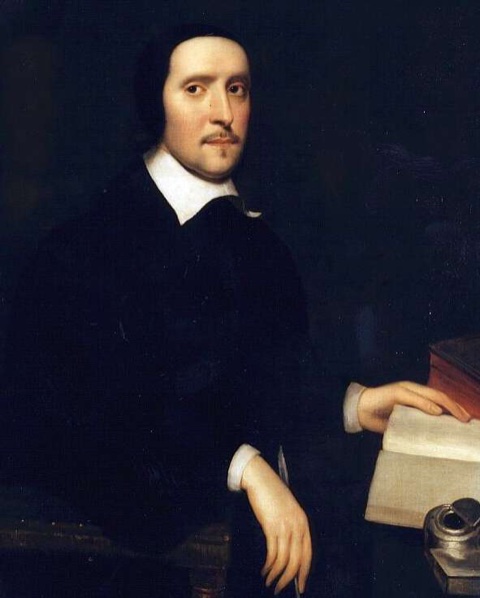
About the author
Jeremy Taylor
Jeremy Taylor (1613 to 1667 AD) was an English clergyman and devotional writer, born in Cambridge and educated at Gonville and Caius College. Archbishop William Laud advanced his career, and he served as a chaplain to Charles I and followed the royalist cause in the Civil War. After the royalist defeat he found shelter at Golden Grove in Wales under the patronage of Richard Vaughan, Earl of Carbery, where he wrote Holy Living (1650) and Holy Dying (1651). After the Restoration he became Bishop of Down and Connor in Ireland, and he died at Lisburn in 1667.