Modernized edition · Full text · Free PDF/EPUB
Eternal Predestination and Secret Providence in Modern English
Summary
- Written
- 1552, the treatise on eternal predestination, dedicated January 1; and 1558, the Defense of the Secret Providence of God, dated January 5
- Type
- Polemical treatises on predestination and providence
- Length
- 99,000 words · 7 hours
- Collection
- Reformation
What is Eternal Predestination and Secret Providence about?
Eternal Predestination and Secret Providence joins John Calvin's 1552 treatise for the pastors of Geneva against Albertus Pighius and Georgius of Sicily with his 1558 Defense against an anonymous critic. Calvin argues that God chose some to salvation and passed by others, that faith flows from that choice, and that God governs all events without being the author of sin.
Read the full summary (9 points, quotes, key themes)Show less
How the argument unfolds
- 01
Dedicatory Preface. The pastors of Geneva dedicate the work to the Syndics and Senate, pass over an unnamed local opponent, and take on the writers he copied.
- 02
The Use of Election. The doctrine strengthens faith, teaches humility and calls out praise, and Paul's rebuke of the objector shows the limits of human judgment.
- 03
The Witness of the Fathers. Augustine and Ambrose are cited at length to show that the ancient church taught free election and the perseverance of the elect.
- 04
The Scripture Proofs. Ephesians 1, Romans 8 and 9, John 6 and 10 and Isaiah 6 are expounded on election before faith, the hardening of Pharaoh and the blinding of the rest.
- 05
Pighius Answered. His appeals to the purpose of creation, universal grace, the conditional promises and foreseen merit are taken up one at a time.
- 06
Georgius Answered. Calvin rejects the monk's claim that election belongs to an era rather than to persons, and answers his texts on the atonement, the book of life and Romans 5.
- 07
Reply to a Calumniator. A short defense, written of Calvin in the third person, holds that God governs all things by his secret counsel and is not the author of sin.
- 08
Summary of Providence. Calvin sets out four degrees of providence and its two uses, and shows God working with means, without them and against them.
- 09
The Defense. Fourteen articles imputed to Calvin are answered in turn, ending with the critic's portrait of two gods and Calvin's closing reply.
Notable images & quotes
- The cobweb and the stallion. Timid limits cannot restrain restless minds: “You might as well try to hold back with a cobweb a fierce, spirited stallion that has smashed through the rails and charges in full strength.”
- Christ the mirror. “Christ is therefore the clear mirror in which we are called to see God’s eternal, hidden election.” Faith is the eye that sees life held out in that mirror and the hand that grasps its pledge.
- Medea and the Argo. Those who blame heaven for their sins are like Medea lamenting the timber cut on Mount Pelion for Jason's ship, when “Medea’s fault is obvious: she sinned voluntarily and willingly.”
- The bones of Christ. “Look at the nature of the bones in Christ’s body: they were breakable, capable of being fractured.” Yet by God's decree none could be broken, so an event may be certain without being necessary in its own nature.
- The judge and the crane. Men condemn one who blinds a crow or kills a crane but praise a judge who executes a criminal, judging acts by their purpose. God's purpose likewise keeps him clear of the guilt of the wicked hands he uses.
Key themes
- Election before faith. Faith does not move God to choose; it is the fruit of his choice, and the monk must confess “that election is the mother of faith”.
- A salvation that cannot fail. Confidence rests on God's unchanging goodwill, not on human resolve, so no storm of the world, assault of Satan or weakness of the flesh can overturn it.
- God's will as the rule of right. Calvin rejects any idea of lawless power in God, and holds that “God’s will is the source and standard of all righteousness.”
- Ruler but not author of sin. God overrules wicked deeds for just ends while hating them, as his punishments show: “Here you see that God is an avenger, which assures us fully that he is not an approver.”
- Wise ignorance. Where Scripture stops, the believer stops: “Let us delight in wise ignorance rather than in reckless, intoxicated curiosity to know more than God permits.”
Why read it today
Read it to see predestination argued at full length by Calvin himself, text by text, against the objections of his own day. He quotes his opponents and answers them directly, and in the Defense the critic's whole case stands on the page beside each reply.
It is also a book of comfort. Calvin turns the reader again and again from God's hidden counsel to Christ, and insists that the doctrine steadies faith, humbles pride and teaches prayer, and that providence frees the believer to work and to bear injury, as David bore Shimei's curses.
The second part shows how Calvin held together God's rule over evil and his hatred of it, through the distinction of remote and proximate causes and the figure of a just judge, while leaving the hard passages of Scripture standing as they are written.
Source edition: Both works in modern English: the dedicatory preface, the treatise with its brief reply to a calumniator, Calvin's summary of providence, and the Defense with all fourteen articles
Reader questions (10)Hide the questions
Questions about Eternal Predestination and Secret Providence
Is there a modern English version of Eternal Predestination and Secret Providence?
Yes. This is Eternal Predestination and Secret Providence by John Calvin in modern English. The language is modernized and the author's order and argument are kept. The full modernized text is free to read on this page.
Can I read Eternal Predestination and Secret Providence online for free?
Yes. The complete text of this modern English edition is on this page, with no sign-up or paywall.
Is there a free PDF of Eternal Predestination and Secret Providence?
Yes. The PDF and EPUB of this edition are free with an Updated Works account. Sign in with Google or an email link; no card is needed.
What is Eternal Predestination and Secret Providence by John Calvin about?
It defends two linked teachings. God chose some people to salvation before they were born, by his own good pleasure and not because he foresaw their faith or works, and left the rest in the ruin all share in Adam. And God governs every event, including the evil deeds of men and devils, while the guilt remains theirs.
Who were Pighius and Georgius of Sicily?
Pighius, called the Campanian, attacked Calvin by name in a book on free will and predestination; Calvin answered on free will, and Pighius died soon after. Georgius was a monk raised to notice by Lucius Abbas, who claimed Christ had appointed him interpreter of Scripture and taught that God appointed a period of time, not particular persons, for salvation.
How does Calvin read 1 Timothy 2:4, that God will have all men to be saved?
Paul is urging prayer for kings and rulers, then enemies of the church, so the verse speaks of every class and rank: “Paul means nations of individuals, not individuals of every nation.” Calvin adds that God did not even send the outward word to every nation.
Does Calvin make God the author of sin?
No. He holds that God ordained Adam's fall and directs wicked acts to his own ends, but that the proximate cause of every sin is the sinner's own will and corrupt heart. With Augustine he points to the delivering up of Christ, in which the Father and Judas did the same thing from opposite motives.
Why does Calvin reject the idea of mere permission?
He grants that the fathers used the word to soften harsh language, but Scripture speaks of God hardening hearts, sending strong delusion and using nations as his rod. A God who merely permitted, Calvin argues, would no longer be acting as Judge of the world.
Should predestination be preached?
Yes, Calvin argues with Augustine, together with exhortation and correction, so that believers glory in God rather than themselves. Since no one knows who is elect, “we ought so to feel as to wish all to be saved” and offer the gospel to everyone.
Who is the critic answered in the Defense?
Calvin does not name him. He says the man once professed to follow him and ate at his table, sent his tract secretly to Paris from a town in Switzerland, and mourned Servetus, whose judges, Calvin says, heard him plead that Servetus not be put to death.
Eternal Predestination and Secret Providence in Modern English · Full text
Part 1: The Eternal Predestination of God
Dedicatory Preface
The Consent of the Pastors of the Church of Christ at Geneva, concerning the Eternal Predestination of God, by which he has chosen some to salvation while leaving others to their own destruction, and concerning the Providence of God, by which he governs human affairs, set forth by John Calvin.
The pastors of the church of Christ at Geneva pray that God would grant to those most excellent men, their supreme lords, and to the Syndics and Senate of Geneva, a just and holy administration of the state, and all happy prosperity and success.
The same motive that moved us to write this book, most excellent sirs, also moved us to dedicate it to you, so that it might go forth under your name and protection. Until now, we have publicly preached the free election of God in this city with all reverence, sobriety, and sincerity, declaring how he adopts for himself whom he wills out of the lost race of humanity. The people have received it peacefully. Now, however, Satan, the father of all strife, has used a certain worthless man to slip in a widespread error. Through him, Satan has tried to uproot our doctrine, which is drawn from the pure Word of God, and to shake the faith of the people. Yet this man, hungry for empty glory, wants to gain notoriety out of the very flames of the temple of God. So that he may not catch the reward of his unholy audacity for which he has laid his nets, let his name be buried in our silence while we purposely leave it unmentioned.
Since the trouble this vain man tried to cause us reaches you as well, it is only right that you share in the blessed fruit God brings out of it. Because we have always found you strong and wholehearted defenders of our holy cause, we have felt it our duty to express our gratitude to the best of our ability. Fulfilling that duty will also show plainly what doctrine you have protected with your favor and authority.
Neither rulers of the state nor ministers of Christ ought to be overly anxious about rumors and uproars. Both rulers and ministers should look down on malicious slander with courage and a lofty mind, since such attacks usually fade away in the noise they make. Even so, it is of the utmost importance that the true substance of the matter be kept always in view, engraved as it were on public tablets before every eye. A plain statement of the truth will condemn and silence the false tongues of the foolish, the vain, and the wicked, while quieting the idle whispers of the general public.
A rumor spread to many places that this vain man was tightly bound in prison, when in fact he was completely free and moving openly about the city every day. You yourselves are our best witnesses to the malice with which certain bitter men invented and spread the lie that we wanted him put to death. Gravity and prudence require us to answer such slanders with calm contempt and quiet magnanimity until they vanish.
On the other hand, we must take serious care of unstable souls so that they are not shaken. Setting the true state of the issue plainly before everyone is therefore both wise and a solemn duty on our part. Unless wickedness is met resolutely, it creeps forward, as Paul says, “like a canker” (2 Tim 2:17). We hope that this defense, which we offer to all the godly, will serve as a strong and effective remedy for those who can be healed, and as a wholesome safeguard for those who are already sound and healthy.
The subject itself deserves the most earnest attention of God’s children, so that they do not remain ignorant of their heavenly birth and origin. Some fools, because the gospel is called “the power of God unto salvation to everyone that believeth,” use that pretext to erase the election of God. They should have stopped to ask where faith comes from! Scripture everywhere proclaims aloud that God gives to his Son those who were always his, calls those whom he has chosen, and regenerates by his Spirit those whom he has adopted as sons. In short, those believe whom he has taught within and to whom his “arm is revealed.” Whoever regards faith as the guarantee and pledge of adoption will surely confess that it flows from divine election as its eternal source.
At the same time, the knowledge of salvation is not to be sought in the secret counsel of God. Life is set before us in Christ, who not only makes himself known in the gospel, but offers himself there for our enjoyment. Let the eye of our faith look steadily into this mirror, and never long to peer where sight is not granted.
Since this is the right path, let the children of God walk in it, so that by flying higher than is lawful they do not plunge into a labyrinth deeper than they ever wished to enter. Yet just as there is no other gate to the kingdom of heaven than faith in Christ, held out openly in the promises of the gospel, it is the height of ignorance not to recognize that God himself opens the eyes of our minds. He chose us to faith in Christ before we were conceived in the womb.
That this impure and shameless man aimed not only to blot out all knowledge of God’s election from people’s minds, but also to overturn God’s power, is clear from those mad dreams of his written in his own hand and kept in your public records. There he claims that faith does not depend on election, but rather that election rests on faith. He insists that no one remains blind because of the inborn corruption of human nature, since God rightly enlightens everyone. According to him, we do God a great injustice when we say he passes over those whom he does not see fit to illuminate by his Spirit.
This worthless man also claims that all people, generally and equally, are “drawn” by God, and that no difference exists except where human resistance creates one. When God promises to make “hearts of flesh” out of “hearts of stone,” he argues that this means nothing more than making us capable of receiving God’s grace. He extends that capability indiscriminately to the entire human race, even though Scripture clearly affirms that this is the distinctive privilege of the church of God.
As for the providence of God, by which the world is governed, all the godly must always confess and hold fast this truth: there is no reason for anyone to make God a partner in human sin or implicate him in our guilt. Yet Scripture also teaches that the reprobate are instruments of God’s wrath. Through some of them he trains the faithful in patience, and on others, as his enemies, he inflicts the punishment they deserve. This profane trifler, however, contends that no act of God is just unless a clear reason for it lies right before our eyes. Doing away with every distinction between remote, proximate, and immediate causes, he refuses to admit that Job’s severe afflictions were the work of God, for fear that God would be made equally guilty with the devil and with the Chaldean and Sabean plunderers.
There are two reasons why we pass over this man in silence and take up the battle instead against Albertus Pighius and Georgius of Sicily. First, this ignorant plagiarist produced nothing except what he borrowed from them, making what was already bad in them even worse. Arguing with him would therefore have been a dull and pointless exercise. One example will be enough for our readers. We have shown in its proper place what quibbles Pighius and Georgius use to obscure the first chapter of Paul’s letter to the Ephesians. They were ignorant and disgusting enough, yet the folly of this worthless man is fouler still. He did not blush to babble his nonsense before your Senate and venerable assembly, and he even dared to defend stubbornly what he had blurted out in folly.
He claimed that Paul was not speaking in that passage about the common salvation of the godly, but only showing that he and his fellow laborers were elected to the apostolic office. Disproving so empty a fabrication would take only a moment, since the episode is still fresh in your memories. Anyone willing to place himself under such a teacher must settle for a miserable theology indeed, one that strips almost everyone of confidence in eternal life. By his reasoning, the apostles alone could share in divine adoption, be reconciled to Christ, be blessed, and be joined to the company of the saints.
The time and place to refute that empty invention was when and where it happened. Refuting so insipid an animal in a published book would scarcely be wise or pleasant. You know how conceited he is. Nor is it surprising that a man who could throw off his monk’s cowl and immediately transform himself into a physician should display such utter audacity! To sicken many readers by humoring him with an “answer of folly, according to his folly” (Prov 26:4) would be quite foreign to my usual restraint.
Second, those two men are open and professed enemies of the gospel, and one of them has declared war on us and this church by attacking Calvin by name. It seemed much better to us to purge away completely the poison of the impious doctrine spread abroad in their published books than to keep circulating their absurdities, which deserve to remain buried in oblivion. Besides, it would be exhausting to wear out people’s ears any further, when they have already been fatigued and tormented so long by these needless disputes.
May God grant, noble and excellent sirs, that just as you have done until now with the highest praise, you may continue to the end to defend the pure doctrine of the gospel of Christ by your unwearied faith and authority. That doctrine is attacked on every side by the angry violence of the world. May you never cease to shelter under your care all the godly who flee to you for protection. So may your city always be a sanctuary devoted to God and a faithful refuge for the members of Christ, standing immovable amid these terrible upheavals. Then you will always find him an everlasting guardian of your safety, for whatever human dwelling is dedicated to him will stand secure under his power and will never fall!
January 1, 1552.
The Eternal Predestination of God
Nine years have passed since Albertus Pighius, the Campanian, a man of obvious and frenzied audacity, attempted at the same time and in the same book both to establish human free will and to overthrow God’s secret counsel. By that counsel, God chooses some to salvation and appoints others to eternal destruction. Because he attacked me by name in order to stab holy and sound doctrine through my side, I considered it necessary to curb the man’s sacrilegious madness. At that time, however, other pressing duties kept me from covering both topics in one brief effort. After publishing my reply on the first subject, I promised to address the doctrine of predestination when an opportunity arose.
Shortly after my book on free will appeared, Pighius died. Not wanting to kick a dead dog, I turned to other serious work, and from then until now I have never lacked plenty to do. Besides, because I had already treated this major doctrine extensively, set it forth clearly, and established it with solid proofs from Scripture, a fresh work on the subject did not seem so urgent that it could not safely be allowed to rest for a time.
Today, however, certain frantic and boastful spirits follow Pighius’s example and strive with all their might to destroy everything Scripture teaches about the free election of the godly and the eternal judgment of the reprobate. I therefore considered it my duty to keep this contagion from spreading further by gathering and summarily refuting the frivolous objections with which such men deceive themselves and others.
Among these characters, one Georgius of Sicily has risen up in Italy. He is an ignorant man, far more deserving of contempt than of any public notice, except that the notoriety he gained through fraud and imposture has given him real power to do harm. As a monk he remained unknown in his cell until Lucius Abbas, one of the Tridentine fathers, hoisted him aloft with lying praise, hoping to take flight into heaven itself from his favorite’s shoulders. This shameless fellow falsely claimed that Christ had appeared to him and appointed him interpreter of all Scripture. With little trouble, he persuaded many people to swallow his claims with stupid, brazen, and utterly vain folly. Pushing the drama to its final act, he trumpeted his mad visions so loudly that he left his ignorant followers, already bound tight by prejudice, completely amazed.
Clearly, most people in our day deserve prophets just like him. The hearts of most are hardened and made stubborn by wickedness and refuse all healing, while the ears of others itch constantly with an insatiable appetite for corrupt speculations. There are perhaps some exceptions whom I could mention gladly and fittingly, yet I will leave them unnamed and simply make every reader see how frivolous and worthless the objections of all the truth’s enemies really are.
I now propose to enter this sacred battle against Pighius and Georgius of Sicily, a well-matched pair of unclean beasts (Lev 11:3). Although they differ on a few points, they are identical in hatching monstrous errors, corrupting Scripture with wicked and reckless audacity, treating the truth with proud contempt, and displaying shameless impudence and loud verbosity. The only difference is that Pighius struts with greater boast and pomp by puffing up his muddy, bombastic rhetoric, while the other borrows the high boots that elevate him from his invented revelation. Even though both begin with the same goal of overthrowing predestination, they diverge afterward in the fictions they invent.
Both men invent the idea that it lies within each person’s own freedom whether to share in the grace of adoption or not. They deny that God’s counsel and decree determine who are elect and who are reprobate. Instead, they claim each person chooses one state or the other by his own will. As for why some believe the gospel while others remain in unbelief, they insist this difference does not arise from God’s free election or secret counsel, but from each individual’s will.
Pighius states his view of this great issue as follows. God, by his unchanging counsel, created all people for salvation without distinction. Yet because he foresaw Adam’s fall, he applied a universal remedy so that his election might still stand firm and unaltered: he confirmed the election of the entire human race in Christ. As a result, no one can perish except the person who blots his own name out of the book of life through his own obstinacy.
On the other side of the question, Pighius says that because God foresaw that some would persist to the end in malice and contempt for divine grace, he reprobated them on the basis of his foreknowledge, unless they should repent. For Pighius, that is the origin of reprobation: the wicked deprive themselves of the benefit of universal election completely apart from God’s counsel and will. He further claims that anyone who holds and teaches that certain people are positively and unconditionally chosen to salvation, while others are just as unconditionally appointed to destruction, thinks unworthily of God and attributes to him a harshness utterly foreign to his justice and goodness. Here our human reasoner openly condemns Augustine’s views, naming him directly.
To prove, as he supposes, that God’s foreknowledge takes nothing away from human free will, our impostor resorts to that clever trick of Nicholas of Cusa. Nicholas would have us believe that God did not foresee things known to him from eternity in their future reality, but viewed them as though already present. Pighius even raises his brow with his trademark air of importance, as if he had uncovered some deep secret, when in fact every schoolboy knows this evasion by heart.
Still finding himself caught by the leg by the truth, he struggles to break free by inventing a twofold foreknowledge in God. He claims that God formed the plan to create humanity for life before he foreknew the Fall, so that in the mind of God himself, the thought of human salvation preceded the foreknowledge of human death in order. Pouring out these notions in a muddy torrent of words, he thinks he can flood his readers’ senses so thoroughly that they cannot see anything clearly. By my brevity, however, I hope to dispel the fog of this man’s verbosity right away.
Georgius’s fiction is that no individual person whatever is predestined to salvation; rather, God preappointed a period of time in which he would save the whole world. To prove this, he twists passages of Paul such as this one: “Even the mystery, which hath been hid from ages, and from generations, but now is made manifest to his saints” (Col 1:26). Having twisted the apostle’s words to fit his scheme, he slips away complacently, thinking himself the victor, as if no passage of Scripture plainly declares that God chooses some to salvation while passing over others. In short, when it comes to election, this man thinks of nothing except the era of the New Testament.
The Value and Truth of Election
My own position on this weighty subject is fully and amply documented in my Institutes, even if I were to add nothing more here. First, I urge my readers to keep carefully in mind the warning I offer there. This great doctrine is not, as many suppose, a thorny and noisy debate, nor a barren speculation that exhausts the mind without profit. On the contrary, it is solid teaching richly suited to serve the godly. It builds us up firmly in the faith, trains us in humility, lifts us into wonder at God’s boundless goodness toward us, and moves us to praise that goodness in our loftiest strains.
Nothing builds up faith more effectively than listening with open ears to the doctrine of God’s election. As we hear it, the Holy Spirit seals it on our hearts, showing us that our election rests in God’s eternal and unchanging goodwill toward us. Because it rests there, no storms of the world, no assaults of Satan, no changes of circumstance, and no waverings or weaknesses of the flesh can shake or overturn it. Our salvation is truly sure only when we find its cause in the heart of God. When we lay hold of life in Christ, revealed to our faith, that very faith leads and guides us so our sight can reach still deeper and see the source from which that life flowed.
Our confidence of salvation is rooted in Christ and rests on the promises of the gospel. Yet once we are brought to believe in Christ, it is no small support to our confidence to hear that all of this was originally given to us by God. We were ordained to faith in Christ before the foundation of the world just as surely as we were chosen to inherit eternal life in him. From this springs the unshakable and indestructible security of the saints. The Father, who gave us to the Son as his own special treasure, is stronger than every enemy who opposes us, and he will not allow us to be snatched out of his hand.
What reason for humility this gives the saints of God, when they see so vast a difference made among people who are all alike by nature! Wherever God’s children turn their eyes, they see startling instances of blindness, ignorance, and spiritual numbness that fill them with horror. Meanwhile, in the midst of such darkness, they themselves have received divine light, and they know and feel it. “How is it,” they ask, “that some remain blind in darkness even under clear light? Who makes this difference?” One thing they know from their own experience: their eyes were once closed too, and now they are open. Another thing is just as certain: those who deliberately ignore any difference between themselves and others have never yet learned to give God the glory due to him for making that difference.
No one doubts that humility lies at the foundation of all true religion and is the mother of every virtue. Yet how can he be humble who refuses to hear about the original sin and misery from which he has been rescued, and who diminishes the glory of God’s saving mercy as much as he can by extending it indiscriminately to everyone? Those are farthest from glorifying God’s grace according to its true greatness who say it is offered equally to all, yet becomes effective in them because they embraced it by faith. All the while, they keep the cause of faith itself buried out of sight: namely, that those whom God chose to be his children are afterward blessed with the Spirit of adoption.
What kind of gratitude would mine be if, endowed with so supreme a gift, I considered myself no deeper in debt than someone who has not received a hundredth part of it? If praising God’s goodness worthily requires remembering how much we owe him, then those are hostile toward him and rob him of his glory who reject and refuse to tolerate the doctrine of eternal election. Once election is buried out of sight, half of the grace of God inevitably vanishes with it.
Let anyone roar at us who pleases. We will always set forth the doctrine of God’s free election as clearly as our words allow, because only through it can believers understand how great is the goodness of God that effectually called them to salvation. I touch only briefly on this great doctrine here, so that no one will avoid a subject so essential to know and later feel the loss his neglect has caused him. In due course, at the proper place, I will treat this divine truth with appropriate fullness.
If we are not truly ashamed of the gospel, we must acknowledge what it openly declares: by his eternal goodwill, which had no other cause than his own purpose, God appointed those whom he pleased to salvation and rejected all the rest. Those whom he blessed with this free adoption as his children, he illuminates by his Holy Spirit so that they receive the life offered to them in Christ. Meanwhile, the rest, persisting willingly in unbelief, are left without the light of faith in total darkness.
God’s Justice and True Sobriety
Against this unsearchable judgment of God, many insolent dogs rise up and bark. Some do not hesitate to attack God openly, asking why, when he foresaw Adam’s fall, he did not arrange human affairs better. To rein in such spirits, we need no better method than the one Paul sets before us. He imagines an ungodly objector asking how God can be just in showing mercy to whom he wills and hardening whom he wills. The apostle treats such human audacity as beneath a direct answer. He simply reminds people of their proper rank and place in God’s creation: “Who art thou, O man, that repliest against God?” (Rom 9:20).
Profane people babble that the apostle hid the absurdity of the doctrine behind silence for lack of an answer. The truth is quite the opposite. In this appeal, the apostle invokes a universal first principle that ought not only to be held fast by every godly mind, but also engraved deep in the heart of common sense: God’s inscrutable judgment is deeper than the human mind can fathom. Who, I ask you, would not be ashamed to try to cram all the causes of God’s works into the narrow compass of his own intellect?
Yet the whole issue turns on this hinge: is there no justice in God except what we can grasp? Suppose we put the matter into one simple question: is it right to measure God’s power by our natural perception? Not a single person would fail to answer immediately that all the minds of humanity combined in one person would collapse in trying to comprehend God’s immeasurable power. Yet the moment a reason for certain works of God is not immediately visible, people are somehow ready at once to summon him to court and put him on trial. What, then, could be more timely or fitting than the apostle’s rebuke? Those who lift themselves above the heavens in their reasoning have completely forgotten who and what they are.
Suppose God yielded his own right and offered to give an account of his works. When the inquiry reached those secret counsels that angels adore with trembling, who would not be stripped completely of his senses before such blazing splendor? How astounding is human madness! A man will more brazenly set himself above God than stand as an equal before a pagan judge. You find it hateful and intolerable that God’s power and works should surpass the capacity of your mind, yet you readily grant an equal the right to his own mind and judgment. With madness like this, do you dare even speak of the adorable God? What do you really think of God’s glorious name? And will you boast that the apostle lacks all reason simply because he does not drag God off his throne and set him before you for cross-examination?
Let us, however, be fully convinced of two things about the apostle’s reply. First, he checks with fitting gravity the unbridled madness of men who think nothing of attacking God’s justice openly. Second, he gives God’s worshipers a far better lesson in moderation than if he had taught them to soar on eagles’ wings above forbidden clouds. A sober mind, governed by the fear of God and staying within the limits of understanding he has set, is far better than all human wisdom. Let proud men slander this sobriety as ignorance if they like. True sober-mindedness will always hold fast the height of all genuine wisdom: by recognizing God’s will as the highest rule of righteousness, we give him his own rightful and unique glory.
Pighius and his followers, however, are not satisfied with this. Claiming great concern for God’s honor, they bark at us as if we attributed to him a cruelty completely foreign to his nature. Pighius denies that he has any quarrel with God. Whose cause, then, is Paul defending? After stating his principle, that God hardens whom he wills and has mercy on whom he wills, Paul adds the imagined taunt of a wicked objector: “Why doth he yet find fault? For who hath resisted his will?” (Rom 9:19).
Paul answers such blasphemy simply by setting God’s sovereign power against it. If people who trace the hardening of human hearts to God’s eternal counsel dress God in the robes of a tyrant, we are certainly not the inventors of that doctrine. If anyone who places God’s will above all other causes wrongs God, Paul taught that doctrine long before we did. Let these enemies of God take up their dispute with the apostle, for I maintain nothing in this discussion except what I show is taught by him.
About these barking dogs, however, I would not be overly troubled. I am far more concerned about certain otherwise good men who, fearing to attribute to God anything unworthy of his goodness, seem genuinely horrified at what God declares about himself through the apostle. All the while, we ourselves hold fast to the godly purpose of clearing God’s justice from every slander.
The modesty of these timid people would deserve every praise if it were not the child of peevishness puffed up with a hidden pride. They judge according to their own natural perception and understanding. Why are they afraid to grant to God’s power what surpasses their own mental grasp, for fear that his justice might be endangered? Why, I ask? Because they presume to bring God’s judgment seat under their own verdict. Paul shows that it is intolerable pride for anyone to set himself up as judge over his brother, since there is one Judge before whom we all stand or fall, and to whom every knee must bow. What madness it is, then, for a mortal to lift his crest against that sole Judge himself and presume to measure his infinite power by natural reason!
Those who plead modesty as an excuse for refusing to endorse Paul’s testimony must therefore confess two things. First, whatever praise they give to God’s justice is fenced within the narrow bounds of their own natural understanding. Second, if they actually agree with us yet choose to suppress this part of the doctrine so they will not give free rein to the insolence of the wicked, their caution is absurd, as though God’s honor could be protected by our lies! God not only rejects such protection, but declares in the Book of Job that he hates it. Such defenders should beware: by pretending to greater caution than the Lord prescribes in his Word, they risk becoming guilty of a twofold madness and folly.
The moderation and caution these people recommend are indeed useful for restraining the blasphemies of the ungodly. Yet if they convince themselves that their words can put a bridle on rebels against God and his truth, their expectation is ridiculous. After speaking of God’s secret counsels as far as was needful, the apostle Paul holds out his hand, as it were, to forbid us from going further. Restless spirits, however, will kick and butt and leap with reckless frivolity over the barrier placed before them. How can you imagine they will halt at the nod of this or that cautious mind trying to draw still narrower boundaries across their headlong rush? You might as well try to hold back with a cobweb a fierce, spirited stallion that has smashed through the rails and charges in full strength.
“Still,” you will say, “in a matter so deep and difficult, nothing is better than thinking with moderation.” Who denies it? Yet we must examine what kind and degree of moderation we mean, so we are not drawn into the principle of the papists, who turn their followers into mute, unthinking beasts in order to keep them obedient. Should we call it Christian simplicity to treat as harmful the knowledge of things God himself sets before us? “But,” our opponents reply, “this is a subject we can remain ignorant of without loss or harm.” As if our heavenly Teacher were not the best judge of what is helpful for us to know, and how far we ought to know it!
So that we do not thrash amid the waves, drift aimlessly through the air without anchor, or step out too deep and drown in the gulf below, let us give ourselves over to God to be ruled and taught by him. Let us be so content with his Word alone that we never desire to know more than we find in it, not even if the power to do so were handed to us! This teachable spirit, in which every godly person keeps all the faculties of his mind under the authority of God’s Word, is the true and only rule of wisdom.
Wherever and however far he who is “the Way” leads us by his outstretched hand, whose Spirit spoke through the apostles and prophets, we may most safely follow. And remaining ignorant of everything that is not learned in the school of God far surpasses all the sharpness of the human intellect. That is why Christ requires his sheep not only to keep their ears open to his voice, but also to keep them shut against the voice of strangers. Otherwise, empty winds of error from every direction will inevitably blow through a soul devoid of sound doctrine.
Furthermore, I can truthfully confess that I would never have spoken or written on this subject if the Word of God in my own soul had not led the way. All godly readers will recognize this from my earlier writings, especially my Institutes. Still, this present refutation of my opponents may perhaps shed some fresh light on the matter for my friends.
The Witness of the Ancient Church
Because the authority of the ancient church is thrown in my face with such hostility, it is worth considering at the outset how unjustly Christ’s truth is smothered under that resentment. The charge itself is in one sense false and in another frivolous. Still, I would rather brush aside this accusation with Augustine’s words than with my own, because the Pelagians of old harassed him with the very same complaint, claiming he had all the other writers of the church against him.
In his reply, Augustine observes that before the heresy of Pelagius arose, the fathers of the early church did not state their views on predestination as deeply or precisely, which is indeed true. He adds: “What need is there for us to search the works of those writers who, before the heresy of Pelagius arose, found no necessity for devoting themselves to this question, so difficult of solution? Had such necessity arisen, and had they been compelled to reply to the enemies of predestination, they would no doubt have done so.”
That remark of Augustine is both wise and shrewd. If the enemies of God’s grace had not harassed Augustine himself, he would never have devoted so much labor, as he himself admits, to explaining God’s election. Thus, speaking of his book On the Blessing of Perseverance, he pointedly says: “This predestination of the saints is certain and manifest, which necessity afterward compelled me to defend more diligently and laboriously when I was discussing the subject in opposition to a certain new sect. For I have learned that every separate heresy introduces into the church its own particular questions, which call for a more diligent defense of Holy Scripture than if no such necessity of defense had arisen. For what was it that compelled me to defend, in that work of mine, with greater copiousness and fuller explanation, those passages of the Scriptures in which predestination is set before us? What, except the rising up of the Pelagians, who say that the grace of God is given to us according as we render ourselves deserving of it?”
Just before this, Augustine had also denied that any prejudice could fairly be held against his books for lacking the explicit backing of earlier church writers. “No one,” he says, “can surely be so unjust, or so invidious, as not to allow me to gain some instruction and profit for myself from this important subject.” He then argues that one can in fact gather from the testimonies of several ancient fathers that their views and teaching agreed with his own.
Passing over the other authorities he cites, the witness he draws from Ambrose is more than enough: “Whom Christ has mercy on, he calls.” Again: “When he wills, he makes out of careless ones devoted ones.” And again: “But God calls whom he sees fit to call; and whom he wills, he makes religious.” Who fails to see that the entire substance of this divine truth is contained in those few words? Ambrose gives the exact reason why not everyone comes to Christ for salvation: God does not effectually touch their hearts. This holy man declares that a sinner’s conversion flows from God’s free election, and that the reason God calls some while leaving others reprobate lies solely in his own will. Ambrose neither hesitates nor evades the issue. Anyone with ordinary judgment can see that the entire question is summed up and settled in these three brief statements.
In short, Augustine agrees with me so completely that if I wanted to write a confession of my faith, I could compile it fully and to my complete satisfaction straight from his writings. So that I am not overly wordy here, I will settle for three or four examples of his testimony, which will show plainly that he does not differ from me by a pin’s point. If the entire body of his testimony were brought forward, it would be even clearer how thoroughly and solidly he agrees with me in every detail.
In his book Concerning the Predestination of the Saints, he writes: “So that no one should say, My faith, my righteousness (or anything of the kind) distinguishes me from others, meeting all such thoughts, the great teacher of the Gentiles asks, ‘What hast thou that thou hast not received?’ As if the apostle had said, From whom indeed could you receive it, except from him who separates you from every other, to whom he has not given what he has given to you?”
Augustine then adds: “Faith, therefore, from its beginning to its perfection is the gift of God. And that this gift is bestowed on some and not on others, who will deny except him who would fight against the most manifest testimonies of Scripture? Yet why faith is not given to all ought not to concern the believer, who knows that all men by the sin of one came into most just condemnation. But why God delivers one from this condemnation and not another belongs to his inscrutable judgments, and ‘his ways are past finding out.’ And if it is investigated and inquired how it is that each receiver of faith is deemed by God worthy to receive such a gift, there is no lack of those who will say, It is by their human will. But we say that it is by grace, or divine predestination.”
The holy father then makes these beautiful and striking remarks: “Indeed the Savior of the world himself, the adorable Son of God, is the brightest luminary of divine grace and eternal predestination, not only with respect to his divine nature as the Son of God, but especially also in reference to his human nature as ‘Man.’ For in what way, I ask you, did ‘the man Christ Jesus,’ as man, merit so great a glory as that, being taken into union with the divine person of the Son by the Word of the coeternal Father, he should become the ‘only-begotten Son of God’? What good word or work preceded in this glorious case? What good thing did ‘the man’ perform? What act of faith did he exercise? What prayer did he offer up that he should be exalted to such preeminent dignity?
“Now here, perhaps, some profane and insolent being may be inclined to say, ‘Why was it not I that was predestined to this excellent greatness?’ If we should reply in the solemn appeal of the apostle, ‘Nay, but who art thou, O man, that repliest against God?’ and if such a one should not even then restrain his daring spirit, but should give more rein to his blasphemy and say, ‘Why do you utter to me the caution, “Who art thou, O man?” etc. Am I not a man as he was, concerning whom you speak? Why, then, am I not now what he is? He, indeed, is what he is, and as great as he is, by grace. Why, then, is the grace different where the nature is the same? For most assuredly there is no partiality with God.’
“Now I would solemnly ask, What Christian, indeed, what madman, would thus reason, speak, or think? Let, then, our glorious Head himself, the fountain of all grace, be an ever-shining luminary of eternal predestination and a divine example of its sovereign nature. And from him let the stream of electing grace flow through all his members, ‘according to the measure of the gift’ in each. This, then, is the eternal predestination of the saints, which shone with such surpassing splendor in the Saint of saints! And as he alone was predestined, as man, to be our Head, so many of us are also predestined to be his members.”
So that no one may credit faith with making one person preferred over another, Augustine testifies that people are not chosen because they believe, but on the contrary are chosen so that they might believe. Similarly, writing to Sextus, he says: “As to the great deep (why one man believes and another does not, why God delivers one man and not another), let him who can search into that profound abyss; but let him beware of the dreadful precipice.” In another place he writes: “Who created the reprobate but God? And why? Because he willed it. Why did he will it? ‘Who art thou, O man, that repliest against God?’”
Elsewhere, after proving that God is not moved by any human merit to make people obedient to his commands, but returns good for evil for his own sake rather than theirs, Augustine adds: “If anyone should ask why God makes some men his sheep and not others, the apostle, dreading this question, exclaims, ‘O the depth of the riches both of the wisdom and knowledge of God! how unsearchable are his judgments, and his ways past finding out!’”
Just as Augustine traces the origin of election to God’s free and unmerited will and rests reprobation in that same sovereign will, he also teaches that the security of our salvation stands in that will and nowhere else. Writing to Paulinus, he affirms that those who do not persevere to the end do not belong to the calling of God, which is always effectual and irrevocable.
In another work, he argues even more fully that perseverance is freely granted to the elect, so that they can never fall away. “Thus,” he says, “when Christ prayed for Peter, that his faith might not fail, what else did he ask of God, except that there might be with, or in, Peter’s faith a fully free, fully courageous, fully victorious, fully persevering will, or determination?” And Augustine had just before said: “‘The foundation of God standeth sure, having this seal, The Lord knoweth them that are his.’ The faith of such, which works by love, either does not fail at all, or, if there are any in whom it does partially fail, it is renewed and restored before this life is ended. That iniquity which had interrupted it is done away, and the faith still perseveres to the end.
“But as for those who are not appointed by God to persevere, if they fall from the Christian faith, and the end of life finds them still in that fallen state, such people no doubt could not have been of this number of God’s elect, even while they were, to all appearance, living well and righteously. For such were never separated from the general mass of perdition by the foreknowledge and predestination of God, and therefore were never ‘called according to his purpose.’”
Finally, so that no one may be troubled when people who were once considered children of God sometimes fall away, Augustine answers such perplexed minds in this way: “Let no one think that those ever fall away who are the subjects of predestination, who are the called according to God’s purpose, and who are truly the children of promise. Those who live godly in appearance are indeed called by men the children of God; yet because they are destined at some time or other to live ungodly, and to die in that ungodliness, God does not call them his children in his foreknowledge. Those who are ordained to life are understood by Scripture to be given to Christ. These are predestined and called according to God’s purpose. Not one of these ever perishes. On this account no such person, though changed from good to bad for a time, ever ends his life that way, because he is ordained by God for that end, and given to Christ for that end, that he might not perish, but have eternal life.”
A little later, Augustine says, “Those who, by the all-foreseeing appointment of God, are foreknown, predestined, called, justified, and glorified are the children of God, not only before they are regenerated, but before they are born of woman; and such can never perish.” He then gives the reason: “Because,” he says, “God works all things together for the good of such. He makes all things work together for their good in such a way that even if some of them stray from the path and exceed all bounds, he makes even this work for their good and profit, for they return to him more humble and more teachable than before.”
If we push the question further back to man’s first creation, Augustine meets it directly. “We most wholesomely confess what we most rightly believe, that God, the Lord of all things, who created all things ‘very good,’ foreknew that evil would arise out of this good. He also knew that it belonged more to the glory of his omnipotent goodness to bring good out of evil than not to permit evil to exist at all! So he ordained the lives of angels and of men that he might first show in them what free will could do, and afterward show what the free gift of his grace and the judgment of his justice could do.”
In his Manual to Laurentius, he explains even more freely and fully whatever doubt might still remain. “When Christ appears,” he says, “to judge the world at the last day, what the faith of the godly now holds fast, though not yet made plain to their understanding, will be seen in the clearest light of knowledge: how sure, how immutable, how all-efficacious is the will of God; how many things he could do, or has power to do, which he does not will to do (though he wills nothing which he does not have power to do); and how true are the words the Psalmist sings, ‘The Lord hath done in heaven whatsoever pleased Him.’ This, however, is not true if he willed some things and did them not. Nothing, therefore, is done except what the Omnipotent willed to be done, either by permitting it to be done or by doing it himself.
“Nor should we entertain any doubt that God acts righteously in permitting all those things to be done which are done evilly, for he permits this only by righteous judgment. Although those things which are evil, insofar as they are evil, are not good, yet it is good that there should not only be good things, but evil things also. For unless it were good that evil things also exist, those evil things would never be permitted by the great and good Omnipotent to exist at all. Without doubt, he can just as easily refuse to permit what he does not will to be done as he can do what he wills to be done. Unless we fully believe this, the very beginning of our faith is imperiled, by which we profess to believe in God Almighty!”
Augustine then adds this brief summary: “These are the mighty works of the Lord, shining with perfection in every instance of his will, and so perfect in wisdom that when angelic and human nature had sinned (that is, had done not what God willed, but what each nature itself willed), it came about that through this very will of the creature, God, though in one sense unwilling, still accomplished what he willed. Righteously and with supreme wisdom, he overruled the evils done, to the damnation of those whom he had justly predestined to punishment, and to the salvation of those whom he had mercifully predestined to grace.
“Therefore, as far as these natures themselves were concerned, they did what they did contrary to the will of God; yet as far as the omnipotence of God is concerned, they acted according to his will, nor could they have acted contrary to it. Hence, by their very acting contrary to the will of God, the will of God concerning them was done. So mighty, therefore, are the works of God, so gloriously and exquisitely perfect in every instance of his will, that by a marvelous and ineffable plan of operation unique to himself as the ‘all-wise God,’ that cannot be done without his will which is even contrary to his will. For it could not be done without his permitting it to be done, and that permission is clearly not contrary to his will, but according to his will.”
I have gladly drawn these few passages out of many similar ones in Augustine’s writings. My readers can now see with what remarkable modesty Pighius claims that Augustine disagrees with me! He even tries to enlist him to support his own errors. As this discussion goes on, I will appeal occasionally to the testimonies of this same holy man.
Election Before Faith in Ephesians 1
I will now turn directly to the core purpose of my present work. My aim is to prove that I have taught nothing on this great doctrine except what God himself clearly teaches us all in the Sacred Oracles. The sum of that teaching is simple: the salvation of believers depends on God’s eternal election. No cause or reason can be given for it except his own free good pleasure.
Paul’s words in the first chapter of his letter to the Ephesians are remarkably plain and eloquent on this point. “Blessed,” he says, “be the God and Father of our Lord Jesus Christ, who hath blessed us with all spiritual blessings in heavenly places in Christ. According as He hath chosen us in Him before the foundation of the world.” Right away I hear Pighius babbling that the whole human race was chosen in Christ, so that whoever grasps him by faith obtains salvation. This absurd invention contains two glaring blunders. Paul’s own words refute both of them at once.
First, there is a clear and inseparable connection between the elect and the reprobate. The election Paul speaks of cannot even exist unless we confess that God separated certain persons from everyone else, as he was pleased to do. Paul expresses this act of God by the word predestinating, which he then repeats twice. Moreover, he calls those people “chosen” (or elected) who are engrafted by faith into the body of Christ. Everyone can see that this blessing does not belong to all men. By the “chosen,” therefore, the apostle plainly means those whom Christ stoops to call after the Father has given them to him.
Second, making faith the cause of election is completely absurd. It directly contradicts the apostle’s words. “Paul does not,” as Augustine wisely observes, “declare that the children of God were ‘chosen’ because he foreknew they would believe, but in order that they might believe. Nor does the apostle,” he says, “call them ‘chosen’ because God had foreseen that they would be holy and without spot, but in order that they might be made such.”
Again Augustine says, “God did not choose us because we believed, but in order that we might believe, so that we should not appear to have first chosen him. Paul loudly declares that our very beginning to be holy is the fruit and effect of election. Those act most preposterously, therefore, who place election after faith.” He adds further, “When Paul lays down, as the sole cause of election, that good pleasure of God which he had in himself, he excludes all other causes whatsoever.” Augustine therefore rightly urges us always to go back to that first great cause of election. Otherwise we will be tempted to boast in the good pleasure of our own will!
Paul then declares that “God abounded toward us in all wisdom and prudence, according to the riches of His grace, having made known unto us the mystery of His will, according to His good pleasure which He hath purposed in Himself.” In these words, reader, you hear the grace of illumination flowing like a river from the fountain of that previously hidden, eternal counsel. Nothing could be further from the idea that God looked to our faith when he chose us. That faith could never have existed unless God had first appointed it for us through the free grace of adoption.
Paul confirms this even more strongly. He declares that no external cause, nothing outside himself, moved God to choose us. Instead, God himself, in himself, was the cause and author of choosing his people before they were created or born. He chose them as those on whom he would later bestow faith. “According to the purpose of Him,” says the apostle, “who worketh all things after the counsel of His own will” (Eph 1:11).
Who can miss that God’s eternal purpose stands here in direct opposition to our own purpose and will? Augustine weighed this passage deeply as well. In explaining it, he observes “that God so works out all things that he works in us even the very willingness by which we believe.” This clearly settles who those people are whom God calls through the gospel to the hope of salvation. It identifies whom he engrafts into the body of Christ and makes heirs of eternal life. They are the ones he adopted as his sons by his eternal and secret counsel. Far from being moved by any faith in them to adopt them, his election is the cause and beginning of all faith in them. Election, therefore, comes in order before faith.
Calling and Foreknowledge
What we read in the eighth chapter of Paul’s letter to the Romans is just as clear and unmistakable. Paul has just declared that all things work together for good (or serve as a help) to believers who love God. People might otherwise trace the source of their blessedness to themselves. They might imagine that by first loving God they earned such kindness from his hand. To rule out every error of that kind, the apostle immediately adds, “Who are the called according to His purpose.”
Here we see Paul’s zeal to guard all the originating glory for God alone. He shows that God himself, by his calling, causes people to love him. On their own they could do nothing but hate him. Examine the entire human race thoroughly. What inclination will you find in anyone by nature to love God? None! In this very same chapter, Paul declares that all the impulses of the flesh, the whole “carnal mind, is enmity against God.” Since all people are by nature God’s enemies and adversaries, the conclusion is plain. His calling alone separates some from the rest, makes them lay aside their hatred, and brings them to love him.
There can be no doubt, moreover, that Paul means that effectual calling here. By it God regenerates those whom he already adopted as his sons. The apostle does not simply say “who are the called.” That term can sometimes apply to the reprobate, whom God invites indiscriminately along with his own children to repentance and faith. Instead, Paul speaks with full precision: “Who are the called according to His purpose.” By its very nature and effect, that purpose must stand firm and carry out what it intends.
As Augustine argues, applying this text to man’s purpose is utterly absurd. The context itself banishes every doubt, leaving almost no need for an interpreter. For the apostle immediately adds, “Whom He did predestinate” (or definitely appoint), “them He also called; and whom He called, them He also justified.” Paul is plainly speaking of a definite number whom God destined for himself as his own special property and treasure.
God calls a great many people by various means, especially through the outward ministry of men. Yet he justifies and finally glorifies no one except those whom he ordained to eternal life. God’s calling, therefore, is a special calling. It seals and confirms his eternal election, bringing into the open what was once hidden in God concerning each person so called.
I know well the quibbles many raise here. When Paul says that God predestined those whom he foreknew, they claim he means each person was chosen in view of future faith, once he would believe. I grant them none of this false invention. We must not imagine that God foresaw something in them that moved him to grant his favor and grace. On the contrary, God’s elect were foreknown precisely when, and because, they were freely chosen. That is why the same apostle teaches elsewhere that God knows those who are his. He has marked them out, as it were, and keeps them numbered on his roll.
Augustine does not overlook this vital point either. By the word “foreknowledge,” he teaches, we are to understand God’s counsel by which he predestines his own to salvation. No one denies that God foreknew who would be heirs of eternal life. The only real question is this: did God foreknow what he himself would do in them, or what they would be in themselves? Seizing on the word “foreknowledge” to hang God’s eternal election on human merits is hollow cunning. The apostle everywhere traces election solely to God’s purpose.
Peter likewise greets the church as “elect according to the foreknowledge of God.” Did he write that because he thought some foreseen goodness in them won God’s favor? Not at all! Peter is not comparing people with one another to make some look better or more worthy than the rest. Rather, he lifts that decree which God settled within himself high above every other cause. It is as if he said that his readers were now numbered among the children of God because he had chosen or elected them before they were born.
On this same principle, Peter later teaches in the same chapter that Christ was “verily foreordained before the foundation of the world” to be the Savior who would wash away the sins of the world by his blood. By this the apostle surely means that Christ’s atonement for sin was preordained by God’s eternal counsel. Nor can we explain any differently what Luke records from Peter’s sermon in Acts: Christ was handed over to death “by the determinate counsel and foreknowledge of God.” Peter joins “foreknowledge” to “counsel” here for a clear reason. He wants us to learn that Christ was not swept off to death by accident or by mere human violence. Rather, the all-good and all-wise God, who knows all things, had purposefully decreed it.
In fact, one passage from Paul should settle this whole controversy for anyone with a sound mind. He writes, “God hath not cast away His people, which He foreknew.” A few lines later he explains what that foreknowledge was, stating that a “remnant according to the election of grace” was saved. Again, he says that Israel failed to obtain by works what they sought, while “the election” obtained it. What he called “foreknowledge” earlier, he defines here as election. And it is an election that is completely free and unearned.
Pighius’s notion is childish and absurd when he explains grace as God’s goodness in inviting everyone to salvation, even though all were lost in Adam. Paul clearly separates the foreknown from those on whom God did not see fit to look in mercy.
The Father’s Gift and Perseverance
The same truth is stated with total clarity in the memorable words of Christ: “All that the Father giveth Me shall come unto Me; and him that cometh unto Me, I will in no wise cast out.” Three truths appear here, briefly indeed, yet with unmistakable clarity. First, everyone who comes to Christ was previously given to him by the Father. Second, those given to him were handed over, as it were, from the Father’s hand into the Son’s hand so that they might truly belong to him. Third, Christ is the sure guardian of all whom the Father has placed in his faithful care. He keeps them for the express purpose of not allowing a single one of them to perish. If anyone asks where faith begins, Christ answers right here: those who believe therefore believe because the Father gave them to him.
The unbelief of the scribes posed a heavy stumbling block to the ignorant crowd. The scribes constantly convinced them that no teaching deserved belief unless it carried their approval. In contrast, Christ declares aloud that the light guiding us into the way of salvation is the gift of God. Someone may try to brush aside the truth that all whom the Father chose in Christ were given to him. Even so, the fact stands firm: that gift did not merely precede faith, it is the cause and origin of faith.
Even more remarkable weight lies in the next clause of Christ’s statement, “shall come unto Me.” He does not merely say that no one ever comes to him unless God stretches out his hand. He declares that every single person given to him by the Father is brought, without exception, to believe in him. He reinforces this even further in the flow of the same divine discourse. “No one,” he says, “can come unto Me except My Father draw him.”
Pighius himself admits that enemies of God need illumination to be brought to Christ. At the same time, however, he clings to his fiction that grace is offered equally to everyone. In his view, human free will finally makes grace effective, depending on whether each person chooses to receive it. Christ testifies that his words mean something very different. Right afterward he adds, “There are some among you who believe not. Therefore said I unto you, that no man can come unto Me except it were given unto him of My Father.” You see here that Christ excludes those who “believe not” from the number of those who are “drawn.” All of this would have been spoken needlessly and out of place if faith were not a special gift of God.
What he adds conclusively as his discourse continues is the clearest statement of all. First he quotes the prophecy of Isaiah, “All thy children shall be taught of the Lord.” Then he adds by way of explanation, “Every one therefore that hath heard and learned of the Father cometh unto Me.” Here he shows when Isaiah’s prophecy is fulfilled: whenever God speaks within to his children and disciples by his Spirit, in order to place them into Christ’s hands and possession. Isaiah defines this as the way God renews and enlarges his church, by teaching his children from above: “And they shall be all taught of God.” The prophet is therefore recording a special favor of God, one granted to none except his own children. By this teaching, Christ also declares that those are effectually drawn to him whose minds and hearts God “compels.”
“Thus does God,” says Augustine, “teach those within who are ‘the called according to His purpose,’ at the same time giving them to know what they ought to do, and giving them the power to do what they know. He, therefore, who knows what he ought to do and does it not has not yet learned of God according to grace, but according to the law only; not according to the spirit, but only according to the letter.” A little later he writes again, “If, as ‘the Truth’ says, ‘Every one that hath learned cometh,’ he who does not come most certainly has not learned.”
At length the holy father reaches this conclusion: “It does not follow,” he says, “that he who can come therefore does come. The sacred matter is not completed unless he is willing to come, and does come. Now everyone who has learned of the Father has not only the power to come, but does come.” Here, then, we have the forward movement of power, the affection of the will, and the actual accomplishment of the act.
I do not summon Augustine as a witness here to fight my opponents behind the shield of his authority. I cite him because I cannot find better words than his to express the mind of Christ in the Gospel. For anyone not yet satisfied, Augustine discusses the matter more fully elsewhere. “What does Christ mean,” he argues, “when he says, ‘Every one that hath learned of the Father cometh unto Me’ (John 6:45)? What is it but as if he had said, ‘There is no one who hears and learns of the Father who does not come to me’? For if everyone who has heard and learned of the Father comes to Christ, most certainly whoever does not come to him has never heard or learned. For if he had heard and learned, he would certainly come. This school of God is very far removed from all carnal sense and understanding. In it the Father teaches, and is heard, so that those who hear and learn may come to the Son.”
A little further on, Augustine observes, “This grace, which is secretly imparted to the hearts of men, is received by no heart that is hardened. Indeed, it is given for the very purpose that the hardness of the heart may first be taken away. When, therefore, the Father is heard within, he takes away the ‘stony heart’ and gives ‘a heart of flesh.’ For it is thus that he makes his own the children of promise and vessels of mercy, whom he had previously prepared for glory. If it is asked why he does not teach all men in this way so that they may come to Christ, the answer is: because those whom he does teach, he teaches in mercy; but those whom he does not teach, in judgment he teaches them not. For ‘He hath mercy on whom He will have mercy, and whom He will He hardeneth’” (Rom 9:18).
The heart of this sacred truth can be compressed into an even smaller compass. Christ does not say that the Father draws those who merely receive a pliable heart making them able to come to him. Rather, those who come to him are the ones whom God touches inwardly by his Spirit, and who actually come through the power of that touch. Universal experience makes it plain even to the blind that this privilege is not given indiscriminately to everyone.
Next, Christ declares that he will by no means cast out a single one of those who come to him. More than that, their life is hidden and kept safely in him until he raises them up at the last day. Who can miss the fact that the final perseverance of the saints, as it is commonly called, is likewise attributed here to God’s election? Some may fall from the faith, and indeed some have. Yet those whom the Father has given to Christ are, as Christ himself declares, placed beyond the danger of destruction.
In the same way, in another passage, Christ says that some of the Jews did not believe “because they were not of his sheep.” Then he places the sheep themselves in a sure harbor of safety. “They shall never perish,” he says, “neither shall any one pluck them out of My hand. My Father who gave them Me is greater than all, and none is able to pluck them out of My Father’s hand.” Surely Pighius will not dare to rest the safety of these sheep’s salvation on their present faith. Yet he would hang the whole thing on human free will!
We must not treat this as a matter open to vague debate. Christ sets himself alone as a sufficient shield against all the schemes of Satan. He declares that we will be safe to the very end because it is his will to save us. To leave no doubt in anyone’s mind about whom he faithfully pledges to protect and keep, he points us a second time to the Father’s gift. He declares both the gift of the Father and the teaching of the Father.
We should also take special note of Christ’s statement that the Father is greater than every adversary who could ever oppose his people. Our Lord says this so that our confidence in the safety of our salvation may match our reverence for God’s power. Our safety and God’s omnipotence stand on equal footing; the first is no smaller than the second. We face violent assaults, varied dangers, fierce storms, and every shaking, convulsion, and upheaval. Yet amid them all, the permanence of our standing rests on this one foundation: God will steadily defend what he has decreed within himself for our salvation, by the omnipotent power of his arm.
If any one of us looks only into himself, what can he do but tremble? Everything around us shakes to its center, and nothing is weaker or more unsteady than we are. Yet our heavenly Father does not allow a single one of those whom he gave to his Son to perish. Therefore, our confidence is as certain, and our boasting as great, as his power. His omnipotence makes him the unconquerable defender of his own gift.
Accordingly, Augustine wisely observes, “If any one of these should perish, God would be deceived. Yet no one of them ever perishes, because God never is, and cannot be, deceived. If any one of these should perish, God is overcome and outdone by the sin of man. Yet no one of them ever perishes, because God can be conquered or outdone by nothing. The elect of God are chosen so that they may reign with Christ forever. They are not like Judas, who was chosen only to a temporary office for which he was naturally suited.” Again he writes, “Of these not one perishes, because they are all chosen according to a purpose, not their own purpose, but God’s. For what is conferred on them is not the sort of gift of perseverance by which they may persevere if they will, but a gift by which they cannot fail to persevere.”
Augustine then confirms this with an excellent argument: “If, in the great weakness of this life (amid which weakness there is still need of mighty power to keep down human vanity and pride), men were left to their own will as to whether they would persevere or not, so that under the helping power of God (without which they could not persevere at all) they might remain steadfast if they pleased; and if God did not work that very willingness in them, man’s own will would sink under its own weakness amid such great and numerous temptations.
“Thus men could not persevere at all, because, sinking under their own weaknesses, they would either be unwilling to persevere or, even if willing, would lack the power. A remedy is therefore provided for the weakness of the human will by causing it to act unceasingly and inseparably under divine grace. In this way, the human will, though weak in itself, cannot fail, nor be overcome by any weakness of its own.”
Jacob and Esau in Romans 9
Now let us bring forward that memorable passage from Paul (Rom 9:10-13). This passage alone should be more than enough to end all controversy among sober-minded and obedient children of God. It is no surprise that that eyeless monster Pighius mocks the apostle’s own words with contempt. Even so, I hope to bring every right-minded reader to recoil in horror from the barbarous audacity with which this monster profanes Scripture.
The Jews prided themselves on the name of the Church. Under that pretext they rejected the gospel of Christ, arguing that it had been condemned by the consensus of the so-called church. To keep such shameless pride from overshadowing the majesty of the gospel, the apostle rips off the mask behind which these enemies of Christ falsely boasted. It was indeed a heavy stumbling block and a serious obstacle for the weak. They saw Christ’s teaching rejected by nearly the entire people whom God had appointed heirs of his everlasting covenant. The apostles had proclaimed all along that Jesus was God’s Messiah, yet the very nation to whom the Messiah had been promised opposed and rejected him. And why should we be surprised? To this very day we see thousands totter, stumble, and lose heart, terrified by this same church mask that the papists hold before their eyes, boasting that they are the church!
Paul therefore enters the battle with the Jews in this way. He refuses to count physical descendants as the true children of Abraham. Instead, he recognizes only the children of promise as the seed. He could have identified the seed simply by their faith. That would have been entirely consistent when he was separating genuine from counterfeit offspring in relation to the promise, and in fact he had already done so earlier. Now, however, he rises higher into the mind of God. He declares that the children of promise are those whom God chose before they were born.
To prove this, he cites the promise the angel gave to Abraham: “At this time will I come, and Sarah shall have a son” (as if the apostle had added that before Isaac was conceived in the womb, he was chosen by God). “And not only this,” says the apostle, “but when Rebecca also had conceived by one” (that is, by one embrace), “even by our father Isaac (for the children being not yet born, neither having done any good or evil, that the purpose of God according to election might stand, not of works, but of Him that calleth), it was said unto her, The elder shall serve the younger. As it is written, Jacob have I loved, but Esau have I hated” (Rom 9:10-13).
Pighius tries to slip away with the excuse that this is one of the hardest passages in Scripture. Even if I grant him that, I will not put up with his impious barking when he boasts that it is a labyrinth with no straight path through it. What? Are we to think that the Holy Spirit, speaking through the apostle’s mouth, wandered off course or lost his way? Did he lead us beyond what is useful or proper for us to know? As I have just said, Paul could easily have distinguished Abraham’s true children from the false ones by the mark of faith alone. Instead, he deliberately raises the question of election, lifting it far higher and tracing it much further back.
By Paul’s own testimony, he had been caught up into the third heaven and shown secrets of God that no man is permitted to utter. Clearly, then, he knew very well how far it was helpful, and how far it was lawful, to go in publishing the hidden things of the Most High. He could have settled the matter in a brief, general, and concise way. Instead, he purposely carries the argument to such a height and presses it to so decisive a point. What godly person, then, would hesitate to give an attentive and teachable ear to his testimony? Unless, of course, we imagine that this furious, blind monster is going to rein in the Spirit of God himself with his great “moderation,” as if the Spirit were running wild beyond proper bounds!
Our “very modest” opponent adds, “This is one of the portions of Scripture which unlearned and unstable persons corrupt to their own destruction.” By the clearest possible proof, he forces us to apply that very charge to himself. So lawlessly does he twist and pervert the entire argument of the Apostle Paul! He also urges his readers to remain obedient to the church in interpreting such difficult passages of Scripture. He would have me seconding his solemn warning, if only he would point his readers to a sheepfold of Christ as the church, instead of a stinking sty of swine! What is Pighius’s church, after all, but a whirlpool made of the gathered mass of every iniquity, forever filling up, yet never full, with every kind of error?
Pighius’s final warning is that his readers must admit nothing inconsistent with the infinite goodness of God, and nothing that would stir them to hate God rather than love him. Yet he himself charges full sail straight against God because God predestines some to destruction from their very creation. Even if this entire doctrine were suppressed, the reprobate would still find an excuse to hate God and attack him with their godless arguments. We will examine what real ground they have for their noisy protests in its proper place, once we have fully explained the apostle’s meaning. For now, let everyone willing to be taught in the school of God listen to what the apostle says plainly and without ambiguity.
Paul sets before us the two sons of Isaac. They were conceived together in the hidden and sacred womb of nature, as in a temple of God. Even so, while still in the womb, they were separated by the oracular word of God to completely different destinies. People might otherwise look for the cause of this distinction in the merits of their lives. The apostle traces it instead to the hidden counsel of God: “That the counsel of God might stand.” Here we learn unmistakably that God determined to choose only one out of these two children.
Yet Pighius tries with a senseless quibble, like a hog’s snout, to root up the apostle’s completely plain words. He replies that the election of grace simply means Jacob had done nothing beforehand to earn it. That collapses on the spot. Paul praises God’s electing grace specifically on the ground that one brother was chosen while the other was rejected. That destroys Pighius’s empty fiction of universal grace at once. Paul does not merely say that Jacob was appointed heir of life so that God’s election might stand. He says that his brother was rejected and his brother’s birthright was given to him.
I know well what some other dogs bark out here, and what many ignorant people mutter. They claim that the apostolic passages we have cited do not deal with eternal life or eternal destruction at all. If these objectors understood even the basic principles of theology, which every Christian ought to know, they would state their opinions with a little less confidence and insolence. God’s answer to Rebecca’s distress had a clear purpose. It was meant to show her that the outcome of the struggle in her womb would be that God’s blessing and the covenant of eternal life would rest upon the younger son. What else did the struggle itself signify, except that both children could not be heirs of the covenant at the same time? God’s secret counsel had already decreed that covenant for the one.
Objectors claim that this covenant and decree referred only to Canaan, which the prophet Malachi discusses (Mal 1:1-3). That objection might be worth considering if God had merely intended to fatten the Jews in Canaan like pigs in a sty. The prophet has something very different in mind. God promised that land to Abraham as an outward symbol and figure of a better inheritance. He gave it to Abraham’s descendants as a possession so that he might gather them there as a special people for himself and erect a sanctuary of his presence and grace.
Those are the grand realities the prophet is pondering in his deep, reflective mind. In short, the prophet views Canaan as the sacred dwelling place of God. Since Esau was cut off from that dwelling place, the prophet rightly concludes that he was hated by God. Esau had been rejected from the holy and elect family on which God’s love rests forever. Along with the prophet, we too must look carefully at the real nature of that land and the distinctive character God gave it. It was meant to serve as a sure guarantee and pledge of the spiritual covenant he made with Abraham’s offspring.
It is wholly to the point, therefore, that the apostle records how God’s free election fell upon Jacob. Before he was even born, Jacob was appointed to enjoy the inheritance while his brother was rejected. Yet Paul presses his sacred argument much further. He insists that this inheritance was not won by works, nor granted to Jacob with any eye to works he would perform later in life. Not even that is all. The apostle explicitly states that the brothers were separated, and this distinction drawn between them, before either had done a single thing good or evil. From these facts Paul settles it decisively: the difference between the children came from no works of any kind, but solely from the will of him who called.
Here Pighius forces on us his rancid distinction. Past works were indeed left out of God’s consideration, he says, because none yet existed. Yet God ratified his election of Jacob because he foresaw what Jacob’s faith and obedience would be. He even philosophizes in a very clever way on the name Israel, claiming Jacob was named from seeing God. According to Pighius, this teaches us who true Israelites are. They are not people blinded by their own malice and wickedness, but those who are blind only until God reveals himself, and who open their eyes when he presents himself to be seen.
How ridiculous it is that while this creature is so eager to make others sharp-sighted, he himself is blinder than a mole! Moses gives us a completely different etymology. He tells us that the name Israel was given to Jacob by the angel with whom he wrestled and came away victorious. For Israel means “having power with God,” or “prevailing over God.” Tell me, whose eyes could this man possibly gouge out so completely that they fail to see his absurdities? Why does Paul take such care to say that the children had done neither good nor evil? Clearly to sweep away every consideration of merit in them! Why else, except to affirm plainly that God drew his reasons from no other source than his own mind and will when he passed such different judgments on the twin brothers?
I know well how common an evasion this appeal to merit, whether present or foreseen in God’s mind, has become. First of all, let me ask this question: if Esau and Jacob had been left to the course of their common nature, how many more good works would God have found in Jacob than in Esau? Without question, the hardness of a stony heart in both of them would have rejected salvation when it was offered. “But,” says Pighius, “a flexible heart was given to both of them, so that they might be able to embrace the offered grace; yet the one was willing to do what, by his free will, he could do, while the other refused to do it.” As if the apostle were testifying that Esau’s unwillingness and refusal were also given by God! And as if God had not promised to cause his Israel to walk in his commandments!
According to Pighius’s judgment, however, John loudly objects, declaring that God gives us the “power to become the sons of God.” First of all, this crazy fellow is completely wrong in taking “power” to mean a natural faculty or ability. In reality, it signifies a worthiness of, or right or title to, honor. Even worse, he displays more than gross stupidity when he glides right past, as if with his eyes shut, the cause of this “power.” The Evangelist describes that cause plainly. John declares that those who receive Christ become sons of God. In the very next breath, he asserts “that these are born, not of flesh, nor of blood, but of God.”
God, therefore, counts those worthy of the honor of adoption who believe in his Son, yet only those whom he had first begotten by his Spirit. In other words, those whom he had already formed for himself to be his sons, he at last openly declares to be his sons. If faith makes us sons of God, the next question immediately follows: where does faith come from? Who gives it to us? It is the fruit of the seed of the Spirit, by which God begets us anew to newness of life.
In short, Augustine’s testimony is altogether true: “The redeemed are distinguished from the children of perdition by grace alone, for that common mass of original corruption would have dragged these redeemed ones to the same perdition were it not for the free grace of God. From this it follows that the grace of God to be preached is the grace by which he makes men his elect, not a grace by which he finds them such.” The same holy father repeatedly drives this home.
We may add this as well. Suppose God foresaw anything in his elect for which he separated them from the reprobate. Then it would have been completely senseless for Paul to argue that it was “not of works, but of Him that calleth” because God said, “The elder shall serve the younger,” before the children were born. Therefore, this futile attempt to solve the difficulty of God’s eternal predestination is an open insult to Paul and his divine testimony. It tries to smuggle in God’s foreseeing works and merits in the future lives of the elect.
Paul concludes that no consideration of works entered into God’s election of his people. He draws that conclusion because God preferred Jacob over his brother before they were born and before they had done “either good or evil.” These opponents of election want to maintain that God chose those whom some mark of goodness set apart from the reprobate. To prop up that teaching, they claim God foresaw what disposition each person would have to accept or reject offered grace. Even if they accept the apostle’s phrase, “not having done either good or evil,” under their system God would still be electing on the basis of works. His election would still hinge on future works he foresaw.
Paul, however, takes as an established fact something these fine theologians refuse to believe: all people are equally unworthy, and the nature of all is equally corrupt. On that ground he confidently concludes that God elected those whom he elected solely from his own goodwill and purpose, not because he foresaw they would become obedient children to him. The apostle is looking squarely at what human nature would be without God’s election. These men, by contrast, are daydreaming about some goodness God foresaw in man, a goodness that could never have existed unless God himself had produced it.
God’s Sovereign Mercy in Romans 9
Clear as all this is on its own, the apostle’s argument carries us even deeper into this sacred subject. He continues: “What shall we say then? Is there unrighteousness with God?” Now either Paul raises this imagined objection for no reason at all, or his teaching leaves no room for foreseen works. What suspicion of injustice could ever arise if God offered grace equally to everyone and simply let those who made themselves worthy enjoy it?
In short, when these objectors place the cause of election or reprobation in people’s future works, they think they have escaped cleanly. They imagine they have solved, to their own complete satisfaction, the very objection Paul anticipates. This proves beyond doubt that the apostle knew nothing of their clever new wisdom. Otherwise, we would have to suppose that Paul invented people quarreling with God’s justice completely out of place and without a shred of reason. Look at how he actually shuts down the objection he anticipates: “God forbid! For He saith to Moses, I will have mercy on whom I will have mercy; and I will have compassion on whom I will have compassion.”
Nothing seems more fitting here than to use Augustine’s own words to explain this passage. “It is marvelous,” he says, “to observe into what gulfs our adversaries hurl themselves to avoid the nets of truth when they find themselves hemmed in by these mighty straits. They say that God hated the one child and loved the other before they were born because he foresaw what the works of their future lives would be. What a wonder it is that this sharp insight into the mind of God on so great a matter escaped the apostle completely! He saw no such thing, no such easy solution to the difficulty as his adversaries’ view offered.
“His answer implies that the matter was not so brief, so plain, so evidently true, and so completely clear as these opponents imagined. After putting forward so astonishing a truth for our reflection (how it could rightly be said of two children not yet born, who had done neither good nor evil, that God loved one and hated the other), he briefly and solemnly adds, ‘What shall we say then? Is there unrighteousness with God?’
“Now right here was the place to bring in the explanation our adversaries invented: ‘Because God foresaw their future works.’ Yet the apostle does nothing of the sort. On the contrary, so that no one may dare to boast of the merits of his works, he commends God’s grace alone by citing that decisive word of God to Moses: ‘For He saith to Moses, I will have mercy on whom I will have mercy, and I will have compassion on whom I will have compassion.’ Where are merits now? Where are works, either past or future, either done or yet to be done by the power or strength of free will? Does the apostle not declare his mind openly in praise of free grace alone?”
So much for the words of Augustine. Yet suppose for a moment that Paul had never even brought up the case of Isaac’s two sons. (Indeed, if the solution is really so simple and satisfying, that God distinguished between the two children out of regard for their future works, why would Paul tangle himself deeper? Why would he insist that the cause of the distinction rested in God’s will alone?) Even long before Paul, in his conversation with Moses, God had claimed for himself the sovereign right to show mercy how and to whom he pleased. He did this so that no one would dare dictate a law for his actions.
God openly declared back then that he would take out of the whole multitude of the people whomever he chose and deliver them, even though all alike were covenant-breakers. He did not say his choice would depend on them. He did not say that if he found anyone worthy of pardon he would be merciful to such people. Instead, he firmly declared himself the Master, Lord, and Arbiter of his own mercy. He would spare whom he chose to spare, bound by no obligation to pick one person over another.
Next, the apostle draws the conclusion that necessarily follows from God’s declaration to Moses: “it is not of him that willeth, nor of him that runneth, but of God that showeth mercy.” If human salvation depends on God’s mercy alone, and if God saves no one except those whom he chose by his secret good pleasure, the result is absolute. Nothing at all is left for human beings to do, will, or decide in the matter of salvation.
Pighius explains this solemn statement by saying that salvation is not owed to our efforts or works for this reason: because God freely calls us to salvation. He amuses himself with his theories quite complacently, imagining he can sweep away the apostle’s entire doctrine with a single word. Paul’s reasoning, however, runs very differently. Because God elects those whom he saves by his own absolute good pleasure, and not from any difference between the works of their lives and the lives of others, therefore “It is not of him that willeth, nor of him that runneth, but of God that showeth mercy.” Thus Paul makes the entire matter turn on God’s mercy alone.
Pighius imagines he has made a clean escape by talking about grace being extended to everyone, even though it is owed to no one. Yet he also says that those share in grace whom the Lord finds well disposed and obedient to him. That forces him at last to admit that both “willing” and “running” accomplish something. Even if they are not enough on their own, so that the prize must still go to God’s mercy, he still gives them a share.
Augustine refutes all these absurdities admirably. “If,” he says, “the apostle therefore says, ‘It is not of him that willeth, nor of him that runneth, but of God that showeth mercy,’ because it comes from both (that is, both from the will of man and the mercy of God), that is the same as saying that the will of man alone is not sufficient unless the mercy of God is added to it, nor is the mercy of God alone sufficient without the addition of the will of man. Moreover, since no Christian dares say, ‘It is not of God that showeth mercy, but of man that willeth,’ it clearly follows that we must understand that it is not of him that willeth, nor of him that runneth, so that the whole glory may be given to God, who prepares the will of man, once made good, to be aided by him, and who aids it once prepared.”
More absurd still, therefore, is the cunning scheme of certain people who spin out of these vital questions the notion of a kind of cooperation, or halfway meeting, between God’s mercy and human endeavor. As if Paul meant that people can accomplish very little by running unless God’s grace lends a hand! On the contrary, the apostle reduces everything else to nothing so that he may leave the field clear and whole for the mercy of God. Where does all right running begin? Can anyone go out on his own to meet God? Can he do so until the Holy Spirit leads and directs him?
Here again let me borrow Augustine’s language. “Those who were his enemies are daily drawn to Christ,” he says. “‘No one can come unto Me,’ says Christ, ‘except My Father draw him.’ He does not say ‘lead him,’ as if the human will went first in some way; for who is drawn who is already willing to go? Rather, the one chosen by God is drawn in a wonderful way by him who knows how to work in human hearts. Not that they are made to believe against their wills or unwillingly, but that they may be made willing who were previously unwilling. Thus we see that a person’s eternal election by God is confirmed by this subsequent ‘running,’ yet confirmed in such a way that God’s mercy alone (which lifts up the fallen, brings back the wandering into the way, and even raises the dead to life and calls into being things that do not exist) holds the preeminence.”
Pharaoh and Sovereign Hardening
We must now examine the rest of the apostle’s argument concerning the reprobate. As the most striking example of these, Paul brings forward Pharaoh. God himself speaks of Pharaoh through Moses: “And in very deed, for this cause have I raised thee up, for to show in thee My power.” The apostle reproduces this passage faithfully, almost word for word: “Even for this same purpose have I raised thee up, that I might show My power in thee.”
The Hebrew verb used here is in the hiphil stem, derived from the root amad, which means “to stand.” Pharaoh is therefore declared to have been set out openly and prominently as someone in whom God would make a memorable display of his power. Now from what condition did God take Pharaoh in order to place him in that position? Pighius wants it to mean that God sustained him by his power for a time when deserving of death. Even if I allowed him to duck behind that refuge, he is still caught and held fast. God, leaving Pharaoh to his own will and inclination, destined him for destruction.
If Pighius wants to emphasize God’s patience here, I gladly agree with him. Even so, one fact remains fixed and unchanged: the reprobate are set apart in God’s purpose for the express end that God may display his power in them. That God’s patience is far from Paul’s mind and argument here is proved by his immediate conclusion: “Whom He will He hardeneth.” He would never have added those words unless he meant the phrase “raised thee up” to include God’s purpose. By that purpose Pharaoh was ordained to magnify the redemption of God’s people Israel through his stubbornness.
Someone might argue that Pharaoh’s being “raised up” meant being lifted from above to the height of royal honor. That captures part of the matter, indeed, but not the whole of it. The Greek translators of the Septuagint used the very same expression here that they use to render the Hebrew hiphil verb derived from the root kum, “to arise.” Moreover, God is said to “raise up” whatever he brings forward, as it were, with an outstretched arm to fulfill the end he has ordained. Scripture looks chiefly to the beginning, or first cause, of what it records, so that it may ascribe the whole work to God alone.
In the very same way, God is also said to “raise up” prophets and ministers of salvation. No one may take credit for any of these things on the basis of his own effort. Moses’s meaning has therefore been faithfully conveyed by the phrase “raised up,” if only we take it in that sense, and Paul certainly took it no differently. Without question, the phrase “raised up” sums up just as clearly as it does concisely what Paul had touched on regarding both the elect and the reprobate. He is claiming for God the right and power to show mercy on whom he will, and to harden whom he will, according to his own good pleasure and purpose. The apostle therefore maintains that the authority to harden and to show mercy belongs to God alone. No law can be imposed on him as a rule for his works, because no law or rule can be imagined that is better, greater, or more just than his own will!
Some people in earlier times claimed that the apostle is introducing wicked men here railing against God, and Pighius flees to the same shelter. Yet even if we grant him that, the knot is not untied in the slightest. First, the apostle does not raise a question out of thin air. Second, his answer concedes that the opponents’ premise is true. What does Pighius gain by this kind of dodging? Such quibbles only prove that his cause is weak.
Who will ever grant him what he asks? On the one hand, he violently tears apart statements directly joined together; on the other, he lumps together things that are plainly separate and distinct. After showing that God distinguishes between the elect and the reprobate by his incomprehensible will, the apostle draws this conclusion in the same breath: “For He hath mercy on whom He will have mercy; and whom He will He hardeneth.” To this he immediately joins, “Thou wilt say then unto me, Why doth He yet find fault?” When Paul makes the speakers so unmistakably distinct, who would not rather listen to Paul’s own words than to outside commentary forced upon them?
Here too, as in so many other places, Augustine makes a very wise observation: “It matters little in whose voice you take those words to be spoken, since the apostle implies by his answer that the claim is true. If the objection had been false, it is hardly likely that the apostle would have stayed silent when the opponents’ case looked so good, so clear, and so plausible. For if it were false that God hardens whom he wills, this knot, so unsolvable by any human intellect, could have been cut by the apostle in a single word.”
Taking this line, Pighius claims that the apostle refused to give a plain and direct answer because he considered arrogant people unworthy of a conversation. He wanted them to learn humble thinking, Pighius says, rather than proudly demanding reasons for God’s works. Just as we read elsewhere, he adds, that the Jews who asked Christ by what authority he did his works were turned back with a similar counter-question alone. Paul’s own words, however, stand directly against that assumption. He does indeed curb the insolence of all who indulge a reckless curiosity in prying into God’s secrets. He maintains, however, while so doing, that the reprobate are vessels of God’s wrath, in whom he displays his power.
Augustine, therefore, reasons far differently from Pighius, and much more accurately, when he argues: “When Paul had supposed the question to be put, ‘Why doth he yet find fault?’ does he reply, ‘What you have said, O man, is false’? No such thing. His answer is, ‘Who art thou, O man, that repliest against God?’”
What Augustine says elsewhere is also worthy of notice. “Paul,” he observes, “does not break off the discourse of the adversaries by a severe reproof when they are contending against God with profane petulance, as if the justice of God required a solemn defense, but he expresses himself in the way which he thought most expedient. Certain foolish persons consider that the apostle failed in his reply on this occasion, and that having no reason to give, he merely repressed the audacity of the opponents. But the apostle’s words have inconceivable weight. ‘Who art thou, O man?’ In such questions as these the apostle throws a man back into the consideration of what he is, and what is the capacity of his mind. This is a mighty reason rendered, in a few words indeed, but in great reality. For who that understands not this appeal of the apostle can reply to God? And who that understands it can find anything to reply?”
“Therefore,” says Augustine elsewhere, “if these arguments of Paul have any weight with us as men, let us also gravely listen to the apostle when he appeals to us, directly afterward, in those striking words, ‘Who art thou, O man?’ etc. For although God did not create the sins of men, who but God did create the natures of men themselves? They are, in themselves, undoubtedly good, yet from them evils and sins were destined to proceed according to the pleasure of his will, and in many, such sins as would be visited with eternal punishment. If it be asked, Why did God create such natures? The reply is, Because he willed to create them. Why did he so will? ‘Who art thou, O man, that repliest against God?’”
“If vain reasoners have anything more to say, behold, a reason is here rendered to man! It is a reason sufficient for him, and all that is due to him, if indeed he will receive even this, who is disposed to contend for the liberty of his own will while he is himself under the bondage of his own infirmity. But if a depraved desire to quarrel with God still frets anyone, let such a one,” says Augustine, “speak and hear as becomes man: ‘Who art thou, O man?’ Let him hear and not despise. And if anyone be a despiser, let him believe himself to be ‘hardened of God,’ that he may despise. If anyone does not despise, let him believe that he is gifted and aided of God that he might not despise. Let the one believe that he is hardened according to what he deserves; the other, that he is helped according to grace.”
Augustine had already shown what humanity deserves in these words: “Every sinner is inexcusable, either on account of his original sin and sinful nature, or else from the additional act of his own will, whether he knew that he was sinning or did not know it, whether he had a judgment of what is right or did not have it. For ignorance itself, in those who will not understand, is undoubtedly sin, and in those who cannot understand, ignorance is the punishment of sin.”
Let us now set aside the testimony of Augustine and examine this momentous matter on its own terms, readers. By comparing humanity with God, Paul shows that God’s counsel in electing and reprobating people is undeniably deeper and more concealed than the human mind can penetrate. Therefore, as the apostle advises you, consider who and what you are, and grant more to God than the narrow measure of your own nature.
Suppose we give room for a moment to the philosophizing of Pighius. According to him, the condition of all people is equal, except for those who deprive themselves of eternal life, even though they were elected just like everyone else. If that were true, what would be obscure or hard to solve? What would common sense fail to grasp? What could natural judgment not easily make clear?
When you hear of a mystery surpassing all human understanding, however, you may draw an immediate conclusion. All human solutions drawn from ordinary natural judgment, solutions that might hold up in a secular court of justice, are frivolous and vain. Here Pighius tries to meet us by claiming that God never turns away or leaves in doubt those who humbly keep their minds in subjection. Only the stubborn and haughty contend against God, he says, and such contention is found in no one else.
I will gladly agree to that claim, on one condition: Pighius must confess on his part that the apostle condemns of impious pride everyone who measures God’s justice by human comprehension. In Pighius’s judgment, God cannot receive praise for his justice unless he gives a plain reason for everything he does. Our rule of humility, by contrast, must be to believe that God is just even where the reason for his works lies hidden.
The son of Sirach is not ashamed to praise God as a potter who separates and distinguishes vessels according to his will. He says that human beings are clay in the hands of God who forms them and deals with them according to his decree. In that passage, if you compare it with what precedes it, the Greek word rendered as “decree” or “judgment” can mean nothing else than the good pleasure of the workman or potter.
We do not even need to look for an interpreter beyond the apostle himself, who uses the same figure to rebuke the audacity of all who demand from God a reason for his works. “Shall the clay,” demands the apostle, “say unto the potter, Why hast thou made me thus?” The person who truly stays within the apostle’s moderation holds that God’s will, even when hidden, is the highest justice, and grants him the free power to destroy or save whom he wills.
No matter how much Pighius twists himself while twisting the apostle’s words, he cannot make this comparison mean anything other than what Paul intended. Paul introduces it to show that God fashions and forms all people by his own right for whatever destiny he pleases and wills.
If this seems strange or unintelligible to anyone at first glance, let him listen to another admonition from the admirable Augustine. “If,” he says, “beasts could speak, and should quarrel with their Maker because he had not made them men like us, there is not one of us who would not, in a moment, fly into a rage with them. What, then, do we think of ourselves? Who or what are we that we should contend with God for having made each of us what we are? That man is most certainly mad who will not ascribe to God a far greater and higher excellency than that which he and the human race possess above the beasts of the earth. What remains, then, but that the sheep of God’s flock quietly and peacefully submit themselves to him?”
That submission would be far more fitting than following Pighius’s example, making human beings the potters instead of God, and leaving each person to shape his own destiny by his own virtue.
Pighius replies, “What is here obscure is elsewhere made plain. As the furnace proves the vessels of the potter, so does temptation prove the just.” That statement is true. From it, however, he draws his own conclusion. If a righteous man stays constant in faith and piety, he will become a vessel of honor. If he fails through lack of courage and constancy, he will become a vessel of dishonor. According to Pighius, each person perseveres by his own will, assisted by divine grace (which he says is common to all and prepared for all). Thus he concludes that we are made vessels of honor by our own invincible fortitude.
I will not pause to point out how absurdly Pighius confuses two completely different things: the forming of the vessel and the testing of the vessel after it is formed. I will simply observe that God’s testing of his people through various trials and temptations in no way alters or interferes with his eternal predestination of them before they were born. Nor does it alter his forming them from all eternity to be what he willed them to become afterward in time.
Nor do Paul’s words elsewhere support Pighius’s view, when the apostle writes, “If a man, therefore, shall purify himself from these, he shall be a vessel unto honor.” Paul is not explaining how people, pulled out and washed from their filth, are originally made vessels of honor. He is showing how believers, who are already chosen and called, become fitted for God’s pure service.
Now notice what an exact harmony exists between the mind of Pighius and the mind of the apostle! Pighius writes: “What is here obscure in the apostle, he elsewhere renders quite plain: why and how it is that God makes some vessels to honor and not others. Thus, in order that Jacob might be a vessel of mercy, his soul had purified itself, on which account he was deservedly made a vessel unto honor; and it was thus that God, having a respect to this self-purification, which he foreknew, loved and chose the patriarch before he was born.”
That is Pighius. Now hear Paul. On the contrary, when Paul exhorts believers to purify themselves, he lays a “foundation” for this teaching first by declaring, “The Lord knoweth them that are his.” In the same way, he elsewhere urges God’s people to holiness by arguing, “For we are his workmanship, created unto good works, which God hath before ordained that we should walk in them.”
Paul, therefore, who with complete sobriety glories in being a wise master-builder, lays the foundation of all salvation in the free grace of God alone. Pighius, by contrast, builds straight on the bare ground with no foundation at all.
In the same way, Pighius wastes a flood of words to no purpose when handling Jeremiah 19:11. The prophet is not describing the origin of our formation there. He is asserting and upholding God’s rightful power to shatter and destroy vessels that are already formed and finished.
We must therefore carefully observe and hold fast the apostle’s true meaning and intent in this comparison. God, the Maker of humanity, forms out of the same lump in his hands one vessel, or person, for honor and another for dishonor, according to his sovereign and absolute will. He freely chooses some to life before they are born, while leaving others to their own destruction, a destruction that all people equally deserve by nature.
Pighius claims that God’s election of grace has no reference to, or connection with, his hatred of the reprobate. I maintain that such a reference and connection is true. God’s righteous severity corresponds in equal and common cause to the free love with which he embraces his elect.
The apostle then reaches this conclusion: “What if God, willing to show his wrath and to make his power known, endured with much longsuffering the vessels of wrath fitted to destruction, and that he might make known the riches of his glory on the vessels of mercy, which he had afore prepared unto glory?” This gives no one any ground or reason, Paul means, to question God or contend with him.
Here Pighius, as people like him always do, seizes on the word longsuffering. Indeed, he dwells on that word with a lofty boast bordering on ferocity, as if God hardened the non-elect only through a kind of parental indulgence. “God,” he says, “makes men vessels unto dishonor in no other way than by kindly enduring them while they are abusing his longsuffering, and treasuring up for themselves wrath against a day of wrath.”
What, then, becomes of the distinction God made between the two brothers before they were born? If we believe Pighius, God made that difference because he foresaw how hard Esau’s heart would be. Yet how can the election of grace be so clearly displayed in Jacob’s case, if Esau stood on the exact same footing as Jacob until he excluded himself from Isaac’s children and household?
Pighius’s shifting and evasion are completely refuted by one very short sentence of the apostle Paul, making it pointless to look further for arguments. Everyone with the slightest knowledge of Scripture knows how the Hebrews use the terms “vessels” and “instruments.” Whenever we hear of “instruments,” God is involved as the Author and Sovereign Ruler of everything done, and his hand directs it all.
Why are people called “vessels” of wrath? Because toward them God displays his righteous severity, which he refrains from showing toward others. And why are they made “vessels of wrath”? Paul tells us: so that in them God might “show forth his wrath and make his power known.”
The apostle says they were “fitted to destruction.” When, and how? From their first origin and original nature. For the nature of the whole human race was corrupted in the person of Adam. Not that God’s still higher and deeper purpose did not precede all of this, yet it was from this fountain that God’s curse began its work. From this source the destruction of the human race took effect. Correspondingly, the apostle testifies that God had “afore prepared” the “vessels of mercy” for glory.
Now if being “afore prepared unto glory” is particular and special to the elect, it clearly follows that the rest, the non-elect, were equally “fitted to destruction.” Left to their own nature, they were already given over to certain ruin. The idea that they were “fitted to destruction” by their own wickedness is so silly that it deserves no notice.
It is certainly true that the reprobate bring God’s wrath upon themselves and daily hasten its weight falling on their own heads. Yet everyone must confess that the apostle is speaking here of the distinction made between the elect and the reprobate, a distinction proceeding from the secret will and purpose of God alone.
Paul also says that the “riches” of God’s “grace” are made known on the “vessels of mercy,” while the “vessels of wrath” rush on to destruction. Nothing here remotely supports Pighius’s absurd chatter that grace is the same toward all. Nor does it suggest that God’s goodness shines more brightly simply because he endures the vessels of wrath while letting them reach their own end.
As for God’s longsuffering, the explanation of how it works is completely plain. It is directly joined with his power. By his longsuffering, God does not merely permit a thing to happen or continue. He rules and overrules what happens by his almighty power.
Nor can God’s unbreakable covenant stand on any other ground, where he declares, “I the Lord thy God am a jealous God; merciful to a thousand generations, but a severe avenger unto the third and fourth generation.” This covenant, I say, cannot stand unless the Lord decrees by his own will to whom he will show mercy and whom he will leave bound over to eternal death.
He extends his grace, he declares, to a thousand generations. Now I ask: when God continues to the children of the godly the grace shown to their fathers, does he regard their own merits? Or does he do so for no other reason than that he had promised that he would? To Abraham, who had deserved no such favor, God freely binds himself in faithfulness to be a God to his descendants for the patriarch’s sake.
Hence comes that solemn appeal to God after the patriarch’s death: “Remember, Lord, thy servant Abraham” (Deut 9:27). Here, without question, God makes a choice among people and draws a distinction between them, not according to each one’s merits, but according to the covenant made with their fathers. Not all of Abraham’s physical descendants possess this privilege. Rather, the faith and salvation of only those among Abraham’s seed who are chosen for eternal life must be traced back to this promise.
The vengeance God executes to the third and fourth generation is of the exact same nature. Some argue that everyone who sins is simply punished from age to age, each in his own day and turn. That is a more than frivolous evasion.
In the same way, the Pelagians of old could not untangle themselves from the net of Scripture passages proving that all people sinned in Adam. So they began quibbling against the truth and invented the doctrine that all of Adam’s descendants sinned by imitation of him, not through a total corruption of nature derived from him. Godly teachers opposed them then, rightly maintaining that all were actually condemned on account of Adam’s sin and guilt, from which only the grace of Christ frees them.
In the present case, likewise, for the contrast and parallel to hold together, it necessarily follows that God avenges in the children the sins he condemned in their fathers. Nor can many other Scripture passages be explained in any other way, where God declares that he “recompenses the iniquity of the fathers into the bosom of their children after them.”
Our opponents cite Ezekiel against us in vain: “The son shall not bear the iniquity of the father: the soul that sinneth, it shall die.” That is because one specific part of God’s vengeance on sin is leaving people empty and devoid of his Spirit. Left in that state, each person bears the consequences of his own sin.
Children are therefore said to bear the sins of their forefathers, and not “undeservedly,” as the pagan poet suggests. They are guilty on the very ground that, as the apostle says, they are children of wrath. Left to their own natural will and inclination, and heirs of eternal death from their very origin, they can do nothing but continually and relentlessly add to their own destruction.
Isaiah’s Prophecy of Blindness
This is an ideal place to explain the passage in Isaiah that the Holy Spirit has chosen to repeat with specific application six times in the New Testament. Isaiah is sent out with a commission that at first appears dreadfully solemn: “Go, and tell this people, Hear ye indeed, but understand not; and see ye indeed, but perceive not. Make the heart of this people fat, and make their ears heavy, and shut their eyes; lest they see with their eyes, and hear with their ears, and understand with their heart, and convert, and be healed.”
Admittedly, the prophet is portrayed here as a minister of blindness because of the office he had to carry out and the results certain to follow it. Our great question concerns the cause of that blindness. Everyone will agree it was a deserved punishment on that ungrateful and rebellious people that light became darkness to them. A malicious and stubborn unbelief had also gone before, fully deserving such a repayment.
Yet the prophet testifies that a select remnant remained on whom salvation shone from the preaching of God’s Word. The question to be answered is this: did those favored ones escape the horrible judgment resting on the rest through any virtue of their own, or were they kept safe and secure in the hand of God?
An even weightier question presses upon us. How did it happen that, out of that vast crowd, some repented while the disease of others remained incurable?
Anyone who weighs this on the scales of human judgment will decide that the cause of the difference lay in the people themselves. Yet God will not allow us to stop there. He declares that all who do not drift down the stream of common ruin are saved by his grace. Whether or not repentance is his own work should never even be debated.
How clearly true is what Augustine says: “Those whom the Lord wills to be converted, he converts himself, who not only makes willing ones out of them who were unwilling, but makes also sheep out of wolves and martyrs out of persecutors, transforming them by his all-powerful grace.” If human wickedness is still urged as the cause of the difference between the elect and the non-elect, wickedness would seem stronger than the grace God shows to his elect. Yet one solemn truth blocks that argument: “I will have mercy on whom I will have mercy!”
Paul’s interpretation of this passage in Isaiah leaves no room for doubt. After declaring that God’s election is fixed and settled, he adds, “But the rest were blinded, that that might be fulfilled which was spoken by the prophet,” etc.
I grant that this blindness in the Jews was voluntary, and I freely acknowledge their sin in it. Yet I also see whom Paul sets apart from this blindness: those whom it pleased God to choose out of the rest. Why did he choose some rather than others? Let no one be offended that he still chooses some and not others from age to age. Like Paul, let us set these chosen ones apart from the general mass of the blinded, and let us not ask why God makes the difference. For as Paul says, it does not belong to human beings to contend with God.
Speaking elsewhere to the Jews, from whose bitter malice he had suffered so severely, the same apostle says, “Well spake the Holy Ghost by Esaias the prophet unto our fathers, saying, Go unto this people, and say, Hearing ye shall hear, and shall not understand; and seeing ye shall see, and not perceive” (Acts 28:25-26). He presses their sin right home to them, just as they fully deserved.
Some people will ignorantly and wrongly conclude from this that the cause and starting point of this stubbornness in the Jews was their malicious wickedness. They talk as if there were no deeper, more hidden cause behind the wickedness itself, namely the original corruption of human nature! They talk as if those people did not remain sunk in that corruption because, having been reprobated by God’s secret counsel before they were born, they were left undelivered!
Now let us listen to the evangelist John. He will prove no ambiguous interpreter of this same passage from Isaiah. “But though,” says John, “Jesus had done so many miracles before them, yet they believed not on him, that the saying of Esaias the prophet might be fulfilled which he spake, Lord, who hath believed our report? and to whom hath the arm of the Lord been revealed? Therefore they could not believe, because that Esaias said again, He hath blinded their eyes, and hardened their heart,” etc.
Certainly John does not mean here that the Jews were kept from believing merely by their own sinfulness. Although that is quite true in one sense, the cause of their unbelief must be traced to a far higher source. God’s secret and eternal purpose and counsel must be seen as the original cause of their blindness and unbelief.
It greatly troubled the ignorant and weak to hear that Christ found no place among God’s own people, for such the Jews were. John explains the reason by showing that no one believes except those to whom it is given, and that few are shown the arm of the Lord. He weaves this other prophecy about “the arm of the Lord” into his argument to prove the same great truth.
His words carry immense weight. He says, “Therefore, they could not believe.” Let people torture themselves with reasoning as long as they like, yet the cause of the difference, why God does not reveal his arm equally to all, remains hidden in his eternal decree.
The evangelist’s entire argument clearly comes down to this: faith is a special gift, and the wisdom of Christ is too high and too deep to fit within human understanding. The unbelief of the world should not amaze us, then, even when the wisest and sharpest minds fail to believe. Unless we intend to evade the evangelist’s plain, unmistakable meaning that few receive the gospel, we must conclude firmly that the cause is the will of God. The outward sound of the gospel strikes the ear in vain until God is pleased to touch the heart within by it.
A different occasion for quoting this passage from Isaiah arises in the other three evangelists as each records our Lord’s life and ministry. In Matthew, our Savior sets his disciples apart from the common crowd. He declares that it was given to them, his disciples, to know the mysteries of the kingdom of heaven. To others, however, he spoke in parables so that hearing, they might hear and not understand, fulfilling Isaiah’s prophecy.
I willingly concede that those to whom Christ spoke in parables were unworthy in themselves of greater light. On the other hand, I would ask what greater merit the apostles possessed in themselves to be freely welcomed into intimacy with Christ, an intimacy into which Christ did freely welcome them.
Here the contrast stands out sharply: grace was freely granted to a few when it could justly have been denied to all alike. Shall we claim that the apostles earned by their own merits what the Lord declares was freely “given” to them?
Nor should we pass over without special notice that the Savior calls the truths he taught them “mysteries.” Nothing in the whole range of spiritual doctrine falls within human capacity; all of it surpasses and overwhelms our utmost reach. No verbal explanation, however clear, can make the mysteries of God’s kingdom understood unless the Holy Spirit teaches within at the same time.
Yet Christ wanted his disciples to prize it as a precious pledge of God’s favor that he honored them above the general crowd by blessing them with the outward means of instruction. All the while, he was gradually leading them into that high and unique privilege that distinguishes “friends” from “servants.” As John records, “Henceforth I call you not servants; for the servant knoweth not what his lord doeth: but I have called you friends; for all things that I have heard of my Father I have made known unto you” (John 15:15).
These friends are taught from above for the very purpose of understanding things beyond all natural comprehension. That is why Christ so often sounded that loud summons on such occasions: “He that hath ears to hear let him hear.” By those words Christ did not merely separate attentive listeners from inattentive ones. He also implied that everyone is deaf except those whose ears God is pleased to open so that they may hear. David magnifies this divine blessing in the name of the whole church of God: “Sacrifice and offering thou didst not desire; mine ears hast thou opened” (Ps 40:6).
I will go no further in discussing individual passages of Scripture on this deep, divine subject. Let this summary be enough. If we accept the same Spirit of God who spoke through the apostles as the interpreter of Isaiah, we must also acknowledge and adore that secret, incomprehensible judgment of God that blinds the greater part of humanity, “that seeing, they may see and not perceive,” etc.
Here let every kind of human reasoning that enters our minds cease forever. Look only at people, apart from God’s grace and eternal purpose, and one thing strikes you first. God gives freely to those who ask him, while others sink and perish in their need because they seek no remedy. Yet recall what Augustine says: “That the nature of the divine goodness is not only to open to those that knock, but also to cause them to knock and ask.” Unless we understand this, I say, we will never grasp the real helplessness under which we labor.
If we turn to the help itself, universal experience proves that not everyone receives the power of the Holy Spirit by which everything that ought to be done is accomplished. Let no one deceive himself with empty self-flattery. Those who come to Christ were already sons of God in his divine heart while they were still his enemies in themselves. And because they were preordained to eternal life, they were therefore given to Christ.
Hence Augustine’s faithful admonition: “Let those who thus come to Christ remember that they are ‘vessels’ of grace, not of merit. For grace is to them all merit! Nor let us delight in any other knowledge than that which begins and ends in wonder! Let those deride us who will, if God but give his nod of assent from heaven to our stupidity (as men think), and if angels do but applaud it!”
Pighius on Creation and the Fall
We will now briefly gather those objections of Pighius that seem to carry any plausibility. Our readers will then see that the weapons our opponent fights with are just as bad as the cause he uses to kindle so great a controversy. He asserts that the whole issue turns on this question: for what end was humanity created? First, he treats it as a great absurdity to think God expected any return from creating humanity, since God is completely content in himself and could need no one else and nothing else.
I also confess that God needs no external aid, support, or addition. Yet I deny the soundness of the conclusion that God therefore had no regard for himself when he created humanity for his own glory. What does Solomon mean by his words, “The Lord hath made all things for himself; yea, even the wicked for the day of evil” (Prov 16:4)?
We state nothing absurd, therefore, when we say that God, though needing nothing added to himself, still created the human race for his own glory. That ought to be recognized, and most deservedly so, as the great, essential purpose of humanity’s creation. Pighius’s sophistry is all the more ridiculous when he argues that God could have no regard for himself in creating humanity simply because he is infinitely perfect in himself.
It is quite amusing to watch our opponent wriggle out of the net in which Solomon’s words trap him. “God,” he says, “did indeed make all things for himself; not, however, with any reference to his own glory, but because of the infiniteness of his goodness.” To give this absurd interpretation plenty of weight, he insists that no commentators agree with me except a few “detestable heretics,” as he calls them.
Why should I waste time refuting such empty absurdities? The Hebrew word Solomon uses has the same meaning as our phrase “for his own sake.” One critic, puffed up with his half-Latin chatter, is eager to lecture us on the meaning of the Latin preposition translated “for.” Yet if he had a single spark of sound sense, the context itself would clearly show him that “the wicked were made for the day of evil” only because God willed to display his glory in them. In the exact same way, God declares elsewhere that he raised up Pharaoh for the very purpose of showing his power in him and proclaiming his name to all the nations of the earth.
To give his absurd error some plausibility, Pighius brings forward the testimony of Moses, who appeals to Israel with these words: “And now, O Israel, what doth the Lord thy God require of thee, but to love him, and to worship him?” Is any reader so senseless as not to see immediately that we are dealing with a man out of his right mind, babbling without the slightest restraint? I am sure no reader of these pages is that blind.
What? Does God desire to be worshiped by us more for our sakes than for his own? Is his regard for his own glory so buried out of sight that he thinks only of us? What then becomes of all the Scripture testimonies declaring God’s glory to be the highest object and ultimate goal of human salvation?
Let us therefore hold fast this glorious truth: in saving us, God did not forget himself, but set his own glory in the first and highest place. He made the entire world for the very purpose of serving as a magnificent theater on which to display his glory. Not that he lacked contentment in himself or needed to borrow anything from outside sources. Rather, it was his good pleasure to honor his creatures so highly as to stamp upon them the bright marks of his great glory.
After starting off with such splendid success, Pighius adds a second purpose God had in creating humanity. Having regard for his own goodness, he says, God wished to create a rational creature capable of receiving that goodness. That could not happen, he adds, unless God granted that creature freedom of will. Once this is admitted, he considers all my teaching overthrown at a stroke when I maintain that God decreed a distinction between the elect and the reprobate. Made by free will the arbiter of his future state, man supposedly held either outcome, good or evil, salvation or ruin, in his own hand.
First of all, readers should be warned and urged always to hold God, their Maker and Creator, in the supreme honor due to him. Never turn an insolent or presumptuous eye toward his purpose in creating the human race, but look to him with reverence, sobriety, and the pure eye of faith.
I know very well that the moment God’s eternal predestination is mentioned, countless unholy and absurd thoughts rush into the mind. Because of this, many overly timid people wish this glorious doctrine were never named at all, so that reckless minds will not seize an occasion to exalt themselves against God.
Setting aside such overly anxious caution and leaving it to others, I consider it inexcusable for a Christian to hold back an honest confession of the truth for fear of exposing it to the sneers of the ungodly. First, nothing is more precious to God than his truth. Second, he will not have his justice shielded by our evasions. Finally, his justice needs no such protection. We will treat these points more fully later. For now, I will reply briefly to Pighius on the specific issue before us.
Pighius claims that human beings were created so directly for salvation that no counsel of God regarding the opposite outcome, destruction, preceded their creation. As if the Lord did not foresee before creating humanity what humanity’s future condition would be! And as if he did not determine beforehand what he willed to happen!
In order to bear God’s image, humanity was endowed from the start with the light of reason and uprightness of nature. Therefore, by our opponent’s reasoning, God, to speak reverently, was blind, failed to foresee events, and waited in doubt and suspense to see how things would turn out! What theological reasoning from Pighius! What antecedents and consequents in his logic!
From his view of creation’s purpose, he boldly concludes that God ordered the creation of all people so that every single one would share without distinction or difference in his goodness and blessedness. Yet godly minds can never reconcile God’s election and reprobation in that way. They cannot harmonize humanity’s voluntary sin and God’s eternal purpose through such carnal reasoning.
With human eyes they cannot see how man was placed at creation in a condition where, falling by his own will, he became the cause of his own ruin. Nor can they see how God’s secret, eternal purpose still ordained this voluntary ruin of Adam and all his posterity so that the saints might humble themselves before God and worship his eternal counsel in it all. Even though it pleased God to ordain the whole matter, man no less willingly hurled himself headlong into ruin, despite having been endowed with an upright nature and made in God’s image.
I repeat that I know perfectly well how much absurdity and seeming contradiction profane minds find in these deep truths. Nevertheless, let a single conscience stand for us in place of a thousand such critics. If we truly listen to conscience, we will be ashamed not to confess that man perished justly, since he chose to follow Satan rather than God!
Now let us examine Pighius’s proofs for these views, arguments, and conclusions, by which he labors to show that salvation was ordained for all people without distinction. “If it were not so,” he says, “the Holy Spirit speaks falsely when he declares that God is the Father of all men” (Mal 2:10). Yet the prophet is addressing marriage there, whose vows many husbands were violating at the time. Malachi reminds those offenders that God avenges marital unfaithfulness. Let our readers judge from this how much reverence and conscience Pighius shows when handling holy Scripture!
Next he adds from the Psalm, “The Lord is good to all” (Ps 145:9), concluding that therefore all were ordained to eternal life. If that is true, the kingdom of heaven stands open for dogs and donkeys! The psalmist is not praising God’s goodness to humanity alone, but the goodness he extends to all his works. Then again, why should Pighius not fight for his own brothers?
Next comes a third proof: according to Paul, “There is no difference between the Jew and the Gentile” (Rom 10:12). I accept this completely, provided we add what the same apostle teaches elsewhere. The Gentiles were called to share in the gospel because they were ordained to it by God’s eternal counsel (Rom 16:26).
He also cites that saying in Ecclesiasticus, “God hateth nothing that he hath made.” As if we had not always maintained that God hates nothing in us that is his own, except our fallen nature, which may rightly be called a deformity of the original creation!
The great question of reprobation, however, does not hinge on whether God hates anything he has made. Although long before Adam’s fall God had decreed what he would do for secret reasons of his own, Scripture still teaches that nothing was or is condemned by him except sin. From these premises flows a plain, solid conclusion: God had just causes for reprobating part of humanity, causes hidden from us, yet he hates and condemns nothing in humanity except what violates his justice.
The next Scripture he tacks onto his argument is Paul’s declaration that God “included all under sin, that he might have mercy upon all” (Rom 11:32). As if Paul were arguing about the number of people in that passage! On the contrary, Paul is praising God’s grace in principle toward all of us who attain salvation.
Nothing was further from the apostle’s mind than extending God’s mercy to every human being. His sole aim was to crush all boasting of the flesh, so that we may clearly understand that no one will ever be saved except the person God saves by grace alone. Look at the glorious arguments our opponent uses to prove that no one is chosen from above for salvation in preference to others! Yet this ape of Euclid boasts in all his chapter titles that he is a first-rate reasoner.
Solomon states the third purpose of humanity’s creation clearly and powerfully: “The Lord hath made all things for himself, even the wicked for the day of evil” (Prov 16:4). Pighius attacks this as well. Referring to God’s condemnation of the reprobate and punishment of sin, he argues: “If we say that God in his eternal decrees had any respect to what would happen to each person after his creation, we must necessarily confess that the discrimination between the elect and the reprobate was, in the divine mind, antecedent to the fall of man. From this it will follow that the reprobate are not condemned because they were ruined in Adam, but because they were already devoted to destruction even before the fall of Adam.”
To this witless argument I reply: no wonder Pighius indiscriminately jumbles everything together regarding God’s deep judgments, to borrow his own word, when he cannot make the slightest distinction between remote and proximate causes! People may look this way and that, yet they can never pin the cause of their destruction, or the fault behind it, on anyone else. Why? Because the proximate fault rests with themselves.
Even if they complain that the wound came from somewhere else, the inner testimony of their own minds forces them to admit that the evil sprang from the first man’s voluntary rebellion and fall. I know very well that nothing stops the insolence of the carnal mind from shouting at once: “If God foreknew Adam’s fall and refused to apply a remedy, we are perishing in our innocence by his bare external decree rather than suffering the just punishment of our sin.”
Suppose we even grant that God foresaw or viewed nothing in that way. The old complaint about original sin will still ring out just as loudly: “Why was Adam not left to sin as a private individual and bear the consequences alone? Why was he made to drag us, who deserved no such disaster, into the same ruin? Indeed, under what pretense of justice does God inflict on us the punishment for another’s fault?”
Yet after everything possible has been said, the inner conviction of every human heart presses home its verdict. It will not allow any child of Adam to acquit himself, even when he sits as his own judge, from the sin, guilt, and punishment that followed Adam’s original transgression. Nor can anyone honestly dispute the matter. Because a deadly wound struck all humanity through one man’s sin, all people at once recognize God’s judgment upon it as righteous!
Nothing can keep a person from admitting that the first origin of his ruin came from Adam, and each person finds the proximate cause of his ruin within himself. What, then, prevents our faith from acknowledging from afar with complete sobriety, and adoring with complete humility, that remote secret counsel of God by which humanity’s fall was preordained? At the same time, what prevents that same faith from seeing the proximate cause within? The entire human race stands individually bound by the guilt and just deserts of eternal death derived from Adam, so that all are subject in themselves to death, and to eternal death.
Pighius has not broken, shaken, or altered, as he imagined he had, the preeminent and beautiful symmetry in which these proximate and remote causes divinely harmonize!
Our readers must keep in mind that Pighius condemns both of the following propositions alike. He denies that God decreed from the beginning, before humanity fell, what would happen after the fall. He also denies that God chooses out of the fallen mass those whom he wills to choose. He laughs at Augustine and everyone like him, that is, at all godly people who “imagine,” as he puts it, that after God foreknew the universal ruin of the human race in Adam, he ordained some to eternal life and others to eternal destruction.
Because Pighius assumes as settled fact that God’s counsel to create all people for salvation was antecedent to Adam’s fall, he insists without hesitation that that purpose of God still stands fixed and unchanged. Otherwise, he argues, God would contradict himself, and human sin would overturn his unchangeable purpose.
He fiercely attacks what they call an obvious contradiction in our doctrine. Since we teach that God decreed before Adam’s creation what would happen to him and his descendants, Pighius insists that the reprobate’s destruction cannot be blamed on sin committed after the fall. It would be absurd, he says, to place the effect antecedent to its cause.
I maintain that both propositions Pighius attacks are true. As for the supposed clash he holds up before our eyes between these two statements, no such conflict exists at all.
What we maintain is this: man was created and placed in a condition where he had no ground whatsoever to complain against his Maker. God foresaw Adam’s fall, and certainly his permitting him to fall was not contrary to his divine will, but in accordance with it. What room is there for quibbling or dodging here, and what does such quibbling accomplish?
Yet Pighius rejects this position because, he argues, God’s previously conceived counsel for the salvation of all people still stands unaltered. He acts as if no answer to his supposed difficulty could be found. The truth is that salvation was offered to all people on no other basis than the condition that they remain in their original innocence.
No one in his right mind will claim or concede that God’s decree for the salvation of all people was unconditional and absolute. When man was placed on the path of salvation, his willing fall from it was sufficient ground for his just condemnation. Still, it could not have happened otherwise. Adam could not fail to fall, according to God’s foreknowledge and will. What then? Is Adam freed from blame on that account? Certainly not. He fell by his own full free will and by his own willing act.
Now, if Augustine had said that God once purposed unconditionally to save all people, Pighius’s clever argument might carry some weight against that claim. Instead, Augustine clearly states his view: Adam was so constituted at his first creation that his proximate, personal rejection of life was well known to God, and indeed was already encompassed within God’s secret counsel. From this, Augustine rightly and justly concludes that the reprobate are so entangled and bound in the universal original guilt that, left in death, they righteously suffer God’s judgment.
I hold the exact same position. I maintain that because all people are lost in Adam, those who perish do so by God’s just judgment. At the same time, I solemnly confess that whatever befell Adam was ordained by God.
The Gospel Call and Election
As I move forward, I will not bother tracking every word Pighius writes or the order in which he writes it. Instead, my goal is to see this worthless fellow flattened and buried beneath the ruins of his own reckless impudence. My greatest concern will be to satisfy godly consciences, which, because of their simplicity and inexperience, are often unsettled by men like him. Out of the endless stream of our opponent’s chatter, I will select the arguments that look most appealing and plausible, so that everyone can see how much such a man can “say, without saying anything”!
One reason he cannot believe in particular, special election, he says, is that Christ, the Redeemer of the whole world, commanded the gospel to be preached to all people indiscriminately, generally, and without distinction. The gospel is an embassy of peace by which the world is reconciled to God, as Paul teaches. According to the same holy witness, it is preached so that those who hear it may be saved.
To this supposed difficulty of Pighius, I reply briefly. Christ was so ordained the Savior of the whole world as to save those whom the Father gave to him out of the whole world. He was ordained to be eternal life to those of whom he is the Head. He was also ordained to bring into a share of all “blessings in him” all whom God adopted to himself as heirs by his unmerited good pleasure. Which one of these solemn truths can our opponent deny?
Accordingly, the apostle Paul declares Isaiah’s prophecy fulfilled in Christ: “Behold, I and the children whom the Lord hath given me,” etc. Christ himself likewise proclaims aloud, “All that the Father giveth me shall come to me; and him that cometh to me I will in no wise cast out” (John 6:37). And again, “Those that thou gavest me I have kept, and none of them is lost, but the son of perdition” (John 17:12).
Everywhere we read that Christ pours life into none but the members of his own body. Anyone who refuses to confess that being grafted into Christ’s body is a special gift and a special mercy has never read Paul’s Letter to the Ephesians with spiritual attention. From this follows a third crucial fact: the power and benefits of Christ are extended to, and belong to, none except the children of God.
Everyone will immediately grant that the best way to judge the universality of Christ’s grace is from the nature of gospel preaching. Yet the entire question turns on this very hinge. Once we recognize the principle on which the gospel offers salvation to all, the whole sacred matter is settled at once.
I do not deny at all that the gospel is able, in its own nature, to save everyone. The great question lies here: did the Lord by his eternal counsel ordain salvation for all people? Clearly all people, without difference or distinction, are outwardly called and invited to repentance and faith. Equally clearly, the same Mediator is set before all as the only one who can reconcile them to the Father.
Yet it is just as well known that none of these realities can be understood or perceived except by faith, fulfilling Paul’s declaration that “the Gospel is the power of God unto salvation to every one that believeth.” What else can it be to others than a “savor of death unto death,” as the same apostle elsewhere powerfully puts it?
Furthermore, it is undeniable that out of the crowds God calls by his outward voice in the gospel, very few believe. Suppose I prove that most of these crowds remain unbelieving because God deems no one worthy of his illumination except whom he wills. I then establish the next conclusion as well: God’s mercy is offered equally to believers and unbelievers, so that those who are not inwardly taught by God are left without excuse rather than saved.
Some draw a distinction here, saying that the gospel is saving for all in its power to save, though not in its effect of saving. That halfway answer does not untie the knot at all. We are thrown straight back to the same core question: is the same power to believe granted to all people?
Paul gives the reason why not everyone obeys the gospel. He points us to the prophet Isaiah: “Lord, who hath believed our report, and to whom is the arm of the Lord revealed?” (Rom 10:16). Astonished at how few believe, the prophet seems to cry out, “What a matter of utmost shame and reproach that while God’s Word rings in everyone’s ears, scarcely any hearts are inwardly touched by it!”
So that such appalling human depravity would not terrify those who reflect on it, Paul soon indicates that believing is not given to all, but only to those to whom God manifests himself (Rom 10:20). In short, the apostle shows in this chapter that every effort and sound of the human voice will fail unless God’s secret power works inside the hearers’ hearts.
Luke places a memorable proof of this right before our eyes. After recording Paul’s sermon (Acts 13:48), he writes, “And as many as were ordained to eternal life believed.” Why was Paul’s same teaching not received with the same mind and heart by everyone who heard it? Luke gives the reason and defines the number of those who received it: “As many as were ordained to eternal life believed.” The rest did not believe because they were not “ordained to eternal life.” And who gives this disposition of heart except God alone?
Some absurdly argue that these people were ordained to believe by the natural impulse of their own hearts. Such silly talk deserves no more refutation than someone claiming the world made itself. The secret of the entire matter lies in the hidden wisdom of the gospel, which runs deeper than any sharpness of human intellect can penetrate.
“The natural man,” says the apostle, “receiveth not the things of the Spirit of God.” Is it because he will not? That is certainly true, for everyone who is not subdued and humbled by God’s Spirit rebels against him. Yet the apostle pushes the issue much deeper regarding humanity and much higher regarding God. He shows that such “foolishness” and “ignorance” dwell in man that he cannot understand the things of the Spirit, and that God’s wisdom and counsel decreed the whole matter.
For as the apostle says, “Who hath known the mind of the Lord, and who hath been his counselor?” No one, he argues, can know the secrets of God except through his Spirit alone. From this he firmly concludes that the only true students of God are those endowed not with the spirit of this world, but with his own heavenly Spirit, “that they may know the things that are freely given them of God” (1 Cor 2:12).
What does the apostle mean by contrasting “the spirit of the world” with “the Spirit which is of God”? He means that unregenerate people can only be wise in their own way and cling to the earth, whereas God, as a heavenly Father, illuminates his own children in a special manner.
Yet Pighius tries to force upon us the absurd notion that wherever God pleases, each person can prepare himself by his own voluntary will and effort. As if Paul were not writing to the Corinthians! Shortly afterward, he describes them as having been thieves, drunkards, slanderers, dissolute, and weighed down with every monstrous sin until they were washed by the sanctification of the Spirit. What could possibly exist in people whom God had dragged up out of hell itself? What could exist in such dreadful sinners, I ask, that could help them meet God halfway or deserve the illumination of his Spirit?
Why use a long chain of words? The Spirit of God, who reveals to us the “mysteries of the kingdom of heaven,” is the Spirit of adoption, and divine adoption is wholly gracious, God’s free gift. Therefore the Spirit himself is freely given to whomever he is granted. Universal experience proves beyond denial that the Spirit is not freely granted to everyone. Faith is therefore God’s special gift, and by that gift election is revealed and confirmed in the soul that receives it.
This is what Paul means when he says that Christ, who is a “stumbling block to the Jews” and “foolishness to the Greeks,” is “to them that are called, the wisdom of God and the power of God.” The next question is, where does calling come from? From nowhere except God, who calls “according to his purpose” those whom he has chosen. From this flows the conclusion, which we hold fast, that the gospel, which is in its essential nature “a savor of life unto life,” and ought to be so to all who hear it, becomes “a savor of death unto death in them that perish.” They remain in their darkness and unbelief because “the arm of the Lord” is not revealed to them.
Amid such universal corruption and depravity of our nature, a few people do believe the gospel. Attributing their faith to their own goodness would be utterly impious. No! On the contrary, let continual thanks be given to God, following the apostle’s admonition: “because he hath from the beginning chosen such believers unto salvation, through sanctification of the Spirit and belief of the truth.” In these words, Paul traces both faith and sanctification back to God’s eternal election as their source and cause.
What shall we say, then? Were these people chosen because they had sanctified themselves and made themselves fit or worthy to be chosen? The apostle declares most expressly that this sanctification is the work of God’s Spirit. Faith shares the exact same nature, being equally God’s gift and the work of his Spirit. It therefore follows beyond dispute that those enlightened to faith are enlightened and given faith so that their election by God may be manifested and confirmed by these very effects.
Most certainly, when we hear that no one comes to Christ unless drawn by the Father, we may safely adopt Augustine’s words and argument. “Who can be said to be drawn who is already willing to go? And yet no one comes to Christ except one who is willing. Therefore, everyone who comes to Christ is drawn in a wonderful way, so that he may be willing, by him who knows how to work inwardly on the very hearts of men. He works in them not so that they believe against their wills (which would be impossible), but so that they may be made willing to believe who were before unwilling to believe.”
God’s Will That All Be Saved
Pighius loudly denies all of this. He appeals to the apostle’s words: “Who will have all men to be saved” (1 Tim 2:4). He also points to Ezekiel 18:23. From that passage he argues that God’s unwillingness for a sinner to die stands on God’s own oath, since God says through the prophet, “As I live, saith the Lord, I have no pleasure in the wicked that dieth; but rather that he should return from his ways and live.”
We reply that the prophet is here issuing an exhortation to repentance. It is no surprise, then, for him to declare that God wills all people to be saved. The mutual relationship between threats and promises shows that such expressions are conditional. In the same way, God declared to the Ninevites and to the kings of Gerar and Egypt that he would do what he did not actually intend to do. Their repentance turned aside the punishment he had threatened to inflict. That proves the punishment was announced on the condition that they remained stubborn and unrepentant.
Even so, the warning sounded absolute, as if it were an irrevocable decree. Yet once God had struck them with the dread of his wrath and duly humbled them, not leaving them utterly beyond hope, he encouraged them with the hope of pardon. He did this so they would feel that room for a remedy still remained open. The same holds true for God’s conditional promises inviting everyone to salvation. They do not prove what God has decreed in his secret counsel. Rather, they declare only what God is ready to do for all who are brought to faith and repentance.
People untaught by God misunderstand this. They claim we are attributing a double or divided will to him. Yet God is so far from being changeable that not the slightest shadow of change touches him. Ignorant of the divine nature of these deep truths, Pighius raises this objection. “What else is this but making God a mocker of men, if God is represented as really not willing that which he professes to will, and as not having pleasure in that in which he in reality has pleasure?”
Read the two parts of the sentence in conjunction, however, as they always should be read: “I have no pleasure in the death of the wicked,” and “But that the wicked turn from his way and live.” Take those two statements together, and the slander vanishes at once. God requires this conversion, this “turning away from our iniquity.” Wherever he finds it, he never disappoints that person of the promised reward of eternal life. God is therefore said to take pleasure in and to will this eternal life in the same sense that he takes pleasure in repentance. He takes pleasure in repentance because he invites everyone to it through his Word.
All of this agrees completely with his secret and eternal counsel, by which he decreed to convert none except his own elect. None but God’s elect, therefore, ever turn from their wickedness. Still, the adorable God is not on this account changeable or inconsistent. As Lawgiver, he enlightens everyone with the outward teaching of conditional life. In this first sense he calls and invites all men to eternal life. In the second sense, however, he brings to eternal life those whom he willed according to his eternal purpose. As an eternal Father, he regenerates by his Spirit his own children alone.
It is completely certain that people do not “turn from their evil ways” to the Lord on their own or by any natural instinct. It is equally certain that the gift of conversion is not common to everyone. That gift belongs to the one of the two covenants that God promises to make solely with his own children and elect people. Concerning them he has recorded his promise that “he will write his law in their hearts” (Jer 31:33). A person would have to be completely out of his mind to claim this promise is made to everyone generally and indiscriminately.
God states this expressly through Paul, who cites the prophet Jeremiah: “For this is the covenant that I will make with them. Not according to the covenant that I made with their fathers: but I will put my laws into their mind, and write them in their hearts” (Heb 8:9-10). Applying this promise to people who were already worthy of the new covenant is worse than the grossest folly and ignorance. The same holds if anyone applies it to those who prepared themselves by their own merits and efforts to receive it. That is all the clearer because the Lord is speaking through the prophet to people who previously had “stony hearts.” The prophet Ezekiel plainly states and fully explains the same truth (Ezek 36:26).
I freely grant that stubbornness and enmity are common to all mankind. I also maintain that no human heart is softened and made yielding and obedient to God’s will until God gives both the will and the power to do what he commands. Why else are we called “new creatures,” except because “we are his workmanship, created unto good works”?
Tell me, what kind of division of praise and glory would this be, and how wicked? It would make God the Creator of us as mortal beings while making each of us his own creator for righteousness and eternal life. On that view, God would receive only the credit for an ineffective, failing grace. The far more glorious share of praise would belong to us.
Scripture positively affirms that circumcising human hearts is God’s work alone. It never attributes regeneration to anyone other than God himself. That is why whatever is newly created in us in God’s image is called “spirit”: “That which is born of the flesh is flesh; and that which is born of the Spirit is spirit” (John 3:6). God often invites us to repentance, it is true, yet he is everywhere declared the Author of conversion. His “law” is said “to convert souls,” and the instrumental role in conversion is frequently assigned to ministers of the Word. Yet while they labor by praying, sowing, and watering, God alone “giveth the increase.” No wonder Scripture declares it his work alone to open the hearts of his own so they “attend to the things spoken” by his ministers.
That is why Augustine adds these solemn and blessed remarks, after discussing the elect and showing that their salvation rests securely under God’s faithful care so that none of them can perish.
“All the rest of mankind, who are not of this number,” he says, “but are of the same fallen mass, being ordained vessels of wrath, are born for the use and service of these elect ones. For God created no one, even of them, at random, or by chance, or for nothing. Nor does he work ignorantly whatever good he works in, or by, them. For his creating in them a human nature is itself a good thing, and his adorning by them the order of this present life is a good thing.
“But God brings no one of these to spiritual repentance and to reconciliation with himself! Although, therefore, these are born out of the same lump of perdition as the elect of God, yet by their hardness and impenitence of heart they all, as far as in them lies, ‘treasure up unto themselves wrath against the day of wrath.’ Meanwhile, out of this same fallen mass God calls some to repentance by his goodness and mercy, leaving these, the rest, in just judgment, to their own destruction.” So writes Augustine.
To keep anyone from imagining a conflict or tension here between divine grace and human effort, the same convictions of this holy father appear throughout his writings. “Men toil,” he says, “to find in our own free will what good thing there is that is our own, and which we have not received from God. I, for my part, do not know what good things of that kind can be found in us at all.”
In another place, reasoning on this same deep subject, he draws this conclusion. “Therefore, unless we hold fast these two positions, not only that the power of will which is free to turn this way and that (one of those natural good things a bad man may badly use) is the gift of God, but that that good will (one of those spiritual good things of which no bad use can be made) is of God also; unless, I say, we hold fast these two propositions, I do not know on what grounds we can defend the sacred position of the apostle in his memorable question, ‘What hast thou that thou didst not receive?’ For if there is in us a certain kind of free will received from God, which may yet be either good or evil, and if there is in us also a good will made so by ourselves, then what proceeds from ourselves is better than what we receive from God.”
From these premises Augustine draws his final conclusion. “Where God,” he says, “is pleased to give this will to obey him and to come to Christ, it is an act of his free mercy. It is not according to the merits of those on whom he bestows the gift and to whom he shows the mercy. Where God is not willing to bestow the gift or to show the mercy, it is a display of his truth, declaring that no one can come to Christ to whom the will to come is not given. Though he has the power to draw them, he does not draw them. Instead, they are left to perish, manifesting the truth of his Word, that ‘no one can come unto Christ, except the Father draw him.’”
Now consider Paul’s other statement: “God will have all men to be saved, and come unto the knowledge of the truth” (1 Tim 2:4). The difficulty Pighius thinks he sees here is solved in a single moment by one question: How does God want everyone to come to the knowledge of the truth? Paul links salvation directly with coming to the knowledge of the truth. Tell me, then: did this same will of God stand unchanged from the beginning of the world, or not?
If God wanted his truth known by all men, why did he not proclaim and reveal his law to the Gentiles as well? Why did he confine the light of life within the narrow borders of Judea? What does Moses mean when he asks, “For what nation is there so great who hath God so nigh unto them, as the Lord our God is in all things that we call upon him for? And what nation is there so great, that hath statutes and judgments so righteous as all this law, which I set before you this day?” (Deut 4:7-8).
The divine lawgiver clearly means that no other nation possessed statutes and laws to govern it like Israel did. What is Moses doing here except extolling the special privilege of Abraham’s descendants? David echoes this with lofty praise for the same nation: “He hath not dealt so with any nation: and as for his judgments, they have not known them” (Ps 147:20). Nor should we overlook the express reason Moses gives: “Because the Lord loved thy fathers, therefore he chose their seed after them” (Deut 4:37). Why did God choose them? Not because they were superior to other nations in themselves, but because it pleased God to choose them “for his peculiar people.”
Are we to imagine that the apostle Paul did not know the Holy Spirit had forbidden him from “preaching the word” in Asia and from crossing into Bithynia? To keep this argument from running too long, let us settle for one further point. God lighted the lamp of eternal life for the Jews alone and allowed the Gentiles to wander for many ages in the darkness of ignorance. At last, he promised this special blessing to the church: “But the Lord shall arise upon thee; and his glory shall be seen upon thee” (Isa 60:2).
Now let Pighius boast, if he can, that God wills all men to be saved! These scriptural proofs demonstrate that even the outward preaching of salvation was not made common by God to all men. Yet outward preaching falls far short of the Spirit’s inward illumination.
The Pelagians long ago cited this verse (1 Tim 2:4) and wielded it against us with all their might. I need not repeat all the replies Augustine gave them across his works. I will cite just one passage that proves briefly and clearly how lightly he dismissed this objection.
“When our Lord complains,” he says, “that though he wished to gather the children of Jerusalem as a hen gathers her chickens under her wings, she would not, are we to suppose that the will of God was overpowered by a number of weak men? Could he who was Almighty God not do what he wished or willed to do? If so, what becomes of that omnipotence by which he did ‘whatsoever pleased him in heaven and in earth’? Moreover, who will be found so profanely mad as to say that God cannot convert the evil wills of men to good, which he pleases, when he pleases, and as he pleases? Now, when he does this, he does it in mercy; and when he does not do it, in judgment he does not do it.”
I admit, however, that the knot right in front of us is not yet untied. Still, I have wrung this much from Pighius: no one with common sense and sound judgment can believe that God’s secret counsel ordained salvation equally and indiscriminately for all men.
Yet Paul’s true meaning in this passage is completely plain to anyone who is not bent on arguing. The apostle is urging that “supplications, prayers, intercessions, and giving of thanks, be made for all men: for kings and for all that are in authority.” The church in that era faced so many furious, bitter enemies. To prevent despair from blocking believers’ prayers, Paul hastens to meet their distress. He earnestly pleads with them to persevere in prayer “for all men,” and especially “for all those in authority.” “For,” says the apostle, “God will have all men to be saved.”
Who cannot see that Paul is speaking of classes of people rather than every individual? The distinction commentators draw here has real force: Paul means nations of individuals, not individuals of every nation. In any case, the context proves beyond denial that the only “will” of God in view here is the one revealed through the outward preaching of the gospel. The apostle’s plain meaning, then, is that God “wills” the salvation of all people generally. For that reason, he mercifully calls and invites them to Christ through the open preaching of the Word.
Election and God’s Impartiality
Pighius now renews his attack on the battleground of “respect of persons.” Because Scripture says there is “no respect of persons with God,” he jumps immediately to the conclusion that God loves all men equally. I did answer him. I explained that the word “persons” in Scripture refers to all those external circumstances attached to people that have nothing to do with the cause at issue. Yet those outward circumstances win favor for some while bringing hatred and contempt on others.
Pighius thunders that this explanation is absurd beyond words or imagination. Yet if the question were put to a vote, I am confident I would have many of the most respected figures in the church as both my companions and my guides in this view. One proof will suffice for now.
Hebrew has the noun panim, corresponding to the plural Latin noun facies, which means “faces” or “appearances.” Scripture uses the Hebrew noun panim when judges are forbidden to “accept persons in judgment.” It uses the same word when Moses testifies that “the Lord regardeth not persons, nor taketh reward” (Deut 1:17; Deut 10:17). The same term appears frequently in the book of Job. What else can this word mean except all those outward appearances, as we commonly call them, that often draw us away from the true reality of a case?
The apostles follow the same usage when they speak of servants and masters, Jews and Gentiles, the noble and the obscure, the high and the low. They use the Greek term prosopon to denote that external appearance of status some possess over others. That outward show often keeps us from seeing clearly what is just and right toward them. For the same reason, Christ contrasts judging by outward appearance with just judgment. It is as if he had said that wherever human favoritism or hostility holds sway, prejudice inevitably perverts all fairness and justice.
Anyone can see at once that Pighius, swept away by furious insolence and hatred of the truth, did not care what he said. Still, let us hear how this self-appointed corrector improves on our explanation. He calls “respect of persons” a vice belonging to the administration of justice. From this he concludes that God is no respecter of persons because he is impartial toward everyone. As befits a dispenser of public justice and the public good, Pighius says, God naturally shows himself equally generous and kind to all.
So prattles Pighius, clapping an extinguisher over the light of Scripture and blurting out whatever first pops into his untruthful head. All of Scripture confirms my interpretation, while my opponent cannot cite a single verse to support his absurd invention. No wonder he trots out his wild fantasies with such brazen complacency. He has never even bothered to weigh the meaning of the very term he is babbling about. Pouring out words in total contempt of grammar and sense is apparently his way of showing himself off as a great theologian!
To him, “person” means nothing more or less than “human being.” Yet it is completely plain that “person” signifies an external quality that people wear or assume. On account of that quality, people are treated as worthy of favor and honor or else subjected to contempt.
As for whether God is an equal and impartial dispenser, we consider Christ’s testimony far more trustworthy than Pighius’s. Our Lord portrays the blessed God in the role of a master of a household who says, “Is it not lawful for me to do what I will with mine own? Is thine eye evil because I am good?” Following our Lord’s reasoning, Paul presents the adorable God as bound and accountable to no one. Nothing and no one can hinder God from dispensing his grace “according to his own will.” Paul therefore closes his argument with this challenge: “Or, who hath first given to him, and it shall be recompensed unto him again?”
First of all, if Pighius had possessed even a single grain of the fear of God, would he ever have dared to call God to order so insolently? He literally lays down a rule for the Most High, insisting that God must distribute his generosity equally to everyone, as if from a public treasury. That leaves God nothing with which to exercise free generosity.
Pighius claims that God judges every individual according to each person’s dignity, merit, and works, not according to his own good pleasure. For what merit, then, did God choose Abraham’s family? What dignity did he discover in that clan that moved him to prefer them above the entire rest of the world? God himself offers no other reason than because “he loved their fathers.”
He states this even more plainly elsewhere: “Behold, the heaven and the heaven of heavens is the Lord’s thy God, the earth also, with all that therein is. Only the Lord had a delight in thy fathers to love them, and he chose their seed after them, even you, above all people” (Deut 10:14-15). In another passage, God reduces all their merits to nothing by declaring that Abraham and his whole family were idolaters. “And Joshua said unto the people, Thus saith the Lord God of Israel, Your fathers dwelt on the other side of the Flood in old time, even Terah, the father of Abraham, and the father of Nachor: and they served other gods. And I took your father Abraham from the other side of the Flood, and led him throughout all the land of Canaan, and multiplied his seed and gave him Isaac” (Josh 24:2-3).
From these passages, at the very least, I establish what Pighius denies: Moses clearly proclaimed God’s sovereign good pleasure. Yet our opponent denies that God’s sovereign decree determines why one person is chosen and another left. He insists instead that it depends on human affections. What, then, does this mean: “That the purpose of God according to election might stand, not of works, but of him that calleth; it was said unto her, The elder shall serve the younger” (Rom 9:11-12)?
The blasphemy Pighius next spews out is detestable. “God,” he asserts, “is made not only unjust, but cruel, if he is represented as ordaining any human being whatever to destruction.” Yet Pighius will one day stand before the judgment seat of that very God of whom Paul declares, “That he will manifest his power upon the vessels of wrath fitted to destruction.” Even now our opponent feels, under the weight of the eternal destruction awaiting him, that God is no figment manufactured out of human opinions. God was, is, and will remain the eternal Judge of the whole world. This miserable mortal, I say, is even now experiencing the truth of that word: “That God overcometh when he is judged” (Ps 51:4).
I gladly grant, however, that a godly and upright life is sometimes contrasted with “person.” Peter uses that contrast when he says, “Of a truth I perceive that God is no respecter of persons, but in every nation he that feareth him, and worketh righteousness, is accepted with him” (Acts 10:34-35). Yet the answer to anyone who cites this text against us is simple. Whatever gifts God bestows on his own children, he approves and delights in. In fallen human moral nature, however, he finds nothing except what deserves his righteous hatred. Therefore, to have worshipers whom he may love, God must first bestow his free love on them while they are still devoid of all good and utterly unworthy. In this way he freely gives them what he will afterward love in them.
“But this first (or preceding) grace he bestows on whom he will,” says Augustine, “because he is merciful; and if he does not give that grace, he is just. Where he does not give it, it is because he does not will to give it, ‘that he might make known the riches of his glory on the vessels of mercy.’ And when Peter says that God is ‘no respecter of persons,’ he shows at the close of the chapter what he means: that God sometimes passes by the children of those who worship him and rescues from destruction the children of the reprobate.”
What Augustine says further on this great subject deserves to be remembered. “No more glorious mirror in which to behold predestination exists,” he says, “than the blessed Mediator himself, who, according to his human nature considered as such, attained the honor of becoming the ‘only begotten Son of God’ by no merit of his own.”
God himself sets this good pleasure before us to marvel at in Christ, the Head of the church. Yet Pighius refuses to admit or allow it even in the individual members of Christ’s body. He even contends that the blessed mother of Christ was chosen because of her own merit. He says her own song proves this: “Who hath regarded the lowliness of his handmaiden.” What proofs Pighius offers that God’s election rests on human merit and is neither sovereign nor free, simply because in Mary’s case God chose what was lowly and despised!
Election, Faith, and Good Works
This same divine principle sweeps away another objection Pighius raises. “When Christ,” he says, “calls the blessed of his Father to inherit the kingdom, he does not state their being elected to be the cause of their right to that inheritance, but because they had done works of charity” (Matt 25:34-36).
I would never hurry people off to God’s secret election to stand waiting with open mouths for salvation from that quarter. Instead, I urge them to flee straight to Christ, in whom salvation is held out before our eyes. Had it not been revealed in Christ, that salvation would have remained forever “hidden in God.” For anyone who does not walk in the plain path of faith, God’s election can only be a labyrinth of destruction.
Suppose we want to enjoy the assured forgiveness of our sins, rest our consciences in firm confidence of eternal life, and call upon God as our heavenly Father without fear. Then we must never begin by investigating what God decreed concerning us before the world began. Our focus must be what God, out of his fatherly love, has revealed to us in Christ, and what Christ himself daily preaches to us through his everlasting gospel.
Our deepest quest and highest aim must be to become God’s children and to know that we are his. The mirror of free adoption, in which alone we can behold so lofty and unspeakable a blessing, is Christ the Son. He came down to us from the Father for this very purpose: to graft us into his body and make us heirs of the kingdom of heaven, of which he himself is the guarantee and pledge. This inheritance was once secured for us by Christ’s blood and stands recorded on the sacred pages of the everlasting gospel. We can therefore know and possess it in no other way than through faith.
In short, I not only freely confess now, but insist throughout all my writings, that human salvation is inseparably tied to faith. Christ is the only door into the kingdom of heaven, and tranquil peace is found nowhere outside the gospel. I have always taught that anyone who steps even an inch away from Christ’s gospel and faith in it can only lose himself in doubts, ambiguities, and perplexities. The more boldly someone tries to force his way into the deep mysteries of God’s secret counsel apart from the gospel and faith, the farther he drifts from God. Thus, I never deny, but constantly affirm, that God’s children must walk by faith even though God chose them before the world began.
These principles also demolish another of our opponent’s objections. He argues “that God will crown at the last day those gifts of his Spirit which he may have bestowed on his elect in this present life.” That does nothing to change the fact that God grafts into Christ’s body, through faith and the Spirit’s sanctification, those whom he chose in Christ. Nor does it alter the truth that in his own time he calls and justifies those whom he predestined to these blessings before the foundation of the world.
Paul weaves both of these works of God together beautifully: “We know that all things work together for good to them that love God,” and immediately adds, “to them who are the called according to his purpose” (Rom 8:28). That is how God governs his own and completes the work of his grace in them. Yet why he takes them by the hand at all has a far higher cause: his eternal purpose, by which he ordained them to eternal life.
That makes Pighius’s brazenness all the more laughable. He shamelessly grabs for his own side a Scripture text that stands squarely against him. First, he absurdly reminds us that Paul does not say all things “work together for good” to the elect or the beloved. Instead, he claims Paul gives a different cause: namely, that they loved God. Yet the apostle deliberately adds a safeguard against every possible mistake on this point by attaching “who are the called according to his purpose.” He does this so that no one can credit “the working of all things for his good” to his own merit.
In truth, Paul’s aim here is first to show what disposition believers ought to have toward the God who makes “all things work together for good” for them: they ought to “love God.” Love for God is indeed a distinctive firstfruit of being “called” by God. Yet Paul also wants to keep those who are “called” from clinging to themselves and their own merits. He therefore teaches that the true source of their salvation, and of “all things working together for their good,” sits far higher than themselves. It rests in heaven itself and in God’s eternal purpose, precisely because God chose them first, making them “the called according to his purpose.”
Pighius imagines he can untie this knot with a single sentence that is nothing short of a solemn joke. He claims that God “calls” all men to holiness. Yet the apostle plainly presents “calling” as effective solely through God’s absolute “purpose”: “Who are the called,” says the apostle, “according to his purpose.”
Over truths so prominent and strikingly plain, Pighius tries to throw a darkness so thick that their crystal clarity can scarcely be seen. What could be clearer than this verse of Scripture? “Moreover, whom he did predestinate, them he also called; and whom he called, them he also justified; and whom he justified, them he also glorified” (Rom 8:30). No matter how violently our opponent mangles and shreds Paul’s sentence, he can never stretch it to cover all mankind. This exposes the sheer folly of everyone who tries to overthrow God’s election by putting faith and good works in its place. As the old proverb says, that is trying to make “the daughter swallow up the mother.”
Pighius’s last escape route on this passage is to say that God predestined no one to salvation except those whom he foreknew. I have already blocked that exit against these opponents. God could foresee nothing in fallen humanity except what deserved eternal destruction, until he himself created them anew by his Spirit. If no one has anything good that he did not receive from God, what can one person bring before God to outshine his neighbor?
God therefore foreknew his own, not by foreseeing their merits, for they had none, but because he looked upon them with an eye of mercy and favor. In doing so, he set them apart from others and numbered them among his children despite all their sin and unworthiness. As Paul asks, “Who maketh thee to differ?”
Pighius’s free foreknowledge, which he calls naked (that is, stripped of all preference in God’s mind), is no foreknowledge at all. With what feathers of merit or worthiness will Pighius dress up his foreseen and predestined person, to keep him from appearing before God naked and deformed in every part? Scripture proclaims aloud that everything in fallen, corrupt human nature is hateful in God’s sight. With an equally loud voice, it declares that nothing is acceptable to God except his own image in those created anew in Christ.
The Cause of Eternal Condemnation
Pighius next argues in this vein. “When we anxiously ask why the wicked are eternally condemned, Scripture does not throw tyrannical answers in our teeth like these: because God’s eternal counsel separated them from the elect, or because it pleased God to ordain them to eternal destruction. We do not find such harsh, shocking replies in Scripture. Those are merely human inventions designed to make sayings like these sound true: I will it so; I command it to be so; my will is an all-sufficient reason. No! The reasons we hear from Christ’s own mouth are these: ‘I was an hungered, and ye gave me no meat; I was thirsty, and ye gave me no drink,’ etc.”
Elsewhere Pighius offers a similar argument. On the last day, he says, Christ will not tell the wicked they are eternally condemned “because they were born of the corrupt seed of Adam, because they inherited the just penalty of eternal death from his sin, and because it was just and righteous that they should perish for his fault.” No, Pighius insists, the reasons Christ will give before assembled worlds on that day will be very different. He will condemn them because they did not feed the hungry, did not clothe the naked, and failed to perform similar works of charity.
Yet suppose original sin and guilt are not enough, in Pighius’s view, to condemn people eternally, and suppose he leaves no room for God’s secret judgment. What, then, will he do with infants who die before they could possibly perform any of those works of charity? Infants who died in Sodom and infants who died in Jerusalem shared the exact same natural condition of birth and death. Their works, or rather lack of works, were identical. How, then, will Christ separate the one from the other on the last day, placing one on his right hand and the other on his left? Who does not adore God’s glorious judgment here? He ordained that some of those children should be born in Jerusalem, where through the knowledge of the truth they might afterward be brought to a better life, while others were born in Sodom, that wide gateway to hell.
Just as I truly hold that Christ will reward the elect with the recompense of righteousness on the last day, I speak just as truly when I affirm that the reprobate will pay the penalty for their unrighteousness and all their sins. I firmly maintain that God in his eternal counsel chose whom he pleased for eternal life and left whom he pleased to eternal destruction. Yet nowhere in all my teaching will you find any claim that evil deeds go unpunished or good deeds go unrewarded. Far from it! “We must all stand before the judgment seat of Christ, that every one may receive the things done in his body, according to that he hath done, whether it be good or bad” (2 Cor 5:10).
The real question, however, is this: where do that righteousness and holiness come from that will then be crowned? Where else but from God himself, who brought these rewarded ones to newness of life by his own Spirit? And where does that gift of regeneration come from, except from God’s free adoption?
Pighius’s reasoning is like that of a man who insists the day was not originally made from created light, because it is the shining of the sun that now makes the day. I admit the comparison does not hold in every detail. The light created “in the beginning” properly has God as its author. Our eternal condemnation, by contrast, rests so completely within ourselves that we have no right to import foreign or figurative colors from afar to obscure its grim reality.
My only aim in using this comparison was to show briefly how absurdly Pighius hides the great remote cause from sight by holding up the proximate cause right before our eyes in these weighty matters. He argues that the wicked will be eternally condemned because they brought God’s wrath upon themselves through their own evil deeds. From that he concludes their eternal condemnation does not come from God’s decree. I maintain, on the contrary, that they piled evil deed upon evil deed throughout their lives because, being thoroughly depraved from birth in sin, they could do nothing but sin. Still, they sinned not under any external force or compulsion, but knowingly and willingly, out of the spontaneous impulse of their own hearts.
Indeed, no one can deny that our nature’s corruption and depravity is the source and fountain of every kind of sin without tearing up the very foundations of all godliness. Yet if you ask me the reason why God heals sin in his elect and does not grant the same remedy to the reprobate, I answer that the reason lies hidden in himself.
That is precisely how the apostle Paul argues in Romans 9. First he proves that God is the sovereign disposer and ordainer of eternal life and eternal death, showing that those whom he rescues from eternal destruction will finally be saved. He declares aloud that “it is not of him that willeth, nor of him that runneth, but of God that showeth mercy on whom he will show mercy,” and that “whom he will, he hardeneth.” Immediately after these declarations, he sets forth abundant and, so to speak, tangible causes for the blindness of his own nation. Most of them rejected Christ, and they stubbornly resisted God while he was “stretching out his hands unto them,” as the prophet says, “all the day long.”
These two solemn truths therefore harmonize divinely with each other. Every person is in himself the cause of his own eternal condemnation, and yet all who lack the Spirit of God rush blindly against Christ. In full agreement with these divine principles, Paul convicts the Jews of guilt because, “going about to establish their own righteousness, they did not submit themselves to the righteousness of God,” and were therefore cast out of Christ’s church. Even after pressing that truth home, Paul still plainly teaches that the rest stood firm in truth and faith solely by grace. He cites God’s remarkable declaration: “Yet have I left me seven thousand in Israel, all the knees which have not bowed unto Baal, and every mouth which hath not kissed him” (1 Kgs 19:18).
Augustine makes this careful observation. “These seven thousand did not stand by their own strength. It was God who reserved them to himself, so that they might be a remnant. Yet Paul declares even more expressly that the remnant gathered by Christ’s coming in his day was a ‘remnant saved according to the free election of grace.’ Do you hear the term ‘remnant’? That word signifies that a small number was separated from the general mass of mankind. The apostle affirms that these were saved, not by their own will or strength, but by the free grace and mercy of God. He traces their salvation to God’s free election, plainly meaning that the sole cause of their not perishing with the rest of mankind was that they were freely elected by God. From this follows the plain conclusion that if all men were elected, no man would perish.”
God’s Will as the Rule of Justice
Suppose a mortal human being were to pronounce his “I will” and his “I command,” claiming that his will should stand as a sufficient reason for his actions. I admit that such an “I will” would be tyrannical indeed! Yet calling God’s “I will” and God’s “I command” tyrannical is profanity, blasphemy, and madness! No mortal dares ascribe anything unfair or excessive to God, as if he could harbor any unruly will, wish, or desire like human beings do. On the contrary, his will deserves such honor and reverence that it must be regarded as containing within itself all the force of a just reason. God’s will is the source and standard of all righteousness.
As for the distinction commonly taught in the schools regarding a twofold will of God, we reject it completely. The sophists of the Sorbonne prattle about an ordinate will of God and an absolute will of God. That blasphemy rightly horrifies every godly ear, though it sounds smooth and pleasant to Pighius and all his peers. I contend, on the contrary, that so far from there being anything inordinate in God, whatever order exists in heaven or on earth flows from him alone and from his will.
Whenever we exalt God’s will to its highest place and show that it stands higher than all reason, perish the thought that we ever imagine he wills anything except with the highest reason. We also deeply feel that he holds all power by his own sovereign right, so that our sacred duty is to rest content with the mere nod of his will in every matter. The psalmist speaks the truth when he says, “Thy judgments, O Lord, are a great deep” (Ps 36:6). When a person’s mind rises to such a pitch of pride that it cannot rest in God’s good pleasure and will alone, let him take solemn care that that “great deep” does not swallow him up! Indeed, it must happen, it cannot be otherwise, and such judgment is gloriously just!
Let us never forget Augustine’s noble and solemn appeal.
“Listen to what God is and what you are. He is God! You are man! If you imagine you are speaking of justice in the works and ways of God, do you think the Fountain of all justice has dried up? You, a man, expect an answer from me, who am also a man. Therefore, let us both hear the apostle saying, in response to all questioning of God, ‘Nay, but who art thou, O man?’ Better is believing ignorance than daring knowledge! Search for merit, and you will find nothing but punishment! ‘O the depth!’ etc.
“Peter denies; a robber believes! ‘O the depth!’ etc. Do you ask the reason? I tremble before ‘the depth!’ etc. You reason; I will wonder and marvel! You dispute; I will believe! I see the height; I will not rush into the ‘depth!’ Paul rested quietly, because he found cause for wonder and awe. He calls the judgments of God ‘unsearchable’; and do you come on purpose ‘to search into them’? Paul says, ‘His ways are past finding out’; and do you come on purpose ‘to find them out’?”
Closely aligned with these holy words is another passage from Augustine. “Will you join me in dispute? No, rather join with me in awe and wonder! Rather join me in exclaiming, ‘O the depth!’ etc. Let us agree to tremble together, so that we do not perish in presumption together!”
Pighius fancies himself remarkably sharp when he makes this objection. “There would be no deep abyss at all if the will of God were to be considered the highest of all reason, because nothing would be easier than to say that all things were done because God so pleased, where his will ruled absolutely and alone.” By babbling this sophistry, he ridiculously skips over the very point at issue. It is plain enough that all things happen because it pleased God. The great question is this: Why did it please God for one thing to happen one way, and another in the exact opposite way?
Pighius carries on with the same silly line of argument. To prove that God has a reason and a cause in all his counsels, he cites Christ’s reply to his disciples about the blind man: “That he was born blind, that the works of God should be made manifest in him.” So Pighius stages a shadow battle, fights it out, and imagines he has won the victory.
When and where did the monstrous idea ever enter my mind that any counsel of God lacks God’s reason behind it? I constantly affirm that God is the rule of the entire universe, governing and directing all things by his incomprehensible and wonderful counsel. Could anyone claim my words portray God as tossed about at random or acting with blind recklessness?
Remarkably, Pighius quotes some of my own words that, if I am not mistaken, clearly refute him. I mean the passage where I state that God has a purpose in all his ways and works, however hidden they may be, namely, to spread the glory of his name. My opponent tries to make my views look contradictory to his readers. He claims that I forbid anyone to demand or investigate a reason for God’s good pleasure in his works, while at the same time stating what that reason is.
Wasting time exposing such flat, self-evident absurdities is pointless. The Lord has his own great glory as a reason for all his works. That is his ultimate aim in everything he does. On Paul’s testimony, God raised up Pharaoh “that he might show his power in him; and that his name might be declared throughout all the earth” (Rom 9:17). Tell me, does Paul contradict himself when he exclaims right afterward that God’s judgments are “past finding out”?
The same apostle declares that the vessels of wrath “appointed” by the Lord “unto destruction” were “endured” by him “with much longsuffering,” so that “he might show his wrath, and make his power known in them” (Rom 9:22). Does Paul’s awestruck cry immediately afterward, “O the depth!” contradict that statement? Tell me again: does the apostle contradict himself here? If he does not, neither do I contradict myself in making the same solemn argument!
Pighius sinks even deeper into error, absurdity, and confusion in his reasoning. He gives a false coloring to the very word cause by substituting the final cause for the formal cause. Although the end God has in view in his works is not obscure, namely, his own vast glory, the reason why it pleases him to work as he does is by no means immediately clear.
Here, then, is the heart and sum of the whole question. Even when God does not prove his righteousness to us in every work by plain arguments that satisfy us, our clear duty is to rest assured that whatever he does, he does righteously. Our duty, therefore, is to rest in his will alone. Knowing his will and pleasure in whatever he does, even when the reason surpasses our understanding, ought to satisfy us more than a thousand reasons.
That exposes Pighius’s folly in picking a quarrel with me and accusing me of inconsistency. While I insist no reason for the divine will should be pried into, I also boldly affirm that God wills nothing except what he judges just and right. Pighius claims this second statement actually gives a reason for God’s will as the cause of all things, which he says I elsewhere declare inconsistent for myself or anyone else to do.
Yet what knowledge of the cause am I claiming if I simply believe that God acts with a great design and does what he judges right? After all, I explicitly confess that I cannot comprehend the specific reason behind his work and counsel. On top of all that, my opponent treats the immense difference between the reverence of faith and the boldness of prying into God’s will as if it mattered nothing at all. He seizes what I teach as a matter of faith and absurdly drags it down into the realm of ordinary human comprehension.
By that ridiculous standard, anyone who affirms that God has a glorious purpose in every act would immediately contradict himself if he then exclaimed with the apostle that God’s “judgments are unsearchable” and “his ways past finding out.” Pighius, however, has blundered completely. He demands that I own up to my very own words, when the passage he refers to is one I had quoted from Augustine!
Here are Augustine’s words. “When men ask us,” says that holy man, “why God did this or that, our answer must be, ‘Because it was his will.’ If they go on to ask, Why did he so will it? our reply should be, ‘Now you ask for what is greater and higher than the will of God itself! You ask for what no one can find out!’ Let human rashness, then, keep itself within bounds. Let it never seek after what does not exist, for fear that it fail to find what does.” Augustine speaks most truly here, and he has my fullest agreement. Nothing I have written conflicts in the slightest with this holy father’s words. My position and argument are simply that God’s will is the best and most righteous ordering of everything he has made and done.
Reprobation and Adam’s Fall
Pighius raises another objection of the same chaff against these published statements of mine. “I deny that the reprobate are distinguished and separated from the elect by any regard God has for the merits of the latter; because the grace of God makes them worthy of his adoption, it does not find them worthy” (as Augustine frequently notes). Elsewhere I put it this way: “I deny that any wrong is done to the reprobate by their reprobation, because they deserve eternal destruction.”
At this, Pighius spreads his wings in noisy triumph. He shouts that I neither understand myself and my own views nor remember what I previously wrote. Yet I see so little need to spend many words defending myself that I can barely bring myself to spend even a few.
I will simply note that when God prefers some over others, choosing some and passing others by, he does not make that distinction on the basis of worthiness or unworthiness in either group. Yet it is not therefore false to say that the reprobate are worthy of eternal destruction. For if, in the former case, there is no comparison of people with one another and no link between worthiness and the reward of eternal life, then in the latter case there is certainly no proof that everyone’s condition is equal with respect to God’s election. Augustine once remarked in his writings that no one who was worthy of salvation ever failed to obtain it. Yet he qualified that statement in his later revisions, carefully excluding any notion of works and attributing all acceptable worthiness to God’s free, gracious calling.
Pighius still presses his fierce attack. He claims that if my teaching is true, namely, that those who perish were ordained to everlasting death by God’s eternal will for a reason beyond our sight, then those so ordained are made worthy of everlasting death, not found so. I reply that three things must be kept in mind here:
1. God’s eternal predestination, by which he decreed before Adam’s fall what would take place in the whole human race and in every individual, was unalterably fixed and determined.
2. Adam himself, because of his departure from God, was deservedly appointed to eternal death.
3. In the person of Adam, thus fallen and lost, his entire future offspring were also eternally condemned, yet condemned in such a way that God counts worthy of the honor of his adoption all those whom he freely chose out of that future offspring.
I have neither dreamed up nor fabricated a single part of these great truths. Nor do I need to prove each point again right now, since I consider that I have already proved them thoroughly. All I intend here is to wash off the slander my opponent has thrown on me by claiming these truths can never harmonize or stand together.
What I have always taught, and still teach today, is this: whenever election is discussed, the central point to uphold from start to finish is that all the reprobate are justly left under eternal death because they died and were eternally condemned in Adam. Those who are by nature children of wrath perish justly. Consequently, no one has any ground to complain of excessive harshness in God, since all men carry within themselves and in their own persons the guilt and just penalty of eternal death.
When we speak of the first man in discussing predestination, I teach that we must always keep the solemn facts straight. Created perfectly righteous, Adam fell willingly and of his own accord, bringing eternal destruction on himself and his entire future race. Adam did not fall and destroy himself and his descendants either without God’s knowledge or without God’s ordaining will. Yet that neither lessens his own guilt nor implicates God in any blame whatever.
We must always keep clearly in mind that Adam voluntarily stripped himself of the perfect righteousness he had received from God. Of his own free accord, he handed himself over to the service of sin and Satan, plunging himself headlong into eternal destruction. Yet people will always offer the same excuse for Adam: that he could not help or avoid what God himself had decreed. To establish Adam’s guilt forever, however, his own voluntary transgression is more than enough. Indeed, the real and effective cause of sin is not God’s secret counsel, but plainly human will and inclination.
Even the ancient poet rightly mocked the folly of Medea’s complaint, portraying her with the well-known lament: “O that the ship, made of fir planks cut down by axes from the Pelian grove, had never sailed to Colchis, my native land!” Swept away by desperate passion for a complete stranger and foreigner, Medea had betrayed her own country. When her conscience strikes her for her treachery and savage cruelty, and the shame of unlawful indulgence overwhelms her, she absurdly blames remote circumstances as the causes of her misery. But since every human being can always find the cause of his evils in himself, what good is it to look around on every side, or to seek that cause in heaven? Thus Medea’s fault is obvious: she sinned voluntarily and willingly. Why, then, does she plunge into a labyrinth of lost thought by rushing into heaven’s mysteries? Mortals may wind through circuitous reasonings as long and deeply as they please. Still, they can never so delude or numb themselves as not to feel the root cause of all their sins deep in their own hearts. Impious reasoning tries in vain to clear a person who stands condemned by his own conscience.
As for God’s knowingly and willingly permitting man to fall, his reason for doing so may be hidden. Unjust, it cannot be! Moreover, one truth must always stand beyond dispute: sin has always been hateful to God. The praise David loudly offers the Most High applies to his adorable Majesty in every respect. “Thou hatest all workers of iniquity” (Ps 5:5). Therefore, in ordaining man’s Fall in particular, God had a most glorious and most just end. No mention or hint of sin on God’s part can ever enter our contemplation of that end. The very thought of its entering strikes us with horror!
Although I affirm that God ordained Adam’s Fall, I never concede that God was properly and really its author. I will not dwell at length on this great point now. I will simply state my view, belief, and conviction: what Augustine teaches so deeply here was fulfilled in God’s ordaining of Adam’s Fall. “In a wonderful and unutterable way that was not done without the will of God,” Augustine says, “which was even done contrary to his will; because it could not have been done at all, if his will had not permitted it to be done. And yet he did not permit it unwillingly, but willingly.”
Therefore, the great principle on which Augustine argues cannot be denied. “That both man and apostate angels, as far as they were themselves concerned, did that which God willed not, or which was contrary to his will; but that, as far as God’s overruling omnipotence is concerned, they could not, in any manner, have done it without his will.” I subscribe to the holy man’s judgment with all my heart. I firmly hold that man and apostate angels did, by their sin, that which was contrary to God’s will, so that through their evil will God might carry out what was according to his decreeing will.
If anyone replies that this lies beyond his mind’s grasp, I confess the same. Why should we marvel that God’s infinite and incomprehensible majesty surpasses the narrow bounds of our finite intellect? I am far from trying to explain this sublime, hidden mystery by human reason. Instead, I want always to remember what I declared at the start of this discussion: those who seek to know more than God has revealed are madmen! Let us delight in wise ignorance rather than in reckless, intoxicated curiosity to know more than God permits. Let every faculty of our mind rest within one reverent assurance: God willed nothing through man’s sin except what befitted his infinite justice!
Pighius continues: “If the apostasy of man is the work of God, what the Scripture declares is not true when it says, ‘That all things which God doeth are very good.’” I can solemnly testify, and confess with complete candor, that this notion of my opponent never crossed my mind. Everywhere I have affirmed that man was created perfectly upright in the beginning. I have constantly insisted on this so that the depravity man contracted through his Fall would never be blamed on God. With equal constancy, I have maintained that the eternal death man brought on himself came so wholly from his own fault that God can in no way be called its author.
Now, suppose I had ever claimed that the first man’s departure from God sprang from any inspiration or impulse of God’s Spirit. Or suppose I had failed to maintain consistently that Adam fell by the devil’s instigation and the impulse of his own heart. Then Pighius might justly have launched his furious attack against me. Instead, I remove from God all proximate cause of the Fall, and so I remove from him all blame for the act. I leave man alone under the sin and guilt. Since I teach this, why does my opponent wickedly slander me by claiming I make man’s Fall “one of the works of God”?
By his foreknowledge and decree, God ordained what would happen in Adam. Yet he did so without sharing in the fault in the least, and without becoming the author or approver of the transgression. How this happened, I repeat, is a secret far too deep for any human intellect to fathom. Here, therefore, I am not ashamed to confess my complete ignorance. Far be it from any believer to feel ashamed of not knowing what the Lord God has wrapped entirely in the blaze of his own inaccessible light!
Let my readers be sure of this: I give others no counsel that I do not follow myself with my whole heart. The Lord is my witness, and my conscience bears the same witness in the Holy Spirit. I meditate daily on these stupendous judgments of God without the slightest itch or desire to know anything beyond what I now know and have testified. No suspicion of God’s surpassing justice ever steals into my mind. No impulse to murmur ever tempts my spirit. In short, I rest as calmly as I do willingly in Augustine’s words:
“God, who created all things very good, foreknew that evil would arise out of that good; and he also knew that his glorious and omnipotent goodness would be the more highly exalted by his producing good out of evil, than by his not permitting evil to be at all. He ordained the life of angels and of men, that he might first of all make it manifest by that life what free will could do, and then afterward show what the blessing of his grace and the judgment of his justice could do.”
Repeating my heartfelt assent to these divine words, I add just one remark. Some people have ears that itch so constantly that they cannot leave a single mystery of God hidden and closed. Any teacher who tries to satisfy such disciples with his explanations would be worse than insane.
No! Let us rather hear and tremble at what happened to David when he felt tempted to probe certain unusual judgments of God in people’s outward circumstances in this life. “So foolish was I,” he says, “and ignorant; I was as a beast before Thee” (Ps 73:22). Even an exalted prophet like David could not attempt to be wise beyond lawful bounds without being confounded and feeling like a brute beast. Do we imagine, then, that we can safely indulge an absurd recklessness of mind? Can we probe the counsel of God, the deepest thing in heaven or on earth, without consequence?
Paul testified that God chose whom he would out of the lost mass of humanity and reprobated whom he would. Yet the apostle did not try to explain how or why God did so. Overwhelmed with wonder and awe, he burst out, “O the depth!” etc. Unawed by that “depth” and stripped of all reverence, shall we dare to search into the “depth” of the Fall? Shall we demand how God permitted the whole human race to fall in Adam? As I have already noted, Adam’s Fall stands as a lasting lesson in humility for all his descendants. From it they learn that they are nothing in themselves and can do nothing to regain eternal life. Adam was perfect and able to do what was perfect, yet he fell! “O the depth!” The one true rule of wisdom is for the human mind to check itself with that bridle of wonder: “O the depth!” etc.
We have touched on this weighty question so briefly not merely because it is obscure and hidden in God’s innermost sanctuary, but because we must refuse to indulge idle curiosity, whose foster mother and nurse is arrogant speculation. I greatly approve of everything Augustine says in his Commentary on Genesis (chapter 11, 4–8), where he turns every point into a lesson in the fear and reverence of God. Still, I value even more that other side of his teaching, where he shows that God chose whom he pleased out of Adam’s condemned race and reprobated whom he pleased. That approach seems far better suited to inspire and exercise faith, and likely to yield richer fruit.
For my part, I find greater freedom and joy in urging the doctrine that brings out human nature’s corruption, sin, and guilt. That teaching seems to me not only better suited for instruction in fundamental godliness, but also more truly theological. Even in dealing with human depravity and corruption, however, we must reason soberly and humbly. We must take great care never to step a single inch past where the Lord leads us by his Word. We know too well how alluring the clever reasonings and insights of human wit are. All the more reason, then, to let the simplicity of faith bind all our senses fast with her golden chain.
Even our daily prayers prove that God draws people to himself by the secret inspiration and influence of his Holy Spirit. When we pray for our persecutors, what else are we asking for them? We pray that they who were before unwilling may become willing to obey God. We pray that they who before resisted the truth may receive it with us, and that they who before fought against God may love him. Yet it is plain that this grace is not given to all people indiscriminately. God does not suddenly count everyone worthy of eternal life who deserved eternal destruction a hundred times over.
“But how it is,” says Augustine, “that God bestows this grace, making some, according to their just desert, vessels of wrath, and making others, according to his grace, vessels of mercy; if we ask how this is, no other reply can be given than this, ‘Who hath known the mind of the Lord?’ And though the pride and insolence of the world kick violently at such a comparison, though made by the Holy Spirit himself, yet it is by no means to be borne that the condition of God should be worse than that of man! For what creditor among men has not the privilege of demanding payment from one debtor, and of forgiving the debts of another?”
Augustine uses this comparison often and with great aptness. “It cannot indeed be,” he says, “but that the natural mind of man must, in a moment, become ruffled when he hears that the same grace of God is denied to some who are indeed unworthy, and freely given to others who are manifestly equally unworthy. Let us, however, well consider that after all were equally under eternal condemnation, it is by no means lawful or right in us to impose on God a restraint that should prevent him from ‘having mercy on whom He will.’”
Most rightly, Augustine insists that the justice of God must never be measured by the short rule of human justice. “After all has been said that can be said,” he observes, “upon this stupendous subject, let the short but awe-filled exclamation of the apostle terminate all our disputations. Let us with him stand in awe of the unsearchable mind of God and breathe, ‘O the depth!’ etc. If impudent tongues make a noise, contending or demanding more, let us never be ashamed nor grieved to utter the apostle’s loud rebuke, ‘Nay, but who art thou, O man, that repliest against God?’”
Assurance of Election and Perseverance in Christ
In my Institutes, I believe I have already refuted clearly and briefly the absurd objections adversaries heap on my doctrine from every side to slander and defame it. I think I have also thoroughly exposed many fictions by which ignorant people delude and confuse themselves. Yet since Pighius enjoys nibbling at my arguments and replies, I do not mind washing off his venomous stain as I go.
Some adversaries have absurdly asked, “How can people be certain of their salvation if it lies in God’s secret counsel?” I have answered with these true statements. The certainty of salvation is “set forth” to us in Christ, a fountain of life thrown open for us to draw from. Passing over that fountain to toil in vain for the water of eternal life in the hidden abysses of God’s mind and counsel is both useless and dishonoring to Christ himself! Paul testifies that we were “chosen before the foundation of the world,” yet it was “in Christ.”
Let no one seek confidence in his election anywhere else than “in Christ,” unless he wants to blot out and destroy the “book of life” where his name is written. God adopts us “in Christ” for no other purpose than to count us as his children. Scripture declares that all who believe in the only-begotten Son of God are God’s children and heirs. Christ is therefore the clear mirror in which we are called to see God’s eternal, hidden election. He is also its pledge. Faith is the eye by which we see the eternal life God holds out in this mirror. Faith is also the hand by which we grasp this pledge and guarantee.
If anyone wants this put even more plainly, take it this way: election precedes faith in divine order, yet it is seen and understood by faith. Readers will find what I only touch on here explained more fully in my Institutes. That is why Christ, while speaking of the eternal election of his own in the Father’s counsel, also points out the ground where their confidence may safely rest. “I have manifested Thy name unto the men which Thou gavest Me out of the world: Thine they were, and Thou gavest them Me; and they have kept Thy word” (John 17:6).
Here we see that God begins with himself when he graciously stoops to choose us and give us to Christ. Yet he wants us to begin with Christ if we wish to know we belong to his “peculiar people.” The Father is said to have given us to his Son so that each chosen one may know he is an heir of heaven’s kingdom as long as he remains in Christ. Outside Christ, death and destruction close in on every side. Christ is therefore said to “manifest the name” of the Father to us. By his Spirit he seals on our hearts the knowledge of our election by the Father, a knowledge openly declared to us through the voice of the Son’s gospel.
If we believed my friend Pighius, he would make it seem that I sweat and strain, flipping everything upside down and jumbling all things together. By his account, my own conscience clearly condemns me in everything I write or say. Pighius, of course, pours out his flood of trademark chatter effortlessly, without shedding a single drop of sweat. Still, to keep his tongue running smoothly, he always takes care to soak himself well with wine. That way he can blow out at random, without a shred of shame, the blasts of abuse that first puff out his two swollen cheeks.
Another objection goes like this: “If God’s predestination is the unchangeable and inevitable cause of salvation, all faith and confidence in us, along with any need for them, are immediately taken out of our hands.” I will not waste a single argument of my own on so absurd a claim. I will observe only one thing. Paul testifies that we share in divine adoption because we were chosen before the foundation of the world. What, I ask, is puzzling or tangled in this doctrine and its connection? In the same passage, the apostle teaches that those whom God first chose were later called according to his purpose. Unless I am mistaken, he beautifully harmonizes our faith’s sure confidence with the unchangeable decree of God’s election.
Pighius argues further: “If all those who are members of the body of Christ are ‘written in the book of life,’ then drunkards, adulterers, thieves, perjured persons, murderers, etc., will inherit the kingdom of God. All this, however, is flatly contrary to the plain testimony of the Apostle Paul, for multitudes of these have been ‘engrafted into Christ’ by baptism, and have ‘put on Christ.’”
First, I urge my readers to pause for a moment and look at the unbridled profanation of Scripture in which Pighius loves to revel. Next, mark God’s just judgment avenging that profanation, a judgment Pighius displays plainly in himself. To him, trampling the whole Scripture underfoot means nothing! If he can fool his readers’ eyes with false colors borrowed from God’s Word and look impressive to the inexperienced, he snaps his fingers at uprooting the very first principles of godliness. Yet the Lord strips him of common sense and leaves him open to the ridicule even of children.
The Apostle Paul speaks of circumcision as twofold: the circumcision of “the letter” and the circumcision of “the Spirit.” We must always think and speak of baptism in the same way. Many carry only the sign in their bodies while remaining far from possessing the reality. Peter, too, after saying that baptism saves us, immediately adds a correction and warning. Bare outward washing of the flesh is not enough without the answer of a good conscience. “Not the putting away of the filth of the flesh,” he says, “but the answer of a good conscience toward God” (1 Pet 3:21).
Whenever Scripture speaks of the sacraments, therefore, it always speaks in a twofold sense. When it confronts hypocrites who boast in the empty sign and disregard the reality, it carefully separates the reality from the sign to shatter their false confidence. That distinction exposes and defeats their perverse minds at once. In this way Paul reminds the Corinthians (1 Cor 10:5) that ancient Israel gained no profit from their outward privileges. They were all baptized in passing through the Red Sea, “did all eat the same spiritual food” with us, and “did all drink the same spiritual drink” with us. Paul means that they all shared the same outward signs of spiritual gifts with us.
When the apostle writes to believers, however, he speaks of the sacraments in their legitimate and efficacious use, answering the purpose of their divine institution. In that sense, Paul uses phrases like “put on Christ,” “engrafted into his body,” “buried together with him,” and “baptized in his name” in their true, essential meaning. Pighius absurdly twists Paul’s words to mean that everyone sprinkled with visible water is truly regenerated by the Spirit. According to him, they are genuinely united to Christ’s body so as to live to God in his righteousness. Nor is he ashamed to fill page after page with such nonsense. By contrast, when I speak of people generally in my writings, I call all who have received external baptism “members of Christ” in an external sense.
A little later, however, Pighius pulls in his outspread wings a bit. He remarks that many fall away from Christ after being genuinely engrafted into his body. Those whom the Father entrusted to Christ’s faithfulness and care, he claims, are saved by Christ only in a way that leaves their salvation hanging on their own free will. “There are many,” he says, “who do not lack the protection of the grace of Christ, but who are lacking to themselves.”
Certainly, we can never condemn too harshly the laziness and ingratitude of those who willingly step away from God’s protection. Yet it is an intolerable insult to Christ to claim that God’s elect are saved by him only if they take diligent care of themselves. That renders Christ’s protection completely fragile and uncertain. Yet Christ himself declares that the devil and all the schemes of hell will never prevail against it.
Christ himself promised to give eternal life to all whom the Father gave him. He testified that he had safely kept every one of them up to that day, and that “none of them was lost, but the son of perdition; that the Scripture might be fulfilled” (John 17:2, 12). Elsewhere he declares that God’s elect are in his hands and no one will pluck them out, because God is mightier than the whole world. Eternal life is certain for all the elect, and no one can be plucked from Christ’s hand. No violence or desperate assault can tear them away from him, for their salvation stands in God’s invincible might. What a brazen face Pighius must have to try to shake such certainty and safety!
That is not all. He goes on to say, “Though Christ casts no one out, indeed, yet many of their own will depart from him. And those who were the children of God for a time do not continue such.” Here Pighius exposes his wickedness and perversity as an interpreter. He refuses to admit that all whom the Father gave to Christ are kept safely in his hands to the end so they will be saved. John states plainly that all who fall away never belonged to Christ’s flock at all. “They went out from us,” the evangelist says, “but they were not of us: for if they had been of us, they would no doubt have continued with us: but they went out, that they might be made manifest that they were not all of us” (1 John 2:19).
“If your doctrine and argument are true,” says Pighius, “that all the elect are so secure in Christ’s hand ‘unto the end,’ then the condition of salvation that Christ himself lays down is offered in vain when he says, ‘He that endureth to the end shall be saved’” (Matt 10:22). Everyone can see my opponent playing tricks here. He set out to prove that assurance of salvation cannot stand with God’s election. Now his own argument pulls us away from that claim and leads us to prove instead that the former necessarily stands on the latter. I find myself tossed back and forth so constantly by the waves of this man’s violent attacks that scarcely a moment passes without danger of drowning. Still, because God always upholds his elect so they never sink, I feel confident I will weather all my adversary’s relentless storms.
When Pighius asks how I know that I am elected, my answer is simple: “Christ is, to me, more than a thousand witnesses.” When I find myself engrafted into his body, my salvation rests in a place so safe, secure, and peaceful that it feels as if I already possessed it in heaven. If Pighius objects that God’s eternal election cannot be judged by present grace, I will not offer believers’ inner experiences as proof. After all, “strangers” are not permitted even to taste the bread on which God’s “children” feed.
Yet when Pighius dares to prattle that Scripture nowhere teaches that God’s children know their eternal election through present grace, God’s Word crushes that brazen lie instantly. Paul testifies that the elect are called, justified, and finally brought to blessed immortality. Standing as if fortified by a strong bulwark on every side, he exults in triumph: “Who shall stand against God’s elect?” etc. To keep anyone from supposing this assurance belongs to everyone indiscriminately, he immediately applies it to each believer’s personal benefit. “For I am persuaded,” he says, “that neither death, nor life, nor angels, nor principalities, nor powers, nor things present, nor things to come, nor height, nor depth, nor any other creature, shall be able to separate us from the love of God, which is in Christ Jesus our Lord” (Rom 8:33, 38-39).
Pighius insists that a believer’s confidence of eternal salvation can snap short at any moment. Paul, by contrast, stretches that confidence into the future and into eternity beyond this present life. He proves it flows from no other source than God’s election! Pighius sets the believer’s assurance and his election as opposite and contradictory, making them destroy each other.
“What, then, does Ezekiel mean,” Pighius asks, “when he denounces destruction on the righteous man, if he shall turn aside from the right way?” (Ezek 18:26). We do not deny that reprobates sometimes possess many qualities also found in God’s children. Yet however brightly they shine with an outward show of righteousness, those qualities certainly never came from the Spirit of adoption. Such outwardly righteous reprobates could never truly call on God as their Father. Paul testifies that none are ever “led” by the Spirit of adoption except the sons of God, whom he also calls “heirs” of eternal life.
Otherwise, what the same apostle testifies elsewhere would fall apart. “Now we have received, not the spirit of the world, but the spirit which is of God; that we may know the things that are freely given to us of God.” And again, “But we have the mind of Christ” (1 Cor 2:12, 16). Otherwise, Paul would also have spoken in vain when he called the Spirit who seals believers “the earnest of their future inheritance.” And to show that a right knowledge of our election strengthens our faith in final perseverance, that one prayer of Christ is proof enough. In it he commends all the elect to his heavenly Father, setting them apart by name from the world. He prays that when this world is gone, they may remain safe from all its evil and be made “perfect” and “one” with himself and the Father in glory (John 17).
Biblical Warnings and the Olive Tree of Romans 11
Then comes another objection from Pighius. “It is not without purpose,” he says, “that Paul warns all the faithful to take heed that they ‘receive not the grace of God in vain.’ Nor is it without a purpose that Christ exhorts all his disciples to ‘watch and pray.’” Once we grasp and hold fast the vital difference between the careless complacency of the flesh and the calm steadiness of mind produced by faith, the knot of this objection comes untied at once.
Believers ought to rest in the certainty of their salvation. For what end? So they can lie still in drowsy apathy, or slump into cowardly laziness? Oh, no! Rather, enjoying quiet rest in God, they should give themselves all the more earnestly to prayer. Paul urges them to “work out their salvation with fear and trembling” (Phil 2:12). Why this exhortation? So they will live in dread and uncertainty about the outcome? Not at all! Rather, nestling under the shadow of God’s wings, they are to entrust themselves continually to his care. Relying on him alone and resting in his almighty power, they need never doubt their final victory.
Paul immediately supplies the reason why believers should be so eager to shelter under God’s wings and almighty power. “For it is God,” he says, “that worketh in you, both to will and to do of His good pleasure” (Phil 2:13). Besides, to keep believers from lingering in hesitation and suspense, he had already removed every ground for doubt. “Being confident,” he says, “of this very thing, that He which hath begun a good work in you, will perform it unto the day of Jesus Christ” (Phil 1:6). Nowhere does the Holy Spirit urge us to watchfulness and prayer as if our salvation hung in doubt, for it rests safely in God’s hand. Nowhere does he lay on us a fear meant to shake our confidence in God’s free love. No! Through warnings like these, the blessed Spirit aims only to rouse us from our natural laziness and apathy.
To press this same objection, Pighius slanderously twists Paul’s words in the eleventh chapter of Romans. “And if some of the branches be broken off, and thou being a wild olive tree, wert graffed in among them, and with them partakest of the root and fatness of the olive tree; boast not against the branches. But if thou boast, thou bearest not the root, but the root thee. Thou wilt say then, The branches were broken off, that I might be graffed in. Well; because of unbelief they were broken off, and thou standest by faith. Be not highminded, but fear: for if God spared not the natural branches, take heed lest He also spare not thee. Behold therefore the goodness and severity of God: on them which fell, severity; but toward thee, goodness, if thou continue in His goodness: otherwise thou also shalt be cut off” (Rom 11:17-22).
The true meaning of this passage is clear. Earlier in the chapter, the apostle spoke of his nation’s twofold election, the national and the eternal. He showed that through the falling away of many Israelites, those who had been legitimate heirs of life through God’s covenant with their fathers were “broken off” and cast out, banished from his kingdom. After speaking this way about his own nation, Paul turns to the Gentiles. He warns them not to gloat over the Jews or insult them just because God had put the Gentiles in their place.
Notice this carefully. The general rejection of the Jews did not alter or shake God’s fixed election so as to keep him from saving a “remnant” among them. In the same way, the general election of the Gentiles did not make every single Gentile a sharer in eternal life. I repeat: Paul is speaking here of God’s twofold election of the Jewish nation. In a certain sense, Abraham’s entire family had been elected by God. Yet many of them were not ordained to eternal life by God’s secret judgment and counsel. As a result, the greater number perished, while God’s election still rested on the “remnant.” Now that the covenant of life has passed to the Gentiles, that general adoption of Abraham’s family belongs to us. Even so, it does not prevent the few from Abraham’s family whom God ordained by his secret good pleasure and decree from still enjoying their adoption.
Contrasting the Gentiles with the Jews, Paul calls the Gentiles “wild olive trees” grafted onto the original sacred root after its natural branches were broken off. Here the apostle is neither speaking of private individuals nor discussing God’s secret election in the abstract. He is showing what a dramatic reversal occurred when the legitimate children were rejected and strangers took their place. Paul’s exhortation is aimed less at believers who had truly received God’s grace in their hearts than at the whole mixed body of Gentiles, made up of both believers and unbelievers.
Even so, there is nothing strange about God restraining the pride and insolence of the flesh in his own Gentile children, since they all struggle with that corrupt weakness. Pighius, however, draws an absurd conclusion from Paul’s warning. He claims the certainty and final fulfillment of God’s election depend on human perseverance. That conclusion is completely ridiculous. Even amid a general falling away from God, his eternal election must still stand and prevail.
Good Works and the Condition of the Reprobate
Some profane critics paint God’s judgment in a completely false light. “It is useless for the reprobate to strive after righteousness and holiness,” they say, “because according to the doctrine of election they must inevitably perish in the end.” Since this slander springs from gross ignorance, a brief reply shakes it off completely. No genuine desire to do good exists in anyone unless it flows from God’s election. The reprobate, made as vessels for dishonor, never stop provoking God’s vengeance against themselves. By doing so, they prove as plainly as if written in ink that they are ordained to destruction.
To Pighius, however, this doctrine is the height of absurdity. He declares that no monstrosity to equal it can be found in all discussions of this subject combined. By that single statement, he reveals how thoroughly a rabid lust for reviling everything good has swept him away. Abuse boils out of his chest without the slightest real occasion. Scripture plainly teaches that only God’s elect are governed or “led” by his Spirit. What uprightness or right action can exist in anyone without the “leading” of the Holy Spirit?
That is why Paul speaks so plainly. “The works of the flesh are manifest, which are these; adultery, fornication, uncleanness, lasciviousness, idolatry, witchcraft, hatred, variance, emulations, wrath, strife, seditions, heresies, envyings, murders, drunkenness, revelings, and such like” (Gal 5:19-21). Elsewhere he declares that all the thoughts of the sinful mind are “enmity against God” (Rom 8:7). What inconsistency is there, then, in my saying that all who are not regenerated by God’s Spirit are slaves of sin, driven headlong by the will of the flesh?
Those whom God chooses, he justifies by his own righteousness. Why should we marvel if the reprobate, lacking God’s righteousness, do nothing and know how to do nothing except sin? God chose his own for the express purpose that they might be “holy and without blame.” If holiness is the fruit of free election, who can deny that everyone else remains sunk in the filth and profanity of fallen nature? Christ declares that only his own sheep can hear his voice. On the other hand, he asserts that all who refuse to hear the Father’s voice speaking through his mouth “are of their father the devil” (John 8:43-44). If Pighius wants to prove that reprobates strive to do good works, he must, to be consistent, also prove that their stubbornness pleases God.
To support his claim that the reprobate truly devote themselves to good works, Pighius argues that Saul excelled in many virtues, and even pleased God. I do not deny that the virtues shining in reprobates are praiseworthy in themselves. That is what Scripture means when it says that Saul, and others like him, “did what was right.” Yet God looks at the heart, the fountain from which every deed flows. Consequently, an action that is good in a general sense can still be an “abomination in the sight of God.”
In fact, Pighius knows nothing of this first principle of all godliness: “that there is nothing so pure that human uncleanness will not defile it.” No wonder my opponent, gazing at Saul’s deeds while Saul wore his outward mask, praises his innocence and virtues! When Pighius argues that Saul pleased God in one instance, I grant it and treat that case as an exception to my general statement. God did honor Saul in his royal office so that the house of Israel, as Scripture records and Ezekiel also testifies, never once censured him. In the same way, Judas was chosen to the apostolic office. Will Pighius conclude from this that Judas belonged among God’s children?
My opponent slanders my entire argument by pretending I am talking about isolated acts viewed in the abstract. In reality, I am speaking of the continuous course and direction of a life. In short, unless we recognize that all true goodness and righteousness found in humanity come from the Spirit of sanctification, we shake the entire testimony of Scripture.
Preaching Predestination and Augustine’s Counsel
It is pointless to spend more time and effort answering our adversary’s other quibbles. His next objection is on every enemy’s lips. “All teaching is vain, and all exhortation worthless, if the strength and power to obey depend wholly on God’s election.” Closely related is a further quibble: “People will inevitably give themselves over to laziness and apathy when they are taught to rest in God’s eternal counsel.” Pighius has poured his usual abuse over the replies I already gave in my Answers. I will let them rest in peace rather than repeat them here to be defiled by his hands again.
Yet some overly sour critics may still remain unsatisfied. They may think Augustine’s testimony carries greater weight, something I have often and gladly acknowledged myself. For their sake, I will set forth his views in his own words, adding my own agreement to their truth. In his book On the Blessing of Perseverance, he writes:
“Men say that the doctrine of predestination stands adverse to all preaching, rendering it altogether useless. According to this, the preaching of Paul himself was altogether useless, which was full of this doctrine. Did not this great teacher of the Gentiles preach the doctrine of predestination continually? But did we ever hear of his ceasing to preach the Word of God because he found his preaching useless? Paul preached, ‘It is God that worketh in you, both to will and to do of His good pleasure.’ But do we ever find that, on that account, he ceased to exhort us ‘to will’ and wish those things which please God, and ‘to work’ ourselves with all our power? Paul preached, ‘He that hath begun the good work in you will perform it unto the day of Jesus Christ.’ But did he ever cease to persuade men to begin themselves, and to persevere to the end?
“Indeed, the Lord himself called upon men to believe in him. And yet his declaration is eternally true, and his description not without its solemn purpose, when he testifies, ‘No man can come unto (that is, no one can believe in) Me, unless it were given him of My Father’ (John 6:65). Nor, on the other hand, is the exhortation of the Lord to believe vain because his description of those who alone do believe is true. How can it be said that the doctrine of predestination stands against preaching, and exhortation, and correction, and renders them useless (which are all so frequently used in Scripture), when the same Scripture speaks so much of predestination also?”
Shortly afterward, the holy father remarks: “Those hear these things, and do them, to whom it is given; but those to whom it is not given, do them not, whether they hear them not, or hear them. Neither, therefore, is the preaching of fruitful and persevering faith to be withheld because of the necessity of preaching predestination, in order that men, by the preaching of the former, might hear those things which they ought to do, and that they to whom it is given might do them. ‘But how shall they hear,’ as the apostle argues, ‘without a preacher?’ Nor, on the other hand, is the preaching of predestination to be withheld because of the necessity of preaching that faith which is fruitful, and which perseveres to the end, in order that he who lives in faith and obedience may not glory in his obedience as being his own, but the gift of God, as it is written, ‘He that glorieth, let him glory in the Lord.’”
“And again,” Augustine continues, “as he who has received the gift so to do rightly exhorts and preaches, so he who has received the gift so to do hears and obeys. Hence it is that the Lord so frequently says, ‘He that hath ears to hear, let him hear.’ And from whom those who have the gift receive it the Lord himself shows us: ‘I will give them,’ he says, ‘a heart to know Me, and ears to hear Me.’ Ears to hear, therefore, are the gift itself of all obedience, with which all those who are endowed come to Christ.
“Therefore, we both preach and exhort. Those who have ears to hear, hear us and obey; but in those who have not, that solemn scripture is fulfilled: ‘That hearing they might hear and not understand’; hearing, indeed, with the outward ear of the body, but not with the inward ear of the heart. But why is it given to one to hear, and not to another? Why is it given by the Father to some to come to the Son, and not to others? Do we ask this question? The reply is, ‘Who hath known the mind of the Lord?’ Are we, then, therefore, to deny what is manifest because we cannot comprehend what is hidden?”
“From this is plainly seen,” the holy man continues, “how preposterous the extreme caution of those is who, through fear of some supposed absurdity or contradiction in it, would hide or altogether suppress a doctrine most necessary to be known. But suppose that some, upon hearing the doctrine of predestination, give themselves up to indolence and unconcern, and rush headlong from diligence and labor into evil desire, following their own lusts: is all that is said in Scripture concerning the foreknowledge of God therefore to be considered untrue?
“Would they not be good if God had foreknown that they would be good, although they are now reveling in wickedness? And if God foreknew that they would be evil, evil they will be, in whatever goodness they may now appear to shine. Are, then, all those things which Scripture says in truth concerning the prescience of God to be denied or held in silence because such cases as these are found among men? And that, too, when it is certain that if these truths were not declared, men would nevertheless rush into other errors of some kind?”
“A reason for not declaring the truth,” Augustine continues, “is one thing; the necessity of declaring the truth is another. To enumerate the various reasons assigned for the propriety of not declaring the truth would exceed both our limits and our purpose. One reason assigned is this: so that those who do not understand will not be made worse, while we are wishing that those who do understand may be made wiser and better. But those who are not made wiser and better by any certain doctrine of truth which we teach are assuredly not made worse. Yet where the reality of the case is that, when we are declaring a doctrine of truth, he who cannot understand it is rendered worse by our declaration of it, while he who can understand it is rendered worse by our keeping silence: what is to be done, it is asked, in such a case as this?
“Why, is it not much better that the truth should be declared, in order that he who can receive it may receive it, than that it should be kept back in silence, so that neither may receive it? For by this silence both are rendered worse: he that does, and he that does not, understand. Whereas he that does understand might, by hearing the truth and receiving it, teach others also. Hence, some of us are unwilling to declare and teach what, according to the testimony of Scripture, we ought to declare and teach. And the cause of this fear of ours is that, by our speaking out, he should be offended who cannot understand us. Whereas we ought also to fear that, by our silence, he who would have understood us, had we spoken, should be left to be carried away perhaps by the false teaching of others.”
Augustine afterward expands and confirms this brief statement as follows.
“Therefore, if the apostles and those teachers of the church who followed them performed the twofold service, solemnly holding forth the doctrine of God’s eternal election and also retaining the faithful under the discipline of a godly life, why should these men of our day think they act rightly in their teaching by keeping themselves shut up in silence within the strong tower of invincible truth, holding, as they do, that though what is said concerning election is eternally true, yet it ought not to be preached openly to the people? On the contrary, however, the doctrine of election ought to be preached constantly and thoroughly, that he who has ‘ears to hear’ might hear. And who has these ‘ears’ but he who has received them from him who has promised to give them?
“Therefore, let him who receives not the truth reject it; but let him who hears and understands the truth receive it and drink it, and drink and live! As therefore godliness is to be preached, that God may be rightly obeyed and worshiped, so is predestination to be preached also, that he who ‘hath ears to hear’ the free grace of God might glory in God, and not in himself.”
This holy man Augustine showed an uncommon devotion to building up the church. Yet he also tempered the preaching of truth with such wisdom that he wanted offense guarded against with all prudence whenever that could be done lawfully. His counsel is that whatever truths are preached should be preached consistently at the same time. He remarks:
“If anyone should address the people and say, ‘If you do not believe, it is because you are predestinated by God to eternal destruction,’ such a one would not only foster his own indolence, but would indulge malice toward his hearers. If a preacher should extend his judgment into the future, and should say that those who heard him never would believe because they were reprobates, such preaching would be imprecation, not doctrine!”
Augustine would have such teachers expelled from the church immediately, and most deservedly, as foolish or scheming prophets from whom no good can be expected. Elsewhere the holy father truly contends that a preacher benefits others when he pities them and helps them forward. Such a preacher invites those he hopes to help to walk in the right way, without addressing them with taunting rebuke. Yet why do some profit from the preaching of the Word while others do not? Far be it from us to say this depends on the judgment or wisdom of the “clay,” when it all rests on the will and wisdom of the “potter”!
When people enter the path of righteousness, or return to it through holy correction or rebuke, who works salvation in their hearts? Only the one who “giveth the increase,” no matter who plants or waters! No human free will can resist him who wills to save. We may rest assured, therefore, that no human wills can resist the will of God. He does everything he pleases in heaven and on earth, and he has already accomplished by his will the things that will come to pass. No human will, we repeat, can resist God’s will so as to keep him from doing what he chooses, because he does whatever he wills with human wills themselves. And when he chooses to lead people by whatever path he pleases, does he bind their bodies with chains? Oh, no! He works within. He takes hold of their hearts from within, moves their hearts from within, and draws them by those new wills of their own that he himself has created in them.
What Augustine adds next must by no means be left out. “Since we do not know,” he says, “who belongs to the number of the predestinated, and who does not, we ought so to feel as to wish all to be saved. From this it will come to pass that whoever comes in our way, we shall desire to make him a partaker of the peace which we ourselves enjoy. ‘Our peace,’ however, will nevertheless ‘rest upon the sons of peace.’ Therefore, as far as we ourselves are concerned, wholesome and even severe correction will ever be made use of by us as a medicine toward all men, both to save them from perishing themselves, and to prevent them from causing others to perish. But it will be of God alone to make that medicine beneficial to those whom he foreknew and predestinated.”
If these things are true, and attested by so eminent a witness as the chief of the holy fathers, let Calvin’s ignorant and malicious persecutors stop vomiting them out of hateful mouths onto Calvin’s head. I wish, too, that those bland, overly cautious souls who try so hard to please everyone with their teary moderation would stop and reflect. They gladly hand Augustine the prize for knowledge in divine things, yet he outstrips them just as far in modesty. Realizing that might stop them from passing off their soured timidity as genuine modesty.
Pighius’s Distortions of Romans 9 and Ephesians 1
Now let me deal a little further with Pighius. My readers should keep three summary points in mind. First, whatever mountain of absurdities he piles up to hurl at my doctrine and suppress it, he aims not so much at me as at God himself! Second, in trying to wrench from my hands the Scripture passages that support me, he proves himself an ignorant trifler. Clearly he cannot defend his own cause except by corrupting and overturning the entire Bible. Finally, he plunges into such shameless impudence that he appeals without hesitation to Augustine himself as an authority for his absurdities.
“If God,” argues this worthless and daring mortal, “created any men for destruction, he is not worthy of being loved. Those poor creatures, who were deprived of eternal life before they were born, are more deserving of pity than of punishment.” If the testimonies this irreverent creature tries to shake were mine, he would be fighting a mere mortal. Because it is God himself whom he insults and reproaches, I feel no shame in turning the apostle’s solemn challenge on him a hundred times over. “Nay, but who art thou, O man, that contendest against thy Maker?”
This miserable mortal feels now, and all his companions will feel hereafter, the effects of the reproaches they hurl at God from their foul, profane mouths. Such reproaches fail and drop under the weight of their own wickedness long before reaching heaven. Their only sure course is to fall straight back, with full force, on the heads of those who uttered them.
Let me give just one sample of this rebel’s foul madness in corrupting Scripture. He confuses and dismembers Romans 9 in the following way. Right at the start, to spare himself the labor of untying the Gordian knot, he slices it right in half, or so he thinks, with a single word. He says that Israel was chosen by God, though not all Israelites. Israel’s descendants, he claims, did not all truly resemble their father Israel, who received that name from “seeing.” From this he concludes that God’s election becomes real and confirmed only in those who “open their eyes.”
Yet this grand professor of clear-sightedness is ridiculously stone-blind himself in explaining the name Israel. He tries in vain to carve a sharp point out of a blunt log. Meanwhile, this blind teacher never once notices how Israel (the “open-eyed” one, by his brilliant interpretation) became “open-eyed.” God made him so by special grace, having chosen him even in his mother’s womb. Nor does anyone else ever have “eyes” to see God or his truth except those whose minds God himself enlightens by his Spirit. And God counts worthy of his Spirit’s light only those whom he adopted while they were still blind, making them his children.
After this, Pighius bolts out like a wild beast escaped from its cage, leaping over every fence in his path and shouting statements like these. “The mercy of God is extended to everyone, for God wishes all men to be saved; and for that end he stands and knocks at the door of our heart, desiring to enter. Therefore, those were elected before the foundation of the world by whom he foreknew he would be received. But God hardens no one, except by his forbearance, in the same manner as overly doting parents ruin their children by excessive indulgence.”
As if anyone could escape with childish daydreams like these the force of everything the apostle declares in flat contradiction to them! As if it meant nothing to his readers when Paul states outright that out of the twins, while they were still in their mother’s womb, one was chosen and the other rejected! That happened with no regard for the works of either, present or future (of the former there could be none), solely by the good pleasure of God who calls!
As if it meant nothing when the apostle testifies that “it is not of him that willeth, nor of him that runneth, but of God that showeth mercy,” who hardens whom he will and has mercy on whom he will! As if it meant nothing when the same apostle declares “that God showeth forth His power in the vessels of wrath,” so “that He might make known the riches of His grace on the vessels of mercy”! Paul undeniably testifies here that every Israelite who was saved was saved according to God’s free election. Therefore, “the election obtained it, and the rest were blinded” (Rom 11:7). We have already discussed all these solemn truths in order in the preceding pages.
Even if our opponent were a hundred times sharper and cleverer, all his quibbles could never stop even the deaf from hearing the loud thunder of the apostle’s declarations. Still, after piling words mountain upon mountain, he leaves this feeble little mountain of his own standing at last. “God did not create those reprobates whom he foresaw would be such, but he knew that some whom he should create would be reprobates.” What is all this nonsense but smearing mud over the Potter’s eyes and hands so we cannot see his true shape, his features, or his work?
He does the exact same thing when he tries to wriggle free from the apostle’s divine net spread in Ephesians 1. He struts and waves his bombast as if his loud, empty noise could strike the apostle himself dumb and force him into silence. “God,” says this vain mortal, “chose us in Christ, because he foreknew that his grace, which otherwise was free to all, would find a place in us only, and that we alone would receive it. He chose us out of all men, because he foresaw that what was set before all men for their reception would become uniquely ours, who alone would receive it. It was thus that he chose us ‘to the glory of His grace,’ which sanctifies us, just in the same manner as all the praise belongs to the teacher, while the instruction and its benefit belong to the student.”
As if that eternal purpose, which Paul elsewhere sets in opposition to all human works, were not the purpose of God alone! As if the glory of free grace were not, in this passage, more strikingly displayed in the phrase “good pleasure of God” than in any other terms! Why? God is said to have saved us “according to His good pleasure which He purposed in Himself” for this exact reason. Finding no cause in us, he made himself the cause of our salvation.
Do you think the apostle repeats it five times over for nothing? Over and over, he insists that our entire salvation flows from and depends on God’s eternal decree, purpose, and good pleasure. Is it without intent that he declares we were “blessed” in Christ because we were “chosen” in Christ? He traces all sanctification and every good work back to God’s election, just as waters are traced to their originating source. Does not Paul credit that same grace with making us the “workmanship of God, created unto good works, which He hath before ordained that we should walk in them”? Why did God single us out and set us apart from the rest? Only so that we might know we are what we are, and are blessed above all others, solely by God’s free favor.
Look, then, readers, how sweetly Pighius’s doctrine of foreknown good works harmonizes with the apostle’s argument in the first chapter of Ephesians! For a moment, our opponent was forced to act like an admirer of the apostle. How much better it would have been for him to keep that role! Instead, he turned suddenly to arrogant speculations and threw off the mask of admirer altogether, exposing himself. Yet I have only lightly touched here on these great themes, which I treated more fully earlier in this work.
Pighius’s Misuse of Augustine
This worthless fellow, Pighius, severely lashes Augustine. He claims Augustine shows more violent impetuosity than calm reason when discussing this great subject. According to him, Augustine dashes against every person and thing in his path and puts forward views utterly at odds with God’s goodness. Yet this very same vain mortal, stripped of every shred of modesty, appeals to that same holy father’s authority to back his own absurdities. I will show in a few brief words how brazenly he does this.
He praises the holy man’s diligence for carefully winnowing this weighty question in his book written to Simplicianus, Bishop of Milan. Yet did this fellow ever actually open that book? I doubt it! He calls it one book instead of two. It is also rather remarkable that this eminent interpreter picked out that particular work from all Augustine’s writings. The holy father himself admits he wrote it at the beginning of his episcopate. Even though he wrote it against Pelagius, he candidly confesses that he later wrote much more fully and solidly on the subject.
His own words are these: “The predestination of the saints is, indeed, set forth by me in that book. But necessity afterward compelled me to defend that doctrine with greater industry and labor when I was contending for the truth against the Pelagians. For I always found that each heresy, as it arose, brought its own questions into the church, against which the divine Scripture required defense with greater diligence than if no such necessity had arisen.”
Let us see, then, what authority this brazen man cites from Augustine’s works. “My author,” he says, “stands in the opinion that the rejection or contempt of vocation is the cause of reprobation, and this opinion he fully affirms.” In truth, Augustine’s mind is the exact opposite. In his book titled Retractations, he writes, “I once labored hard for the free will of man, until the grace of God at length overcame me.” I will pass over what else he says in the book now in question and in other passages I have already cited, where he explains his view. To believers, at least, his judgment is worth more than a thousand opinions of Pighius or anyone like him.
How, then, does Pighius dare, with something beyond mere impudence, to cite Augustine as an authority for those views? Throughout his whole work, Augustine rejects them as firmly as he candidly condemns them. Not to drag these remarks out too far, I will make just one point. The statements Pighius quotes do indeed appear in that work of Augustine. Yet they are refuted on the very same page where they stand.
Augustine argues: “If the Scripture says, ‘It is not of him that willeth, nor of him that runneth, but of God that showeth mercy,’ because the will of man alone is not sufficient to enable him to live justly and righteously unless it is aided by the mercy of God, then we might just as well argue, and the Scripture might just as well say, ‘It is not of God that showeth mercy, but of man that willeth.’ For according to this, the mercy of God is not sufficient unless it is aided by the consent of our will.
“But the truth and the fact are that our willing is vain unless God have mercy. Yet how can it be said (I do not know) that God’s having mercy is vain unless we also will? For where God has mercy, we are sure to have will, because the very nature of that mercy, when shown, is to make us willing, according to that word of the apostle, ‘For it is God that worketh in you both to will and to do.’ For if it is asked whether or not a good will is the gift of God, who will be found so daring as to deny it?”
Shortly afterward, Augustine draws this conclusion: “Therefore, the truth is that ‘it is not of him that willeth, nor of him that runneth, but of God that showeth mercy,’ because although God calls many, yet he has mercy on those only whom he so calls as to make that call effectual in them, that they may follow it. Hence it would be utterly false if anyone were to say, ‘It is not of God that showeth mercy, but of man that willeth,’ because God has mercy on no one ineffectually or in vain. On whomever God has mercy, him he so calls as to make the manner of his calling effectual, so that he shall not refuse him who calls.”
Pighius therefore spoke with complete truth in his prefatory remarks. Augustine really did winnow this great question of predestination with great industry in his book to Simplicianus. Yet Pighius himself blunders most grievously in the matter. While snatching at the chaff blown about in the air, he completely ignores the wheat left plainly upon the threshing floor.
Refuting Georgius of Sicily
We must now make a little room to deal with Georgius of Sicily. Everything about this miserable creature is so flat, empty, and disgusting that I feel genuinely ashamed to spend time or labor refuting him. I would never stoop to enter the field against such a shadow if the foolish alarm of many at his claims did not force my hand. No doubt many readers will mock my effort as needless, seeing how easily I must defeat his childish trifles. Indeed, if he were not doing real harm, I would think him far more fit to be trampled underfoot in contempt than answered with words.
Yet his books are flying all across Italy and driving many people mad on every side. Under that necessity, I would rather play the madman a little myself with such a mad fellow than let my silence allow so much harm in the church. Long ago, the prophet Ezekiel saw certain old prophetesses blinding the eyes of the people, and he felt no shame in going to battle against women (Ezek 13:17). If we want to be true servants of Christ, let us not resent taking up arms to drive off anyone, whoever he may be, who labors with all his might to throw his chaff into the Lord’s granary.
When we testify that people are predestined either to salvation or to destruction by God’s eternal counsel, Georgius claims we are hallucinating and deceived on three particular counts. First, he says we do not know that the word election has different senses in Scripture. God, he notes, is sometimes said to choose certain people for a temporary office, with no mention or thought of eternal life. By what sort of arguments will this stupid trifler convince us that we are so unskilled in Scripture? Do we not already know that Saul, though truly a reprobate, was chosen to be king? Or that Judas, one of the twelve whom Christ himself says he chose, was called a devil by Christ?
Why does this vain fellow not point out specific Scripture passages that we have wickedly and impiously twisted to support our teaching, so as to expose our errors? The truth is that this dreamer invents dreams of his own, children of his own brain. Then he wages war against them as if they were ours. Meanwhile, it is astonishing how completely he forgets himself and his own rule about the senses of election. When he attacks us, he throws at us the apostle’s words: “Lest, after I have preached the Gospel to others, I myself should become a reprobate” (or a castaway).
From this text he concludes that on our doctrine of election, Paul told a flat lie. Paul voiced fear that God’s unchangeable election might fail in his case, Georgius says, and did not really know or feel sure of his own election. This miserable fellow fails to see that “reprobate” (or “disapproved”) stands here in contrast to “approved.” An “approved” person is one who has given clear proof and evidence of godliness. How did the different senses of “reprobate” slip our silly opponent’s mind? When Jeremiah speaks of “reprobate silver” (Jer 6:30) and Paul’s Epistle to the Hebrews speaks of “reprobate earth” (Heb 6:8), neither means such silver or earth was ordained by God to eternal ruin. Rather, they mean silver and earth that proved alloyed, adulterated, barren, and worthless.
In this passage of the apostle, as in another epistle too, the context makes it obvious at once that “reprobate” applies to people in that very sense. Still, election to a temporal office is clearly distinct from the eternal election by which God chooses and adopts us to everlasting life. Yet Scripture sometimes joins the two in the same person because of their close connection. Thus when Paul boasts that God “separated” him from his “mother’s womb,” he means his apostolic office. Rising higher still, the same apostle glories at the same time in God’s grace calling him to the hope of salvation.
In the same way, Christ declares that one of those he chose for the apostolic office was a devil. Elsewhere, however, he joins the grace of adoption with apostolic honor. He says, “Ye have not chosen Me, but I have chosen you; that ye should go and bring forth fruit, and that your fruit should remain.” He declares that the Father gave him his own for this very purpose: that he should allow none of them to perish, except the one who was already “the son of perdition.” We do indeed read everywhere in Scripture that God chose certain people for a particular station in life or temporal office. Yet those facts do not touch the greater truth that God chose for salvation those whom he was pleased to save. Nor does the one election conflict with, contradict, or impede the other.
Georgius’s second charge of error and delusion is that we do not hold that all the believers (as he calls them) of the New Testament were chosen to salvation, like those Paul addresses in the first chapter of Ephesians. Yet we have already proved more than sufficiently what Paul does in that chapter. He traces the faith by which God’s children take possession of salvation back to eternal election as its true and sole source. Faith certainly ranks first among the spiritual riches freely given to us in Christ. And where does Paul say every single spiritual blessing flows from? From that eternal, hidden fountain: God’s free adoption.
Again, the apostle writes, “Wherein He hath abounded toward us in all wisdom and prudence.” How did God abound in this way, and from what source did that abundance flow? Paul tells us right away: “According to His good pleasure, which He hath purposed in Himself” (Eph 1:8-9). If faith is the fruit of divine election, then it is obvious at once that not all are enlightened to faith. Equally undeniable is that those to whom God resolved within himself to give faith were chosen by him from eternity for that very purpose.
Augustine’s words are therefore completely true: “The elect of God are chosen by him to be his children, in order that they might be made to believe, not because he foresaw that they would believe.” I pass over other similar passages from the apostle here, since we will examine them shortly in their proper place. There is, however, one passage in the Gospel of Matthew where God’s elect seem to be spoken of indefinitely. There Christ himself says that “there shall be such great signs and wonders shown by false christs and false prophets that, if it were possible, they shall deceive the very elect.” Georgius explains “the elect” here as all who persevere in faith and righteousness. That interpretation is perfectly right, provided he also admits that such perseverance rests on election alone. Yet to shut out every thought of special or particular election, Georgius makes each individual the author of his own election.
The third reason we are supposedly mistaken, according to our worthy friend Georgius, concerns divine judgment. Although Scripture speaks of people being “blinded” and “hardened,” he says, we forget that such heavier punishments fall on greater sins. On our side, however, we never deny what countless testimonies of Scripture confirm. God punishes contempt for his grace, pride, obstinacy, and many similar sins with blindness and other judgments. Indeed, all those striking punishments throughout Scripture belong to the general pattern of God’s righteous judgment. In it we constantly see that people who neither feared God as they ought after knowing him, nor honored him rightly, have been “given over to a reprobate mind.” They are left to wallow in every form of impurity and lust. We will dwell more fully on this deep subject later.
Yet even though the Lord strikes the wicked with avenging madness and bewilderment, paying them back as they deserve, one truth still stands. Blindness and stubborn hardness of heart exist in all the reprobate generally. When Pharaoh is said to have been “hardened” by God, he was already worthy in himself of being handed over to Satan by the Most High. Even so, Moses also testifies that Pharaoh had been blinded beforehand by God “for this very purpose” (Exod 9:16). Nor does Paul give any other reason for it than that Pharaoh was among the reprobate (Rom 9:17).
In the same way, Paul shows that when God stripped the Jews of the light of understanding and let them fall into dreadful darkness, they suffered the just punishment for wickedly despising his grace. Yet the apostle plainly indicates that God justly inflicts this same blindness upon all the reprobate in general. He testifies that the “remnant” were saved “according to the election of grace,” while all “the rest were blinded.” All “the rest,” in whose salvation God’s election does not reign, are “blinded.” From this it is undeniably clear that the very people who drew this further blindness upon themselves by their rebellion and provocation of God’s wrath were themselves ordained to blindness from the start.
Paul’s words are therefore plainly true when he calls the vessels of wrath “afore prepared unto destruction.” He means all those who, lacking the Spirit of adoption, plunge themselves into eternal ruin by their own sin and fault. I do not hesitate to confess that in God’s secret judgments something always precedes, though it is “hidden.” How God condemns the wicked and yet justifies the wicked is a mystery locked inside his secret mind, far beyond human understanding. Nothing better or more fitting remains for us than to stand in awe with the apostle and cry out, “How unsearchable are His judgments, and His ways past finding out!” (Rom 11:33). For God’s judgments are a fathomless abyss.
Georgius then goes on to claim “that not one syllable can be found in the whole Scripture from which it can be lawfully concluded that those who were reprobated by the eternal judgment of God were ‘blinded,’ and that all we testify concerning predestination rests on the mere craft of philosophic invention. For God could not be ignorant of any of those things which should come to pass, and whatever things he foresaw could not fail to come to pass according to that foreknowledge.” To this lying distortion of our doctrine I give no reply. My books are its standing refutation.
The truth is that the reverend abbot’s boundless favor gave this conceited fellow license to say whatever he pleased among his gullible brothers. Having the nerve to pass off every dream that popped into his head as an oracle of God, he expected the same credit outside the monastery. Why waste words now proving what I have proved a thousand times over? We do not draw the distinction between the elect and the reprobate (which Georgius attacks so fiercely yet so vainly) from God’s bare foreknowledge, as this man stupidly twists our teaching. Rather, we prove it from countless clear, solid passages of Holy Scripture.
Still, this fellow imagines, and tries to make it look, as if we fought using God’s prescience alone. Readers will find more than twenty plain passages I have already cited that prove the exact opposite of this empty fancy. He boasts that special, particular election is our own invention because God chooses no specific individuals. Christ himself, however, declares aloud to the contrary, “That he knows whom he has chosen” (John 13:18).
Georgius’s Objections from Scripture
Look, then, readers, at the mighty siege engines of his own making! With them Georgius tries to shake God’s eternal counsel, by which some are chosen to salvation and others ordained to destruction. Paul does indeed extend God’s righteousness to all by faith without distinction, testifying that “all have sinned and come short of the glory of God.” I too confess with my whole heart, along with Paul, that God’s righteousness is freely offered to all through faith. Yet where does faith come from? Only from the free illumination of the Spirit.
And whom does Paul regard as believers in Christ? Those only whom his heavenly Father has drawn. Most certainly, Christ on his part counts no one among his own except those given to him by his Father. Accordingly, he declares that those given to him already belonged to his Father. Georgius, we know well, will thrust his mad dream of a natural faith into our faces here. That absurdity is not worth stopping to refute right now. I will simply say that God’s righteousness is “unto all, and upon all, them that believe” in Christ.
Yet on the testimony of that same apostle, I assert that when one person believes and another does not, God alone makes the difference. It is from God alone that some surpass others in obtaining the blessing, so that no one may boast. I affirm that our eternal inheritance is sealed upon our hearts by the pledge and seal of the Spirit, so that we may know the things freely given to us by God. I also affirm that our ability to believe in Christ is God’s gift. Moreover, I maintain that “the eyes of our understanding are enlightened” by God, so that we may know “what is the hope of His calling.” Finally, I testify that faith is a fruit of the Holy Spirit.
Paul does indeed declare that “there is no difference.” His meaning, however, is that there is no difference between Jew and Greek, since God invites both equally to salvation. Now Georgius insists that these two races embrace all humanity. Even granting that, he still cannot prove that righteousness is promised individually and separately to every human being. And even if we granted that last point as well, we would still come back to the original truth. No one can share in the good offered to him except by faith. This reasoning therefore forces the monk to make faith universal to all people. Yet as we have already proved abundantly, that flatly contradicts the mind of the apostle Paul.
Our monk presses his argument further. According to our doctrine, he says, only the elect have “come short of the glory of God.” How does he reach that conclusion? Because, he claims, the grace of Christ is poured out on all who have sinned. Yet I hold God’s grace to be universal in such a way that the great distinction lies right here: not all are called “according to God’s purpose.”
Georgius fancies himself very clever when he argues, “Christ is the propitiation for the sins of the whole world. Therefore, those who would exclude the reprobate from a participation in the benefits of Christ must, of necessity, place them somewhere out of the world.” On this occasion I will not rely on the common solution that Christ suffered sufficiently for all people, yet effectually for his elect alone. That great absurdity by which our monk has won so much applause among his own brotherhood carries no weight with me at all.
John does indeed extend the benefits of Christ’s atonement, completed by his death, to all God’s elect wherever in the world they are scattered. Even so, that fact never alters the truth that the reprobate are mingled with the elect in the world. It is also beyond dispute that Christ came to atone for the sins “of the whole world.” Yet the solution to every difficulty lies right at hand in this plain truth: it is “whosoever believeth in Him” who “shall not perish, but shall have eternal life.” Our question here is not what Christ’s power or potency is, nor what efficacy it has in itself, but who those are to whom he gives himself to be enjoyed. Possession of Christ rests in faith, and faith flows from the Spirit of adoption. It follows that God counts among his children only the one whom he has appointed to share in Christ.
Indeed, the evangelist John defines Christ’s office as nothing other than “gathering together all the children of God” into one by his death. From all this we draw a clear conclusion. Although reconciliation is offered to all people through Christ, that great benefit belongs uniquely to the elect, so that they may be “gathered together” and made “together” partakers of eternal life. Notice, however, what I mean when I say reconciliation through Christ is offered to all. I do not mean that the message or embassy by which Paul says God “reconciles the world unto himself” actually reaches every person on earth. Rather, I mean that it is not sealed indiscriminately on the hearts of all whom it does reach so as to work effectually in them. As for our opponent’s chatter about there being “no acceptance of persons with God,” let him first “go and learn” what the word “person” means from our earlier explanation. Then we will have no more trouble with him on that score.
“But Paul teaches us,” Georgius continues, “that God ‘would have all men to be saved.’” On his reading of that text, either God is thwarted in his wishes, or every single human being must be saved. Perhaps he will answer that God wills all people to be saved on his own part, so far as he is concerned, while leaving salvation to each person’s free will. If so, I ask him in return: why did God not command the gospel to be preached indiscriminately to all people from the beginning of the world? Why did he allow so many generations to wander for so many ages in the darkness of death?
In the apostle’s context, it immediately follows that God “would have all men come to the knowledge of the truth.” Yet the sense of the whole passage is completely clear. It holds no ambiguity for any candid reader of sound judgment. We explained the entire passage earlier. Just before this, Paul had urged that solemn public prayers be offered in the church “for kings and princes,” etc. He did so that no one would despair of the kings and magistrates whom God might set over them, since rulers then were the fiercest enemies of the faith. Paul therefore provides for this situation through the church’s prayers. He affirms that Christ’s grace can reach this class of people as well, even kings, princes, and rulers of every rank.
Still, it is no surprise that the more brazenly this worthless fellow twists the Scriptures, the more lavishly he piles passage upon passage to suit his purpose. He lacks a single shred of reverence or shame to check his reckless impudence. Yet the more rambling he grows in his wild arguments, the briefer I will aim to be in my replies, hoping to rein in his pretensions.
He quotes the passage in Isaiah 56:3: “Neither let the son of the stranger speak, saying, The Lord hath utterly separated me from His people.” He takes for granted that this verse can never apply to the reprobate, thinking it absurd that the elect should ever be called “the sons of the stranger.” I reply that this is not unusual in Scripture at all. Those elected before the foundation of the world are often viewed as “strangers” or “the sons of the stranger” until faith gathers them into God’s family as his children.
Peter’s words, borrowed from the prophet Hosea, are these: “Which in time past were not a people; but now are the people of God” (1 Pet 2:10). To whom is Peter speaking here? Surely to those of whom he testified at the start of his letter that they were “elect according to the foreknowledge of God.” Paul sets this truth in an even clearer light in his Epistle to the Ephesians. After dwelling at length on their eternal election by God, he reminds them of what they once were: “At that time they were aliens from the commonwealth of Israel, and strangers from the covenants of promise, having no hope, and without God in the world” (Eph 2:12).
Is it any wonder, then, if Isaiah, building God’s temple out of profane stones under the Spirit’s inspiration, declares a new consecration of it? Because the calling of the Gentiles lay hidden all along in God’s heart, what appeared in them outwardly except damnable uncleanness? All among them who were finally united to Christ’s spiritual body by faith were indeed God’s sheep all along, as Christ himself testifies (John 10:16). Yet they were sheep still shut outside the fold, “wandering upon the dark mountains.” And though they themselves did not know it at all, the Shepherd knew them. He knew them by that eternal predestination through which he chose his own for himself before the foundation of the world. Augustine expresses this very soundly and beautifully.
“Now if that word of the prophet Ezekiel be true,” Georgius continues, “‘The son shall not bear the iniquity of the father,’ no part of mankind is left in original sin.” Really, I want nothing to do with this unclean beast at all (Deut 14:7). My only aim is to help the uninformed so that they are not swept away by such worthless quibbles. Nothing is more certain than that all who are not engrafted into Christ’s body remain under universal ruin. This good brother monk, recklessly lavish in dealing with strangers, lumps everyone together. He even crowds into the household those against whom God has shut and barred the door.
Anyone is willfully mad who refuses to admit that those who died naturally in Adam can be restored to eternal life only in the way God ordained. Paul defines the plain difference between the offspring of a believer and of an unbeliever: the former is “holy,” while the latter is “unclean.” On that same sacred principle, before the Gentiles were engrafted into the church with the Jews by the breaking down of “the middle wall of partition between them,” Paul calls Abraham’s branches “holy” from their holy root.
Why spend more words on this point? Did not the very prophet Ezekiel, whose words this monk abuses, repeatedly condemn the uncircumcised Gentiles to destruction as profane people? Nor would circumcision have been a covenant of life even then on any other basis. How, then, is it true that the son shall not bear the punishment of the father’s sin? On the other hand, I ask: how can anyone boast of innocence who is born an unclean raven from an unclean egg? Original sin descends from Adam to all people so thoroughly that it becomes the personal property of every human nature. No one can justly complain, imagining he bears another’s guilt while supposing himself blameless.
Besides, if it were unlawful for God to punish fathers’ sins in their children, what does this word mean: “Visiting the sins of the fathers upon the children, unto the third and fourth generation” (Exod 20:5)? And again: “Visiting the iniquity of the fathers upon the children, and upon the children’s children, unto the third and to the fourth generation” (Exod 34:7)? Moreover, the first step of this avenging visitation is that the non-elect children of Adam, left without the Spirit of God, remain sunk in the original sin of their nature.
Georgius argues next: “John says he that sins, I will blot his name out of the book of life; if you explain this as applying to the reprobate, they never were written in the book of life. If you interpret it as referring to the elect, the eternal counsel of God will be mutable and fail.” Our monk chatters as if God did not constantly speak to us in language adapted to our human comprehension. What base ingratitude to insult God because, out of supreme kindness toward our limited understanding, he stooped to speak in such simple terms! If this worthless fellow keeps reading Scripture by the bare letter at this rate, he will soon invent a bodily God for us. After all, Scripture speaks of God as having ears, eyes, feet, and hands.
The meaning of the passage, however, is completely simple and clear. Those are “blotted out of the book of life” who were counted for a time among God’s children because they stood in their company. Yet afterward they draw back and fall away to their own place, just as Peter rightly says of Judas. Such people, as John testifies, “were never of us; for if they had been of us, they would not have gone out from us” (1 John 2:19). What John states briefly here, the prophet Ezekiel spells out fully and concretely: “They shall not be in the secret assembly of My people; neither shall they be written in the writing of the house of Israel.”
This same key unlocks the apparent difficulty when Moses and Paul express their willingness “to be blotted out of the book of life.” Overwhelming grief carried them outside themselves, so they declared themselves ready to perish rather than see God’s church, numerous as it then was, wiped out. When Christ, however, tells his disciples to “rejoice because their names were written in heaven,” he speaks of an everlasting blessing they will never lose. In short, Christ unites and harmonizes both senses of having one’s name in the book of life when he says, “Every tree that My heavenly Father hath not planted shall be rooted up.” By this he plainly shows that the reprobate also sometimes take root in appearance, yet are not planted by the hand of God.
Next, Georgius turns to Paul’s comparison (Rom 5:12): “As by one man sin came into the world unto condemnation; so by one Man came the gift of righteousness unto life.” On this text Georgius argues: “If, therefore, many died through one, much more must the grace of God abound, that many may reign in life by Christ.” If the apostle were proving here that Christ’s grace extends to every person, I would admit defeat, keep silent, and say no more. Yet Paul’s aim is simply to show how much stronger Christ’s grace is in believers than the curse they inherited from Adam. How does that blessed truth shake the eternal election of those whom Christ has rescued from the ruins of the Fall to possess and enjoy everlasting life, while leaving the rest to perish in their sins?
Our monk, however, wants to press the apostle’s specific expressions. “Paul,” he says, “comprehends the whole race of mankind when he uses the terms ‘the sin of one man,’ and ‘came upon all men.’ Therefore, no one can be lawfully excluded from the participation of eternal life.” If we are allowed to argue at that rate, I would contend that God must naturally go and create some new worlds! Then things might be managed better there than in this one. Christ declares that the curse in Adam could never equal the grace in himself, for as his apostle says, “Where sin abounded, grace did much more abound.” Now suppose both groups of humanity (the elect and the reprobate, those under the curse and those under grace) are lumped into a single total. Then Christ certainly could not save more people than Adam destroyed, since that already includes every single person. Paul’s faith in his own election and salvation would therefore be totally imperiled unless some new world rose instantly out of the sea!
To defend the truth, however, I need no other shield than the one our monk himself straps onto my arm. He triumphantly quotes another passage from Paul: “As in Adam all die, even so in Christ shall all be made alive.” If this worthless opponent of truth applies the second half of that text to all Adam’s children, Paul immediately raises his hand to stop him. Right afterward, the apostle plainly testifies that he is speaking only of the members of Christ: “Christ,” he says, “the Firstfruits; afterward, they that are Christ’s at His coming.” Paul is undeniably speaking here of the resurrection followed by blessed immortality. That is the very immortality we confess in our creed when we say, “I believe in … the life everlasting.”
Exhortations, Warnings, and Election
So that I do not tire my readers needlessly by answering every absurd claim of this worthless man one by one, I will now pick up just a few more from the many still untouched. Earlier I explained at length in what sense God does not desire the death of a sinner, but that all should turn and live. When God calls people to repentance and offers them life upon their return, that exhortation and offer are common to all. Yet for his own children, God grants the priceless privilege of taking away their “stony hearts” and giving them “hearts of flesh.”
Nor do I concede for a moment to the monk that those words of the Lord are spoken in vain or into thin air. Through them he leaves all the wicked, convicted of their malice against him, without excuse. At the same time, he works in his elect so that his truth becomes effectual in their hearts by the secret power of his Spirit while the Word sounds in their ears. Neither should anyone be troubled by that common slander hinting “God merely mocks men by exhorting them to walk, when he knows that they are disabled in their feet.” Surely God does people no wrong by demanding nothing more than what they genuinely owe him. Otherwise, a bankrupt debtor with nothing to pay could boast to his creditor that he had paid in full, while the creditor laughed in astonishment at his bragging! I will push this serious issue no further here. The truth at stake cannot be destroyed without destroying every human conscience along with it.
God commands that the ears of his people Israel be struck and filled with his prophet’s voice. To what end? That their hearts might be softened? No, that they might be hardened! That those who hear might repent? No, that being already lost, they might doubly perish! If you reply, monk, that the cause was stronger and therefore governed all the consequences, that admission is all I ask of you here. It is not absurd at all, then, that the teaching of truth should be spread abroad at God’s command, even though he knows it will lack its saving effect in multitudes.
Just as frivolous is the monk’s quibble about Christ’s word concerning the “sheep” that was “brought back” after being “lost.” He insists it cannot be squared with the doctrine of election. Yet I can hurl back at the monk, with far better aim and force, the very javelin he throws at me. Why does Christ call it a sheep that was “brought back” after being “lost” for a time? Precisely because, being already a sheep by God’s free and eternal election, it remained safe the entire time it was lost under the protection of the eternal Shepherd!
Of the same rubbish is the logical dilemma he brings forward, hoping to bewilder us all. “If,” he argues, “there were such a thing as special election, the exhortation of the prophet could not possibly be made consistent with it, where he says, ‘Let the wicked forsake his way.’ For if that exhortation is addressed to the elect, how can those be ‘wicked’ in whom ‘all things work together for good’? If it is addressed to the reprobate, how can the reprobate be exhorted to repentance?”
My answer is simple: the prophet’s exhortation is addressed both to the elect and to the reprobate. It speaks to the elect so that those among them who have thrown off the yoke for a time and strayed wantonly from the path may be warned and brought back to a sound mind. It speaks to the reprobate so that, lying numb in their sins, they may be pierced by such sharp appeals and stung into recognizing their dreadful condition. We never imagine for ourselves, nor falsely claim to others, that the elect always stay straight on course under the constant guidance of the Holy Spirit. On the contrary, we always affirm that they stumble, wander off the path, strike against various rocks of sin and error, and often stray far from the right road of salvation. Yet God’s protection, which governs and defends them, is stronger than everything else. Because of it, they can never fall into utter ruin.
“Men,” the monk continues, “are commanded to take heed so that they do not perish. Yet it is certain all the while that the elect are placed beyond all danger. And to the reprobate, all heed or caution must be vain.” To this argument I reply as well: there is nothing strange in this sacred matter at all. Because the elect are engaged in a constant conflict, they need to be equipped with the armor required for battle. Moreover, such exhortations stir up the diligence of all people generally. Meanwhile, by ignoring every warning, the reprobate eventually prove themselves incurable. Just so, medicine is diligently given in illness until it becomes unmistakably clear that no cure is possible.
Another objection Georgius raises is “that Abraham is not called the father of the elect, but the father of the faithful; and that salvation is not promised to the elect, but to the believing.” Whom, then, does he think those people are who will be gathered with their father Abraham into the kingdom of heaven? Christ most certainly declares that this great blessing belongs to the elect alone. More than that, Christ declares that a limit will be set to the coming terrible destructions “for the elect’s sake!” What? Shall we deny that those are Abraham’s children who, together with him, are made members of God’s household, the church? And how, tell me, did Abraham receive so great an honor as to be called the father of the faithful, unless because God chose him? And why are those counted as his degenerate children who fail to resemble their believing father in faith?
Indeed, the audacity of this worthless renegade is thoroughly detestable. In every argument he labors with all his strength to deface, erase, and abolish the very mark by which God above all else identifies and distinguishes his people. I freely grant that eternal life is promised “to them that believe,” provided the monk admits on his side that eternal life is equally promised to the elect. For Isaiah says, “And Mine elect shall possess it” (Isa 65:9). I will also insist that my opponent confess that only those believe whom God enlightens by his Spirit, and further confess that election is the mother of faith.
Paul testifies that he is ready “to endure all things for the elect’s sake” (2 Tim 2:10). Christ proclaims aloud that God the Father “is the avenger” of all the elect (Luke 18:7). Paul further urges the Colossians to “put on, as the elect of God, and as the holy and beloved, bowels of mercies, kindness, humbleness of mind, meekness, longsuffering,” etc. (Col 3:12). Elsewhere the apostle declares the elect to be clear of every accusation of sin or guilt: “Who shall lay anything to the charge of God’s elect?” (Rom 8:33). Are believers to be robbed of all these blessings? That would be a worse than hostile tearing apart of what God has mutually and inseparably joined together. Rather, “that the election of God might stand,” those who were once blind are “illuminated” to faith. By that faith they receive Christ’s righteousness, and by that faith they are “kept” and “persevere unto the end.”
Human Guilt and God’s Immutable Decree
Georgius argues further: “When the Scripture denounces destruction on those who are lost, it by no means refers or attributes the cause of that destruction to the eternal counsel of God, but declares that it rests with the lost themselves.” Yet we never portray the reprobate as left without the Spirit of God during God’s appeals to their resisting consciences so as to blame God for their sins. Whatever sins people commit, let them lay the whole blame on themselves alone. If anyone tries to dodge the fault or guilt of his sin, he will find himself bound too tightly by the chains of his own conscience ever to clear himself of just condemnation for his transgressions.
Let Adam make excuses as long as he likes, claiming he was led astray by the enticements of the wife God gave him. Still, inside himself will be found the deadly poison of unbelief. Inside himself will be found that worst of all counselors, depraved ambition. Inside himself will be found the blazing torch of a devilish defiance of God! Far less excusable, then, are those who try to dig the source of their sins out of the deep secrets of God’s eternal counsel. That source is constantly rearing its dreadful head from the deep corruption of their own hearts.
Those richly deserve to be “given over to a reprobate mind” who have failed to glorify God as they ought, even as far as he may be known by beholding “His works that are seen,” namely, the heavens and the earth. Those who willfully, deliberately, and maliciously reject Christ’s grace and turn their backs on the bright, shining light of the gospel deserve still heavier punishment. Therefore, let every person own his own sins and condemn himself alone. Let him confess from his heart that all the guilt is his, and plead for the mercy of his Judge.
If any reprobate still quibbles and tries to raise an outcry, Scripture gives a swift, silencing answer: “O Israel, thou hast destroyed thyself!” (Hos 13:9). As we noted near the start of this treatise, Medea’s lament in the classical poet is utterly absurd. She bewails that trees were ever felled on Mount Pelion to build the ship Argo. Yet the real reason she destroyed her father, her whole kingdom, and herself was the flame of lust burning in her own wicked heart. Even less should we listen to those who fetch remote causes of their sin and guilt from far away, even out of the clouds themselves. The evidence stares them in the face, pouring continuously from the deep fountain of their own hearts. Plain and constant, it remains visible no matter how hard they try to hide it. Scripture therefore assigns the cause of all evils to human beings’ own natural sin!
Indeed, the real dispute between me and the monk is not whether people submit by compulsion to God’s secret judgment or are driven helplessly into sin without any fault of their own. We denounce that view not merely as a false tenet, but as a foul and detestable blasphemy. The real question between us is different. Were the wicked, who provoke God’s wrath by their voluntary sins, reprobated beforehand by God “according to the counsel of His own will” as the righteous yet incomprehensible cause of all?
Paul sternly condemns human sin, driving it home powerfully to people’s consciences while firmly defending God’s justice against profane slanders. At the same time, he declares openly without hesitation that those who plunge themselves into ruin by their sins are “vessels of wrath fitted to destruction.” Christ likewise presses the guilt of the reprobate home upon them as they deserve. Yet at the same time he reveals the root cause of all: they were “trees, not planted by the hand of his Father.” In short, we are told that the Father gave to the Son those who were his so that he might sanctify them. On the opposite side, after showing that “the elect obtained it” (namely, “the righteousness of faith”), Paul adds that all “the rest were blinded.” Empty, therefore, are all Georgius’s arguments. Fixing his eyes only on people’s outward sins, he never thinks of that hidden source of all human wickedness: the corruption of nature!
The monk thinks we are trapped in a glaring absurdity because we call the human will free to sin even though the reprobate certainly sin by necessity. Yet the kind of freedom of will we mean, though our monk thinks himself so familiar with it, is actually completely unknown to him. Paul calls some people “free” who are “free from righteousness,” meaning those who cast off the fear of God and all restraint to revel in wickedness. Does it follow that such people are not “the servants of sin”?
Our monk also condemns us for supposedly limiting and binding God’s power. “For,” he says, “if God foreknows and ordains all things that shall come to pass, he has no power to change them afterward.” What an astonishing marvel, truly! God is not like a mortal human being who is endlessly fickle and changeable, shifting his mind and plans every hour. The very thing the monk fights against so furiously is that the adorable God is always of one mind and consistent with himself! His great delusion is that by tearing God’s fixed decrees apart from his power, he divides God against himself.
If we spoke like the Stoics, we would quote Seneca’s famous saying “that God is a necessity in himself.” Speaking with greater reverence and sobriety, however, we say “that God always wills the same thing, and that this is the very praise of his immutability.” Whatever he decrees, therefore, he brings to pass, in complete divine harmony with his omnipotence. God’s will, inseparably united with his power, forms a lofty harmony of attributes. It is wholly worthy of the divine providence that governs all things in heaven and earth.
As for this miserable creature’s empty display of piling up Scripture texts that have nothing to do with one another and often carry opposite meanings and applications, I pay it no mind at all. Yet though I am willing to overlook his ignorance, I am eager to put a bridle on his impudence so that he does not trouble simple-minded believers. First, he cites Paul to show that God “sends upon those that receive not the truth, strong delusion that they should believe a lie” (2 Thess 2:10-11). Immediately on the heels of that, he brings forward a completely different text where Paul says the gospel is “hid in them that are lost; in whom the god of this world hath blinded the minds of them which believe not” (2 Cor 4:3-4).
I readily grant that these blind people are called “those that believe not.” Yet if unbelief were the sole cause of their blindness, what could the very next words mean: “God, who commanded the light to shine out of darkness, hath shined into our hearts”? We know that darkness reigns everywhere. Yet as we see here, God alone brings light out of darkness.
Georgius also accuses us of cruelty, claiming that we bar the way of salvation against ourselves and many others, while Christ himself graciously welcomes Canaanite women, “lost sheep,” and even “strange dogs.” To all this we reply that we faithfully set the doctrines of faith and repentance before all people, so that all (if God wills) may profit from Christ. When the wife of Zebedee begged our Lord to seat one of her sons at his right hand and the other at his left, he checked her foolish and untimely ambition. He told her that such a request did not fit her present station and calling. At the same time, he indicated clearly enough that his heavenly Father has decreed a place for everyone, which will be revealed in its own time.
In the same way, human superstition fixates on future outcomes that belong to God alone. Scripture plainly exposes that superstition, and we must always refute it rather than indulge it through silence. Until the day comes when those outcomes are disclosed, our duty is to do what God commands: to urge all people, without exception, to repentance and faith. The teaching and preaching of the gospel belong to everyone and are meant for everyone’s good. For that very purpose they are entrusted to us to proclaim openly, right up until the reprobate block our path and shut the door through their deplorable stubbornness.
Forced by our evidence to concede the doctrine of predestination, backed as it is by the united testimony of so many passages of Scripture, Georgius throws a fresh quibble into the field. Nothing more stupid or rotten could be imagined: “that the believers of the New Testament are said to be ‘chosen’ of God, as being those to whom God made known the riches of the mystery which had been hidden from ages.” To prop up this sense invented by his own foolish fancy, he gathers together all the Scripture texts that extol the excellence of the grace revealed through Christ. From this he concludes that everything in the first chapter of Ephesians has no other aim than to show that God condescended to dignify the believers of the New Testament by bestowing this special treasure on them. Pressed to name the period to which this grace belongs, he says it became common to all people, without distinction, from the coming of Christ to the end of the world.
Paul’s words, however, set a very different boundary to this grace. His testimony comes to this: only those predestined to eternal life “according to the eternal good pleasure of God” are illuminated to faith. Nor can anyone deny that at the first preaching of the gospel, certain individuals received a special call. The gospel was not published to everyone. Even suppose it did sound in everyone’s ears through the external voice. Paul’s testimony still points to a far deeper call, the call by which the Spirit of God penetrates the human heart.
When we draw this great distinction between the outward call and the internal and effectual call, Georgius dismisses it as a dream! Yet whether this difference is trifling or weighty, the experience of faith gives us a rich understanding of it.
Moreover, the apostle treats election in Ephesians in the very same sense, and with the very same aim, as he does elsewhere. For example, Paul gives thanks to God because God had chosen the Thessalonians from the beginning to salvation (2 Thess 2:13). Remember that Paul is here setting a small company of believers apart from the multitude of the wicked.
The monk will reply here that “lawless despisers of grace, when spoken of, are always set forth in opposition to the elect.” That is completely beside the point. All I am arguing right now is that God specially chooses some people in preference to others. Georgius, by contrast, keeps prattling that we are only predestined to be born at a certain time, namely, after the coming of Christ, as he argued above.
How does the matter stand, then, with the reprobate Judas? He had heard the words of his divine Master and enjoyed his close daily fellowship. Yet Christ declares he was not one of the elect, but “had a devil.” Christ immediately draws the line: “I speak not of you all: I know whom I have chosen” (John 13:18).
If we listened to this fanatic, Herod, who lived since Christ, would stand in a better condition than David, who lived before Christ. By Georgius’s reasoning, the impious scribes and Pharisees would precede the holy prophets in the honor of election! He would say the prophets, because of their age and time, did not belong to the elect believers. Indeed, he clamors everywhere that the grace of election belongs generally to a single era. In short, he guarantees that the apostle never speaks of predestination in any other way.
What! Does the apostle include everyone of his own age when he says, “Whom God did predestinate, them He also called”? Does he not separate from the general crowd those whom he calls “being the called, according to His purpose”? Finally, Paul elsewhere says, “But God hath chosen the foolish things of the world to confound the wise” (1 Cor 1:27). When he draws so sharp a distinction, does he mean his words to cover his entire generation?
Still caught in the net of truth, Georgius grabs at another escape route. He claims that “those are not called the elect whom God preferred above others, but those who persevere in the common election and grace.” By this he means that God finally counts as elect those who distinguish themselves from the common crowd by the constancy of their faith.
To prove this doctrine, he cites Paul’s words: “I charge thee before God and the elect angels.” The monk wants us to grant from this text that the elect angels did not break away and fall with the apostate angels. Therefore, he claims, they procured for themselves, by such high merit, the grace of election. Yet suppose we assert the exact opposite: that they stood fast because they were elect angels. How much closer to the truth that assertion would be!
Christ predicts that Satan’s delusion will be so great as even, if it were possible, to “deceive the very elect.” By this he implies that Satan can never sweep the elect away by any violence he uses. By what power, then, will the elect be kept safe? Georgius dreams it is by their own strength!
Christ’s positive declaration could not be more different. “No one,” he says, “shall pluck out of My hand those sheep which My Father hath committed to My charge. My Father that gave them to Me is greater than all; and no one can pluck them out of My Father’s hand” (John 10:29). In the same way, the apostle never urges believers to rely on their own faithfulness. Instead, he reminds them that “God is faithful, who hath called them: who also will do it” (1 Thess 5:24).
The monk, however, makes each person the author and disposer of his own election. Yet Christ explicitly declares that those whom he has chosen out of the world are his own (John 15:19). In full harmony with Christ, Paul declares aloud that “all things work together for good to them that love God, who are the called according to His purpose” (Rom 8:28).
He proclaims the same great truth just as boldly about children not yet born: “That the purpose of God might stand; not of works, but of Him that calleth. As it is written, Jacob have I loved, but Esau have I hated” (Rom 9:11-13). Look at the corner into which the monk is driven here! According to his own doctrine, this worthless fellow will have to prove that Jacob, while still in his mother’s womb, procured for himself, by his own industry, the honor of his own election. He will also have to prove that Jacob kept possession of it by his own faithfulness to the end.
Individual Election and the Rejection of Israel
There is just as little common reason and common sense in the monk’s next argument. He contends that “the casting off, concerning which Paul speaks, did not refer to single persons, but to the whole body of the Jewish people.” His explanation is that the Jewish nation, by rejecting Christ, deprived itself of the inheritance of eternal life.
I freely admit that this very point sparked the entire dispute over the great subject before us. Yet no one in his right mind will imagine that the whole question is confined within these narrow limits. First, Paul plainly teaches that Abraham’s descendants included both elect and reprobate individuals, mingled together indiscriminately. Second, he declares broadly that two distinct classes are born from the mixed multitude of humanity: the “vessels of wrath” and the “vessels of mercy,” for the display of God’s glory.
Paul does indeed name unbelief in the gospel as the first proximate cause of Israel’s reprobation. I do not deny for a moment that the apostles plainly state this cause. Yet remember that Paul first lays down the great doctrine of God’s secret judgments.
The apostle dwells on two distinct points. First, God was never so bound to one nation that his free election ceased to reign in choosing or reprobating particular individuals. Second, the Jews shut themselves out of God’s family by their ingratitude, even though they were the special heirs of the covenant of eternal life.
This later rejection of the Jews might appear to shake God’s secret counsel, troubling someone with the thought that God’s purposes can change. To guard against that conclusion, the apostle adds a fitting declaration. He affirms that “the gifts and callings of God are without repentance” (Rom 11:29), and therefore “the remnant according to the election of grace” would be saved (Rom 11:5). By these words, Paul means that God’s election stands firm and immovable in his secret counsel.
This worthless mortal reveals his impudence even more basely when he claims Esau was not reprobated before he sold his birthright. I readily acknowledge the apostle’s testimony that after Esau had deprived himself of his inheritance, he was rejected (Heb 12:17). Yet did the rejection he suffered from his father Isaac cancel God’s earlier judgment and purpose, which was the original cause of his reprobation? Most certainly not. It canceled it no more than Jacob’s faith and obedience canceled his free and eternal adoption by God.
I now repeat at the close of this discussion the observation with which I opened it. No one will ever attempt to refute the doctrine set forth here except someone who imagines himself wiser than the Spirit of God. Today, however, people’s bitter opposition has reached such a height that they will not quietly and willingly receive even what comes straight from Scripture. Instead, they claim God’s prerogatives for themselves, dictating to others when to speak and when to keep silent.
Some of these insolent men even hide their real principles behind a show of modesty. They profess that they themselves would never dare deny what all God’s servants have testified. For my part, I soberly and reverently profess that I know no law of modesty other than what I have learned in the school of my heavenly Master! I am fully aware that we must use all possible prudence to shape our teaching for building people up in the most holy faith. I have striven to do just that throughout my ministry, and in this treatise as well, with faith and a good conscience. Even if the hair-splitting objections of some remain unsatisfied, I know I have done my duty. “He that hath ears to hear, let him hear.”
A Brief Reply to a Calumniator
The silly pamphlet of a certain worthless mortal has fallen into my hands. For all his vileness, he boasts of defending and avenging God’s glory. How does he do it? By waging war against the divine principle and doctrine that “the world is so governed by God, that nothing is done therein but by his secret counsel and decree.”
Meanwhile, this miserable creature fails to see what he is doing. While grasping at fallacious pretexts to clear God’s justice from accusation, he completely subverts God’s power. That is like trying to tear God himself to pieces. To give his profanity a respectable color, he opens his attack just as wickedly as maliciously with the claim that “God is not the cause of evil, nor wills sin.” As if claiming supreme rule over all things for God meant asserting that he is the author of sin!
Clearly, John Calvin is the target of this line. Yet everyone knows John Calvin stands far too remote from this blasphemy to need any lengthy defense against such malice. Wherever sin is discussed throughout his writings, John Calvin consistently declares aloud that God’s name must never be mingled or associated with sin. Nothing agrees with God’s character except uprightness and equity. How foul a slander it is, then, to entangle a man who has long served the church of God faithfully in the crime of making God the author of sin!
The target of this malicious slander certainly affirms throughout his books that nothing happens except by the will of God! At the same time, he maintains that God’s secret counsel so overrules the wicked deeds of human beings that this counsel has no connection whatsoever with human sinfulness.
The sum of this reviled writer’s doctrine is plain. In wondrous ways unknown to us, God directs all things to the end he wills, so that his eternal will is the first cause of all things. Why God wills what may appear inconsistent with his nature, this writer confesses to be incomprehensible! Therefore, he openly declares that we must not audaciously or pryingly probe the why? of God’s works. Because God’s counsels are a mighty deep and mysteries surpassing our grasp, it becomes us to adore them with reverence rather than investigate them with presumption.
Meanwhile, the object of all this foul slander upholds a sacred principle. Even though the reason why of God’s counsels lies hidden from us, we must always give high praise to his justice. After all, his will is and must be the supreme standard of all equity!
Whoever wants to load such a teacher with the atrocious charge of making God the author of sin should take on another task first. Let him consider the wicked men who crucified Christ and did “that which the hand of God and his counsel before determined to be done.” Let him prove that they made God a partner in their wickedness and implicated him in their guilt! Remember that the words “That which Thy hand and Thy counsel before determined to be done” are not Calvin’s words. They are the words of the Holy Spirit, of Peter, and of the entire early church (Acts 4:28).
Let these unreasonable and unruly men stop defiling the pure, lucid teaching of the Holy Spirit with their filth. Let them stop blinding the eyes of the simple. Otherwise, inexperienced readers who do not grasp the real issue may hear sin mentioned and crash against the dreadful, abhorrent rock of making God the author of sin!
After David complained that he was oppressed on every side by his enemies’ unjust violence, he did not fail to add that “God had done all this!” When Job was stripped of his possessions by plunderers and tormented by the devil, he likewise confessed that all these evils came upon him from God! If anyone objects that “in this manner God is made the author of sin,” let him wage war against God’s holy prophets and against the Holy Spirit himself. Those prophets and witnesses of the Holy Spirit held fast to a sacred distinction. All things happen as ordained by God, yet whatever God wills or decrees is righteous and just. With equal plainness and firmness, they exalted him high above all, who rules Satan himself and all the wicked by his secret and sovereign reign.
Even if John Calvin had stopped right here, this brief answer would have been enough to refute the wicked slander of a worthless man who so deliberately and perversely twists his views and teaching. Yet it will not be wasted time or effort to inspect a few more clouds of his malicious smoke, so his real aims stand fully exposed. This vain man’s goal is to strip God of his supreme rule and government. With boundless impudence, he strikes down in a single blow the principle that the purpose of God is the first cause of all things. I will therefore briefly take hold of and examine some of the intermediate causes and reasons he advances.
God’s Justice, the Law of Nature, and Sin
This shameless mortal asserts that Plato’s opinions stand far above mine because Plato does not allow God to be called the author of sin. In reality, this fellow has no idea what Plato either thinks or says. The very word evil so repels this profane scribbler that he flatly denies that the countless “evils” we all suffer come from God. That is nothing less than stripping God on the spot of his office as the Judge of the world!
Calvin, and before him Luther and Bucer, and earlier still Augustine and other godly teachers, all testify that God’s will is the supreme cause of everything in the world. Nothing could be further from the mind of any of them than implicating God in the slightest shadow of fault. As for Calvin, throughout his writings he fiercely repudiates and condemns as detestable that notion of an absolute, tyrannical power in God which philosophizing theologians have circulated in their schools. His reason is simple: God’s power cannot and must not be separated from his eternal wisdom.
This testimony instantly refutes the impudent barking of this unclean dog. He accuses honest, faithful teachers in Christ’s church of uttering blasphemous, abhorrent, unheard-of things. In truth, those monstrosities come straight out of the wicked workshop of his own brain, with a futility matching his malice!
After vomiting out all this foul slander, this impure creature claims to prove that God is not the cause of evils. He appeals first to the law of nature, and next to the authority of the divine Plato, as he calls him, who (he says) names God the cause of good. The answer to all of this is completely simple. The image of the uprightness we confess to be in God is stamped upon all natural knowledge of good and evil. To the degree that anyone shapes his life by the law of nature, he reflects the nature of God. For God delights in righteousness just as much as he abhors iniquity. How God rules and overrules all human wickedness by his secret counsel is not ours to define. What is ours is to be sure, and to declare, that in everything God does, he never swerves from his own perfect justice!
I give the same reply to this worthless man’s second argument. This noble champion for God poses a question: If God is the author of sin (as he claims we teach), why does God prevent sin from being committed at all? Why does he not simply throw the reins onto people’s necks altogether?
What is the point of this dog barking about making God the author of sin? The truth is that this fellow invents monsters in his own imagination so he can win fame for fighting them. What if I turn his question back on him in a very different way, one that truly upholds God’s omnipotence? If God does not will the things that happen to take place, why does he not prevent them? Why does he throw the reins onto people’s necks to do them?
From this apparent tension and contrast, we can immediately draw out the substance of Augustine’s testimony: “God in a secret and marvelous way justly wills the things which men unjustly do. Although according to his will, as truly expressed in his law, he hates iniquity, and has pleasure only in rectitude. And from this fountain flow all the curses which are appended to the law. For if iniquities did not displease him, as being utterly contrary to his nature, he would neither denounce nor exact punishments.”
Everything this worthless fellow has piled up to clear God (as he imagines) from disgrace is therefore completely superfluous and empty. In fact, he is the one casting disgrace over God while laboring anxiously, in what he treats as a doubtful case, to make God look good.
God’s Secret Impulse, Voluntary Sin, and Satan
Having babbled out his insults until he grew tired, our holy champion moves a step closer. He claims that some men in these perilous times dare not teach openly that God is the cause of evils, so they hint at it in various ways. They assert, he says, that Adam sinned by God’s will, and that the wicked commit all their crimes not merely by God’s permission, but by his actual impulse.
At this, our noble rhetorician cries out with grand lamentation, “O miserable man! How could it have been that God willed this, who had created Adam in his own image?” As if it were my duty to supply an exact reason for God’s secret counsels! As if I had to explain down to a pin’s point that heavenly wisdom whose height and depth mortals are commanded to behold and adore!
No! Let Moses instead cut short all such foolish chatter with his own words: “Secret things belong unto the Lord our God; but these which I testify are revealed unto you” (Deut 29:29). Here Moses commands the people to be content with the teaching of the law. He warns them to leave God’s hidden counsels to him alone as mysteries to be adored, not probed.
Finding the tip of his pen somewhat bent and dull at this point, our opponent sharpens it afresh. He launches a furious assault on those who (by his own account) claim that wicked deeds are committed not only by God’s will, but by his very impulse. Seeing a wide-open field before him, he exults and raves. He leaves no insult unspoken in his effort to distress godly ministers, whose virtues I wish to God he could imitate even to a hundredth degree.
First of all, he lumps them together with the libertines. Even if he differed from those libertines in principle in the slightest way, he would still ruin the best of causes by his sheer ignorance. Since Calvin has written a whole book expressly against those libertines, what sort of nerve must a man have to pay back so useful and holy a labor with so undeserved a reward?
He flatly contends that if God impels people to sin, the devil himself does no more. Suppose we grant this profane comparison for a moment. What will our hero say about Christ’s servants, against whom the devil wages constant war, whereas God never does?
Let us see, however, on what arguments this profane man rests his profanity. “Let Satan,” he says, “do what he will, and tempt as he will, he cannot compel the will of man. But God, who holds the heart of man in his hand, can compel the will. If, therefore, God will force, do so he will and must, whether you will or no.” Here both his ignorance and his audacity stand fully exposed.
Every person of sound mind agrees that there is no sin except voluntary sin. You will not find a single person of sound judgment claiming that people sin against their will. Yet Calvin follows the Word of God, as well as Augustine and other godly writers. He teaches that while people sin of their own free accord, God nevertheless puts “strong delusions” into Satan’s hands so that Satan may drive the reprobate this way and that, as Paul testifies (2 Thess 2:11). In the same way, Satan goes out at God’s command to be a lying spirit in the mouth of all the prophets to deceive Ahab (1 Kgs 22:21).
My purpose here is not to pile up Scripture proofs. My present aim is simply to show how absurdly this barking dog howls against the innocent. “How,” he asks, “is a wicked man known to be such but by doing wickedly?” As if attributing to God’s secret judgments all the leeway he puts into Satan’s hands meant making the God who is worthy of all adoration the author of sin! On the contrary, we openly and consistently testify that God is and must always remain utterly removed from sin, because, as we show, he blinds and hardens the reprobate in the strictest justice and righteousness!
“But in this way,” argues this hero for God, “the will of God and of the devil will be the same.” Not at all. As I have already shown, there is a vast difference. Even when God and the devil will the same event, they do so in an entirely different manner. Who will deny that Satan eagerly desires the destruction of the wicked, a destruction that nevertheless comes from God? Yet the purpose of the righteous Judge is infinitely different from that of an enemy breathing out unrelenting cruelty! God willed that Jerusalem be utterly destroyed, and Satan desired that same destruction.
I prefer, however, to untie this sacred knot with Augustine’s words rather than my own. In his Manual to Laurentius (chapter 101), Augustine nobly examines how a person wills with an evil will what God wills with a good will. He gives the example of a wicked son who desires his father’s death while God wills that same death. Finally, he explains how God carries out what he has decreed through the wicked wills and passions of men rather than through the good wills of his own servants. I direct my readers to Augustine’s exposition of this sacred subject in the passage I have just cited.
If a difference in purpose does not prevent two wills from being the same, would this champion for God not have gotten what he deserved if the depths of hell had swallowed him up before he defiled the divine Majesty with his foul quibbles? Yet he still dares to accuse us of denying in our hearts the justice of God that we confess with our mouths!
Meanwhile, this vile creature brazenly claims that the men he attacks never strive for an upright life. Yet he himself indulges in every kind of iniquity, as if no Judge sat upon the throne of heaven at all! I would ask calmly: in whose heart is God’s righteousness more likely to be treated as a laughingstock? Is it in the heart filled with every desire for godliness, or in the heart where loose rein is given to every kind of iniquity? The plain truth is that there is nothing in Calvin and others like him that this fine teacher of morality hates more fiercely than the unswerving rigor of their moral discipline!
Dull and unlearned as this worthless mortal is, he still presses the cheapest wit into his base service. He demands “whether it was God that rather willed the sin of Adam or Satan.” Have godly or truly serious people ever allowed themselves to joke about mysteries so profound, or rather to bark at them like shameless dogs? They do indeed confess that Adam’s fall did not occur apart from the governing and overruling of God’s secret providence. Yet they never doubt that the aim and end of his secret counsel were righteous and just. Because the reason lies hidden in God’s mind, they soberly and reverently wait for its revelation. That day will come when we see “face to face” the God whom we now “behold through a glass darkly” and dimly.
Having reveled in the vilest abuse of the best and most godly men, what does this pious warrior want next? He wants all their tongues ripped out and thrown into the fire! There is every likelihood that his rage against Calvin is meant as a sacred offering to the memory of his friend Servetus. Mourning the death of his kindred companion and finding no other way to satisfy his thirst for revenge, he outdoes every executioner in cruelty toward the defenders of the truth.
The Twofold Will of God and Augustine’s Witness
Calvin, following Augustine and other godly teachers, ascribes to God himself the doctrine of the twofold will of God. Regarding this teaching, our superb theological judge declares that he marvels at the childish babble used to explain it. Surely everyone must count a man among the world’s greatest scholars when he can sneer at “the childish babble” of another! Yet this offensive pose proves beyond doubt that he prattles away in a breathless chase after vainglory.
He goes on to add that “this distinction, the twofold will of God, was invented by us, because without it we should have laid ourselves open to the charge of blaspheming God.” With this single remark, he lays bare his own frenzied madness. He forgets that he himself has relentlessly berated the most innocent men for uttering open blasphemies. I ask you, was it any ambiguous blasphemy on his own part when he made God the author of sin and asserted that God not only wills sin, but actually drives people to sin, portraying him as renouncing his own nature and feasting and delighting in iniquity? After shamelessly vomiting out those slanders, he now forgets himself and everything he said. He claims instead that we disguise our blasphemies with a bit of coloring so they will not be noticed.
Still, it is worth examining the arguments he brings to refute the twofold will of God. He accuses us of charging God with unfaithfulness through this doctrine, as if we made him say one thing and think another. He claims this contradicts Scripture, where God declares, “I am the Lord, I change not” (Mal 3:6), and “With Him is no variableness” (Jas 1:17).
This foolish mortal does not realize that his slander strikes not merely at Calvin and other faithful witnesses of the truth, but at Moses himself. When Moses declares that the law was given to the Jews and their children, he leaves all “hidden things” with God, saying that they “belong” to him (Deut 29:29).
Not that there is any difficulty at all in refuting this slander. When God commands what is right, he testifies to what truly pleases him. There is no second counsel hidden in his mind by which he loves or wills to do anything he condemns in humanity. Instead, he exercises his judgments in a marvelous way. By his surpassing wisdom and equity, he ordains and directs to a good end things that are evil in themselves.
Calvin will never concede that God wills evil (that is, insofar as it is evil). Rather, he teaches that God’s secret and righteous judgments shine forth marvelously in overruling human iniquities. For example, God punished David’s adultery through Absalom’s incestuous acts. Likewise, when God commanded Adam not to taste the fruit of the “tree of knowledge of good and evil,” he tested Adam’s obedience. Meanwhile, God foreknew what would happen, and he not only foreknew it, he ordained it. If this truth tastes too harsh and rough for the palate of our dainty theological judge, let him blame not the flavor of the doctrine, but his own bitterness and distaste.
Our opponent tries to pound into our hearts, with his heavy iron mallet and ponderous words, that God’s will is one only, the will revealed to us through his prophets and through Christ. Yet Augustine wards off every blow of his maul with the weight of his authority:
“These,” says the holy father, “are the mighty works of the Lord, exquisitely perfect in every point of his will. They are so wisely perfect that when the angelic and the human natures had sinned (that is, had each done not what God willed, but what each nature willed, though each nature did that which was contrary to the will of God in one sense), God still accomplished, by the same will of each nature, that which he willed righteously. As the Supreme Good, he used even evil deeds to the eternal condemnation of those whom he had justly predestined to everlasting punishment, and to the eternal salvation of those whom he had predestined to grace.
“For, as far as the former were themselves concerned, they did that which God did not will; but with reference to the omnipotence of God, which could thus bring good out of evil, they could not by any means have willed to do it independently of that omnipotence. For by the very fact of their acting contrary to the will of God, by that very acting the will of God was done through them. For in this very omnipotent way of working consists the mightiness of the works of God! So that, by an inexplicable manner of operation, that is not done without the will of God which is, in itself, even contrary to his will, because without his will it could not have been done at all. And yet God wills not unwillingly, but willingly. For as the God of goodness, he would not allow evil to be done at all, unless, as the God of omnipotence, he could, out of that evil, bring good!”
Let this worthless fellow, then, hurl all those horrible charges of heresy and blasphemy straight at the head of the great Augustine himself, rather than only at the most godly ministers of our day. It is certainly true that God’s will is to be sought nowhere except in Scripture. Yet while this coarse hog roots up everything with his snout, he misses a basic truth. Although believers always cultivate reverence and sobriety, God’s secret judgments cannot be erased or reduced to nothing! It is one thing to contemplate and adore that “great deep” (Ps 36:6) with the humility of faith. It is quite another to reject it with stubborn defiance simply because it instantly overwhelms the human mind that tries to fathom it.
This vile mortal wants to brush aside all the Scripture passages that teach us to affirm God’s wonderful and glorious providence. To do so, he contents himself with broadly declaring that all we heretics have always used piety as a mere cloak and originated every kind of evil under God’s name. If a sweeping assertion like that were enough to settle the question, it could just as easily overthrow all heavenly doctrine and blot out the very name of God.
Why Mere Permission Cannot Explain Scripture
This worthless fellow then adds that “he can answer every argument which we may bring against him in two ways.” He says he will do so “by showing, first, that all those passages which seem to attribute the cause of evil to God do not intend his effectual will, but his permitting or his leaving a thing to be done.”
Away with that slander altogether, built as it is on twisting the terms good and evil when discussing God’s eternal will and decrees! We know very well that nothing is more contrary to God’s nature than sin. People act out of their own wickedness when they sin, so the entire fault rests with them. Yet turning every Scripture passage that plainly describes the active disposition of the mind in an act into mere permission on God’s part is a flimsy evasion. It is a futile attempt to escape a mighty truth!
The church fathers did indeed use the word permission in explaining these passages. Seeing that the apparent harshness of more direct language offended some people at first hearing, they wanted to soften it with milder wording. In their excessive anxiety to soften the language and avoid giving offense, however, they relaxed something of the steady focus owed to the great truth itself.
Yet this worthless fellow, who claims such familiarity with the fathers, betrays his complete ignorance of their real thinking. He seizes on those early instances of inexperience in Augustine that I have already mentioned, written before Augustine was deeply versed in Scripture. At the same time, he skips over all those plain, powerful passages where Augustine acknowledges God’s secret judgments in their real and actual operations (if I may put it that way) of blinding and hardening the reprobate.
This vain man displays the same ignorance and lack of learning when he appeals to Jerome. On Jerome’s authority, he tells us that “when God is spoken of as doing or creating evils, the expressions are figurative.” Yet if “evils” simply mean adversities (as everyone knows and universally agrees), why go hunting for a figure of speech in words that are completely plain and clear on their face?
Let us examine this doctrine of permission a little more closely, though briefly. Joseph is wickedly sold by his brothers. Joseph himself declares that God, not his brothers who committed the crime, sent him into Egypt through that wickedness. He adds that all of it happened by God’s counsel so his father’s household might be fed and kept alive. I ask you, is all of that mere permission?
Job likewise testifies that God was the one who took away all the possessions of which robbers and plunderers had stripped him! Does God’s “taking away,” I ask you, describe no real act on God’s part?
God is said to have turned the hearts of the Gentiles to hate his people. Shall we call that mere permission by God? Scripture itself presents the “turning” as a positive, direct act of God. Likewise, God is said to hand people over “to a reprobate mind” and give them up “to vile affections.” There can be no doubt that these words describe the acts of his solemn judgments, by which he takes righteous vengeance on the reprobate! Suppose God were merely a passive spectator while these mighty judgments unfolded, simply permitting them to happen. Would such passive permission truly carry out the office of a judge?
God calls Nebuchadnezzar the “axe in his hand” (Isa 10:5). He also calls the Assyrians the “staff of his indignation” and designates all wicked men as his “rod.” He explicitly declares that through them he will accomplish what he has decreed. What room is left for mere permission here?
Jeremiah, addressing the Medes, cries out: “Cursed be he that doeth the work of the Lord deceitfully; and cursed be he that keepeth back his sword from blood” (Jer 48:10). Look! Whatever cruelty those bloody men commit, the prophet calls it, in another sense, the work of God, because God executed his vengeance on the Babylonians through their hands.
David testifies in the same way that whatever evil he was suffering, God was the one who did it. For that reason, he remained “dumb” (Ps 39:9). By what figures of speech or rhetorical tricks, I ask you, will anyone turn the words “didst it” into “permittedst it,” or reduce doing something to merely allowing it to be done? Paul likewise declares that God is the one who “sends upon the wicked strong delusions that they should believe a lie” (2 Thess 2:11). Here the “effectual working” (Eph 3:7) of God appears unmistakably. By what alchemy or trickery can anyone strip the divine will and purpose out of such “effectual working”?
This preeminent theological teacher and judge lays down a rule for interpreting passages such as “Thou art not a God that hast pleasure in wickedness” (Ps 5:4). He insists that this verse should be read as aimed at everyone who seems to attribute evil to God.
What does this have to do with the issue before us? We attach no stain of iniquity to God. Everything we affirm is the exact opposite. Throughout all our arguments, we maintain that God rules and overrules every action in the world with perfect, divine uprightness. If any of us separated God’s power from his justice, we would rightly expose ourselves to the implied rebuke of those who keep repeating reproachfully to us that “there is nothing more contrary to the power of God than tyranny.”
Yet while we confess him “to have no pleasure in wickedness,” must we use that as a pretext to tear him from his throne as Judge of the world? Must we strip him of his omnipotence to bring good out of evil men and their evil deeds? The plain fact is that God often carries out his judgments through the hands of the wicked. Anyone who hems him within the bounds of mere permission immediately strips him of his office as Judge of the world!
Eli’s sons had wickedly and disgracefully abused their priestly office, and they died at the hands of the Philistines. By our great theologian’s rule, we would have to interpret this as happening merely by God’s permission. Yet what does Scripture say? It says all this happened because God had purposed to destroy them. Just look at the lengths of madness to which madmen are driven when no religion, no modesty, and no shame restrain them! They charge ahead until they subject not only human beings, but God himself, to their frenzied fantasies.
God’s Sovereign Will and the Shield of Free Will
It would be utterly absurd to claim that anything can happen contrary to God’s will, since God is completely free to prevent whatever he does not will to take place. Let us briefly explain, then, how cleverly this fellow tries to get rid of this argument standing in his way.
First of all, he declares that it is ridiculous even to ask the question. What a pity Augustine had no advisor like him at his side! He could have spared Augustine all the holy labor he poured into this great question, labor by which (according to our theological hero) Augustine made himself “perfectly ridiculous”! In fact, Augustine uses this very argument to prove that everything done on earth is effectually ruled and overruled by God’s secret providence. Nor does he hesitate to conclude that everything that happens takes place by the will of God! In keeping with that conclusion, the psalmist testifies that God, enthroned in heaven, does whatever he pleases: “But our God,” says the psalmist, “is in the heavens: He hath done whatsoever He hath pleased” (Ps 115:3).
Why, I ask you, is this question ridiculous? Our great theological advisor replies: “Because it is not lawful to ask of God a reason for his actions.” Why does our modest advisor not keep this admirable modesty throughout his entire treatment of this weighty subject? Where do all this modest man’s furious clamors and outbursts come from? They come from one source: the proud and ignorant reject God’s counsels with hatred and scorn simply because their puny minds cannot grasp their depth and vastness! Leave to God, then, the liberty to order all things according to his own will, and all strife over the matter will end at once. Still, it is only fitting that madmen be left to quarrel with one another until they finish each other off in mutual destruction.
This brings us back to the same empty defense our theological hero falls back on: that “many things are done contrary to the will of God.” We gladly grant this, provided that the phrase contrary to the will of God is not pushed too far. God, for instance, often willed to gather the Jews together, “but they would not.” He called them to himself by his prophets, “rising up early,” as he himself forcefully puts it (Jer 7:13). Yet because conversion is God’s special gift, he himself effectually converts those whom he genuinely wills to be converted.
As for the sense in which Paul says, “God will have all men to be saved” (1 Tim 2:4), let readers learn it from the context, as we have already noted and explained. There are different degrees and kinds of salvation, as we showed above when opening that passage. God does not count everyone worthy even of his outward word, as we have already proved from world history and from the small number of nations to whom he sent it. Even fewer are those whom he makes sharers in his secret illumination.
Finally, to slip more easily out of his predicament, this unworthy mortal snatches up the shield of free will for his defense. He says that “there is no wonder whatever in God’s not preventing men from doing evil, who have the free will to do what they please.” Yet that is the very thing that is a mighty wonder! And it can only be resolved by the sublime truth and doctrine that whatever people do, they do according to the eternal will and secret purpose of God!
Why does this vain man thrust upon us a term fabricated out of nothing? What is free will when Scripture declares everywhere that man is the captive, servant, and slave of the devil? Carried away into every kind of wickedness with his whole mind and inclination, he is utterly incapable of understanding the things of God, much less of doing them!
In this refutation of dog-faced dishonesty, God’s omnipotence has been honestly and clearly defended against slanders of every kind. I therefore feel confident that I have humbly accomplished a work both useful and gratifying to the church, and acceptable to God.
Part 2: The Secret Providence of God
Introduction to the Secret Providence of God
The moment I think of speaking about God’s providence, a mighty and complex subject rises before me. By this providence, God governs not only the vast machinery of the whole world and its smallest parts, but also the hearts and actions of men. Yet I have already treated this stupendous matter in a way that I hope satisfies all sound-minded and unprejudiced readers. On the present occasion, therefore, I will touch on it only briefly and in summary, keeping my words as concise as possible.
No one should expect splendor of speech from me, nor brilliance of thought equal to the magnitude and excellence of the theme. I will simply recap, in a few plain words, the arguments I have developed fully in my Institutes. Where needed, I will weave in further testimonies from Holy Scripture. I also hope to wash away, by a plain refutation, the scheming and malicious quibbles of Pighius and his fellows, so that they cannot in the slightest degree hurt or hinder the minds of the godly.
By providence, we do not mean an unconcerned sitting of God in heaven, from which he merely watches what happens in the world. Rather, we mean his active, watchful rule from his throne above, by which he governs the world he himself has made. Viewed in the mirror of his providence, God is not merely the Maker of all things in a single moment, but the perpetual Ruler of everything he has created. The providence we ascribe to God belongs as much to his working hands as to his observing eyes.
Therefore, when we say that God rules the world by his providence, we do not mean only that he maintains the order of nature he originally established. We mean that he exercises a particular care over every single creature he has made. It is certain and true that God’s wonderful wisdom first made the world and arranged it in its present beautiful order. Yet unless his ever-present almighty power sustained it in that order, it could not hold its appointed form for a single hour.
Think of the sun rising on us day after day, its rays so tempered and its course so measured despite its rapid speed. Think of the order of the stars, so wonderfully arranged that it is never disturbed, and the turning of the seasons recurring without fail. Consider how the earth opens her womb with annual regularity to nourish mankind, how the elements and their smallest particles never cease performing their appointed functions, and how nature’s fruitfulness never wears out or fails. All this marvelous working, cooperation, and continuity can surely come from no other cause than the directing hand of God.
What else is Psalm 104 but a long, resounding song of praise to this universal providence? The apostle Paul celebrates the same divine providence when he says, “For in Him we live, and move, and have our being” (Acts 17:28). Therefore, just as the one only God has an essence unique to himself, so faith must regard that vital power, by which all creatures subsist and without which they would soon perish, as a secret infusion from God.
Yet knowledge of a general, universal providence remains vague and confused unless we also believe and contemplate that God shelters every single one of his creatures under the wings of his care. Christ meant to teach us this glorious lesson when he said that “not a sparrow that is sold for half a farthing falls to the ground without the heavenly Father’s knowledge” (Matt 10:29). In considering this special providence, by which God secretly broods over each individual creature as the work of his hands, we must also take reverent notice of the distinct degrees and features it embraces.
Because man is God’s noblest work, for whose good everything in heaven and earth was created, Scripture presents God’s providence as concerned chiefly with the care and government of the human race. Explaining the passage, “Thou shalt not muzzle the mouth of the ox that treadeth out the corn,” Paul asks, “Doth God take care of oxen?” He implies that God’s providential care does not center on oxen as its special sphere, but is devoted far more particularly to the care of men.
In this way, because divine providence operates in God’s dealings with men as rational beings, its course shines with clearer light and brighter glory. How marvelous are the judgments of God! At one time he punishes the wicked. At another he teaches the faithful patience and crucifies their flesh. At another he purges out the wickedness of the world, awakens many from sleep and sloth, or breaks down the arrogance of the proud. At still other times he turns the wisdom of the wise into a laughingstock, or wrecks the plots of the malicious.
On the other hand, God’s surpassing goodness shines brightly when he relieves the distressed, protects and defends the cause of the innocent, and comes to the rescue of those who despair of all help. Psalm 107 gives a beautiful and glorious portrait of this providential rule over mankind. There the prophet shows that the upheavals men usually view as violent floods of change are not blind, surging waves of trouble. Instead, they are clear mirrors in which we behold the goodness, wrath, or justice of God.
At the close of that blessed psalm, the writer draws his conclusion. If the godly and the “wise” will duly “observe” these changing events in the world, they will gain understanding in the ways of God and find abundant reason to rejoice. At the same time, the psalmist implies that if the wicked consider these same works, the awe-inspiring sight of God’s wonderful deeds will shut their mouths.
Now we must look at still higher degrees of divine providence. Although God shows himself the Father and Judge of the whole human race, the church is the sanctuary where he dwells. There he displays his presence by clearer and brighter proofs. There he shows himself as the Father of his household and stoops to grant us, if I may put it this way, a nearer view of himself.
Scripture overflows with testimonies declaring that God keeps a special watch over the faithful. “The eyes of the Lord,” says David, “are over the righteous” (Ps 34:15). Again, “He preserveth the souls of His saints” (Ps 97:10). “For He careth for you,” says Peter (1 Pet 5:7). And the Lord himself declares, “Even the very hairs of your head are all numbered” (Matt 10:30).
In short, the church is God’s great workshop, where he displays his wonderful works in a special way, and it is the most direct theater of his glorious providence. For this reason, God is said to have appointed angels, who serve as his hands, to be special guardians for the saints who believe in him. In this way, the angels themselves have no position or office separate from the body of Christ, of which they too are members.
To take a careful, comprehensive view of this whole divine subject, we must fix our eyes on four things. First, we must look at God’s general government of the whole world, by which all things are nourished and sustained in life so that their natural state, both collectively and individually, is preserved. Second, we must look at God’s watchful governance of every single part and particle of creation, so that nothing happens in or to any creature without his knowledge and notice.
Third, we must look at God’s more special care for the human race. Under his heavenly rule and disposal lie the life and death of men, the public destinies of kingdoms and nations, the private circumstances of individuals, and everything men usually credit to fortune. Finally, we must contemplate the unique protection by which God defends his church, where he manifests his presence and power most plainly.
No words can adequately express the vast and varied usefulness of this doctrine. Yet no one will profit from contemplating God’s providence in governing the world, as Scripture sets it before us and faith beholds it, unless he remembers that he is dealing with his Maker and the Creator of all things. He must first “bow the head” with the awe, reverence, and humility that belong to one standing before such stupendous majesty.
Look at how men treat one another. We commonly pay our fellow men the honor of judging their works with fairness and modesty, especially when something seems obscure and hard to grasp at first. In such cases, a fair man inquires more carefully into the truth and suspends judgment rather than wrong his neighbor by a hasty verdict.
Is it not worse than madness, then, and more than sheer savagery, to take ten times greater liberty with God? How dare we drag his stupendous works down to the scale of our puny judgment, or pronounce a hasty verdict on things infinitely sublime and incomprehensible? How dare we try to fathom his secret counsels, and above all trifle with mysteries so deep and so worthy of adoration?
This insolence has stalked the earth in every age, yet in our own day it takes bolder strides and makes louder boasts than ever before. Many unbelievers today find that they cannot tear God down from heaven, though like the giants of old they truly try to do so. So they strain with all their might at least to force every trace of religion and true worship out of their own consciences and everyone else’s. They vomit out the foulest and basest blasphemies, exposing their profanity and their rage against God and his truth.
In most of these men, the root of the evil is obvious. Being shallow and hot-headed, they first indulge their own vain curiosity. Next, with no fixed aim before them, they give themselves over to utterly useless speculations. Close behind comes unbridled audacity, driving their tongues to speak with a rashness that matches their impudence.
Others suffer from a different, though equally destructive, state of mind. Tangling themselves in absurd fantasies, they drown their minds in self-will, despair, or sloth. All of these are the wiles of the devil. His aim is to wrap true, sound, and holy doctrine in every kind of “lying wonders” and inventions, so that he may not only rob us of all its profit and fruit, but make it seem contemptible, hateful, or destructive.
Yet whatever schemes the devil invents, we must steer clear of the misguided caution some adopt. To escape these dangers, they find no quicker shortcut than to obscure or corrupt what Scripture declares with complete and naked simplicity.
A far better and more effective remedy for all these evils is to keep steadily in mind how and to what end we should contemplate God’s providence. The first end is to keep us free from presumptuous self-confidence, hold us fast in the fear of God, and stir us up to continual prayer. The second end is to bring us to rest on God with quiet, peaceful minds. It teaches us to look down with courage and assurance on the dangers surrounding us on every side and the countless deaths constantly threatening us from every quarter. I will now explain each of these great ends as briefly as I can.
Those who imagine there is any such thing as fortune or chance, or who pin their hopes on their own industry, schemes, or labor, are tossed back and forth after every possible expedient. They rush in every direction, leave no stone unturned (as the saying goes), invent one new device after another, and gallop about like a horse in an open field. Yet in all this frantic activity, there is no prayer and no fear of God.
By contrast, the person who knows and feels that men, their plans, and the outcomes of all things are governed by God’s providence will confess with trembling, as Jeremiah did. “I know, O Lord, that the way of man is not in himself: it is not in man that walketh to direct his steps” (Jer 10:23). He will also keep in mind the words of Solomon: “A man’s goings are of the Lord: how can a man, then, understand his own way?” (Prov 20:24). Remembering this, he will commit himself wholly to God and depend entirely on him.
Where such a mind exists, prayer will always follow. We will pray that God may begin and complete every work we undertake, while we rest quietly on him, and on him alone.
In the same measure, the person who dreams of the whims of fortune hands himself over to terror. He lets the devil and wicked men drive him about like ferocious wild beasts, as if they could do anything on their own. Such a man frets and fumes in constant anxiety. Seeing his life as hanging by a single thread, he lives in unending torment and can scarcely take a single step without despairing of his life or safety.
The faithful, however, keep the all-ruling hand of God constantly before them and never hesitate to cast all their cares and concerns on him. They rest assured that whatever uproar the devil and wicked men may stir up, God not only holds them chained by the feet, but compels them to carry out his pleasure. With that assurance, believers pass their lives in safety and peace.
Two further distinctions will shed divine light on this sacred subject. We must view God’s providence in relation to all past time, and also in relation to all future time. In considering God’s providence over the past, we must ascribe all power to God in everything, whether he works with means, without means, or contrary to means, recognizing that God ordains and appoints all things.
Our view of the past should be this. If something has succeeded and fulfilled a mortal man’s hopes, he must not “sacrifice to his own drag,” as Habakkuk puts it. He must not boast of his own prudence, strength, or good fortune, nor give to man or any creature the praise that belongs to God alone. Instead, he should remain thoroughly convinced that God was the first cause and author of all his good, no matter what secondary channel brought it to him.
In the same way, when looking back on past adversities, a man should rest in the comfort that everything happened according to the good pleasure of God. By complaining and quarreling with God, I gain nothing. I only bind myself in the chains of impious obstinacy against my Maker. A man should also review his past life so honestly that he recognizes, in every affliction he has endured, the sins he committed that called it down.
In relation to the future, godly minds should contemplate God’s providence in this way. Let their minds stay intently fixed on God’s promises and warnings. The moment they turn away from these, they shut themselves off from all instruction in the fear of God, and the growth of faith stops.
But the person who keeps his eyes fixed on God’s almighty power, as reflected in the mirror of his Word, and relies on the promises contained there, will rise on the wings of faith above all the countless perils of the world. Then, bowing before the warnings of God also set forth in his Word, he will humble himself beneath them as under so many disciplining rods.
When I spoke of viewing God’s providence with its means, this is what I meant. If someone rescues his neighbor in extreme distress, the deliverance brought by a human hand is not merely human, but divine. The sun rises every day, yet it is God who lights the earth by its rays. The earth yields her crops, yet it is God who gives bread, and God who gives strength through the nourishment of that bread. In short, because all lower, secondary causes, viewed by themselves, too often veil the glorious God from our sight like so many curtains, the eye of faith must look far higher to see the hand of God working through all these instruments.
Christ taught us by his own example how God’s providence can work without any means or instrument at all. He drove back the assaulting Tempter with this shield: “Man doth not live by bread only: but by every word that proceedeth out of the mouth of God doth man live” (Matt 4:4). The Redeemer knew that God’s power needs no outward support whatever. Therefore he knew God could supply without bread the very strength he is mercifully pleased to supply by means of bread.
And oh, what glory belongs to God’s providence when viewed contrary to all means! How glorious it is when I am convinced that his providence is mightier than every obstacle that can stand against it! By this confidence alone, I conquer every fear and anxiety.
Indeed, this is the very wrestling school where God exercises and tests our faith. When countless obstacles confront us that seem sure to thwart his plans, how many creatures appear in threatening shapes above and below, in heaven and on earth! What are we to do then? If our faith can rise to the divine height of God’s power, it will fight and overcome with little trouble all the means that block its path and strive to hinder its victory.
Whoever stays within these bounds will neither torment himself with tangled speculations nor use the truth that God does all things as an excuse for laziness. He will neither sink into despair nor wander into frivolous arguments utterly unfit for the presence of God’s majesty.
Now we must examine this sacred subject more closely. Where do disputes about God’s providence come from? Properly understood and contemplated, divine providence produces no strife. Instead, human reason, finding itself blind when it examines God’s works, rushes into a quarrel with its Maker.
What wonder if the counsels of God, which angels gaze upon with uplifted eyes in awe and adoration, do not agree with fleshly reason? Yet it is utterly intolerable depravity that we, who by nature are barely worthy to crawl like worms on the earth, should approve of nothing except what lies on the ground where we can look down on it with our natural eyes. Still, to make this divine doctrine of providence genuinely profitable, I hope it will be useful work to calm the minds of the ignorant and inexperienced, and to refute the slanders of the wicked and profane.
To that end, we must first consider that the will of God is the great cause of everything done in the entire world, and yet God is not the author of the evils done in it. I will not use Augustine’s phrase here, though I readily admit he spoke truly when he said, “In sin or in evil, there is nothing positive.” That line of reasoning is too subtle to satisfy many readers.
Instead, I prefer to adopt another principle and say: “Things done vainly or unrighteously by men are, rightly and righteously, the works of God!” If that sounds paradoxical or self-contradictory at first glance, do not be so squeamish or hasty as to refuse to search God’s Word with me and see how the matter looks in that mirror.
Furthermore, so that I do not stubbornly claim for God anything that rests merely on my own opinion, let us hear what Scripture itself testifies and form our entire definition of God’s works from Scripture alone. Take events that God actually directs by his counsel, even though they look random to most people. Scripture’s clear testimony about all such things runs: “The lot is cast into the lap, but the whole disposing thereof is of the Lord!” (Prov 16:33).
In the same way, suppose a branch falls from a tree, or an ax slips accidentally from a woodcutter’s hand and kills a passerby. Moses testifies that God brought this about according to his divine purpose (Deut 19:5), because he willed that the man should die. I deliberately pass over other Scripture testimonies to the same effect, since my aim here is simply to point to them with a finger.
Because the Stoics built their doctrine of necessity on arguments like these, the true doctrine of God’s will and purpose is hated by many, even by those who dare not call it false. Yet charging us with Stoical necessity is an old slander, a burden Augustine often complained of having to bear. It should have died out long ago. Certainly, for people who claim any honesty, candor, or faith to fling such a reproach at us is utterly unworthy of them and disgraceful.
Everyone knows what the Stoics vainly imagined. They wove their doctrine of fate out of Gordias’s tangled web of causes. Once they had trapped God himself inside that web, they forged golden chains, as the old fables put it, to bind the very God of heaven and make him subject to inferior and secondary causes. Today’s astrologers imitate the Stoics when they construct their fated necessity out of the positions of the stars.
We leave the Stoics to their doctrine of fate, while we confess that the will of God is the ruling cause of all things. At the same time, it would be absurd to abolish contingency from the world altogether. I will skip the various distinctions debated in the scholastic schools. The explanation I offer will be simple, unstrained, and genuinely useful for daily life.
Here is my argument: whatever God has decreed must necessarily come to pass, yet not in such a way that the event is inherently and naturally necessary in itself. The bones of our Lord Christ give us a familiar illustration. Scripture plainly testifies that Christ took a body like ours in every respect. Therefore, no one in his right mind will hesitate to admit that the bones of Christ’s body were breakable, just like ours.
Yet a second, distinct question arises: could any bone of Christ actually be broken? According to God’s decree and Word, it was necessary that every part of his body remain whole, unbroken, and unharmed. I do not speak this way because I reject the standard theological terms, when scholars distinguish between absolute necessity, the necessity of the consequent, and the necessity of the consequence. I put it this way so that no technical subtlety will prevent the simplest reader from grasping and acknowledging the truth I teach.
Look at the nature of the bones in Christ’s body: they were breakable, capable of being fractured. Look at God’s decree, fulfilled in its appointed time: Christ’s bones were no more open to being broken than angels are subject to human grief. Therefore, whenever we examine the law and order of nature as God appointed it, I by no means reject contingency, understood in this proper sense.
We must also keep carefully in mind the principle I stated earlier: when God exercises his power through means and secondary causes, his power must never be separated from those means and lower causes. It is a drunkard’s raving to say, “God has decreed everything that will happen, and it must happen. Therefore, any care, thought, or effort on our part is pointless and vain.” Because God commands what we ought to do and chooses to make us instruments of his working power, we must always treat it as unlawful to tear apart what he has joined together.
For example, “in the beginning” God commanded the earth to produce every kind of plant and fruit without human skill or cultivation. Now, however, he uses human hands as the instrument of his work. If someone boastfully expected to get bread simply by opening his lazy mouth, on the ground that God’s blessing makes the earth fruitful, he would not only trample God’s providence underfoot, he would wipe it out altogether. He would be ripping apart what God has bound together in an inseparable union.
Therefore, looking toward the future, because outcomes are still hidden and unknown to us, every person should be just as diligent in his duty as if nothing had been decreed about the result in any given case. Or, to put it more accurately, everyone should hope for success in all he undertakes at God’s command while remaining freely ready to reconcile every contingency with God’s sure and certain providence.
Furthermore, the Lord promises his blessing on the work of our hands. Through this promise, every godly person recognizes that God has appointed him an instrument of his glorious providence. Relying on that promise, he throws himself eagerly into his work, convinced that he is not throwing his labor into empty air. Resting on God’s Word, he believes that God, by his secret counsel, will guide all his labor to the outcome that is best. In short, rightly understood, God’s providence does not tie our hands; it frees them for work. Far from hindering prayer, it strengthens and confirms our earnestness in praying.
The same sober-mindedness should guide our view of the past and of events that have already occurred. No encouragement fosters patience more powerfully than hearing that nothing happens by chance, and that everything that takes place fulfills what God decreed by “the good pleasure” of his will. Yet this does not mean our own laziness, rashness, carelessness, or some other fault is not the immediate cause of the adversity we suffer. Even when the reasons behind events are not clearly seen or understood, godly minds will never stop praising God for his wisdom and justice in everything that happens.
When human plans, wills, intentions, and efforts enter the picture, however, a harder challenge confronts us. We must show how God’s providence reigns and rules in these cases too, not only preventing anything from happening contrary to his will, but ensuring that men cannot even stir up a single thought in their deliberations except what he moves them to think.
God gives daily, marvelous proofs of his providence when he gives loose rein to foolish human schemes and, appearing to ignore all their grand preparations, wrecks all their hopes in the outcome. Scripture also opens another arena where God displays his dominion and mighty hand: he drives the wicked mad, strikes them with bewildered dizziness, strips them of their senses, or stuns them into stupor. He “takes away their spirit,” robs them of courage, and fills them with such terror that they are struck dead with fear at the fall of a leaf.
Pighius therefore lacks basic common sense when he tries to confine God within the narrow boundaries of the material world. He reduces God to nothing more than a clever manager or a skillful general, well trained in military tactics, who anticipates his enemies’ plans and devises counterplots to meet circumstances as they arise. As if Scripture did not plainly portray God as the one “Who taketh the wise in their own craftiness,” cuts off the spirit of princes, and makes their “knowledge foolishness”!
How grossly ignorant it is, then, for Pighius to deny that when one man deliberately murders another, the victim dies by the will and decree of God! He holds this view, I suppose, because he imagines that wherever the human will is active, God’s will is absent. What then becomes of all the Scripture passages declaring that the swords of men are wielded by the hand of God? Were the sons of Eli killed apart from human wills? Yet Scripture gives the credit to God, declaring that it was he who righteously willed their death (1 Sam 4:10-12).
No one with even the slightest knowledge of Scripture will question that God continually governs human hands, binding them fast at one moment and turning them this way or that at another to carry out his eternal decrees. Indeed, common sense itself universally admits that whatever men undertake, the outcome rests in God’s hand. Yet because even this awareness is weak and shaky amid the dense darkness of the human mind, Scripture has built a higher watchtower for us. Standing on it, we can look around and see God so ruling and overruling all human deeds that he guides them to the exact outcome he himself decreed.
Here, then, is the sum and substance of the whole divine truth. Men may rush wildly here and there like unchained beasts. Yet God holds and steers them with his secret bridle, so that they cannot move a single finger without accomplishing God’s work far more than their own. The faithful, who give him willing obedience just as the angels do, are in a special way the hands of God.
Right now, however, I am speaking chiefly of men who have no desire whatever to do God’s will or to follow any plan in harmony with his counsel. The wicked often boast when they get what they wanted. Yet the outcome proves in the end that all along they were merely carrying out what God had ordained, and doing so even against their own intent and without knowing it. Moreover, God very frequently uses the wicked to punish human sins, especially the sins of his own people. Sometimes he even drags them by the neck, as it were, to make them instruments of his goodness toward men and his saints.
Listing all the examples of those marvelous providential acts would take far too long for our present purpose. Still, it will help to touch briefly on a few. After stirring up the Assyrian to make war on Judah, God calls him the “rod of His anger” and declares that he armed him with the “staff of His indignation” as his weapon (Isa 10:5). Afterward, that same God, worthy of all adoration, denounces the Assyrian’s pride, rebuking him for refusing to recognize that he was merely “an axe” and “a saw” forged and wielded by another’s hand, namely God’s (Isa 10:15).
In the same way, those driven to violence by their own ambition, cruelty, or greed are called “sanctified” by God to do his work, serving as his hired soldiers to carry out his purposes. The Lord himself testifies that he summons them by his “hiss” and his “trumpet” to take up arms in his cause and execute his decrees (Isa 5:26).
A single passage from Moses is enough to prove that God’s goodness is also prepared through the evil deeds of men. The plot of Joseph’s brothers against him was utterly wicked, treacherous, and cruel when they sold him to the Midianites. Yet Joseph himself assigns the cause of that sale, though with a completely different motive, to God himself: “Now therefore be not grieved, nor angry with yourselves, that ye sold me hither: for God did send me before you to preserve life. So now, it was not you that sent me hither, but God” (Gen 45:5, 8).
Clearly, then, though the brothers acted wickedly, God did his own work through them so that they might find life in death. So far as their own intent went, they had murdered their brother. Yet out of that very intent, life (meaning provision for their bodily survival and that of their entire family) shone down on them.
We see the exact same working of God in Satan, the captain of all the wicked and the prince of all darkness and iniquity. God sends Satan to Ahab with his own divine command to be “a lying spirit in the mouth of all the king’s prophets.” Thus the deceiving spirit becomes the minister of God’s wrath, blinding the wicked who refused to obey his truth.
On the other hand, the apostle Paul calls the “thorn in the flesh” sent to him a “messenger of Satan to buffet him.” Here God turns Satan’s poison into an antidote to cure the apostle’s pride. What kind of physician, tell me, is Satan in himself, who has never learned anything except to kill and destroy? Yet God, who once commanded light to shine out of darkness, can marvelously bring salvation out of hell itself whenever he pleases, turning darkness itself into light.
What, then, does Satan accomplish? In a real sense, the work of God! That is, by holding Satan tightly bound in obedience to his providence, God turns him wherever he wills, bending the great enemy’s schemes and assaults to fulfill his own eternal purposes.
Even if Scripture did not plainly state God’s secondary, instrumental way of working, this knot would not be hard to untie. The other, harder question is whether it is God who works inside human hearts, directs all their deliberations, bends their wills this way and that, and keeps them from doing anything except what he has decreed they shall do. We are not asking here whether God produces all the godly and holy affections in his people’s hearts, since that is certain beyond dispute. The real question is whether he also holds in his mighty hand all the depraved and godless impulses of the wicked, turning them this way and that so they desire to do what he has decreed to accomplish through them.
Most certainly he does. Solomon declares that “the heart of the king is in the hand of God, and that, as the rivers of water, He turneth it whithersoever He will” (Prov 21:1). By this he means to show generally that not only the wills of kings, but all their outward actions, are governed by God’s will and disposal.
Moses says that Pharaoh’s heart was hardened by the Lord himself. It is useless to run for shelter to the common refuge of bare permission, as if God could be said to have done what he merely permitted to happen. Moses positively affirms that hardening Pharaoh’s heart was God’s work. Nor is the cruelty of Pharaoh’s heart attributed to God’s counsel in any different sense than when, elsewhere, God is said to have given his people favor in the eyes of the Egyptians. Who fails to see that fierce, savage beasts were tamed and made gentle by God’s power when men like the Egyptians suddenly turned merciful?
From what cause and for what purpose, then, did Pharaoh display such inhuman cruelty, except because it pleased the Lord, partly to test his people’s patience and partly to display his own almighty power? In the same way, God is said to have “turned the heart of their enemies to hate His people” (Ps 105:25).
Nor does the verse saying “Pharaoh hardened his heart at this time also” (Exod 8:32) change the case at all. We do not claim that human minds are forced by some external compulsion to act violently, nor do we blame God as the source of their hardness. Cruel, hard-hearted people certainly act willingly out of their own malice and stir themselves up to stubbornness and arrogance. What we maintain is that when men act perversely, they do so, according to Scripture’s testimony, under the ordaining purpose of God.
Scripture teaches this in another place as well, telling us that when the inhabitants of Gibeon set themselves against Israel, they did so according to the decree and purpose of God, who hardened their hearts. As Joshua 11:20 says, “For it was of the Lord to harden their hearts, that they should come against Israel in battle, that He might destroy them utterly.”
Scripture even shows us the exact manner in which God works this way. In one place it testifies that God, angry with Israel, moved David’s heart to count the people (2 Sam 24:1). Yet in another place, speaking of that exact same act, it says Satan instigated this pride in David and moved him to count the people (1 Chr 21:1). From this we see that Satan was the rod of God’s wrath, and that through such instruments, both devils and men, God steers human hearts wherever he wills.
The Word of God states this even more explicitly elsewhere, when it says that “an evil spirit from the Lord came upon Saul” (1 Sam 16:14, 23). Saul certainly acted out of his own wickedness, freely expressing the malice hidden inside him. Yet it was Satan who drove him on, not while God watched idly from the sidelines, but while God willed it. Indeed, the evil spirit could never rightly be called “from the Lord” unless he were the Lord’s appointed minister, sent to carry out his vengeance as his executioner. Nor does Satan serve as the minister of God’s wrath merely by tempting men’s minds toward evil passions and deeds. He effectively drags them along and leads them captive at his will into wicked acts.
Paul speaks in this same weighty sense when he testifies that powerful error and “strong delusions” are sent upon men, “that they might believe a lie; because they would not obey the truth.” Here you see that Satan is not only “a lying spirit in the mouth of all the prophets” at God’s express command, but his deceptions also trap the reprobate so completely that, stripped of their reason, they are inevitably swept headlong into error.
We must understand the apostle in the exact same way when he says that those who were ungrateful to God were “delivered over to a reprobate mind” and “given up to vile and foul affections,” so that they did “that which is unseemly, and defile their own natural bodies one among another.” On that passage Augustine notes that these reprobate people were not handed over to their own corrupt desires by the bare permission of an unconcerned God, but by his righteous decree, because they had basely profaned his glory. How this happened is stated plainly in that other passage (2 Thess 2:11): God “sent upon them strong delusion.”
What I just stated is therefore completely clear. Men’s inner affections are governed by God’s hand no less than their outward actions are preceded by his eternal decree. Moreover, God does not carry out through human hands what he has decreed without first working in their hearts the very will that goes before the deeds they perform.
Therefore, we should fully embrace and uphold Augustine’s words on these weighty points: “When God,” he says, “wills that to be done which cannot be effected, in the course of the things of this world, without the wills of men, he at the same time inclines their hearts to will to do it, and also himself does it, not only by aiding their hearts to desire to do it, but also by decreeing it, that they cannot but do it. Whereas these same persons had in their own minds no such purpose as ‘to do that which the hand and the counsel of God had afore decreed to be done.’”
Augustine also wisely points us to something in the very seeds and principles of nature that many are reluctant to consider: the vast diversity visible in human temperaments, clearly implanted by God, gives open proof of that secret operation by which he moves and governs the hearts of all mankind.
From all we have said, we can see at once how hollow and unstable is that flimsy defense of divine justice which claims evil deeds happen not by God’s will, but only by his permission. Insofar as evil deeds committed with an evil heart are evil in themselves, I willingly admit, as I will soon explain more fully, that they never please God. Yet depicting God as sitting unconcerned and merely permitting what Scripture plainly says is done not only by his will, but by his authority, is a frivolous and empty escape from the truth.
Augustine did occasionally adopt that popular way of speaking. Yet whenever he examines the issue closely and probes it deeply, he refuses to let bare permission replace God’s active working. I will not quote word for word everything the holy father says on this subject in book 5 of his treatise against Julian. Let a single passage suffice here: “He who knows his own just judgments does all these things by working in a marvelous and inexpressible manner, not only in the bodies, but in the hearts of men. He does not make wills evil, but uses the wills of men already evil as he pleases; nor can he, of himself, will anything that is evil.”
“Just in this same manner,” Augustine continues, “does the Scripture, if diligently considered, show that not only the good wills of men, which God himself has made good out of evil wills, but also the wills which he has made good by his grace are directed by him to good actions and to the attainment of eternal life; and, moreover, that those wills of men which preserve the good order of things in the world, from age to age, as kings, and princes, and rulers, and so on, are so under the power of God, that he inclines them wherever he will, either to confer kindnesses on these, or to inflict punishments on those, according to his will and pleasure.”
The holy father then adds: “Who does not tremble before these stupendous judgments of God, by which he does whatever he will even in the hearts of men, rendering to them all the while according to their works!” And again: “It is fully evident, from the testimonies of the Scripture, that God works in the hearts of men to incline their wills wherever he pleases, whether it be to confer good according to his mercy, or to inflict evil according to their deserts, and all according to his purpose and decree, which is sometimes manifest and sometimes hidden, but always just! For it ought ever to be deeply fixed in our hearts that there is no iniquity in God.”
Why God’s decree is sometimes completely hidden appears earlier in Augustine’s book. After frequently testifying that human sins are often themselves punishments God justly inflicts for earlier sins, he finally lifts his thought to a higher, still more hidden secret of God: that in all mankind, except those he has chosen by grace, God finds just grounds for making them instruments of his wrath.
“As to all mortals beside,” says Augustine, “who are not of this number of God’s elect, but are of the common mass of mankind (from which mass these were also chosen), they are made the ‘vessels of God’s wrath,’ and are born for the use and service of God’s chosen! For God does not create one of these ‘vessels of his wrath’ at random or by chance. And he knows full well every particle of good which he works by their means. One part of that good is that he creates in them the excellence of human nature, and adorns by their means, as kings, princes, and magistrates, the order of things in the world.”
He continues: “But why God sometimes paralyzes the hearts of men with fear and dread, and sometimes inspires them with courage; why he takes away the spirit of princes, and turns the counsels of the wise into foolishness; why he gifts some with the spirit of temperance, and makes others drunk with the spirit of confusion and madness; for these his marvelous judgments he sometimes manifests a plain and conspicuous reason. While it is equally evident that his secret counsel so rules over all men, that he turns the wills of whomever he pleases wherever he pleases.” As the same holy father strikingly notes elsewhere, human nature is common to all men, but divine grace is not.
When we take an honest, sober view of this whole lofty subject, one plain and undeniable conclusion follows: the will of God is the one chief and supreme cause of everything in heaven and earth. Knowing this mighty truth should put a bridle on our minds, keeping us from prying recklessly and unlawfully into the causes of things.
Augustine’s saying, “The will of God is the necessity of all things,” sounds harsh at first hearing. So does the explanation he immediately adds: “God so ordained all secondary causes, that by their means that might be effected for the sake of which they were ordained, but not necessarily so effected.” Yet “God ordained all primary and remote causes, that by them that might of necessity be effected which he had purposed to be effected by their causation.”
When we examine the whole argument carefully, however, its harshness disappears. What the holy father says elsewhere, in different words, expresses the exact same truth, and nothing in it should offend anyone: “God retains,” he says, “hidden in himself, the causes of some of his actions, which he has not intermingled with his created things. These causes he brings out to their effects, not by that operation of his providence, by which he has appointed certain natures and their powers to be and to act, but by that operation by which he rules and directs as he will the creatures that he has made.”
Right here lies the grace that saves the lost. What could be more obvious than that God, in governing his creatures, keeps hidden in himself something more than he has made visible in their nature? Of everything that takes place, therefore, the will of God is rightly called the first cause, because he governs the natures of all created things at his pleasure, directing all human plans and actions to the end he himself preordained.
As I observed earlier, this doctrine puts a healthy rein on our minds and spirits, keeping us within the bounds of humility. It is utterly absurd to refuse to submit to God’s will, which stands high above every other cause, unless we think we can see a plain reason for doing so.
We must always remember what I said before: God does nothing without the highest reason. Yet because God’s will is the surest standard of all righteousness, his will must always be our supreme reason; indeed, if I may speak this way, the reason of all reasons. The humility of faith, born of reverence for divine justice, is by no means a mindless thing, as many imagine. Who can rest satisfied with God’s good pleasure alone except the person deeply convinced in his heart that God is just and all his works are righteous?
Therefore I utterly abhor that Sorbonne dogma of which the papal theologians are so proud, “that the power of God is absolute and tyrannical.” It would be easier to rip the sun’s light from its heat, or its heat from its fire, than to separate God’s power from his justice. Banish from godly minds all such monstrous ideas as that God could possibly do more, or otherwise, than he has done, or do anything without the highest order and reason!
I equally reject that other dogma, “that God, as being free from all law himself, may do anything without being subject to any blame for so doing.” Whoever strips God of law robs him of the greatest part of his glory, because he strips him of his uprightness and justice. Not that God is subject to any outside law; rather, he is a law to himself. Between God’s power and his justice there is such an inseparable union and harmony that he can never do anything except what is measured, lawful, and in full accord with the strictest standard of right. Most certainly, when believers call God almighty, they recognize him at the same time as the Judge of the world, and they always regard his power as righteously tempered with equity and justice.
Yet we have not finished answering the great objection of our adversaries. “If all things are done,” they say, “according to the will of God, and men can do or plan nothing except as he wills or ordains, then God must be the author of all evils.” The distinction once taught in the scholastic schools, and now widely repeated, is completely true if rightly understood: “that the evil of the punishment, but not the evil of the fault, proceeds from God.”
Some inexperienced thinkers, imagining the whole question can be settled in one quick phrase, complacently bypass the real issue: “How can God be free from blame in the very deed he himself condemns in Satan and the reprobate, and declares that men rightly condemn in one another?” Often both kinds of evil appear in the very same act, not in two separate acts, so that the praise for the punishment belongs necessarily to God while the guilt of the act belongs to man.
For example, robbers carry off holy Job’s livestock. The act is cruel and shameful. Through it, Satan tries to drive the patriarch to despair, an even more detestable scheme. Yet Job names someone else as the author of it all: “The Lord gave,” he says, “and the Lord hath taken away.”
Nor is Job mistaken in attributing to God what, in another sense, could be charged only to the robbers. Looking upward as if seeing what had been decreed at God’s throne in heaven, the patriarch confesses that the Lord took away by the robbers’ hands what they could never have touched without his authority and command. Job makes this clear in the words that follow: “The Lord hath done whatsoever pleased Him.”
Here we see that Satan’s work and God’s work met in the same event. Nothing happened except by God’s good pleasure. Someone may ask, “How is God cleared of the guilt that condemns Satan and his instruments?” Consider how we judge human actions by their purpose and end. We condemn the cruelty of a man who gouges out a crow’s eyes or kills a crane, yet we praise the integrity of a judge who cleanses his hands by executing a criminal. Shall God’s standing be worse than a human judge’s? Does his justice not keep him completely separate from the wicked deeds of human or satanic offenders?
Let us take an even closer comparison. Men always praise a prince who fights a just, lawful war to drive violence, robbery, and plunder from his realm. To do this, he quickly arms thousands of soldiers, who charge ahead out of greed to shed blood, rob the poor and helpless, and commit every kind of brutality and excess. Certainly those soldiers deserve no praise for their wickedness.
In another part of the world, two armies clash in a great battle. When you see the successful outcome achieved by the skill of the commanding general, you clear him of blame, even though he is only a mortal man, while still condemning the mercenaries who sell their hands to murder their fellow men for wicked pay. Will you then rob God of the glory of his justice simply because he sometimes carries out his works through Satan?
Yet that is exactly what people do. Mists rising from the earth sometimes hide the sun’s brightness from human eyes, while the sun itself remains as bright as ever. In the same way, human vanity throws up thick vapors that block our view of God’s equity, while his equity remains as pure and spotless as ever. Still, ignorant critics insist on dragging God and the wicked into the same guilt whenever God’s act, performed through wicked men, meets theirs in a single event.
David thought differently. When Shimei attacked him with curses and stones, David did not stop at the man; he looked straight to God’s command. “Let him curse,” he said, “for God hath bidden him” (2 Sam 16:11). Yet David does not rebel against God. Instead, he humbly offers his back to the blows and asks, “Who shall then say, Wherefore hast Thou done so?” (2 Sam 16:10). As he says in the Psalms as well, “I was dumb, and opened not my mouth, because Thou didst it” (Ps 39:9).
What godly person is not hushed in a moment by the majesty of God? Who among them is not moved by God’s justice to offer praise and break into David’s devout exclamation: “So let him curse; because the Lord hath said unto him, Curse David. It may be that the Lord will look on mine affliction, and that the Lord will requite me good for his cursing this day” (2 Sam 16:10, 12)?
Therefore, when human wickedness flows from the Lord in this way, for a just reason hidden from us, I acknowledge that his will is the first cause of all things, yet I solemnly deny that this makes him the author of sin. We must never forget the distinction between causes that I stressed earlier: one cause is proximate, the other remote. Keeping this distinction firmly in view is essential if we want to see the vast gulf between God’s just, balanced providence and the stormy passions of men.
Our adversaries heap unfair, disgraceful slander on us when they throw in our faces that we make God the author of sin by teaching that his will is the cause of all things. When a man commits an unjust act, driven by ambition, greed, lust, or any other corrupt passion, and God uses that man’s hands to carry out his just though secret judgment, no hint of sin touches God’s righteous work. Treachery, pride, cruelty, excess, envy, conceit, and similar corrupt desires are what make an act sinful in man. None of those desires can ever exist in God.
Shimei assaults his king with brutal insolence. The sin is immediately obvious. God uses that instrument to humble David righteously. It pleases God to use such a rod, and who will dare accuse God of sin for doing so? The Arabians and Sabeans carry off another man’s property. The sin of robbery is plain. God tests his servant’s patience through the raiders’ violence. Let the patriarch’s heroic confession, “Blessed be the name of the Lord,” rise from the midst of that ruin, rather than the profane railings of the wicked and ignorant. In short, such is God’s way of working through human sin that whenever we face his righteous judgments, his eternal purity wipes away in an instant every stain that wicked human reasoning tries to cast on his glorious majesty.
Here Augustine’s counsel is well worth hearing: “In point of oneness or agreement, there is sometimes a mighty difference between men and God in the matters of his righteous acts and judgments. As when, for instance, God wills righteously that which men will evilly, and when God righteously wills not that which men evilly will not. And so again, in point of difference or contrariety, God and men do not ill agree. As when men will well that which God righteously does not will, and when, also, men righteously do not will that which God righteously does will; for example, the son may wish for the death of his father, that he may rush upon the inheritance. God also may will that this same father should die.”
Consider further examples. God willed that Jerusalem should be completely destroyed, the temple profaned and demolished, and the Jews subjected to extreme torment. The Idumeans longed for the very same thing. Again, to pay back a cruel, ruthless man who never spared anyone, God wills that no help shall reach him when inevitable ruin presses in on every side. His own son refuses him every duty of affection and has not the slightest desire to help him in his desperate need. God also willed that the sons of Eli should ignore their father’s warnings because he had determined to destroy them, and the sons on their part refused to listen to their father.
At first glance, there seems to be a kind of harmony and agreement here. Yet when we weigh the good and the evil separately, they are as opposite as fire and water. Conversely, a husband longs for a longer life for a beloved wife whom God calls out of this world. Christ himself shuddered at and prayed against the very death that was a sacrifice of the sweetest fragrance to God. Though the will of both the husband and Christ appeared to differ from God’s will, both were completely blameless.
Far be it from anyone, then, to drag God into a share of sin, guilt, or blame whenever some surface resemblance appears between the plainly corrupt passions of men and his secret counsel. Let us always keep Augustine’s statement before our minds: “Therefore, by the mighty and marvelous working of God (which is so exquisitely perfect in the accomplishment of every purpose and bent of his will), that, in a wonderful and ineffable way, is not done without his will which is even done contrary to his will, because it could not have been done had he not permitted it to be done; and yet, he did not permit it without his will, but according to his will.”
This also refutes the ignorance or malice of those who deny that God’s will can remain one and simple if we attribute to him any will beyond what he plainly reveals in his law. Some even ask mockingly, “If God has a will not revealed in his law, what do you call it?” Those men must have lost their minds if they think all the Scriptures that speak with such wonder and awe of the profound “depth” of God’s judgments mean nothing at all.
When Paul exclaims, “O the depth of the riches both of the wisdom and knowledge of God! how unsearchable are His judgments!” he plainly teaches that God’s judgment goes far deeper than what Christ expressed in that memorable cry: “O Jerusalem, Jerusalem, how often would I have gathered thy children together as a hen gathereth her brood under her wings, but ye would not” (Matt 23:37). Likewise, when God willed that the sons of Eli should disobey their father, that divine will differed in appearance from the command of the law requiring children to obey their parents.
In short, whenever the apostle magnifies God’s wonderful judgments and the depth of his thoughts and ways, which are “past finding out,” he is not talking about the precepts of the law, which always stand in plain sight before our eyes. Rather, he is praising that unapproachable light where God’s secret counsel is hidden. Because it towers far above the utmost reach of the human mind, we can only gaze up at it with uplifted eyes and adore it.
Someone may ask, “If that light is unapproachable, why do you approach it?” I do not approach it out of insolent curiosity, trying to pry into things God chooses to keep deeply hidden in himself. Instead, what Scripture openly declares, I embrace with sure faith and look upon with reverence.
“Still,” you will say, “how can God, who is always consistent with himself and unchanging even by a shadow of turning, will something that seems contrary to who he appears to be?” I answer: it is no wonder that when God speaks to men, he stoops to the limits of our understanding. Who would claim that God ever appeared to his servants, even in visions, exactly as he is in himself? The brilliance of his glory is so dazzling that seeing him nakedly as he is would swallow up and overwhelm all our senses in an instant.
Therefore, he has always revealed himself only as much as human beings could bear. Yet whether God speaks to us in the simple language of a child, or hides what he knows lies beyond our grasp, I solemnly deny that there is anything fake or deceitful in what he chooses to say.
What the psalm declares is completely true: “Thou hatest all workers of iniquity” (Ps 5:5). Through David’s mouth, God testifies to nothing other than what he proves in reality every day when he punishes people for their sins. He would not punish their sins if he did not hate them. Here you see that God is an avenger, which assures us fully that he is not an approver.
Yet many go astray on these sacred truths because they fail to consider that God righteously wills what men wickedly do. “How will you explain this?” you ask. Look at an example. God detests all adultery and incest. Absalom defiles his father’s concubines in full view of the people. Was this done in every sense against God’s will? No! God had foretold through his servant Nathan that Absalom would do this: “I will take thy wives before thine eyes, and give them unto thy neighbor, and he shall lie with thy wives in the sight of this sun. For thou didst it secretly; but I will do this thing before all Israel, and before the sun” (2 Sam 12:11-12).
Scripture is filled with examples of the exact same kind. Should we therefore blame God for the cause or guilt of sin, or claim he has a double, divided will that contradicts itself? Not at all. Earlier I showed that in certain cases God wills the same thing as the wicked and profane, yet in a different manner. Conversely, we must hold that in his dealings with the wicked and reprobate, he wills in one and the same manner things that appear different to us, so that the apparent diversity before our eyes is harmonized in complete unity.
Thus, because Absalom’s monstrous crime against his father was a treacherous violation of marriage and a gross desecration of the order of nature, his wicked act was deeply offensive to God. God can be pleased with nothing except honesty, modesty, fidelity, and chastity, and he wills that the lawful order he established among men be kept sacred and unbroken. Yet it pleased him to punish David’s adultery in this way. In his dealings with men, therefore, he wills in one and the same manner things that seem quite different to us. For the will of God by which he commands what must be done, and the will by which he punishes every transgression of his law, are one and simple.
We have already seen that sins are often punishments by which God justly avenges earlier transgressions. In every such act of his providence, two things demand our careful attention: God’s just judgment, proving that he hates the sin he visits with due punishment, and human wickedness, standing directly opposed to God’s will.
If such infinite brightness dazzles our mental vision, why should we be surprised when our bodily eyes cannot even stare at the natural sun? Is bodily sight stronger than the mind’s? Or is the brilliance of God’s majesty dimmer than the sun in the sky? Therefore, we must not try to probe too sharply into the splendor of the divine majesty. Otherwise, we may end up denying what Scripture plainly teaches and experience confirms, or daring to judge this or that to be inconsistent with God’s character.
“When the last day,” says Augustine, “has come, then will be seen in the brightest light of understanding that which the godly now hold in faith, until it shall be then understood by the fullest comprehension. How sure, immutable, and all-efficacious is the will of God! And also, how many things he can do, and yet not will! But that he wills nothing that he cannot do!”
A Defense of the Secret Providence of God
The Calumniator’s Preface
You are a man, John Calvin, now known throughout almost the whole world. Your doctrine has many favorers and supporters, but it also has many enemies and opponents. For myself, I earnestly wish there were only one doctrine, as there is only one truth, and I greatly desire to see all men agree, if possible, in that one doctrine. I therefore thought you ought to be informed, in a friendly manner, of the things spoken everywhere against your doctrine. If they are false, you may refute them and send your refutation to me, so that I can take a stand against your adversaries. I also pray that you frame your refutation with arguments the people can plainly understand.
There are indeed many who differ from you, and in many things as well. For the present, however, I will leave all other questions to other times and deal with you on that one great subject: the doctrine of Fate, or Predestination. This one question is stirring up vast disturbances in the church, all of which I would be glad to see quieted. The arguments of your opponents on this mighty matter are so forcible that they cannot be refuted from any of the books you have published so far.
Certain articles connected with this vast question have been extracted from your books and spread abroad in every direction. I will now set these articles before you without any strict order, and to each article I will attach the arguments your opponents advance against it. By this arrangement you will see at once what reply you are called upon to make.
Calvin’s Reply to the Calumniator’s Preface
I know full well that my doctrine has many adversaries, and I do not wonder at it. It is nothing new for brawlers on every side to open their mouths against Christ, under whose banner I fight. My only grief in this sacred matter is that God’s solemn, eternal truth is stabbed through my feeble side. That truth ought to be regarded with reverence and adoration by the whole world.
Yet this same truth of God has always, from the beginning, been exposed to the slanders of the wicked. Christ himself, by the decree of his heavenly Father, must always be a “rock of offense” and of contradiction (Rom 9:33; Isa 8:14-15). Defenders of the truth must therefore bear this offense with complete patience. No fierce bites of the wicked will ever make me regret the doctrine I have taught, because I am fully assured that God is its origin and author. Nor have I learned so little from the many conflicts God himself has brought me through that I would now be alarmed by your empty, futile noise.
As for you yourself, poor masked adviser, I draw some comfort from one thought. You cannot show ingratitude toward a man who treated you with far more kindness than you deserved without exposing, at the same time, your foul wickedness against God. I know quite well that no sport pleases you Academics more than rooting faith out of godly hearts by casting doubt over everything they hold dear. How sweet you find all those revilings aimed against the “Secret Providence of God” shows at the very tip of your pen, however hard you try to hide your base satisfaction.
Still, I summon you and all your companions before that tribunal where the Judge of heaven sits. From his mouth the blast and the thunderbolt will one day fall upon you all and lay you prostrate. Before I am done, however, I trust that I myself will make your insolent speech against God as loathsome to every good and godly person as it is inwardly pleasing to your own heart.
You demand that I refute that vain scribble of yours, which you sent secretly to Paris from a town in Switzerland. Your aim was to pour poison on my name far and wide without my knowing it and without any chance to apply a remedy. Even so, you pretend to want to learn the truth while hiding your name. Why you hid it I do not know, unless you realized I could immediately destroy whatever credit people might give you or your companions.
From many clues in your book, I could guess, or rather state with certainty, who you are. It makes no difference to me whether you wrote it with your own hand or dictated it to Scotus, the trumpeter hired by your band of madmen to carry to Paris what you dared not say here. I genuinely wish someone else had written the book, or that you were a different man than you are.
That will never happen, however, until you have first tasted what true virtue and honesty are. Although you have always spoken respectfully to my face, I never had any trouble seeing and confirming your natural bent toward quibbling. I tried in vain to correct this evil habit, which you have indulged in so many childish, pointless displays. Tied to that bent was always a perverse affectation. It drove you to chase praise for learning and wit through the coldest, most insipid jokes about divine matters. Nor can you hide these foolish efforts behind the authority of Socrates, who, as you say, used to answer attacks on his teachings with sharp sarcasm. That admirable man possessed many eminent virtues. Yet he marred their brightness by this one flaw, which you now try to imitate with as much failure as eagerness.
You also ask me to send you “such a refutation of your vain script as shall be understood by the people.” I have never aimed at anything other than matching the capacity of the humblest, least educated reader by using the clearest and simplest language of instruction. Yet if you accept no reasoning beyond what the natural mind of an earthly mortal can grasp, your own pride and disdain shut the only door to this doctrine. The first step to knowing it is reverence. I am well aware of the sarcastic sneers of you and others like you. You treat the deep mysteries of God with contempt. In your eyes, everything loses its grace and authority the moment it fails to win your approval.
Tell me, what sense does it make to demand that the instant anyone opens his mouth against me, I must produce a refutation of his slanders? Socrates himself, whose name you brandish so freely, would not have allowed himself to be put in that position. He would never have submitted to such a rule. Not that I would follow any man in everything. Still, if anyone in this age or any other was ever permitted to oppose the wicked with indignation and refute their slanders as Socrates did, even the most hostile critic must grant me a fair chance to show the same diligence in my own defense. Your barking is all the more intolerable because you blindly trample on my many published books of defense and reply. Now you demand that I do the same work two or three times over.
You claim, however, that on one question in particular, my enemies’ arguments are too strong to be answered by anything I have yet written. That question, you say, is the great subject of predestination, or fate. I wish you could bring yourself either to ask about it modestly or to argue it honestly. Instead, you cast off all shame and lump together two utterly different things to keep any true light from shining on them.
Fate is a term the Stoics gave to their doctrine of necessity, built from a tangled labyrinth of contradictory arguments. It is a doctrine designed to call God himself to order and impose laws on how he must work. Predestination, by contrast, I define according to the Holy Scriptures as that free and unfettered counsel of God. By it he governs all humanity, every person and thing, and every part and particle of the world with infinite wisdom and incomprehensible justice. Perhaps a depraved mind, a lust for quibbling, and diabolical pride have blinded you so badly that you see nothing in broad daylight. Even so, every reader with seeing eyes recognizes at once how much justice and fairness there really is in your quarrel with God over his “Secret Providence”!
Beyond that, if you had only looked into my books, you would have seen at once how offensive the profane word fate is to me. Even more, you would have learned from my writings that the same hateful term was flung in Augustine’s face by wicked and worthless men in his own day. You would also have seen in my testimony how that holy father and godly teacher answered those objections. His replies fully serve my own cause and defense right now.
In the articles as well, which claim to be extracts from my books and which you promise to publish in your chosen order, my method and substance of argument match those of that holy father of happy memory. Malicious men knew this doctrine was neither well known nor widely accepted. So they boastfully circulated these articles, partly false and partly mutilated, to inflame the ignorant and inexperienced with hatred and force an unfavorable judgment.
Many people at first glance thought the articles circulated in Augustine’s day were genuine extracts from his writings. Yet the holy father bitterly complained that they were falsely attributed to him. The compilers had either stitched together short bits of sentences with malicious care, or twisted whole, true, godly sentences by slipping in a few crafty words to offend simple readers. Every honest and sincere reader, and many will gladly compare my teaching with your base slanders, will see that the articles you boast of publishing are of the exact same kind as those circulated against Augustine.
First of all, I confront you on this point: you act neither kindly nor honestly by giving no citations or references to the passages supposedly taken from my books. Readers cannot check the originals to see whether I actually wrote what you claim. What could be more unfair than vaguely declaring that across fifty or more volumes I have written, some fourteen articles of this sort were found? If you had a single drop of common honesty, you would have quoted my sentences verbatim as a matter of course. Or, if you felt any doubt or risk for lack of the actual originals, you would have warned readers of the doubtfulness of the text.
Instead, you cast a shadow of suspicion over all my writings at once, hoping to wipe out every good memory of them from the earth. What could have been read in my books without any offense at all, you have maliciously corrupted for your own purposes and exposed to hatred and contempt. I do not altogether condemn Augustine’s prudence when, facing his enemies’ craft and malice, he softened his replies to avoid public hatred. In my judgment, however, my answer will serve readers far better in this great cause if I refute your revilings freely, openly, and unreservedly, without the least hint of retreat or evasion.
Article 1
“God, of his pure and mere will, created the greatest part of the world to perdition.”
This is the first article I shall produce. Now hear what arguments your adversaries bring against it.
The Calumniator’s Statements and Observations
Your opponents maintain that this article is contrary to nature and contrary to Scripture. With respect to nature, they affirm that every animal loves its own offspring. Now this nature is given by God, from which it follows that God also loves his own offspring. For God would not cause all animals to love their own offspring unless he himself loved his own offspring. They prove this position from Isaiah 66:9: “Shall I bring to the birth, and not cause to bring forth?” As if he had said, “What I cause others to do, I also do myself. Now I cause others to bring forth; therefore I also bring forth.”
By the same line of reasoning, they draw this argument and conclusion: God causes all animals to love their own offspring. Therefore he himself also loves his own offspring. Now all men are the offspring of God, for God is the Father of Adam, from whom all men sprang. Yet creating men for perdition is not an act of love, but of hatred. Therefore God did not create anyone for perdition.
Again, they argue, “Creation is a work of love, not of hatred. Therefore God created all men in love, not in hatred.” And again, “No beast is so cruel, to say nothing of man, that it would desire to create its young for misery. How much less, then, can such a desire be found in God! Would not God, in such a creation, be less kind and merciful than the wolf he has created?” Christ argues in this way: “If ye then, being evil, know how to give good gifts unto your children, how much more shall God?” (Matt 7:11). Your adversaries argue in the very same way. They say, “If Calvin, though an evil man, would not wish to beget a child for misery, how much less will God desire to do so?” These and similar arguments your opponents bring forward from nature.
With reference to Scripture, they reason this way. God saw that “all things” he had made were “very good.” Such, therefore, was man, whom he had also made “very good.” What if God created him for destruction? If that were true, God created what “was very good” for destruction and perdition, and therefore he must love to destroy! That is impious even to think. Again, they argue that God created one man and placed him in Paradise, which is a life of happiness. Therefore God created all men for a happy life, because all men were created in that one man. If all men fell in Adam, it follows that all men stood in Adam, and in the very condition in which Adam stood.
Further, God says, “I would not the death of a sinner.” Again, it is written that God “willeth not that any should perish, but that all men should come to the knowledge of the truth” (1 Tim 2:4). Still further, if God created the greatest part of the world for perdition, his anger must be greater than his mercy. Then it would follow that his anger is shown “unto the third and fourth generation.” Yet it is evident, on the contrary, that his mercy extends “even unto the thousandth generation!”
Calvin’s Reply to Article 1
What you seize upon as your first article is “that God, by his pure and mere will, created the greatest part of the world to perdition.” All of this, both “the greatest part of the world to perdition” and “by his own pure and mere will,” is pure fiction forged in the workshop of your own brain. God certainly decreed from the beginning everything that would happen to the human race. Still, you will nowhere find in my writings any claim that the goal or purpose of God’s work of creation was destruction or perdition. Just like an unclean hog, you root with your foul snout through every fragrant doctrine, hoping to dig up something filthy and offensive.
Next, I do teach that God’s will is the first and supreme cause of all things. Yet I also teach everywhere that whenever the reason for his counsels and works does not plainly appear, a reason still lies hidden in himself. According to that hidden reason, he has decreed nothing that is not wise, holy, and just. As for the views of scholastic theologians concerning an absolute or tyrannical will of God, I do not merely reject them. I abhor them all, because they separate God’s justice from his sovereign power.
Look now, you unclean dog, at how much you have gained and how far you have advanced your cause with this shameless barking. While I place the entire human race under the will of God, I affirm at the same time that God never decrees anything without the most righteous reason. Even if that reason is unknown to us now, it will surely be revealed on the last day in all its infinite righteousness and divine perfection.
You shove in my face and shamelessly attack me with the phrase “pure and mere will of God,” an idea I completely reject in a hundred or more places in my books. Meanwhile, I freely admit that my doctrine is this: Adam fell not merely by God’s permission, but by his very secret counsel and decree. By his Fall, Adam dragged all his descendants with him into eternal destruction. Both statements apparently offend you deeply as being, in your words, “contrary to nature, and to the Scripture.”
You try to prove this contrary to nature because every animal naturally loves its own offspring. From that you argue that God, who gave such natural affection to dumb beasts, must surely love all people no less, since they are his offspring. Your thought and argument are far too crude and low, infinitely beneath the majesty of this subject. You demand from God, the eternal Author of nature, the exact same behavior he rightly requires of the ox and the donkey he created. As if God himself had to be bound by the very laws he appointed for his creatures!
So that every animal might reproduce its own kind, he planted in each one the urge to propagate. Go, then, and dispute with God! Ask him why from all eternity he stayed content within himself, keeping his native excellence and glory barren, so to speak, and unpropagated! God must certainly always remain consistent with himself. If you are to be our judge in this vast and awesome matter, then God violated the order of nature by choosing to remain without offspring rather than exercise his fruitfulness!
Moreover, wild beasts fight for their young even to the death. On your view, then, why does God let his helpless offspring be torn to pieces and devoured by tigers, bears, lions, and wolves? Is his arm too short to stretch down from heaven to defend them? Do you not see how wide a field lies open before me if I chose to expose and demolish all your silly, absurd arguments?
I will content myself with a single point, and let that be enough. Countless proofs of God’s love toward the whole human race exist. They all expose the ingratitude of those who perish or go “to perdition.” That fact, however, is no reason at all why God may not reserve his special love for a few whom he has been pleased, in boundless grace, to choose out of the rest!
When God chose to adopt the family of Abraham for himself, he testified as plainly as possible that he did not embrace all humanity with an equal love. Again, when God rejected Esau, the older brother, and chose Jacob, the younger, he gave a clear and striking proof of his free love. By that love he loves none other than those whom he wills! Moses declares aloud that one particular nation was loved by God, while all other nations were passed over without any special love from him. The prophets testify everywhere that the Jews surpassed all other nations in excellence and standing for no other reason than that God freely loved them.
In the same way, Christ does not speak to the whole human race, or even to the whole Jewish nation, but to God’s little chosen flock alone. Not in vain does he say, “Fear not, little flock; for it is your Father’s good pleasure to give you the kingdom” (Luke 12:32). By this, Christ indicates that no one enjoys God’s favor for the hope of eternal life except those whom he has made acceptable and pleasing to himself through his only-begotten Son!
Yet if you insist on subjecting God to the laws of nature, you must inevitably accuse and condemn him of injustice. Through one man’s fault, we are all caught in the guilt and just sentence of eternal death. One man sinned, and we are all dragged to punishment. Not only that, but through the stain of one man we are all swept into the contagion and born corrupt, infected with a deadly disease. What do you have to say to this, noble teacher and judge? Will you accuse the blessed God of cruelty for plunging all his offspring into ruin through the Fall of one man? Although Adam destroyed both himself and all his descendants, the corruption and guilt of that Fall must be traced to the secret counsel and decree of God! One man’s fault could have had nothing to do with us had our heavenly Judge not been pleased to consign us to eternal destruction on that account.
Think for a moment, too, how craftily you twist those passages from the prophet Isaiah to cover your error (Isa 54:1; Isa 49:19-21, and so on). It seemed past all belief that the church of God in her Babylonian captivity, stripped of her children and barren of power to bear more, could recover her strength and become even more fruitful than before. So God speaks to her in effect like this: “Am I not, by whose power women conceive and give birth, able to raise up offspring for you as well?”
Just because God speaks this way to his church, you use it as a pretext to force animal instincts upon him. You boldly argue that because God makes all animals love their own offspring, he also loves all his own offspring, meaning the whole human race. Suppose for a moment I grant you this. It still does not follow that God loves his own in the same way beasts love their young. And next, even if God does love his own, he still keeps his right as a just Judge to reject those to whom, as the kindest Father, he showed love and kindness in vain throughout their entire lives.
Next, you are quick to answer that “to create is a work of love, not of hatred; and that God therefore created in love, not in hatred.” You fail to notice that while all people are hateful to God in fallen Adam, in their original creation the love of God shines in full brightness. Any person with even modest judgment and ordinary fairness sees at once that this argument, which you think so convincing, is shallow and empty.
What you add next does not call for careful refutation so much as a single stroke of the sword. Clearly people are born to misery. Is the cause of that to be blamed on my writings? Where does this wretched condition of ours come from, leaving us subject not only to earthly evils but to eternal death? Does it not come from the solemn fact that through the Fall and fault of one man, God was pleased to place us all under a shared guilt? In this tragic ruin of the whole human race, then, it is not merely my opinion that stands in plain sight. It is the work of God himself, openly and undeniably revealed.
Meanwhile, you do not hesitate to spew out your profane and detestable claim that God is worse than a wolf if he wills to create people for misery. Remember that some people are born blind, some deaf, some mute, and some terribly deformed. If we follow your judgment in these deep and sacred matters, God is cruel here too, because he afflicts his offspring with such evils before they have even seen the light. Be assured, however, that the day will come when you will heartily wish you had been blind, rather than ever having been so wonderfully sharp-sighted in prying into these secrets of the eternal God!
You accuse God of injustice. Worse, you call him no better than a monster if he dares decree anything for humanity differently from what we would decide for our own children. If that is true, how will we explain why God creates some slow of understanding, others of even lesser capacity, and others utterly devoid of reason? Do you really think God’s creation of such impaired mortals happened as in the fables of some Jews about fauns and satyrs? They say God was prevented from finishing the form of those creatures when the Sabbath interrupted him, so they dropped half-made from his hands.
No! We ought rather to learn a deep, humbling lesson from the sad sight of such impaired human beings. We should not start a quarrel with the Maker of heaven and earth based on our own notions of his works and what we think they ought to have been. Whenever I meet someone deprived of reason, I am reminded to consider what God might have made me, had he chosen to do so. Every slow or mentally impaired person in the world is a spectacle God sets before me to behold his power, calling forth awe no less than wonder.
As for you, you rail against God himself with sheer impiety and profanity, calling him “less merciful than a wolf” because, in your view, he cared so little for the welfare and happiness of his offspring! Before you can appeal to Christ’s saying that God, because he is good, treats his children more kindly than evil humans treat theirs (Matt 7:11), you must first prove that all people are equally God’s children. It is plain, however, that everyone lost eternal life in Adam. Adoption by God is therefore an act of special grace. From this it follows that all who remain estranged and alienated from him are rather hated by God.
All the Scripture testimonies you cite are mere javelins thrown at random by the hand of a madman. Look at how you quote the text, “And God saw everything that he had made, and behold it was very good” (Gen 1:31). From this you conclude that man was also “very good,” and from that you infer that God was unjust in creating what was “good” for perdition. I have explained in many parts of my writings in what sense man was created upright by nature. Man was certainly no better than the devil was before the devil lost his angelic uprightness. Suppose I concede for a moment that both humans and fallen angels were created for salvation, yet God, looking ahead to their future Fall, condemned both to eternal destruction. What would you gain from that concession to support your case? God most certainly knew what would happen in both humans and fallen angels, and at the same time he decreed what he himself would do.
We will discuss the doctrine of permission later in its proper place. For now, if you reply that God’s foreknowledge is not the cause of evil, let me ask you just one question. Suppose God foresaw the ruin of both man and the devil before creating them, yet did not also decree it. Why, then, did he not apply a timely remedy to prevent their Fall and their vulnerability to it? From the very beginning of the world, the devil cut himself off from the hope of salvation. And man, almost as soon as he was created, brought deadly ruin upon himself and all his descendants. If preserving them both lay in God’s hand, why did he permit their ruin if he had not decreed it? Why did he not at least give each of them some small measure of strength to stand?
No matter what roundabout arguments you turn to, I can hold you firmly to one principle. Although man was created weak and able to fall, that weakness carried a great blessing. His immediate Fall taught him that nothing outside God is safe, secure, or enduring. From this it is clear that all your prattle about humanity being created for salvation is a crippled, limping argument, thrown out without proper thought. As if, by admitting that nothing in man at creation was contrary to salvation, I were thereby proving that salvation was predestined for everyone!
Let me state this same point very briefly in other words. If we argue from the perfection of nature given to Adam at his first creation, we may say he was created for salvation, because in that original perfection there was no cause of death. Yet if we lift the question up to God’s secret predestination, we stand before that deep abyss which should immediately fill us with wonder and awe. If you possessed even the slightest sense of godly reverence, you would admit at once that this dispute is not about the completeness of man’s original perfection. It is about the will and decree of God.
The matter stands as if the Holy Spirit said to you, “Nothing of excellence was lacking in any creature at its creation. Rather, every excuse was removed from you and all like you for contending against God.” You and your allies may loudly deny that there was any “good” in creating and conditioning man so that by his immediate Fall he would ruin himself and the whole world. Yet God himself declares that this order of things pleased him! Therefore it was wholly just and righteous.
To understand Moses more accurately, remember that he is not simply declaring how upright and perfect man was. Rather, to stop the barking of dogs like you, he teaches that God ordered the whole creation so wisely that nothing more just or perfect can be imagined. That is why, when Moses speaks of all God’s works taken together, he says that “God saw everything that he had made, and behold it was very good” (Gen 1:31). Moses makes no such statement about man individually, separately, and absolutely in every respect. After recounting man’s creation, the sacred historian sums up the whole creation in general terms, saying that everything God had made was “very good.” No doubt those words harmonize with Solomon’s declaration that the wicked were made “for the day of evil”: “The Lord hath made all things for himself; yea, even the wicked for the day of evil” (Prov 16:4).
Take, then, the sum of the whole matter to be this. Although man at his first creation was “good” in his newly made nature, that uprightness was weak, frail, and liable to fall. It does not conflict with or contradict the predestination of God, by which man perished through his own sin and fault, even though his nature was pure by creation. Looking at and arguing from his original natural excellence, we can indeed say in that sense that man was created for salvation. Yet from that very reasoning you vainly, absurdly, and preposterously infer that man was created “good” so that he might perish while “good” or as a good man. On the contrary, it is openly and undeniably plain that he perished through his own weakness and sin, and therefore perished as one justly liable to condemnation and destruction. How these two statements agree and harmonize with each other we will show later, just as we have already shown again and again before.
Here you toss in the familiar objection that God “has no pleasure in the death of a sinner,” as the prophet Ezekiel declares (Ezek 33:11). Listen, please, to what immediately follows in the prophet: because God invites all people to repentance (Ezek 18:30-32). Pardon is freely offered to all who return to the way of life. The next and main question to consider here is whether the conversion or “returning” that God requires (verse 30) lies within the power of human free will, or whether it is a special, sovereign gift of God! Because God invites and urges all people to repent, the prophet rightly says that God “hath no pleasure in the death of a sinner.” Yet why God does not turn or convert all people to himself alike is a question whose answer lies hidden in himself.
As for your usual habit of quoting the apostle Paul’s words that God “would have all men to be saved and to come to the knowledge of the truth” (1 Tim 2:4), I have already shown plainly and repeatedly what a weak prop that is for your error. It is, so to speak, more certain than certainty itself that Paul is not speaking of individuals there at all. He is speaking of classes of people in their various civil and national callings. Right before this, he had commanded the church to offer public prayers for kings, for others in authority, and for everyone holding public office of any rank or degree. Almost everyone who then held the sword of public justice was an open, professed enemy of the church, so praying publicly for them might easily have seemed strange or absurd. The apostle meets that natural objection by urging the church to pray even for them, asking God to extend his grace and favor to them as well, for the church’s quiet, peace, and safety.
Perhaps there is a stronger appearance of support in Peter’s words, which might have served your purpose better. He says that God is “not willing that any should perish, but that all should come to repentance” (2 Pet 3:9). If anything in the first part of that verse looks hard to grasp at first glance, the explanation that follows makes it completely clear. Insofar as God “willeth that all should come unto repentance,” to that extent he wills that no one should perish. Yet to be received by God, they must “come.”
Scripture affirms everywhere, however, that in order for them to “come,” God must go before them. That is, God must come to them first to draw them. Until God draws them, they will stay right where they are, abandoned to the stubbornness of the flesh. If you had a single ounce of sound judgment, you would see at once the vast difference between two things. First, God turns “stony” hearts into “fleshly” hearts, making people dissatisfied with themselves and bringing them as suppliants to beg for mercy and pardon. Second, once they have been changed in this way, he receives them into full grace.
God declares that both of these works flow from his pure goodness and mercy. He gives us hearts so that we may repent, and then he graciously pardons us upon our repentance and prayer. If God were not ready to welcome us when we truly plead for his mercy, he would not say, “Turn ye unto me, and I will turn unto you” (Zech 1:3). On the other hand, if repentance lay within human free will, Paul would not say, “If peradventure God will give them repentance to the acknowledging of the truth” (2 Tim 2:25).
Even more, suppose the same God who calls all people to repentance by his voice did not draw his elect by the secret work of his Spirit. Then Jeremiah would not describe returning sinners in these words: “Turn thou me, and I shall be turned; for thou art the Lord my God. Surely after that I was turned, I repented” (Jer 31:18-19). If an impudent dog like you had any shame or modesty, you would know that this answer appears in a hundred places across my writings. You may take it upon yourself to reject it, yet it stands backed and confirmed by both the apostle Paul and the prophet Ezekiel.
How and in what sense God wills all people to be saved is not something to pry into with idle curiosity here. One thing is certain: salvation and the knowledge of the truth are always inseparably joined together. Answer me this, then. If God willed his truth to be known by every person, why, from the first preaching of the gospel until now, have so many nations never had his pure truth sent to them? Again, if that had been God’s will for everyone, why has he never opened everyone’s eyes? The Spirit’s inner illumination, which God has graciously granted to so few, is utterly necessary for faith. Here is another knot for you to untie. Since no one can come to God unless drawn by the Spirit’s secret influence, why does God not draw everyone indiscriminately to himself, if he truly “willeth all men to be saved” in the ordinary sense of those words?
This distinction that God makes leads to an unmistakable conclusion: he has a secret reason for shutting so many out from salvation. As long as the pride puffing you up blinds and dulls your mind, you will never understand how God’s mercy is shown to the thousandth generation. The mercy promised is not one that completely abolishes the curse lying upon the whole race of Adam. Rather, it is a mercy that, once natural obstacles are removed, breaks forth and endures forever upon the most unworthy.
In this way God passed over many of Abraham’s children when he chose one of them, Isaac. So too, when Isaac’s twin sons were born, the same God willed that his mercy rest on only one of them, Jacob. Even though God displays proofs of his wrath in many, it remains eternally true that he is “abundant in goodness” and “slow to anger.” Even in the patience with which he endures the reprobate, there shines a bright radiance of his great goodness. Notice, then, how effectively your shallow, quibbling objections, from which I break free in an instant, end up entangling, trapping, and imprisoning you!
To make God’s mercy larger than his anger, you want more people chosen for salvation than for destruction. Suppose I granted you that for a moment. What greater glory would God gain from it? None whatever! If your slanders are to be believed, God would still be just as unjust toward the few who are lost. Unless God loves all his created offspring alike, you will still profanely and dreadfully declare him less kind and merciful than a wolf! Let there be even a single person against whom God righteously exercises his wrath, and how could he escape the charge of cruelty in your blind and unholy judgment?
Worse still, you will not even allow the gross provocations of God’s wrath in the people themselves to exempt him from your profane charges of cruelty! By merely comparing wrath with mercy, you argue only over which has the larger count, as if choosing more for salvation than for destruction were the only way God could prove himself merciful! God, however, displays the greatness of his grace to us in a far different way. Not only does he pardon so many and such varied sins in his elect, but he also bears and endures the stubborn malice of the reprobate until it has filled up the measure of its iniquity (Matt 23:32).
Article 2
“God not only predestined even Adam to damnation, but to the causes of that damnation also, whose Fall he not only foresaw, but he also willed by his secret and eternal decree and ordained that he should fall; and so that this Fall might take place in its time, God placed before him the apple, which should cause that Fall.”
The Calumniator’s Statements and Observations
Your opponents say that this second article is the doctrine of the devil, and they demand of me, Calvin, that I tell them where in the divine Scriptures the substance contained in this article is written.
Calvin’s Reply to Article 2
Under this second article you show yourself to be the exact same man as before. Produce the passage from my writings where I teach “that the apple was placed by God before Adam, that it might be the cause of his Fall.” In fact, this is the real source of all your popularity: pulling a cloud of obscurity across inexperienced minds to stop them from rising to a truth beyond the grasp of the flesh and the carnal mind.
Not to quarrel over words, however, I freely and immediately admit what I have written: “That the Fall of Adam was not by accident, nor by chance; but was ordained by the secret counsel of God.” This is the teaching you flatly pronounce “the doctrine of the devil.” In your own eyes, I know, you are a judge of the highest authority. Out of that self-conceit, you imagine that with five words of the foulest abuse you can knock down the solid structure of truth I have built and supported with unshakable arguments.
You demand that I produce a testimony from Scripture showing that Adam fell only by God’s secret decree. Had you read even a few pages of my writings with any care, you could not have missed the truth that appears everywhere in my books: God governs all things by his secret counsel and decree. You invent a foreknowledge for God after your own fashion, picturing him sitting in heaven as an idle, inactive, unconcerned spectator of everything in human life. Yet God himself, always claiming for himself the right and the act of holding the helm of everything done in the whole world, never allows his foreknowledge to be separated from his power! Nor is this way of reasoning mine alone. It is most certainly Augustine’s as well. “If,” says that holy father, “God foresaw that which he did not will to be done, God does not hold the supreme rule over all things. God, therefore, ordained what should come to pass, because nothing could have been done had he not willed it to be done.”
If you judge this absurd, you remain just as far from the truth as before. You will fall right back into the same confusion you fell into when you called my teaching “the doctrine of the devil.” You should have applied the remedy for your bad case that lay right at hand. Clearly, however, you neither did this nor could do it. You might have reasoned like this: “God foresaw the Fall of Adam. It was in his power to prevent it if he had wished. Yet he did not will to prevent it. Why did he not will to do so? No other reason can be given than that his will had quite another bent or inclination.”
Still, if you let yourself enter into a dispute with God, you might as well profanely accuse and condemn him at once. Charge him with making man so inherently frail that he was liable to fall, and to fall into eternal ruin on that account! You will reply that Adam fell by his own free will. My answer is that Adam needed the same strength and constancy that God gives his elect. Those are the ones God wills to “keep” sound and safe “from falling” (Jude 24).
One thing is completely certain: without fresh strength supplied to us from heaven every moment, our frailty is so great that we would perish a thousand times over. Yet God supplies all whom he has chosen with an invincible strength, upholding them so that they “persevere unto the end.” How was it, then, I ask again, that God did not bestow this same strength and perseverance on Adam if he had willed that Adam should stand fast in safety?
Here every mouth must surely fall silent and dumb. Otherwise all must confess with Solomon that “God hath made all things for Himself; yea, even the wicked for the day of evil” (Prov 16:4). If this offends you as an absurdity, ask yourself whether Scripture declares so often in vain that God’s judgments are “a great deep.” Could we measure God’s incomprehensible counsel by the standard of our own human capacity? If so, Moses would have said in vain, “Secret things belong unto the Lord our God: but those things which are revealed belong unto us and to our children for ever” (Deut 29:29).
You demand that I cite the passage of Holy Scripture proving that God did not prevent Adam’s Fall because he did not will to prevent it. You talk as though God’s memorable reply to all such questions and questioners were not an all-sufficient proof in itself: “I will have mercy on whom I will have mercy.” From this the apostle Paul immediately and rightly concludes that God does not have mercy on all because he does not will to have mercy on all. Without any interpreter, those words plainly and loudly declare that no law binds God to show mercy to everyone indiscriminately and alike. Instead, he is Lord of his own will. He grants pardon to whom he wills and passes by others as he wills.
Moreover, God was certainly the same then as when the prophet said of him, “He doeth according to His will” (Dan 4:35). If God permitted Adam’s Fall against his will, as you claim, you will next say that Satan overcame him in the conflict. Like the Manicheans, you will set up two ruling principles. Paul, pleading this same great cause of God, soberly and solemnly compares him to a potter who forms different kinds of vessels from the same lump as he pleases. The apostle could have started his argument from sin, had he been led to do so. Yet he does not. He opens this mighty subject by defending the free right of God from the very outset of his glorious work, tracing it to his secret, eternal, and sovereign will.
When Paul later adds, “That all were concluded under unbelief,” does he teach that this happened against God’s will, or apart from it? Does he not teach, on the contrary, that God was the author of that state of unbelief? If you reply that all were condemned to unbelief as they deserved, the context will not even allow that view. Paul is speaking there of God’s secret judgments. His solemn exclamation stands directly against such a reading: “O the depth!” and so on. Therefore, just as God from the beginning predestined Christ to rescue the lost, so by his inconceivable and inestimable counsel he decreed a way to display his glory through the Fall of Adam.
I willingly grant that where God vindicates the free course of his mercy, he speaks of the whole human race in general, which had already perished in Adam. Still, the same principle held good before Adam fell: his will was already all-sufficient to show mercy when and as he pleased. Furthermore, this eternal will depends on no one and nothing outside himself, and no prior cause influences it. Nevertheless, it is grounded in the highest reason and the highest equity. Human beings need a law to bridle and restrain their lack of self-control, but with God it is far different. He is his own law, a law to himself! His will is the highest rule of the highest equity.
Article 3
“The sins which are committed are committed not only by the permission, but even by the will of God. For it is frivolous to make any difference between the permission of God and the will of God, as far as sin is concerned. Those who attempt to make this difference merely attempt to win God over by flattery.”
The Calumniator’s Statements
Concerning the difference between the will and the permission of God, your opponents argue as follows. Calvin, they say, professes that he is a prophet of God, while we say that Calvin is a prophet of the devil. Now one of these assertions must be false, for both parties cannot speak the truth. If Calvin is a prophet of God, we lie; if Calvin is a prophet of the devil, then he lies, because he asserts that he is a prophet of God.
But suppose (by the will of God!) that both positions are true. That is, if God wills that Calvin should say he is a prophet of God, while we say that Calvin is a prophet of the devil, it follows that contradiction is a will, which is impossible. For if God wills what is false, he does not will what is true. Again, if God wills what is true, he does not will what is false. From this it follows that if God wills the one party to speak the truth, it must be contrary to his will for the other party to lie. Yet one party certainly does lie. Therefore, that party lies by the permission of God, not by his will. The next consequence, then, is that there is a difference even in God himself, for there is a discrepancy between his permission and his will.
Your adversaries also cite many conspicuous examples of this discrepancy between God’s will and his permission, especially from Ezekiel 20. There God, after reproving his people very fully and severely for disobeying his commandments, concludes with these words: “Go ye; serve ye every one his idols, and hereafter also, if ye will not hearken unto Me” (Ezek 20:39). It is as if God had said, “I permit you to serve your own lusts, since you will not obey my precepts.” This seems to be exactly the same as what he had said earlier in that chapter: “Because they despise My statutes, therefore I gave them also statutes that were not good” (Ezek 20:24-25).
We are assured that God did not really give the Israelites statutes that were not good in themselves, for all the statutes of God are good. Rather, because they despised God’s good precepts, he forsook them. Being thus forsaken by God, they fell away into evil statutes, just as the prodigal son, forsaken by his father (or rather having forsaken his father), fell into debauchery and every evil.
Thus Paul also teaches that because men did not love the truth, God sent upon them strong delusions, that they might believe a lie. Of the same sort seems to be that passage in Amos 4: “Go ye to Bethel, and transgress, for this liketh you” (Amos 4:4-5). So it is in the present day as well, as in the case of yourself and your disciples. Men would not obey God, who says that he hates sin. Therefore God has permitted spirits of delusion such as yours to exist, who teach that God wills sin, so that those who would not obey the truth might be left to obey a lie.
Your opponents also cite that passage from Zechariah where God says he was angry with the nations that were at ease. When he was lightly angry with the Israelites, they helped forward the calamity. That is, they afflicted the Israelites more grievously than the Lord’s anger against them required or could endure. This was done, therefore, by God’s permission, not by his will. They produce a similar example from the prophet Oded, who reproves the people of Israel because they oppressed the people of Judah more heavily than the anger of the Lord required. They also bring forward the example of the prodigal son: if you say that he ran into riotous living by his father’s will, that will be the greatest possible absurdity. The son, therefore, acted by his father’s permission. In the same way, your opponents affirm that the wicked are prodigal sons of God, and that they sin not by the will, but by the permission, of God. They refer, moreover, to that saying of Christ, “And ye, will ye also go away?”
Christ most certainly did not will that they should go away, yet he permitted them to do so. Finally, they argue from the nature of common sense, which dictates that there must be a difference between willing and permitting. They affirm that Christ taught divine things according to common sense. If you remove common sense from his teaching, they say, all his parables must collapse at once, for it is by common sense that those parables are to be judged and understood.
Calvin’s Reply to Article 3
This third article shows, just as much as the preceding ones, how greedily and deeply you feed on calumnies. If you wanted so fiercely to gnaw at my doctrine, why did you not at least quote my words honestly? In the great question before us, I do affirm that making a difference between God’s permission and his will is indeed “frivolous.” In response, you insert what you imagine to be a witty and clever argument, though it is an empty sophism. If all things happen by God’s will, you assert, then God wills things contrary in nature and principle. You claim to prove this by saying that I really am a prophet of the devil, while I maintain that I am a true servant of God.
This appearance of contradiction is what dazzles and blinds your eyes. Yet God himself knows very well within himself how he wills in one sense the very thing that is contrary to his will in another. He pays no attention whatever to your dullness and stupidity. Whenever God raised up true prophets, he most certainly willed that they contend zealously and earnestly in declaring the teaching of the law. At the same time, false prophets secretly arose who tried to overthrow that teaching. A conflict between the true and false prophets was therefore inevitable. Yet God did not fight against or contradict himself, even though he willed that both the true and the false prophets should appear.
You thrust God’s longsuffering in my face. God, however, declares on the other side that no false prophets arise except those whom he ordains for that role. He uses them either to test the faith of his people or to blind the unbelieving. “If there arise among you a false prophet,” says Moses, “your God proveth you by that prophet” (Deut 13:1, 3). By a perverse and absurd gloss, you transfer to someone else what Moses explicitly attributes to God. Either deny outright that God searches the hearts of his people, or admit the plain and undeniable truth. False prophets are God’s instruments, a touchstone by which he tests what he insists on claiming as his own work. Ezekiel states this even more clearly and strikingly: “And if the prophet be deceived when he hath spoken a thing, I the Lord have deceived that prophet, and I will stretch out My hand upon him, and will destroy him from the midst of My people Israel” (Ezek 14:9).
You want us to stop at God’s permission alone. Yet God himself asserts through his prophet that his will and his hand are the moving cause in the whole affair. Consider, then, which of the two deserves more belief. Is it God, who speaks this way about himself by his Spirit, the sole fountain of truth? Or is it you, babbling about his hidden and unsearchable mysteries out of the worthless ideas of your own carnal brain? What! God summons Satan for his own purposes as the instrument of his vengeance and openly commands him to go and deceive Ahab’s prophets. Does this positive command differ nothing from mere permission? God’s voice leaves no ambiguity whatever. “Who,” says God, “will go and deceive Ahab for me?” Nor is his command to Satan obscure in the least: “Go thou and be a lying spirit in the mouths of all his prophets” (1 Kgs 22).
Tell me now: is doing a thing the same as merely permitting it to be done? When David secretly violated another man’s wife, God declared that he would have all of David’s wives dragged out to make an open example of that same shameful sin in the sight of the sun. God does not say, “I will permit it to be done,” but “I will do it.” Yet you, in your wonderful defense of God (as you imagine it), rush to his aid with your deceptive help by pushing forward your imaginary permission! How differently David thinks and acts! Reflecting on God’s fearful judgment, he cries out, “I was dumb, because Thou didst it!” In the same way, Job blesses God and confesses that the robbers plundered him not merely by God’s permission, but by God’s will and act. He plainly affirms “that it was the Lord who gave, and that it was the Lord who took away” what he himself had given.
If, on your authority, giving and taking away are to be understood like willing and permitting, then wealth is not a blessing actually bestowed by God. Instead, it falls into our hands at random by his permission. Even if you and your foul crew keep shouting against God until doomsday, he will still justify and vindicate himself in due time. As for us, we will adore with deep reverence these mysteries that surpass our comprehension. We will wait until the light of full knowledge shines on us, in that day when he who is now seen “through a glass darkly” will be seen by us “face to face.” “Then,” says Augustine, “shall be seen in the brightest light of understanding that which the godly now hold fast in faith. How sure, certain, immutable, and all-efficacious is the will of God! How many things he can do which he yet wills not to be done; but that he wills nothing which he cannot do!”
On this present article, however, I will answer you from the mouth of that same godly writer. “These,” he says, “are the mighty works of the Lord, exquisitely perfect according to every bent of his will. And they are so perfect in exquisite wisdom that when both the angelic and the human natures had sinned (that is, had done not what God willed, but what each nature willed, even by a like will, in each creature), what God as Creator did not will, he himself accomplished just as he had willed. Thus he blessedly used, as the God of perfect goodness, even evils for the damnation of those whom he had righteously predestined to punishment, and for the salvation of those whom he had mercifully predestined to grace.
“For as far as these transgressing natures were themselves concerned, they did what God did not will. Yet with respect to the omnipotence of God, they could by no means have done what they did without it, nor without its involvement in it. By the very act of doing what was contrary to the will of God, they were themselves fulfilling the will of God. Therefore, these mighty works of God, exquisitely perfect according to every bent of his will, are such that, in a wonderful and ineffable way, that is not done without the will of God which is even done contrary to his will, because it could not be done at all unless he permitted it to be done, and yet he does not permit unwillingly, but willingly. Nor, as the God of goodness, would he permit a thing to be done evilly unless, as the God of omnipotence, he could work good even out of the evil done.”
As for the Scripture passages you bring forward, they have no more to do with this great question than oil has to do with wine when someone tries to mix or dilute one with the other. Speaking to the disobedient Jews through the prophet Ezekiel, God says, “Go ye; worship every man his own idols.” This, I openly acknowledge, is not the voice of God commanding or exhorting. Rather, it is God rejecting an ungodly mixture of worship, a worship by which the Jews had profaned his sanctuary. What else can you conclude from this passage except that God sometimes permits what he disapproves and condemns? Everyone knows that God sometimes commands and sometimes permits using the same forms of speech. In the Law, God says, “Six days shalt thou labor.” That is a permission: by sanctifying every seventh day to himself, he leaves the other six free to human beings. In a somewhat different way, he also permitted divorce to the Jews in ancient times, even though he never approved of it.
In Ezekiel’s passage, God hands the double-minded and treacherous over to their idols because he will not allow his name to be polluted. How have you forgotten here that all of this is carried out by the “Secret Providence of God”? By that providence he ordains and turns all the movements and upheavals of the world to accomplish his own purposes according to his own will. Moreover, by vainly and ignorantly distorting that other passage (Ezek 20:24-25), you show how an impure and profane person like yourself disregards everything sacred. God’s words are, “Because they despised My statutes, I gave them precepts that were not good.” Here you play games by saying that when they were forsaken by God, they fell into idolatry. God unquestionably means, however, that the Jews were handed over into slavery under the Chaldeans, and that these idolatrous Chaldeans oppressed them with tyrannical laws.
Our real question now is whether God merely permitted the Jews to be dragged into exile by the Chaldeans, or whether he used the Chaldeans as rods he himself chose to scourge the Jews for their sins. If you keep using the notion of mere permission as an excuse, you might as well throw all the prophets into the fire at once. At one point they declare that God sent Satan to deceive, and at another that God sent the Chaldeans or Assyrians to destroy. They likewise affirm that God “hissed for” the Egyptians to use their power in punishing his people, and that the Assyrians were his hired soldiers. They say Nebuchadnezzar was his servant in plundering Egypt, and that the Assyrians were the “ax” in his hand and the “rods” of his anger in utterly devastating Judea. I will not pile up further examples like these, so that I do not go beyond reasonable bounds of proof (Isa 10:5).
Your drunken audacity is no less obvious when you try to pretend that God’s sending “strong delusions” on unbelievers, so that they might believe a lie, merely means he permits false teachers to exist. You claim that just as the father permitted the prodigal son to fall into riotous living once he left home, so God permits his prodigals to fall into error and delusion when they forsake him. While spouting all this nonsense, you imagine your readers are too blind to see that Paul’s words say something quite different: “God shall send upon them strong delusions, that they might believe a lie” (2 Thess 2:11). Yet it is no surprise that someone who thinks God has no judgments at all, or who does not know what judgment means, or holds it in utter contempt if he does, should babble so wildly and at random. No sane person would say that a judge has no hand in sentencing the wicked, or sits by unconcerned while leaving others to carry out the duty that belongs to him alone.
Still, you try by your barking either to frighten or to provoke me when you say that spirits of error and delusion exist by God’s permission, teaching that God wills sin. Since this very reproach was thrown in the teeth of the apostle Paul himself, why should I grieve or complain about sharing the same reproach with him?
Next, you bring up the passage from the prophet Zechariah, where the nations are described as punishing God’s people beyond what his wrath required. Are you really such a simpleton as to think God lacked enough power to protect his people? Could he not have prevented this excess of affliction from their enemies and lightened their punishment if he had pleased or willed to do so? You answer that the prophet’s words point to this excess of punishment. You must be dipped twice or three times in stupidity if you miss the plain truth. God tests his people’s patience in a marvelous way through the severest trials, sometimes in one manner and sometimes in another. At the same time, he is often offended by the arrogance of their enemies when they grow puffed up by victory and insult and mistreat the conquered.
In fact, your foolish arguments collapse on their own, fighting against and destroying one another. The truth must be one of two things: either God positively commanded those pagan nations to chastise his people gently, or he merely permitted them to do so. If you say he commanded them, then your view leads to this conclusion: although those neighboring enemies afflicted the miserable exiles without cause, they would have been blameless as long as they had not gone too far in their cruelty toward the conquered captives. After all, who would charge them with iniquity for doing what God commanded?
Yet you labor constantly to set up a distinction between God’s permission and his command. On your scheme, God commanded the enemies to punish his people, while it was only by his permission that they went too far in the punishment they inflicted. By that same reasoning, the Israelites also deserved rebuke because they afflicted their brothers in Judah more severely than God’s wrath against Judah required. Your madness blinds you so completely that you end up claiming the Israelites would have been free from all guilt and blame if only they had been moderate in harassing their brothers.
I must bring you back again and again to this point. The Israelites sinned not merely because (by God’s permission, as you imagine) they treated their brothers too harshly, but because they took up arms against them at all. You, however, do not hesitate to claim there was no sin in their starting war against their brothers. You argue that God was angry with Judah and armed the Israelites himself to execute his vengeance at his command. I maintain, by contrast, that the Israelites sinned in two ways. First, they themselves had no intent or desire to do God’s will, even though they truly served as instruments of his vengeance. Second, their atrocity itself proved they had no sense of justice.
Indeed, right from the start you expose your shameless ignorance by claiming that human beings, as far as they themselves are concerned, err and fall by God’s permission. Such a portrait of this sacred subject is impious and profane. It makes God grant people permission to do evil in their own actions considered in themselves, when in truth God strictly prohibits and solemnly forbids doing anything contrary to his commands. Why does God willingly permit people to do wrong, and even by his secret decree hand over to evil those whom he still commands to walk in the right way? On that question, sober and modest minds ought to remain willingly ignorant. To pry insolently into so deep a secret as you do is rashness, audacity, and madness!
Learn from the actual facts of the case how cleverly and aptly you interpret the passage where Christ supposedly permits his disciples to leave (John 6:67). Pointing to those who had walked away, Christ turns to his disciples and asks, “Will ye also go away?” He is directly urging them to persevere and remain with him. Asking them in sorrow whether they too would leave, he puts a gentle rein on them, so to speak, to keep them from falling away with the apostates. Is this really how you turn every form of speech like this into a permission?
I acknowledge that common sense, at first glance, takes to command as one thing and to permit as another. Yet that difference, or sameness, is not the real point at issue. The question between us is whether God sits in unconcern and inactivity, watching everything on earth like an uninterested, unengaged, and idle spectator. Or does he instead rule, overrule, and govern every single human action from his supreme throne by his divine command? If the word permission pleases you so much, answer me this: does God permit things willingly or unwillingly? That God permits anything unwillingly is flatly denied by Psalm 115:3: “The Lord hath done whatsoever He willed” (or, “whatsoever He hath pleased”). If God permits willingly, then picturing him on his throne as a mere unconcerned and detached spectator is utterly profane. It follows that God determines and governs by his counsel whatever he wills to happen. Yet with childish talk you try to drag this sublime mystery of God down to the rule and measure of common sense!
You also object that Christ shaped all his divine teaching to fit the capacity of people with common sense. Christ himself flatly denies this, convicting you at once of both lying and impudence. Do you not hear Christ himself declaring that he spoke in “parables” for the very purpose that the crowd “might hear, and yet not understand”? True, the Holy Spirit everywhere speaks to us in a certain way for our sake, like a nurse speaking to little children. That is a completely different thing, however, from claiming as you do that common sense is a qualified and competent judge of profound doctrines. Those truths exceed even the capacity of angels in their incomprehensibility. Paul proclaims aloud that “the natural man receiveth not the things of the Spirit of God, neither can he know them” (1 Cor 2:14). He therefore warns everyone who wants to profit in heaven’s school to become a fool and give up all his own wisdom. In short, God everywhere claims all true light of understanding as his alone.
Both days and whole volumes would fail me if I tried to collect all the Scripture testimonies that condemn common sense as utter darkness. They are countless, and every one of them declares that light comes from heaven alone. Whoever would be wise in the things of God and of his own salvation must renounce all his own wisdom, however much human light it may contain. I will content myself with just one example. God did not will that the gospel be preached to the Gentiles, and he withheld it from them right up to the coming of Christ. For that reason, the apostle calls the gospel “the mystery that was hidden from ages,” a mystery unknown even to the angels in heaven (Col 1:26; 1 Pet 1:12).
Despite such testimonies, you still insist on forcing on us the sufficiency of common sense, which by its own natural bent and judgment completely overturns the apostle’s teaching. You will not admit anything to be even probable unless common sense can weigh, arbitrate, and judge it. The prophet, speaking of God’s secret providence, exclaims, “O Lord, how great are Thy works! and Thy thoughts are very deep” (Ps 92:5). You, by contrast, deny that anything is divine unless you can measure it by the ruler of your own reason. What becomes, then, of the apostle’s rebuke when he treats this very question? Why does he protest, “Nay, but who art thou, O man?” Again, what is the meaning of his wonder and awe: “O the depth!” “How unsearchable,” and so on? The apostle commands us to marvel and be astonished, because whenever we approach God’s incomprehensible counsel, all mortal senses and powers fail before it. Meanwhile, you refuse to accept anything you cannot see with your own natural eyes!
Article 4
“All the crimes that are committed by any man whatsoever are, by the operation of God, good and just.”
The Calumniator’s Statements
Against this fourth article, all your opponents cry aloud that passage of Isaiah 5:20: “Woe unto them that call evil good, and good evil.” Now if sin is a good and righteous work of God, it follows that righteousness is an evil and unrighteous work of God, for righteousness is altogether contrary to sin. Again, if sin is righteous, it follows that unrighteousness is righteous, for sin is unrighteousness. Further, if sin is a work of God, it must follow, your opponents argue, that God does what is sinful.
Calvin’s Reply to Article 4
In this fourth article too, you go on lying as grossly as before. I want to warn my readers carefully right at the outset, so that they may base their judgment on the actual facts rather than on your foul slanders. I do not condemn your objections themselves so much as I indignantly protest your altering and twisting of my words. You maliciously distort what I actually said to fan the flames of hatred against my teaching, which is far different from your false caricatures of it.
You pick a fight with me as though I had said “that sin was a just, or righteous, work of God,” a teaching and idea I detest throughout all my writings. The cleverer you think your argument is, the greater your real childishness proves to be. From this dishonestly framed fourth article, you draw the conclusion that righteousness is evil and unrighteousness is good. You go on to claim that God, as the author and (as you shockingly state) the doer of sin, is unjust in punishing what is his own work. Yet all these monstrous profanities are inventions of your own brain! In all my writings, I have always carefully and with abhorrence condemned and refuted every such outrage of profanity.
You yourself will one day discover, to your sorrow, what a hateful crime it is to trifle and lie in this way about the secret mysteries of God! Make no mistake: in this war against the truth, you are not dealing with me, but with the supreme Judge of heaven himself, whose tribunal you can never escape. Listen to what Job testifies, surely moved by nothing other than the inspiration of the Holy Spirit. He declares that the deeds of Satan and of the robbers who plundered him were the works of God himself. Yet Job never even remotely charges God with sin. Not the faintest hint of such a thought appears in the patriarch. On the contrary, he blesses God’s holy name for what God had done through Satan and those robbers (Job 1:21).
Likewise, when the brothers of innocent Joseph sold him to the Ishmaelites, the deed was plainly wicked. Yet Joseph attributes it to God as his work. Far from accusing God of sin, he reflects on and praises God’s infinite goodness, because by that very means God provided food for his father’s whole family (Gen 45). Again, Isaiah calls the Assyrian the “staff of God’s wrath” in his righteous hand, through whom he was about to carry out terrible slaughter (Isa 10:5). In doing so, the prophet makes God the author of that dreadful destruction without the slightest charge of sin against God, or even the remotest hint of it.
In the same way, Jeremiah curses those who do the work of God negligently (Jer 48:10). By “the work of the Lord,” the prophet means all the cruel destruction their enemies inflicted on the Jews. Go, then, and argue with the prophet! Tell him he has made God commit sin. In short, anyone even slightly acquainted with Scripture knows that an entire volume could be filled with passages like these. Everywhere God is declared the author, as commander, of the cruel and wicked deeds carried out by individuals and nations. It is a waste of words to say more on a point so well known and self-evident.
Was it not a remarkable display of God’s grace when he did not spare his own Son? Was it not an equally marvelous display of grace in Christ when he gave himself up? Will you really dare to say here, with your foul and profane mouth, that God sinned in thus ordaining the crucifixion of his Son and the men who would carry it out (Acts 4:28)? Was God’s offering up of his only begotten Son a sin in him? Oh no! All godly people untie this knot very easily, just as Augustine does in this clear and striking way:
“When the Father gave up the Son, when the Lord gave up his own body, when Judas delivered up the Lord, how was it that, in this one same ‘delivering up,’ God was righteous and man guilty? The reason was that, in this one same thing which God and man did, the motive was not the same from which God and man acted. Hence it is that Peter without hesitation declares that Pontius Pilate and Judas, and the other wicked people of the Jews, had done ‘what God’s hand and His counsel had afore determined to be done’ (Acts 4:28), as Peter had just before said, ‘Him being delivered by the determinate counsel and foreknowledge of God’ (Acts 2:23).”
If you turn your back on the word “foreknowledge,” the plain force of the words “determinate counsel” will floor you on the spot. Nor does the former passage leave even the slightest ambiguity: Pontius Pilate, the Jews, and the wicked crowd did “whatsoever God’s hand and His counsel had before determined to be done.” If your mind cannot contain so deep a mystery and secret, why do you not marvel and cry out with the apostle Paul, “O the depth!” Why do you instead trample them boldly like an enraged madman? Had you possessed a teachable spirit, you would have found in my writings far fuller explanations of this deep subject than I can repeat here. My only aim now is to blunt the edge of your impudence, so that it does not unsettle the minds of the weak.
Article 5
“No adultery, theft, or murder is committed without the intervention of the will of God” (Institutes, chapter 14, section 44).
Article 6
“The Scripture openly testifies that evil doings are designed not only by the will, but by the authority, of God.”
The Calumniator’s Statements on Articles 5 and 6
Against these fifth and sixth articles, your opponents bring these and many other arguments. If God wills sin, they say, God is the author of sin. Again, if God wills sin, they argue, it is not the devil who wills sin, for the devil is merely God’s servant. They also affirm that if God wills sin, he must be inferior to many men, since many men are unwilling to sin. Indeed, the closer anyone approaches to the very law of nature, the less he will sin. Otherwise, how is it that Paul says, “The good that I would, I do not; but the evil that I would not, that I do”? If Paul wills sin by nature, as Calvin says, how is it that Paul does not will what God wills? And how is it that Paul wills the good which God, according to Calvin, does not will? Finally, your opponents ask you what Scripture testifies that evil doings are designed by God not only by his will, but by his authority.
Calvin’s Reply to Articles 5 and 6
In this fifth article, it is not without a special intervention of God’s providence that you claimed to cite the passage in my Institutes from which you falsely assert it is drawn. Readers will see at once that in these articles I set out the very charges my adversaries bring against my teaching, stating them just as faithfully as if they had stated them themselves.
Seizing as you do on this mutilated passage, do you not deserve to have every passerby spit in your face? Although you do not even attempt to cite a source for the sixth article, your audacity takes an even wilder leap there. Tell me now: in all my writings I reverently and solemnly declare that whenever and wherever sin is mentioned, the name of God must be kept wholly apart from it. Did I ever, anywhere, assert that “evil doings were perpetrated, not only by the design, but by the authority of God”? Surely no condemnation can be too strong or too severe for such monstrous blasphemy. I am glad to hear everything you or anyone else can say in abhorrence of it. Never let my name, therefore, be linked with such horrible profanity.
How well you succeed in fooling simpletons I do not know, but of one thing I am certain. If anyone simply takes the trouble to compare your foul fabrications with my actual writings, your dishonesty and malice will leave you exposed in your true and hateful colors. You profanely argue that if God loves sin, he must hate righteousness, and you pour out much more in the same profane vein. Why do you say such things, unless it is to be forced at last, under your own convictions, to agree with my written doctrine?
Not just yesterday or the day before, but for many years now, I have written and spoken about Job like this. Suppose that in the plundering of that patriarch by robbers, the work of God, of Satan, and of the raiders was one and the same when viewed in the abstract. How, then, is God completely free of the guilt (as he sacredly is) of which Satan and the robbers are guilty? Here is the answer. Even in human actions, an entire difference appears once we weigh the motives and ends behind them. We condemn the cruelty of a man who barbarously gouges out a crow’s eyes, or the sacrilege of one who kills a crane (a bird held in great religious veneration among the ancients). Yet we praise the sentence of a judge who consecrates his hands by executing a murderer. Why, then, should God’s standing be placed lower than a human being’s? Why should his infinite righteousness not vindicate him and keep him entirely separate from sharing in the guilt of evildoers?
Let readers glance even briefly at what I am about to add. Better yet, let them carefully read the entire section of my Institutes where I discuss the Providence of God. They will see in a moment every one of your muddled objections examined, exposed, answered, and refuted.
Let readers also consider, if they wish, what I have written in my commentary on the second chapter of the Acts of the Apostles. There I have shown that when people commit theft or murder, they sin against God because they are thieves and murderers, and because wicked intent drives their theft and murder. God, however, who makes sovereign use of their wickedness, stands in an infinitely different and supreme position above all people, actions, and things. His purposes and ends are infinitely higher than and different from theirs. Through the wicked deeds of men, God intends to chasten some and to test the patience of others. Therefore, in all his uses of human evil, God never strays by the slightest degree from his own nature, that is, from his own infinitely perfect uprightness. If an evil deed must be judged by its purpose and goal, it is unmistakably clear that God is not, and cannot be, the author of sin!
The sum of the whole matter is this: since an evil will in human beings is the cause of all sin, God, in carrying out his righteous counsels through human hands, is so far from sharing their sin and guilt that he marvelously makes the light of his glory shine out of darkness through them. Indeed, look at that very book of mine, On the Providence of God, which kindled all these flames from the deepest pits of hell against me. Readers will repeatedly find this clear declaration in it: nothing is more impious or absurd than to drag God into sharing sin or guilt with human beings while he executes his secret judgments through the hands of men and the devil. For there is no kinship whatever between the motives and ends of God and those of men and devils.
More than twelve years ago, I published a book that clearly vindicates both me and my teaching from all these foul slanders. It would have spared me all this present trouble as well, if there were even a single spark of honesty or humanity in you or your companions. As for that mad and impious dream of the Libertines claiming that God is the author of sin, a notion that captivated so many, I will not boast now about how thoroughly I refuted that horrible idea. Most certainly I deliberately took up the defense of God’s cause in that work, and I proved as clearly as possible that God is not, in any sense, degree, or manner whatever, the author of sin.
Article 7
“Whatever men do when and while they sin, they do according to the will of God, seeing that the will of God often conflicts with his precept.”
The Calumniator’s Observations and Statements
On this seventh article your opponents ask you this question: If the will of God is often at variance with his precept, in what way can it be known when God wills, and when he does not will, that which he commands? For (they say) if Calvin asserts that what God commands ought always to be done, whether God wills it or does not will it, it will follow that God wills in order that his will might sometimes be resisted.
For if God commands me not to commit adultery, and yet wills that I should commit adultery, and yet I ought not to commit adultery, it follows that I ought to do that which is contrary to his will. When God commands the people of Israel generally, “Thou shalt not commit adultery,” does he mean that none of them should commit adultery, or that some should commit adultery while others should not? On this point, Calvin, your adversaries ask of you some direct answer. If you reply that God wills that some should commit adultery, but at the same time wills that others should not, you will make God inconsistent with himself in the very same precept.
If you reply to these arguments of your adversaries by asserting that God has a twofold will (the one open and manifest, the other secret), they next inquire: Who was it, then, that made this secret will known to Calvin? For if Calvin and his followers know this secret will, it cannot be secret. And if they do not know it, how dare they affirm what they do not know?
Your opponents again inquire whether God commands according to his will when he directs his people to pray, “Thy will be done,” and where Christ also says, “He that doeth the will of My Father which is in heaven, the same is My brother and sister and mother” (Mark 3:35). There is also that passage of Paul: “Behold, thou art called a Jew, and restest in the law, and makest thy boast of God, and knowest His will, and approvest that which is excellent, and art a teacher of the law” (Rom 2:17). Surely we have here the will of God, and what is commanded in the law. If that will is good (as it certainly is), it must necessarily follow that whatever is contrary to it is evil, for whatever is contrary to good must be evil.
There is, moreover, that memorable exclamation of Christ: “How often would I have gathered thy children together, … but thou wouldest not.” Christ most certainly speaks here of the open or manifest will of God, namely, that will which Christ himself had explained in so many ways. Now, if Christ had in his mind another will of God contrary to this will, his whole life must have been a contradiction.
Calvin’s Reply to Article 7
I feel no obligation to make any reply at all to this seventh article. Show me the place in my writings where I have asserted that “the will of God is frequently at variance with, or conflicts with, his precept.” Such an idea never entered my mind, not even in a dream. On the contrary, among many similar explanations, I have faithfully expounded how simple, uniform, and one the will of God is. Between the secret counsel of God and his general doctrine, there is indeed, at first sight, a certain appearance of difference to ignorant and inexperienced minds. Yet anyone who modestly, soberly, and reverently submits to God and his teaching will see the truth in a moment, as far as human capacity allows. Such a reader easily recognizes how God, who forbids adultery and fornication, punishes David’s adultery with Uriah’s wife through Absalom’s incest with David’s wives.
God always wills one and the same thing, though frequently in different forms. So that the foulness of your lies may cast no filth on me or my doctrine, let my readers receive in one word this solemn declaration: what you throw in my teeth as my teaching about two wills in God is entirely your own invention. For my part, I have always proclaimed the most perfect, divine, and consummate harmony between the secret counsel of God and the openly revealed voice of his doctrine.
Augustine did indeed mention a twofold will, or different wills of God (a secret will and an open or revealed will), by way of concession and explanation to his adversaries. Yet he presented that twofold will in a way that showed their consummate harmony with each other. As he taught, the “last day” will make it gloriously manifest that in all the varied ways of God’s workings there never was, nor is, the least variance, conflict, or contradiction, but rather the most divine and infinite harmony and oneness.
Having laid down this solemn principle and taken this immovable stand, I will now, if you insist, draw swords with you in battle for the truth. You argue: “If God forbids a man to do what he really wills him to do all the time, or if he commands men to do what he does not really will, he must command for the very purpose that his will might be resisted.” Neither I nor my doctrine has the least concern with this filthy line of argument. I own nothing of the profane notions it implies.
On the contrary, the sum of my doctrine is this: the will of God set forth in his law clearly shows that righteousness is his delight and iniquity is his hatred. It is also completely certain that he would not threaten evildoers with punishment if their evil deeds pleased him. Yet this in no way prevents God from willing, by his secret and inexplicable counsel, that in a certain sense and manner things should take place which he still wills not to be done and forbids to be done.
If you object that I make God inconsistent with himself, I ask you in return: is it your place to prescribe a law or boundary for God, forbidding him to do anything that surpasses your judgment and comprehension? Moses declares aloud that “the secret things of God belong unto Himself alone; but that whatsoever things are useful for man to know are revealed in the Law” (Deut 29:29). Will you deny God the right to do anything except what you can fully understand and explain? In the Book of Job, after the depth of God’s counsel has been declared in all its vastness, engulfing every human capacity, the sublime description closes with this pointed reminder: “Lo! these are parts of His ways; but how little is heard of Him!” (Job 26:14).
As for you, you will not permit God to hold any counsel of his own except what you can see as plainly as an object before your physical eyes. Yet you are worse than blind if you cannot see both truths at once. When God by his voice forbids you to commit adultery, his will is that you not be an adulterer. At the same time, that same great God exercises his righteous judgments in the very adulteries he condemns, and he certainly does not execute those righteous judgments without his full knowledge and will.
Take the matter more briefly and concisely. God wills that adultery not be committed insofar as it pollutes and violates the holy bond of marriage and grievously breaks his righteous law. Yet insofar as God uses adulteries, along with other wicked acts of men, to execute his vengeance on human sin, he performs the office and sacred duty of a judge, not unwillingly, but willingly!
Whenever the Chaldeans or Assyrians acted cruelly in their terrible victories and horrible slaughters, we by no means praise them for such dreadful barbarities. Even more, God himself declares that he will avenge the afflicted and brutally treated. Yet elsewhere the same righteous God declares that these very slaughters are sacrifices he has prepared for himself (Isa 29; Isa 34:6; Jer 46:10; Ezek 39)! Will you deny that God wills what he dignifies with the honored name of “a sacrifice”? Awake from your slumber, open your eyes from your blindness, and acknowledge at last that God governs and overrules his righteous judgments by secret and inexplicable ways.
With a subtlety of argument you think marvelously clever, you next ask whether God, from the moment he first forbade adultery, willed that all men should be adulterers or only some of them. Take this sure and certain answer: God demands chastity of all men because he loves chastity in all men. Yet experience itself proves, without our needing to list the evidence, that God has different reasons, motives, and ways of willing. If he willed equally and effectually that all men should be chaste, he would without question make all men chaste. Since chastity is a special gift of God, the clear conclusion follows at once: he wills what he commands in his Word differently from what he effectually works and fulfills by his regenerating Spirit.
Your impure and profane tongue therefore has no ground whatever to charge God with inconsistency. God is neither uncertain nor ambiguous in anything he commands or forbids, for he plainly reveals his pure and holy nature in both. Nor will you find anything contrary to his purity, holiness, and righteousness in that secret and hidden will by which he rules and overrules all the actions of humanity.
Sexual immorality deeply displeases God as the author of all chastity, yet the same holy God willed to punish David’s adultery through Absalom’s incestuous lust. God forbids the shedding of human blood, for because he dearly loves his own image, he defends it with his protection. Yet he raised up destroyers from among the wicked nations against the sons of Eli because it was his will that they be killed, as sacred history plainly and literally teaches.
Your blindness may stand like a stone wall in your way, yet all who truly have eyes see a perfectly holy and harmonious consistency in God. The very same God hates immorality and slaughter insofar as they are sins, because they break his righteous law. Yet he still carries out his secret and righteous judgments by justly punishing the wickedness of nations and individuals through the cruelties and sins of other nations and individuals.
You also pride yourself on your sharp wit when you ask, “If there is any secret will of God, when and how will that will be revealed to me?” Once you grant that we must follow the Holy Spirit alone as our teacher, your impious question is easily answered. Paul testifies that God “dwelleth in the light that no man can approach unto,” and the same apostle reverently declares that “His ways are past finding out.” Why, then, am I not freely permitted to wonder at and adore that secret will of his which is hidden from my comprehension?
The Book of Job exalts the wisdom of God with the highest praises so that mortals may recognize and confess that no human intellect can measure it. Are you determined to laugh at everything spoken about a matter so sublimely secret? Will you rebuke David for folly because he solemnly proclaimed and adored God’s judgments, confessing them to be a “great deep”? I hear from all the prophets and all the apostles that God’s counsels are incomprehensible. What they all declare, I embrace with a firm and unhesitating faith, and what I believe, I freely and confidently profess and teach. Why, then, is my reverence for God’s secret will charged against me as a fault and a crime?
Do not turn on me and claim that I bring irrelevant examples and proofs from Scripture. Paul’s case and mine are surely the very same. Paul speaks of God’s secret election and reprobation, adoring the riches and depth of his wisdom, the incomprehensibility of his judgments, and the unsearchableness of his ways. Yet he still openly affirms that God has mercy on whom he wills and consigns whom he wills to eternal destruction. In short, stop exulting over the irreconcilable inconsistency you imagine you have found in my doctrine. The Scriptures furnish abundant testimony to the secret and hidden will of God. What I have learned from them, I fearlessly assert as sure and certain.
Because my human intellect cannot soar to so stupendous a height, I adore with reverence, fear, and trembling that mystery too high and too deep even for angels to penetrate. That is why I so often repeat this warning in my writings: in these solemn matters, nothing is better or safer than wise ignorance! The folly of those who allow themselves to be, or desire to be, wise above what is written or permitted by God is worse than the frenzy of madmen.
By now you must see how certain I hold that will of God to be, since Scripture testifies to it so clearly and fully. Yet it remains so secret and incomprehensible regarding the reasons why God wills this or that, or how he wills it, that even angelic minds cannot grasp it. The truth is that pride and presumption so madden you and everyone like you that whatever you cannot comprehend, and must leave behind as beyond your reach, you labor with all your might to turn into nothing at all!
As for your continuing to throw inconsistencies, contrarieties, and contradictions in my teeth, I have settled all of them a hundred times over. As for the abuse with which you try to overwhelm me, it is so flat and pointless that it never touches me. You also accuse me of acting as an imitator of God. Because of your presumptuous and devilish imitation of his wisdom, you will one day discover, to your eternal cost, what it means to exalt your own wisdom and make yourself equal to the Most High. The only pain and agony I feel come from your frenzied blasphemies, by which you profane the sacred majesty of God. In his appointed time, he himself will be the sure and certain avenger of that profanation.
Because the will of God revealed in his law is good, I acknowledge that whatever opposes that law and that will is evil. Yet you clamor that God’s secret and hidden will, by which he separates the “vessels of mercy” from the “vessels of wrath” according to “his good pleasure” and uses both “vessels” as he wills, is contrary to his law. When you speak like that, you breathe out from the foul sink of your ignorance a detestable invention of your own brain and a horrible lie.
I freely acknowledge that Christ speaks of the revealed will of God when he says, “O Jerusalem, Jerusalem, how often would I have gathered thy children together, … and ye would not.” He is rebuking the Jews for the same ingratitude and hardness of heart he had rebuked earlier in the song of Moses (Deut 32). We know very well that God genuinely bestowed on the Jewish nation all the blessings that song describes. By giving them his law, establishing the ordinances of his worship, and granting them many benefits that bound them to himself, he sheltered them, as it were, under the shadow of his wings. He would have continued to do so if their stubbornness and hard-heartedness had not driven them away from him.
Christ had thus testified his will so often and in so many ways, speaking to win a perverse nation to obedience, yet all in vain. With complete justice, therefore, he complains of their ingratitude. As for your limiting all this to Christ’s earthly lifetime, you do so out of your usual ignorance of divine truth. You speak as if Christ were not the true God, who from the beginning had never stopped spreading the wings of grace over his elect people!
You jump at once to the conclusion that if Christ had another, secret will when he addressed Jerusalem in this way, his whole life must have been an inconsistency. You talk as though inviting people outwardly by his voice and kindnesses, while leaving the heart untouched by the secret working of his Spirit, were contradictory actions in Christ!
Let me expose the absurdity and emptiness of your slander even more plainly. Please answer this question: what about the passage where Christ complains that he was mistaken or deceived by the outcome, because the vine from which he had expected grapes brought forth wild grapes? What answer do you have, noble teacher and skillful rhetorician? Will you accuse Christ of ignorance to avoid making him speak falsely? What! Did the Jews completely thwart and defeat the purposes of God? According to you, the blessed God sat in doubt the whole time over what the outcome would be, and that outcome thoroughly deceived and surprised him in the end.
Nor will it change the case at all if you refer Christ’s words about Jerusalem’s condition to God’s secret foreknowledge. God had said elsewhere, “Surely they will fear My Name” (Zeph 3:7), yet they hurried to corrupt themselves more and more. God had looked for some profit from the severe punishments he inflicted, yet he afterward complains that he was disappointed. Can you free yourself from this divine net of truth in no other way than by putting God in his place and making the fulfillment of his eternal purposes depend on human free will? Surely this is plain even to the humblest mind. To expose the greatness of his people’s wickedness, God speaks in human terms, just as people complain that all their labor is lost when they are thoroughly disappointed in their expected success.
It is completely certain that those whom God wills to gather to himself effectually he “draws” by his Spirit, and whatever he purposes to do he will carry out according to his promises. Therefore, when many who are called do not follow him, one thing is plainly evident. The gathering Christ laments as unfruitful and ineffective was not accompanied by that effectual power of his Spirit.
He speaks of that effectual gathering often elsewhere, as through the prophet Isaiah: “He shall gather together the dispersed of Judah” (Isa 11:12). Again: “The glory of the Lord shall gather thee” (Isa 58:8). Again: “I will bring thy seed from the east, and gather thee from the west” (Isa 43:5). Again: “Your God will be your rereward,” that is, he will gather you (Isa 52:12). The prophet had just said before this, “The Lord hath made bare His holy arm,” so that his power might be displayed “before the eyes of all the nations” (Isa 52:10). A little later the prophet repeats the same thought: “For a small moment have I forsaken thee, but with great mercies will I gather thee” (Isa 54:7).
What I have already presented about God’s precepts is more than enough, I hope, to silence all your blasphemies. God commands nothing falsely, ambiguously, or deceitfully, but plainly and solemnly declares what he wills and approves. Yet it is his mind and will that his elect render him a different kind of obedience from what the reprobate offer. He effectually bends and turns his elect to obey him. The reprobate, by contrast, he calls by the outward voice of his Word, yet he does not see fit effectually “to draw” them by his Spirit.
The natural stubbornness and depravity of all people are the same, so no one will take up the yoke of obedience to God willingly on his own. To some God promises the Spirit of obedience, while others he leaves in their depravity. Despite all your empty chatter, “a heart of flesh” and “a new heart” are not promised to all people indiscriminately, but specifically to the elect, so that they may walk in God’s commandments. What answer can you give to this, noble teacher and judge of the truth? What if God invites the entire mass of humanity to come to him, yet knowingly and of his own will withholds his Spirit from the greater part, “drawing” only a few into obedience by his Spirit’s secret inspiration and work? Is the adorable God to be accused of inconsistency on that account?
Article 8
“The hardening of Pharaoh, and so his obstinacy of mind and rebellion, was the work of God, even on the testimony of Moses himself, who ascribes all the rebellion of Pharaoh to God.”
Article 9
“The will of God is the supreme cause of all the hardness of heart in men.”
The Calumniator’s Statements and Observations
Under the eighth and ninth articles your adversaries ask this question: What, then, does Moses mean when he writes, “And Pharaoh hardened his heart”? Are we to interpret the words “And Pharaoh hardened his heart” to mean “And God hardened the heart of Pharaoh”? Surely that must be a far more violent way of speaking than to say, “God hardened the heart of Pharaoh,” meaning that God knew Pharaoh as to the natural hardness of his heart because Pharaoh had refused to obey him.
They ask another similar question about the words, “Today if ye will hear His voice, harden not your hearts.” If you interpret this passage by rendering it, “God would not have you harden your hearts,” that explanation would involve the greatest absurdity, for it would make God command men to do what is his own prerogative alone. If the hardening of hearts is the work of God, it is absurd to command men to harden their own hearts or not to harden their own hearts, for they could no more do it than they could add one cubit to their stature or take one cubit from it.
Calvin’s Reply to Articles 8 and 9
Once again, you unholy slanderer of the truth, I ask my readers to grant me their trust and compare my writings and my whole “line” of teaching with your perverted and mutilated articles. If they will kindly do so, your slanders will be exposed at once, and the whole flame of hostility you are trying to kindle against me will quickly die out on its own.
Meanwhile, I do not deny that I have taught, just as Moses and Paul teach, that Pharaoh’s heart “was hardened” by God. Yet you despise both Moses and Paul, treating everything written in them as nothing. You take it upon yourself to argue with me and ask whether, since we read in one place that “Pharaoh hardened his heart,” there is any need to force a harsher interpretation on the passage and say that “God hardened the heart of Pharaoh.”
I need no further reply to your question than what you yourself supply in the words of this lying article. Whether claiming to quote my writings, corrupting them, or simply failing to understand them, you make this article say that since God’s will is the supreme or remote cause of hardening, man himself, who hardens his own heart, is and must be the proximate cause. Everywhere in my writings I have clearly distinguished between the supreme or remote cause and all mediate and proximate causes. As long as a sinner finds the root of every evil affection within himself, what ground can there be to blame God for the sinner’s transgressions?
An accuser of God like this acts, as I have said elsewhere, just like Medea’s nurse in the ancient poet, who absurdly cries out, “O that the planks that formed the ship Argo had never been cut down by the ax on Mount Pelion!” The whole time, her impure mistress was burning with her own depraved lust and felt herself driven headlong by it to betray and ruin her father’s kingdom. Yet this foolish nurse blames neither her mistress’s corrupt passion nor Jason’s deep enticements, nor sees those immediate causes at all. Instead, she complains about the ship that brought Jason to Colchis and laments that such a ship was ever built in Greece. In exactly the same way, the person who knows his own sin and guilt, yet reaches far away for a remote cause of his iniquity in God himself, utterly and ridiculously forgets what he himself is.
Surely you must see by now that even though God hardens human hearts in his own secret and sovereign way, no fault can possibly be charged to him, because every person hardens his own heart through the inherent evil and wickedness of his own nature.
When God turns human hearts to obey and worship him, however, that is a different kind of working altogether. Because we are all bent by nature toward stubbornness and resistance, no one will desire to do good unless God acts on him and leads him to do so. Scripture says that “the preparations of the heart in man are from the Lord,” and also that the faithful prepare their hearts to seek God and offer him voluntary worship. Scripture does not contradict itself at all in saying both. It clearly shows that all true worshipers of God serve him willingly, out of affection and holy freedom of soul. Yet this in no way contradicts or excludes the fact that God all the while performs his part through the secret operations and influences of his Spirit.
Hardening men’s hearts is a different mode of God’s working, as I have just observed. God does not govern the reprobate by his regenerating Spirit. Instead, he hands them over to the devil and leaves them as his slaves, while so overruling their depraved wills by his secret judgment and counsel that they can do nothing except what he has decreed. Such is the divine harmony and marvelous consistency of these truths that although God hardens whomever he wills, every hardened person remains the cause and author of his own hardening.
So that I do not drag out my reply to this article too long, let me impress on the minds and memories of godly and upright readers this admonition of Augustine: “When the apostle says that God ‘gave’ certain characters ‘over to vile affections,’ it is preposterous ignorance to refer this to the longsuffering of God. For the same apostle elsewhere connects the longsuffering of God with his power, as where he says, ‘What if God, willing to show His wrath, and to make His power known, endured with much longsuffering the vessels of wrath, fitted to destruction?’ (Rom 9:22),” and so on.
Even if this learned and godly father and teacher had never written or spoken a word on this great subject, the authority of God alone ought to be more than enough for our understanding and faith. It was not I who said that “God taketh away the hearts of princes, and causeth them to err,” or that “God held the heart of Pharaoh, that he might not incline to humanity and mercy.” It was not I who said that “God turned the hearts of the nations, and hardened them to hate his people,” or that “he hissed for the Egyptians, and used them as his servants.” It was not I who said that “Sennacherib was God’s rod in his hand, to punish his people.” I did not say any of these things. They are all declarations of the Spirit of God himself.
What! When Scripture itself affirms that Saul was driven by an evil spirit from God, will you attribute that to God’s mere patience or bare permission? How much closer to the truth is Augustine’s wise instruction: “The sins which Satan and the wicked commit are their own; but that which is accomplished by their sins is effected by the power of God, who divides the darkness from the light as he will.”
Now you accuse me of saying what God himself asserts throughout his own Word. On this point, let the same Augustine answer you in my place: “If the Scripture be carefully examined, it shows that God not only directs those good wills of men (which wills he has made good out of evil wills) to good actions and to eternal life, but that those wills also which remain in their natural corruption are so under the power of God, that he turns and inclines them whenever and wherever he will, either to confer blessings or to inflict punishments; and that he does this by judgments the most secret, but at the same time most just.”
Article 10
“Satan is a liar, at the command of God.”
The Calumniator’s Statements
Against this tenth article, Calvin, which is a part of your doctrine, your adversaries argue thus: If Satan is a liar at the command of God, to be a liar is just, and therefore Satan is just. For if it is just to command a lie (and, if Calvin speaks the truth, it is), then to obey a lie is also to be considered just from the justice of the precept. And again, as to obey an unjust precept is unjust, so to obey a just precept is just. If Calvin thereupon replies that Satan is not a liar obediently (that is, out of mere obedience to God), we reply, according to Calvin’s own sentiments, that Satan’s being a liar, yet not out of obedience to God, is also at the command of God.
Calvin’s Reply to Article 10
Just pause and consider what kind of adversary you are hurling your shafts against! The statement at which you aim your weapon is not mine; it comes from the Spirit of God himself. The very words of Scripture are these: “Whom shall I send? and who will go for Us?” Immediately after this, God calls Satan and commands him to go and be a lying spirit in the mouth of all the prophets in order to deceive Ahab (1 Kgs 22:20-22).
Go ahead and bark, dog that you are, as loudly as you please. You will no more dim the glory of God with your abuse than you can dim the brightness of the sun by spitting in its blazing face. Here again, let me use Augustine’s words rather than my own: “When God testifies that false prophets are sent by him, and that his hand is upon them to cause them to deceive men or kings, this is not an act of his mere patience or permission, but an exercise of his effectual power.”
As for your babbling that Satan is not a liar at God’s command out of obedience to that command, it is no wonder you tangle yourself in endless knots and nets. You refuse to acknowledge that God uses Satan’s workings in an inexplicable way, according to his sovereign will, to display the justice and equity of his supreme dominion. Yet he never frees the wicked instruments he uses from their own sin and guilt, even while his power compels those instruments to carry out his decrees, in a sense, against their own wills.
Your bitter malice may howl a hundred times over, yet what I speak is not the voice of Calvin, but the voice of God, who says, “I have given commandment unto My saints.” Therefore, if you imagine that God claims more for himself than he ought, he will sooner or later find a way to clear and vindicate himself from all accusations like yours, and to take vengeance on all accusers like you.
Article 11
“God gives the will to those who do evil. He also suggests depraved and dishonest affections, not only permissively, but effectively, and that, too, for his own glory.”
The Calumniator’s Statements
Against this eleventh article your opponents argue thus: Calvin actually attributes to God that which evidently belongs to the devil, as is manifest from the united testimony of the whole of Scripture. Moreover, if God suggests depraved and dishonest affections, and yet commands us to resist depraved affections, he must positively command us to resist himself, and is therefore inconsistent with himself.
“Every good gift is from above, and cometh down from the Father of lights,” Scripture says. Are even depraved affections to be considered good gifts, then? Do they also come down from the Father of lights? James plainly asserts that “no one is tempted of God, but that every man is tempted by his own heart’s lust.” And whereas you add that God does this for his own glory, your opponents maintain that such an idea is absurd. Nebuchadnezzar did indeed experience the justice and the power of God when, on account of his own pride, he was changed into the nature and habits of a brute; and he gave glory to God for it, because he judged and plainly saw that God therein was just as well as mighty.
Calvin’s Reply to Article 11
Once again you go on as before, fabricating monsters out of your own brain and slaughtering them in your imagination, boasting to yourself of a mighty triumph you foolishly think you have won over a harmless servant of God. As for the places in my works where I supposedly spoke or taught the doctrines contained in this article, you cannot find them now and never will. Without my saying a single word, your emptiness and impudence collapse together.
As for the murders, adulteries, plunder, frauds, and similar evils with which the wicked pollute themselves, my teaching is that all these wicked deeds spring from the desperate evil of their own natures. At the same time, I teach that God, who brings light out of darkness, rules in these wicked people and through them so that, by his secret and incomprehensible judgment, he carries out his own eternal decrees through their wickedness. If you choose to fight against these solemn truths, get ready at once to enter into battle with God himself. He is well prepared to meet your insane assault.
If you had even one drop or spark of modesty or teachableness, the distinction I constantly make throughout my writings would satisfy your mind immediately. If the wicked who find the root of all evil within themselves would simply ask their own consciences where the blame lies, their consciences would testify that the entire fault of all their wickedness lies in that root of iniquity inside them. Nor could they fail to see that God, by righteously turning their depraved wills wherever he pleases, uses those evil affections to accomplish various good ends. If you quarrel with this, I tell you again: you are not contending against me, but against God himself.
Oh, that you could acknowledge from your heart that God is truly the Father of lights! Then you would not audaciously force your way, as Paul vividly puts it, into “that light which no man can approach unto.” Nor would you turn that light into darkness through your profane insolence.
You further expose your ignorance and folly when you conclude that because every good thing comes down from the Father of lights, those terrible acts of righteous vengeance at which the wicked fear and tremble cannot come from the same glorious Being. Even greater is your folly and stupidity when you ask whether I count depraved and perverse affections among the good and perfect gifts coming down from the Father of lights.
Oh yes! You yourself are solemn proof of the vast difference between the Spirit of wisdom, judgment, and knowledge, and the spirit of slumber and delusion, even though both are sent by God, the one in mercy and the other in judgment. Yes! There is a marvelous difference between the Spirit of regeneration, who creates believers anew in the image of God, and an evil spirit from God, who drives the reprobate into madness, as happened to Saul.
With equal impudence you attack me for teaching that God executes his decrees through Satan and the reprobate to display his own glory. God plainly testifies both in his Word and in universal experience that Satan is an instrument of his wrath. When we say that God works by Satan’s hand, what else can we mean except that God uses Satan, his malice, and his deeds to work out and display his own glory?
You imagine that this clever quibble about Satan has slipped you past the net of divine truth. Why, you cannot stop God from working out his own glory through all your wicked attacks against the truth! You can no more hinder him than Pharaoh, in his mad pride, could prevent God from displaying the brightness of his glory, because God “for that very deed raised him up” so that through him he might display the glory of his “power.”
You try to counter me by pointing out that Nebuchadnezzar gave glory to God when he confessed God’s justice in his terrible judgments. To show you how utterly I despise all your blunt and feeble shafts, I will gladly help your argument along and put into your head something that would never have occurred to you on your own. Why did Joshua call on Achan to give glory to God? His purpose was to show that God would be glorified when Achan’s profane theft and lie were exposed.
The real question now is whether God has only one way to display his glory. If God’s glory did not continually shine forth from human lies as well as from other human wickedness, Paul would speak in vain when he declares that God alone is true while all men are liars. He would speak equally in vain when he immediately adds, “But if our unrighteousness commend the righteousness of God, what shall we say, Is God unrighteous?” (Rom 3:5).
When you argue that God wills to be praised by all nations for the blessings he bestows, what you say is true. Yet you must also grant that there is a vast forest of circumstances out of which God, by his wonderful workings, secures praise and glory for himself. Your ignorance of this brings on you the just punishment of your pride. Openly mocking all sound logic and valid reasoning, you continually argue negatively from the species to the genus.
Nor will I treat your profane and blasphemous joke as worthy of a long reply, when you suggest that God might as well punish men for wearing the beards he himself created. Who ever claimed that God created iniquity? It is indeed true that by his secret and incomprehensible purpose he ordains and overrules the working of iniquity toward righteous, good, and glorious ends. Away, then, with your stupid and tasteless insolence! You ignorantly confuse a man’s beard, which grows naturally and imperceptibly even while he sleeps, with acts of wickedness, which are voluntary, perceptible, and conscious.
Rage against me as rabidly as you like, yet I still hold fast and maintain this truth. Although God does indeed decree and overrule the depraved affections of men to accomplish his eternal purposes, he still righteously punishes the depraved agents and instruments themselves. He makes them stand condemned in their own consciences.
Just observe how you tangle yourself again in a net of your own making. You claim to confess that God’s secrets are unknown to us, yet you insist that his justice, like human justice, must be clearly comprehensible to us. Suppose someone asked you whether there is justice in the secrets of God. Would you deny it? Would you then claim or assert that God’s justice in his secret works is easily understood and plainly known? David and Paul contemplate that very justice with wonder and adoration because it surpasses the utmost reach of their minds. Do not the depth and riches and height of God’s wisdom in his marvelous judgments contain justice? Why, then, do you deny that God is just whenever the reason for his works surpasses your understanding?
The Book of Job draws a divine and remarkable distinction between God’s unsearchable wisdom, whose brightness keeps all human nature at an immeasurable distance, and the wisdom revealed to us in his written law. In the same way, if you did not confuse everything, you ought to have distinguished between that wonderful and profound justice of God, which no human mind can grasp, and the rule of justice God has prescribed for human conduct in his revealed law. I readily confess that God will assuredly judge the world by the openly revealed doctrine of the gospel. At the same time, he will just as assuredly vindicate the righteousness of his secret providence against all profane brawlers!
Indeed, if you had even the slightest acquaintance with the gospel you prattle about so idly, you would easily see how these truths fit together. God richly rewards the righteousness he sets forth in his glorious law, and he never deprives of their promised crown those who obey his commandments from the heart. Yet he righteously punishes all who refuse obedience. Even these rebels he calls his servants, because he holds their hearts in his hands to accomplish his eternal purposes. That is why Jeremiah, with special significance, calls Nebuchadnezzar, that furious plunderer of nations and slave of Satan, the “servant” of God.
I have taught that God, as his judgments show on every side, turns human hearts this way and that to execute his purposes and decrees. When God’s prophets declare these very things in the very same words, and I simply quote them, why do you charge those quotations against me as heinous crimes? Are these not the exact words of sacred history? “And again the anger of the Lord was kindled against Israel, and He moved David against them to say, Go, number Israel and Judah” (2 Sam 24:1).
Article 12
“The wicked, by their acts of wickedness, do rather God’s work than their own.”
The Calumniator’s Observations and Statements on Article 12
With reference to this twelfth article, Calvin, which is your doctrine, your opponents argue thus: If this is really the case, then God is often angry at what is good. For if wickedness is the work of God, wickedness itself is good, for all the works of God are good. And again, if wickedness is good, it necessarily follows that godliness is evil, because it is the direct opposite of wickedness. Hence it will again follow that when the Holy Scriptures command us to hate evil and love what is good, they command us to love wickedness and hate godliness. Your opponents, moreover, affirm that this article of your doctrine really smacks of libertinism, and they consequently marvel that you should be so determined a foe to the Libertines.
Calvin’s Reply to Article 12
Before God, the angels, and the whole world, I testify once again that you have utterly perverted what I truly taught on this subject. You have done so through the basest and most wicked slander. If teaching that the wicked do the work of God really seems absurd to you, take up the fight at once with Jeremiah, the prophet of God. His words are these: “Cursed is he that doeth the work of the Lord negligently, and that keepeth back his sword from blood” (Jer 48:10).
By the work of the Lord, the prophet clearly and undeniably means hostile slaughters and devastations. You must surely call those things wickedness, since they sprang from pure greed, cruelty, and pride. The Chaldeans were driven to make war on Moab by their own ambition and thirst for plunder. Disregarding all justice, they forced their way forward with robbery and slaughter to carry out their inhuman designs. Yet it pleased God to punish the idolatry and defiance of the Moabites by their hands. Their depravity did not change the fact that they executed God’s judgments upon Moab with their wicked hands.
What good, then, is your barking and growling? What good is your profane logic when you argue, “Therefore, wickedness is good”? As if wickedness could be charged to God simply because his wonderful working turns human wickedness to an end entirely different from what the wicked intended! Even worse, you try to class me with the Libertines. Yet I have labored beyond all other men to expose and refute the mad delusions of that sect. I need no new defense of myself on this occasion.
Article 13
“We sin of necessity (with respect to God), whether we sin of our own purpose or accidentally.”
Article 14
“Whatever wickednesses men commit of their own will, those wickednesses proceed also from the will of God.”
The Calumniator’s Observations on Articles 13 and 14
Against these two articles your opponents urge the following arguments. If we sin of necessity, all admonitions are evidently vain, and the prophet Jeremiah therefore speaks these words to the people in vain: “Thus saith the Lord, Behold, I set before you the way of life, and the way of death. He that abideth in the city shall die by the sword, and by the famine, and by the pestilence: but he that goeth out, and falleth to the Chaldeans that besiege you, he shall live, and his life shall be unto him for a prey” (Jer 21:8-9). All this warning and admonition is utterly vain, I repeat, if, from the state and necessity of things, to flee to the Chaldeans was as great an impossibility as to swallow a mountain.
If Calvin here replies that the commandments of God are set before men to render them inexcusable, we rejoin that this also is positively vain. For if any father should command his son to eat up a mountain, and the son did not do it, that son would be no more inexcusable after such a commandment from his father than he was before. In the very same manner, suppose God commands me not to steal, yet I must steal by a necessity he imposes on me. If that necessity makes me no more able to abstain from stealing than to eat up a mountain, then I am no more inexcusable after such a commandment than I was before. Nor am I more excusable before such a commandment than I was after.
In a word, the opponents of Calvin argue that if this doctrine of his is really true, a man is inexcusable even before the commandment of God is set before him. From this it will follow that every commandment given with the intent to produce this inexcusableness in man is altogether needless and vain.
Moreover, if the wicked man is reprobated by God before he becomes wicked (that is, before he is born, even from all eternity), and if he therefore sins of necessity, he is already inexcusable and condemned even before any precept is given to him. He is condemned before he has done any evil act at all, whereas all laws, human and divine, condemn a man after the act and for the act.
Calvin’s Reply to Article 13
I cannot possibly grasp what you really mean or intend in this thirteenth article. You seem to me like someone trying to bewitch men’s senses with a buzz of magic whispers. What are accidental sins? Who besides yourself ever invented such unheard-of creatures in the workshop of the human brain? I have always taught, here and elsewhere in my writings, that everything that seems to happen by chance is ruled and overruled by the secret providence of God. Who gave you the right to deduce from that the idea of an accidental sin?
Nor is this doctrine my own invention. God himself is its author. Suppose a man is cutting tree branches, and the ax slips from his hand and falls on a passerby’s head. Do you think that is an accident? Moses, the servant of God, did not think so. The Holy Spirit declares through him that the man struck down in that way was killed by God. Will you dare to say that God hurls his weapons and deals blows on every side like a drunken or insane man?
Indeed, if men sin without God’s purpose, understanding, or mind, as you imagine, how can God be the Judge of the world? If things happen in the world without God’s purpose, understanding, mind, and will, how does God surpass mortal man? In what way is the God worthy of all worship higher and greater than man?
When I affirm that God knows every human sin and has his mind engaged in it, does that drive you into such hatred and madness that you call me the maker of a false God? Suppose I were to grant you that men sin without God’s knowledge and without his mind being involved at all. What God would remain in heaven or on earth after such a concession? Yet you imagine yourself a great popular teacher and boast of it. By stripping God of an active mind in everything men do, whether sinful or not, you merely grant him the title of God, as Lucretius did with his fancies. In doing so, you reduce the God we adore to a lifeless, unconcerned idol.
Now consider your claim that if men sin by necessity, all teaching is superfluous, all precepts useless, all warnings empty, and all rebukes and threats absurd. Augustine wrote his book to Valentinus, Concerning Compulsion and Grace, on a subject to which God especially appointed him. If that book cannot wash these frivolous objections out of your brain, you are not worth another word from me on this sacred subject. Besides, I have already beaten Pighius and your favorite master, Servetus, so thoroughly off this slander that teachable, candid readers need no further defense from me on this point.
I will add just one brief reply to your boastful slanders against this vital truth. You refuse to let God command anything beyond man’s natural comprehension. Yet when God brings you before his judgment seat, he will make you see with terrifying clarity what he declared, and not in vain, through his apostle: that he has accomplished by his grace what was impossible through the law (Rom 8:3). Clearly and certainly, the law sets forth the perfect righteousness God requires. It would stand ready at hand before every eye if only men had the strength to do what God commands. Yet the apostle openly declares that attaining the righteousness commanded in the law is impossible for us. What ground do you have, then, for fighting and reviling Calvin over his teaching on this divine truth?
According to your own argument, suppose you steal by necessity. Do you not think you are less excusable after the law is given than you were before? How different is the apostle Paul’s judgment of himself! He confesses that he was “sold under sin,” yet at the same time he freely and loudly testifies that the law “worketh wrath.” He shows by this how pointless it is to raise the shield of necessity in our defense. Every man’s own conscience condemns him for voluntary, willful wickedness.
Let me ask you one plain question. A year ago, you held your own hook in your hand, with which you could have pulled down firewood to warm your own house. Was it not your own will that drove you to steal wood from your neighbor? That single act is enough for your righteous condemnation, because you willingly made a base, wicked gain at your neighbor’s expense. No matter how much noise you make about necessity, necessity did not acquit you on that occasion.
Consider also your further noisy claim that no one can be justly condemned except because of his crime and after his crime. On the first point, there is no dispute between us, nor ought there to be. I teach everywhere that no one perishes except by the just judgment of God. Yet I must testify that deep poison lies hidden beneath your words. If we accept your way of stating this divine matter and your figure of speech, God will appear unjust when he righteously includes the whole race of Adam under the guilt of original sin.
You deny that it is lawful and right for God to condemn any mortal except for sin actually committed. Yet countless mortals are taken out of life while still mere infants. You had better launch your vicious war directly against God himself. It is God who places innocent infants, fresh from their mothers’ wombs, under the guilt of original sin, making them subject to his wrath and deserving of eternal death. Tell me, who would not detest the blasphemy of fighting against God like this once the voice or pen of truth exposes it? Curse me as long as you like, but do not blaspheme the majestic God. As for me, I can never expect to escape the insults of those who do not spare the ever-blessed God himself.
Turn now to the second part of your argument: that no one can justly be condemned until after his crime. Weigh for yourself the lightness and emptiness of your chatter here. Even your own masters, Pighius, Servetus, and all barking, unclean dogs like them, admit at least this much: God condemned before the foundation of the world everyone whom he foreknew to be worthy of eternal destruction. Yet you refuse to grant God the right to condemn anyone to eternal death unless that person has first stood before earthly judges for crimes already committed. From arguments like these, readers can see at a glance the astonishing depth of your insanity. You do not hesitate to uproot, as if in mere sport or jest, the entire solemn order of divine justice!
The Calumniator’s Description of the False God
The false God is slow to mercy and swift to anger, who has created the greatest part of the world for perdition and has predestined them not only to damnation, but also to the cause of their damnation. He has therefore decreed from all eternity, and wills and causes, their sins, which are consequently of necessity, so that neither thefts, nor adulteries, nor murders are committed except by his will and instigation. For he suggests depraved and evil affections in men, not only permissively, but effectively, and hardens men’s hearts. Therefore, while men are living wickedly, they are doing the work of God rather than their own work, and cannot do otherwise. This God makes Satan a liar, so that Satan is not the cause of his own lies, but Calvin’s God is.
The Calumniator’s Description of the True God
But the God whom nature, reason, and the Holy Scriptures teach is plainly the opposite of this God of Calvin, for he is inclined to mercy and slow to anger. He created the first man, from whom all men arose, in his own image, so that he might place him in Paradise and bestow eternal life upon him. This God wills that all men should be saved and that no single man should perish. For this very purpose he sent his Son into the world, so that his righteousness might abound wherever human sin had abounded. The light of this righteousness “lightens every man that cometh into the world,” and this Son of God, the Savior of the world, calls aloud to all, “Come unto Me, all ye that labor and are heavy laden, and I will give you rest.”
This God suggests good and honorable affections, delivers men from the necessity of sinning (into which they plunge themselves by their disobedience), and heals all manner of sickness and all manner of disease among the people. Indeed, so merciful is he that he never denies his mercy and help to anyone who prays to him for them. In fact, this true God comes for the very purpose of destroying the works of that God of Calvin and thrusting him out of doors.
Now these two gods, just as they are opposite to each other by nature, also beget children who are directly opposite to each other. The children of that false, merciless God are ever proud, unmerciful, envious, bloodthirsty, slanderous, insincere, carrying one thing on their face and another in their heart, impatient, rash, malicious, seditious, contentious, ambitious, avaricious, lovers of pleasure more than lovers of God; in a word, filled with depraved and evil affections with which their God himself has inspired them. But the other God begets men who are merciful, modest, gentle, benevolent, beneficent, abhorring the shedding of blood, open, candid, speaking the truth out of the abundance of the heart, kindly, quiet, peaceful, detesting quarrels and strifes, despisers of honors, generous, lovers of God more than lovers of pleasure; in a word, full of all pure and honest affections with which they are inspired by their Father.
These are the views and arguments that your adversaries hold concerning your doctrine, Calvin, and they advise all men to judge your doctrine by its fruits. They also affirm that both you and your disciples bear abundant fruits of your God: that they are, for the most part, contentious, thirsty for revenge, always tenacious and mindful of an injury received, and filled with countless other vices that your God begets in them.
If anyone replies to these assertions of your adversaries and claims that these faults are not caused by your doctrine, your opponents answer that your doctrine evidently begets such men. That this is true, they say, is plain from the fact that many who were formerly far from being people of that evil character become such after they embrace and follow your doctrine. On the other hand, those who have believed the doctrine of Christ have always been made better men, whereas they affirm that men continually become manifestly worse through your doctrine. They also assert that when you and your followers profess to hold sound doctrine, you are not to be believed.
The truth is that I myself once favored your doctrine and even defended it, though I really did not clearly understand it. I thought so much of the weight of your authority that I considered merely entertaining one thought contrary to it to be quite a crime. But now, having heard the arguments of your opponents, I have nothing to say in reply to their conclusions and proofs. Your disciples do indeed attempt a reply in your defense, and among those whom they find to be favorers of your doctrine, they boldly boast of having the truth on their side. Yet when they come to deal with your opponents, they waver and run to your books for protection, and what they find there is too weak to support them. Your reasonings are so weak and, for the most part, so unsound that as soon as your book drops from their hands, your reasonings drop from their memories, and they fail to convince your adversaries.
On the other hand, the arguments of your opponents are clear, powerful, and easily committed to memory, and are therefore immediately understood by the unlettered (the very sort of people who made up most of Christ’s followers). As a result, most of your disciples rely more on your authority than on sound reason. Finding that they cannot defeat their adversaries by argument, they treat them as heretics and bigots, shun their company, and warn everyone on every side to do the same. I, on the contrary, have always held that what is said, not the person who speaks, should be the subject of consideration. I therefore judge that all men ought to be heard, all things that are said ought to be duly tested, and what is good ought to be received and retained.
Therefore, Calvin, if you have any arguments to produce that are true, plain, and sound, by which your adversaries can be refuted, bring them forward, I beg you, before us all, and thus prove yourself in reality a defender of the truth. You know what is written: “I will give you a mouth and wisdom which none of your adversaries shall be able to gainsay or resist” (Luke 21:15).
As for myself, wherever I can find the truth, I am prepared to follow it and to urge others to take the same course. If you have perhaps erred (for we are all men), I entreat you, Calvin, give glory to God by a full confession. Doing so will be more noble and will bring you more honor than persevering in error. Yet do not, I pray, be angry with me because of this letter of mine. If you are just and true, you have nothing to fear from it. First, it is to your own advantage to be admonished by its arguments. Second, since you say you believe that all things happen of necessity, you must believe that I wrote this letter of necessity as well. Farewell!
Calvin’s Reply to Articles 13 and 14
It now remains only for me to vindicate the glory of the true and eternal God from your profane curses and blasphemies.
You boastingly claim that I set the devil before men in place of the true God. My defense can be brief and direct, because all my writings openly testify to my single goal, purpose, and prayer. I have sought only that the whole world would devote itself to God in all fear, reverence, and holiness, and that all people would practice fairness toward one another with a good conscience. I have prayed also that my own life would not contradict my teaching.
I will not show such contempt for the grace of God as to compare myself with you or your companions, whose professed blamelessness is nothing but a fawning outward show. I will only say this: if an impartial, upright judge sat between us, he would recognize at once that holy reverence for God stands out in both my speech and my actions. With equal readiness, he would admit that whatever comes from you breathes only fear and dread, which all godly people despise and laugh at.
Now let me examine your base slanders as briefly as possible. Who or what could be more profane than you, when you argue that God proves himself slow to mercy and quick to anger by predestining the greater part of the world to eternal death? Whatever kind of God you may invent for yourself, one thing is certain. All the godly worship, and must worship, that one majestic God who for more than 2,000 years left the entire human race, except the single family of Abraham, to wander in total darkness to the destruction of their souls.
Perhaps you are ready to accuse God of cruelty because he stooped to bless only one family on earth with the light of life, while willing that countless nations lie sunk in spiritual death for those same 2,000 years. If so, one line of questioning provides a solemn answer to every inquiry into that deep mystery. Why were entire nations not wiped out daily until no peoples remained? Why was the whole world not destroyed, if such a thing were possible, a hundred times a year? Why were so many glorious proofs of God’s patience and mercy toward humanity displayed during those very same 2,000 years?
Even the apostle Paul himself states that the “vessels of wrath” were “fitted to destruction” by God’s secret and eternal decree. Yet right afterward he does not forget or hesitate to praise God’s patience and longsuffering in doing so. If the apostle’s testimony does not satisfy you, then a humble man like me can calmly despise all your growling at my teaching.
God, however, does not need my feeble defense. He is now, and on the last day will be, a mighty avenger of his own righteousness, even if every foul tongue in the world combined to cloud it in obscurity and confusion. Go right ahead, then, with your band of kindred spirits, and hurl your blasphemies up to the very heavens. Every one of them will surely fall back upon your own heads. As for your vile insults against me, I can bear them patiently and without distress, so long as they do not touch the ever-blessed God whose servant I am. I summon you to stand, where you must one day stand, before his judgment seat. There he will show himself, as he certainly will, the righteous avenger of his own doctrine, which you now attack so furiously through my feeble person.
Look next at your description of the true God’s nature. Let readers judge how aptly you reason about the Divine Being from one absurd fact: you make all true knowledge of him begin with common sense. Every nation and every age agrees that there is a God, because nature implants the seed and principle of this knowledge in every human mind. Yet how can reason define what God is? Left to its own sight, reason can only turn the truth into a lie and corrupt whatever light and understanding true religion and faith possess. The Holy Spirit commands us to become fools if we want to be true learners of heavenly doctrine. For the natural man himself can neither receive nor taste anything of divine wisdom.
You take the exact opposite course. You would have human reason and common sense pass judgment on the great and glorious God. Reason, by its blindness, always extinguishes God’s glory. Yet you not only set reason up as a leader and guide, but even exalt that blind reason above Scripture itself. What wonder, then, if you casually allow religions of every kind to be blended together? What wonder if you consider the Turk, wrapped in the delusions of Muhammad and worshiping no one knows what as his deity, to be just as much a worshiper of God as the believer who calls on the Father of Christ our Redeemer, taught by the sure word and faith of the everlasting gospel?
Yet you do not genuinely defend unbelievers. Those sarcastic grins of yours proclaim that aloud, showing your teeth gnashing at every plainest and holiest article of our faith. Meanwhile, the excuses you make for the superstitions of every nation prove your malicious aim. You intend to rip out of the earth every single doctrine of the holy religion revealed and taught in the sacred oracles of God.
On the other hand, out of that very human reason, the mother of all errors, you fashion this God of yours who wills that all men be saved without any election or predestination of his own. Has the word election, which appears so often in Scripture, no meaning at all? Is it a completely hollow and empty term? Do the Law, the Prophets, and the Gospel mean nothing when they proclaim everywhere that those chosen by God’s eternal counsel before the foundation of the world are called and enlightened to salvation? Again, is their united, harmonious testimony mere vanity when they declare without ambiguity that the source and cause of eternal life is God’s free love, by which he loved and embraced not all mankind, but those out of mankind whom he pleased?
Tell me, what will you gain in the end by roaring against this truth a hundred times over? You dazzle the eyes of the ignorant and inexperienced by holding up, like a shining cloud, your claim that God wills all men to be saved. Yet suppose those words of the apostle did not agree completely with the election by which God predestined his own children to eternal life. Then let me ask you this: if God willed every person to be saved, why did he not show every nation and every person the way of salvation?
Everyone knows that remarkable word of God in the law: “Behold, I set before thee this day the way of life, and of death” (Deut 30:15, 19; Jer 21:8). If God willed to gather all people without distinction to salvation, why did he not set the way of life and salvation before everyone alike? In fact, he counted only one family or nation worthy of this high privilege. Nor did he grant that great blessing to that single family for any other reason than that he loved them (if Moses’s testimony is to be believed) and resolved to “choose them for a peculiar people.”
You claim that Christ was sent down from heaven so that his righteousness might overflow wherever sin had abounded. That single sentence proves that you have come forth equipped by the devil out of the very depths of hell itself. You bring this spirit and doctrine to hide every conceivable religious lie under a show of godliness and truth, so that you might hold Christ himself and his true religion up to mockery. For if God designed Christ’s righteousness to superabound wherever sin abounded, then Pilate’s condition was just as good and safe as that of Peter or Paul.
Leaving Pilate aside, Paul declares that the righteousness of Christ and faith in the gospel can never be separated. Tell me, what gospel existed in France and other distant pagan nations when Christ walked the earth? Was God not the same before the coming of his Son as he was when his Son came, as he is now, and as he will ever be? Why, then, did he withhold the treasure of salvation from the nations of the earth, except from the family of Abraham, until the “fullness of the time was come” (Gal 4:4)?
Swell with rage to your utmost, then, and burst into mockery if you will and must against the apostle Paul himself. For he declares that “that mystery was made known by the preaching of the Gospel, which was before hidden in God” (Eph 3:9). Now that the voice of the gospel has sounded out, Christ’s righteousness reaches no one except those who receive it by faith. Where does that faith come from? If you answer, “By hearing,” you answer truly. Remember, however, that it does not come by hearing without the special revelation of the Holy Spirit.
Isaiah himself marvels aloud at how few there are “to whom the arm of the Lord is revealed” (Isa 53:1). Paul uses the prophet Isaiah’s very words when he restricts the gift of faith to the elect alone. Will you permit and admit no distinction to be made by God in saving people? Christ does indeed cry aloud, “Come unto Me, all ye that are heavy laden.” Yet the same Redeemer also declares elsewhere, “No one can come unto Me except My Father which hath sent Me draw him.” There is no lack of harmony or unity of truth here. The very same Savior who invites all people without exception by his outward call still declares that “A man can receive nothing, except it were given him from above,” and “that no one can come unto Him, but those to whom it is given of the Father” (John 3:27; John 6:65).
There is also another passage of Scripture that you smear and defile with your swine-like filth when you say that “the light of the righteousness of Christ lighteneth every man that cometh into the world” (John 1:9). Had not John just said right before that, “the light shineth in darkness, but the darkness comprehendeth it not” (John 1:5)? By those words John means that whatever human reason or understanding was given to mankind at the beginning was completely choked and extinguished by sin. No remedy now remains except the enlightening of blind eyes by the Spirit of Christ.
It is quite true that Christ has never refused his grace to anyone who asked for it. Yet you forget all along that every true prayer and plea is prompted and guided by the Spirit of God. You are equally ignorant that faith, the fruit and consequence of free election, is the key that opens God’s ears and unlocks the door of the kingdom of heaven. You are clearly ignorant of these first principles of Christ’s teaching. Strip them away, and you drag Christ’s gospel straight down to the level of the dark pagan mysteries of Proserpine or Bacchus. It is truly astonishing that people trapped in such enormous errors and delusions ever find their way into Christian company at all.
Consider next your foul claim that my God makes my disciples just like me: cruel, envious, proud slanderers who carry one thing on their tongue and another in their heart. I will step forward and refute this brazen slander, and I am prepared to do so not merely with words, but with facts. Because I have no desire to trade insult for insult, I am willing to let all your vile slanders, as far as I am concerned, remain dead and buried by my hands, except that I take leave, as bound by sacred duty, to make one solemn declaration, calling God as my witness. During the time I fed you at my own table, I never saw a man more proud, more treacherous, or more devoid of human kindness. Anyone who does not recognize you as an impostor, a brazen scoundrel, and a religious buffoon determined to shout down all godliness has no true grasp of your character.
I am eager to know which specific act of mine makes you accuse me of cruelty. I know of none, unless you mean the death of your great master, Servetus. Yet his judges themselves are witnesses that I earnestly pleaded that he not be put to death. Two of those judges at that time were his staunch supporters and defenders. That is quite enough about myself.
As for the real fruits my doctrine produces, both in this city and far and wide across many nations, I leave them to everyone’s judgment and reflection. Out of this very school, which you attack so viciously and try endlessly to tear apart, God daily chooses people of the highest character and the sweetest fragrance of his truth. He chooses them to adorn the doctrine of his gospel and to endure the blows of malice and cruelty.
All who truly grow and advance in gospel teaching are a company of whom neither the world nor the church needs to feel regret or shame. They live on the slenderest means, with real hardship indeed, yet with the greatest patience and kindness toward everyone. Or else they gladly say farewell to luxury of every kind and embrace frugality freely and peacefully. Together, as one body, they renounce the world and self-indulgence and set their hopes on a blessed immortality. I hate boasting or glorying in myself. So I call as witnesses these bright examples of God’s grace, which he displays before the world to prove and defend the doctrine you vainly try to rip apart with your foul insults.
Now tell me, please, what kind of man were you back when you favored this doctrine of mine? What was your state of mind then? You claim you could never clearly understand it because the weight of my authority stood in your way, making you feel it was a crime to entertain the slightest judgment contrary to mine. What an astonishing claim! You must have been a brainless fellow indeed if, after so many years of trial, you still could not grasp what I had taught you informally in my own house and expounded so often in your hearing before the public congregation.
Many credible witnesses know that I worked long and in vain to correct and heal your depraved nature by every means possible. Yet they also know that as long as you professed to be one of my followers, a fairly effective bridle held you back from your evil ways. The true cause of your break with me is obvious. You longed to throw off the rein so you could dash with unbridled license into your present godless course, which is now your true delight and boast.
You claim it is a principle with you to look not at who speaks, but at what is spoken. I wish that had truly been your principle long ago! Then you might have profited from the labors of others and trained yourself to have a teachable spirit. Instead, because impudence and endless chatter are your only talents, all the favor you win from the wicked comes from your base contempt for others. I claim nothing for myself. Yet I believe I have served the church well enough that if she grants me a place among God’s faithful servants, no one has the right to work at bringing my authority into contempt.
If you had claimed that a few unlearned people hung on my nod, leaned on my judgment, or were swayed by my reputation and authority, your slander might have had some plausible cover. Instead, you blow it up into a notorious disgrace for me that my teaching does not satisfy or please illiterate people. Who will believe you when you claim that only learned and gifted people have a taste for my books and draw wisdom from them? Who will believe that such people are so overawed by my authority that they dare not form a judgment of their own? If that were true, we could prove on your own authority that nothing may be judged true or right unless it sounds plausible to an ignorant crowd.
Yes! You would drive everyone away from the liberal and useful arts and sciences. You boast among your companions that all study and learning are worthless, and that all time spent on philosophy, grammar, logic, and even theology itself is wasted. You cry down all useful learning for one simple reason: to gather ignorant disciples around yourself and play the great man among them. You even claim that Christ’s followers were like that, as if the Christian faith stood opposite to learning and could not coexist with it!
Let Christian readers note here the difference between you and me. I always affirm that even the wisest people remain blinded by their own pride until they become fools, bid farewell to all their own wisdom, and submit humbly and meekly to the obedience of Christ. Until then, they are utterly unable to taste a single drop of heavenly doctrine. All human reason has no taste for the mysteries of God, and all human sharpness of mind is blind. I maintain, therefore, that humility is the beginning and essence of all divine wisdom. Humility strips us of all fleshly wisdom and prepares us to approach the mysteries of God with reverence and faith. You, on the other hand, summon ignorant, untaught men into the public square. Despising all learning and puffed up with pride alone, they rashly attempt to pass judgment on divine things. Nor will you accept anyone as a legitimate judge in divine matters except those who, content with the verdict of reason and common sense, brush aside everything that does not suit their own mind and taste.
Consider next the other charge you heap upon my humble followers: that they are heretics. On that point, the apostle Paul’s testimony satisfies them completely. Resting on his authority, they would rather turn away from genuine heretics like you and your followers than knowingly pollute their ears by listening to your blasphemies. You insist, however, that you do not act that way, claiming that everyone ought to be heard. Do you think, then, that the apostle speaks in vain when he says, “A man that is an heretic, after the first and second admonition, reject” (Titus 3:10)?
Now if anyone had denied you the right to be heard, you would have had some reason to complain. Yet you were always granted full freedom to prattle as you pleased in the public assembly of the people. Even more, after being summoned and nearly dragged there, you often sat down defeated with nothing left to say. What greater freedom of speech could you possibly want, when the ears of the godly stay open to you until they are sickened and disgusted by your blasphemies against the God we adore? You yourself take pleasure and delight in mocking every foundational principle of godliness. Yet would you have all of God’s children be such fools as to laugh along with your shameless arrogance, or to put up with your profane insults without a word or a stirring of emotion?
Regarding the sacred cause before us, I am confident that I have now given you a sufficient answer. Every reader of sound mind can easily see that I am not altogether lacking that blessed Spirit who gives a mouth and wisdom. If you remain determined to resist that mouth and wisdom, you will achieve nothing except disgrace and confusion matching your stubbornness. Still, I will not stop wishing and praying that you may yet bow to the plain truth of God, though I scarcely dare hope for such a thing.
One final word about your parting profane jeer: that I have no reason to be angry at your insults because, by my own doctrine, they were written by necessity. Scripture itself furnishes me here with a solemn, effective call to forbearance. Nothing could be more instructive or fitting in my situation, or better suited to quiet my anger, than David’s admonition: “Let him curse, for God hath bidden him” (2 Sam 16:11). David knew that Shimei was driven by the very same rage for cursing with which you boil now. Shimei thought he was hurling those curses at David under what seemed to him a chance turn of events. Yet David recognized upon reflection that they were directed by the overruling, secret providence of God, so he restrained himself with those memorable words.
Indeed, no one will ever endure the assaults of the devil and of wicked men with composure and restraint except the person who turns his mind and thoughts away from those assaults to God alone, who ordained them. Only such a person can say in the words of God himself, “The Lord rebuke thee, Satan” (Zech 3:2). Amen.
Geneva, January 5, 1558.
Finis
Keep this book
Free PDF/EPUB
It stays free to read here. Choose how you would like to take it with you.
One free account opens 550+ books and saves your place on every device. Google sign-in or an email link. No card.
Theme
Typeface
Size
Save your place
A free account remembers where you stopped, on your phone or at your desk, and adds the PDF/EPUB to your library.
Create a free accountAlready have one? Log in
Readers like you keep these books free
Every edition takes real work to modernize and record. One gift funds the next classic, with no subscription.
Supporters receive
All 153 audiobooks, now and future
The whole ebook library as one download
Support the work Copied words
Take the whole book with you
Your passage is on your clipboard. If you want the full text to quote, print or read offline, the PDF/EPUB is free with an account.
Get the free PDF/EPUBGoogle sign-in or an email link. No card.


You are reading Eternal Predestination and Secret Providence, free
Readers like you keep these books free
Every edition takes real work to modernize and record. One gift funds the next classic. No subscription.
- All 153 audiobooks, now and future
- The whole ebook library as one download
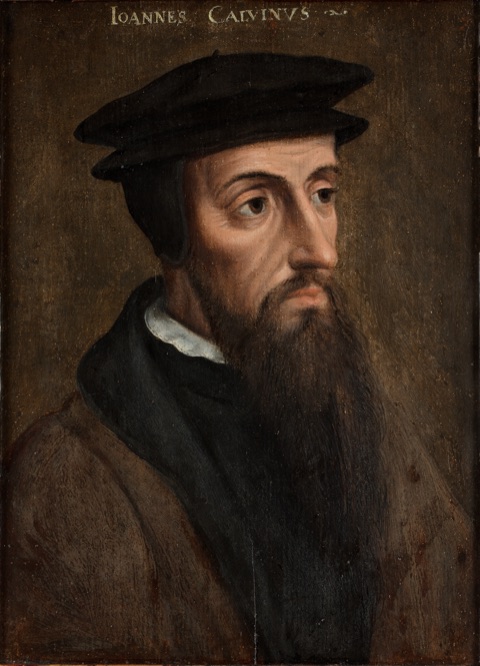
About the author
John Calvin
John Calvin (1509 to 1564 AD) was born at Noyon in Picardy, France, and studied arts at the University of Paris and law at Orléans and Bourges. By 1534 he had broken with the Roman Catholic Church and fled France, and in 1536 he published the first edition of his Institutes of the Christian Religion, to which he refers readers throughout this book. That year William Farel persuaded him to stay in Geneva. Expelled in 1538, he pastored a French refugee congregation in Strasbourg and married Idelette de Bure, then returned to Geneva in 1541 and remained there for the rest of his life, preaching, lecturing and writing commentaries on Scripture. He also wrote against the Libertines, as he mentions here. He died in Geneva on May 27, 1564.